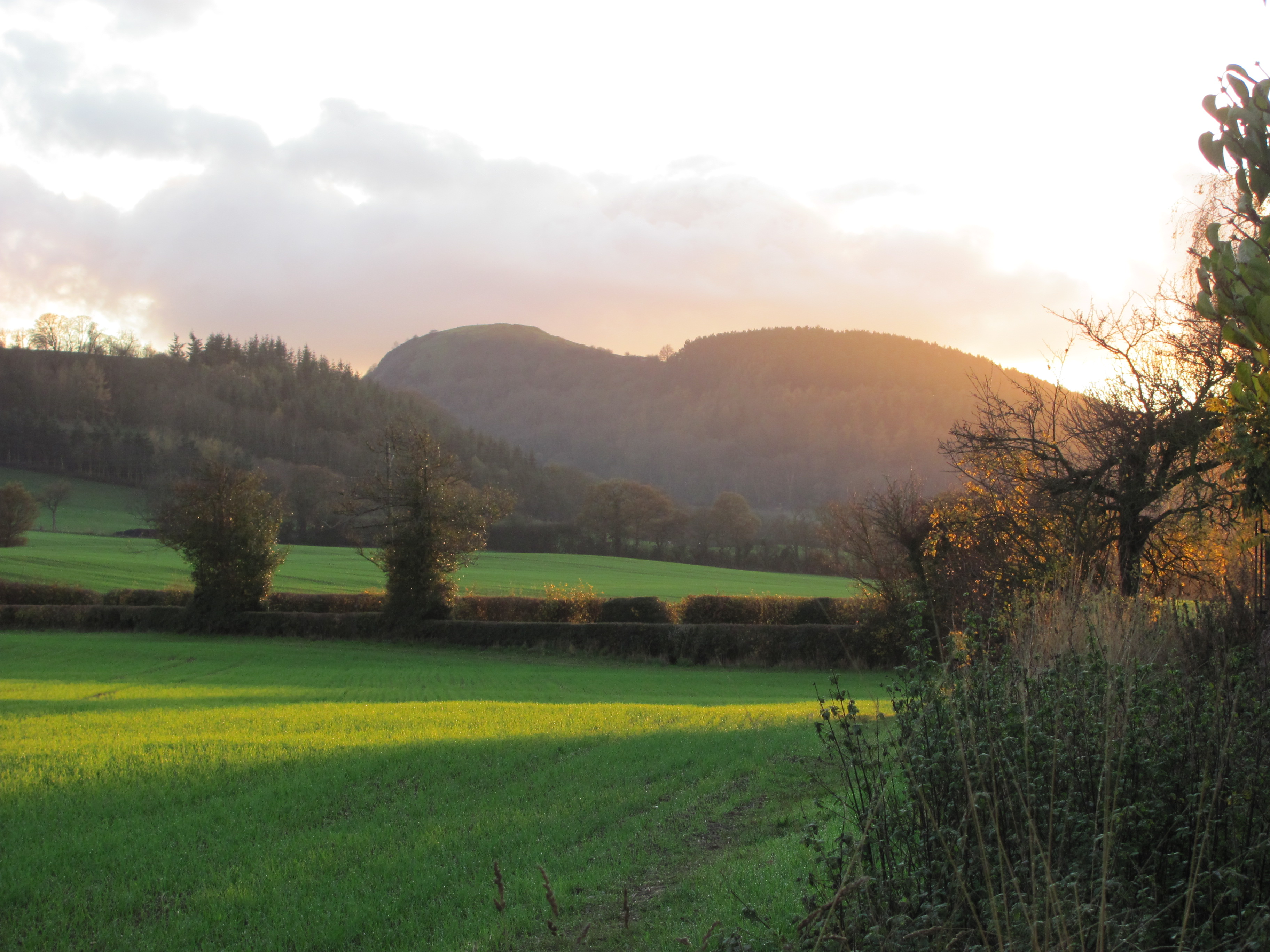
I often take a wander through our little gate in the low picket fence that forms the border between our back garden and the farmland beyond. From here we can appreciate views of Pontesford and Pontesbury Hills through the changing light of the seasons. In the paddock adjoining our garden a magnificent old oak proudly stands awaiting our daily appreciation. I have taken so many photos of “our oak” in all weathers and in all the variations of light. It has been pruned to cattle reach height and looks like a perfect illustration from a book.
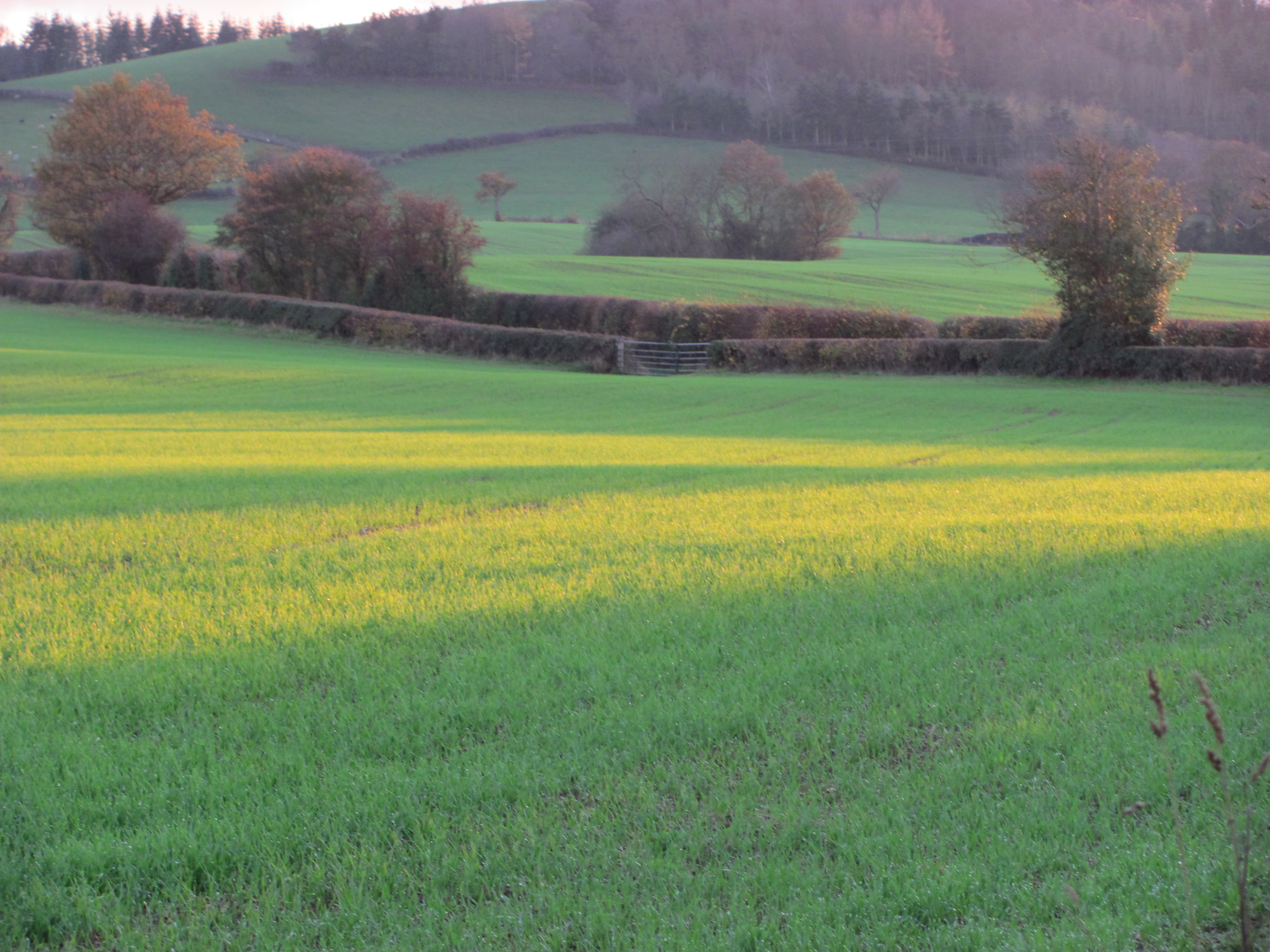
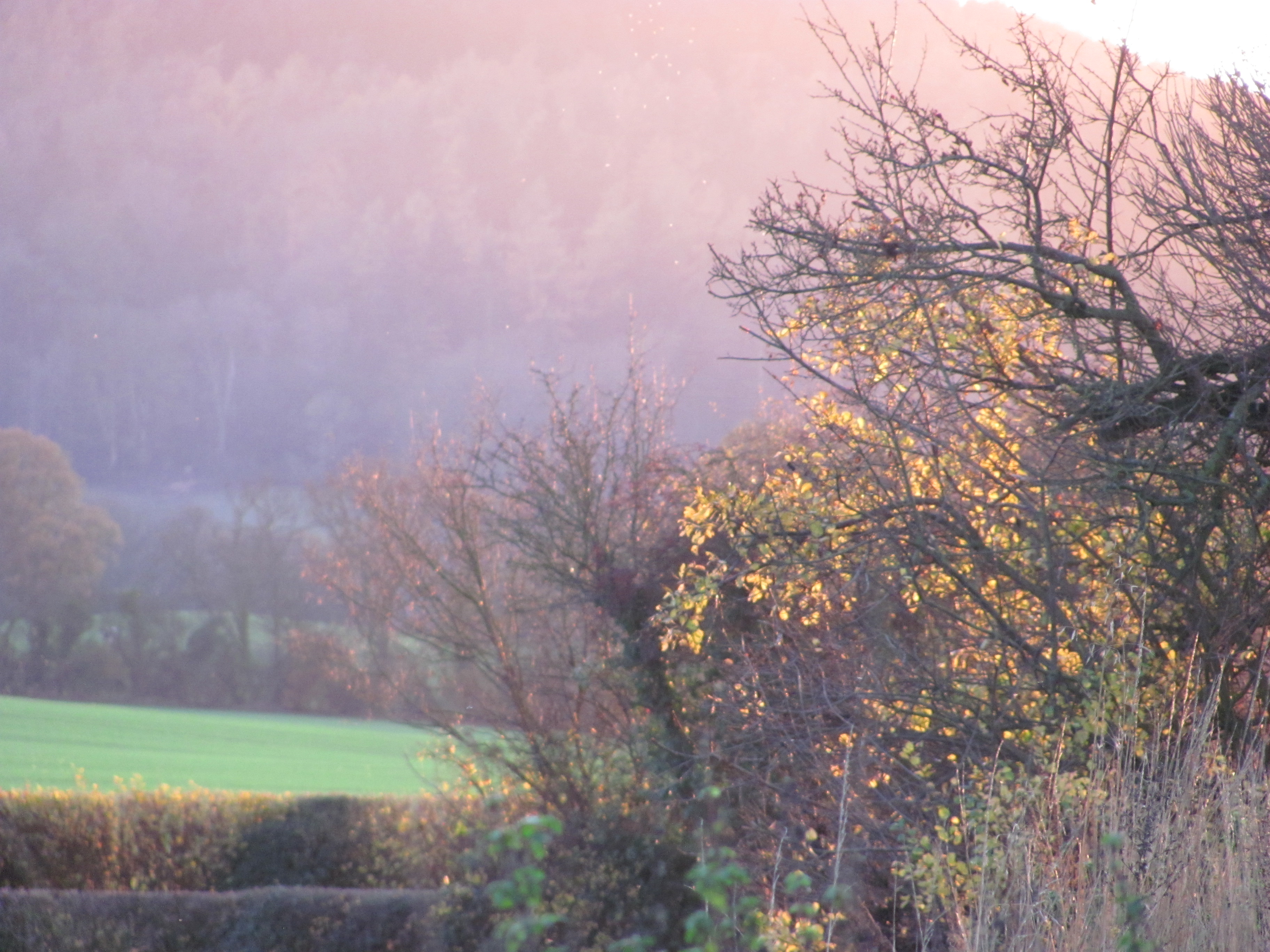
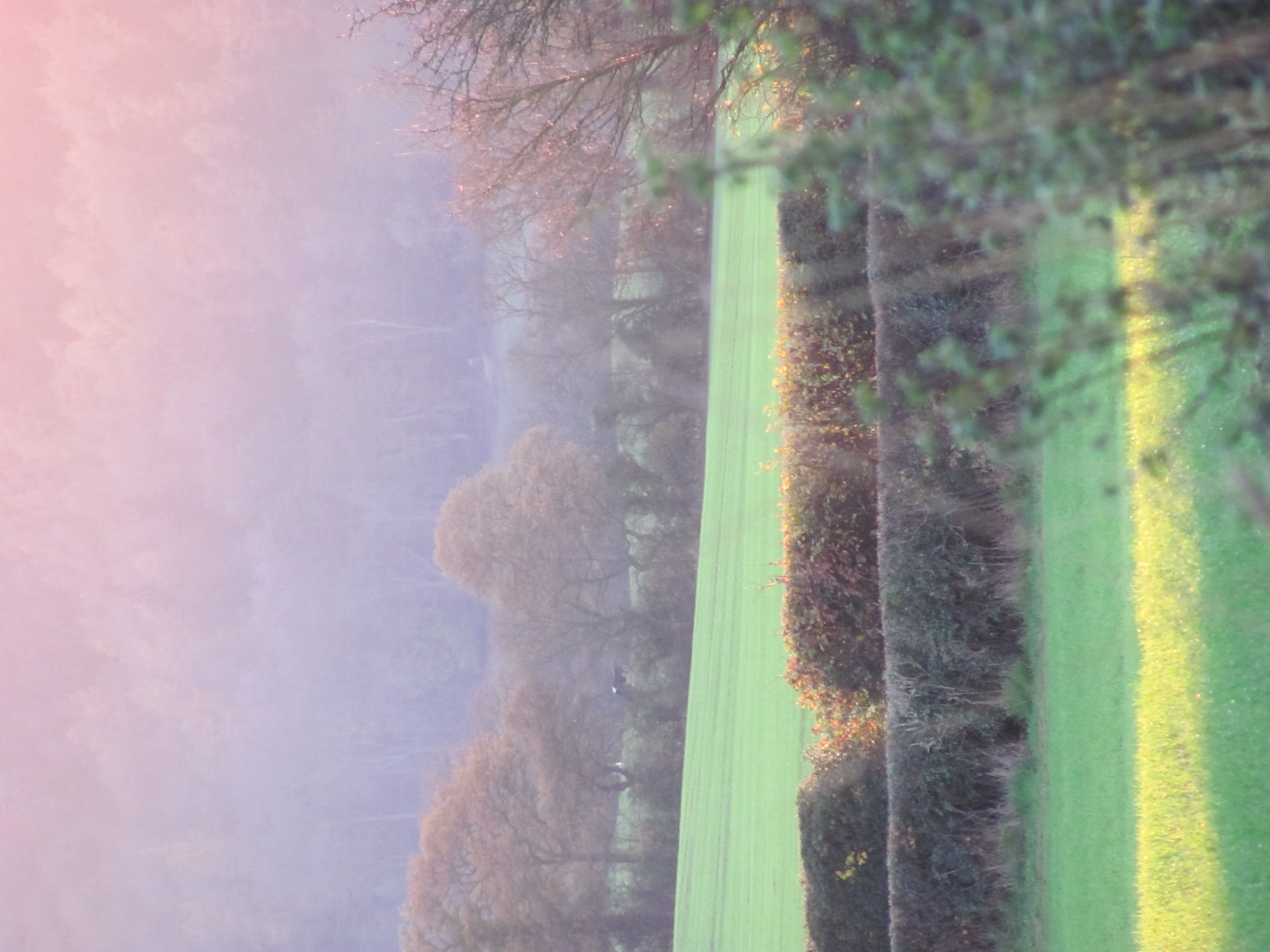
Today in the final hour of daylight the sun was so low it lit the tree like a spotlight lights the star of a show. These low-level rays of the winter sun gave the fields leading up to the hills a wonderful quality. Bright green streaks and dark shadow lines. Misty highlights closed in around the hedgerows.
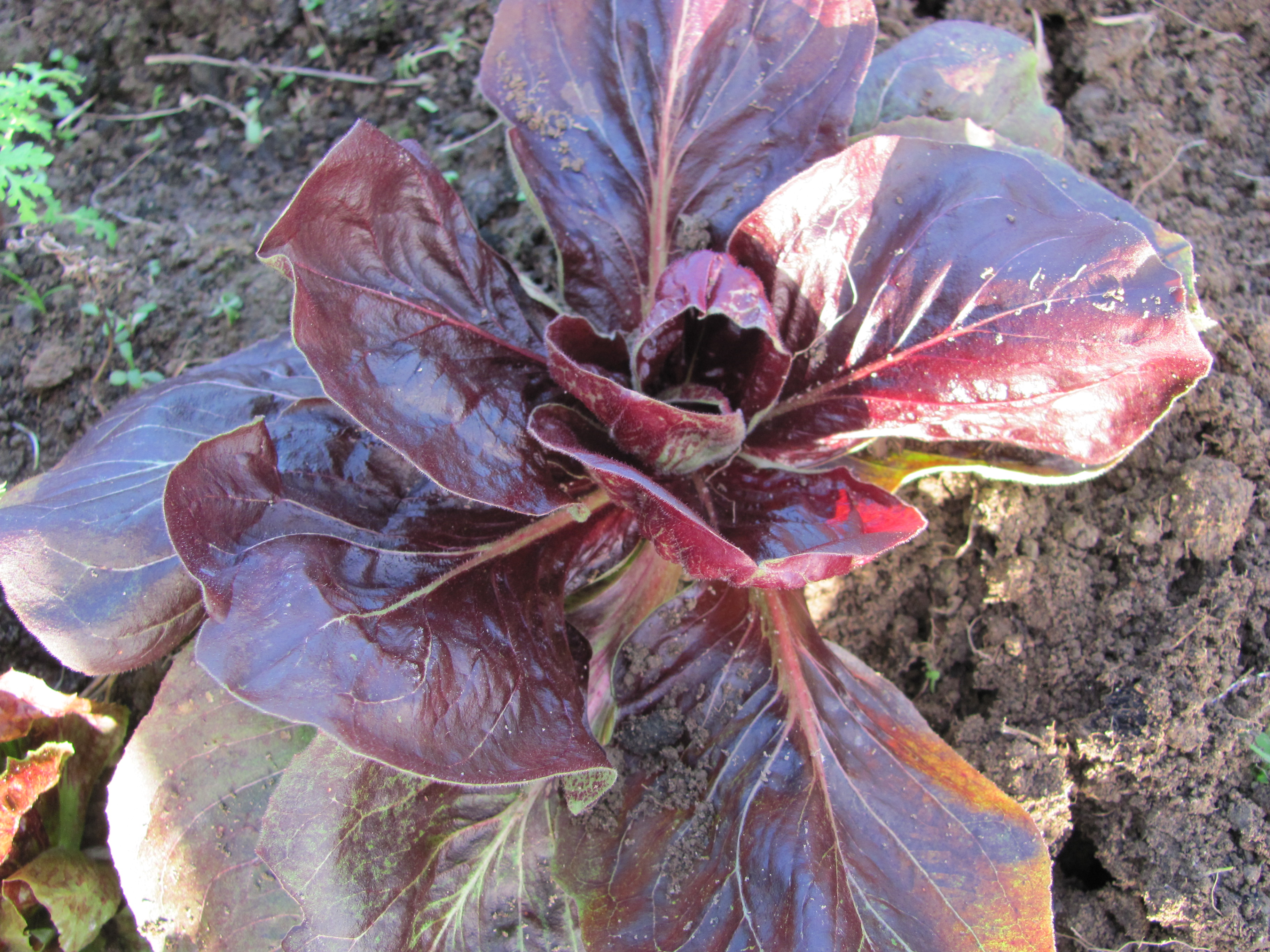
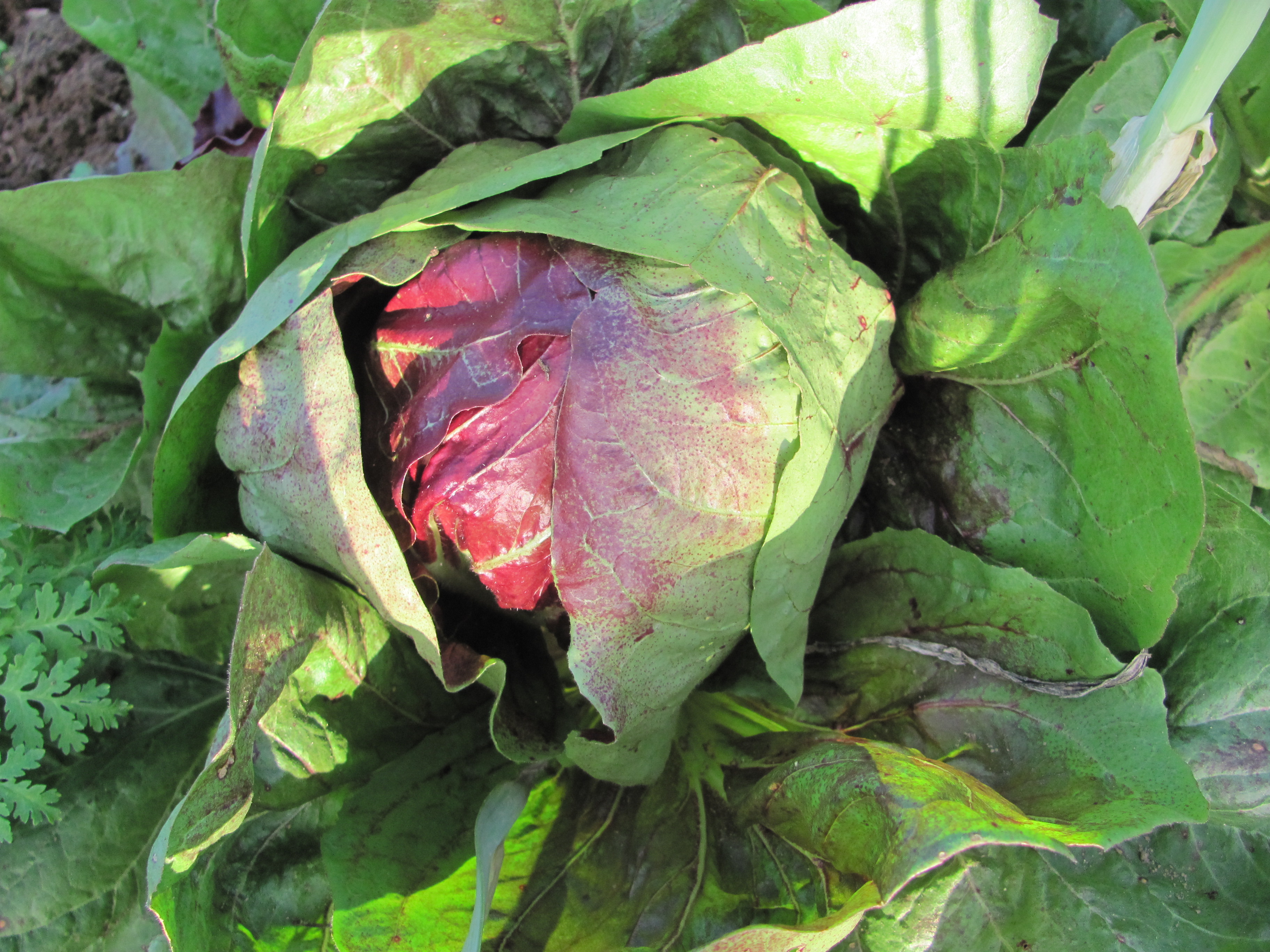
What a crazy day to be on the lottie with gale force icy cold winds howling across and freezing fingers, toes and cheeks. But when the sun burst through the clouds – very short but bright bursts – it acted as a spotlight that featured wonderful coloured leaves. Salad leaves provide the real stars of the show like these ruby leaved radicchio. They enjoy being in the spotlight, being the centre of attraction, glowing with pride.
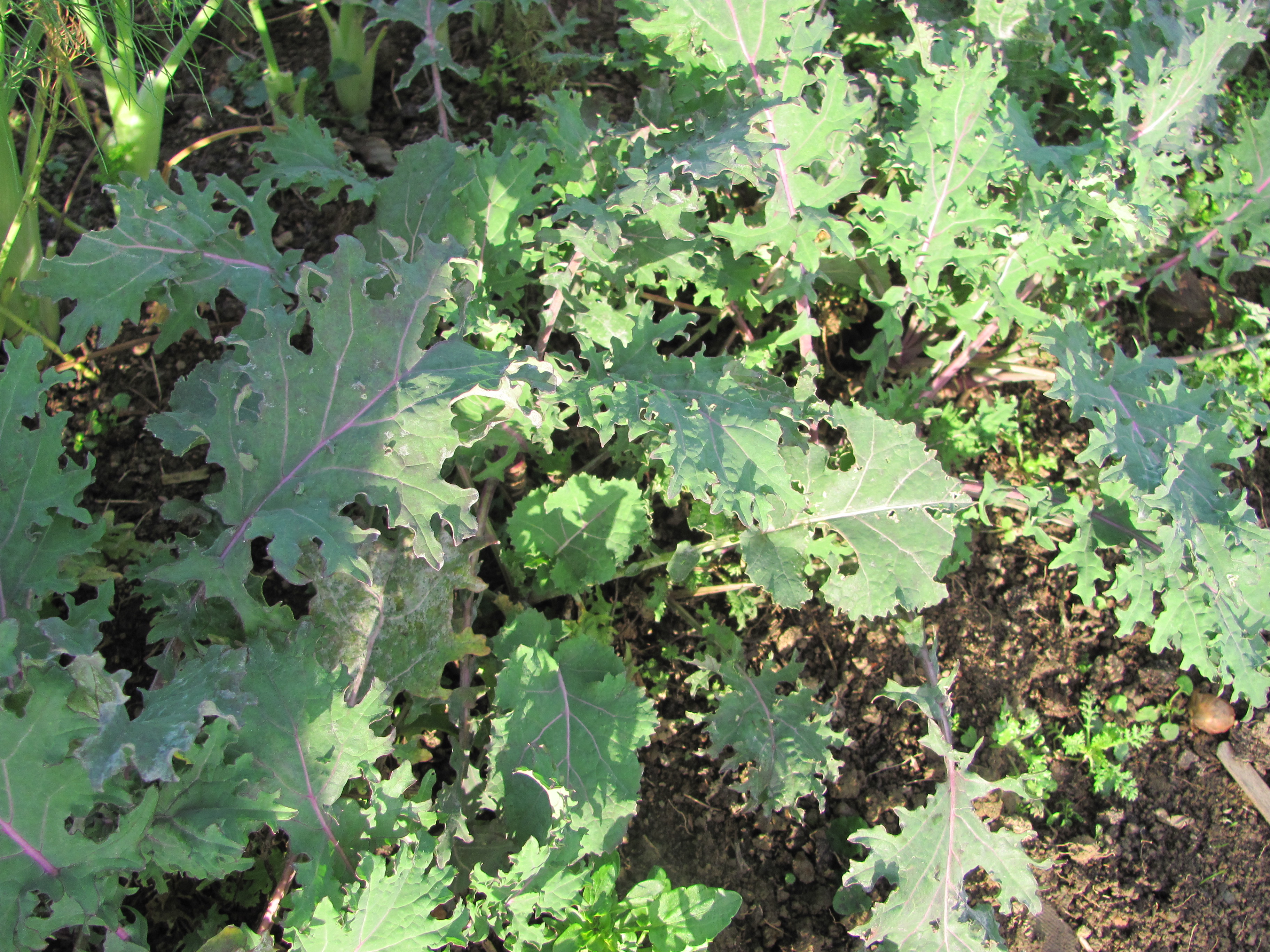
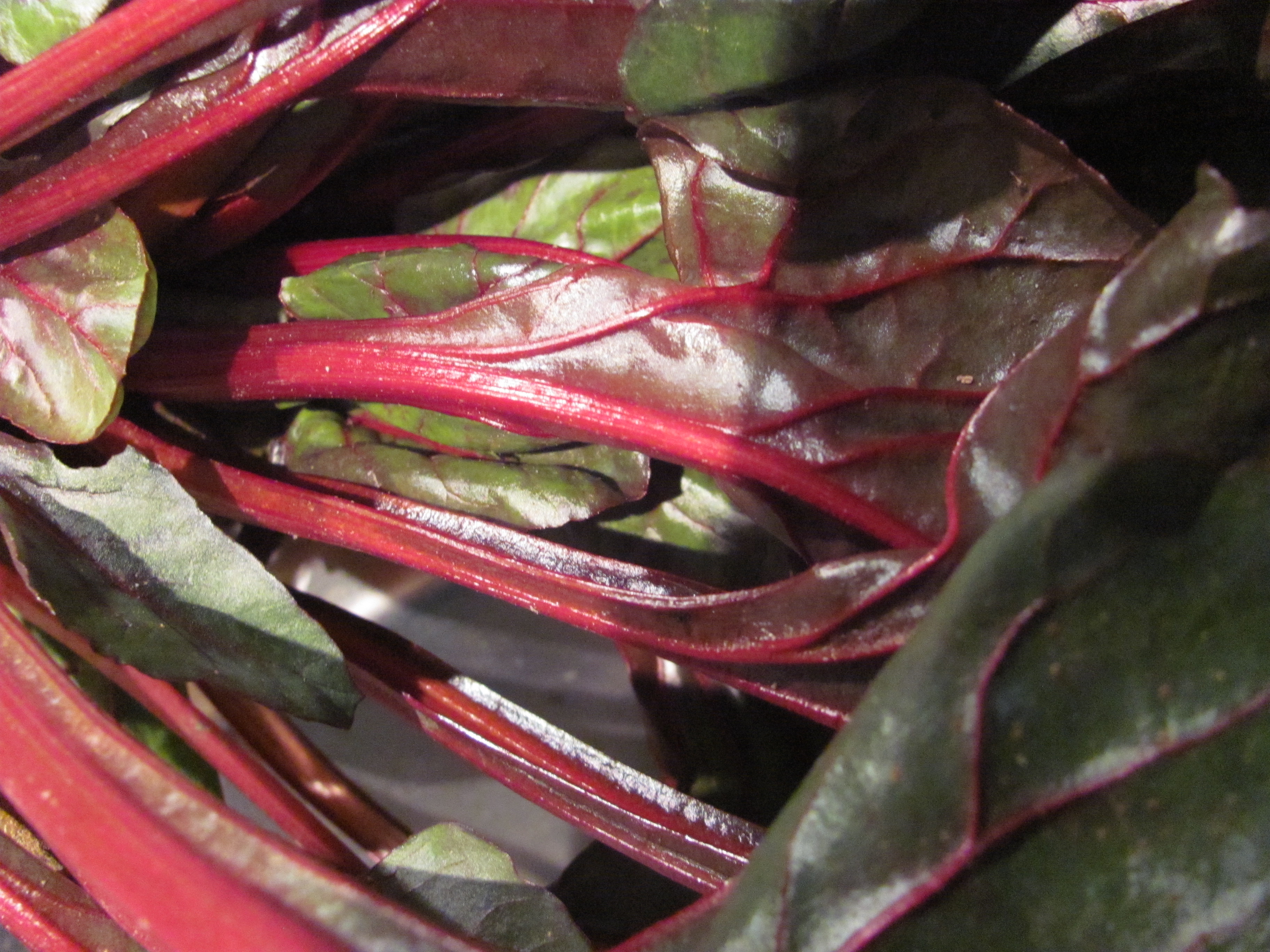
The brassica family are not to be outdone with their contribution coming from kales. The final shot is of a bunch of chard leaves that I plucked for the chickens. The light shows the glossiness and rich red-purple colouring of the leaves and stems.
The wonderful thing about these dark colourful leaves especially those with red and purple featured in their make-up is that in addition to being good to look and tasty to eat they are also better for us than their green-leaved relatives.
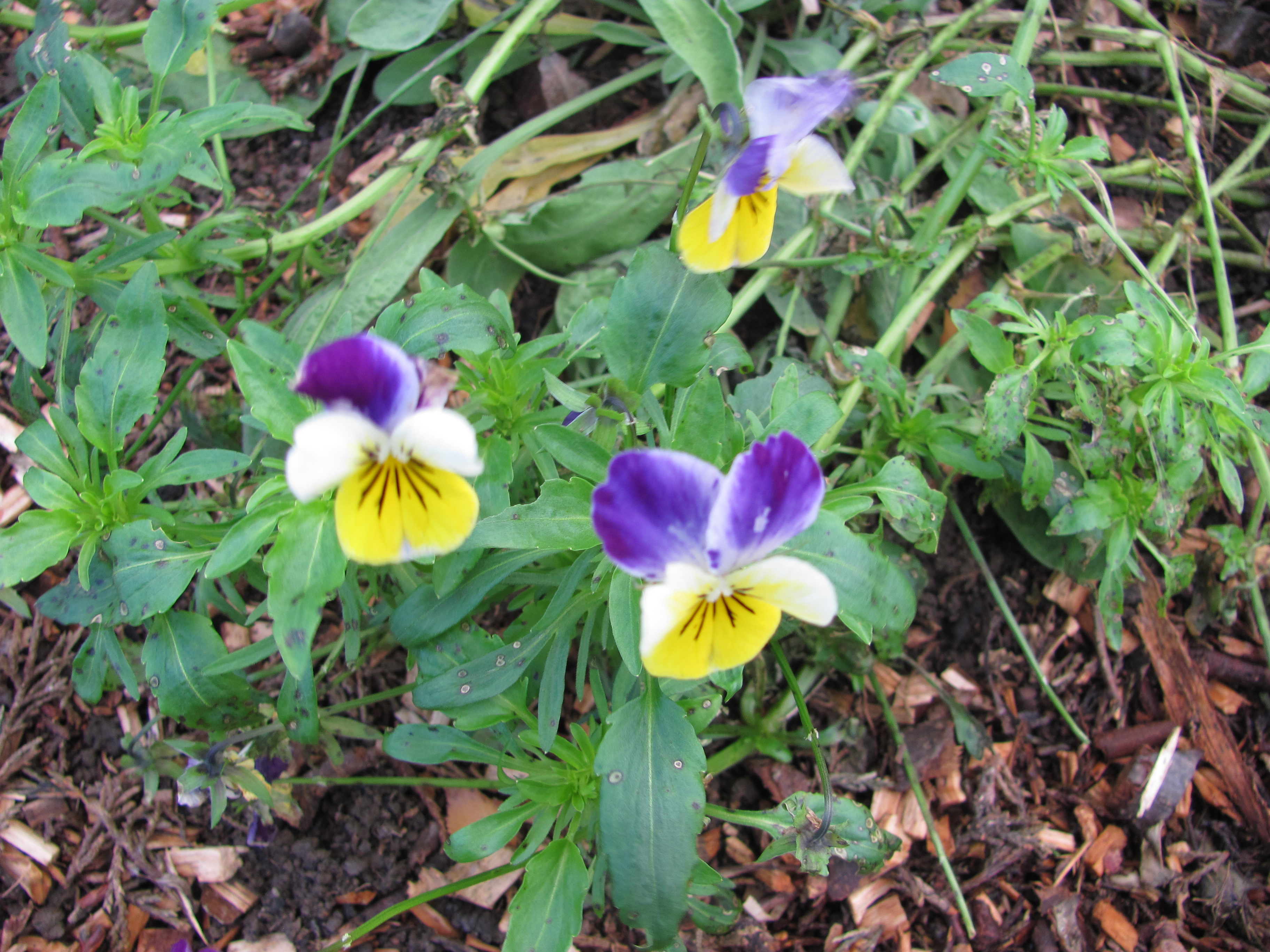
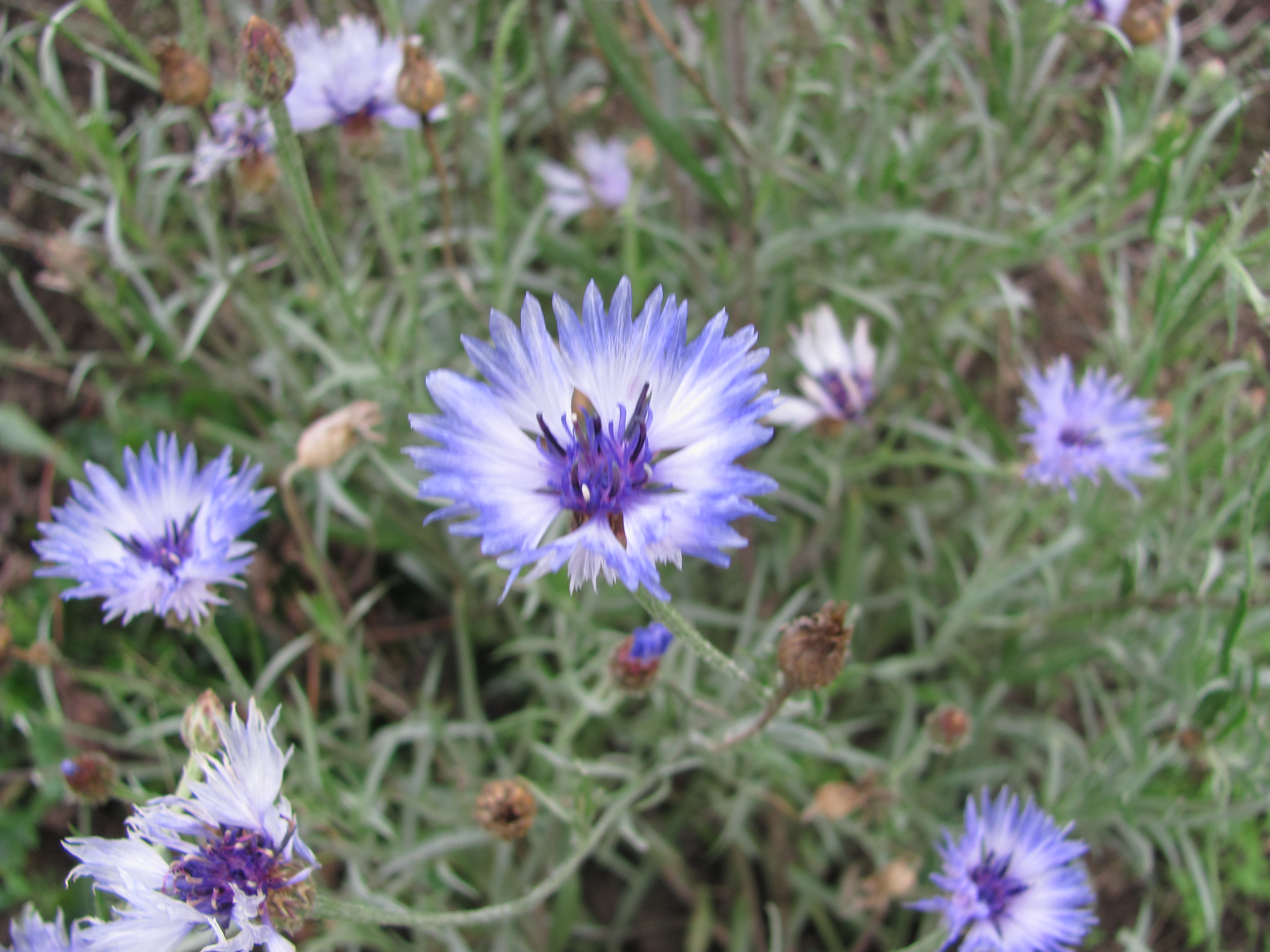
After putting away our tools and closing up our shed we took a few moments to wander around the site and see what was happening. we found surprise bonus flashes of colour. Flowers blooming out of seasons calendula and violas in the Winter Garden and a catanache the last bloom in the wildflower meadow.
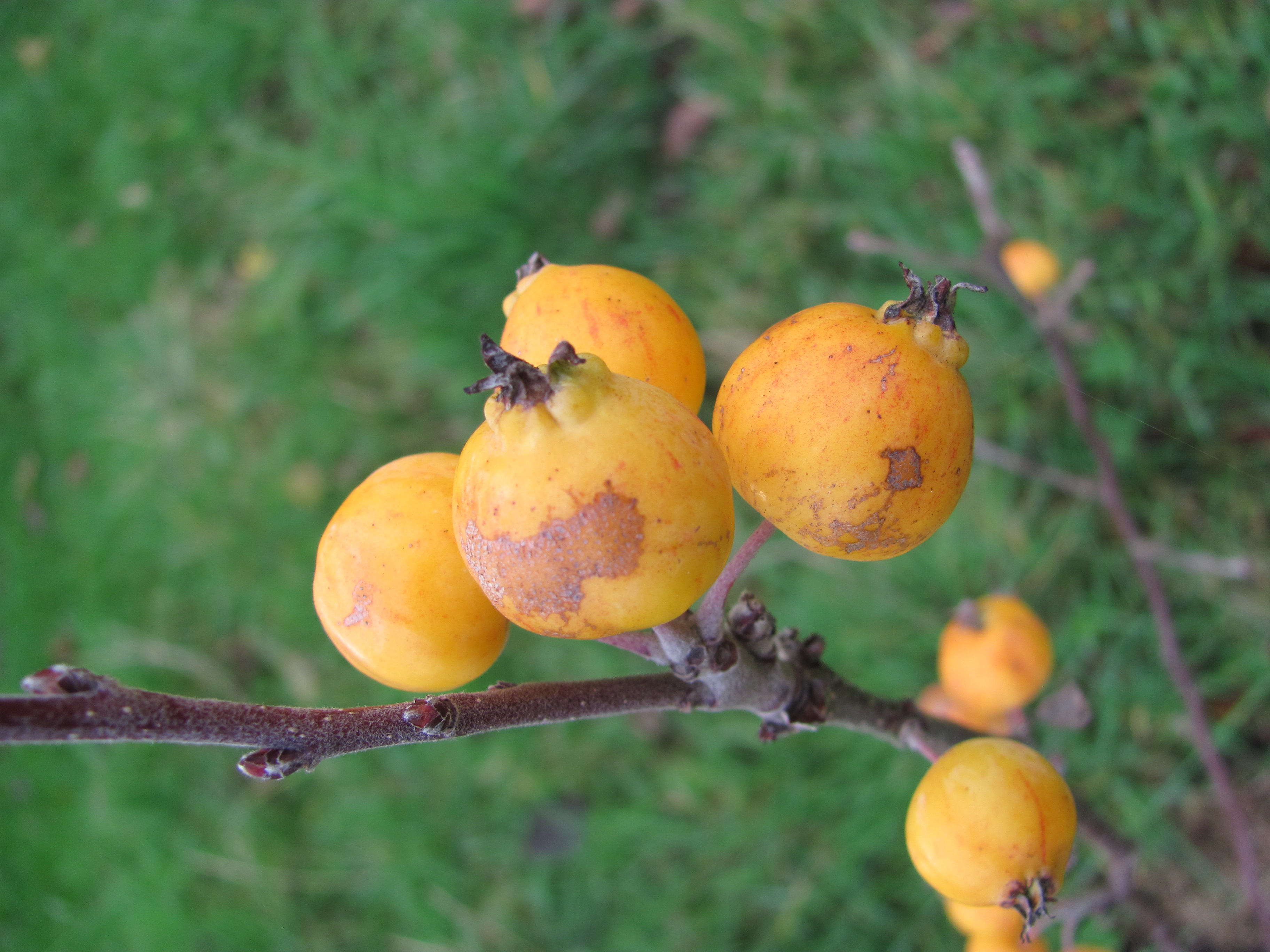
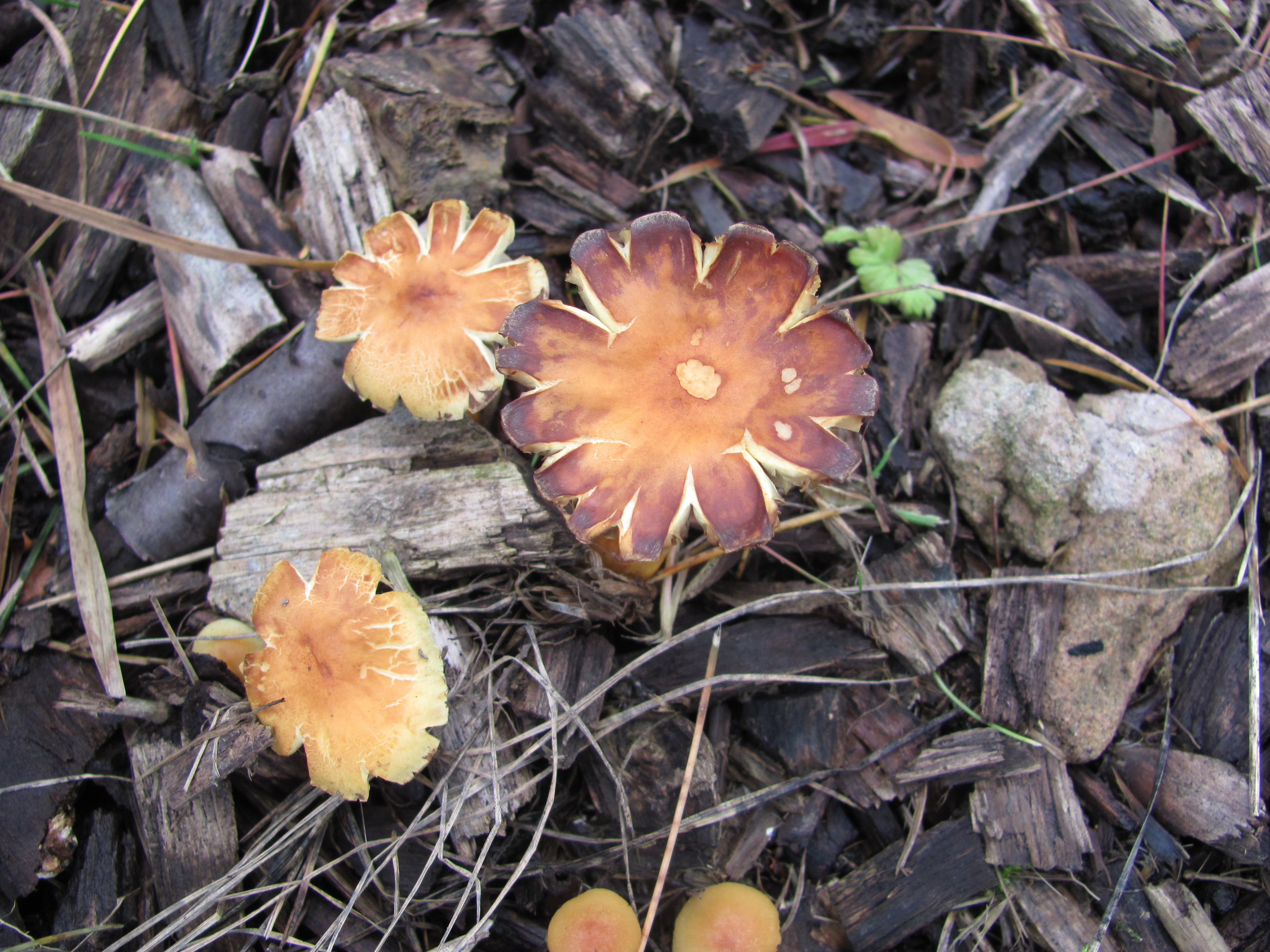
In the small orchard the yellow of the crab apple, Malus “Evereste”, glowed like beacons hanging on defying the sharp cold and strong winds. In the turf spiral maze clumps of fungi take advantage of the protection form the turves They emerge from the bark chips we use as the walkway through the maze. They begin their life a colouful yellow but as they age their edges turn chocolate brown and they look like burnt buns until they begin to go over and dry. Then their caps split and let yellow cracks appear giving them the appearance of flowers.
We spent today on the lottie catching up on a few jobs and taking advantage of some sun and warmth, a December treat. We popped up for half an hour to plant 3 rose bushes owed to us from our big delivery of David Austin roses last year. So we added three Wenlock roses to our site’s community Summer Garden. The half hour became an afternoon as we planted whips of native trees and shrubs in the native hedge and “Edible Hedge”, rowan, elder, dogwood, wild cherry, cherry plum etc.
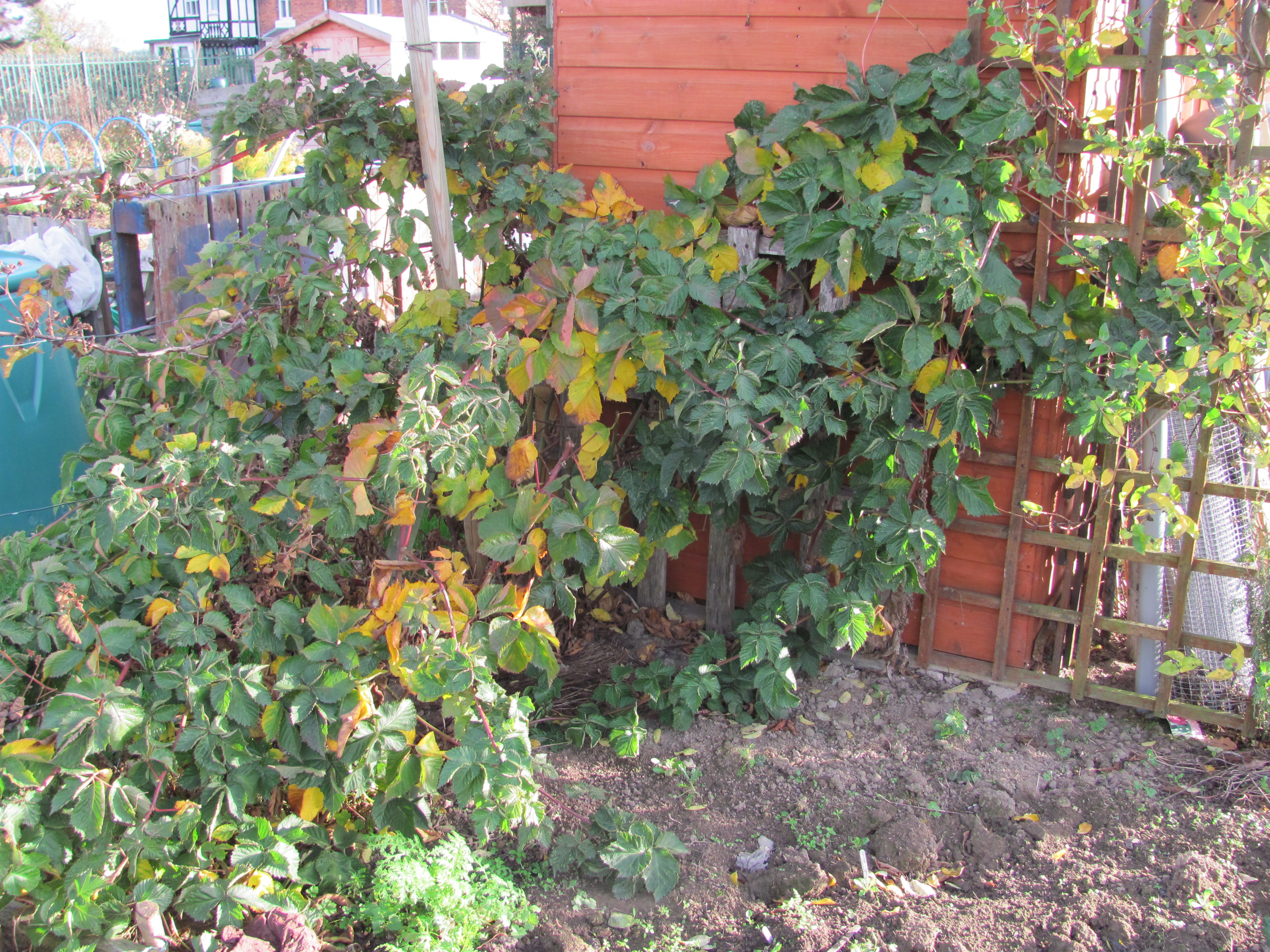
Then we turned our attention to our own lottie where the blackberry and tayberry were crying out for attention. The blackberry had put on masses of growth last year so I set to pruning out the brambles that had fruited this year and thinned out some of the new growth. Luckily it is a thornless variety. Once tied back in it all looked much more tidy and we looked at it willing it to be productive for us next year. The tayberry, although not thornless, is still a young bramble so took less work.
The Blackberry prior to pruning.And after pruning.
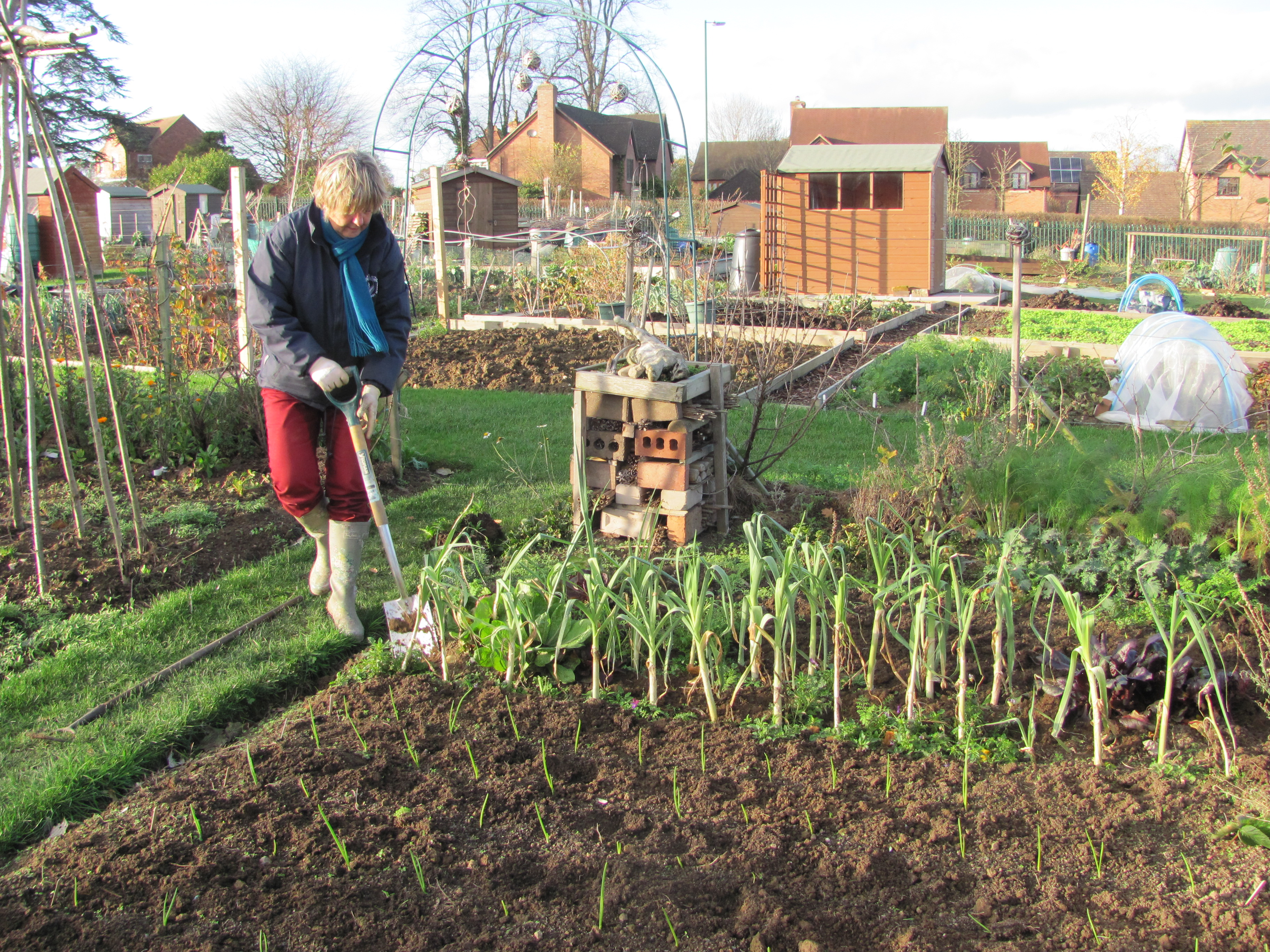
Meanwhile as I tackled the brambles, Jude the undergardener hoed between the rows of overwintering crops. This is the most efficient way of keeping an allotment plot looking tidy as well as killing any tiny seedlings even those yet to emerge from the soil.
The fresh growth of garlic, onions and shallots spear the soil and its compost topping with bright green freshness, a real treat in the winter cold. The broad beans planted in early autumn and the mooli sown in late summer add a welcome lushness of growth.
Broad bean plants patiently waiting out winter.Moolii, the radish with white icicle roots for winter enjoyment.
Ground left bare through the winter would be thrashed by winter rains and its goodness leached out so we cover such patches with green manure such as winter tares. This year when we sowed it in early autumn the weather was so dry that germination was delayed and growth of the seedlings has been so slow that they are still small. We are hoping they will catch up if the weather allows. The Phacelia in the photo below however germinated well and has grown on healthily. It was self-sown from a patch of wildflowers sown as a bug bank.
So as we are now officially in winter and temperatures are dropping to nearer seasonal norms, the plot is looking good. Next year’s seeds are ordered as are the seed potatoes so we are well ahead of ourselves. The photo below looks through the newly pruned tayberry at the rows of leeks, mooli and broad beans.
Whilst gardening today I was aware of so much wildlife around us even this late in the year. The bird feeding stations were unusually busy and birds moved though the borders searching for insects and seeds. Nuthatches have returned this year after a three-year absence and the blackcaps have arrived for the winter. The mixed titmice flocks lead by the Long Tails visit regularly and bring the garden to life. There are still insects around and the occasional bee and wasp. The Field Voles and Shrews make forays into the borders in search of their meals. It has not taken a great deal of effort to encourage our wildlife but certainly benefit from seeing and hearing it all around us whenever we are in the garden, so why are there not nature reserves on every spare patch of land in town and country? Look out for a future blog about our wildlife gardening efforts.
When on holiday in Dorset in the early autumn we were amazed by the RSPB reserve in Weymouth, Radipole, which is a true wildlife oasis in this busy seaside town. It is a wonderful place! So much nature just where you expect to see very little. We were treated to sightings of kingfisher, hobby, marsh harrier, little egret, snipe, reed bunting and warblers aplenty.
We found the walks around the reserve easy as they were flat and comfortable and refreshments were at hand via the bountiful blackberry bushes alongside the tracks. One section of the track is bordered with buddlejas specially planted for butterflies and wildflowers abound.
The reserve is home to rarities such as bittern, bearded tit and cettis warbler as well as many species of wader, duck and warblers such as sedge and grasshopper. As well as the birds otter are regularly spotted. The huge variety of species here is due to the variety of habitat which include lagoon and reedbed.
And all this is found alongside busy town roads, bustling junctions and retail parks. We thought we were lost when we found ourselves in a town car park until we spotted the thatched roof of the little visitors’ centre right at the far end. The welcome is so warm – all RSPB centres give a warm welcome to their visitors but the welcome here is warmer than the norm. The volunteers are full of useful information and will talk you through recent sightings and the best places to get good views. We arrived in a heavy downpour but enjoyed a good cup of coffee a chat with a volunteer and a view over the lagoon from the centre’s huge viewing window. We had a brilliant day and can recommend it to anyone visiting the South West.
Garden designers often talk about colour contrasts such as blues and yellows and about how important green is as a foil for other colours. but what about two shades of green working together. Just think of the fronds of vivid green ferns bursting out from the green paddle leaves of the hosta. in her book entitled “The Gardener’s Pallette” the American garden writer Sydney Ellison wrote “In nature, green is the colour of life” and “It is the colour that makes fewest demands on the human eye.” In most gardening books green is discussed as a foil for other colours and rarely considered as important in its own right.
I searched through photos I have taken this year that featured green for its own sake not merely acting as a foil. Here follows a selection. They prove how powerful greens are!
The grass, Hakanechloa macra , moves slowly like waves in the slightest breeze and here in Neil Lucas’ garden, look great as a sea of green for a specimen tree to burst out of. The plain green Hakanechloa often looks better than its variegated cousin but is rarely seen for sale. It deserves more recognition.
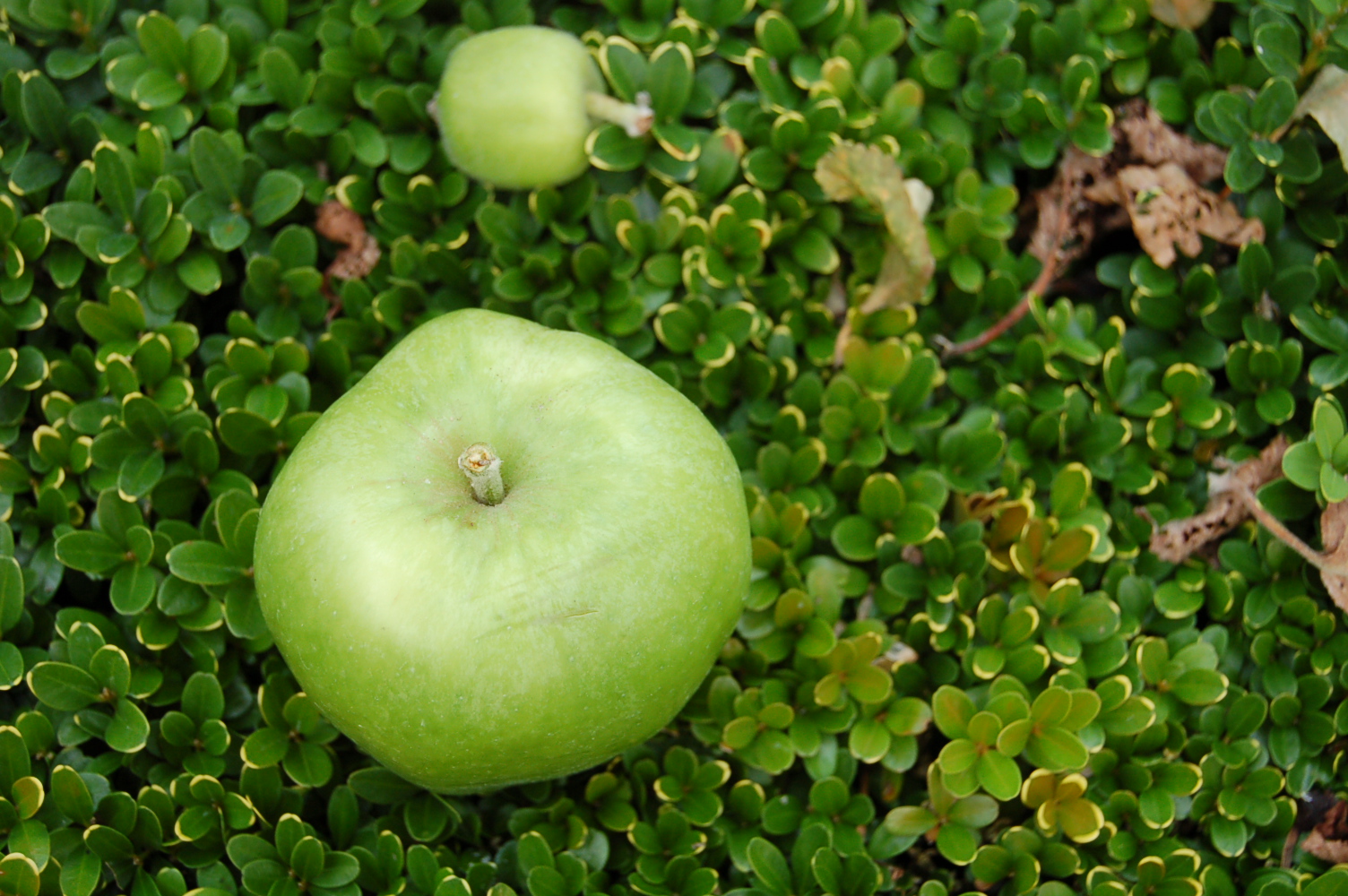
Neil’s use of the simple green sheet of grass under a tree displays brilliant design skills. This photo is the absolute opposite – an accidental paring of two contrasting greens – where a pure bright green apple has dropped onto a neatly clipped box hedge in a potager.
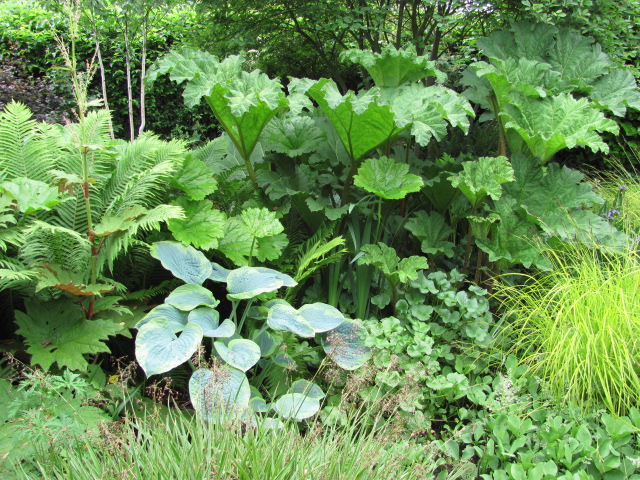
The first photo illustrated how a gardener used green so effectively, the second how an accident can produce beauty in greens and the above one shows how Mother Nature does it. Rather well methinks!
The above photo must illustrate the ultimate “green on green” border, gentle on the eye and so satisfying. Looking at green as a key colour in the garden now on the first day of winter makes you feel better. Just think of all the green we can look forward to!
'The most important and informative publication on wildlife of our times' - The Independent. This blog is a member of The UK & Ireland Natural History Bloggers group: www.uknhb.blogspot.com










 greenbenchramblings