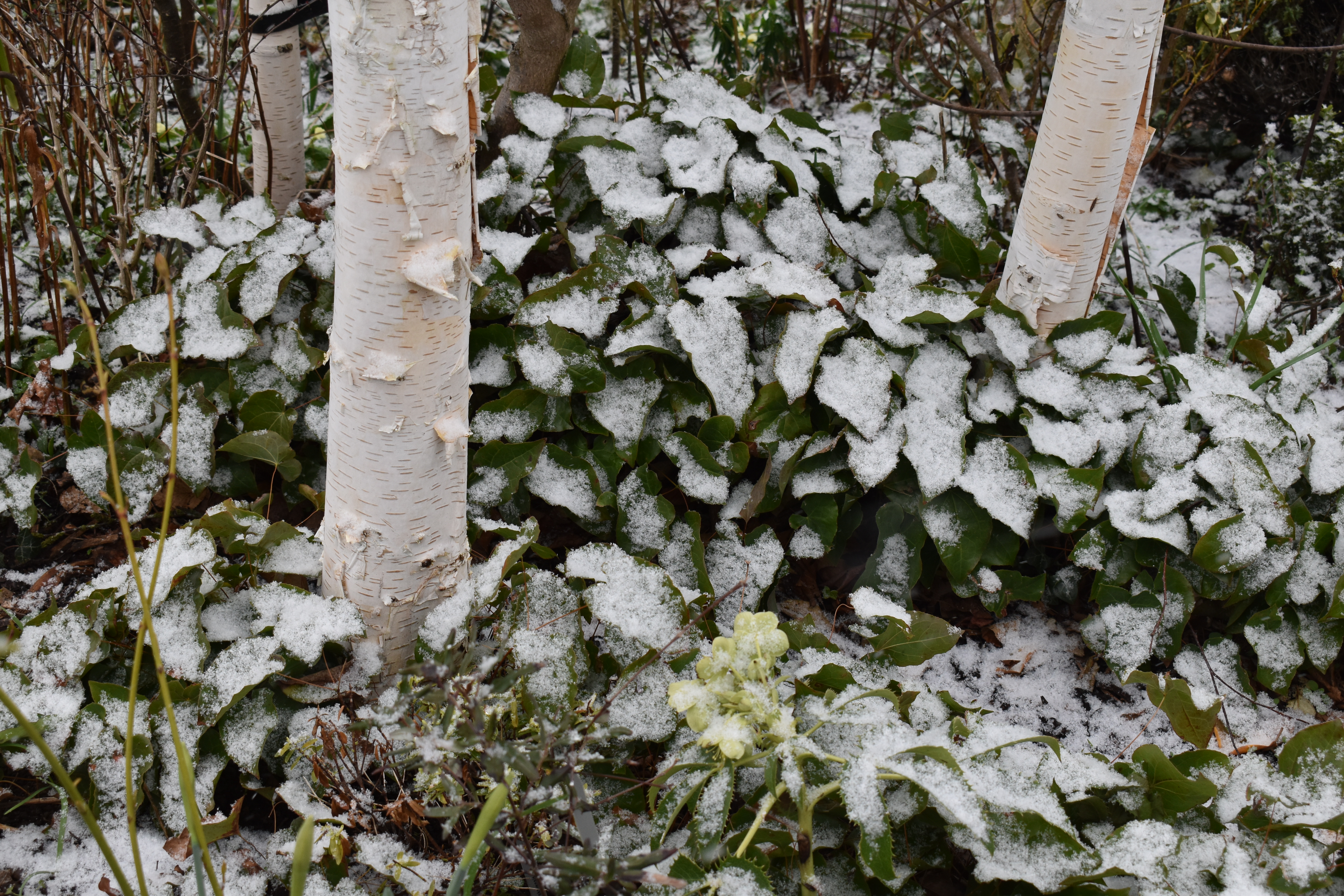
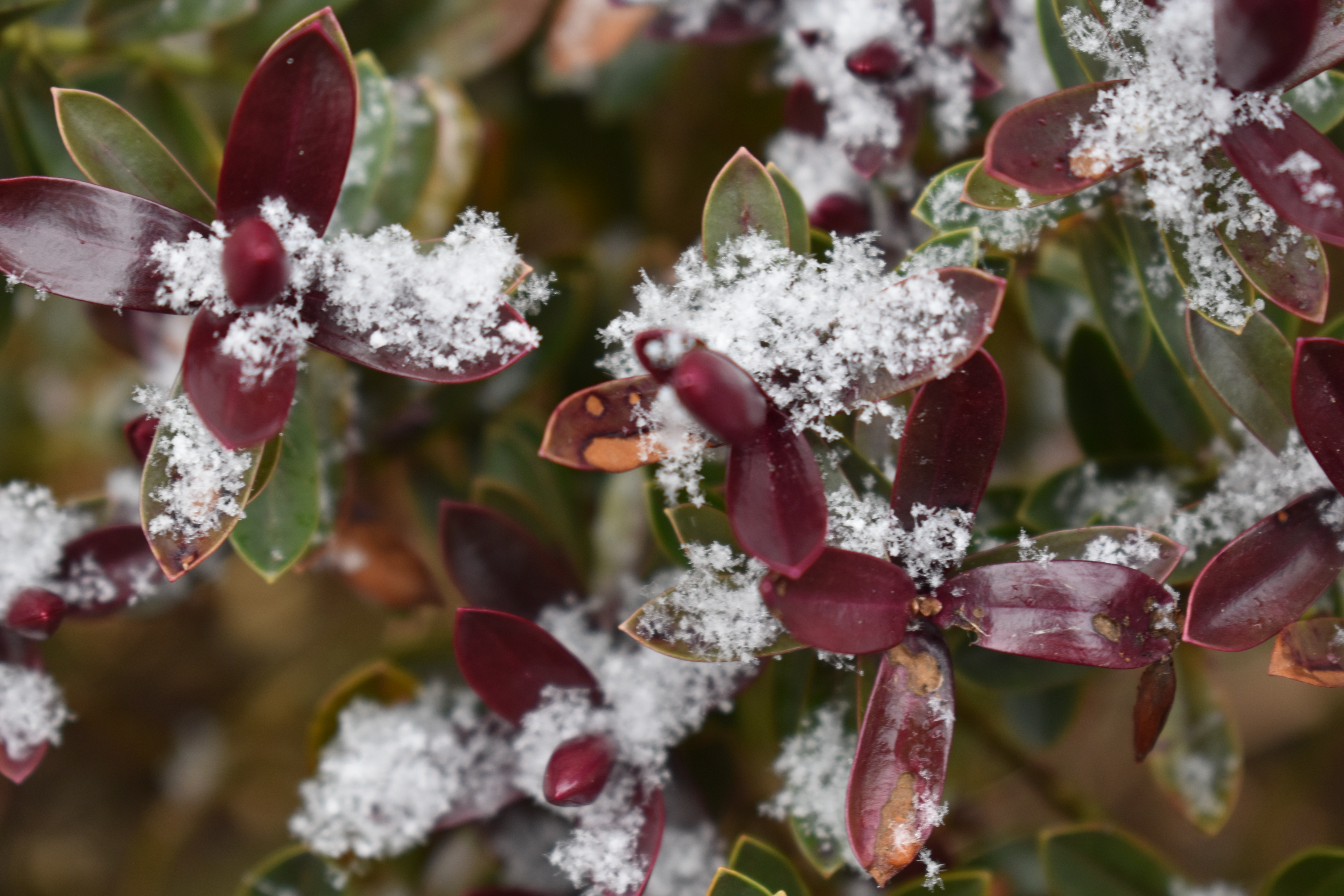
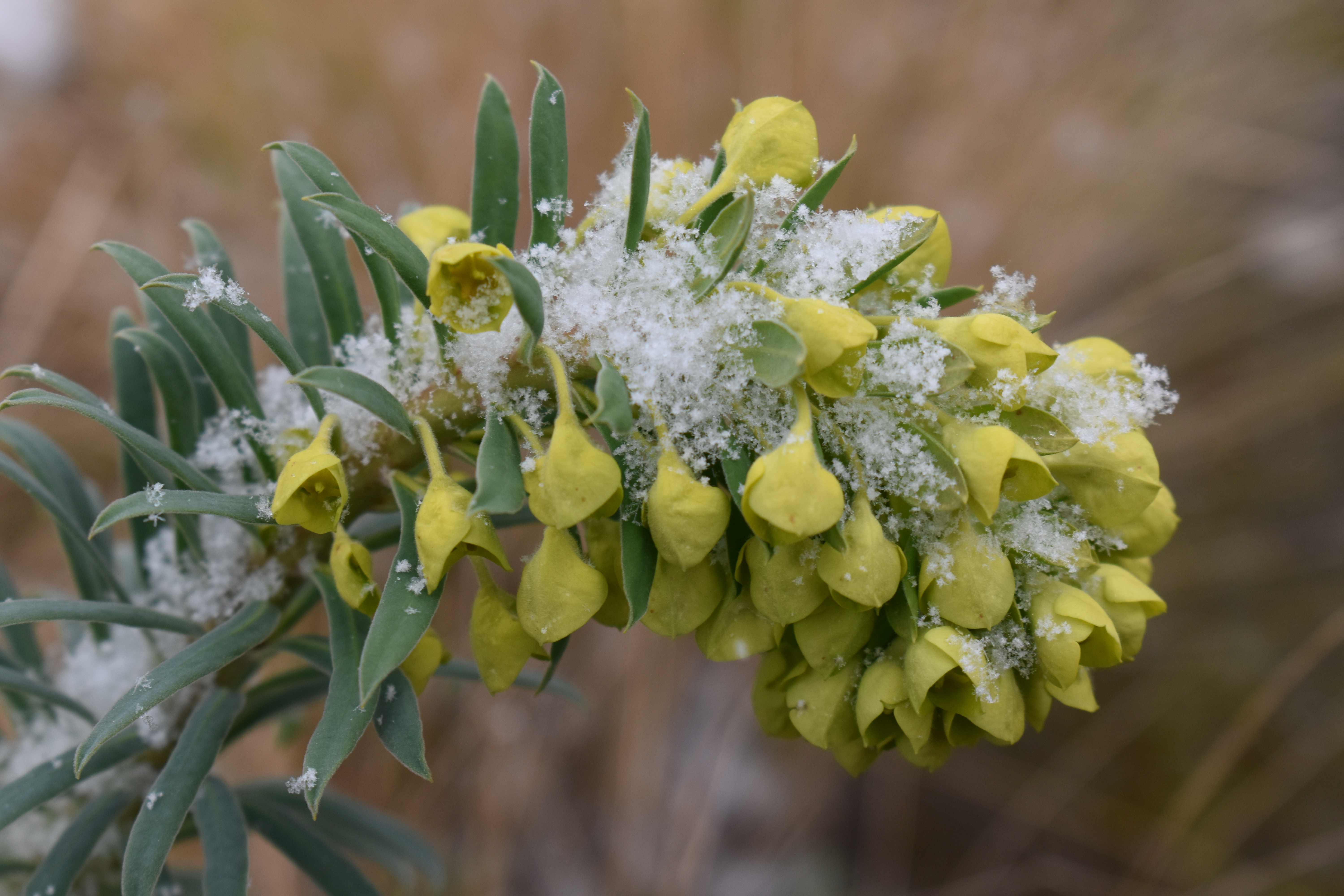
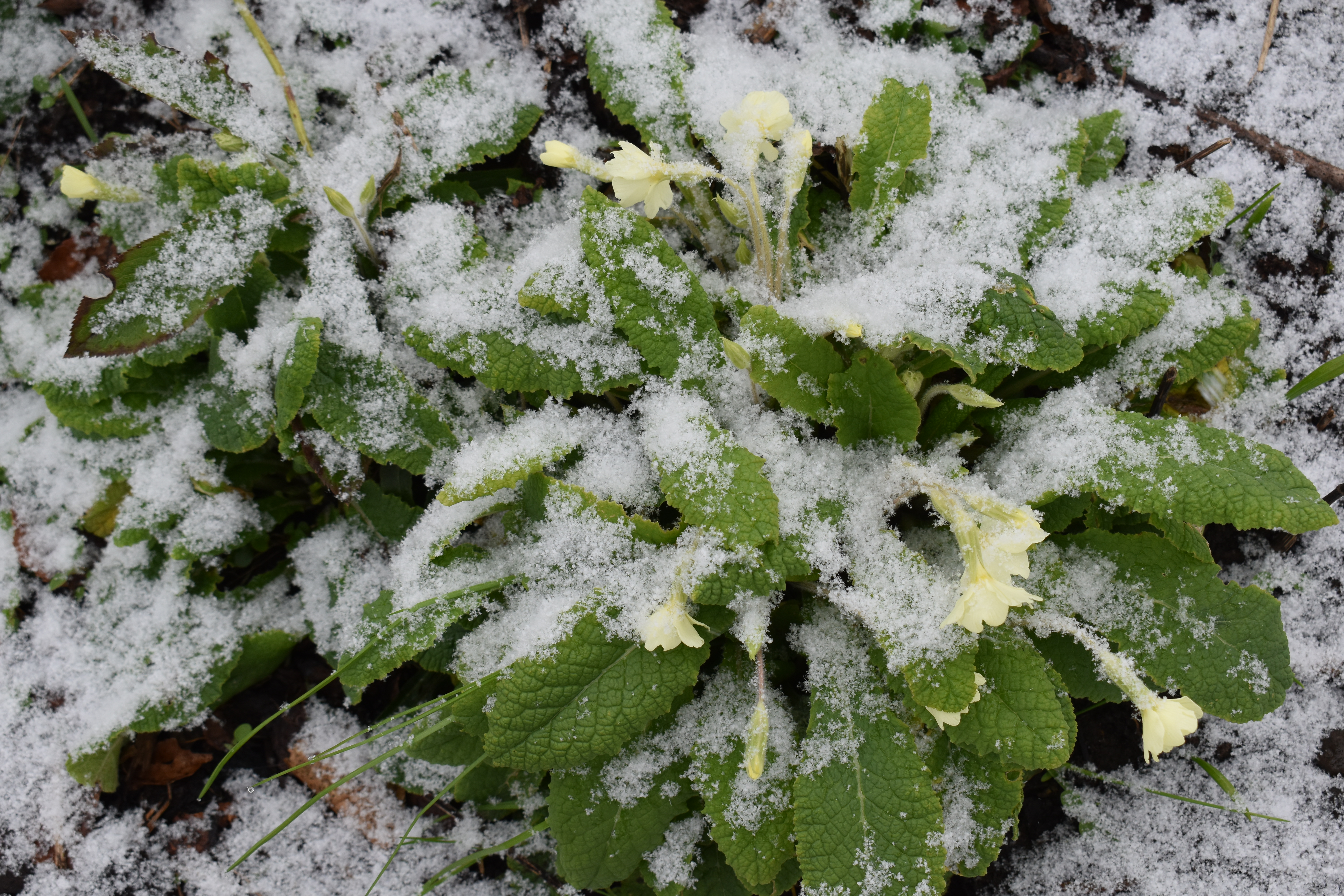
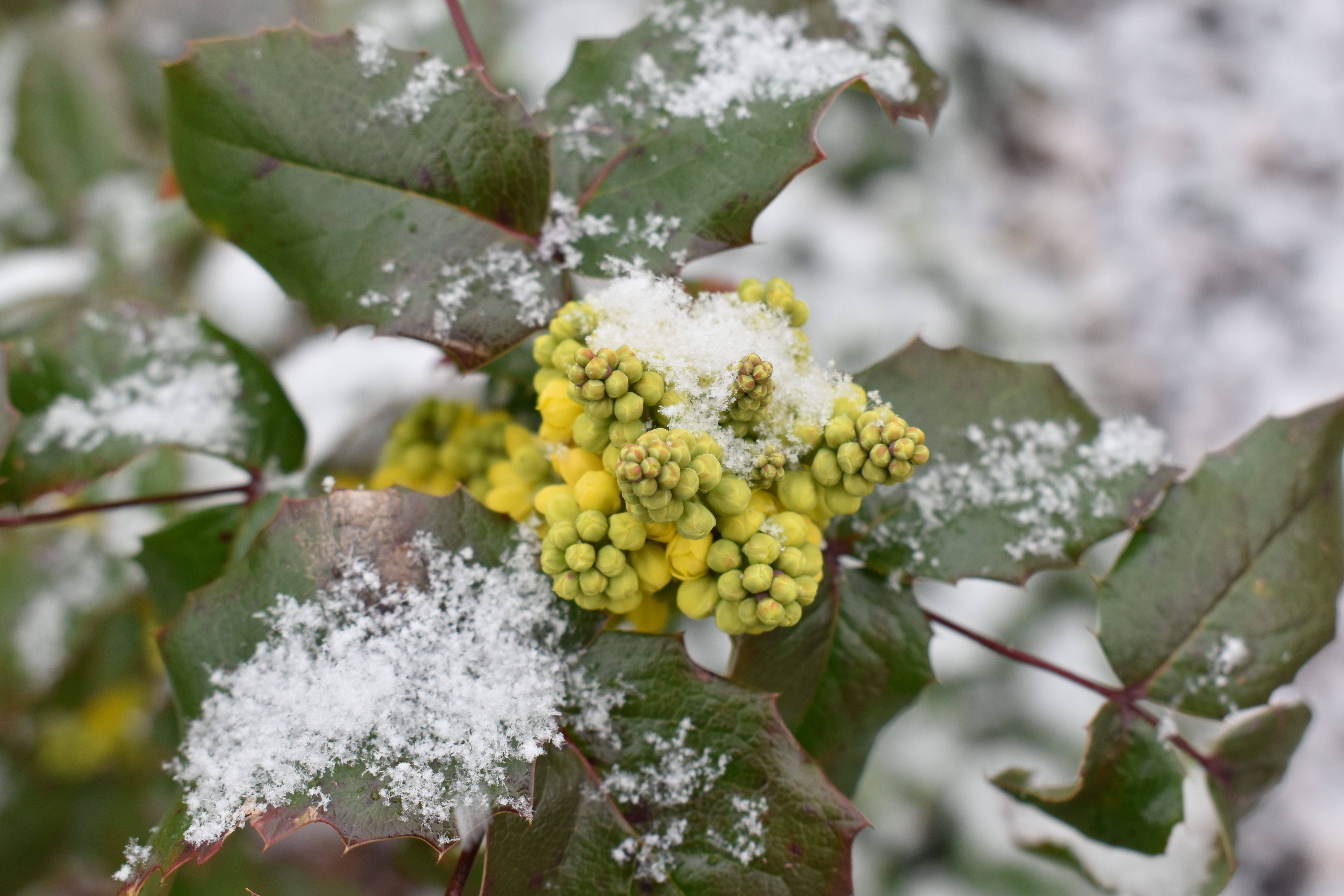
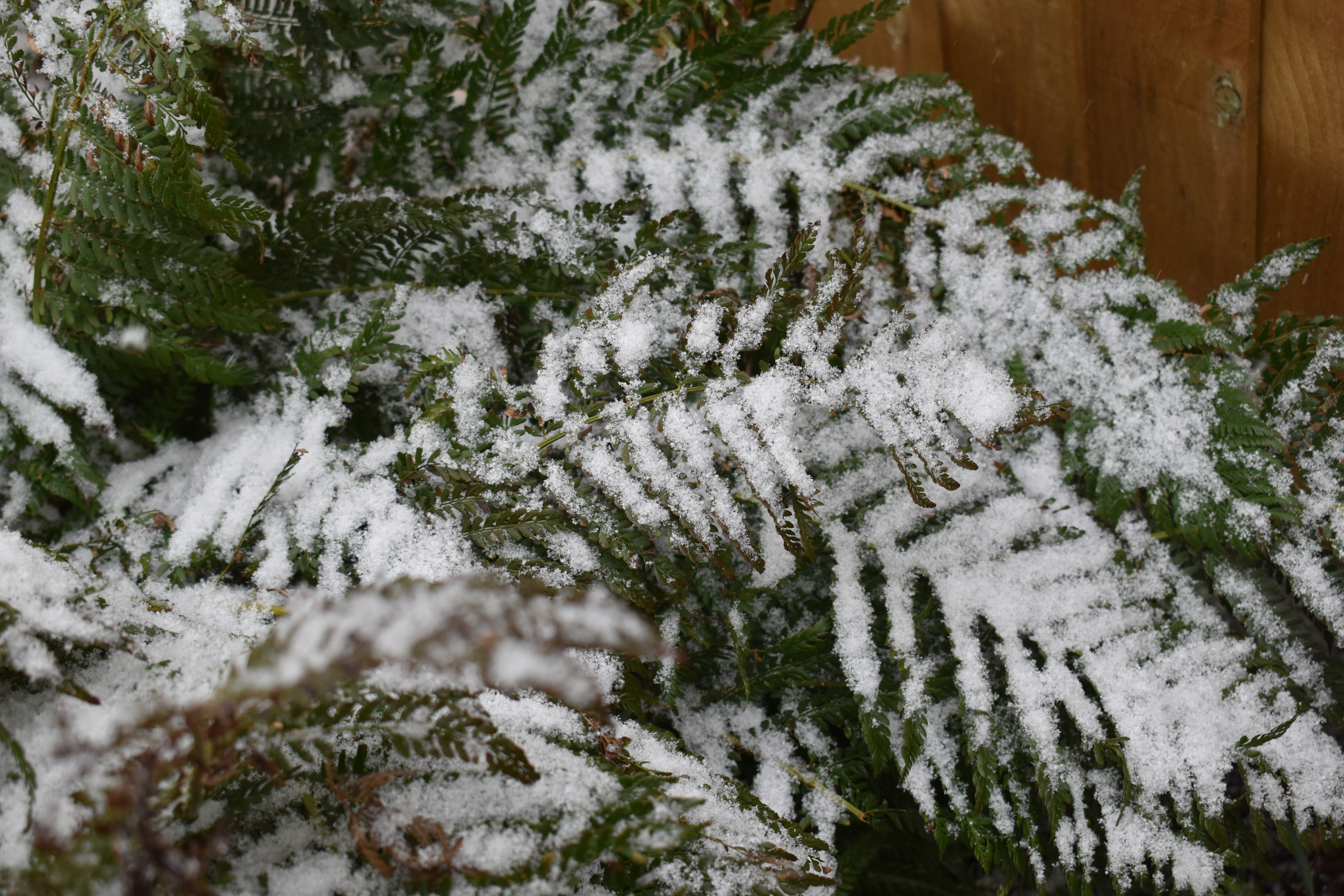
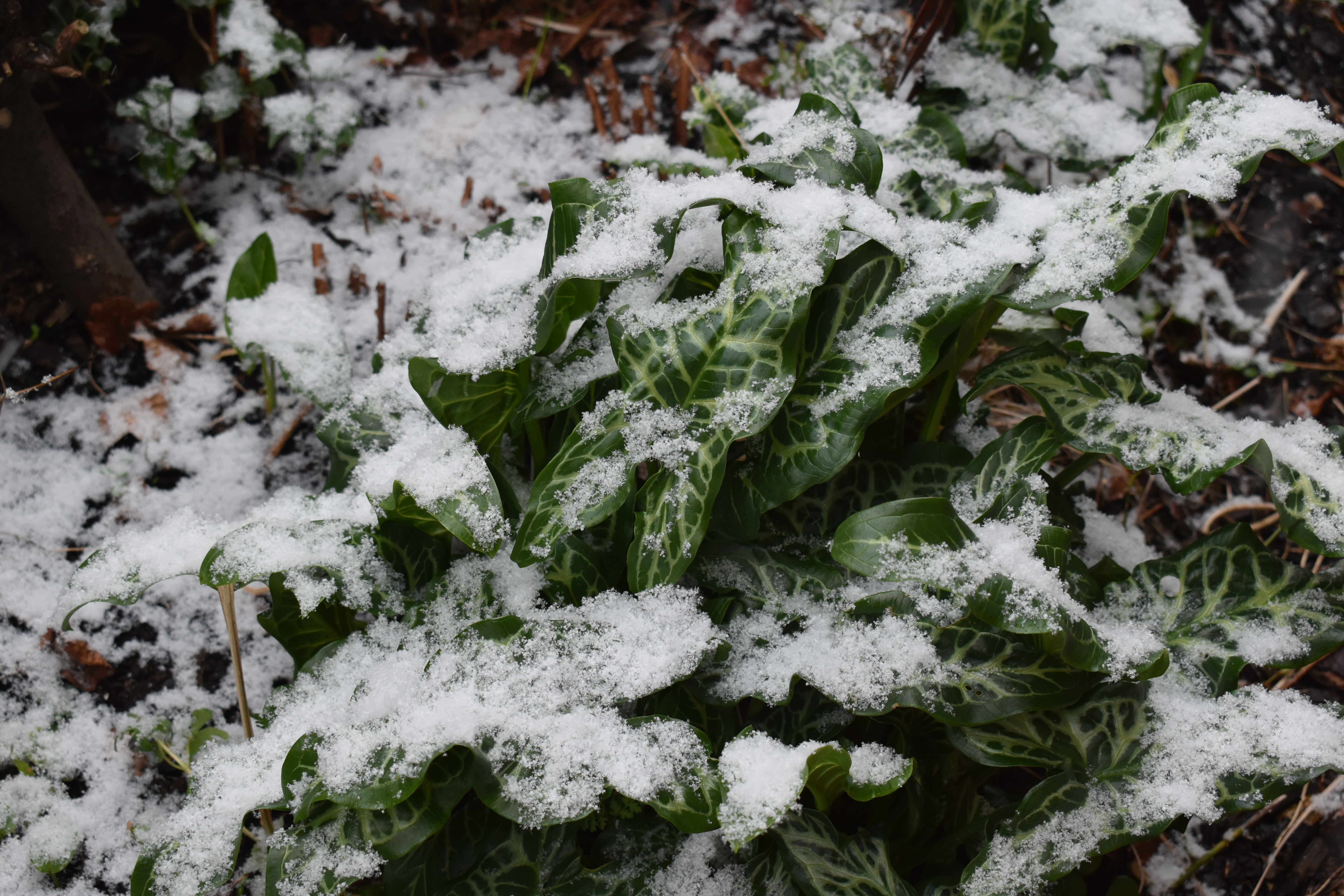
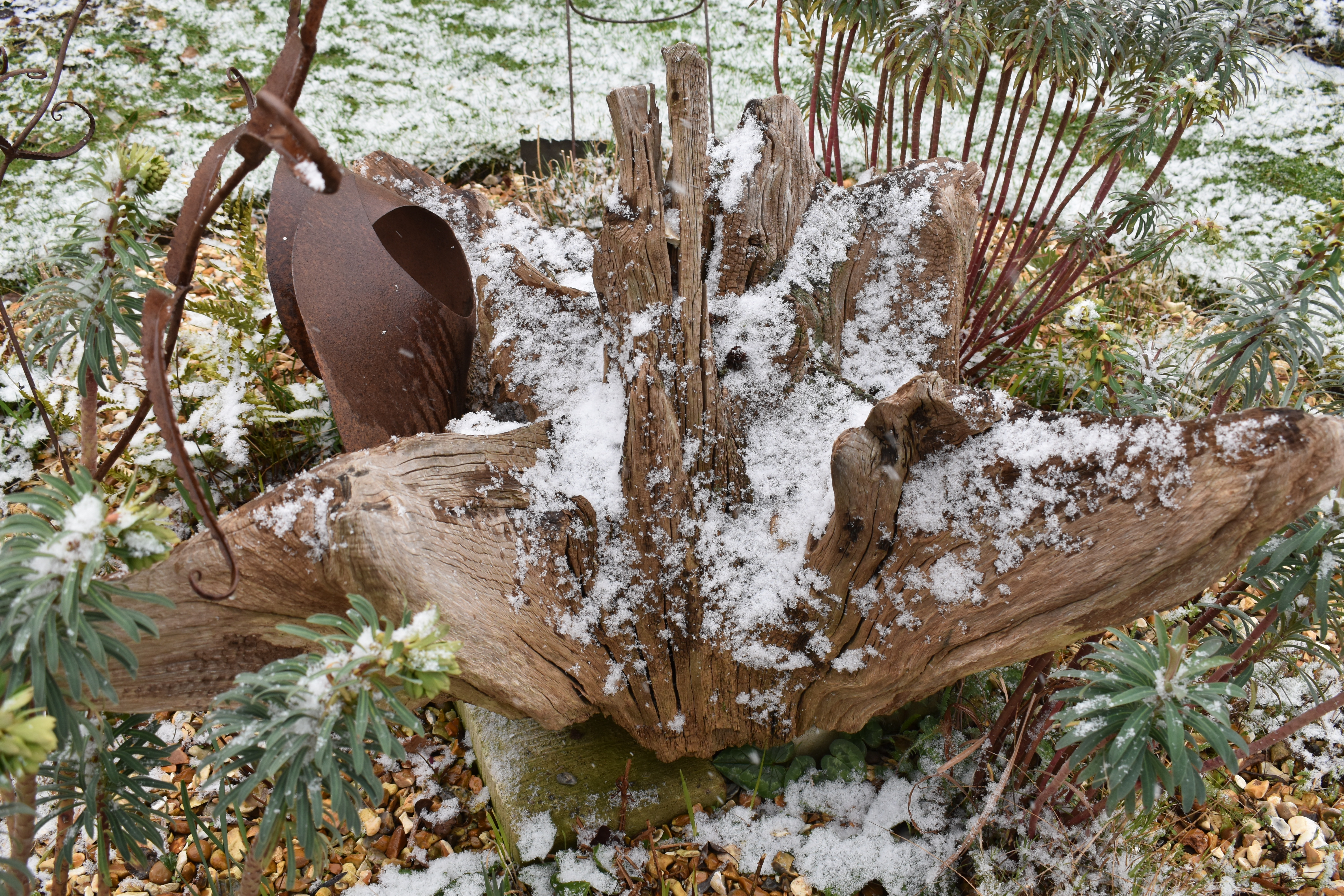
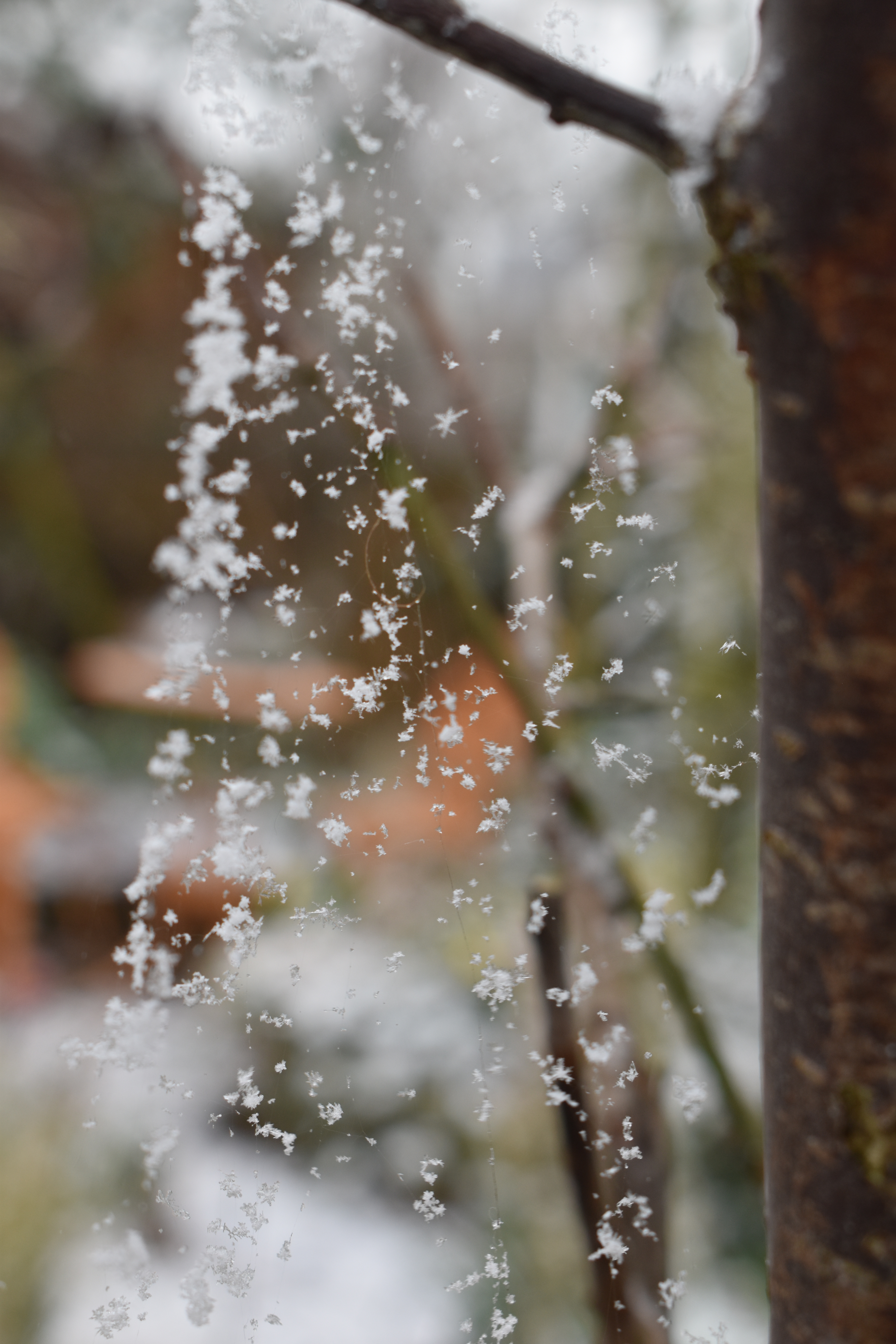
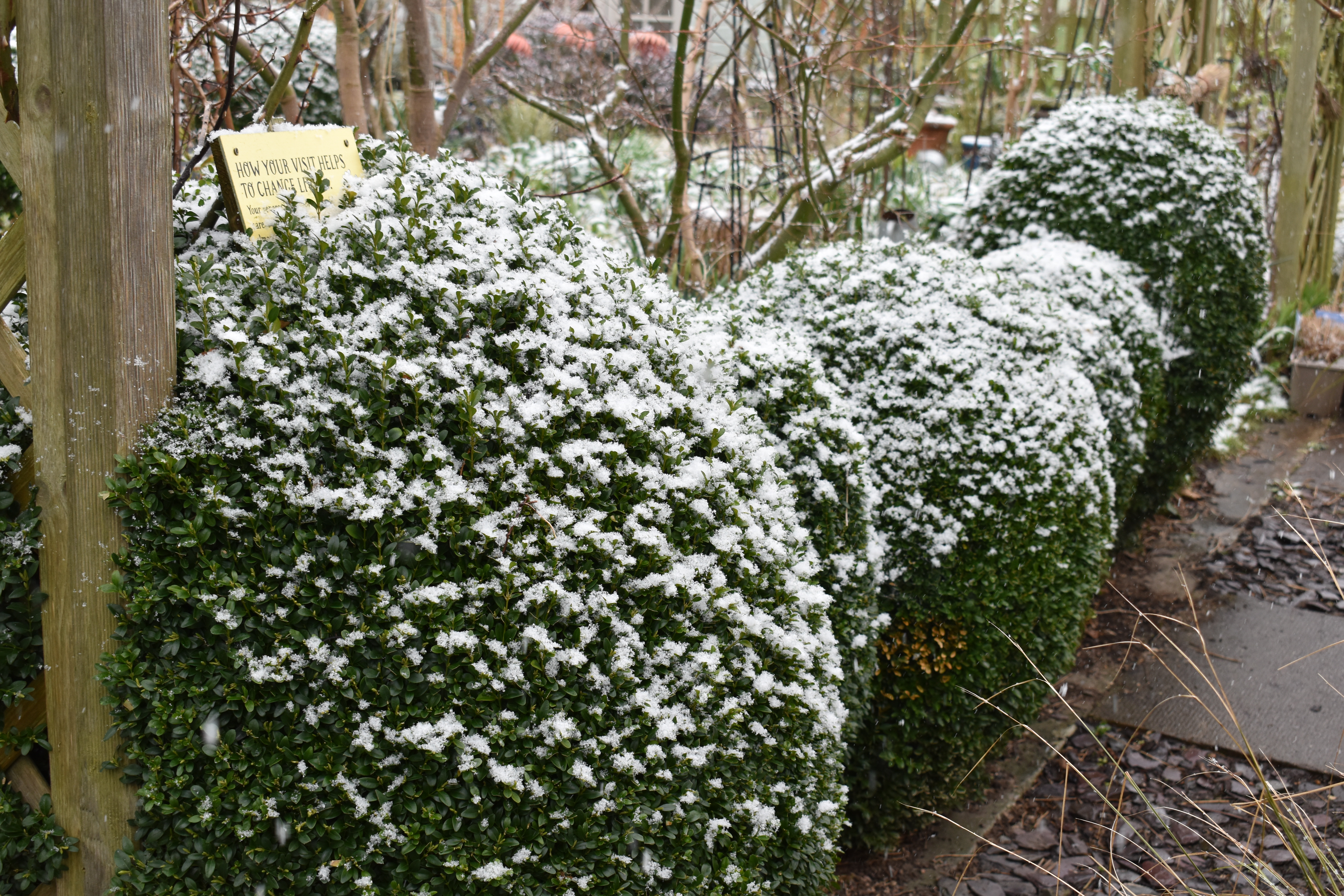
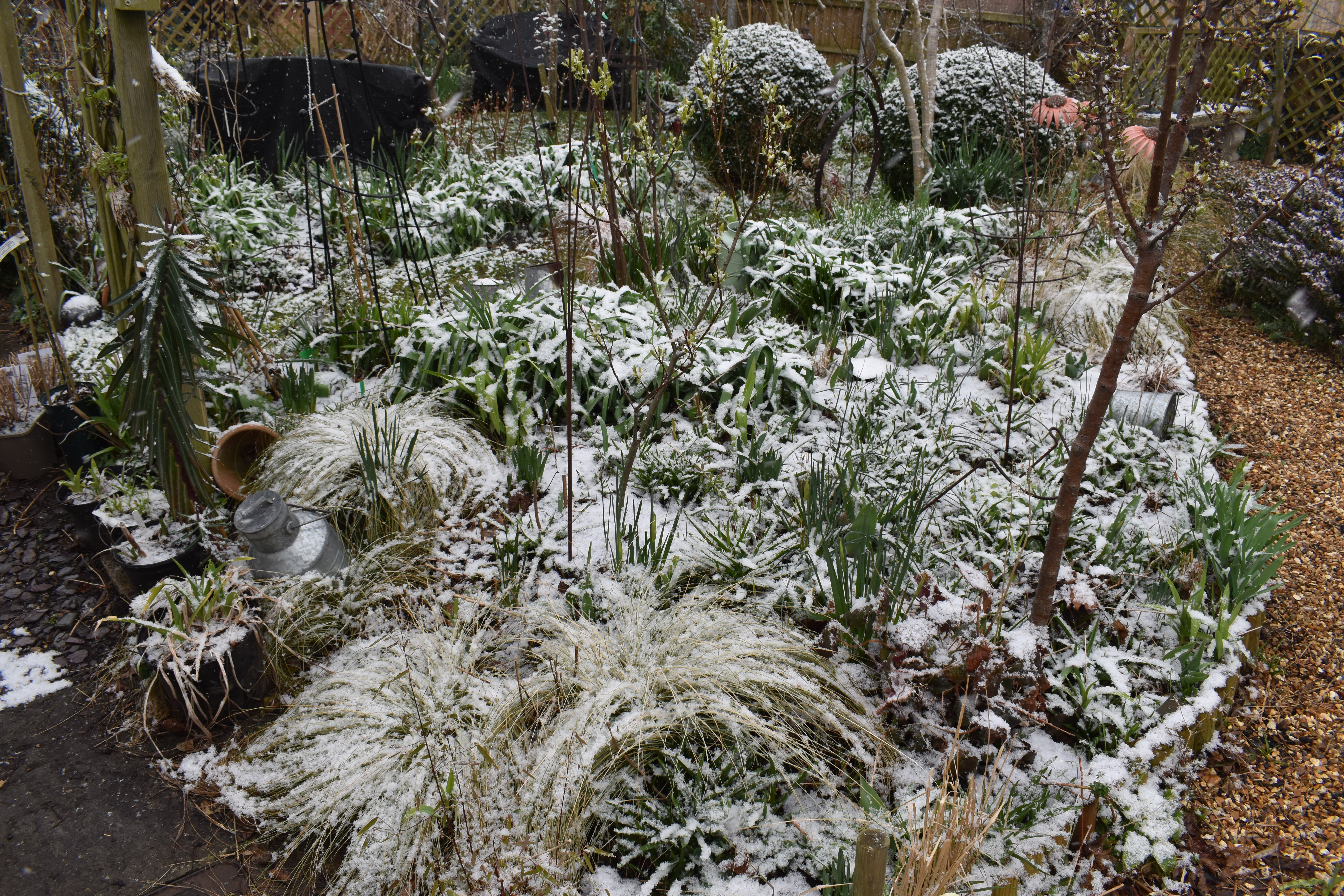
The first snowfall of the winter arrived well into March which the meteorologists think is Spring. Several forecasts have been threatening us with snow recently almost every day.
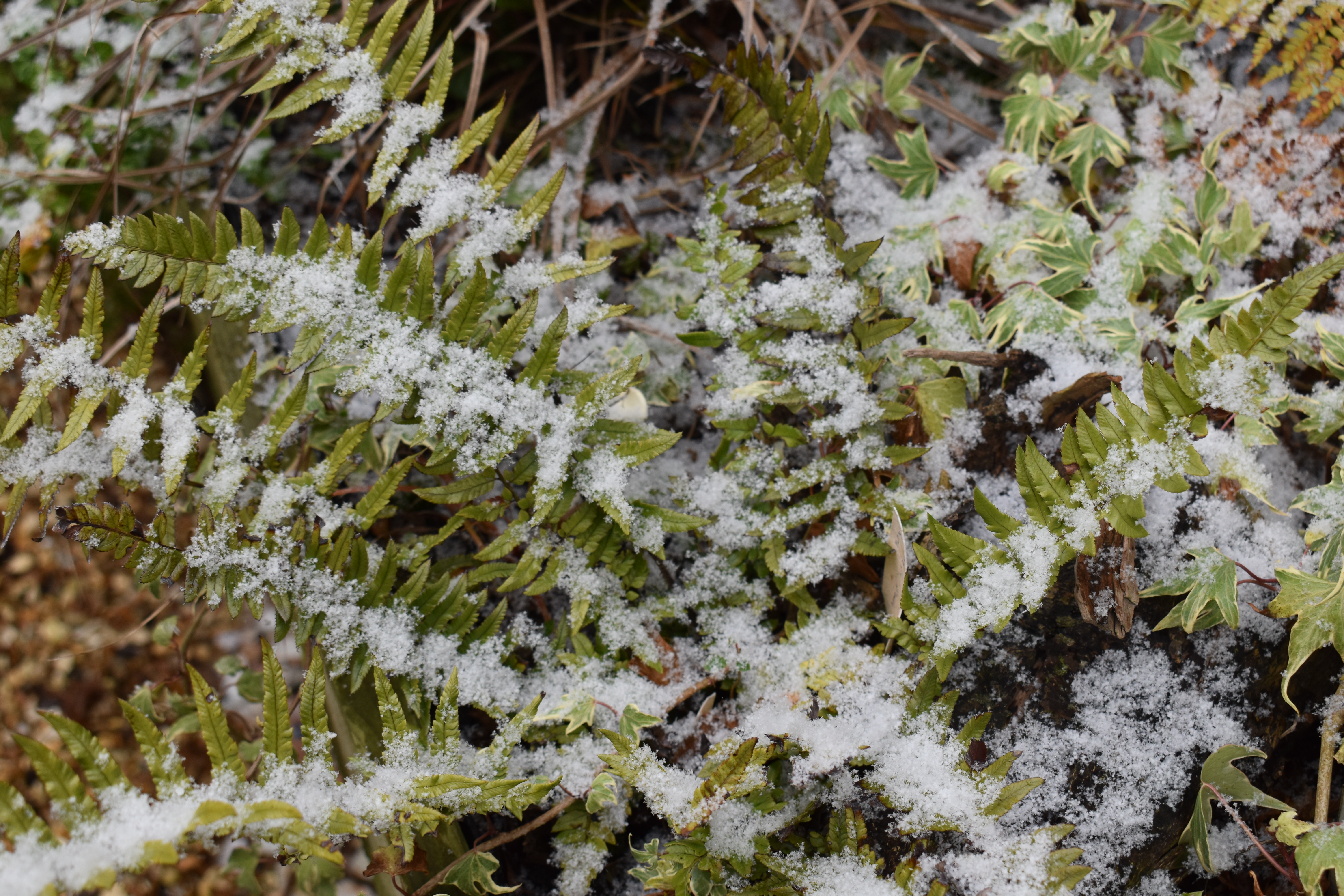
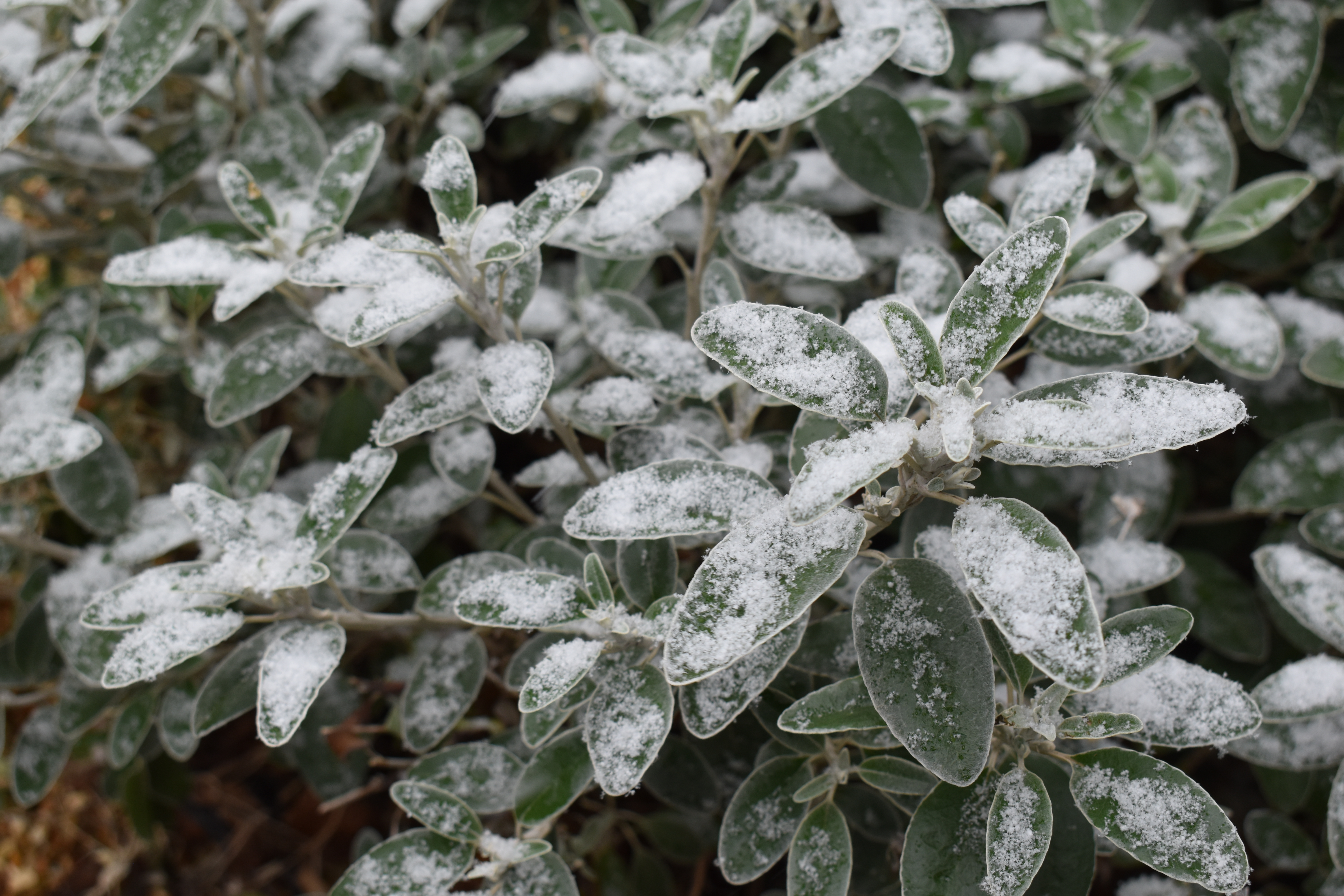
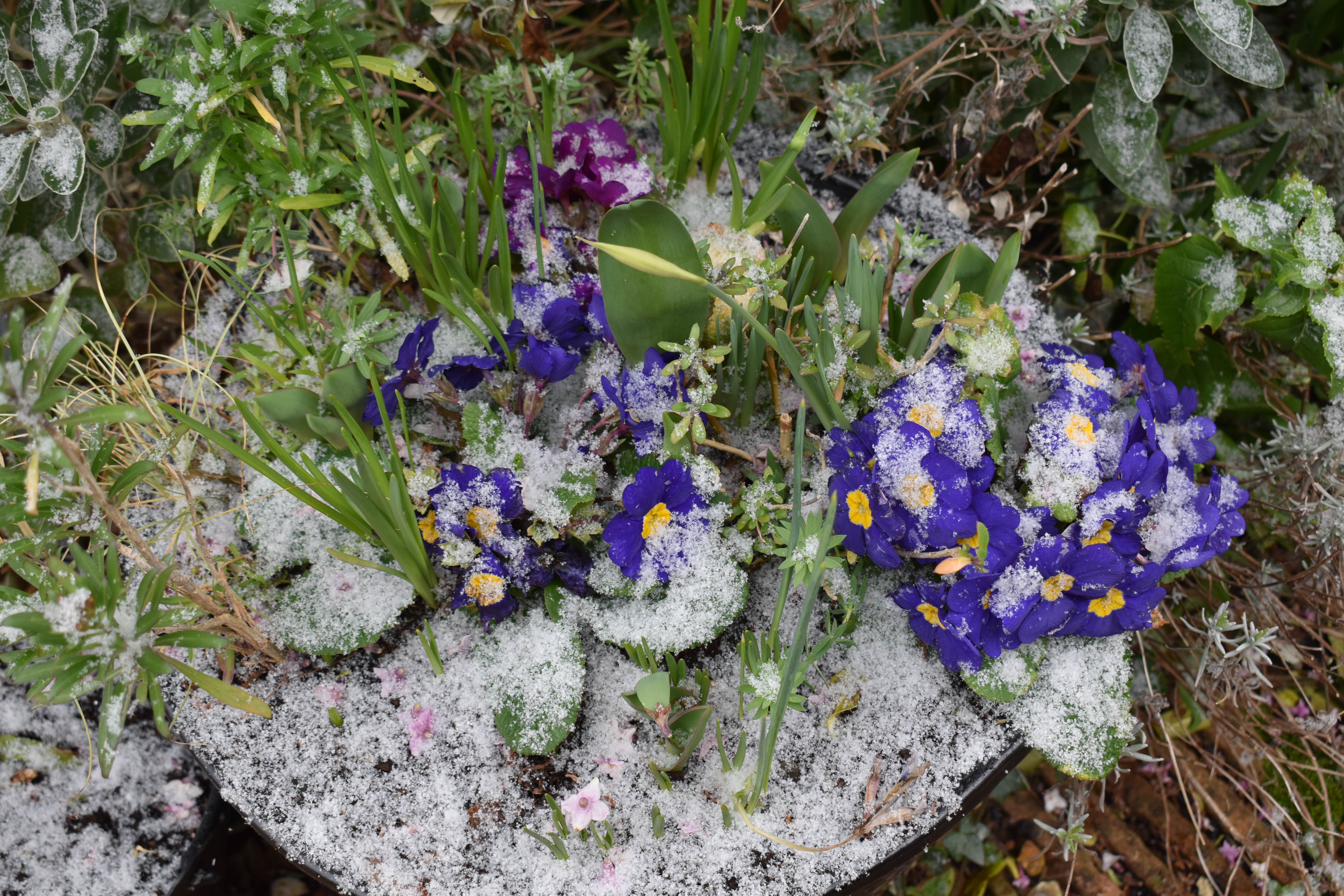
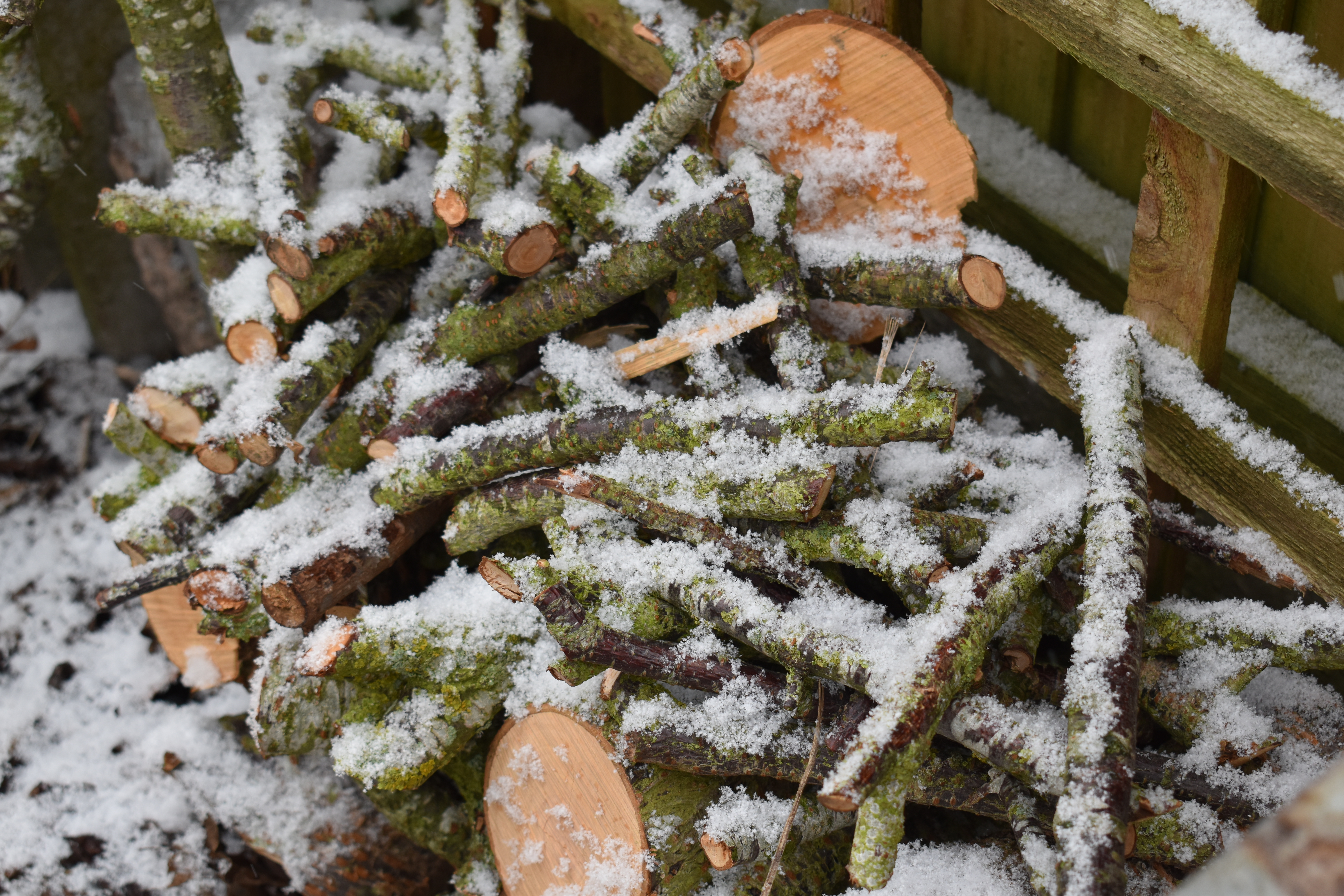
It was very light when it came – you could almost wander between the flakes. As you can imagine I was soon wrapped up and out in the garden with camera in hand. Here is a gallery of those photos.
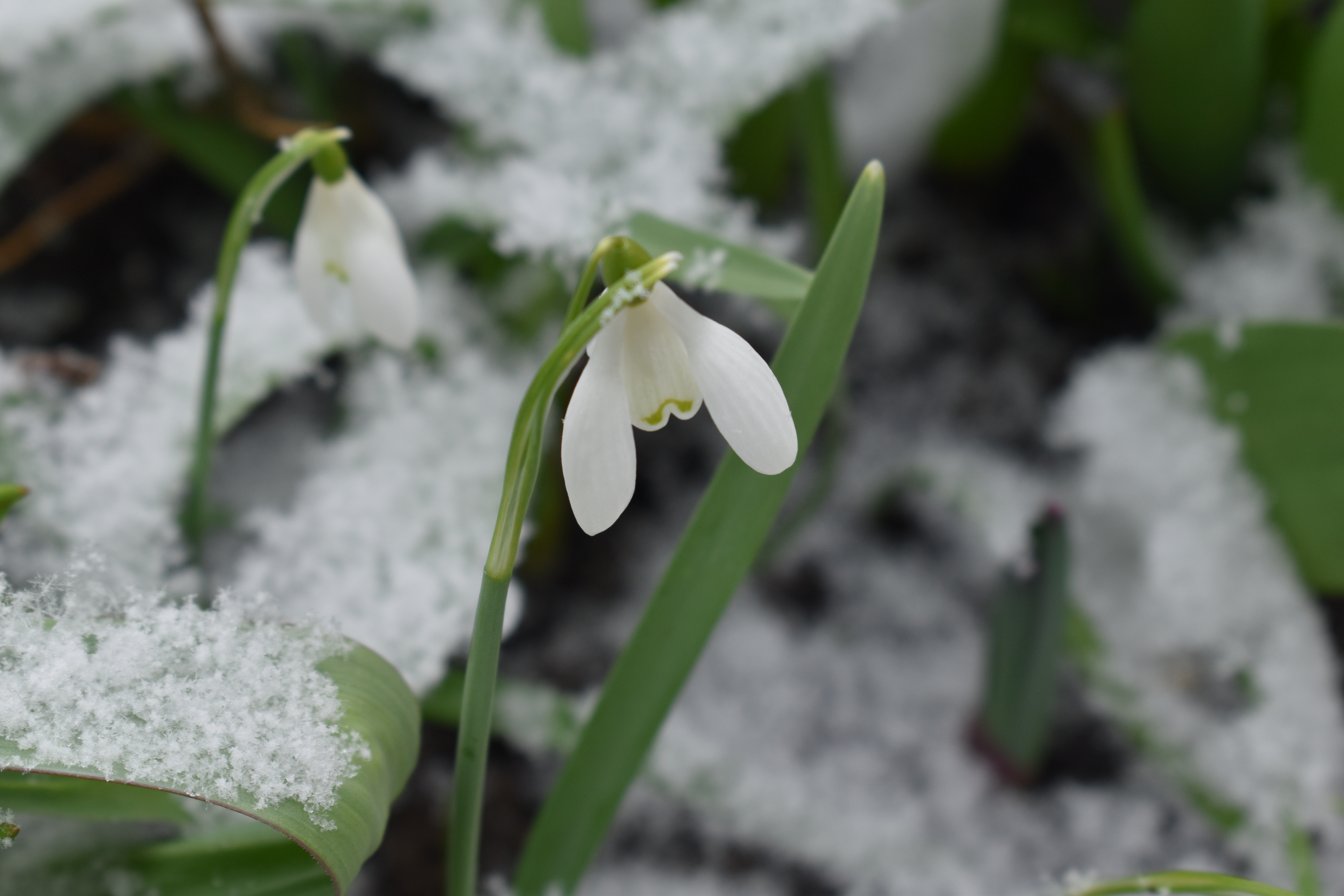
And finally, a photo I have wanted to take for a while now – a snowdrop in snow!
On the last day of February, we met up with my sisters, Penny and Alison and Penny’s husband Tony for a wander around the arboretum at Bodenham near Kidderminster. We have visited several times before at different times of year, but never in February, so we did not know what to expect.
As we arrived the rain started and the drops of rain added a new texture to the surface of the lake that we could enjoy from the windows of the restaurant. This period of rain meant that we sat in the cafe for longer, long enough to enjoy two coffees each. But as soon as the rain eased off we donned coats and hats and set off towards the entry gate.
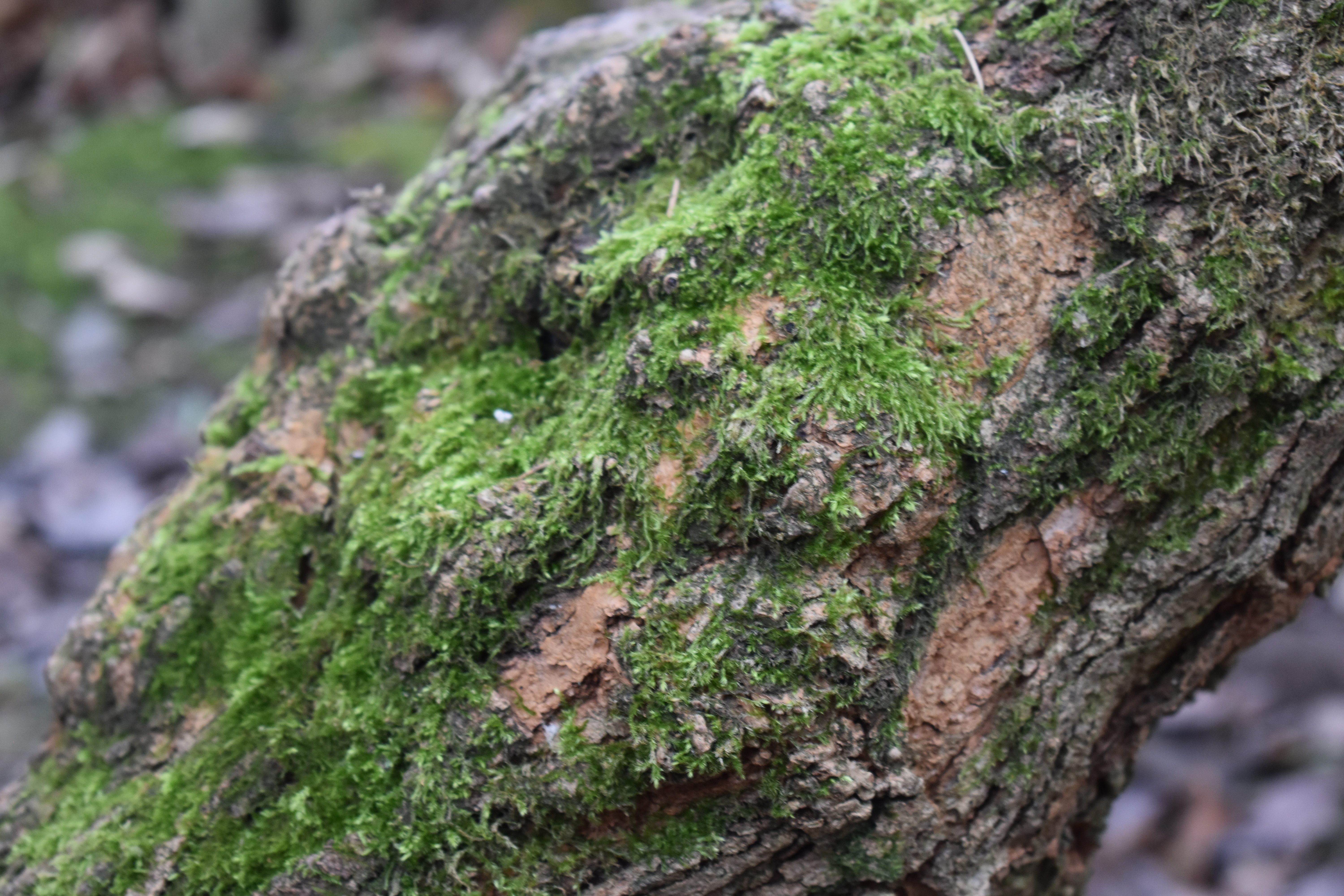
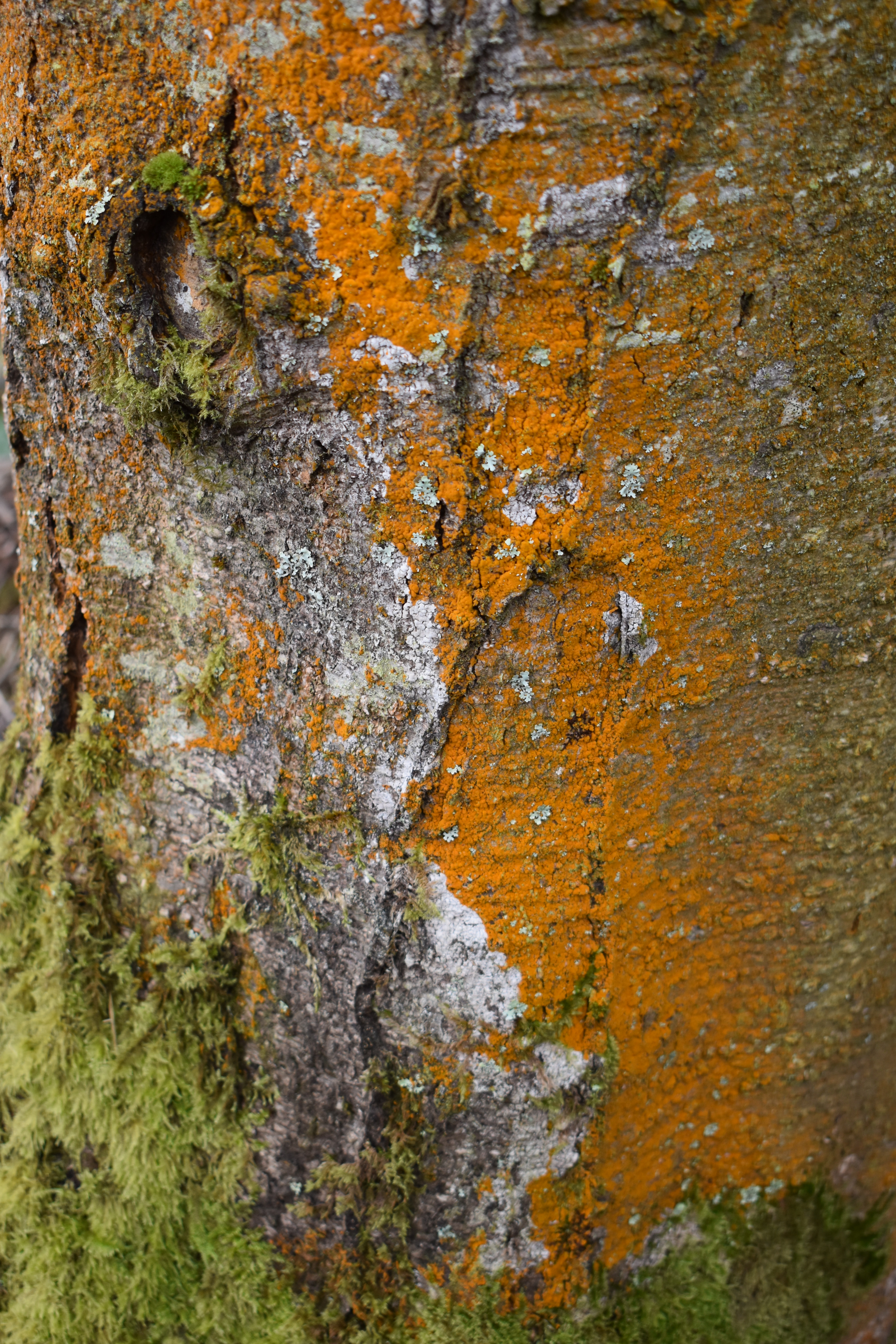
We soon spotted signs of just how damp the area is as any stump or fallen tree were carpeted in rich green mosses and lichens decorated standing trees and any wooden gate or fence.
Any shrubs or trees that flower in the winter months are extra special simply because they show up so well or are scented to attract predators and pollinators. There are fewer insects around at this time of the year than at any other, so plants need to be special to attract them.
Below are photos of a flowering quince, Cydonia, on the left and an evergreen member of the prunus family alongside.
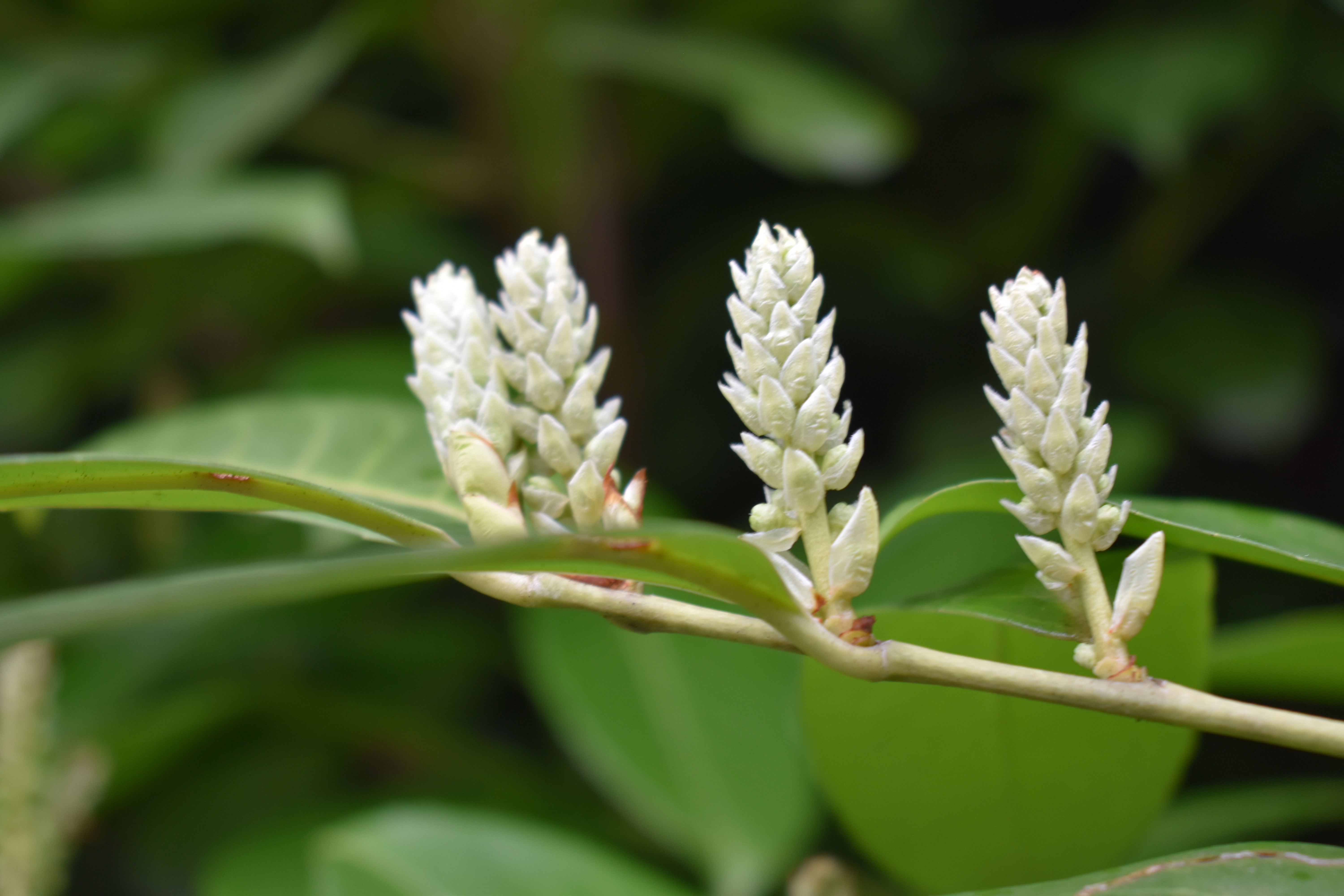
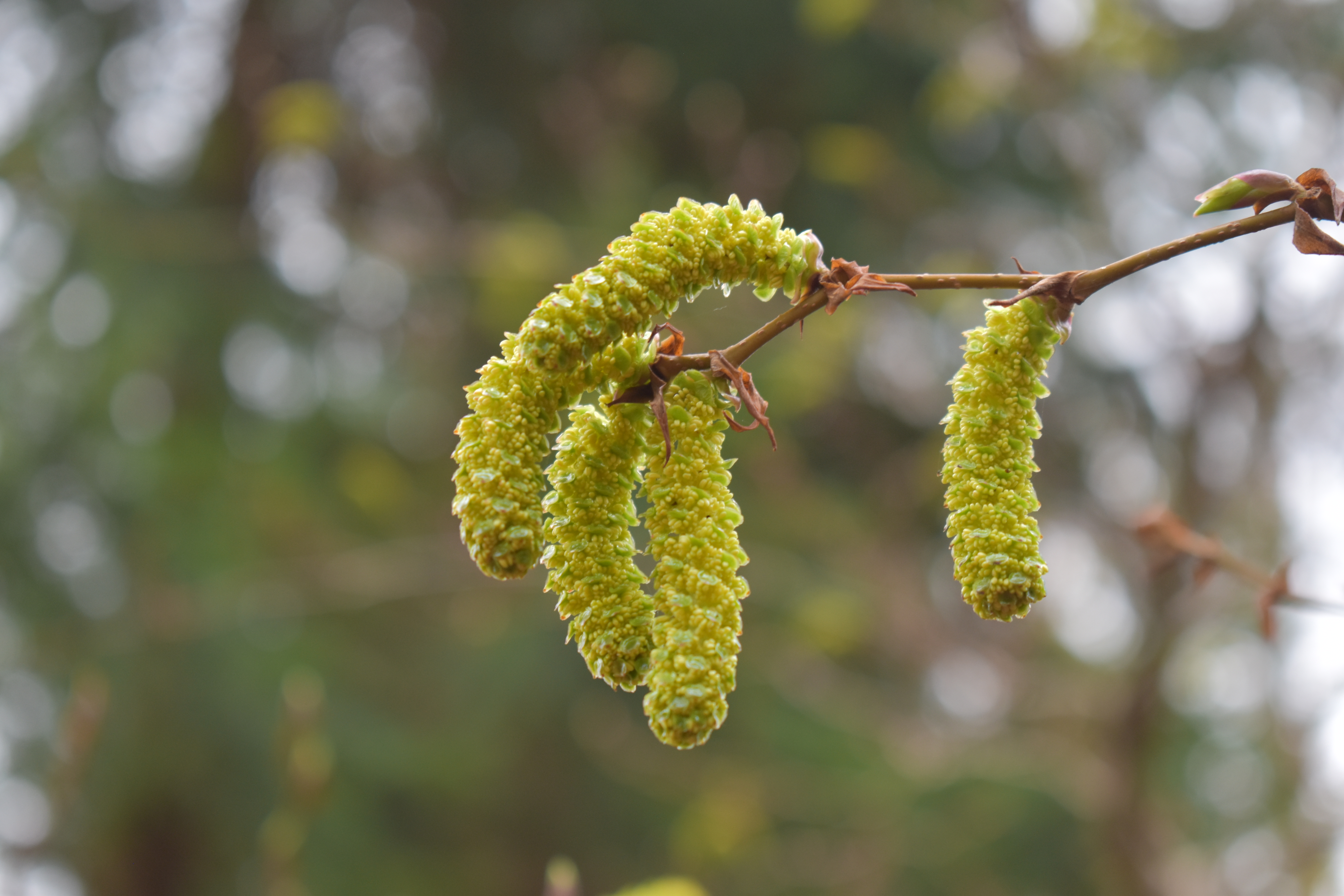
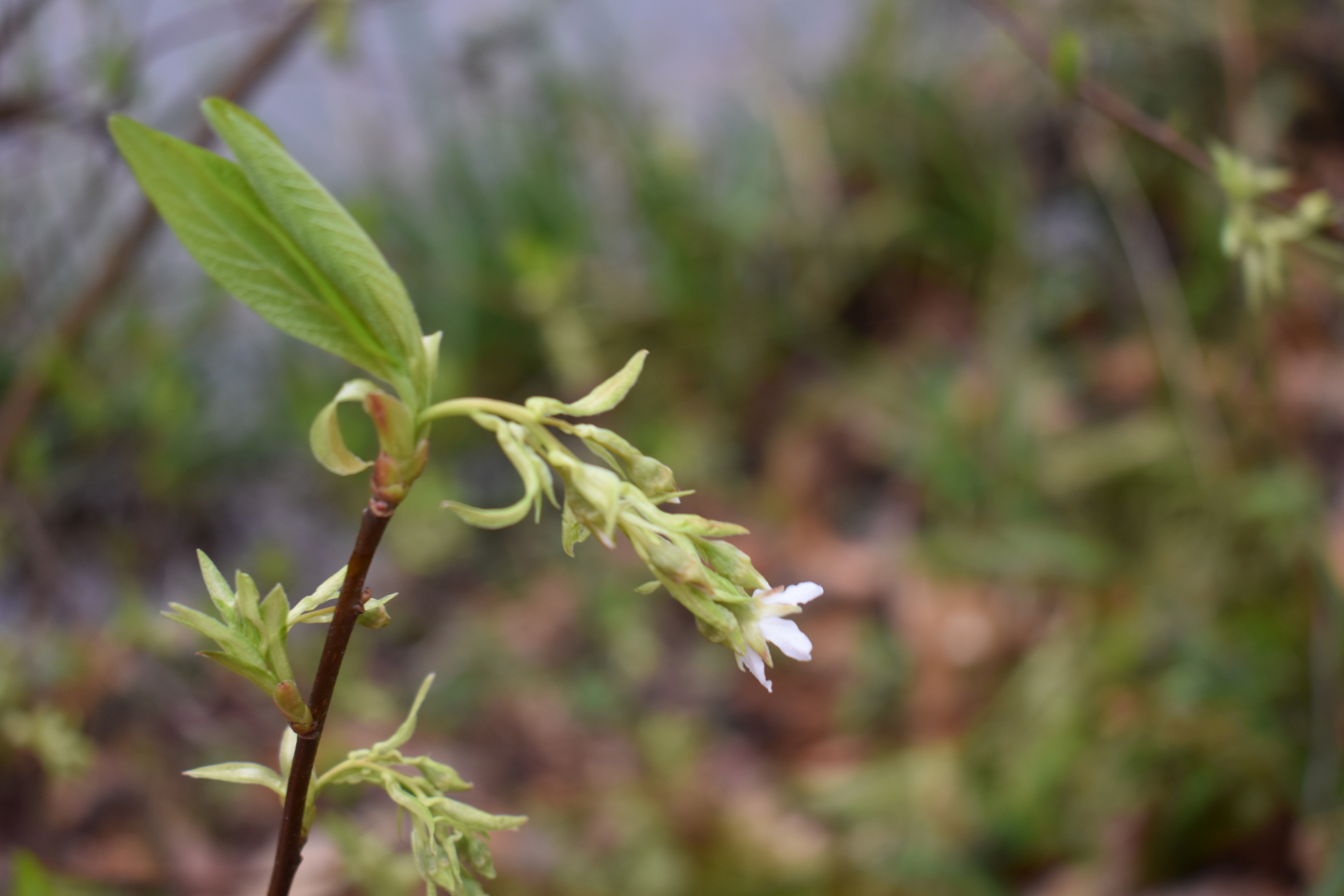
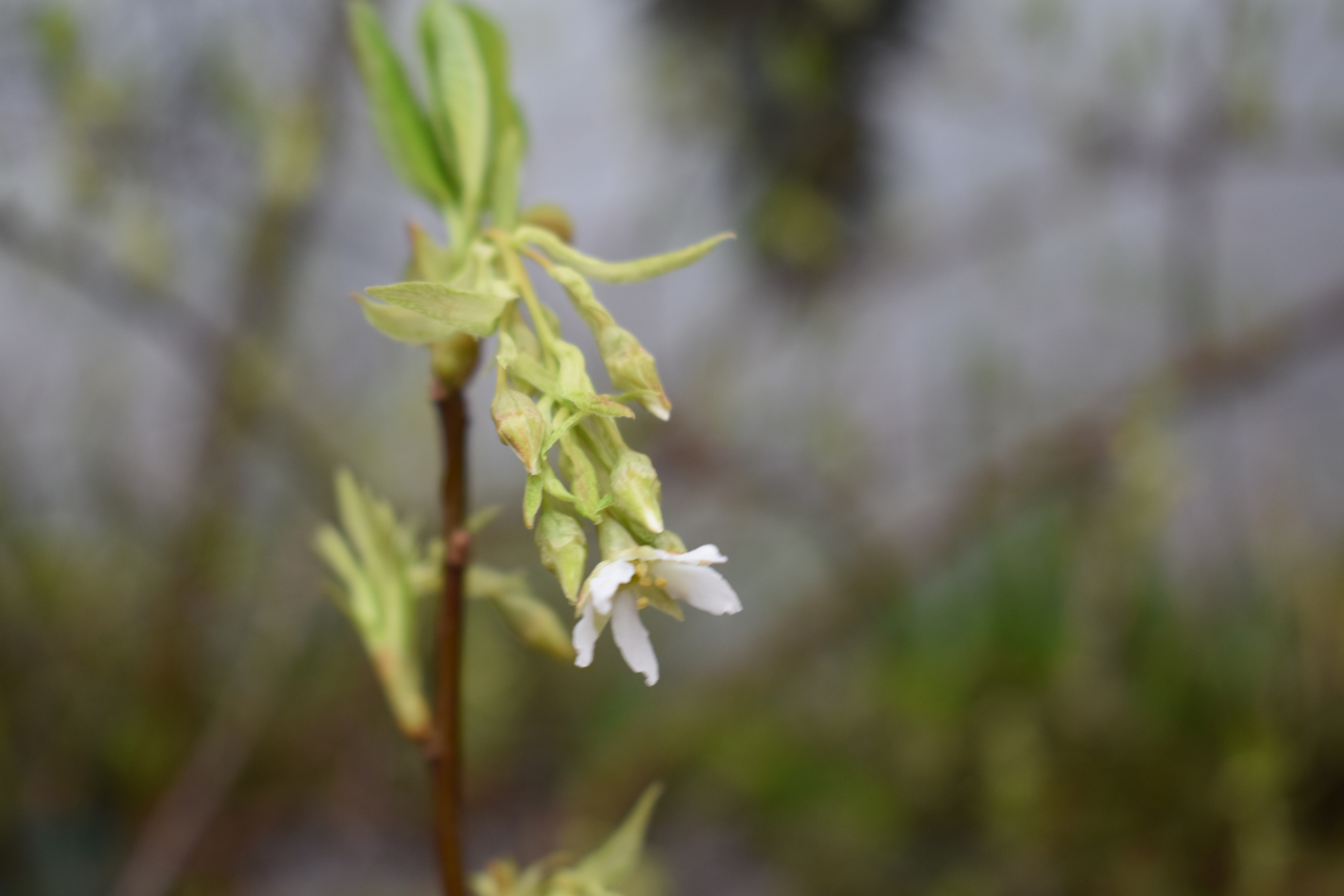
The next four photos show a clump of birch catkins and Cornus mas flowers on the top row and below that two photos of a shrub completely unknown to us. It had the overall look of a will but it had white flowers. None of us had a clue to its identity.
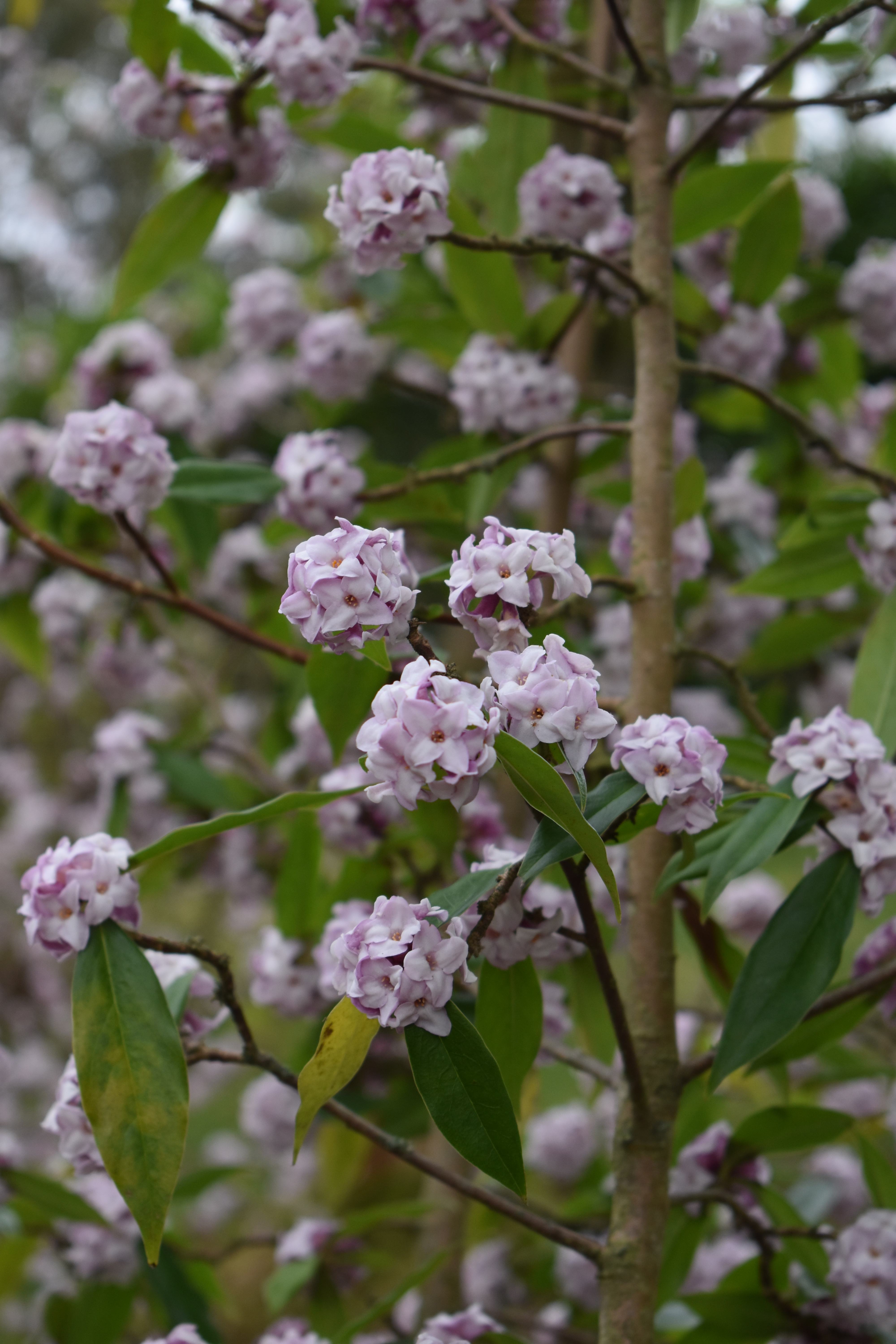
The next pair of pictures show two different daphnes, on the left is the wonderful Daphne bhuloa ‘Jacqueline Postill’ and on the right Daphne odora ‘Aureomarginata’, both beautifully scented.
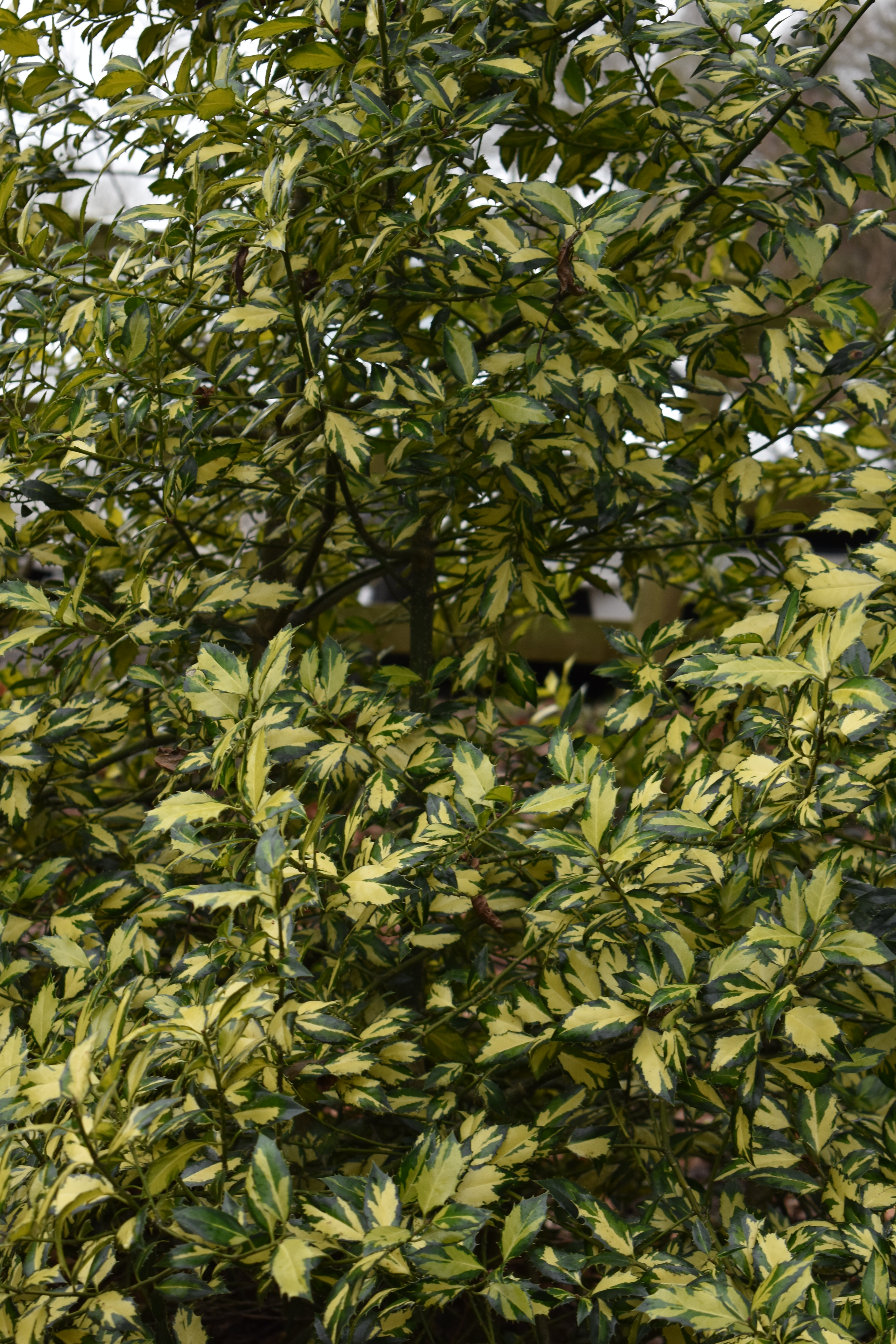
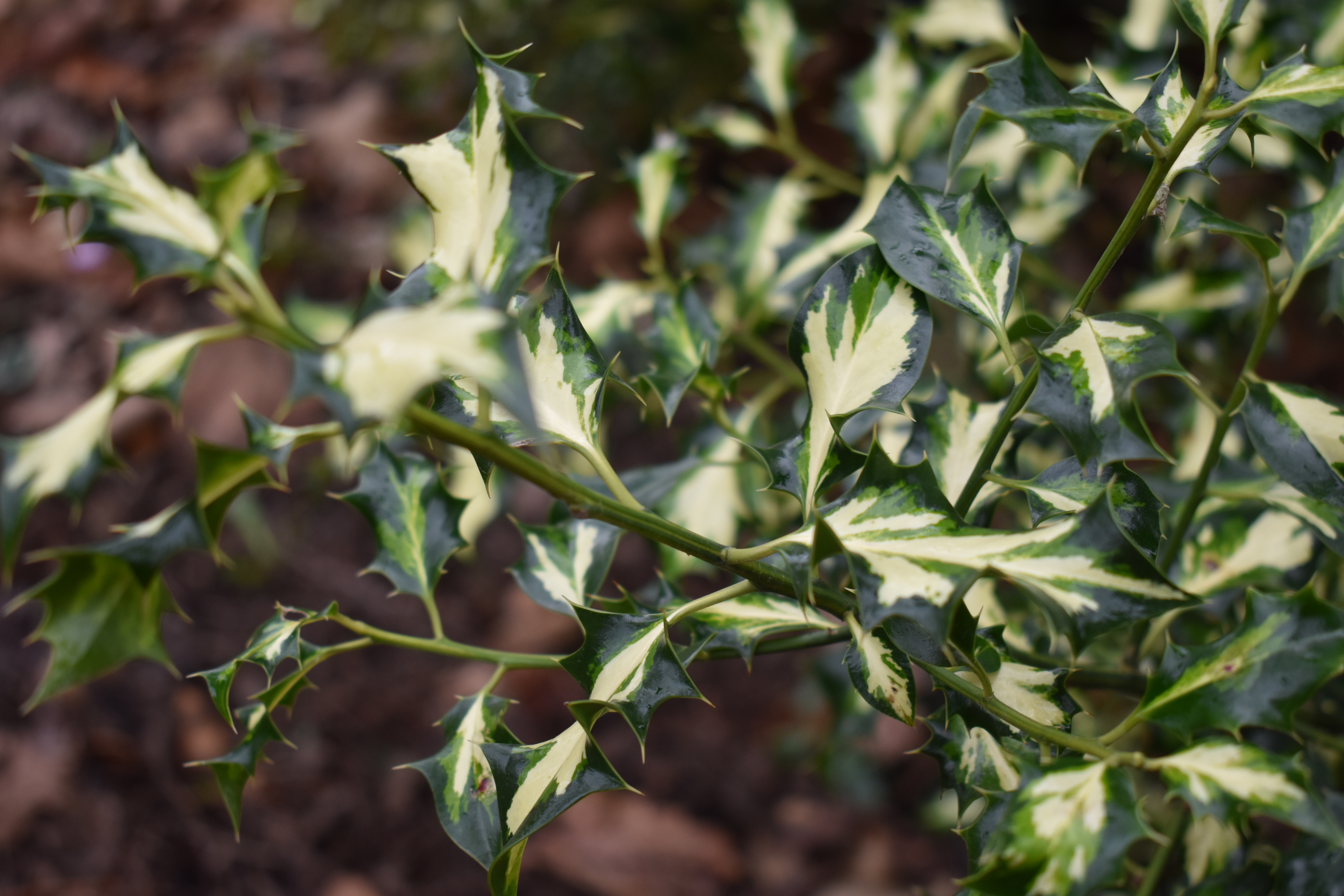
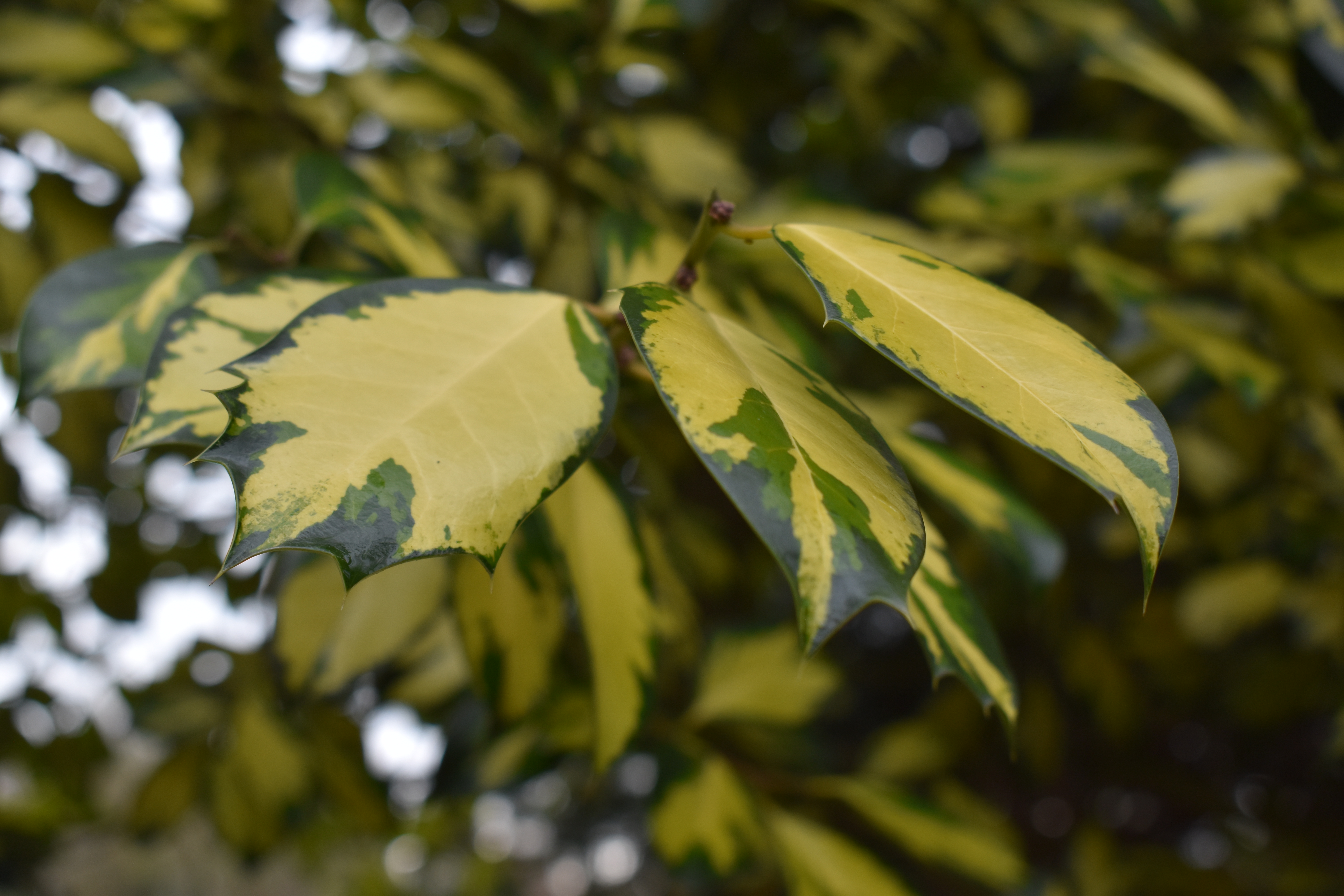
Variegated foliage comes into its own in the winter months, with hollies probably being the most prominent.
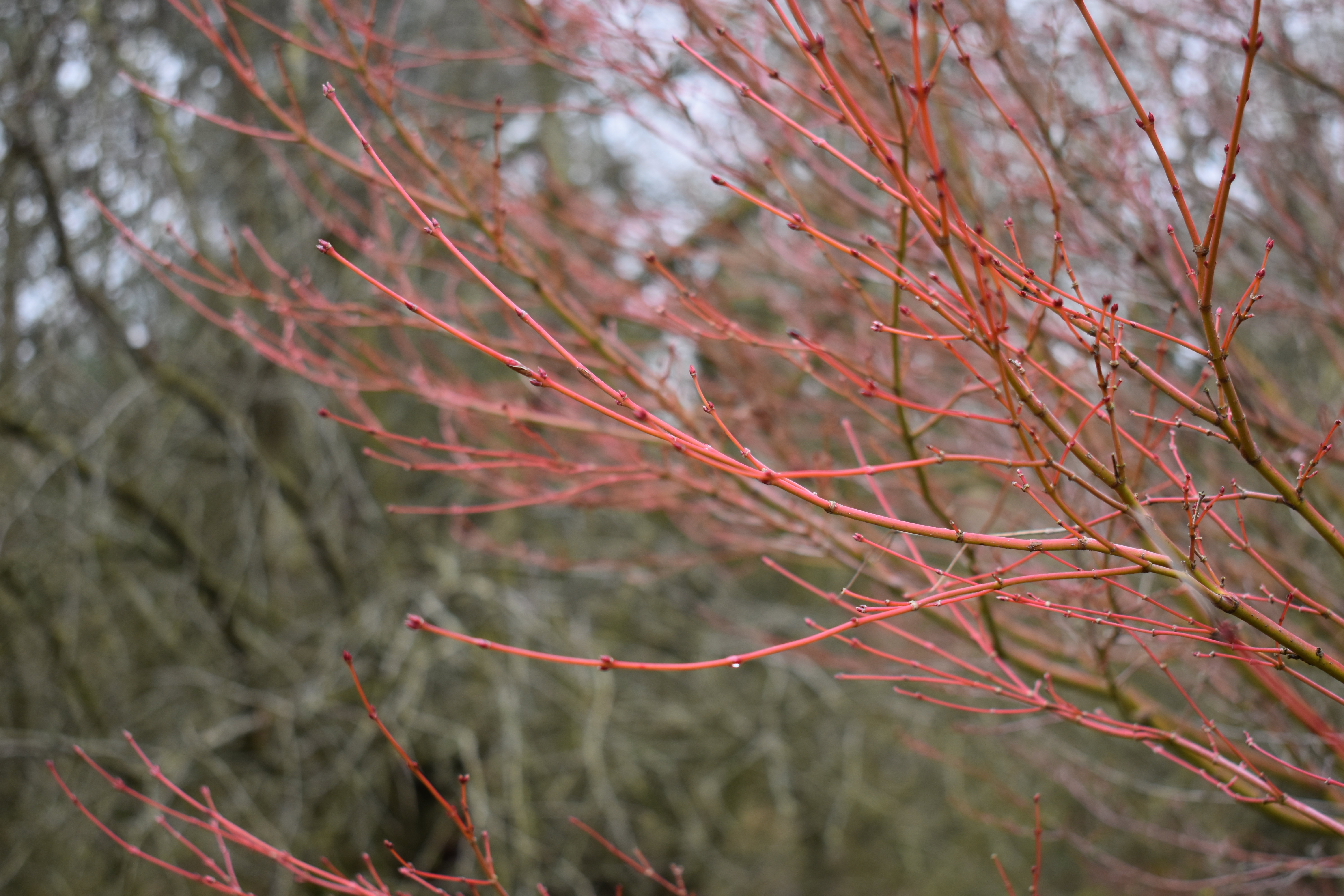
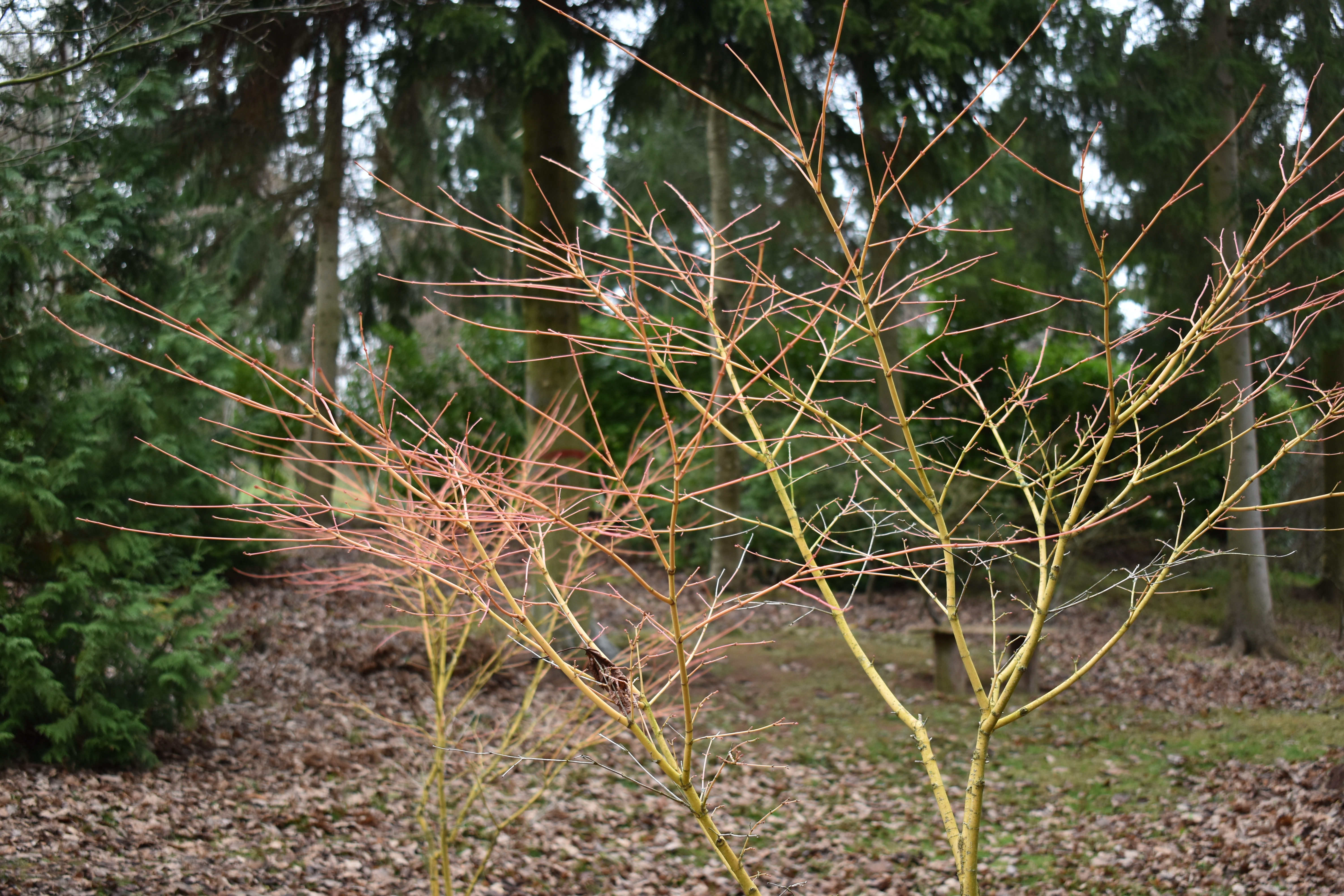
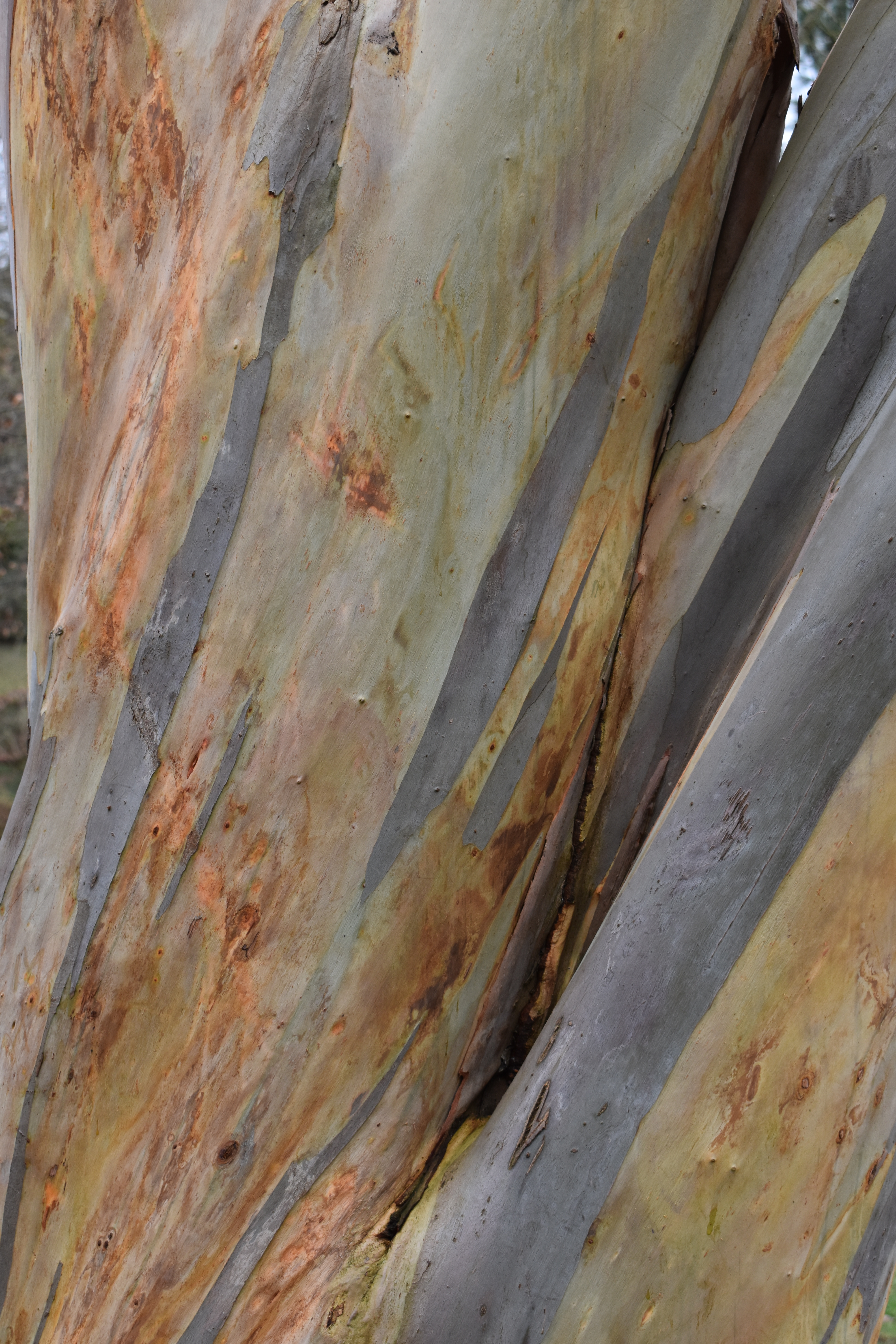
Coloured stems of shrubs and coloured and patterned bark of trees become more obvious once the leaves have fallen and exposed them.
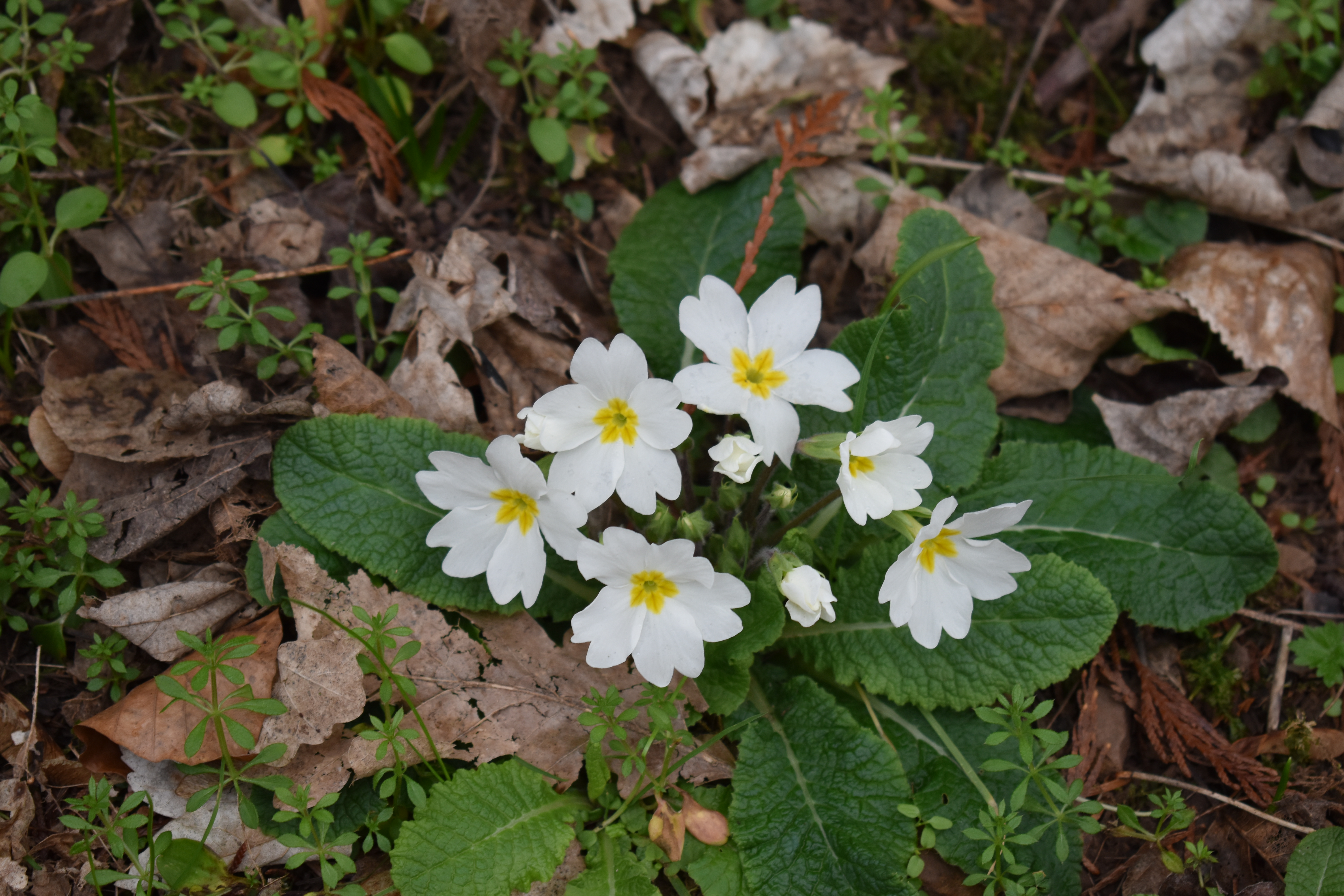
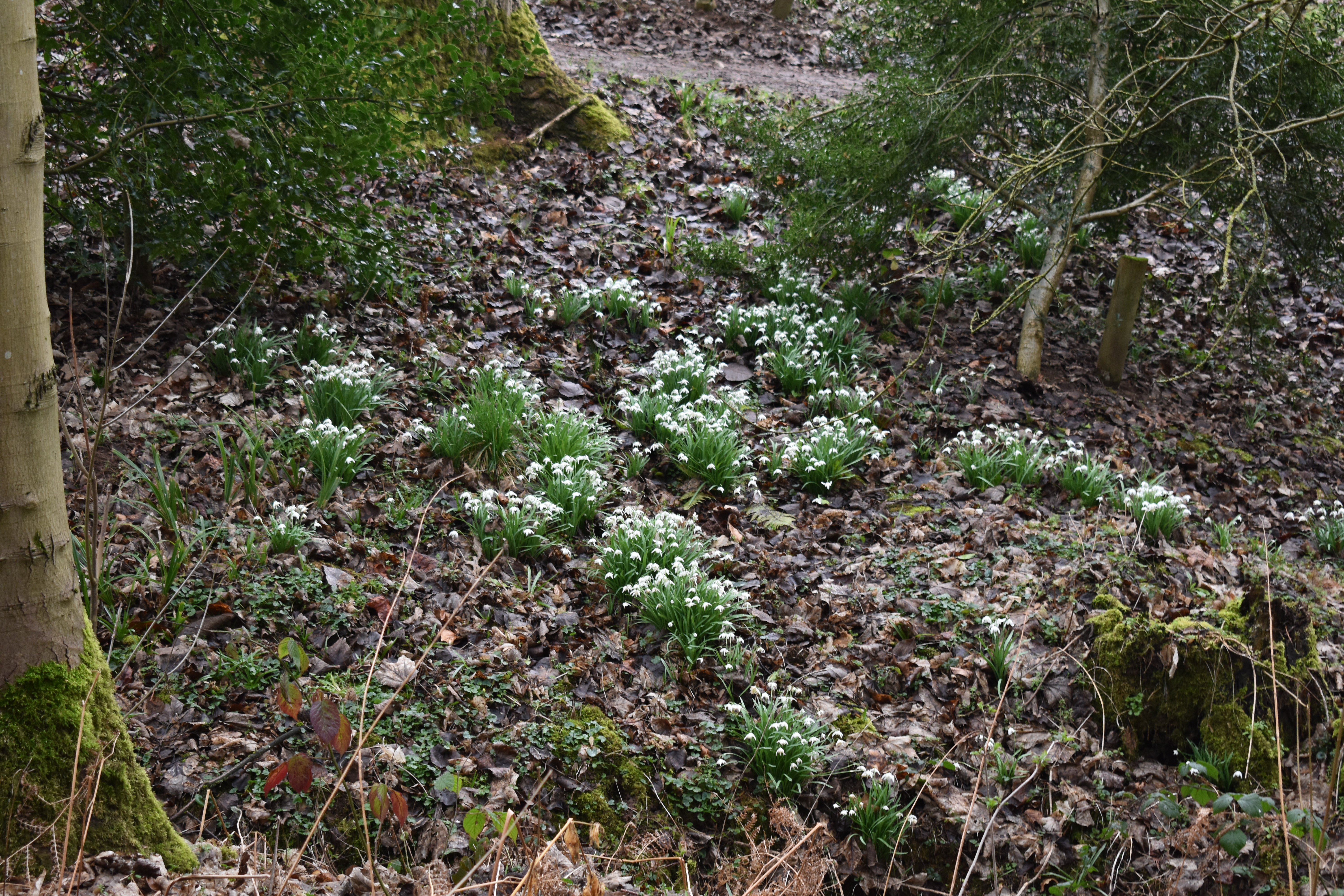
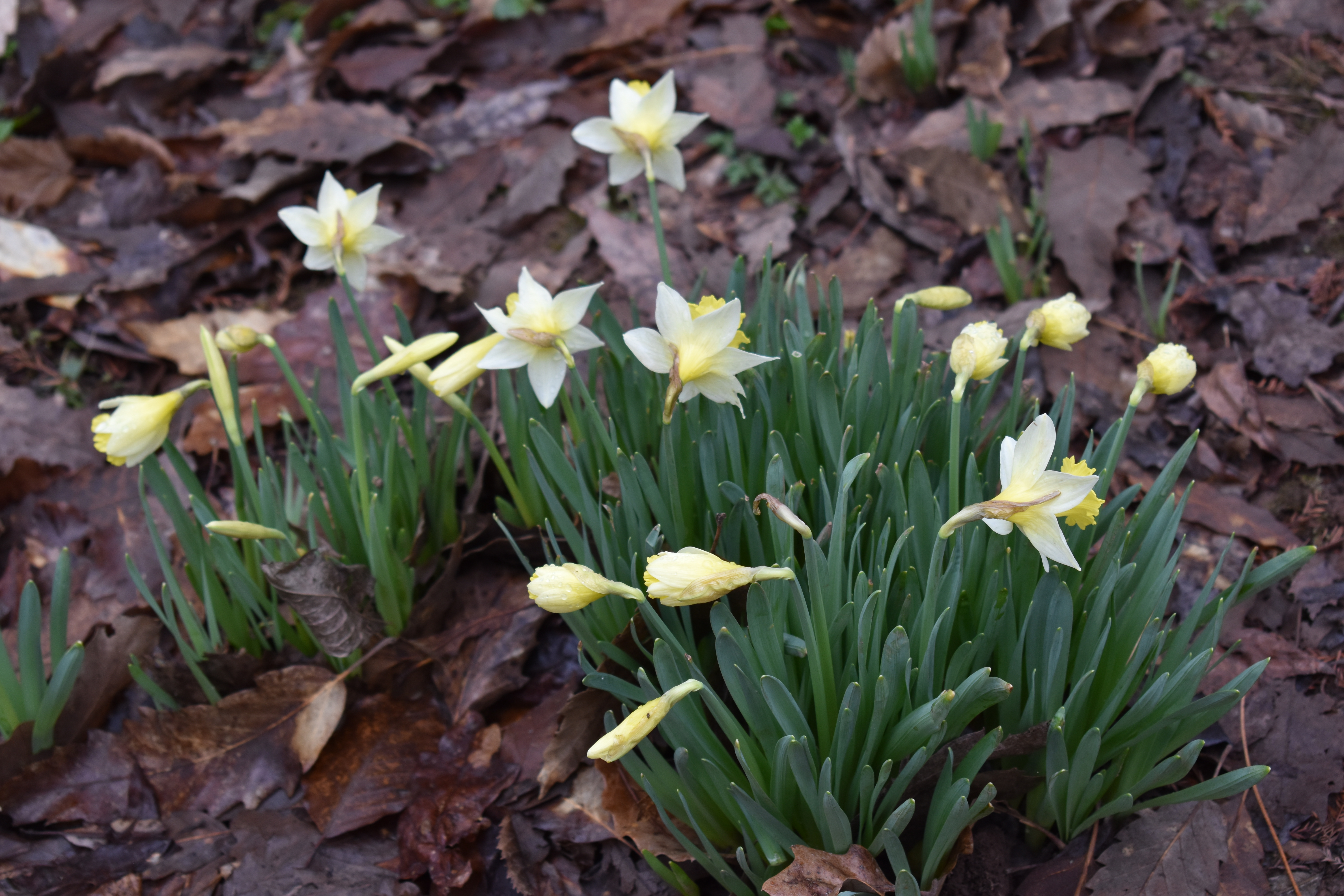
At this time of year there only a few perennial plants that flower but everyone that does so is very special and noticed by almost everyone.
Wherever you visit in a garden or an arboretum you often find a surprise or two. At Bodenham it was ‘The fernery’ which seems to be taking advantage of an existing sloped pathway leading to a filled up feature. Ferns dominated the slopes and ivies covered the feature. One fern had beautifully shaped foliage and it is one we have been looking out for for years!
We shall be back later in the year in a different season.
Even as early as January and February there are several plants showing flower buds, that will be producing flowers in the first few months of the year. Buds are fattening up and splitting open to reveal clues concerning their colour and flower shapes.
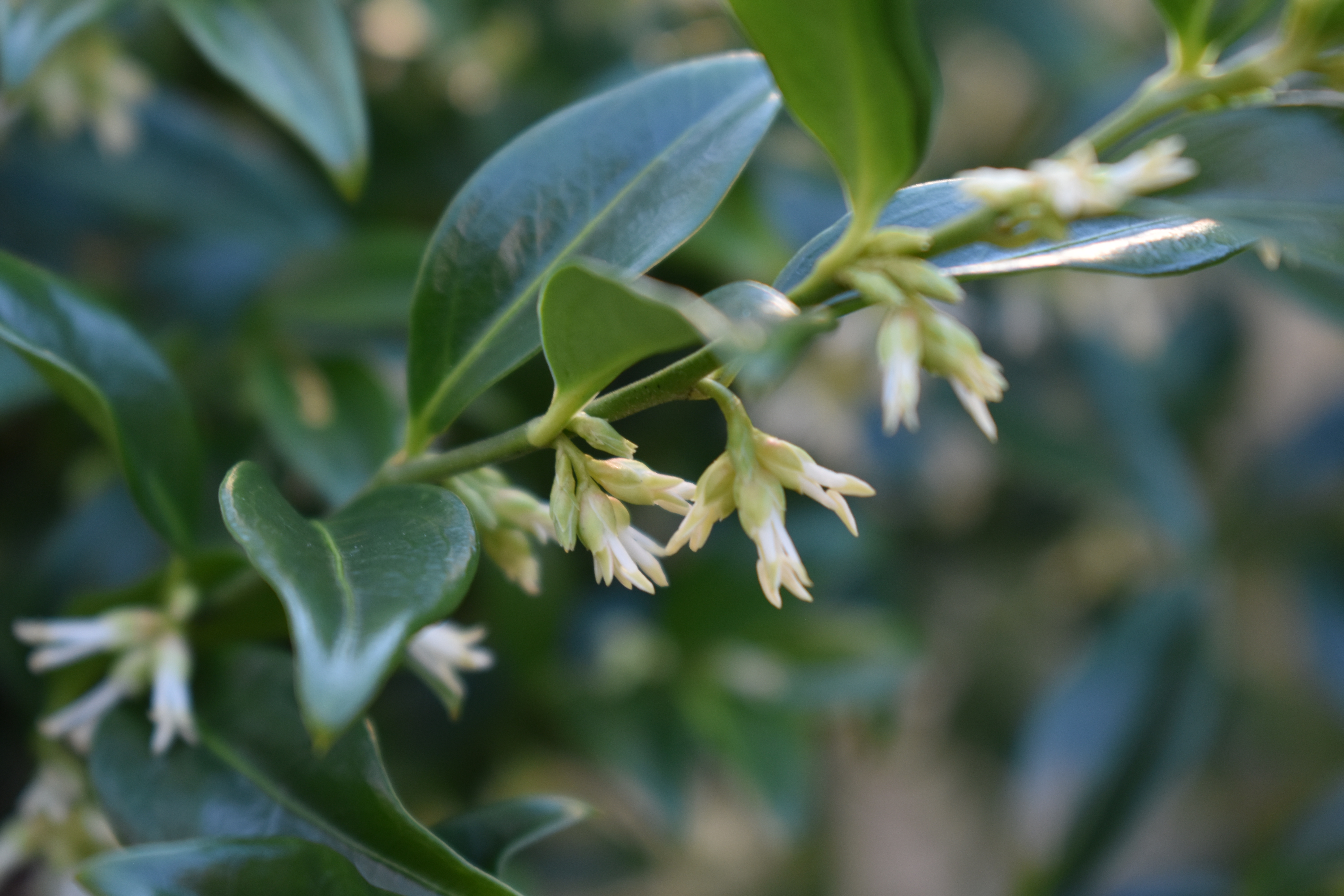
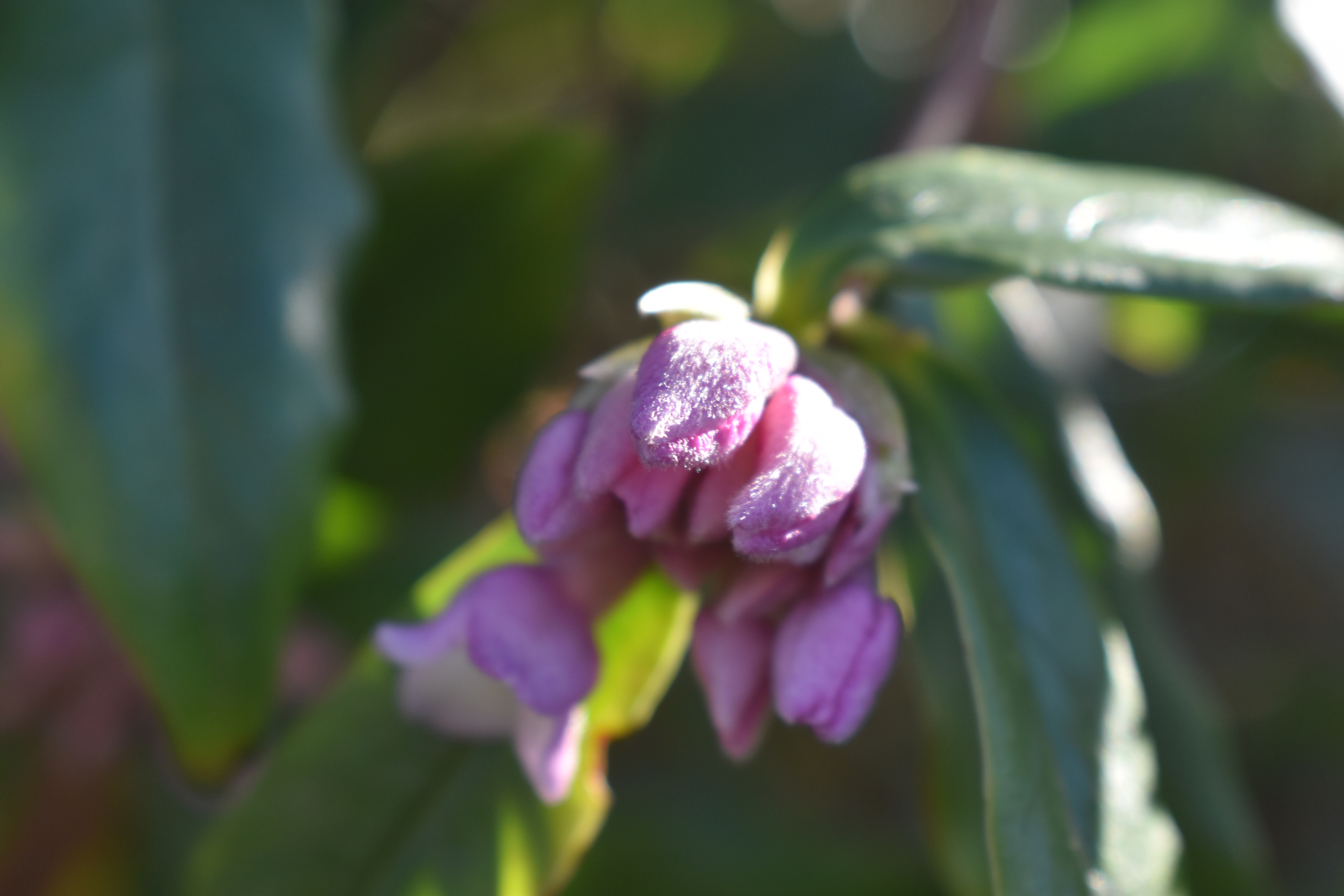
Flowers that open this early on often give out rich scent to attract the few pollinators around in the winter weather. The two really early bloomers in our garden, both with rich scent flower early in January, are pink flowered Daphne bhuloa ‘Jacqueline Postill’ and white blossomed Sarcococca confusa. They both manage to send their sweet aromas far and wide.
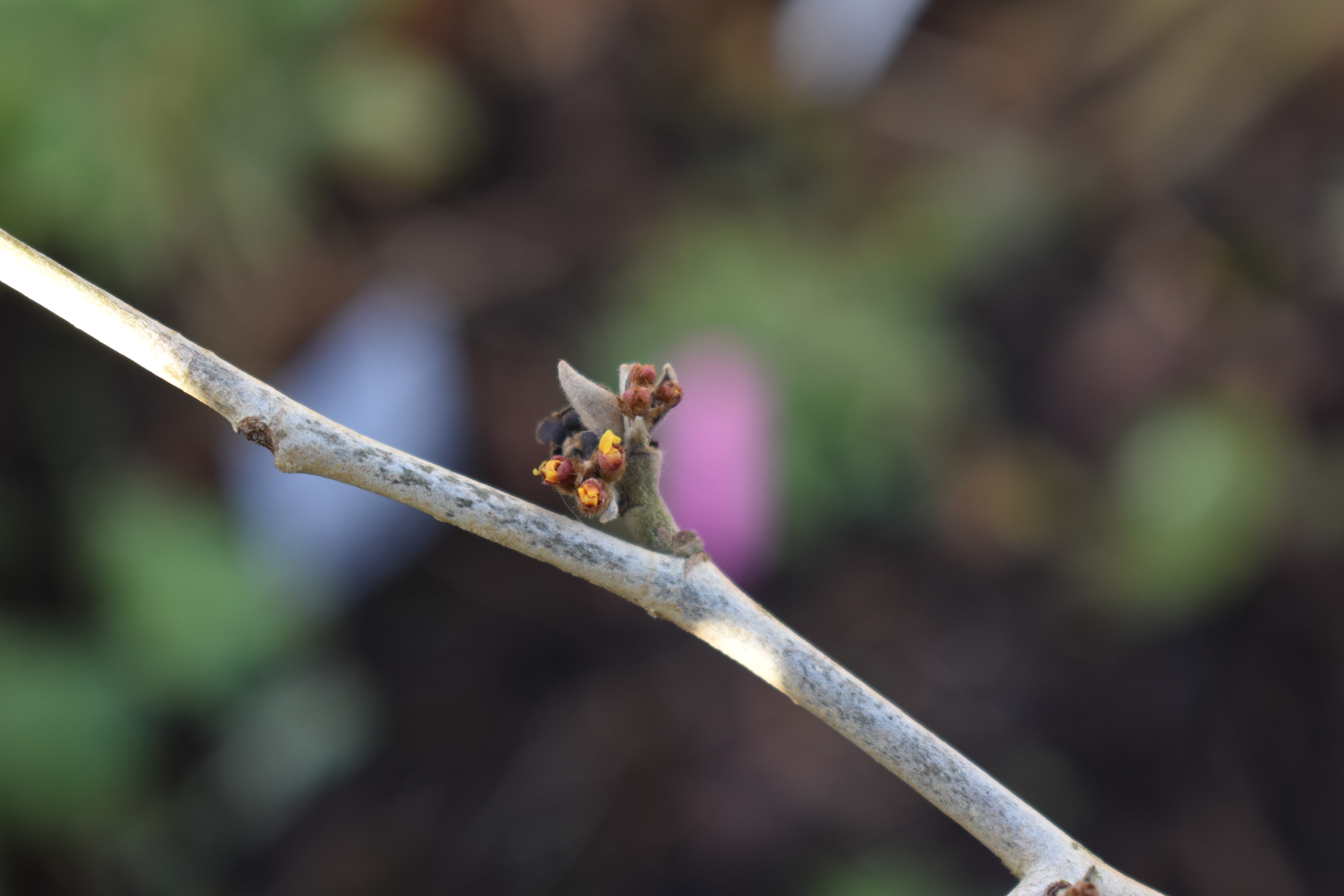
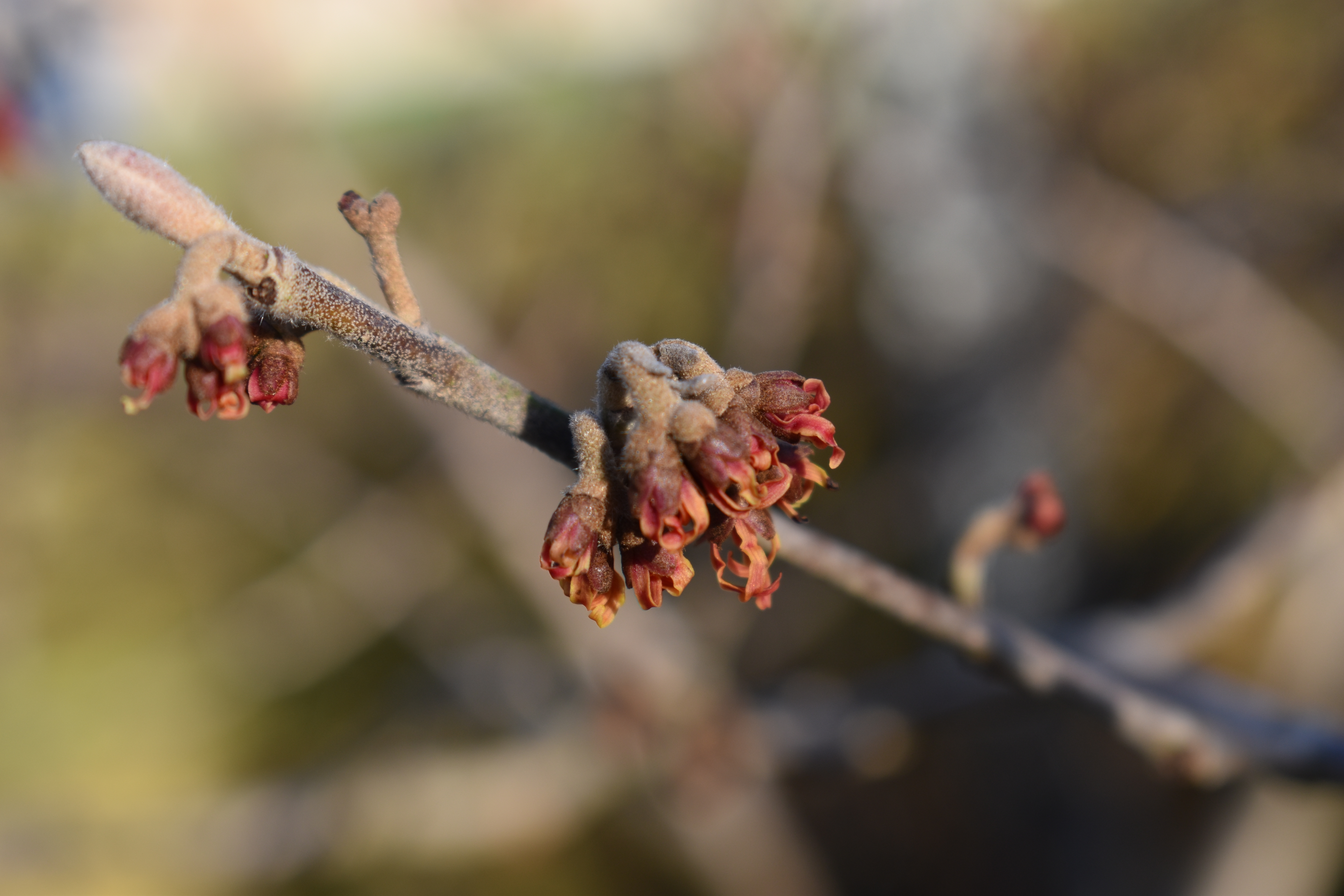
Below – Clematis napaulensis and Hamamelis ‘Harry’.
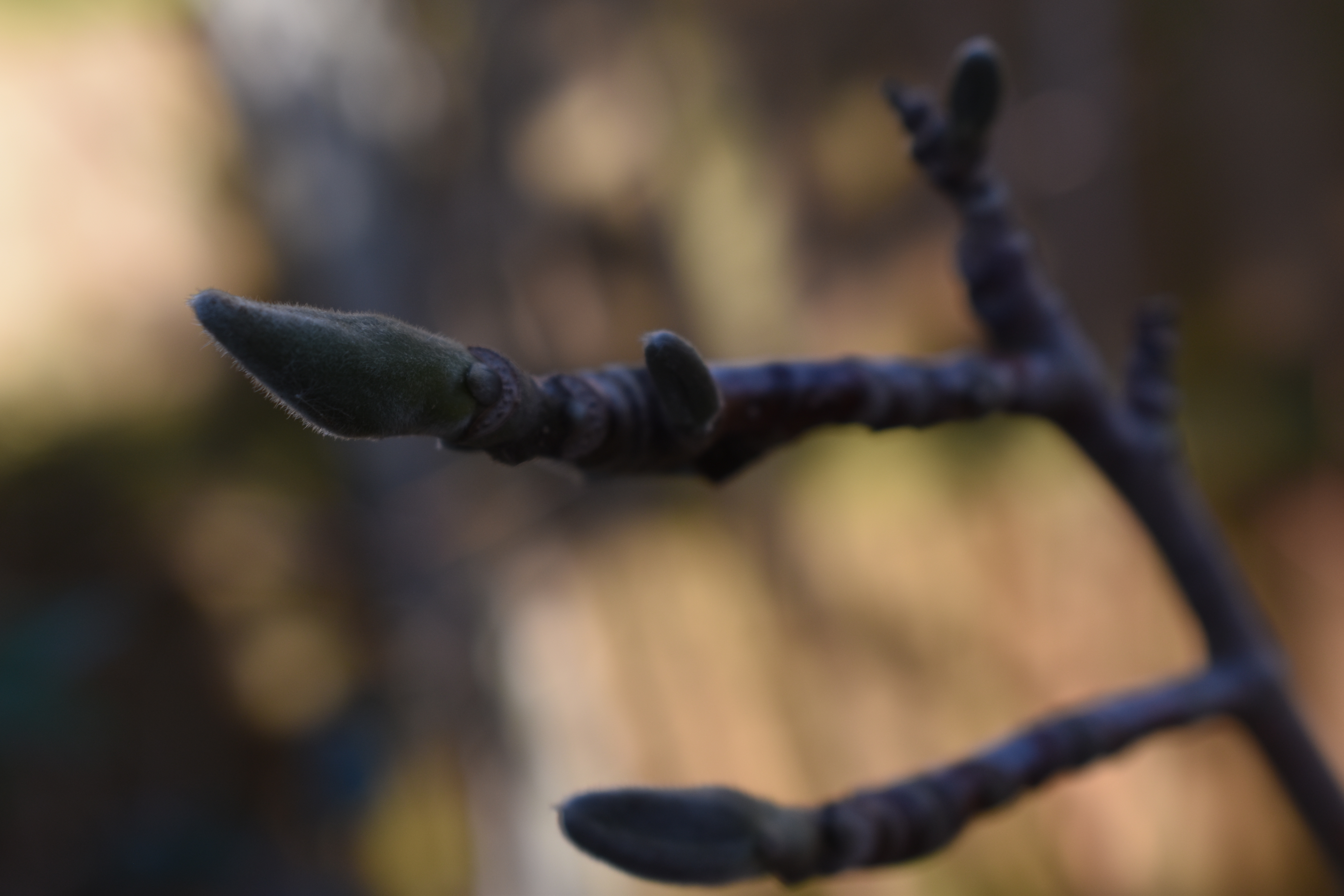
Below – Clematis ‘Wisley Cream’ and a yellow flowered magnolia.
Below – Hamamelis ‘Diane’ and another clematis.
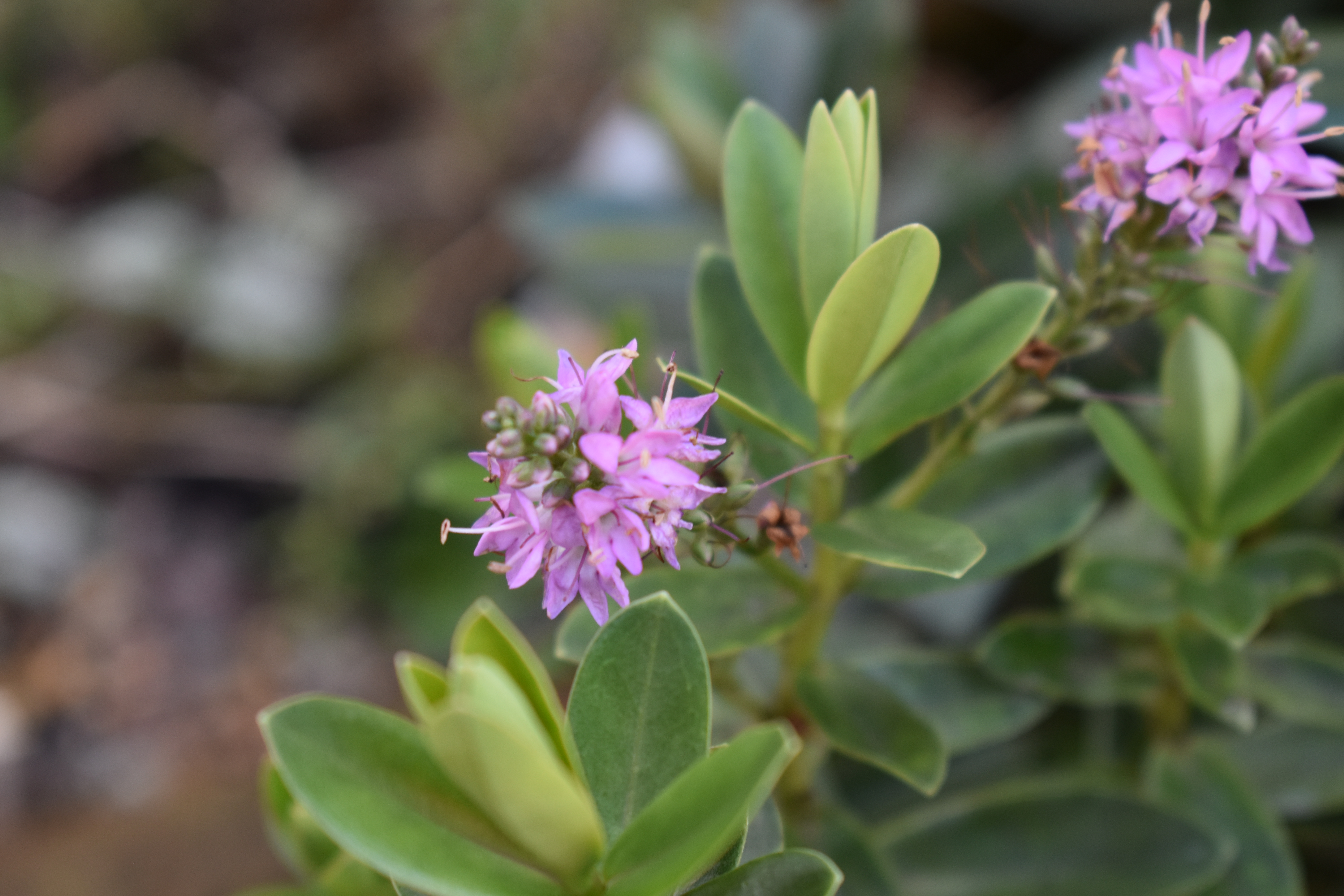
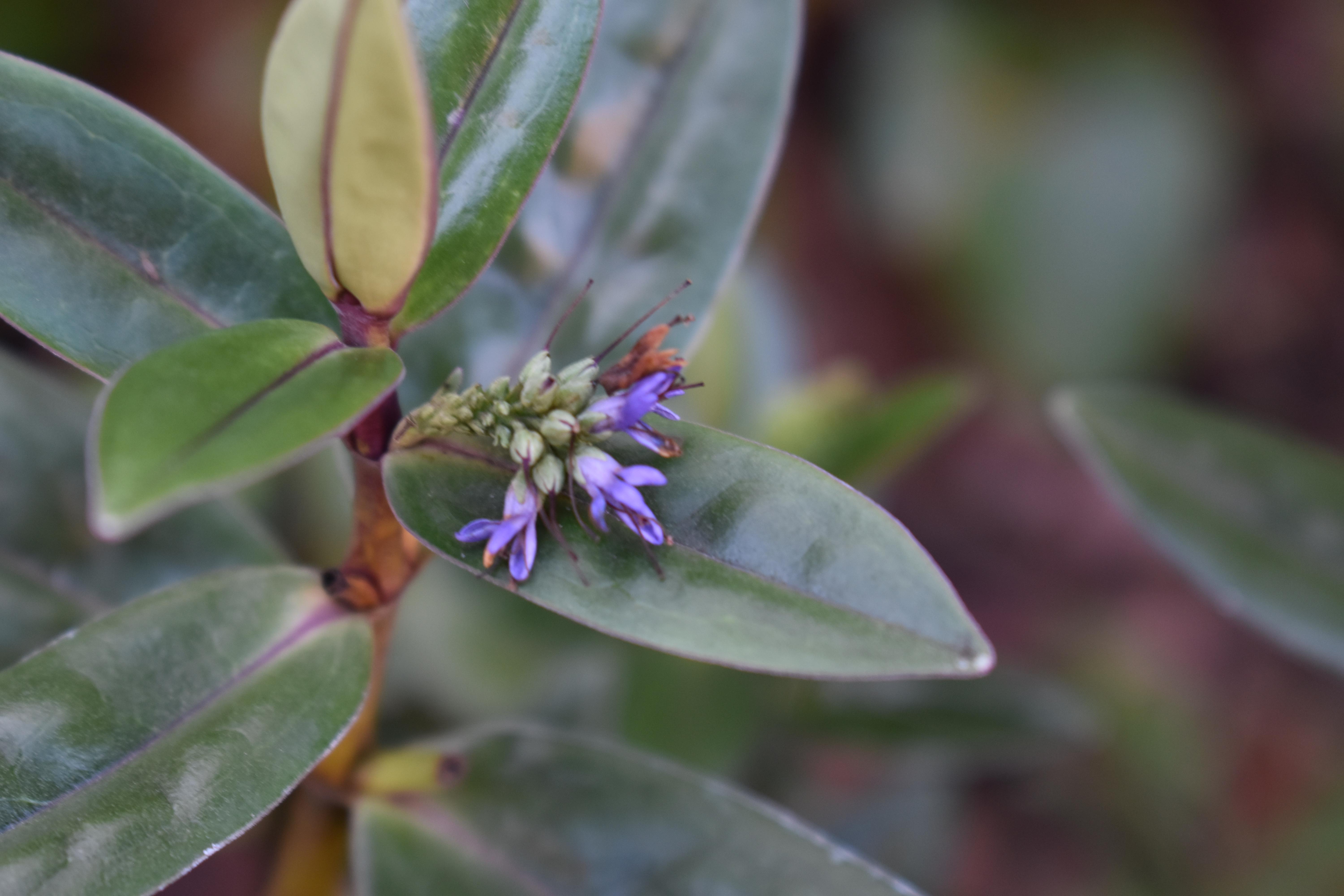
Two photos of a hebe early flowers and buds.
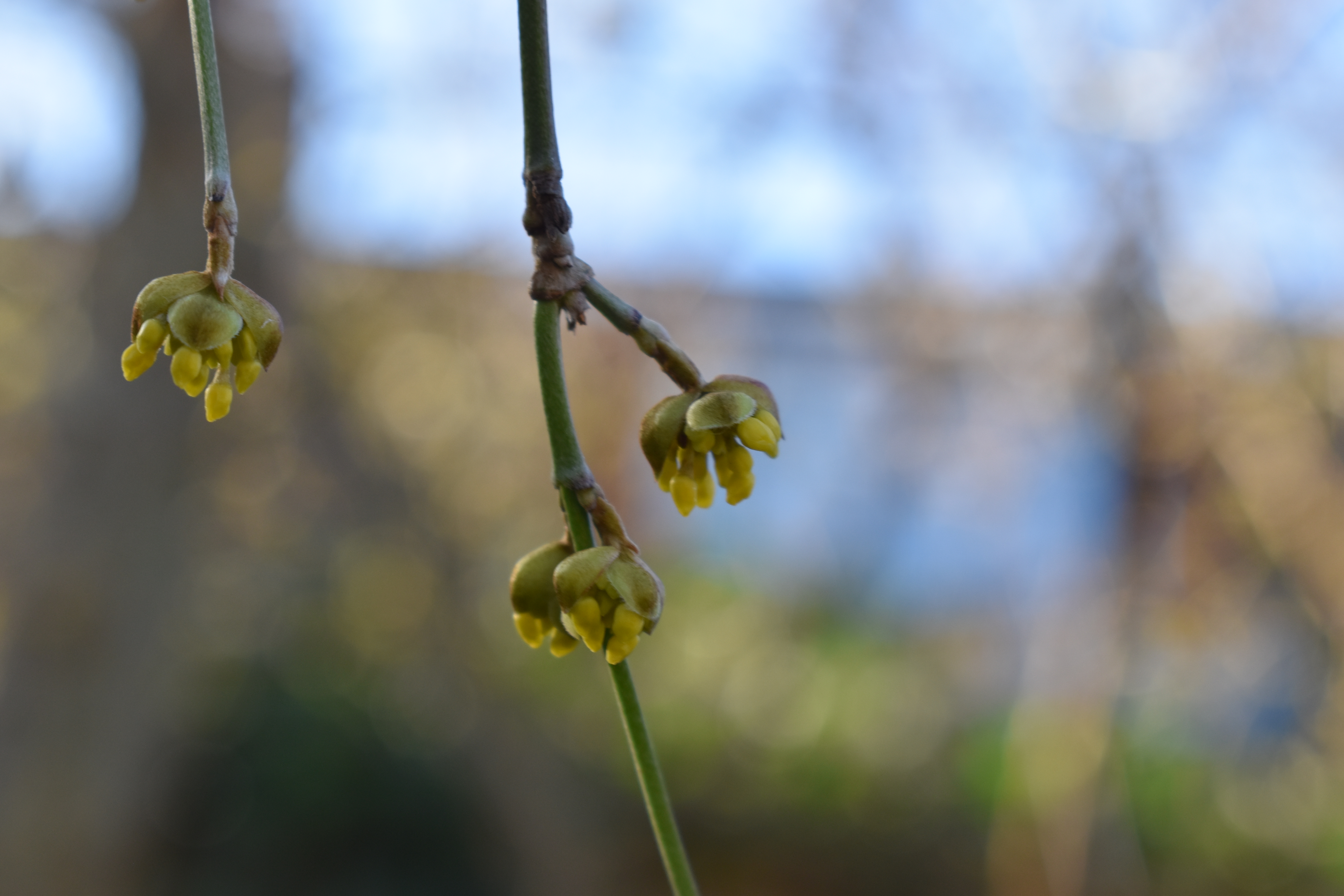
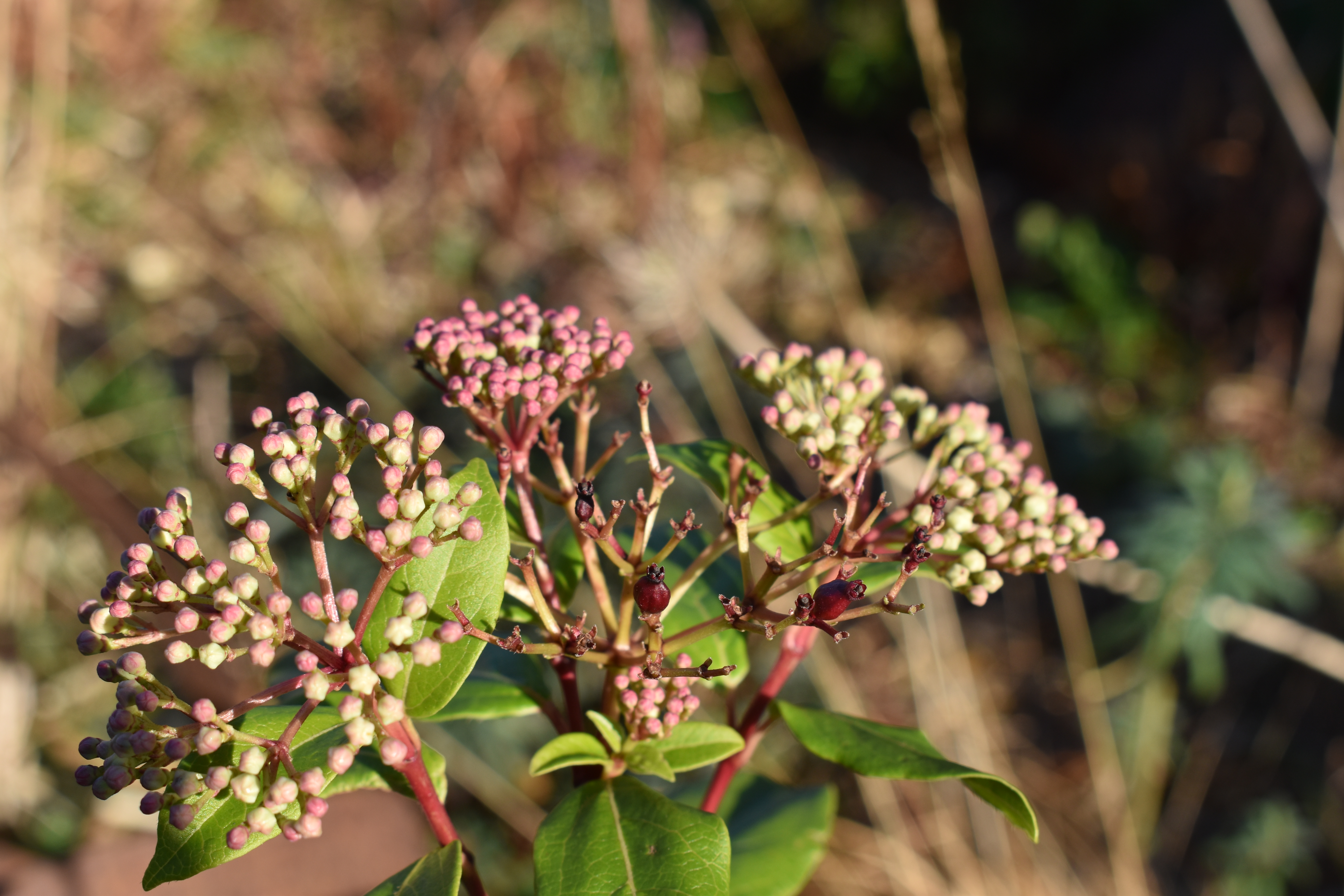
Below now we have two highly scented shrubs, Cornus mas and Viburnum tinus.
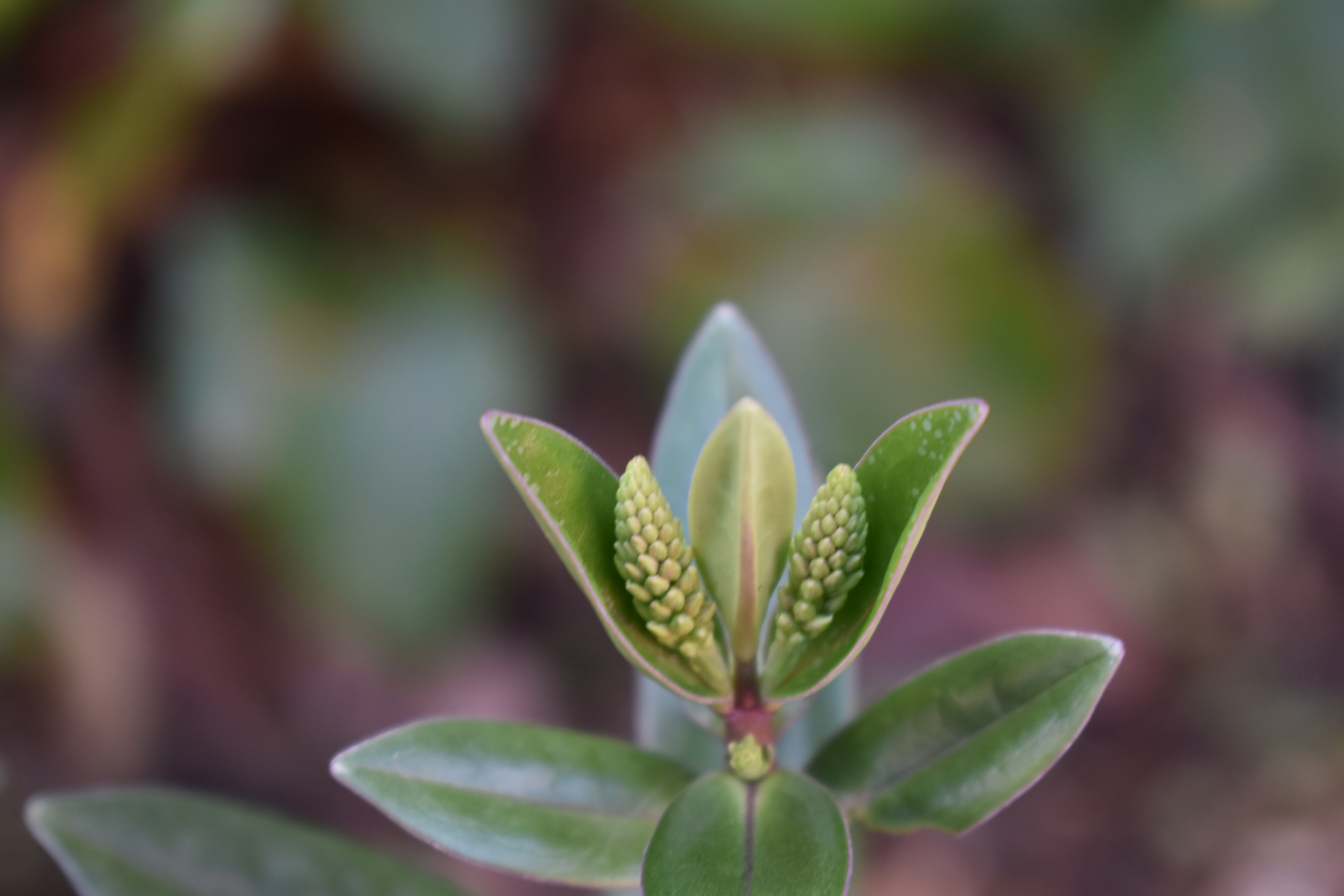
Another Viburnum again scented is V. bodnantense and another hebe trying to open its flowers.
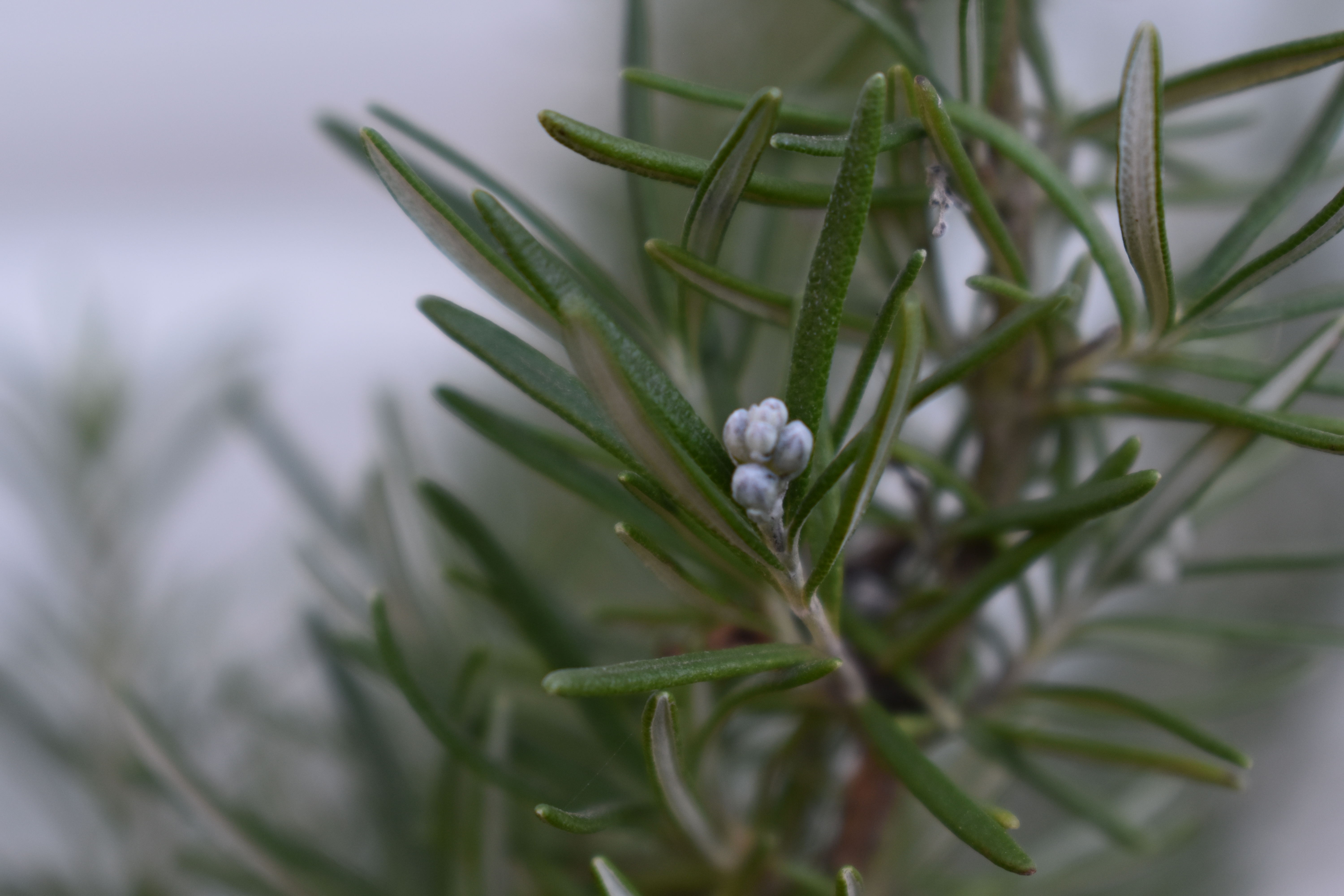
A mediterranean herb seems the most unlikely of plants to flower during the winter months but Salvia rosemarifolia previously known as Rosemary, has china blue buds soon to open up into tiny pale blue flowers.
So, you certainly don’t have to wait until spring or summer to enjoy the wonders of flowers. Get out in the garden whatever the weather during the winter to see and appreciate what there is to offer.
'The most important and informative publication on wildlife of our times' - The Independent. This blog is a member of The UK & Ireland Natural History Bloggers group: www.uknhb.blogspot.com












 greenbenchramblings