Categories
garden design garden photography gardening July photography

Lilies for a Day

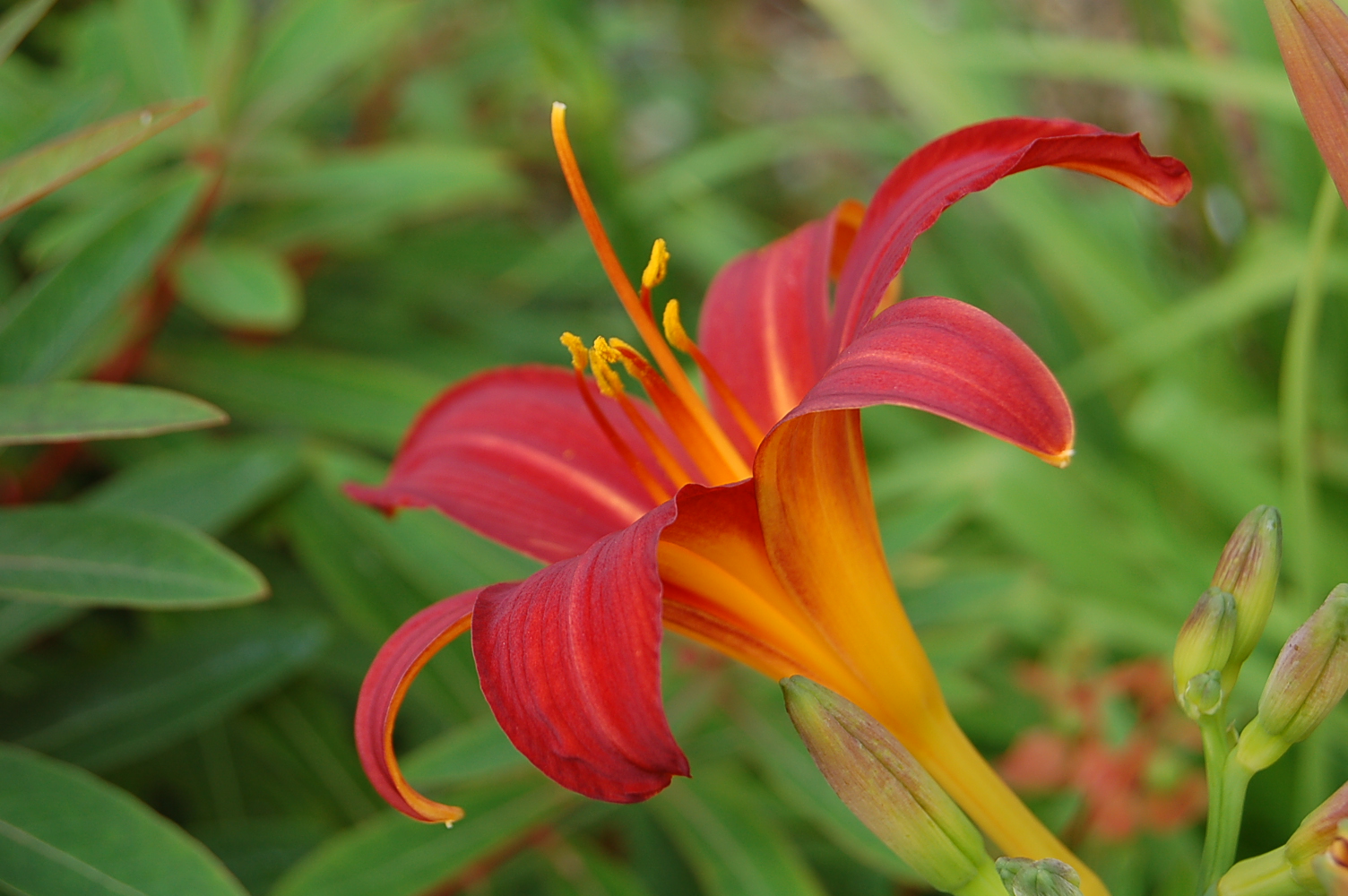
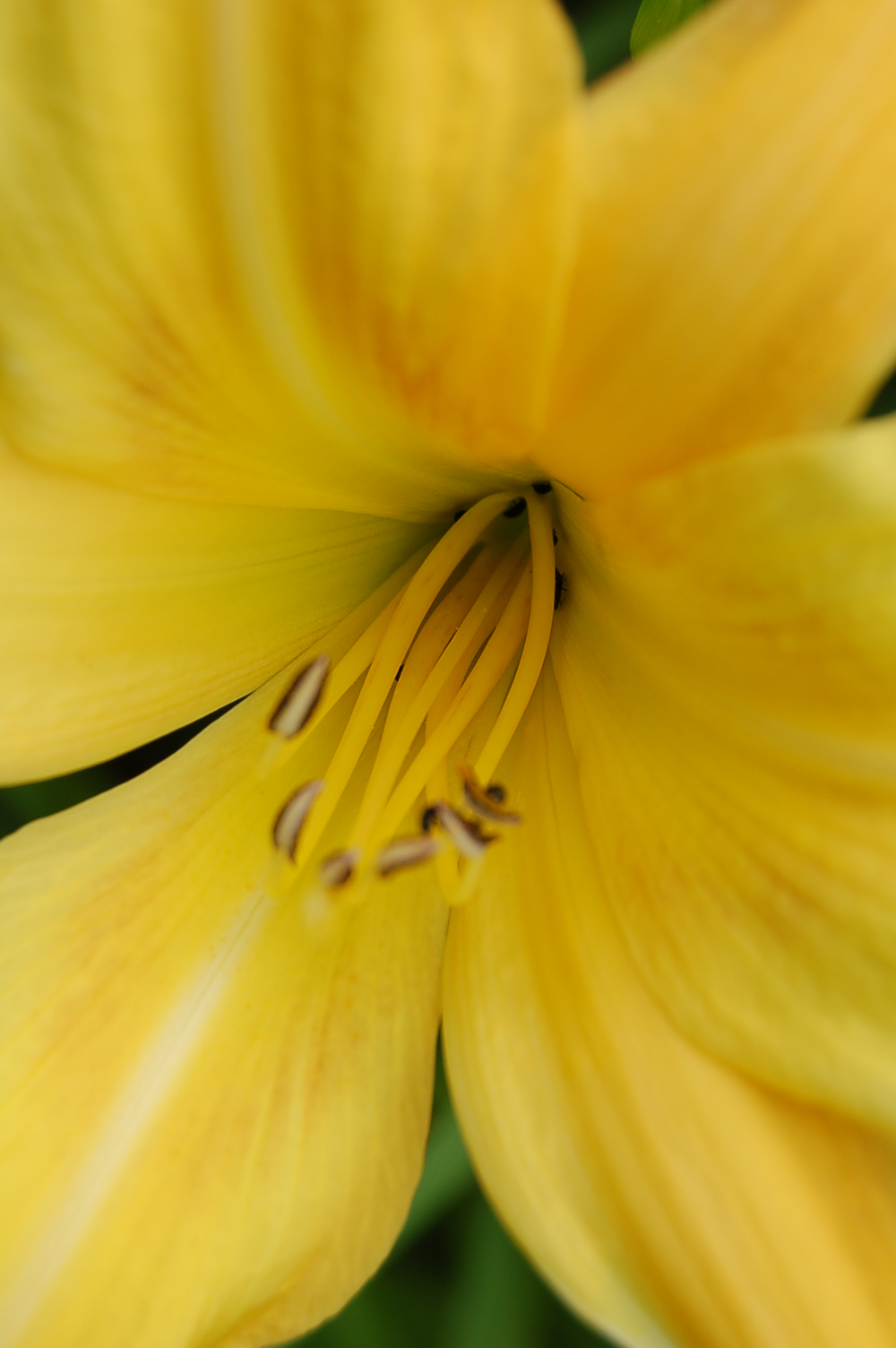
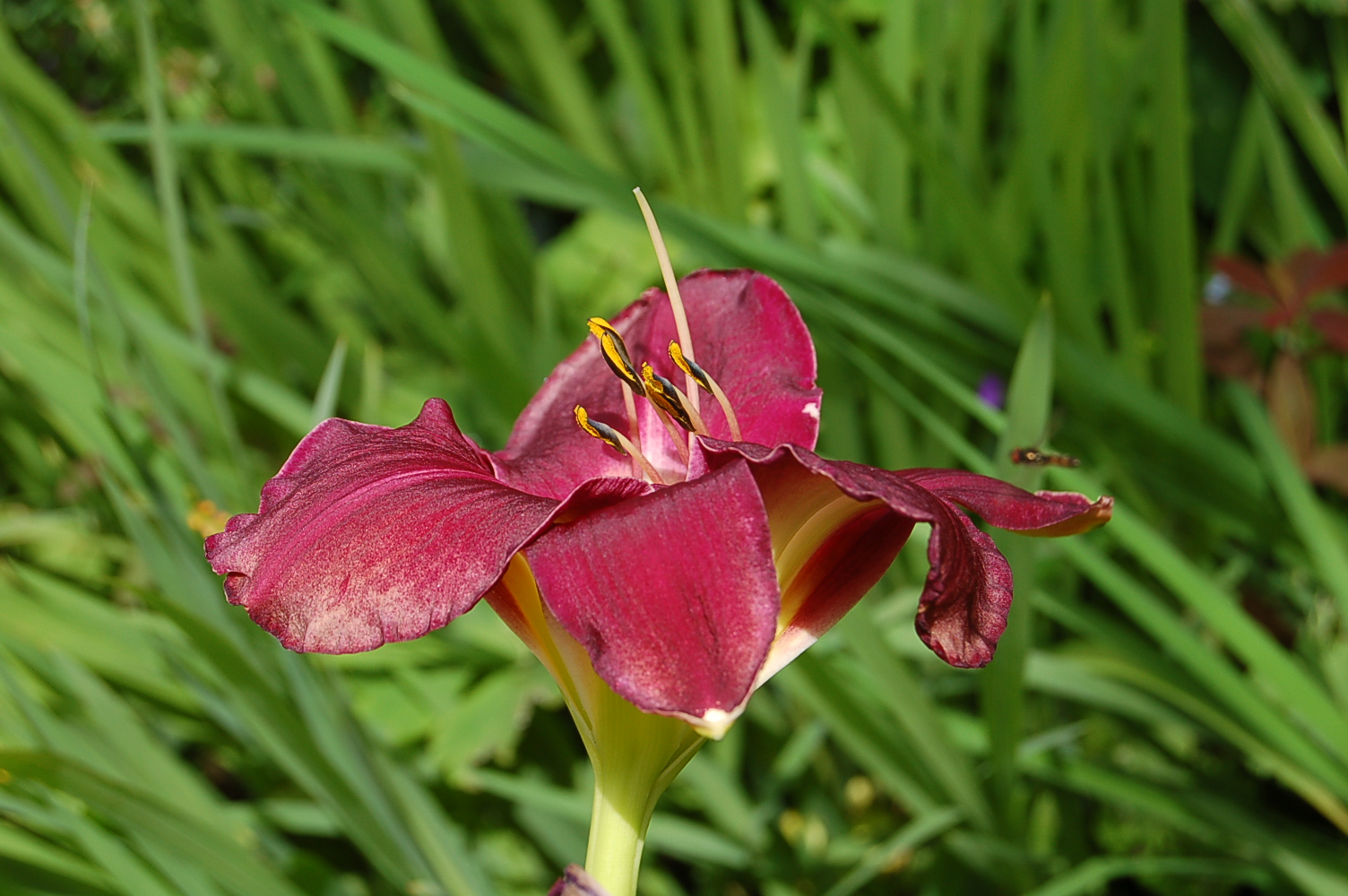
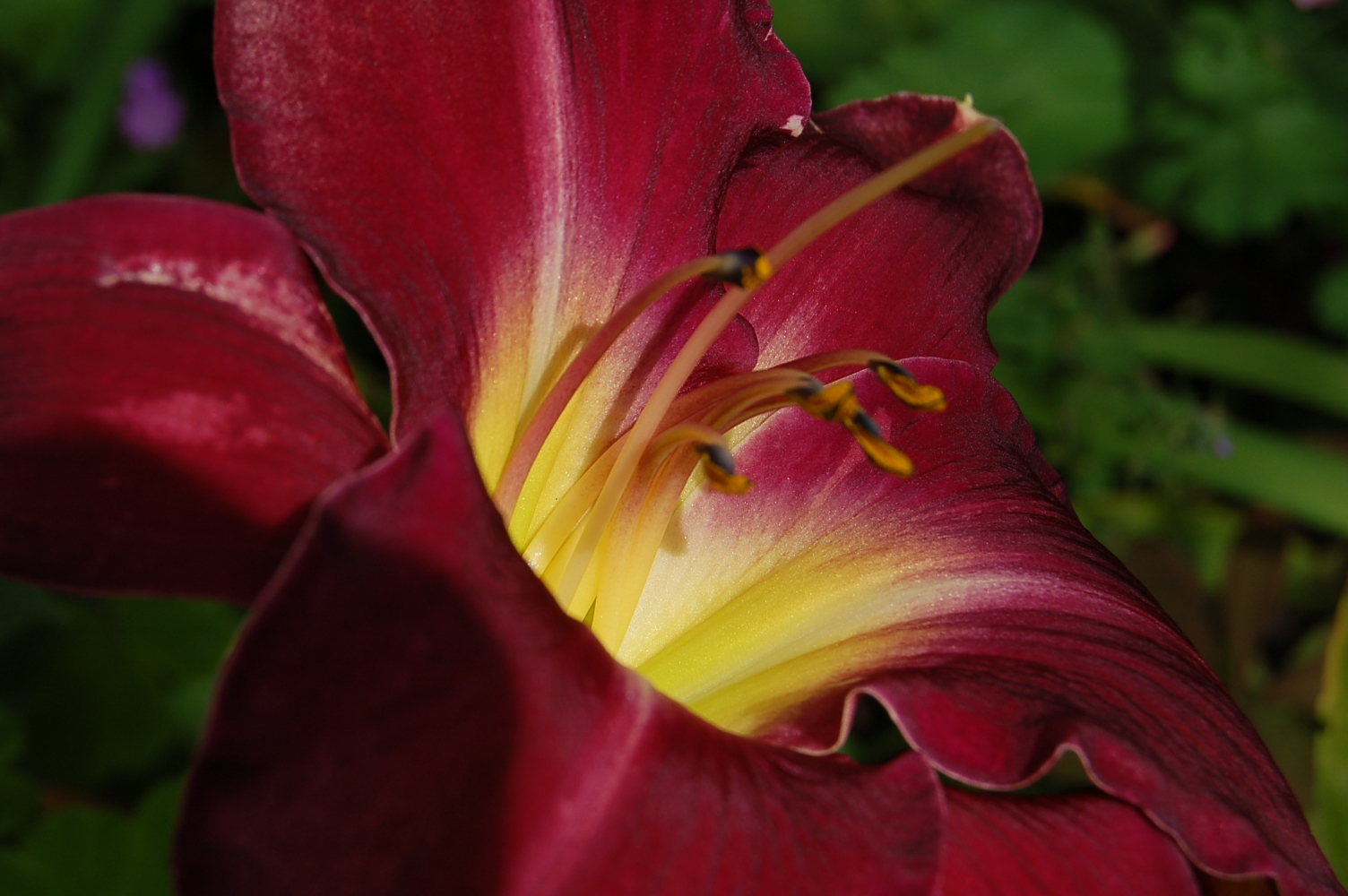
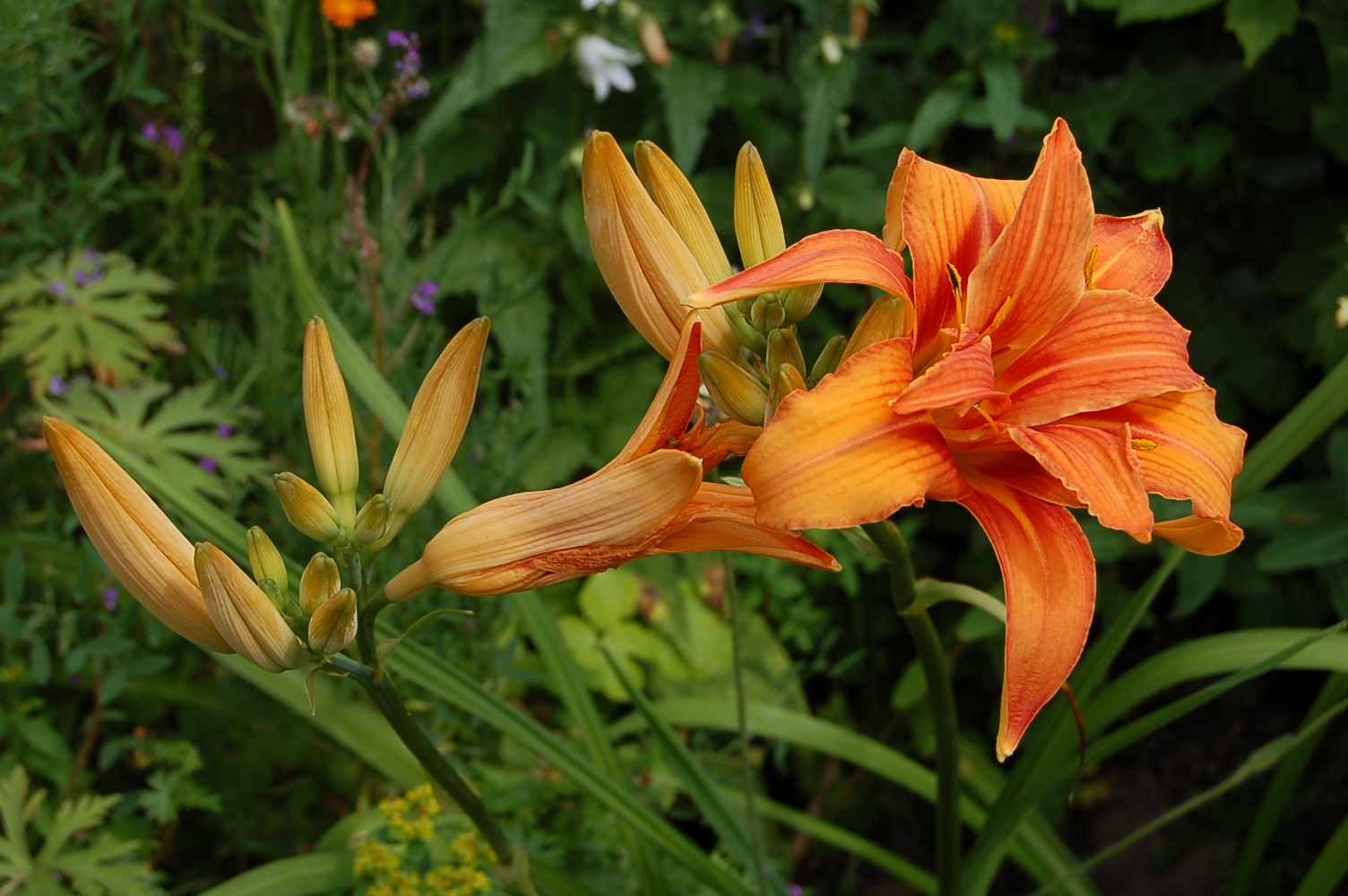
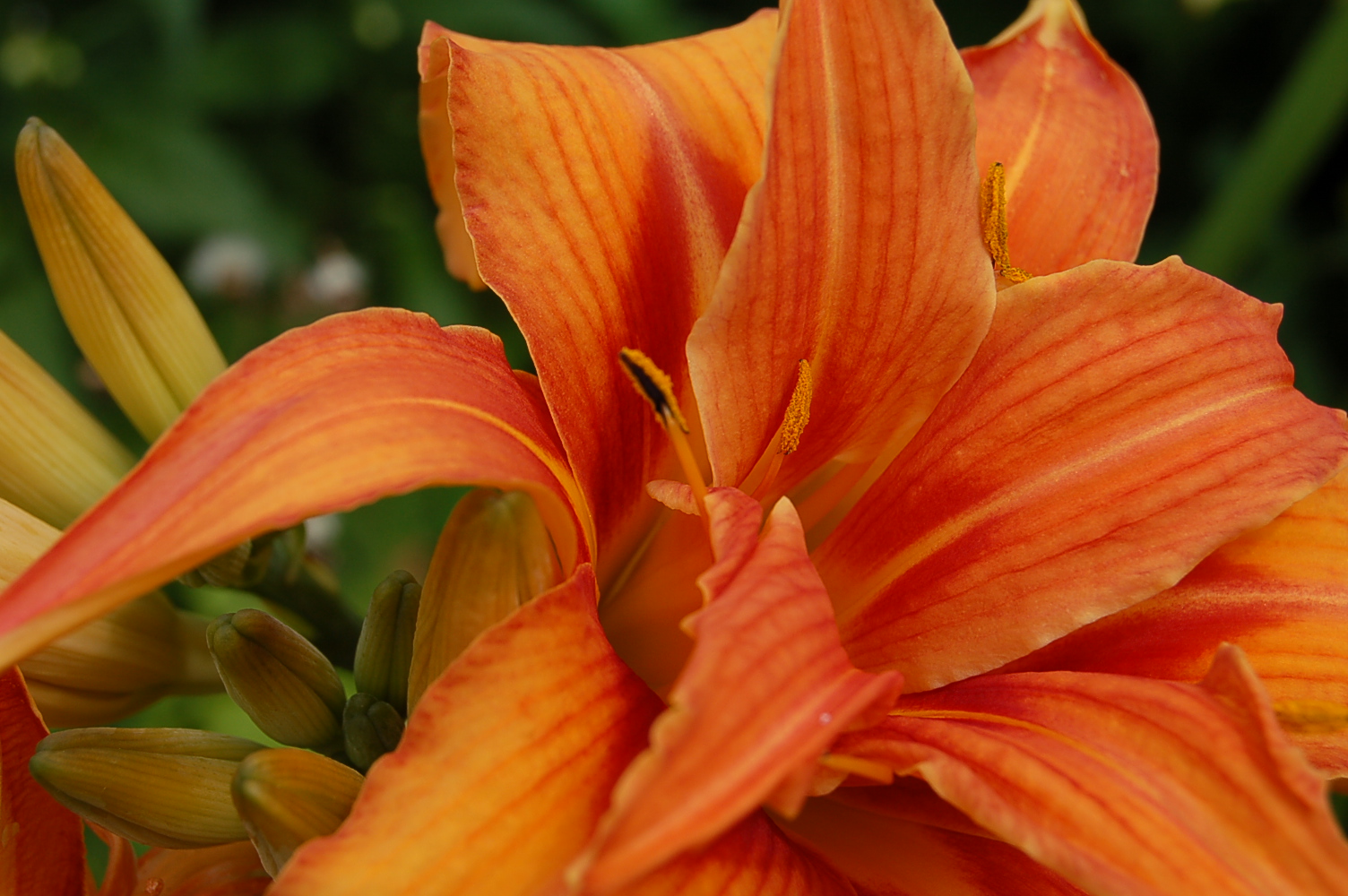
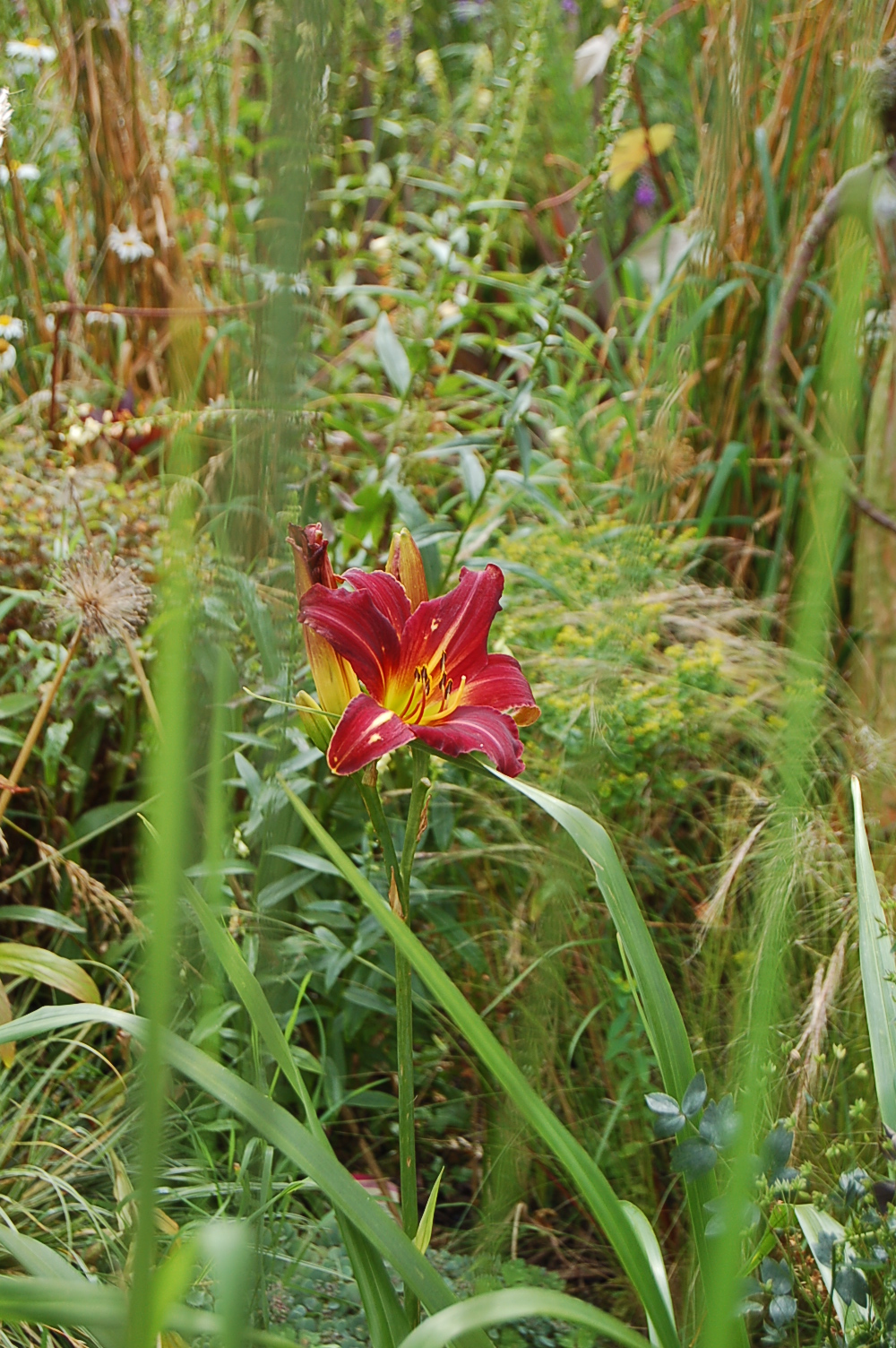
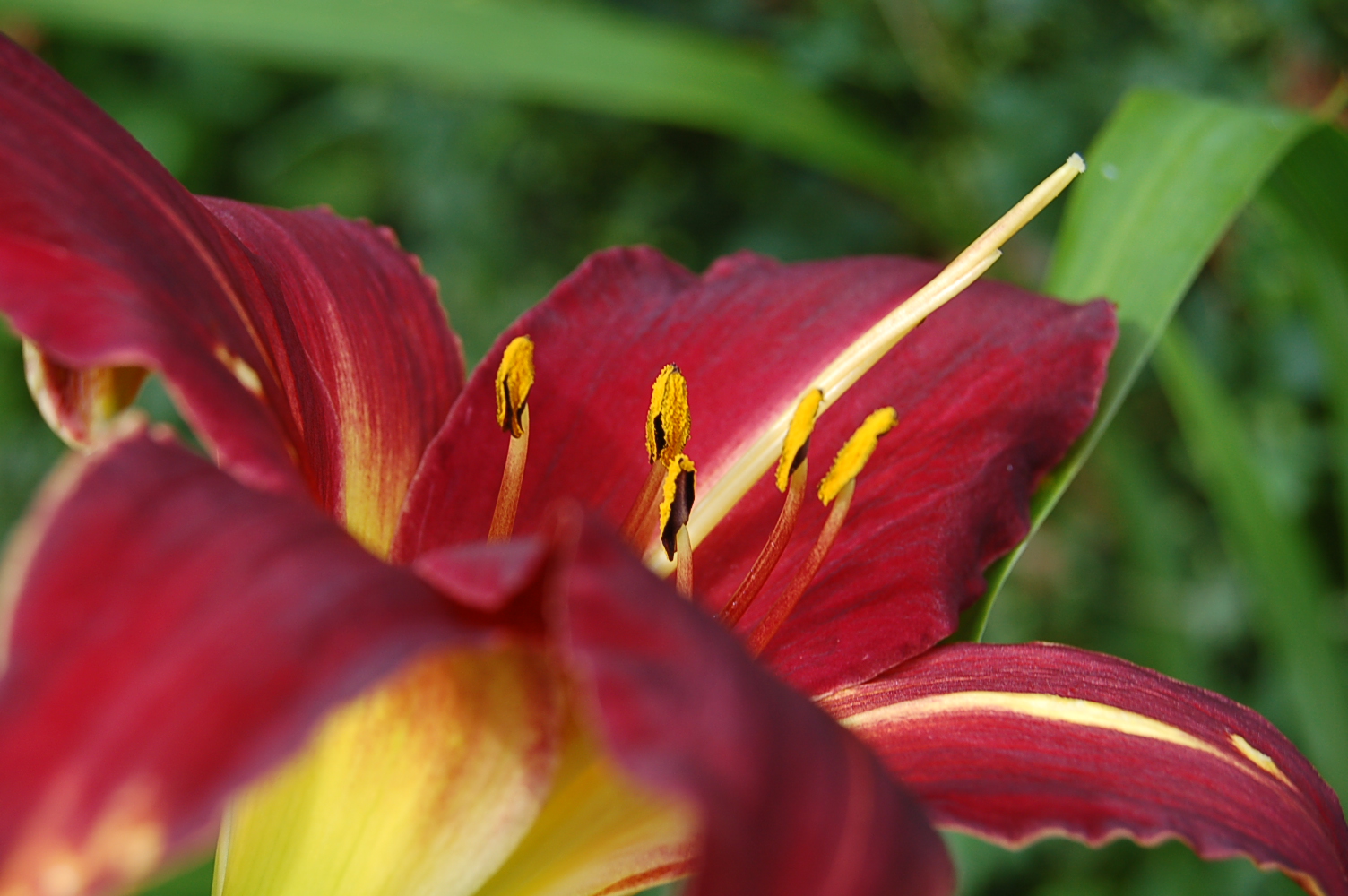
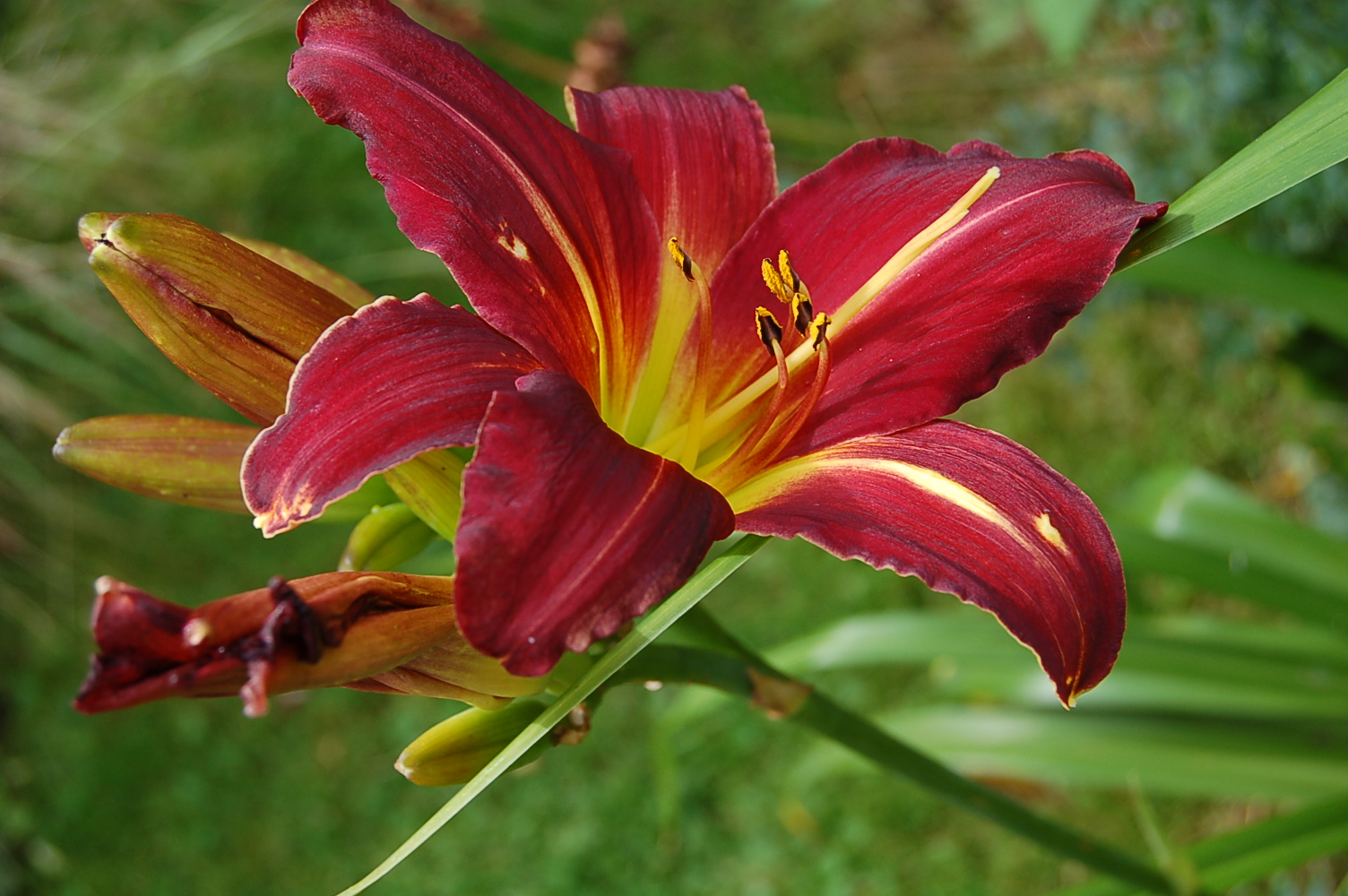
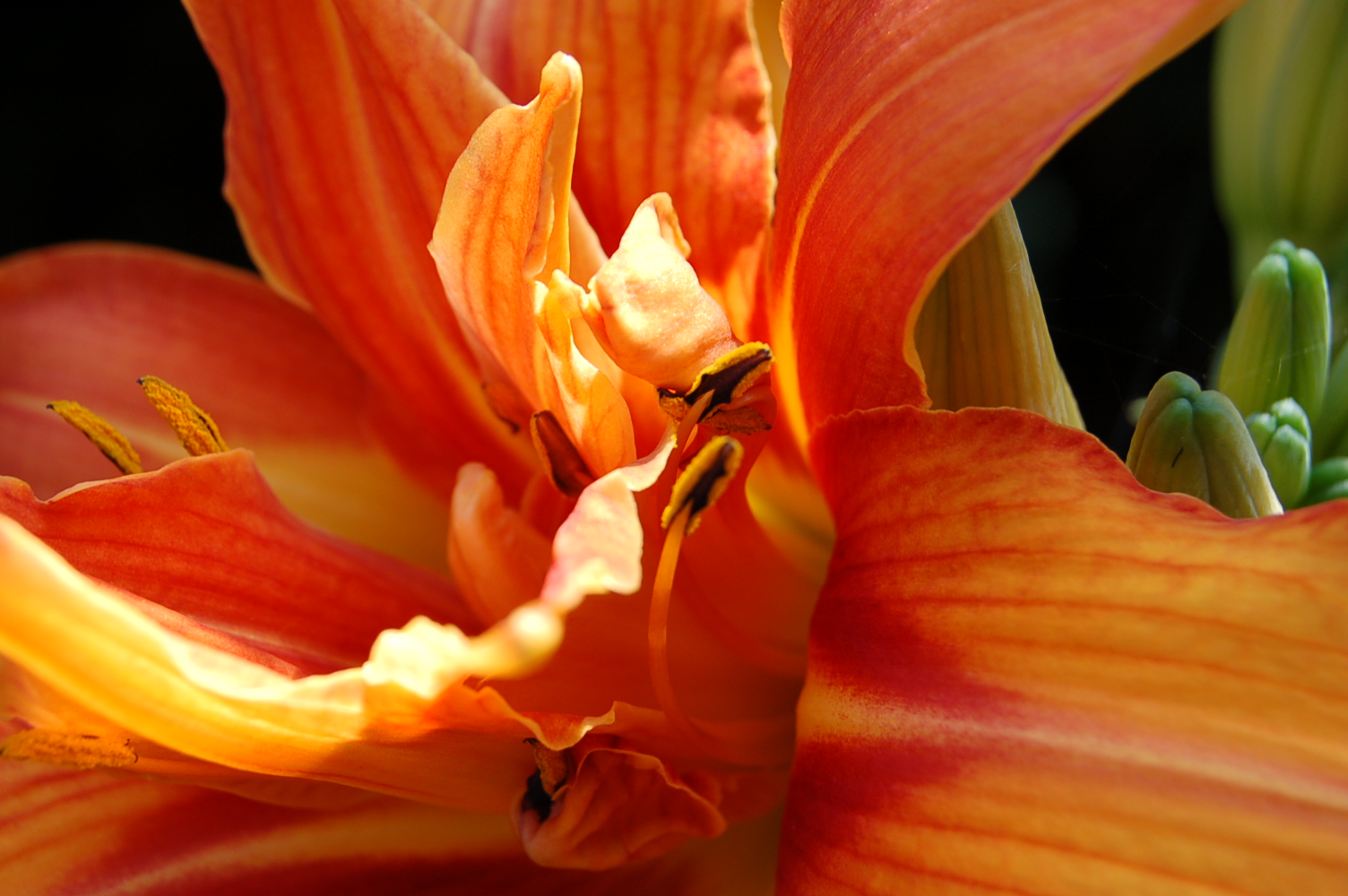
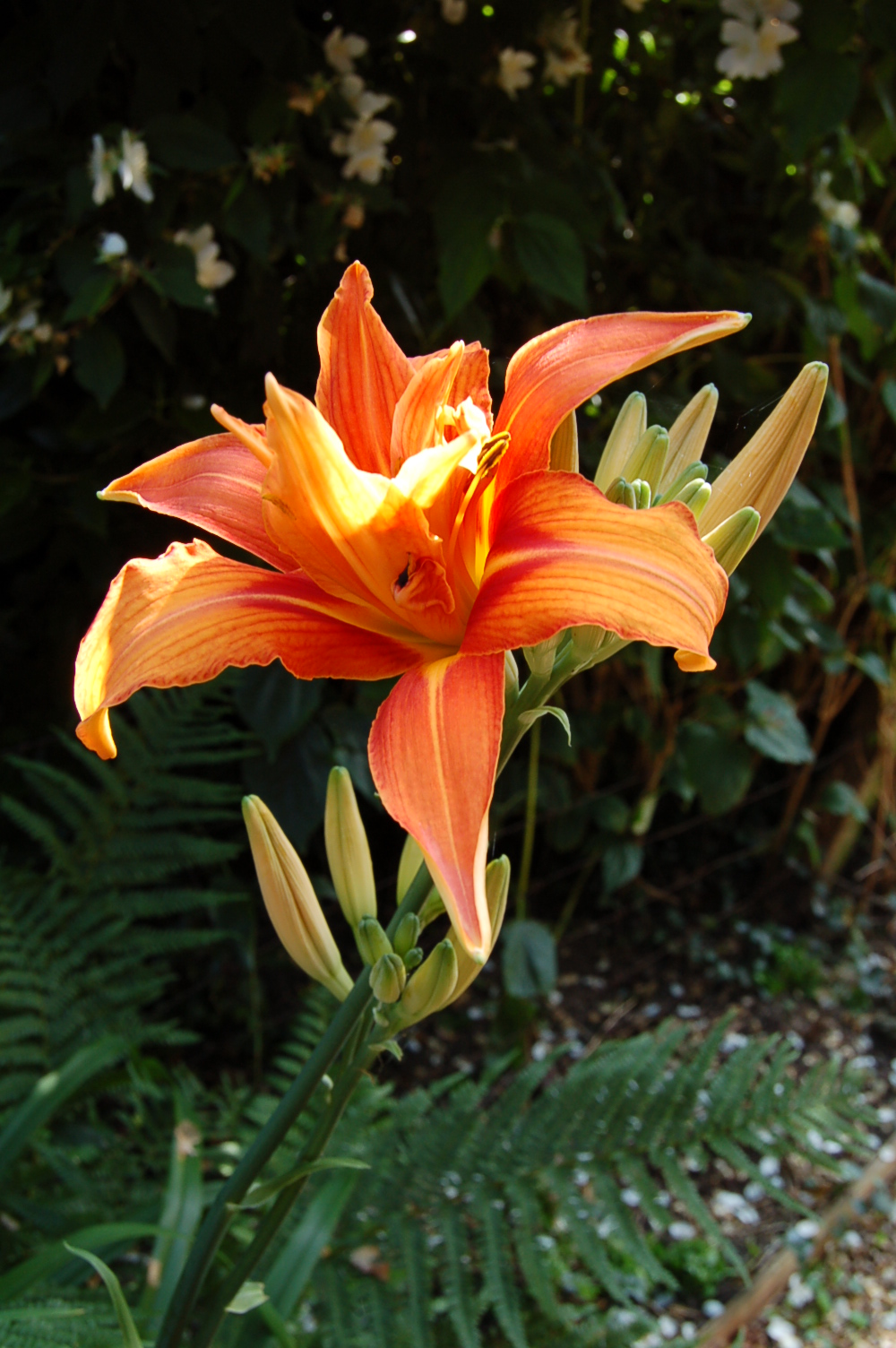
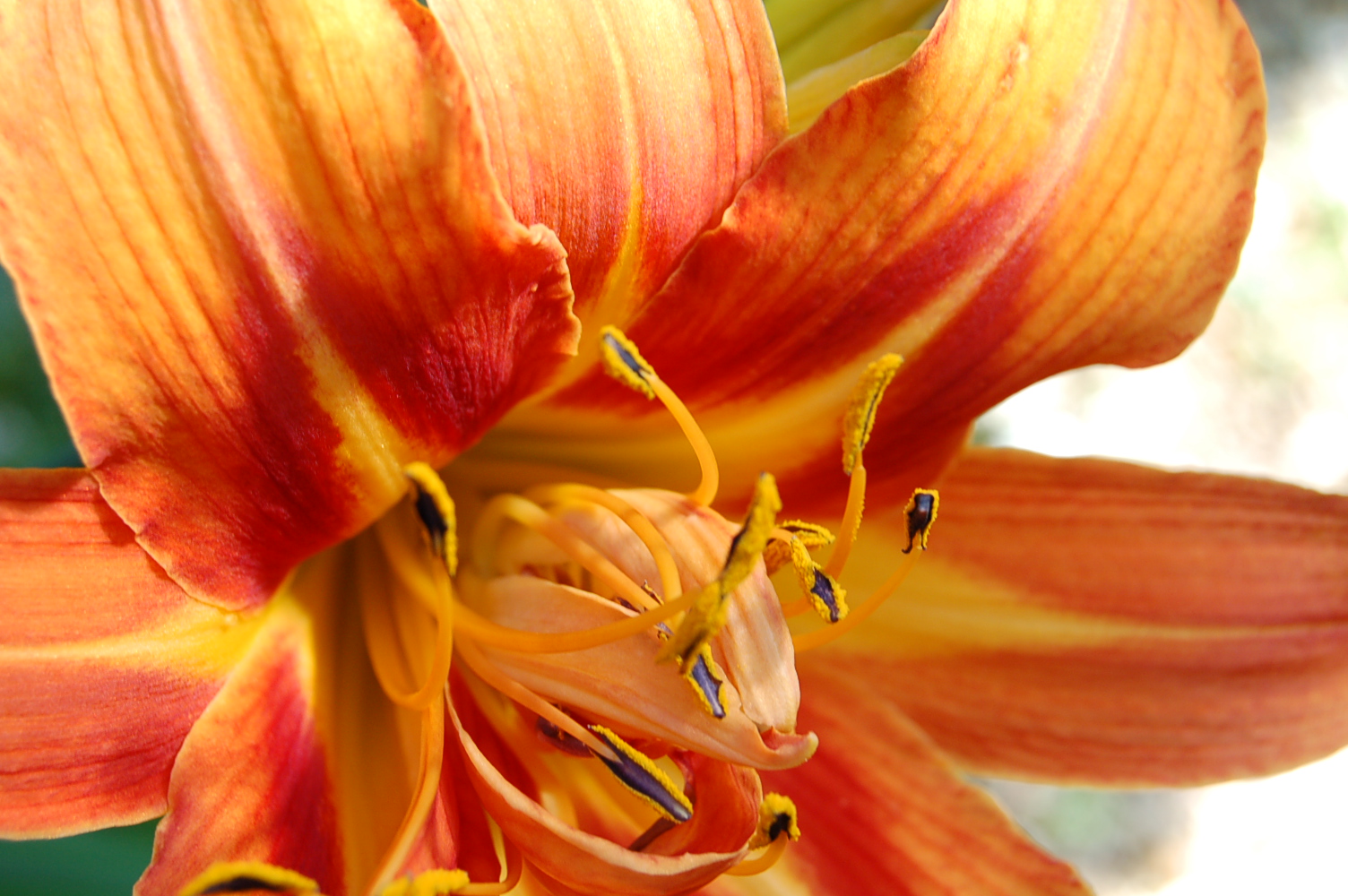
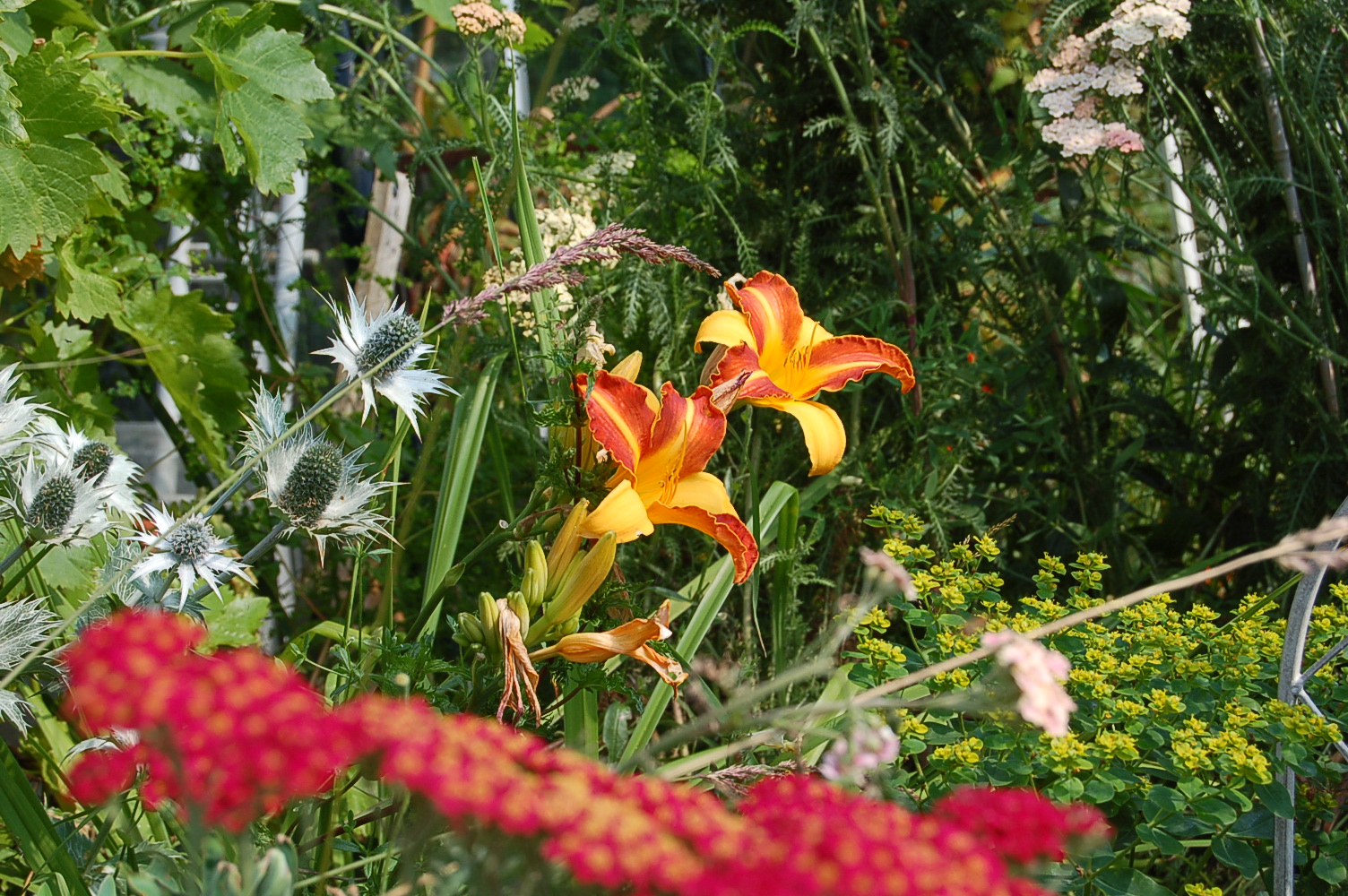
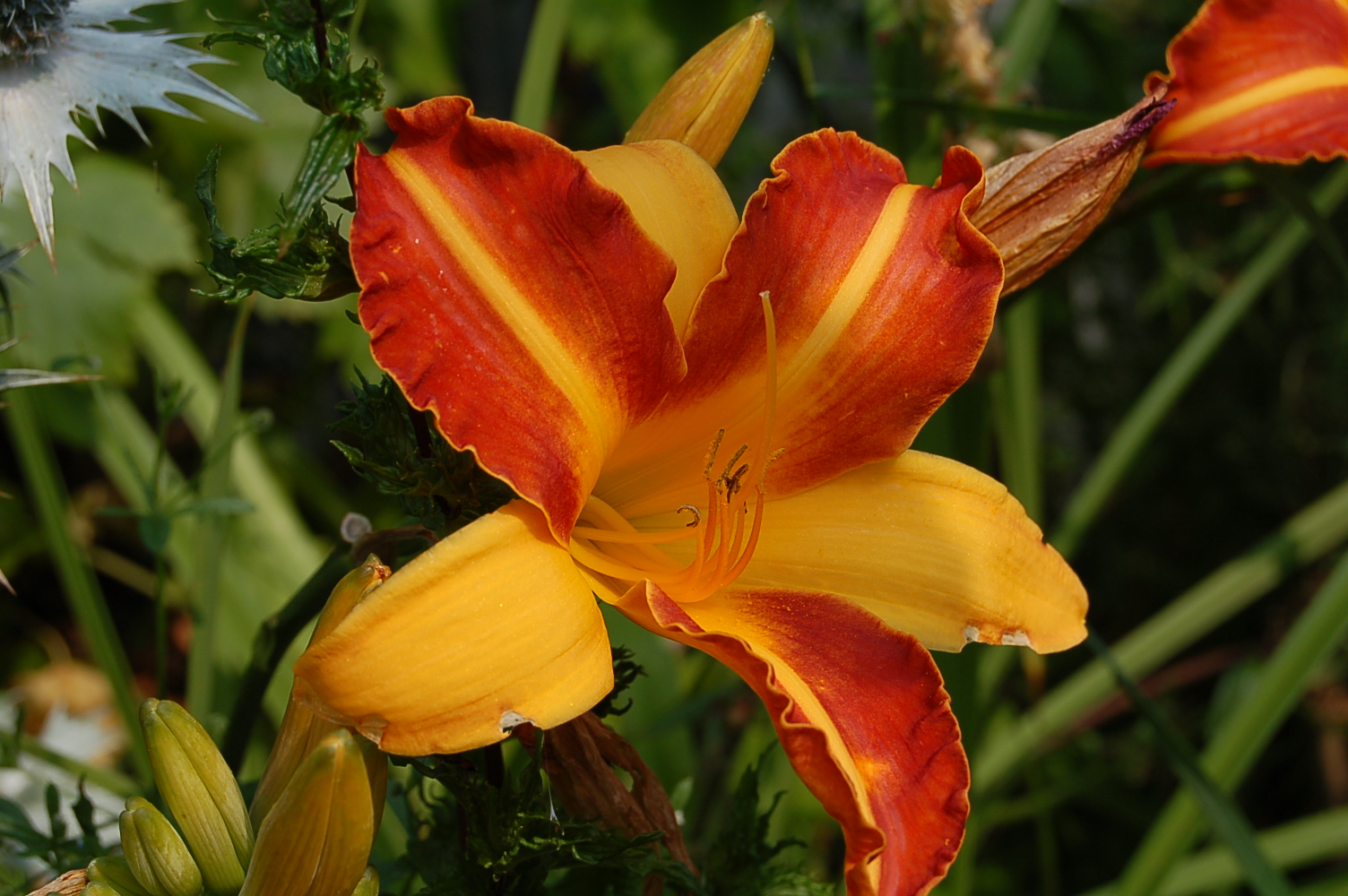
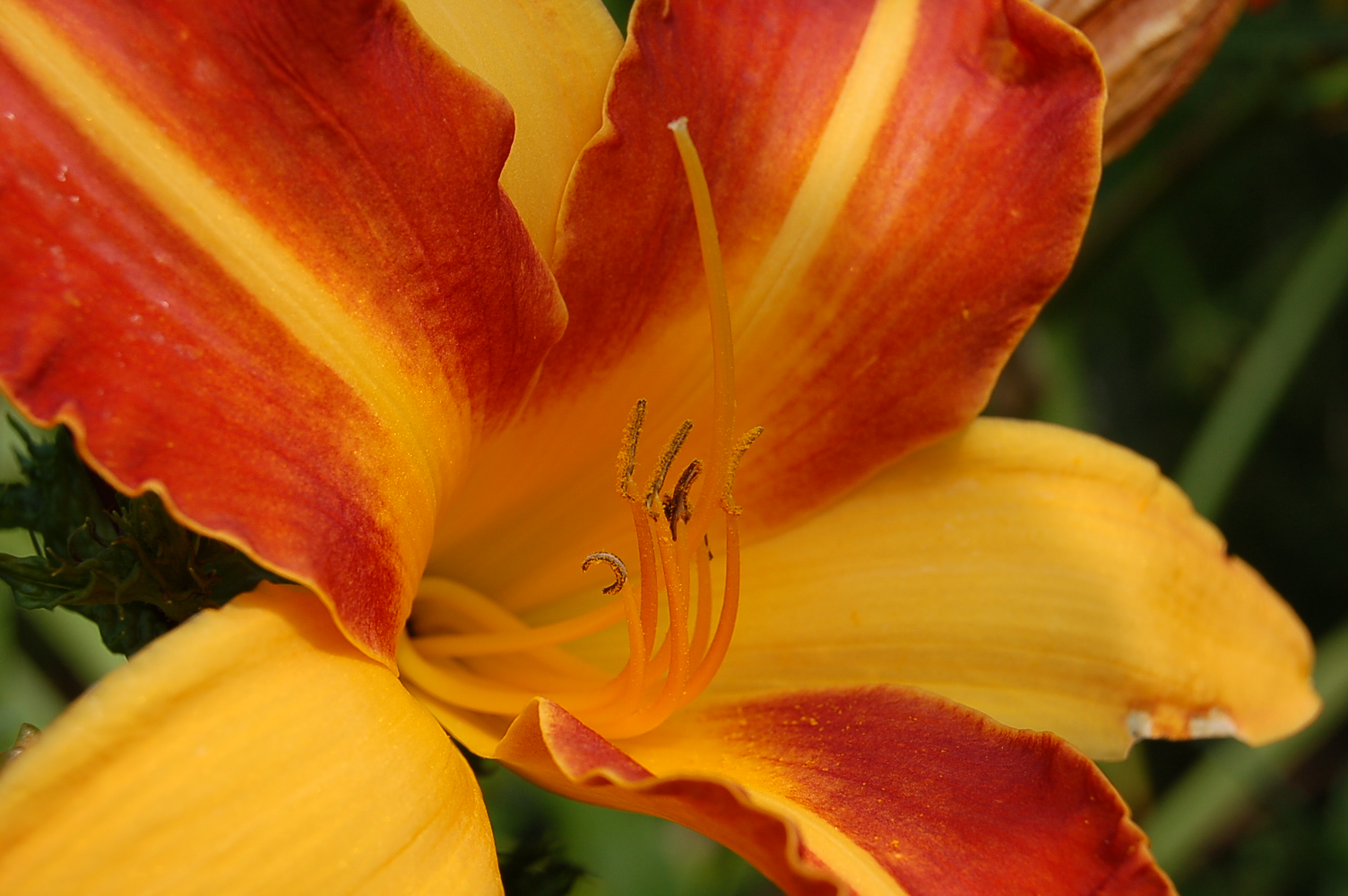
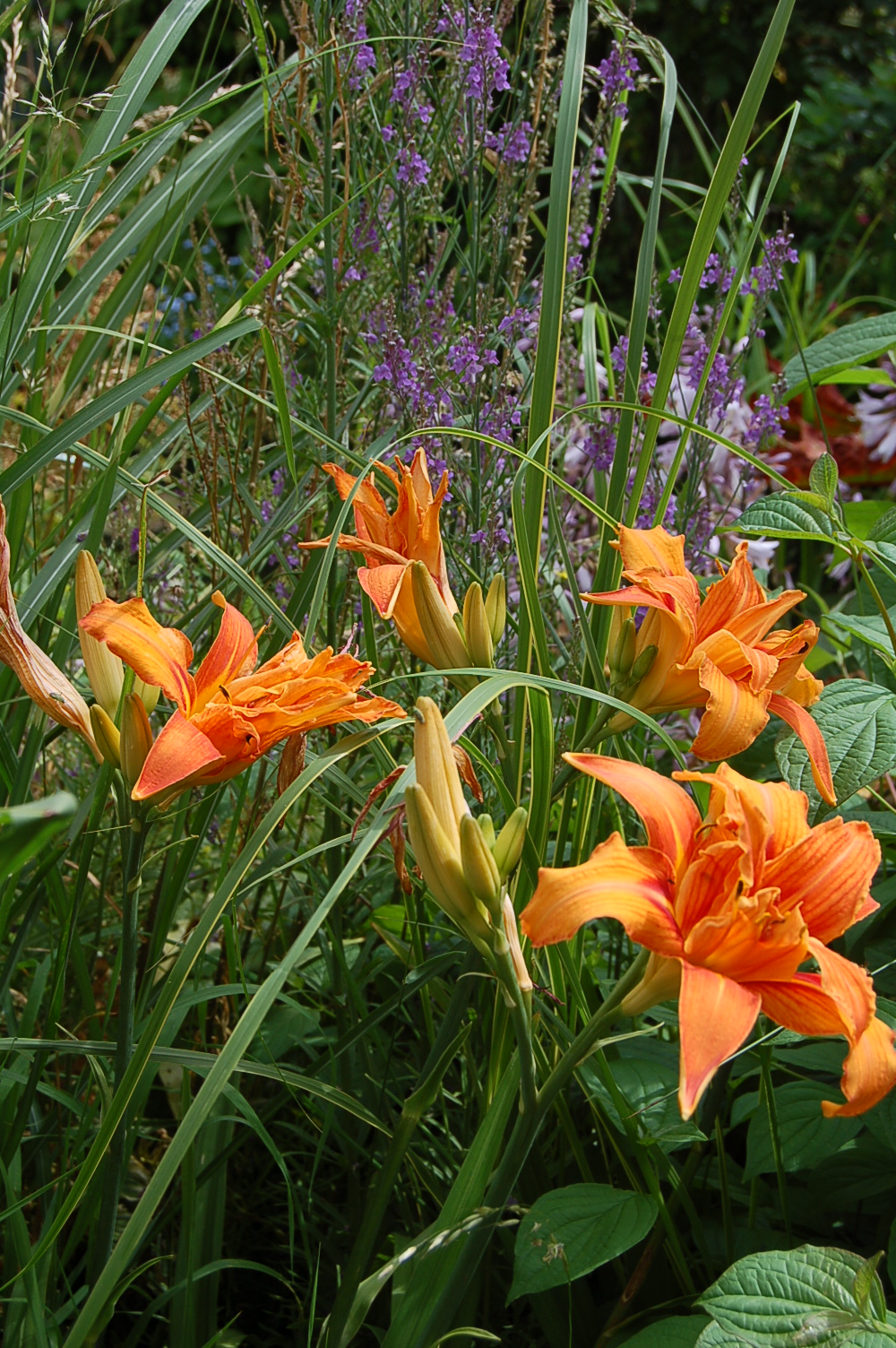
Day Lilies are so beautiful in form and colour, and to add to that they are fresh each day. We never see one two days in a row – enjoy one today but it won’t be there tomorrow. Another will be flowering in its place.

So here are the day lilies in flower in our garden one day in early August.

Categories
flower show garden design garden photography gardening hardy perennials July ornamental grasses ornamental trees and shrubs outdoor sculpture photography poppies RHS town gardens

Third Visit to the Tatton Park Show

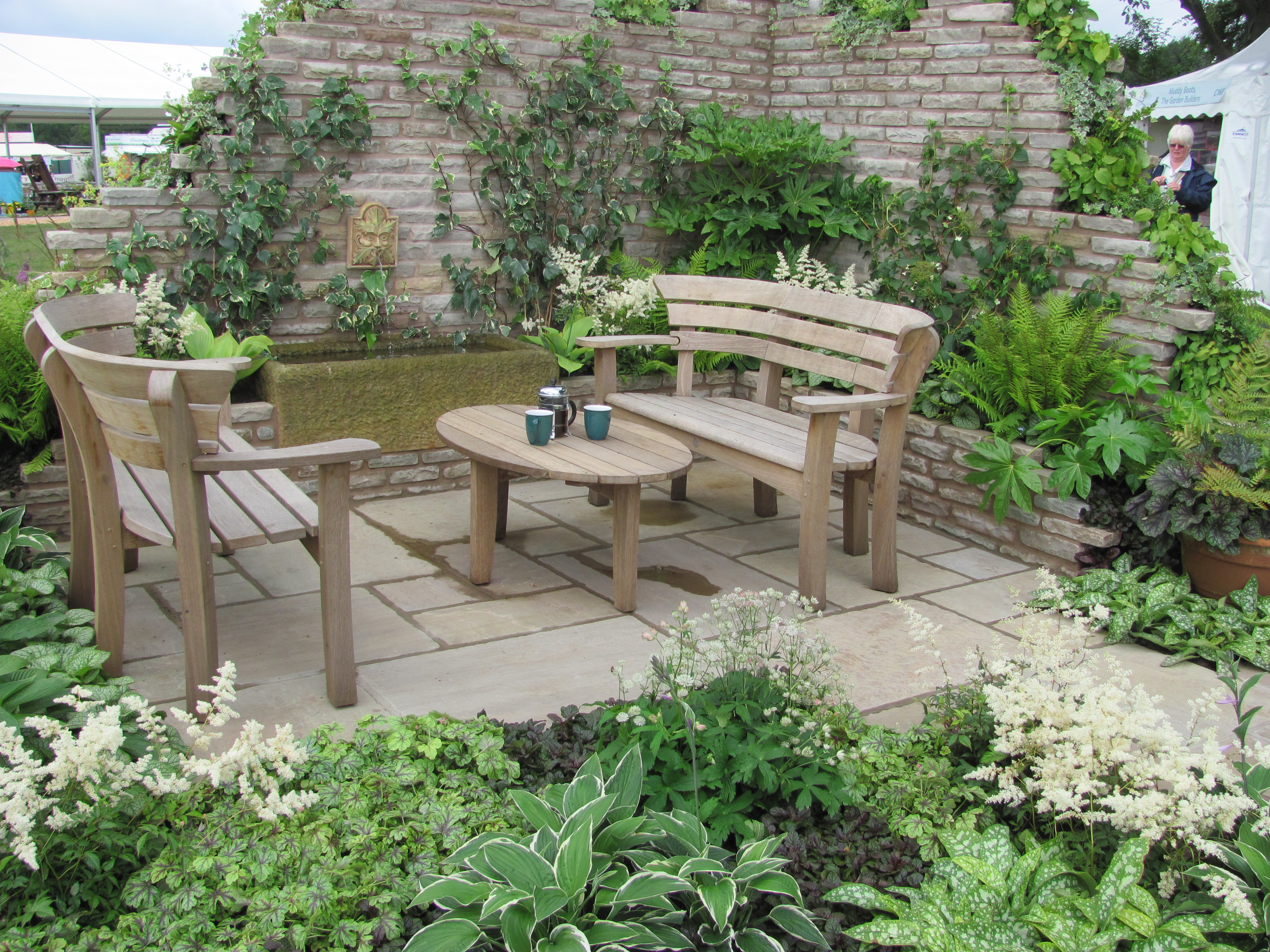
The third and final post about this summer’s RHS Tatton Park Flower Show begins by visiting the Back-to-Back Gardens, the small show gardens with masses of interest and appeals. These gardens are full of ideas for gardeners whatever the size of their gardens with inspiration for planting combinations, furniture and features.

There was a group of small show gardens designed around the theme of “The Orchestra” and these turned out to be our favourites. The garden designers had risen to the challenge and seemed to have really enjoyed creating such imaginative gardens. Each one evoked harmony and rhythm and the rise and fall of a musical piece.

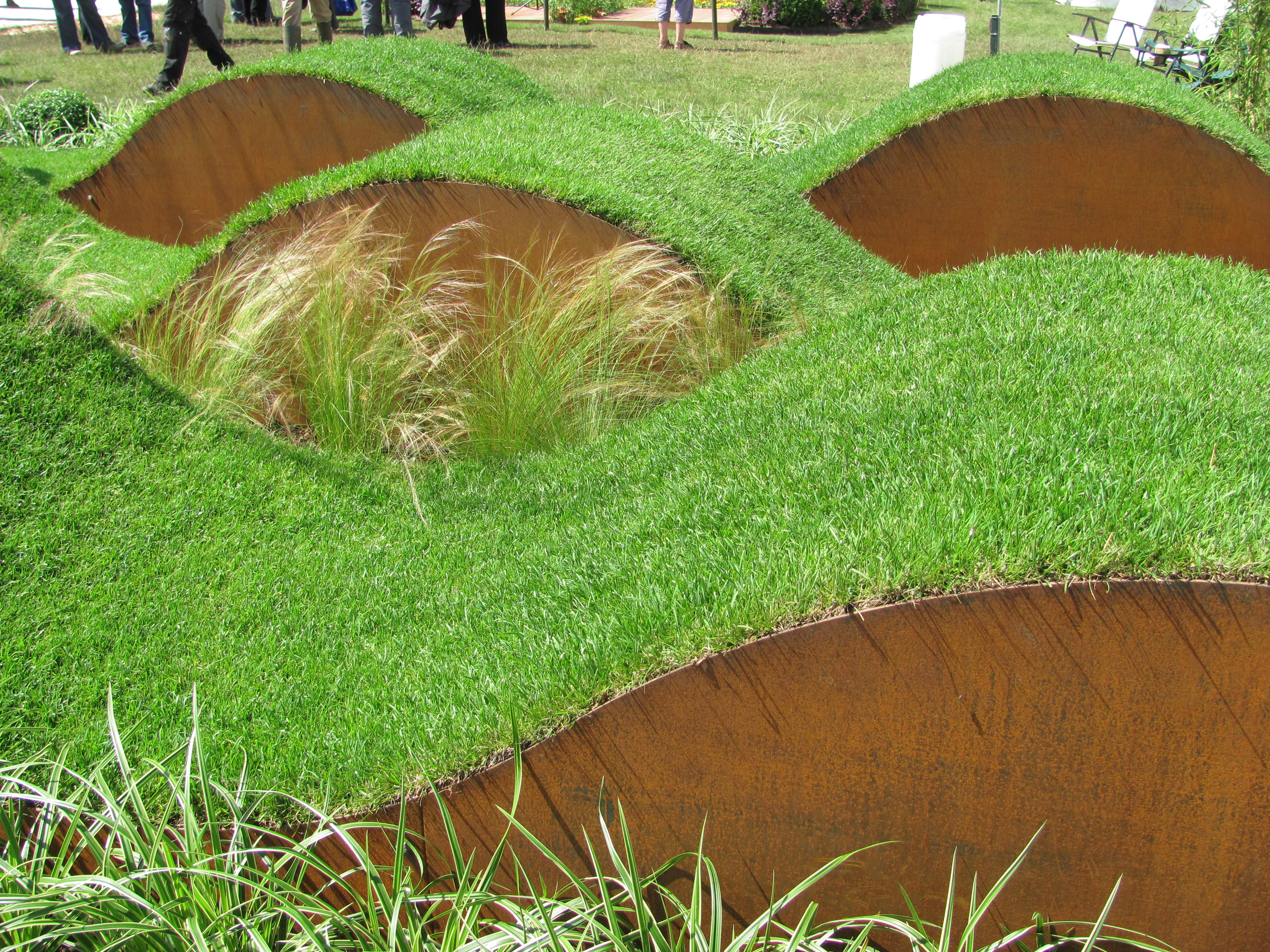
But this garden of rhythmic grass was a true delight to the eye. It was very difficult to fully capture its effect with a camera, but not as difficult as it would be to cut the grass!

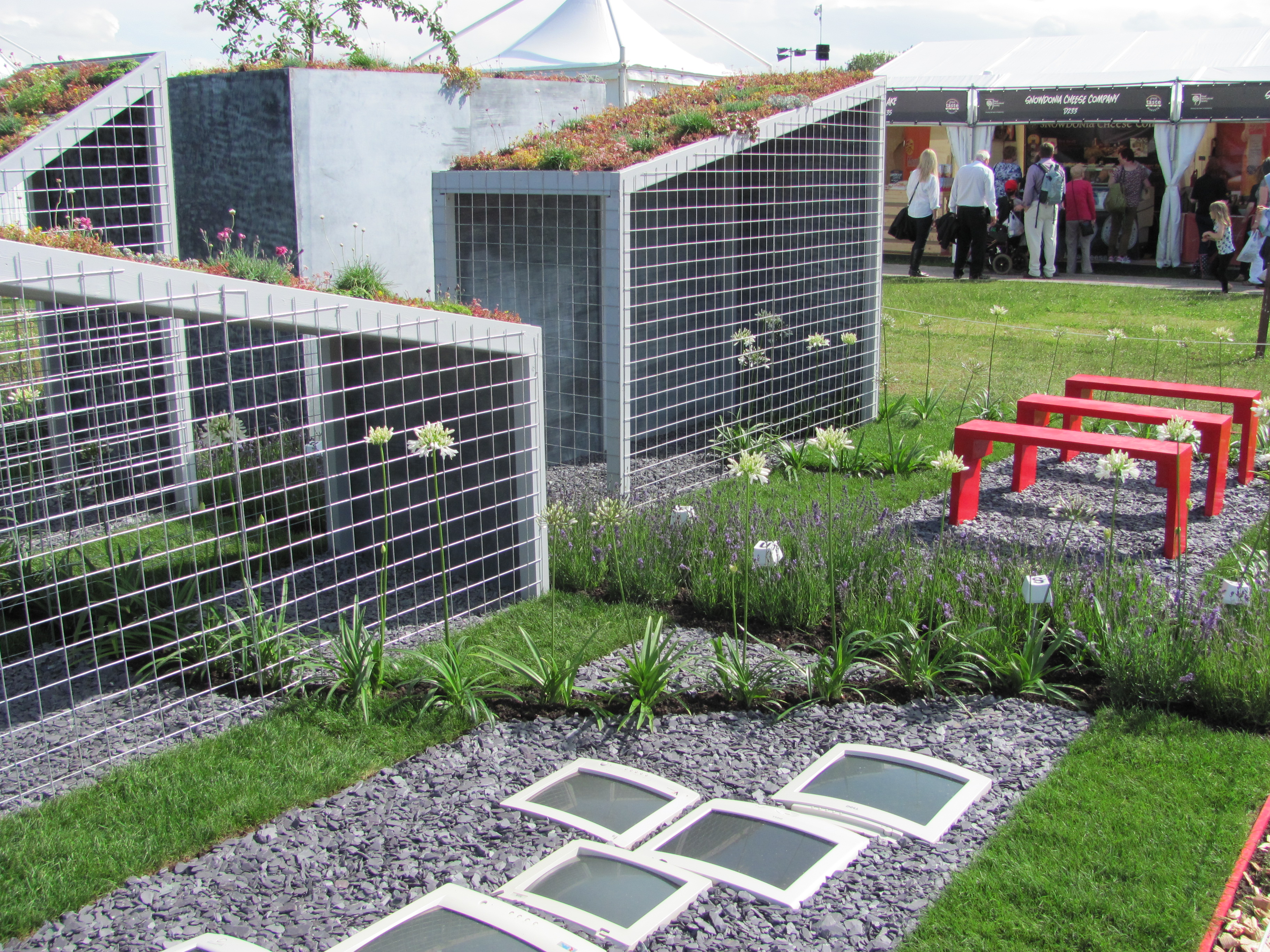
In complete contrast to the Orchestra Gardens were the Conceptual Gardens, a set of three designs intended to present ideas, sometimes controversial, and make the viewers think. We do not always appreciate such designs but the trio this year were full of meaning and original design ideas.

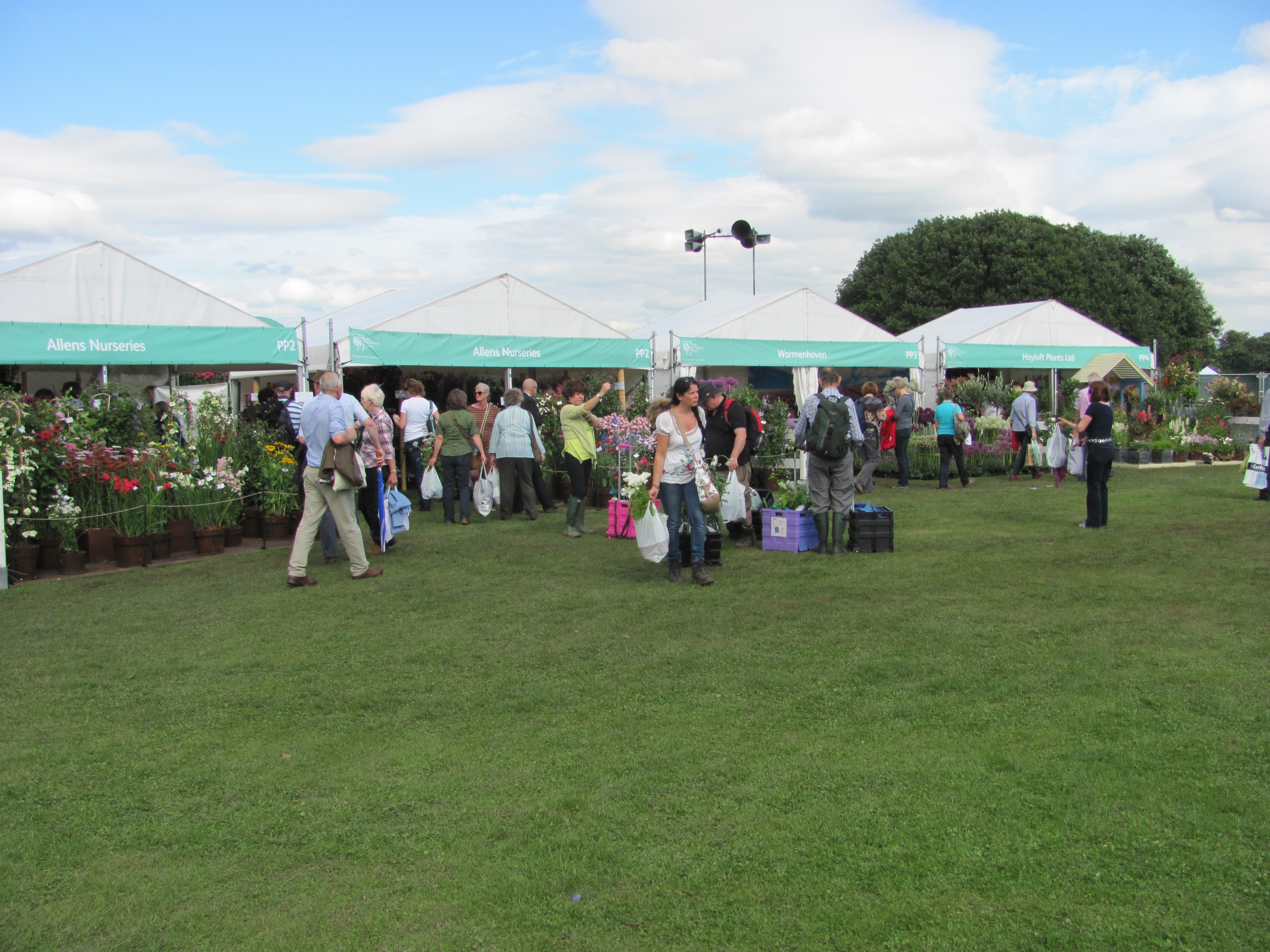
We always enjoy a wander around the nursery stands at these shows and Tatton always attracts a good variety. We only bought one little plants this time though, an Aeonium that sports leaves of deepest, shiny purple almost black, called Logan’s Rock.

But this nursery stand all based on pink was empty. The discerning gardener this year definitely dislikes pink!

Categories
bird watching birds National Trust photography Shropshire wildlife

A Wild Mountain Pool

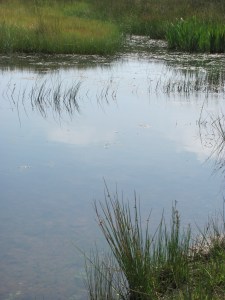
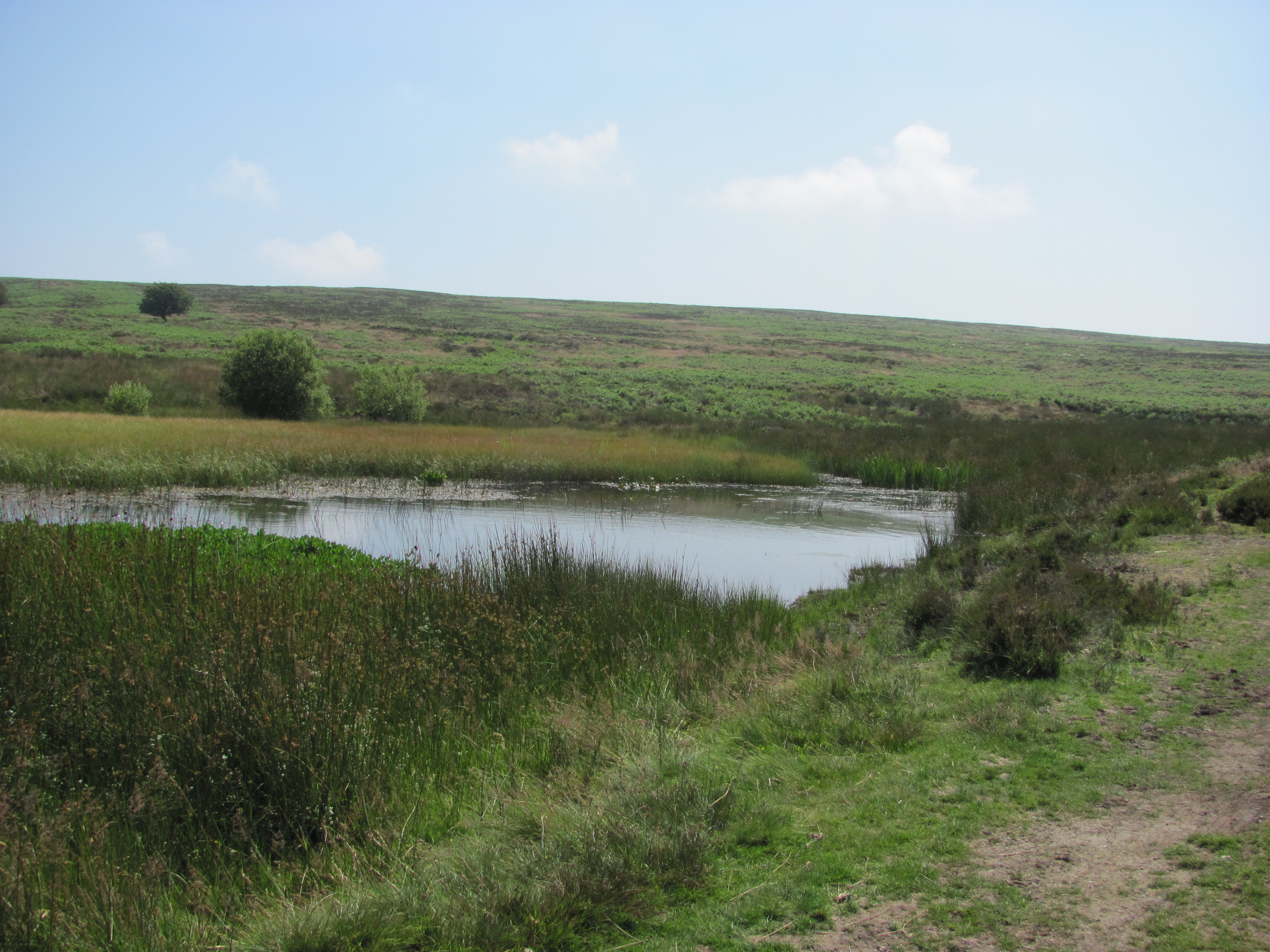
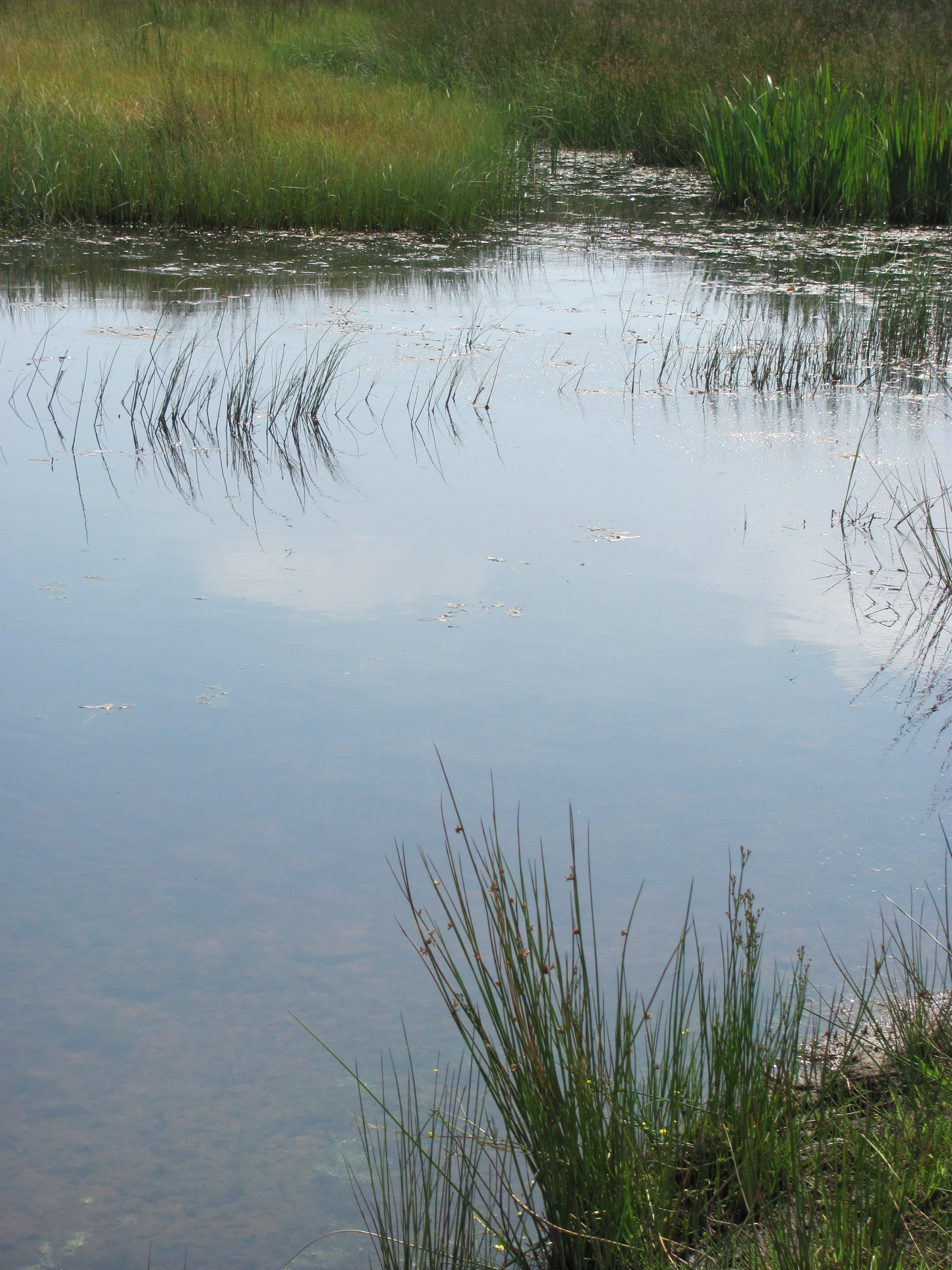
Wildmoor Pool sits alone up on the top of the Long Mynd amongst open moorland. We live on the northern edge of the South Shropshire Hills and we need to drive only a short distance to the Long Mynd at the southern edge of the South Shropshire Hills. On a very hot and humid day we decided to take our books, a flask of coffee and some fruit and seek out the cooler air atop the Long Mynd. We had never been to the Wildmoor Pool before and we were stunned by its beauty and isolation as it came into sight. A triangle of clear water tinged brown by peat.
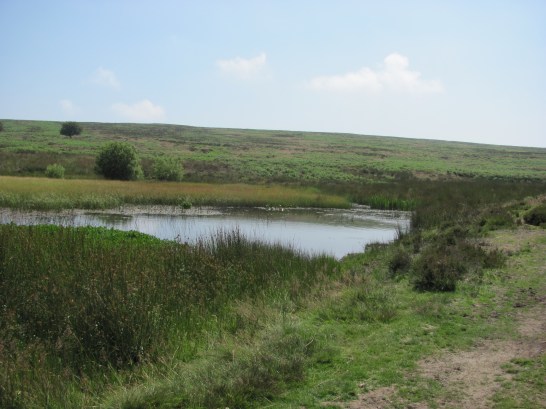
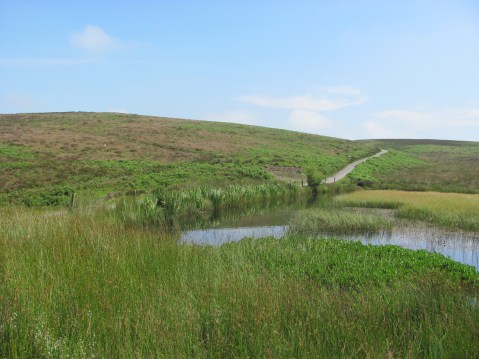
It is described in my book on the Long Mynd as a place to sit and wait for the wildlife to arrive. This proved to be so true. On our arrival we spotted lots of different Damsel Flies and Dragonflies in a myriad of sparkling colours, but little else, no birds to be seen or heard in the sky, on the bushes or amongst the bracken and heathers.  These dragonflies have such evocative names – Black Darters, Common Hawkers, Golden-ringed Dragonfly.

So we sat, got comfortable, poured coffees and got out our books to enjoy in the peace up on the long mountain. The silence and still warm air created an atmosphere of calm and peacefulness – and above all contentment. This silence was only occasionally interrupted by tiny splashes of water as fingerling Brown Trout plucked flies from the mirrored surface and sent ripples out in concentric rings moving slowly outwards towards the edge of the pool. Deep throated croaks from frogs emerged from deep within the reeds. The surface dwellers barely make a sound or a ripple, the Water Measurers, Pondskaters fail to break the surface. Water Beetles and Water Boatmen pierce through the surface to collect bubbles of oxygen.
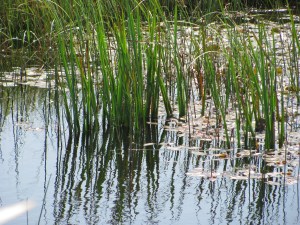
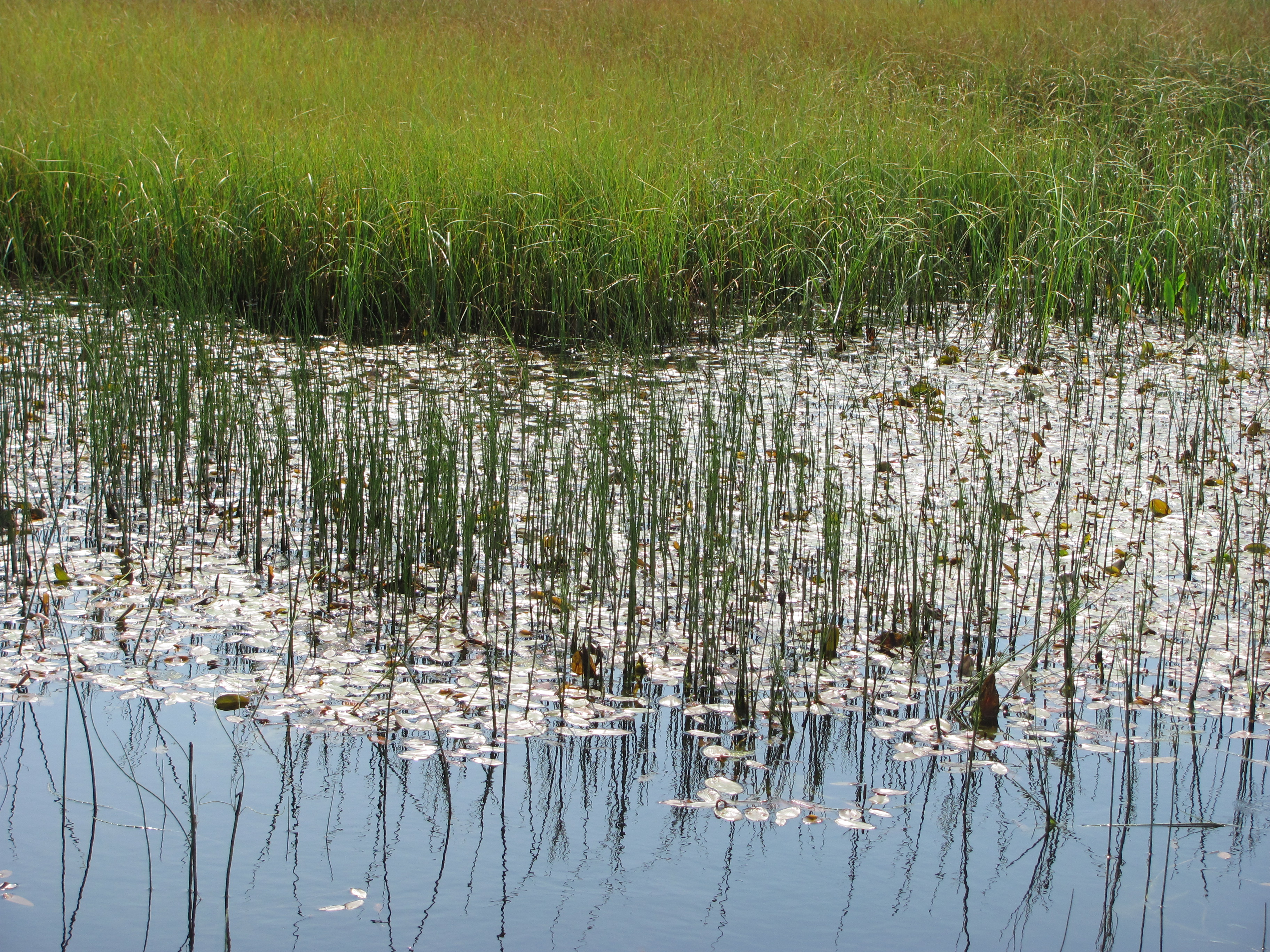
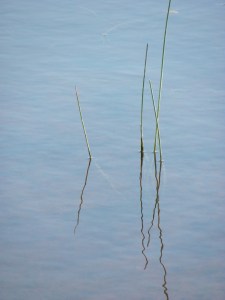
Reflections decorated the pool’s surface. When the Brownies’ ripples reached them they shimmered but otherwise they were still as the mountain air.
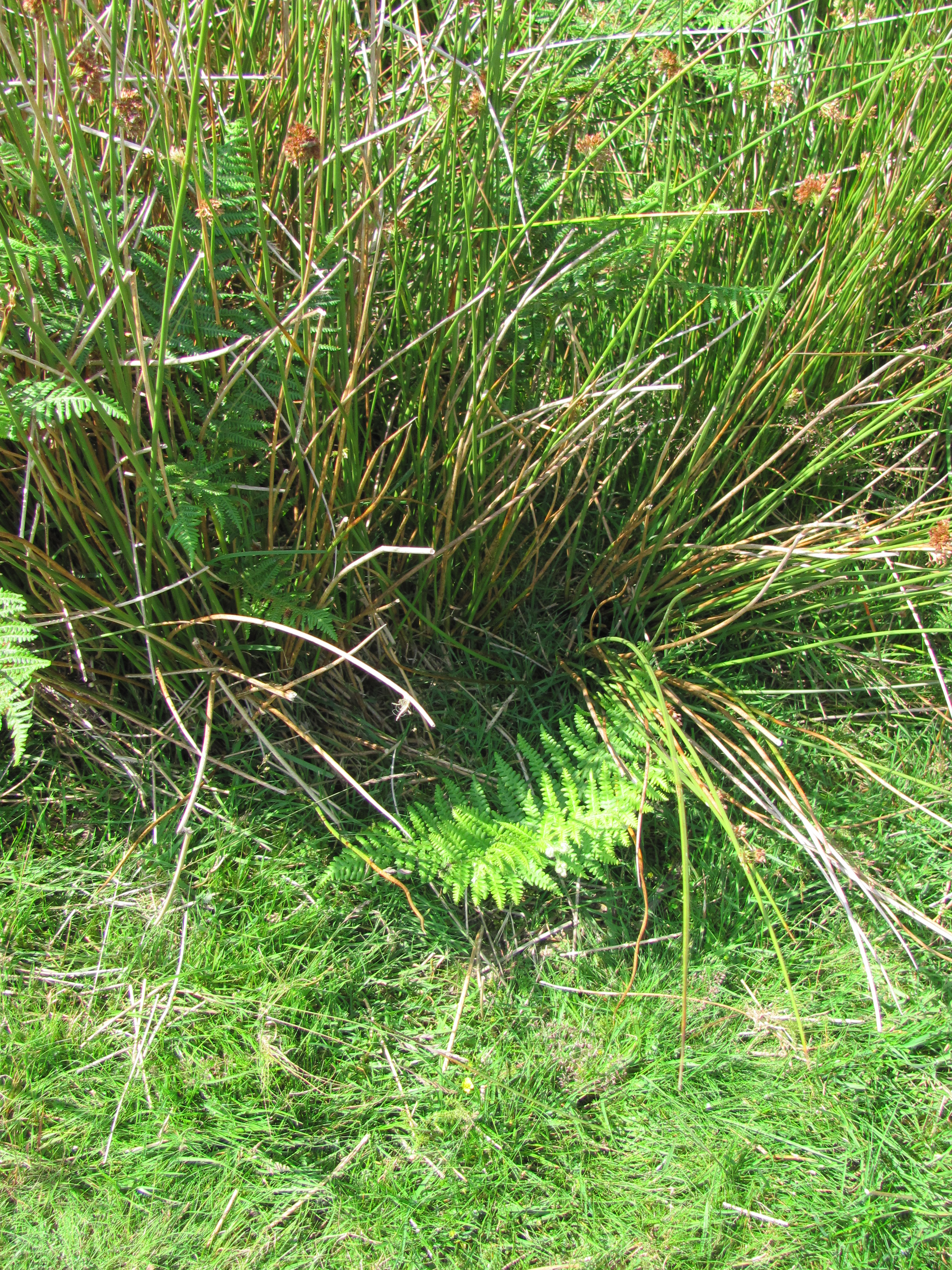
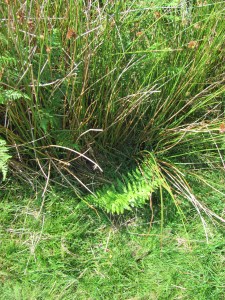
The slopes of the mountain here were decorated with bracken and heather and little else, so the tiny simple blooms of the Tomentil shone like golden stars in a clear sky. Yellow glows in so much green. Close to the pool edge the bracken is joined by tough sedges such as Bottle Sedge, rushes such as Common Spike Rush, with Yellow Flag and Mountain Thistles punctuating them with colour. Further from the bank Bogbeans and Bog Pondweed flourish.
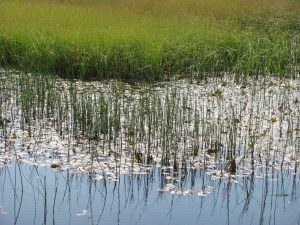
Water plants often take a pool over trying to cover it and dominate, but here the National Trust manage the amount of growth and keep a good percentage of water clear. This allows us to appreciate the large white flowers of the Waterlilies pushing through the surface amongst their flat circular plate-like leaves. As far as we know we have only two native waterlilies, one little yellow one and a larger white one but this one was the palest shade of pink, which confused us.

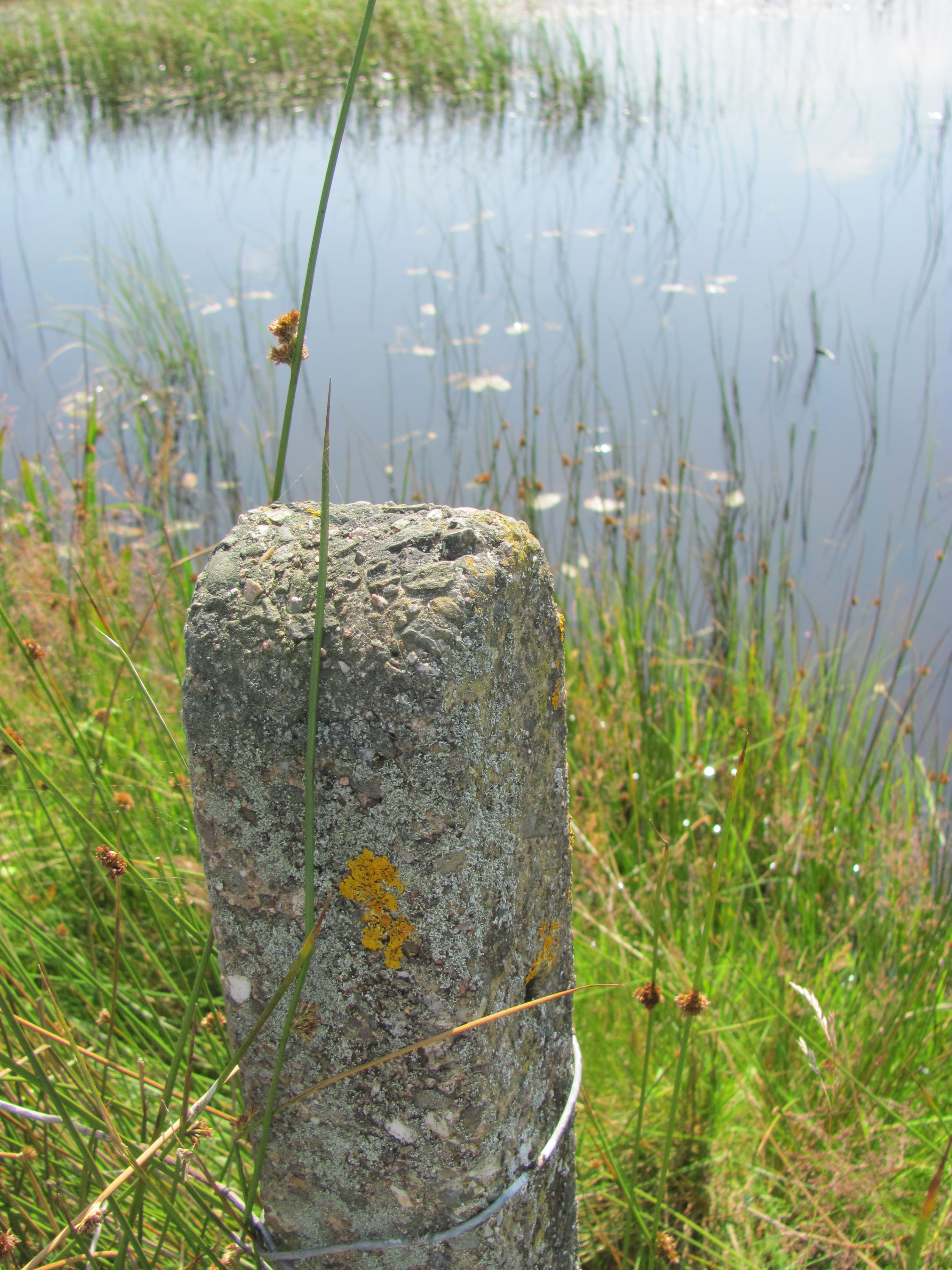
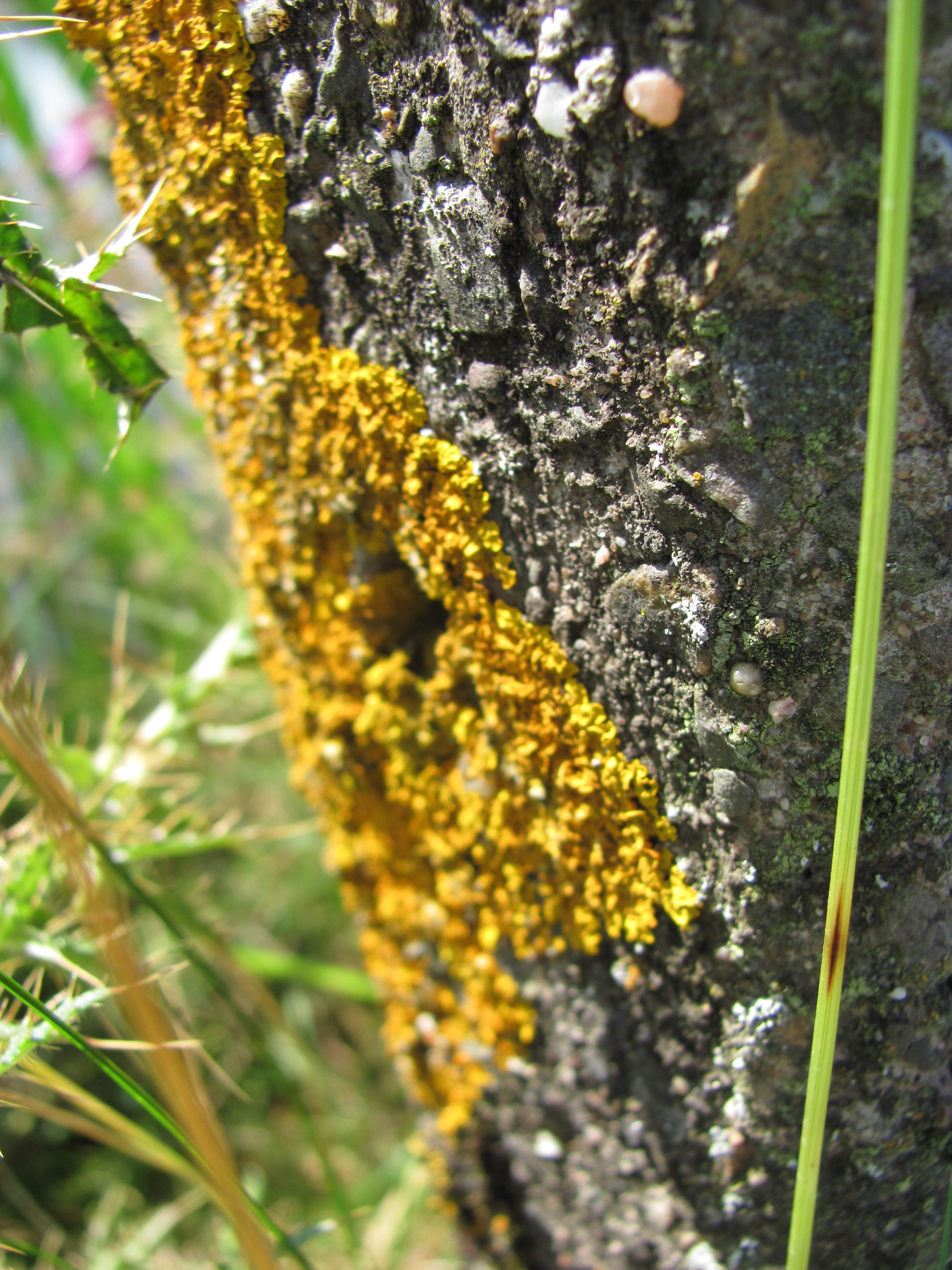
The clear air up here encourages lichens and mosses to grow on any suitable surface. Around the pool and roadside they colonise fenceposts of concrete and wood.
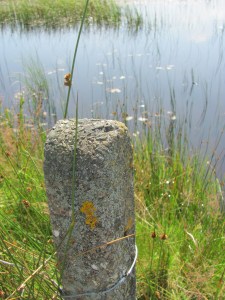
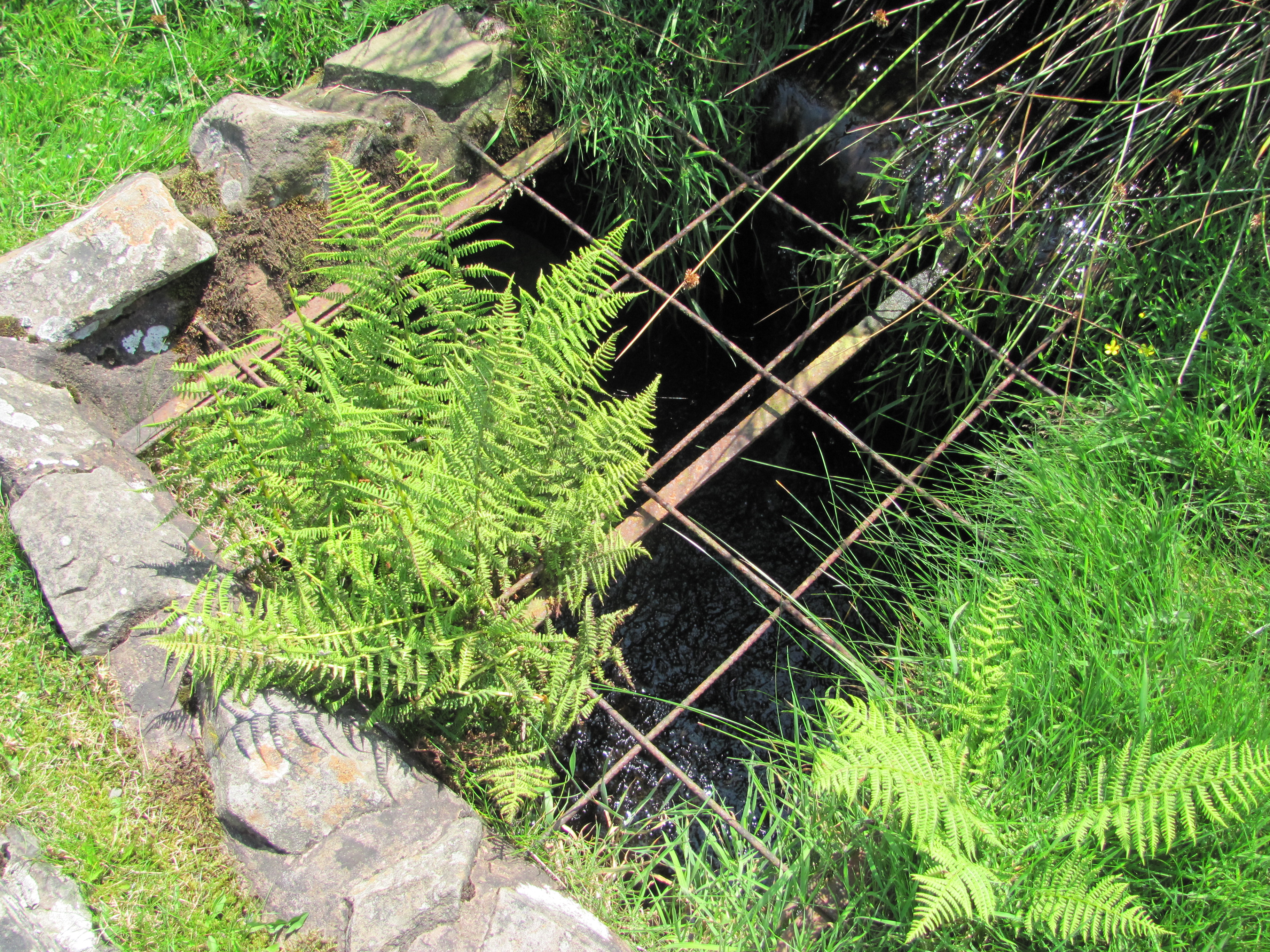
After sitting quietly for a while and enjoying a coffee we became aware of a deep rumbling a little like distant farm machinery at work or a distant hovering helicopter, and after a while we realised this incongruous sound was under the road where it skirted the pool. After a little exploration we discovered that the sound was that of the water overflowing from the pool through a pipe passing under the road. The water drains from the peaty slopes and seeps into the pool. The road acts as a dam and on the far side the overflow bursts from a pipe rumbling and roaring into a tiny stream which disappears into the valley. From the pool side the water disappears beneath a grated hole before rumbling and bubbling its way underground.

After a while we began to hear bird calls and to see the occasional one in the sky passing over our heads or perching atop the tallest fronds of bracken. The smaller birds prove mostly to be Meadow Pipits. But two scarcer species the Stonechats and Whinchats share the same silhouette so are difficult to differentiate when perched on tall strands of bracken. But when they move and their colours and markings become clearer we can see that the Whinchats have definite eye-stripes and the Stonechats black heads. The chest of the Stonechat is more colourful being more pure orange than the buff-orange breast plumage of the Whinchat. This area suits them well as they like steep hillsides covered in bracken with a good understory and enjoy being near water.

Big birds are less frequent, probably the commonest being the large black Ravens which pass high over us nearly always in pairs and cronking deeply. Although we love seeing the dragonflies and their cousins the damsel flies and the small songbirds we are equally enthralled with the sight of their predators. While watching a male Kestrel hovering above the hillside vegetation and admiring his russet and grey tones, I was distracted by the site of a rapidly flying tiny bird of prey, the Hobby. I followed him as he flew to the damp area above the Wild Pool where dense clumps of reed and rush are interspersed with small pools of water. Here he hunts the dragonflies and damselflies. What a flying display!They look like a cross between a Swift and a Peregrine Falcon.

Even smaller is the Merlin, Britain’s smallest bird of prey which we watched as it hunted for the Meadow Pipits just feet above the bracken. They are now rearing their second batch of youngsters so are hunting here and when successful flying off to the nearest trees and small woods lower down the mountain.

As the afternoon wore on the heat increased alongside the humidity and the slopes became quiet. We returned to sitting and admiring the very special pool.
Categories
Shropshire wildlife

A Brook and Brown Trout

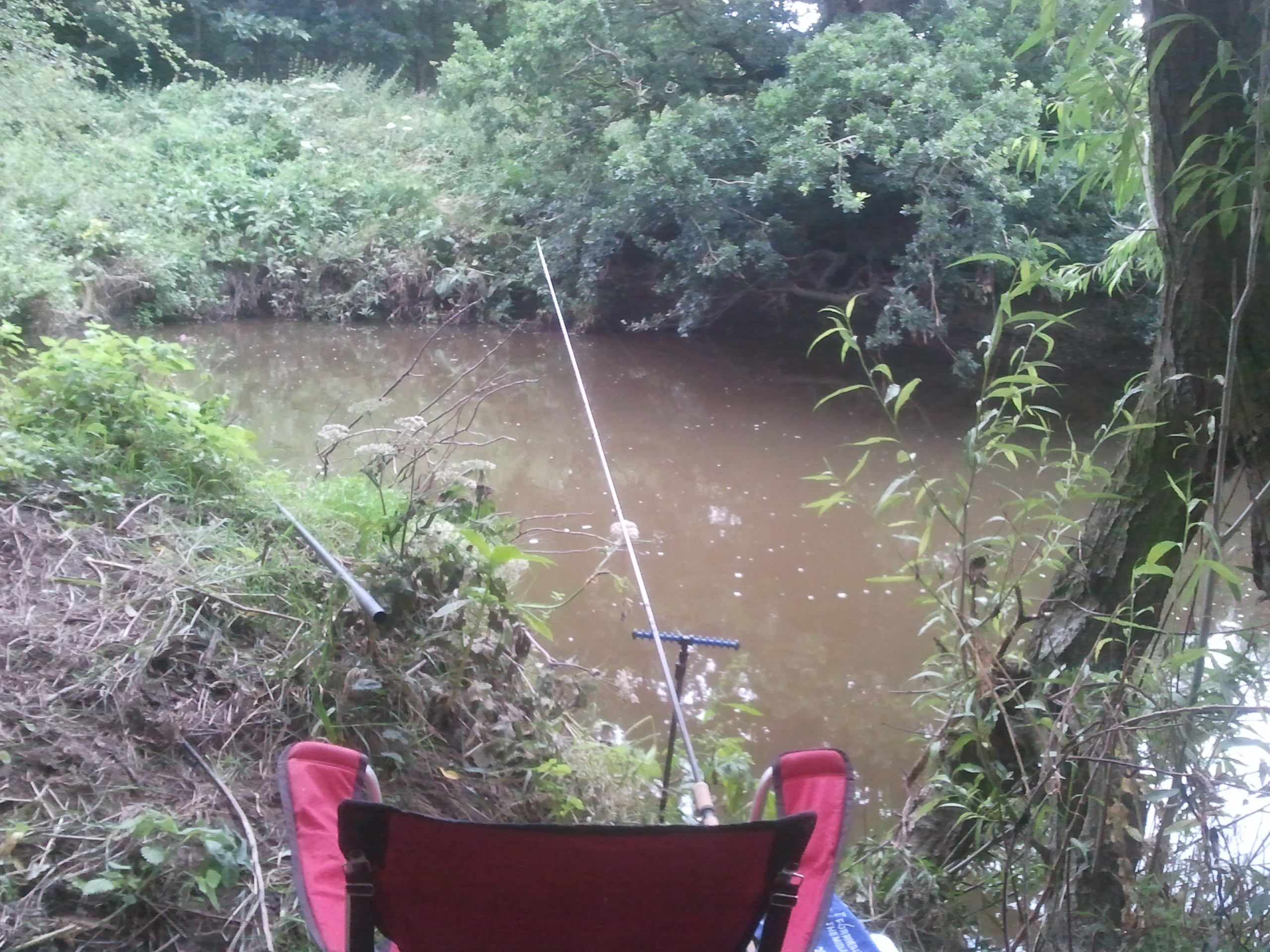
Each year I set myself aims to achieve in my fishing exploits. This year, after years of targeting large carp in huge lakes, I decided to go back to the type of fishing venue that I used to fish in my childhood – a rural brook. My aim was to conquer the art of “long-trotting” in its fast-moving water and I was determined to catch my first ever Grayling and Brown Trout.

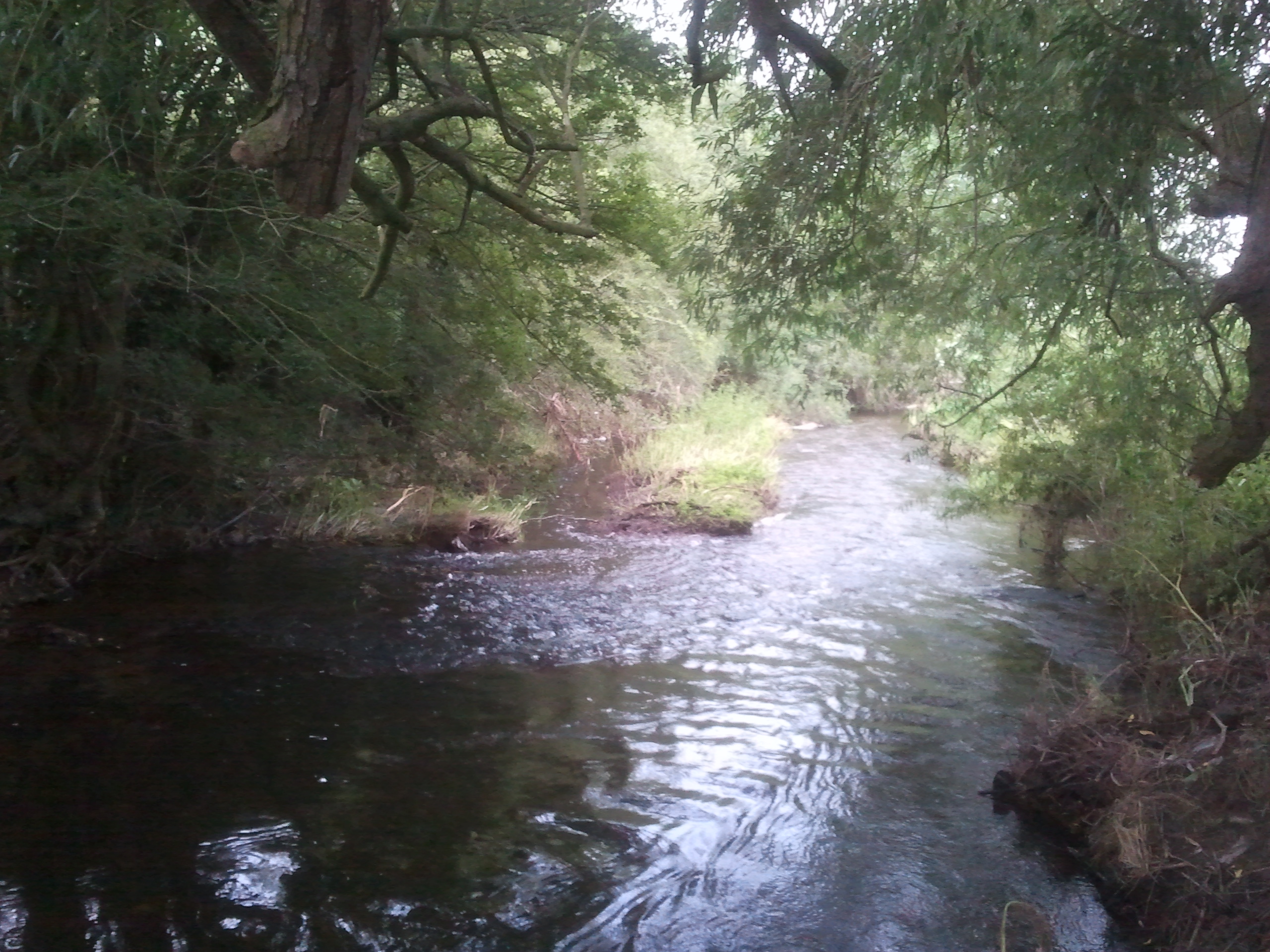
The Rea Brook wanders through the countryside in tight meanders and gentler curving bends through pastureland just across a few fields from home. It is narrow and tree-lined. The trees are alive with birds and bees and butterflies explore the bankside of the brook. Dragonflies and Damsel Flies fly inches above the fast-moving water in their strange zig-zag flight patterns. We were stunned by their sparkling colours of emerald-green, sky blue, browns and black.

We settled down under a batch of big old willows where the little river had cut into the far bank gradually eroding and moulding a wide pool. the dappled sunlight gave the little patch a magical quality. When the showers came we felt just a soft drop or two as the good old willows acted as our umbrellas.
And did I master long-trotting along the brook – well, I made a start. Did I catch a Brown Trout – I certainly did. My first ever wild Brownie was a real old warrior, a male fish of around two pounds in weight, but I went on to catch three others. Did I catch my first ever Grayling – I certainly did, four in all. These delights have been worth waiting for.  I caught a dozen or so fish in all, mostly Chub with the odd Dace and of course the Brownies and the Lady of the Stream, the Grayling.

Will we go again? Yes, we certainly will as I loved fishing in this most beautiful and characterful brook and Jude enjoyed sitting reading her book with the background sound of water running over rocks in the shallows, plus an occasional wander along the river bank.

Categories
community gardening flower show fruit and veg garden design garden photography gardening grow your own half-hardy perennials hardy perennials July ornamental grasses ornamental trees and shrubs outdoor sculpture photography RHS town gardens

More from the Tatton Park Flower Show

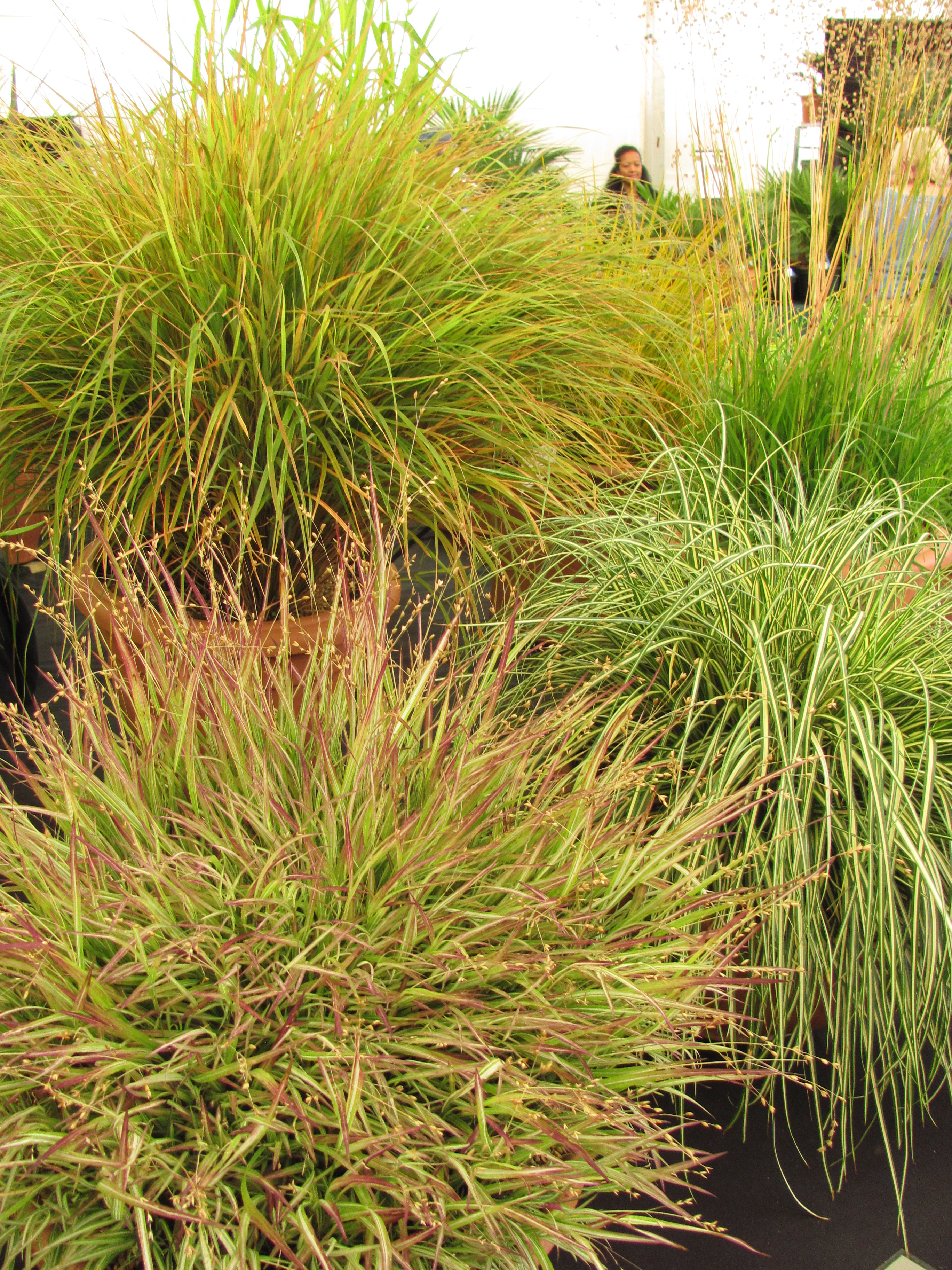
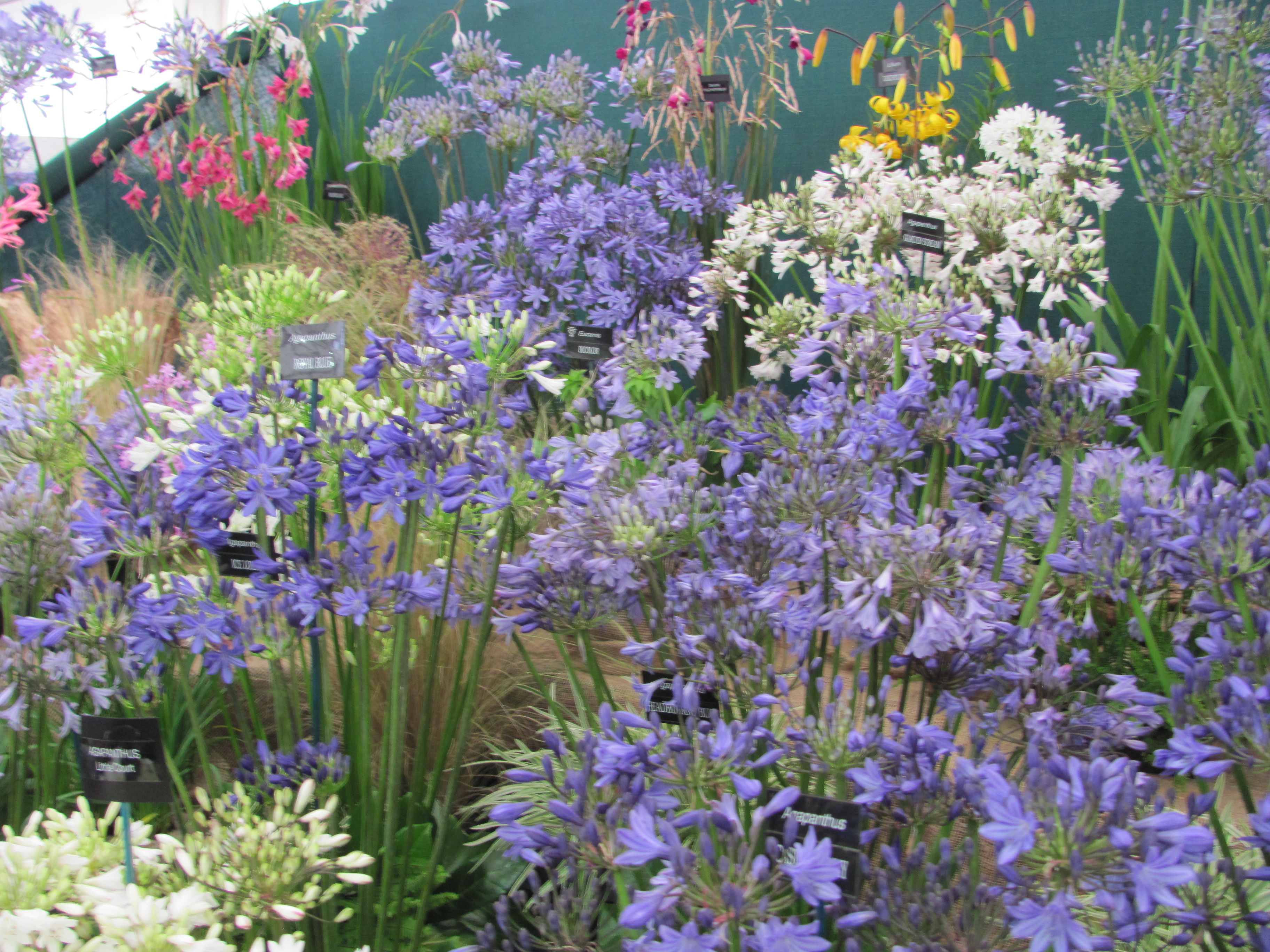
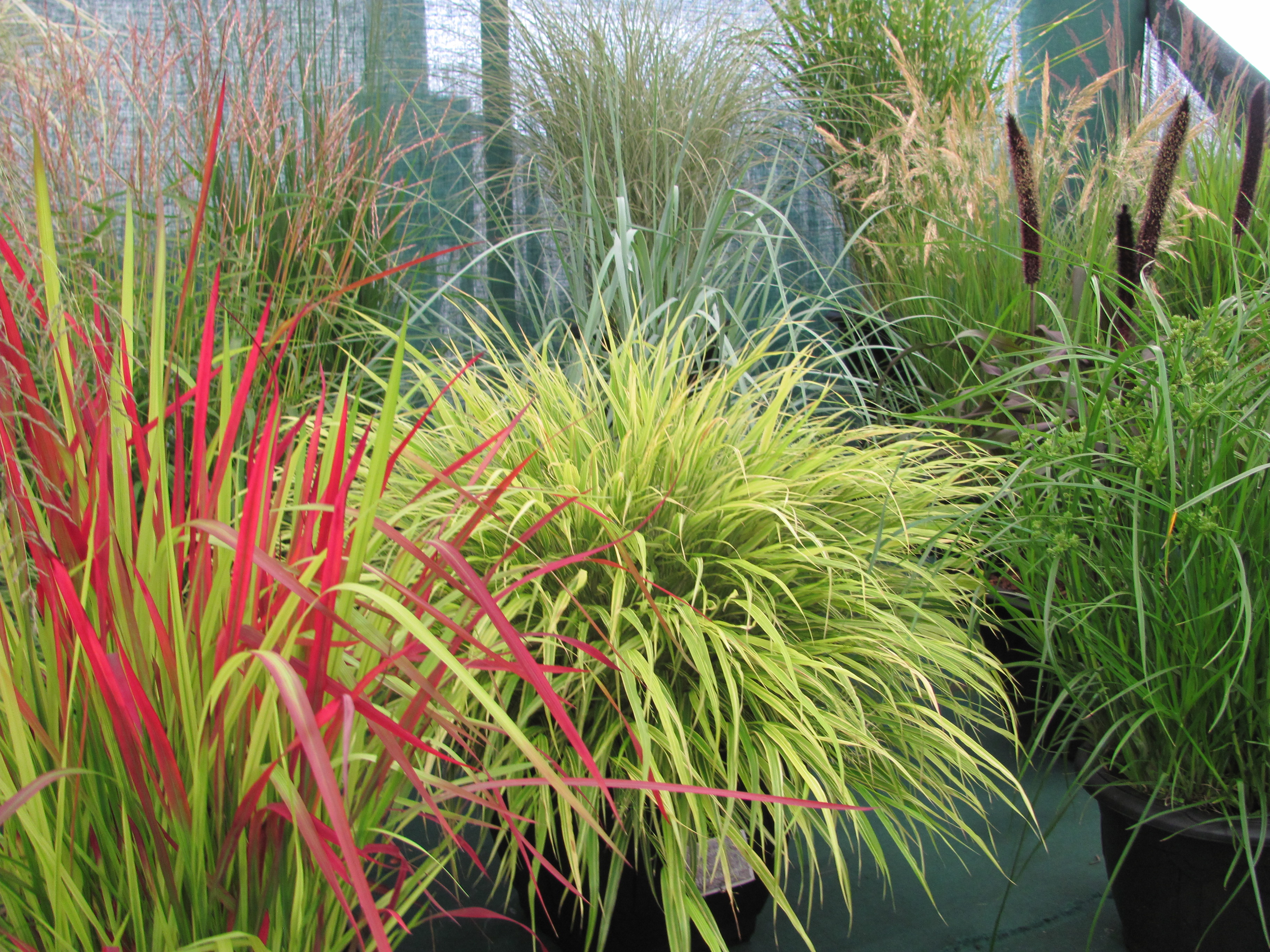
We always enjoy visiting the Floral Marquee at any RHS Show and try to sneak a good look around before they get too crowded. At Tatton Show we just made it as the crowds began to build. It was worth it as there were some wonderful plants to look at some of which were beautifully displayed. As usual our favourites were the grasses.

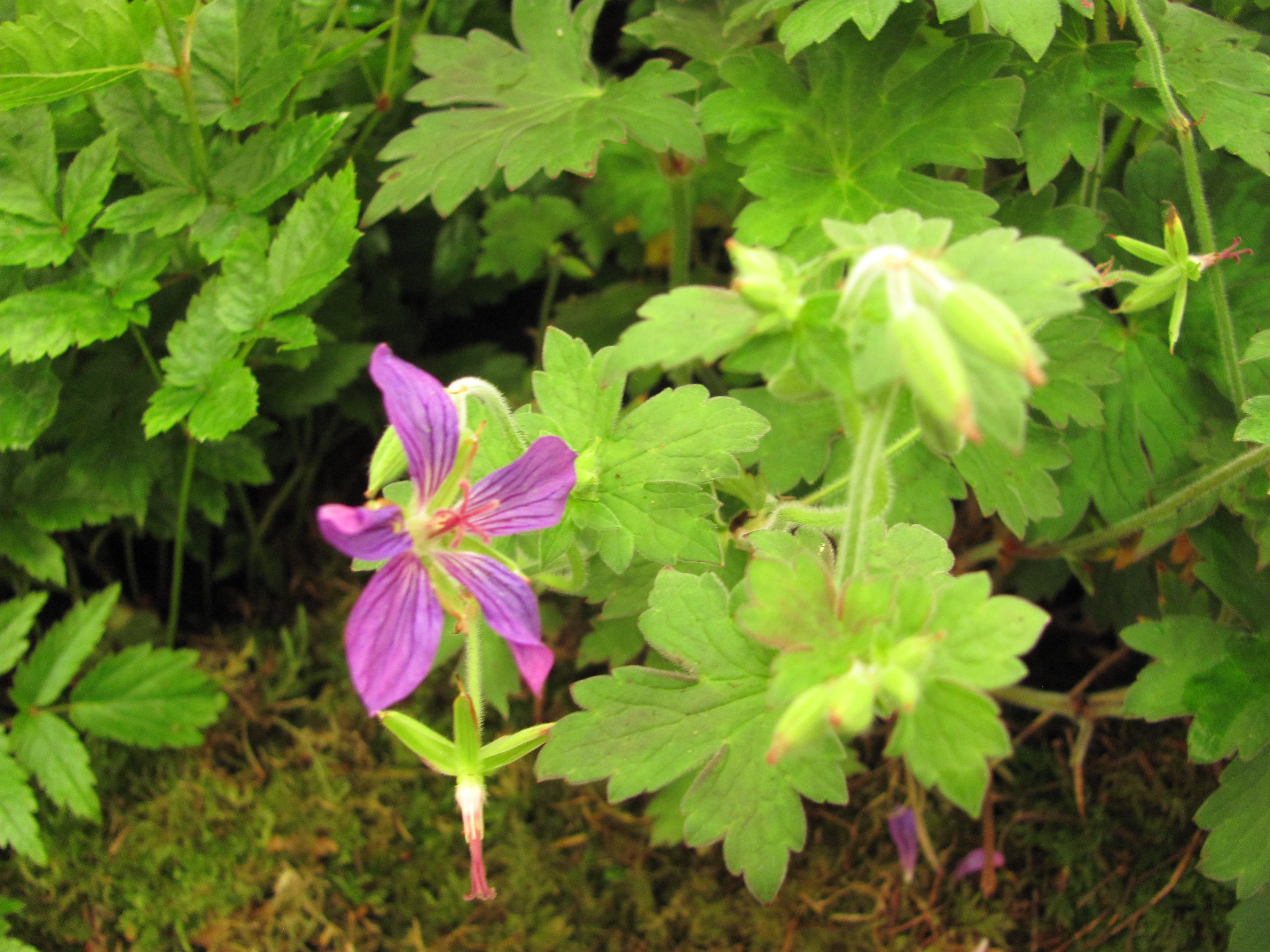
Within the plants on display there were some effective little details that drew out attention to have a closer look.

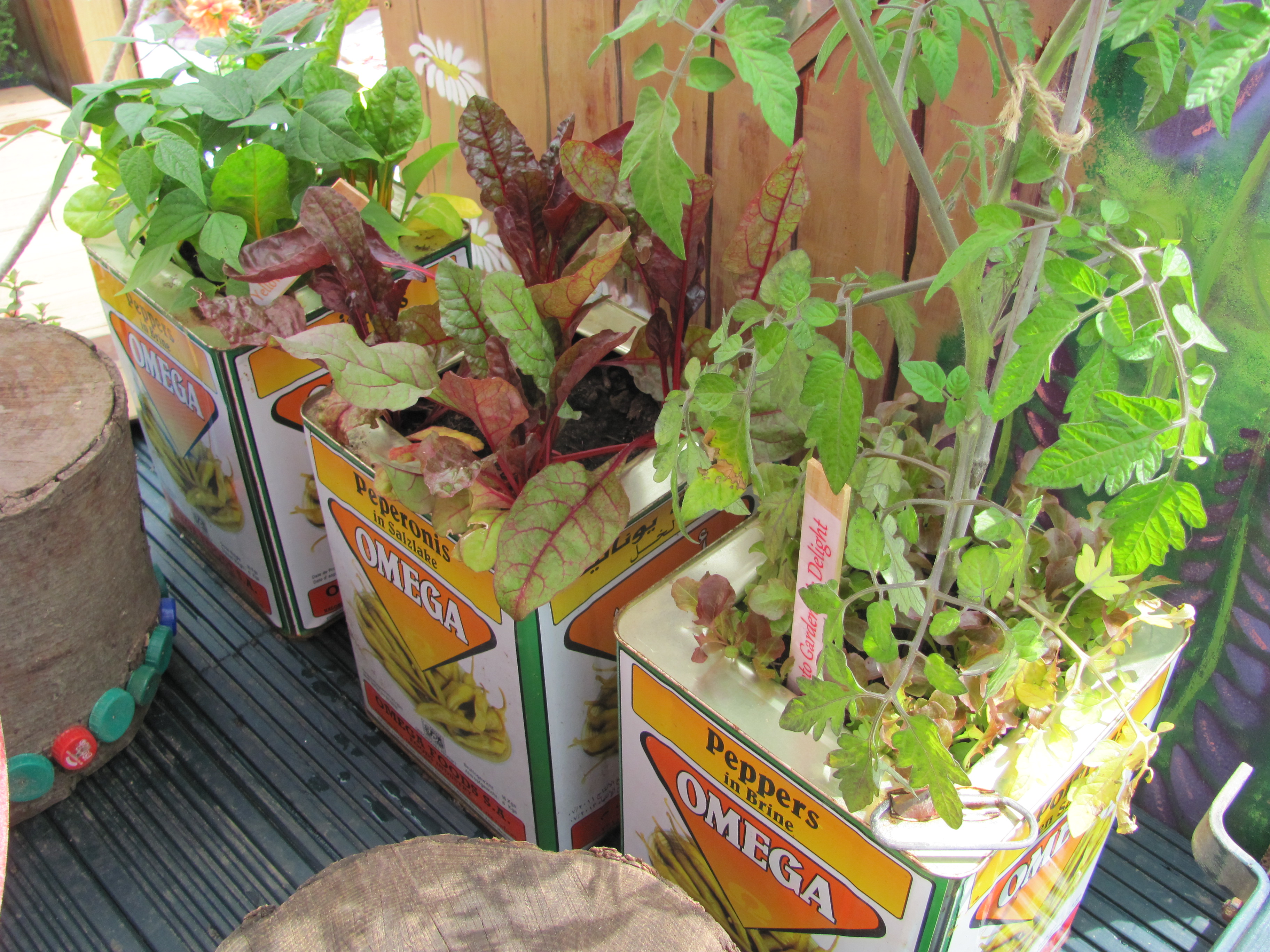
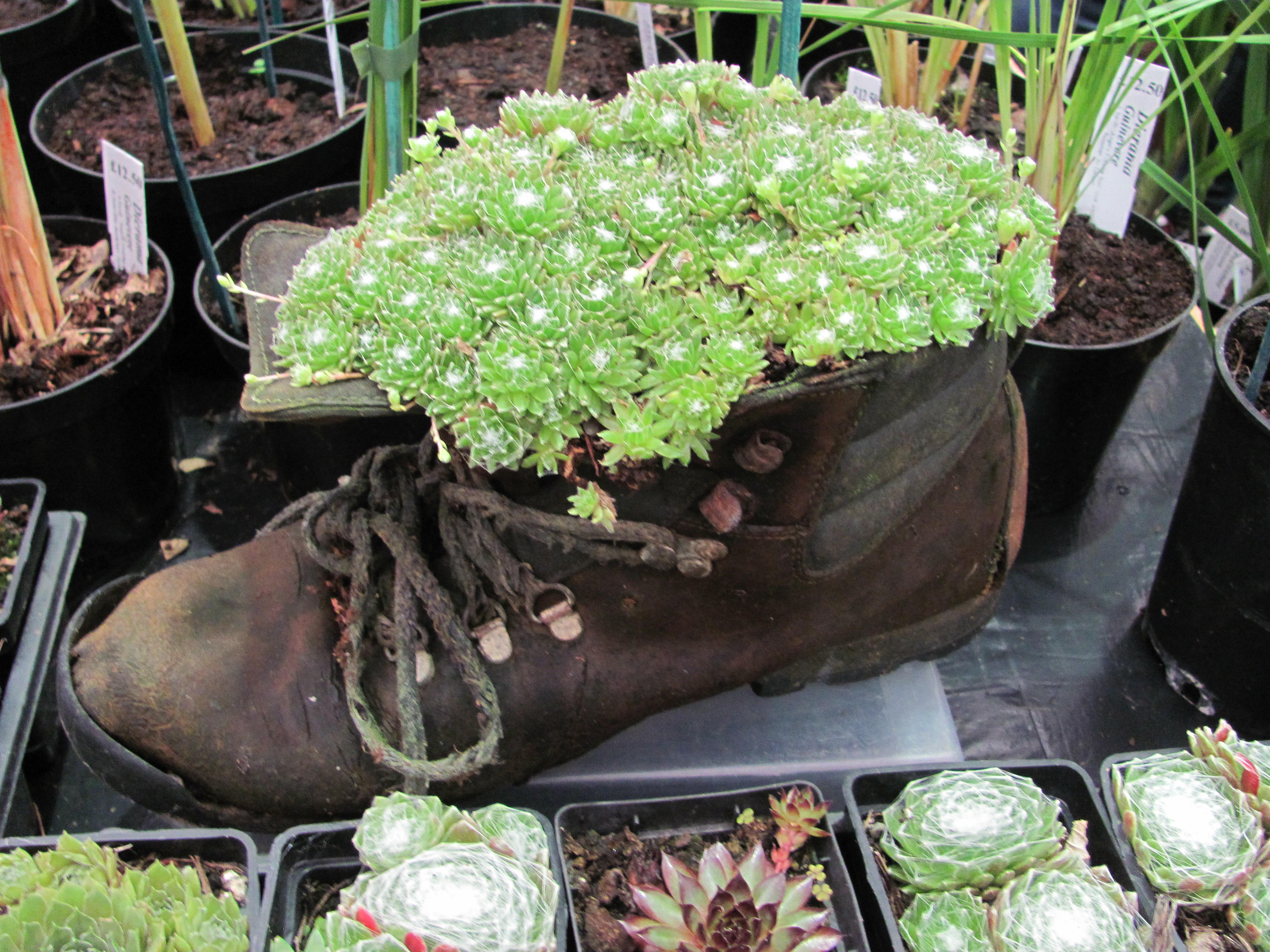
Throughout the showground were unusual containers used as planters from old boots to oil cans.

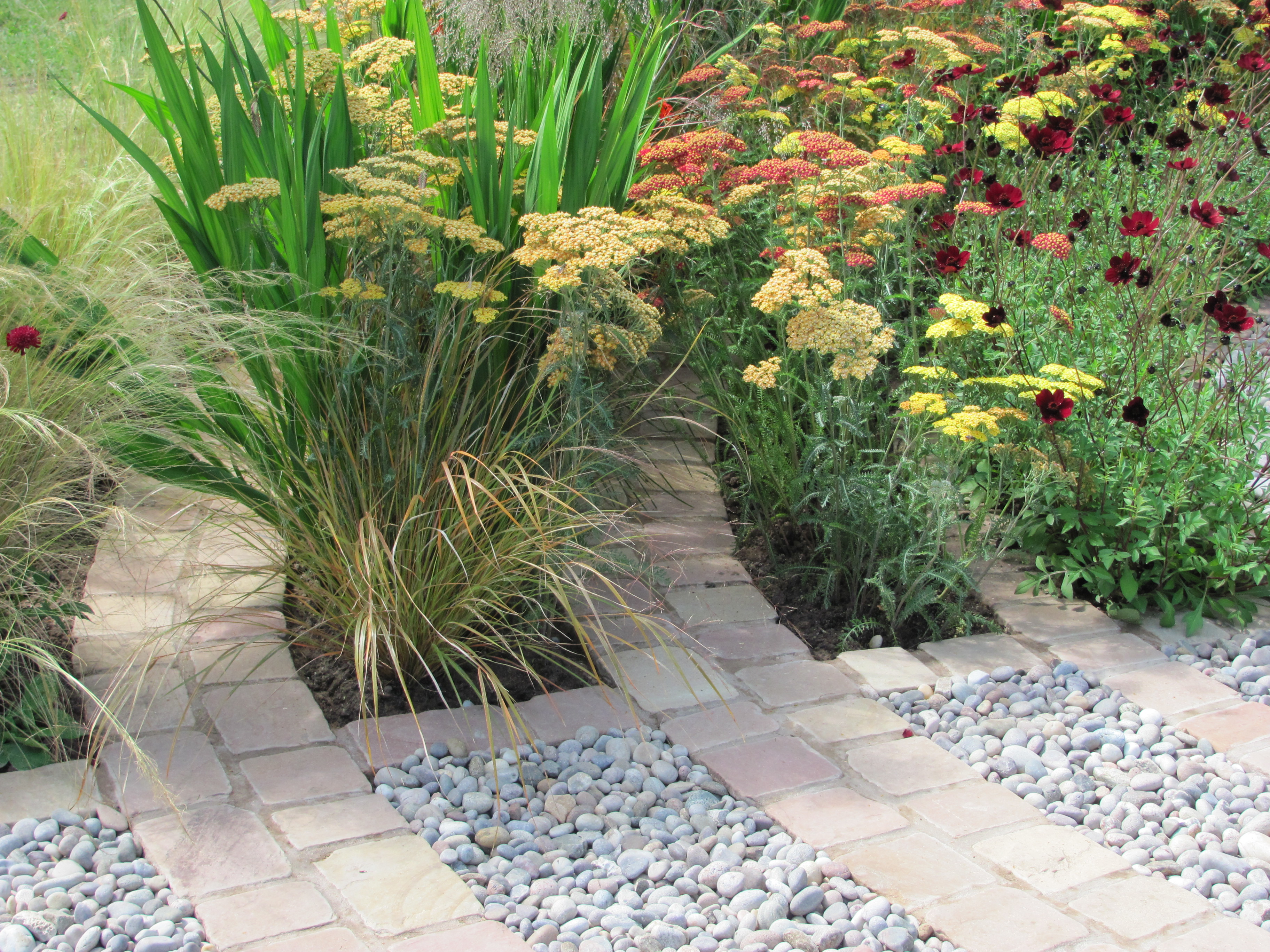
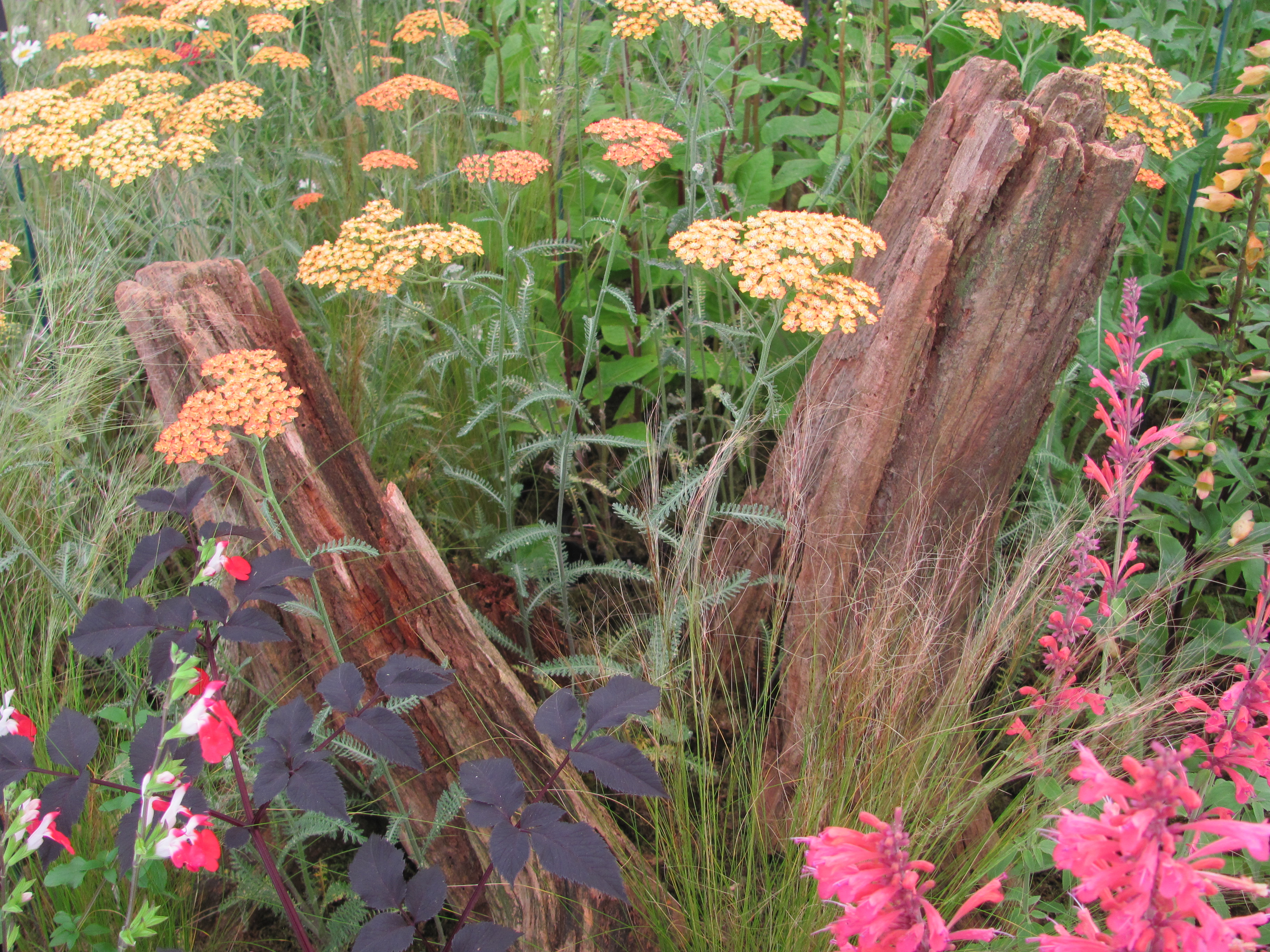
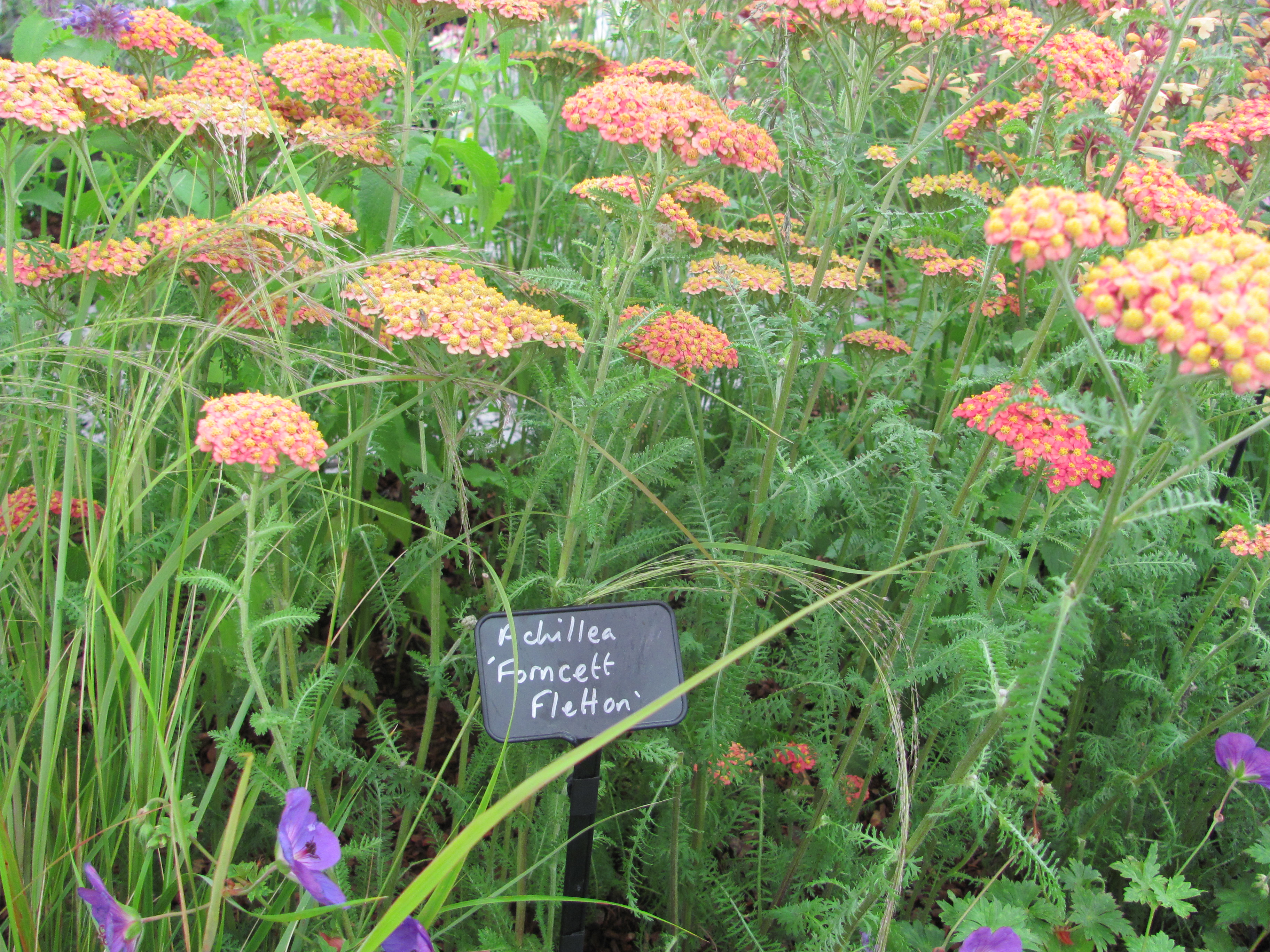
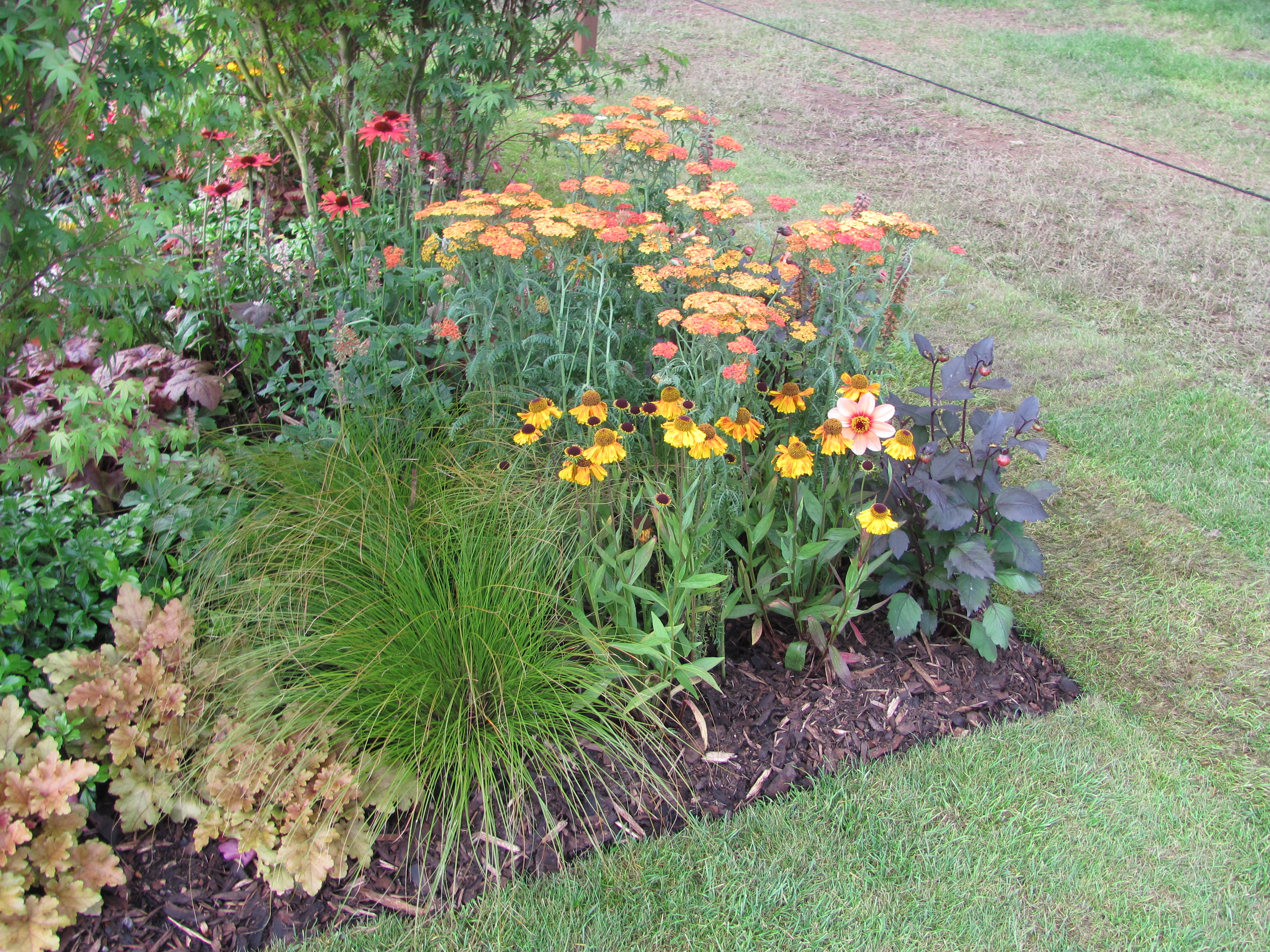
But as always the stars of the show were the plants. the trend in this show was for combining grasses with Achilleas particularly those with cream, russet and orange flowers.

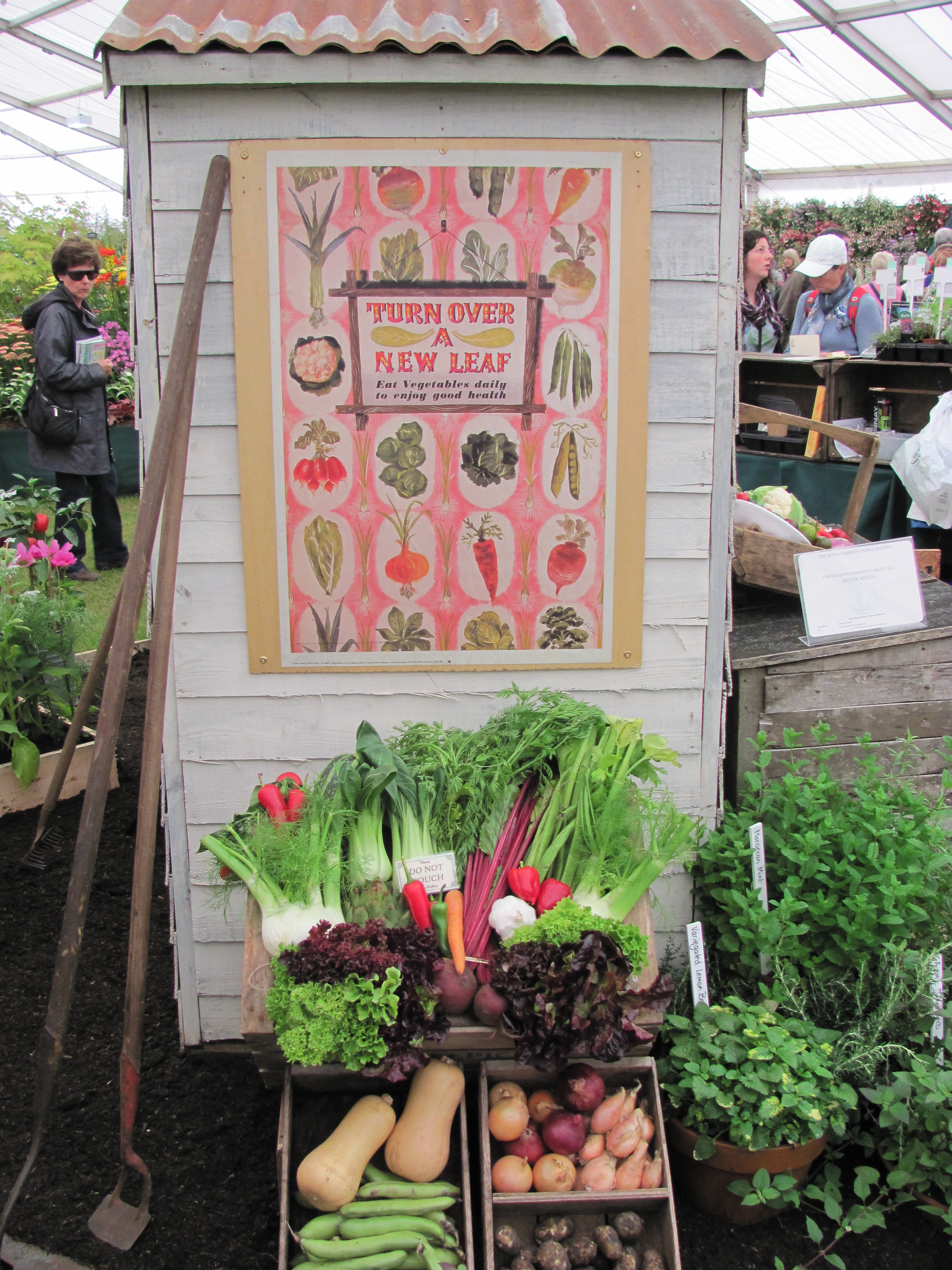
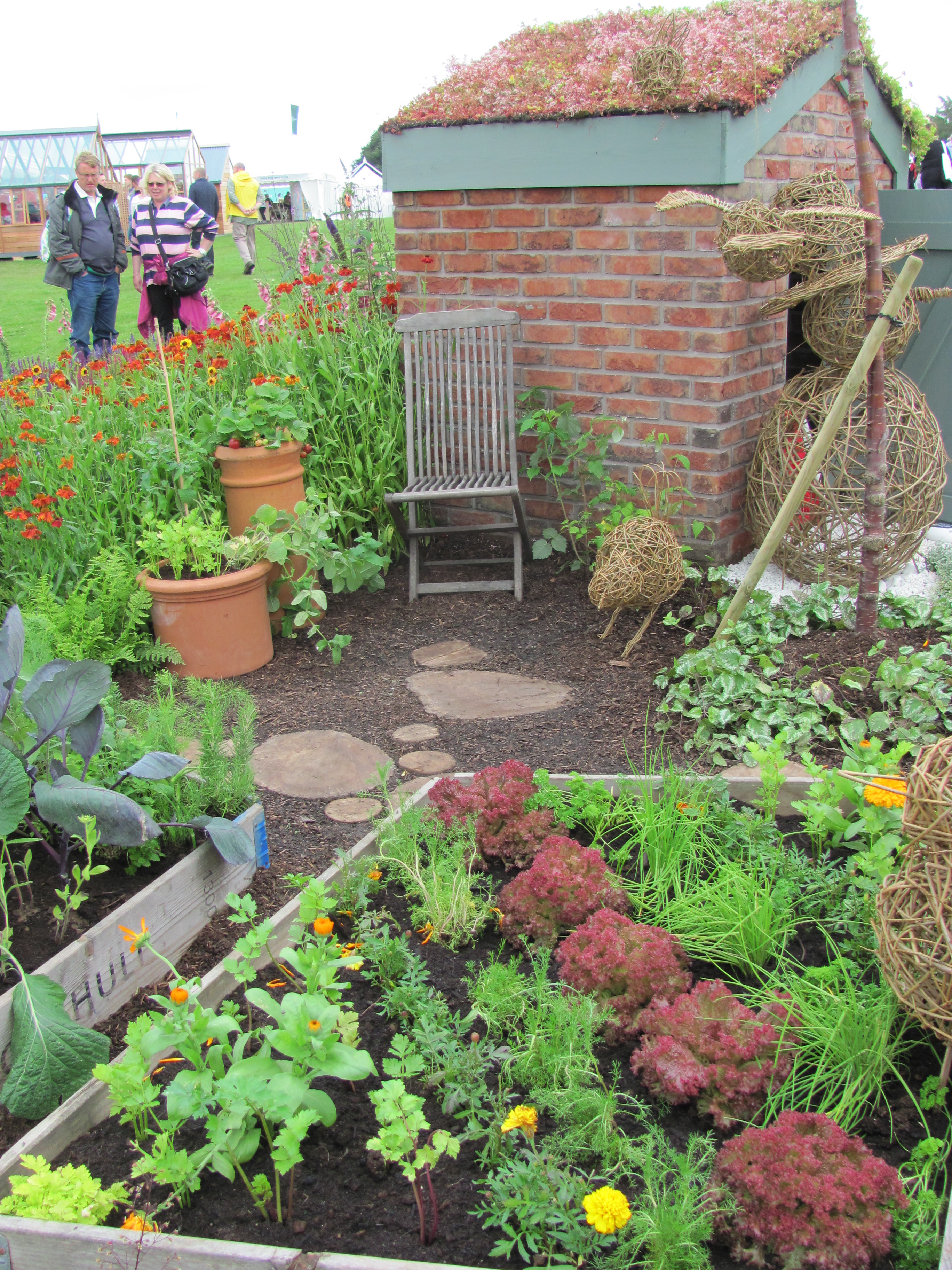
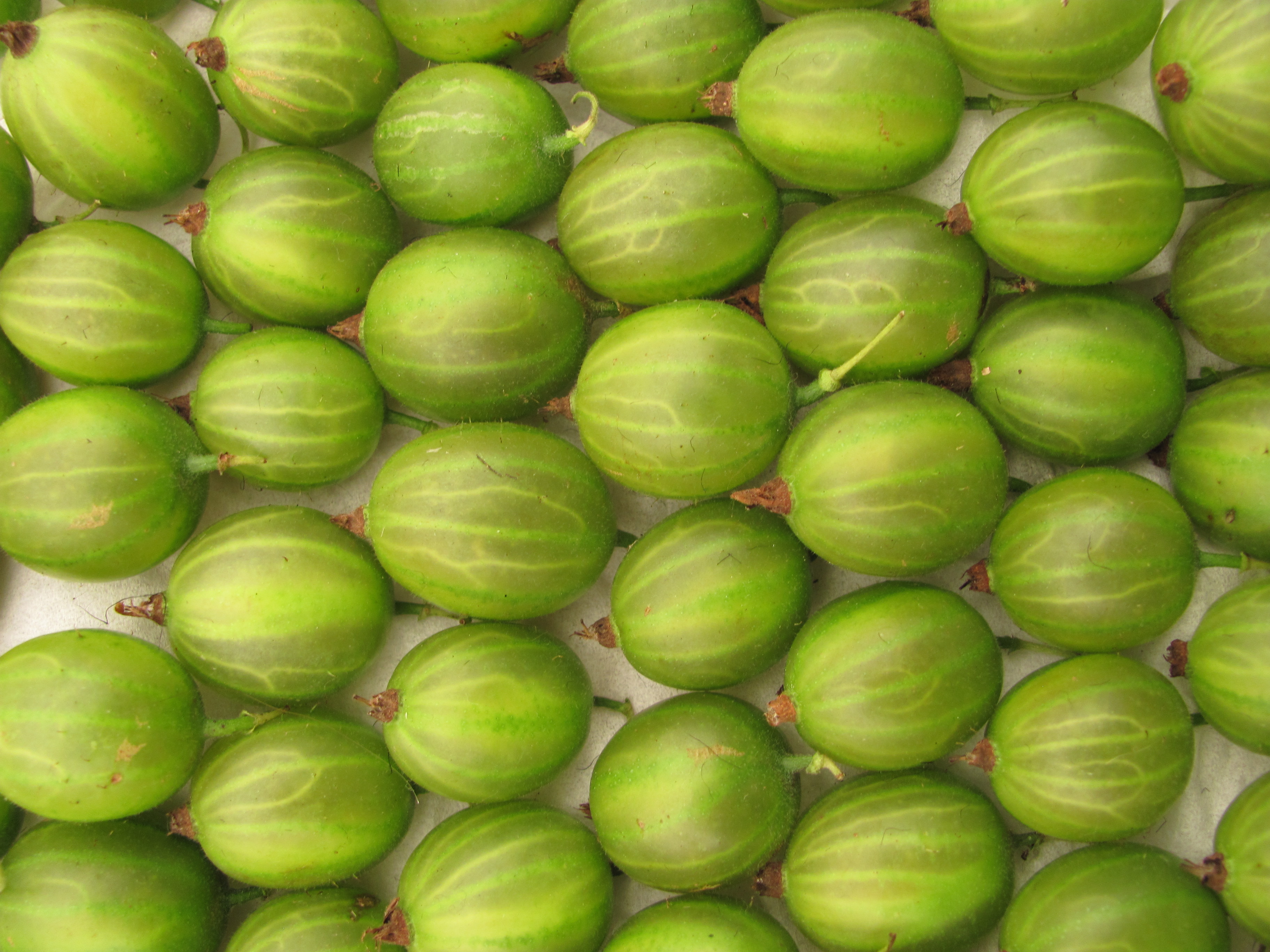
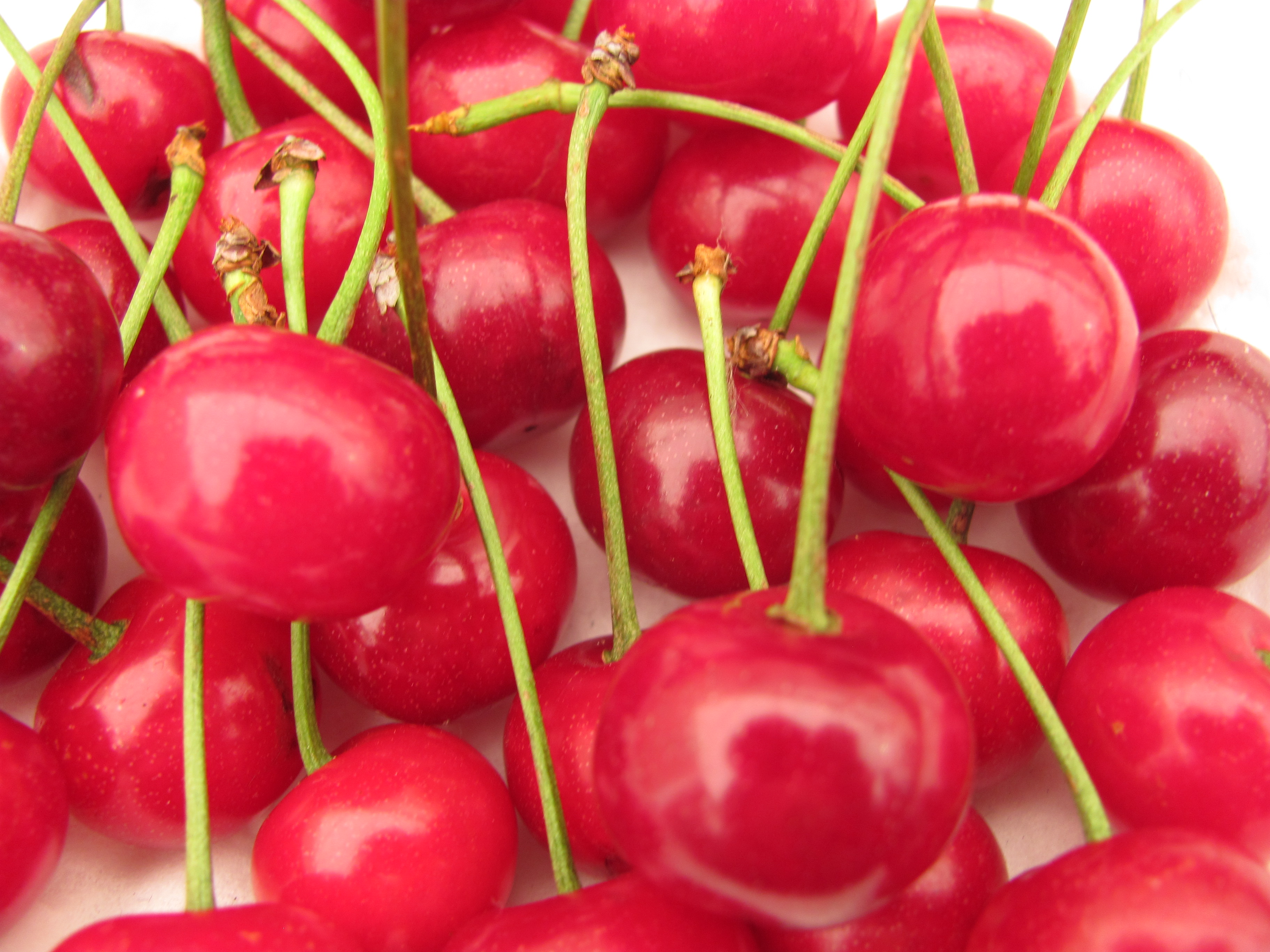
As with all RHS shows in recent years fruit and veggies starred alongside the flowers.

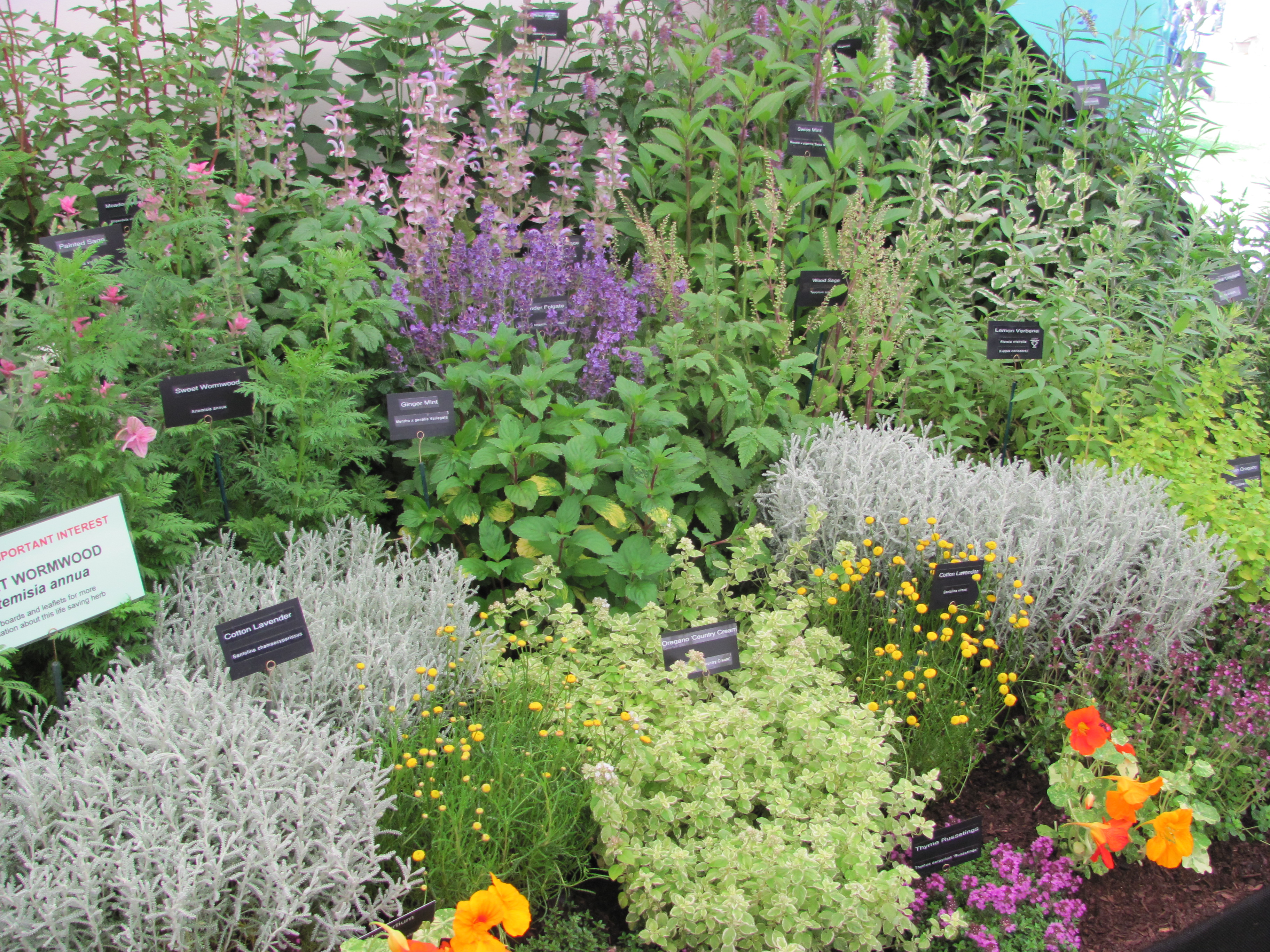
And we mustn’t forget the herbs.

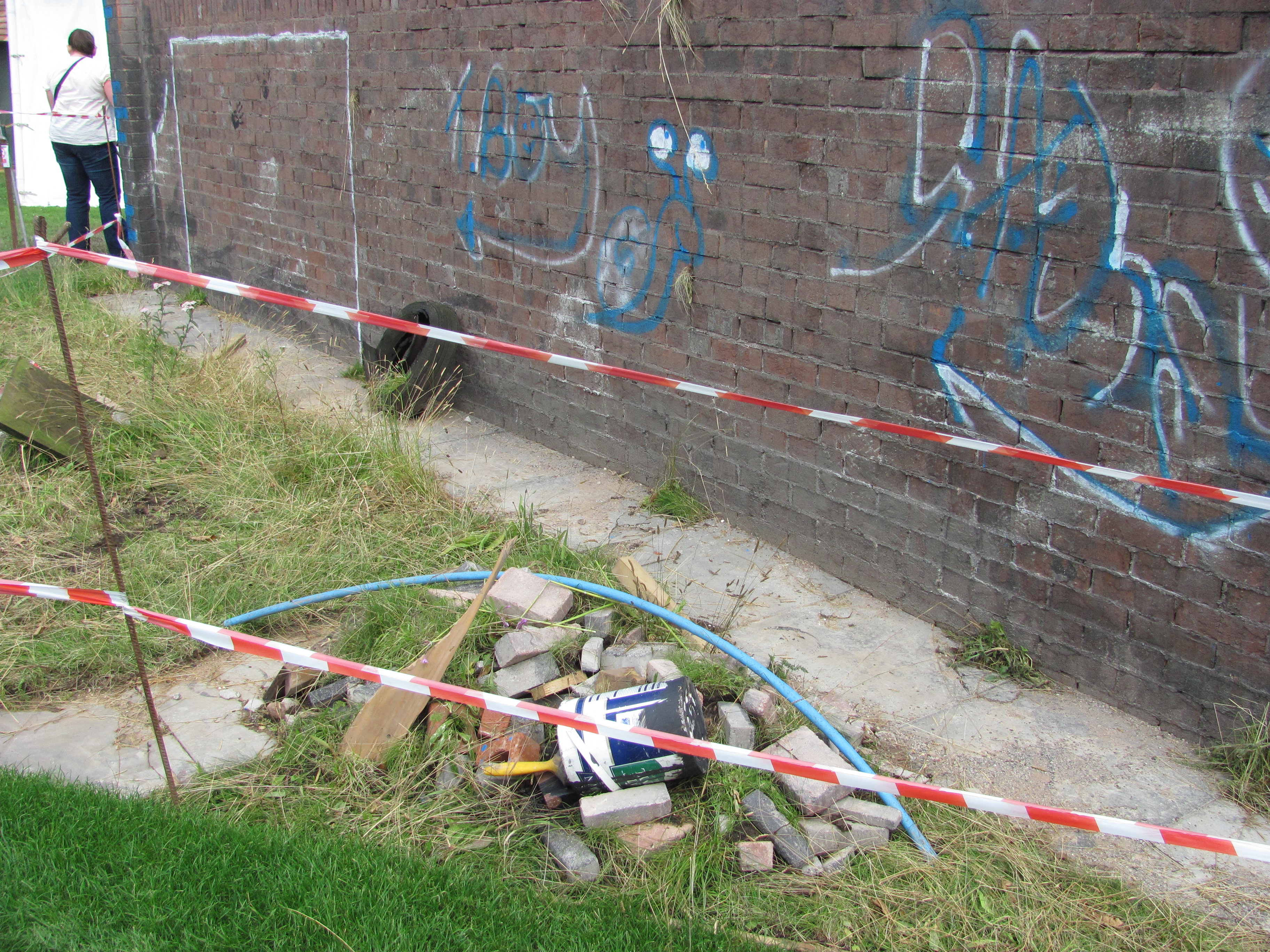
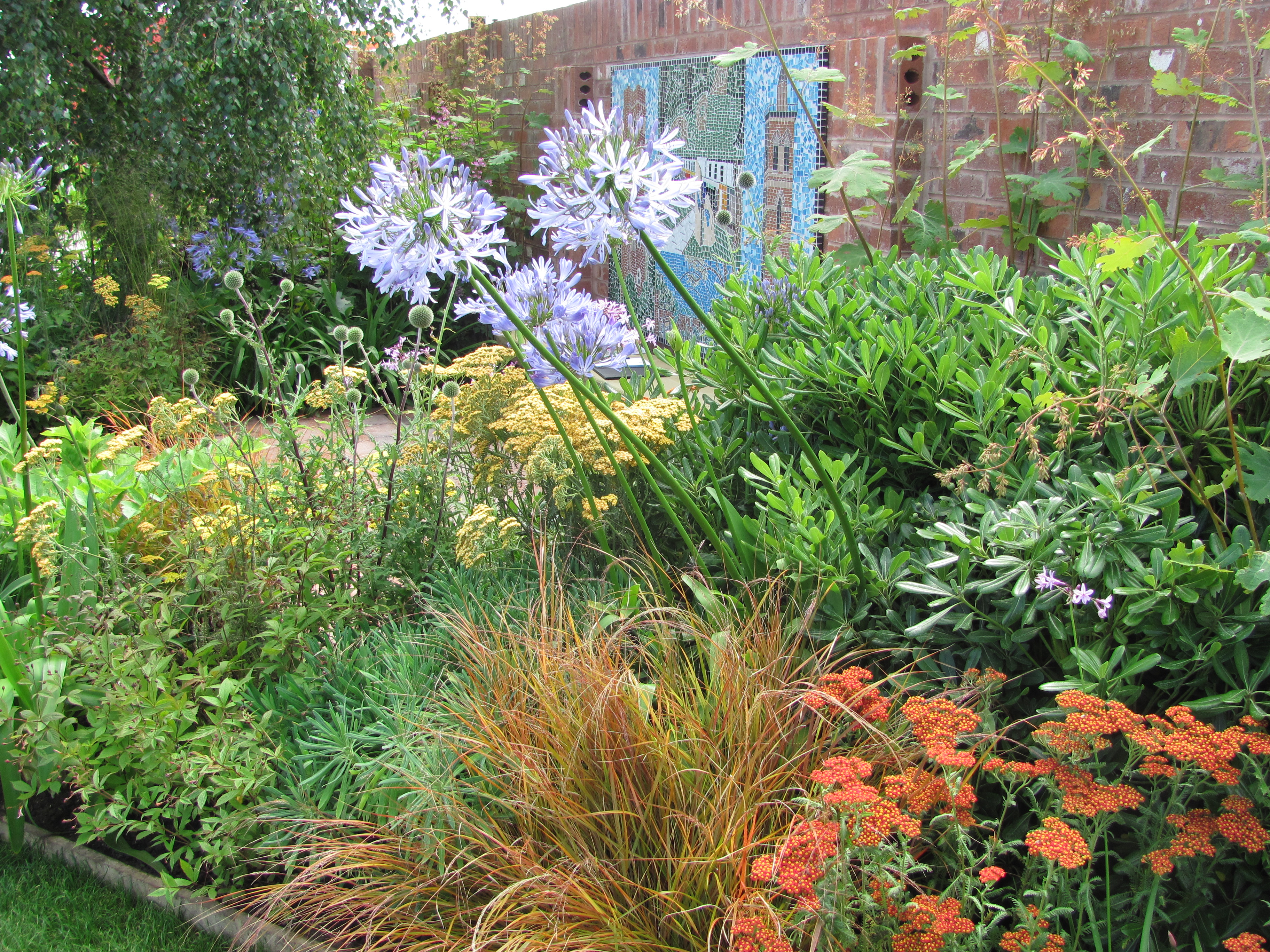
We were interested to see a garden devoted to the importance of community gardens and in particular the RHS “Its Your Neighbourhood” scheme as our allotment site is part of it. The before and after garden was designed by Chris Beardshaw one of the UK’s best garden designers as well as a writer and TV gardener. His garden showed how groups of volunteer gardeners can improve an urban derelict wasteland.

The before ……….

……….. and the after!

In the final report about Tatton Park RHS Show my post will be about the Conceptual Gardens, the Back-to-Back Gardens and the plant sale area.

Categories
conservation flower show garden design garden photography garden wildlife gardening hardy perennials July meadows ornamental grasses ornamental trees and shrubs photography RHS The National Trust wildlife

A Day at the RHS Flower Show Tatton Park

We have been to the Chelsea Flower Show, Harrogate Flower Shows and The Autumn and spring Malvern Flower Shows but the one we enjoy the most is always the one set in the grounds of Tatton Park. Luckily this is the RHS show closest to home. Although Chelsea is often called the greatest flower show, having visited once we have no desire to go again. But we frequently go to Tatton.

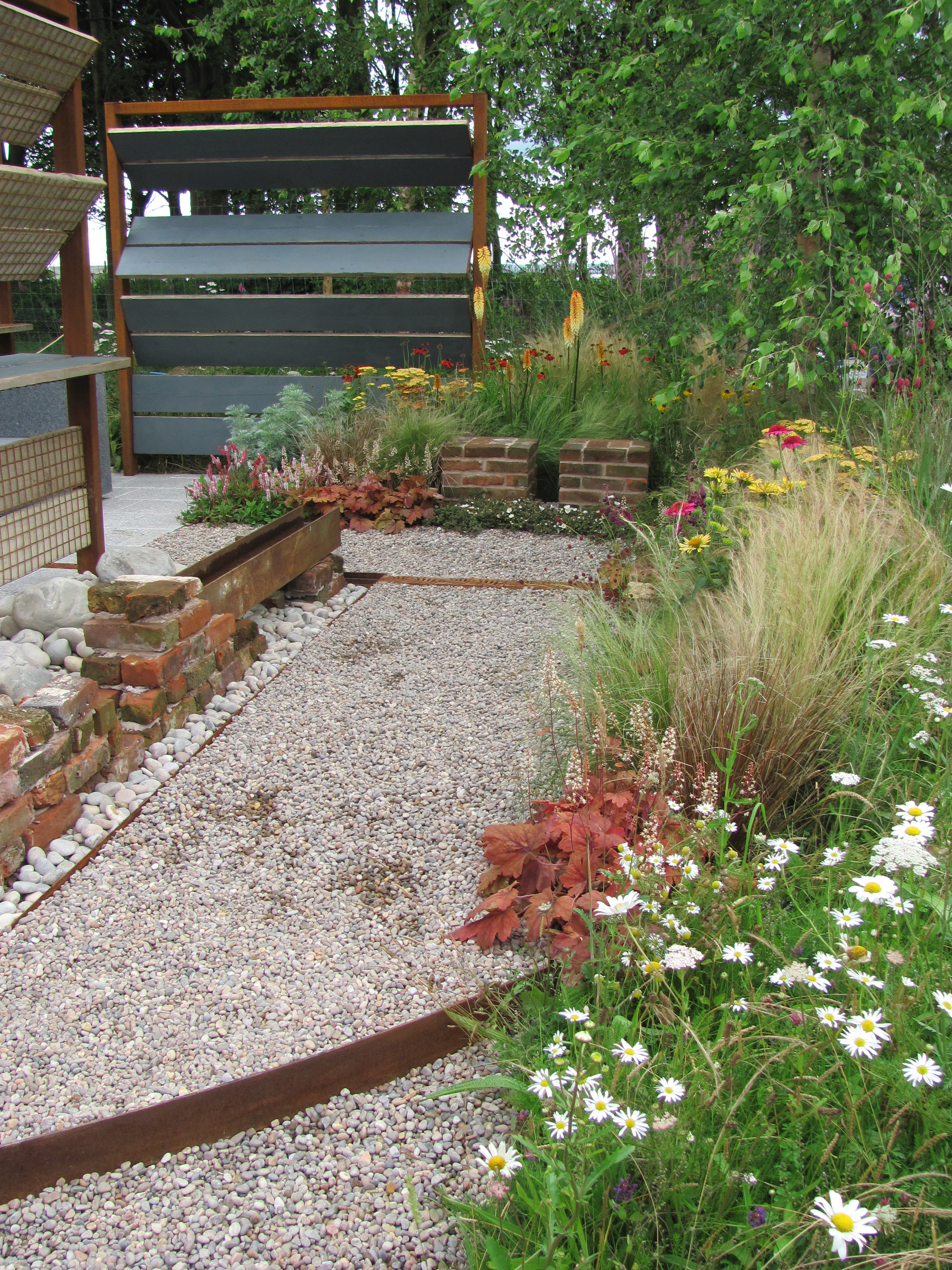
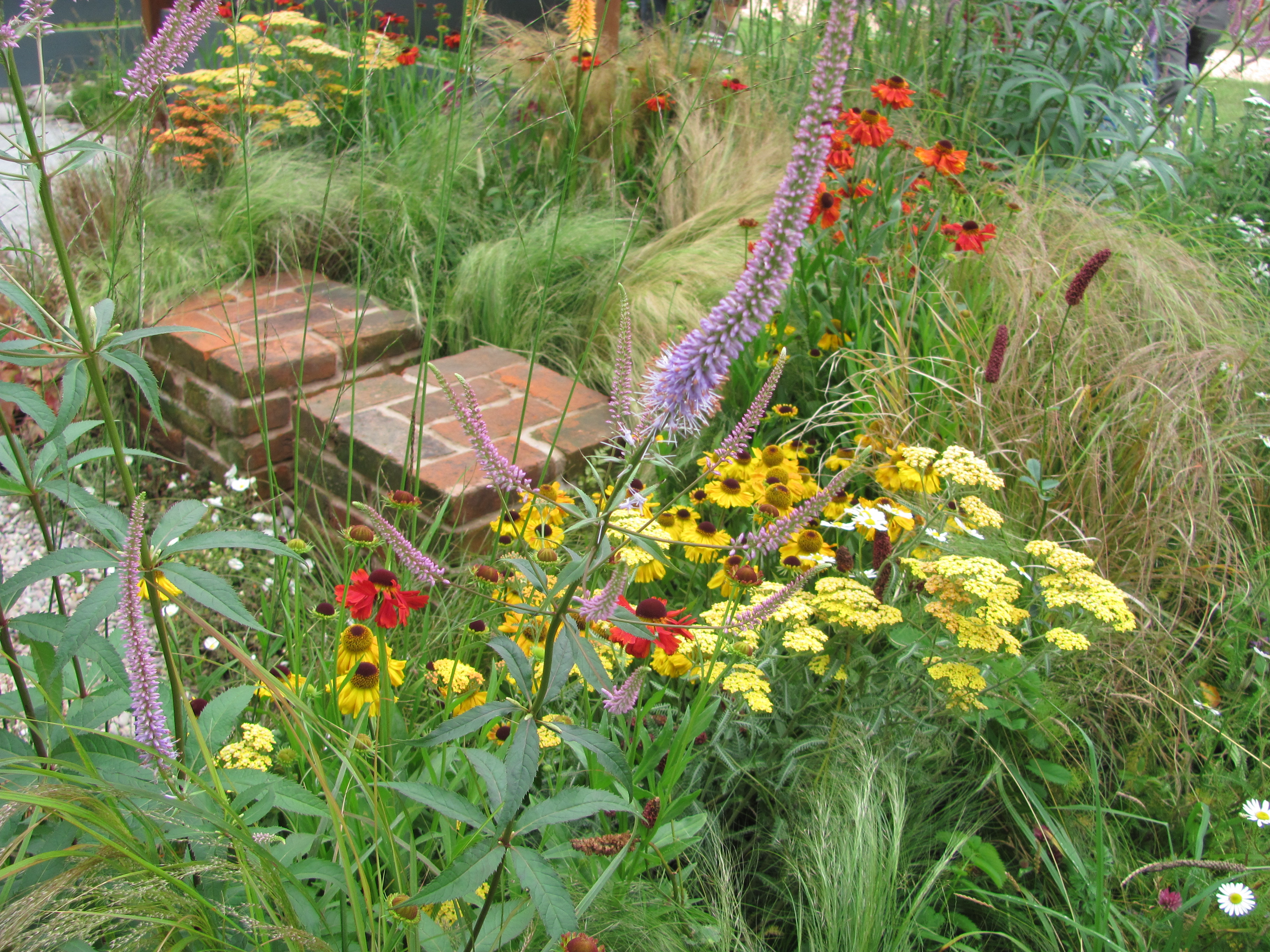
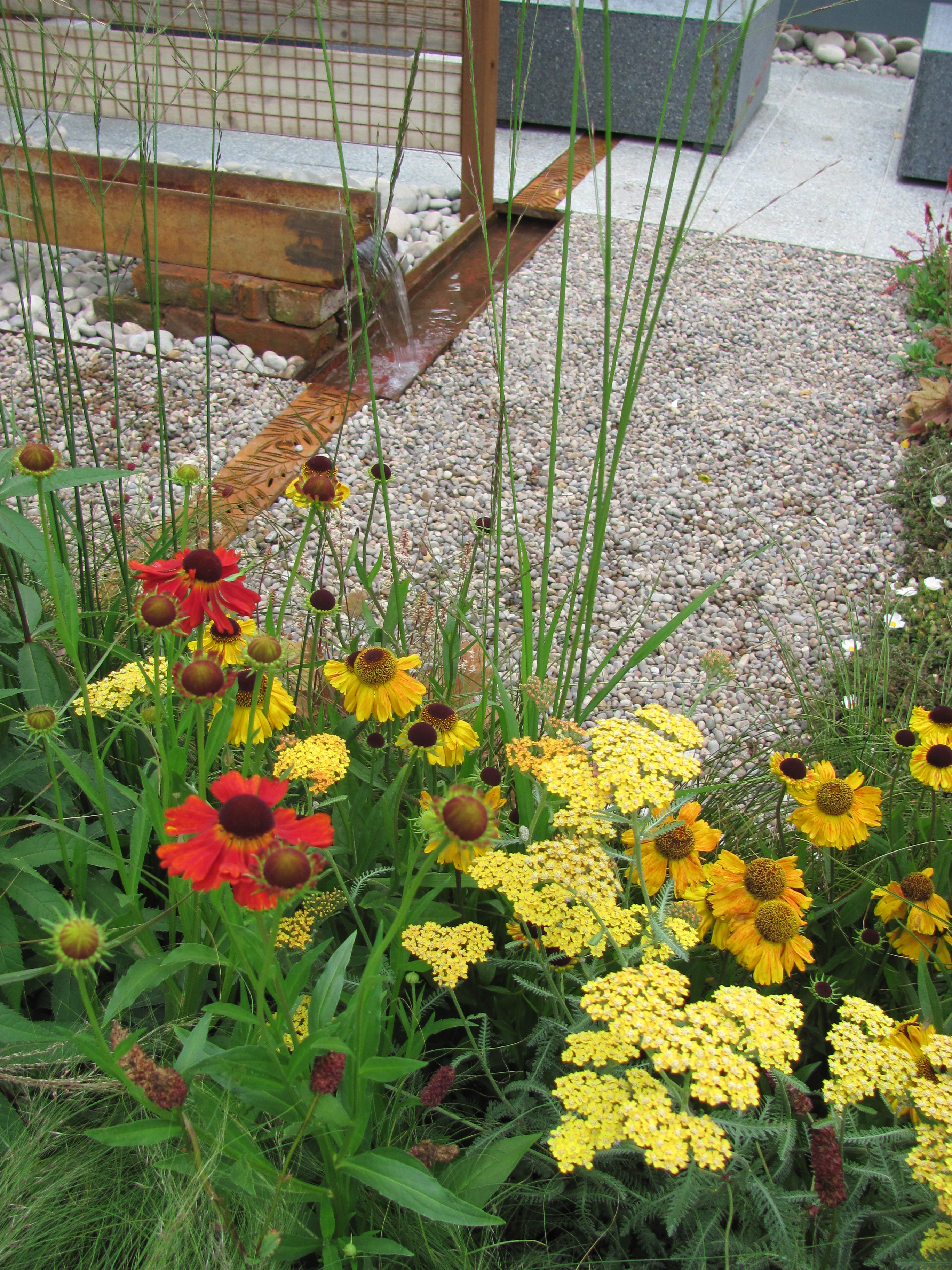
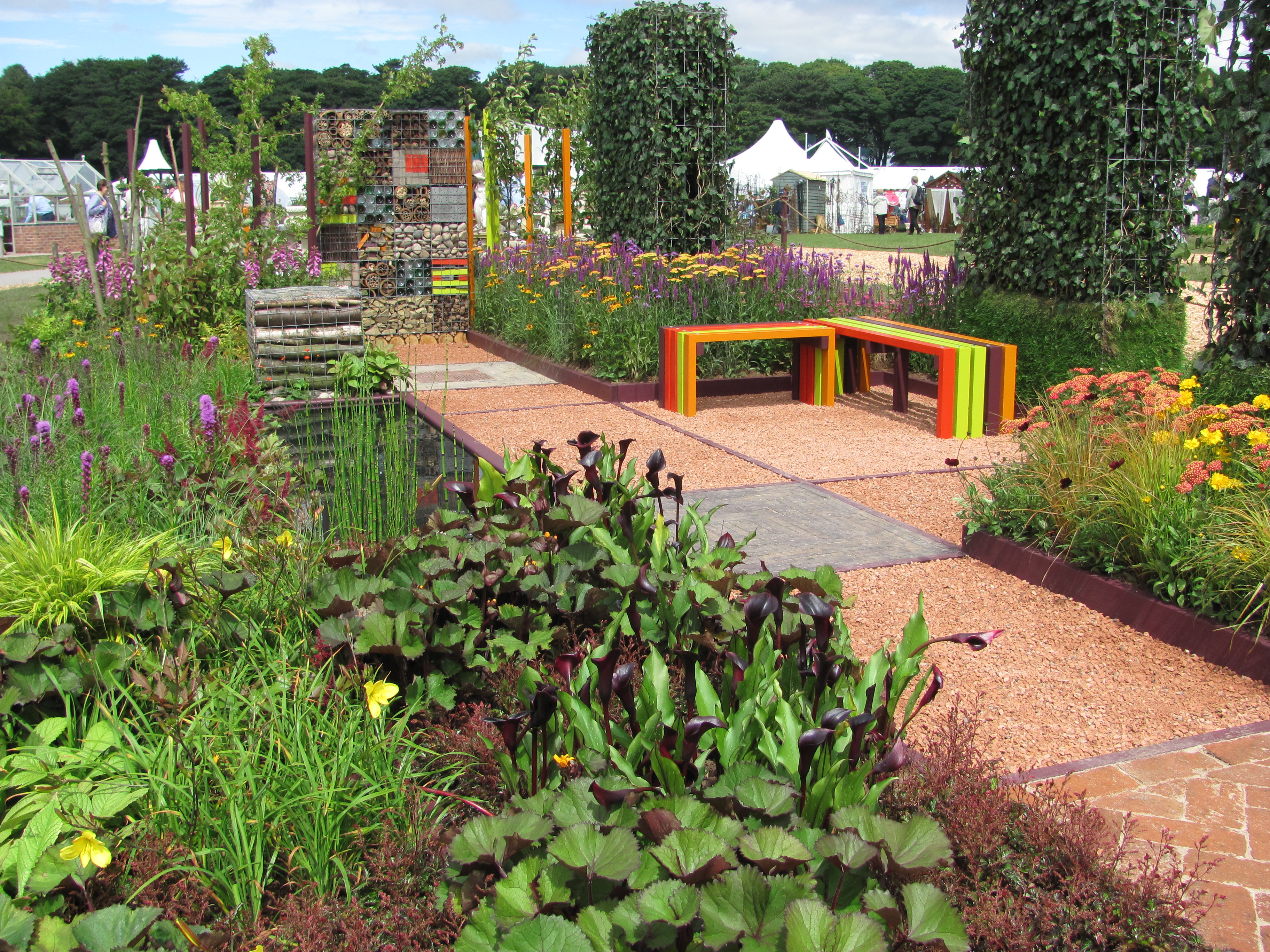
Tatton Park Show is described as “the North’s greatest garden party”. We enjoy its large show gardens, its “Back to Back” gardens and children’s gardens but most of all those designed by young garden designers. This is where the UK’s garden designs of the future lie and the standards are always so high. The designers have to be under 28 and this year their brief was to design a garden based on the theme of “colour”. We were so pleased when we learnt that the designer of our favourite one of these gardens had won the accolade of “RHS National Young Designer of the Year”. Tristen Knight designed this garden using recycled materials and it was full of interesting and original ideas and design feature. The colour of his planting of perennials and grasses was beautiful, all orange and biscuit. He studied for a BA in Industrial Design and Technology before training in garden design at Writtle College. He spoke with great enthusiasm and excitement about his garden and he told us about the materials he had chosen and how they were all items from building sites. For example the rill was formed from a an “H” beam and the flexible screening was created from scaffolding boards. I found it hard to take photographs that did justice to this brilliant young designer’s work. We enjoyed his garden and talking to him about it.

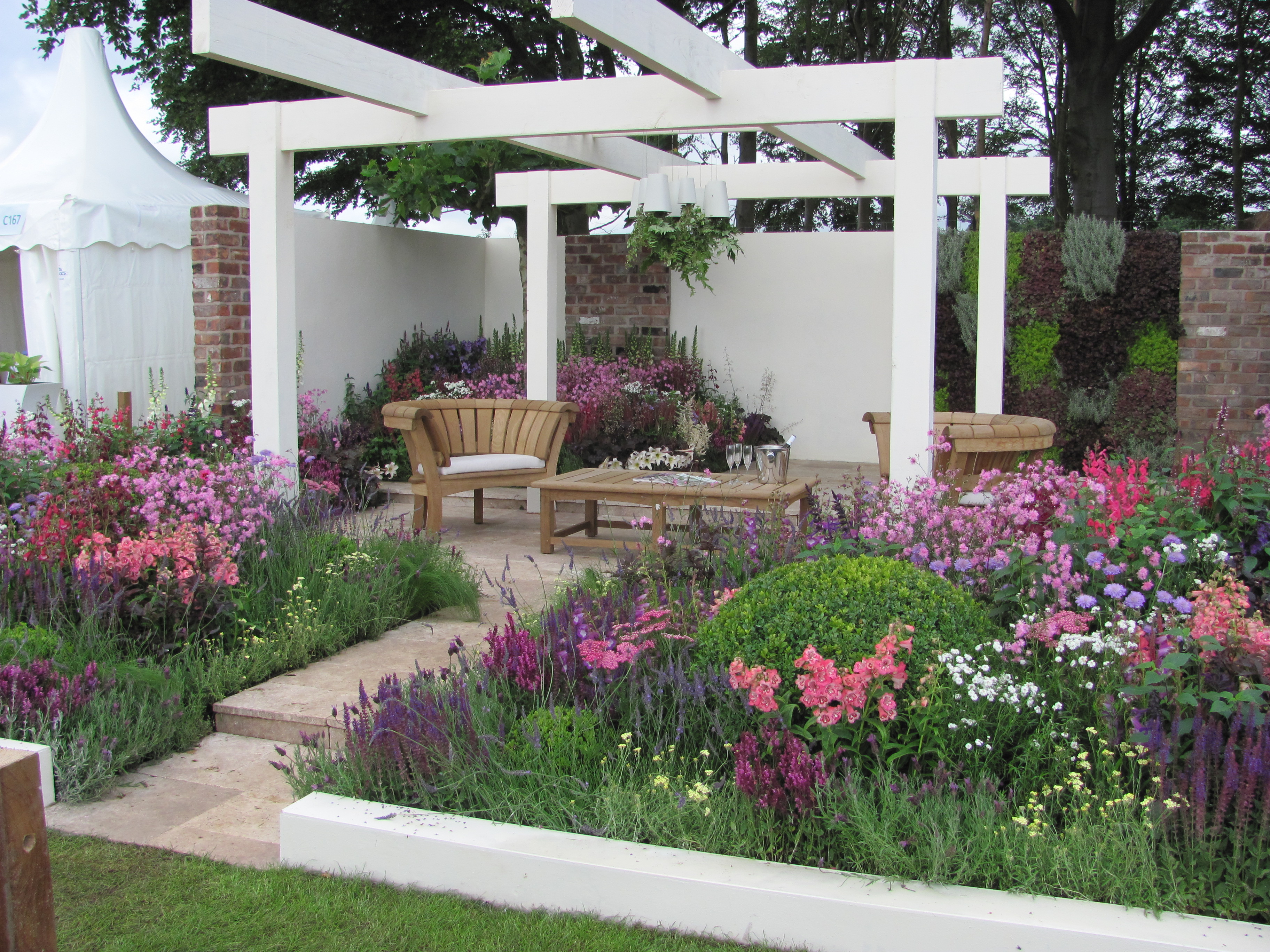
We moved on to the main large garden show gardens, some of which we liked whereas others we did not like at all. But that I suppose is what design is all about. If we all liked the same plants and designs wouldn’t gardens be boring?

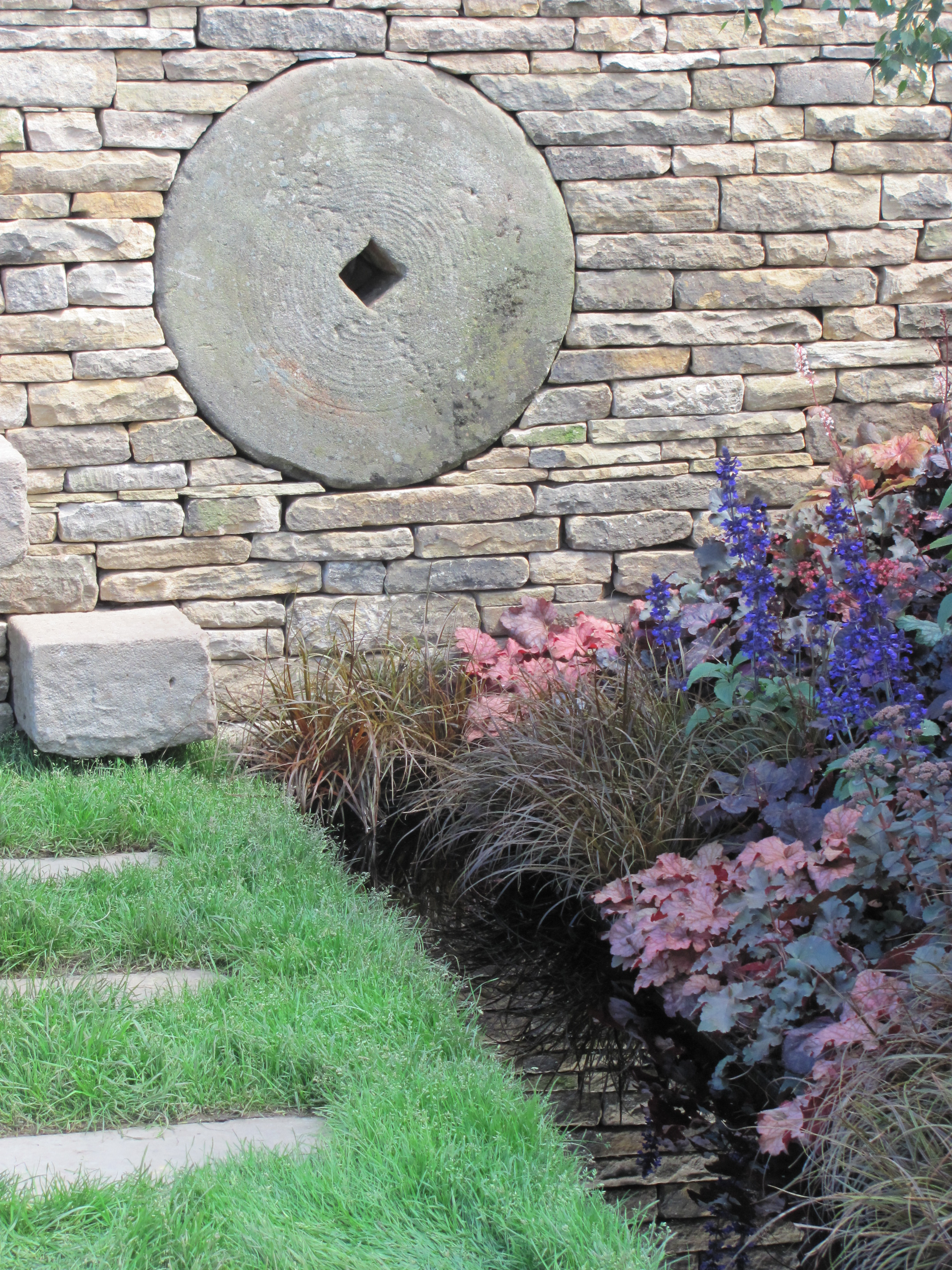
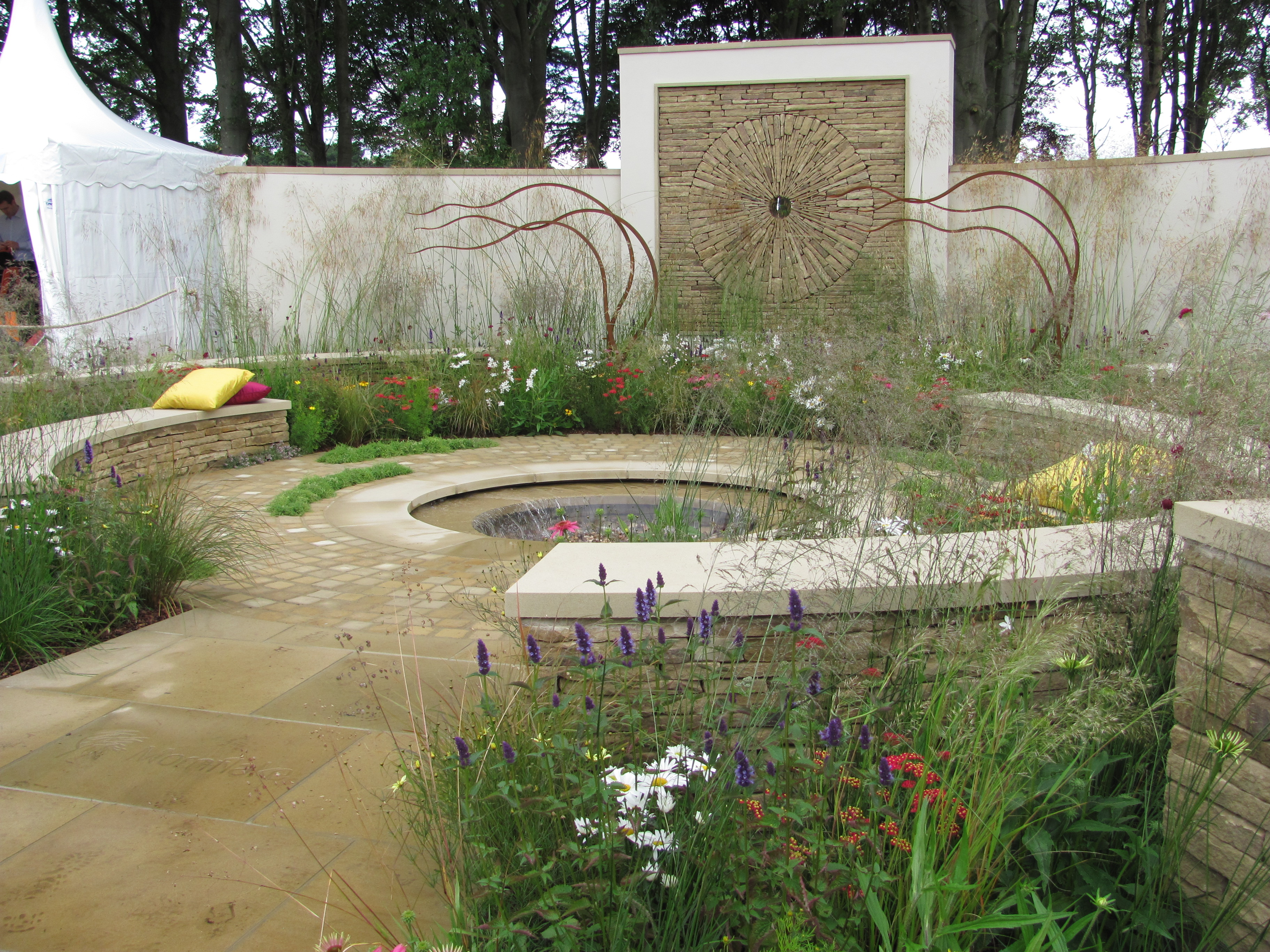
I begin looking at this set of gardens by featuring our favourite, a garden based on circles achieving a wonderful peaceful atmosphere through the planting which was light and wispy. It relied heavily on grasses to do so, with one planting area consisting of just grasses and one variety of allium.

It received the Best in Show award!

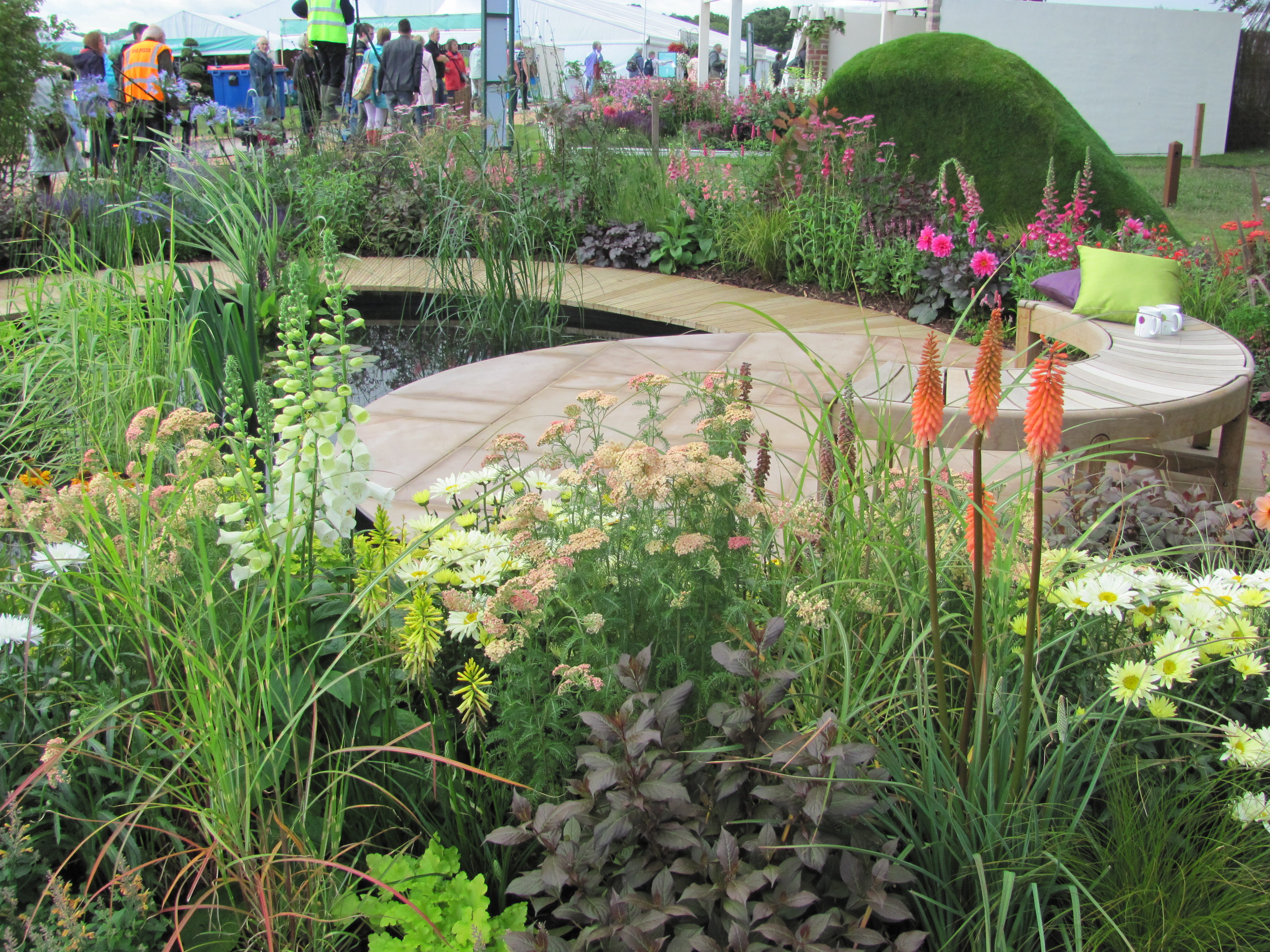
This show garden featured decking curves and colourful planting choice.

The next sequence of photos illustrates the wide variety of show gardens at Tatton. Enjoy the tour.

Once we had enjoyed the large show gardens we made a bee line for the garden designed by students and staff of Reaseheath College, partly because their garden is always so interesting with elements of attracting wildlife but also because this is the college where I followed some of my horticulture training several decades ago. This year their garden excelled, with such vibrancy in the planting and in its features. Again the design integrated beautiful features created to attract wildlife.

To finish my first post about the RHS Tatton Park Flower Show I want to share a couple of photos of children’s gardens celebrating the Queen’s Jubilee. In the next post we shall visit the Floral Marquee and the smaller show gardens.

Categories
garden design garden photography gardening hardy perennials photography roses Shropshire

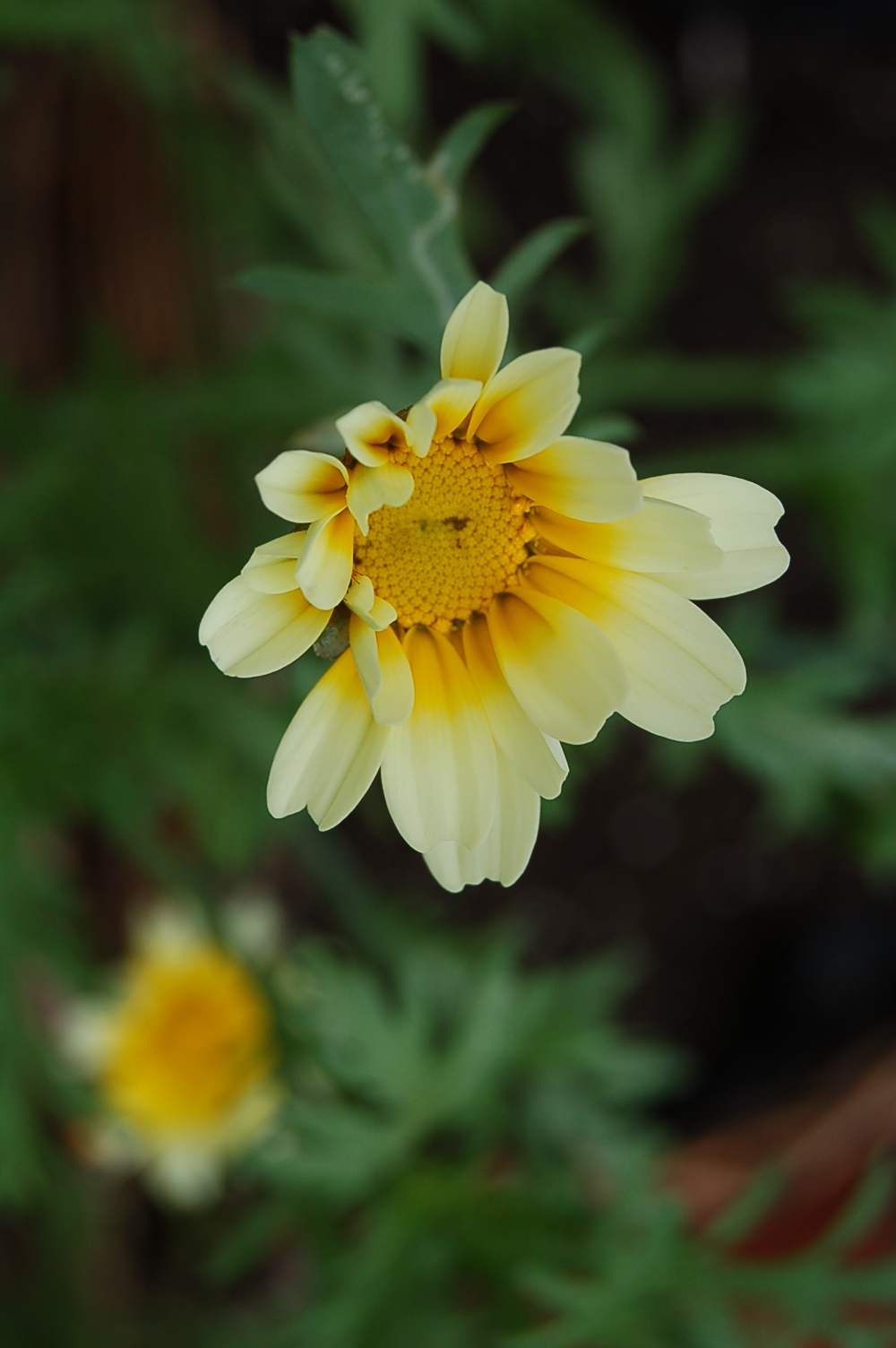
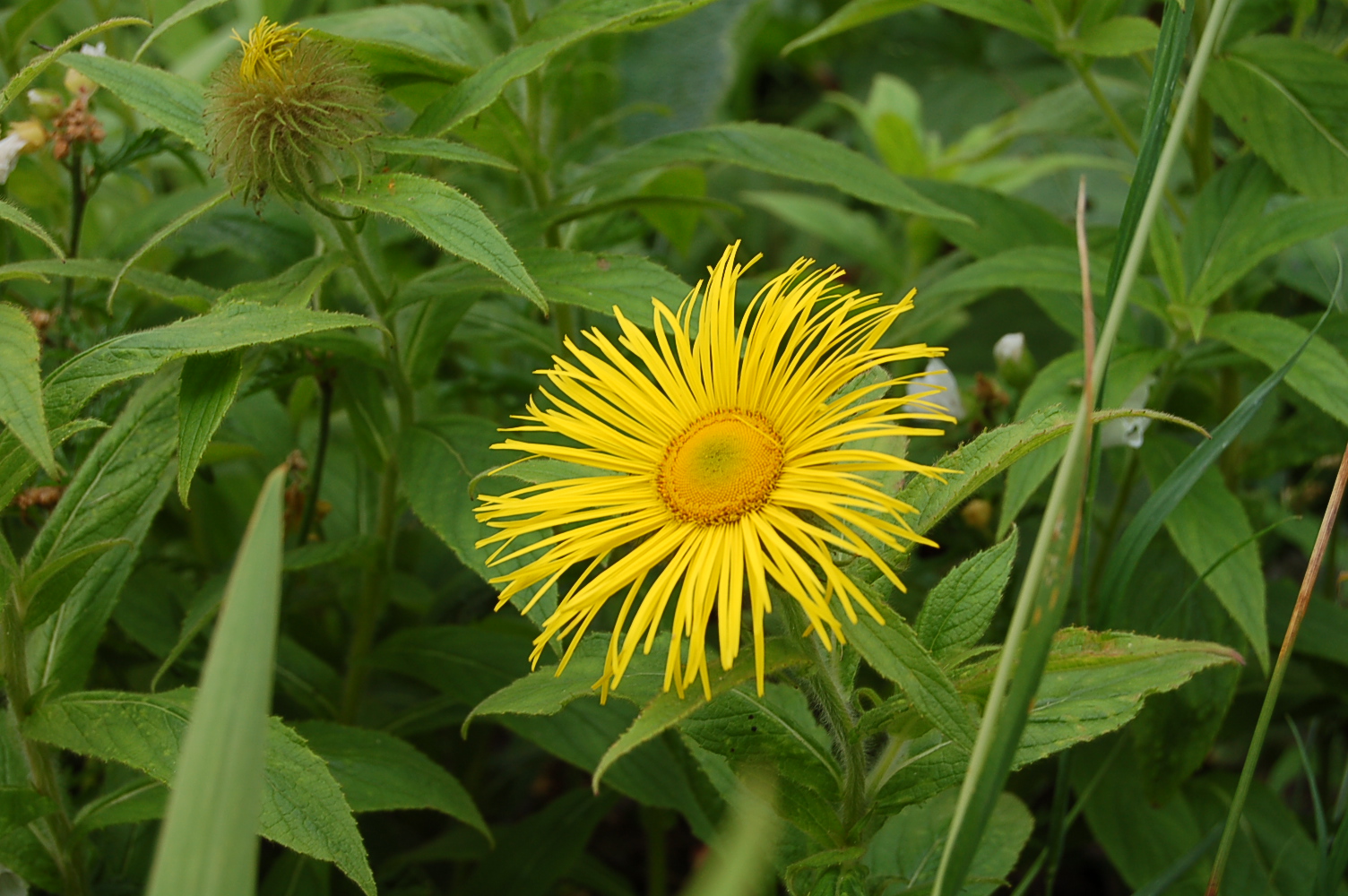
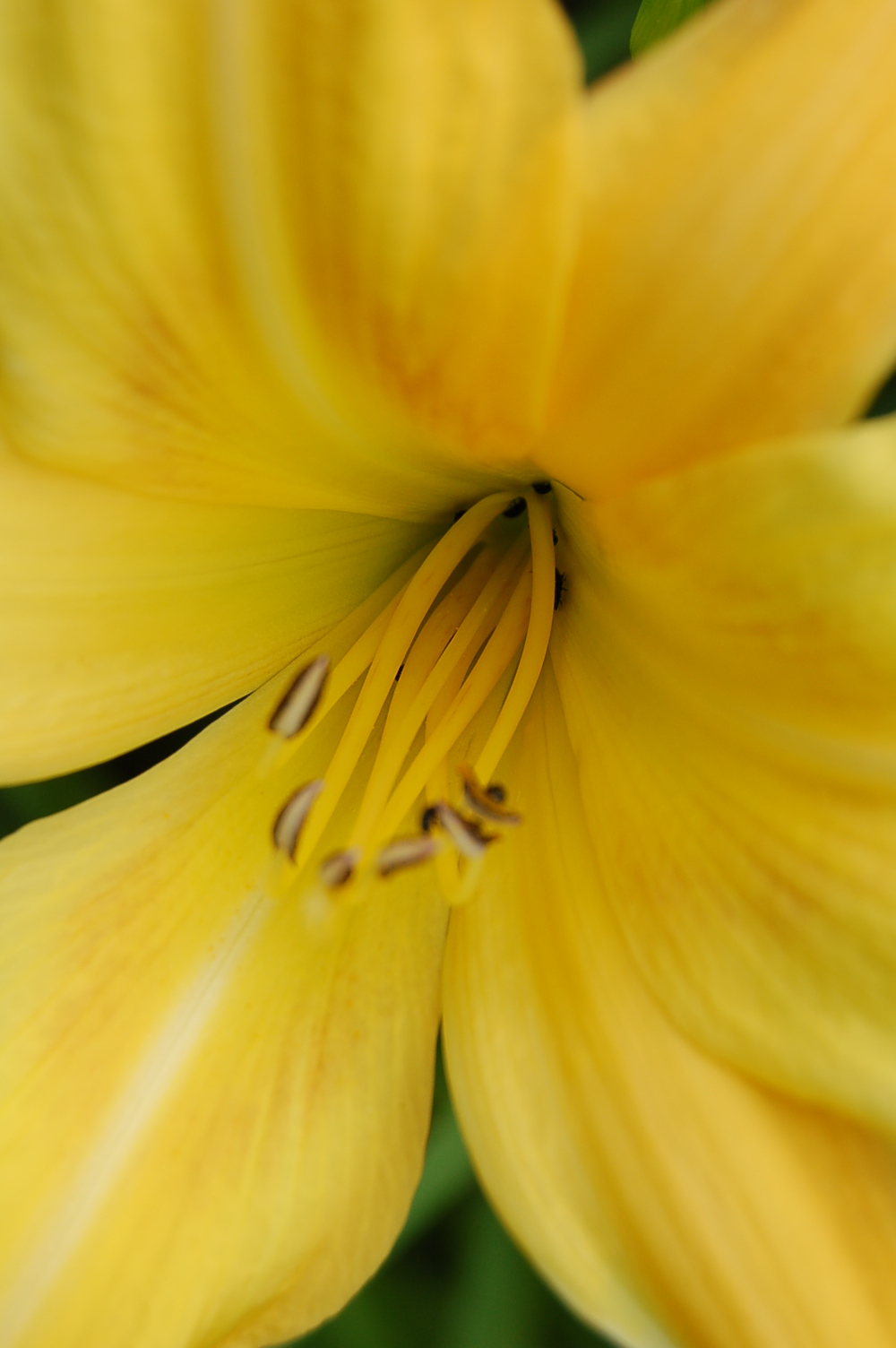
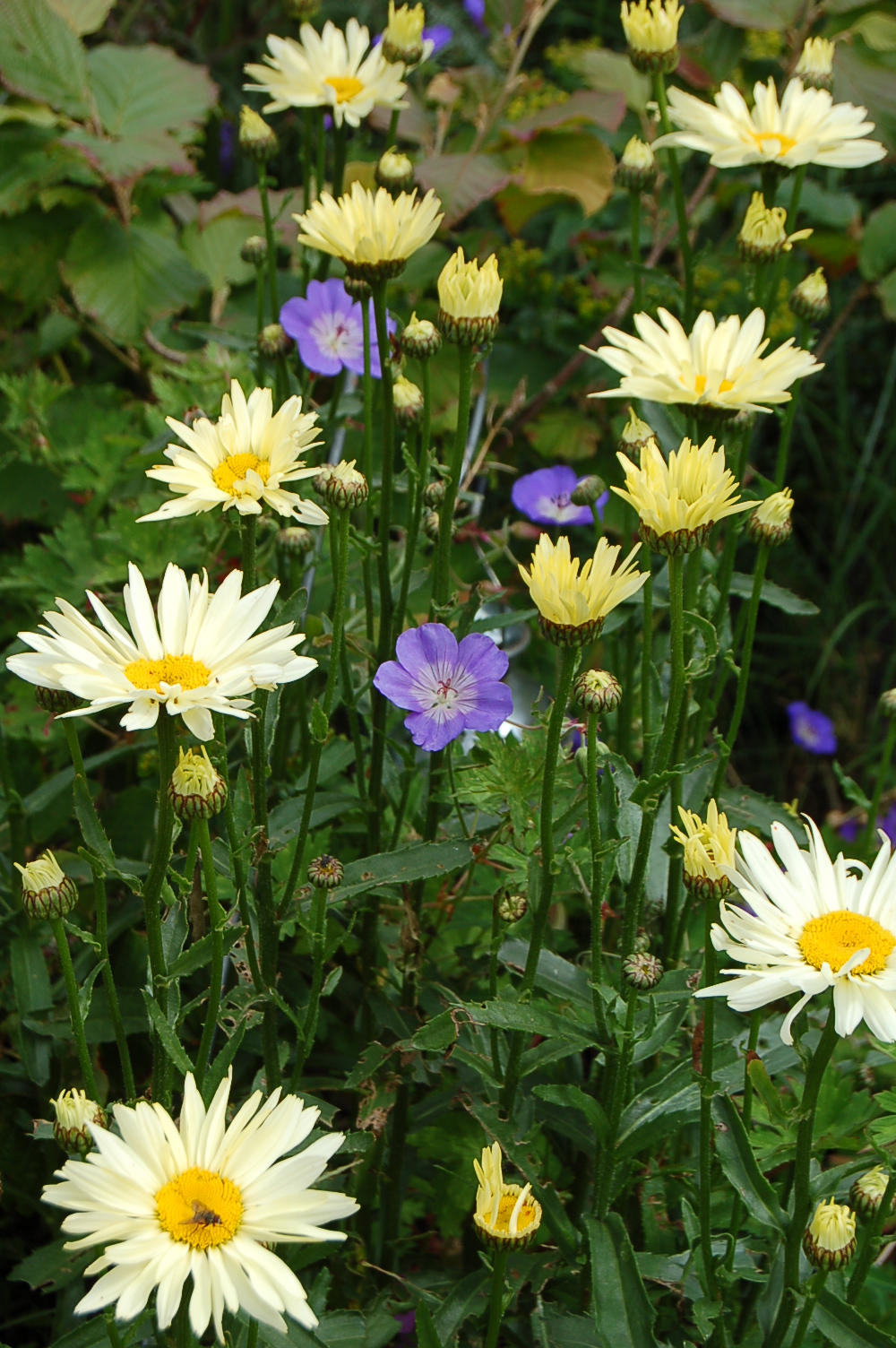
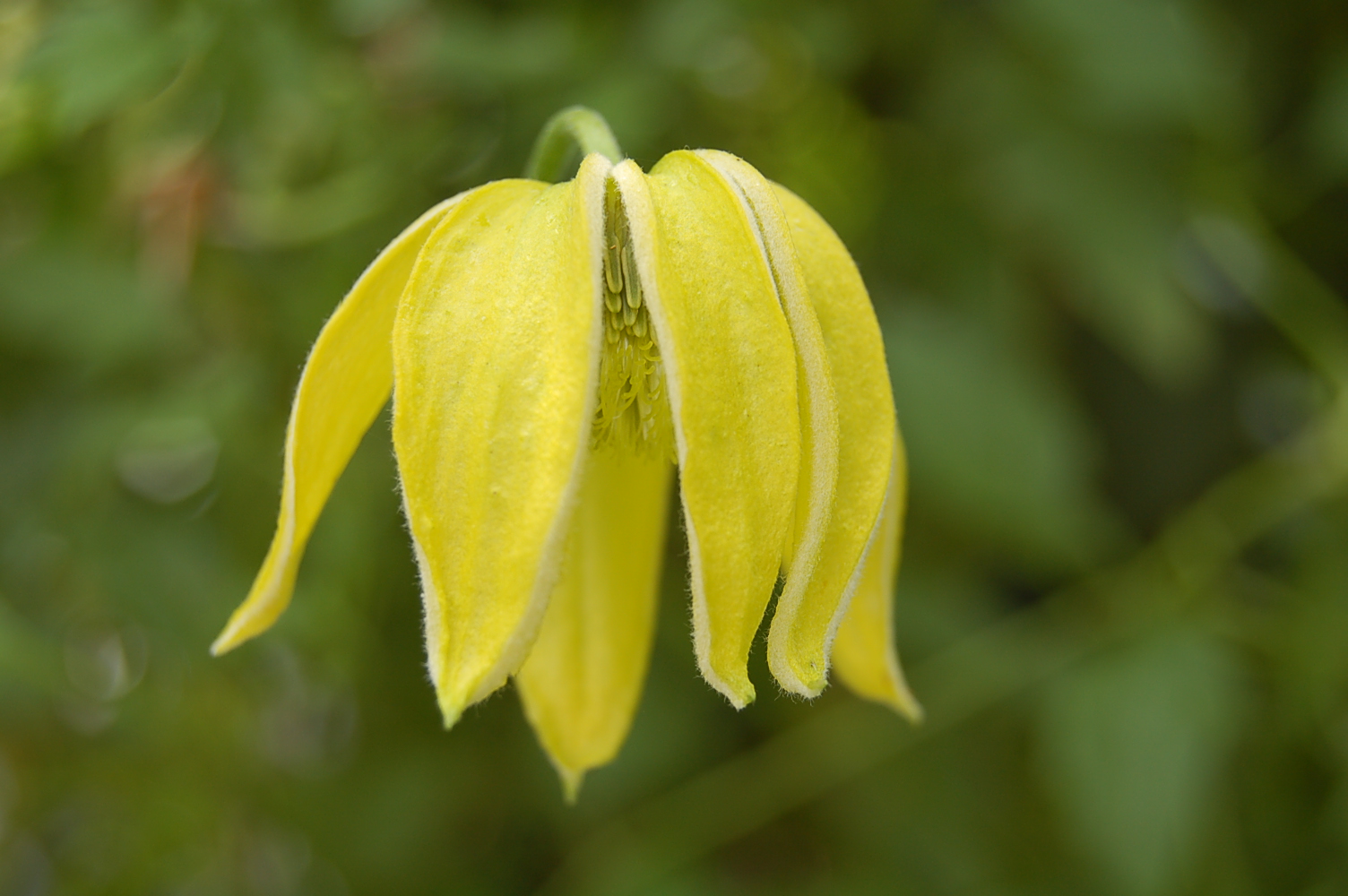
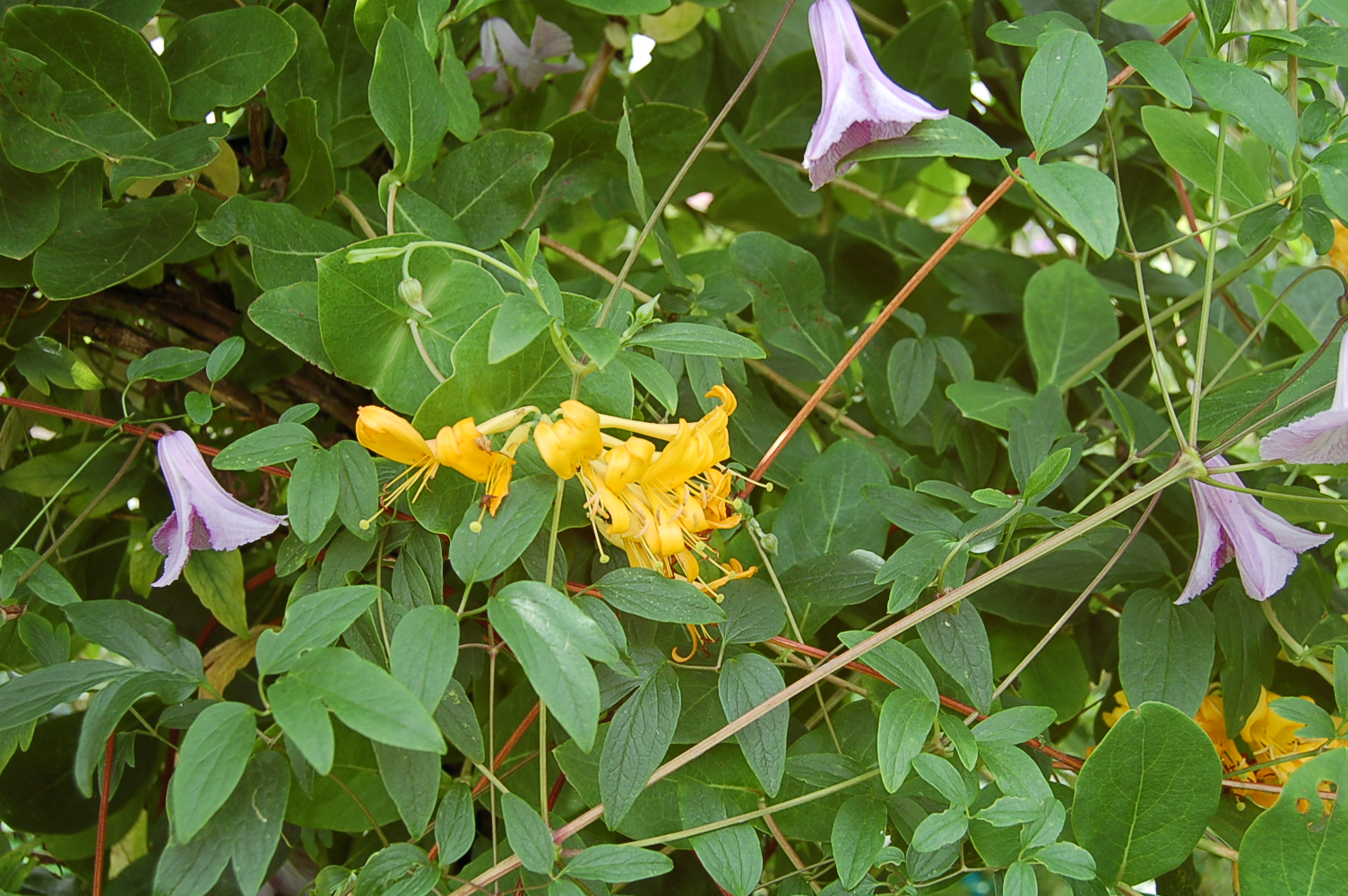
Yellow in the Garden

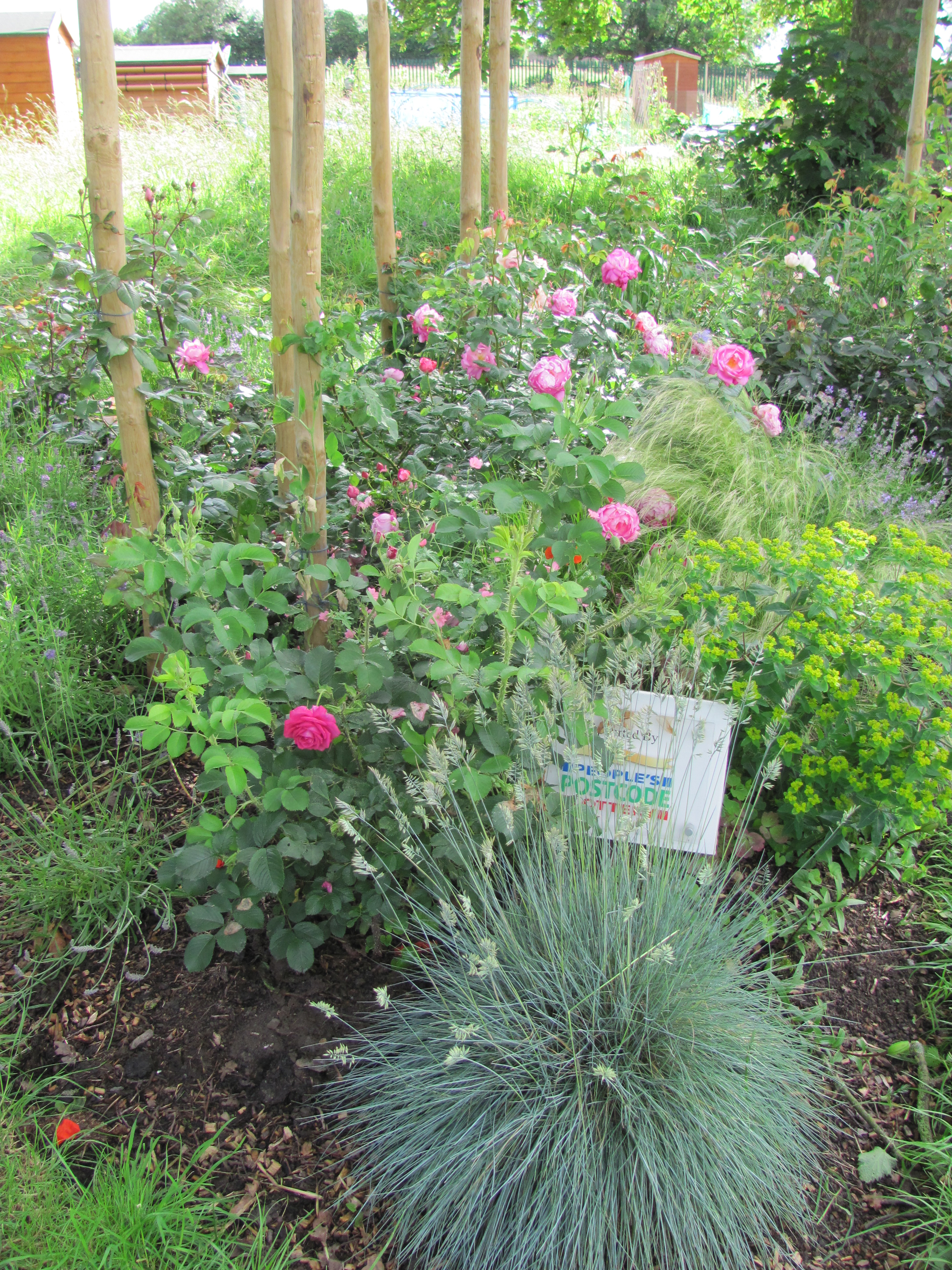
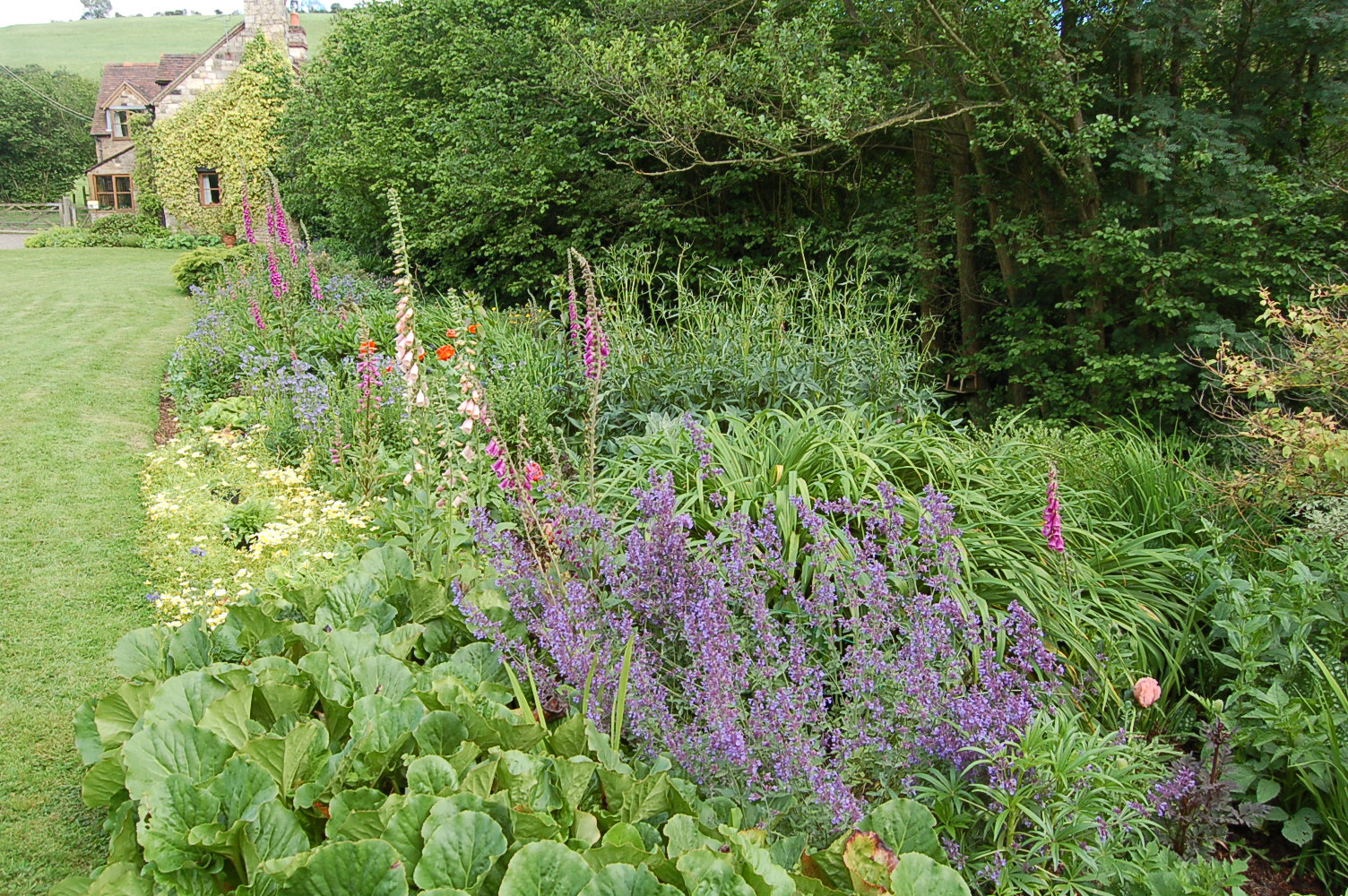
Recently I opened the window blinds to let in the early morning light and was struck by how many shades of yellow were glowing in the borders. I immediately rummaged in the camera bag and took out my trusty Nikon DSLR.

Categories
allotments fruit and veg garden photography gardening grow your own hardy perennials July ornamental grasses photography

A July Harvest

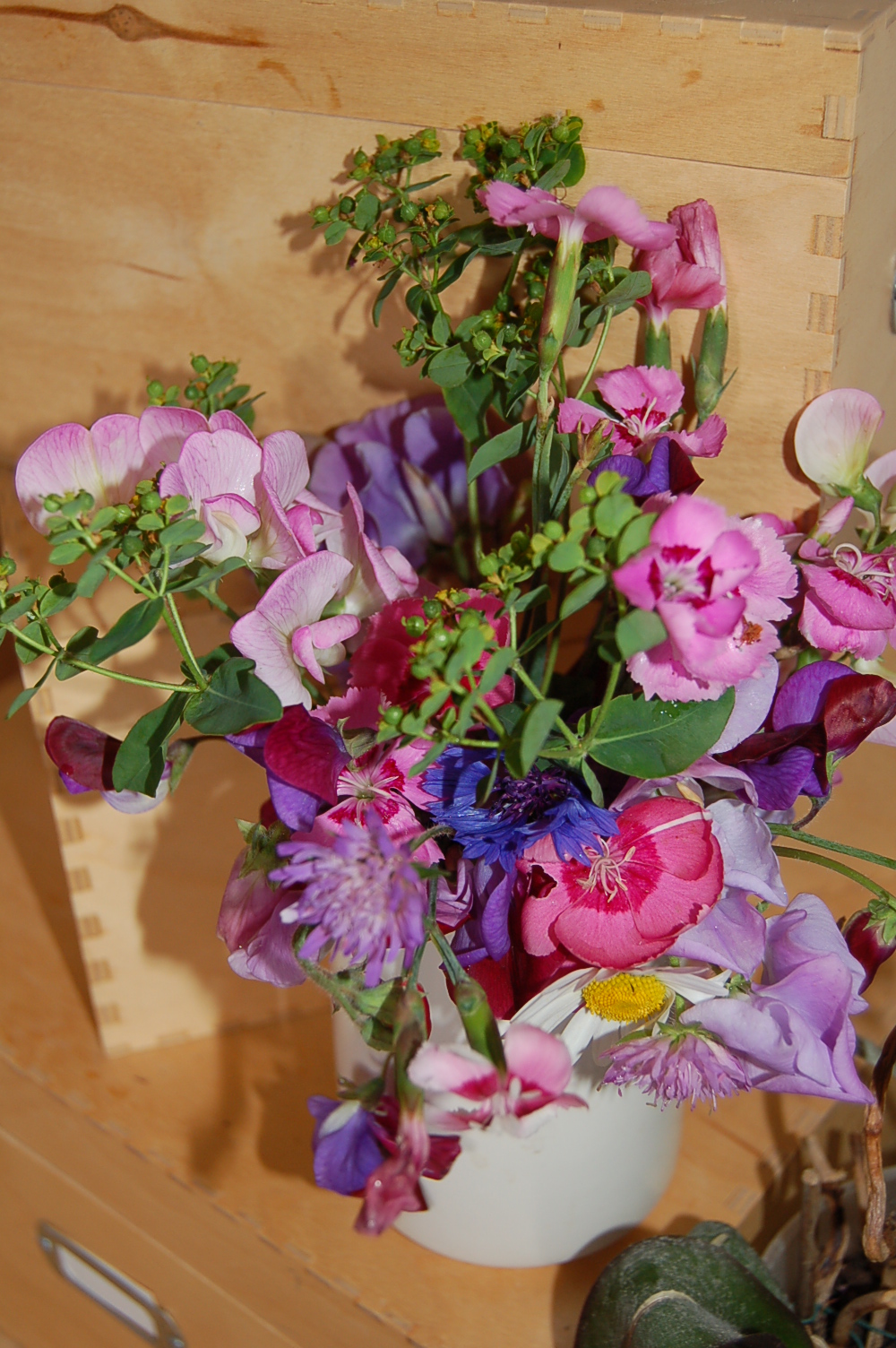
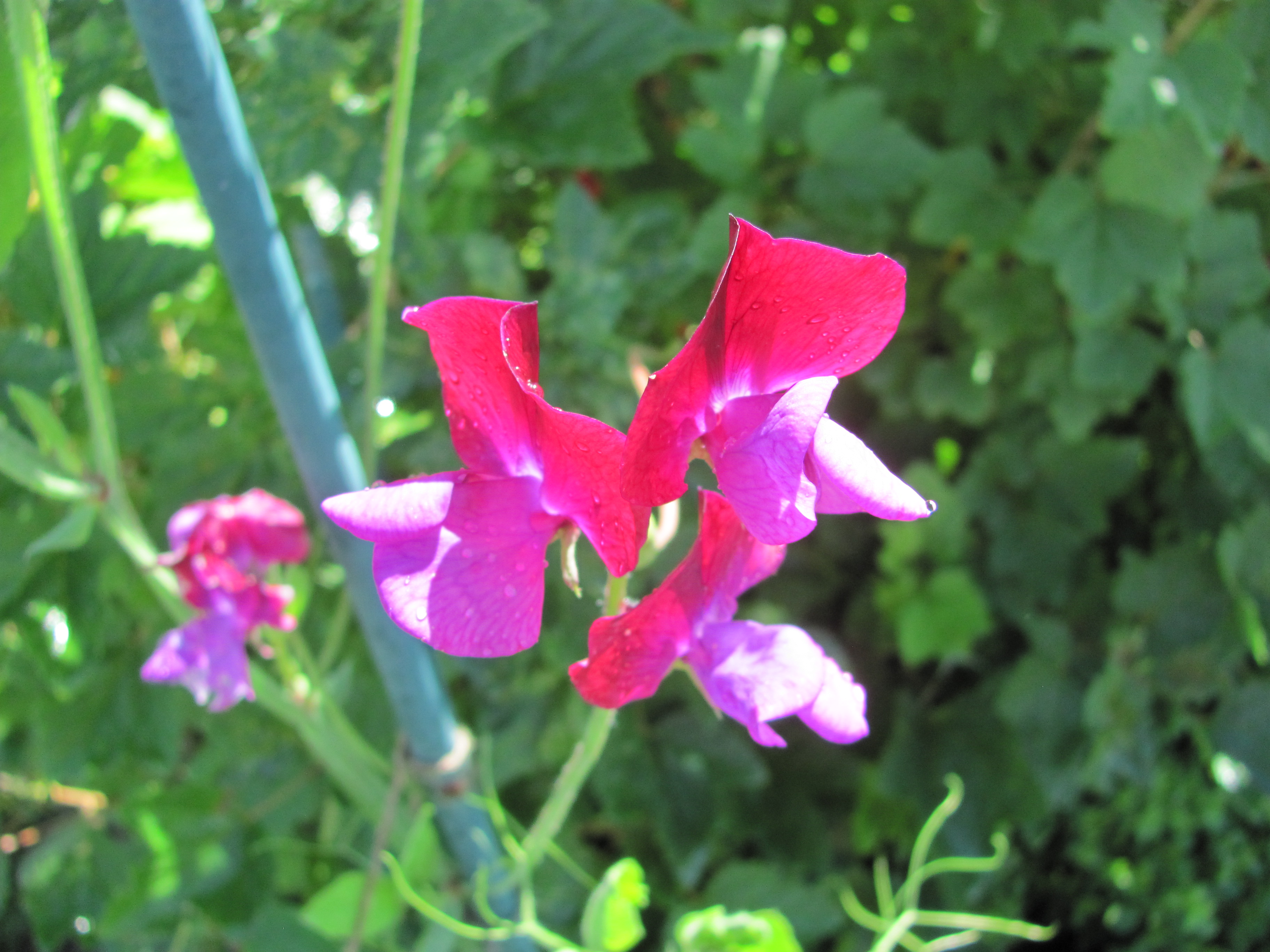
Today we visited the lottie to harvest veggies to use fresh and to store in the freezer for use in the less productive days of the winter and early spring, together with bunches of Sweet Peas and Dianthus.

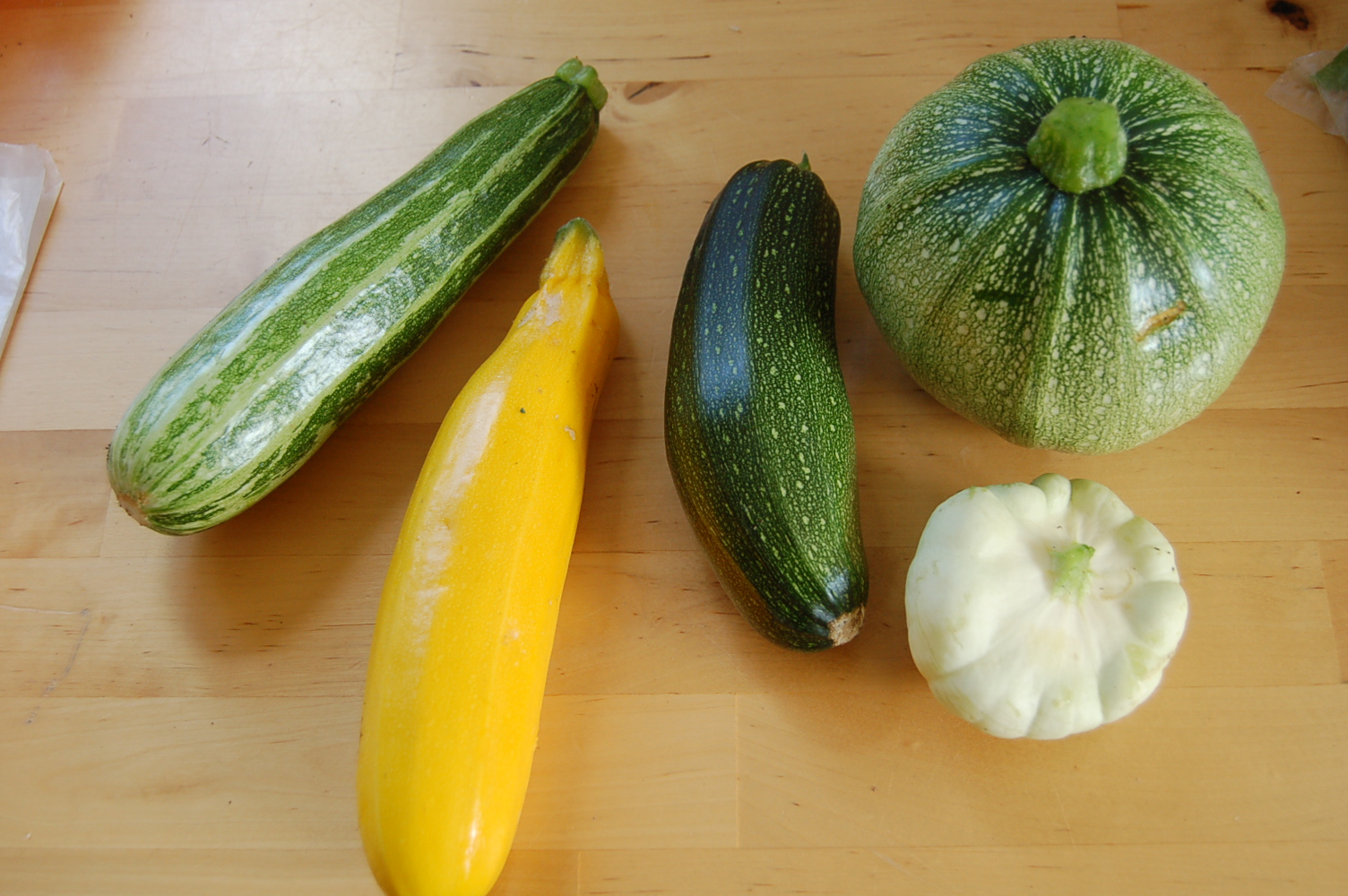
This year we have grown four different Courgettes including this round one, and little saucer-shaped patty pan squashes.

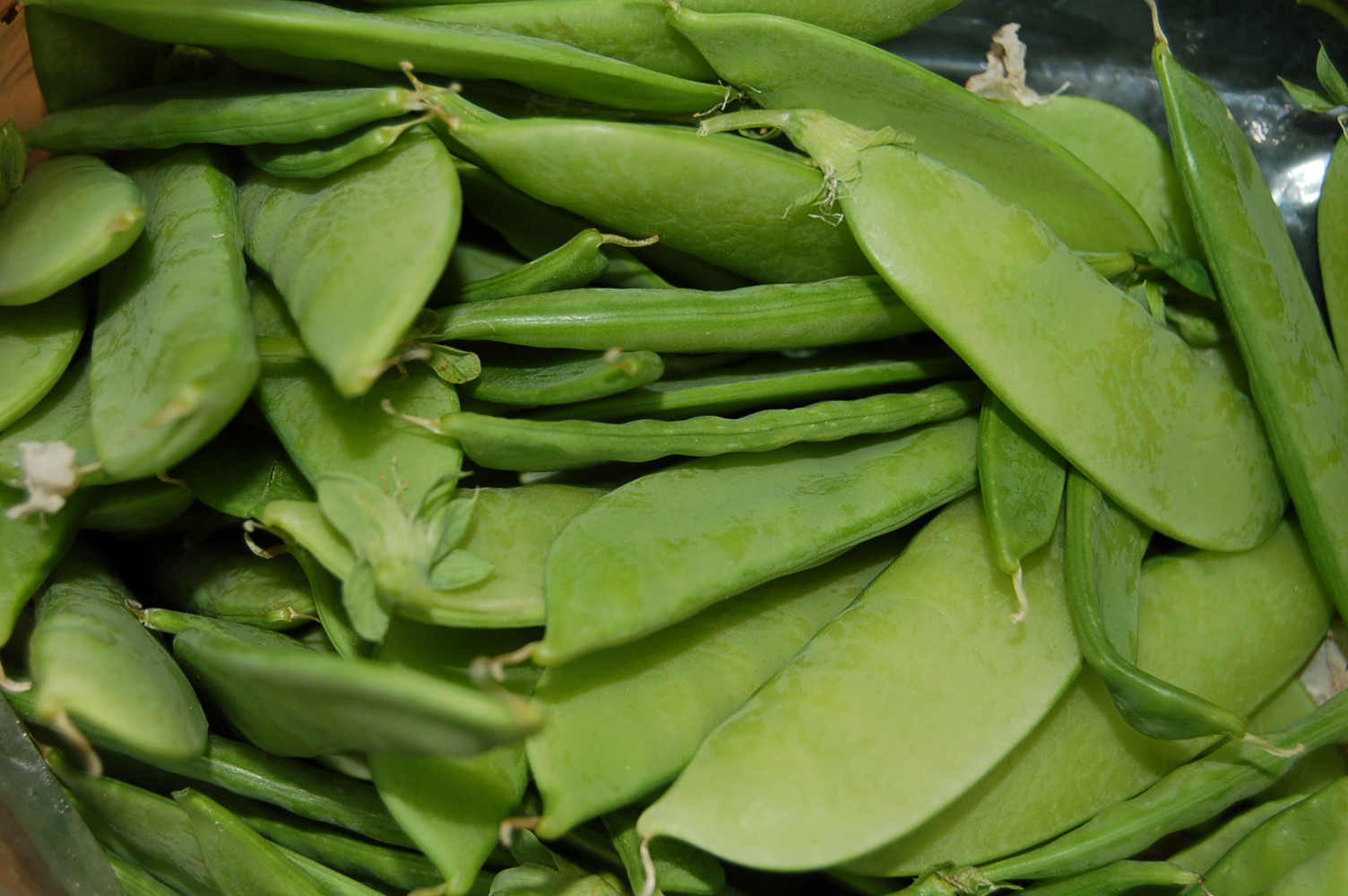
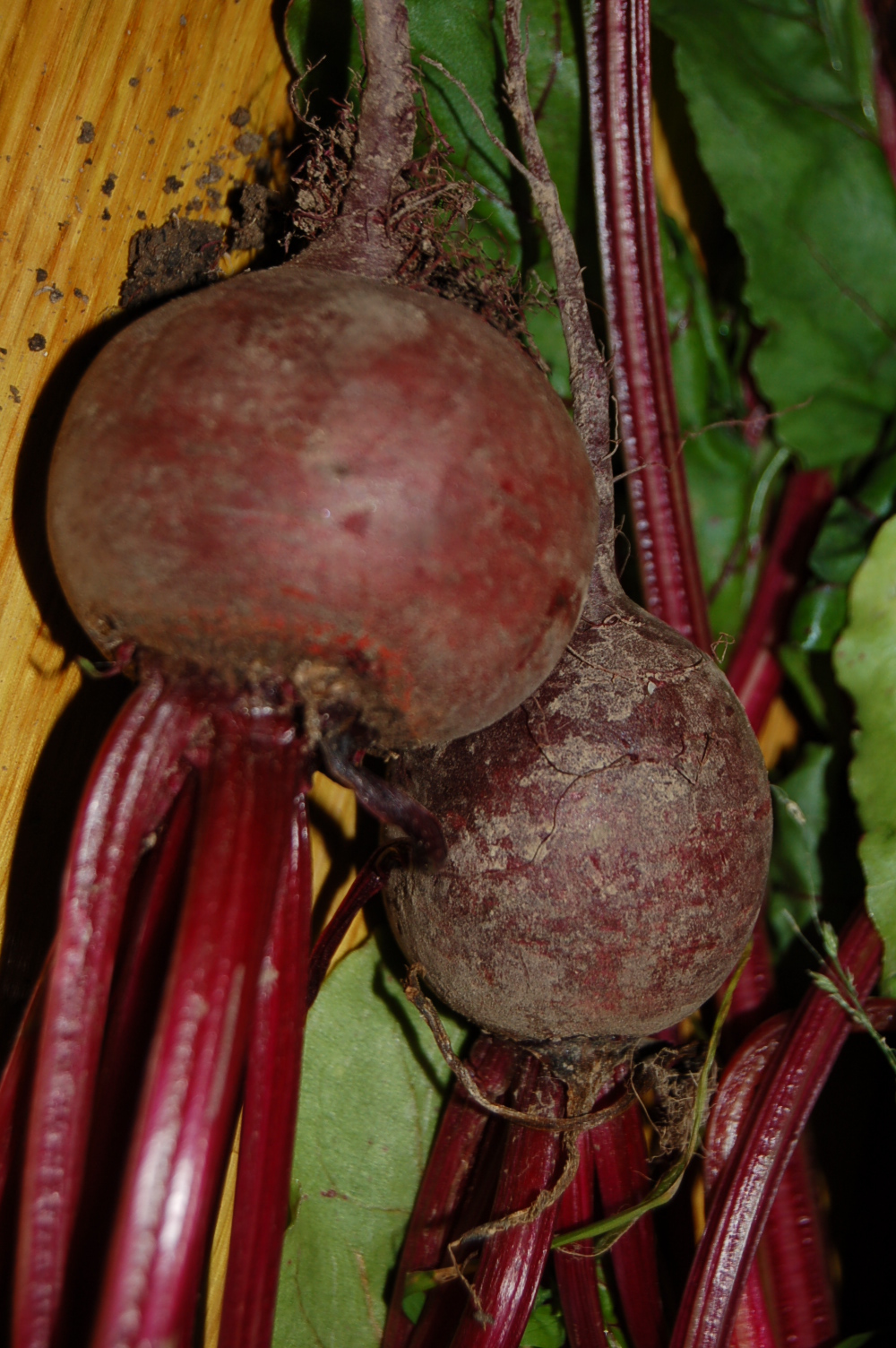
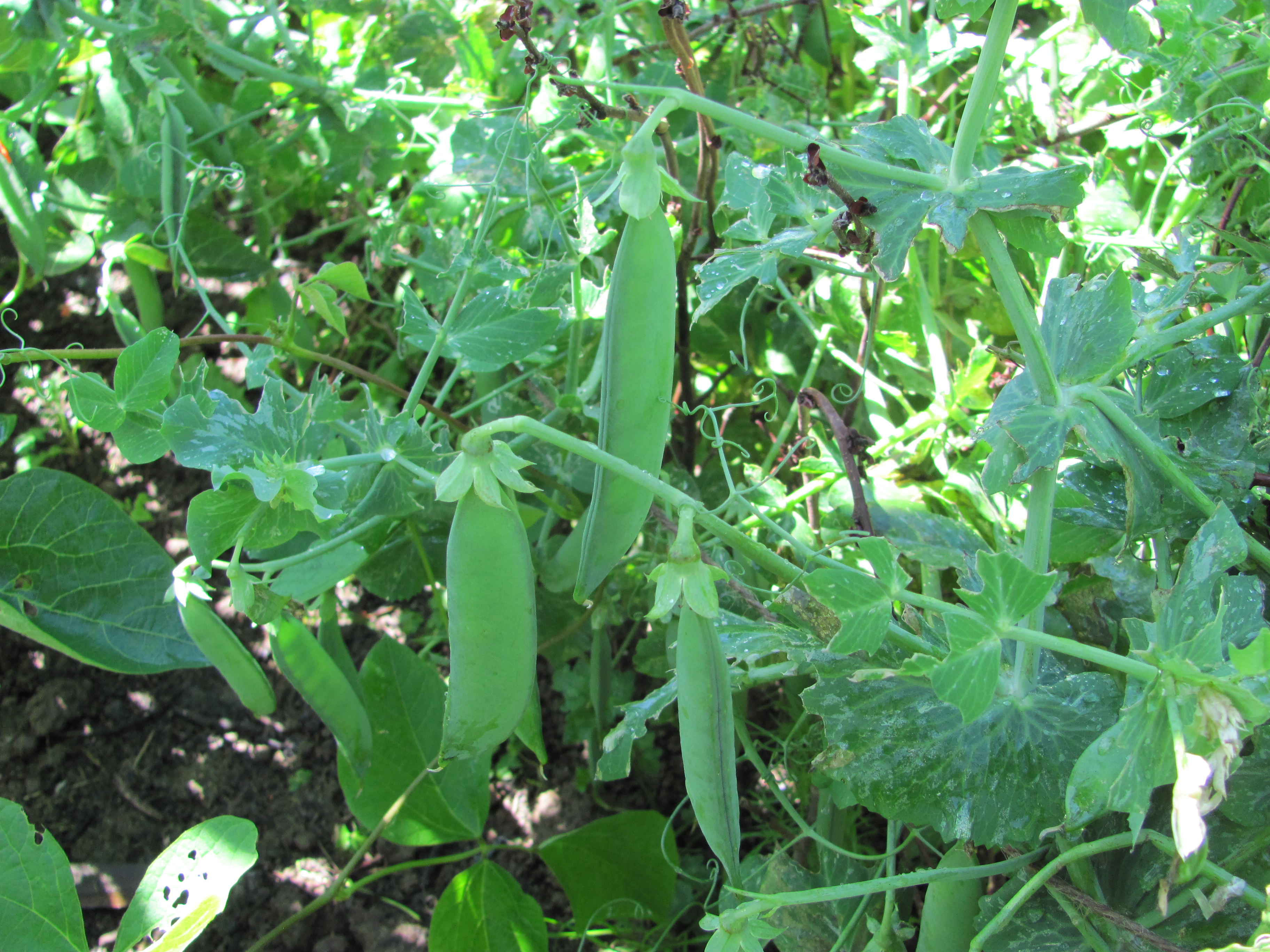
These sweet green peas are eaten in their pods and are wonderfully crunchy and juicy to eat raw or cooked. The dark purple roots of Beetroot are great boiled and used in salads or pickled to use in the winter. They are also ingredients for the sweetest of cakes and relishes. The Broad Beans are a variety called Green Windsor which gives green succulent beans to eat now or freeze for later.

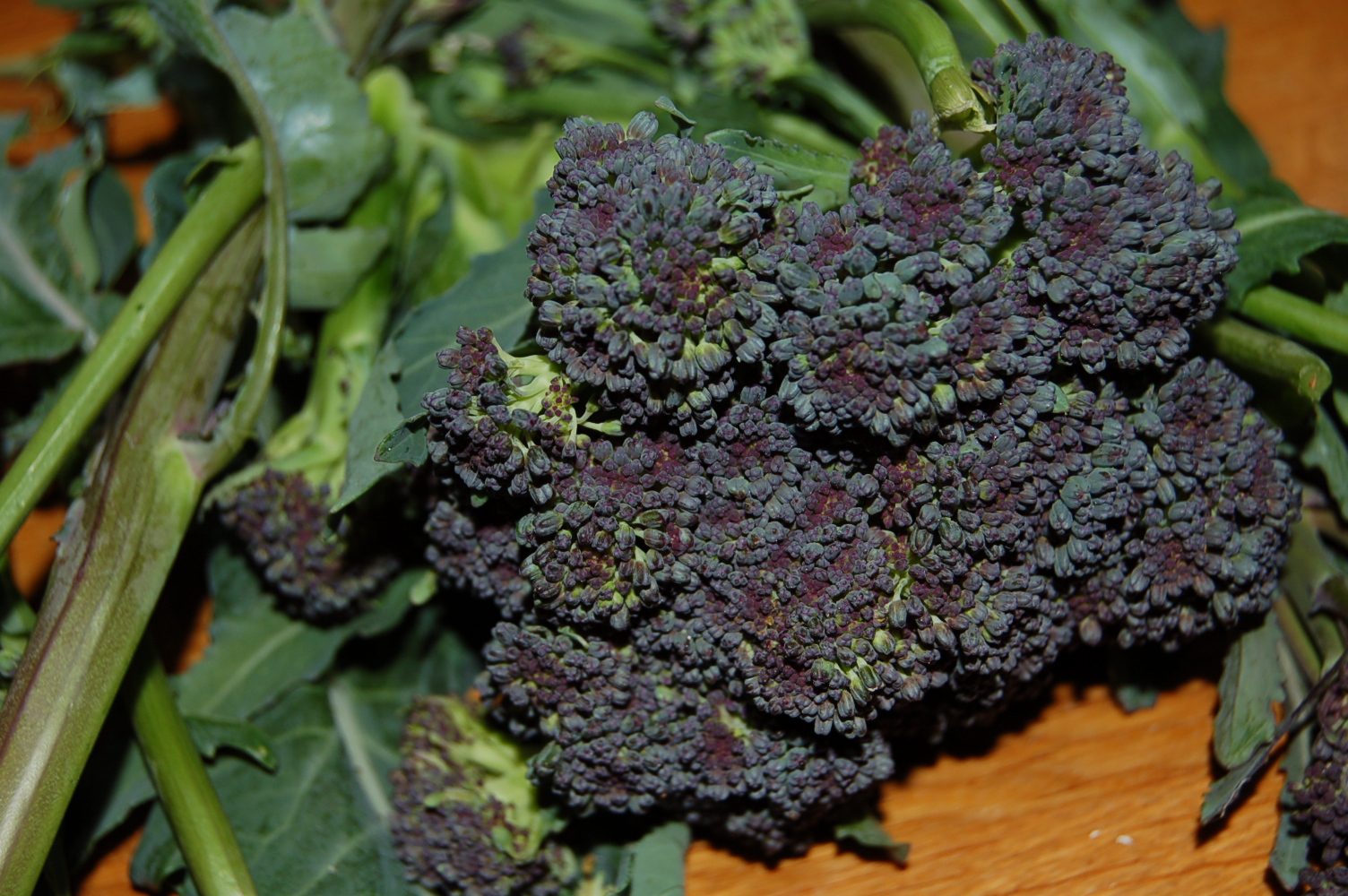
Purple Sprouting Brocolli is one of our favourite crops on the lottie but this year they are ready so early. We usually harvest them from December to April but have already been picking them for a month or so. Strange season!

The last harvest this year off our Rhubarb. The plants have served us well this year and we have enjoyed rhubarb pies and crumbles, and have lots in the freezer to make jam. We tend to freeze lots of our fruit to use in jams, relishes and chutneys, which we make when the weather deteriorates and we can’t get in the garden.

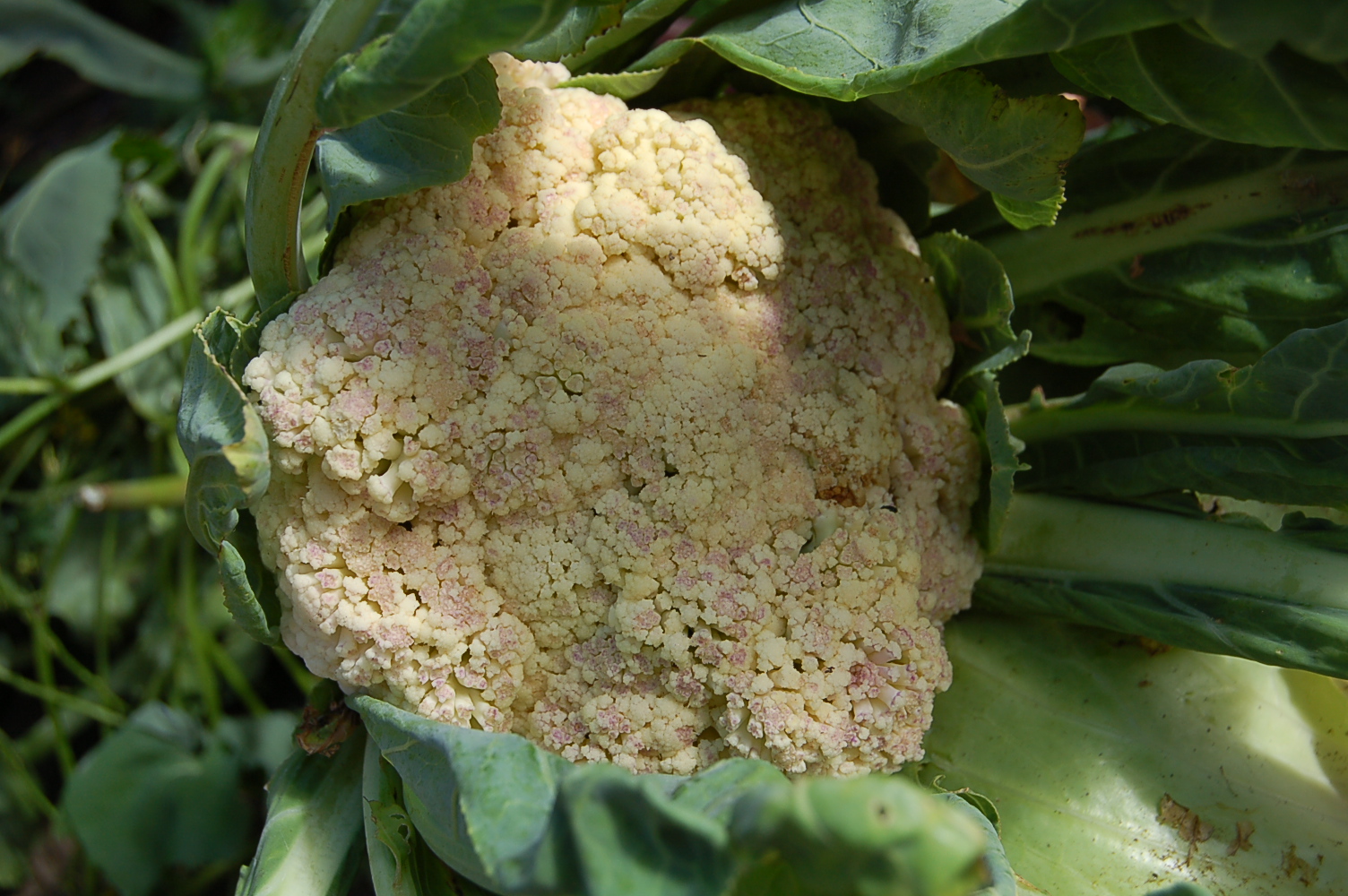
A lovely big, crunchy, sweet white cabbage and a failure of a cauliflower – a bit small and not very white!

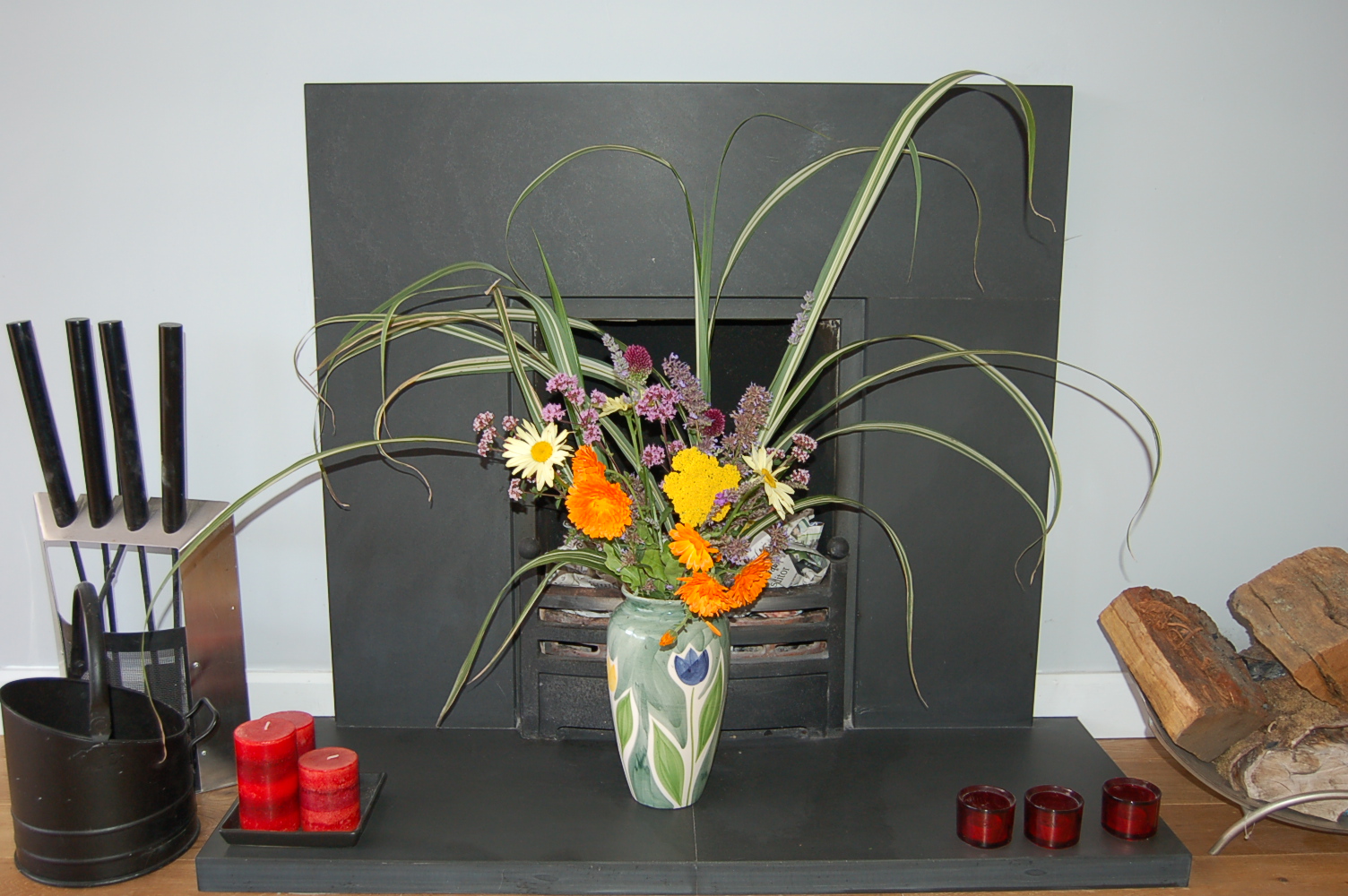
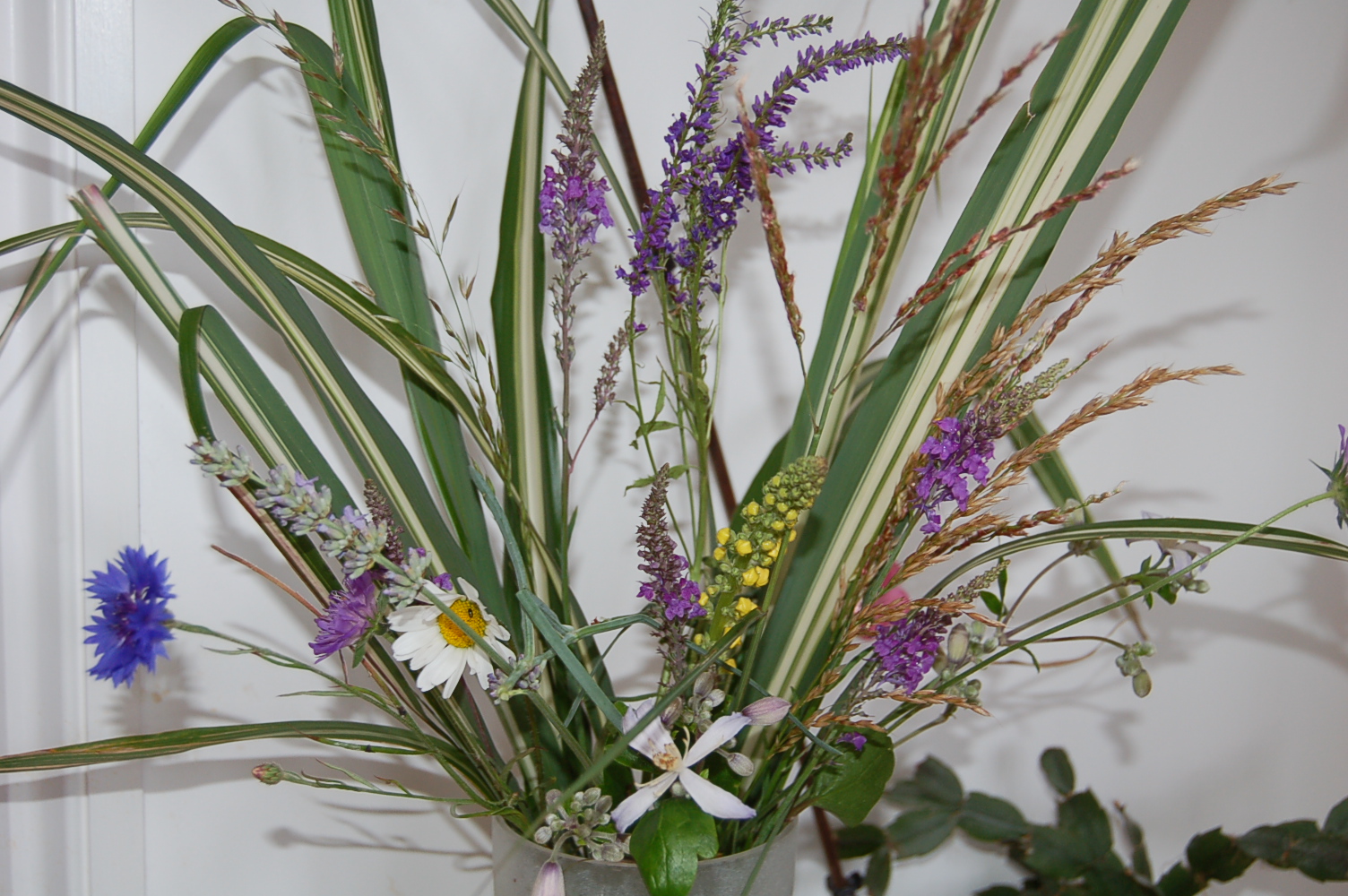
Once we returned home after a welcome refreshing cup of tea, and then took to the garden to pick a flowery harvest. Dramatic grasses and bright blooms of Calendula, Achillea and Anthemis mingle with purples of Alliums, Marjorams and Nepetas to give us a wonderful bouquet for our lounge fireplace.

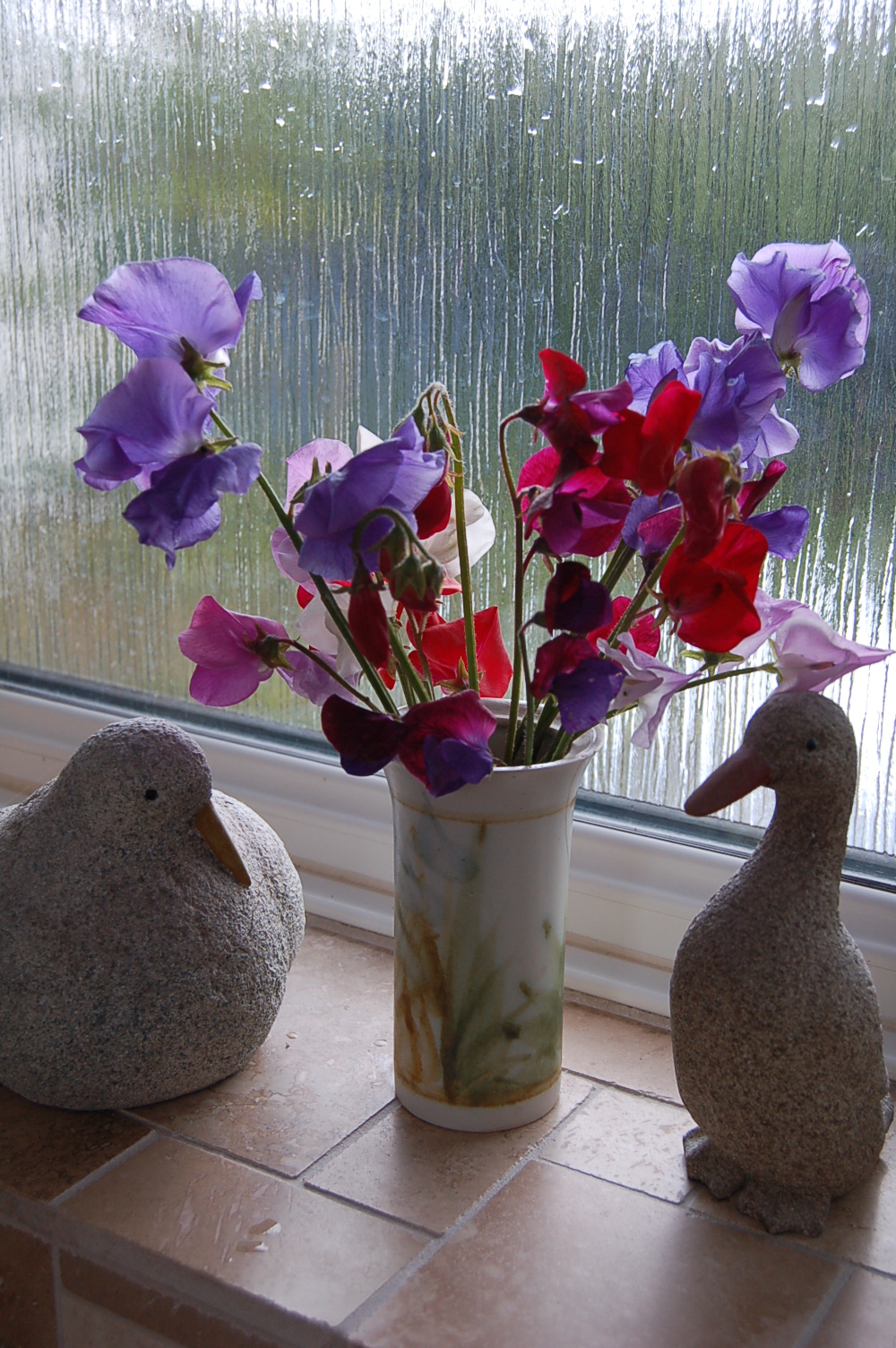
Sweet Peas and Dianthus scent the house, their sweet and clove-like aromas permeating every nook and cranny.

This very natural soft display links the long leaves of grass, Arundo donax variegata, with Lavenders, Linarias, Verbascum, delicate smaller grasses and daisies.

Categories
allotments community gardening fruit and veg garden photography garden wildlife gardening grow your own July meadows natural pest control photography roses Shropshire

A Wander around the Allotments in July.

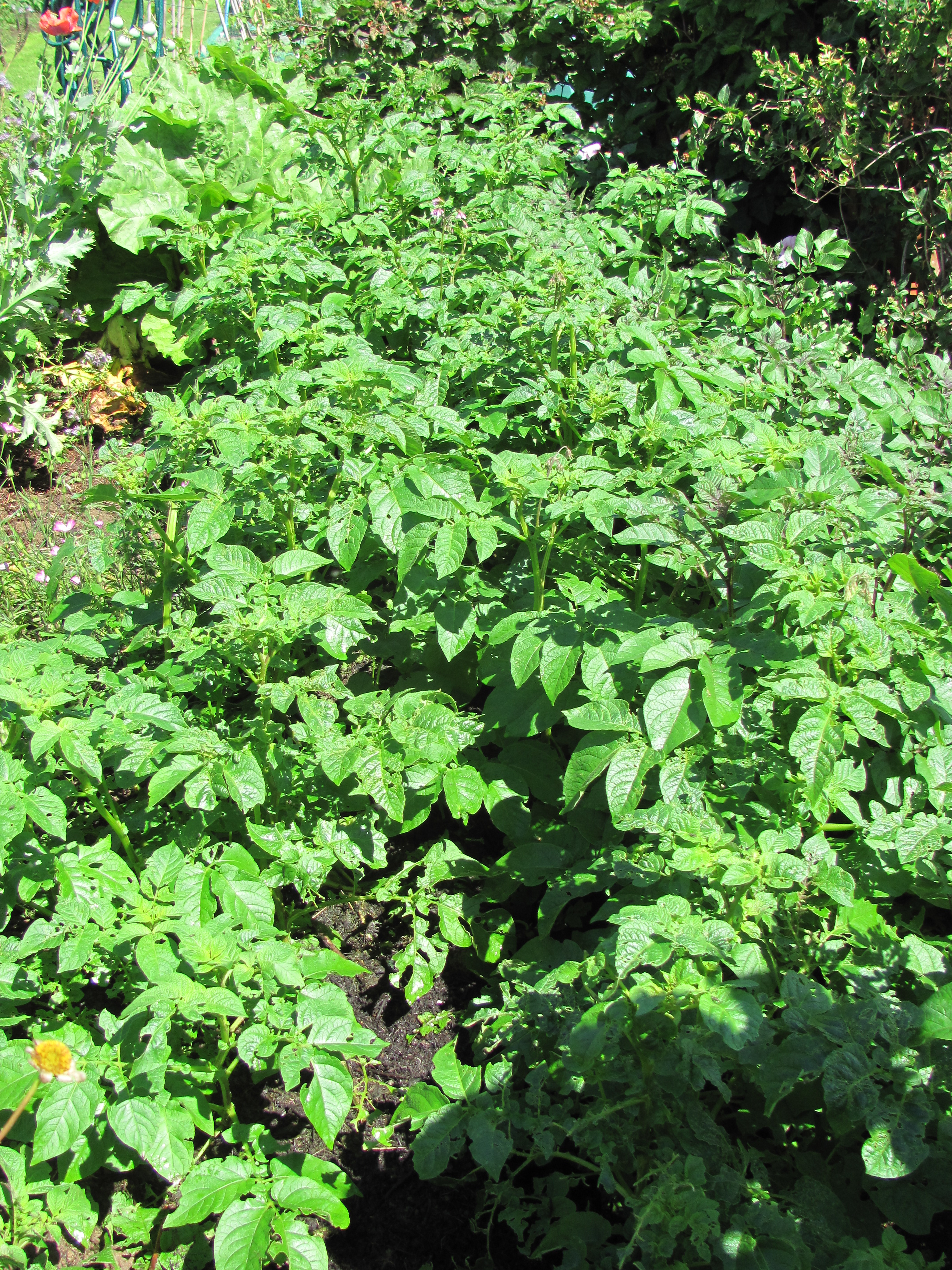
July on our allotment site has been a month of rain resulting in regular flooding. Now as the rain has disappeared for a while things are drying out. Amazingly potatoes are being dug up out of flooded plots and have given reasonable crops but on others crops have rotted below ground. On our own plot we have been harvesting good crops of carrots, beetroot, garlic, cabbages, broccoli, broad beans, peas and salad leaves. We regularly pick tayberries, rhubarb and gooseberries. Strawberries however are rotting before we get to pick them and even the blackbirds are missing out.

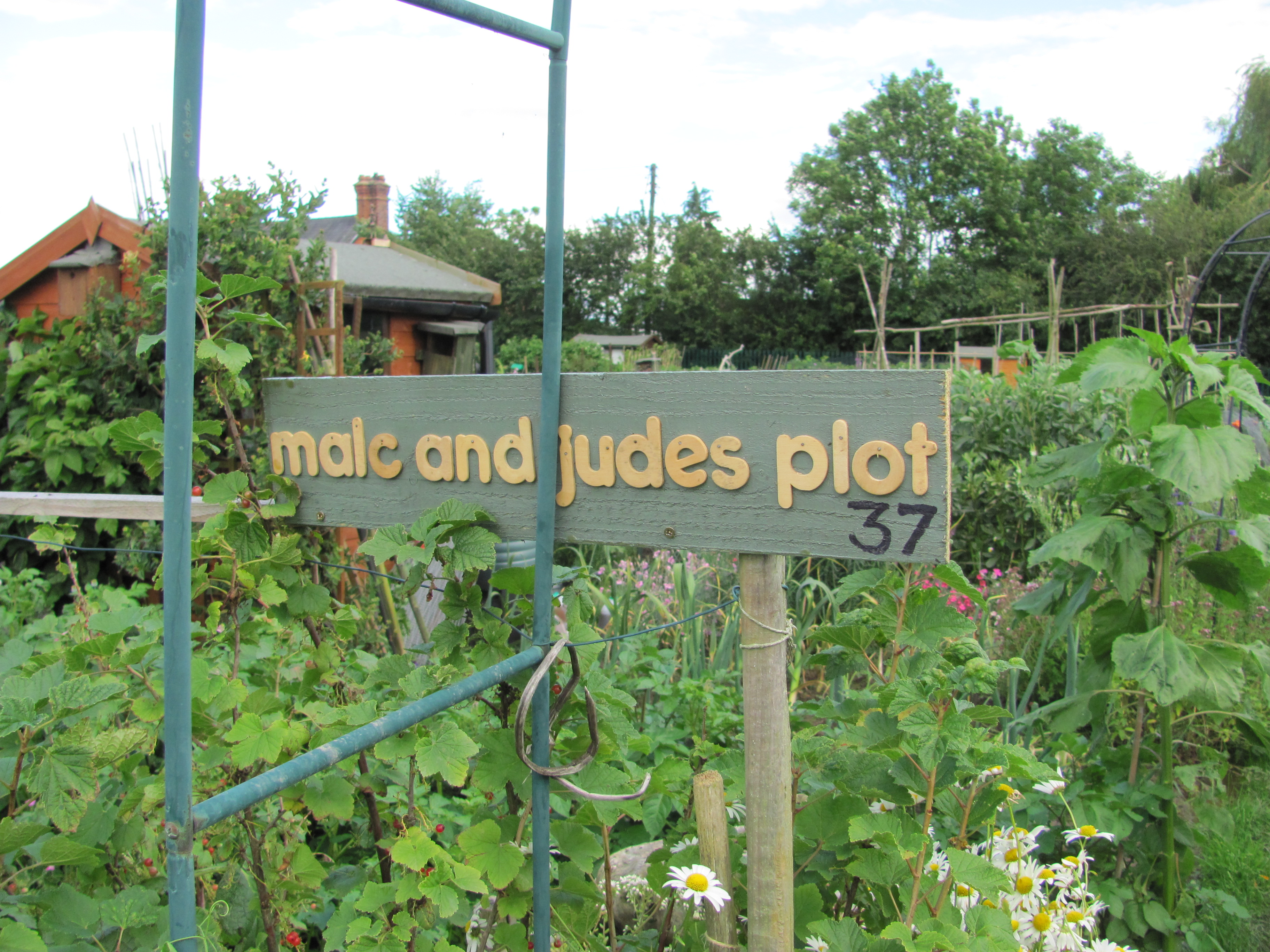
We shall as usual start our lottie wander on our own plot to see what is going on and with our new sign, the old one having fallen apart.

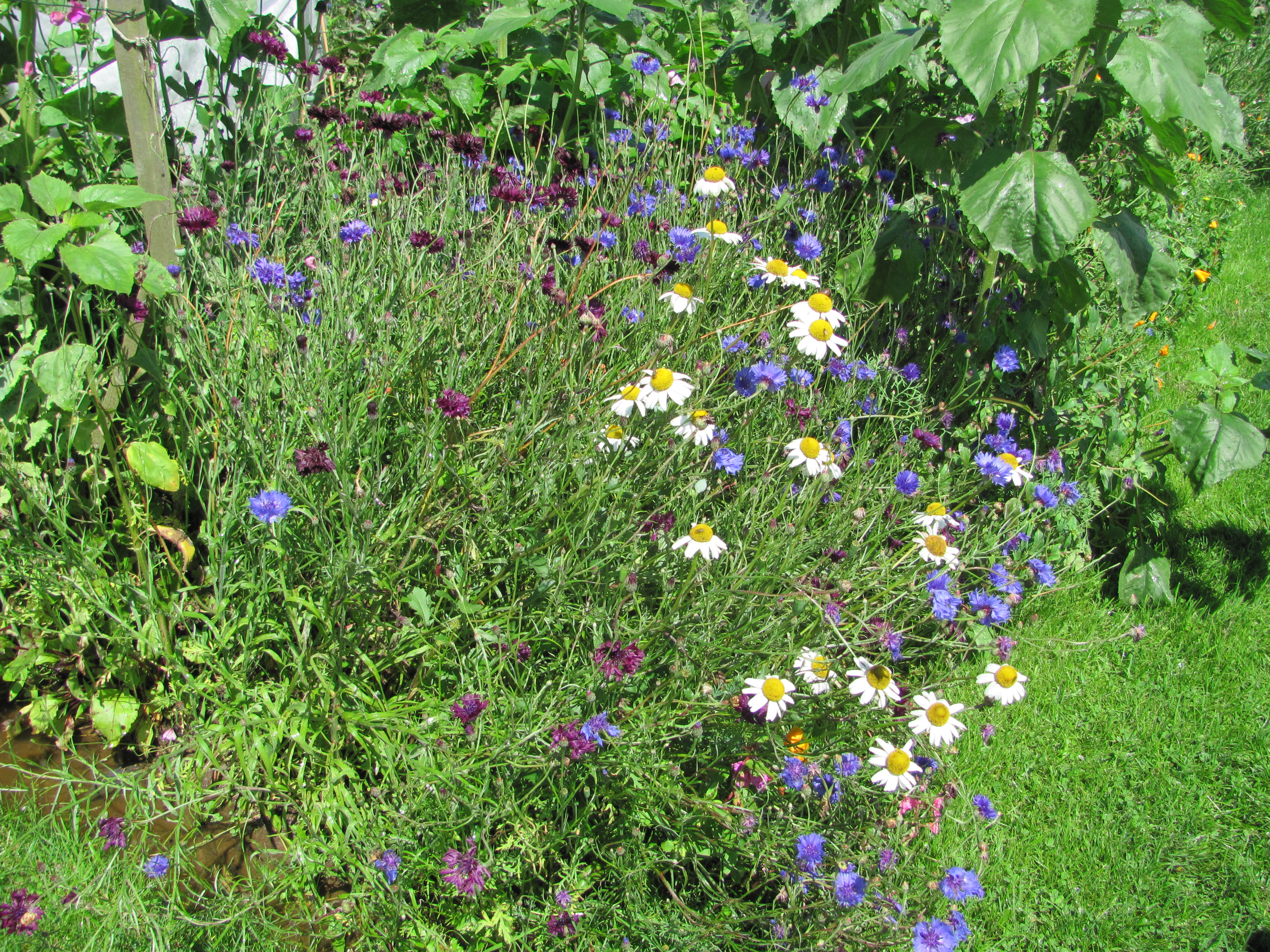
Our crops are mostly looking well and the “Bug Borders” bursting with colourful flowers, alive with bees, hoverflies and lots of other useful insects.

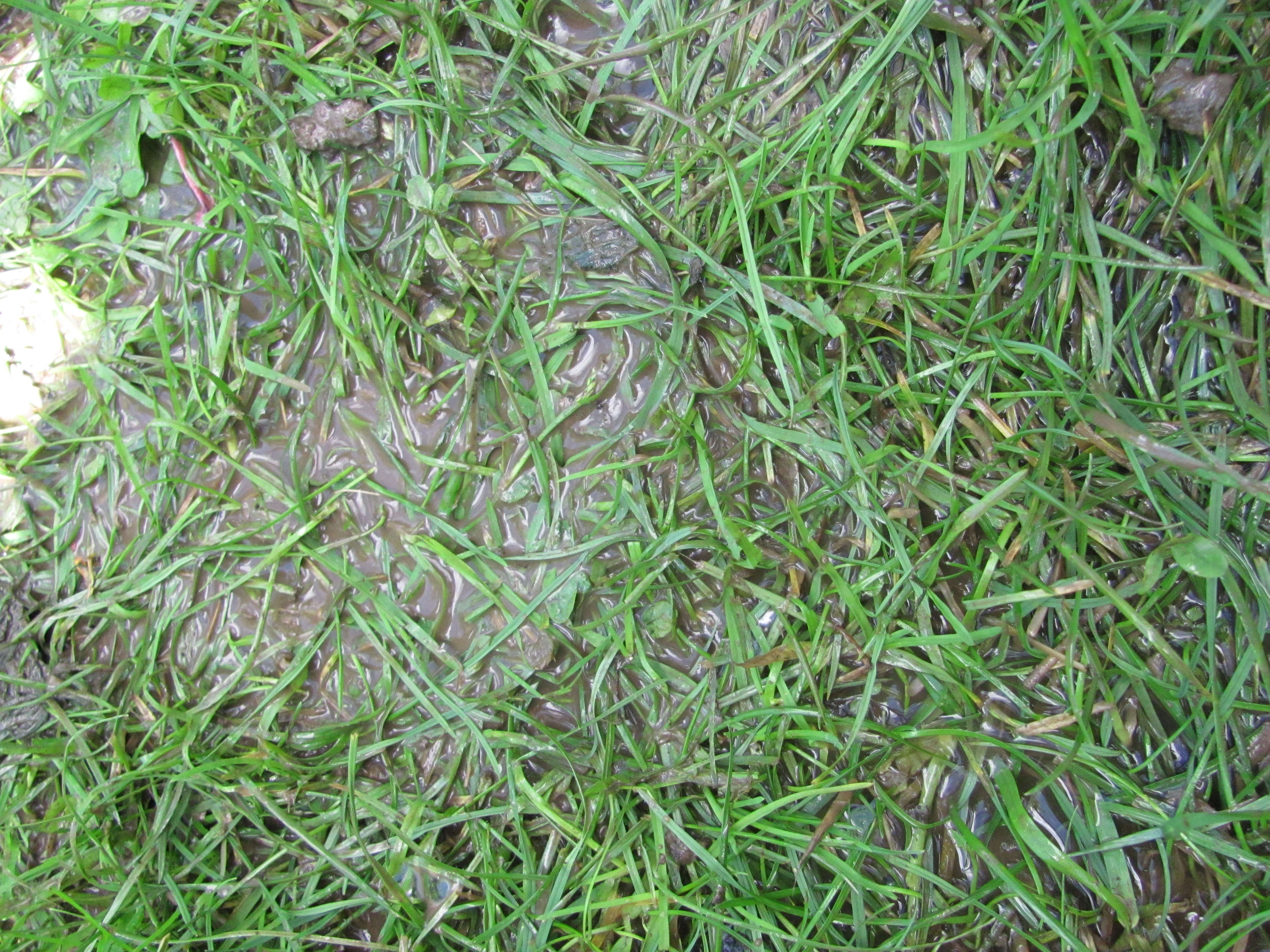
But in between the colourful lush plantings of veg, fruit and flowers standing water sat getting stagnant.

And this is our poor grass path.

Things are getting easier though and we have managed to get on the soil without damaging the structure too badly, so we cleared any weeds, loosened up the soil surface and sowed more crops such as beetroot and radish and planted out our seedling leeks.

Now we can start our wander around the site looking at what is happening on other plots and in the communal areas.

The Spring Garden and Summer Garden have come through the terrible weather with flying colours.

Of course the Willow features have enjoyed the wet around their feet and look so green and fresh, but they need a lot of pruning to keep them in trim shape.

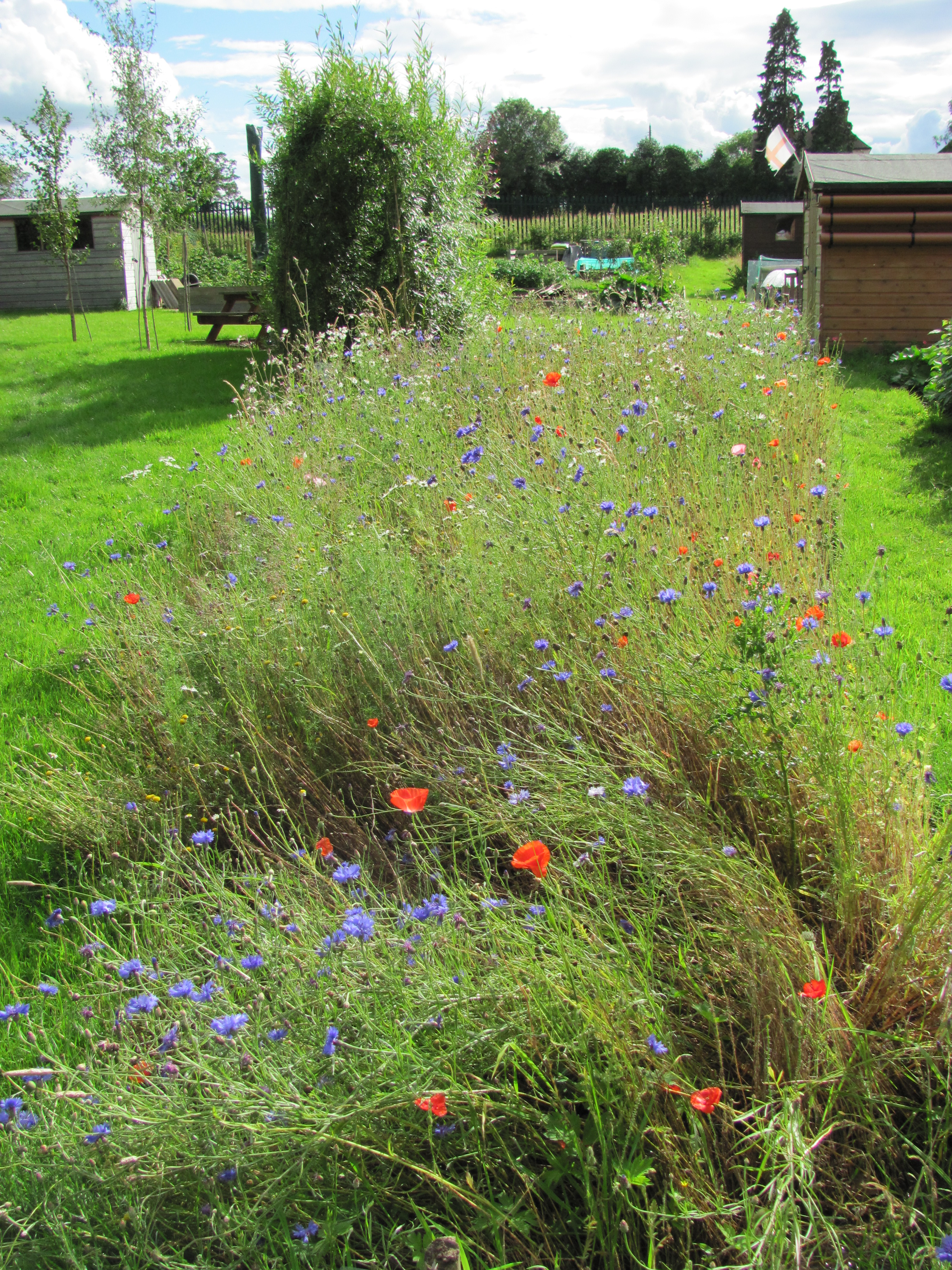
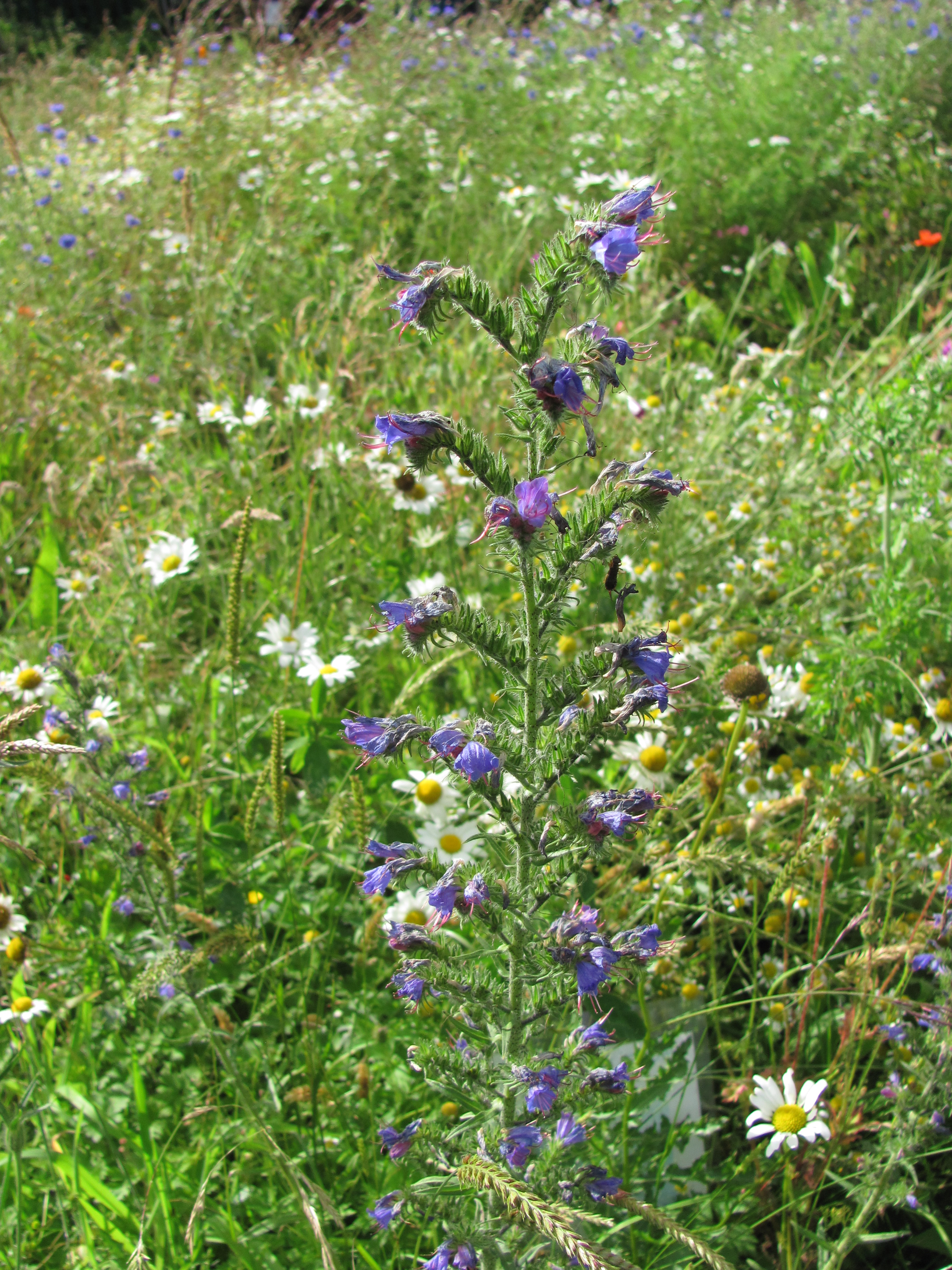
The meadows are flowering nicely now and flowers are giving colour on lots of the plots.

I shall finish this wander with a good idea. How about this for an idea for trying to foil the dreaded carrot rootfly – simply grow them up in the air hopefully above their maximum flight height.

Categories
community gardening garden design garden photography gardening hardy perennials July ornamental trees and shrubs photography Shropshire shrubs village gardens

A Village of Gardeners – part two, after the tea break.

We sat in the village hall enjoying our lemon drizzle cake and cups of tea, while we planned our route to see the afternoon gardens which, all but one, were out in the countryside, along narrow lanes.

So suitably refreshed and legs rested we made our way to the last of the gardens in the village itself, which was described as a small cottage garden. It didn’t disappoint!  After wandering up a narrow lush lane we crossed a ford where a shallow stream of crystal-clear water rushed over the tarmacadam. There were so many well-kept plants in busy planting schemes with narrow grass paths to lead you round. We loved it!

Once we had relished this lovely crowded cottage garden we returned through the ford and turned right where another narrow lane sent us up a gradual slope into the countryside away from the village, to the next garden. We passed this tumbling down barn the home to many swallows and colourful natural hedgerow borders.

This garden was larger than the last we visited, with sweeping areas of grass, an enclosed vegetable plot, interesting plant combinations and a beautiful wildlife area featuring a pond with woodland enhancing its banks.

Sadly the last two gardens we wished to visit were miles into the countryside at the foot of the Stretton Hills so we had to take the car. The first garden was one that invited you to wander with interesting  plantings.

The final garden was up a lane with grass growing down the centre and we had to park on a very soggy field. But it was worth it as a beautiful atmospheric garden sat alongside a rippling stream running through a wooded valley. The sound of bird activity around the feeding stations in an enclosed part of the garden and their song in the surrounding borders and woodland enticed us to sit comfortably with another cup of tea and another slice of home-baked cake.

We managed to visit just nine of the sixteen gardens open before we ran out of time. We enjoyed the variety of gardens created and maintained by a variety of gardeners. These gardeners all had the advantage of living in such a beautiful little village with a strong community spirit. The last garden we visited had the added benefit of an amazing view.

This Veggie Life

A Vegetarian | Nature Lifestyle Blog

Rambling in the Garden

.....and nurturing my soul

The Arch City Gardener

Journeys In St. Louis Gardening and Beyond

Garden Dreaming at Châtillon

Consult the genius of the place

Storyshucker

A blog full of humorous and poignant observations.

gardeninacity

Notes from a wildlife-friendly cottage garden

PlayGroundology

...an emerging social science

The Official Blog of British Wildlife

'The most important and informative publication on wildlife of our times' - The Independent. This blog is a member of The UK & Ireland Natural History Bloggers group: www.uknhb.blogspot.com

iGrowHort

Inspire - Cultivate - Grow Native Plants - Restore Landscapes

Bishops Meadow Trust

To create and protect a semi-natural wild space for the people of Farnham to enjoy and experience an array of British wildlife in our town

Gardening with Children

The www.gardeningwithchildren.co.uk Blog

UKbirdingtimeline

birding through the seasons, why birds matter and how to conserve them

NATURE WALKER

with a camera in hand

Jardin

Transform your outdoor space

Eva's space

My allotment, cooking and other interests

Old School Garden

my gardening life through the year

LEANNE COLE

Trying to live a creative life

fromacountrycottage

trying to live as lightly as possible on our beautiful planet

Good Life Gardening

Nature lovers from Leicester living the good life.

mybeautfulthings

Finding the beautiful in the everyday

mawsonmichelle

Michelle's Allotment

In and Out of My Garden

thoughts from and about my garden

Greenhousing

Big plans for a small garden

The Scottish Country Garden

A Walled Country Garden in South East Scotland

The Fruity Chicken

Life at the fruity chicken

willowarchway

Off grid living. Self sufficient. "PERMAGANICS RULE".

St Anns Allotments

Nottingham's Grade 2* Listed Allotments and Community Orchard

Manifest Joy Harvests

a journey in suburban vegetable gardening

Allotmental

The madness of growing your own

Penny's Garden: a harvest beyond my front door

A novel approach to vegetable gardening

arignagardener

Sustainable living in the Irish countryside.

NewEnglandGardenAndThread

Master Gardener, amateur photographer, quilter, NH native, and sometimes SC snowbird

dianajhale

Recent work and work in progress and anything else that interests me

planthoarder

a chaotic cottage gardener

Lens and Pens by Sally

a weekly blog that creates a personal philosophy through photographs and words

Dewdrops and Sunshine

Stories from a sassy and classy Southern farmbelle.

The Pyjama Gardener

Simple Organic Gardening & Seasonal Living

gettin' fresh!

turning dirt into dinner

JOY...

today the world is created anew

Garden Birds

Notes from a Devon garden

ShootAbout

Life Through The Lens

Adapting Pixels

A photography blog showcasing the best photography pictures and videos on the internet

Wildlifegardening's Blog

Just another WordPress.com site

naturestimeline

personal observations from the natural world as the search continues for a new approach to conservation.

LATEBLOOMERBUDS

The Wonders of Life through my Eyes, my Heart, my Soul