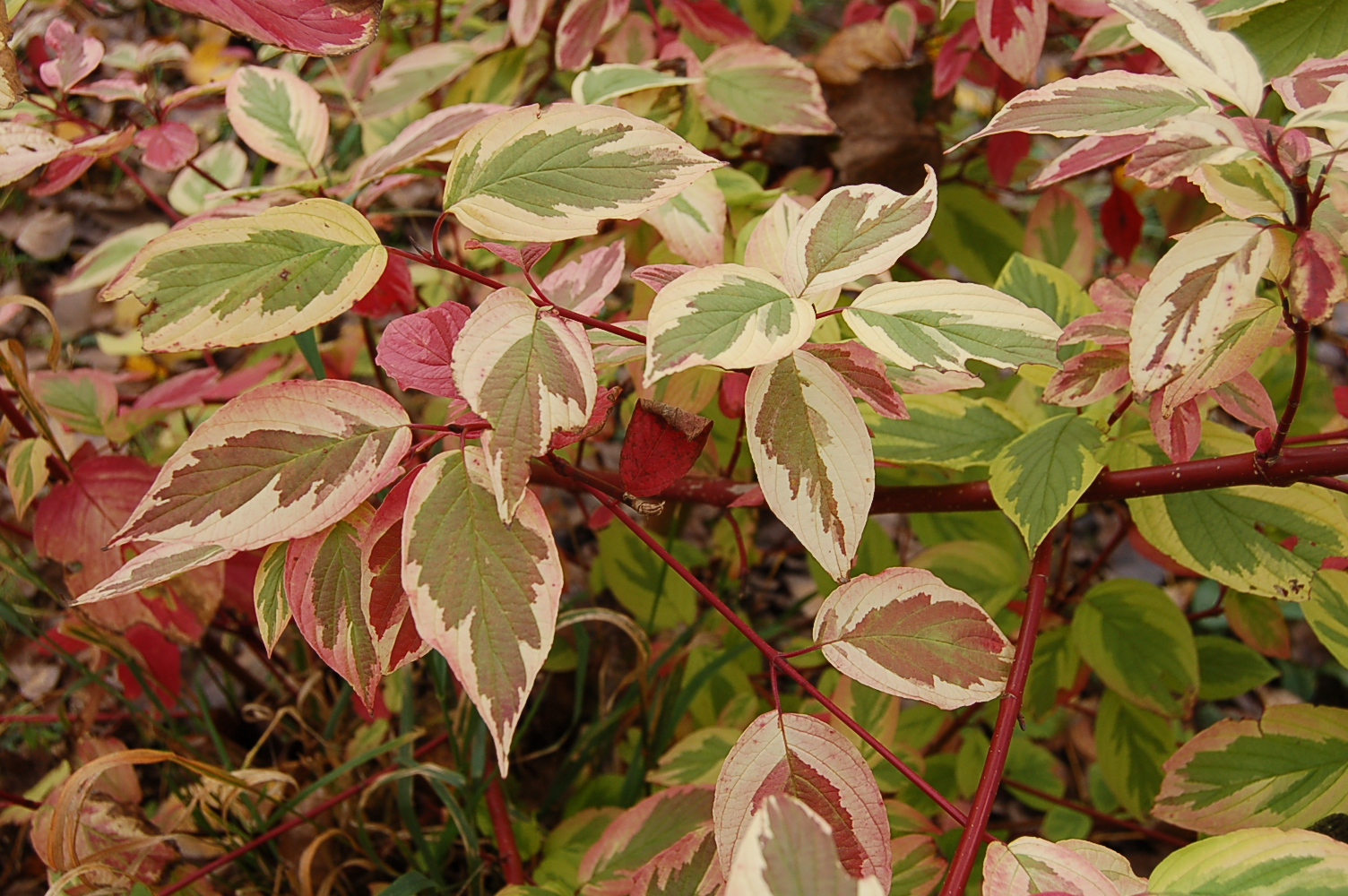
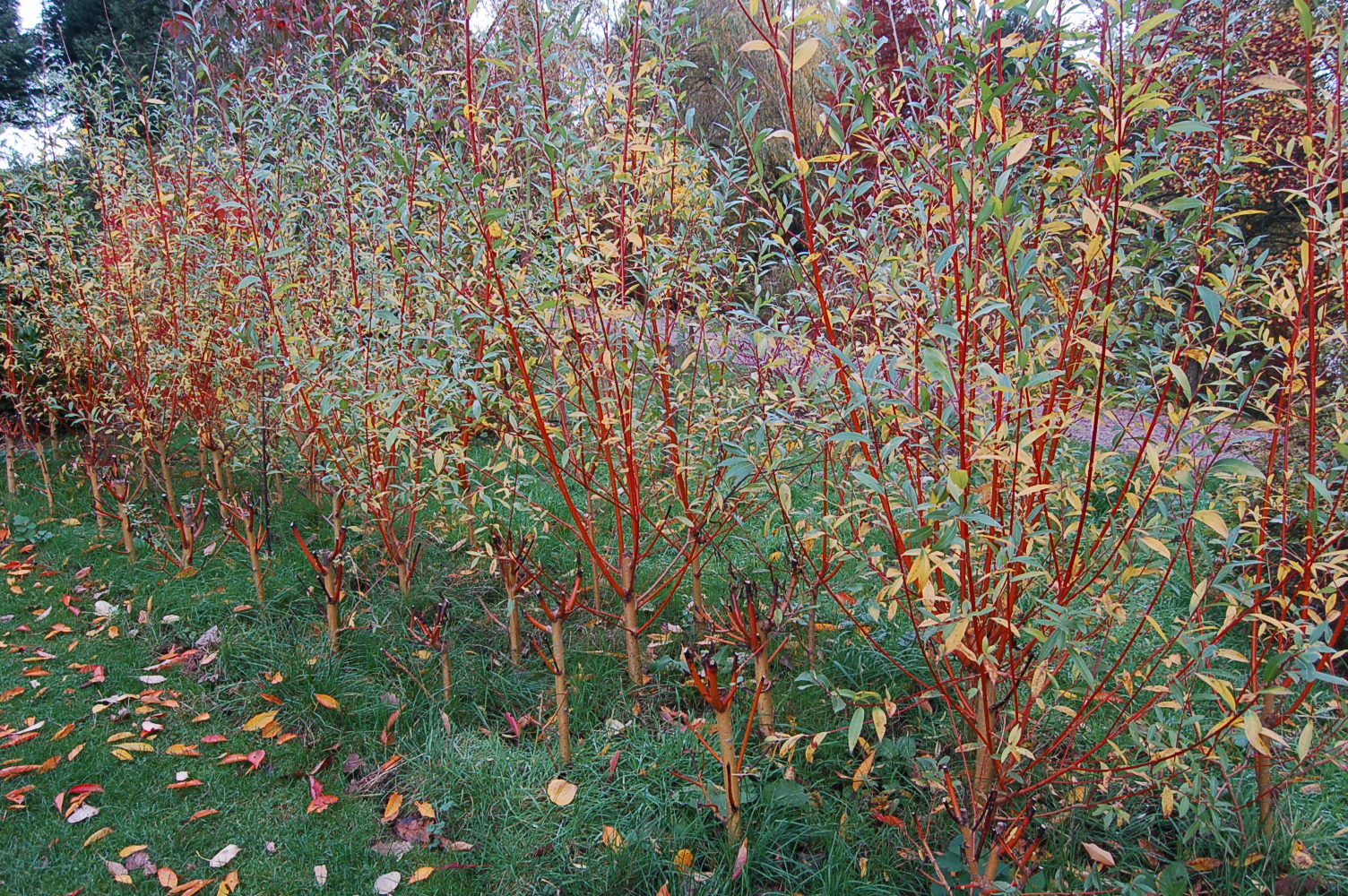
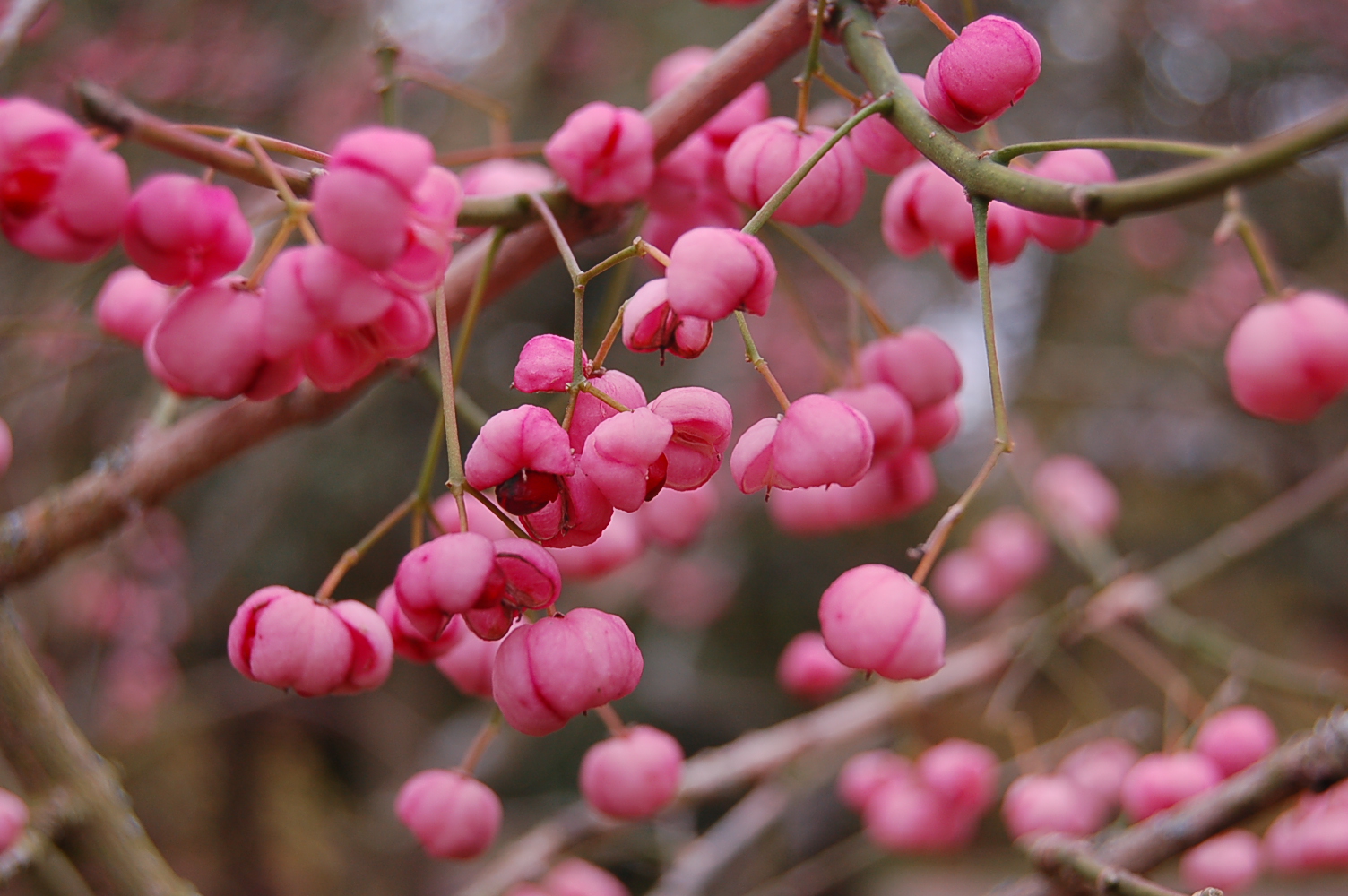
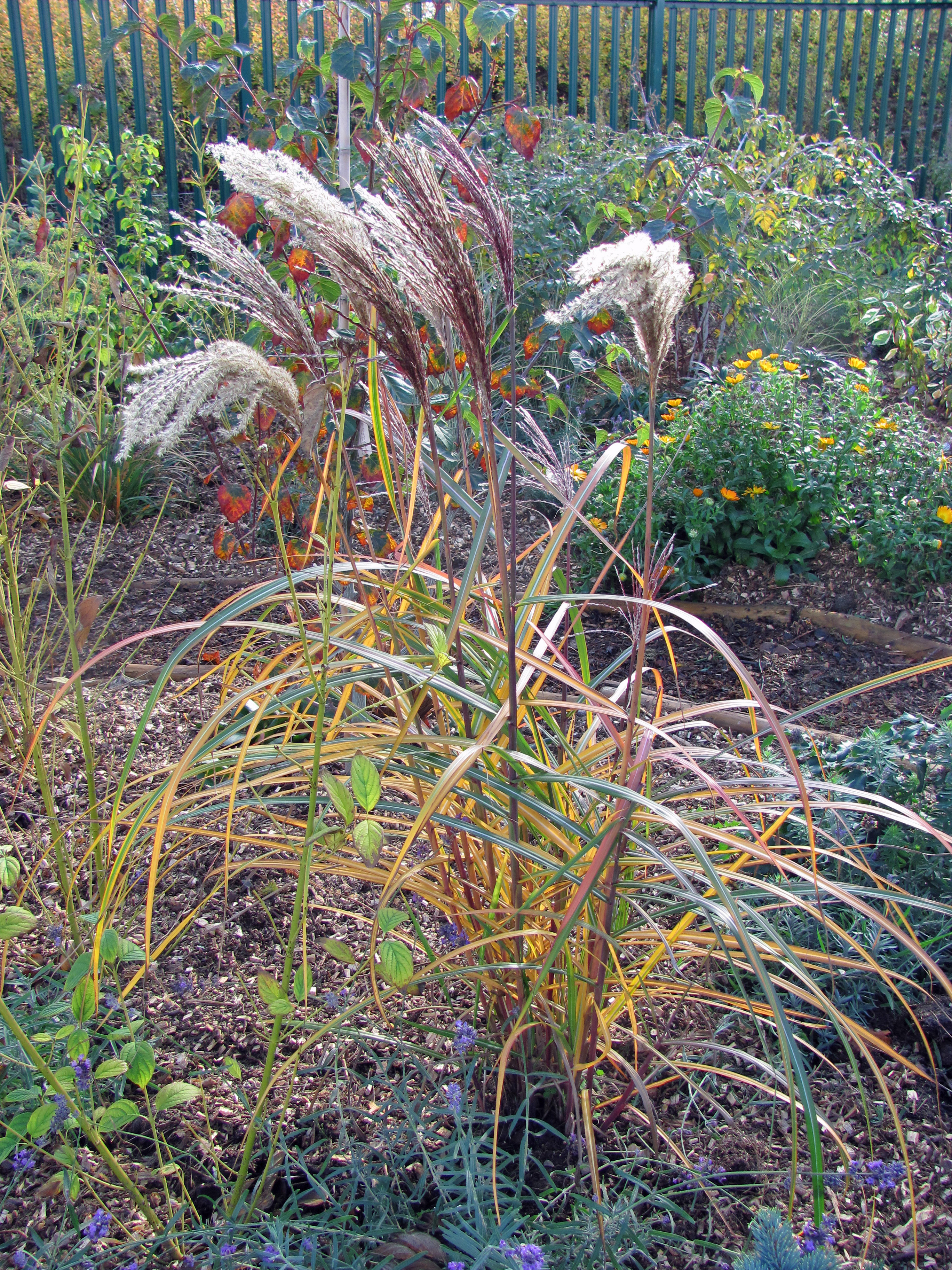
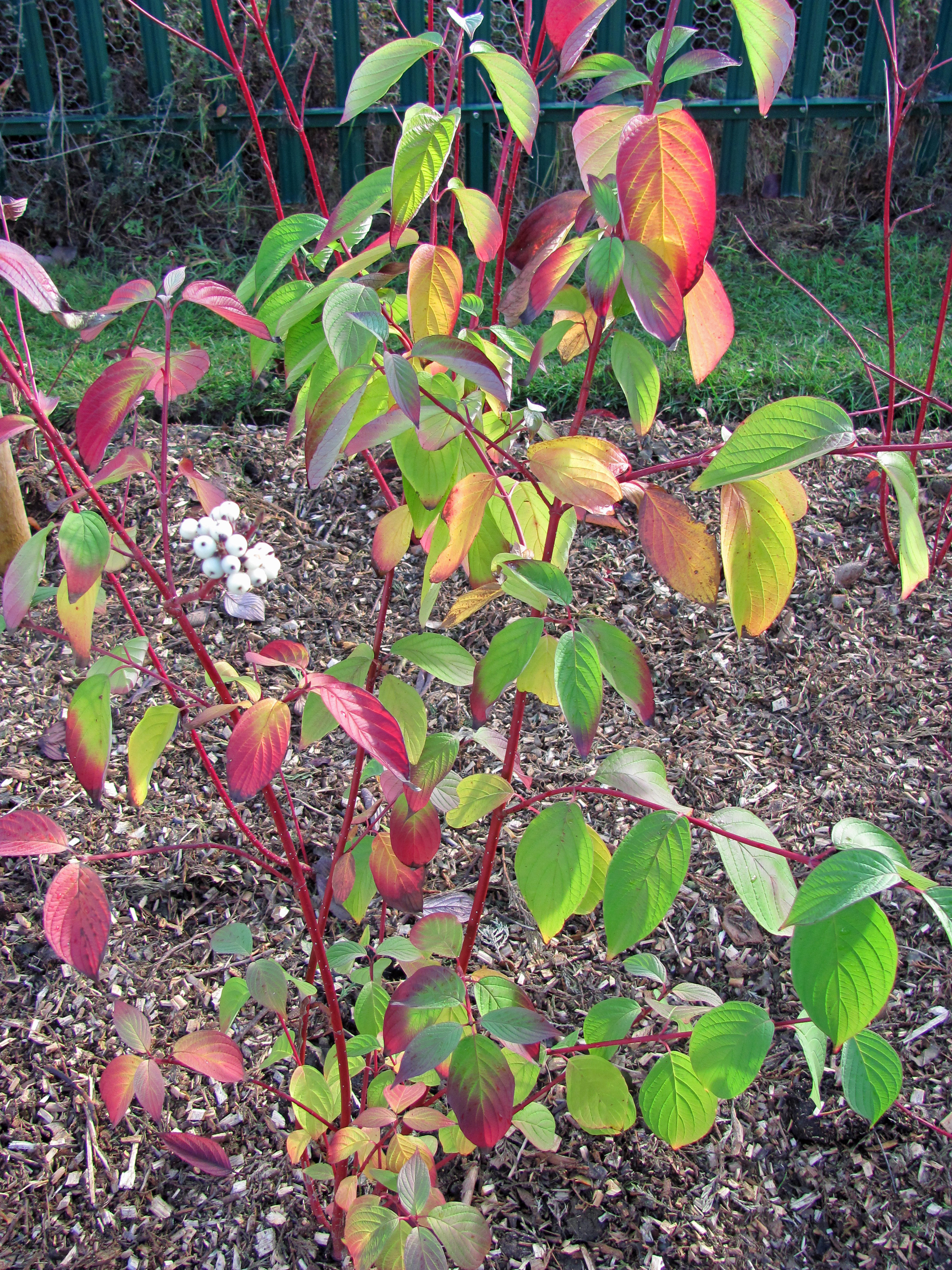
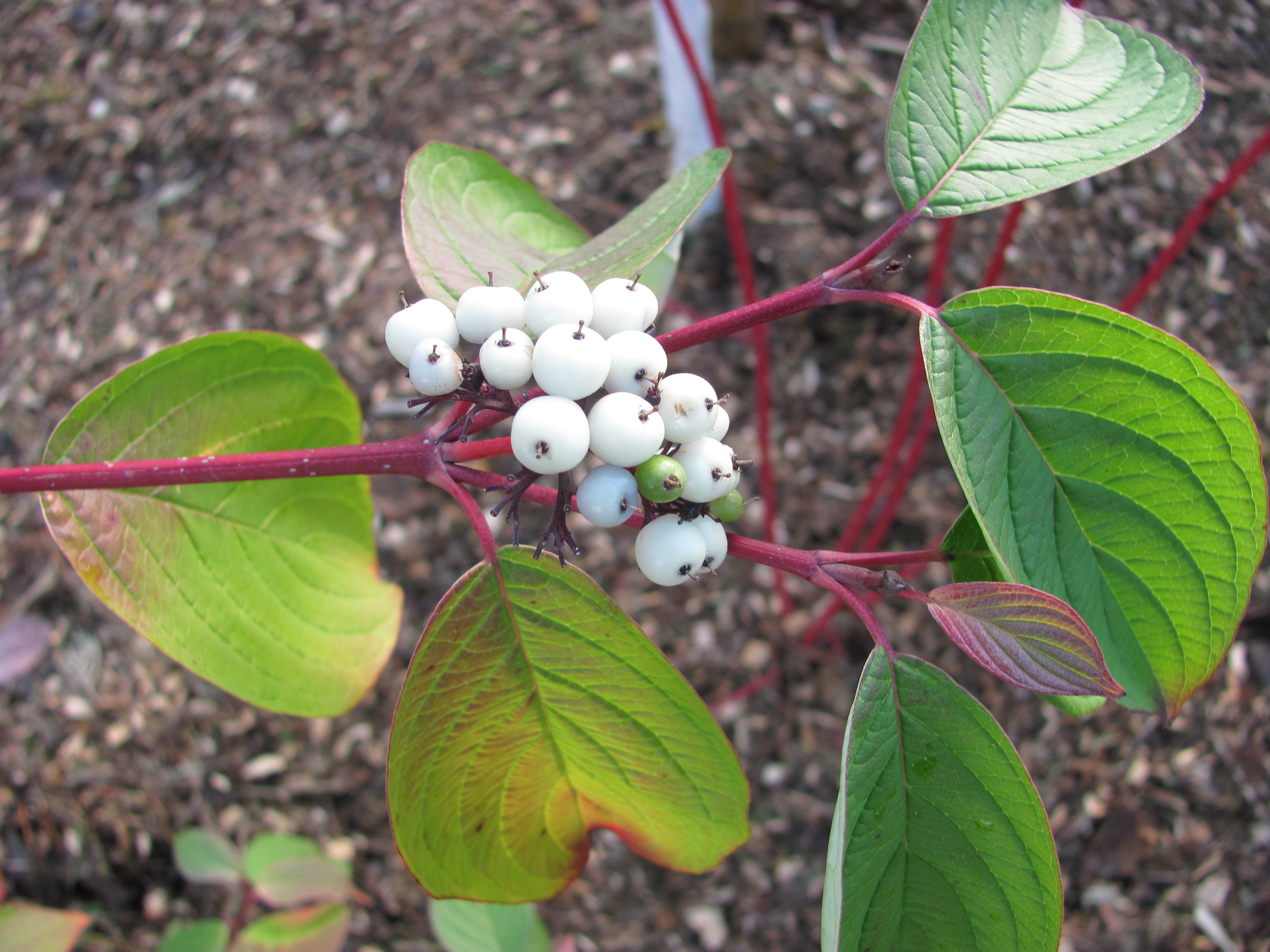
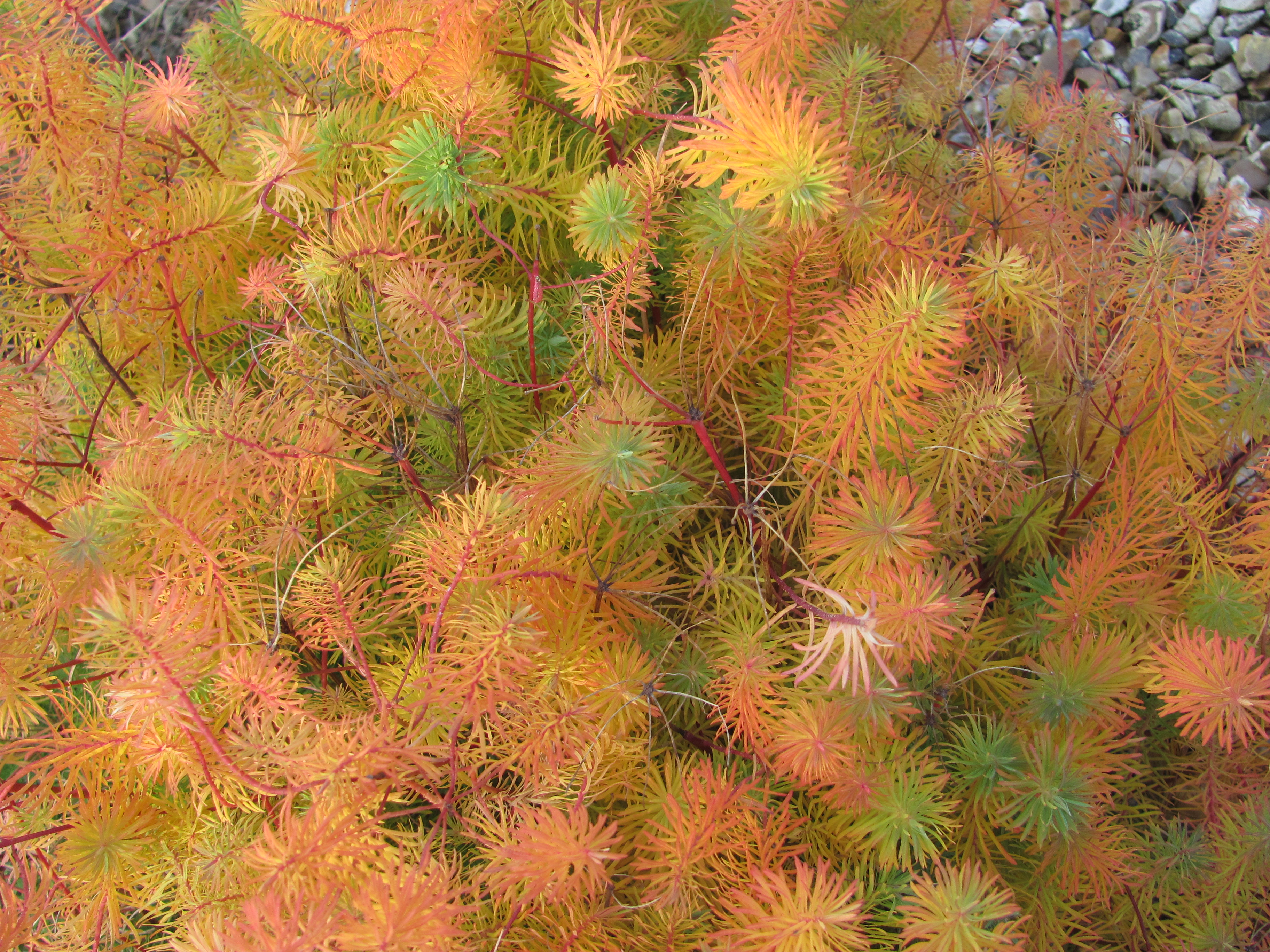
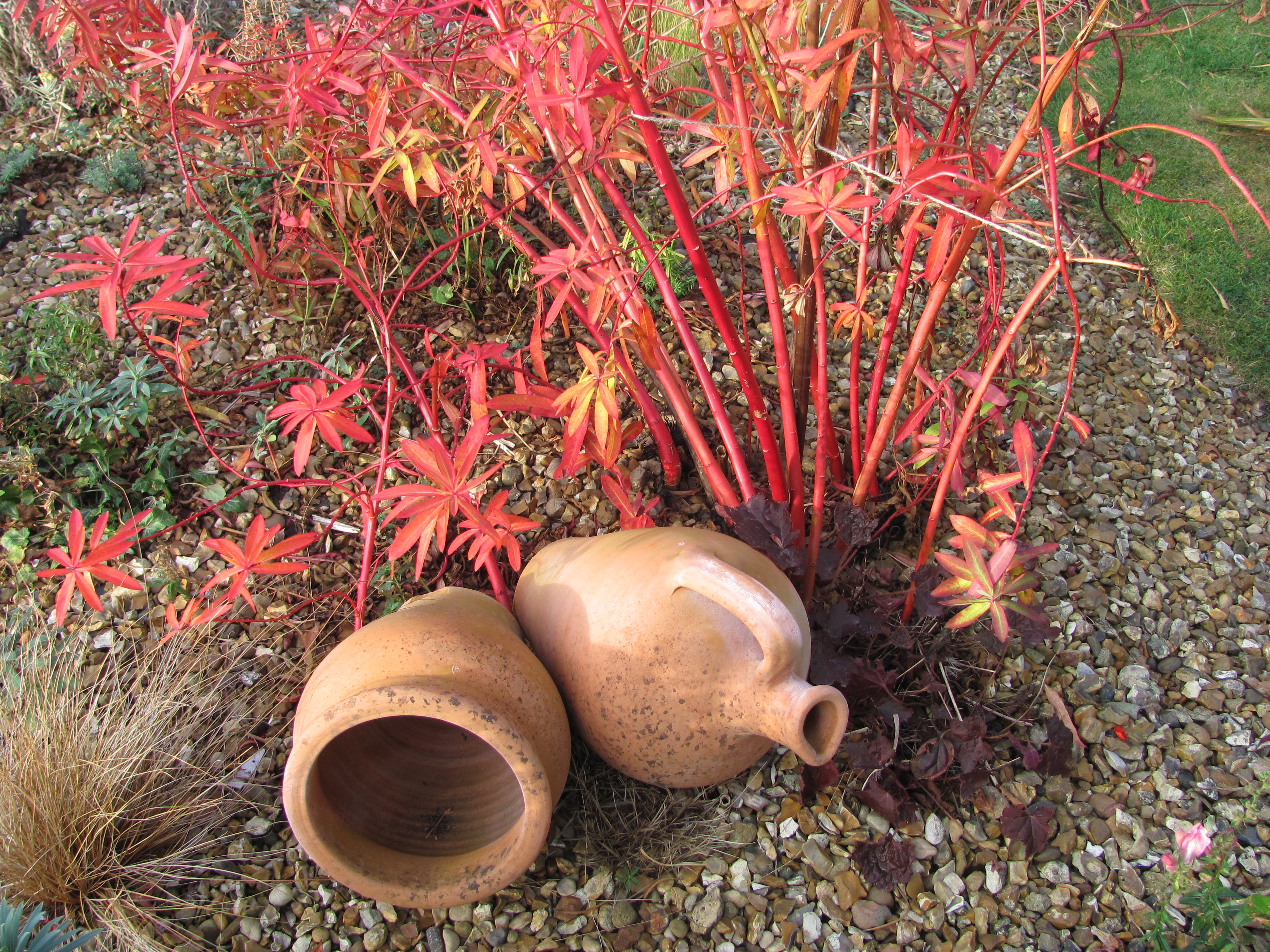
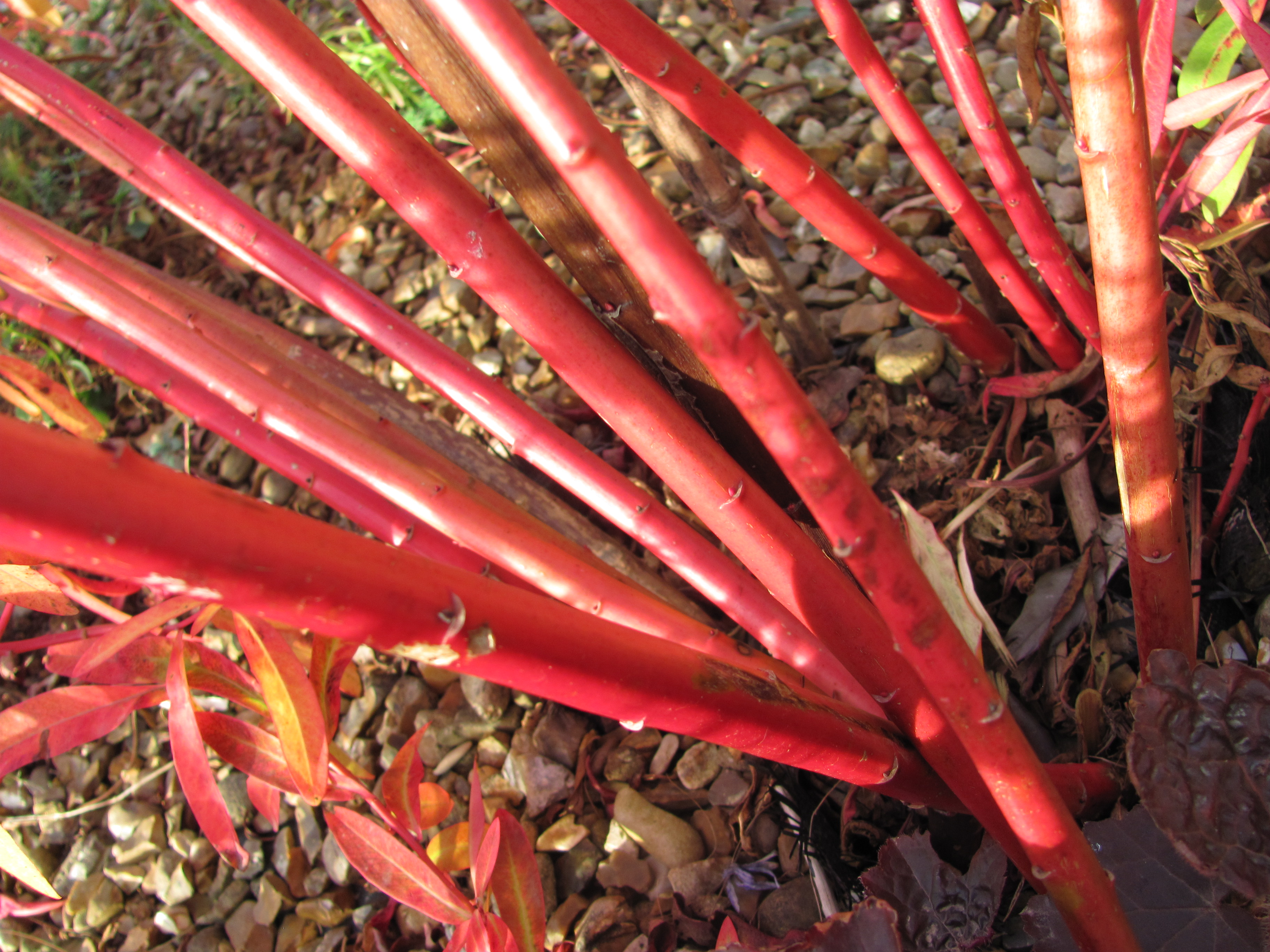
More autumn surprises! The early afternoon sun shines the spotlight on an unexpected autumn performer on our gravel garden, which we call our “Beth Chatto Garden”. We were stimulated by a visit to her magnificent Essex garden and in particular by her dry garden which she created where her car park once reigned. The plants picked out by the sun today for our delight were the euphorbias. From pink to red and from yellow to orange the colours of their leaves and stems were almost startling.
Author: greenbenchramblings
A retired primary school head teacher, I now spend much of my time gardening in our quarter acre plot in rural Shropshire south of Shrewsbury. I share my garden with Jude my wife a newly retired teacher , eight assorted chickens and a plethora of wildlife. Jude does all the heavy work as I have a damaged spine and right leg. We also garden on an allotment nearby. We are interested in all things related to gardens, green issues and wildlife.
We changed the clocks last night by that hour that marks the end of British summer time, but it didn’t mean we were really into typical weather and light for late autumn. We woke to drizzle but by lunchtime the sun was up and giving some warmth and the sky was blue. So a bonus session in the garden beckoned. And what a bonus day – gardening without jackets at the end of October – can’t be bad! And coffee out in the garden accompanied by pears and grapes freshly plucked from the cordon and vine – it gets better!
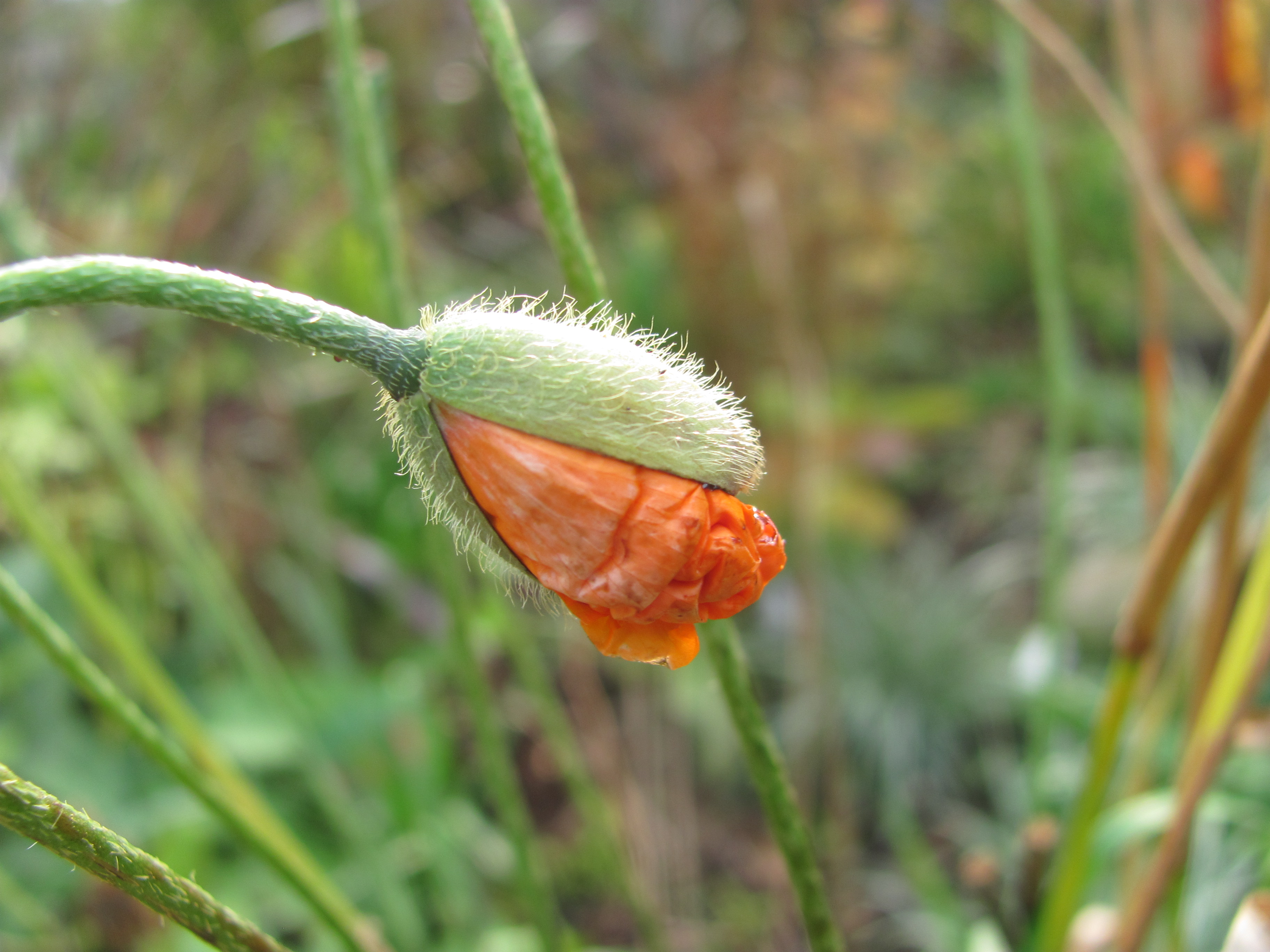
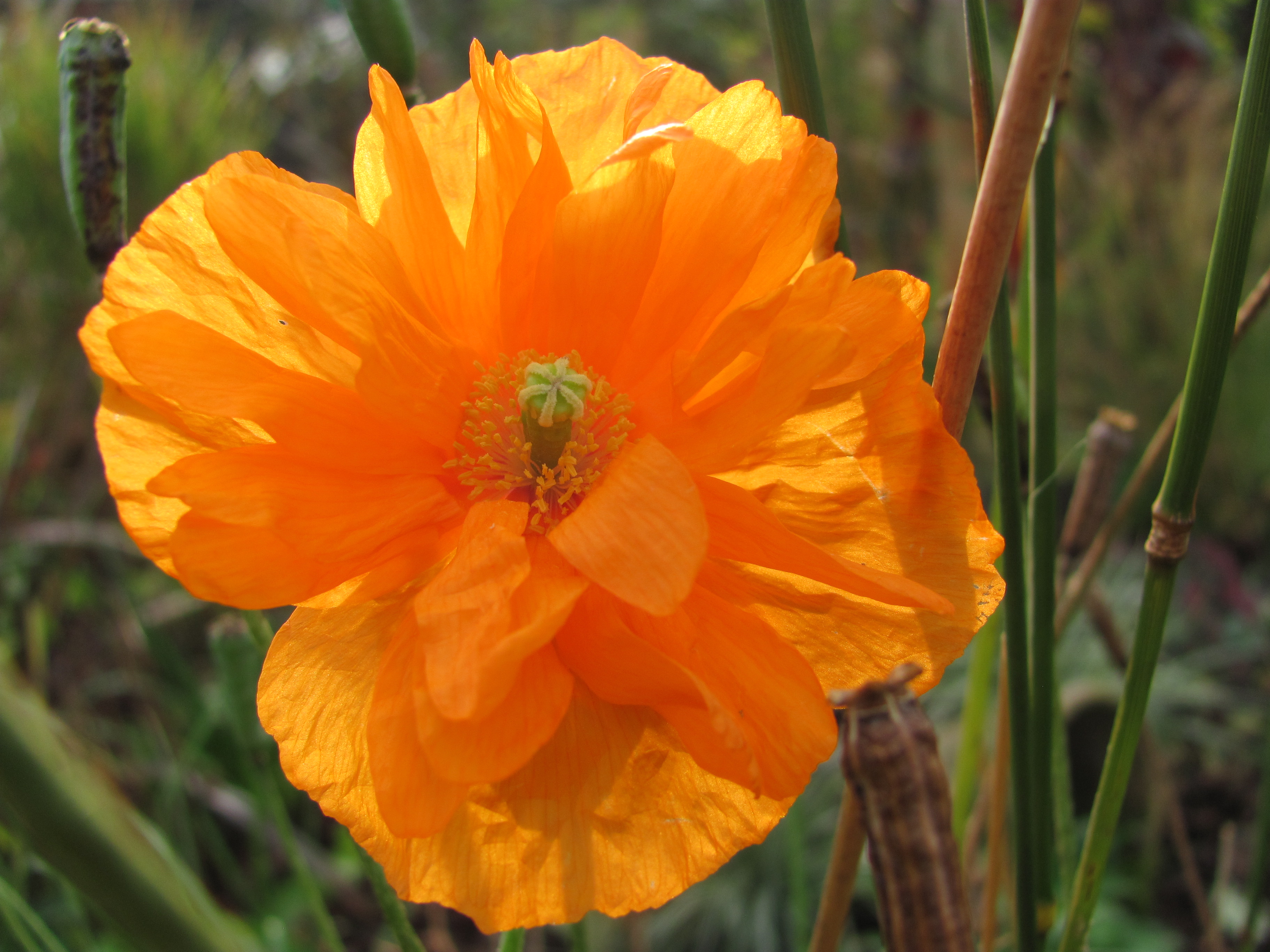
But the signs of autumn carried on all around us, the gentle watery song of the robin, the calls of redwing and fieldfare overhead. There are bonus flowers to appreciate too. Leading the way is the double orange flowered poppy, Papaver rupifragum. It simply shines. In bud it reveals a little of its silky amber secrets hidden within the tight hairy buds.
When it opens it is an orange sun. It outshines whatever sits alongside it. As a self-seeder it appears in different places each year – where it chooses not where we choose. It is better than us at knowing good neighbours.
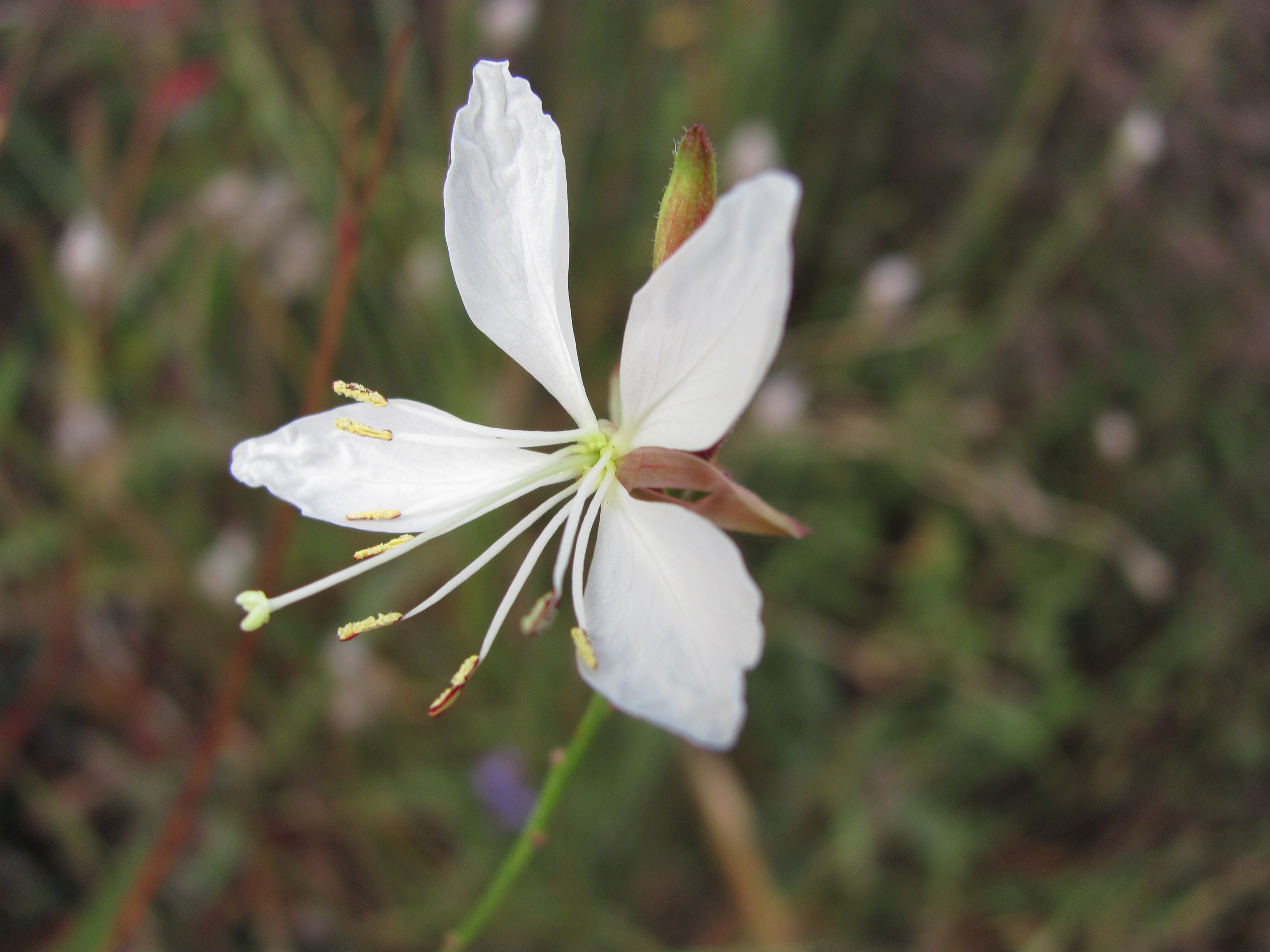
Now to move from the riduculous to the sublime, the ridiculously bright and downright gaudy papaver to the gentlest of our garden perennials, the gaura. We love it in the summer for its gentle airy white flowers variously tinted with shades of pink, its delicate swaying in the gentlist breeze but we never think of it as a star of the autumn. But just look at these photos, the flower and the seed head bathing in and absorbing the lowering rays of the sun. This year we have seen it in a new light, the light of autumn.
A visit to Westonbirt Arboretum in mid-October should mean autumn richness of red, orange and yellow. But when we went this year we were too early. The spindles, birches and chestnuts disappointed. Some acers were showing colour and would have made the visit worthwhile anyway but the real treats of the day were totally unexpected – a berberis and a sorbus.
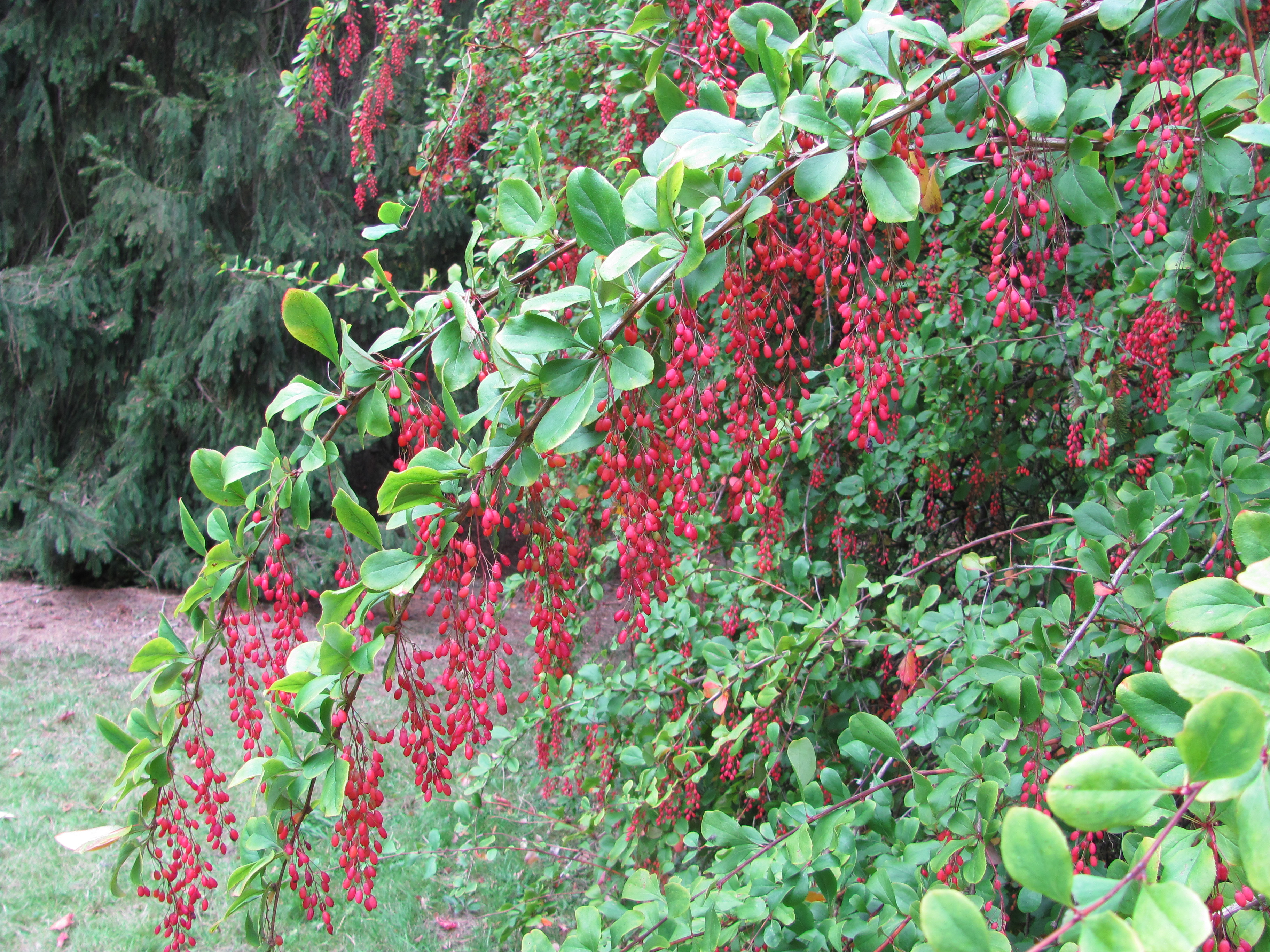
We spotted the lovely arching stems laden with red berries a long way from the main path. The sky was grey the day wet and dark but this berberis shone through it all. We made our way across wet grass to get a closer look and we met two other visitors doing the same. It was causing identification problems for everyone! The name Berberis julianae sprang to mind but I was unsure. Another visitor came over and asked if we knew what it was. She believed it to be Berberis julianae also. A Westonbirt gardener suggested Berberis concinna. But being unsure I checked in the RHS A-Z Encyclopaedia of Garden Plants as soon as we got home – we were all wrong. It was neither julianae or concinna. The mystery continued but an article in “The English Garden” showed a photo of a berberis with similar but less dense groups of pendulous berries – Berberis chitria – but I was still not convinced. As everyone was so taken aback by the large number of berries in each bunch perhaps it was just an exceptionally prolific year for it.
The RHS published an article on berberis in the November edition of their magazine “The Garden” and it presented another possibility – Berberis “Georgei”. It looks the best match so far!
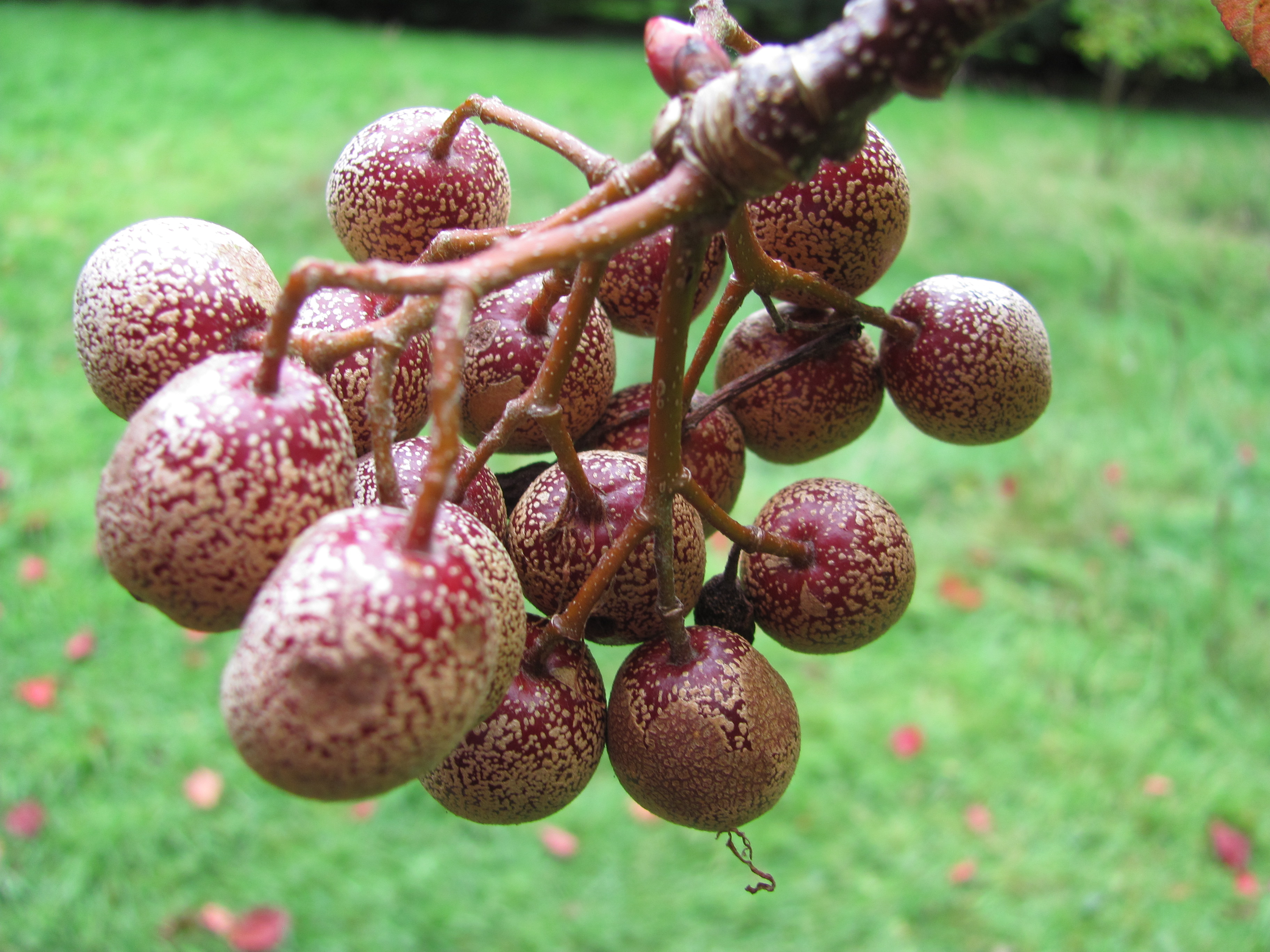
The berries of this sorbus were marble-sized and deep mahogany-red in colour overlaid with white. They felt as hard as conkers. This plant gave its identity up easily – it had a label telling us it was Sorbus megalocarpa from China.
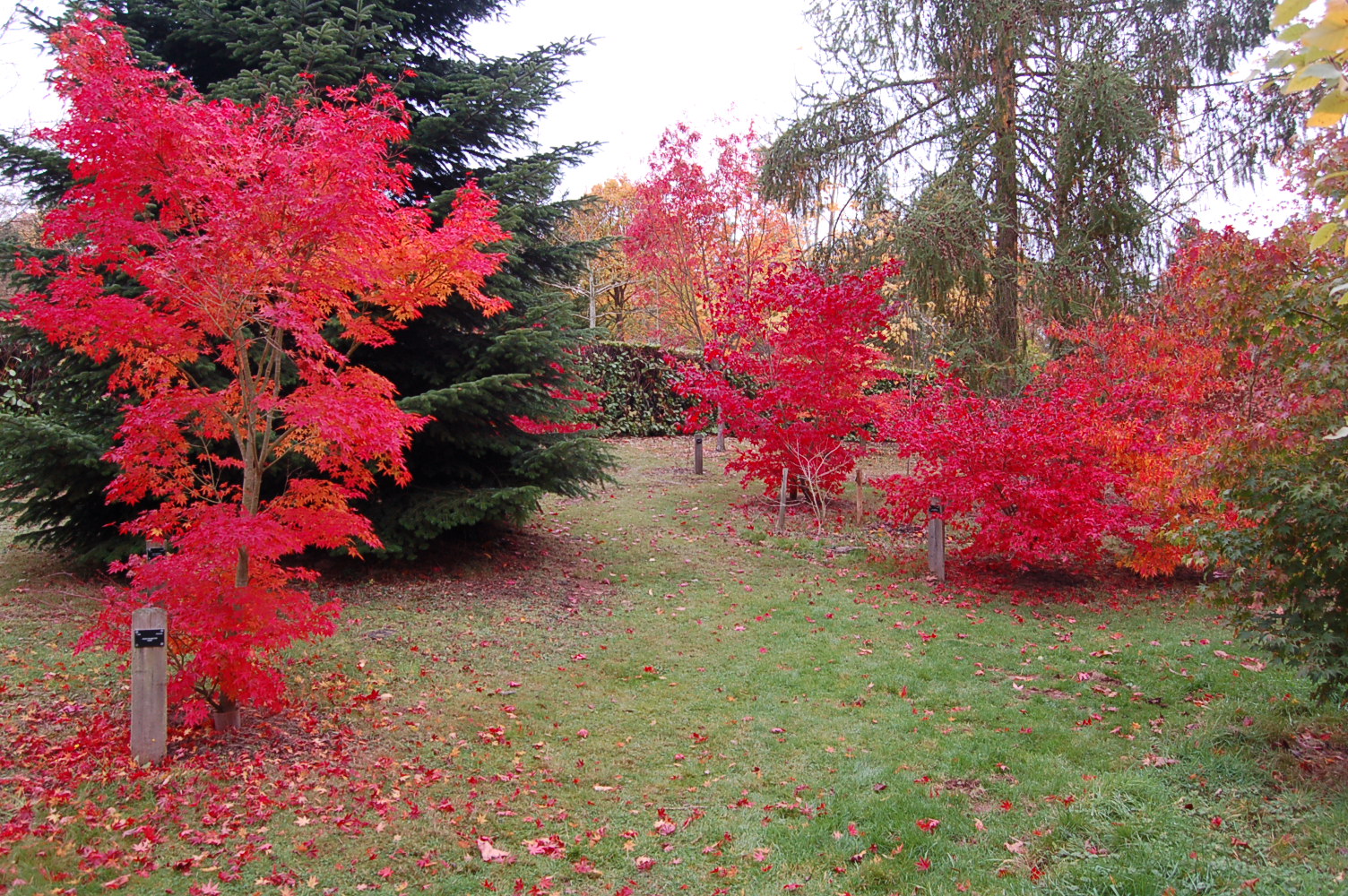
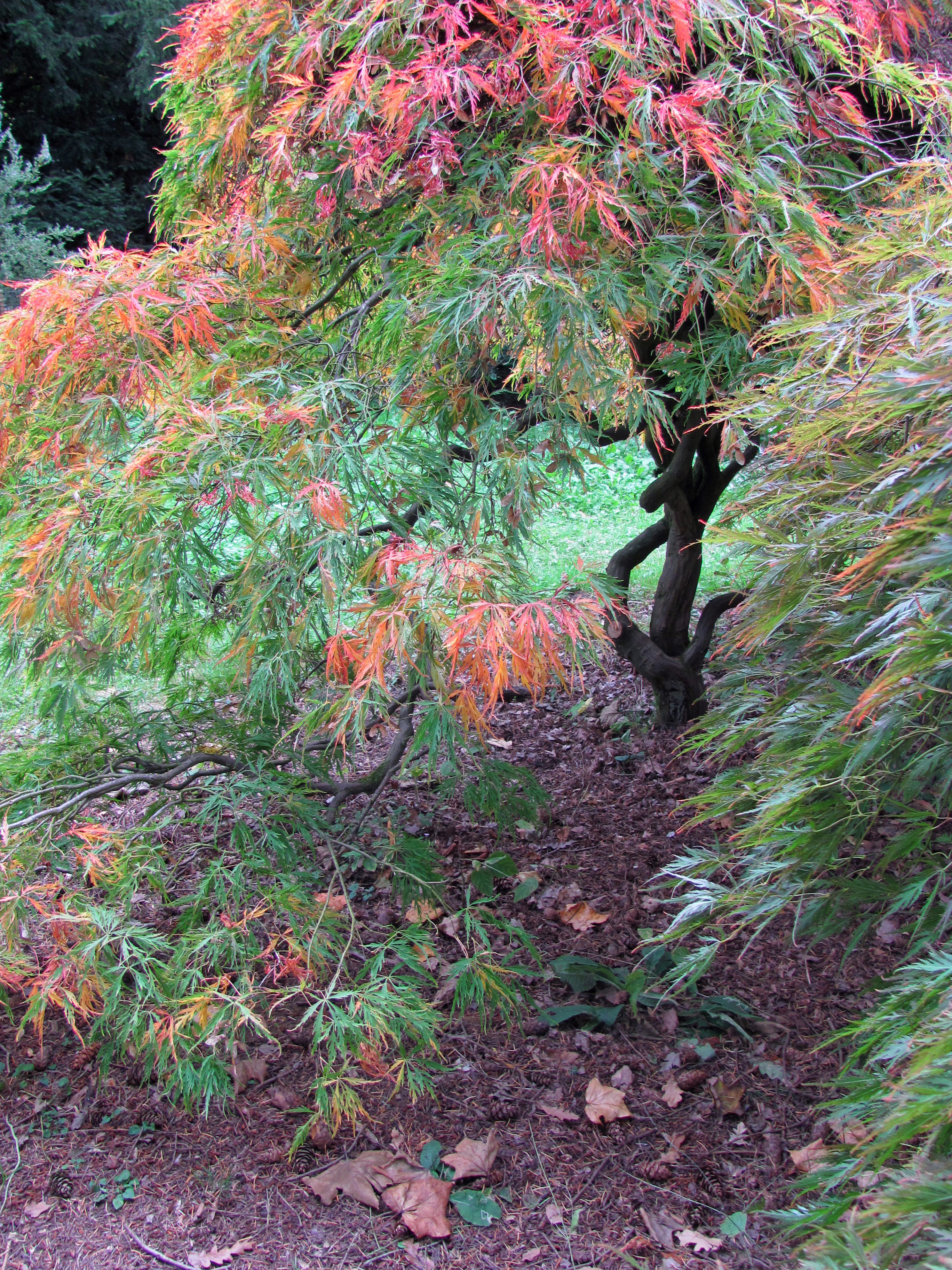
The expected autumn views of Westonbirt must not be forgotten though as some acers were dressed in their fire coloured clothes.
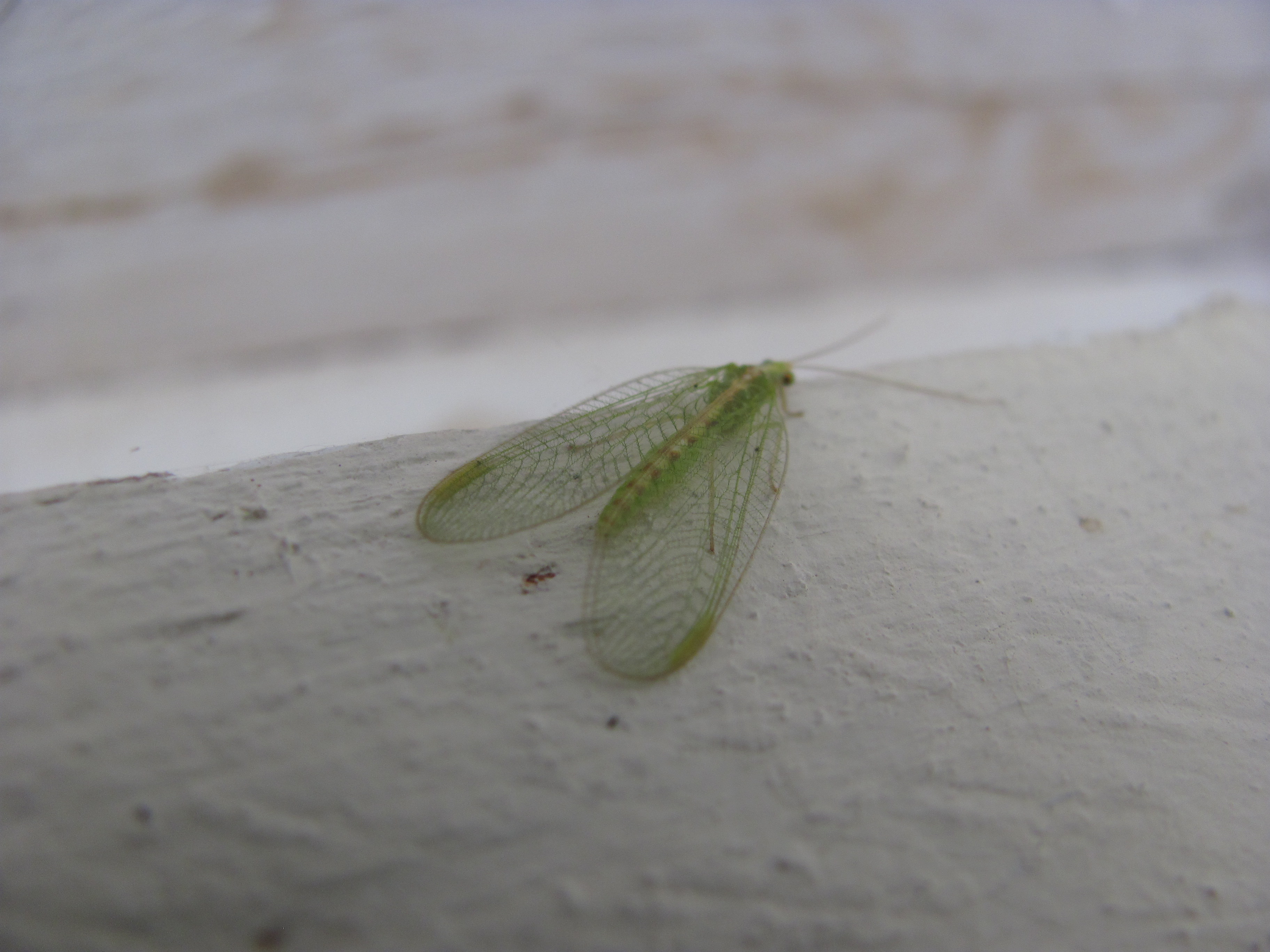
As we spent the day clearing out the pond we opened up the summerhouse alongside it so that we could periodically collapse into its comfy seats and enjoy our tea breaks. While sat there our eyes were drawn to the lacewings already hibernating on the wooden framework. They were almost invisible with their delicate green bodies and translucent wings set against the cream painted woodwork. It is good to see them as they are central to our natural pest control, their larvae being voracious aphid eaters.
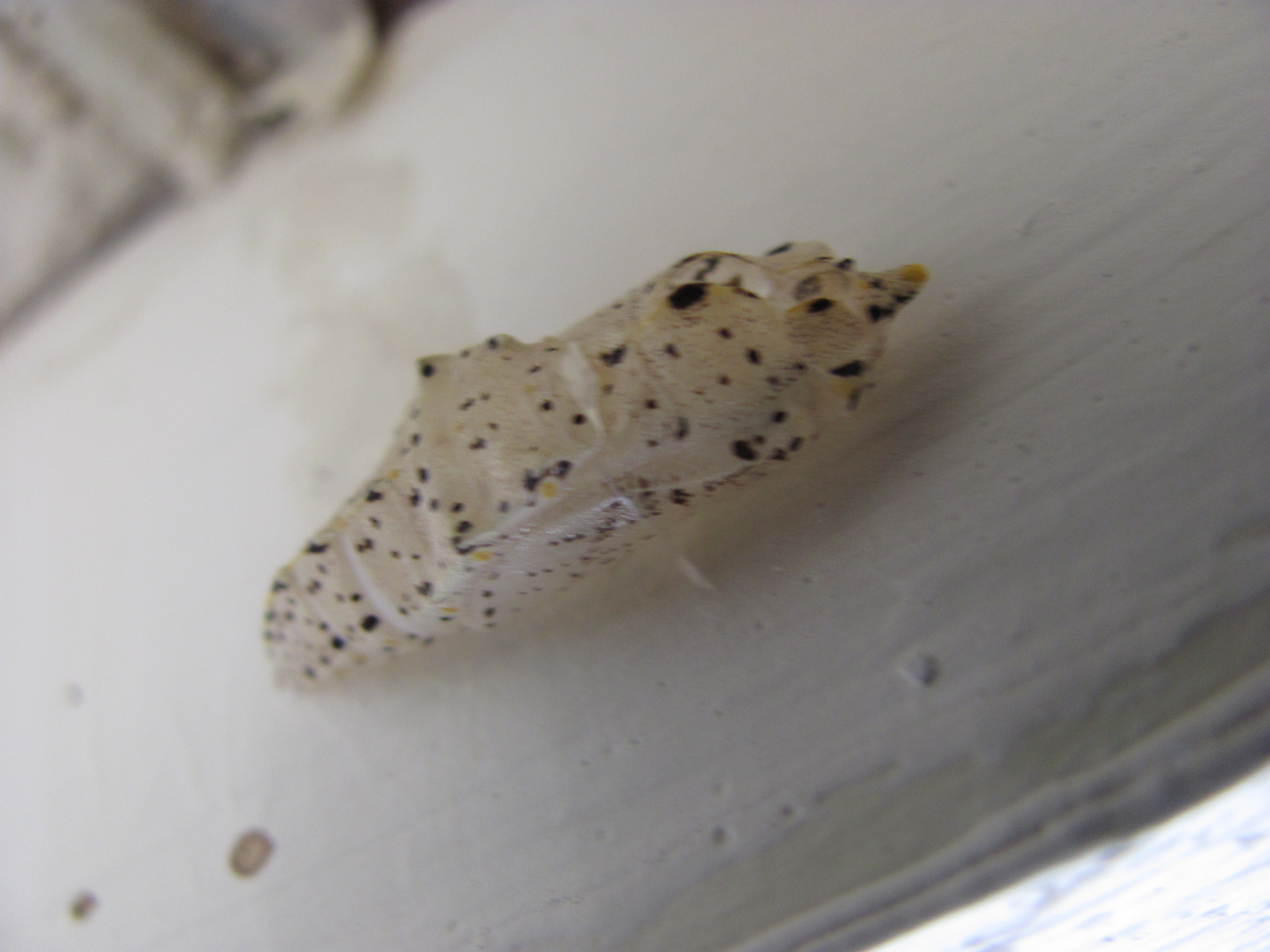
Similarly camouflaged against the cream woodwork a pupa of a butterfly hung vertically – gentle yellow but almost white with small black dots. I don’t know what butterfly it will turn into in the spring but it is usually Small Tortoiseshells that emerge from our garden buildings. I just hope I am not looking forwards to a Cabbage White!!
On the roof the third of our hibernating shed lodgers hang stuck fast to the ceiling. A clump of spider’s eggs has been stuck to the woodwork with a sticky version of webbing. Spiders of course we like in the garden as predators and as master builders of webs. As we await the first frosts of this autumn we anticipate the beauty of the spiders’ spinnings when they are highlighted by frost under the spotlights of the early morning sunlight.
Autumn Blues in the Garden
Oranges, yellows and reds are the colours of autumn but wandering around our patch today I was struck by the richness of the blues in the late blooms. The rich blue flowers of Ceratostigma plumbaginoides sit above its red tinted foliage. This is a plant to keep an eye on as the temperatures drop in the autumn because the red on its leaves intensifies and spreads. Such a beautiful plant with such an ugly name!
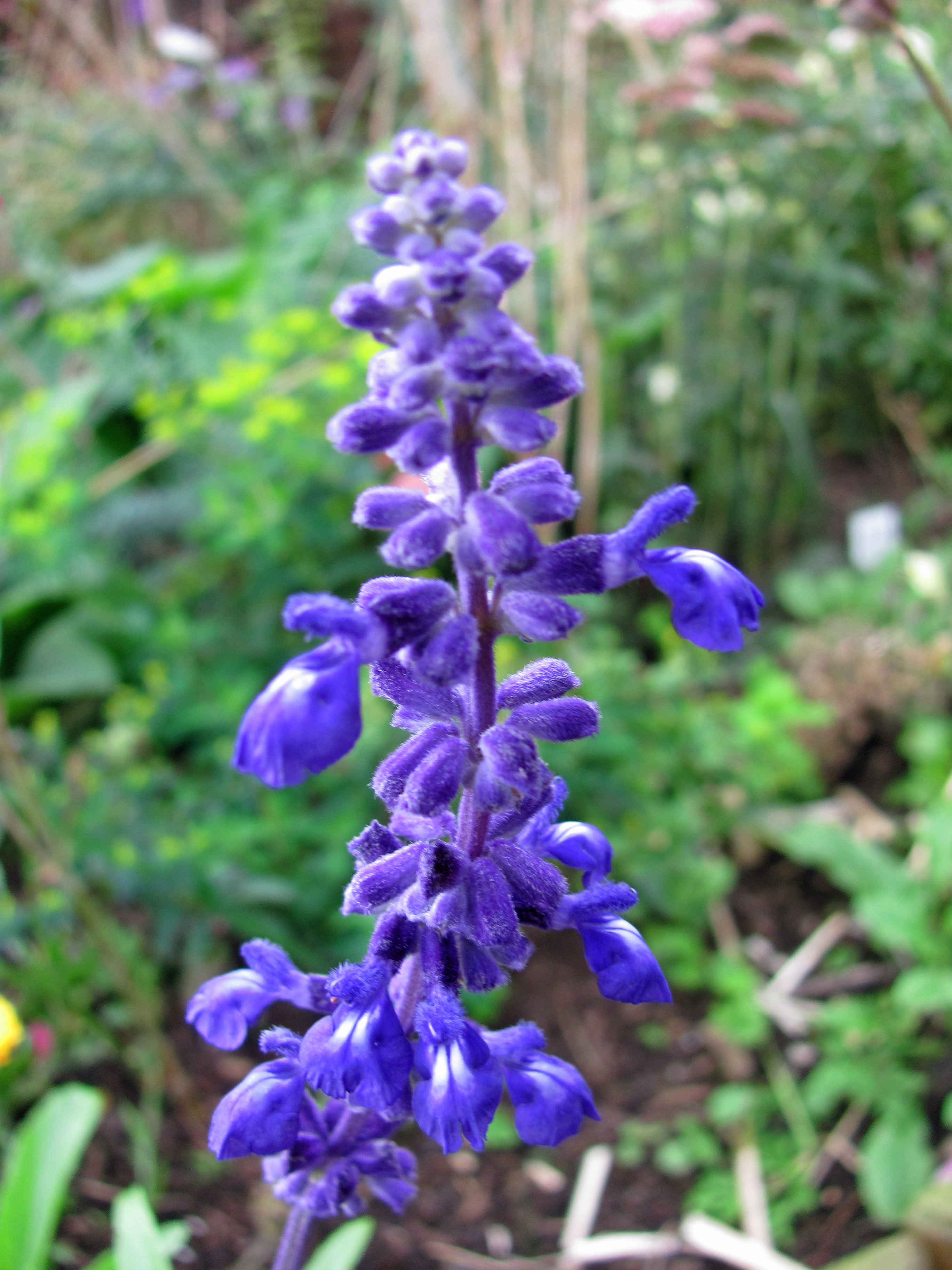
This is a hardy tough sub-shrub or woody perennial but the next blue flower is far from hardy – a salvia with intense blue spires atop dark blue stems with a metallic hue. We raised these from seed in the spring and have been enjoying their flowers since August. We must take cuttings to keep them over the winter.
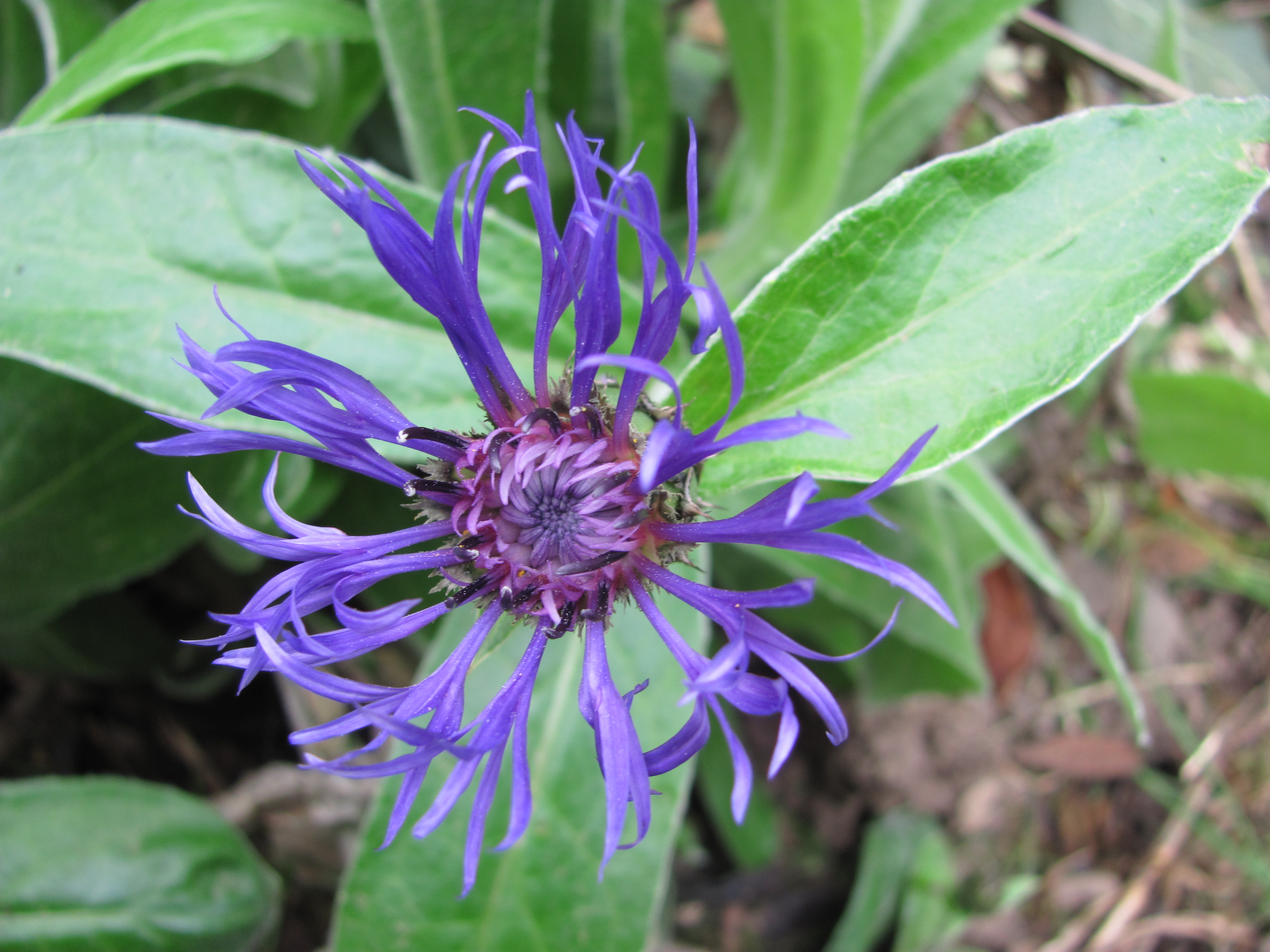
The blue flowers of the centaurea have been around for months with their delicately cut petals curling up from their dark purple centres above their soft hairy leaves.
Today we held our October working party at Bowbrook Allotment Community. We took advantage of a bonus day of sunshine and warmth. Lots of hard work and lots of laughter – a typical lottie working party day.
Soon the smell of cut hay permeated the lotties as we cut the meadow under the orchard trees. It was a warm herby smell as well as nostalgic. A true sense of the feel good factor.
Above, Dee and Wendy rake up the mown hay in the orchard and below Pete and Jude tidy the long grass from around the logpile. The logpile is there to attract beneficial insects as part of our organic, natural approach to pest control. We welcome ladybirds and their larvae, beetles and lacewing larvae as pest controllers and bees as pollinators.
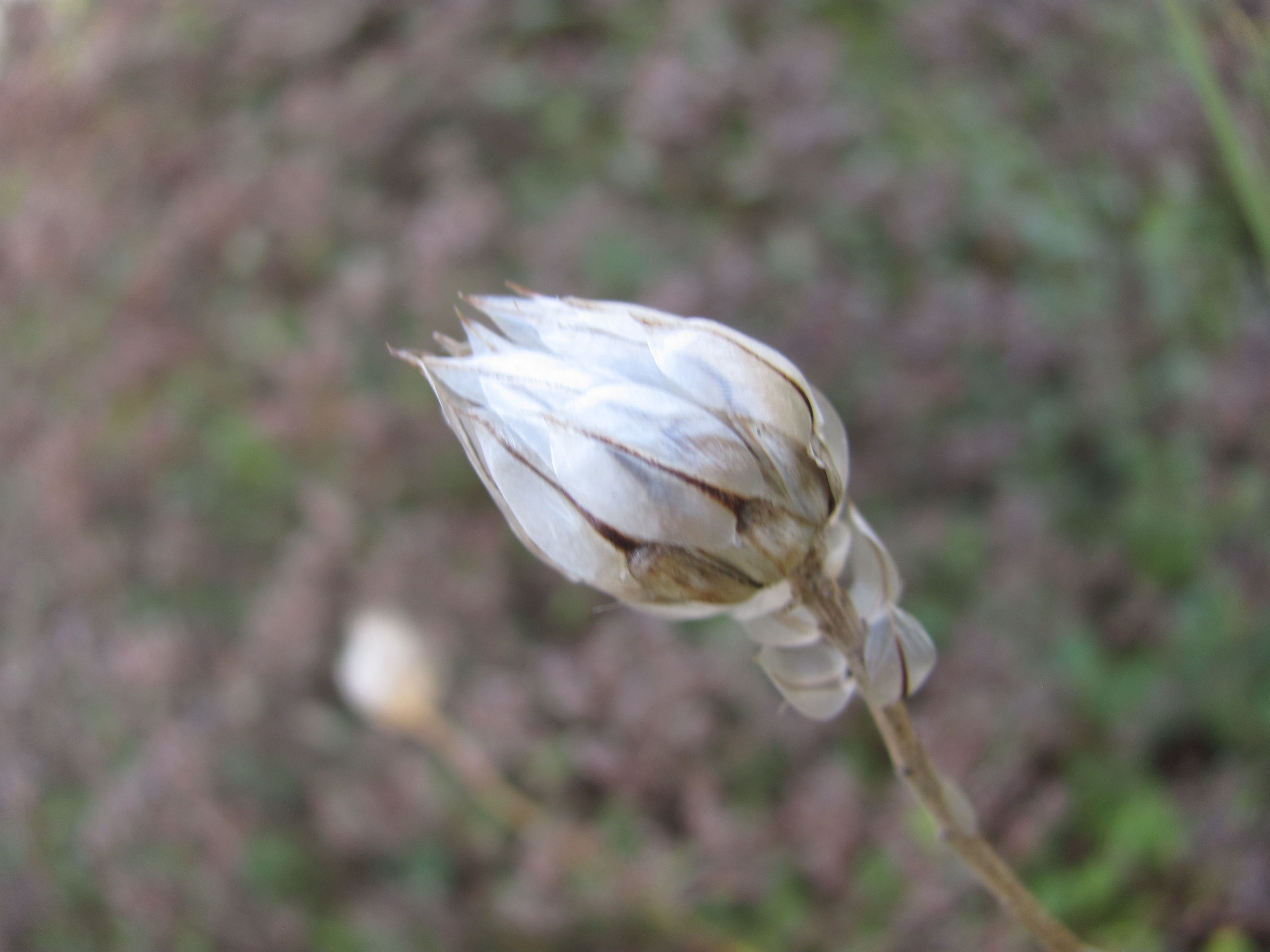
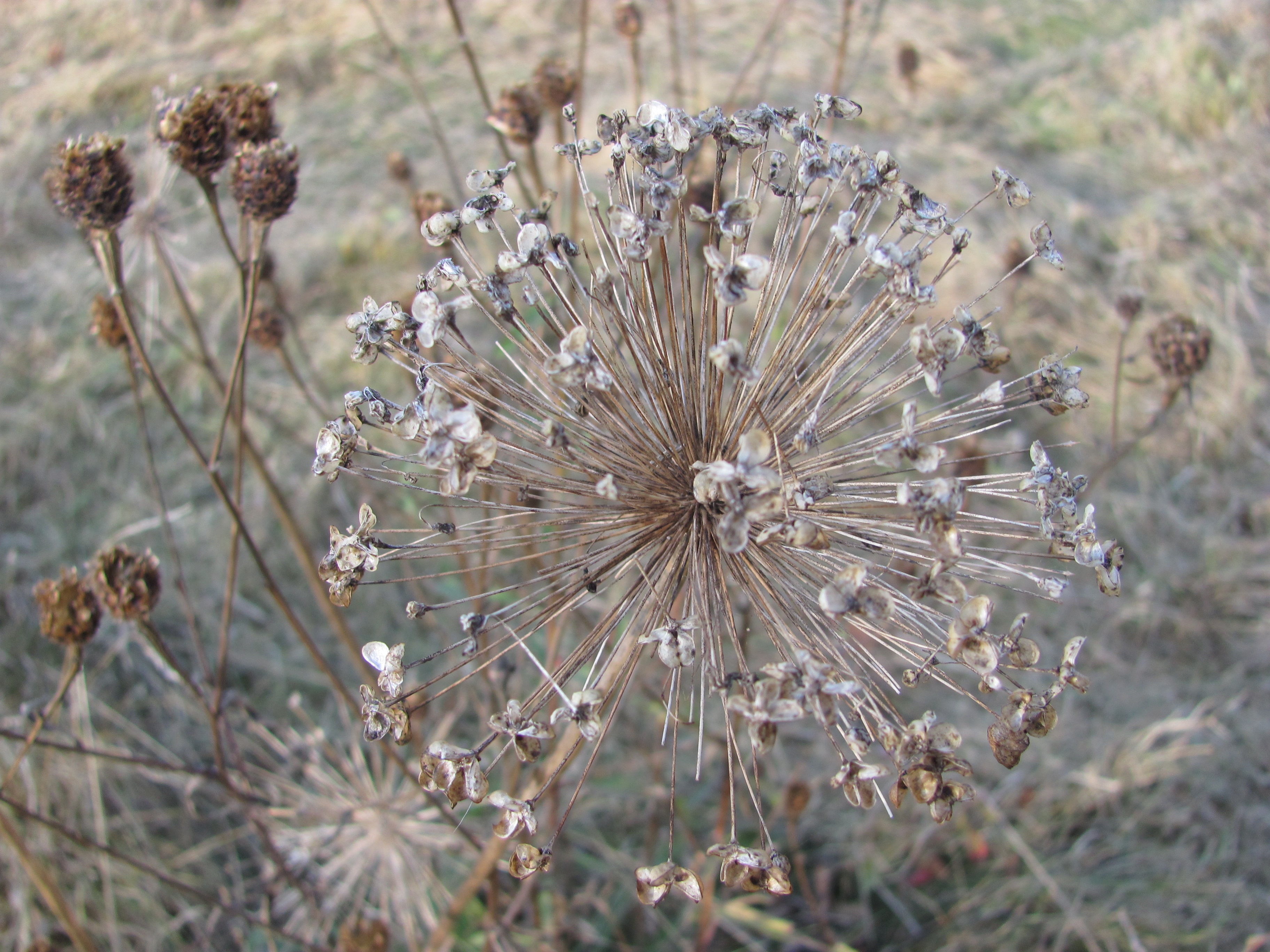
Before cutting the grass I spotted this group of seedheads – alliums and knapweed. They had shed their seeds ready for next year but I felt I had to record this particularly beautiful and delicate clump in a photo before we cut them down.
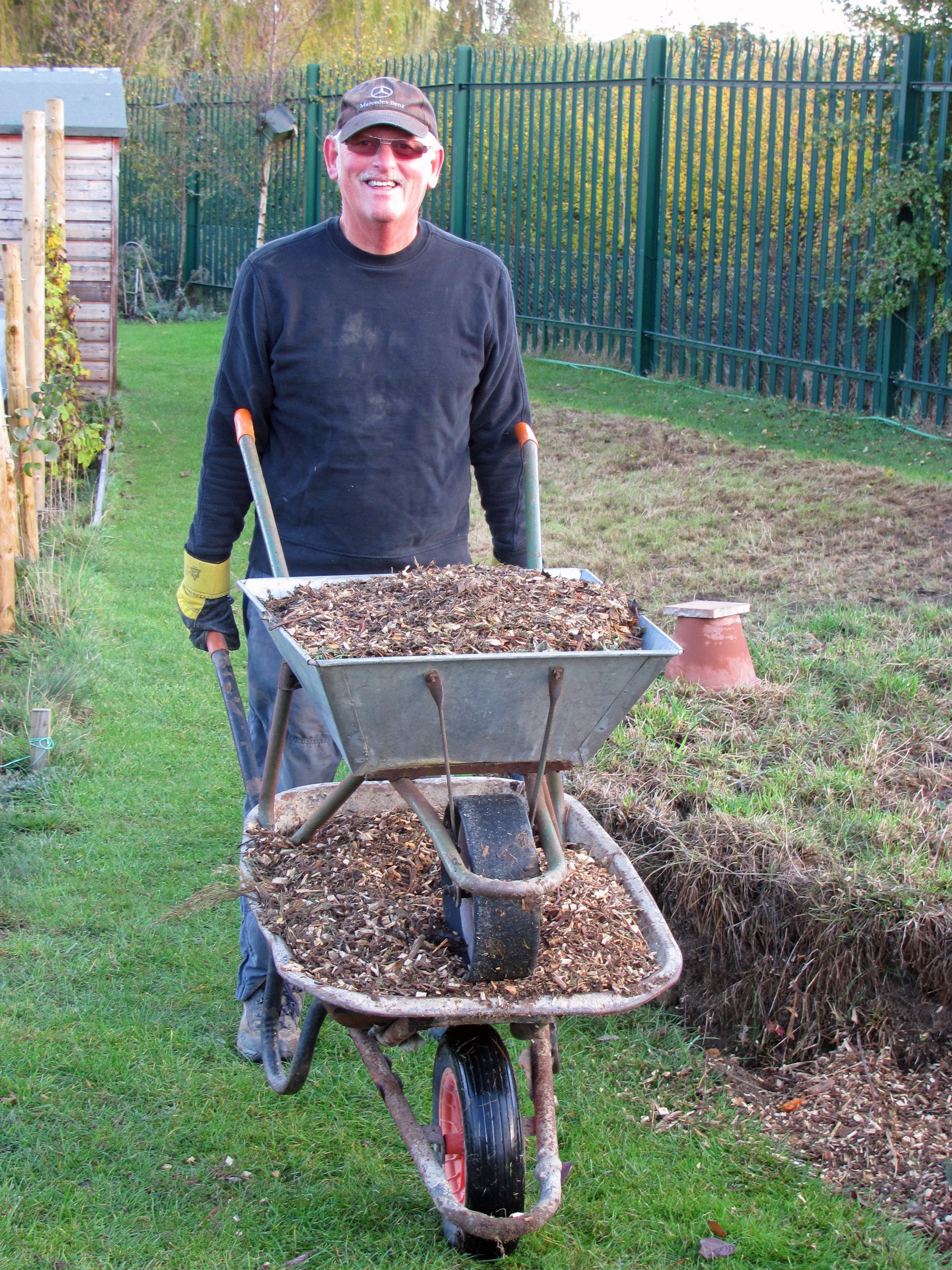
Bulbs donated by plotholders were planted around the entrance and the car park, with daffodils going in the car park border and muscari in the gateway borders. The Spring Garden was extended and the Winter Garden path was topped up with chipped wood donated by a local tree surgeon. The final task was to trim the long grass and wildflower stems growing on the wildlife banks.
We have just planted four hebes in an effort to replace some of those we lost last winter after months of the big freeze. We experienced night time temperatures of -21 for three nights on the trot. Too cold for hebes by far!
So we bought Hebe “Charming White”, Hebe “Wiri mist”, Hebe pinguifolia Sutherlandii and Hebe”Pastel Elegance”. The leaves of each one differ in colour and shape.
Charming White is actually in flower now as we plant it and what a delicately beautiful flower it is, white with a hint of purple at the very tip of each petal.
The recycled veggie box
How about this for a nifty bit of recycling! A simple transformation from veggie box to coffee table for the garden. We were in search of something unusual to use in a newly created section of our garden so searched the web for wine boxes and came across this veg storage box.
The box was used by J &JH Goodley, fruit and veg growers from Upwell near Wisbech in Lincolnshire and is dated 1970. There is a red inked stamp on the side indicating that it was manufactured by W Groom Ltd, Boxmakers of Spalding also in Lincolnshire.
The box has a red ink note stamped onto its side indicating an 8 shillings deposit. This was a brilliant way to encourage re-use of packaging which seems to have faded away. Could it be a good time to re-introduce the idea?
The undergardener and I spent a busy day at the lottie yesterday making the most of a warm bright day and catching up on autumn plantings. We weren’t the only ones as there were lots of plotters beavering away on this bonus “summer’s” day. It was a day of two characters with the brightness and warmth of the sun giving the pretence of summer but the calls of the jays passing overhead on the way to our great old oak in search of acorns hinted at autumn. The warmth and gentleness of the day encouraged lottie holders to wander around the green spaces and sit with their coffee on the benches. Talk with other gardeners was all of the lack of rain and the dry state of the soil. We have had no appreciable rain since mid-July. Turning the soil over sends up dust.
We prepared the ground by digging over the soil and adding a good 2 inch deep layer of compost. The ground was desperate for some organic matter to hold the moisture that the rains of autumn will hopefully bring.
We sowed broad beans, Aquadulca Claudia of course, planted onion sets, Troy and Radar, French shallots Giselle and three types of garlic, Lautrec Wight, Solent Wight and elephant Garlic.
Last year we planted just two cloves of elephant garlic to provide enough for planting out a row this year. They proved to be a real success giving us enough for a row and a few to cook. We look forward to discovering their taste – if it is a good as their gentle scents then they will be worth the effort of growing. They are strange crops though as they are not garlic at all but more closely related to leeks. As the photo below shows the cloves are a lovely golden colour when harvested and they most definitely look like garlic!