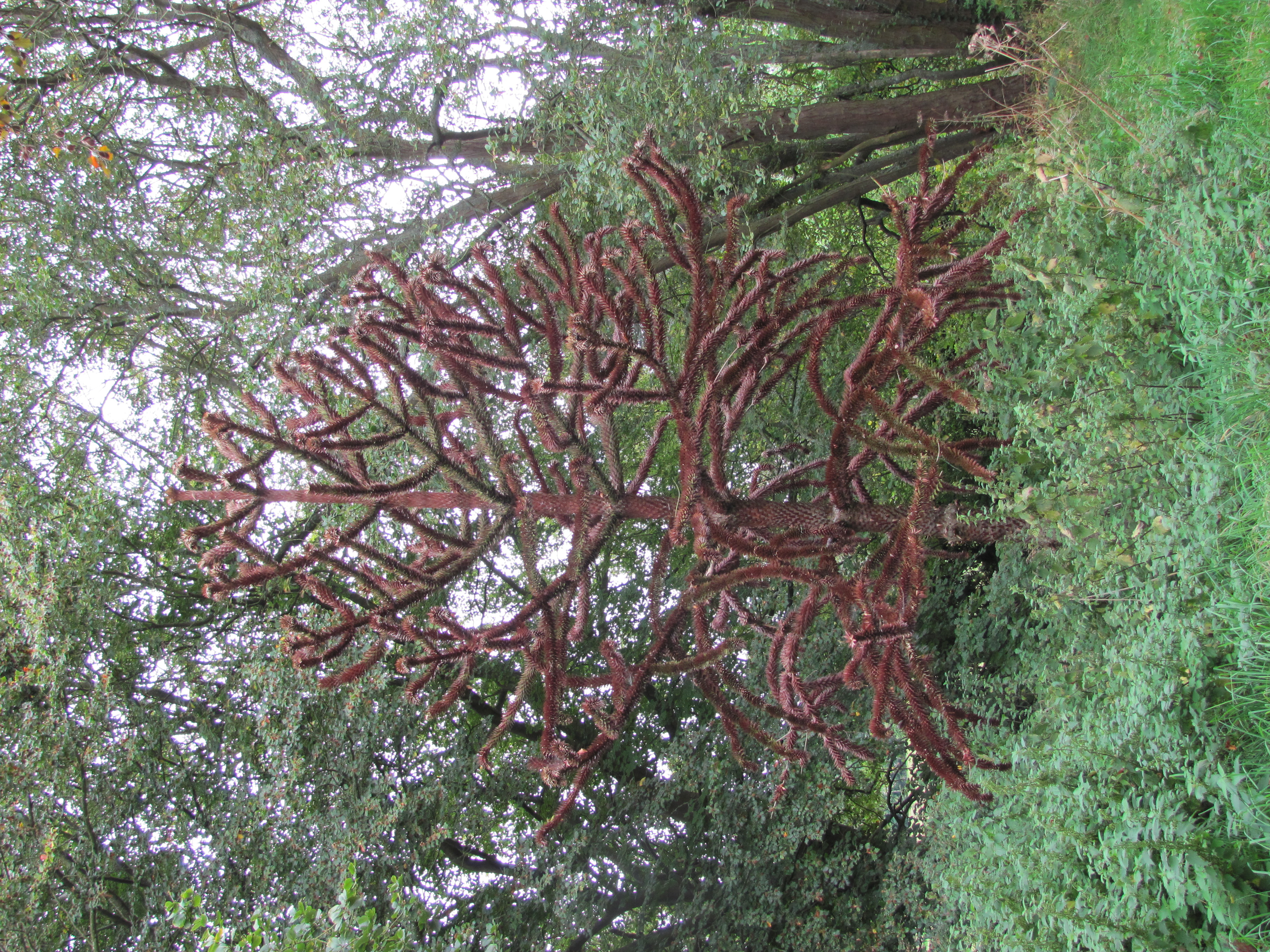
I am a real tree lover. I enjoy them in every season – their fresh spring growth, their luxuriance in summer, the colours of autumn and the structure of their skeletons in winter. There are not many trees I really dislike but the one I most definitely do dislike is the monkey Puzzle Tree. They are just too rigid and characterless for me. This one however I did like -it was dead! I couldn’t resist photographing it to send to my brother who loves them!
Author: greenbenchramblings
A retired primary school head teacher, I now spend much of my time gardening in our quarter acre plot in rural Shropshire south of Shrewsbury. I share my garden with Jude my wife a newly retired teacher , eight assorted chickens and a plethora of wildlife. Jude does all the heavy work as I have a damaged spine and right leg. We also garden on an allotment nearby. We are interested in all things related to gardens, green issues and wildlife.
stripes and spikes
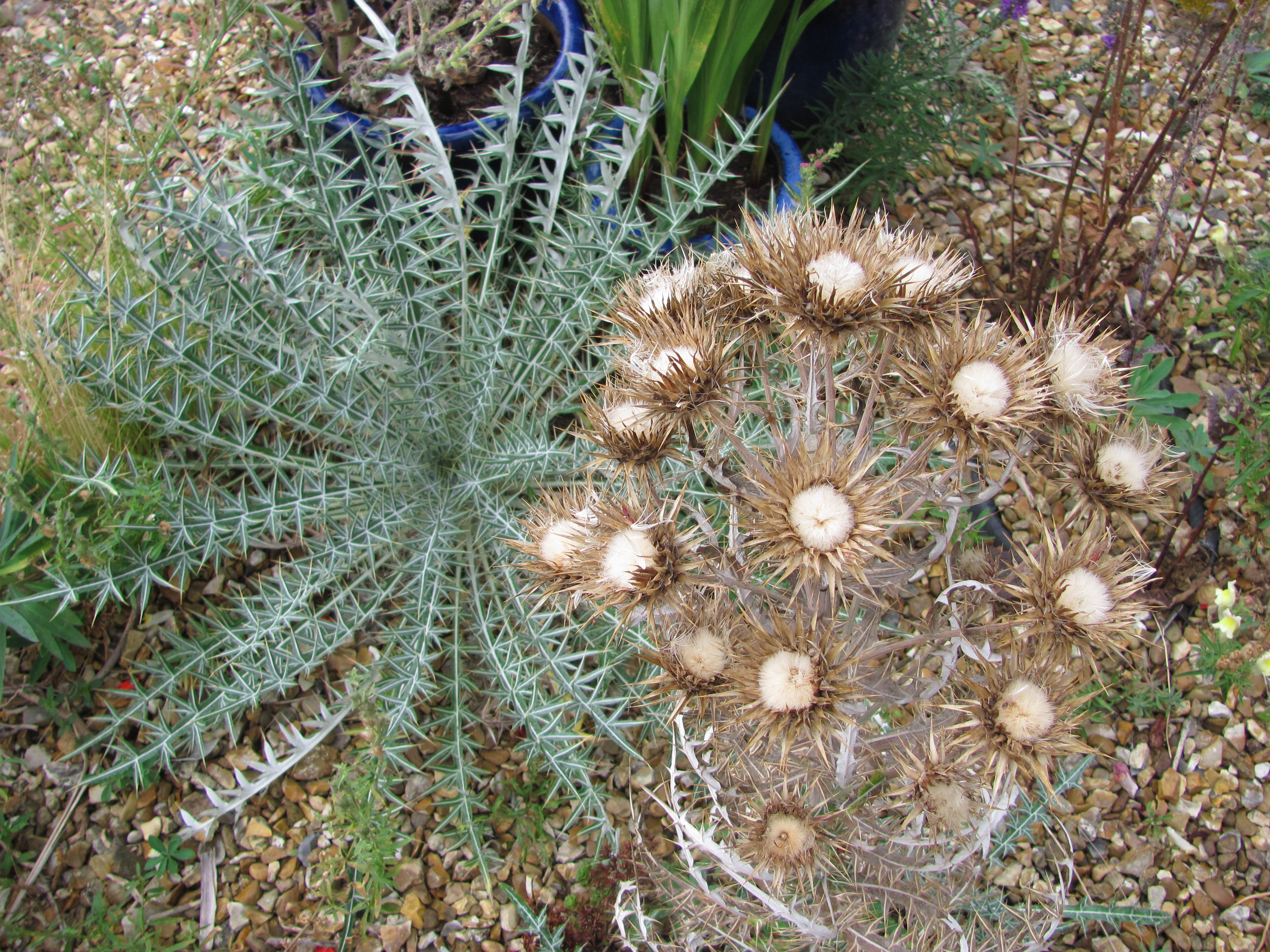
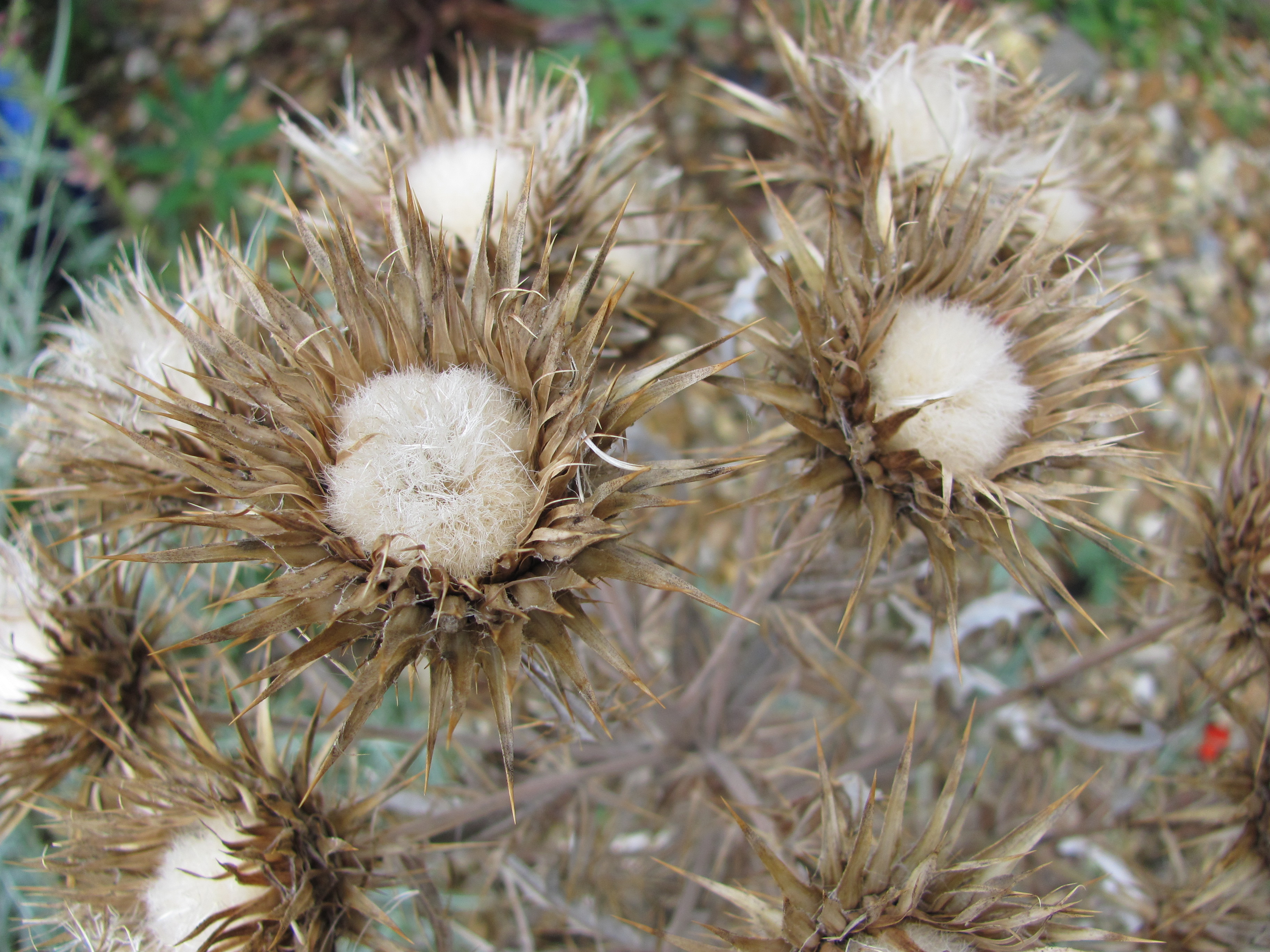
Galictites tomentosa! What a name! But just look at the beauty and presence it brings to our gravel garden! The grey and silver foliage arranged in dramatic star-bursts.
The seed heads sit through the autumn and most of the winter providing interest for us particularly on frosty days and food for the goldfinches who sit atop the stalks and pull the seeds out. Luckily some are left to drop in readiness for warmer spring weather when they germinate in the gravel to give us next year’s plants. We can enjoy feasting our eyes on their fresh new foliage, summer flowers and statuesque stalks topped off with fluffy seedheads. But there has to be a drawback – weeding out the excess seedlings is a painful business as the spikes on the end of each leaf spike can give the unwary gardener a prickly shock. They need a warning – handle with care!
Haughmond Hill Stones
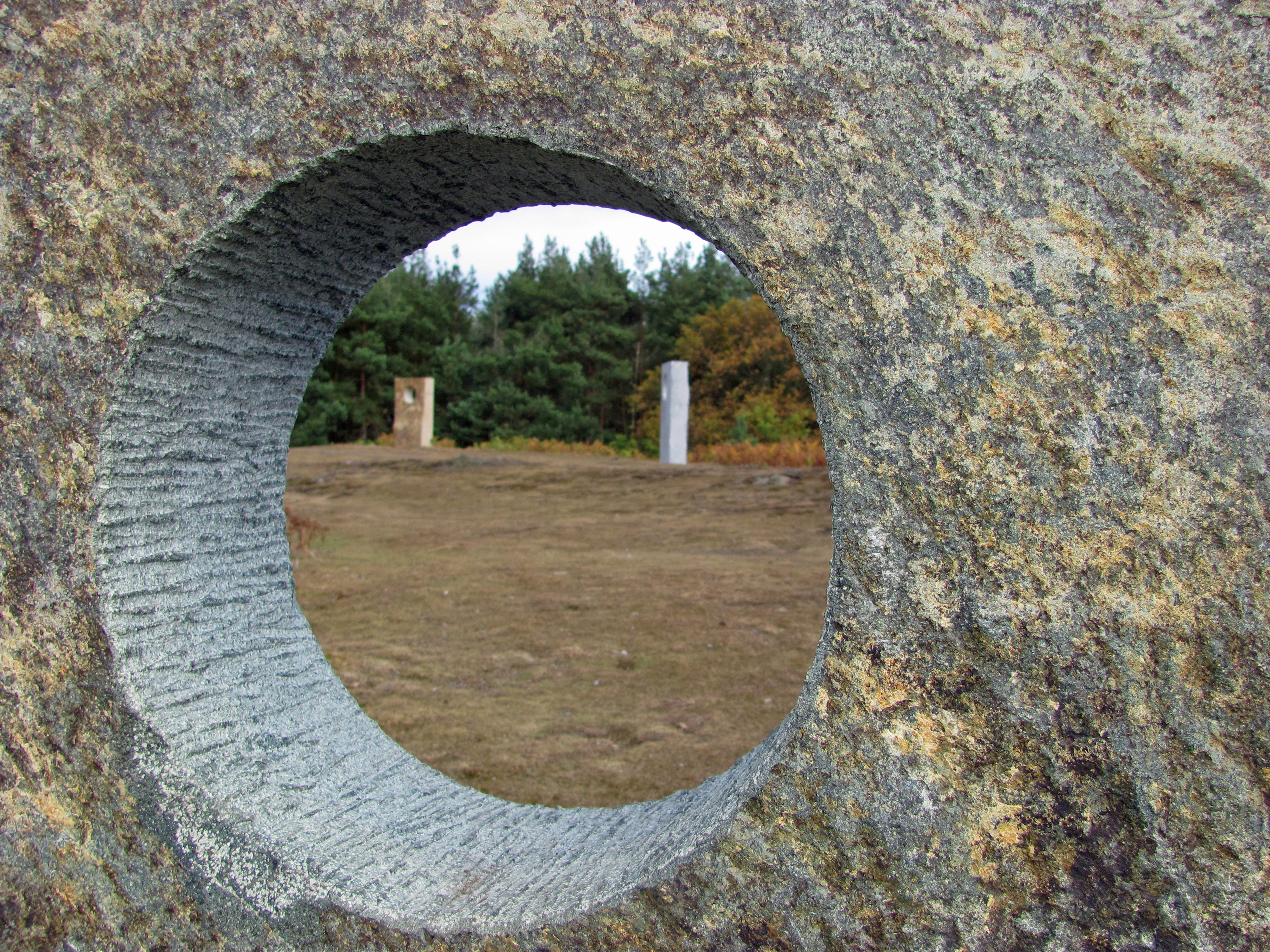
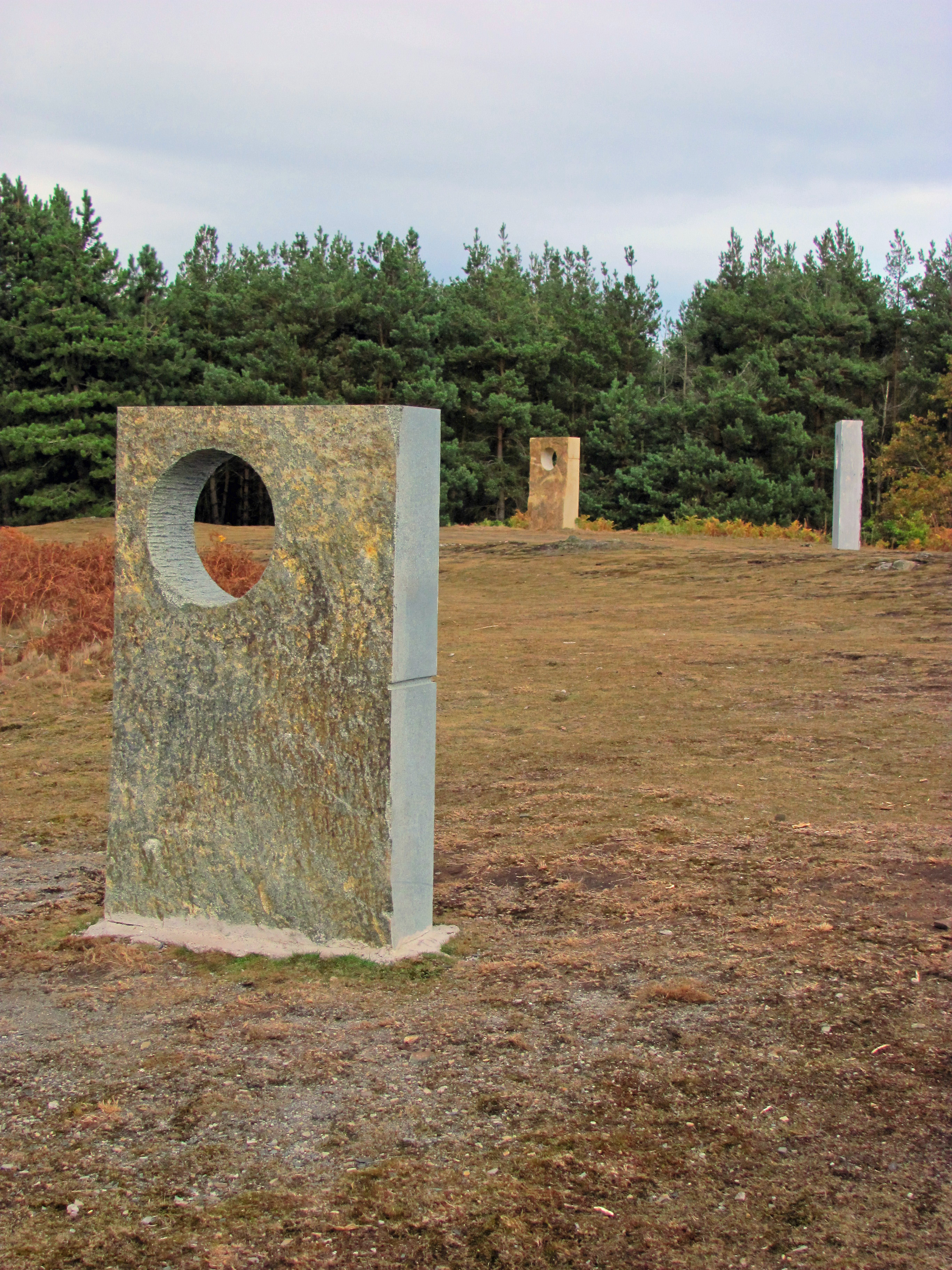
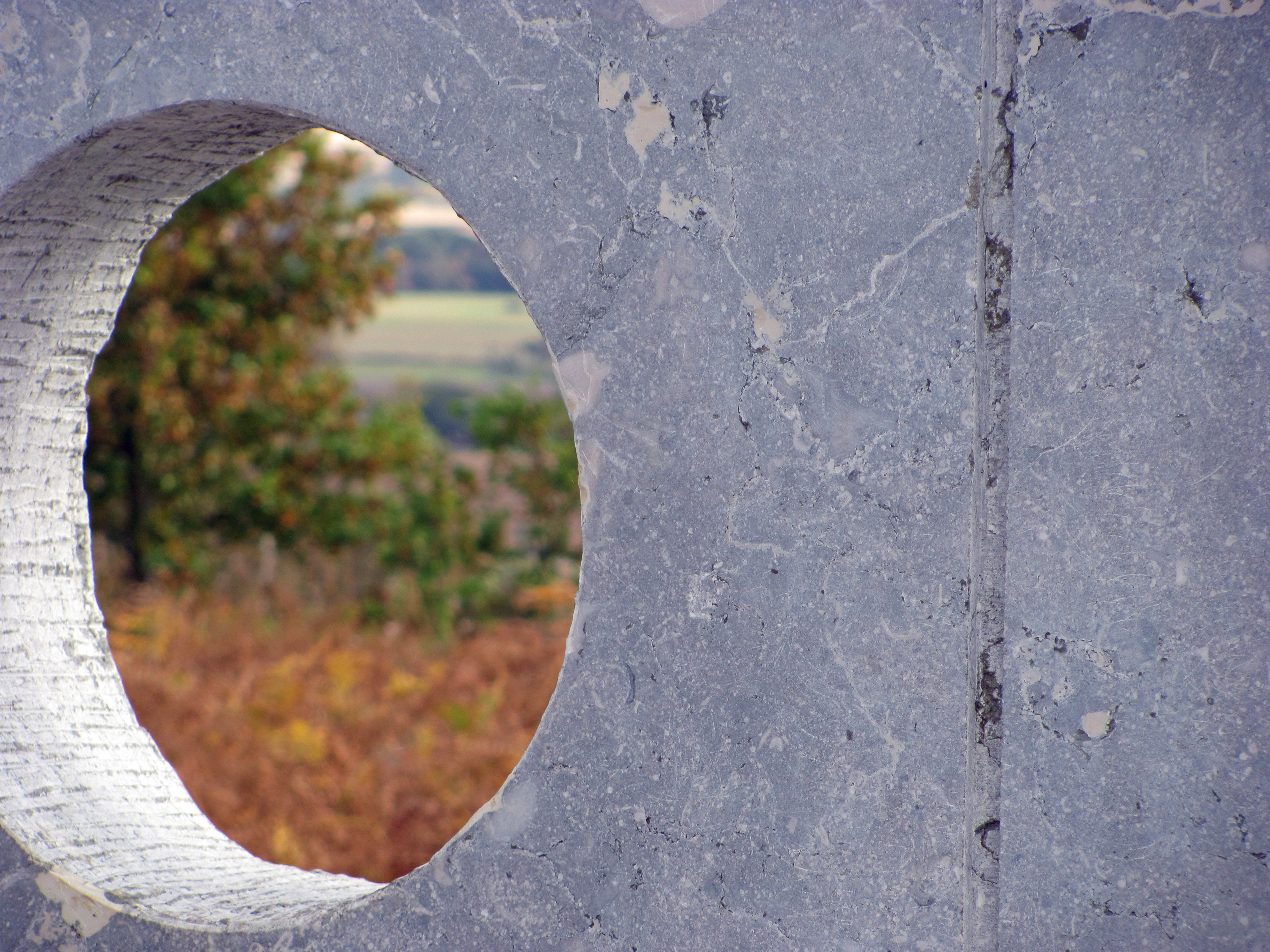
Just enjoyed a slow ramble on Haughmond Hill just outside Shrewsbury. Near the top we came upon a real surprise – three beautiful stone blocks each textured, worked and marked in different ways but linked to each other. They felt so right – happy in their environment and adding to it richly.
Although the sculptures are worked by the hand of man they fit within their “habitat”, their colours, textures and the materials from which they are carved.
Early autumn is the ideal time to visit them as their colours perfectly reflect the colours of the season.
It will be interesting to see how they weather and to watch out for lichens and mosses taking up residence on their surfaces.
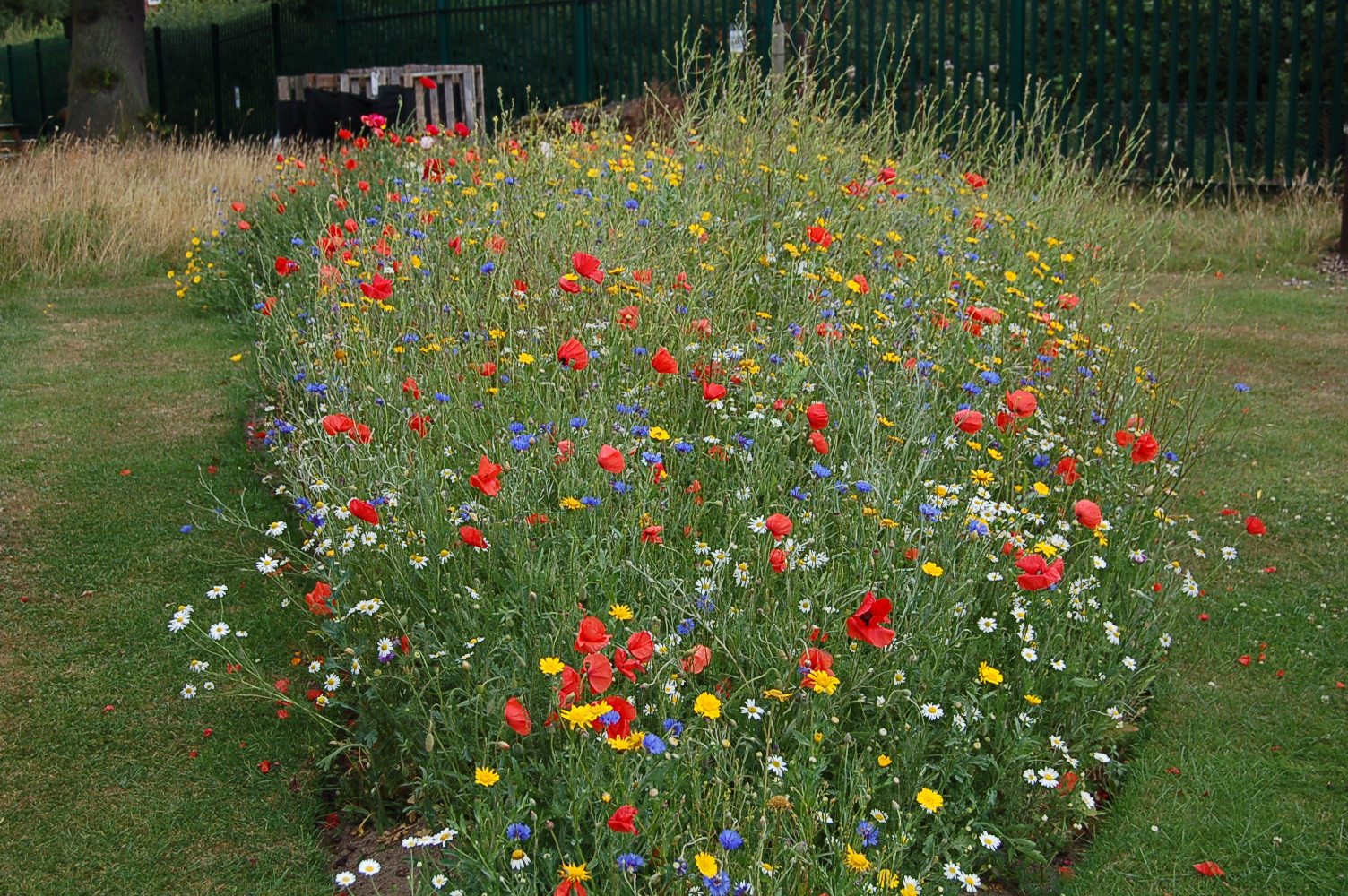
This year we created a new meadow from scratch on the Bowbrook Allotment Community green spaces. The area was cleared of turf which we used on our loam pile and dug over removing as many roots of pernicious weeds as possible as we went along. We then rotavated the area and left it to let weed seedlings appear. As they did so we hoed them off.
We sowed with a mixture called “Pictorial Mix” which included annuals, biennials and perennials which were mostly British natives but we added other wildflowers were included to extend the season and add extra colour. The result can be seen below, but it did keep us on tenterhooks as the seeds germinated very slowly in the dry weather we have experienced here in Shropshire all year.
We have been so pleased with the result! It is the most photographed border on the site. Now in late September it is still showing some flower.
One of the most popular features of our green spaces at Bowbrook allotments is the meadow development. We have simply left some grass to grow long and cut paths through them to give the opportunity to wander, appreciating the sounds of grasshoppers, bees, hoverflies and the multitude of other insects, enjoying the sight of butterflies hovering over the grasses and the birds feeding on the insects and seeds and on occasion our resident kestrels hovering overhead and hunting the voles. Before the allotments were established the site was pastureland so the wildflowers that have appeared within our long grass areas are few in number, but we aim to improve this over the next few years by planting plugs of wildflowers.
Other areas have been planted up with wildflower seed mixes with varying degrees of success and this will be the subject of my next blog from my green bench.
Garden Birds of Prey
This week has been a busy one for birds of prey in or close to our garden here in Plealey. While working in the borders in the back garden yesterday we delighted in the site, and it has to be said sounds, of a dog fight between a Red Kite and two Jackdaws. This all went on right above our heads as the Jackies forced the kite low over the garden and then the kite fought back gaining a few metres of height. It gave us the chance to watch the kite’s long wing and tail feathers twisting and turning which gave it extra manoevrability which the jackies matched with their persistence and stubborness.
In the lane near our garden we watched a hobby flying almost at ground level looking like an oversized swift. It was a beautiful grey-backed male. He maintained a constant, and very rapid, flying height of only about 12 inches or so above the tarmac.
This morning we watched our local male merlin hunting through the garden and later found the feathers of a greenfinch – his breakfast – on the lawn. More gruesome was the remains of a peregrine kill – just the wings and tail of a wood pigeon – scattered on the grass path down to the chickens. Why do peregrines always leave the tail and wings but consume every other bit of flesh and bone?
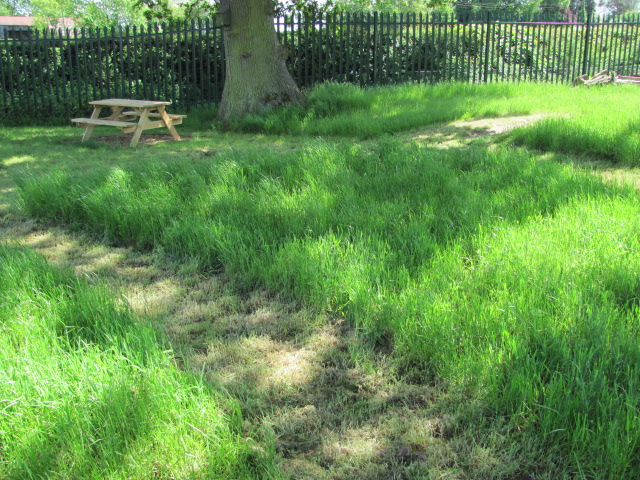
At the weekend we took part in a working party at the allotment. These are held regularly aiming to maintain the shared green spaces around the site. The main task for this day was to give the meadows and long grass areas their annual haircut. The photo below shows members strimming the turf spiral maze and mowing the long grass under the fruit trees in one of the community orchards.
Once the orchard has been treated to its annual trim it looks so flat and dull. The tall grasses always sway gently in the slightest breeze and attract insects and butterflies. Cutting these grasses down really emphasise that summer is coming to an end.
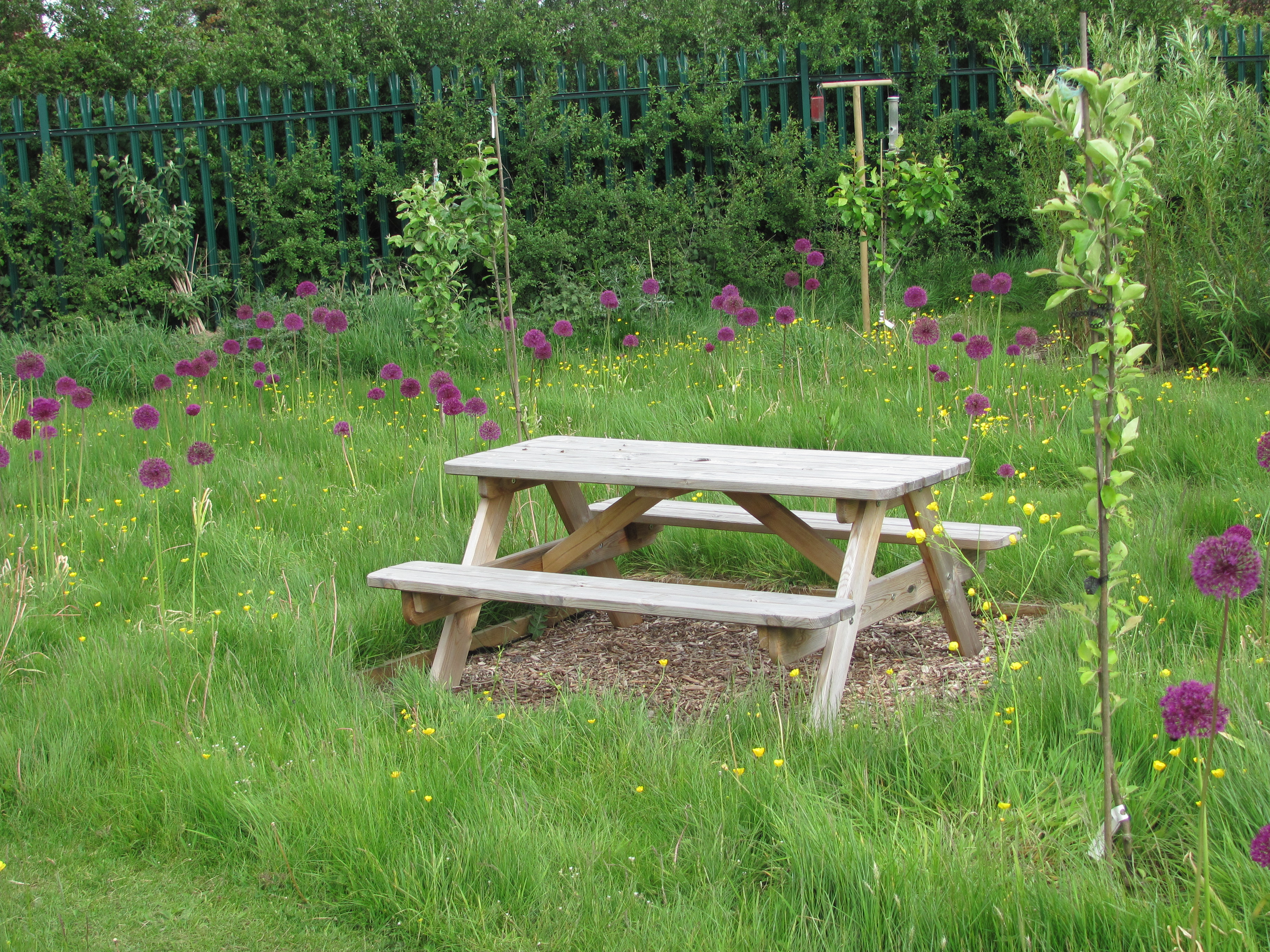
We hope next year to be able to plant plugs of wildflowers into the grass of the meadows and orchards. We have already planted bulbs in the meadows, daffodils into the one and alliums, muscari and crocus into the other. The photo below shows one of our orchards in early summer when the purple globes flowers of the alliums look stunning with the dainty yellow flowers of the meadow buttercups. This picnic is particularly popular with plotters when they take their coffee-breaks or wish to sit and quietly read a book.
Fruity Welcome
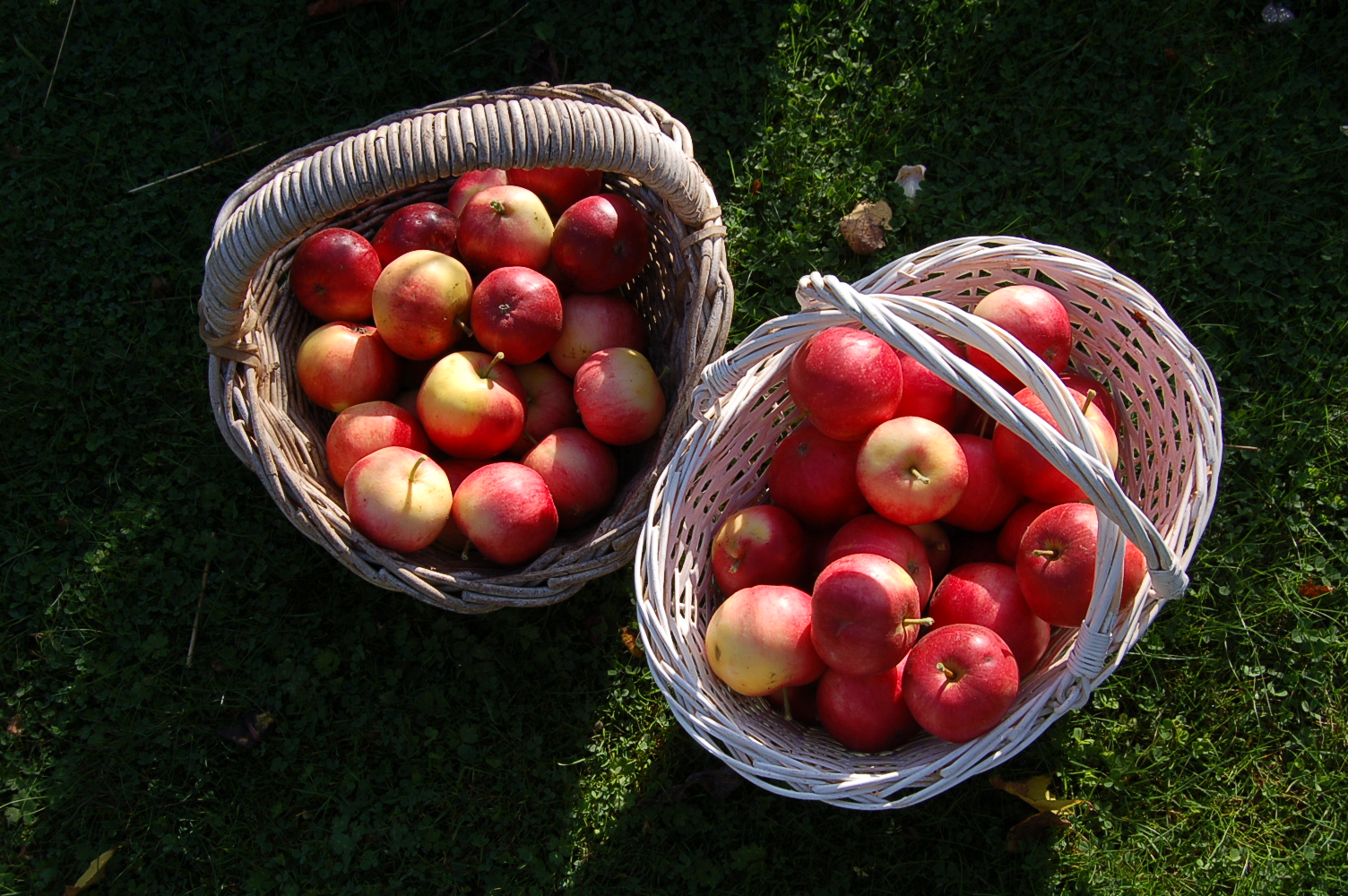
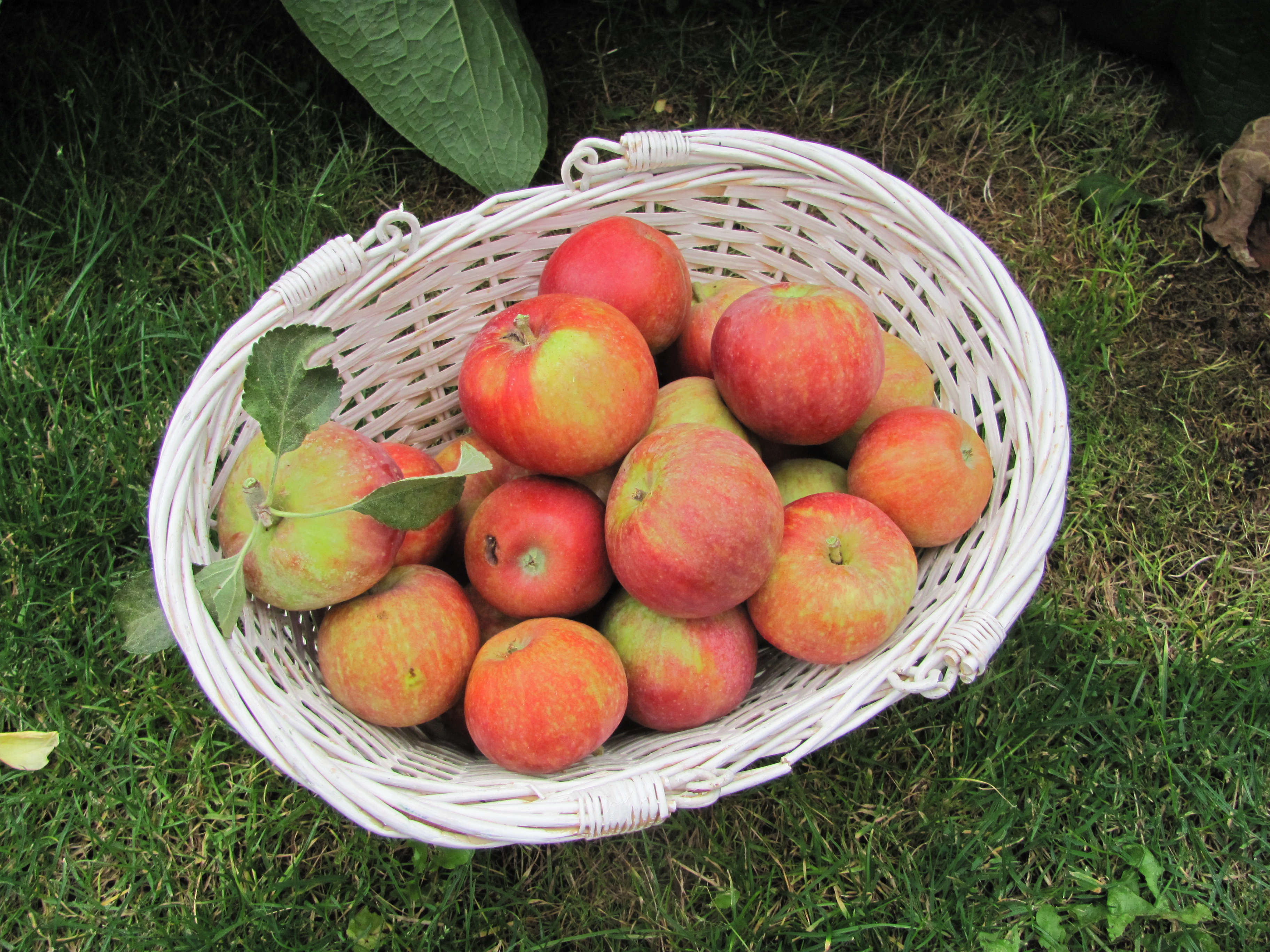
Today we harvested our two Red Windsor apple trees. They are miniature trees called “coronets” and we chose them to flank our front door, where they live in big, heavy, 24inch terracotta pots mulched with a layer of pebbles. One of the trees was a thank you gift so we bought another to make a matching pair. They seemed a far better option to the more formal possibilities – standard hollies, conifers or lavenders.
They are ideal for this position as they give lots of blossom early in the year which is much loved by bees and hoverflies and colouful fruit throughout the summer. Then today they yielded a 6 lb harvest of tasty looking fruit. The fruit is described as cox-like but we shall wait and see. The only problem with growing apples by your front door is that the postman thinks they are for him!
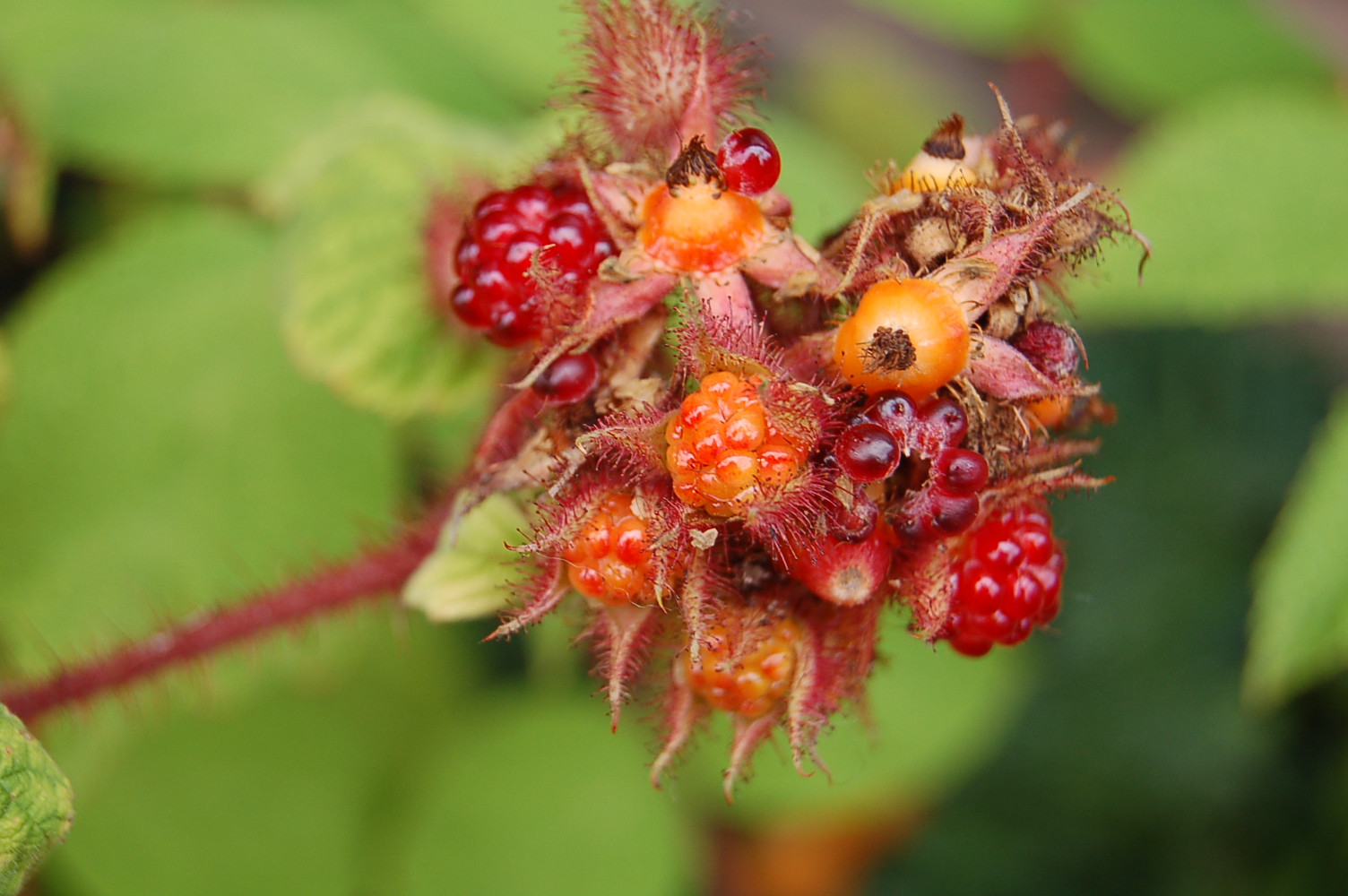
We recently visited the permaculture garden of Wade Muggleton and his family in South Shropshire and what a wonderful garden it is, full of interest, attractive and so productive. Every inch of space is used and productive on several layers – tree, shrub and ground. The front garden is home to fruit from strawberries at ground level, through gooseberries, including a deep red fruited bush with intense sweet taste, and on up through cordon apples and finally up to apples grown on trees. The star of the front garden though was the Japanese Wineberry with its bright orange and red colouring and textured stems – and they had a sweet, rich taste.
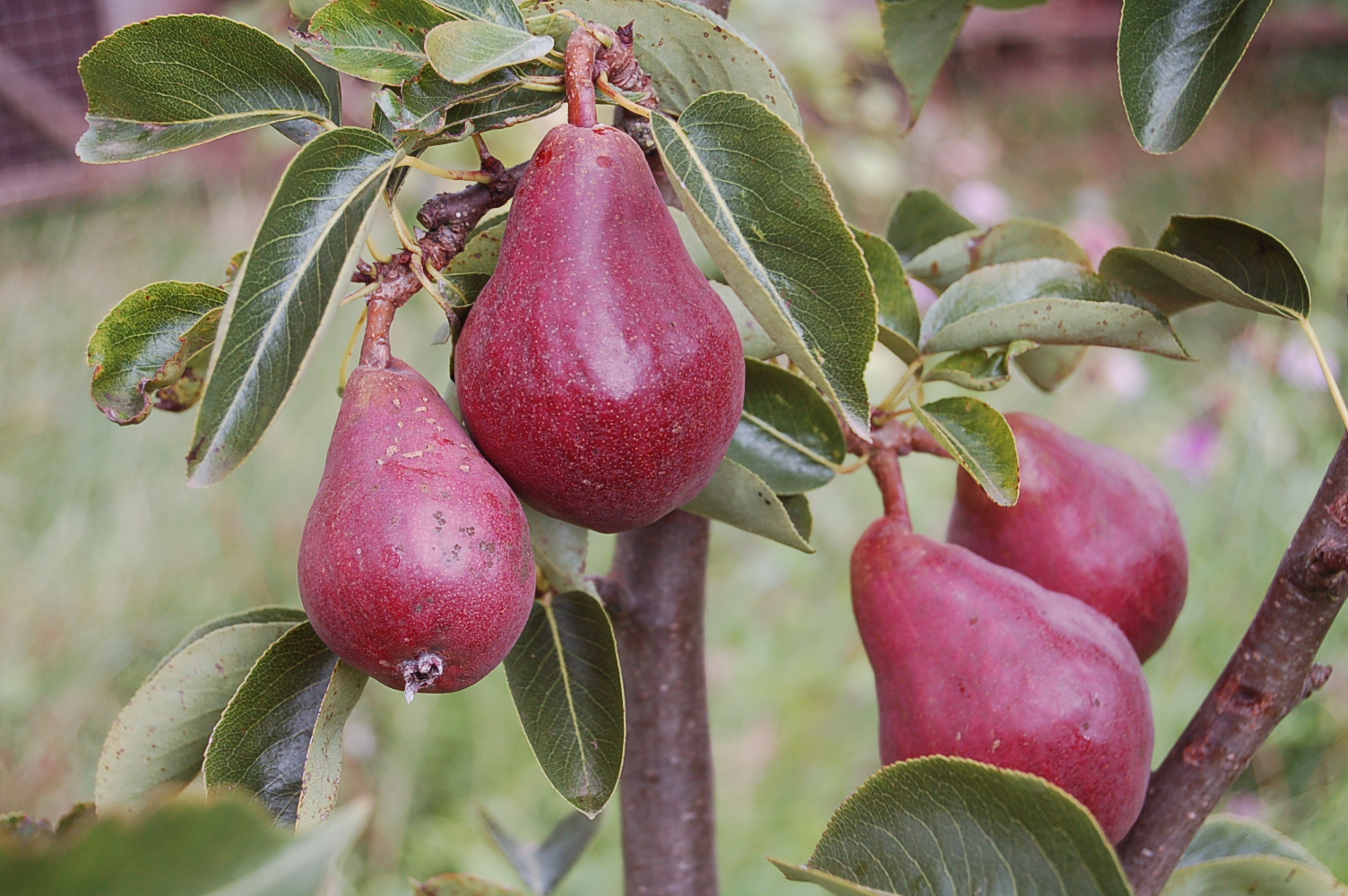
The back garden of this ex-council house overlooks beautiful rambling Shropshire countryside, which can be appreciated from a well-placed bench. Chickens roam freely and contentedly under fruit trees amongst a wildflower meadow. The most striking tree was a pear which bore deep red fruit which Wade was unable to name as it was bought cheaply without a label, but he could tell us that it tasted as good as it looked.
The back garden contained everything a good organic garden should – water butts, comfrey plants, small wildlife pool, compost systems, and a small greenhouse. Examples of original ideas in recycling could be found everywhere, such as a shower cubicle as a coldframe and a plastic container that housed a mini-square foot garden.
Wade talked to us about permaculture, about optimising your productive space by prioritising which crops you grow, choosing crops for richness of flavour and encouraged us to play the percentage game by realising that we could not be totally self-sufficient but every bit we do builds up to reduce pressure on the wider environment.