Categories
allotments fruit and veg gardening grow your own half-hardy perennials winter gardens

Overwintering.

The greenhouse is a true haven when the temperatures drop so low that your hands feel the cold even with your gloves on and the top of your head feels it through your hat. We have just switched on the propagating units allowing the temperature in them to settle around the 18 degree mark in readiness for seed sowing. This should start in earnest any day now. The veggie seeds are all in their air-tight tin in sowing order. It won’t be long before we are transplanting some into the prepared soil on the allotment – just a couple of months!

But the main function for the protection the greenhouse affords us is to look after our less delicate specimens. With night-time temperatures varying from minus 1 to minus 12 this overwintering security is essential. Working away in the heated end of the greenhouse is a real relief from the cold outside. The unheated end still gives plenty of protection for half-hardy plants but still requires coats for the gardeners.

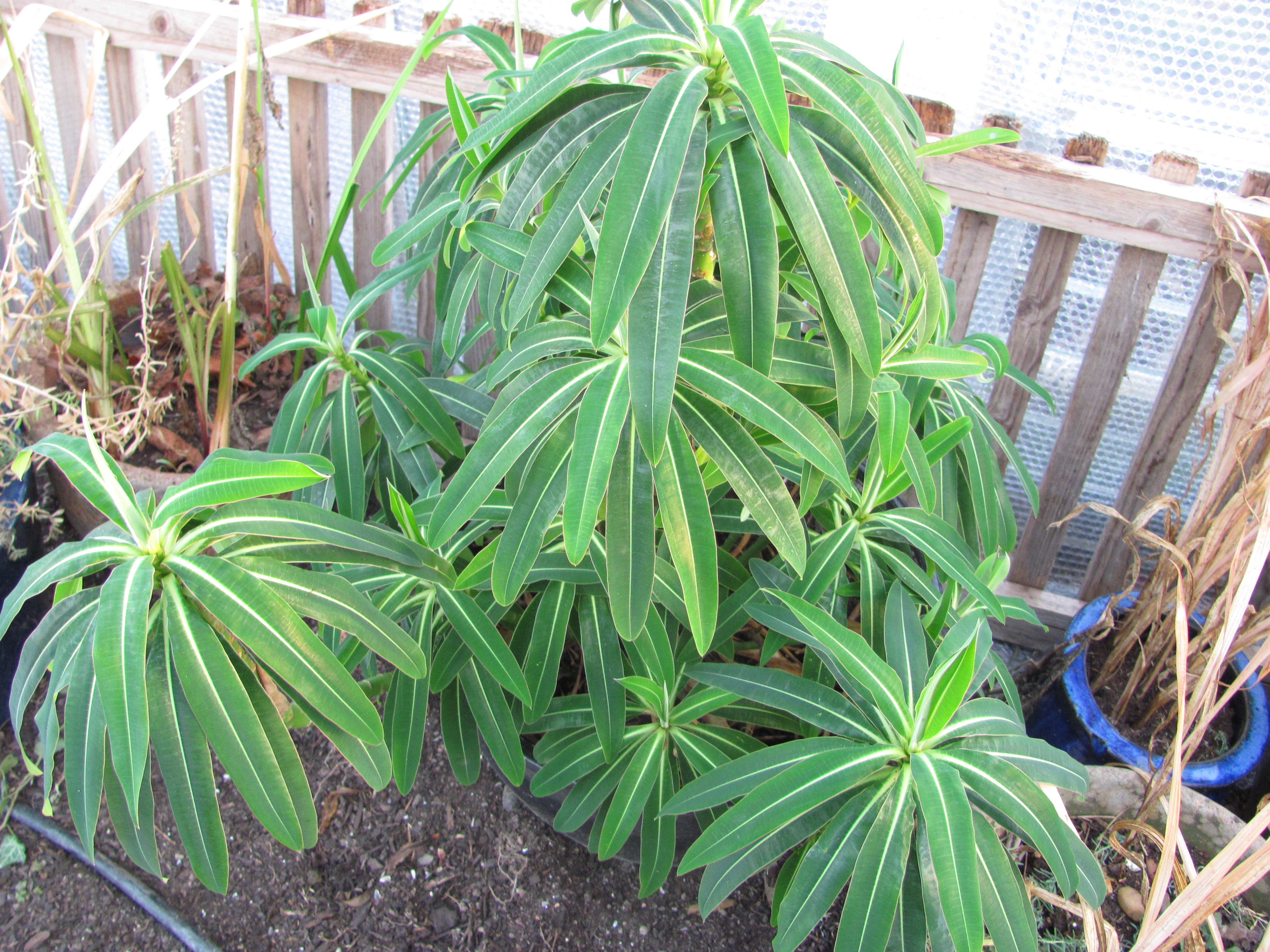
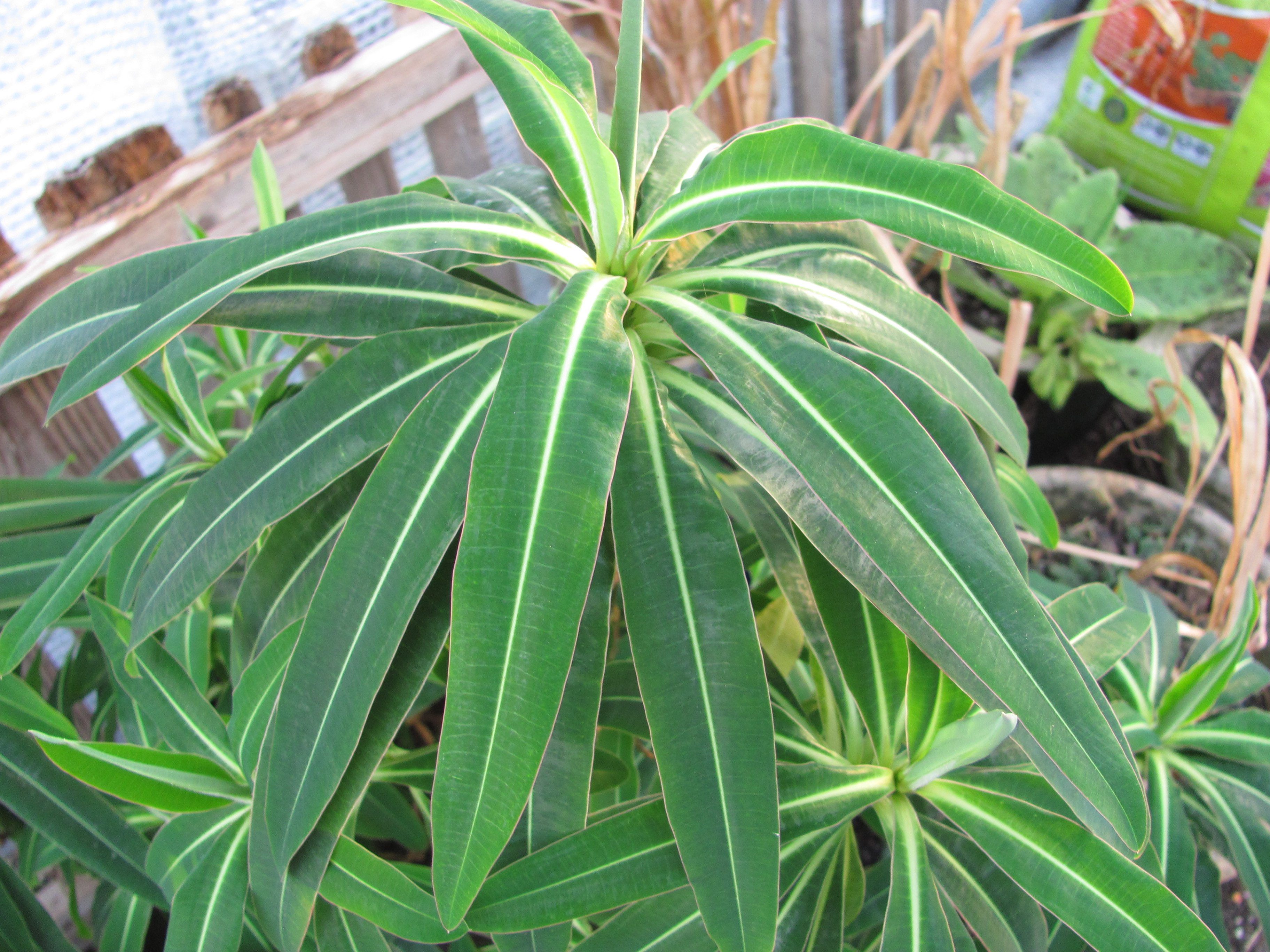
The Euphorbia mellifera enjoys having glass and bubblewrap over its head. This is our second Honey Spurge as we lost one even under cover last winter. We hope to keep it this year so that we can enjoy its wonderful honey scent when we return it to its place in the Secret Garden.
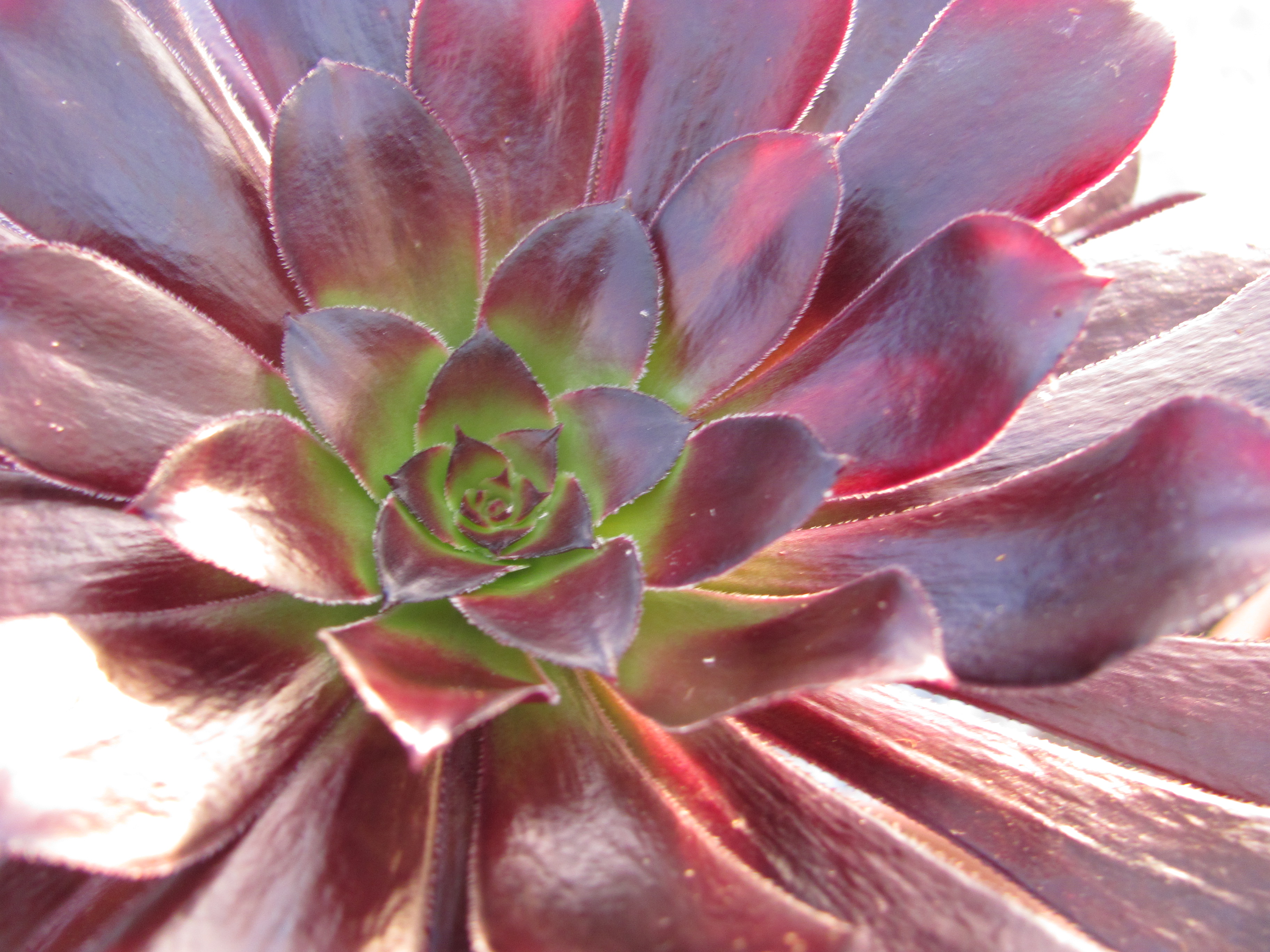
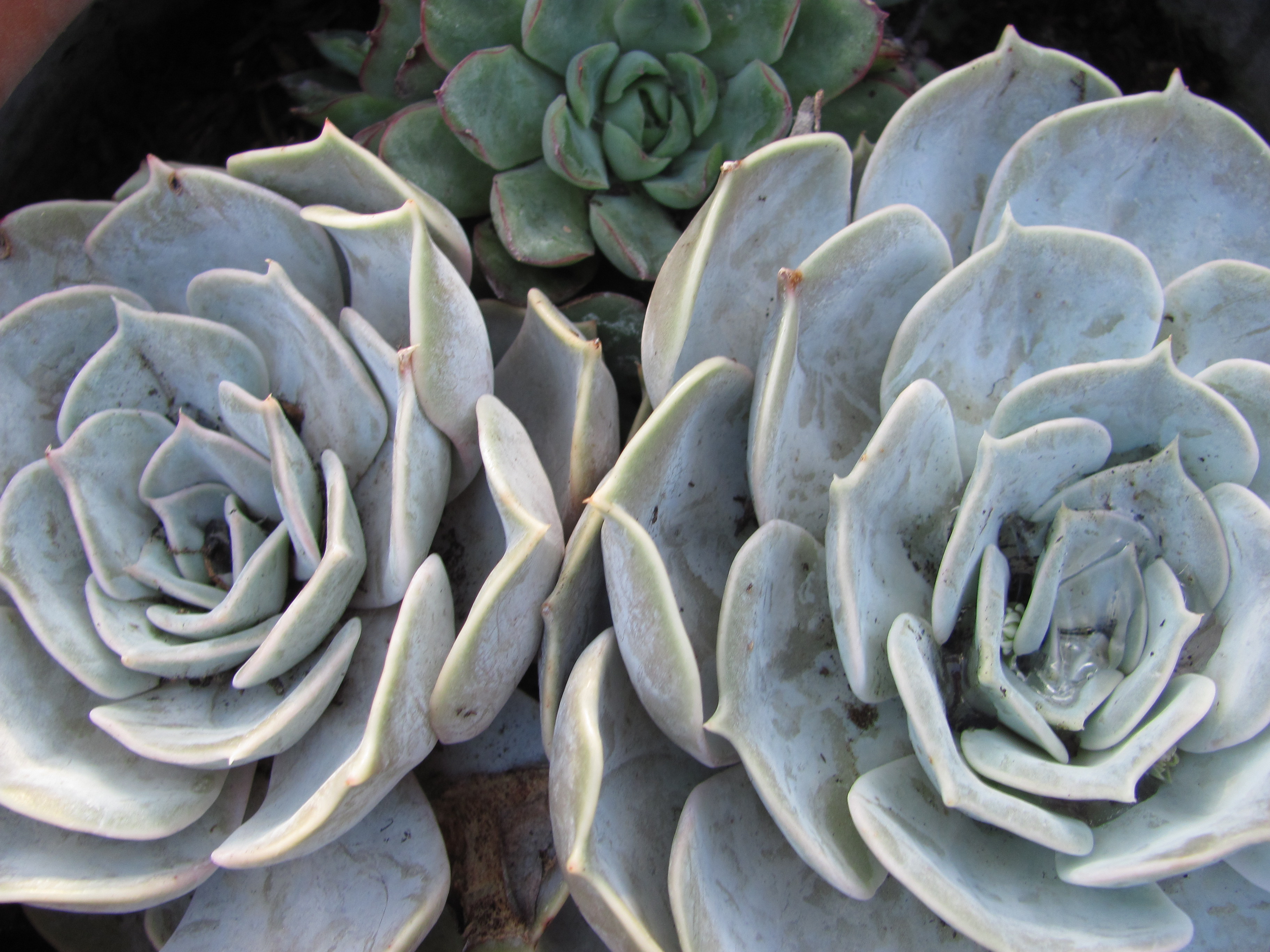
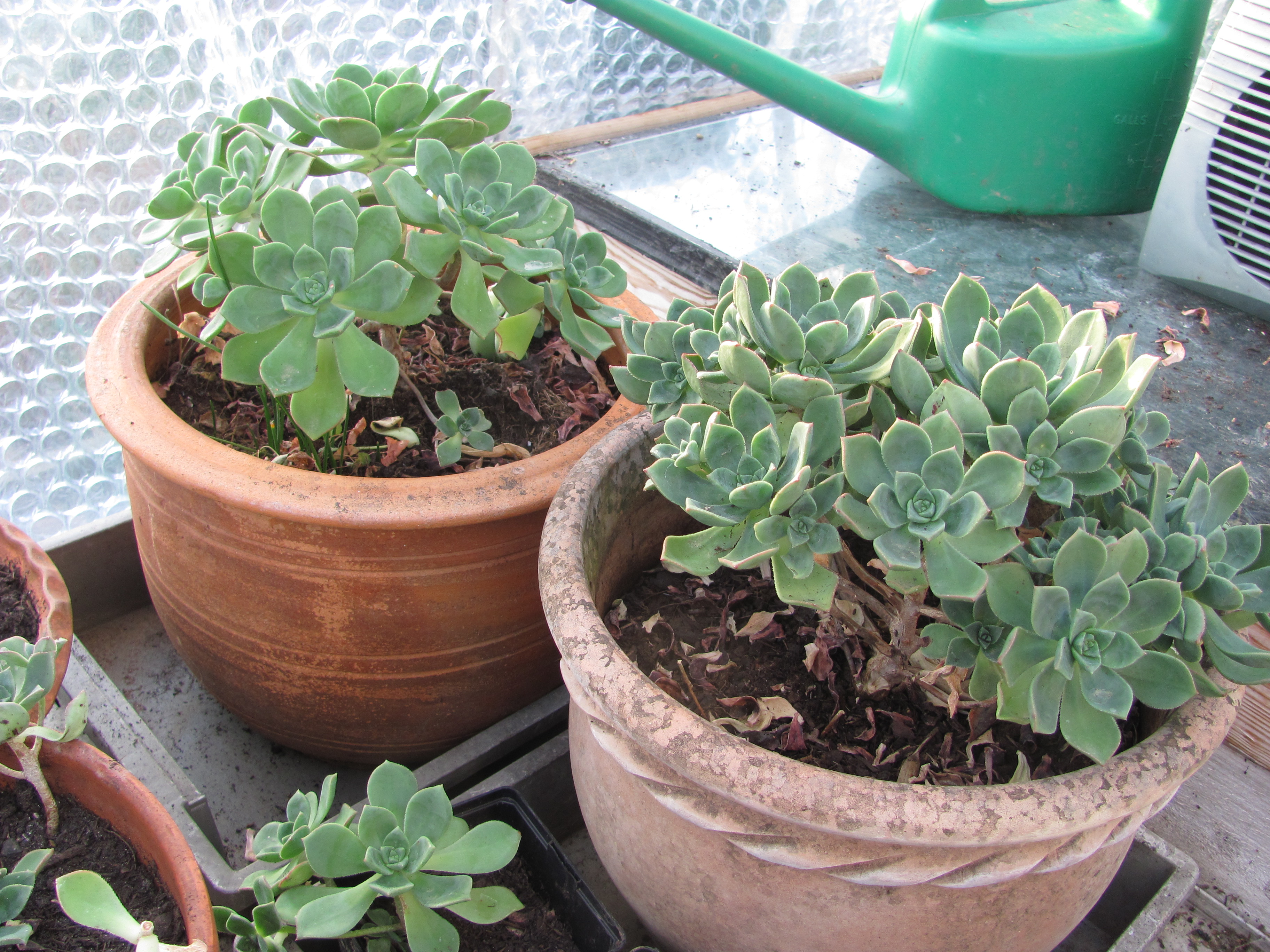
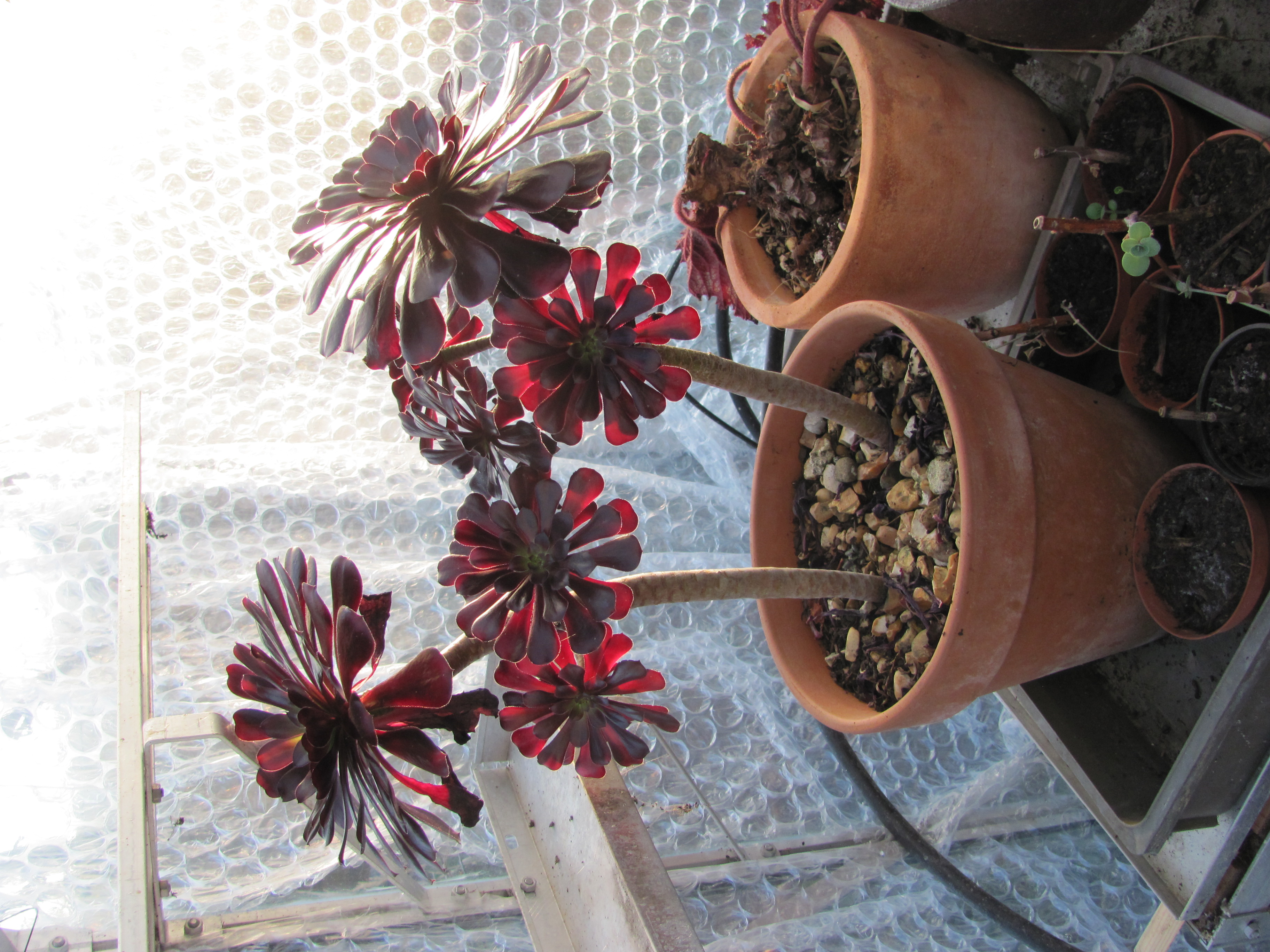
Aeonium and Echeveria keep us on tenterhooks through the winter months, as we have lost them so many times. Aeoniums are succulent sub-shrubs and those we have now are the largest  and most long-lived we have ever had. The green leaved Aeoniums below are a variety inknow to us before we found these so we are unsure of their hardiness. We bought them as single rosettes – they have flourished in the Rill Garden. They are possibly Aeonium haworthii and if so we have every right to pamper them in winter as they hail from The Canary Isles.
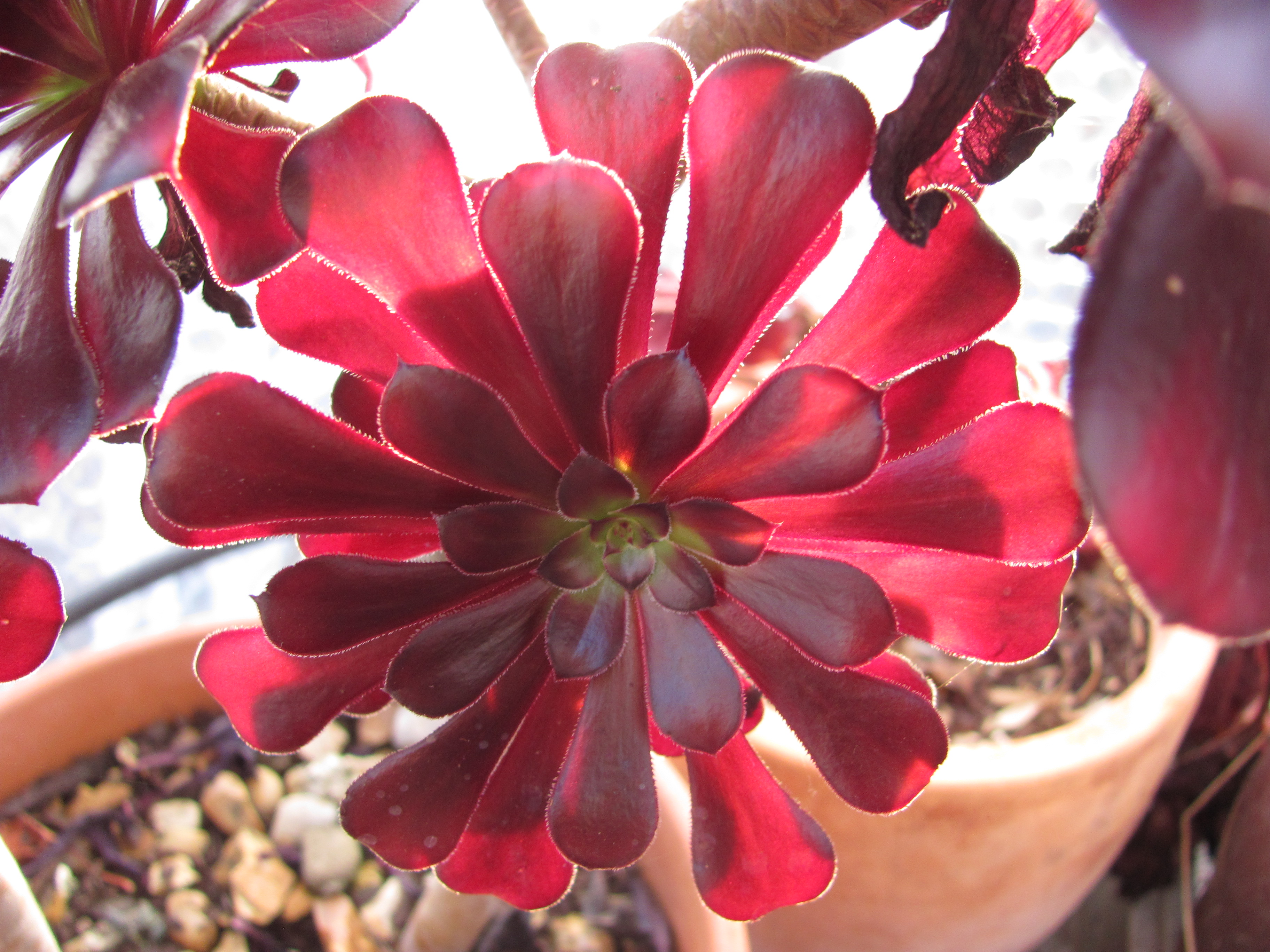
The black leaved version is Aeonium arboreum “Zwartkop”, is a native of Morroco. The leaves get blacker as the summer gets hotter and drier, so as it rests in the greenhouse after a long dry summer it looks very dark. The early morning sun streaming in through the glass lights the rosettes from behind and tuens them fleshy red.
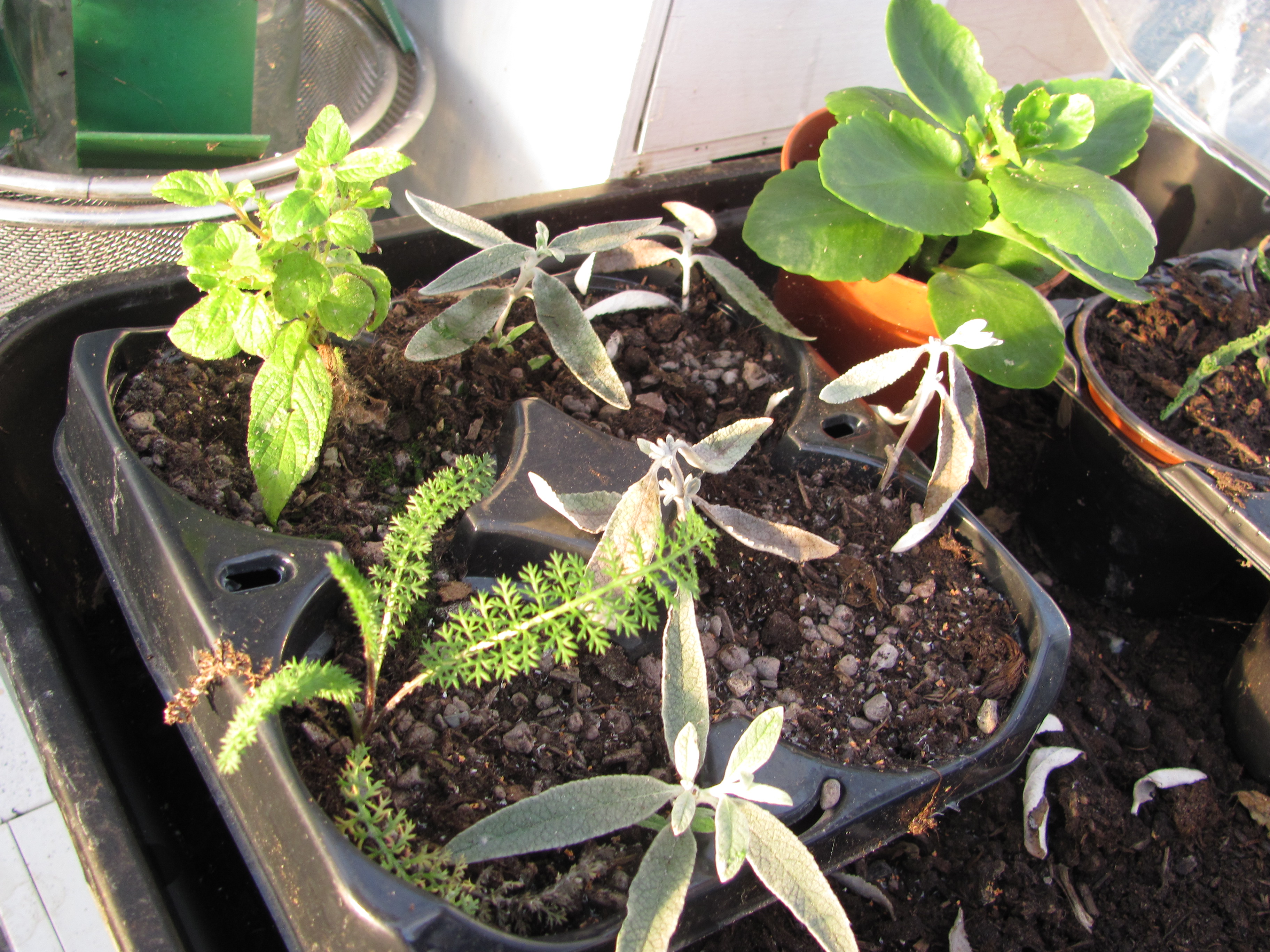
In a heated propagator cuttings are also being protected. this gives us another chance to keep delicate plants over winter. Salvias, tender Buddleia and the odd houseplant such as Kalenchoe.
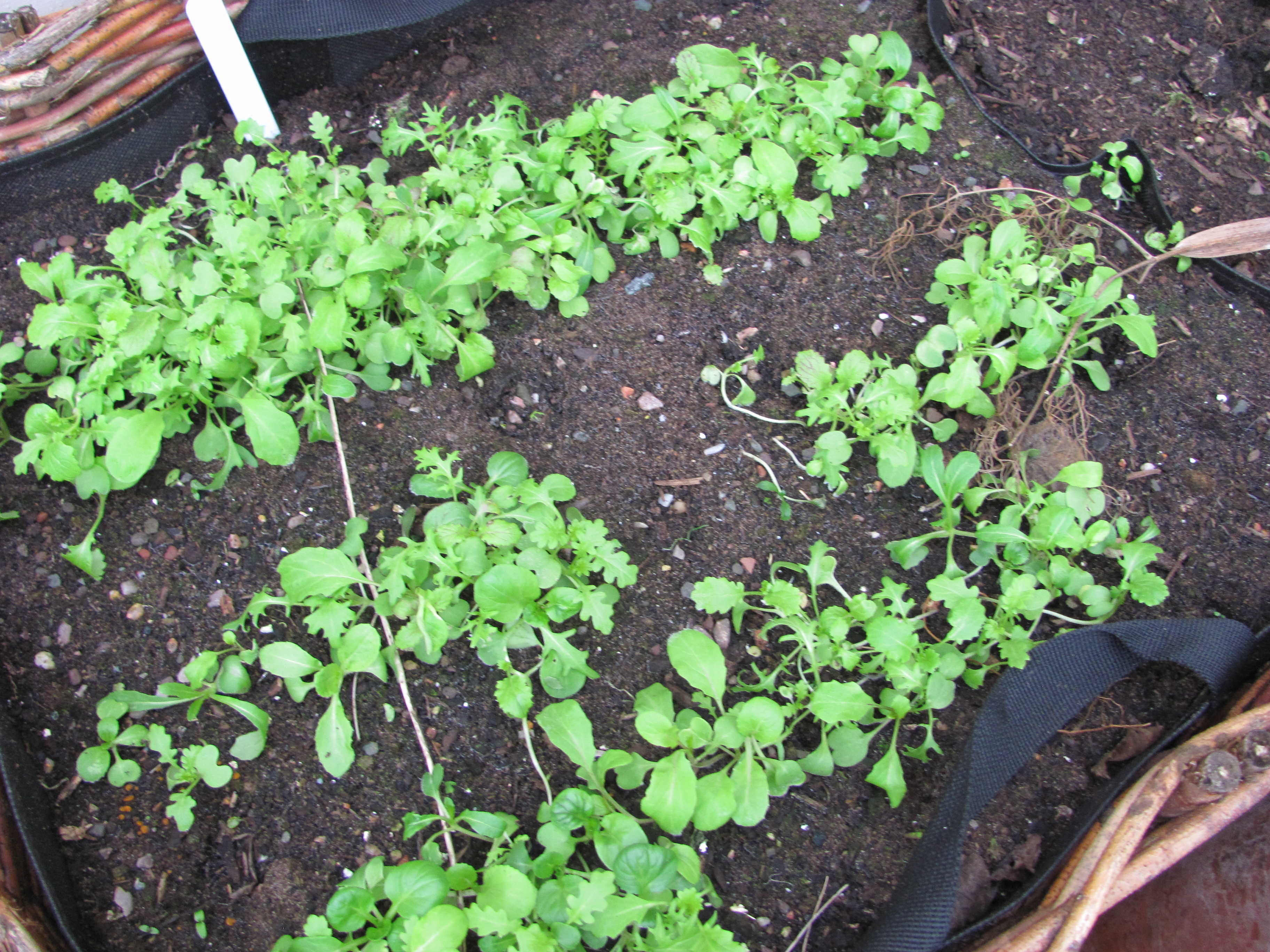
Outside, salad leaf seedlings sown in December, are holding on until warmer weather. We cover them each night with fleece. Once better light and warmer temperatures arrive they will be triggered into rapid growth. We look forward to tasty, colourful mixed leaf salads.
So whenever it is too cold or the ground too frozen solid outside we always have the welcome of a warm greenhouse. After all the greenhouse isn’t just for overwintering plants, it overwinters the gardeners too! Hopefully within the next few days we shall revel in sowing seeds in there.

Categories
allotments birds community gardening conservation fruit and veg garden photography garden wildlife gardening grow your own meadows natural pest control ornamental trees and shrubs photography trees winter gardens

A Wander Around the Allotments in January

As I decided to create a blog at the beginning of each month illustrating what is going on in our garden, so I have also decided to publish a blog in the middle of each month to show what is happening on our allotment site.

So today we braved the cold and went for a wander. The weather although cold, at five below, was bright sunshine in a clear blue sky. the air felt freezing as it entered my lungs but the sight of the lotties cheered me. As we stepped from the car a kestrel was hunting low between the sheds in search of the abundant field voles. A day never goes by without seeing at least one kestrel quartering the site. A buzzard soared overhead in the thermals created by the warmer air above the cultivated plots.

First job was to fill the bird feeders at the two feeding stations. They were busy with blue tits, coal tits and great tits feeding from the hanging feeders and blackbirds, dunnocks and robins beneath picking up the feed dropped by the clumsy birds above them. All the while we could hear the call of nuthatches in the site’s mature oak and sycamore trees.

Frost sits on the bare ground and helps the gardeners by breaking it down and improving the texture in readiness for a final preparatory rake over. The fine tilth can then be home to seeds.

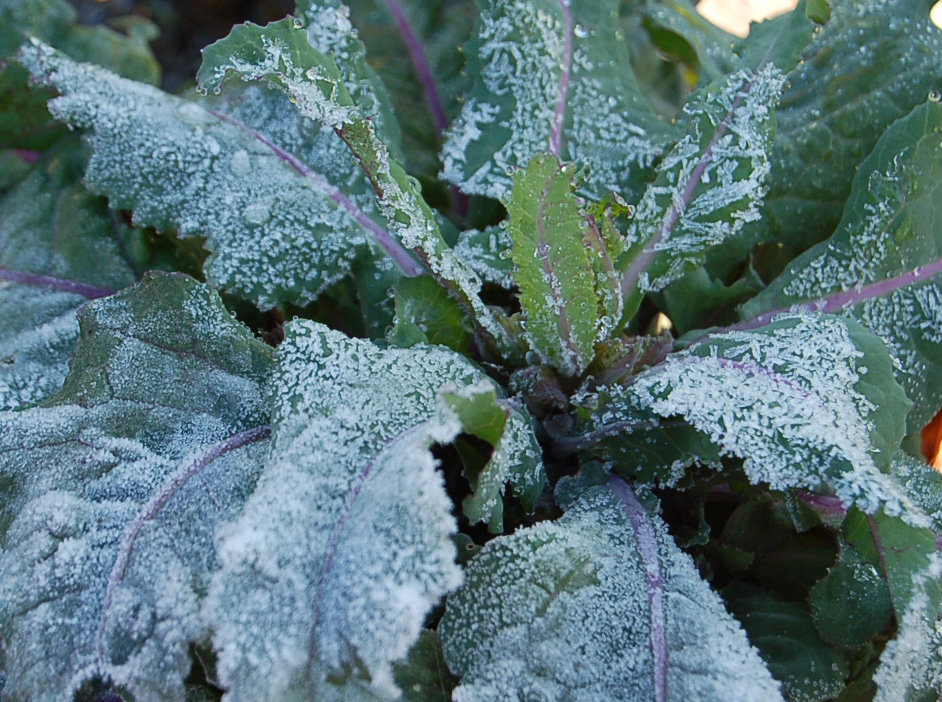
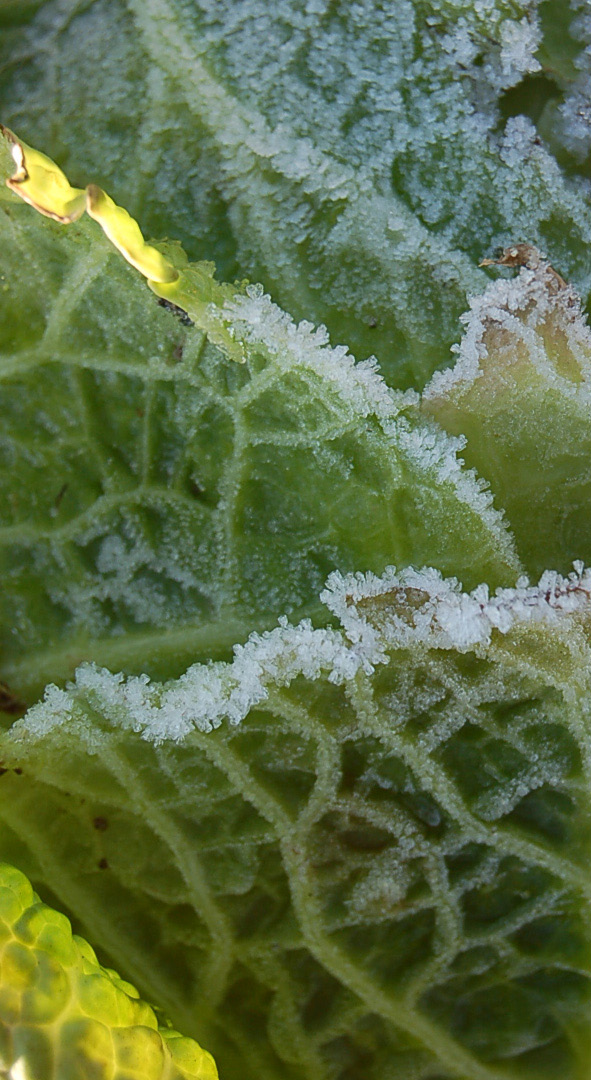
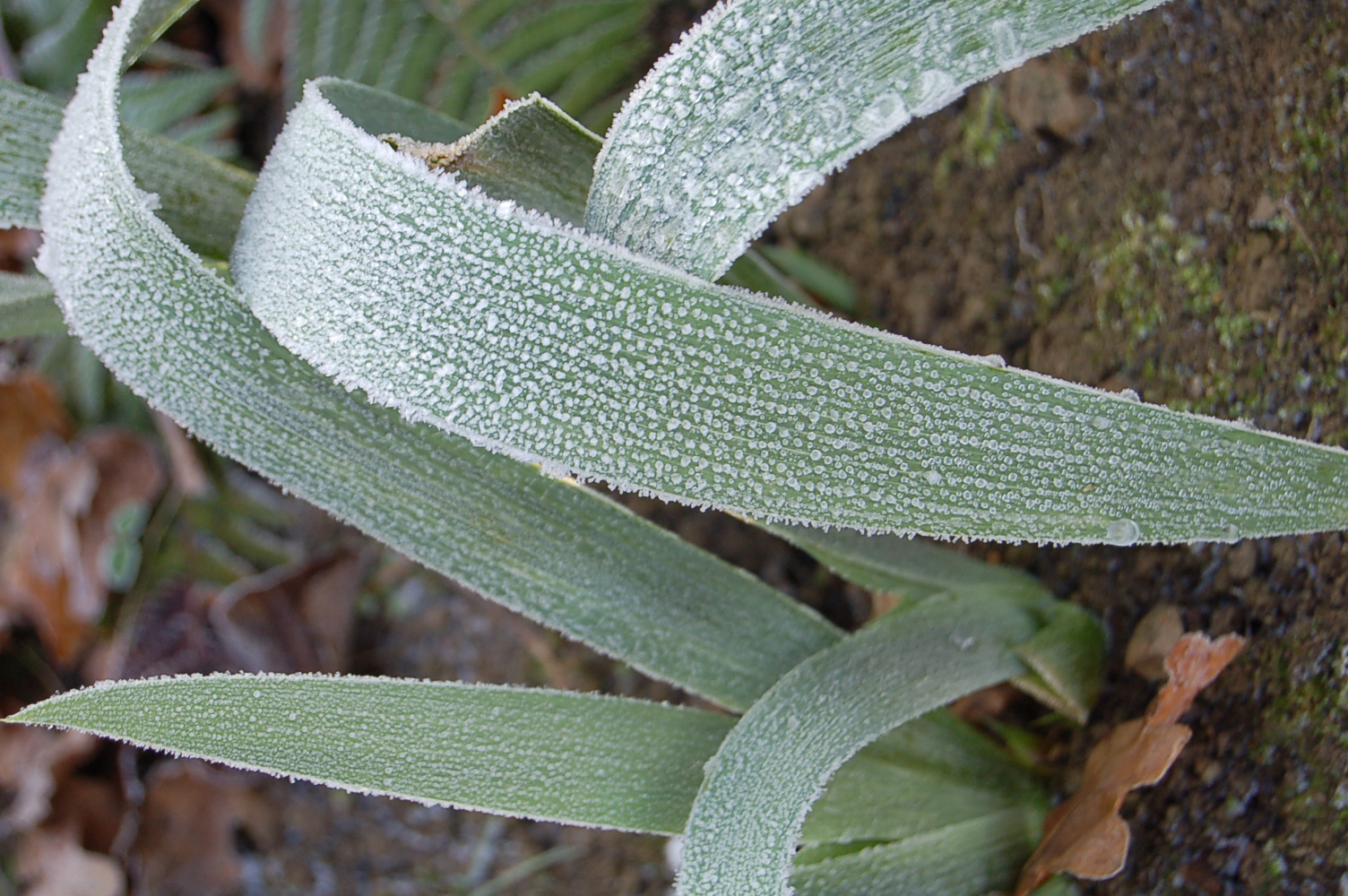
The plots themselves look very sad at this time of the year, drooping brassicas, frosted leeks and steaming muck heaps and compost bins, the warmest spots of all. The scarecrows have fallen in the recent strong winds, their clothes wet and bedraggled and their structures weakened. Frost emphasises leaf structures, settling deepest along the veins.

The strongly veined wrinkled leaves of the Savoy Cabbages withstand the cold wrapped into tight balls.

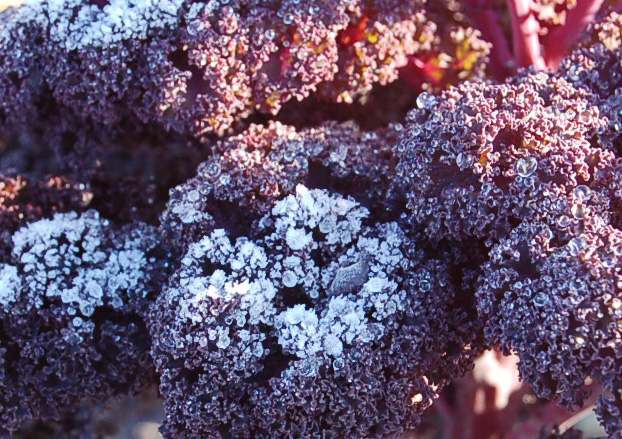
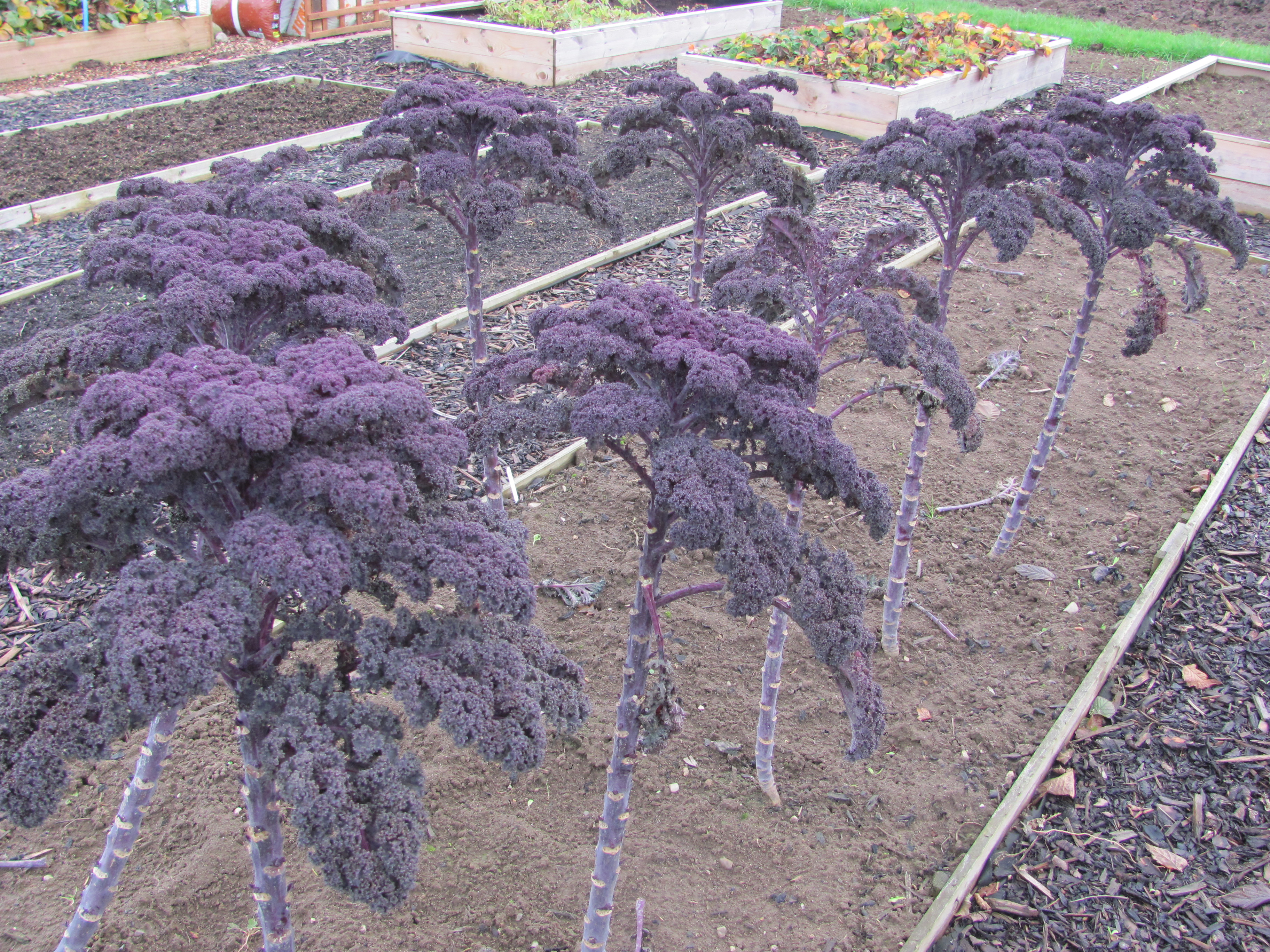
Kale defies the cold and stands upright and proud  even with ice droplets and frost splattered on their tightly curled leaves.

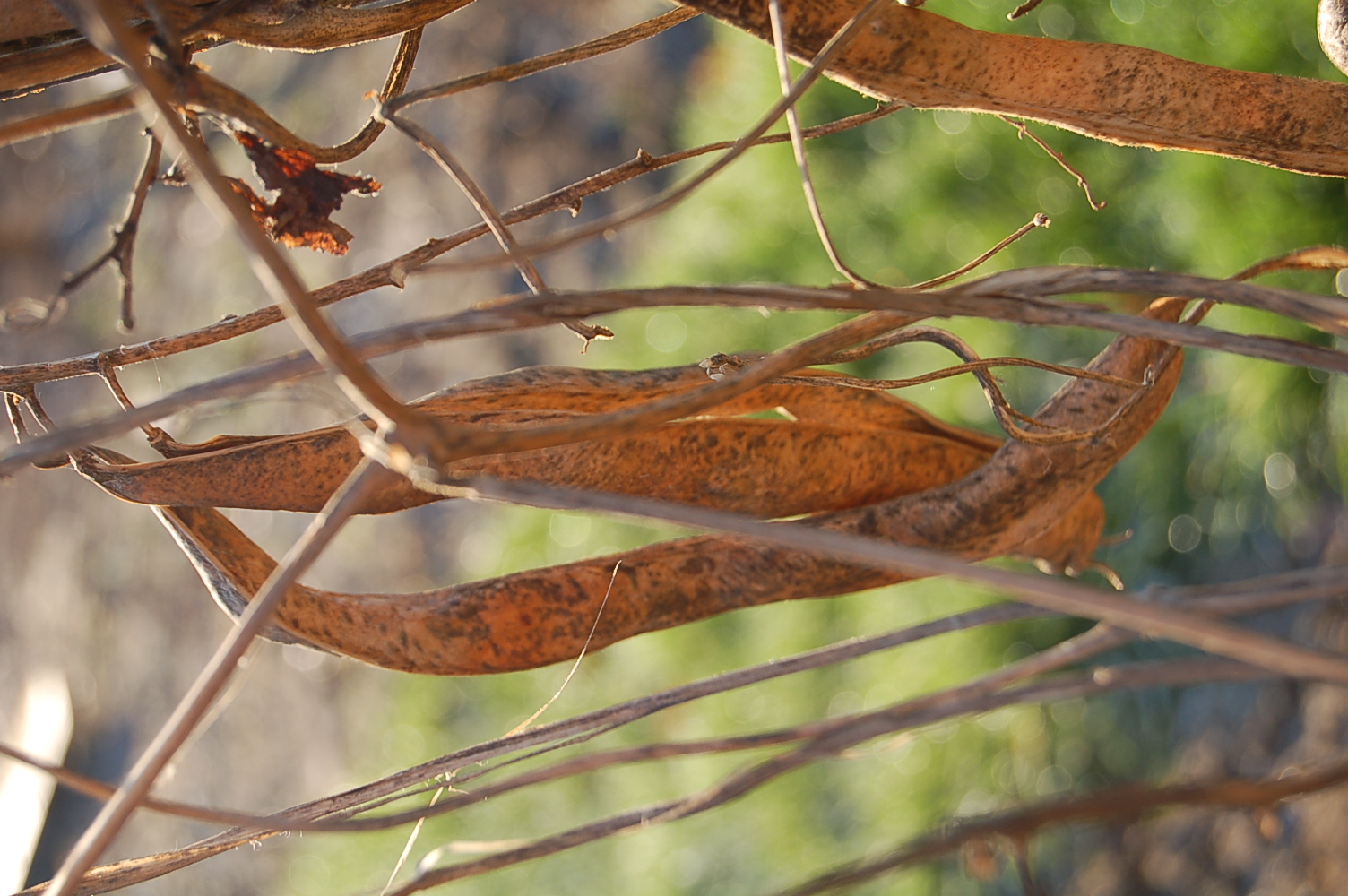
Sunlight makes the old runner bean pods translucent as they hang on the dead remnants of last year’s plants.

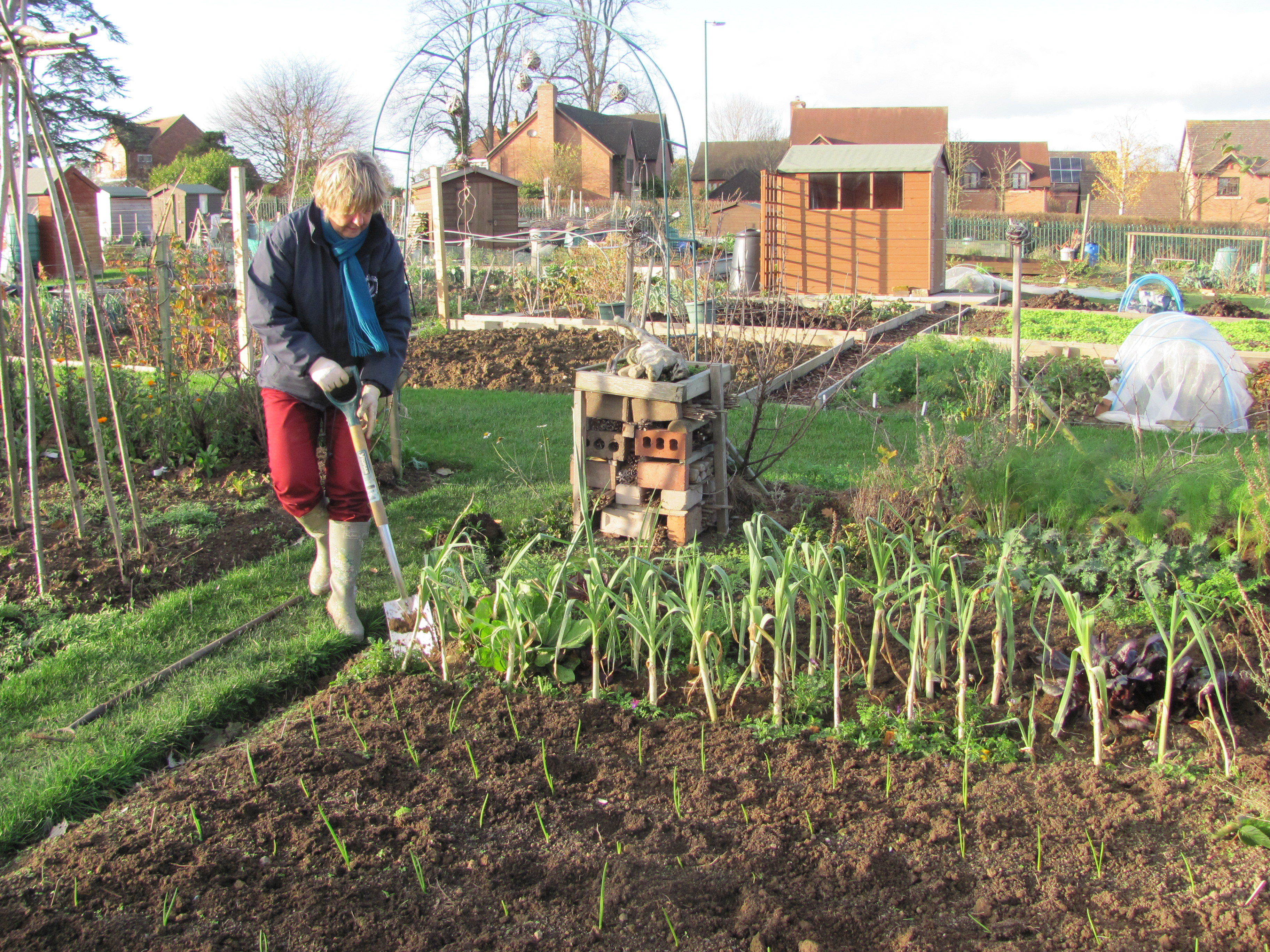
On our own plot the rows of Mooli, Broad Beans and Leeks look delicate in the frozen soil but will sit until spring arrives when they will have growth spurts and give us early crops.

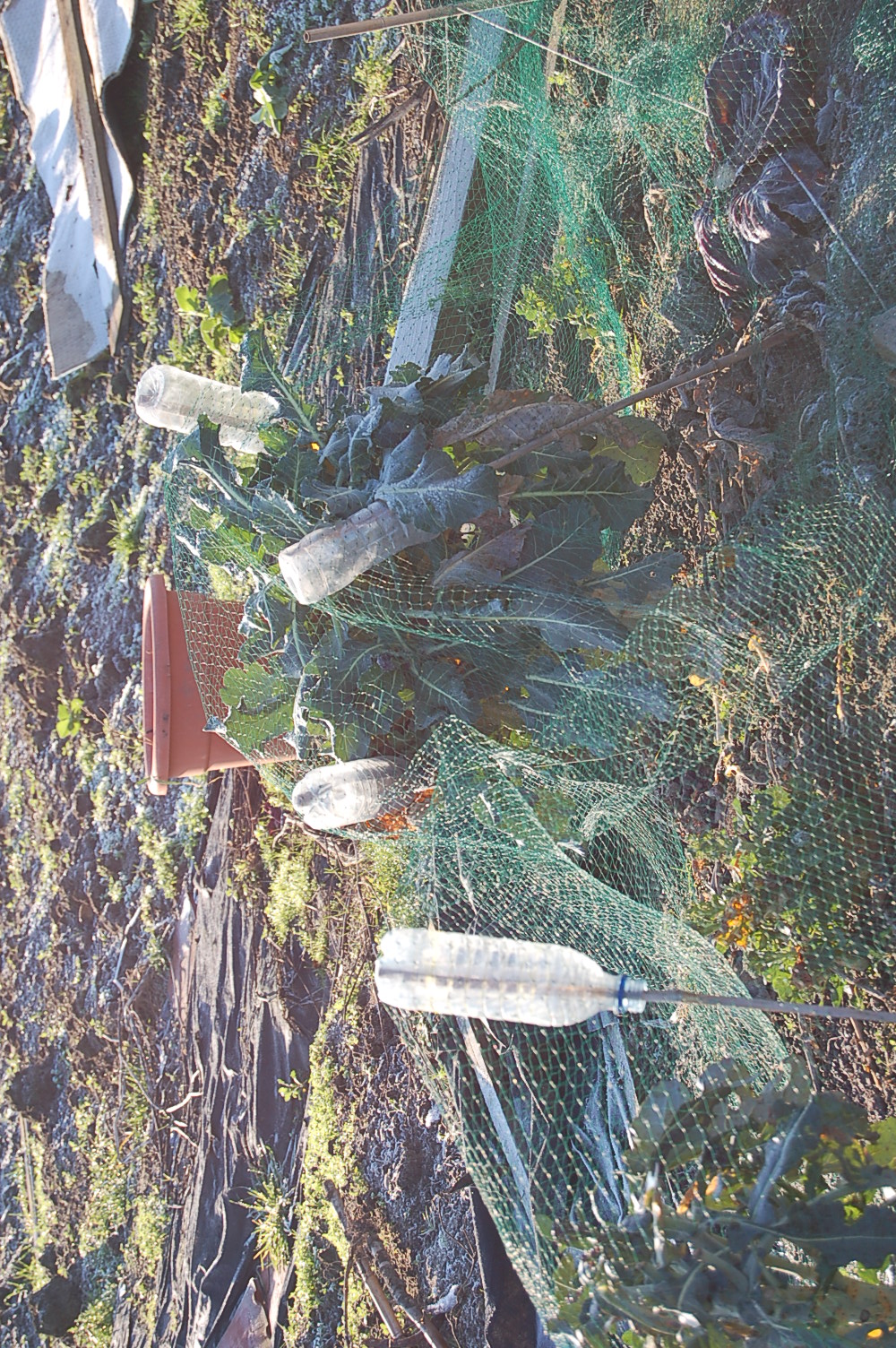
Plastic bottles on canes support last year’s netting and still protect any overwintering crops from hungry Wood Pigeons.

Blackbirds move low across the lotties settling onto any sun-warmed soil and dig for grubs, but this one sat looking sad.

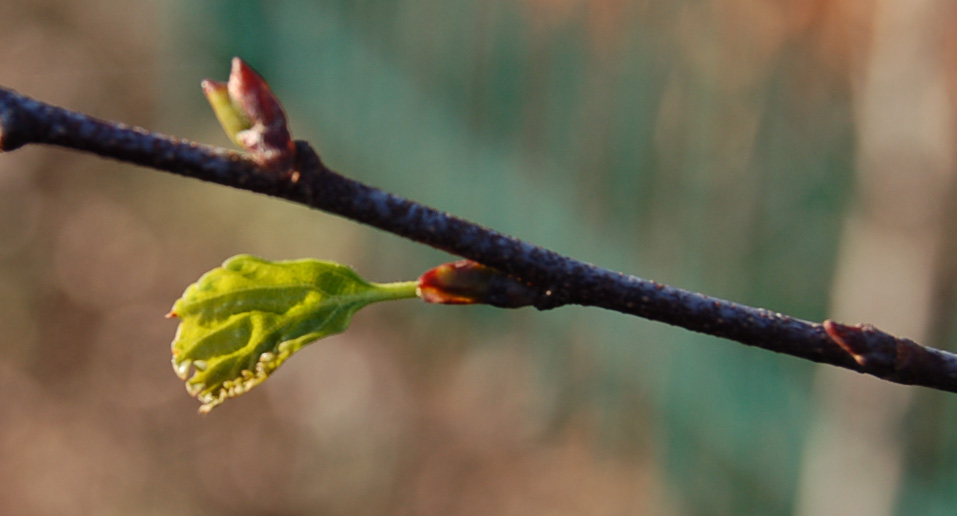
We took a leisurely walk around the “Interest Trail” which took us through or close to most of the community gardens – the orchards, wildlife borders, seasonal gardens and meadows. Near the car park the first green bursts of new life have appeared, the leaves and catkins forming on the birches. The young catkins stand bolt upright at this stage but will soften in colour and structure when they dangle down in the spring.

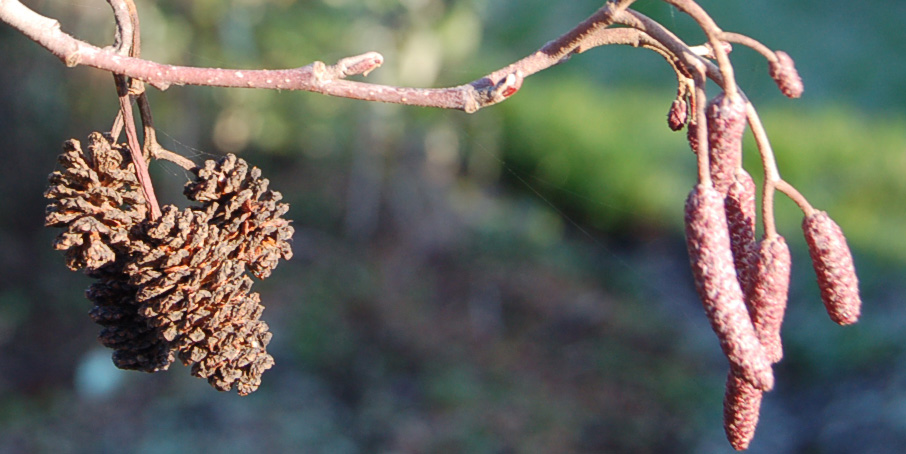
The purple catkins of the alder sit on the branches with the darker cones.

In the Autumn Garden seed heads of Asters remain long after the flowers of autumn, like tiny dandelion “clocks”.

In the first orchard th frost still lingered strongly on the logpile especially on this old chunk of bark.

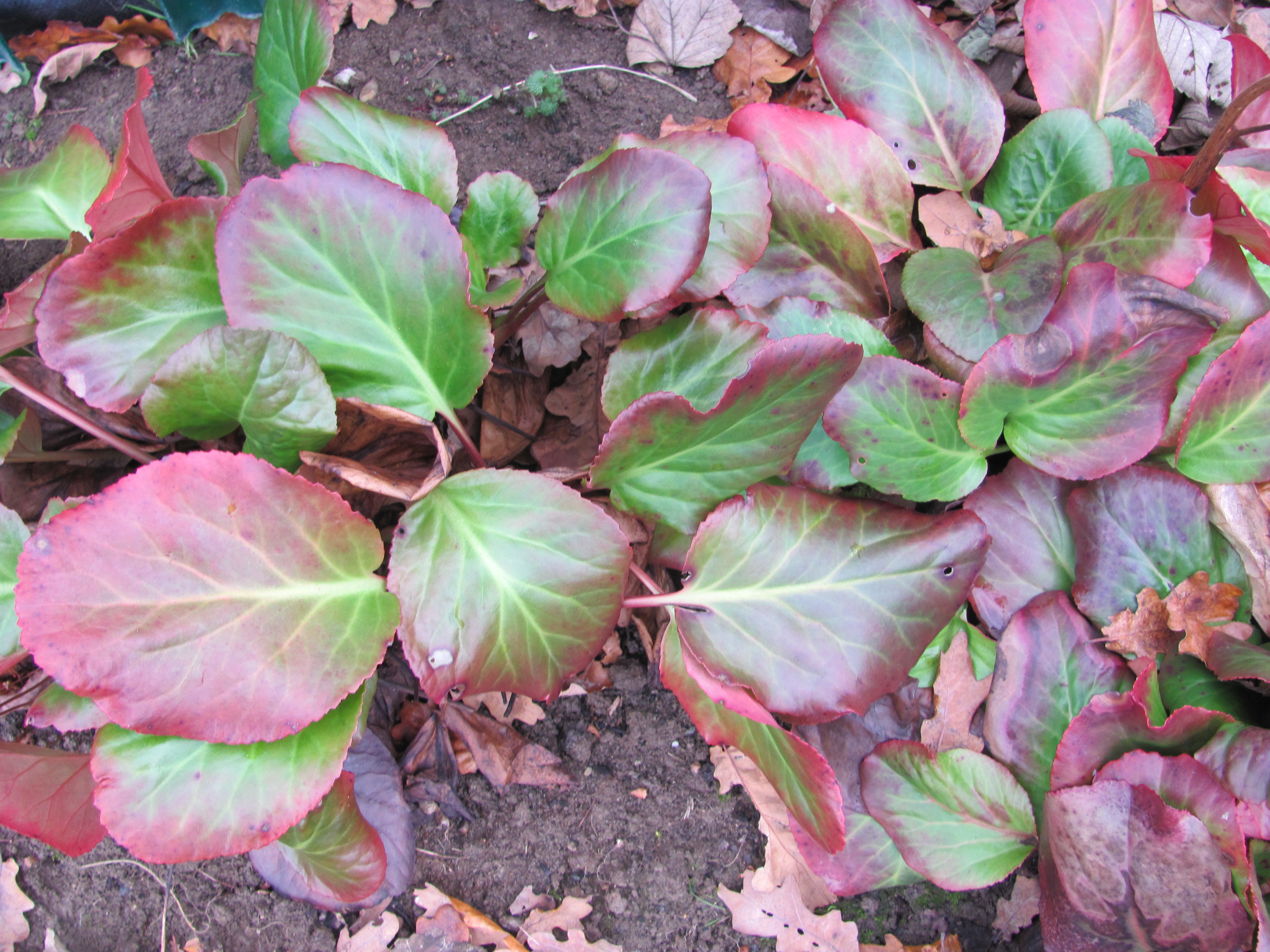
When we reached the Spring Garden we were struck by the contrasting leaf texture, shapes and structures.

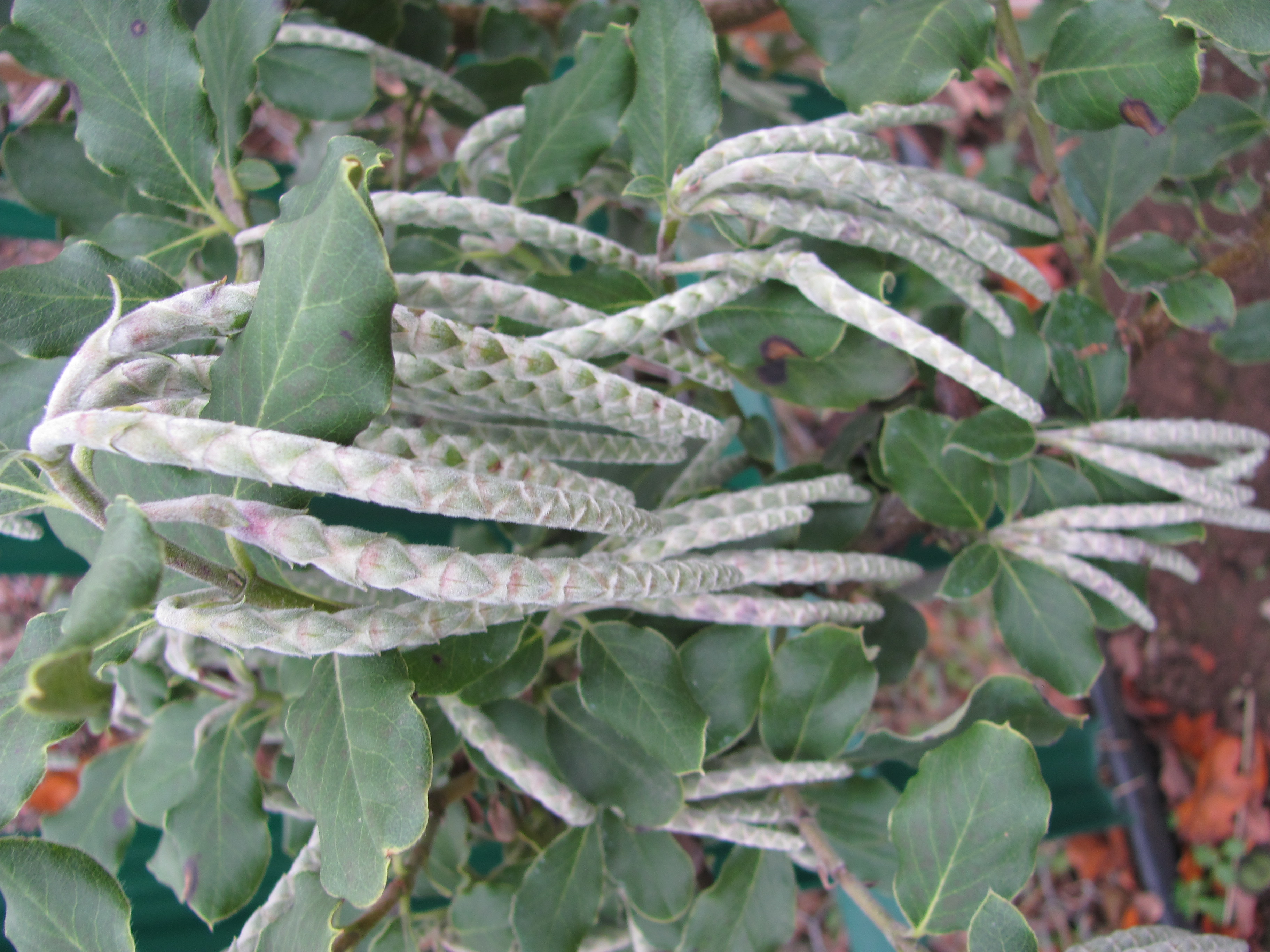
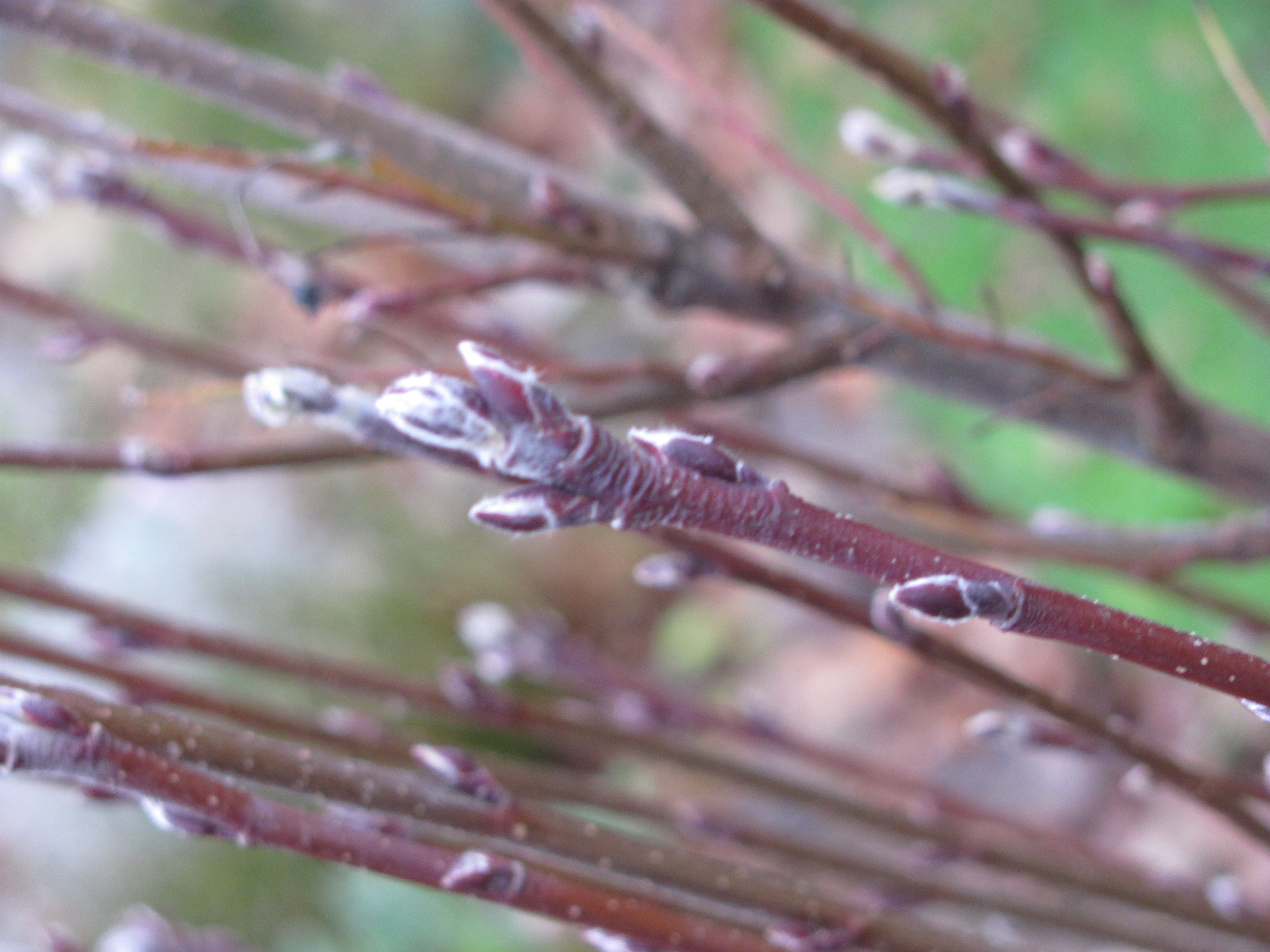
At the back of this garden the silver tassels of the Garrya hung in profusion and the new buds of the Amelanchier promised early flowers and foliage.

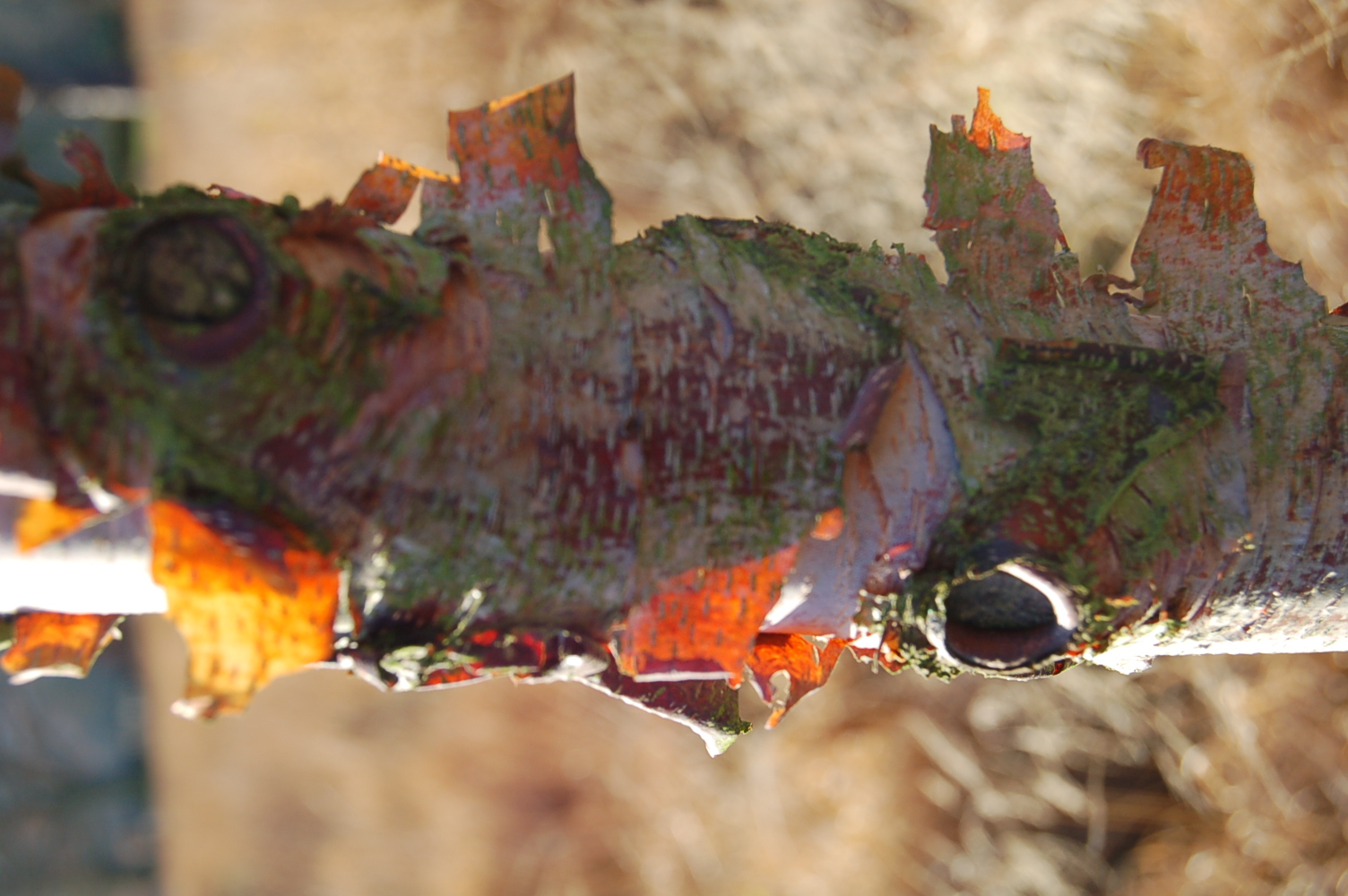
Further round the trail we arrived at the “Winter Garden” where the low rays of the sun sent long shadow lines of the fence right across the border between the coloured stems of the Betulas and the Dogwoods. It also illuminated this peeling bark, giving it the impression of slithers of orange brittle toffee.

The blue spruce looked bluer than ever with the whiteness of the frost laying on its needles.

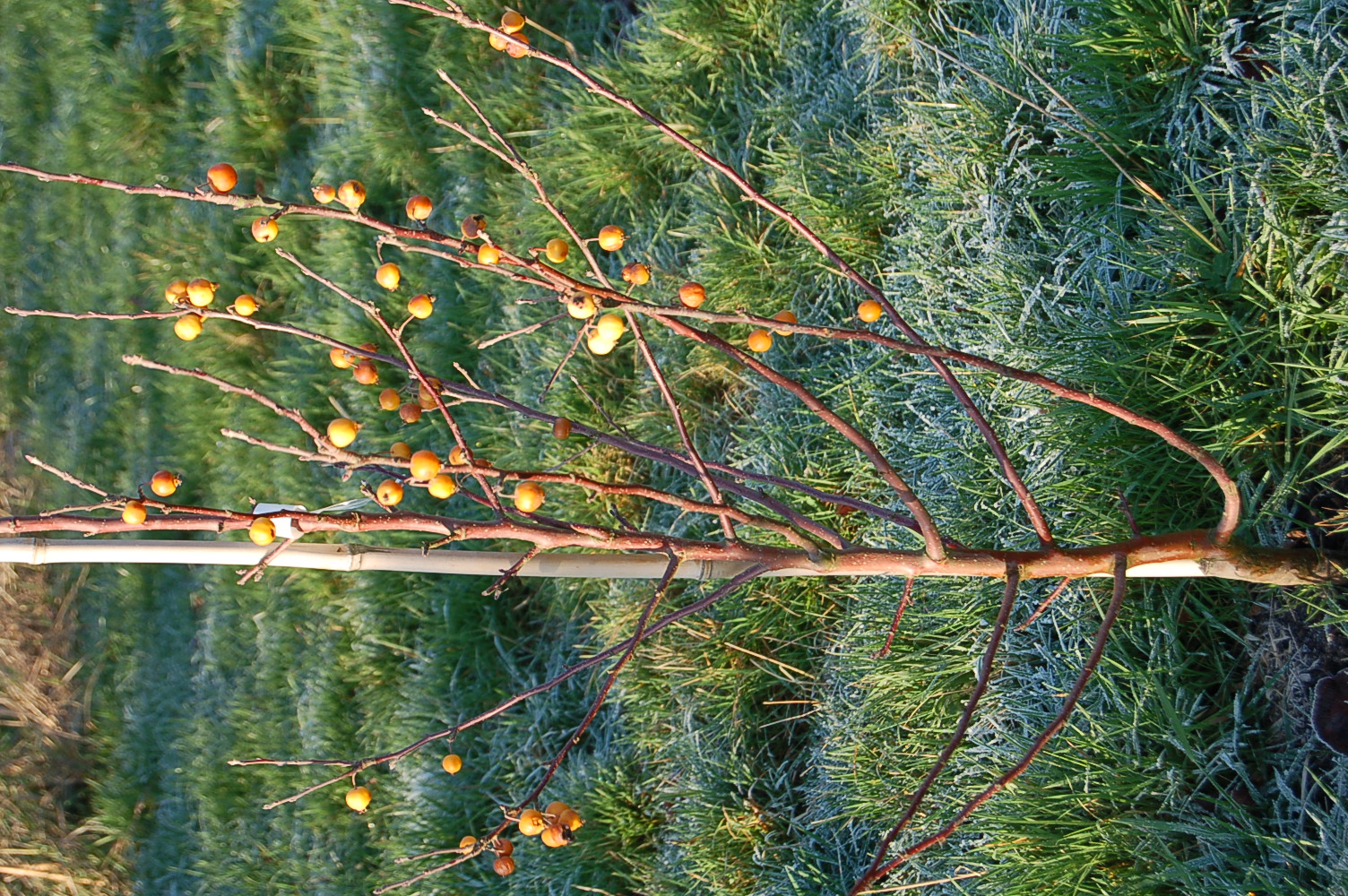
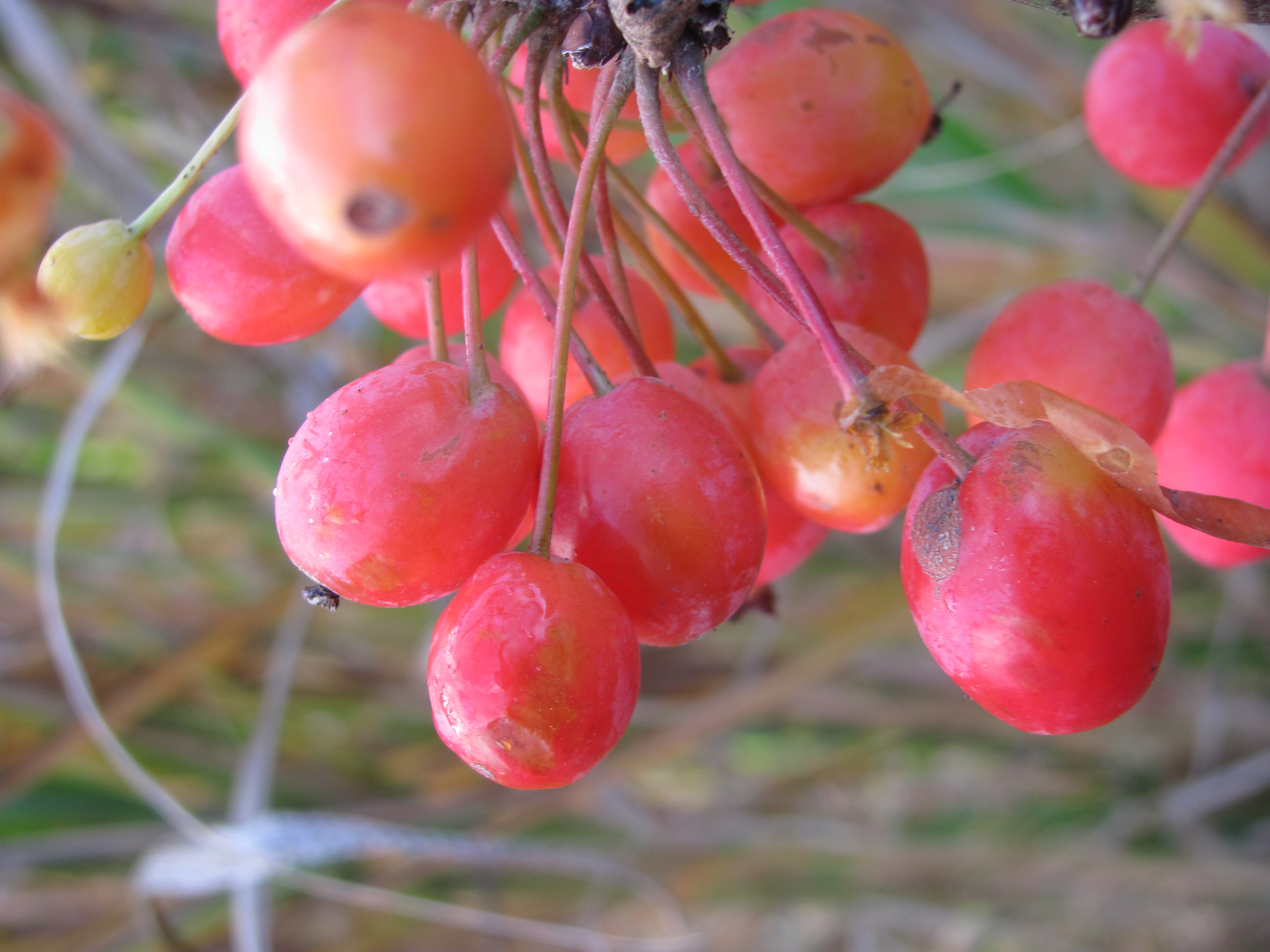
Our Winter Garden has so much of interest that I shall publish a blog just featuring it within the next few days, so for now we shall move on to the second orchard where the golden fruits of Malus “Evereste” have escaped the attentions of the winter visiting thrushes but I suspect they will soon be discovered and devoured. The insect stack in the orchard is there to attract beneficial insects who provide our very wildlife-friendly pesticide. The stack should give them some shelter to help them survive the winter cold and wet.

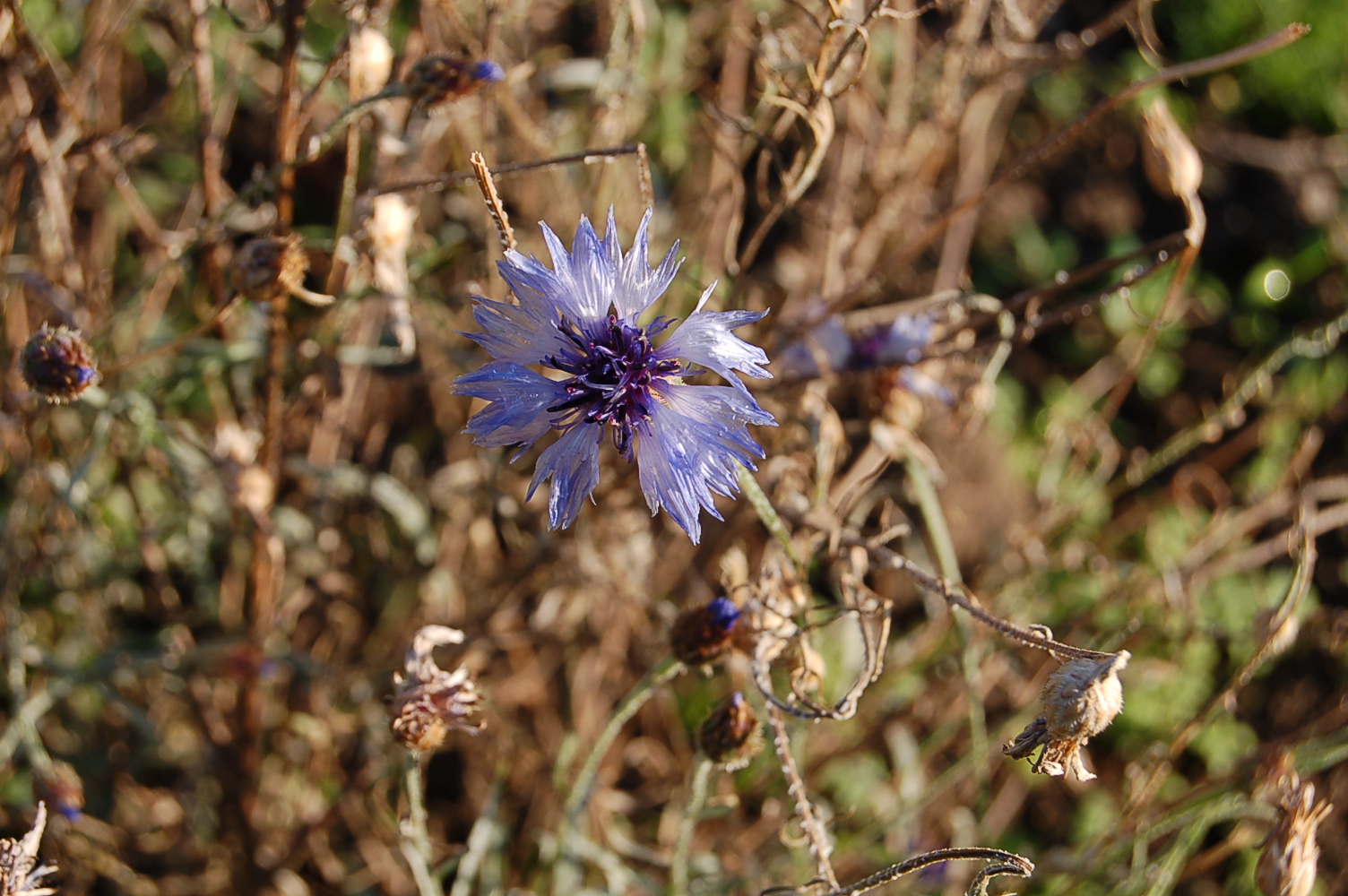
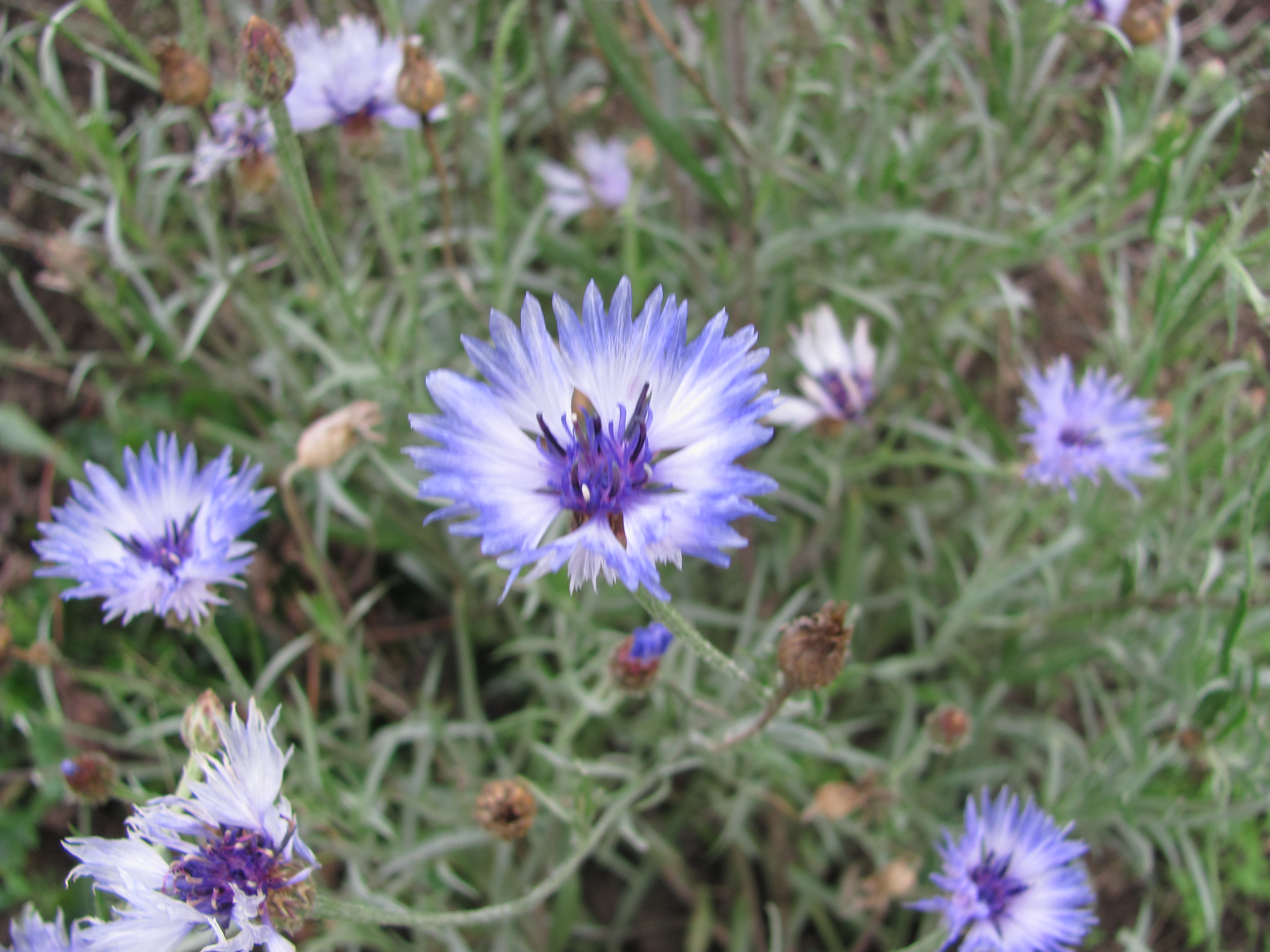
As we wandered back towards the car park we passed through the wildflowers meadows long since cut to the ground, but showing promise for next summer in its tiny seedlings. One lone flower braved the cold – a pale blue cornflower. Leaving the lotties we noticed promises of flowers from the bulbs in the car park border and in the half-barrels in the gateway.

Categories
allotments fruit and veg grow your own

Kale on Parade

While wandering around the lottie site and having a nose at other gardeners’ plots, I spotted these kales which immediately reminded me of soldiers on parade. Standing tall at three feet, straight as can be and in neat rows they were on parade. Kales standing to attention!

Although now when I look at the photos, I am more inclined to think of Dad’s Army and the kale on the left of the back row is Corporal Jones!

Categories
allotments fruit and veg garden photography gardening grow your own

Winter Solstice Harvest

What better thing for a gardener to do on the shortest day of the year than to harvest home-grown produce!! Today we harvested our Charlotte potatoes that we have been growing in potato bags, planted in early September and moved into the cool unheated end of the greenhouse when the temperatures dropped.

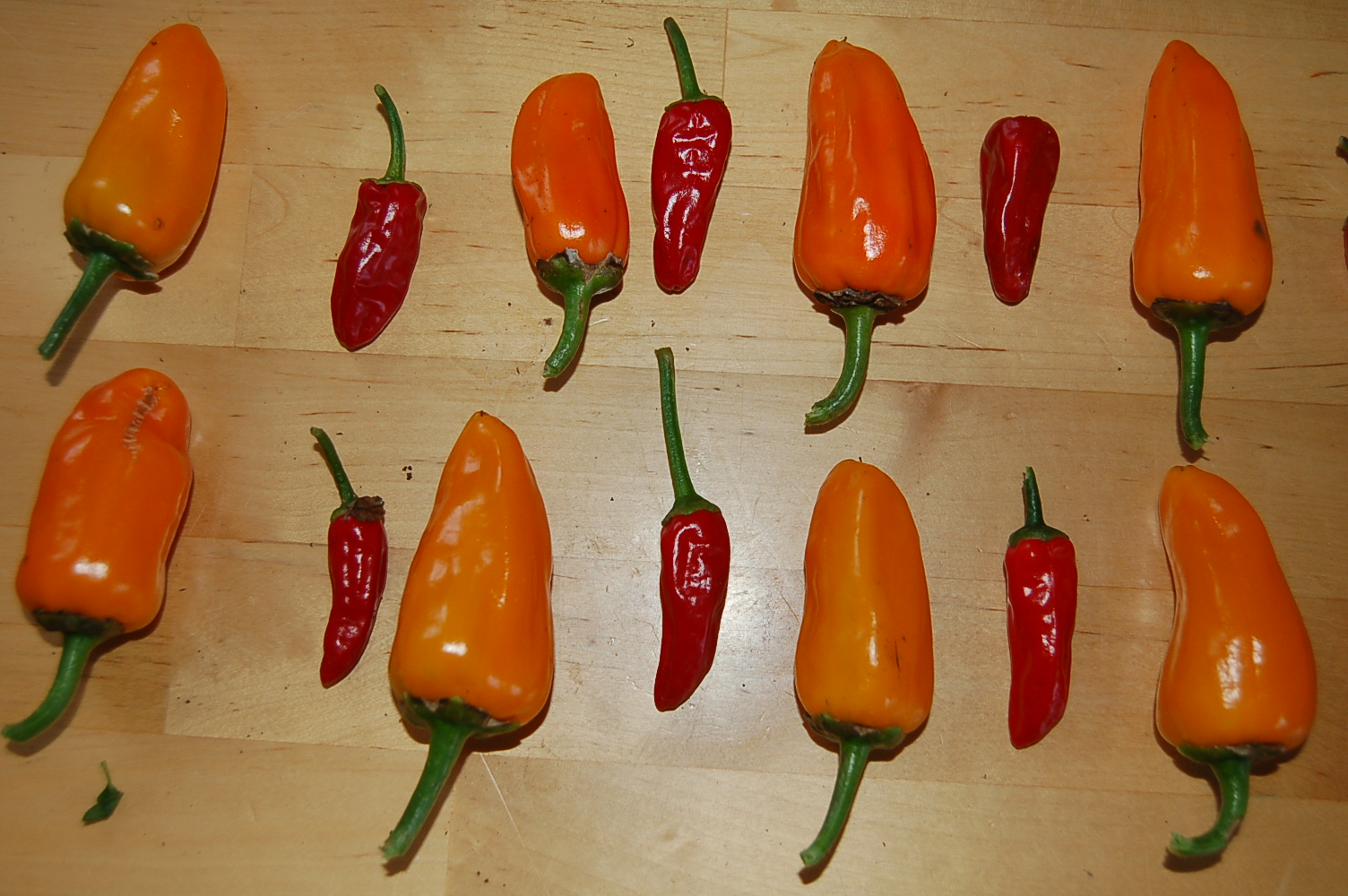
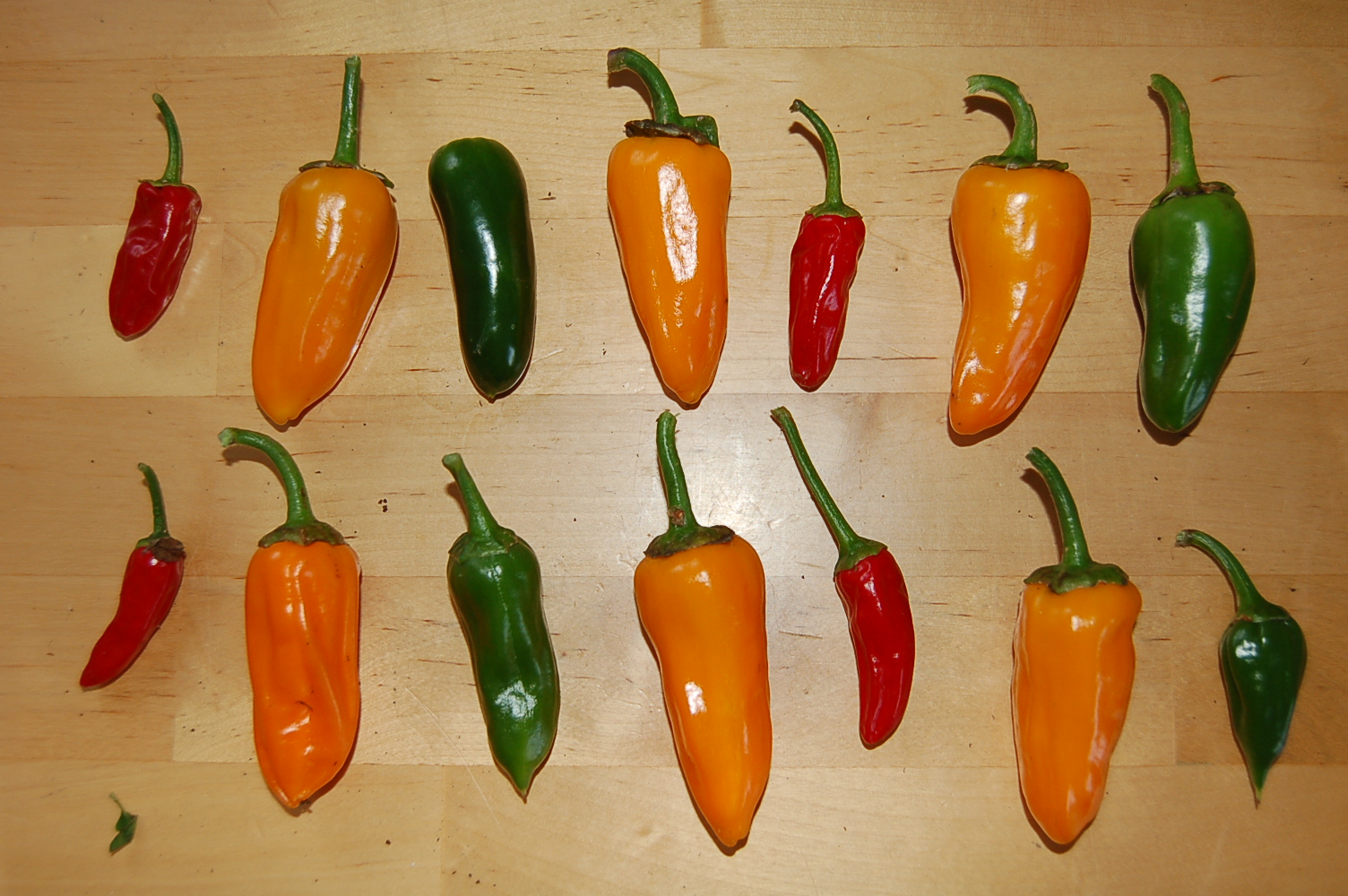
We also had the privilege of cutting the last of our chillies and capsicums also growing in the greenhouse following the same regime as for the potatoes. The capsicums were pretty small and still green but the chillies were large and brightly coloured. We have been using them straight from the plants for months now but night-time temperatures have made the plants look as if they are exhausted or fed up of the cold.

A couple of hours on the allotment harvesting and hoeing made the shortest day worthwhile. Just think from now on every day will be a little bit longer. Great!!!

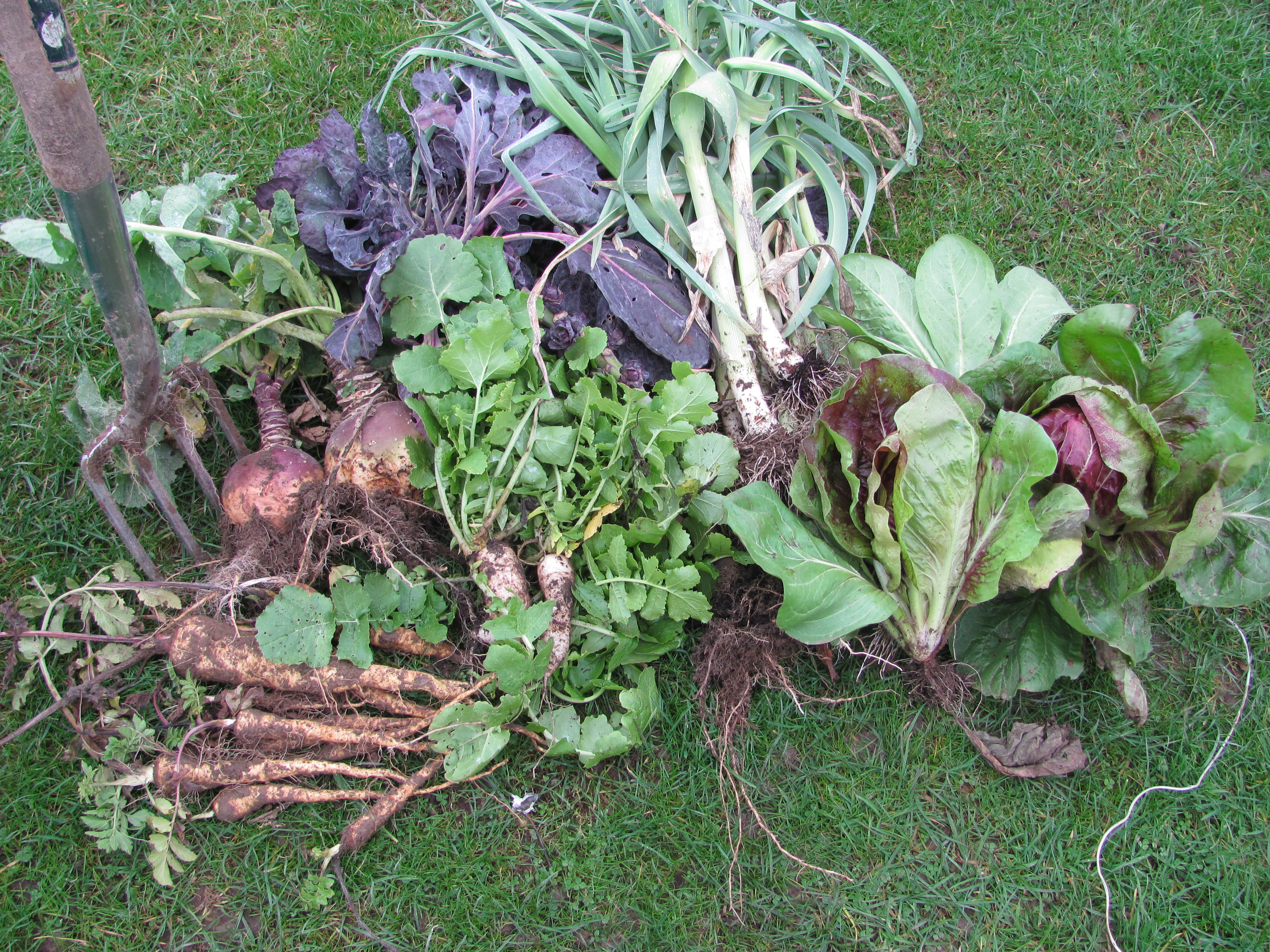
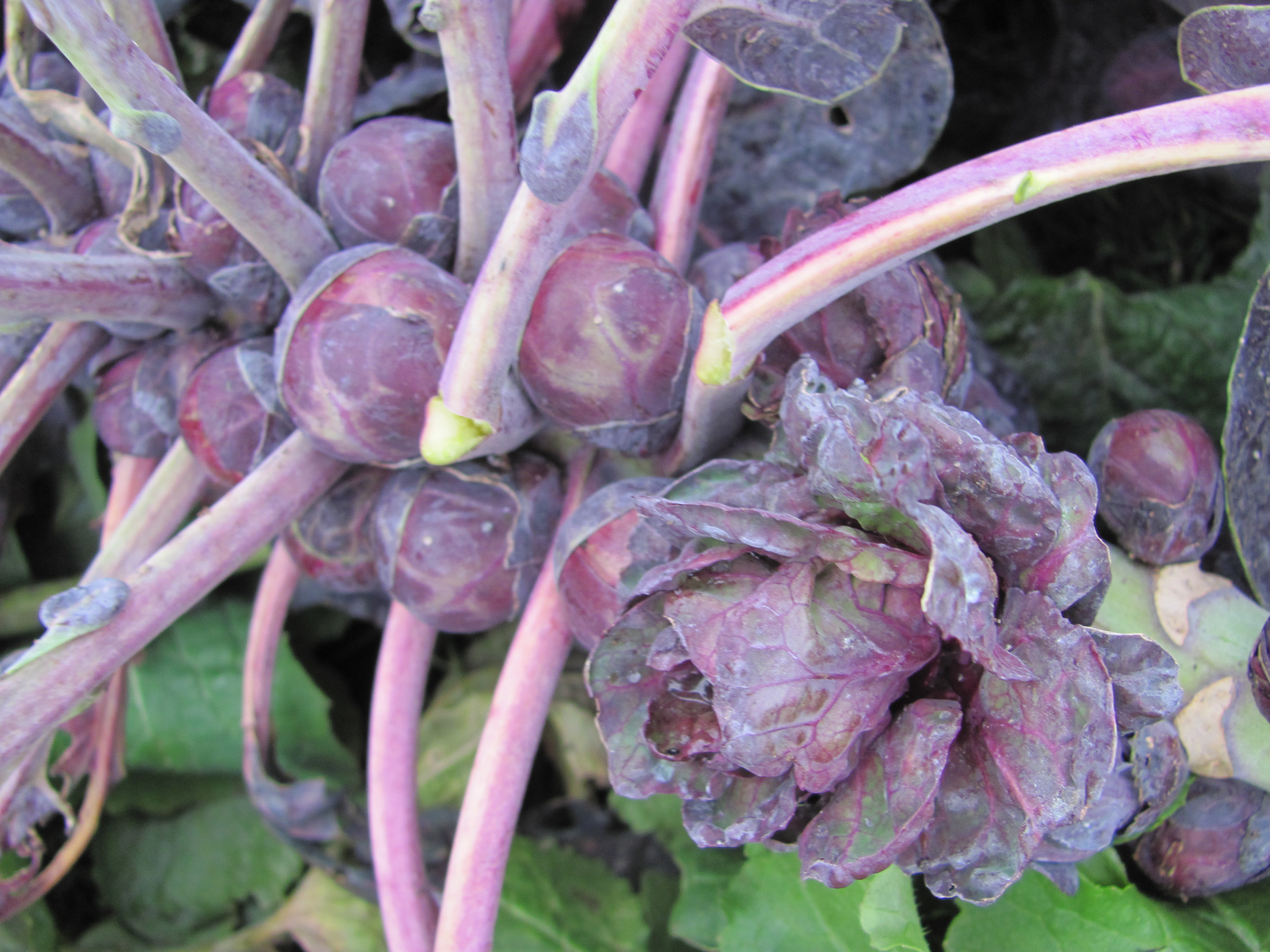
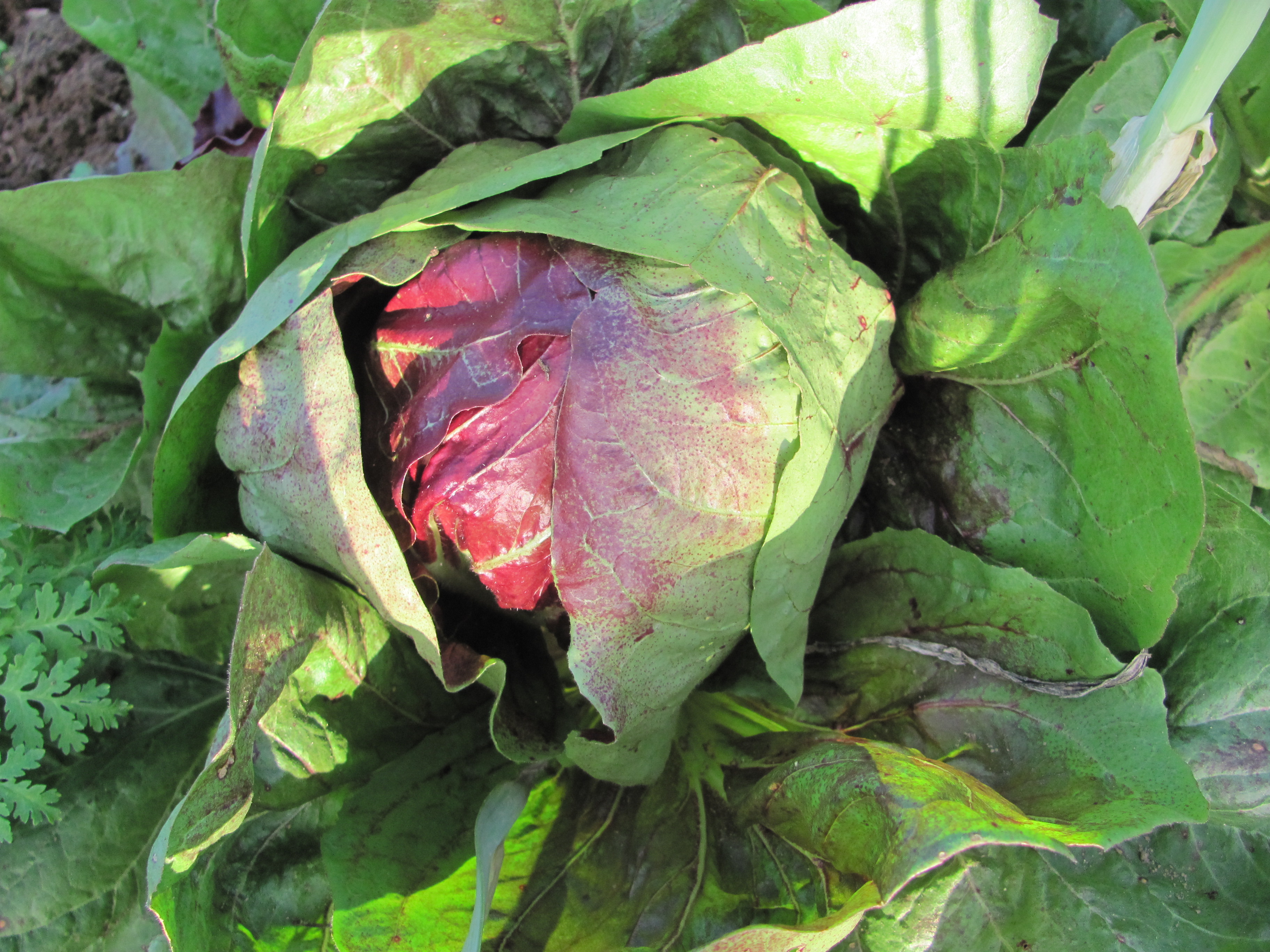
The “Undergardener” got busy with the hoe before harvesting leeks, while I dug up mooli, parsnips, swede and two roots of purple sprouts. We pulled up some Florence Fennel, radicchio and chicory. The chicory will have its leaves trimmed off and the roots replanted into a deep pot with a matching pot on top for forcing.


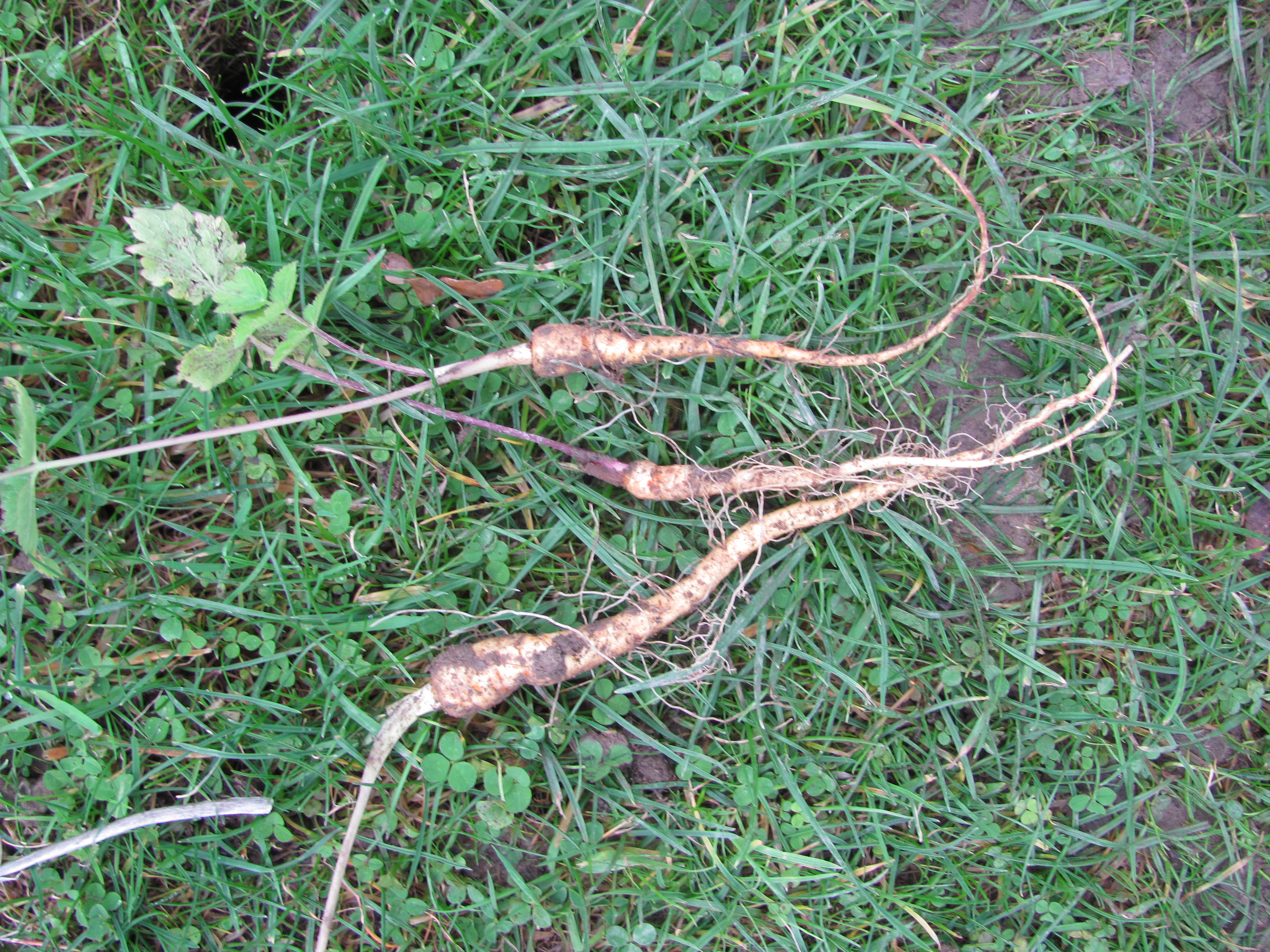
One row of parsnips  produced a crop of reasonably sized roots whereas the second row we dug up produced just disappointment. Sad skinny little roots the size of my little finger! I think I shall blame the dry weather! No, I exaggerate, they are nowhere near as big as my little finger. We could start a new trend – bootlace parsnips!


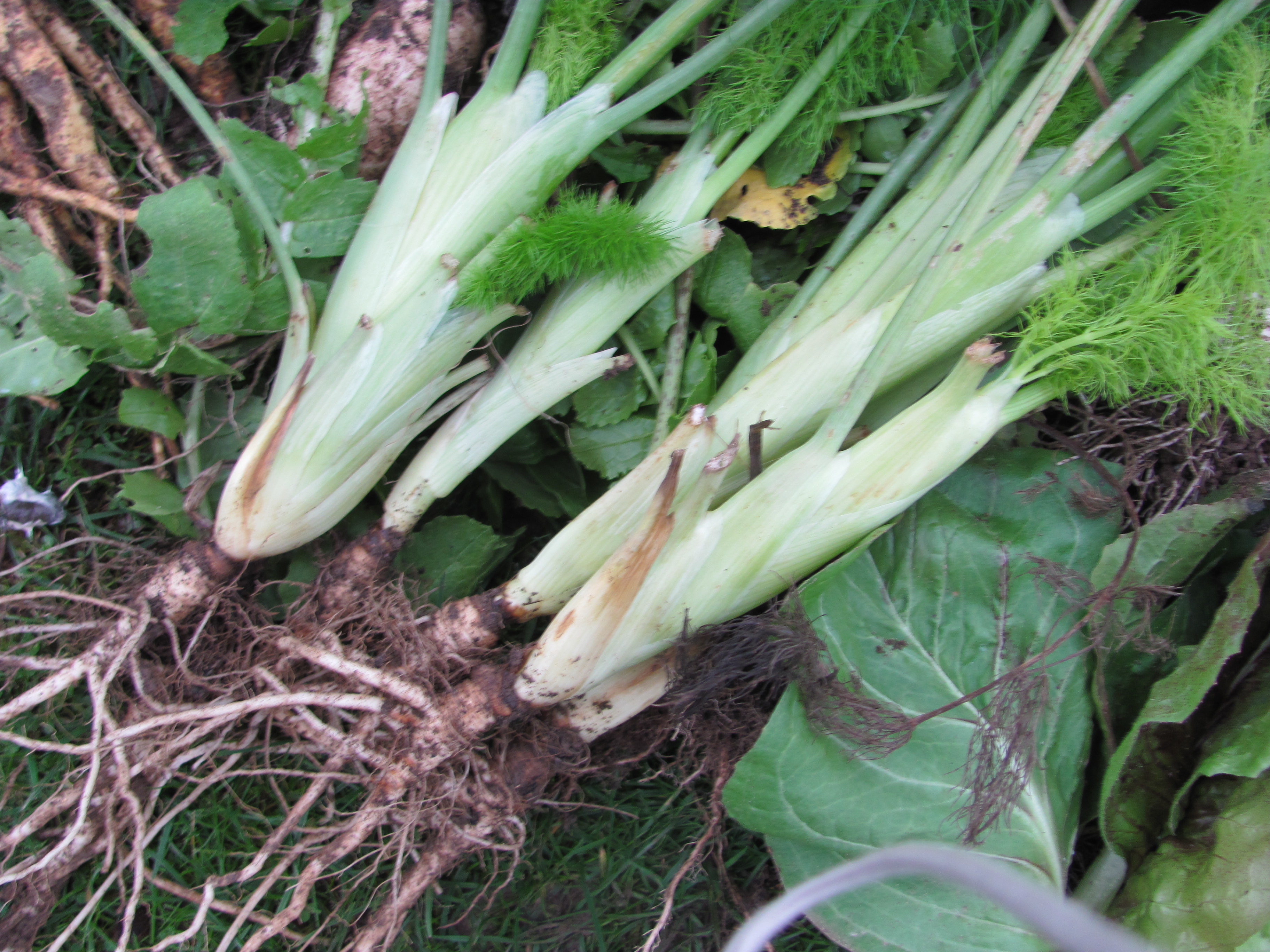
Fennel foliage like feathery ferns treats us to a warm aniseed scent. The little “bulbs”, swollen stems really will add a warming flavour to veg soups.

Purple sprouts taste no different but their colour gives extra interest to a winter roast. but of course the real reason we grow them is because they look so good on the lottie.

Categories
arboreta fruit and veg garden photography gardening ornamental grasses ornamental trees and shrubs shrubs trees

Malus “Admiration” – an impulse buy.

We had to visit the garden centre at Bridgemere to buy a few presents for gardening friends and relations, so as usual we had to have a wander around their plants. We always enjoy their seasonal displays where the best plants of the time are put together in border-like collections – a great idea if you want to know what is giving best seasonal interest. It was particularly good today as a chiminea was simmering away sending wafts of gentle wood smoke into the cool moist air. We were in search of a couple of specimens of Cornus “Cardinal” to creat a trio with the one we bought earlier in the winter. The garden was crying out for a group of three under the white-trunked trio of Betulus utilis “Silver Queen”.

On the journey there we had spotted a stunning malus on the grass verge that glowed an orangy peach colour. And then by coincidence we spotted one at Bridgemere just after loading a pair of cornus into our trolley and as you can imagine it ended up joining them. Gardeners should never give in to impulse buys especially if they have no idea where the plant in question could be planted. We fell for it. The temptation was too great and we definitely had no idea where it would fit into our garden.

We wandered around the garden with the new malus, trying out various spots and eventually found what we hope will prove an ideal situation in front of a grass to emphasis the fruit colour and near a bronze leaved phormium for contrast. Here it will be in the spotlight in autumn and early winter when the low sun will light up the orange and peach of the fruits and emphasise their translucency.

This malus was new to us and is also known as Malus “Adirondack”. It is a small tree or large shrub growing to just 12ft tall and 5ft wide after a decade – just right for a small garden. We look forward now to its “dense clusters of large waxy white  flowers” which follow its dark carmine buds.

Categories
allotments community gardening fruit and veg garden photography gardening grow your own meadows

Lottie Leaves

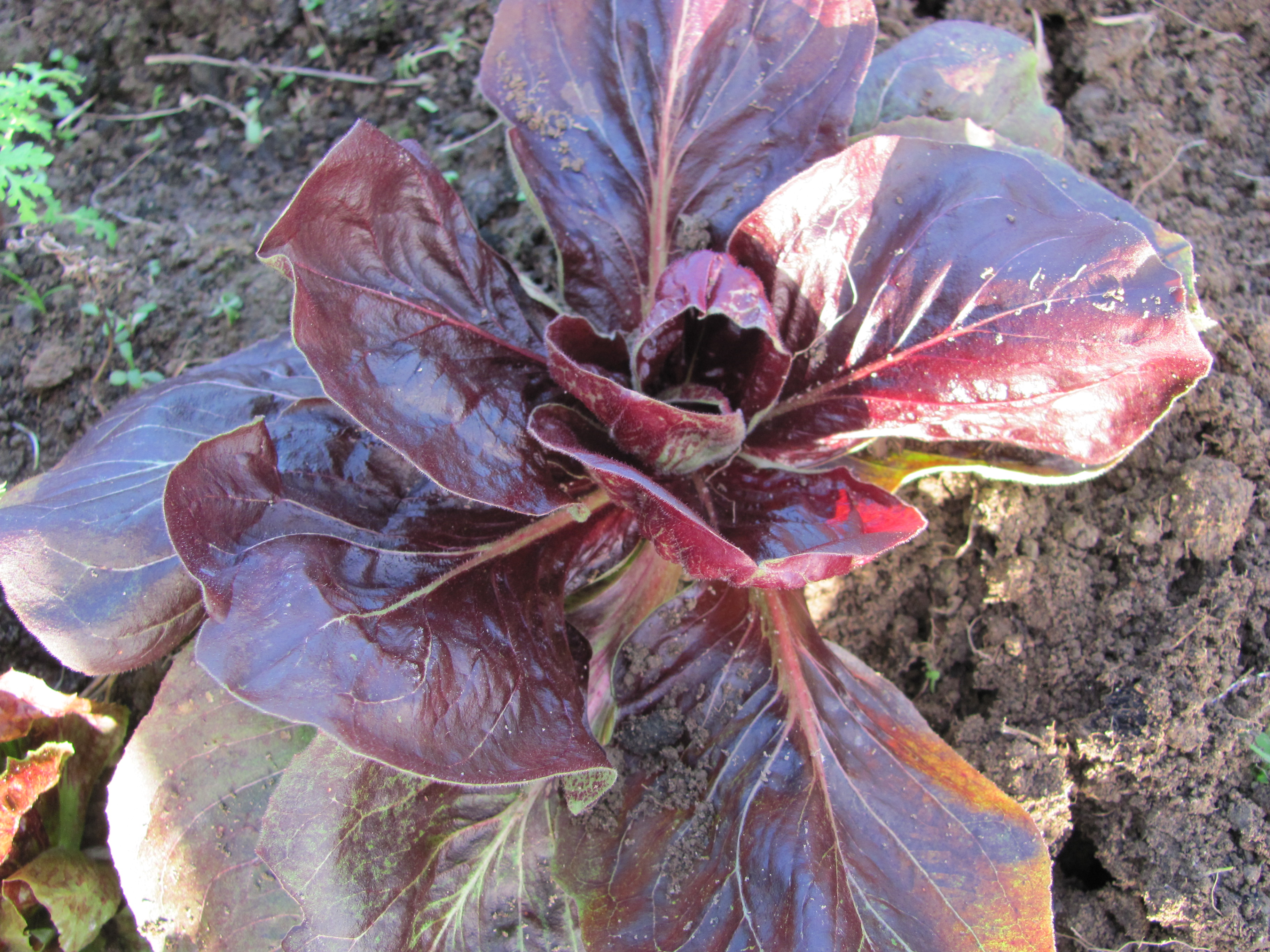
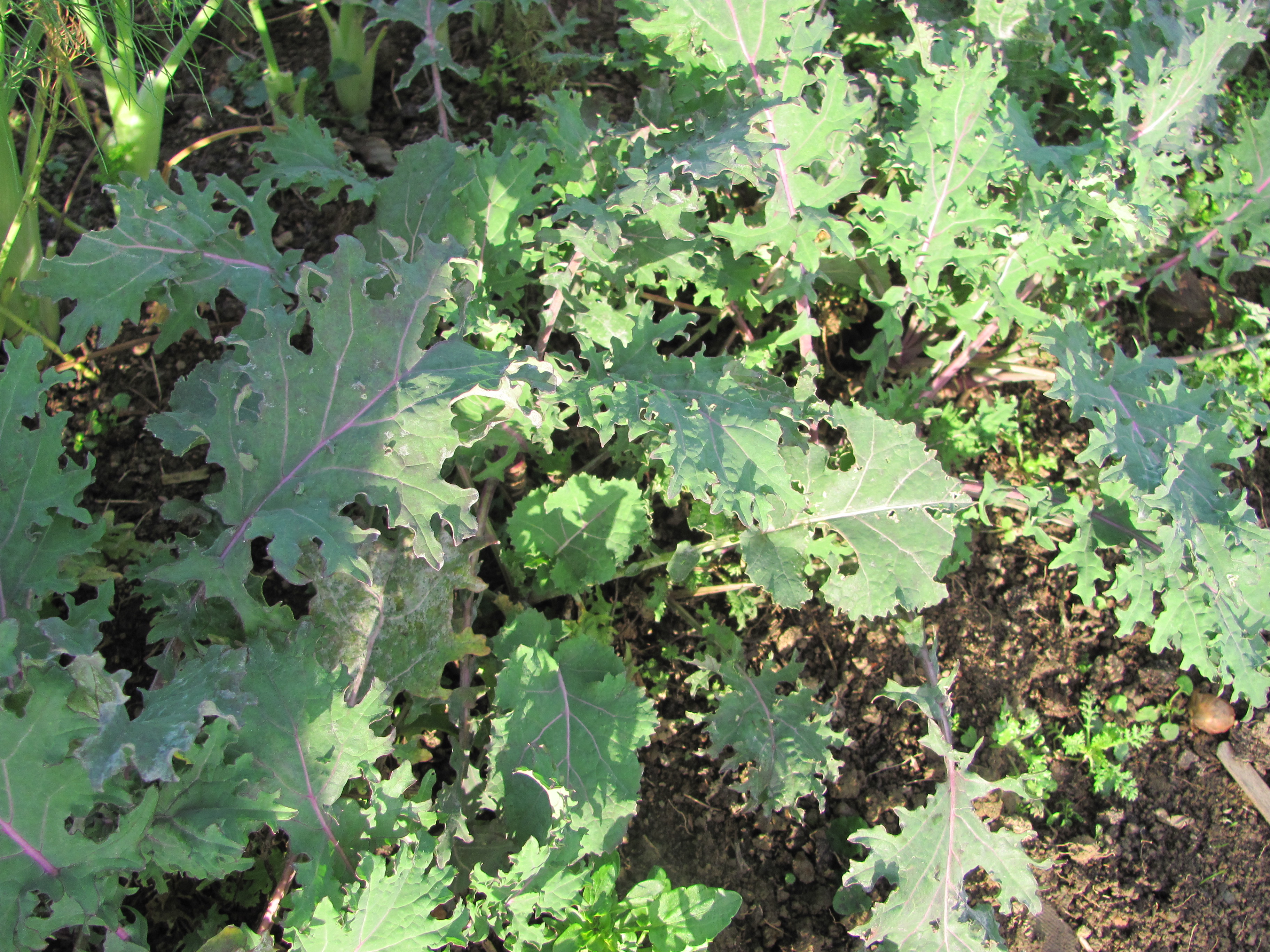
What a crazy day to be on the lottie with gale force icy cold winds howling across and freezing fingers, toes and cheeks. But when the sun burst through the clouds – very short but bright bursts – it acted as a spotlight that featured wonderful coloured leaves. Salad leaves provide the real stars of the show like these ruby leaved radicchio. They enjoy being in the spotlight, being the centre of attraction, glowing with pride.

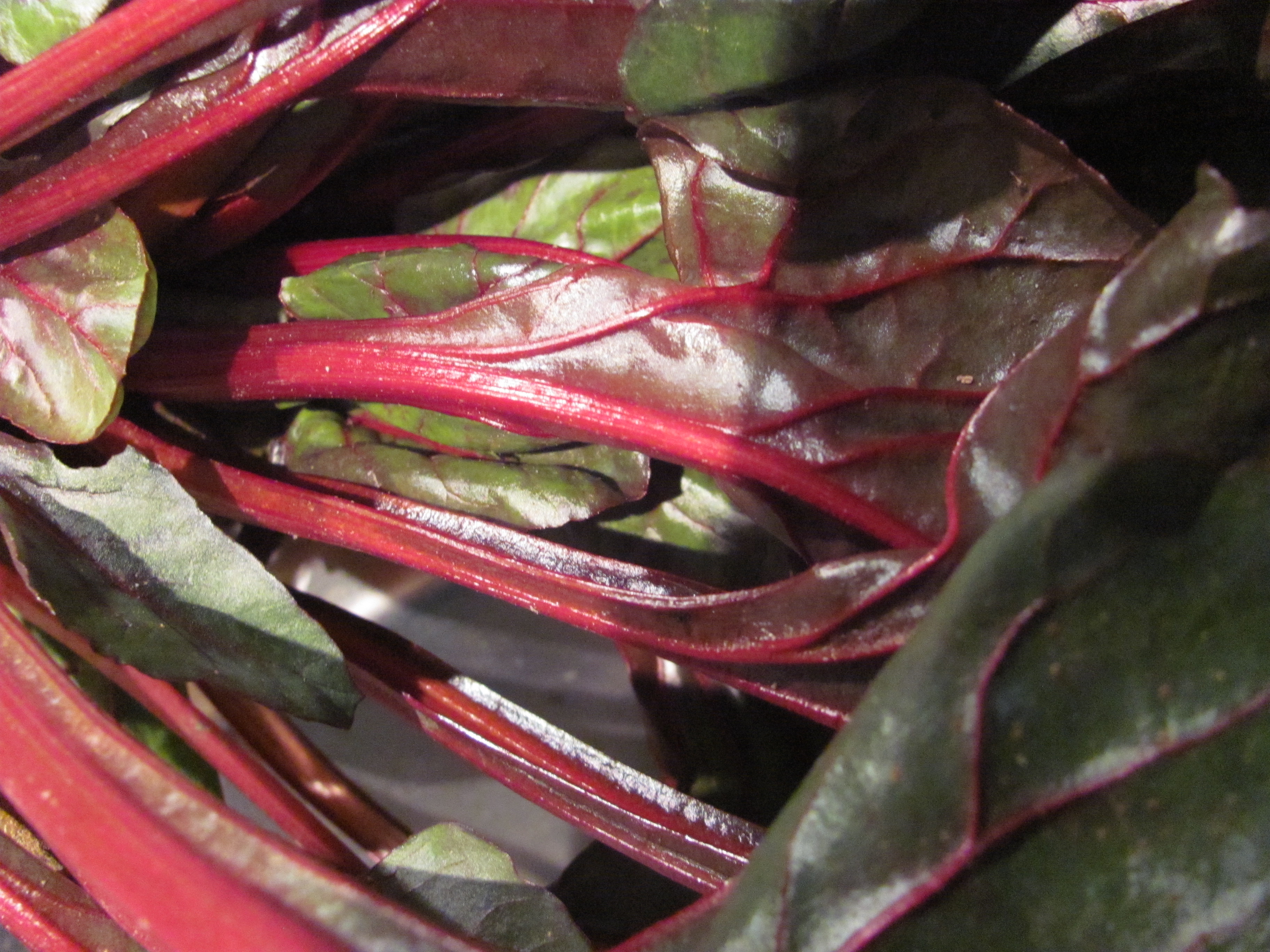
The brassica  family are not to be outdone with their contribution coming from kales. The final shot is of a bunch of chard leaves that I plucked for the chickens. The light shows the glossiness and rich red-purple colouring of the leaves and stems.

The wonderful thing about these dark colourful leaves especially those with red and purple featured in their make-up is that in addition to being good to look and tasty to eat they are also better for us than their green-leaved relatives.

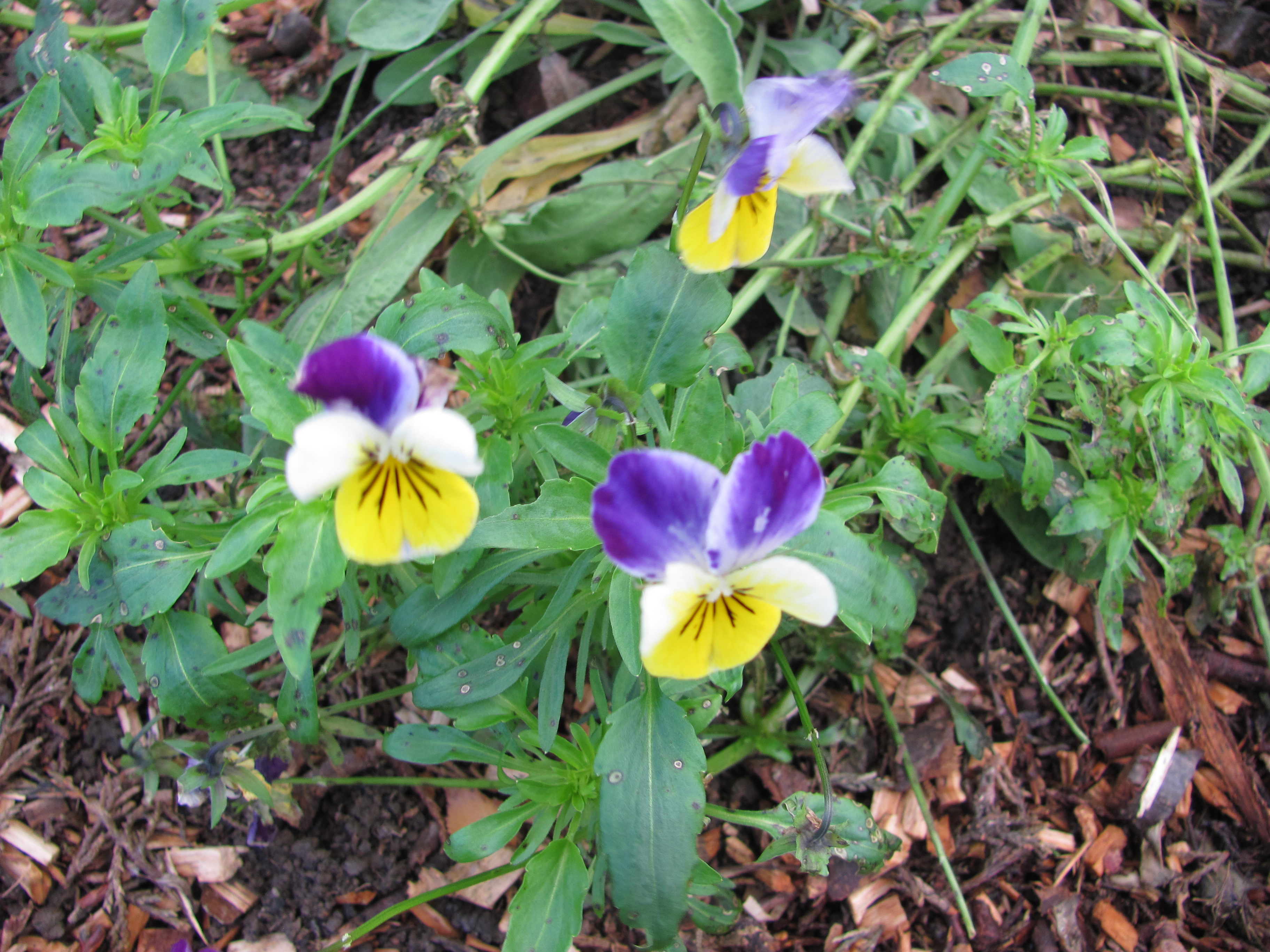
After putting away our tools and closing up our shed we took a few moments to wander around the site and see what was happening. we found surprise bonus flashes of colour. Flowers blooming out of seasons calendula and violas in the Winter Garden and a catanache the last bloom in the wildflower meadow.

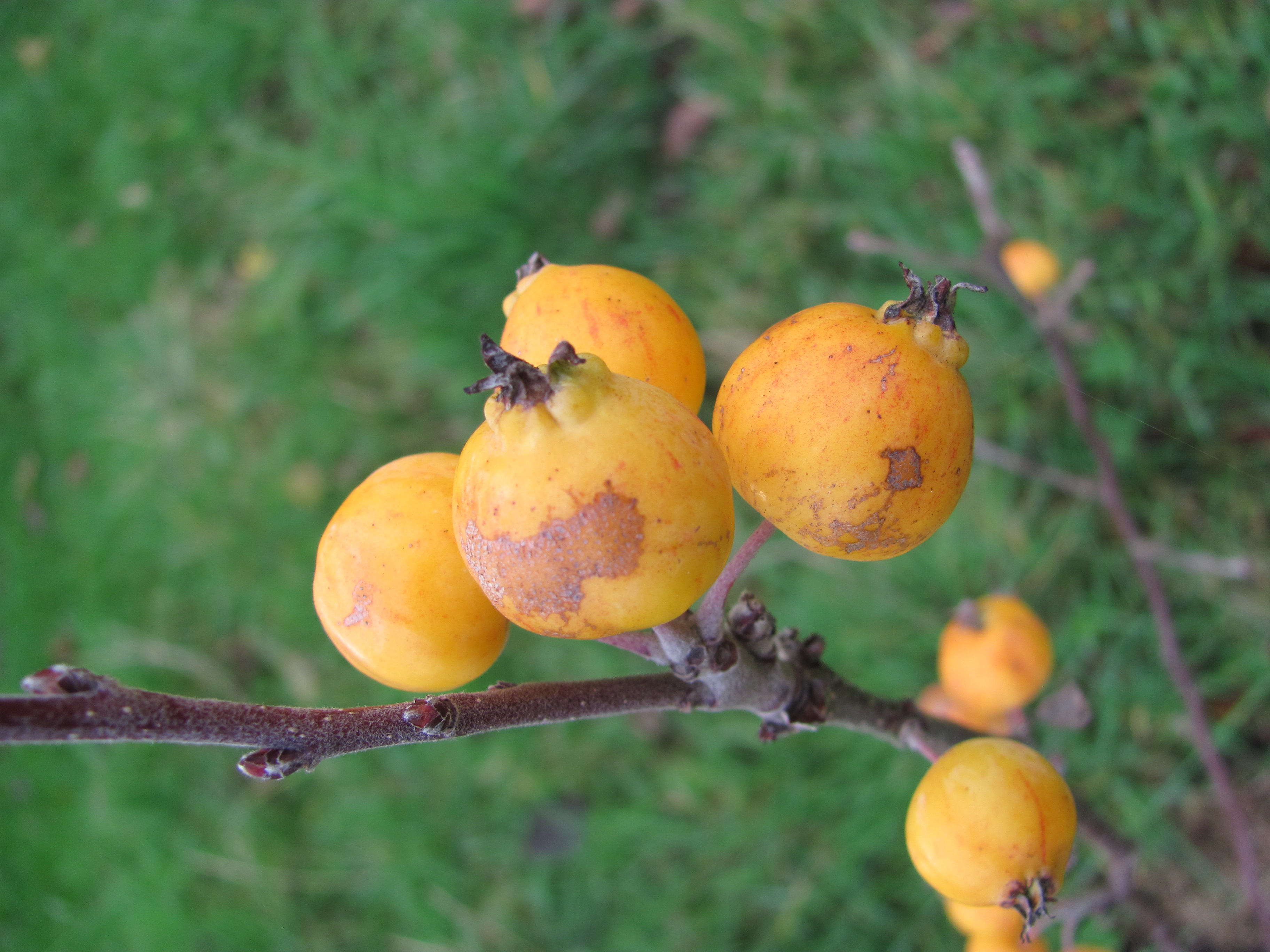
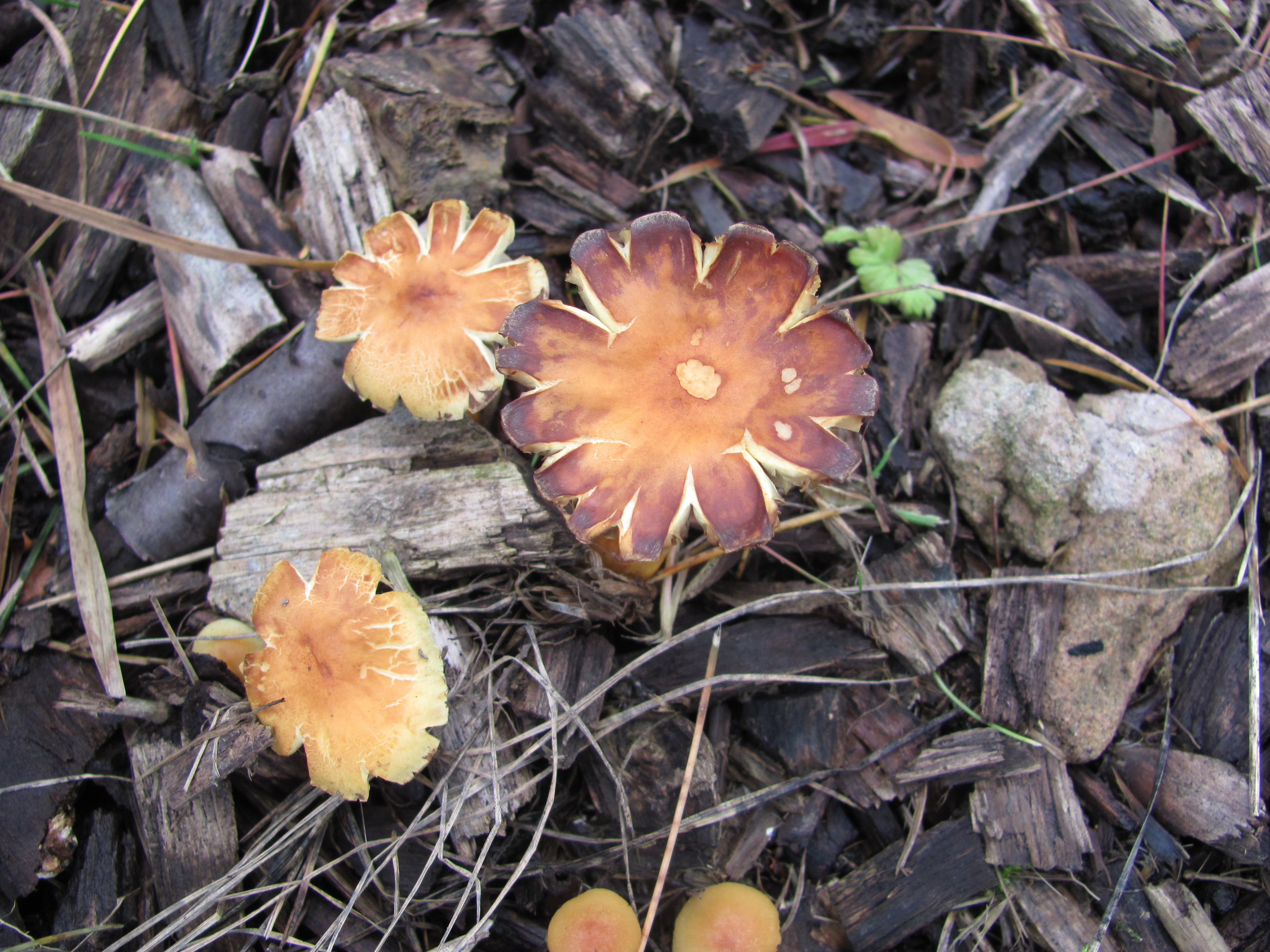
In the small orchard the yellow of the crab apple, Malus “Evereste”, glowed like beacons hanging on defying the sharp cold and strong winds. In the turf spiral maze clumps of fungi take advantage of the protection form the turves  They emerge from the bark chips we use as the walkway through the maze. They begin their life a colouful yellow but as they age their edges turn chocolate brown and they look like burnt buns until they begin to go over and dry. Then their caps split and let yellow cracks appear giving them the appearance of flowers.

Categories
allotments community gardening fruit and veg garden photography gardening grow your own

Day on the Lottie

We spent today on the lottie catching up on a few jobs and taking advantage of some sun and warmth, a December treat. We popped up for half an hour to plant 3 rose bushes owed to us from our big delivery of David Austin roses last year. So we added three Wenlock roses to our site’s community Summer Garden. The half hour became an afternoon as we planted whips of native trees and shrubs in the native hedge and “Edible Hedge”, rowan, elder, dogwood, wild cherry, cherry plum etc.

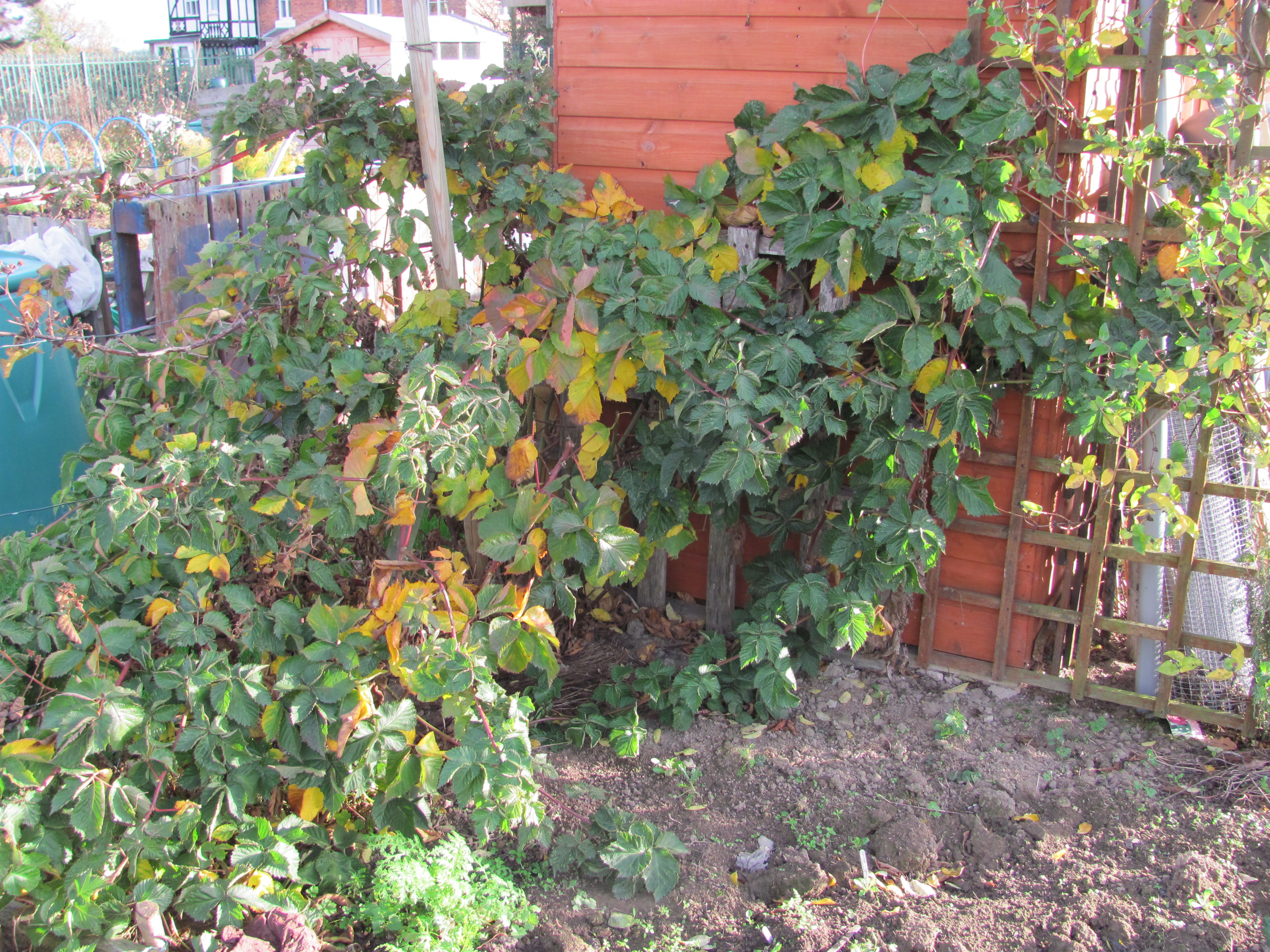
Then we turned our attention to our own lottie where the blackberry and tayberry were crying out for attention. The blackberry had put on masses of growth last year so I set to pruning out the brambles that had fruited this year and thinned out some of the new growth. Luckily it is a thornless variety. Once tied back in it all looked much more tidy and we looked at it willing it to be productive for us next year. The tayberry, although not thornless, is still a young bramble so took less work.

The Blackberry prior to pruning.
And after pruning.

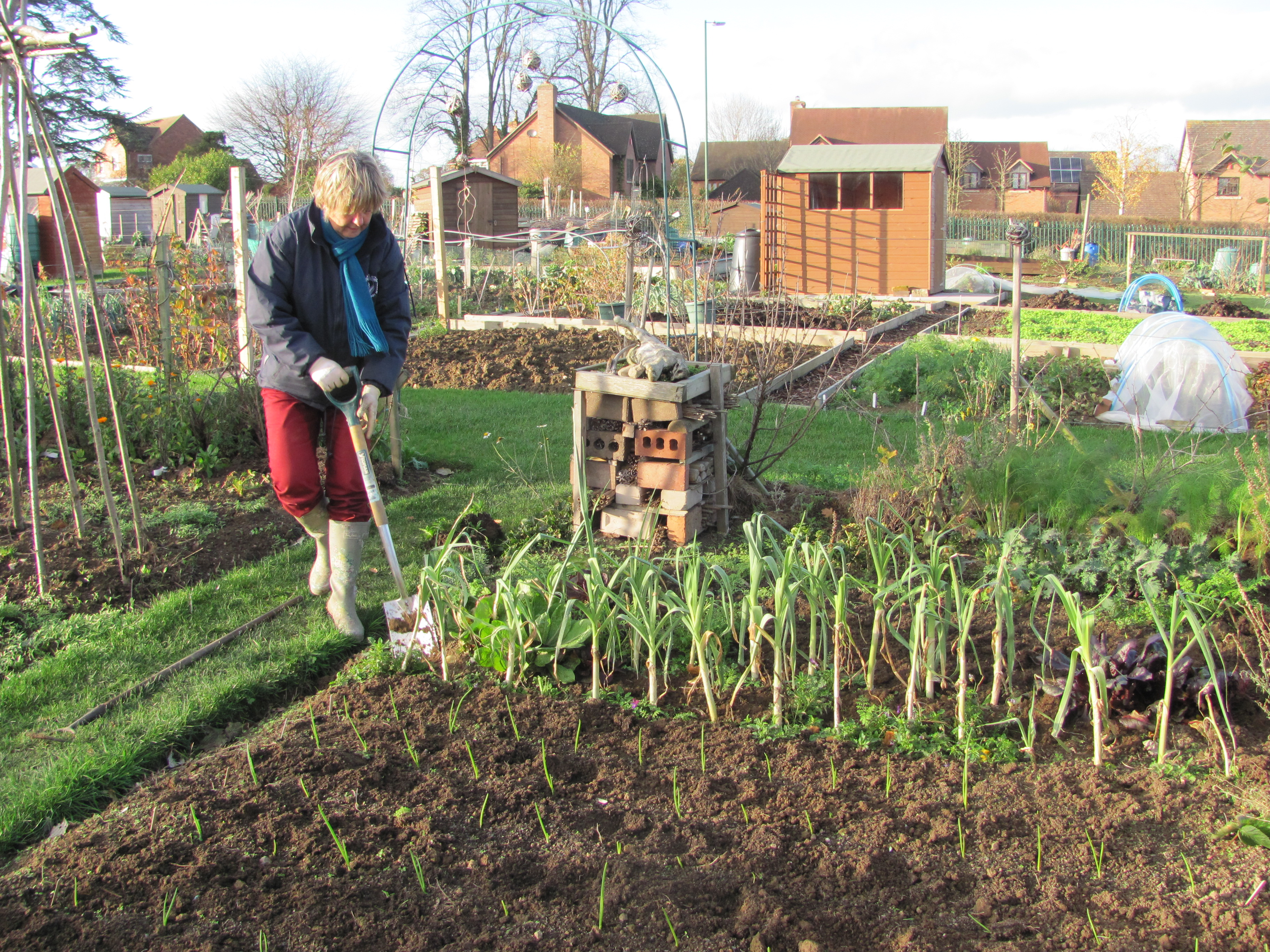
Meanwhile as I tackled the brambles, Jude the undergardener hoed between the rows of overwintering crops. This is the most efficient way of keeping an allotment plot looking tidy as well as killing any tiny seedlings even those yet to emerge from the soil.

The fresh growth of garlic, onions and shallots spear the soil and its compost topping with bright green freshness, a real treat in the winter cold. The broad beans planted in early autumn and the mooli sown in late summer add a welcome lushness of growth.

Broad bean plants patiently waiting out winter.
Moolii, the radish with white icicle roots for winter enjoyment.

Ground left bare through the winter would be thrashed by winter rains and its goodness leached out so we cover such patches with green manure such as winter tares. This year when we sowed it in early autumn the weather was so dry that germination was delayed and growth of the seedlings has been so slow that they are still small. We are hoping they will catch up if the weather allows. The Phacelia in the photo below however germinated well and has grown on healthily. It was self-sown from a patch of wildflowers sown as a bug bank.

So as we are now officially in winter and temperatures are dropping to nearer seasonal norms, the plot is looking good. Next year’s seeds are ordered as are the seed potatoes so we are well ahead of ourselves. The photo below looks through the newly pruned tayberry at the rows of leeks, mooli and broad beans.

Categories
allotments community gardening fruit and veg garden wildlife gardening grow your own meadows natural pest control

October Working Party

Today we held our October working party at Bowbrook Allotment Community. We took advantage of a bonus day of sunshine and warmth. Lots of hard work and lots of laughter – a typical lottie working party day.

Soon the smell of cut hay permeated the lotties as we cut the meadow under the orchard trees. It was a warm herby smell as well as nostalgic. A true sense of the feel good factor.

Above, Dee and Wendy rake up the mown hay in the orchard and below Pete and Jude tidy the long grass from around the logpile. The logpile is there to attract beneficial insects as part of our organic, natural approach to pest control. We welcome ladybirds and their larvae, beetles and lacewing larvae as pest controllers and bees as pollinators.

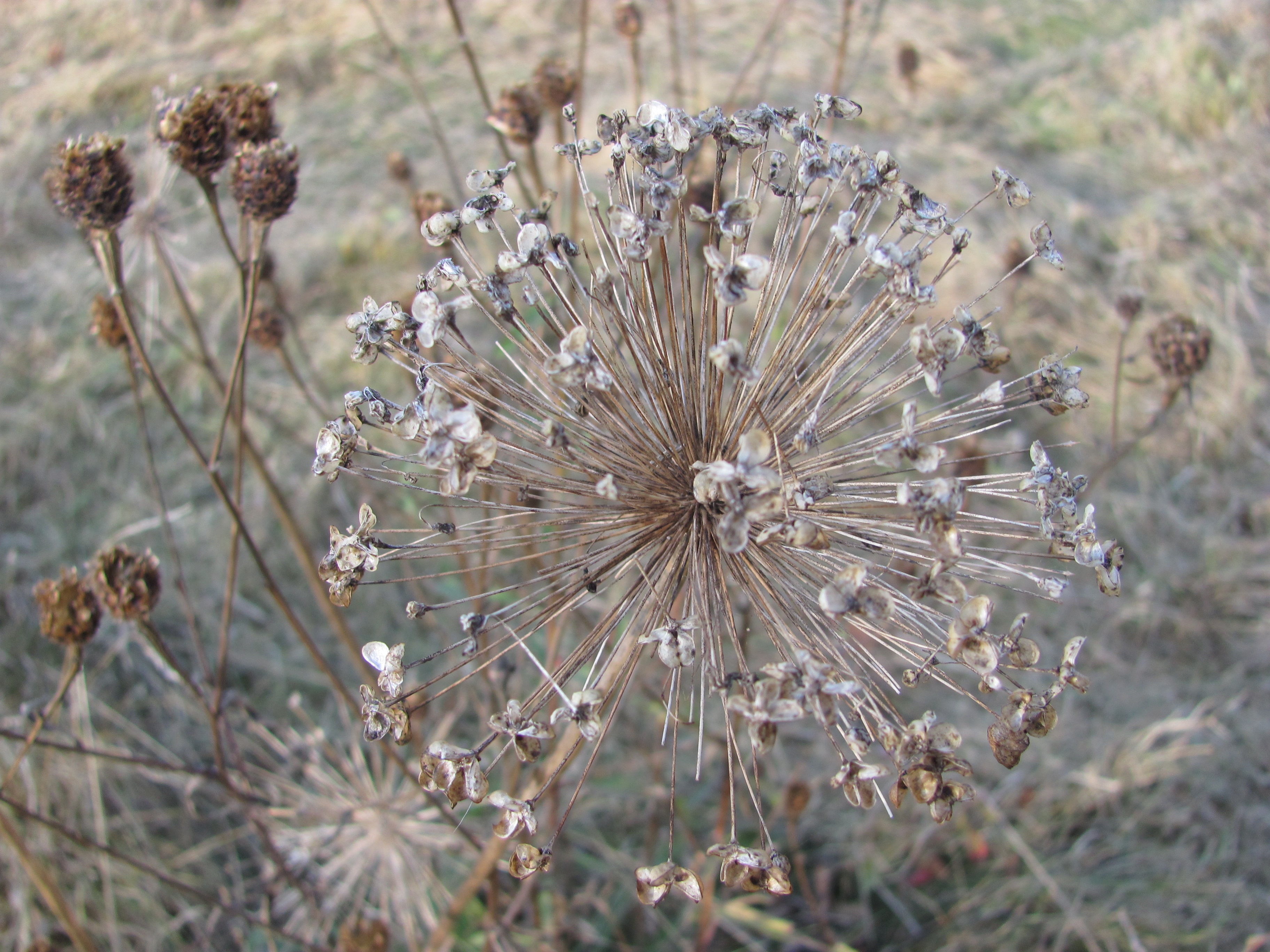
Before cutting the grass I spotted this group of seedheads – alliums and knapweed. They had shed their seeds ready for next year but I felt I had to record this particularly beautiful and delicate clump in a photo before we cut them down.

Bulbs donated by plotholders were planted around the entrance and the car park, with daffodils going in the car park border and muscari in the gateway borders. The Spring Garden was extended and the Winter Garden path was topped up with chipped wood donated by a local tree surgeon. The final task was to trim the long grass and wildflower stems growing on the wildlife banks.

Categories
fruit and veg gardening

The recycled veggie box

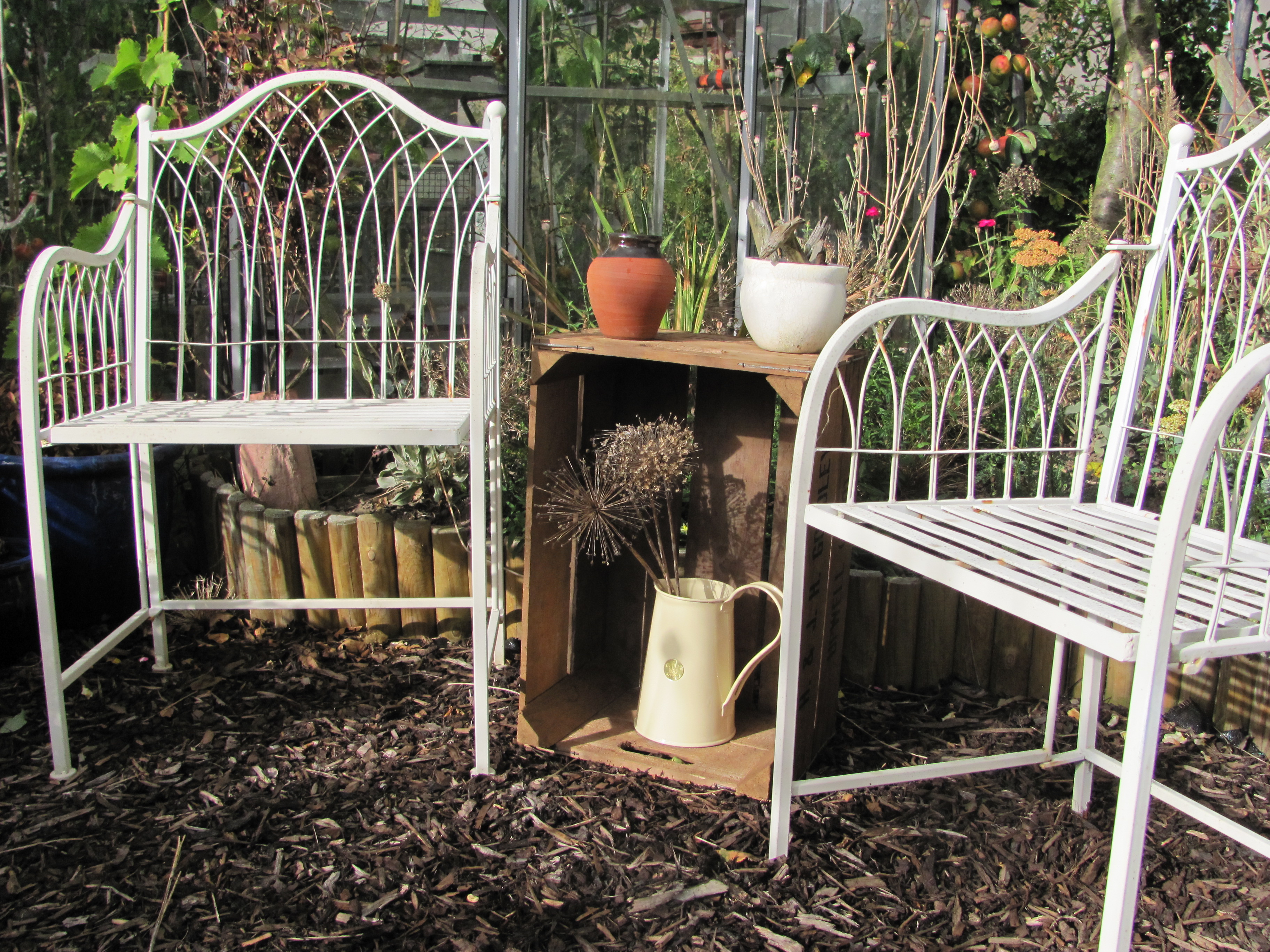
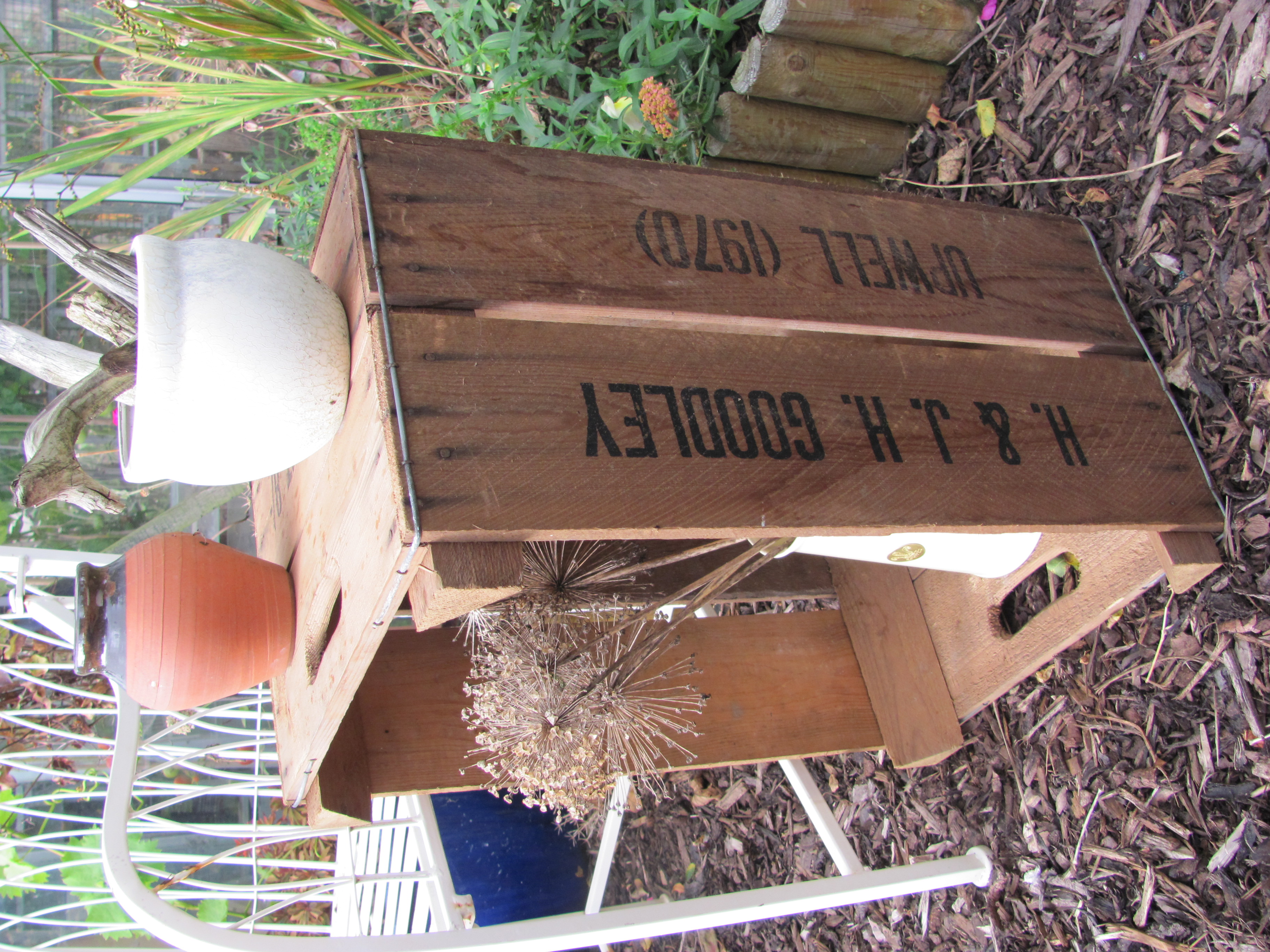
How about this for a nifty bit of recycling! A simple transformation from veggie box to coffee table for the garden. We were in search of something unusual to use in a newly created section of our garden so searched the web for wine boxes and came across this veg storage box.

The box was used by J &JH Goodley, fruit and veg growers from Upwell near Wisbech in Lincolnshire and is dated 1970. There is a red inked stamp on the side indicating that it was manufactured by W Groom Ltd, Boxmakers of Spalding also in Lincolnshire.
The box has a red ink note stamped onto its side indicating an 8 shillings deposit. This was a brilliant way to encourage re-use of packaging which seems to have faded away. Could it be a good time to re-introduce the idea?

Categories
allotments fruit and veg gardening grow your own

Autumn Planting on the Lottie

The undergardener and I spent a busy day at the lottie yesterday making the most of a warm bright day and catching up on autumn plantings. We weren’t the only ones as there were lots of plotters beavering away on this bonus “summer’s” day. It was a day of two characters with the brightness and warmth of the sun giving the pretence of summer but the calls of the jays passing overhead on the way to our great old oak in search of acorns hinted at autumn. The warmth and gentleness of the day encouraged lottie holders to wander around the green spaces and sit with their coffee on the benches. Talk with other gardeners was all of the lack of rain and the dry state of the soil. We have had no appreciable rain since mid-July. Turning the soil over sends up dust.

We prepared the ground by digging over the soil and adding a good 2 inch deep layer of compost. The ground was desperate for some organic matter to hold the moisture that the rains of autumn will hopefully bring.

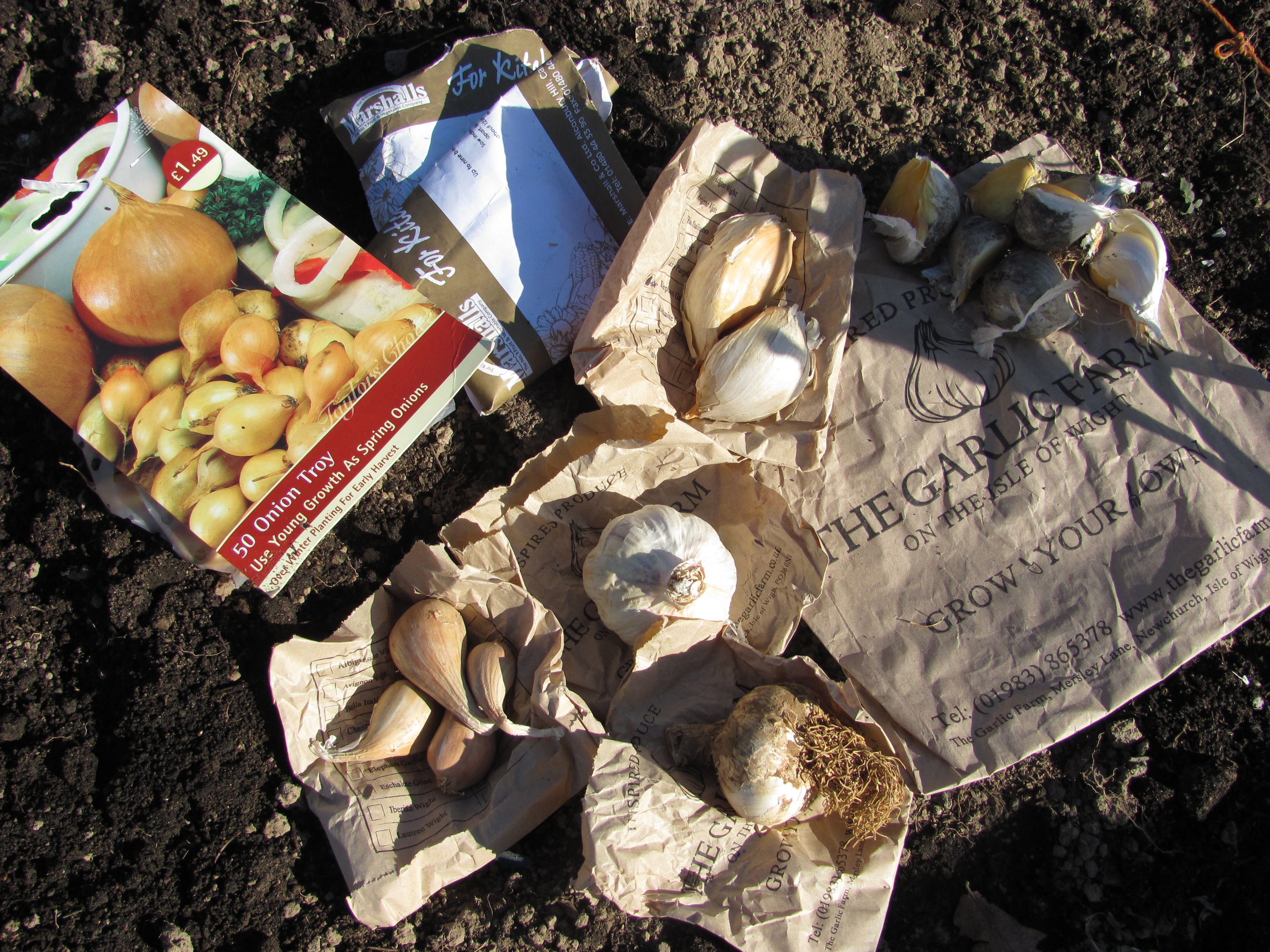
We sowed broad beans, Aquadulca Claudia of course, planted onion sets, Troy and Radar, French shallots Giselle and three types of garlic, Lautrec Wight, Solent Wight and elephant Garlic.

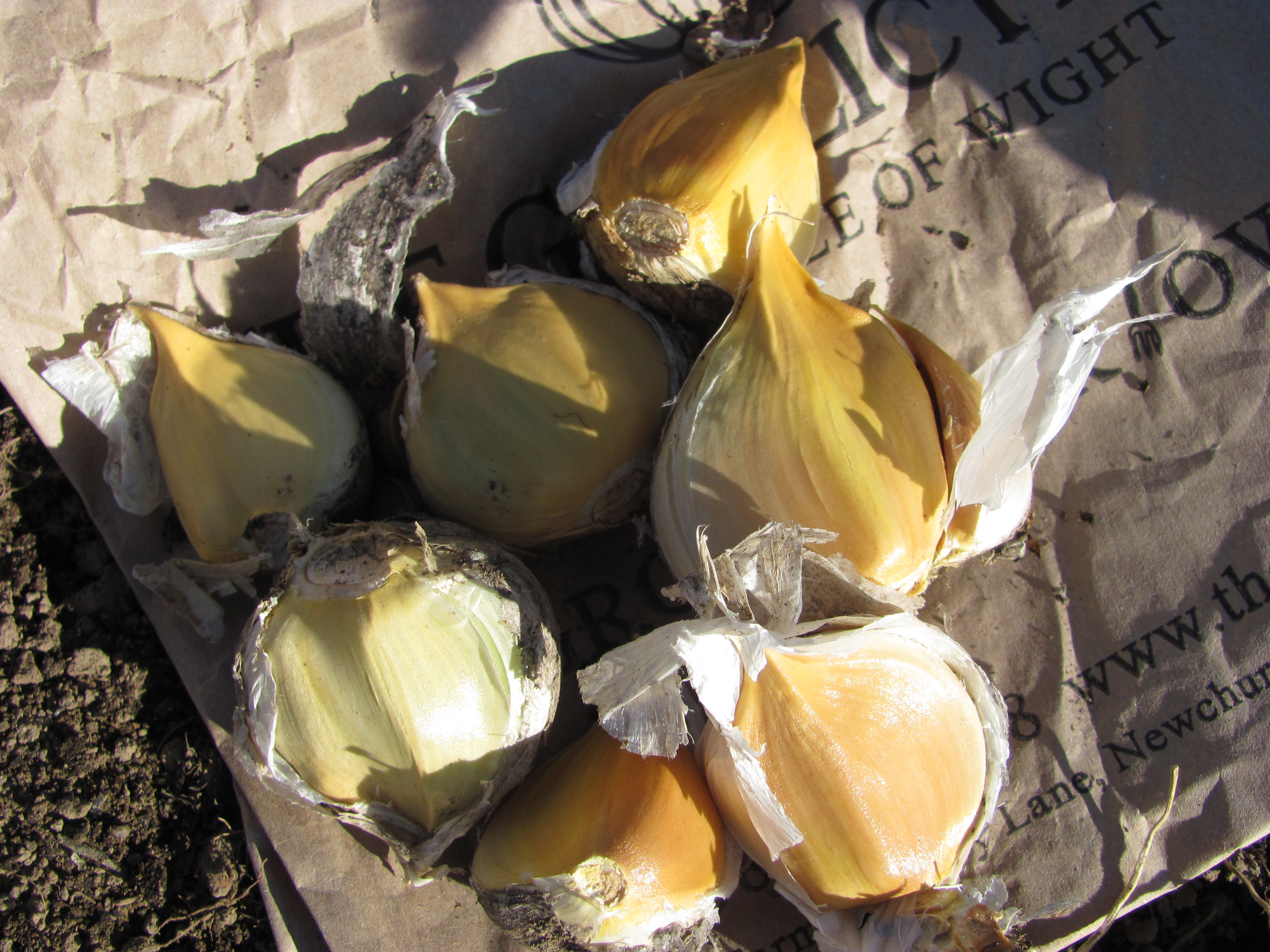
Last year we planted just two cloves of elephant garlic to provide enough for planting out a row this year. They proved to be a real success giving us enough for a row and a few to cook. We look forward to discovering their taste – if it is a good as their gentle scents then they will be worth the effort of growing. They are strange crops though as they are not garlic at all but more closely related to leeks. As the photo below shows the cloves are a lovely golden colour when harvested and they most definitely look like garlic!

This Veggie Life

A Vegetarian | Nature Lifestyle Blog

Rambling in the Garden

.....and nurturing my soul

The Arch City Gardener

Journeys In St. Louis Gardening and Beyond

Garden Dreaming at Châtillon

Consult the genius of the place

Storyshucker

A blog full of humorous and poignant observations.

gardeninacity

Notes from a wildlife-friendly cottage garden

PlayGroundology

...an emerging social science

The Official Blog of British Wildlife

'The most important and informative publication on wildlife of our times' - The Independent. This blog is a member of The UK & Ireland Natural History Bloggers group: www.uknhb.blogspot.com

iGrowHort

Inspire - Cultivate - Grow Native Plants - Restore Landscapes

Bishops Meadow Trust

To create and protect a semi-natural wild space for the people of Farnham to enjoy and experience an array of British wildlife in our town

Gardening with Children

The www.gardeningwithchildren.co.uk Blog

UKbirdingtimeline

birding through the seasons, why birds matter and how to conserve them

NATURE WALKER

with a camera in hand

Jardin

Transform your outdoor space

Eva's space

My allotment, cooking and other interests

Old School Garden

my gardening life through the year

LEANNE COLE

Trying to live a creative life

fromacountrycottage

trying to live as lightly as possible on our beautiful planet

Good Life Gardening

Nature lovers from Leicester living the good life.

mybeautfulthings

Finding the beautiful in the everyday

mawsonmichelle

Michelle's Allotment

In and Out of My Garden

thoughts from and about my garden

Greenhousing

Big plans for a small garden

The Scottish Country Garden

A Walled Country Garden in South East Scotland

The Fruity Chicken

Life at the fruity chicken

willowarchway

Off grid living. Self sufficient. "PERMAGANICS RULE".
St Anns Allotments

Nottingham's Grade 2* Listed Allotments and Community Orchard

Manifest Joy Harvests

a journey in suburban vegetable gardening

Allotmental

The madness of growing your own

Penny's Garden: a harvest beyond my front door

A novel approach to vegetable gardening

arignagardener

Sustainable living in the Irish countryside.

NewEnglandGardenAndThread

Master Gardener, amateur photographer, quilter, NH native, and sometimes SC snowbird

dianajhale

Recent work and work in progress and anything else that interests me

planthoarder

a chaotic cottage gardener

Lens and Pens by Sally

a weekly blog that creates a personal philosophy through photographs and words

Dewdrops and Sunshine

Stories from a sassy and classy Southern farmbelle.

The Pyjama Gardener

Simple Organic Gardening & Seasonal Living

gettin' fresh!

turning dirt into dinner

JOY...

today the world is created anew

Garden Birds

Notes from a Devon garden

ShootAbout

Life Through The Lens

Adapting Pixels

A photography blog showcasing the best photography pictures and videos on the internet

Wildlifegardening's Blog

Just another WordPress.com site

naturestimeline

personal observations from the natural world as the search continues for a new approach to conservation.

LATEBLOOMERBUDS

The Wonders of Life through my Eyes, my Heart, my Soul