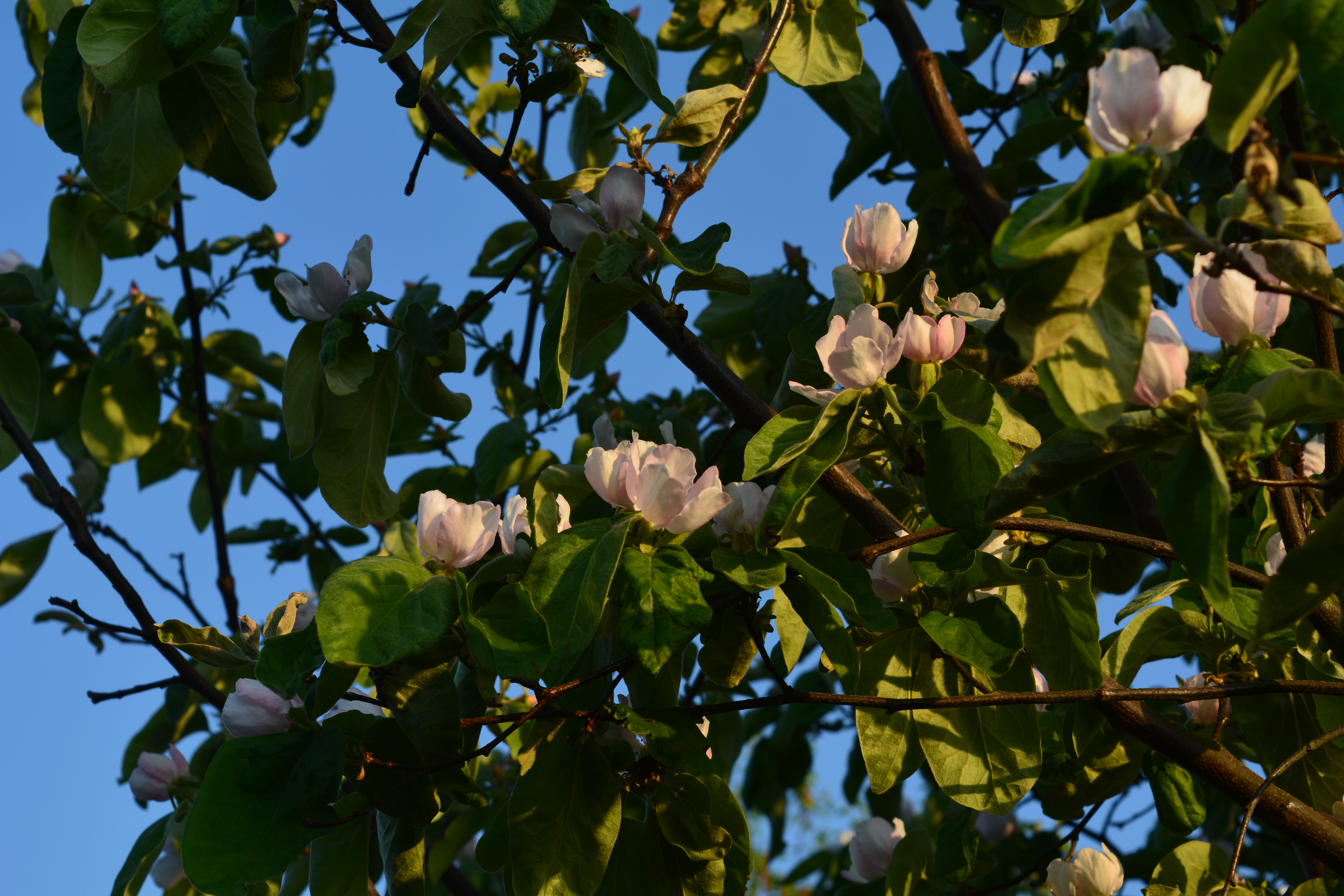
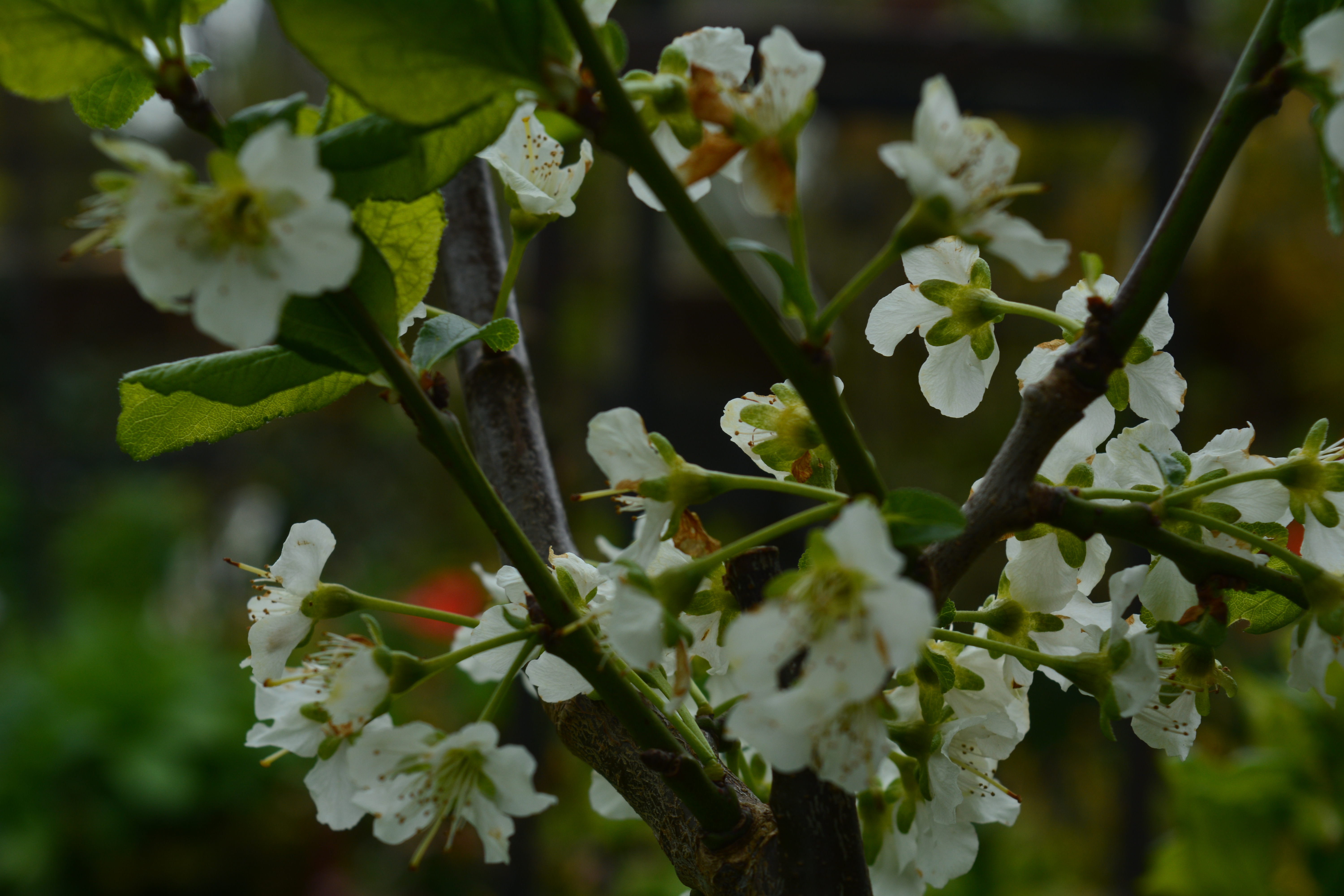
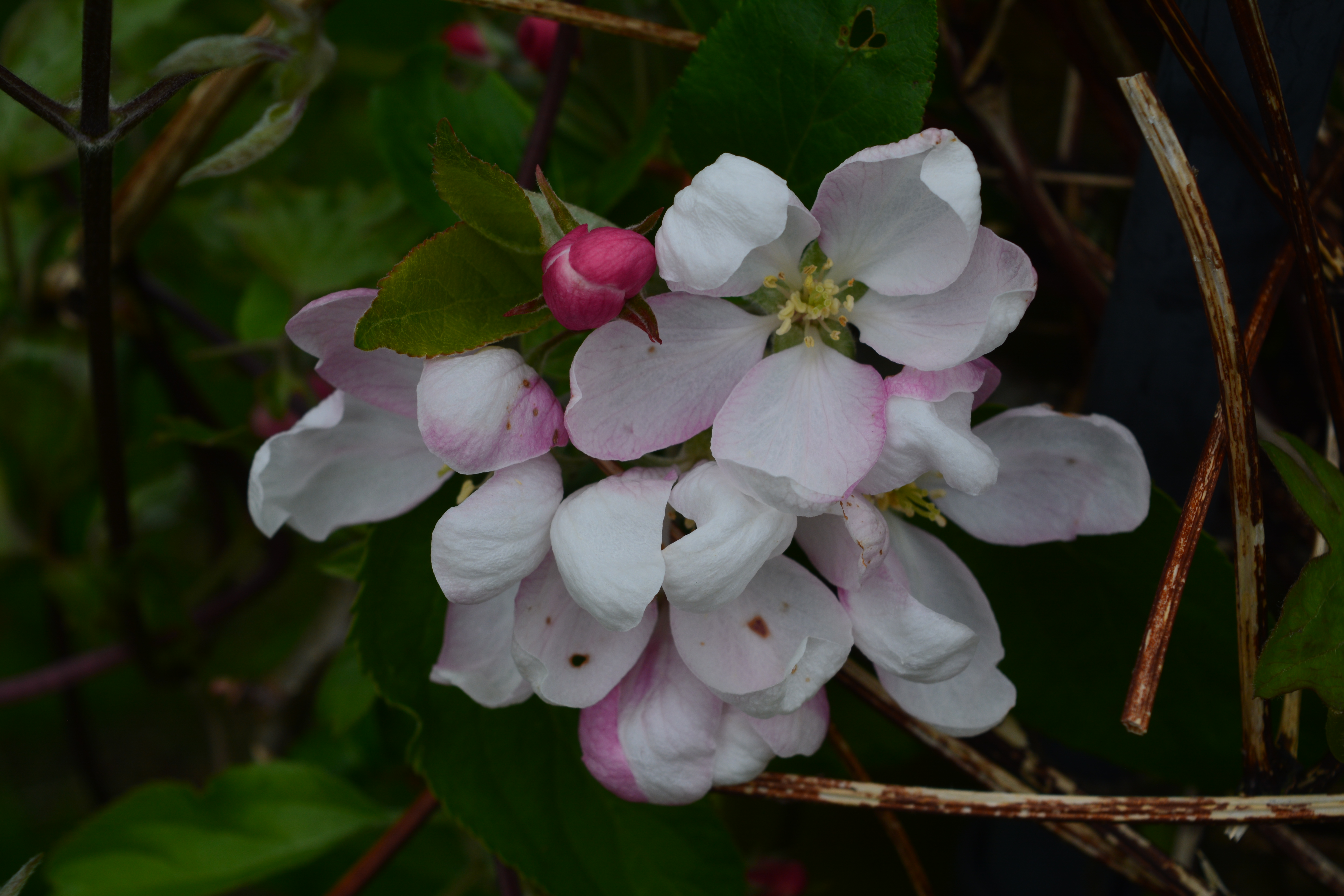
We grow many fruit trees here at our Avocet patch, mostly trained as cordons, ballerinas or stepovers, plus one freely grown tree a Quince “Vranga”. In mid-May these apples and pears are in full blousy blossom.
I went out into the garden on a bright sunny day with deep shadows with camera in hand to record their beauty. I hope you enjoy my pictures.
Fruit will follow in the late summer and into the autumn. We will start harvesting in August and continue until the end of October, some apples we will eat fresh others we will store and enjoy through to the end of March. The pears we will pick off the tree and relish them while they are still warm, dripping with juices and full of flavour.
We took a short one hour drive out into Wales today to visit a National Trust property, Erddig which we hoped would afford us the opportunity of exploring a garden with winter interest, interest found in its formal structure, its topiary and imaginative pruning as well as planting. We knew that it holds the National Collection of Hedera (Ivies), so we had something specific and extra to look for too.
After too many wet weeks the day dawned bright and we were to be treated to a day of bright winter sunshine, which would play with shadows and light throughout our walk. We were surprised to discover that the whole place, buildings and gardens were in a state of disrepair bordering on dereliction in the 1960’s when a new owner decided to rescue it and awaken a real jewel of a property.
Two welcome signs greeted us as we entered, a rustic overhead design and another with a beautiful quote which read, “Where fragrance, peace and beauty reign ….”. We would soon see if this were true.
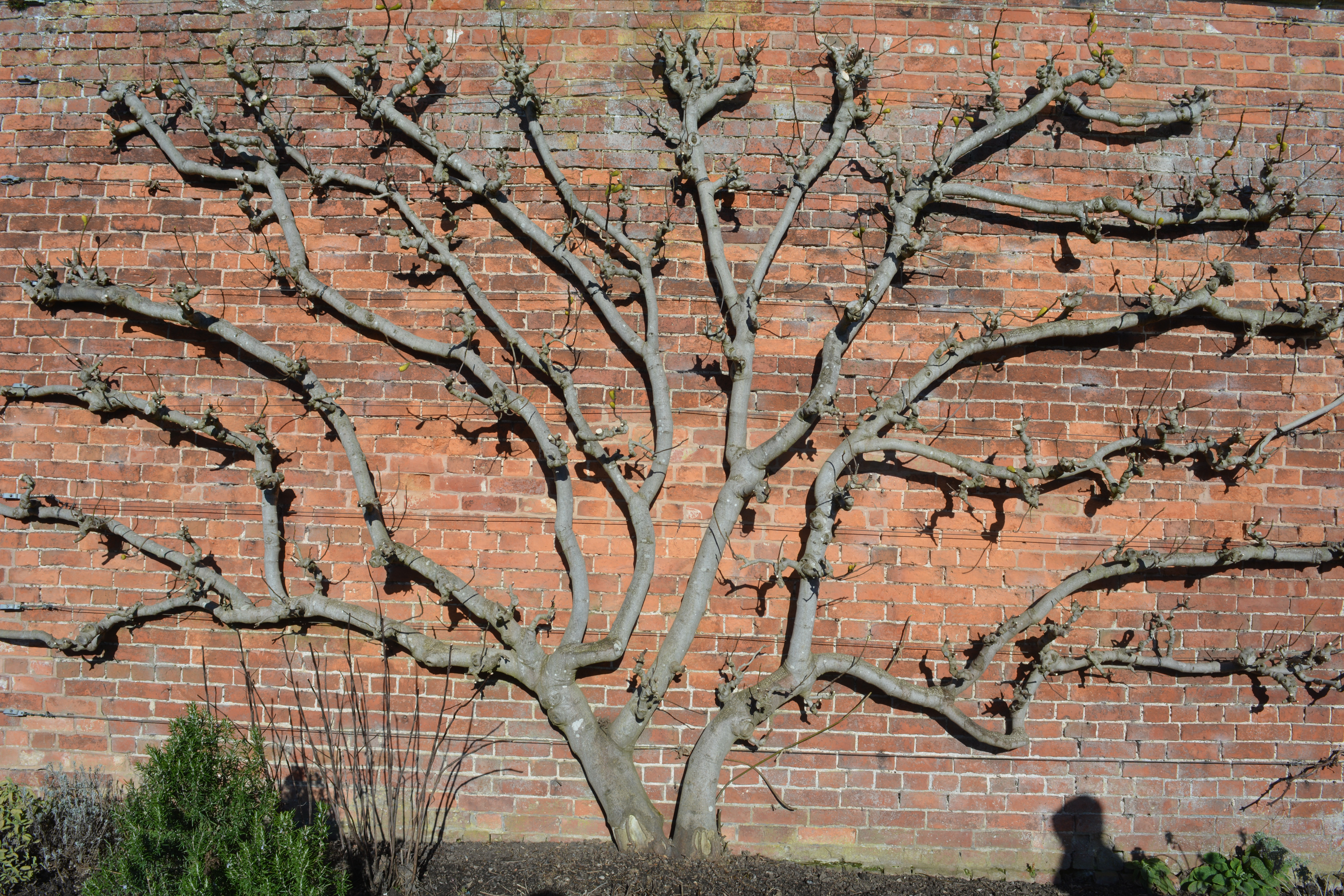
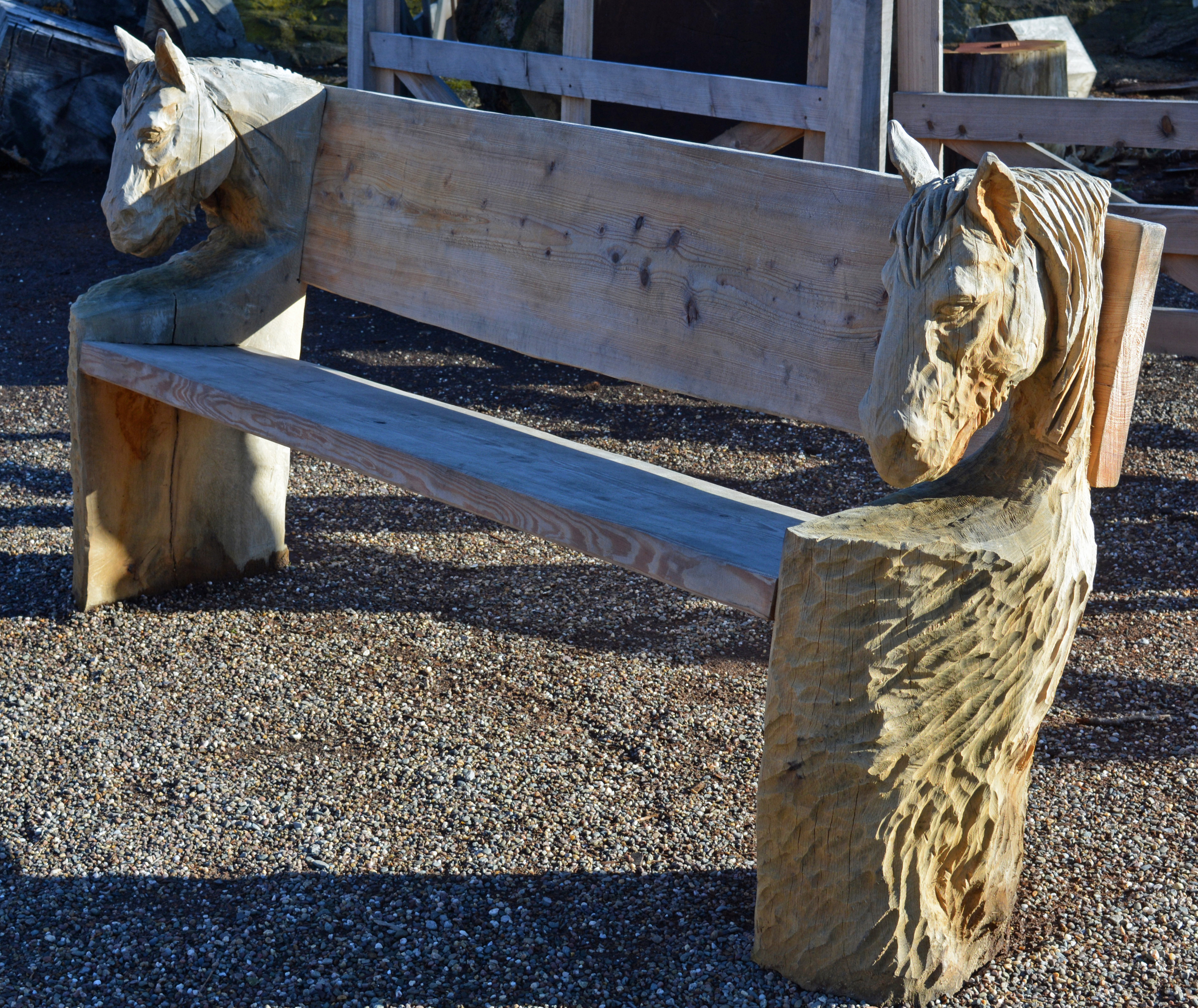
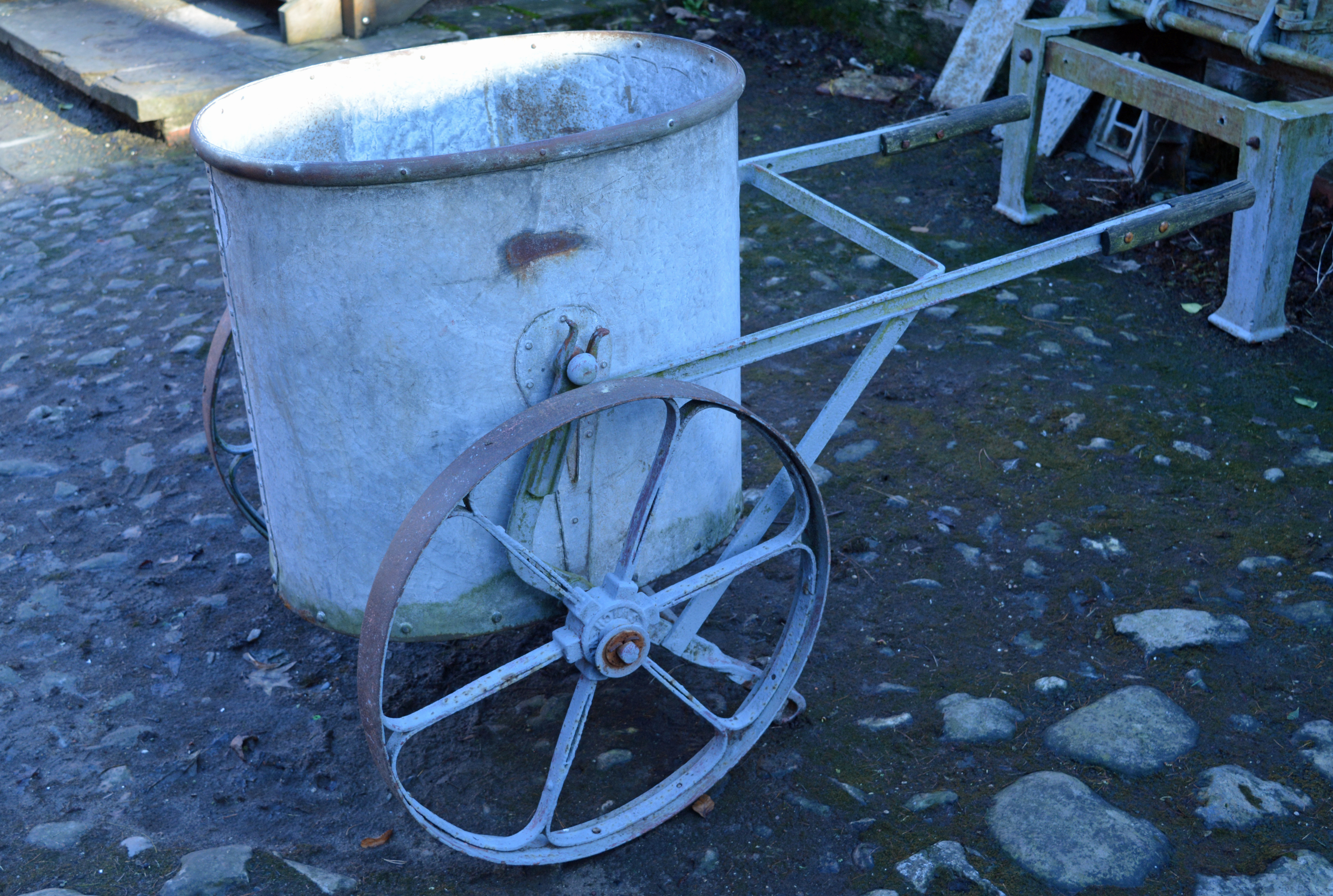
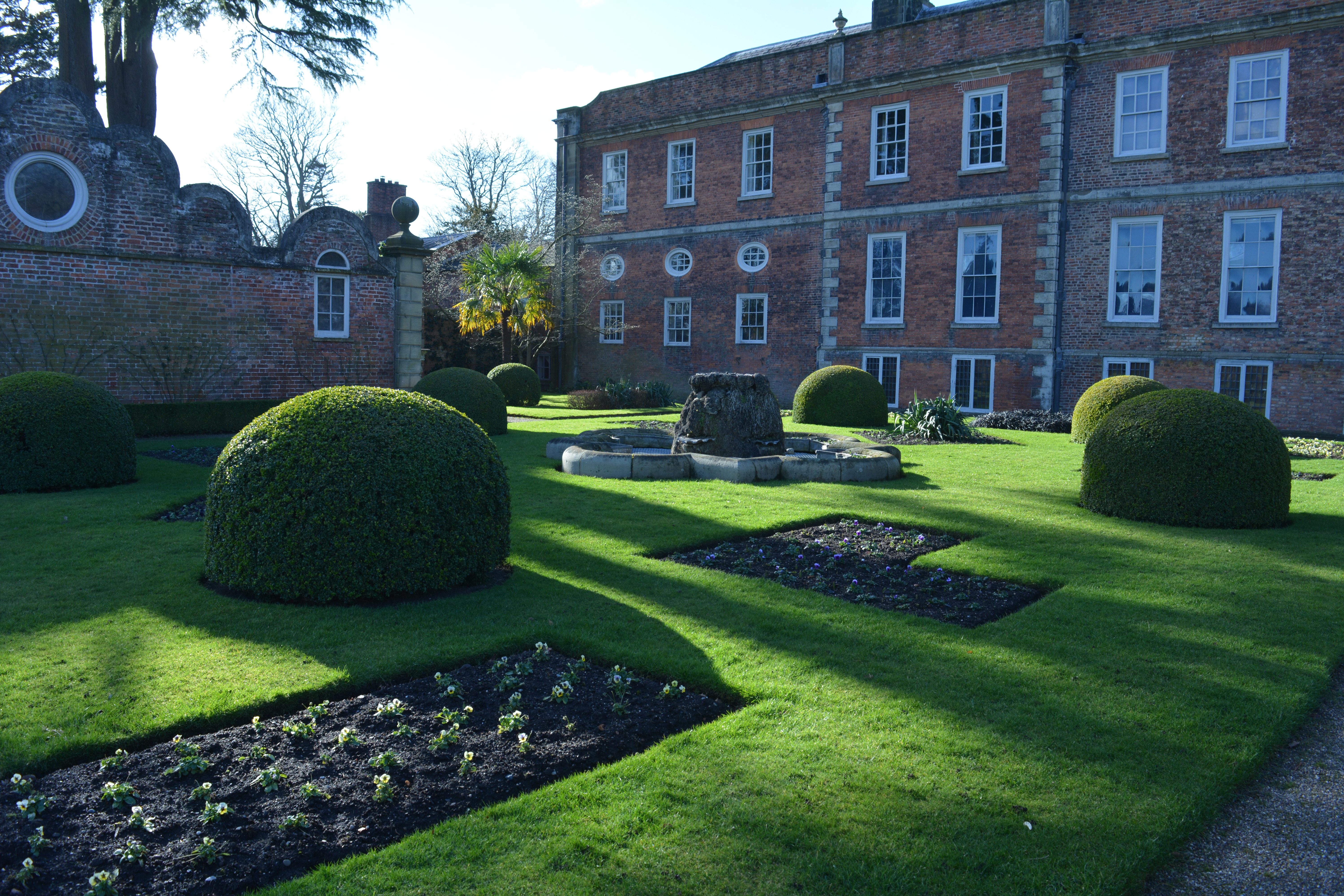
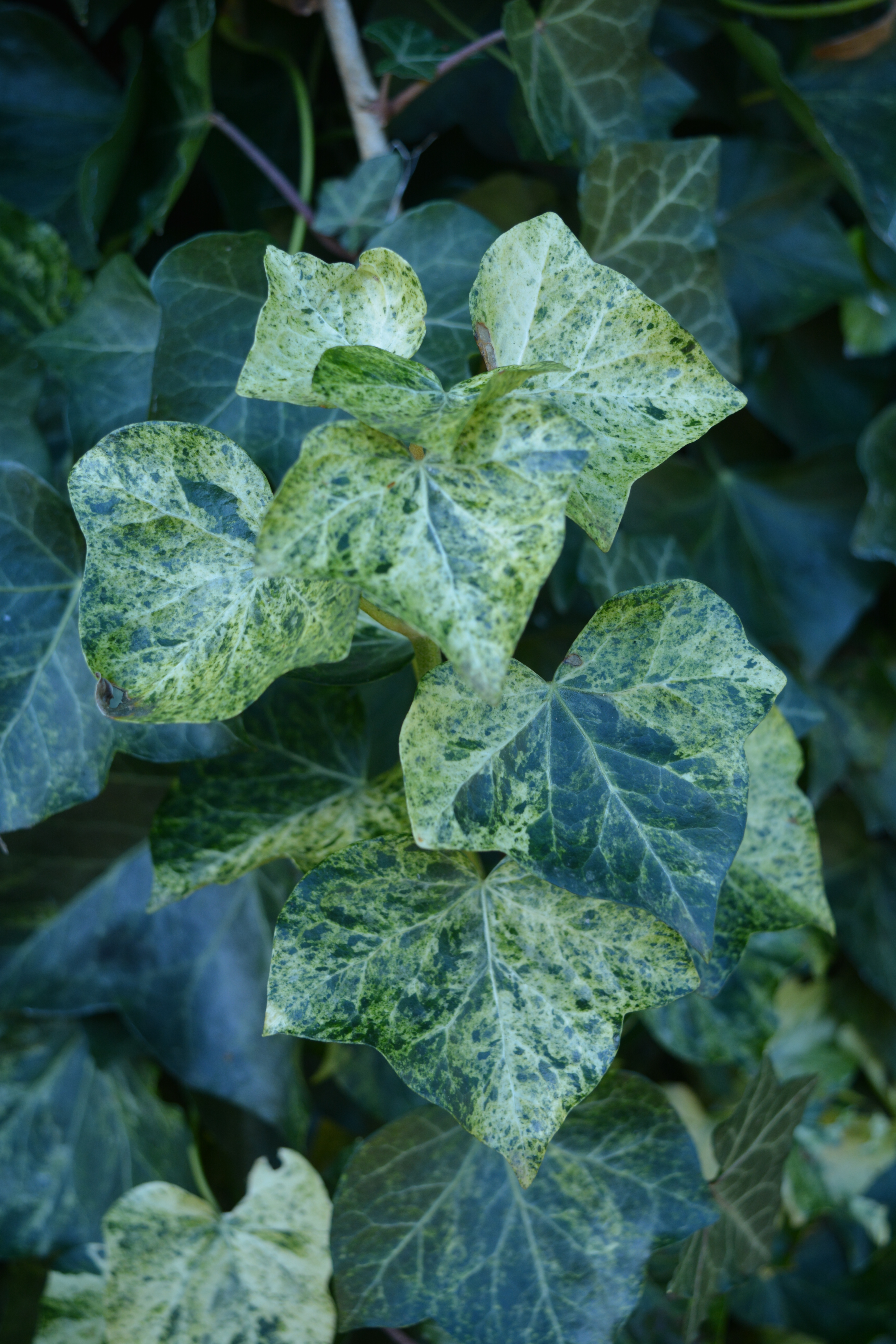
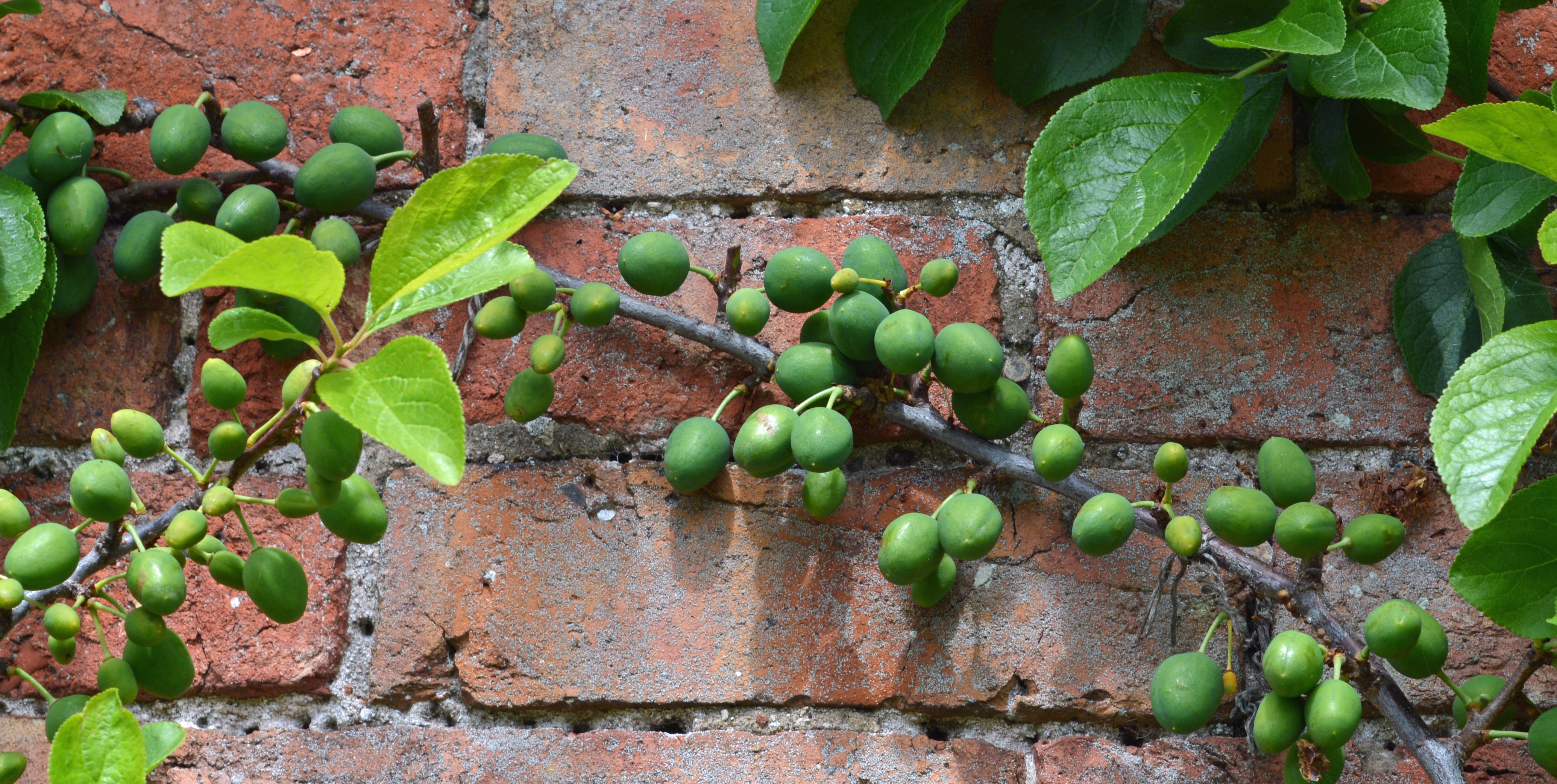
The garden is Grade 1 listed and is based around the 18th Century design. Amazingly it works well today! Even the car park and courtyards on the way in had points of interest to us gardeners, some of the Ivy cultivars, ancient wall-trained fruit, a beautifully carved wooden seat featuring carved horse heads and a vintage garden watering cart. We soon met our first Hederas (Ivy) in the collection, an unlabelled specimen which grew to frame a window, and one with beautiful foliage, Hedera hiburnicum variegata.
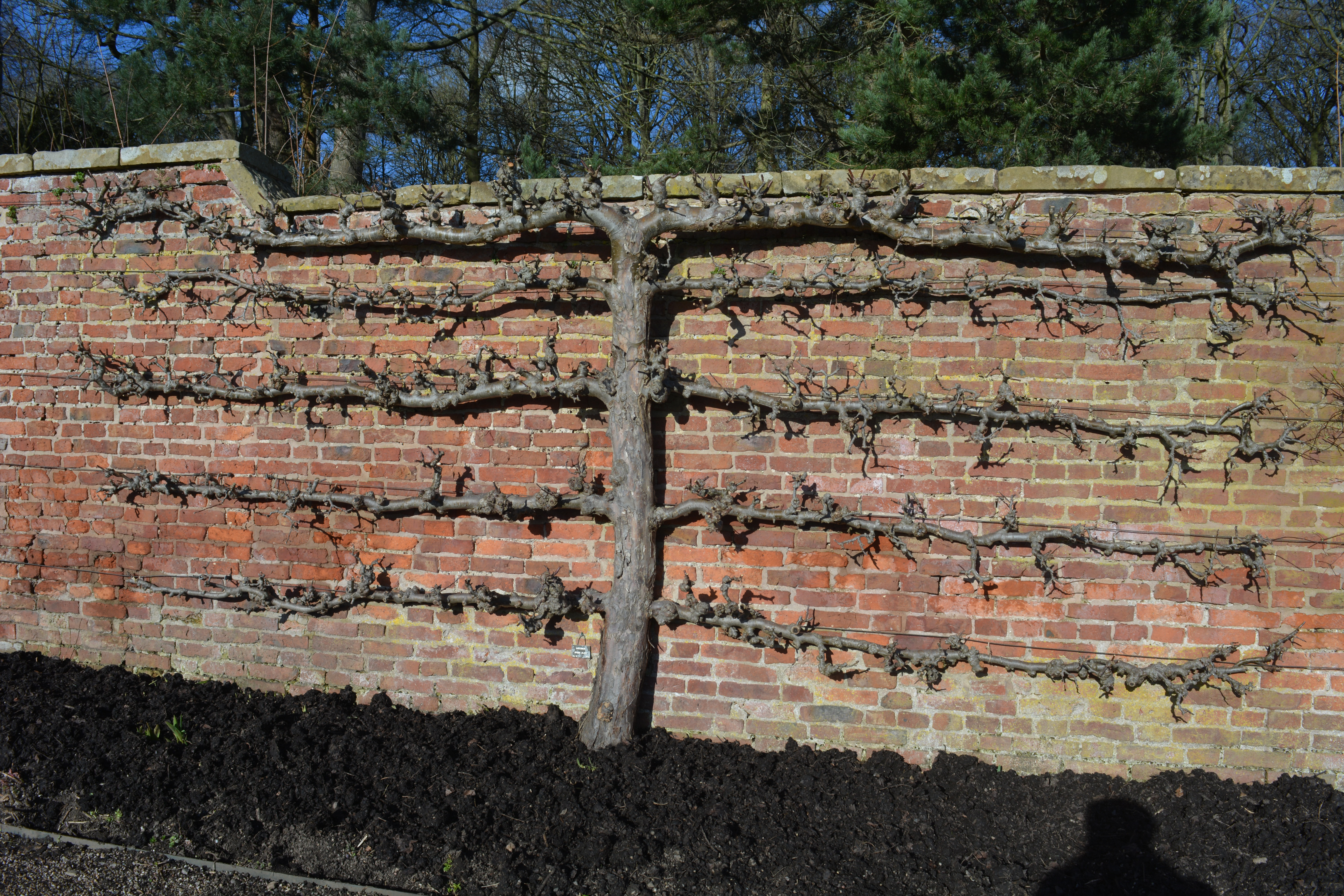
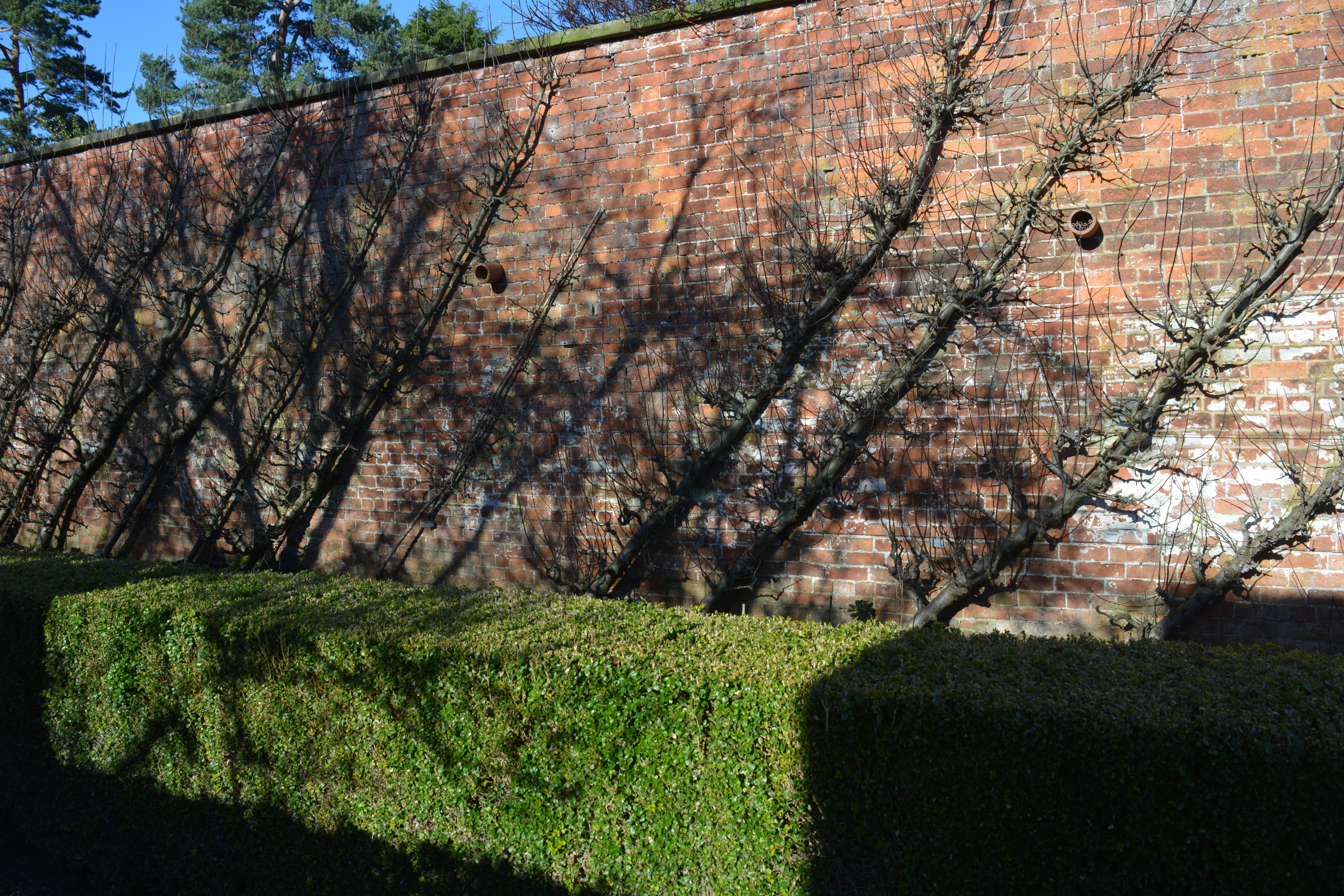
A feature we were looking forward to at Erddig was the huge variety of creatively pruned trees, both fruit trees and conifers. Some of these fruit trees must be decades old but are still skillfully pruned. Really well pruned and trained fruit trees are really beautiful. It felt good to see these age old gardening skills carrying on so professionally.
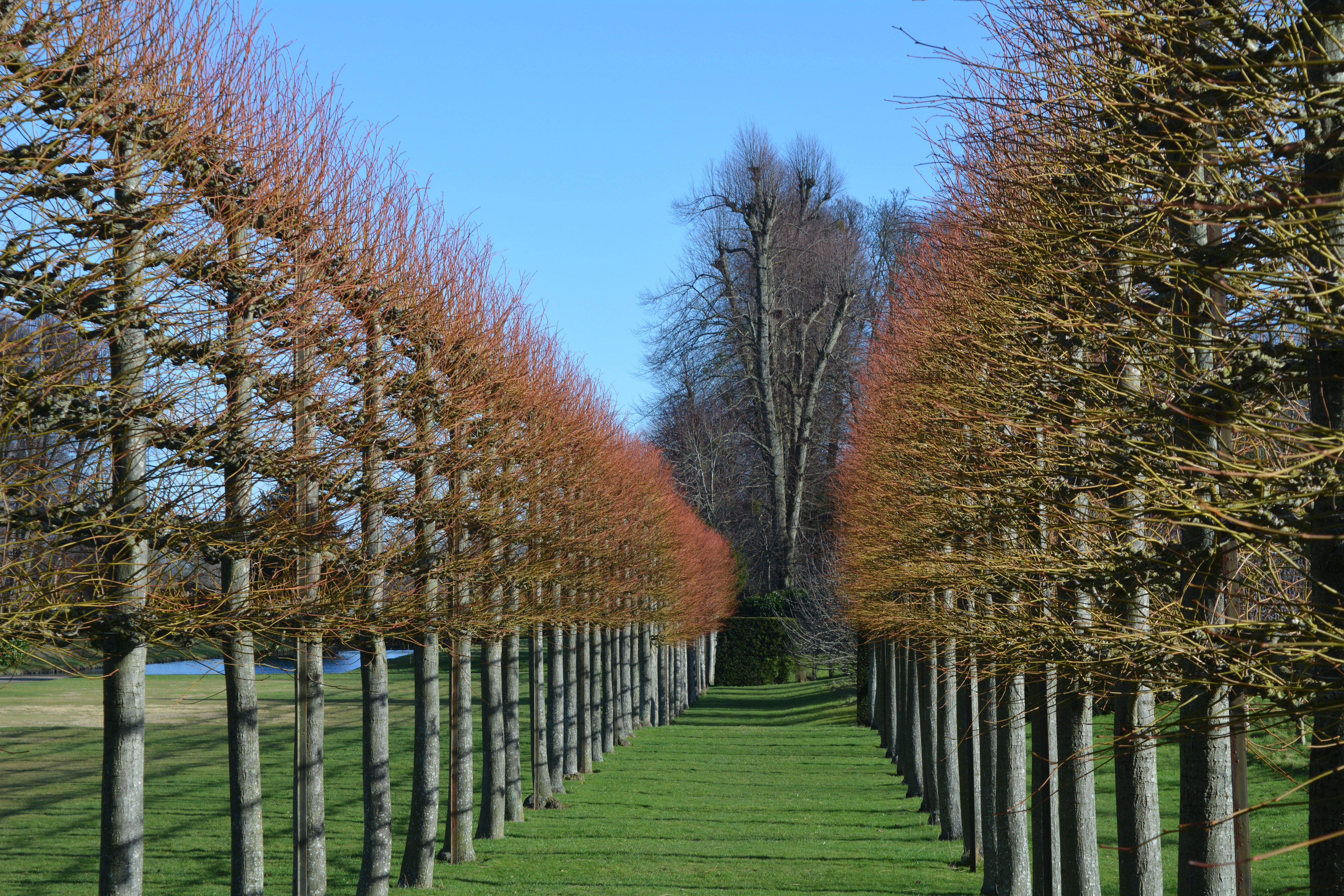
We discovered this double row of pleached limes after spotting an orange glow as the winter sun caught the new twigs and buds.
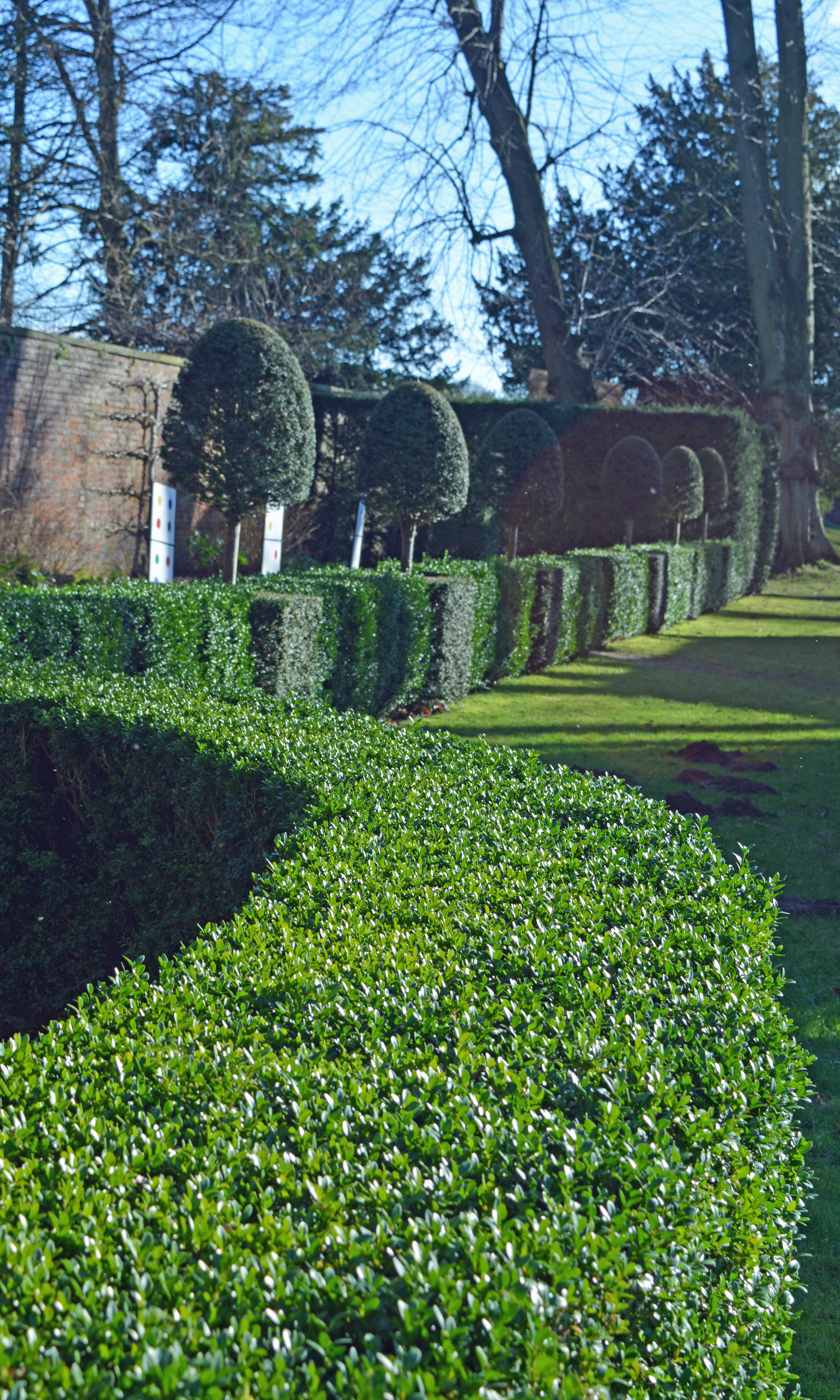
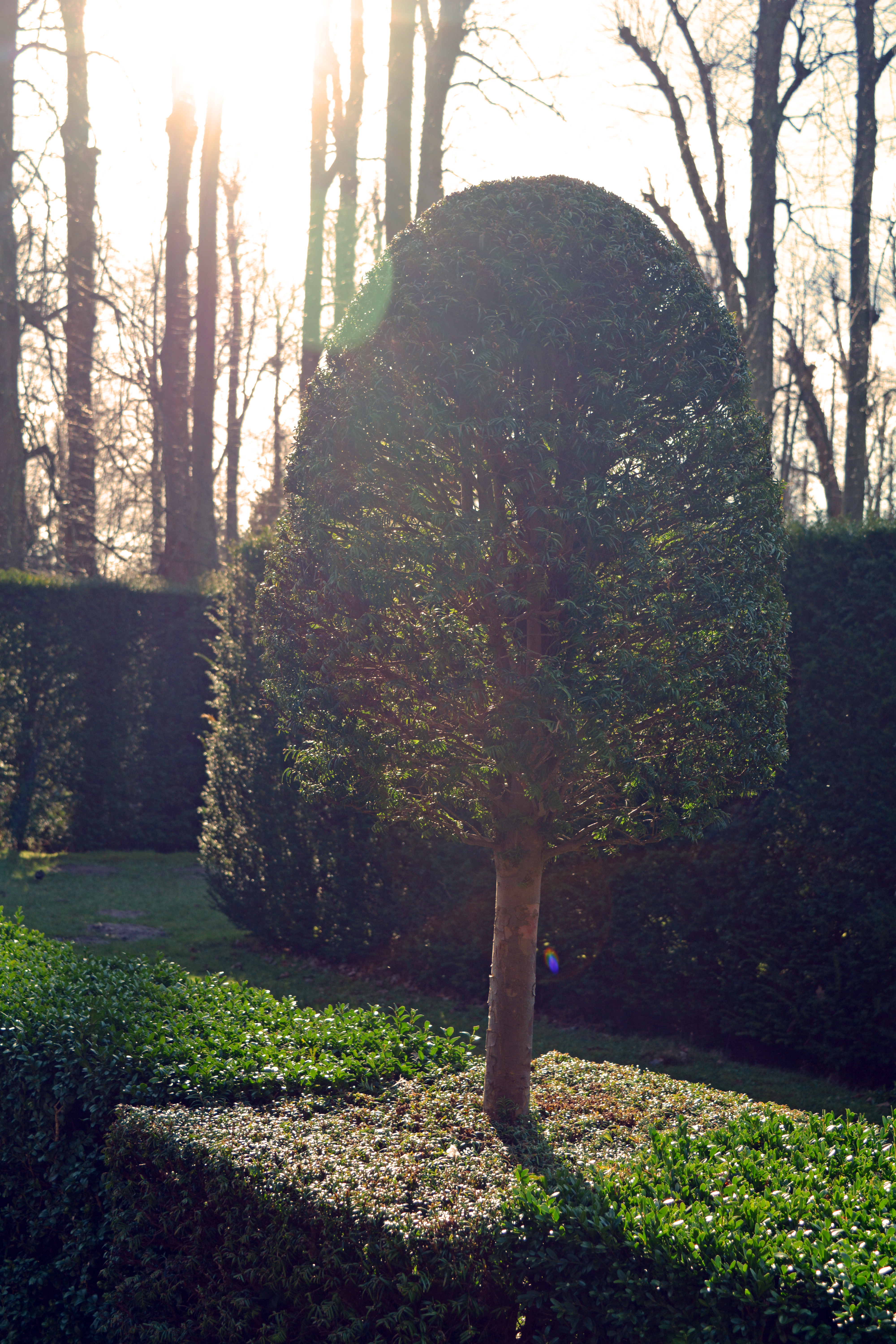
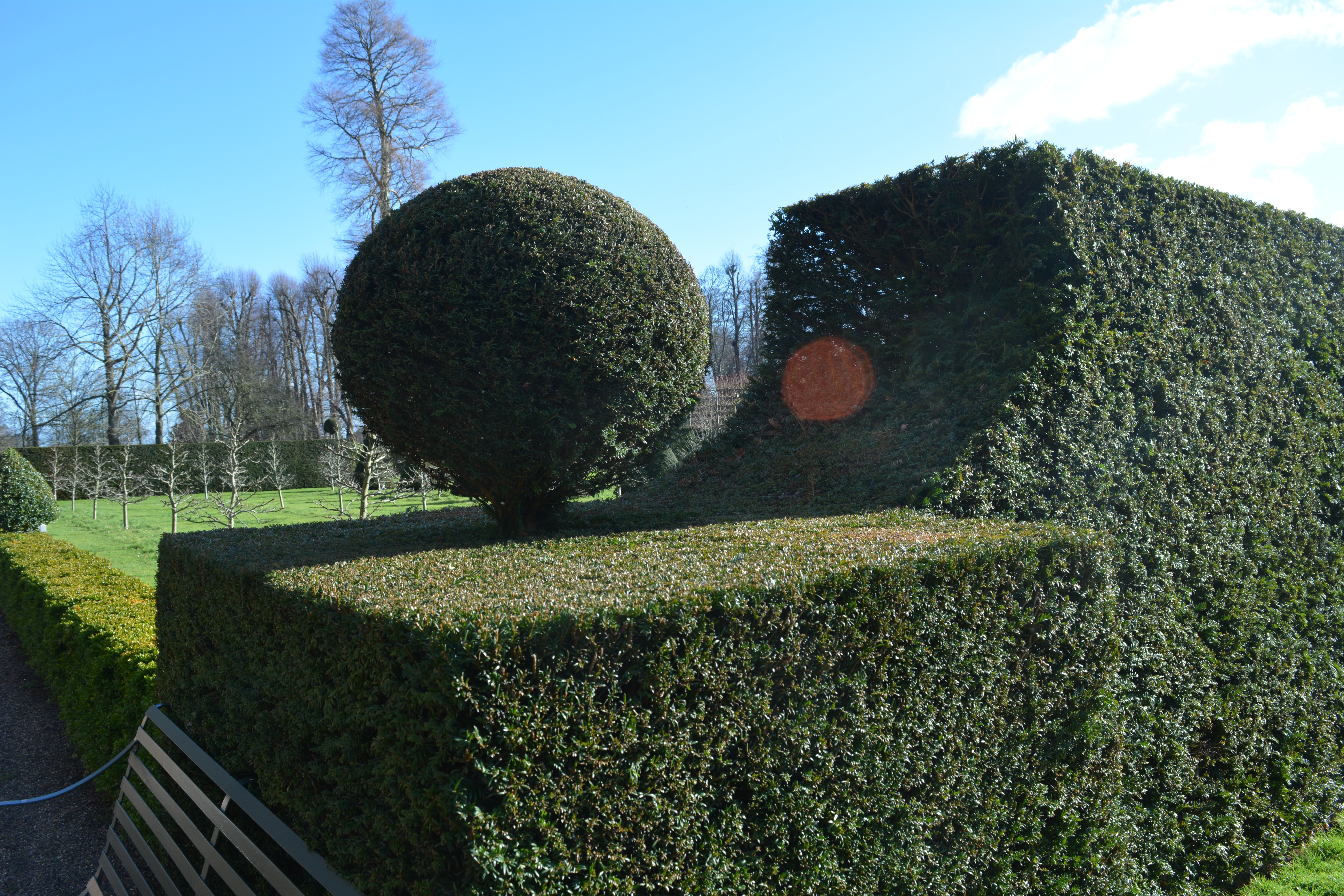
Beautifully topiarised conifers were presented in neat rows and as hedges throughout the formal garden area.
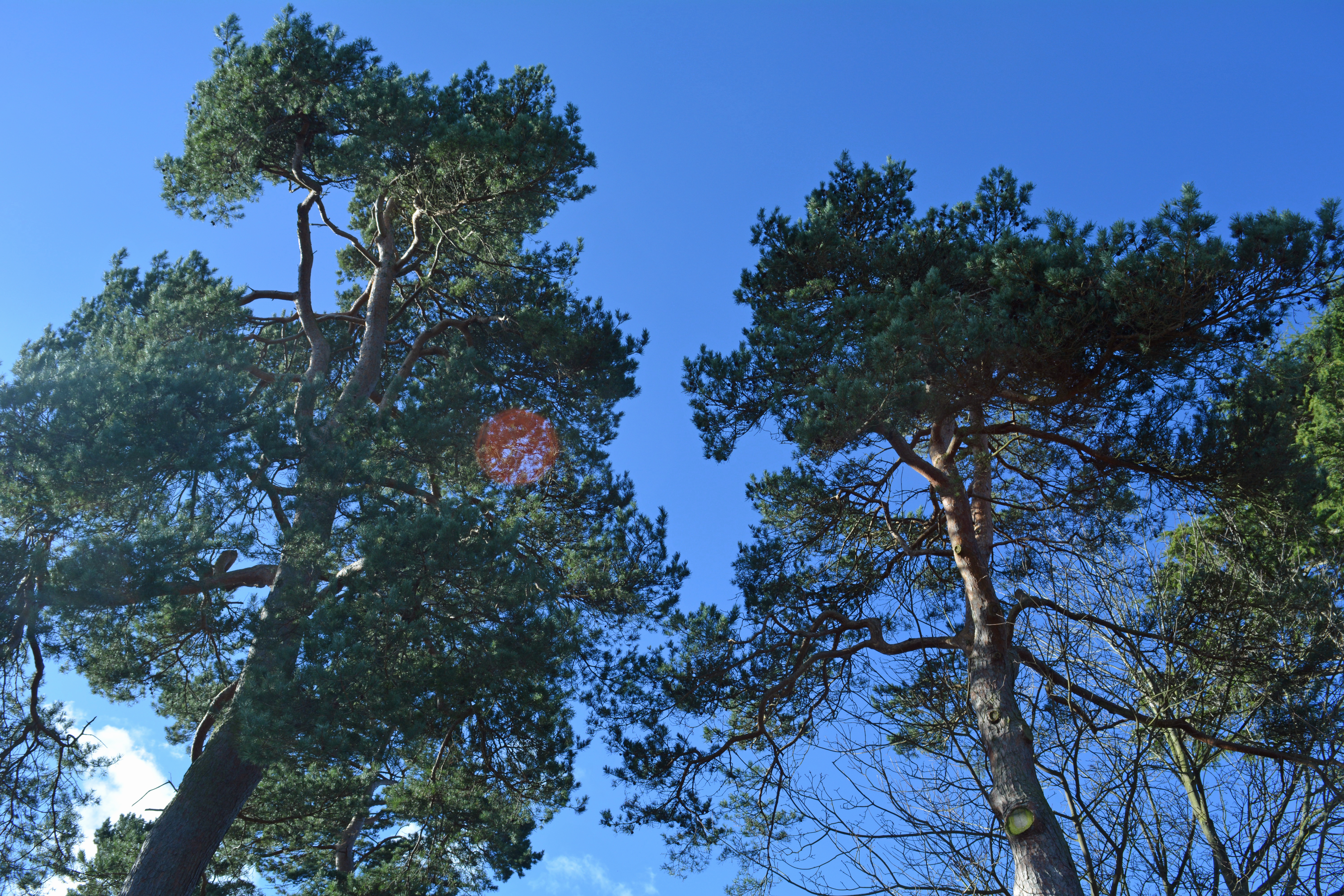
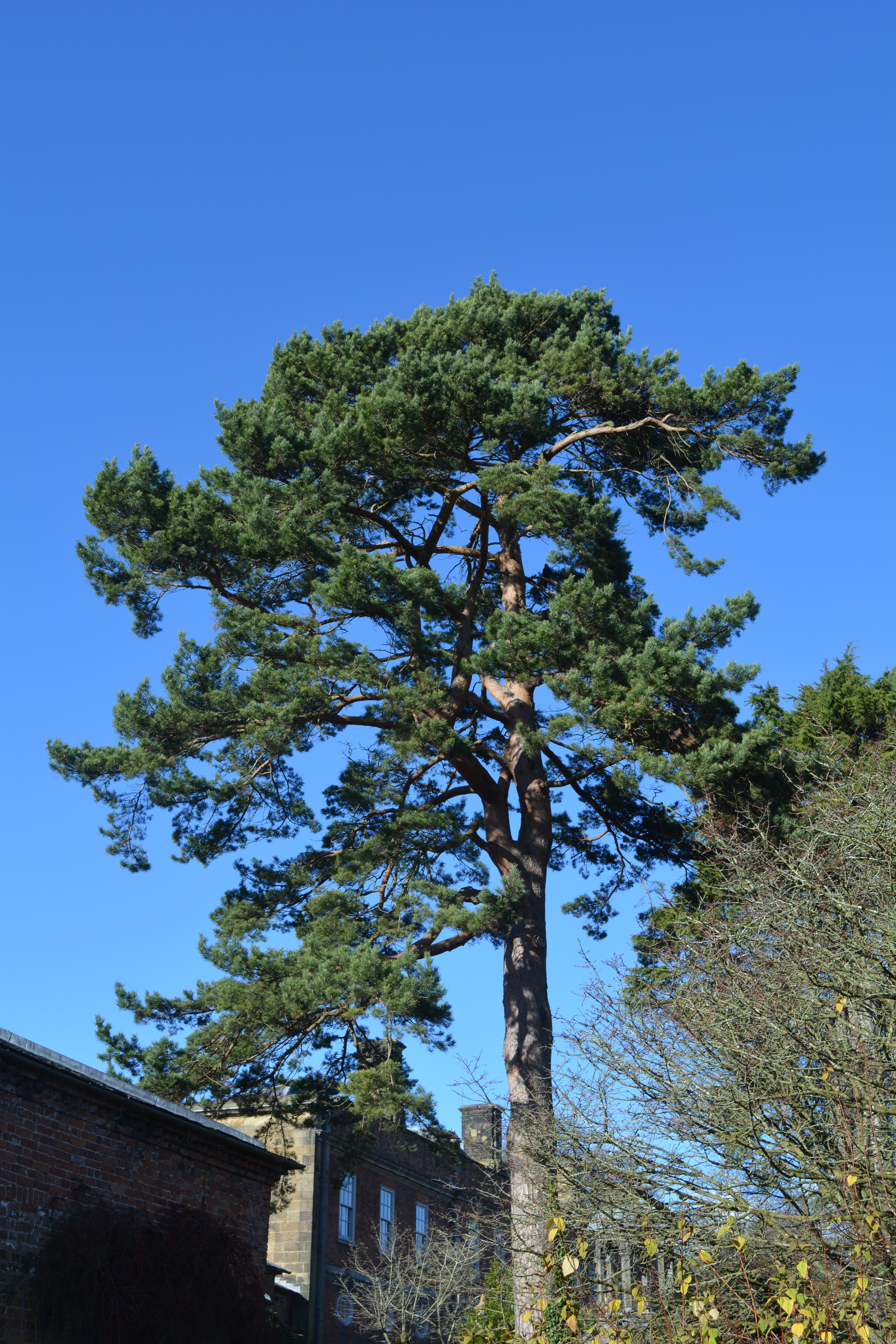
Not all the conifers were trimmed and controlled though, some were left to mature and become tall proud specimens.
We loved this tall double row of pollarded Poplar trees towering above our path, their network of silhouettes highlighted against the blue sky. This added to the strong structure of the garden.
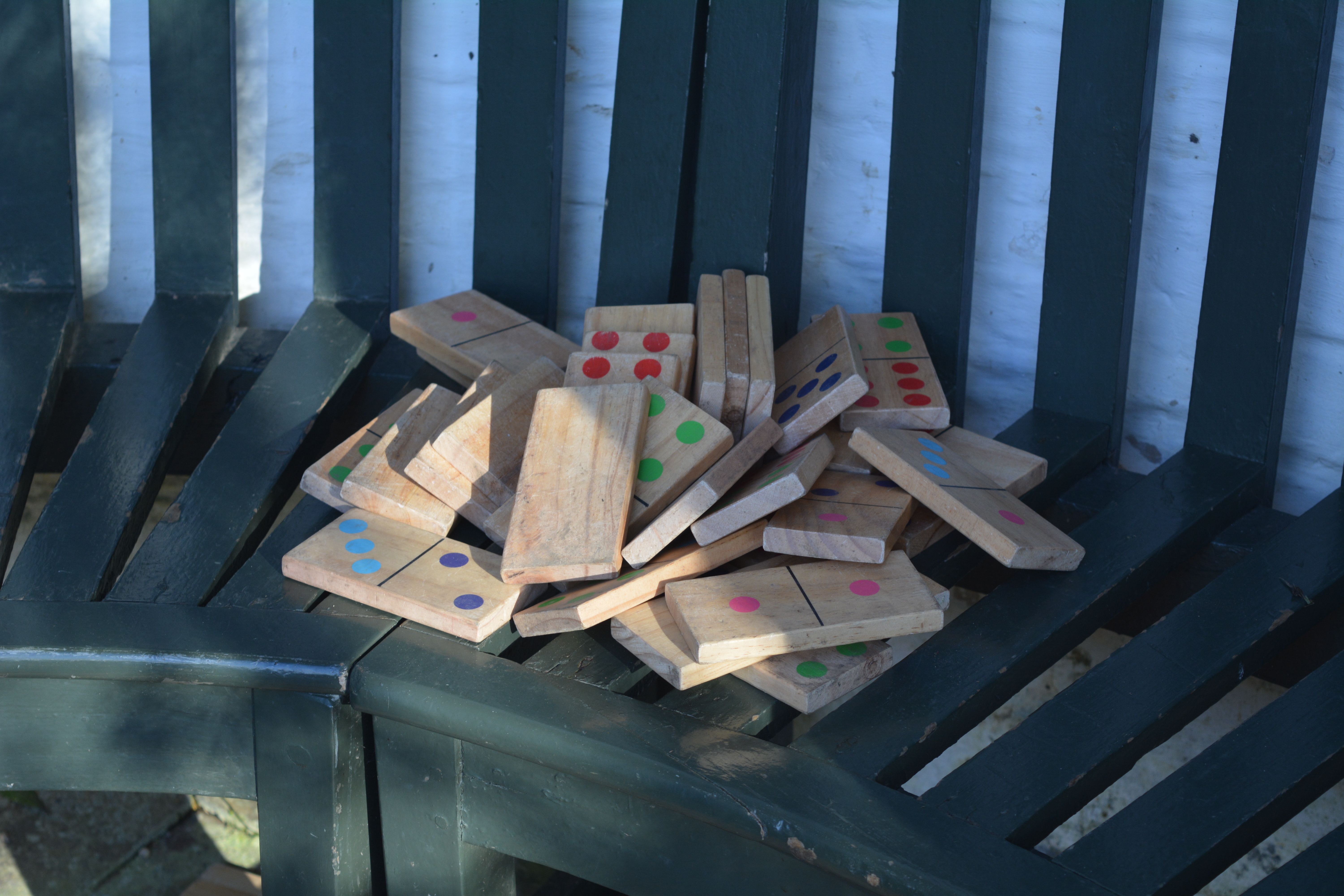
We love to see a touch of humour in gardens and points of interest for children and we enjoyed a few here as we wandered around Erddig.
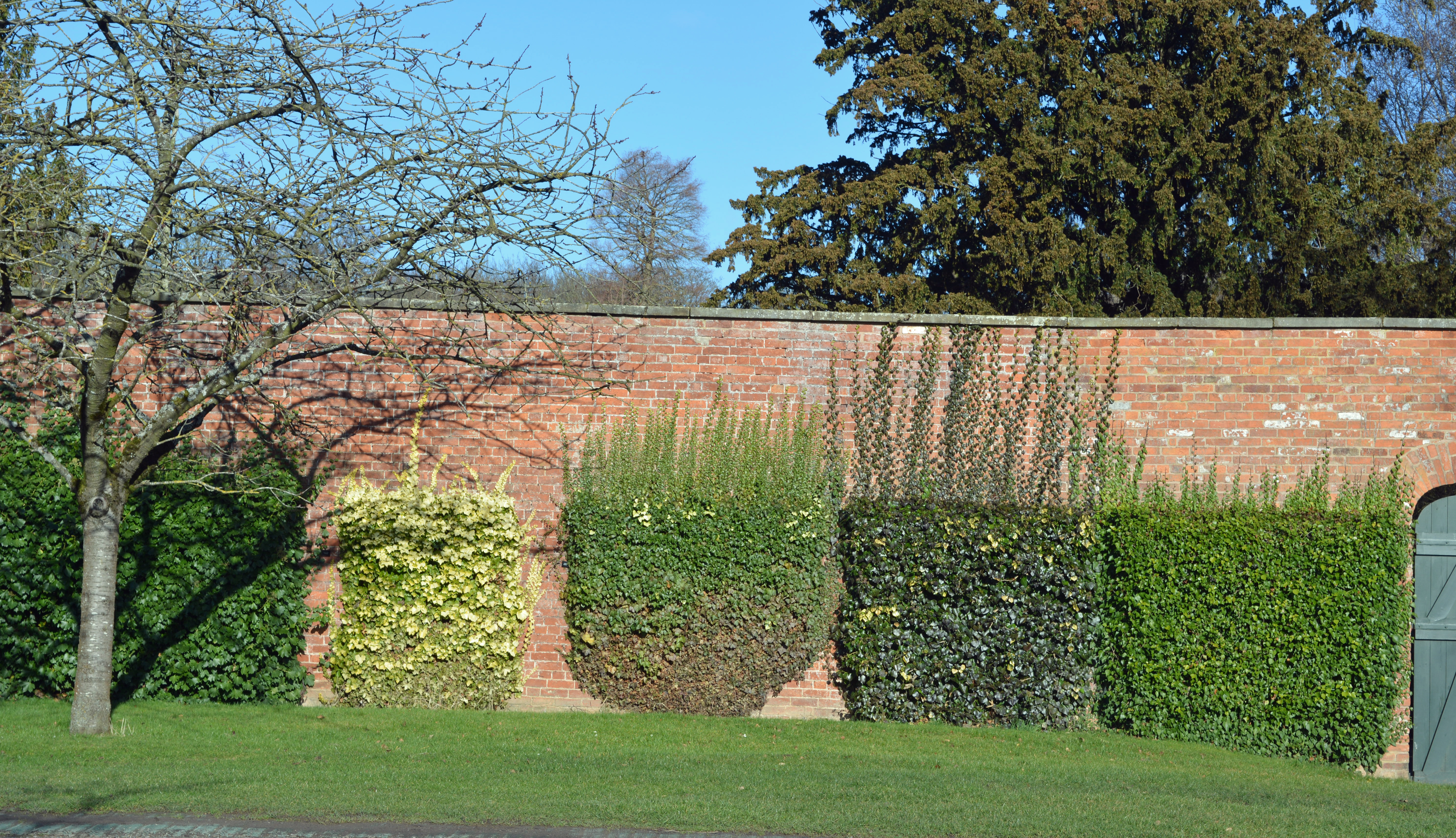
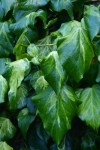
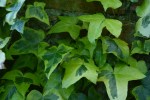
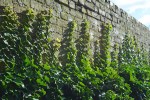
Erddig holds the National collection of Ivies, growing a huge selection of Hedera, but it took us along time to find the organised and well-labelled display of them growing along an old brick-built wall. We were amazed by the sheer variety, from plants with plain green typical leaves to those with the most beautiful and subtle variegation.
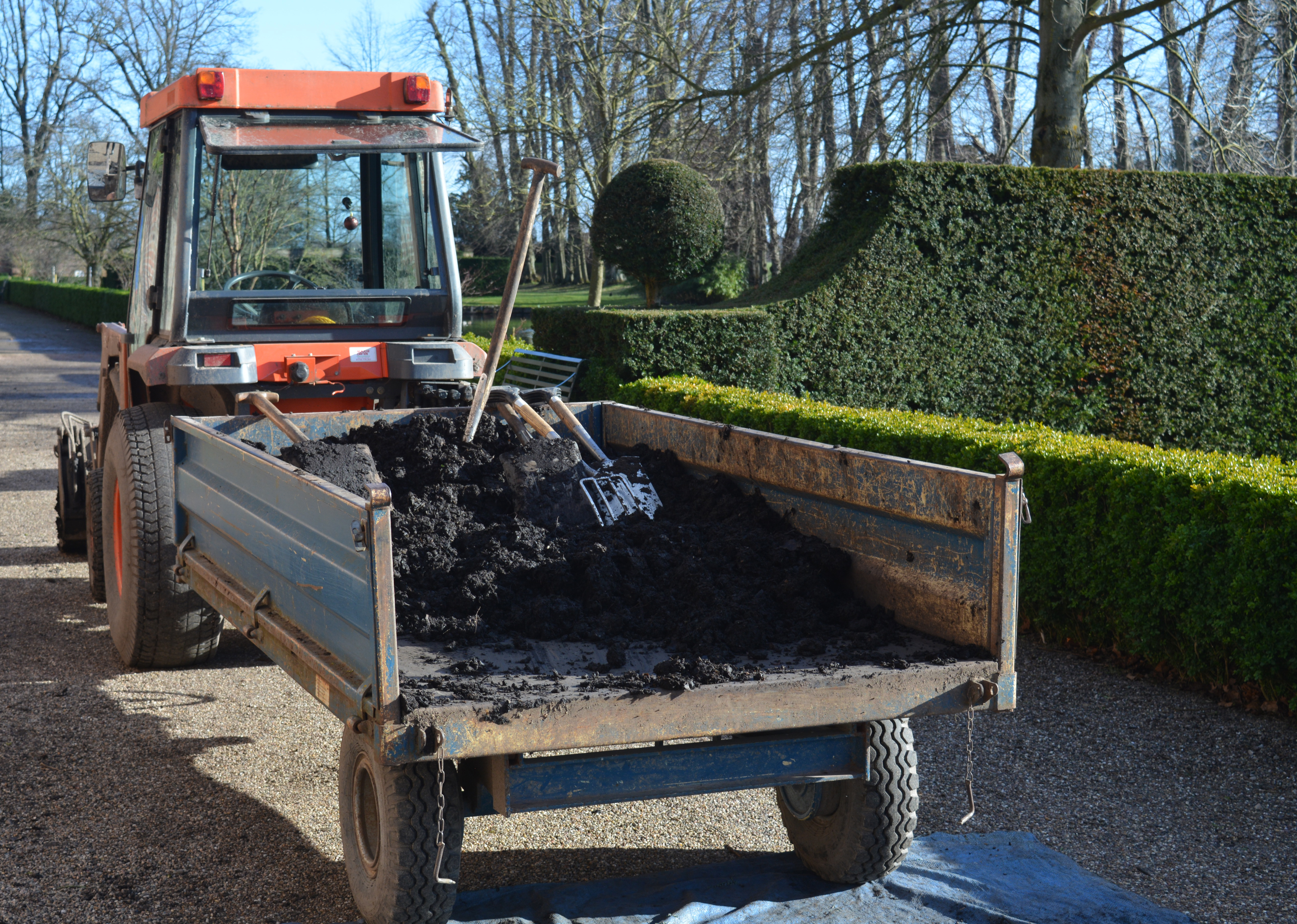
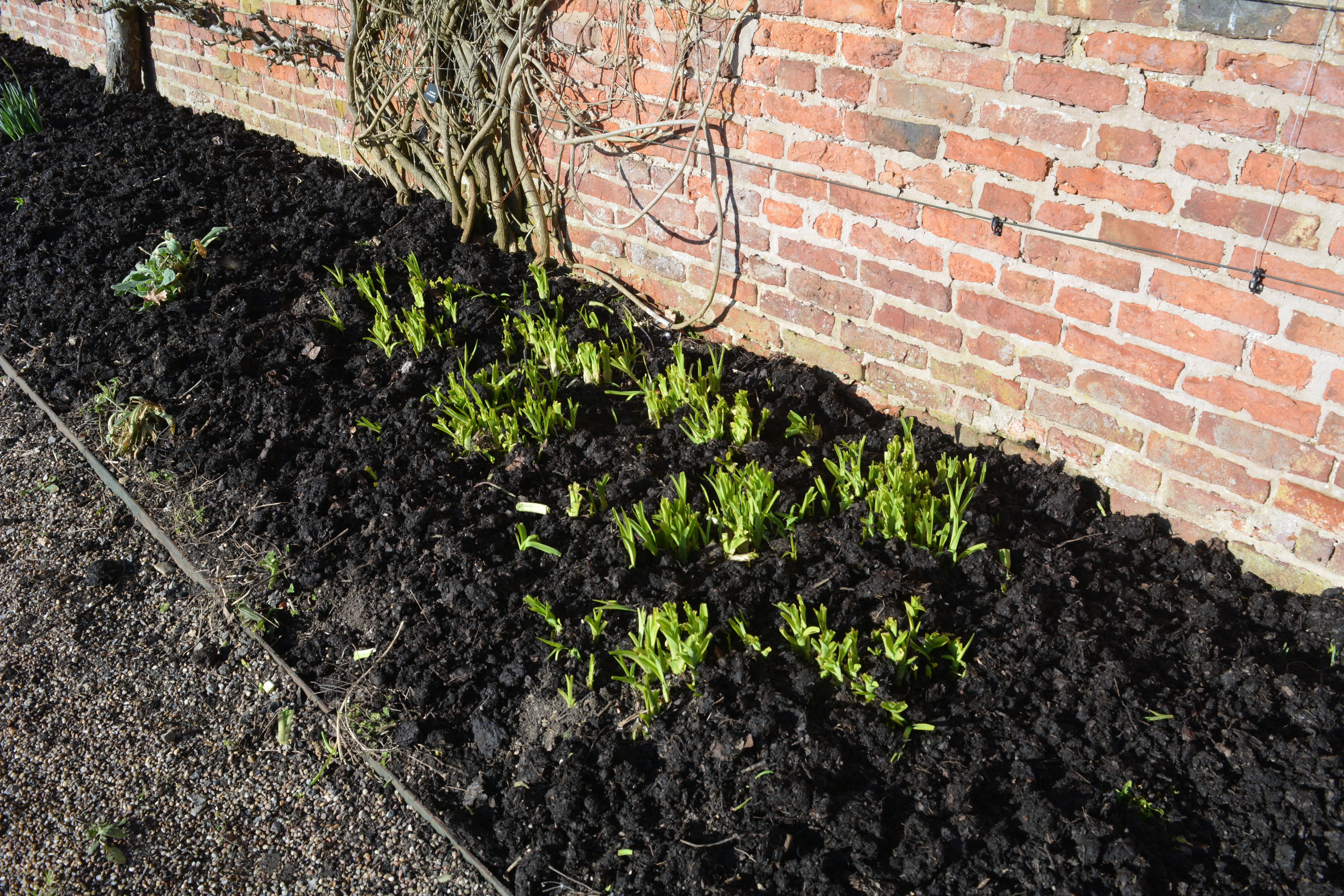
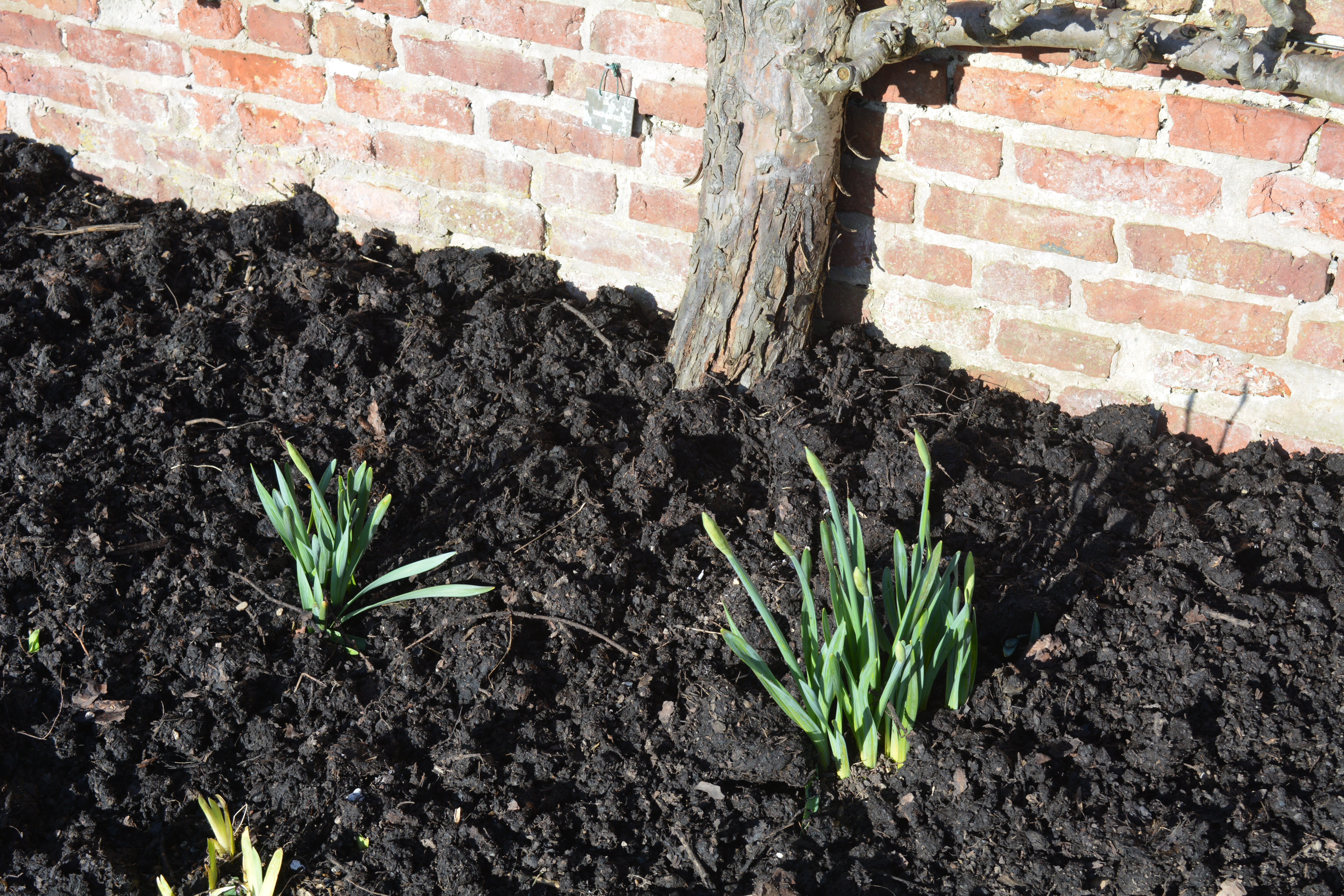
Don’t you just love to see what gardeners are up to when you visit a garden? Here hedge cutting and mulching borders with rich well-matured farmyard manure were keeping the gardeners on their toes. We were very impressed with the quality of their work and the evidence of a sense of pride in everything they did.
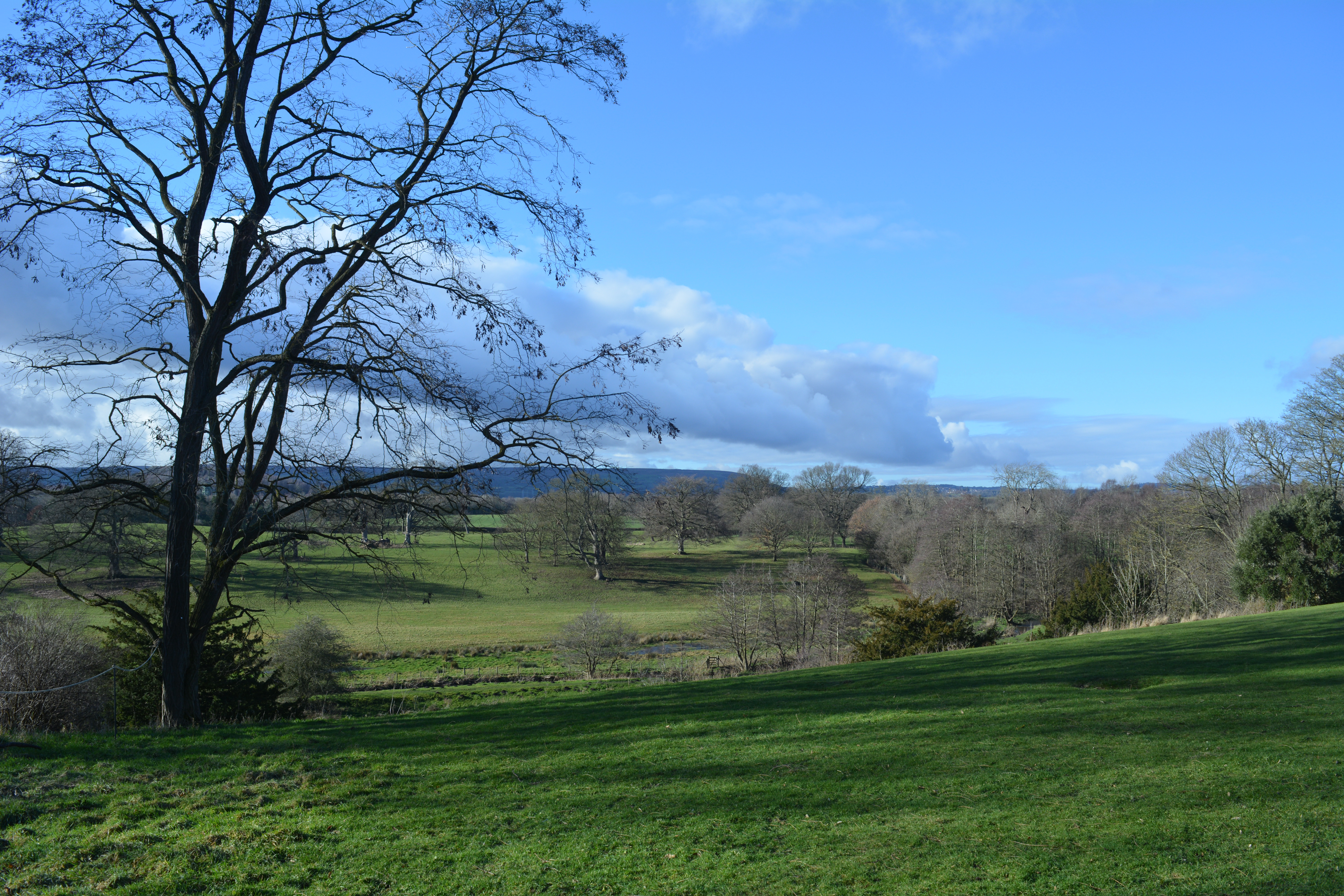
From the front of the house itself we found some wide views over the surrounding countryside.
I have only briefly mentioned the Ivy collection at Erddig so far but I will change all that by sharing a collection of my pics of the Ivies as a gallery. Please enjoy by clicking on the first photo and using the arrows to navigate.
Hedera h. Romanze
Hedera h. Spetchley
Hedera h. Goldstern
Hedera c. Sulphur Light
Hedera h. Goldchild
Hedera h. marginata grandis
Hedera c. Dendroides
Hedera h. Blodwen
Hedera h. Chester
Hedera h. Tussie Mussie
Hedera h Parsley Crested
Hedera h. Zebra
Hedera h. Amber Waves
Hedera h. Galaxy
Hedera h. Galaxy
Hedera h. Rona
Hedera h. Ardingley
Hedera h. Tres-Coupe
Hedera h. Ardingley
Hedera h. Spectre
Hedera h. Silver Queen
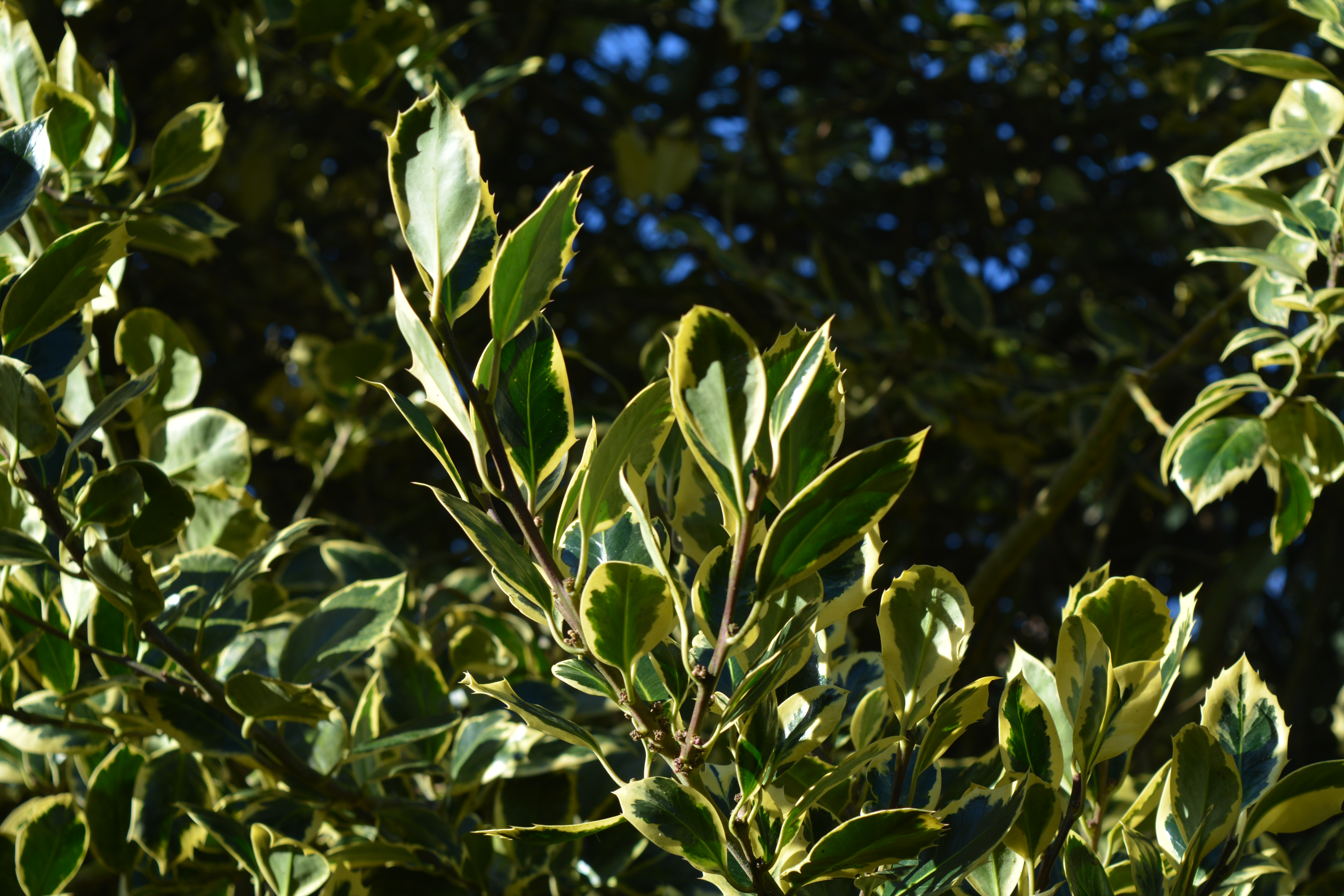
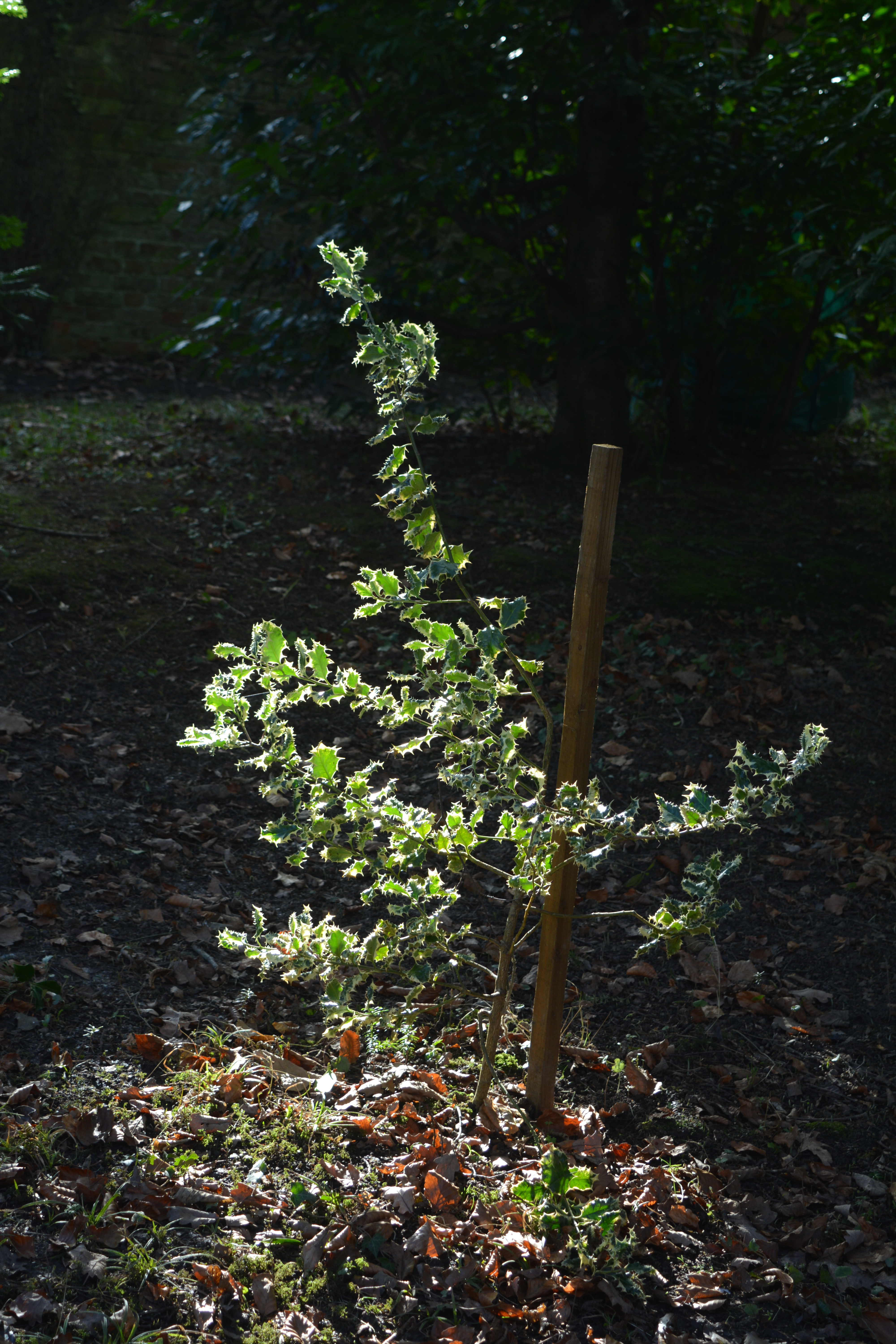
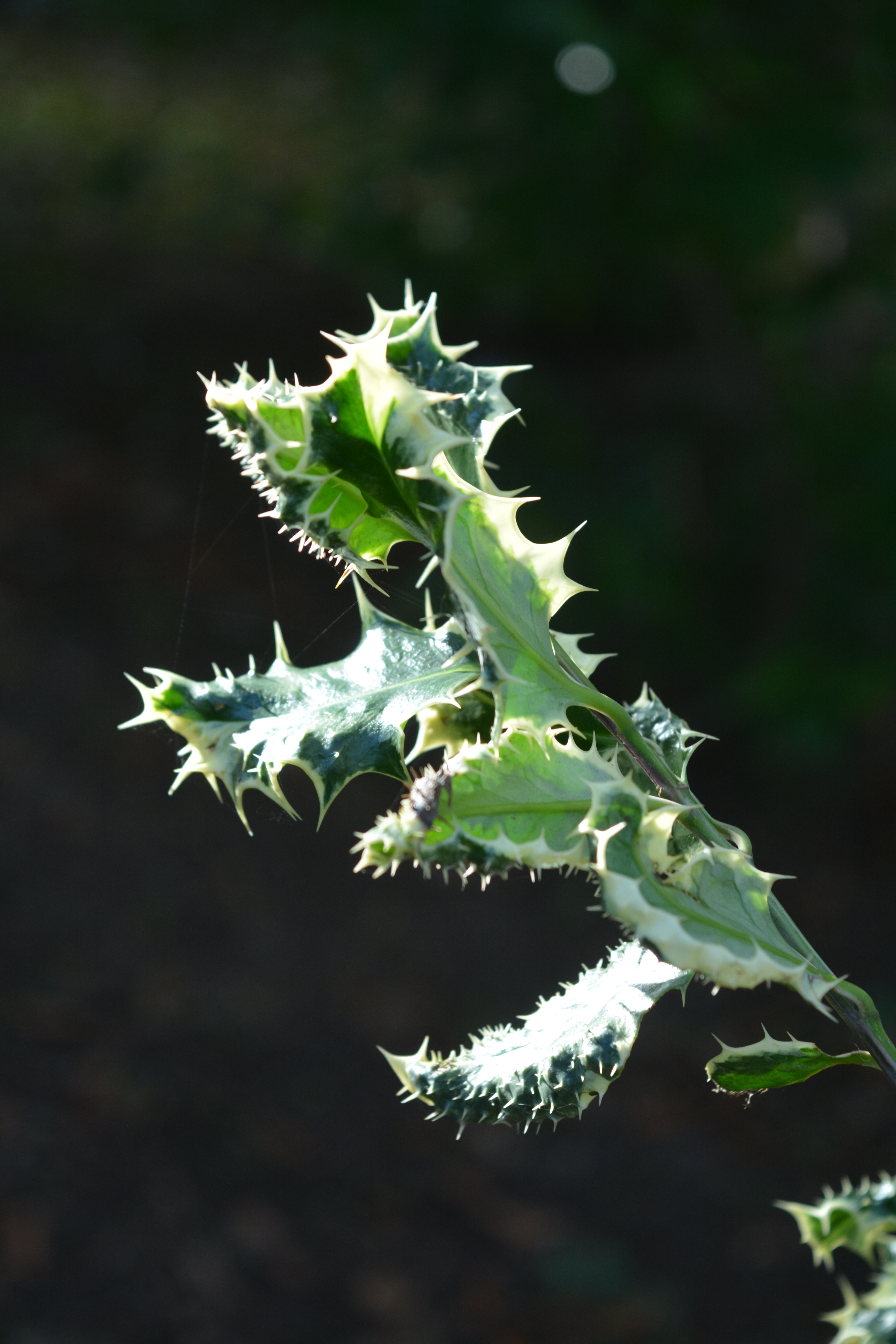
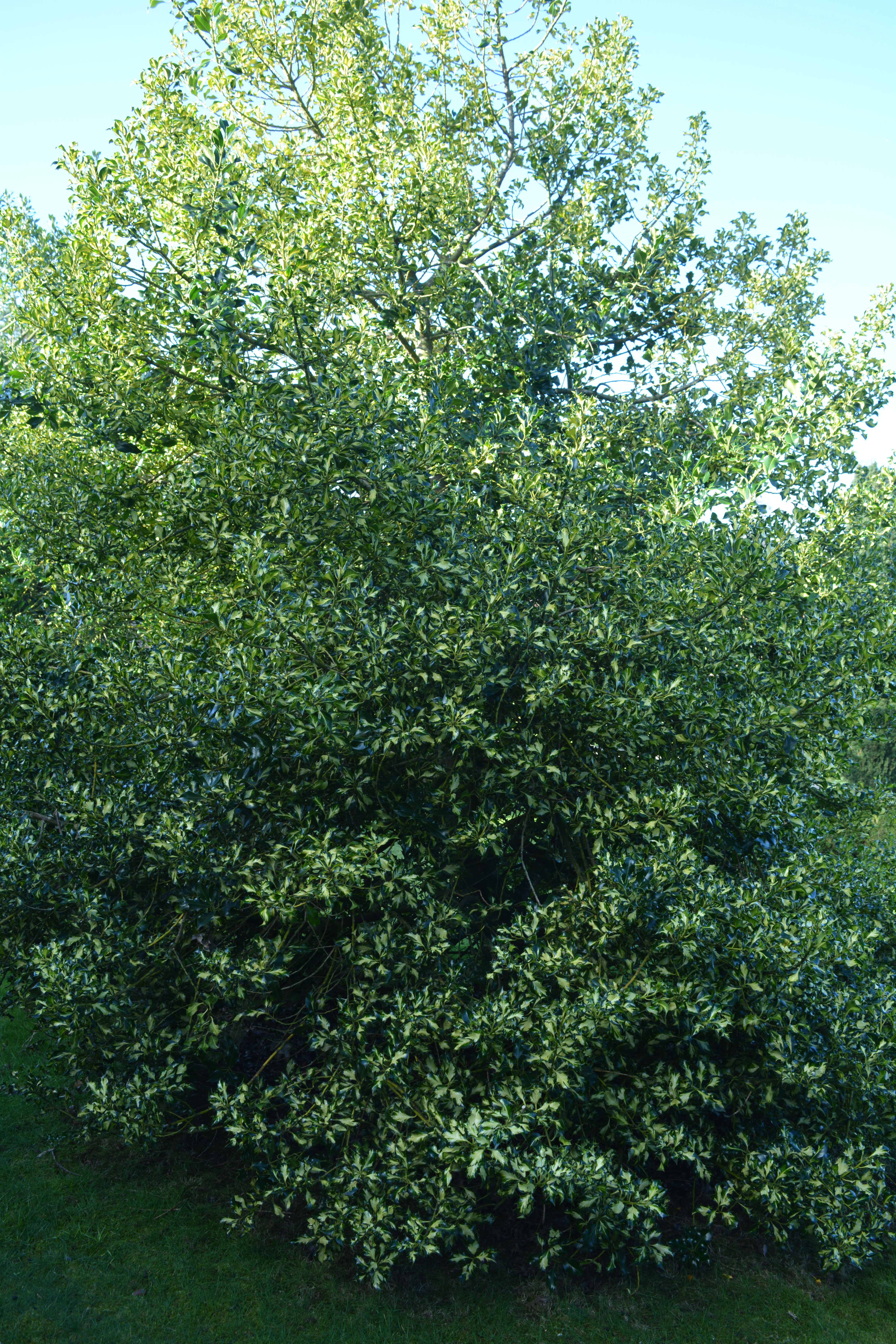
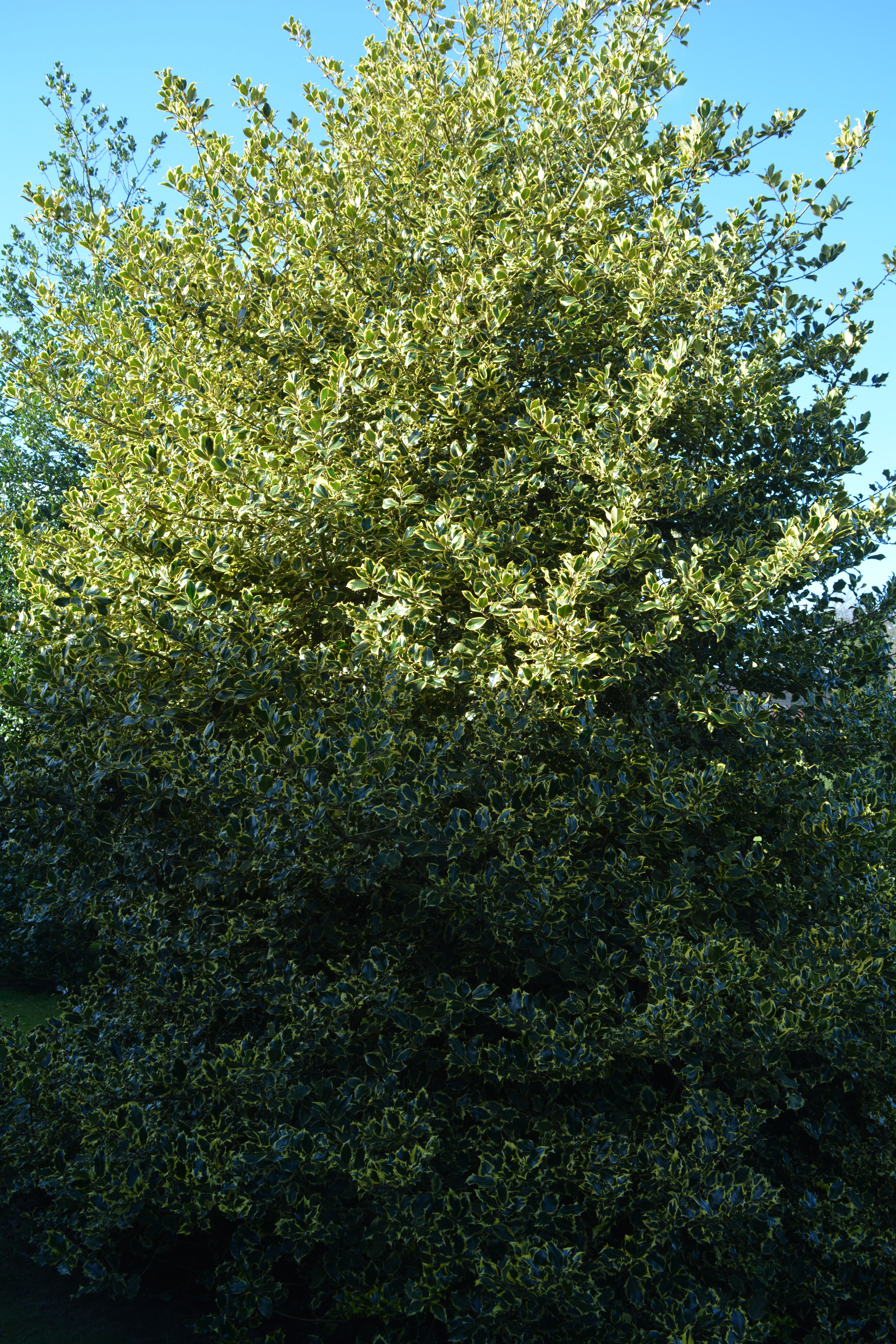
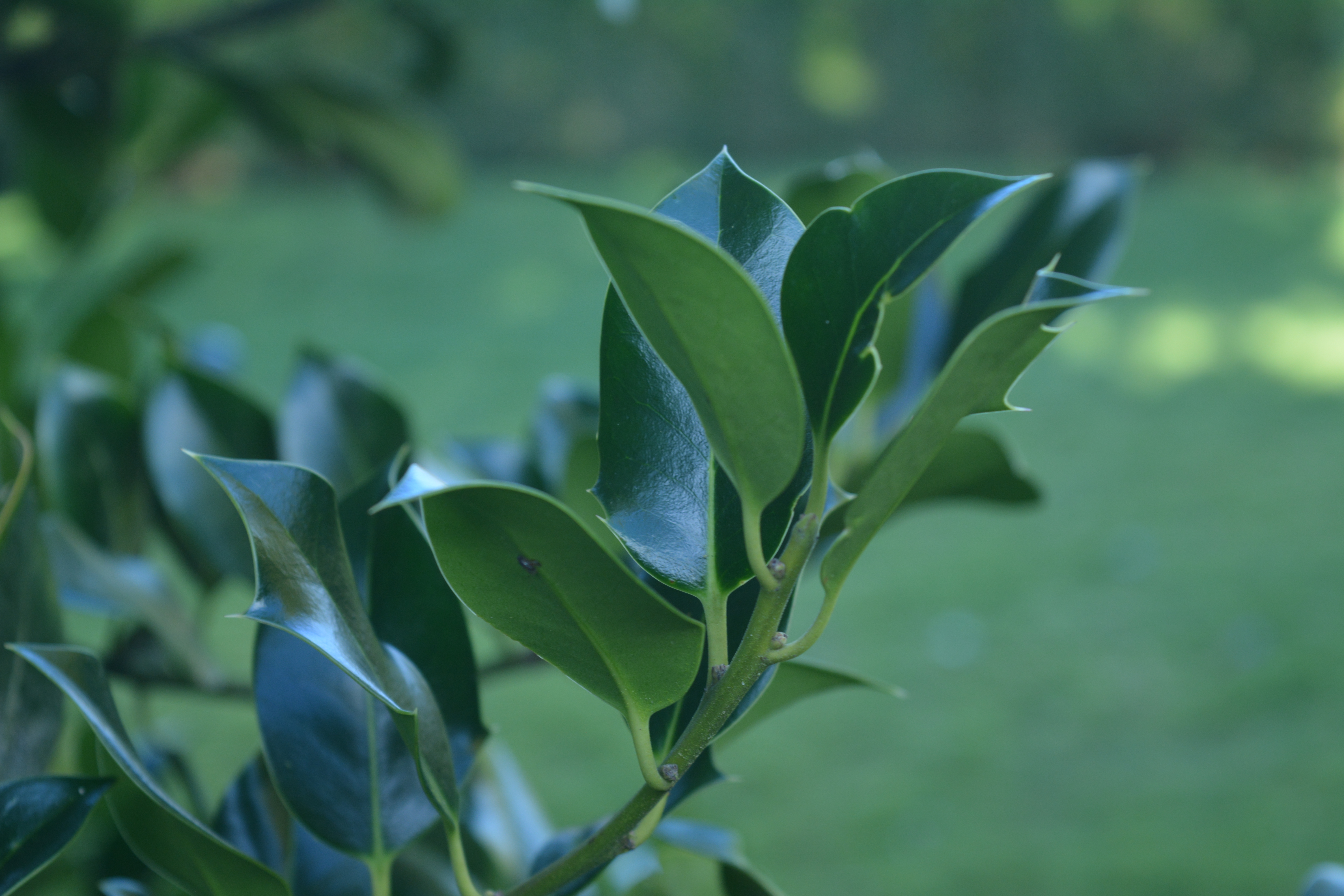
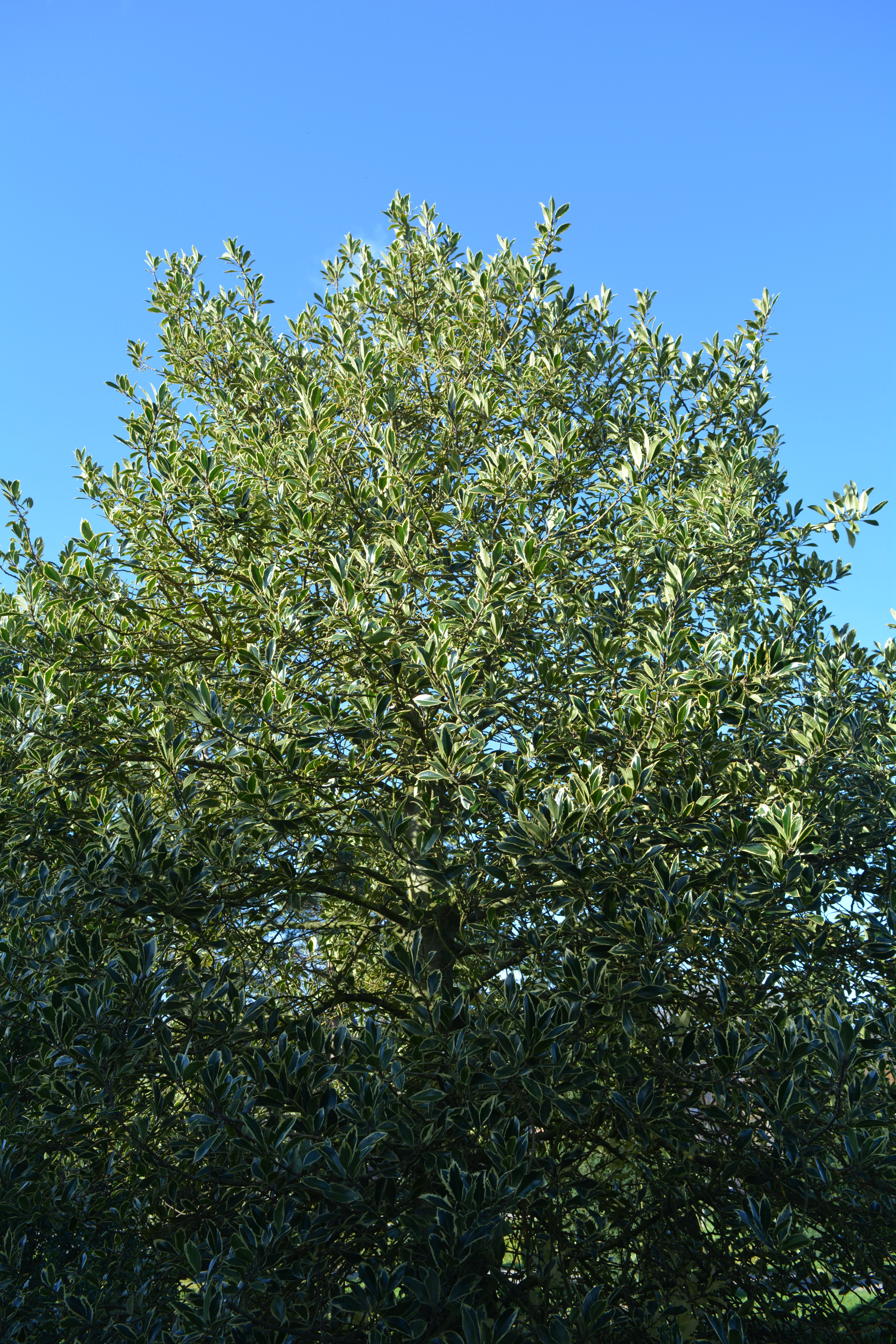
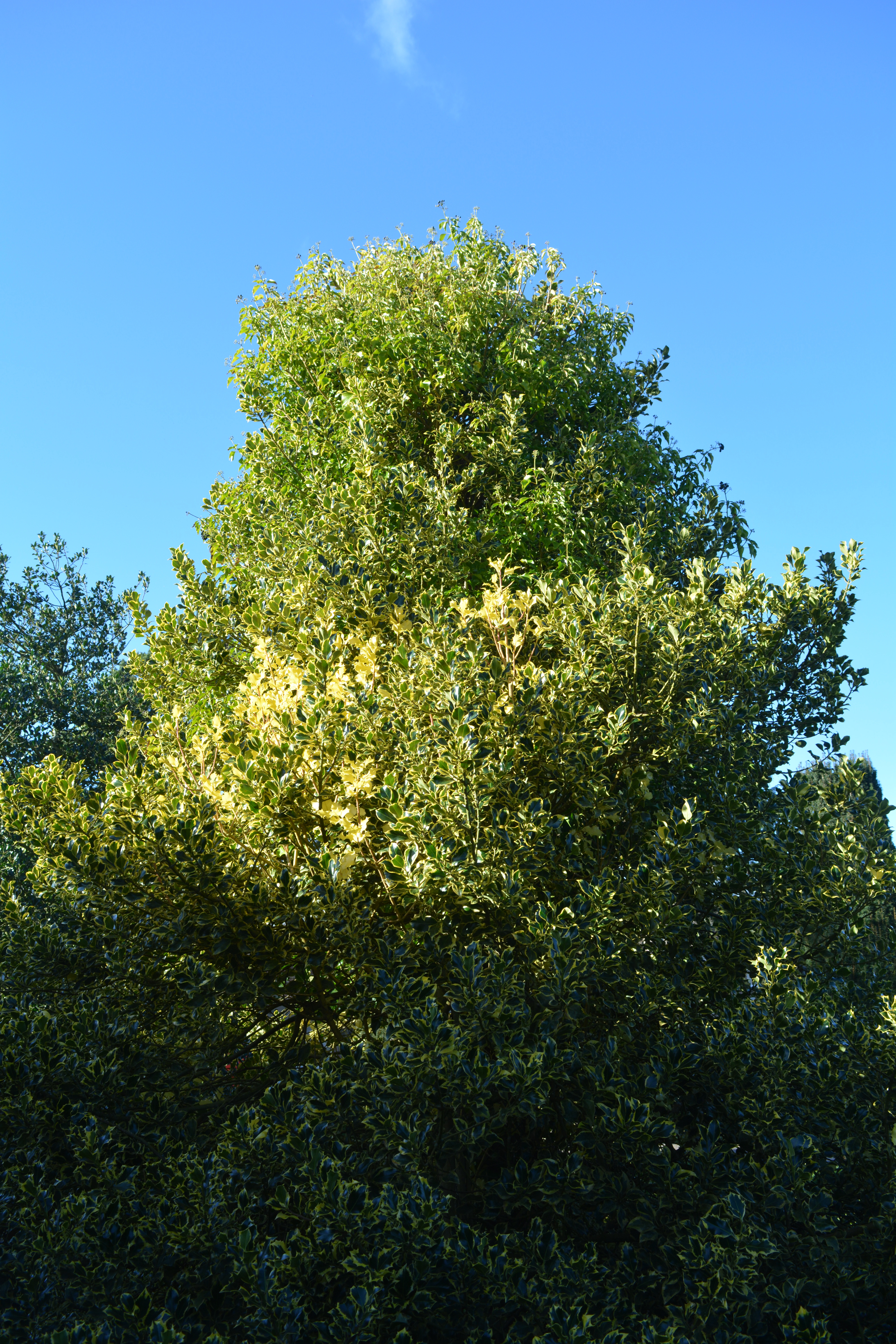
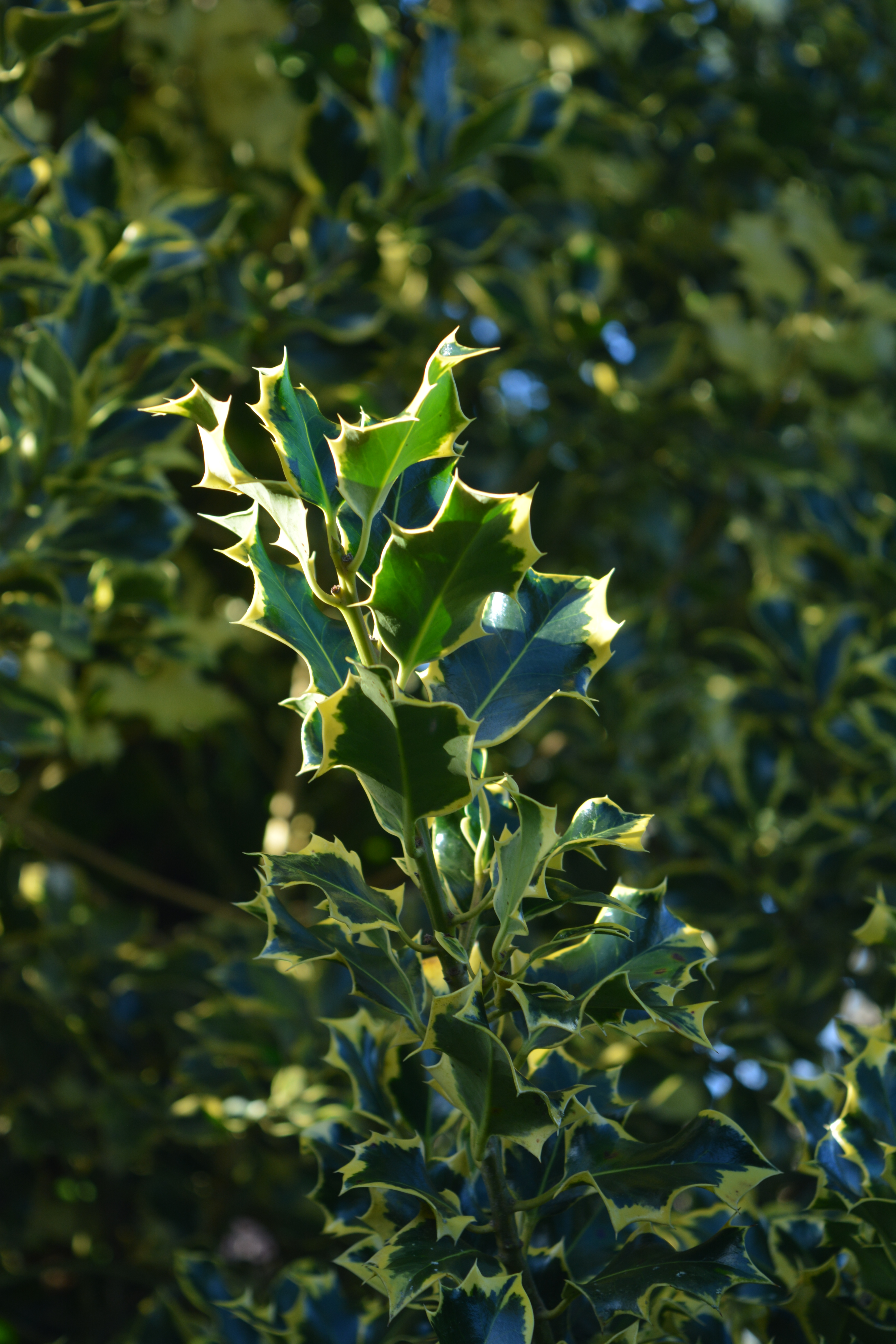
Hollies feature too with a lovely varied collection sadly with no labels but here are some to enjoy anyway.
Each photo of an Ilex tree is matched with a close up of its foliage.
So you can appreciate just how impressed we were with the gardens at Erddig on our return visit after many years. We will be returning more often in the future!
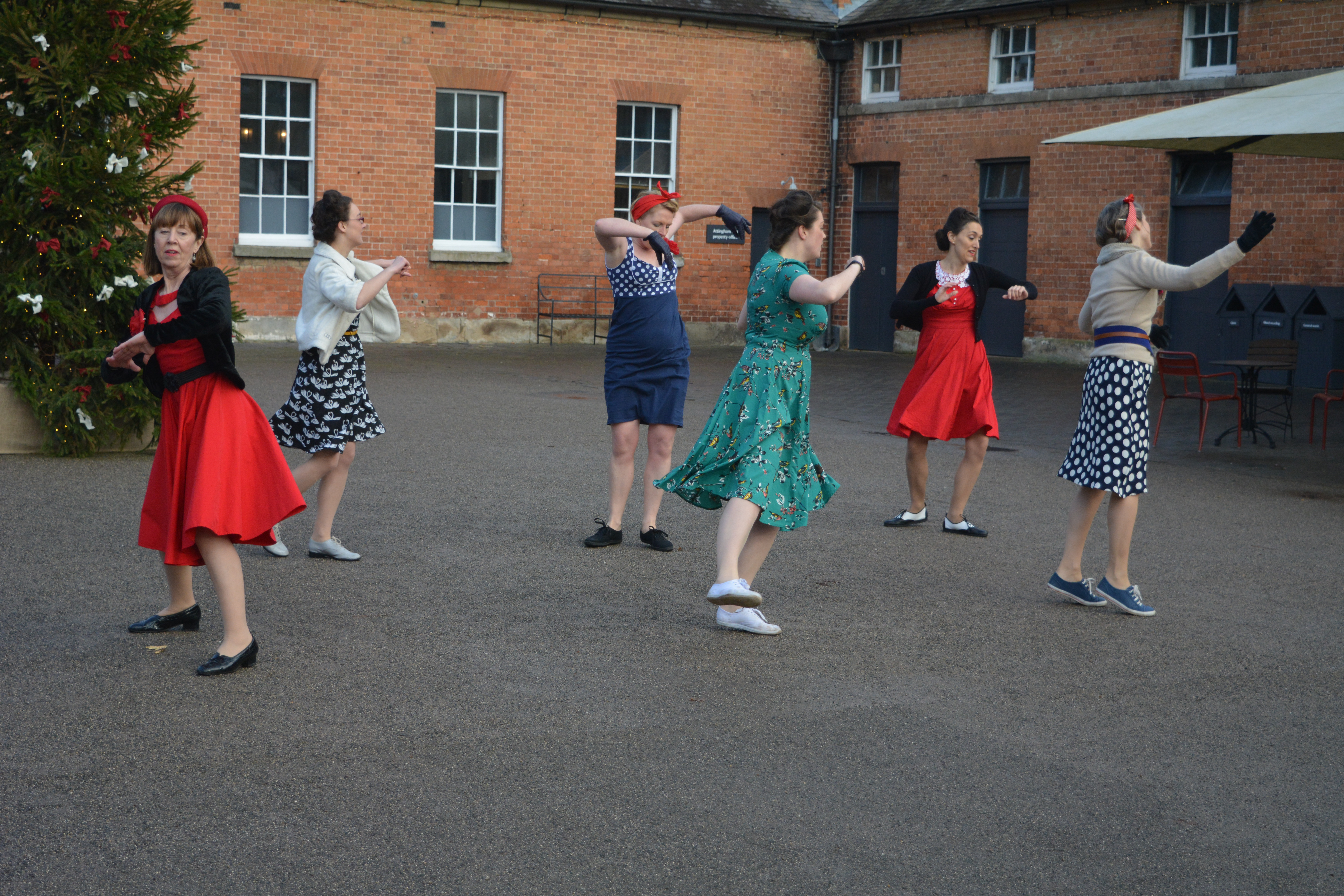
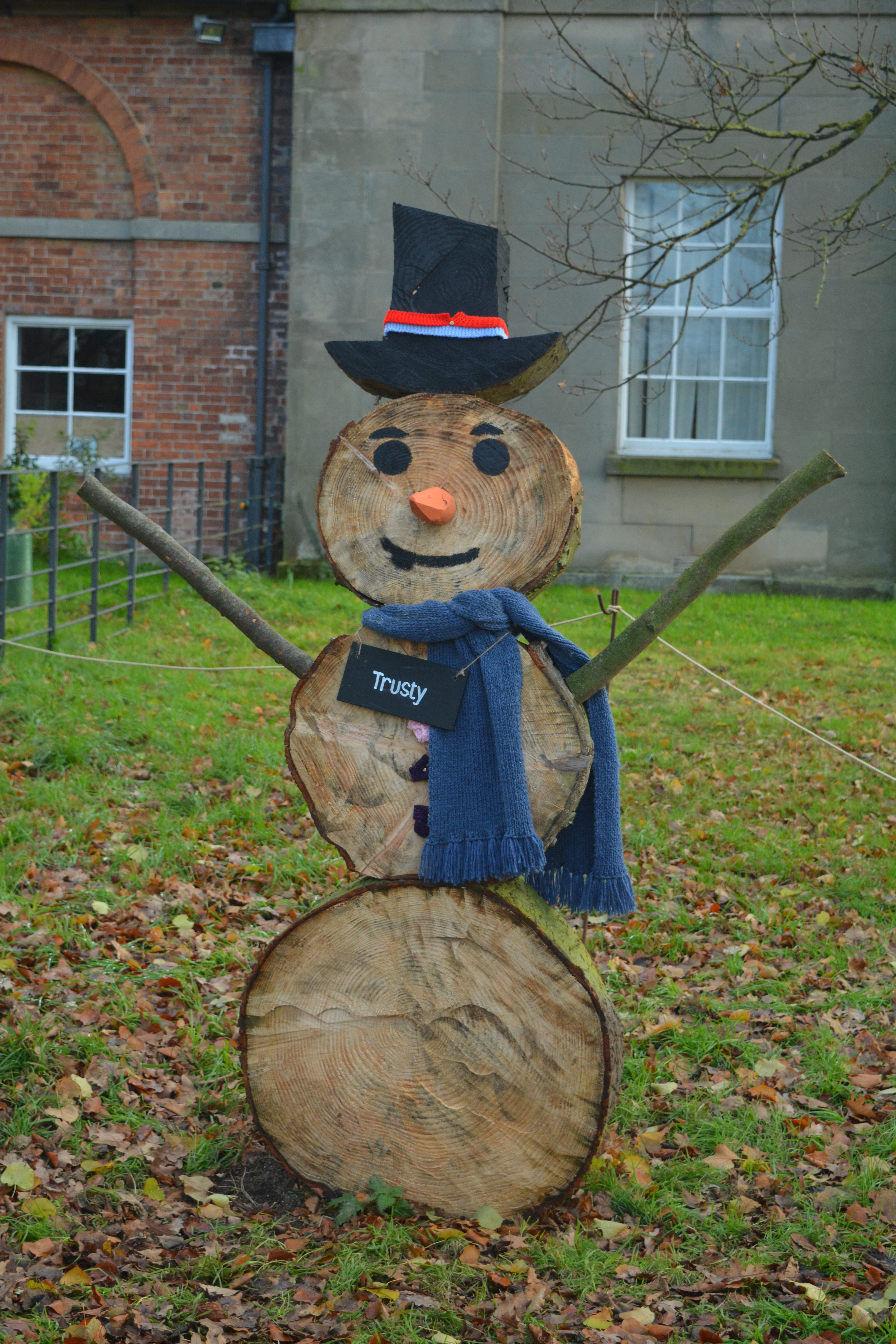
We made our monthly visit to Attingham Park, our last one for 2017, just as Christmas was making itself known at this National Trust property. Before we even reached the coffee shop for our usual warm drink to get us fueled up for our walk, we had been met by a snowman, a Christmas tree and we were entertained to some 1940’s music and dancing. The hall was decorated in a 1940’s style so the dancing set the scene.
The trees were decorated with wartime decorations, based on the idea of “make and make do”, as were the decorations in the coffee shop, where paper chains were made from newspaper. The trees were themed with one based on children’s games from the 1940’s and another was book based.
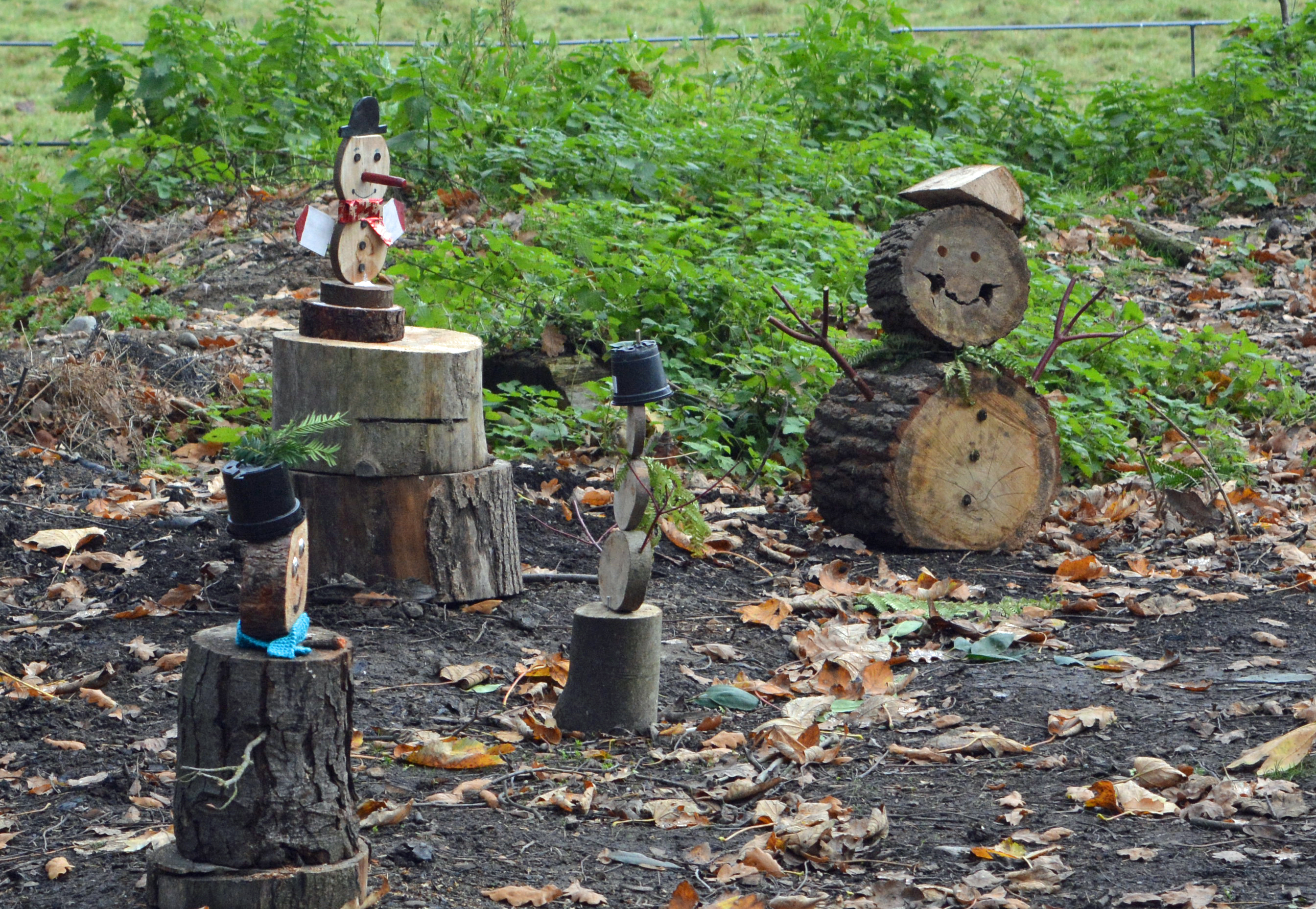
We came across a few other Snowmen, as we followed the one-mile trail, to amuse us on this chilly day. I managed to get around this month without my wheelchair as my recovery from leg surgery is coming along nicely. I walked the mile using a crutch which was very pleasing and rewarding!
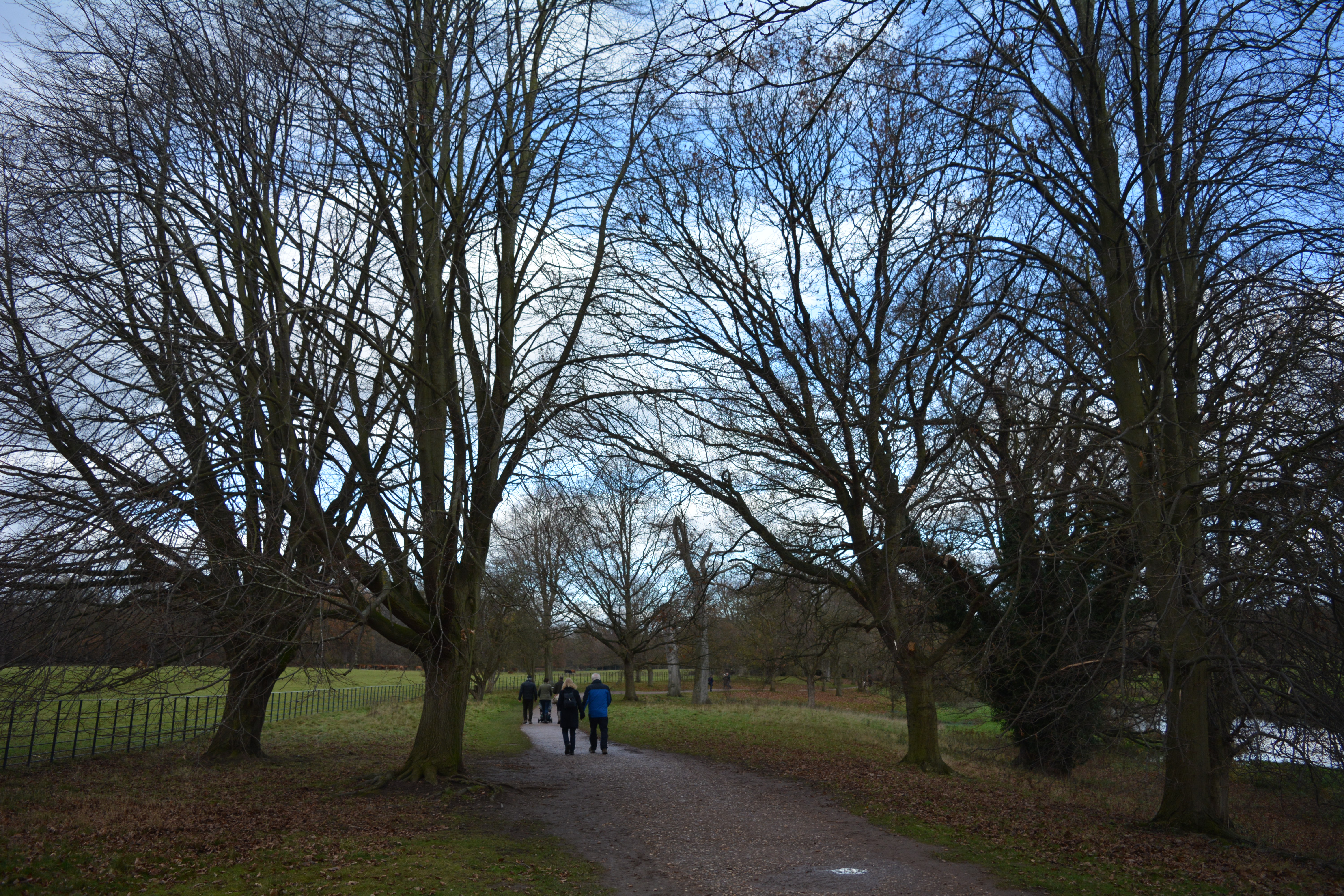
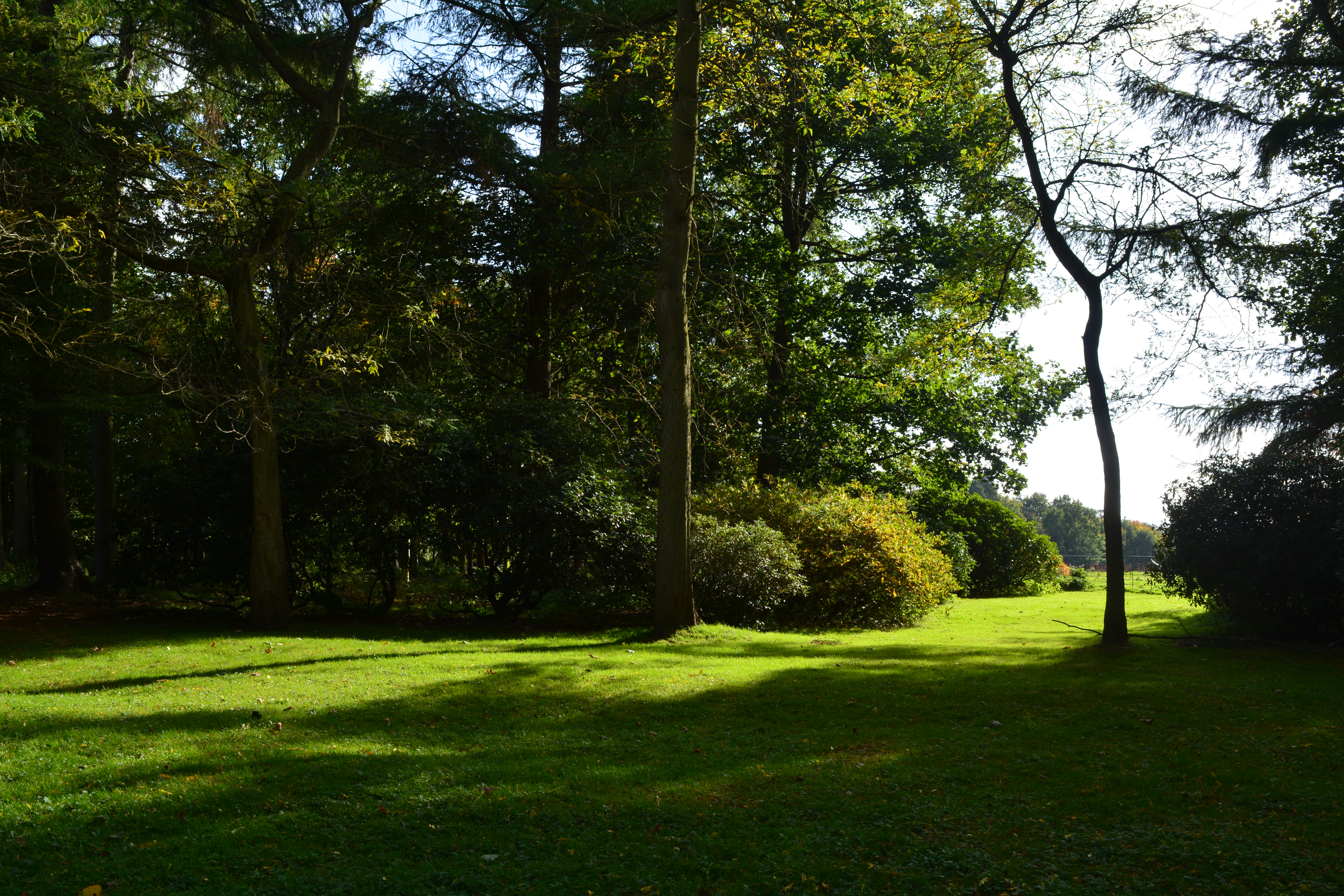
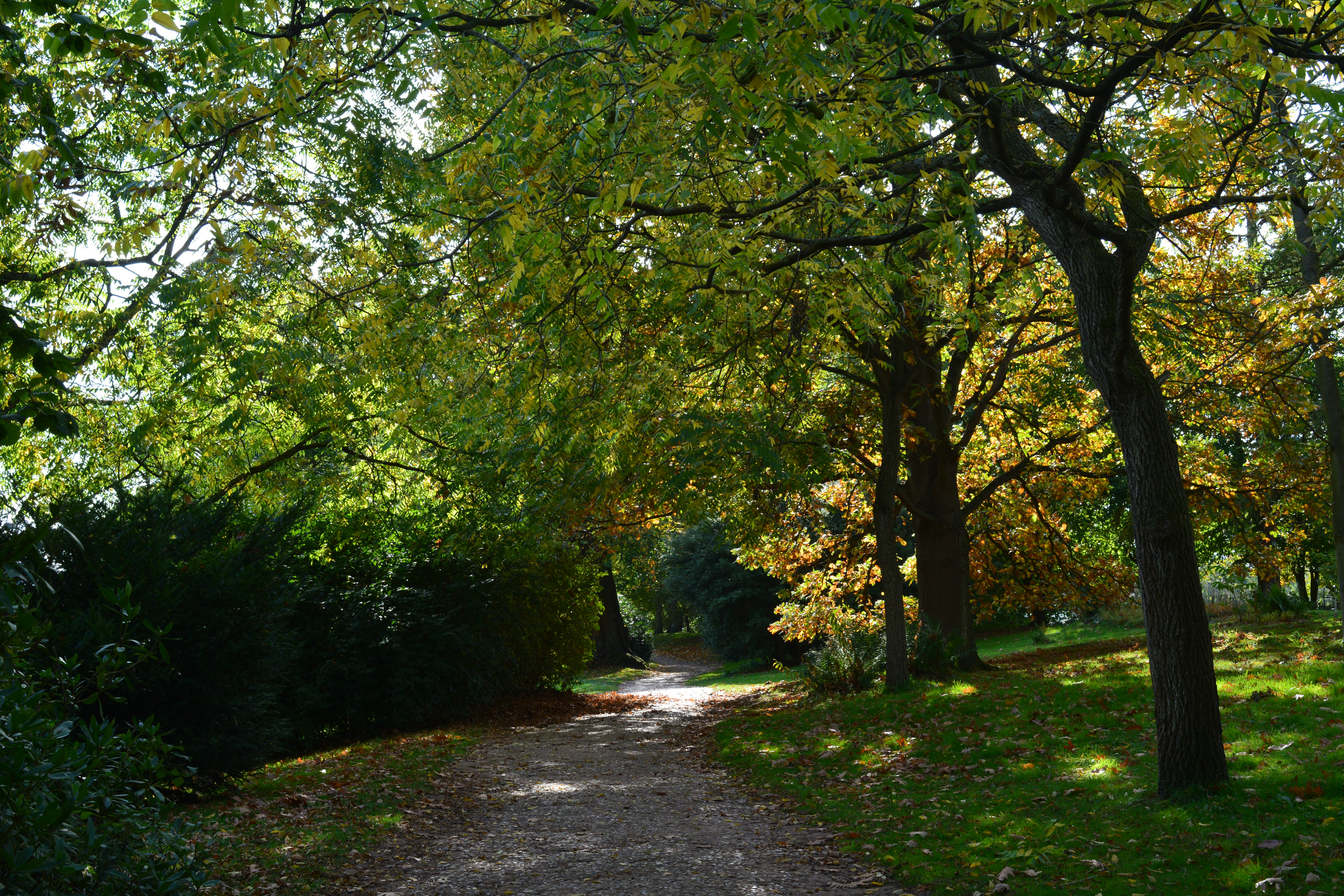
Wandering through the woodland areas beneath tall mature trees, we noticed that a few browned leaves were managing to hang on to the branches but the majority were bare skeletons. These frameworks of trunks, branches and twigs were magnificent with no green leaves to hide their structure.
New buds were already waiting patiently on some branches anticipating spring far off on the horizon, while on other neighbouring trees a few dried leaves hung on. One patch of trees still showed some green in its canopy. A few old seed pods hung on having defied the storms, rains and gales of autumn, seed heads of trees, shrubs and perennial plants.
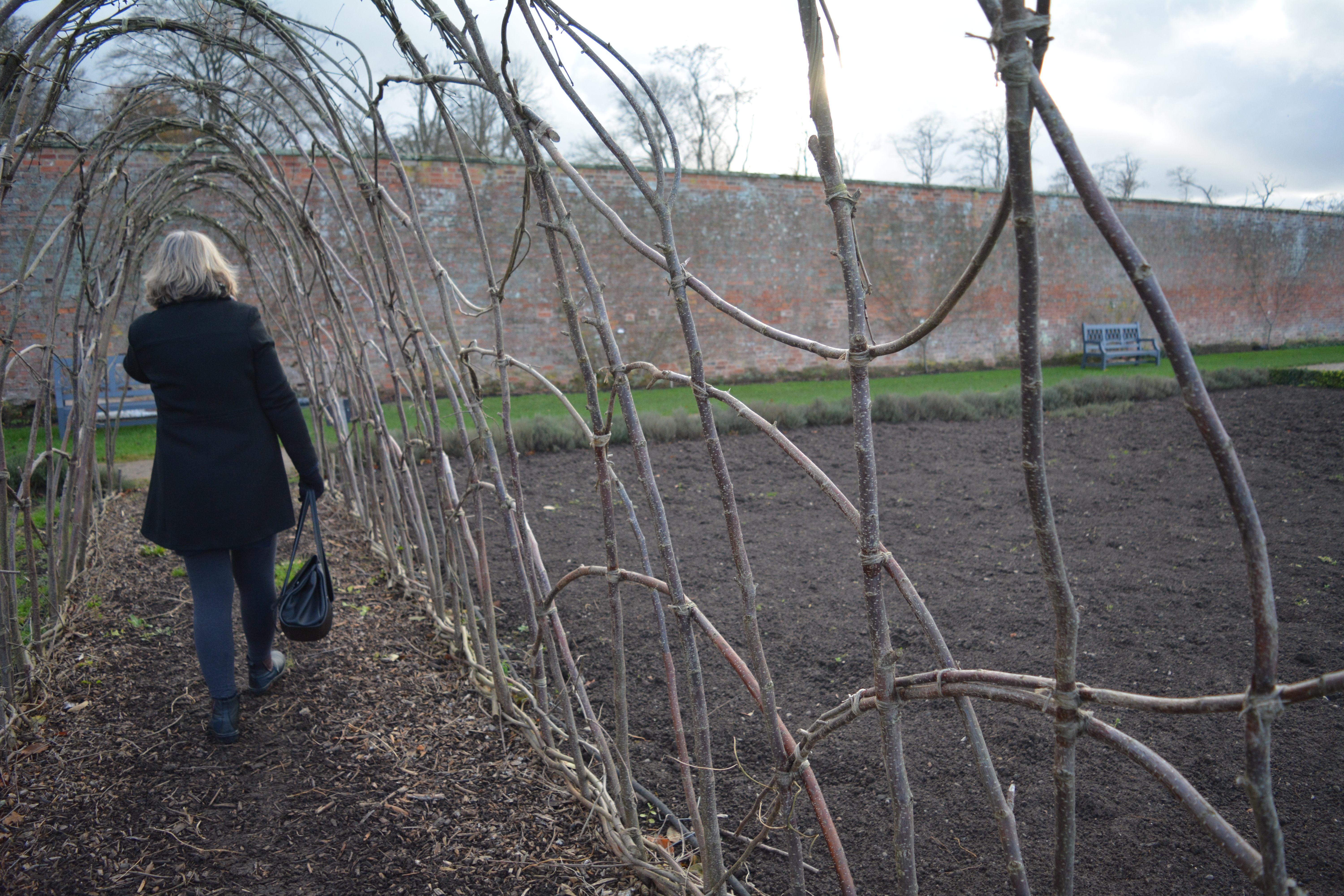
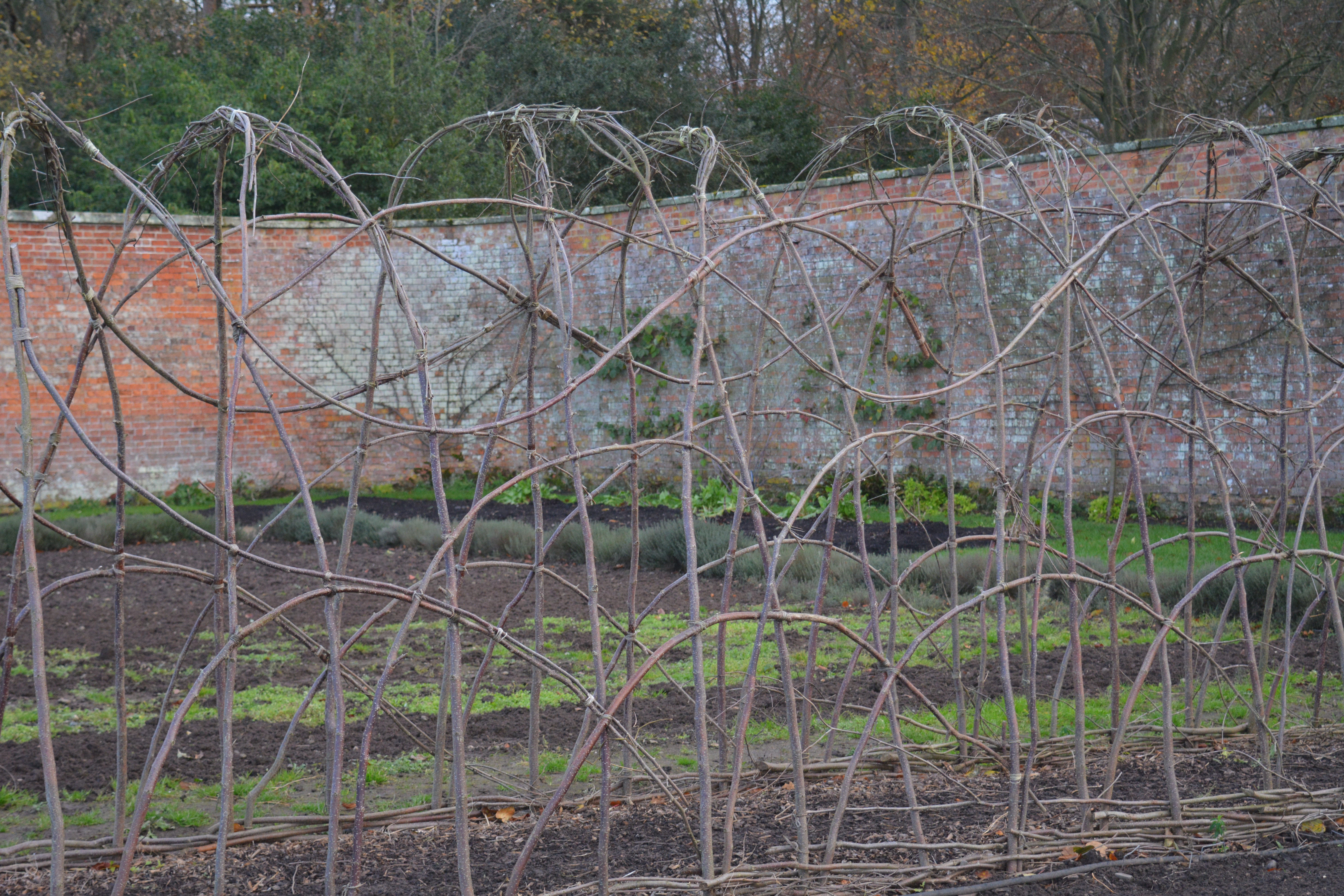
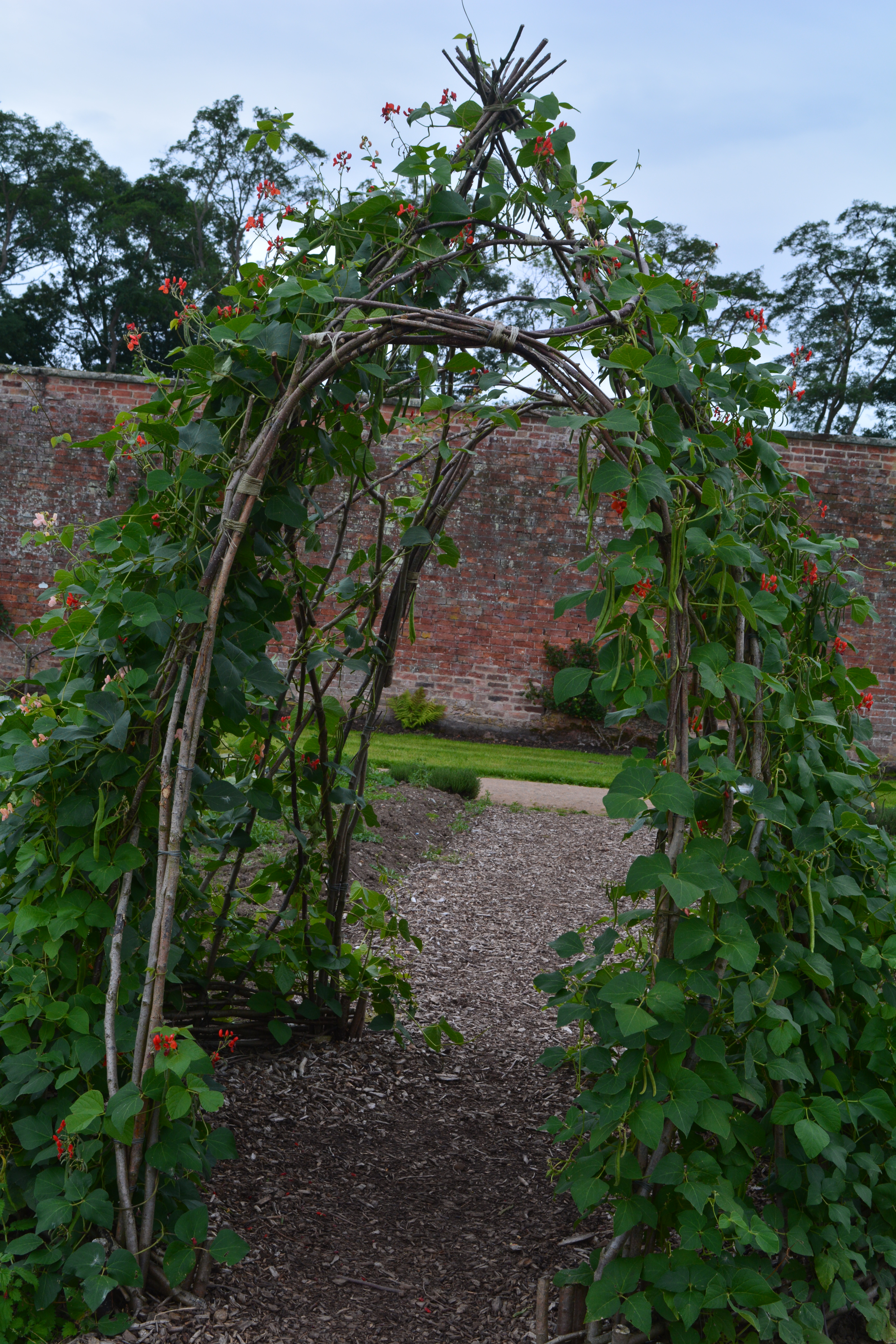
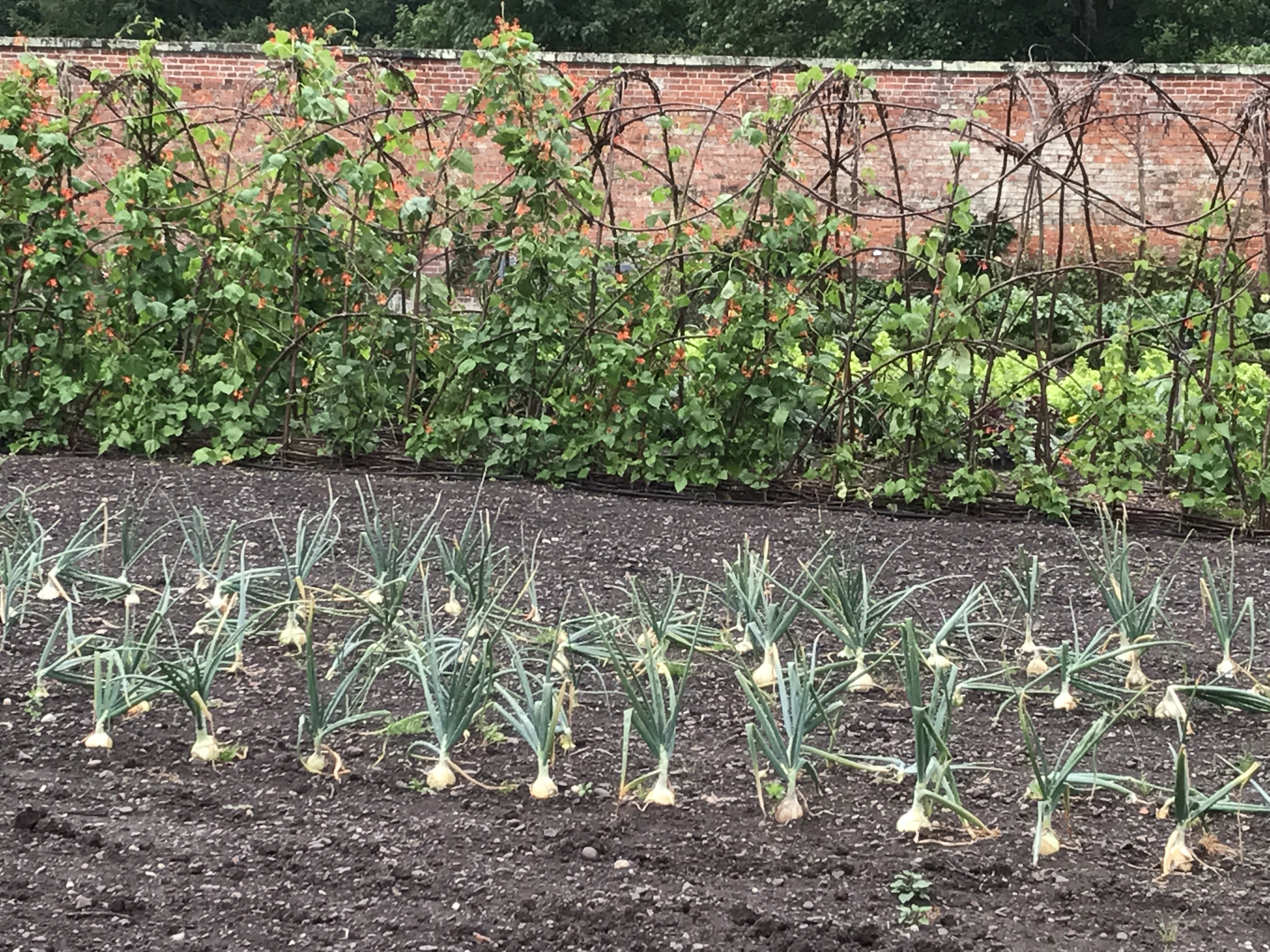
We wandered around the walled garden now virtually clear of crops, leaving hazel pole structures bare of the bean plants that once adorned them. The volunteer staff here are adept at creating beautiful and original plant structures.
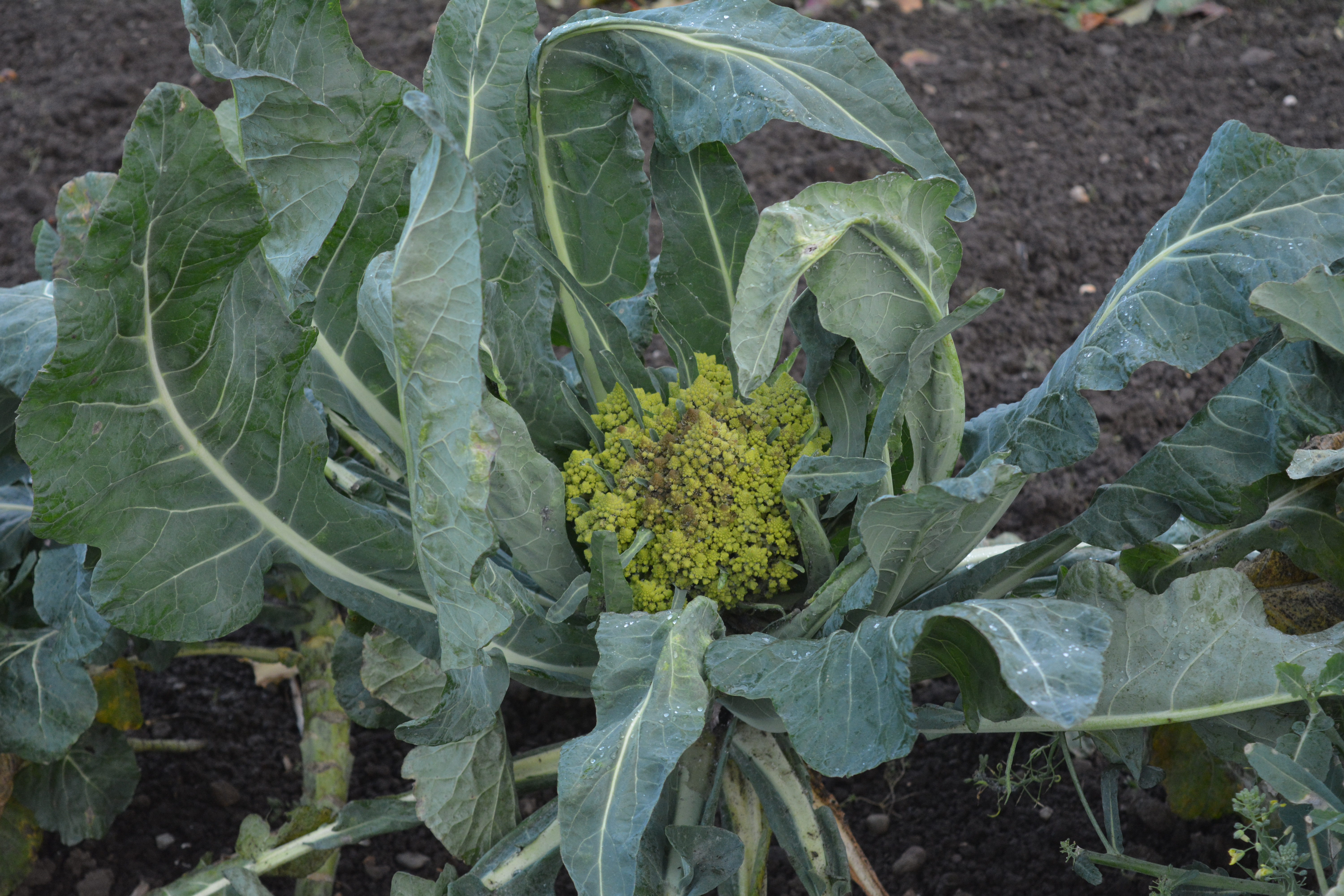
A green flowered cauliflower had recently been attacked by frost, so had browned a little. Celeriac though recently cropped awaited storage.
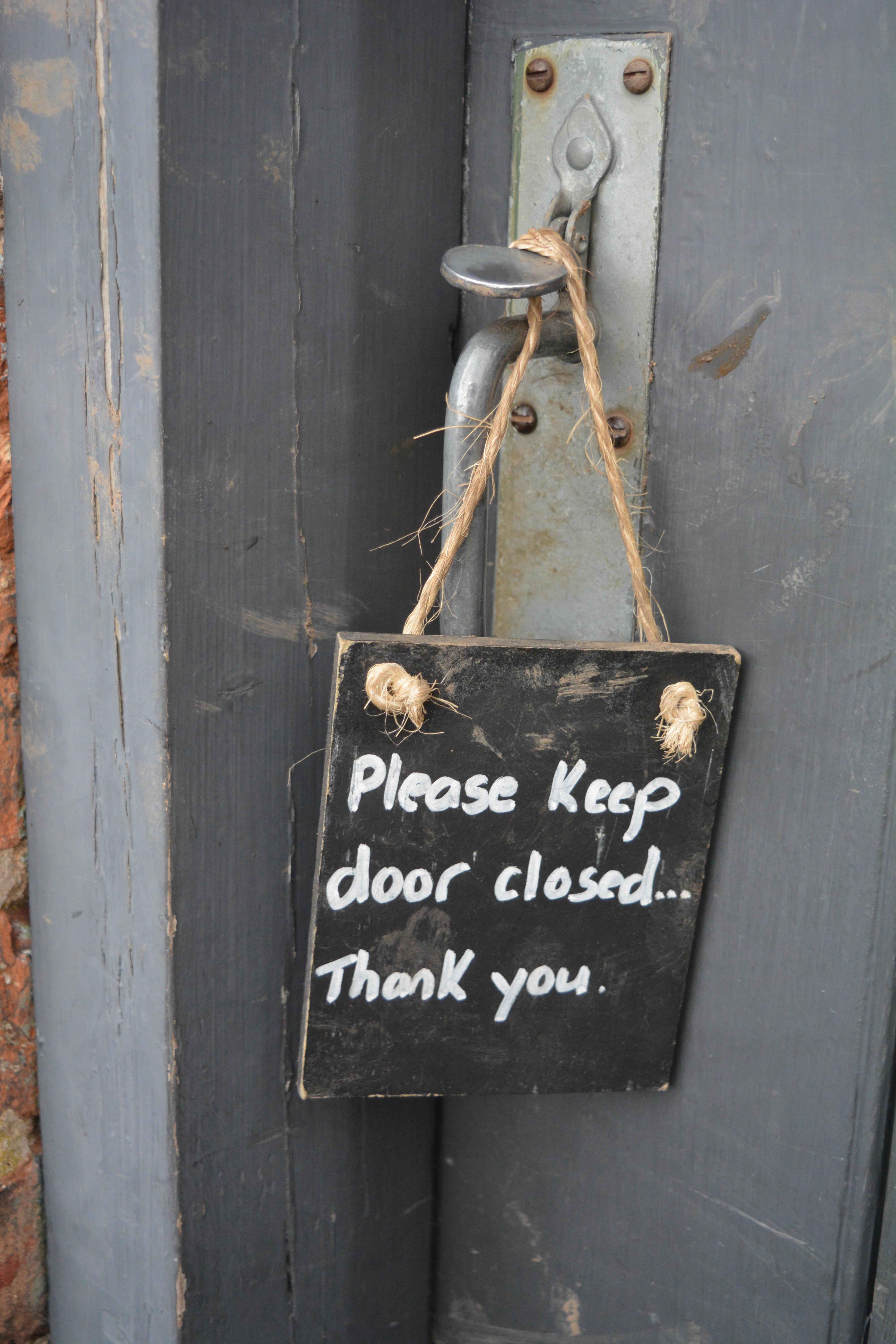
The gardeners’ bothy was simply decorated but full of atmosphere, added to by the gardeners and volunteers enjoying their break so the aroma of freshly brewed coffee mingled with the smell of wood smoke.
Whatever time of year you explore the countryside, parkland or even more so a garden, there are always surprises awaiting. An out of season flower, a bud bursting at an inappropriate time or sadly at times the sudden death of a favourite plant. Two surprises were awaiting us at Attingham this December. First were lemon yellow catkins hanging fresh and healthily from hazel shrubs. These are usually key features of the month of February. In December they provided a beautiful diversion for me and my camera lens!
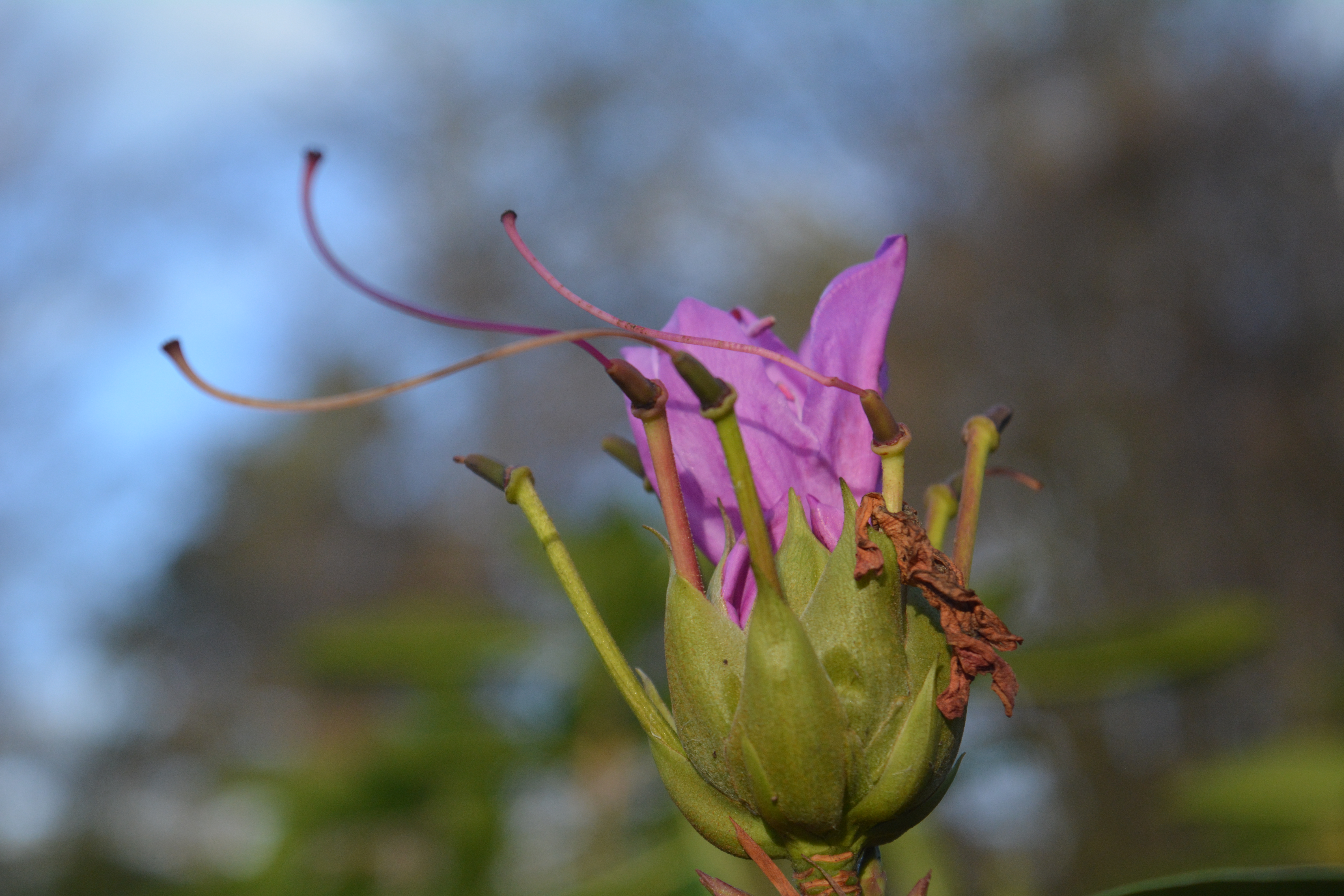
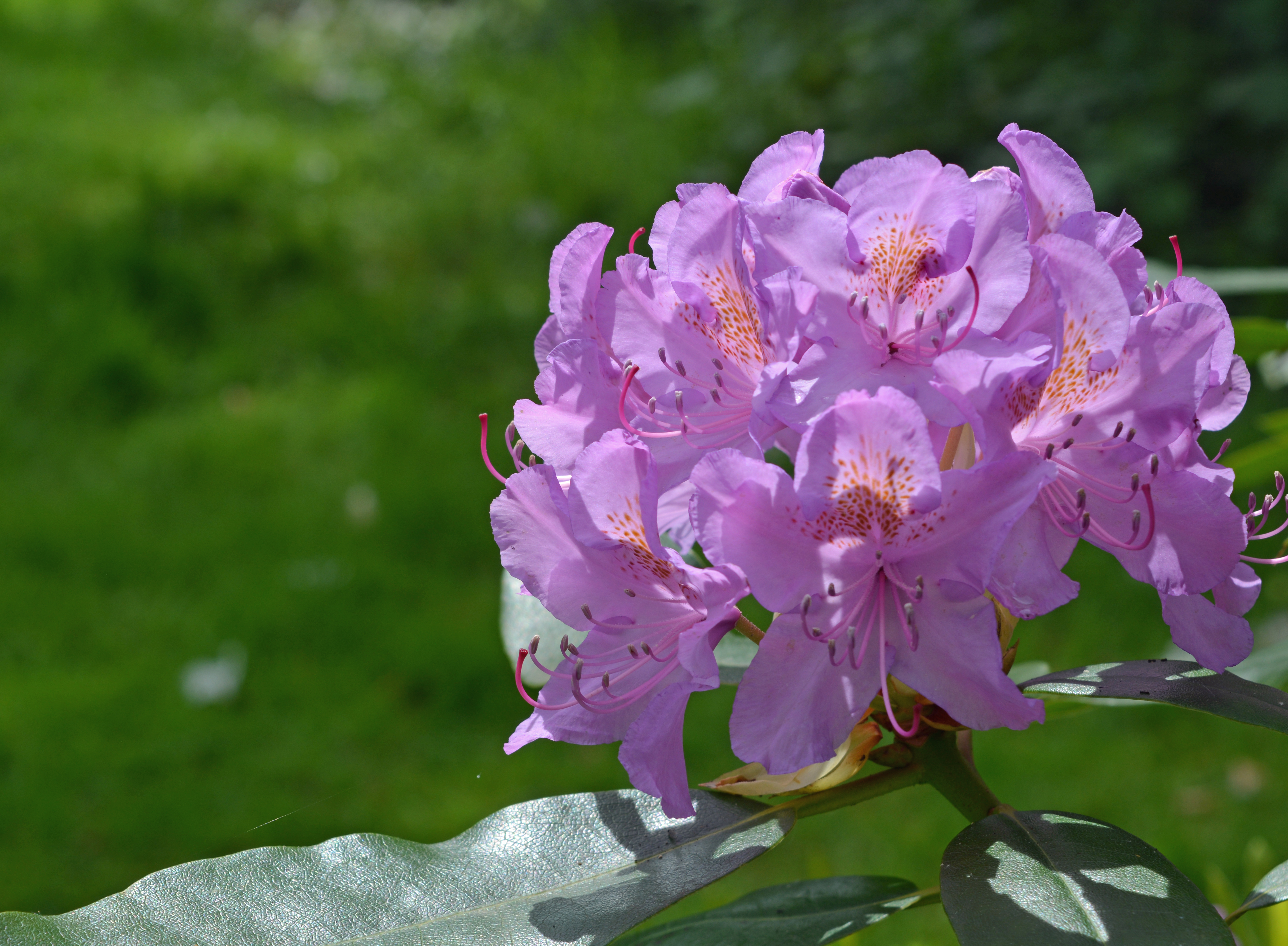
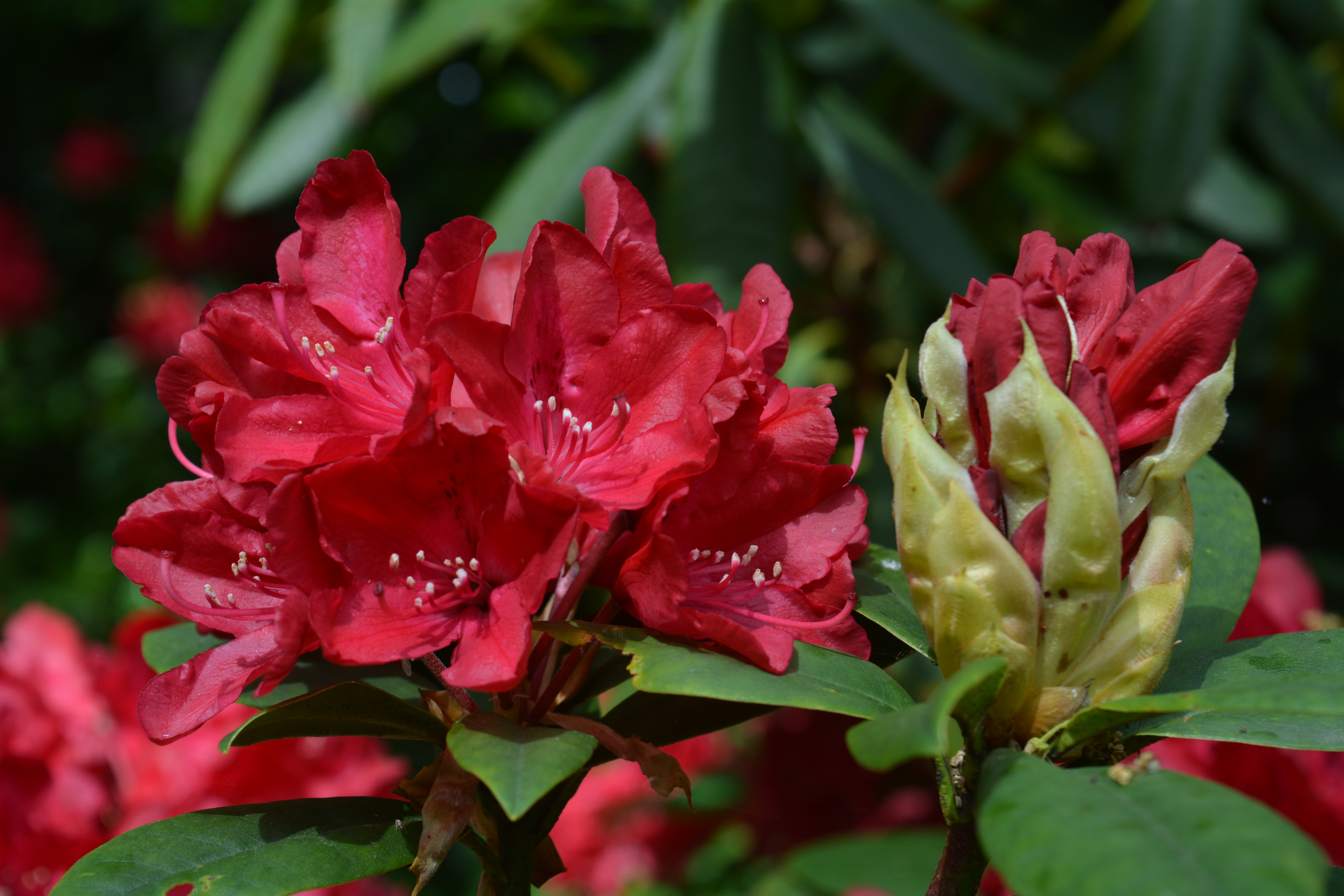
The second surprise was a Rhododendron shrub in flower!
Now that we have explored the parkland at Attingham Park every month during 2017, we need to decide where our monthly visit will be next year. We need somewhere open all year and of interest every month too. We shall let you know in the new year! I hope you have enjoyed visiting Attingham with us each month during 2017.
So here we are back with number ten in this series featuring our wanderings and discoveries as we walk around the pathways of our local National Trust property, Attingham Park. As intimated in my September “Walk in the Park” posting, Jude the Undergardener pushed me around in a wheelchair following my leg surgery so the photographs will be from an unusual viewpoint. But we did manage the walk to the walled garden and returned via the One Mile Walk.
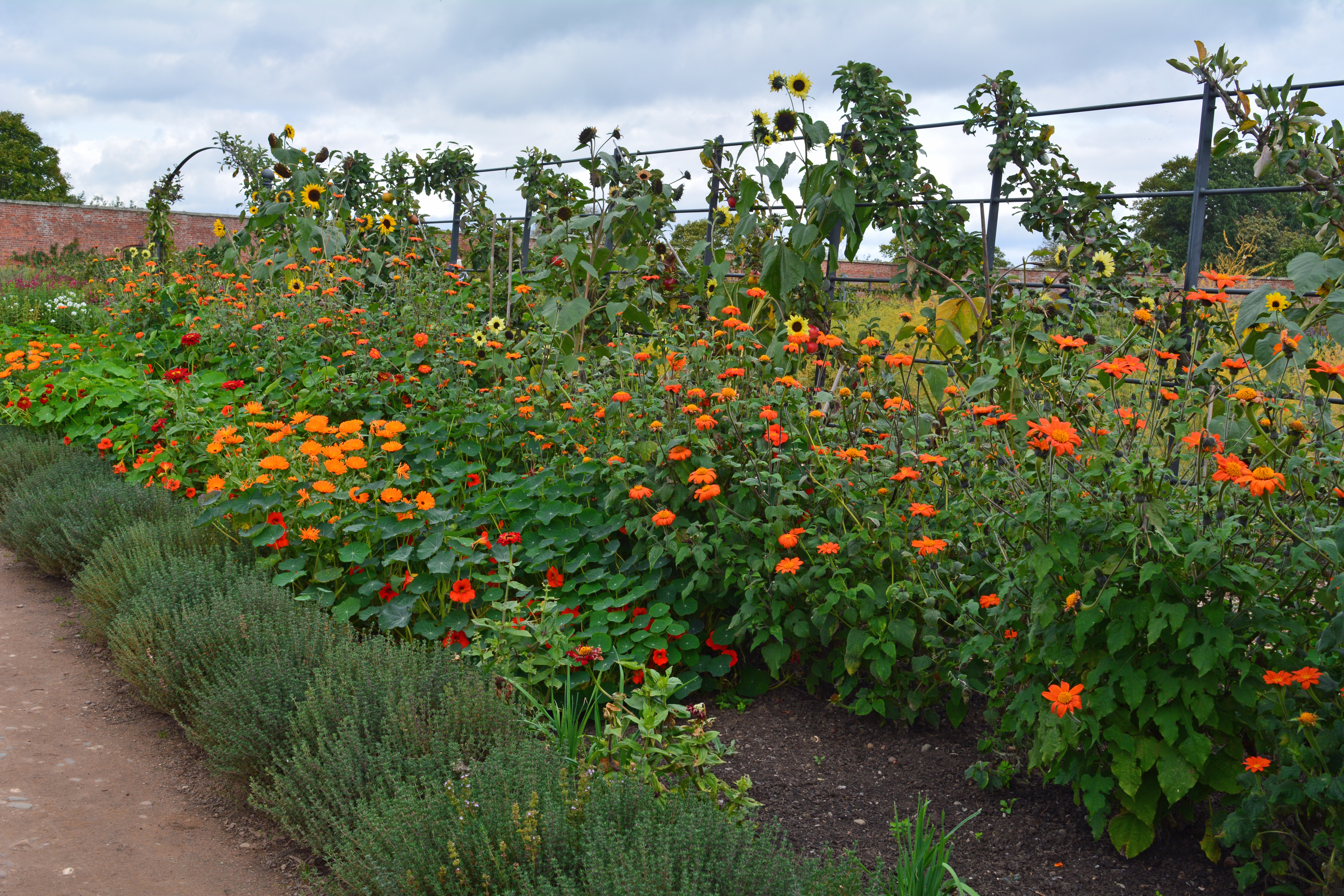
We were surprised that autumn had not advanced as much as we had anticipated, with many trees still carrying their full contingent of leaves. The walled garden was still very colourful.
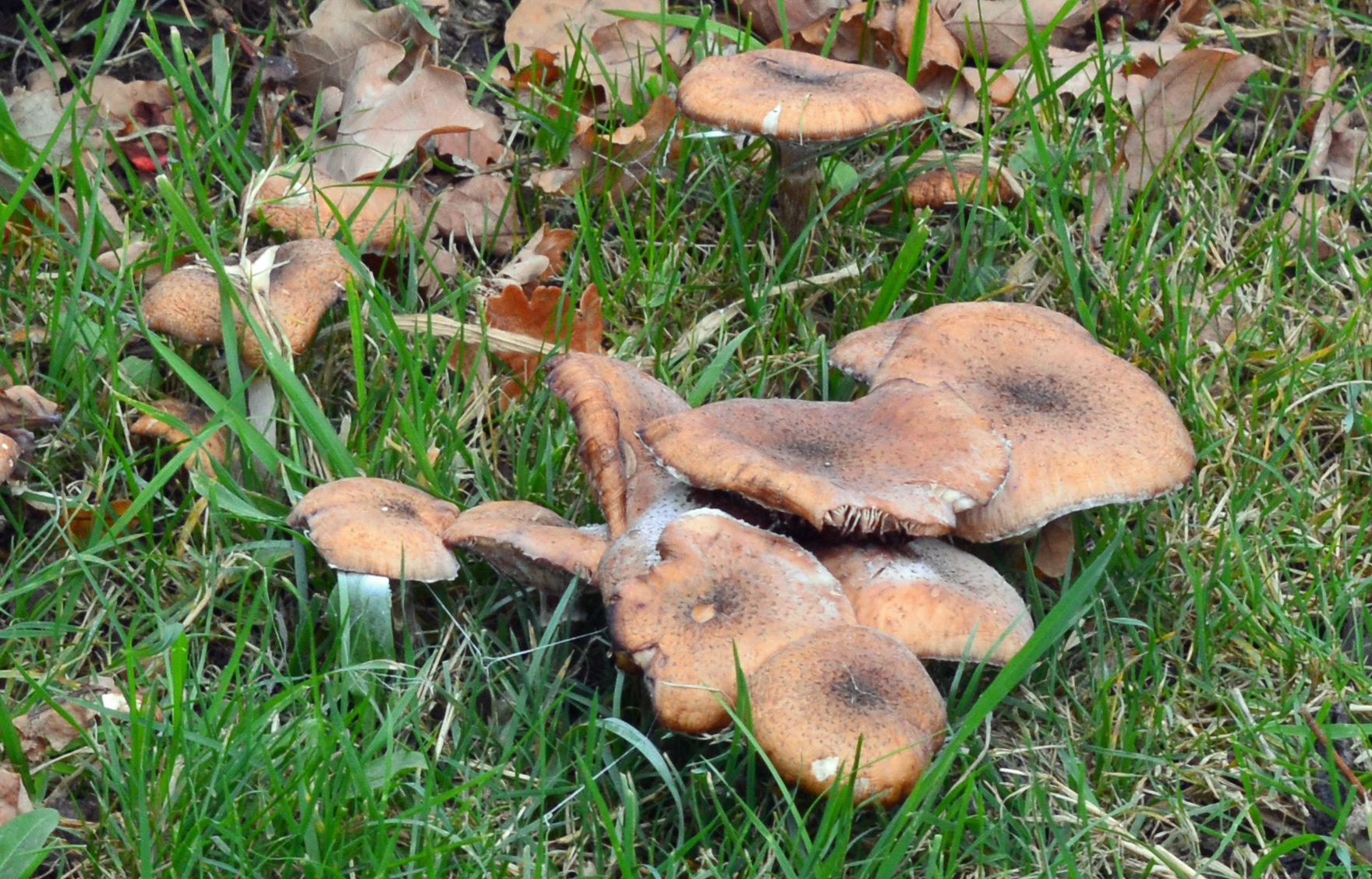
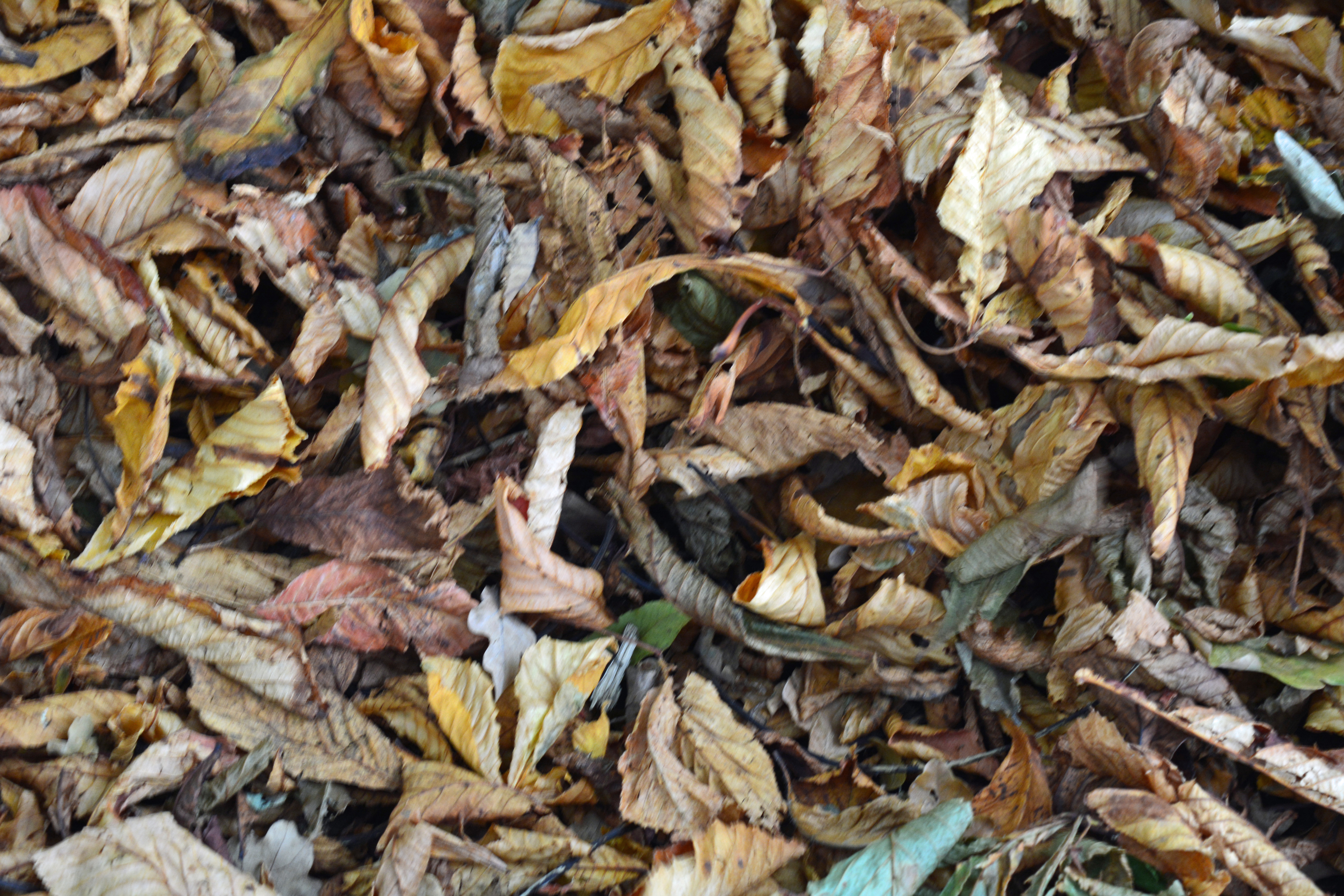
Fungi was still in evidence and fallen leaves looked less brightly coloured.
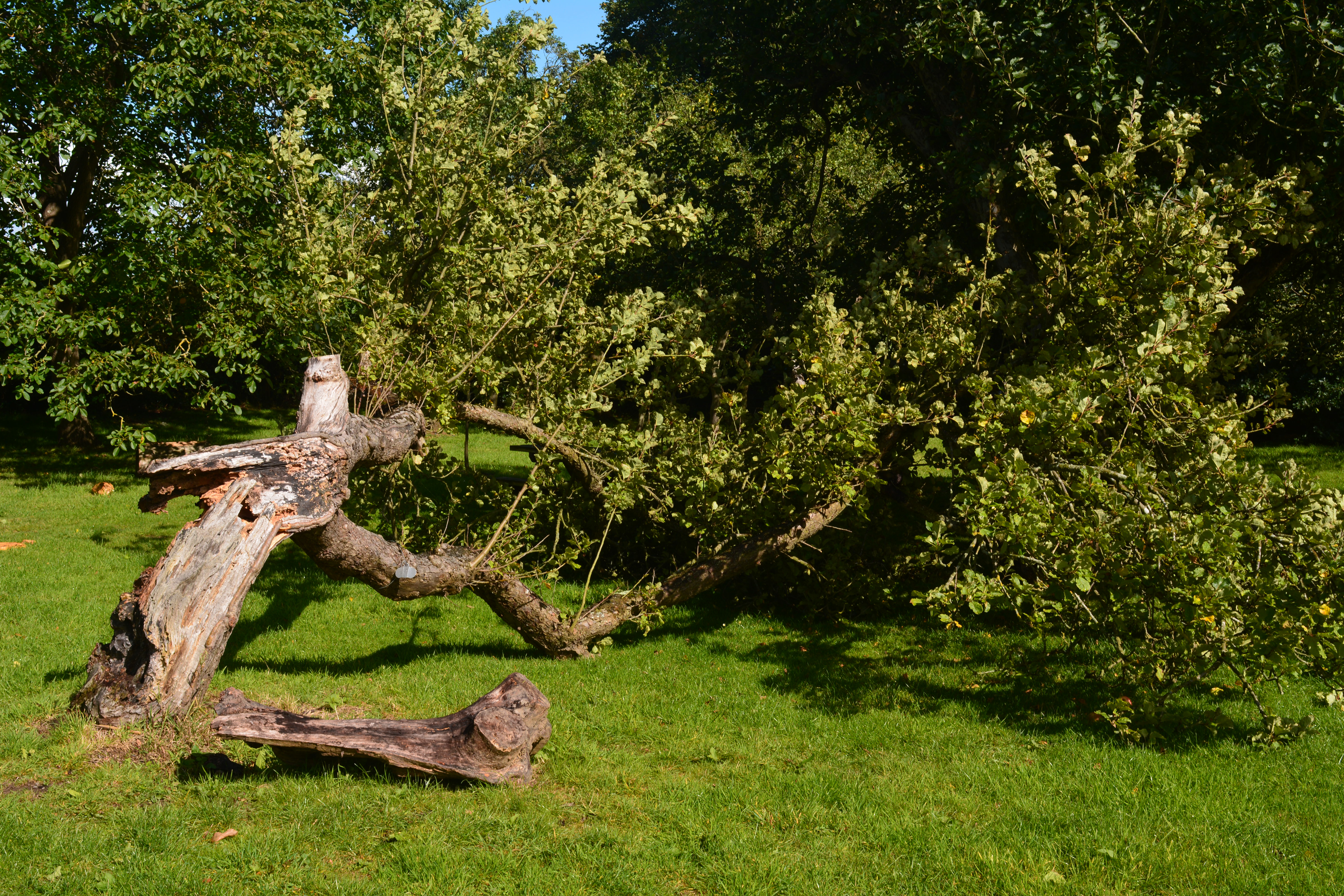
There were frequent signs of the destructive forces of the wind and the more controlled hand of the gardeners working on tree surgery tasks.
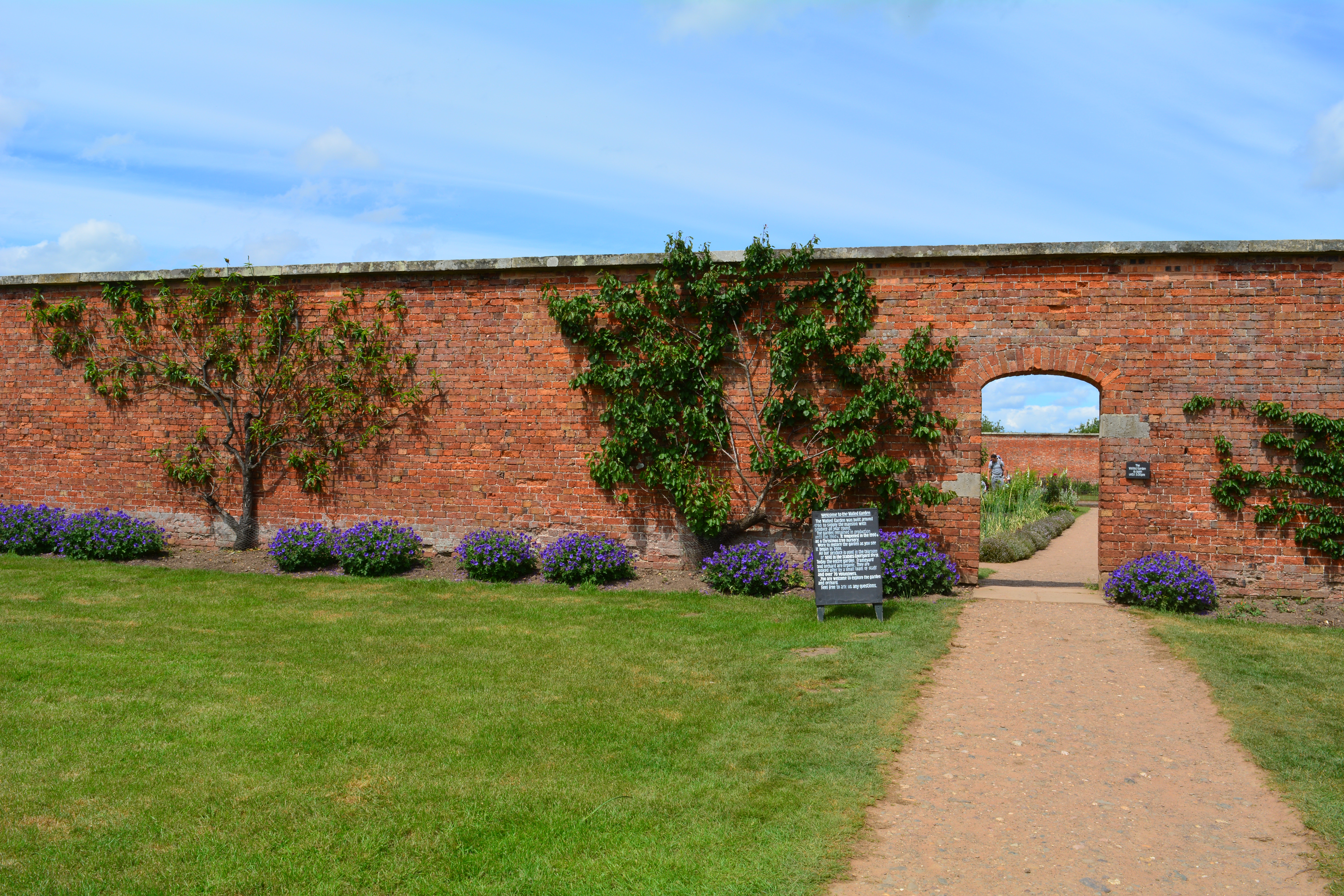
The gateway into the walled garden welcomed us into a colourful magical place.
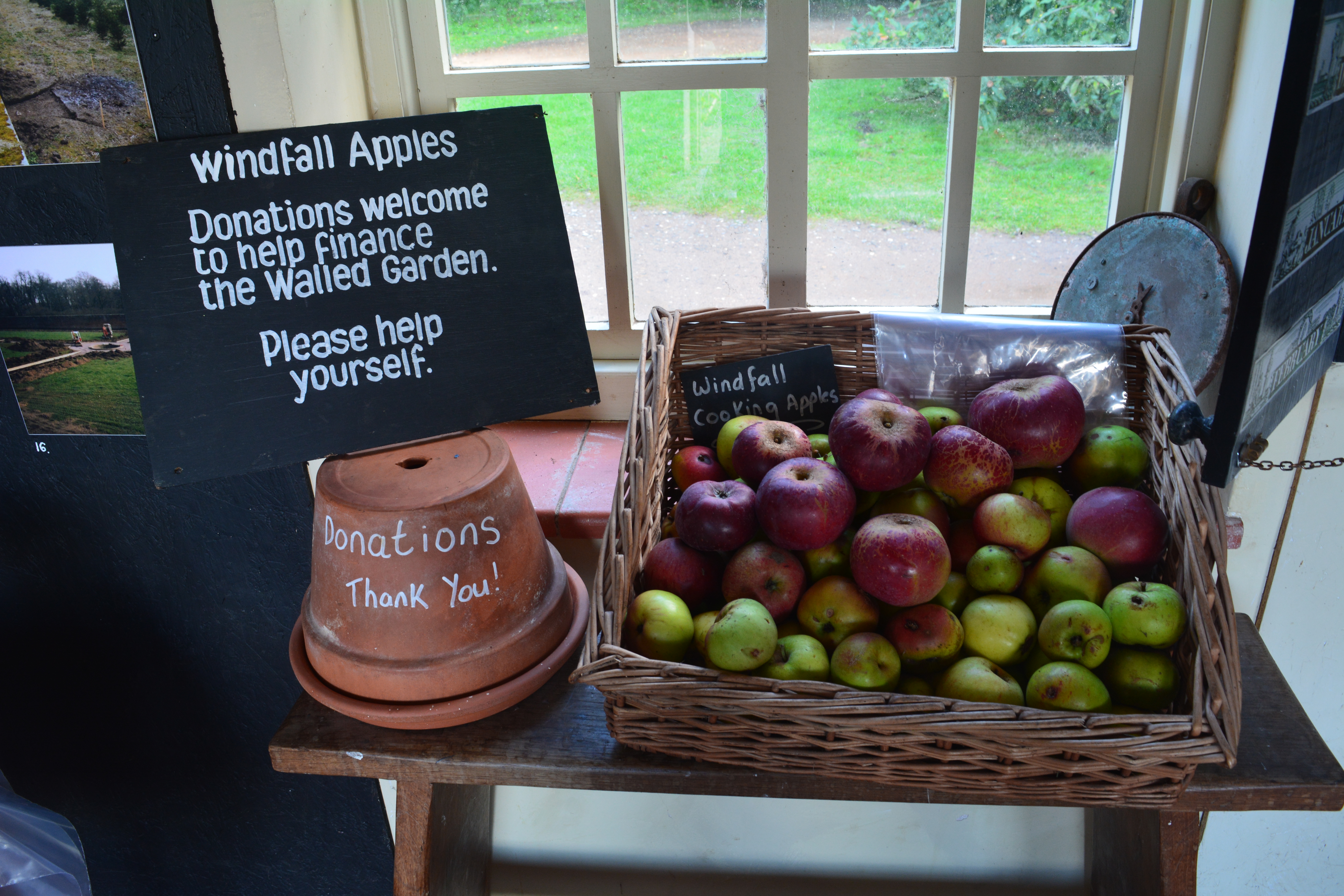
We were really surprised and delighted to find this beautifully presented hand painted poster celebrating the wonder of the apples in the Attingham Park orchard.
Humour is an essential of a good garden but so often missing. Just look at what a gardener here has created to make the visitor smile.
We can complete our journey now by looking at the photos I took as we returned along the riverside path back to the stable block.
Next visit here will be in November – I have no idea if I will still be wheelchair bound by then or not. Fingers crossed!
We returned for our monthly visit for a wander around the park at Attingham Park, the gardens, woodlands and walled garden. Here is my report on our visit in September. We made the visit early in the month as I was due to go into hospital for some pretty major surgery, a rebuild of my right leg to be precise, so we don’t know when the October visit may happen. You may get a series of photos taken from a new angle, from a wheelchair.
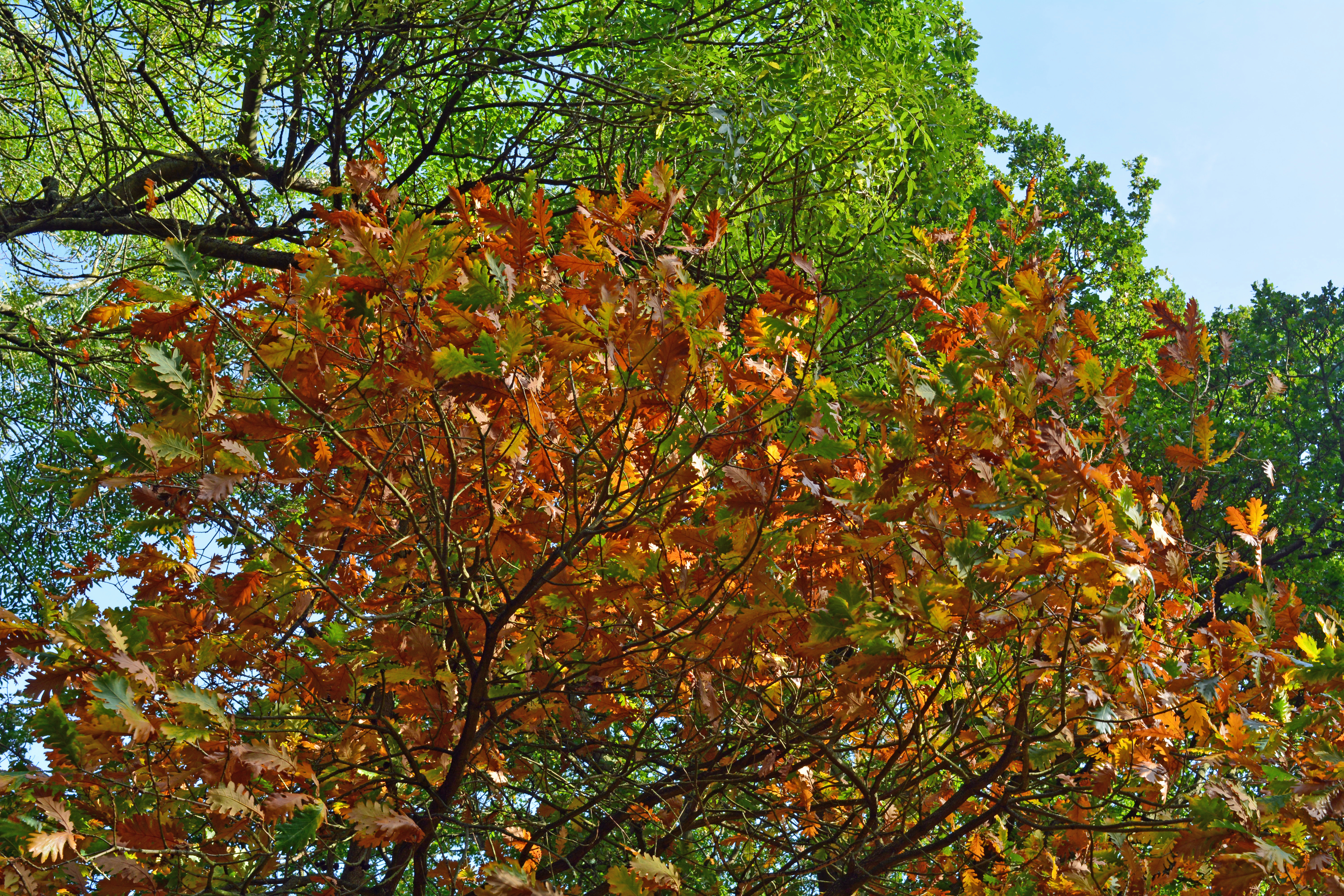
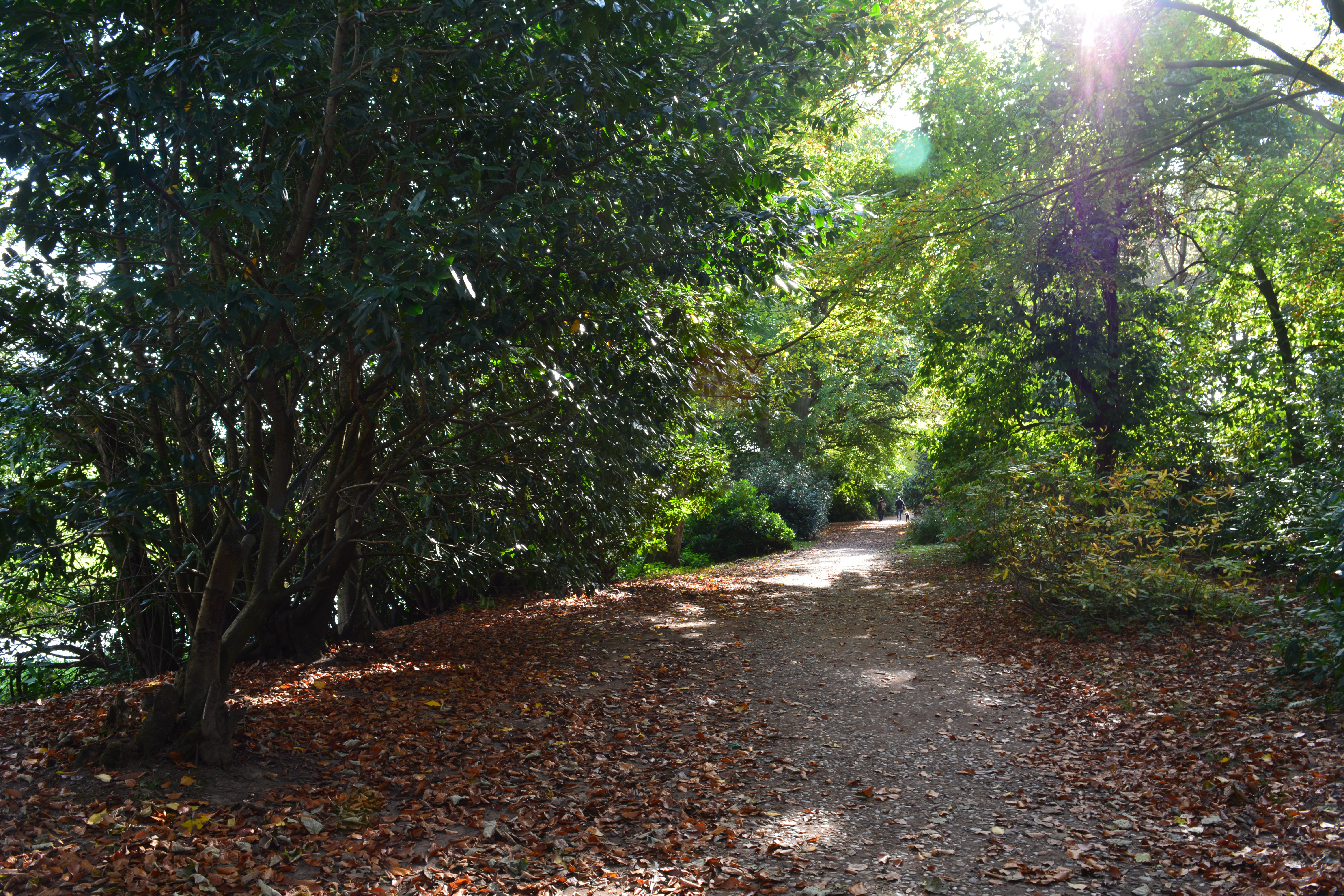
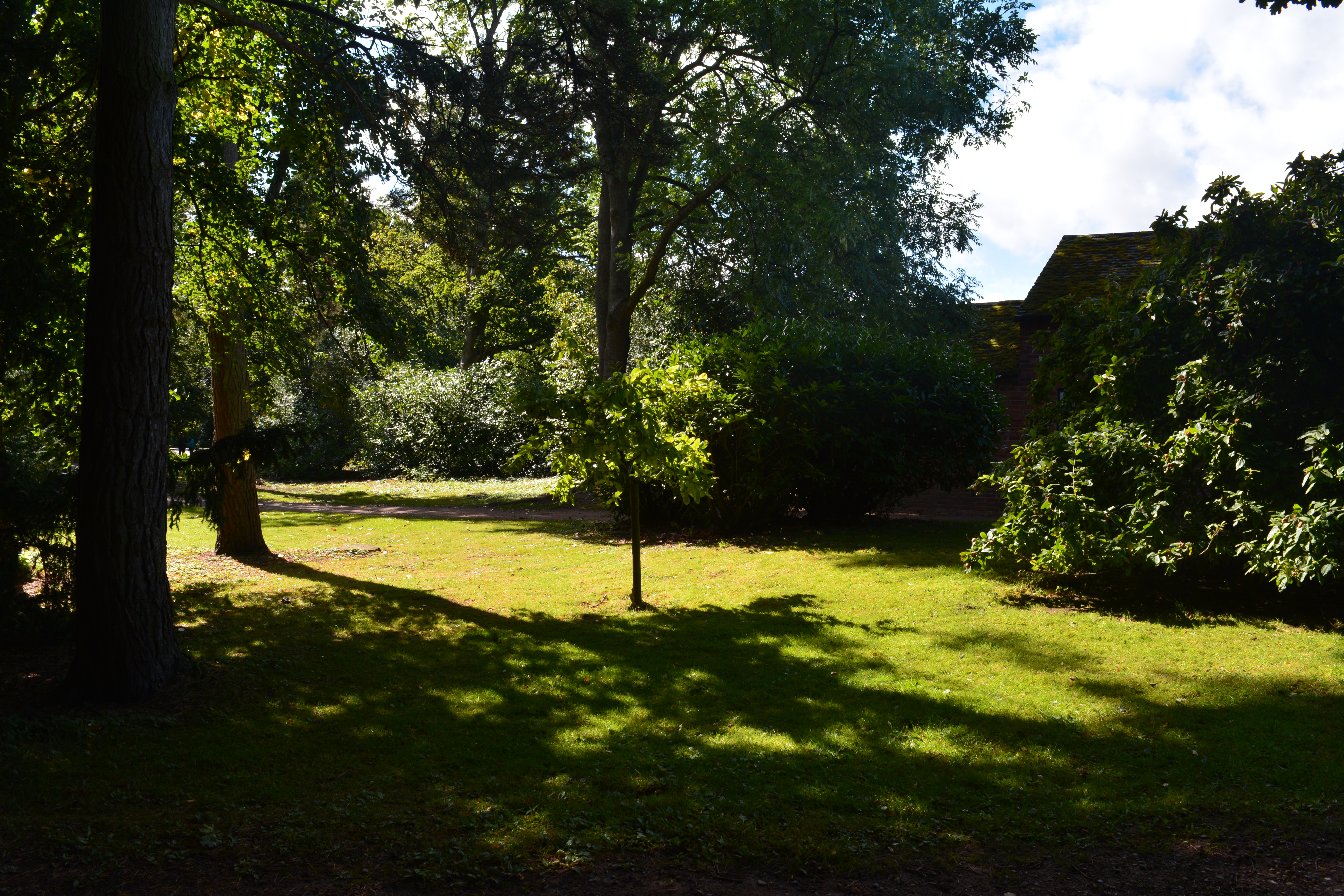
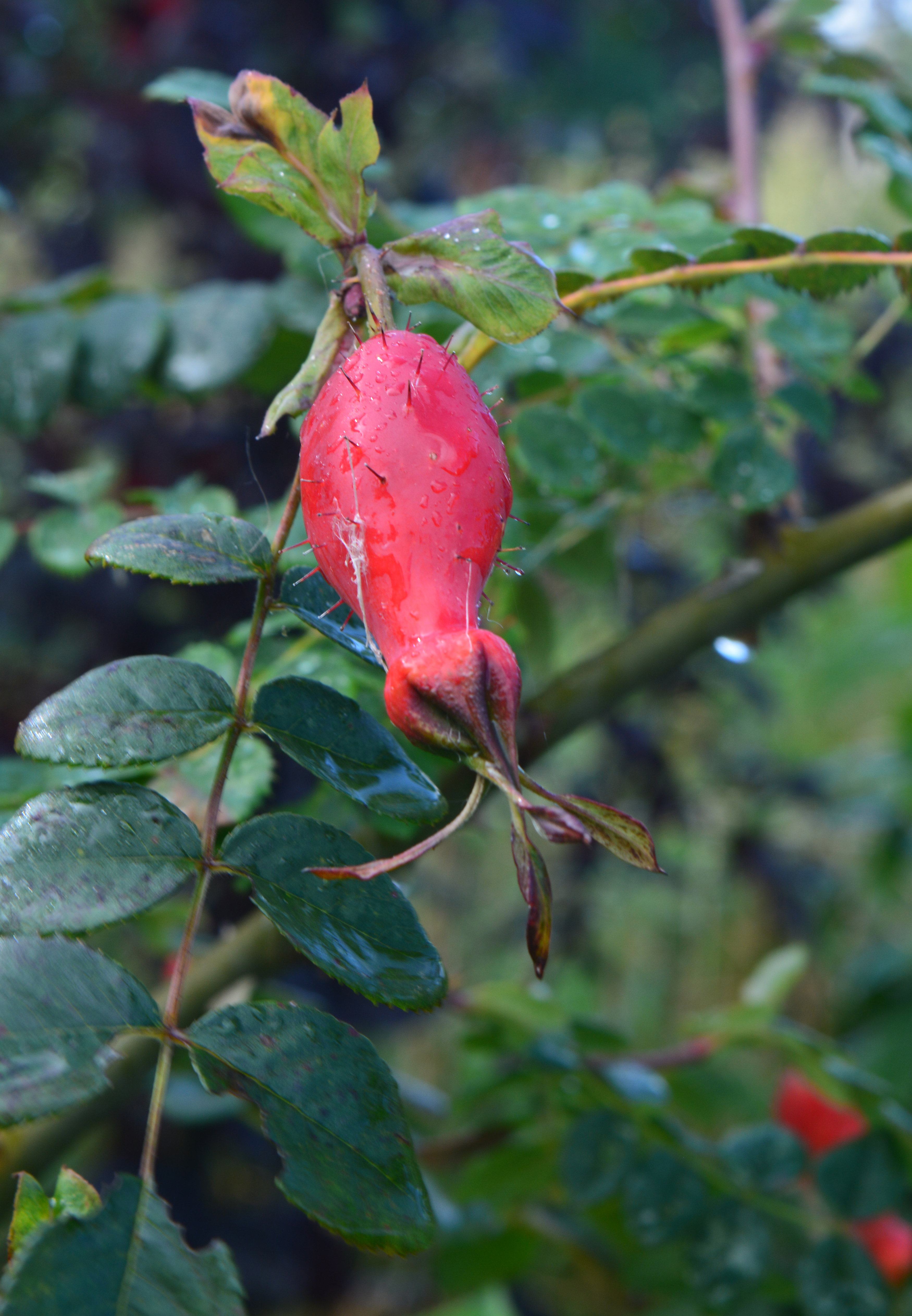
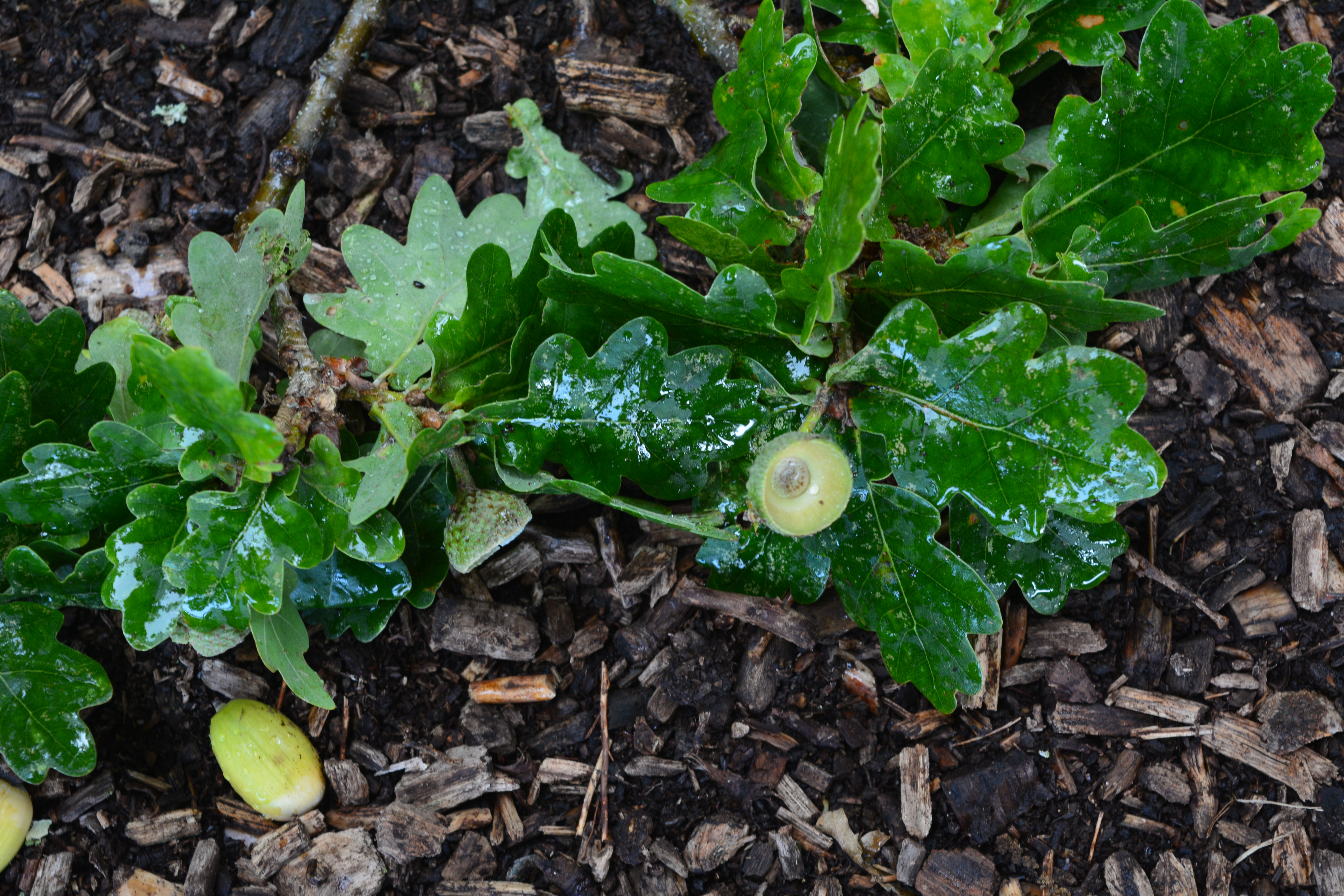
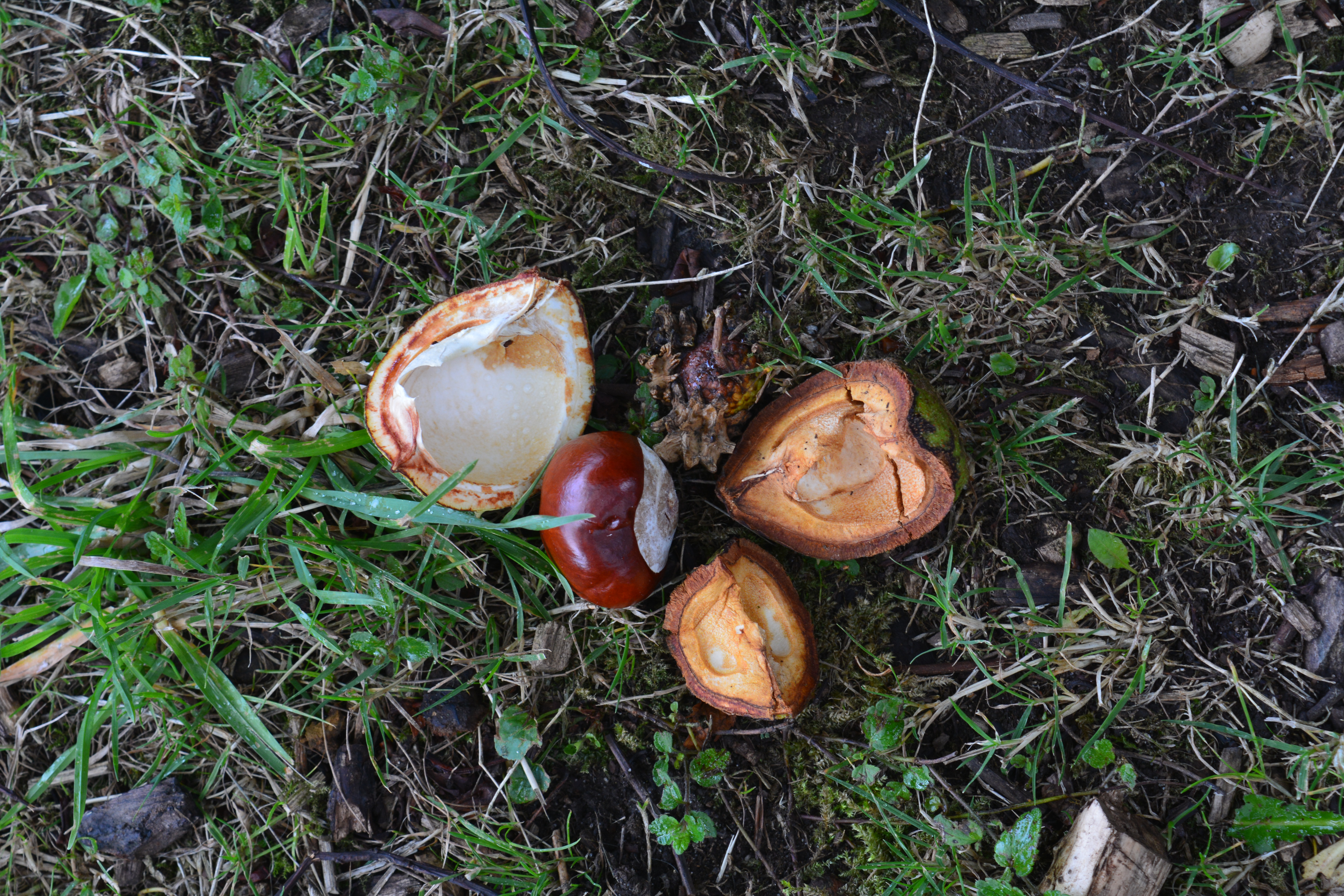
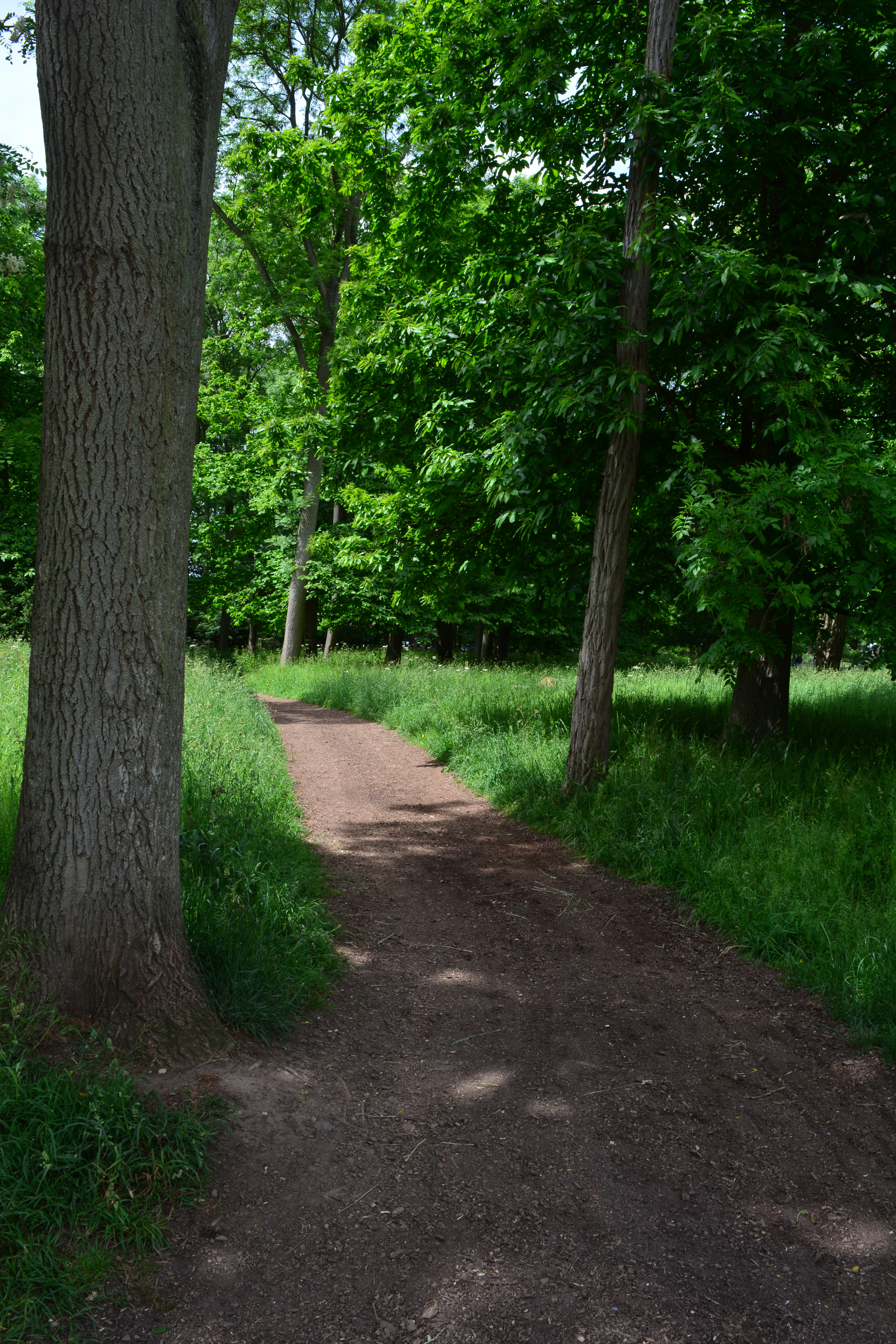
We arrived expecting to see early signs of autumn, such as some colouring up of leaves and looked forward to spotting some early fungi. As we followed the path surfaced with bark chip beneath the mature trees towards the destination, we noticed how autumn’s harvest of nuts had been blown down onto the path in front of us, acorns, Sweet Chestnuts, and Horse Chestnuts. Shrubs were putting on displays of rich shiny berries for us to enjoy looking at and for wildlife to cache away until winter digs in deeply or to enjoy a few now.
Autumn fruits were in abundance in the Walled Garden, fruit trees and bushes, some trained against the walls for extra warmth, were dripping with fruits awaiting harvest time.
We left the walled garden and followed the woodland walk trail, hoping to find some fungi and signs of foliage changing their colours. In part two I will share with you what we found.
As promised, I now return to Attingham Park to look at the creative feature and the walled garden. I shall start with the “creative feature” we found and which fascinated us. In the children’s play field which adjoins the orchard we spotted a colourful feature at a distance which demanded a closer look.
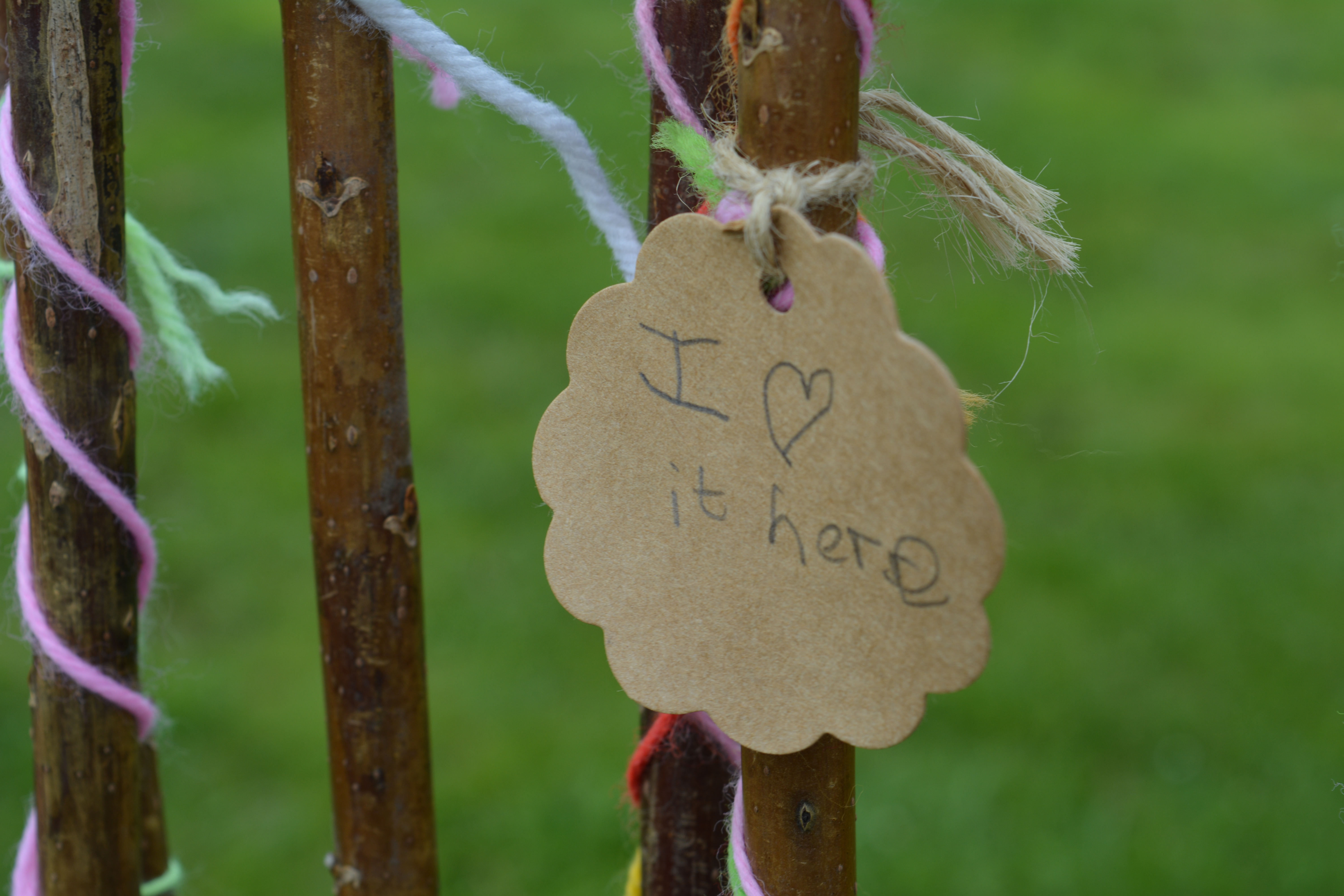
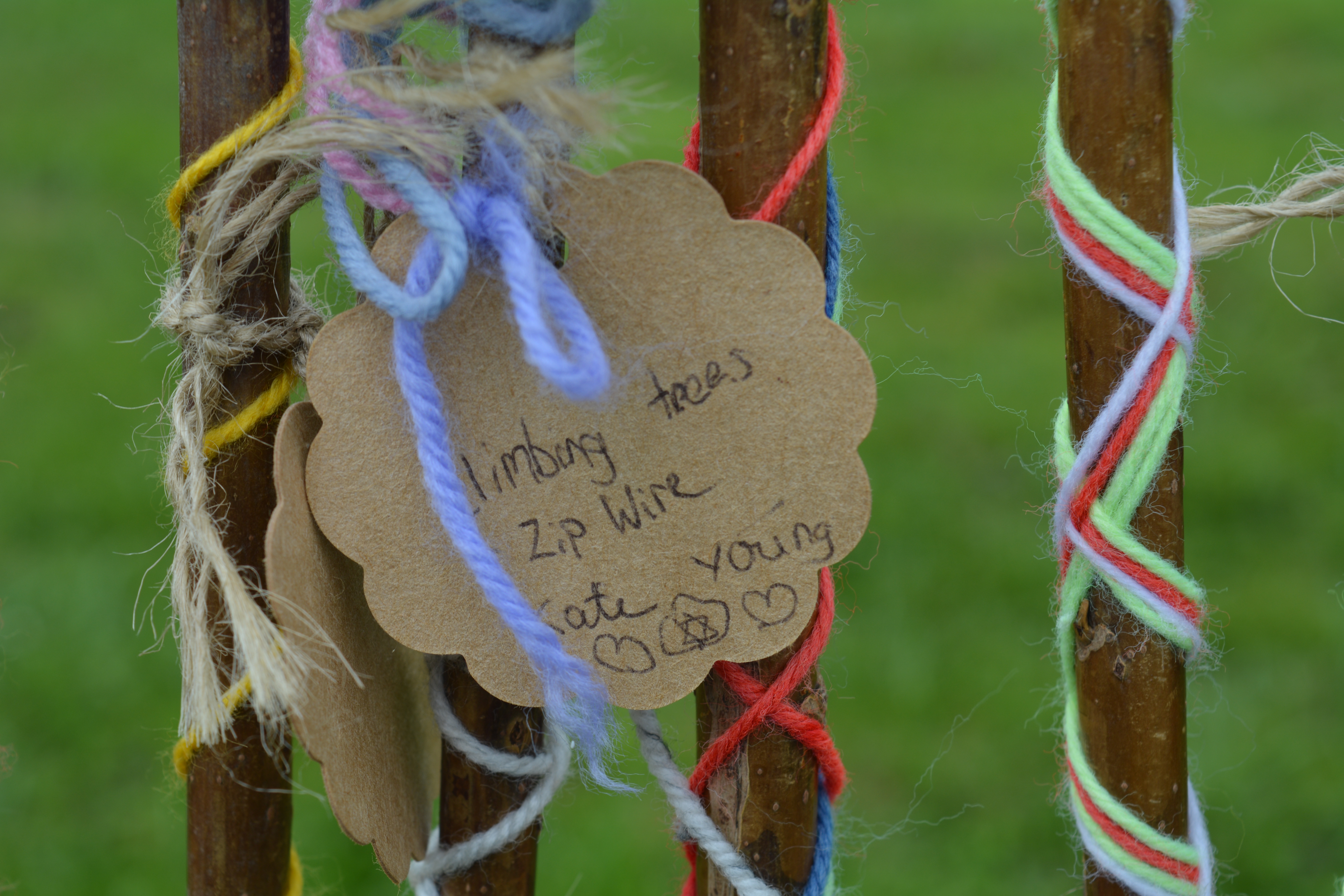
Tall willow wands were attached to a wooden fence and they were decorated with coloured wall. Children had written their thoughts about Attingham Park on card labels and tied them to the uprights. We enjoyed reading them greatly.
We wandered through the orchard towards the Walled Garden and first off had a look around the bothy.
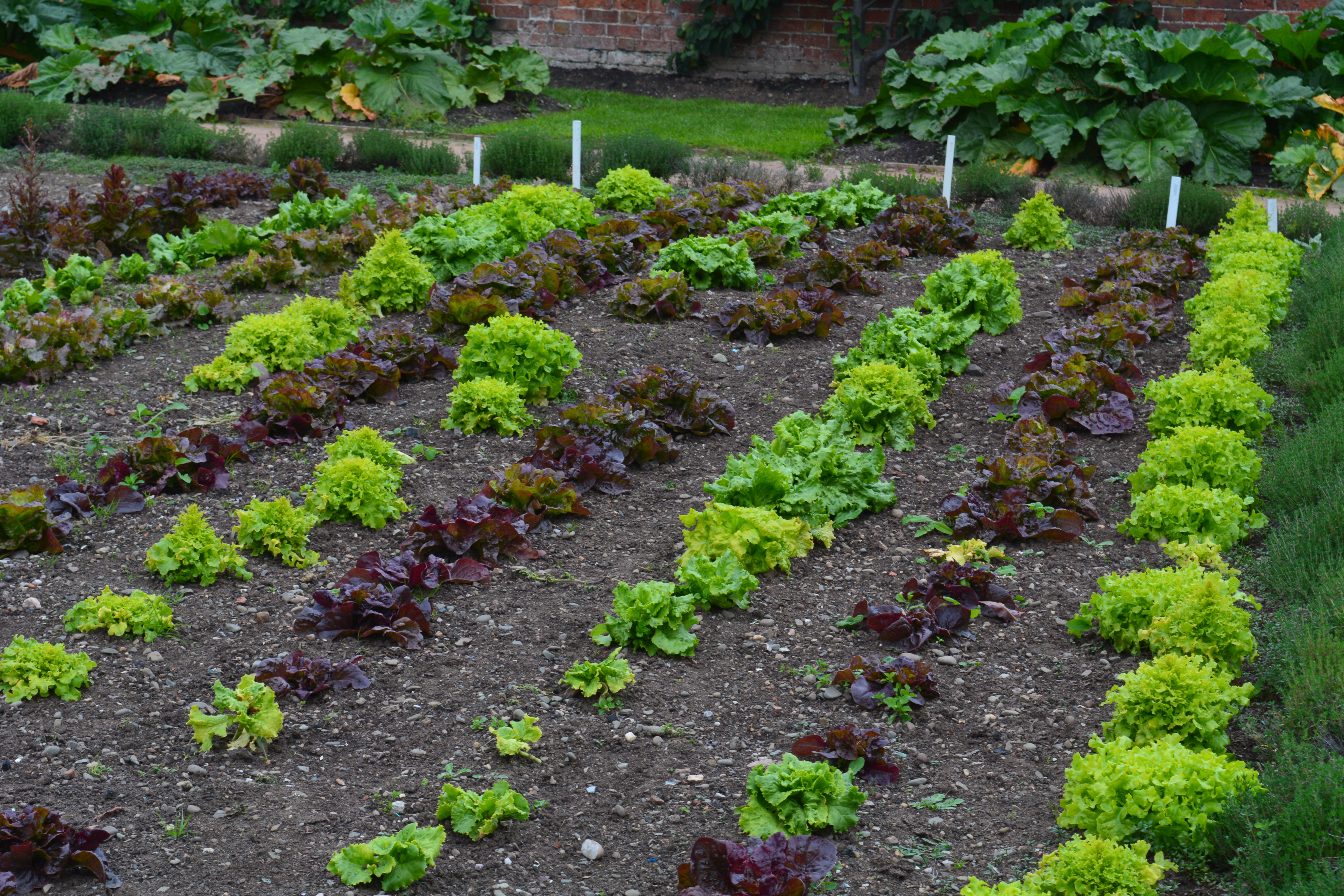
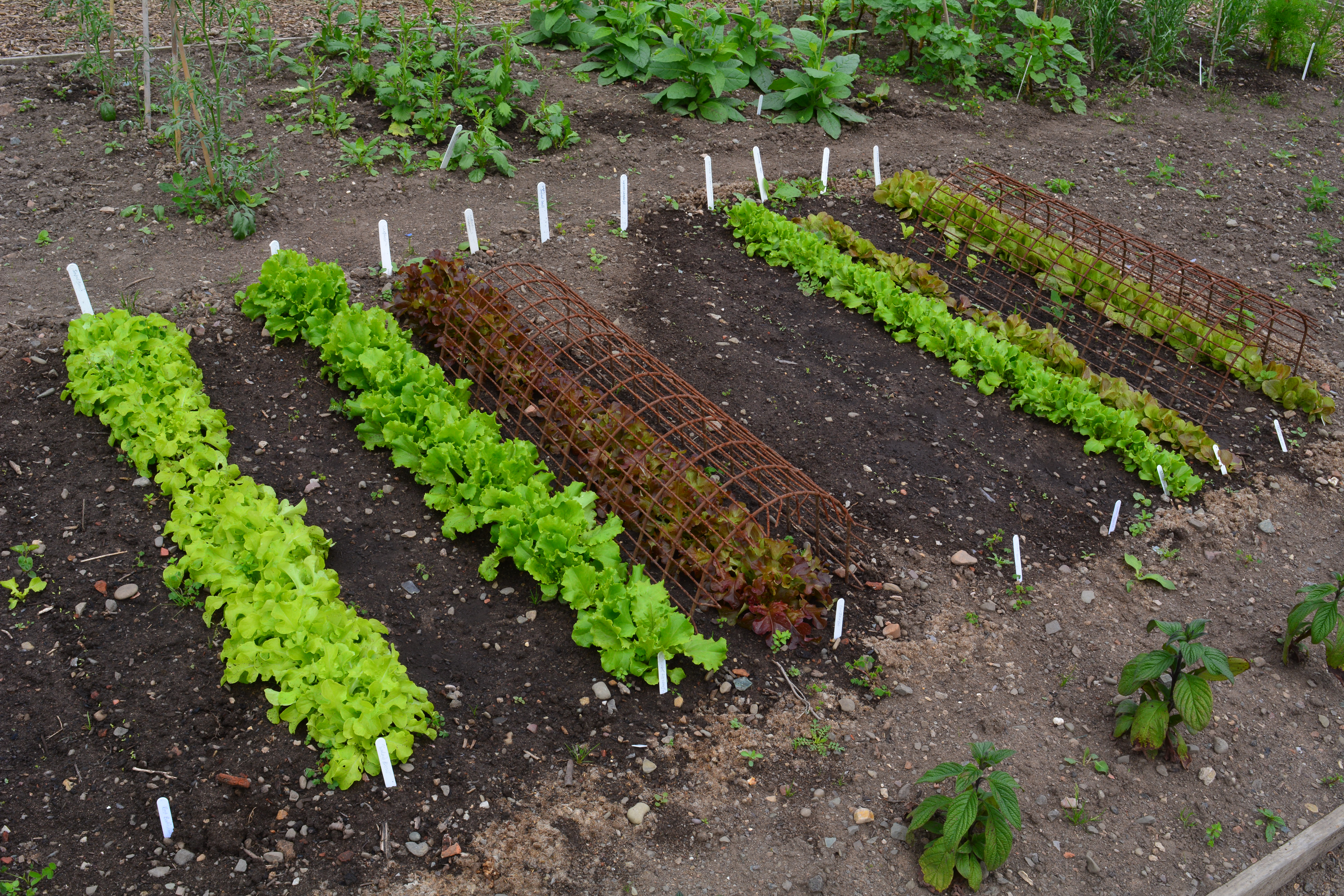
The vegetable and fruit crops were looking very fresh and healthy and the staff and volunteers were busy weeding and thinning out the rows of crops.
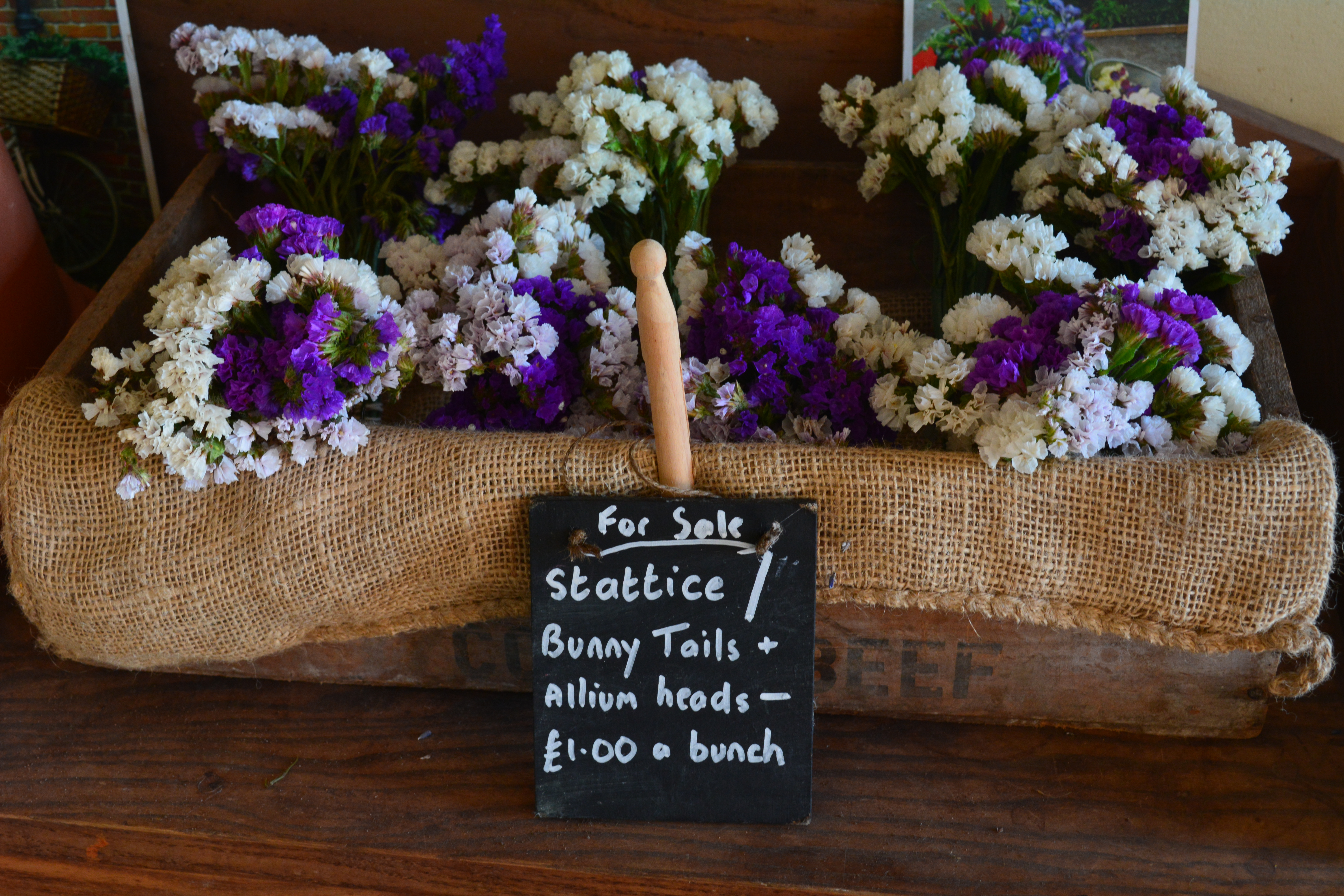
The most colourful crop of all though was the cut flower section where row upon row of flowers grown to display in the hall or for sale to visitors added stripes of colour to the walled garden.
Wandering through the gateway in the brick wall separating the two sections of the walled garden colour was everywhere we looked whatever direction we glanced in.
So the next visit we will be making for a wander around Attingham Park will be in October when Autumn will be making an appearance.
Here we are back at Attingham Park for another wander, this time to see what is going on in the walled garden and woodland pleasure gardens in July.
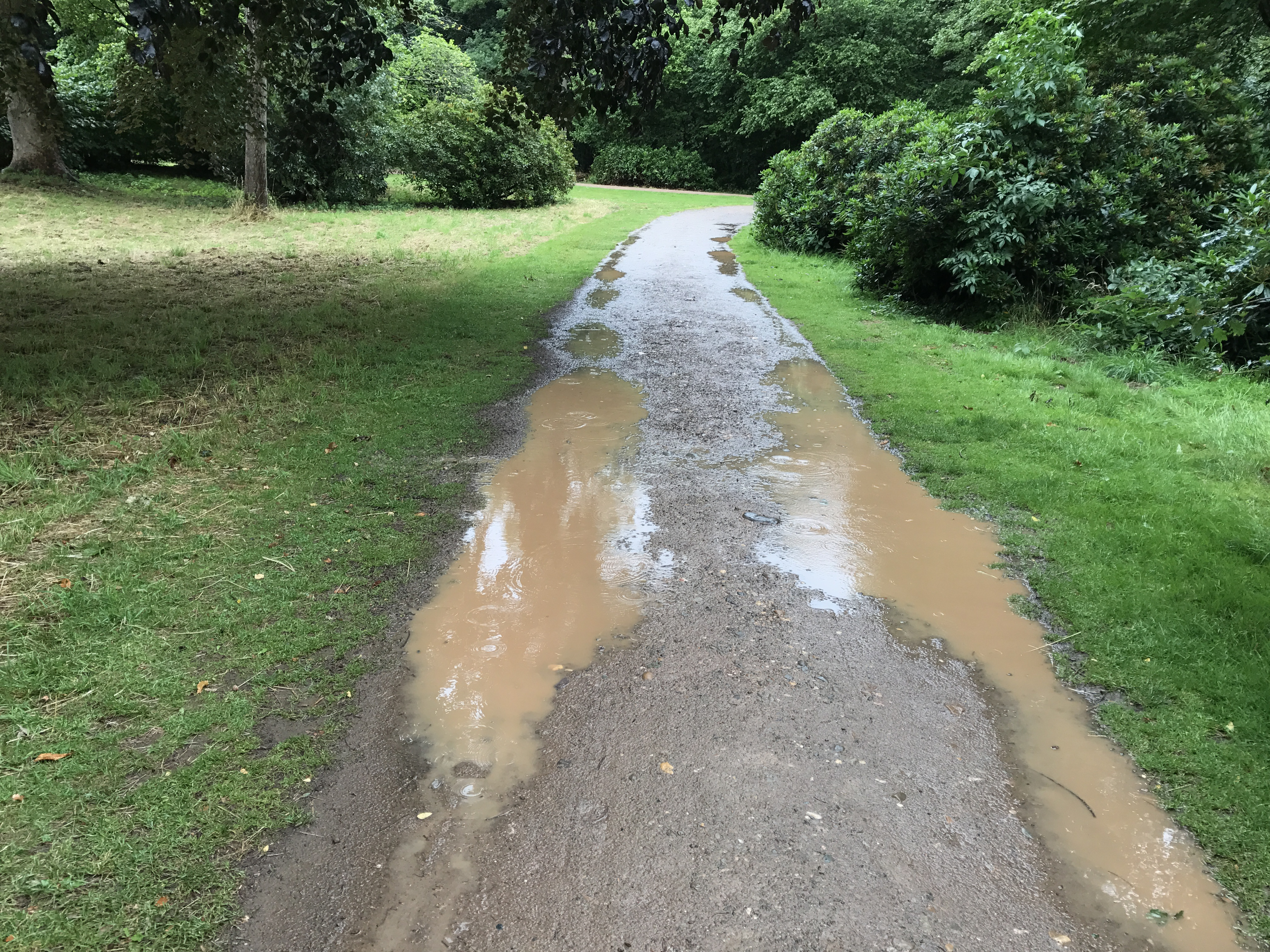
We arrived in the rain and carried on regardless. Foliage was glossy with moisture because of the steady drizzle, and large puddles had formed on the path.
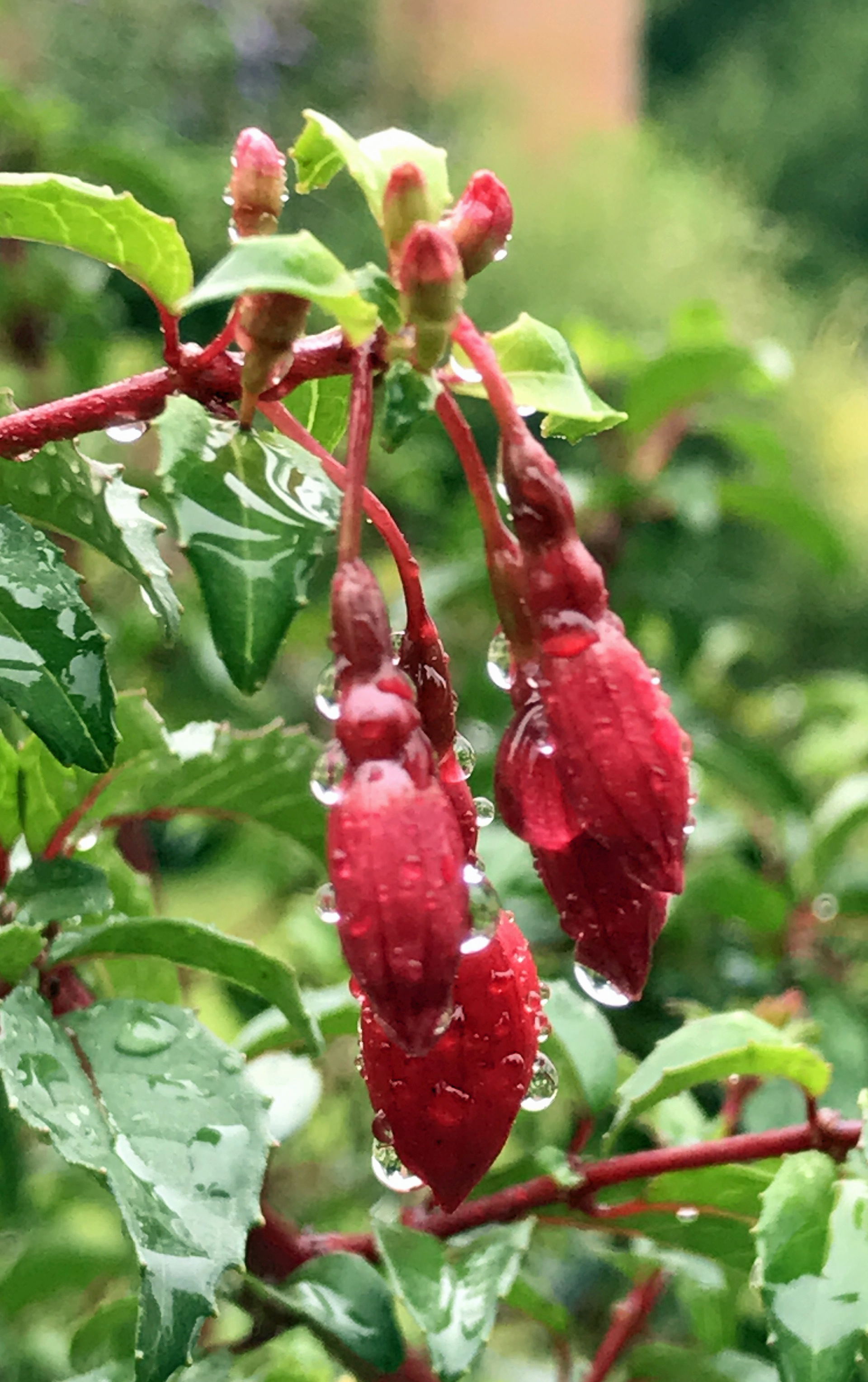
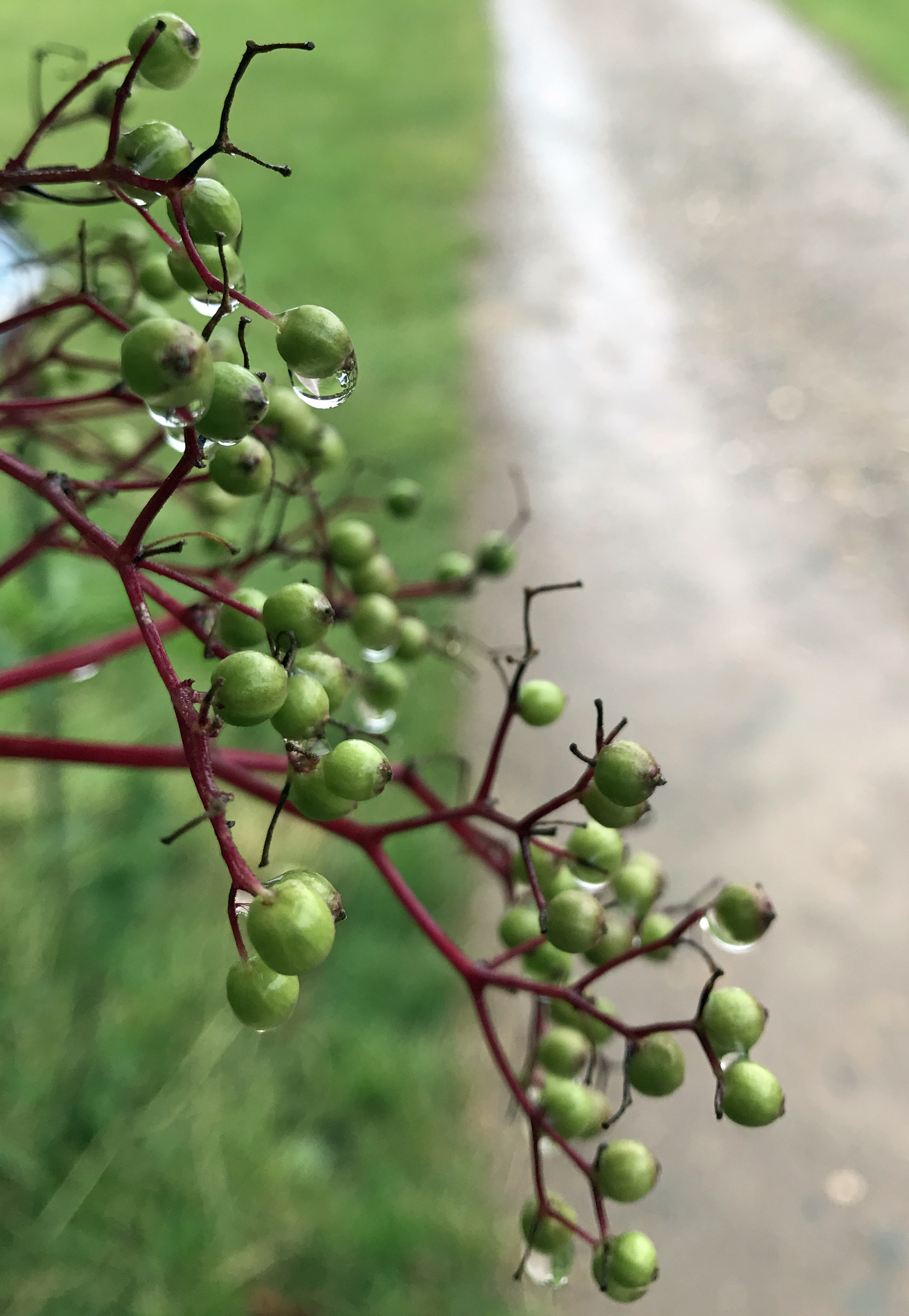
The gardener’s cottage garden gave a little colourful cheer to the day, and water droplets hung on flowers and berries. The heritage rare breed cattle in the field at the start of the track ignored the drizzle and continued tearing at the grass heads down.
The walled garden gave protection and the day began to feel a little warmer as the rain stopped.
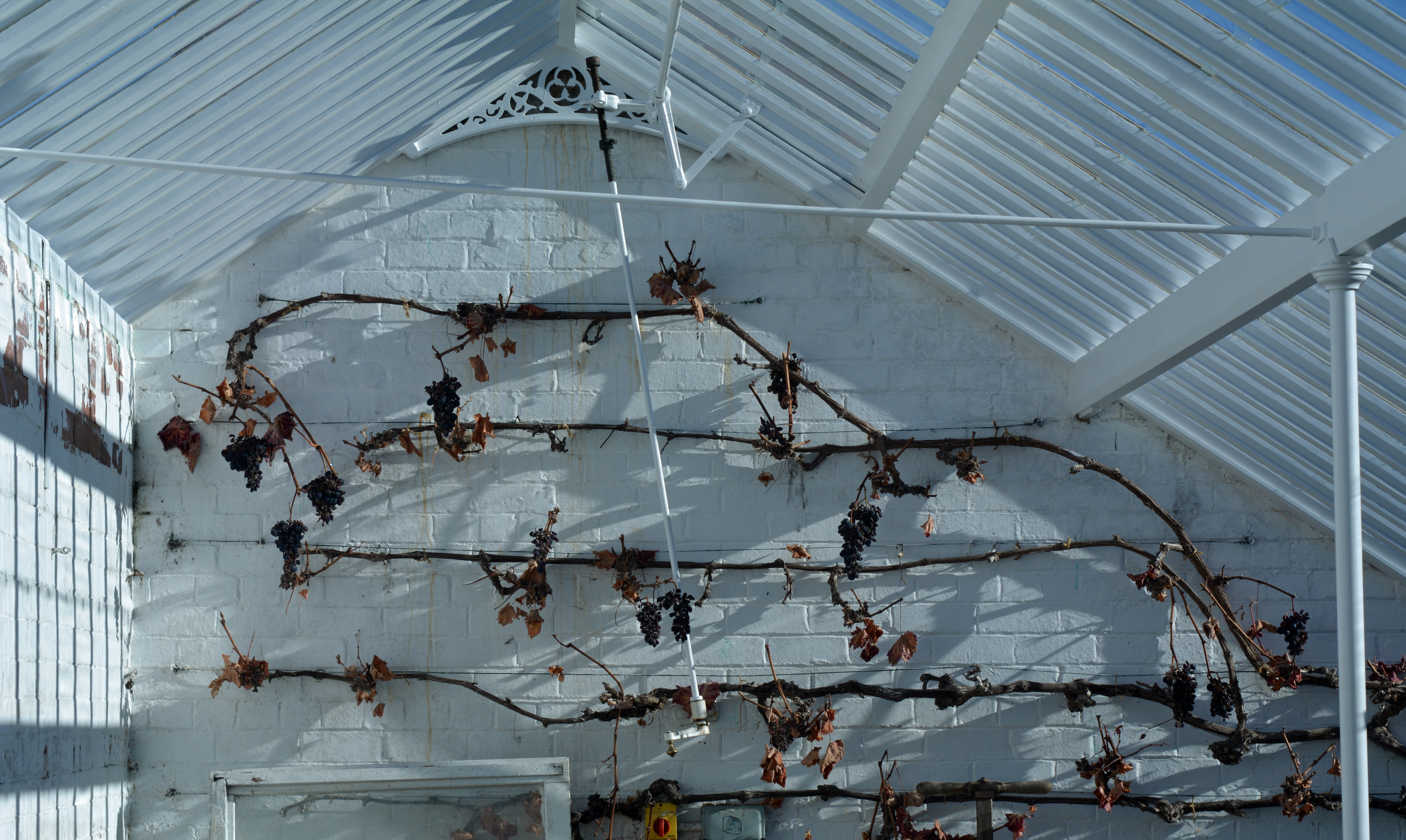
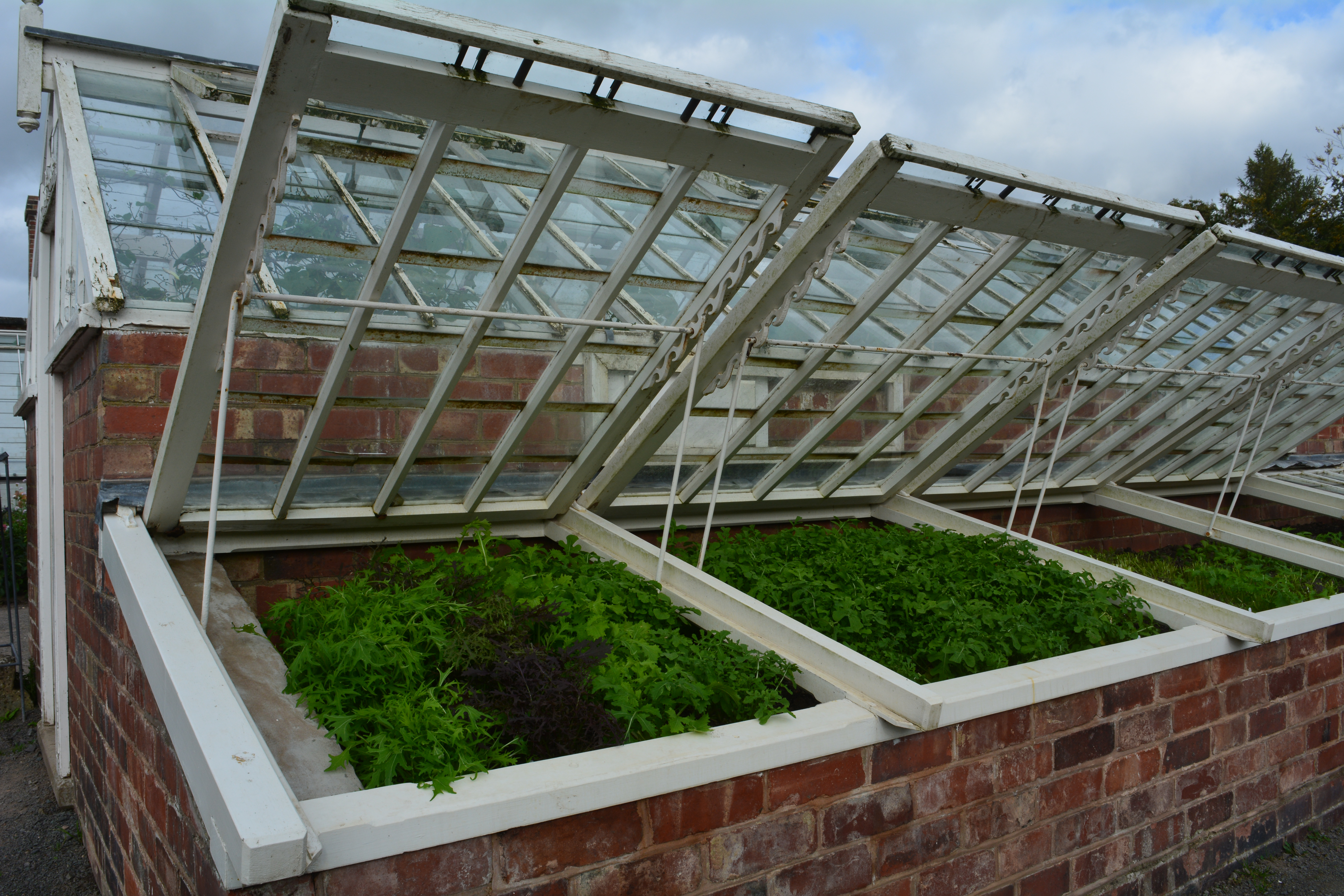
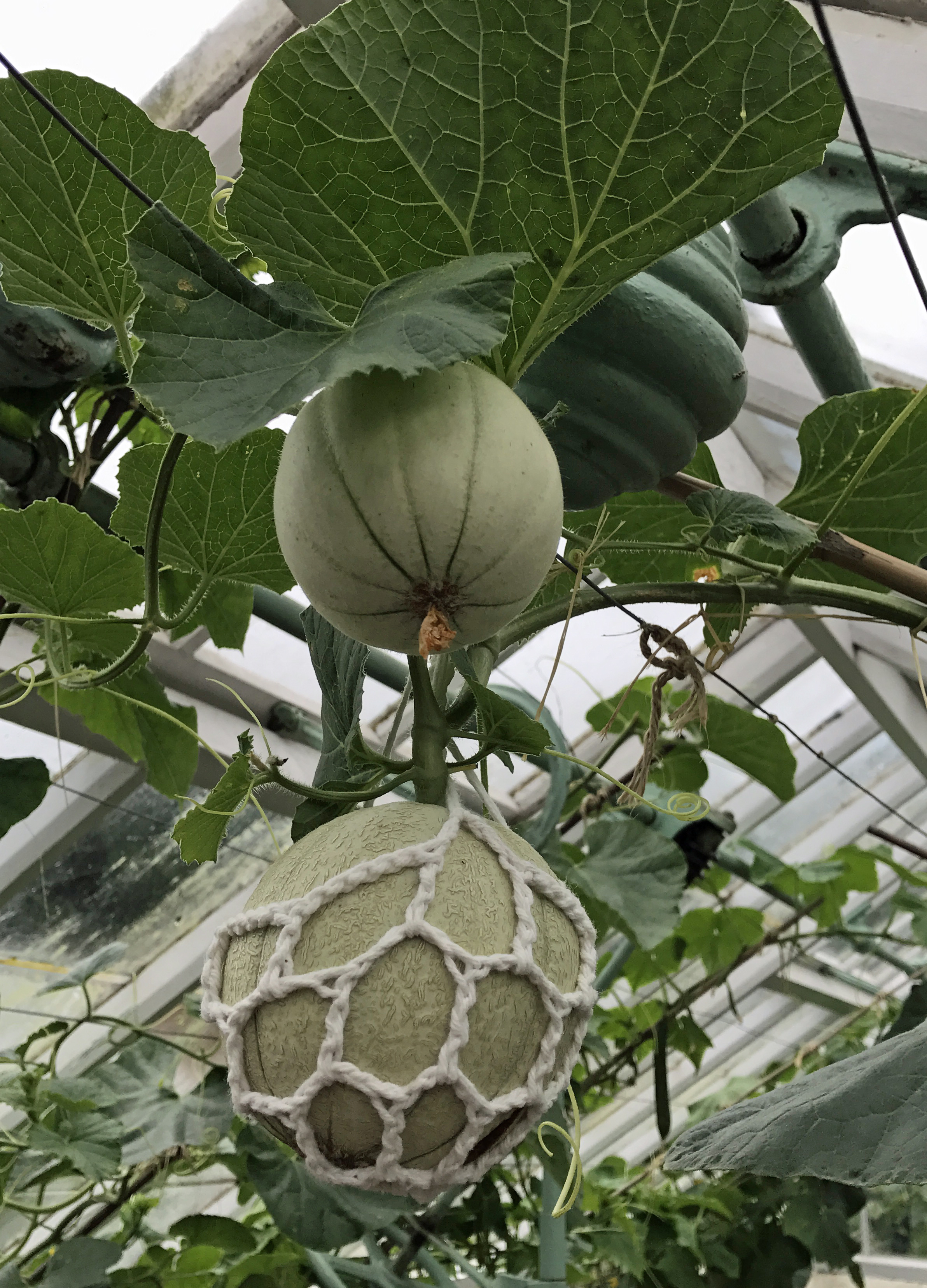
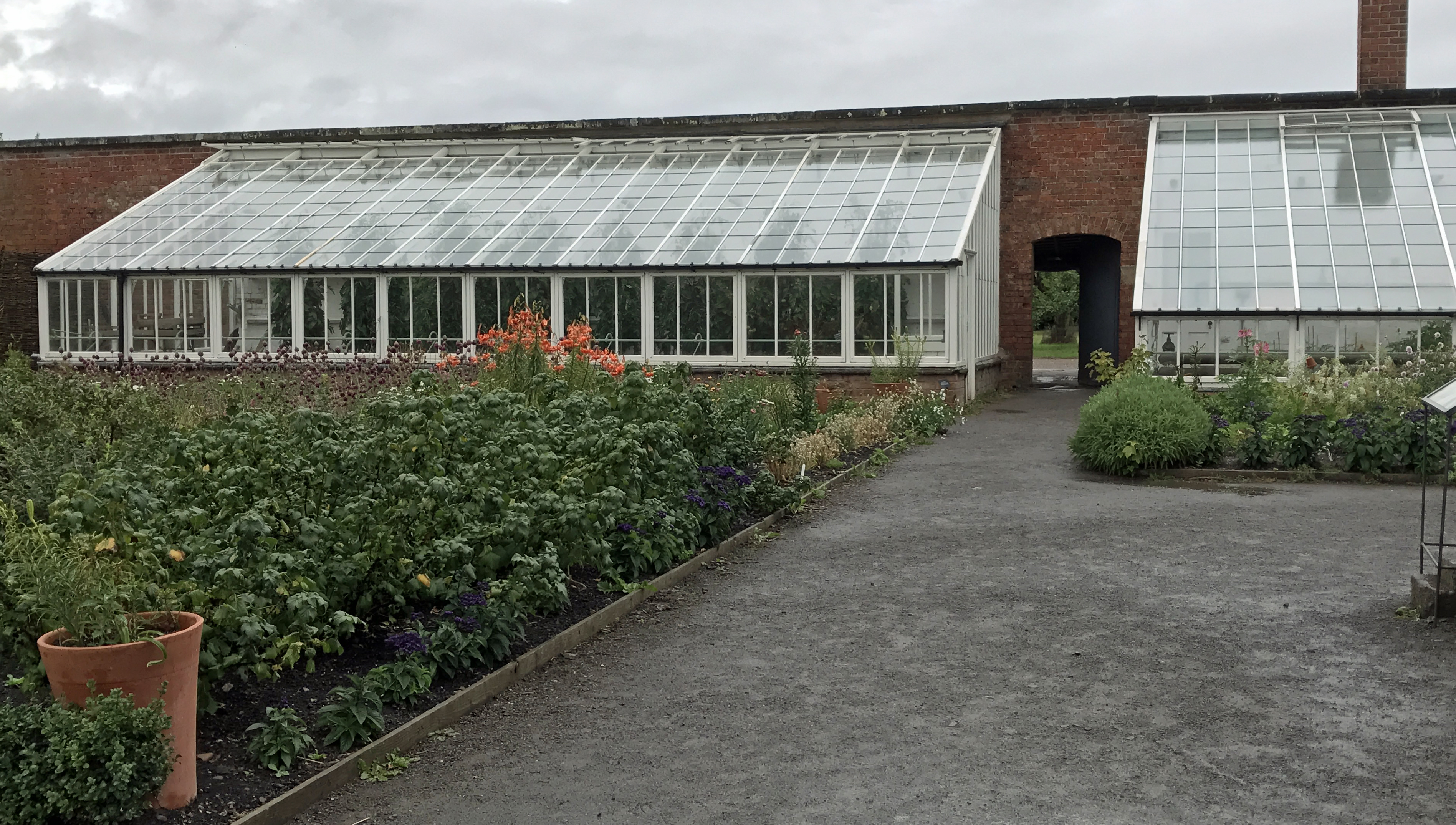
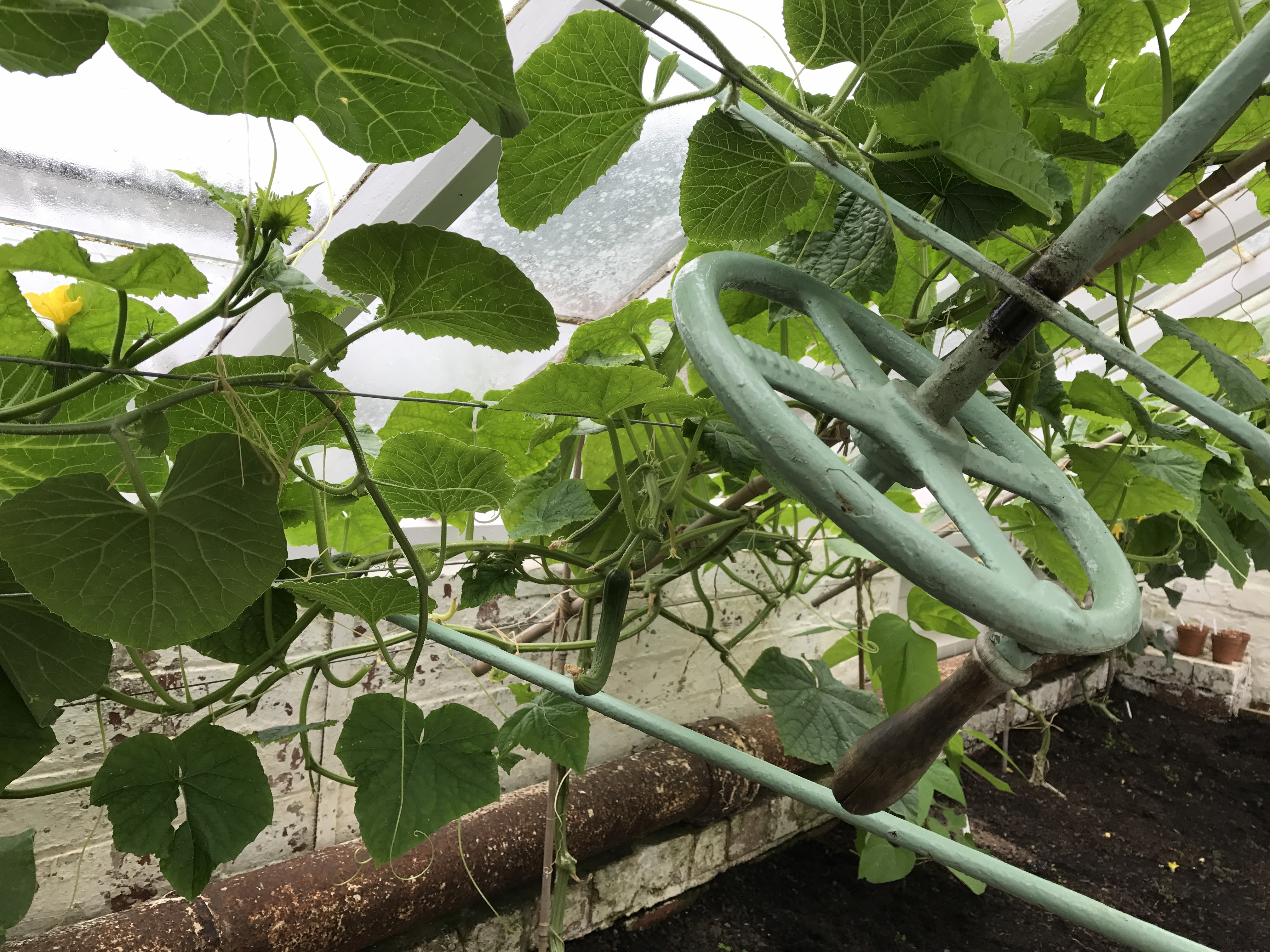
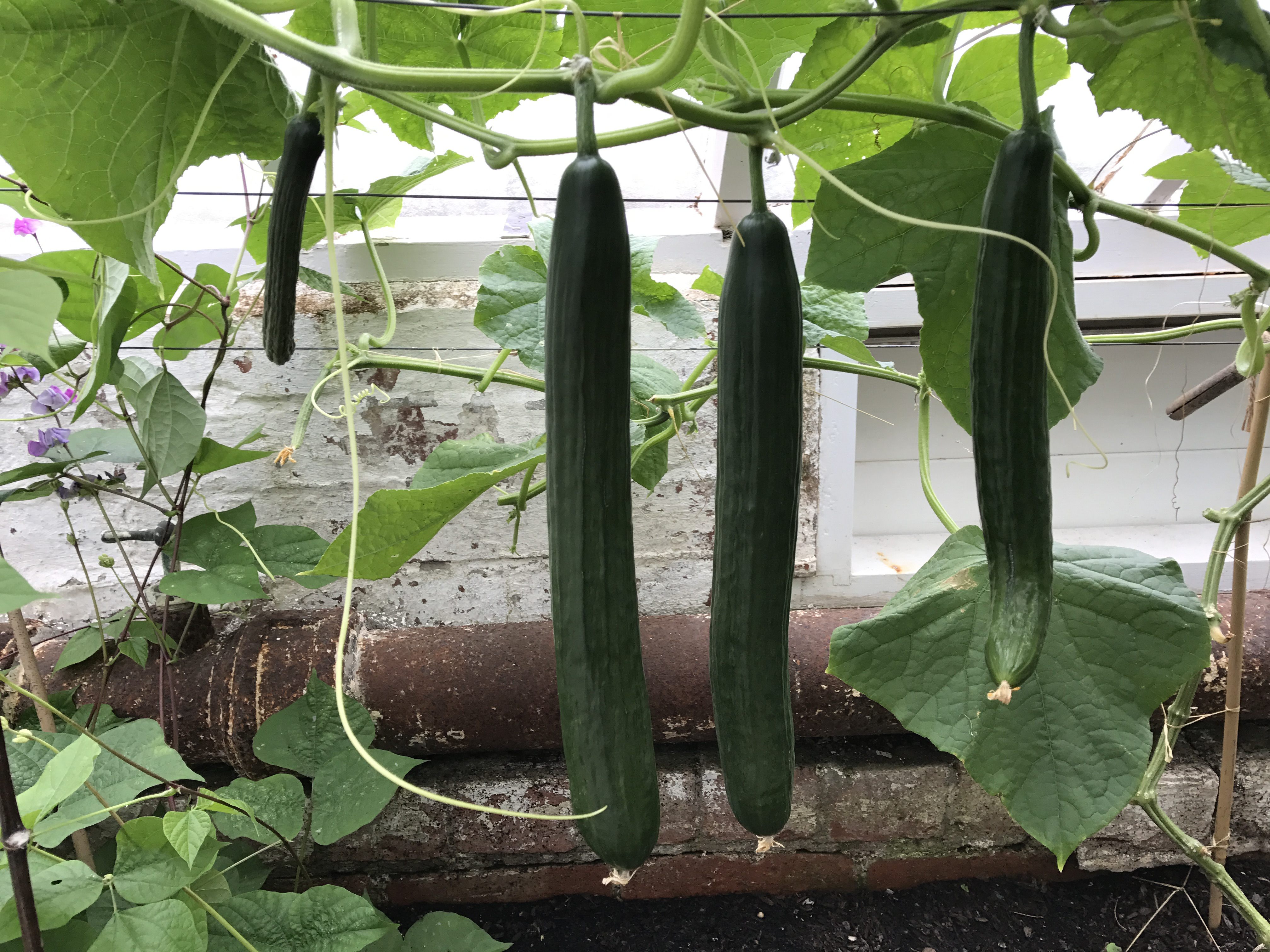
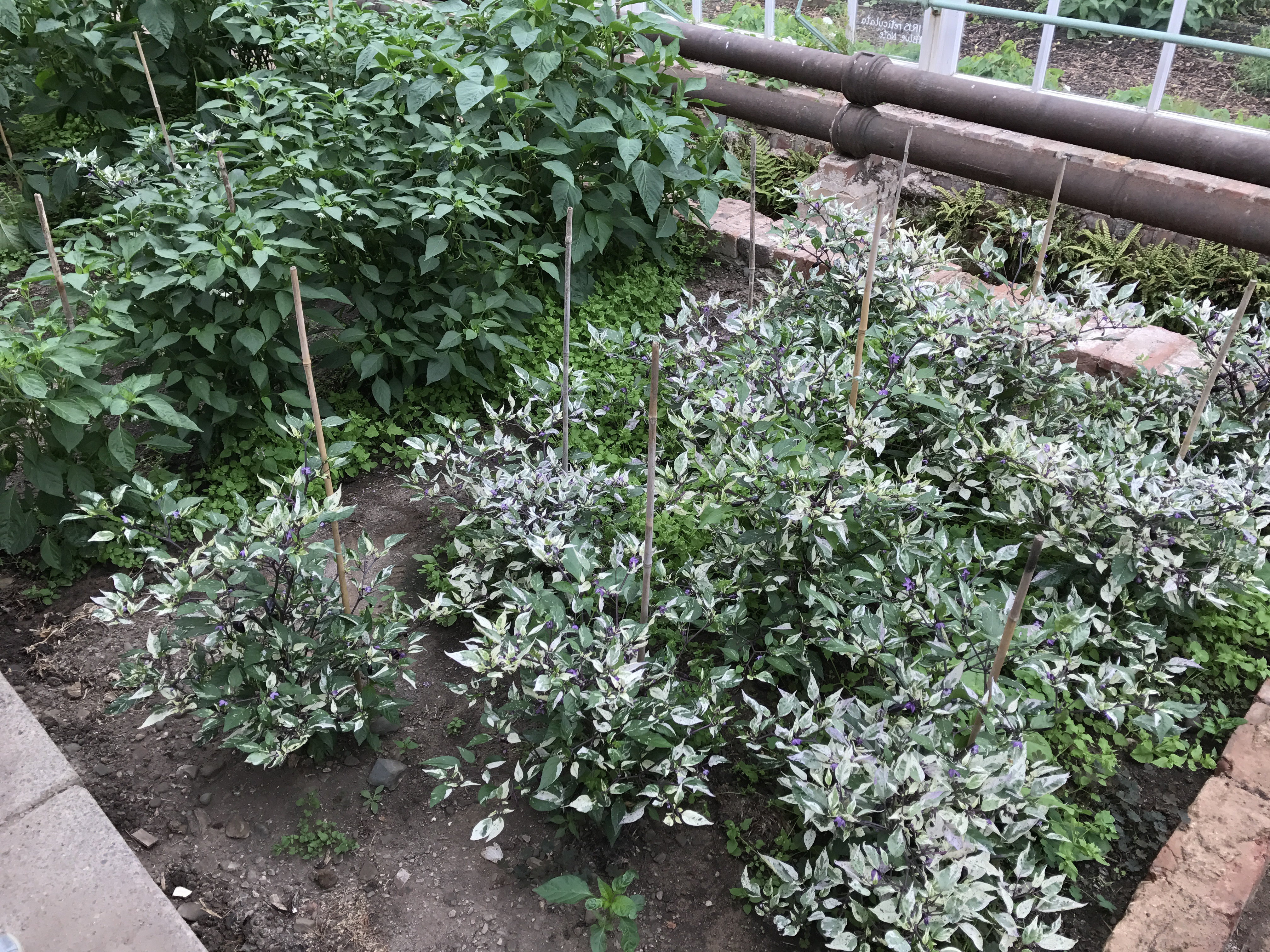
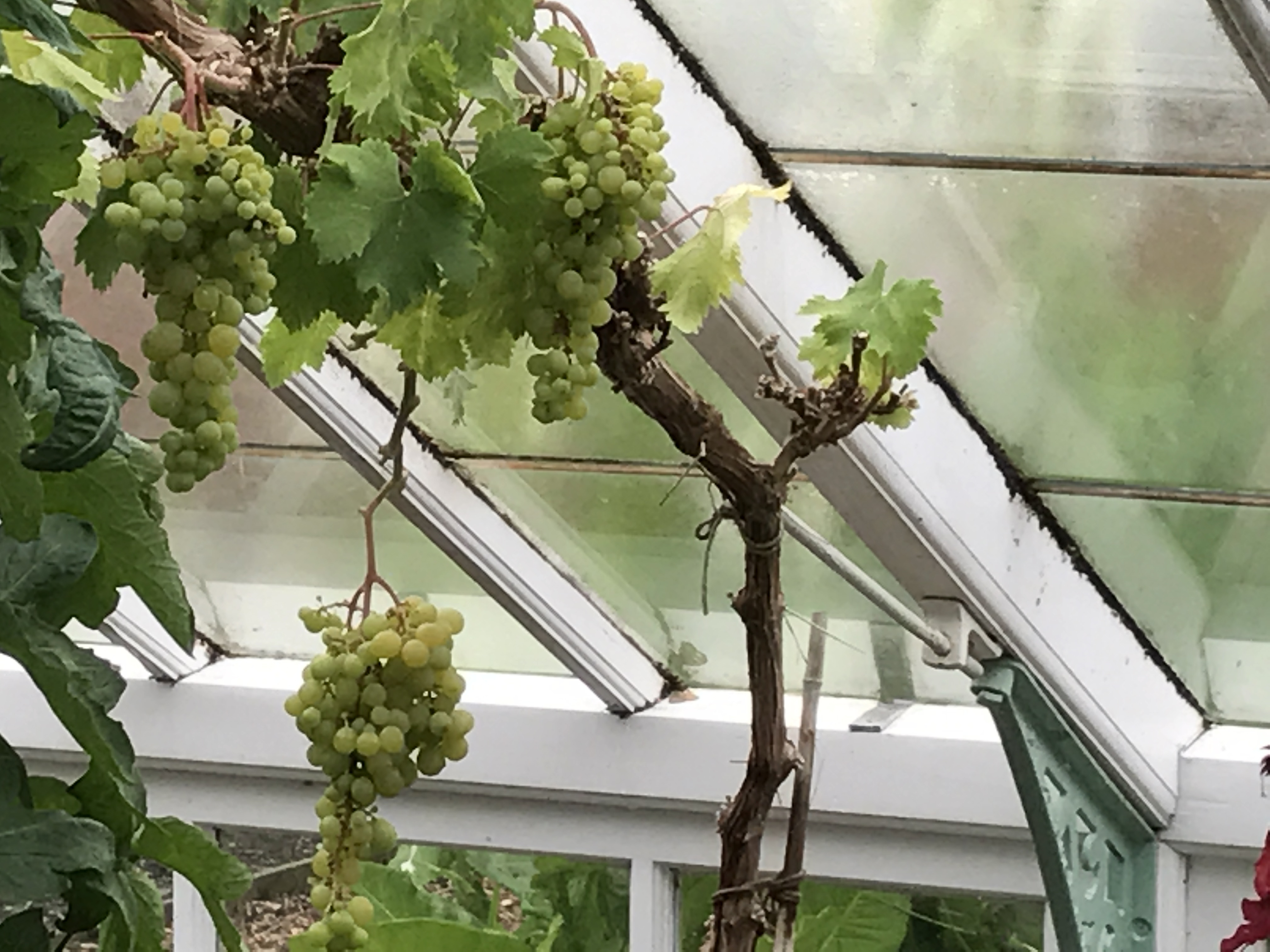
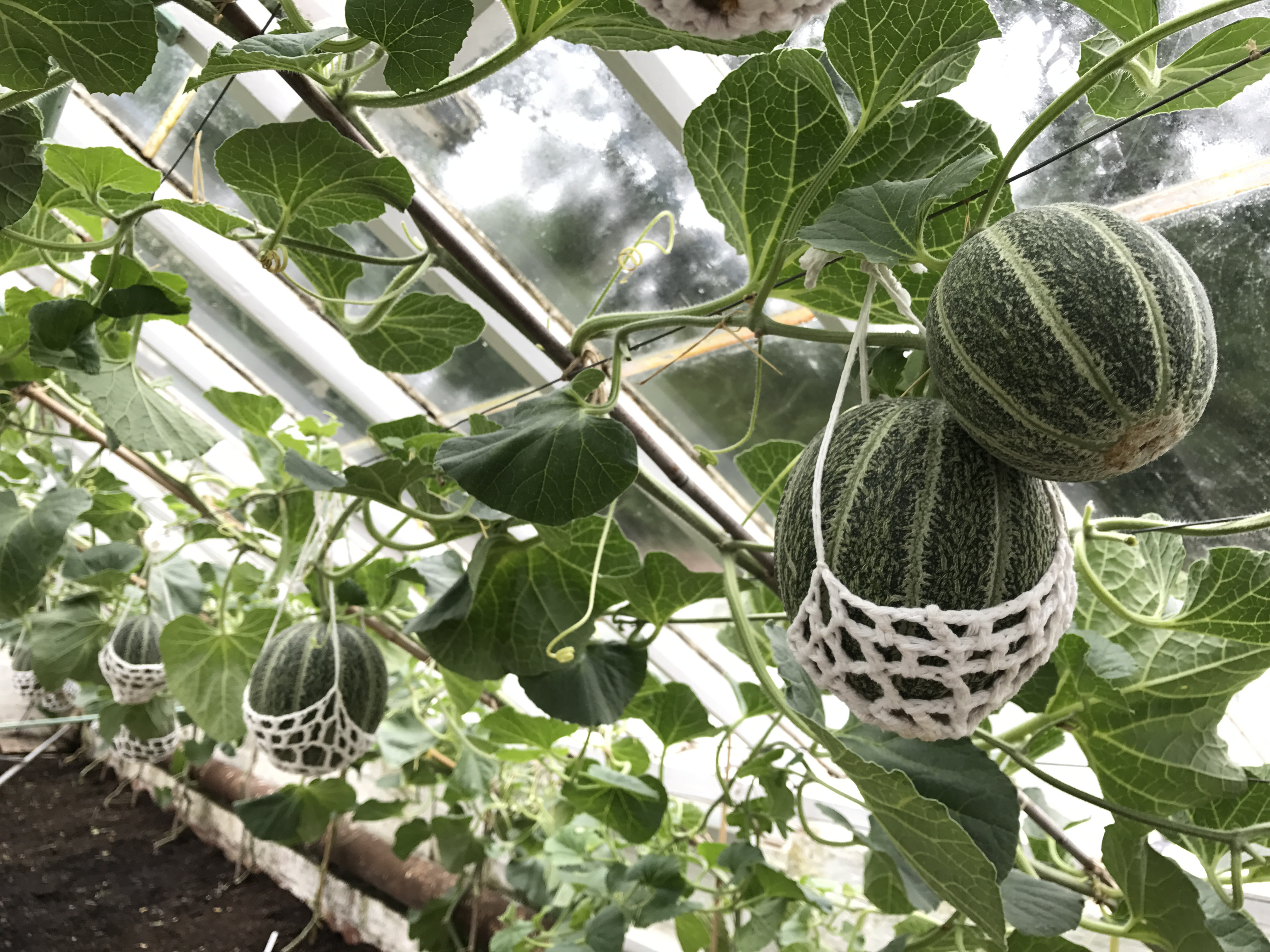
The beautiful, recently restored, vintage glasshouses are now becoming productive with melons, grapes, tomatoes, chillies and cucumbers.
We particularly liked the amazing textures of this melon and its subtle mix of greens.
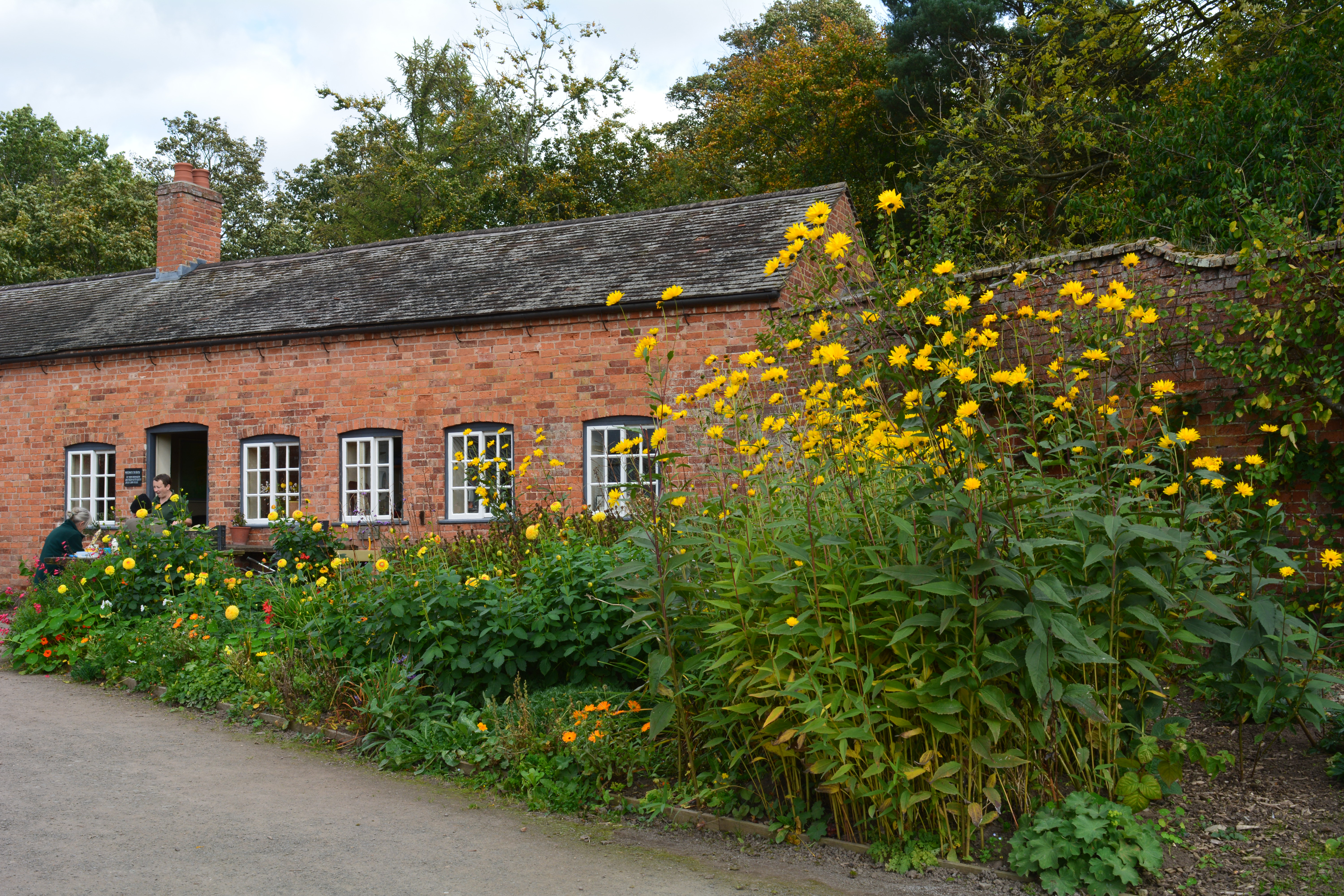
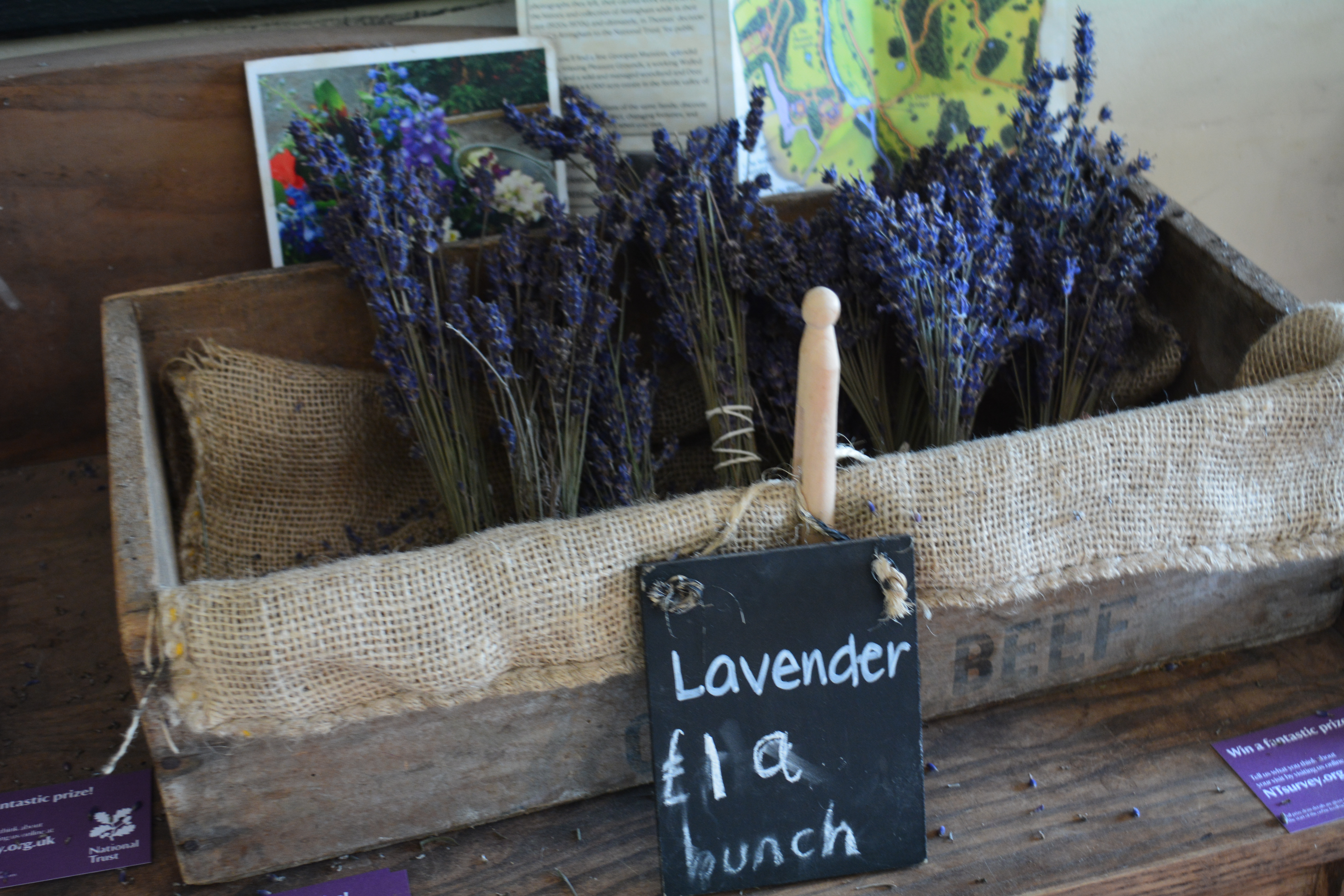
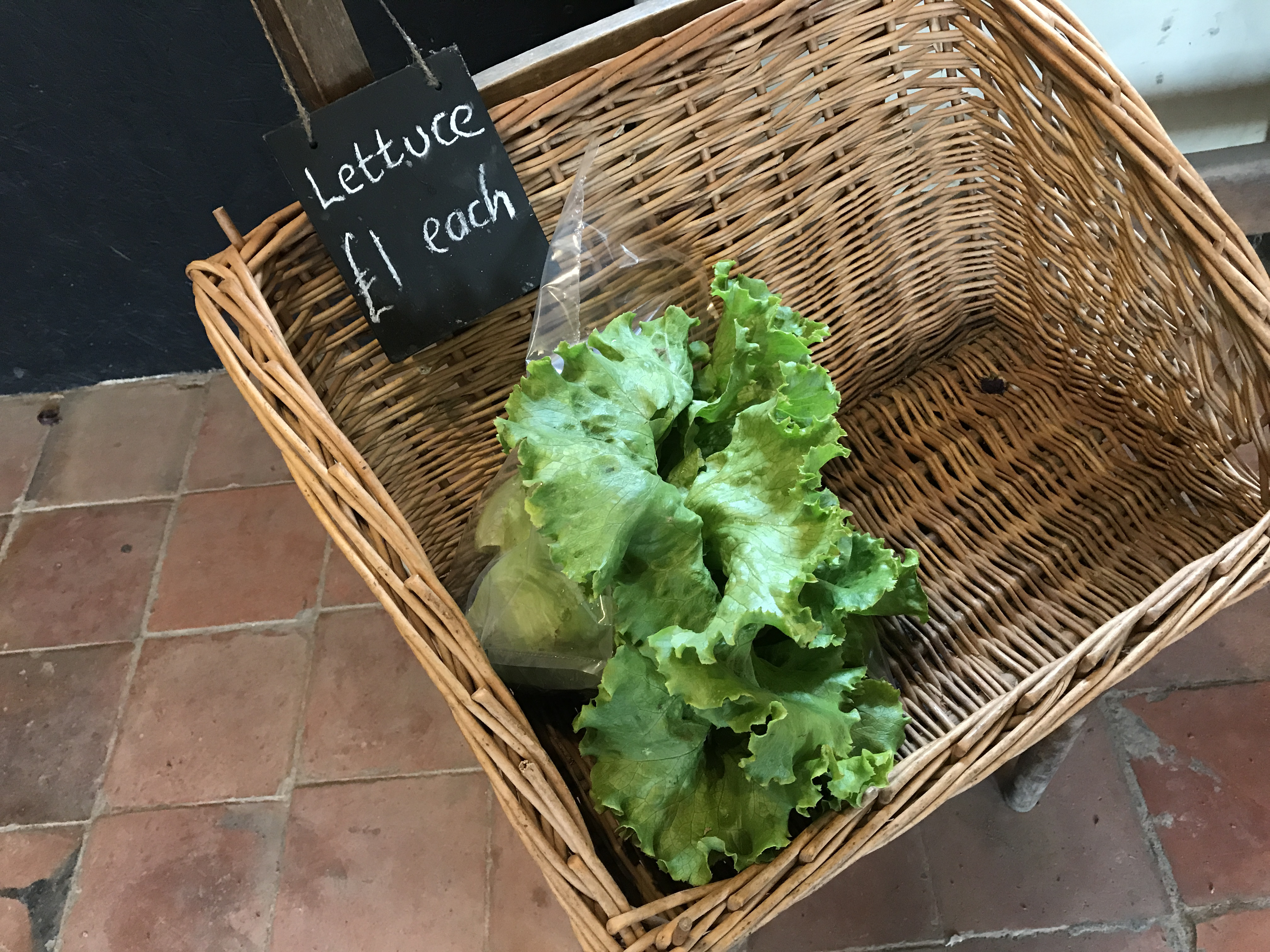
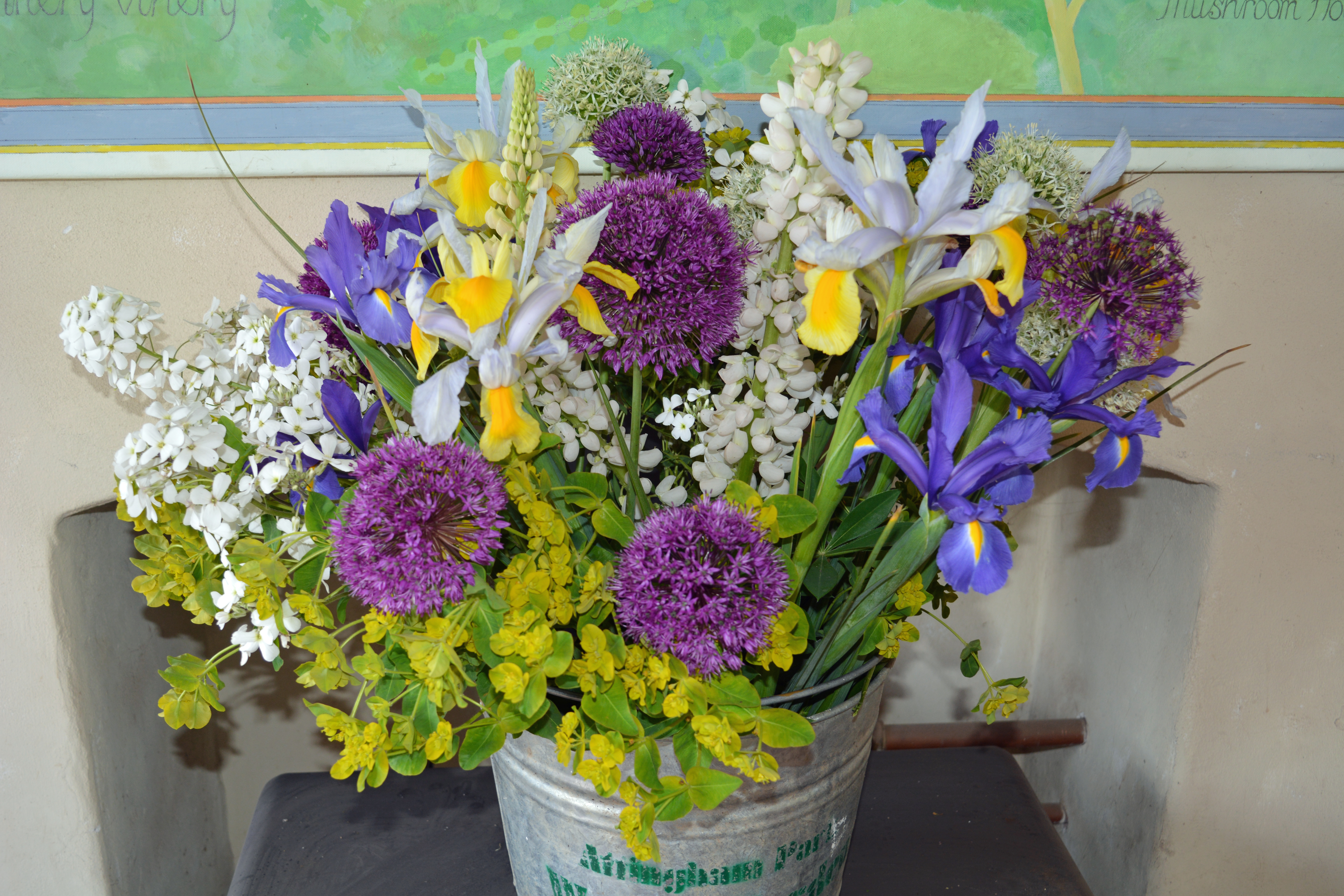
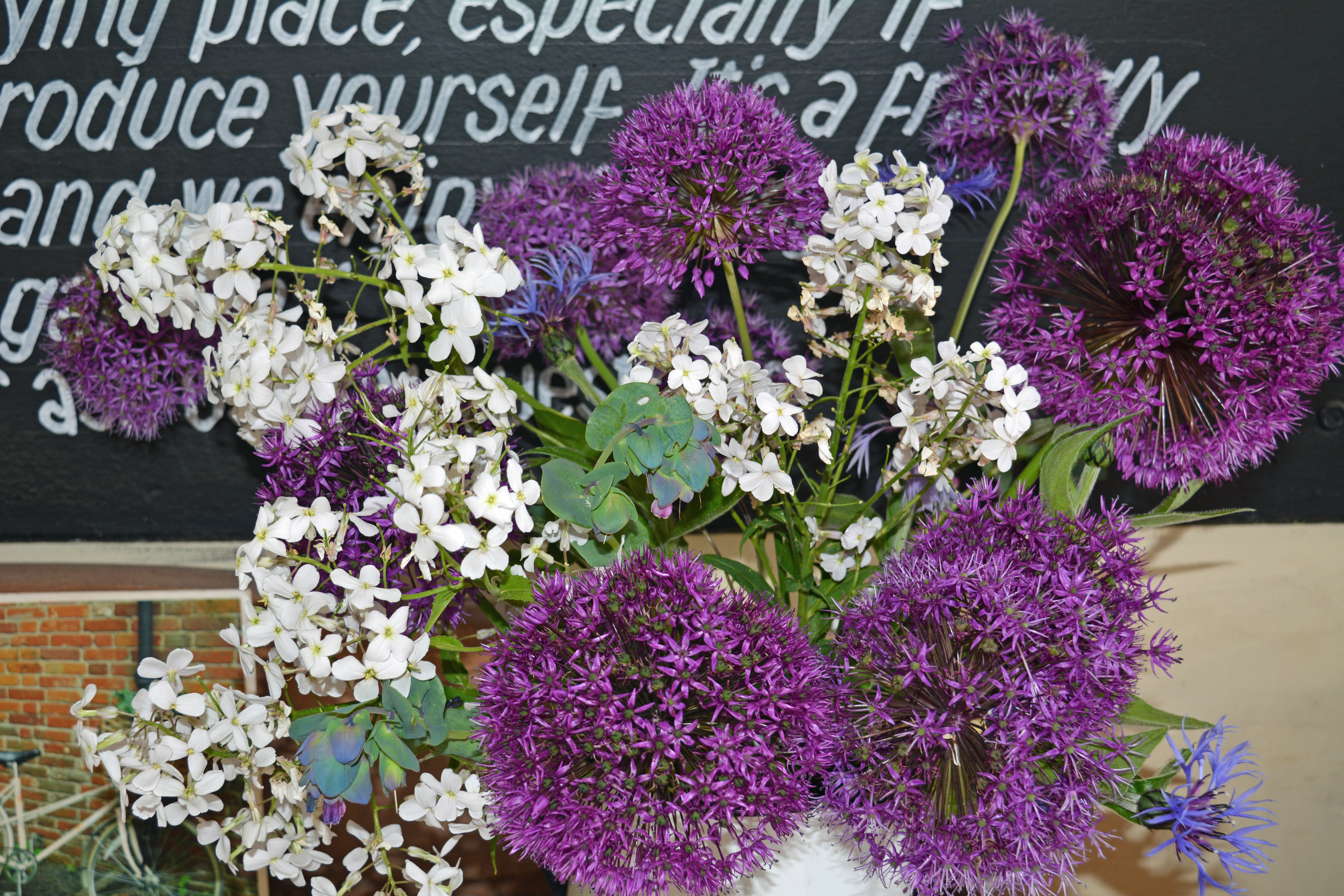
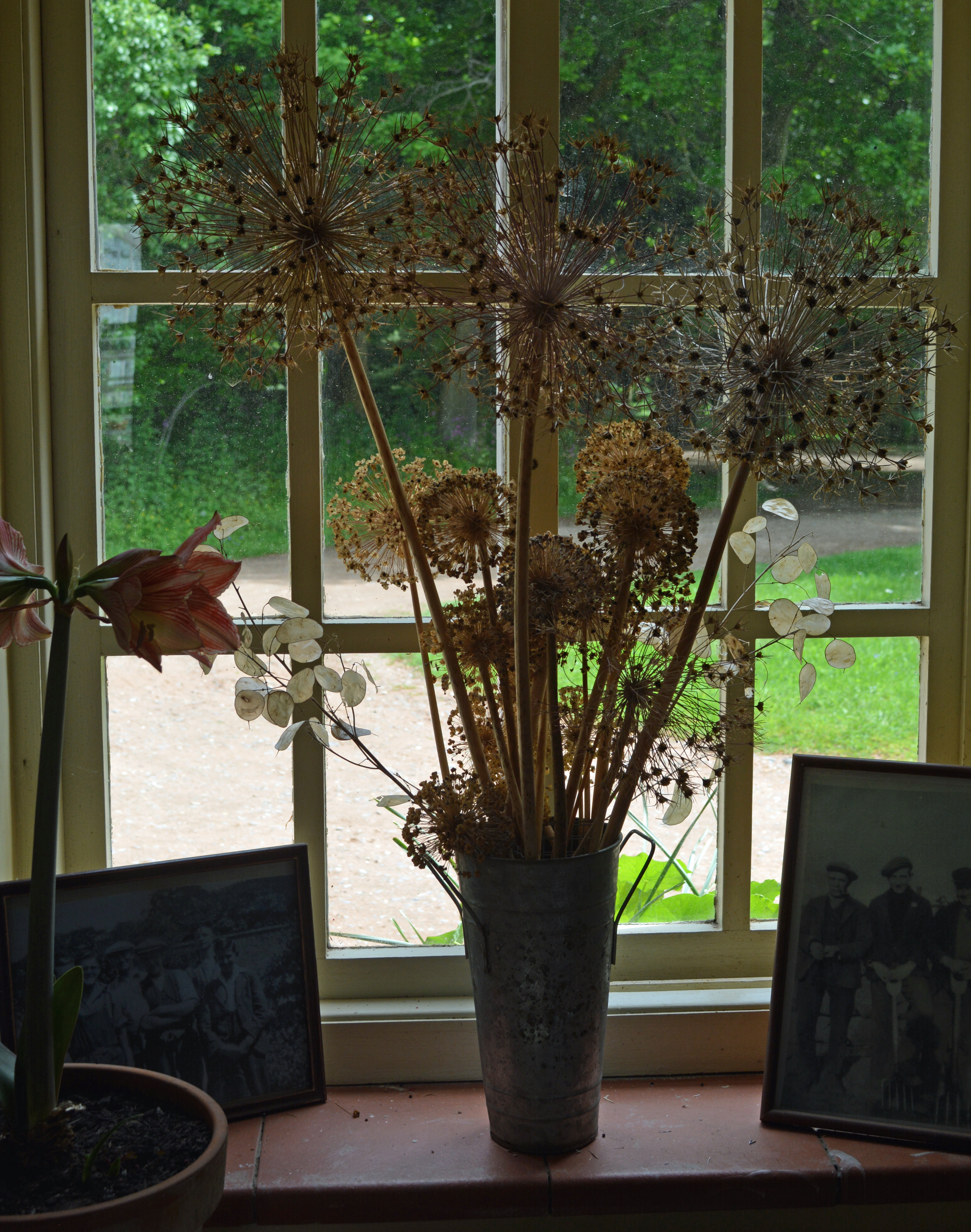
As we entered the gardeners’ bothy we could instantly enjoy the fresh uplifting aroma of bunches of freshly picked lavender, and the sight of simple flower arrangements and freshly harvested lettuces.
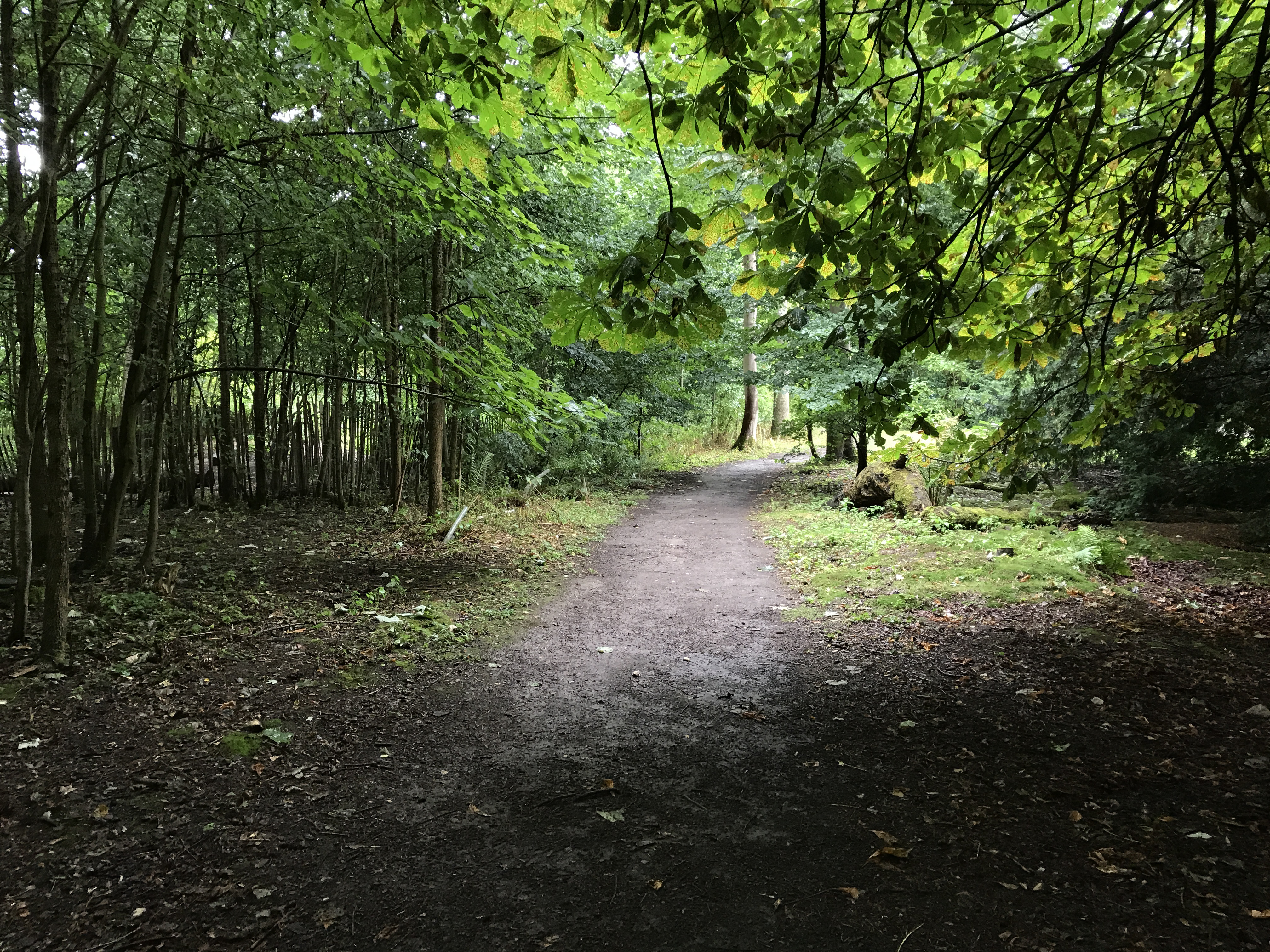
After taking in the sights, scents and sounds offered by the walled garden we continued on our wanders, following the One Mile Walk trail.
Come with us as we take you along this track in a gallery of photos. As usual click on the first and navigate with the arrows. We will return for another wander in August.
We are so lucky to live where we do in so many ways, not least of which is the number of excellent gardens we can visit within a day. Recently on a Sunday we found a garden open under the auspices of the National Garden Scheme, the same scheme that our garden is a part of, and this one at Hurdley Hall was just over a half hour drive away.
We parked up in a rough pasture field alongside a farm and trudged uphill to the garden itself entrance. We obtained our tickets and walked down the drive which fell steeply to the garden itself, but this did afford us excellent glimpses of what we could expect so our expectations were heightened. Apart from the garden encompassing the house there were meadows, a new orchard and woodland to explore so we were in for a busy afternoon.
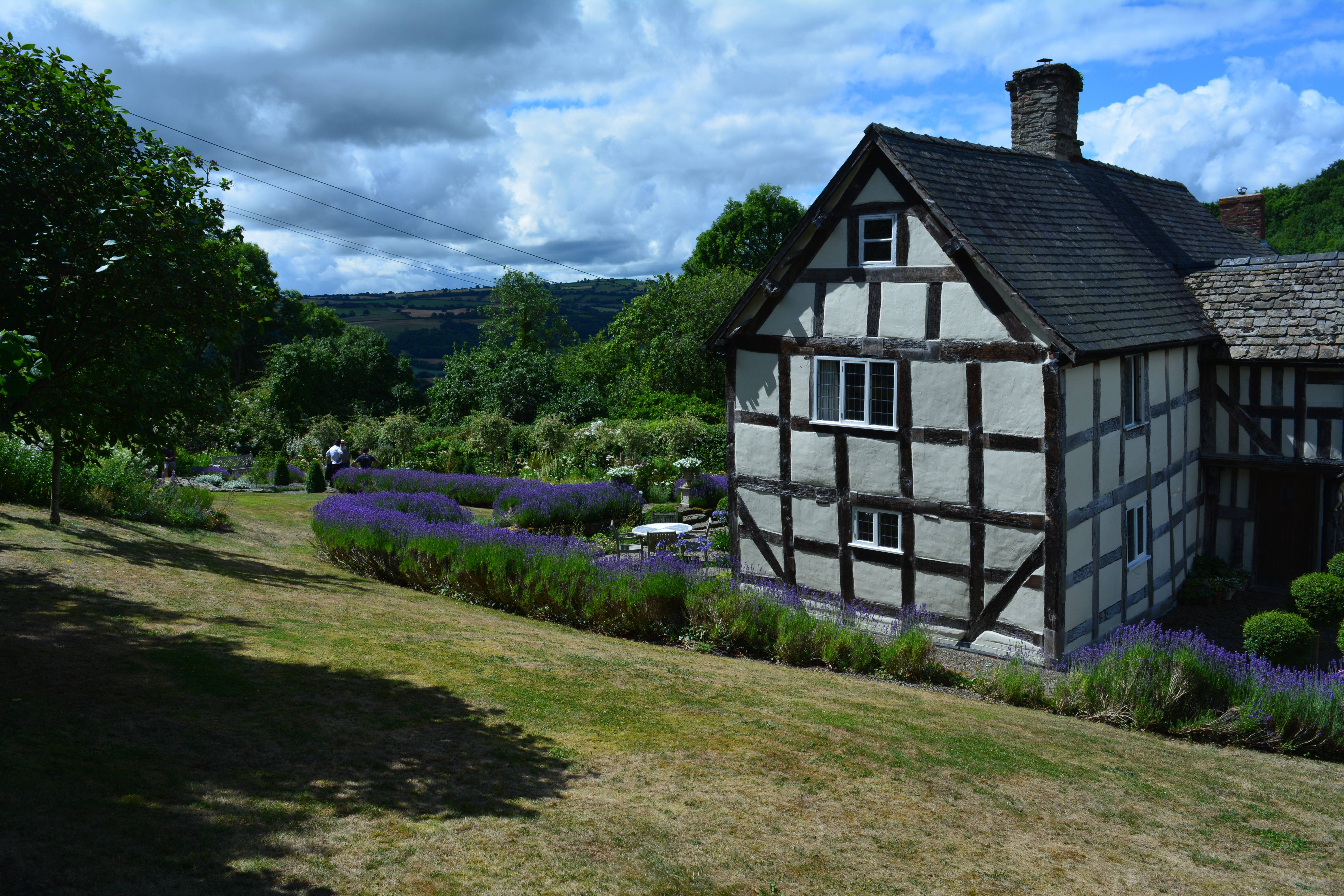
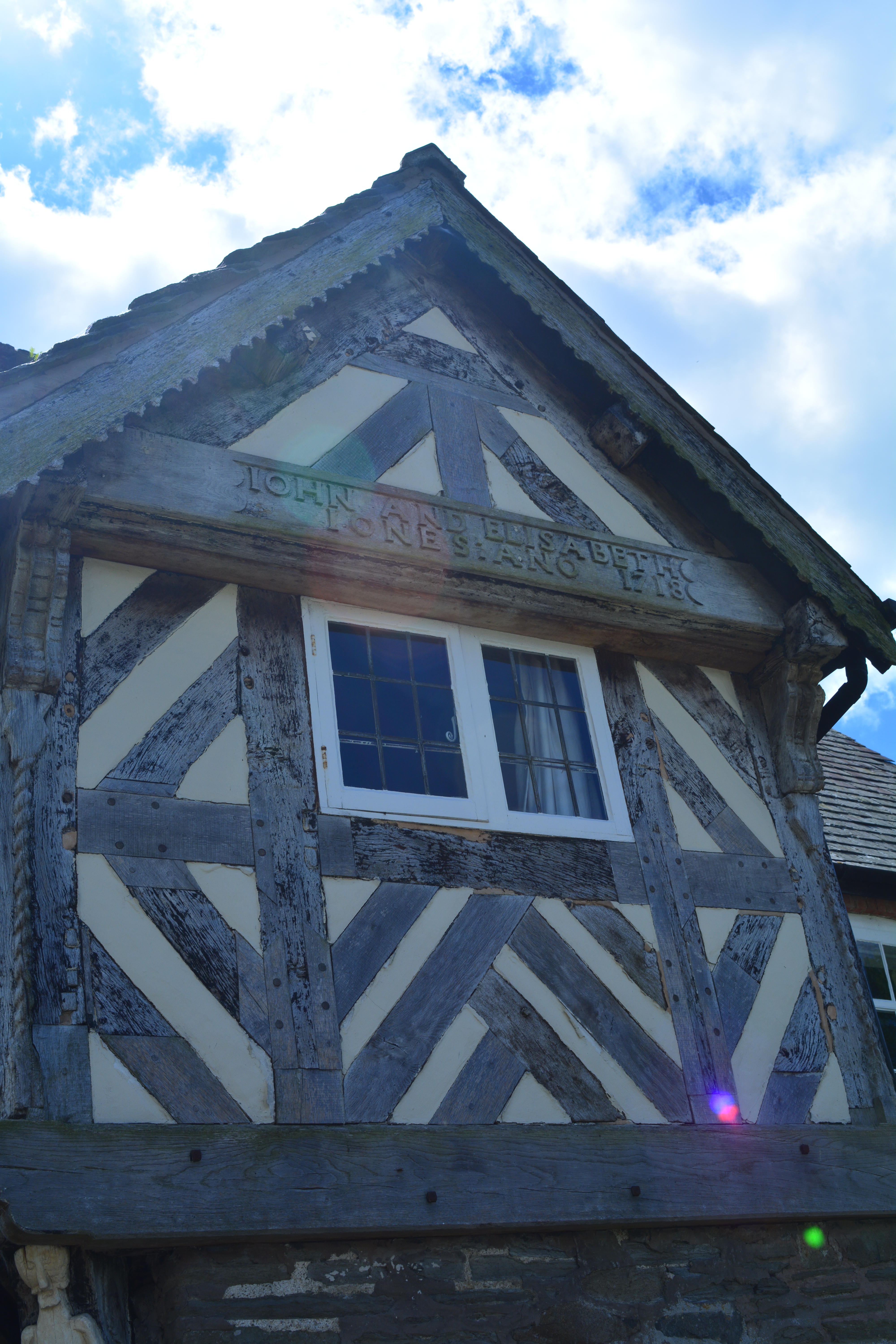
The house itself was first built in 1630 with additions made in 1718, 1820 and 2010. The garden was just 15 years old. The view from the house and garden was of a wooded valley and a steep hill which is a nature reserve.
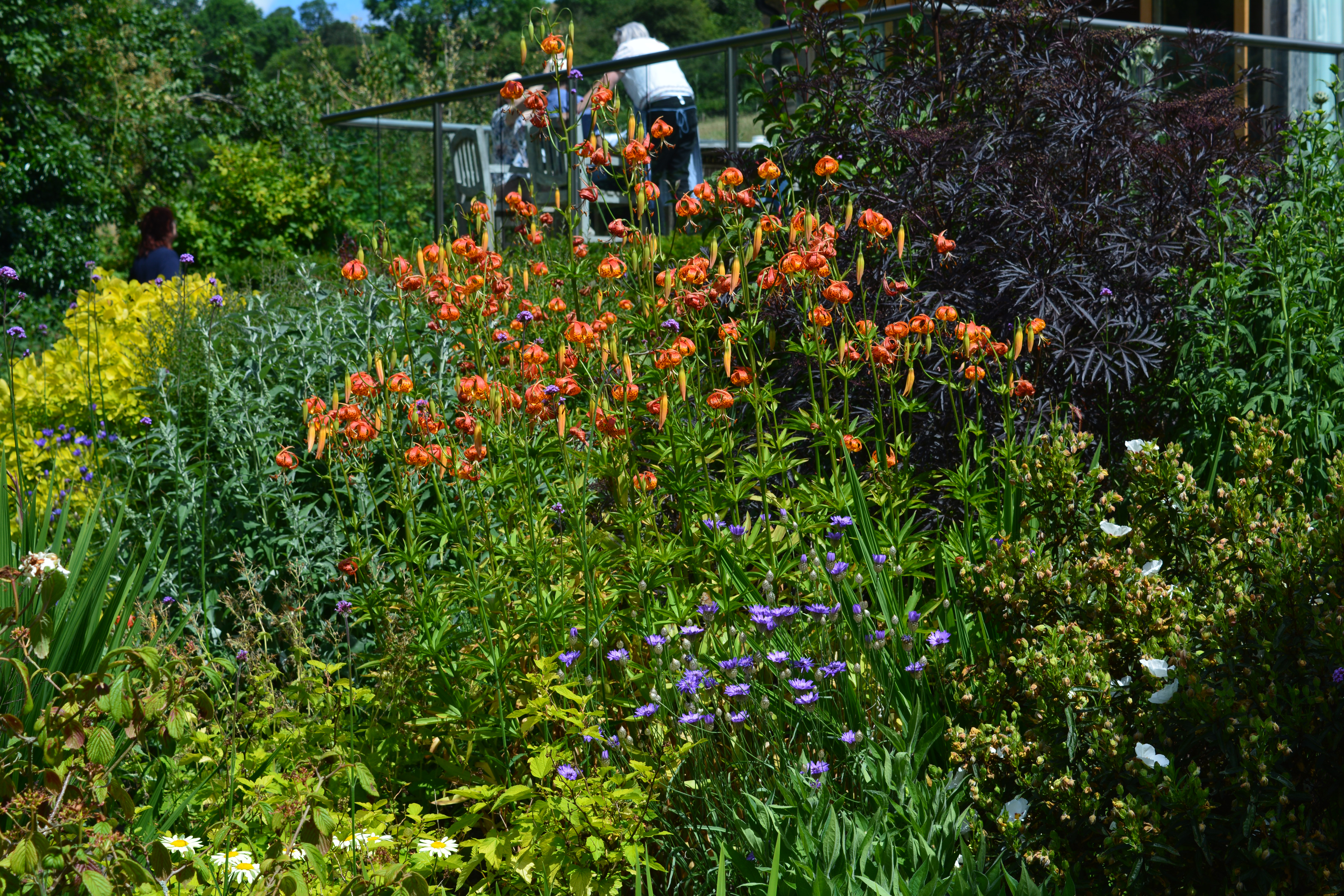
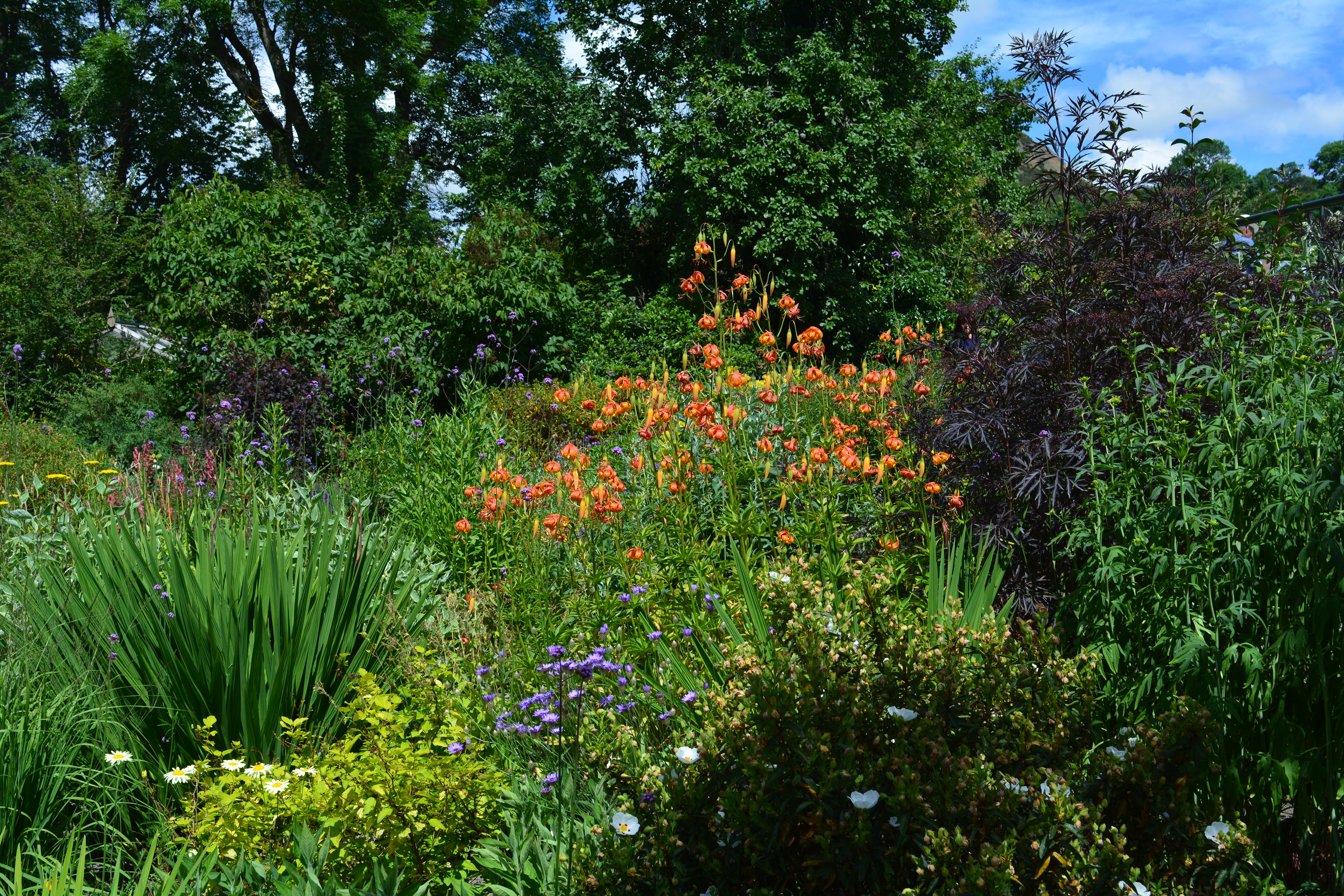
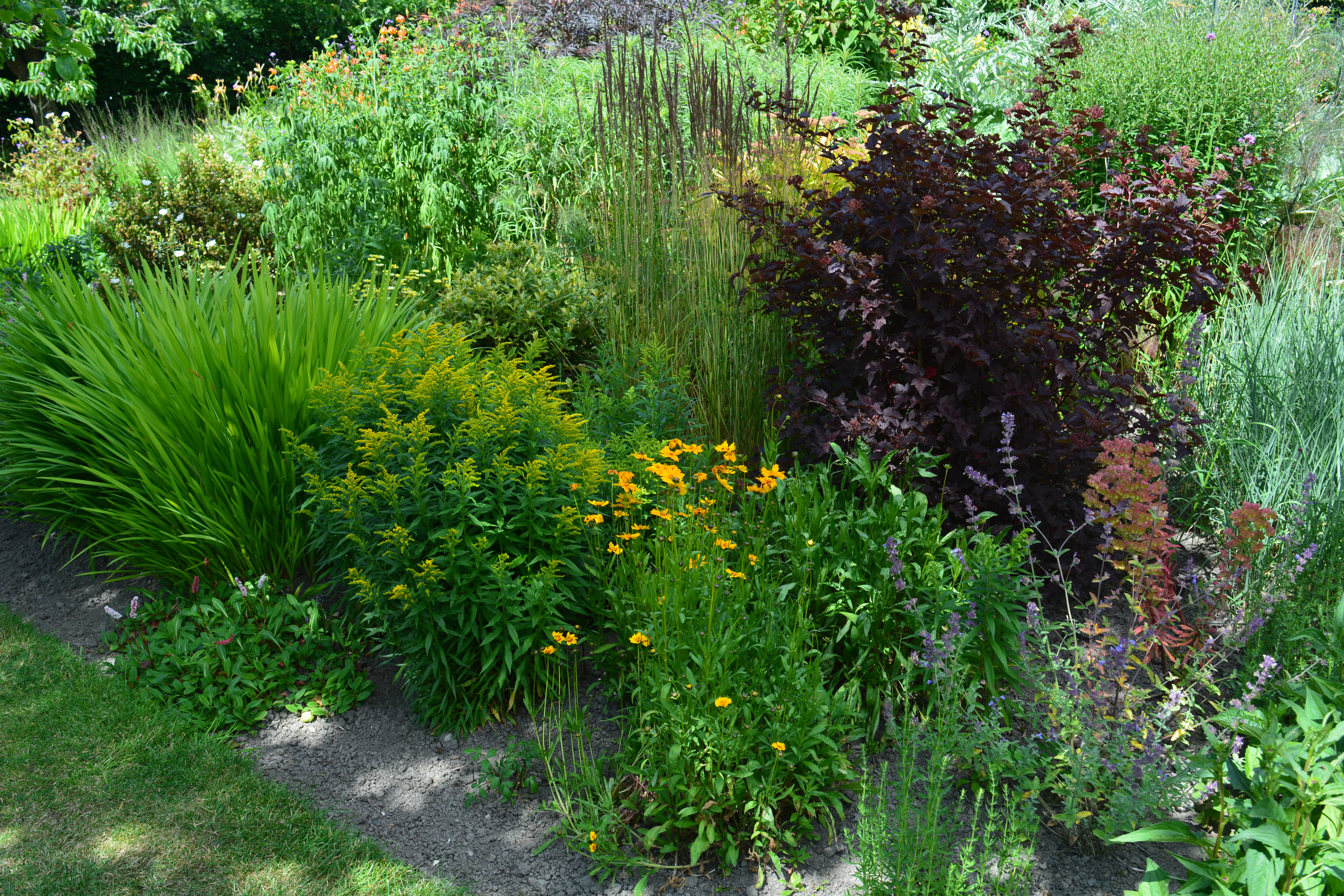
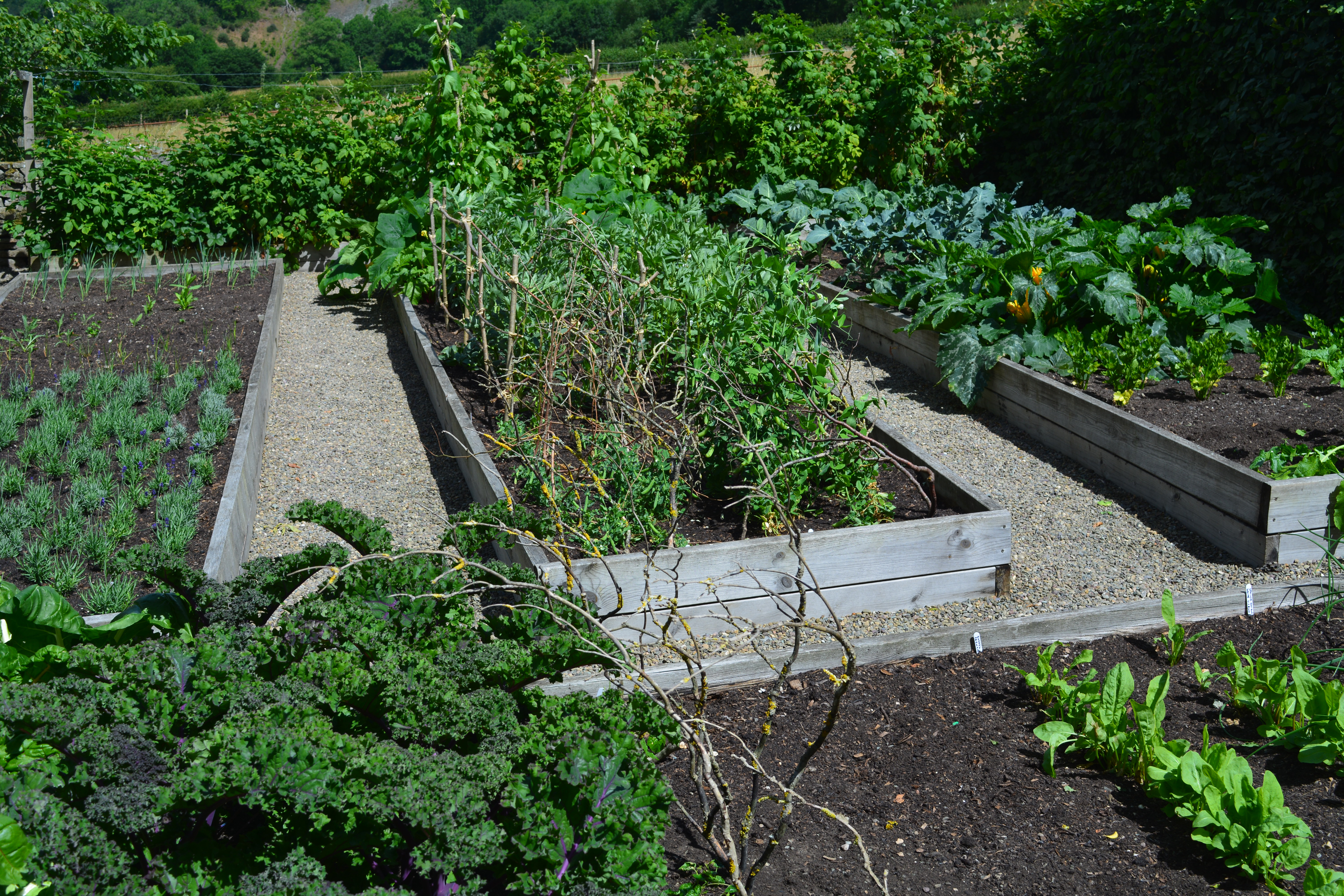
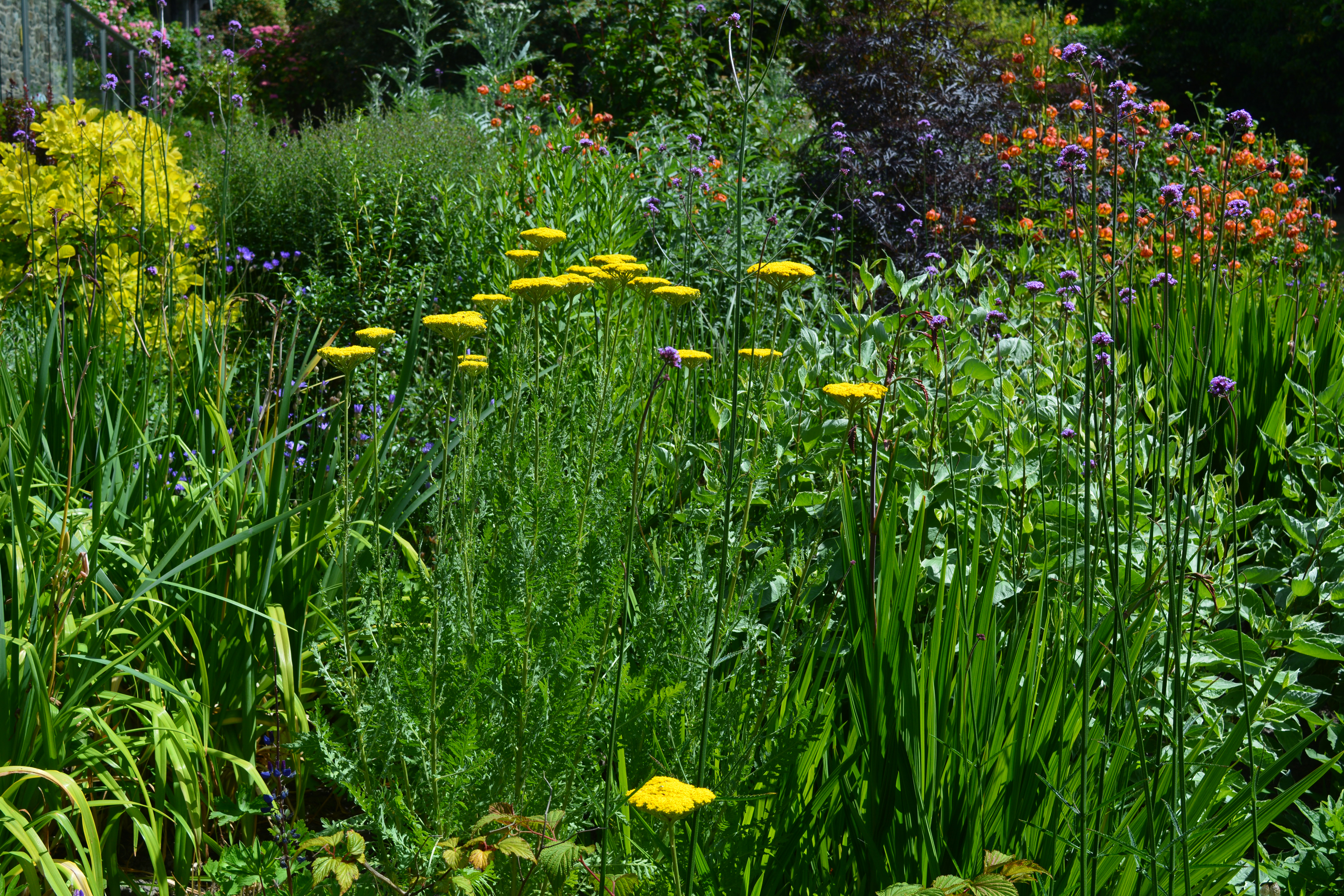
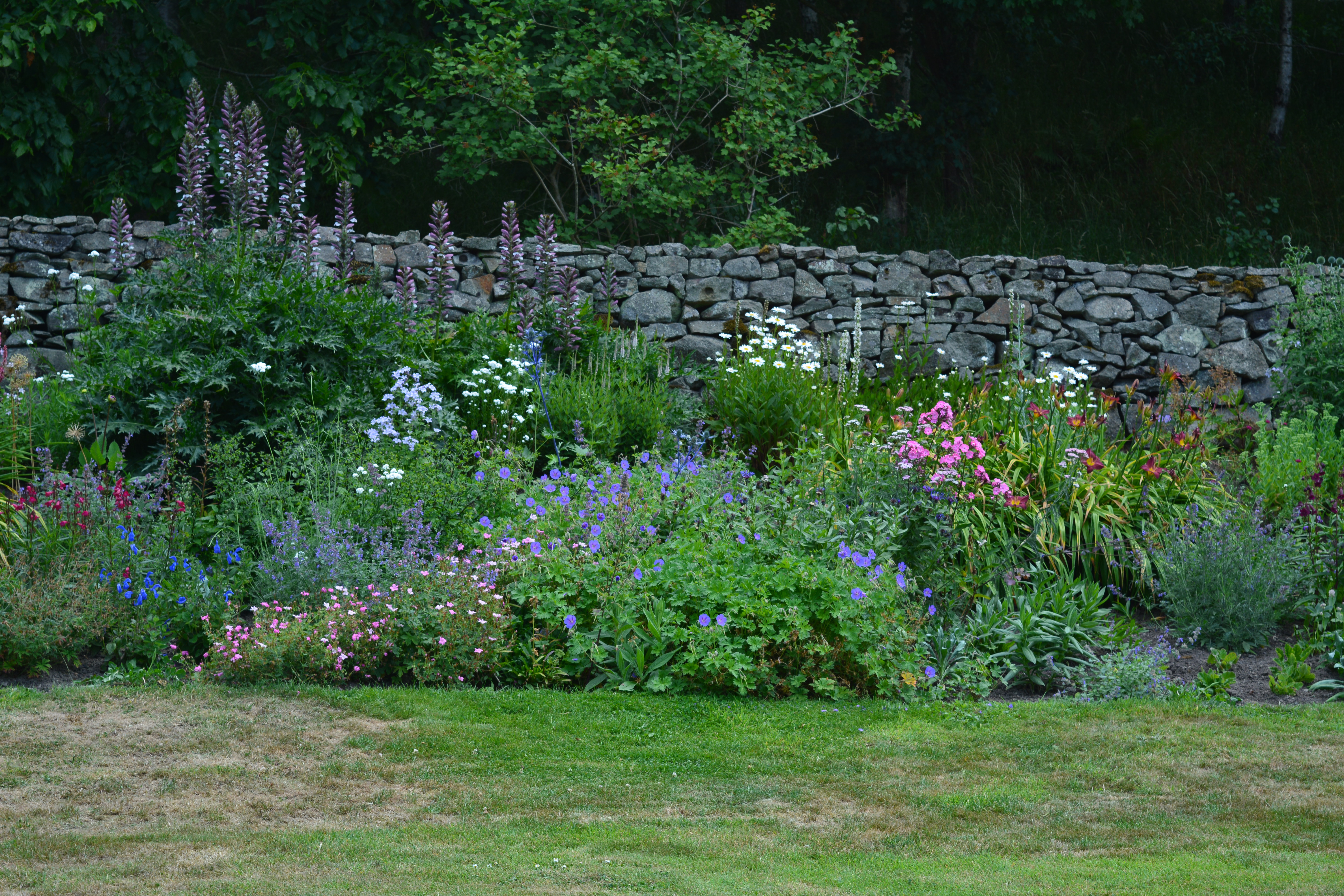
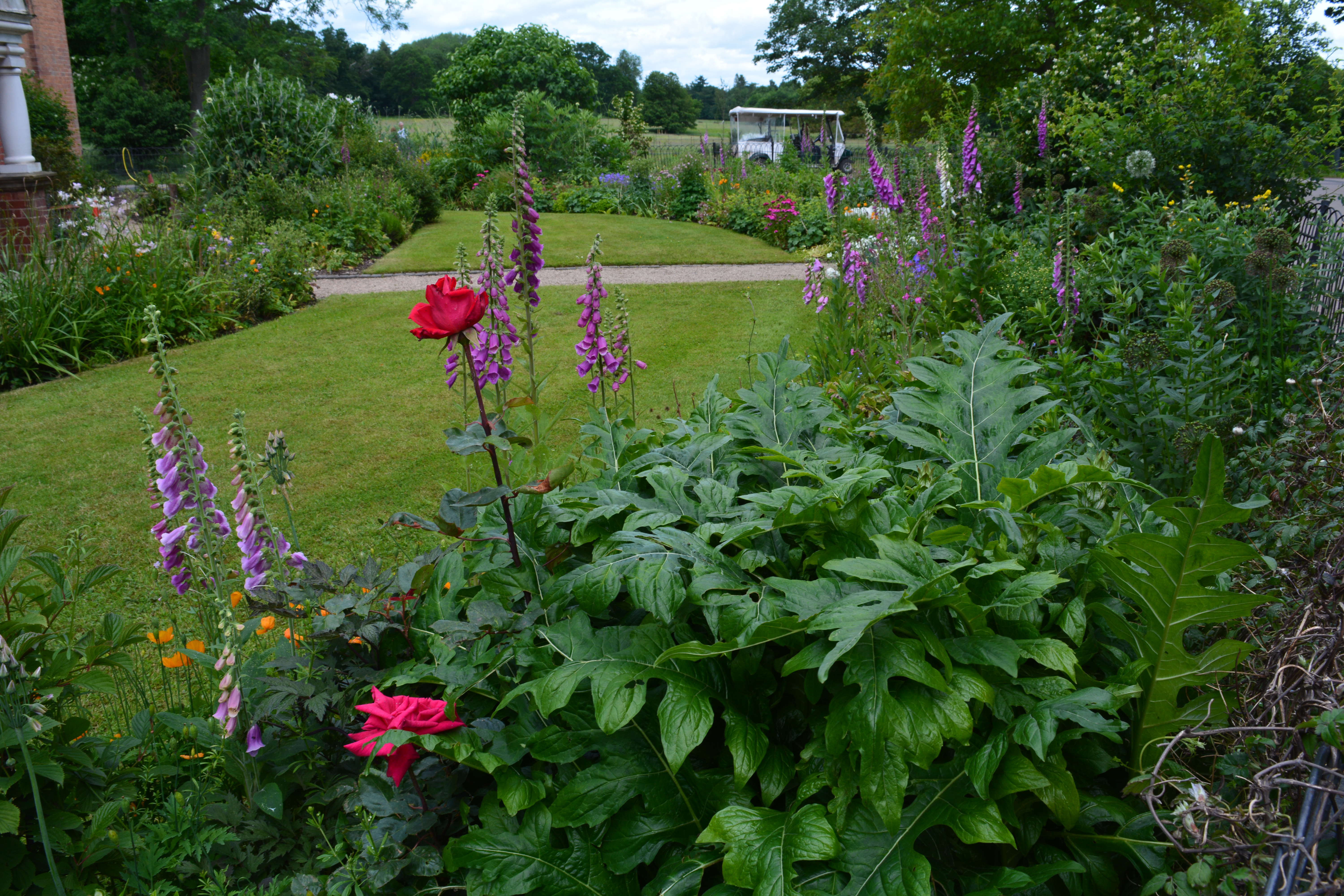
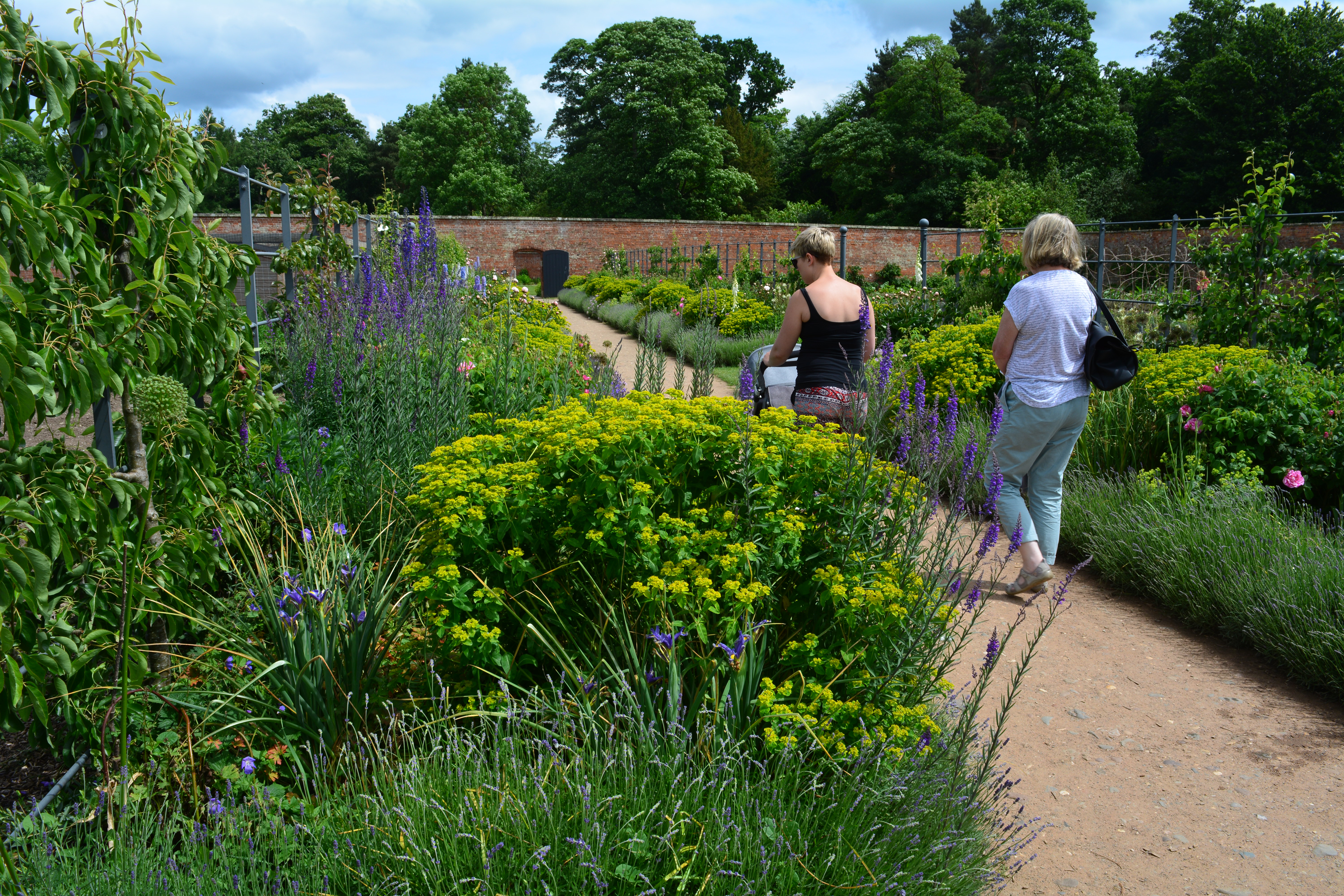
Where we sat to enjoy the views with tea and cake we were close to a very colourful herbaceous border, displaying interesting colour combinations. The garden also boasted a small kitchen garden with raised beds and a shaded area with pond.
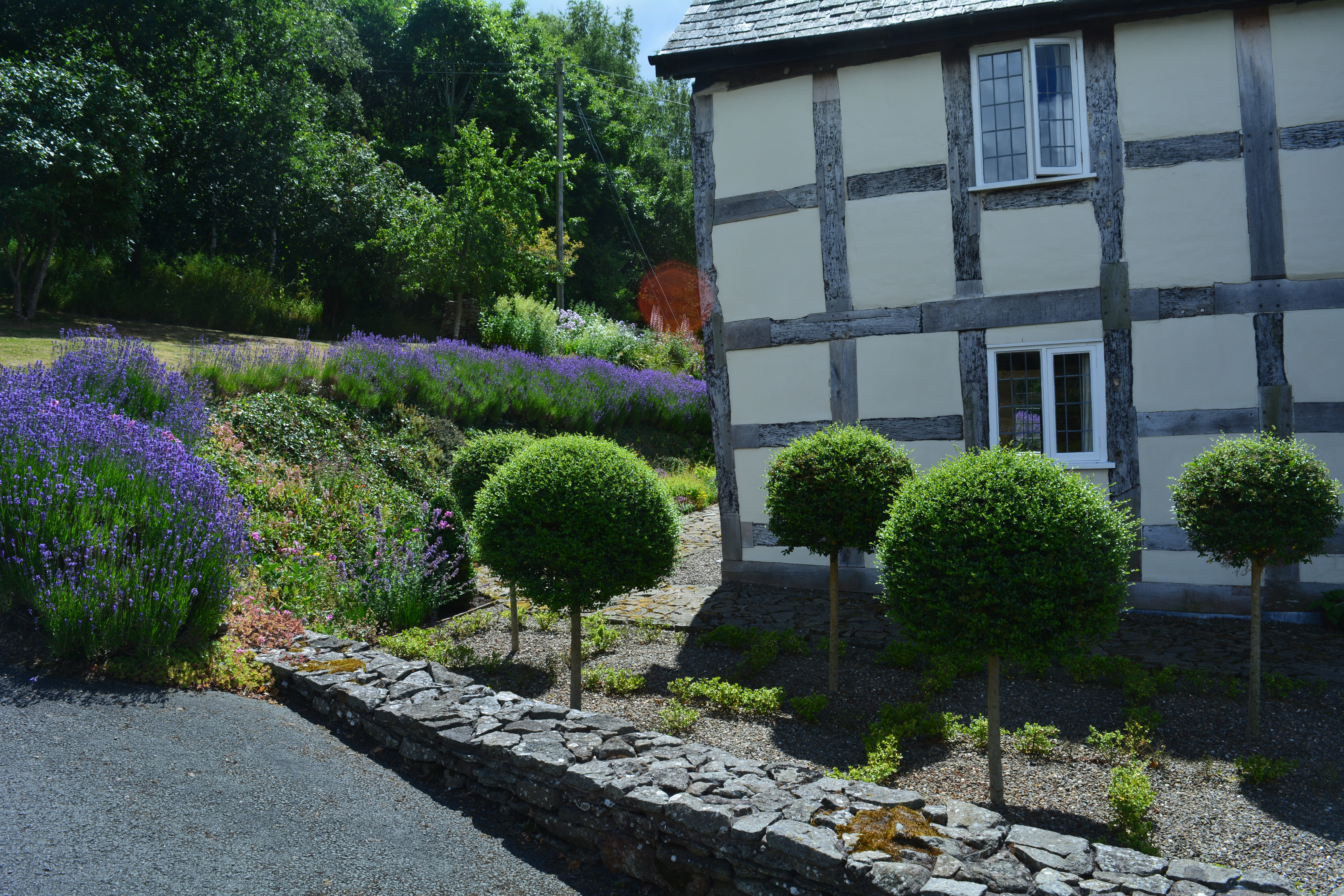
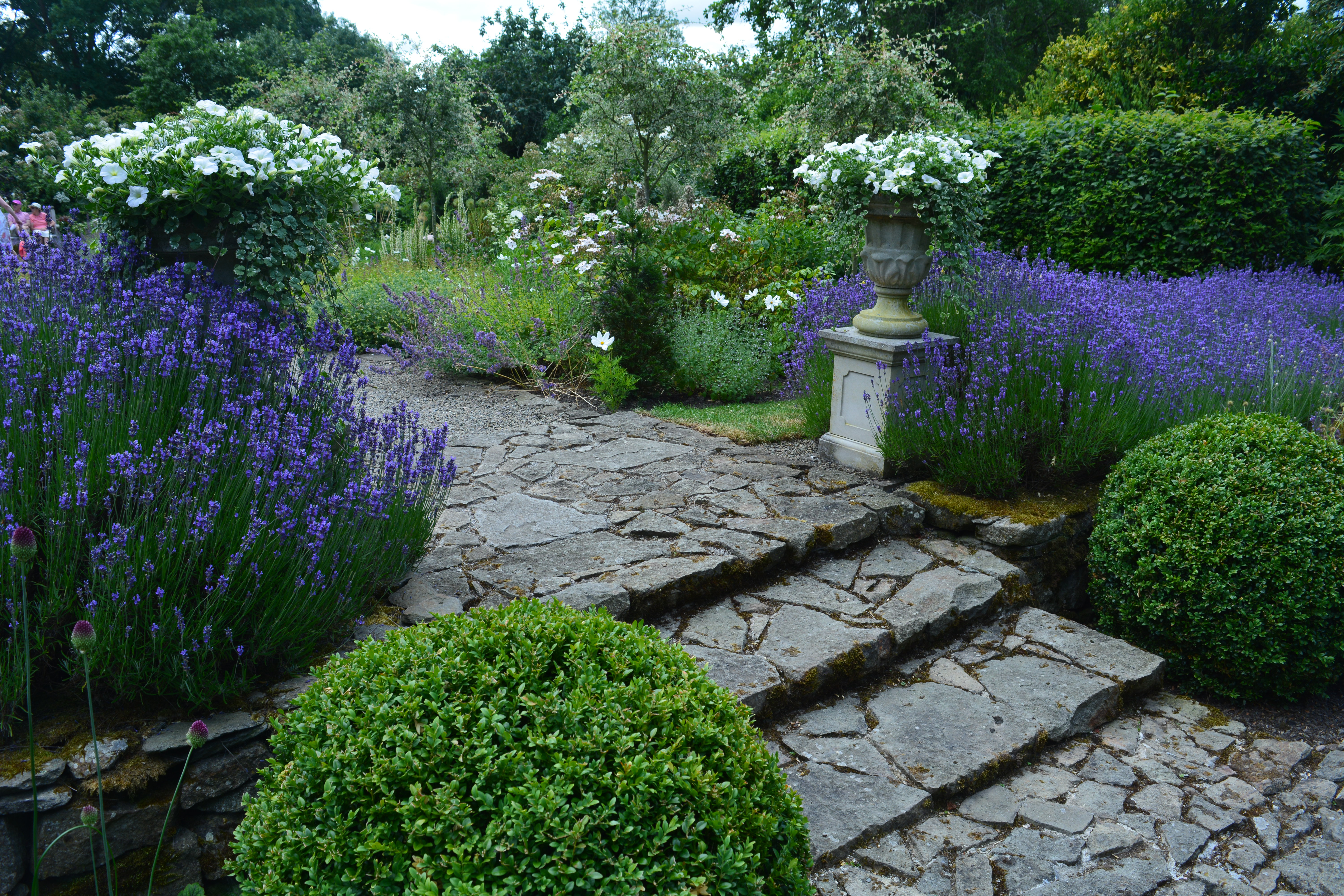
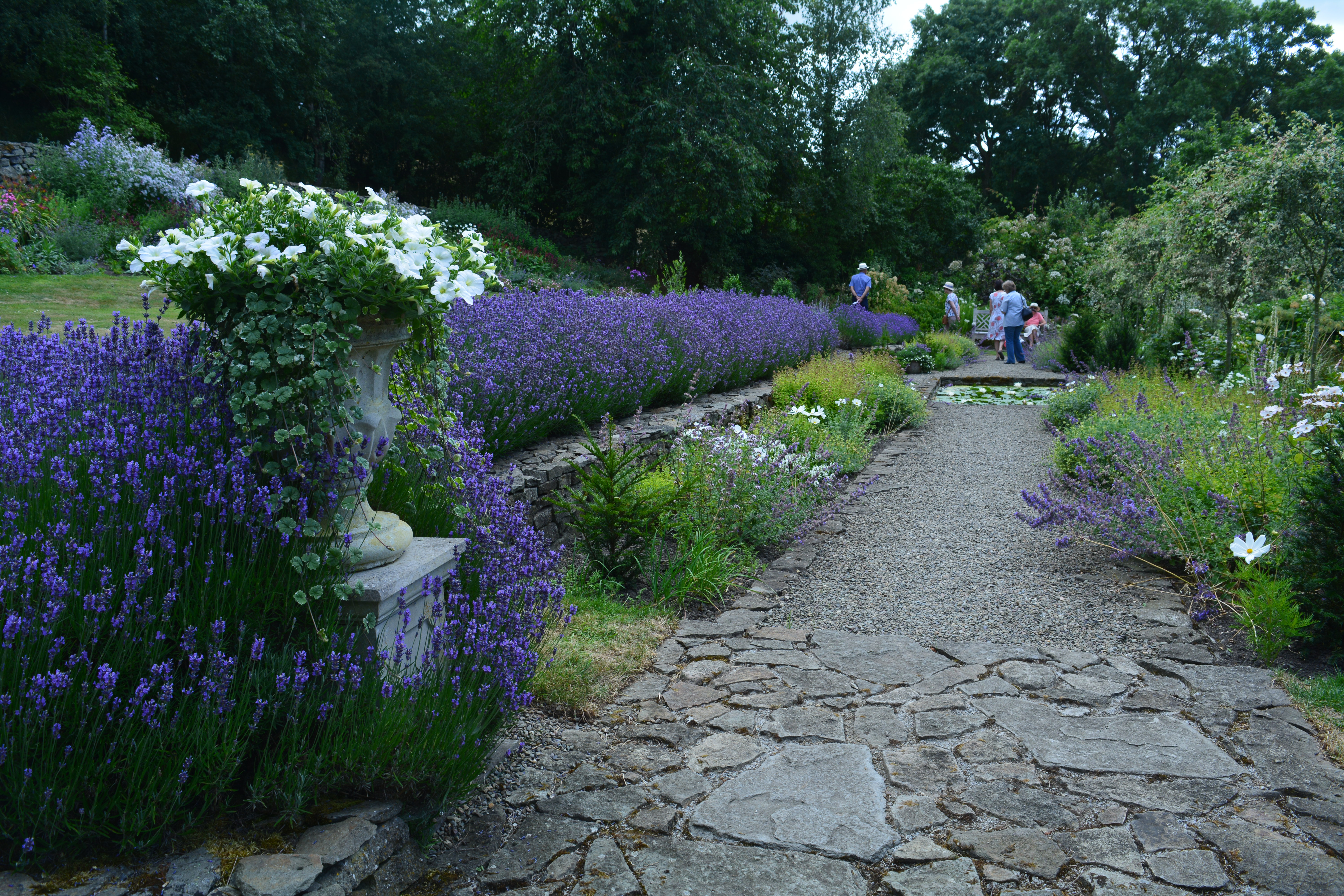
To one side of the house a more formal area contrasted well with the softer plantings we had seen so far. Lots of pale stonework and blue flowers gave this area its own character, almost Mediterranean.
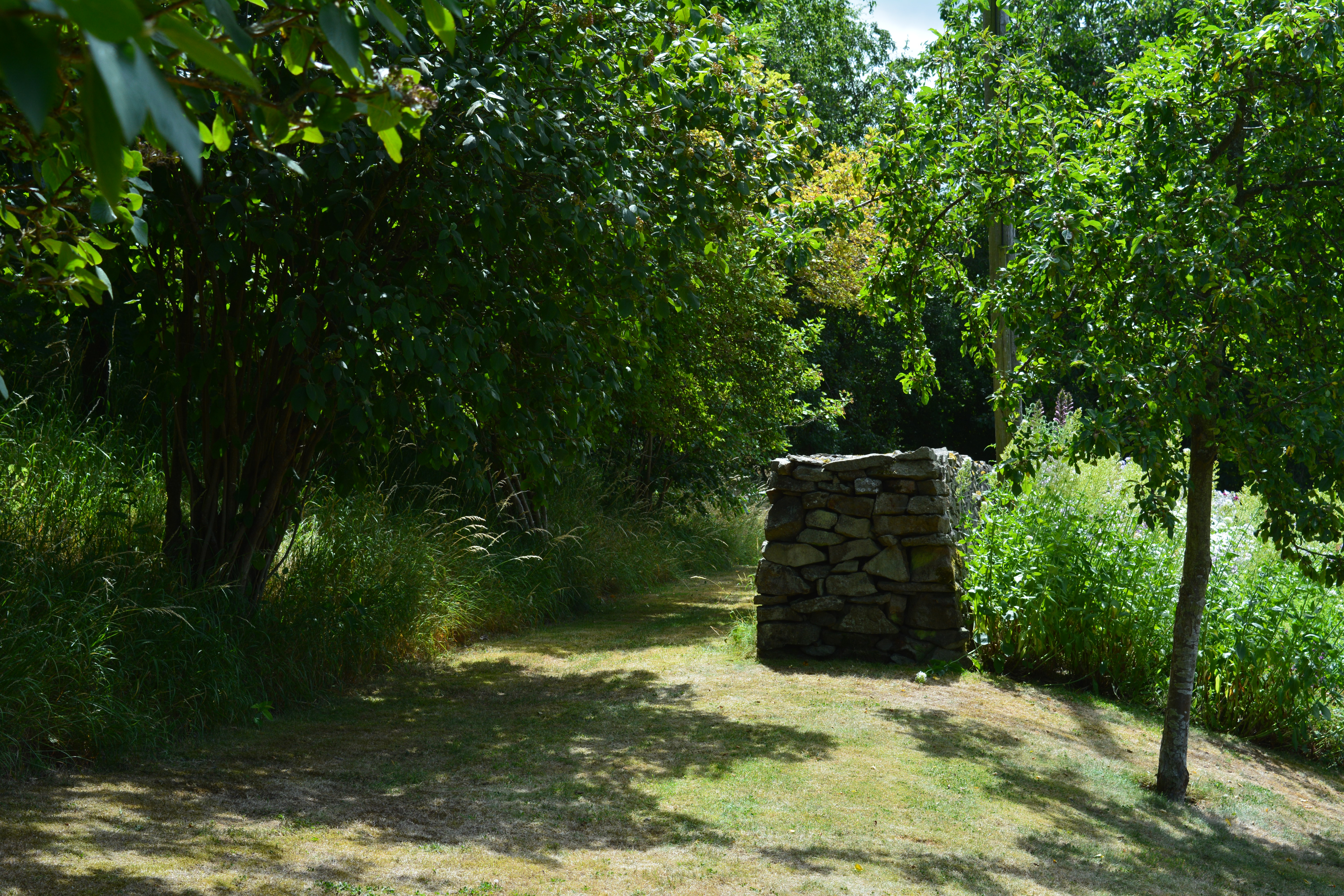
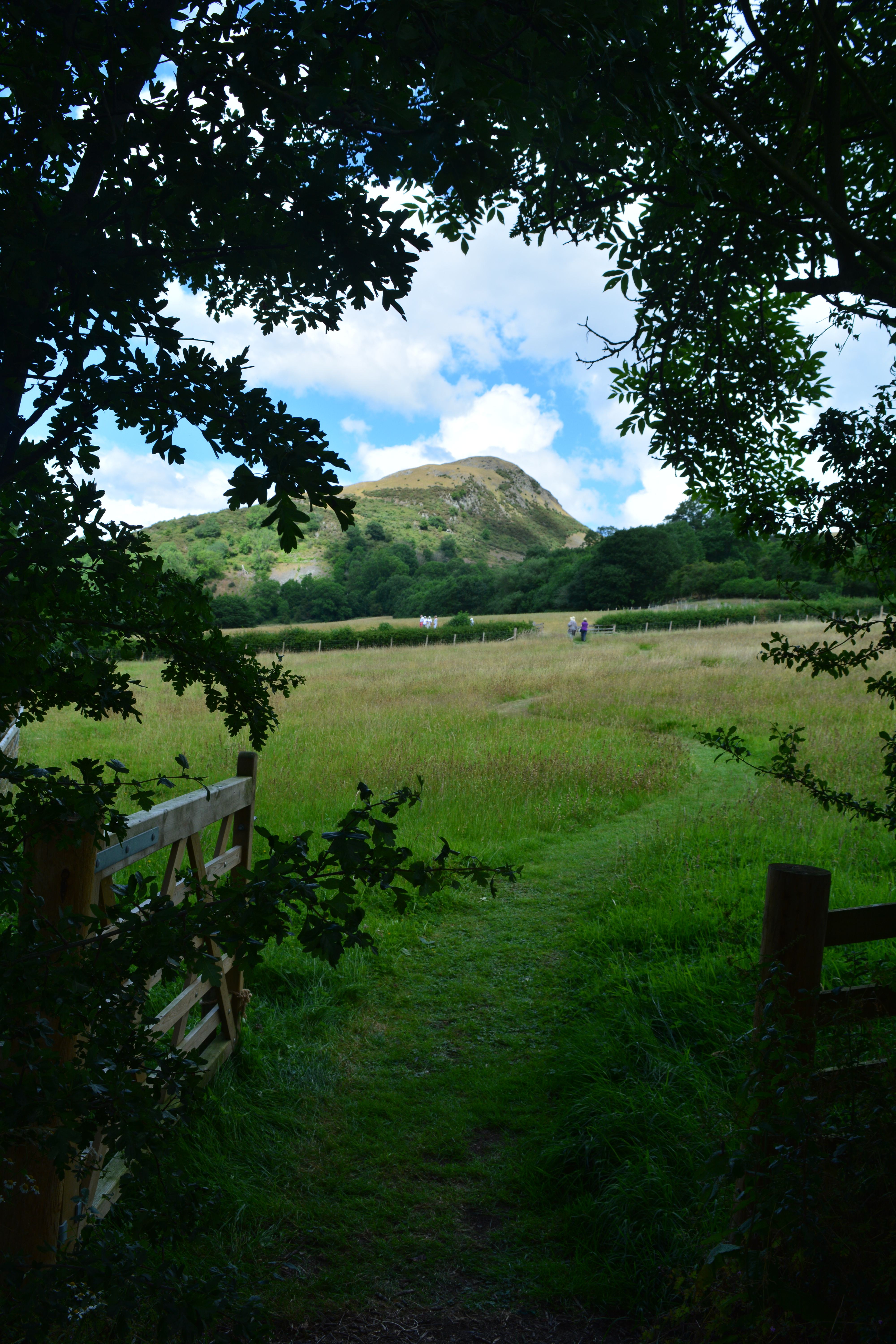
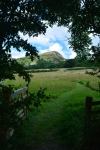
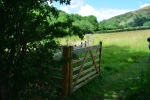
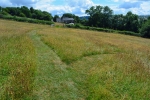
After enjoying a slow wander around the garden under a baking sun we followed a sign for the meadows. We passed through a gateway and followed close cut grass paths through the meadow which gave us views of a newly planted orchard and woodlands. Come with us through the six-bar wooden field gate and explore the meadows and woods by following my gallery, which finishes off this visit to this wonderfully atmospheric garden and the land beyond.
To follow the gallery click on the first photo then navigate with the arrows.
We made our June visit to Attingham Park early in the month to see how summer was coming on in the walled garden and in the wilder parts of the park along the woodland walks. We enjoyed a view of the cottage garden on our way to begin wandering beneath tall trees towards the walled garden.
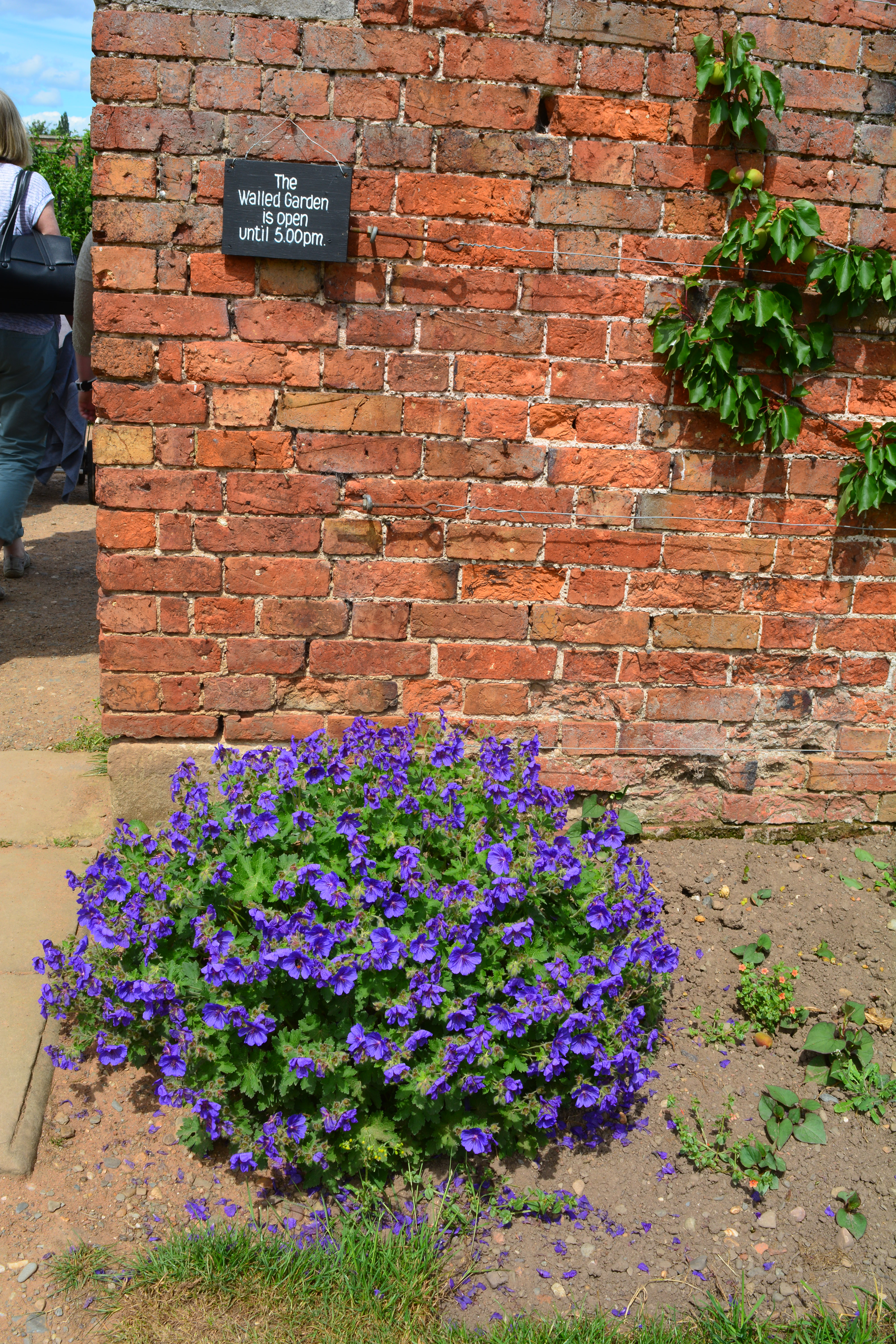
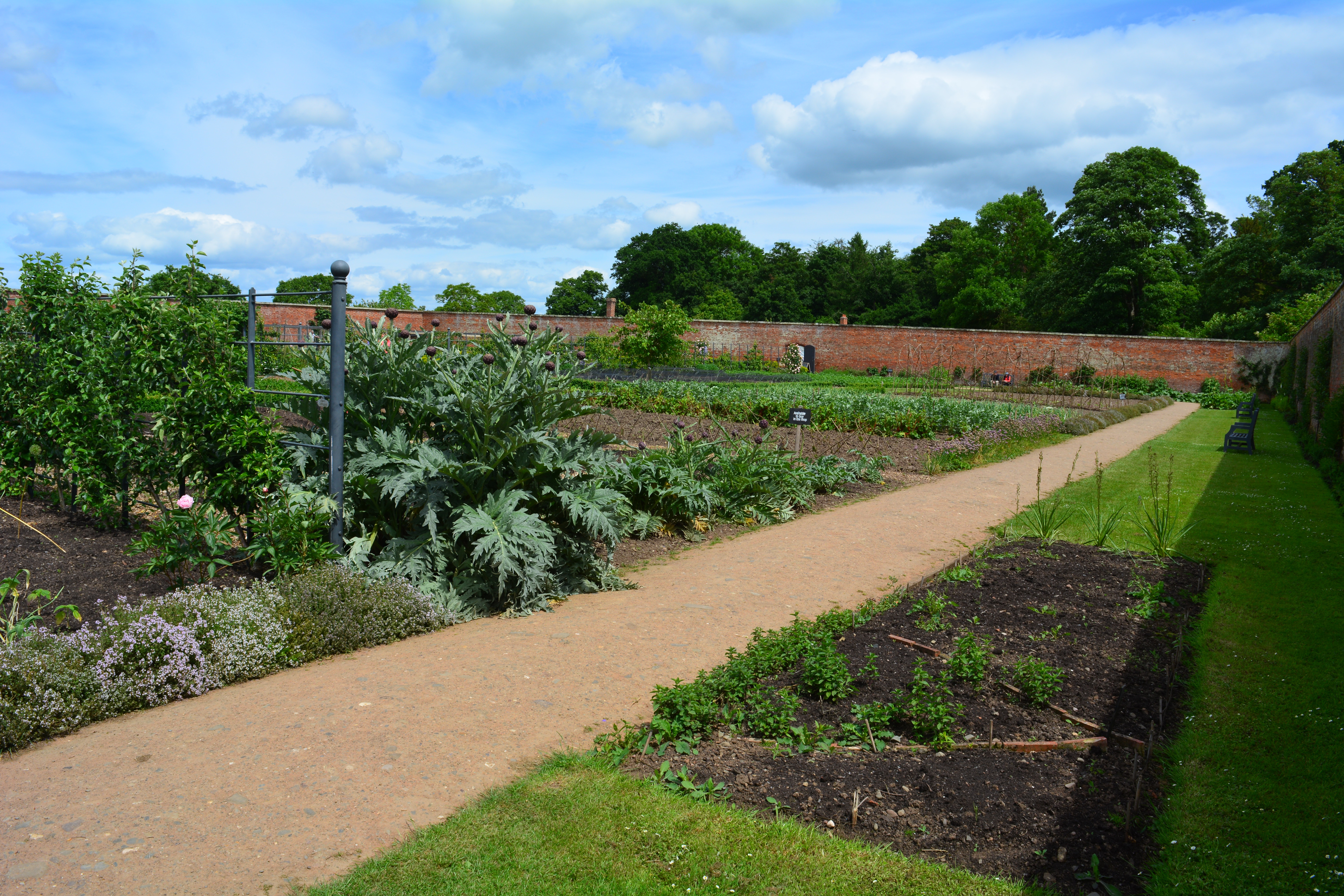
The walled garden impressed us so much because it was full of colour, with plants in the double herbaceous border bursting with blooms.
We left the walled garden taking the path through the adjoining orchard, where we sat for a while to enjoy some ice-creams. Fully refreshed we followed the winding paths beneath the trees and between the shrubs, taking the Woodland Walk before taking a short cut back to the parkland, over two bridges and past the hall itself. You may notice that as we crossed over the bridges we enjoyed playing Pooh Sticks.
I thought I could share my photographs via a gallery for you to enjoy. Please click on the first pic then navigate using the arrows. I hope you enjoy the views we enjoyed.
Our next visit to Attingham Park will be in July when we will be well into summer.
Spring is slowly turning into summer as we enjoy our monthly visit to our local National Trust property, Attingham Park. The walks are getting busier, the volunteers in the walled garden even busier.
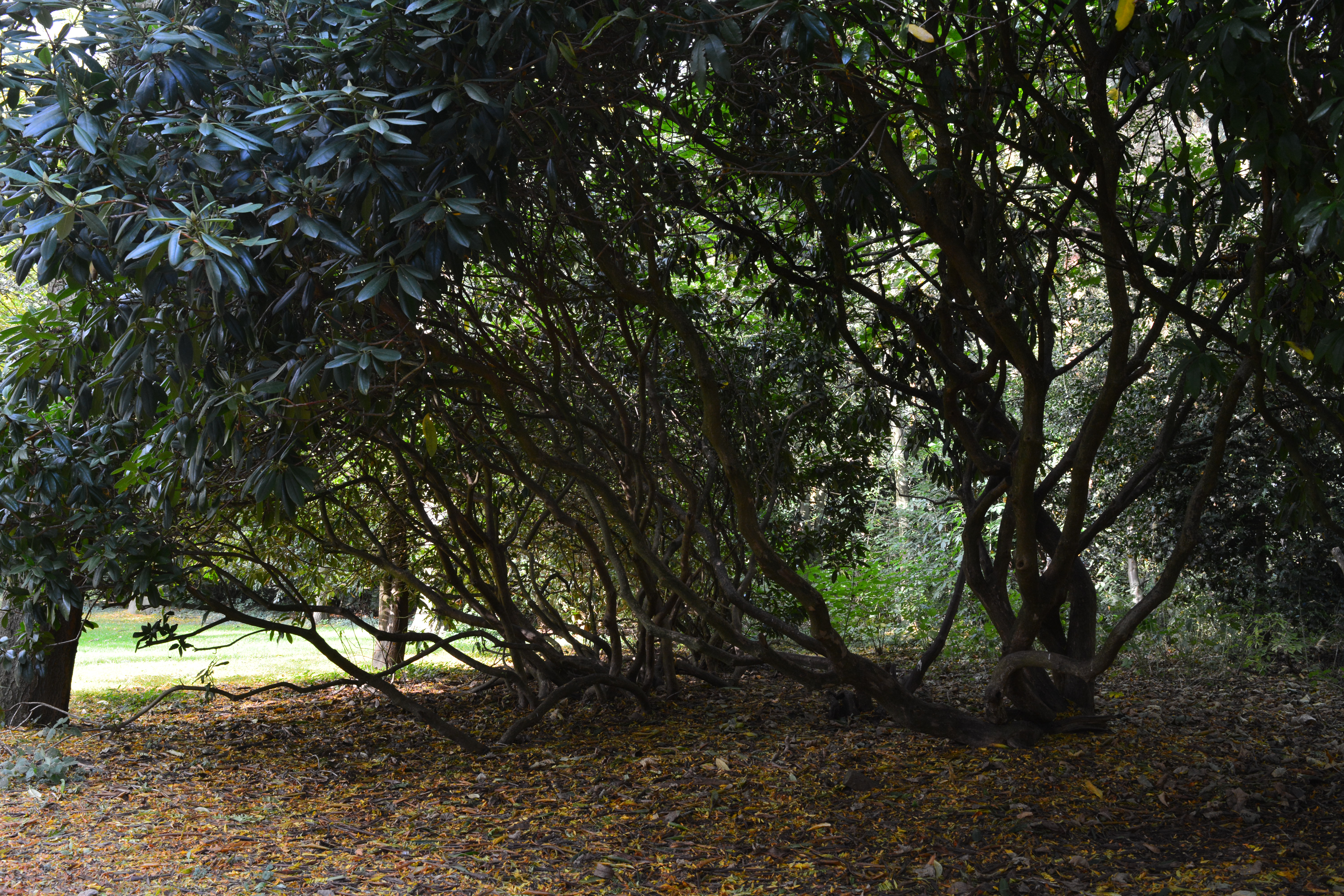
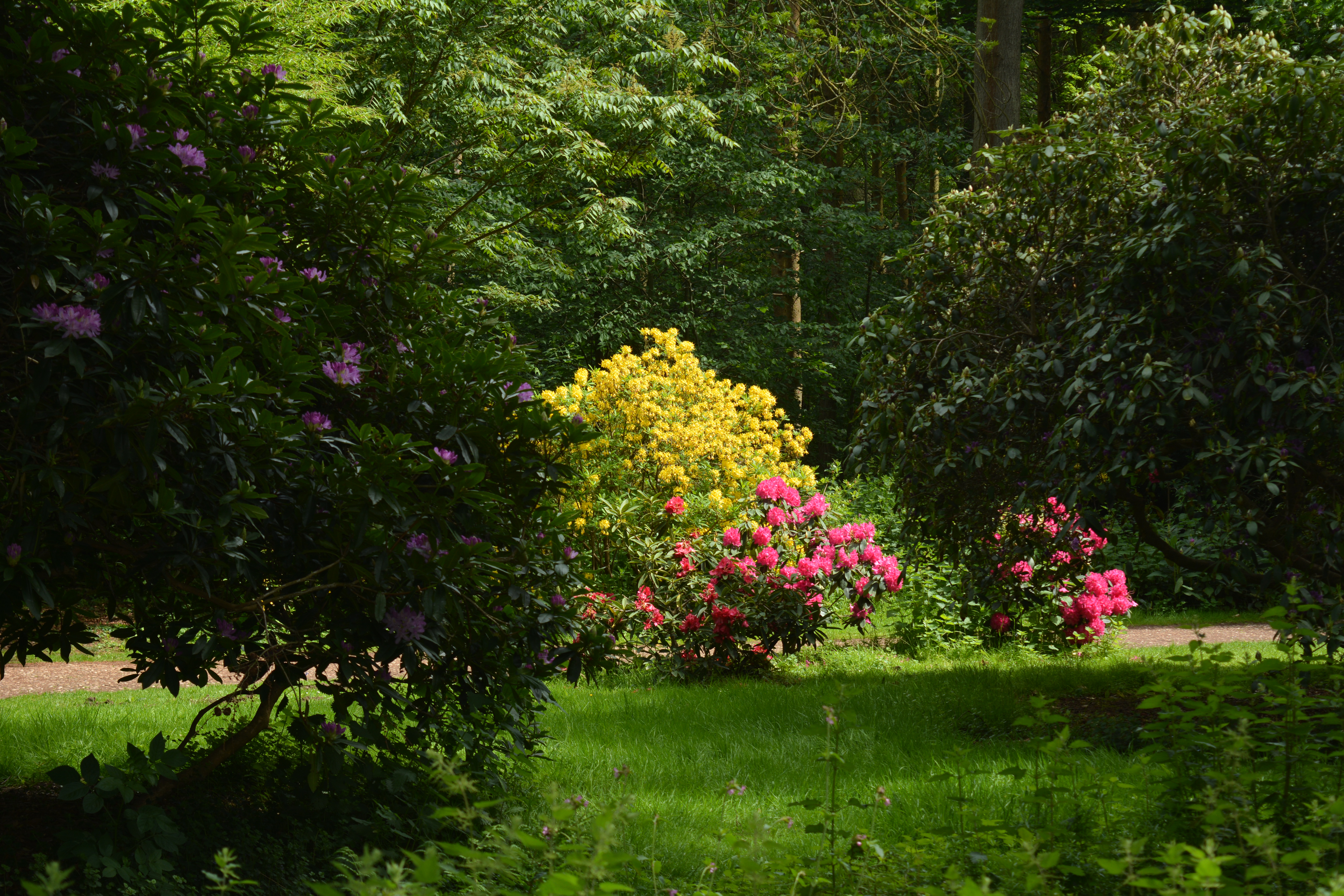
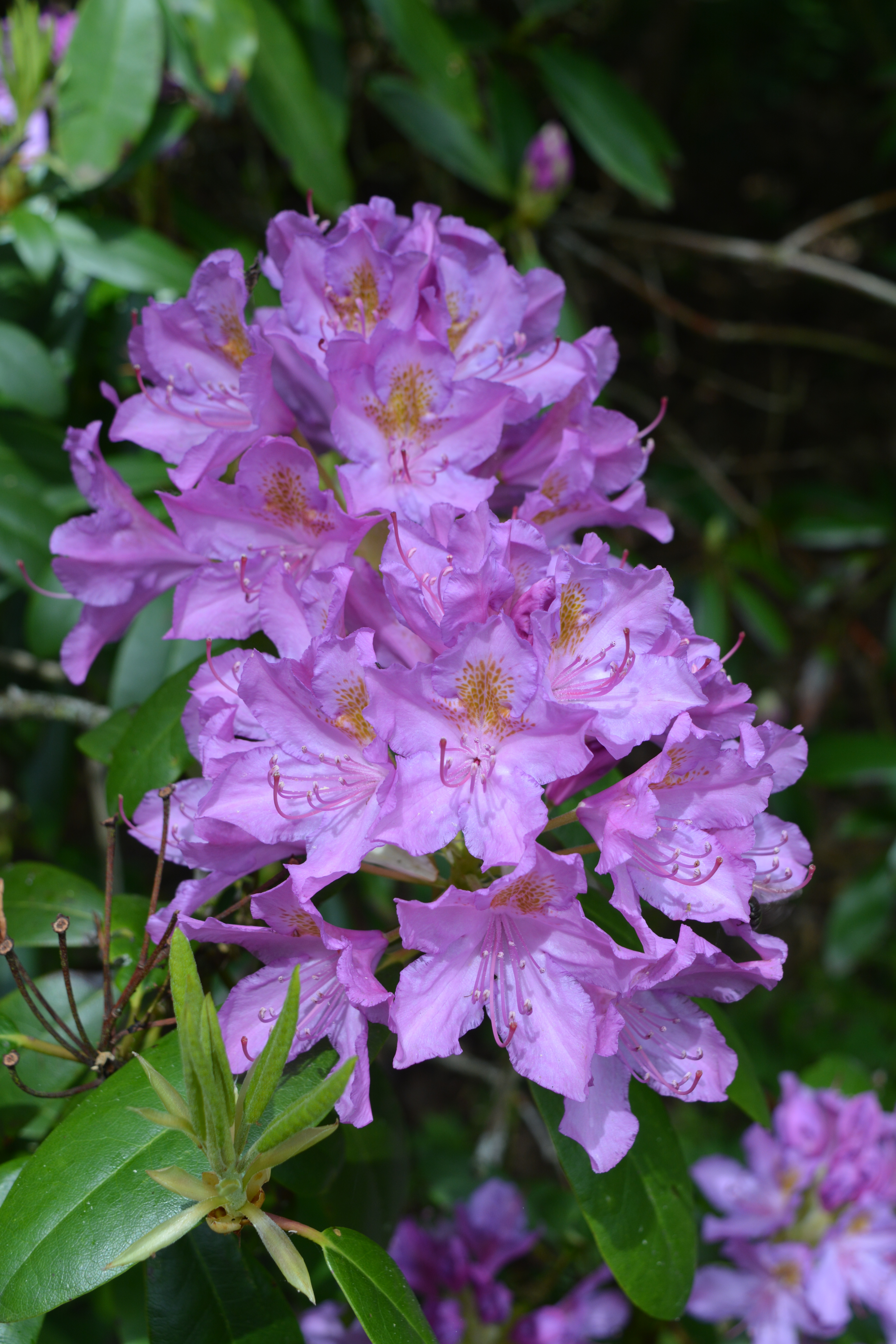
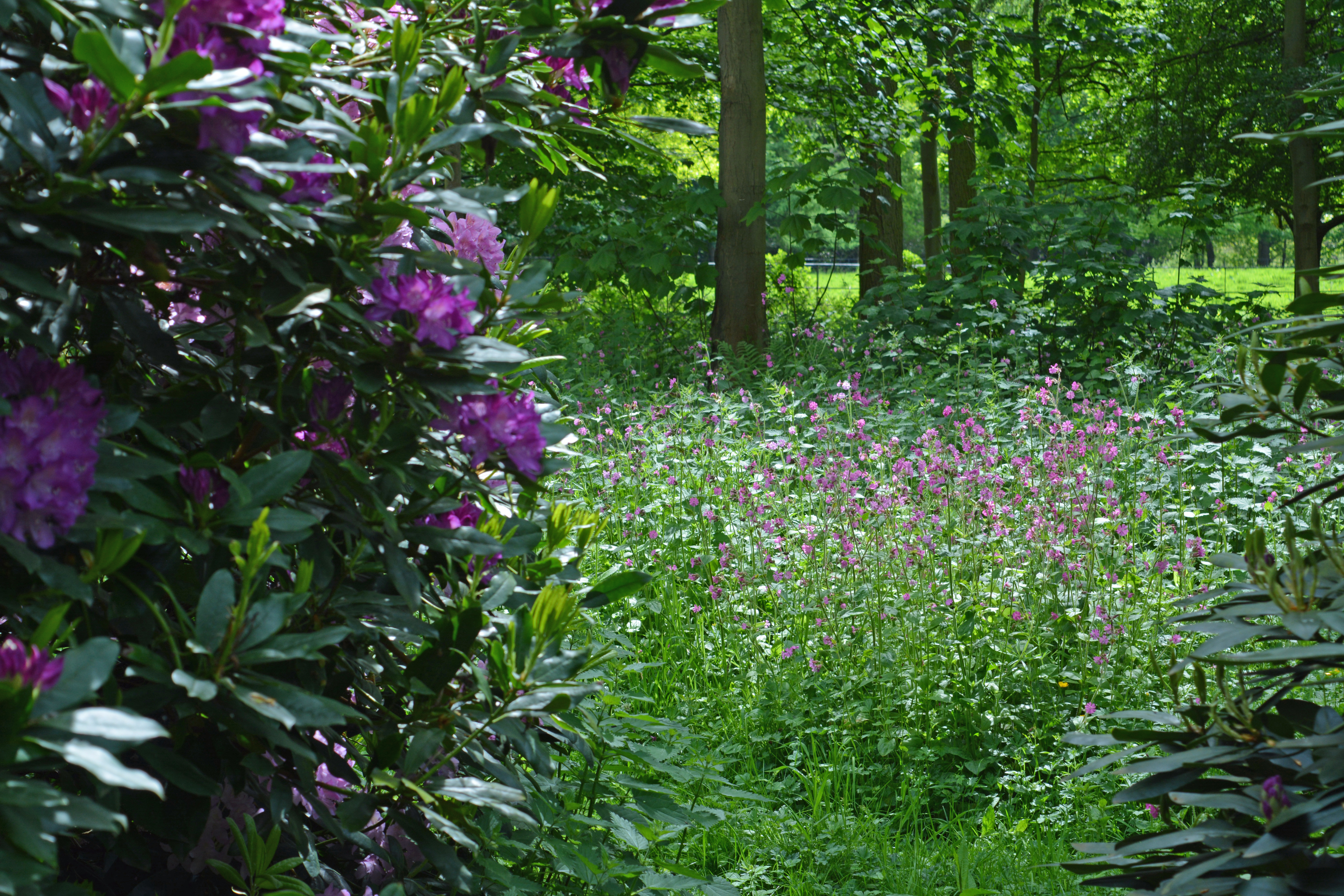
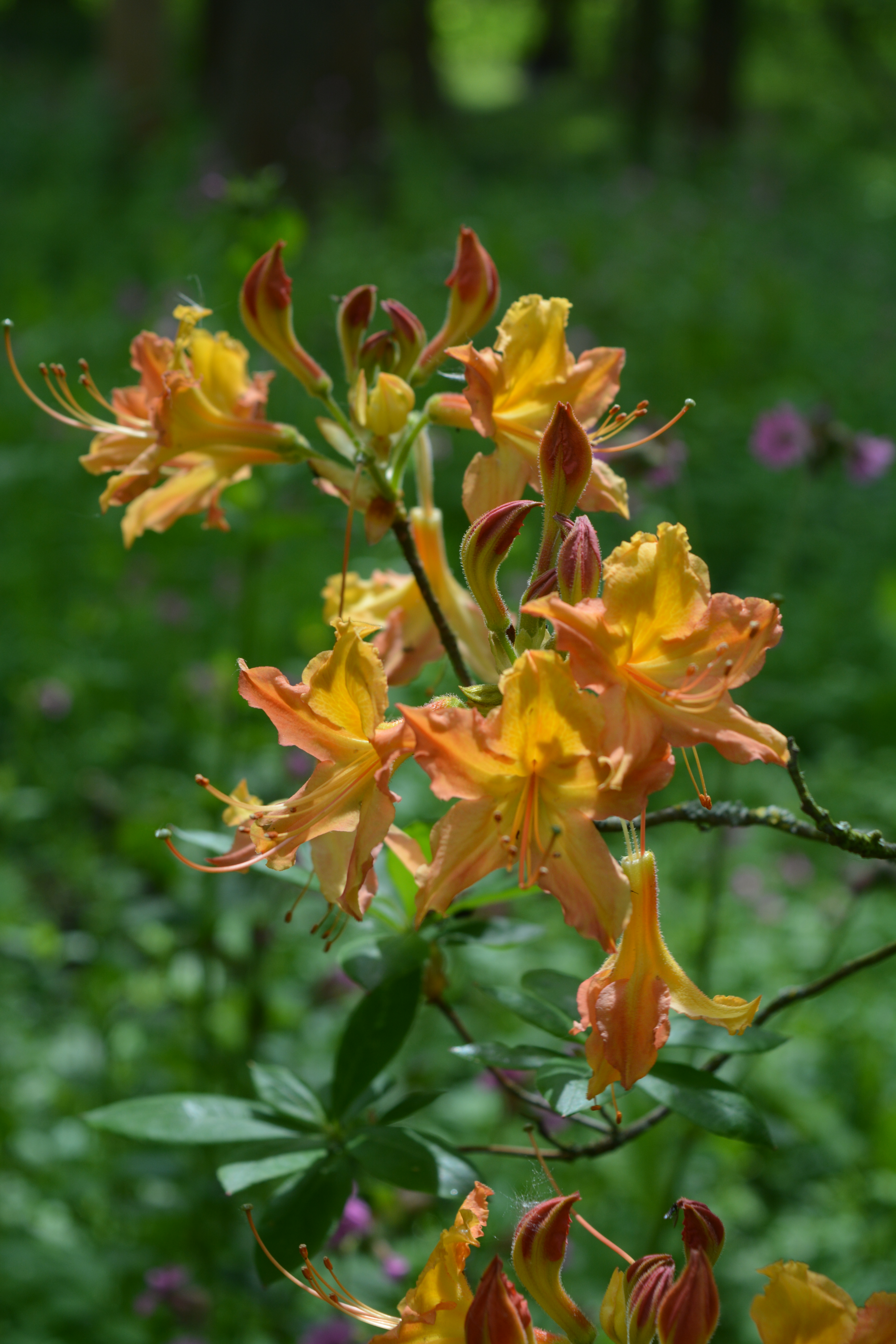
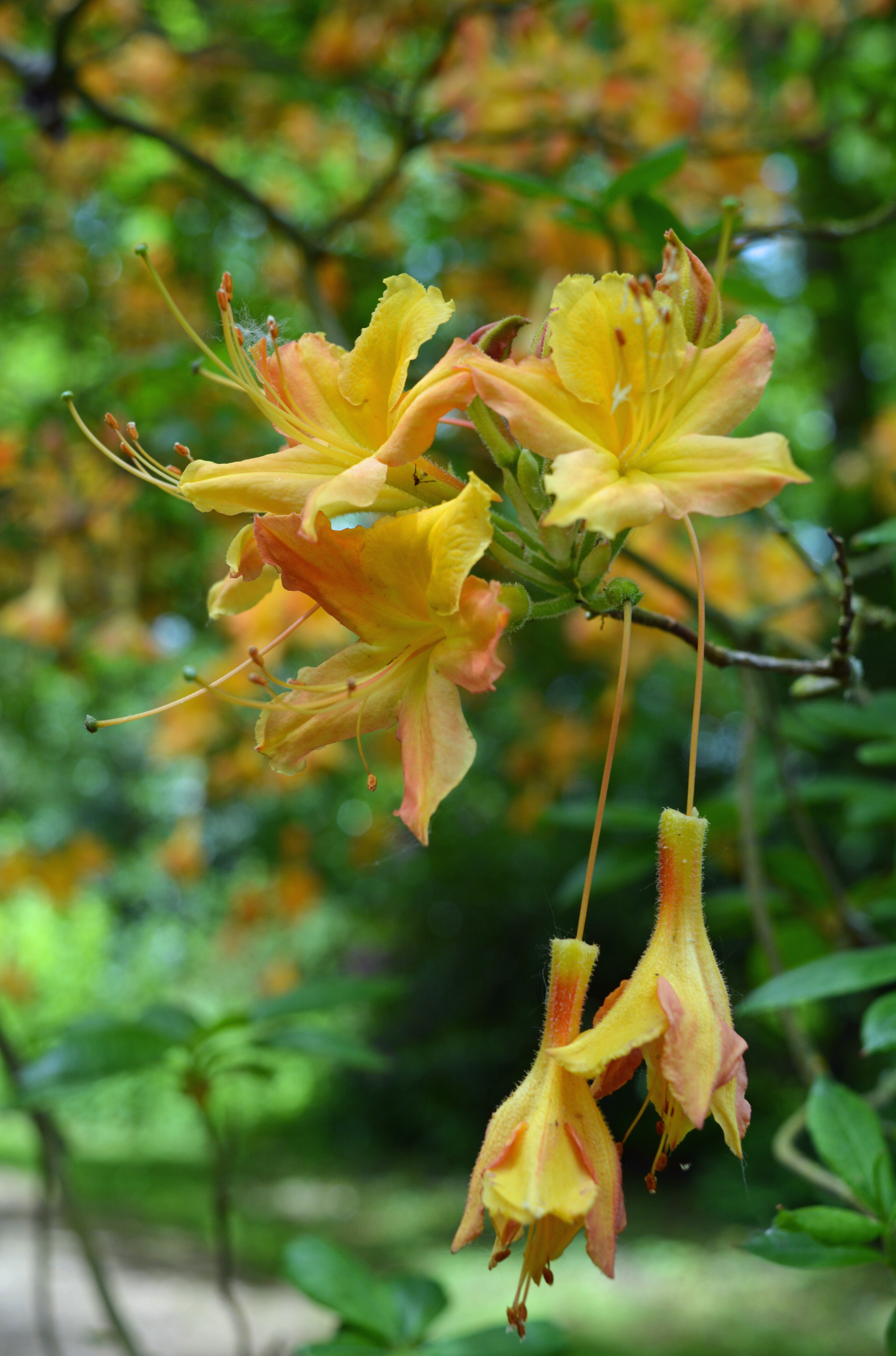
Continuing our through the woodland we were attracted to a bright patch of colour beneath the tall mature trees, which turned out to be a clutch of Rhododendrons.
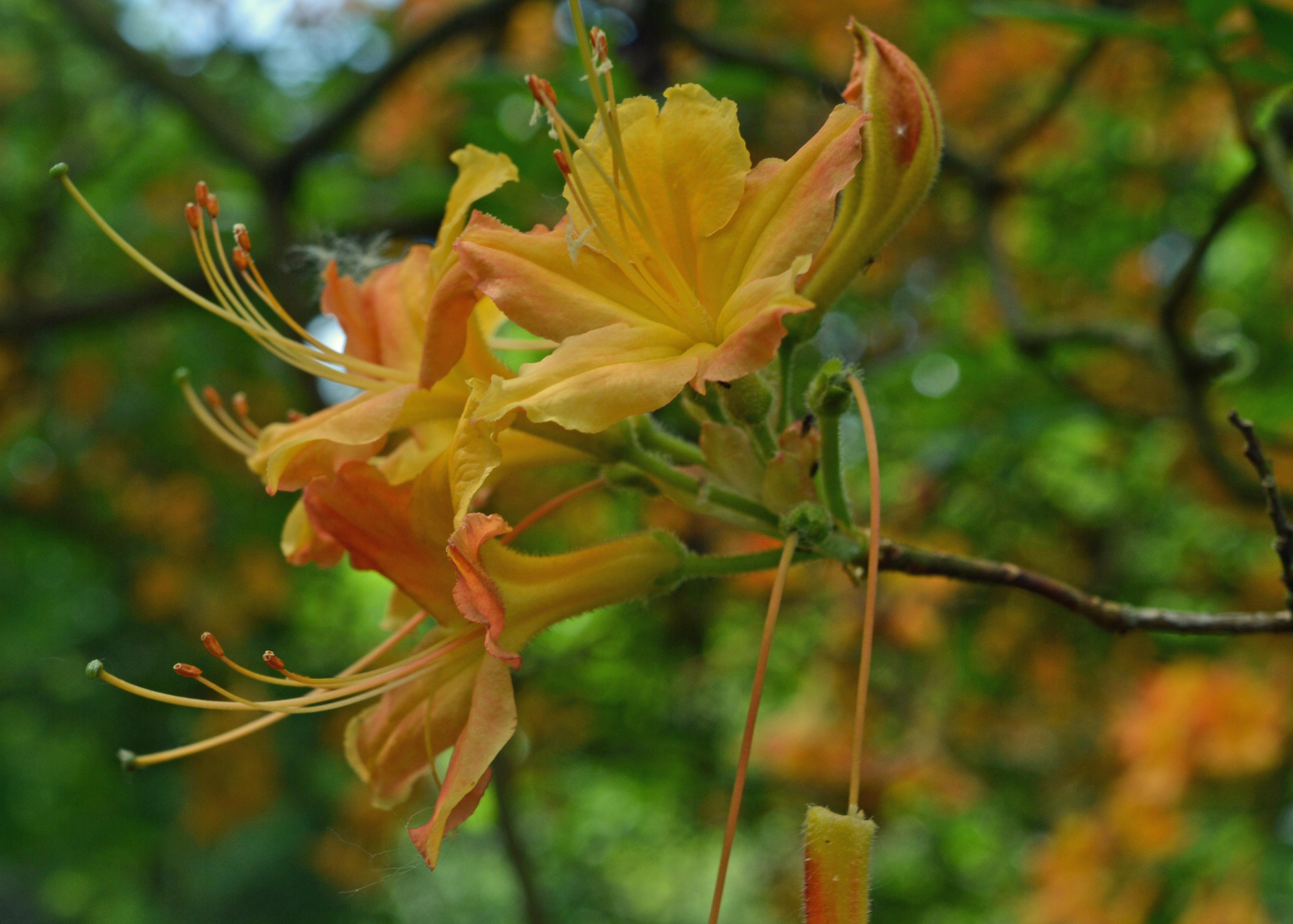
This bright yellow variety, Rhododendron luteum was beautiful with the hints of salmon orange, had the added interest of a rich sweet scent, which could be appreciated from metres away.
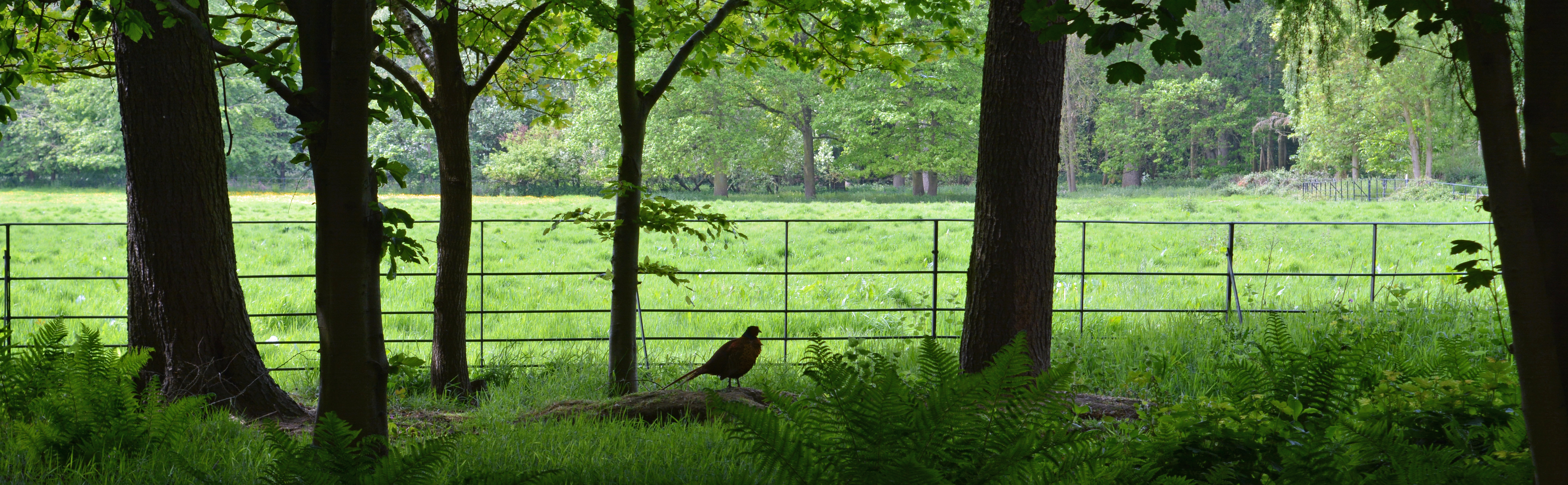
Throughout the woodland we discovered signs of wildlife living there.
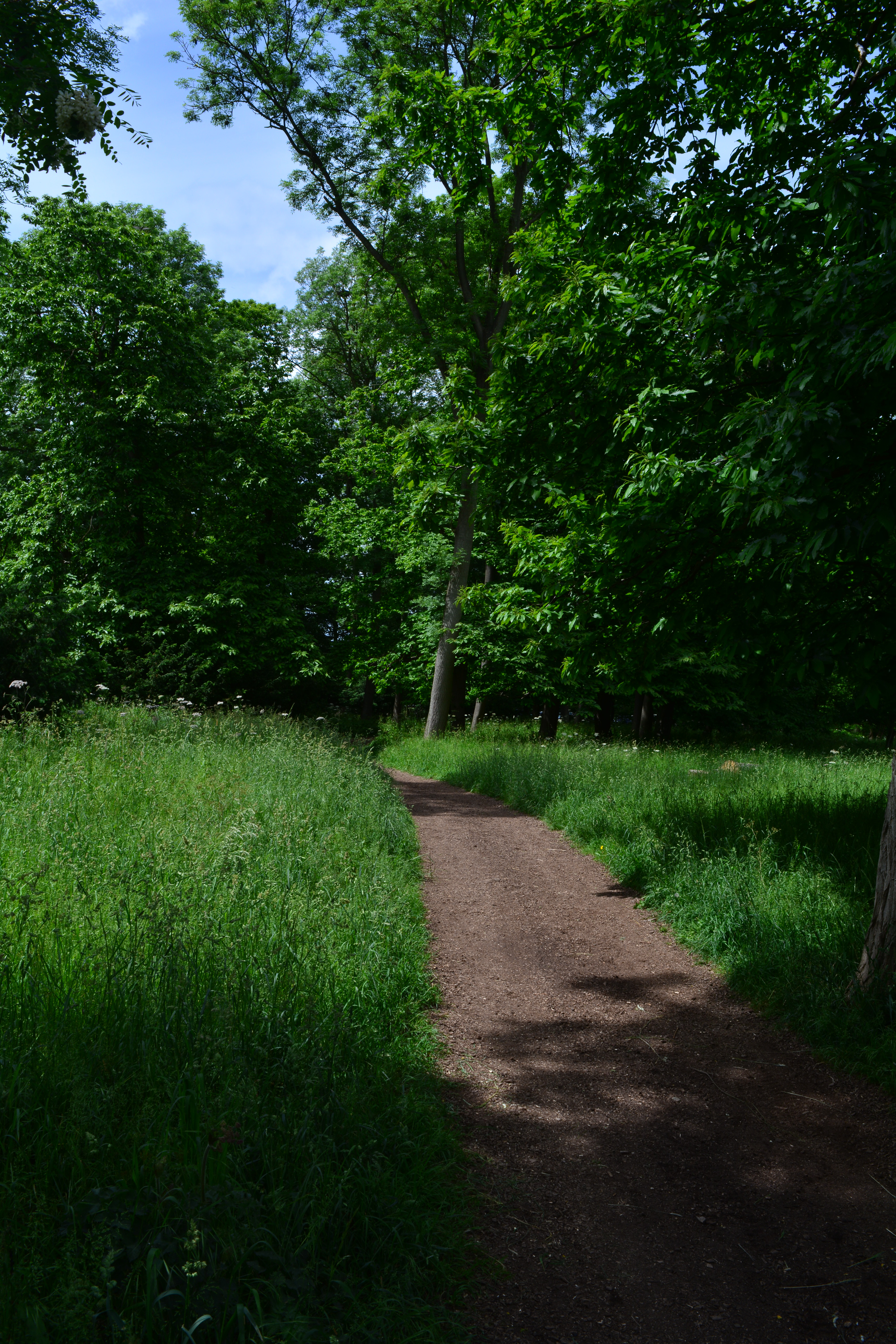
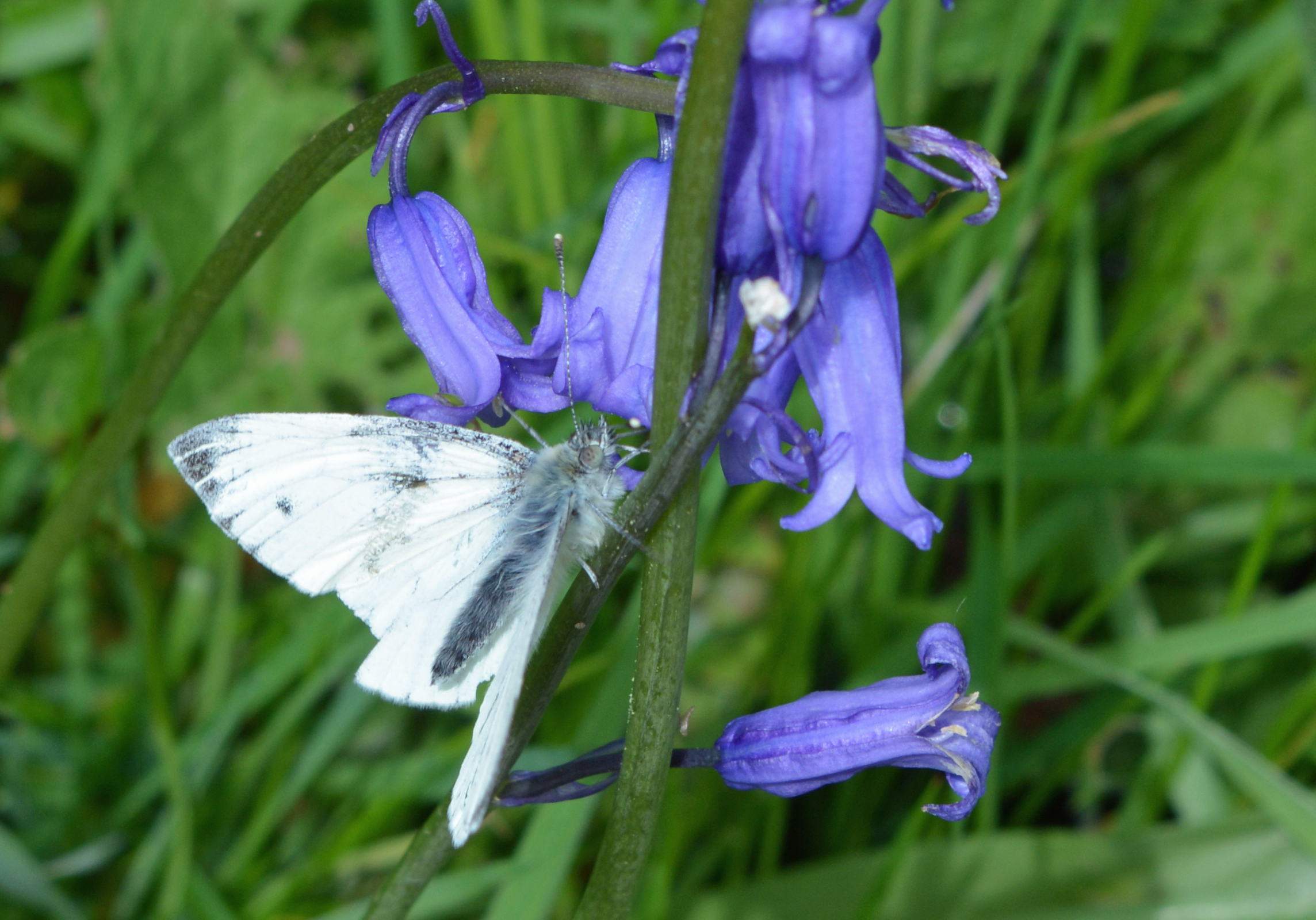
Wildflowers decorated the grassy patches beneath the trees and alongside the tracks.
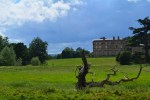
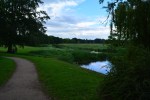
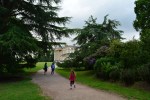
I shall finish my report of our May visit to Attingham Park with a gallery for you to enjoy. Click on the first photo and navigate with the arrows.
'The most important and informative publication on wildlife of our times' - The Independent. This blog is a member of The UK & Ireland Natural History Bloggers group: www.uknhb.blogspot.com


























































































































































































 greenbenchramblings

