Categories
conservation garden wildlife gardening natural pest control wildlife winter gardens

Frog Chorus – it’s frog time in the garden.

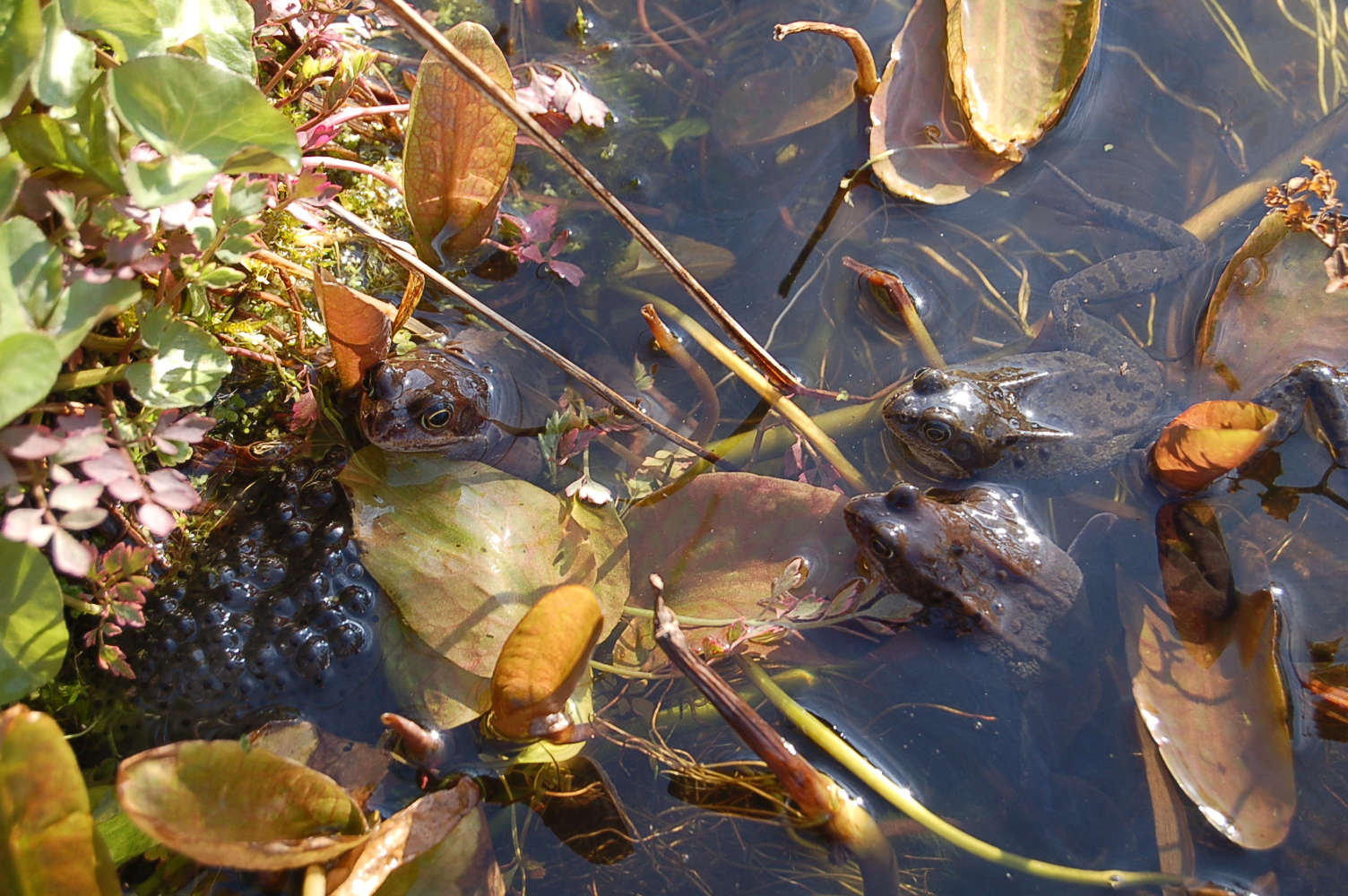
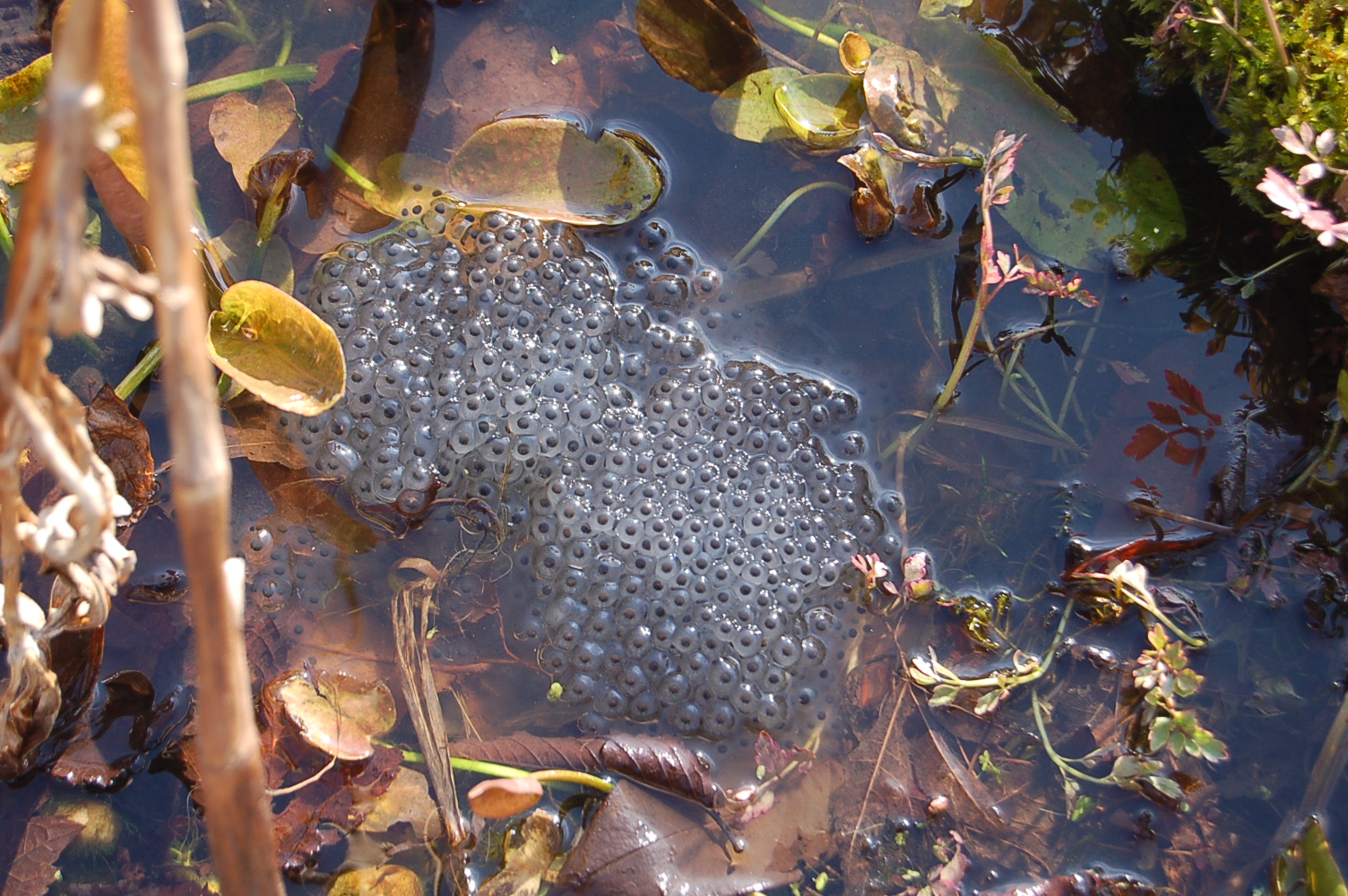
We have been gardening with wildlife in mind now for four decades.We have endeavoured to include a wildlife pond in each of our 4 gardens in that time. Each year the frogs attracted to the ponds gather together towards the end of February to croak loudly day and night, to mate and leave piles of spawn. They have been so consistent up till now – whatever the weather the spawn appears in the same weeks of the year. If there is snow on the ground or if a mild spell gives bonus sunshine and blue skies they still perform in late February.

But this year they have waited until the first few days of March! I wonder why? We can’t complain about their lateness though as all this spawn will provide lots more frogs to live in the garden and act as natural pest controllers.

Categories
allotments fruit and veg garden photography garden wildlife gardening grow your own hardy perennials Uncategorized

A Wander around the Allotments in February

My blog reporting on “A January Wander around the Allotments” was all about the cold, as my wander then was on a bright, sunny but cold day with the thermometer registering minus five. Today my wander was a real treat, with temperatures of plus seven, it felt so mild. The sky however was grey and produced the occasional bout of drizzle. The bird life definitely appreciated the improvement, with so many to see and hear.

My walk over to our plot was halted by the whoosh of wings and the sight of a Kestrel in full hunting mode, its grey and rufus back curling low through the plots in search of its favourite prey, Field Voles. In a matter of a few minutes it had covered half the site, stopping occasionally to peer from a post or shed roof. The birdsong didn’t diminish with its presence but later when a Sparrow Hawk appeared, in threatening mode over the plots, silence reigned.

As I went to open up the shed I noticed how the recent freezing weather had shattered the little orange glazed dish I keep shells in on our coffee table, exposing the white china below its glaze.

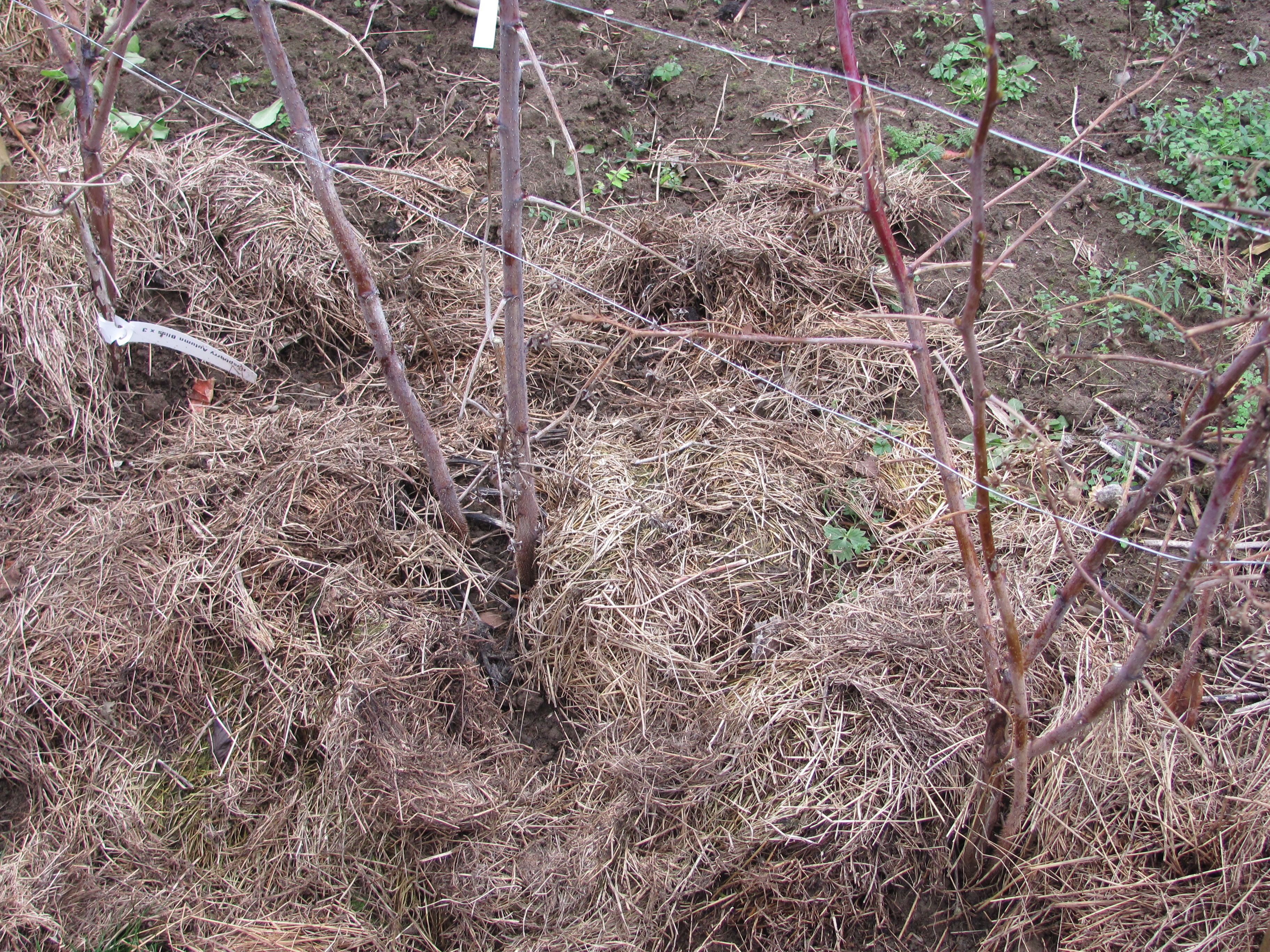
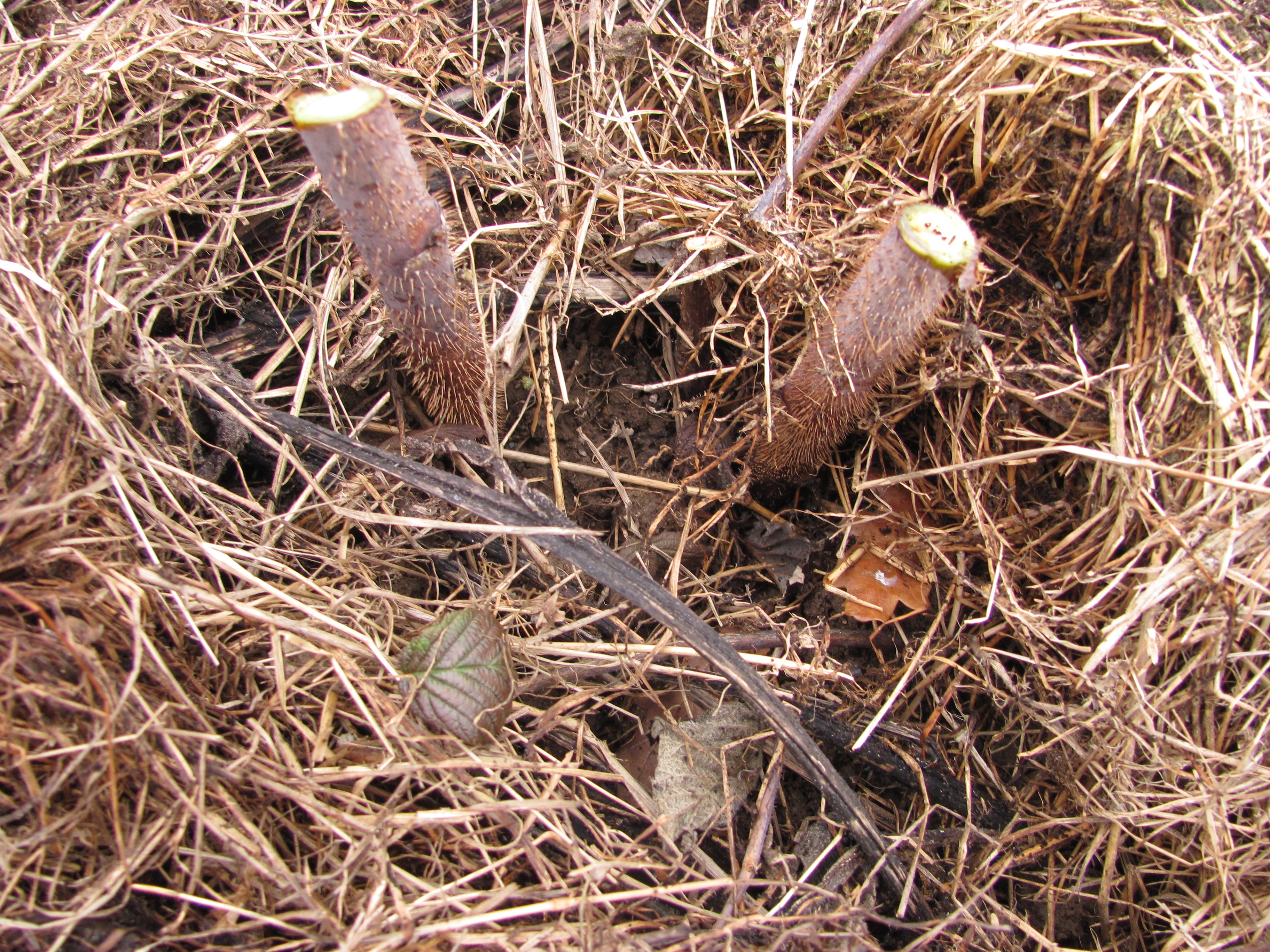
The feeders on our plot needed topping up before I set to work. My first task was to prune the Autumn fruiting raspberries, so pulled back their hay mulch and cut each stem down to just a few inches above the ground. Then their warm mulch blanket was replaced ready for the next cold spell.

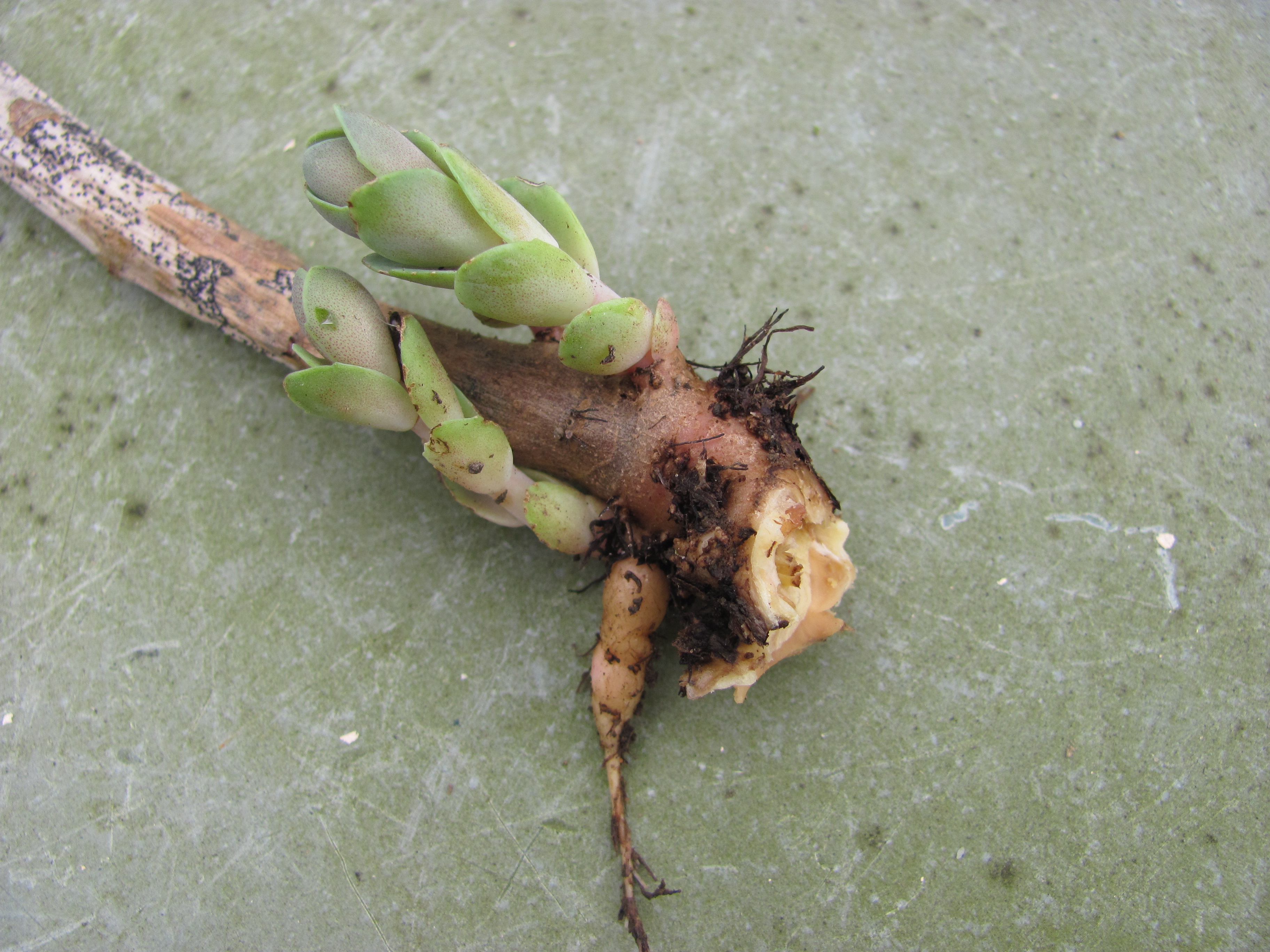
After tidying the edge of the plot where Calendulas had died down messily, I cut down perennials in the “Bug Border” alongside our central path, Sedum spectabile “Autumn Joy”, Linaria and several different Marjoram, all grown for the butterflies and hoverflies. As I pruned down the Sedum a few “slips” came away which I popped into my trug to be potted up at home.

A coffee break was called for to rest an aching back. A chance to do some bird spotting and listening out for their calls and songs. It was noticeable how some had moved on from calls to songs with the changing light of February. The Great Tit was giving a good performance repeatedly calling out “Teacher Teacher” just as it says in the books, but I often think it sounds more like the squeak of a tyre foot pump in need of lubrication. Its smaller cousin the Blue Tit sang gently from all around the site.

The peace was shattered as soon as the Rooks from the rookery on the northern boundary lifted as one and poured overhead, a cacophony of “cawing” and “rarking”. They are busy now restructuring last year’s nests. When one returned to the tree tops with twig in beak all its neighbours objected vocally craning their necks threatening and warning others to keep their distance. They live together in huge nesting groups but argue all the time! Their little corvid cousins, the Jackdaw, are quieter and more social. They pass overhead without any argument.

Signs of things to come! New growth is appearing at the base of perennials and the Globe Artichoke plants. Disappointingly the green manures have grown very little but just manage to cover the bare soil.

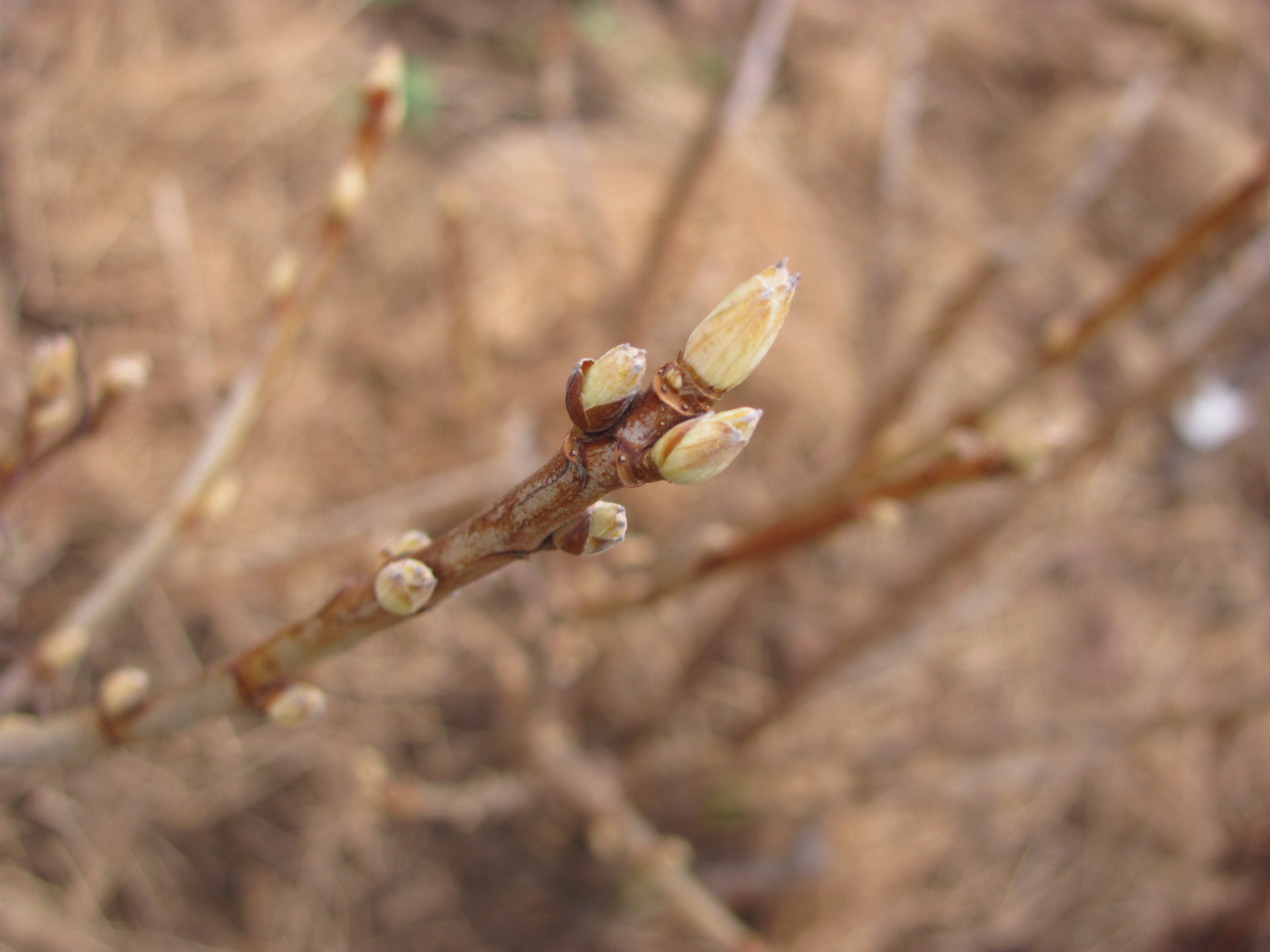
Buds are fattening on the Black Currants and the Blackberries. Promises of autumn bounty.


So once the work on our Plot 37 was completed I wandered off around the site, with wheelbarrow loaded – secateurs for pruning the roses in the Summer Garden, camera to take shots, surgical gloves  and step-ladder to clear out nest boxes. As I walked along the established hedgerows flocks of chattering finches moved away, keeping close top the hedge and to each other – Goldfinches, Linnets and Greenfinches. A surprise sighting was a flock of about 15 Yellow Hammers, the first time they have been seen here. Unfortunately one of the loudest noises was the dry screech of my wheelbarrow’s wheel! A quick detour to the shed for a squirt of penetrating oil cured it.

Where the hedge has been left uncut for several years (where the council flailing machines can’t reach) the bushes are tall and busy with finches and tits. A Song Thrush was throwing leaves and under-hedge debris out onto the path searching for its lunch. The calls of Nuthatches and Great Spotted Woodpeckers echoed around the allotments all the time I was on site, but one call was unexpected. It stopped me in my tracks. I had never heard the piping call of a Bullfinch up here before. It wasn’t hard to find – a male with its pink, almost cerise breast glowing from a tall Hawthorn.

Nestbox cleaning can be a painful business if the nests have been colonised by nest fleas, hence the surgical gloves. Luckily none in residence today! Four of the five tit boxes had been used last year. The open-fronted Robin boxes were ignored by our population of redbreasts.

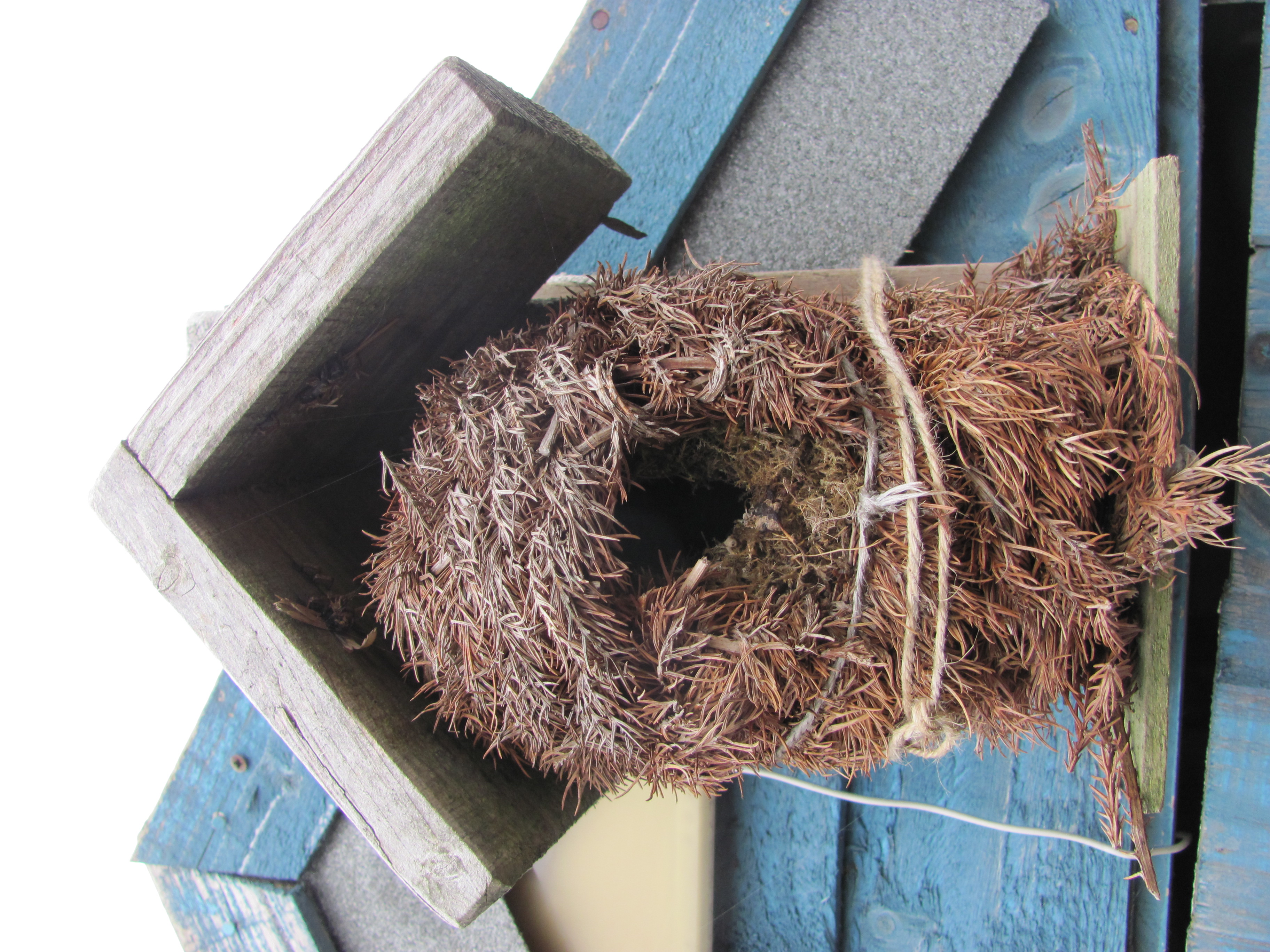
This photo shows how the Great Tits who nested here used their tails for added balance when feeding their young through the hole. The wood stain has been worn away.

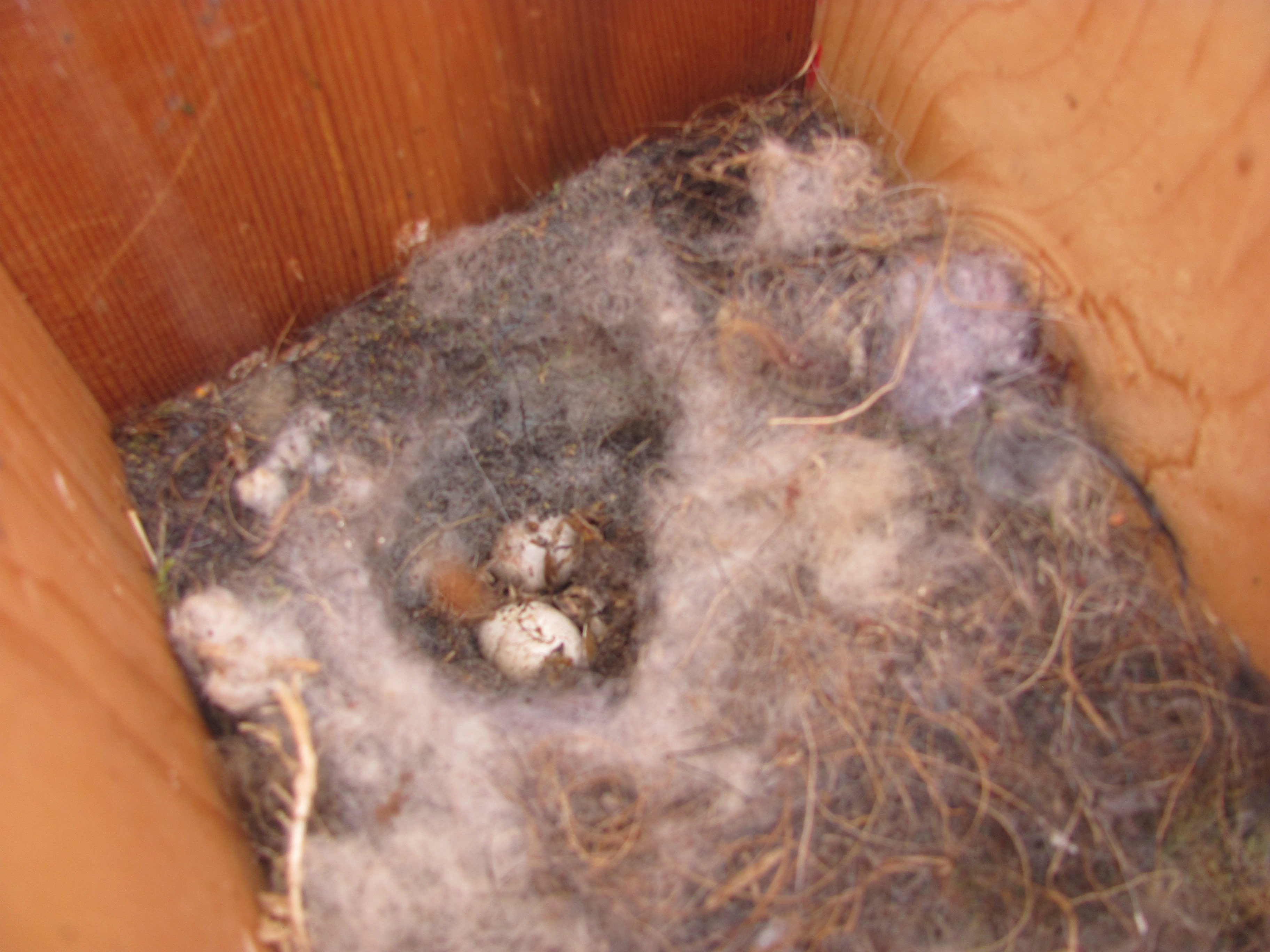
The box in the photo below was used three times in 2011, but the third attempt was thwarted by cold wet weather in the early autumn, so the clutch of eggs remains. When I emptied out the nesting materials I could see the three layers of nesting material. When I had emptied all the boxes the old nests were put in the compost heap.

In the meadow areas seedlings cover the ground, so our plan for self seeding meadows seems to be working out. In one meadow area a lone cornflower continues to throw up an odd bloom of the most beautiful blue.

Categories
bird watching birds garden photography garden wildlife gardening grow your own hardy perennials ornamental trees and shrubs photography shrubs winter gardens

A Wander Around Our Garden in February

This is the second of our monthly garden wanders designed to give an insight into what is going on each month. Our February wander will be a colder one so don those thermal gloves and woolly hats with silly bobbles and join us. We hope you enjoy what our garden offers in the second month of 2012.

The day dawns frosty but with a bright blue hat on. A lovely fresh winter’s day, with the quiet plaintive song of the Robin as company – he always comes around the garden with us and entertains us with a song. Overhead Buzzards call from their thermals high above the slope of the hill. It feels a perfectly calm day to us but these big, broad winged predators always find movement in the air. Why does the call of the buzzard always sound further away than the bird itself? Have they mastered the art of ventriloquy? We see them most days but we never lose the desire to watch them enjoying their freeform flight.

I fed the chucks and topped up their frozen water with some warm, before collecting their eggs from the nest boxes. Today the hens’ contribution to our larder had added benefits. Handwarmers! Holding these little warm parcels of food felt more special than usual. As I passed the shed on my way down to the chuck pen three Wrens burst out of their roosting pocket – late risers. A pair nested in here in the summer just a few inches above the shed door. They took no notice of our comings and goings. They filled the roosting pouch with moss, feathers and delicate grasses which now insulate them on cold nights.

Dual purpose roosting pouch.

The garden is full of birds once more after a quiet few months. We were beginning to wonder where all the birds had gone, but today Goldfinches have reappeared in busy red and gold flecked flocks. mixed feeding flocks of titmice invade every tree and shrub and Linnets sit on the highest branches. Long Tailed Tits in groups of a dozen or more flit from tree to shrub and from feeder to feeder, never still, always fidgeting like a class of infant pupils awaiting a favourite story. The odd Bullfinch and Blackcap conduct their business more quietly.

On the feeders Jackdaws attack the peanuts dropping morsels for the Dunnocks and Chaffinches waiting below. Jackdaws are long-lived and today two old favourites are to be seen, one with a white wing and one with a wing that droops low when he settles. Overhead their much larger relatives pass over, a “cronking” trio of Raven flying effortlessly with outstretched fingers.

It is noticeable that the clusters of berries on the Hollies and Cotoneasters are much depleted as greedy groups of resident Blackbird and Mistle Thrush are joined by migrant members of the thrush family, the winter visiting Redwing and Fieldfare. The small yellow crab apples on Malus “Butterball” have now been stripped by these members of the thrush family.

Our horizontal cotoneaster is a favourite of Blackbirds, Redwing and Mistle Thrush.

There has simply been plenty of natural food for our avian friends this winter. It has been mild enough for insects to be on the wing, for invertebrates to be creeping and crawling, and the hedges and trees have heavy berry crops. We want to see them in our garden but we are being selfish. They come to us when they need to and not before!

The blackbirds have finally discovered the windfalls.

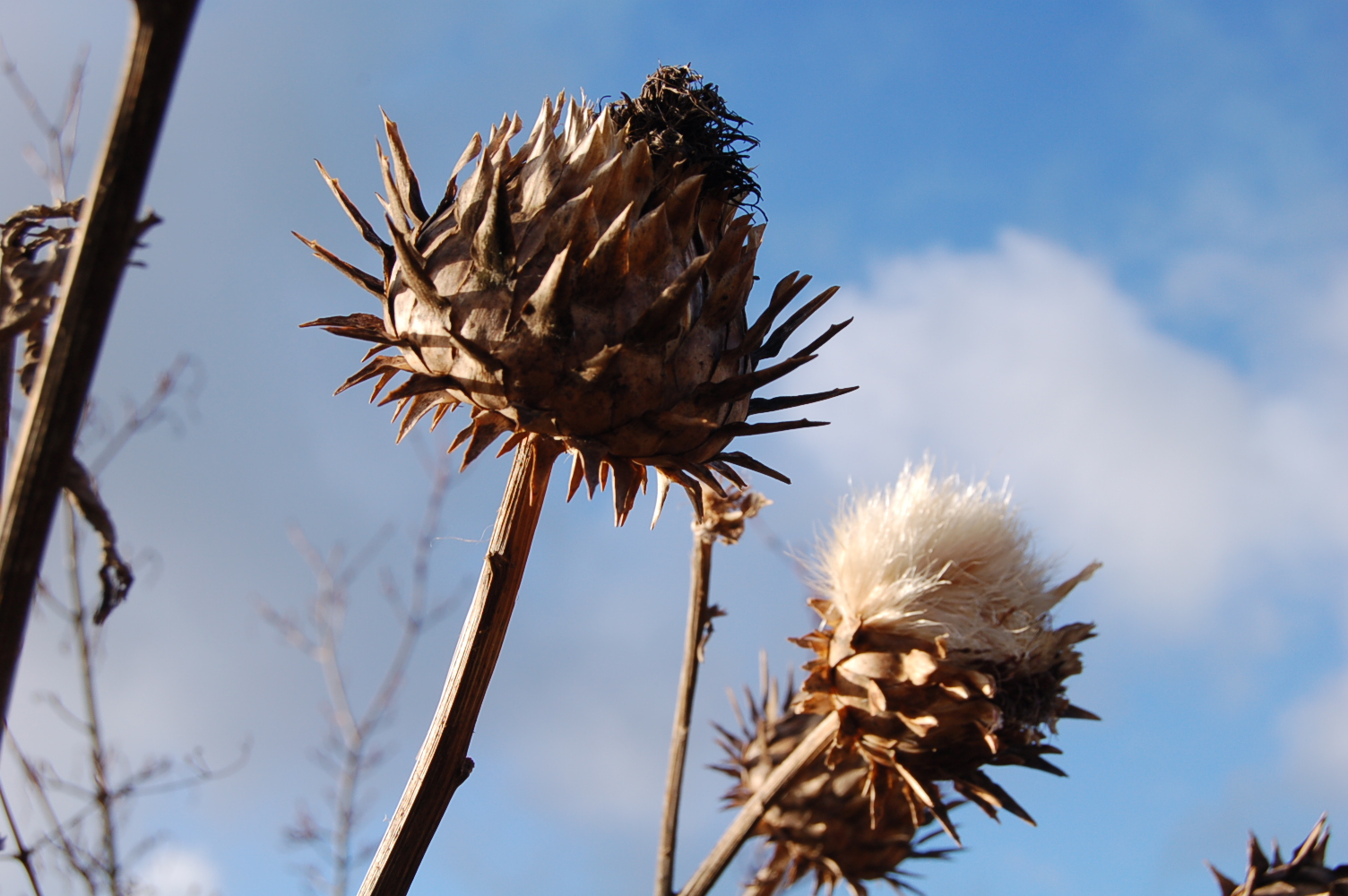
The re-appearance of the Goldfinches gives us close-up entertainment as close to the conservatory window grow Onopordon, the Scotch Thistle, and its seed heads tower into the blue sky. Goldfinches love them and soon dig in for seeds, bursting the heads open as they do so, and the white fluffy insides overflow like raw cotton.

Scotch Thistle seed heads towering into the blue.

The intensifying of the cold sucks structure from leaves and hardens the ground beneath them. The accompanying frost layers the ground and plants with lines and layers of frozen crystals. The blueness of the skies on a clear February day is more intense than earlier in the winter. The sunlight seems brighter.

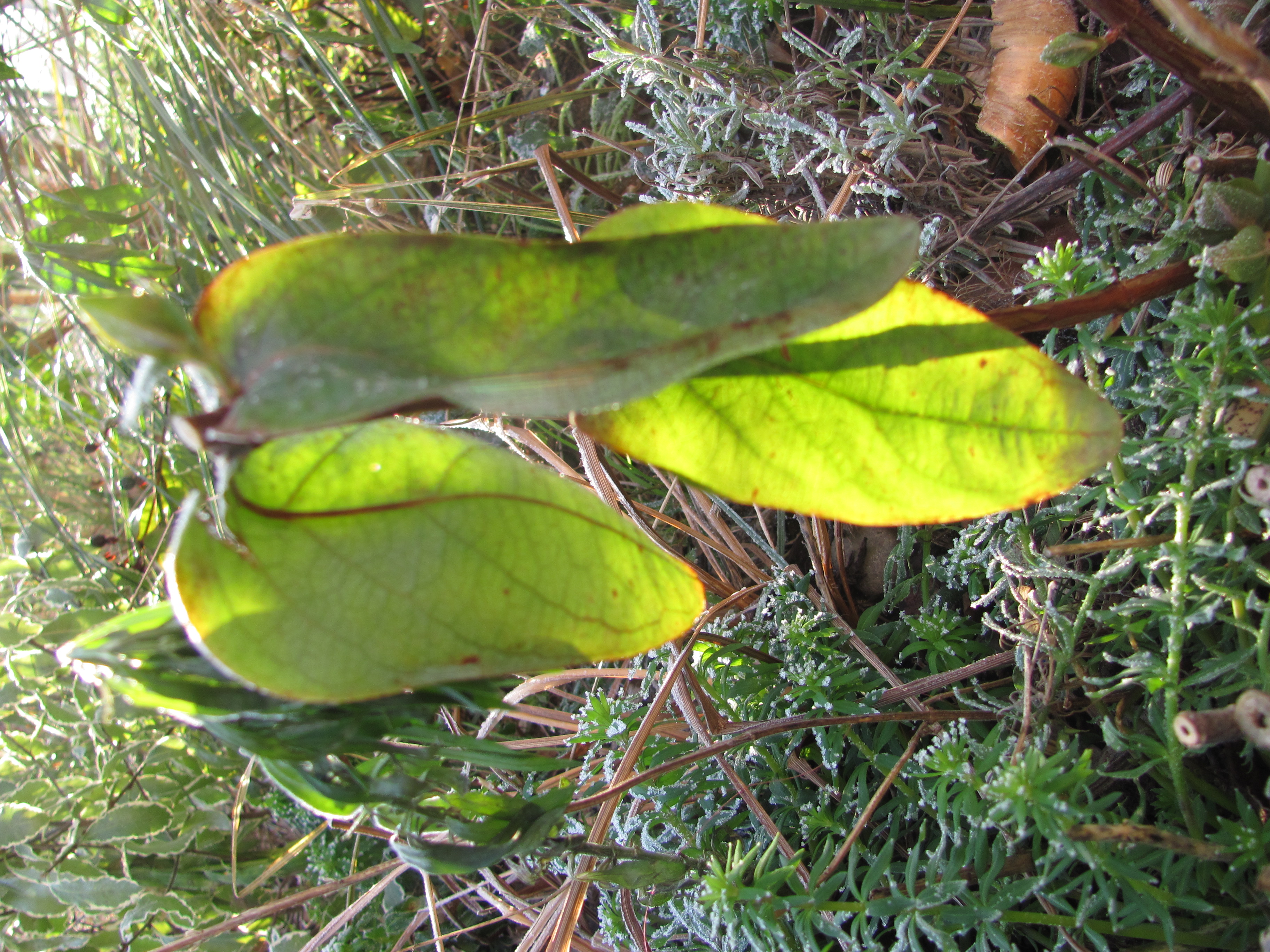
The deep cold has taken the structure out of the young self-seeded sunlit Hypericum.
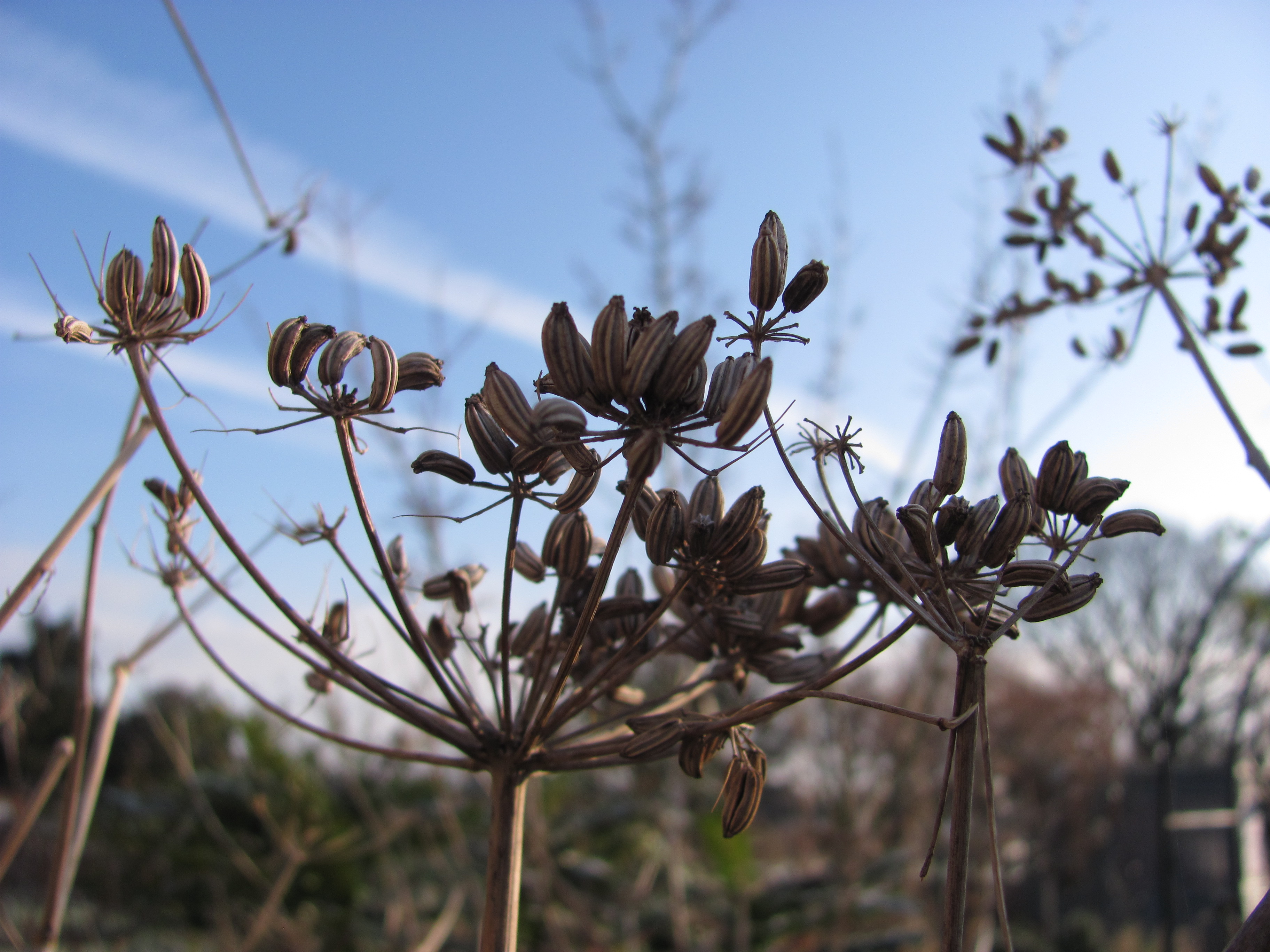
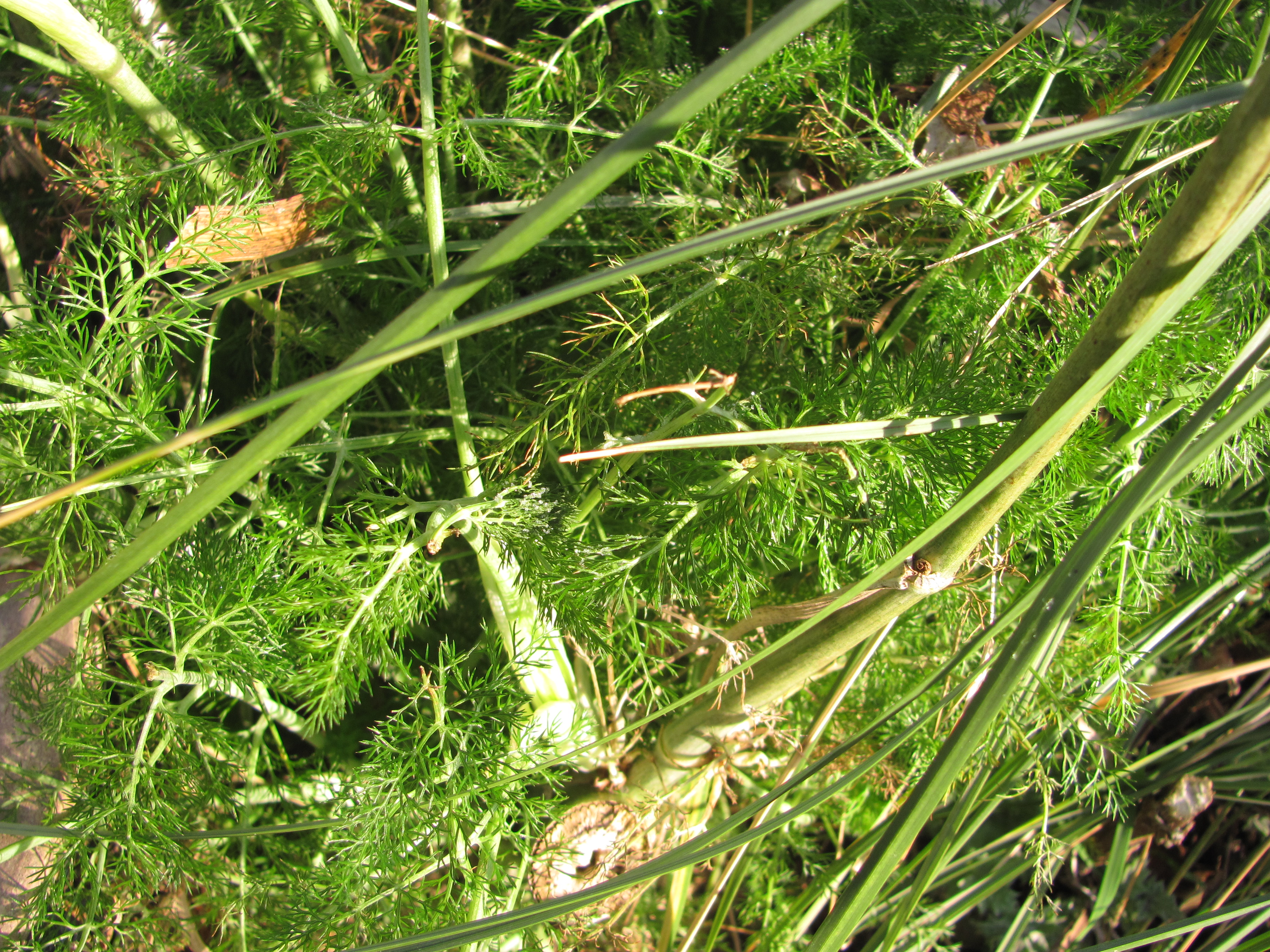
Fennel seed heads still stand strong while its delicate bright green seedlings shelter below.
Sheltering Fennel seedlings.
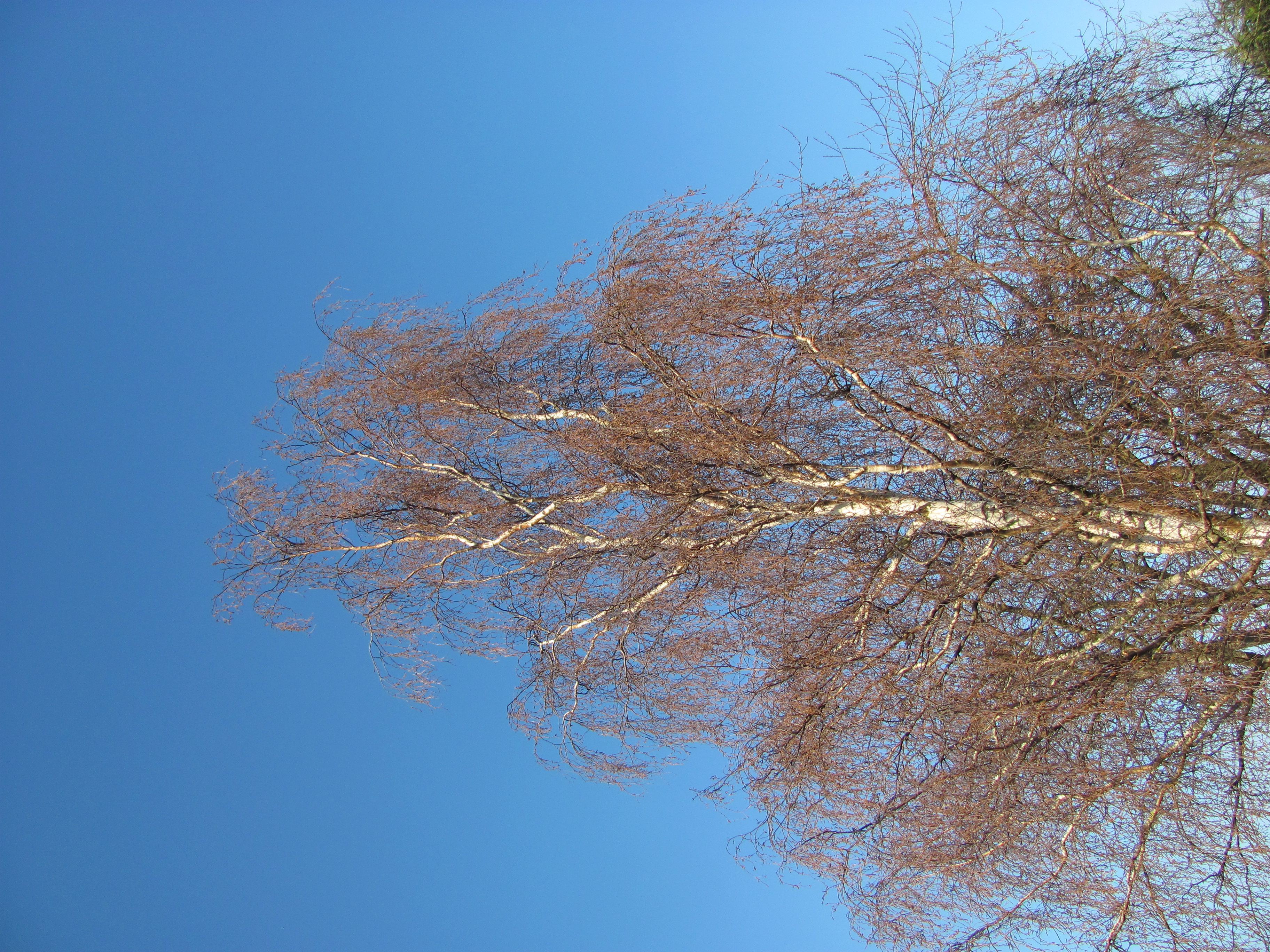
The deep blue February sky increases the purple tints in the tracery of the Birch's finest branches.
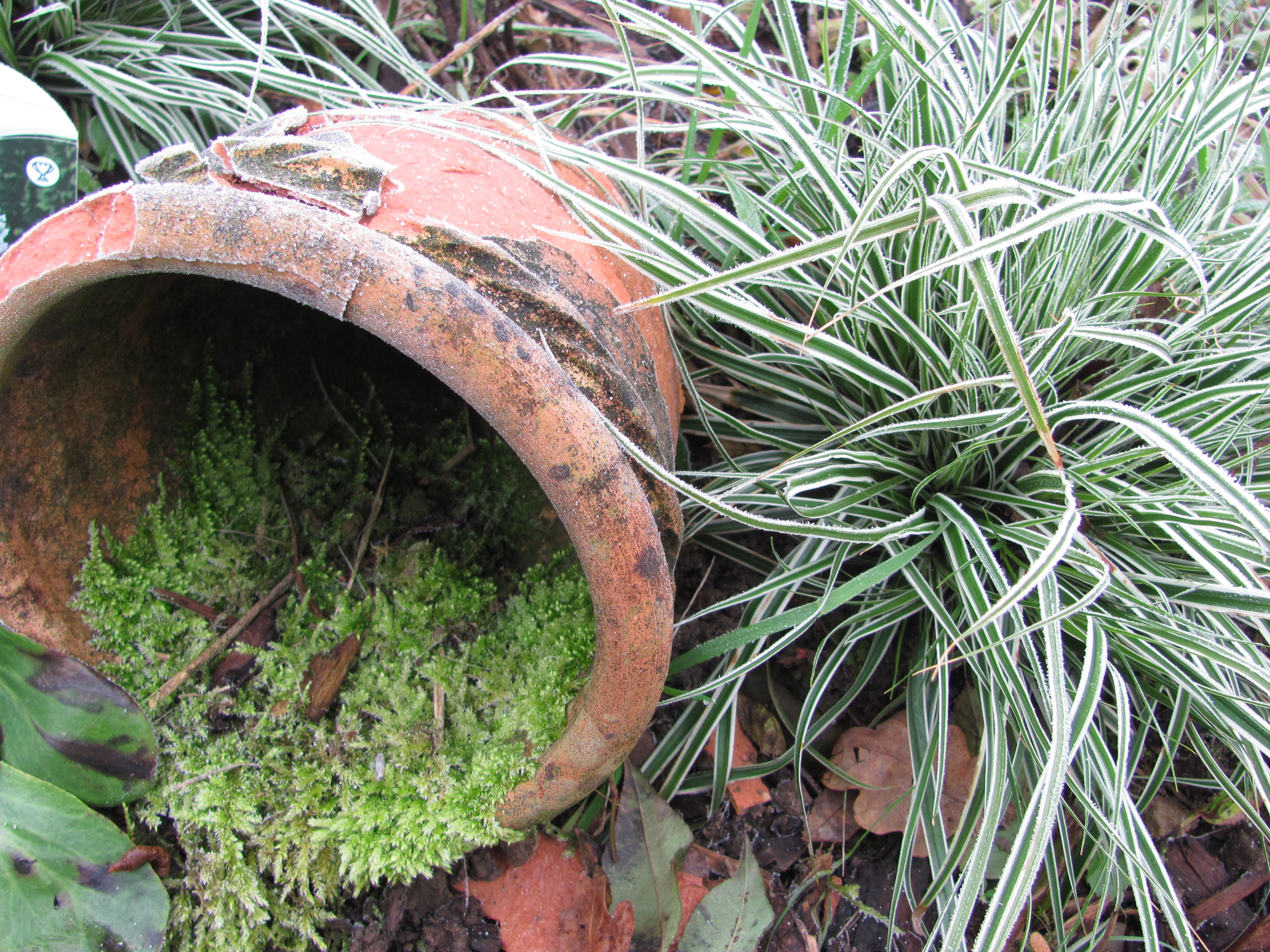
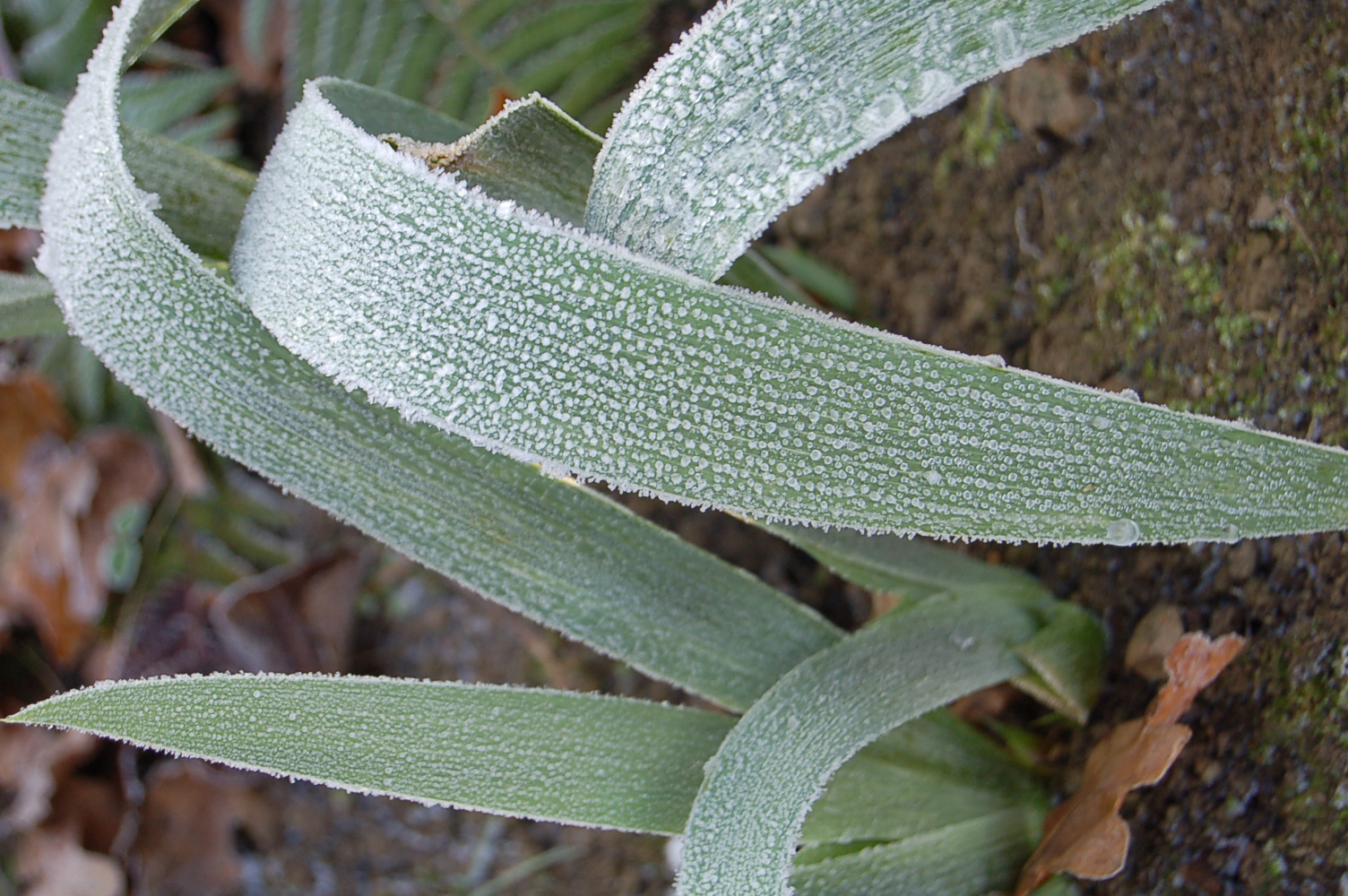
The frost gives an extra line of silver along the leaf edges of these grasses.
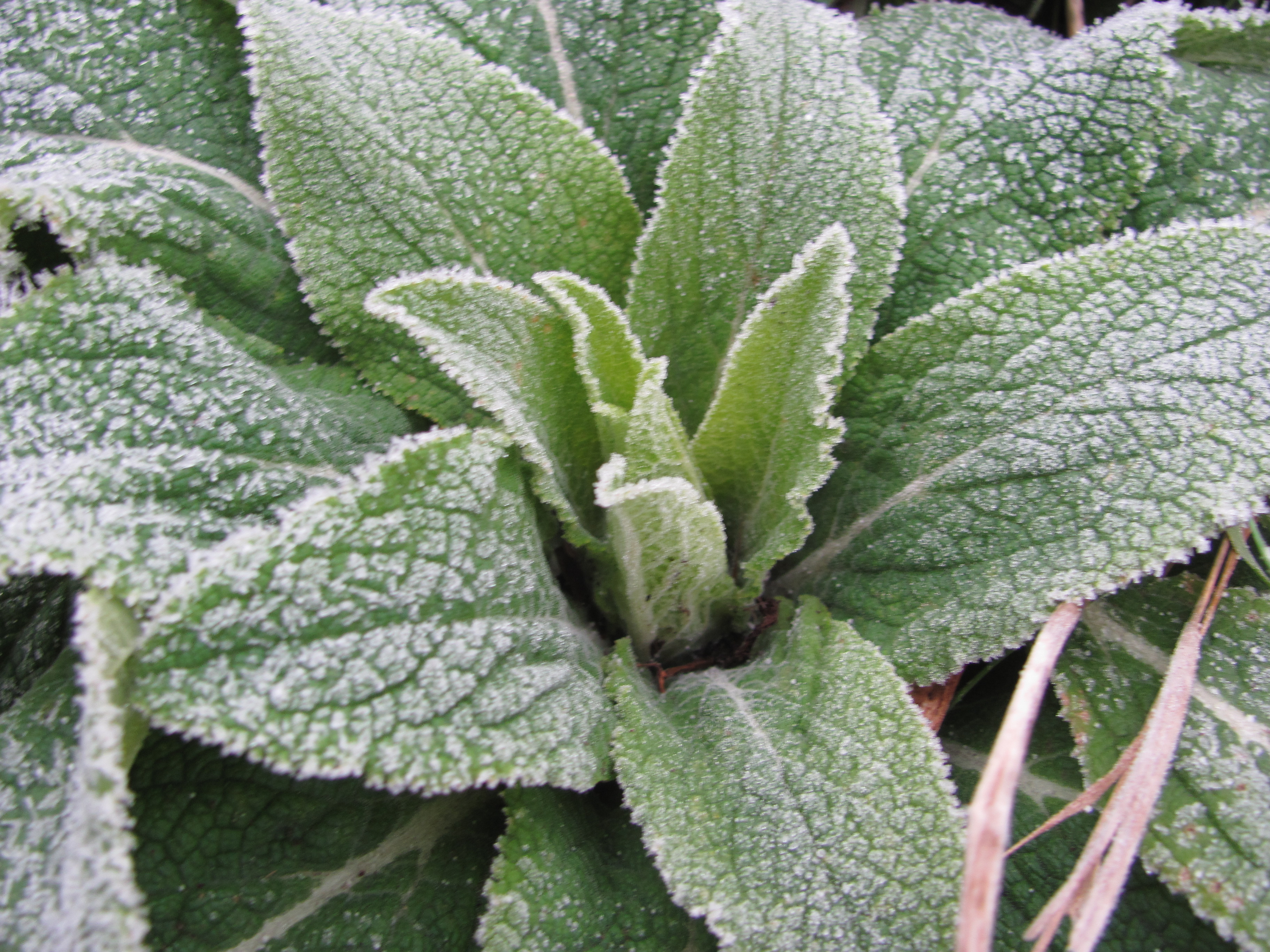
Icing sugared Foxglove leaves.
Frost adds another layer of texture.

Something special happens to light in February. There is something about the quality of light that changes. It makes you feel better. It makes plants look better, their flower colours intensify. If, like both “The Undergardener” and I, you suffer from SAD (Seasonally Affected Disorder) then you will feel and experience this change. You feel the tunnel of winter has brightness at its end. Monty Don, in the book “Fork to Fork” refers to this improvement in light quality, writing that February displays a “tangible promise of a better time” and talks of a “surge of energy and hope running through the garden”. This will be tangible from about the middle of the month but even now the hint of that promise is in the air. It isn’t just S.A.D. gardeners who believe in the wonder of February however, as we have a pair of Blue Tits taking up residence in one nest box and a pair of House Sparrows in another. Spring is in the air! Well, maybe not! No, these two pairs are just like serious sun-bathers on a busy sandy beach, just getting there early to “bag” the best spots.

Nowhere is this new hope more obvious than in the flowering of the bulbs and the bright green signs of new growth of perennials. Snowdrops, Crocus and Aconite, the pearls of the month.

Winter Aconite Gold.
So delicate but so tough.
Marbled foliage of Cyclamen with golden flowers of Winter Aconite
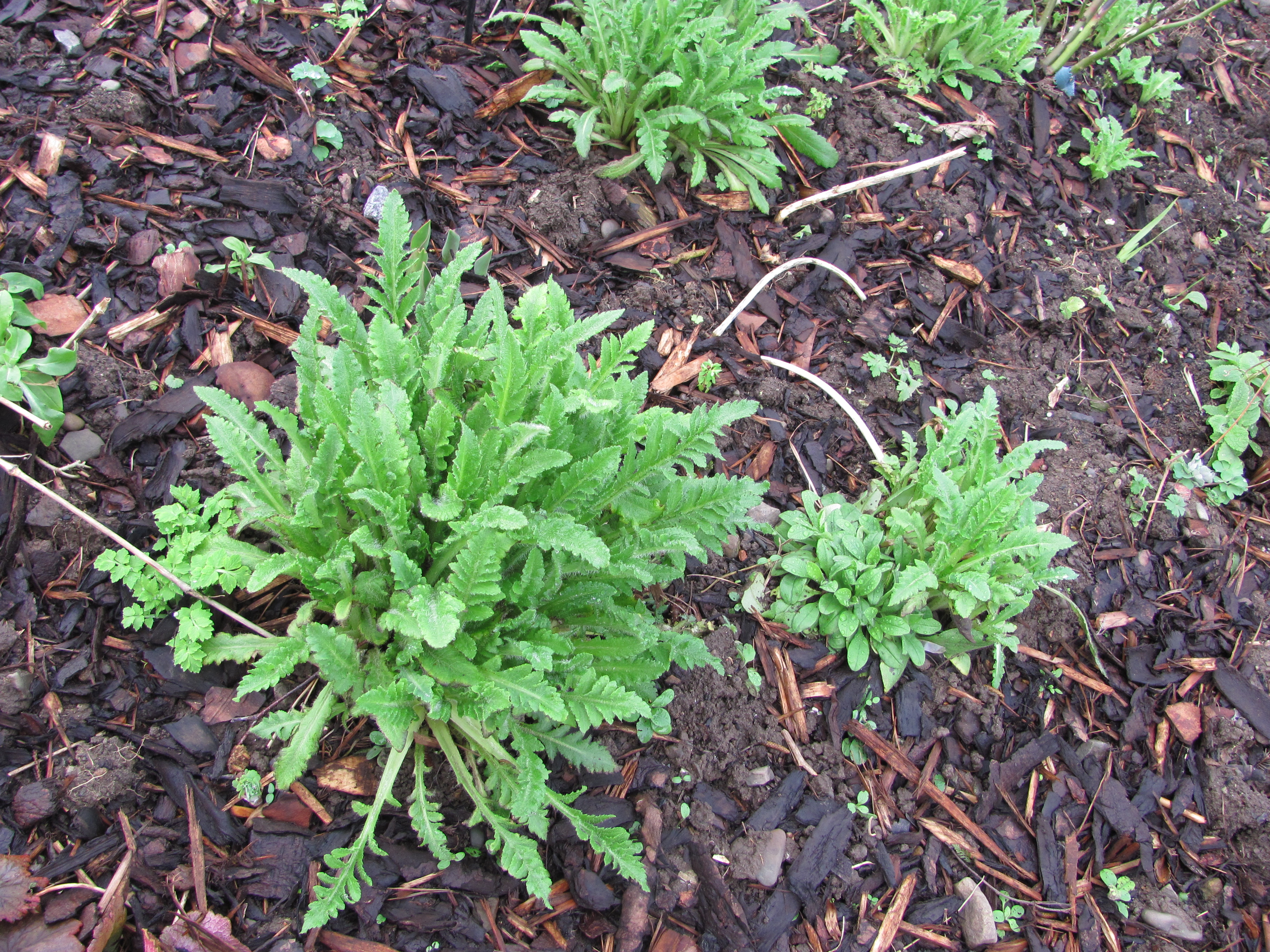
New growth on the oriental poppies - promises!
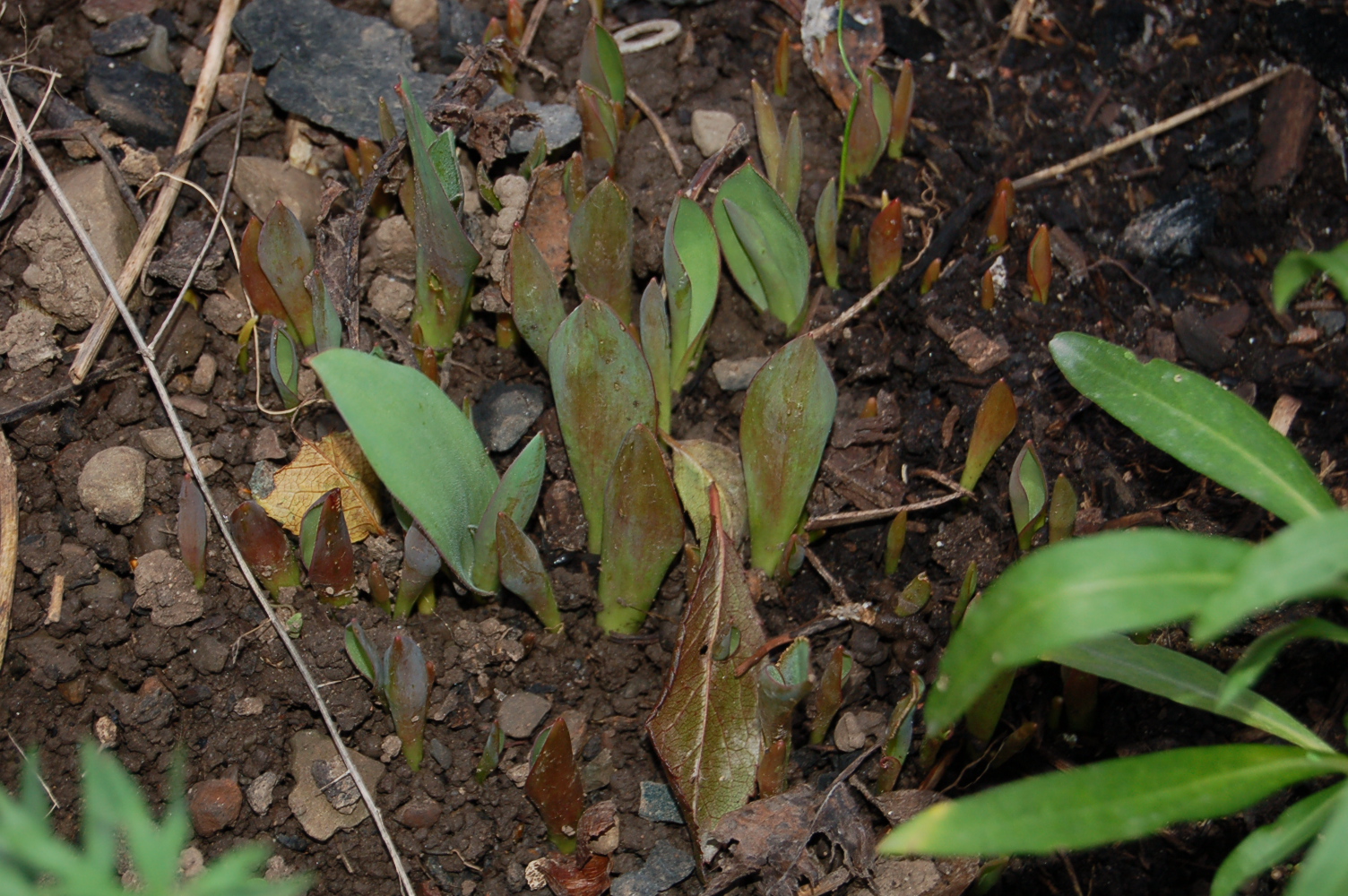
The leaves of Day Lilies spear the frozen mulch.

But some new life is out of sinc. Buds appear and surprise. The blue anemone with its metallic sheen on its indigo bud is a special treat and is reflected in the blue berries of the Viburnum davidii. The last of the rose buds however that gave promise of flowers have given in to winter’s grasp.

Out of Season Aconite
Blue pearls.
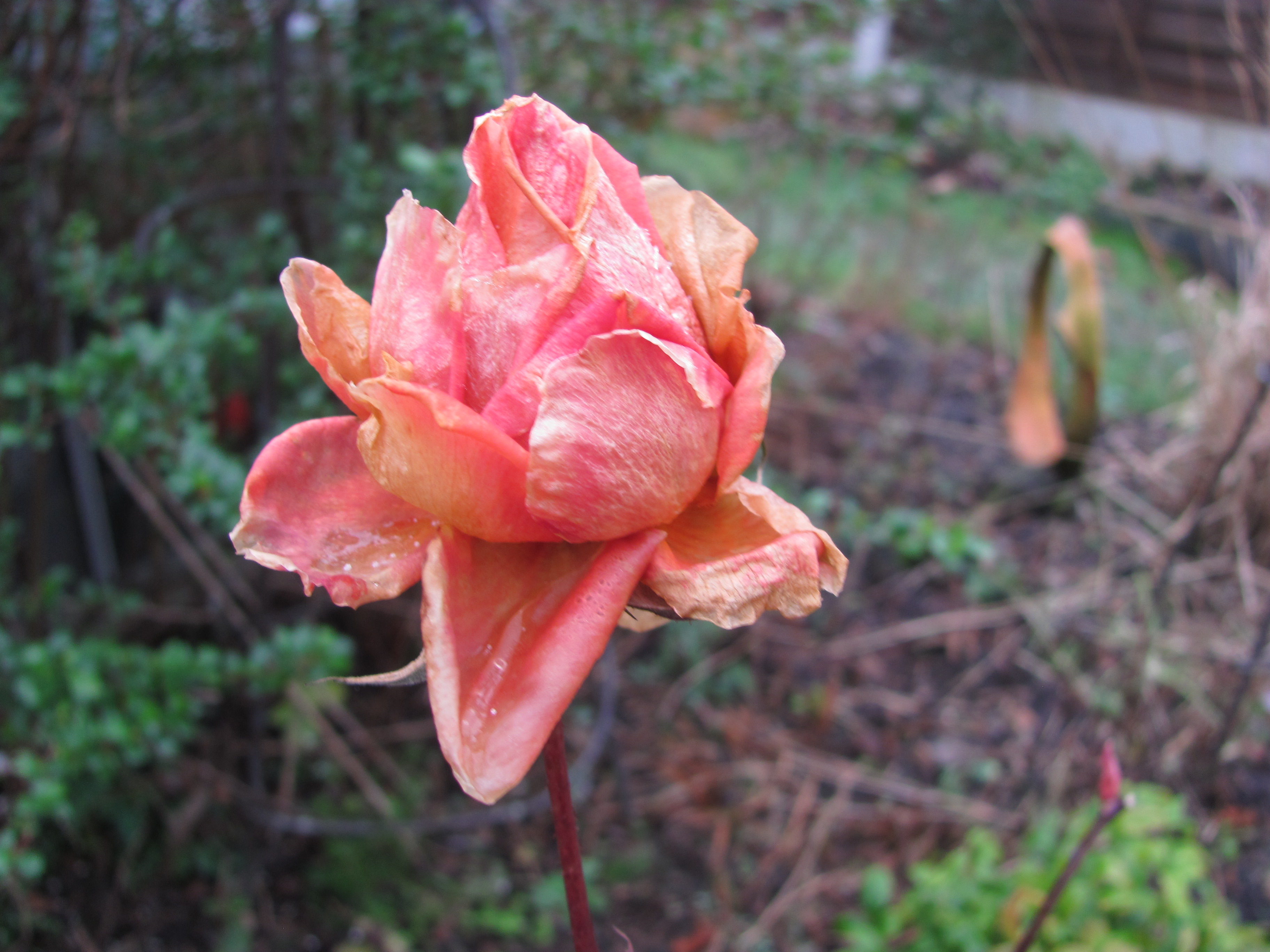
The promise of a rose flower stopped by the frost.

No February garden can be complete without Hellebores so here are just two of ours. But my true favourites to finish our February wander around our garden are the Witch Hazel “Jelena” and Cornus mas.

Upright growth and rich reds and purples make this a special Hellebore.
Perfect primrose yellow cup.
Witch Hazel "Jelena"
Cornus mas, the Cornelian Cherry, a modest beauty.
Categories
bird watching birds conservation garden wildlife natural pest control photography Wildfowl and Wetlands Trust wildlife winter gardens

A Day at the Original Wildfowl and Wetland Trust Centre – Slimbridge

Our recent visit to Barnes, the WWT centre in London, reminded us that we hadn’t visited Slimbridge for a good few years. Bitterns were being spotted regularly so a relatively mild day in January seemed a good day to visit. A long and very slow drive down in the drizzle failed to dampen our enthusiasm. So having arrived an hour after we had planned a welcome cup of coffee was gulped down before we headed for the hides. Trouble is we had to begin by walking passed the flamingo enclosure – an assault on the eyes and ears. Not our favourite birds – the Dame Edna Everidges of the wildfowl world.

The walk to the first hide took us through wildfowl enclosures. We don’t stop here much but it was a favourite when our children were young, and is still a  favourite for young families today. it is a great way to introduce youngsters to the joys of the bird world. It is safe to say that many children who marvel at the beautiful fowl from every corner of the world become birdwatchers – their interest is sparked here at Slimbridge.

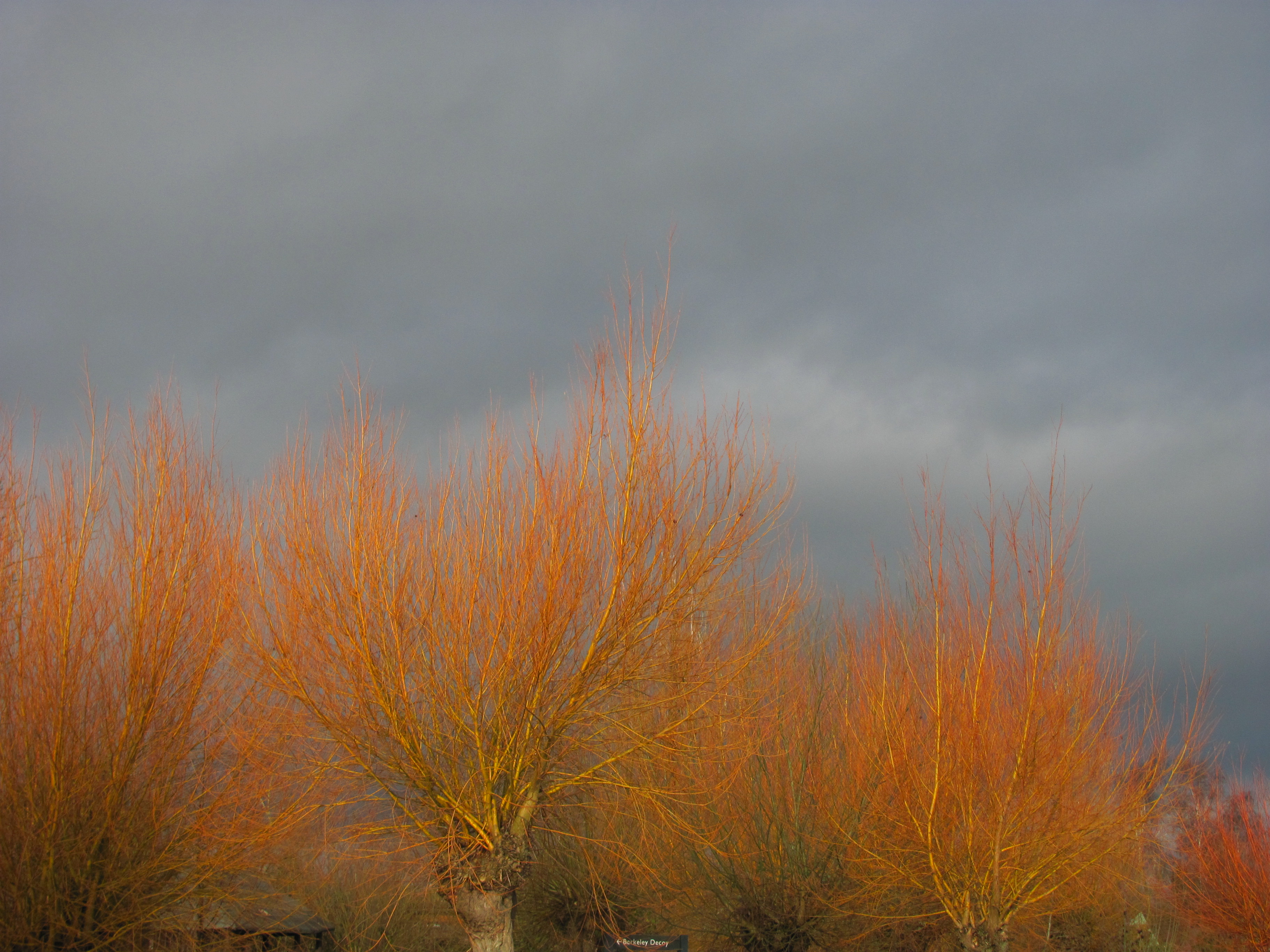
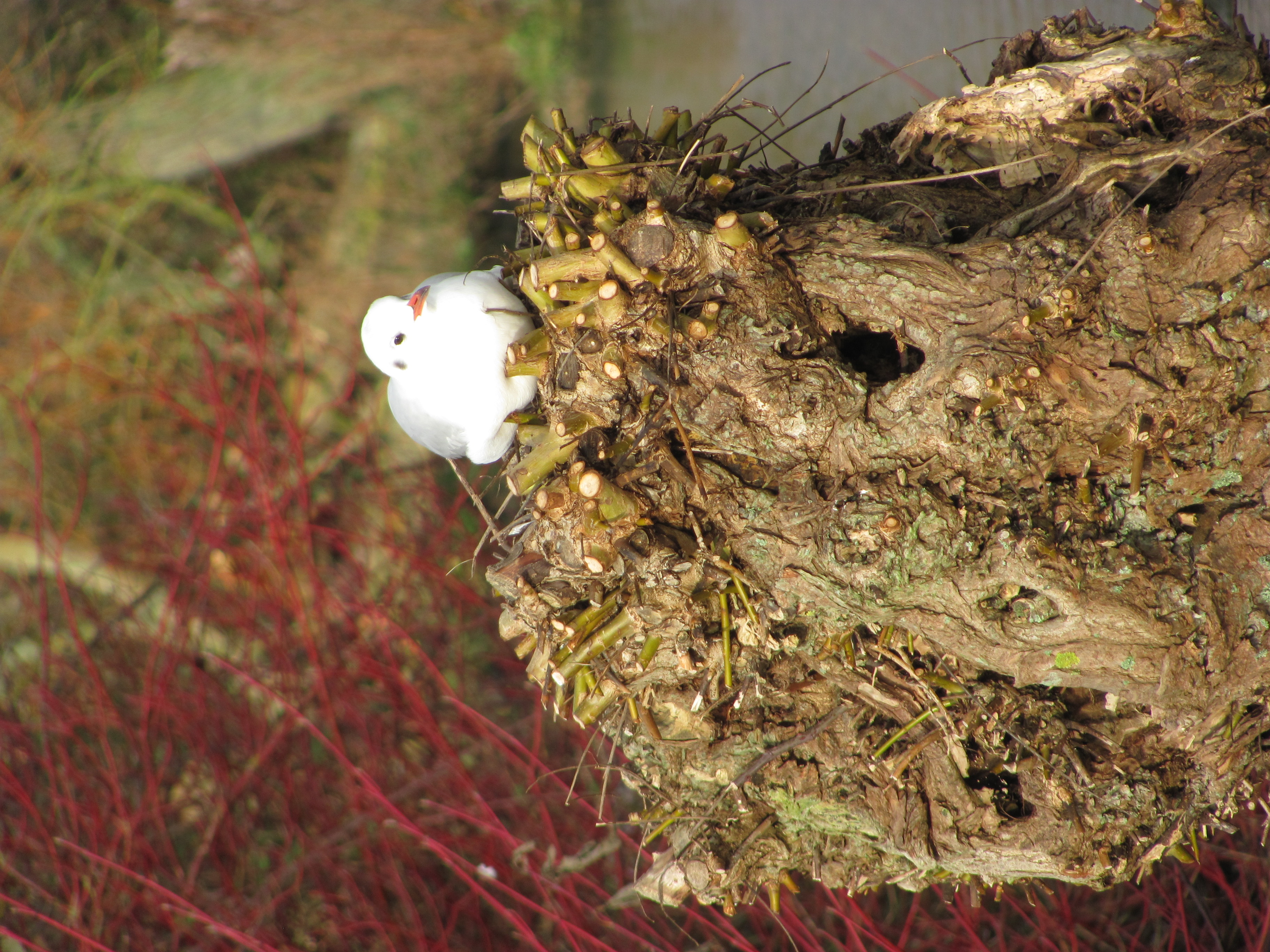
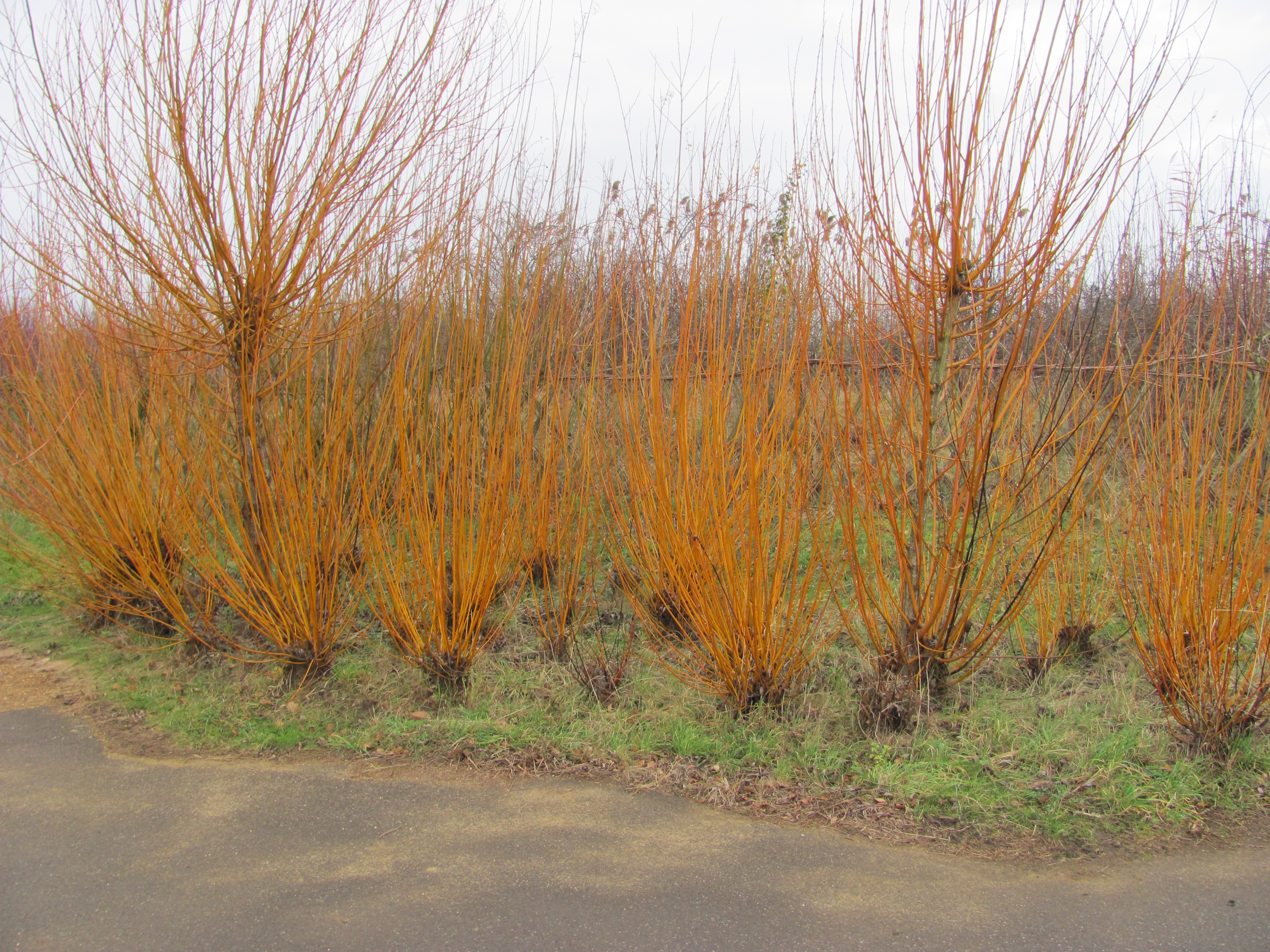
In this area pollarded willows with wands the colours of fire glow against the storm-laden sky. Some newly pollarded trees look like they are sporting designer stubble, others throw their stems rigidly into the air.

Flames of willow lapping the airforce blue sky.
Winter light gives so much colour to a dull day.

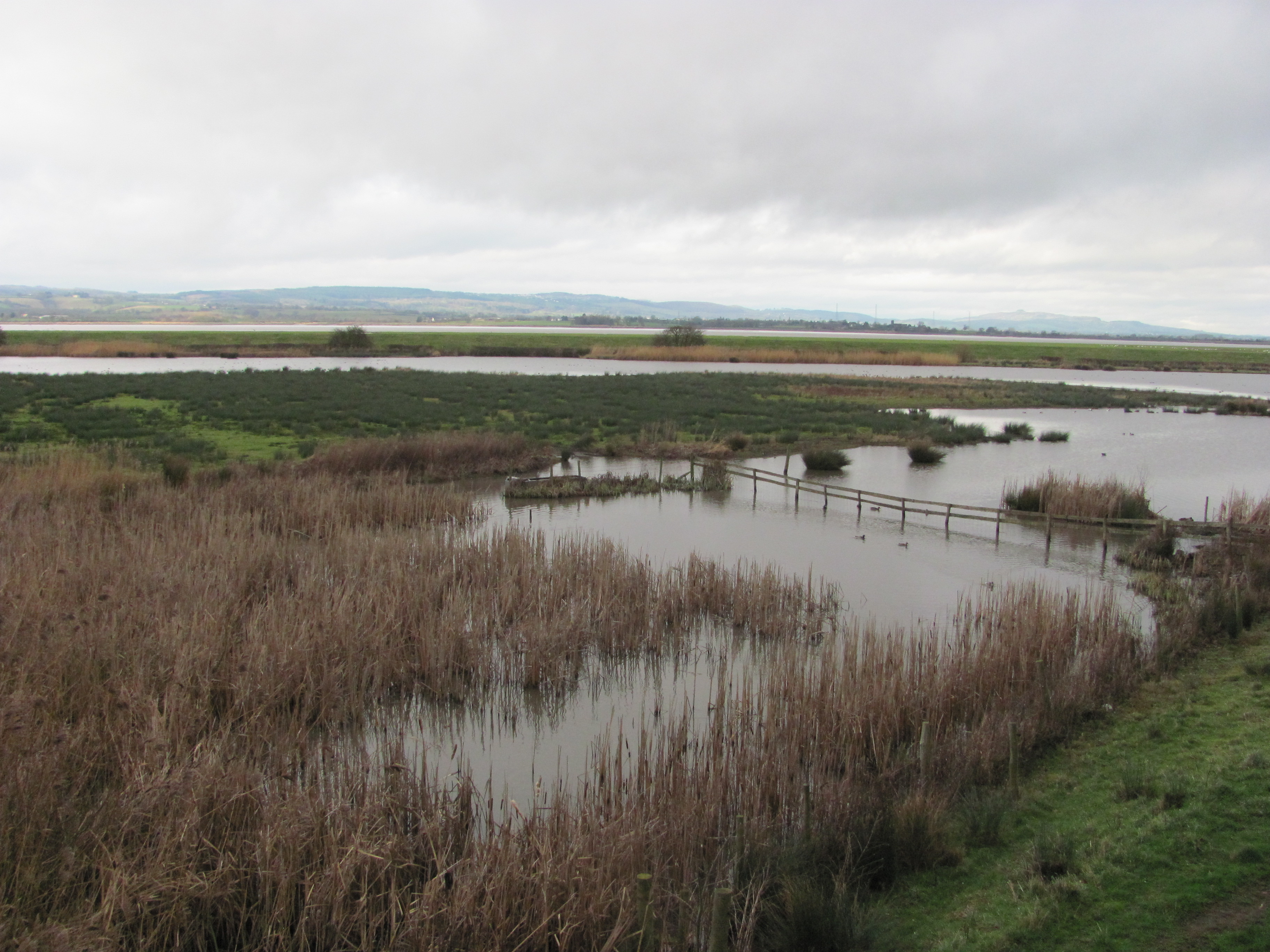
We arrived at the first hide after a twenty-minute walk through the wildfowl pens regularly distracted by the low winter sun and its magical effect on stems and stalks. The view from the hide was one of flat landscape of reedbed, river and shallow pools. Shelduck were relaxing on the grassy bank of a patch of cold looking water while mallard and teal flirted in the edge of the reed fringed pools. This was a quiet place with just the wind rustling the reeds, the whistling calls of the teal disrupted by the quarreling mallard. A small bird flitted from one reed seed head to another never settling, a brown backed warbler with rounded end to its tail – a cettis warbler. This is a sight worth the long journey to see. But Jude quietly whispered to me “I can see a bittern”. There it was, so hard to find and so easy to lose, skulking in the fringes of the reeds a few metres from the hide. Stripes of brown on warm beige, provided the perfect camouflage, the bittern moved so slowly like a clump of dried reeds. Jude saw it with head and neck stretched up – lucky lady!

Our view from the Zeiss Hide

We remained in this hide long enough to get cold and stiff after perching on the hard wooden seating, revived somewhat by regular coffees. Eyes soon become tired staring over such huge areas of wetland, so blinking and rubbing them was a necessity. But our tired eyes did see many delights, Pintails, Shovellers, Water Rail among multitudes of Pochard, Wigeon, mute swan mixed with Bewicks and the occasional heron flying in and landing on fenceposts. The only birds of prey we spotted were several buzzards all lined up on fence post on the edge of the river. Our eyes needed a rest and luckily the nearby Kingfisher Hide provides just this as the views are smaller, the birds more intimate. Here bird feeders hang in a tree just outside one of the hide’s windows. A half hour of close-up views of finches and tits while eating lunch is an enjoyable interlude.

Goldfinch enjoying nyger seed.

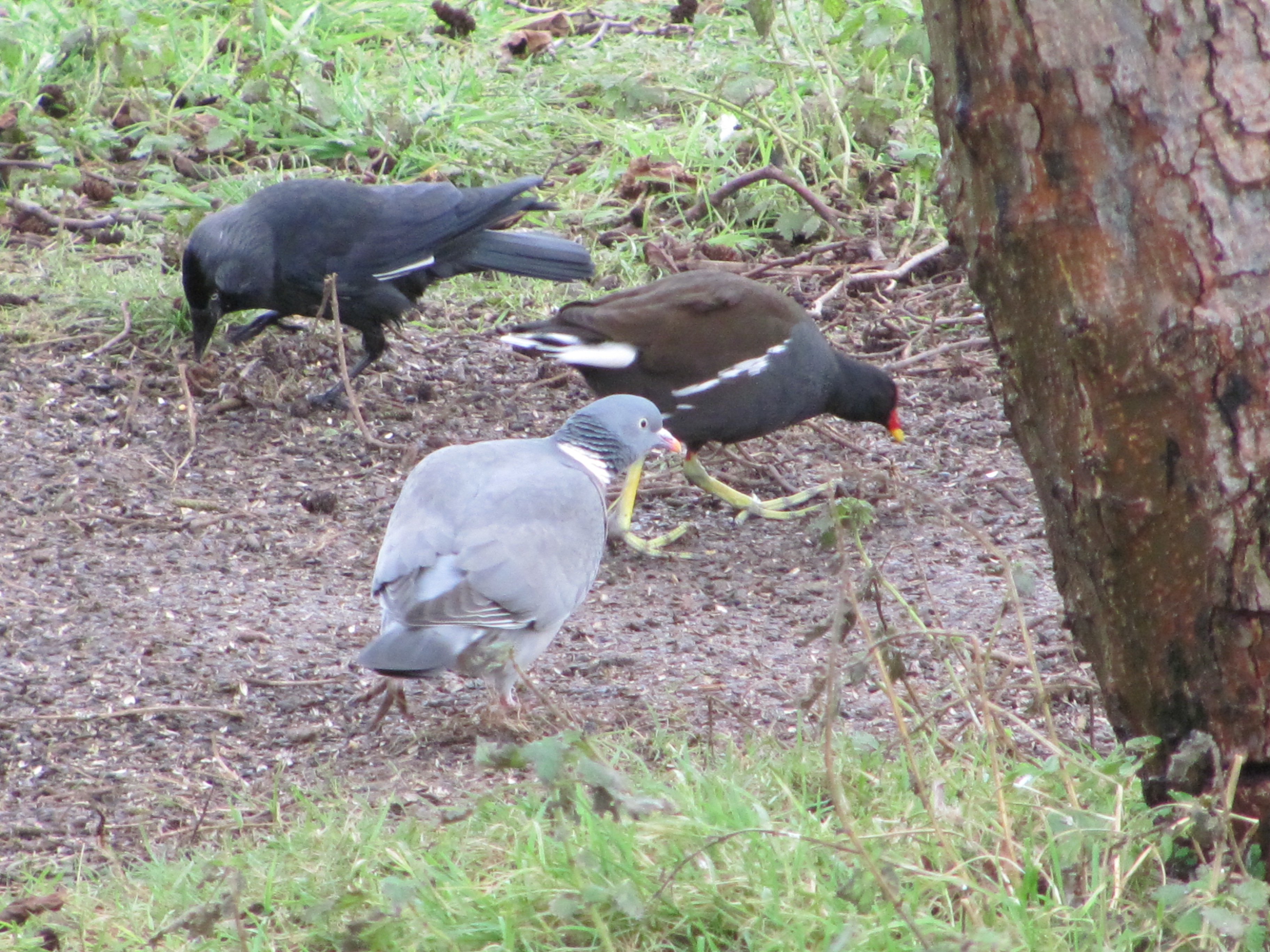
As Jude read an information board about kingfishers she informed me that they moved elsewhere during the winter but returned in March, but as she told me this one flew across the water low and purposefully. You can’t mis-identify a kingfisher, there is nothing else like it. Then it flew back across the water to prove he really was there. Beneath the feeders opportunist pigeons, blackbirds, moorhen and jackdaws joined by a squirrel picked up the seeds and peanut crumbs dropped by the messy small birds above. We enjoyed watching the antics of a Little Grebe as he swam around just feet from the hide, a delightful ball of feathers.

Greedy opportunists find easy pickings.

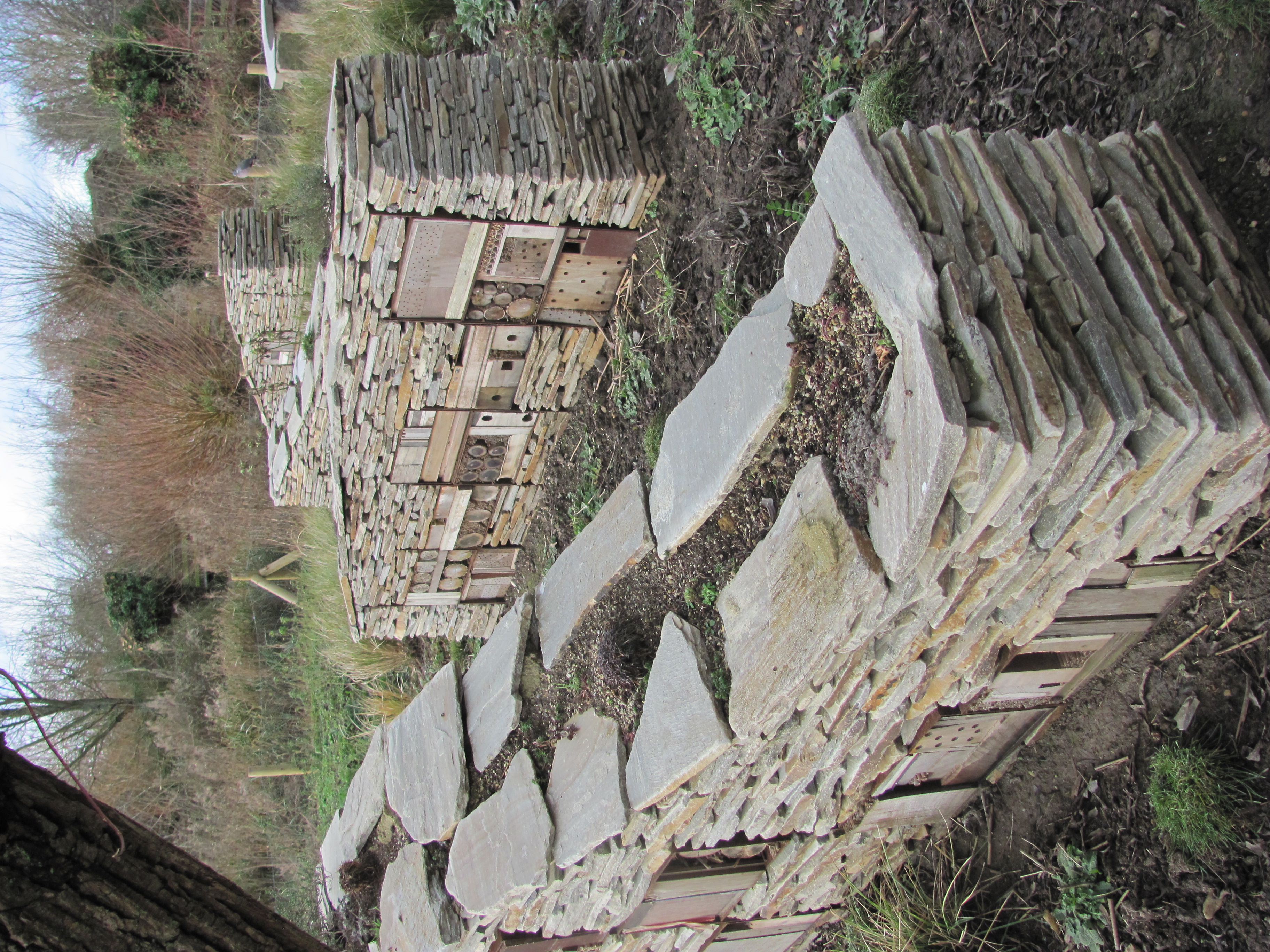
Picnic eaten and eyes rested we continued our tour of the site visiting smaller hides and enjoying the walkways in between. We passed the Rain Garden with the most wonderful, sculptural insect shelters.

The art of the dry-stone wall-builder provides shelter for wildlife.

Many of the birds have become so used to human visitors that they let you take photos without huge telescopic lenses, just compact digital cameras like the one I carry in my pocket.

It's not just me that appreciates pollarded willow.
The moorhen, common but beautifully marked and subtly coloured.
The coot creating his own patterns in the water.

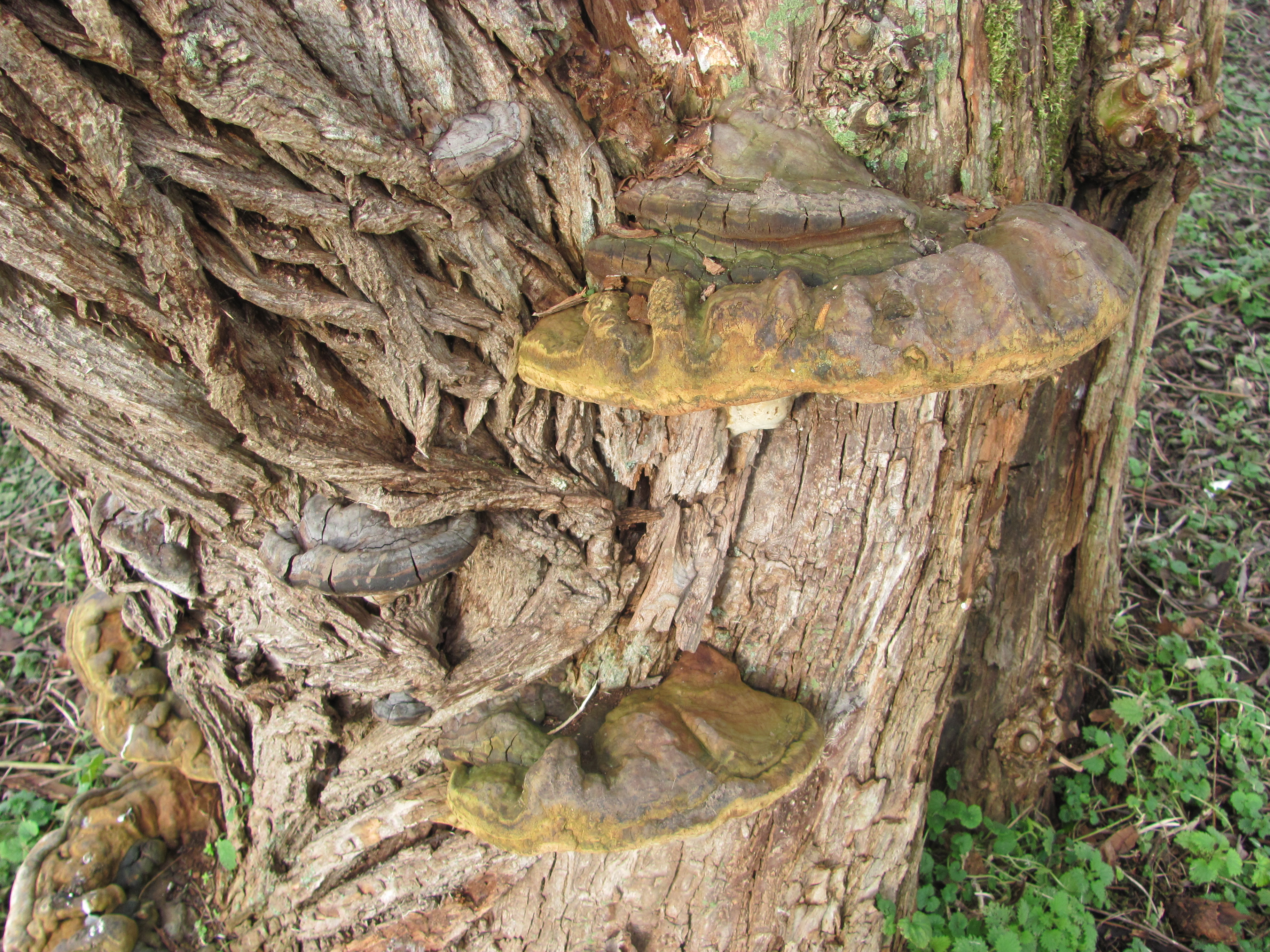
It was between some of the smaller hides that we spotted the first good-sized clump of snowdrops of the winter so far bursting from the leaves that had dropped in the autumn to give the ground a warming duvet. Nearby gnarled old bracket fungi clung to equally gnarled old willow bark.

Bright lights in the gloom under the bare stemmed trees.
Such varied texture and so many shades of brown.

We reached the Holden tower as the poor light was fading further. The multitude of waders, geese and ducks were almost in silhouette now. A flock of Tufted Ducks had taken over one small pond exclusively, but the other pool was busy with Lapwing by the hundred interspersed by a scattering of their cousins the Golden Plover. Out on the far estuary Pintails could be seen feeding in the margins and Curley in the muddy banks. A real treat was spotting a female Reed bunting close to the hide atop a twiggy bush. She was a bird of subtle beauty. Completely unlike the black hooded male, she sported black and cream streaks all over.

Our view from the Holden Tower

The fading light that makes the afternoons in January too short, made us hurry to the South Lakes for a final half-hour bird spotting. Gulls, waders and ducks galore greeted us, unaware that they were being watched by a Buzzard in one tree and a Peregrine in its neighbour. We were entertained by a group of Black Tailed Godwit feeding in the shallows close to us and Lapwing moving across the shallower water feeding incessantly. Scanning the Lapwing flock with the telescope, I spied a small gang of Redshank, easily identified by their red legs. But amongst them was a different character, a slightly longer and down-turned beak and marked eye stripe and more marked plumage identified it as a Spotted Redshank. What an end to the day! Our time watching and appreciating the waders on the South Lake was  forshortened when the Peregrine launched itself from its tree top perch. The waders disappeared.

But it is not just the rarities that it is possible to see at Slimbridge, and we certainly revelled in seeing our Water Rail, Spotted Redshank, Bittern and Cettis Warbler, that makes this such a wonderful place to visit but is the enjoyment of seeing the commonest of birds in such a varied range of habitats. Journeying home we looked back on a day when we spotted over 50 species of birds some of them in their hundreds and satisfied with a short glimpse of the ubiquitous Bittern.

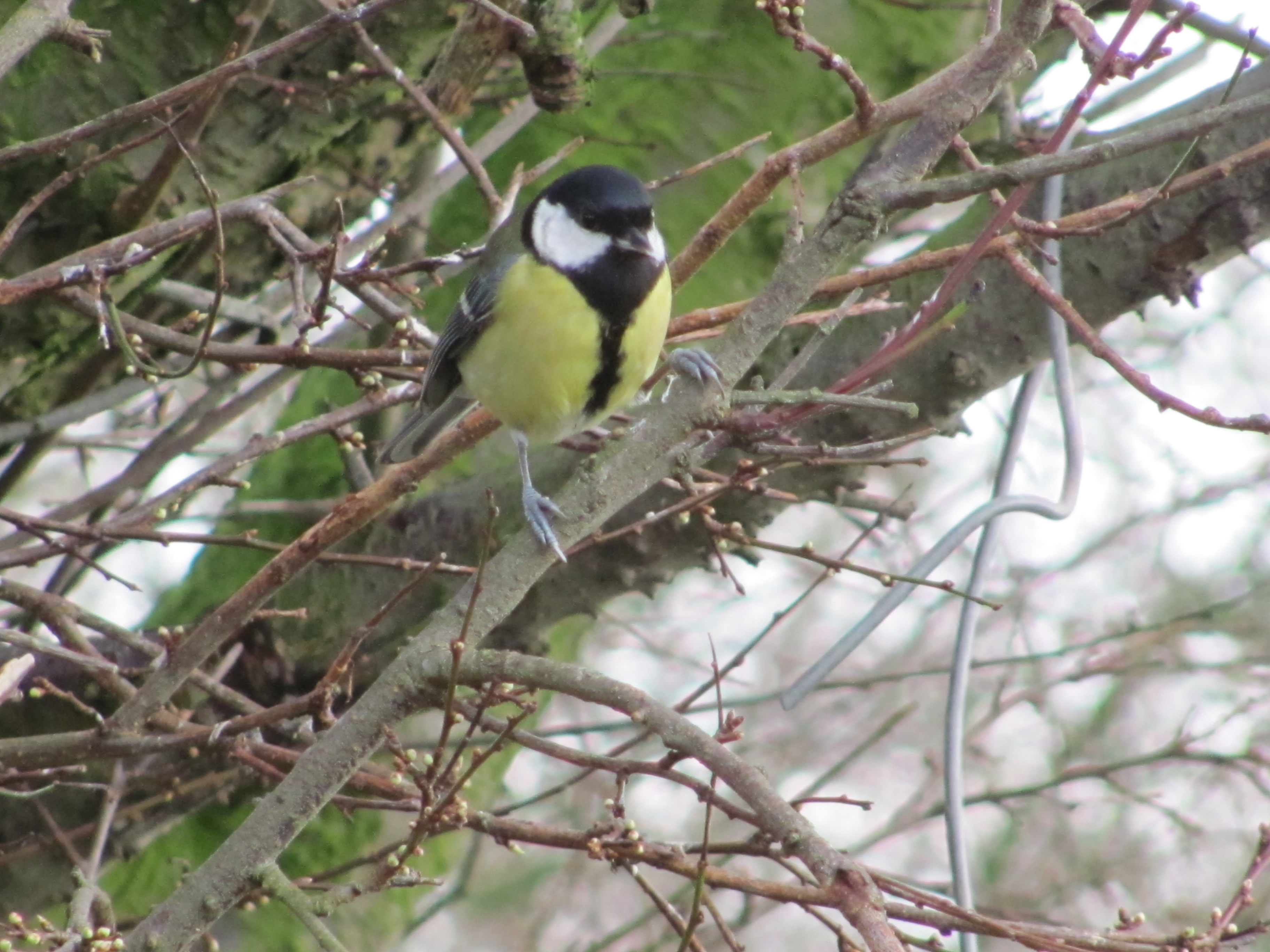
The common but oh so special Great Tit.
Categories
allotments birds community gardening conservation fruit and veg garden photography garden wildlife gardening grow your own meadows natural pest control ornamental trees and shrubs photography trees winter gardens

A Wander Around the Allotments in January

As I decided to create a blog at the beginning of each month illustrating what is going on in our garden, so I have also decided to publish a blog in the middle of each month to show what is happening on our allotment site.

So today we braved the cold and went for a wander. The weather although cold, at five below, was bright sunshine in a clear blue sky. the air felt freezing as it entered my lungs but the sight of the lotties cheered me. As we stepped from the car a kestrel was hunting low between the sheds in search of the abundant field voles. A day never goes by without seeing at least one kestrel quartering the site. A buzzard soared overhead in the thermals created by the warmer air above the cultivated plots.

First job was to fill the bird feeders at the two feeding stations. They were busy with blue tits, coal tits and great tits feeding from the hanging feeders and blackbirds, dunnocks and robins beneath picking up the feed dropped by the clumsy birds above them. All the while we could hear the call of nuthatches in the site’s mature oak and sycamore trees.

Frost sits on the bare ground and helps the gardeners by breaking it down and improving the texture in readiness for a final preparatory rake over. The fine tilth can then be home to seeds.

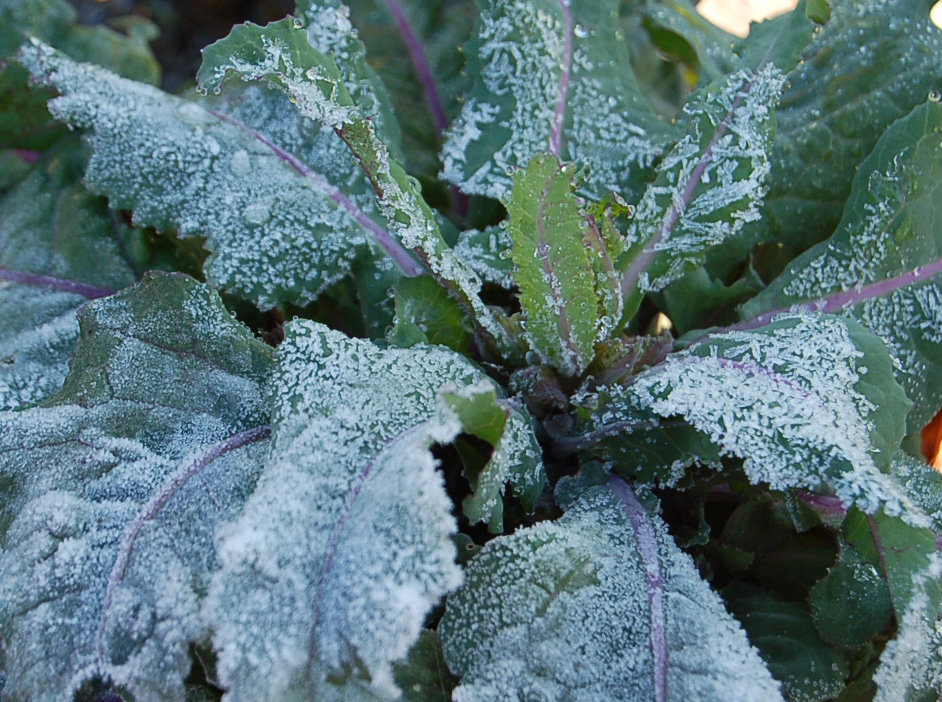
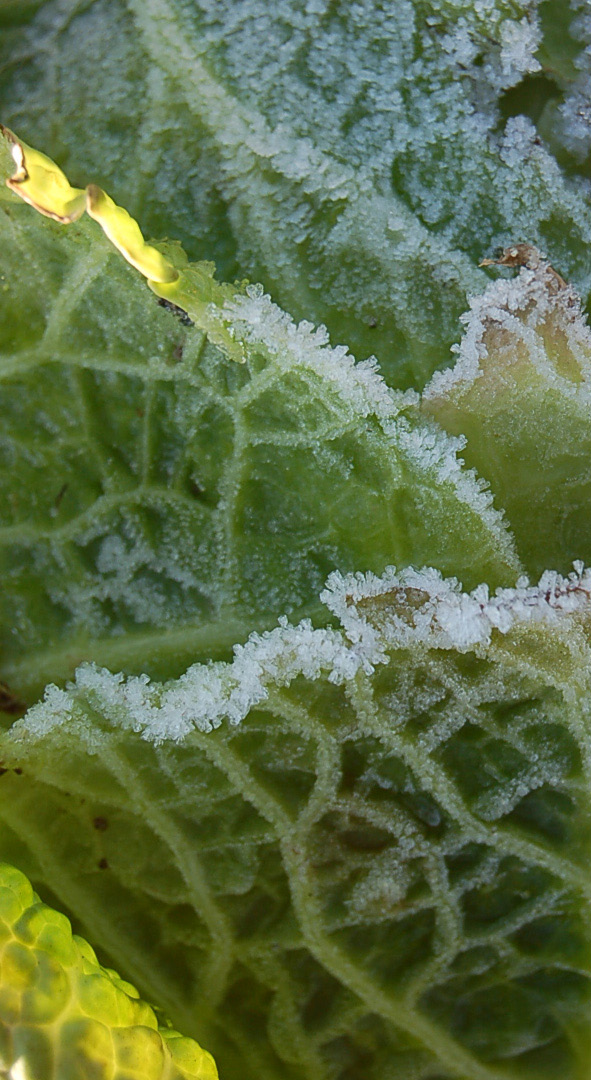
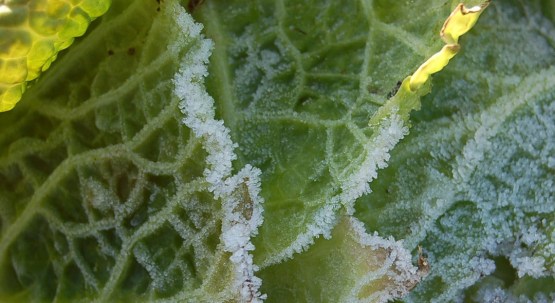
The plots themselves look very sad at this time of the year, drooping brassicas, frosted leeks and steaming muck heaps and compost bins, the warmest spots of all. The scarecrows have fallen in the recent strong winds, their clothes wet and bedraggled and their structures weakened. Frost emphasises leaf structures, settling deepest along the veins.
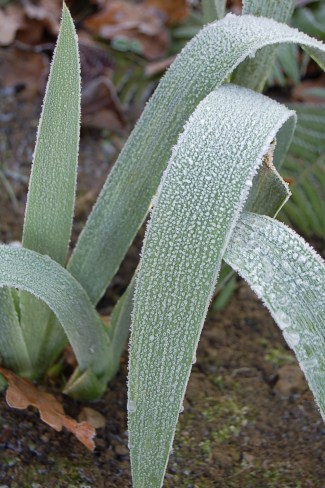
The strongly veined wrinkled leaves of the Savoy Cabbages withstand the cold wrapped into tight balls.
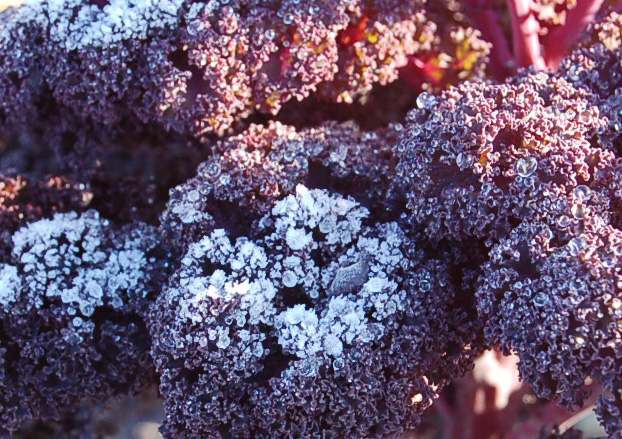
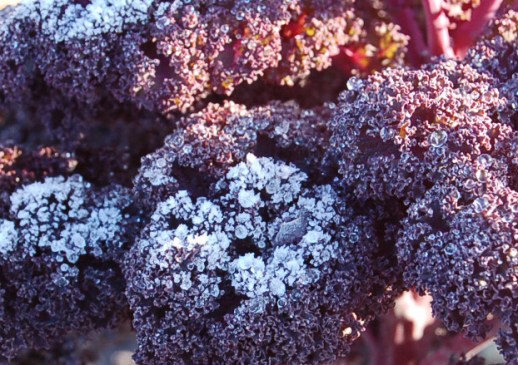
Kale defies the cold and stands upright and proud  even with ice droplets and frost splattered on their tightly curled leaves.
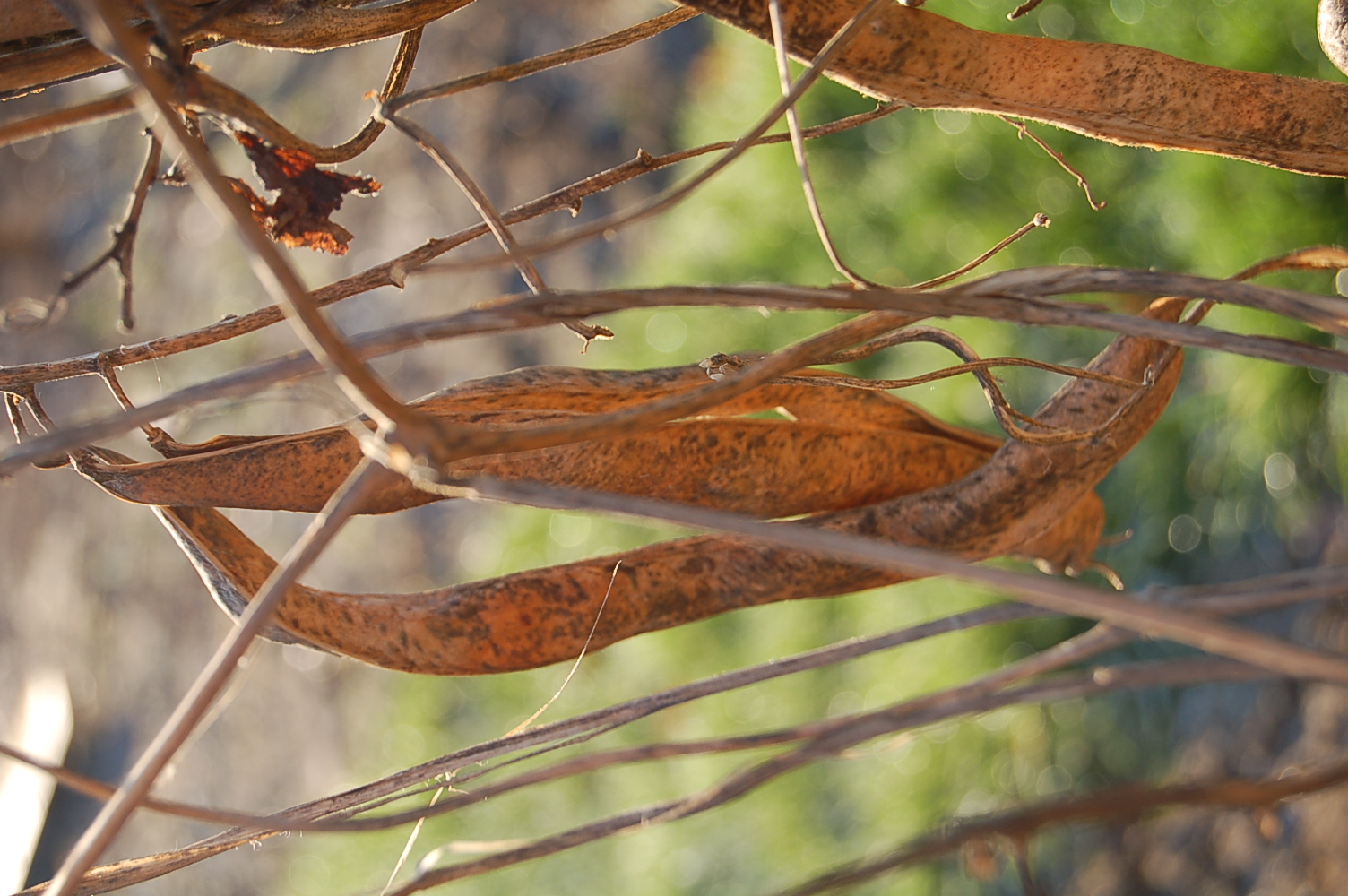
Sunlight makes the old runner bean pods translucent as they hang on the dead remnants of last year’s plants.

On our own plot the rows of Mooli, Broad Beans and Leeks look delicate in the frozen soil but will sit until spring arrives when they will have growth spurts and give us early crops.

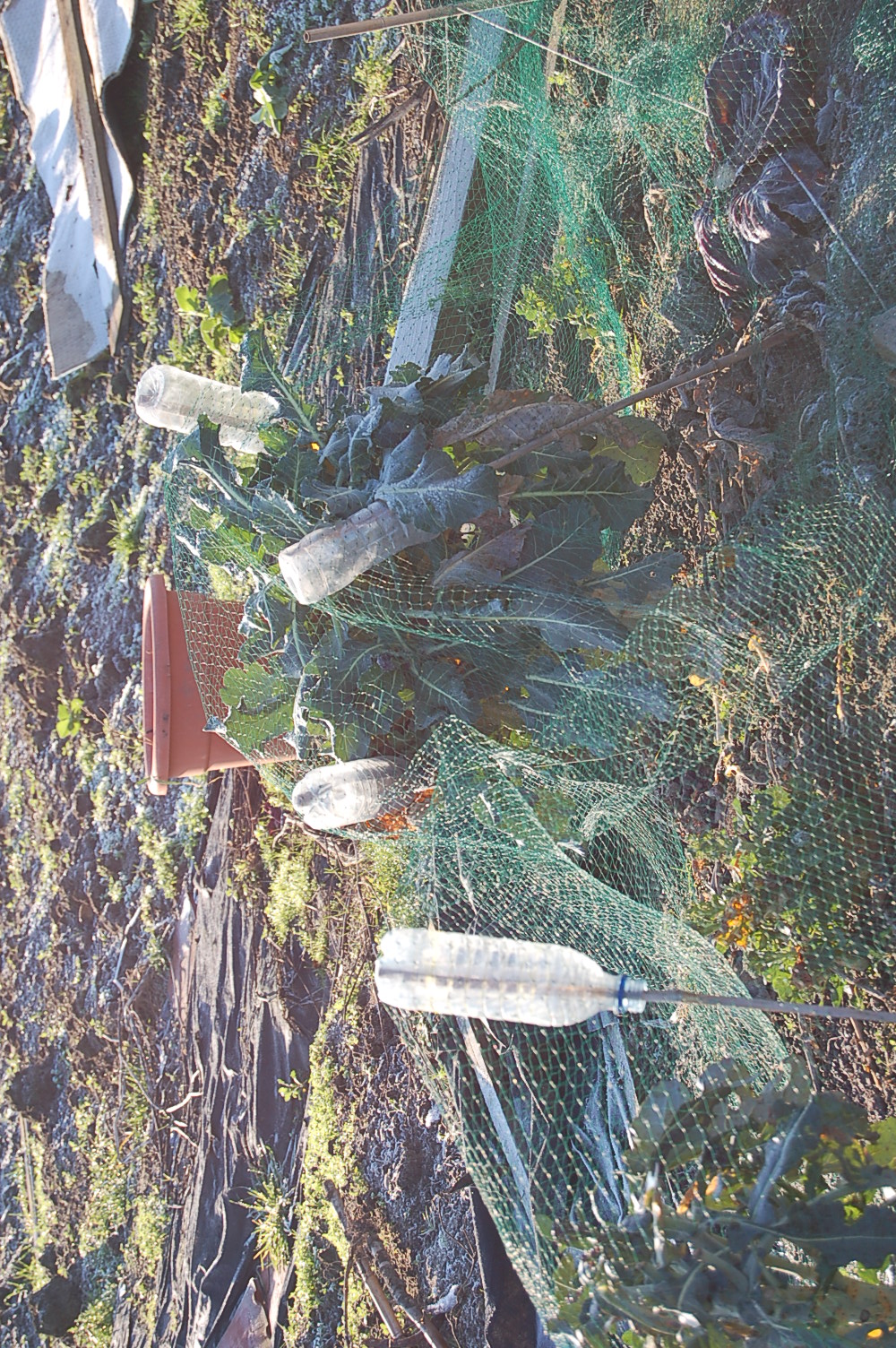
Plastic bottles on canes support last year’s netting and still protect any overwintering crops from hungry Wood Pigeons.

Blackbirds move low across the lotties settling onto any sun-warmed soil and dig for grubs, but this one sat looking sad.
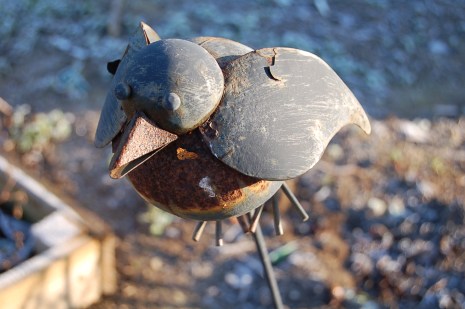
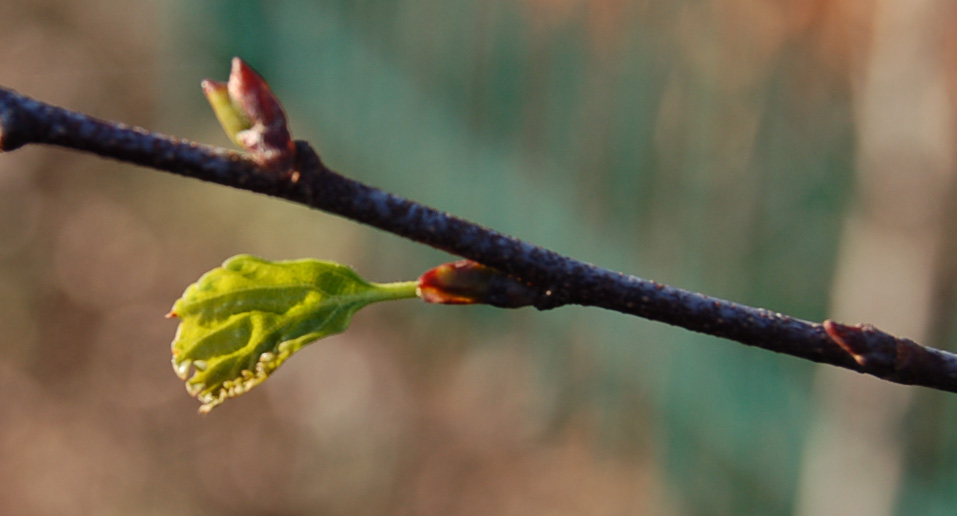
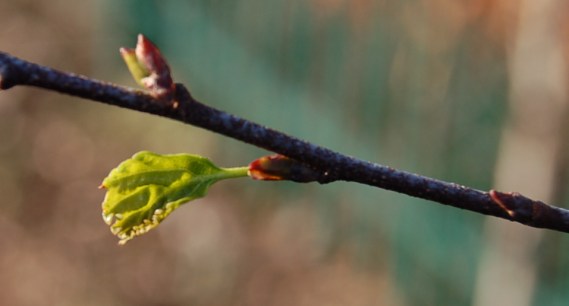
We took a leisurely walk around the “Interest Trail” which took us through or close to most of the community gardens – the orchards, wildlife borders, seasonal gardens and meadows. Near the car park the first green bursts of new life have appeared, the leaves and catkins forming on the birches. The young catkins stand bolt upright at this stage but will soften in colour and structure when they dangle down in the spring.

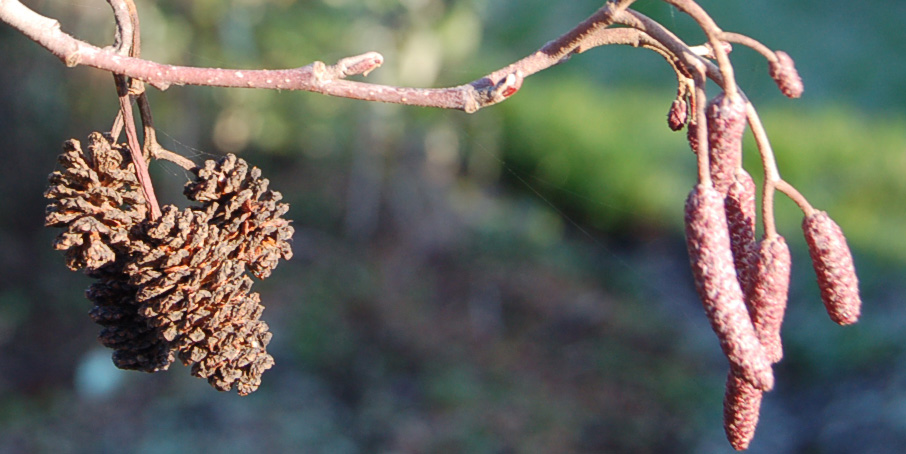
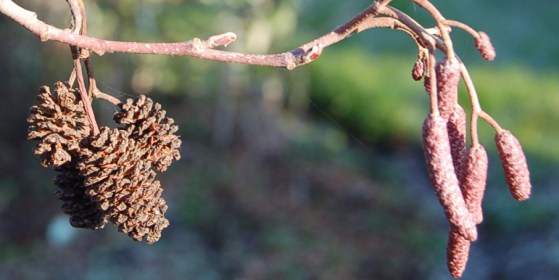
The purple catkins of the alder sit on the branches with the darker cones.
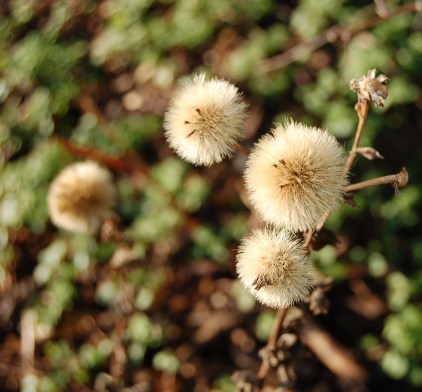
In the Autumn Garden seed heads of Asters remain long after the flowers of autumn, like tiny dandelion “clocks”.
In the first orchard th frost still lingered strongly on the logpile especially on this old chunk of bark.

When we reached the Spring Garden we were struck by the contrasting leaf texture, shapes and structures.

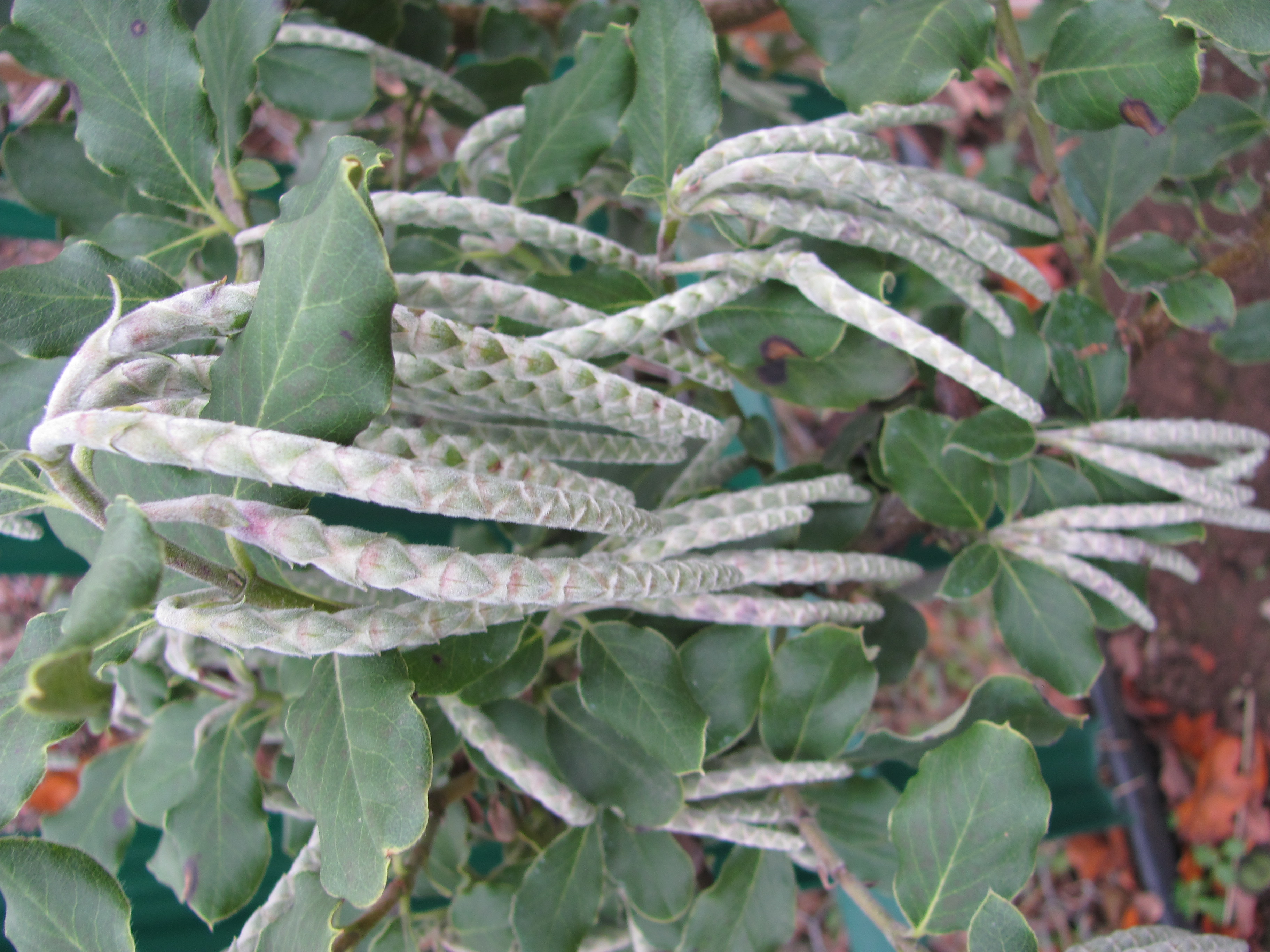
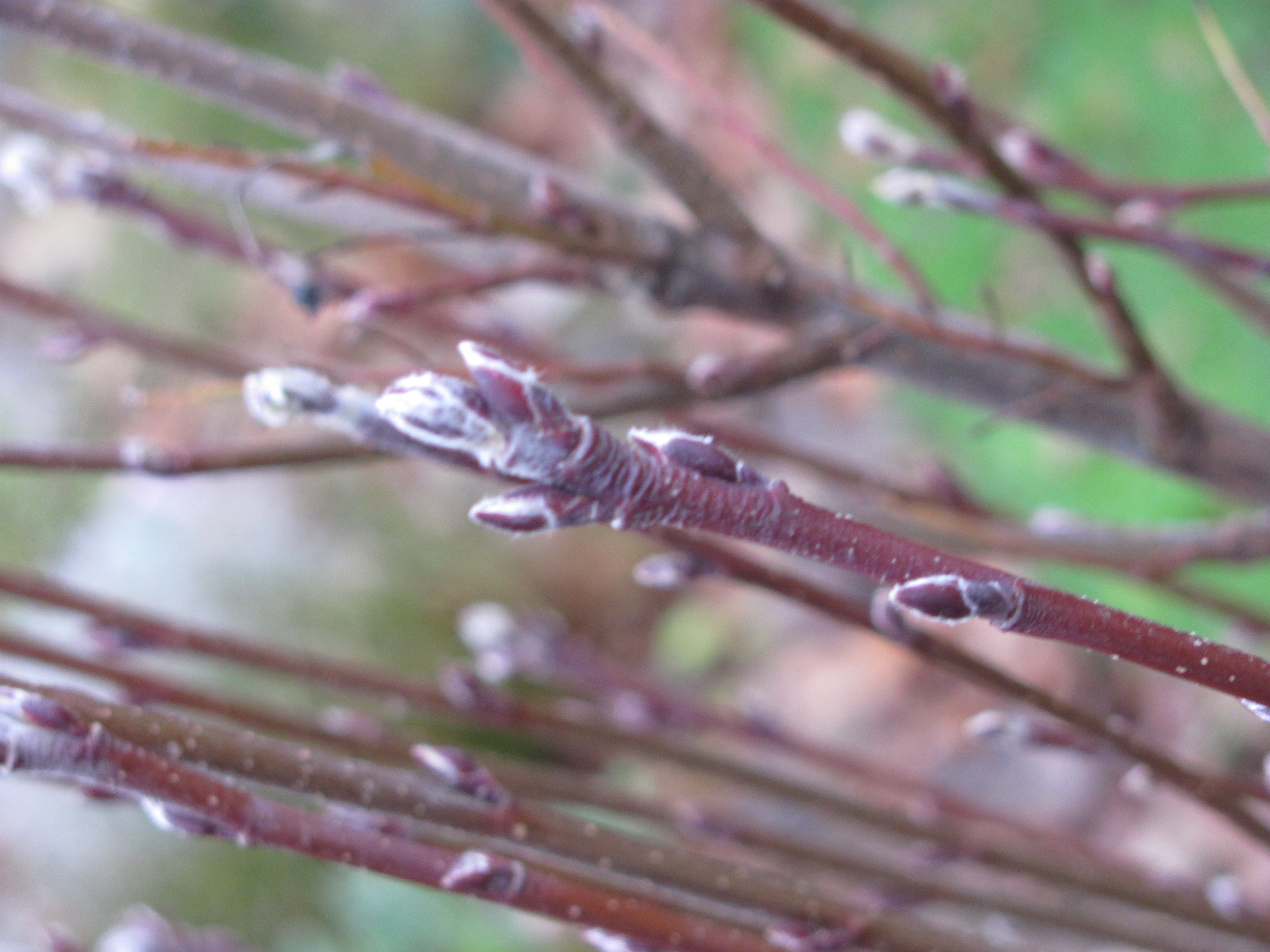
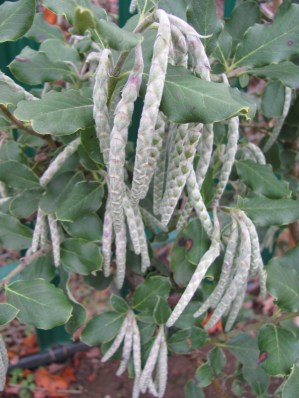
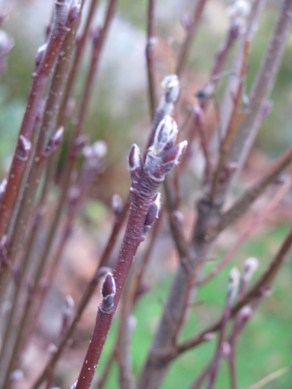
At the back of this garden the silver tassels of the Garrya hung in profusion and the new buds of the Amelanchier promised early flowers and foliage.
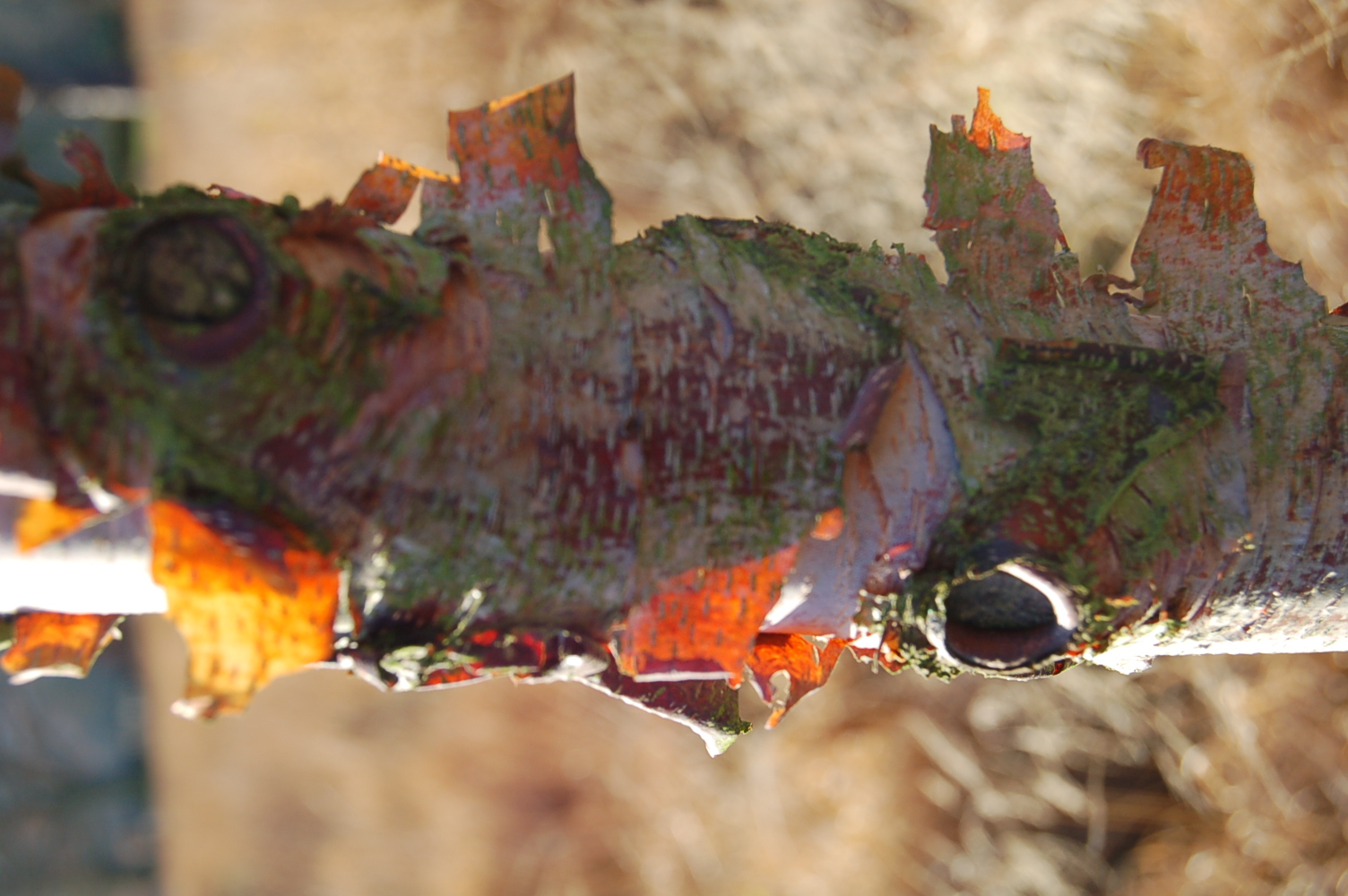
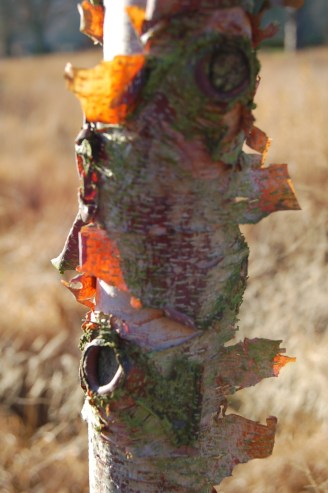
Further round the trail we arrived at the “Winter Garden” where the low rays of the sun sent long shadow lines of the fence right across the border between the coloured stems of the Betulas and the Dogwoods. It also illuminated this peeling bark, giving it the impression of slithers of orange brittle toffee.

The blue spruce looked bluer than ever with the whiteness of the frost laying on its needles.

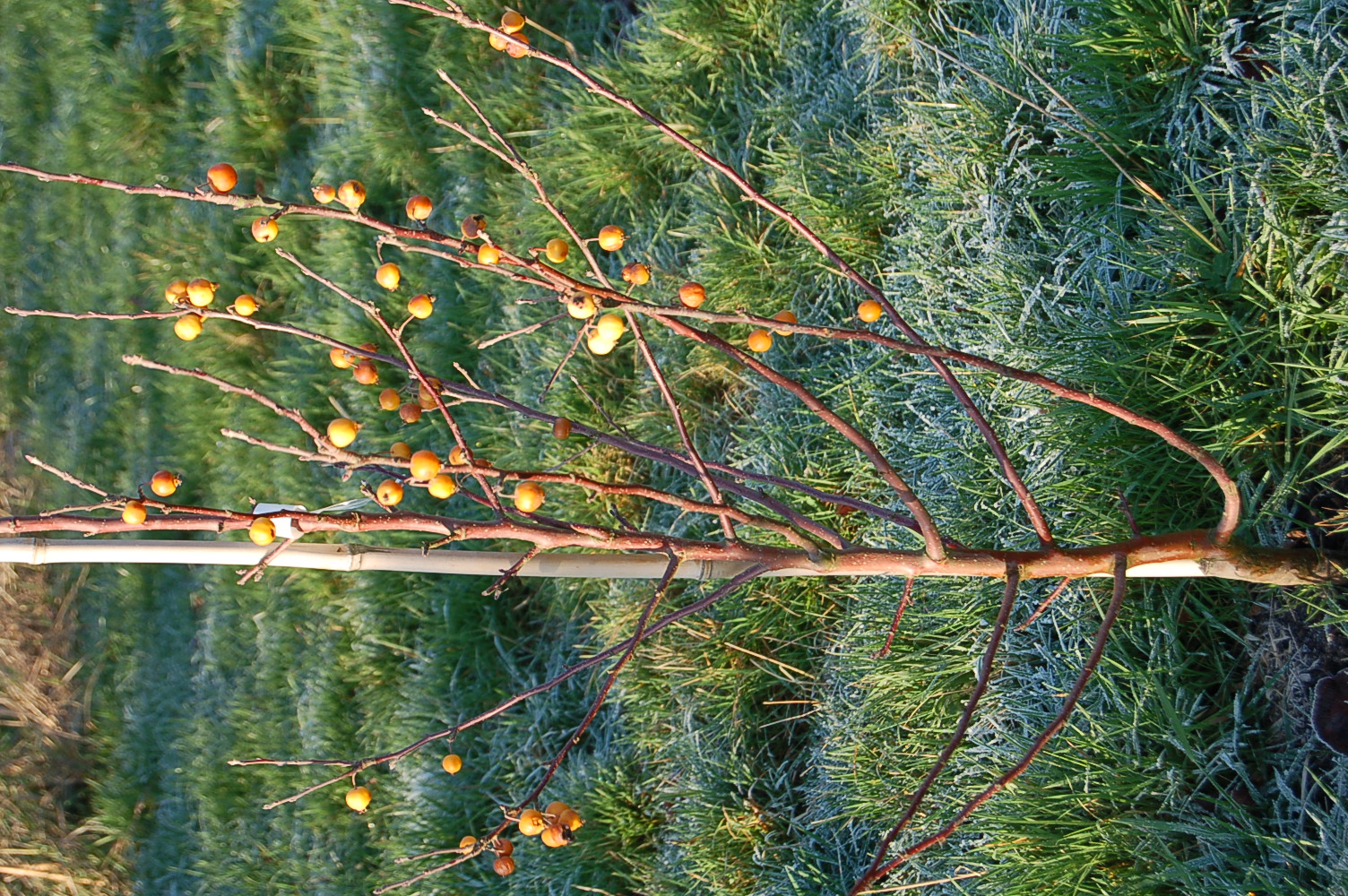
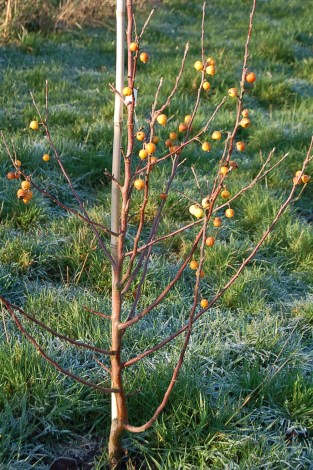
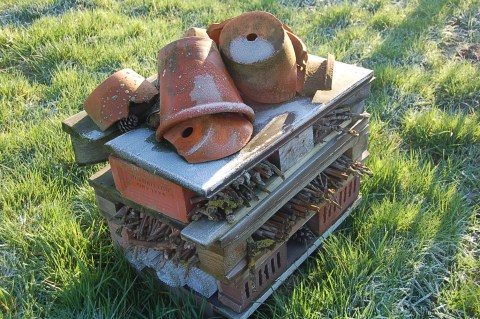
Our Winter Garden has so much of interest that I shall publish a blog just featuring it within the next few days, so for now we shall move on to the second orchard where the golden fruits of Malus “Evereste” have escaped the attentions of the winter visiting thrushes but I suspect they will soon be discovered and devoured. The insect stack in the orchard is there to attract beneficial insects who provide our very wildlife-friendly pesticide. The stack should give them some shelter to help them survive the winter cold and wet.
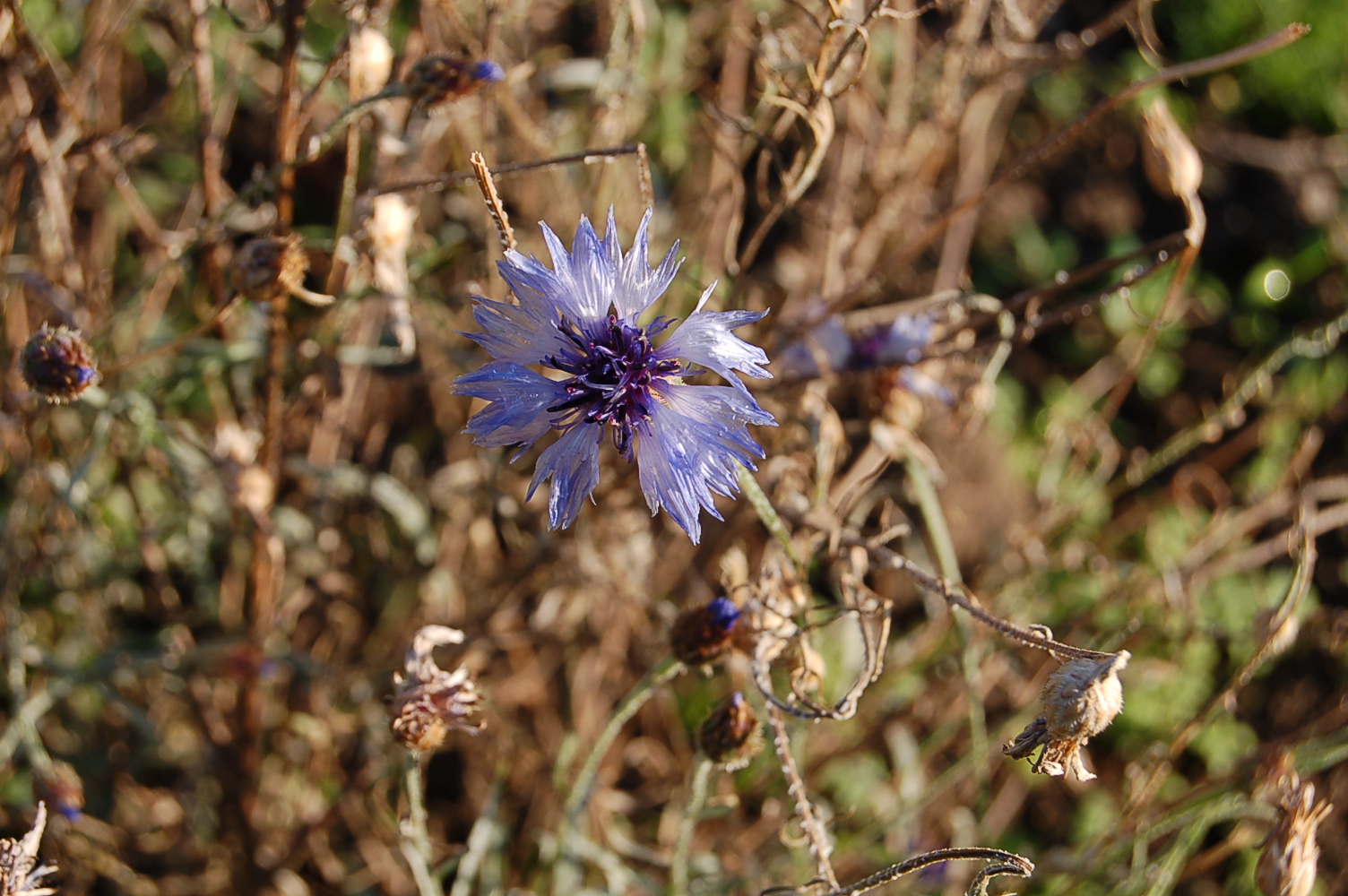
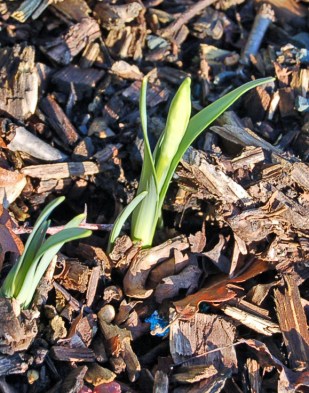
As we wandered back towards the car park we passed through the wildflowers meadows long since cut to the ground, but showing promise for next summer in its tiny seedlings. One lone flower braved the cold – a pale blue cornflower. Leaving the lotties we noticed promises of flowers from the bulbs in the car park border and in the half-barrels in the gateway.

Categories
birds climbing plants garden design garden photography garden wildlife gardening hardy perennials ornamental grasses ornamental trees and shrubs outdoor sculpture shrubs trees

A Wander around the Garden in January

This is the first in a series of blogs which I will write at the beginning of each month through 2012, and will show what is going on in our garden at that time – a sort of record of garden highlights.

So the new year has arrived. January 1st was a dull overcast day, with unbroken deep grey cloud and regular periods of drizzle. But at least it was warm with temperature holding up in low double figures all day. But not a day to perform a photographic wander.

So here I am on the 2nd January with camera in hand to record what’s going on appreciating a blue sky, but well wrapped against a freezing wind. Buzzards are sharing my joy of seeing a big blue sky as they are soaring silently above the garden with none of their usual sad cries. The garden is noticeably quiet, the bird feeders far less busy than they usually are in January. There is just the constant quiet, barely perceptible winter song of the Robin who follows me around and the equally gentle twittering of Goldfinches, Blue Tits and their long-tailed cousins.
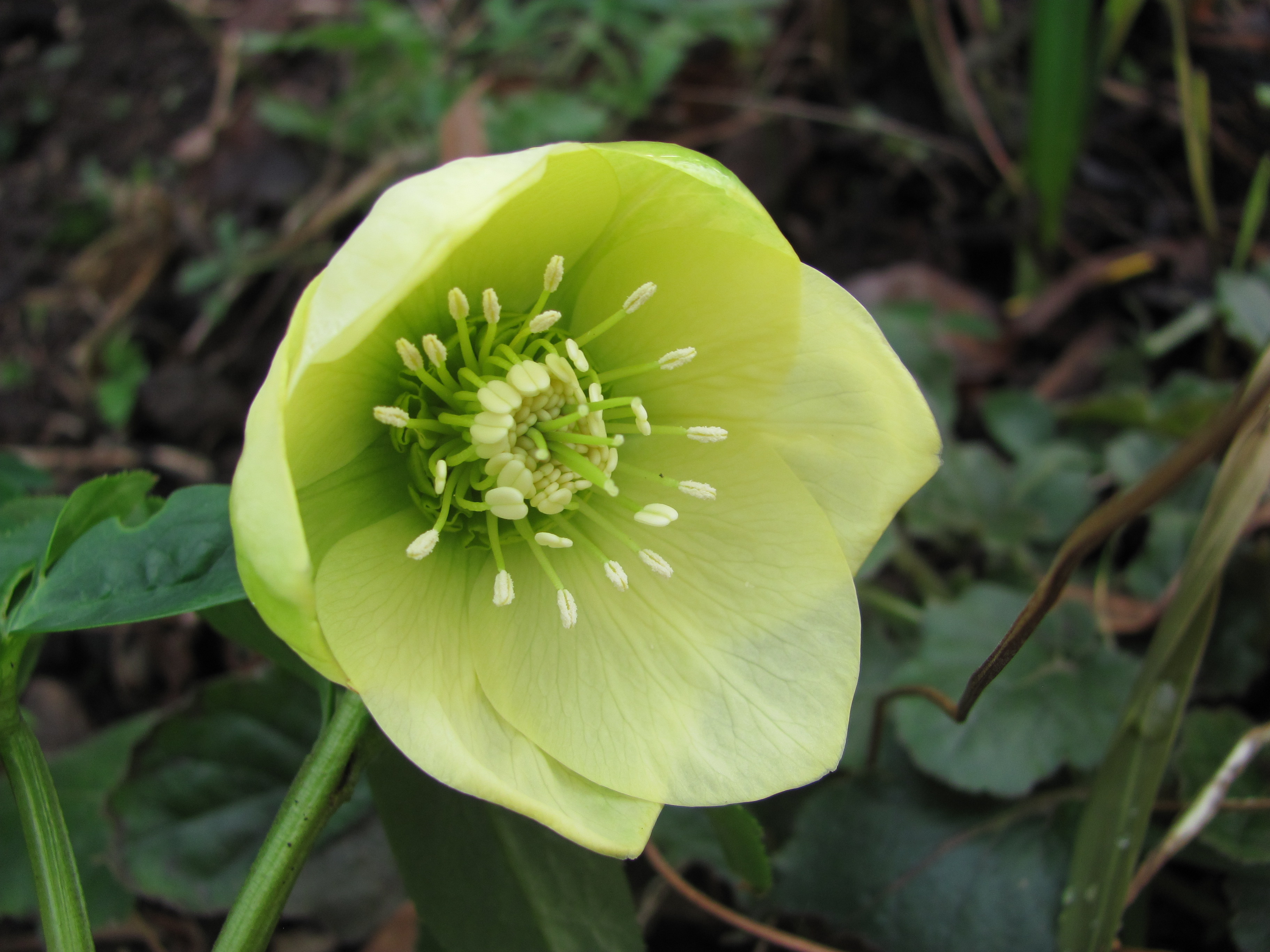
Enjoy a walk around with me and my camera, as we take a tour …………

The newest addition to the garden, just planted today, is the dark foliaged Euphorbia "Redwing", spotted with fresh rain drops following a shower.
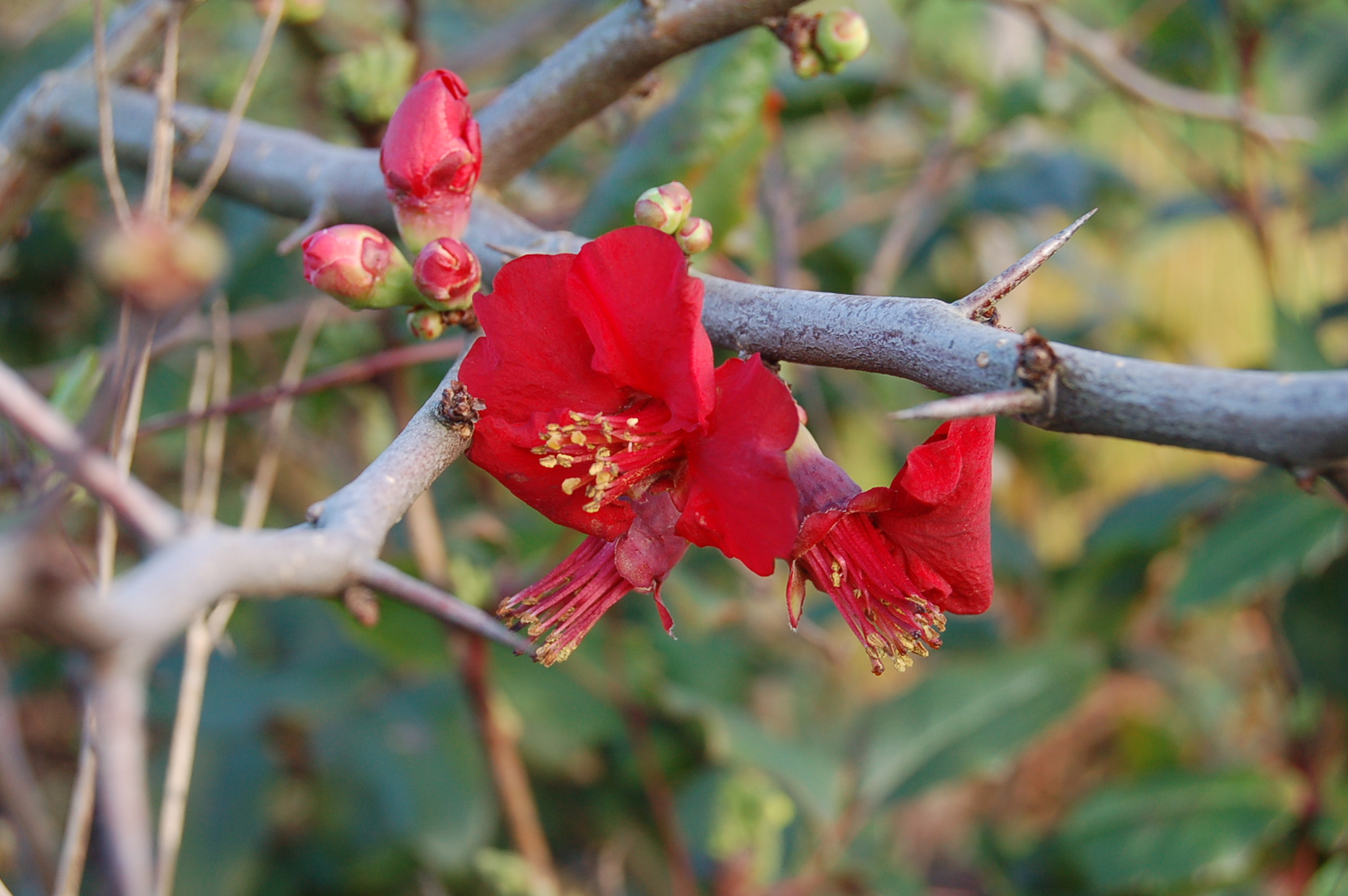
This brightly flowered quince, Chaenomeles "Fire Dance", glows at the drive entrance, providing a cheerful welcome.


This clump of bell-shaped flowers of Arbutus unedo, the Strawberry Tree, overhangs the roadside verge. We are so grateful for its performance as it only just survived the onslaught of the last two winters. We rescued it with heavy pruning.
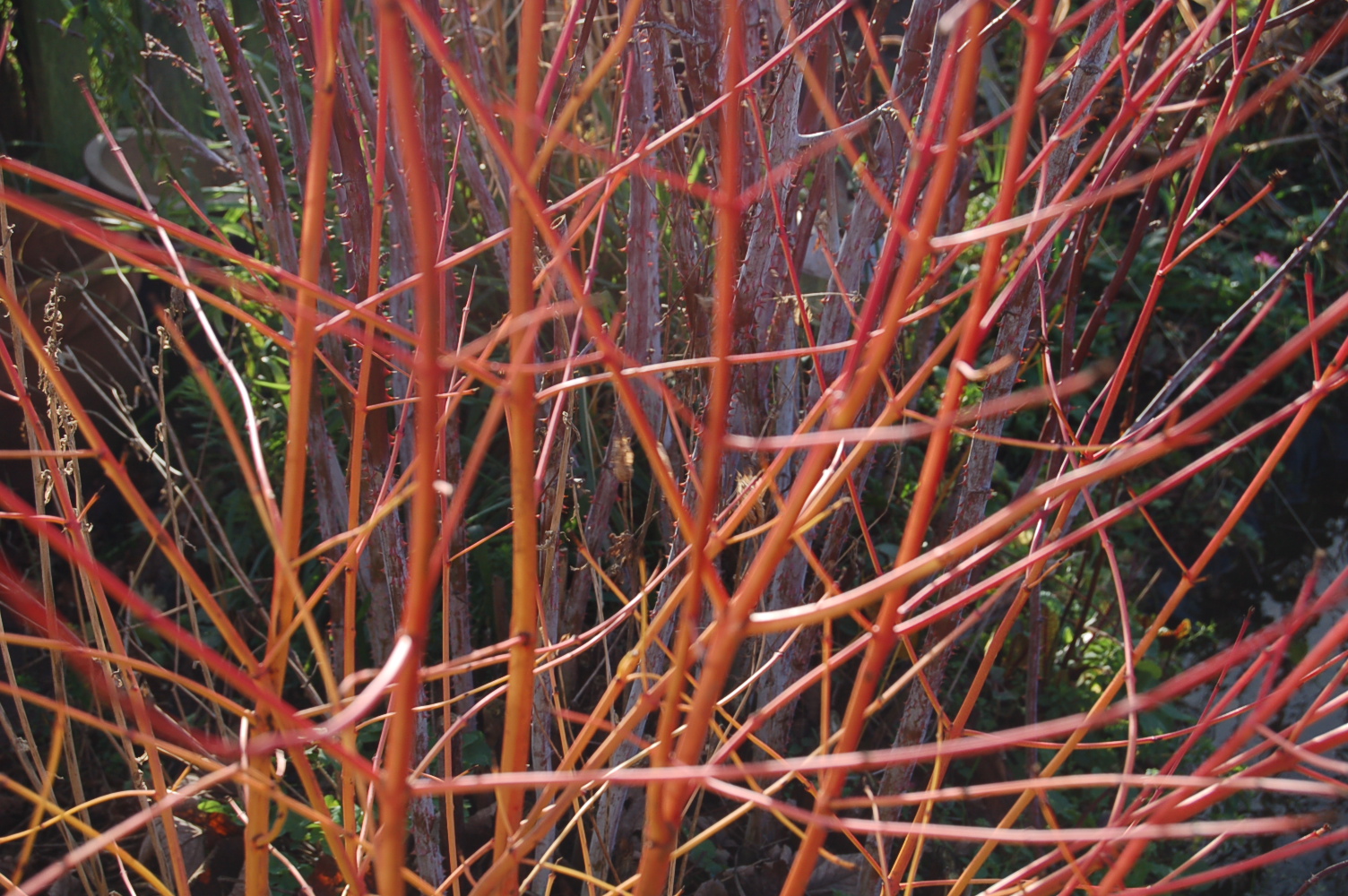
Orange stems of Cornus "Cardinal" with the white stems of young Betula utilis in the newly planted Shrub Garden.
Sea shore find amongst Euphorbias.
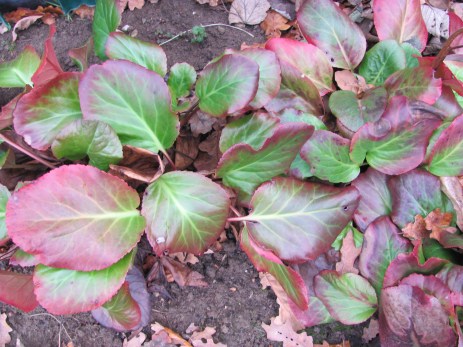
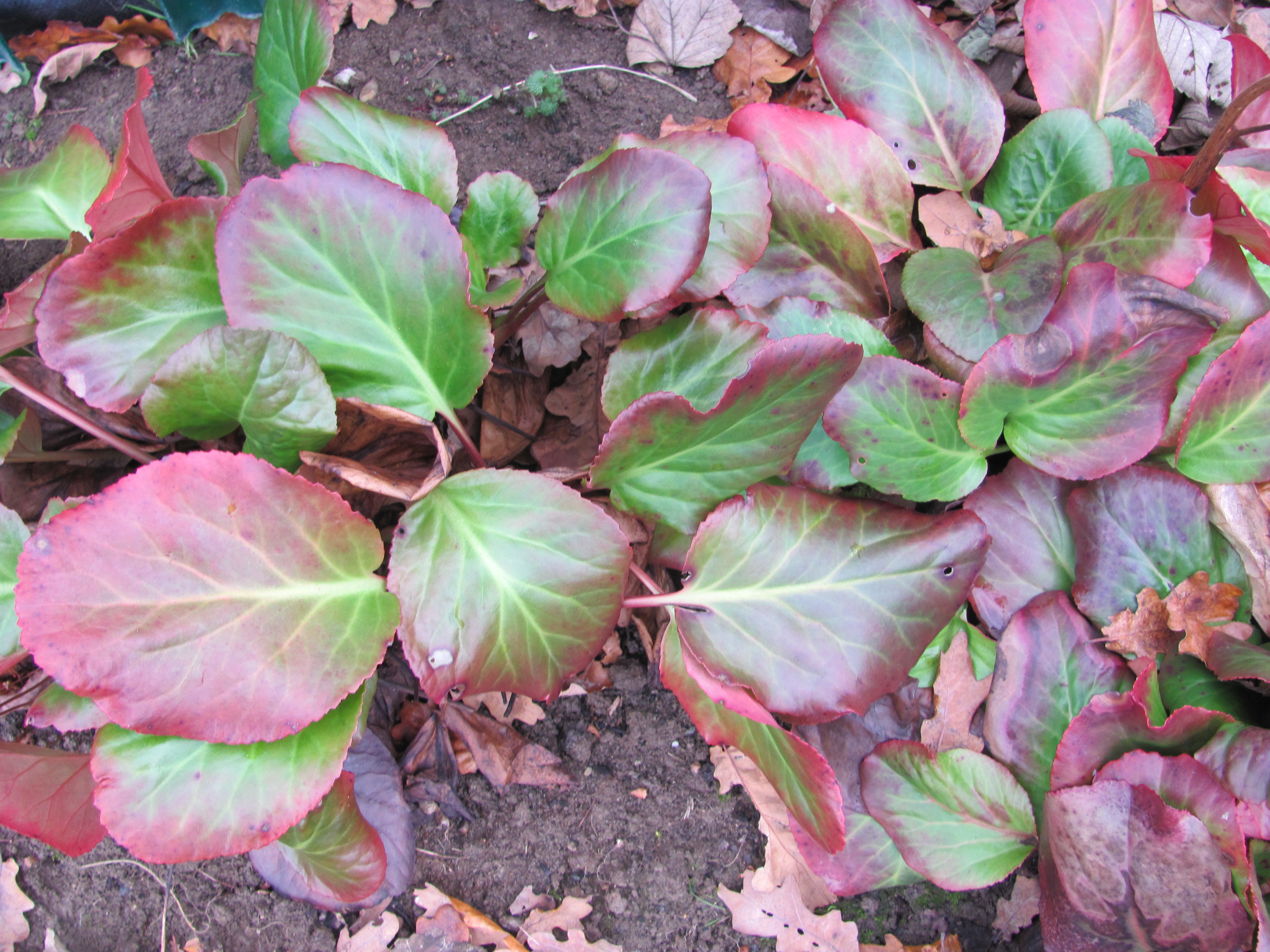
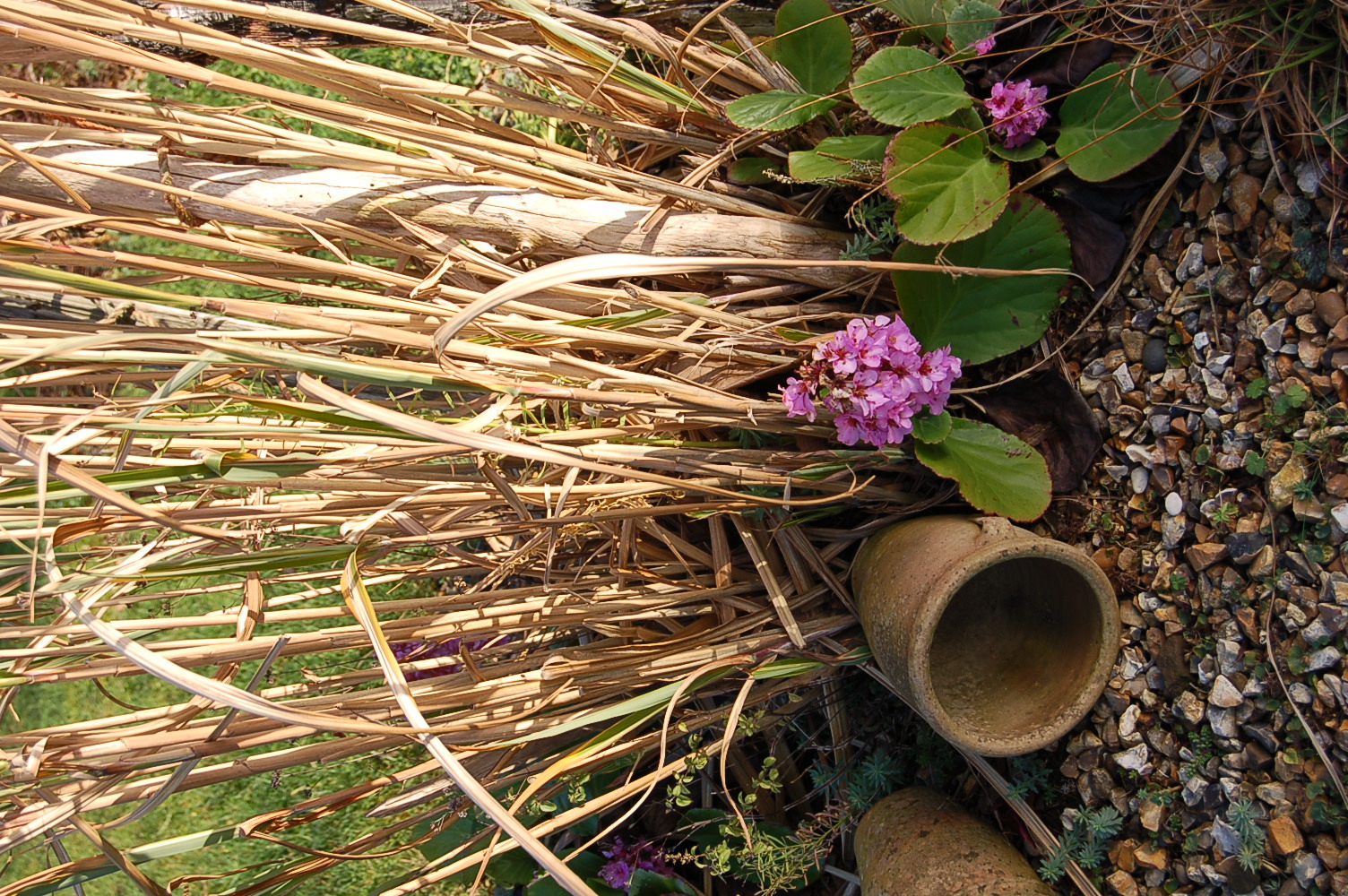
Terra-cotta pots and the pink flowers of Bergenia sit at the feet of Miscanthus and driftwood.
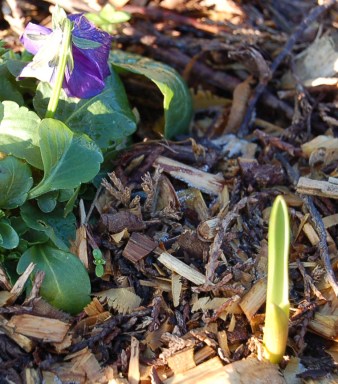
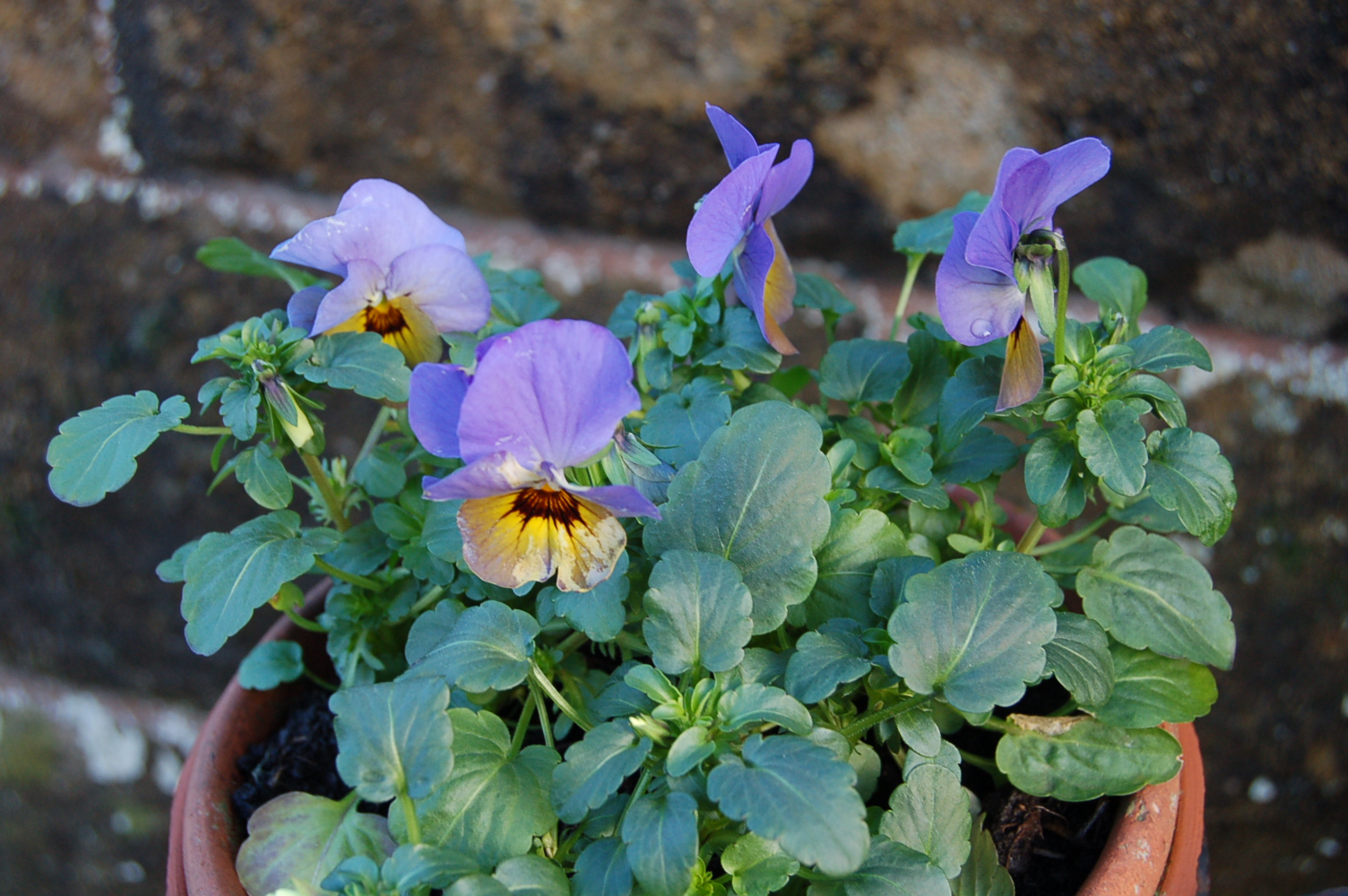
The yellow-faced blue Violas flower in pots by the front door.
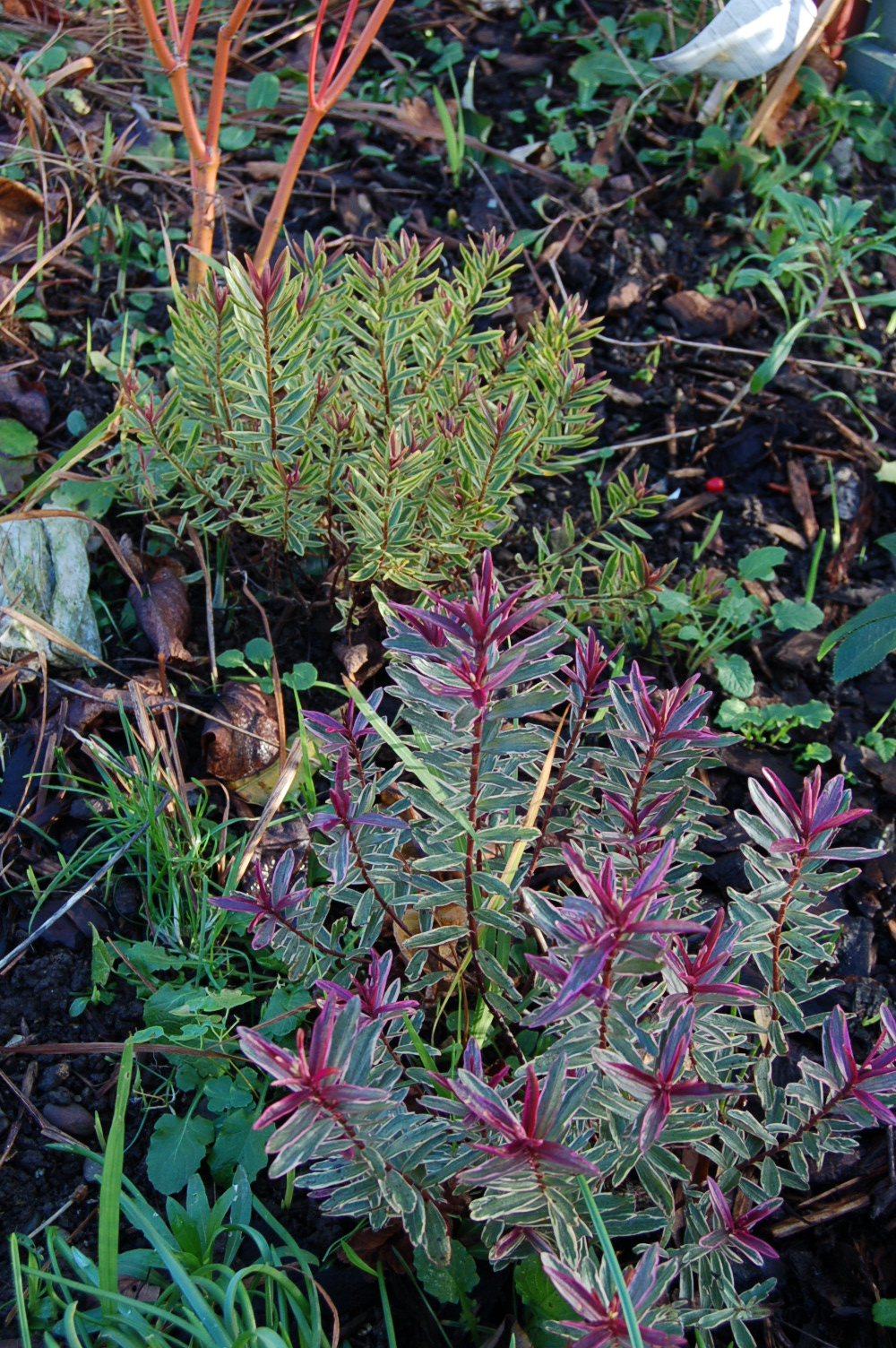
In the Rill Garden two very different Hebes with colourful foliage sit in front of an orange-stemmed dogwood.
The low light of winter turns the cut foliage of the purple-leaved vine blood-red.
The creamy-yellow berries of the Cotoneaster rothschildianus hang in clusters covering this small tree.
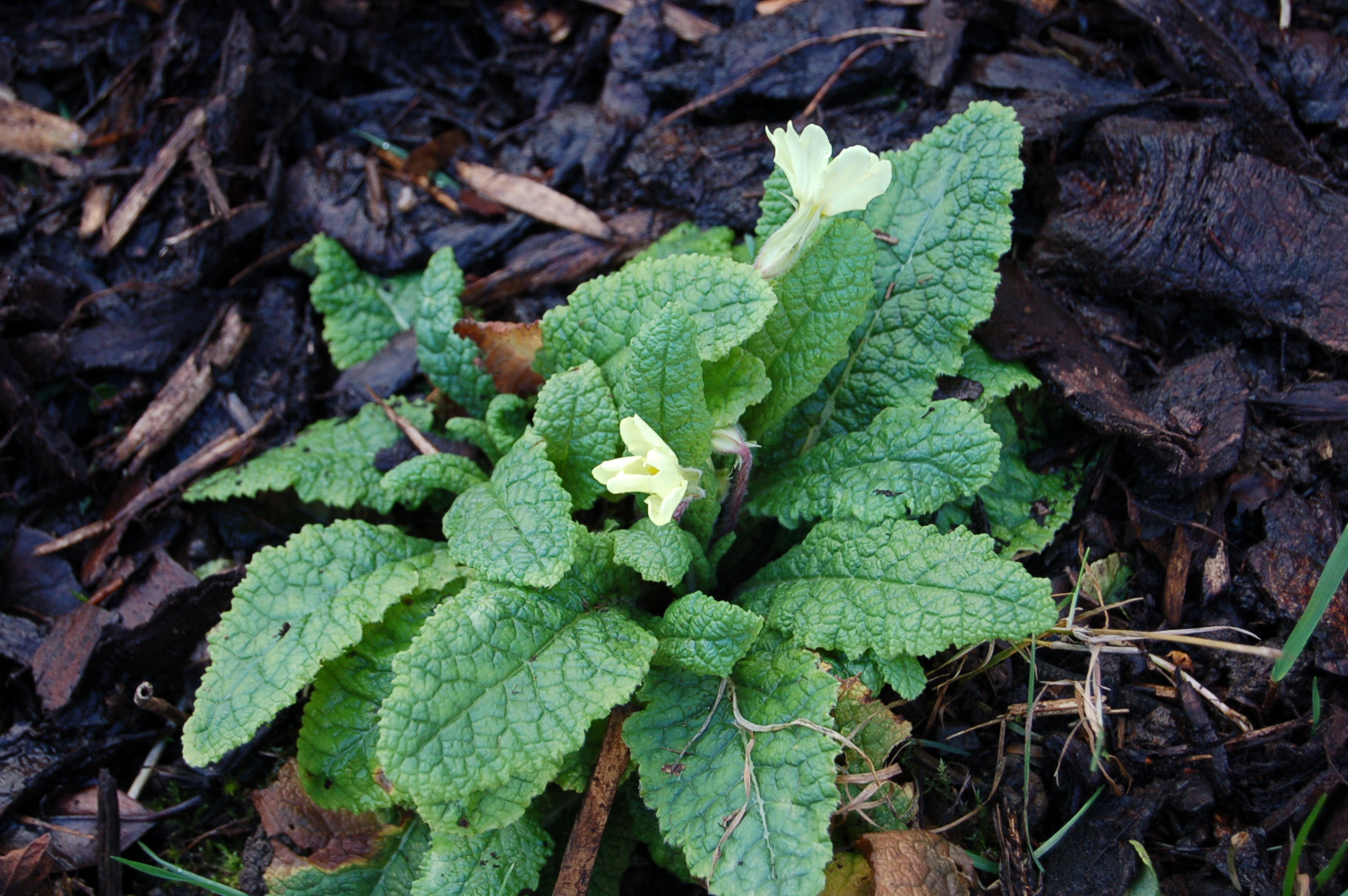
The flowers of this pioneering Primrose appear too delicate to survive the cold of January.
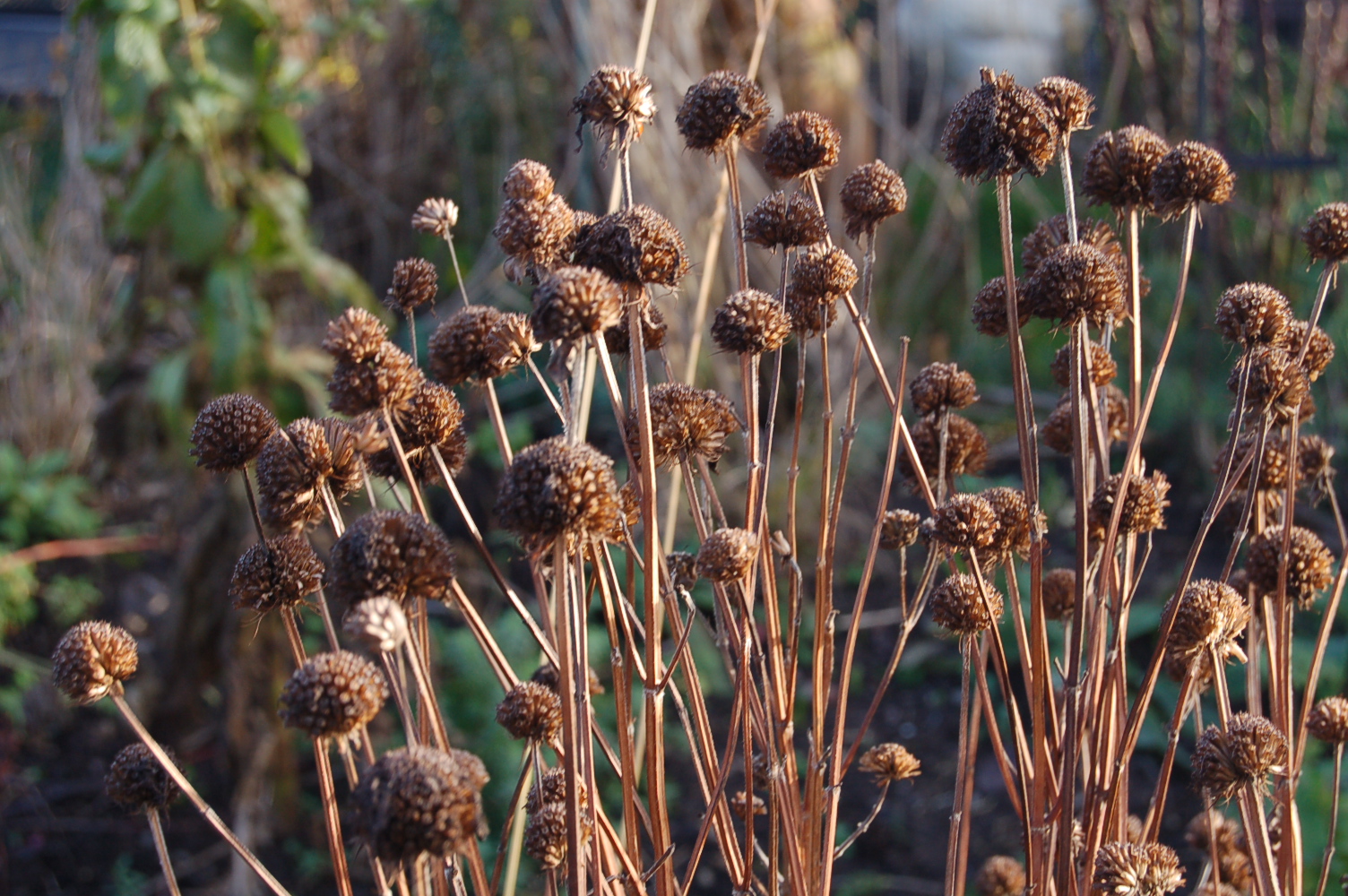
Warm brown seed heads give so much to the Chicken Garden in winter.
The grasses throughout the garden catch both the winter light and the gentlest breeze. The curly seed heads of this Miscanthus napalensis are soft to the touch.
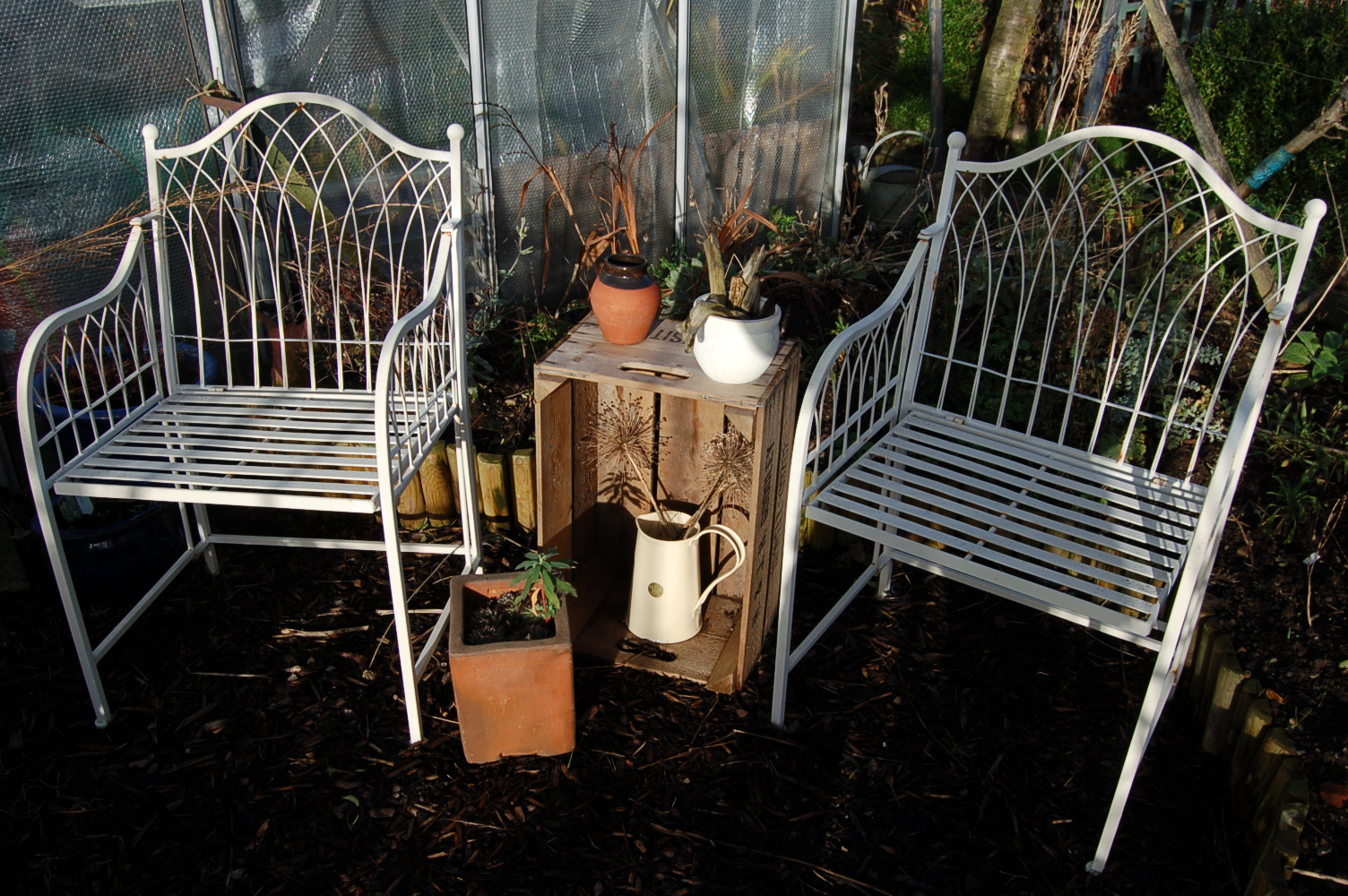
In the Secret Garden the cream metal seats become more dominant just when they are too cold to sit on.
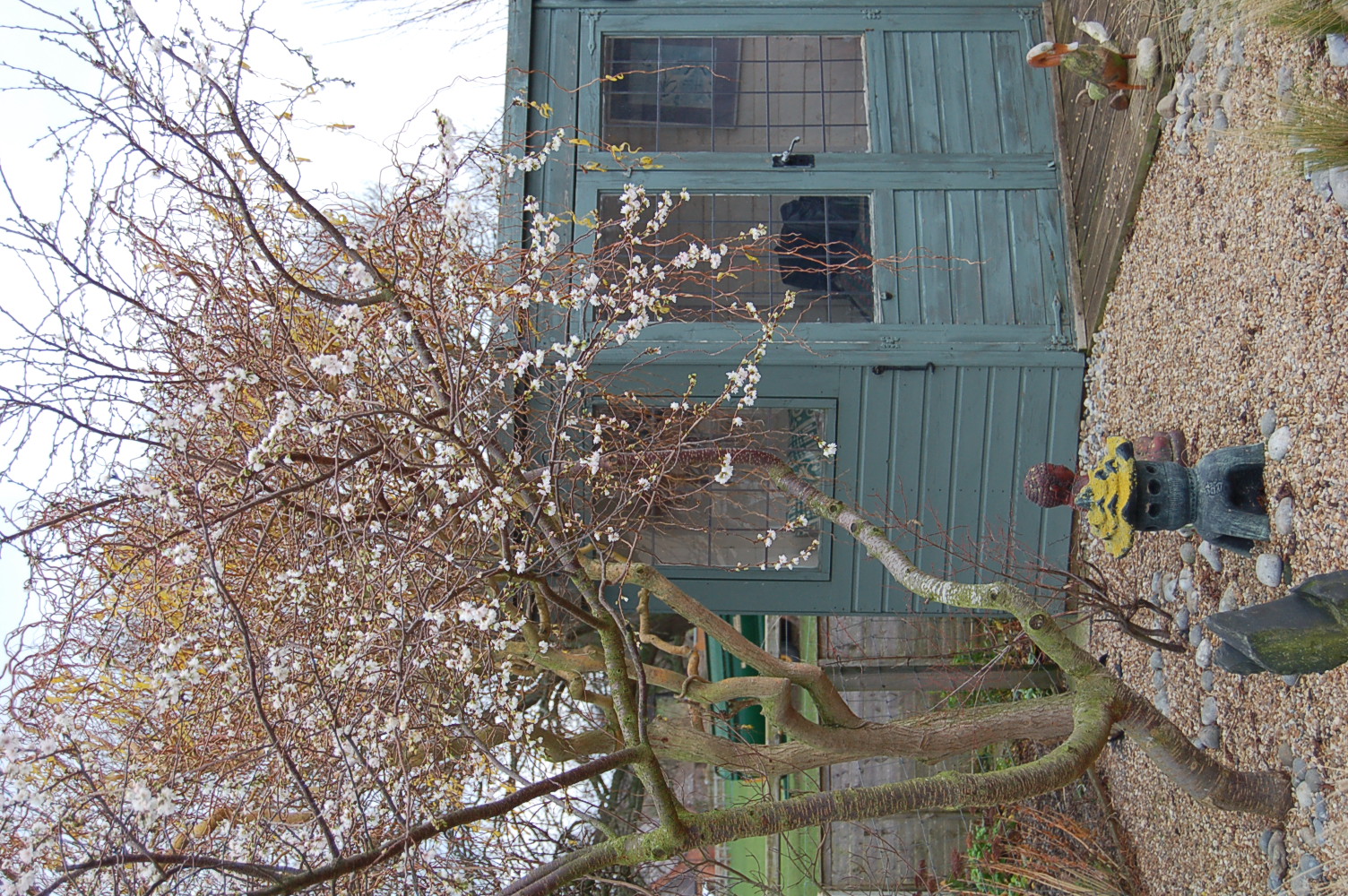
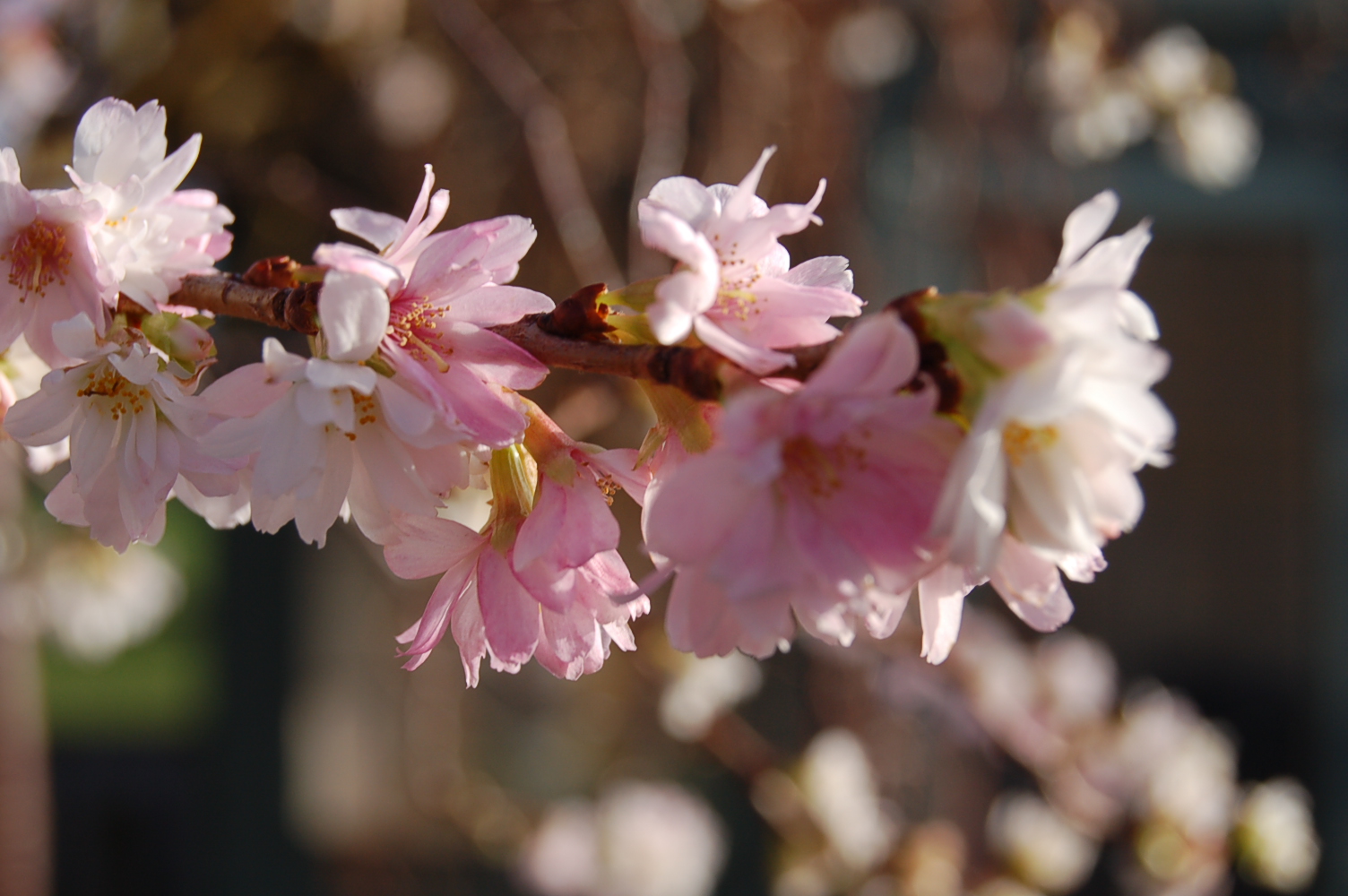
In the Japanese Garden the blooms of our pink version of Prunus autumnalis subhirtella are a joy to look at.
Move in close and appreciate the pink glow.
The hottest of the coloured stemmed dogwoods must be Midwinter Fire - ours grows on the bank bordering the wildlife pond.
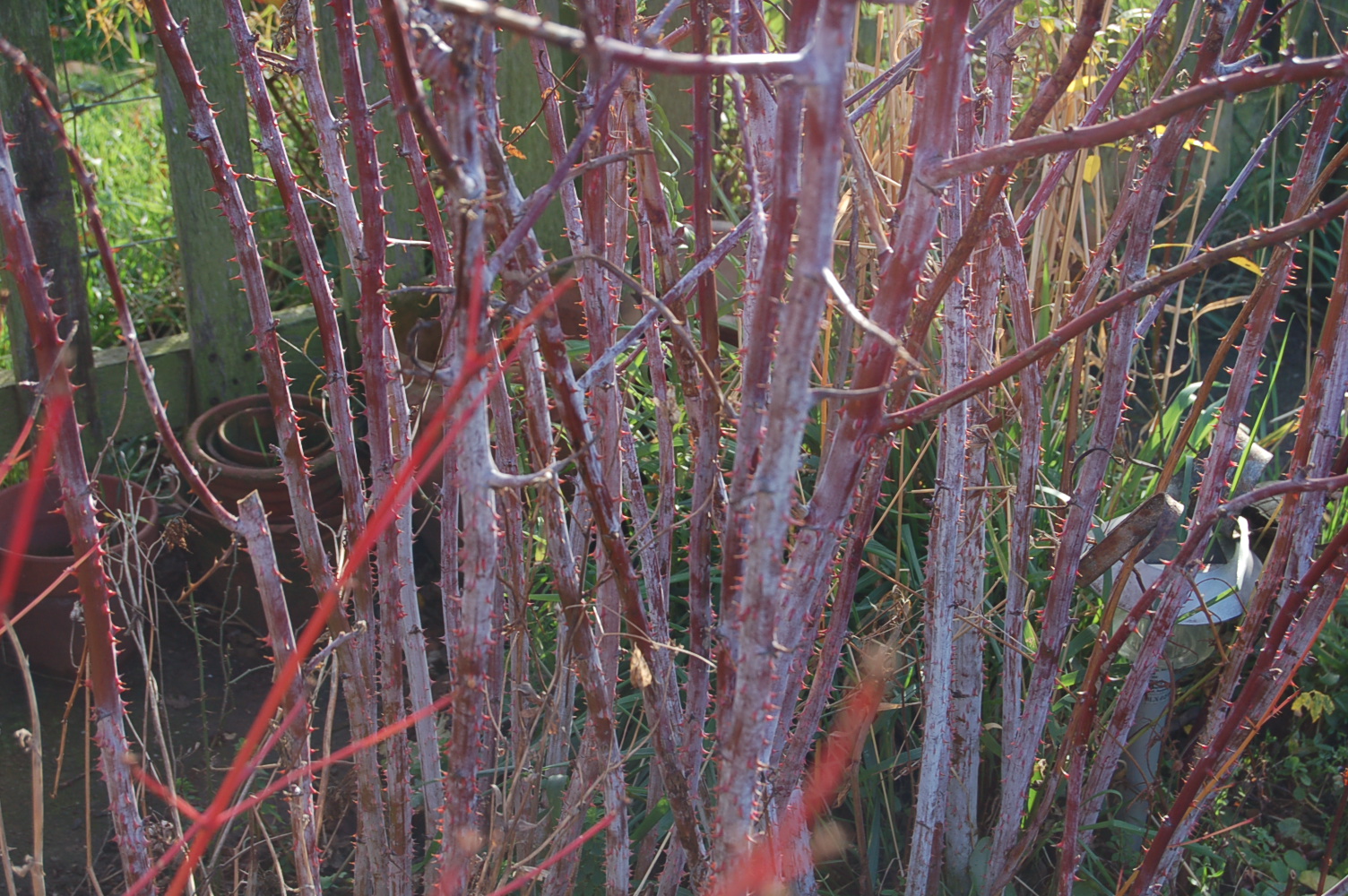
The white-stemmed Rubus sits alongside Midwinter Fire on the pond bank.
The fruit of our apple "Pixie" remained too tiny to pick so we have left them for the birds, who so far have ignored them.


Jasminum nudiflorum has been flowering by the chicken's run now for four months and is still going strong. What a star!


The mad seed heads of the orange-peel clematis, which I grew from seed, never cease to amaze me even though I see it each morning as I collect the chucks' eggs.


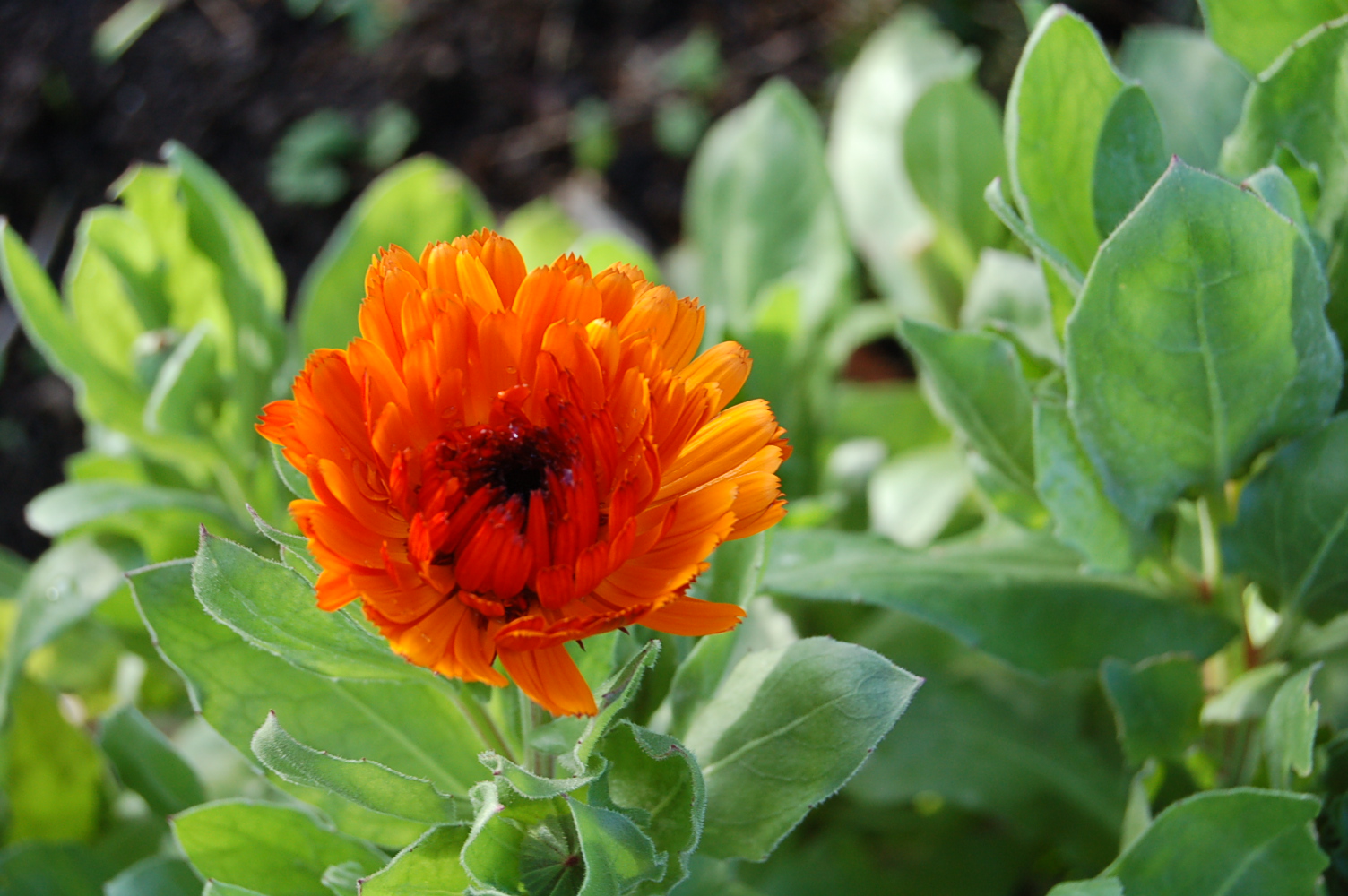
We seem to have calendula flowers somewhere in the garden every day of the year.


One of five Achillea still flowering away in January, this variety "Biscuit" is in the Secret Garden.


Categories
bird watching birds conservation garden wildlife ornamental trees and shrubs trees Wildfowl and Wetlands Trust wildlife

Wildlife in the City – Barnes

We went down to London for the day, not to see a show or visit a museum or shop in Harrods, but to go birdwatching. Not something I could have said a few years ago, but luckily for us and the residents of the capital city the Wildfowl and Wetlands Trust have created a haven for wildlife right in the heart of the city. We hate cities and definitely hate driving in them, so we hoped our visit would be worthwhile. We were accompanied by our daughter Jo and son-in-law Rob who had recommended the place to us, so the pressure was on them! They are good navigators in cities which was most useful. Last year they visited and were amazed at 5 Bittern sightings.

The day dawned cold and wet with a bitter wind so we wrapped up in thermals and layer upon layer of clothing suitable for Polar Bear spotting. First impressions were favourable – the centre was attractively built, we were “meeted and greeted” by a friendly WWT person who told us where to go starting with the cafe. it turned out to be a good cafe which served tasty lattes and even tastier bacon butties. We reluctantly left the cafe’s warmth and shelter expecting to have to tackle the weather to reach the first hide. Wrong! It was in the same building as the cafe and a most comfy place to view the large expanse of water.

Watching the numerous species of duck against an urban background seemed somewhat incongruous. And watching a Peregrine spook the ducks in a diagonal stoop over the cold grey water  added to this feeling. We saw over 40 species of bird including Snipe, both Common and Jack, wildfowl such as pochard, teal and shoveller, but fewer small birds but we were treated to a close up view of a Stonechat, that dapper little alert chap dressed in russet and wearing a black cap. The Jack Snipe, Pintail and Water Rail were probably the star spots of the day. It has been 30 odd years since we last saw this diminutive Jack Snipe, the little wader with the  long beak that is surprisingly shorter and less ridiculous than the one sported by  its larger cousin the Common Snipe. We had a fine view allowing us to appreciate its wonderful striped head and russet wing markings.
Walking between the hides we were impressed by the wildlife gardens planted along the walkways. The dried stems of perennials and the stark outlines of dogwoods, willows and birches gave a taster of how attractive they must be in warmer months. There were examples of methods of attracting wildlife such as this magnificent “insect tower block”.

Coloured stemmed willows feature strongly as pollarded trees, hedges, structures such as arches and living fences. These yellow stemmed pollarded and coppiced specimens lit up the dull grey day.
Barnes certainly lived up to expectation even though the visitors’ favourite failed to put in an appearance, the weather being too inclement for the Bitterns, a bird that dislikes the wind. But it gives a reason to return. We plan to visit next in the summer when it will be interesting to see what summer migrants are in evidence in this wildlife oasis in the city. I know how corny the phrase “wildlife oasis” is, but how else can you describe this little gem.
Categories
birds garden wildlife gardening hardy perennials trees wildlife

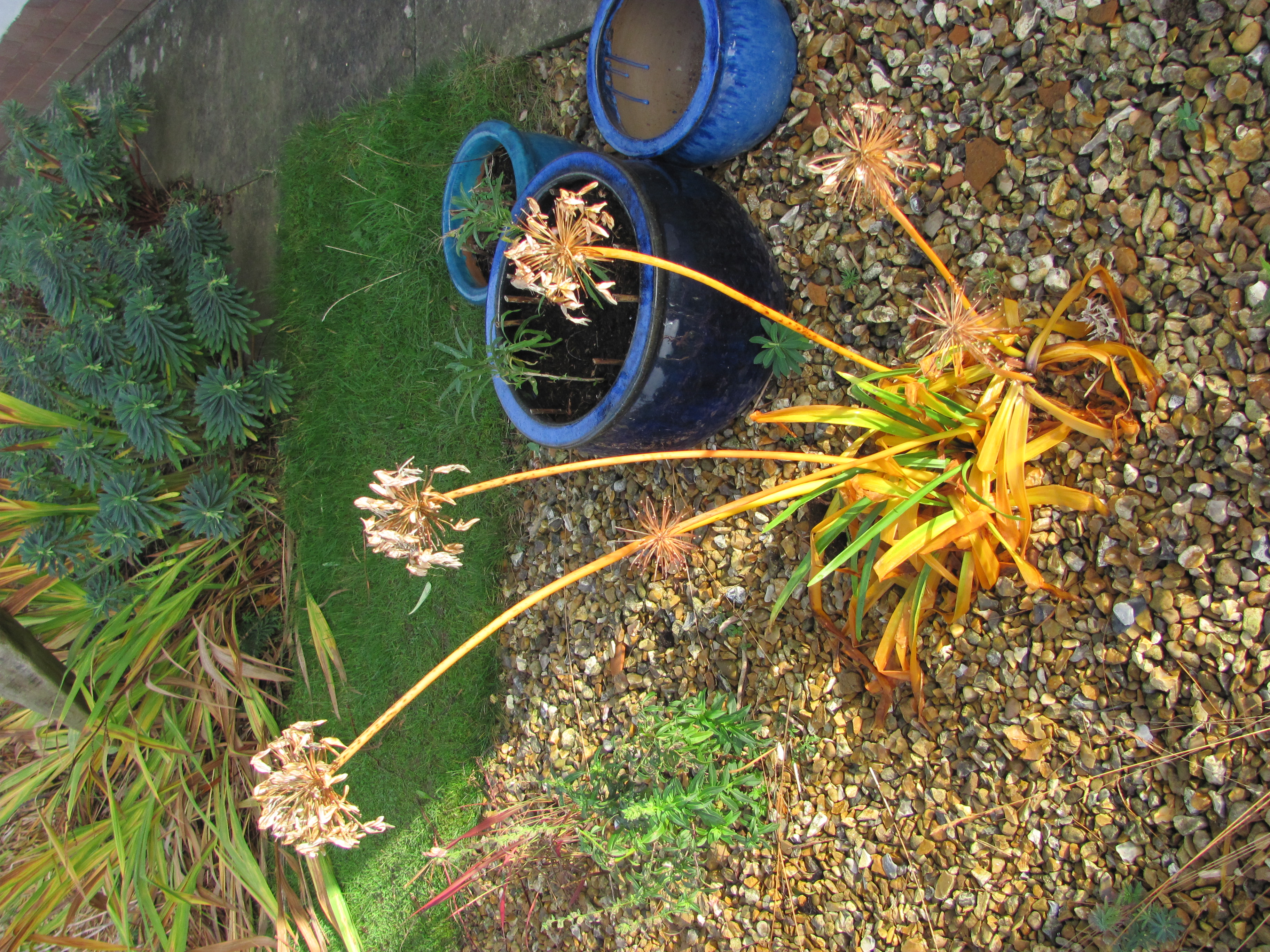
Agapanthus – a plant for winter?

On my early morning wander down to feed the chucks today I was accompanied by the usual Robin who followed me, flying from post to post down the fence line stopping off to treat me to a burst of his gentle transparent winter song. He does this every day except when the rain is torrential when he never shows. If I take the grass path past the slate bed, the Secret Garden and the Chicken bed he takes the fence route, but if I take the concrete central path he flies along the cordon pears and plums stopping to sing on each tree. Today was different for I had the added benefit of the first song this winter from the Song Thrush. The first signs of true territorial song mapping out his patch and letting others know. Sadly recently he just sings for us for there seem few rival males to want his territory. Here in Plealey we seem to have far more Mistle Thrushes than Song Thrushes.

As usual I wandered around the garden to see what was happening and today felt warmer so a slow aimless wander was on the cards. I was impressed by the Prunus subhirtella autumnalis, the centre piece of our little Japanese Garden, which is littered with its delicate white blooms. And at last new spears of bulb leaves have made their way to the surface to show us their intent. But a plant that struck me as an unusual “winter interest” plant was the Agapanthus.

Agapanthus, a striking summer flowering plant, is growing in our “Chatto Garden”, a gravel bed we made after visiting Beth Chatto’s wonderful garden and being struck by her gravel garden created on her old car park. When there we bought a few agapanthus and on our gravel bed we grew a deep dark blue flowering variety. I wrote two earlier blogs about the amazing buds and how they open. ( see “Bud Burst” published in July 2011 and “Bud Burst Part 2” published in August 2011.)

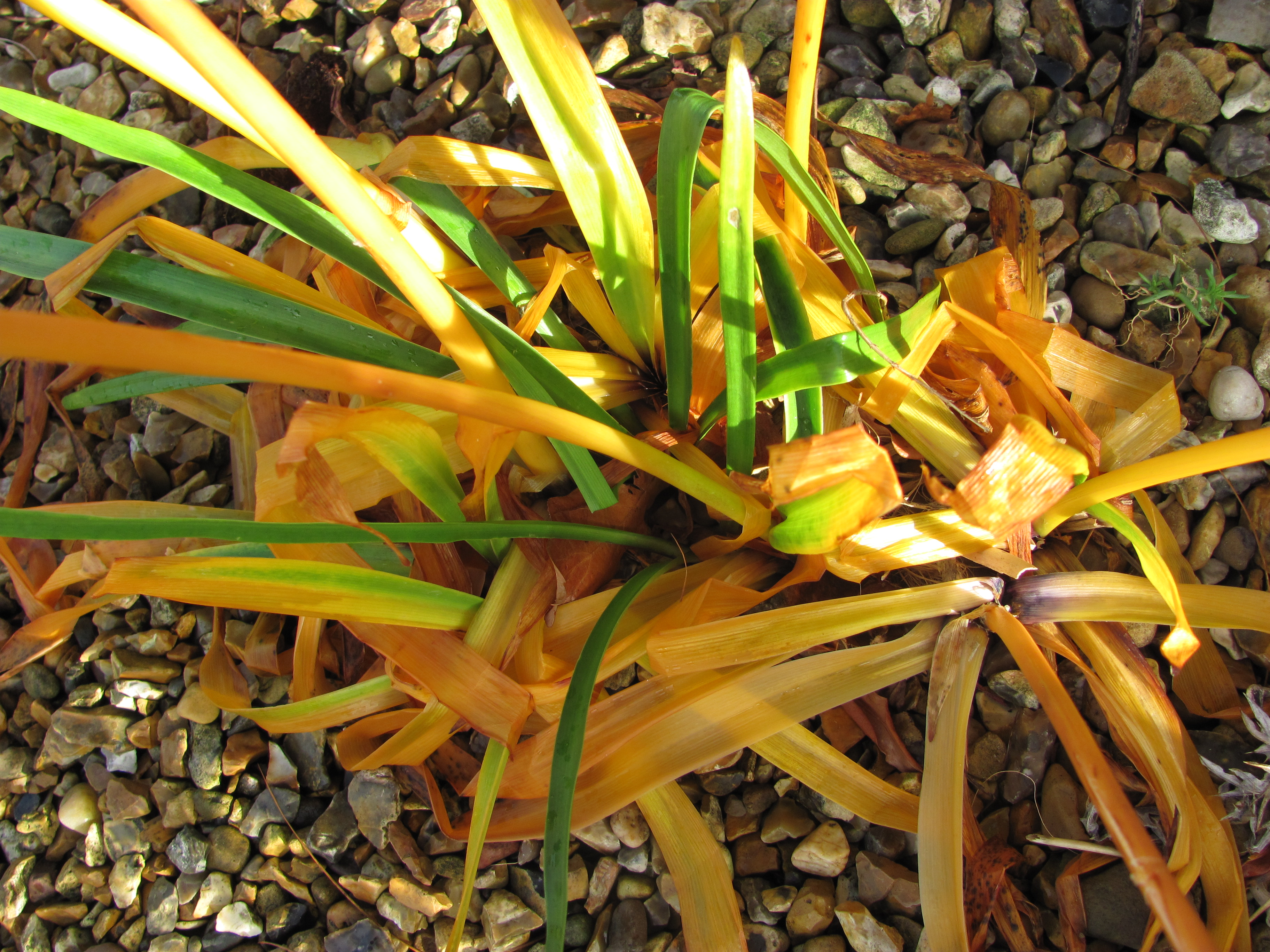
Now in December it is still giving interest on our “Chatto Garden”, but not blue this time but the absolute opposite – a rich yellow. The foliage and stems are yellow and the seed heads are like delicate sculptures.

Until now I had not considered the Agapanthus to be a plant for winter interest. They always say that a good gardener is one who never stops learning!

Categories
garden photography garden wildlife gardening ornamental trees and shrubs outdoor sculpture roses shrubs town gardens trees wildlife

A small town garden in December.

Earlier this week we spent a few days down in Gloucestershire at my Mother’s home. She has a small town house with a small town garden, about 30ft by 20ft in the back and a token patch in the front. The house is the last in a row on the edge of a small town and the garden boundary is a tall rich hedge of mixed native plants with fields beyond. For centuries this hedge has fed and sheltered wildlife in its hawthorns, ivies, wild roses and the sprawling shawl of brambles. It is home to a rogue buddleja germinated from a seed dropped by a bird and now attracting butterflies, bees  and hoverflies to its scented purple flowers each summer.

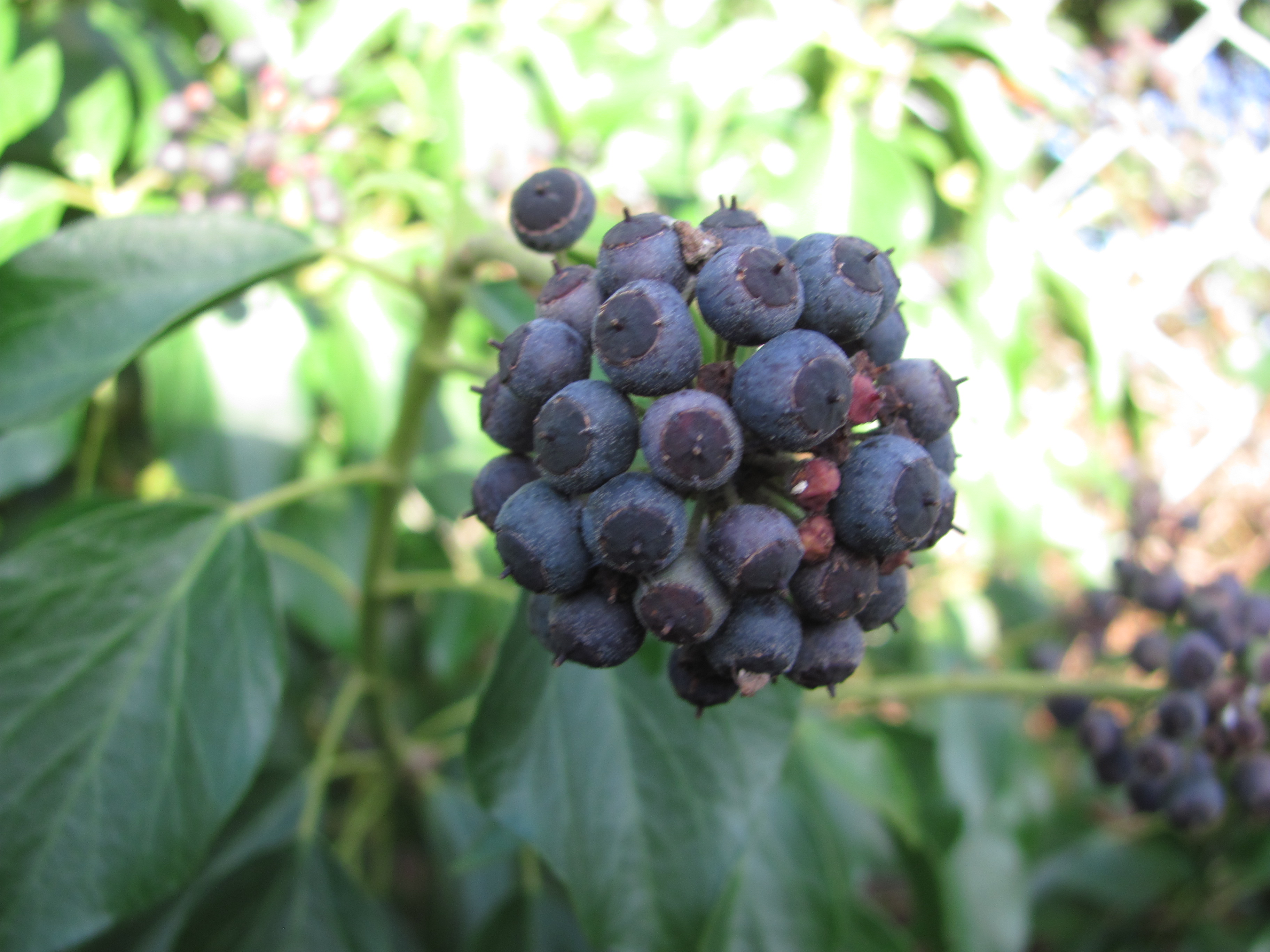
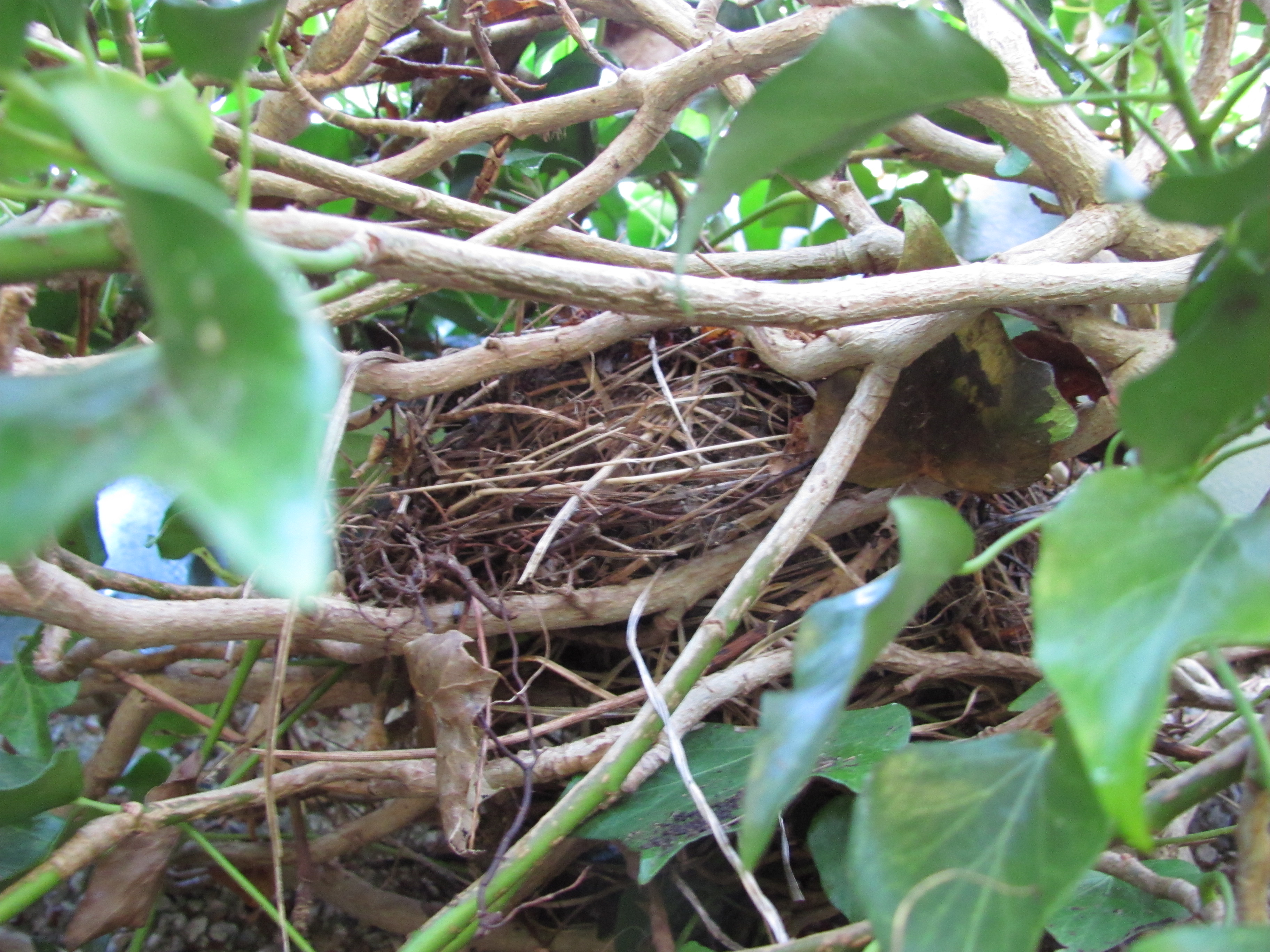
The ivy has spread from the hedge and along the garage wall which forms one side of a little secret garden, a shaded place for tea and cake. This ivy is now full of black berries, food for blackbirds who earlier in the year used its shelter in which to build their nest. It is a warm place for wrens to roost.

A look out from the front window into the garden shows the skeleton of silver branches of the Cercis Forest Pansy now having lost the last of its red and plum coloured leaves of autumn and a recently neatly pruned climbing rose on the porch wall. A glance at the back shows it to be dominated by a fine specimen of Arbutus unedo, the strawberry tree. There are small dots of colour from remnant flowering of earlier seasons still to be seen, but go out with camera in hand and there is so much more interest. Here the lens sees more than the eye and conjures up a garden full of textures and colours. Old terra-cotta pots spiral beneath the trunk of a malus arranged to add interest when the crab apples have been eaten by blackbirds and migrant thrushes and the yellow, orange and red of October leaves have journeyed to the ground only to be blown away by strong November winds.

Just as the clay pots were given new life, so the trunk of the conifer, outgrown its space and lopped, has been reborn as the post for a bird table. It is now visited by the birds who ignored its barren foliage when it lived.

Foliage plays a central role in small gardens in winter, both for colour and texture. Some like the Senecio, now sadly re-christened brachyglotis by the botanists, has both with its leaves surfaced in silver-grey fur.

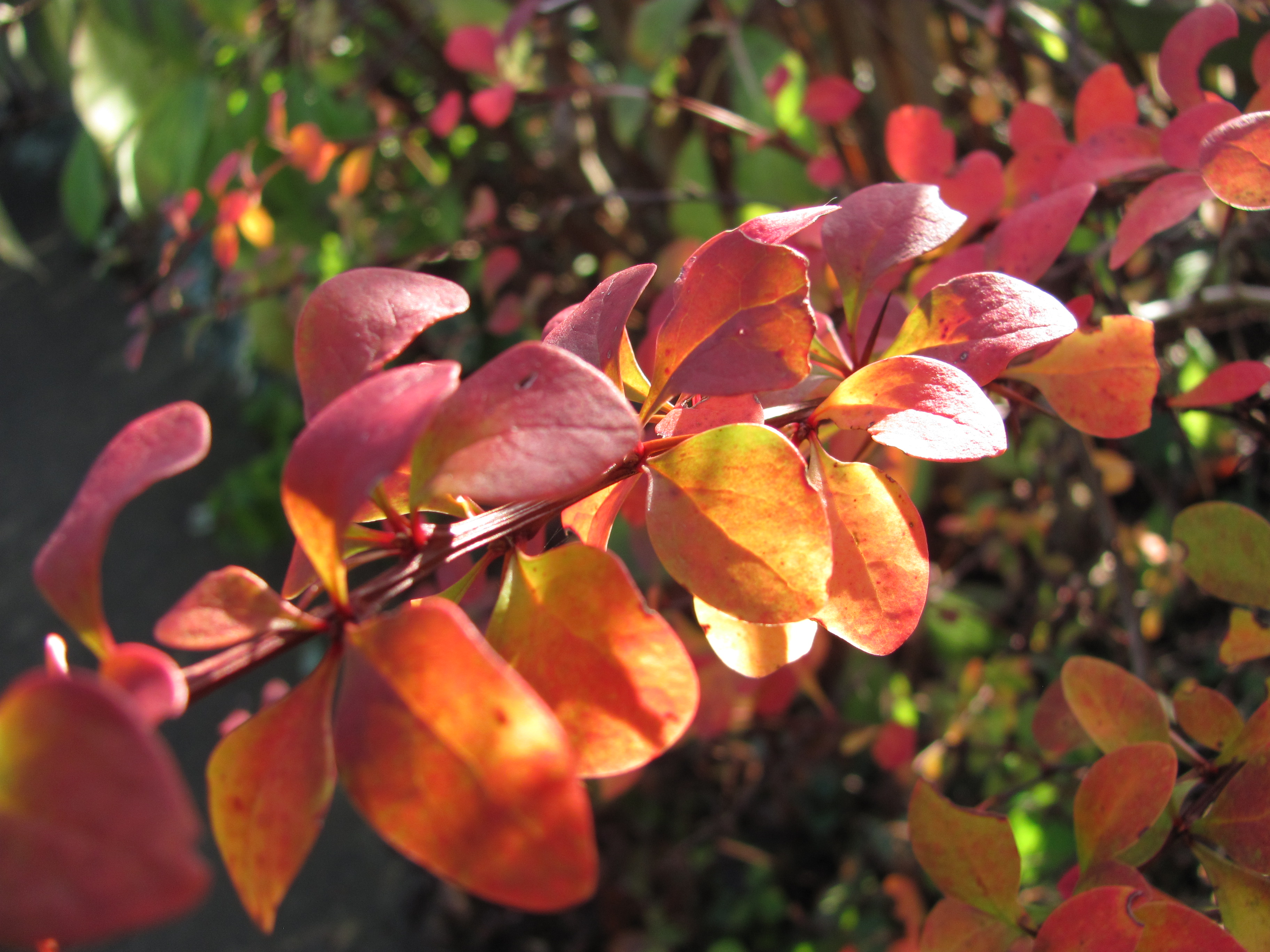
And in sharp contrast  to the delicate senecio, the bristly character of the berberis, purple in summer now turns to the red and orange tones of fire. In the shadow of the house wall a small nettle leaved plant clambers over the ground with its matt dry textured foliage shaded with silver, plum and purple. no artist could have designed these leaves.

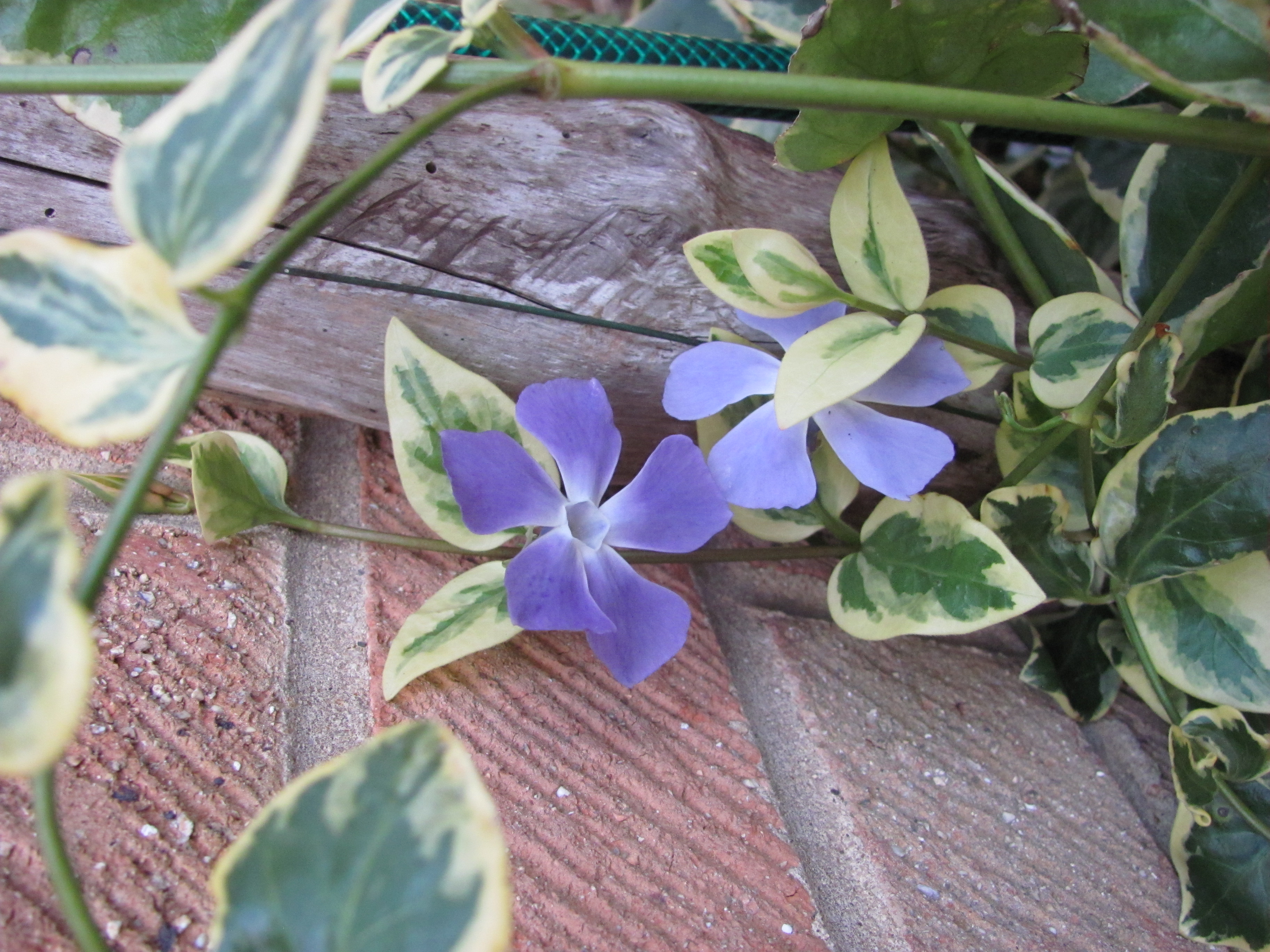
Close by the variegated periwinkle, Vinca major, defies the season and manages two pure blue blooms.

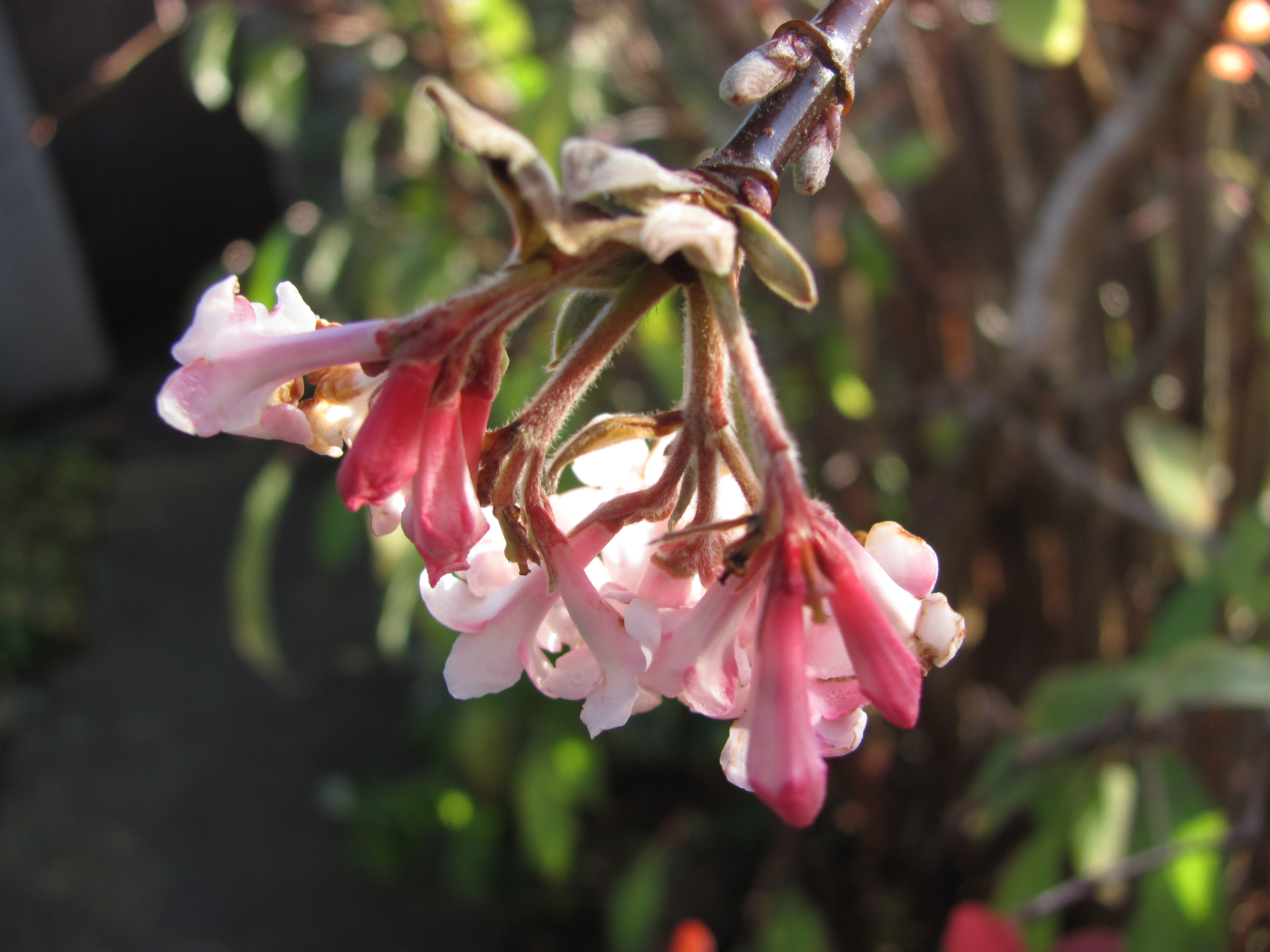
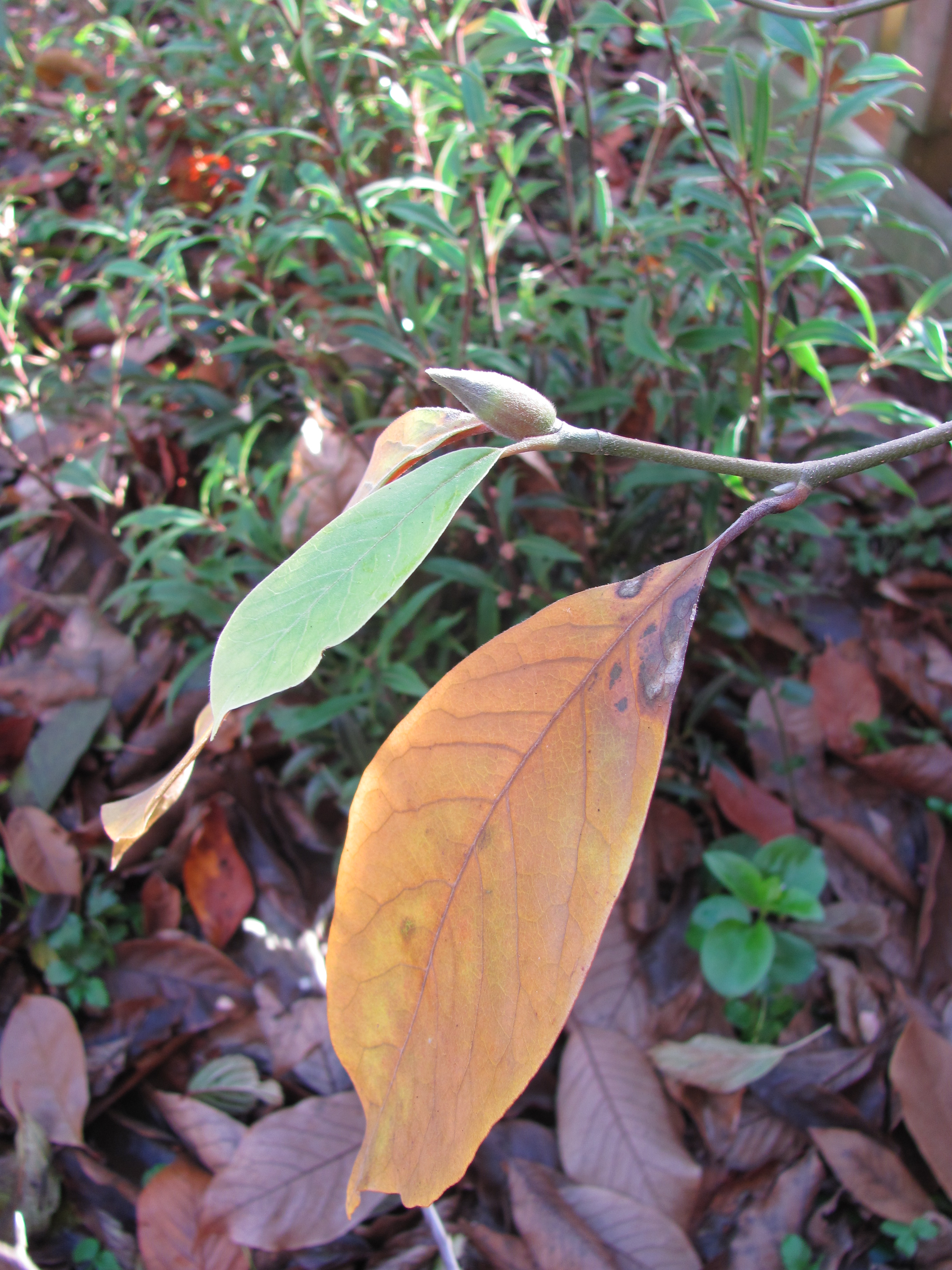
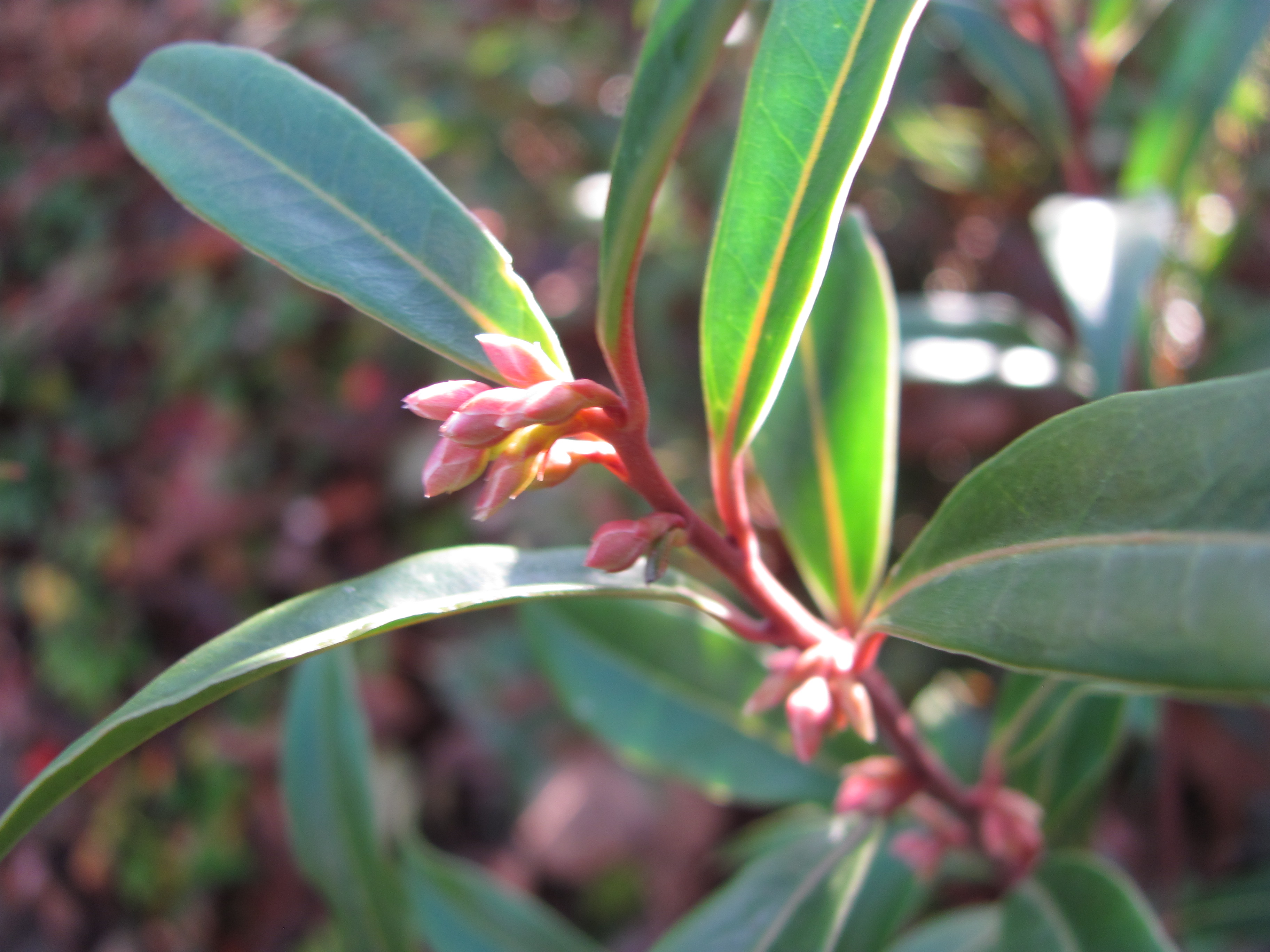
Promises of scent and colour from late winter and early spring flowers are evidence of rapidly changing seasons, the few lonely pink-blushed blooms of Viburnum bodnantense “Dawn” remind us of the profusion there is in waiting, while the soft-furred pointed buds of magnolia hide all its promises of scent and waxy petalled blooms. Sarcococca is an amazing name for a shrub. In the summer it is quite a dull little waxy leaved evergreen but below its branches are hung with tiny buds that will open into little white gems absolutely loaded with a heavy honey scent at the most unlikely time, January and February. Such a treat, and this one is planted alongside the garden path, just where it can treat anyone passing by.

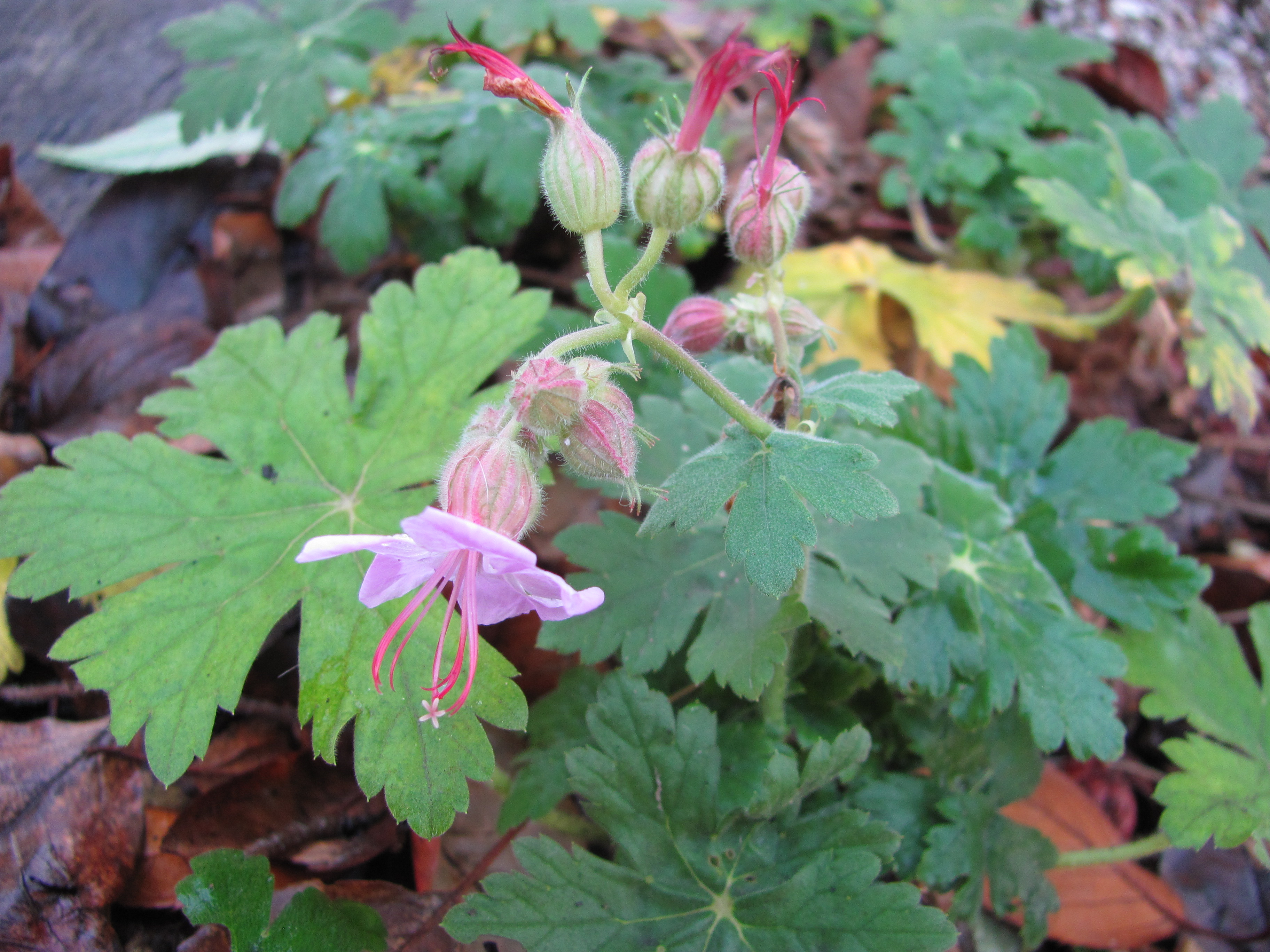
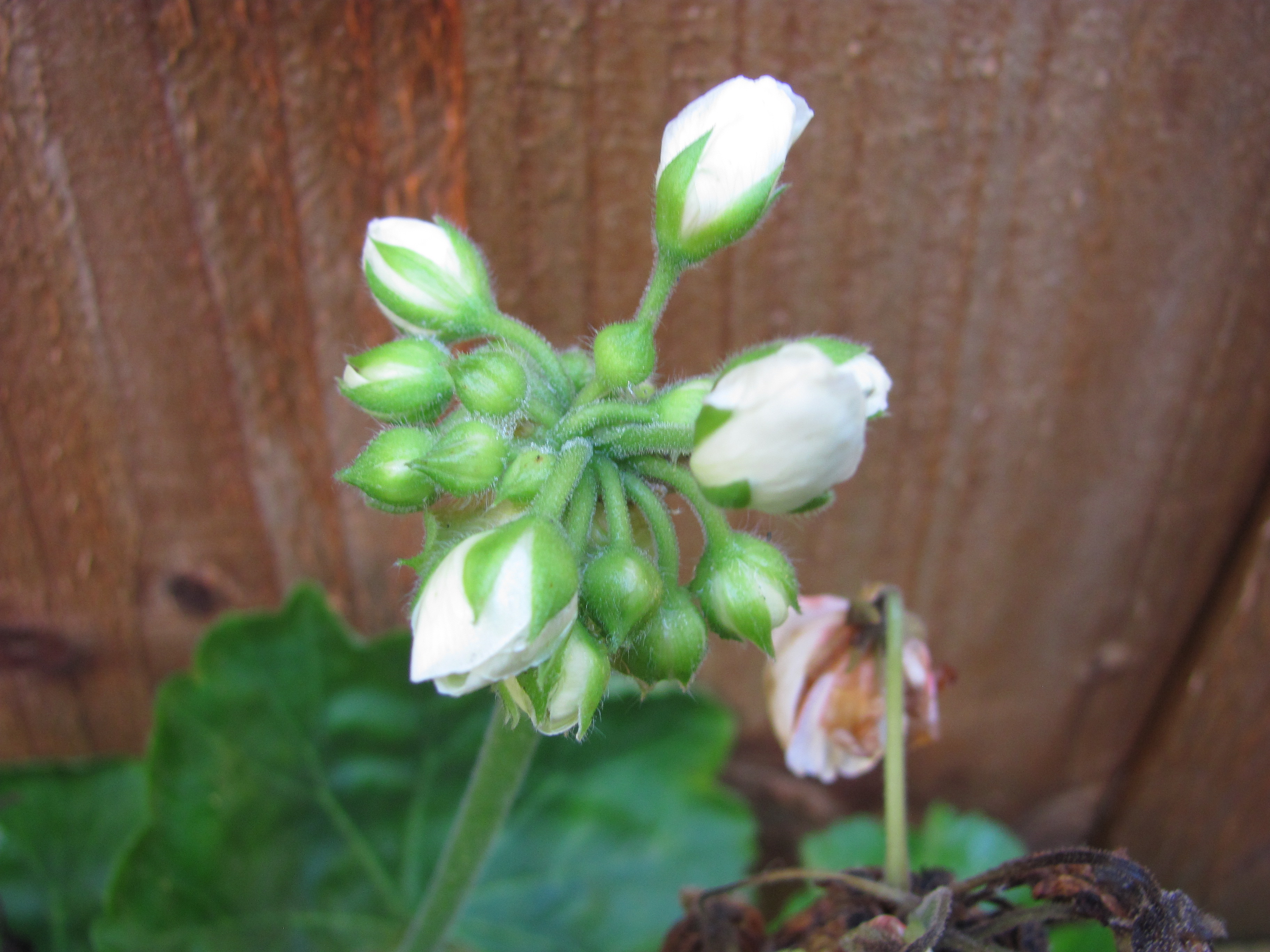
Whereas the buds of the viburnum and the magnolia are promises of future joy, other buds are remnants of the joys of summer. White buds of the annual pelargonium and the palest pink of the hardy geranium are hanging on into the cold weather. True wishful thinkers!

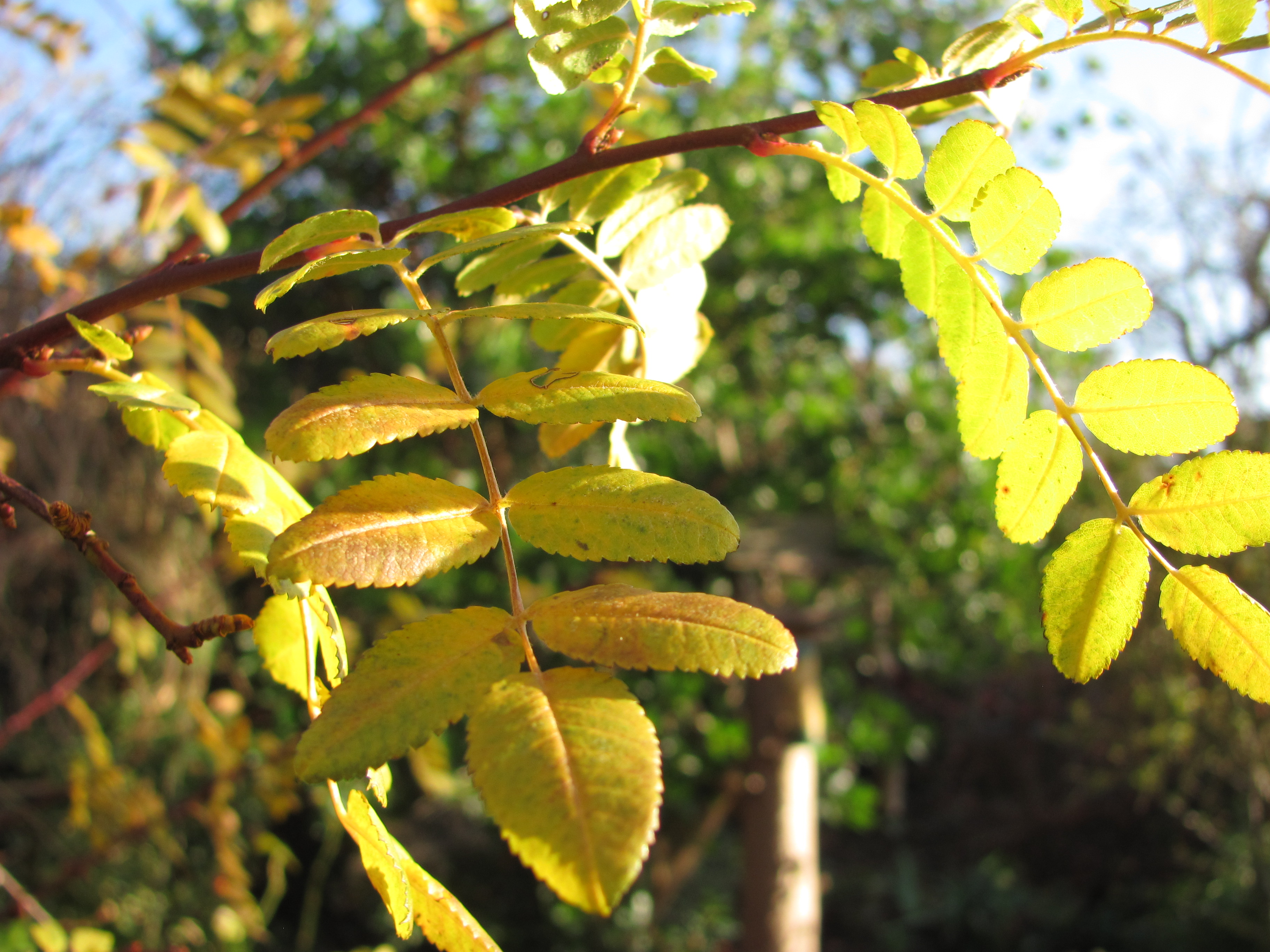
We access the front garden by passing under a rose arch, over which rambles a Canary Rose one of the earliest roses to come into bloom every year. Now its yellowness comes from its leaves glowing in the winter sun. Its foliage causes confusion as several visitors have thought it to be a rowan.

Beneath the arch the yellow of the Canary Rose is precisely reflected in the deep yellow of the richly variegated euonymus.

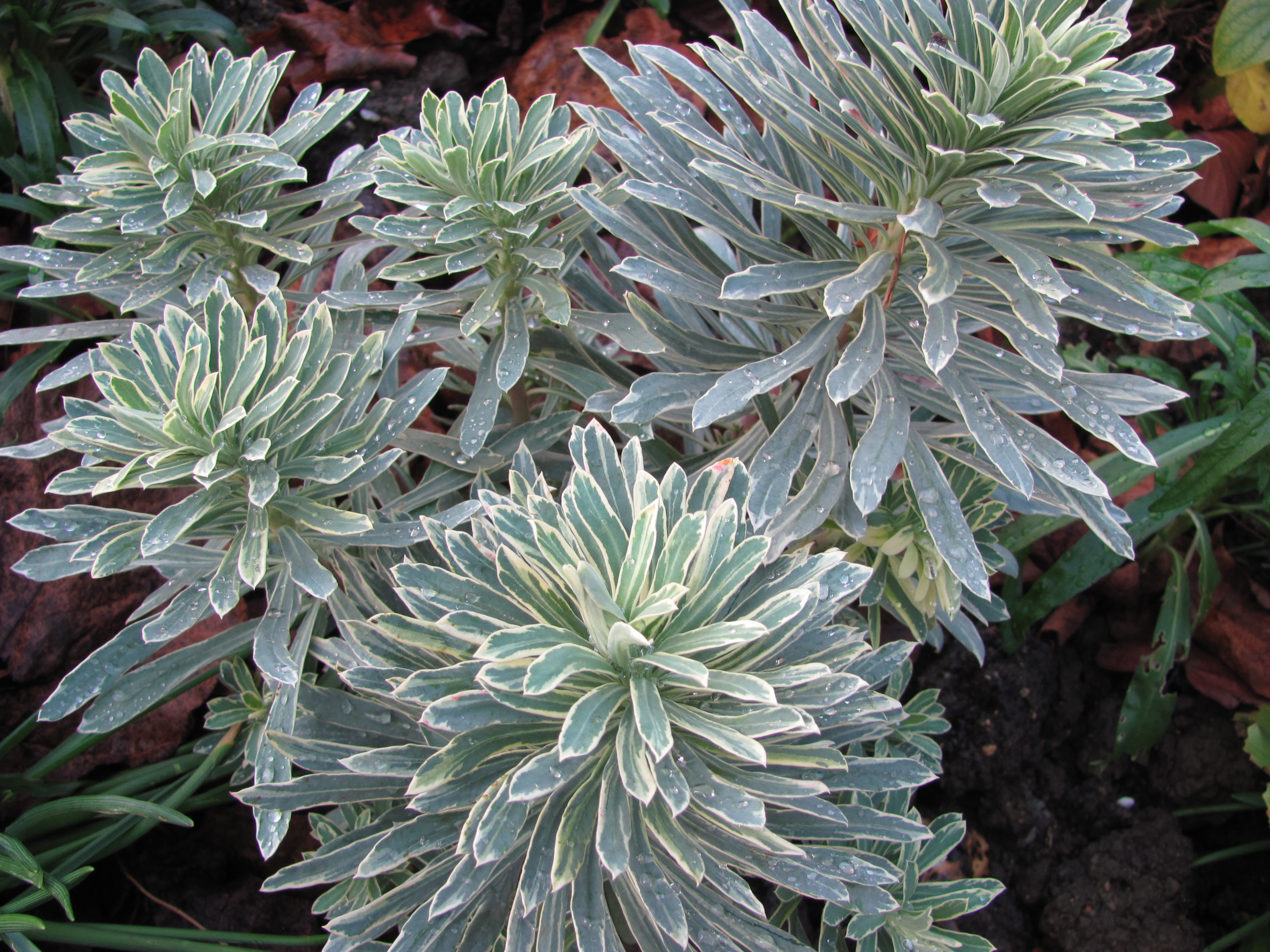
In the front the white, silver and cream variegated euphorbia is far more noticeable than at any other time of year even though it never changes.

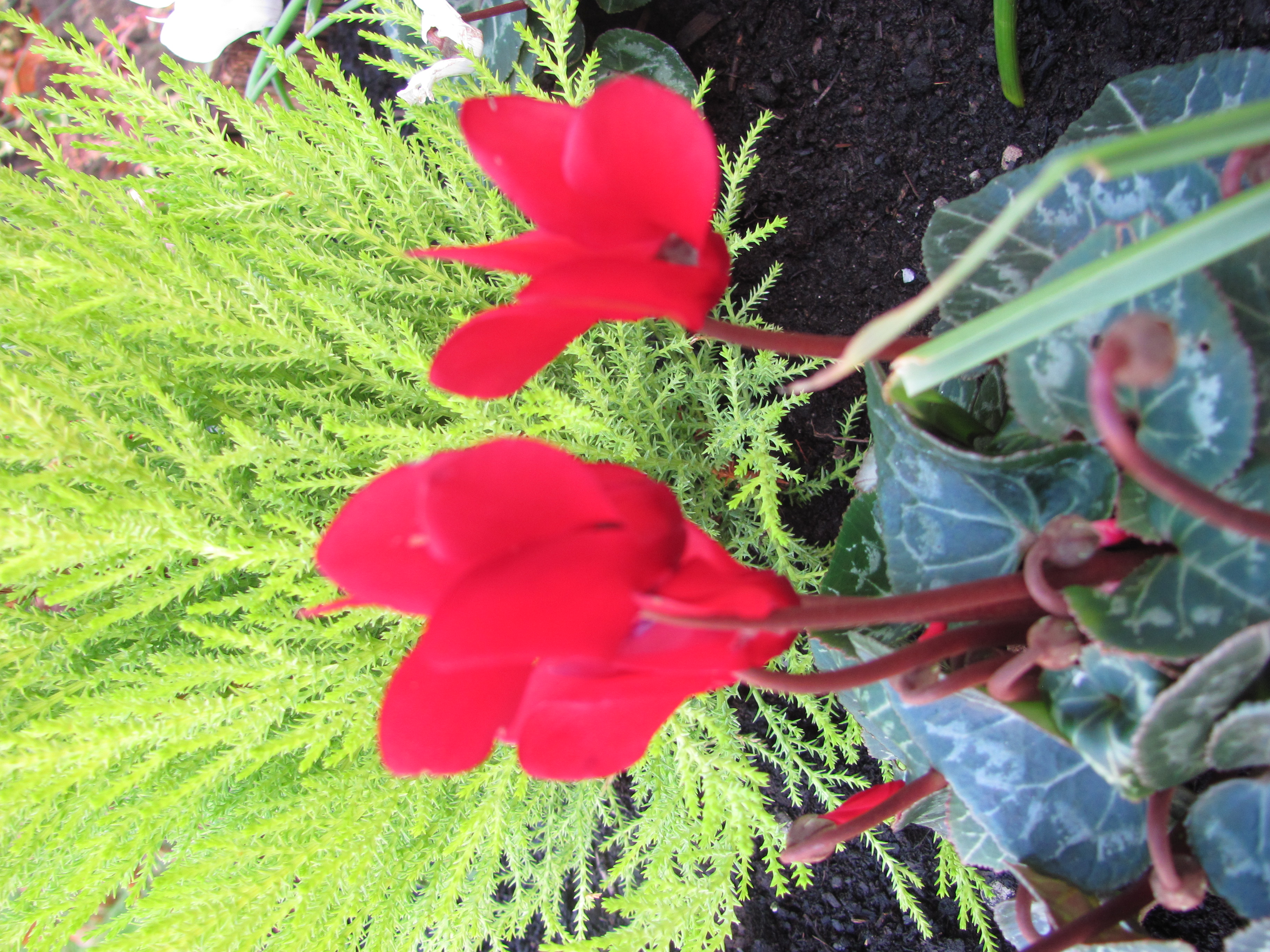
Tubs at the front have been planted to give bursts of colour mostly from cyclamen. Why can I accept such bright colours and clashes in the winter when I would find them undesirable the rest of the year?

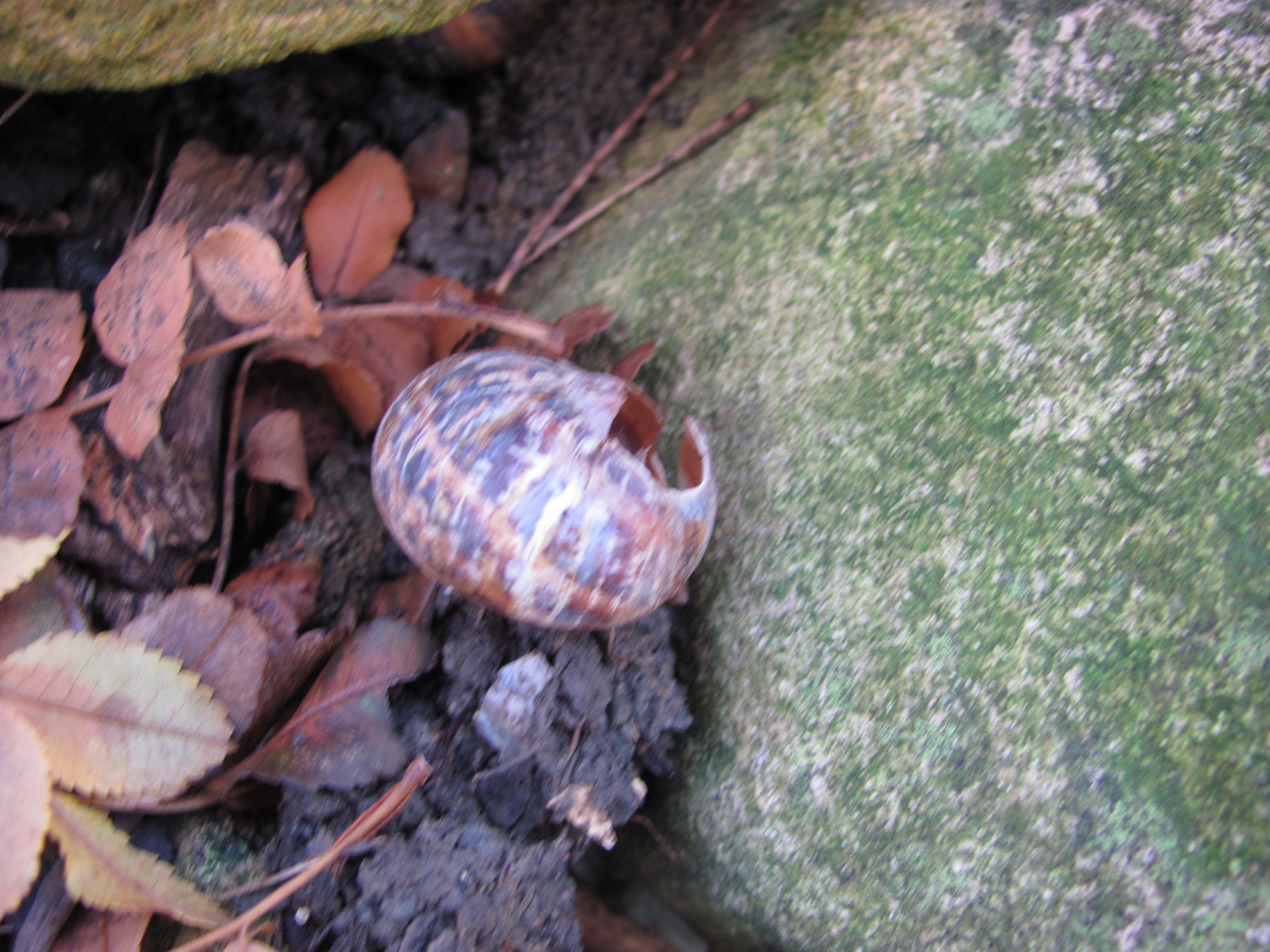
In the short stretch of low dry stone wall, between two levels of garden, I spied this snail-shell, providing just a hint at the many hibernating molluscs hidden in its warmth.

Categories
birds conservation garden wildlife RSPB wildlife

The Wonderful Starlings of Aberystwyth

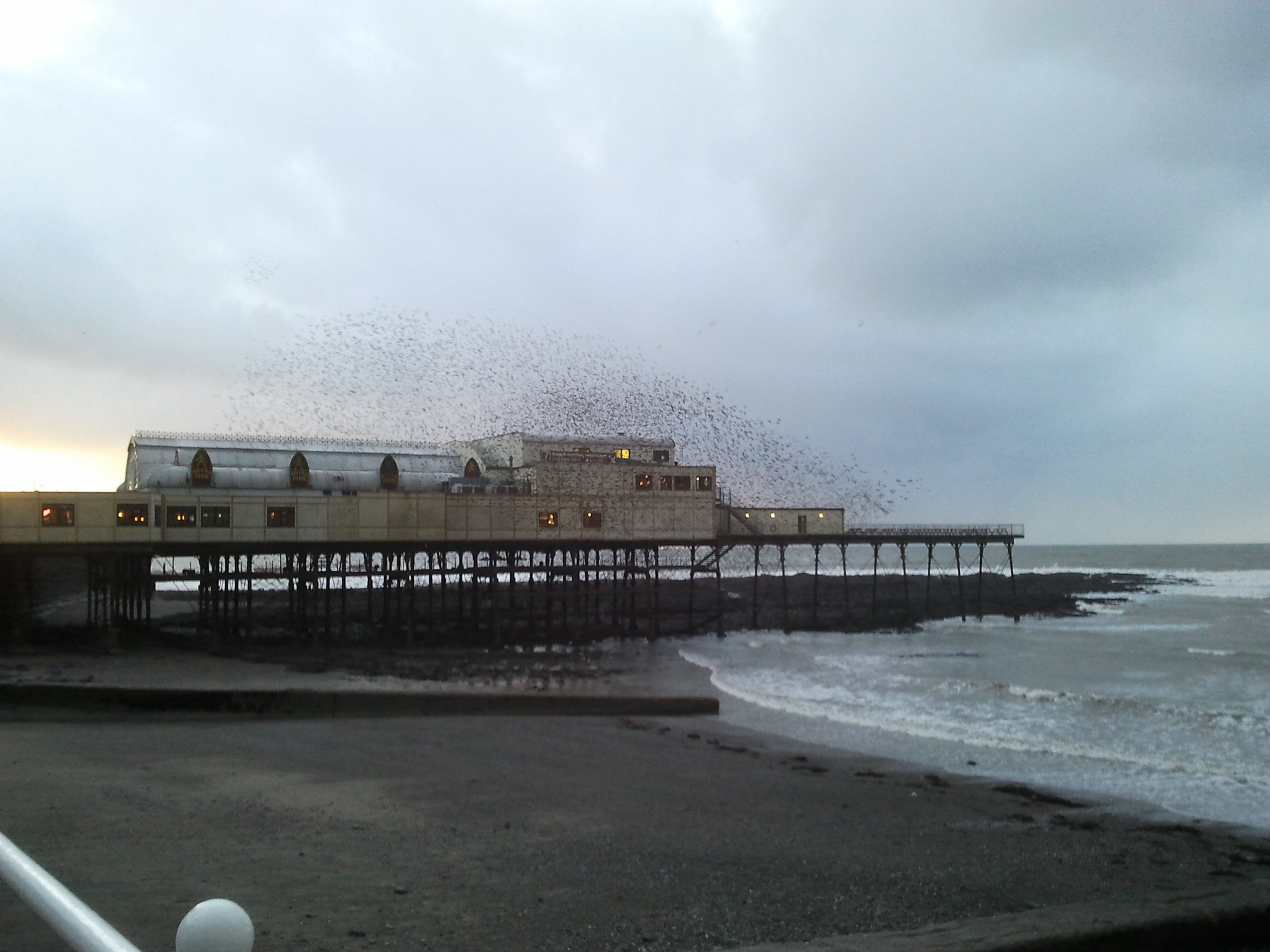
When we received a text asking if we fancied a trip to Aberystwyth to see the murmuration of starlings at the pier we didn’t need asking twice. This was a chance to see one of the UK’s most incredible wildlife spectacles. We had experienced small murmurations in Northumberland when we watched hundreds of starlings grouped together to roost in a clump of tall coniferous trees. That impressed us – the Welsh murmuration should amaze us!

After a long drive of nearly 3 hours we arrived just before the expected start time of 3:30 and found a parking space just 50 yards from the stage – the pier. Apparently they are very accurate time keepers these starlings. It was dull with heavy deep grey cloud overhead and it started to spit with rain. The skies above the pier were quiet so we decided we had time for a coffee and buttie. After that long drive which found us stuck behind everyone who didn’t seem very keen on getting to their destination so drove at 30mph, I was desperate for a coffee and so were my three companions.

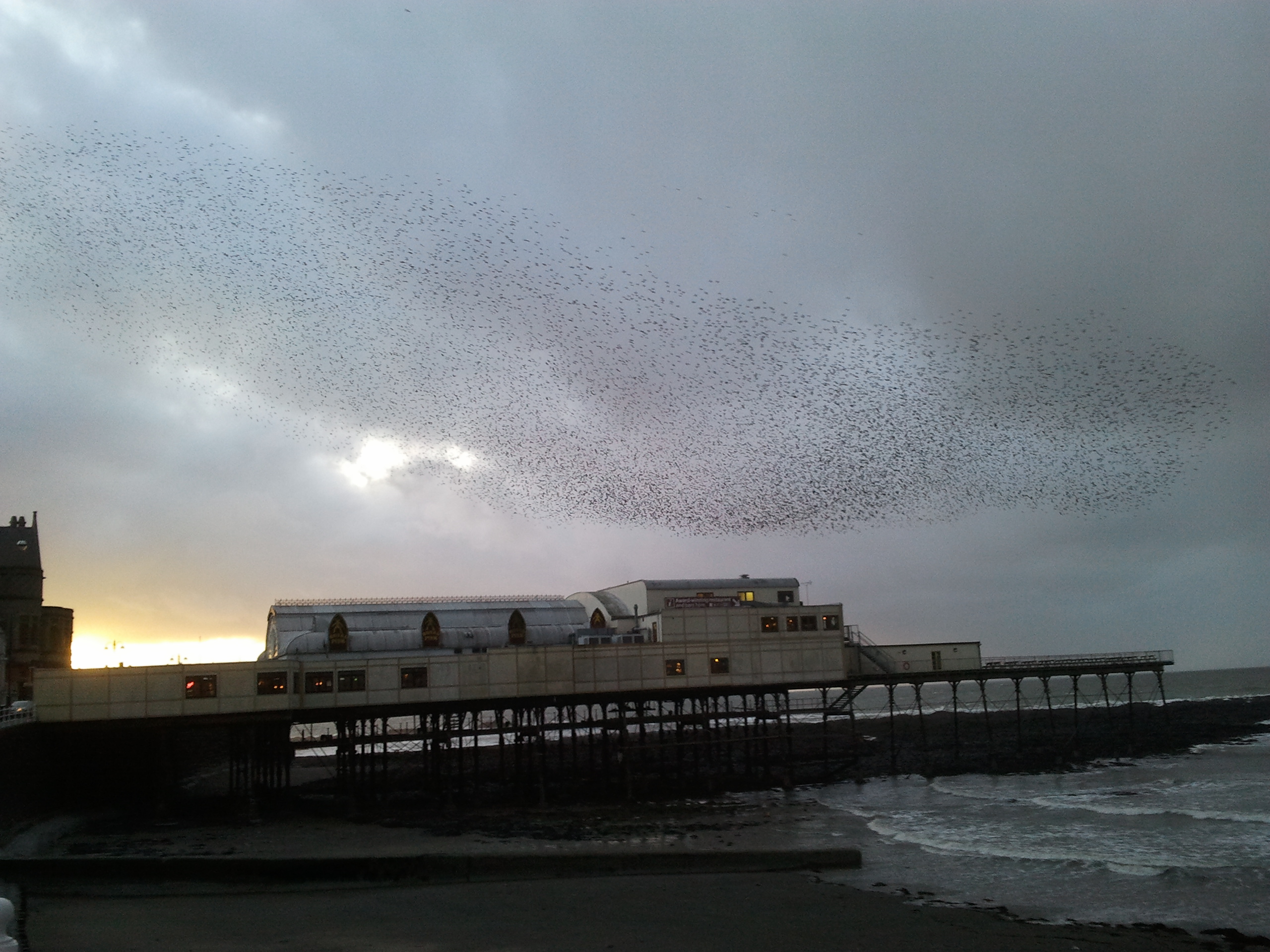
We poured the coffee out and each of managed a bite of s buttie before the spectacular crept up on us. First a small flock of a dozen or so starlings, a few minutes later a nother small flock. But suddenly flocks of every size and odd individual bird wer homing in on Aberystwyth pier. We jumped from the car coffees in one hand butties in the other. these were soon dumped on a bench as we grabbed binoculars and smart phones (for their cameras). Then all hell broke loose as starlings in flocks of all sizes arrived from all directions and at every angle some over the roofs of the town some over the line of sea and beach.

In the end the skies overhead were patterned by tens of thousands of little black birds all trying to communicate at the same time. As the flocks merged they created smoke like patterns moving in harmony. Choreographed by social understanding, these dark bird clouds moulded into ever-changing shapes, soft curved shapes. An aerial dance of waves. Some birds had traveled from 20 miles or so  away but every single one had time to dance.

They entertained us. They enthralled us. The sky was simply full of starlings all awaiting that time when the group decision was made to drop down and settle for a night under the pier, on every beam and bar. They dropped like closing blinds. Chose good spots safe from predators, sharing each others warm and news of the day’s foraging. Their talking is deafening like an ill-disciplined school dining hall on a wet and windy day.

They repeat this performance every day. They know the pier affords them good visibility and a feeling of safety. As the tide rolls in the sea adds further protection and drowns out their chatter. They have once again found the security of their communal night-time shelter. As the last small flocks found spaces under the pier the gentle rain turned heavy and we retreated to the cover of the car.

As we drove home high on the spectacle we kept wondering why these gatherings were called murmurations. A murmuration is simply the name for a group of starlings. The dictionary definition is “a flock of starlings” or “an act or instance of murmuring” – no help really. So we don’t have an answer and neither does anyone else seem to. Let’s just be satisfied with the memory of seeing this one at the pier.

It is hard to comprehend that the status of the starling in the UK is Red Status as these gathering give such a false impression. The majority of the starlings in these roosts come from the European continent. Perhaps the publicity given on TV through Autumn Watch and through the many video clips on the internet we may become more concerned and determined to do something about their falling numbers. We try to do our bit by encouraging them to the feeding stations in our garden where they gorge on suet blocks and fat balls. The big picture is hard to comprehend – if farming methods and the related food shortages are to blame then some big changes in the way Britain produces its food is called for. Those who make decisions about our farming need to display great strength of mind and a strong will. We can but hope!

This Veggie Life

A Vegetarian | Nature Lifestyle Blog

Rambling in the Garden

.....and nurturing my soul

The Arch City Gardener

Journeys In St. Louis Gardening and Beyond

Garden Dreaming at Châtillon

Consult the genius of the place

Storyshucker

A blog full of humorous and poignant observations.

gardeninacity

Notes from a wildlife-friendly cottage garden

PlayGroundology

...an emerging social science

The Official Blog of British Wildlife

'The most important and informative publication on wildlife of our times' - The Independent. This blog is a member of The UK & Ireland Natural History Bloggers group: www.uknhb.blogspot.com

iGrowHort

Inspire - Cultivate - Grow Native Plants - Restore Landscapes

Bishops Meadow Trust

To create and protect a semi-natural wild space for the people of Farnham to enjoy and experience an array of British wildlife in our town

Gardening with Children

The www.gardeningwithchildren.co.uk Blog

UKbirdingtimeline

birding through the seasons, why birds matter and how to conserve them

NATURE WALKER

with a camera in hand

Jardin

Transform your outdoor space

Eva's space

My allotment, cooking and other interests

Old School Garden

my gardening life through the year

LEANNE COLE

Trying to live a creative life

fromacountrycottage

trying to live as lightly as possible on our beautiful planet

Good Life Gardening

Nature lovers from Leicester living the good life.

mybeautfulthings

Finding the beautiful in the everyday

mawsonmichelle

Michelle's Allotment

In and Out of My Garden

thoughts from and about my garden

Greenhousing

Big plans for a small garden

The Scottish Country Garden

A Walled Country Garden in South East Scotland

The Fruity Chicken

Life at the fruity chicken

willowarchway

Off grid living. Self sufficient. "PERMAGANICS RULE".

St Anns Allotments

Nottingham's Grade 2* Listed Allotments and Community Orchard

Manifest Joy Harvests

a journey in suburban vegetable gardening

Allotmental

The madness of growing your own

Penny's Garden: a harvest beyond my front door

A novel approach to vegetable gardening

arignagardener

Sustainable living in the Irish countryside.

NewEnglandGardenAndThread

Master Gardener, amateur photographer, quilter, NH native, and sometimes SC snowbird

dianajhale

Recent work and work in progress and anything else that interests me

planthoarder

a chaotic cottage gardener

Lens and Pens by Sally

a weekly blog that creates a personal philosophy through photographs and words

Dewdrops and Sunshine

Stories from a sassy and classy Southern farmbelle.

The Pyjama Gardener

Simple Organic Gardening & Seasonal Living

gettin' fresh!

turning dirt into dinner

JOY...

today the world is created anew

Garden Birds

Notes from a Devon garden

ShootAbout

Life Through The Lens

Adapting Pixels

A photography blog showcasing the best photography pictures and videos on the internet

Wildlifegardening's Blog

Just another WordPress.com site

naturestimeline

personal observations from the natural world as the search continues for a new approach to conservation.

LATEBLOOMERBUDS

The Wonders of Life through my Eyes, my Heart, my Soul