Categories
garden design garden photography gardening gardens open to the public grasses hardy perennials National Trust ornamental trees and shrubs The National Trust the South trees

Go South 7 – Nymans

This is the last of my “Go South” posts and as promised it features a garden. Well after all those coastal posts in this series it was only a matter of time before we visited a garden. And boy what a garden it was!

Nymans was created by one of the great supporters of the English plant collectors and it shows in the variety of plants and in the difficulty in identifying some of them.

Nymans is a garden to delight any plantsman who will leave with a list of must-haves. It will also make any good gardener desire his very own areboretum just to plant the rare and special trees spotted at Nymans.

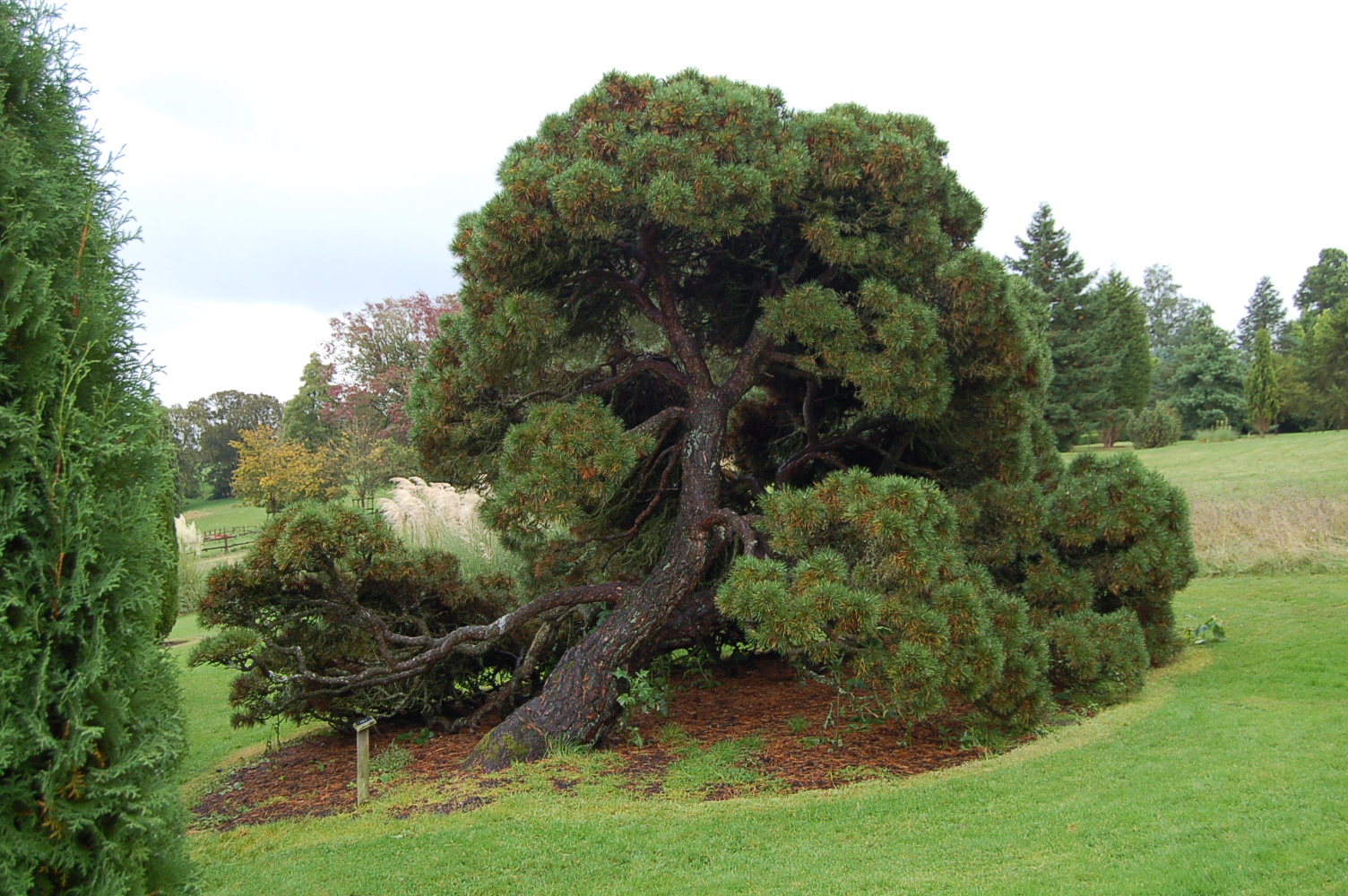
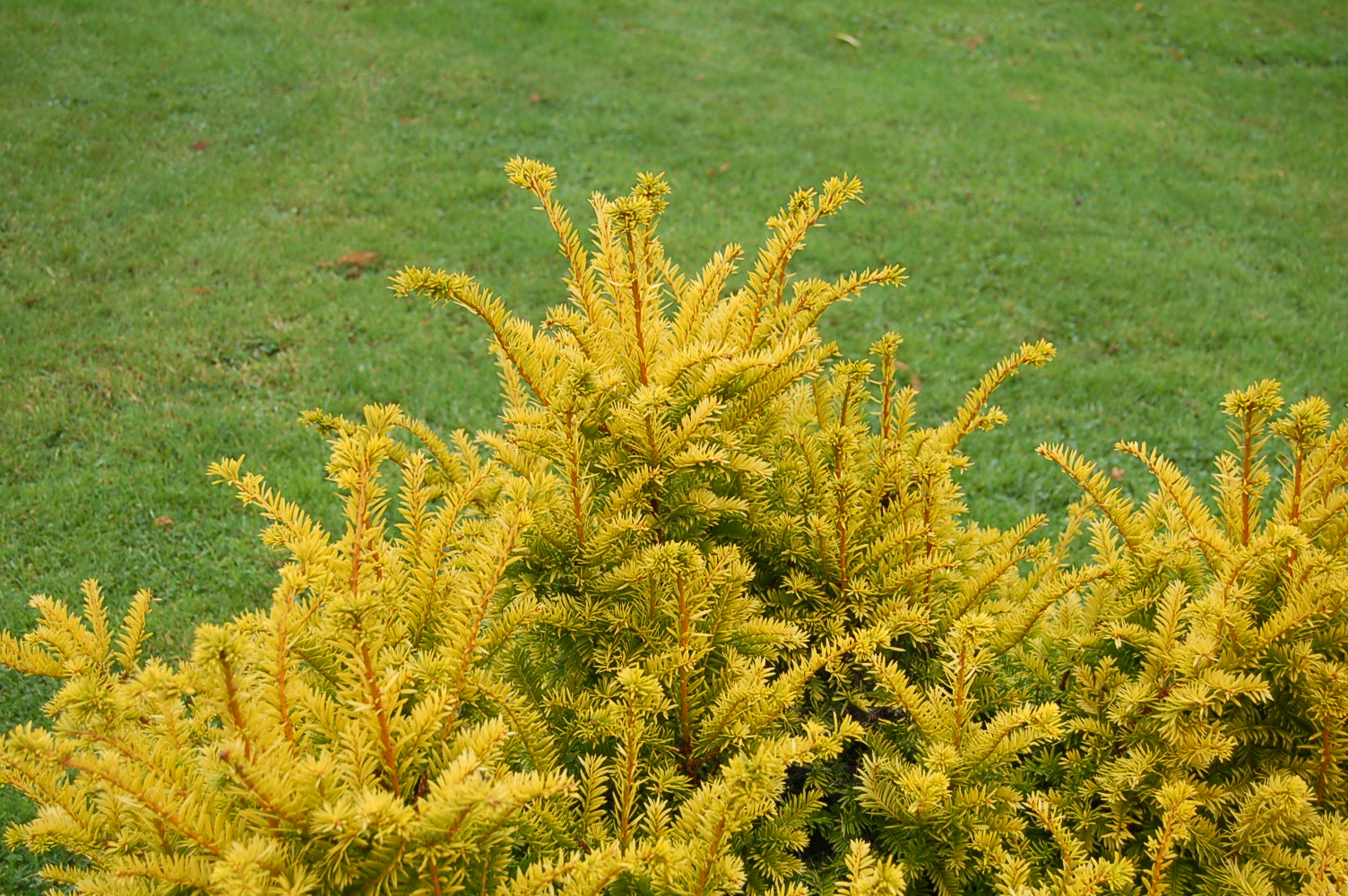
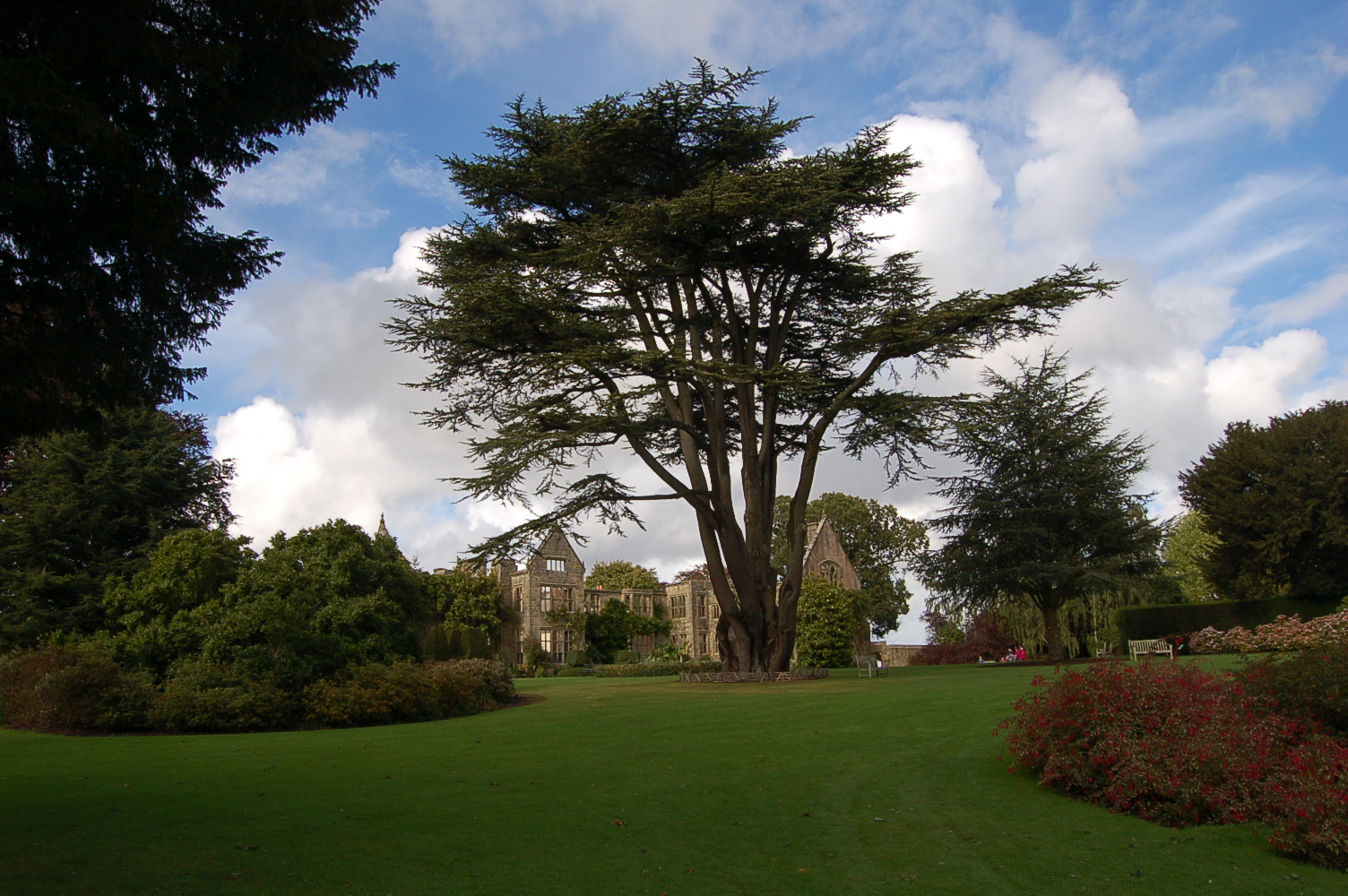
I am not a great fan of coniferous evergreens but these three display diversity in their foliage colour and in their structure and shape.

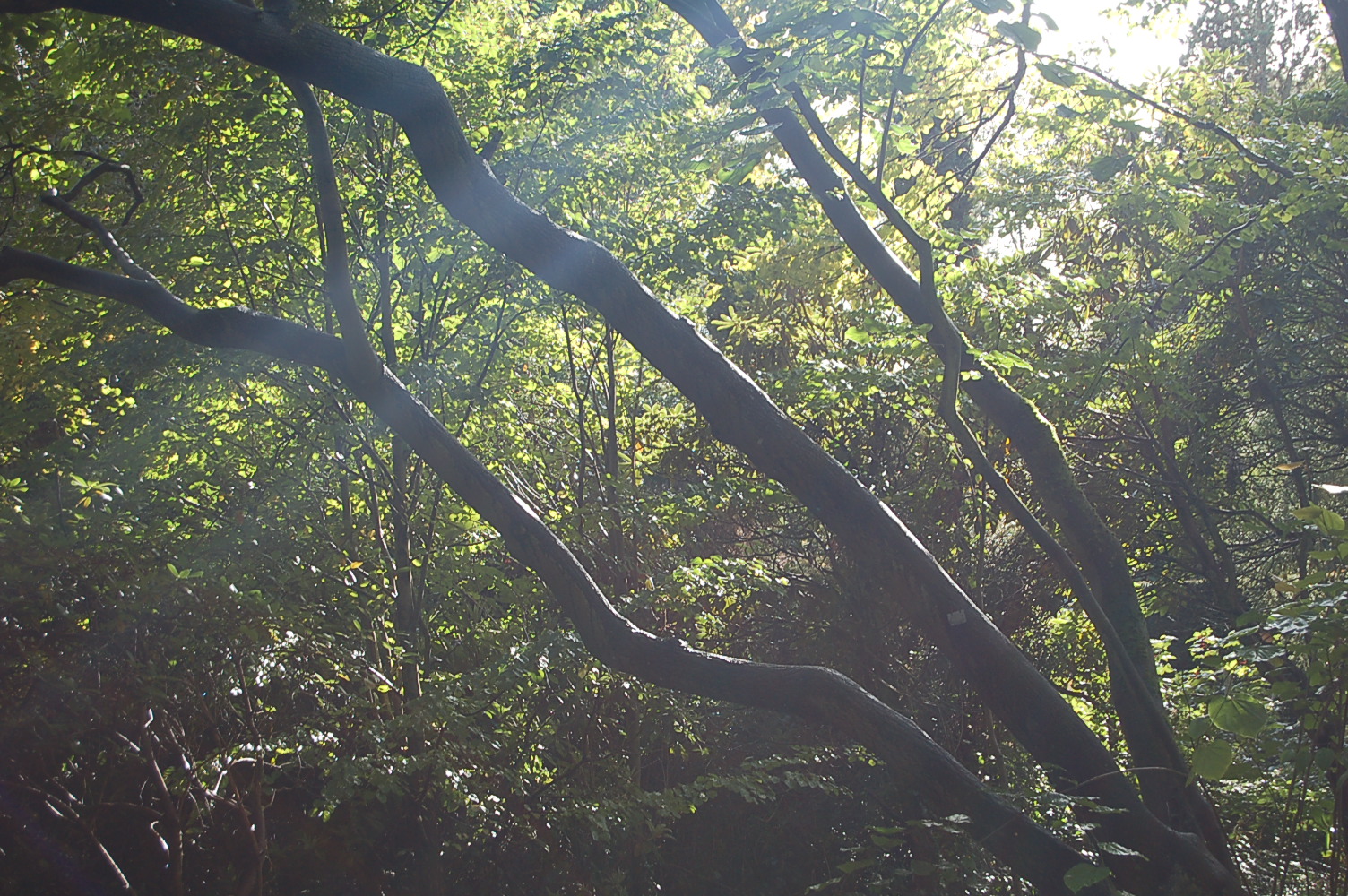
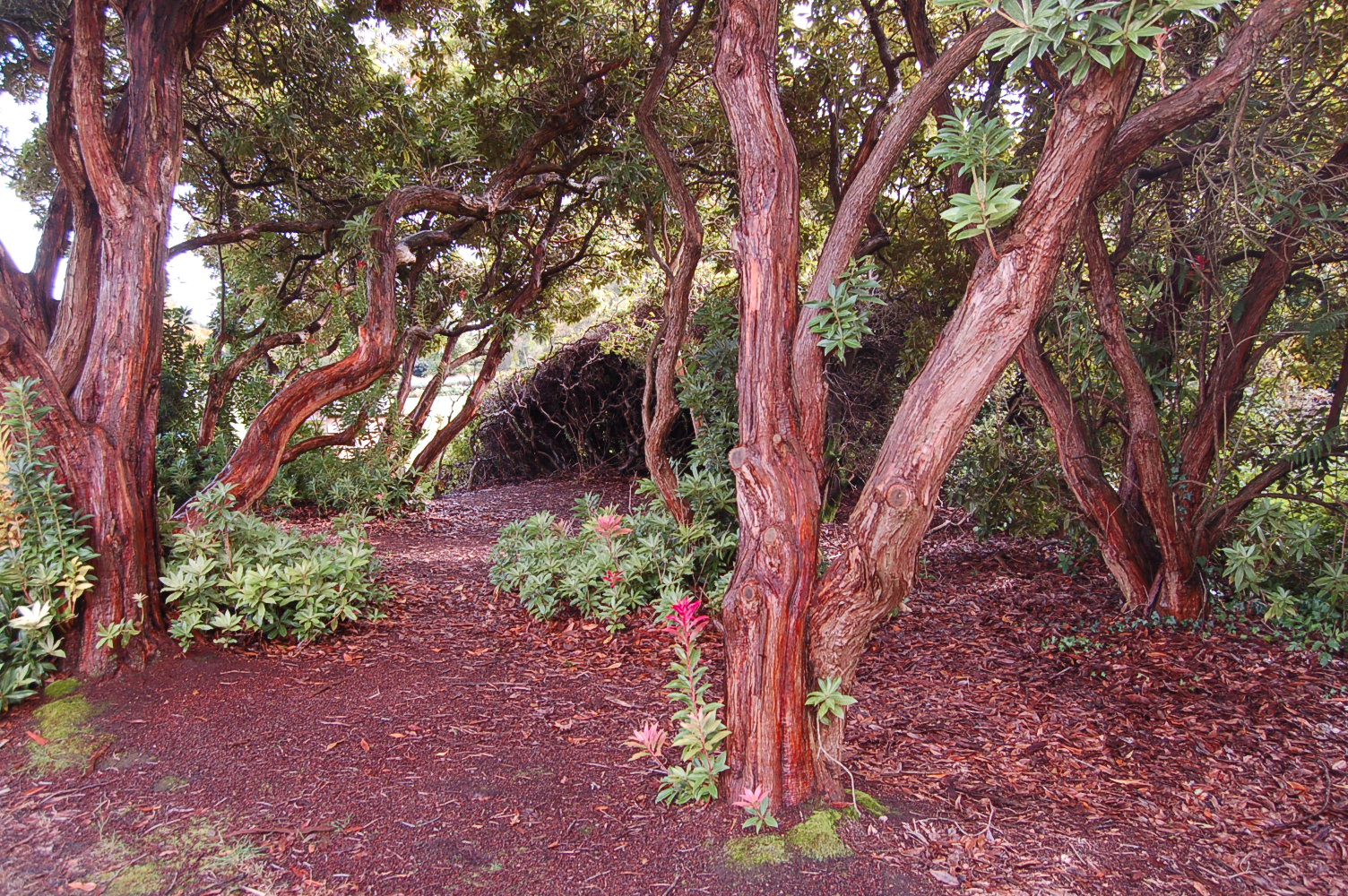
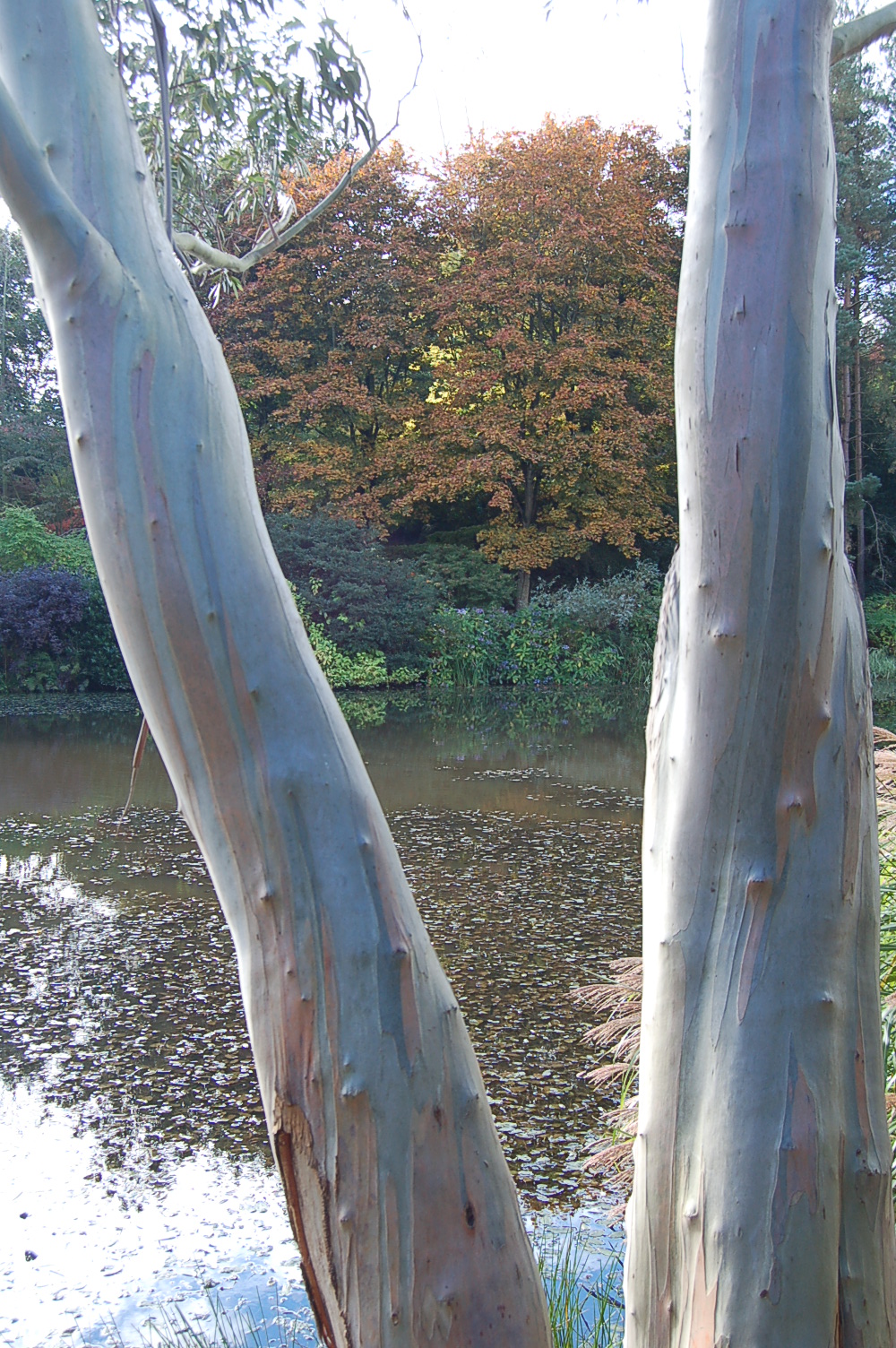
In the shade of deciduous trees the shapes of their trunks are revealed.

Walking around this varied and surprising garden is like walking through the pages of a good book on garden design. Here you can find every principle of design shown in all its glory. Any gardener, whatever the size of their garden could adapt ideas to be found on a walk about at Nymans.

Framing a view …..

Using a structure to invite you onwards ….

Planting in trios ………………..

Drawing the eye …………

Using structures as an invitation and to support plants to provide shade from the sun ……………

Much of the house belonging to the gardens at Nymans is now in ruins, but they somehow suit the garden. They provide a good foil for planting.

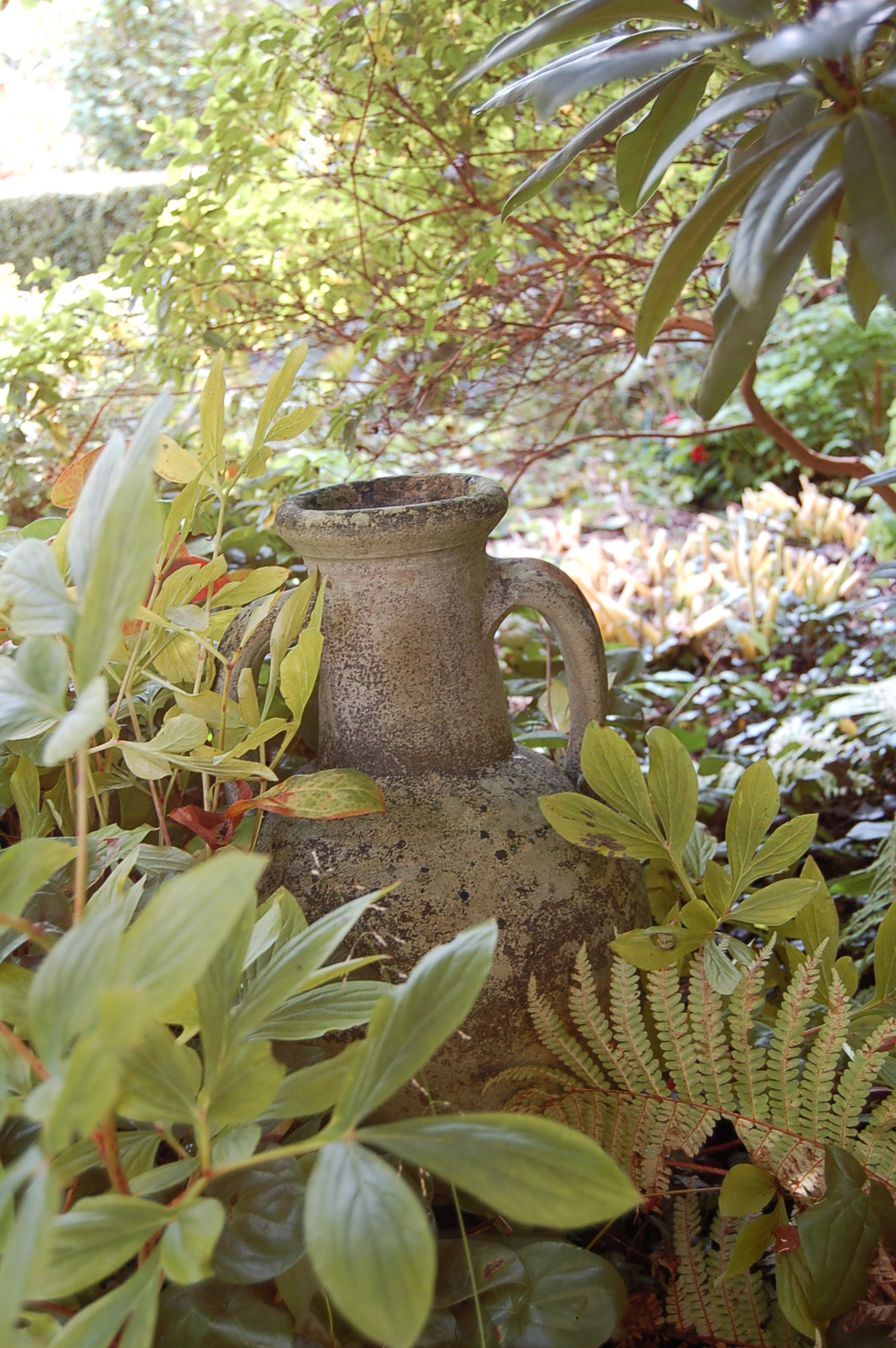
The ruins provided some oportunities to photograph little details and patterns.

But the gardens of Nymans aren’t all about big views and big trees. Richly coloured traditionally proportioned double herbaceous borders excite the eye of the visitor.

There was so much to see at Nymans that another post will appear soon.

Categories
garden photography gardening ornamental trees and shrubs shrubs

Bungei and Trichotomum

With those fun words as part of their names these plants have to be special. But what are they? Clerodendrons. This is a species that is represented in our gardens by just a few varieties even though there are about 150 different ones known in the wild, mostly from China and Japan, and they have been in cultivation in Europe for over 250 years. Some can be grown in conservatories and under glass when heated, but Clerodendron bungei and C. trichotomum are the only two reliable for our gardens.

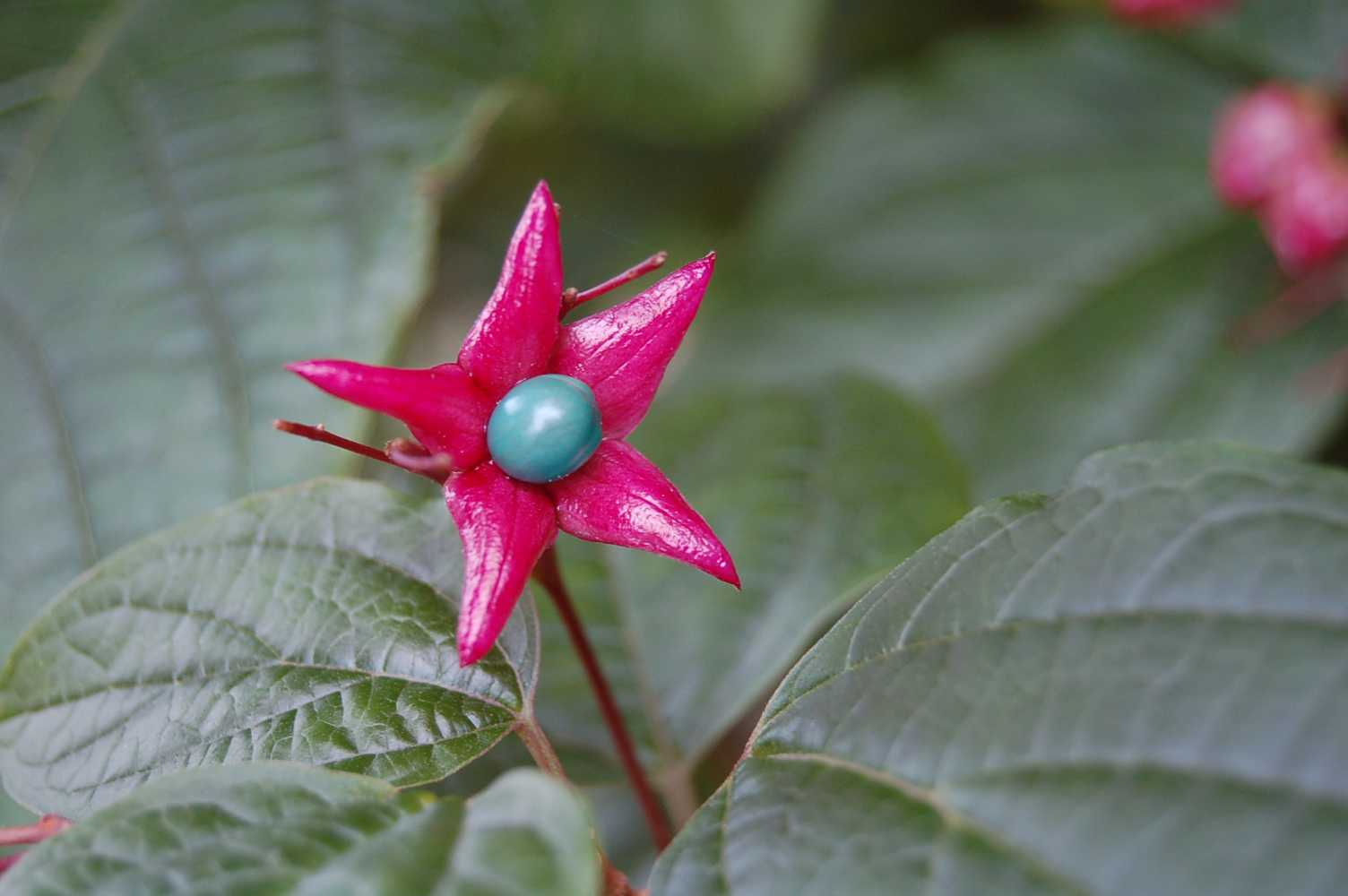
We grow both and enjoy them in several seasons as they have so much to offer. They have interesting foliage, the colours of which vary with the seasons, fine flowers of interesting structure and colours and startling coloured fruits, which all means they have a long season of interest.

The first three photos are of C. trichotomum.

Clerodendron bungei, below, is said by some to smell of peanut butter but by others as smelling of rancid peanut butter or even drains. Perhaps not its best feature!

And what about those two words, bungei and trichotomum? Where do they come from?

Bungei relates to a C19 Russian botanist, Dr Alexander von Bunge and trichotomum means “three branches” but I can’t work out exactly why it is called that.

Categories
autumn colours colours garden photography gardening gardens open to the public National Garden Scheme NGS ornamental trees and shrubs Powis shrubs

Hydrangeas at The Dingle Garden

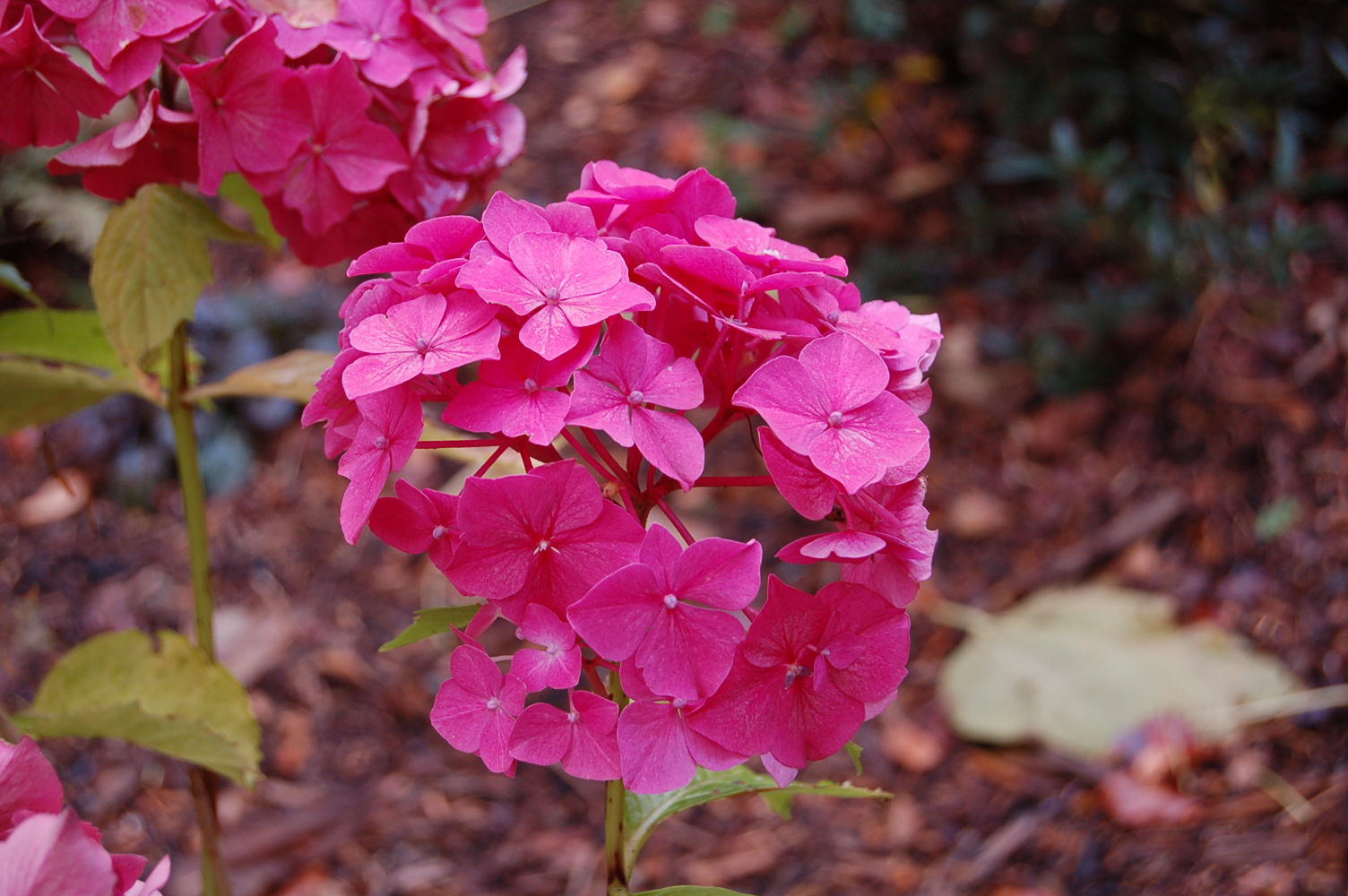
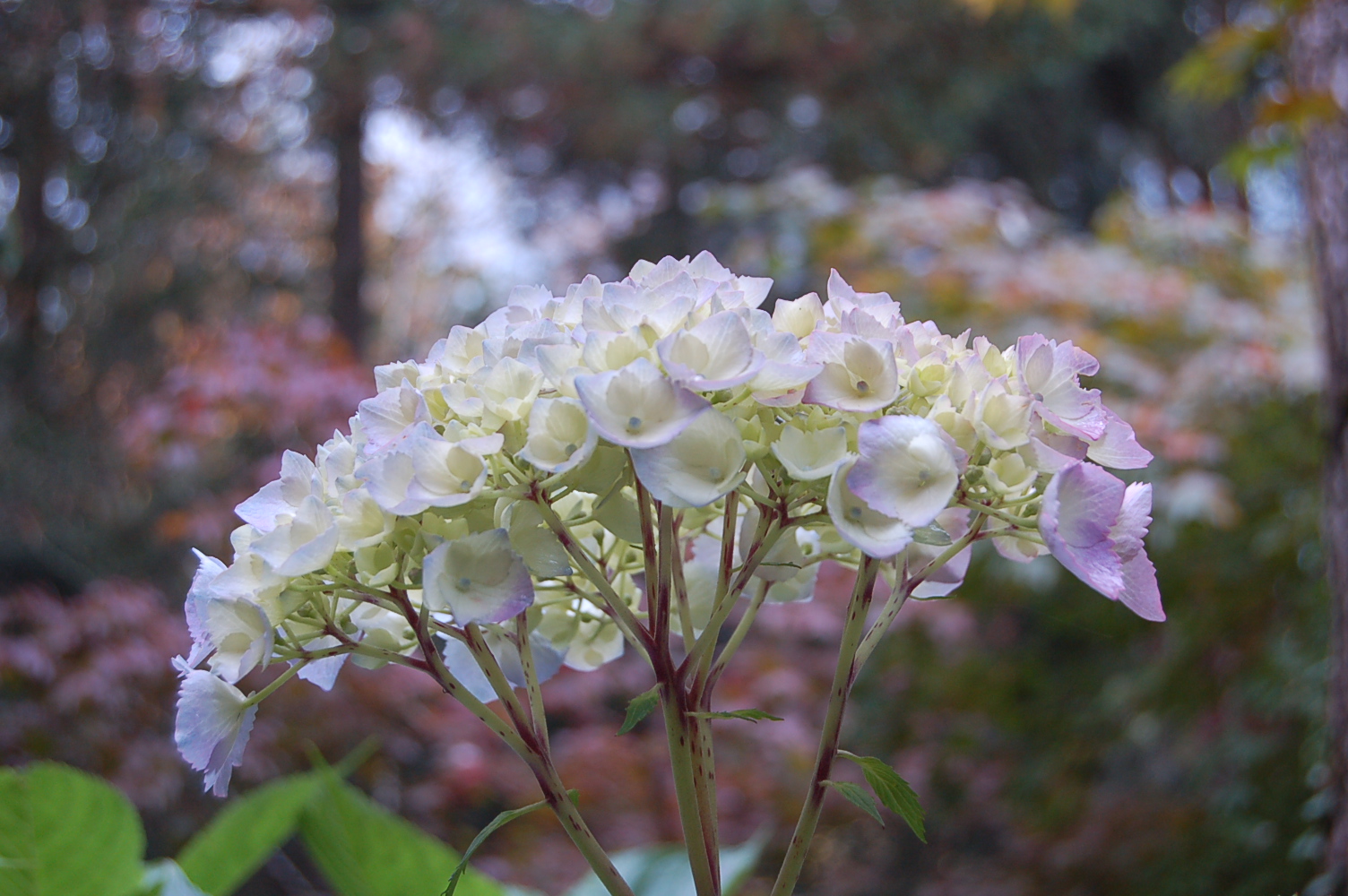
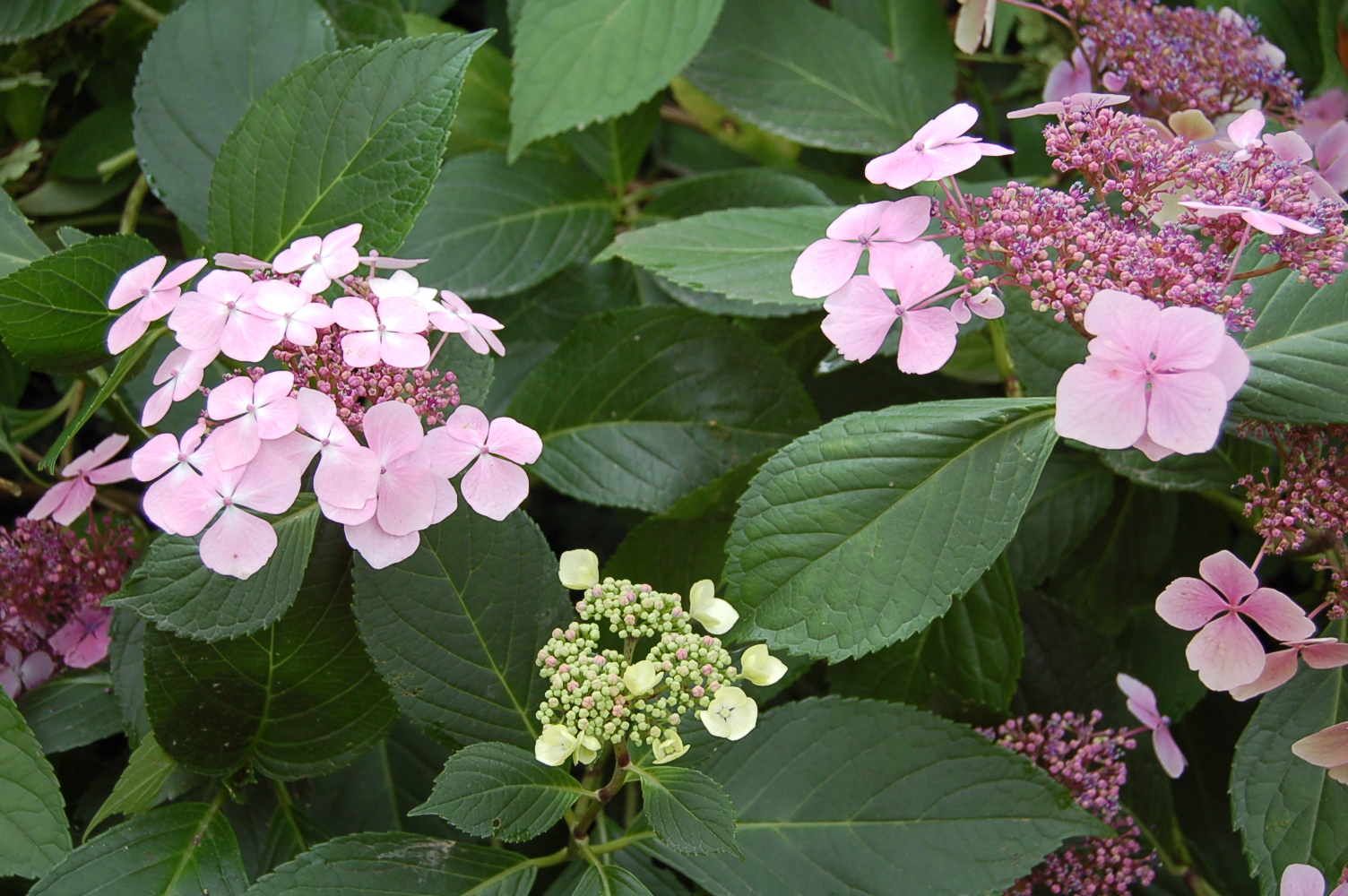
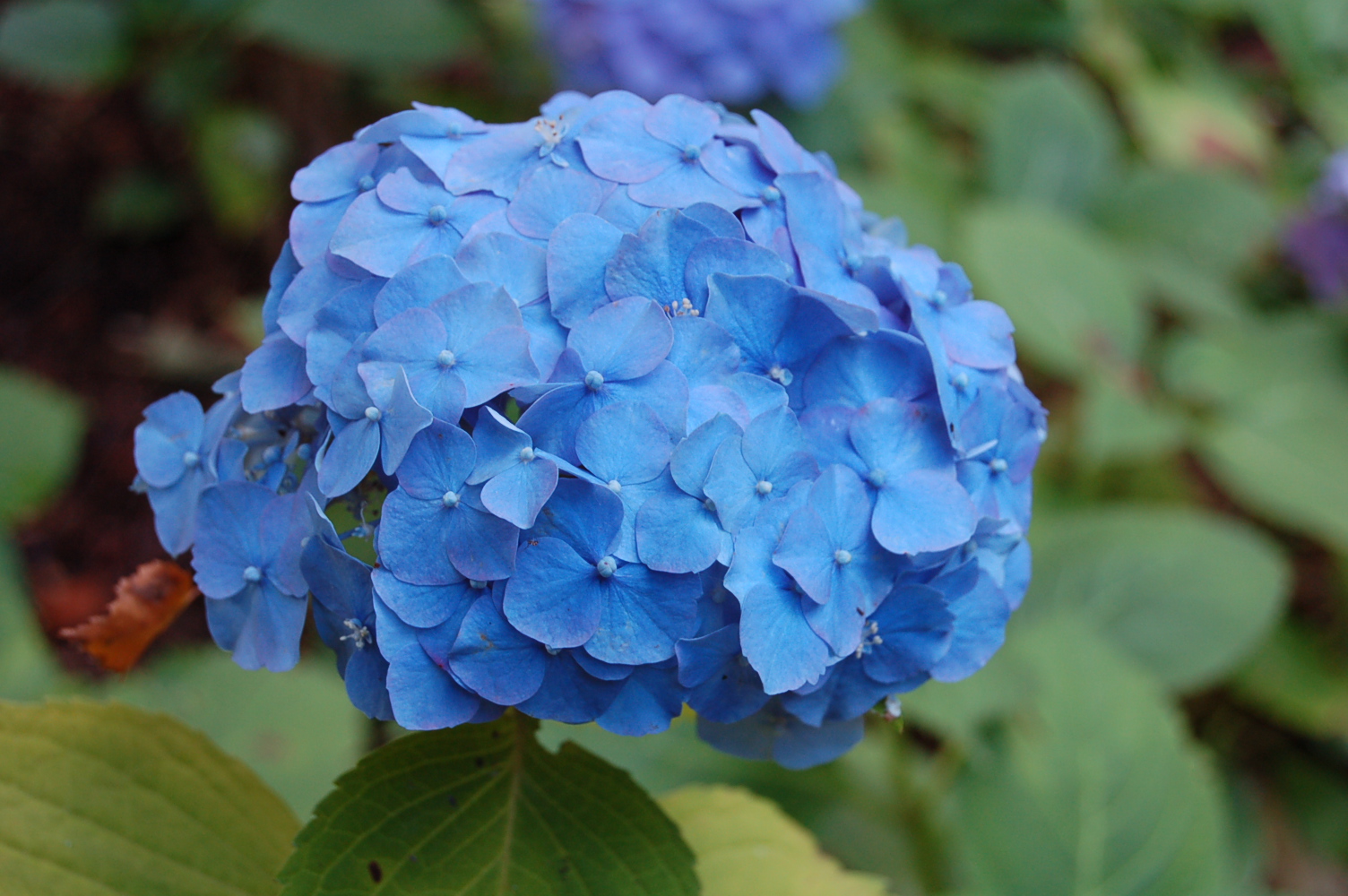
The Hydrangeas at the Dingle Nursery’s Garden shone out in the darker shadier woodland sections. I am a bit particular when it comes to Hydrangeas as I like the delicately shaped and coloured lacecaps but few of the mopheads which I find too blousey. I like individual paniculatas too but again not the blousey ones. In this series of photographs all the Hydrangeas are lacecaps with the exceptions of two which are of a Hydrangea paniculata and one mophead has sneaked in as I just couldn’t believe how bright the blue colour was.

The beauty of the lacecaps is the variety of different shaped and coloured flowers and bracts that appear together on the same shrub.

These next two photographs are of the creamy pyramidal flower heads of the Hydrangea paniculata.

Finally to show that I don’t wish to upset those gardeners who love the mopheads here is that blue bloom.

Categories
allotments autumn autumn colours bird watching colours community gardening fruit and veg garden photography garden wildlife gardening grasses grow your own meadows natural pest control ornamental trees and shrubs photography roses wildlife

A Wander Around our Allotments in November

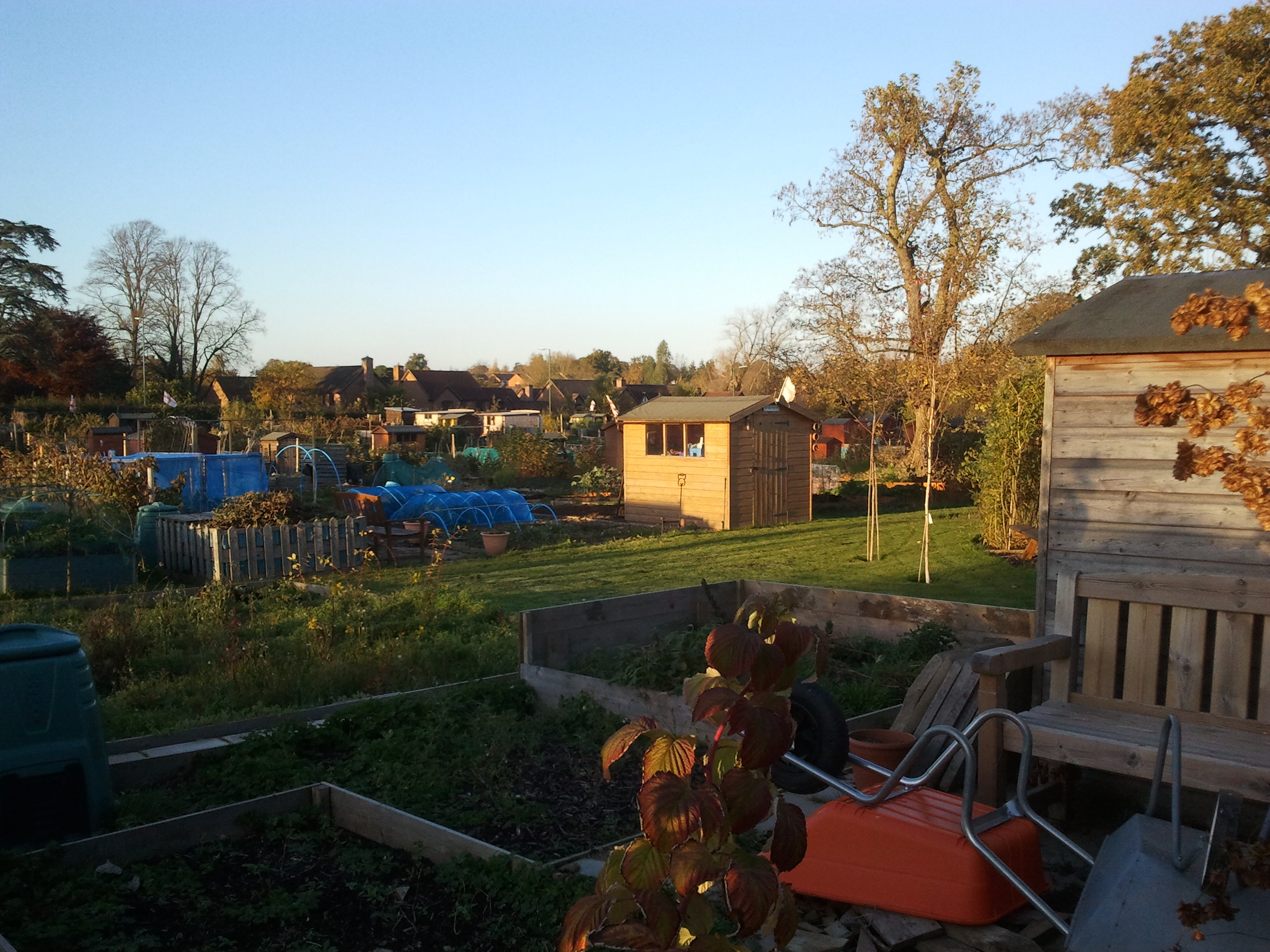
The penultimate lottie wander post for 2012 and at last the weather is providing a few bright cold days. This is what we look forward to in this autumnal month, rather than the wet dark days we have been presented with in the first few days. The light is warm and gives a crisp edge to any photos taken as the blue haze of summer has disappeared.

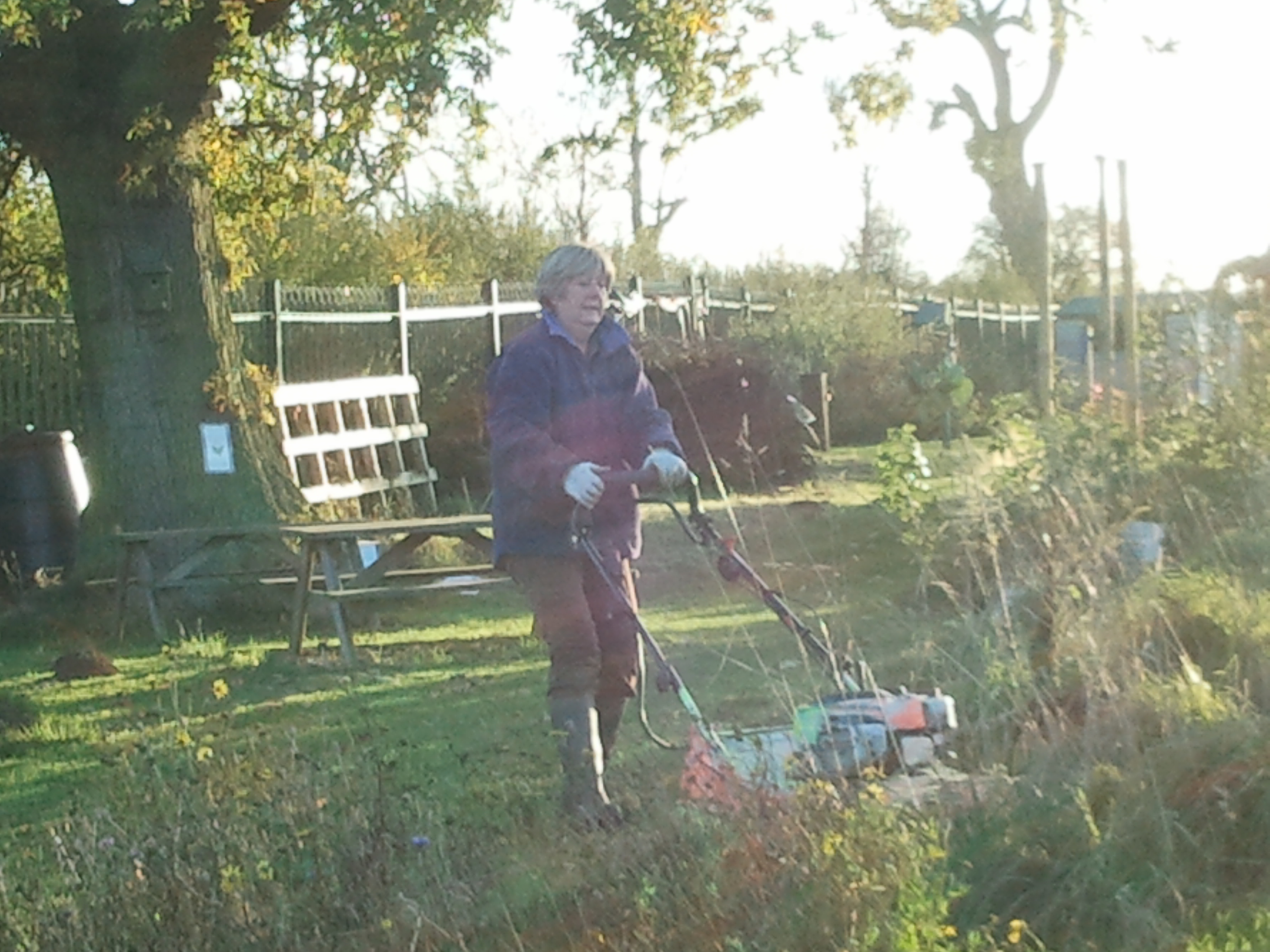
We went up the lottie yesterday to deliver some spare seeds for the Seed Swap basket and to collect some greens left by fellow plot holders for our chickens. They are spoilt by our friends from the site! It was mid-afternoon and we had not intended to stop to work, but we changed our minds. We got out the communal mowers and rakes and gave the final two meadows their annual “hair cuts”. Jude, The Undergardener did most of the work as it is a bit difficult with my spine and leg pains, so I wandered off taking advantage of the special quality of the day’s light and shot off a couple of dozen pics with my Galaxy.

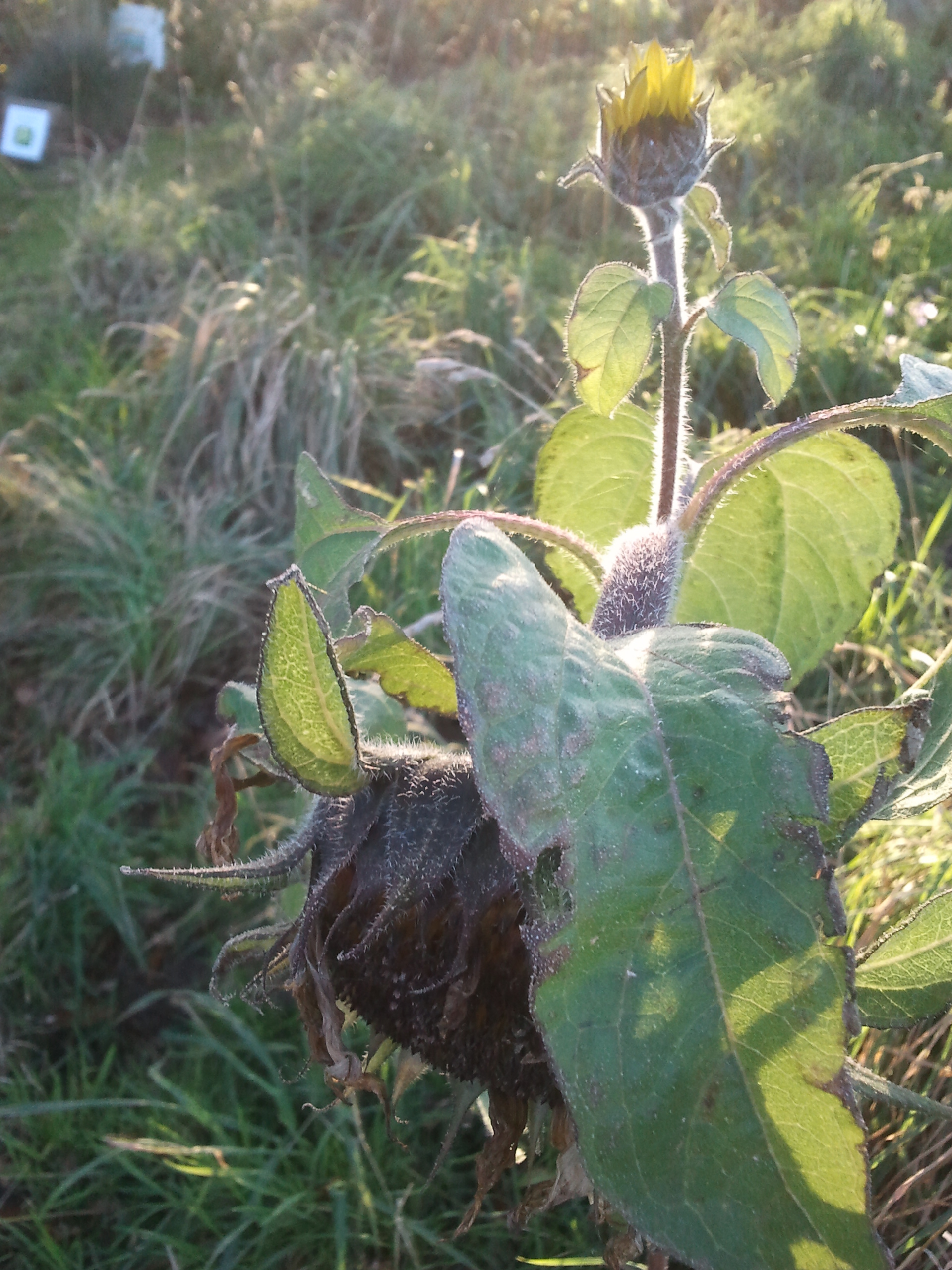
As we worked on the meadows the resident Field Voles scuttled off as they felt the mower’s vibrations and disappeared down their holes. We left a few clumps of wildflowers standing for everyone to enjoy before winter cuts them down. Field Scabious, Mallow and Sunflowers.

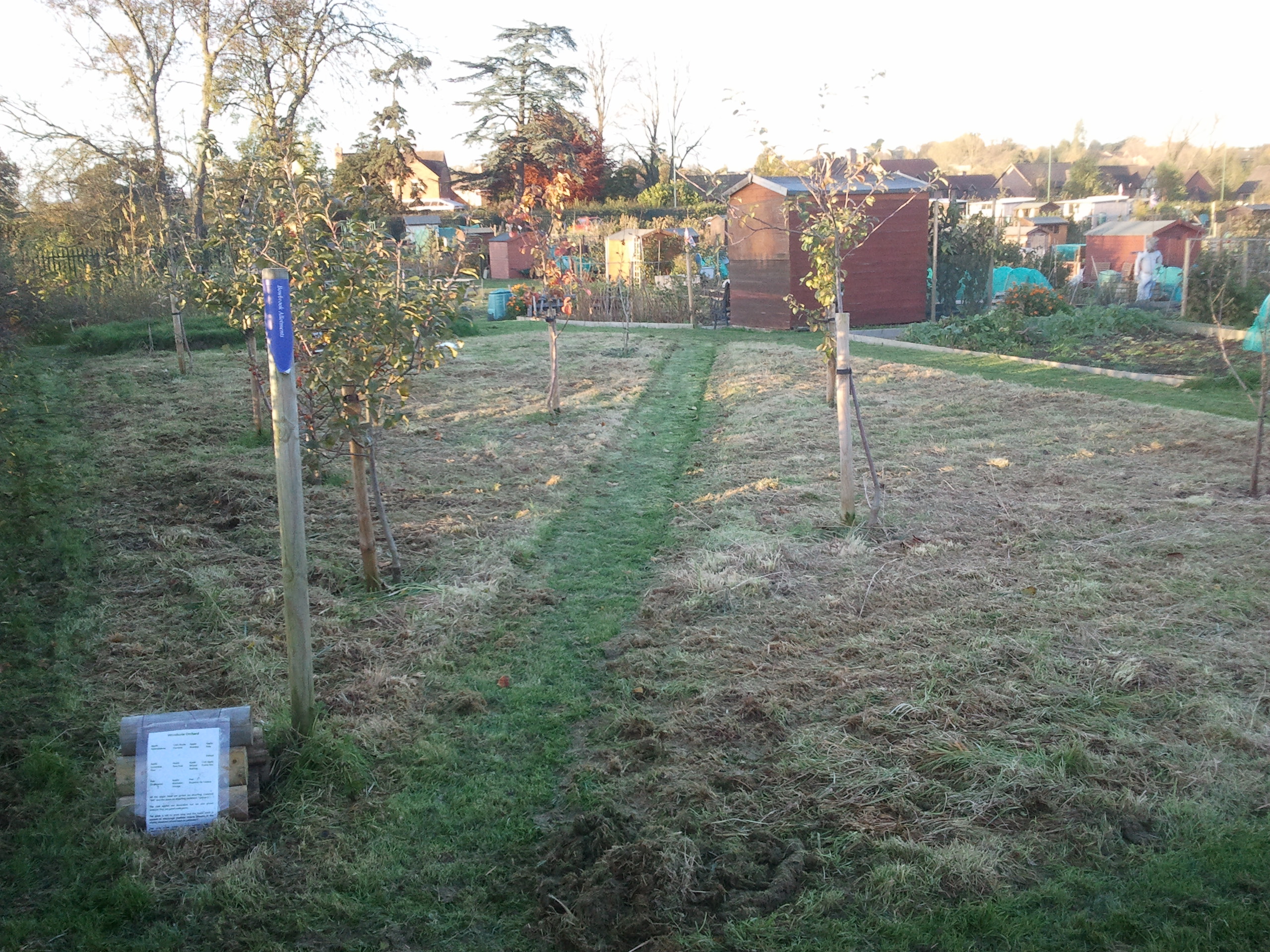
The meadows that are already trimmed look flat and brown, but the pathways mown through them look crisp and green.

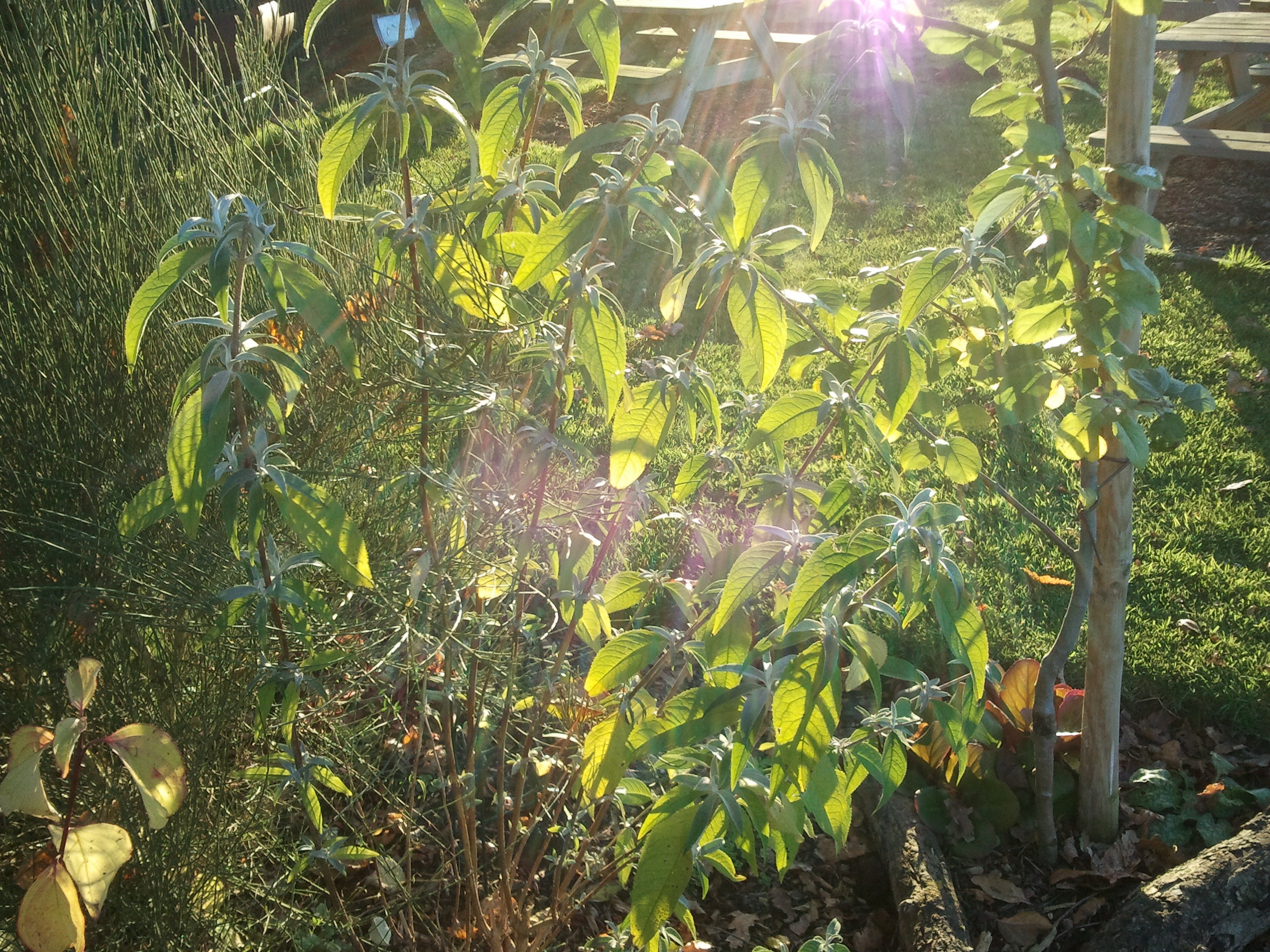
The foliage in our Sensory Garden is given extra vitality in the November sunshine.

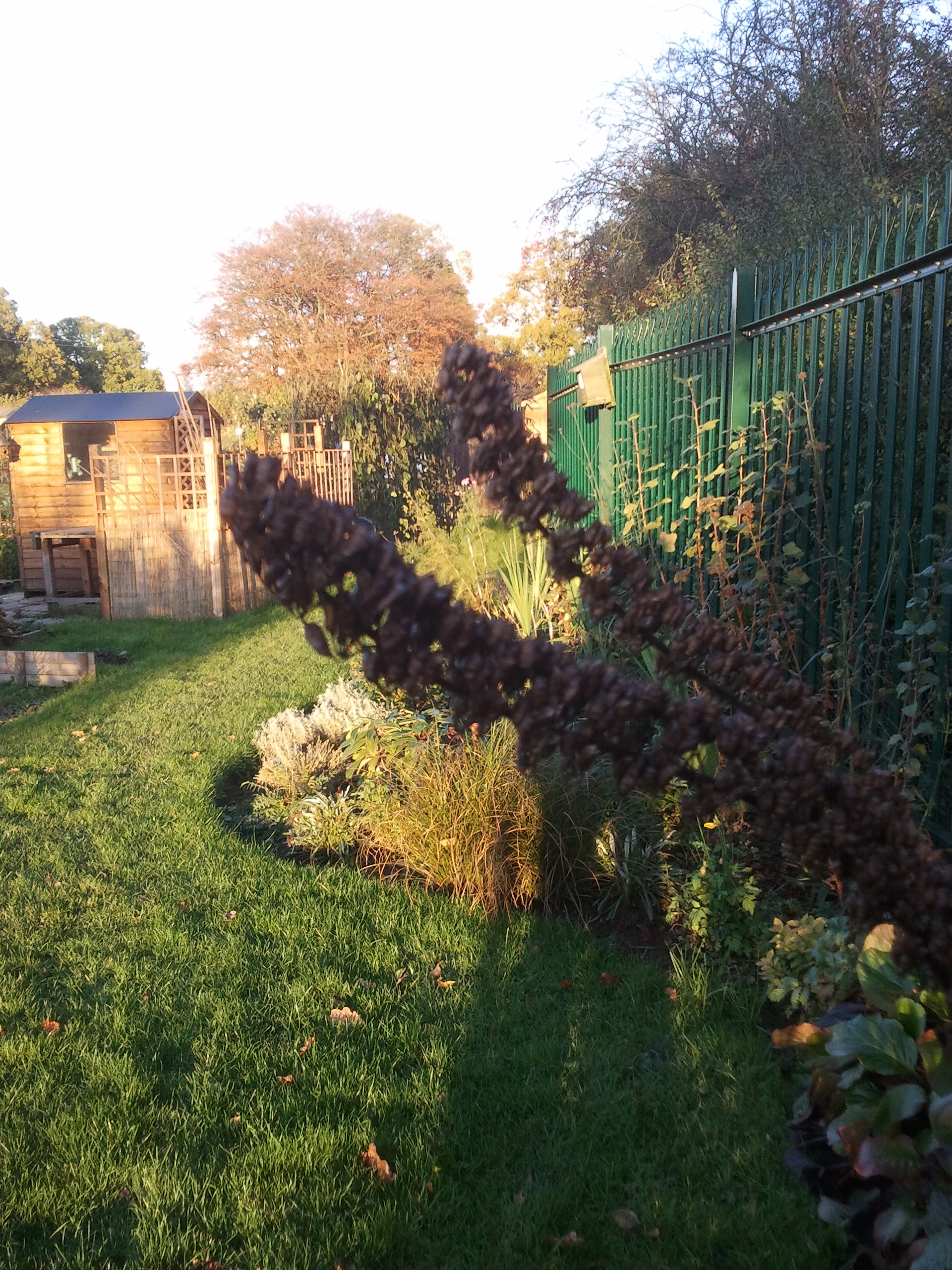
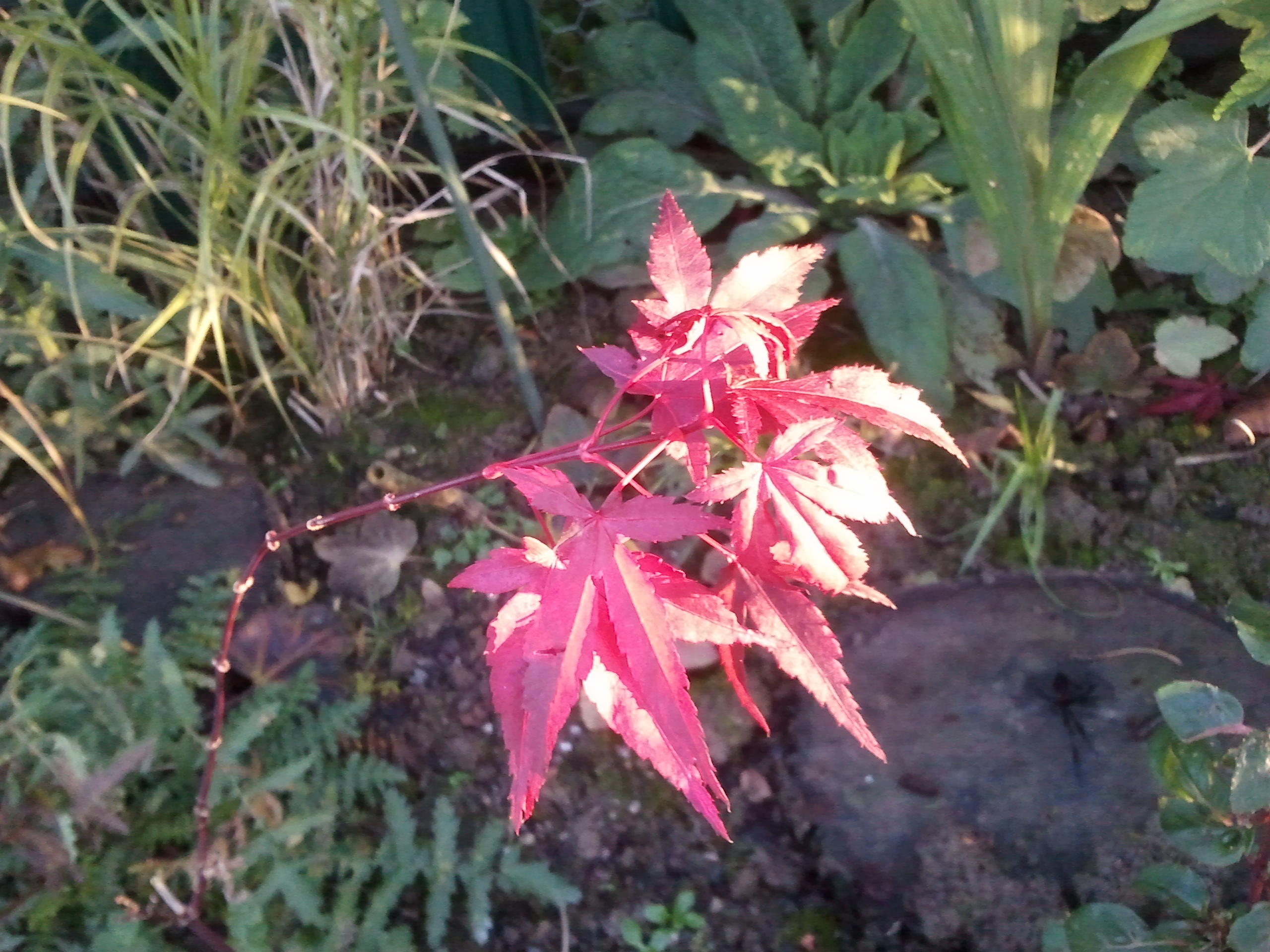
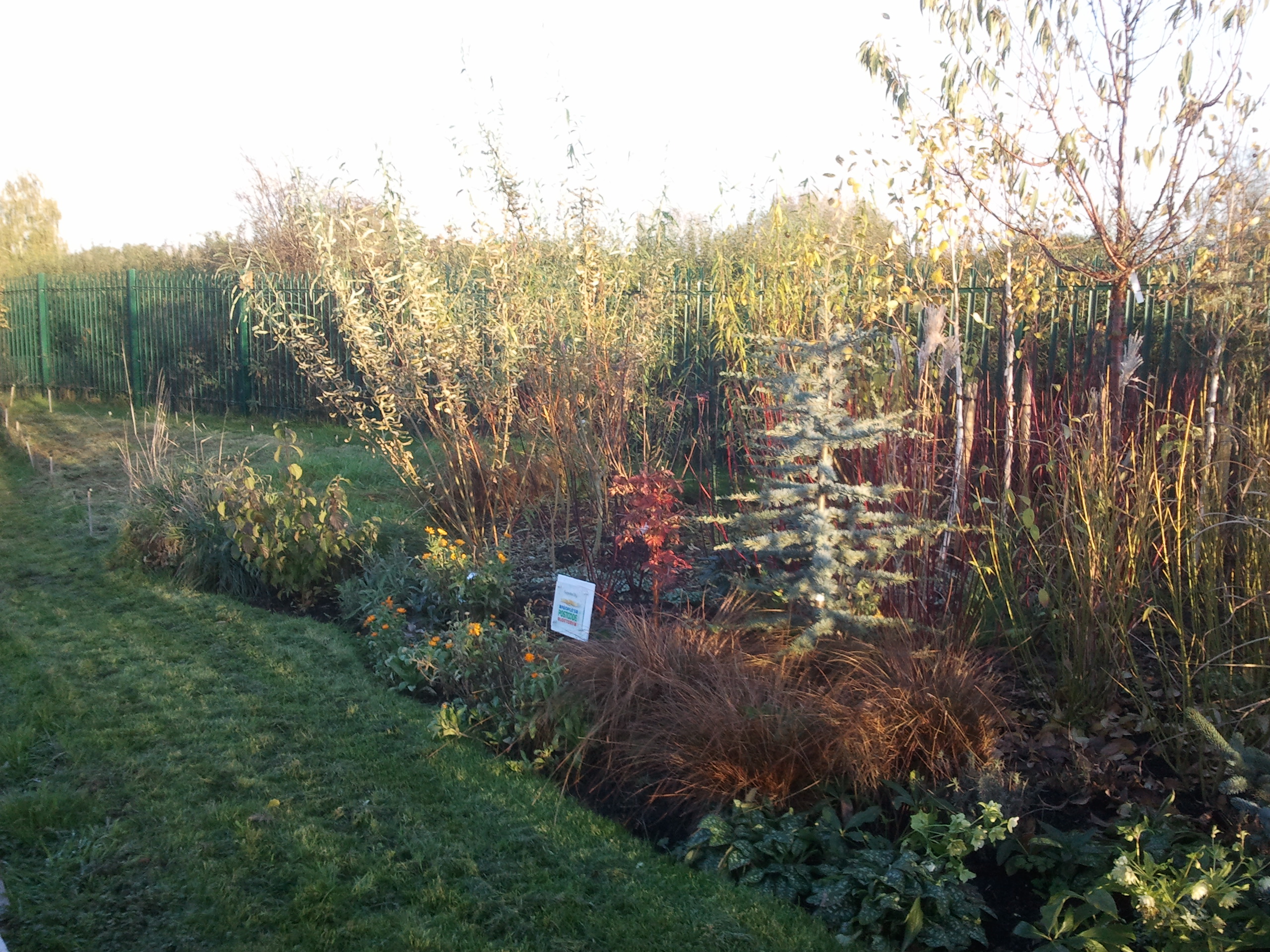
The next shot is a view of the site boundary through the seed heads of a white-flowered Actaea across the Spring Garden. In the Spring Garden a tiny Acer shows that you don’t have to be big to impress.

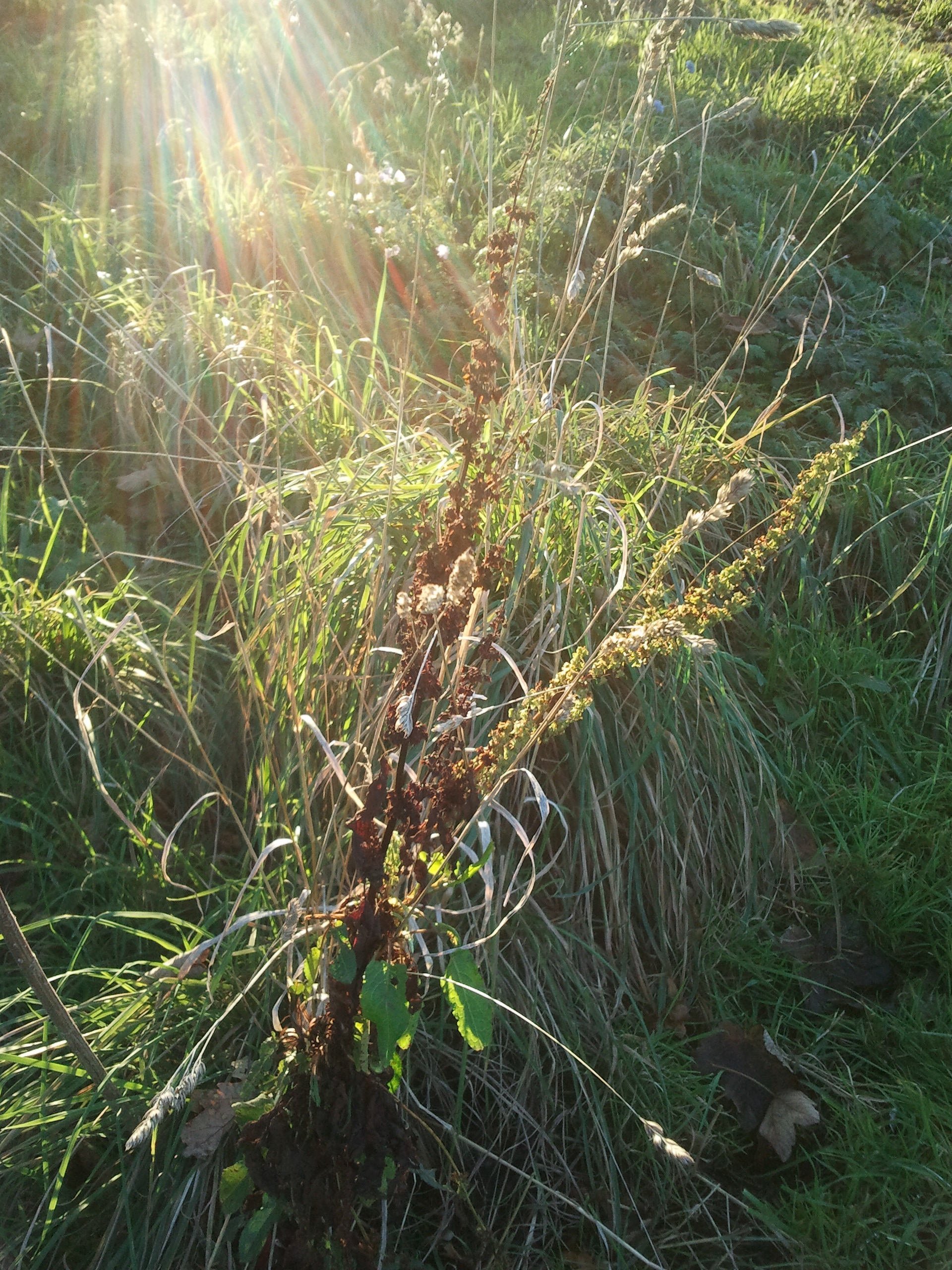
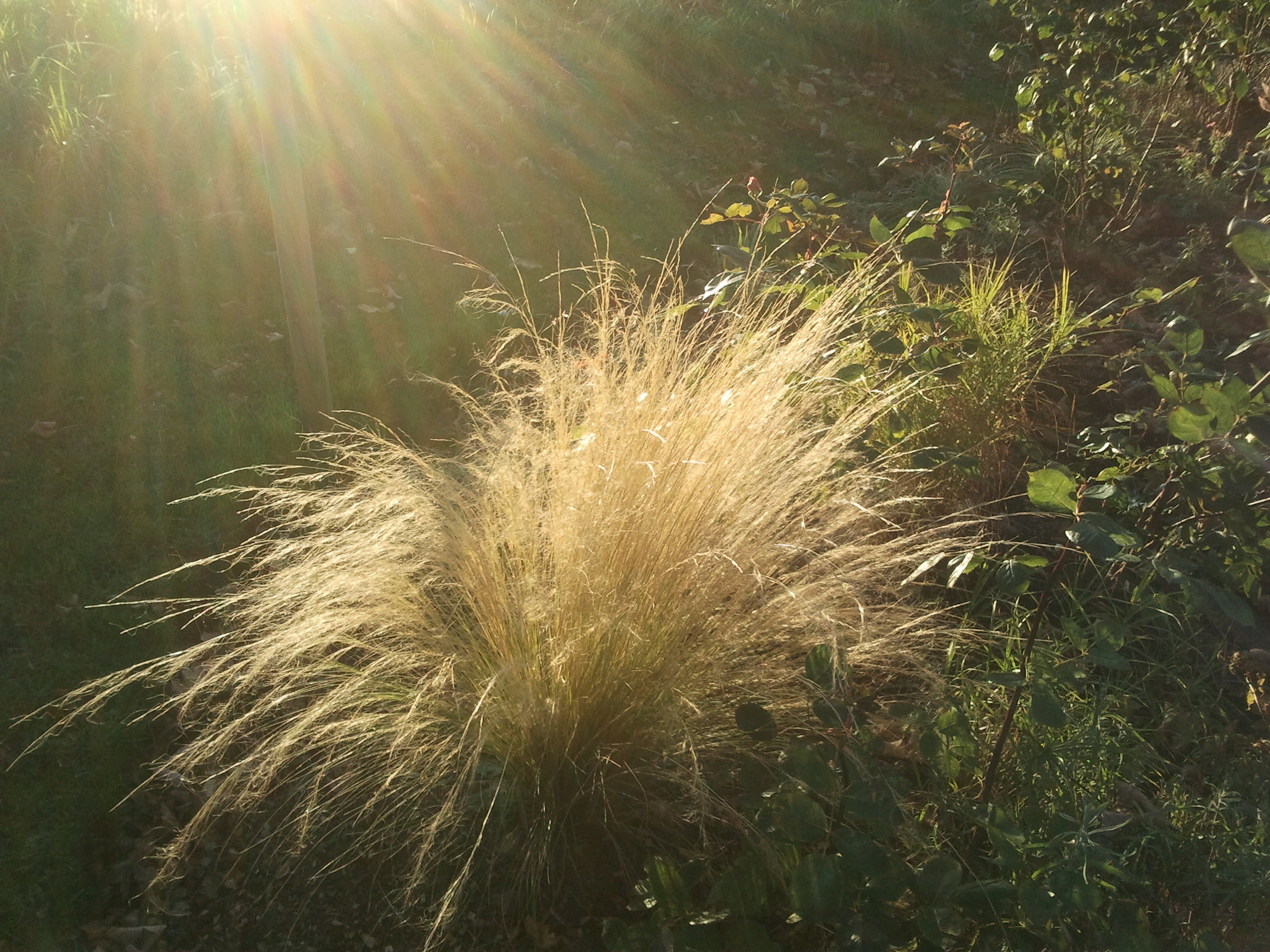
In the meadows the last of the grasses and sunflowers stand tall and proud.

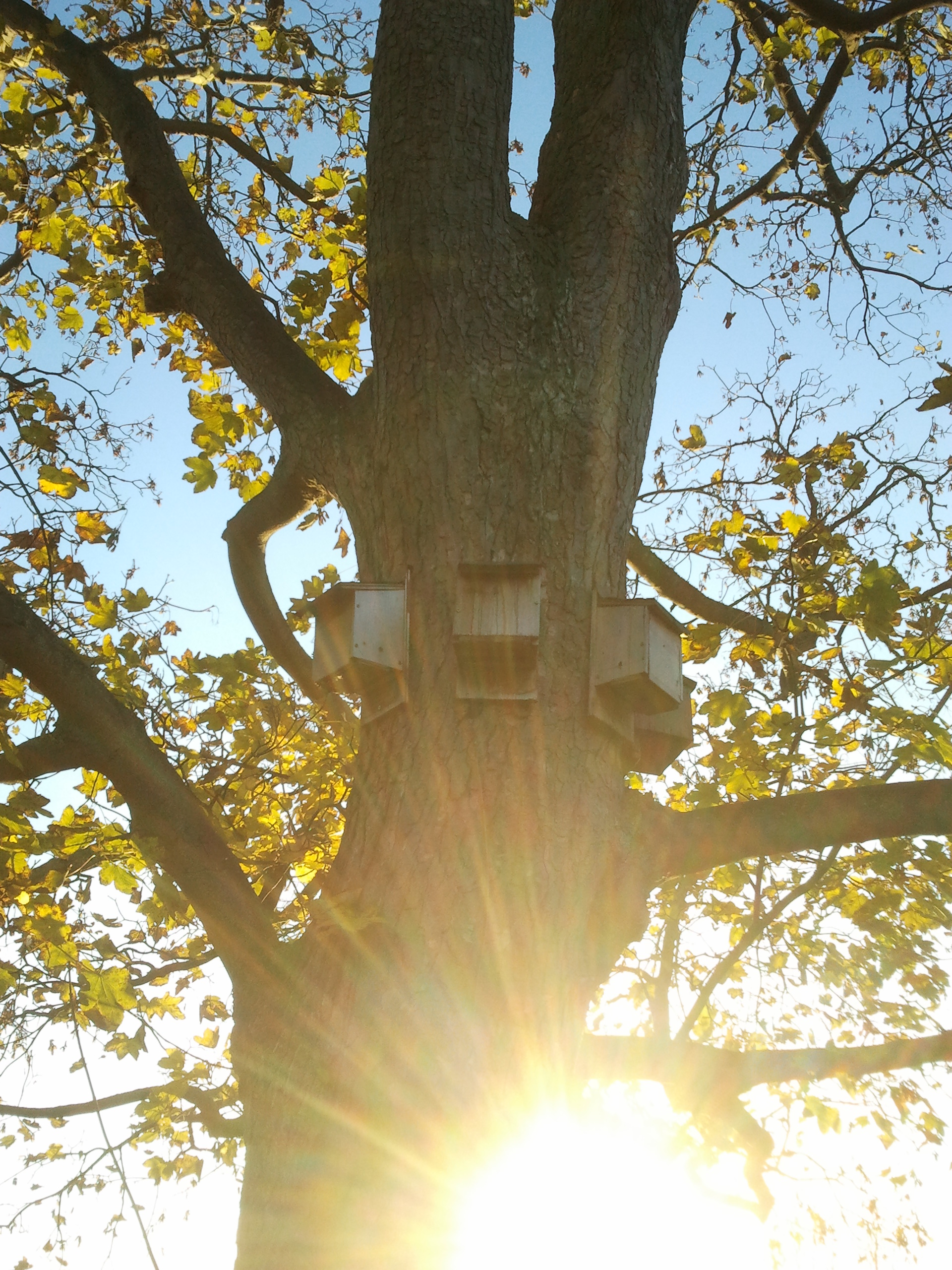
Up in the mature Sycamore and Oak the resident bats will be shuffling around and preening in readiness to leave their roosts in the boxes and go on the feed for moths and night-flying insects. Bats are our night-time pest control patrols. In the daylight hours we are being entertained by birds of prey often being mobbed by our flocks of Jackdaws and Rooks . Peregrines, Buzzard, Red Kite, Kestrel and Sparrow Hawk.

Around the plots the gardeners are preparing their plots for the winter, beds are cleared and manure piled up or spread over the surface.

A few crops remain for winter sustenance.The red stems and purple leaves of Ruby Chard add a burst of colour. Brassicas are covered to give protection from ravenous and greedy Wood Pigeons who love to eat the sweet centres of Brussels Sprouts and the tenderest, newest leaves of cabbages.

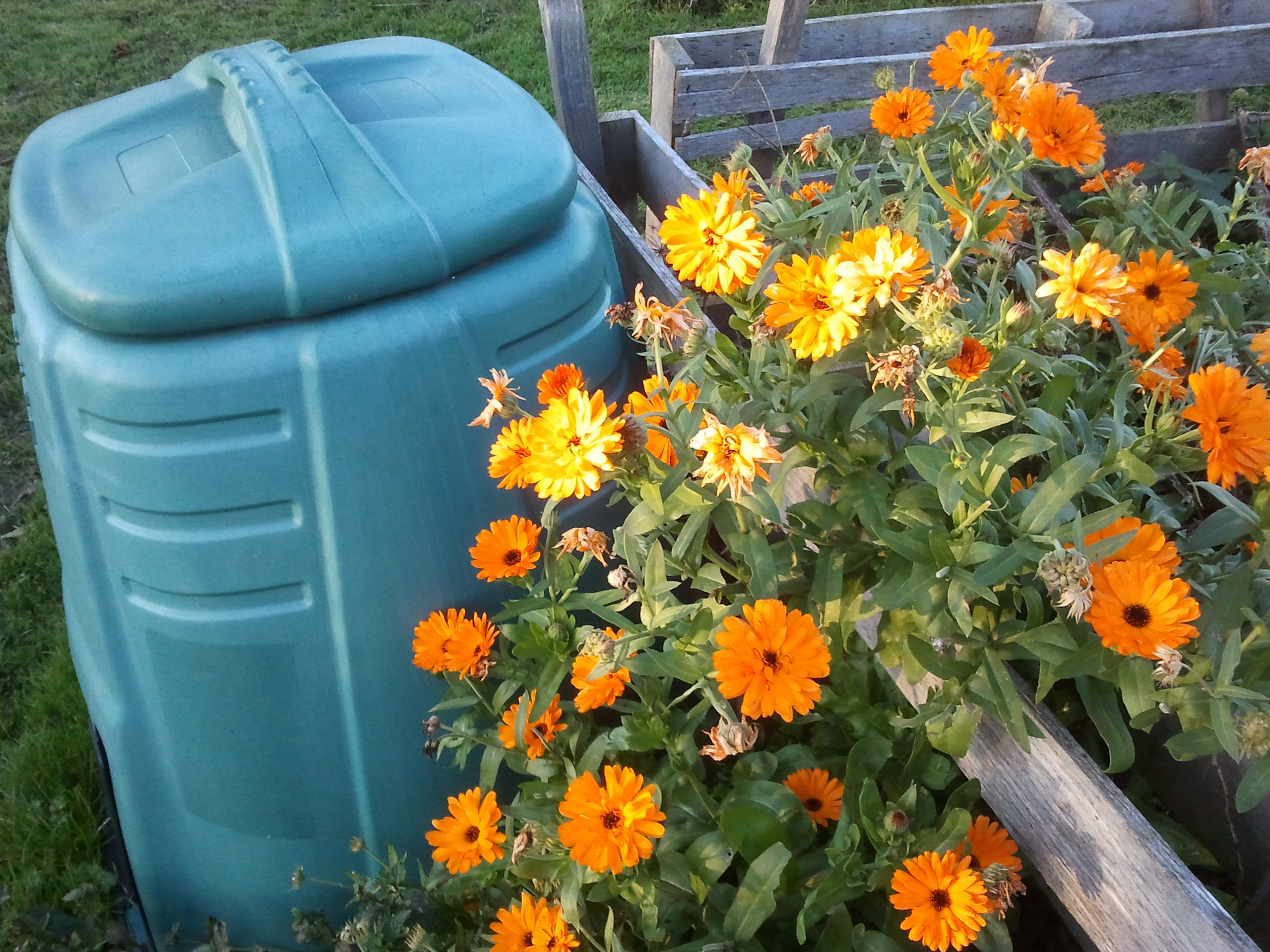
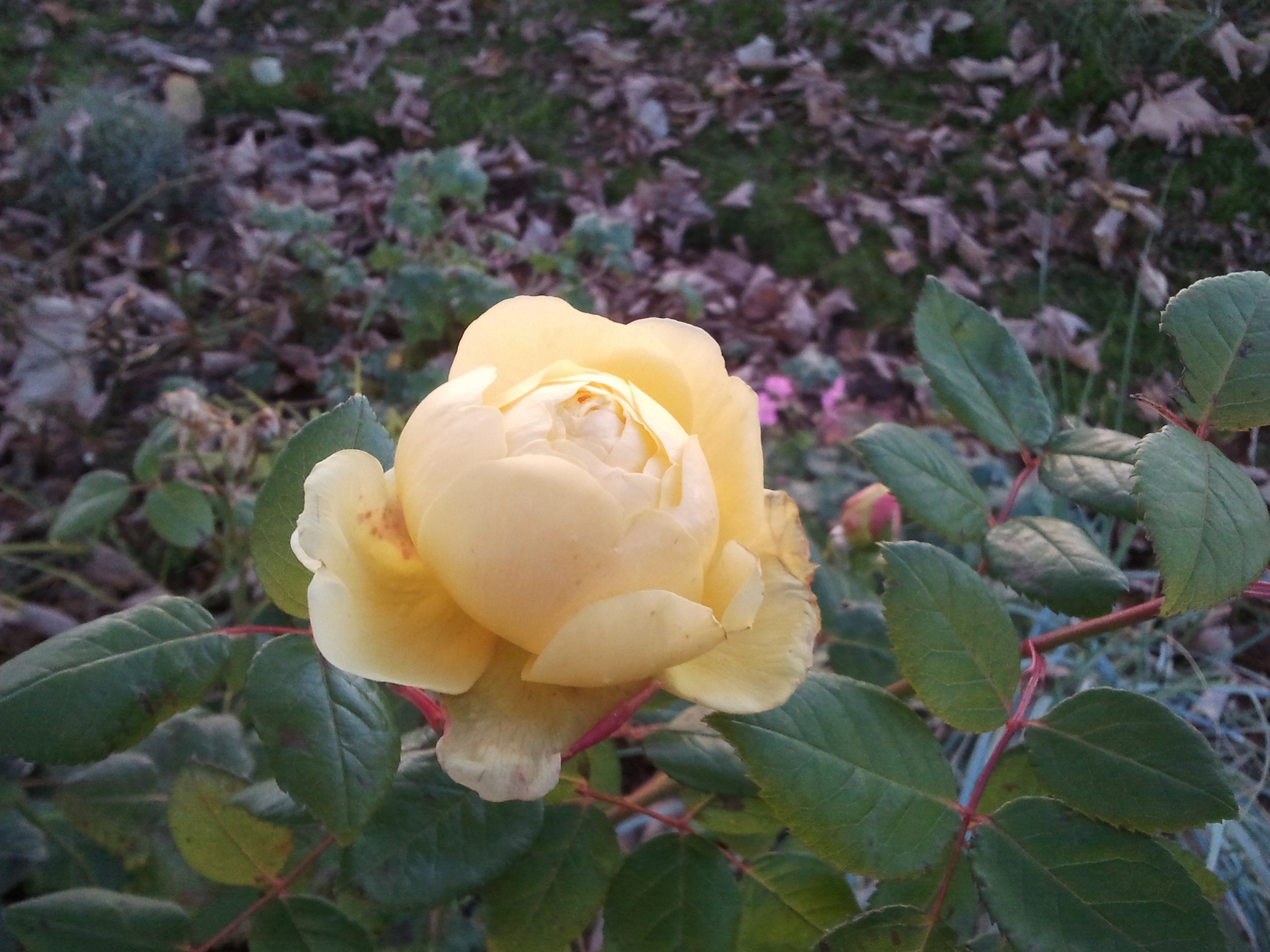
A few remaining flowers add extra brightness to the plots.Tthat most popular of companion plants, the Calendula brightens up compost areas and odd roses still perform in the Summer Garden. We can expect these David Austin roses to continue to treat us to flowers until the new year.

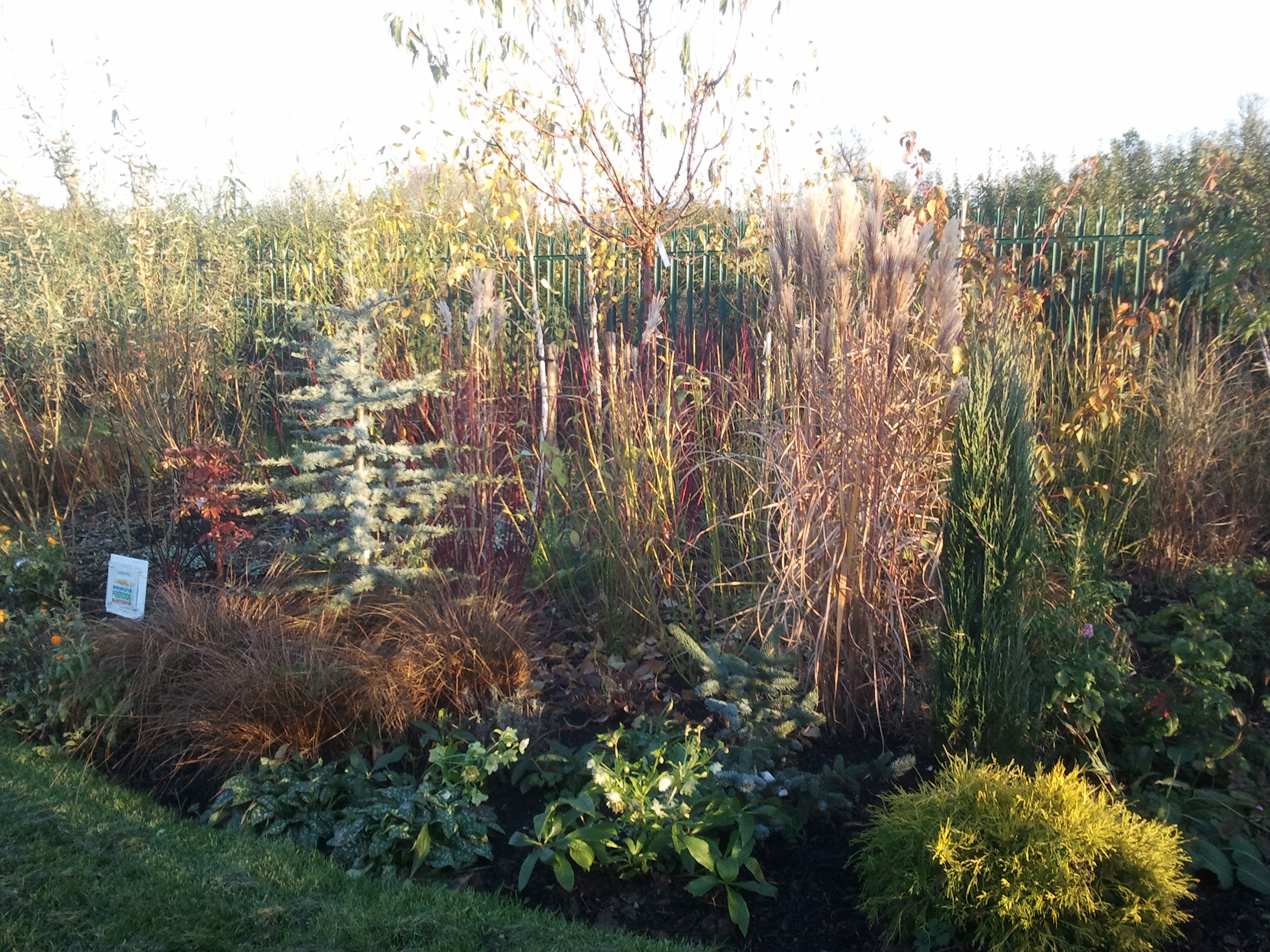
The star of the site for the next few months will be the Winter Garden and it is already showing promises and hints of what delights it has in store for us in times ahead. As leaves fall from trees and shrubs the colours and textures of the stems and trunks will come into their own.

We have endured a wet summer and autumn with each month breaking previous rainfall records. Crops have been poor and we have been flooded four times. Dave, the Scarecrow looks a bit worse for wear too!

Categories
autumn autumn colours colours fruit and veg garden design garden photography gardening ornamental trees and shrubs trees

Nuts and Berries

As allotment gardeners we enjoy late summer and early autumn as the busiest harvesting time, but lots more food is coming into readiness in our ornamental gardens and parks. Nuts, seeds and berries provide feasts for wildlife and feasts for our eyes.

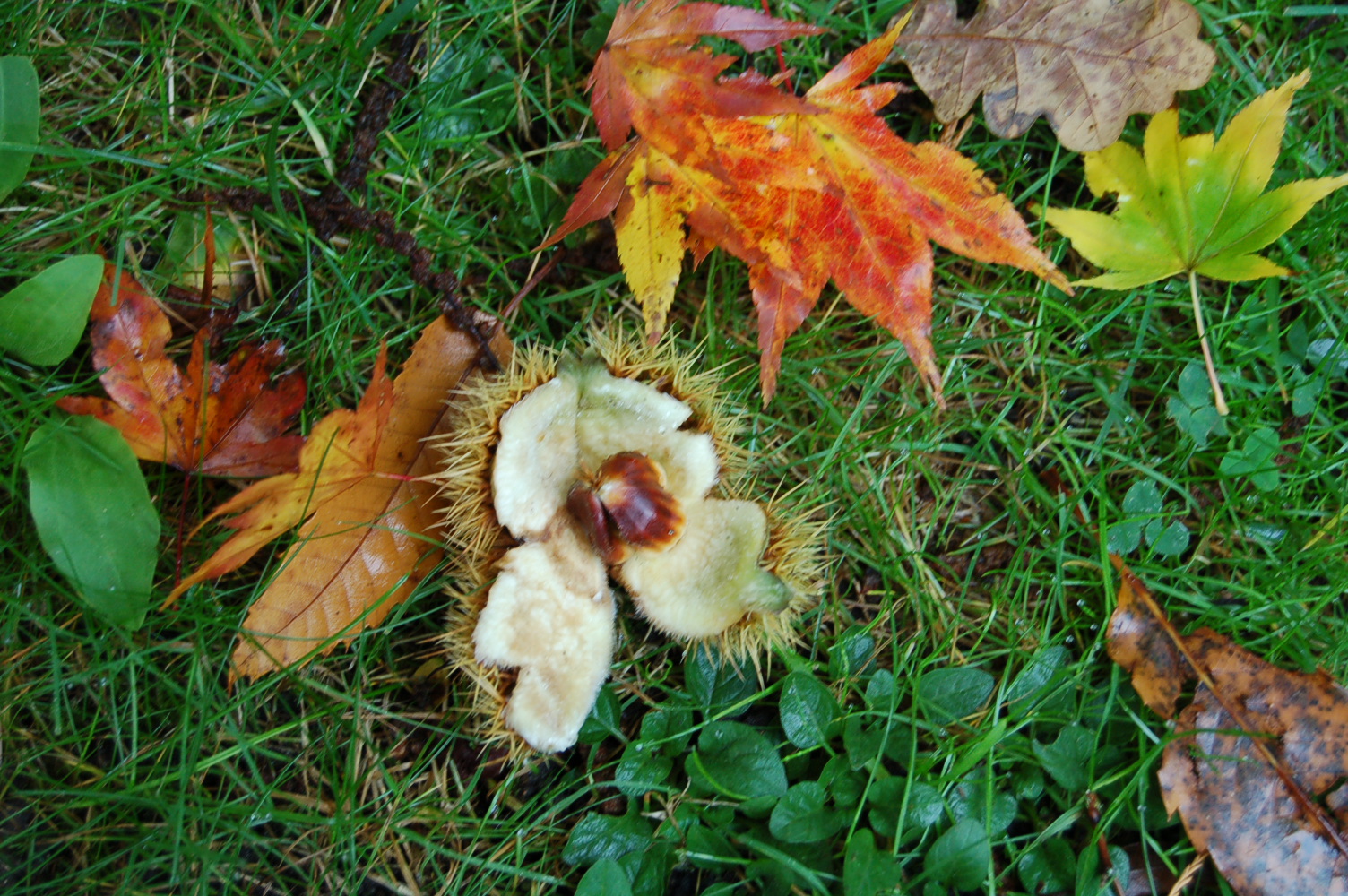
Sweet Chestnut awaiting the attention of squirrels in Pittville Park in Cheltenham.

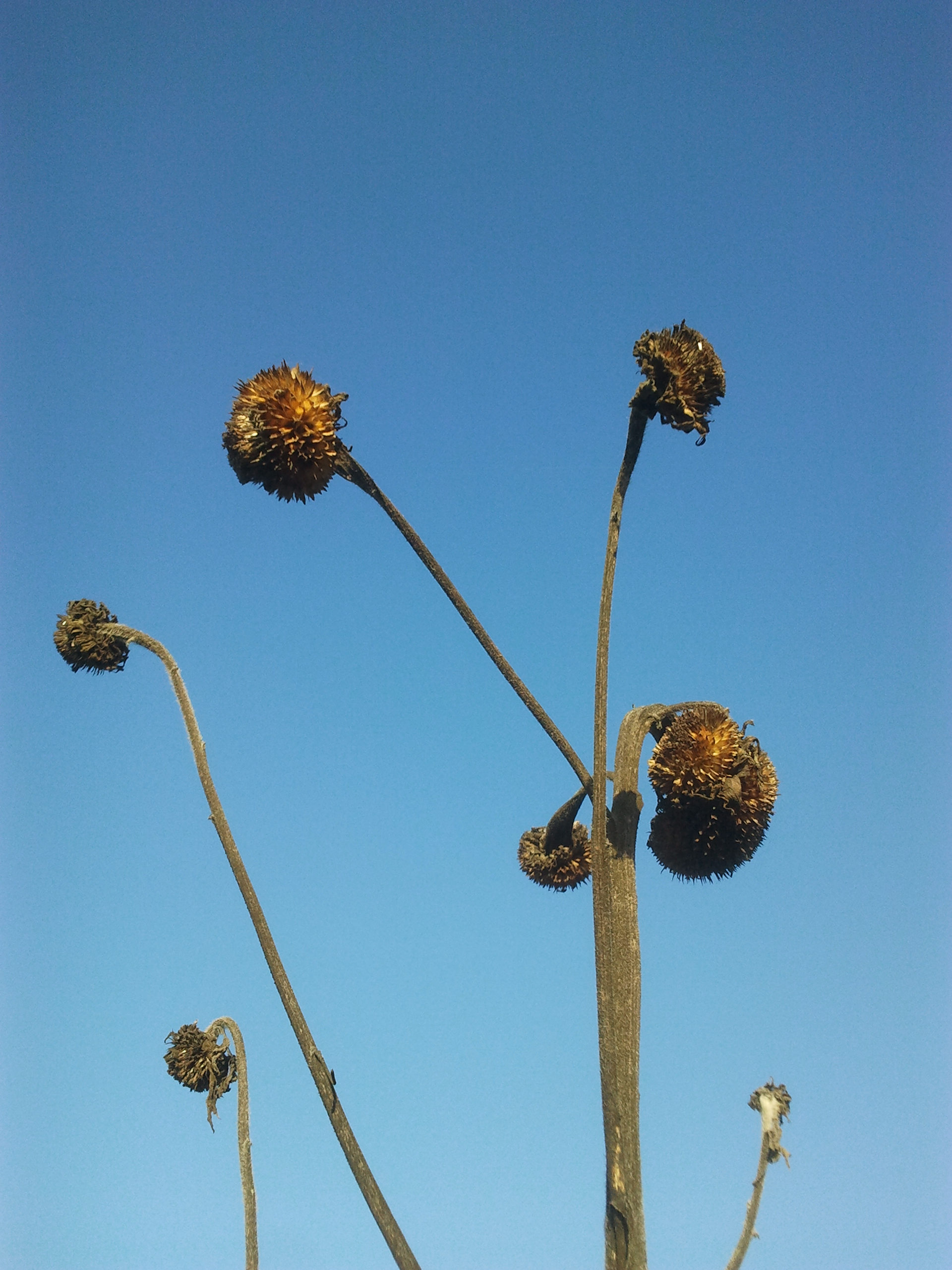
Onopordum seed heads against a blue sky in our garden.

Drooping Dieramas.

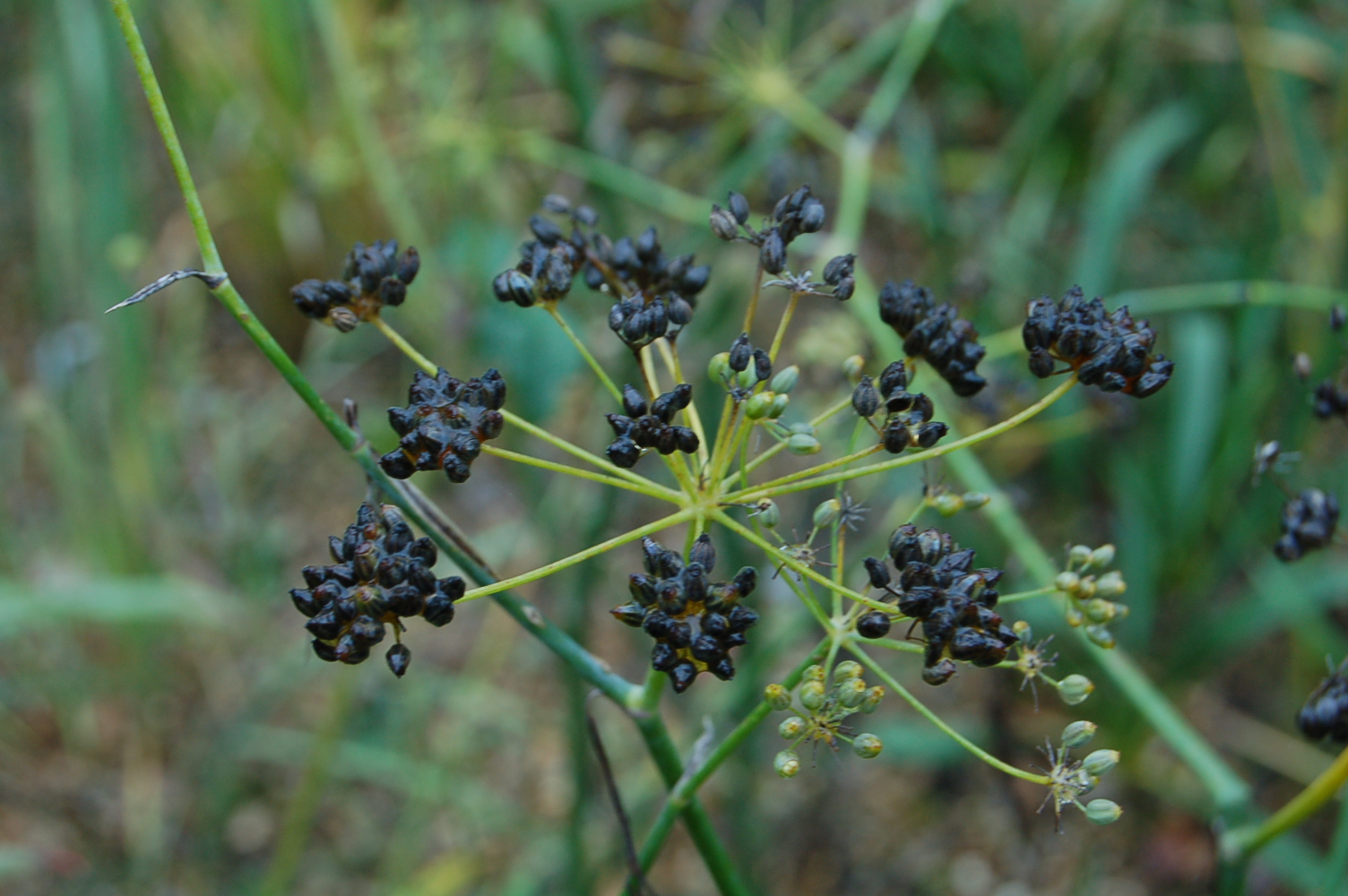
Black umbellifer seeds.

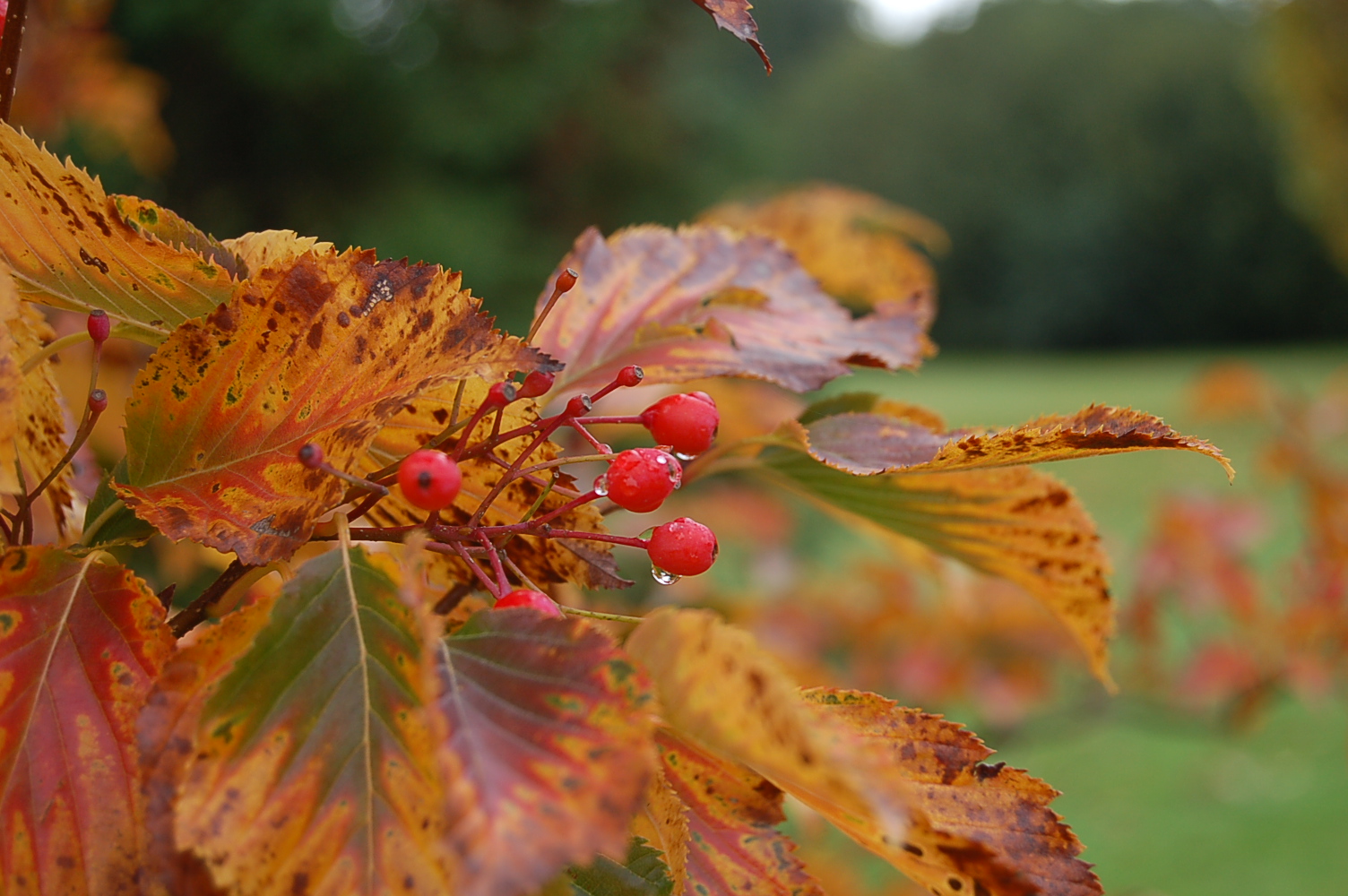
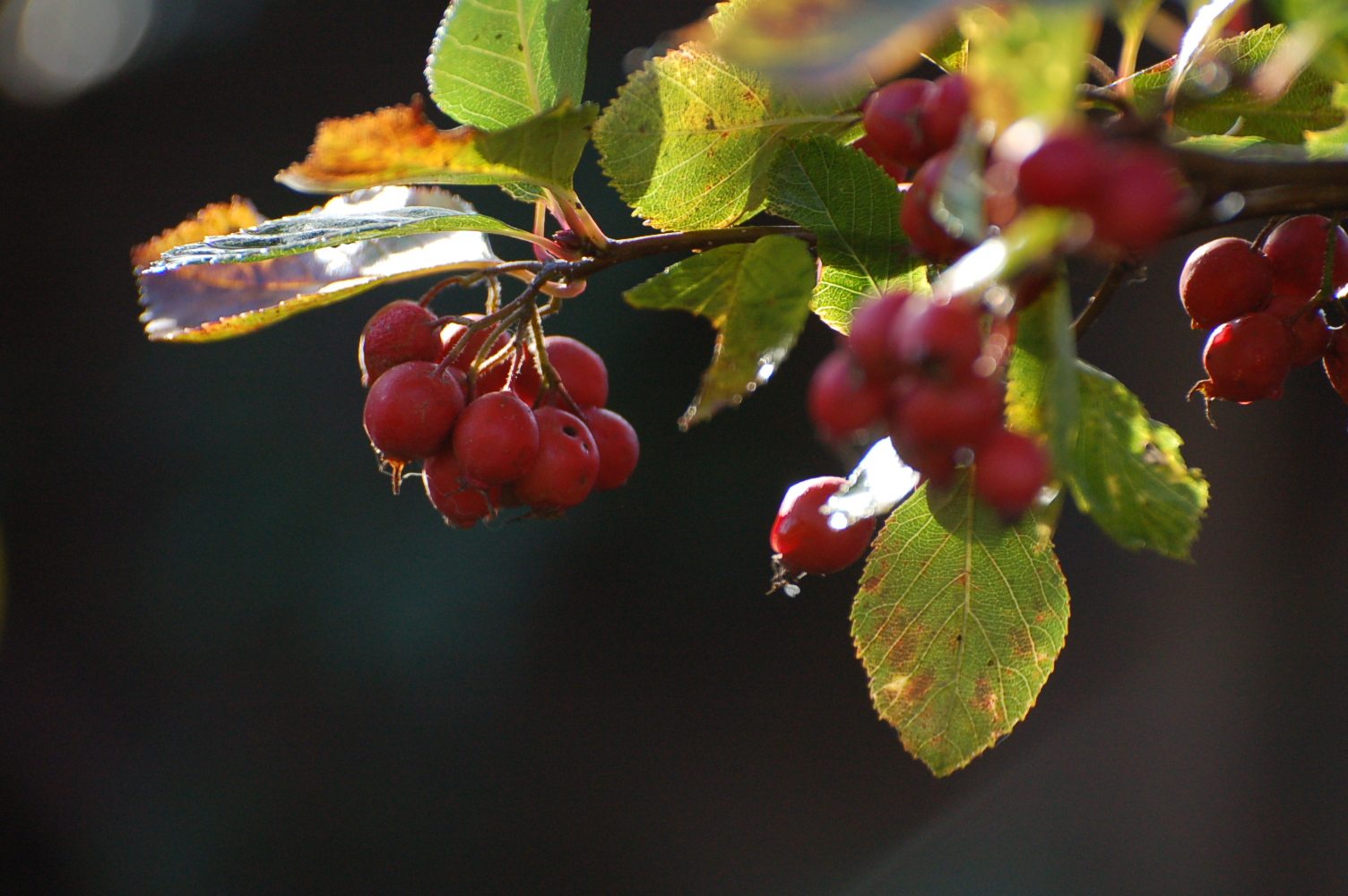
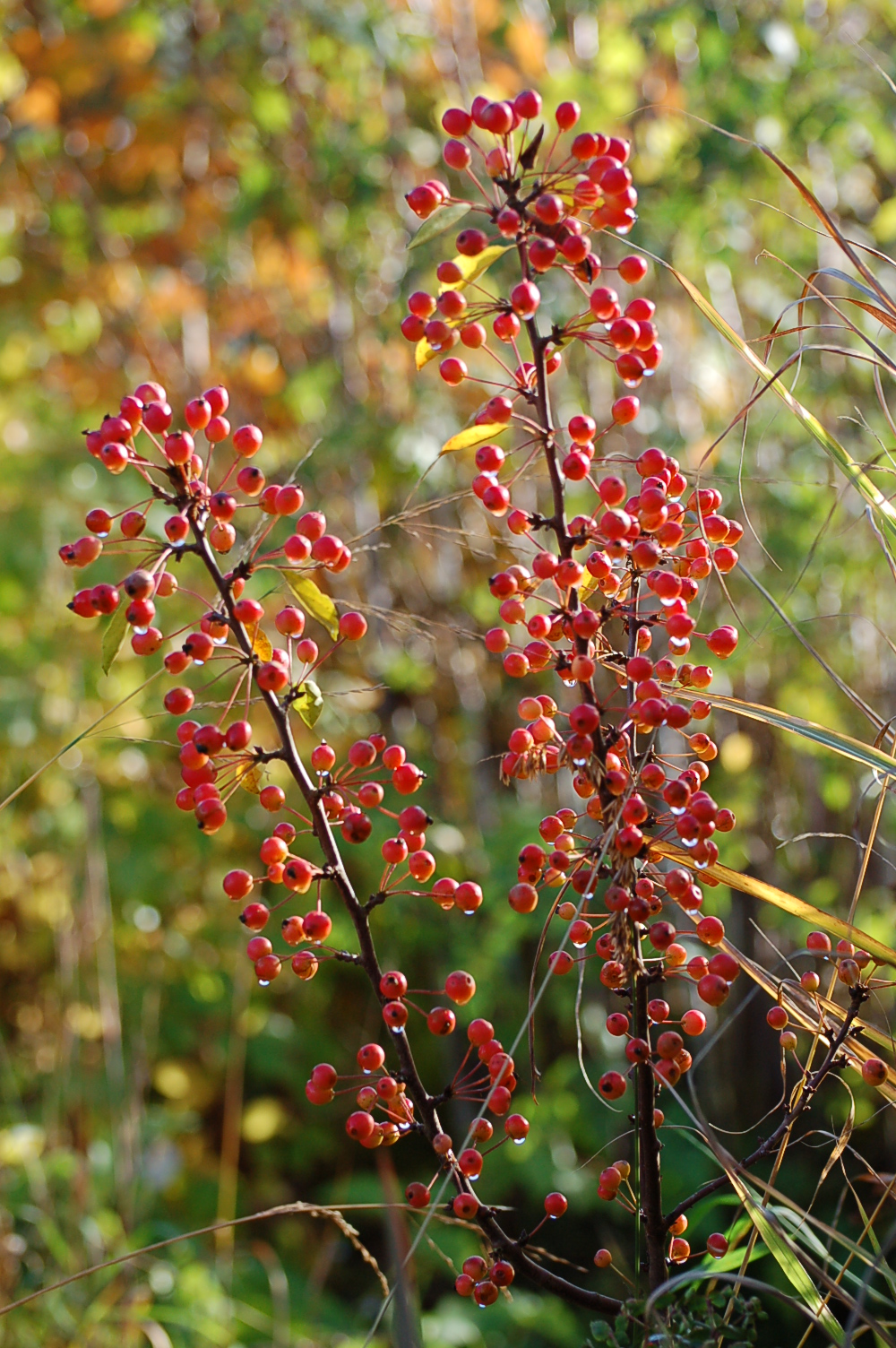
Crataegus berries and autumn foliage.

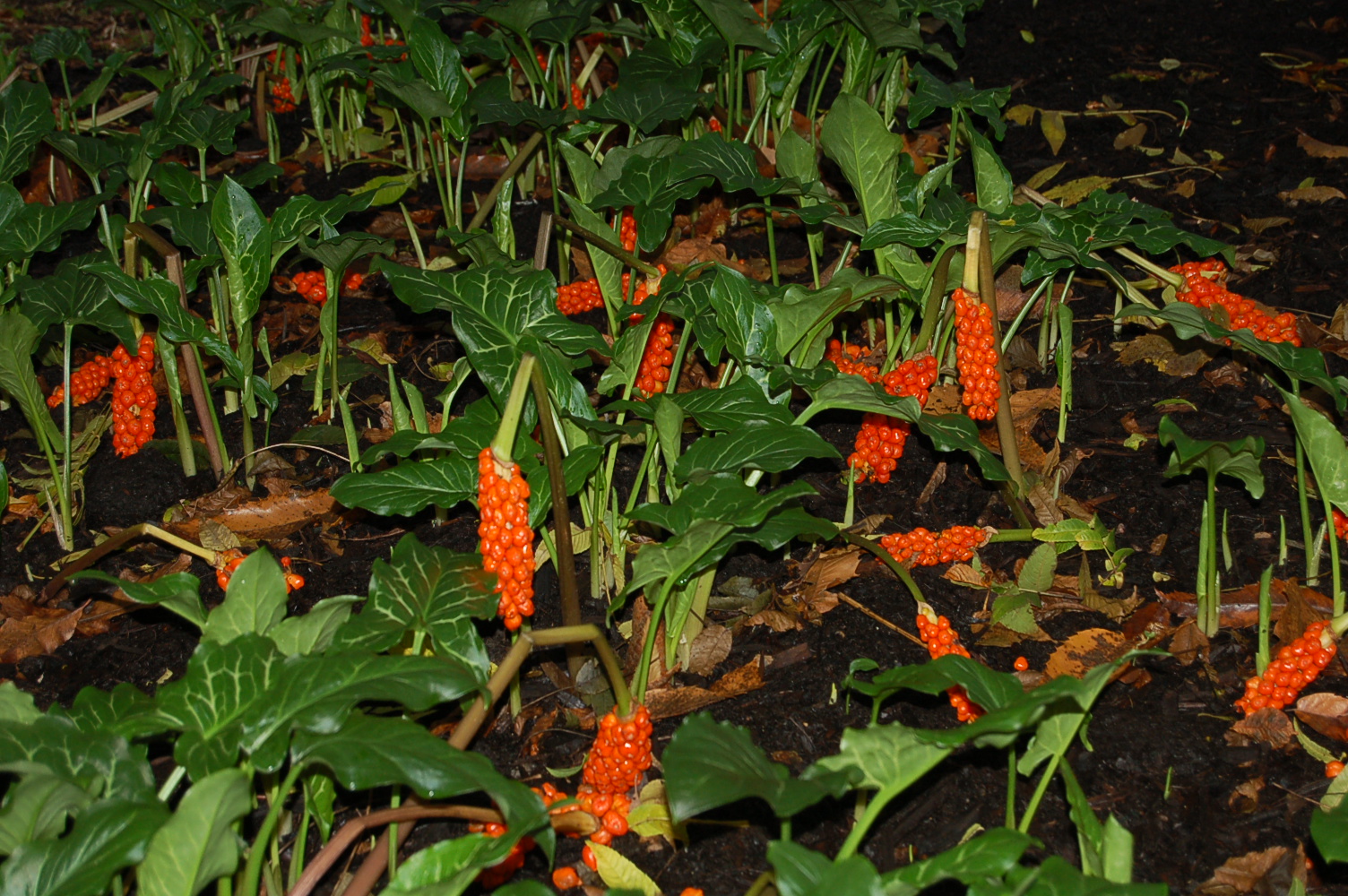
A host of Arum Lilies.

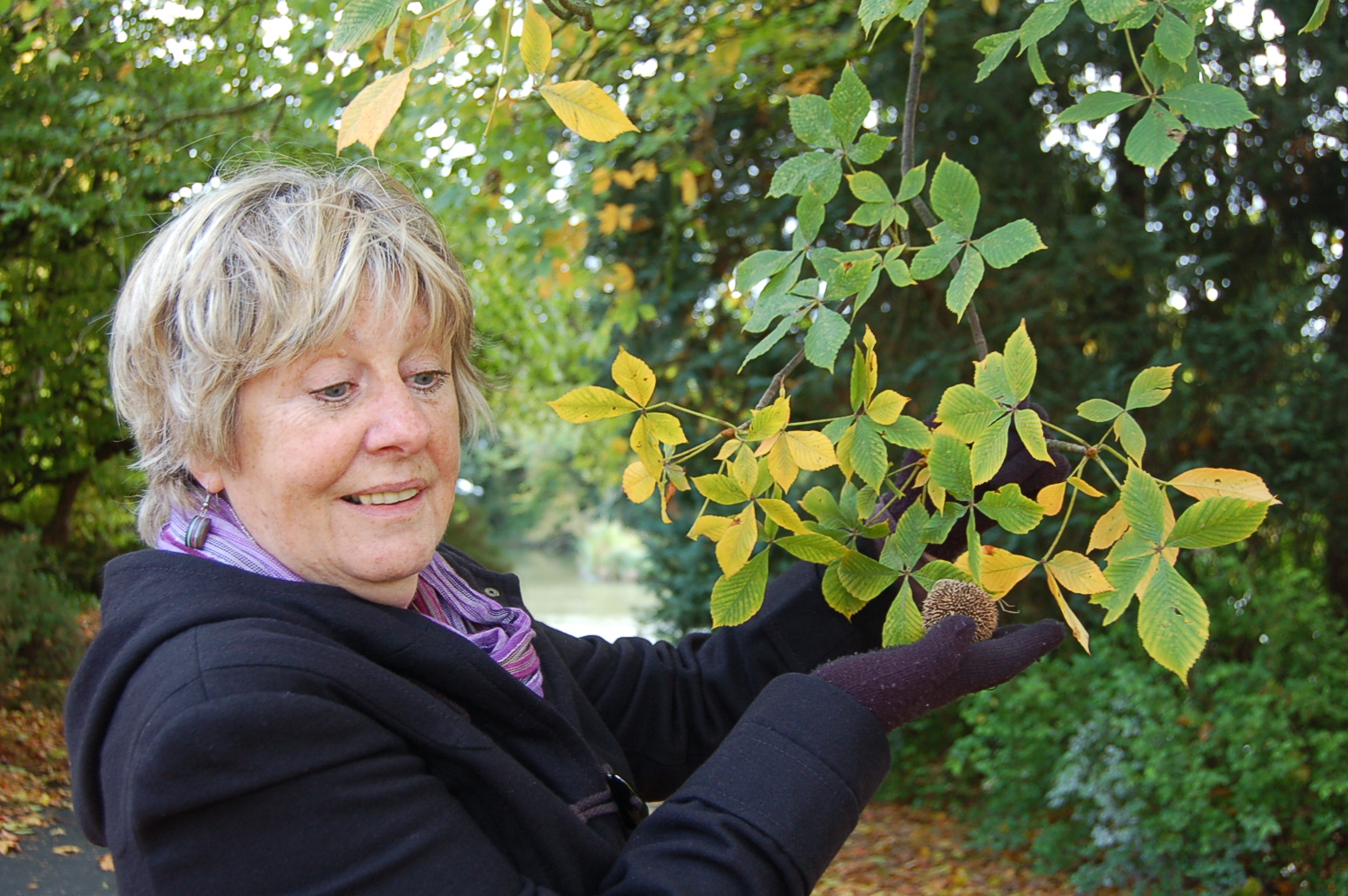
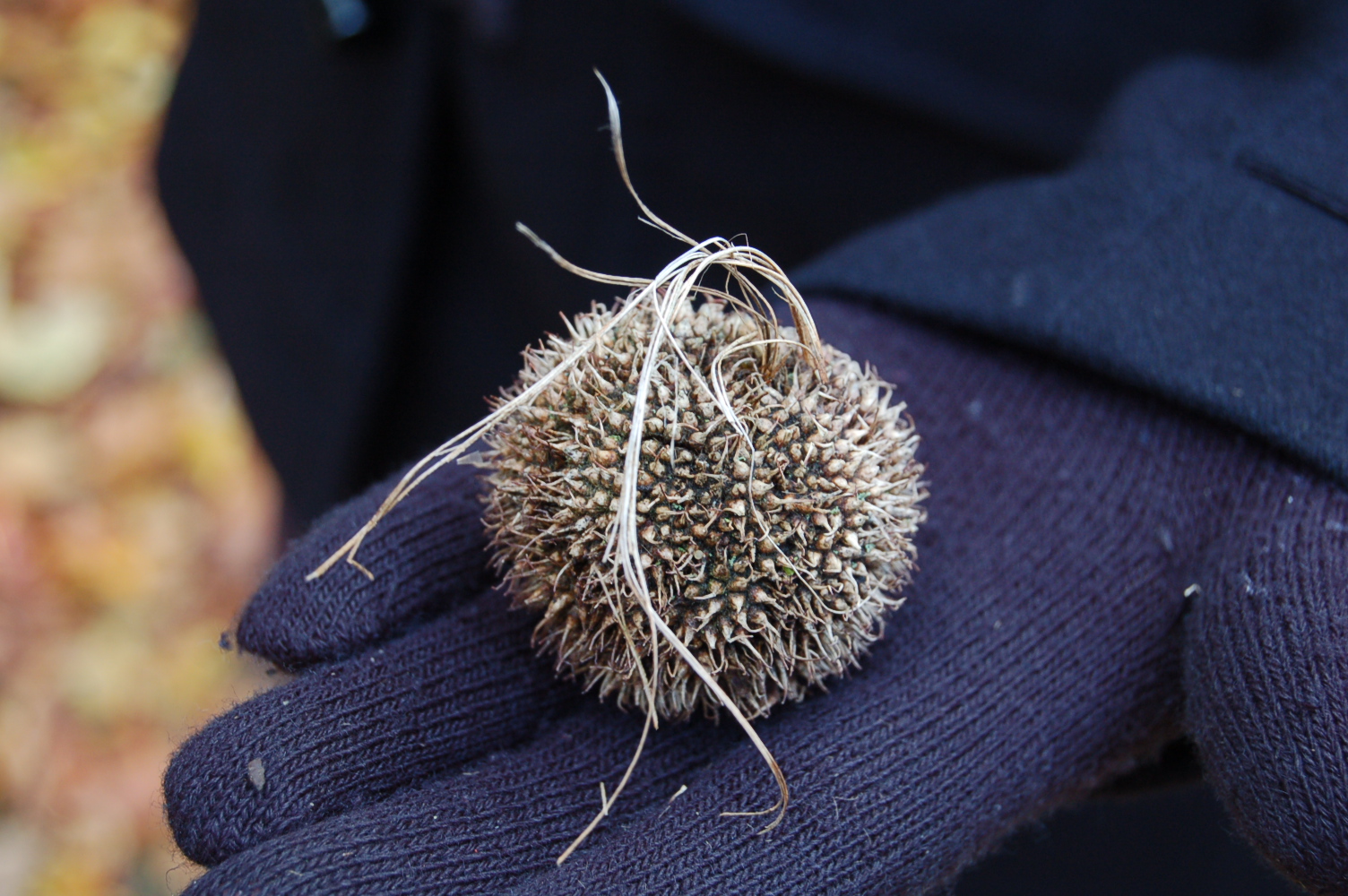
Jude “The Undergardener” mystified by an unknown chestnut.

The chestnut had spiky golf balls as nut capsules.

Mad clashing colours on Euonymous europaeus.

Crocosmia Lucifer graceful stems with its ginger coloured seeds.

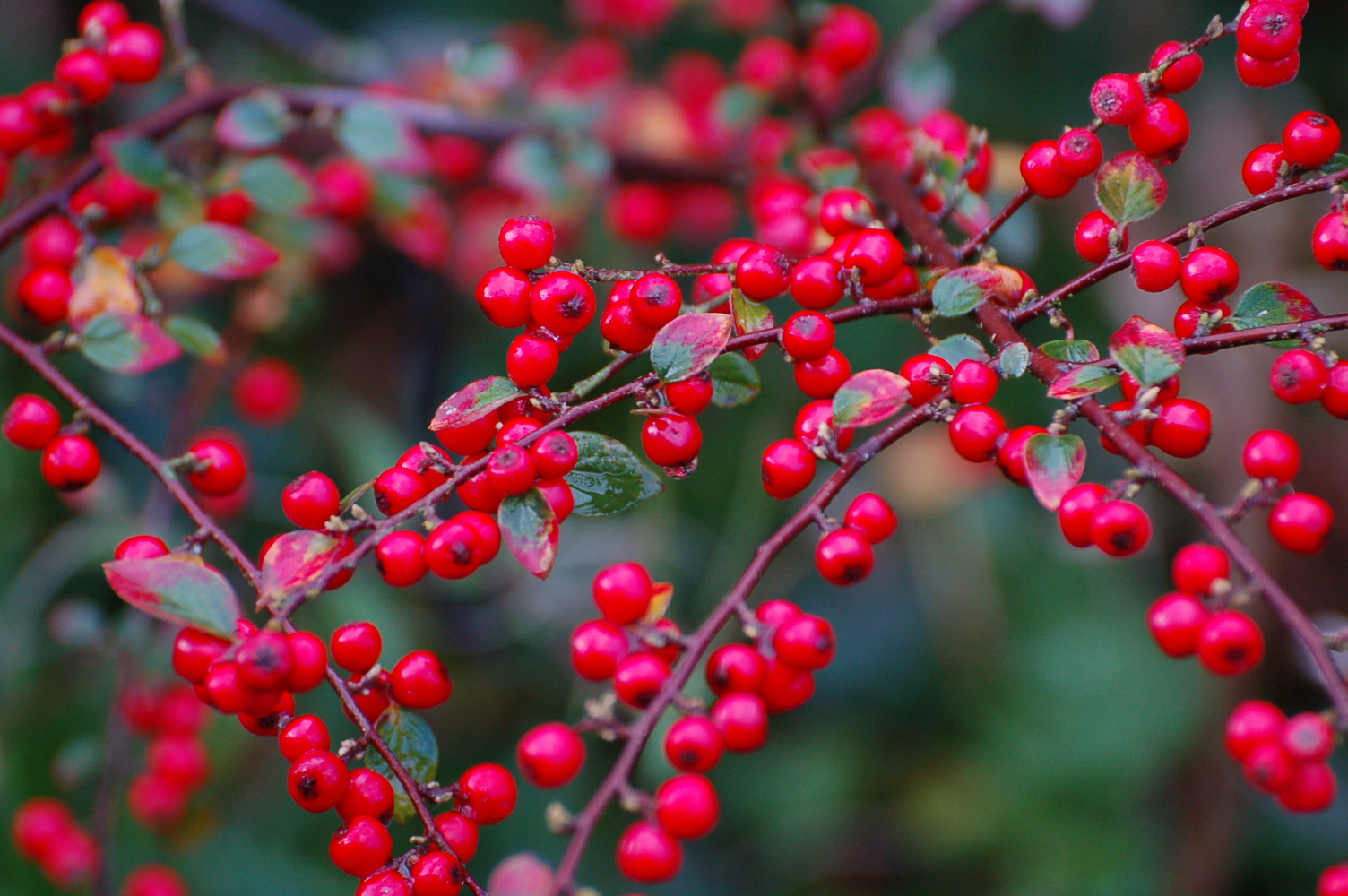
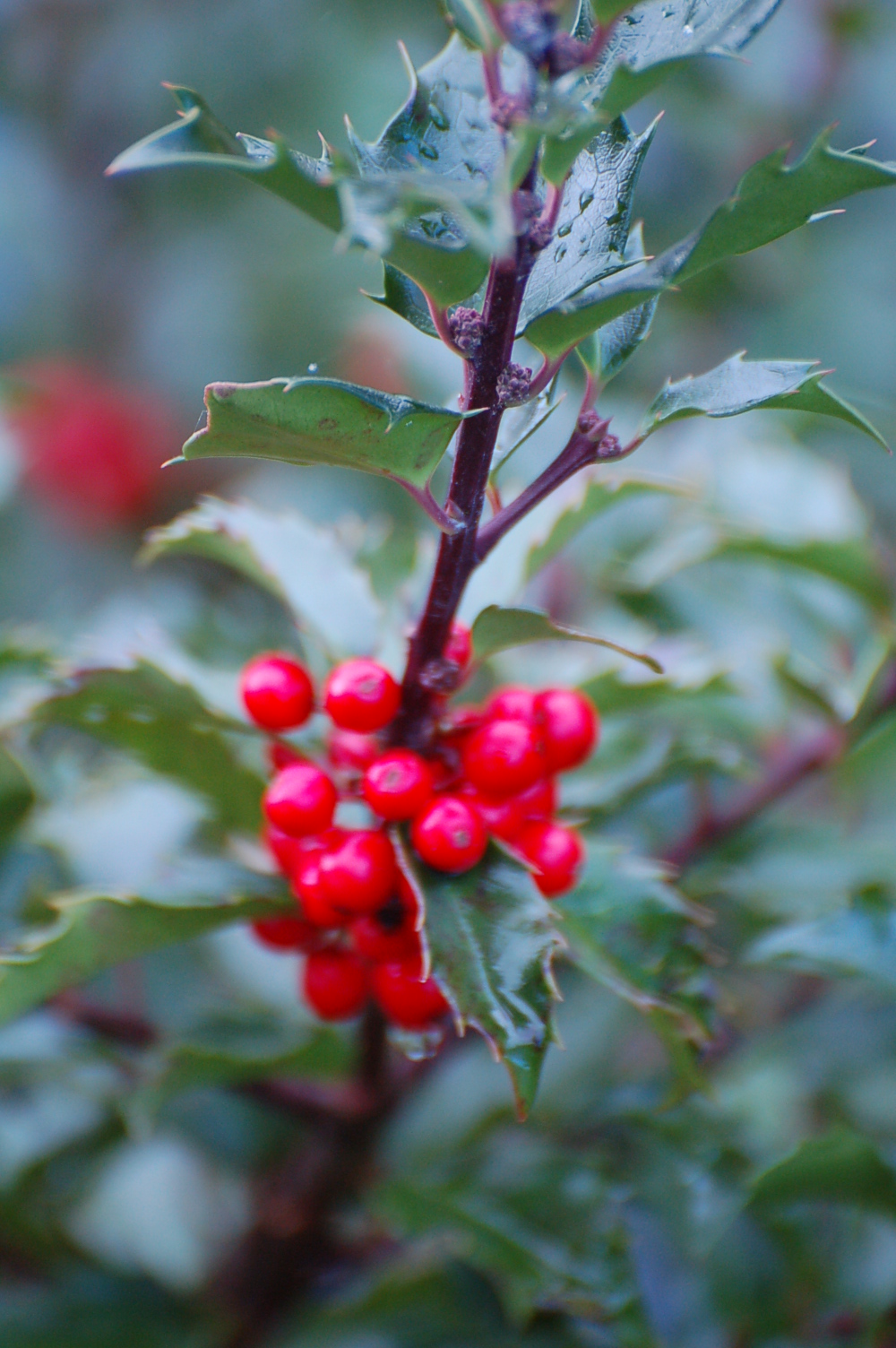
Let us now have a wander around our garden and spot red berries, and photograph them before the Mistle Thrushes, Redwings and Fieldfares gorge on them.

But unlike Henry Ford we do grow our berries in more than one colour!

White Dogwood.

Two-tone Hypericum.

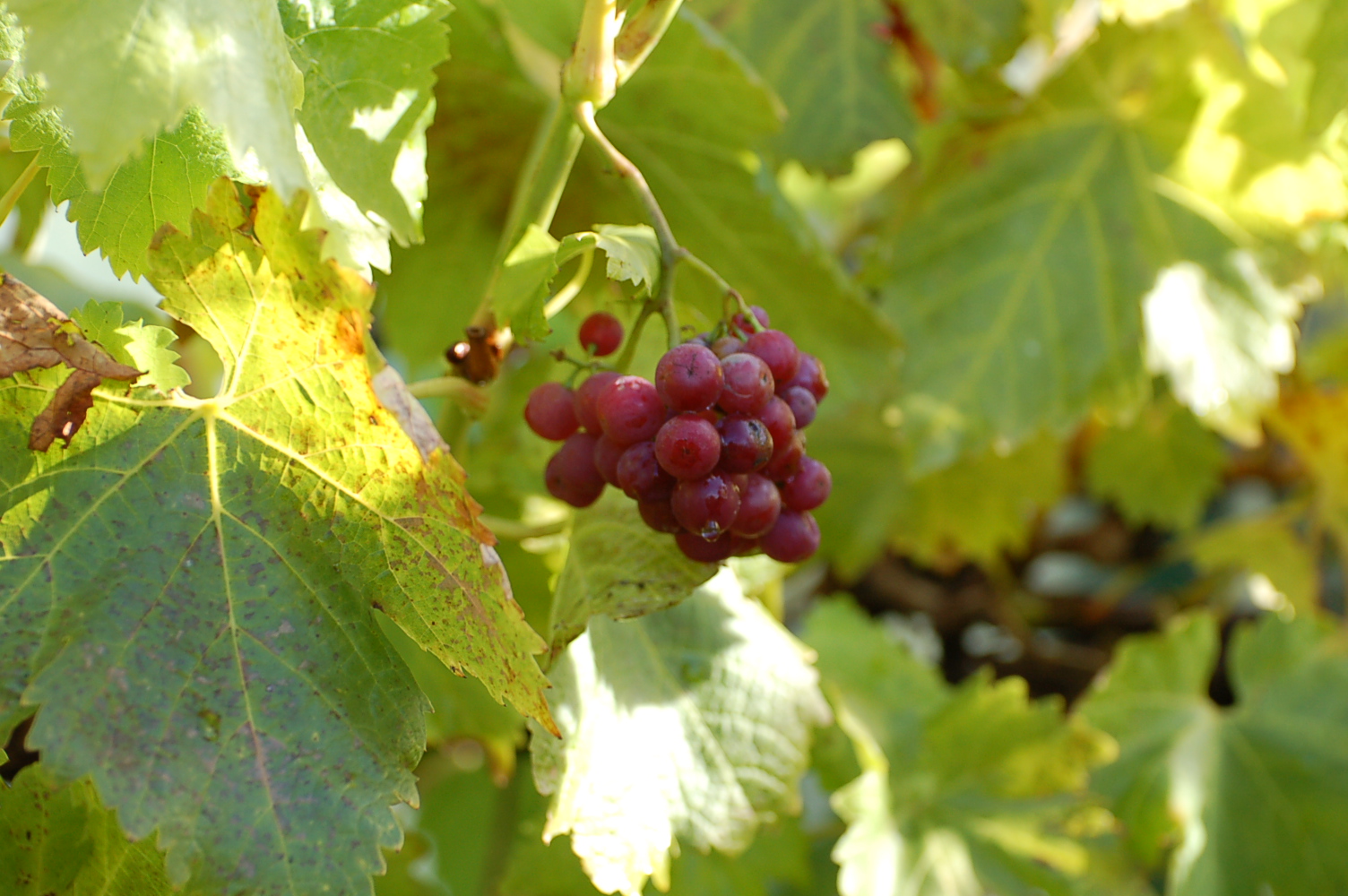
Musky purple grapes.

This unusual cream berried Cotoneaster always confuses garden visitors. (C. rothchildsiana)

Categories
allotments autumn fruit and veg garden photography gardening grow your own

Fruity

We harvested our first apples last month  and have been harvesting other varieties as they ripen. We still have a few varieties waiting on the treesto be collected. The first harvest was from a tree we have trained over an arch, having bought it as a one year maiden. It is a deep red-blushed beauty called “Scrumptious” which is a rather silly name but I have to admit quite apt. The basket weighed in at 8lb 7oz. – very pleasing!
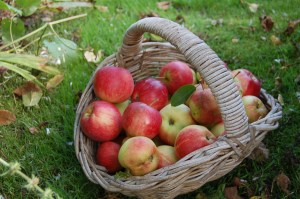
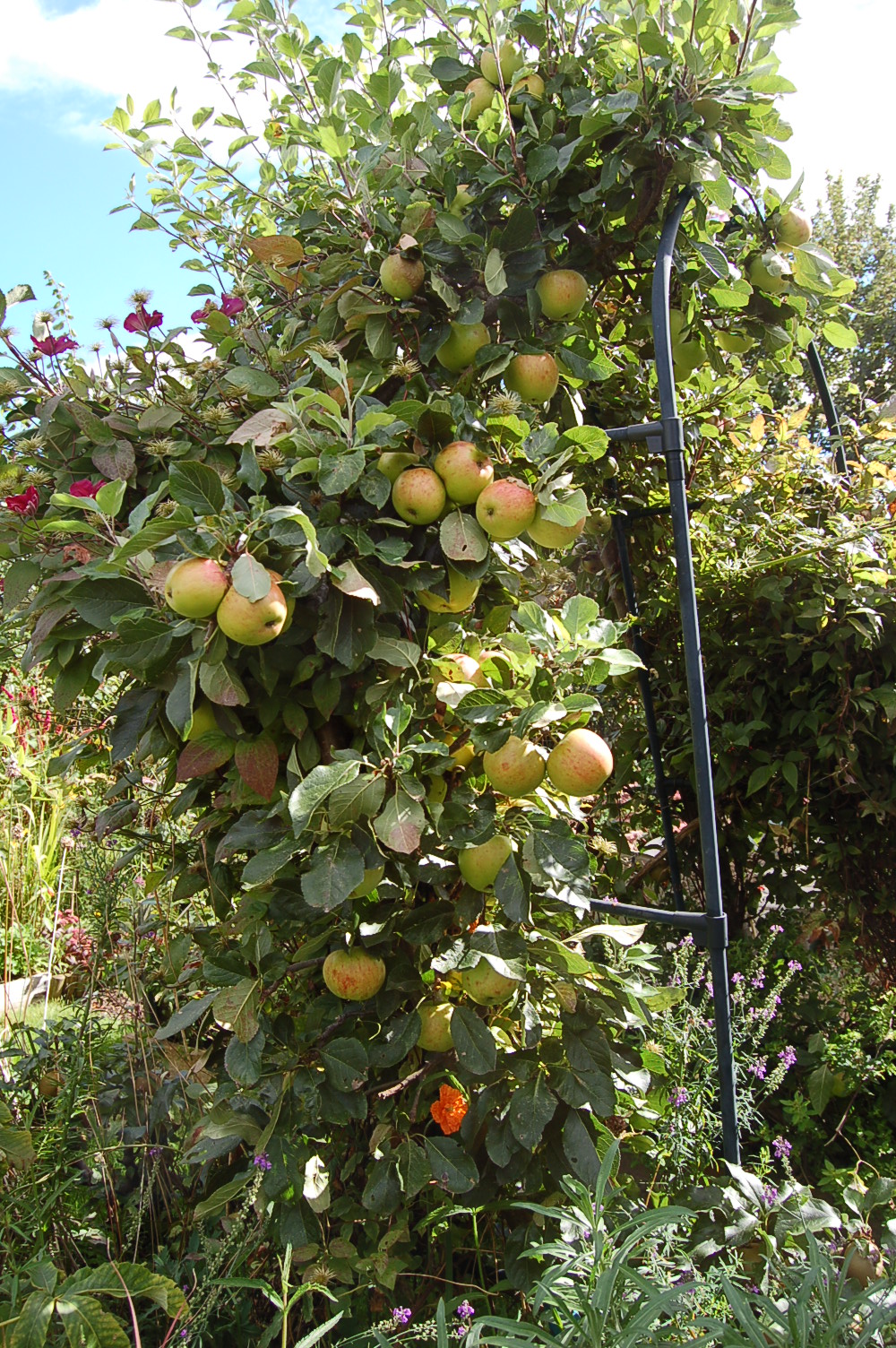
The other variety that we normally harvest in September is James Grieve, which grows in the company of a clematis over another arch. This tree is a reliable heavy cropper and this year’s crop  looked most promising as we waited for it to ripen. We can enjoy the taste of this apple straight from picking and they  stay full of flavour for a few months, but it does not store too well.
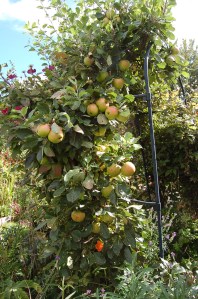
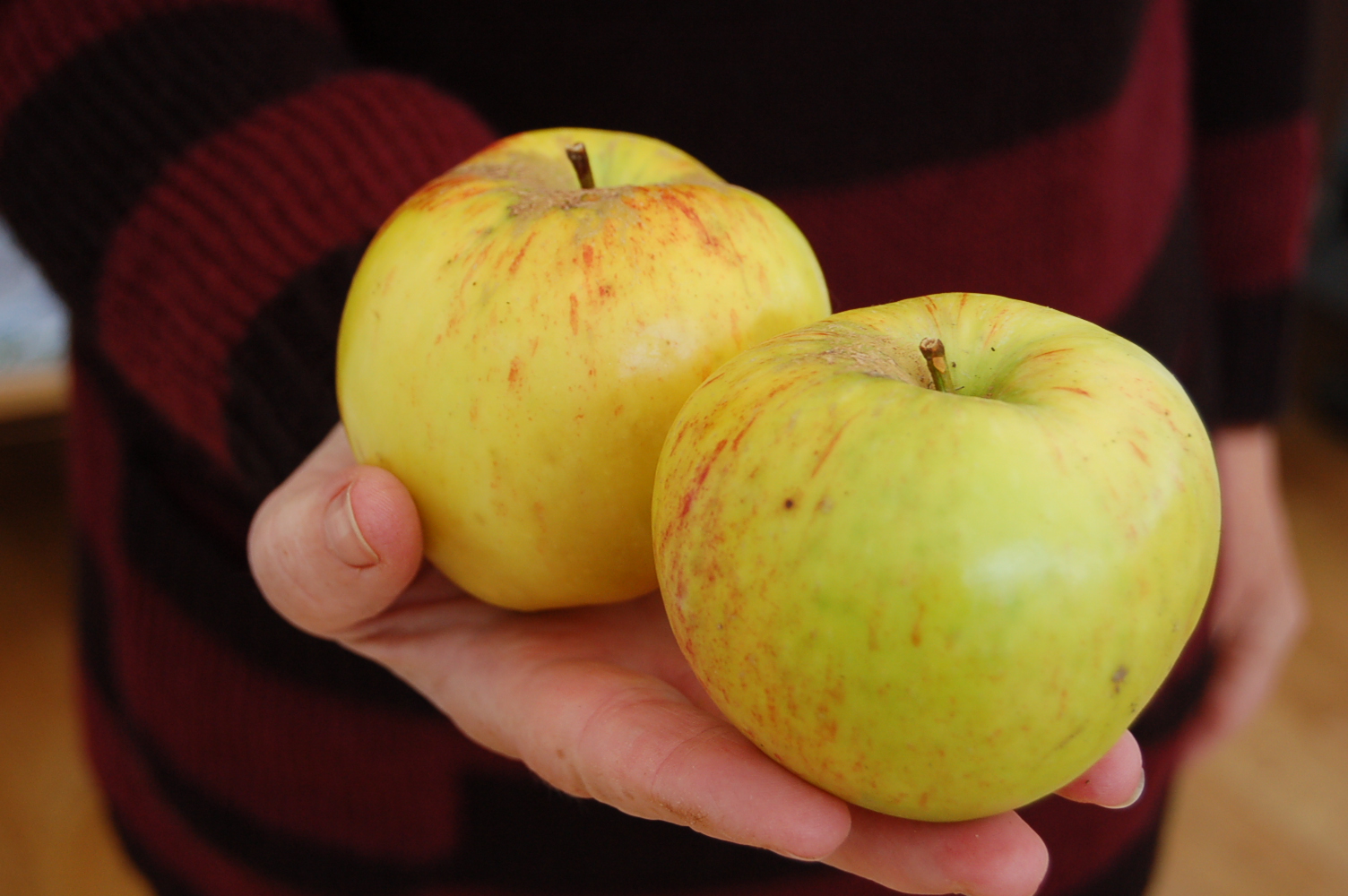
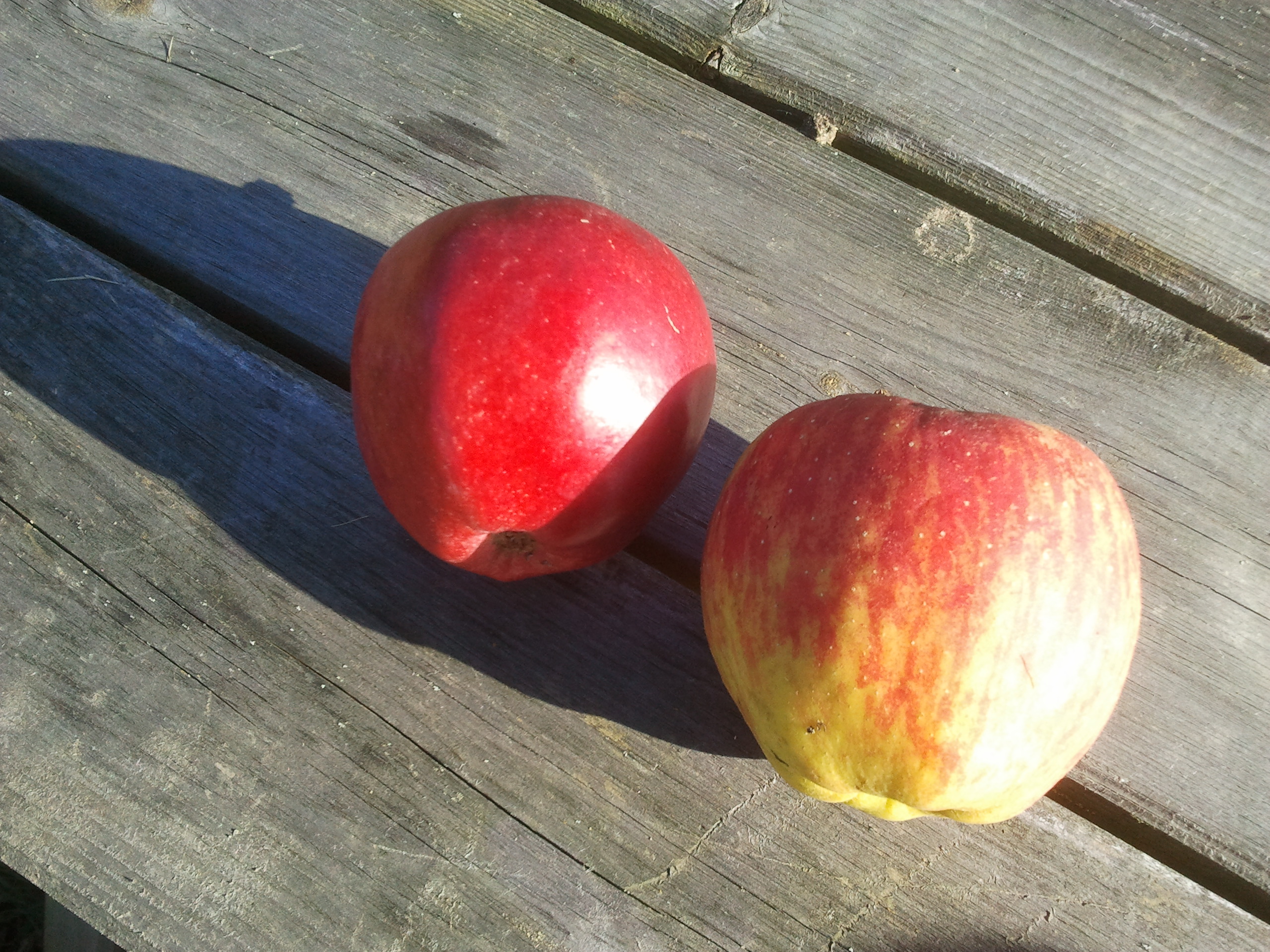
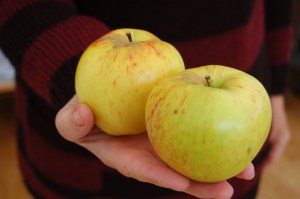
The harvest did live up to expectations weighing in at 27 lb with a few of the individual fruit being really large as we can see in the picture below of these two sitting on Jude, the Undergardener’s hand.
All the apple, pear and plum trees in our garden were bought as one year maidens and we have trained them into cordons, over arches and as step-overs. Now after ten years it is so rewarding to see them as such productive trees. Of course apple trees are worth growing for their blossom as well, so they are doubly useful to us gardeners.

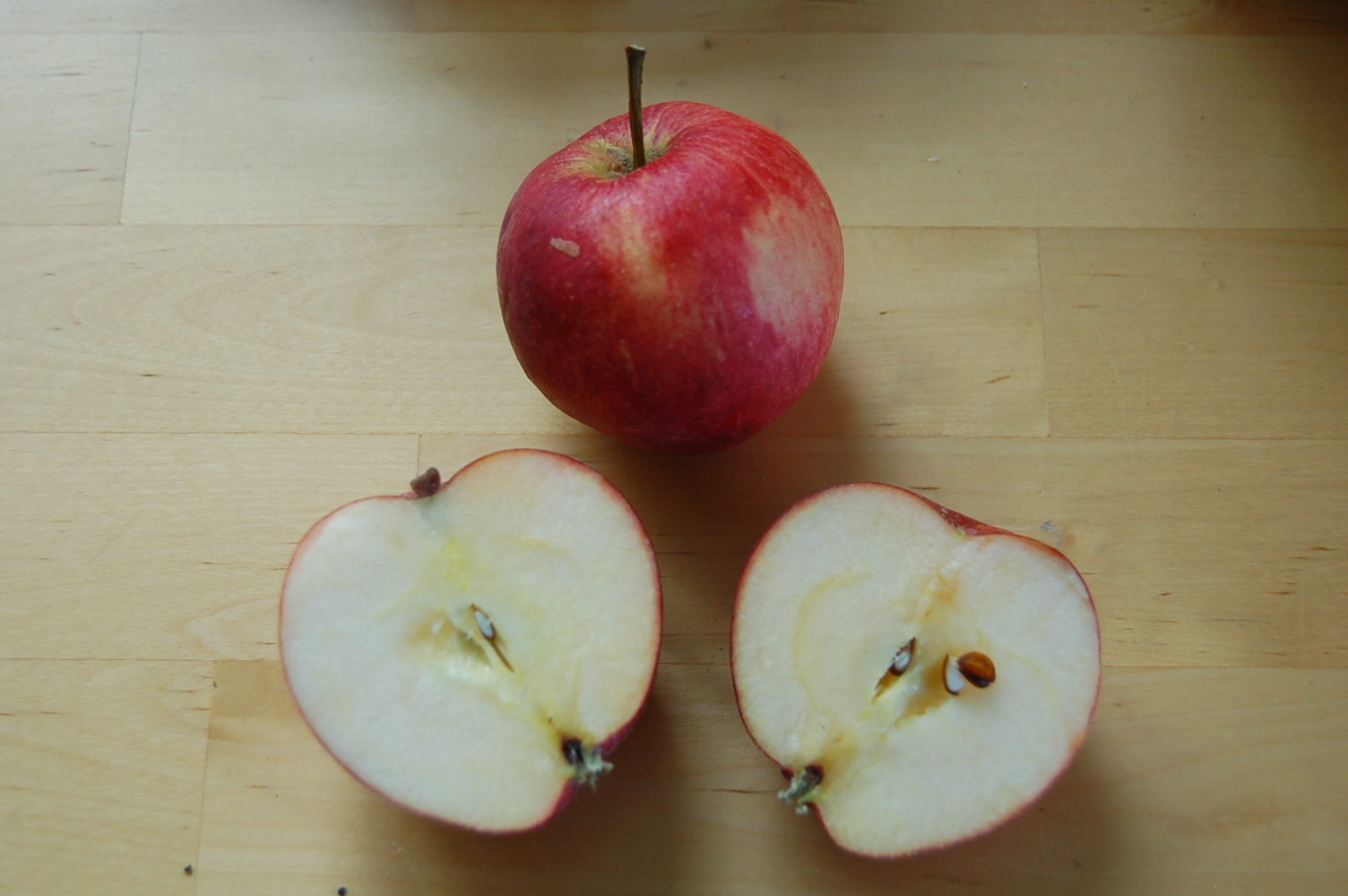
The apple below is Red Falstaff a variety we have trained as a single-stemmed upright tree. It sits to the left of our greenhouse door, where, coupled with Scrumptious on the right of the door, it gives the impression of  being one of a pair of sentinels guarding the doorway. We harvested our Red Falstaff a few days ago and the fruit has developed much deeper red blushed cheeks. In total though the little tree produced only half a dozen pounds of fruit.

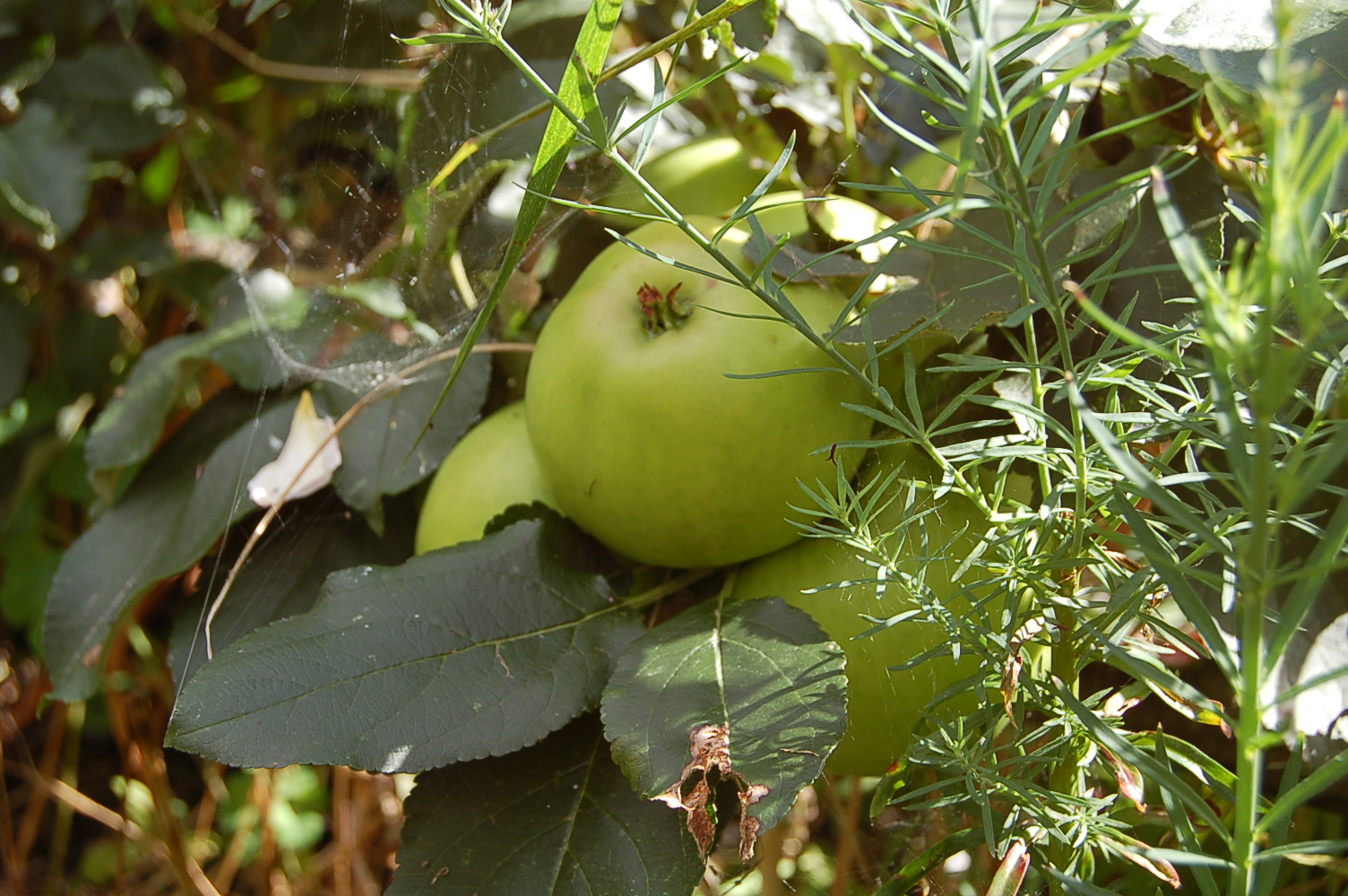
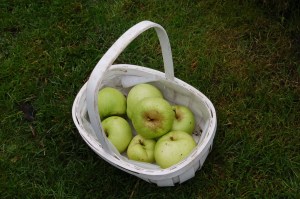
The green fruit below is a Bramley apple, the only pure cooker we grow. It is not the best of croppers as we made the mistake of training it as a step-over. Bramley is a tip-bearer so when we carry out the formative pruning necessary with step-overs we are effectively cutting out most of its future fruiting buds. However it does give us a small crop every year, so it has forgiven me my ignorance. We stew this cooking apple and then freeze them to use in pies in the winter and spring. As we do not grow many cooking varieties we tend to use wind falls and any damaged fruit of eaters as cookers or as ingredients in chutneys or mixed with blackberries in jams.

Ashmeads Kernel seen below however is a most successful step-over tree, with a dry textured skin and nutty flavour. This apple is one of the last to be harvested in late October  but will not be at its eating best until December through to February, when its flavours will have fully developed.
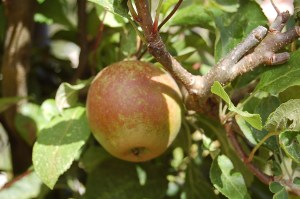
We grow some heritage varieties which tend to produce fewer fruits but are usually better flavoured, such as Cornish Aromatic, Beauty of Bath, Pixie and King of Pippins.

The photo below shows the unusually shaped, boxy fruit of Cornish Aromatic with its green skin with a few freckles of slightly deeper green.

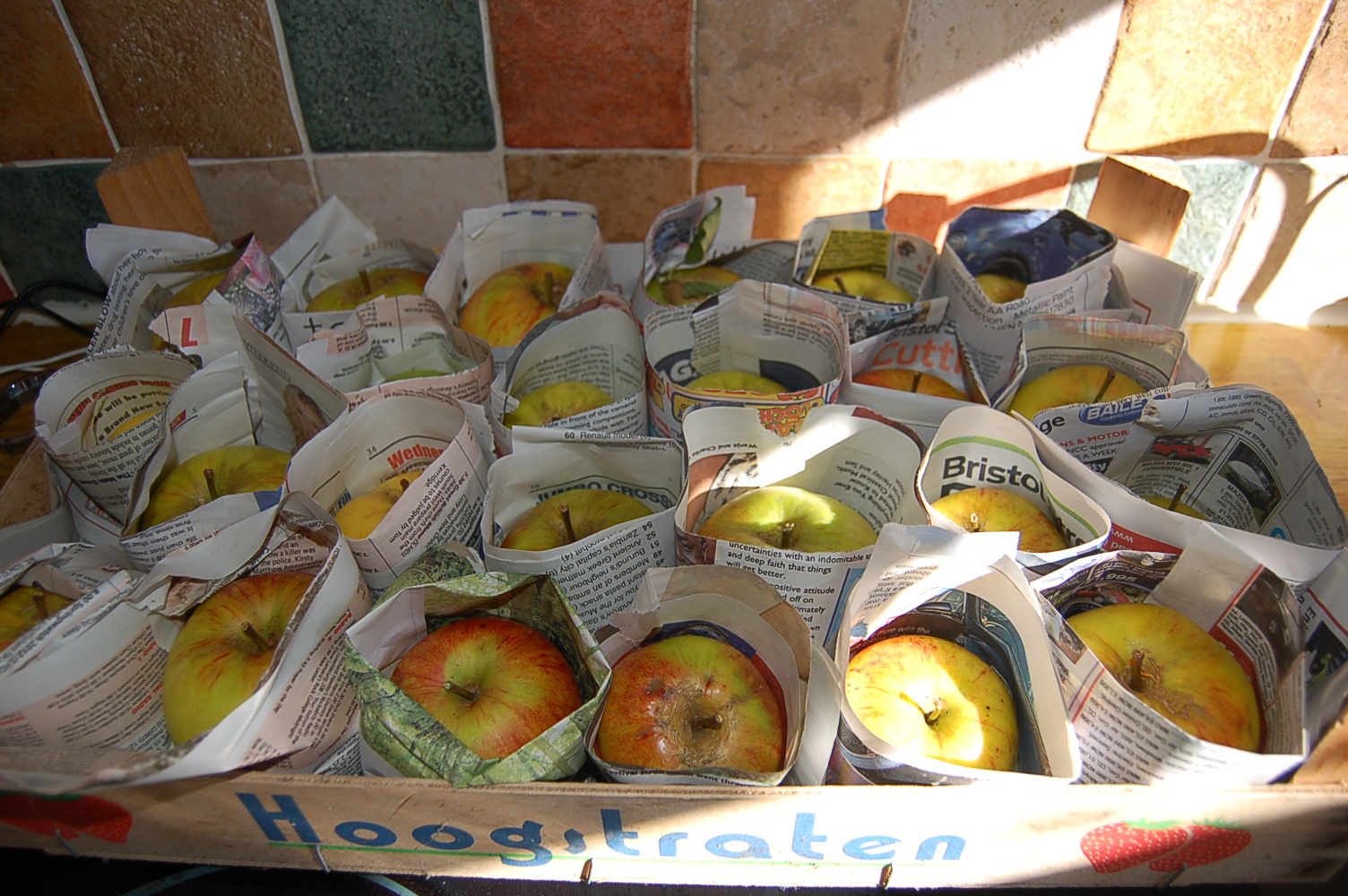
Any apples whose flavour improves with keeping ,we store in shallow trays with individual fruit wrapped in newspaper to make sure no fruits touch each other. If an apple does go bad when in store then this barrier of newspaper will stop it spreading too quickly.

The act of picking fruit evokes our senses, the touch of the skin as we twist the fruit from the tree, the scent of the fruit in the hand and the subtle variations of reds and greens to delight the eye. And then of course comes the taste, in some cases best straight from the tree in others the tastes matures with age, reaching a peak months after being plucked from the tree. There is also the sensation of the first bite, the crunch, the juice running and the balance of taste between sweet and acidic, and the hints of fruits shared with other fruits, strawberries and pineapples.
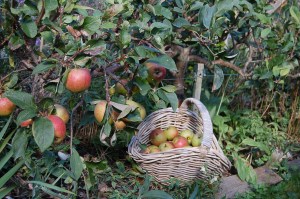
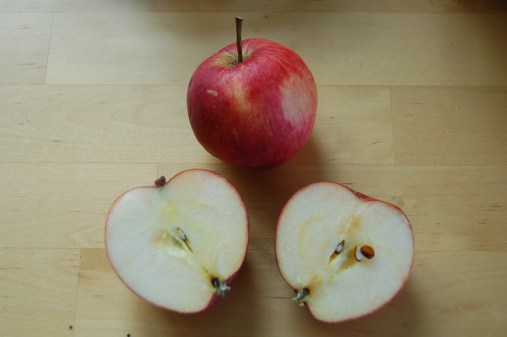
Our pear trees were a great disappointment this year. Out of our four cordons only one produced any fruit at all but just look at the size of them!

Categories
autumn autumn colours colours garden design garden photography gardening gardens open to the public National Garden Scheme ornamental trees and shrubs photography shrubs The National Gardening Scheme" trees

The Dingle – A Welsh Garden Wonder

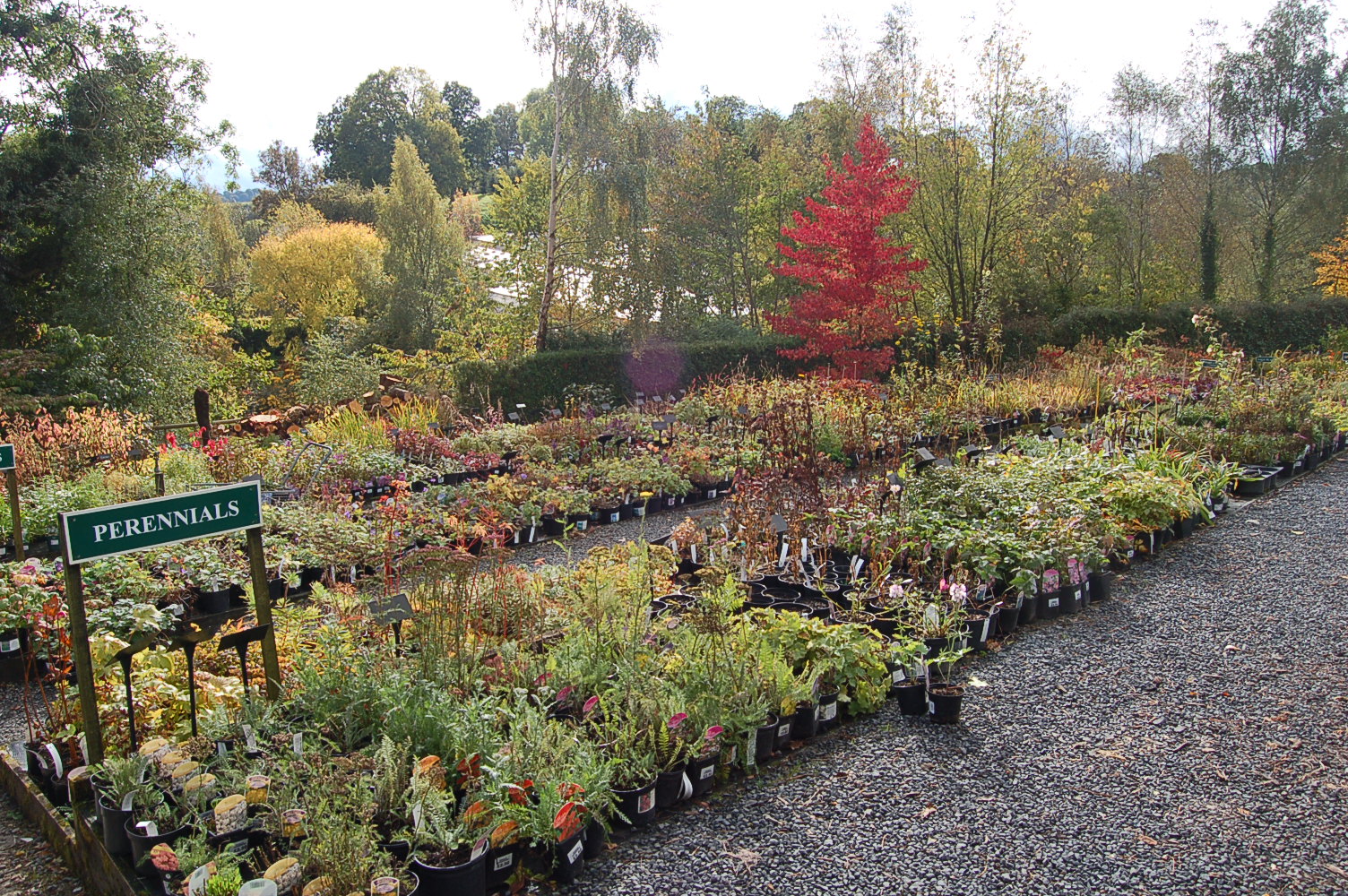
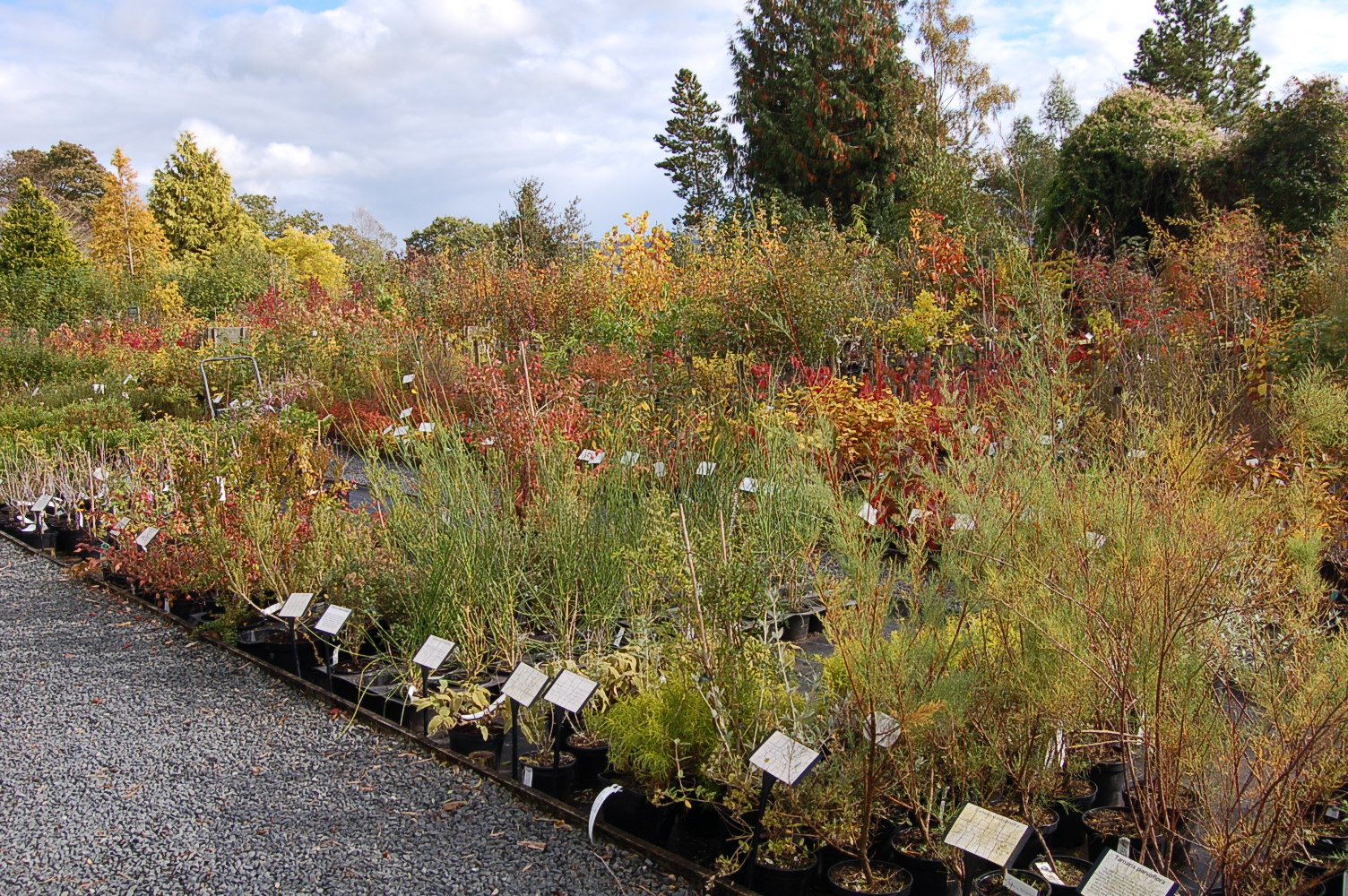
Close to Welshpool, just a half hour from home across the Welsh border, are our favourite nursery and garden centre, The Dingle and The Derwen, part of the same family. They sell unusual trees and shrubs and many good-value perennials all locally grown. But hidden away in the Dingle nursery, through a little wooden gate is a wonderful sloping garden. The garden is mostly a wonderful collection of unusual trees and shrubs on a gentle slope down to a lake, so a visit in the autumn is an assault on the senses.

The nursery which is now over 40 years old, grows thousands of plants on its 150 acres of Welsh countryside. We rarely come away without a gem – and they give free coffee away too!

The garden itself extends to just four acres, but those four acres feel much larger than expected with a complex network of paths which give occasional views which are wide and stunning. This is good garden design.

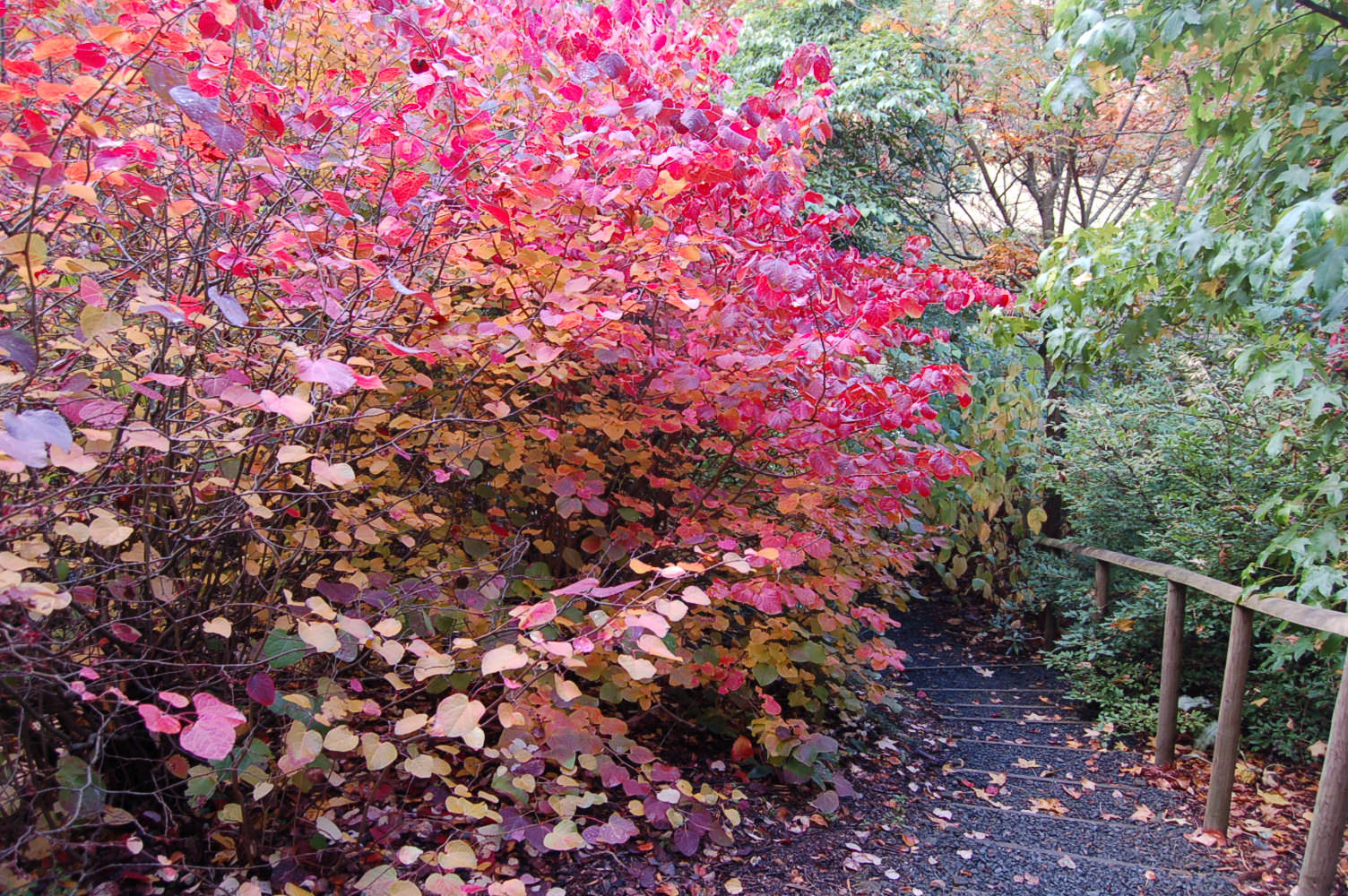
As the paths take us around corners they feature interesting, colourful shrubs and trees to delight the eye before enticing us to find out what is around the next corner.

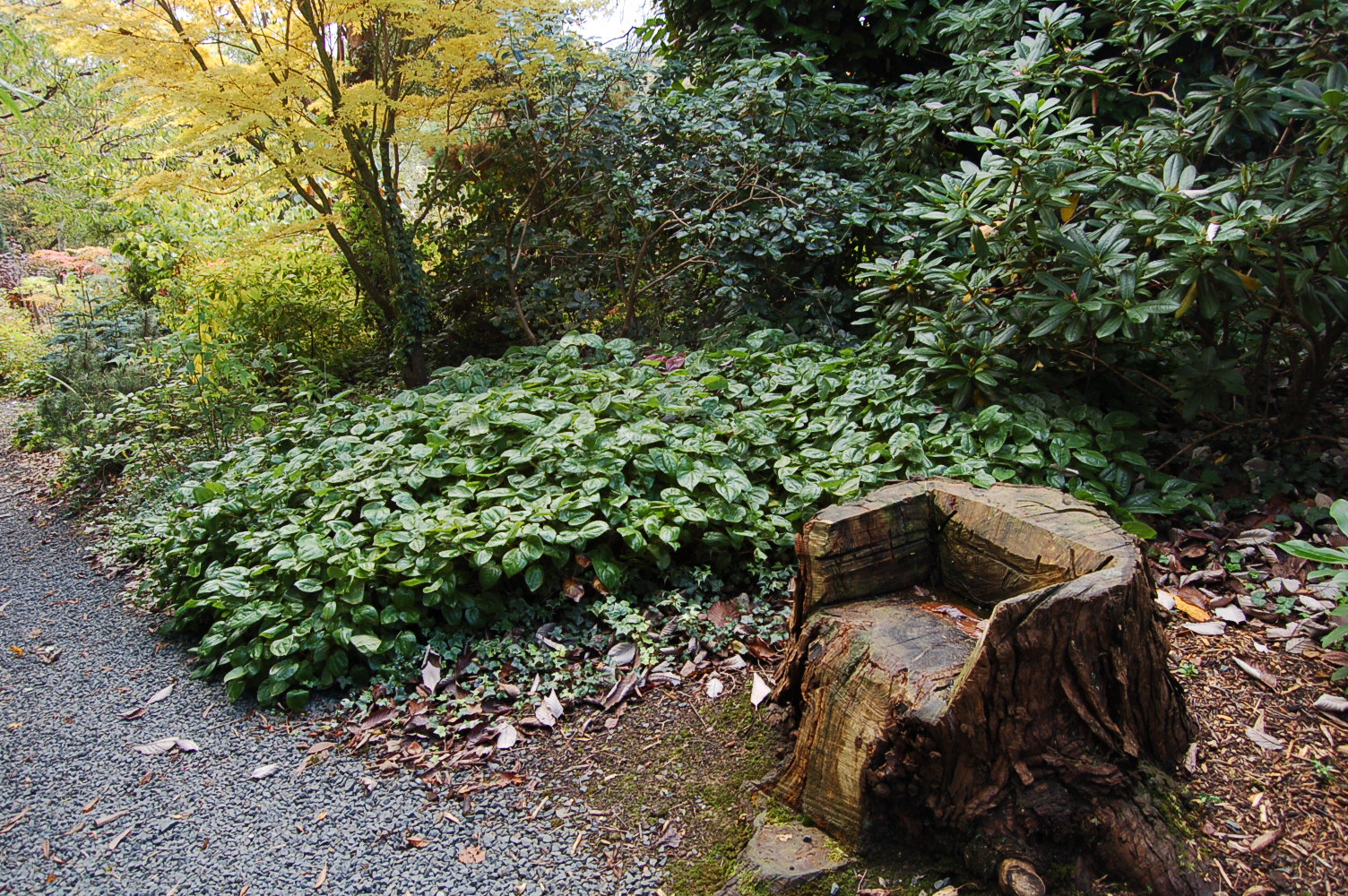
Being on a slope, the garden’s many seats are most warmly welcomed by aching legs.

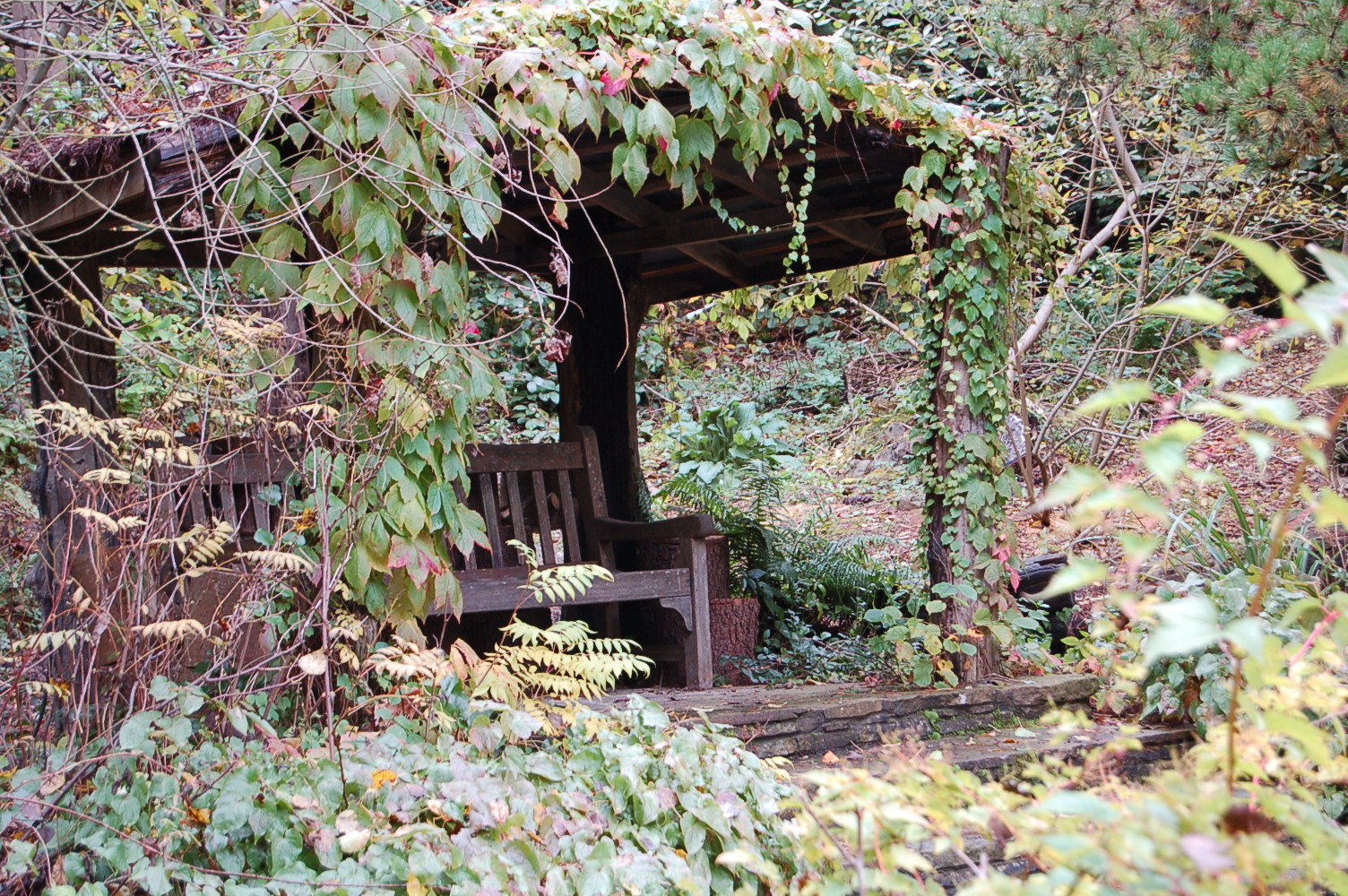
Some of the seating provides cover which proved useful a few times as showers burst from the dark sky just visible through gaps in the trees.

Coloured, textured foliage and bark keep the interest of the plant lover in us going strong and enticing us around each corner.

As in any good garden little cameos stop us in our tracks and catch the eye.

The lake at the lowest point of the garden, provides a restful place – restful to the eye and restful to the legs.

Strong contrasts in foliage colour show up in the brighter weather as we work our way back up the paths to the gate.

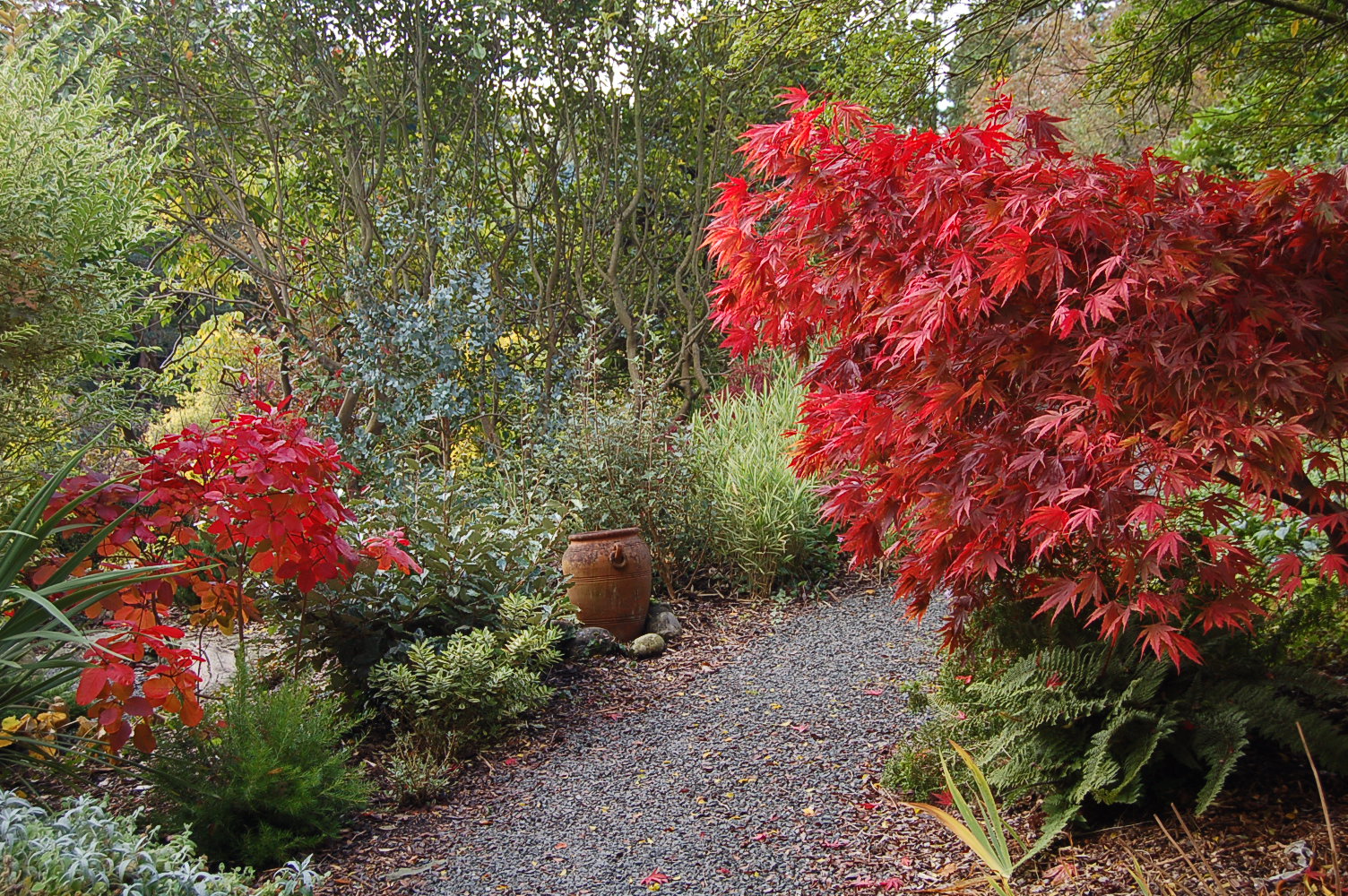
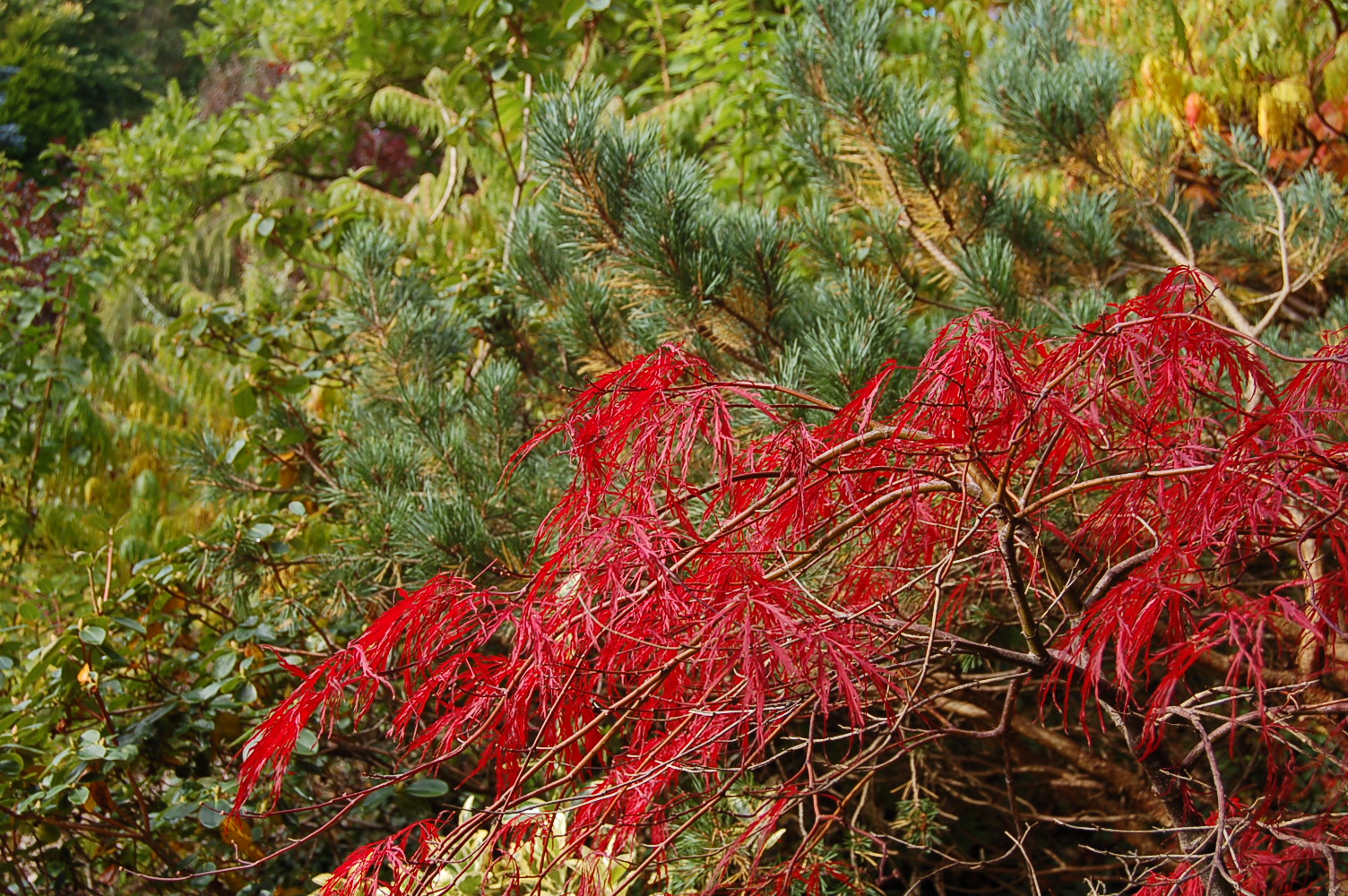
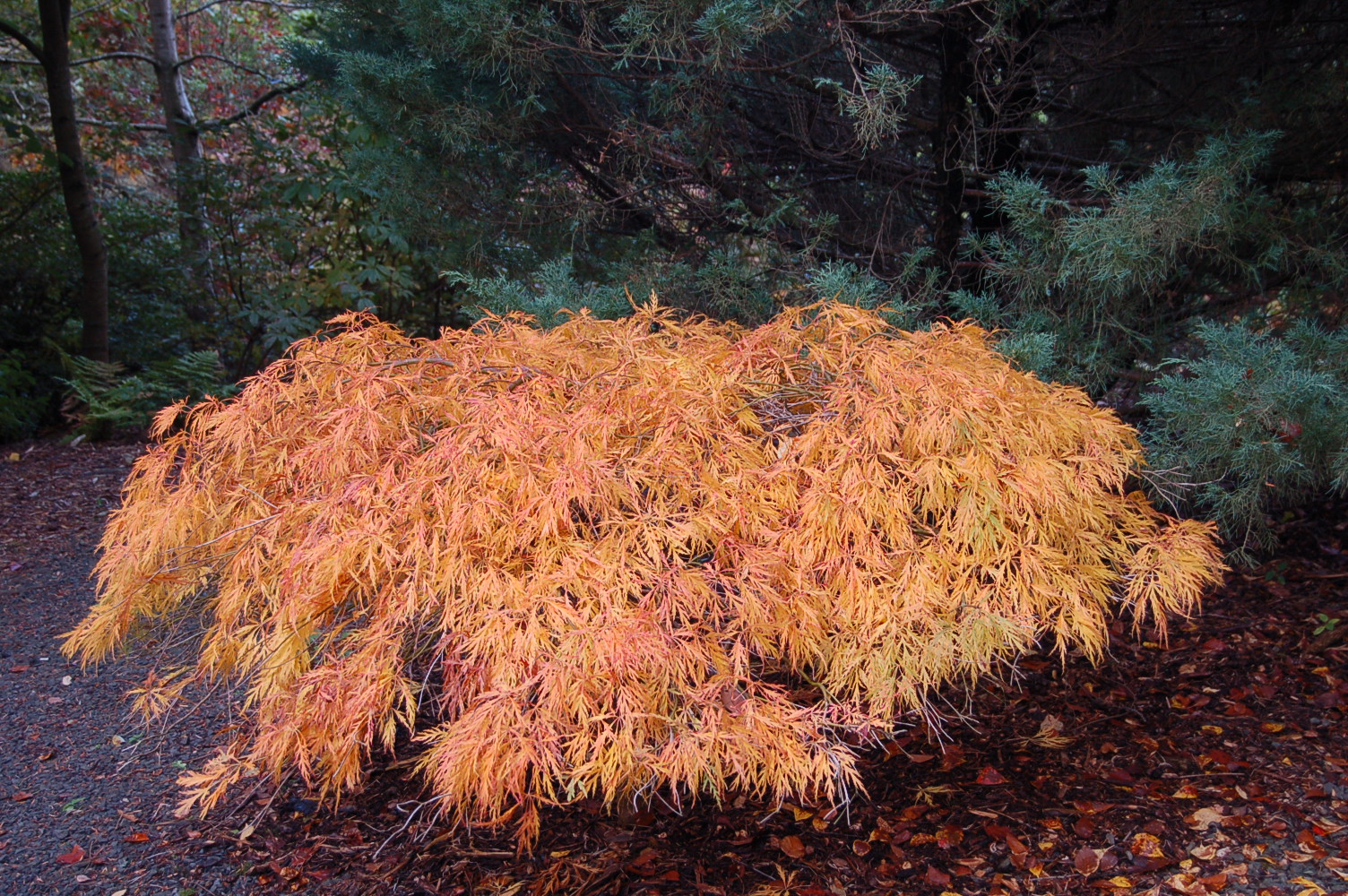
As in any garden specialising in trees and shrubs the stars of the autumn are the Acers.

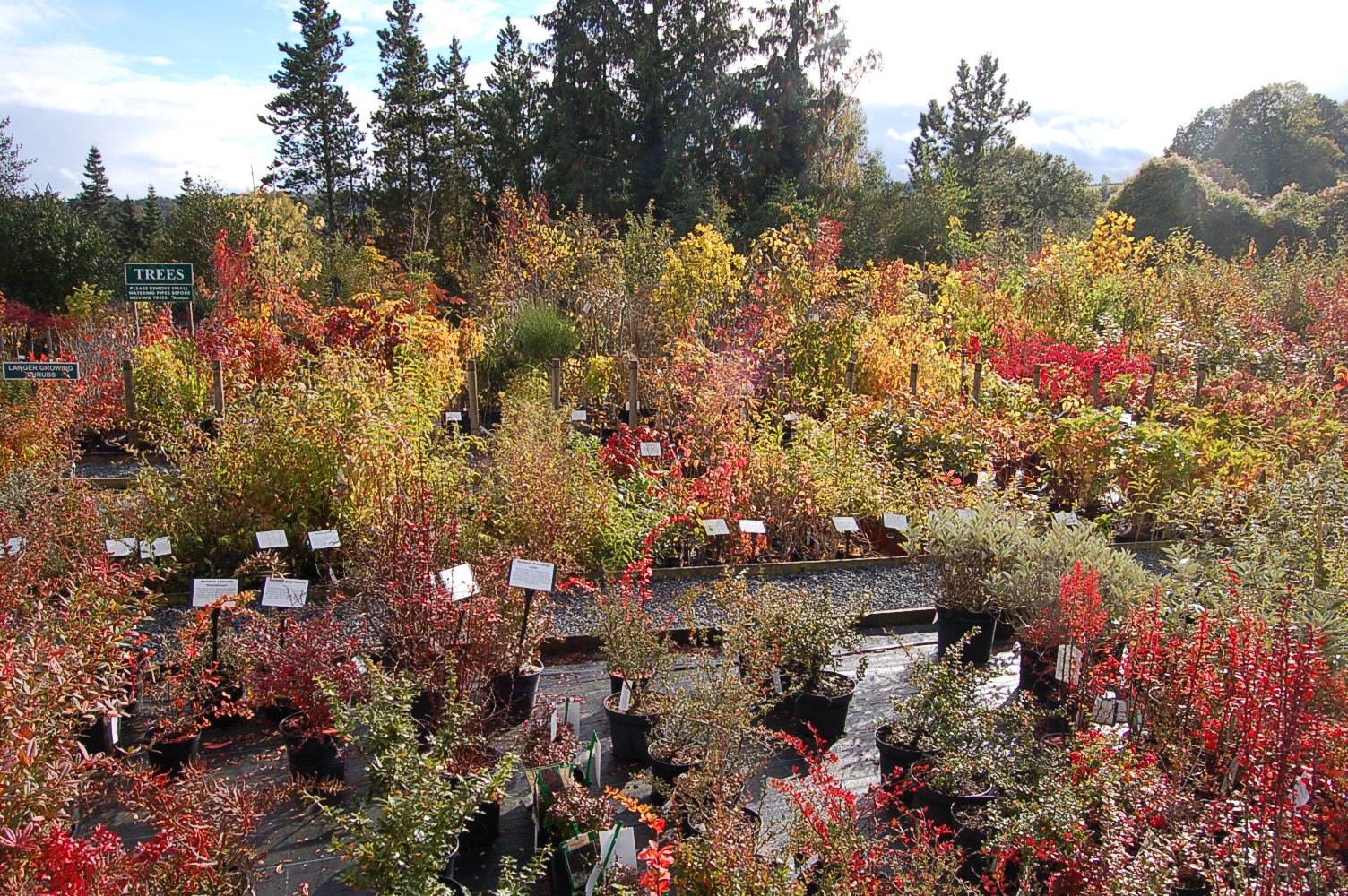
Back up the top of the garden we pass through the little wooden gate and are tempted for a perusal of the colourful nursery beds.

Categories
autumn colours garden photography gardening grasses ornamental trees and shrubs photography trees

Leaves

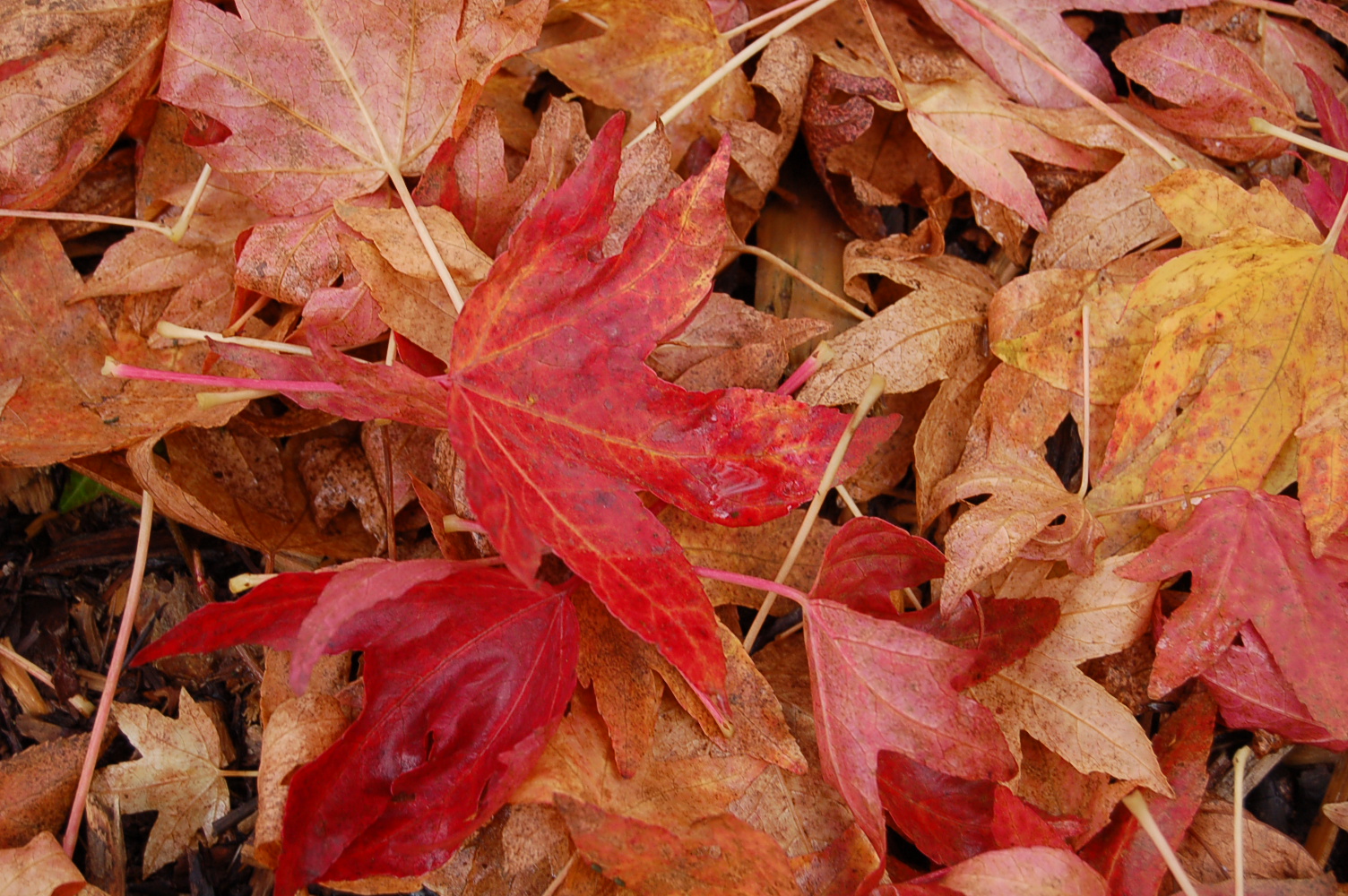
Just for a change we have no words just photographs to enjoy. A few sneak in near the end though!

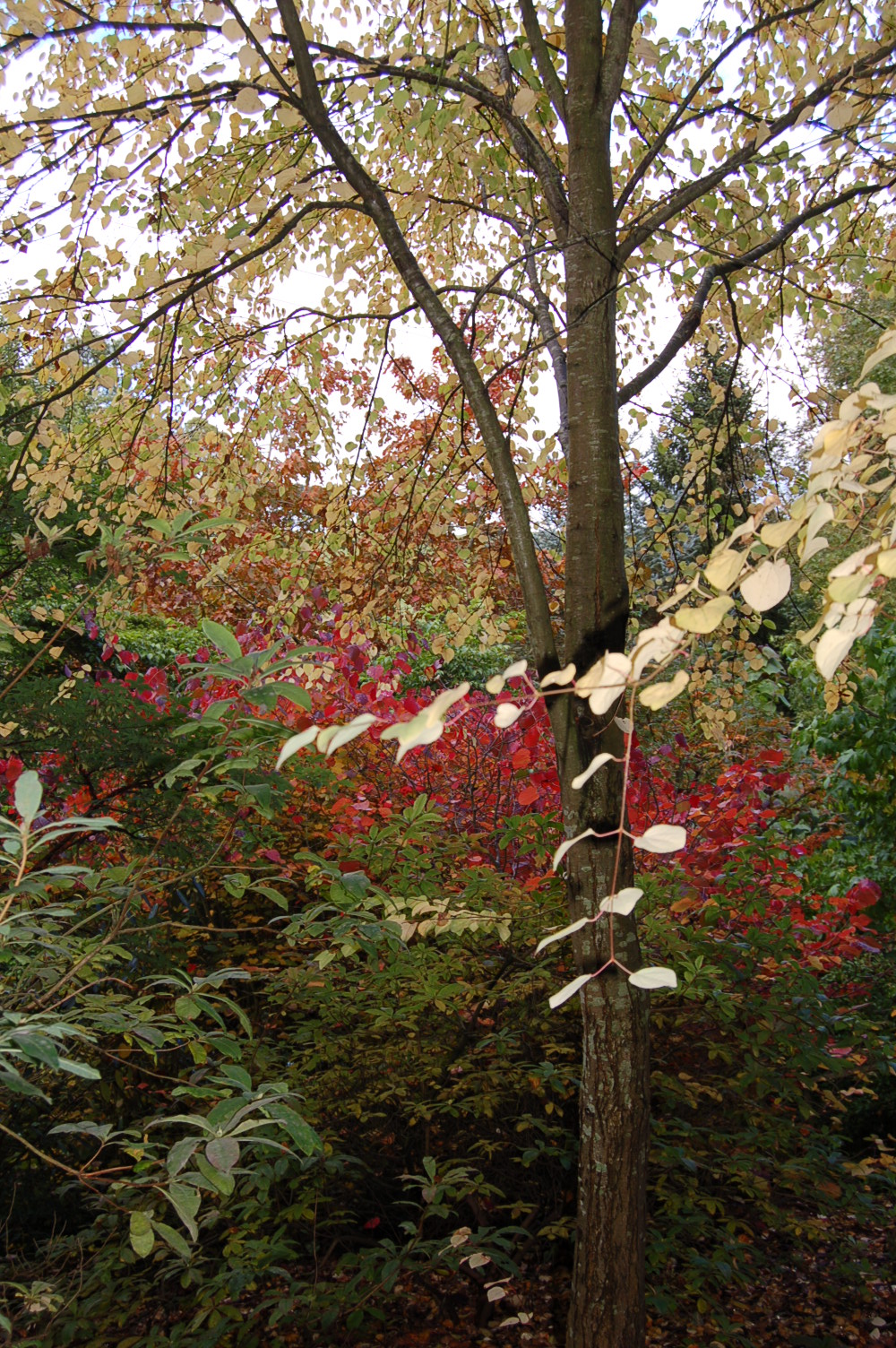
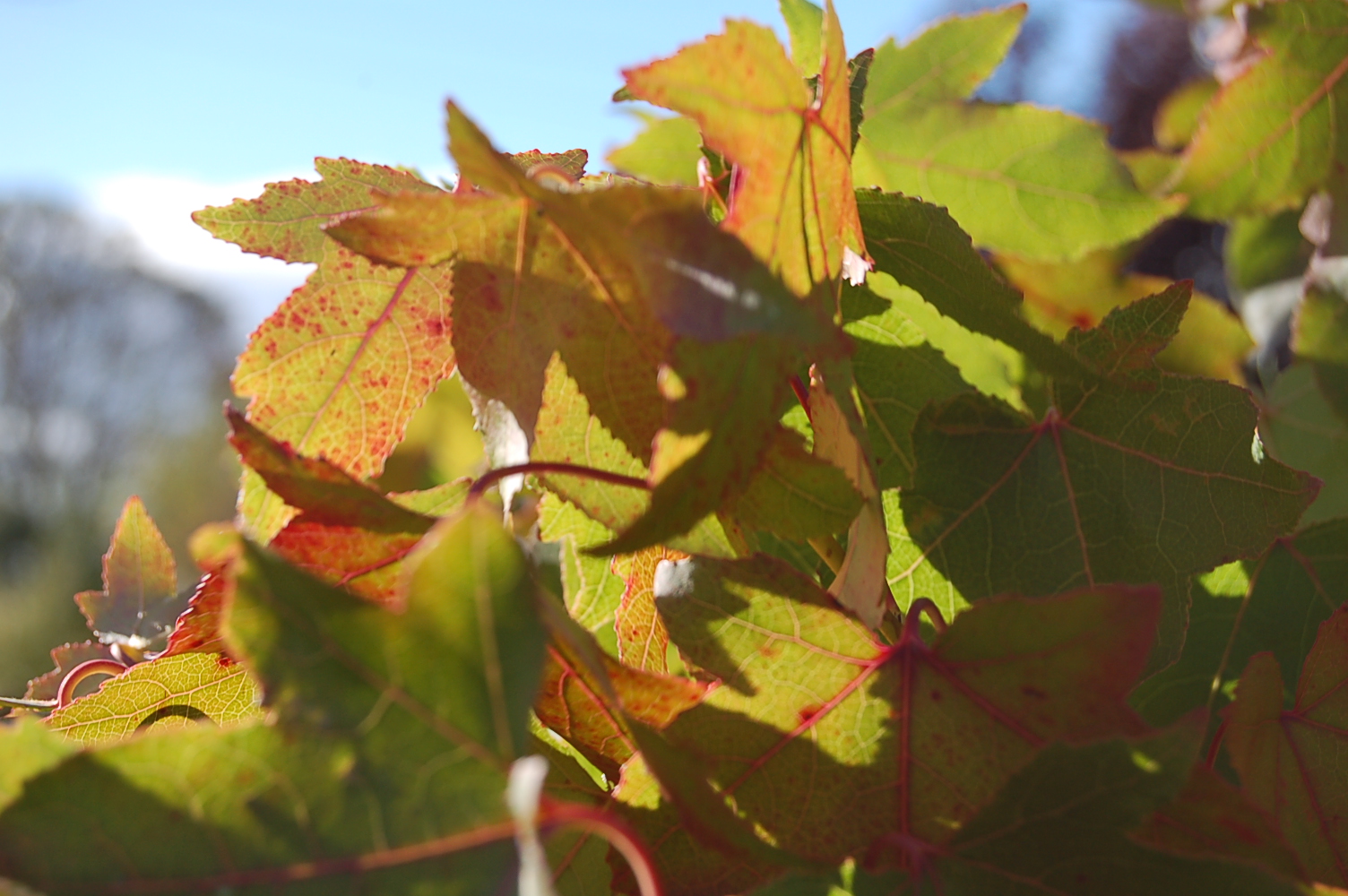
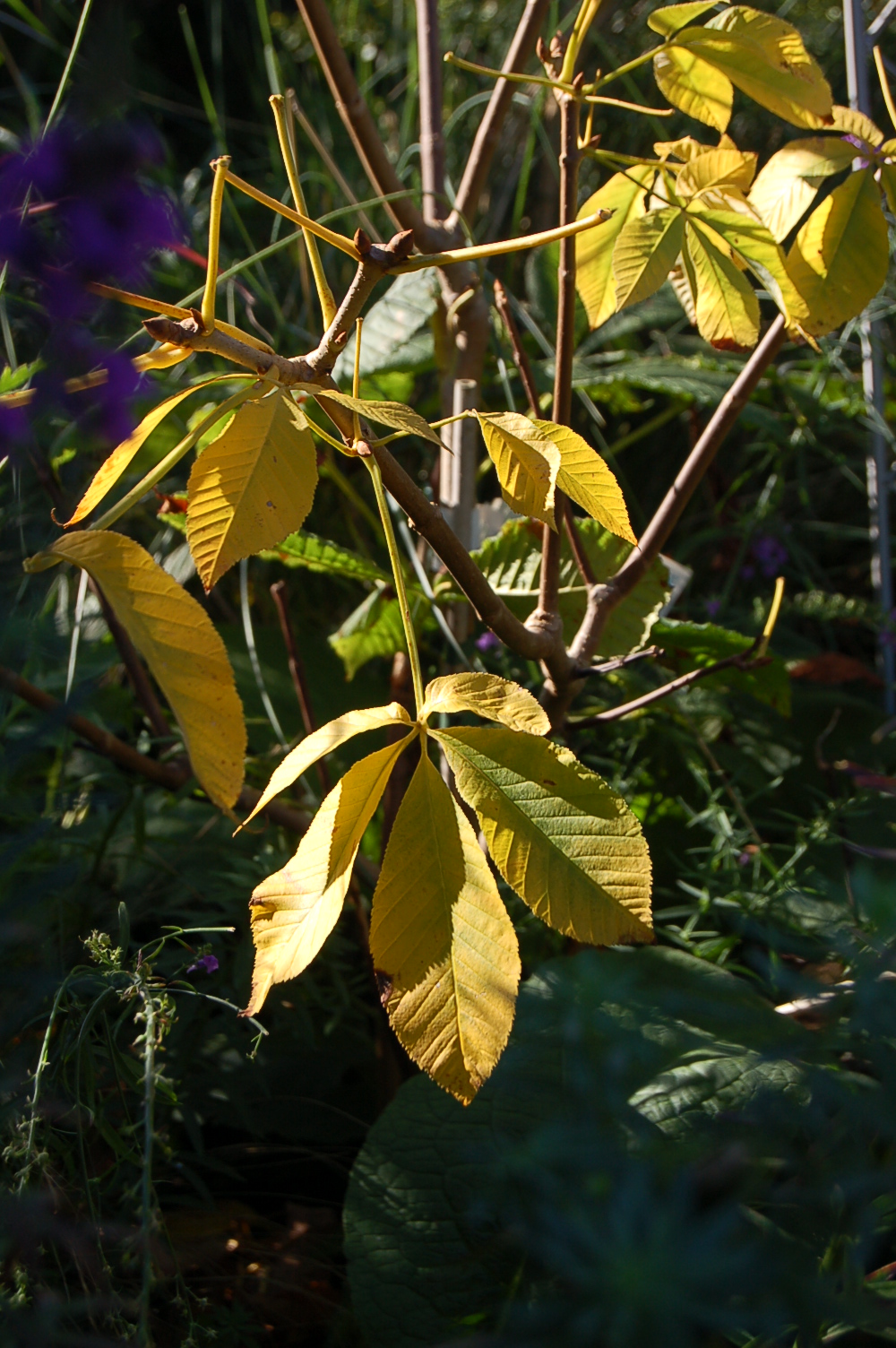
If only you could smell the leaves below! They are from the tree called Cercidyphilum and they smell so sweet. I think they smell of toffee apples, Jude thinks they smell of candyfloss while others think the scents reminiscent of brittle toffee, burnt sugar, in fact anything sweet and sticky!

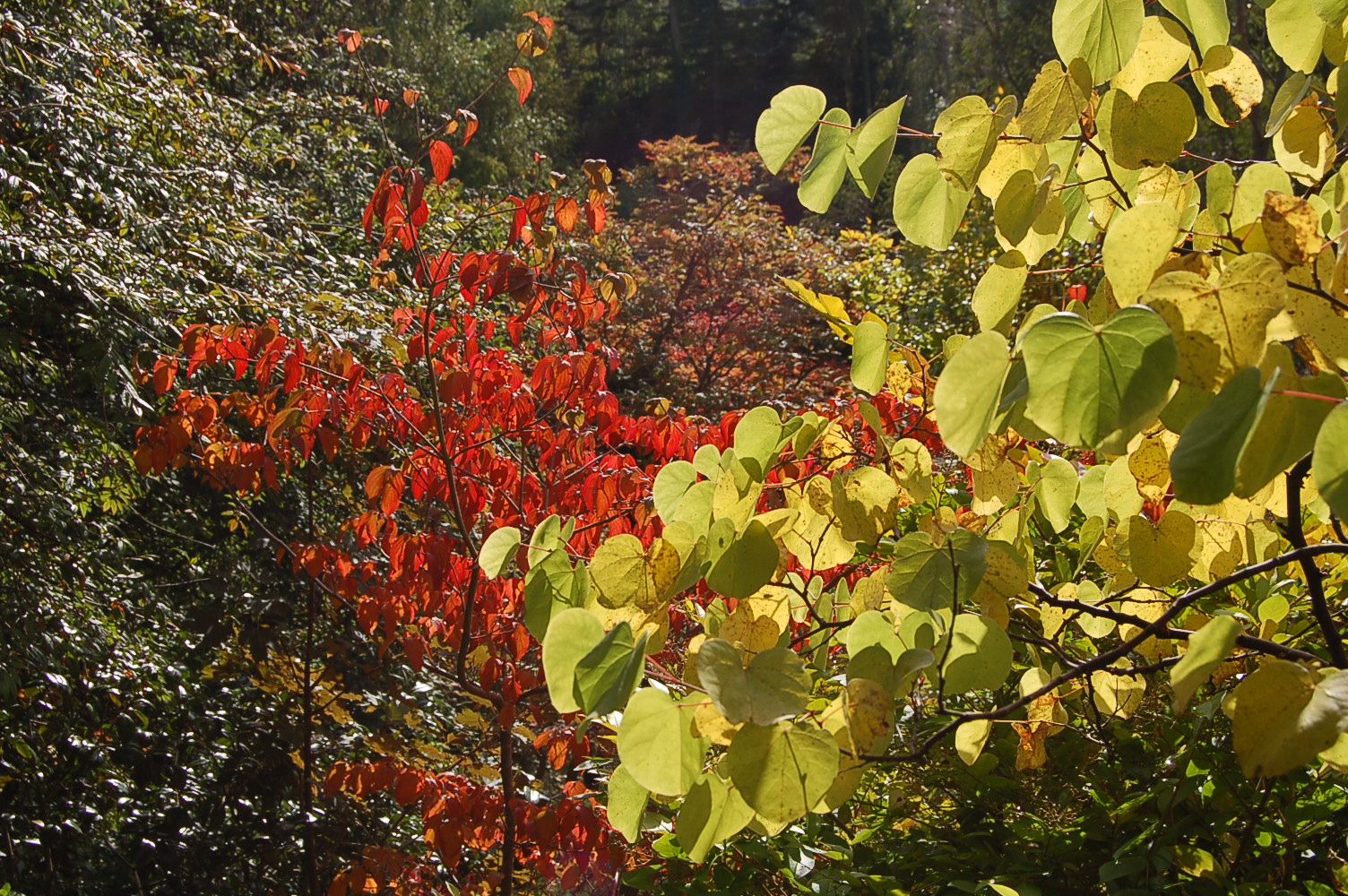
The most underrated plants for autum  leaf colour must be the grasses. They very rarely get a mention in relation to autumn colour, so let’s put it right.

Categories
autumn garden design garden photography gardening hardy perennials ornamental grasses ornamental trees and shrubs photography roses Shropshire

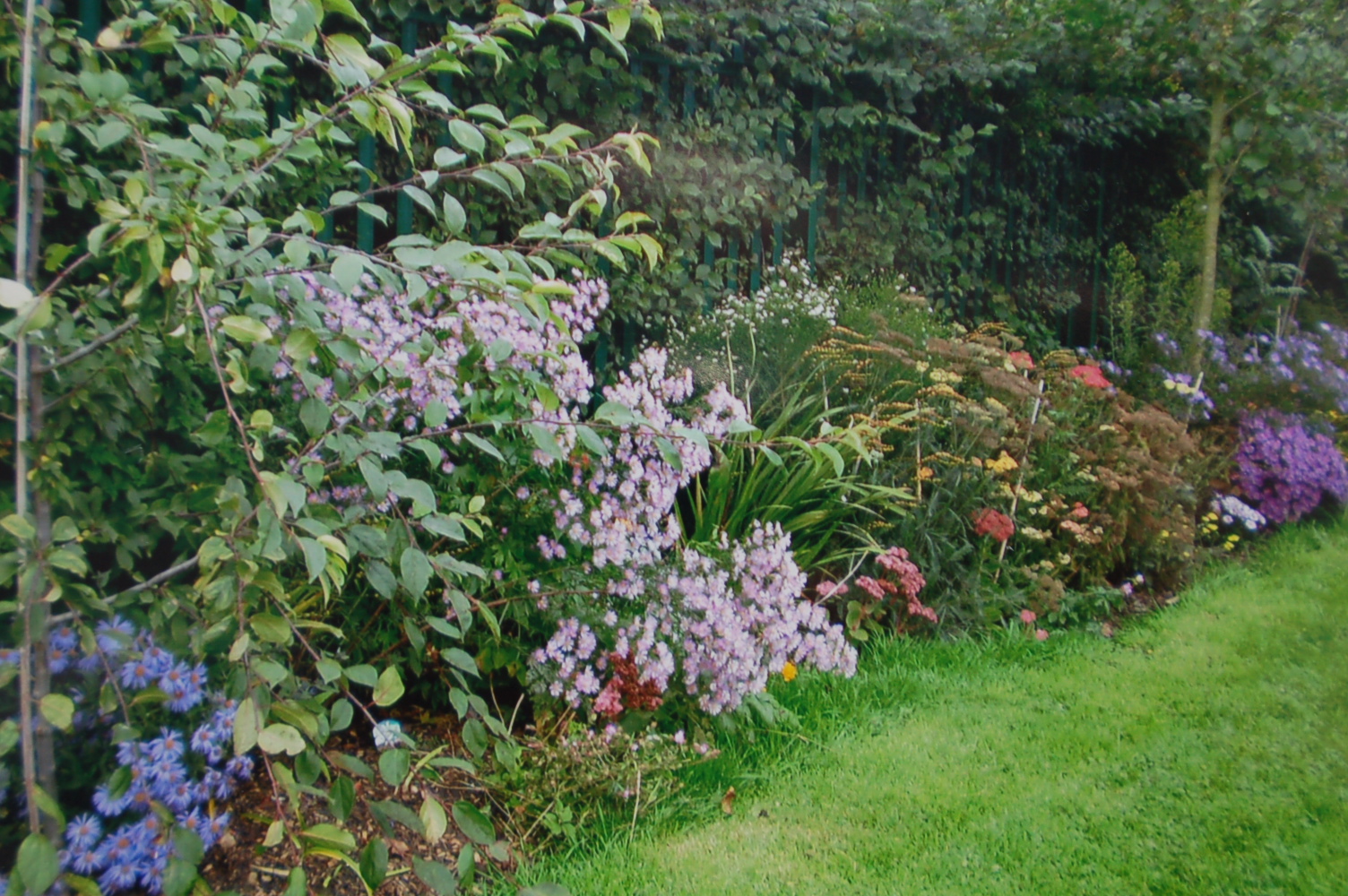
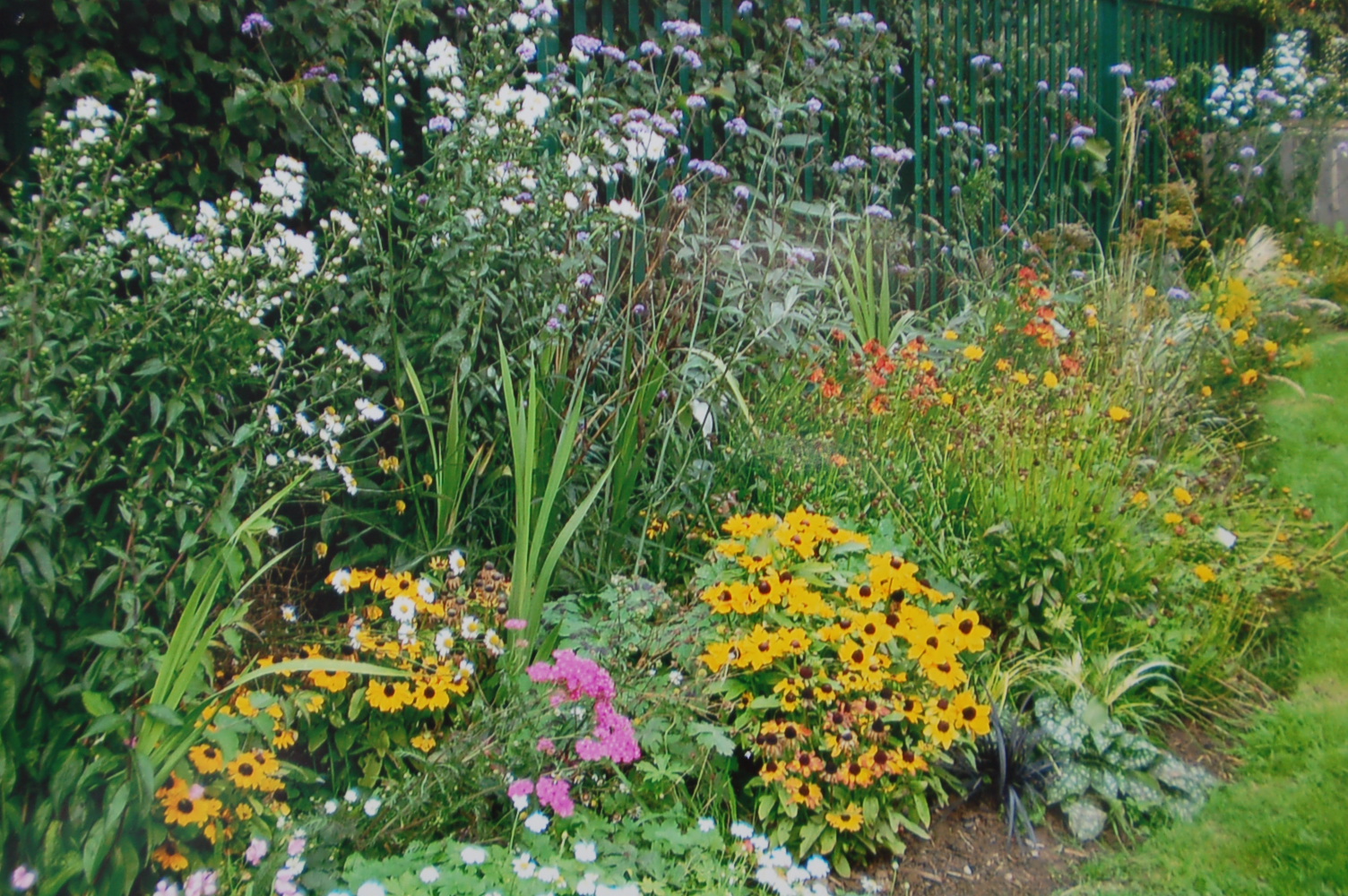
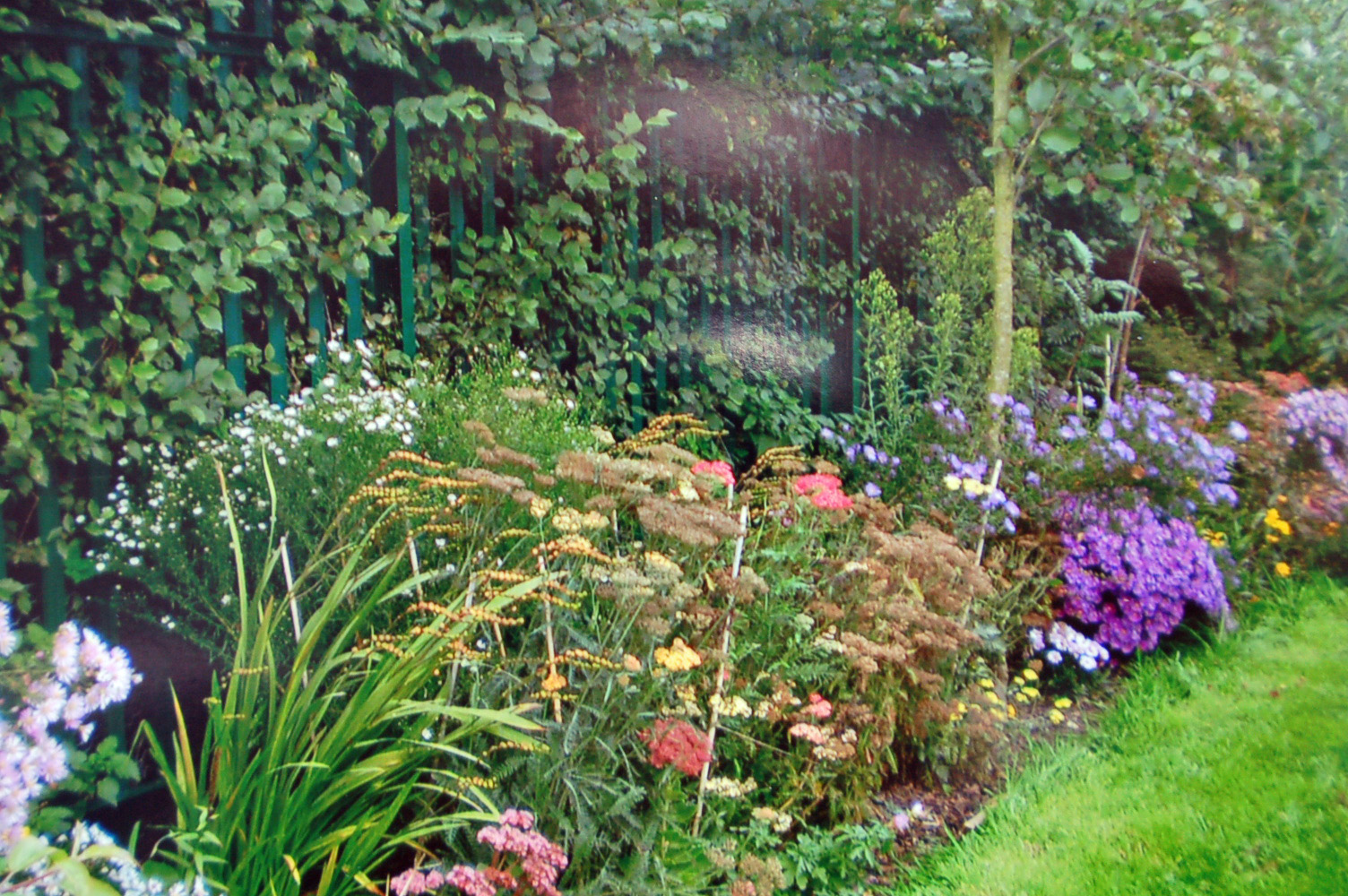
A Wander around our Garden in October

The tenth post in this series of wanders around our garden already! Just two to go! What shall I do for a monthly garden post instead next year? Any ideas for me?

October started off with days of endless heavy rain but after a fortnight it changed to steady drizzle. A bit of sun would be welcome right now.

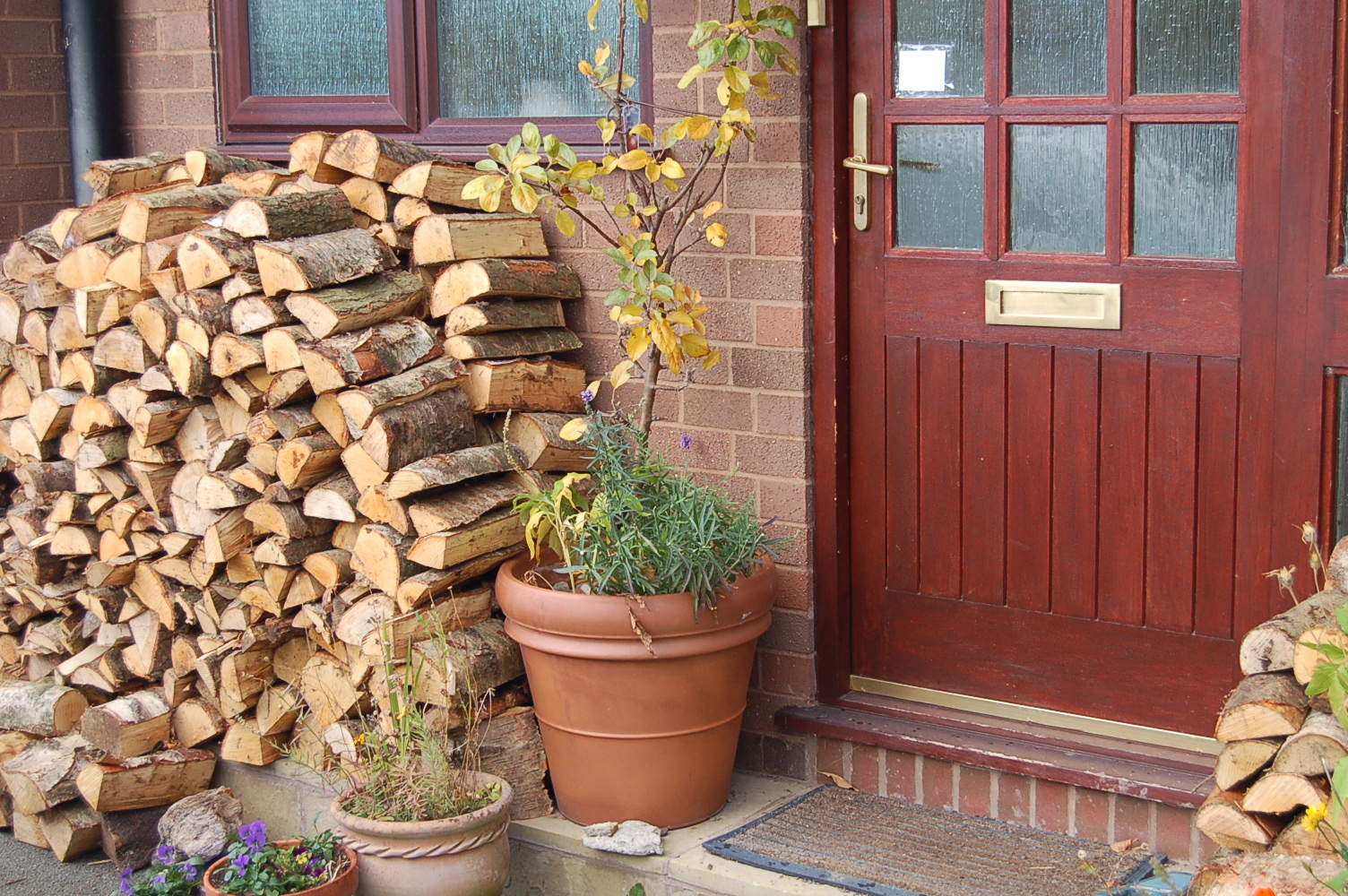
The first frosts have visited us forcing us to bring the Aeoniums, Echeverias and our other tender plants under cover. We shall have to keep them safe in the “bubble wrapped” greenhouse, by giving them virtually no water and removing any dry or damaged foliage and when the temperatures drops below -15 C give them additional snug coverings of fleece and bubble-wrap. Another sign of autumn is the log delivery which was tipped off the back of a truck onto our drive mid-month. We sorted them and stacked them around the front door. The wonderfully evocative woody aroma of oak and birch trees mixes with the sweet scents of the woodland floor. The scents of the season.

We visited the gardens at our favourite nursery yesterday, The Dingle at Welshpool, a superb autumn garden on a sloping hillside leading down to lakes. (Look out for my post in the next week or so) As usual we returned with a few acquisitions – a tiny orange Kniphofia, Cornus canadensis and Clerondendron bungeii.

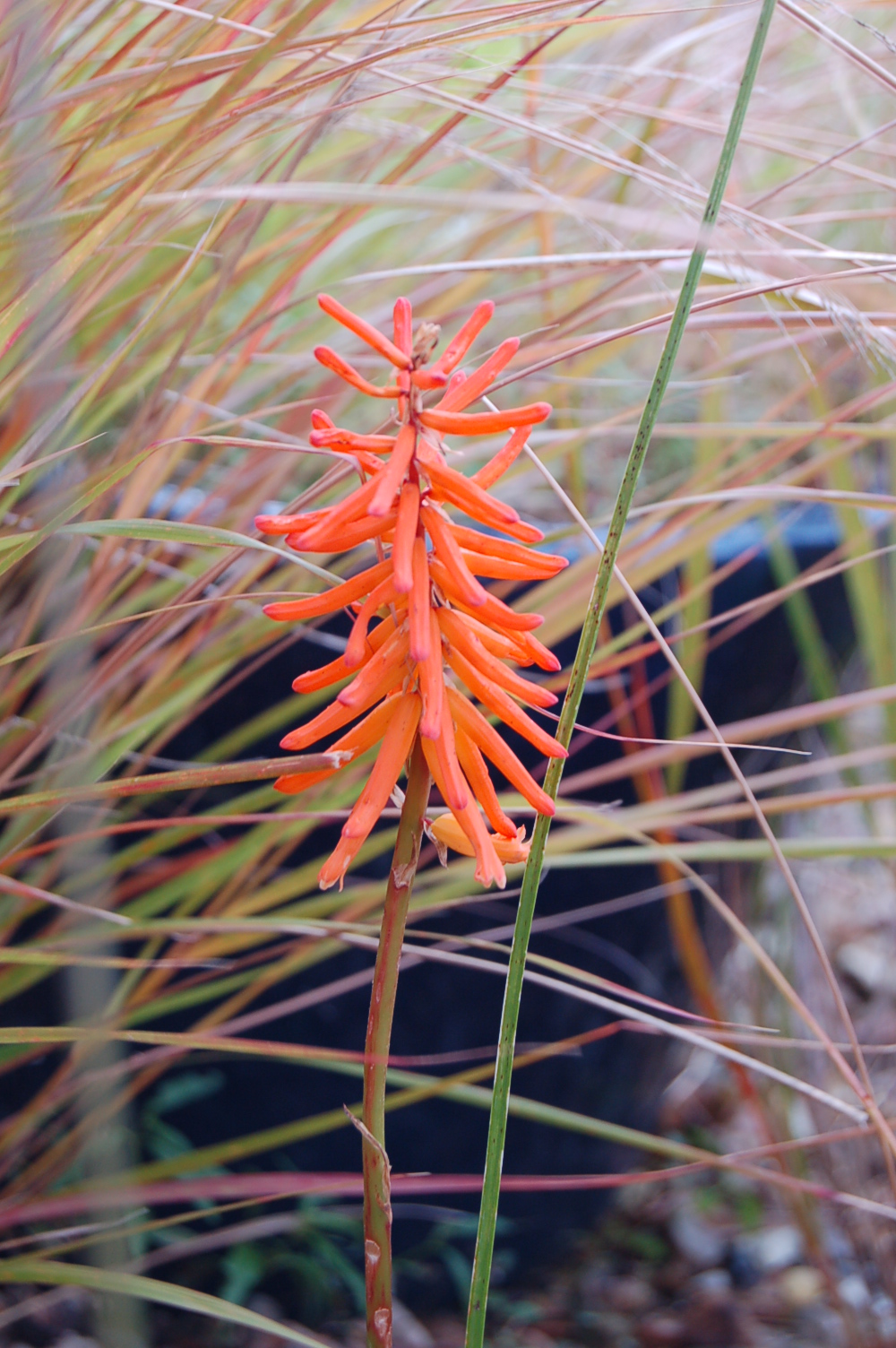
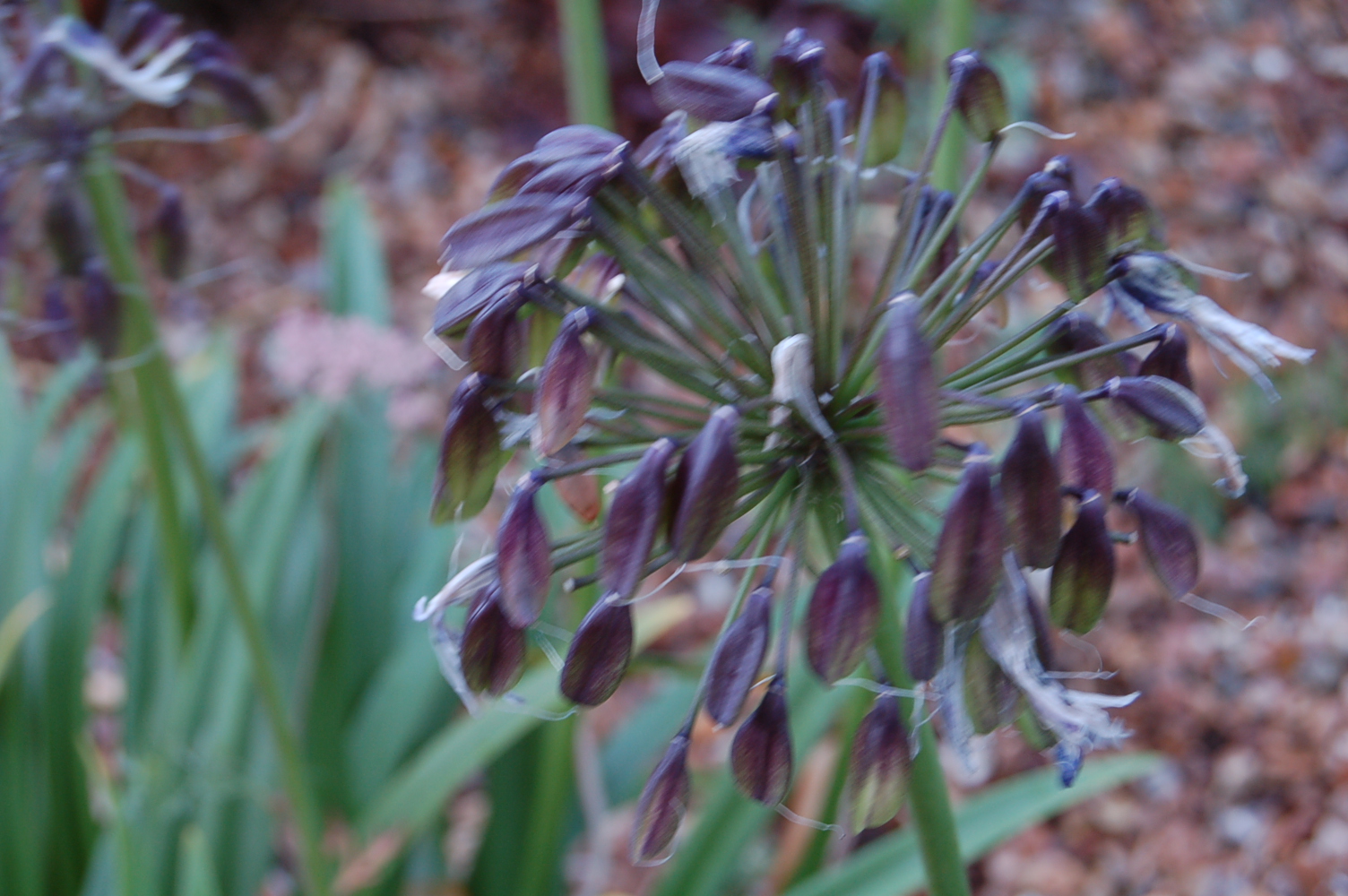
We have planted the Kniphofia with a trio of bronze-leaved grasses and near to our darkest blue Agapanthus. As the “poker” is flowering now, its head of tubular orange flowers glows alongside the Agapanthus’ developing seed heads of blue and pewter.

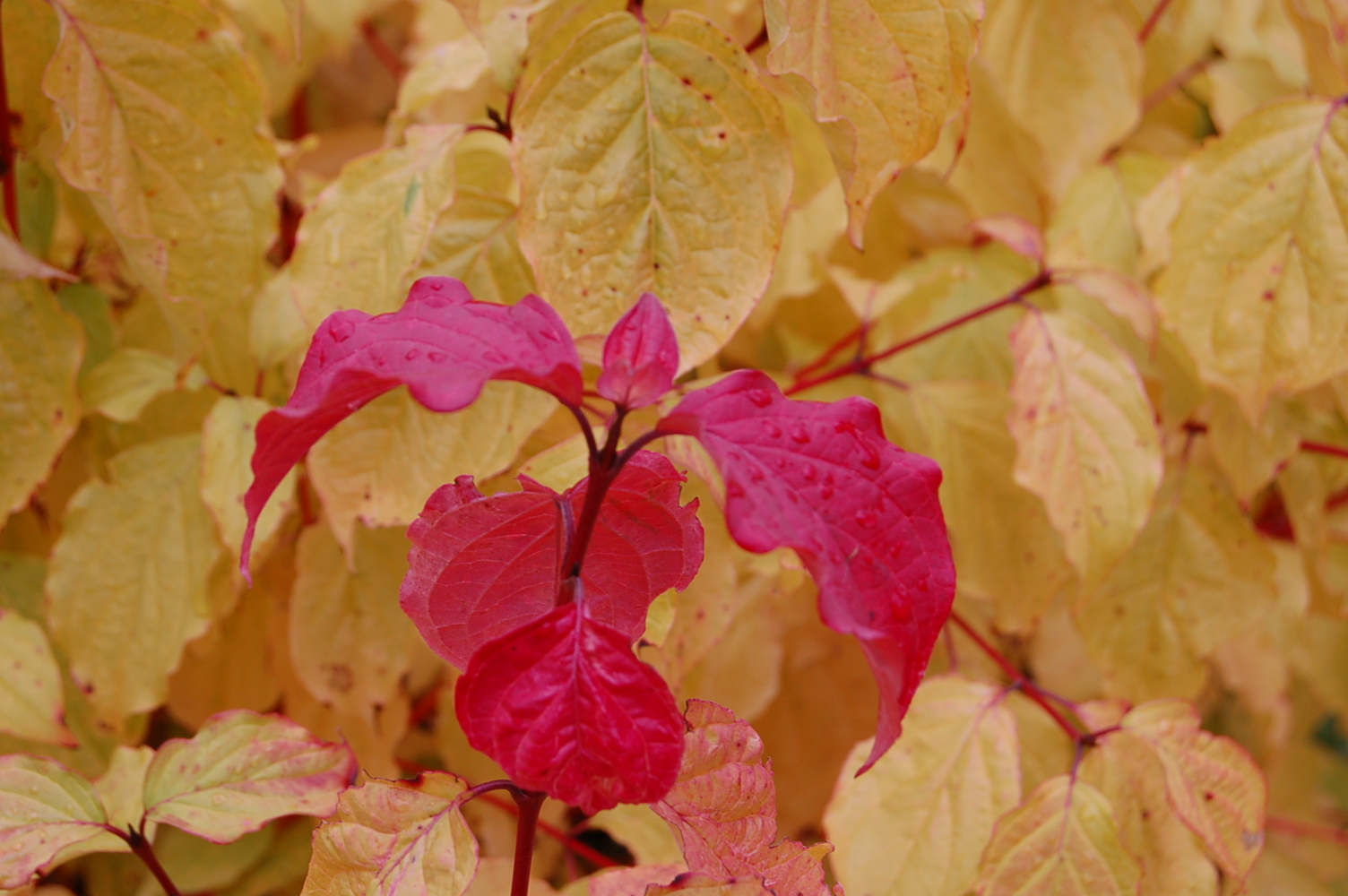
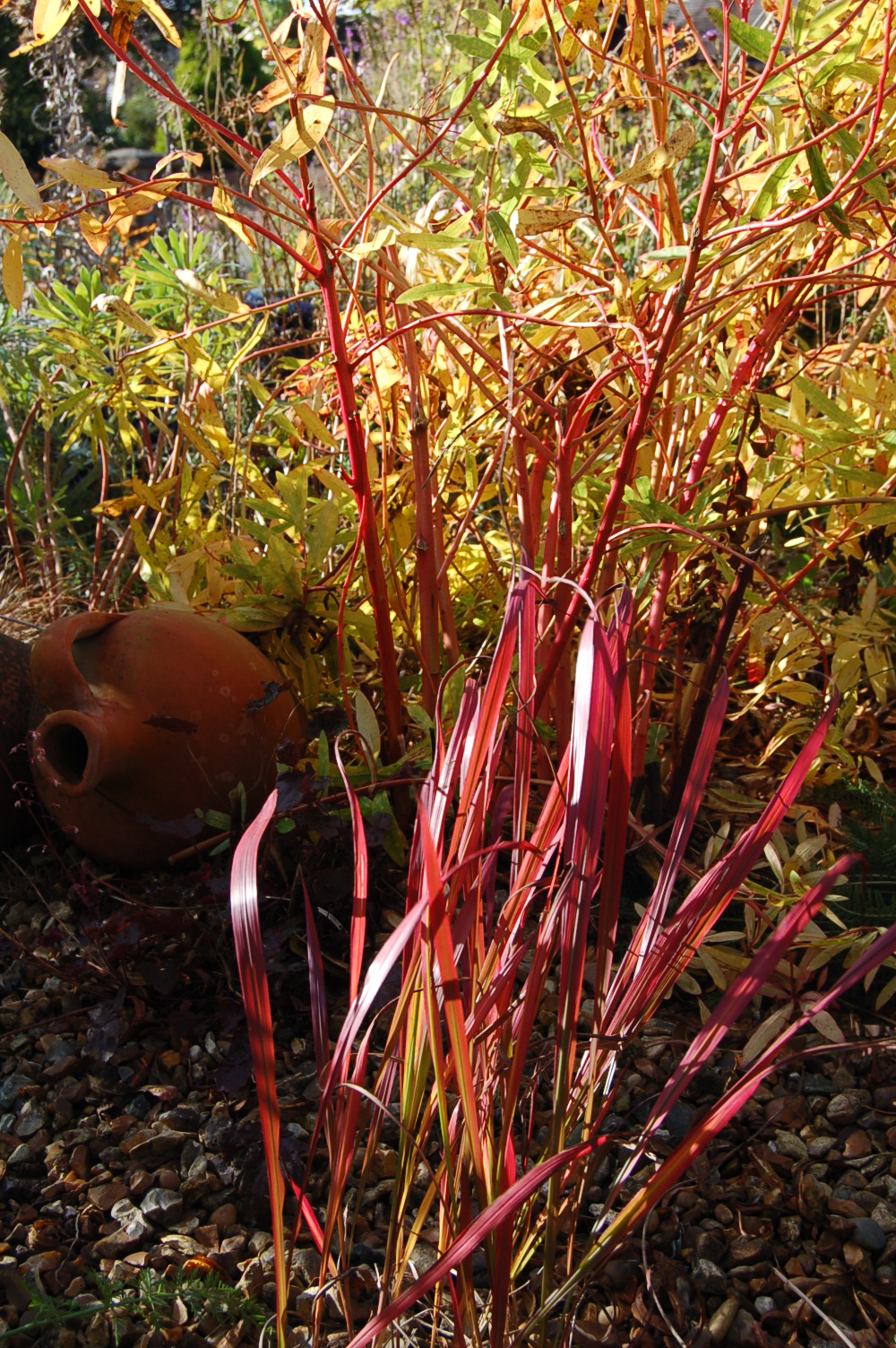
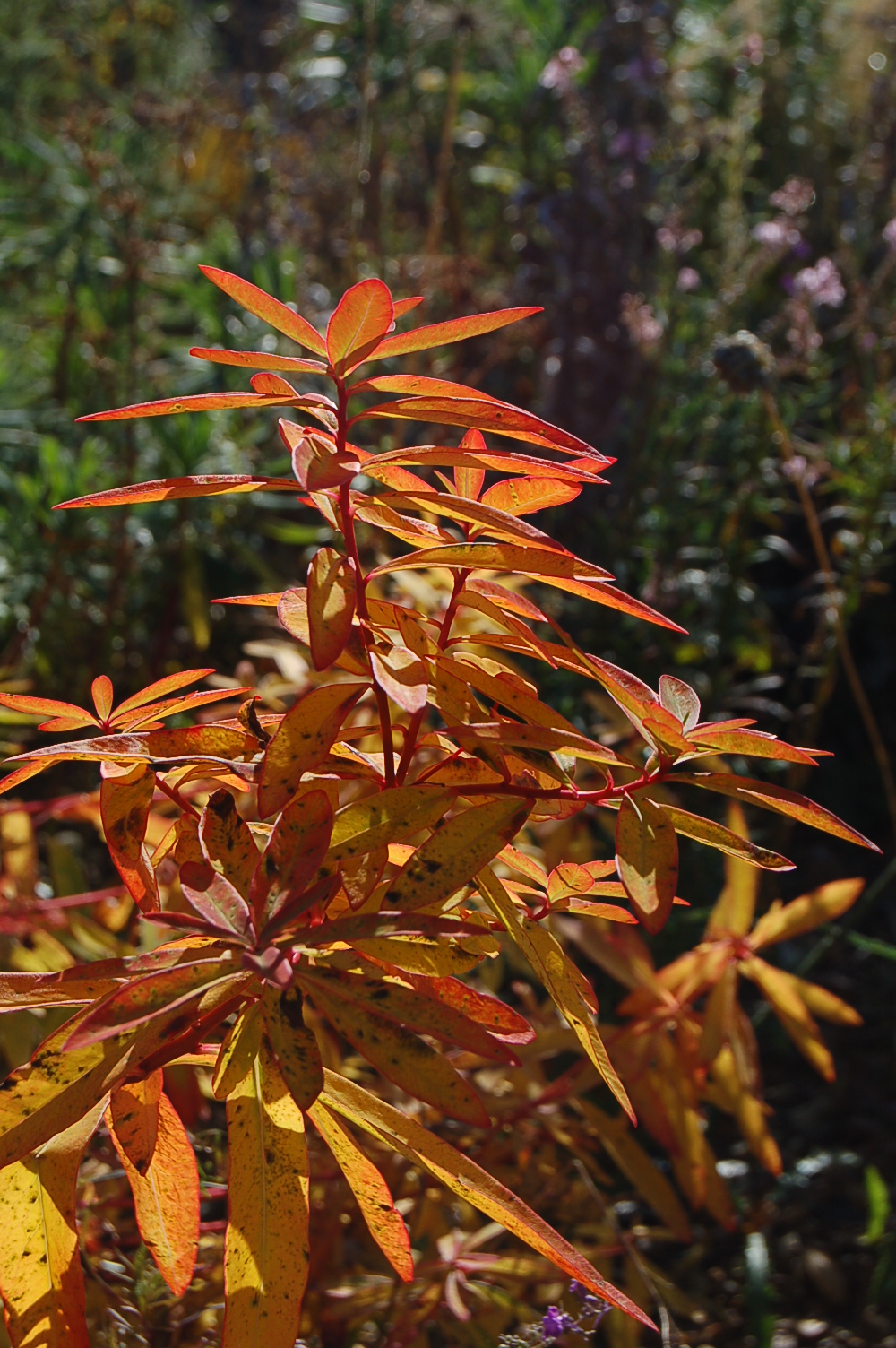
Sometimes autumn hues aren’t just provided by deciduous trees changing the colours of their leaves but by foliage on perennials, grasses and shrubs. Euphorbias are a fine example, as are grasses which have the added bonus of seed heads. Look out for the pic of our Pentstemon Huskers Red which always surprises with its deep red autumn explosions.

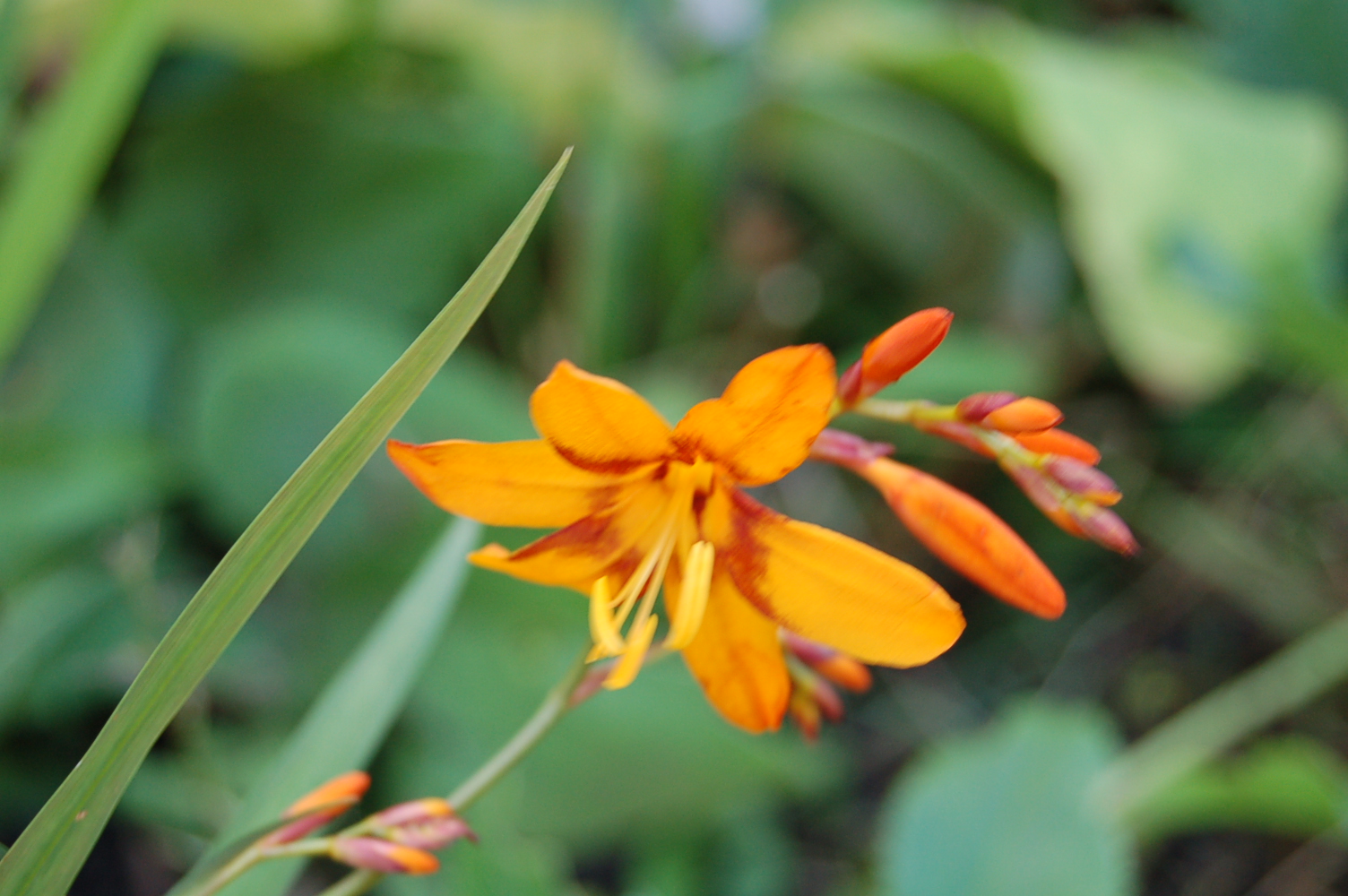
But amongst all this red hot foliage we mustn’t lose sight of the flowers that continue to add colour to the garden. There are now fewer so each one is a precious jewel.

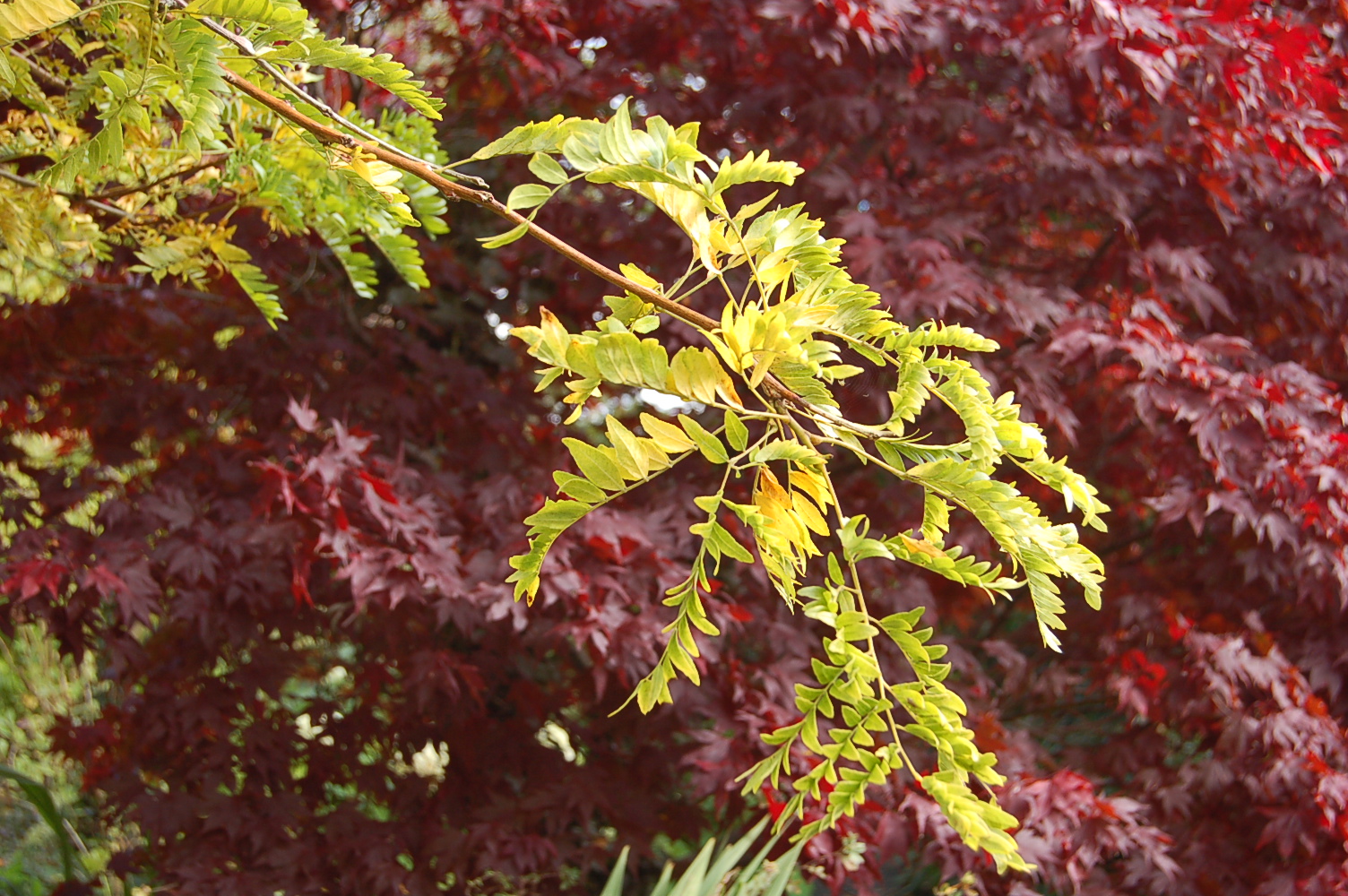
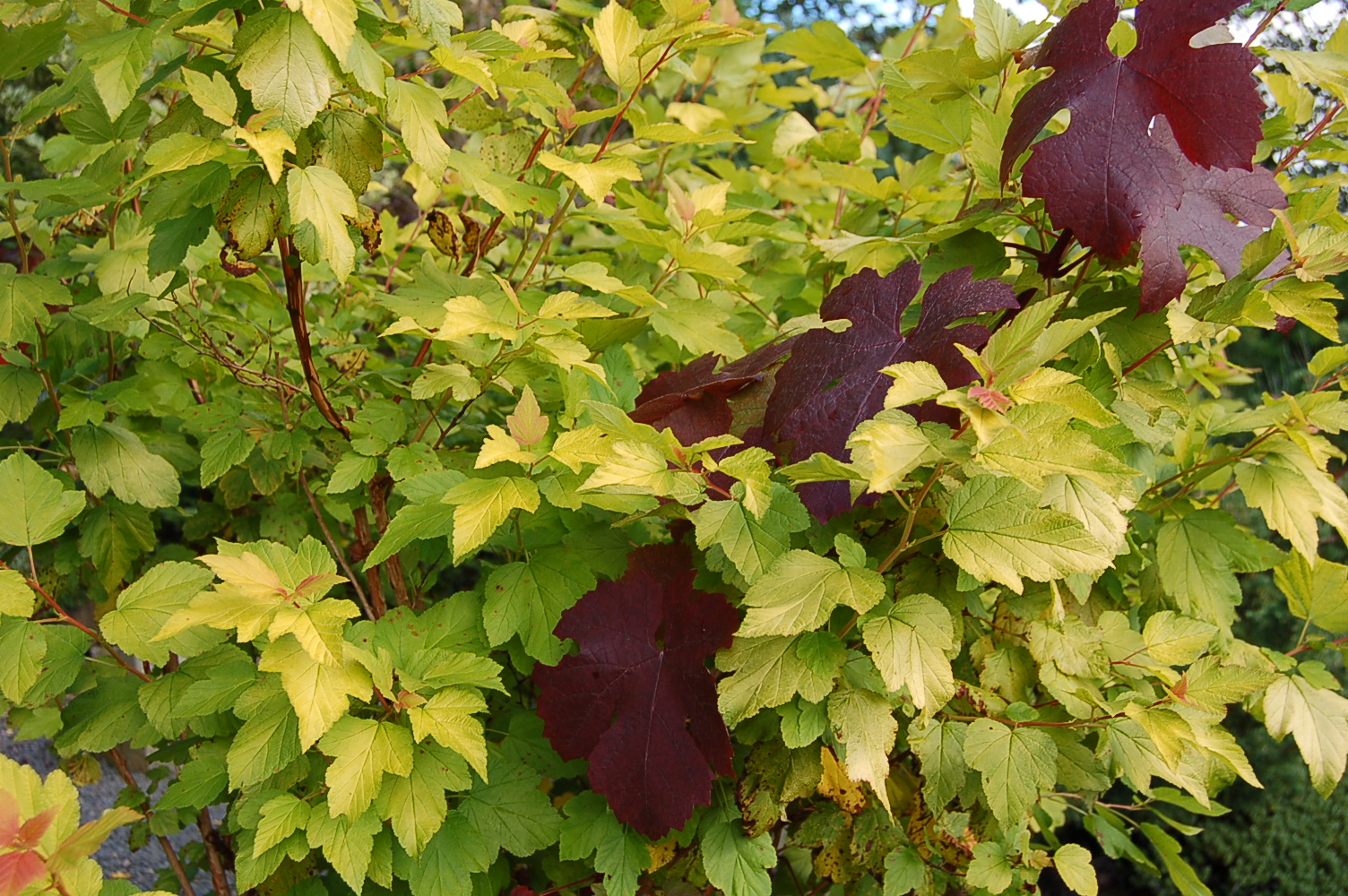
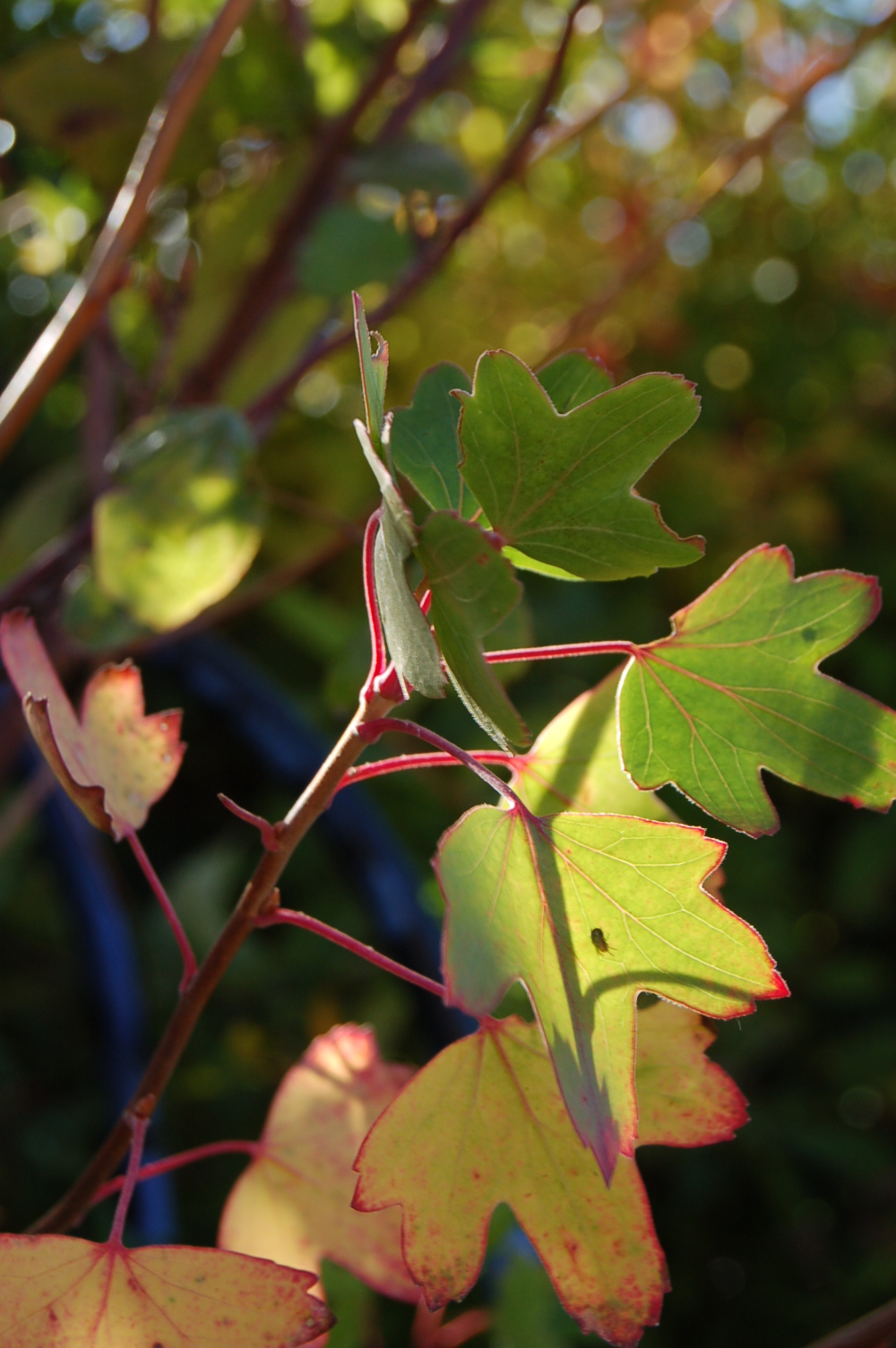
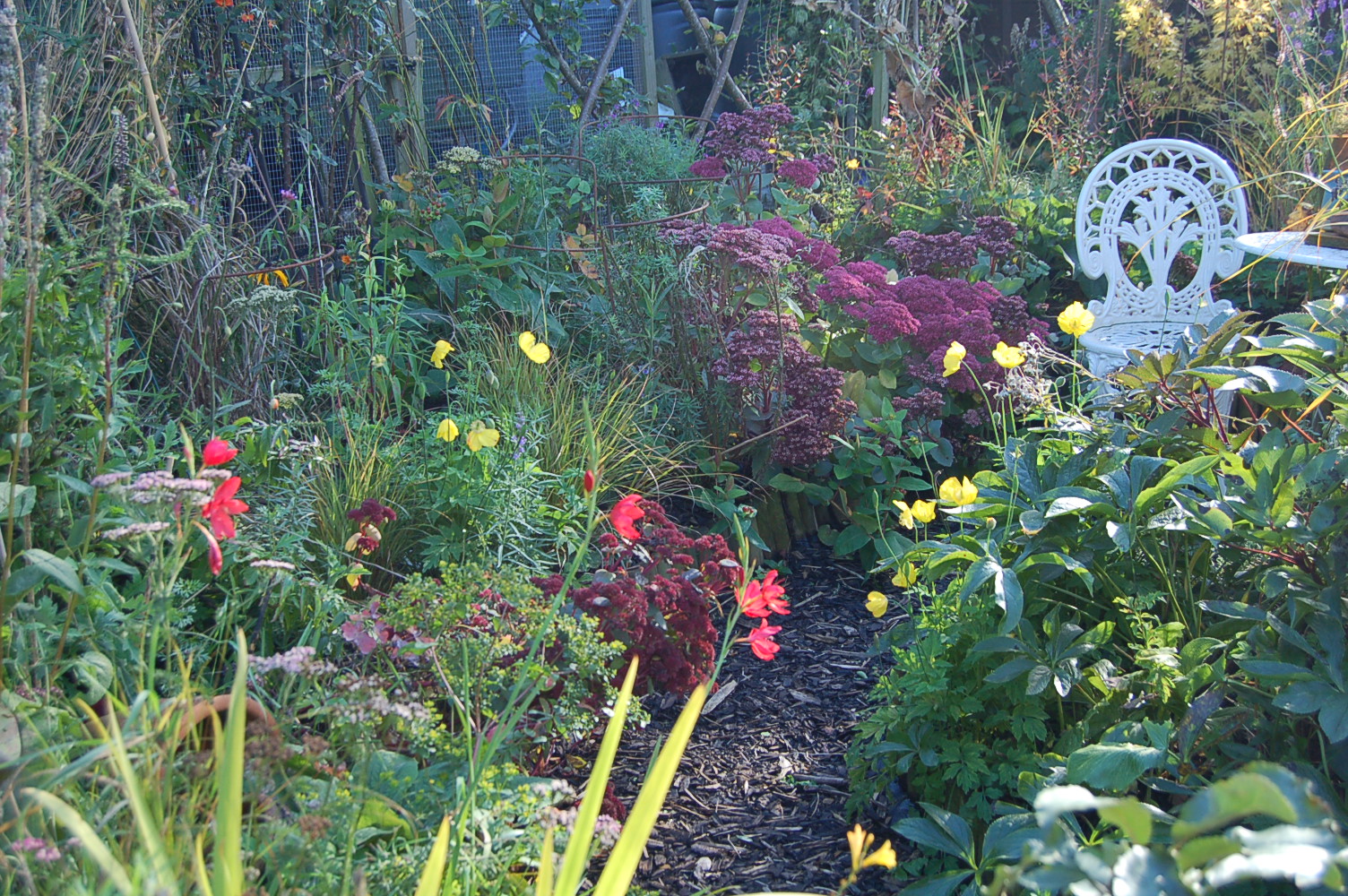
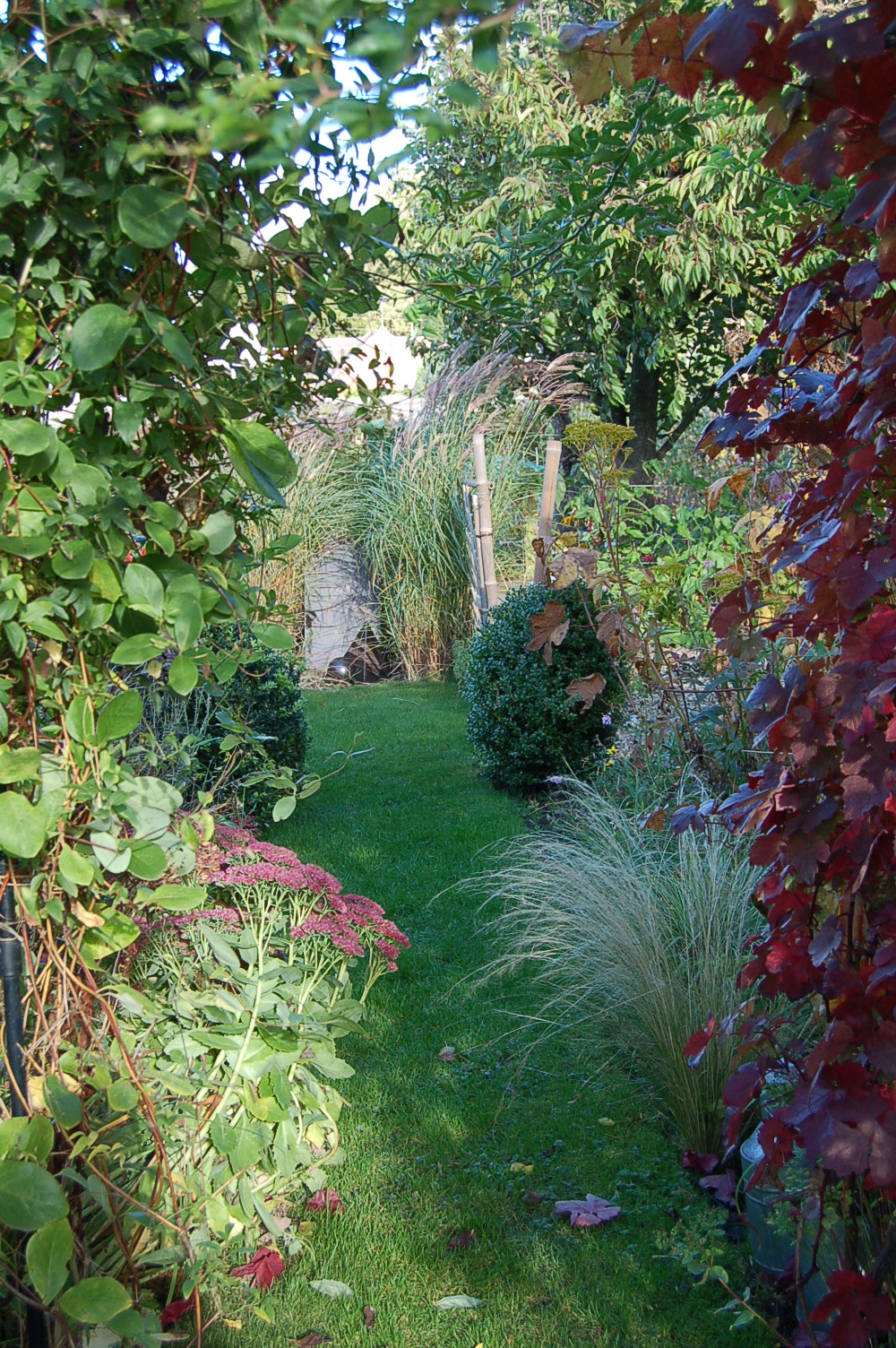
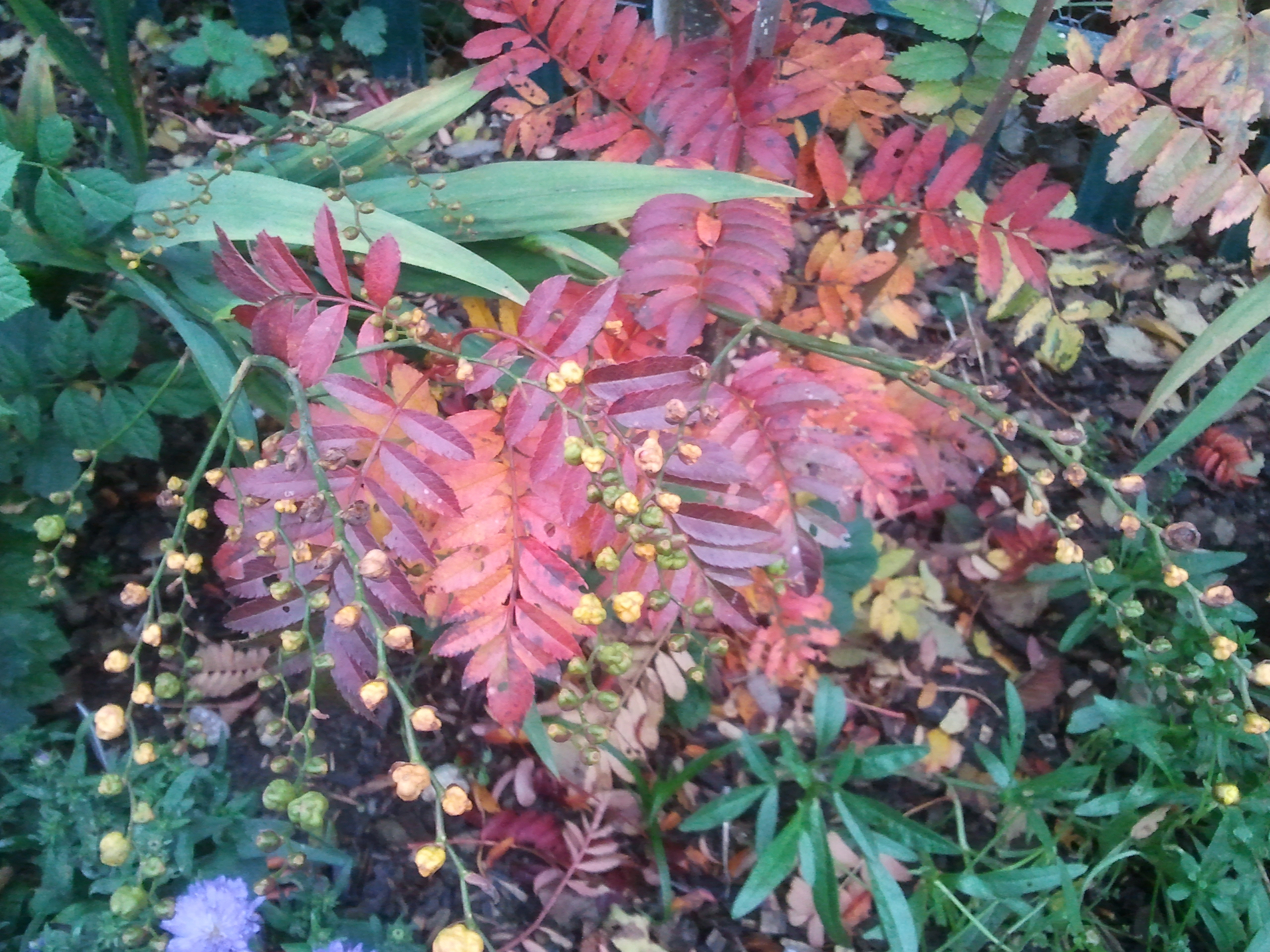
I shall finish off with a few pics of autumn coloured leaves, just what you expect in October! And then take a look at one border and take a walk down just one of our many grass paths.

Categories
allotments autumn community gardening fruit and veg garden photography garden wildlife gardening grow your own hardy perennials Shropshire

A Wander around our Allotments in October

Flooding and its problems have dominated our allotment month. For the third time this year our allotment site has been under water. Rotten potatoes, bark paths washed away, rows of seedlings washed onto other plots and onto pathways and items stored in sheds ruined. This is sadly becoming a regular occurence. We have a meeting with the town council next week so perhaps we can come away with some positive news for the allotment members.

But let’s concentrate on the positives of our lovely site. The people and the plants. This is our friend Sherlie with a monster cabbage!

Phil had never grown apples until four years ago when he asked me to help him set up a row of cordon apples and pears and teach him the necessary skills. Now look at what he has achieved this year!

Our wander with camera in hand took us through the Autumn Garden over to our plot and then across to the Winter Garden via the Spring and Summer Gardens.

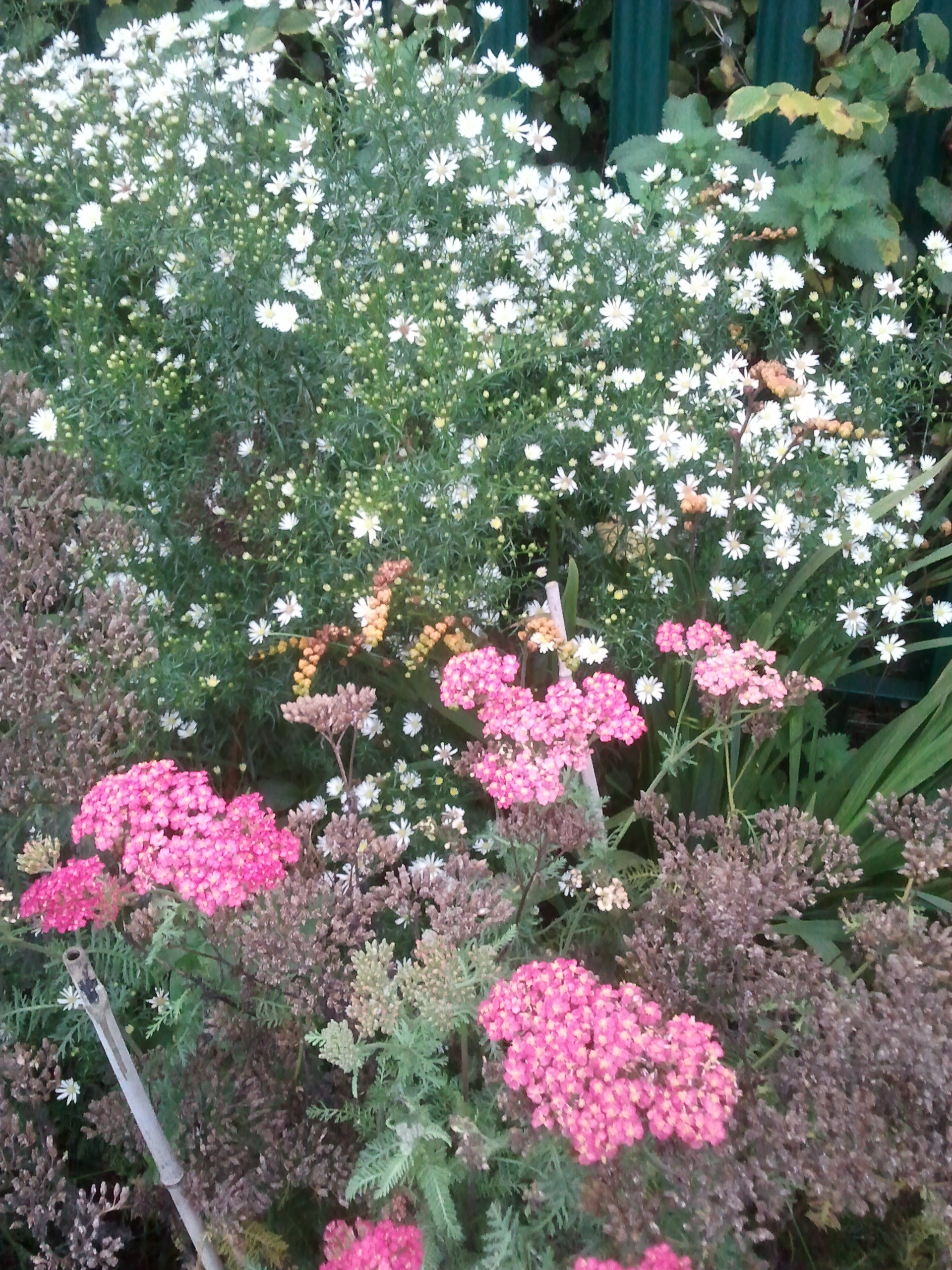
The Autumn Garden, appropriately, is now looking wonderful with late season flowers looking colourful amongst foliage the colour of fire.

Butterflies, bees and hoverflies were flocking to the asters in this garden for the first fortnight this month but as the weather turned colder they rapidly disappeared. Buddlejas flower profusely around the site during the summer attracting beneficial insects and pollinators, but this orange one flowers in the autumn.

We grow a variety of Sorbus trees here and they provide wonderful foils for late flowering perennials.

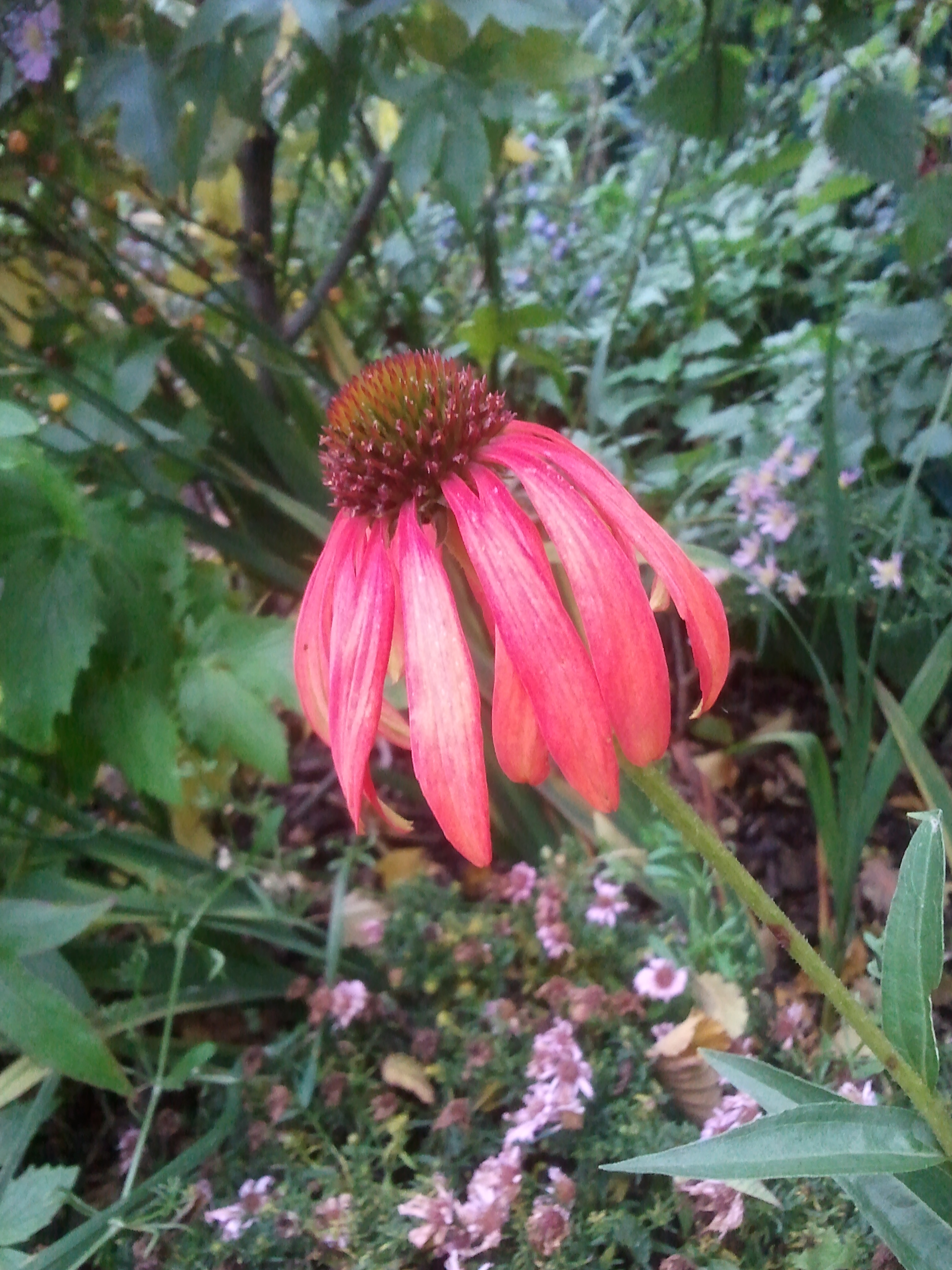
The stars here though have to be the Echinacea.

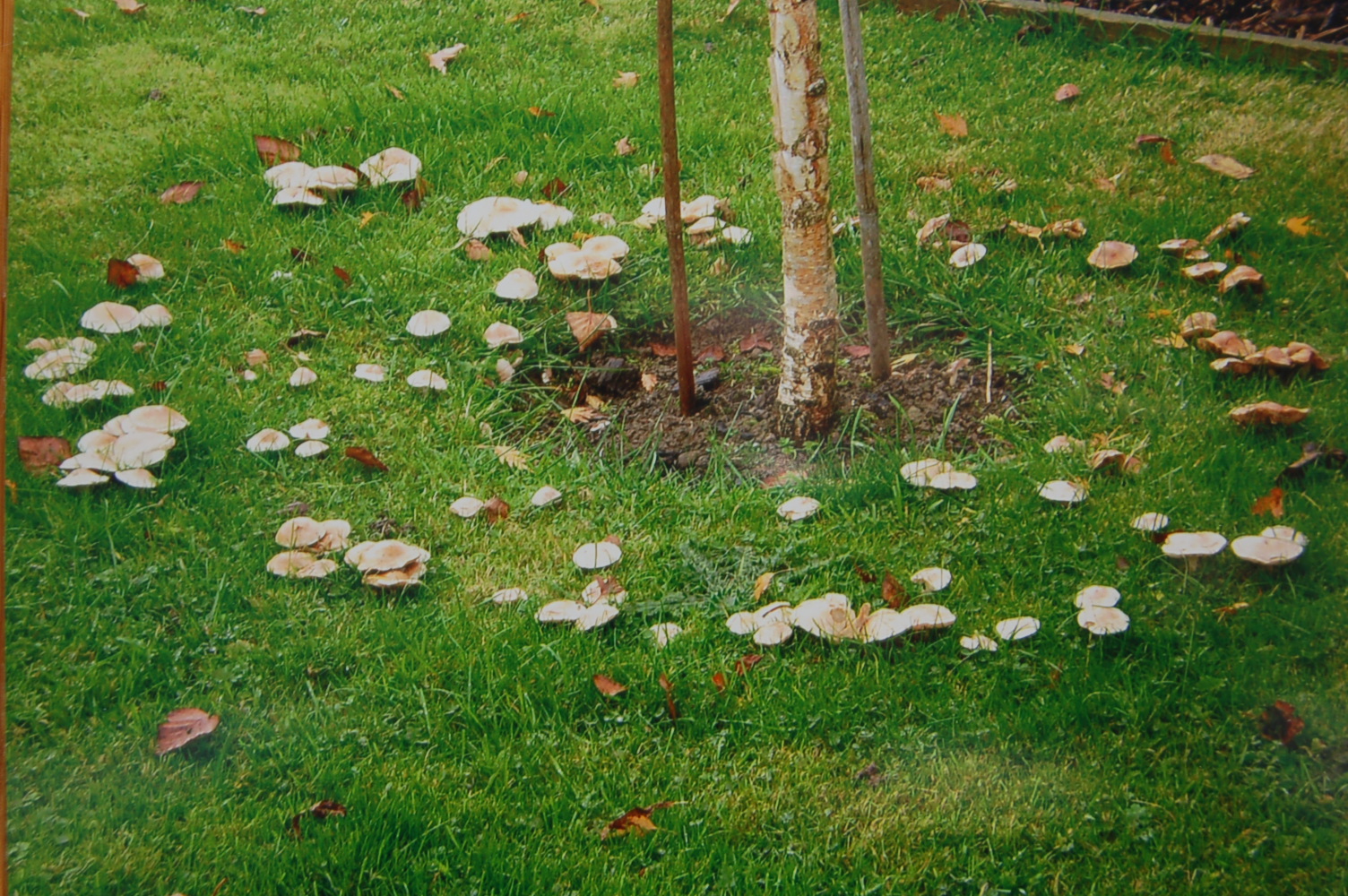
Around the trees in the Birch Grove fairies have been at work. So many plot holders have been taking photos of their handywork.

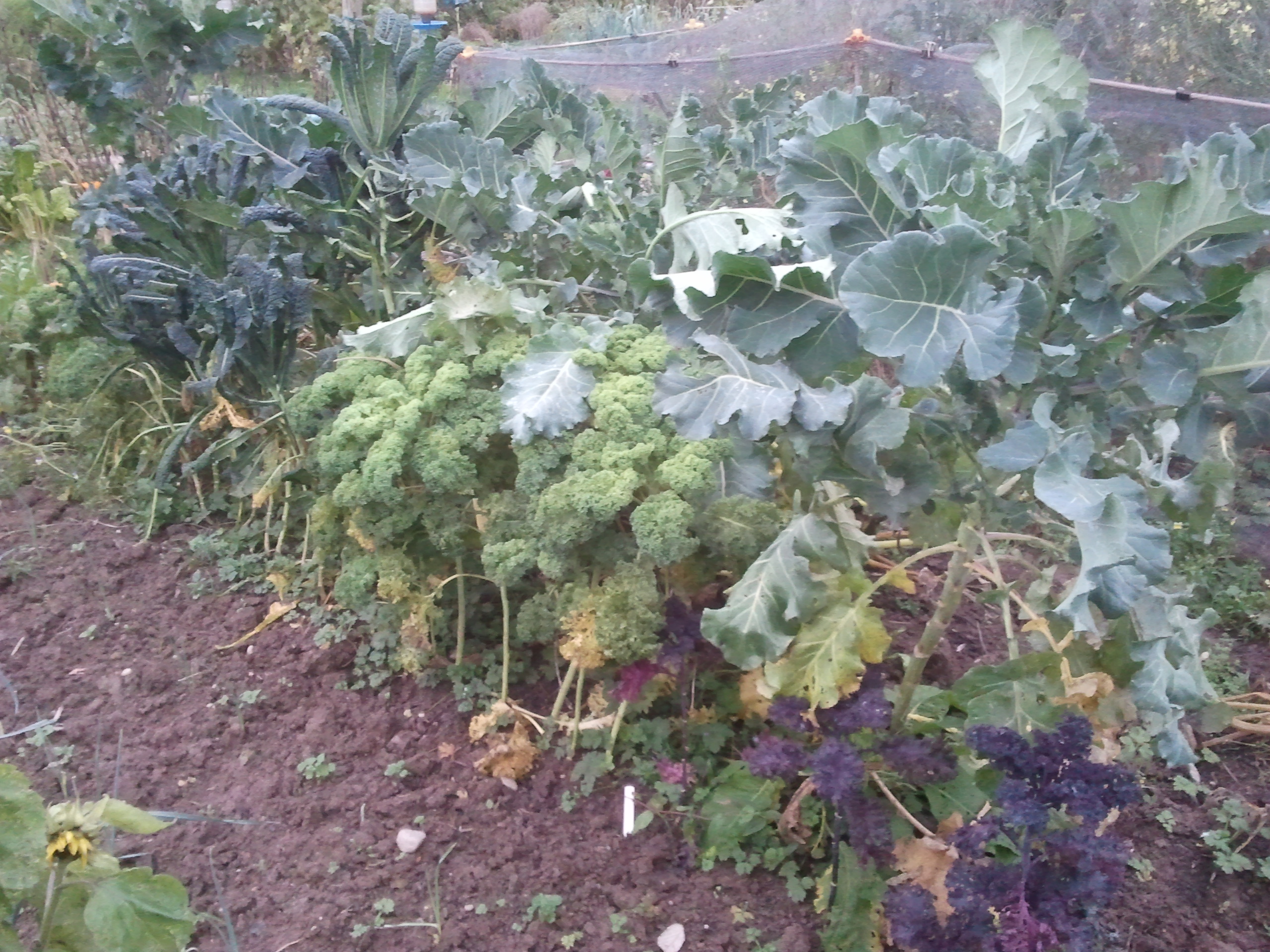
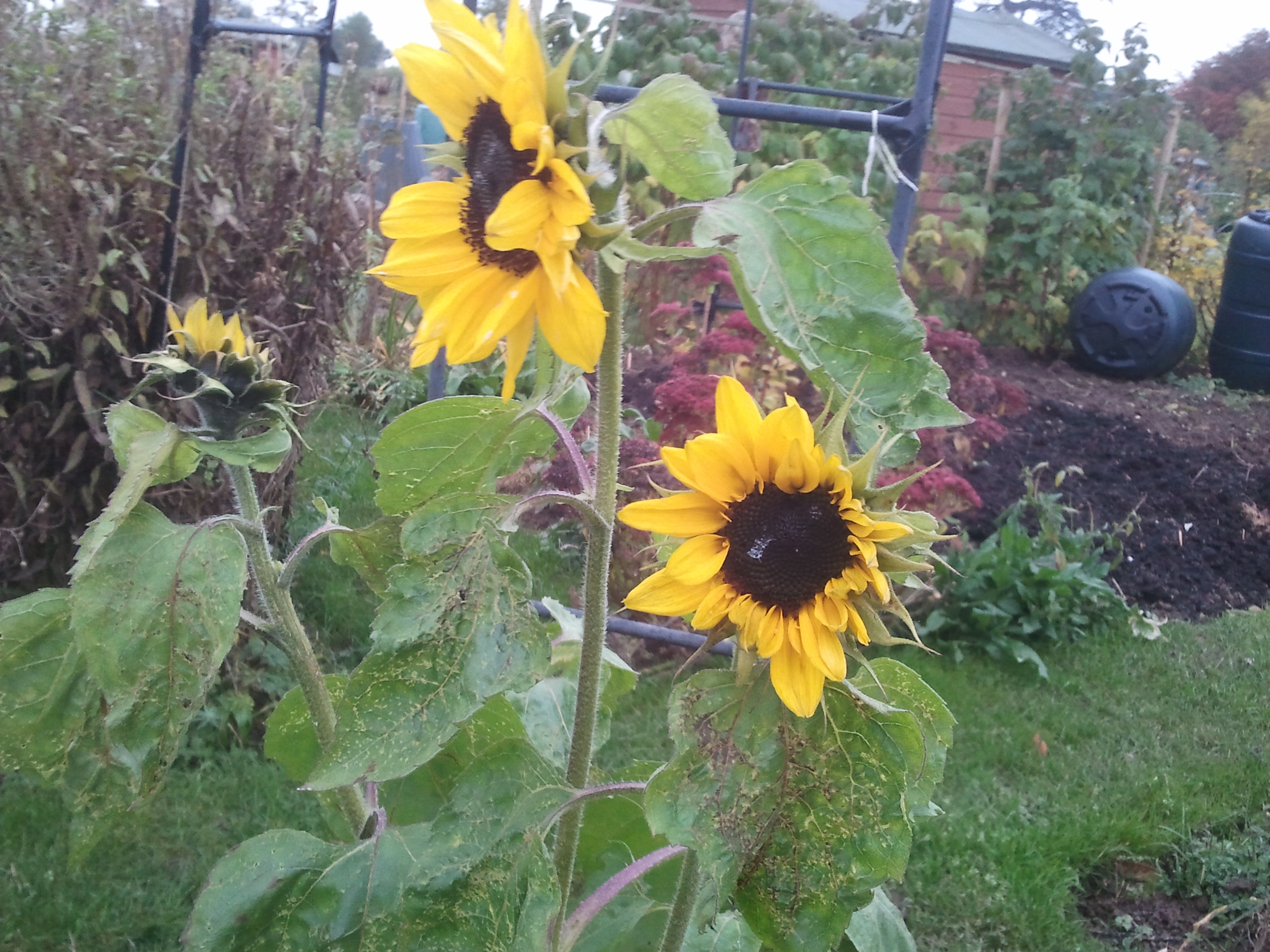
On our own plot we are still picking autumn raspberries. The three varieties of kale we are growing are looking quite colourful as is a sole sunflower – the only sun to be seen up on the lotties at the moment. The day these pics were taken was dark and overcast.

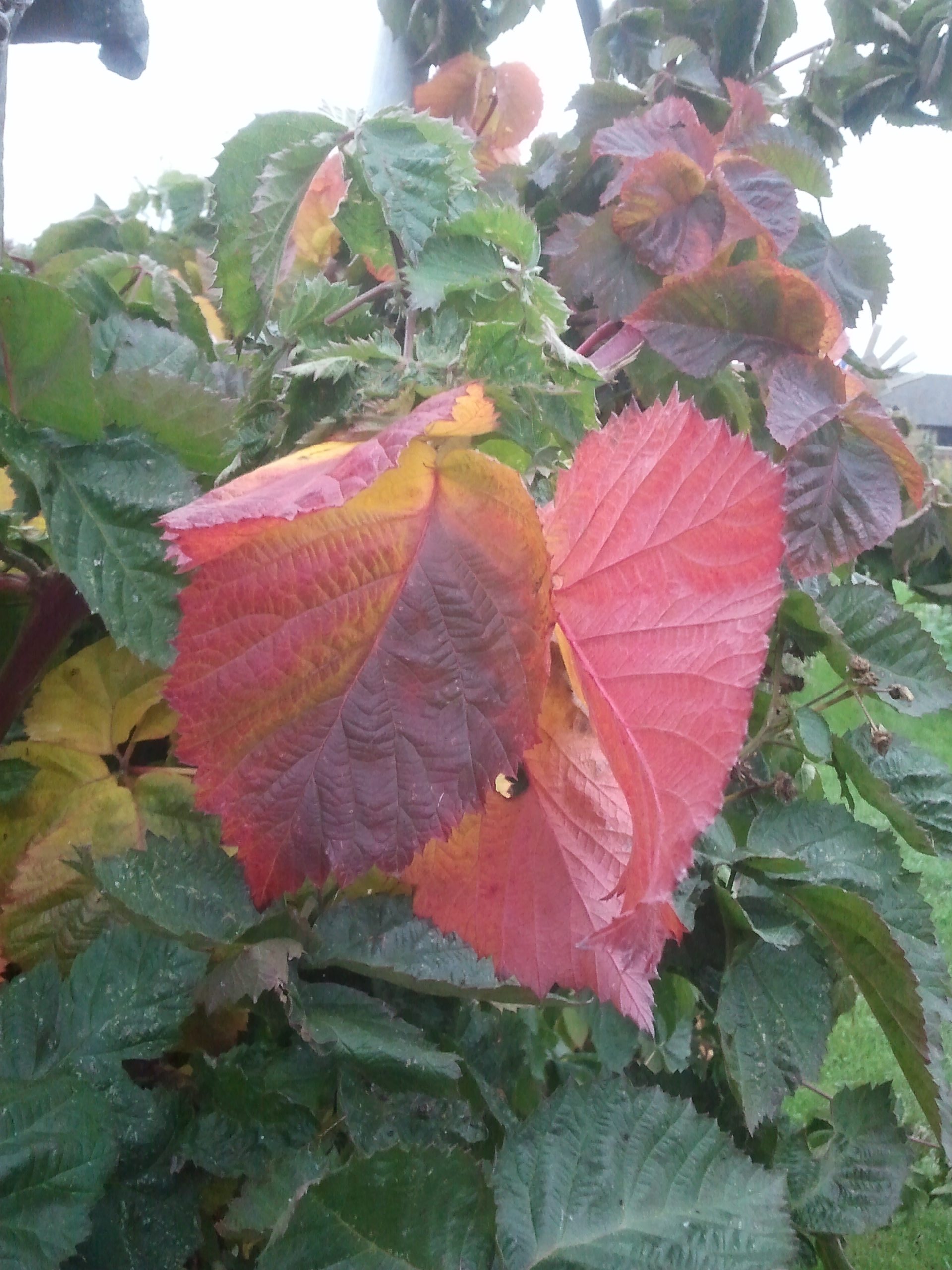
A little bit of extra colour can be found in the leaves of our blackberry bramble.

The crops that we will be harvesting during the winter and early spring are coming along nicely. Leeks, parsnips, carrots and celeriac.

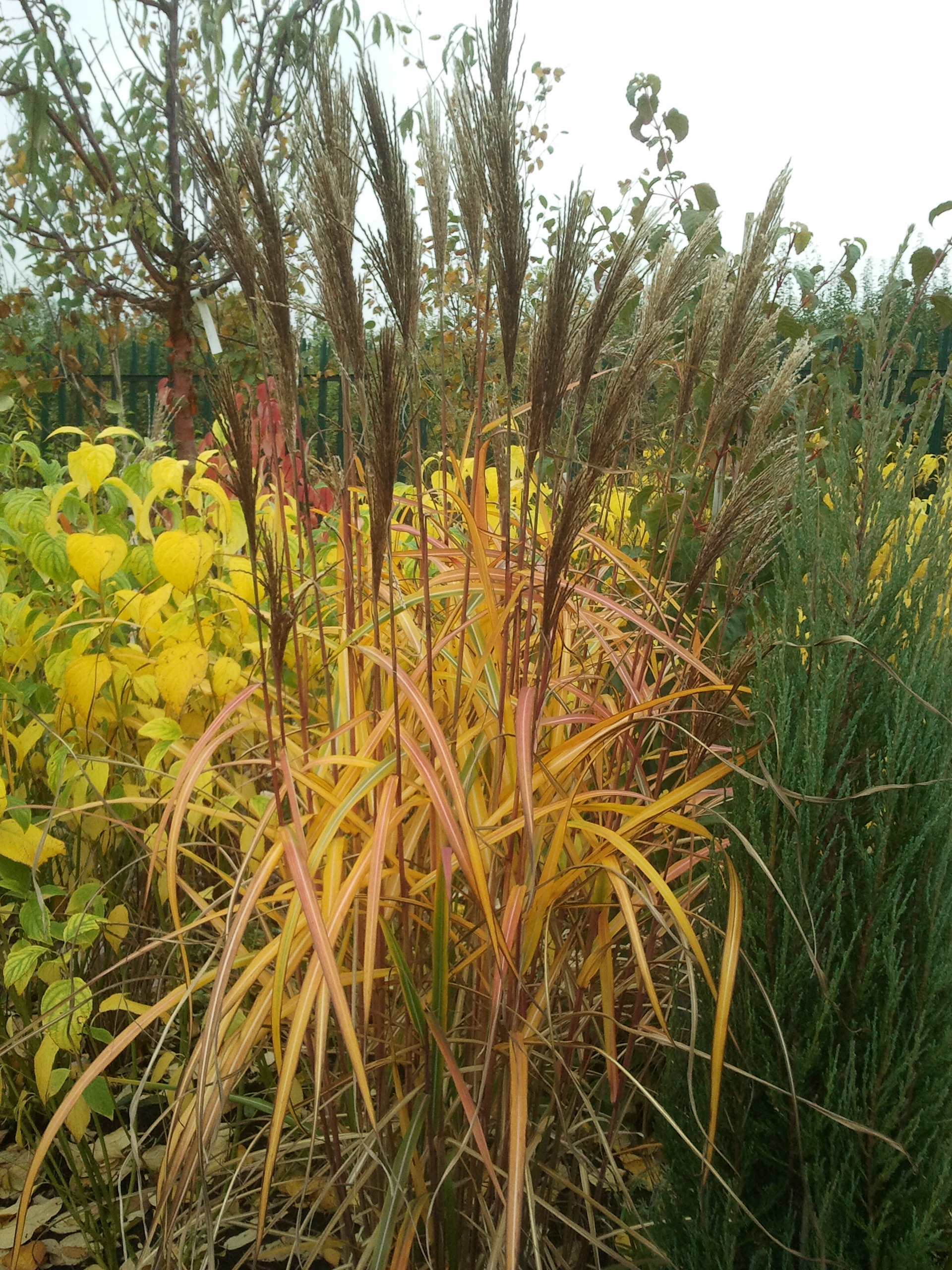
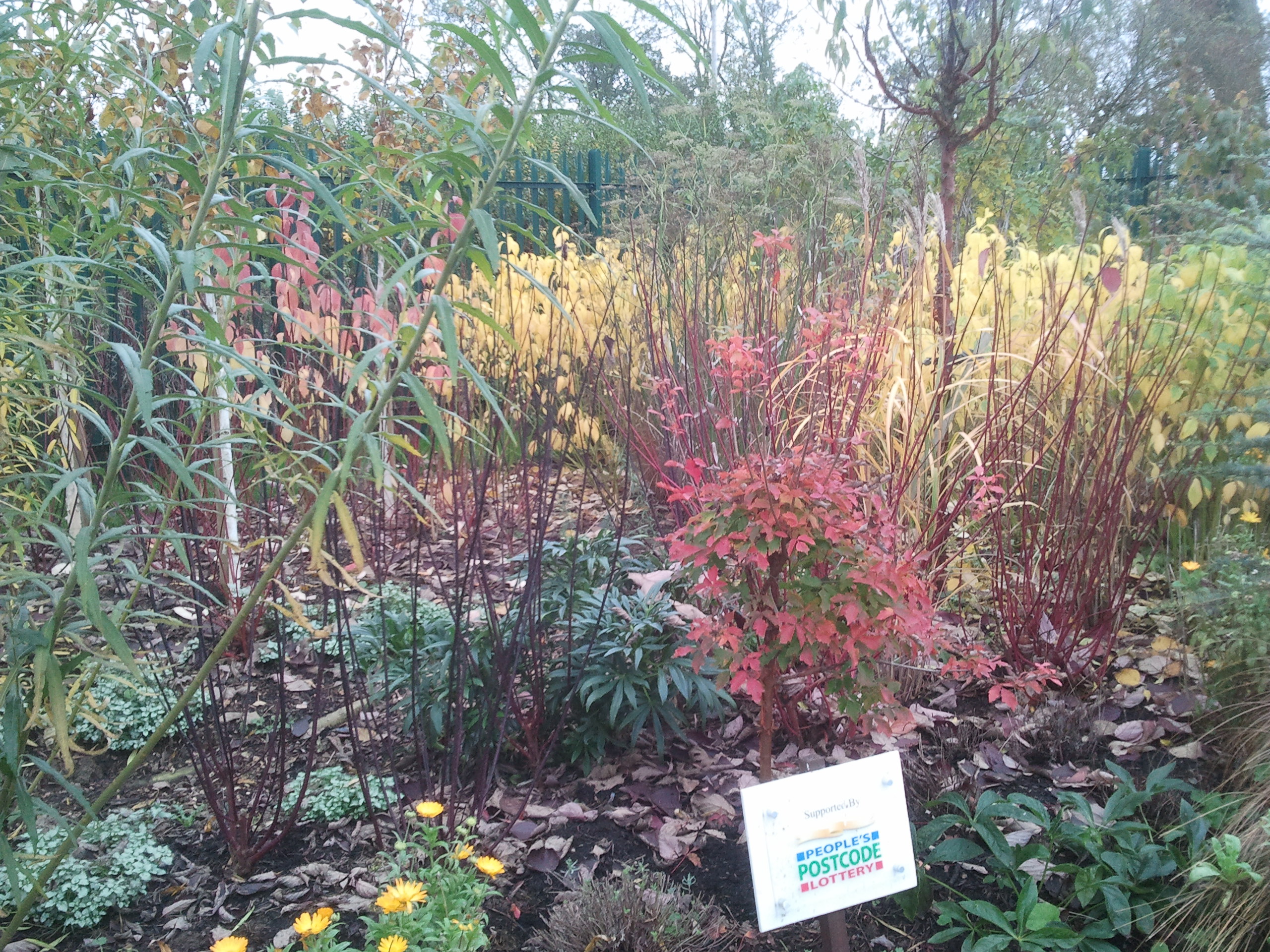
The Winter Garden is an oasis of brightness with most of the colours coming from foliage.

I shall finish my October wander with some great news. Three Bowbrook Allotment Community gardeners were invited to the Mayor’s Award Ceremony earlier in the month. Dave, on the left, received his certificate and cup for the Best Front Garden in Shrewsbury and Sue and Paul collected their award for Best Half Allotment in Shrewsbury. Well done to them!

This Veggie Life

A Vegetarian | Nature Lifestyle Blog

Rambling in the Garden

.....and nurturing my soul

The Arch City Gardener

Journeys In St. Louis Gardening and Beyond

Garden Dreaming at Châtillon

Consult the genius of the place

Storyshucker

A blog full of humorous and poignant observations.

gardeninacity

Notes from a wildlife-friendly cottage garden

PlayGroundology

...an emerging social science

The Official Blog of British Wildlife

'The most important and informative publication on wildlife of our times' - The Independent. This blog is a member of The UK & Ireland Natural History Bloggers group: www.uknhb.blogspot.com

iGrowHort

Inspire - Cultivate - Grow Native Plants - Restore Landscapes

Bishops Meadow Trust

To create and protect a semi-natural wild space for the people of Farnham to enjoy and experience an array of British wildlife in our town

Gardening with Children

The www.gardeningwithchildren.co.uk Blog

UKbirdingtimeline

birding through the seasons, why birds matter and how to conserve them

NATURE WALKER

with a camera in hand

Jardin

Transform your outdoor space

Eva's space

My allotment, cooking and other interests

Old School Garden

my gardening life through the year

LEANNE COLE

Trying to live a creative life

fromacountrycottage

trying to live as lightly as possible on our beautiful planet

Good Life Gardening

Nature lovers from Leicester living the good life.

mybeautfulthings

Finding the beautiful in the everyday

mawsonmichelle

Michelle's Allotment

In and Out of My Garden

thoughts from and about my garden

Greenhousing

Big plans for a small garden

The Scottish Country Garden

A Walled Country Garden in South East Scotland

The Fruity Chicken

Life at the fruity chicken

willowarchway

Off grid living. Self sufficient. "PERMAGANICS RULE".

St Anns Allotments

Nottingham's Grade 2* Listed Allotments and Community Orchard

Manifest Joy Harvests

a journey in suburban vegetable gardening

Allotmental

The madness of growing your own

Penny's Garden: a harvest beyond my front door

A novel approach to vegetable gardening

arignagardener

Sustainable living in the Irish countryside.

NewEnglandGardenAndThread

Master Gardener, amateur photographer, quilter, NH native, and sometimes SC snowbird

dianajhale

Recent work and work in progress and anything else that interests me

planthoarder

a chaotic cottage gardener

Lens and Pens by Sally

a weekly blog that creates a personal philosophy through photographs and words

Dewdrops and Sunshine

Stories from a sassy and classy Southern farmbelle.

The Pyjama Gardener

Simple Organic Gardening & Seasonal Living

gettin' fresh!

turning dirt into dinner

JOY...

today the world is created anew

Garden Birds

Notes from a Devon garden

ShootAbout

Life Through The Lens

Adapting Pixels

A photography blog showcasing the best photography pictures and videos on the internet

Wildlifegardening's Blog

Just another WordPress.com site

naturestimeline

personal observations from the natural world as the search continues for a new approach to conservation.

LATEBLOOMERBUDS

The Wonders of Life through my Eyes, my Heart, my Soul