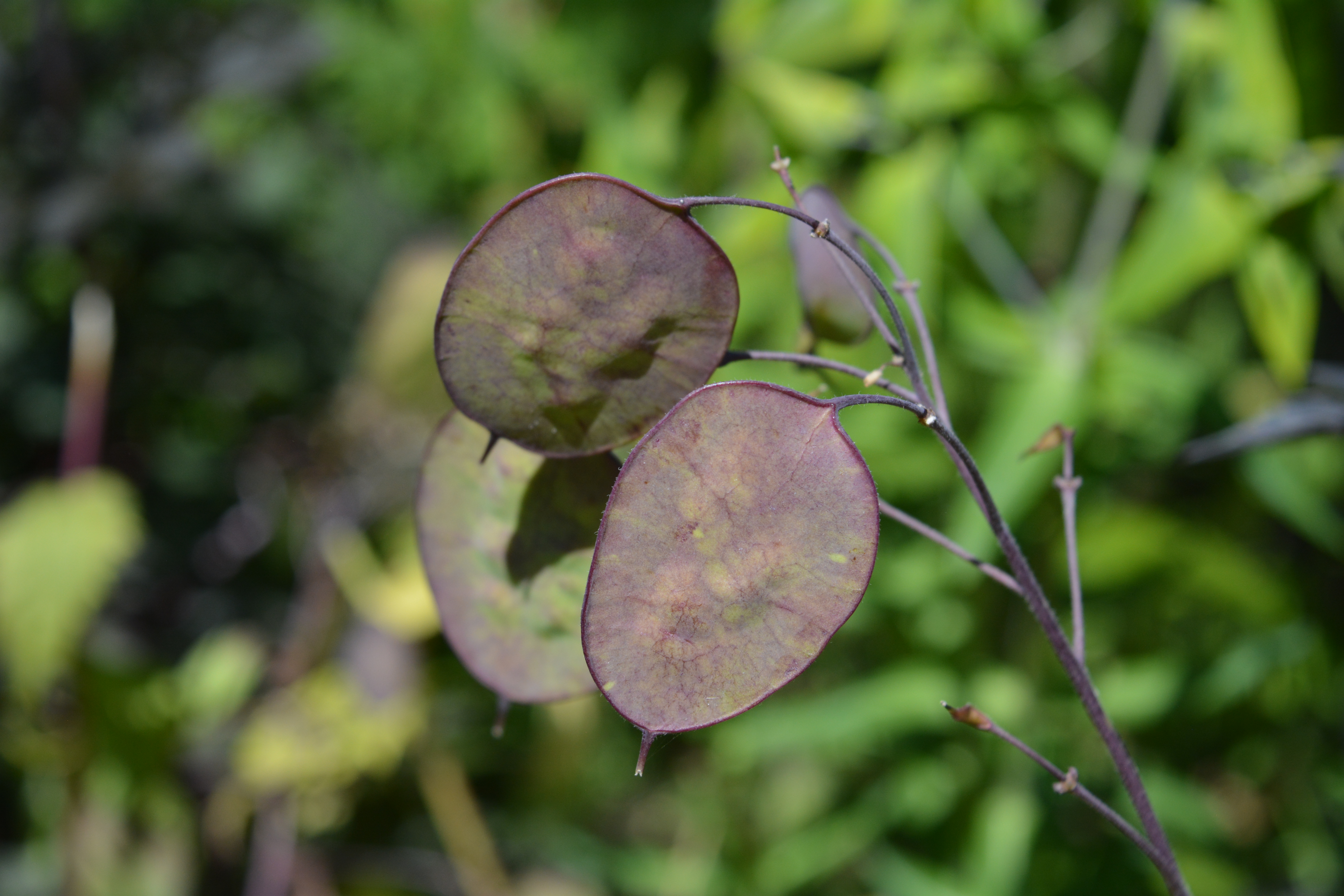
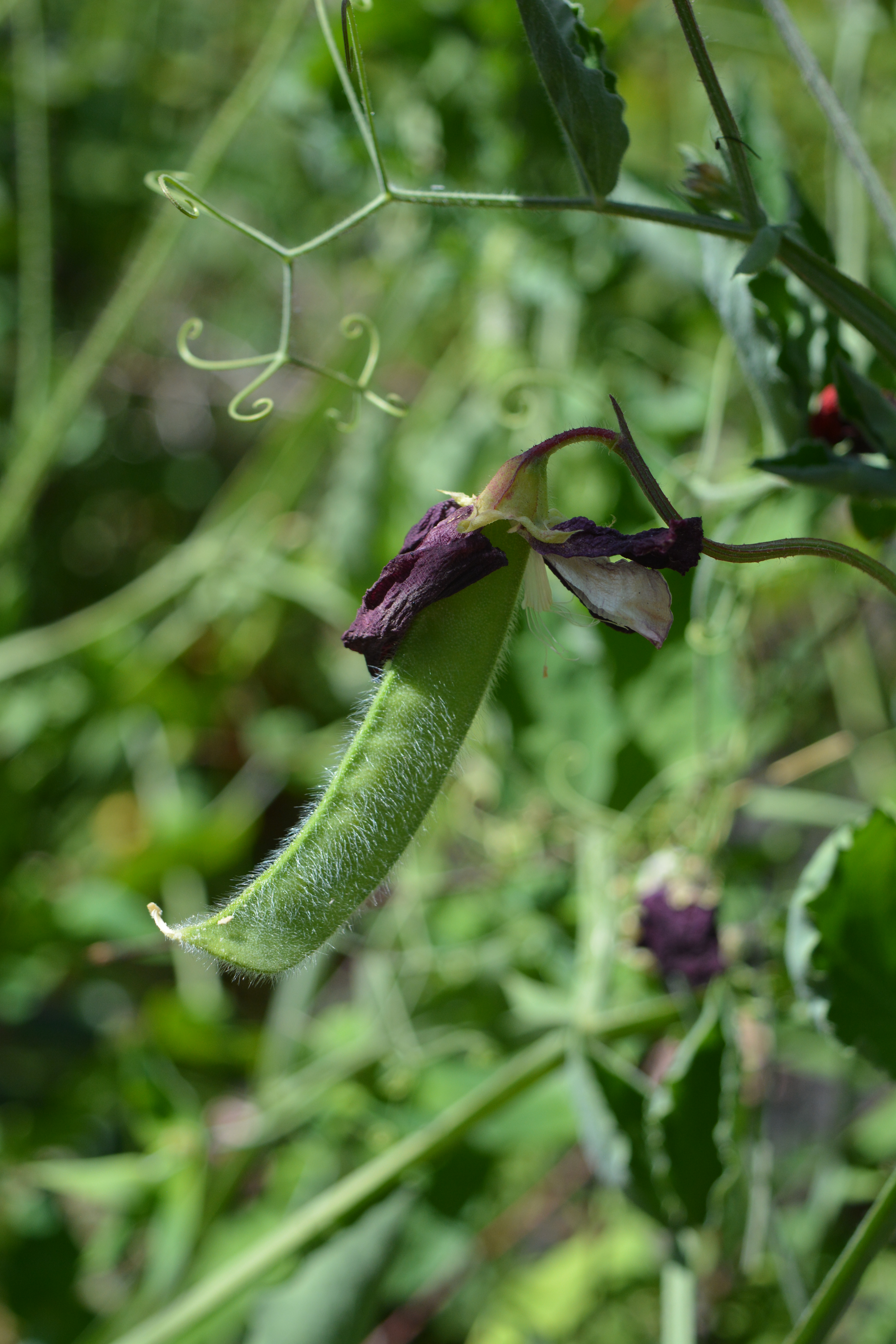
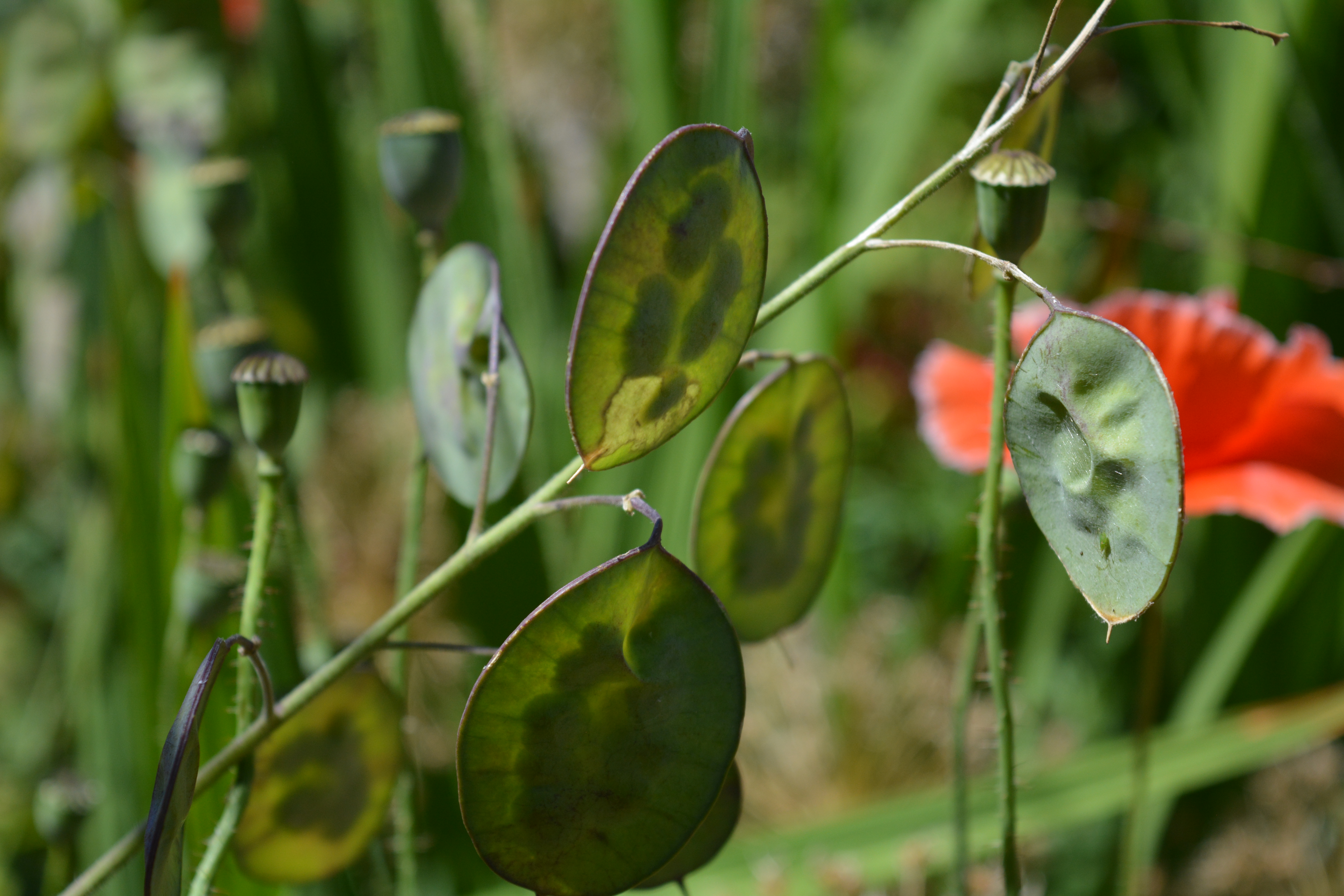
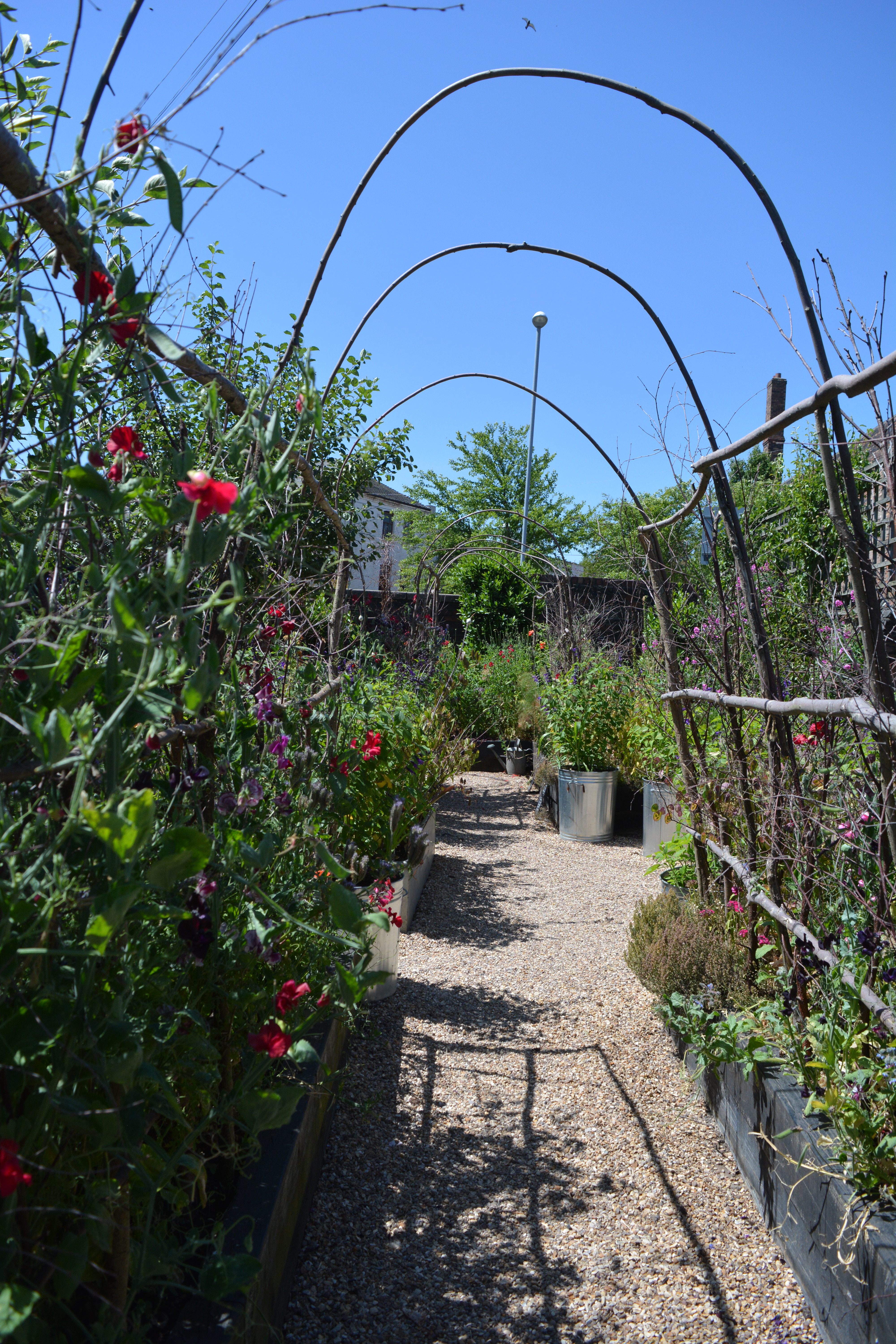
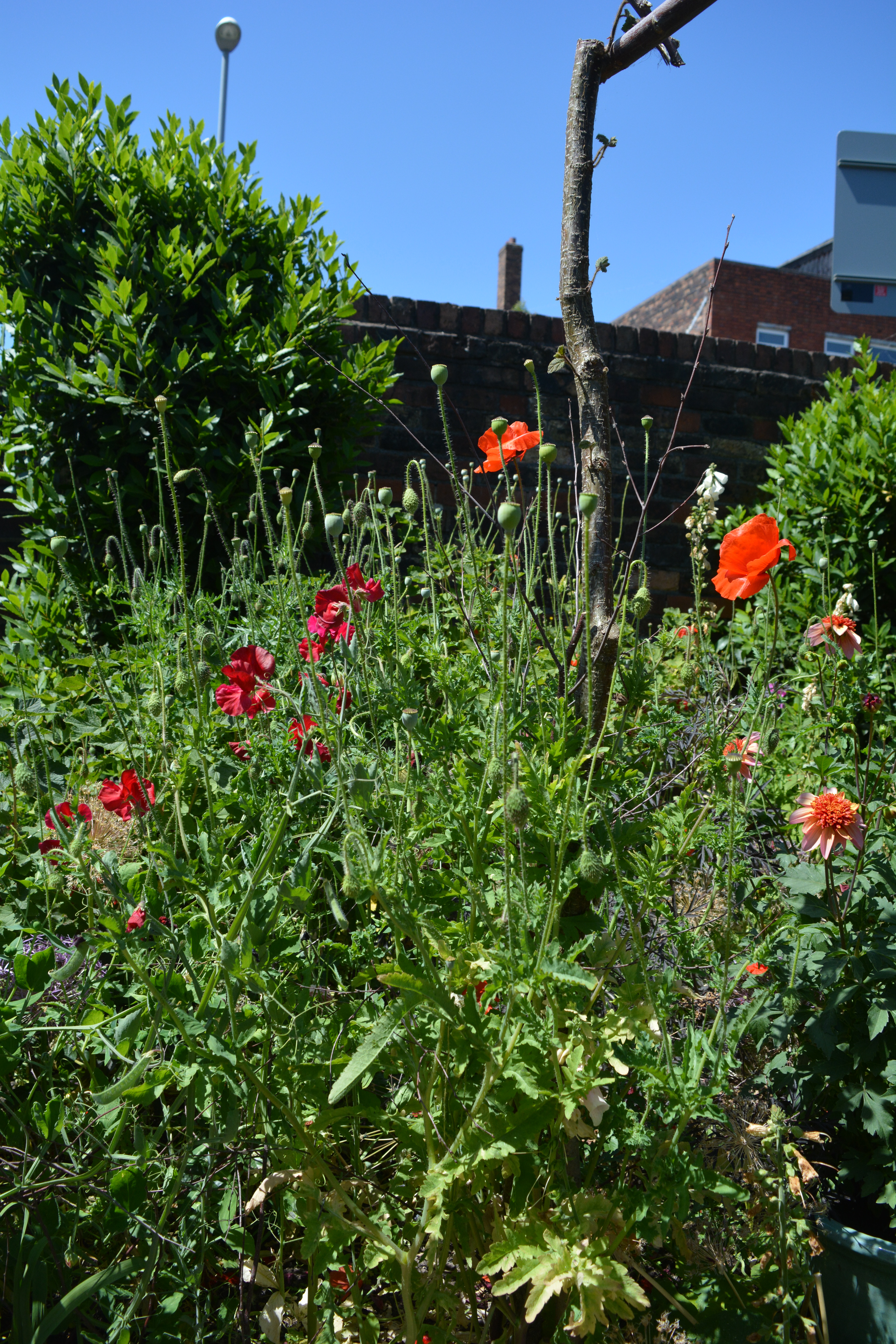
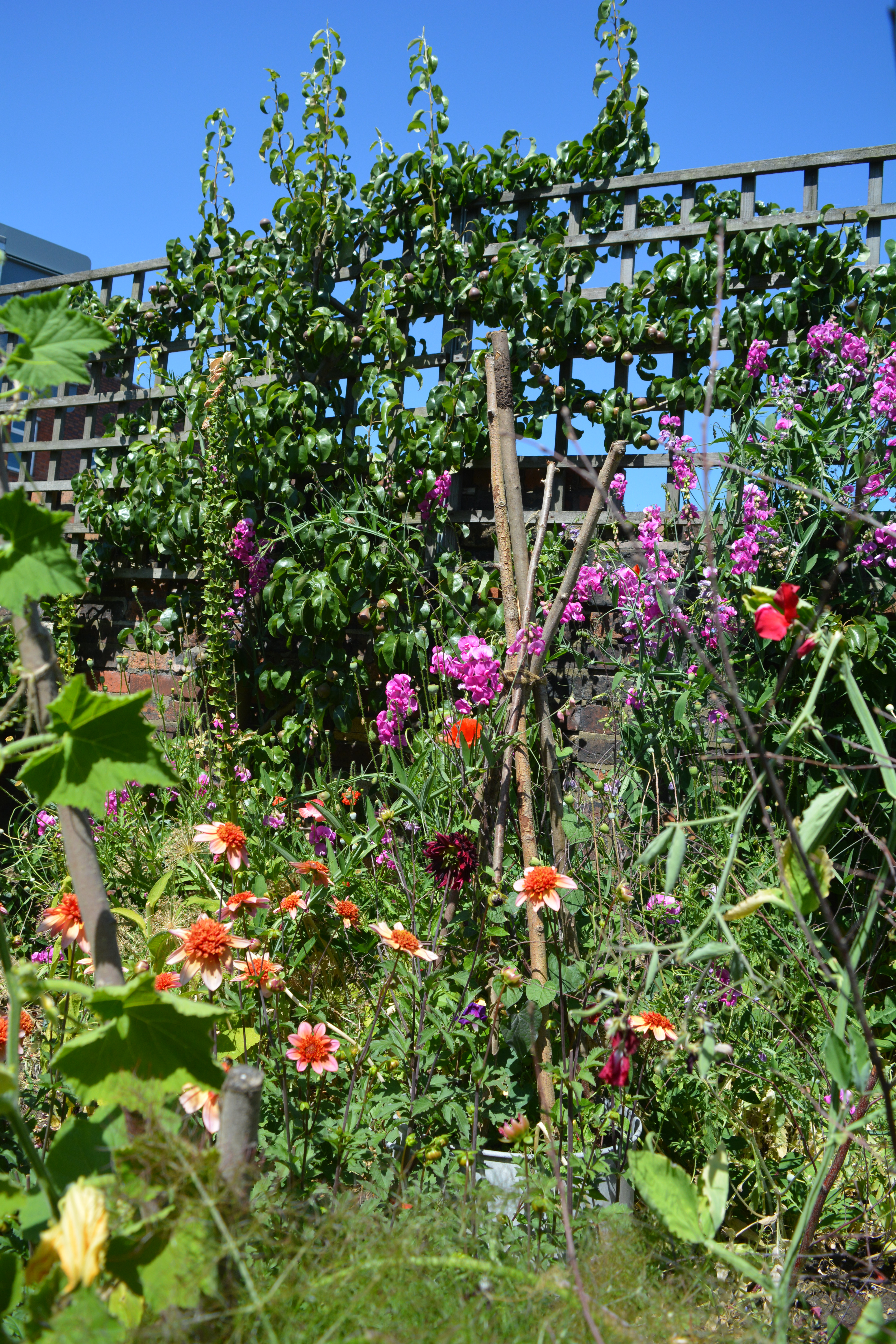
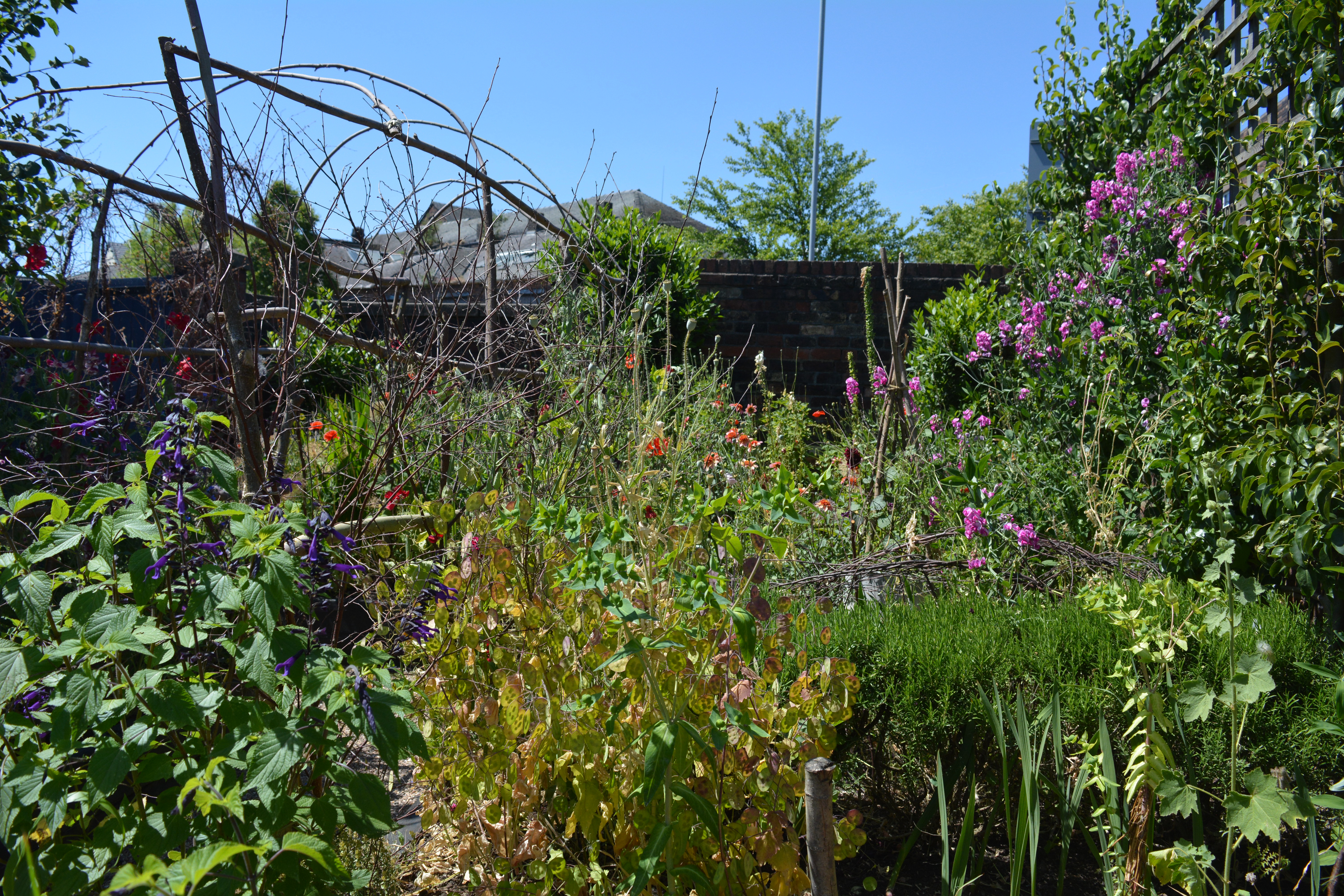
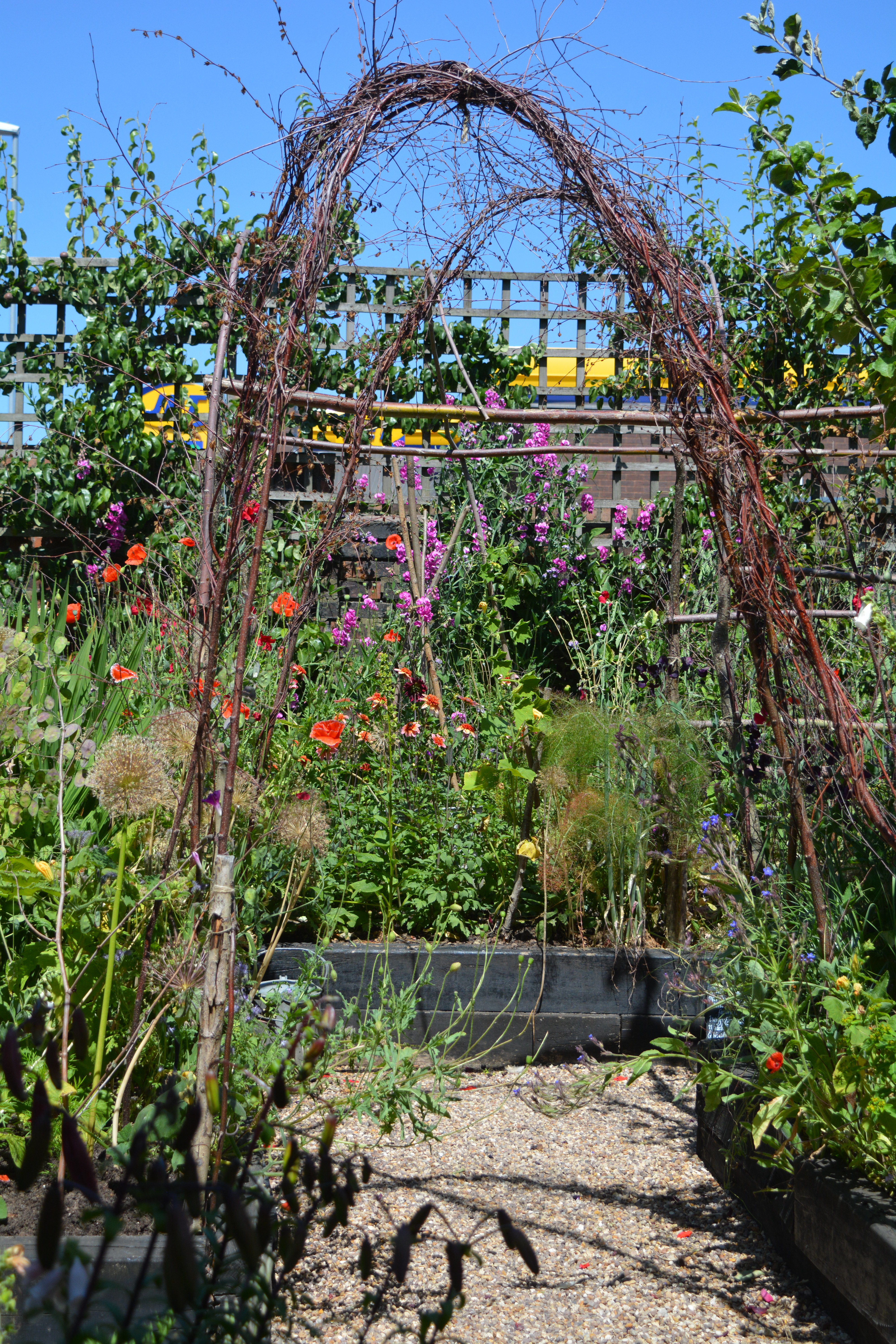
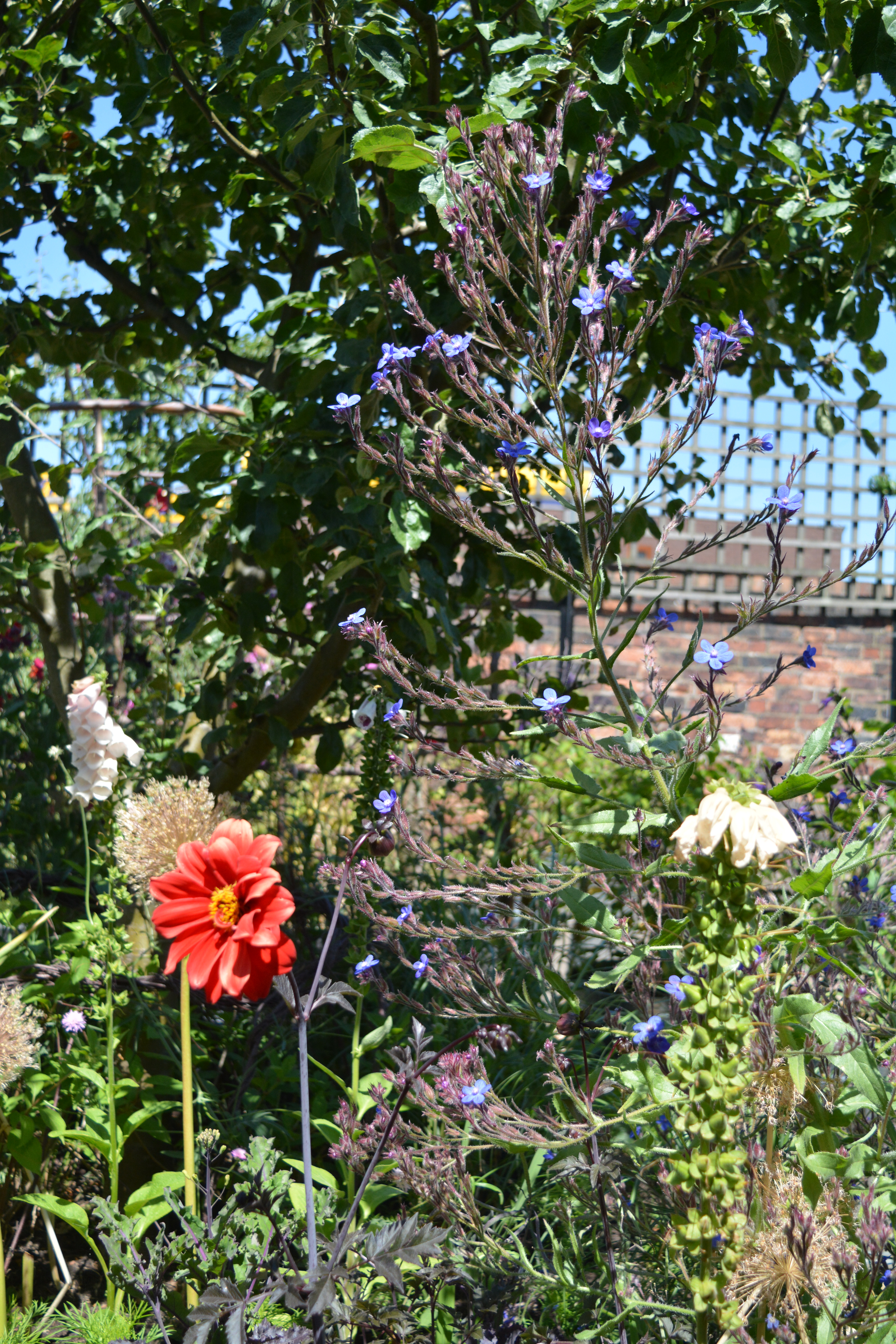
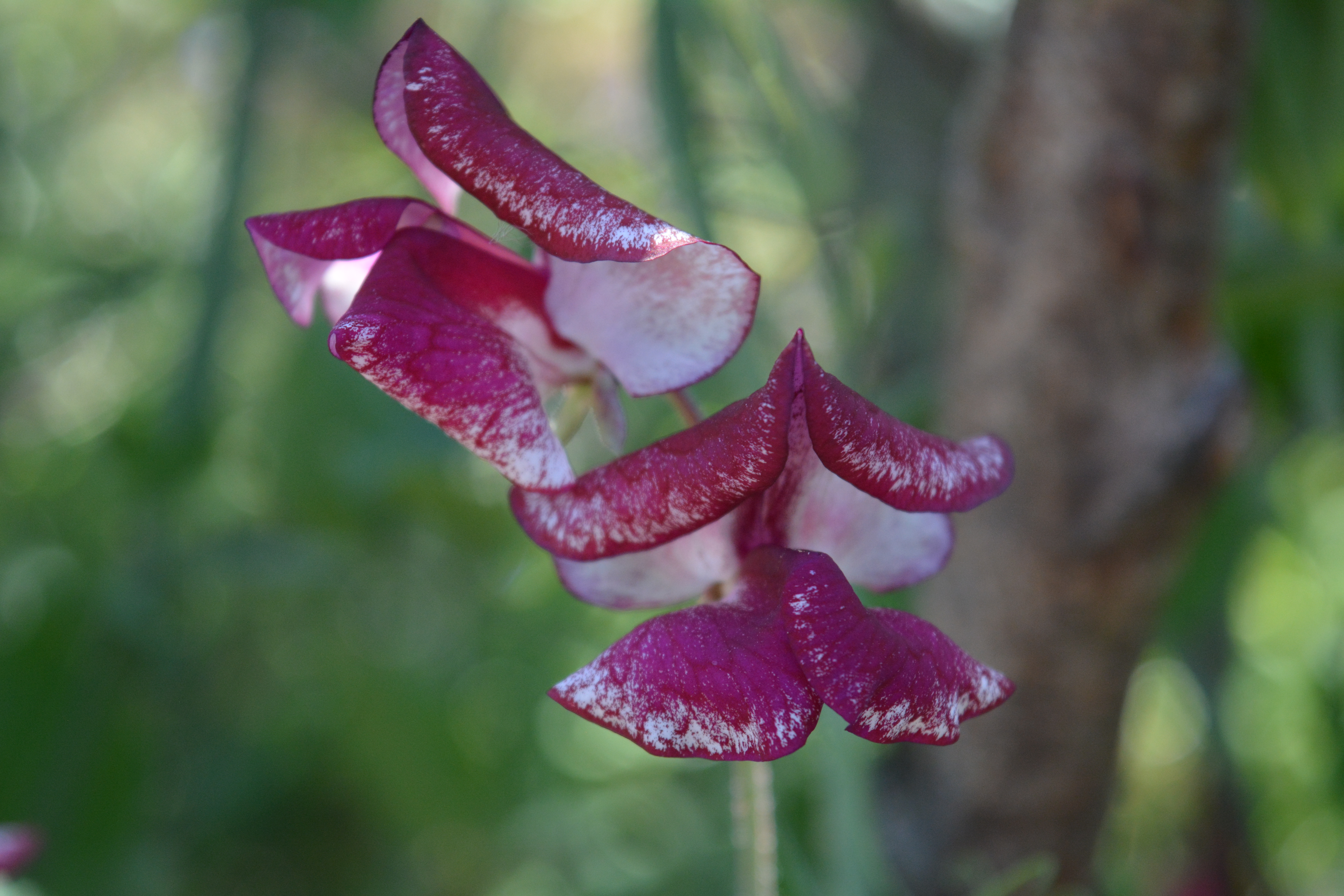
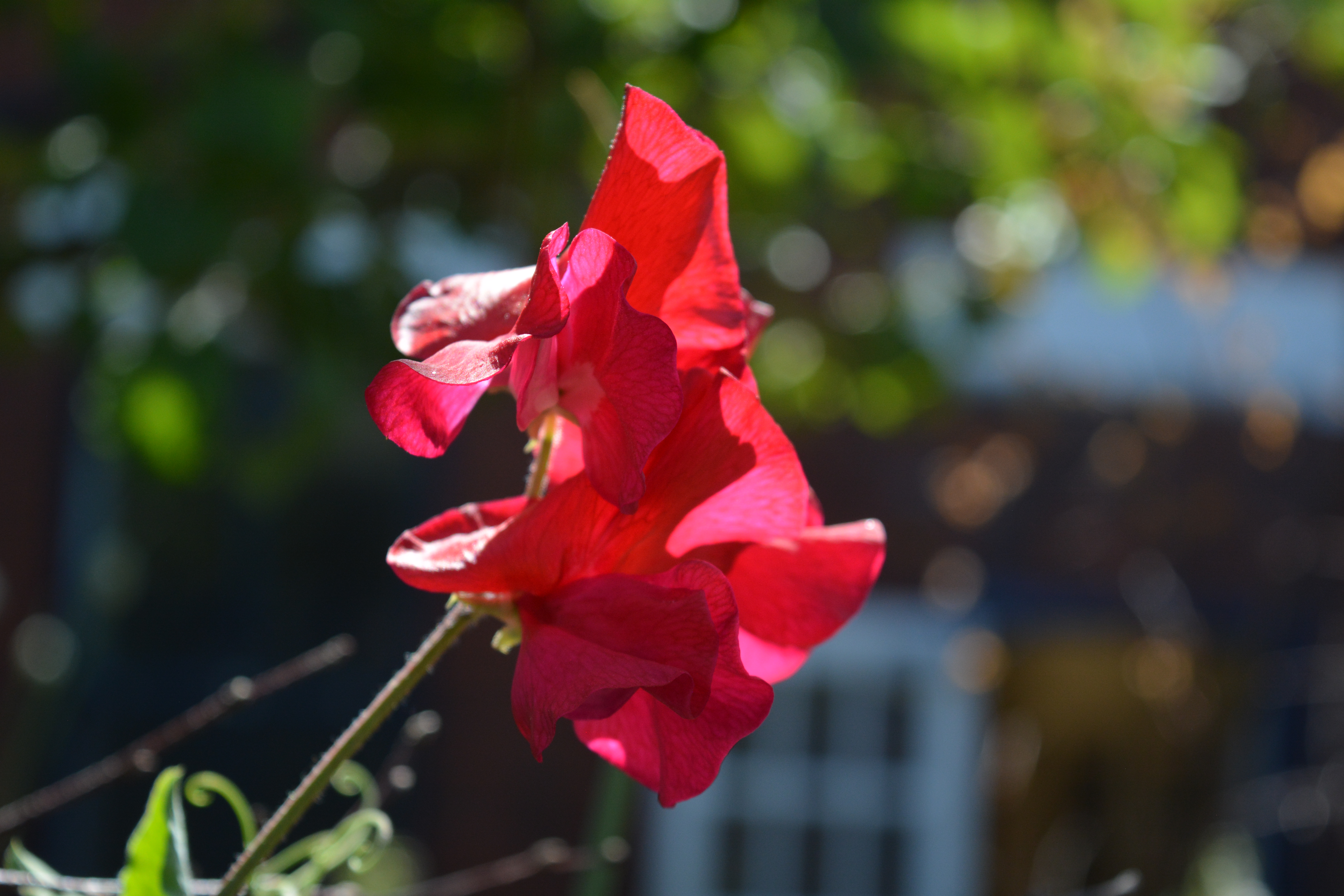
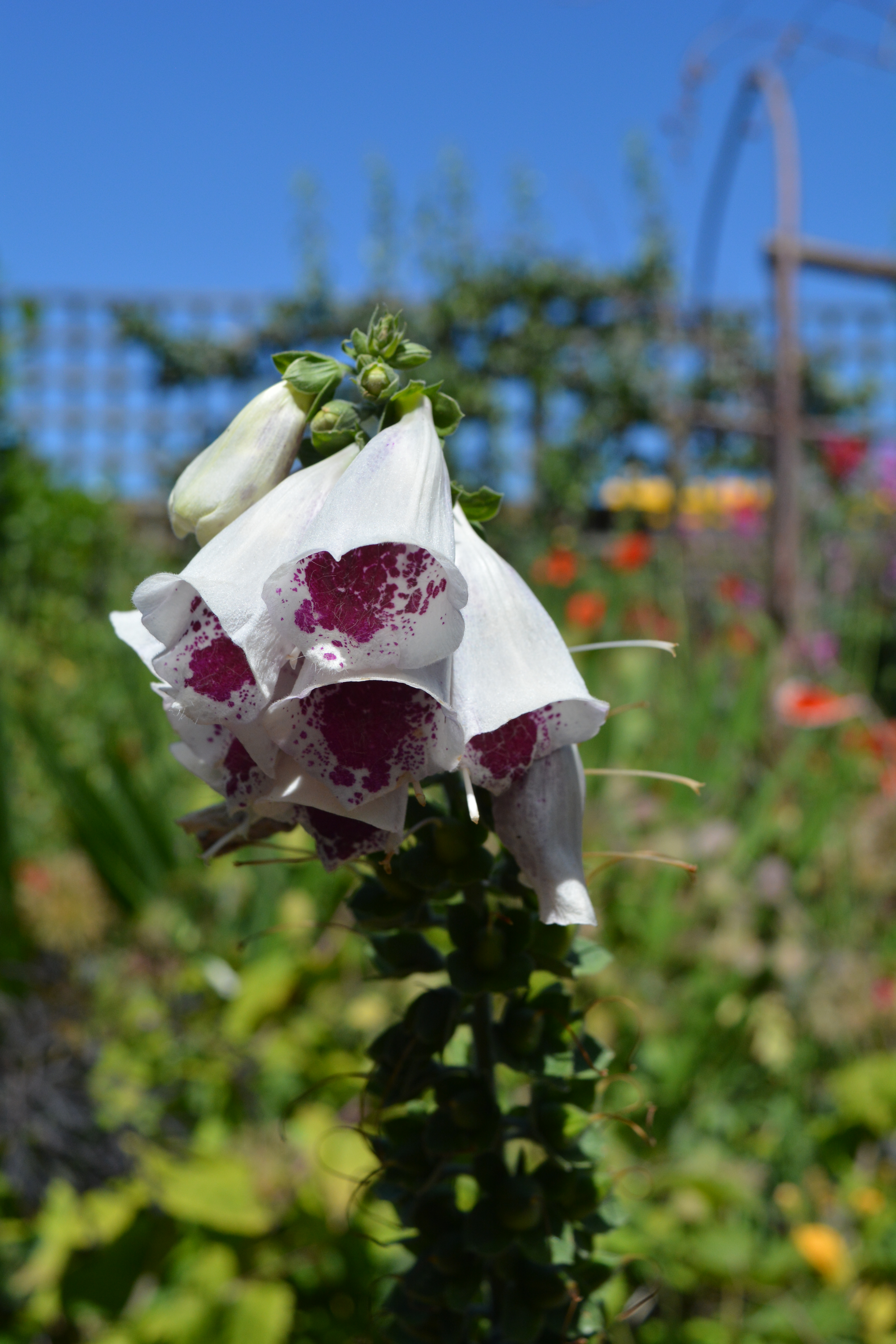
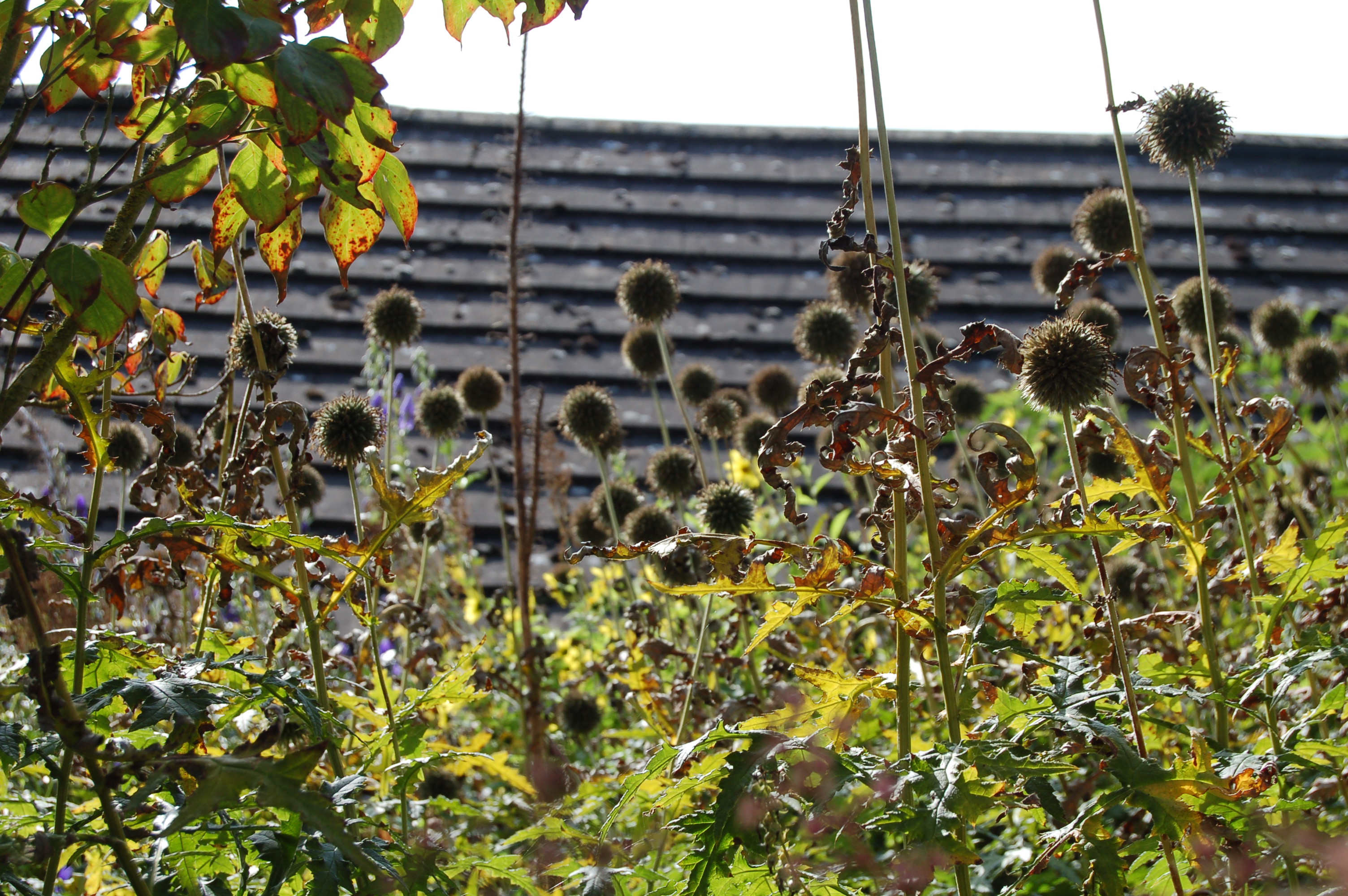
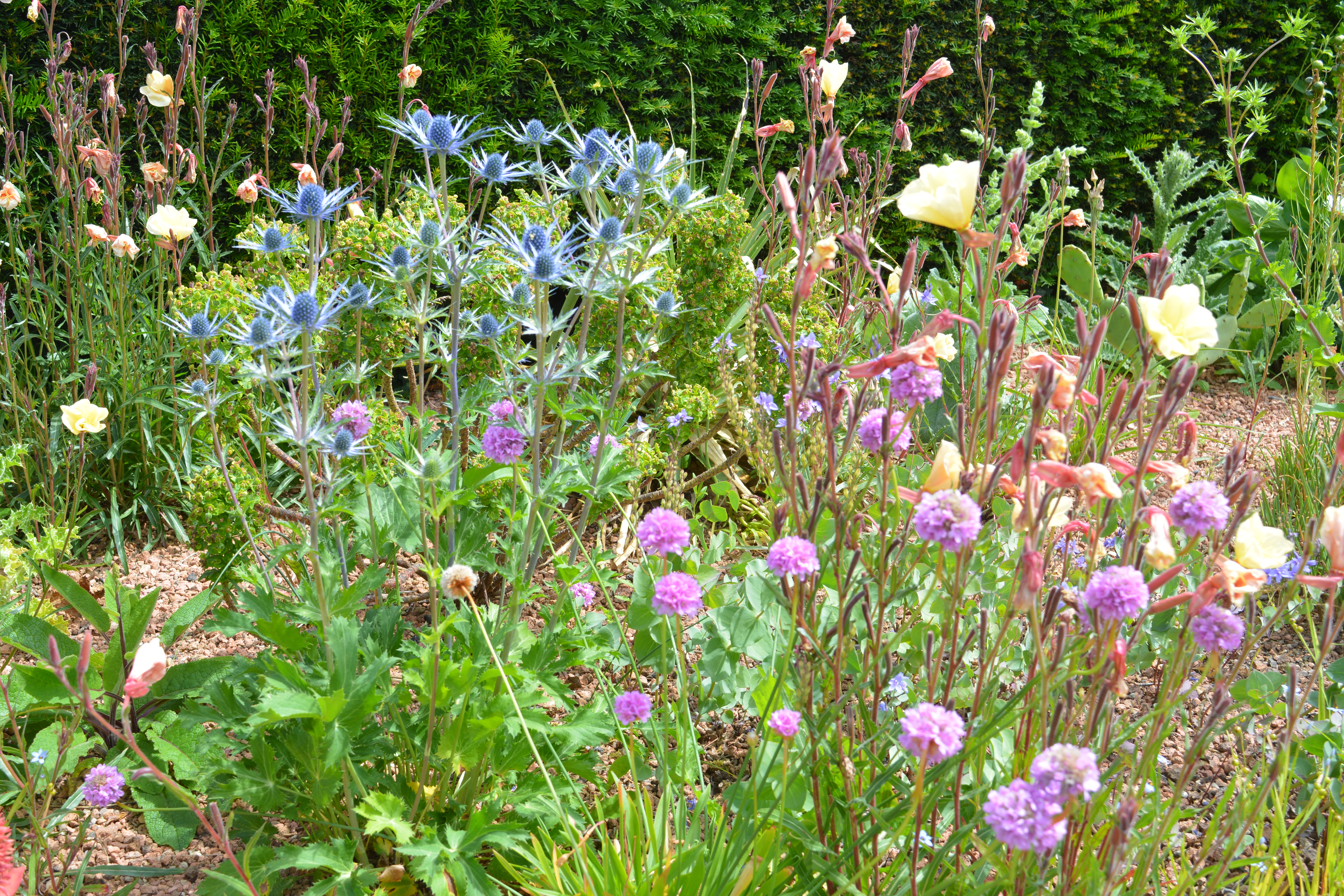
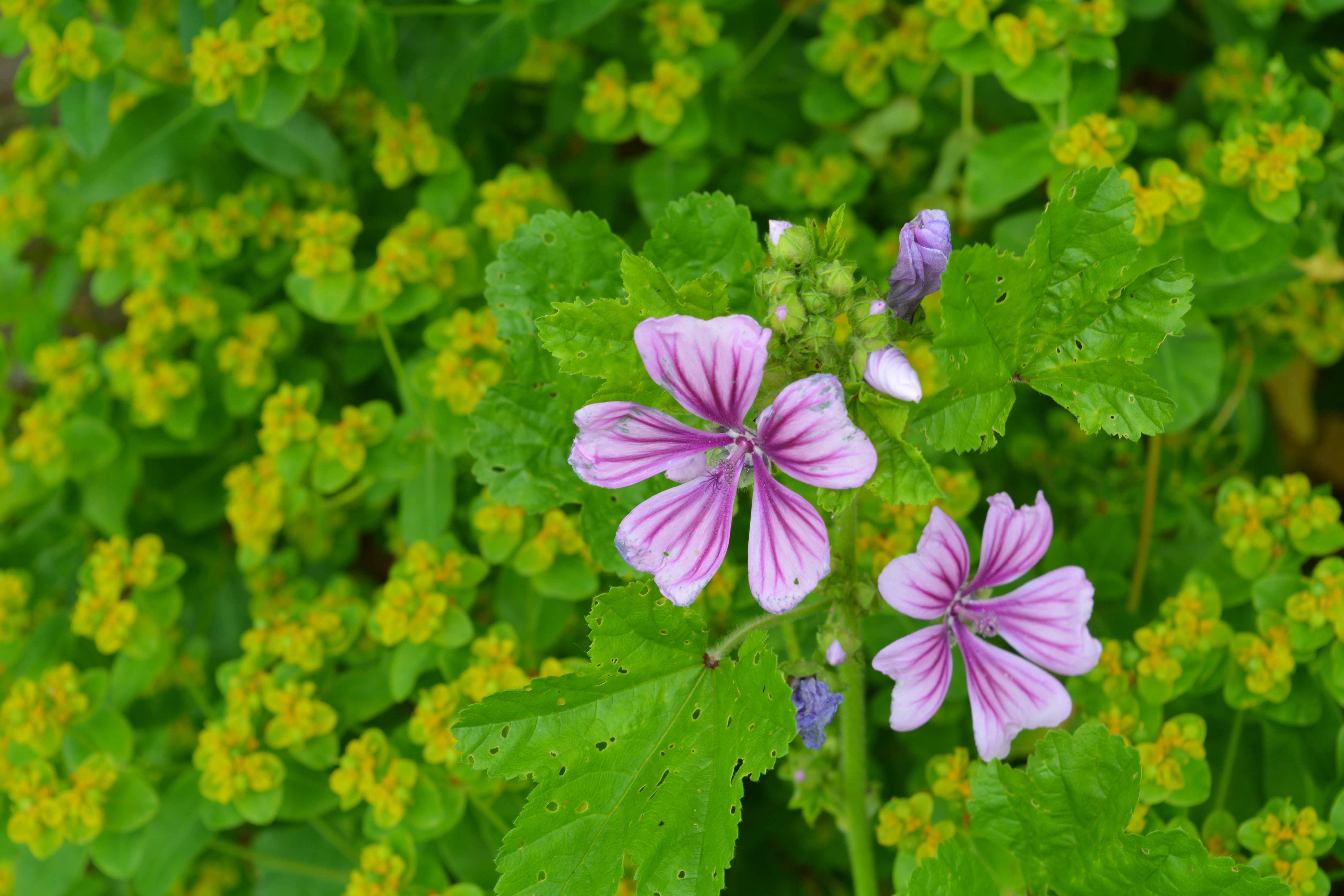
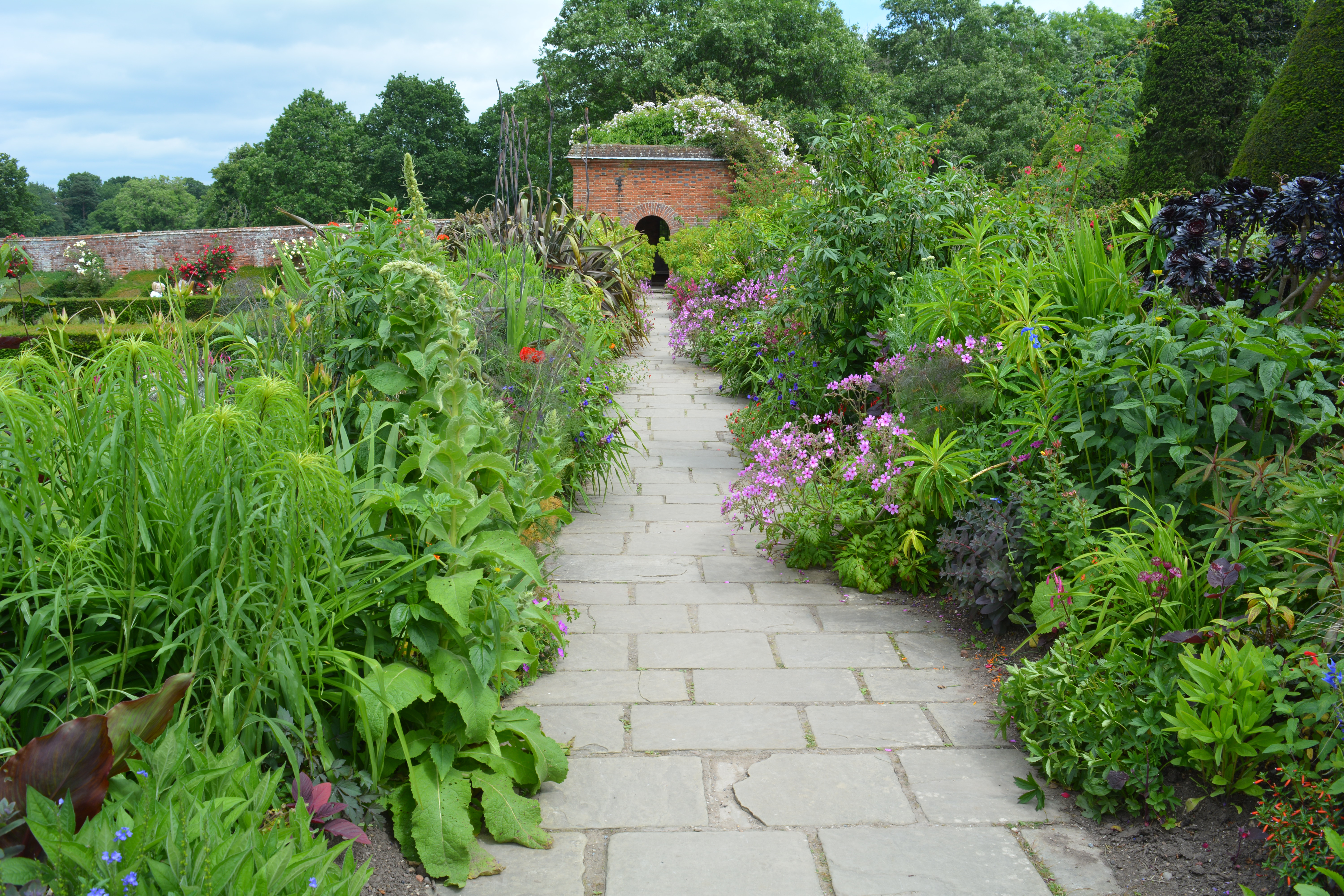
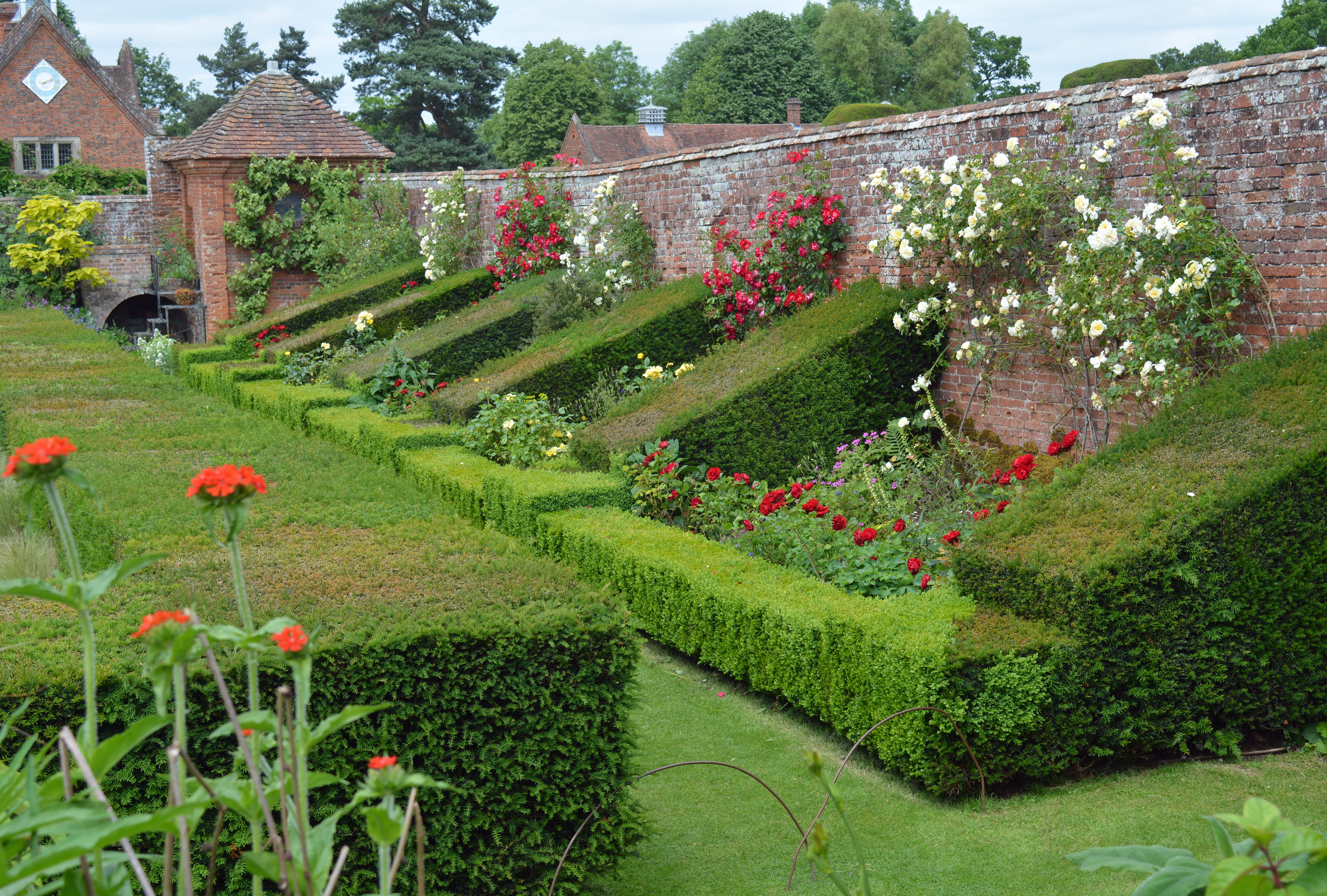
While enjoying the courtyard garden at the Emma Bridgwater Pottery in Stoke-on-Trent in mid-June and mid-heatwave too, we found the drying seedpods of honesty in different stages of drying out in readiness to spread its seeds. Gentle shades of grren decorated the circular pods of the Honesty, circles of fly away seeds sat atop allium stems and the drying pods of sweetpeas looked just like petit pois.
Category: half-hardy perennials
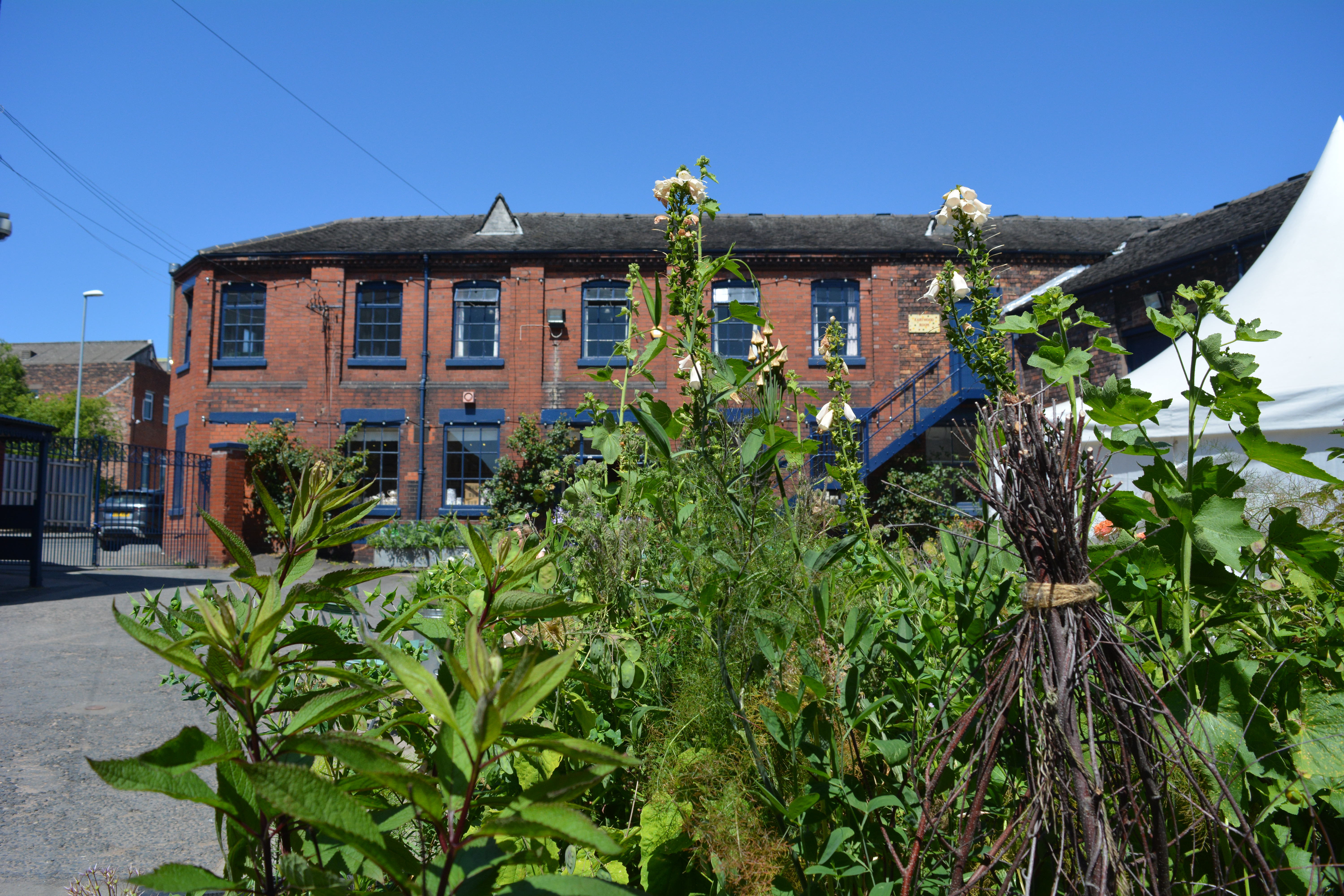
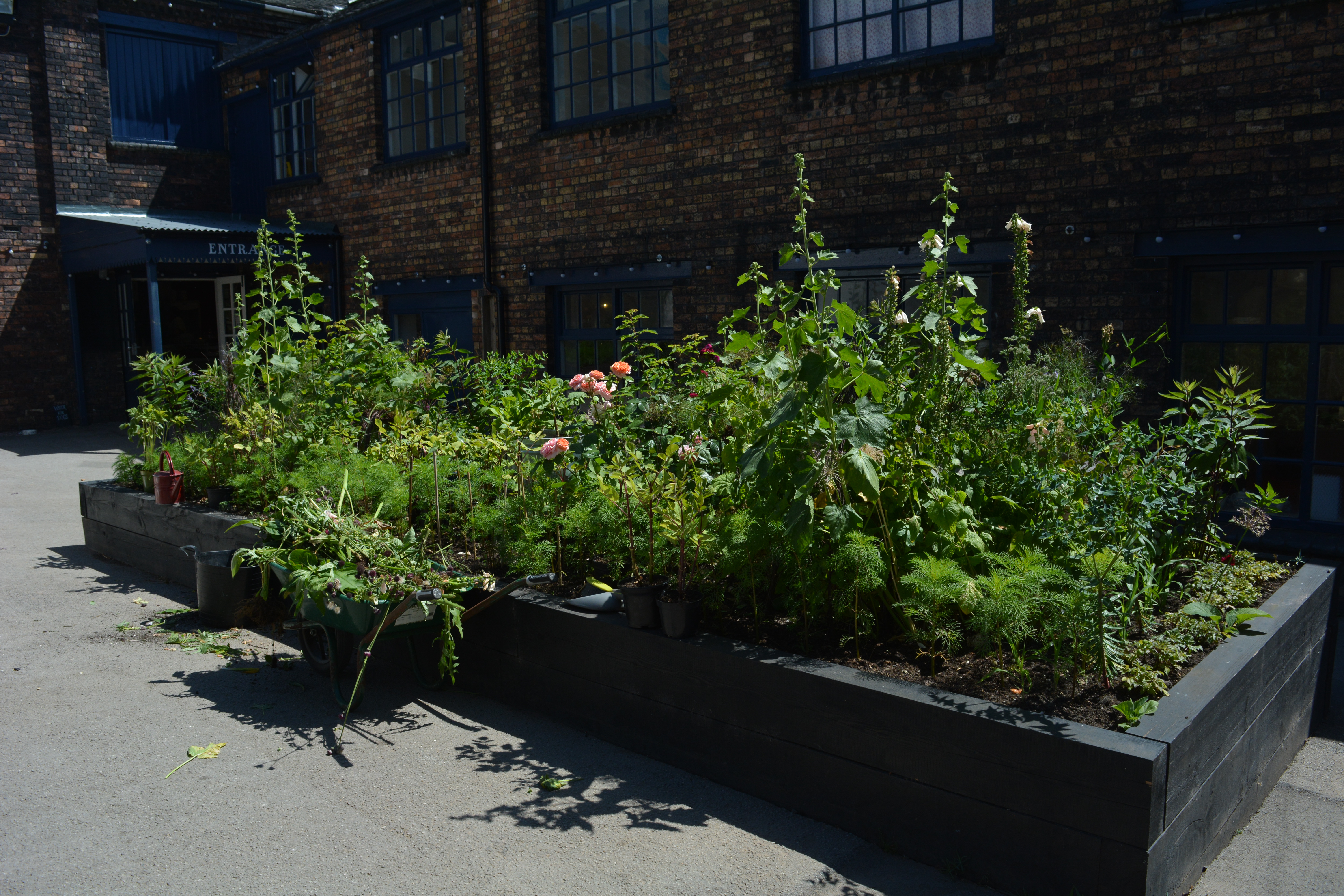
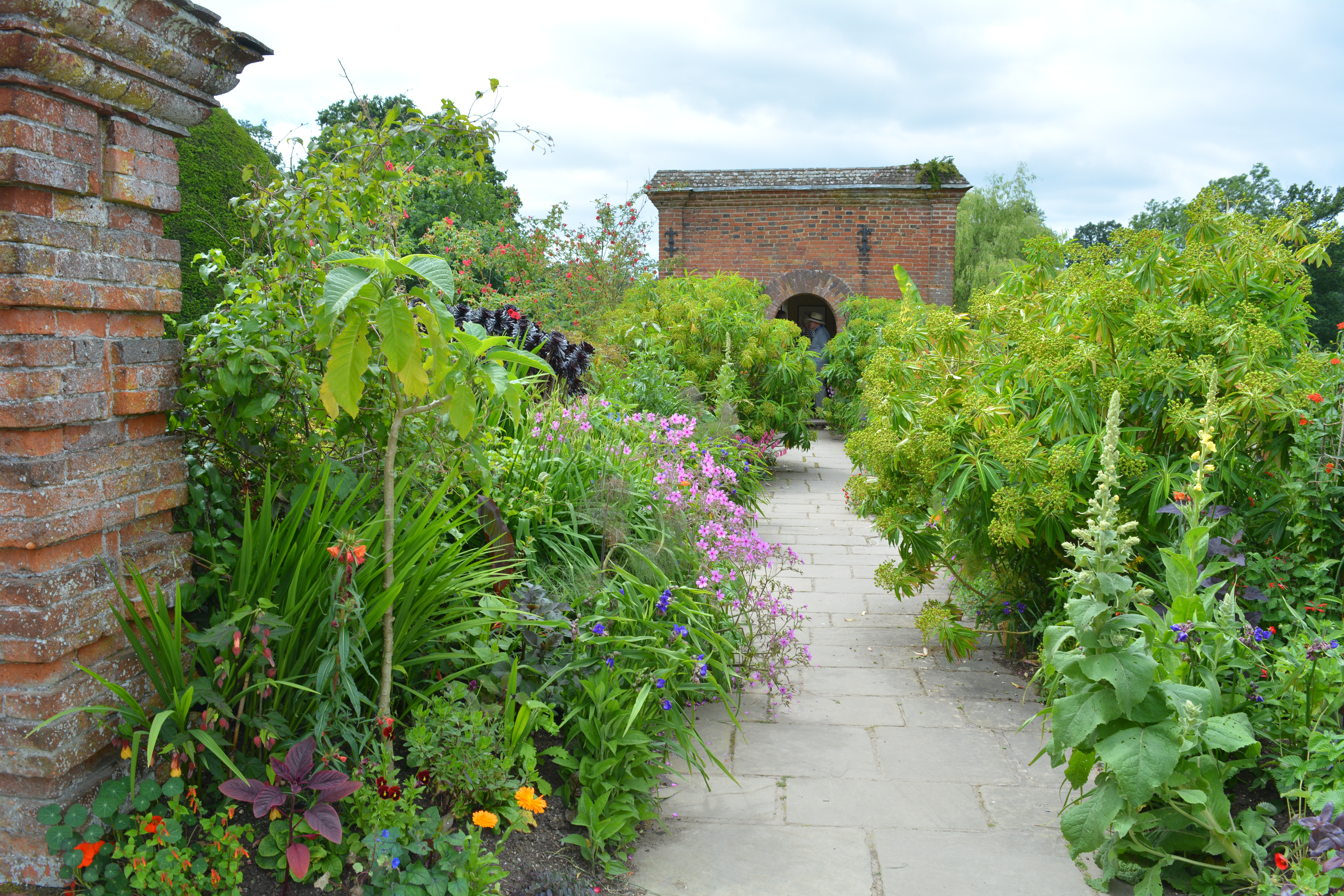
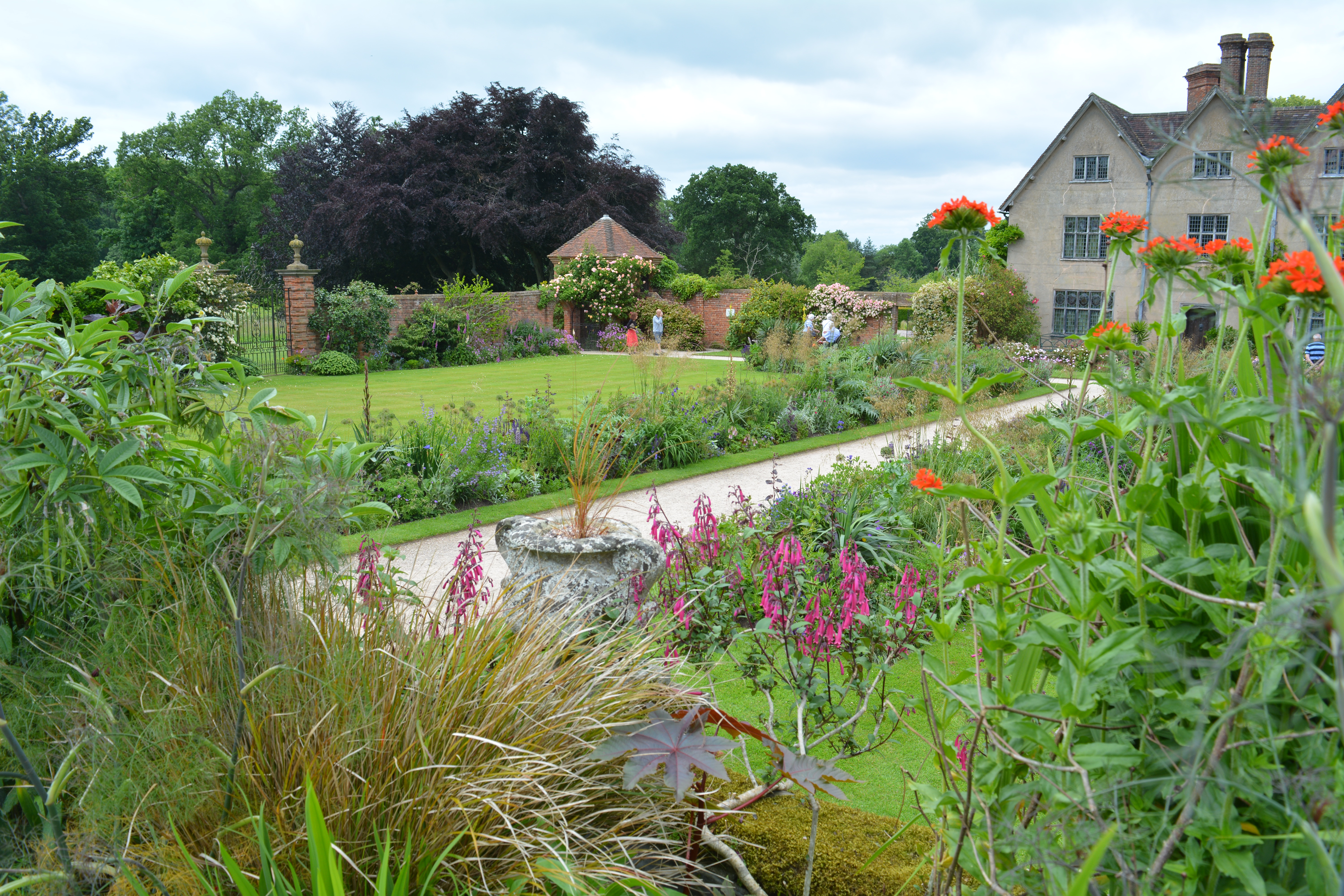
On a sunny day in late June we set off to the city, Stoke-on-Trent, to visit two gardens. Emma Bridgwater Pottery shop has its own courtyard garden with its own gardener caring for it and nurturing every plant. I had read the book he had recently written and emjoyed his words and the accompanying photos so wished to see it in real life. The second garden was Trentham, one of our favourite gardens and one we visit often. This visit was to see for the first time the new meadow plantings by Nigel Dunnett. These will be the subject of a following post. First we visit the courtyard garden.
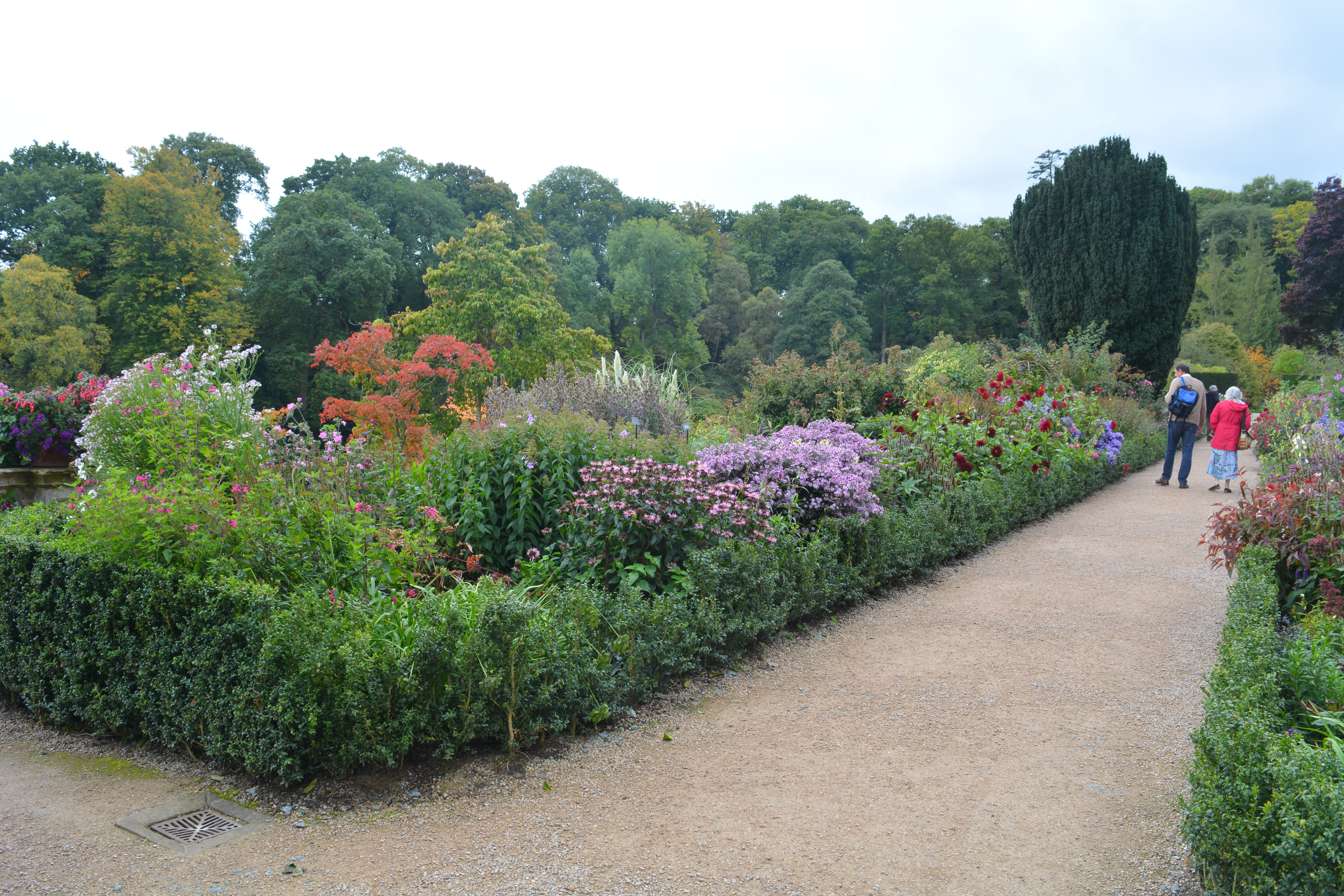
The raised beds in the entrance courtyard are an antedote to the city, to the factory behind.
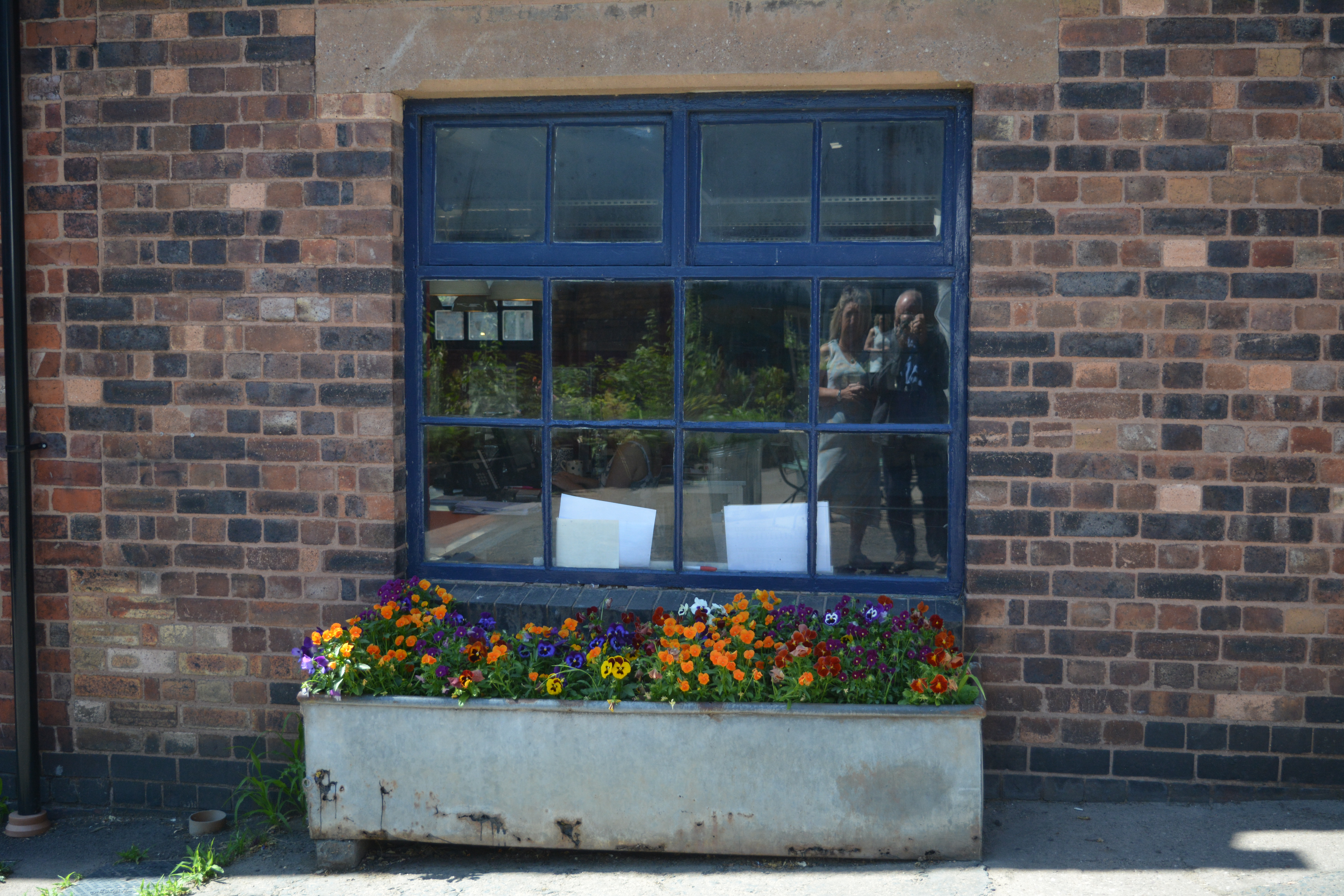
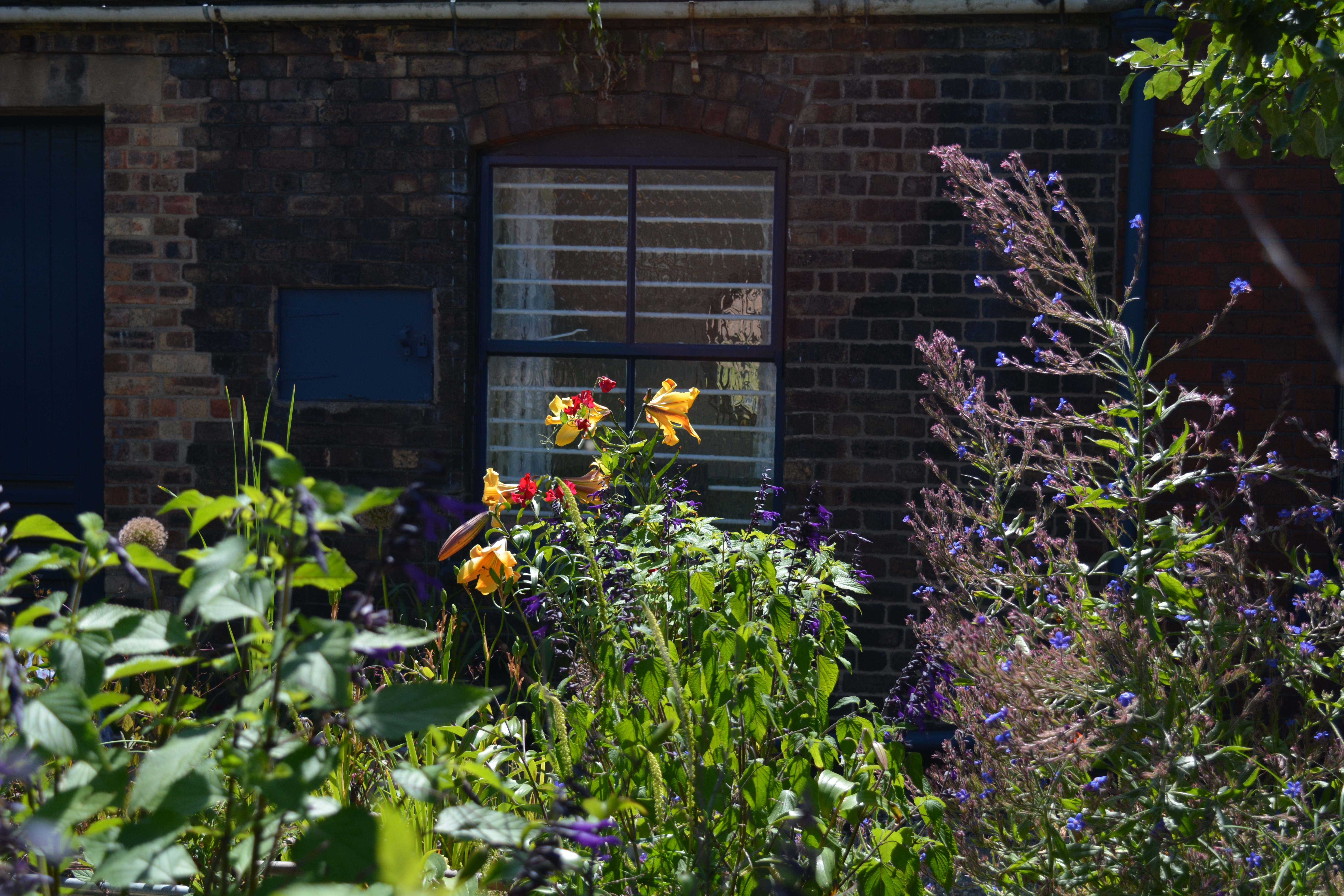
We arrived in temperatures nearing 30C and started off with drinks in the cafe there before wandering through the pottery shop exiting a doorway at its far end that was the entrance to this secret garden. It felt a special place, an atmosphere of colour, calmness and peace in a city. the blue of the window frames, the step banisters and various railings are enhanced by the greens and other colours of the flowers in the beds. The entrance is softened and made more welcoming.
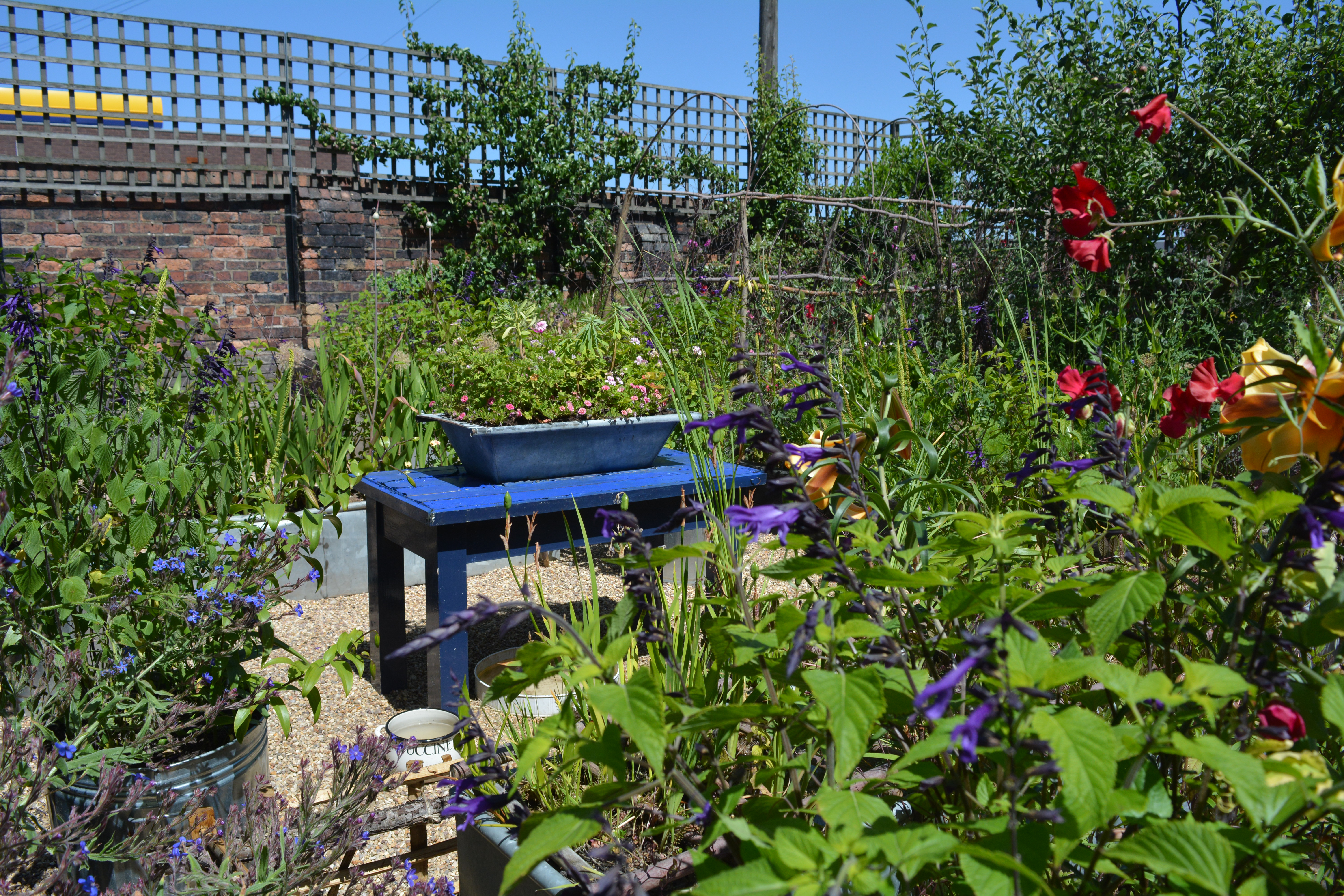
We wonder if this is going to be the garden in its entirity but are heartened when Jude spots a sign to the “Courtyard Garden”. Peering through the door as we step over is threshhold we are amazed by what is before us inviting us to explore. The garden is no bigger than a back yard of a terraced house, but it packed a punch in the gentlest way possible.
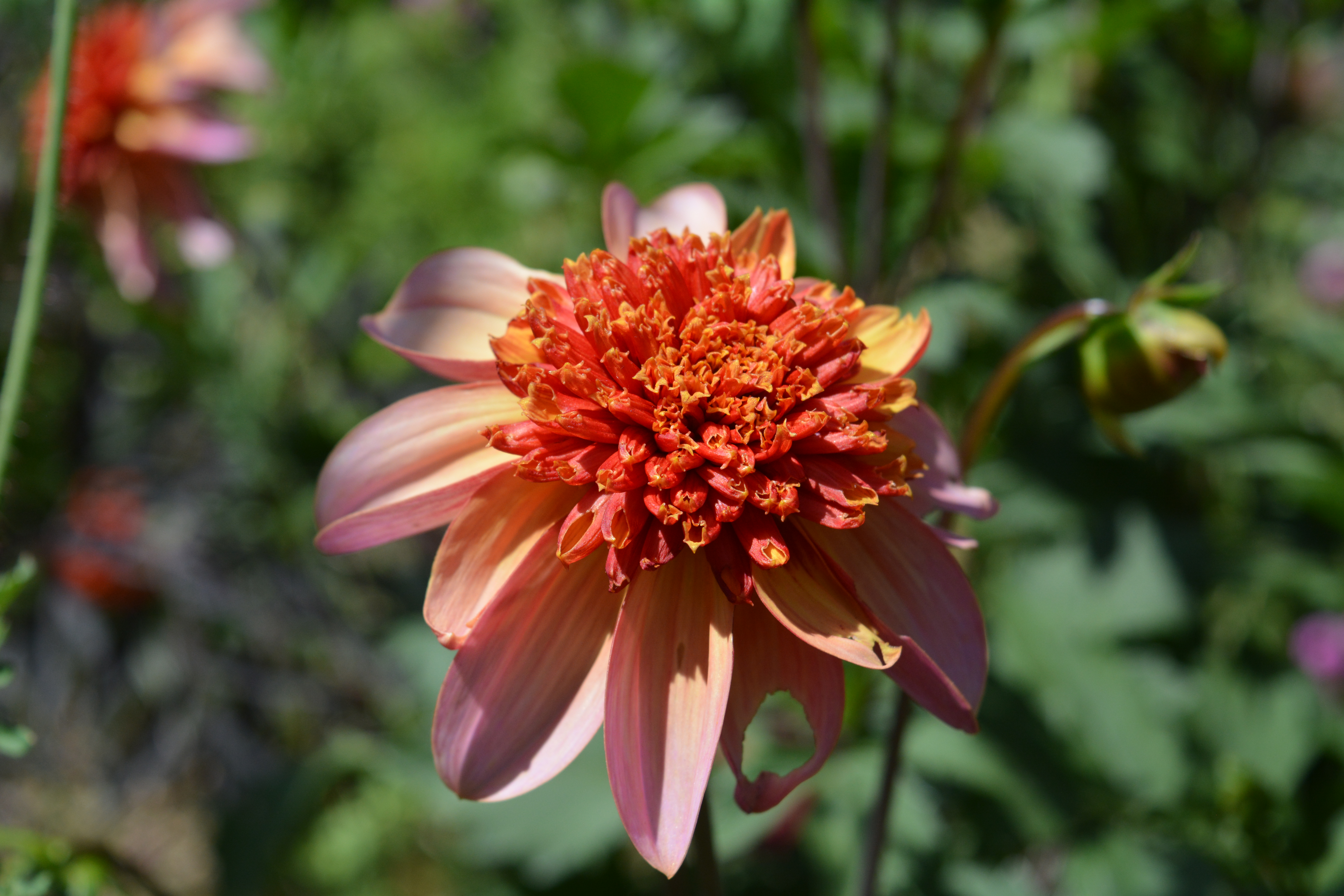
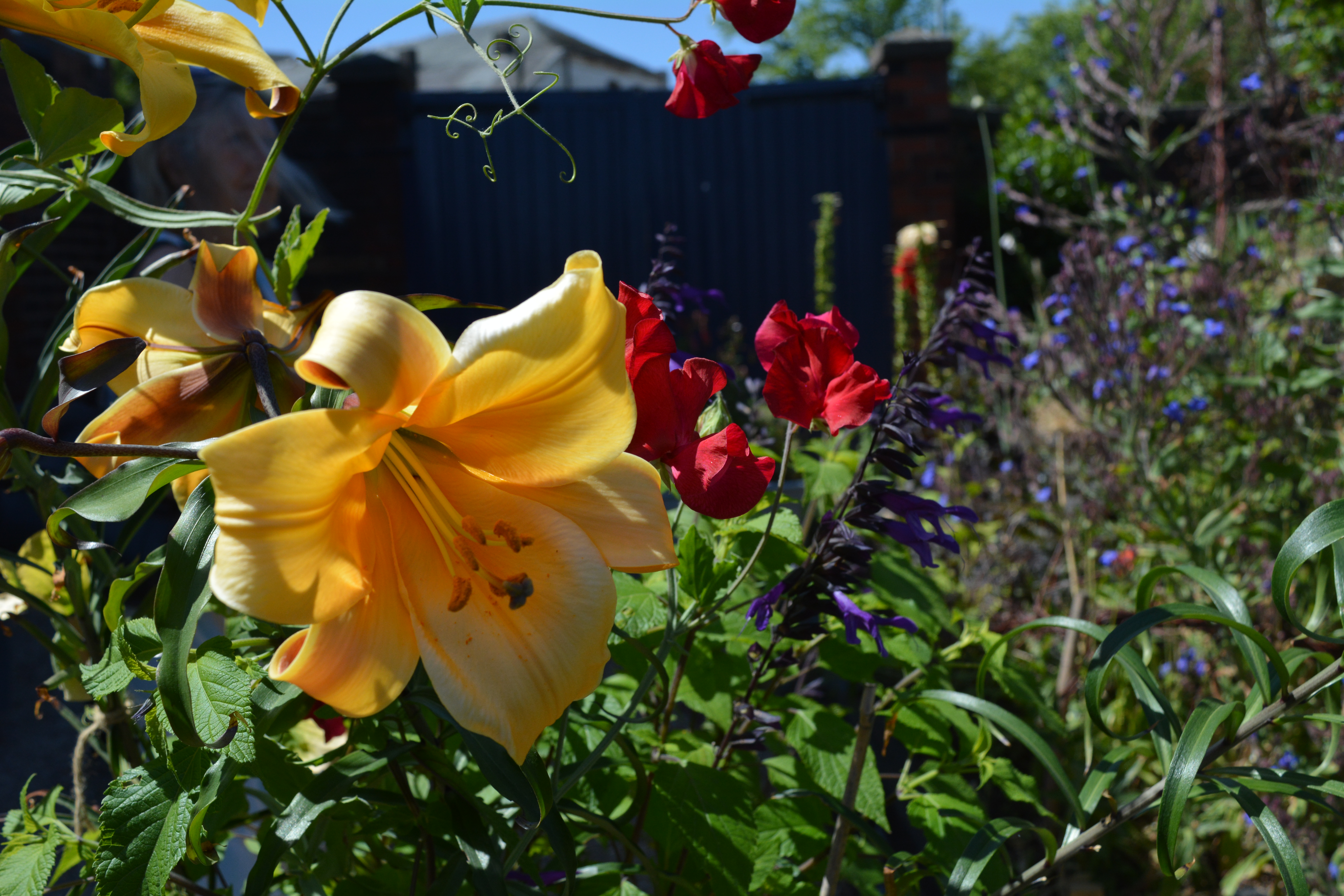
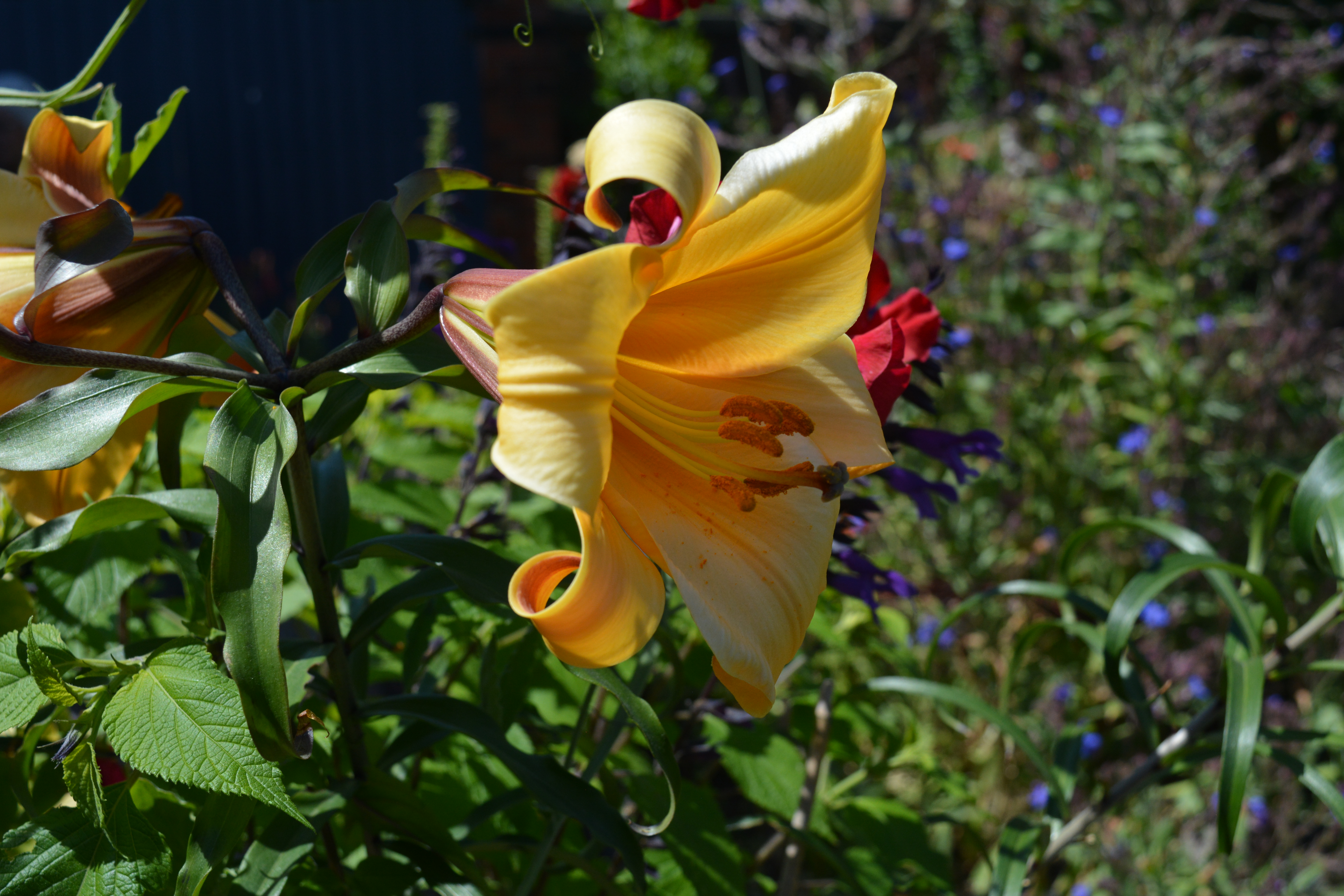
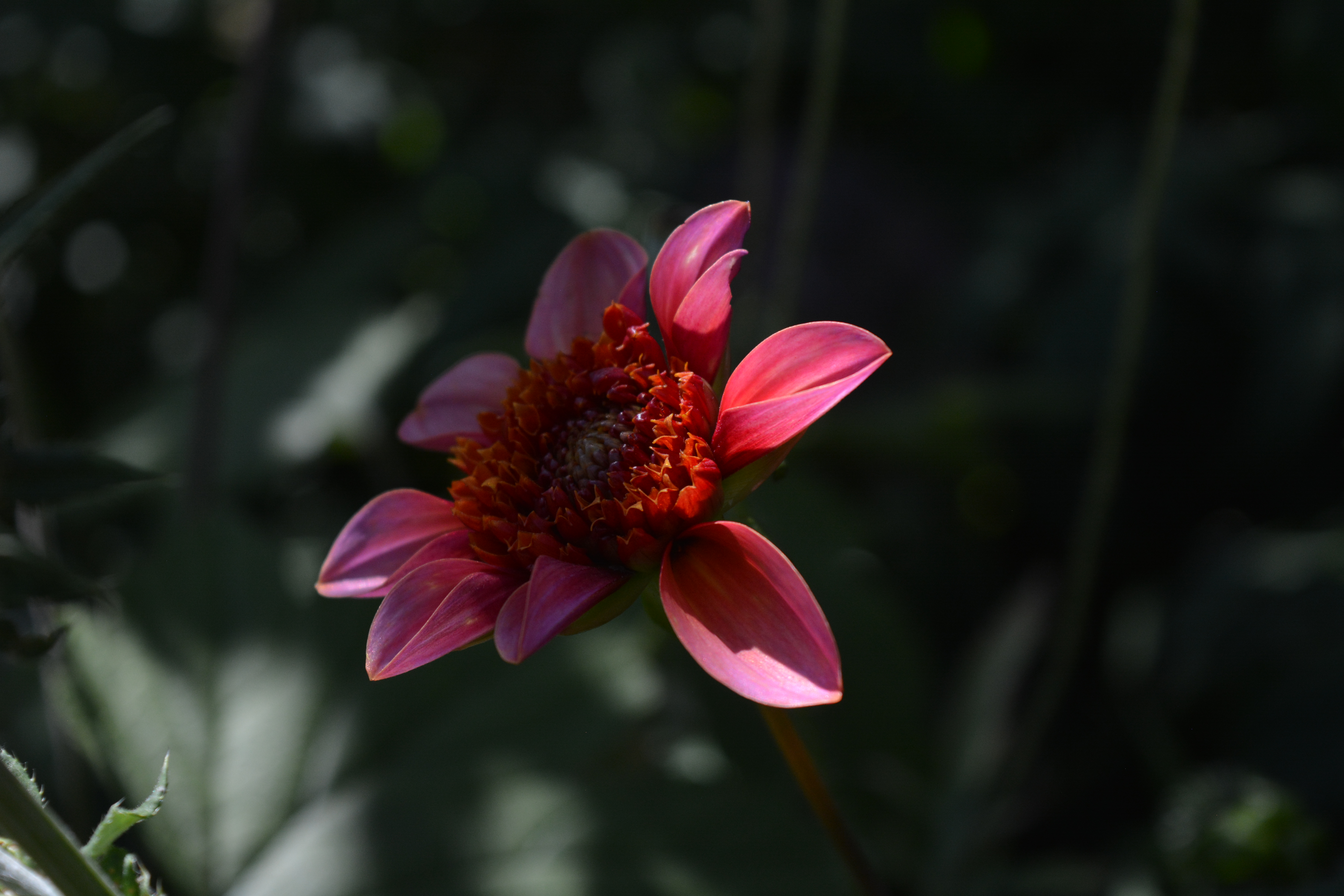
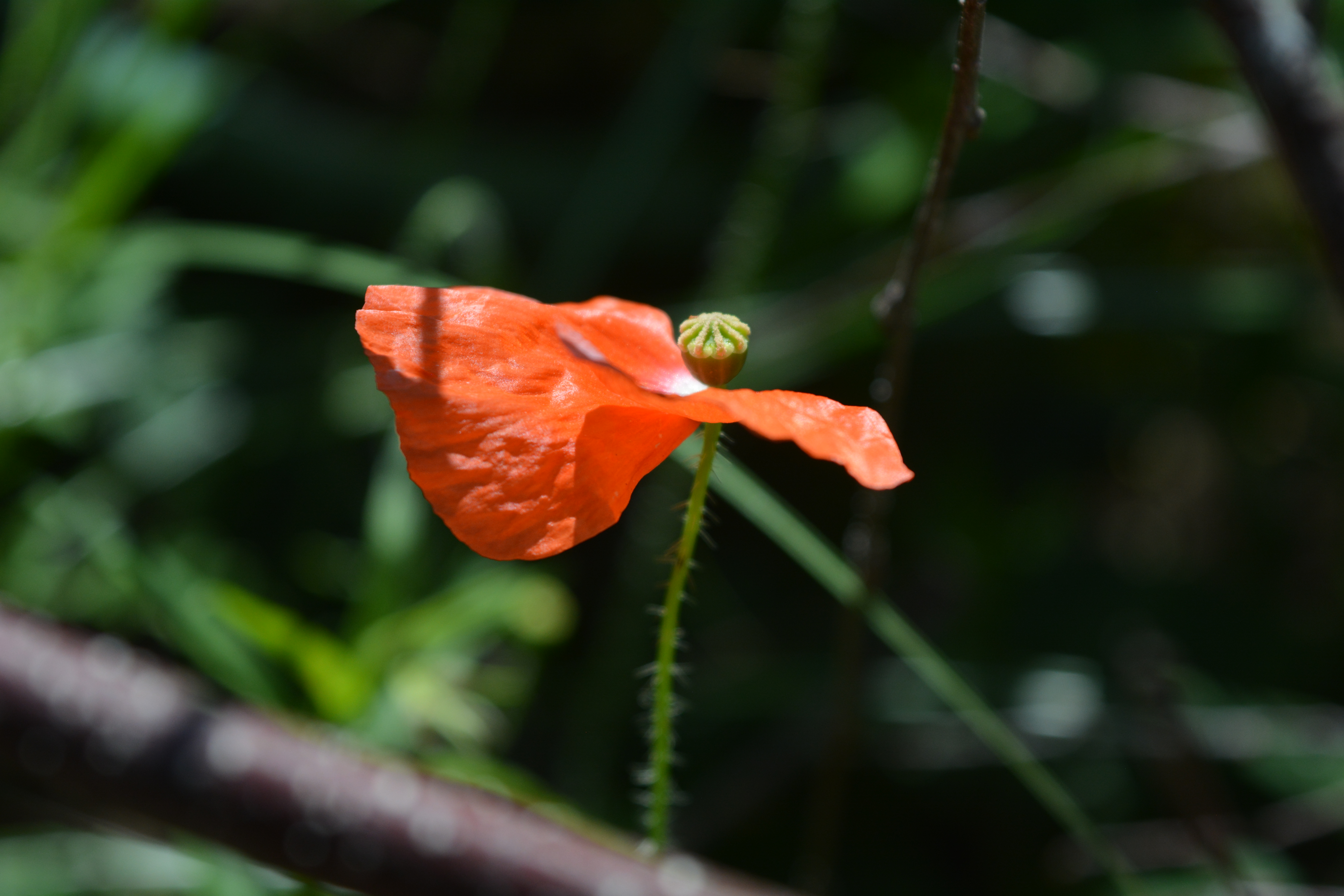
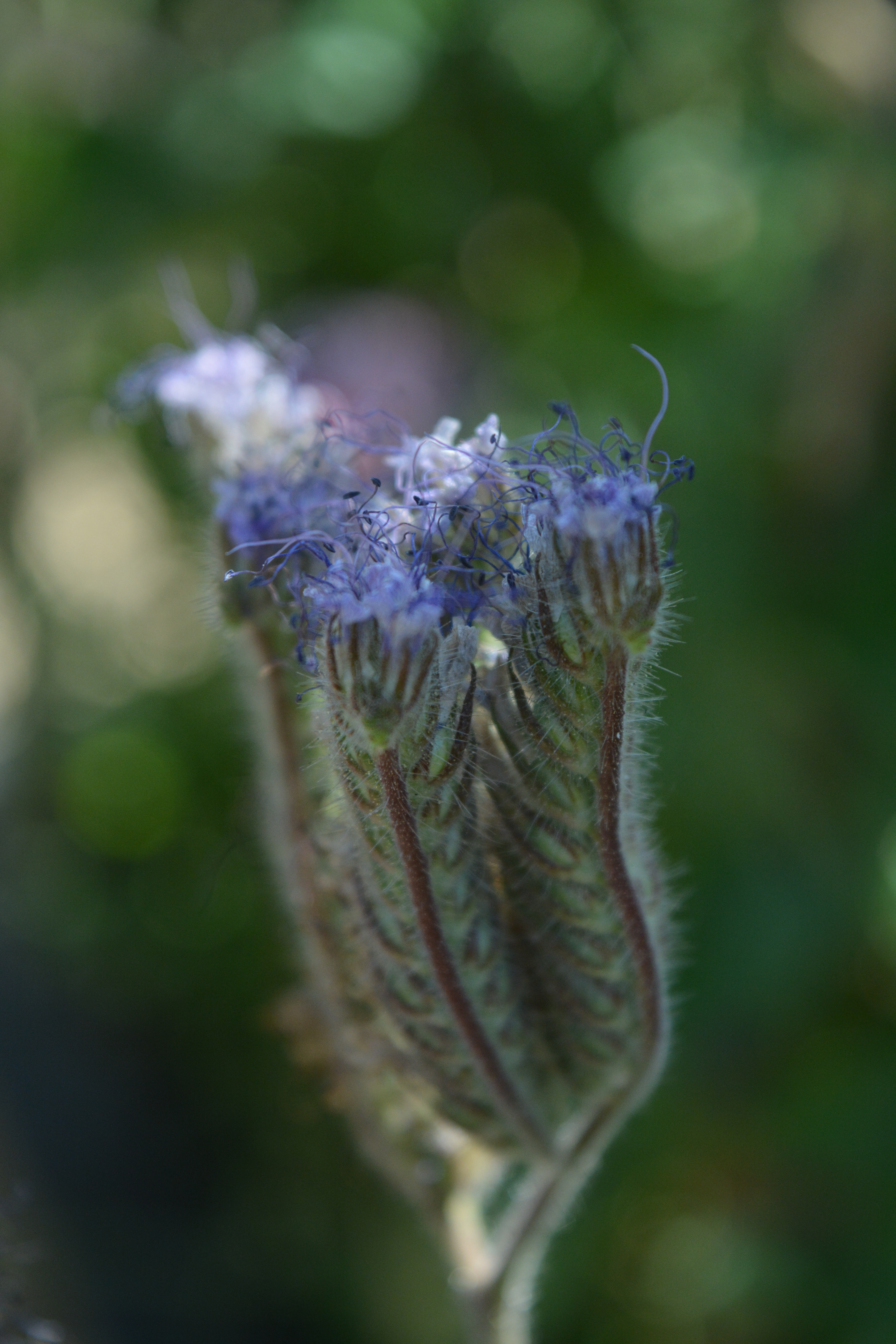
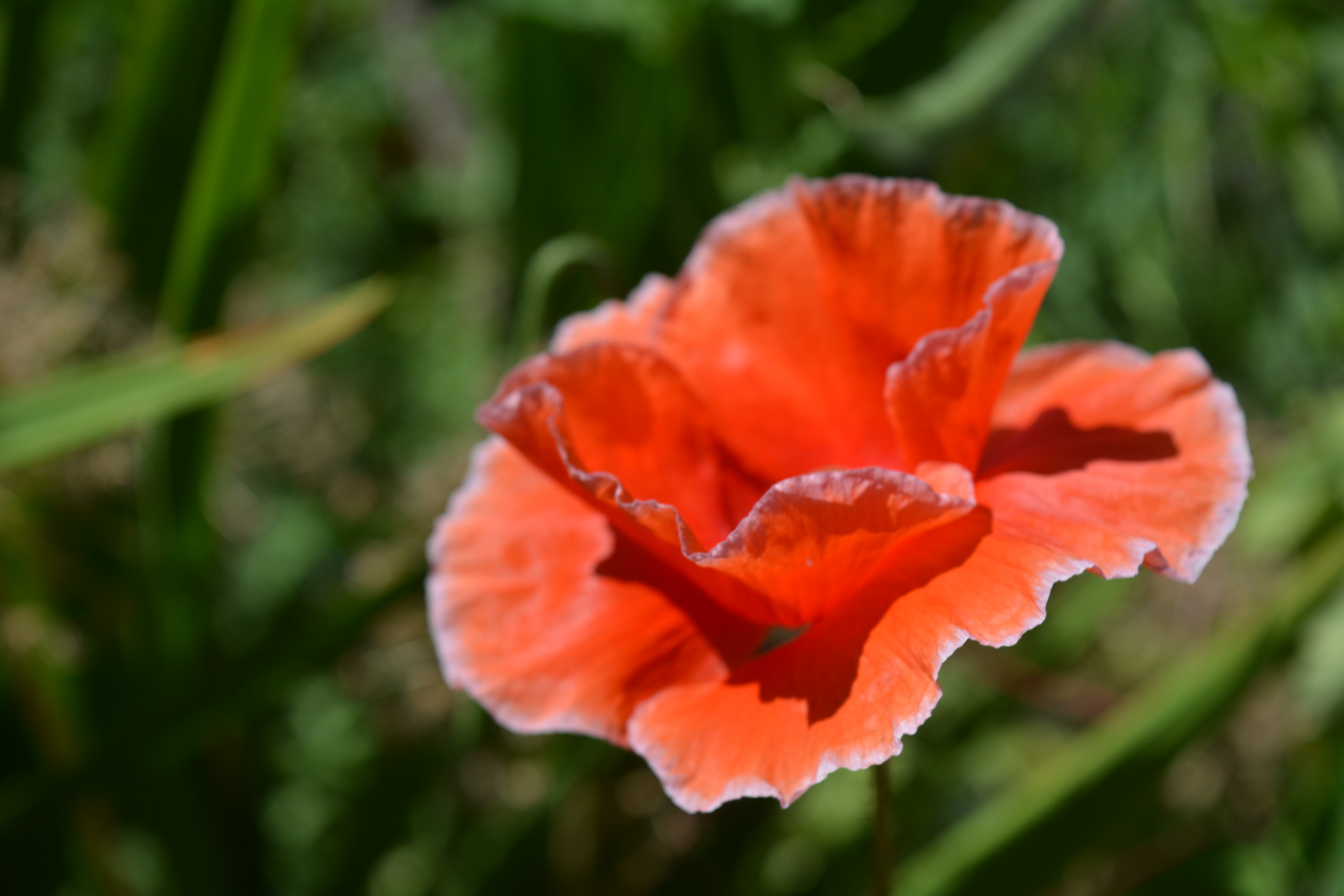
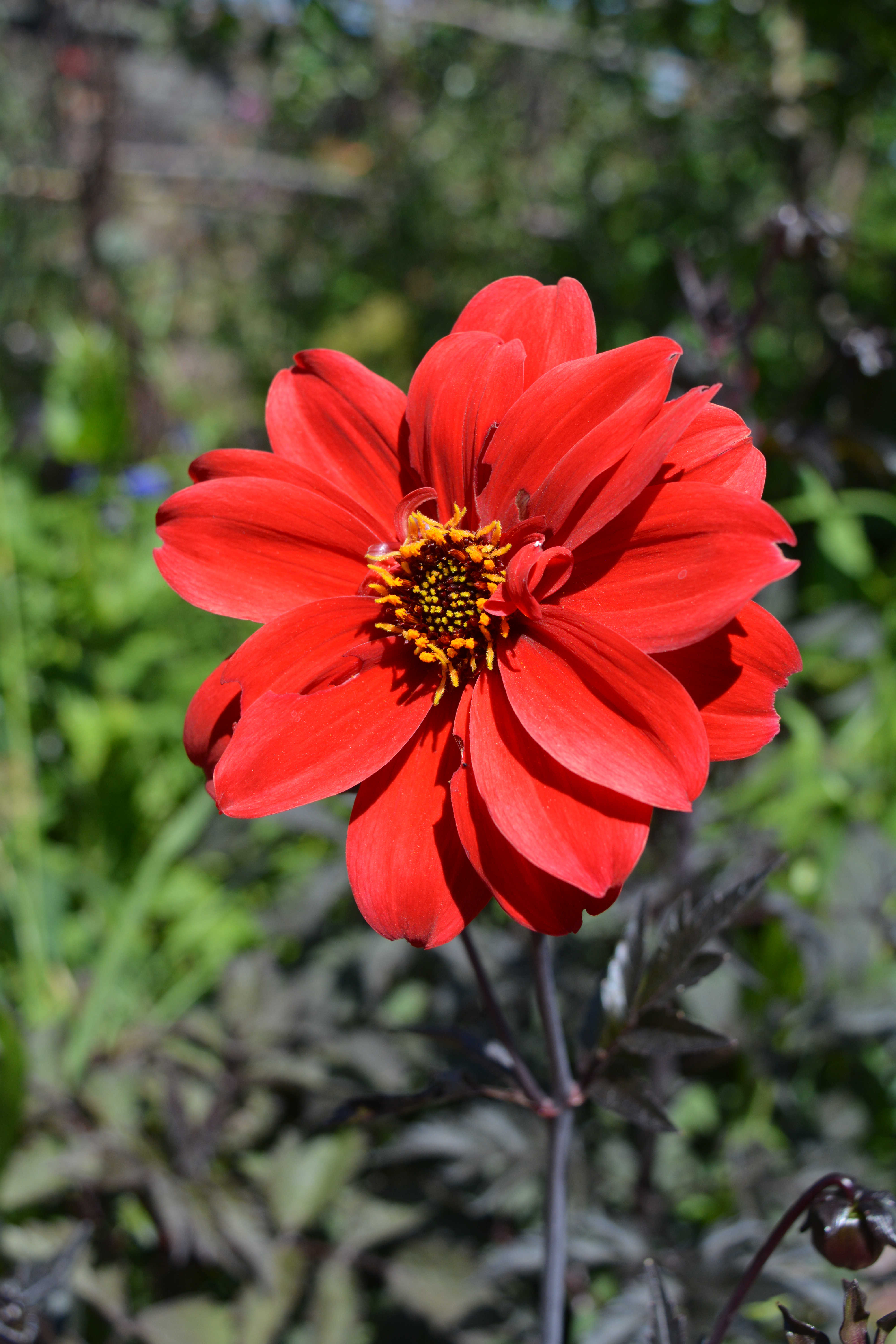
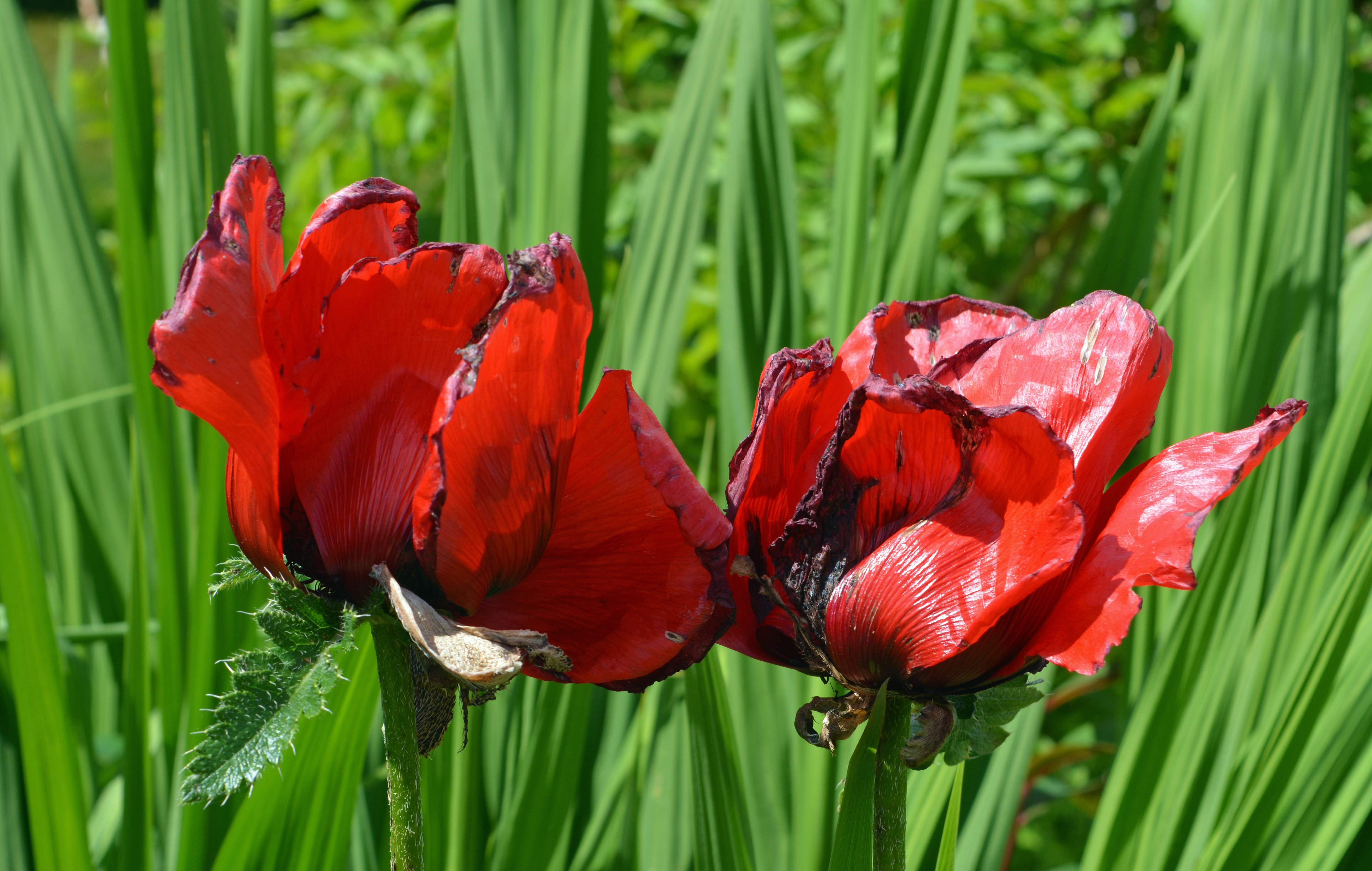
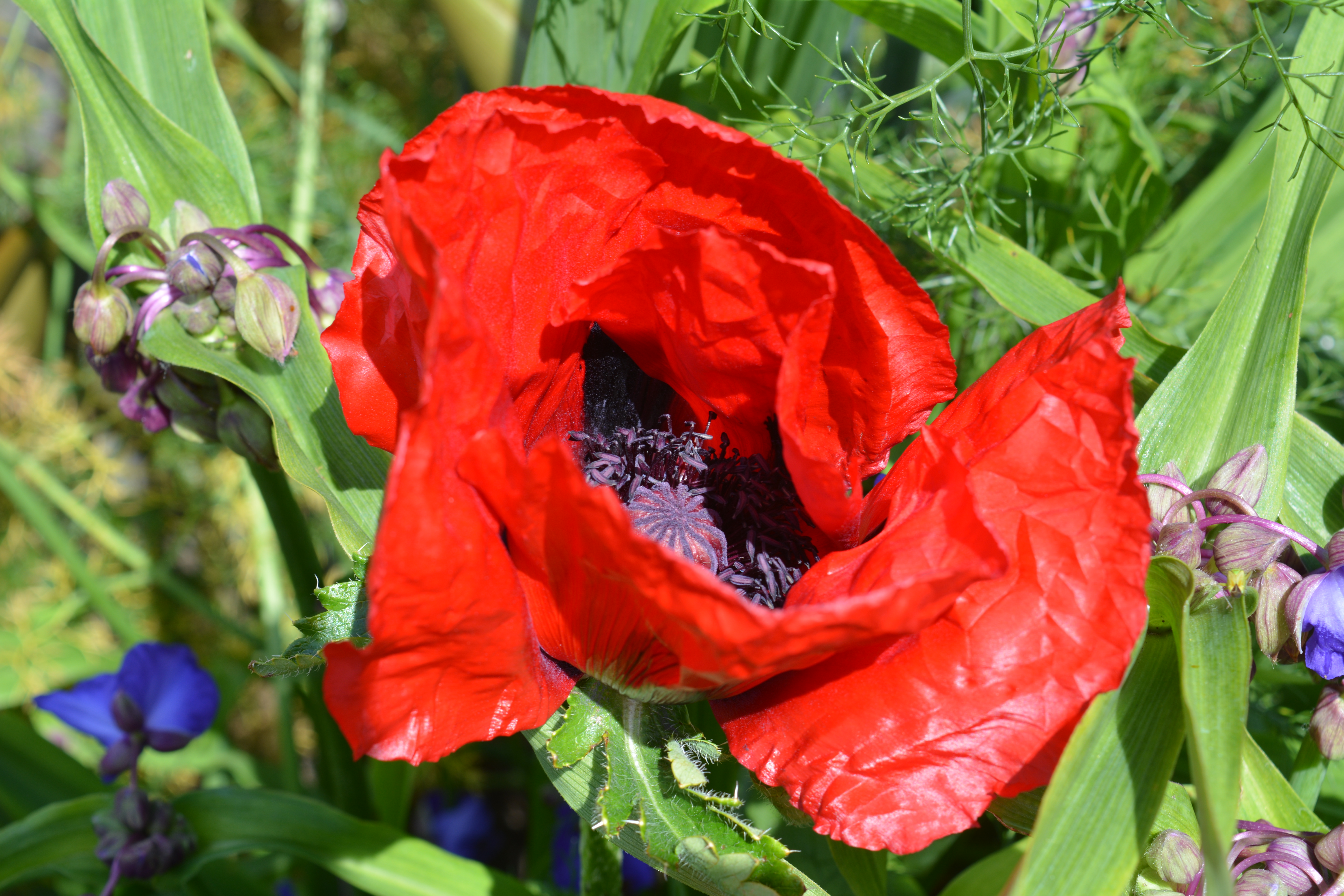
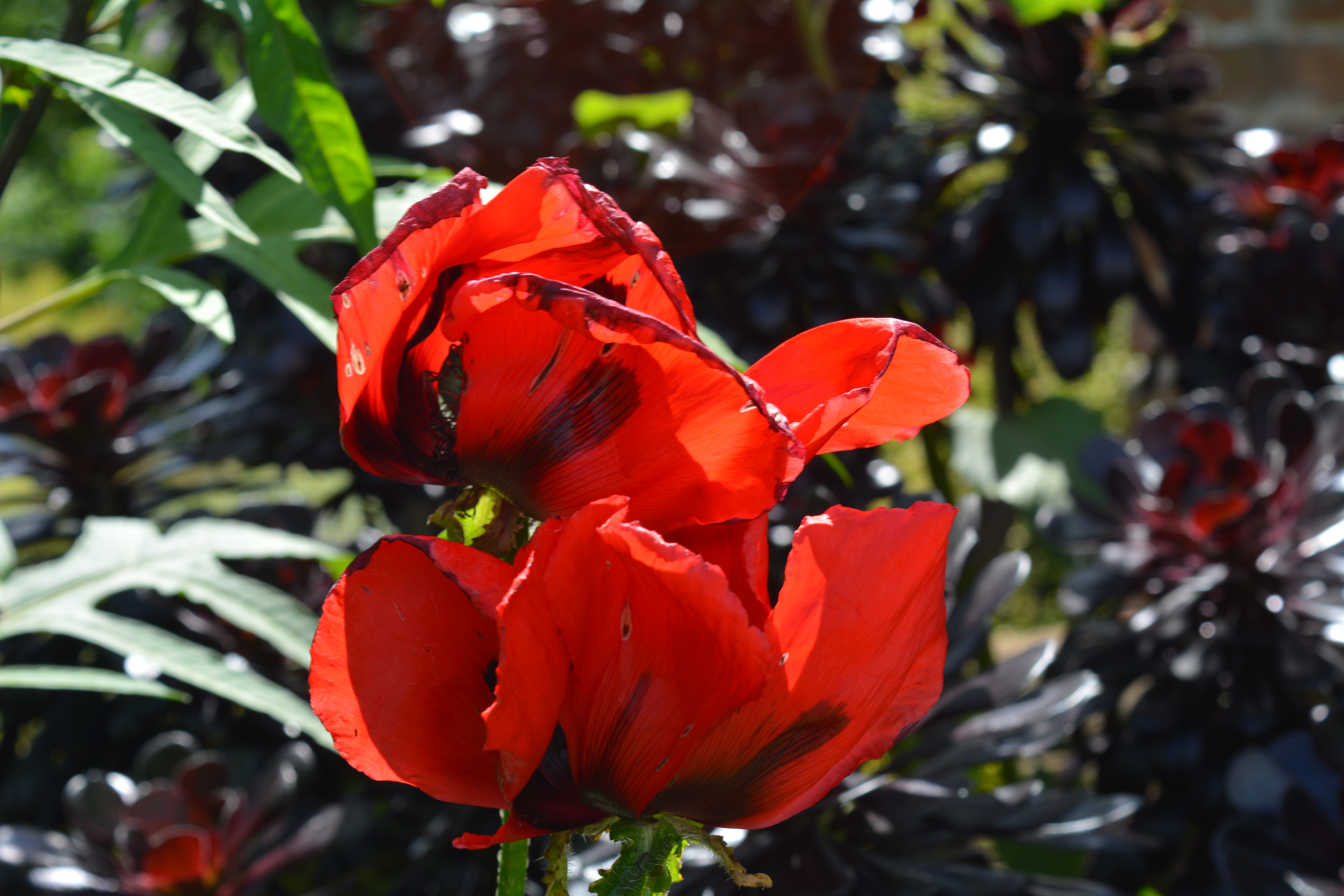
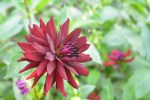
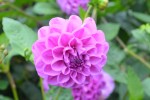
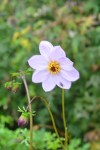
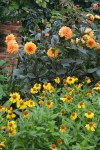
The brightest colour came from sweet peas, dahlias, lilies and other more subtle colour was provided by hardy herbaceous plants. The sun brought out their colours and the accompanying shadows emphasised their textures. Annuals were dotted through the borders, poppies and phacelia.
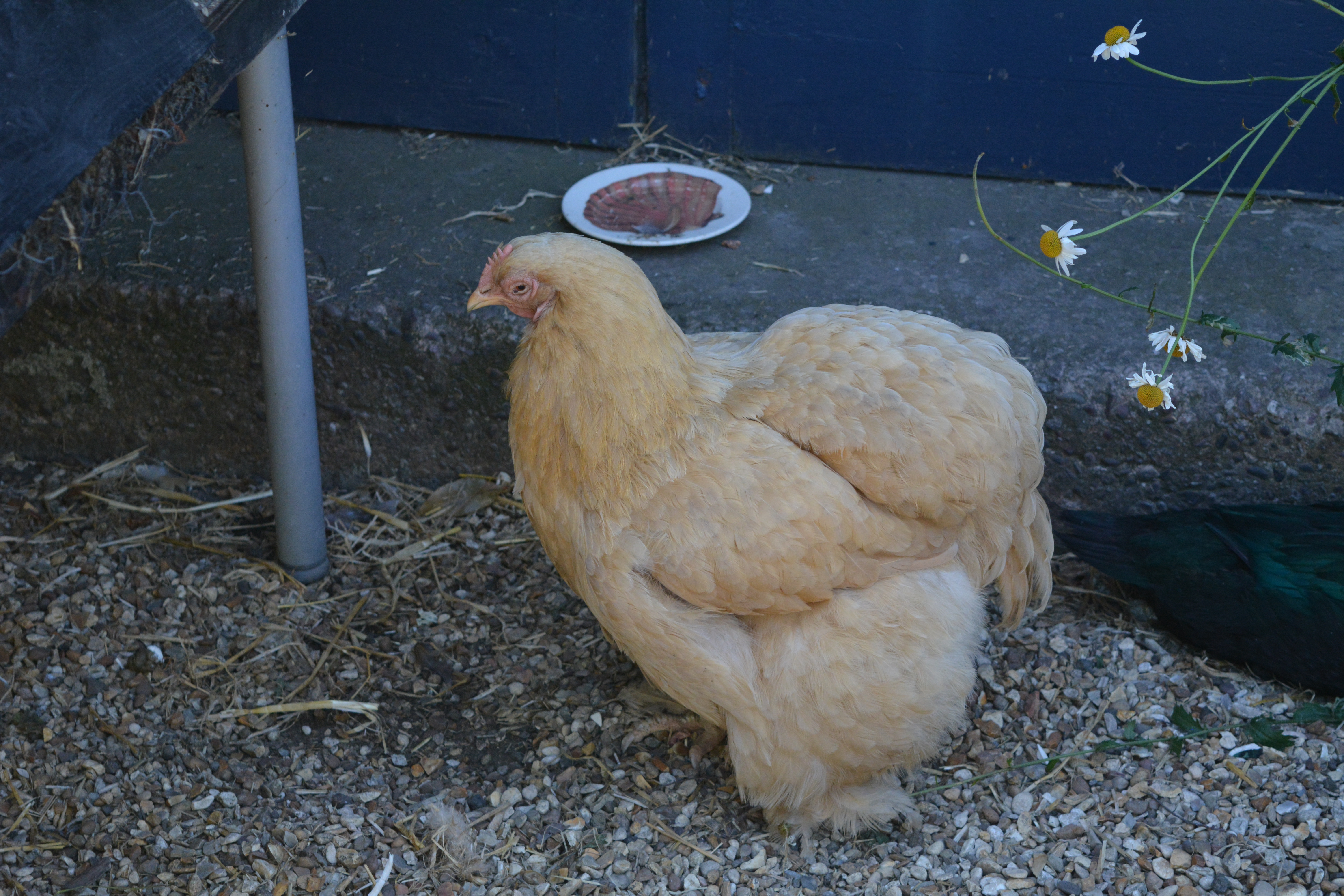
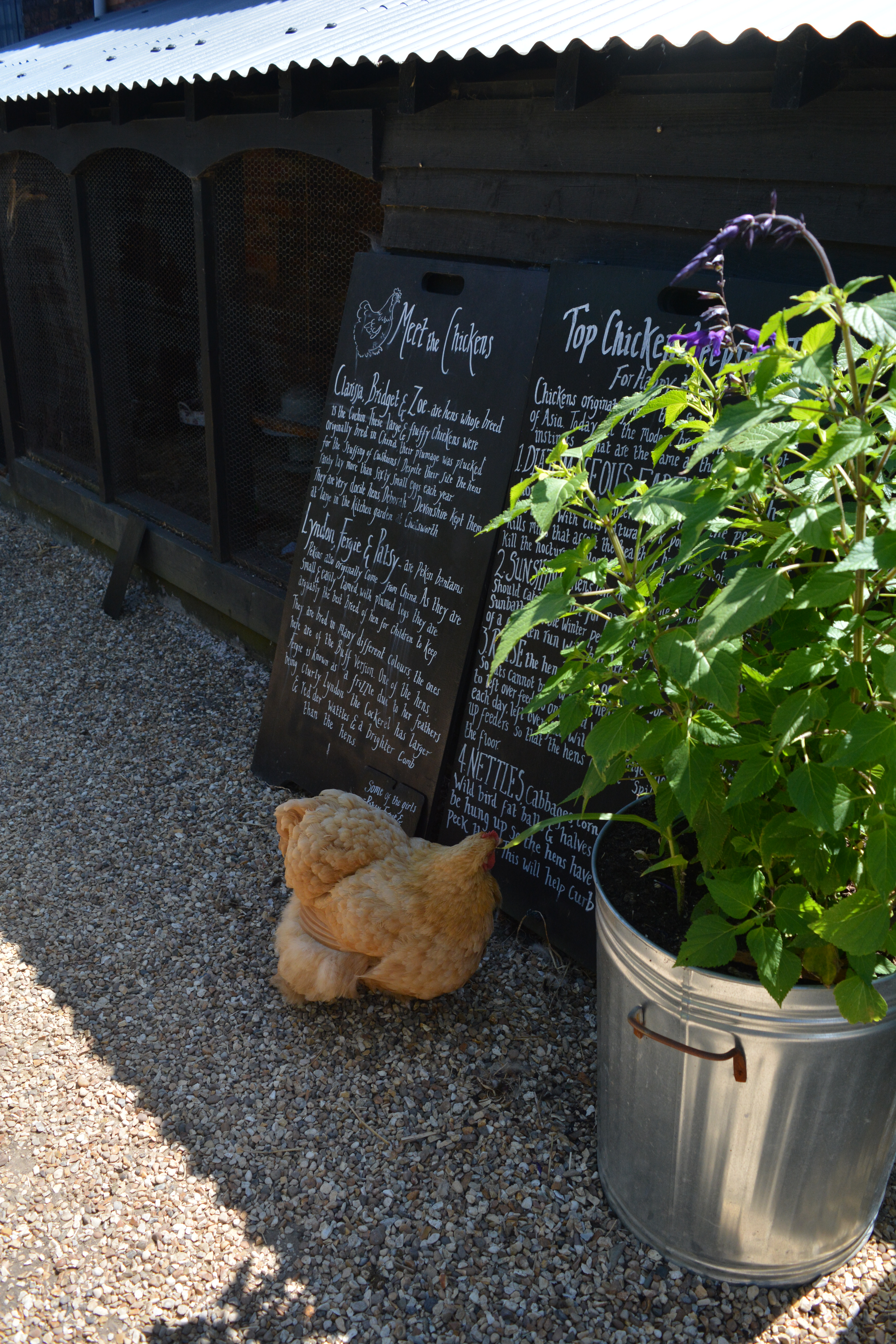
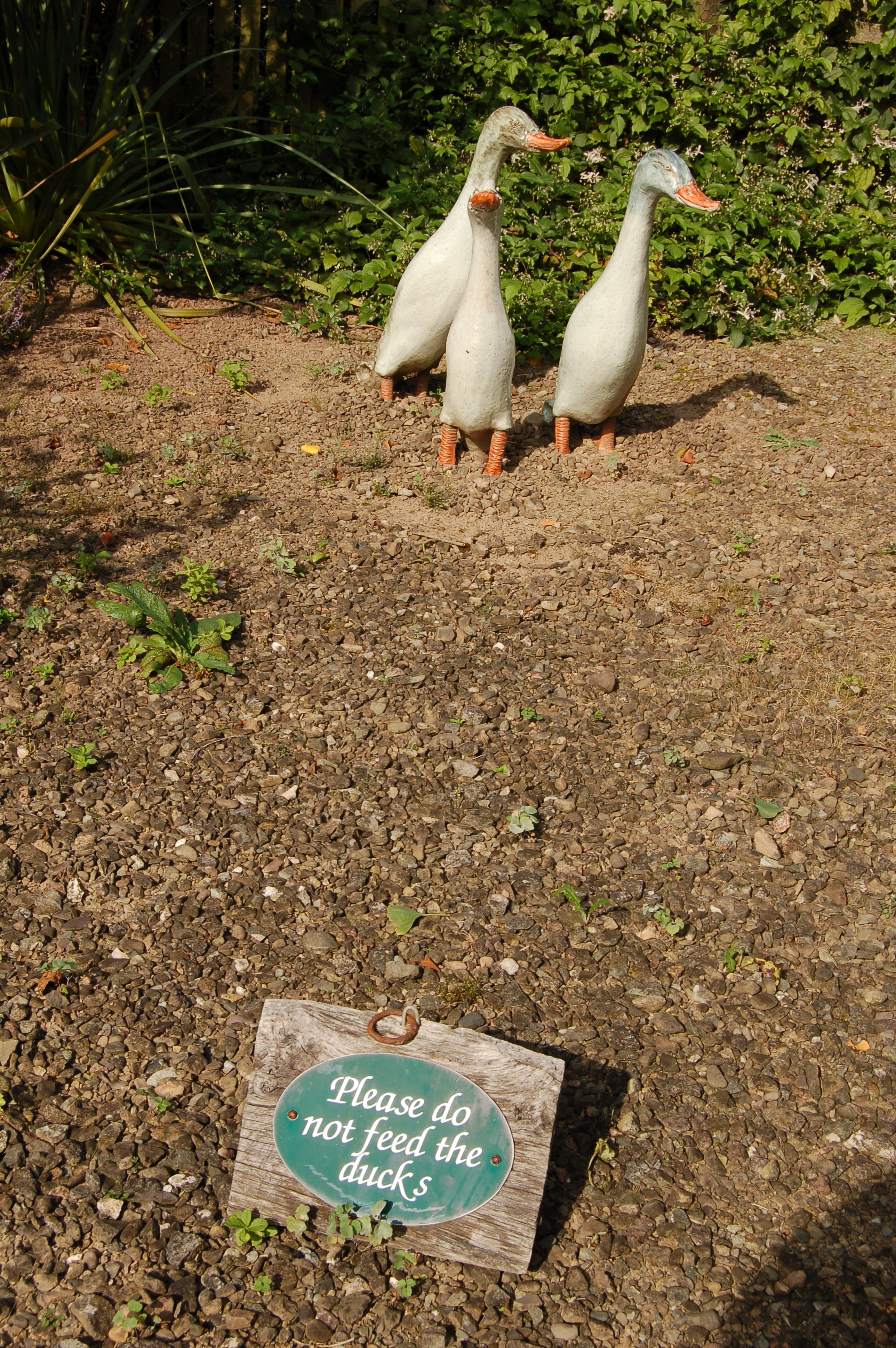
The gentle clucking and chatter of Pekin hens and the chirp of their chicks provided a calming backdrop and cut out the traffic sounds from nearby roads.
As we left the courtyard we noticed a display of succulent Echeverias in terracotta pots alongside the door close to a beautiful self-seeded native Euphorbia. This little patch of garden inside the city was so gentle and succeeded in hiding the sights and sounds of the busyness outside its walls.
We are so lucky to have so many great gardens that we can visit in a day from home. I thought a week of posts all about revisiting gardens would prepare us well for the warmer weather and get our creative gardening juices flowing again.
There are many in our home county Shropshire itself and we have easy access to Herefordshire and Powys where there are even more. Several of our favourite gardens we like to visit every year or so, so that we can see how they develop over time and change with the seasons. In this occasional series we shall do just that. I shall be featuring those gardens that we like to keep going back to.
For the first of these we travel down the trunk road southwards, the A49 which will take us through South Shropshire and into the Herefordshire border. It is just a few hundren yards from this road that we find the gardens of Stockton Bury which are described as the “Gardens in the Orchard”. The garden was born in 1900 and has never stopped developing. The present gardener, Raymond Treasure has developed it into rich tapestry of unusual trees, perennials and even a few follies, all wrapped around the old farm buildings.
It is a garden with a surprise around every corner, and however many times you visit this still happens. A living garden!
The mixed borders are rich in perennial plants that the wildlife enjoy.
At any turn in the path you can find a surprise, brightly coloured planting, secret rooms, unusual plants you can’t name,
Please enjoy this special place by browsing through my gallery of photos. There are probably too many but Stockton Bury is such a photogenic location it becomes hard to edit your shots.
Our return visit to Stockton Bury was as special as the first we ever made, full of special plants, secrets and surprises and touches of humour.
We dropped off at Bodnant Gardens two thirds of the way along our journey to our holiday home on Anglesey, a garden we visit often as it is a solid favourite at all times of the year.
I hope you enjoy my photos below taken at Bodnant in early September.
We will without doubt return some time soon as we return to this wonderful garden several times every year to see it in each month’s glory.
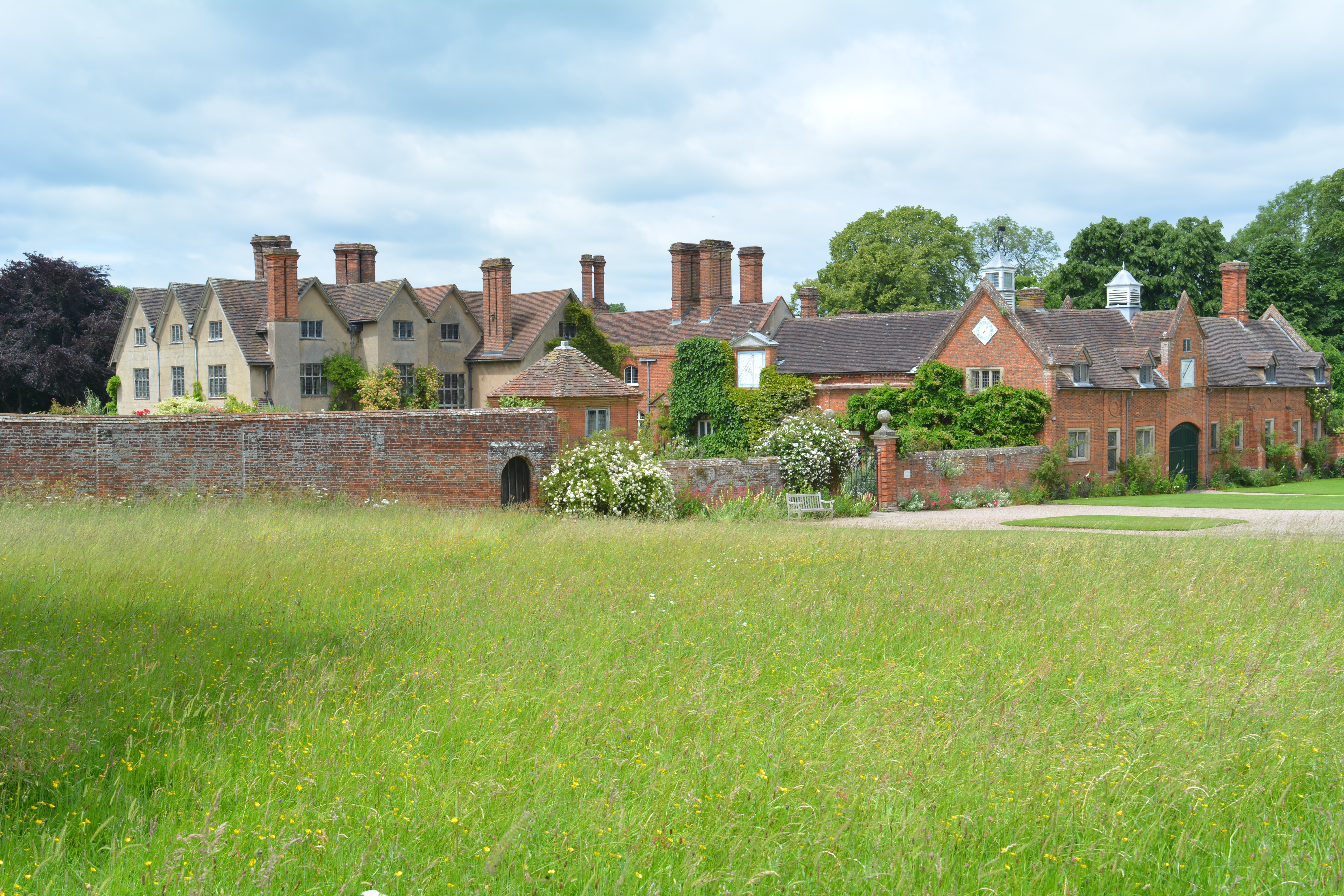
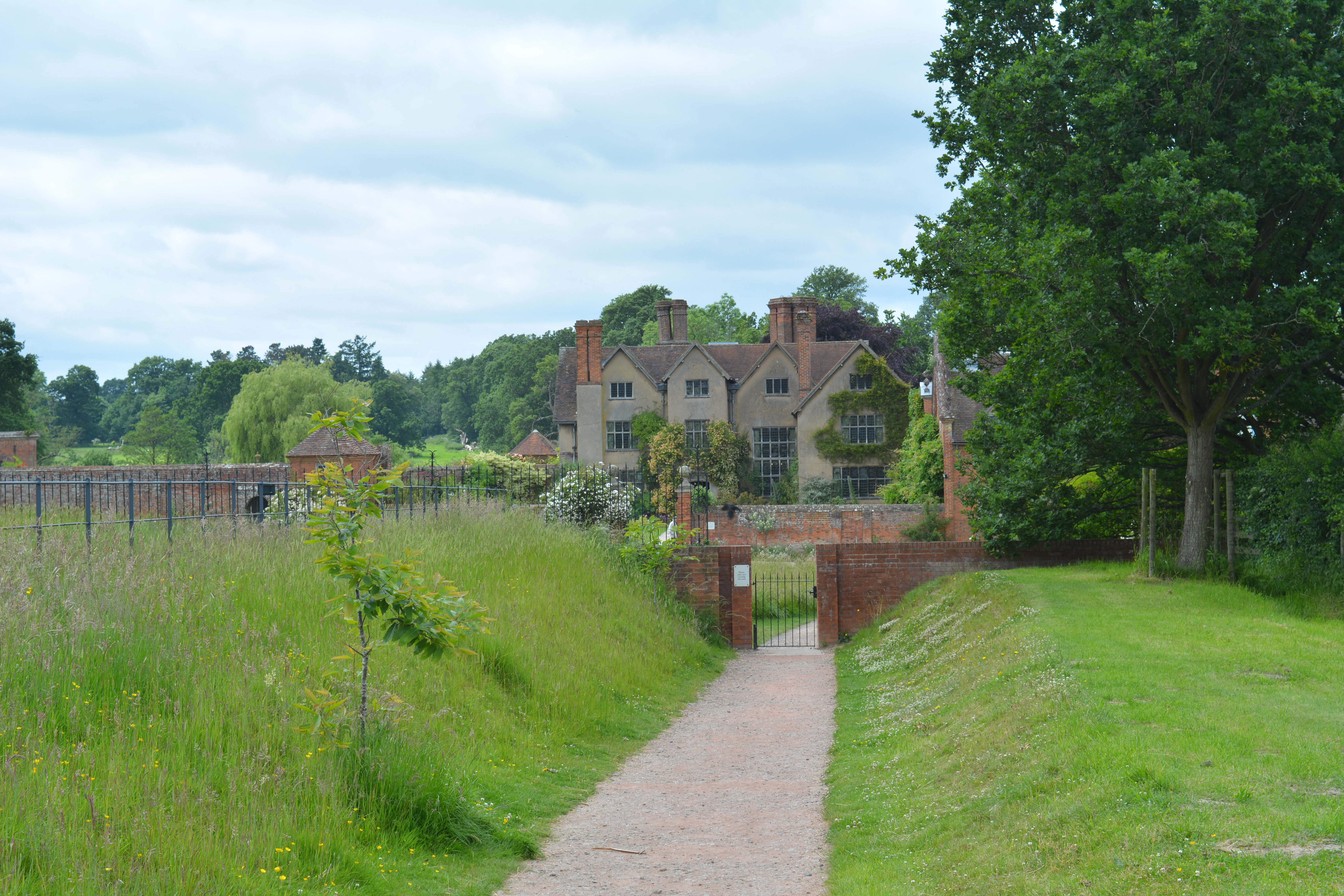
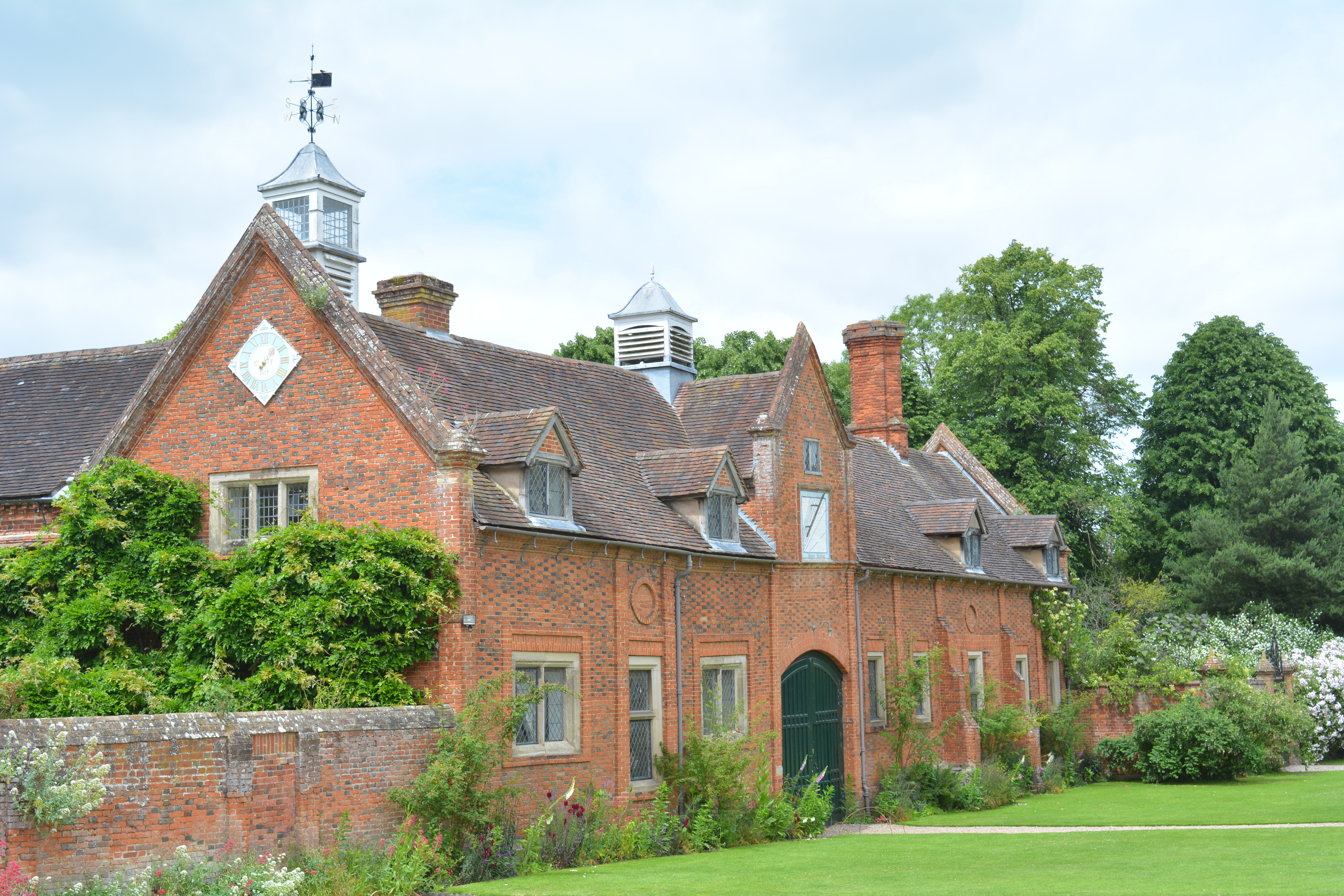
We have held memberships of the National Trust for over 40 years and one of the first we took our two children to was Packwood Hall. Packwood is now a firm favourite and we made a visit again this year. The welcome sign describes Packwood as “a house to dream of, a garden to dream in”. We were only intending to look at the house from the outside and mainly intended to explore the garden in greater detail. Packwood is well known for its unusual collection of sundials.
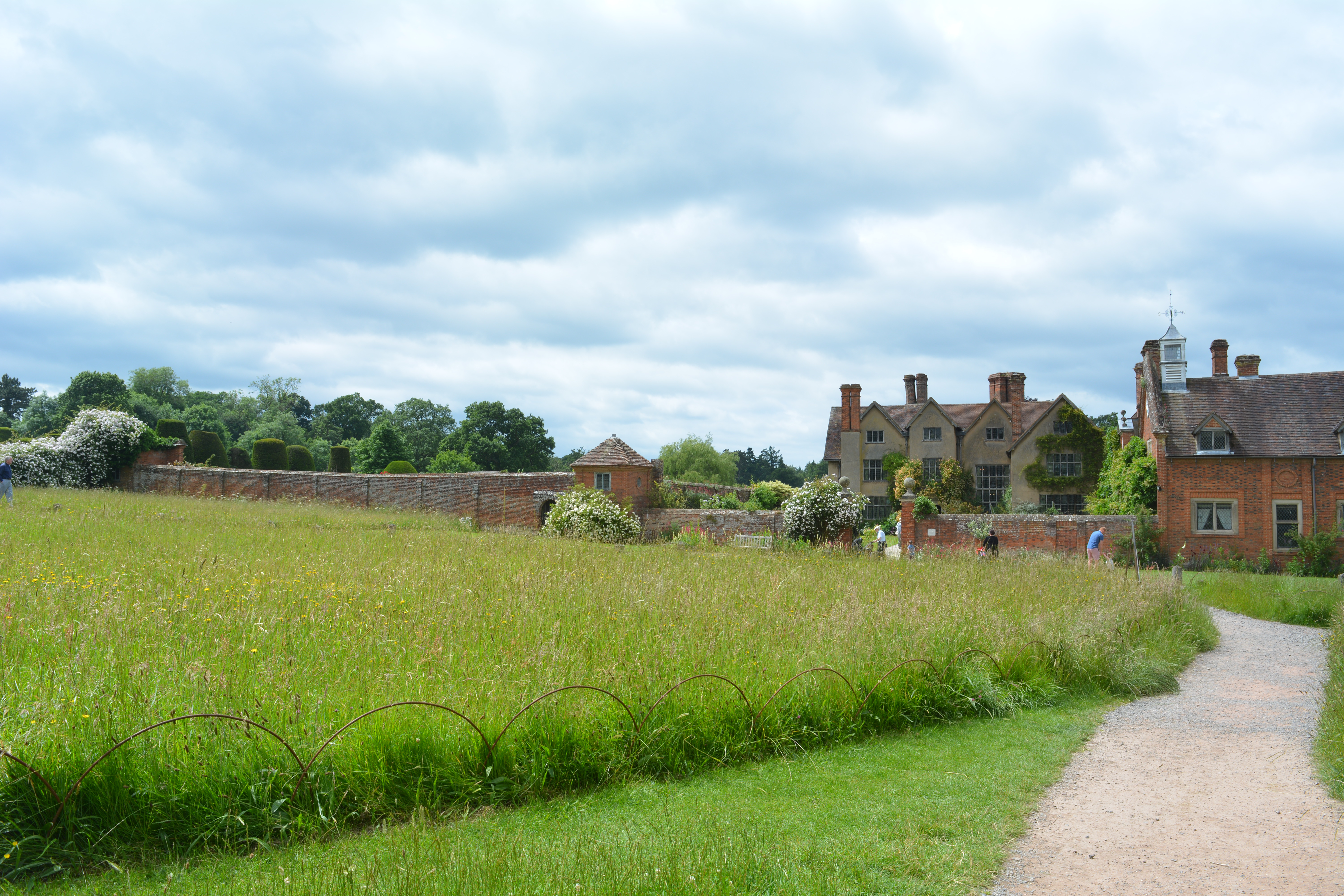
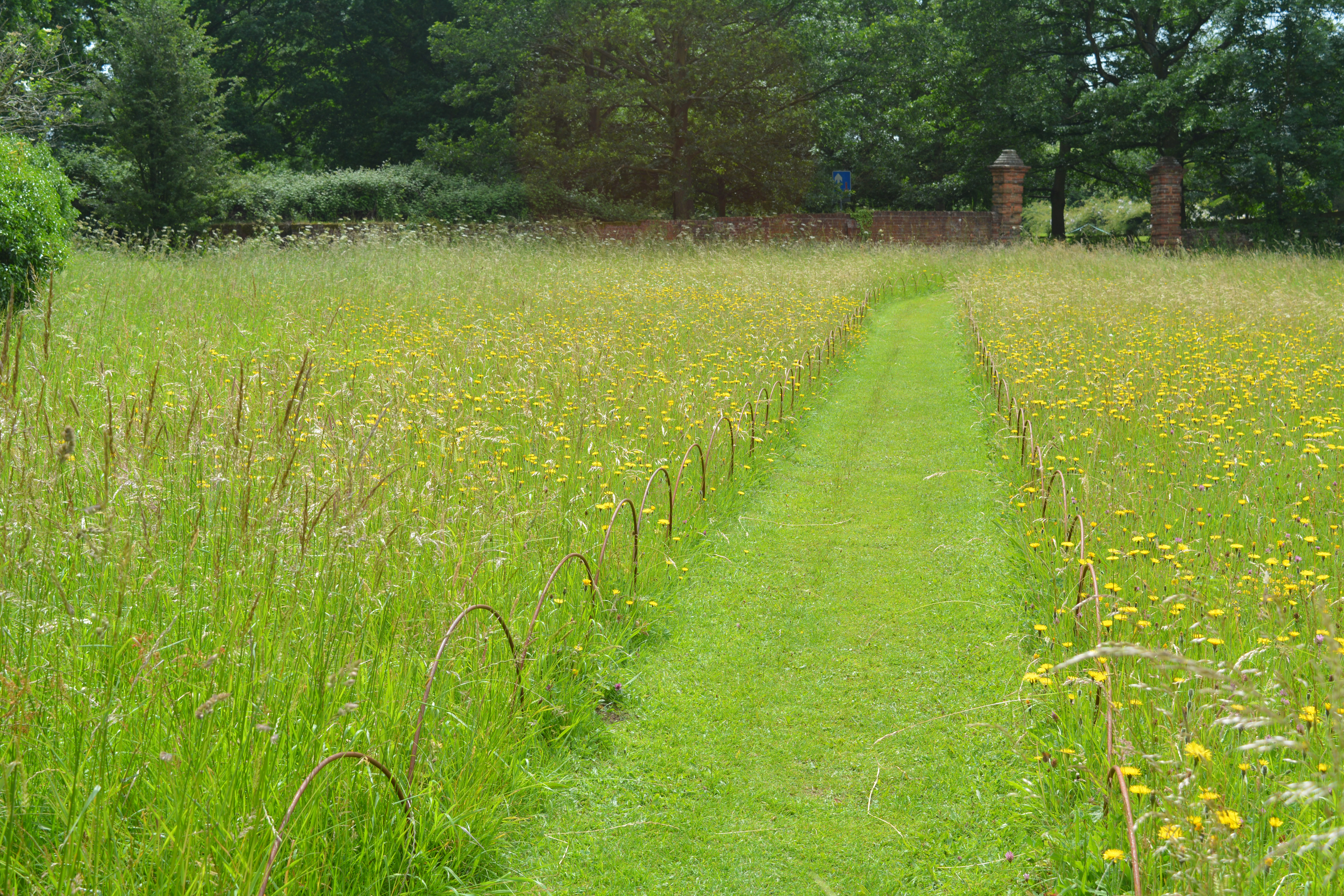
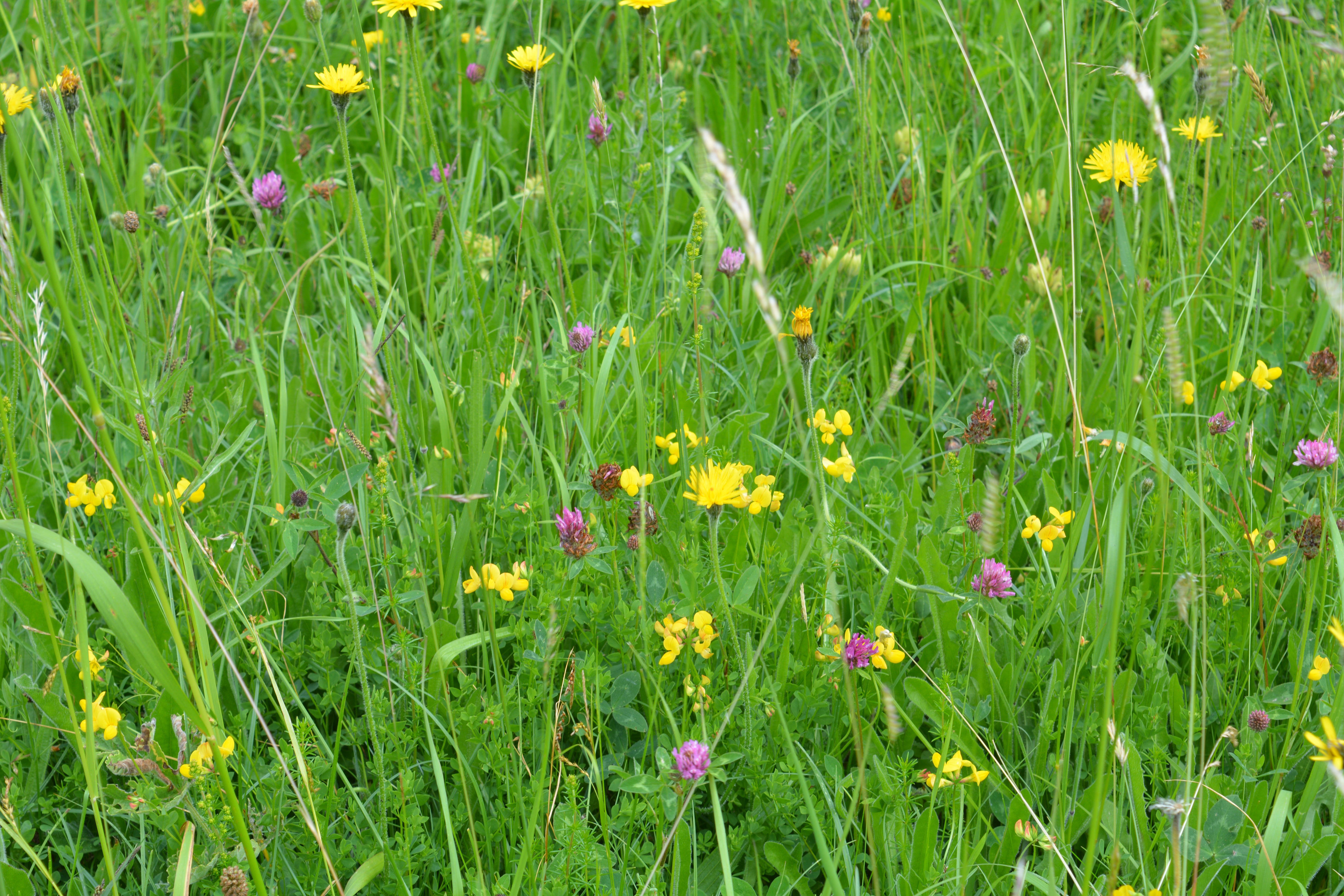
The approach to Packwood is one of the most welcoming we have ever come across, passing through wildflower meadows and impressive gateways.
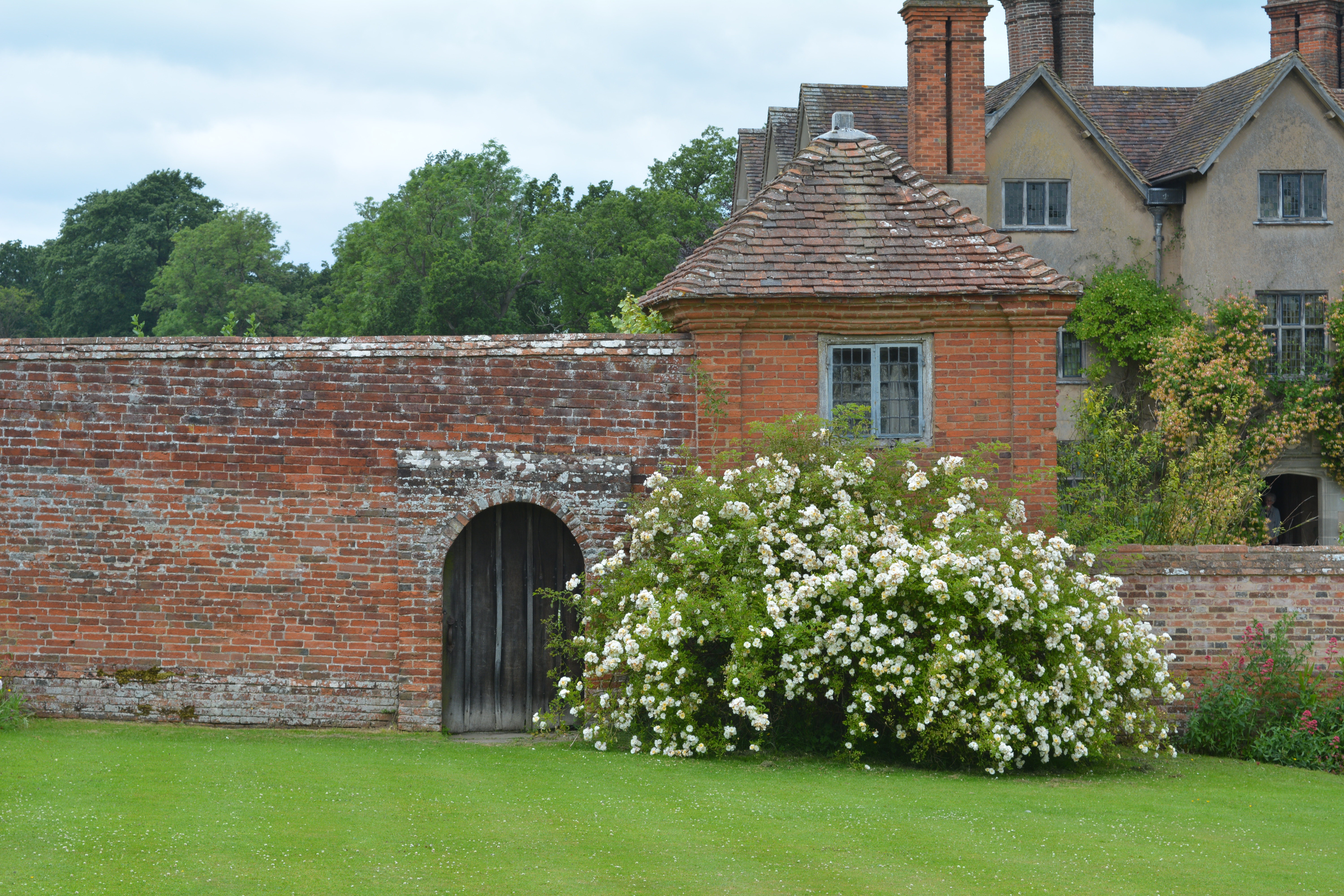
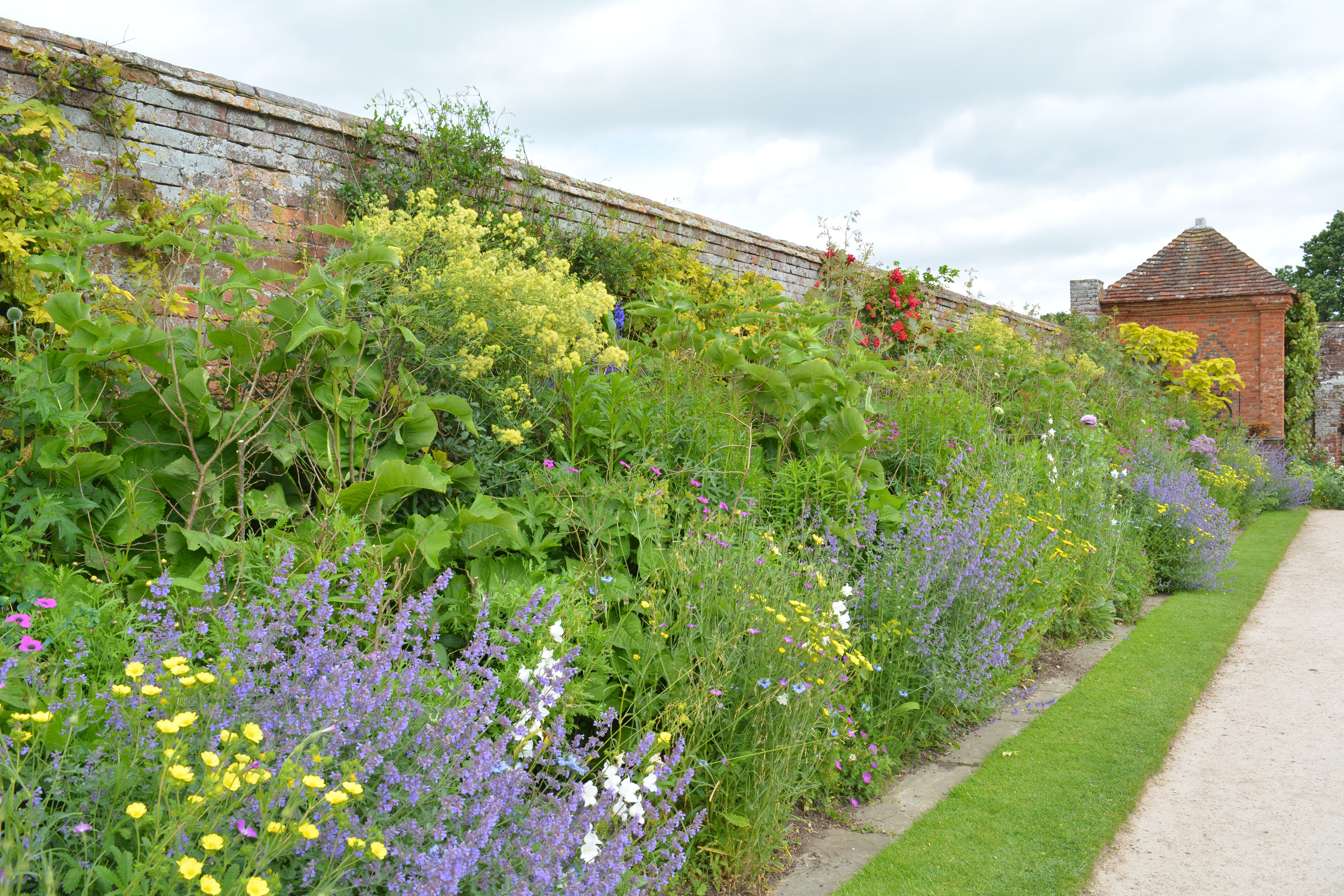
Once we had passed through a few of these gateways and archways we discovered colourful well-designed borders full of herbaceous perennials and roses. Much of the planting had been chosen to attract wildlife, predators and pollinators.
The gardens were well structured, divided into garden rooms with different characters and atmospheres in each. In one formal lawn area we came across a rectangular sunk garden built from limestone and its borders were planted with plants that enjoyed the dry well drained soil. These plants provided a strong contrast to the lush look of the rest of the gardens.
Lush planting was prevalent elsewhere throughout the garden making for an atmosphere of excitement. There were wonderful individual plants to be found as well as well designed borders.
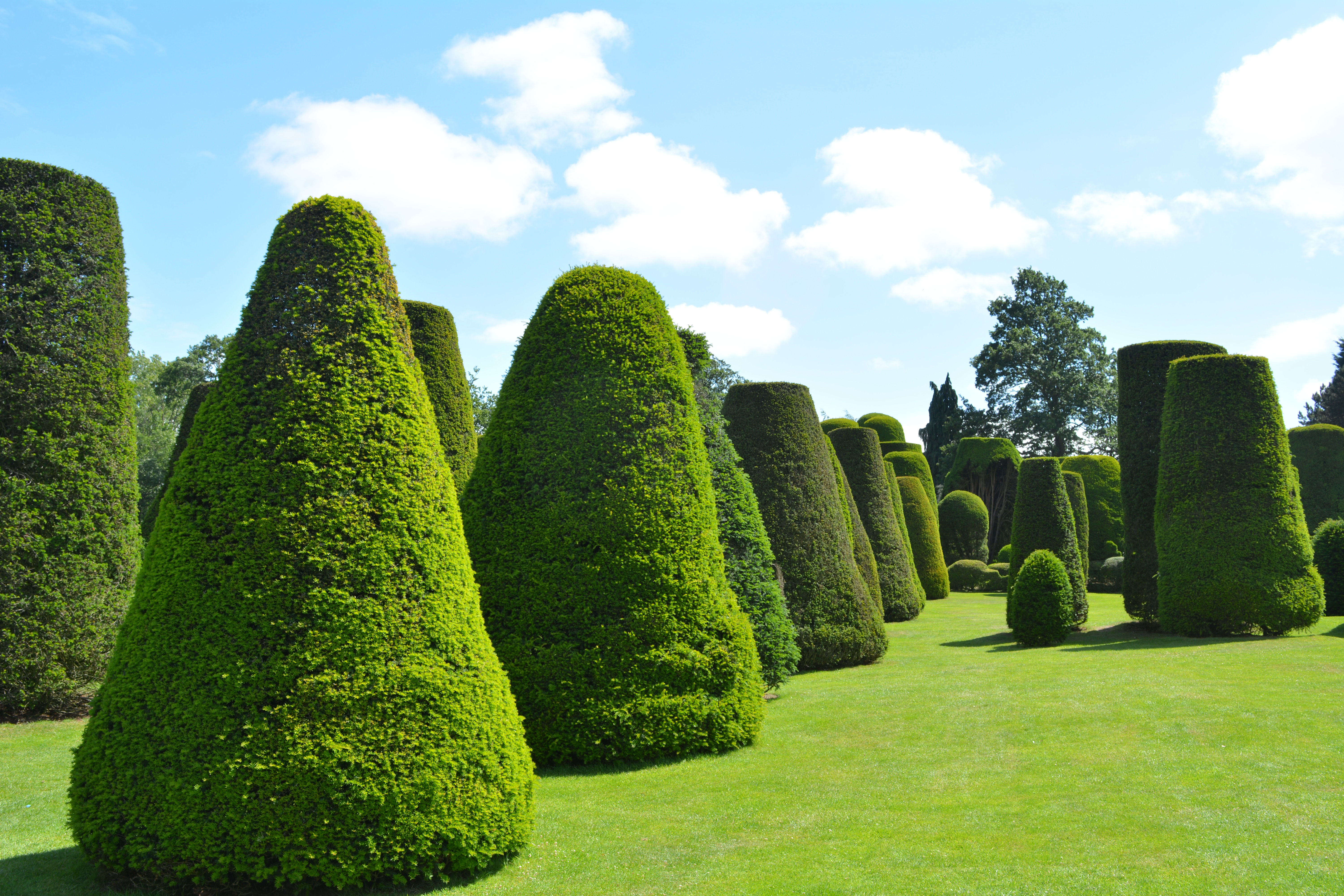
A well-known aspect of the gardens at Packwood is its topiary, especially a group called the twelve apostles. Personally I found this part of Packwood rather dull but here are the photos I took to illustrate it. However I do have a soft spot for cloud pruning of hedges.
A Walk in the Park – Attingham Park November
Number eleven in my series of posts where I report on our monthly visits for a wander around Attingham Park, our local National Trust property. Just as in October I was in a wheelchair pushed around the paths by Jude, the Undergardener so some of the photos will look taken from a low angle. Please enjoy sharing our visit with us!
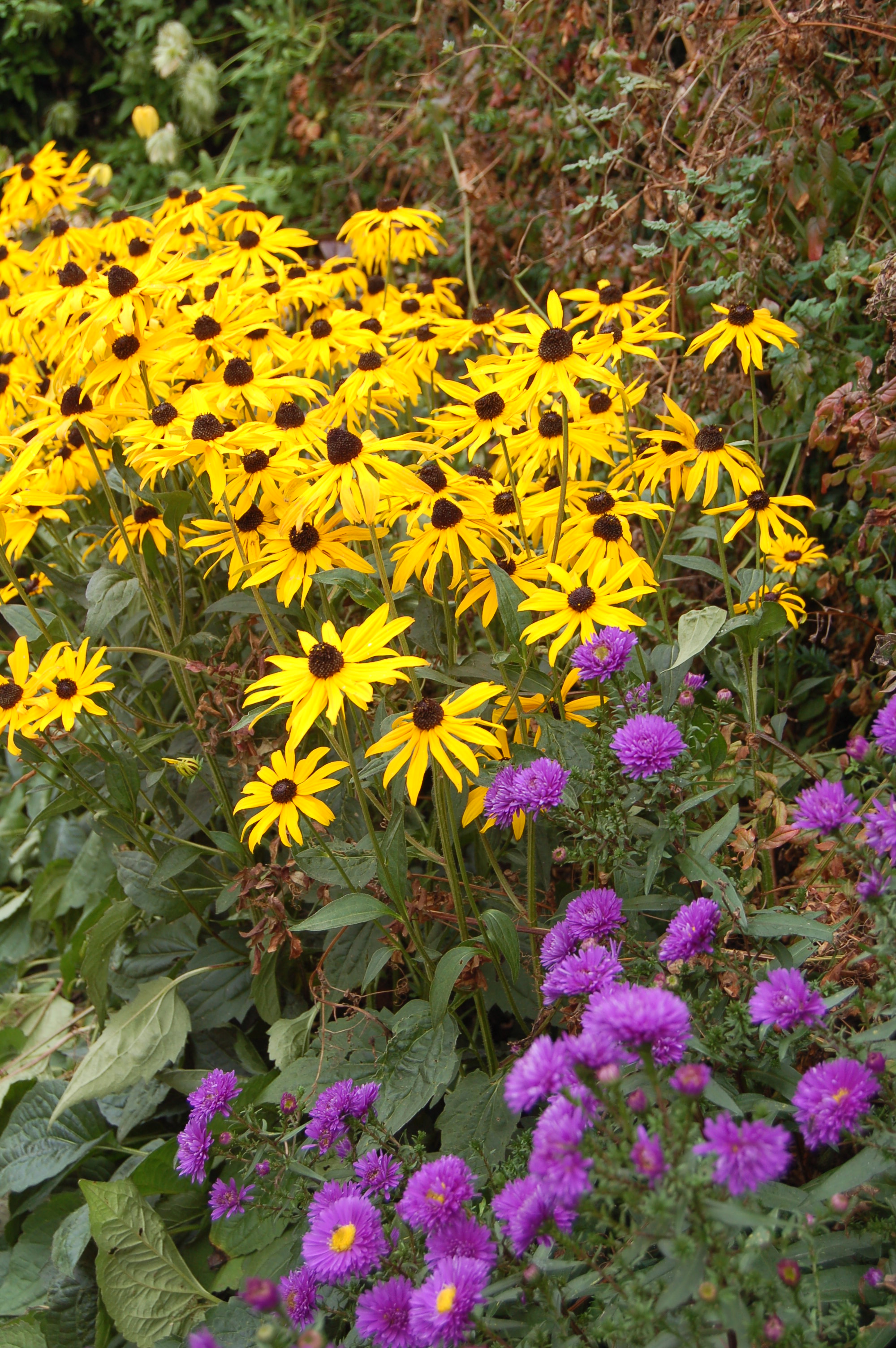
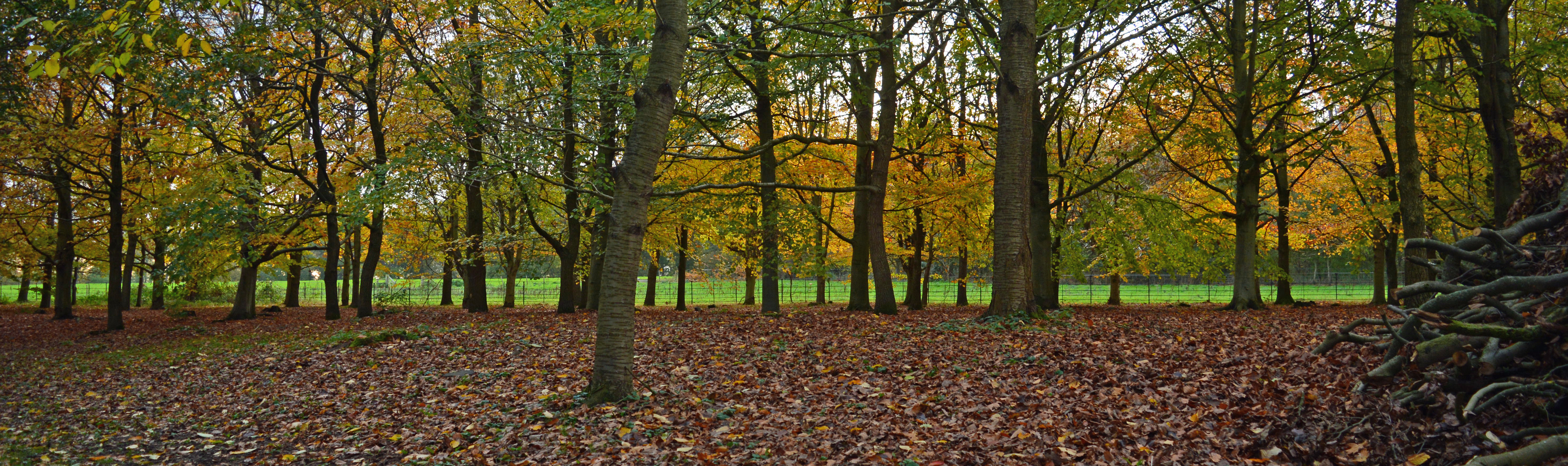
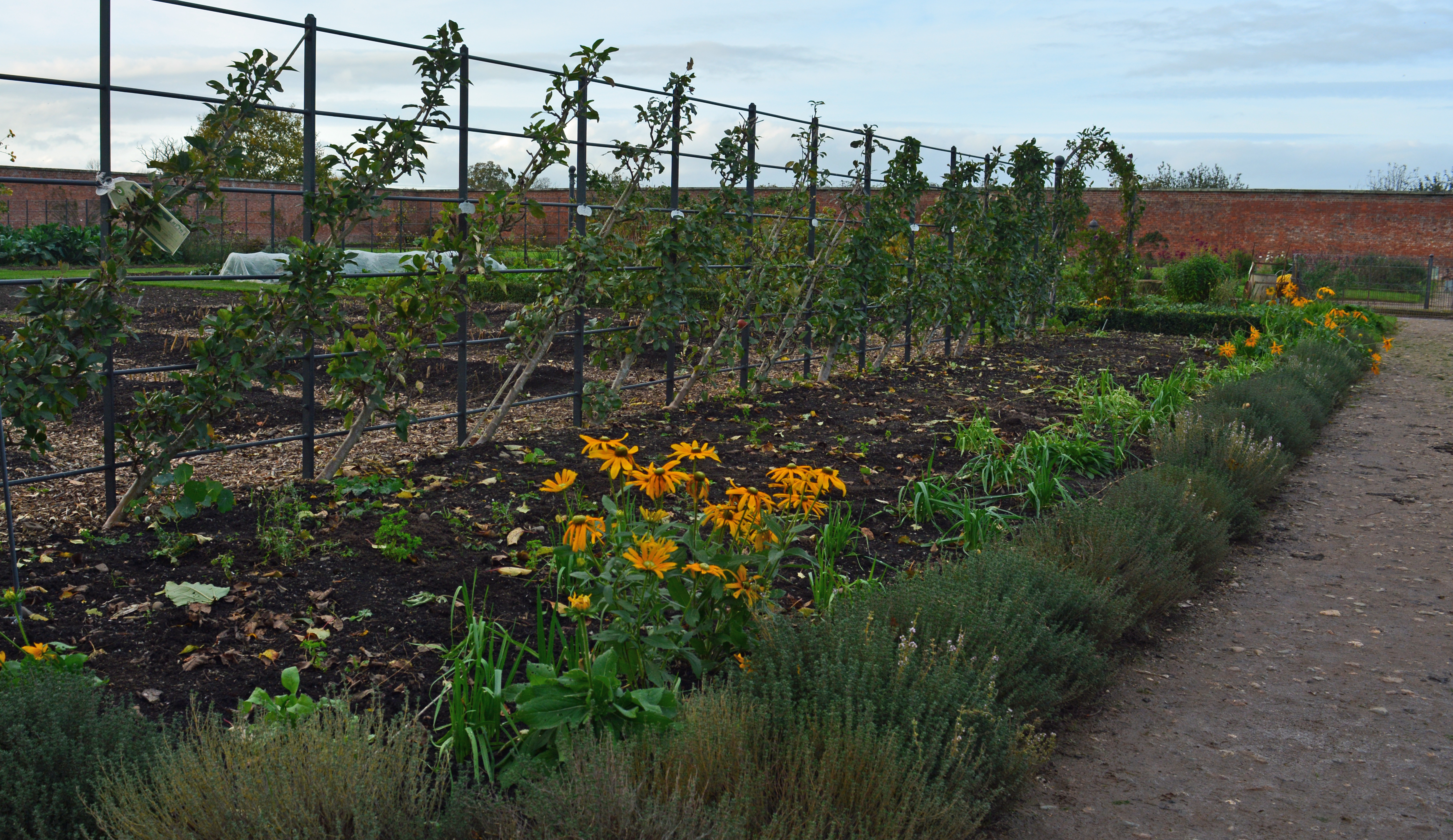
We decided to follow the One-Mile Walk and as usual made our way firstly towards the Walled Garden. Autumn had settled in although some varieties of tree still held onto a full complement of foliage, awaiting another few days of frosts to join into the feeling/essence of the season. The colourful mixed herbaceous and annual flower borders which have been welcoming us into the walled garden have almost lost their colour with just a few yellow-flowered Rudbeckias extending the show.
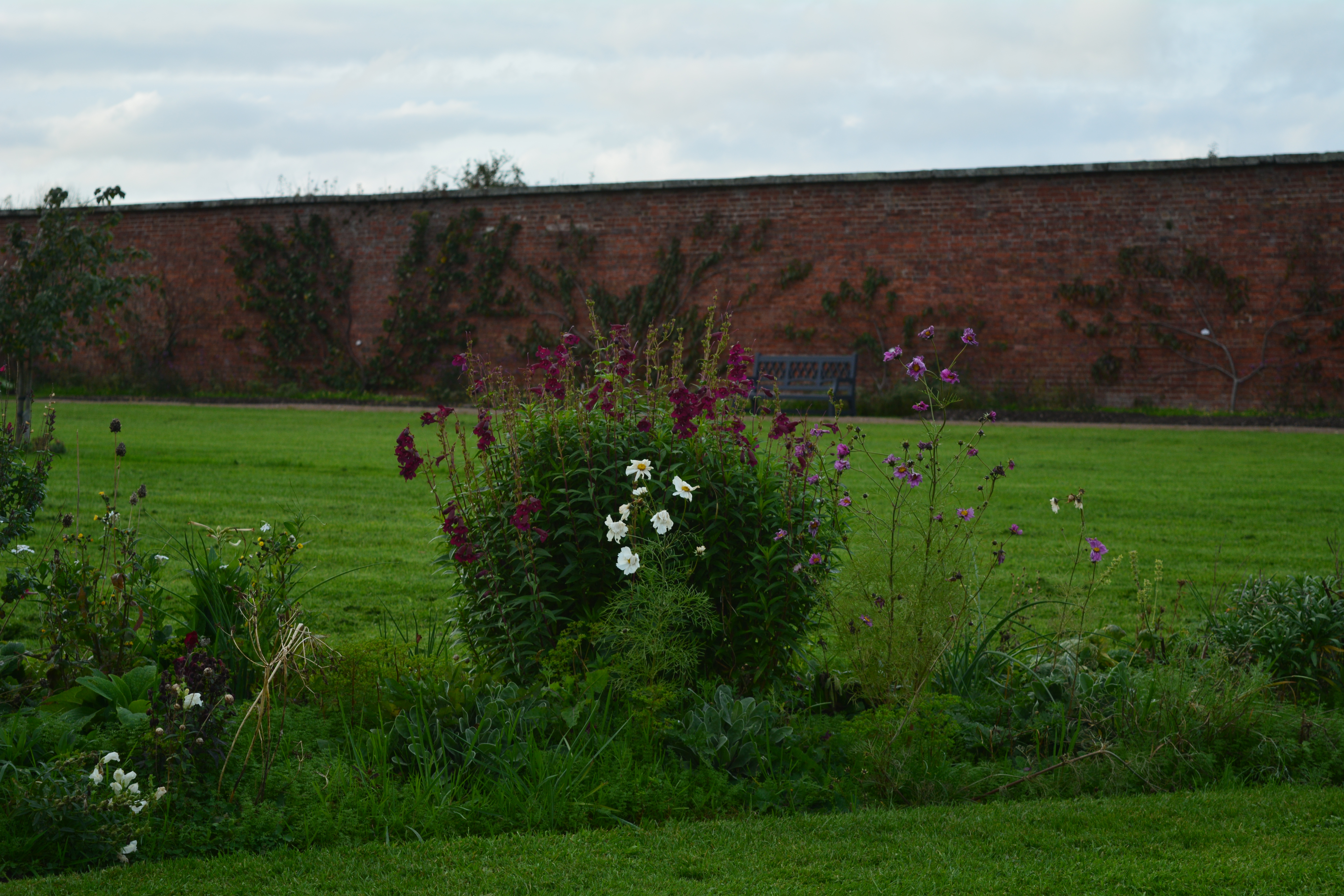
The borders around the central circular dipping well still showed colour from healthy-looking specimens of Penstemen “Garnet” and a few white flowers as companions.
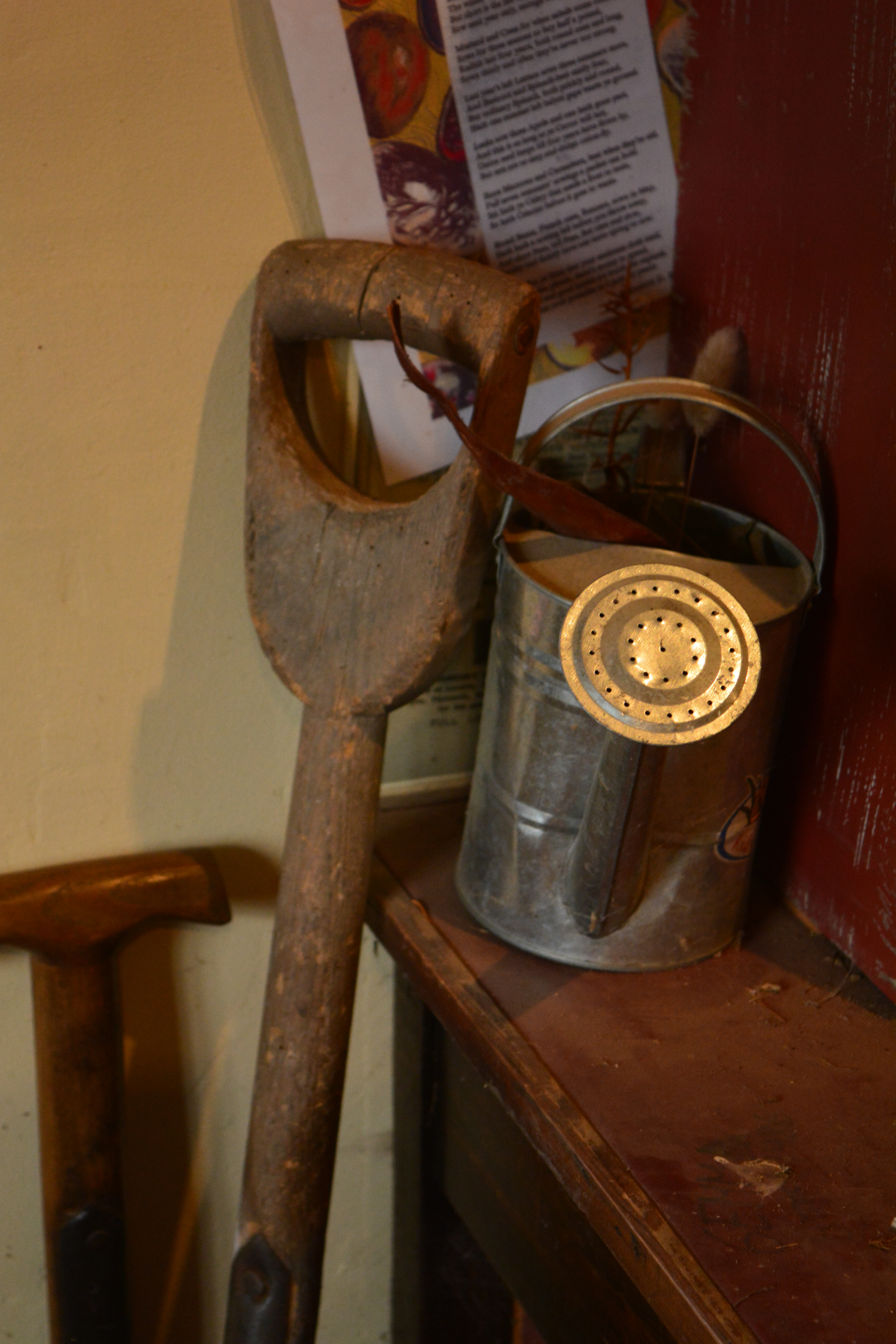
The vintage hose-reel held modern plastic hose in a bright yellow rolled up to form tight patterns.
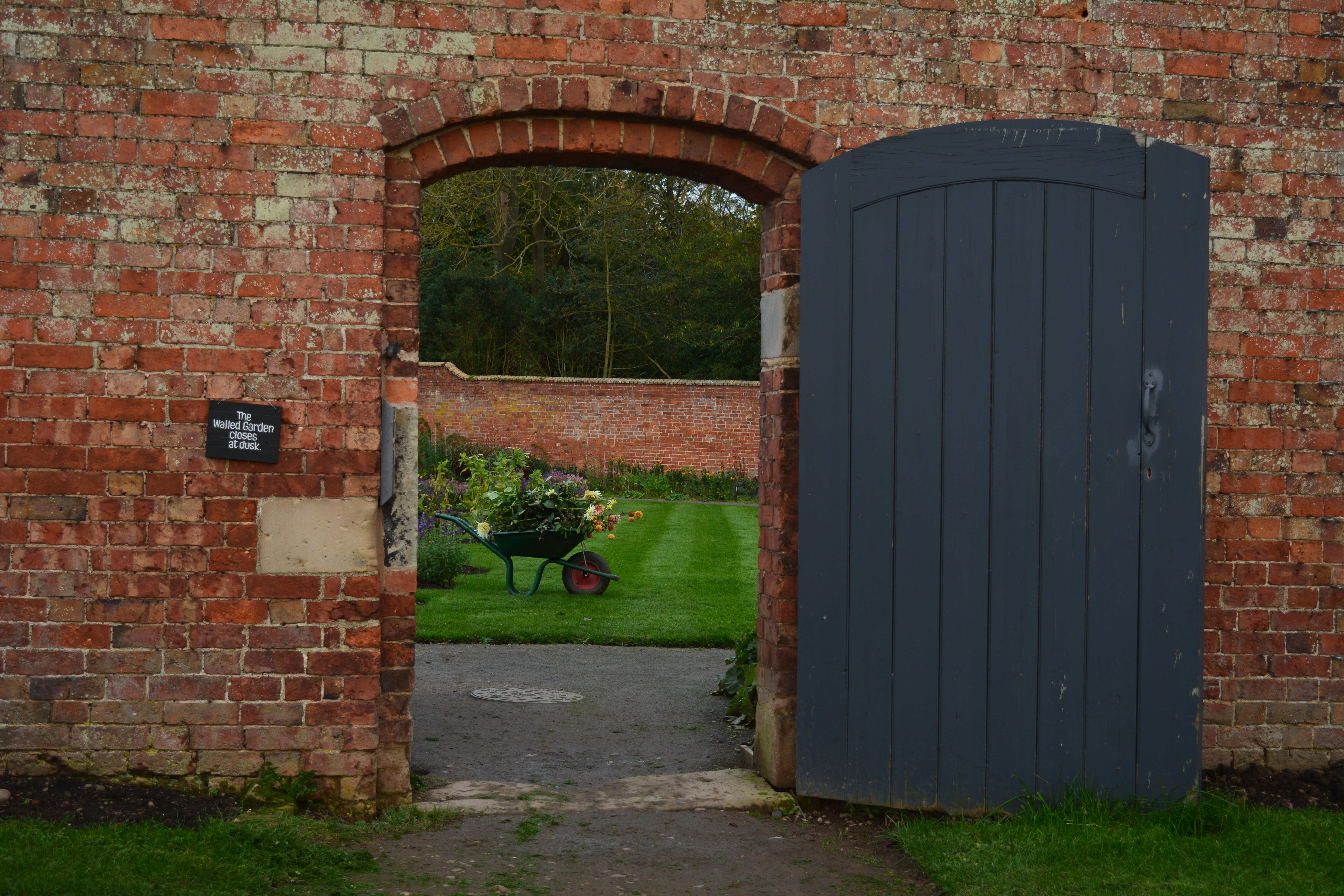
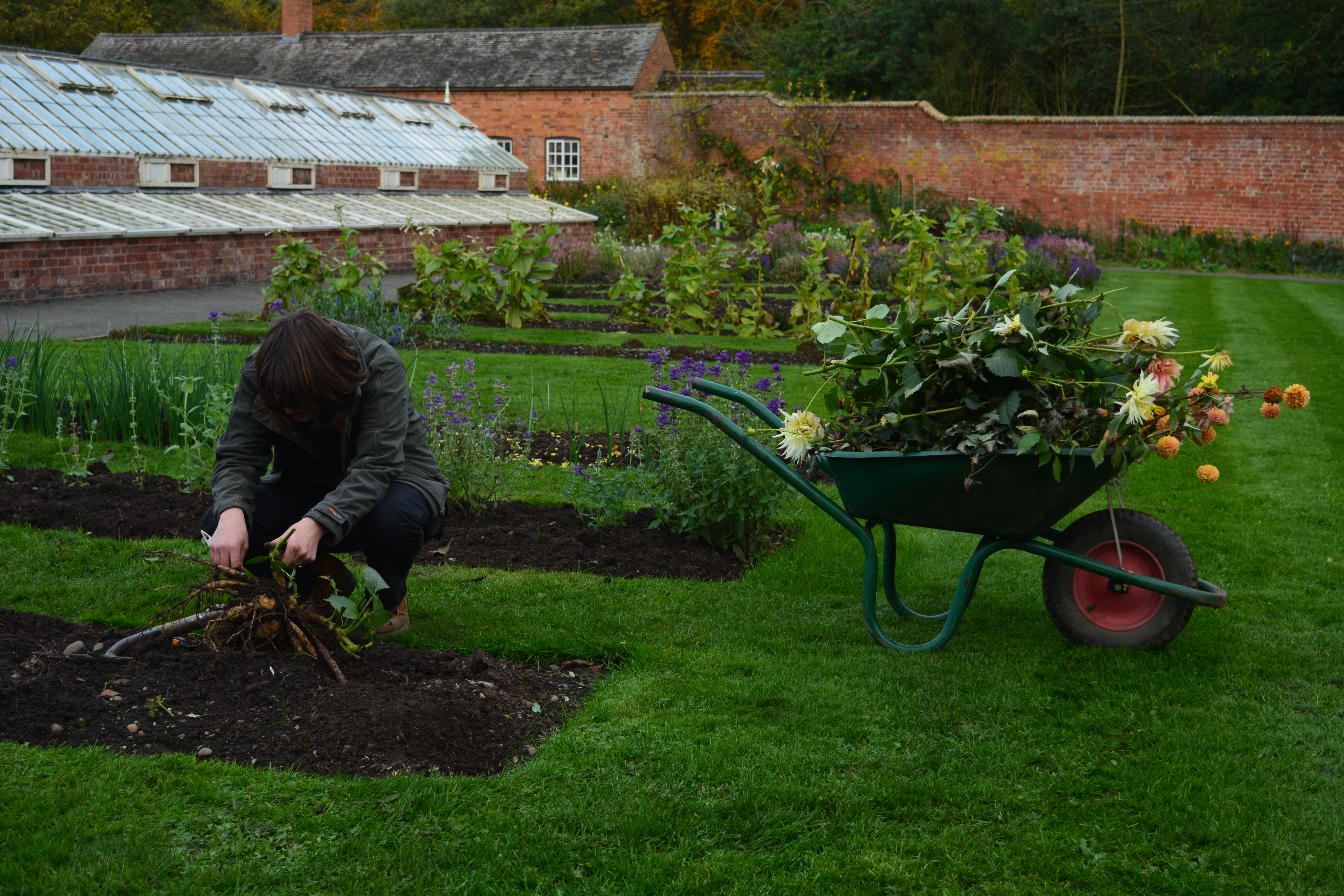
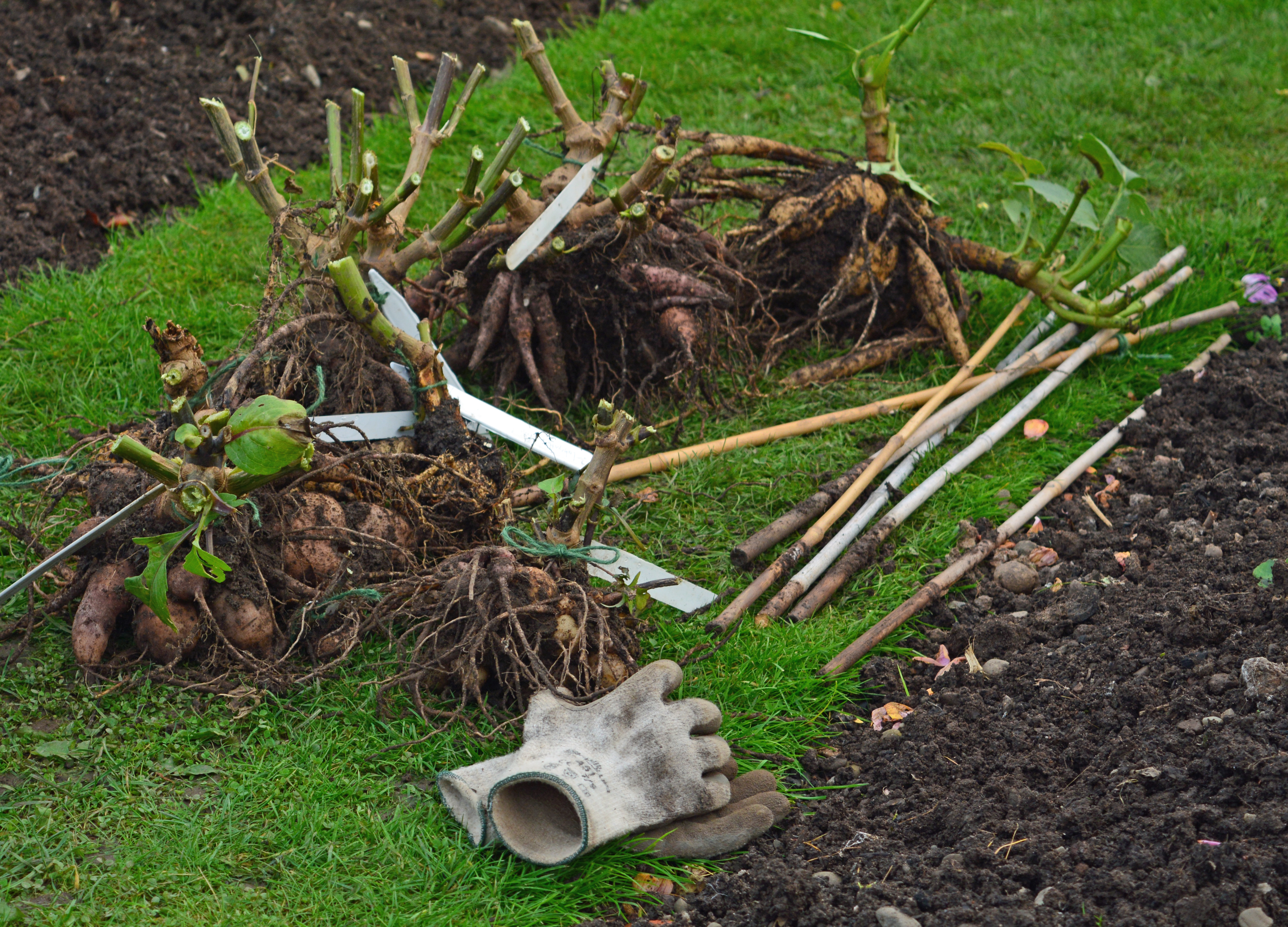
The wooden doorway from the main section of the walled garden which leads visitors into the glasshouse section opened wide to reveal a wheelbarrow full of Dahlias prunings. A gardener knelt nearby preparing the plants for their winter storage. She had lifted the plants, cut their top growth off with her Felco secateurs, thrown these prunings into her barrow and busily cleared soil from around the tubers. These she would take off into one of the cool brick stores to overwinter. Some of the hardier varieties were in flower closer to the gardeners’ bothy.
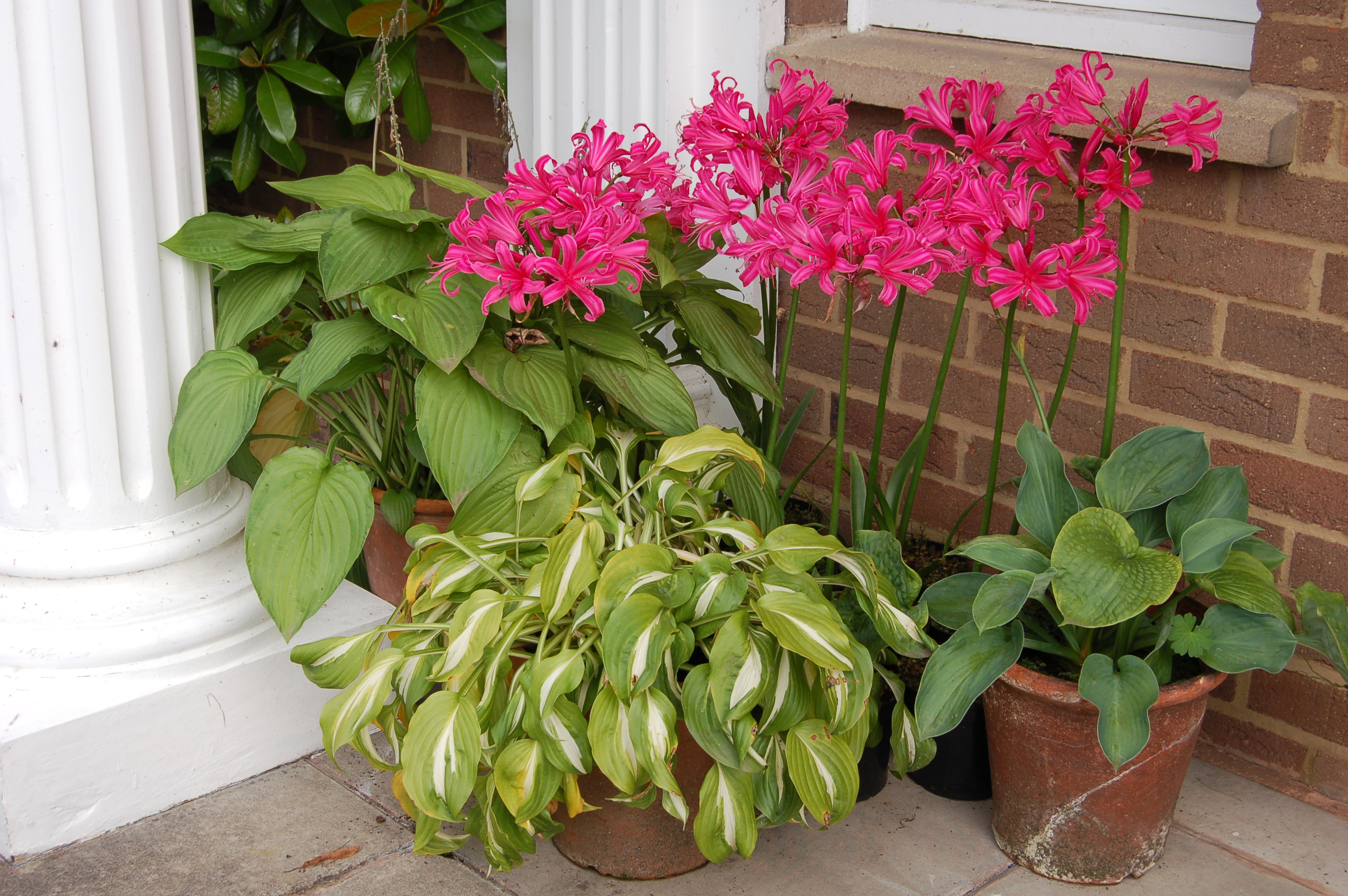
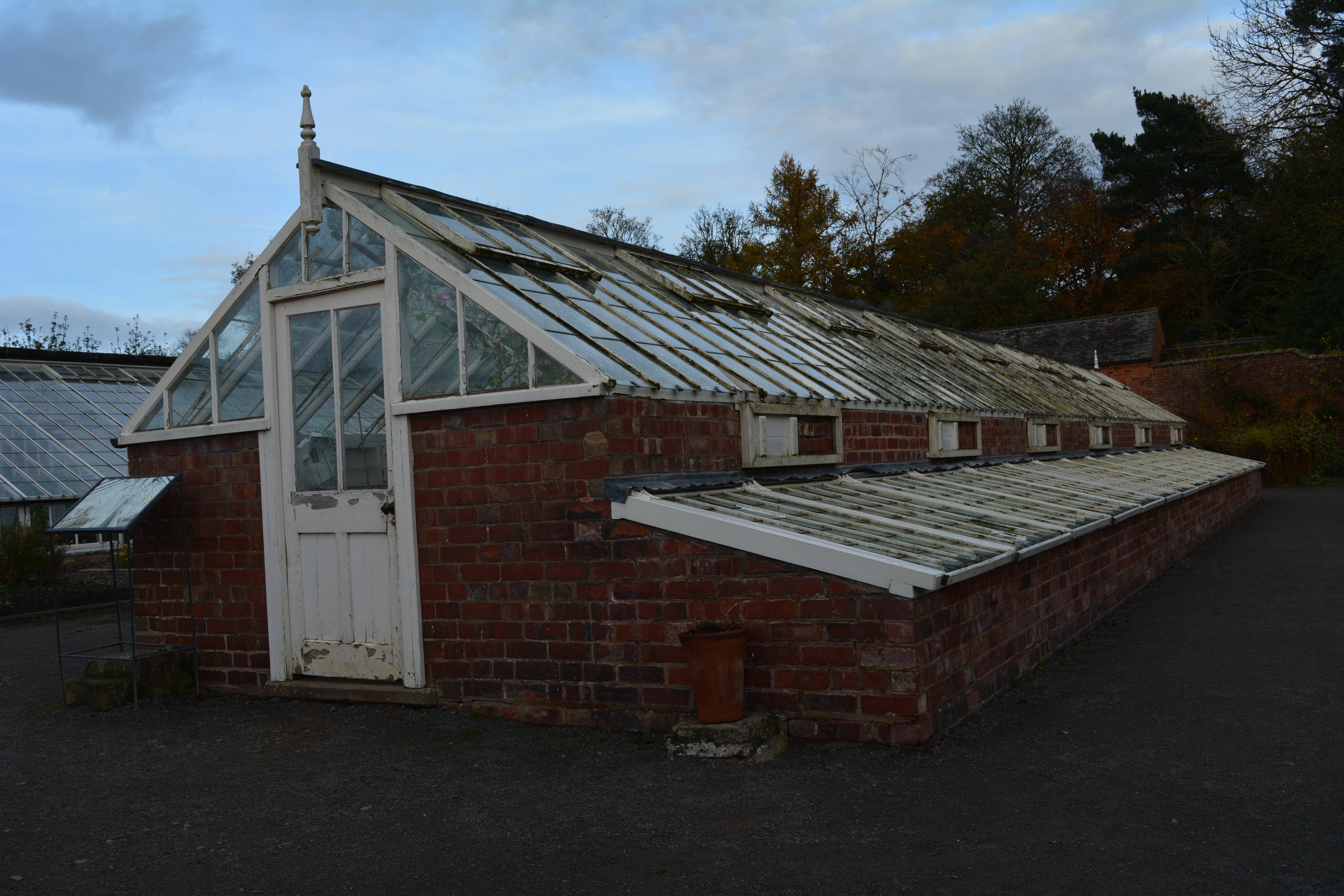
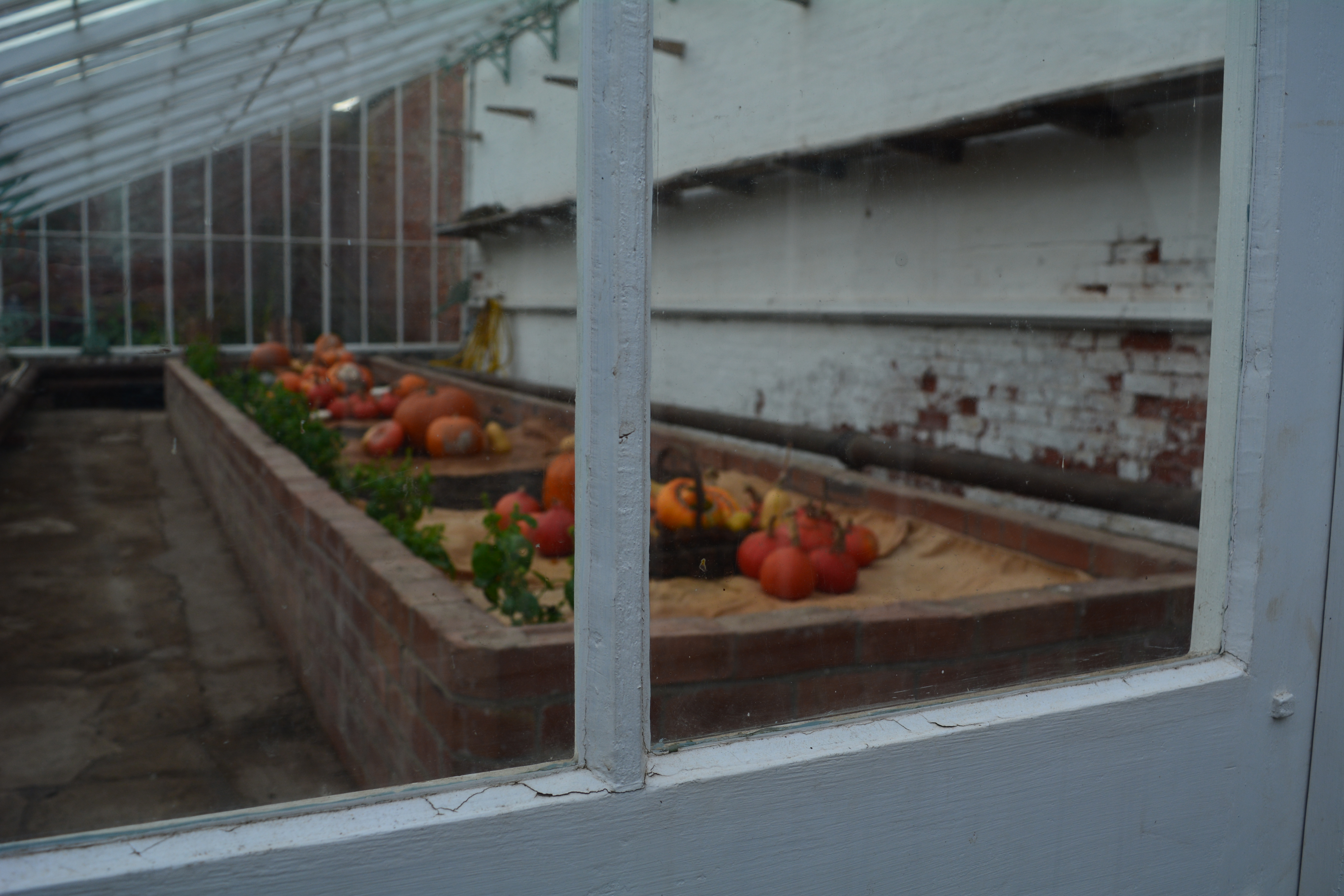
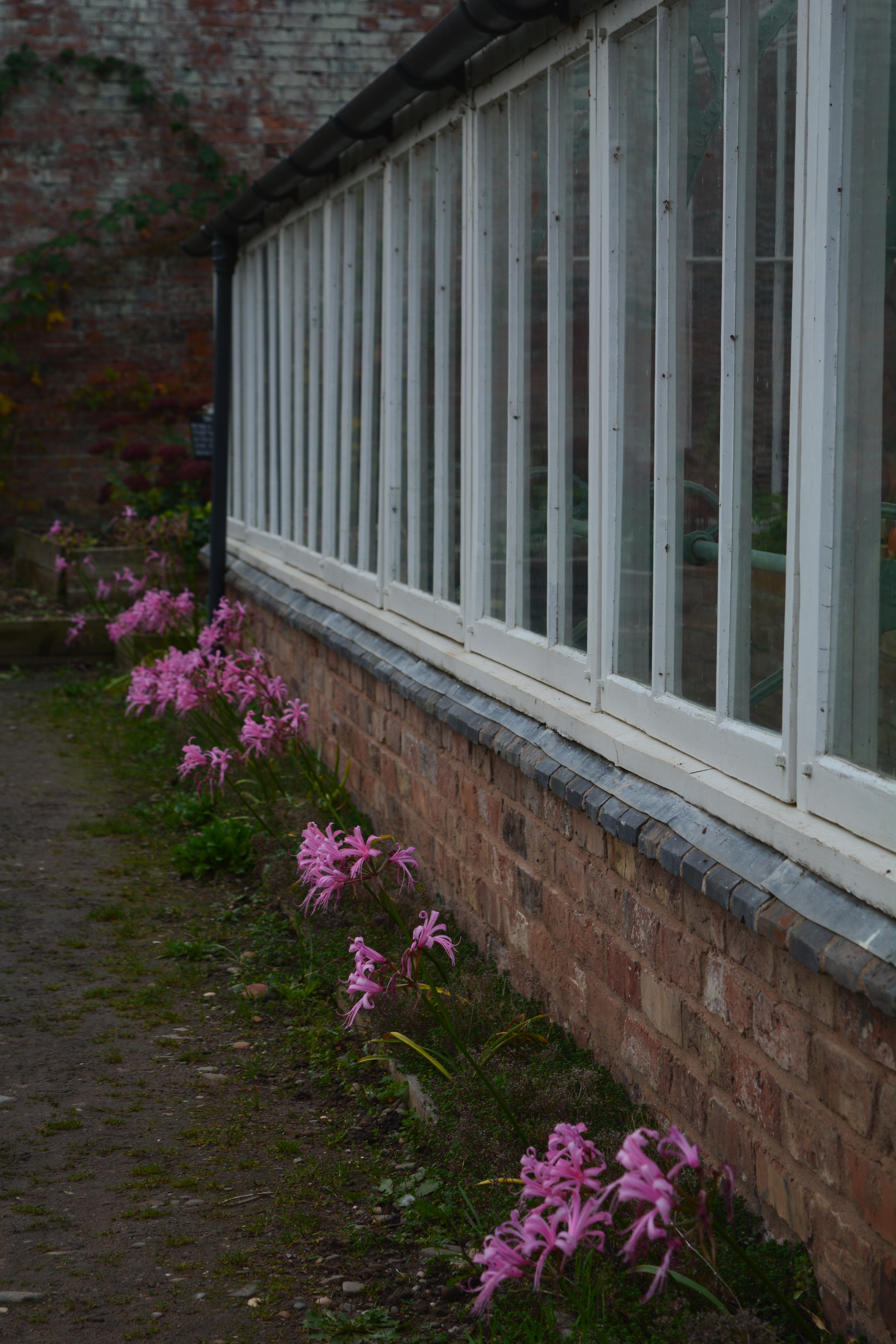
All of the glasshouses were closed up against the changing weather, but through their windows we spied pumpkins and chilies drying. Nerines added pink cheer to the outsides.
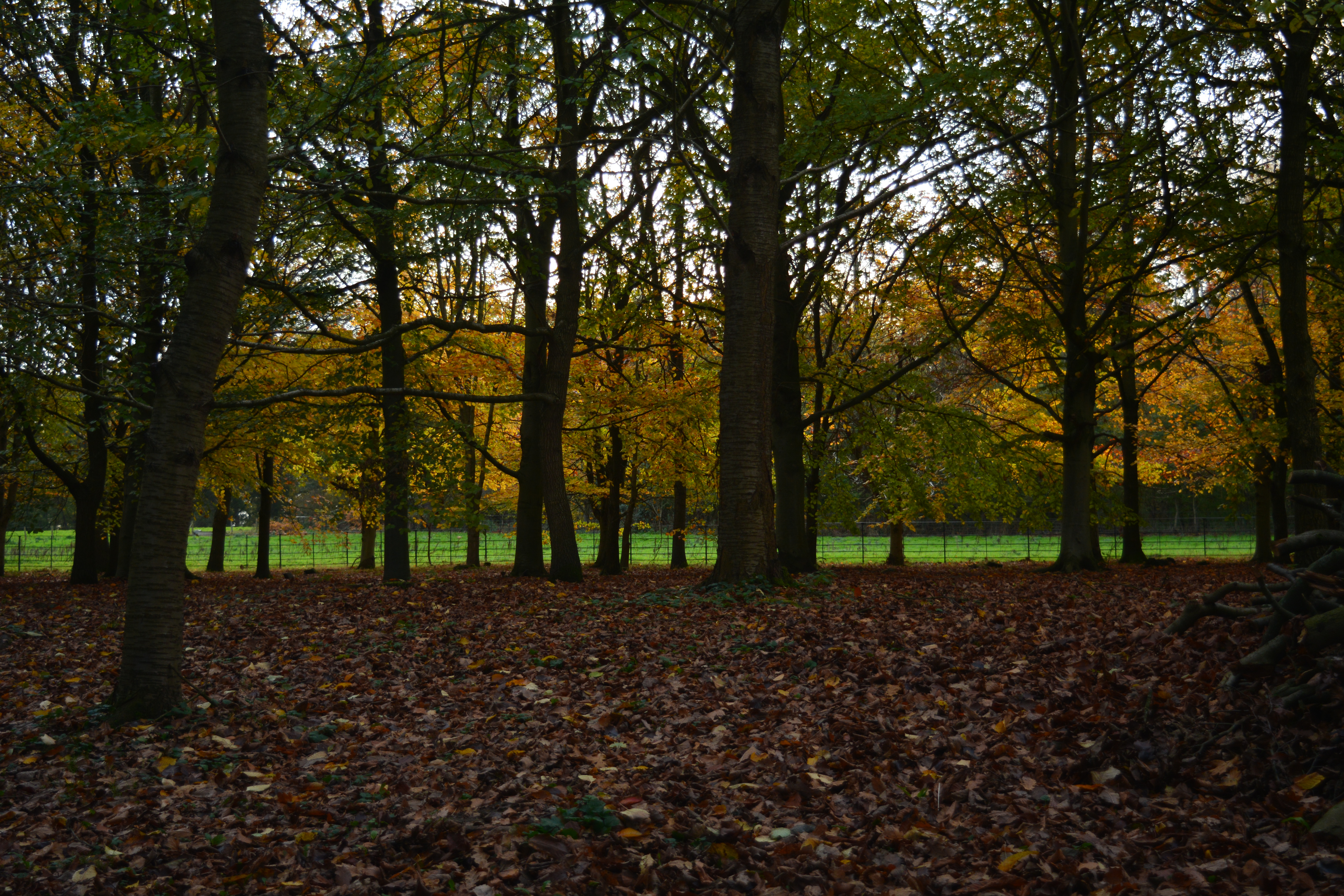
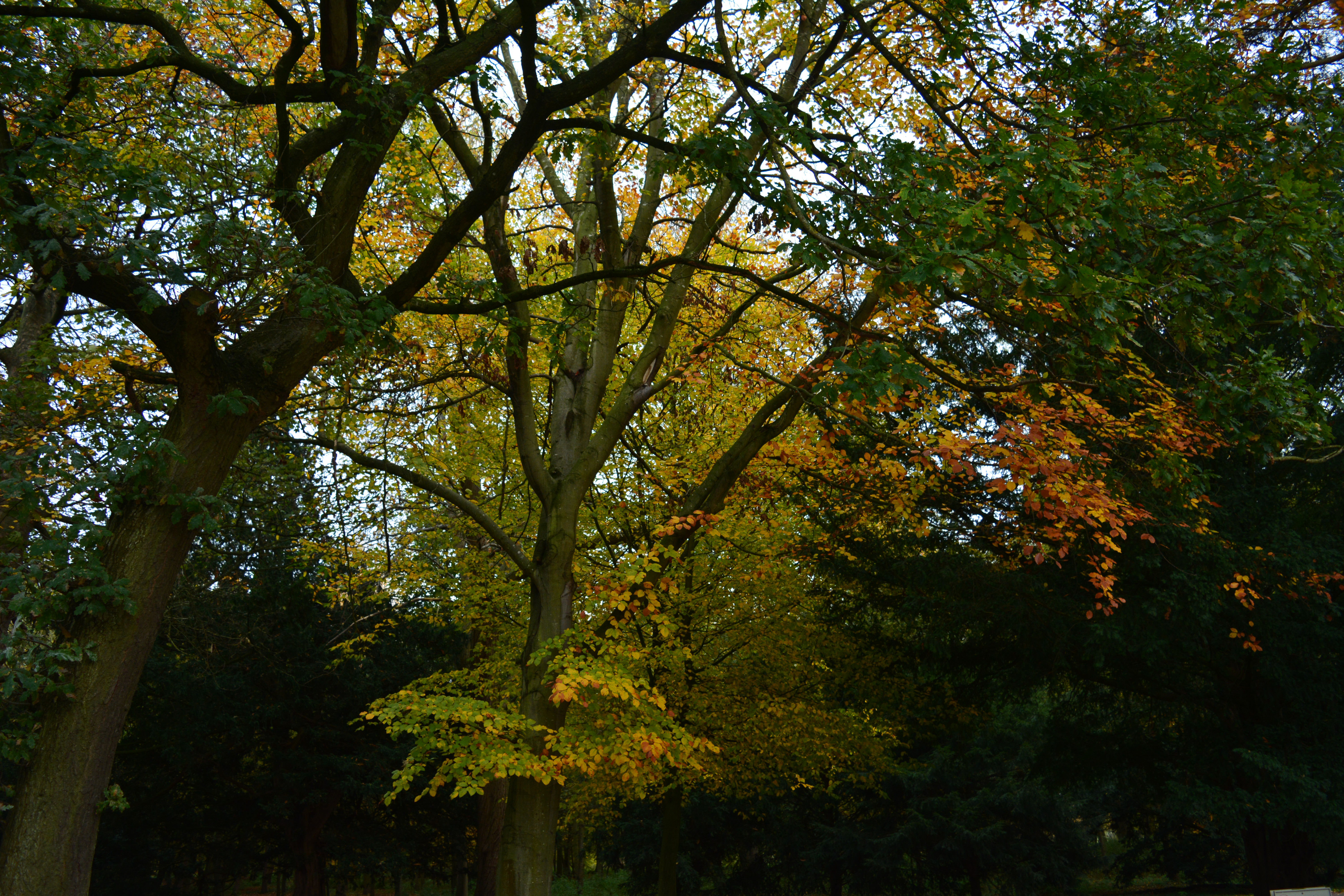
The autumn light shone through the trees at a low angle lighting up the colours of the changing foliage giving the effects of stained glass windows.
Next month’s visit will be the final one of our 12 monthly visits to Attingham Park to study the seasonal changes. We look forward to seeing how the move into the next season, winter, will show itself.
My Garden Journal 2017 – November
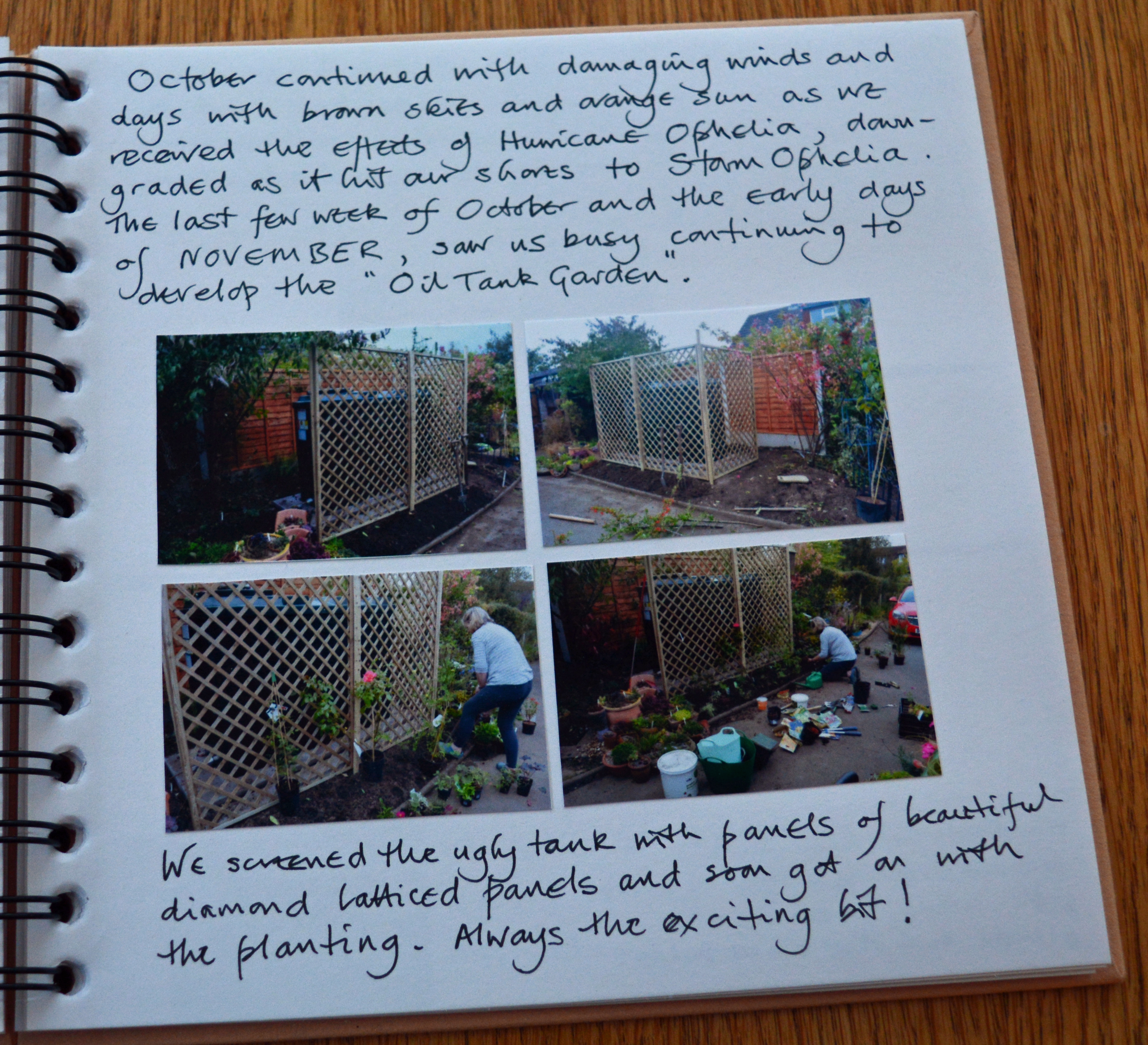
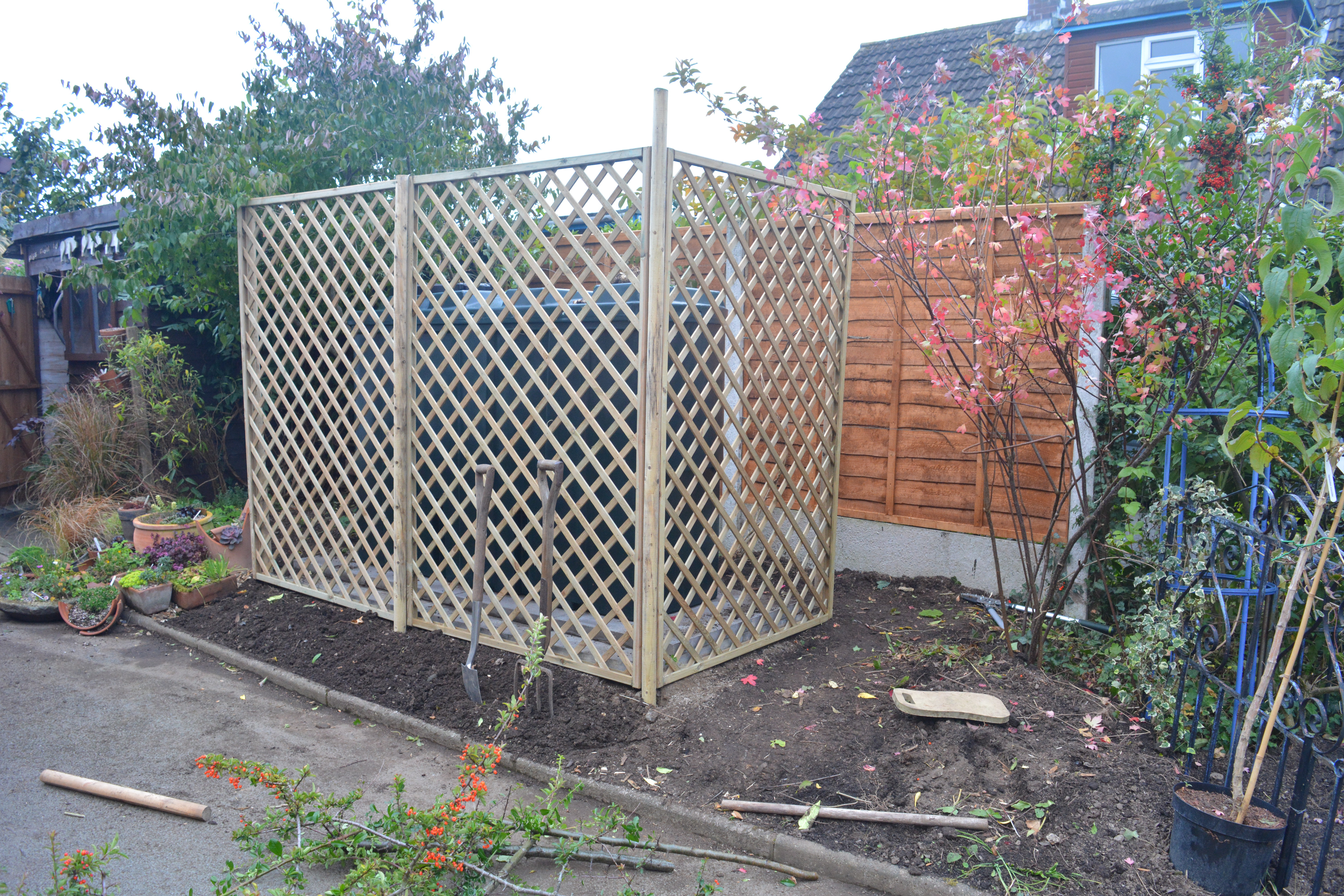
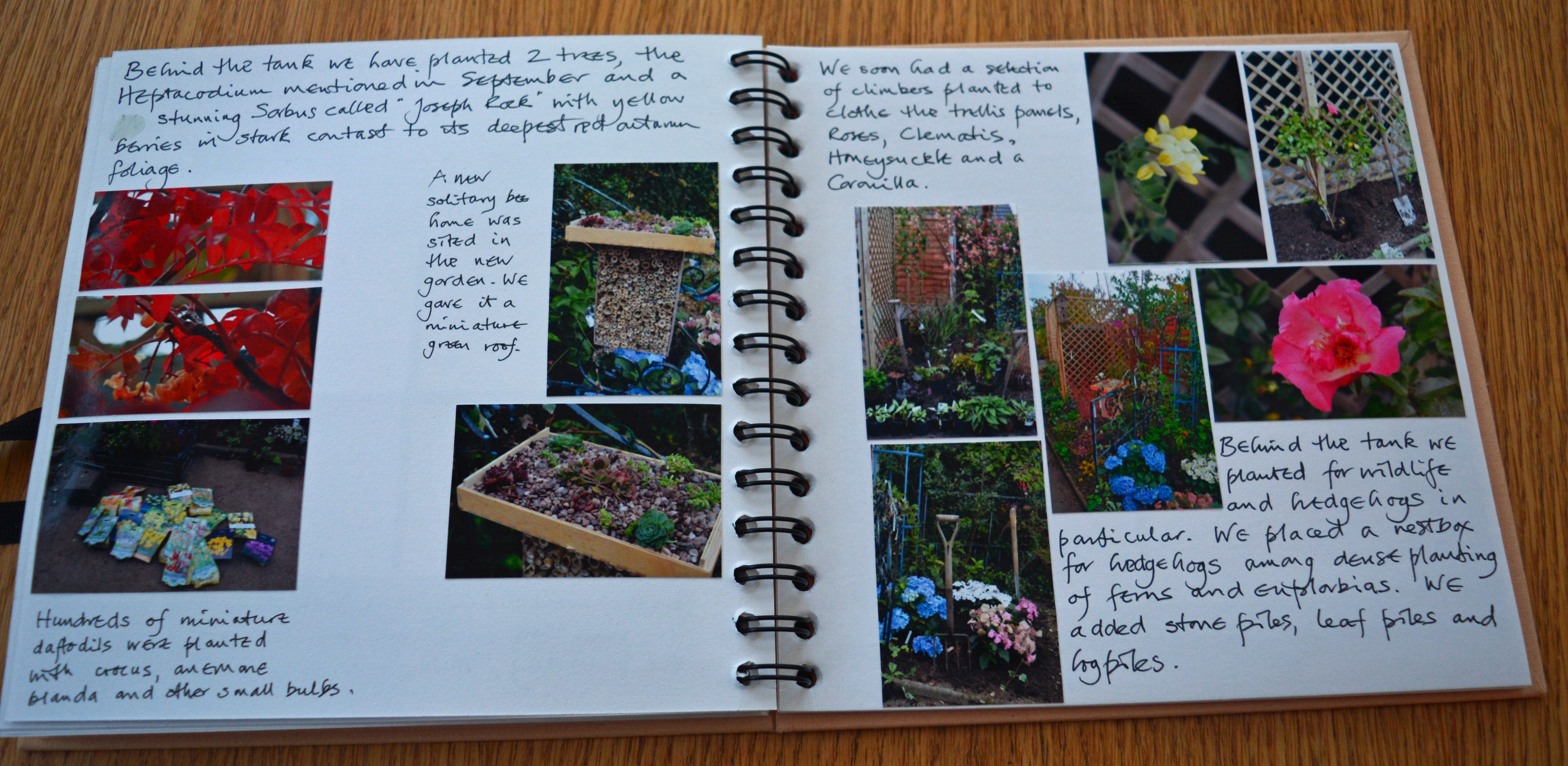
The penultimate visit to my garden journal for 2017 is here – hope you enjoy it. I began by referring back to a development we started in the garden back in September which we finished off in November. We are very pleased with how it has turned out and look forward to seeing the new plants flourish.
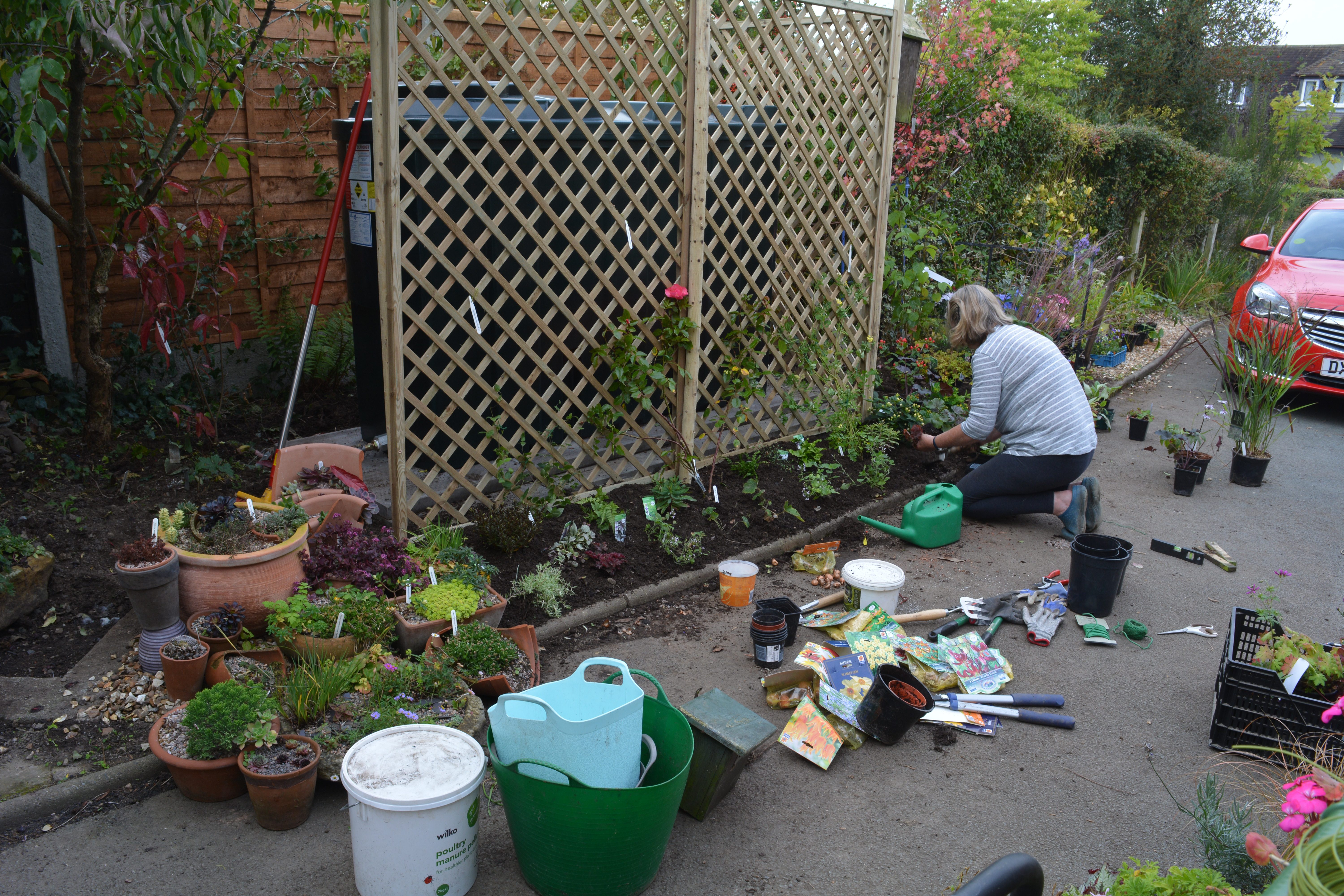
“October continued with damaging winds and days with brown skies and orange sun as we received the effects f Hurricane Ophelia, downgraded to Storm Ophelia as it hit our shores. The last few weeks of October and the early days of November, saw us busy continuing develop our “Oil Tank Garden”.
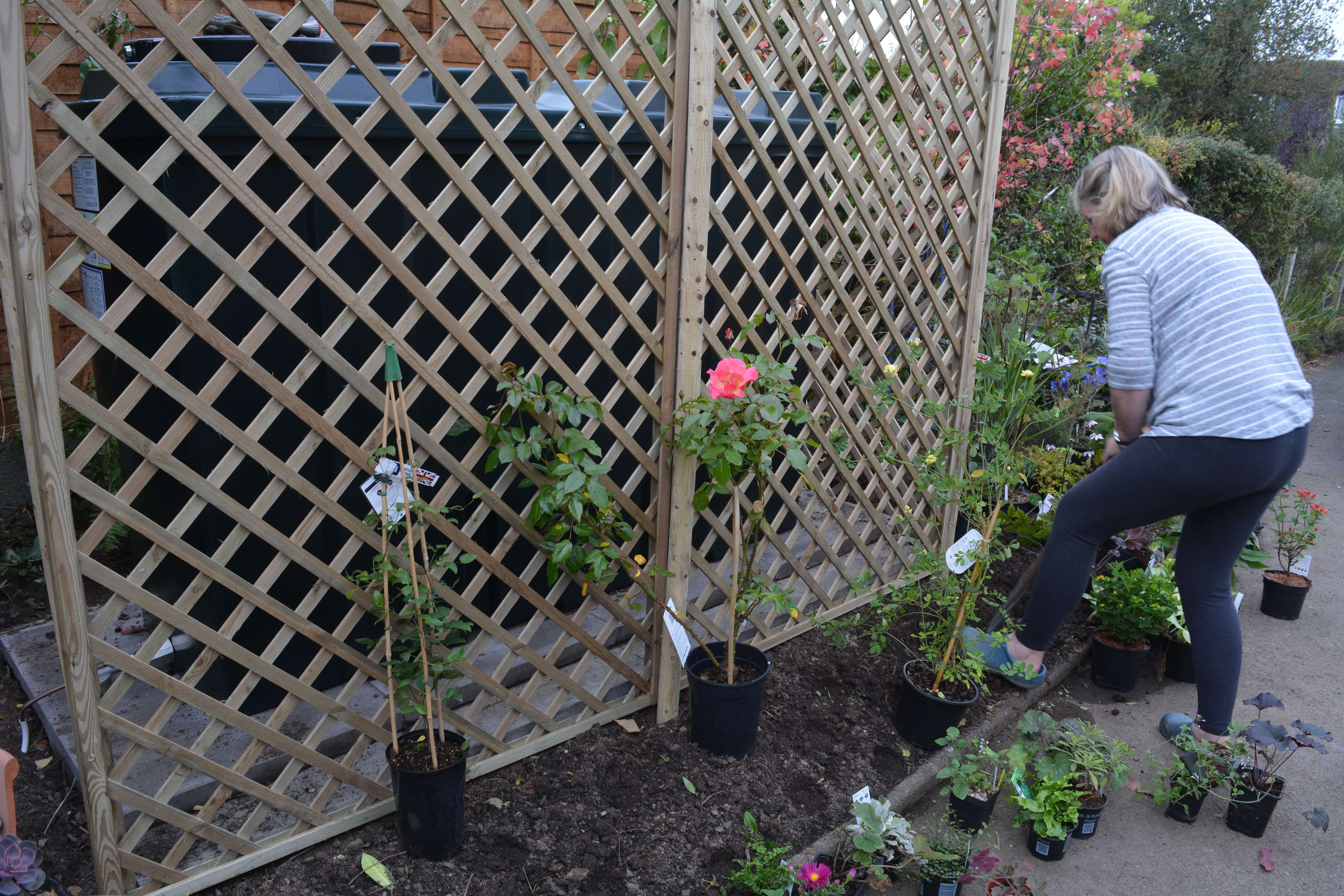
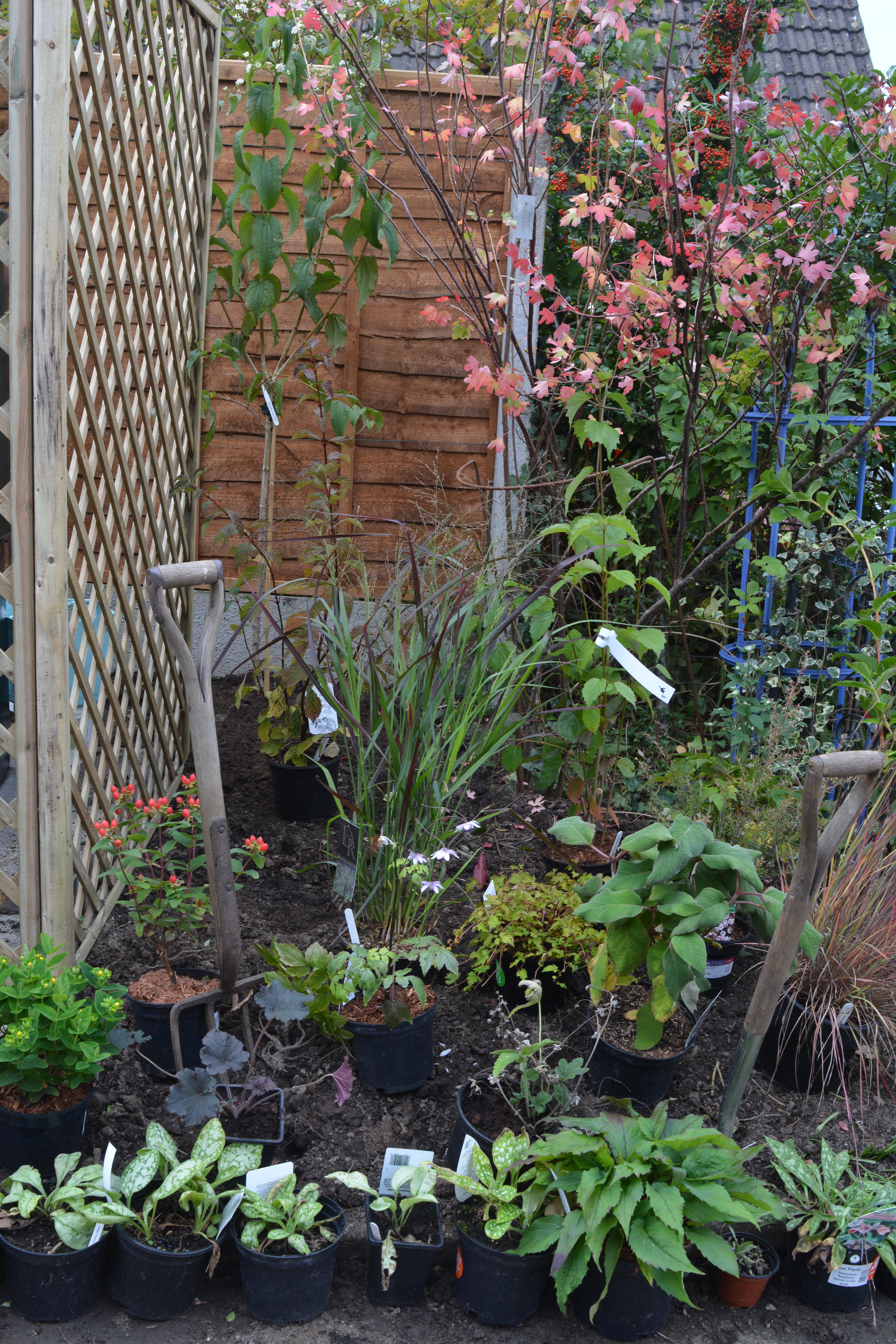
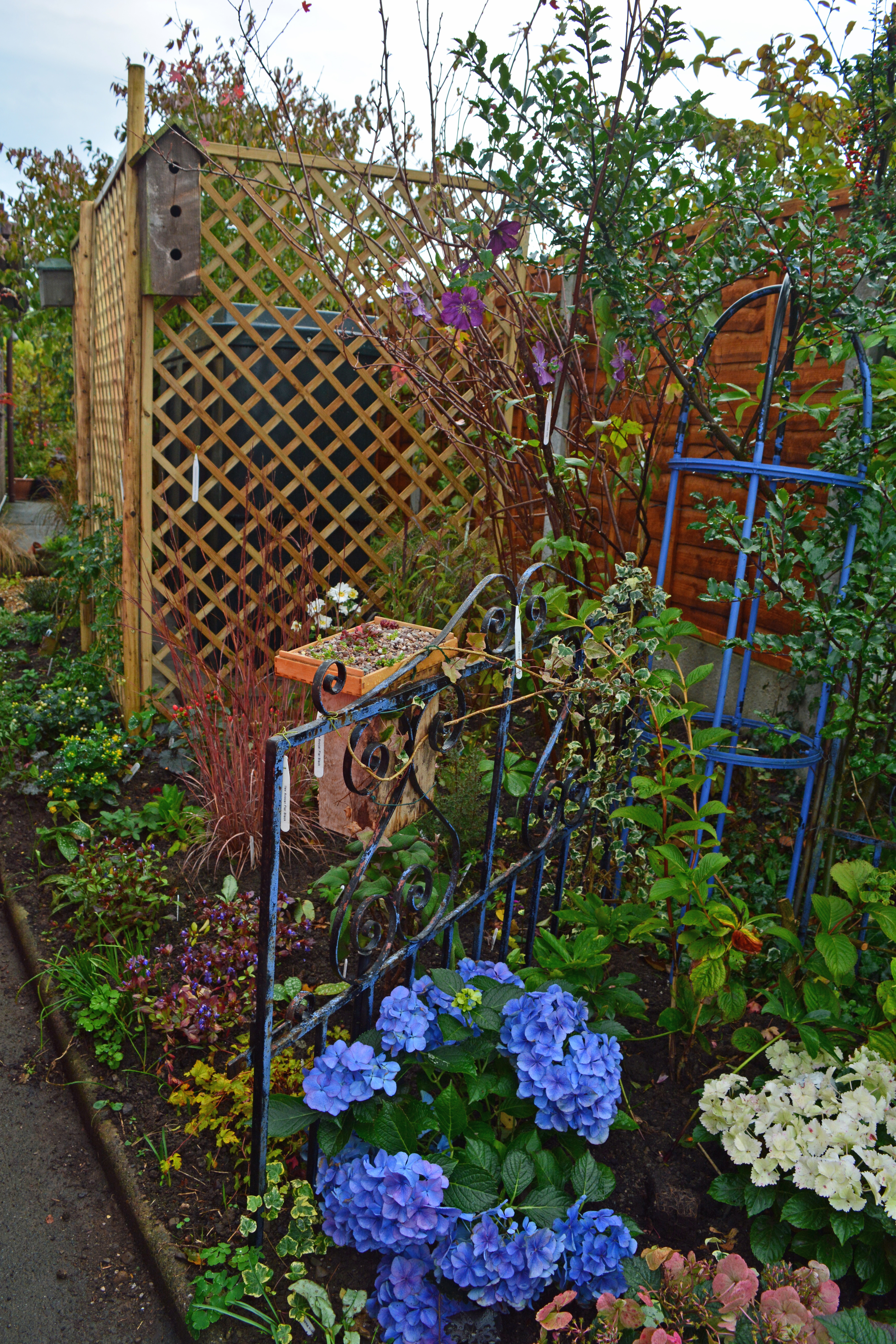
“We screened the ugly tank with panels of beautiful diamond latticed panels and soon got on with the planting. Always the exciting bit!”
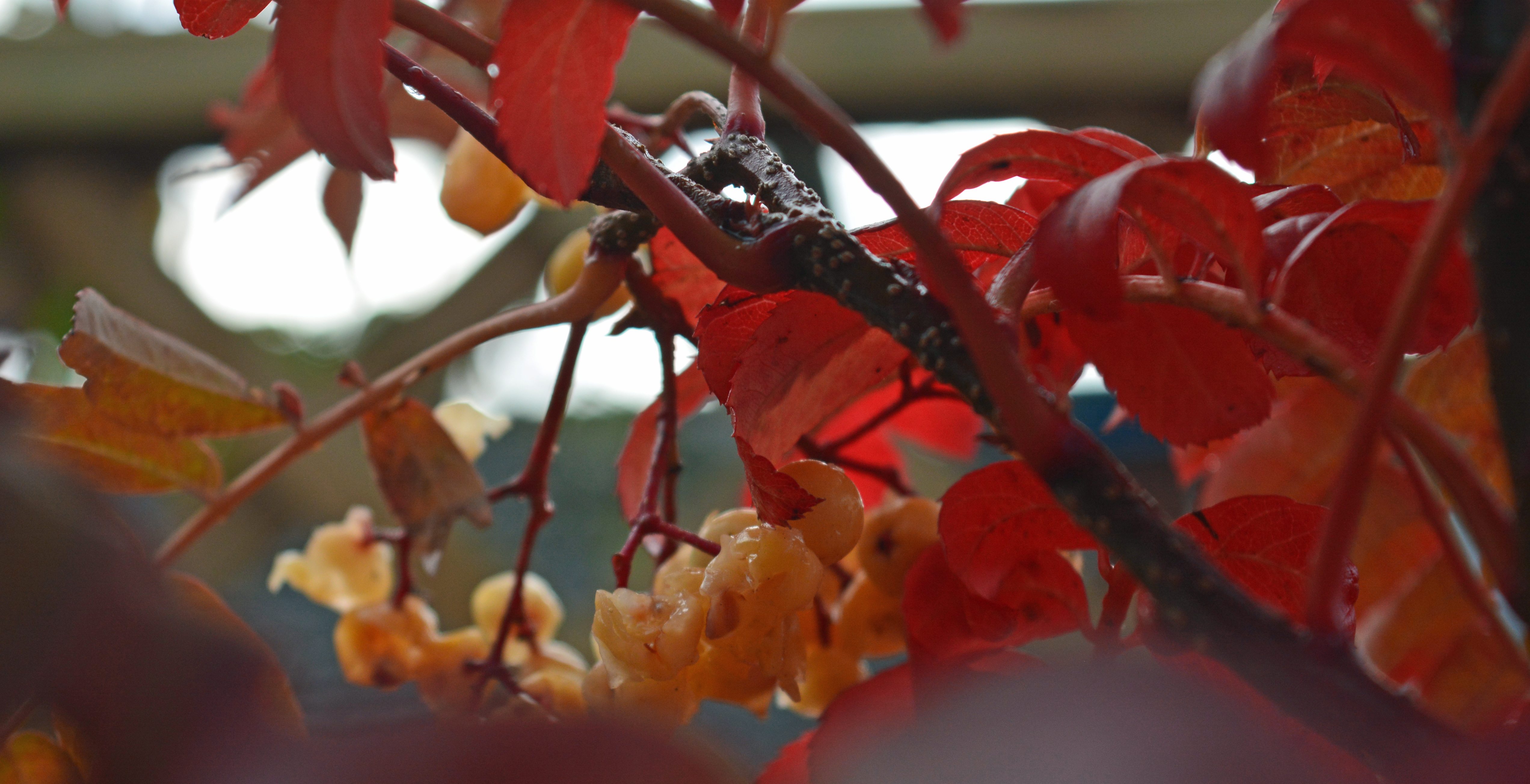
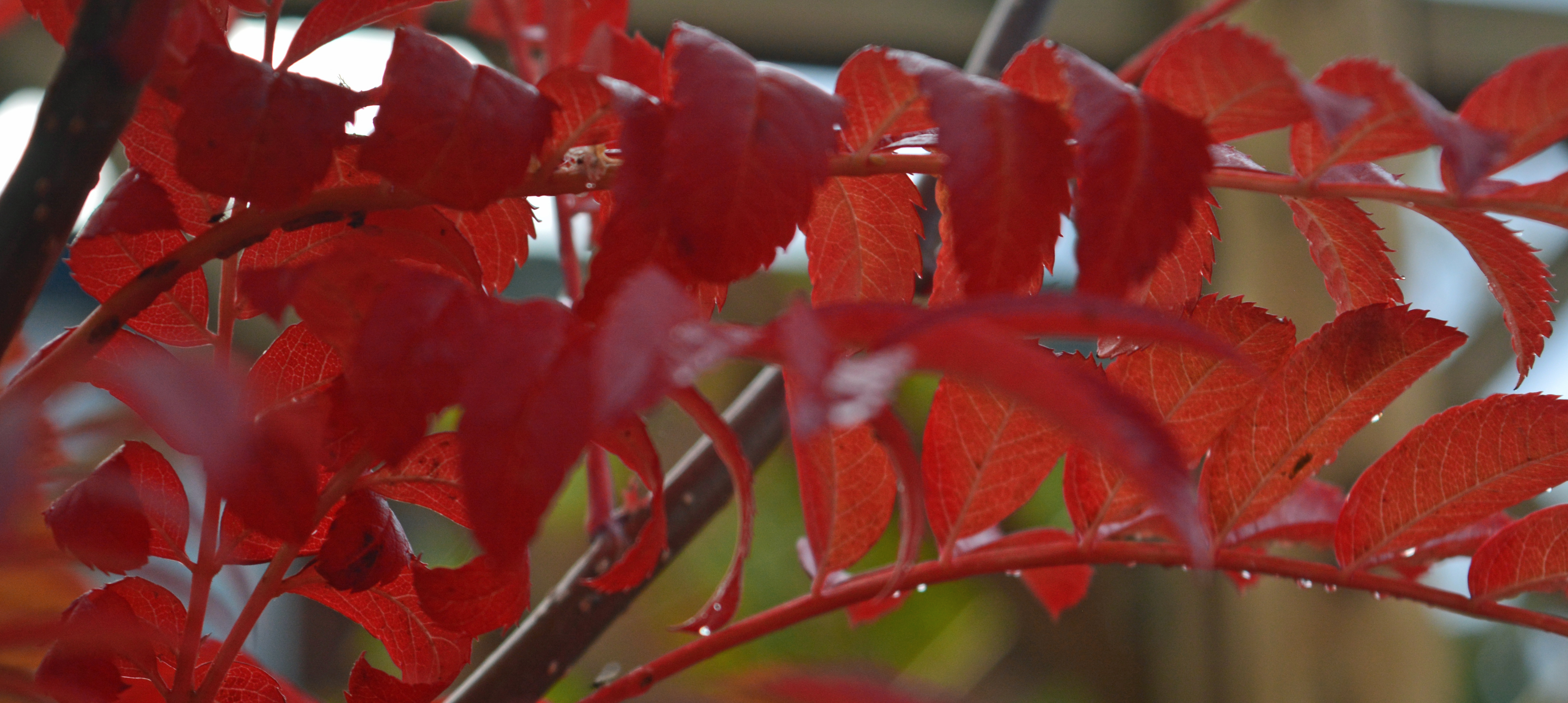
Over the page I continue to describe our development of this border and wrote “Behind the tank we have planted two trees, the Heptacodium mentioned in September and a stunning Sorbus called Joseph Rock with yellow berries in stark contrast to its deepest red autumn foliage.
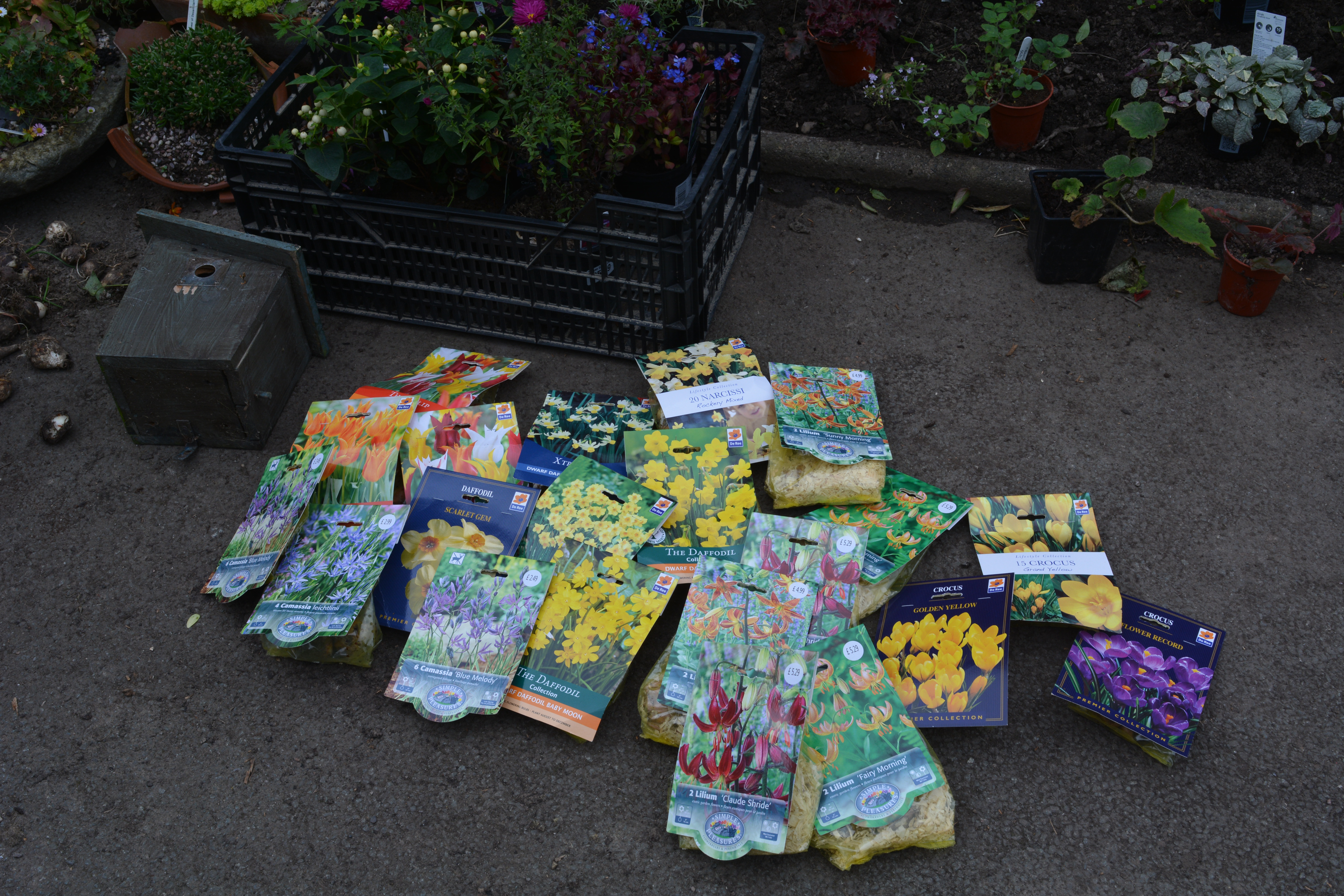
“Hundreds of miniature daffodils were planted with crocus, Anemone blanda and other small bulbs.”
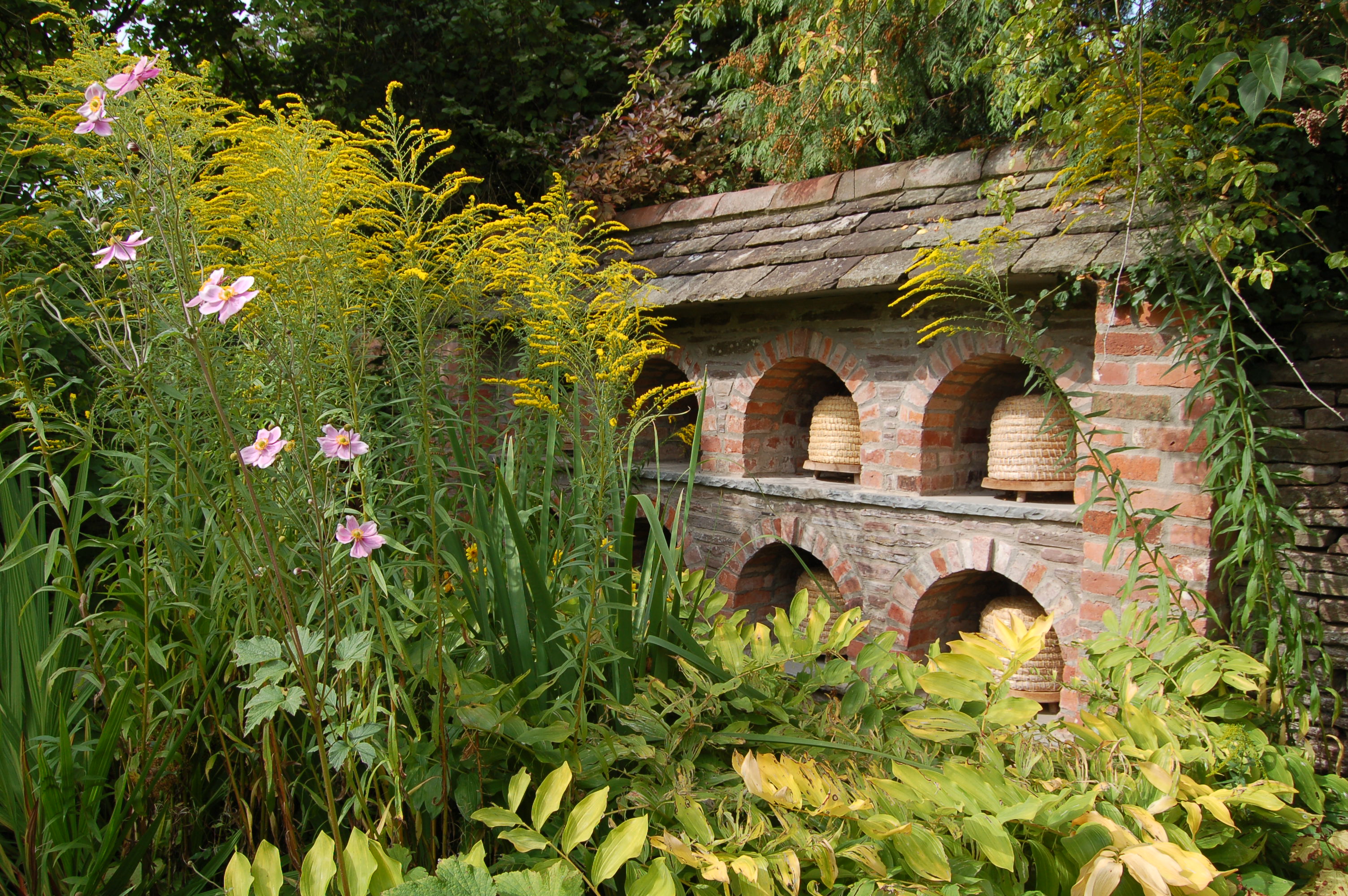
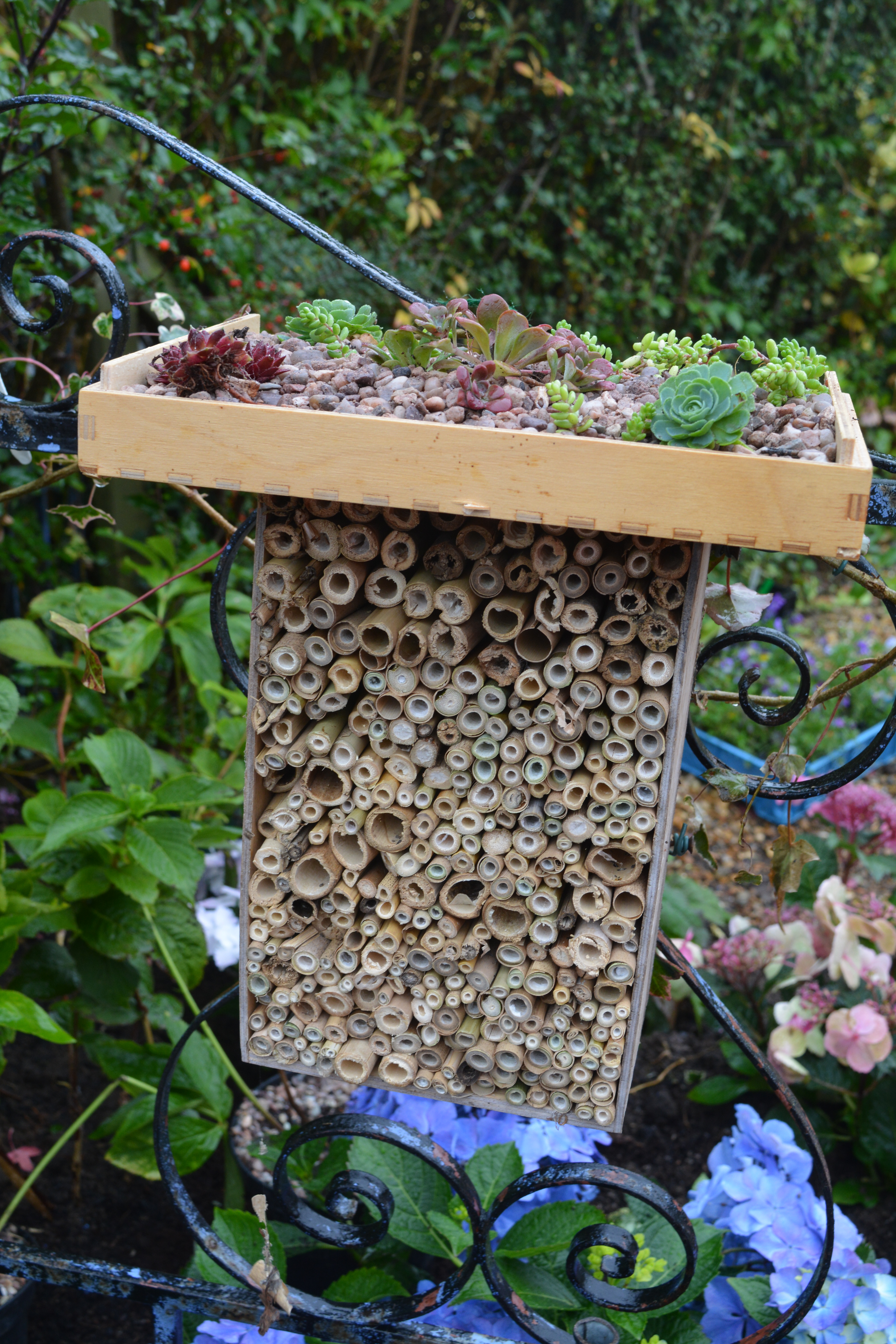
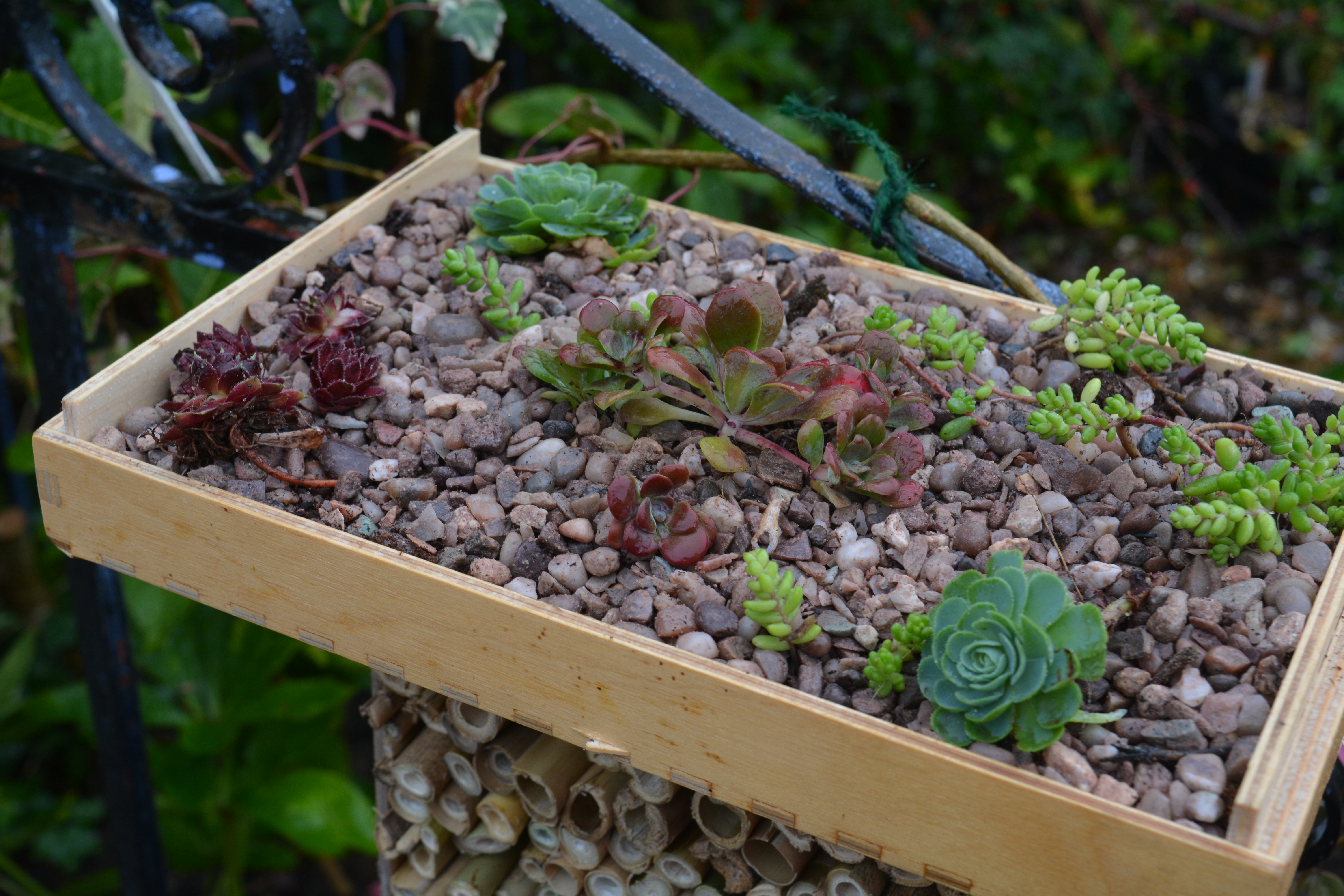
“A new solitary bee home was sited in the new garden. We gave it a miniature green roof!”
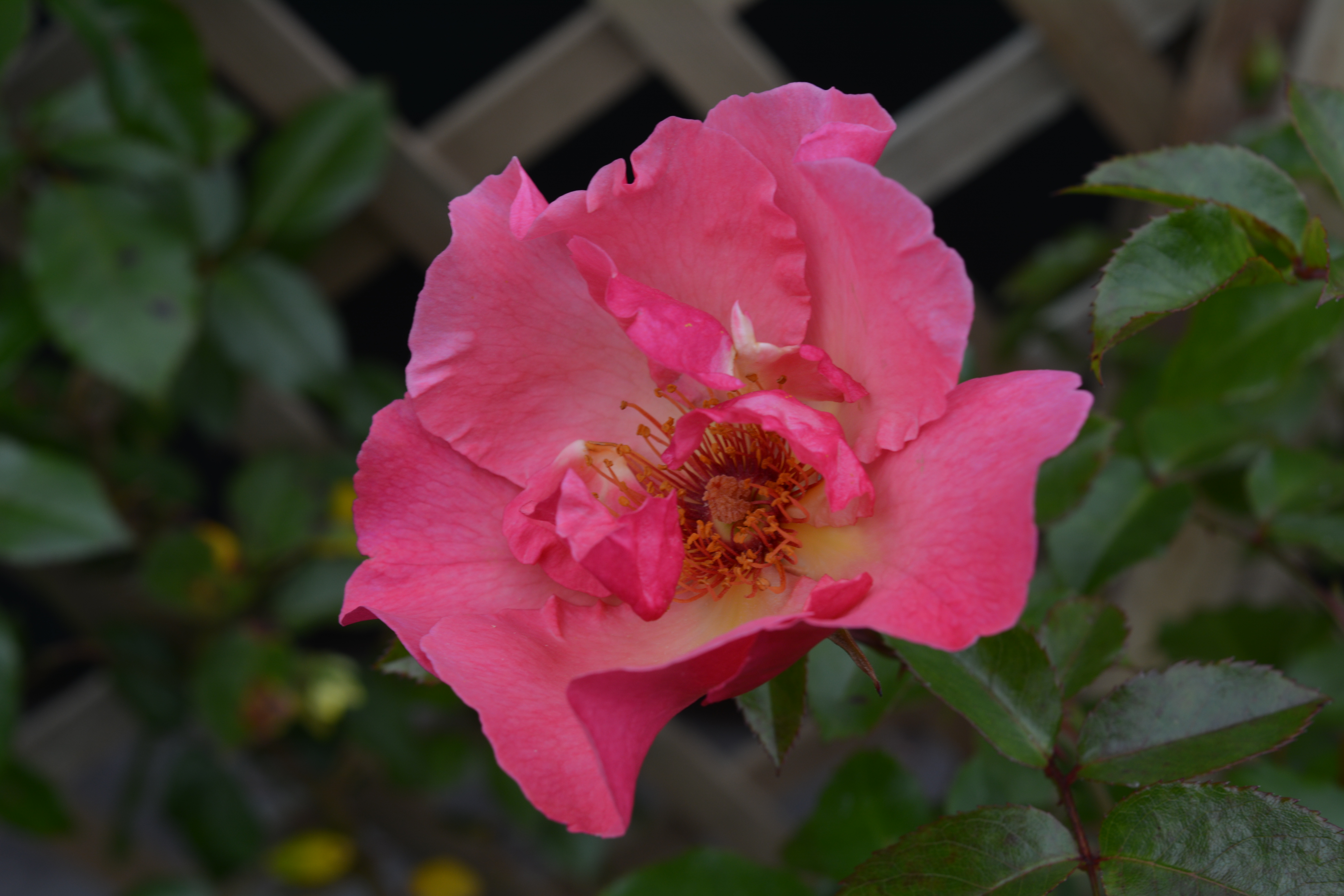
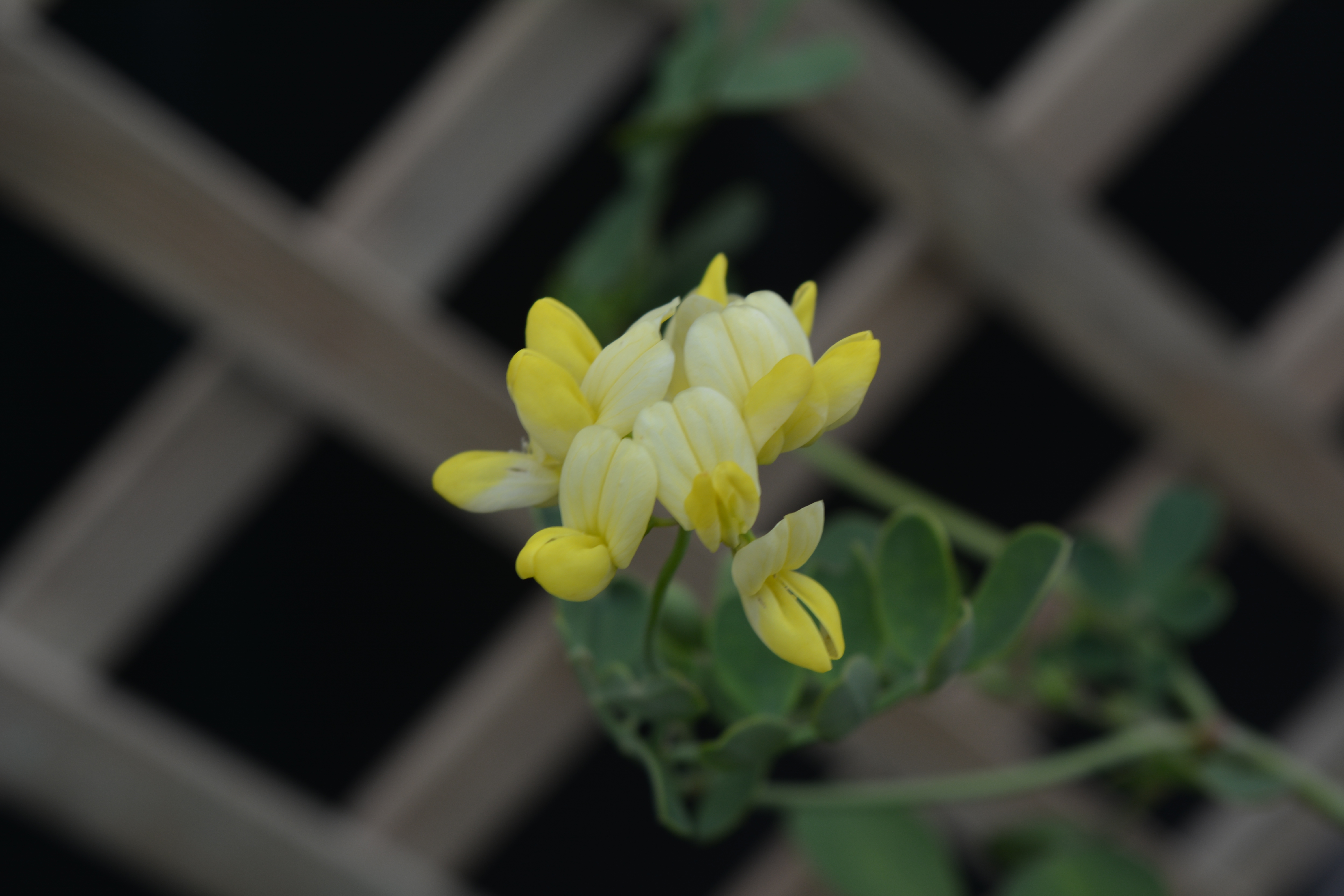
“We soon had a selection of climbers planted to clothe the trellis panels, Roses, Clematis, Honeysuckle and a Coronilla”.
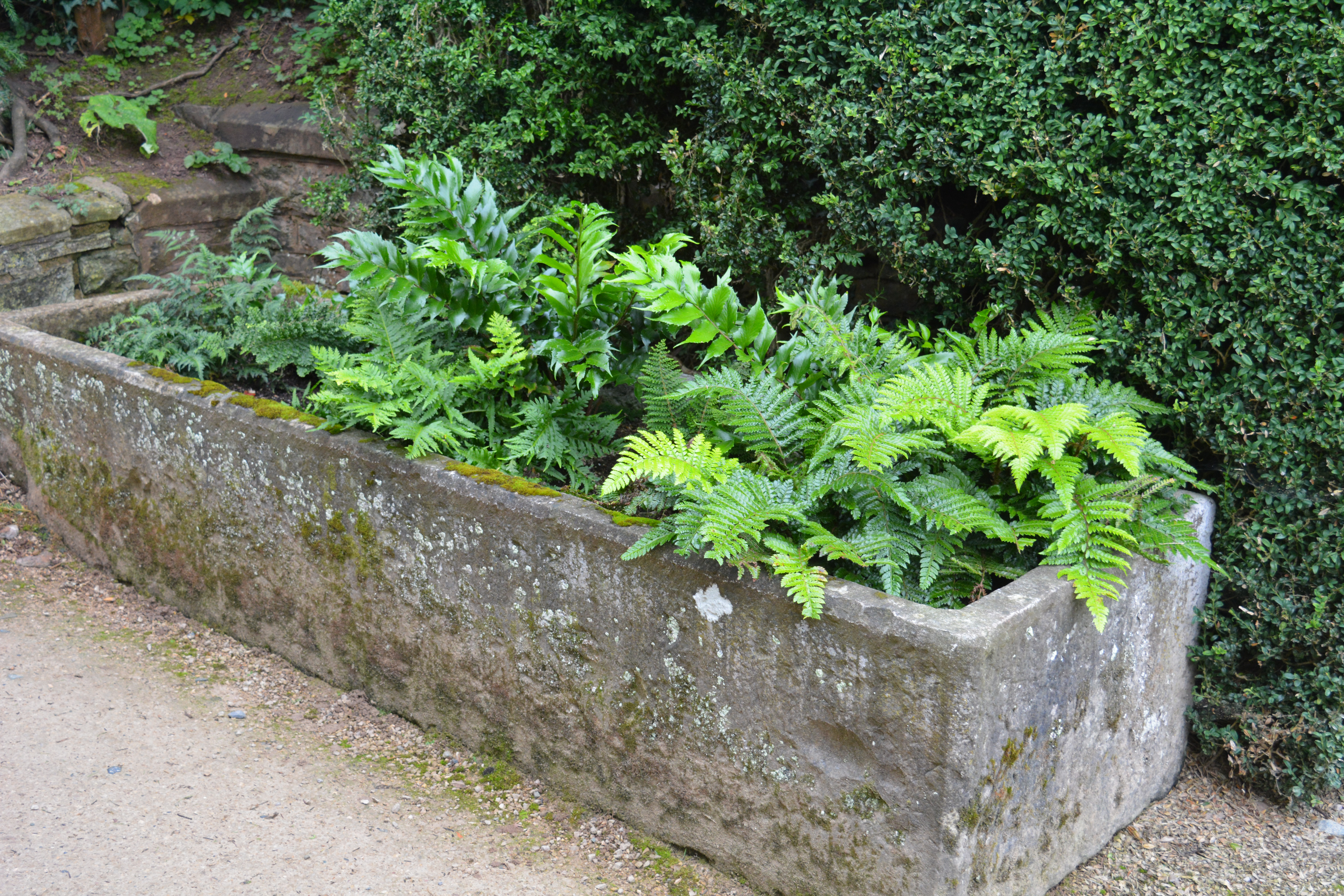
“Behind the tank we planted for wildlife and hedgehogs in particular. We placed a nestbox for hedgehogs among dense planting of ferns and Euphorbias. We added stone piles, leaf piles and log piles.”
Turning over another page I featured some words by Dan Pearson and looked at some autumn flowering plants.
“Taking a look at Dan Pearson’s writings about Autumn in his “Natural Selections” book he wrote,
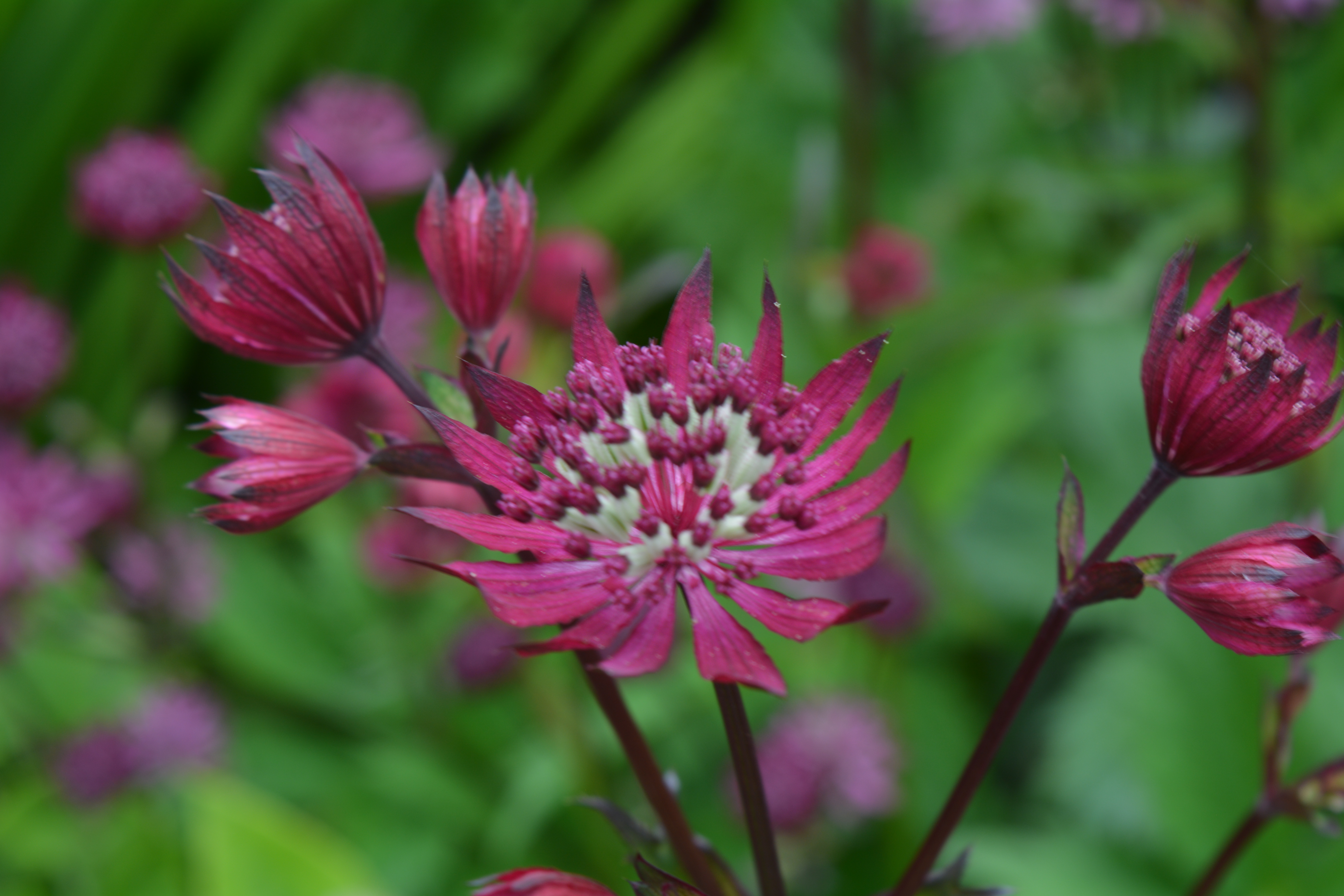
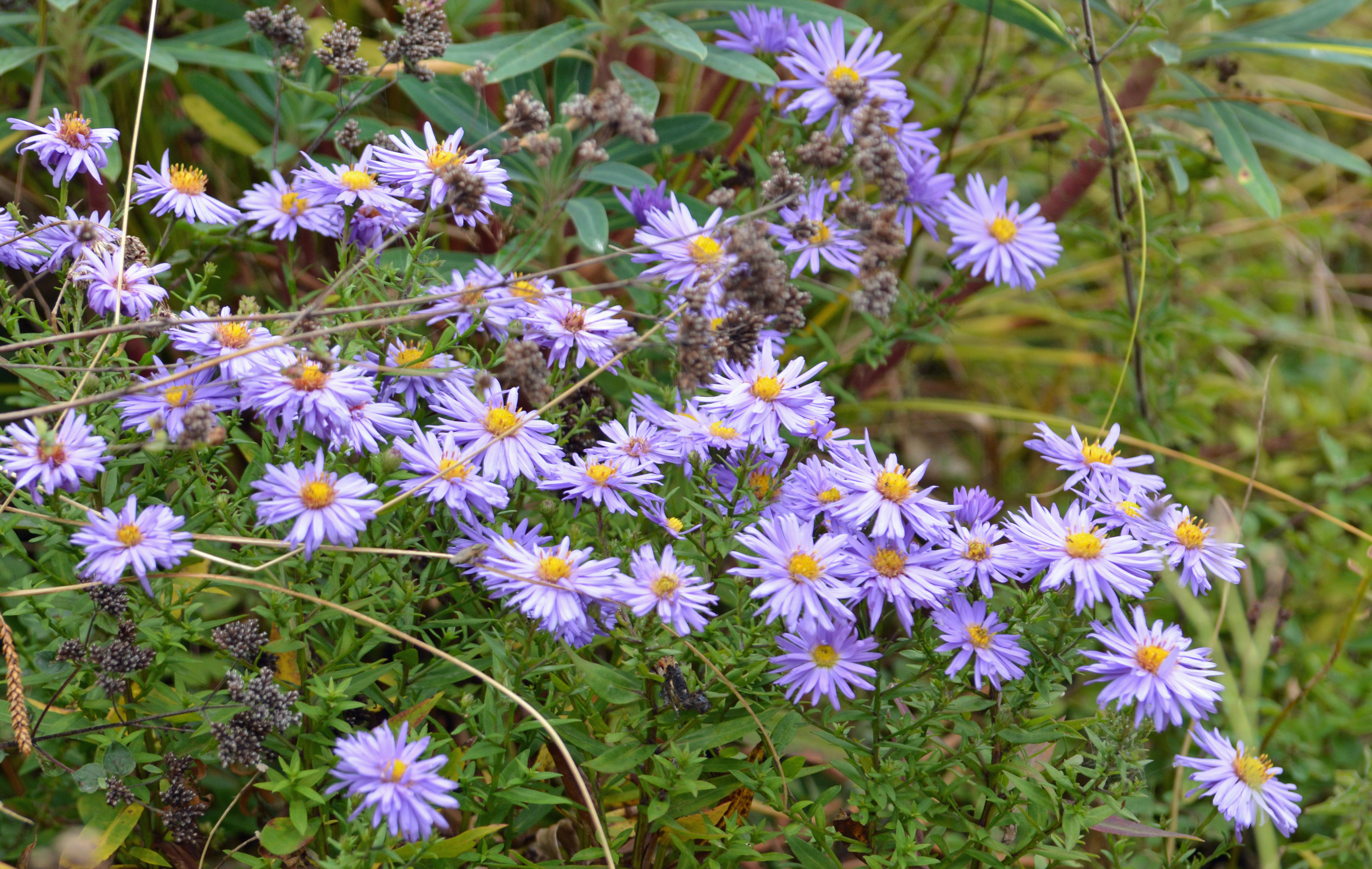
I want to invite the seasons into the garden, vividly and in layers. I use asters, autumn crocus and gentians at ground level, and shrubs that perform for this season to take the eye up and away, to straighten the back. I weave berrying trees and shrubs into the garden as much for their jewel-like fruit as for the birds which flock down to gorge when the fruit is ready for feasting upon.”
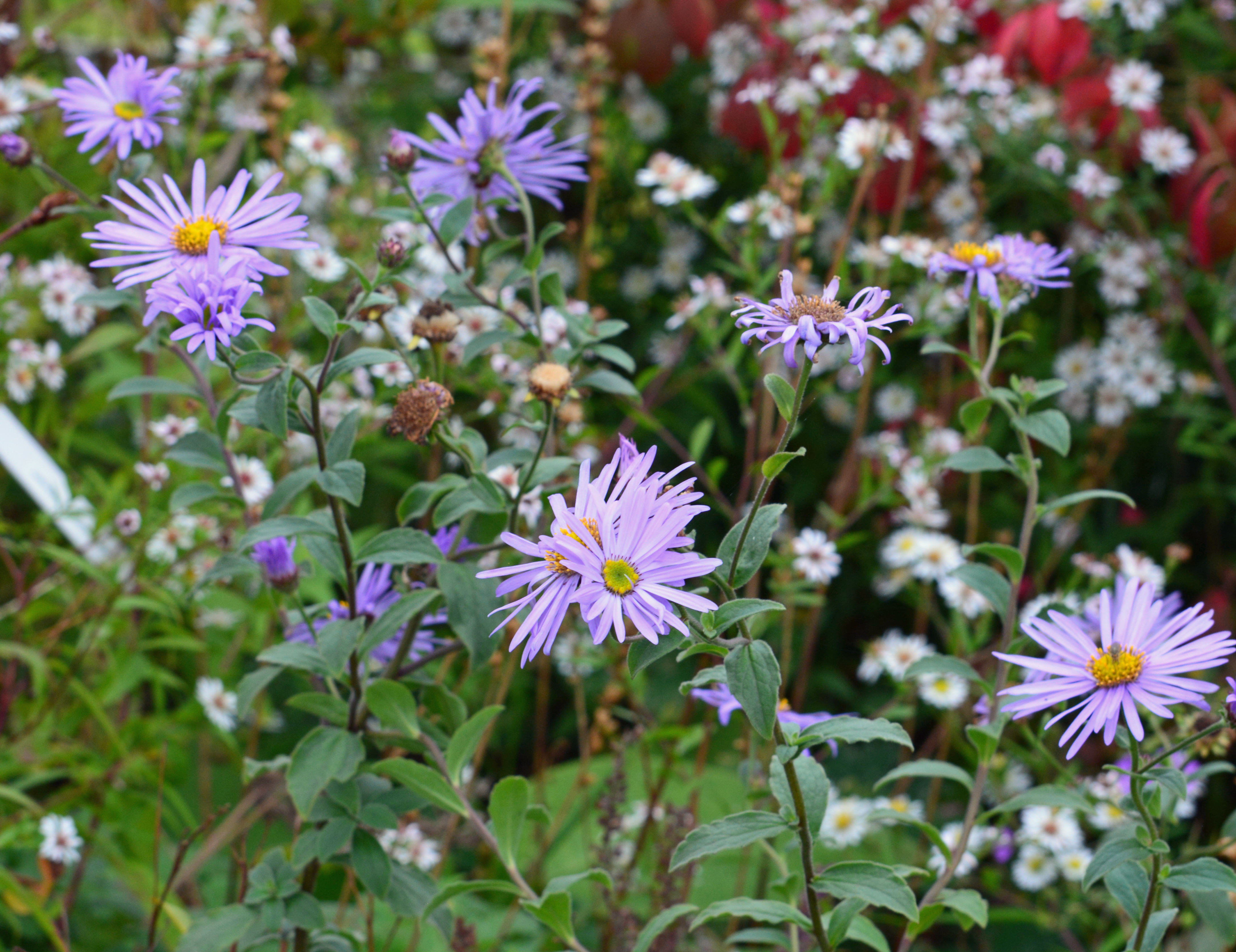
We aim to do exactly the same in our Avocet patch. Below are a few of our Asters which feature in our “Shrub Border”, a border that brings Autumn in.”
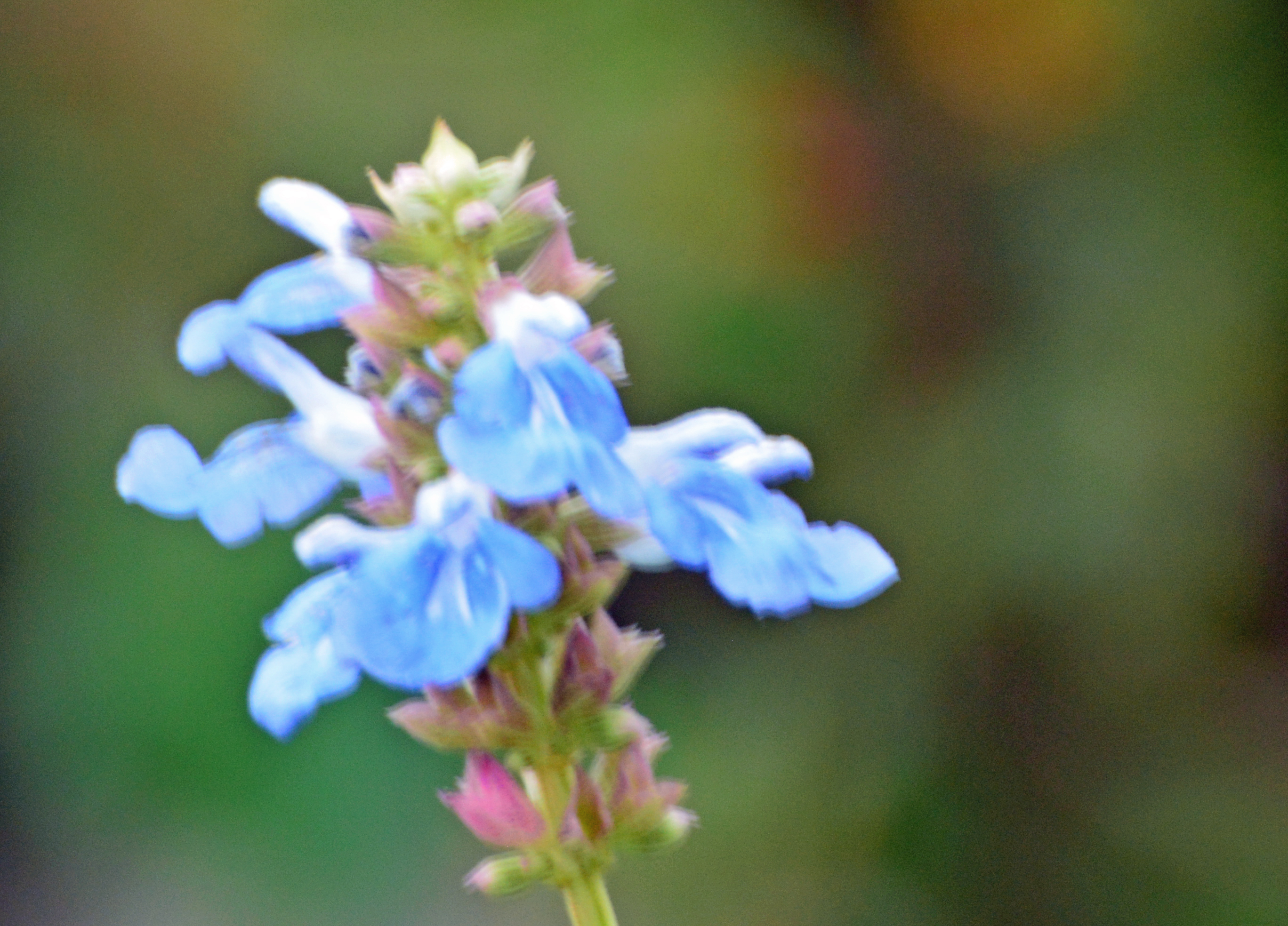
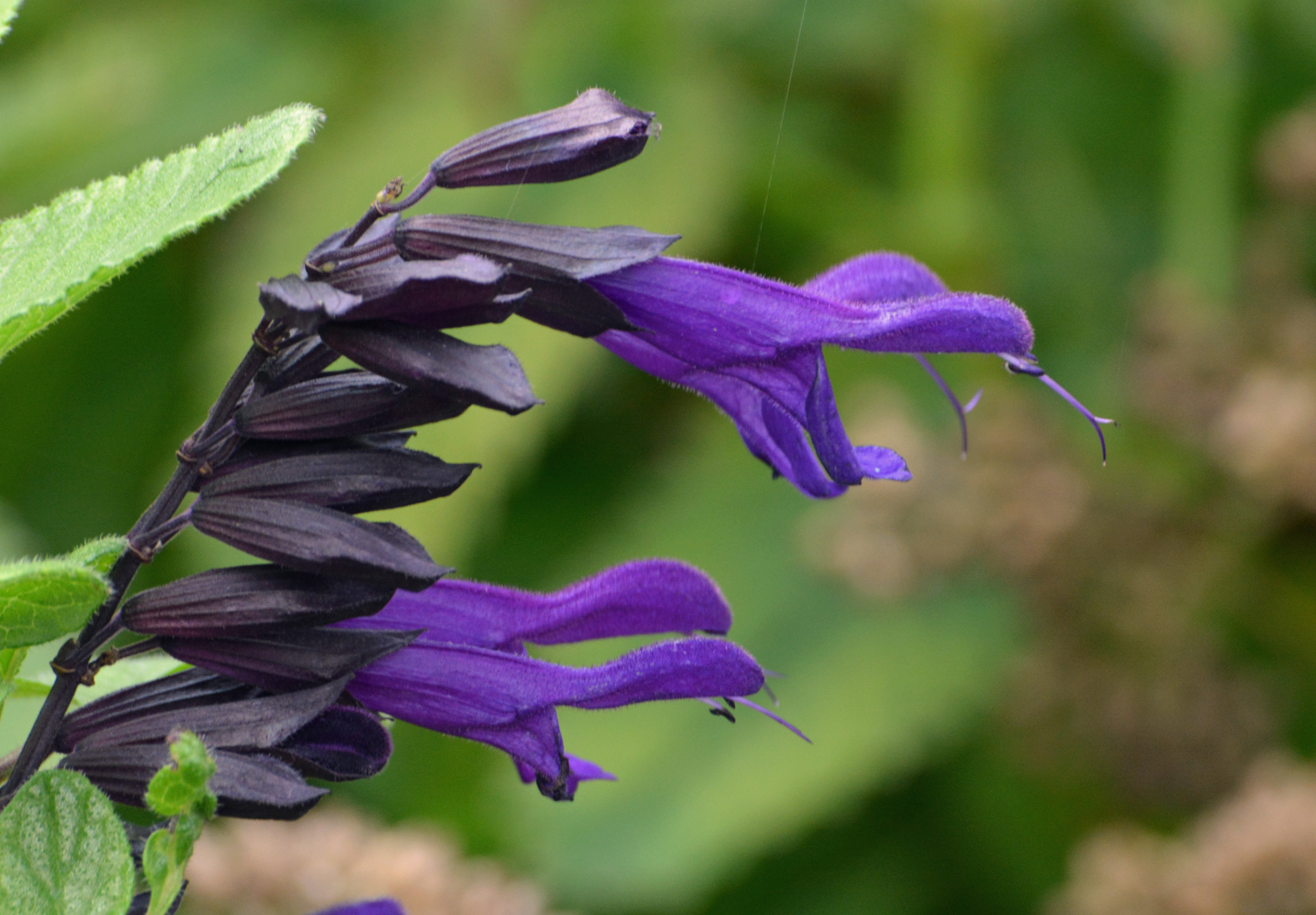
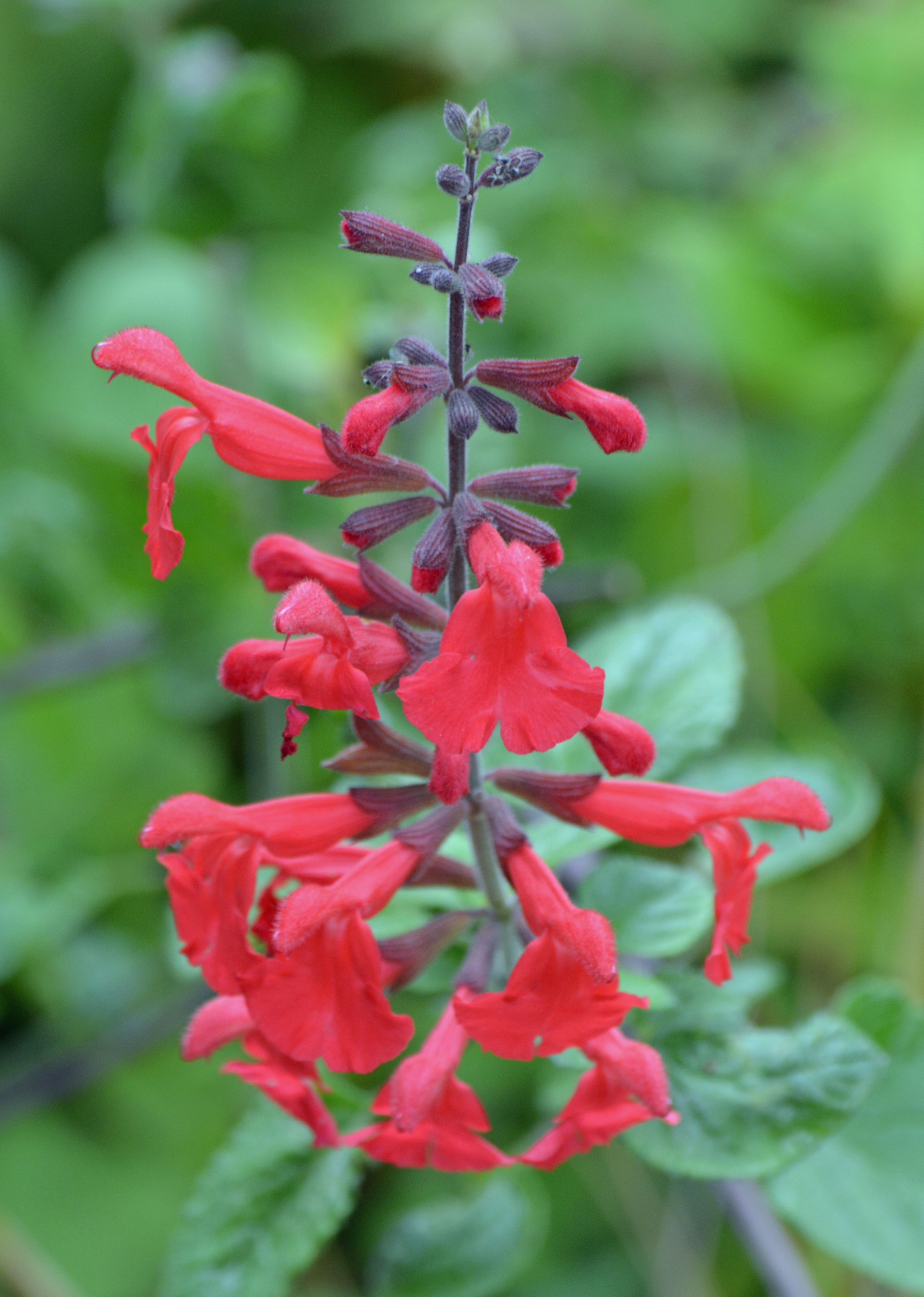
“Another herbaceous perennial that features strongly in our November garden are the Salvias. We leave a few to over-winter in the garden but most will be brought into the cool greenhouse.”
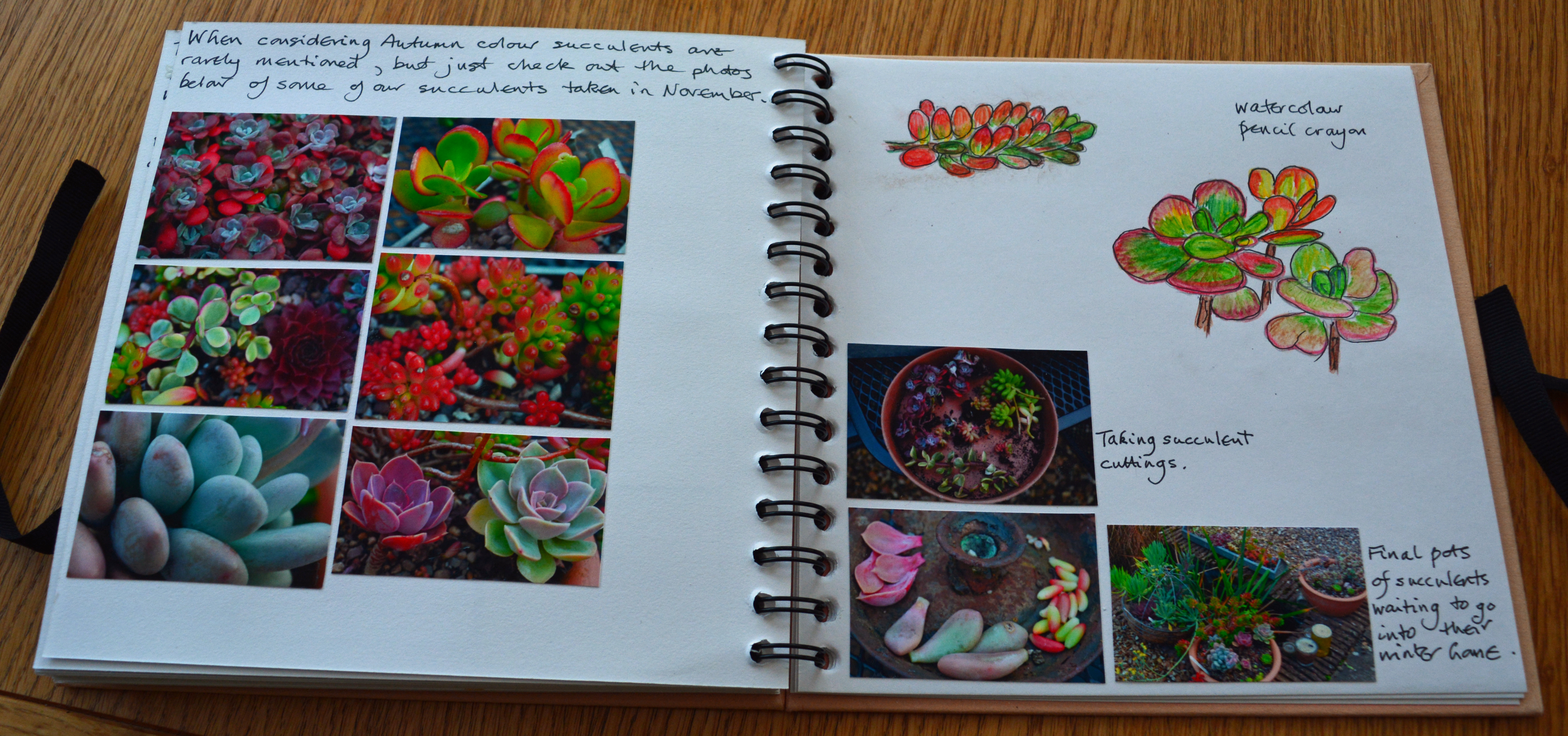
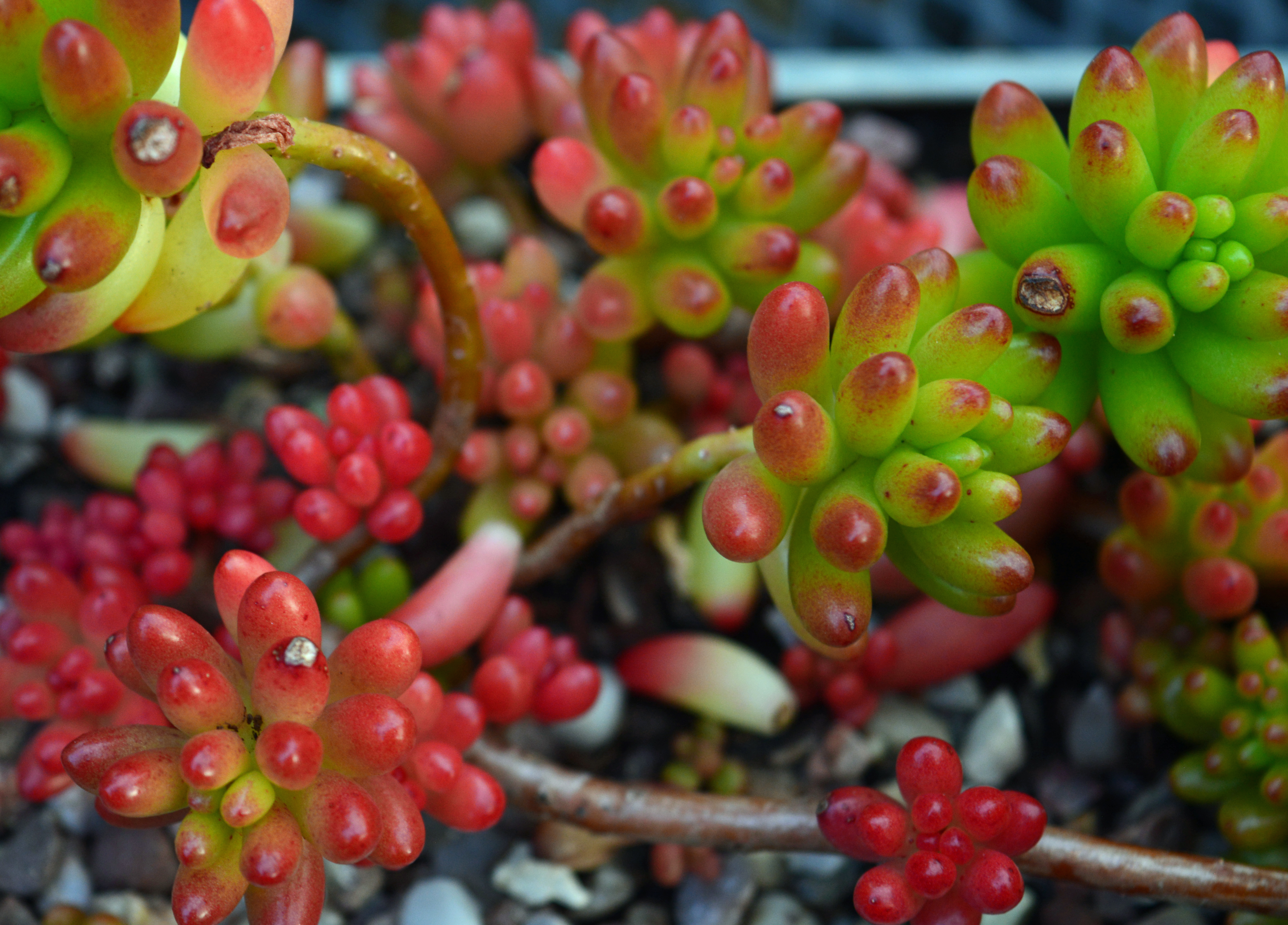
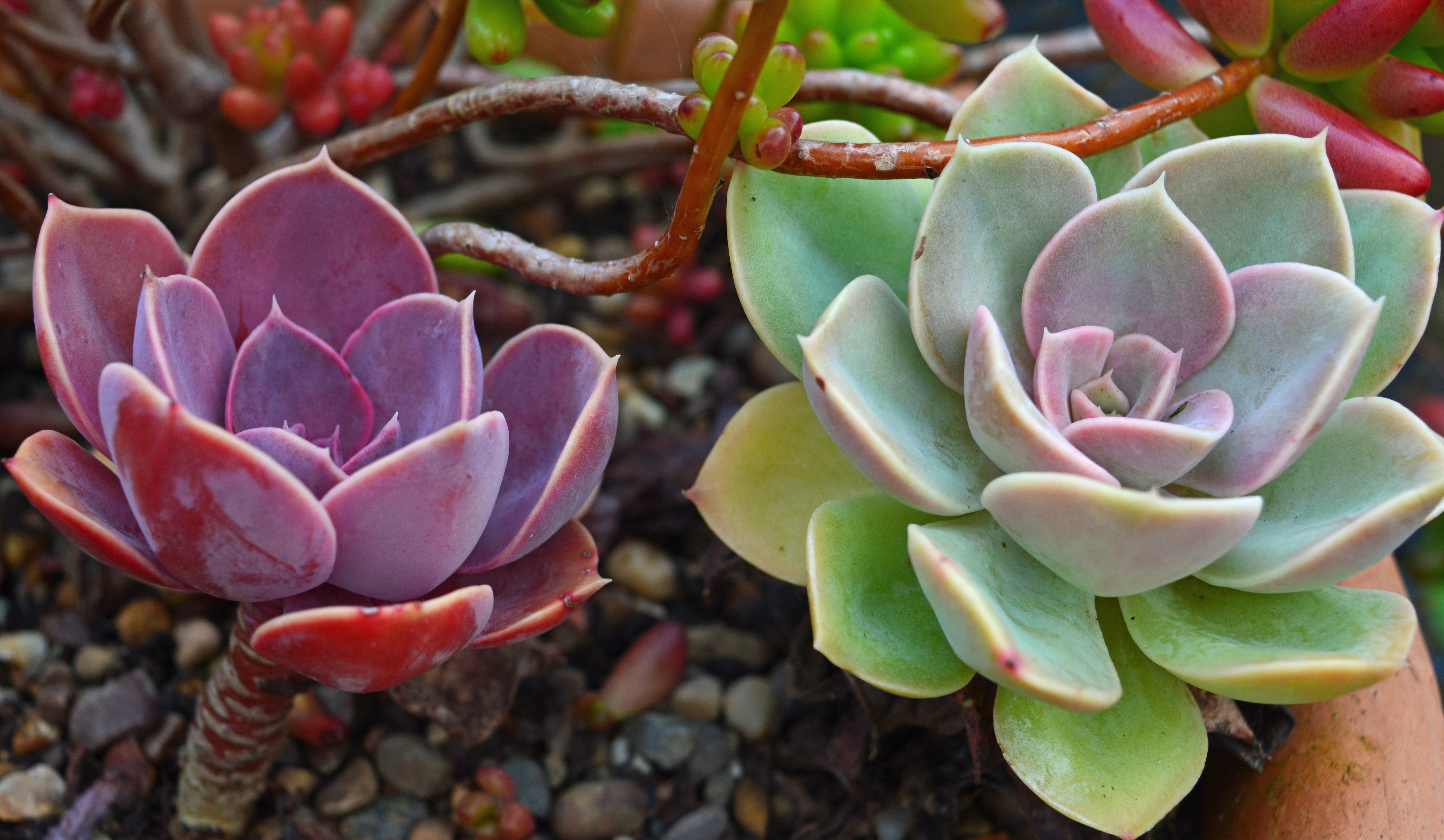
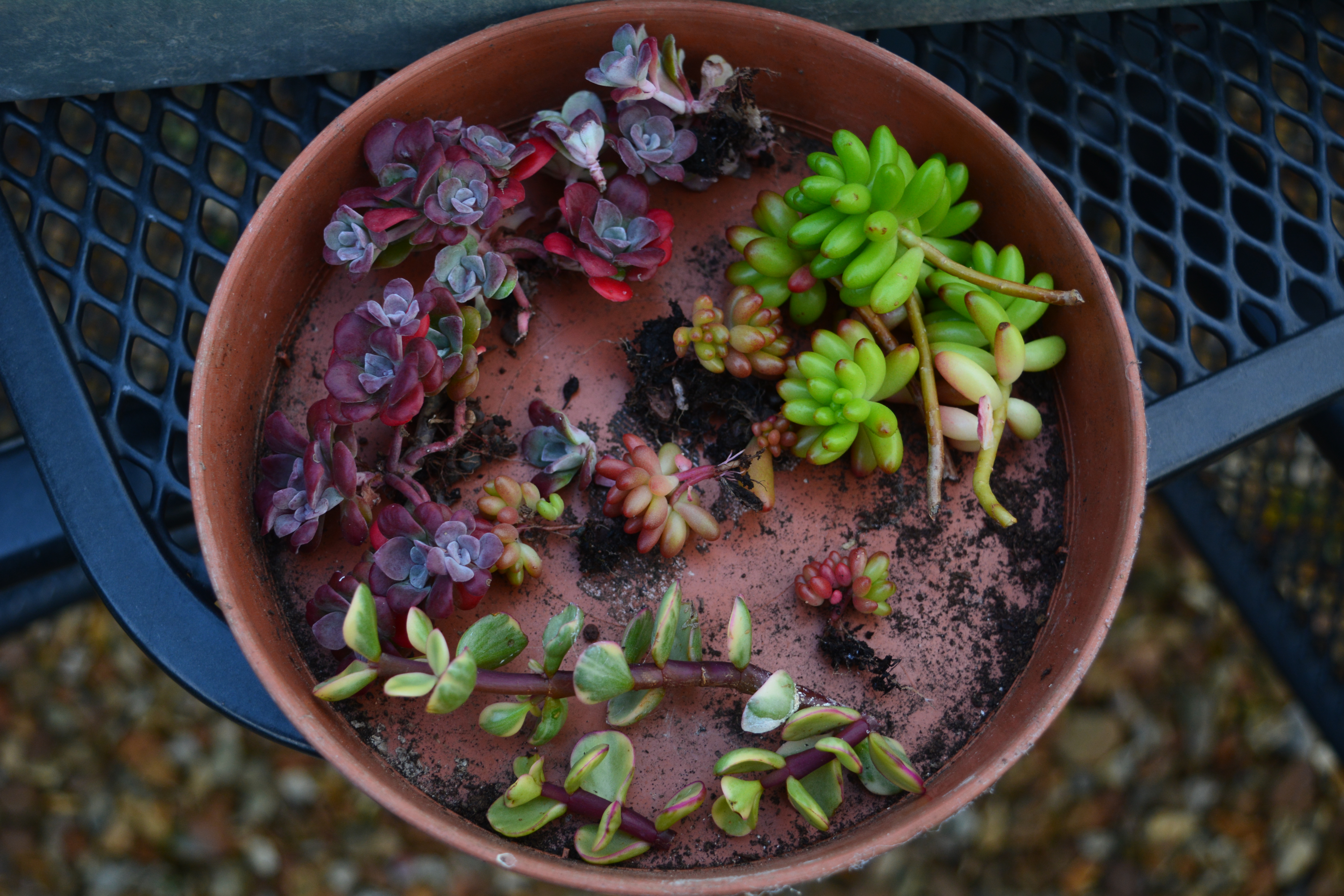
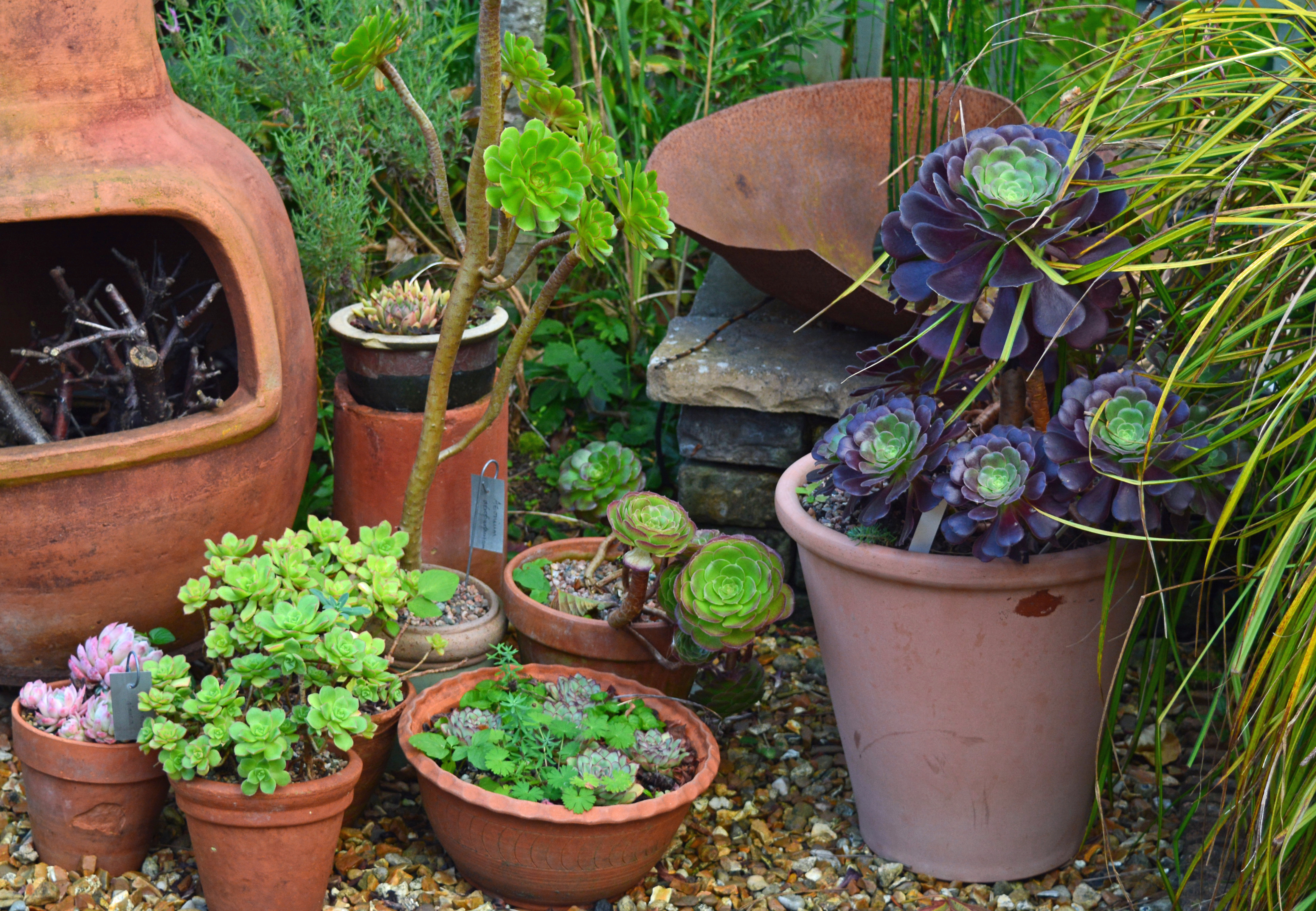
Turning over again I take a look at succulents, plants rarely mentioned in the context of the autumn garden.
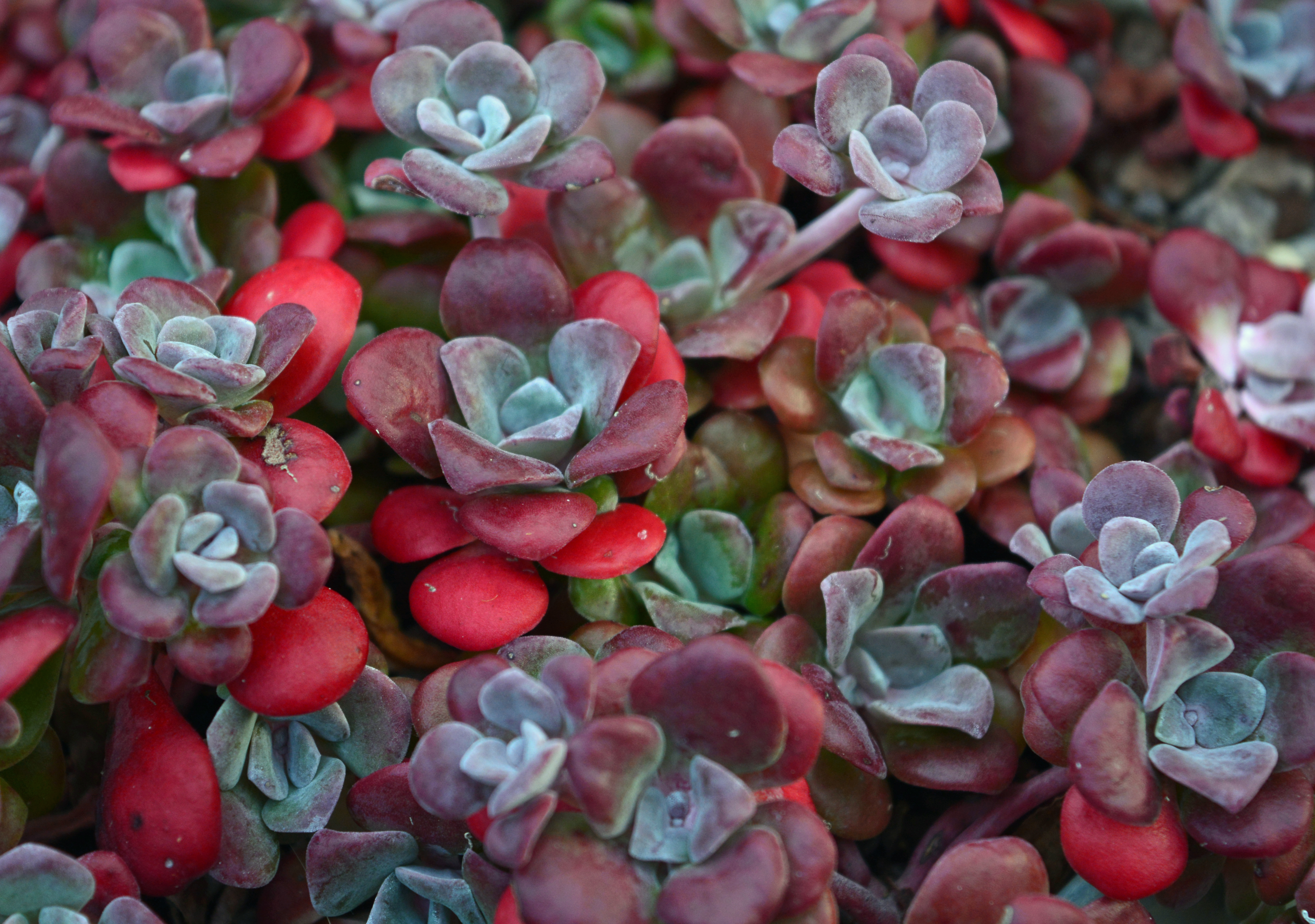
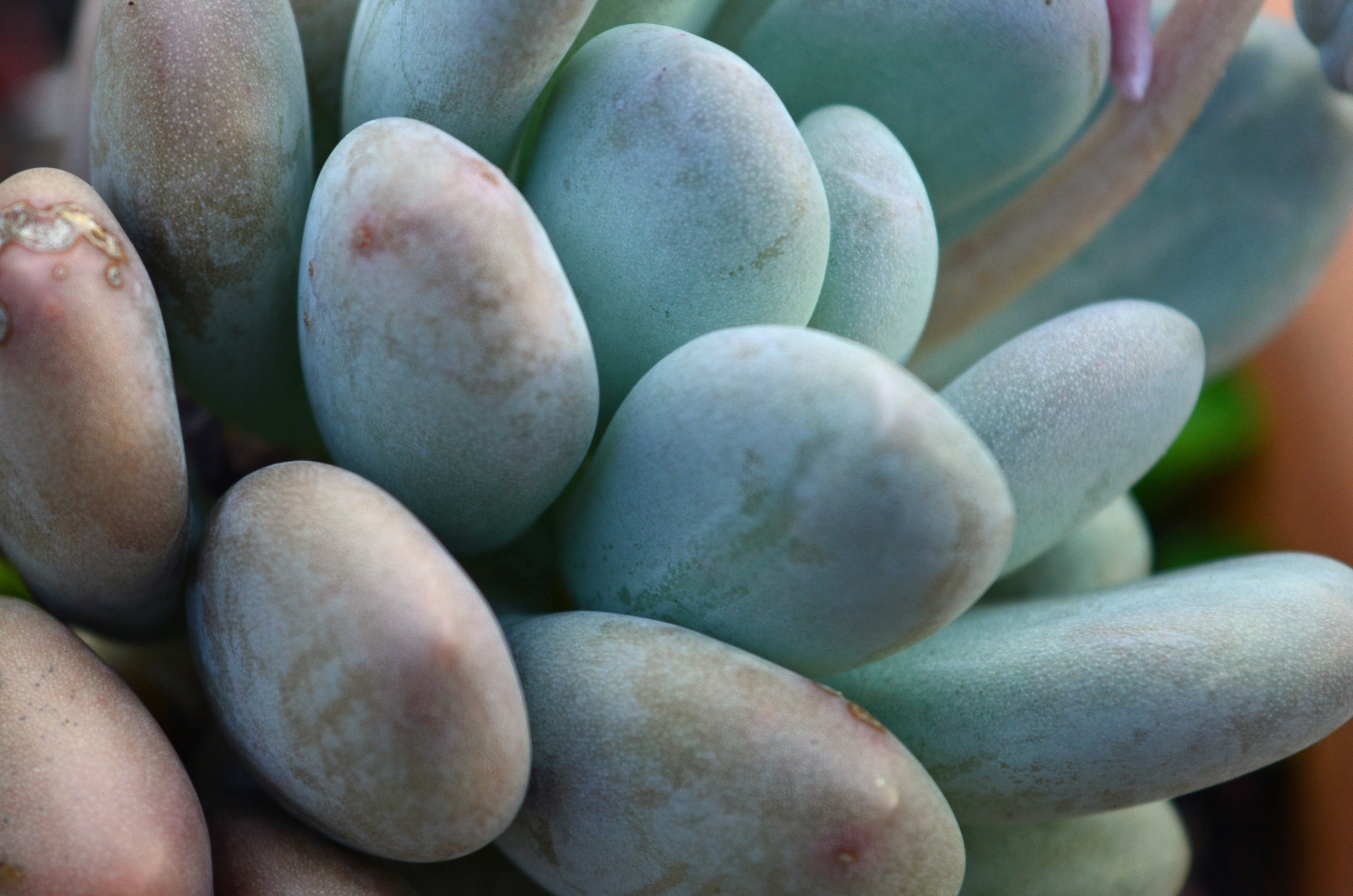
“When considering Autumn colour, succulents are rarely mentioned, but just check out the photos below of some of our succulents taken in November“
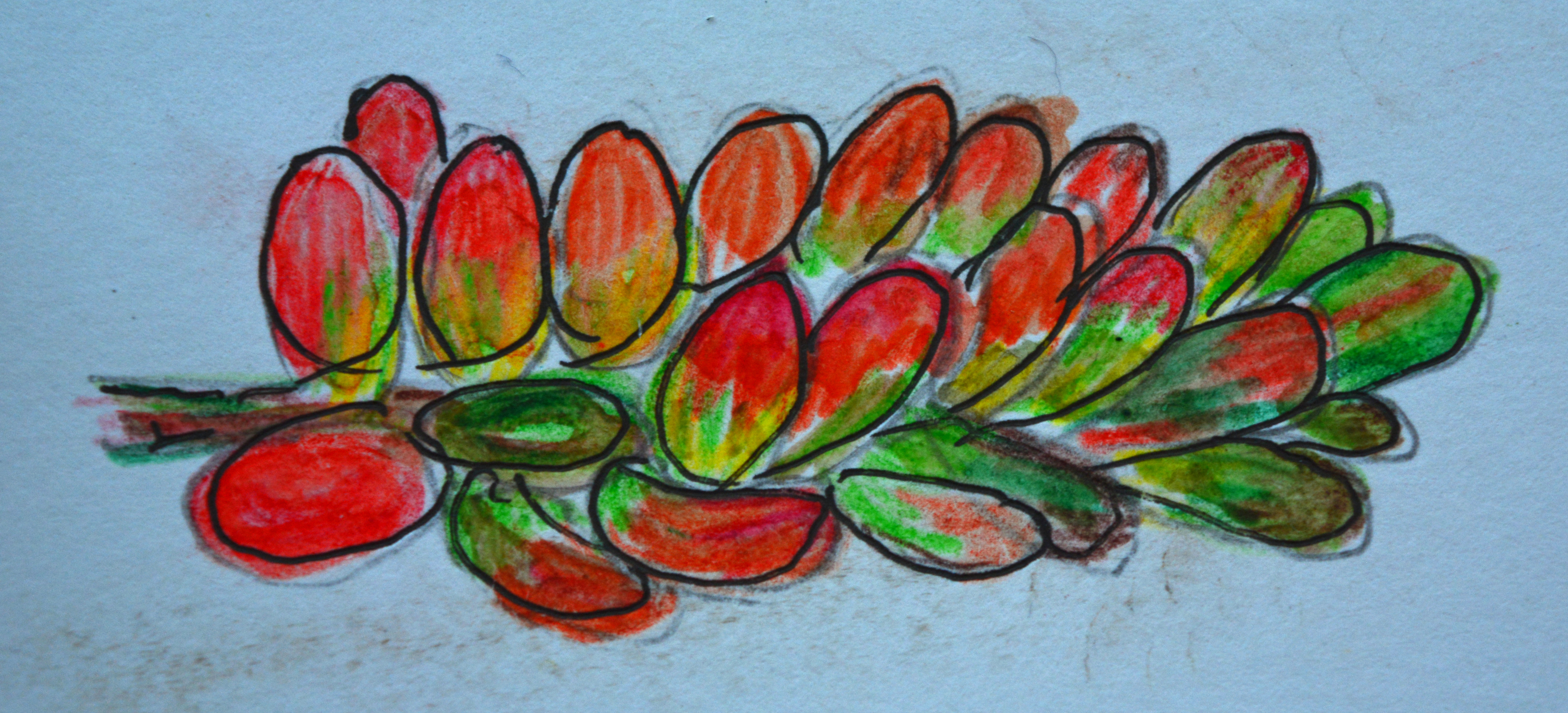
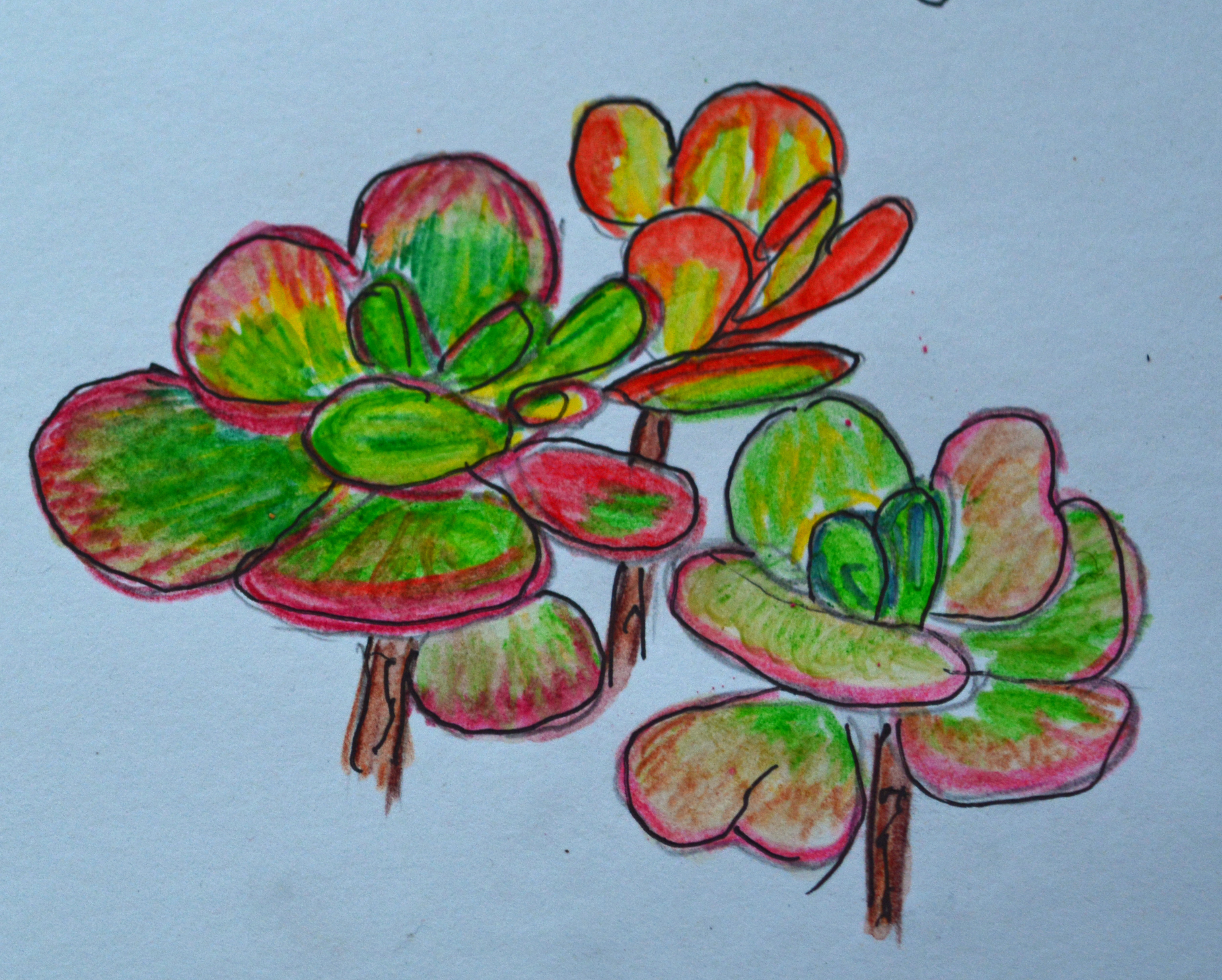
Below are my paintings/drawings of two multi-coloured succulent stems which I created with water soluble pencil crayons.
“Taking succulent cuttings.”
“Final pots of succulents waiting to go into their winter home.”
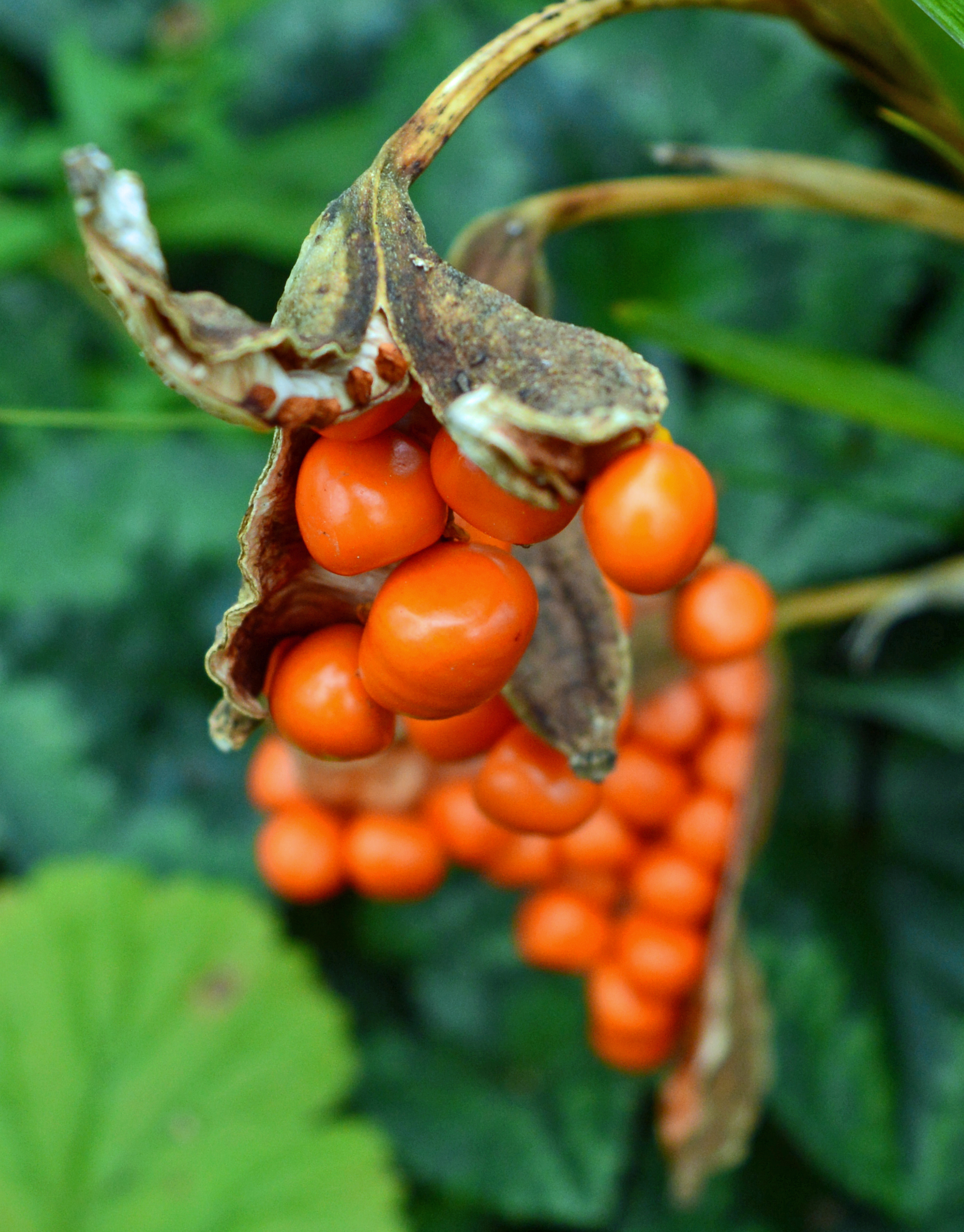
The final page of my November entries in the Garden Journal celebrates my “Plant of the Month”, which is one of only two Irises native to the UK, Iris foetidissima.
The next visit to look at my Garden Journal in 2017 will be the last one for the year, December.
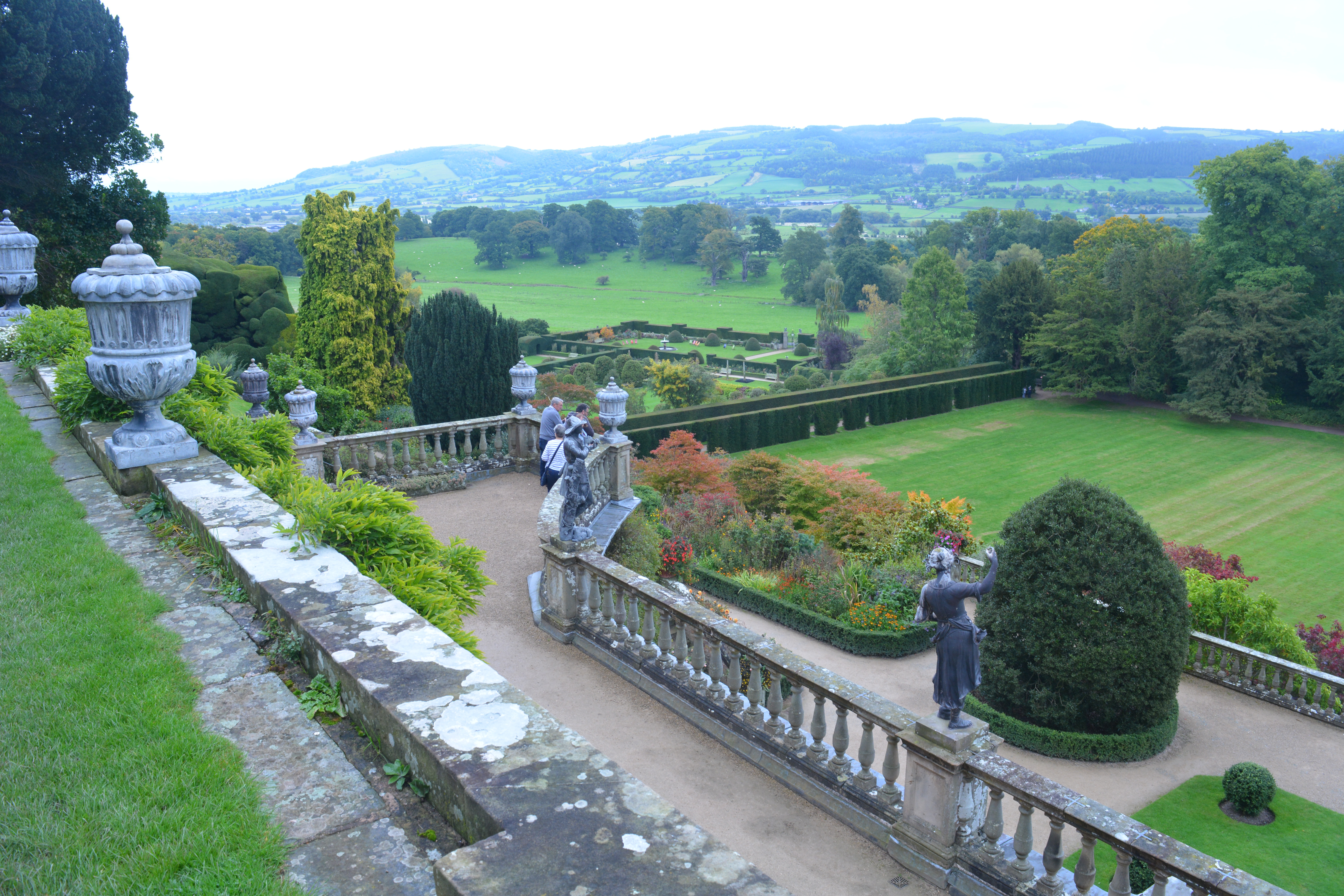
Welcome back to Powys Castle gardens. In part 2 I will take you on a journey along the upper terraces, and in part 3 I will look at the lower gardens.
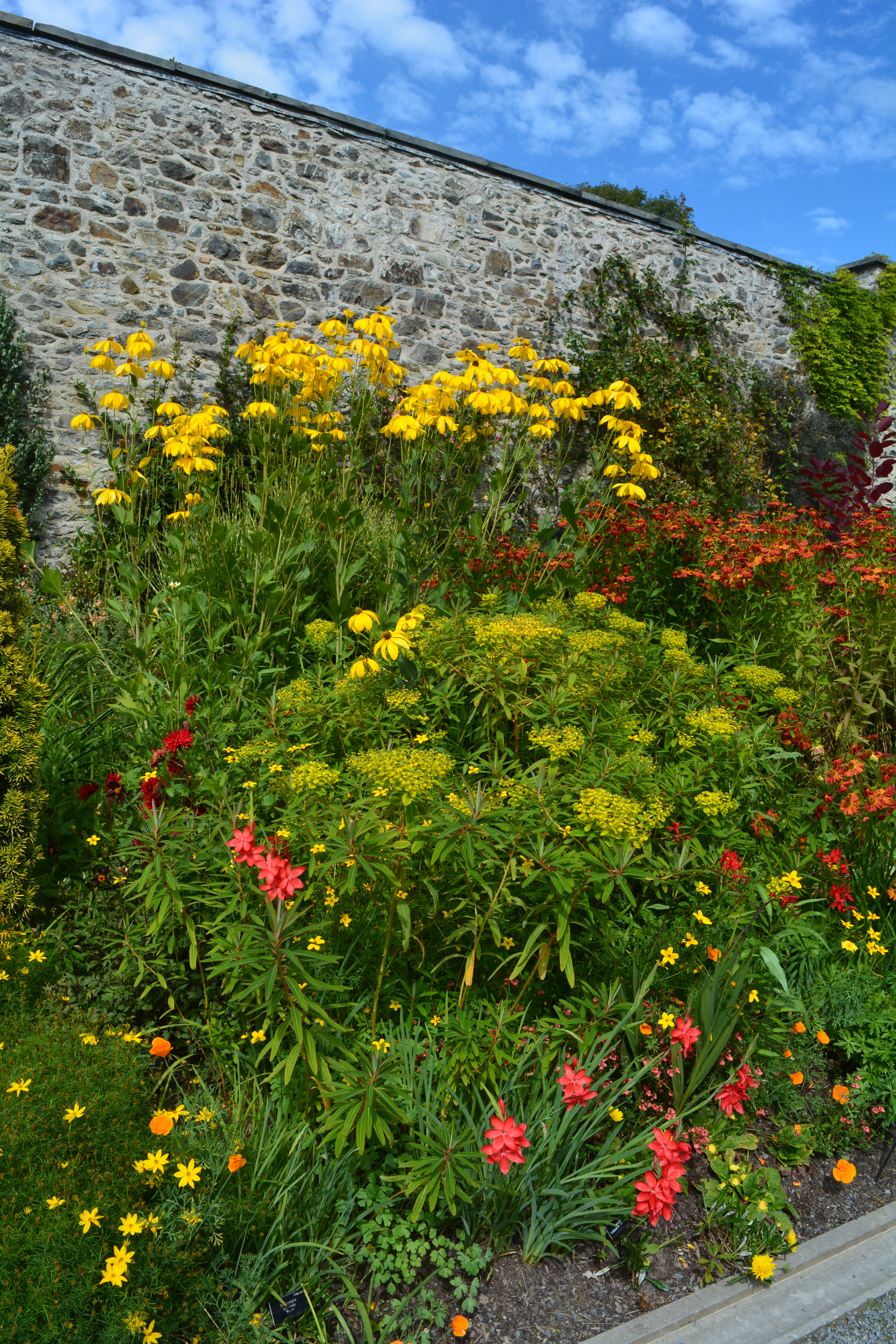
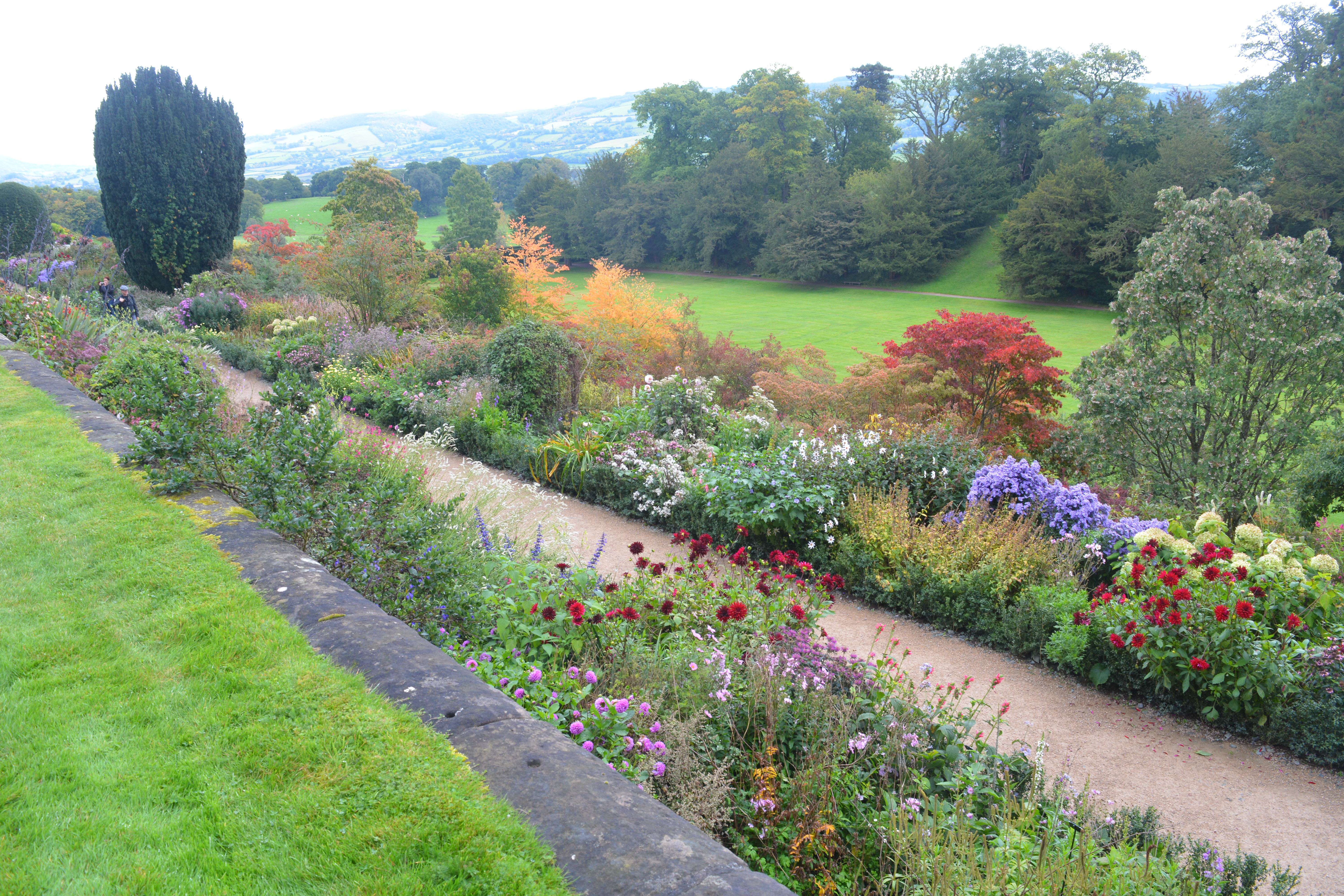
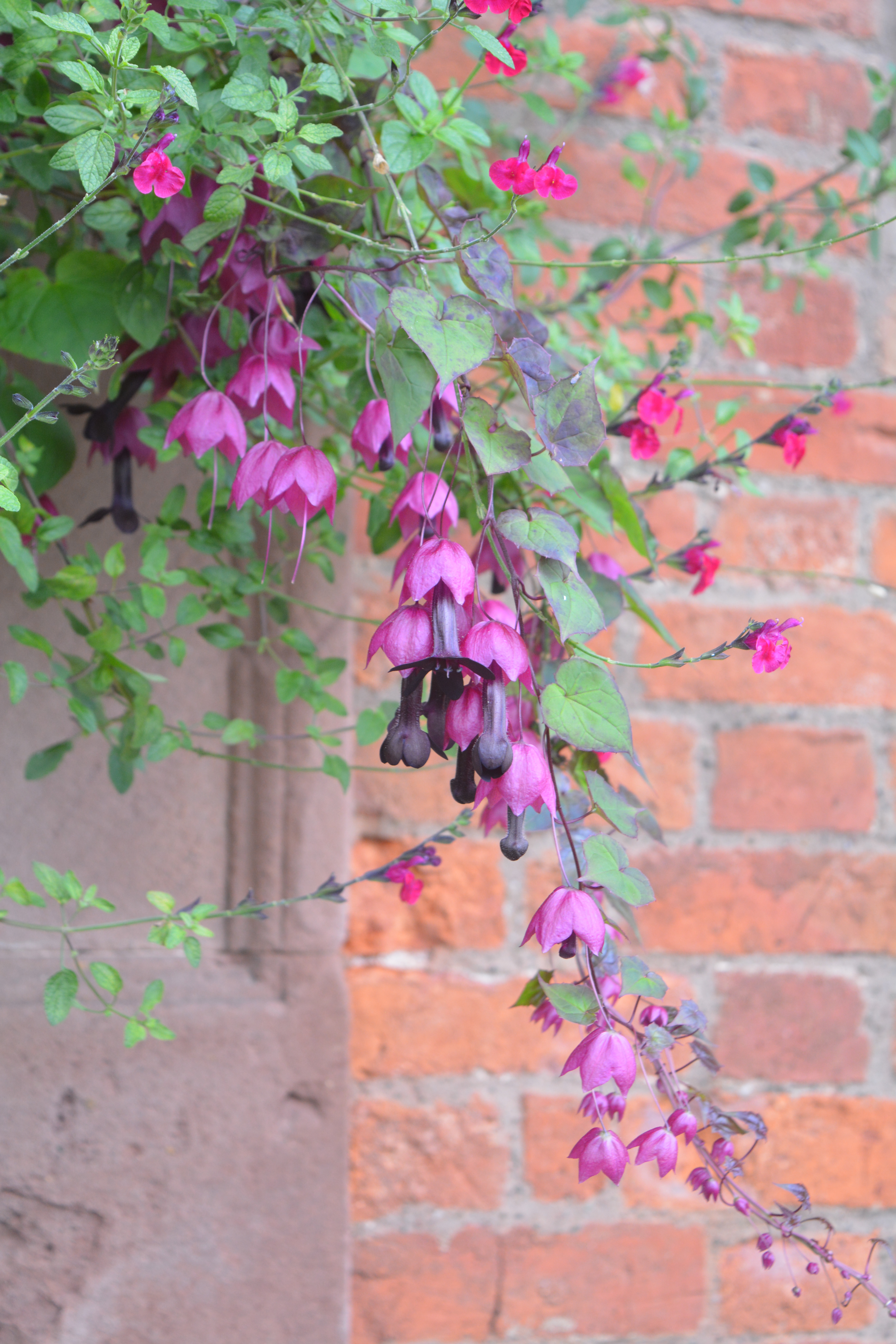
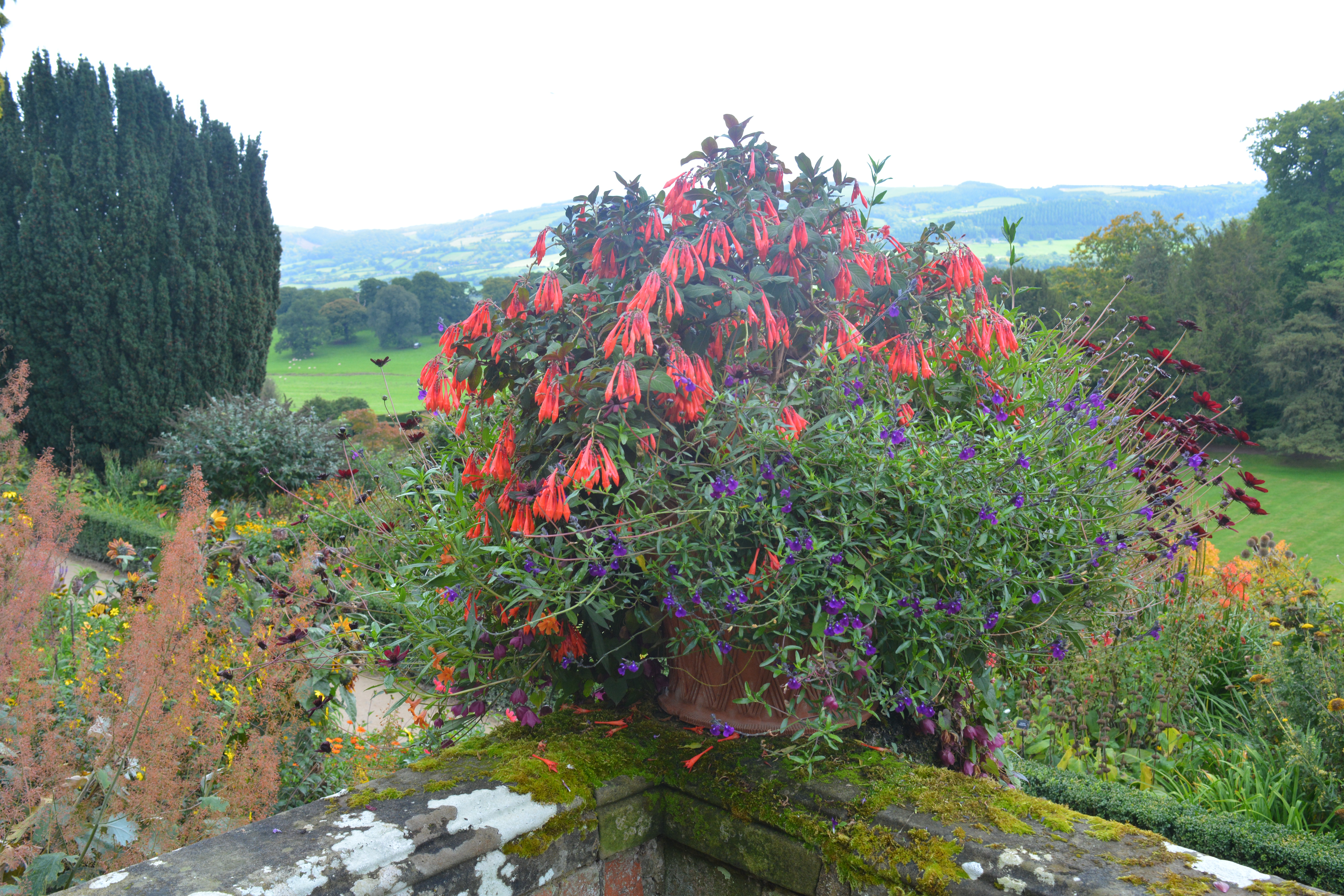
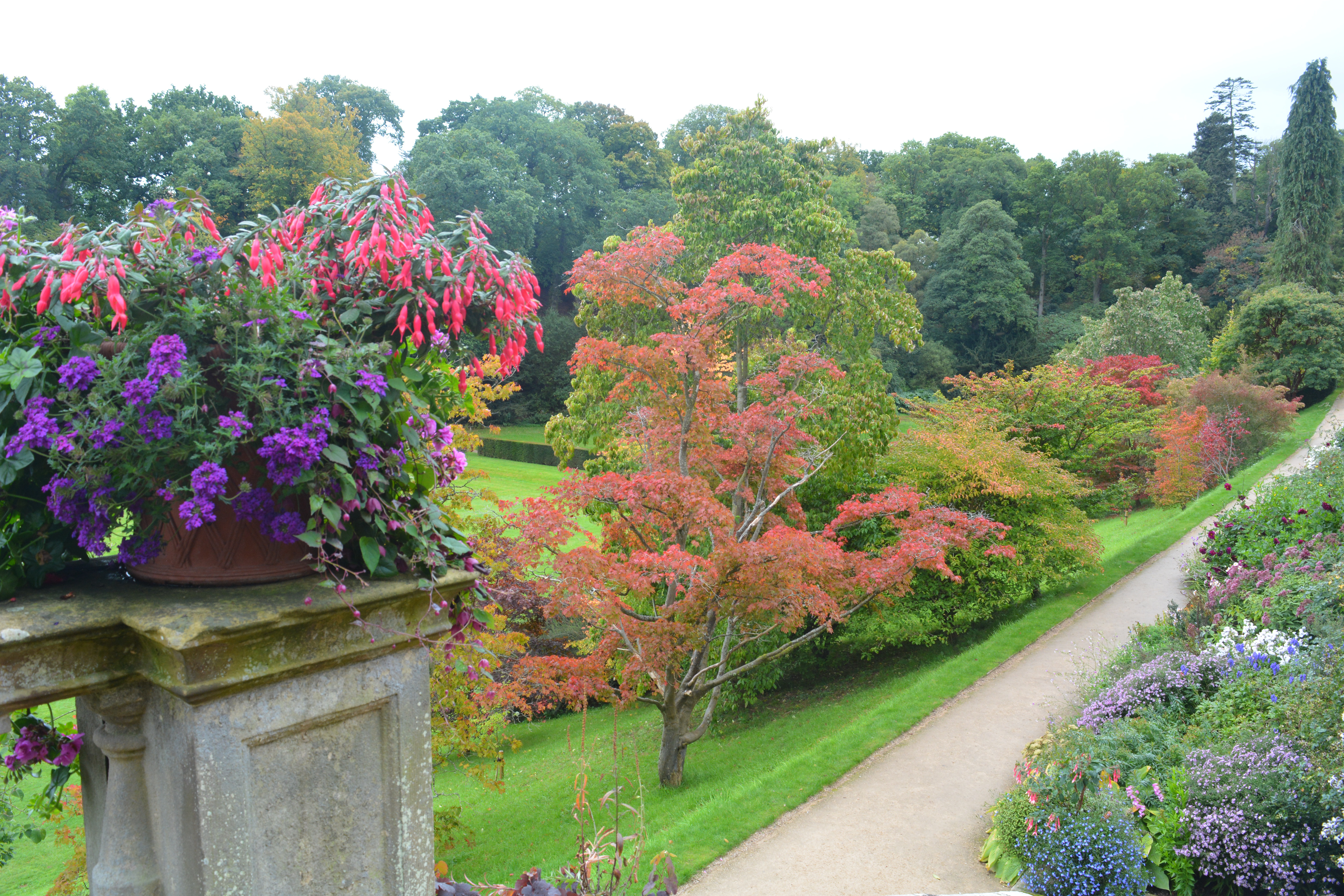
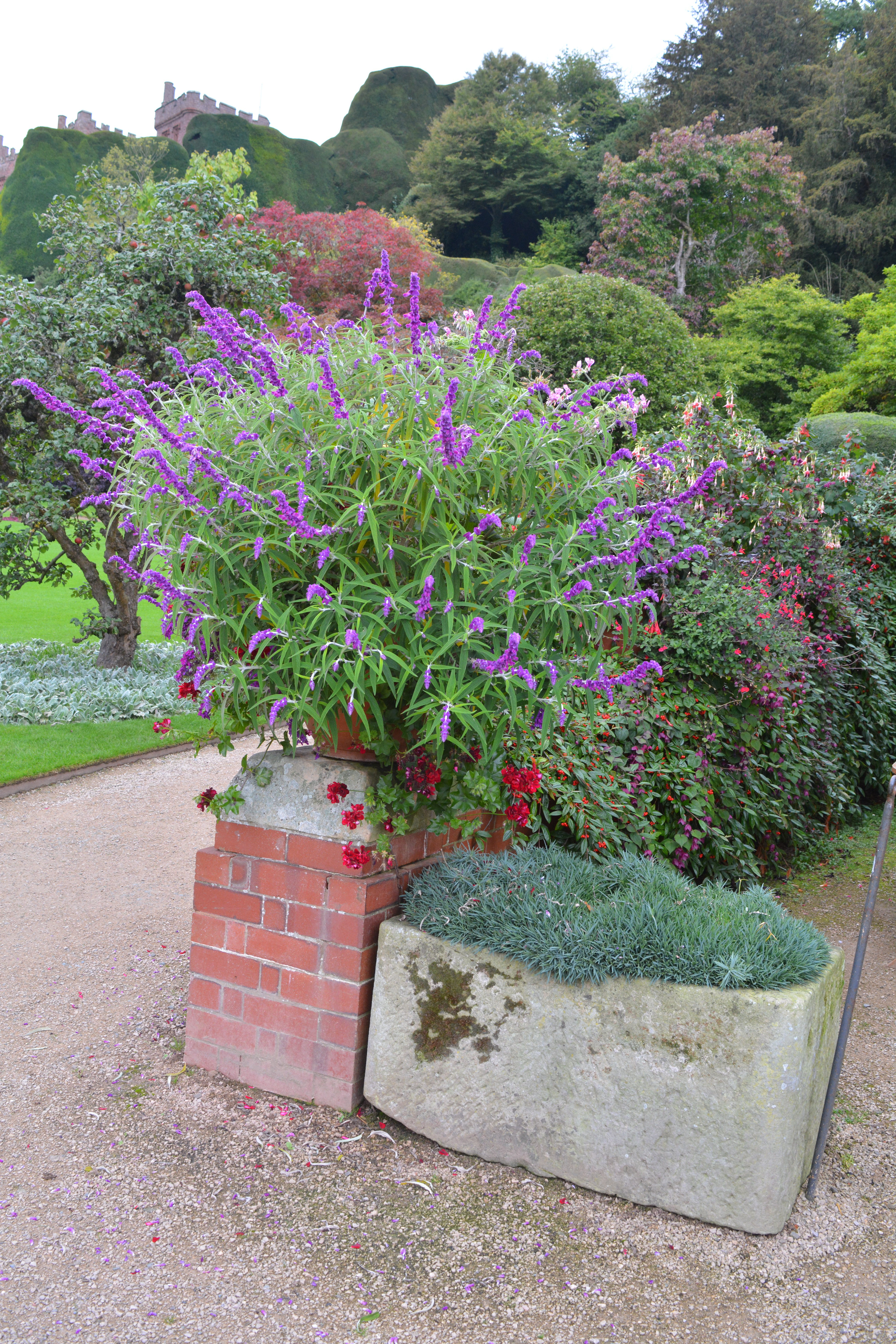
The top terrace features perennials and shrubs that give of their best in late summer into early autumn. Some are difficult to grow and several are half-hardy but the special conditions here allow then to flourish. To see them growing so well and looking so happy certainly encouraged us to try more such plants at home. We have lots of succulents and Salvias already but we are always up for a challenge!
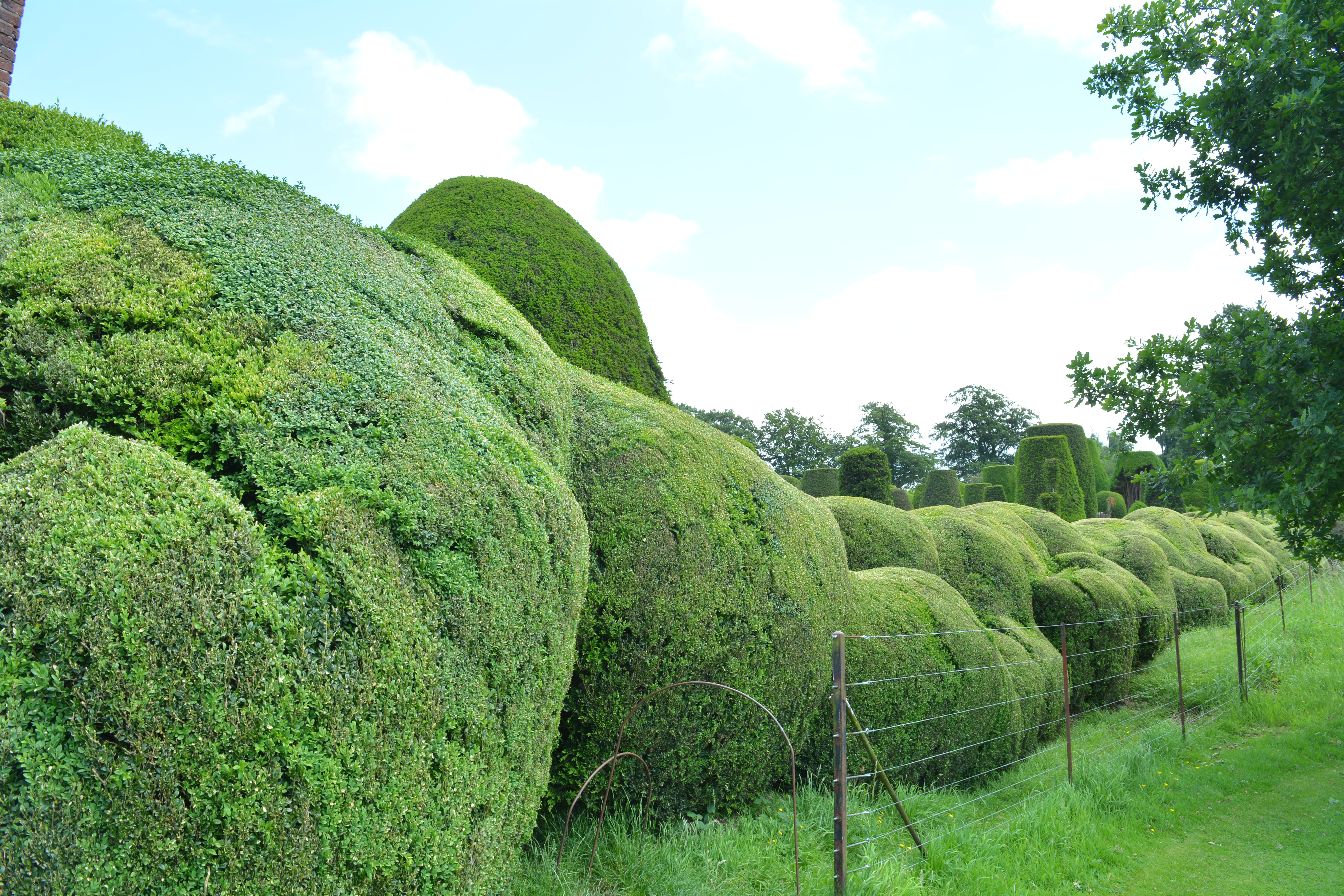
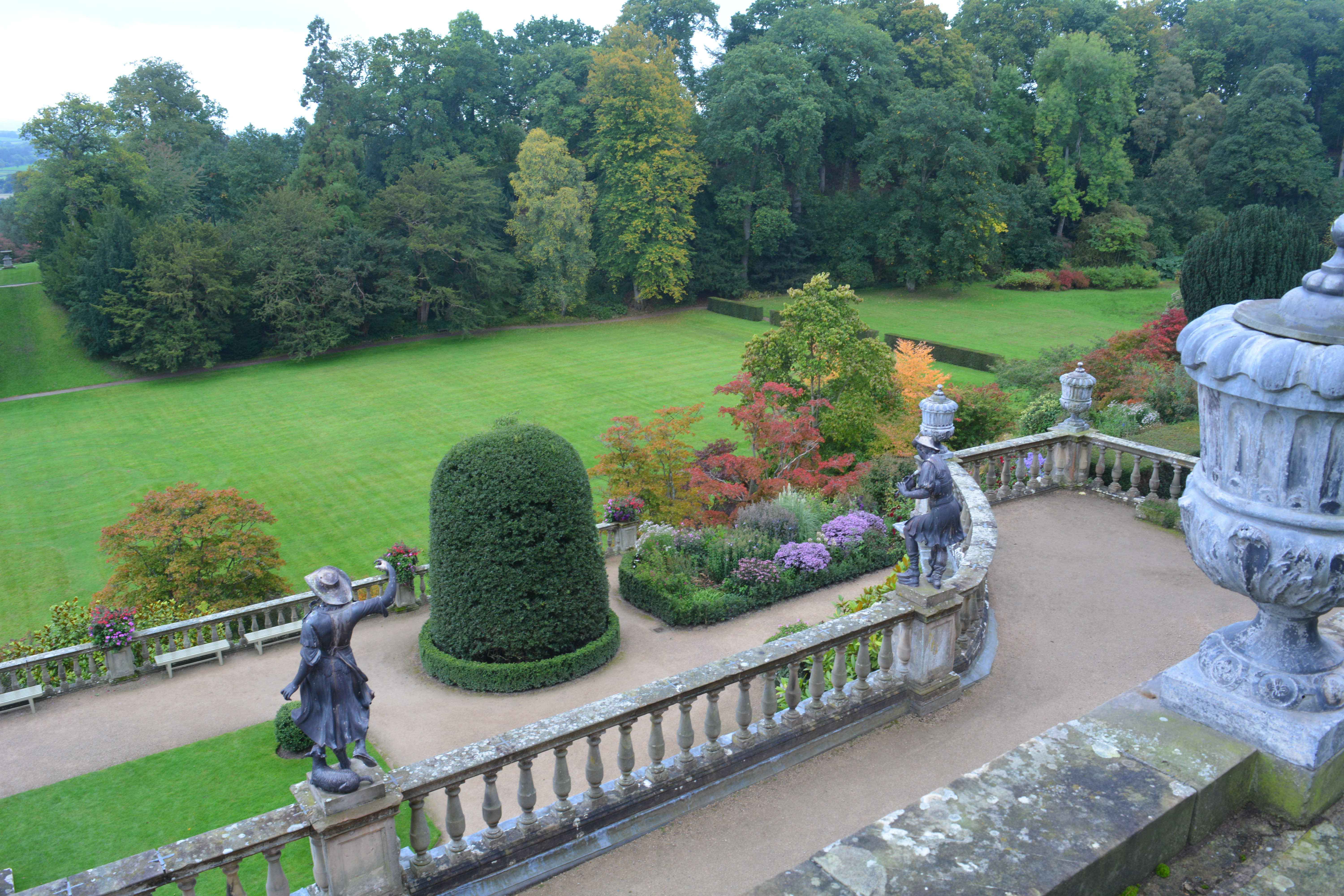
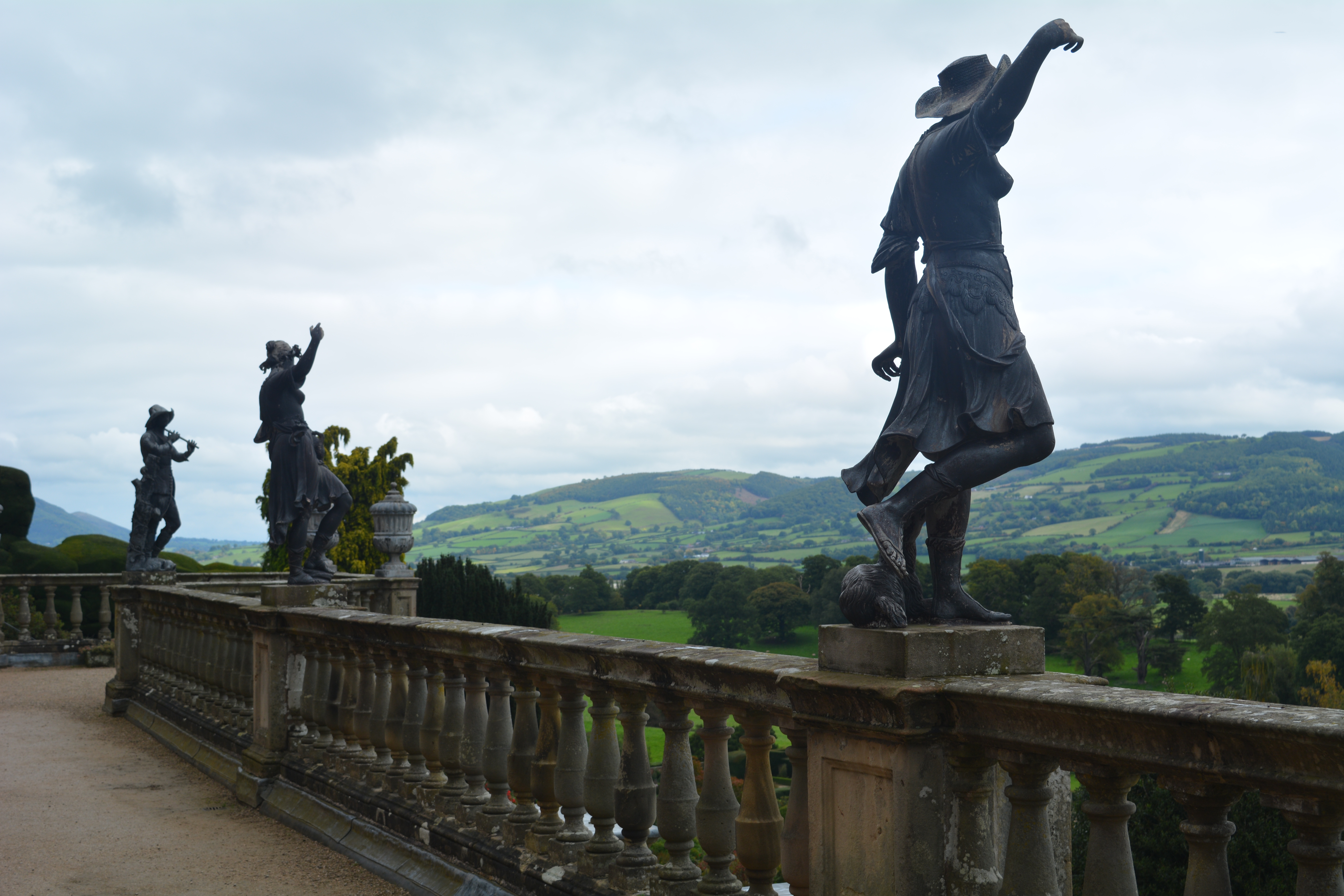
First we shall have a look at views along the borders and looking out over the terraces. Powys is renown for its ancient sculpted yew hedging which appears now and again as we walked the terraces. Sculpted figures stand atop the stone balustrades in places overlooking the views.
As well as the beauty of the long views of the terrace borders there were many individual that shone out as special. Enjoy my gallery of plant portraits. As usual click on the first pic and navigate with the arrows.
In part 3 of these posts about Powys Castle we will have a look at the yew hedges and the Lower Garden.
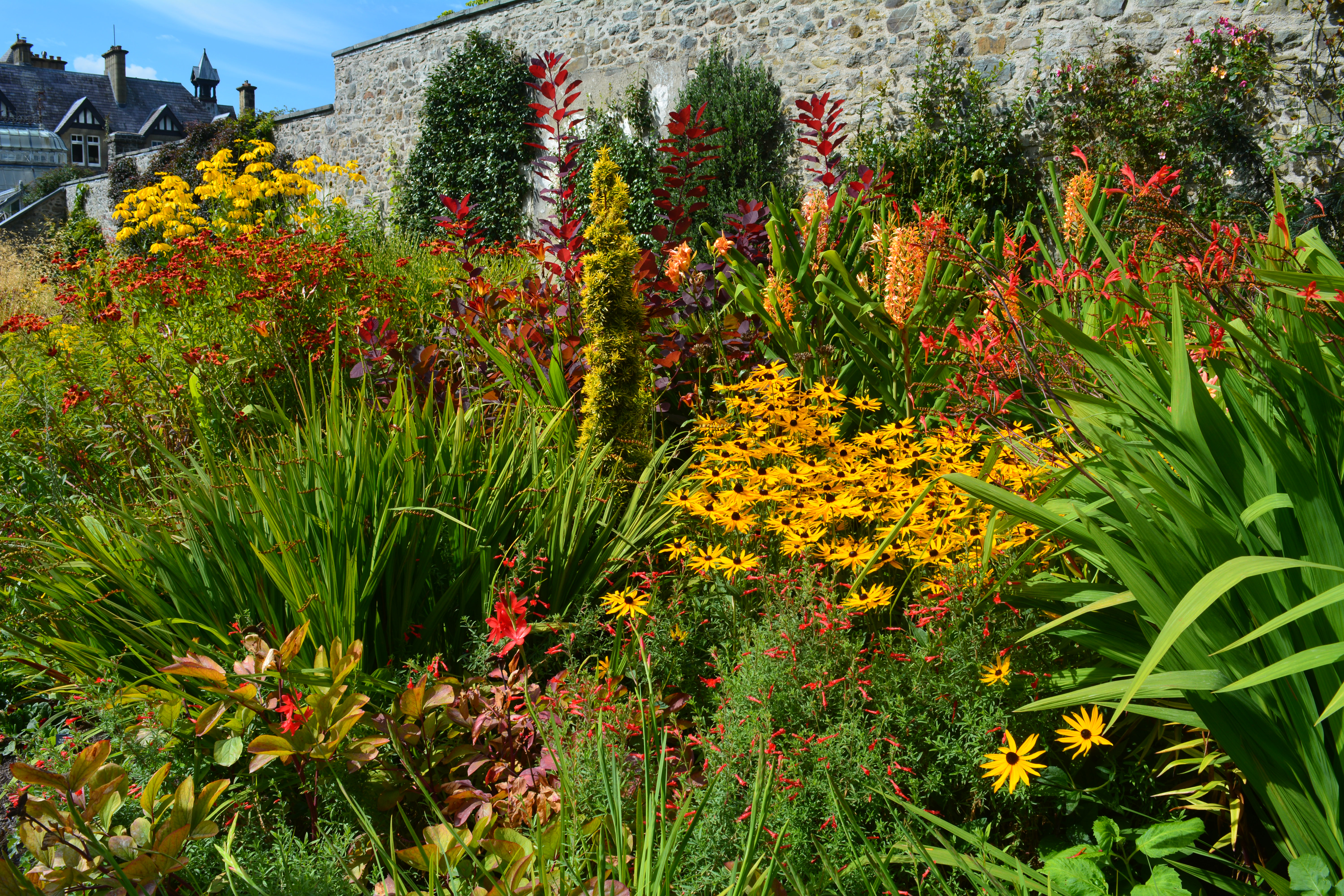
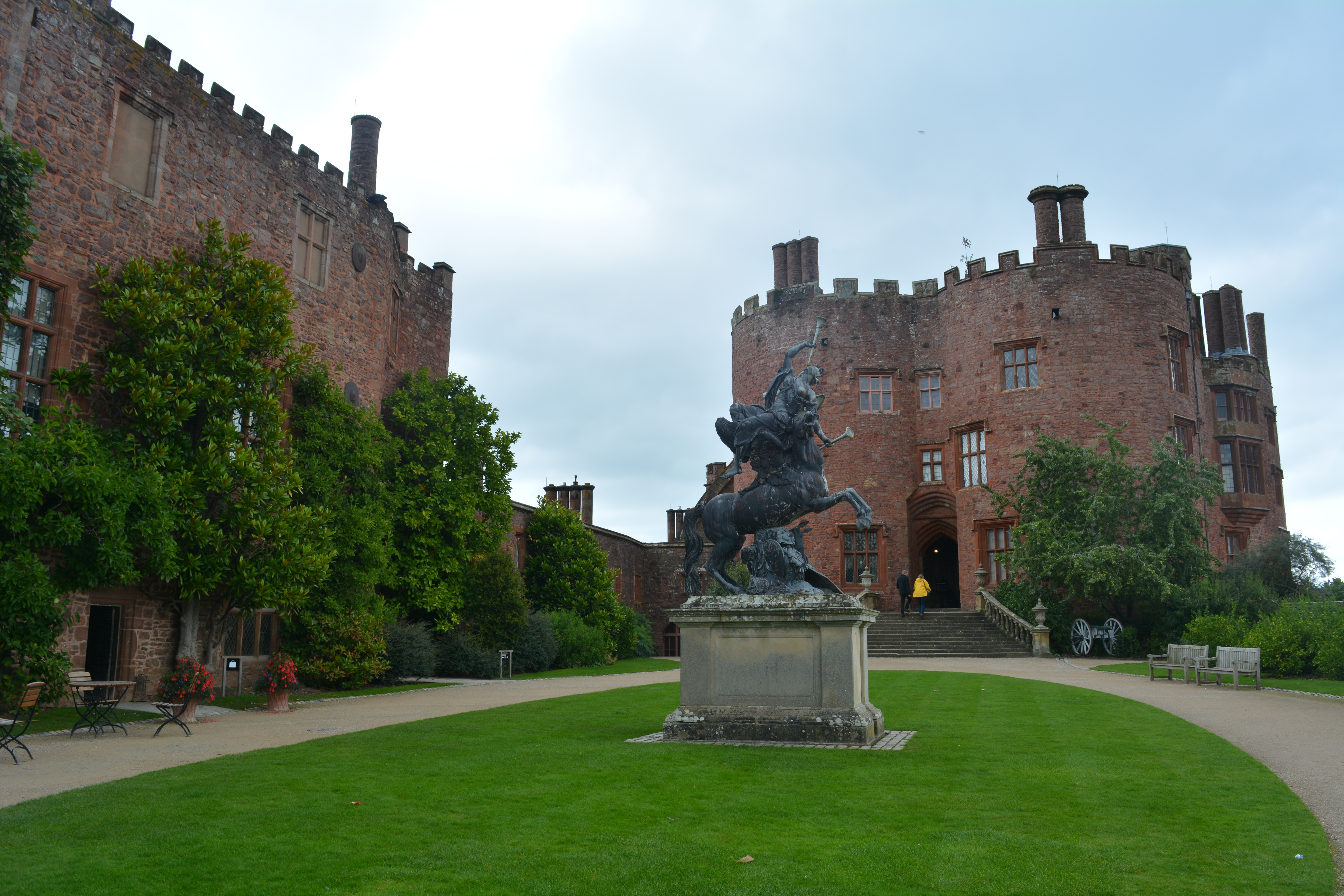
We are so lucky to be able to get to Welshpool within half an hour or so because here we find our favourite plant nurseries. Very close by is the National Trust property, Powys Castle with a most wonderful garden. We like to wander around late summer and early autumn when the flowering plants area at their best and trees and shrubs are colouring up adding an extra layer of interest.
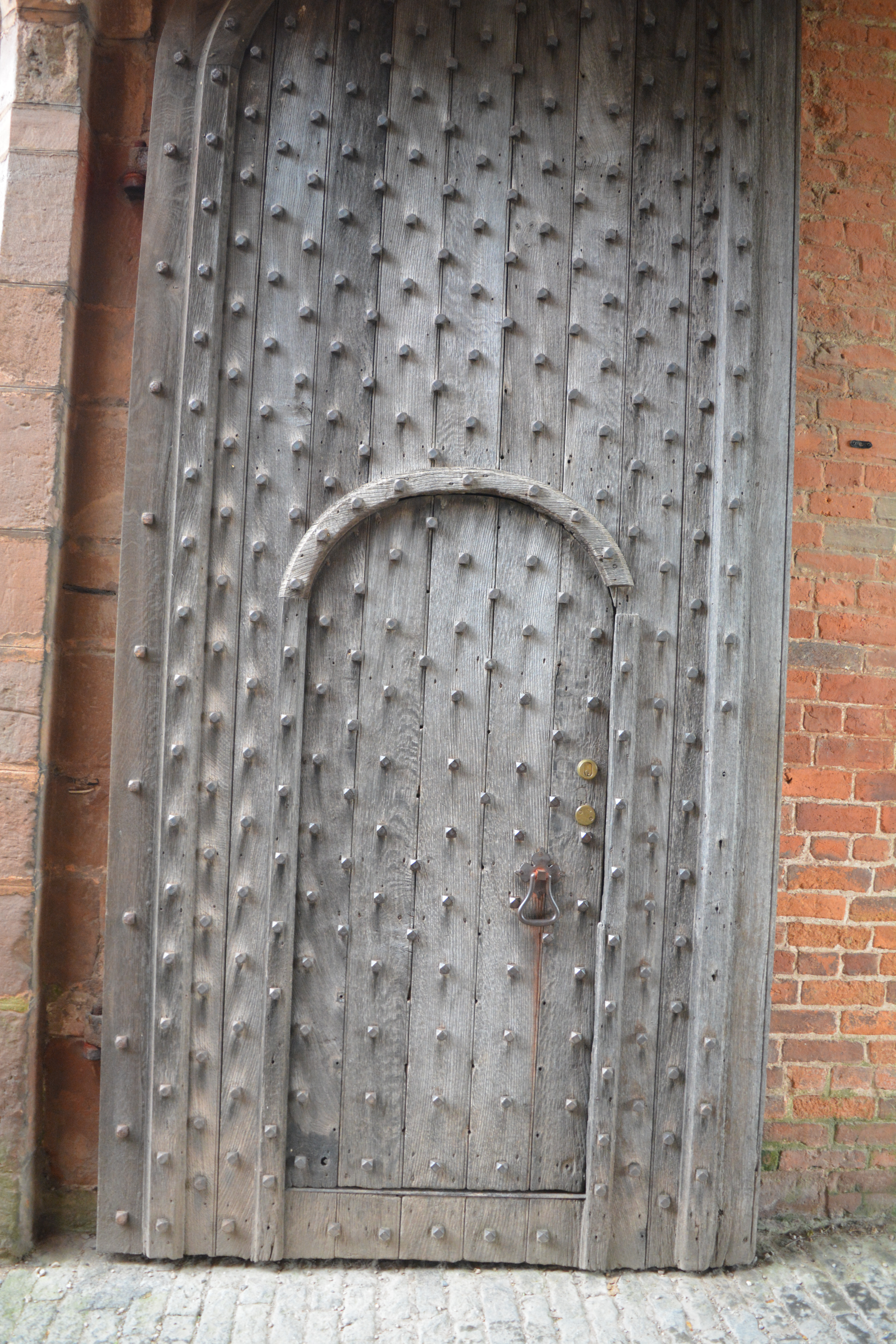
The gateway into the castle courtyard, where the coffee shop is to be found, was most impressive with its stone archway towering above our heads. Passing through the gateway we noticed this little mysterious door, but the answer to its purpose was written on the wall.
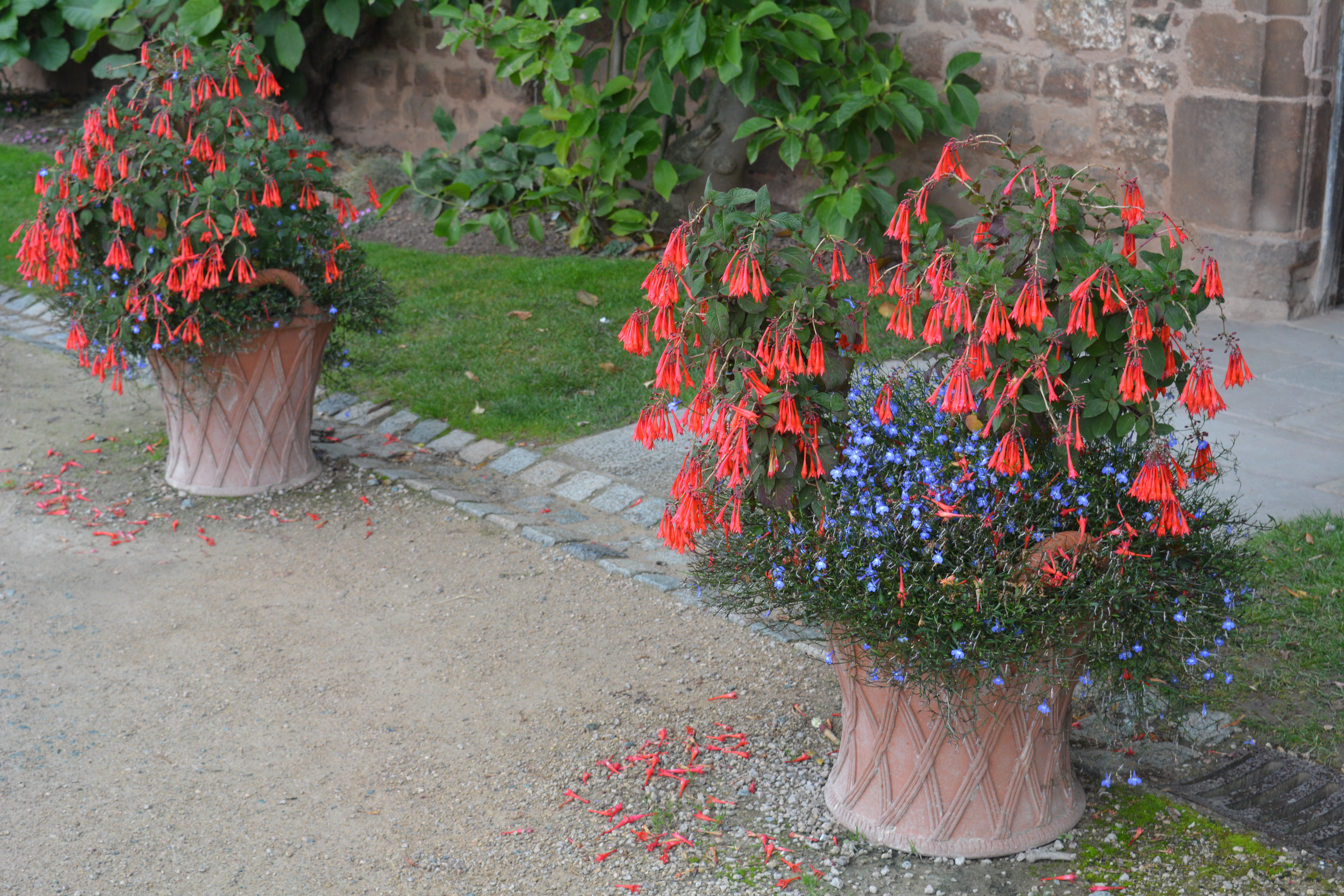
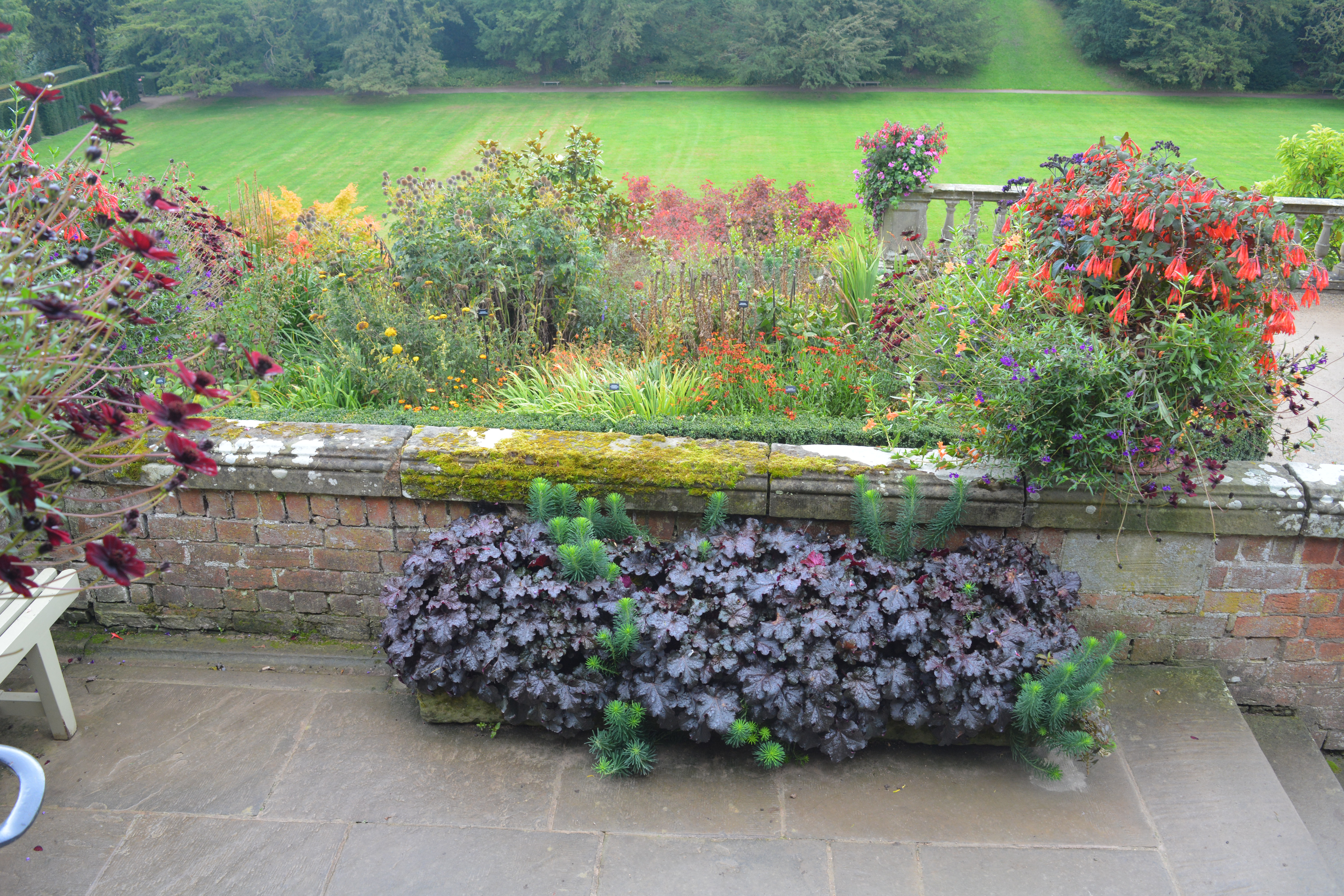
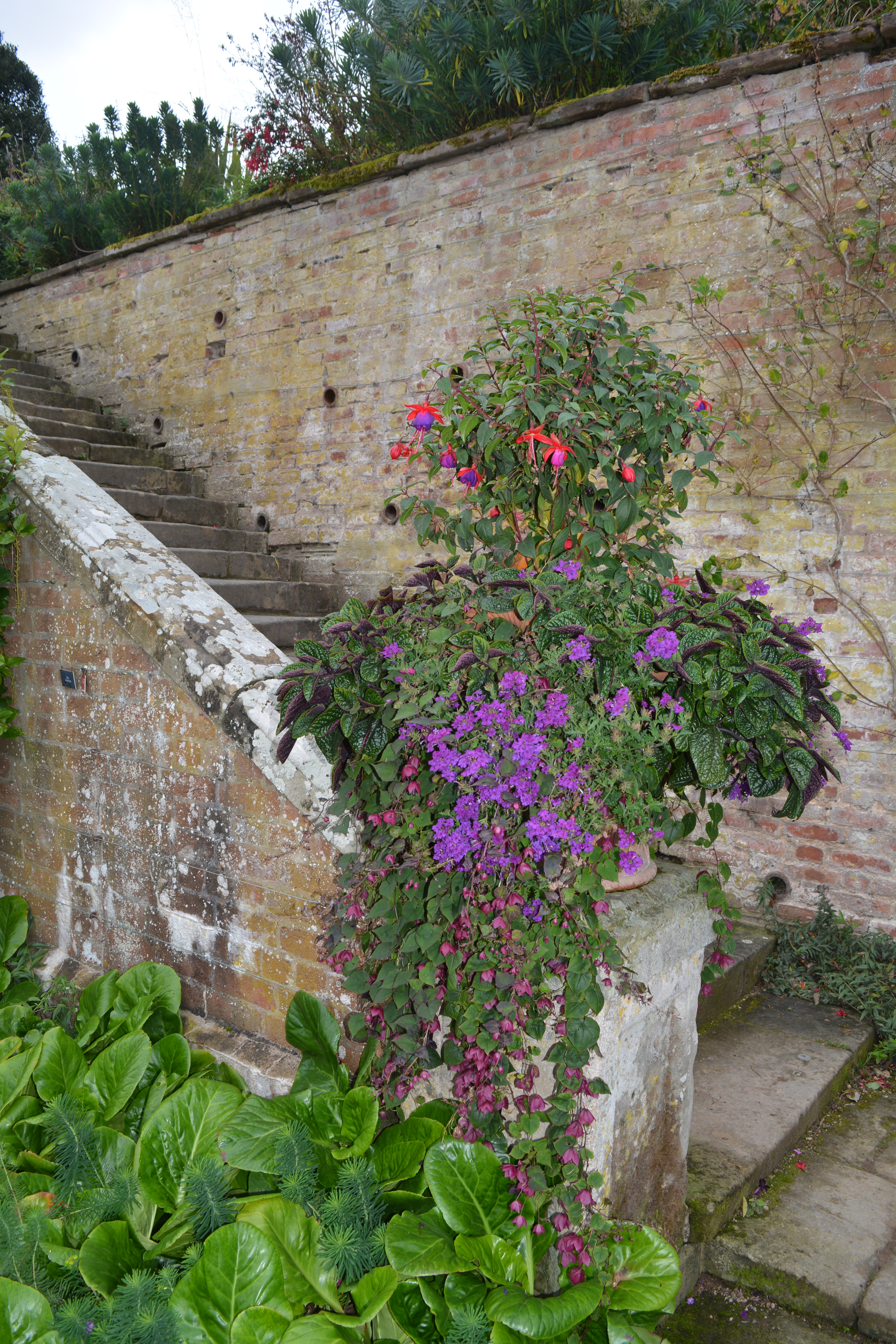
The gardens are well-known for the colourful imaginatively planted containers and pots.
Recesses built into the massive sandstone walls were probably designed to hold statuary but now display most impressively planted containers.
The upper garden is based on three parallel terraces, each accessed by wide stone walls whose pillars supported more planted containers. From the terraces we were delighted with the views presented to us.
Even at the lowest part of the gardens we were delighted by the quality of planting in containers.
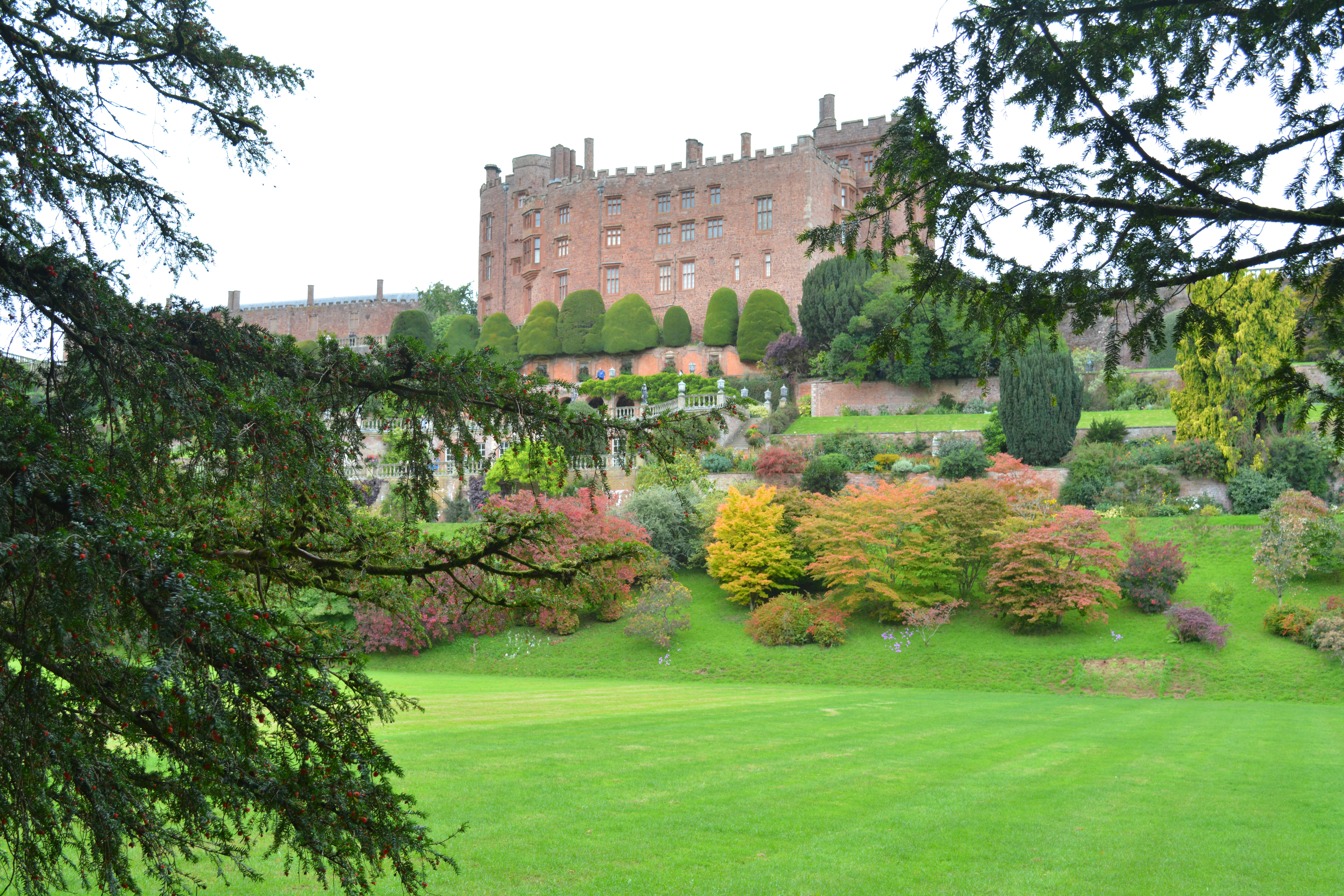
From the lower garden we enjoyed expansive views of the castle sat on its sandstone outcrop, giving it a look of power and dominance. The photo illustrates the need for terracing well and although functional the terracing gives the garden strong design.
In part 2 of this report on our visit to the gardens of Powys Castle I share share with you the different planting combinations and highlight some of the more unusual plants growing on the warm slopes.
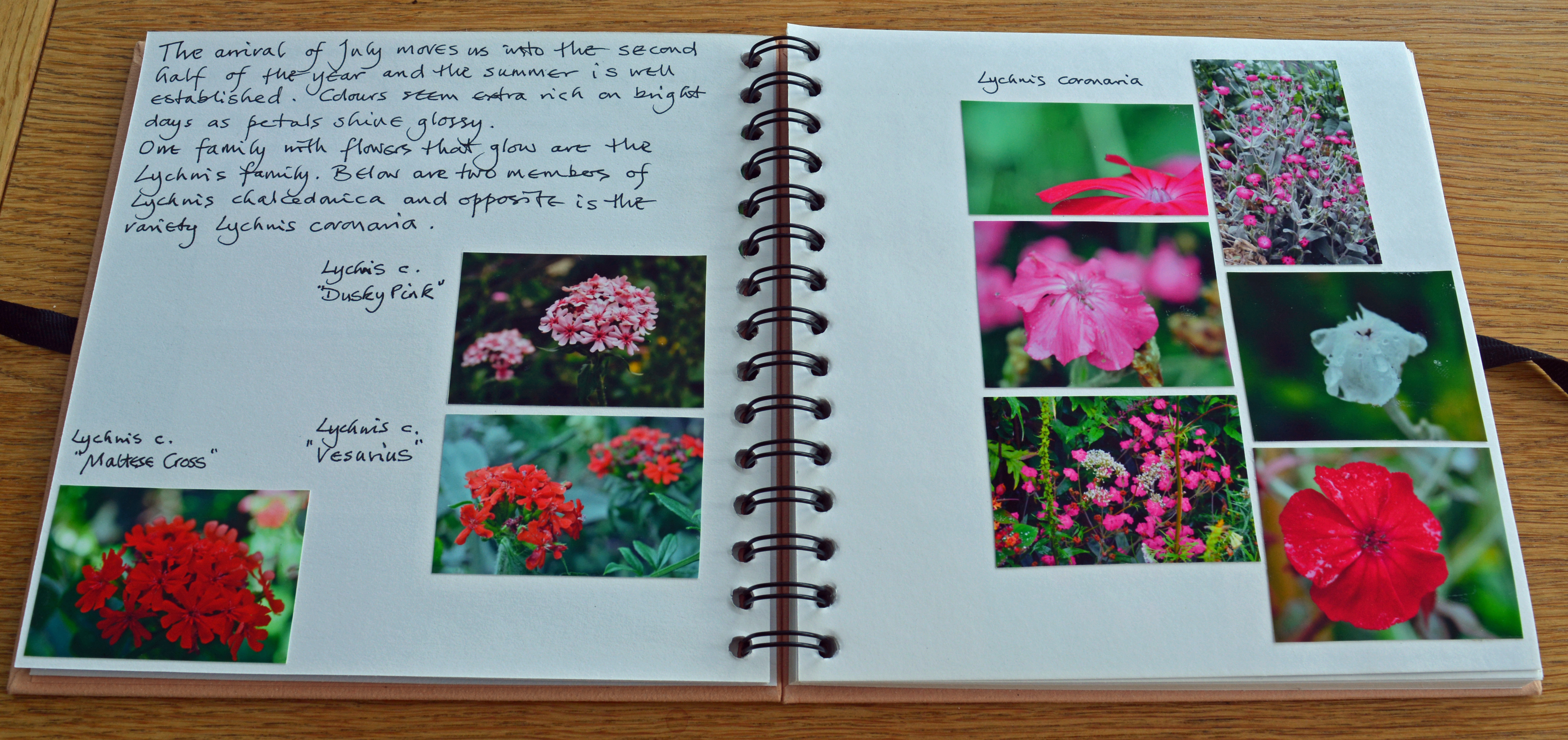
So it is already time to share my July entries in my garden journal. This year in the garden seems to be moving on so quickly. I began my July report by writing, “The arrival of July moves us into the second half of the year and the summer is well established. Colours seem extra rich on bright days as petals shine glossily.”
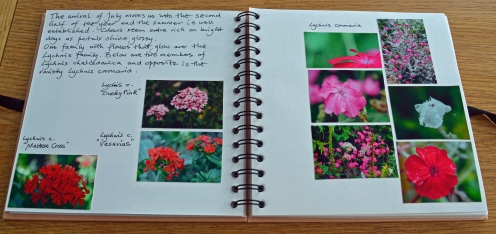
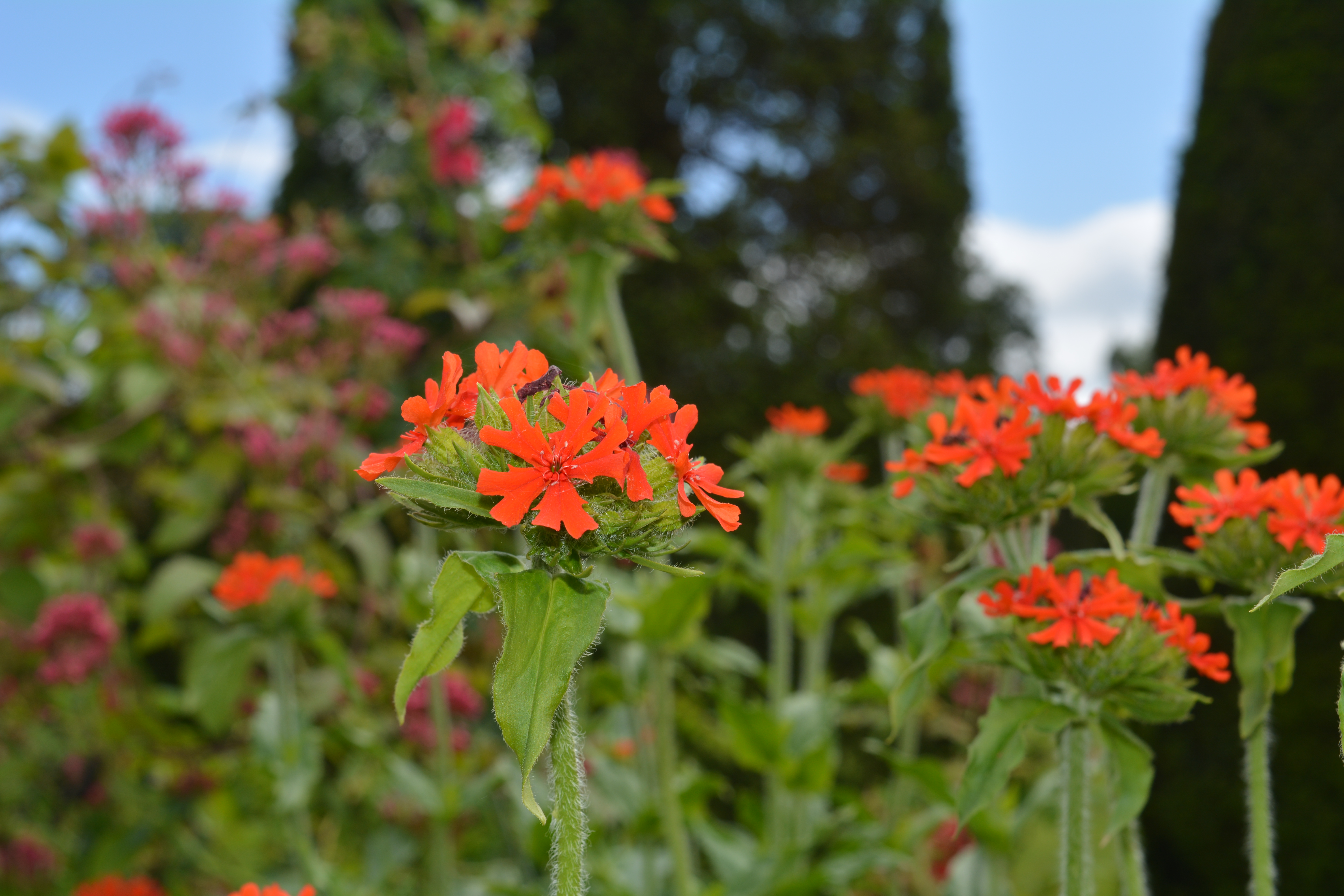
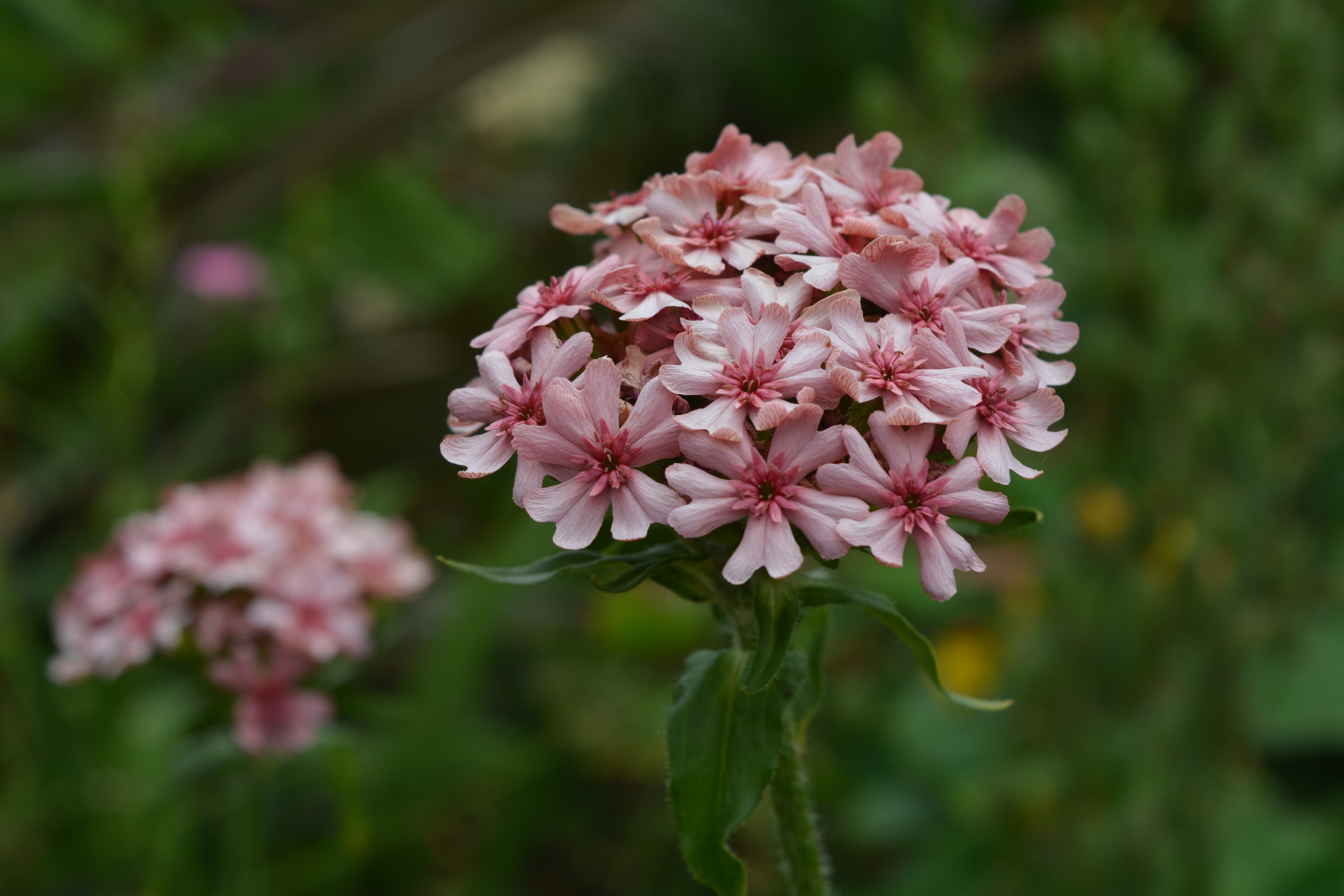
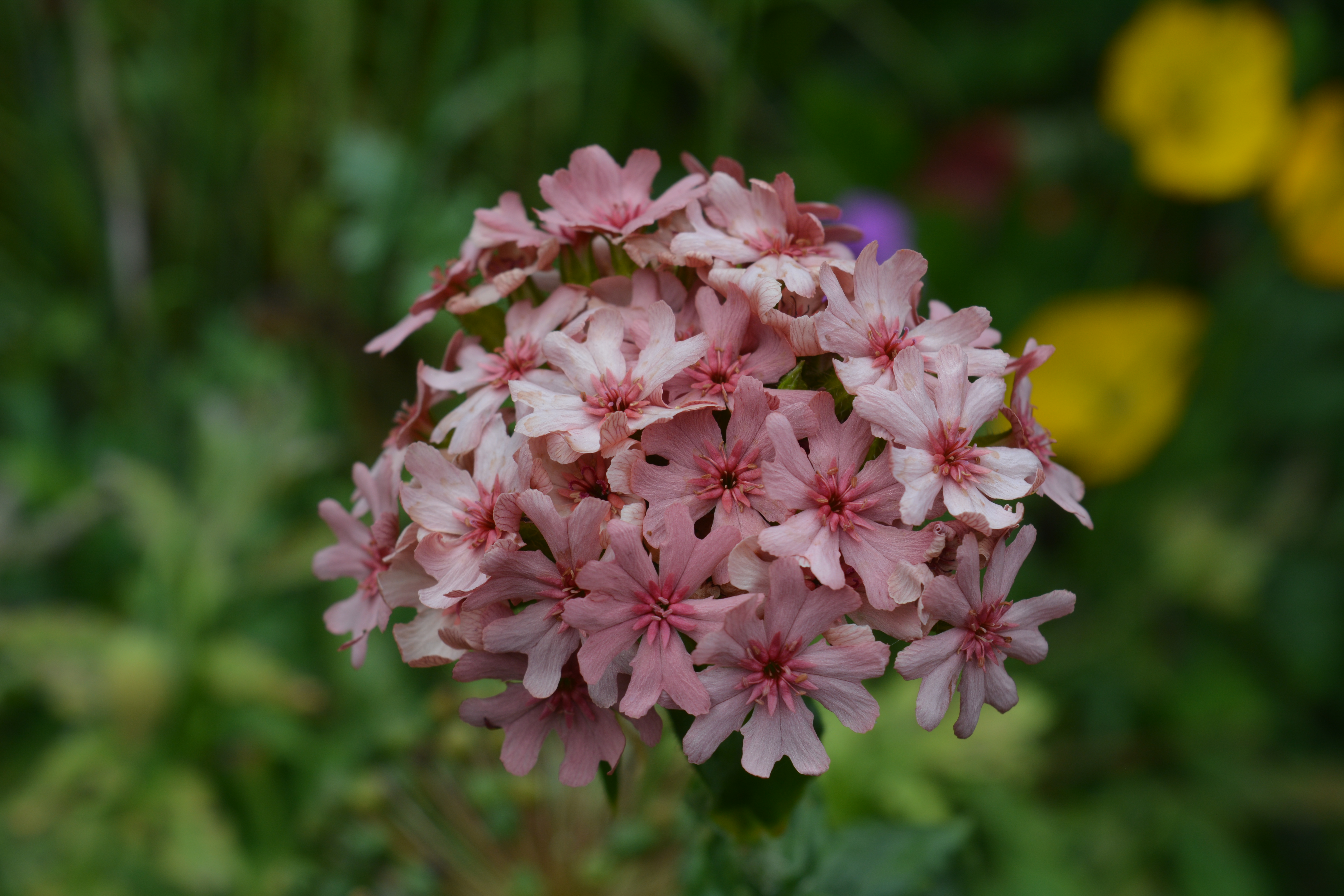
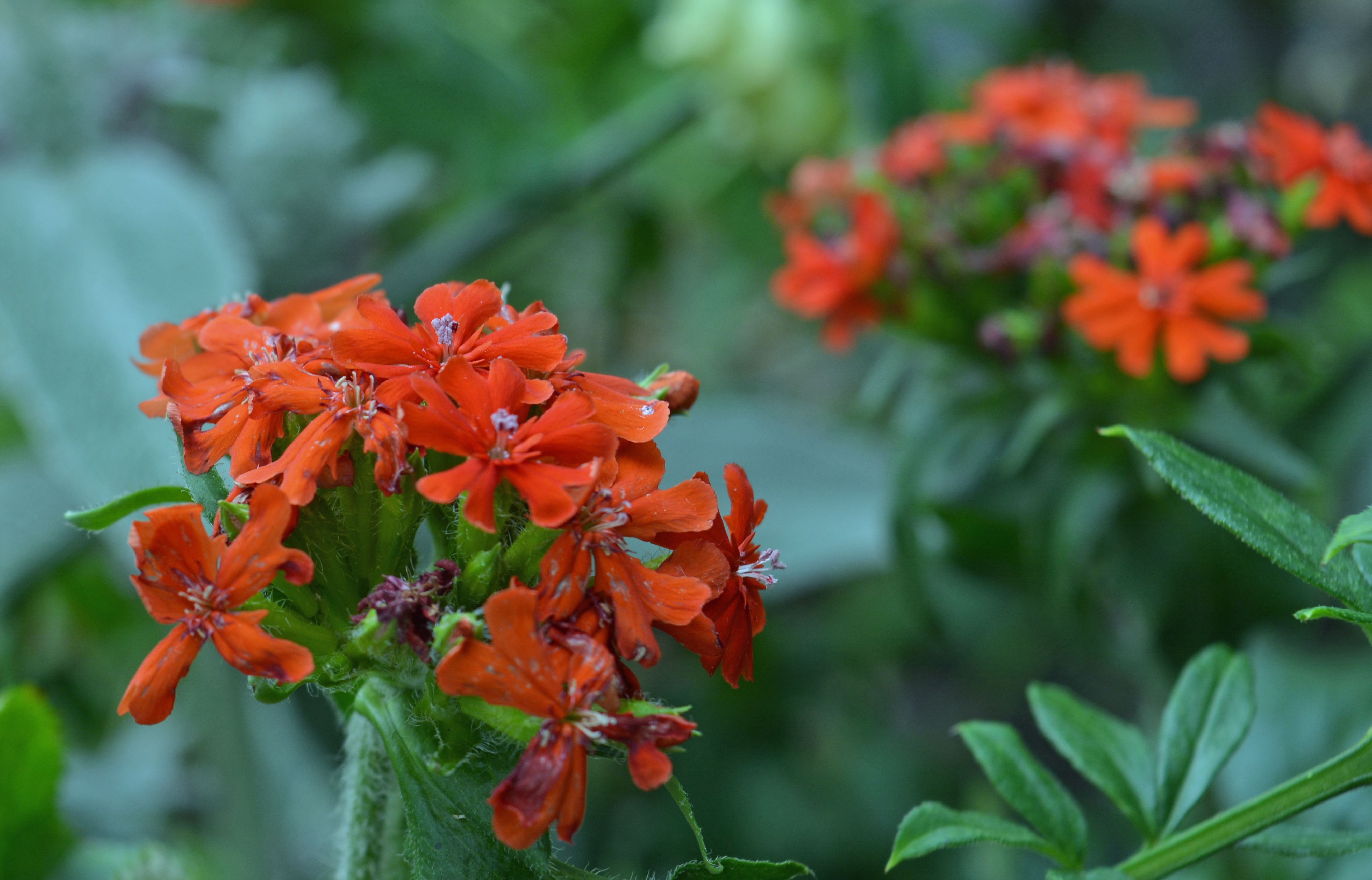
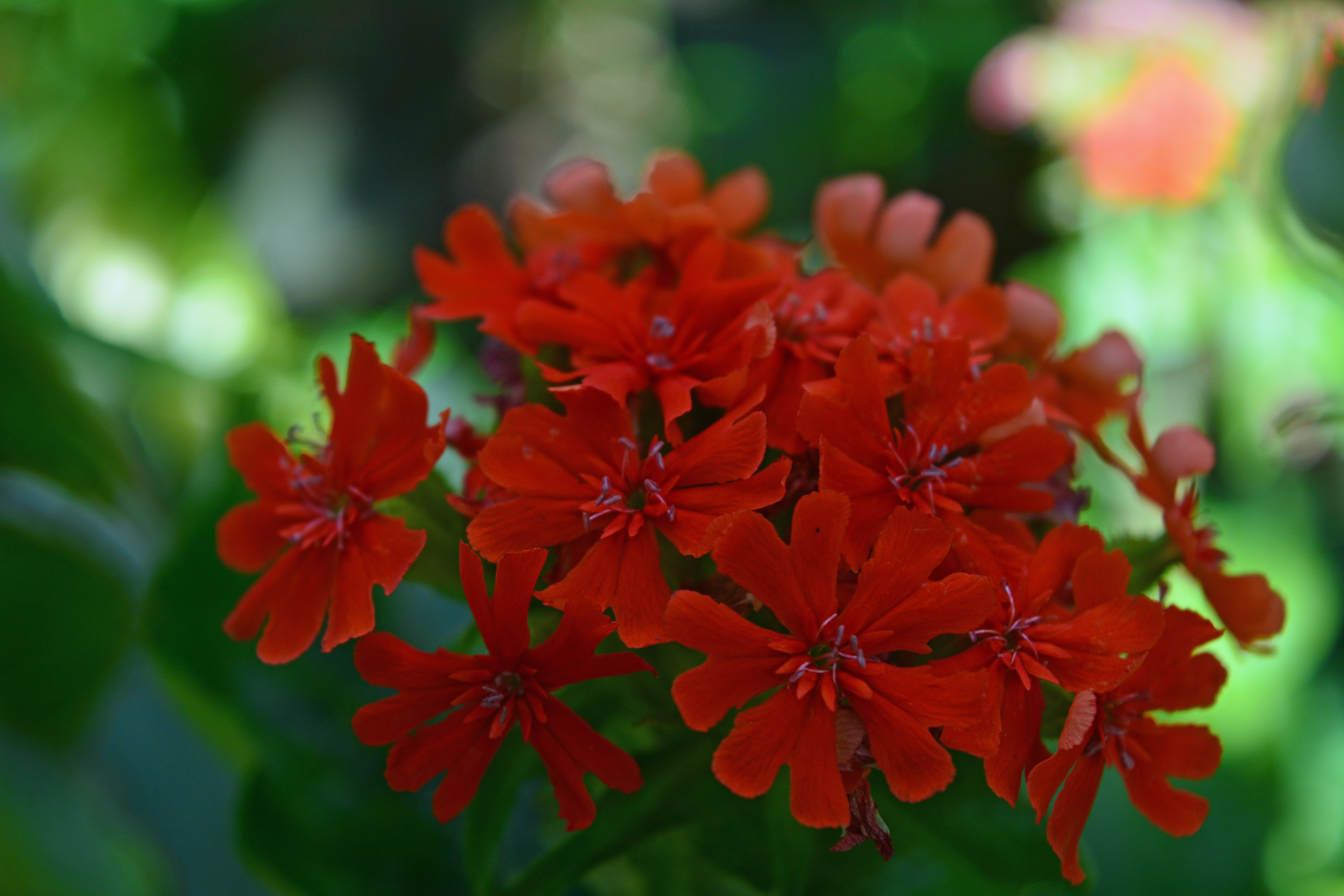
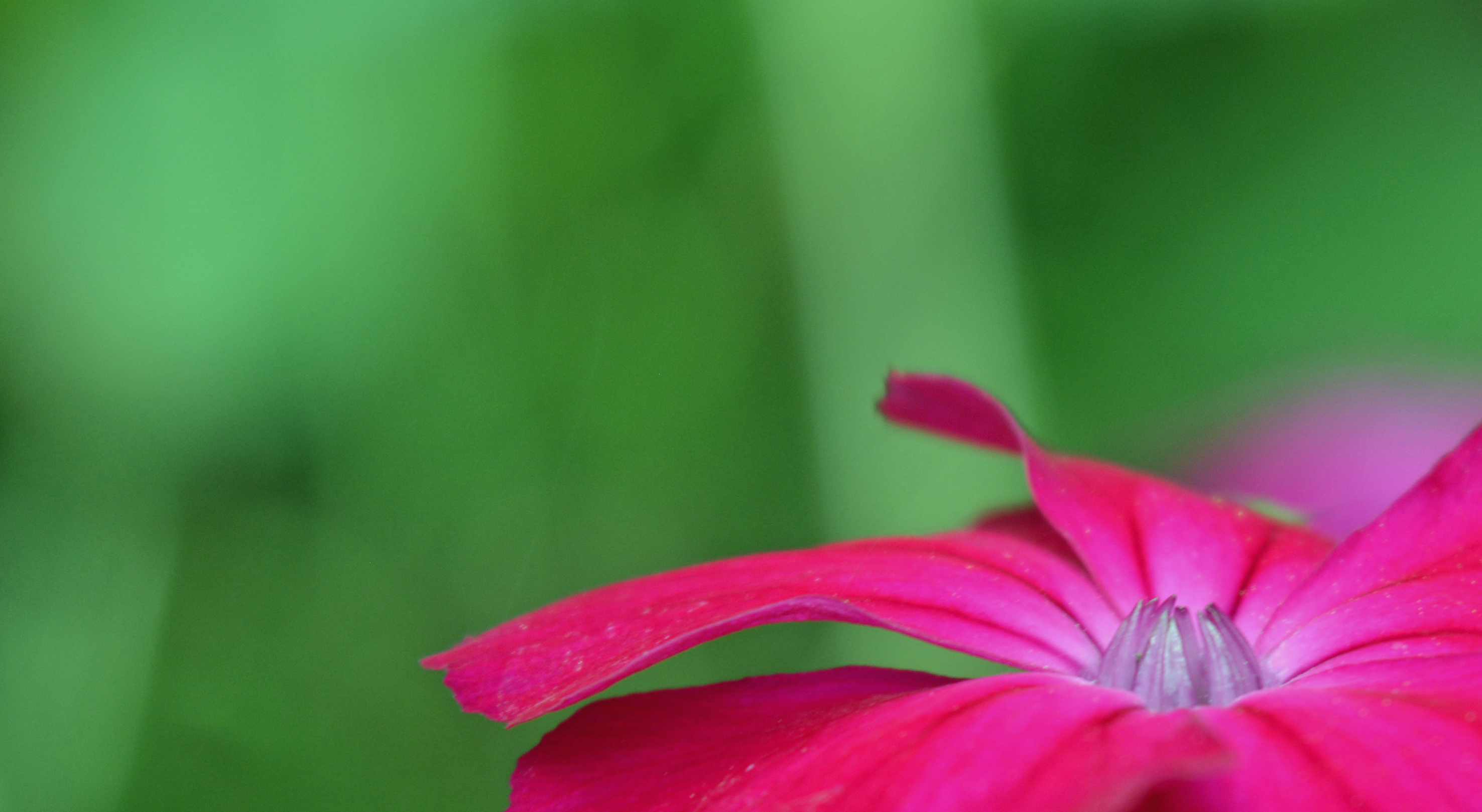
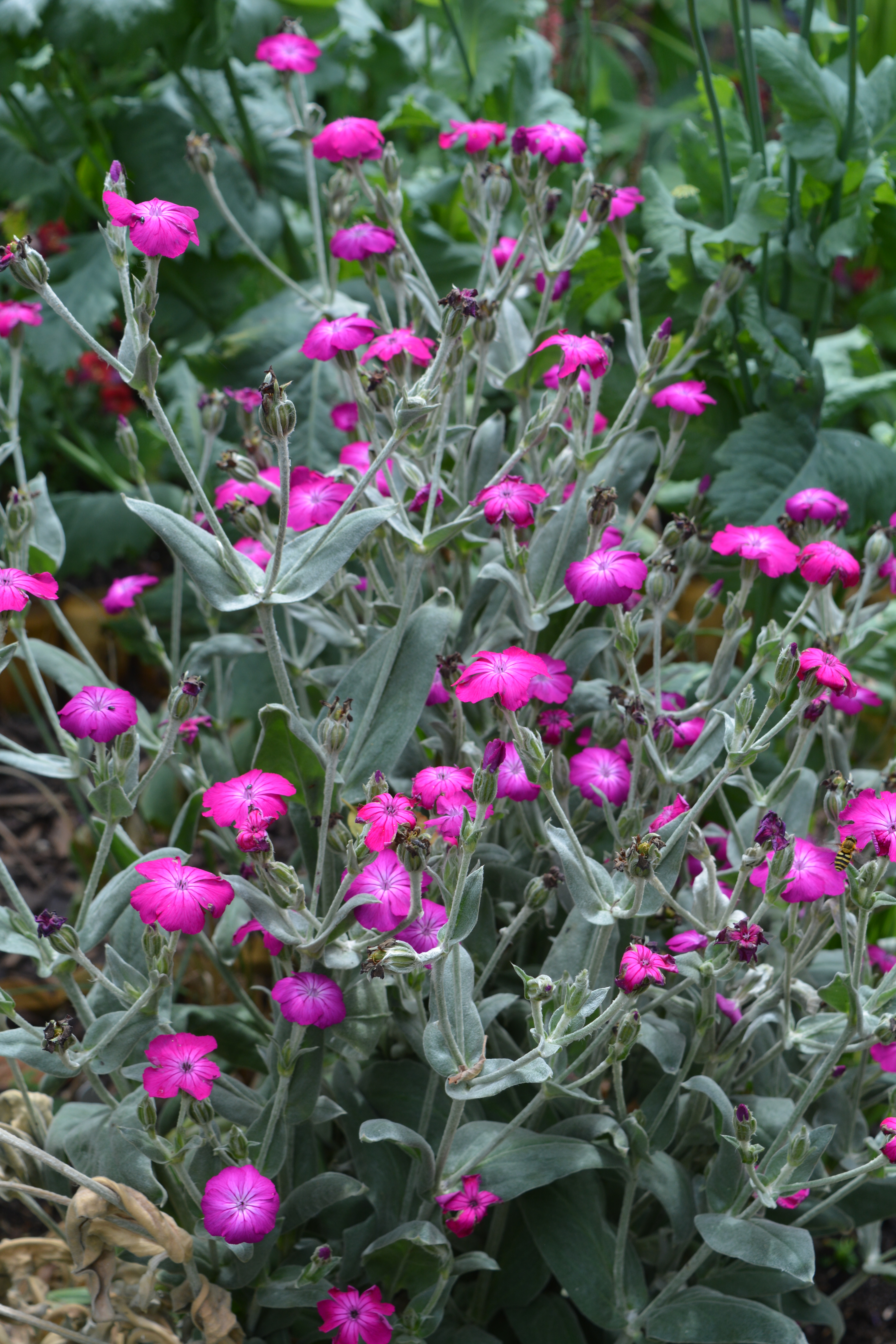
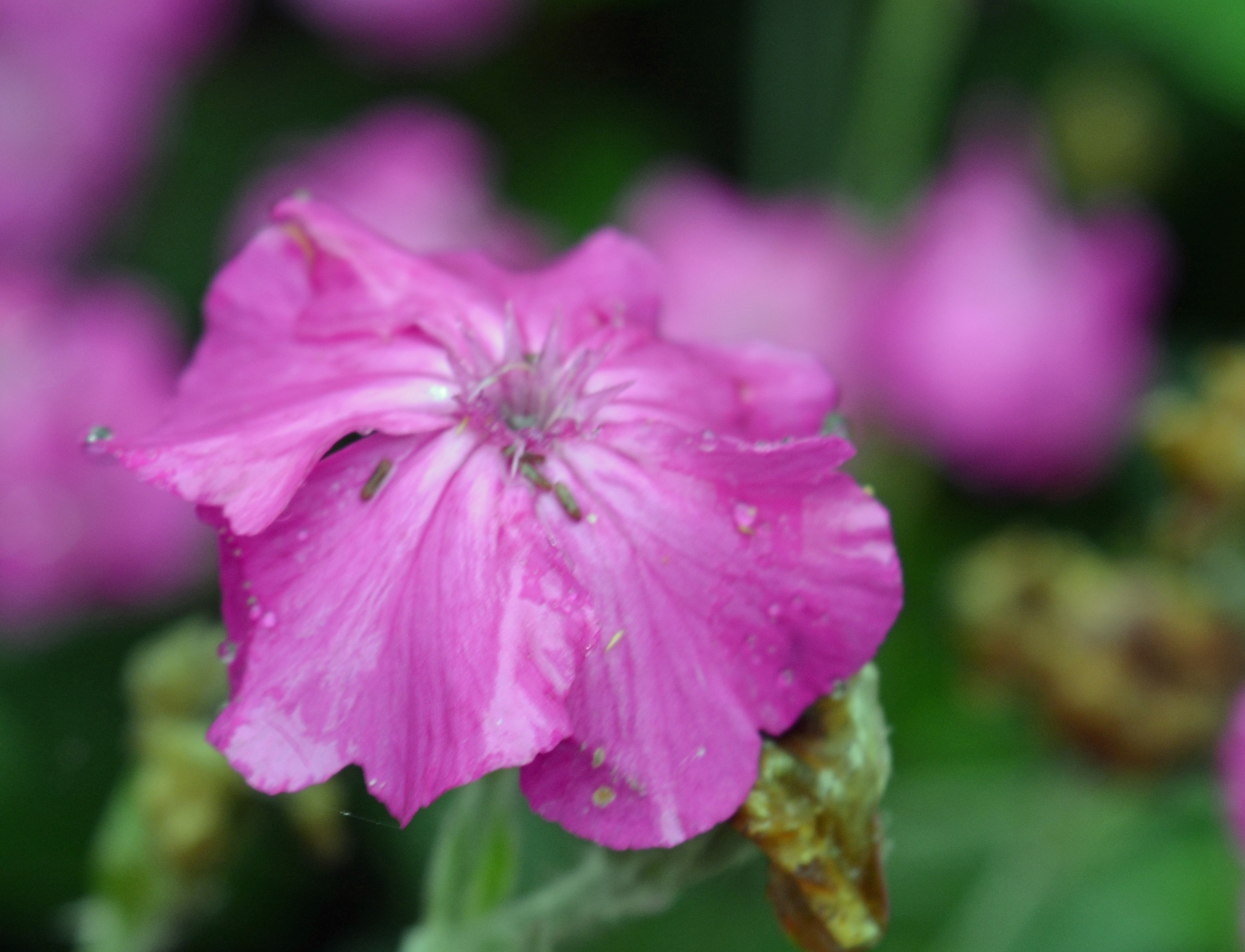
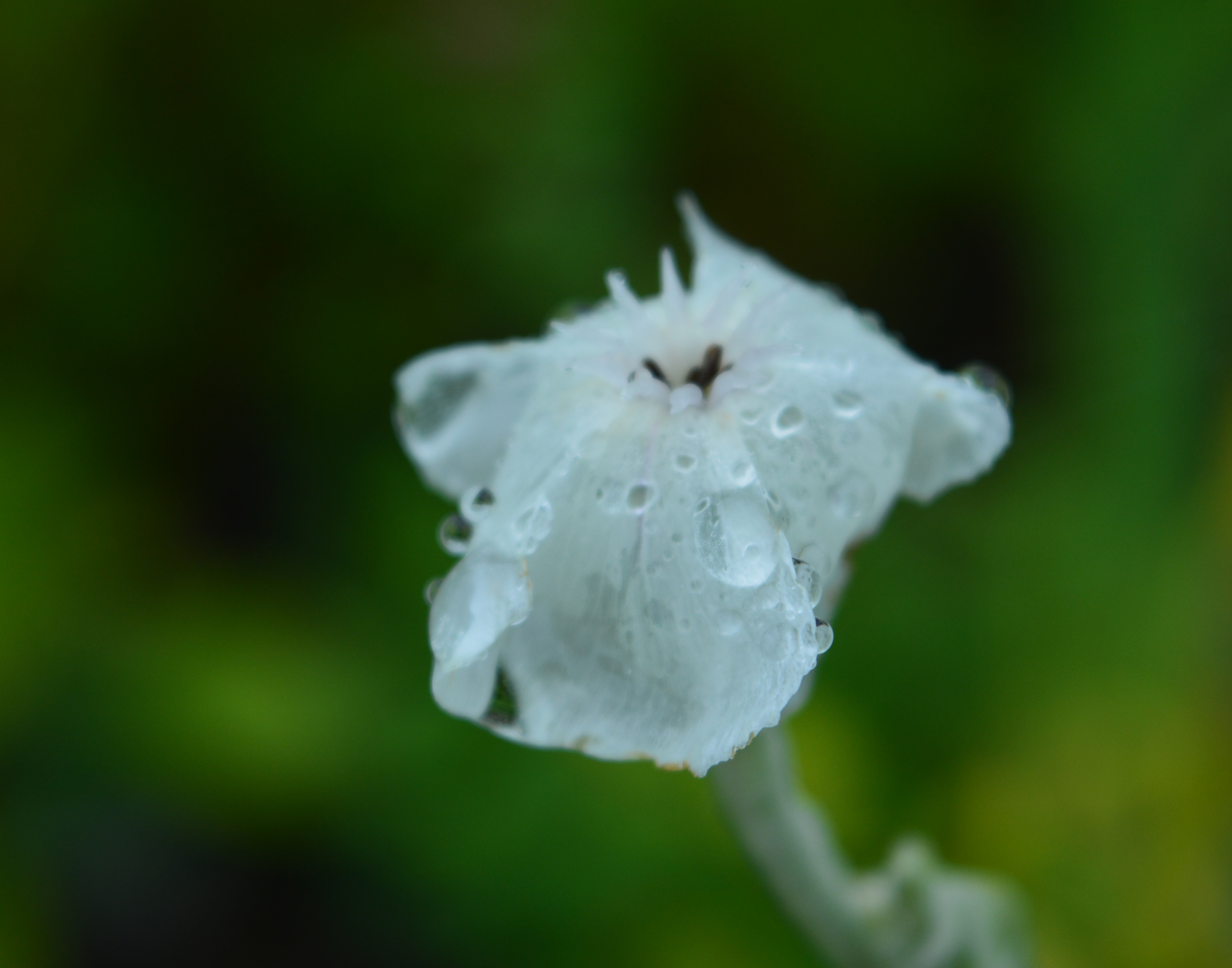
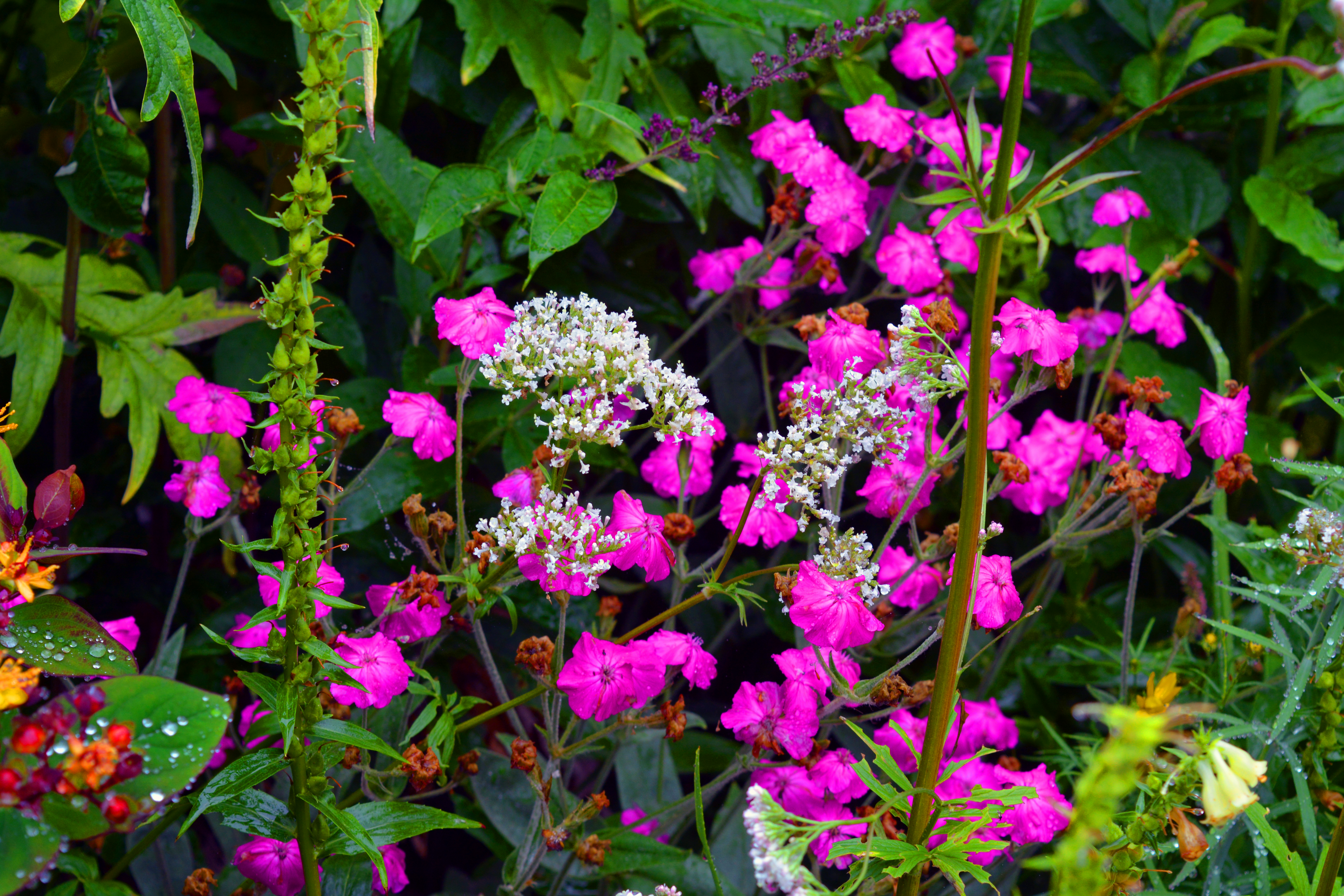
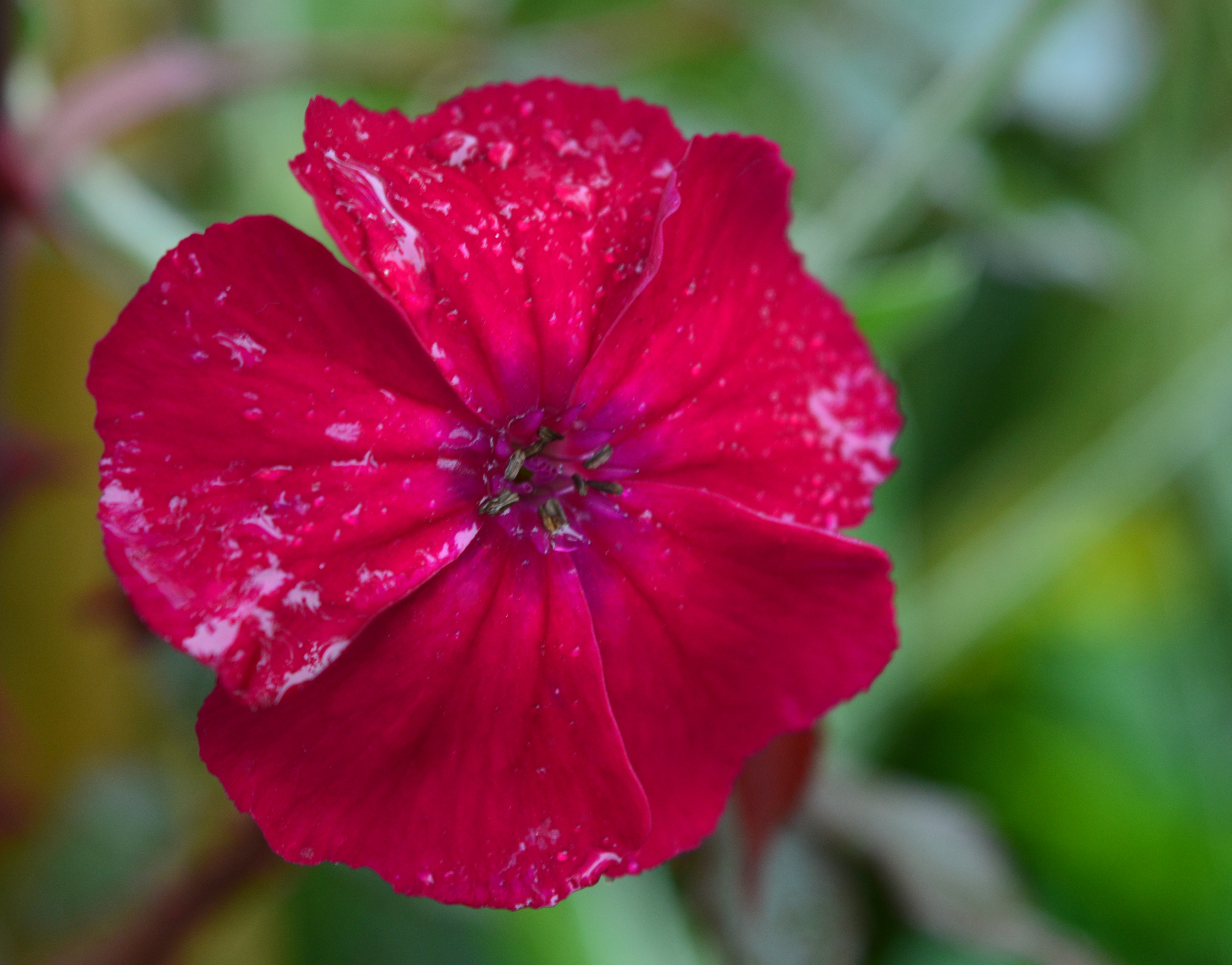
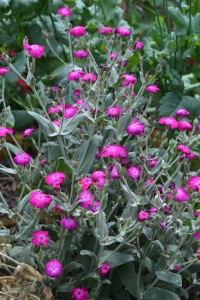
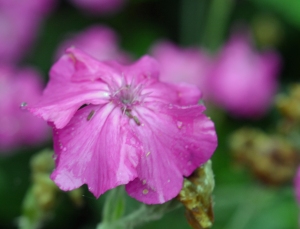
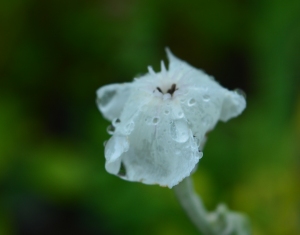
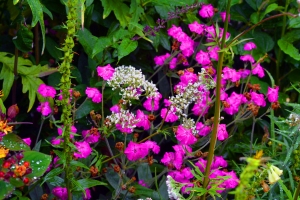
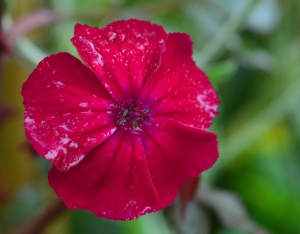
“One family with flowers that glow are the Lychnis family. Below are two members of Lychnis, the variety L. chalcedonica and another variety L. coronaria.”
“Lychnis chalcedonica “Dusky Pink”
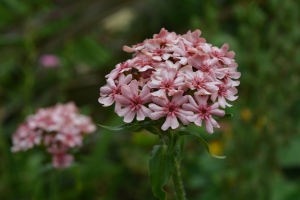
“Lychnis chalcedonica “Vesuvius” and Lychnis chalcedonica “Maltese Cross”
“Lychnis coronaria”
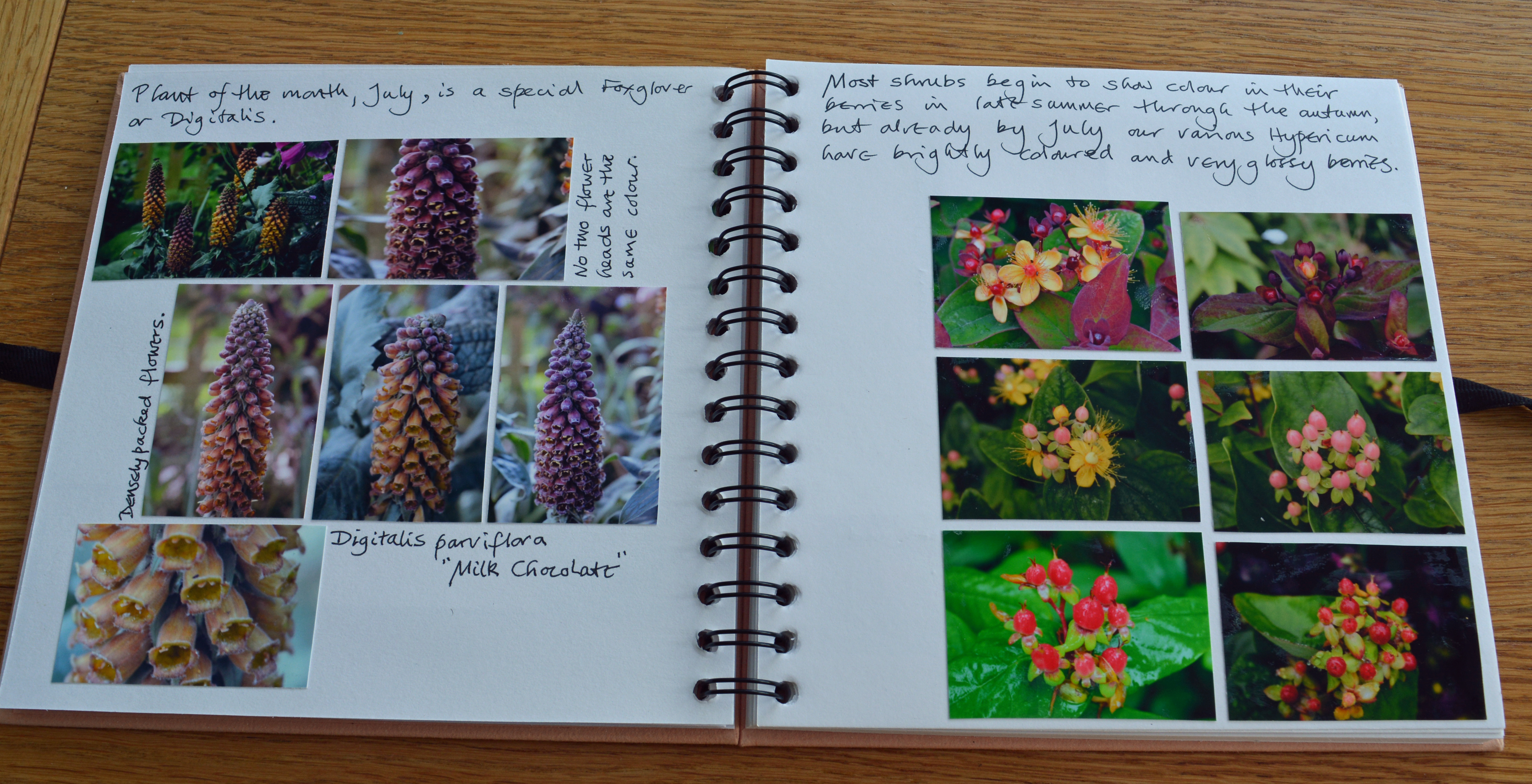
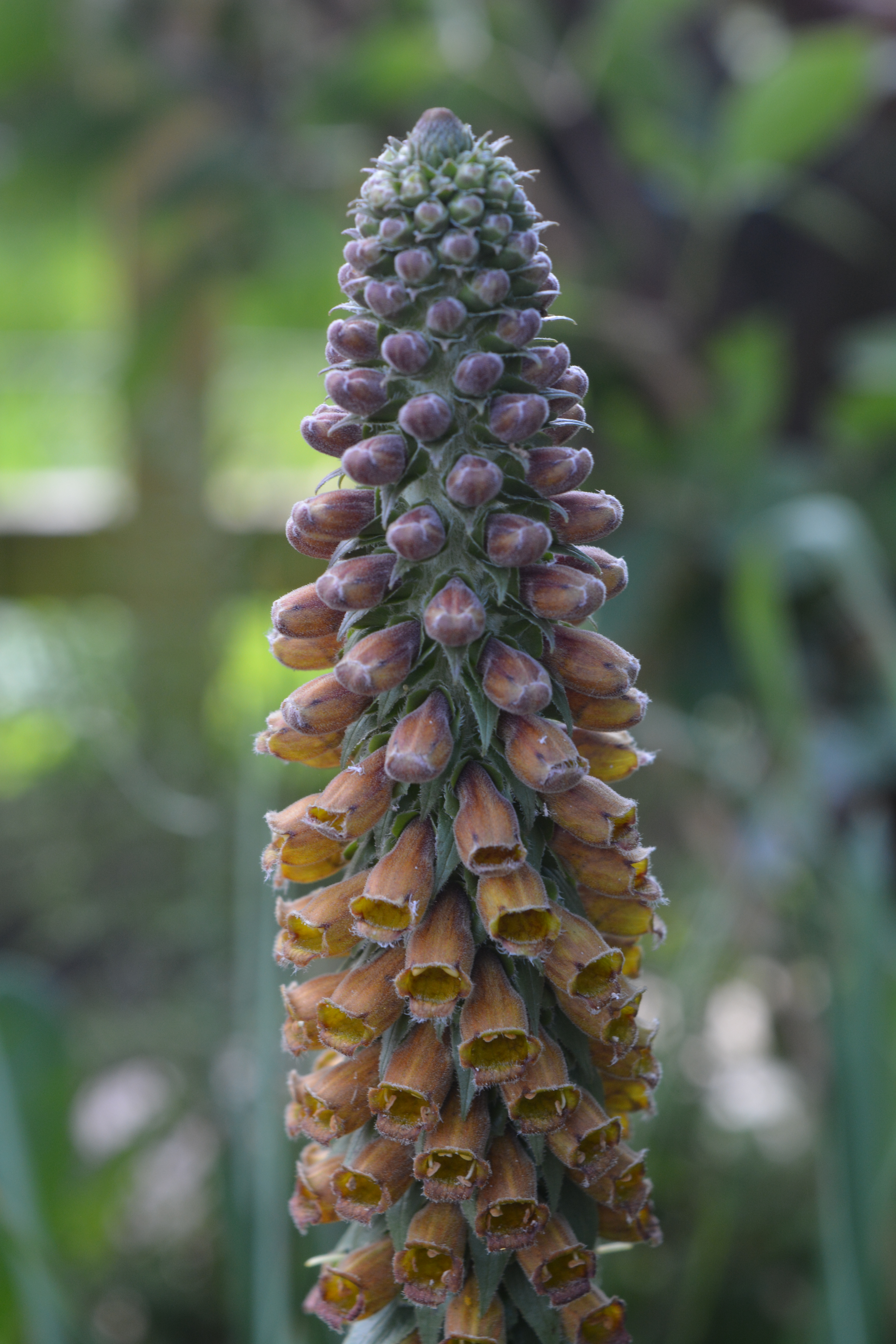
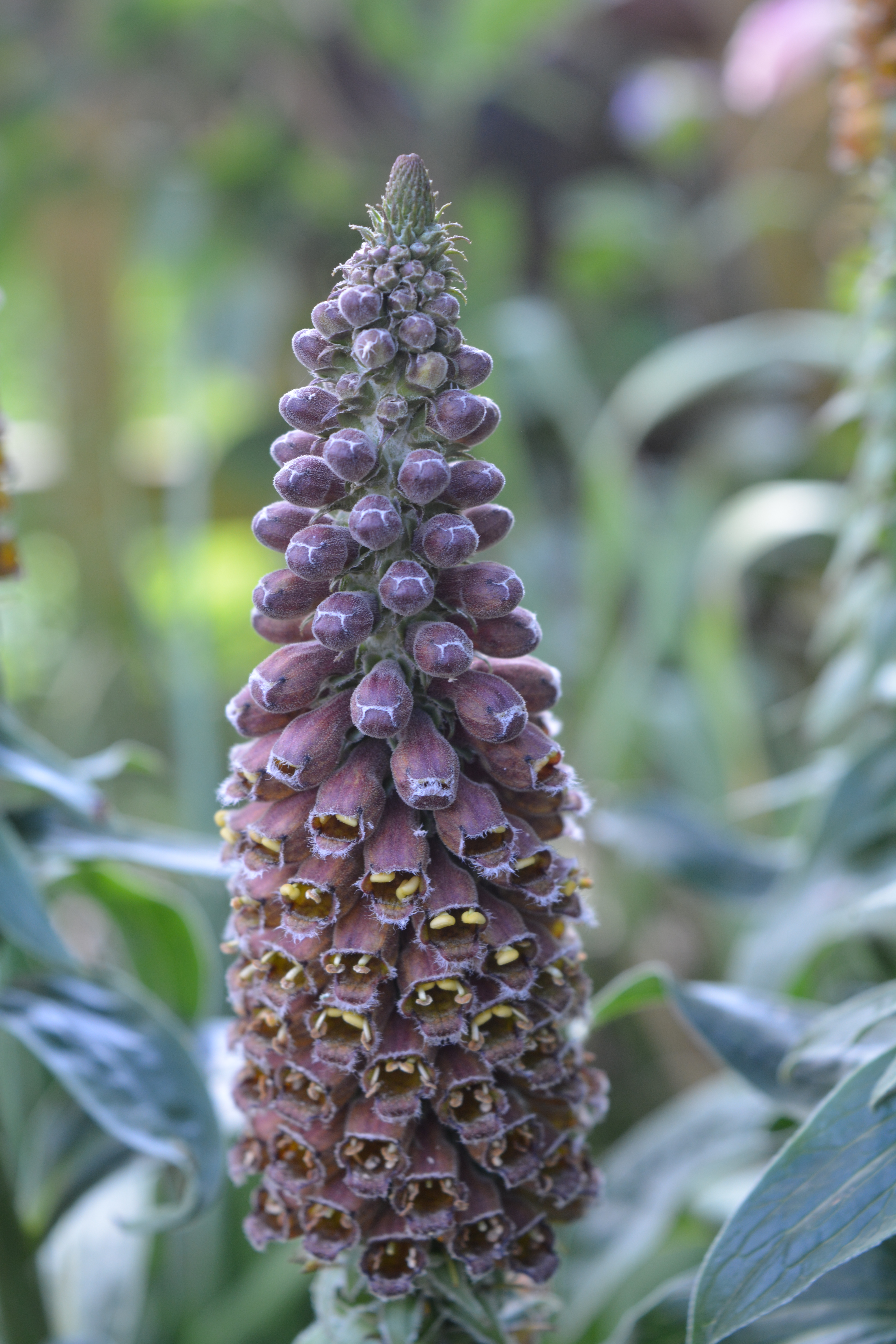
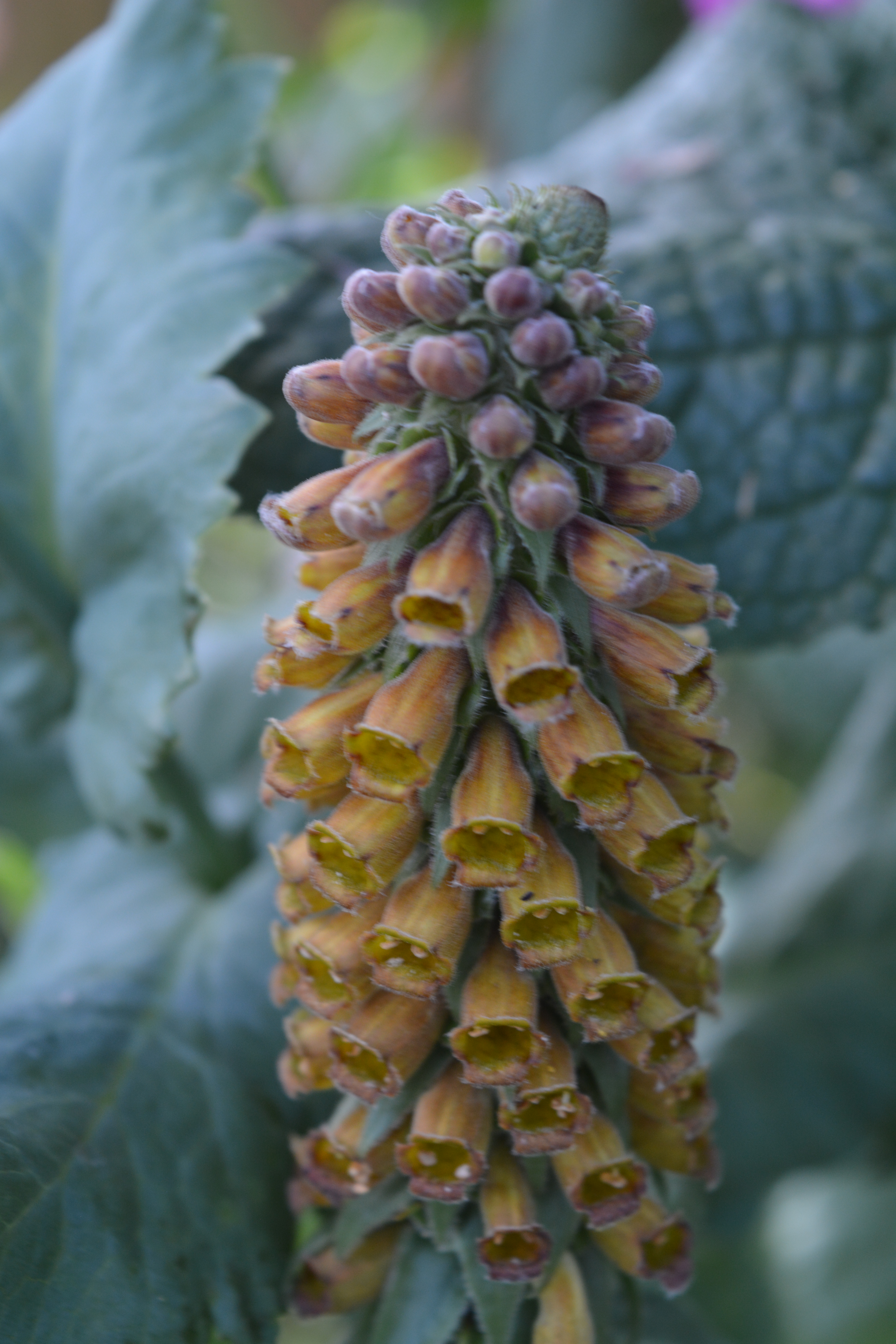
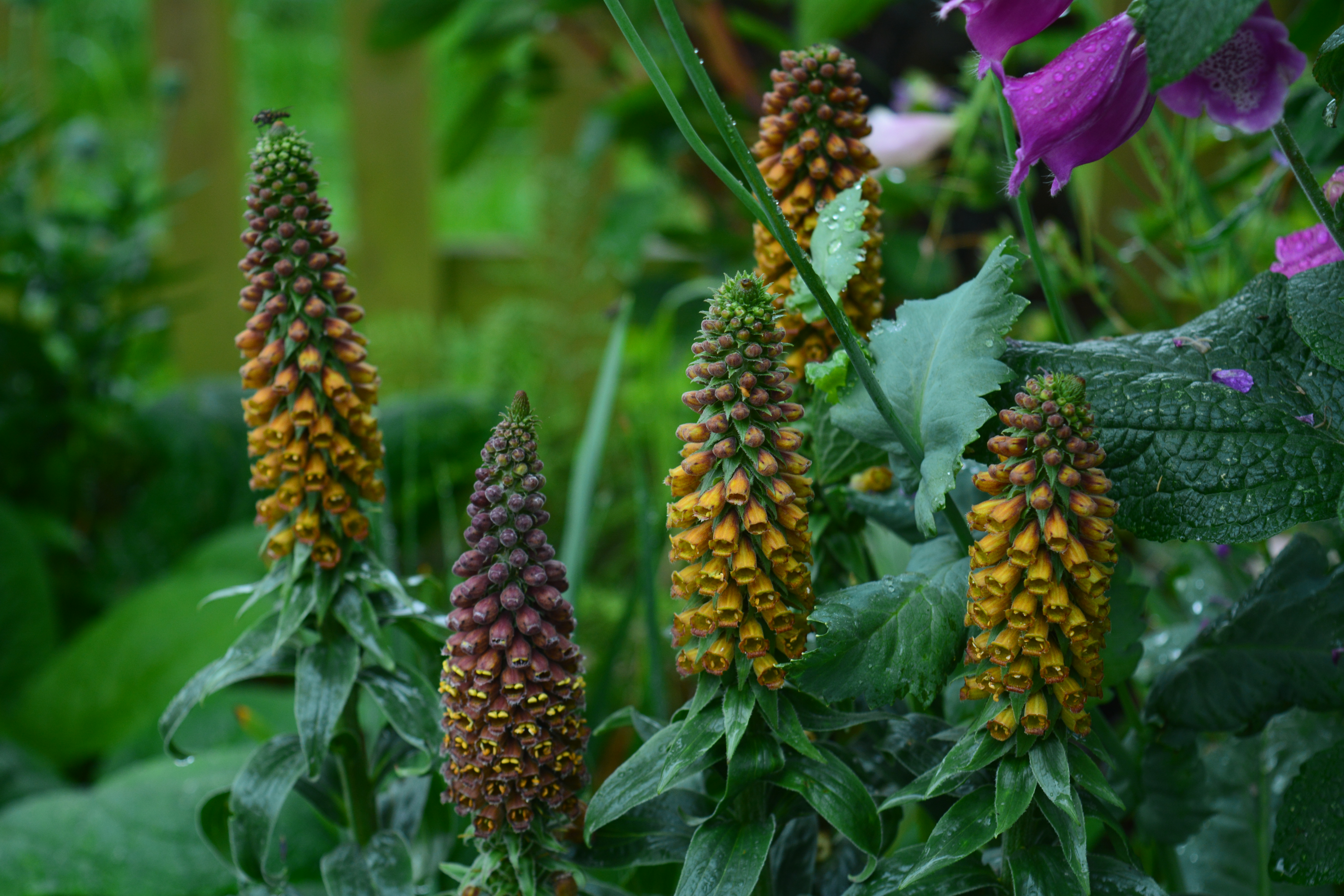
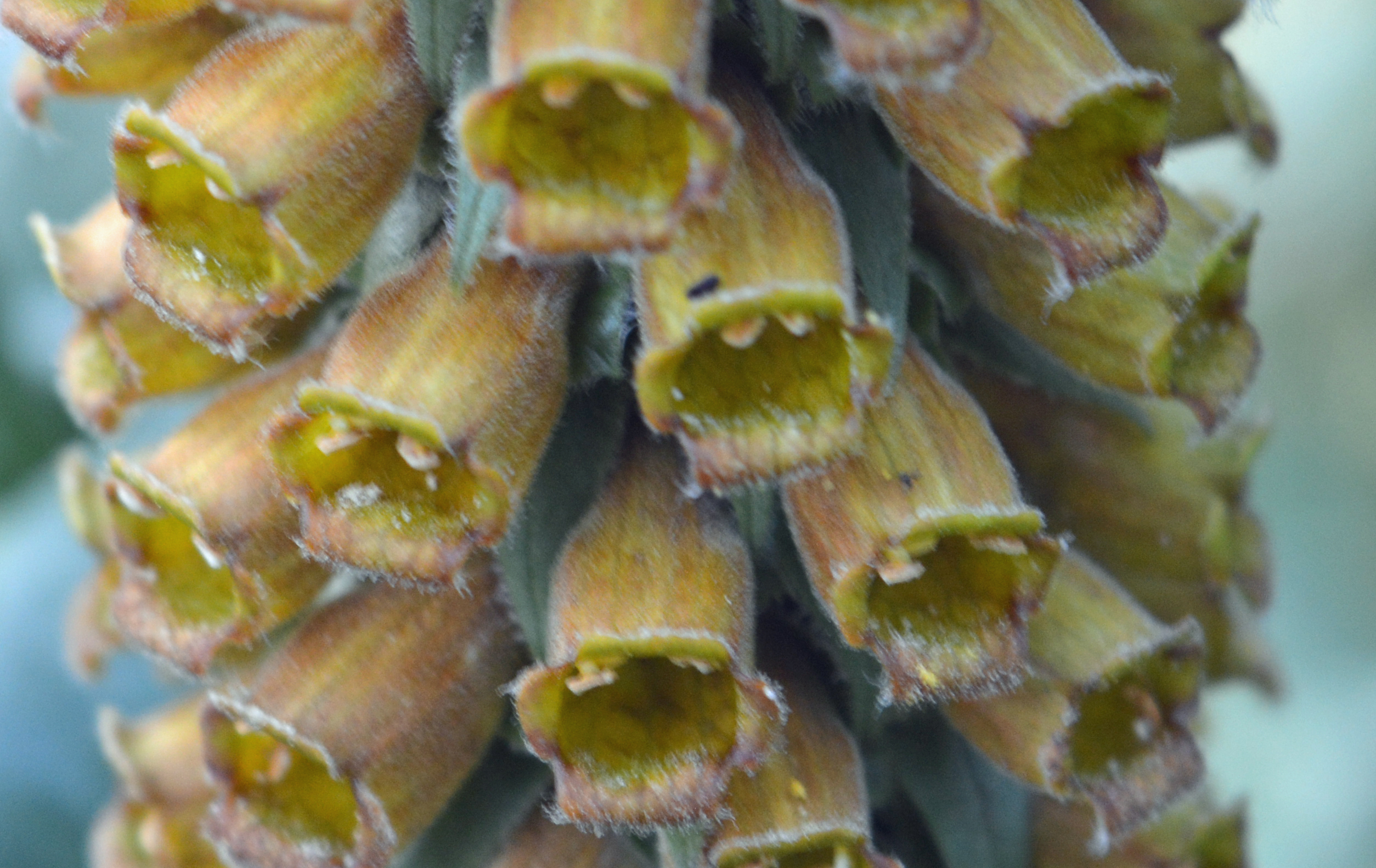
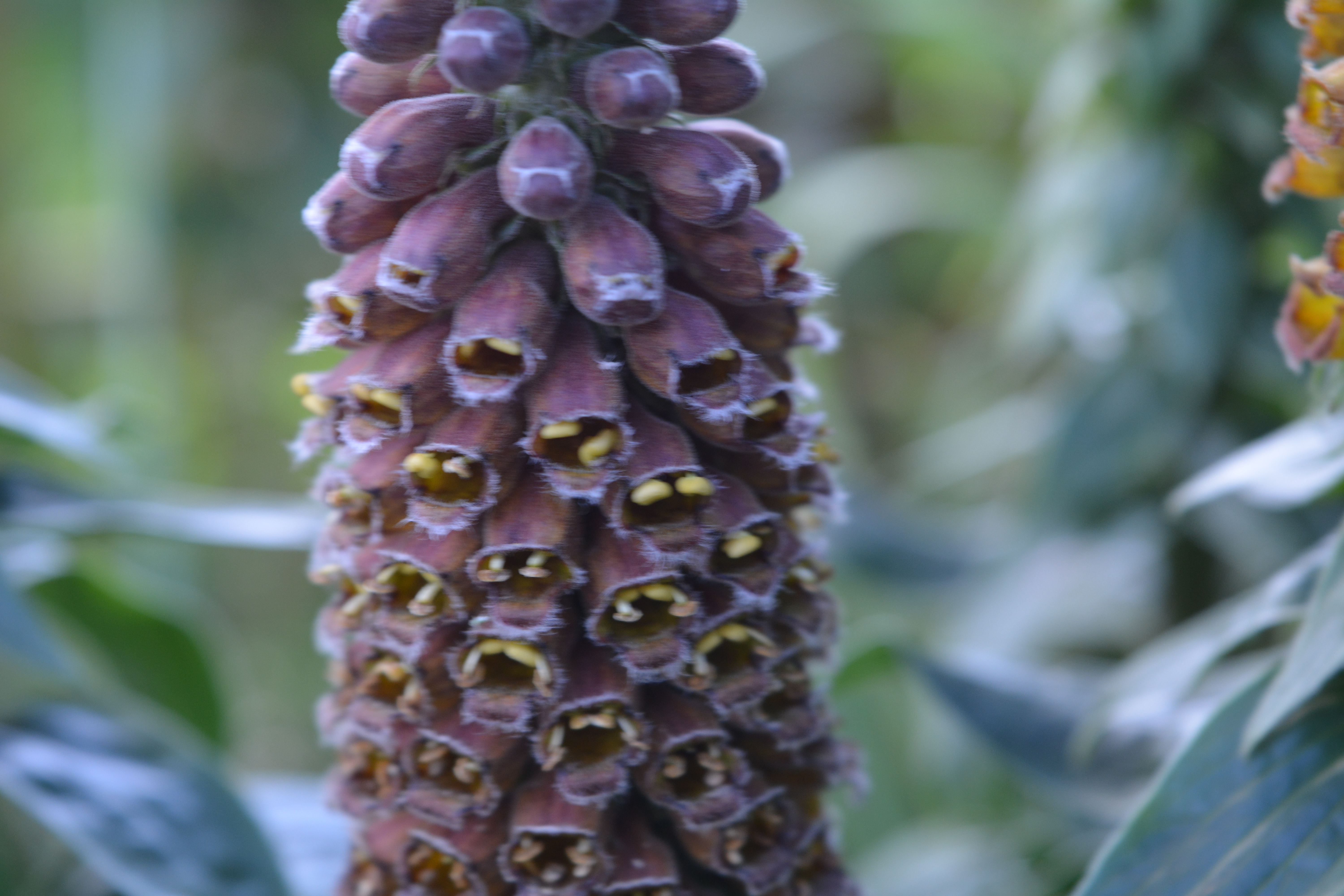
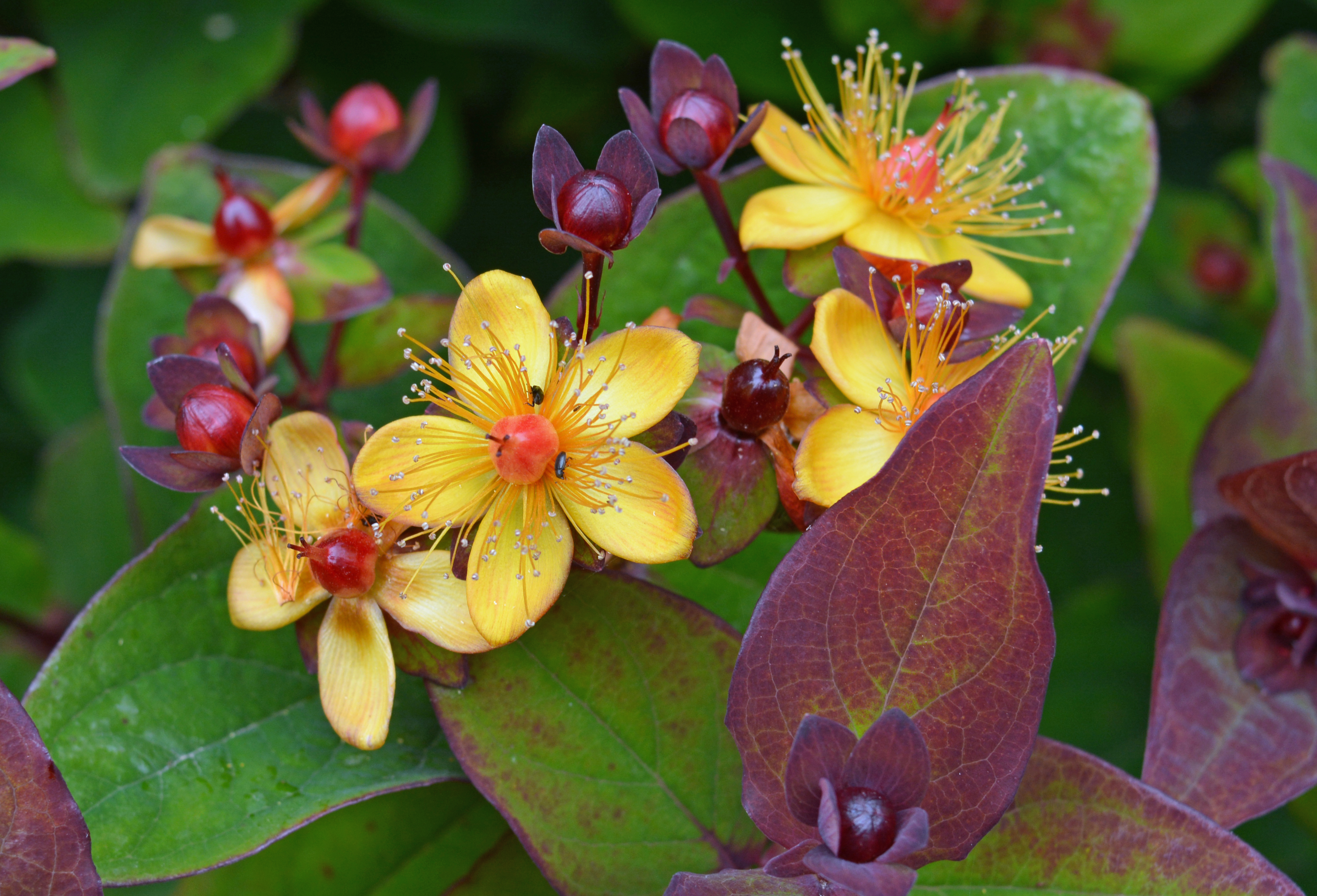
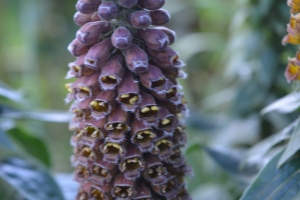
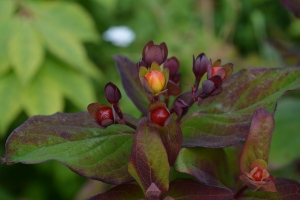
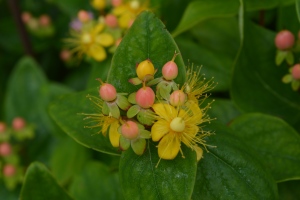
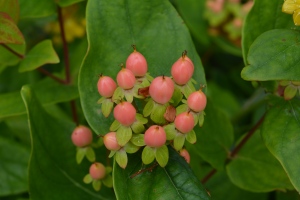
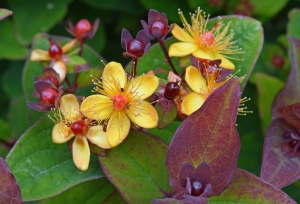
Over the page I move on to look at an unusual Foxglove, Digitalis parviflora “Milk Chocolate” and a berried shrub, Hypericum x inodorum.
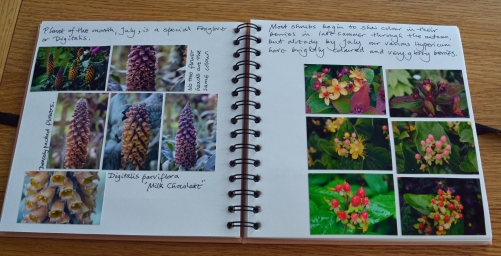
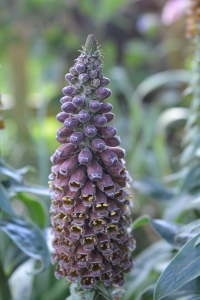
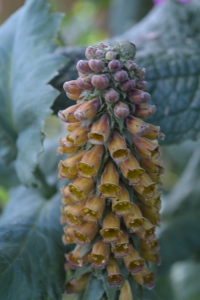
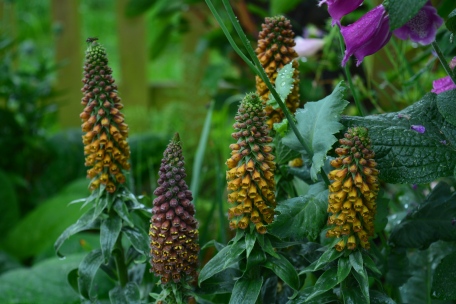
“Plant of the month, July, is a special Foxglove or Digitalis, Digitalis parviflora Milk Chocolate.”
“No two flower heads are the same.”
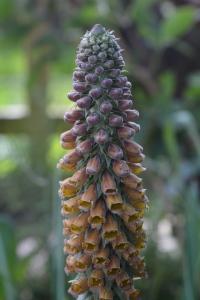
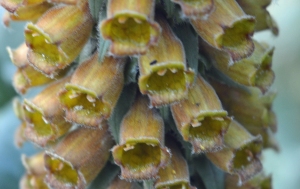
“Densely packed flowers.”
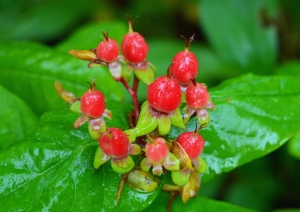
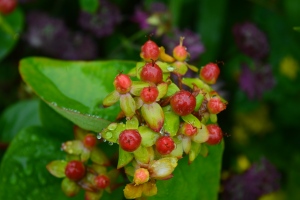
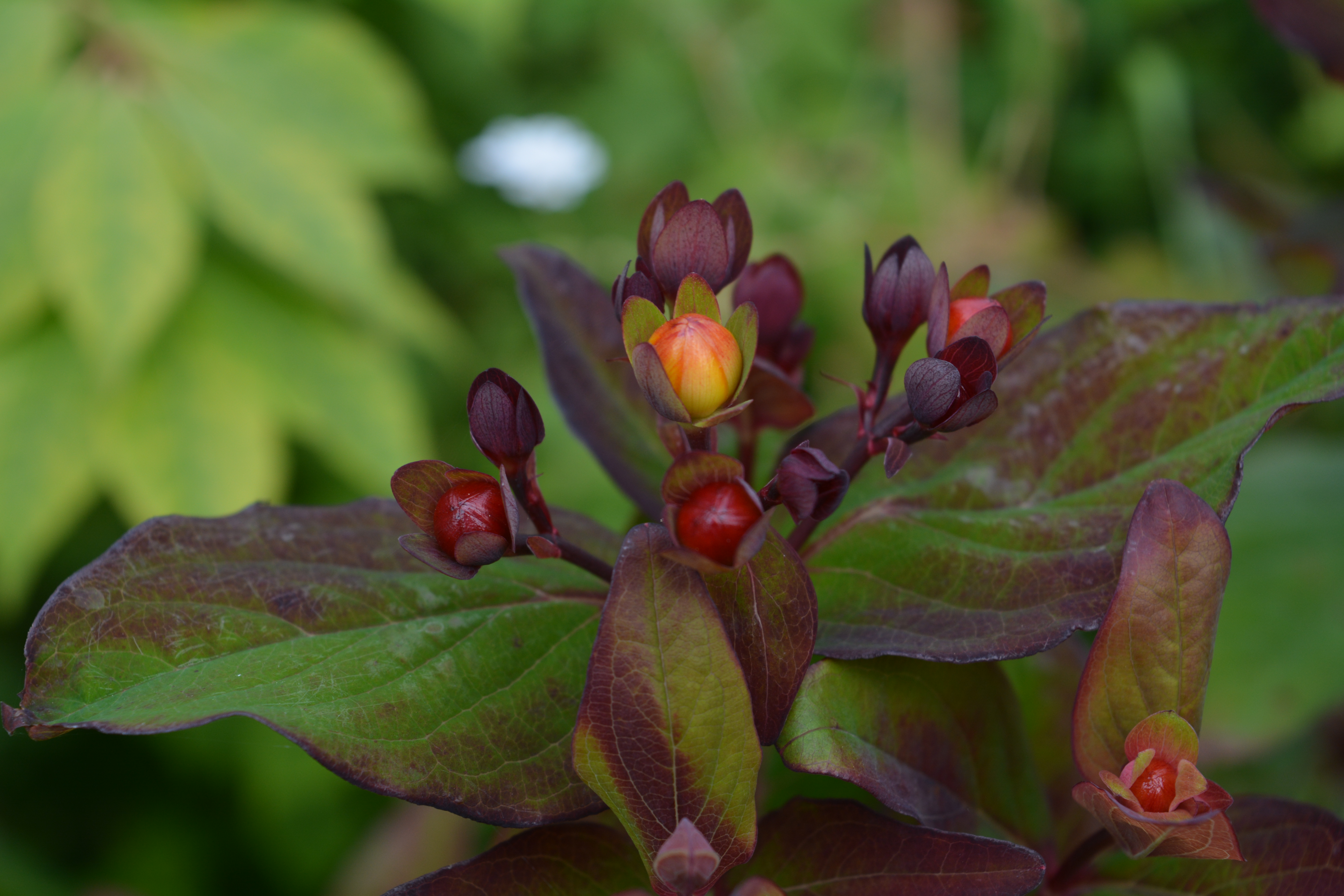
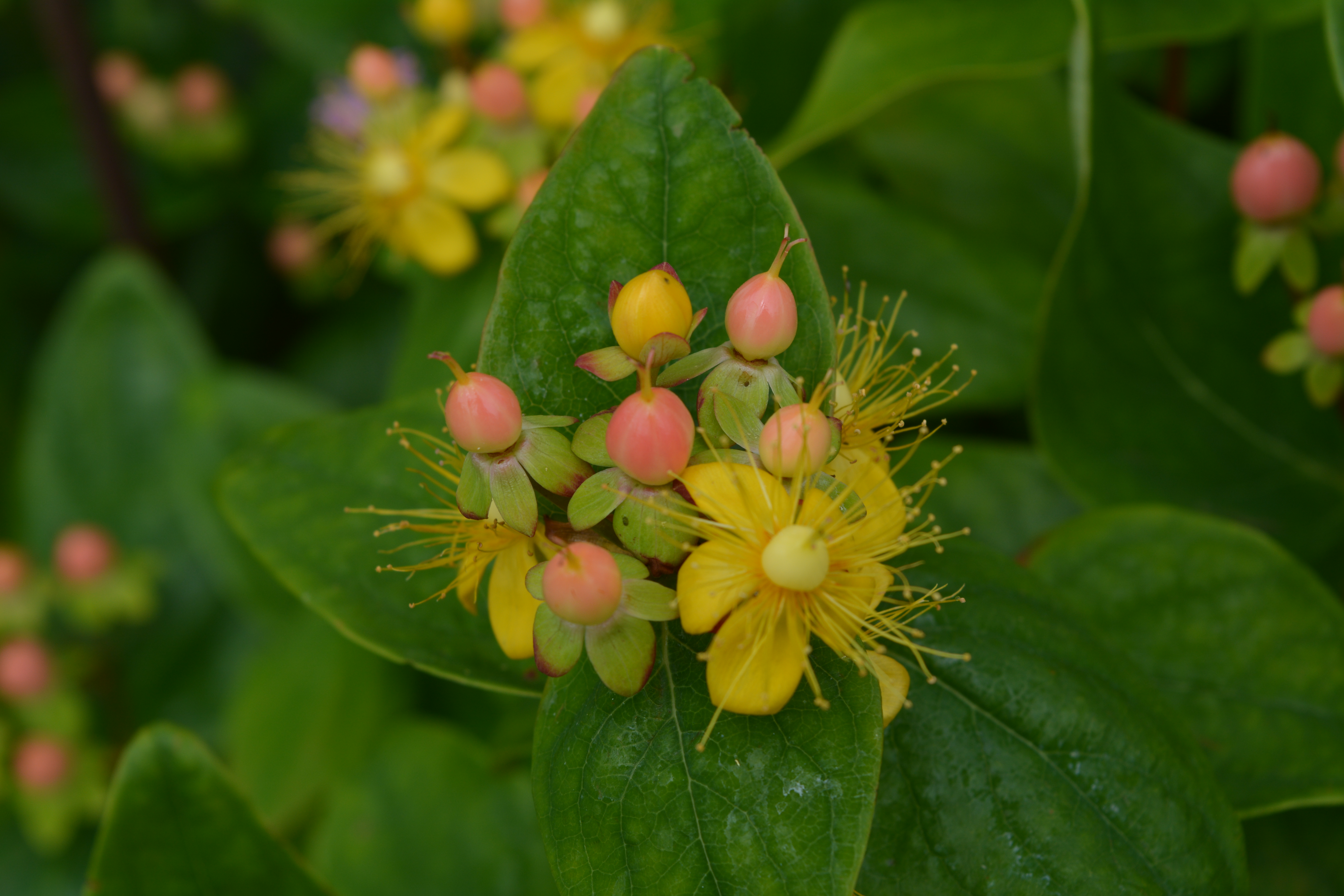
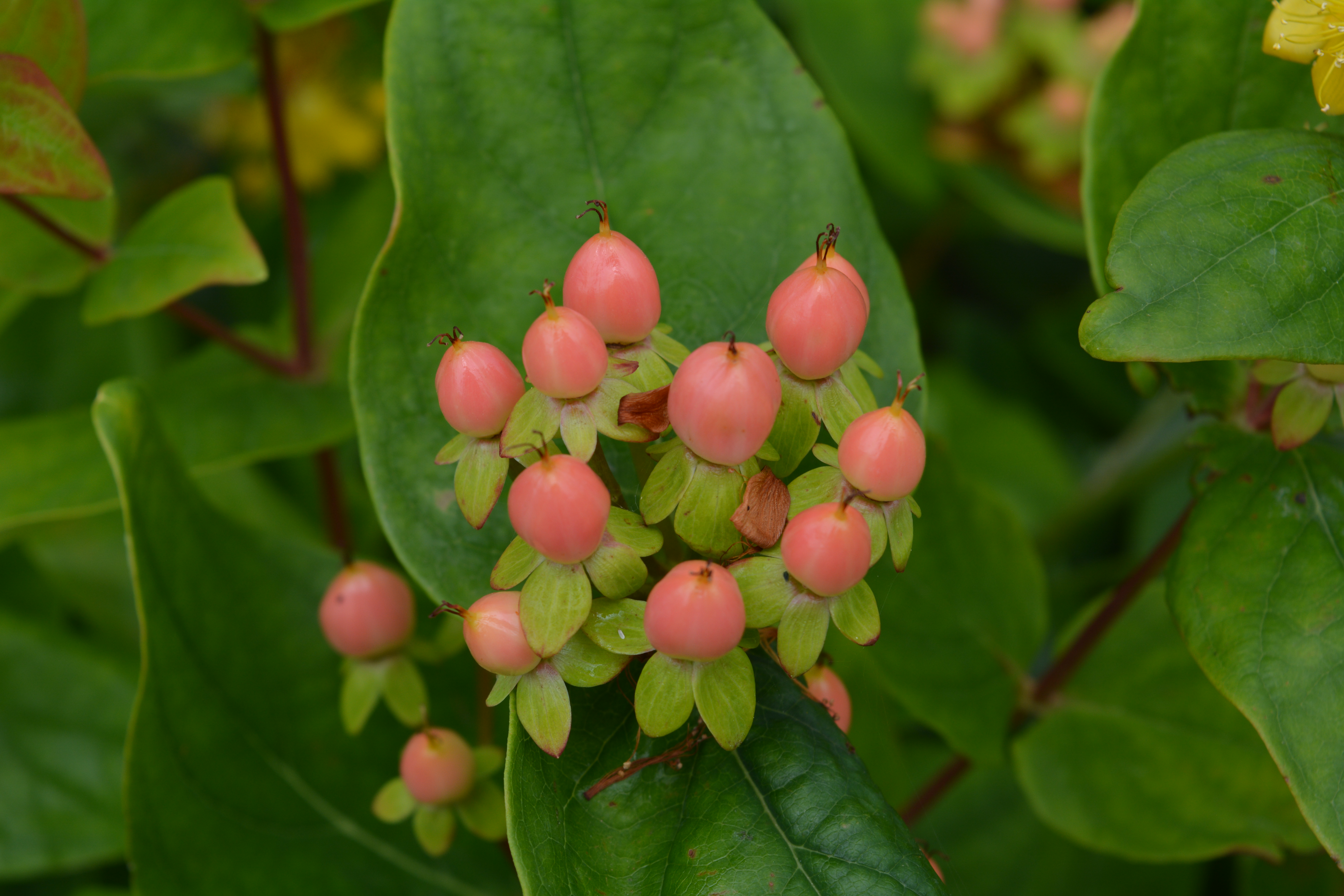
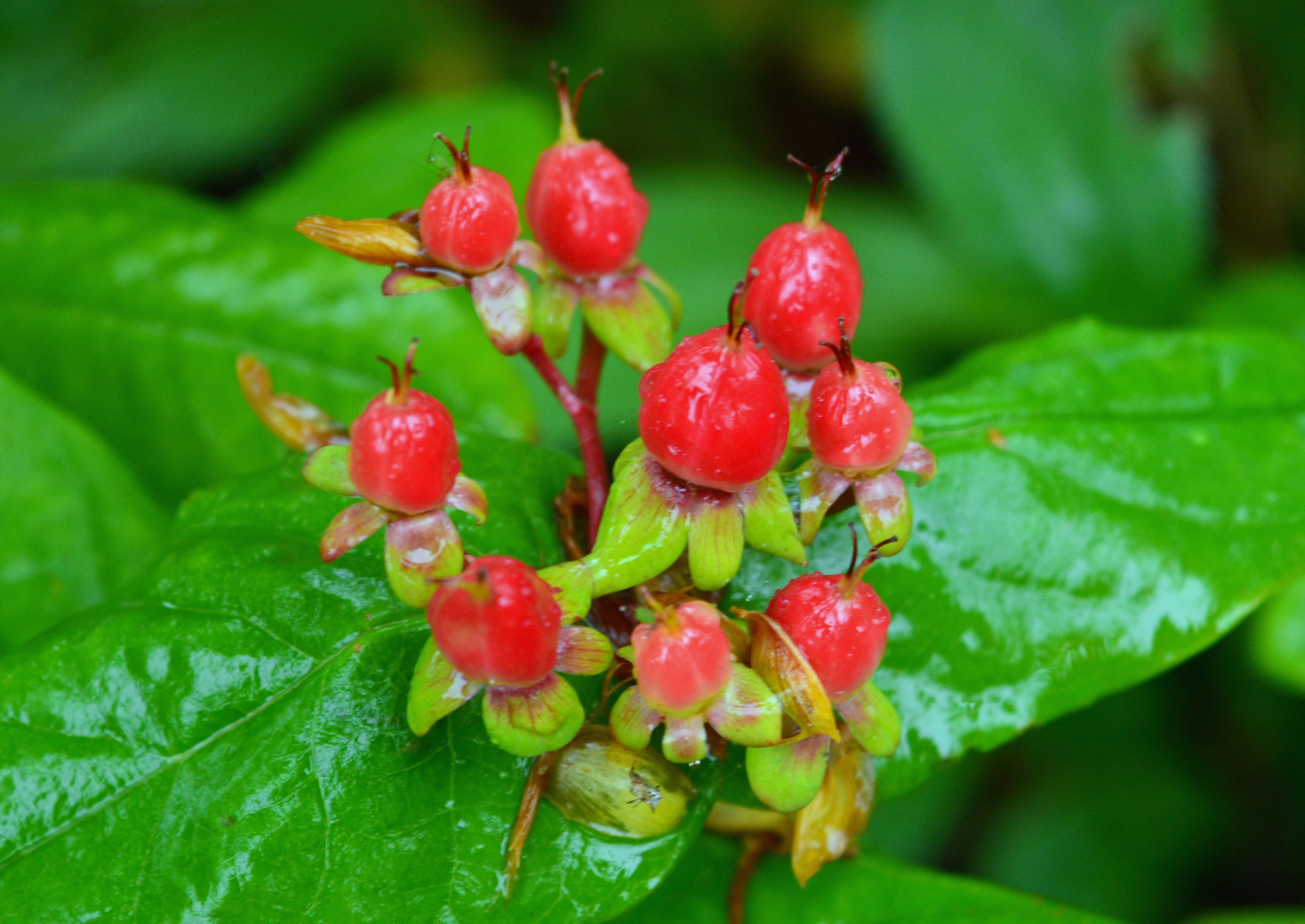
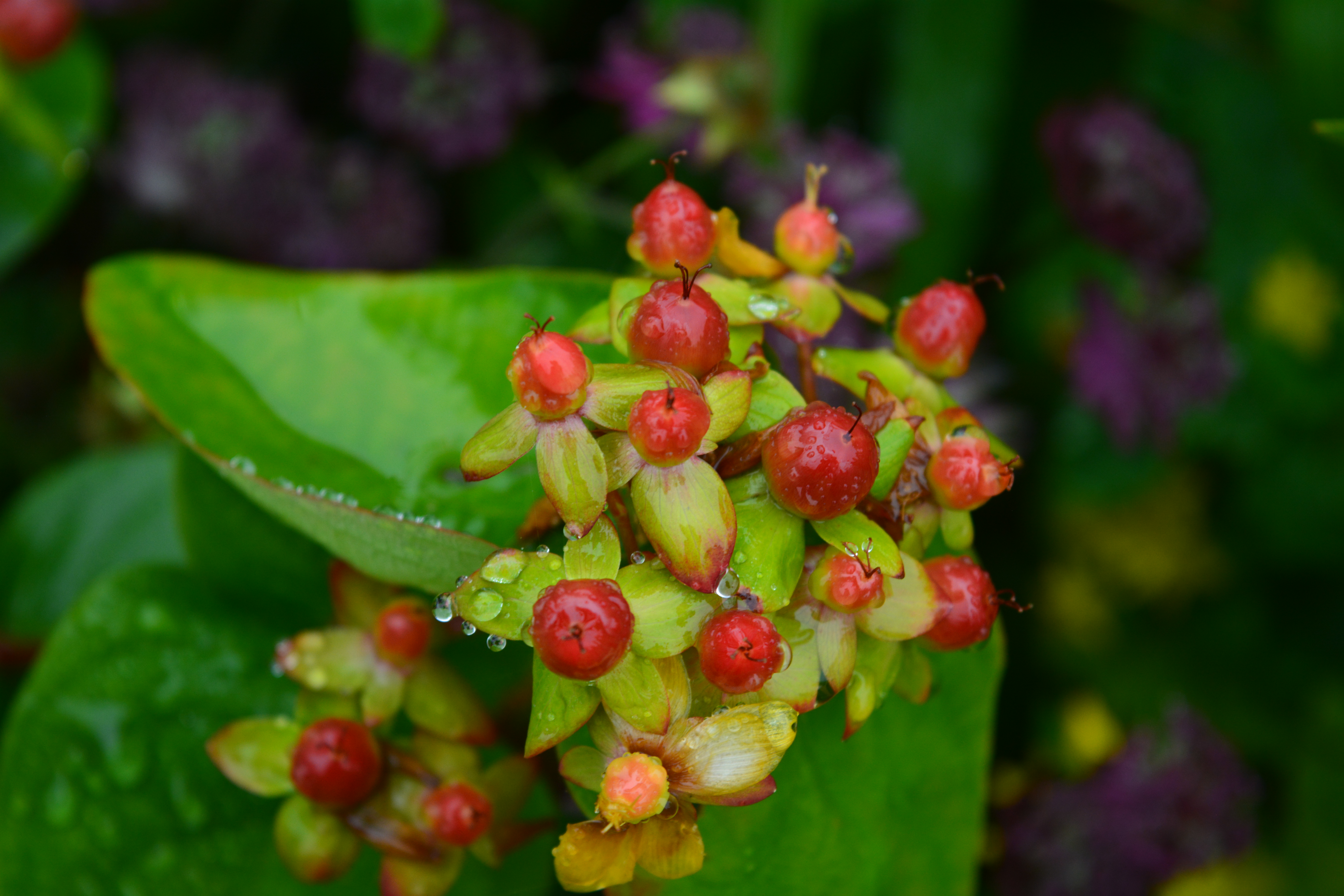
“Most berrying shrubs begin to show colour in their berries in late summer through the autumn, but already by July our various cultivars of Hypericum x inodorum have brightly coloured and very glossy berries.”
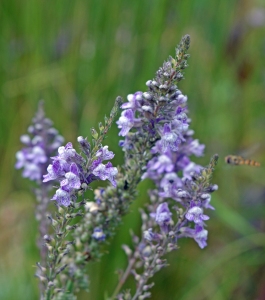
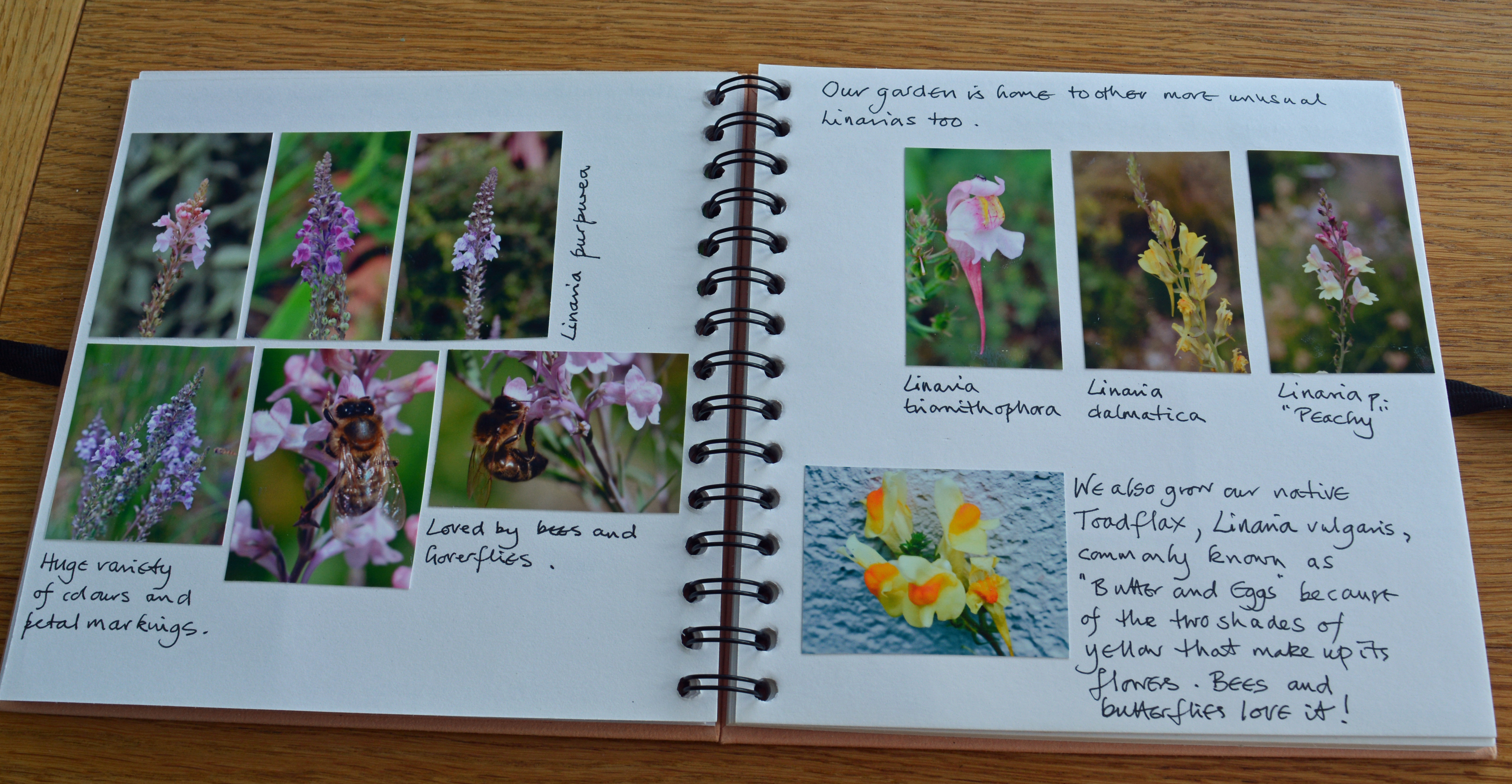
The next plant family I feature in July is Linaria, of which we grow many varied cultivars.
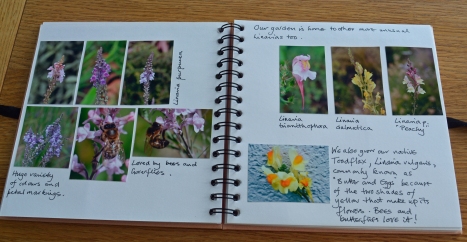
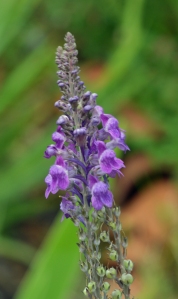
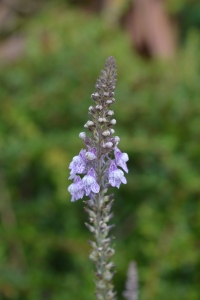
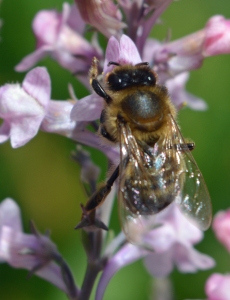
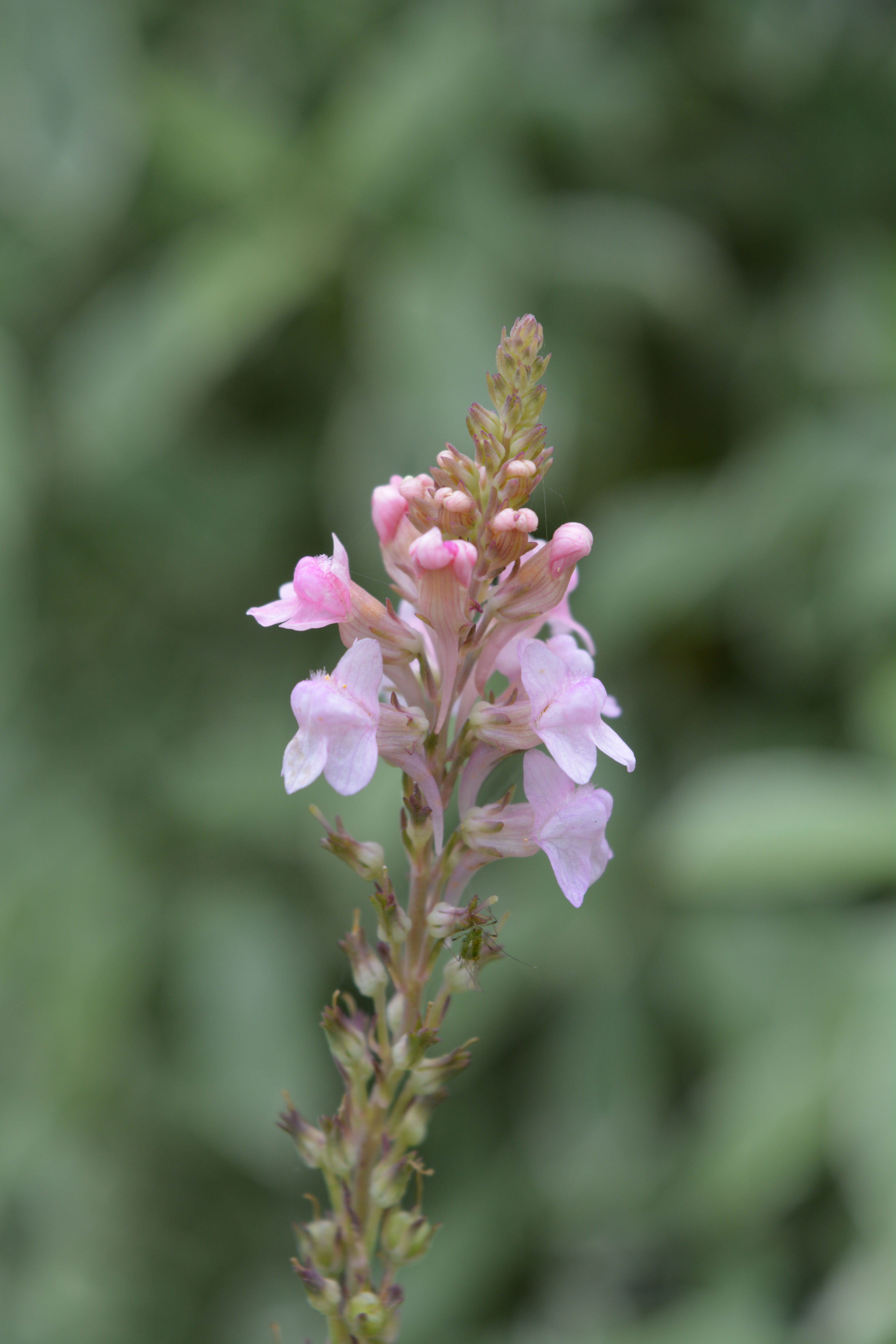
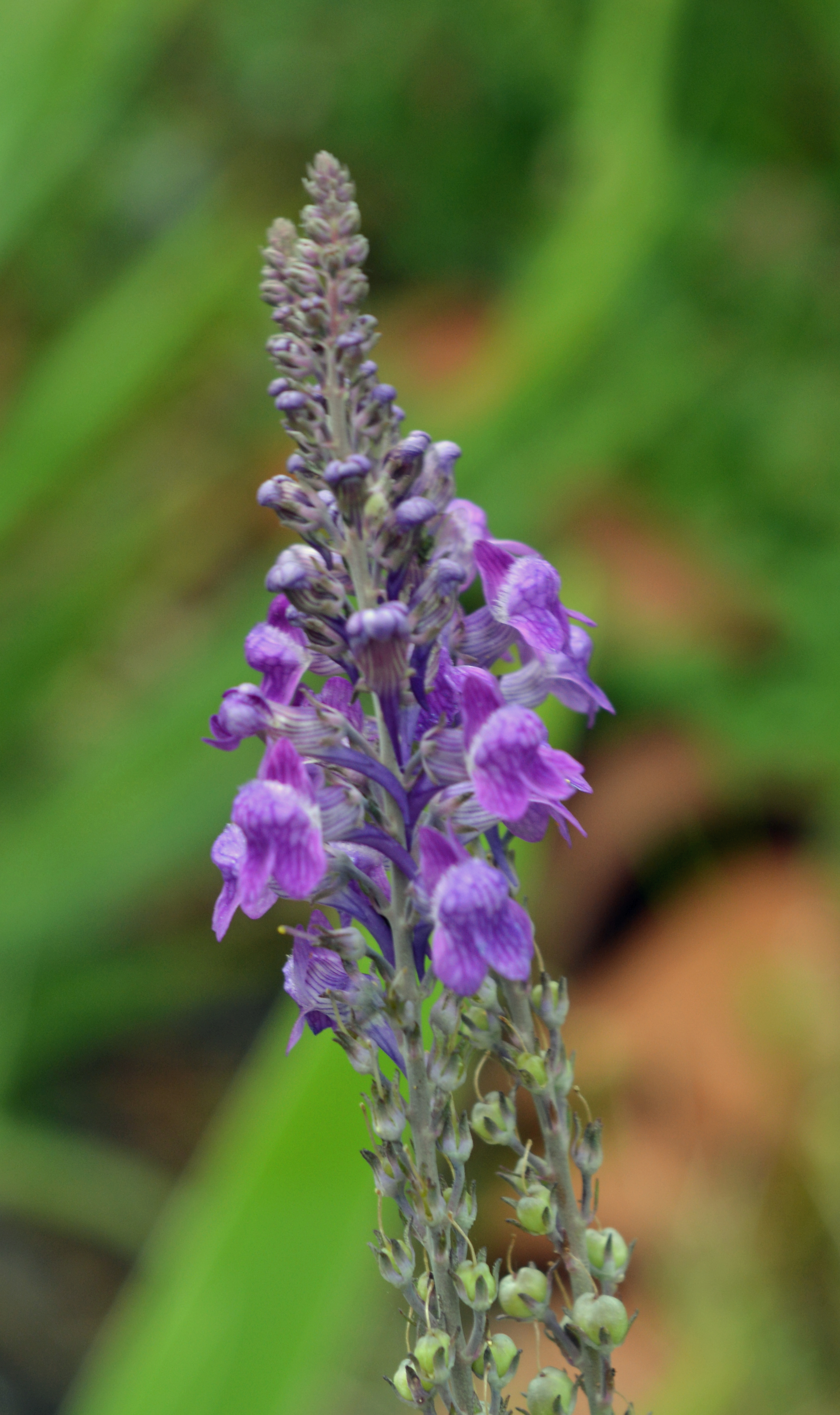
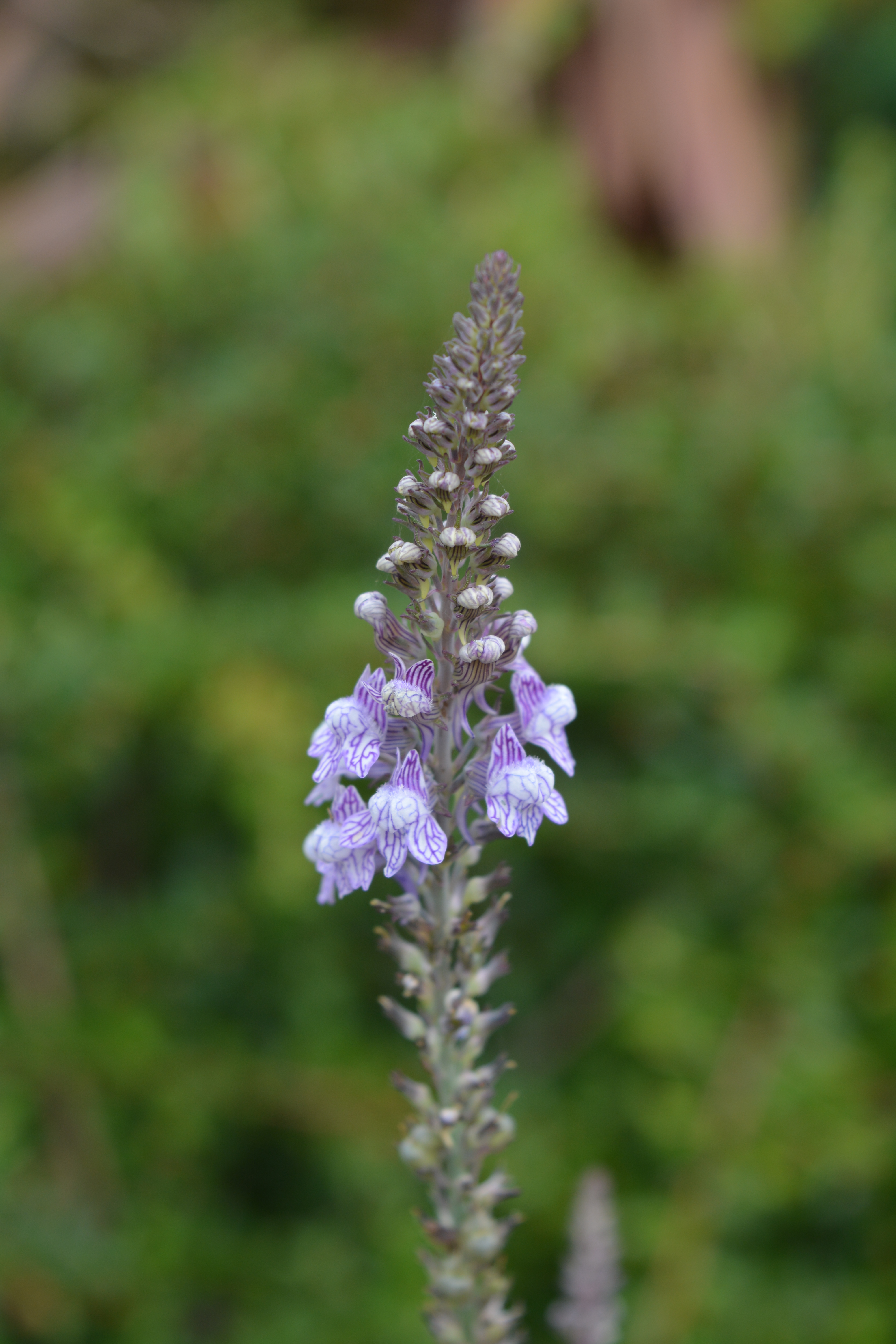
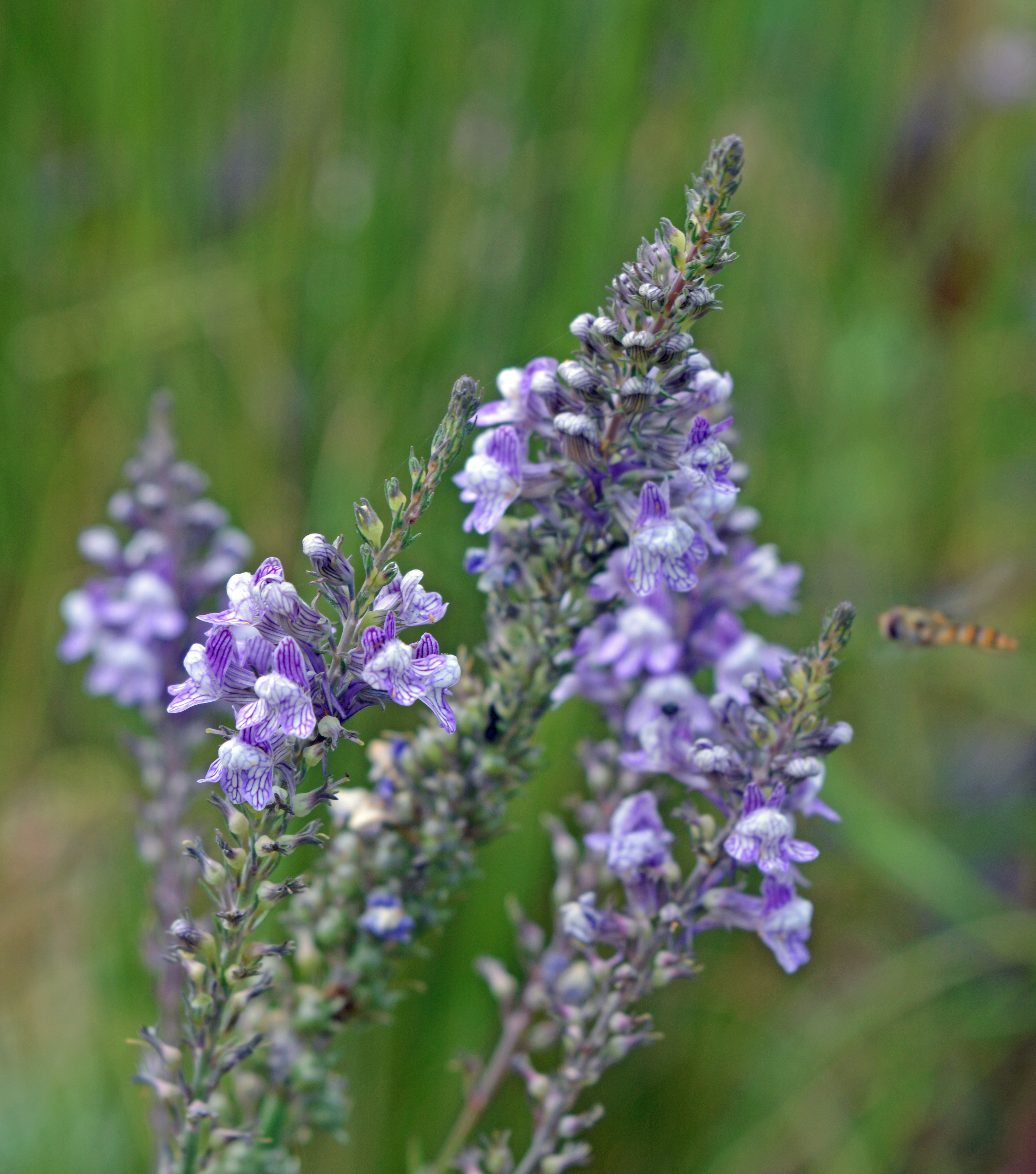
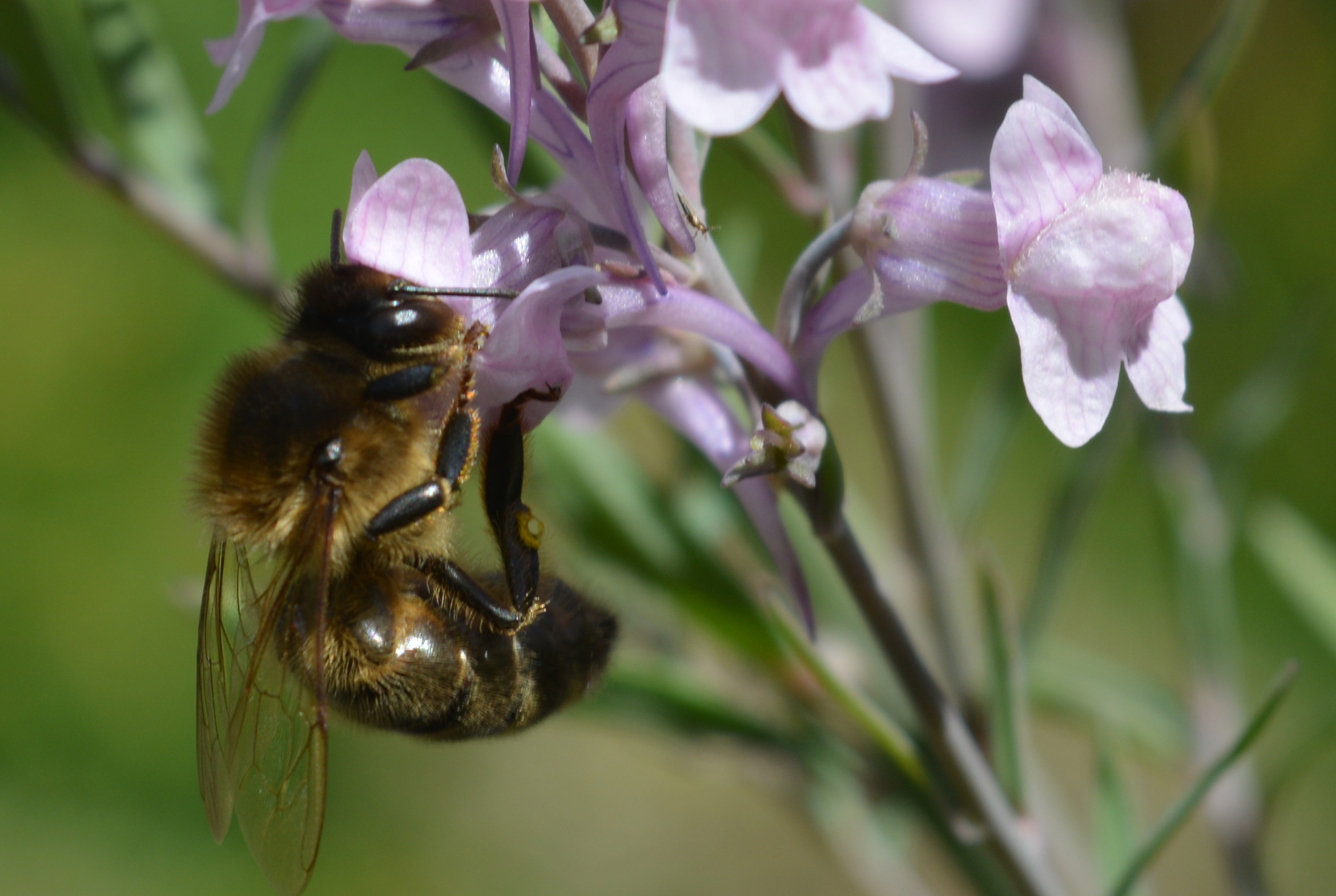
“Members of the Linaria family are always welcome in our garden. We love the way they self seed and hybridise. They display a huge range of colours and petal markings. Linaria purpurea is much loved by bees and hoverflies.”
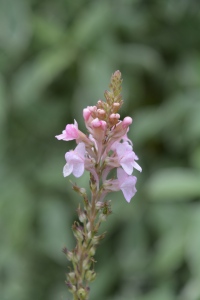
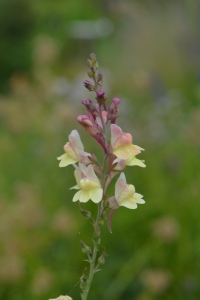
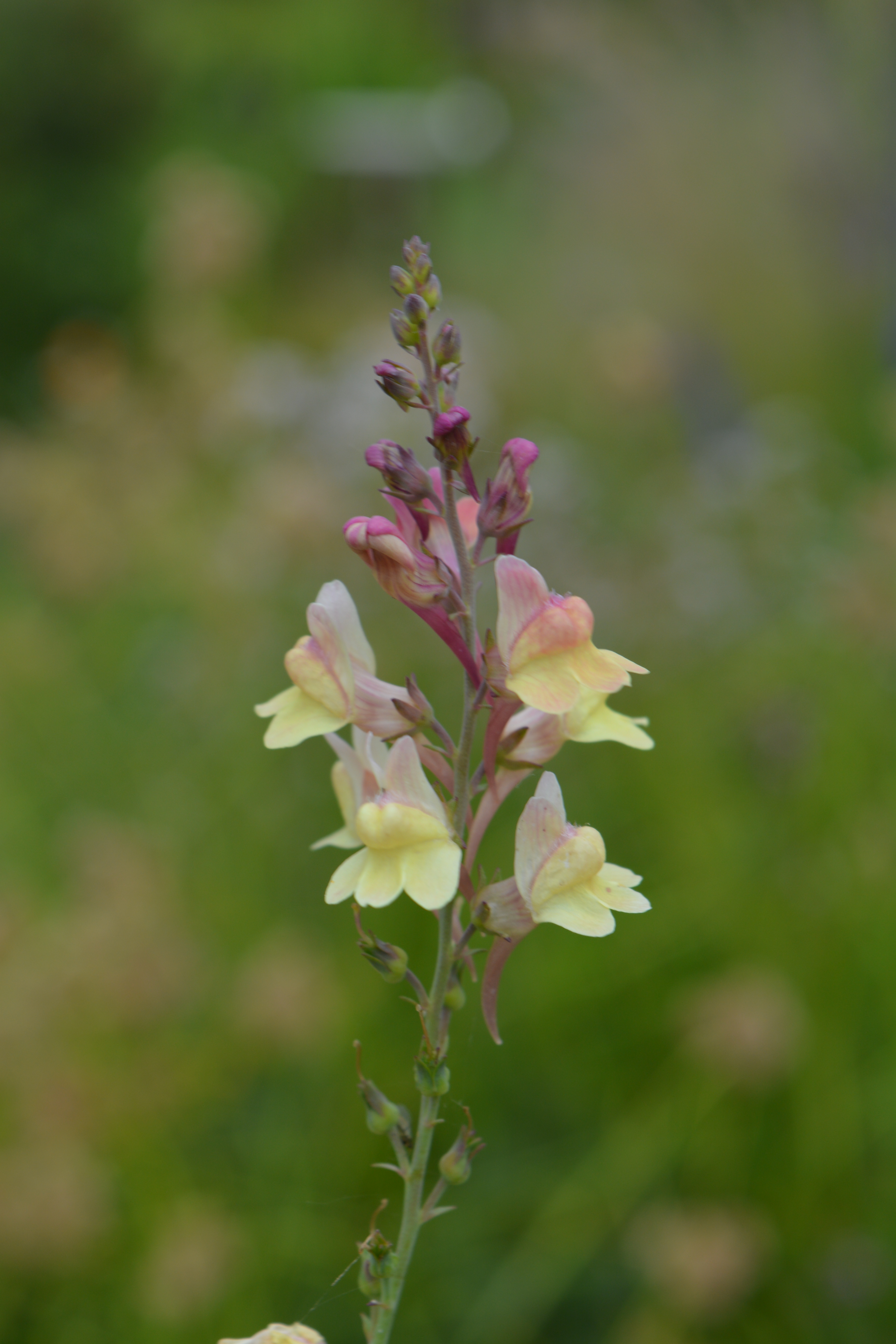
“Our garden is home to other more unusual Linarias too, all with their recognisable flower structure.”
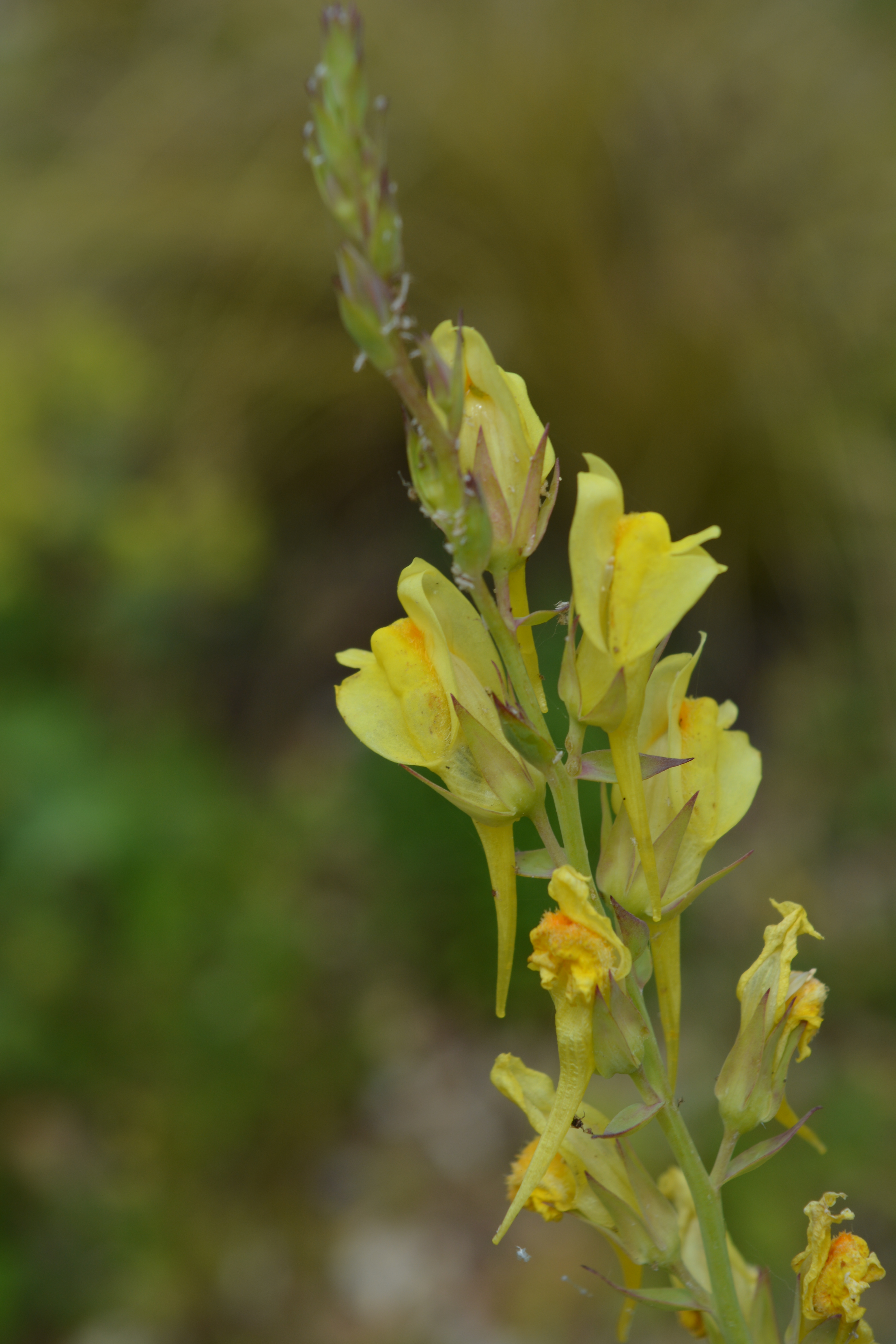
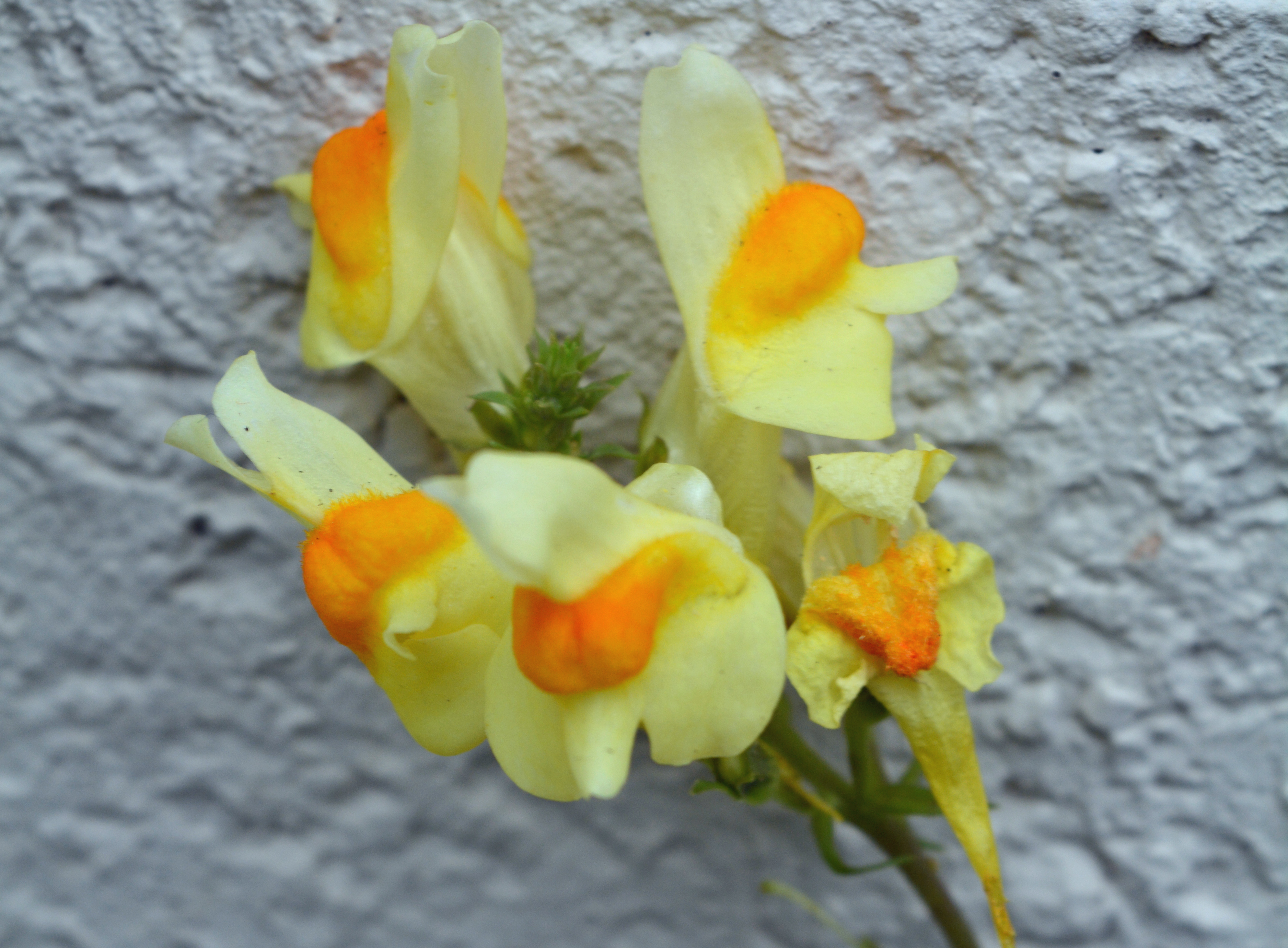
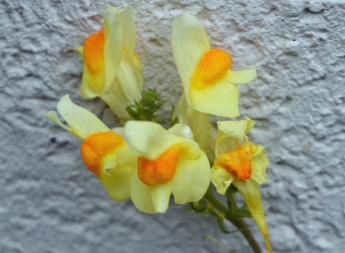
“We also grow our native Toadflax, Linaria vulgaris, commonly known as “Butter and Eggs” because of the two shades of yellow that make up its flowers. Bees and butterflies love it!”
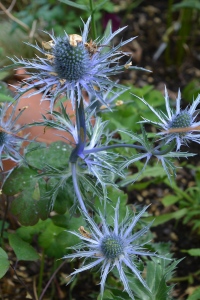
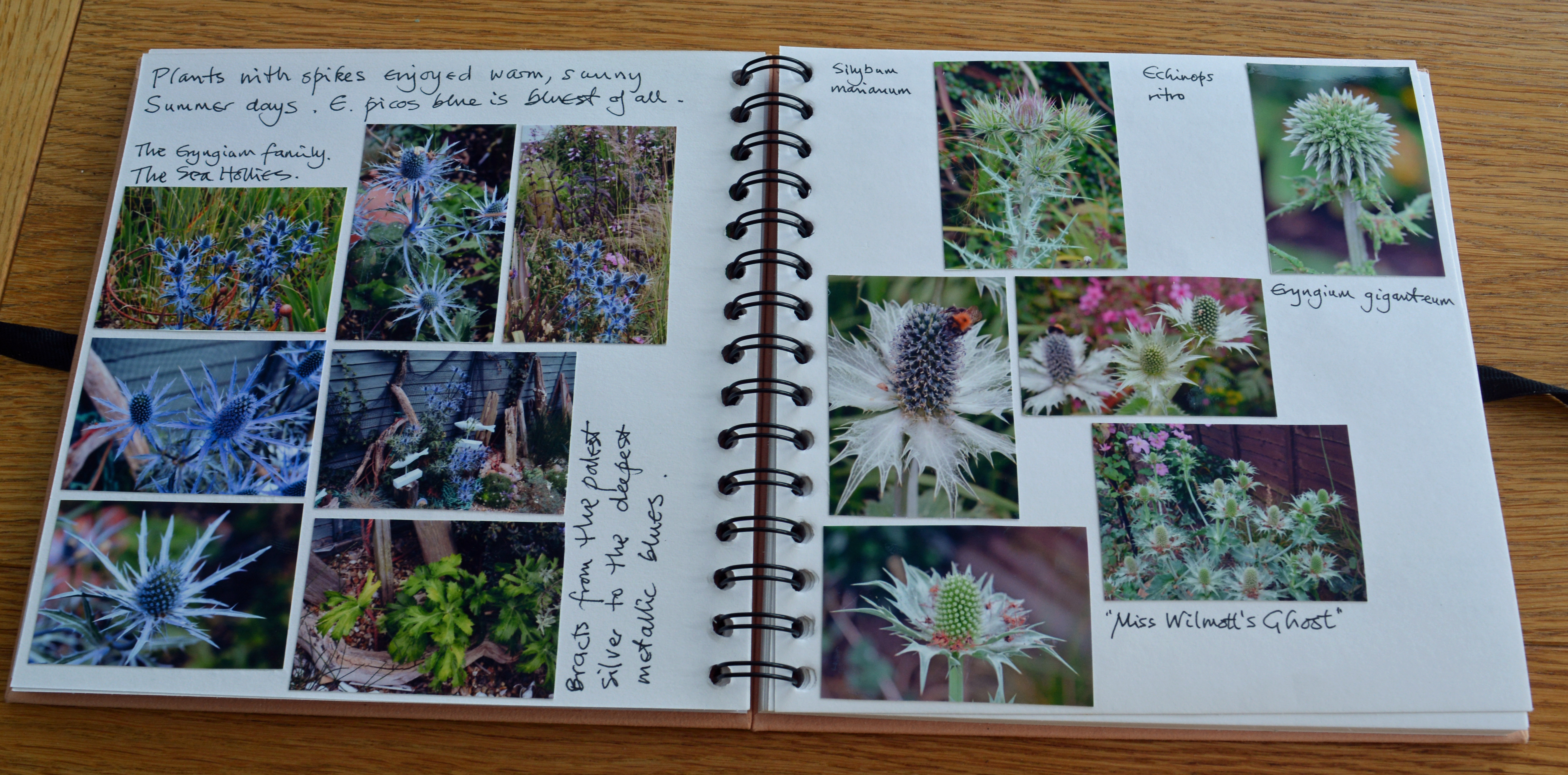
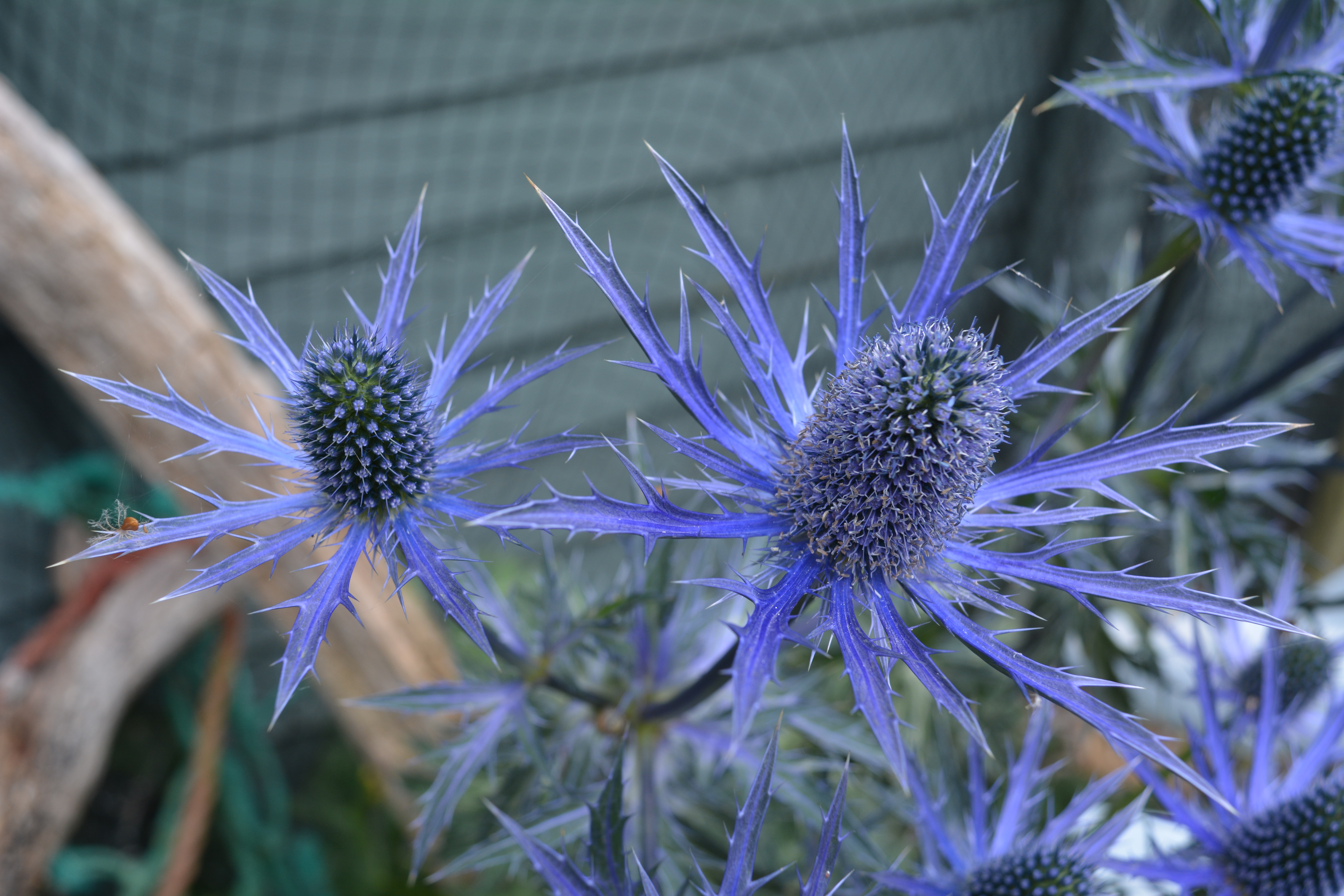
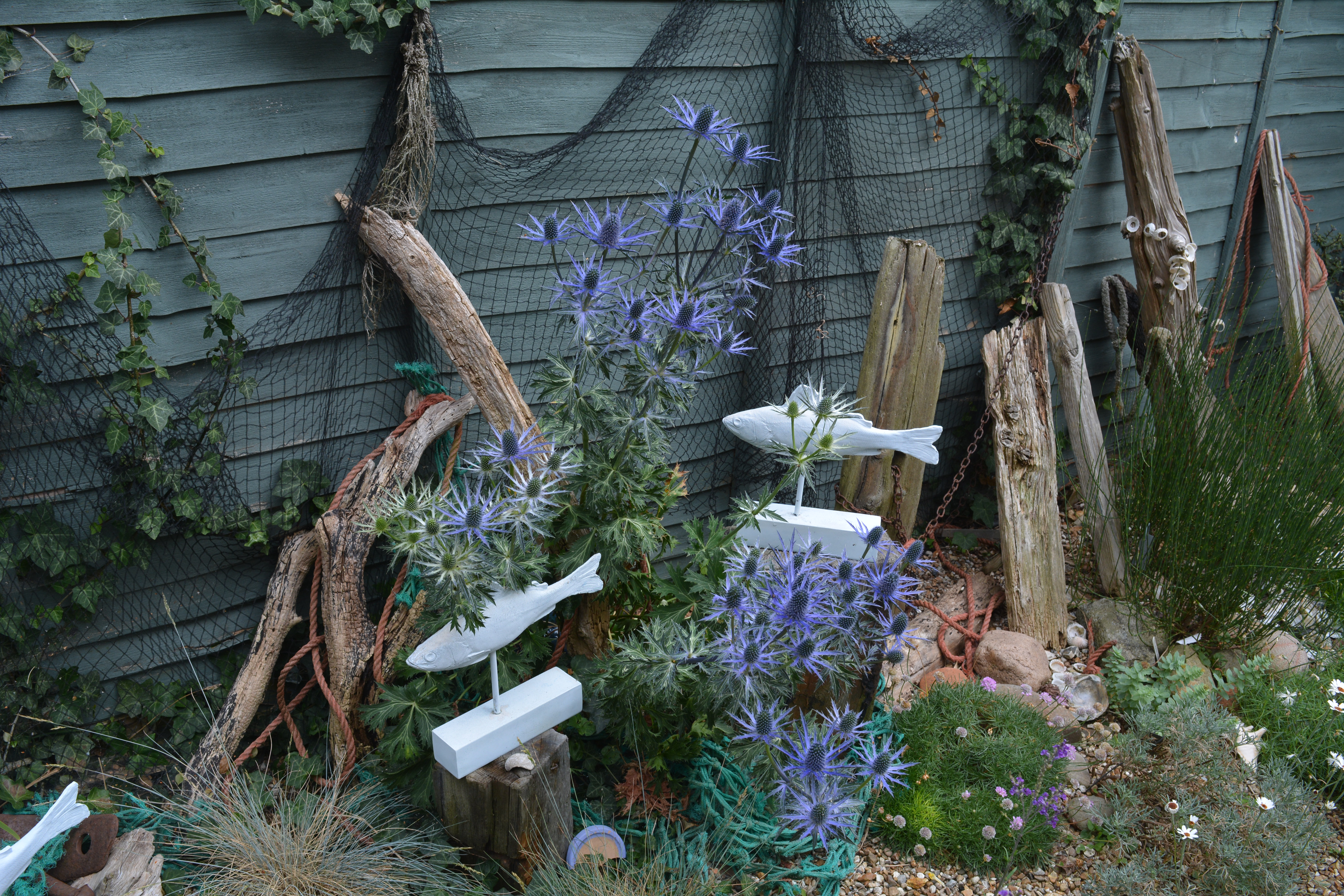
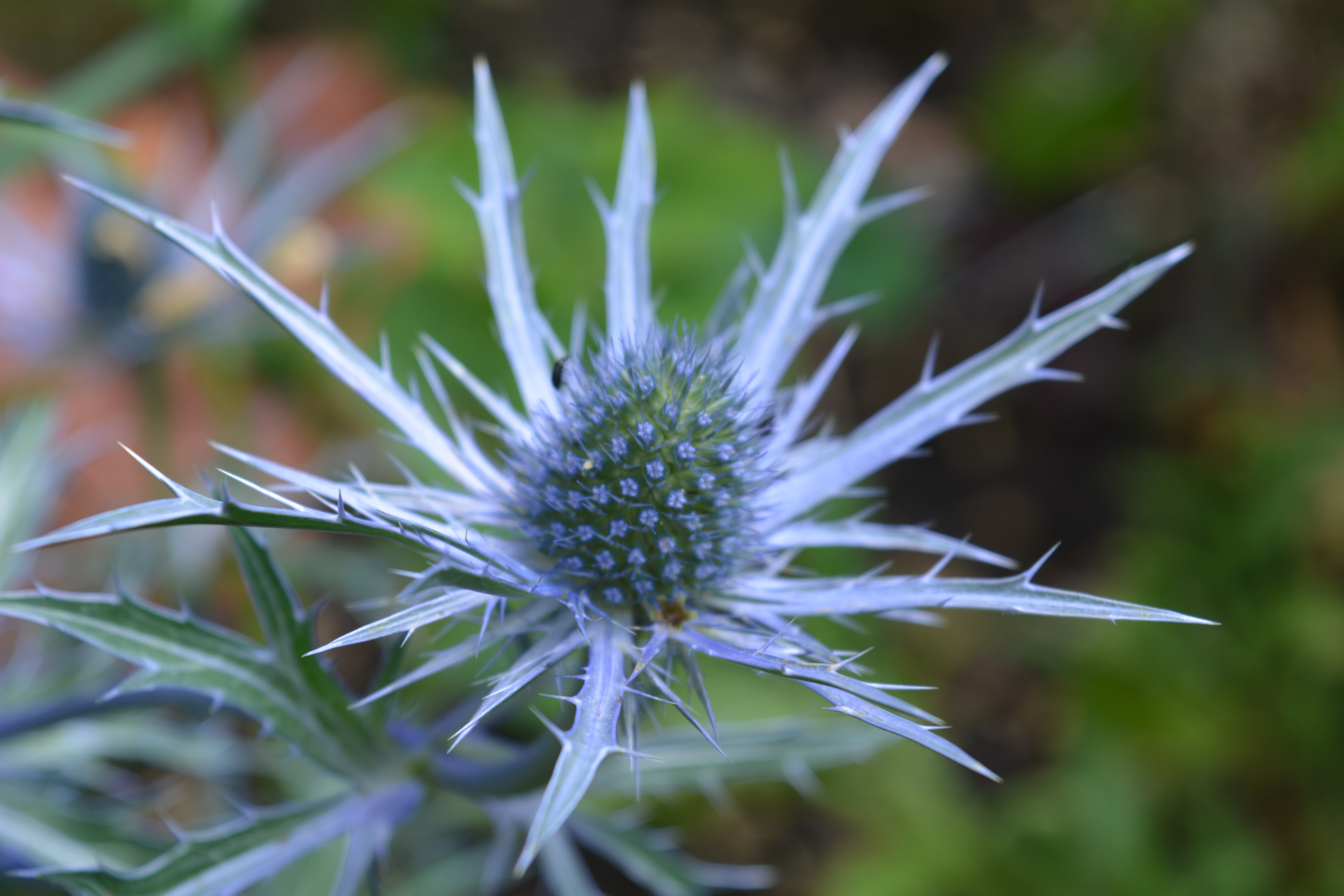
Next I looked at plants that are spiky in texture, of which we grow many in our patch as they seem to like our sunny aspect.
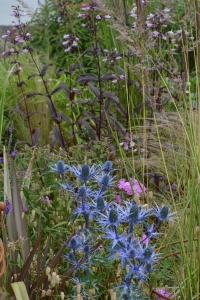
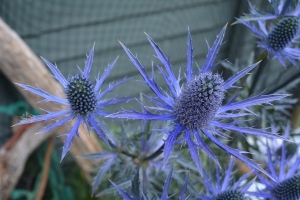
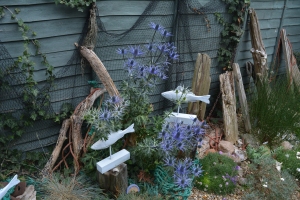
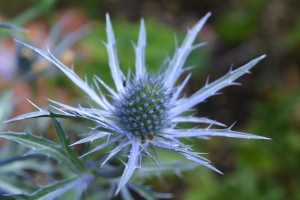
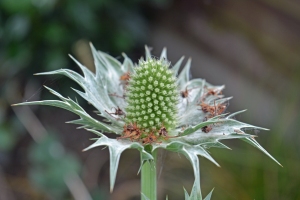
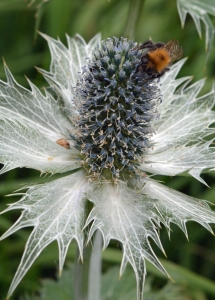
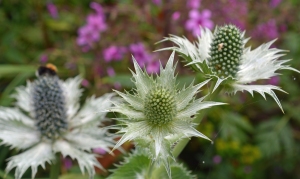
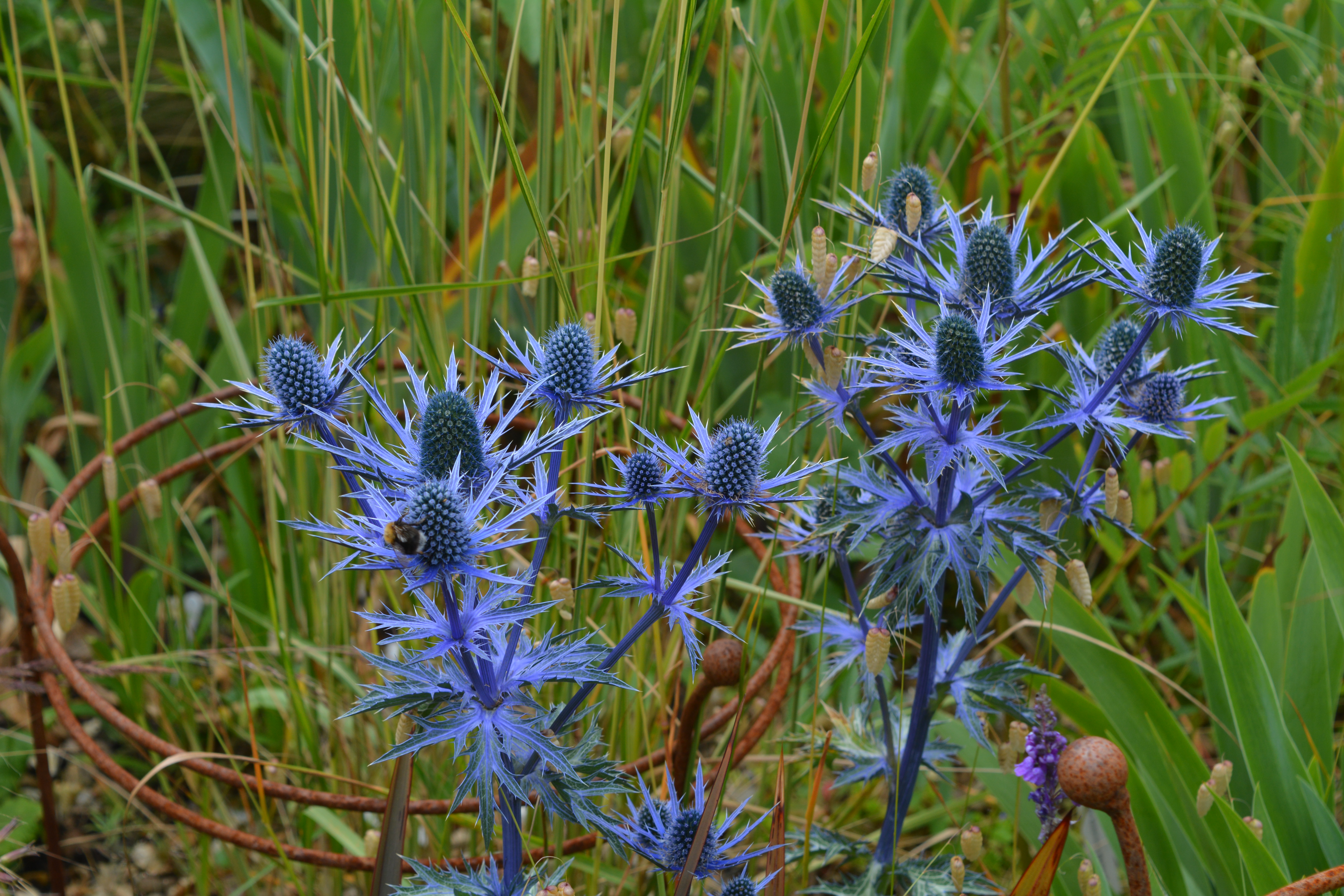
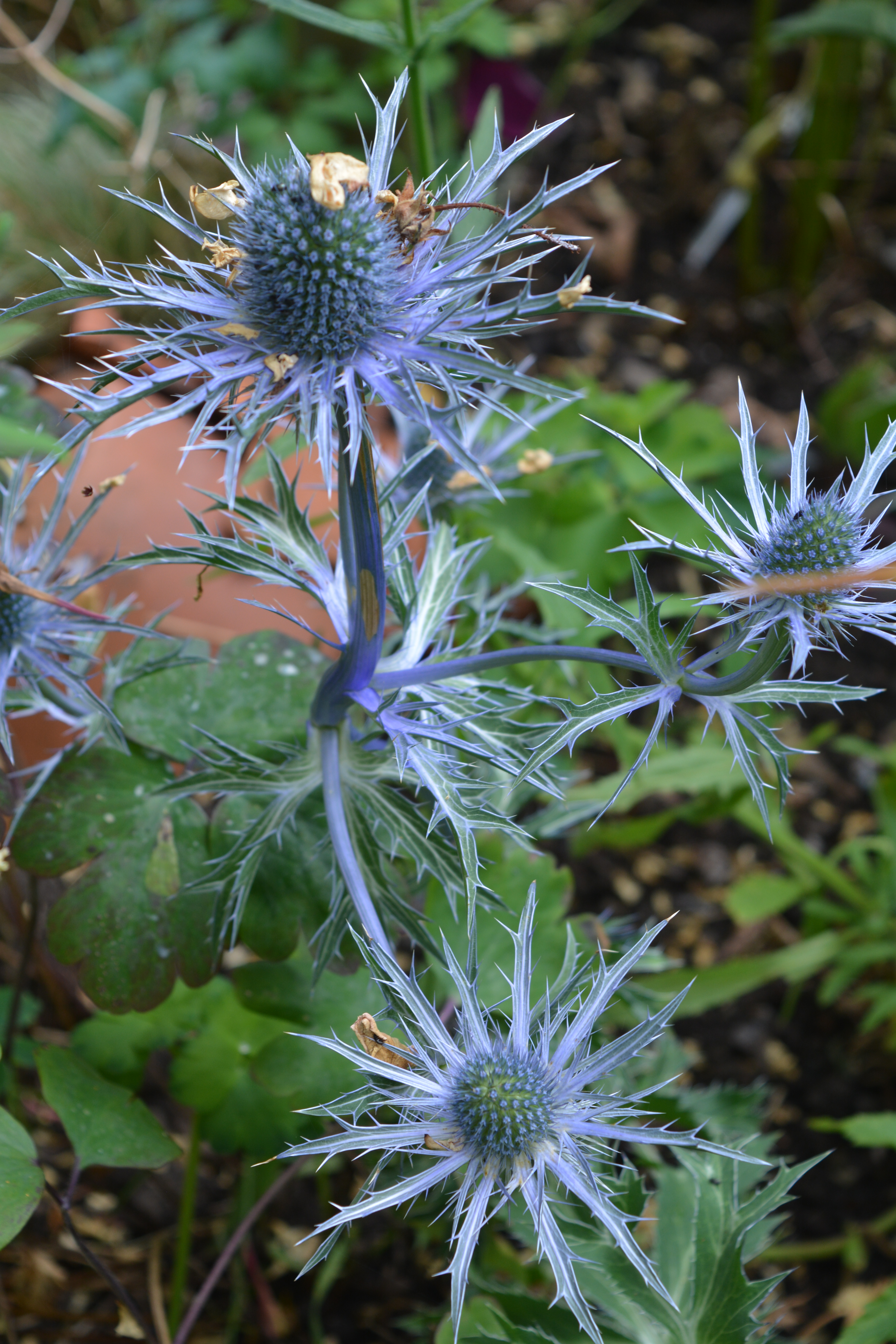
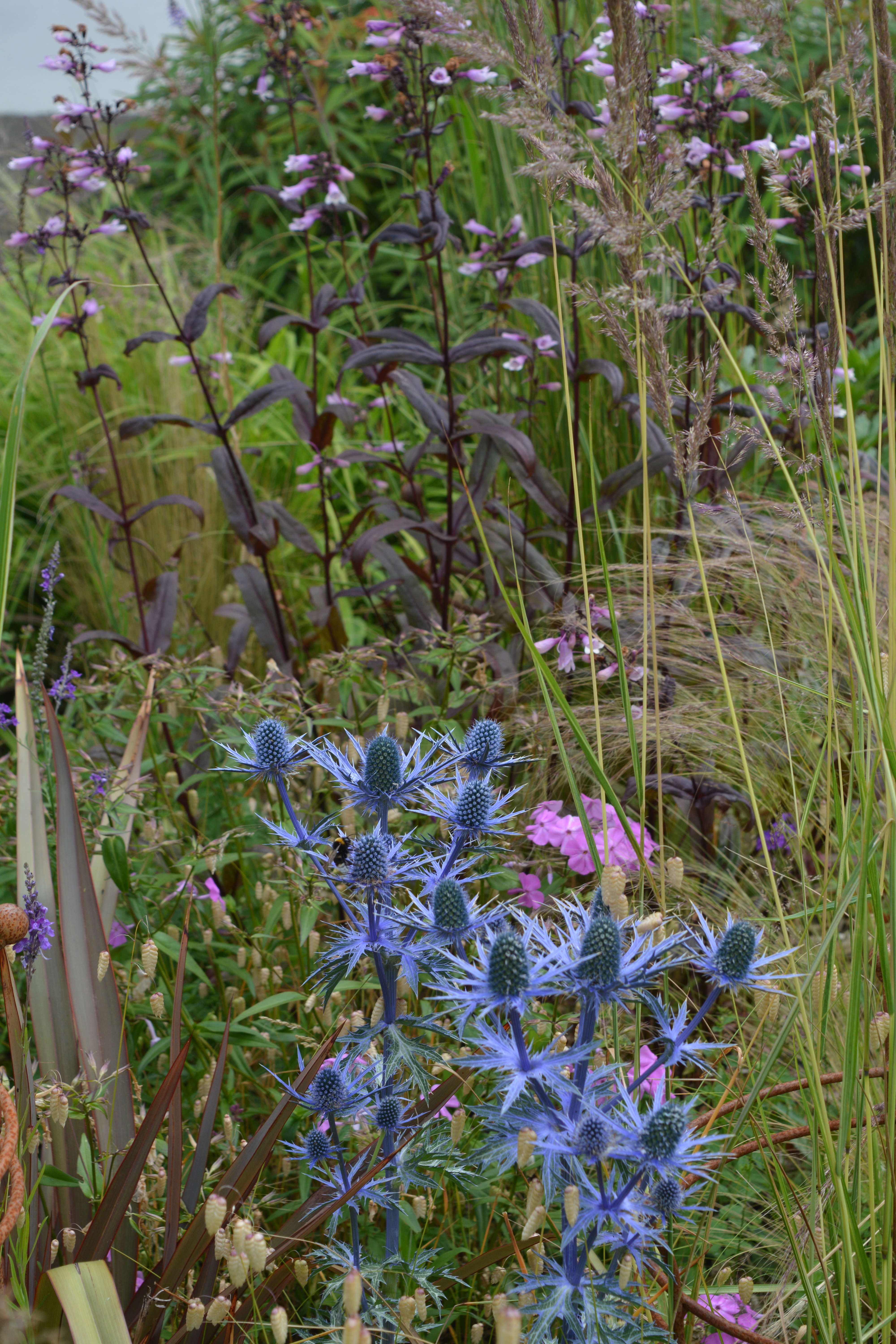
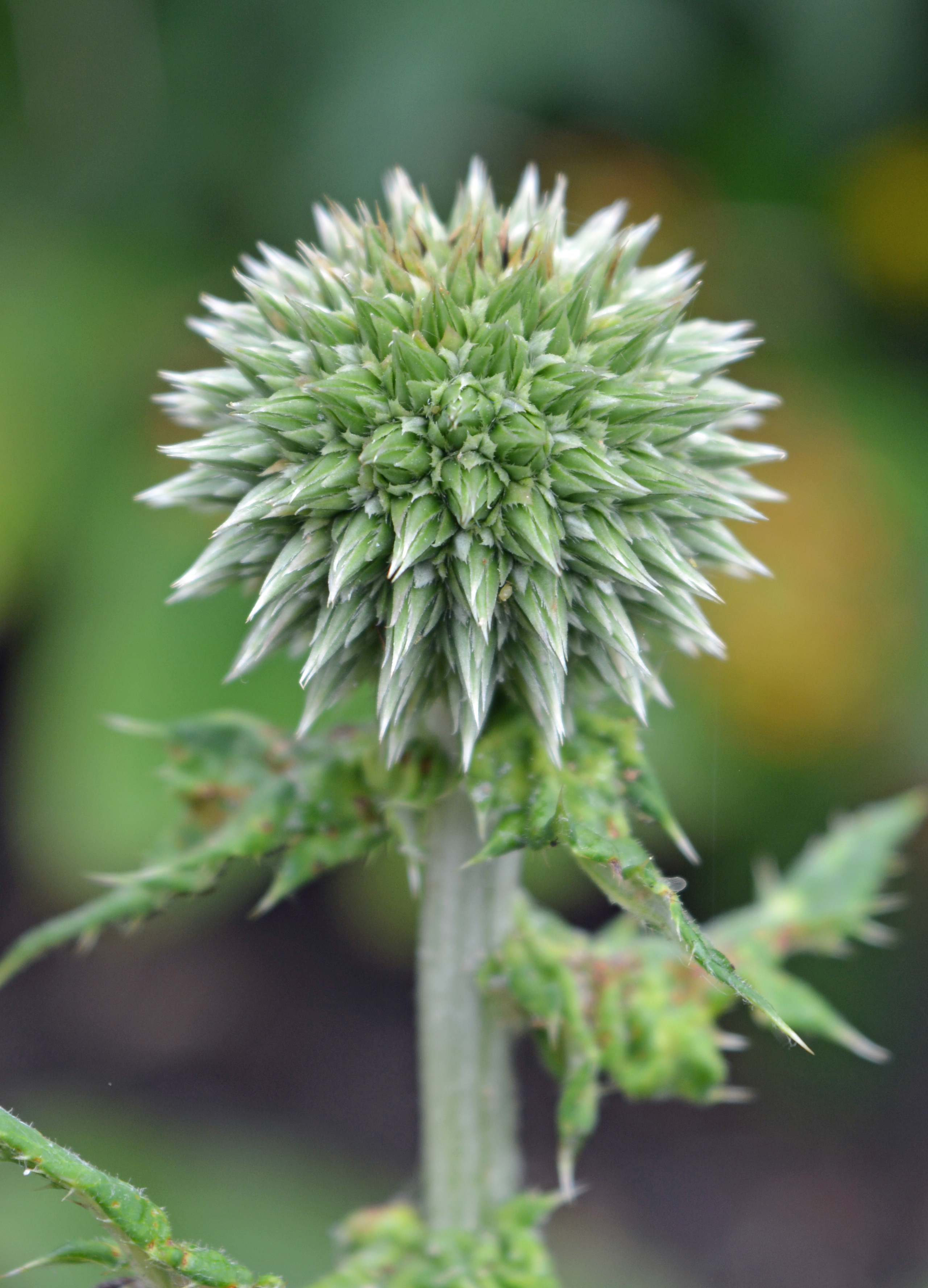
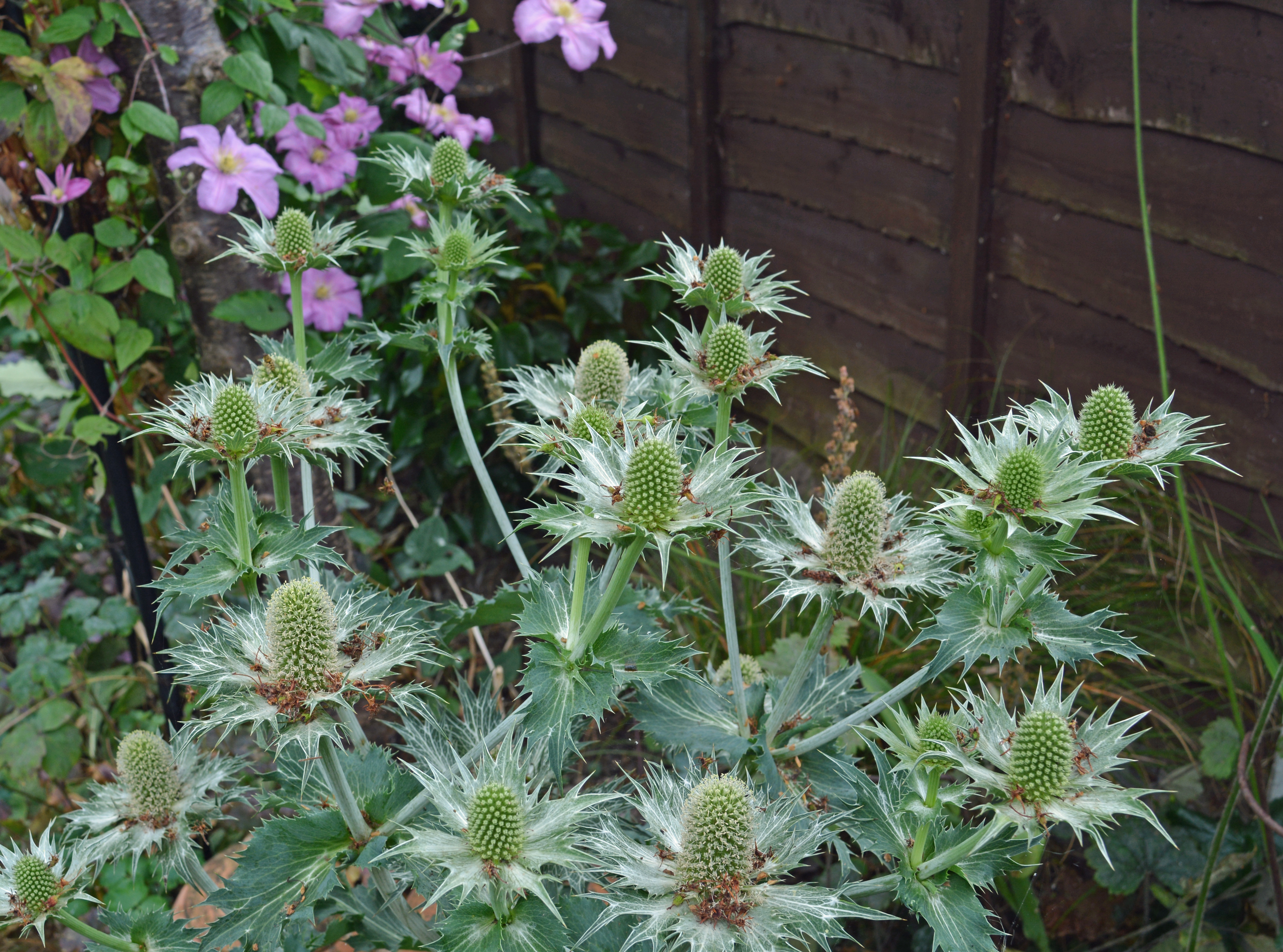
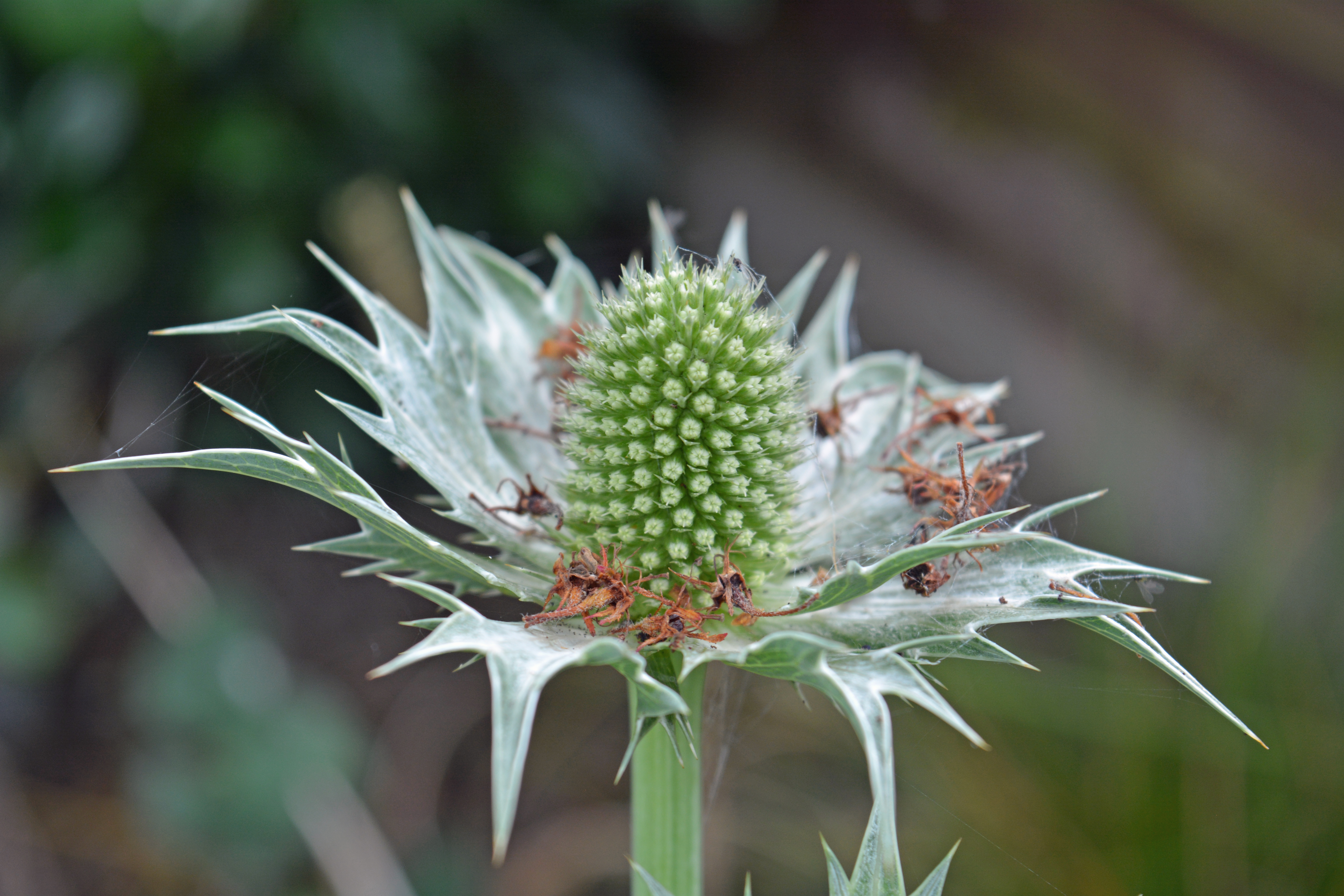
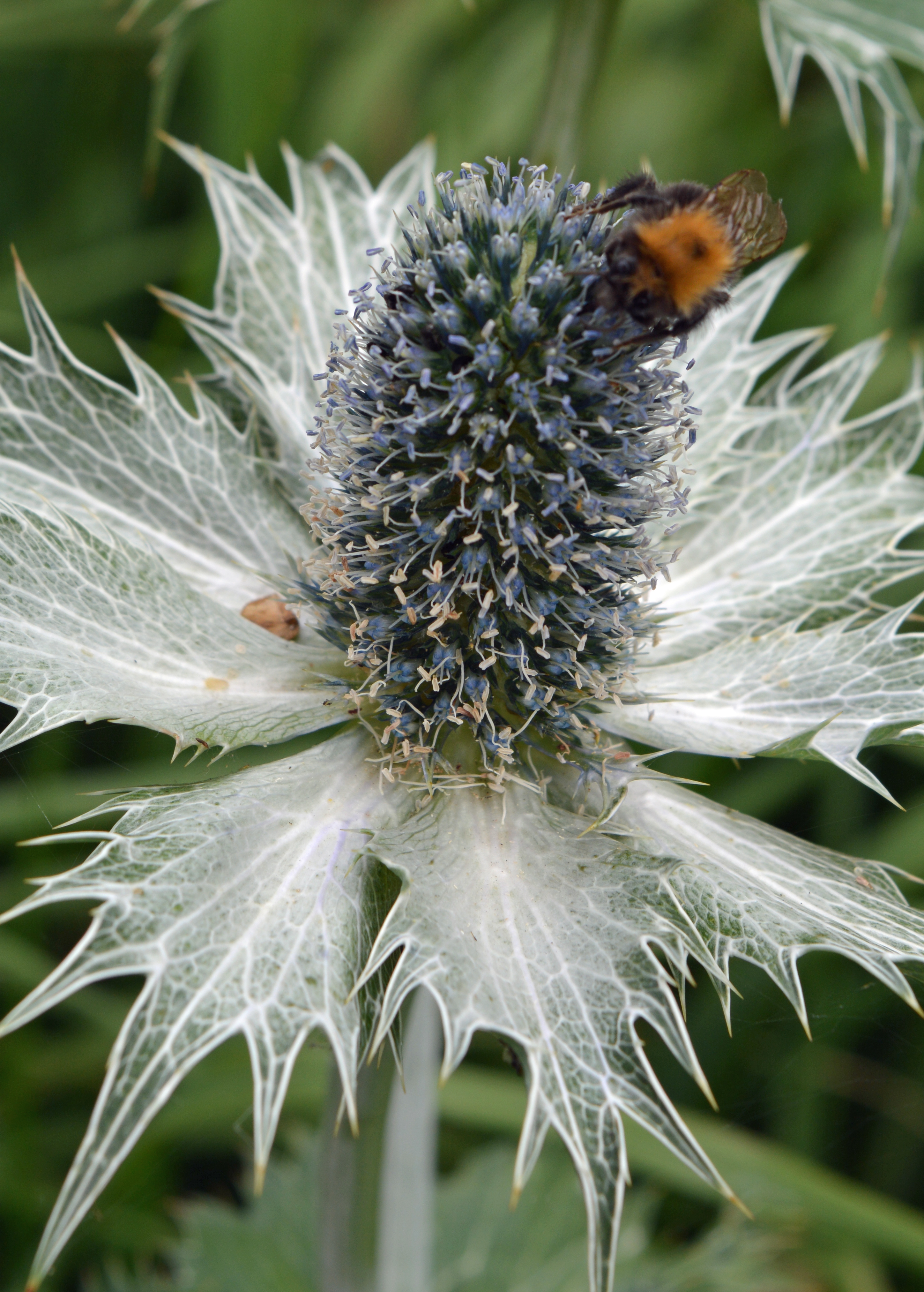
“Plants with spikes enjoyed warm, sunny summer days. We grow many eryngium family, the Sea Hollies, with bracts from the palest silver to the deepest metallic blues, of which E. Picos Blue is the bluest of all.”
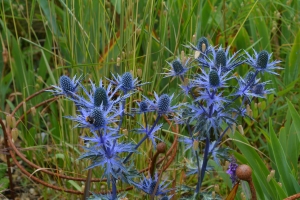
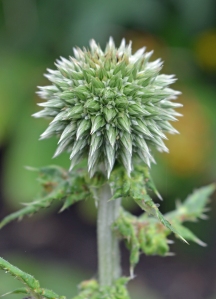
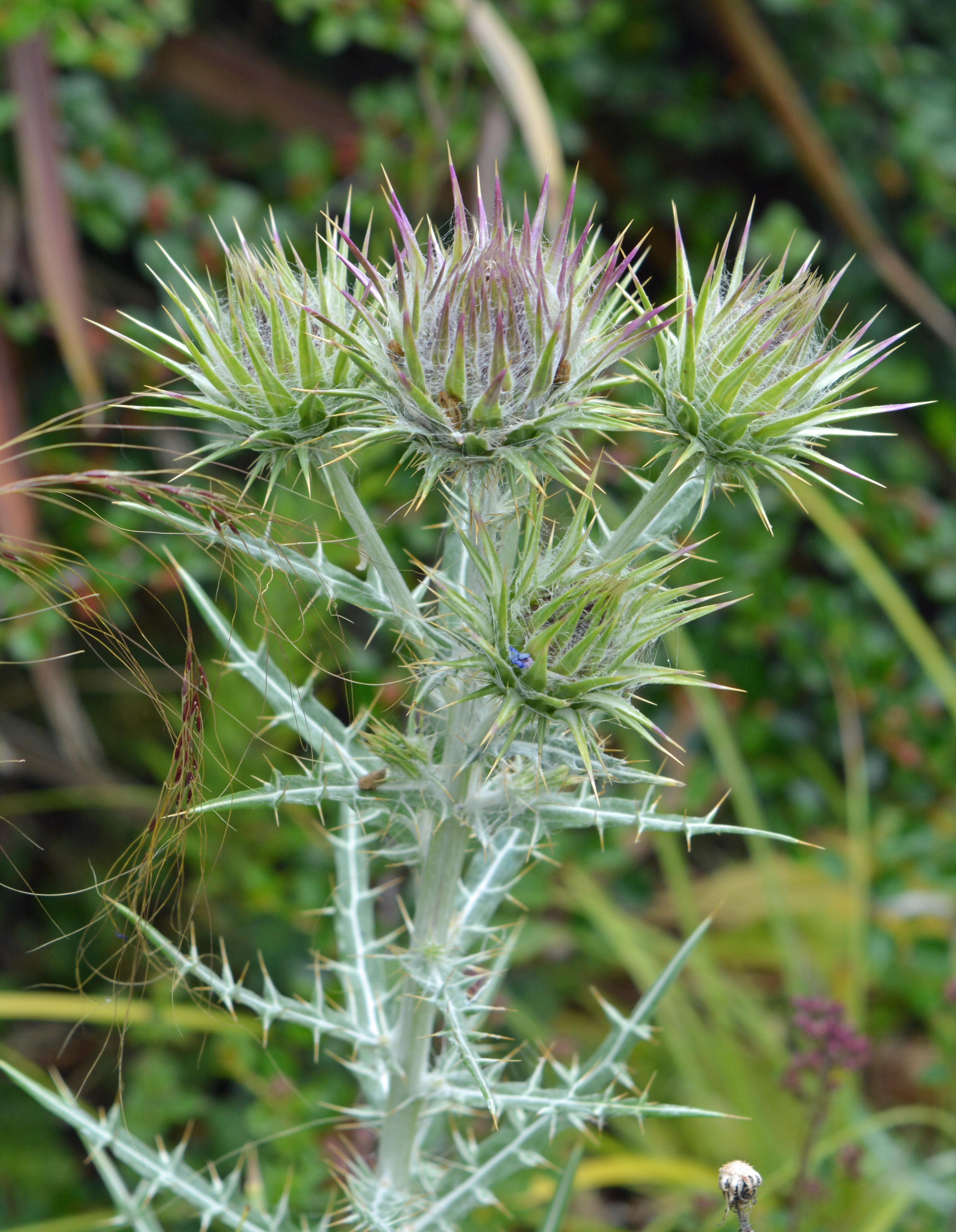
Not all of our spiky plants are Eryngiums however. We also grow Silybum marianum and Echinops ritro.
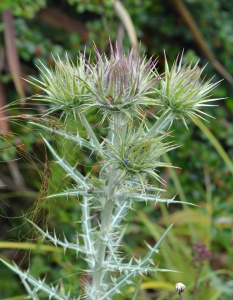
One of the Eryngium family is a biennial and luckily a strong self seeder, E. giganteum Miss Wilmott’s Ghost.
Turning over the page we move on from spiky plants to two much softer more delicate looking plants.
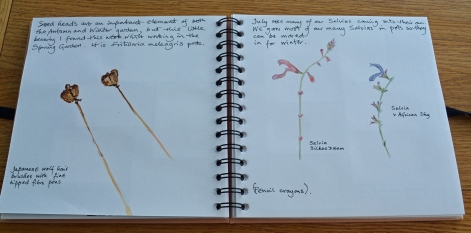
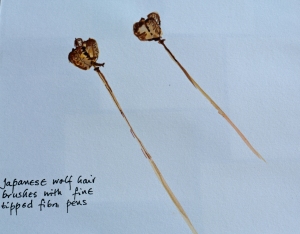
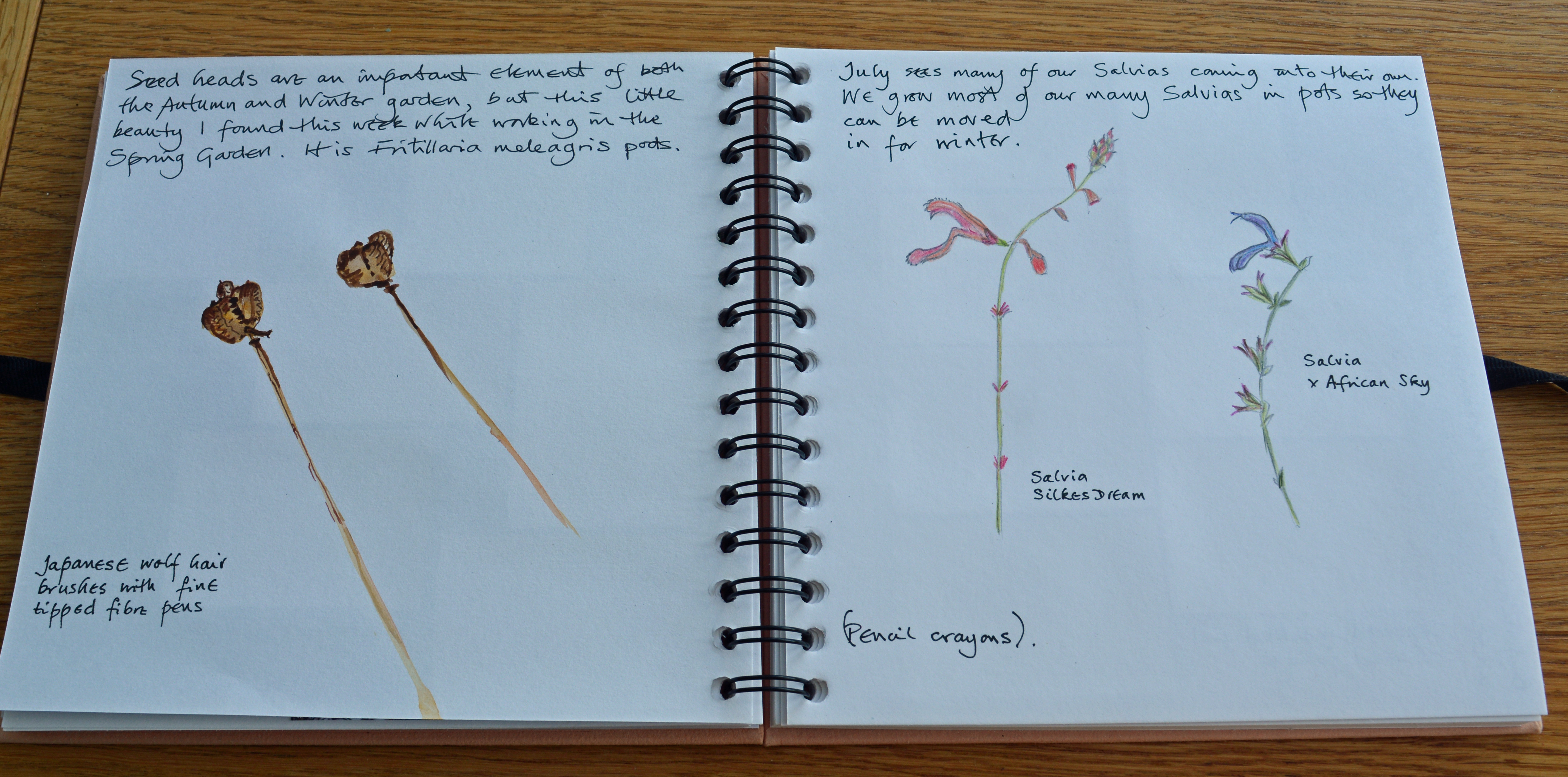
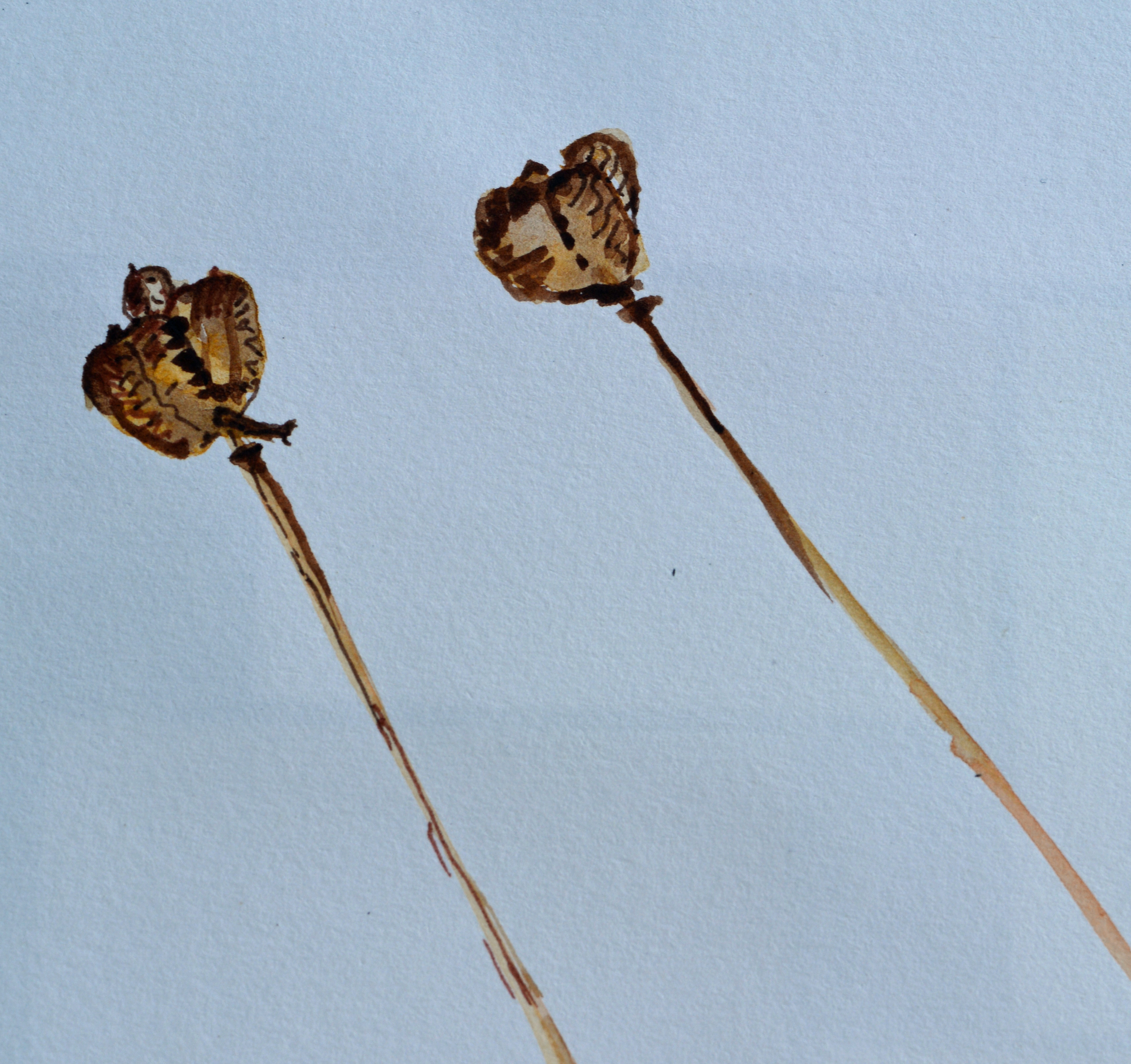
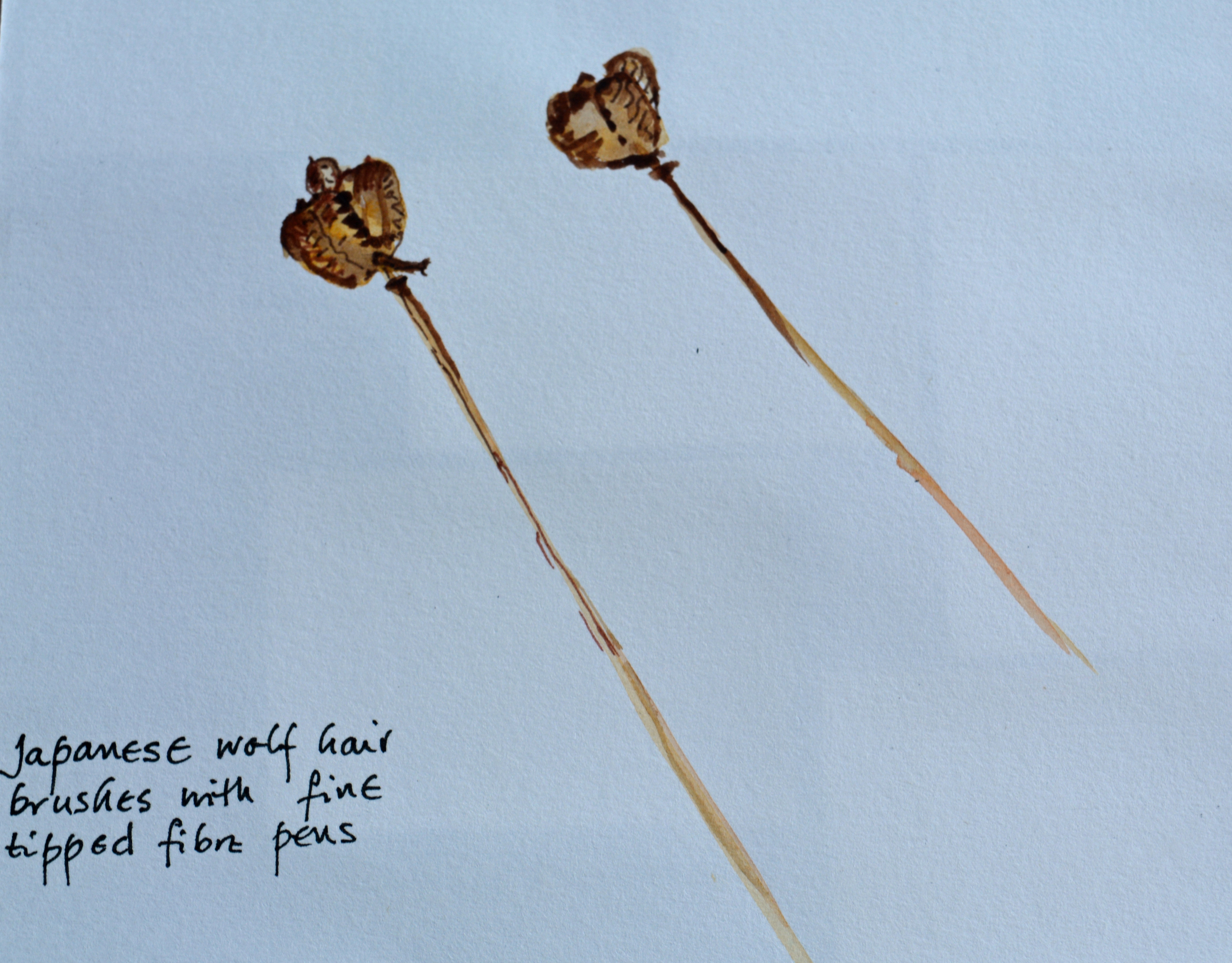
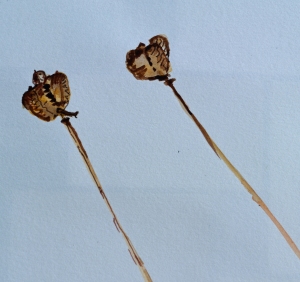
“Seed heads are an important element of the Autumn and Winter garden, but this little beauty I found this week while working in the Spring Garden. They are Fritillaria meleagris seed pods. I painted them in watercolours using Japanese wolf hair brushes and fine tipped fibre tips.”
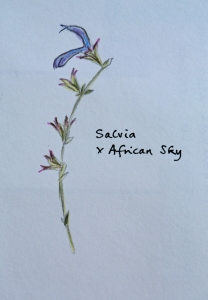
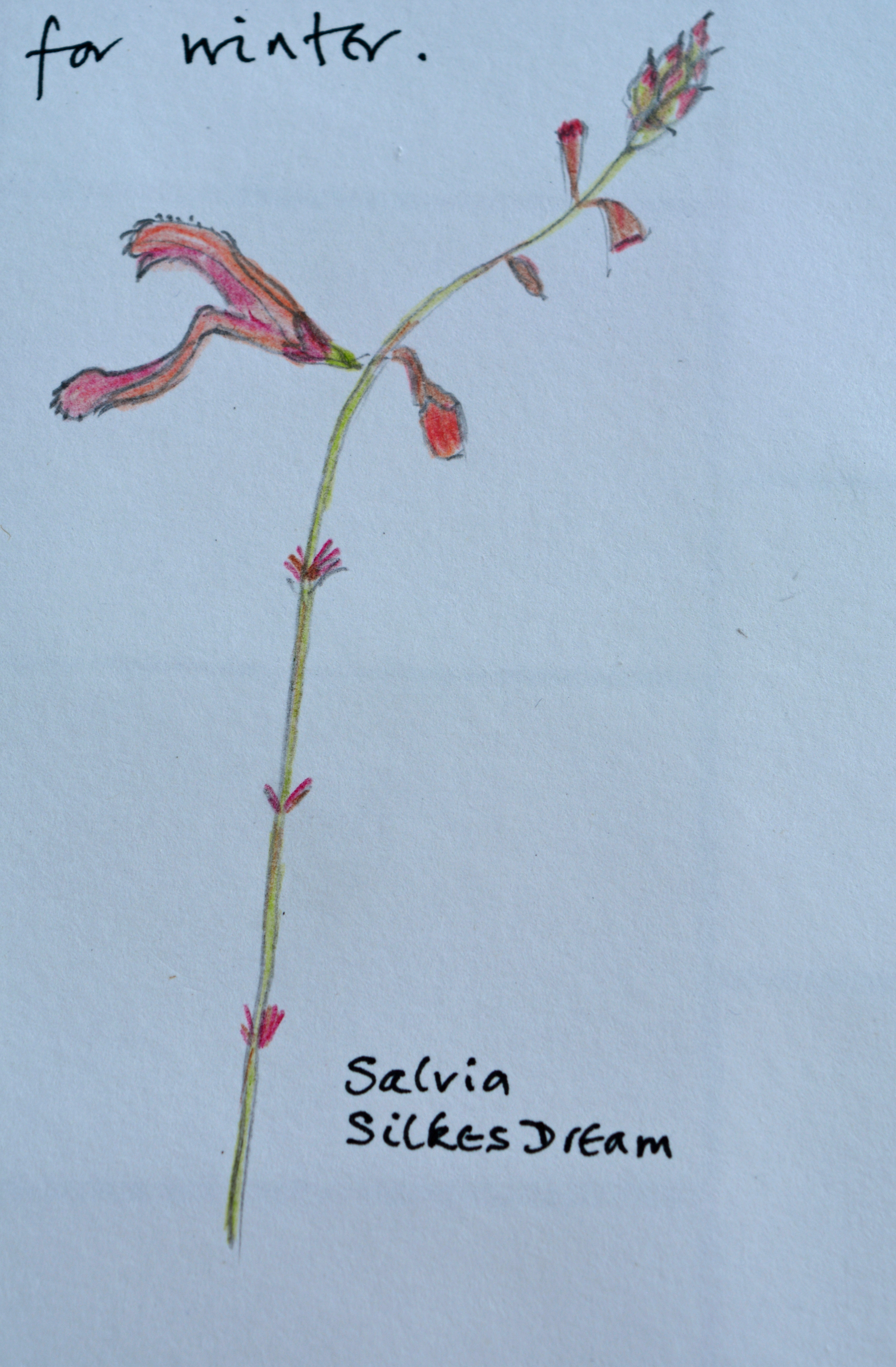
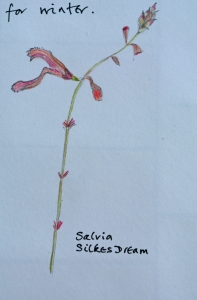
“July sees many of our Salvias coming into their own. We grow most in pots so they can be moved inside for the winter.” I used pencil crayons to draw Salvia Silkes Dream and Salvia x African Sky.
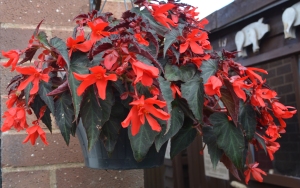
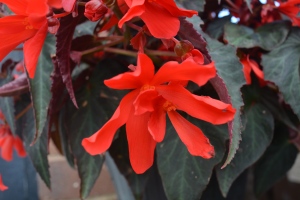
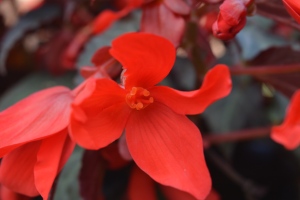
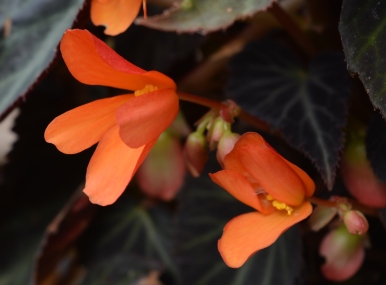
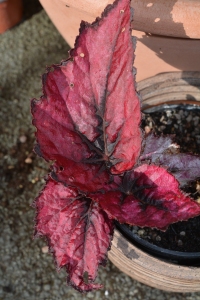
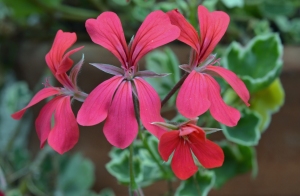
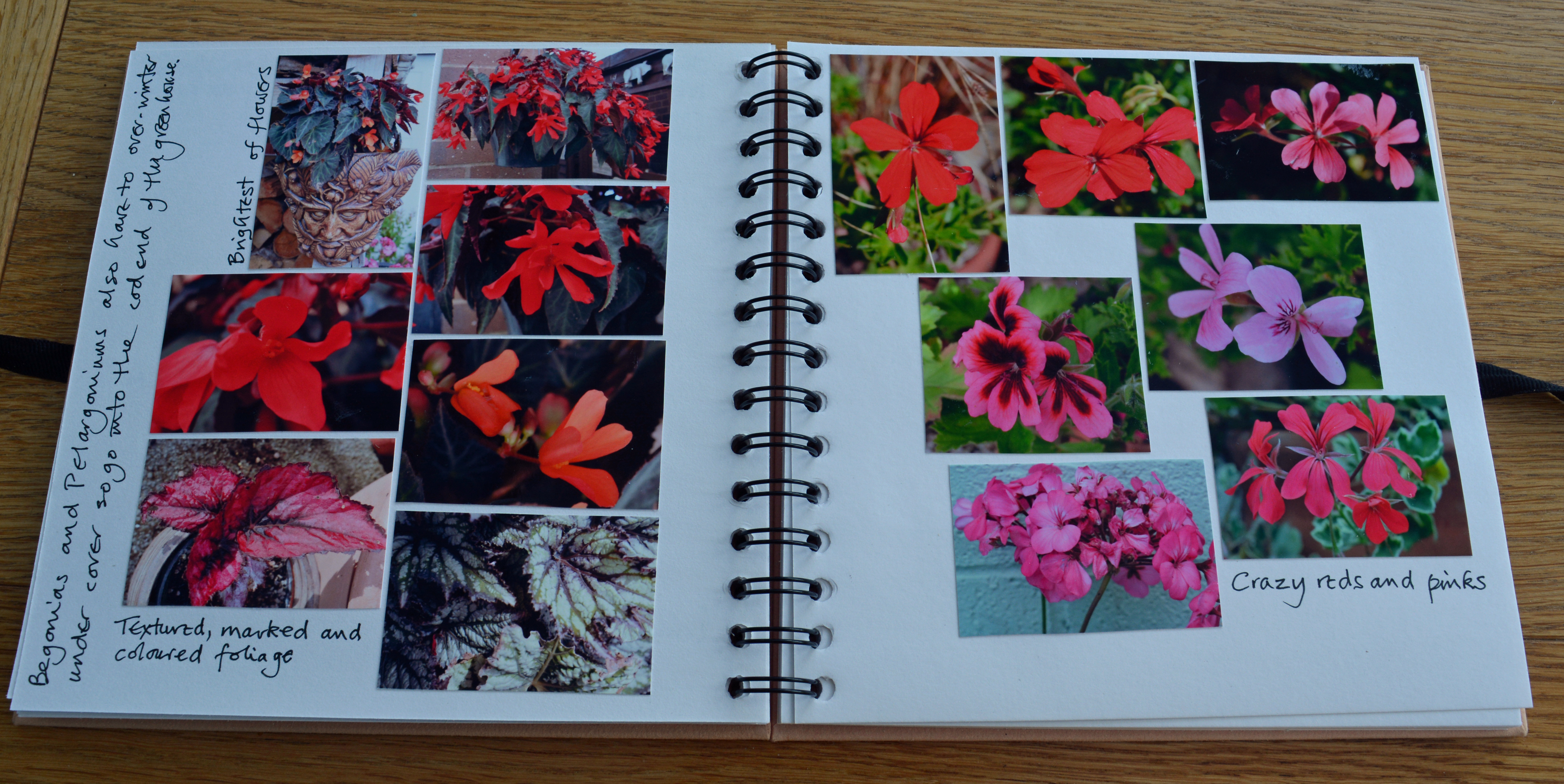
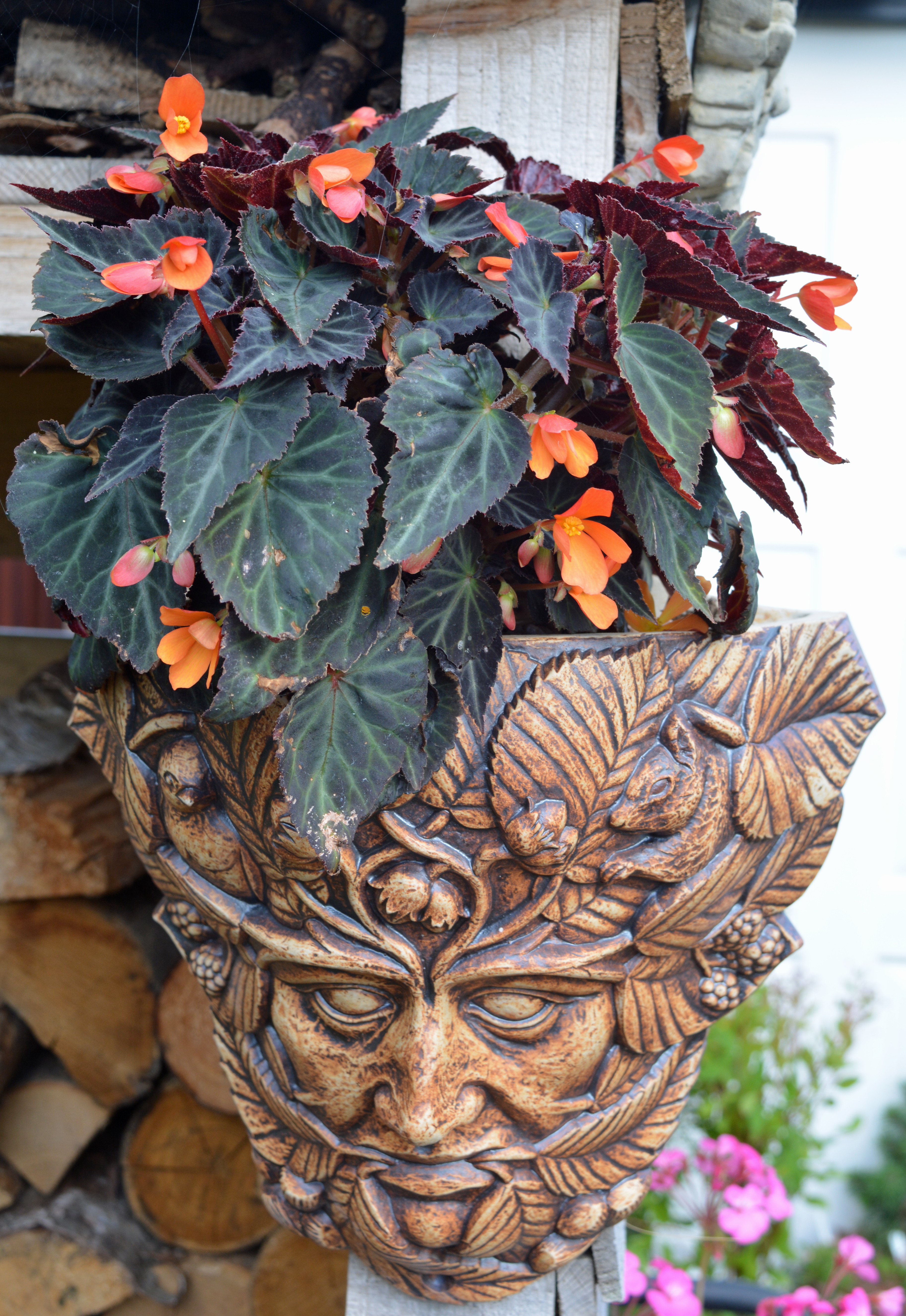
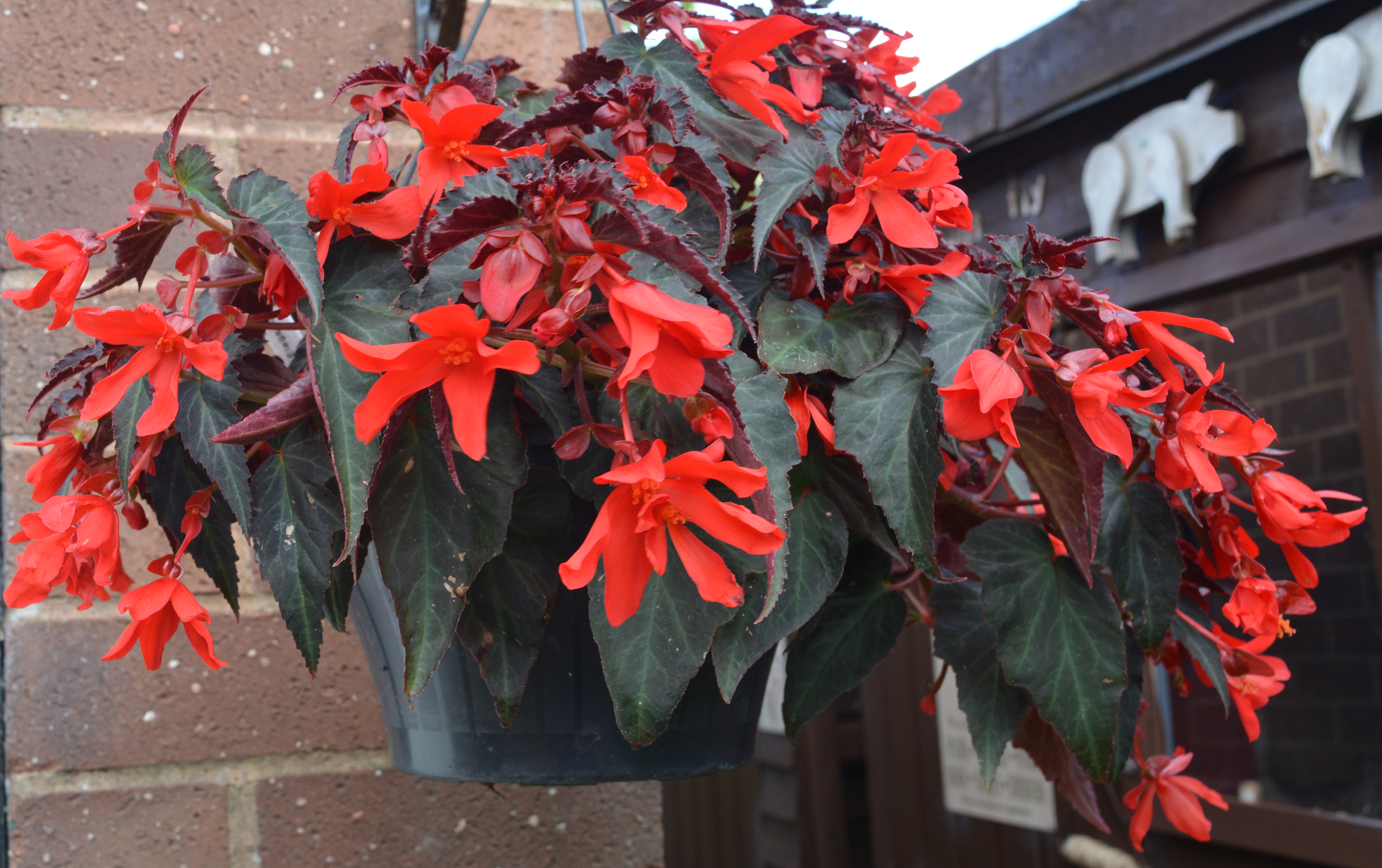
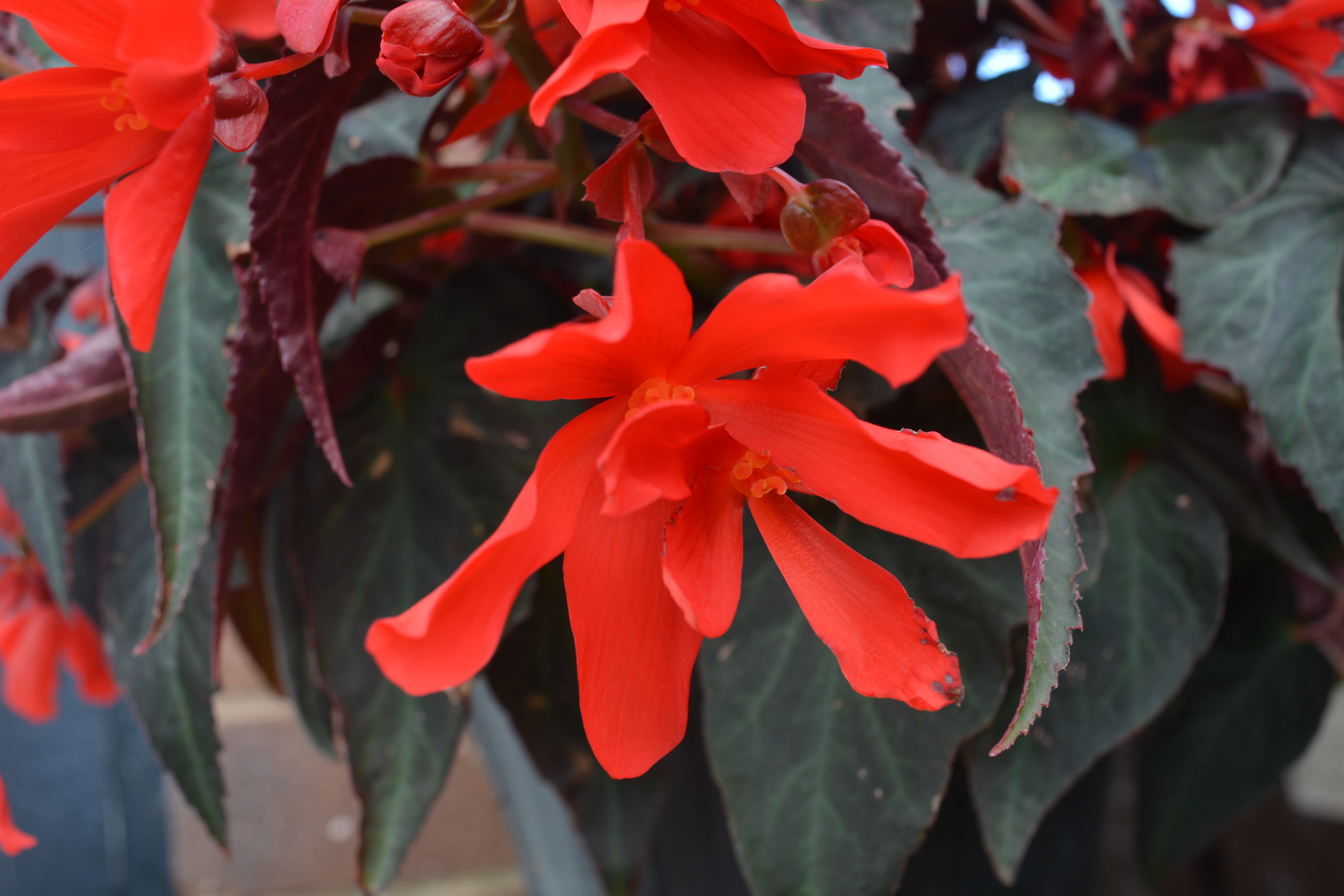
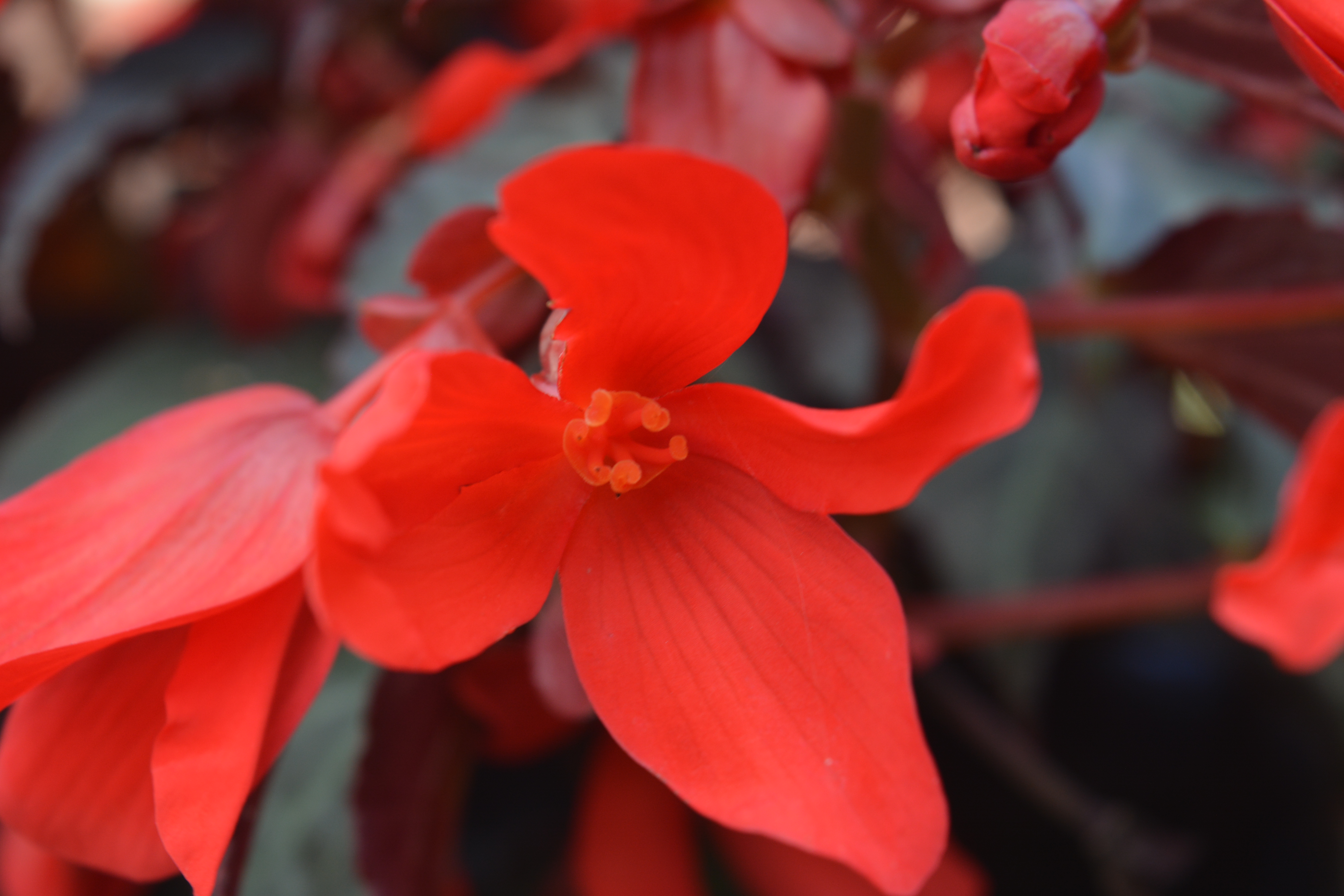
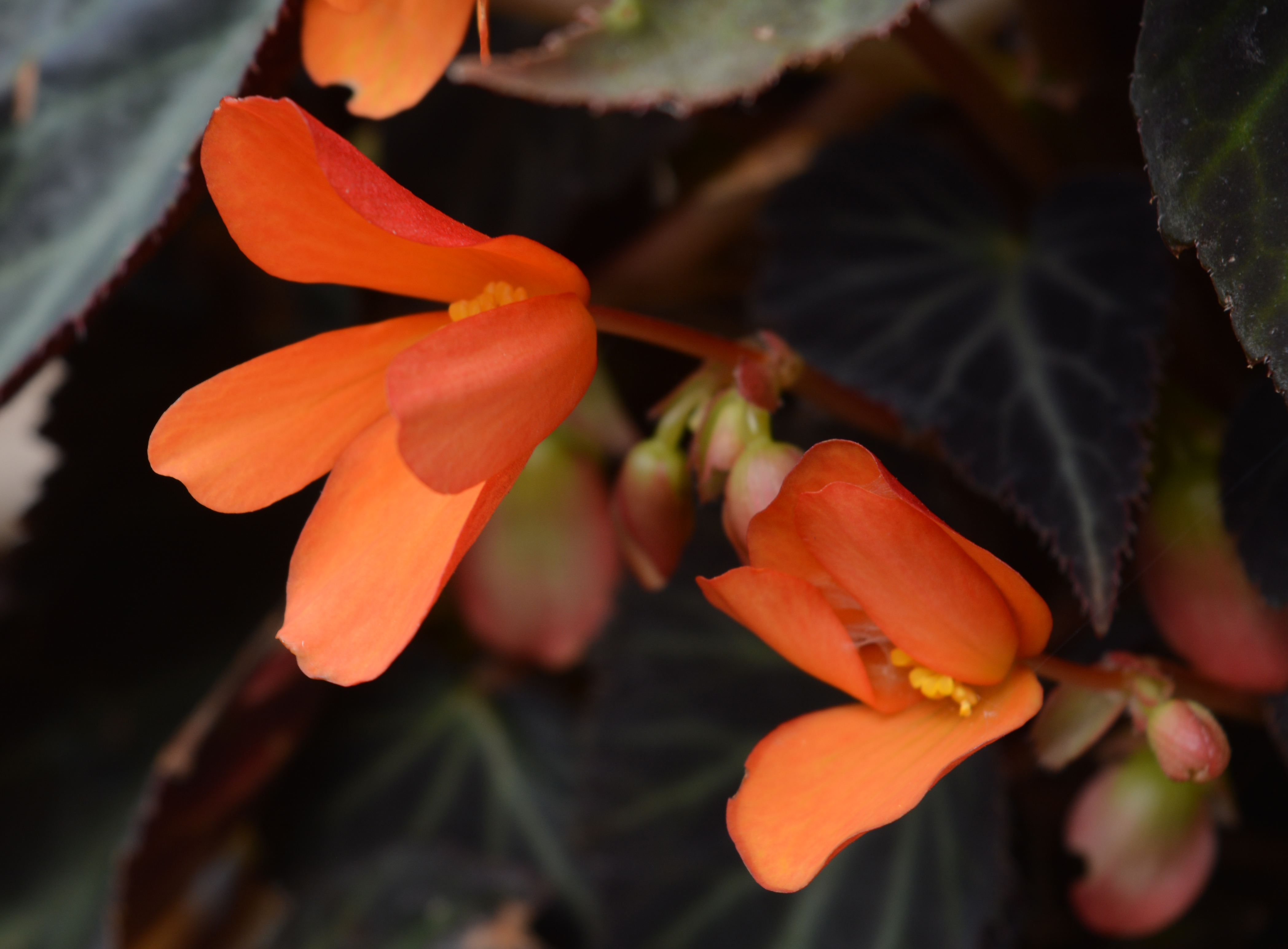
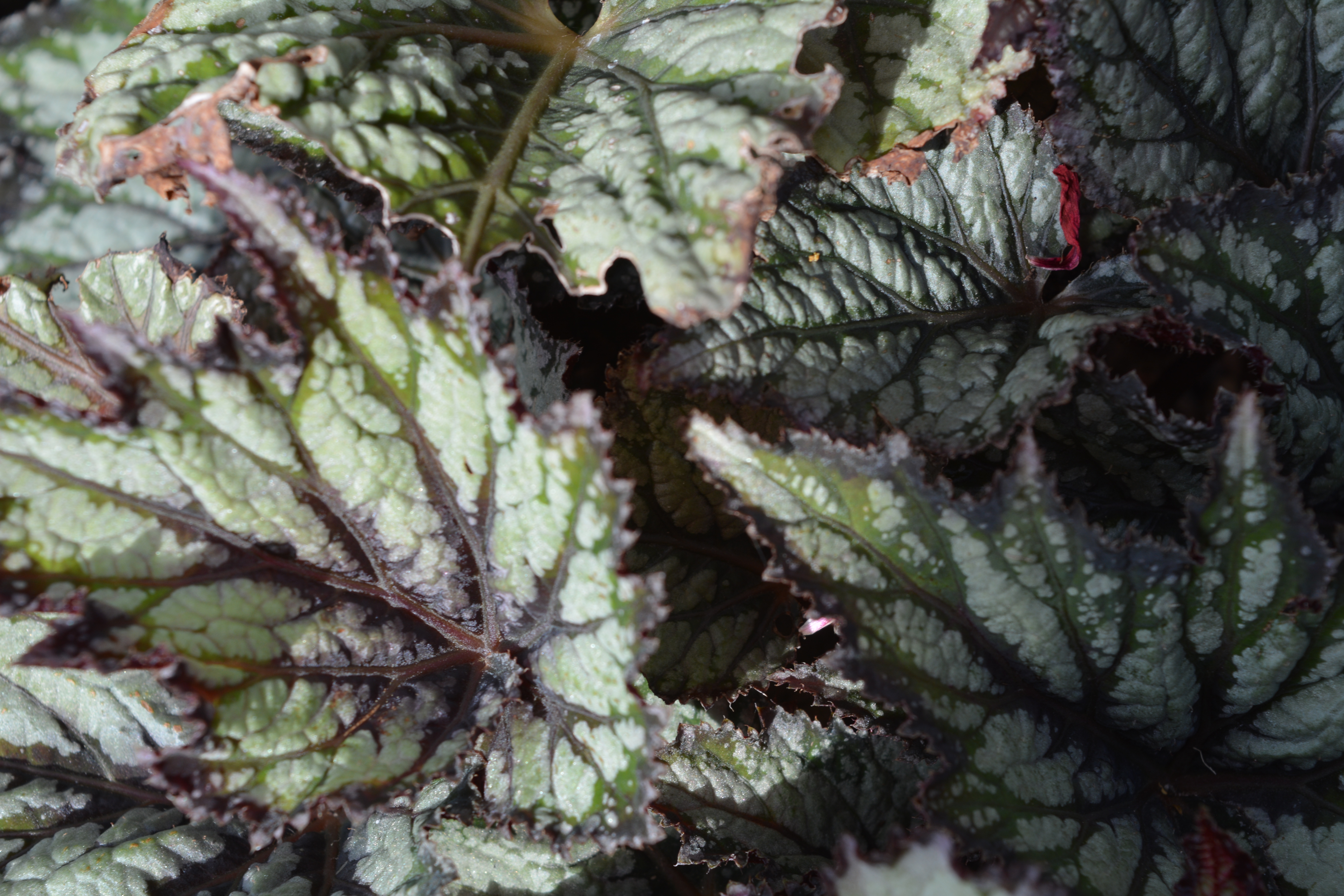
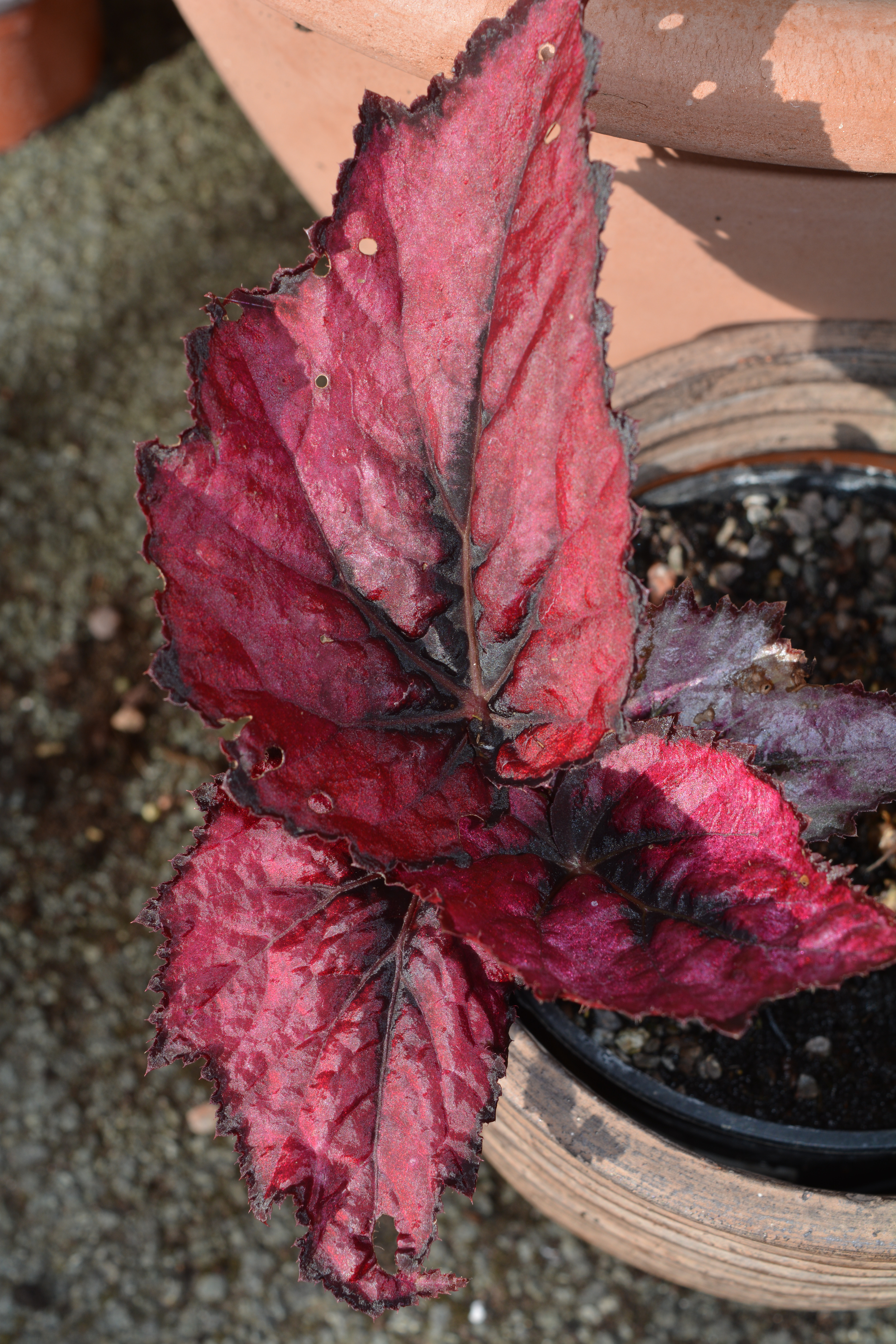
Bright pinks and reds dominate over the page where I featured Begonias and Pelargoniums. Enjoy the colours!
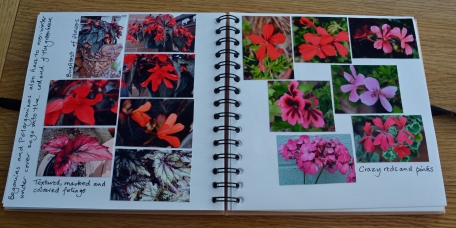
“Begonias and Pelargoniums also have to over-winter under cover so go into the cool end of the greenhouse.”
“Brightest of flowers.”
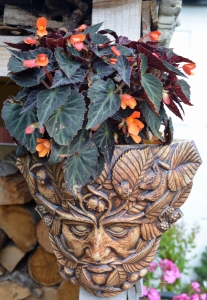
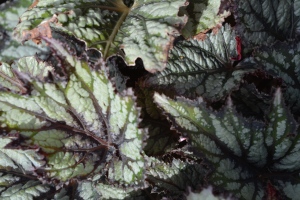
“Textured, marked and coloured foliage.”
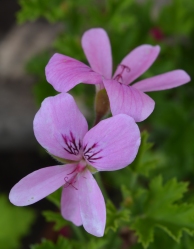
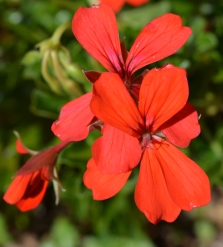
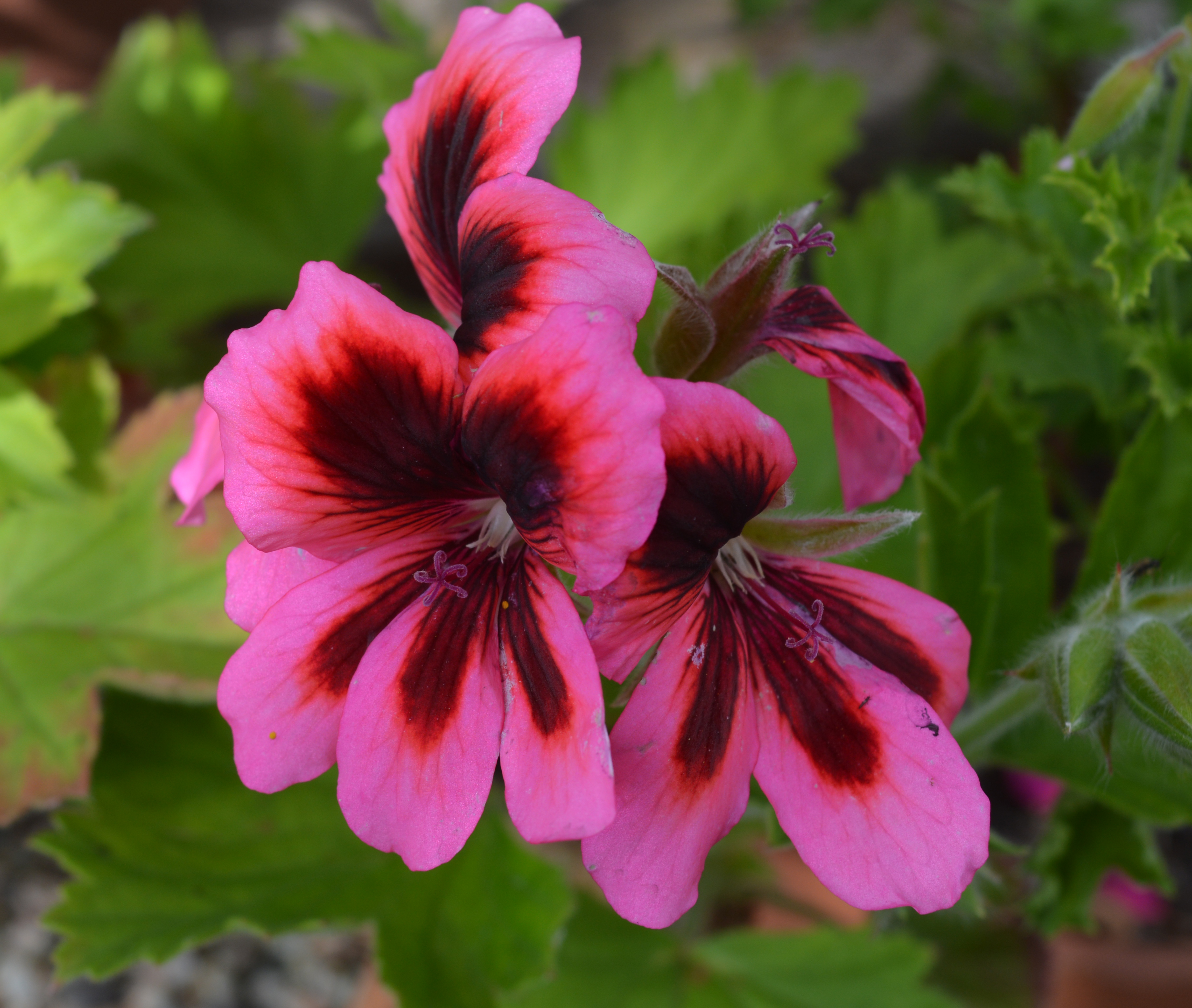
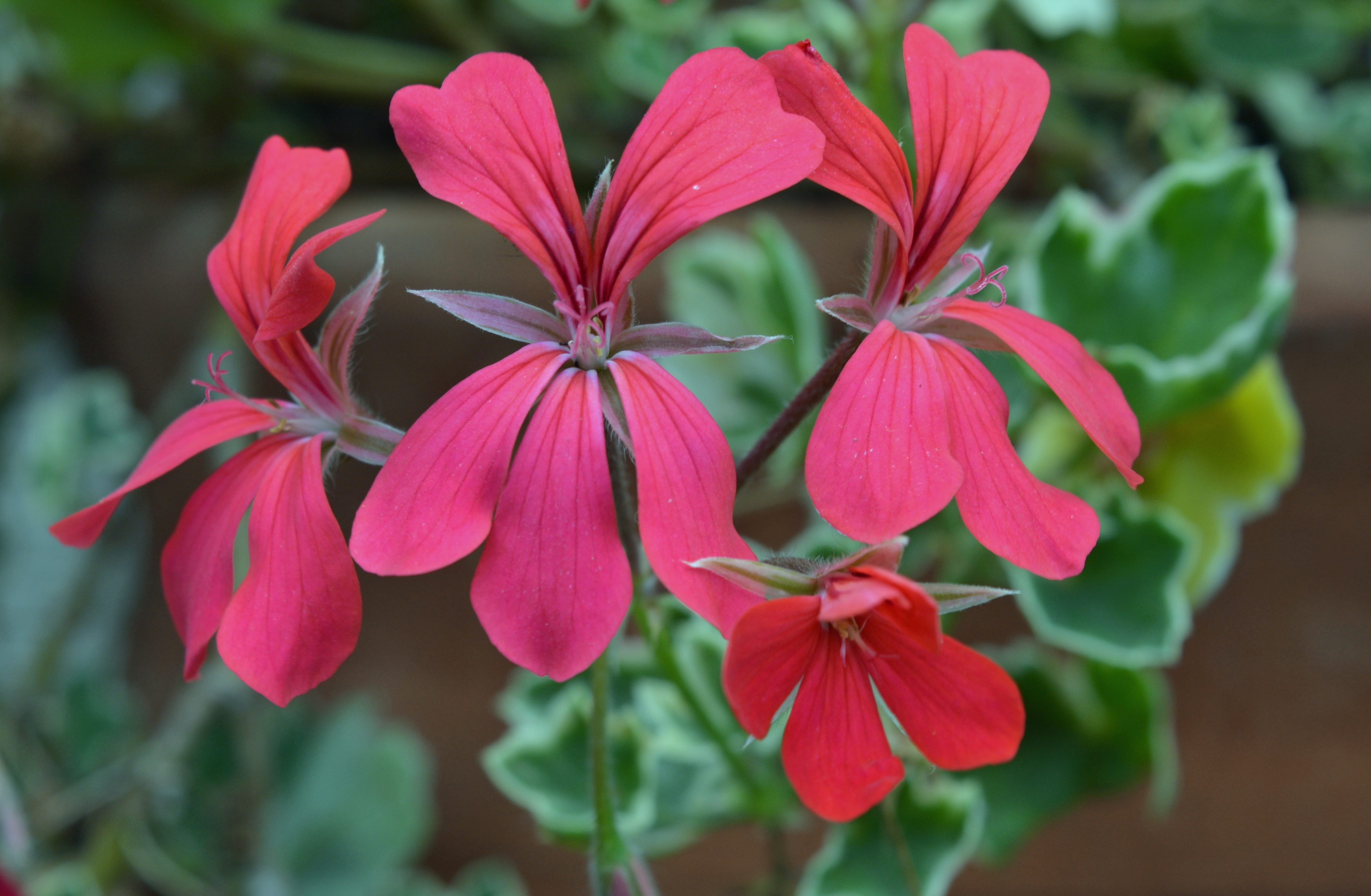
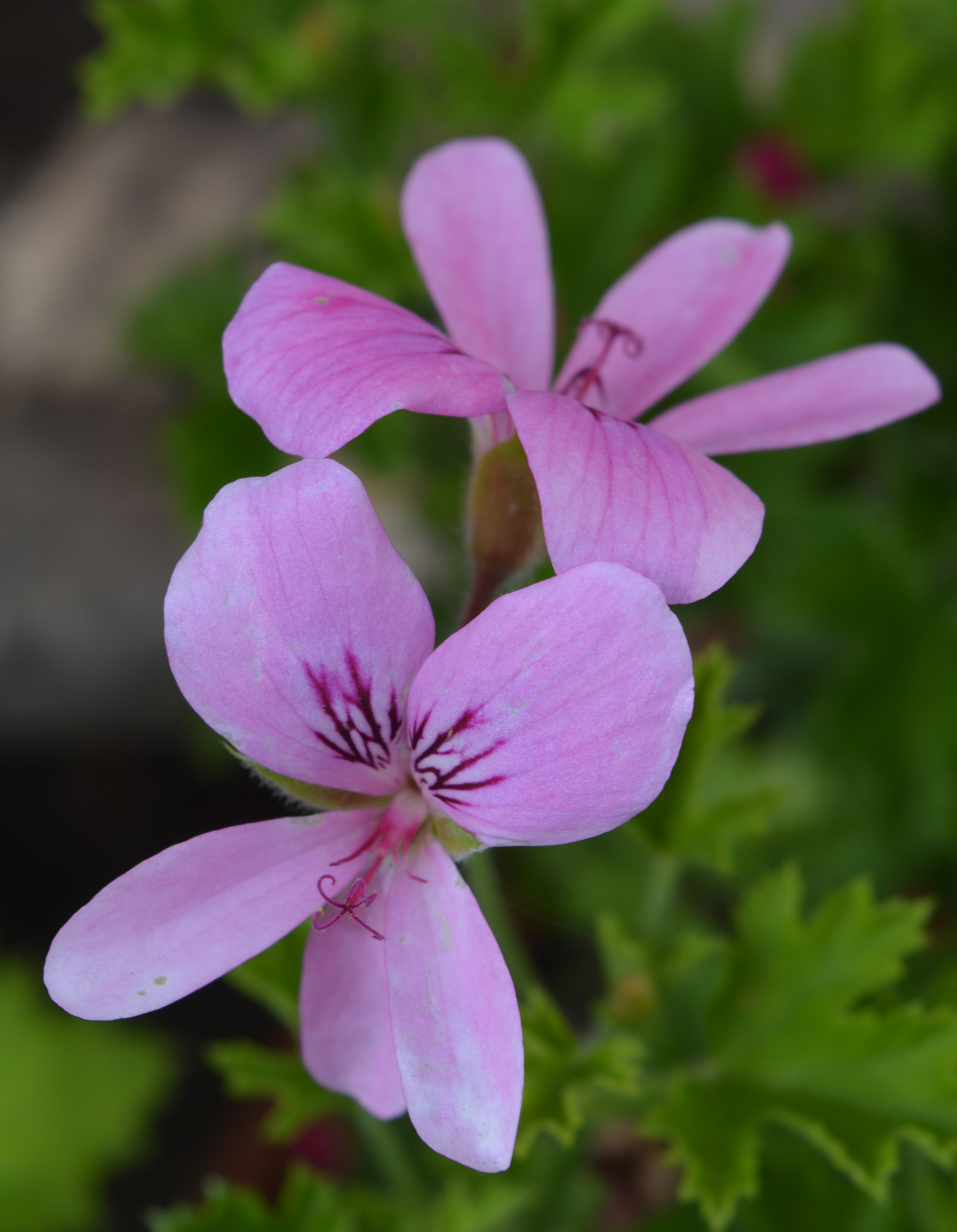
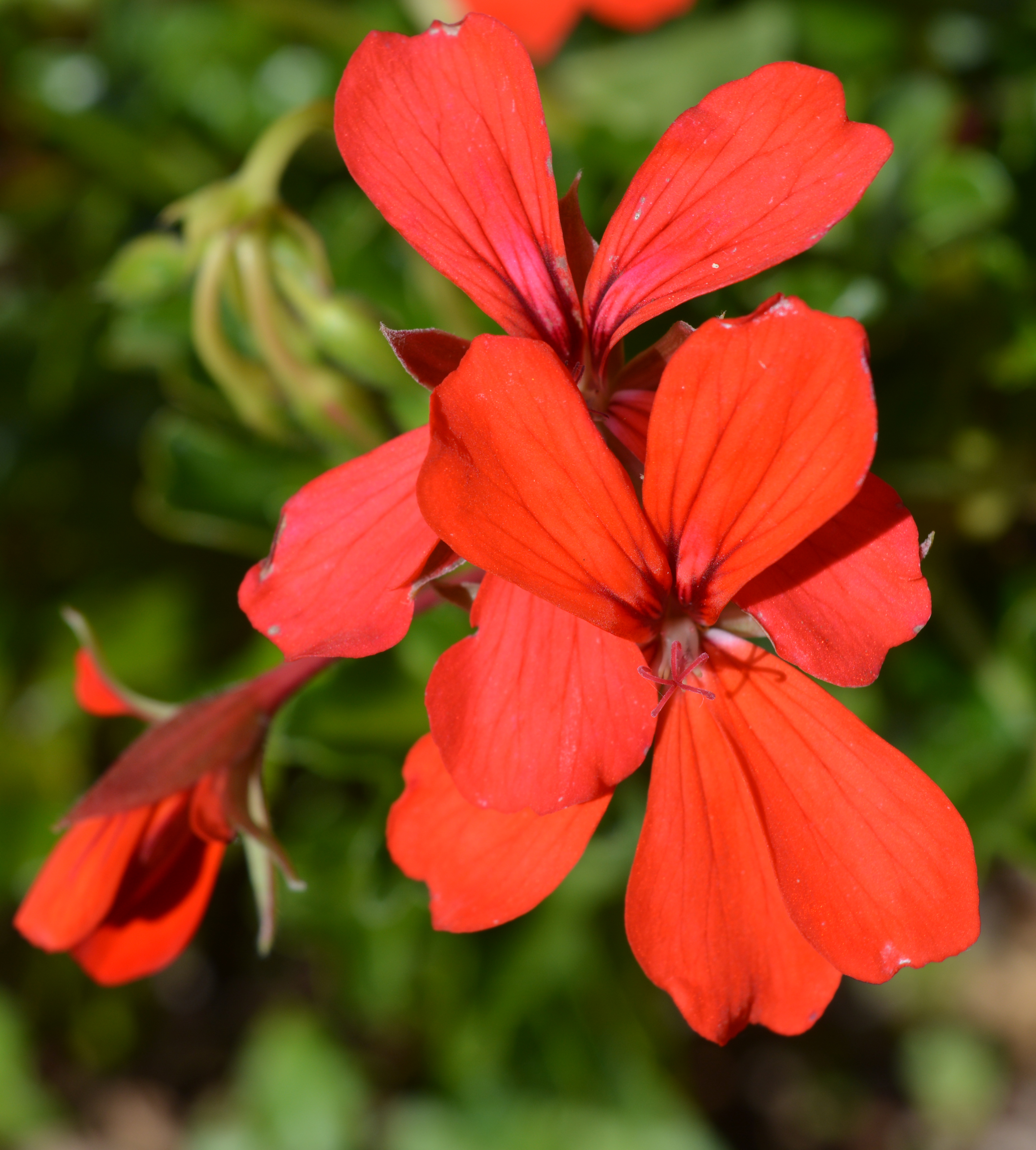
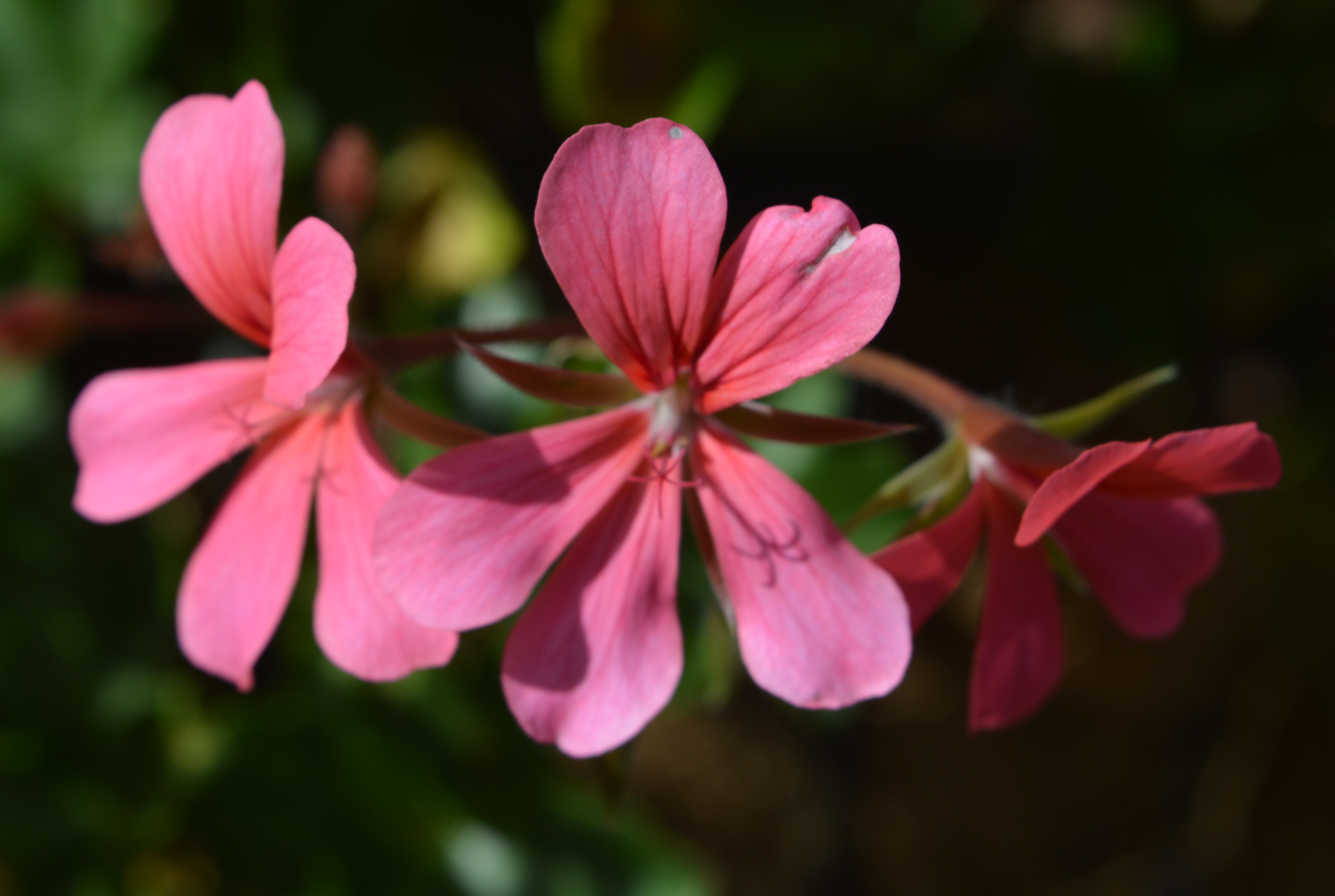
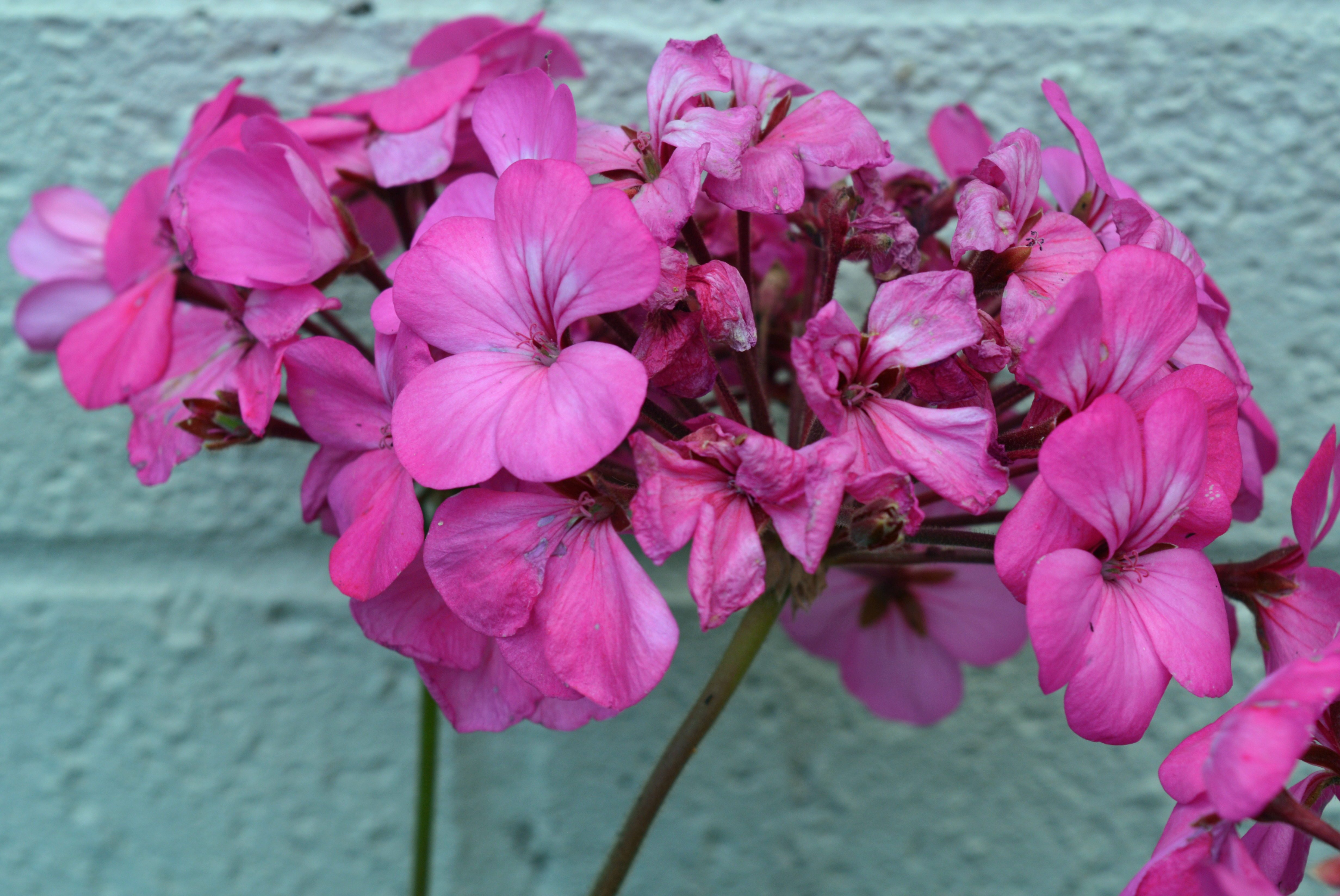
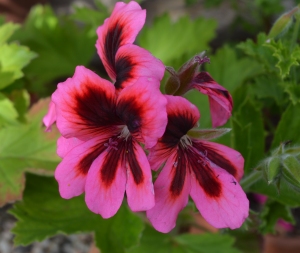
Pelargoniums – “Crazy reds and pinks!”
And that is it for my garden journal for July. My next visit to my journal will be at the end of August, a month when keeping you garden looking good is pretty difficult so we shall see how we get on in our Avocet garden.