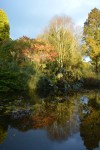
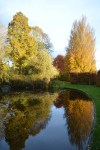
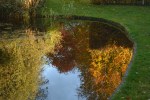
Categories
architecture buildings gardens open to the public landscapes log piles logs National Trust Shrewsbury Shropshire The National Trust

A Walk in the Park – 3 -The WW2 Walk

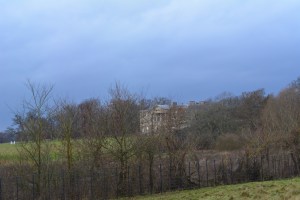
In readiness for my new monthly visit blog postings for 2017 we have visited Attingham Park our subject for next year a few times during the late autumn and early winter to walk the paths and introduce them to you.

Today it is the turn of the World War II Walk, a walk we had never tried before, so we set off not knowing what to expect.

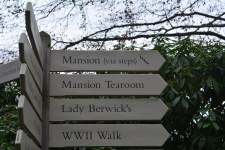
ww3-1 ww1-4 ww-07-1 ww-03-1

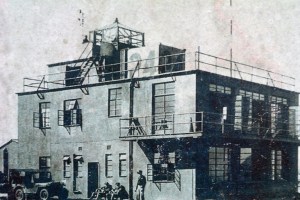
During World War Two Attingham Park was the site of an RAF airfield, which was built over existing smallholdings. It began life as an RAF fighter station but during 1942 it was handed over to the USAAF  when it was used as a training station for American fighter pilots. It closed in the Autumn of 1946. We were not really sure what to expect  so set off full of anticipation.
ww-28-1 ww-30-1  ww-31-1 ww-32-1 ww-44-1

We set off on an overcast chilly day for our walk and the weather was to remain dull for the whole walk.
ww-50

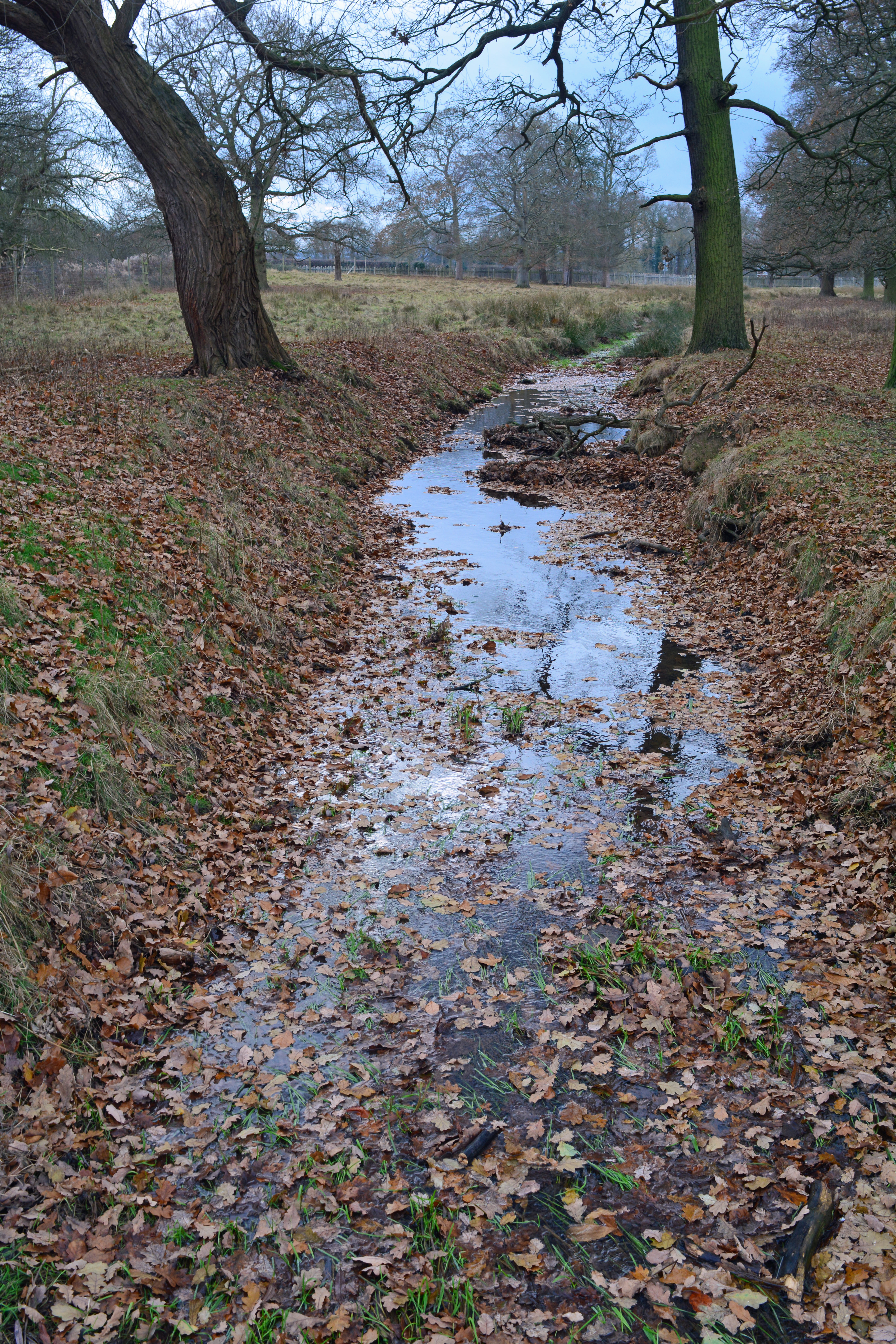
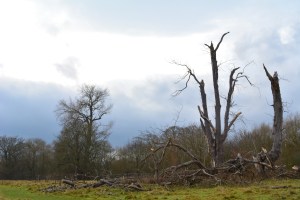
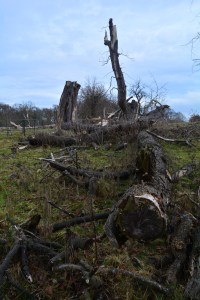
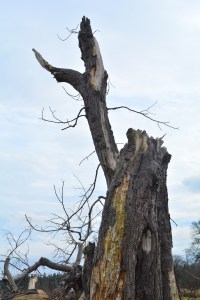
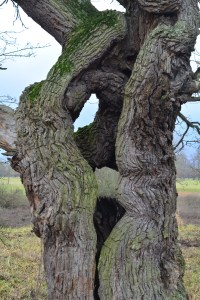
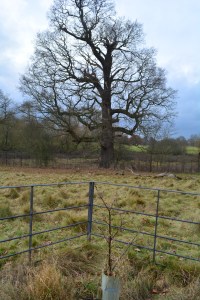
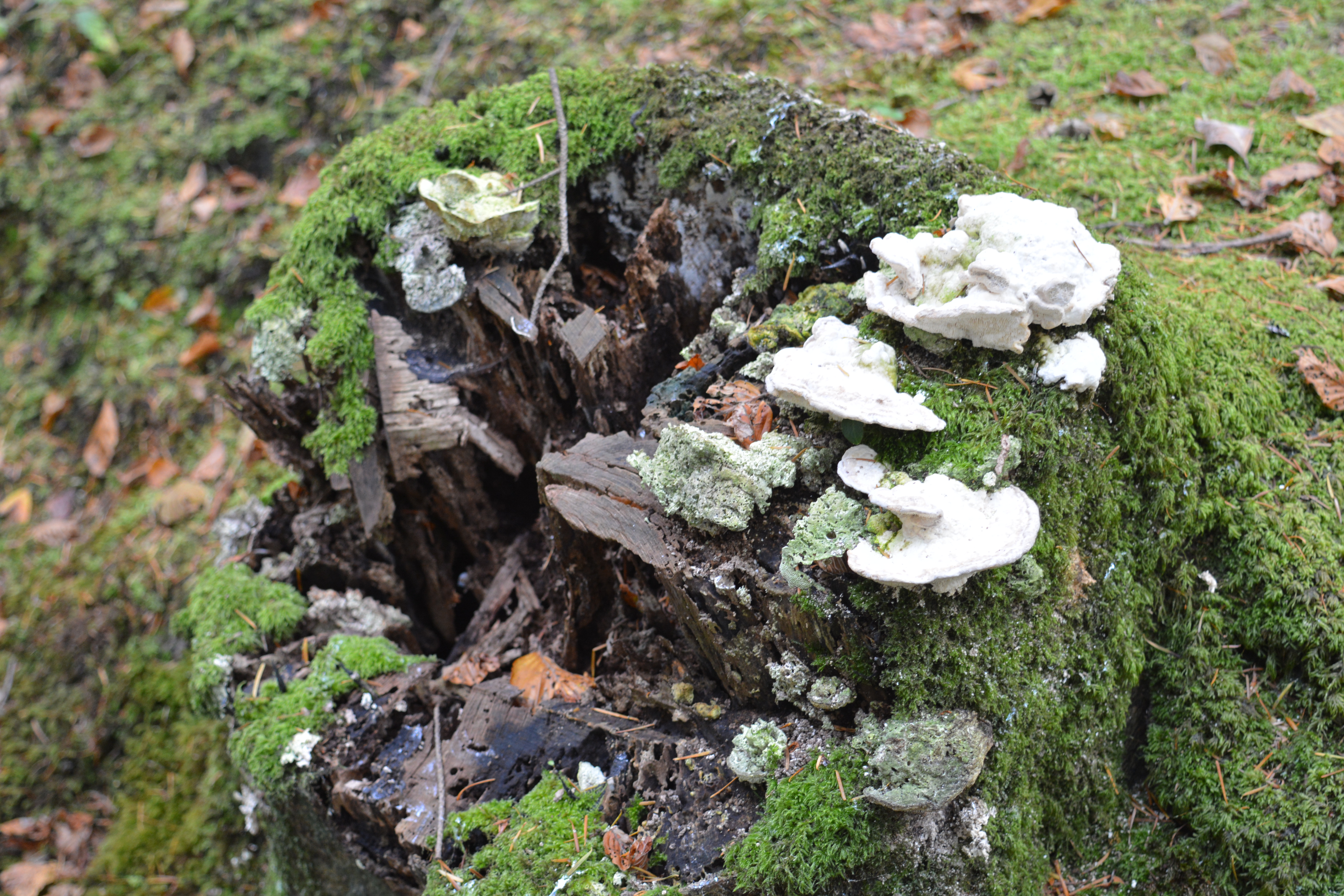
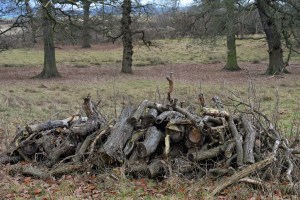
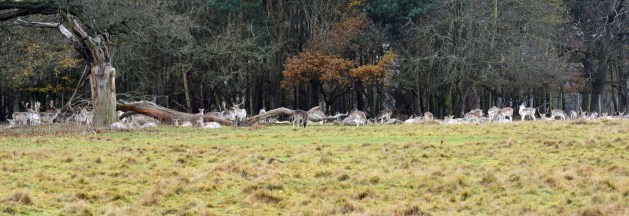
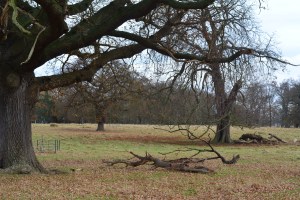
We first crossed the corner of the Deer Park and made our way alongside ancient dying or dead trees. We were pleased to see that plenty of new young trees have been planted to replace them. The old trees were left after they had died to become valuable wildlife haunts from woodpeckers to beetles to myriads of micro-organisms. This is a healthy way to manage woodland and parkland. Fallen wood has been left where it dropped or piled up to create wildlife shelter and food. A local beekeeper has established a good colony of bees with several sorts of colourful hives set alongside the woodland fenceline.

ww-04-1 ww-05-1ww-22-1 ww-21-1ww-08-1 ww-11-1ww-12-1 ww-17-1 ww-14-1ww-10-1 ww-09-1 ww-06-1

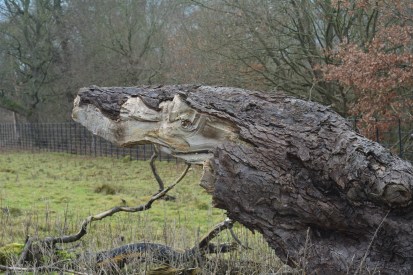
Jude the Undergardener and I are both very imaginative and love looking for shapes in clouds, flames and here within the shapes of fallen rotting wood. The tree trunk in the photo below reminded us of a Komodo Dragon!
ww-16-1

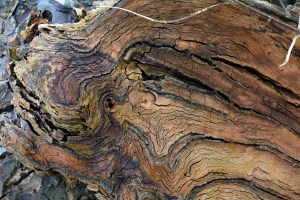
We love the textures in rotting tree wood – the patterns, lines and colours creating works of art.

ww-20-1 ww-19-1

We wandered along a woodland path beneath dark tall conifers, the path soft beneath our feet made from chipped bark and topped with a layer of pine needles.

ww-29-1 ww-23-1ww-27-1 ww-25-1 ww-26-1

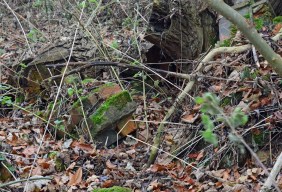
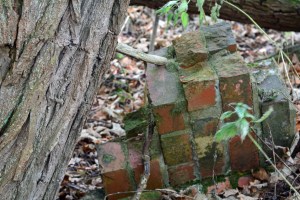
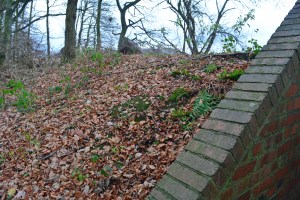
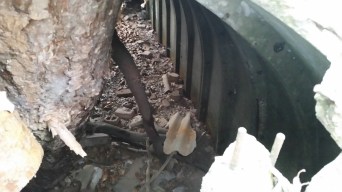
Site Number 10 is where we found the evidence of the Atcham Airfield, ruins of barrack huts, officers’ quarters and latrines. To begin with an odd brick or two then signs of an old wall and then even the ruins of a building.

ww-33-1 ww-34-1ww-48 ww-45-1ww-35-1 ww-36-1ww-43-1 ww-39-1ww-47-1ww-40-1 ww-38-1ww-37-1 ww-41-1 ww-46-1 ww-57ww-49 ww12-1

After experiencing the discovery of the ruins of the airfield complex, we left the artifacts behind us and made our way back through the deer park towards the hall.

ww-56 ww-24-1ww-53 ww-51

We will no doubt re-visit this walk and its WW2 ruins during our monthly visits in 2017.


Categories
autumn autumn colours colours garden design garden photography gardening gardens gardens open to the public landscapes light light quality ornamental trees and shrubs photography Shropshire shrubs Staffordshire trees

The Dorothy Clive Garden in November

Our November visit to see the changing faces of this lovely Shropshire/Staffordshire border garden saw us arriving in sunshine but we were to be treated to a magnificent sky later in the day.

dcc-02

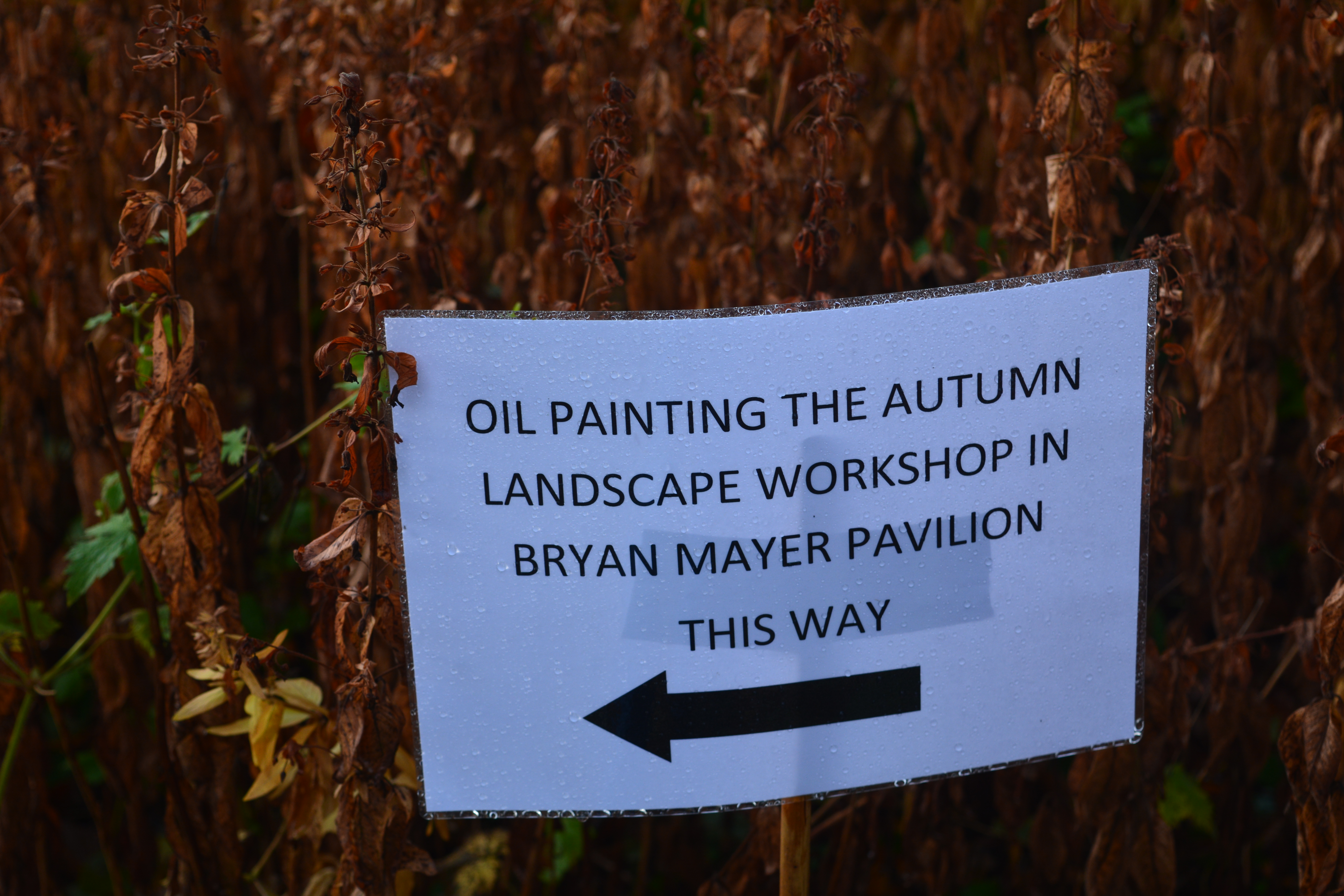
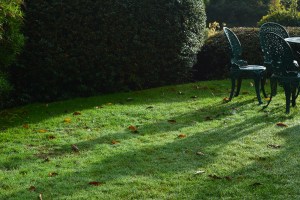
The grass below our feet was wet with the heavy dew from the night hours and it sparkled and glowed in the low autumnal rays of the sun. We just knew we were in for a good day! The two signs near to where we parked up hinted at the joys of autumn we would find and also at the fact that a painting course was being held in the gardens. There always seems to be something going on here as well as the beauty of the garden itself.

dcc-03dcnov-001 dcnov-002

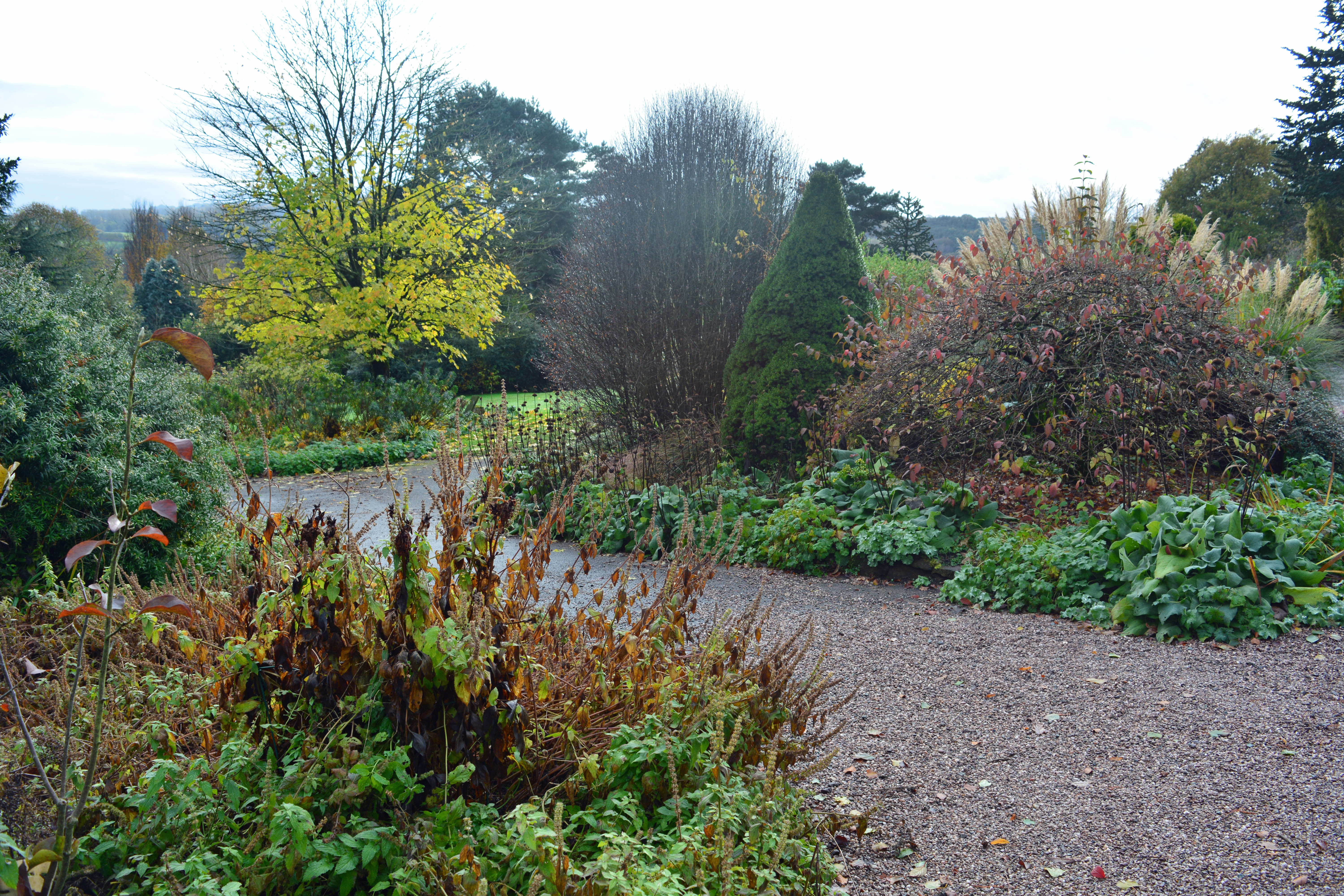
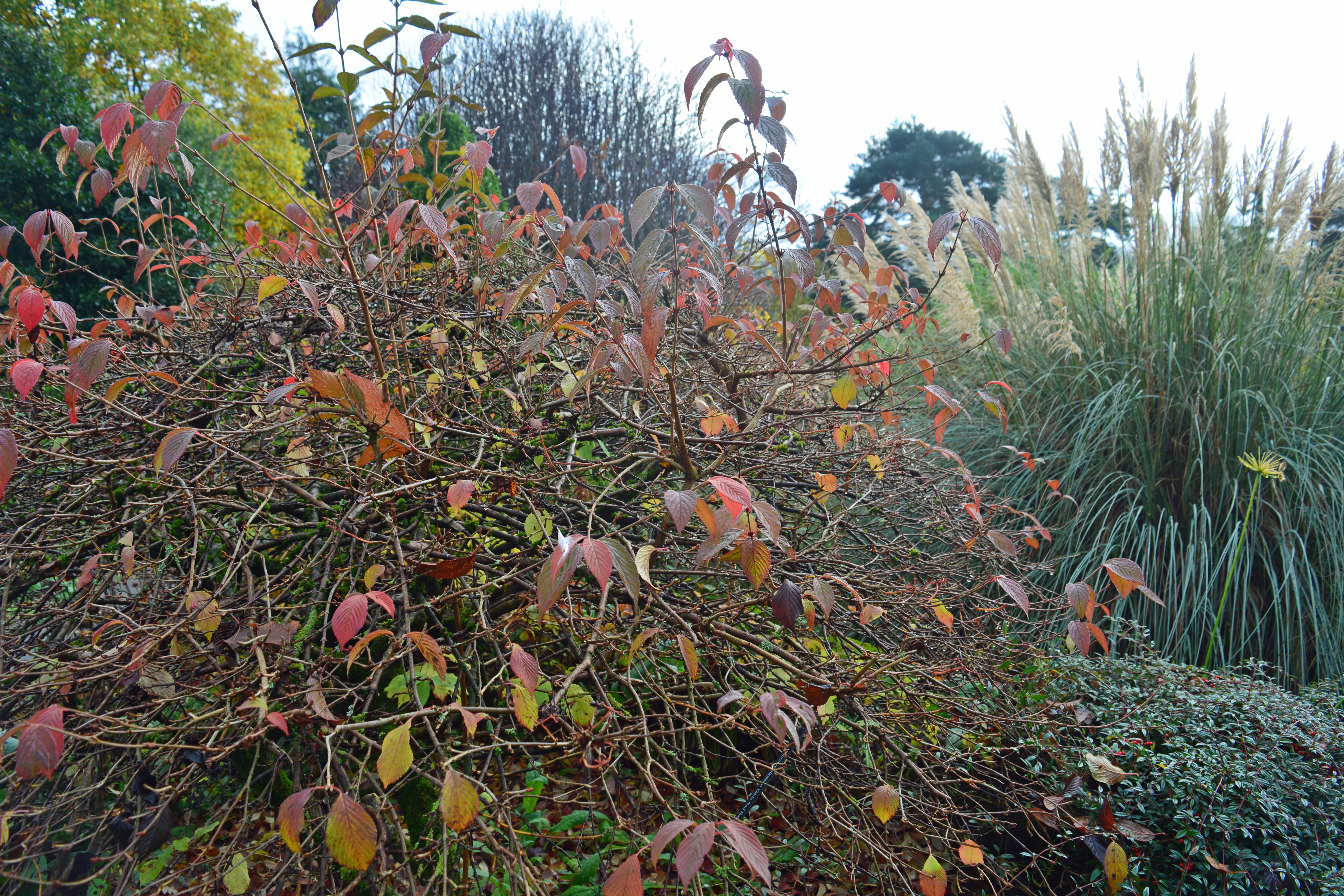
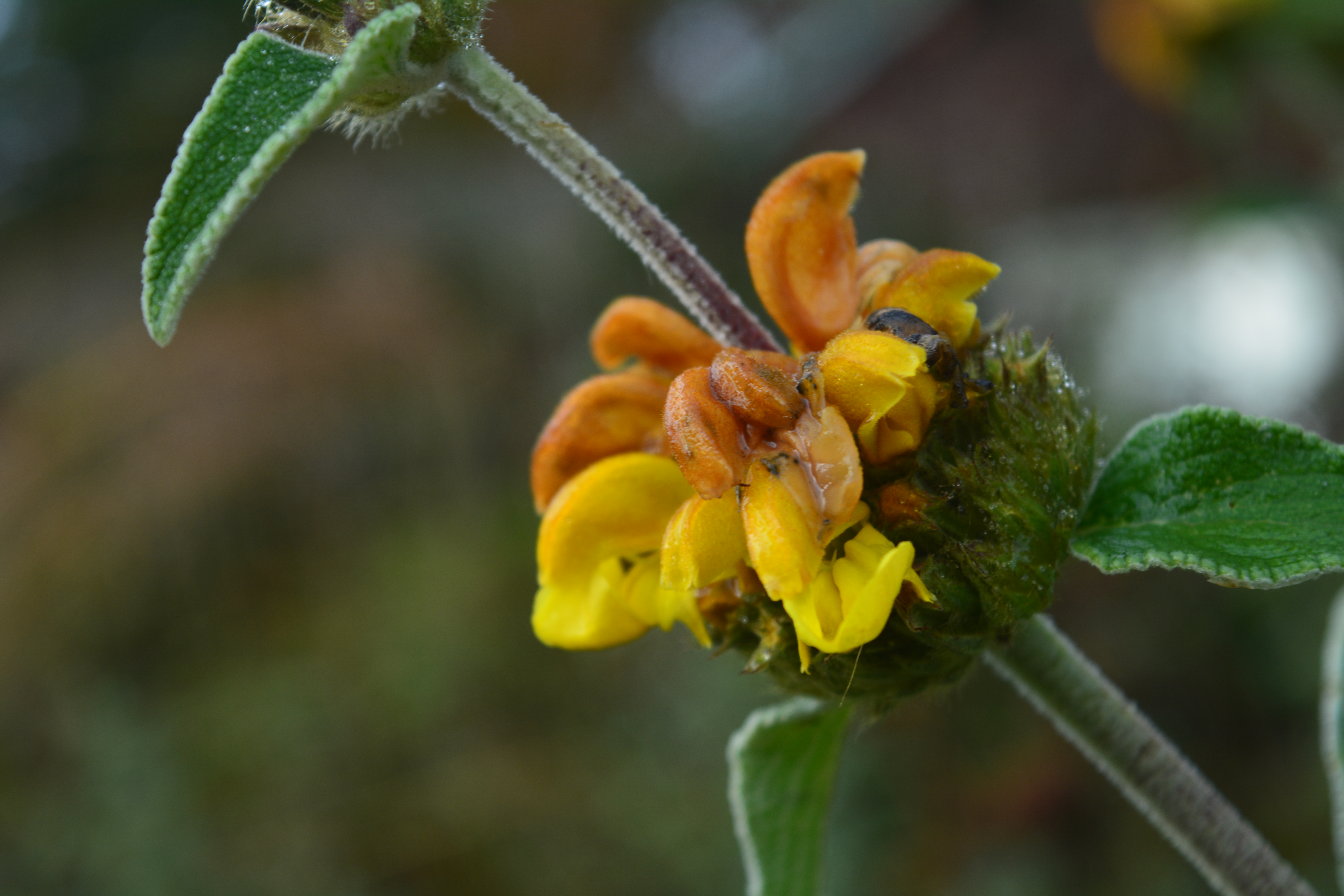
We always love the first few minutes of our visits here, when we get the first views out across the garden and get an idea of what the day may have in store for us. We immediately noticed that the Viburnum which we have never been able to identify had now lost the vibrancy of its red-purple hanging foliage and there was no sign of the richly glossy red and black berries. Instead a white feather hung to one of the last remaining leaves. Nearby in the border leading to the tea house yellow dominated, foliage of a tall Calamagrostis grass, an out of season golden yellow Phlomis whorl of flowers and the delicate seedheads of Agapanthus.

dc11-01 dc11-02 dc11-03 dc11-04 dc11-06 dc11-05

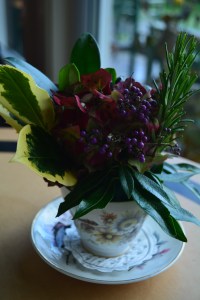
Looking out from the tea shop through its large panoramic window we noticed the light glistening on the dew still hanging on covering the grass and the outdoor seats and tables. As I took the pics of the dew Jude the Undergardener/ Mrs Greenbench looked out from the warmth enjoying tea and cake and the beautiful seasonal table centre bouquet.

dccc-02 dc11-13 dc11-14 dc11-15 dc11-16

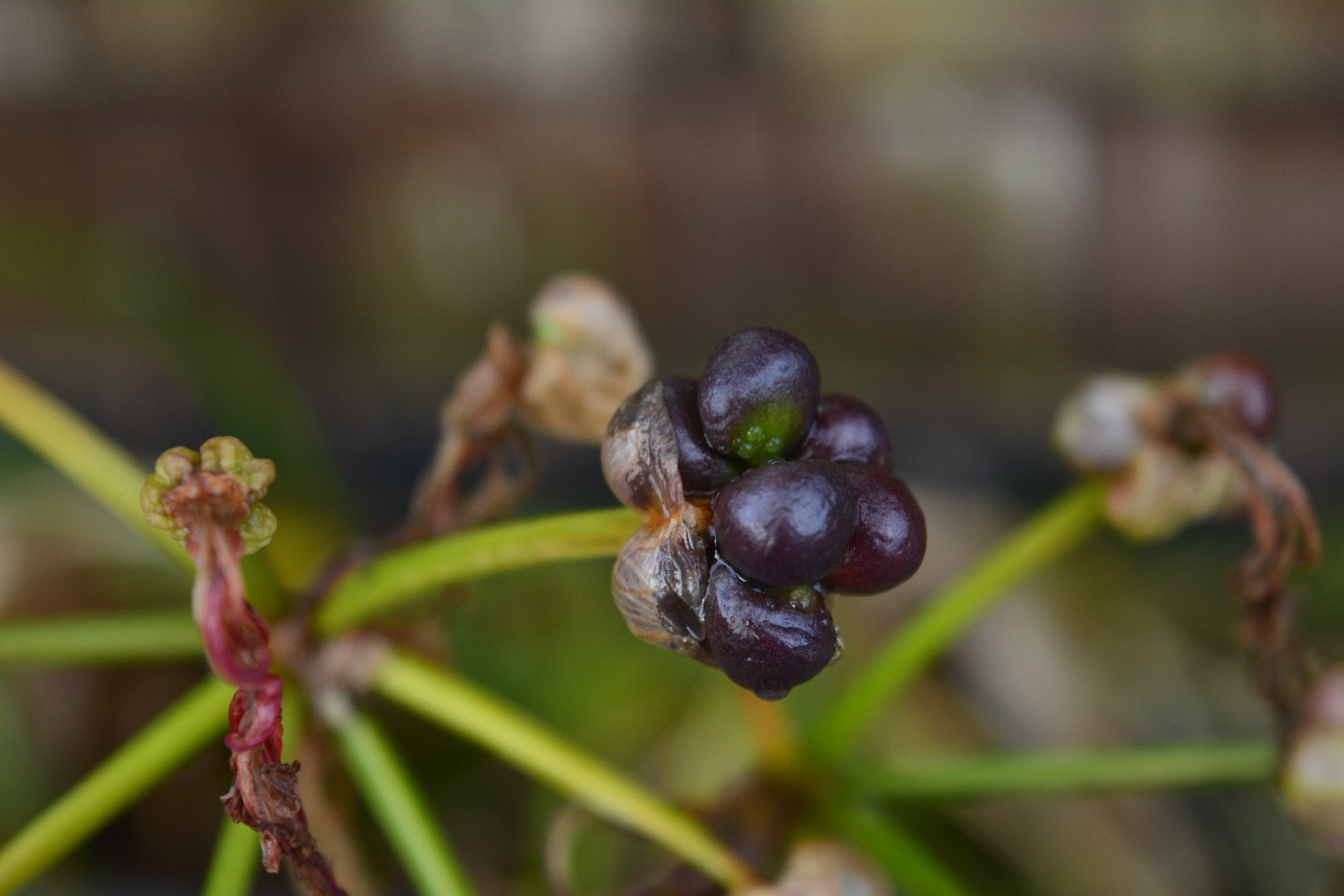
As we re-entered the chill we noticed that the Nerine outside the cafe which we enjoyed in flower last month was parading its glossy black berries. Dew on the deeaply pleated Melianthus leaves increased their glaucous hue. The gardeners were busy cutting, taking under cover or protecting the tender plants around the cafe terrace. In the hot borders many tender perennials such as Dahlia, Salvias and Echiums were already safely put away leaving swathes of bare cold soil in their wake.

dc11-11 dc11-09dccc-01 dccc-03dc11-07 dcc-08

Seed heads have darkened and the scaffolding of stems have become more skeletal during the late autumn and produced a beauty all of their own for our delectation.

dcc-01  dcc-04 dcc-15 dcc-13 dcc-16 dcc-14

Leaves and fruit add richness and depth to the more limited November colour palette.

dcc-07  dcc-06

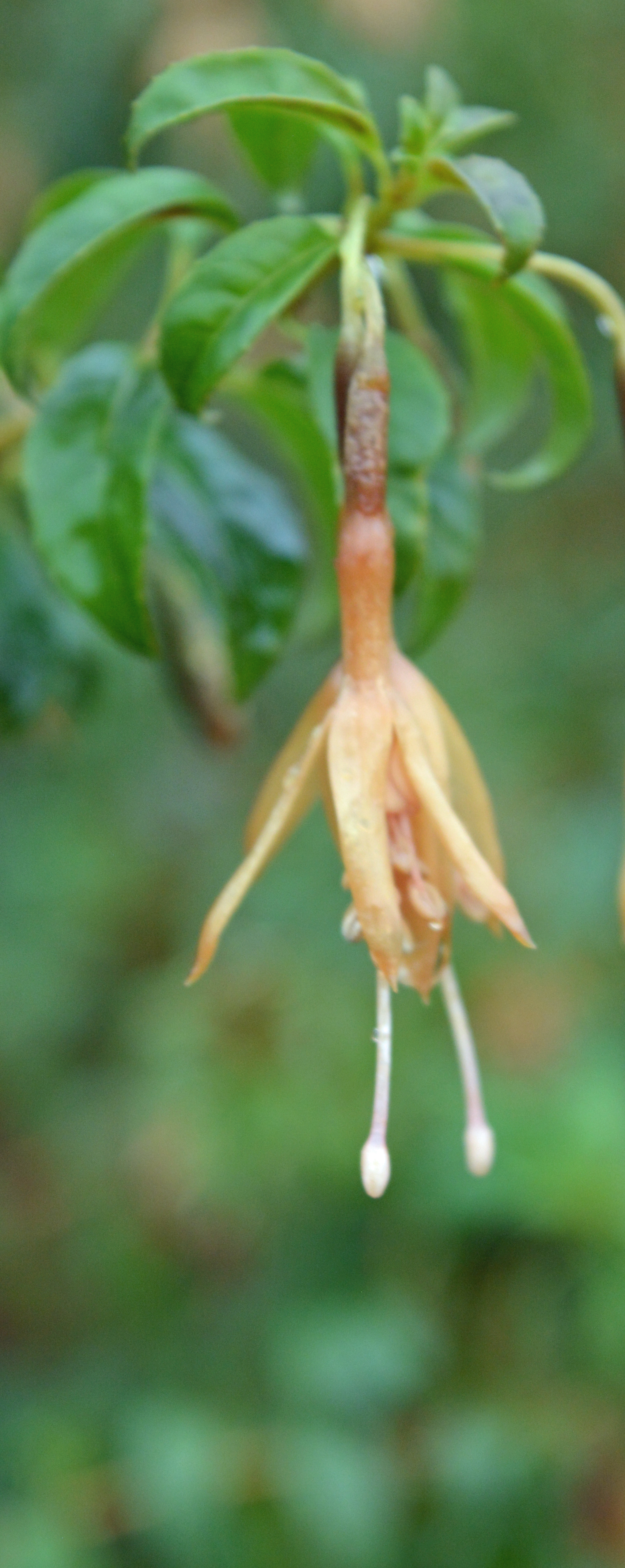
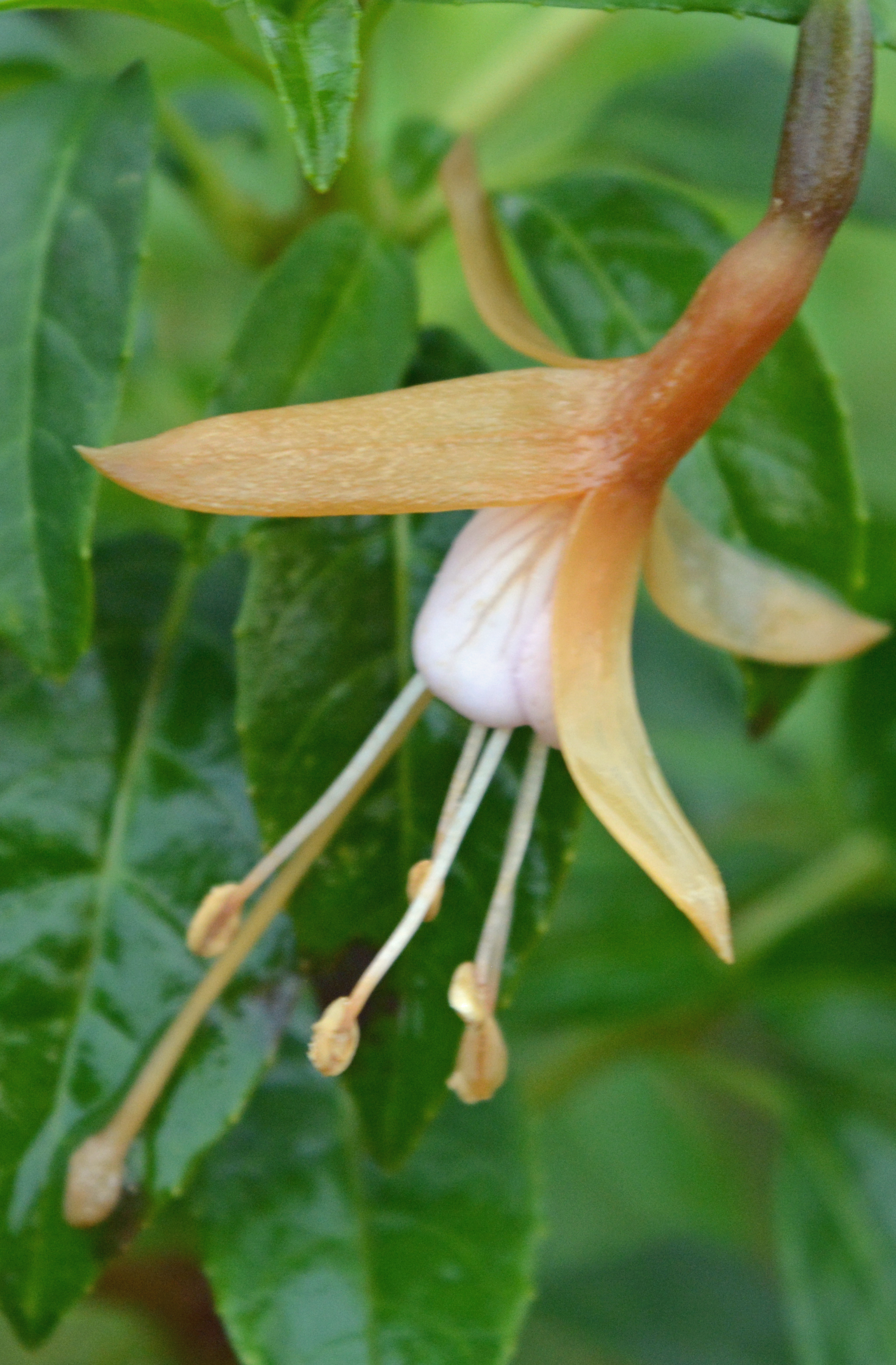
Side by side two completely different plants, one an Aesculus, one a Fuchsia present the same pinkish-cream colour, the first within its leaf and the second in its faded pink flowers. Beautiful to see them side by side!

dcc-09 dcc-10 dcc-12

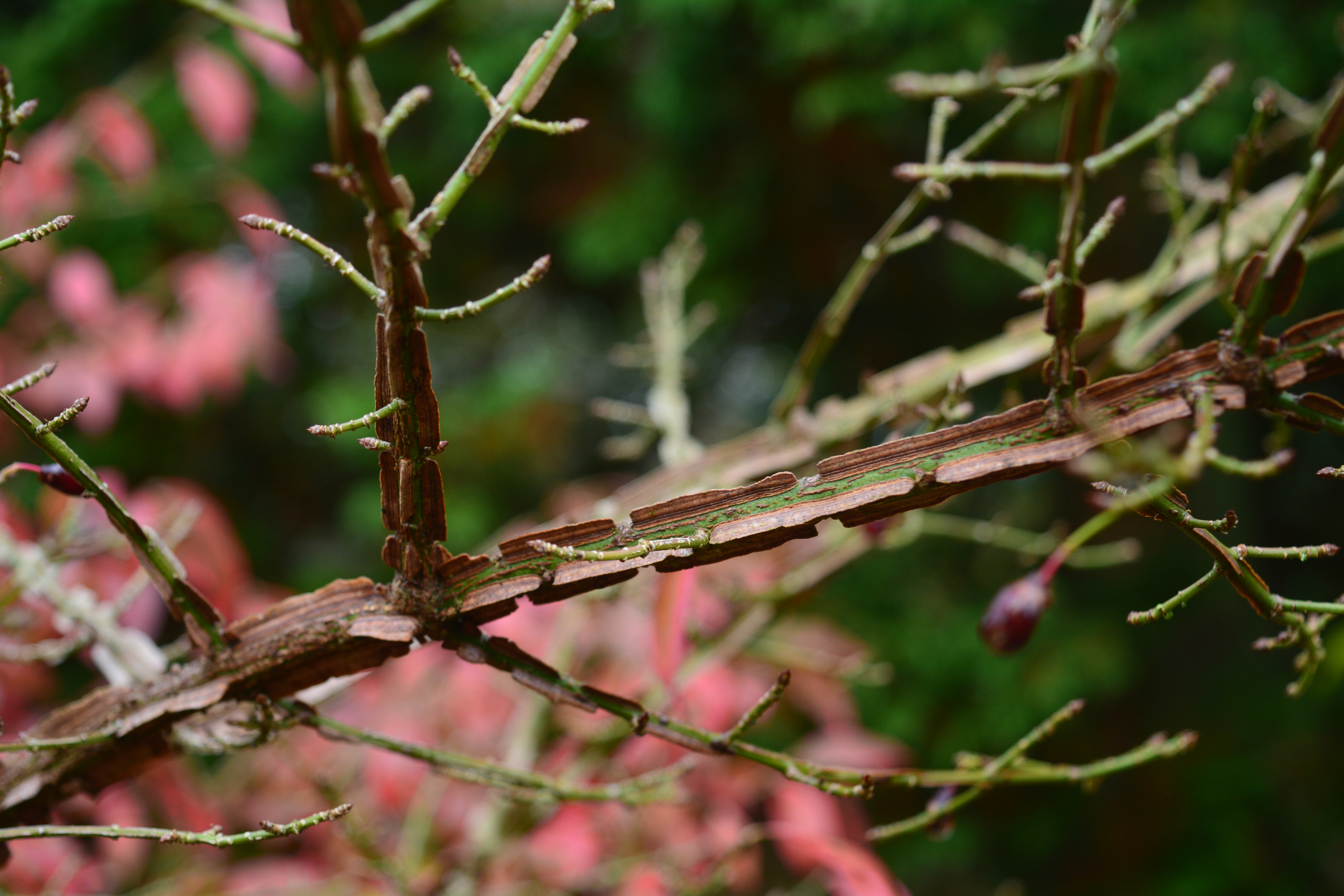
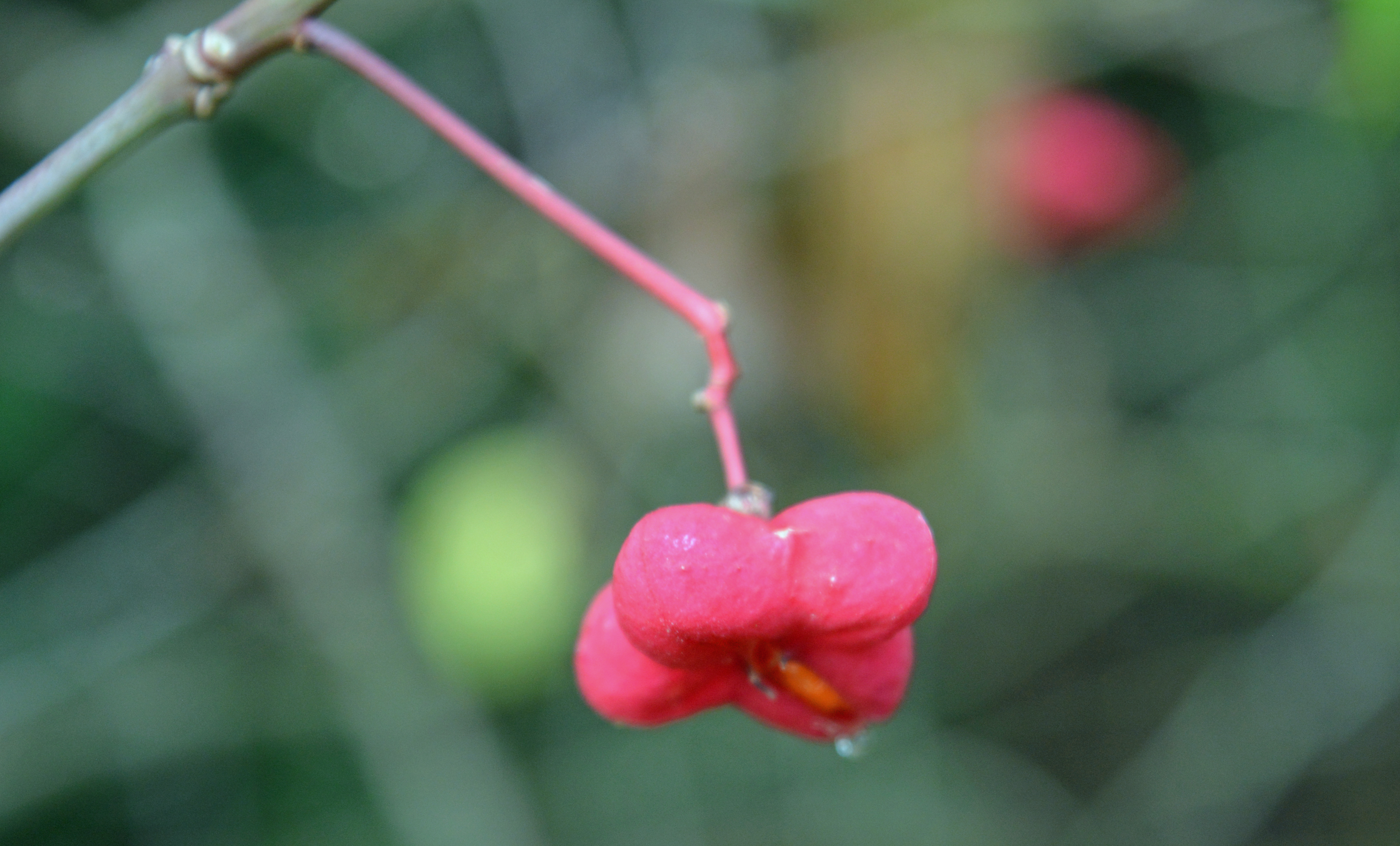
Without a doubt my favourite family of shrubs is the deciduous Euonymus and they are always such exciting plants with unusual stems, bark, flowers and berries. Naturally I was delighted to come across this beautiful little shrub, Eouonymus alatus nana with beautiful subtle pink colouring to the autumn foliage and deep purple with orange flowers and berries.

dccc-05 dccc-07 dccc-06 dccc-10 dccc-11

So our eleventh visit to Dorothy Clive was such a worthwhile, even exciting day for us with such an unusual sky event lighting up the gardens for a little while. Our next visit in December will be the final one so we will see what the year end brings to this wonderful place.

dccc-12 dccc-09

Categories
autumn autumn colours colours landscapes light light quality National Trust ornamental trees and shrubs photography Shropshire The National Trust trees Winter Gardening winter gardens woodland woodlands

Simply Beautiful 2 – woodland light

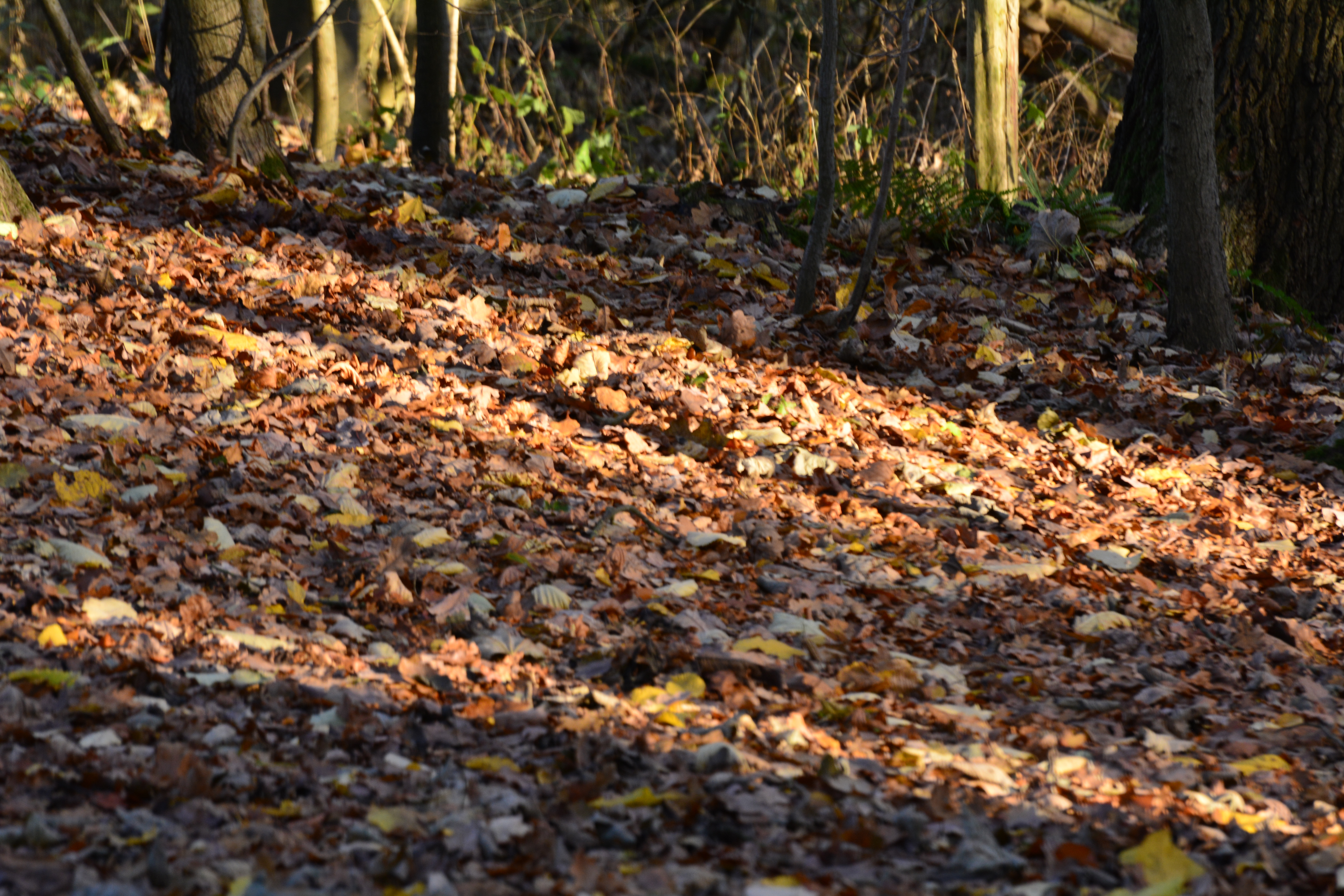
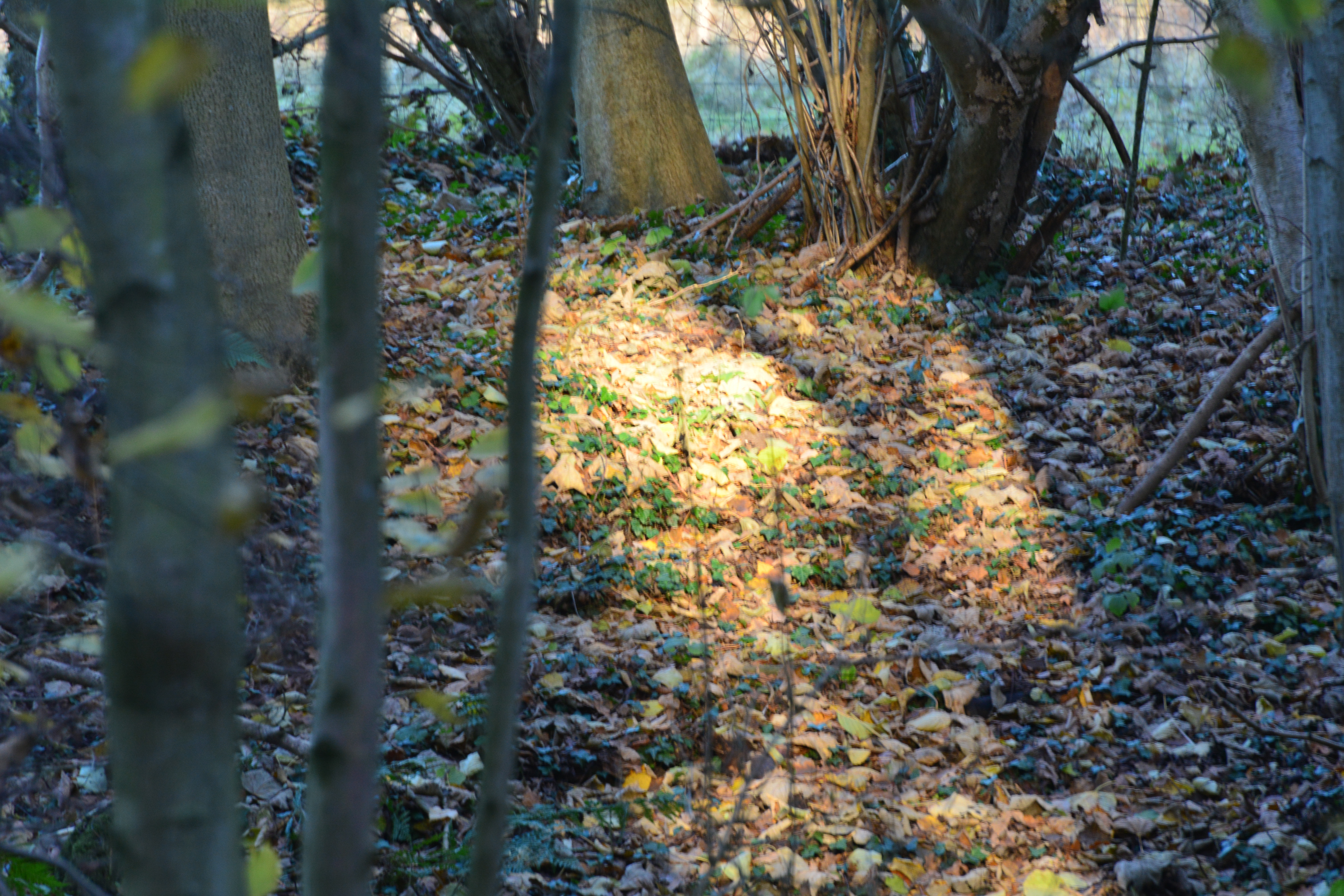
If the light is right in the autumn and you are wandering around woodland stripes of light and shade will appear painting the woodland floor before you. Simply beautiful!

sb1-03 sb1-02 sb1-08 sb1-07 sb1-06 sb1-05 sb1-04 sb1-01


Categories
autumn autumn colours colours garden photography garden ponds garden pools gardening gardens gardens open to the public landscapes light light quality ornamental trees and shrubs reflections Shropshire Staffordshire trees water in the garden

The Dorothy Clive Garden – Autumnal Super Sky!

Sometimes something happens that will remain with you for ever, a fleeting moment when Mother Nature shouts out, “Hey! Look at me! Check this out!”. She puts on a great show which disappears as quickly and silently as it appeared a short few moments previously.

While following one of our slow monthly ramblings around the Dorothy Clive Garden looking at what the garden had to offer especially for this month, we were, to say the least, waylaid by the weather.

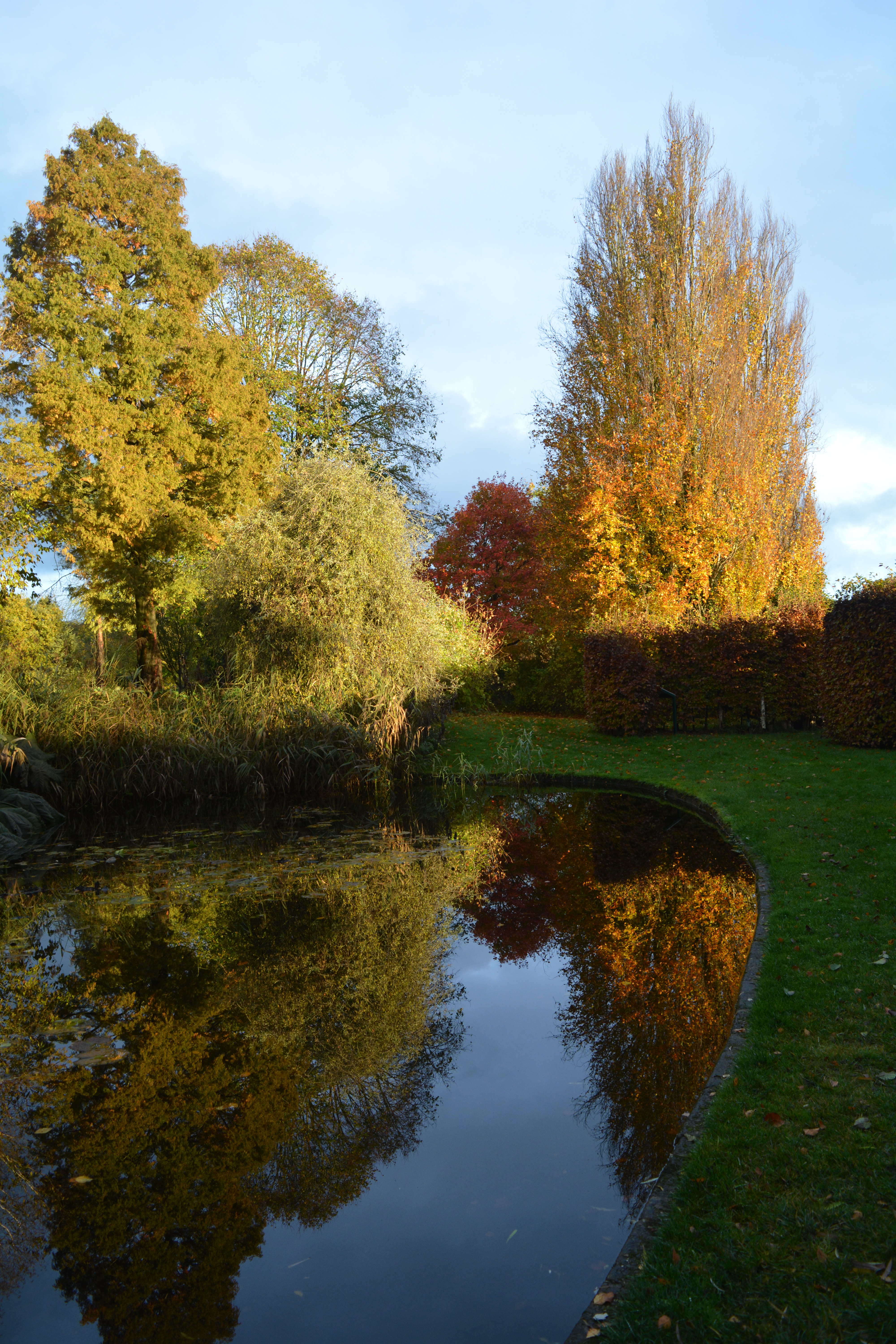
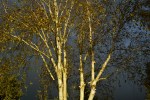
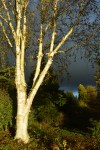
As we walked slowly down the sloping path to the lower garden and the pool, we photographed the birches, trunks pale against the deep evergreen conifers behind them.

We looked over the hedge, the garden boundary, out and across to the countryside beyond. We saw that the light was changing rapidly and dramatically lighting up the countryside. A darkness crept over the approaching clouds which became the darkest blue-grey possible. Combined with the bright shafts of low November sunlight we were suddenly surrounded by the strangest weather we could ever remember.

ww-20 ww-19ww-21

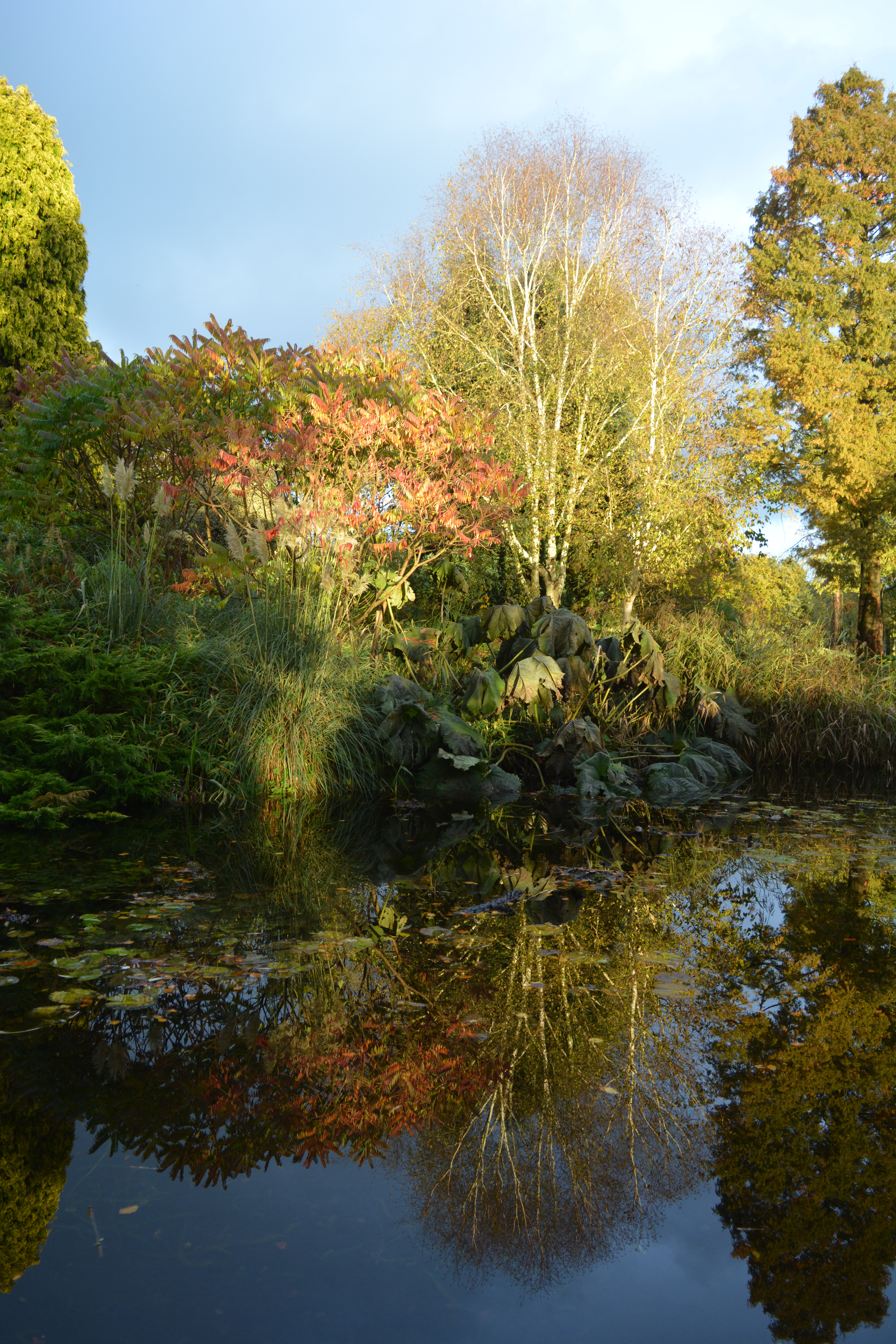
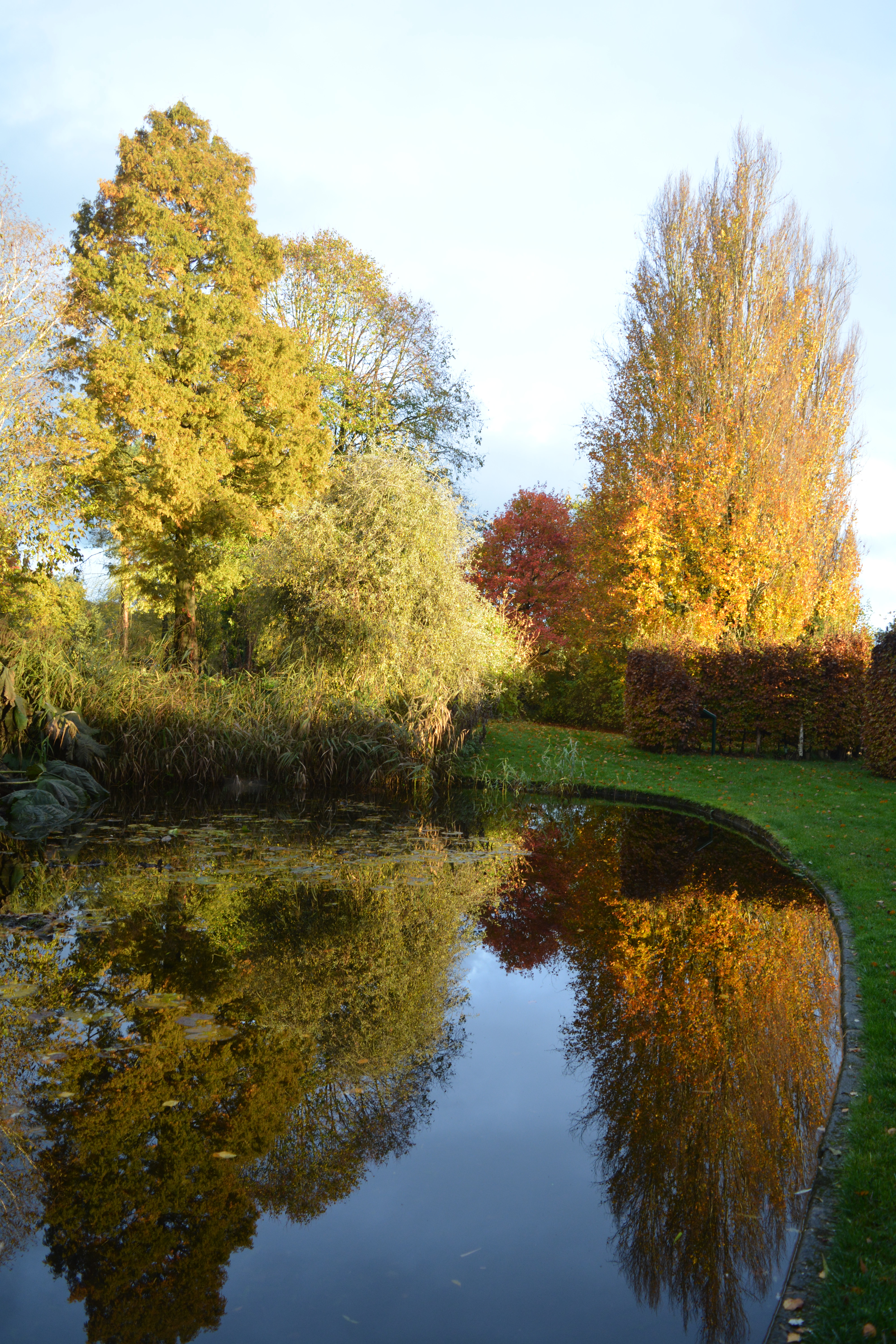
The birches against their dark backgrounds lit up further. In a matter of seconds it was all magic surrounding us. The first two pics are the first pair prior to the light change, and the following three illustrate the changes those few moments in time produced.

ww-01 ww-02 ww-05

Just look at the subtle changes in these three photos below taken just seconds apart. Look at the light on each tree and the reflection!

ww-06 ww-07 ww-08

We will now share the changing scenes of a fleeting moment in time with you via a gallery of photos shown in the order I took them. Enjoy.


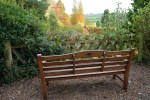
Things began to calm down as a dark cloud took over the sky once again and we enjoyed a final view from this lovely garden bench. It is strange to think that this this beautiful short passage of time which changed our view of trees and the garden in general will never be seen again. An unforgettable experience and an unrepeatable performance!

ww-47ww-03 ww-04

What a special moment, a moment we will never forget. In the short time this special lighting was putting on its special personalised show for us we were so excited and couldn’t stop pointing out special moments to share.

In my next post I will share the rest of our November visit to the Dorothy Clive Garden.


Categories
bird watching birds canals climbing plants colours conservation countryside hedgerows landscapes nature reserves photography Shropshire Shropshire Wildlife Trust wildlife Wildlife Trusts

A return visit to the Prees Branch Line – a canal nature reserve.

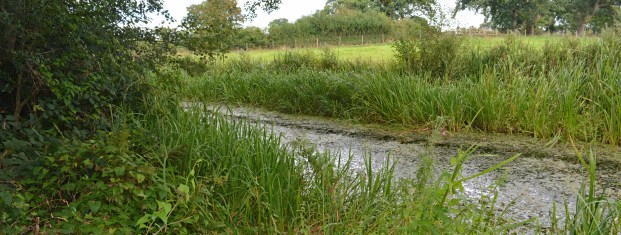
My brother Graham and his wife Vicky came to stay with us in early September and we went for some good days out, one of which was to the Prees Branch Line, a disused canal branch that never actually opened but now is a rich nature reserve, the longest wildlife pond in Shropshire. We have visited several times in the past at different seasons and enjoyed every walk along the old abandoned canal, as there is always so much wildlife to observe, encounter and surprise.

pbl-07

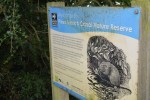
The site sign hints strongly at its main wildlife star, the Water Vole with a lovely illustration, but this is a star who is a real secretive creature and visitors have to be very lucky to spot one. It is more likely to find stems of reeds nibbled down in the vole’s distinctive style, or hear the plop as it enters the water again a very distinctive sound. We have heard them plop and seen signs of their nibblings at this reserve but never as yet spotted one.

pbl-01

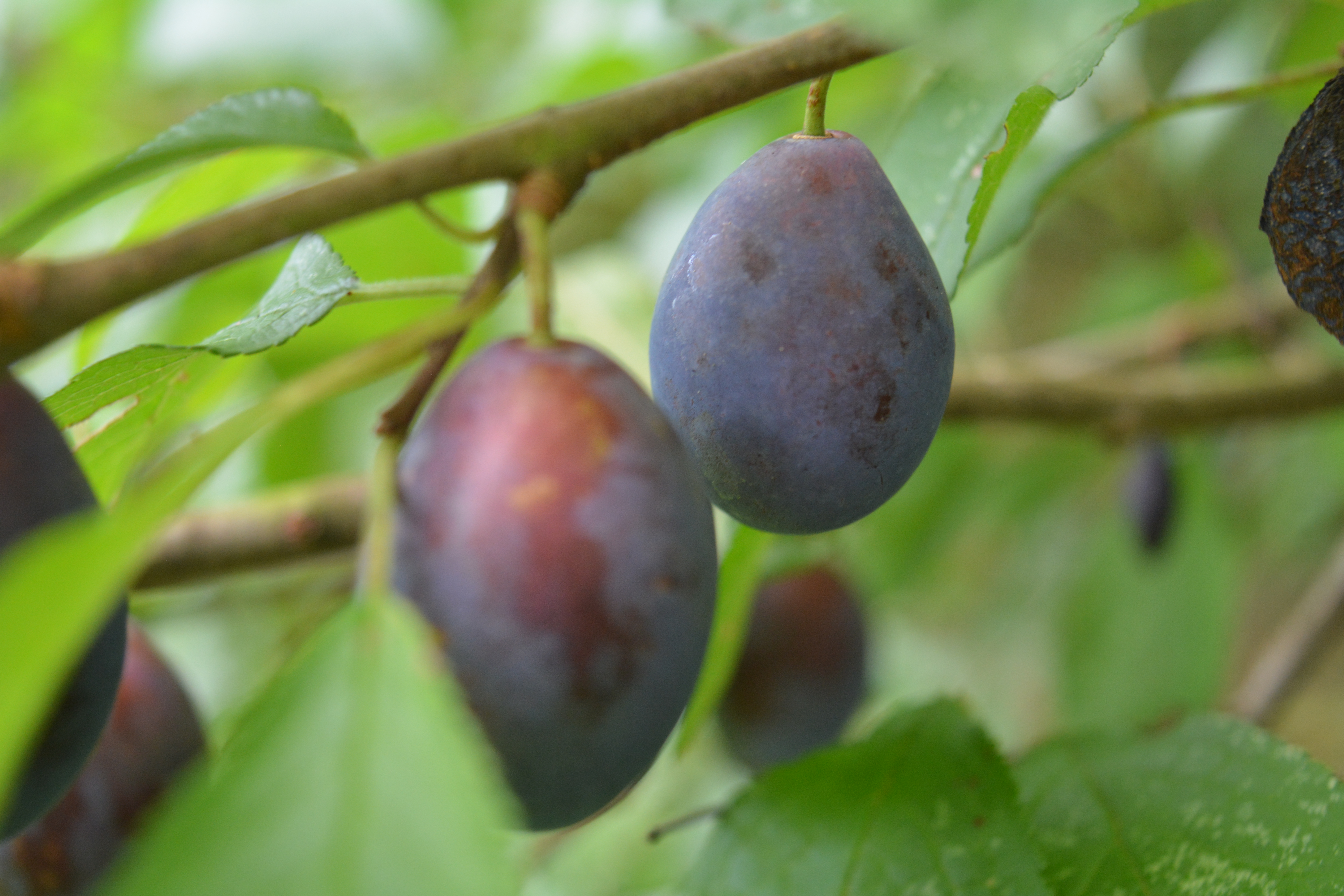
We began our walk enjoying a coffee as we put on our walking boots and luckily spotted some fruit trees close by, the native Shropshire Damson otherwise known as the Shropshire Prune. This tree is a feature of Shropshire’s hedgerows and we have enjoyed many while on walks. These however were the sweetest we have ever tasted, the nectar of the gods.

pbl-02 pb-1

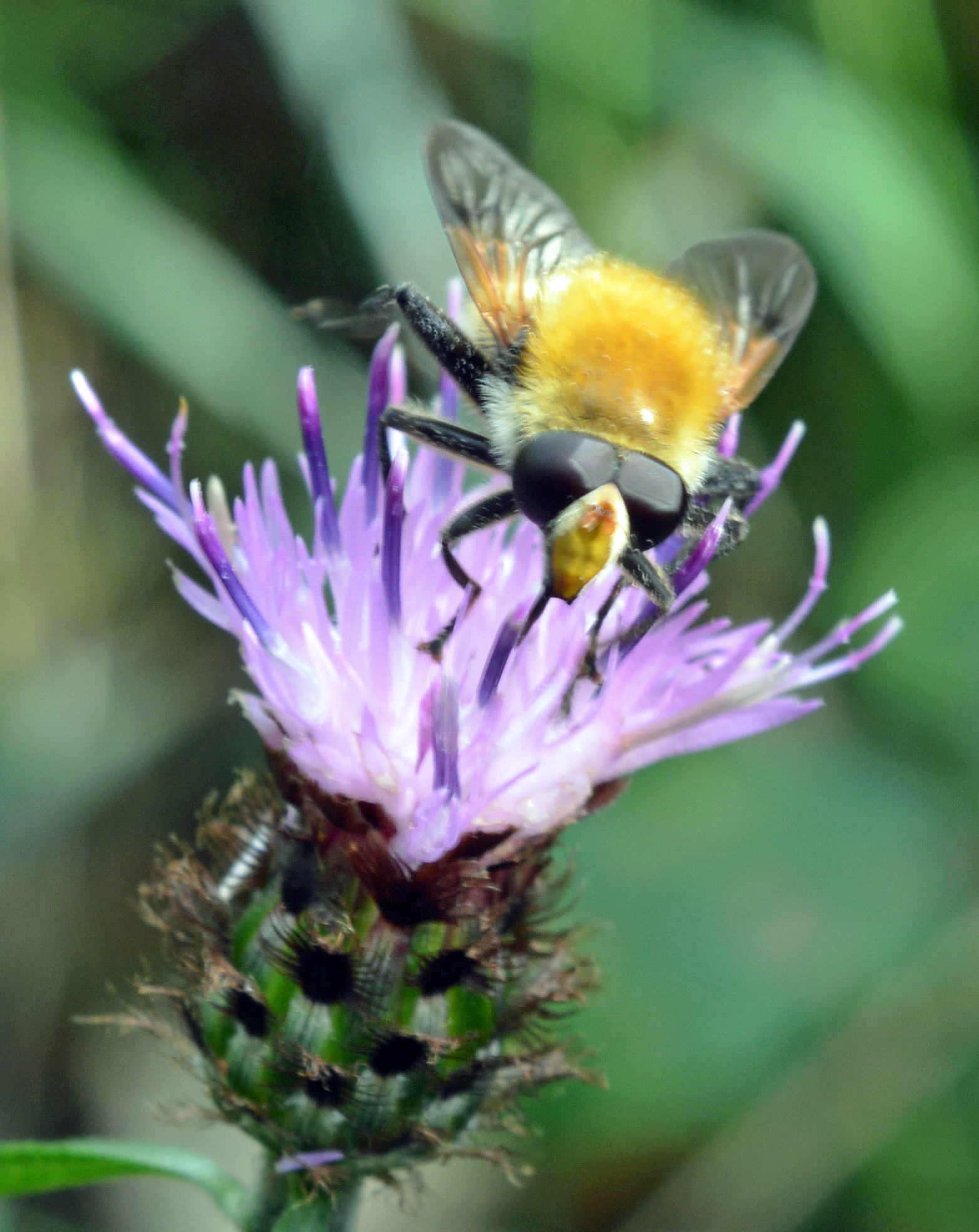
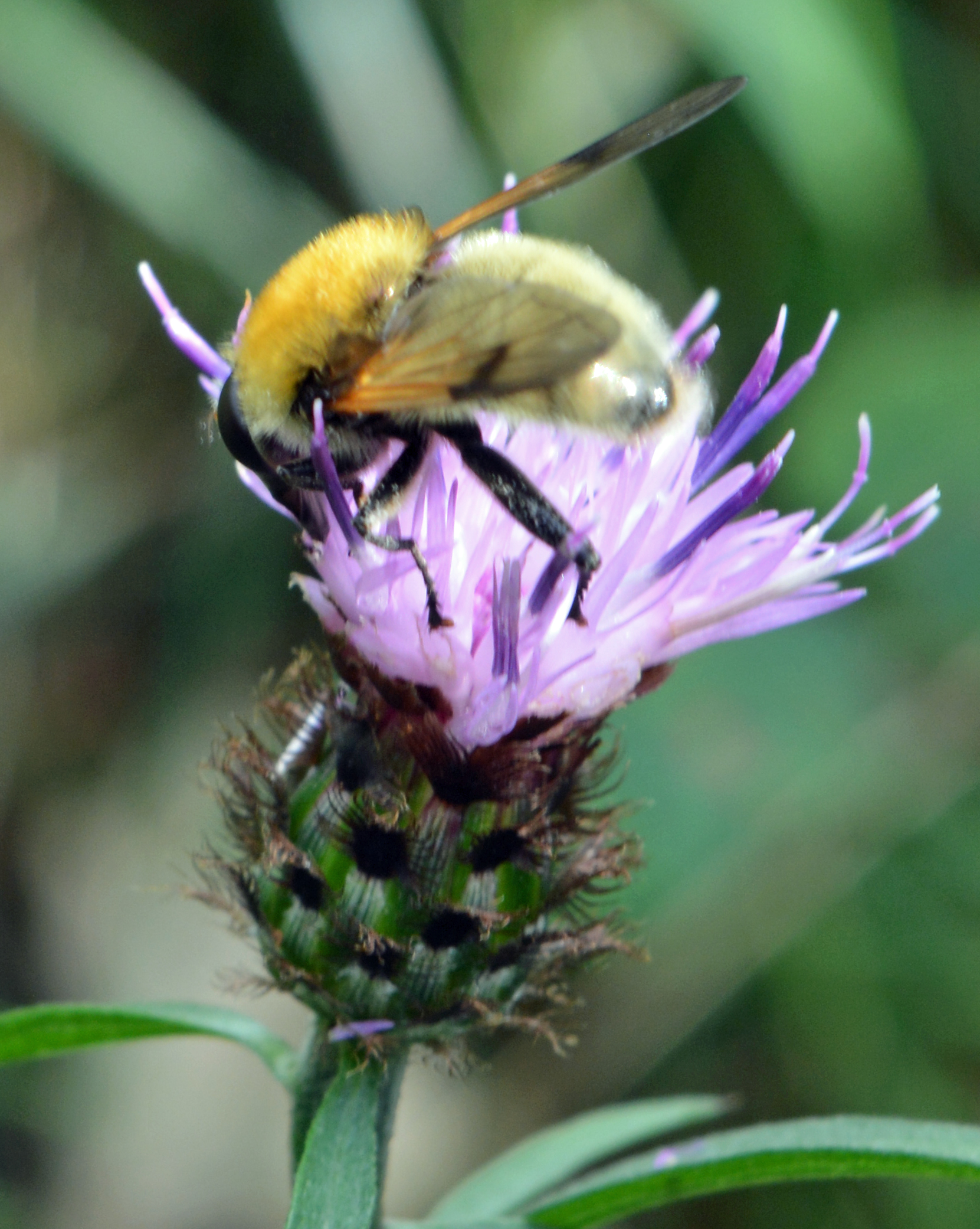
On this latest visit we were lucky to spot and watch for a long while a rare bee, the Moss Carder Bee which was a first for us. It appeared right in front of me as I was taking a photograph of a plant so I had the rare chance of taking photographs so effortlessly. The bee really just posed for me. Graham and I watched it for a while and got very close, close enough to appreciate the beauty of its delicate colouring and the subtlety of its markings.

pb-2 pb-3 pb-4

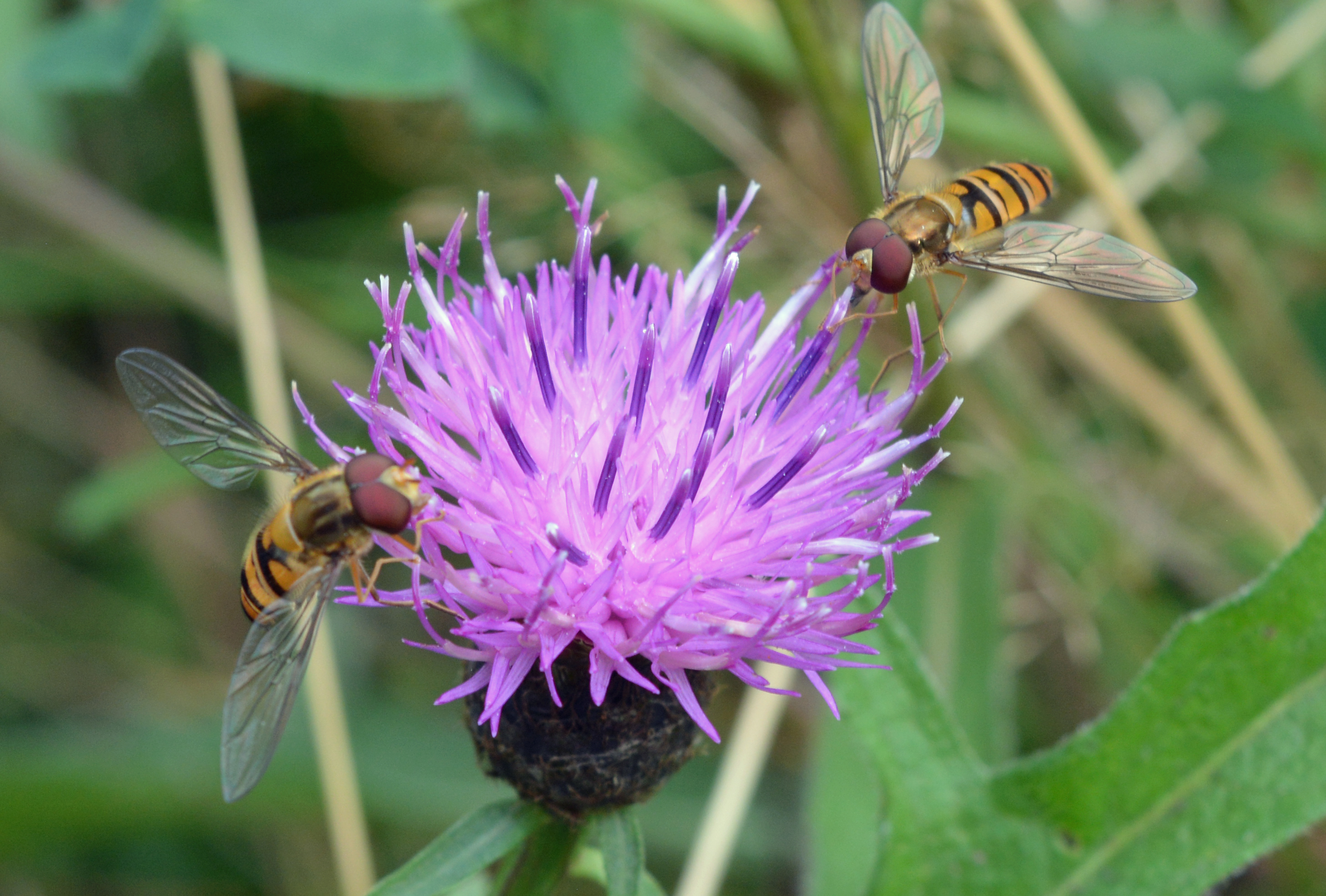
Not so long after this a similar thing happened. Again I was taking a close up photograph of a plant when a hoverfly firstly came into view above the flower, then landed on it closely followed by a second identical one allowing me to get these shots. Twins! Identical twins!

pbl-44 pbl-45pbl-22

Berries were at various stages of ripeness from hard green to the darkest of ruby red.

pbl-31 pbl-32

And wild flowers added spots of colour to the impressionist painting that is the bank of the canal.

pbl-23pbl-05 pbl-38

There was so much to see as we ambled along the narrow track along the towpath of the canal branch line that never opened to barges just to wildlife. Rather than narrow-boats plying the waters it is Swans, Mallards and Water Voles instead! We barely moved forward a few steps before something caught our eyes and stopped us in our tracks. I took so many photos that I thought I could invite you to join us as we followed our canal side path “there and back again”. Enjoy!

As usual just click on the first photo and then navigate with the arrows.


Categories
countryside landscapes memorials National Trust photography The National Trust trees

Dawdling in the Derbyshire Dales – part two – The Manifold Valley

As spring tries tentatively to make its presence felt in the garden and the surrounding countryside we can enjoy looking back to a week spent in Derbyshire exploring the Dales.

Our first walk along the dales of Derbyshire while spending a week there in July took us to the beautiful little village called Illam. This is a village owned by the National Trust so has to remain unspoiled. They also own the hall at the head of Manifold Dale, where we found our essential feature of any day out, a place for coffee and cakes.

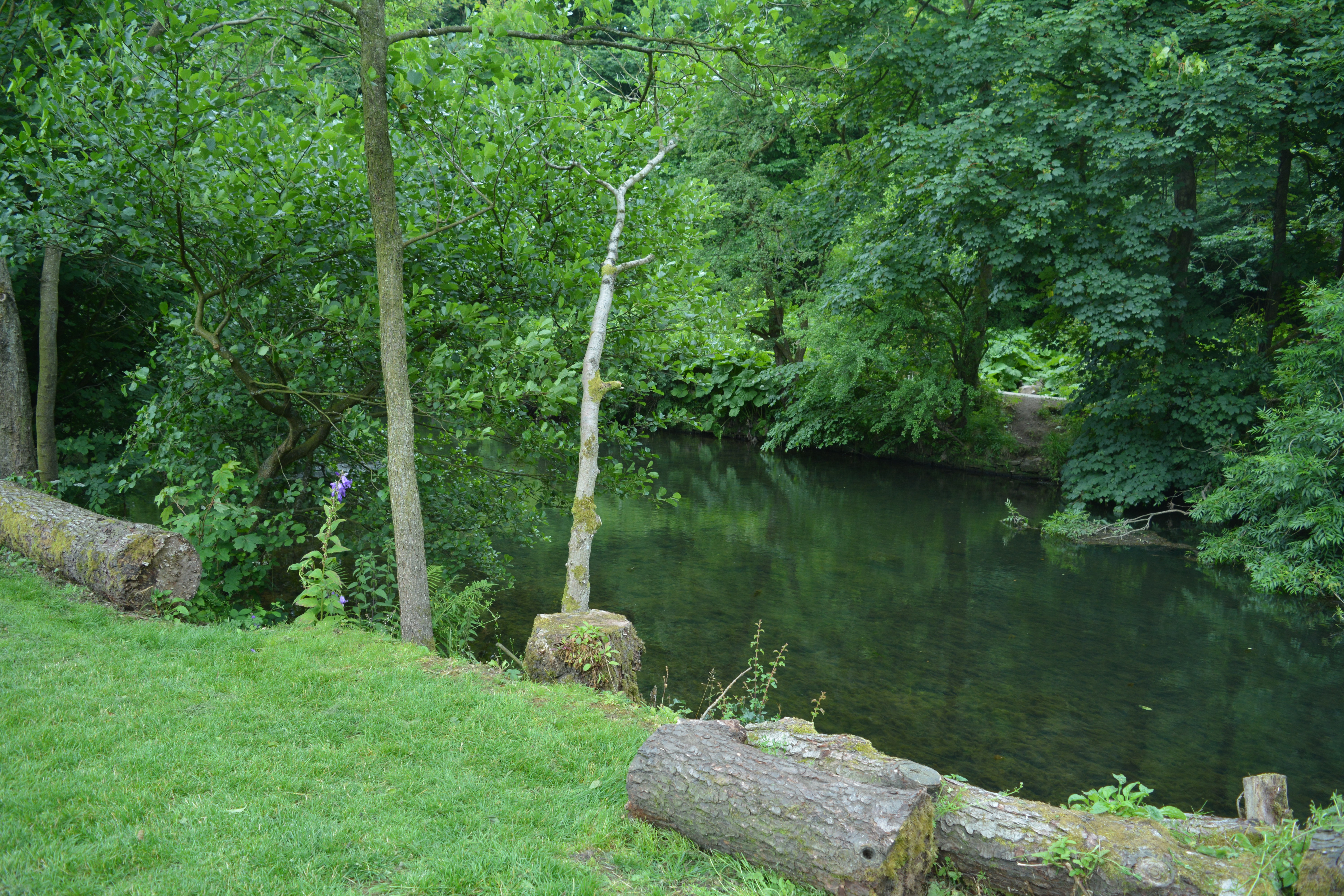
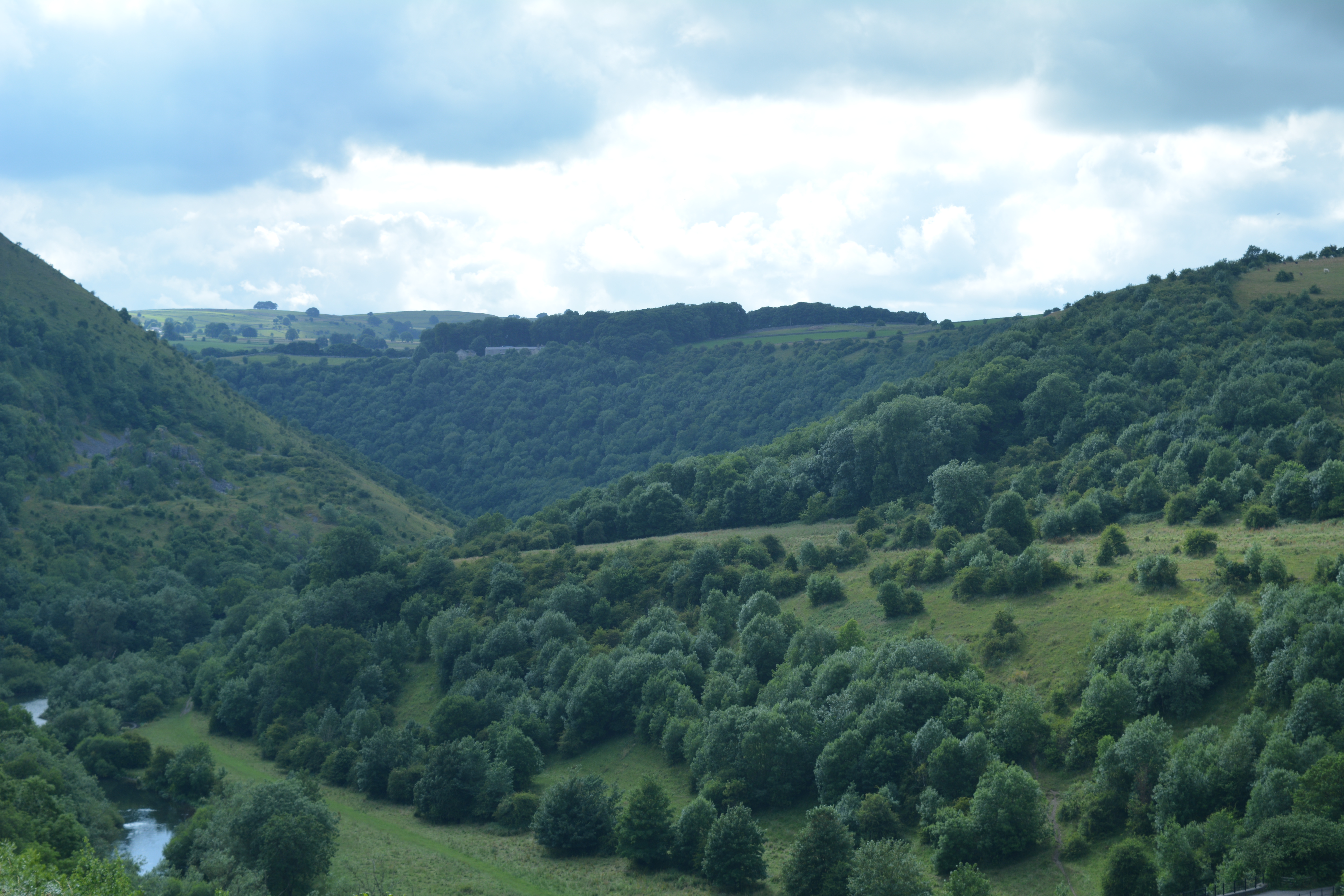
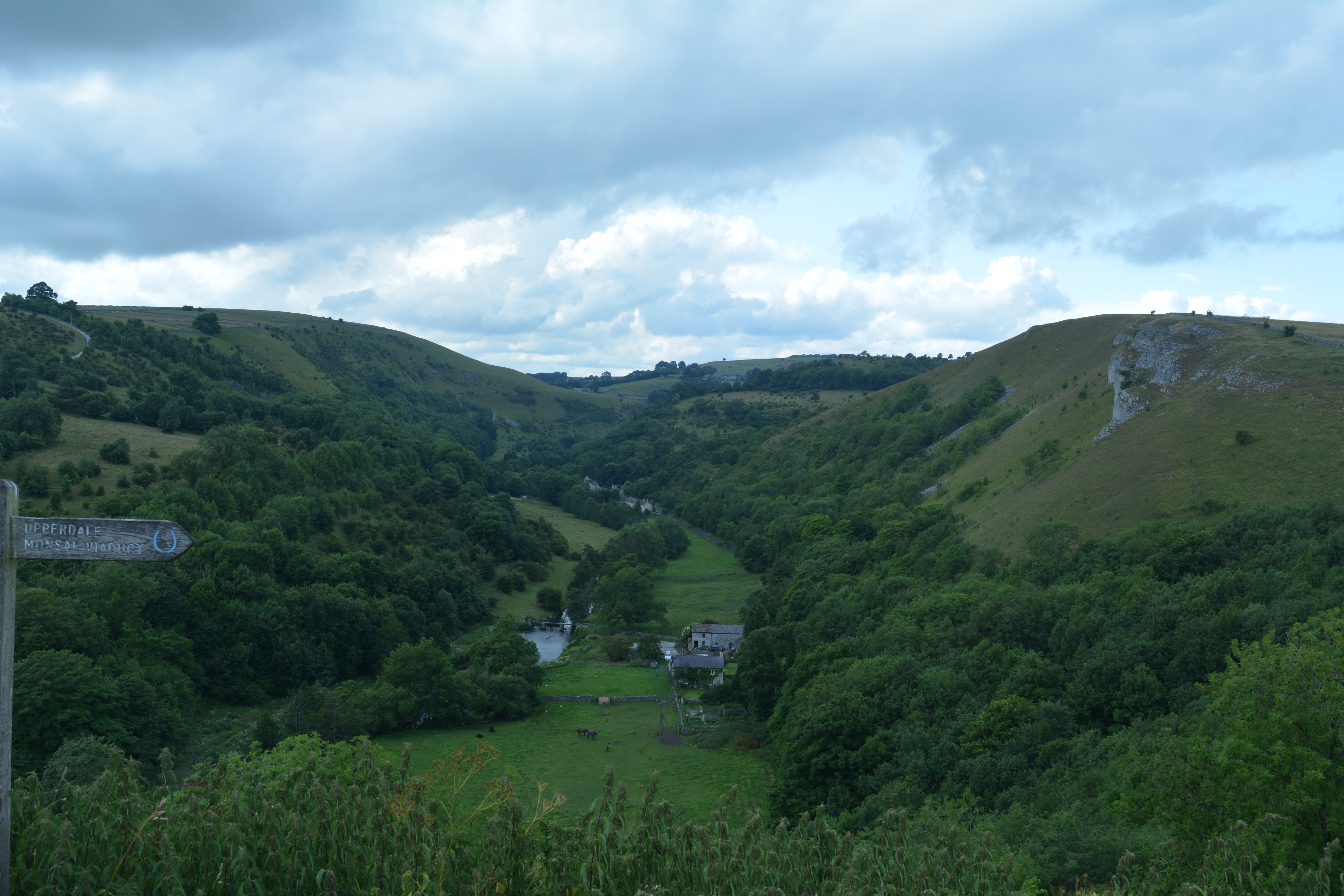
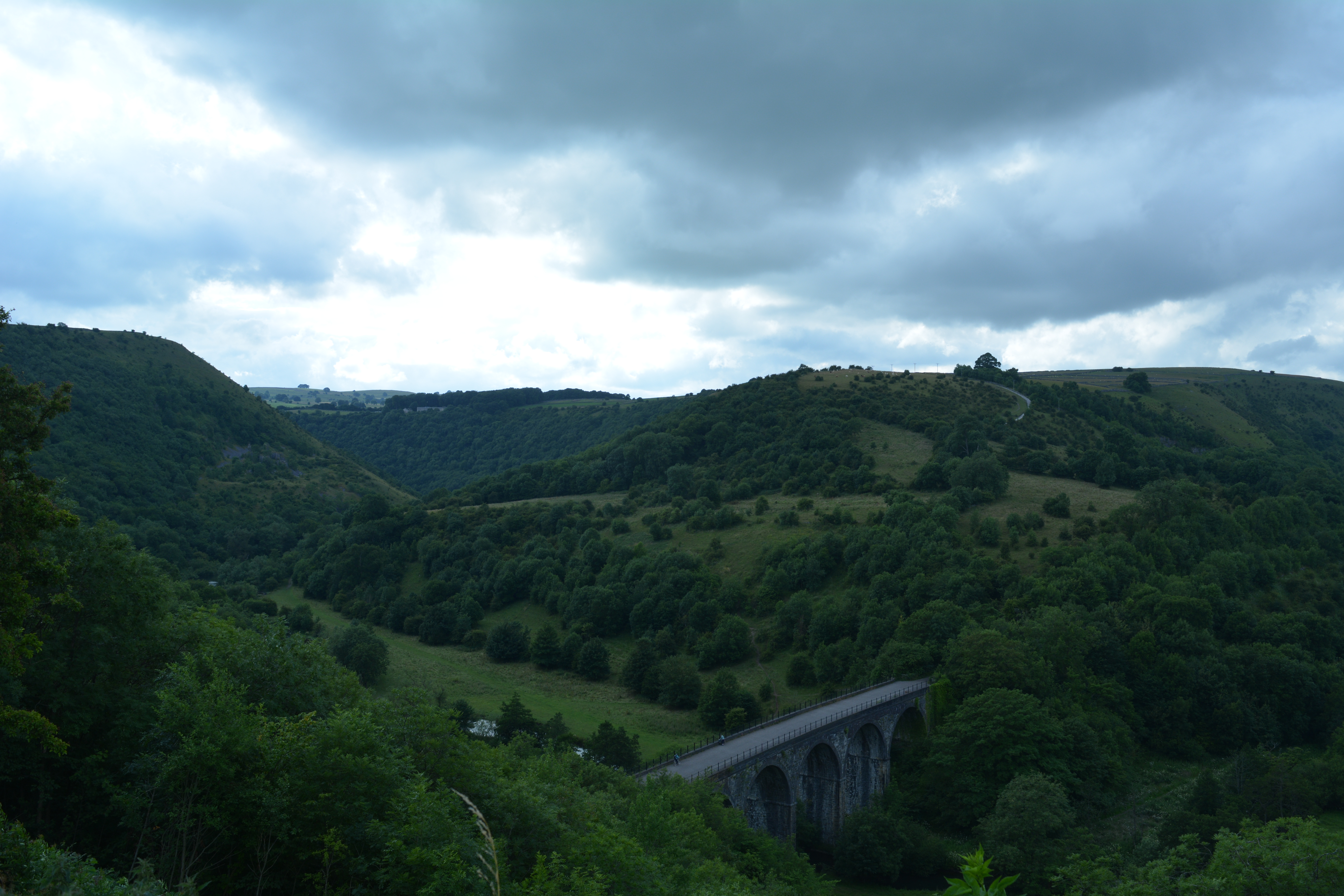
Once revived we made our way down to the River Manifold and took a footpath along its bank to explore the valley it had created through millenia of erosion. The Manifold is very much typical of Derbyshire’s little rivers, clear running, home to rare and unusual wildlife and picturesque.

2015 07 21_3840 2015 07 21_3841 2015 07 21_3842 2015 07 21_3843

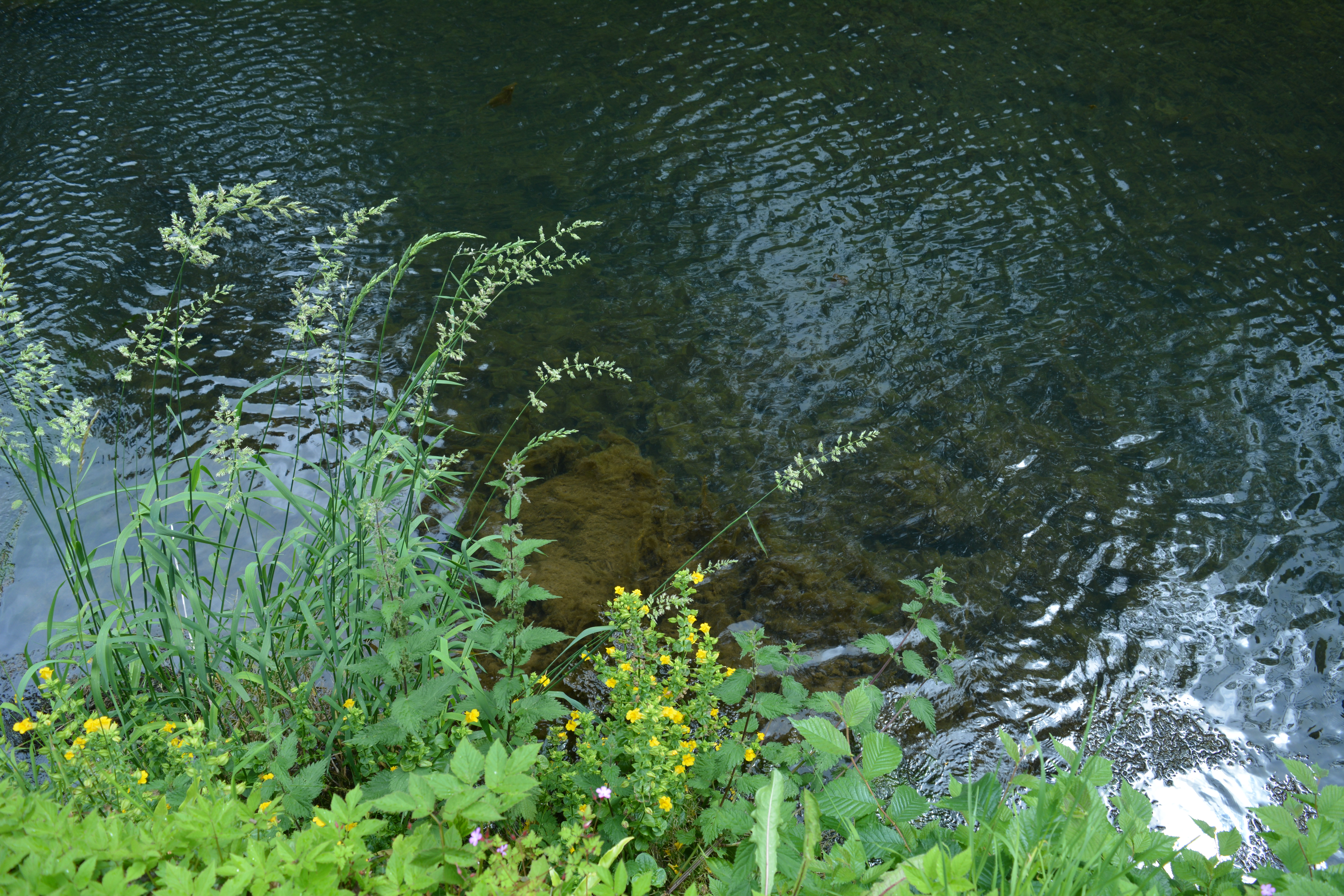
The wildflowers and grasses on its banks

2015 07 21_3844 2015 07 21_38472015 07 21_3860 2015 07 21_38652015 07 21_3858 2015 07 21_3854 2015 07 21_3859

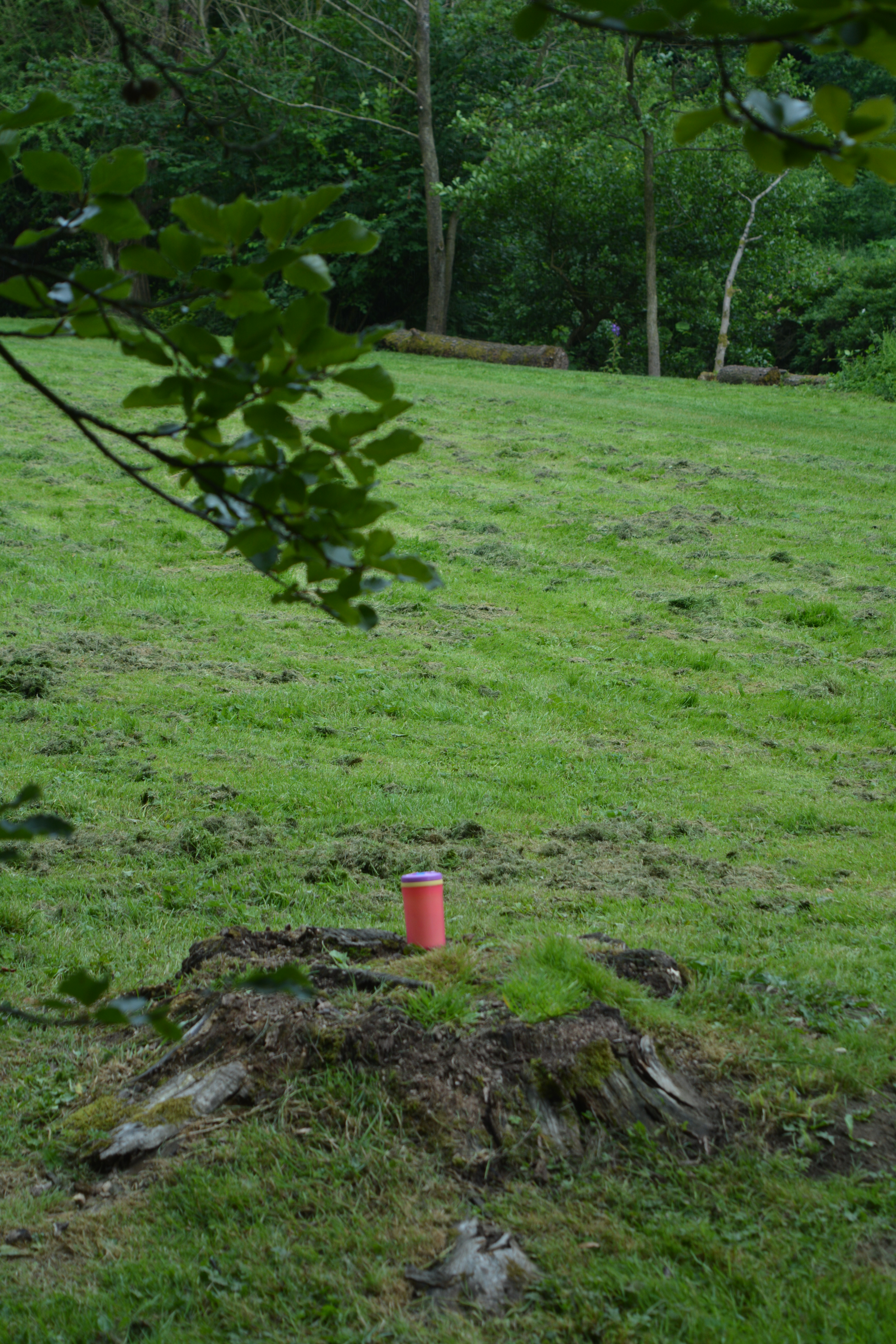
Sadly even in such a beautiful, peaceful place humans try to spoil it, scarring it with discarded drinks cans and take out coffee cups.

 2015 07 21_3864 2015 07 21_3845 2015 07 21_3867

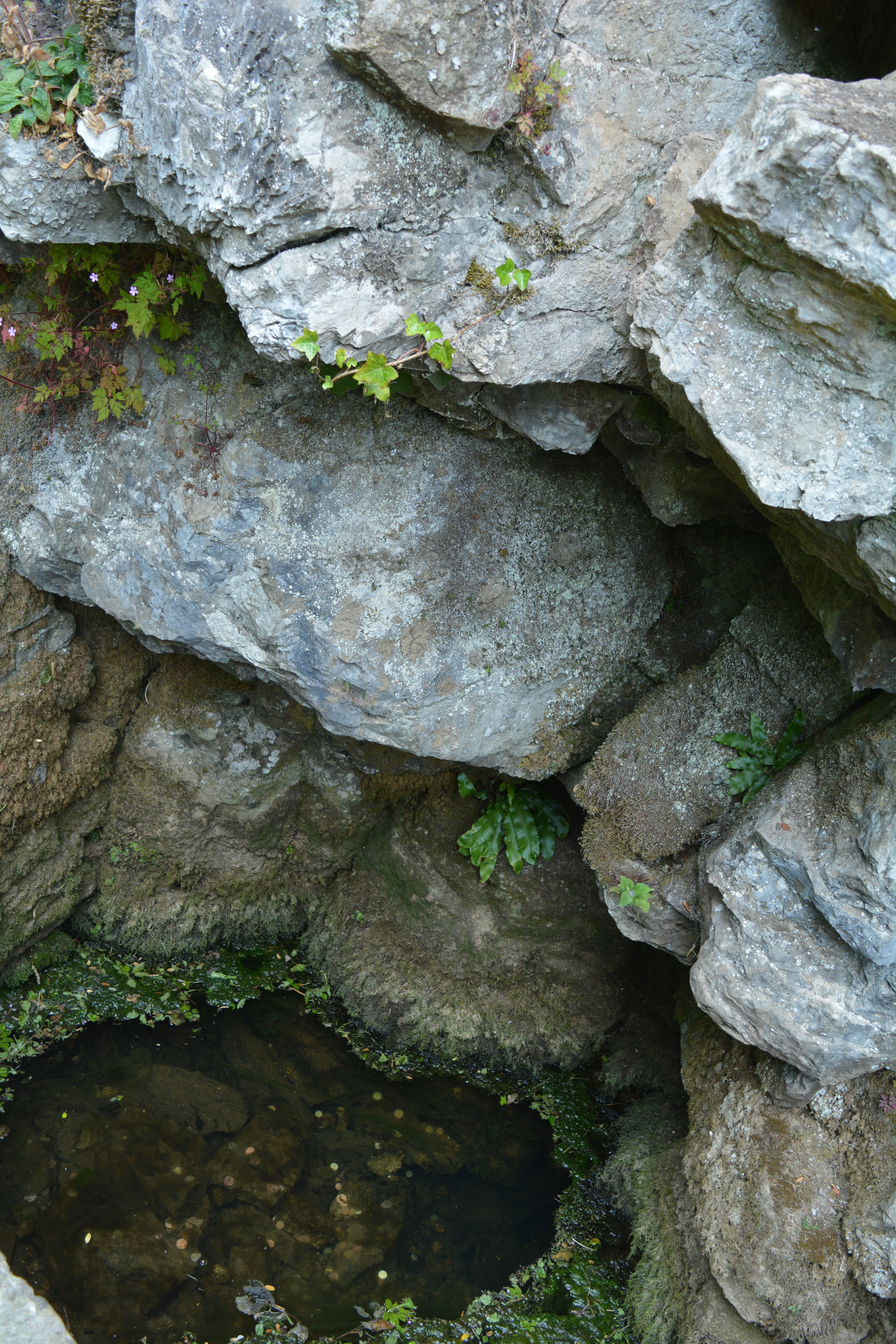
Beneath this rock stack was a spring where the water from an underground stream burst out into daylight to join the Manifold.

2015 07 21_3846

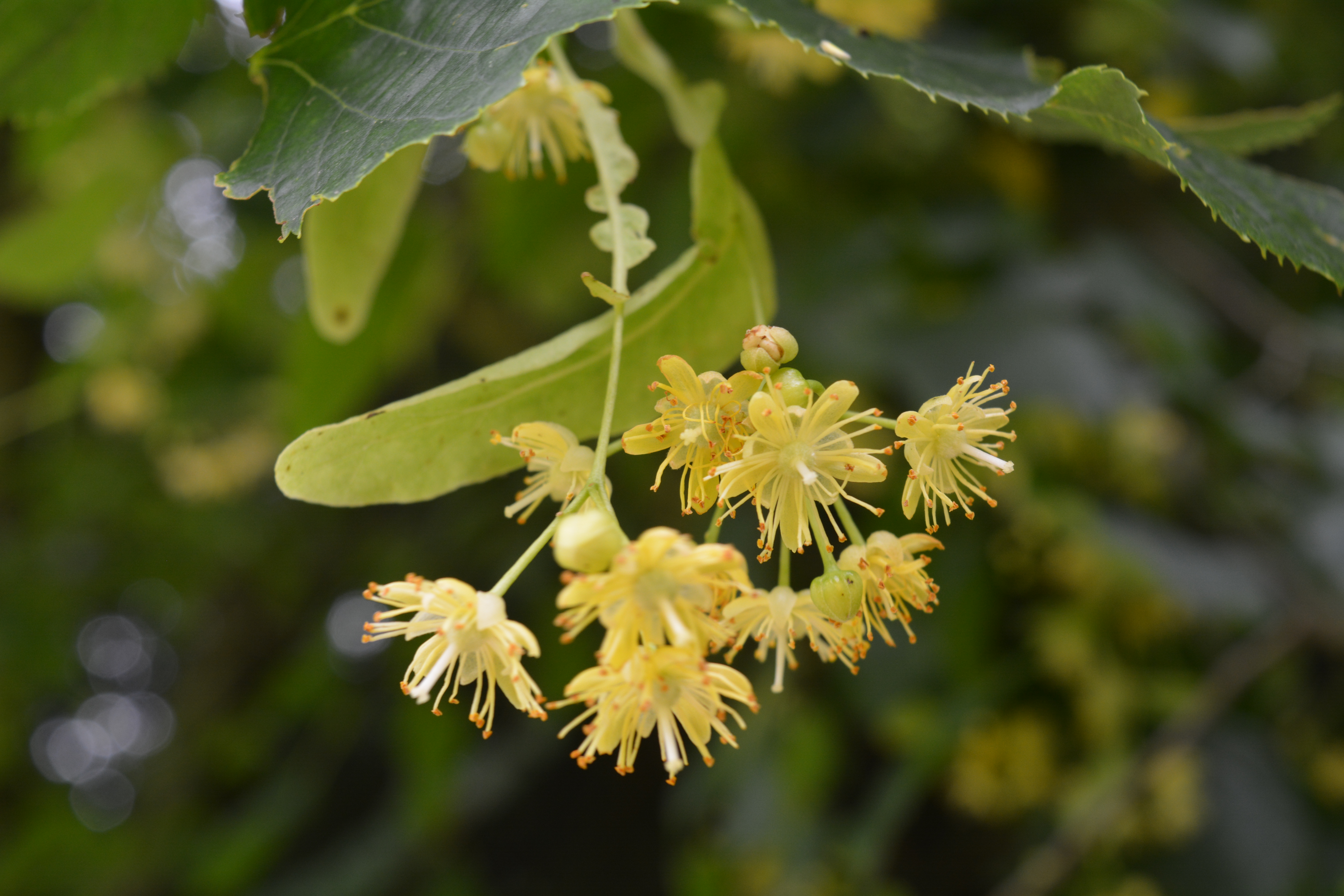
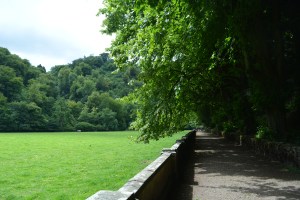
The trail we were following took us a short distance from the river along an old walkway beneath overhanging trees. This walk was designed as a “promenade” for the family and visitors of the house when in its previous glory. We were bemused to hear a mechanical humming noise getting louder with each step as we neared an avenue of Limes. We eventually worked out it was the humming of thousands of bees attracted to the sweet smelling, lime-green blossom.

2015 07 21_3848 2015 07 21_38492015 07 21_3851 2015 07 21_3876

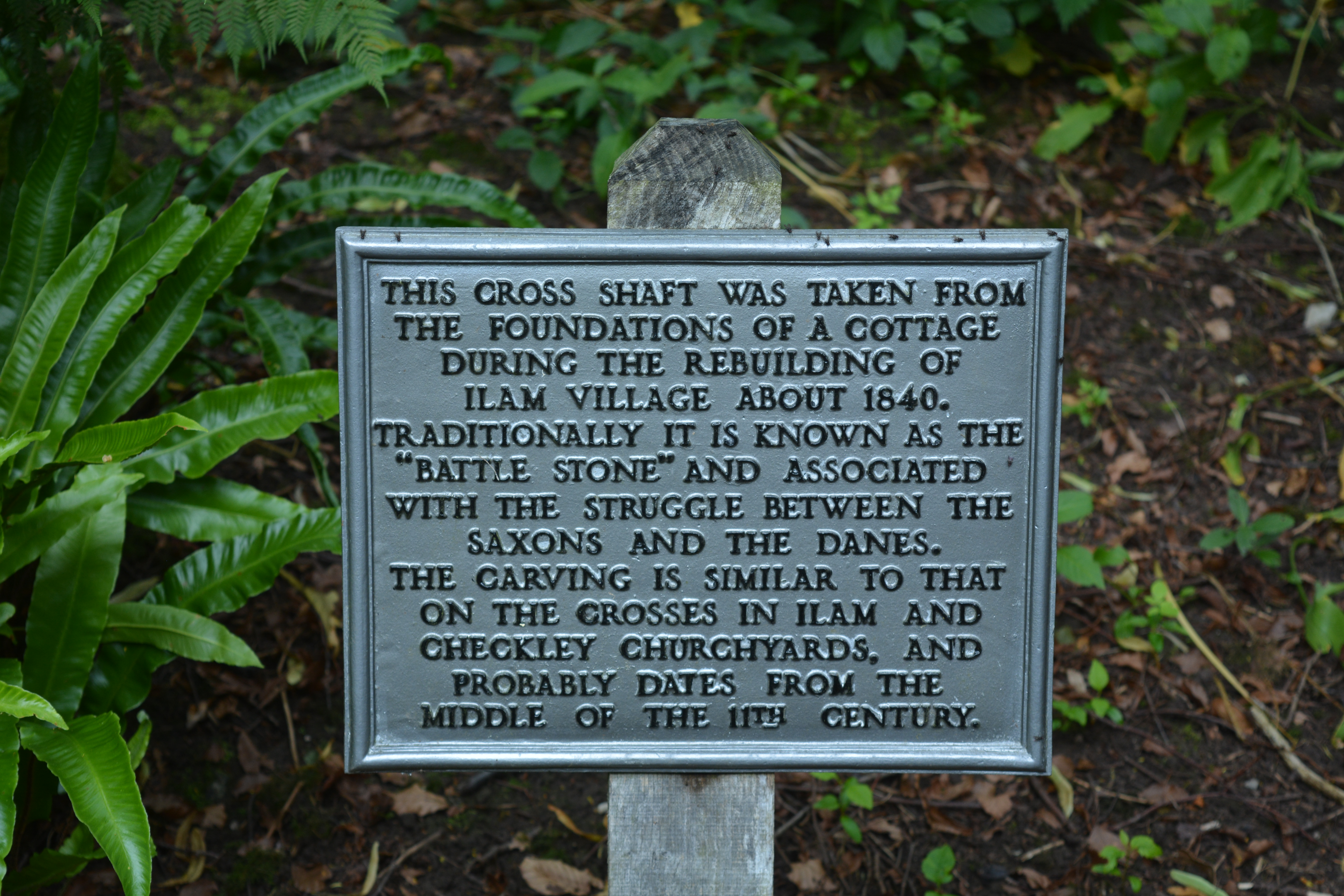
We were surprised to discover a memorial stone and fern garden alongside the track.

2015 07 21_3852 2015 07 21_3853

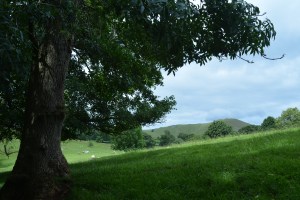
As the path turned us back towards the house leading us over open parkland away from the river. Please enjoy sharing the views we saw along the way with us.

2015 07 21_3877 2015 07 21_38802015 07 21_3881 2015 07 21_3884

We found a rocky outcrop where we sat for a coffee and some fruit and to take in the sights and sounds of nature all around.

2015 07 21_3888 2015 07 21_38902015 07 21_3892 2015 07 21_3891

After enjoying our break with brilliant views we carried on across the open parkland back towards the house and the views just kept on coming.

2015 07 21_3885 2015 07 21_38872015 07 21_3873 2015 07 21_3879

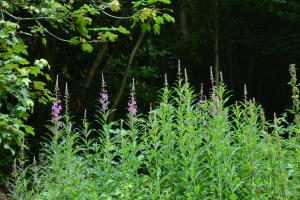
We were delighted to have one last look at the River Manifold at the end of our walk where we were amazed by this waterside plant with spiky flowers and huge rough leaves.

2015 07 21_3862 2015 07 21_38612015 07 21_3863

I shall finish this wandering post along the valley of the Manifold with this little mini-garden created by Mother Nature, the greatest gardener of all! Our next post in my series from Derbyshire will explore Monsal Dale.

2015 07 21_3868

Categories
countryside landscapes

Dawdling in the Derbyshire Dales – part one – limestone hills and old barns

We hadn’t visited Derbyshire for a long while so decided that a few days away in July would afford us the chance to walk a few of its dales and bring back memories while doing so. Limestone ridges, old stone barns and limestone walls as field boundaries are trademarks of the Derbyshire landscape. Well Dressing is an ancient tradition celebrated by the locals and friendliness an attribute of their characters. We found them all!

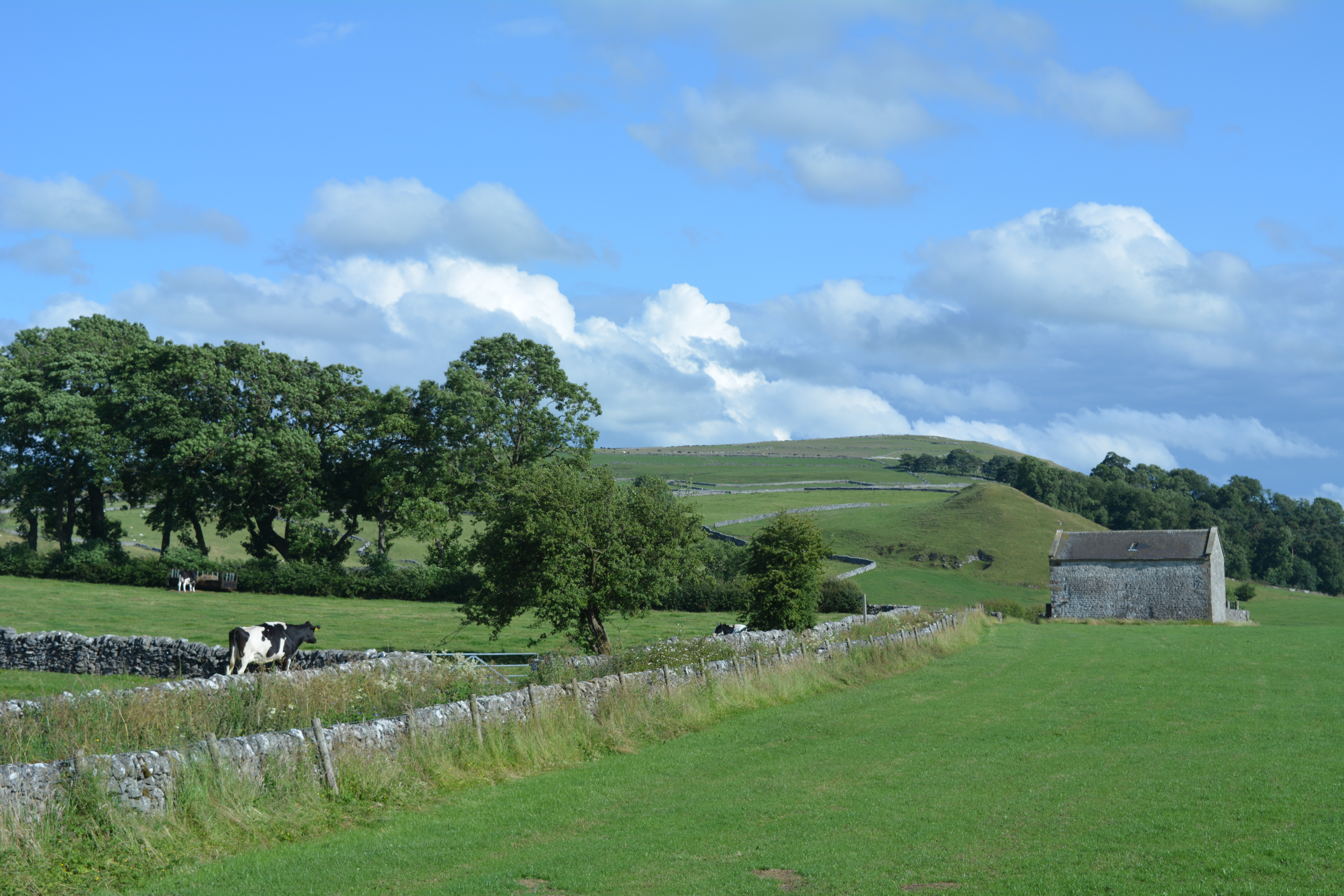
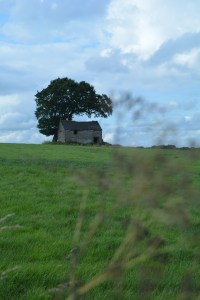
I kept trying to get a good photo of this old barn and the surrounding drystone walls, typical of the Derbyshire countryside. I moved around, tried all angles and am still not convinced I got it right. So here are my attempts for you to consider. My preference is the first shot because I like the way the walls lead the eye diagonally towards the barn. Do you think differently?

2015 07 22_4042 2015 07 22_40442015 07 22_4040 2015 07 22_4041

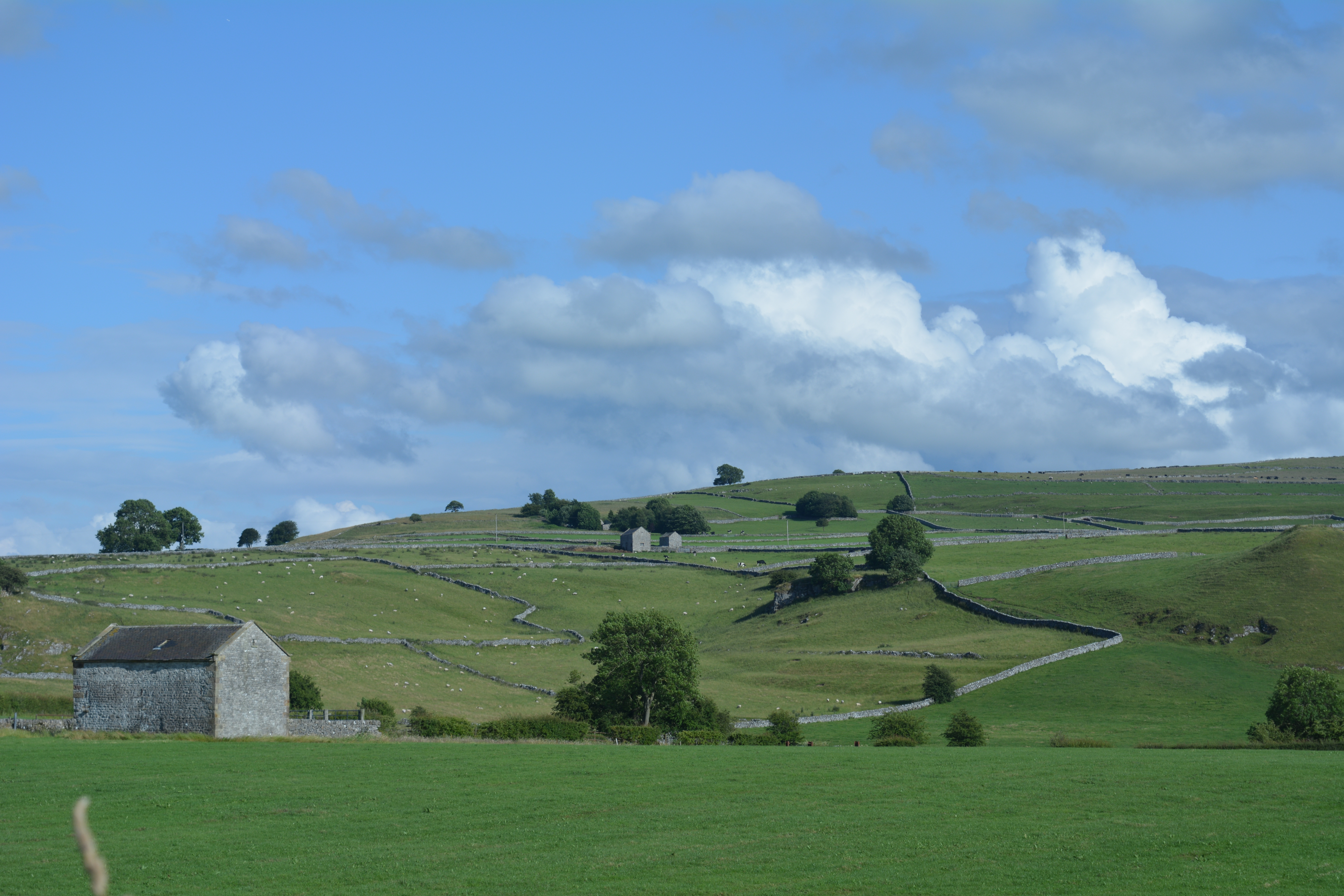
This second barn nearer to the horizon seemed a little easier to photograph but I still tried several different shots. I enjoyed the challenge! I personally like the square format photo most of all but you may think differently.

2015 07 22_4025 2015 07 22_40262015 07 22_4027 2015 07 22_40292015 07 22_4028_edited-1

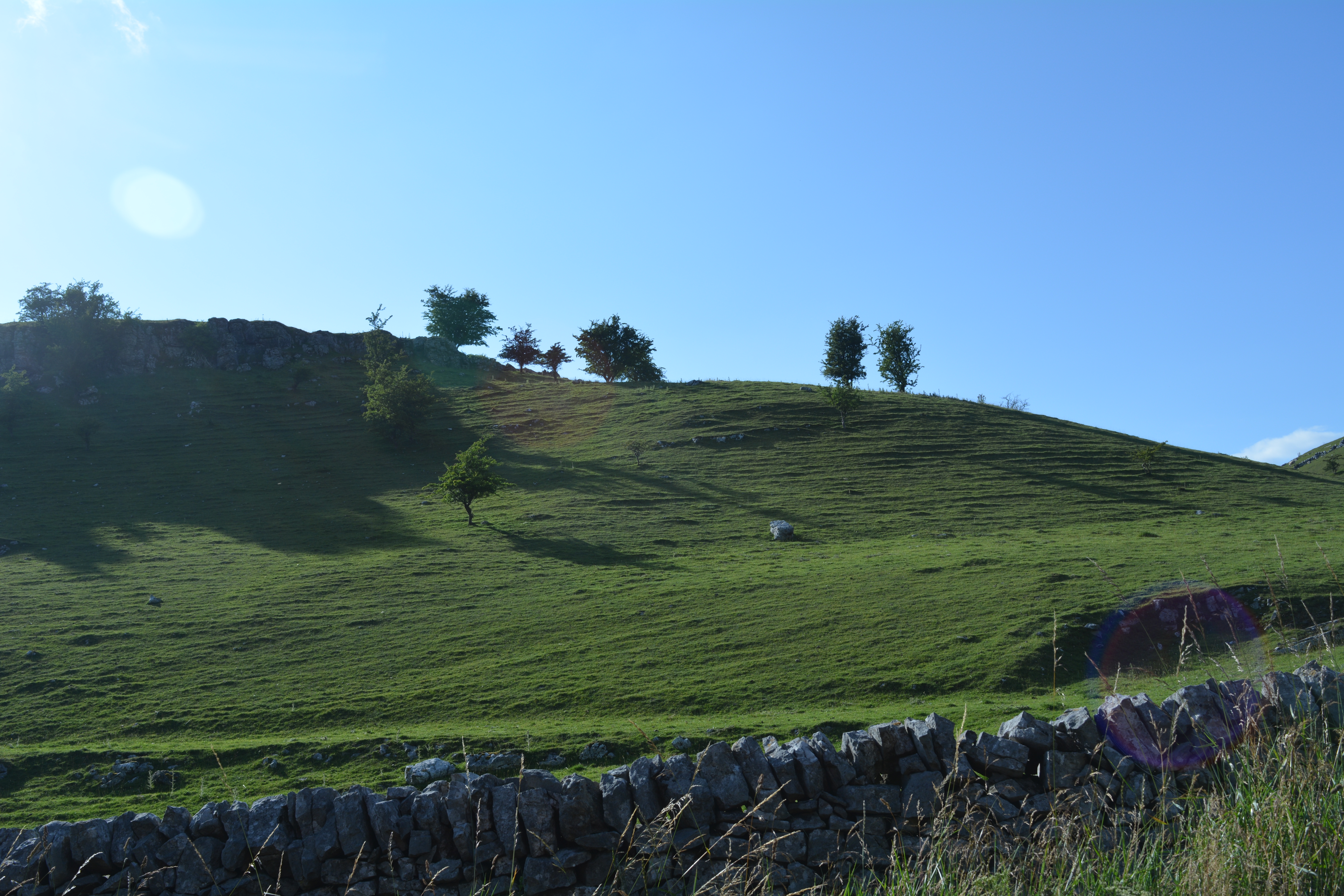
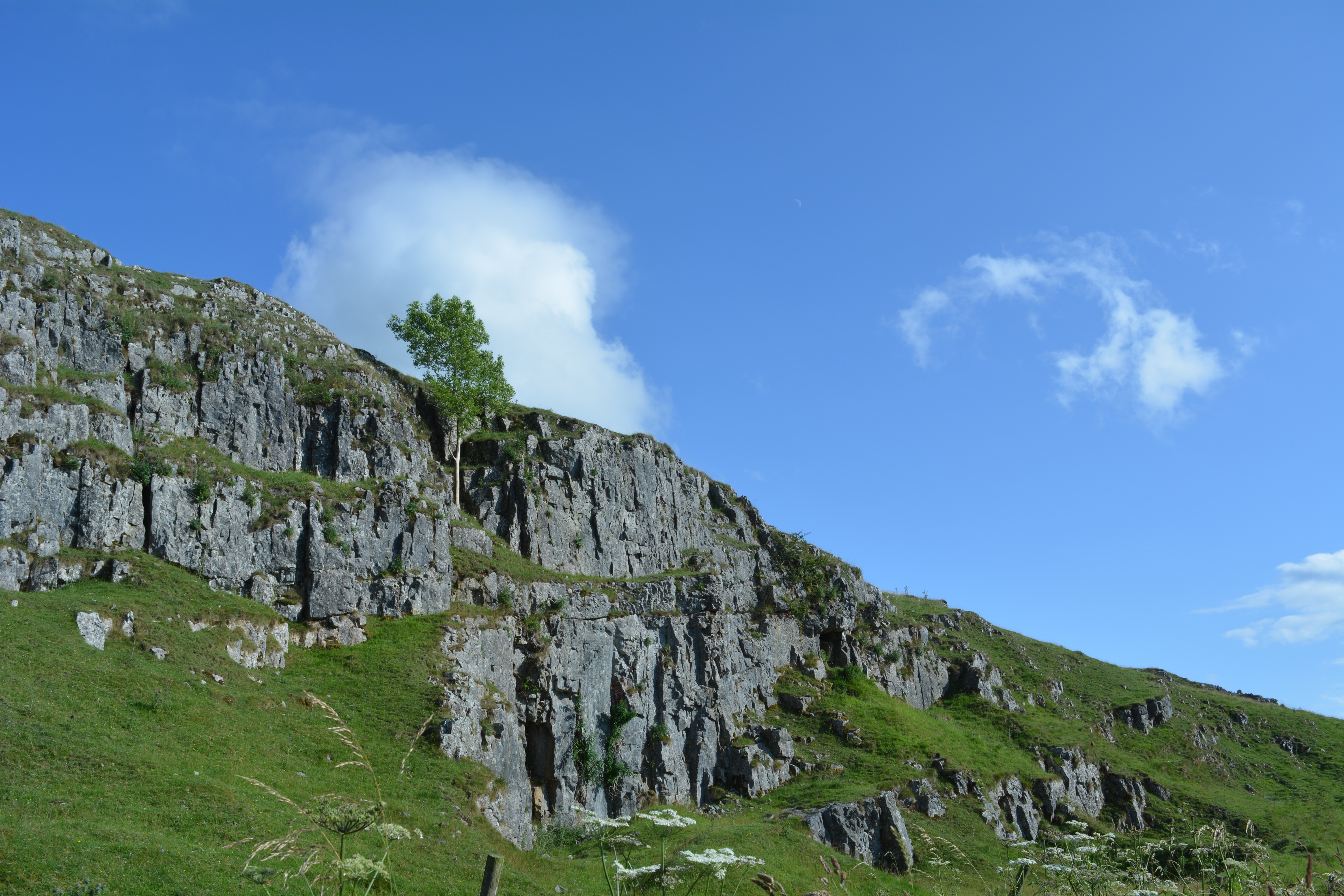
Limestone ridges are our second feature typical of the Derbyshire landscape and we were extremely lucky to have found a sunny bright day to view them. Their character changes with the light and on dull days they lack texture and sparkle. Shadows sit under the few trees stunted through lack of soil depth and lack of moisture.

2015 07 22_4037 2015 07 22_4038 2015 07 22_4039 2015 07 22_4036 2015 07 22_4033 2015 07 22_4034

The farming landscape here is soft and friendly with its dry stone walls and a scattering of small trees.  It is an undulating landscape with occasional valleys which are in places heavily wooded.

2015 07 22_4035 2015 07 22_4032 2015 07 22_4030 2015 07 22_4011 2015 07 22_4012 2015 07 22_4013 2015 07 22_4014 2015 07 22_4015

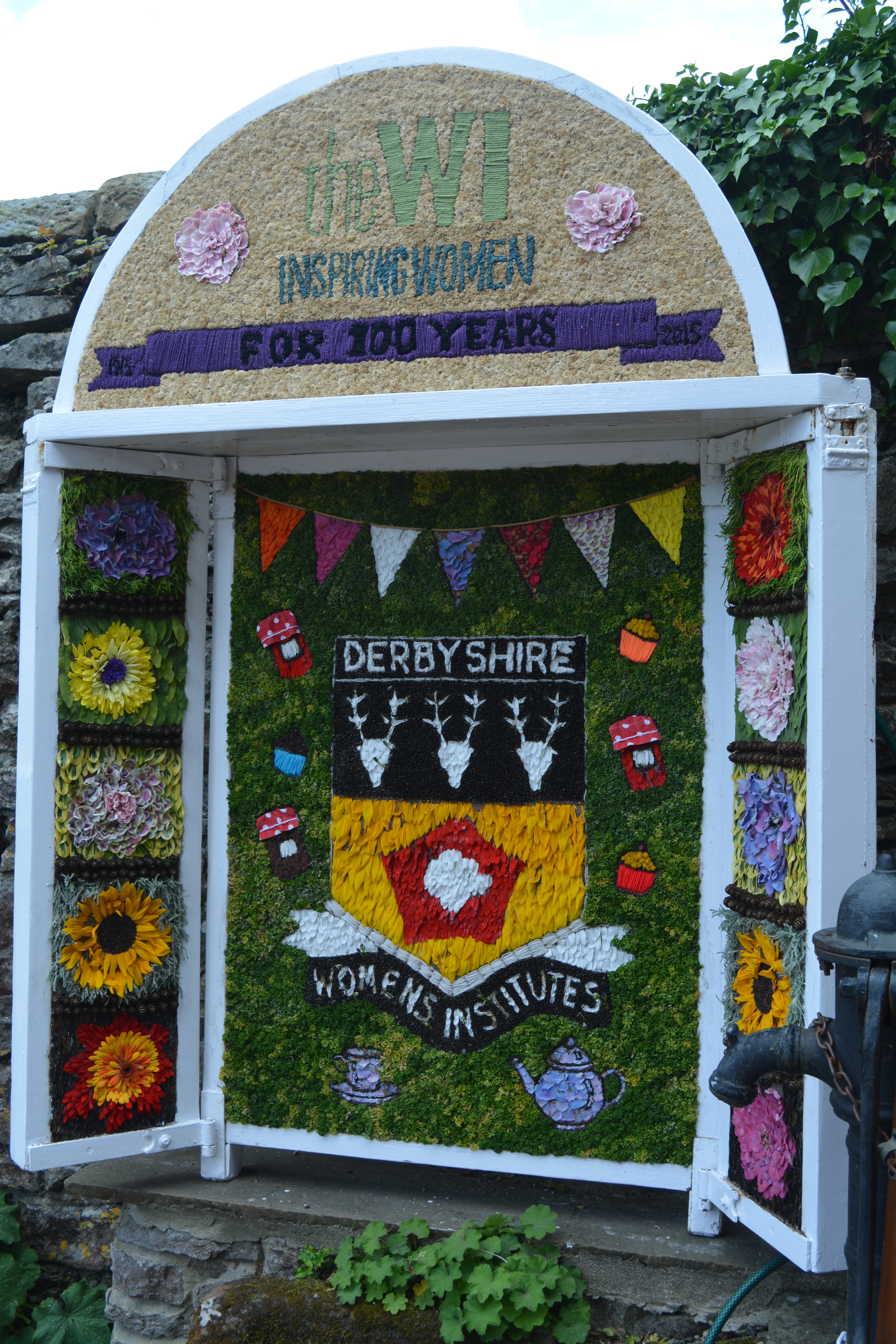
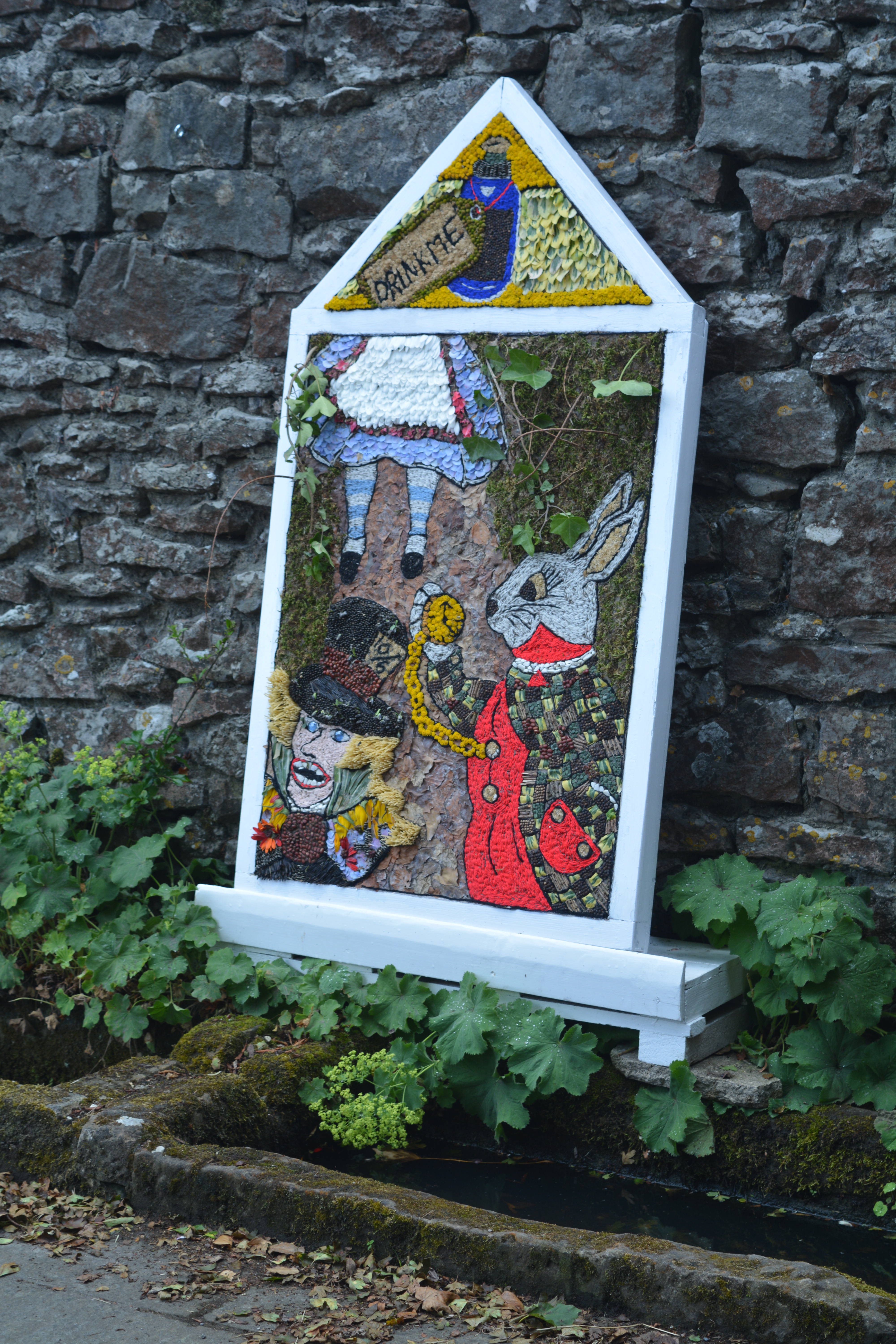
When tourists decide to visit Derbyshire many choose the Well Dressing season to make the journey. This is a traditional ceremony when villagers and often the children from the village school make fantastic displays created from flower petals. They make very colourful additions to the characterful villages of Derbyshire. We discovered these creations in one little valley.

2015 07 22_4018 2015 07 22_4020 2015 07 22_40212015 07 22_4023 2015 07 22_4024

2015 07 22_4022

We can add another element to Derbyshire’s points of interest for the visitor. The locals are very friendly. These two ladies chatted away to us for ages as we relished our coffee and cake. As you can see the one liked having her photo taken to go onto my blog while the other claimed to be too shy!

2015 07 22_4010

So with a smile from one friendly local I will finish this post about our week in Derbyshire. The coming posts will feature some walks along the dales.


Categories
autumn autumn colours colours countryside landscapes light light quality outdoor sculpture photography trees wildlife woodland woodlands

Walking in the New Forest – part one

We decided we would take an Autumn break so went down to the New Forest for a short mid-week break. We loaded the car with coats, waterproofs and warm clothes thinking we were planning for whatever the weather had in store for us. We got it totally wrong for as we went further southward the weather improved and we ended up enjoying warm sunny weather. A real treat!

We have driven through or past the New Forest, Britain’s smallest National Park, several times and vowed we would holiday there some day. So as we arrived we had great expectations and we were not to be disappointed.

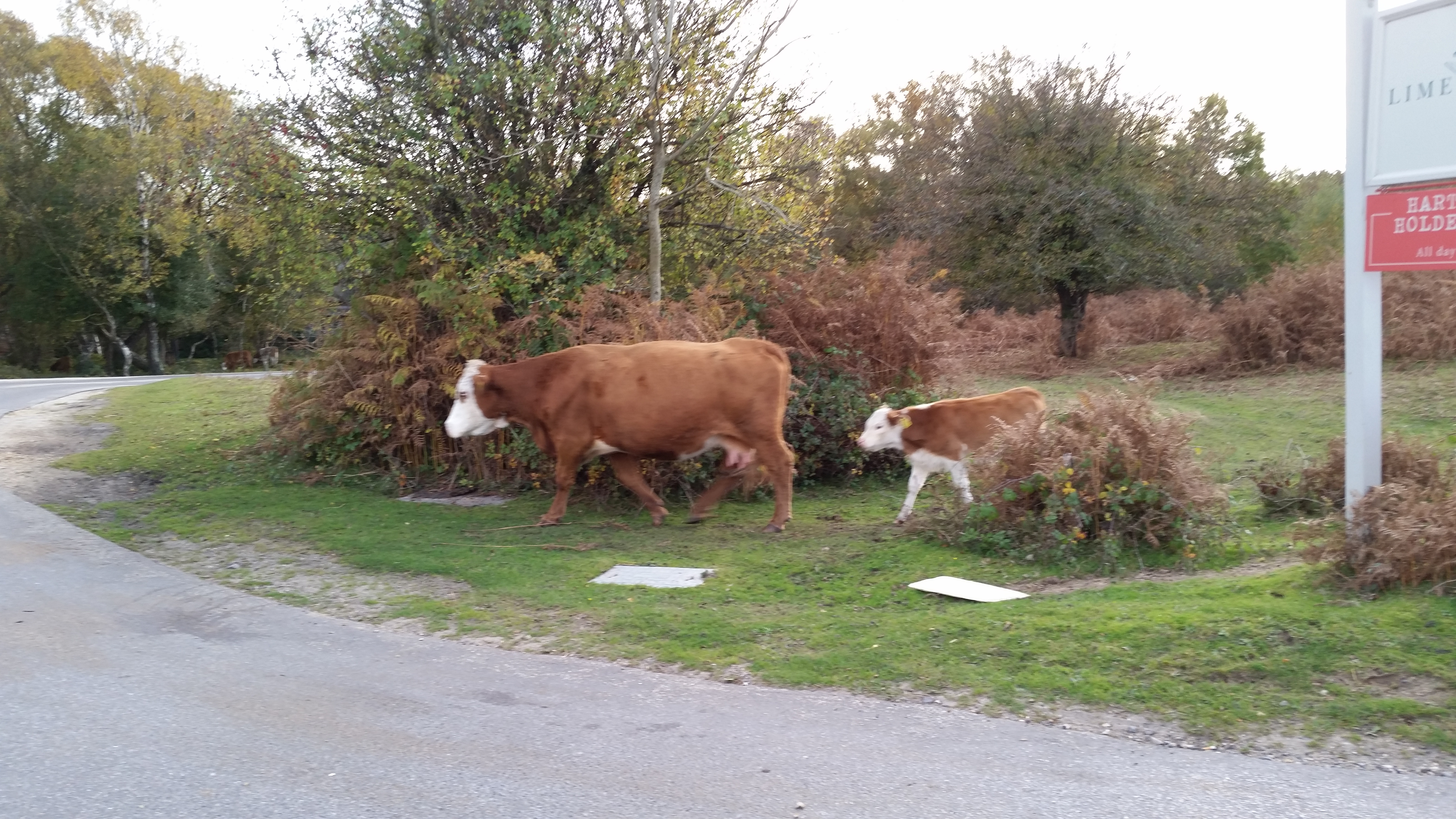
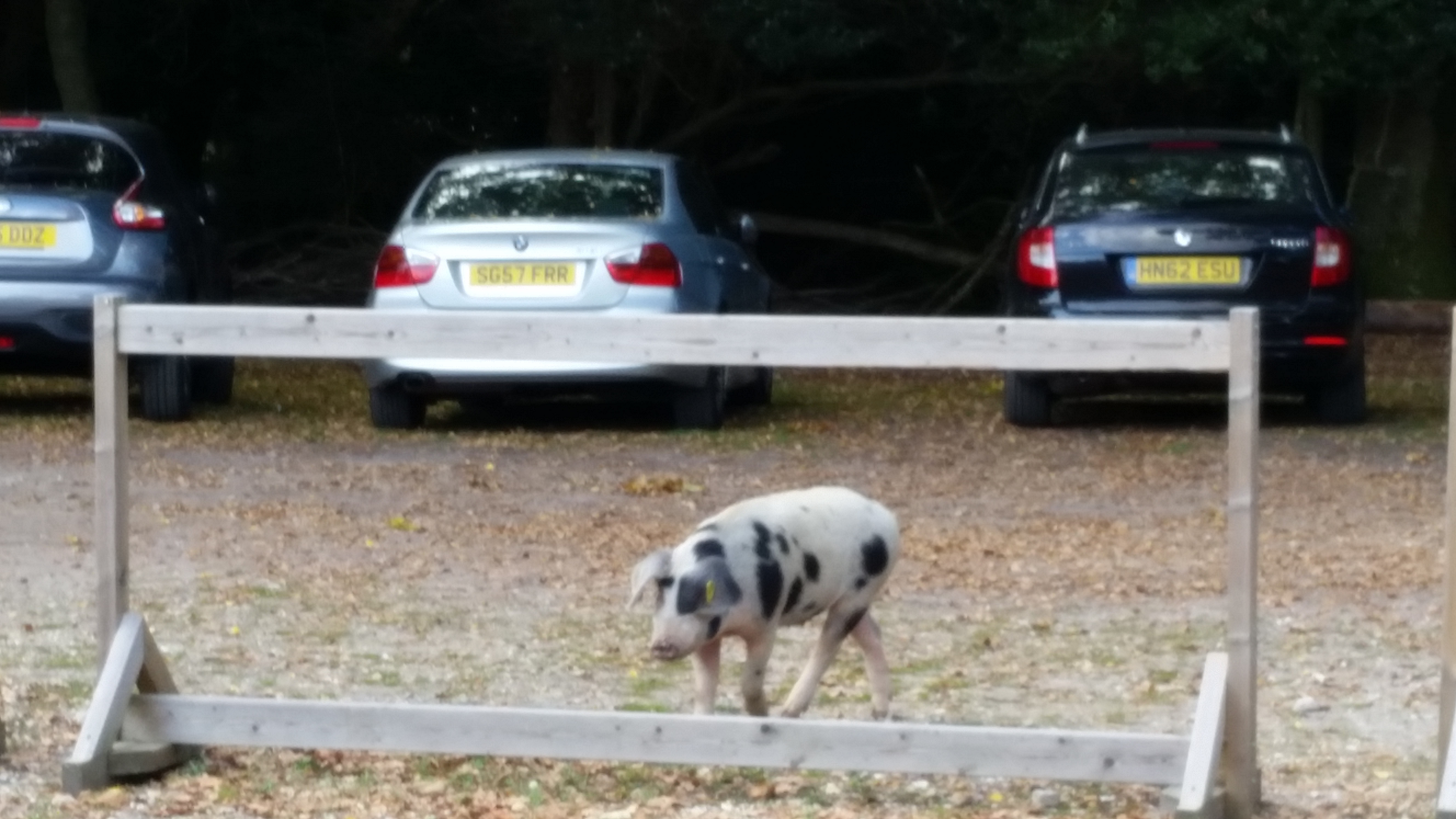
The New Forest proved to present the unexpected. Traffic jams and delays were not caused by vehicles but by livestock, cattle, pigs, donkeys and of course the famous New Forest Ponies. So here are a few shots of the many critters we encountered as we drove around the forest.

2015 10 24_6642 2015 10 24_6641 2015 10 24_6640 2015 10 24_6639 2015 10 24_6638 2015 10 24_6637 2015 10 24_6636 2015 10 24_6635 2015 10 24_6634 2015 10 24_6633

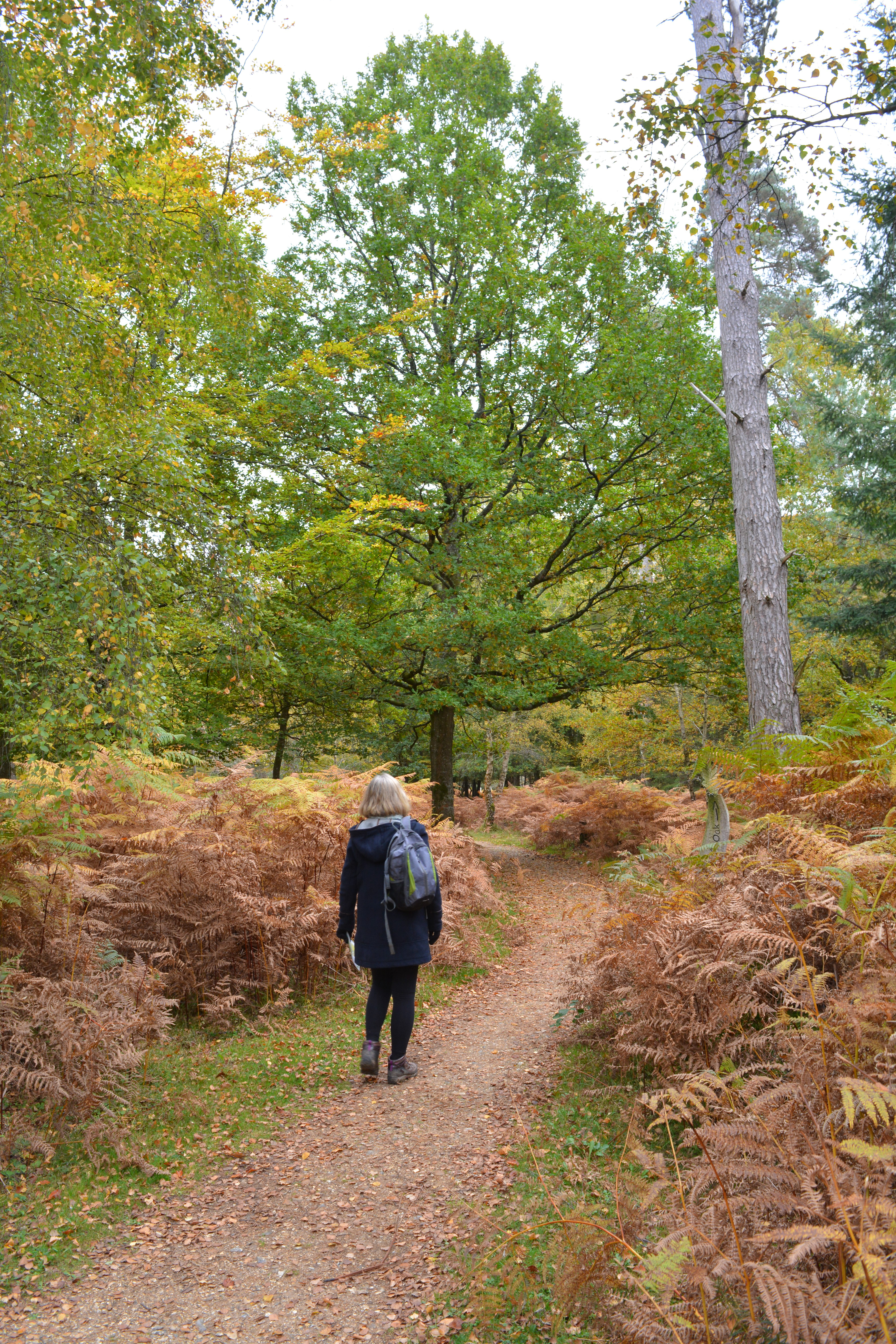
Our first day excursion was to a Forestry Commission area of woods and heathland with way-marked walks winding through it.

2015 10 19_6158

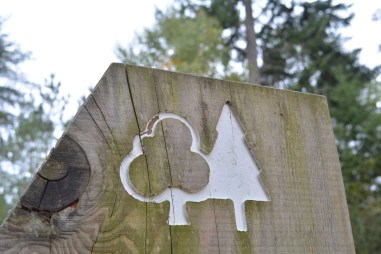
We set off firstly in search of the Knightwood Oak the oldest oak in the New Forest which reached maturity during the reign of Henry VIII. We followed the posts marking the way, rather beautiful way markers carved in wood.

2015 10 19_6064 2015 10 19_6065 2015 10 19_6066 2015 10 19_6067 2015 10 19_6069 2015 10 19_6070

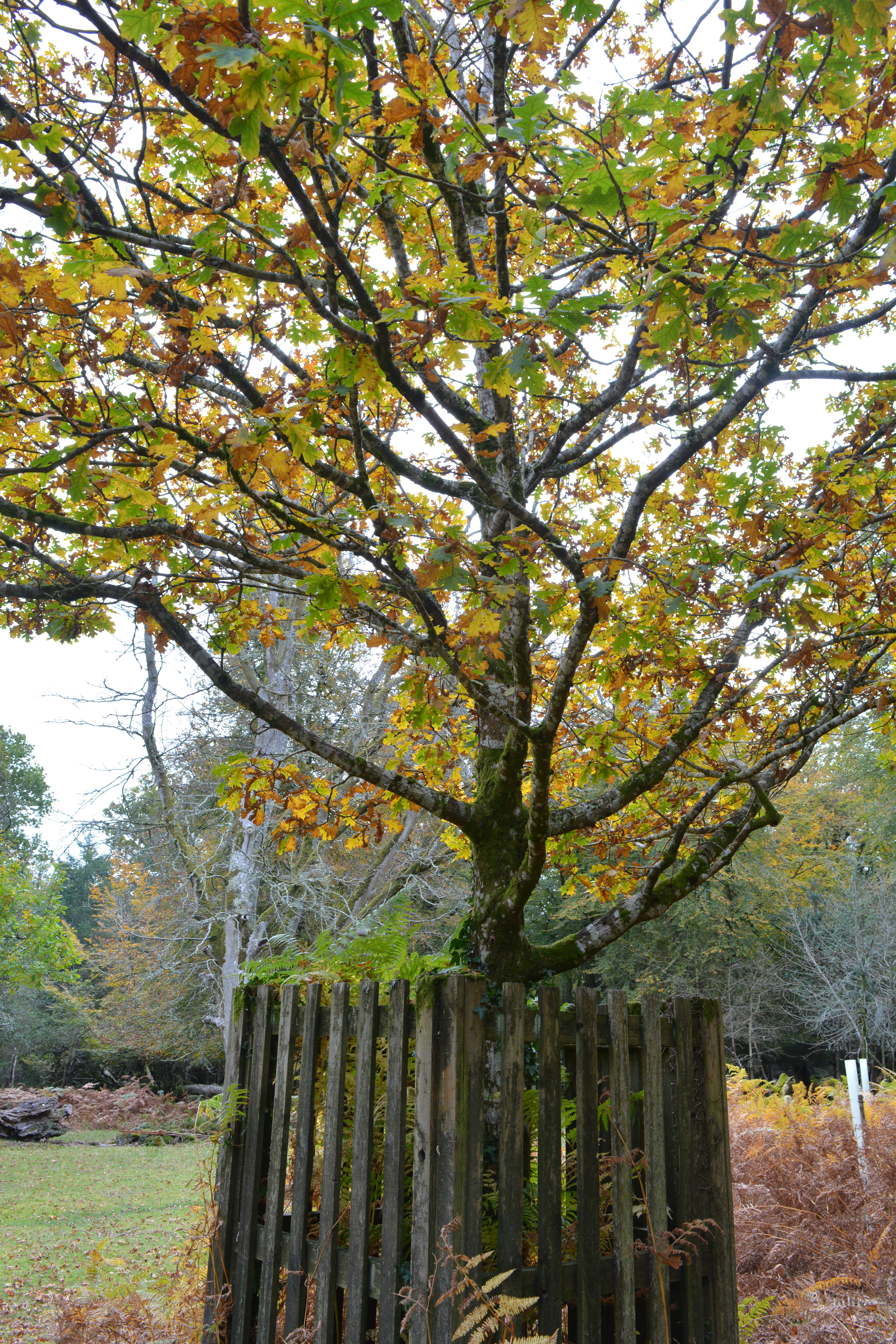
Among the hundreds of oak trees here we passed two other significant oaks on the way, celebrating important moments in the forest’s history. Firstly the Queen’s Oak was planted by Queen Elizabeth II to commemorate the 900th anniversary of the founding of the forest by William I in 1079. Secondly the Deputy Surveyor’s Oak planted to mark the contribution of a former Deputy Surveyor of the forest, Donn Small. The second oak was planted as a sapling from the Knightwood Oak itself. The ancient oak itself was surrounded by a chestnut paling fence to keep the public away from falling branches and to prevent the public from getting too close to the tree.

2015 10 19_6073 2015 10 19_6074 2015 10 19_6075  2015 10 19_6076 2015 10 19_6083

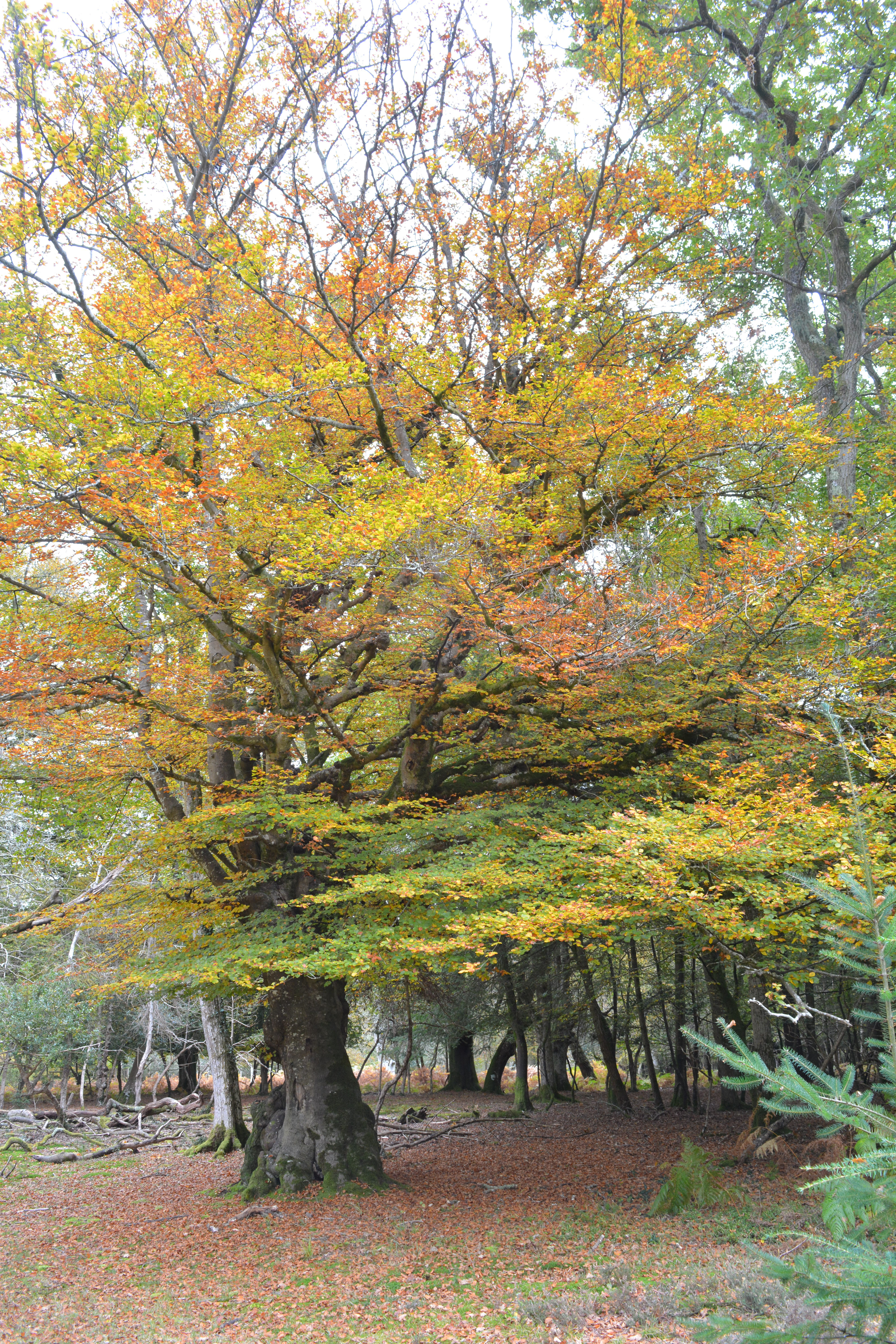
Although this was a forest of mature trees there were signs of regeneration throughout, little saplings of all the main species of trees, so its future looks secure.

2015 10 19_6078 2015 10 19_6094 2015 10 19_61432015 10 19_6096

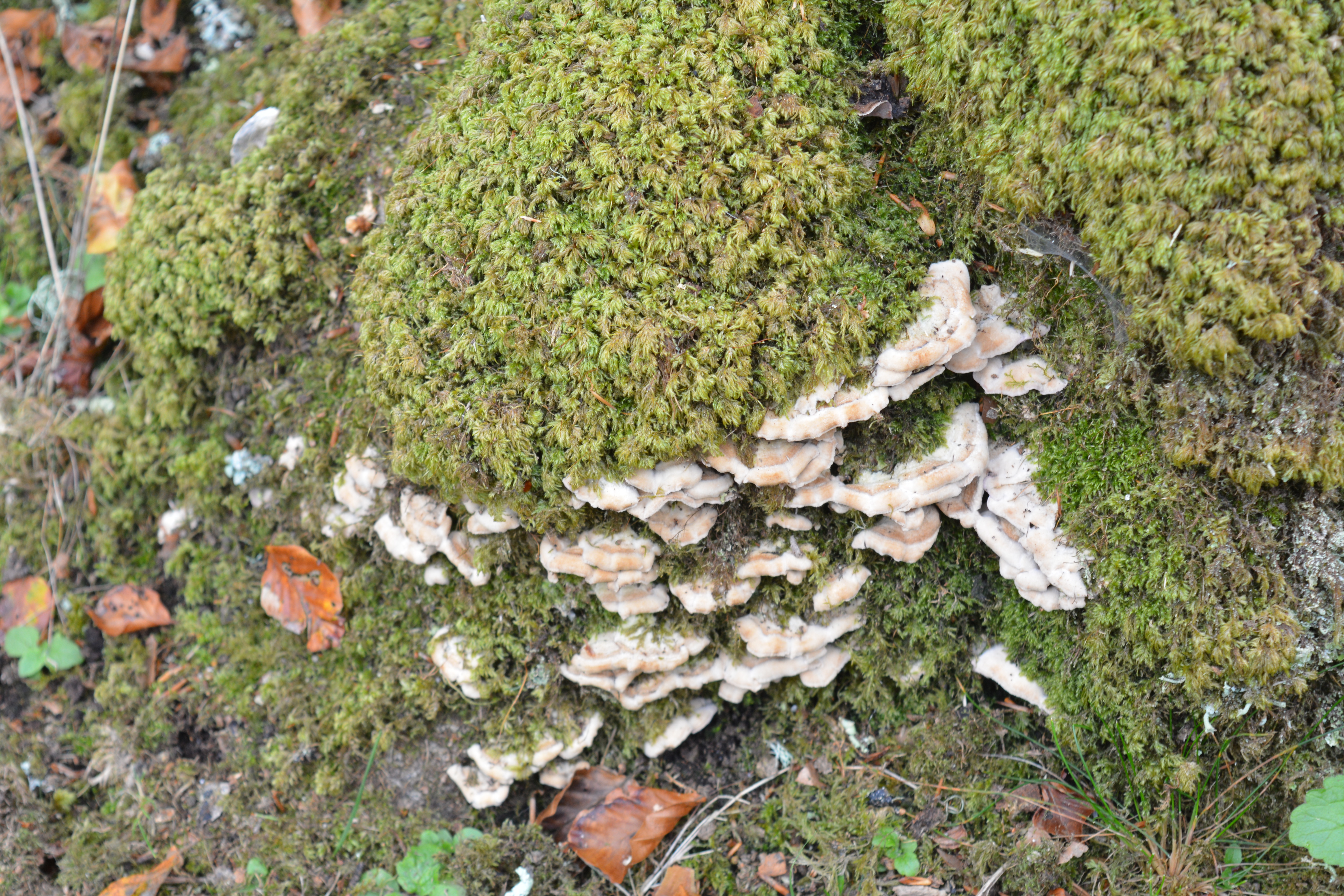
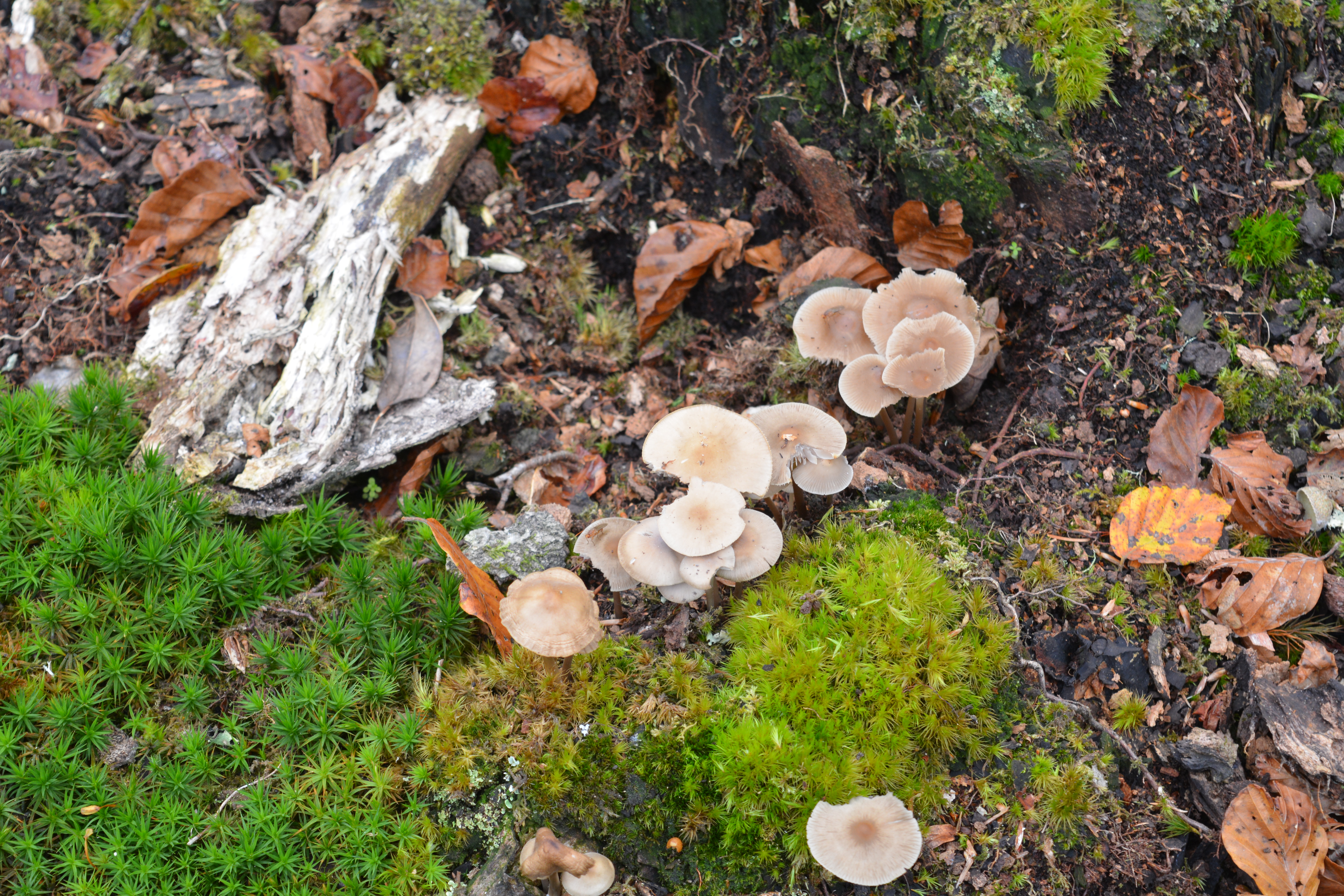
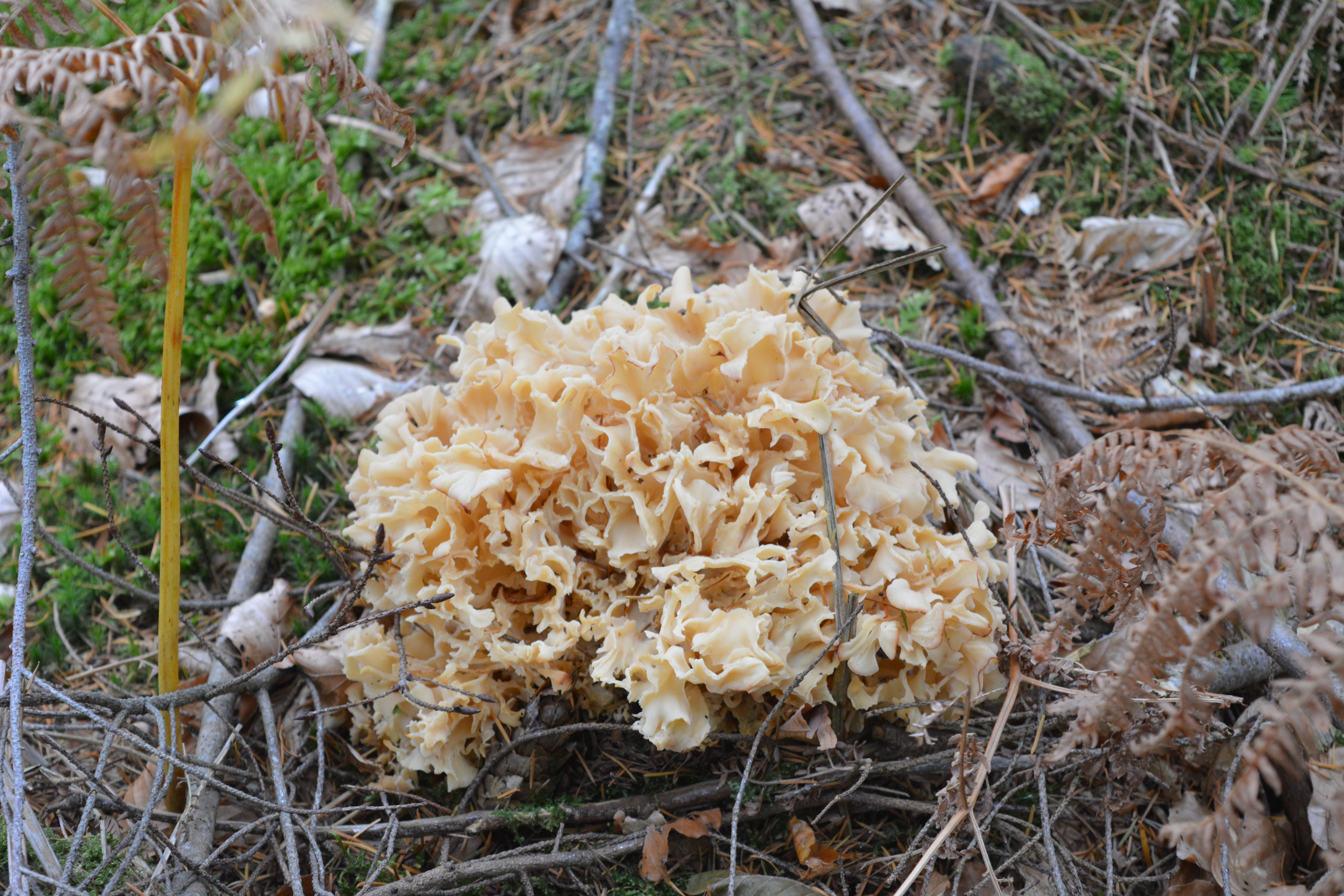
At the other end of the age scale we were pleased to see that dead and dying trees were being left for the benefit of wildlife, insects, birds and of course the many fungi that live in woodlands breaking down and decomposing dead wood.

2015 10 19_6089 2015 10 19_6093 2015 10 19_6095 2015 10 19_6130 2015 10 19_6101 2015 10 19_6099 2015 10 19_6098 2015 10 19_6082 2015 10 19_6081 2015 10 19_6080 2015 10 19_6079 2015 10 19_6131

In my next post about the New Forest we will continue walking this walk deeper into the woodland and across heathland until we found our way back to the car park.

Categories
countryside landscapes meadows trees

Somerset Willows

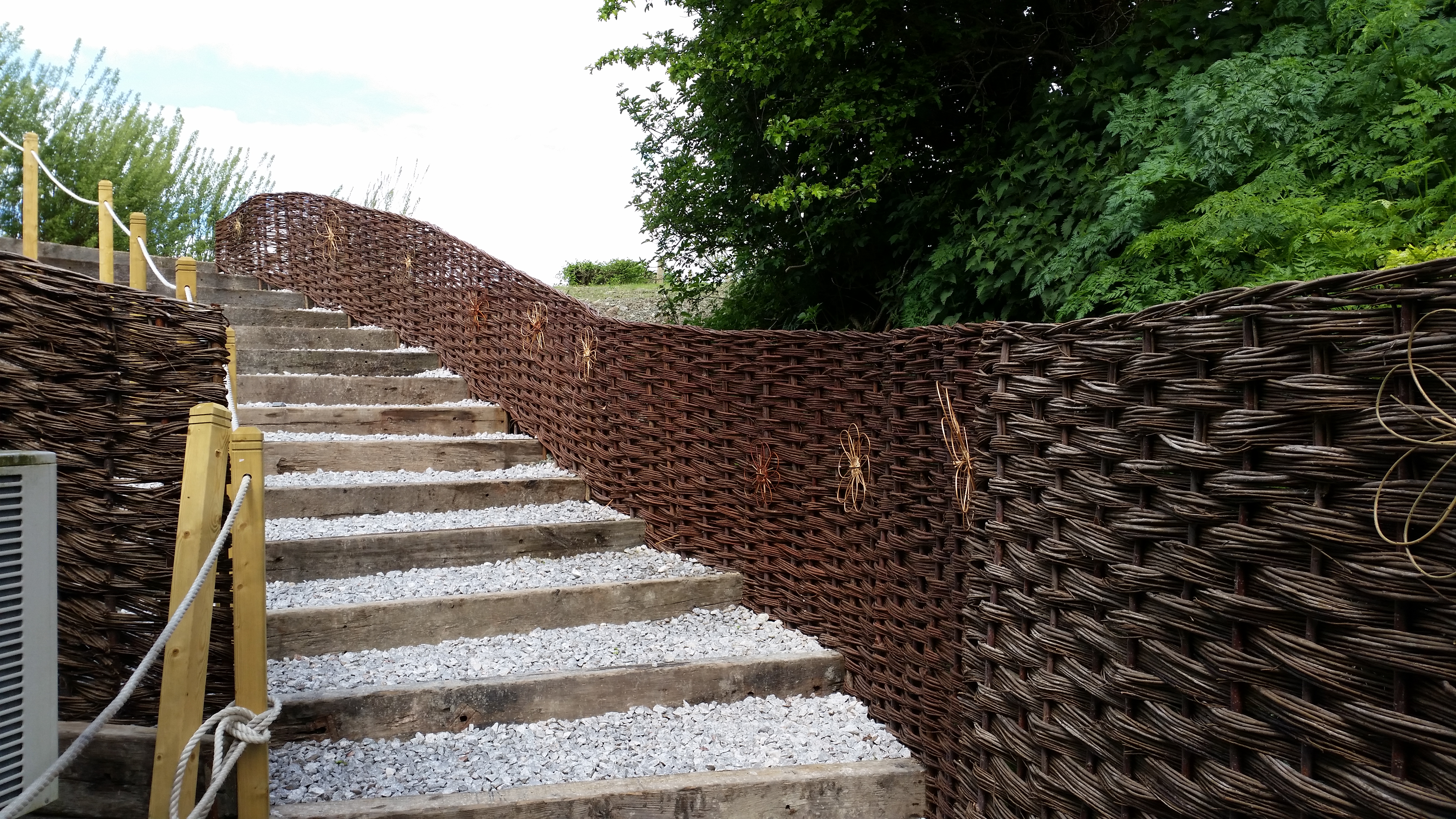
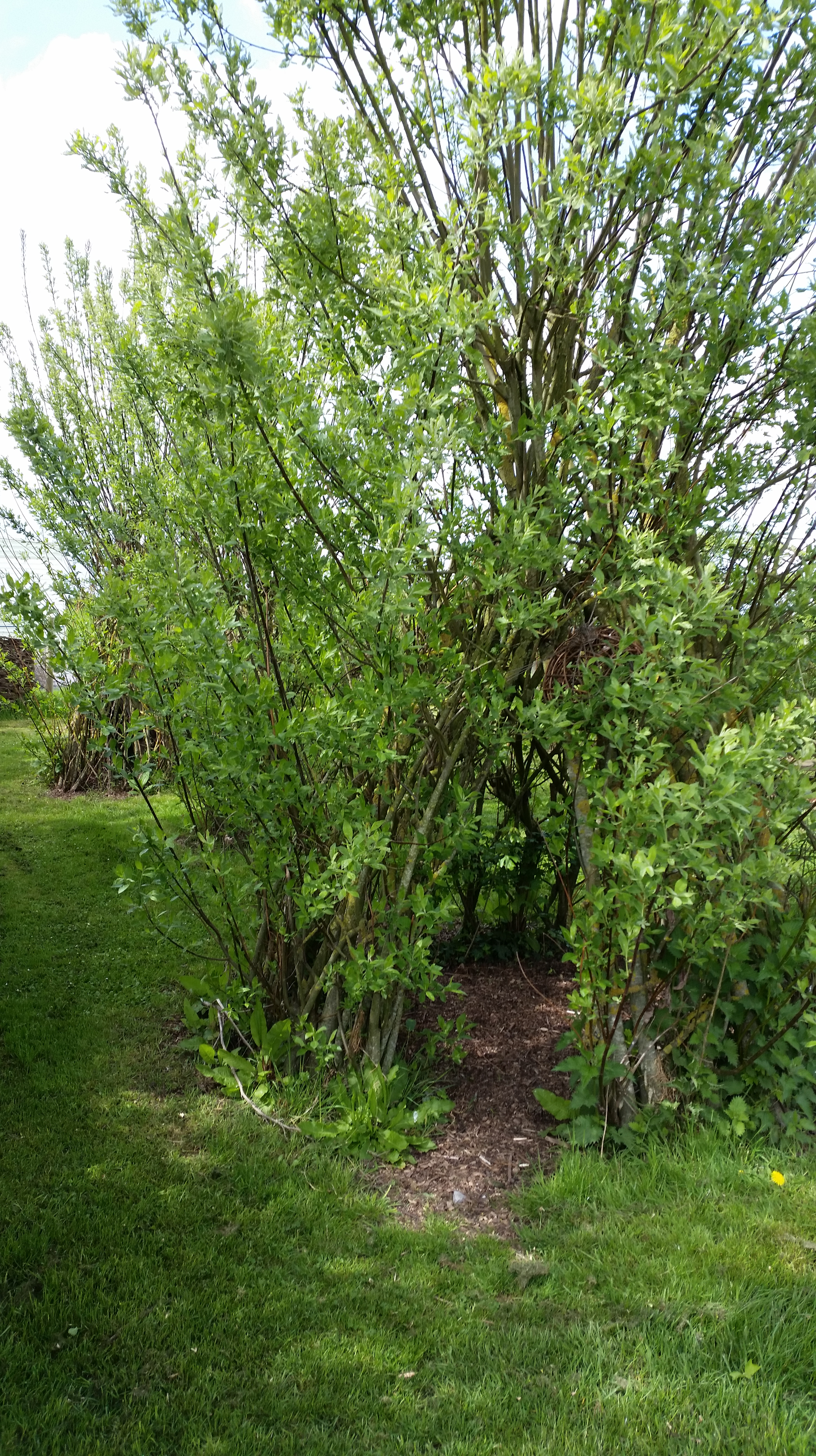
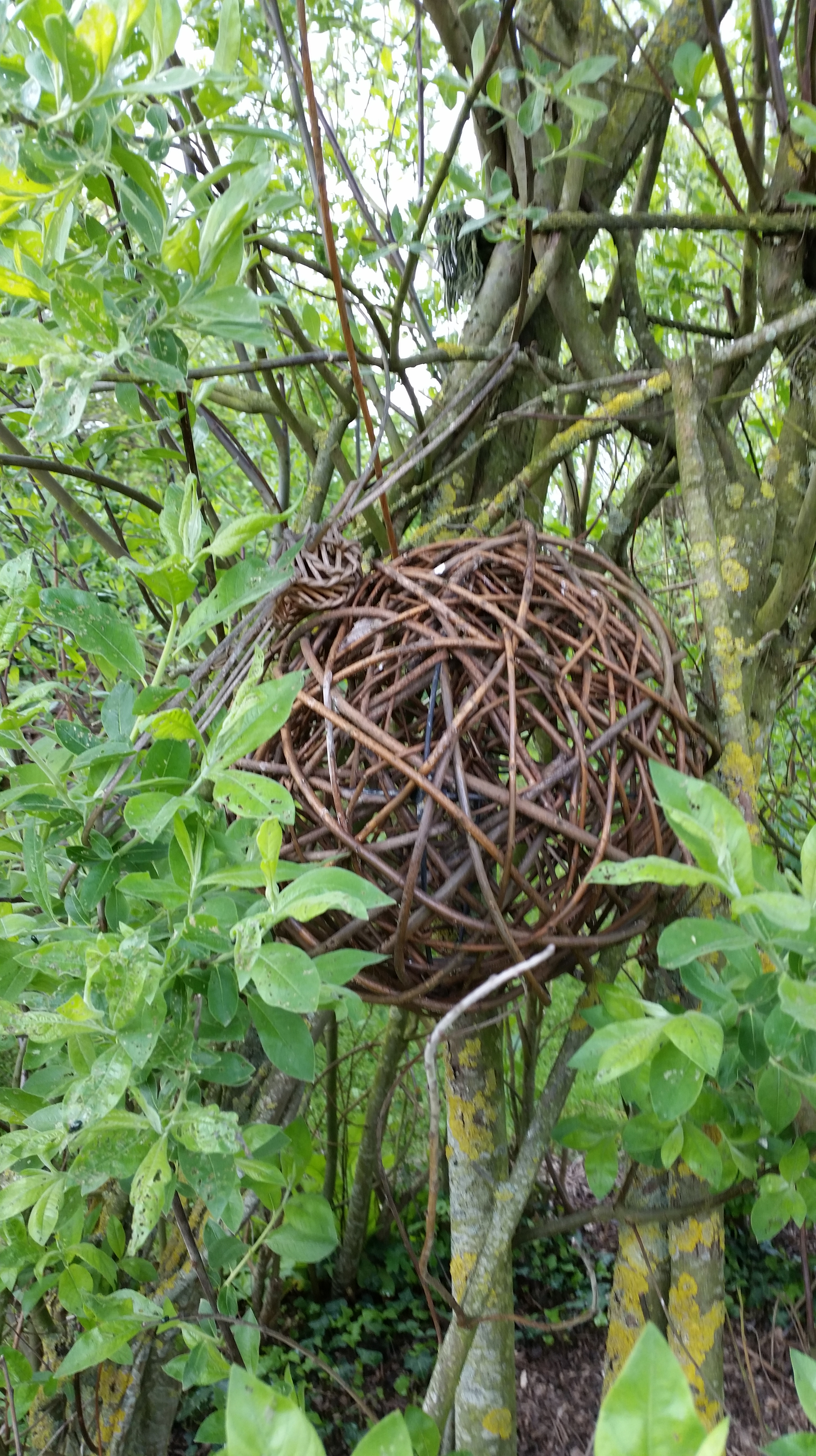
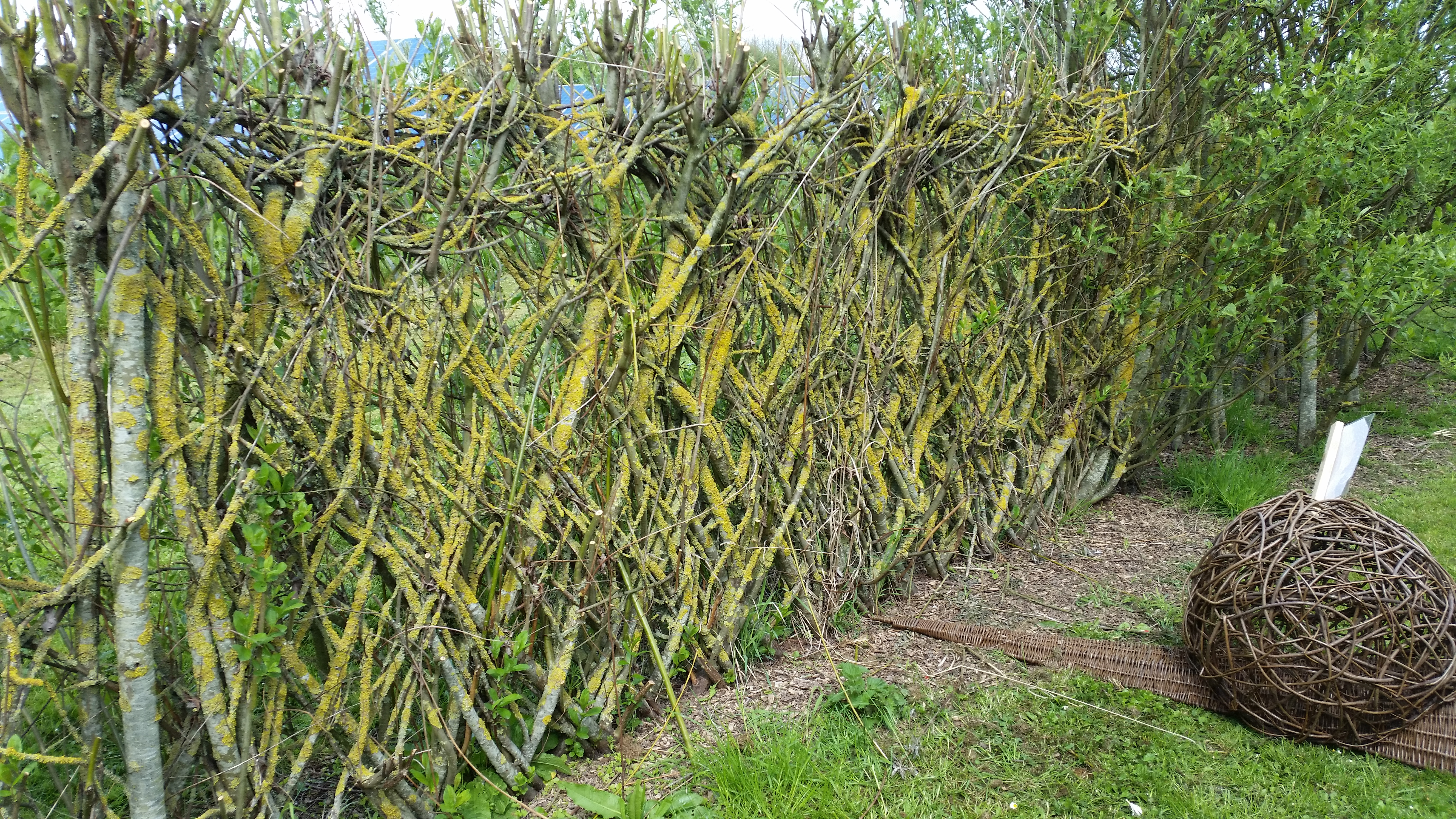
I love Salix (willows) – they are one of my favourite trees almost on a par with Betulas (Birches). I always have liked them, our own native species and the garden varieties we can grow. We have several at home in our garden and use them on our allotment communal gardens where we have a Withy Bed with 17 different varieties with different coloured stems and leaves. From these we have made a Fedge, which is a living hedge and a Willow Dome and Willow Tunnel for the children.

I used to like seeing them as a child when I fished a local stream. We moved from one ancient gnarled willow to another. Many were hollow pollarded specimens completely open on one side. We explored the hollow ones as we could often get inside them and look up at the sky. They were great shelters when rain showers stopped us fishing.

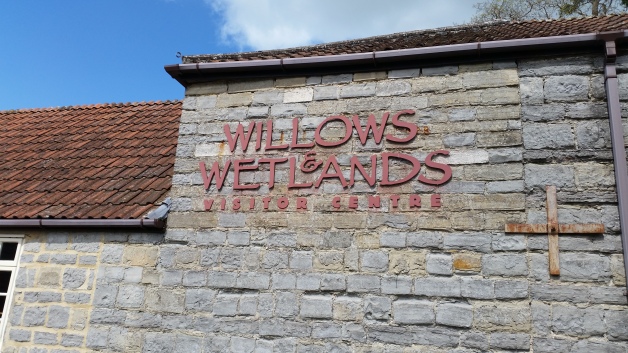
When we found ourselves in Somerset we realised that we were close to the Wetland and Willows Centre, so we just had to drop by and have a wander.

2015 05 11_1519

We followed  a sign taking us for a tour around the productive land around the centre. We passed over a bridge with sides constructed from willow with decorative willow features within.

2015 05 11_1465 2015 05 11_1466

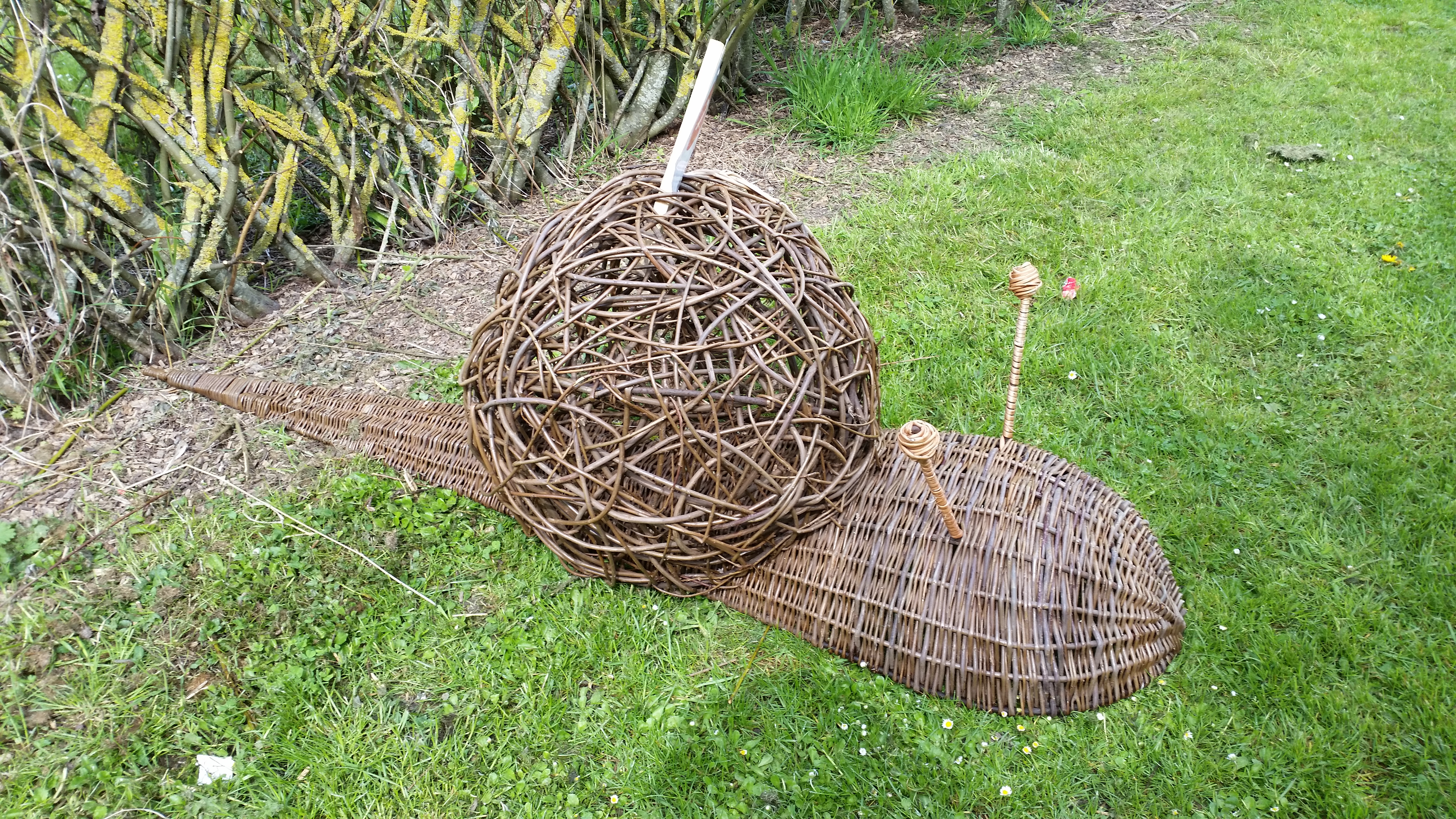
The path took us to an area full of willow structures mainly places for children to explore, even including a willow snail!

2015 05 11_1467 2015 05 11_1468 2015 05 11_14702015 05 11_1469  2015 05 11_14742015 05 11_1472 2015 05 11_1473


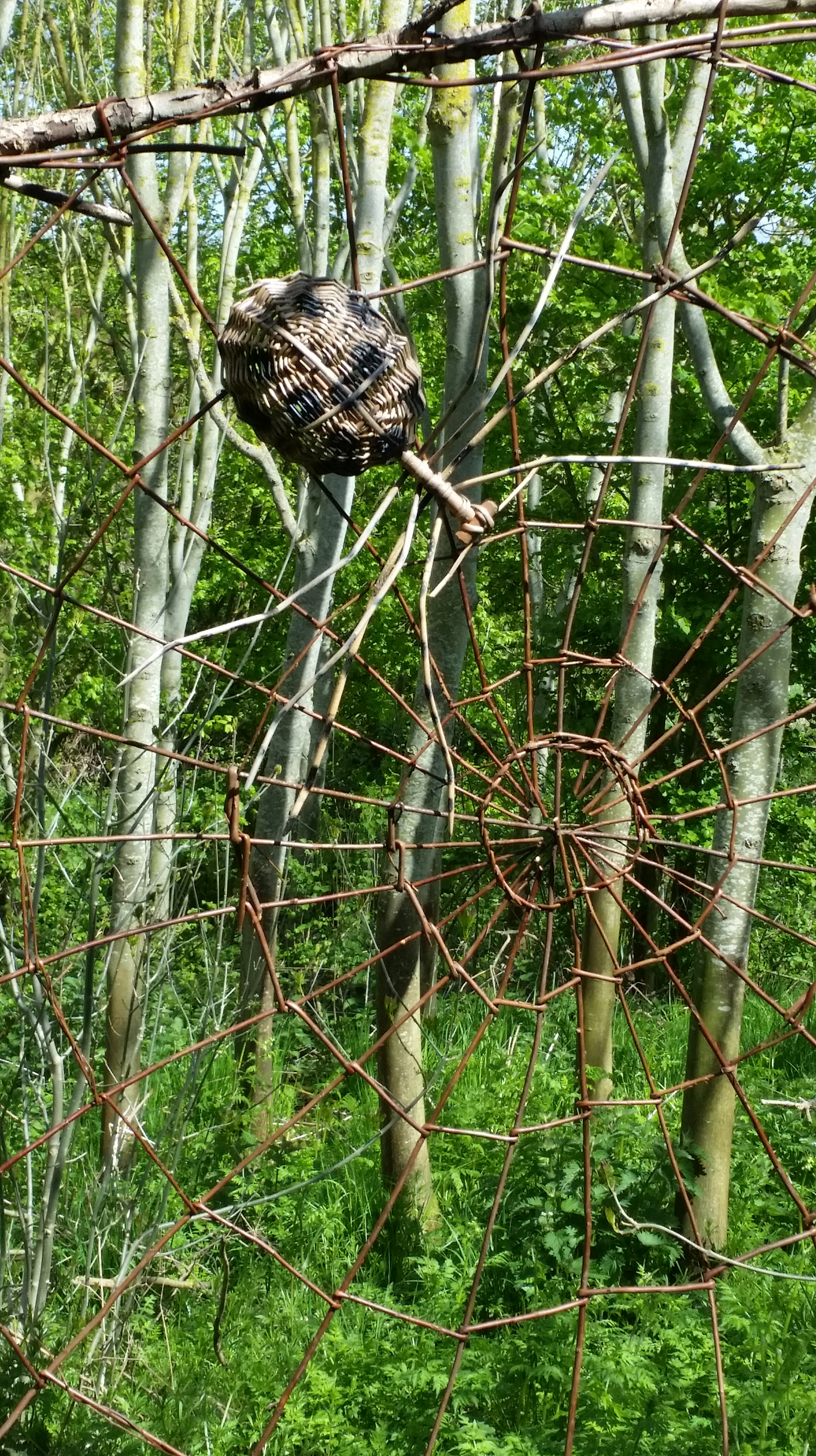
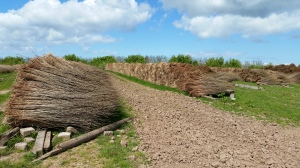
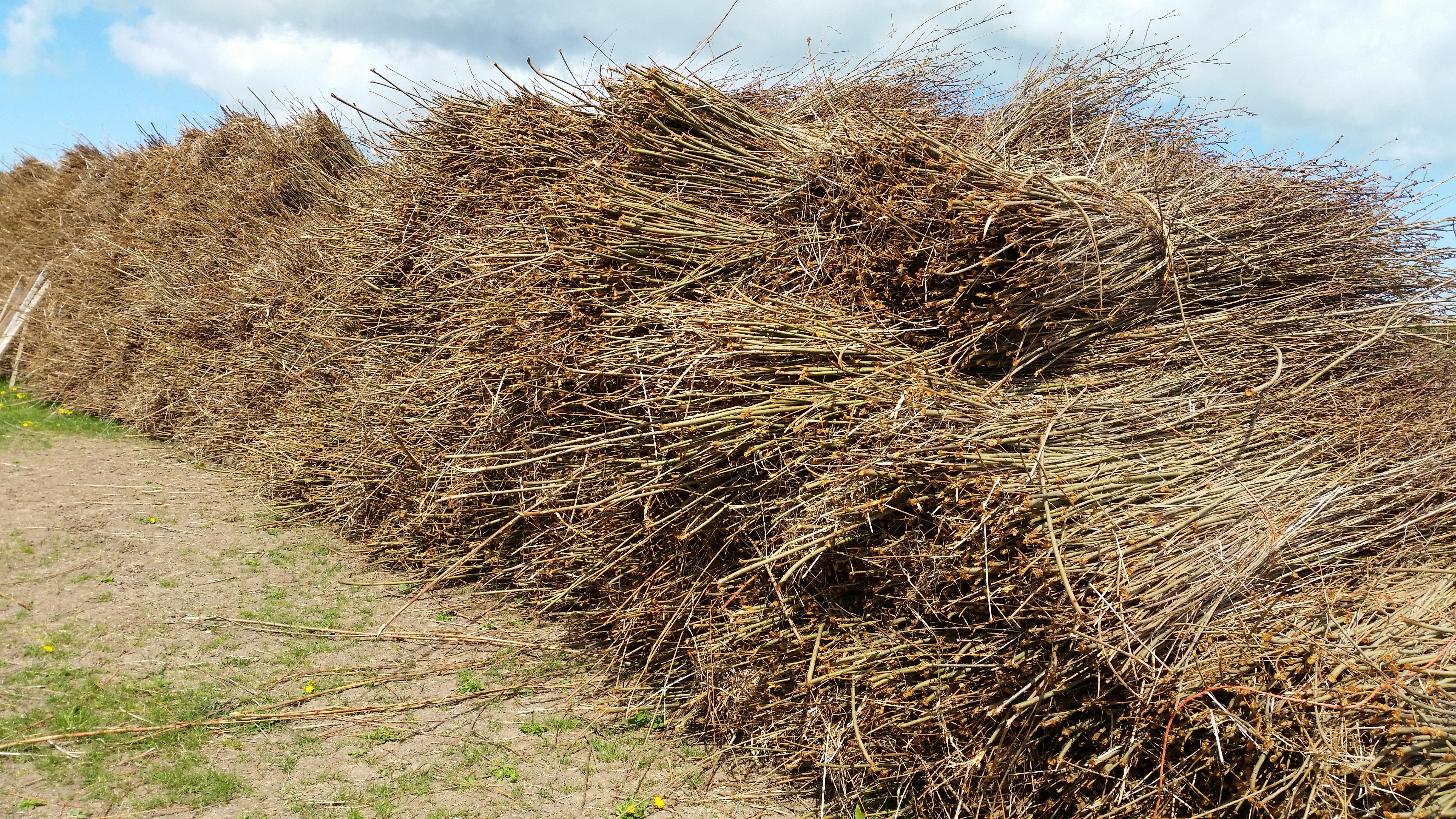
As we moved on we came across a willow drying fence where the harvested willows were hung out to dry. A little further on as we made our way through a wooded area we found this willow spider in its web, a beautiful hedgehog and a buzzard flying through the branches.

2015 05 11_1476 2015 05 11_14782015 05 11_1481

2015 05 11_1483 2015 05 11_1484 2015 05 11_1485

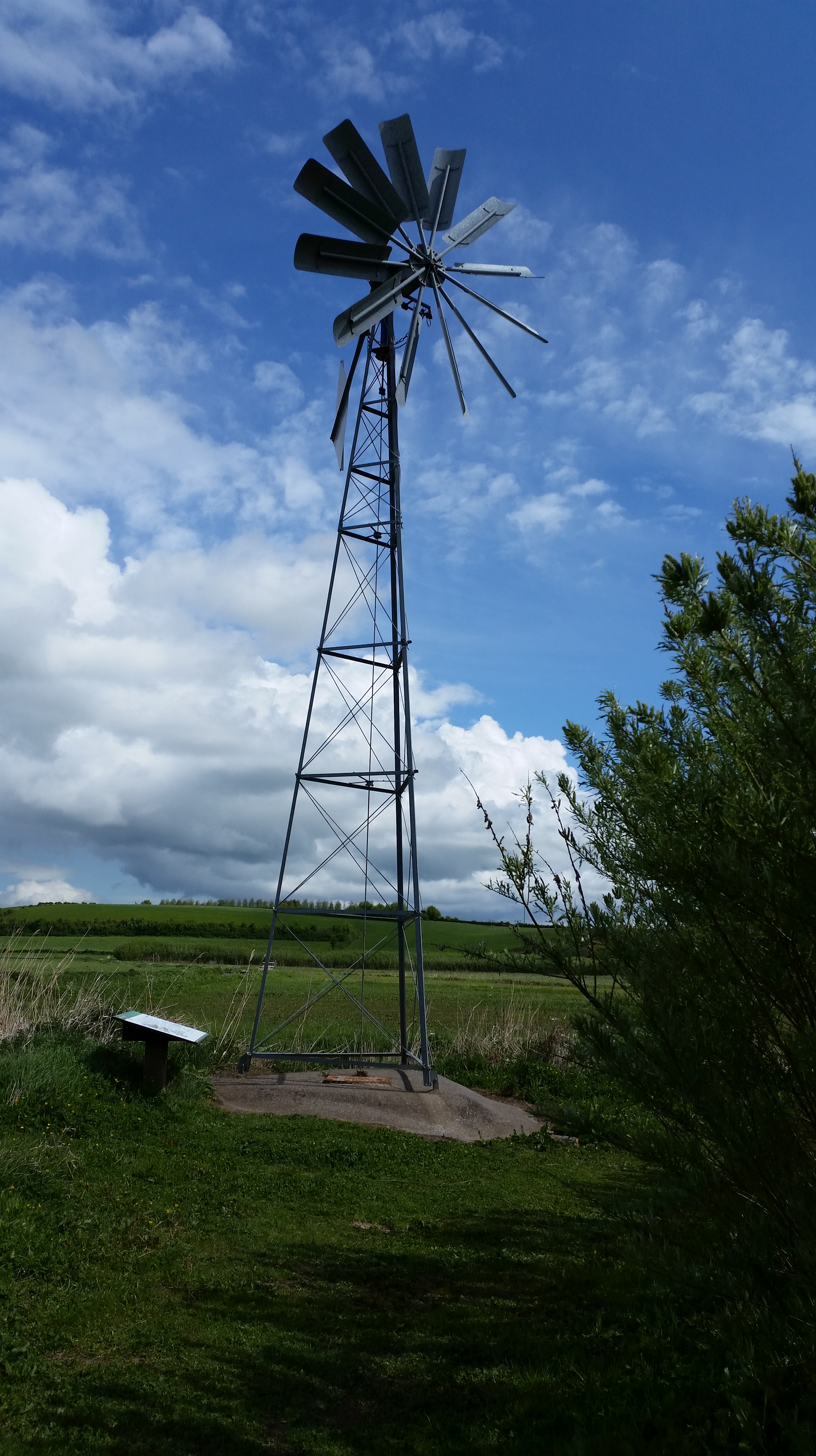
Leaving the wood we found ourselves walking through the wetlands, the drainage of which was controlled by windmills, sluices and a series of ditches. Large areas were willow plantations, the productive heart of the wetlands.


2015 05 11_1486 2015 05 11_1487 2015 05 11_1488 2015 05 11_1489 2015 05 11_1490 2015 05 11_1492


As we were reaching the end of our tour of the wetlands we discovered the drying racks where the harvested willow wands were left to dry.

2015 05 11_1501 2015 05 11_1500

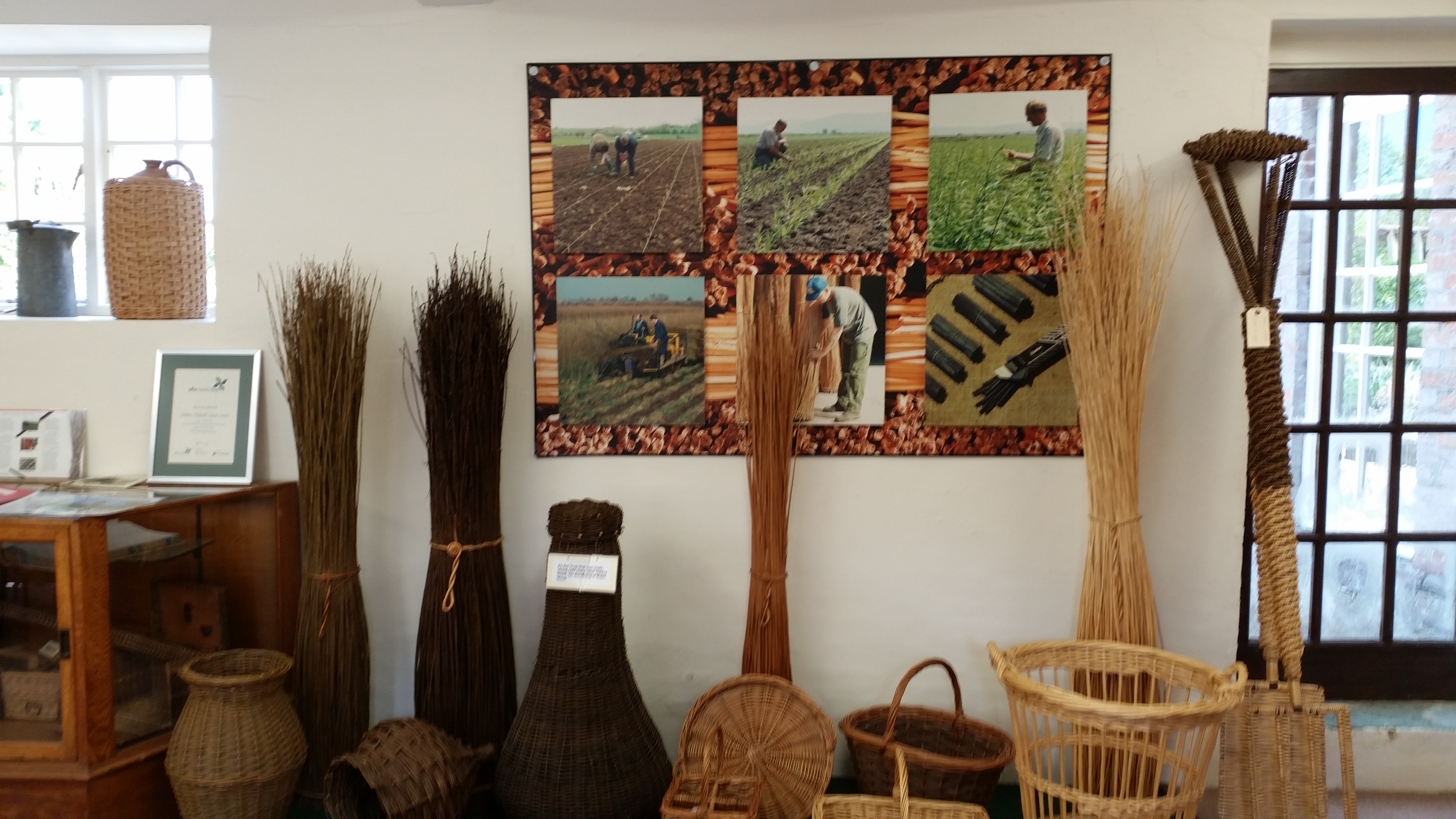
Before leaving we just had to look at the centre’s museum. We were amazed at how many things are made from willow and all the other items from the past. My first museum photo gives a taster of the delights in the museum. To find out more look through the gallery below. To enjoy my gallery just click on the first picture and use the arrows to negotiate your way through.

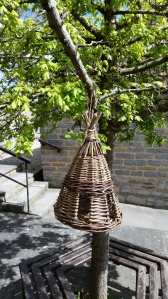
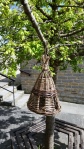
We enjoyed our visit to find out more about willows and came away simply amazed! We came away with this unusual willow bird table.

2015 05 11_1518

2015 05 11_1503


Categories
architecture countryside landscapes photography steam power Wales

A Birthday Excursion to The Welshpool and Llanfair Railway

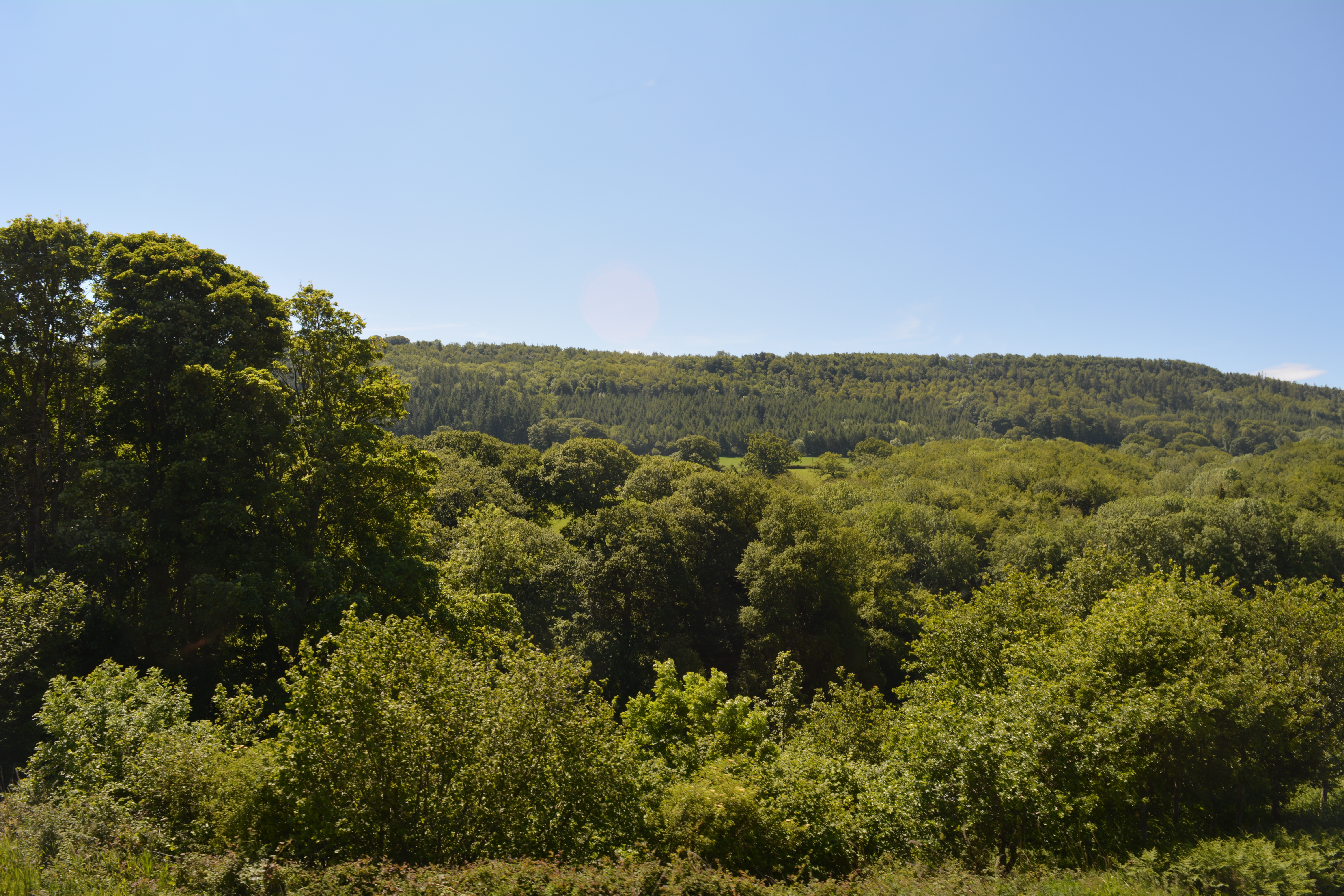
We usually go out somewhere on both of our birthdays so today being my birthday, Jude, The Undergardener, decided to take me on a nostalgic trip on an old steam railway line. We often pass the stations and see the track. At times while journeying down the River Banwy valley the track runs quite close to the road out into mid-Wales and towards some of our favourite stretches of coastline.

2015 06 16_2841

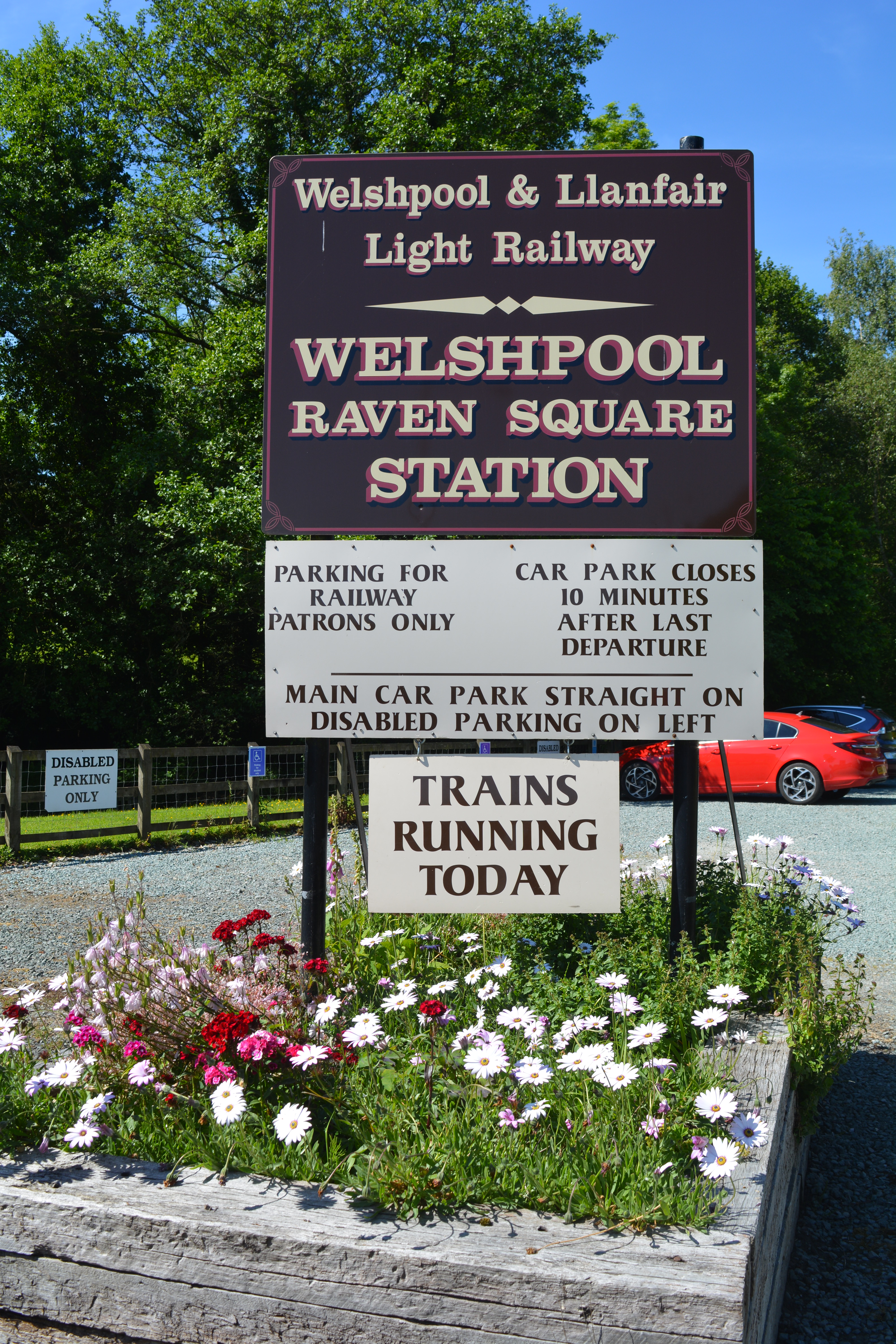
We drove in to the car park of the Welshpool Raven Square Station, parked up and bought our tickets, which were just like the ones we could remember as children, little card ones which the Guardsman clipped while we sat on the train waiting to leave.

2015 06 16_2844

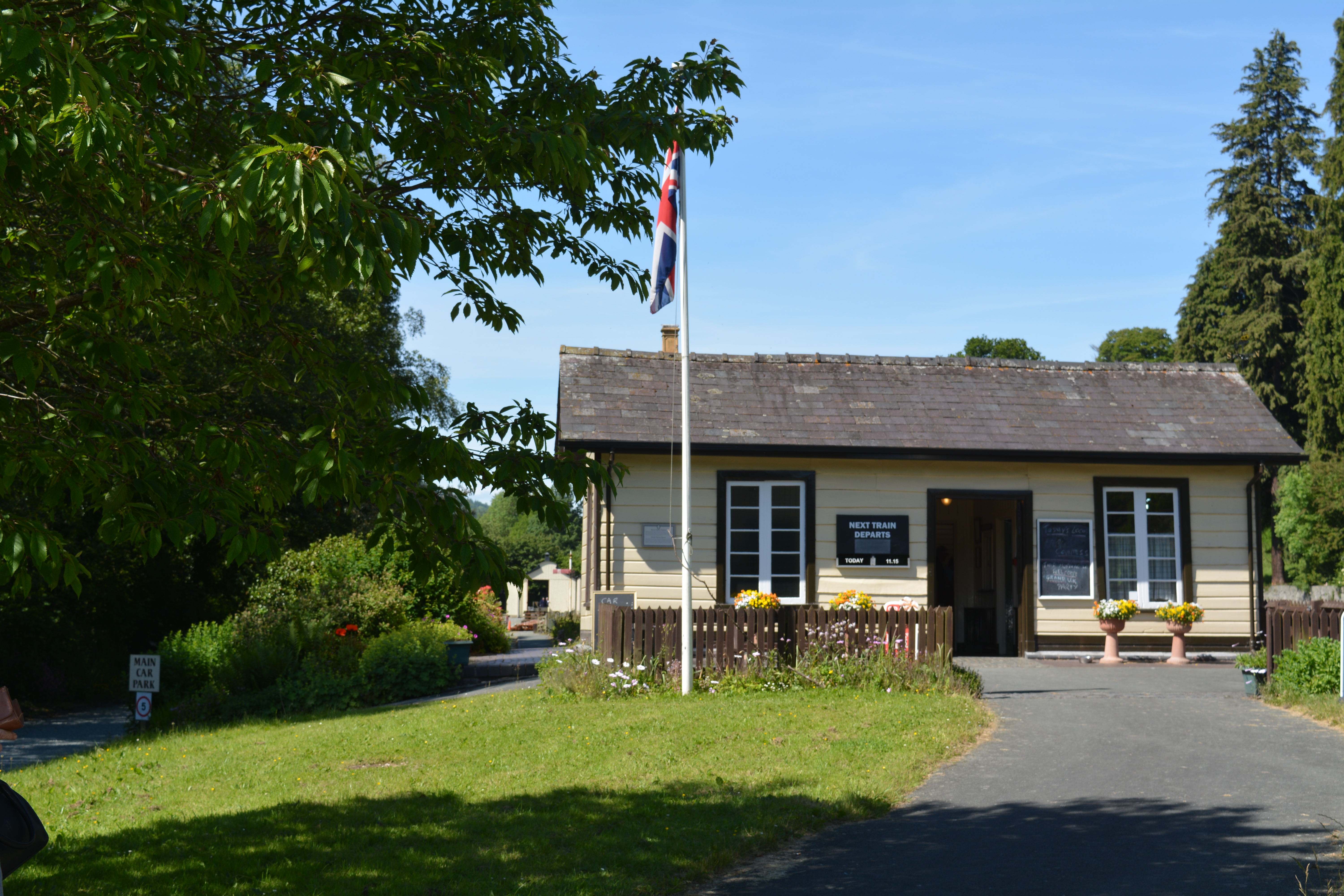
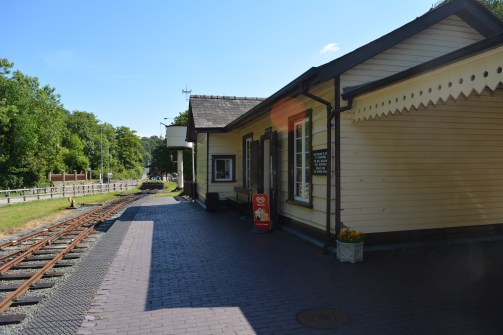
The station building looked so small as we wandered up the path once inside we discovered that a booking office and waiting room were squeezed into it. When we went through the station and onto the platform the building showed its true dimensions.

2015 06 16_2832 2015 06 16_28332015 06 16_2838

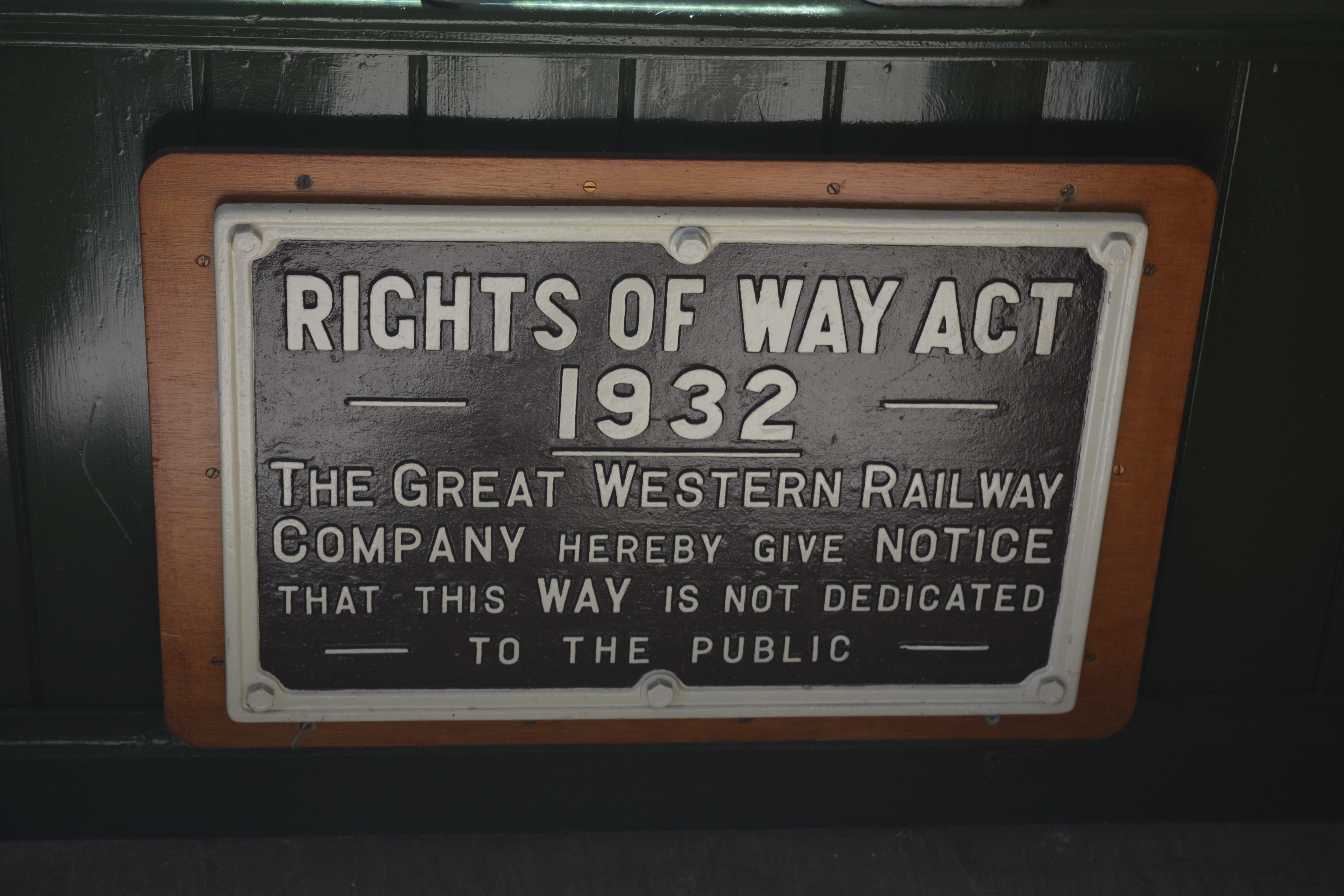
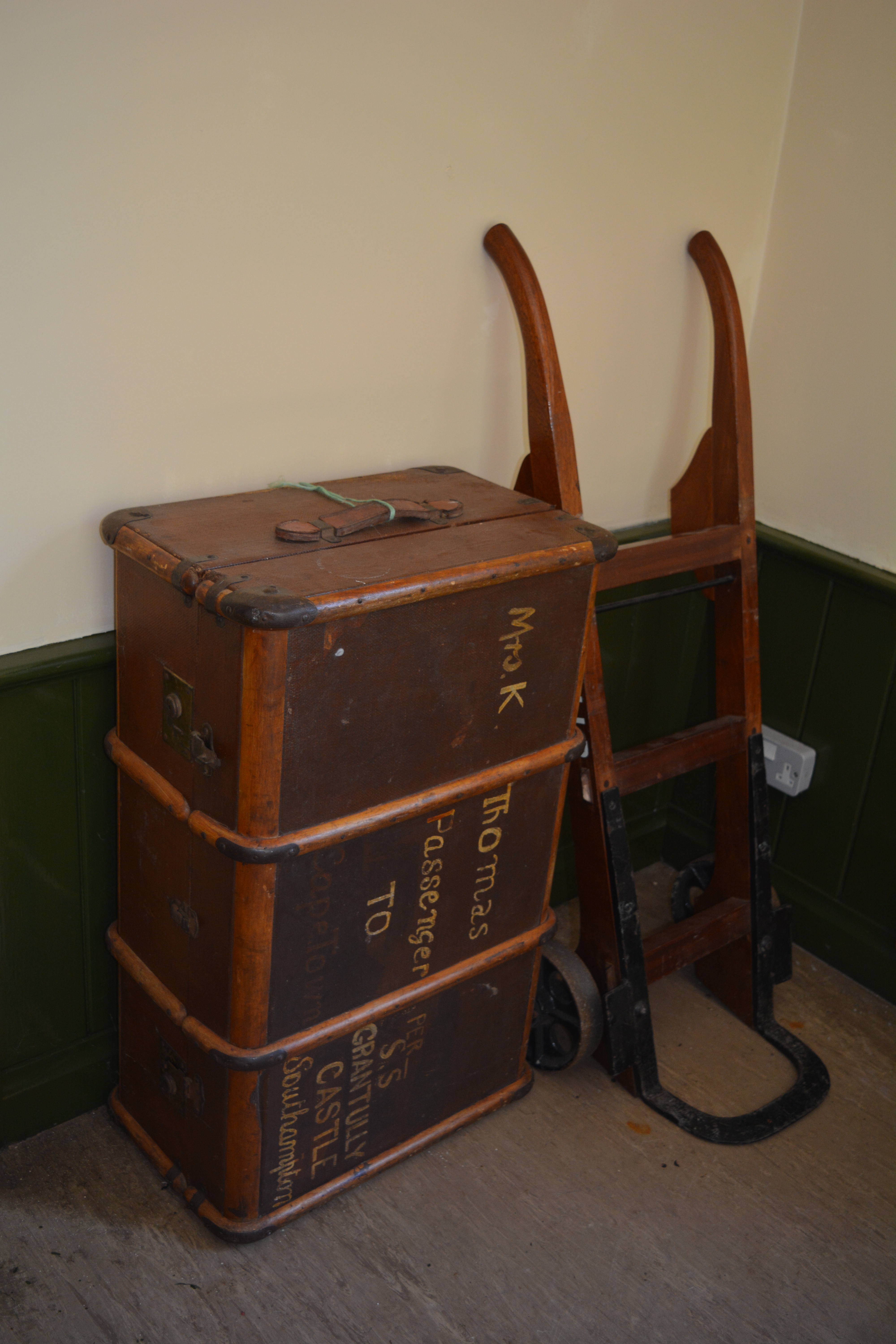
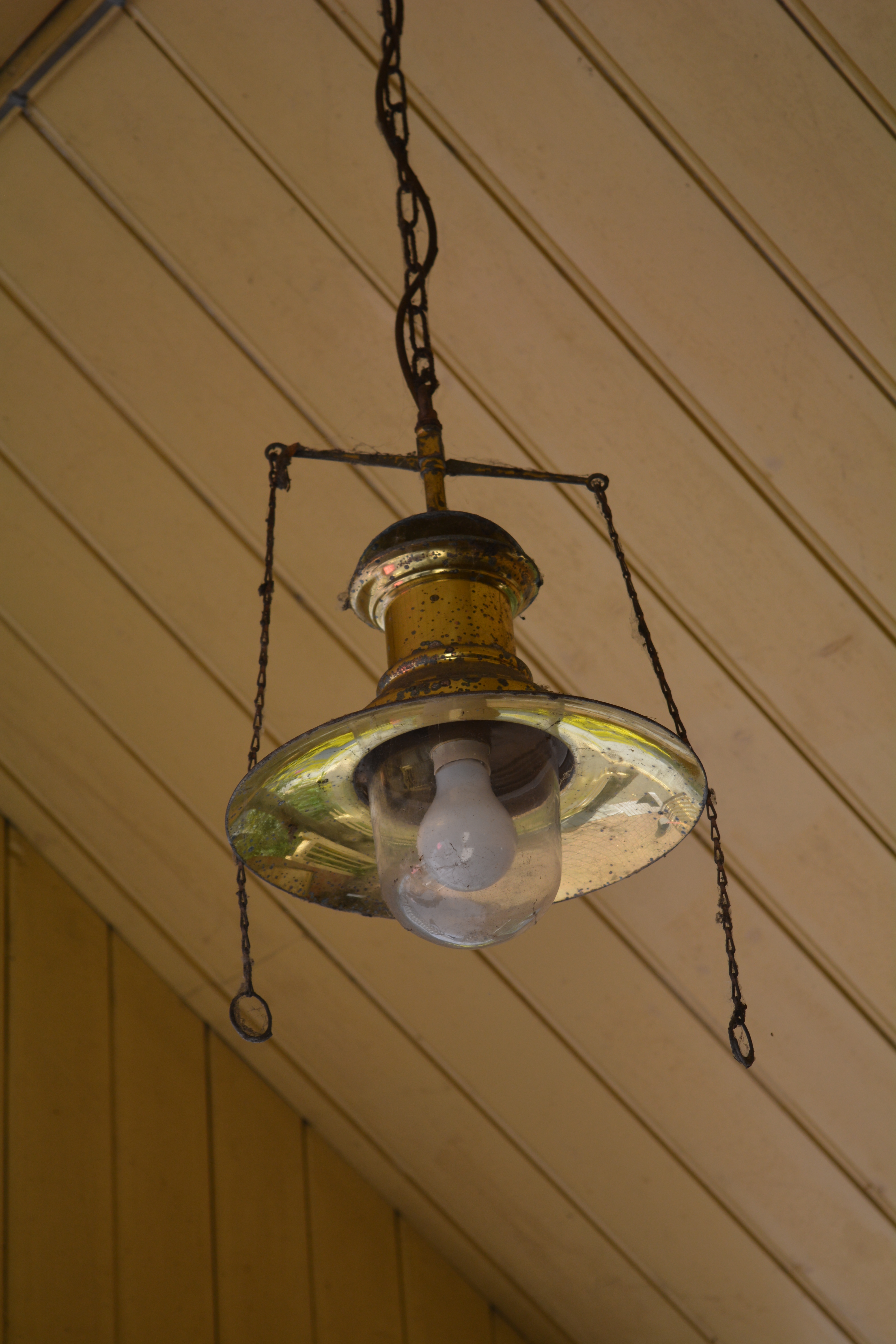
Interesting old signs caught our attention wherever we went. In the waiting room artifacts from the railway’s previous life added authentication.

2015 06 16_2836 2015 06 16_2835 2015 06 16_2837 2015 06 16_28402015 06 16_2834_edited-1 2015 06 16_2856_edited-12015 06 16_2861_edited-1

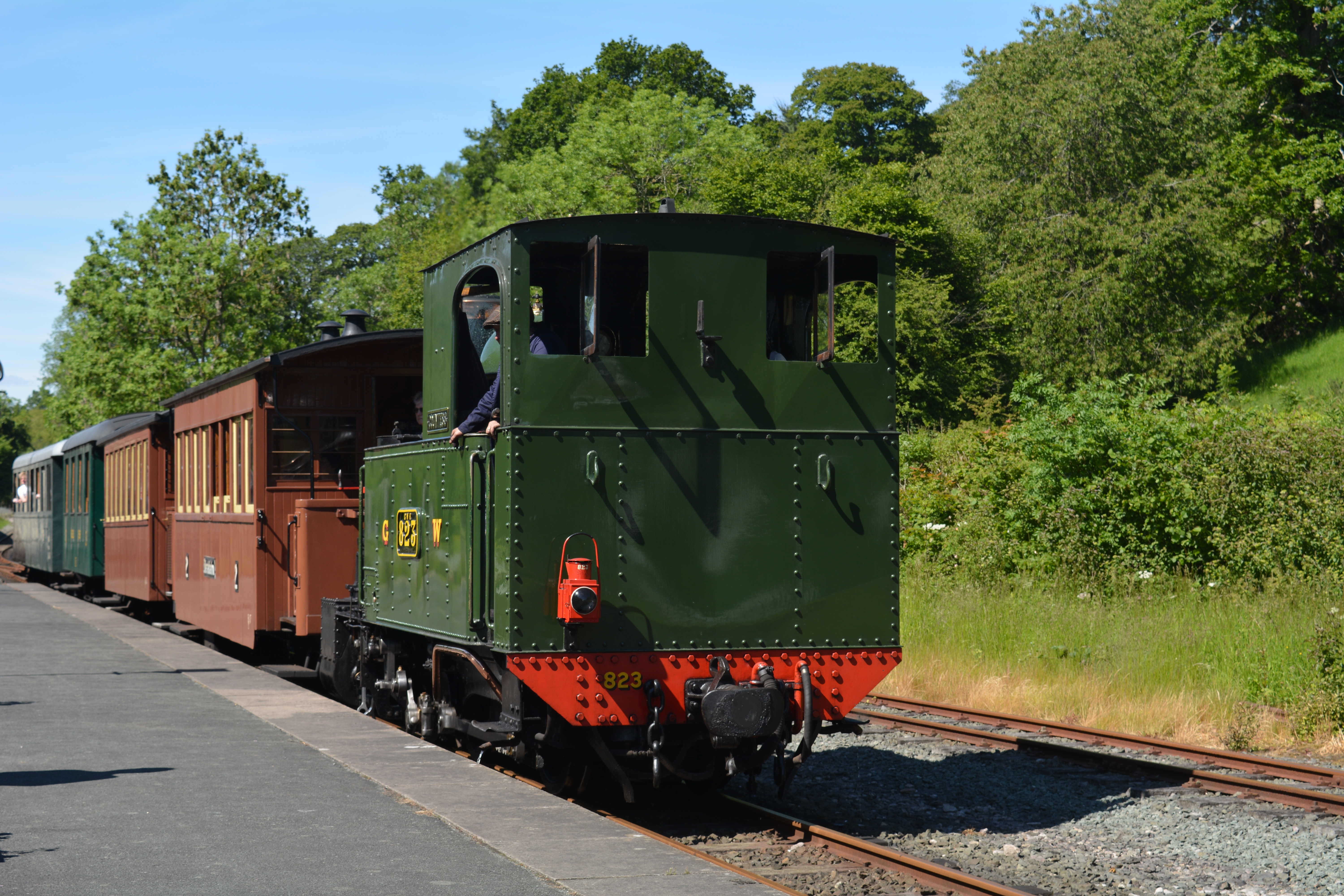
We didn’t have to wait long before we heard the hoot of the little steam engine approaching the platform.

2015 06 16_2842 2015 06 16_28462015 06 16_2843

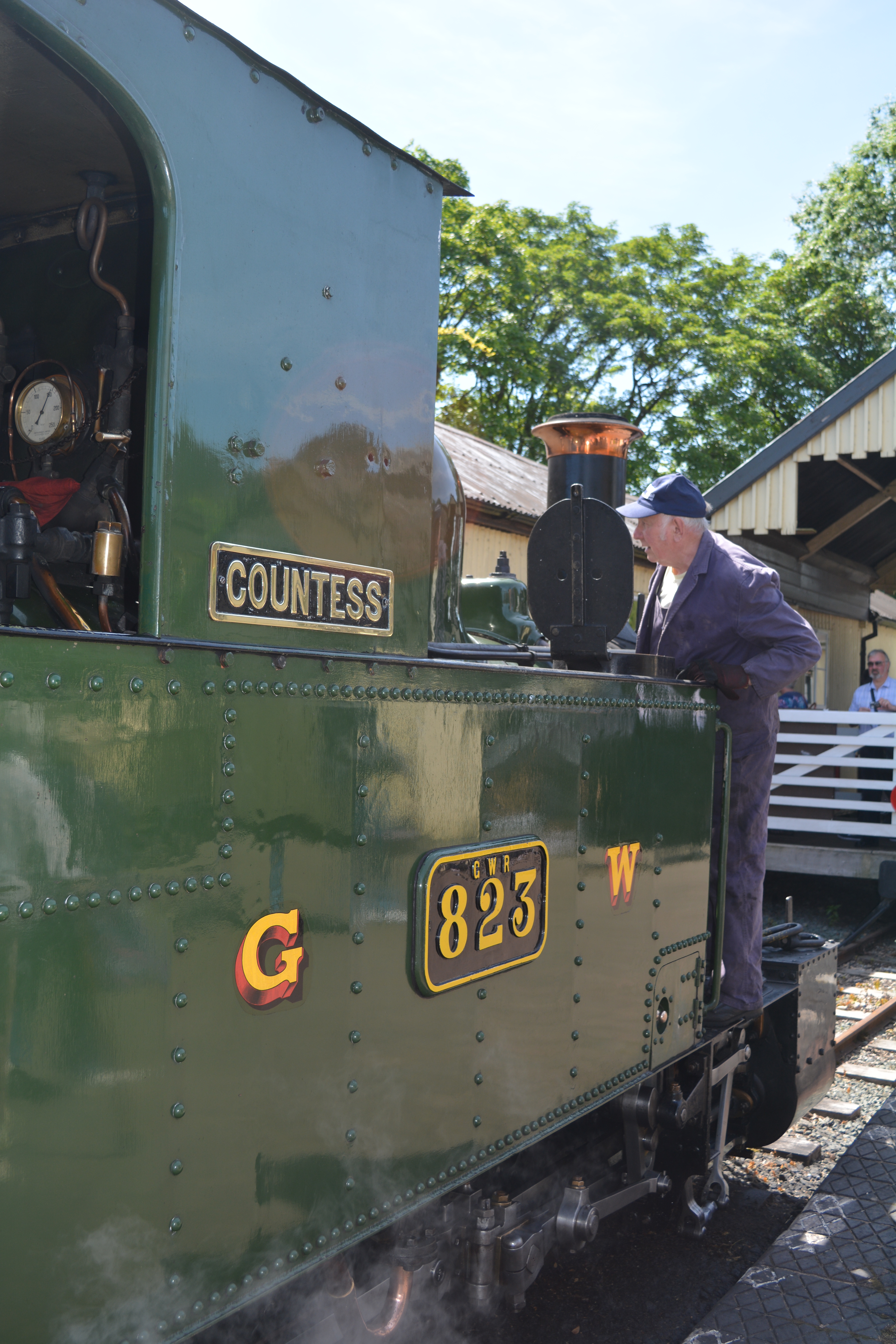
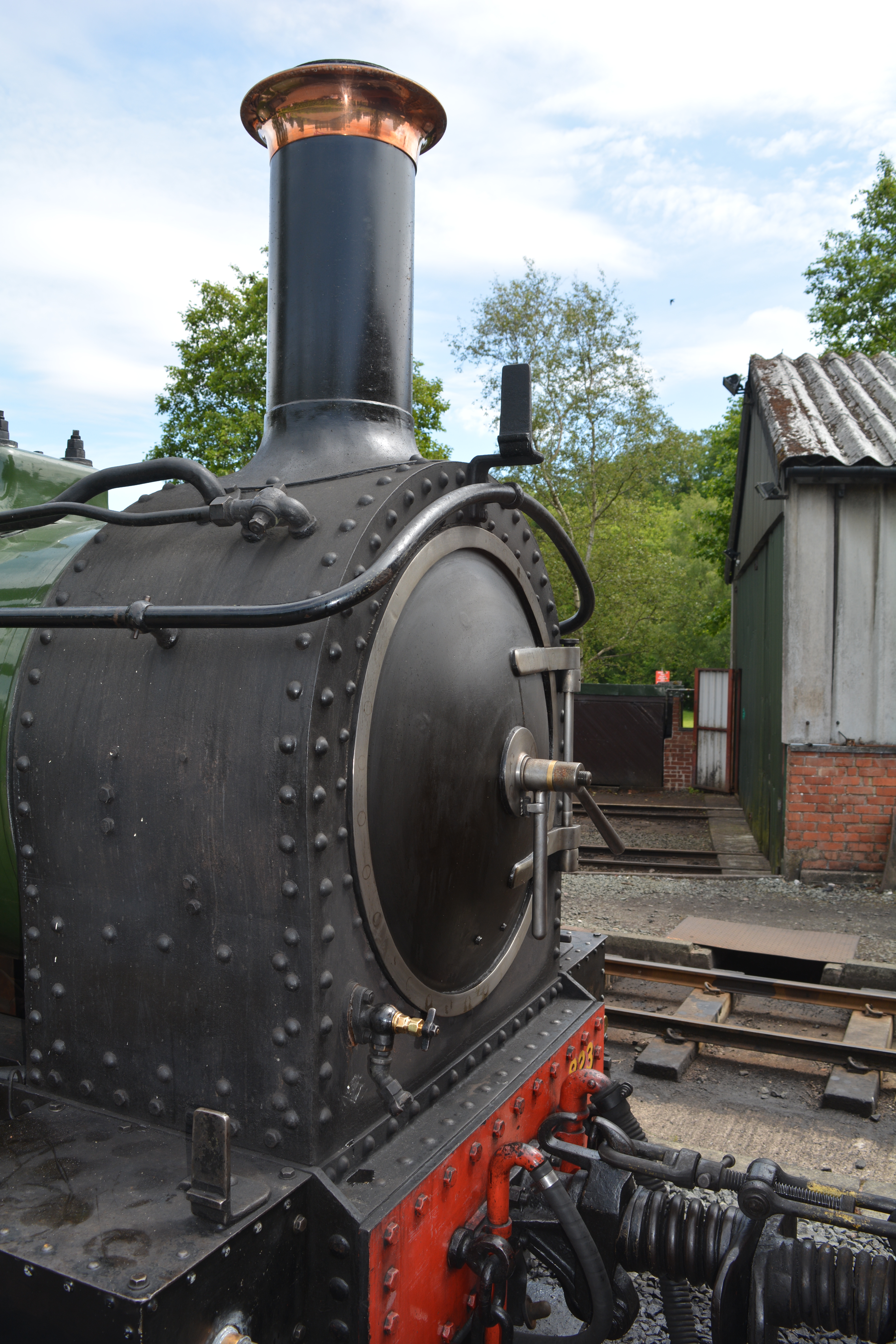
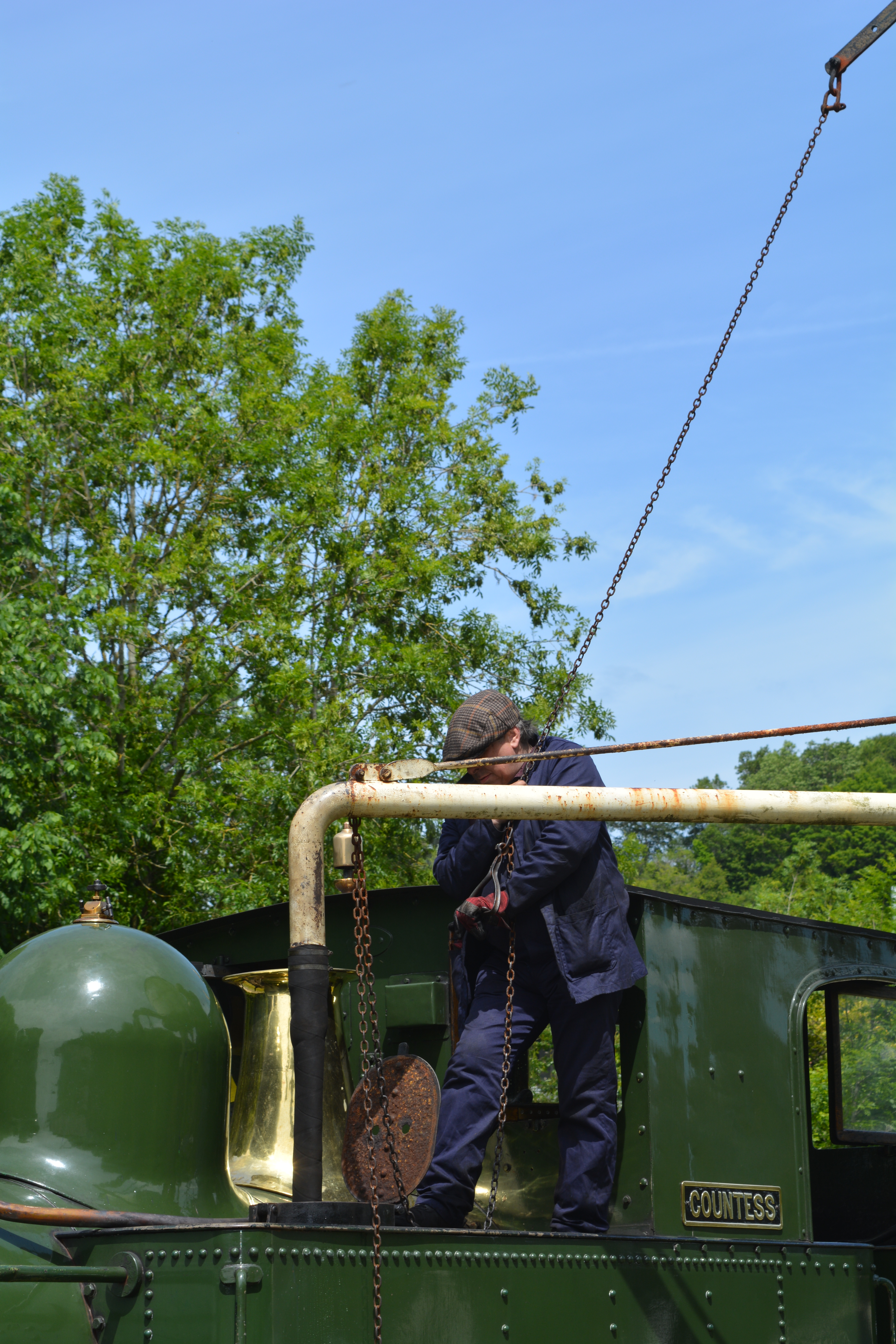
The little engine proudly displayed its name, Countess, on the side of its boilers.

2015 06 16_2852

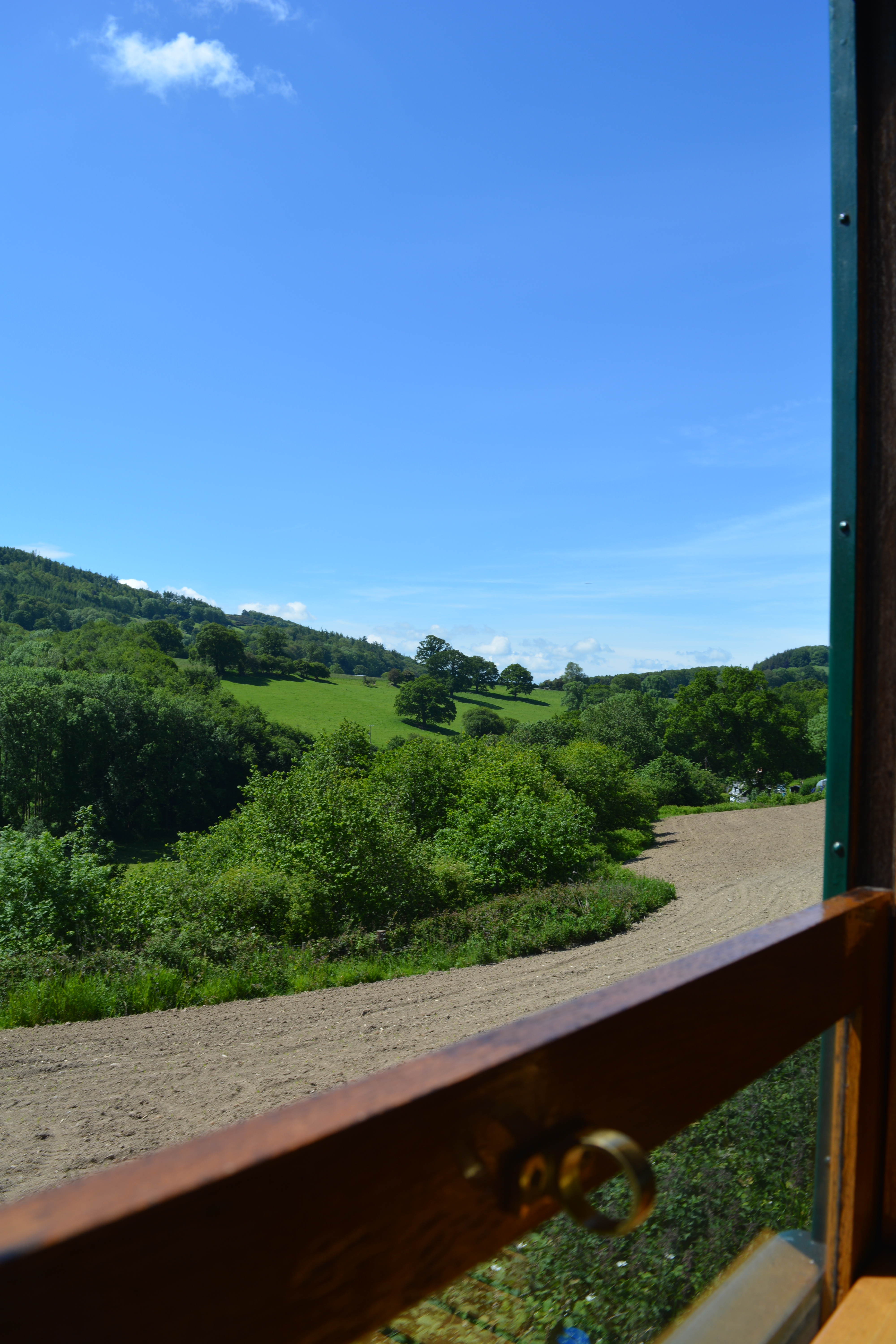
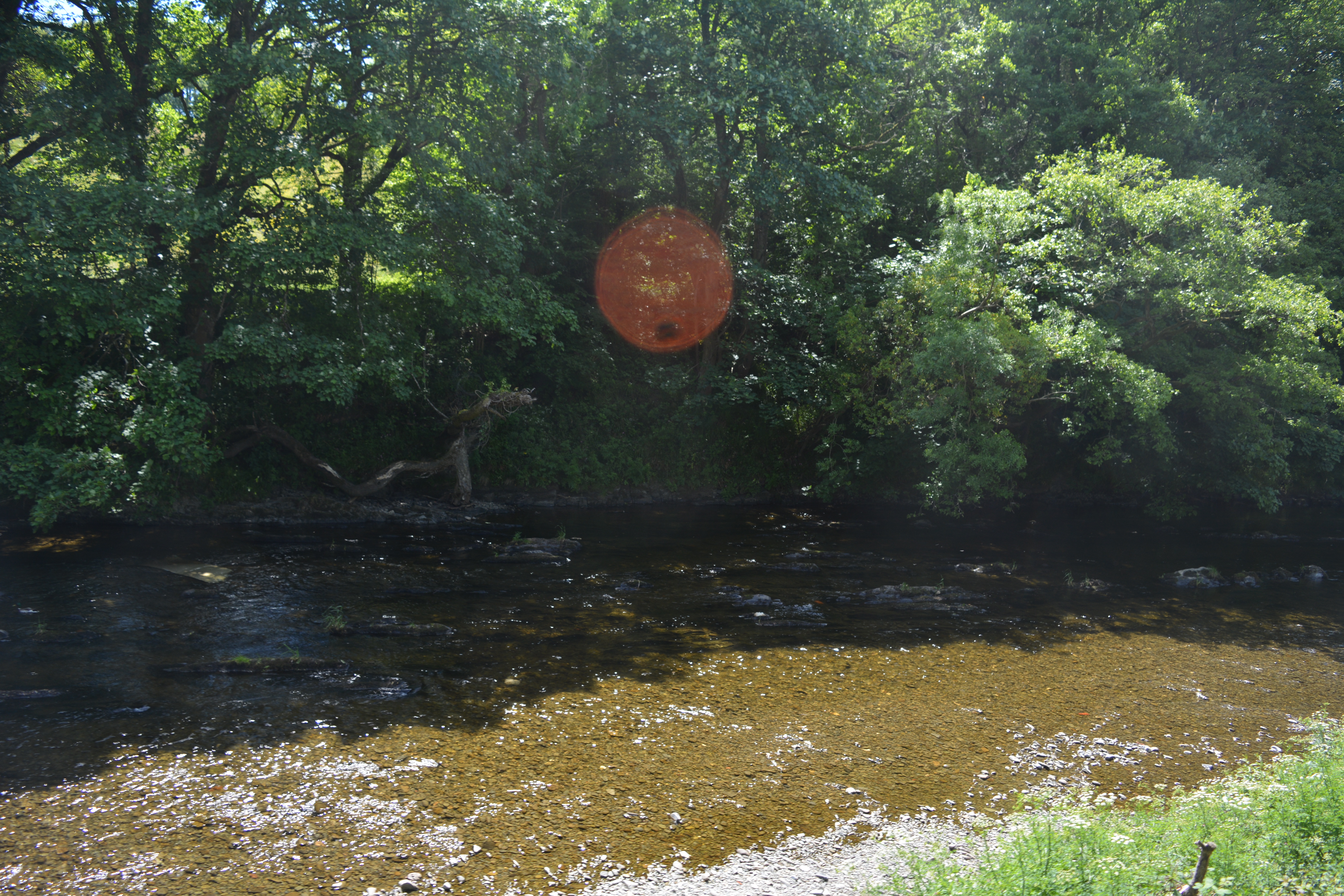
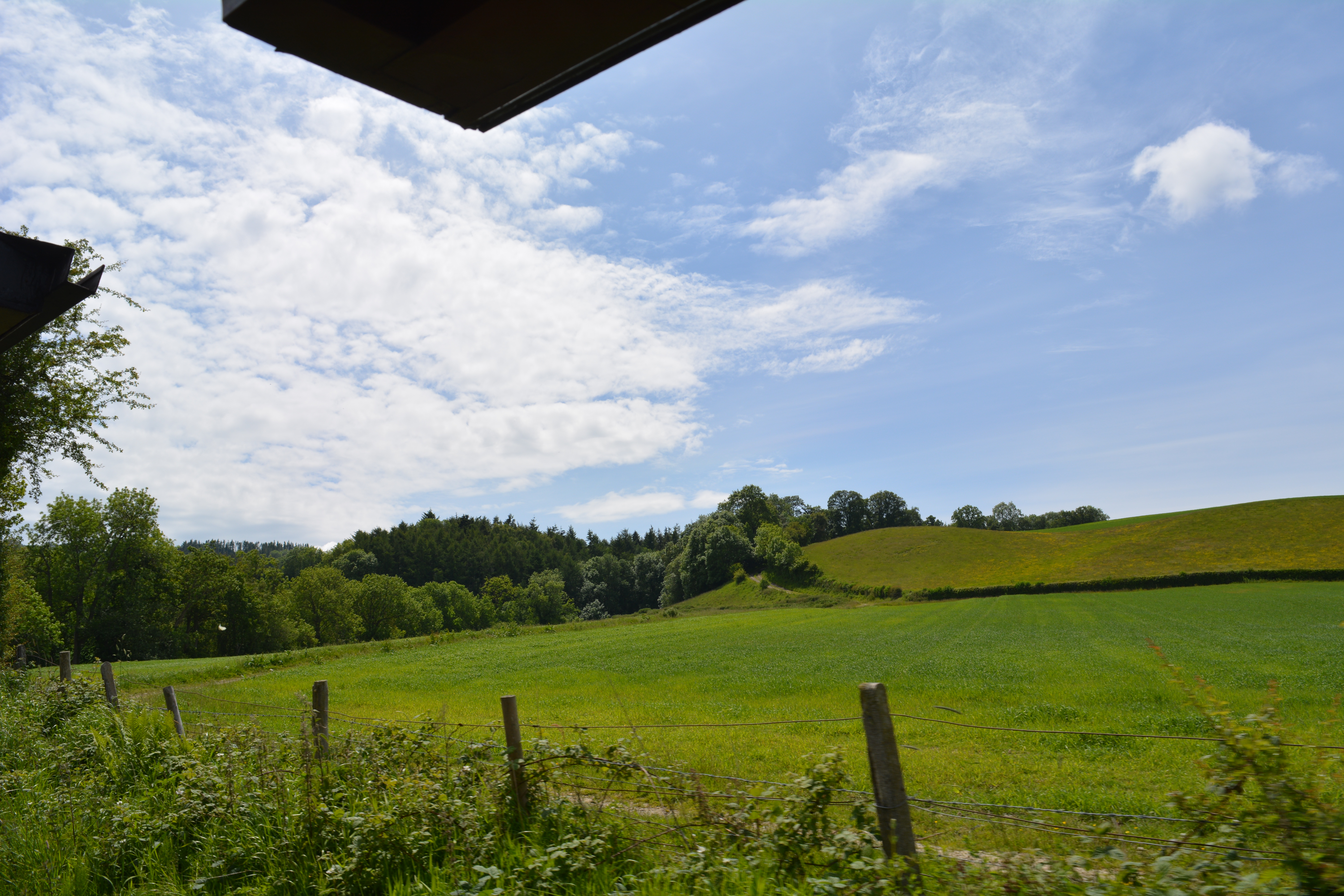
Once steam was up and the Guard waved his green flag the little train moved very slowly away from the station and we travelled along the beautiful valley of the River Banwy.

2015 06 16_2847 2015 06 16_2848 2015 06 16_2858 2015 06 16_2859

After enjoying so much beautiful countryside we arrived at the end of the little narrow guage line at the station at Llanfair Caereinion. Here we refreshed ourselves with coffee and cake while the engine topped up with water and coal in readiness for the return to Welshpool.

2015 06 16_2850 2015 06 16_2851 2015 06 16_2853 2015 06 16_2854

We found more authentic old items from the days of steam at this station too mixed up with little patches of colourful gardens.

2015 06 16_2855 2015 06 16_2857 2015 06 16_28722015 06 16_2862 2015 06 16_2864

2015 06 16_2863  2015 06 16_28652015 06 16_2874

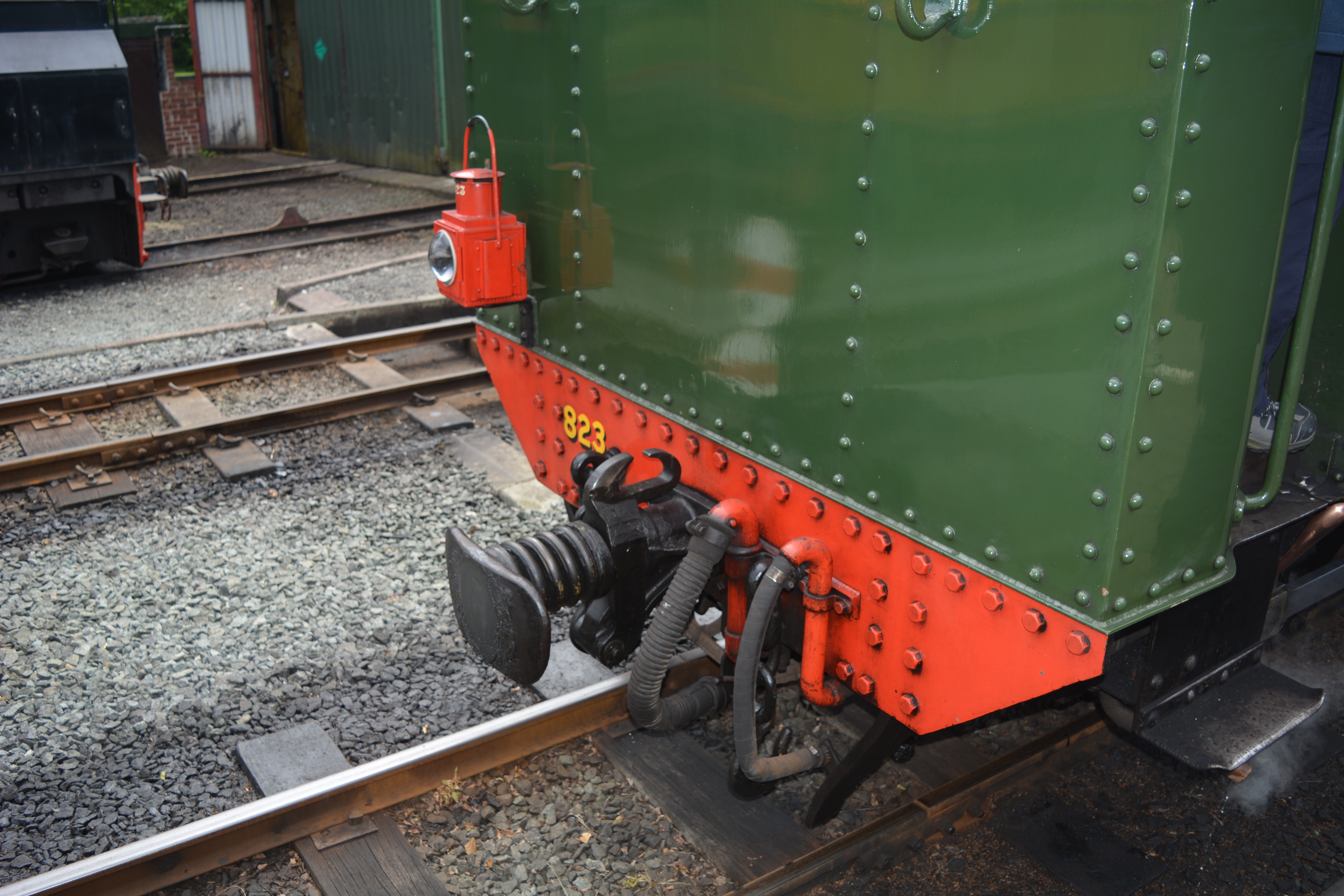
Before climbing back on board and sitting on the hard wooden benches that were our seats, we took a few moments enjoying looking close up at our engine “Countess”. She positively sparkled as every surface had been rigorously polished, buffed, oiled or greased.


2015 06 16_2866 2015 06 16_2867 2015 06 16_2868 2015 06 16_2870 2015 06 16_2871

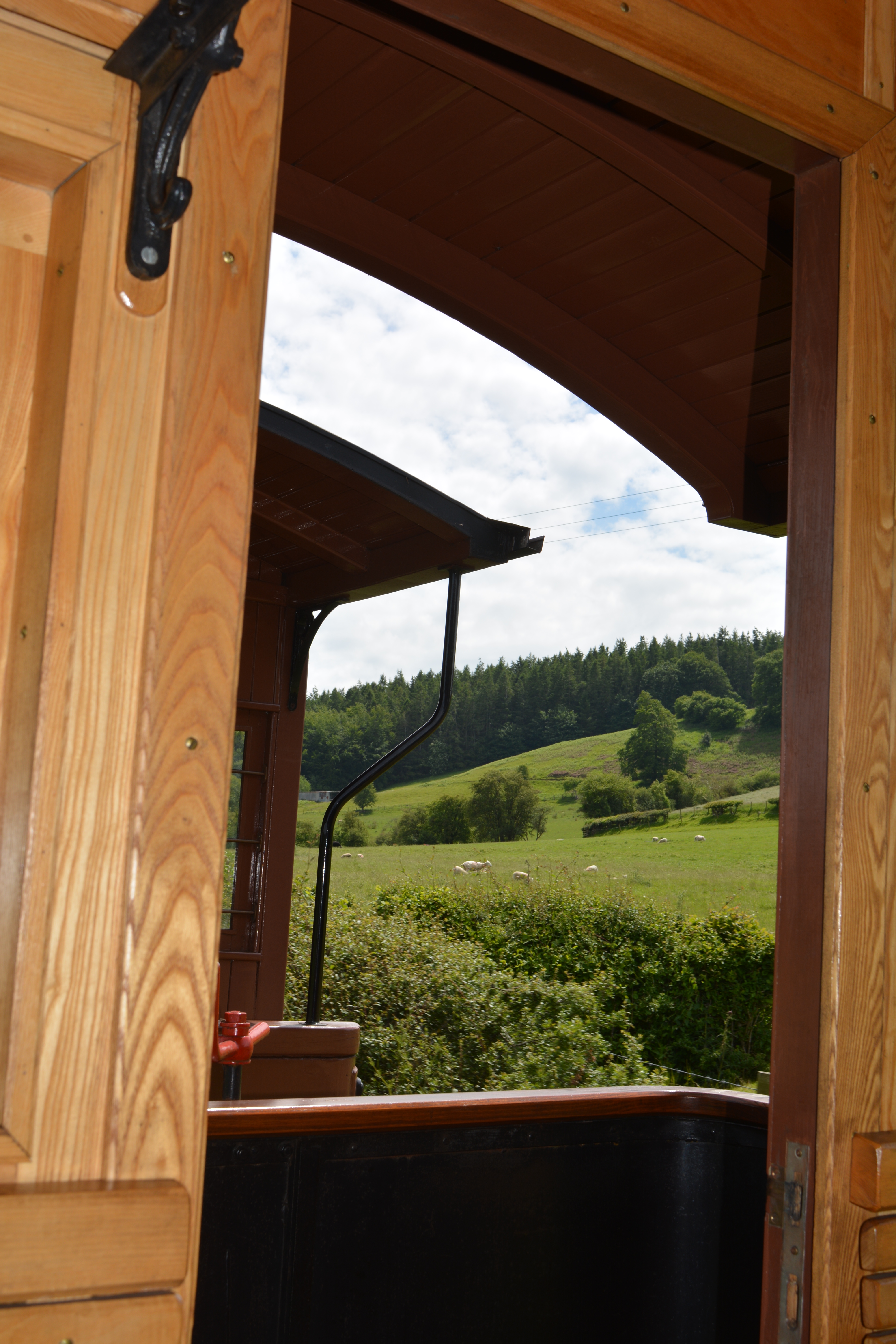
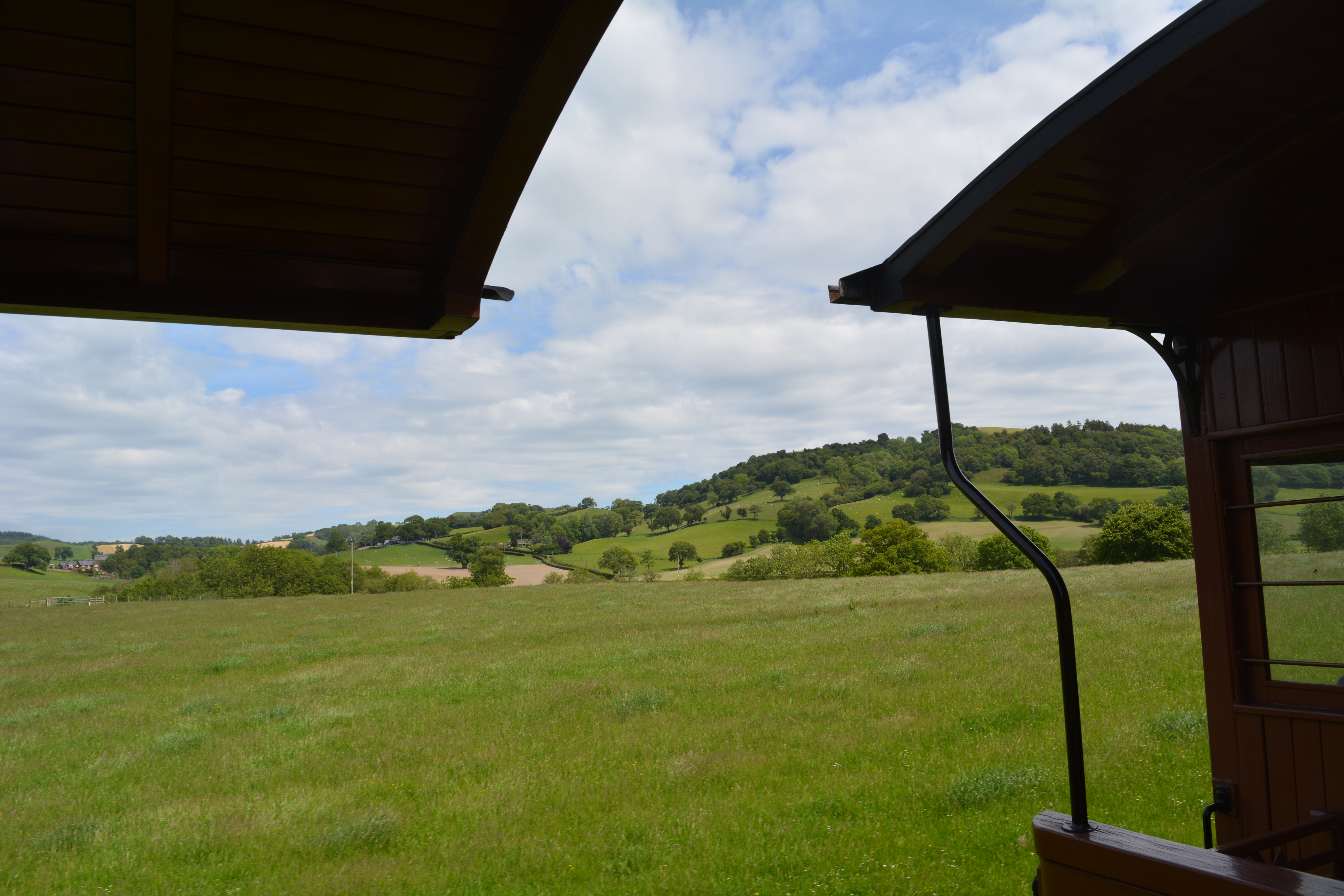
The journey back along the valley gave us the chance to enjoy different views of the surrounding landscape.

2015 06 16_2875 2015 06 16_2876 2015 06 16_2877 2015 06 16_2878 2015 06 16_2879 2015 06 16_2880

As soon as all the passengers had disembarked the little old locomotive squeaked its way a little further down the rail track to the water tower and drank thirstily.

2015 06 16_2882 2015 06 16_2883

After this delightful day of memories and nostalgia we promised ourselves a day on the old barges on the canal at Llangollen and of course there are all those other narrow guage railways scattered throughout Wales to indulge ourselves with!


This Veggie Life

A Vegetarian | Nature Lifestyle Blog

Rambling in the Garden

.....and nurturing my soul

The Arch City Gardener

Journeys In St. Louis Gardening and Beyond

Garden Dreaming at Châtillon

Consult the genius of the place

Storyshucker

A blog full of humorous and poignant observations.

gardeninacity

Notes from a wildlife-friendly cottage garden

PlayGroundology

...an emerging social science

The Official Blog of British Wildlife

'The most important and informative publication on wildlife of our times' - The Independent. This blog is a member of The UK & Ireland Natural History Bloggers group: www.uknhb.blogspot.com

iGrowHort

Inspire - Cultivate - Grow Native Plants - Restore Landscapes

Bishops Meadow Trust

To create and protect a semi-natural wild space for the people of Farnham to enjoy and experience an array of British wildlife in our town

Gardening with Children

The www.gardeningwithchildren.co.uk Blog

UKbirdingtimeline

birding through the seasons, why birds matter and how to conserve them

NATURE WALKER

with a camera in hand

Jardin

Transform your outdoor space

Eva's space

My allotment, cooking and other interests

Old School Garden

my gardening life through the year

LEANNE COLE

Trying to live a creative life

fromacountrycottage

trying to live as lightly as possible on our beautiful planet

Good Life Gardening

Nature lovers from Leicester living the good life.

mybeautfulthings

Finding the beautiful in the everyday

mawsonmichelle

Michelle's Allotment

In and Out of My Garden

thoughts from and about my garden

Greenhousing

Big plans for a small garden

The Scottish Country Garden

A Walled Country Garden in South East Scotland

The Fruity Chicken

Life at the fruity chicken

willowarchway

Off grid living. Self sufficient. "PERMAGANICS RULE".

St Anns Allotments

Nottingham's Grade 2* Listed Allotments and Community Orchard

Manifest Joy Harvests

a journey in suburban vegetable gardening

Allotmental

The madness of growing your own

Penny's Garden: a harvest beyond my front door

A novel approach to vegetable gardening

arignagardener

Sustainable living in the Irish countryside.

NewEnglandGardenAndThread

Master Gardener, amateur photographer, quilter, NH native, and sometimes SC snowbird

dianajhale

Recent work and work in progress and anything else that interests me

planthoarder

a chaotic cottage gardener

Lens and Pens by Sally

a weekly blog that creates a personal philosophy through photographs and words

Dewdrops and Sunshine

Stories from a sassy and classy Southern farmbelle.

The Pyjama Gardener

Simple Organic Gardening & Seasonal Living

gettin' fresh!

turning dirt into dinner

JOY...

today the world is created anew

Garden Birds

Notes from a Devon garden

ShootAbout

Life Through The Lens

Adapting Pixels

A photography blog showcasing the best photography pictures and videos on the internet

Wildlifegardening's Blog

Just another WordPress.com site

naturestimeline

personal observations from the natural world as the search continues for a new approach to conservation.

LATEBLOOMERBUDS

The Wonders of Life through my Eyes, my Heart, my Soul