Categories
colours garden photography gardening light light quality ornamental trees and shrubs spring gardening trees

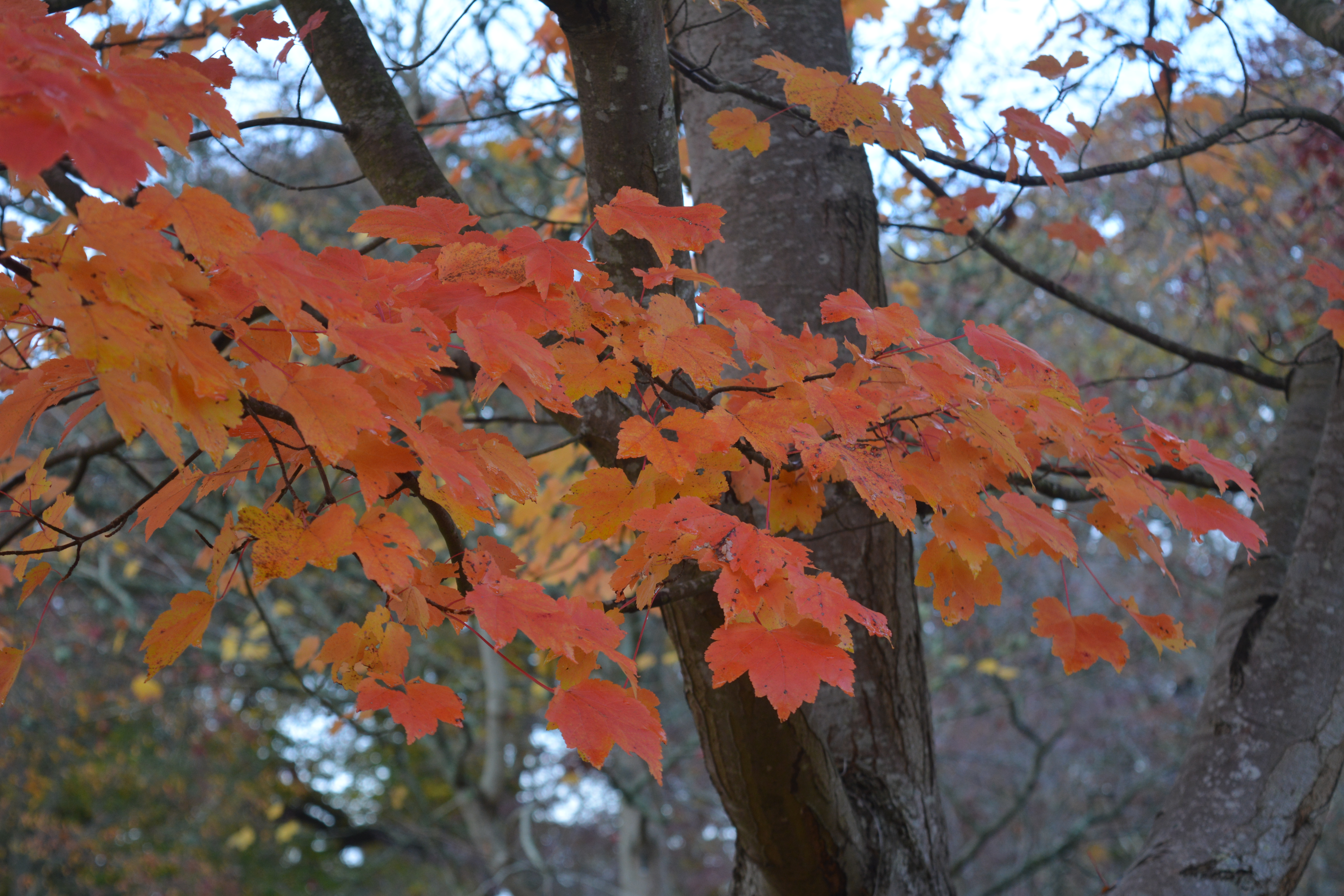
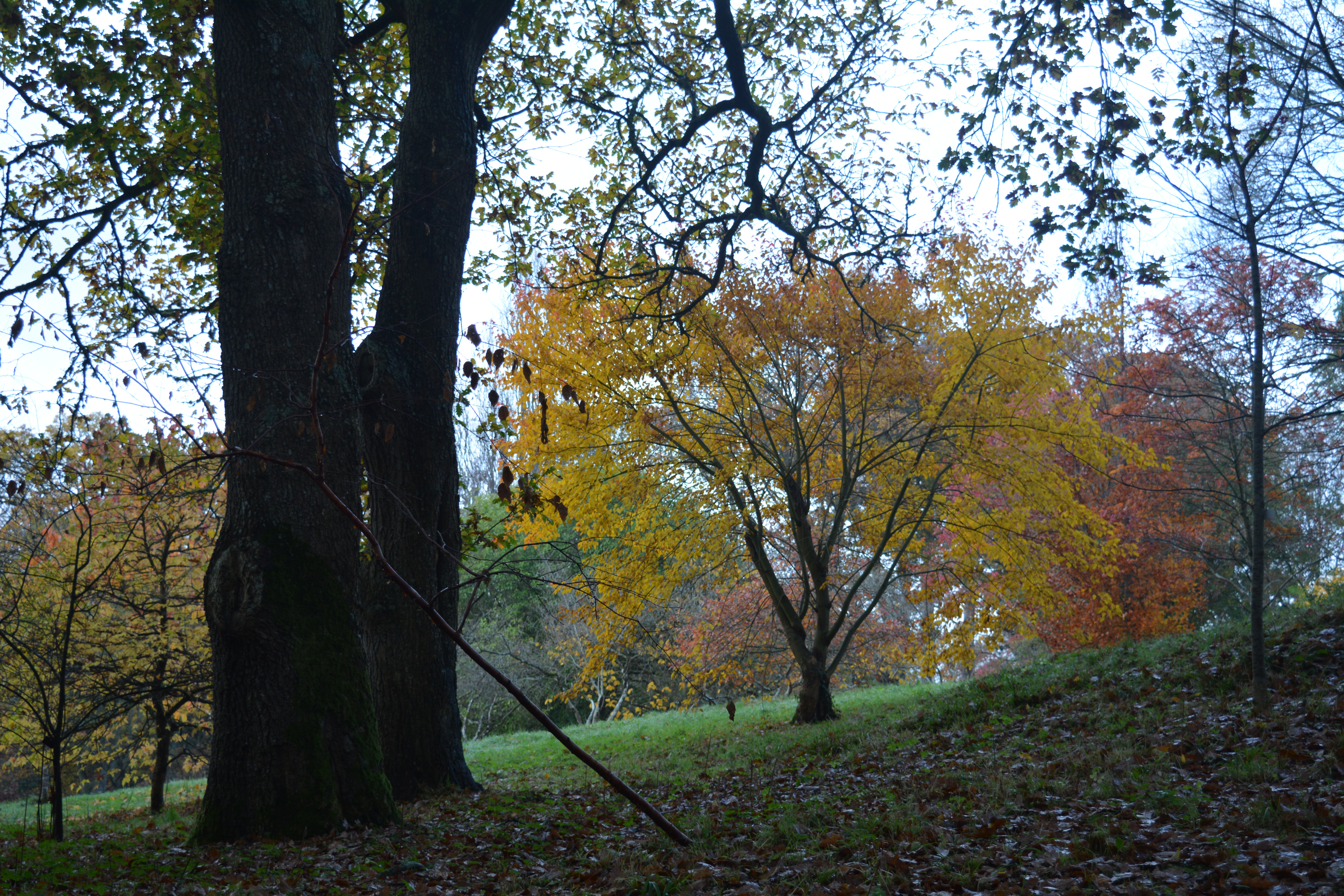
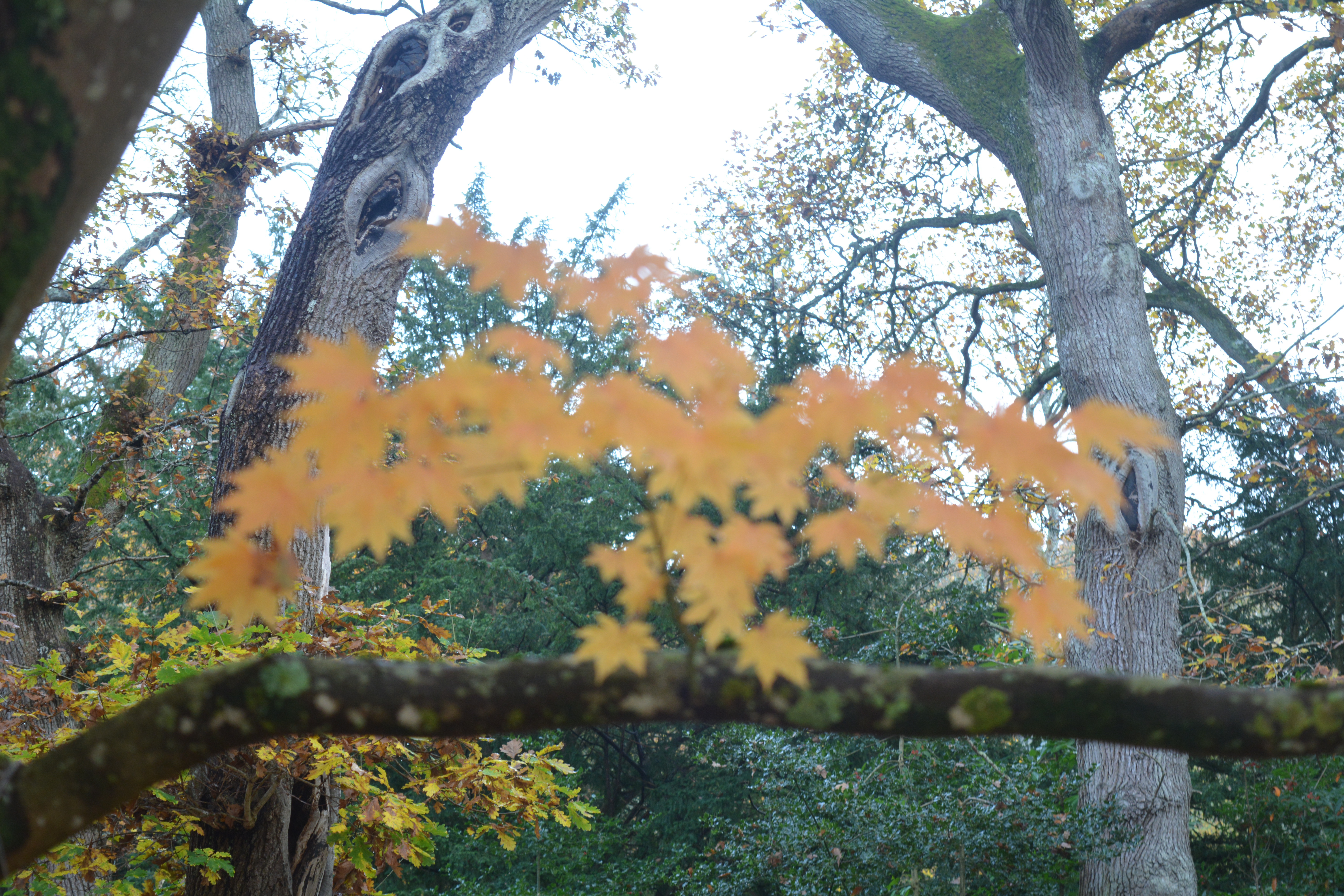
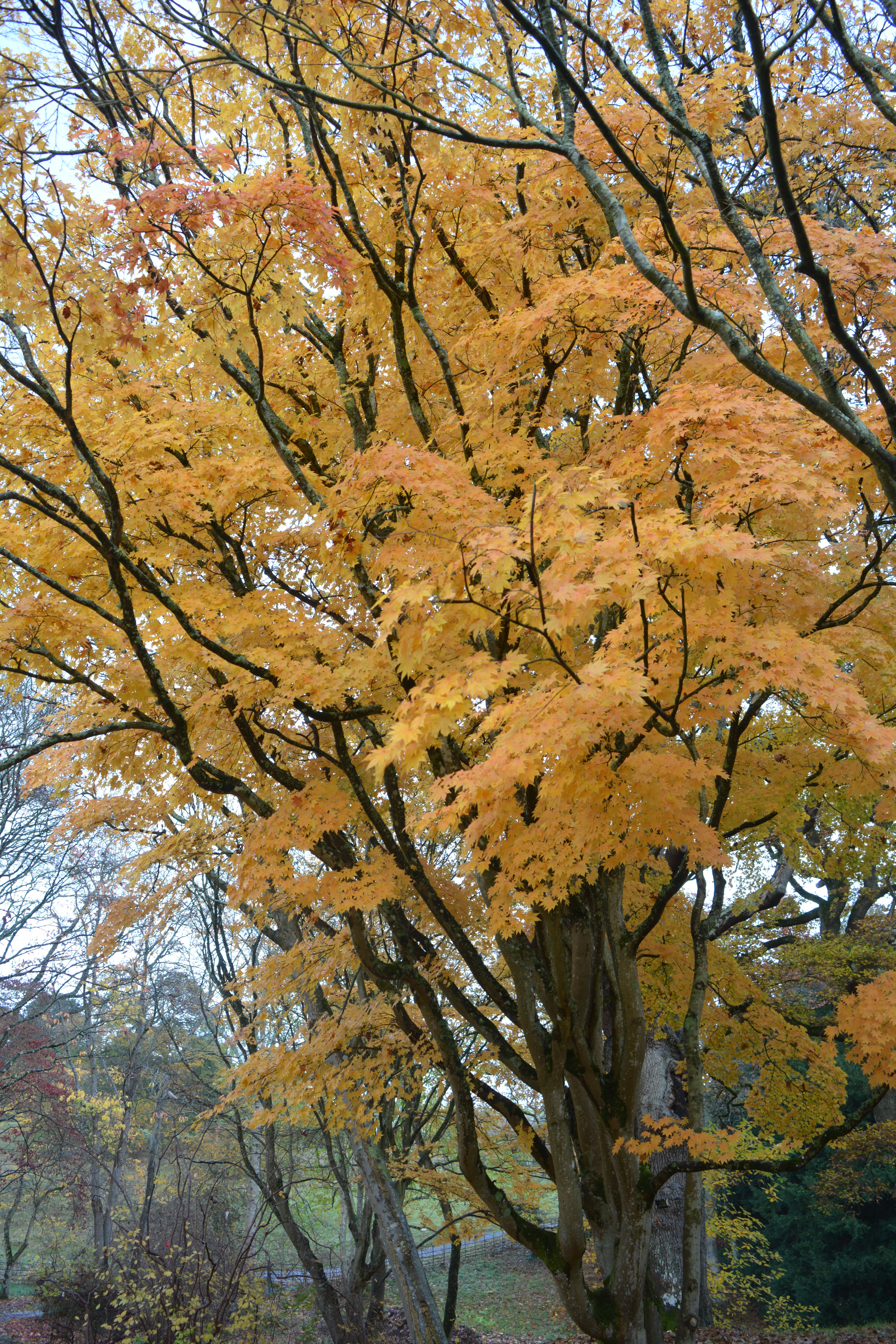
Simply Beautiful – 11 – Orange Leaves

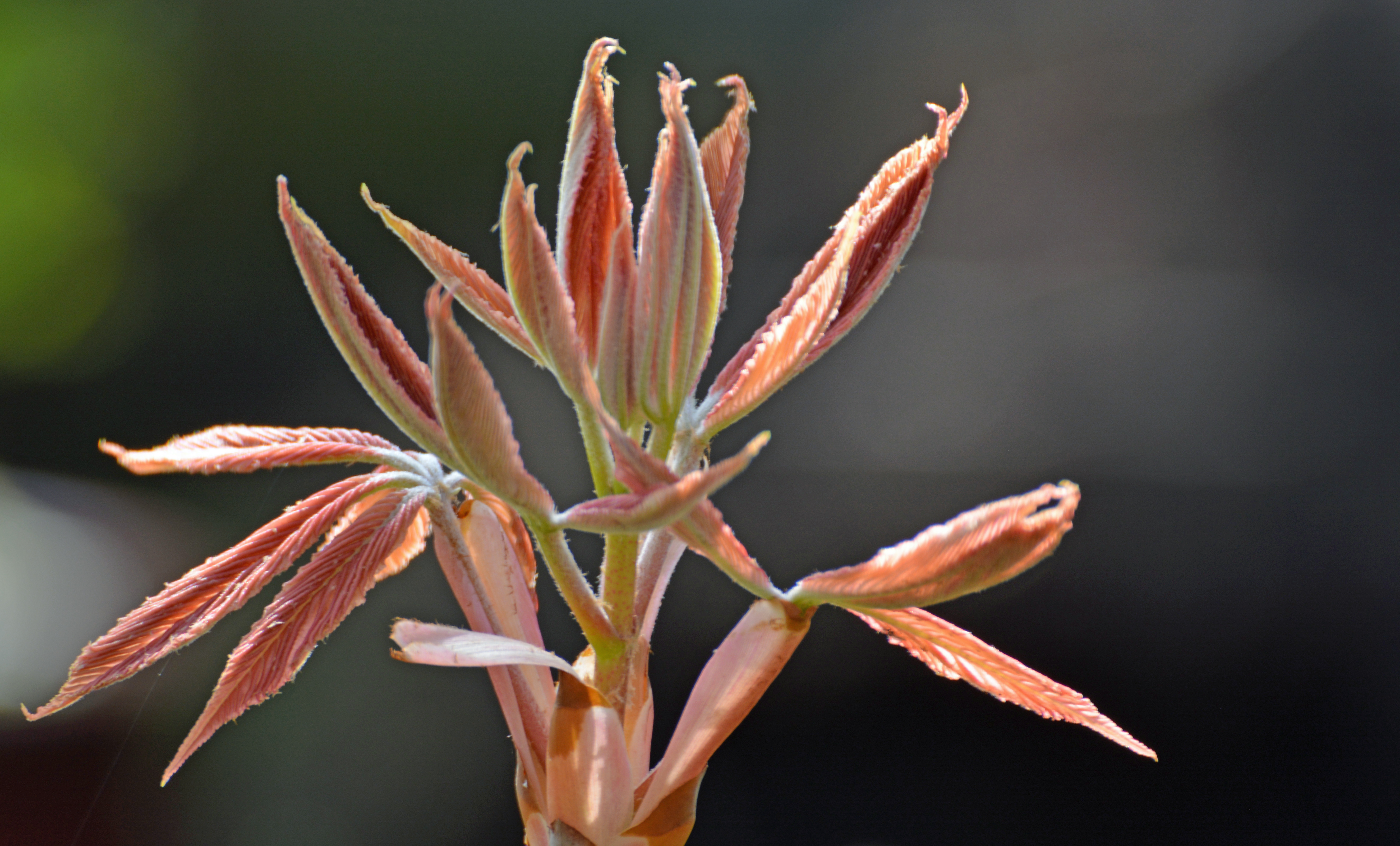
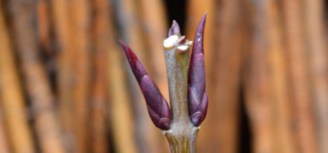
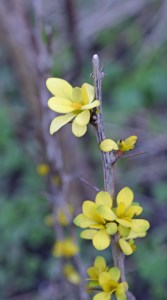
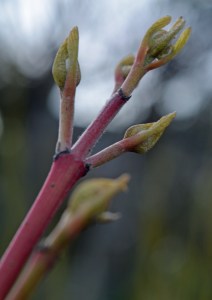
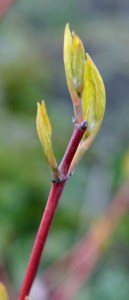
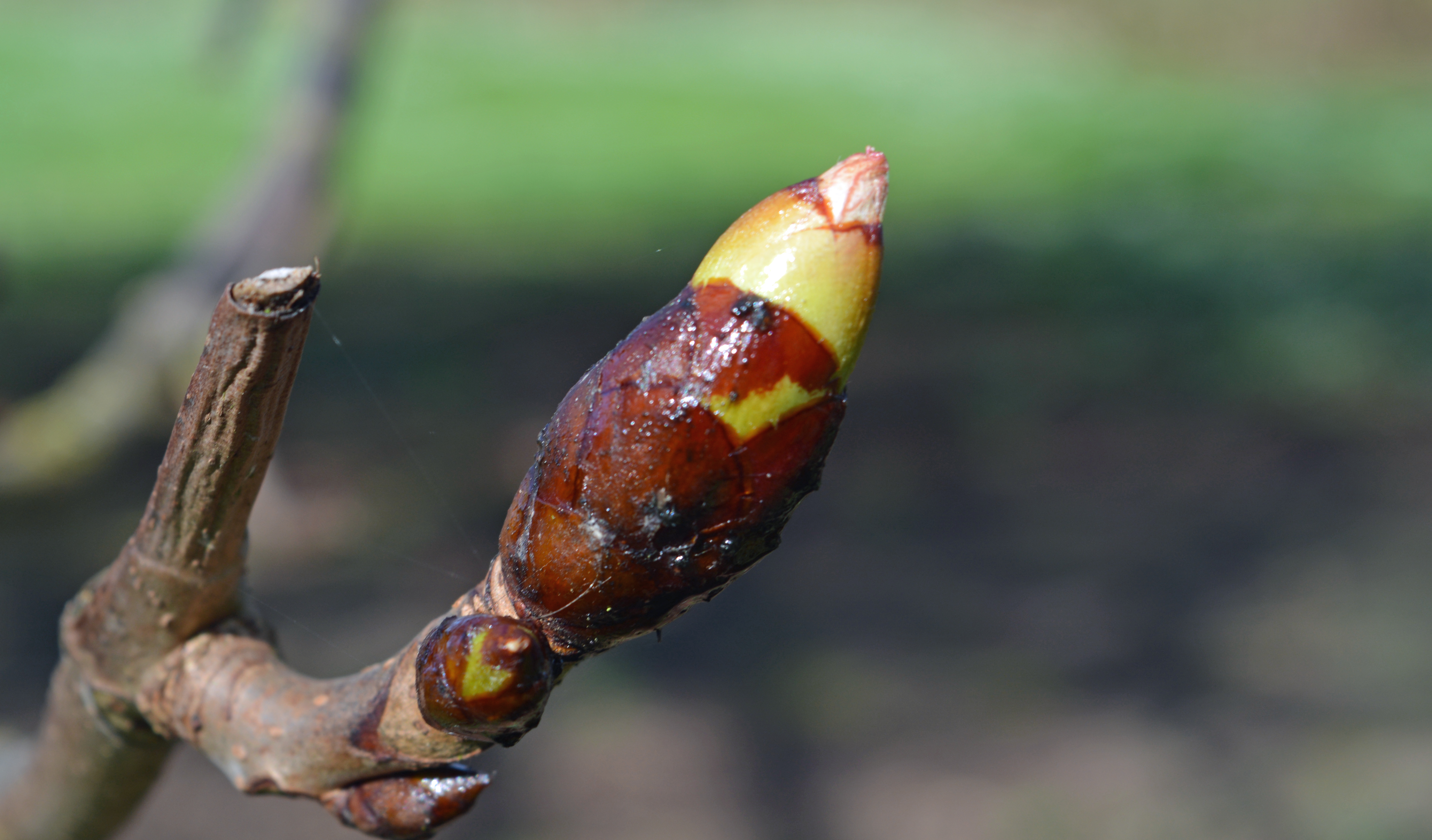
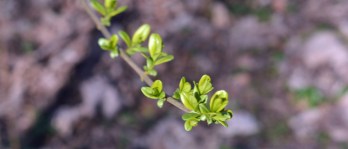
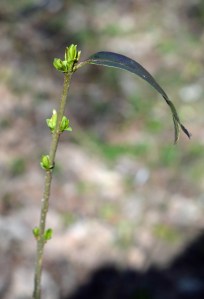
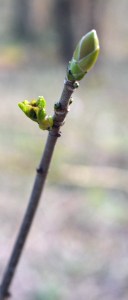
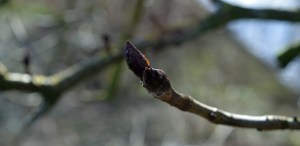
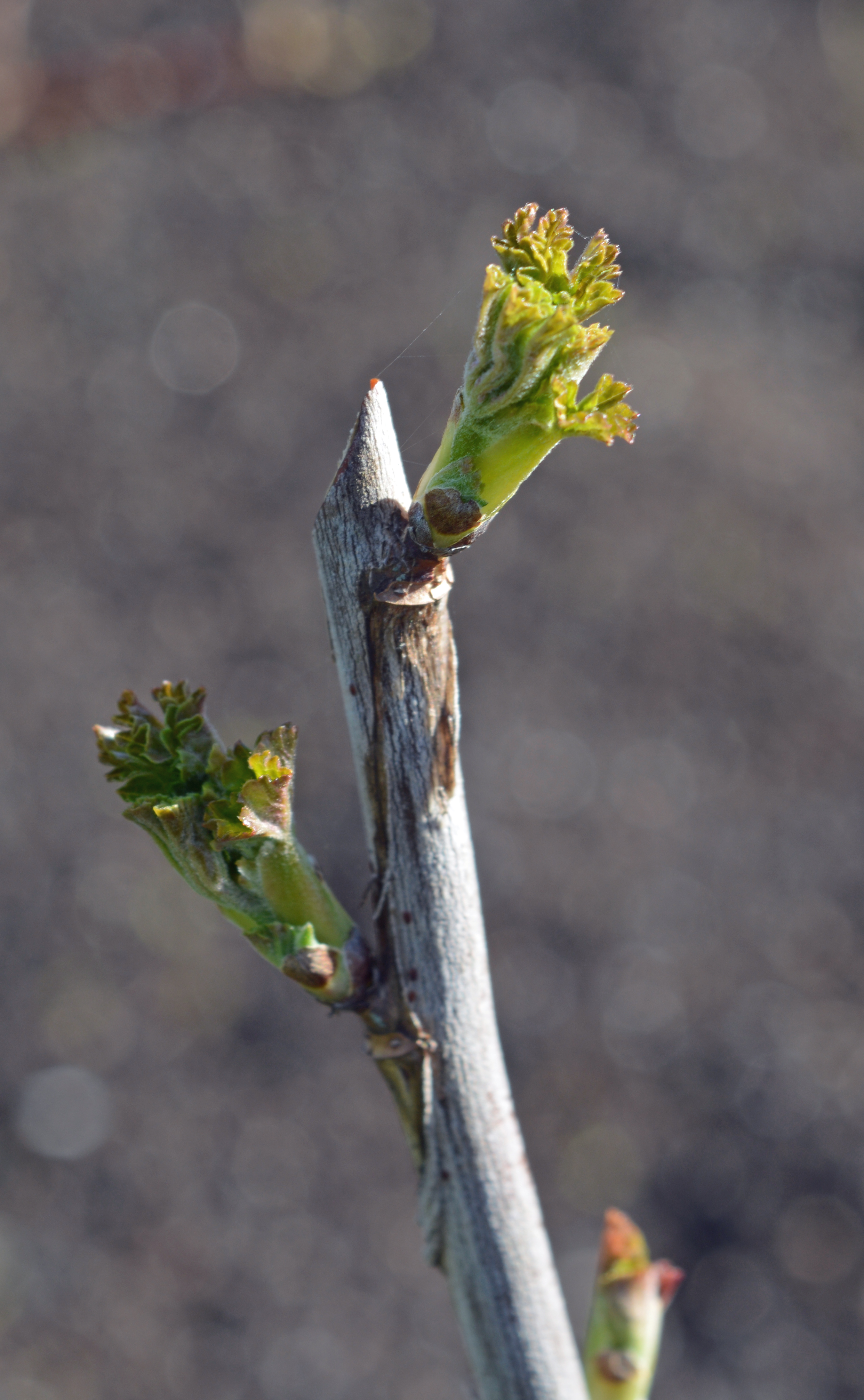
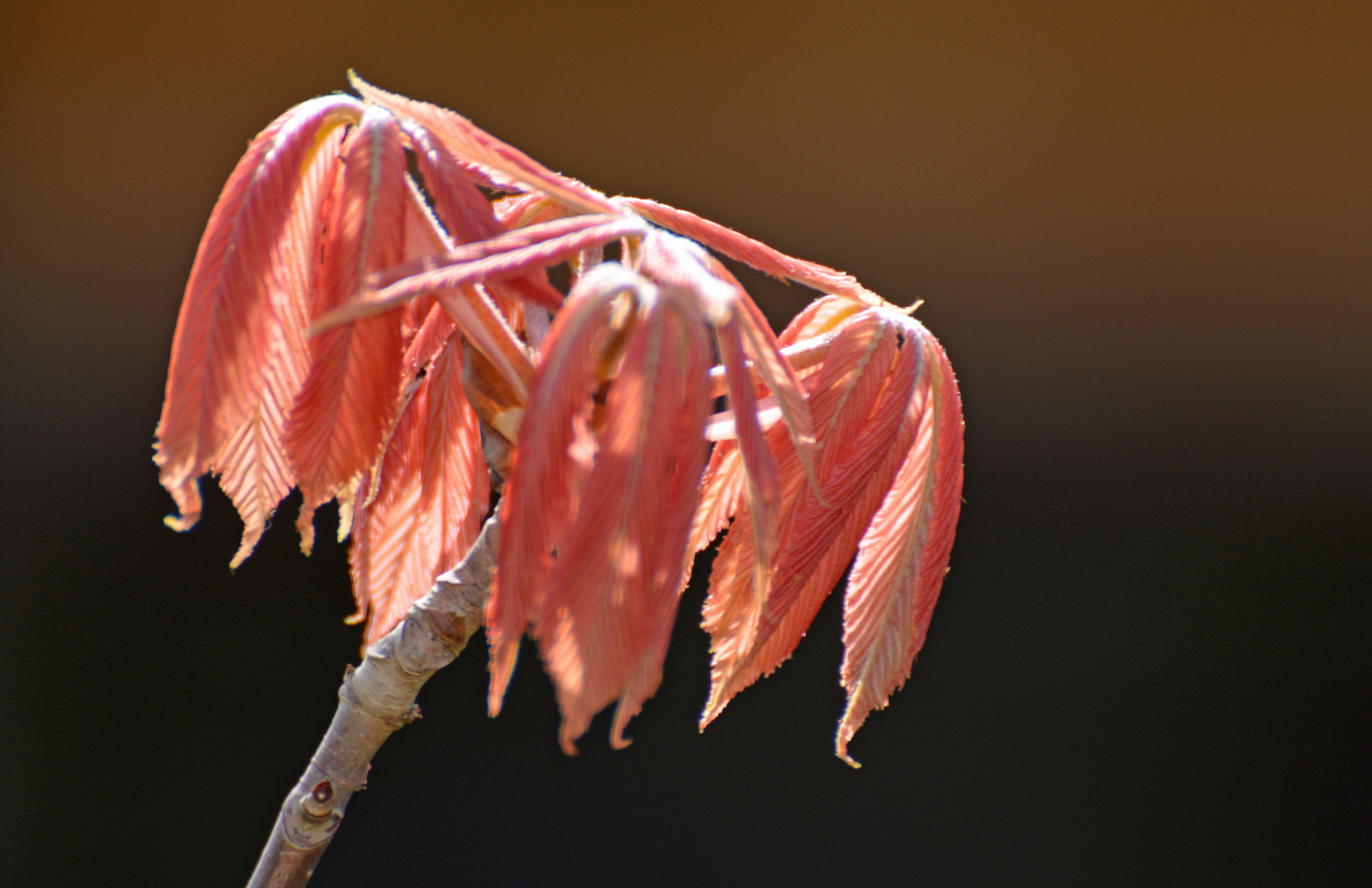
Spring is the time for brightly coloured unfurling leaves on trees and shrubs. Most are green – sparkling fresh green – but occasionally the colours of new leaves makes the gardener stop in his tracks and take a second look to see if the leaves really are the colour he thinks h has just seen.

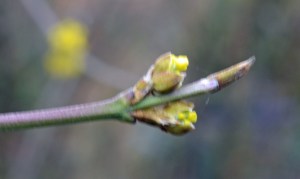
Take these leaves unfurling from little sticky buds of an unusual Aesculus. Simply beautiful!

This little tree is called Aesculus x neglecta “Erythroblastos”, a big ugly name for a little attractive tree.

Categories
climbing plants colours flowering bulbs garden design garden photography gardening gardens hardy perennials Herefordshire irises July light light quality National Garden Scheme NGS ornamental trees and shrubs renovation village gardens water garden water in the garden Yellow Book Gardens

Another Yellow Book Garden: Windsor Cottage

Looking back to a sunny summer’s day!

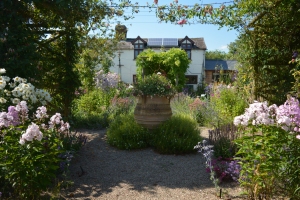
Off down the A49 trunk road into Herefordshire for another visit to enjoy a fellow NGS, Yellow book garden. Windsor Cottage is near the village of Dilwyn and described as a wildlife friendly half-acre garden which has just completed a 5 year redesign.

wc-5 wc-4

This proved to be garden full of very special plants beautifully grown by a couple of keen, energetic gardeners who were so keen to share their garden with us. They are both artists and their use of colour and planting companions displayed their creative flair.

wc-7 wc-6wc-1 wc-3

In order to share our enjoyment of Windsor Cottage with you I have created this gallery. Please click on the first picture and navigate using the arrows.

So this was a garden of great plants, two great plantspeople and an atmosphere of peacefulness and relaxation.

wc-2     wc-8

Categories
flowering bulbs garden buildings garden design garden photography garden wildlife gardening hardy perennials migration ornamental trees and shrubs Shropshire shrubs spring bulbs spring gardening trees Yellow Book Gardens

My Garden Journal 2017 – March

The weathermen tell us that March is the first month of Spring so in this our third look at my 2017 Garden Journal we shall see if our garden illustrates this idea at all.

As an introduction to the month I wrote,”March is the month that should come in like a lion and go out like a lamb”. This year it came in like a wet fish! Rain and wind dominated, interspersed with occasional bright cheerful days. In the first week we managed very few gardening moments. But the Avocet patch will not be beaten, with leaf and flower buds bursting on trees and shrubs, signs of colour waiting in the wings.”

“Bursting blooms”! I continued by sharing photos of flowers bursting from buds.


 “Unfurling foliage!” And more of foliage escaping their bursting buds.


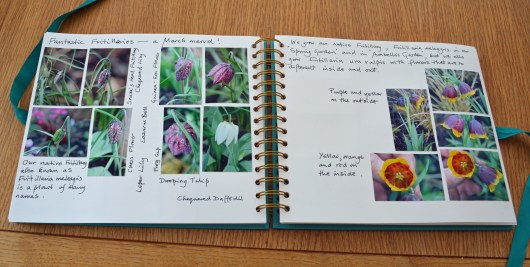
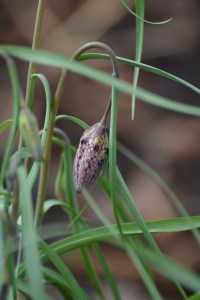
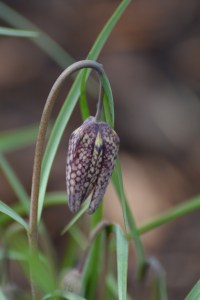
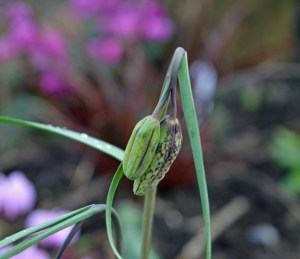
Turing over the page reveals a look at our Fritillaries, Fritillaria meleagris and Fritillaria uva vulpis which grow in our Spring Garden and in Arabella’s Garden.

I write among my  photos of Fritillaries,  “Fantastic Fritillaries – a March marvel! 

I looked for all the common local names for this Fritillary. “Our native Fritillary also known as Fritillaria meleagris is a plant of many names.”


“Snake’s Head Fritillary – Chequered Lily.”


“Chess Flower – Leper Lily” – Lazurus Bell”


“Guinea-Hen Flower” –  “Frog Cup”


“Drooping Tulip” – “Chequered Daffodil”

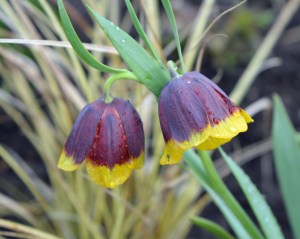
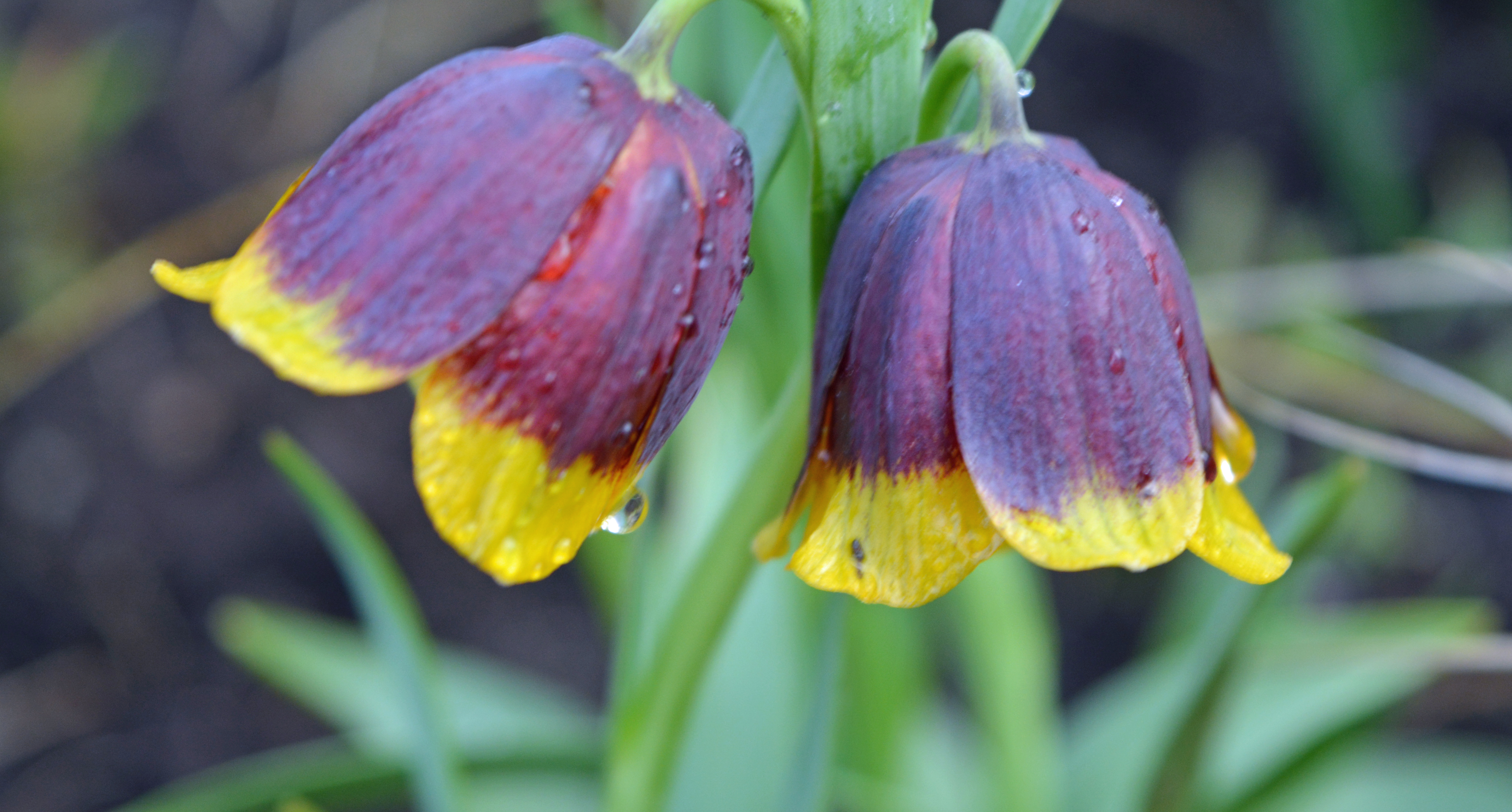
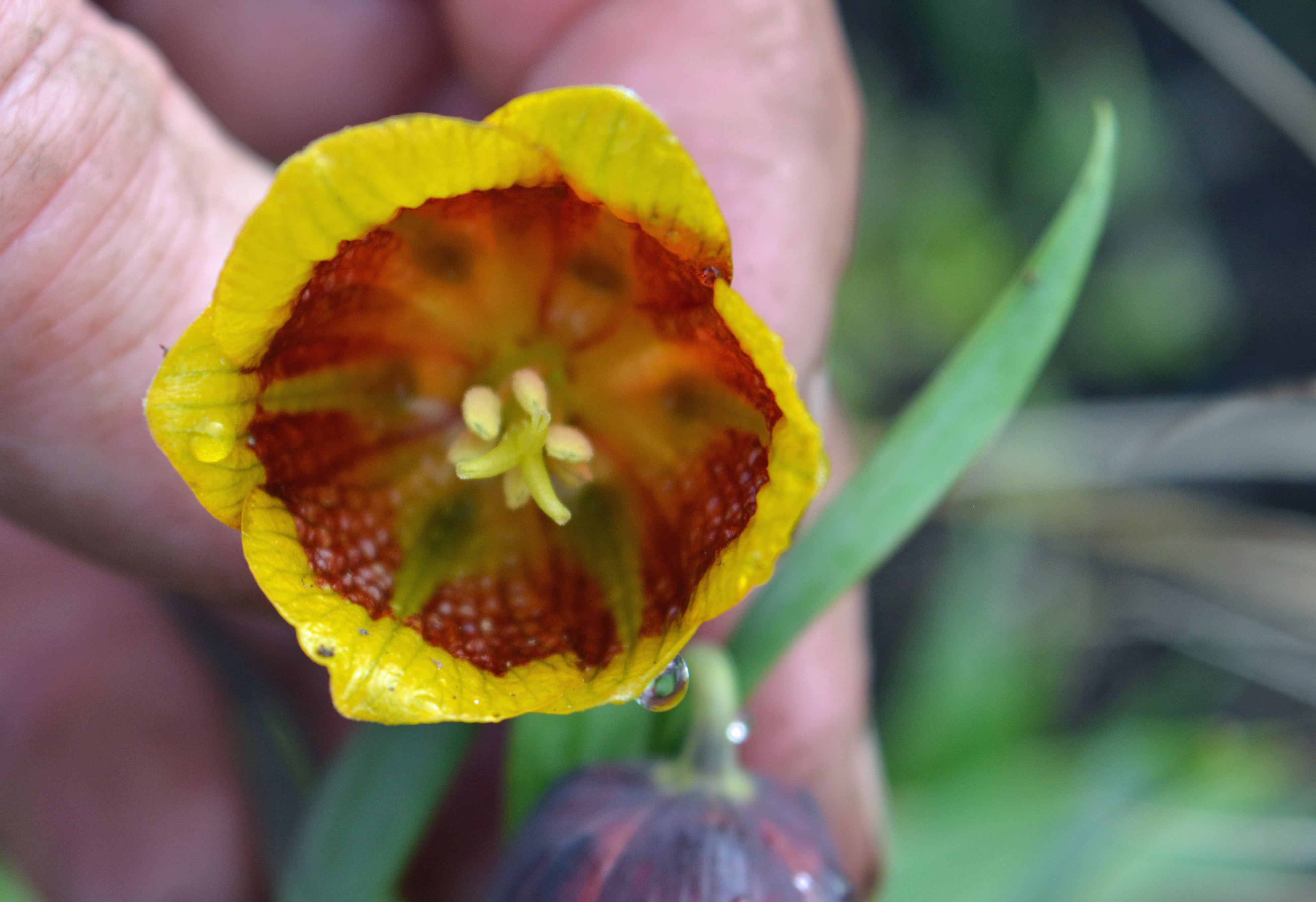
We grow our native Fritillary, Fritillaria meleagris in our “Spring Garden”, but we also grow Fritillaria uva vulpis with flowers that are so different inside and out.


“Purple and yellow on the outside.”

“Yellow, orange and red on the inside.”


Over onto the next double page spread and I take a look at a special rather subtle plant combination and some early tulips.

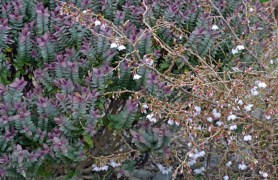
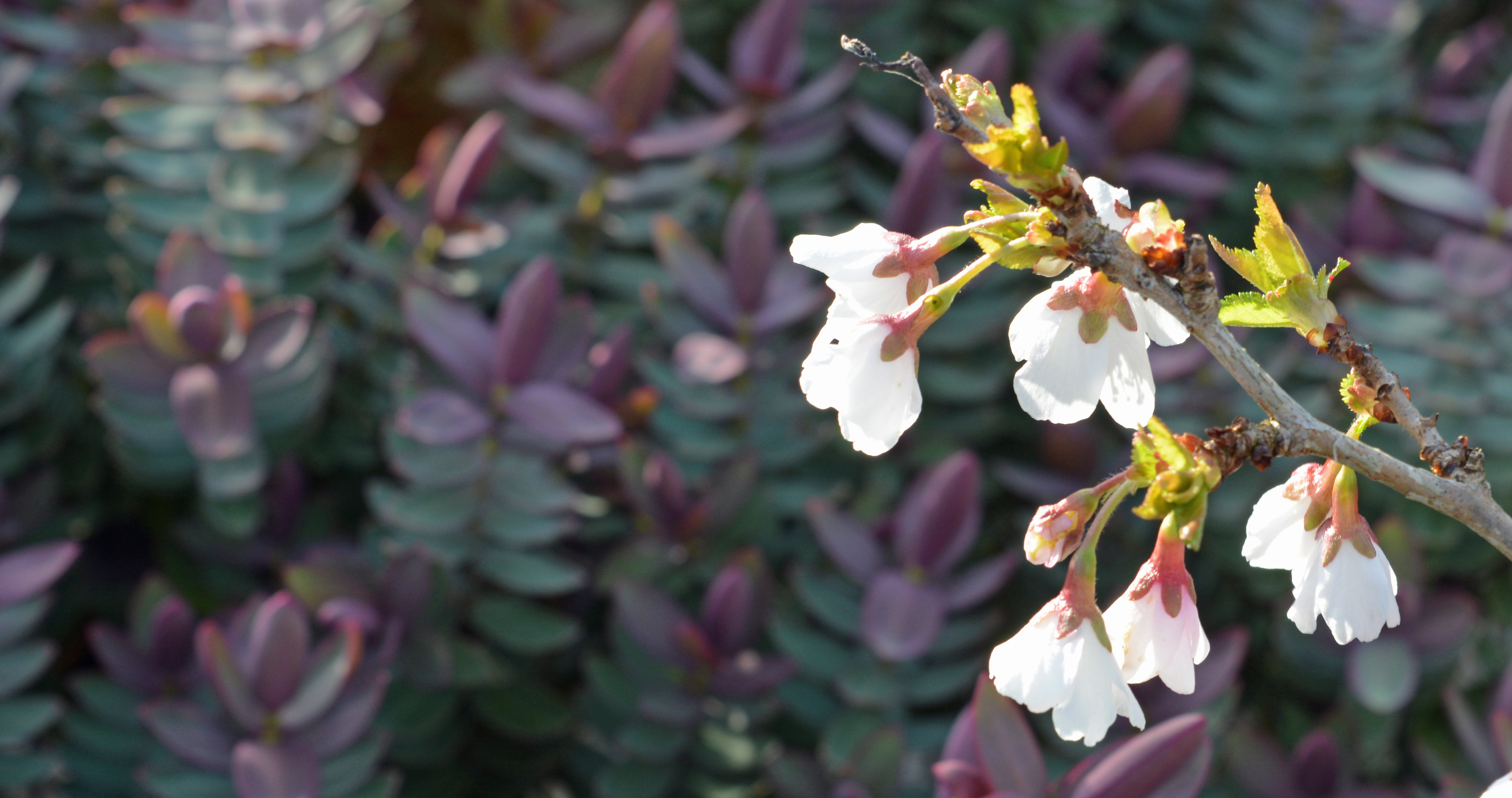
I wrote that “Good plant companions and communities are what lifts a garden above a collection of plants put on display. Sometimes two beautiful special plants with strong attributes of their own shine out even more when joined  together to produce a harmonious pairing, each enhancing the other. Here, I feature the combination of a Hebe “Red Edge” and a Prunus, P. “Kojo No Mai”. The blushing of the Hebe foliage is a perfect foil for the “washing powder white” of the Prunus’ petals.”


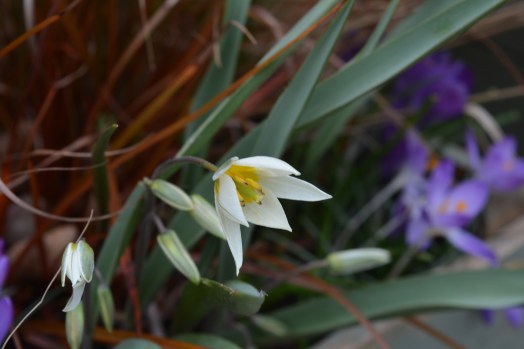
Moving on to look at some of our species tulips, I wrote, “The tiny flowers of our many species Tulips are now putting in an appearance, impressing with their delicacy and subtlety. The blooms open with the sun and close with its disappearance.”


Next we move on to my plant of the month for March. I wrote.

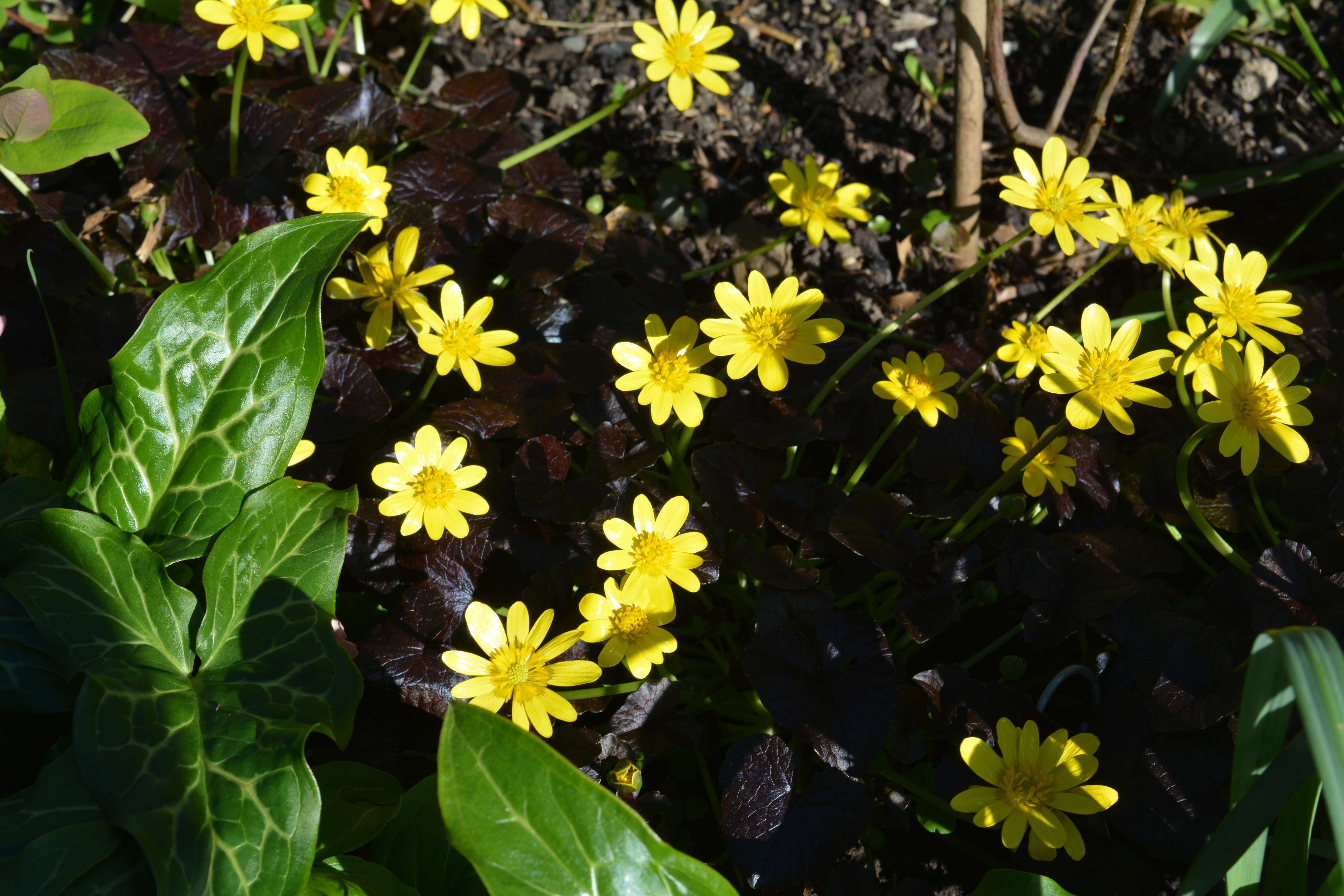
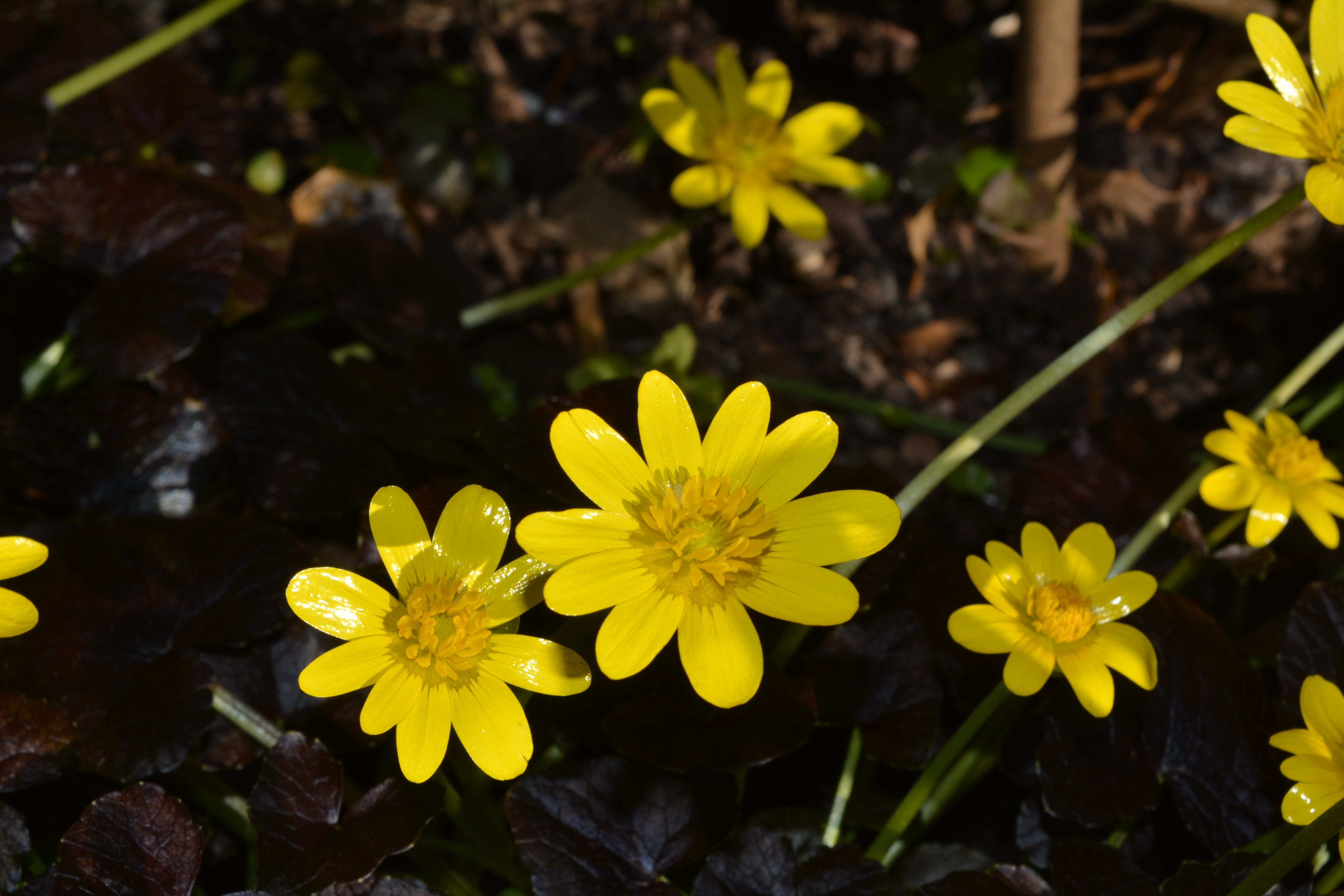
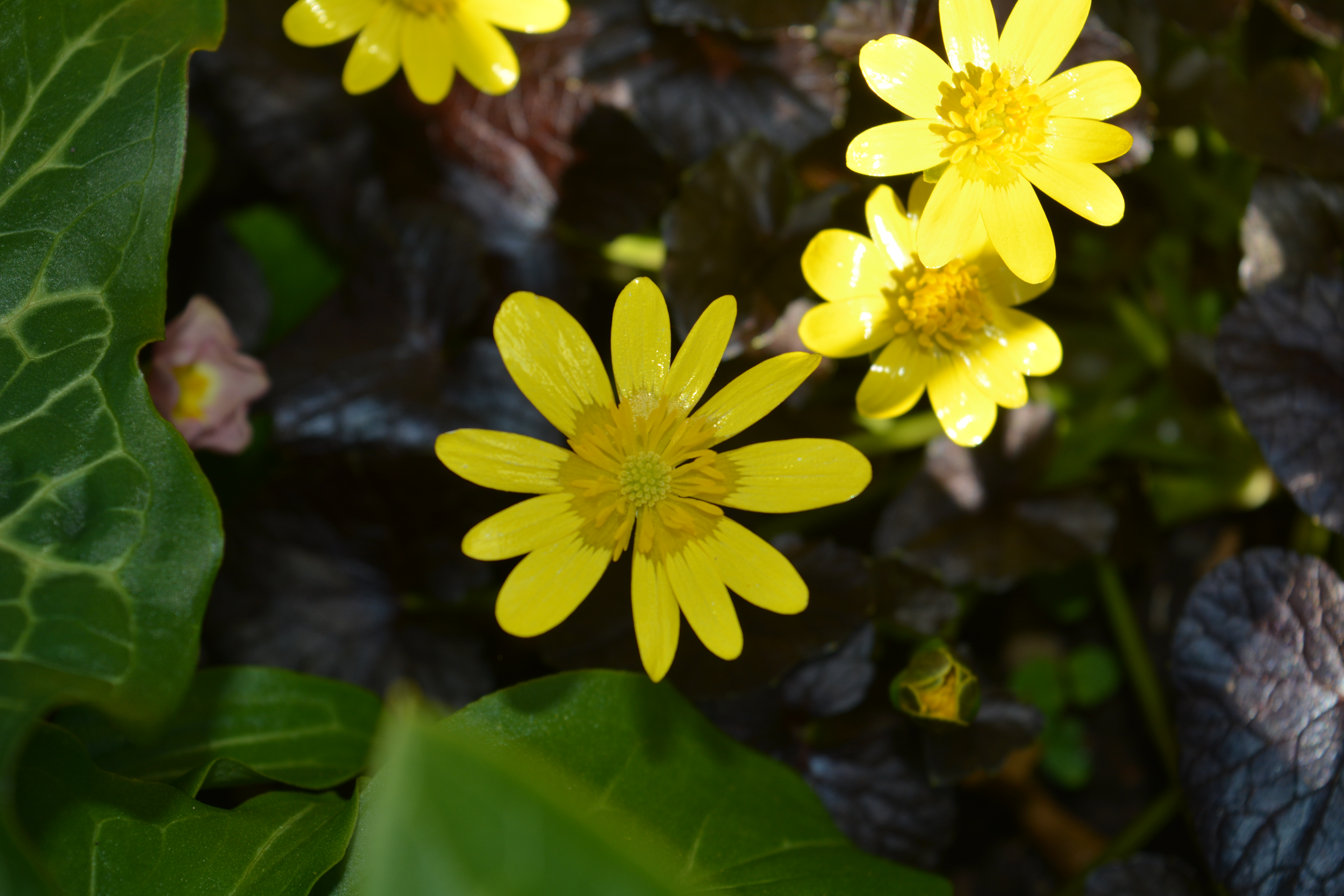
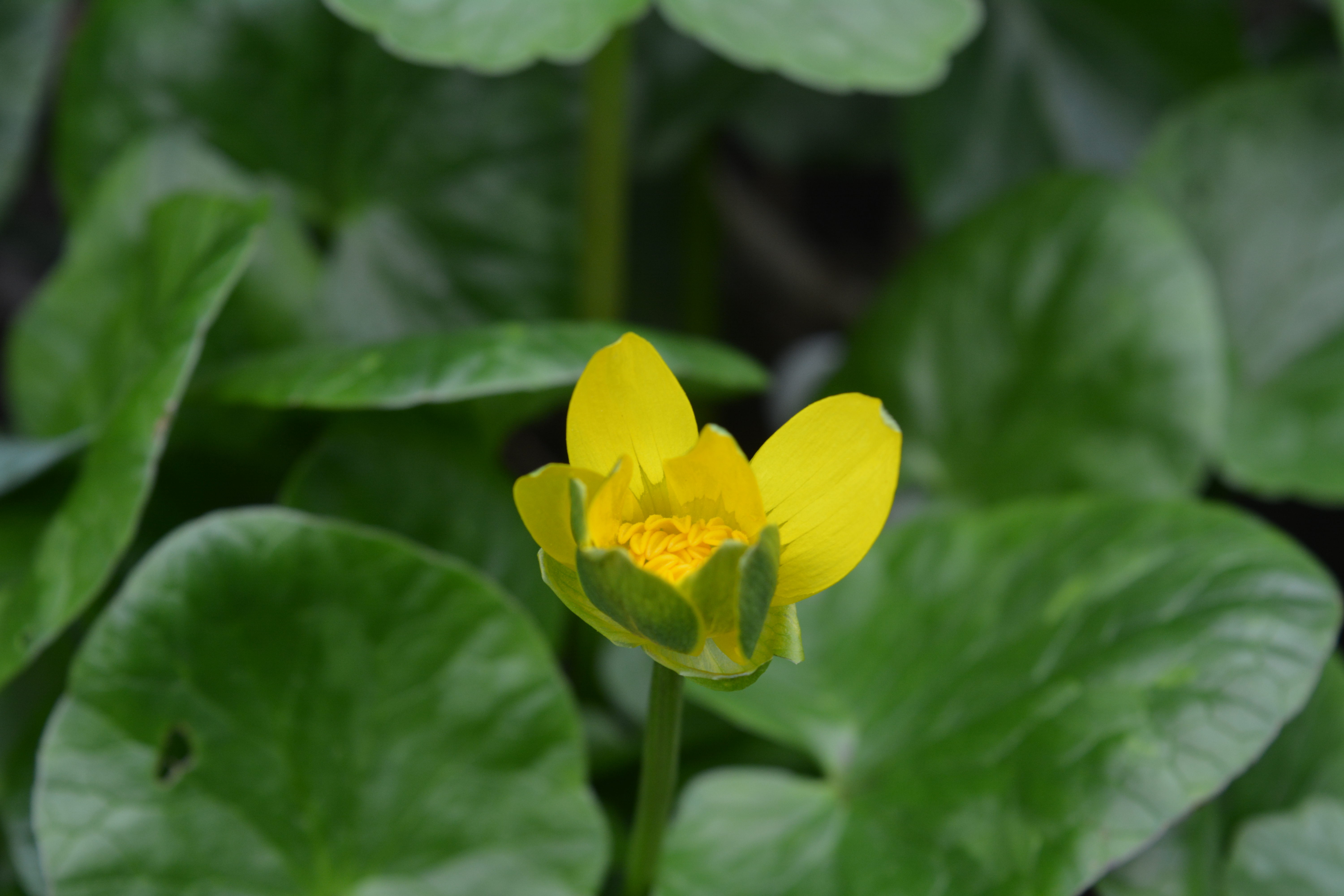
My plant of the month for March is a Celandine called “Brazen Hussey”, a chance find by Christopher Lloyd discovered in a clump of our native Celandine in a lane near his home. Our native Celandine, Ranunculus ficaria brightens up our hedgerows with its deeply glossy foliage and yellow “Buttercup” flowers, while “Brazen Hussey” sports glossy purple-black foliage. 


“We grow a small patch of our native Celandine but as it can become very invasive it has to be strictly controlled.”

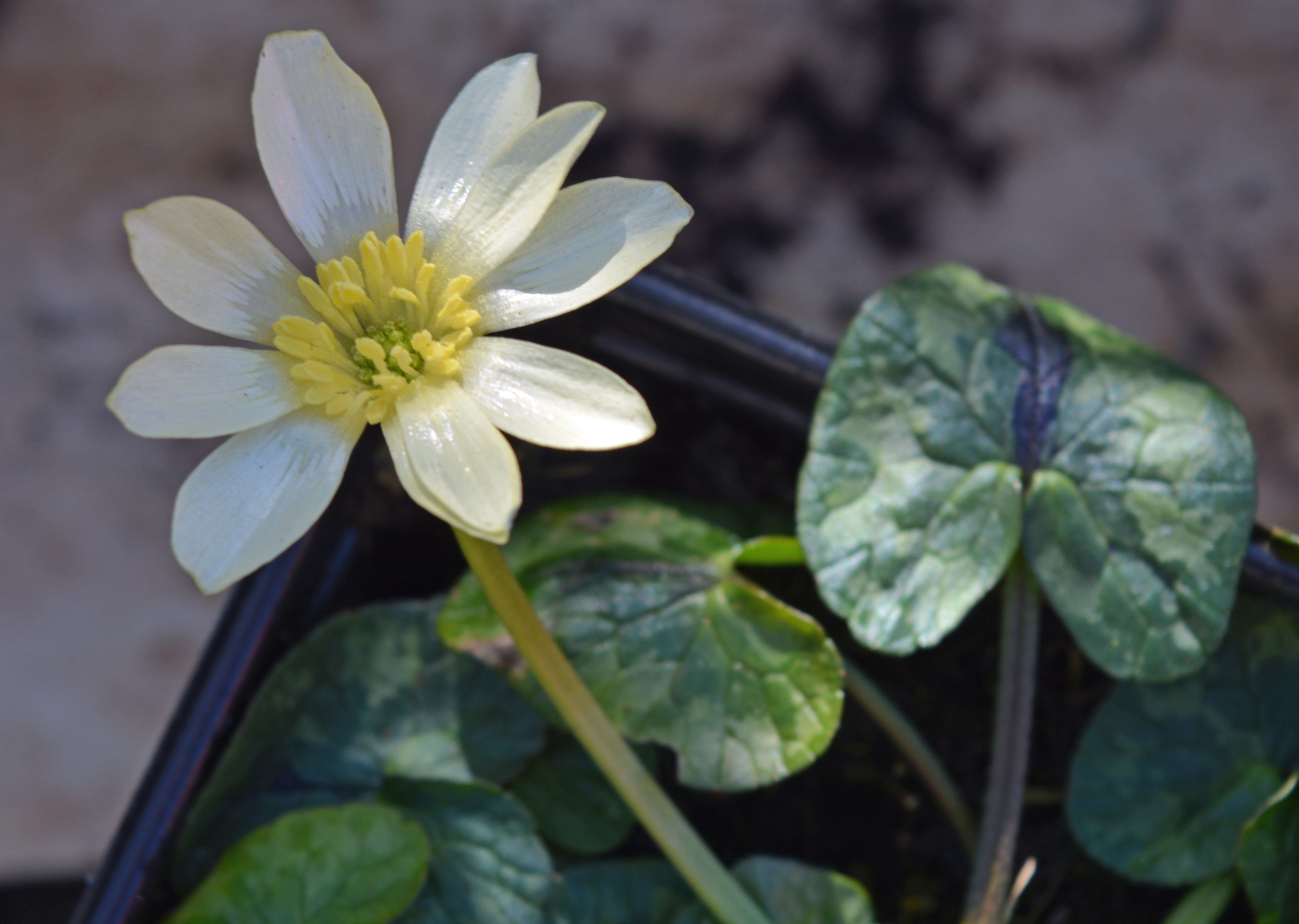
“We grow several other Celandines too because they are such cheerful addictions to the Spring Garden, a white cultivar, Ranunculus fiscaria “Randall’s White …………….”

“….. a pale yellow flower against bronzed foliage ……”


“……. a Giant Celandine and a Green Celandine.”

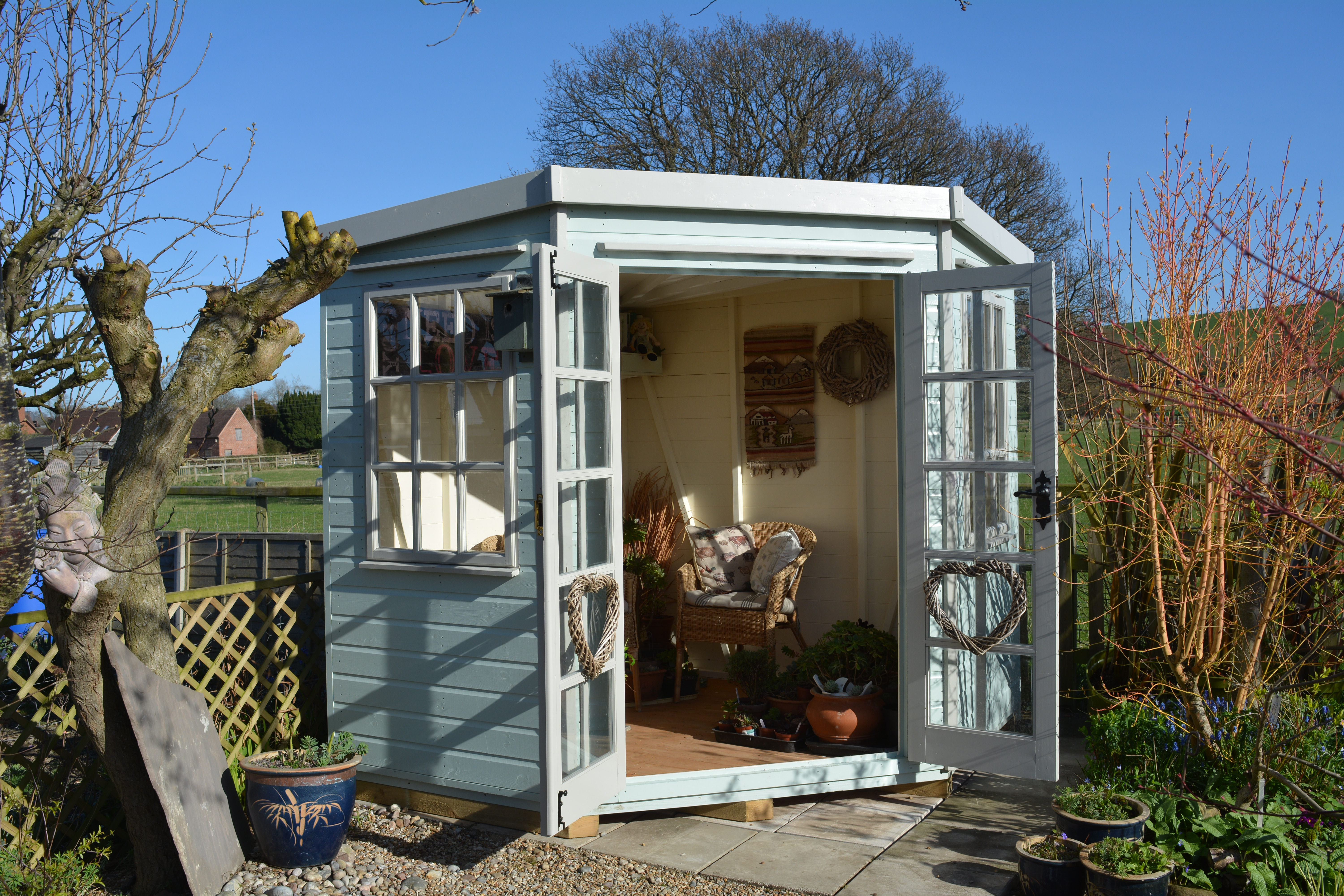
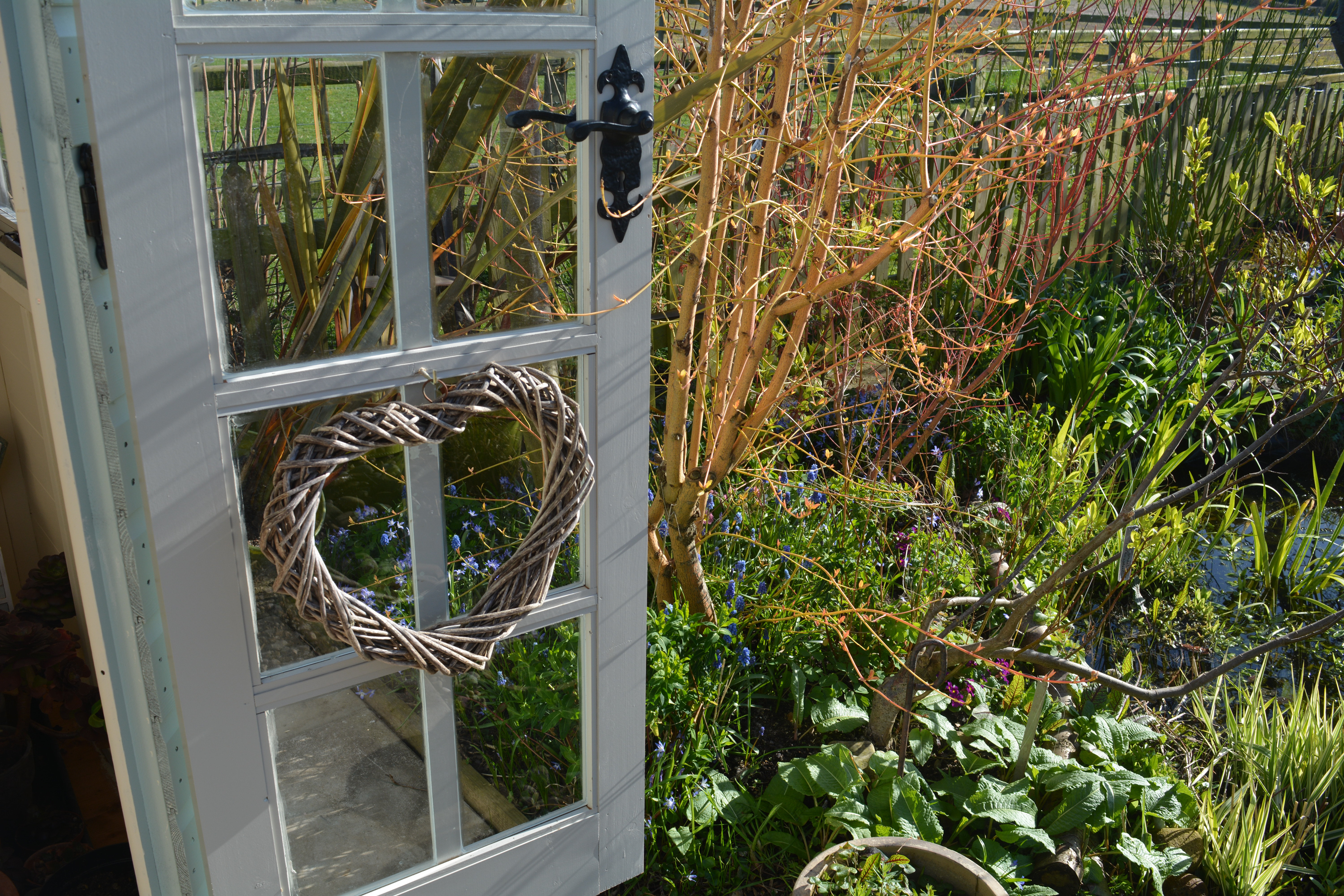
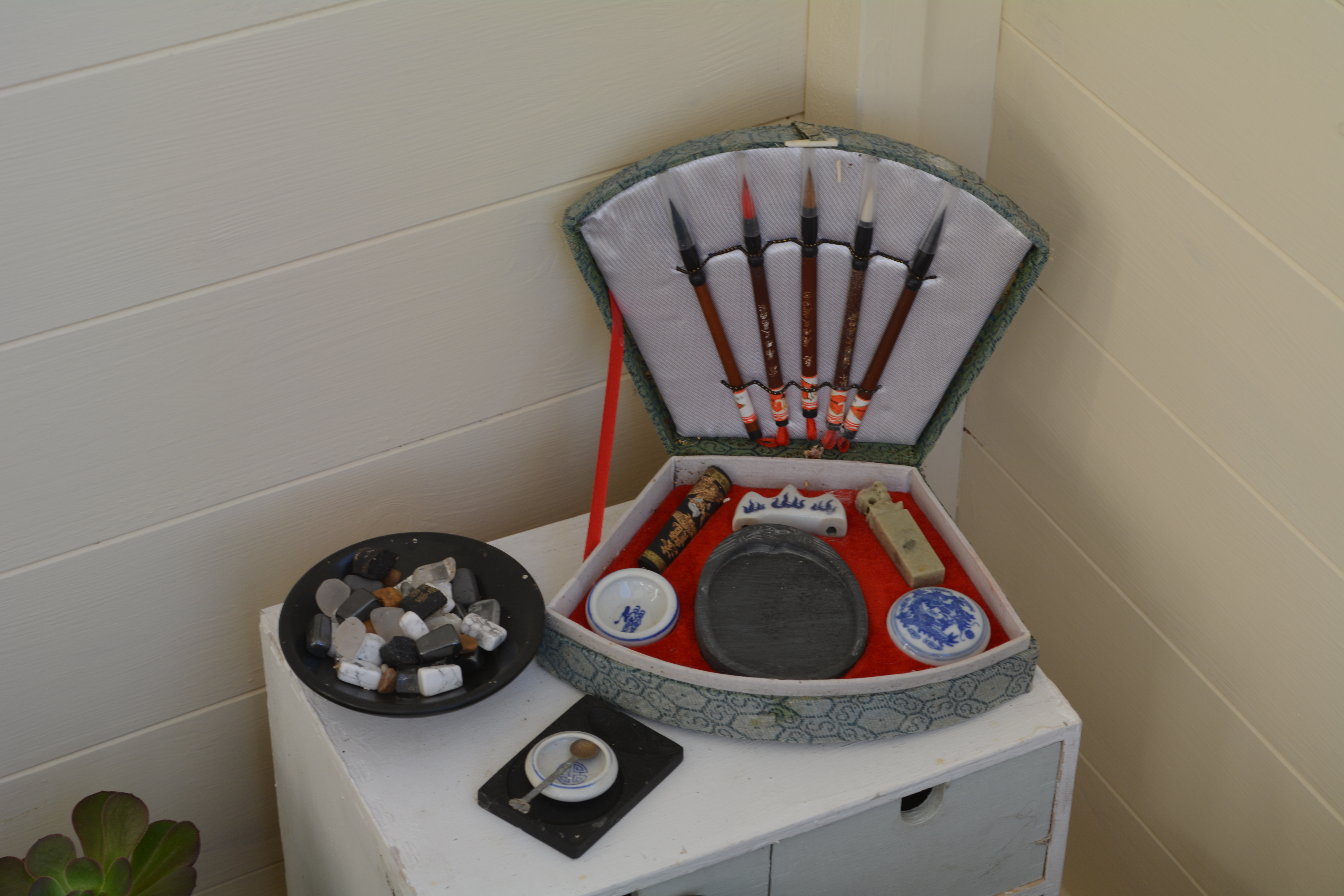
On the next double page spread we look at our new summerhouse and a selection of special small flowers.

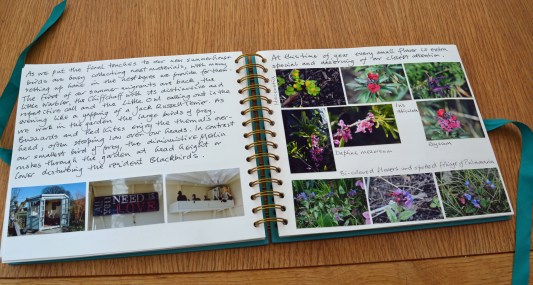
Concerning the summerhouse I wrote, “As we put the finishing touches to our new summerhouse birds are busy gathering nest materials, with many setting up home in the nestboxes we provide for them. The first of our summer migrants are back, the little warbler, the Chiffchaff with its distinctive and repetitive call and the Little Owl calling out in the evening like a yapping Jack Russell Terrier. As we work in the garden the larger of our birds of prey, Buzzards and Red Kites enjoy the thermals overhead, often stooping low over our heads. In contrast our smallest bird of prey, the diminutive Merlin rushes through the garden at head height or lower disturbing the resident Blackbirds.

On the opposite page I looked at those special little flowering plants that catch the gardener’s eye at this time of the gardening year. In other seasons when the garden is rich in flowers these special little gems may get overlooked in favour of the bigger, bolder and brighter cousins. I wrote, “At this time of year every small flower is extra special and deserving of our closest attention.”


Hacquetia epipactus and Iris reticulata “George”

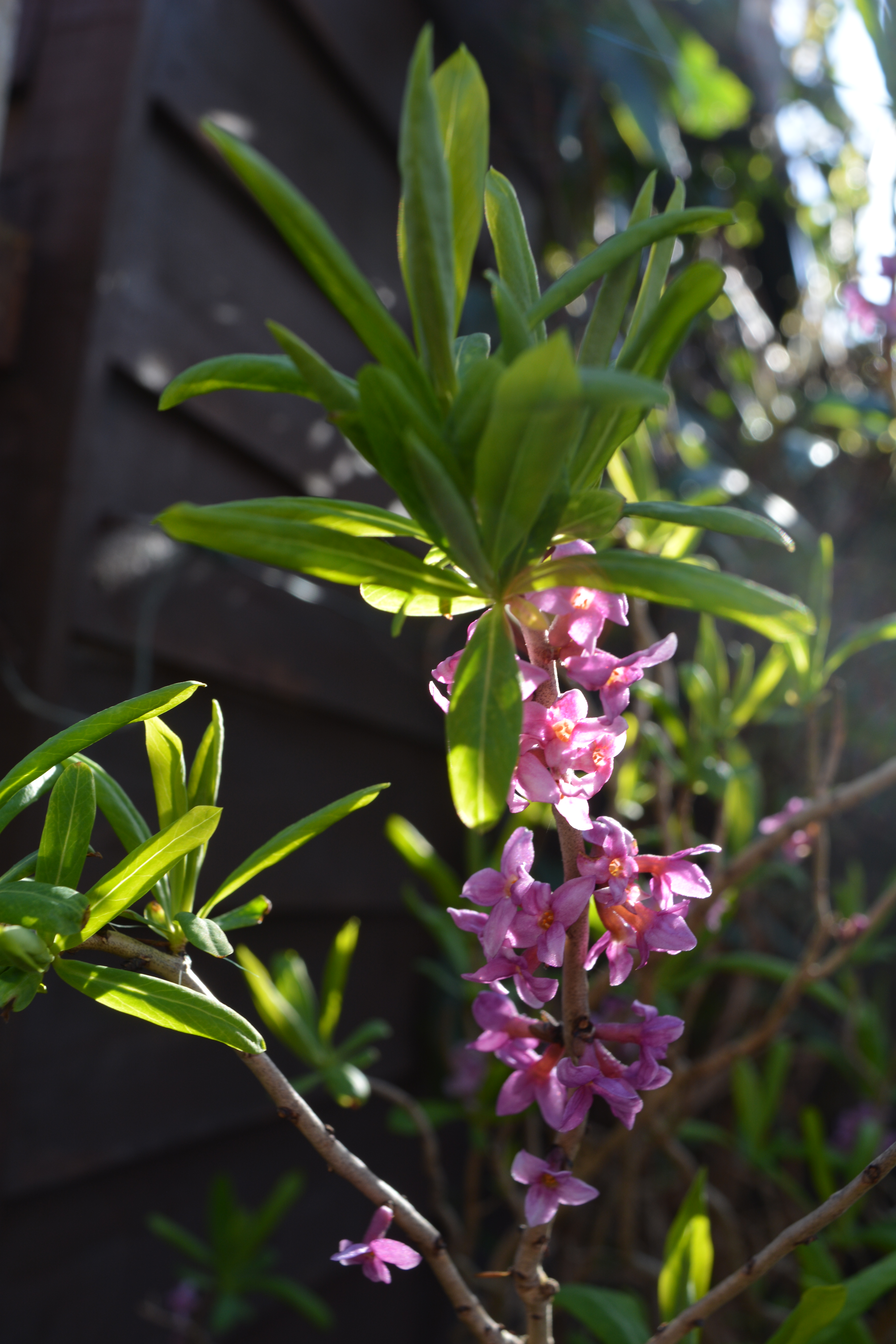
“Daphne mezerium.”


Erysimum Red Jep”

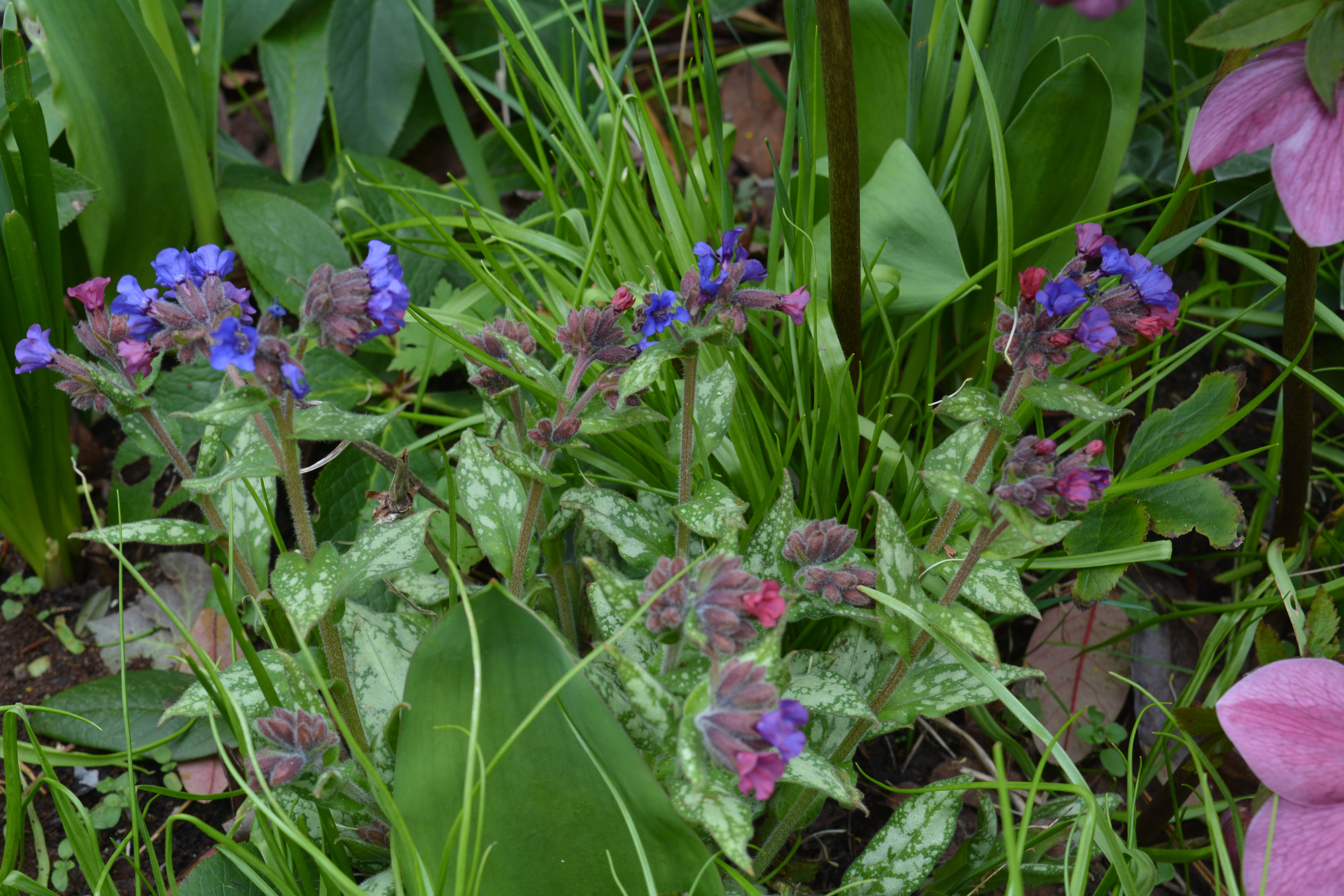
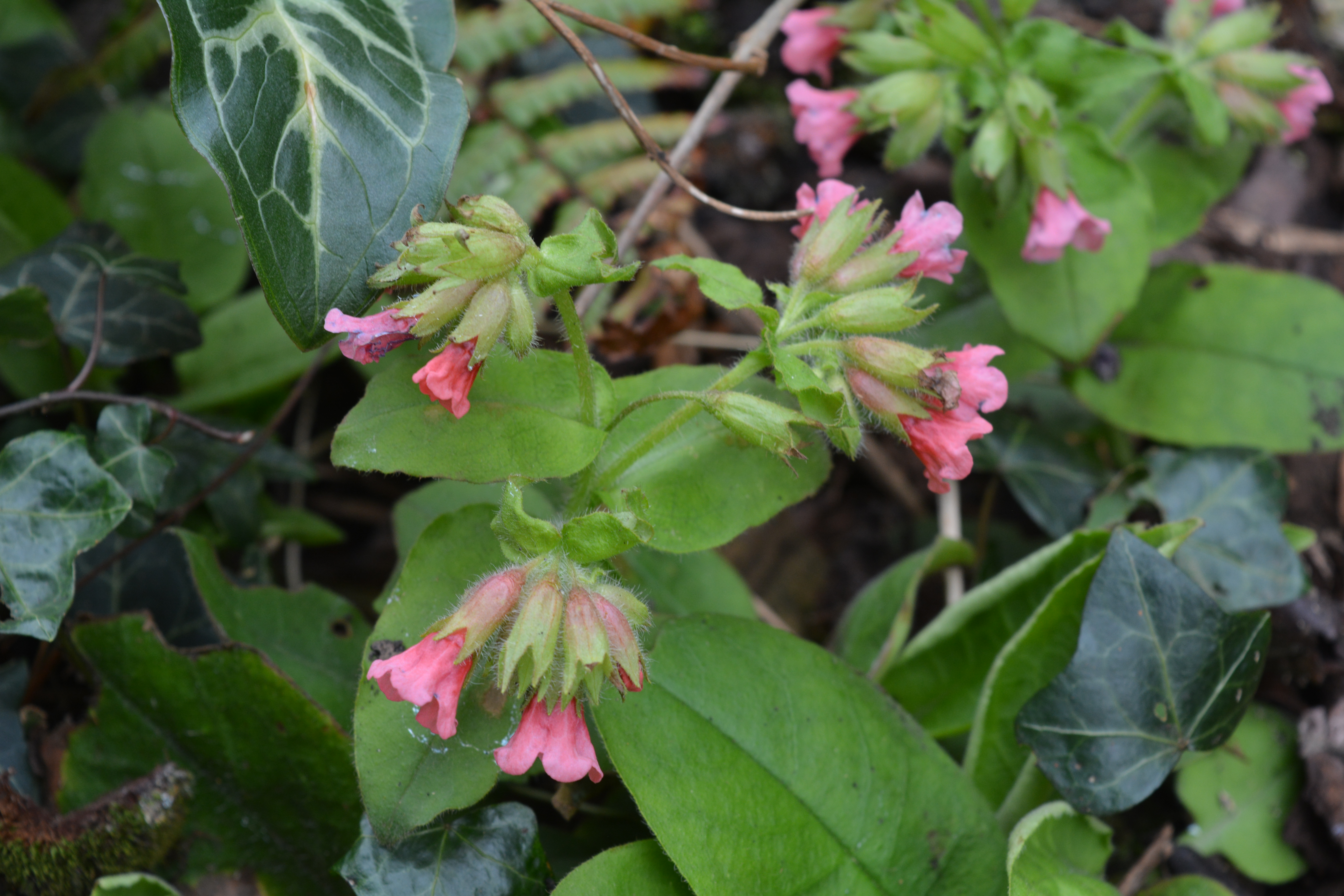
Assorted Pulmonaria.”

The next turn of the page reveals a page about Primulas and the next about pollarding willows and dogwoods.

I wrote,”In February I wrote about the first of our native Primroses coming into flower, but in March they flourish along with their relatives.The pictures below show the diversity that we grow and enjoy.”


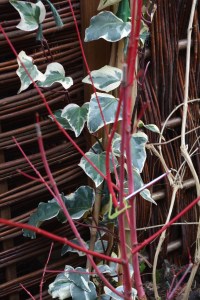
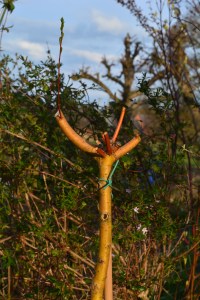
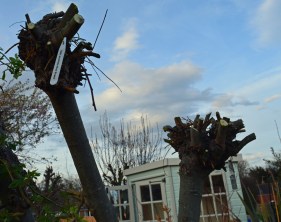
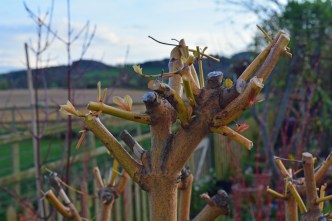
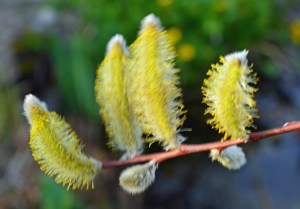
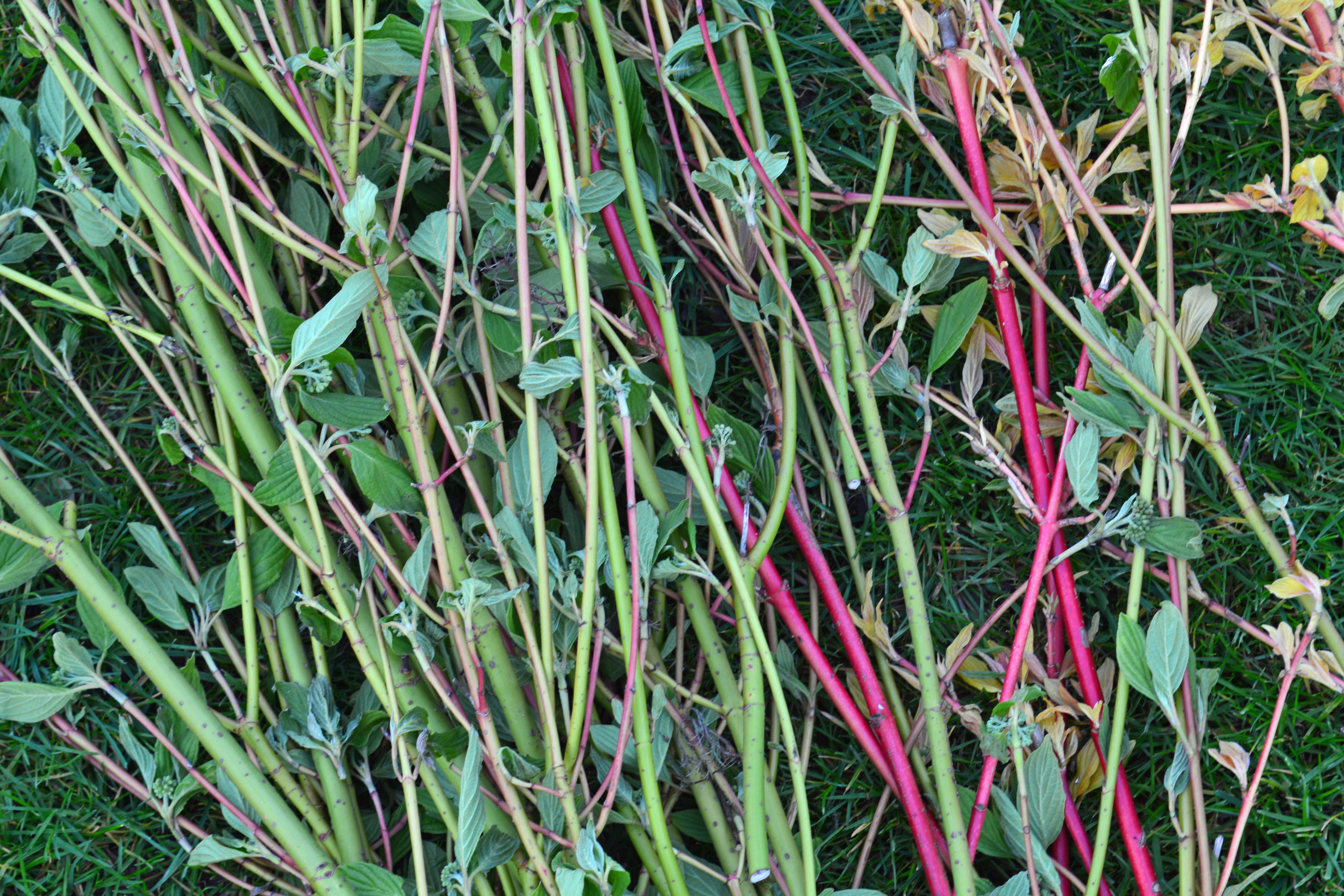
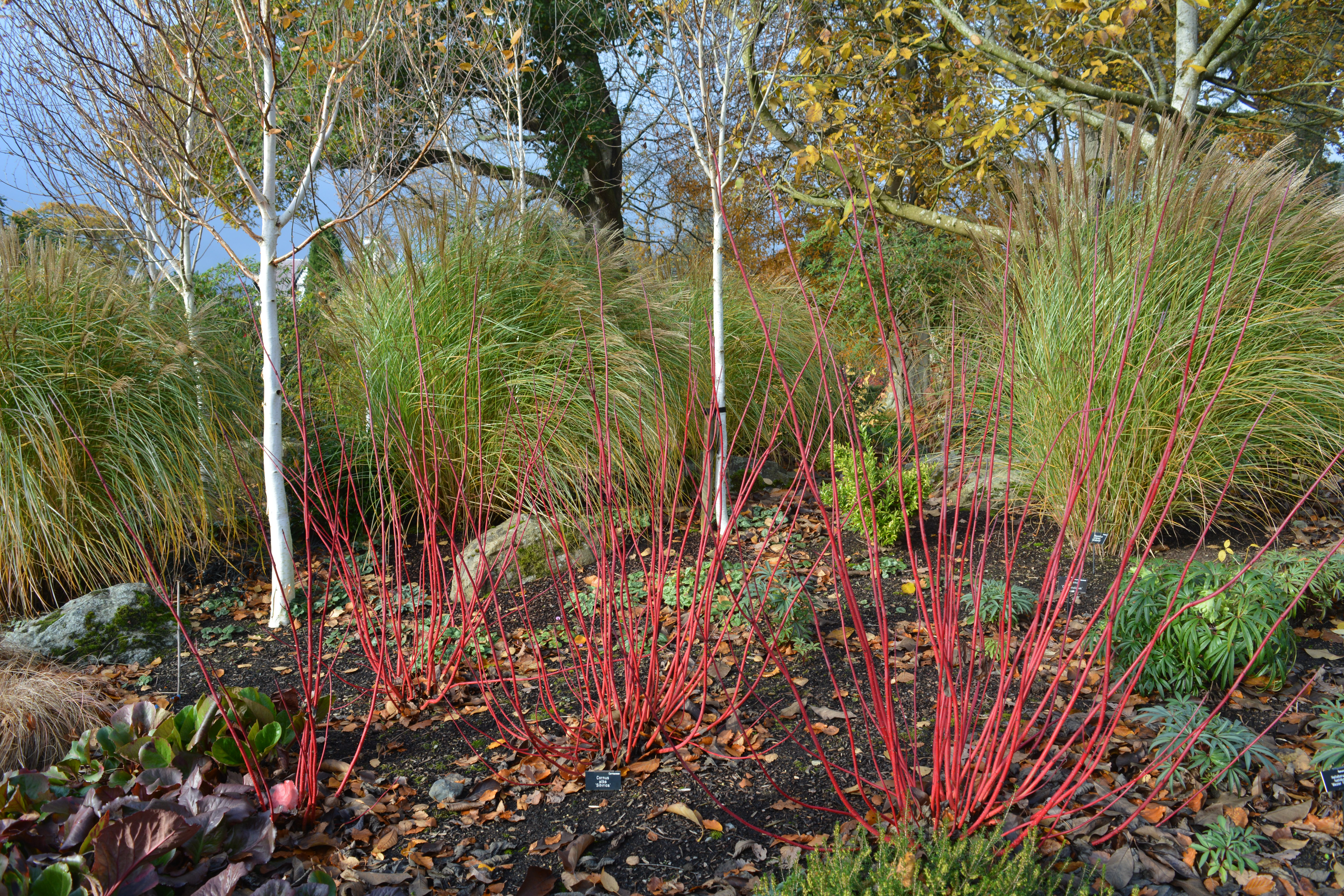
When I looked at pollarding and coppicing I wrote that, “The last week of March were mild and sometimes sunny so we took the opportunity to prune down our shrubs that we grow for their coloured stems, Cornus and Salix. We coppice some, pollard others.”


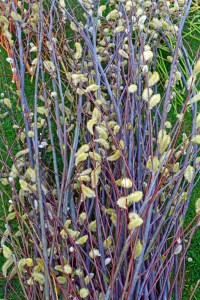
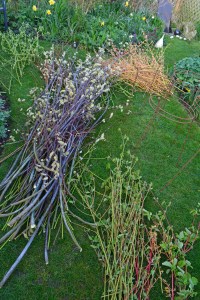
I continued to look at Salix and Cornus coloured stems on the last page of my entries for March, where I featured photographs of the bundles of cut stems.


So that was my garden journal for March. For the next month, April, we will see big changes as Spring becomes established.


Categories
autumn autumn colours colours garden photography gardening gardens gardens open to the public National Trust ornamental trees and shrubs photography The National Trust Wales

Bodnant Garden – The Valley Sides

Back here at the wonderful Welsh gardens at Bodnant, we will finish our little series of 3 posts as we take you down the path that contains the colourful collection of Acers and then drops down into the steep sided valley to follow the clear, fast stream.

bod5-08

We were disappointed to find that the grass paths that we have in the past followed to seek out and enjoy the bright fiery colours of Acers at Bodnant, was blocked off to protect the worn out grass. We did find a way to see the Acer Glade from an alternative track so we couldn’t get up as close and personal. They were still great though!

bod5-17 bod5-16 bod5-15 bod5-14 bod5-13 bod5-04 bod5-12 bod5-11 bod5-03 bod5-09 bod5-10 bod5-07 bod5-06

We shall share our adventures exploring “The Dell”, the deep valley cut by the powerful stream, the Afon Hiraethlyn by creating a gallery of photos shared in the order taken.

That is it for our visit to the National trust property in North Wales, Bodnant Gardens. Perhaps we can do it all over again in a different season and see what we can find then.

Categories
colours garden design garden photography gardening gardens gardens open to the public half-hardy perennials hardy perennials National Trust ornamental trees and shrubs The National Trust trees Wales

Bodnant Garden – an autumnal walk around a great garden.

In the first post about our day visit to the Bodnant Gardens not far inland from the coast of North Wales we looked at the special magical nature of the low November sunlight. But there was a lot more for us to enjoy as we explored in a different direction than we usually take as autumn repair work on the grass paths and lawns prevented us following where our footsteps normally tread. This of course paved the way for new discoveries and fresh views.

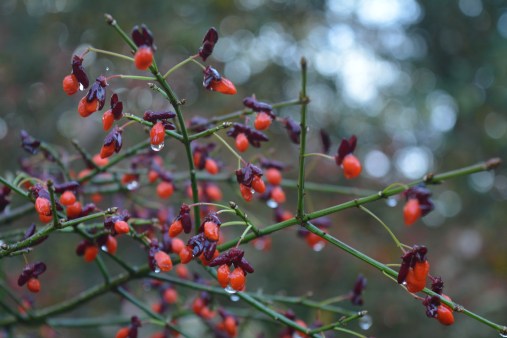
The plant that we got really excited about was this beautiful deciduous Euonymus dripping with a full crop of berries which in turn were dripping with fine droplets of rain. Euonymus alata “Compactus” bravely combines the darkest possible ruby red almost purple fruits from which burst bright tangerine orange seeds  and it looked wonderful. The younger berrying branches sported bright green coats in strong contrast to the older wood, coloured brown and strongly winged with corky ridges giving the whole bush an extravagant look. It also boasts fiery red foliage in the autumn and strangely its weakest point are the flowers which are small and a rather insignificant green in colour.

bod-22bod5-02

This exciting shrub had a lot of competition where catching the eyes of the visitors was concerned.

We love making new discoveries and on this visit to Bodnant we came across some fruit on a shrub which we could not remember having ever seen before and had no idea what it could be, with its tiny acorn-like fruits in two shades of orange. It looked if it would appear a rather dull evergreen shrub for most of the year but it must have flowers at some time which I would guess would be white.

bod3-1

Back to our explorations! So, moving away from the Winter Garden, Jude and I followed gravel tracks which crunched beneath our feet, the sounds of which softened only where we had carpets of fallen leaves to paddle through. We moved into more open areas where we could appreciate views of large specimen trees in the distance as well as beautifully textured and coloured perennials right under our noses.

bod-01 bod-03 bod-04 bod-14

Trees in November show off their strong networks of boughs, and judicious pruning of the lower leaves by skilled garden staff add extra power.

bod-05 bod-16 bod-11bod-06 bod-10  bod-12 bod5-01

It wasn’t all foliage and tree trunk texture though, there were still late flowering perennials shining through contrasting strongly with the colours of autumn.

bod-15 bod-07bod-09 bod-08


Categories
autumn autumn colours colours garden design garden photography gardening gardens gardens open to the public grasses light light quality ornamental grasses ornamental trees and shrubs photography shrubs The National Trust trees Wales Winter Gardening winter gardens

Bodnant Garden – a magical place in North Wales

For my last post of 2016 I thought I would share a visit we made to one of our favourite gardens, Bodnant Gardens in North Wales. A great way to celebrate our garden visiting exploits in 2016 and to look forward to visiting many more wonderful UK gardens in 2017.

Bodnant Gardens, a National Trust Property in North Wales, is described as a “glorious garden nestling in the Snowdonia foothills of North Wales and one of the world’s most magical gardens. With its dramatic scenery, historic plant collections, Champion Trees and myriad horticultural styles, it will capture your heart and live in your memory.”

It is just possible for us to get there, enjoy a day wandering and then return on the same day. So this is a day trip we have made many times over the years in different months but never before in November. We were not sure exactly what to expect but our expectations were definitely high. We were not to be in for the slightest disappointment!

After a two hour drive we arrived as mist and drizzle did its best to hide the garden but after our usual half hour sit for a coffee and cake we were  pleased to see the beauty of the garden revealed as the autumn sunlight brought the garden to life before our eyes setting the scene for an afternoon of pure magic, which we will share with you in a couple of posts.

Firstly this post will be all about the special nature of the light and how it added extra magic to the scenes unfolding before us.

After showing our membership cards we left the reception and upon entering the garden itself we only managed a few steps before the special light stopped us in our tracks. A long border running alongside a tall stone wall was on fire with the rich colours of late perennial flowers and the red and orange leaves of shrubs. The overnight dew was still hanging on the grass and every droplet became a jewel.

bod2-08 bod2-03 bod2-02 bod2-12bod2-13 bod2-14bod2-15 bod2-05

From the path running along the centre of the hot fiery bed we could look across towards the main garden where the light caught Acer foliage and wispy perennials.

bod2-07 bod2-11bod2-10 bod2-01

Individual flowers among this beauty, shone like jewels in a jeweller’s shop window display. Water droplets sat on the red blooms of this Fuschia and Salvia.

bod2-09 bod2-04

We had plenty of choices of pathways to follow but the choice was an easy one – go where the colours shone the brightest – off in to the newly created Winter Garden beneath a halo or red glowing foliage.

bod2-06 bod2-16  bod2-18 bod2-19 bod2-20 bod2-17 bod2-23bod2-22 bod2-25

With so much colour and texture surrounding us it was hard to home in to see the special beauty only to be found by looking closely and deeply searching for the detail.

bod2-24 bod2-26 bod2-27 bod2-28 bod2-29 bod2-30

Bodnant proved itself a most worthy contender for garden visiting late in the year and could well join the little group of special places we visit annually. In part two of my Bodnant posts we will share other parts of the garden with you, the places further afield than the Winter Garden.

Categories
flowering bulbs garden photography garden ponds garden pools gardening gardens gardens open to the public National Trust ornamental trees and shrubs photography Shrewsbury Shropshire shrubs spring bulbs The National Trust trees water in the garden winter gardens woodland woodlands

A Walk in the Park – Attingham Park – The Woodland Walk

Back to our March visit to Attingham Park when we decided to take the Woodland Walk Trail.

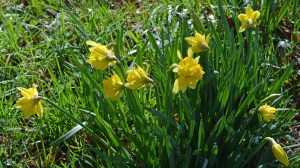
As we left the walled garden clumps of the clearest yellow daffodils lit up shadows beneath shrubbery.

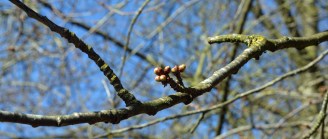
We were anticipating expanding buds on some shrubs and trees and maybe a few in early leaf. We both love the sticky, brittle toffee coloured buds which are early to burst. Other buds shone bright green!


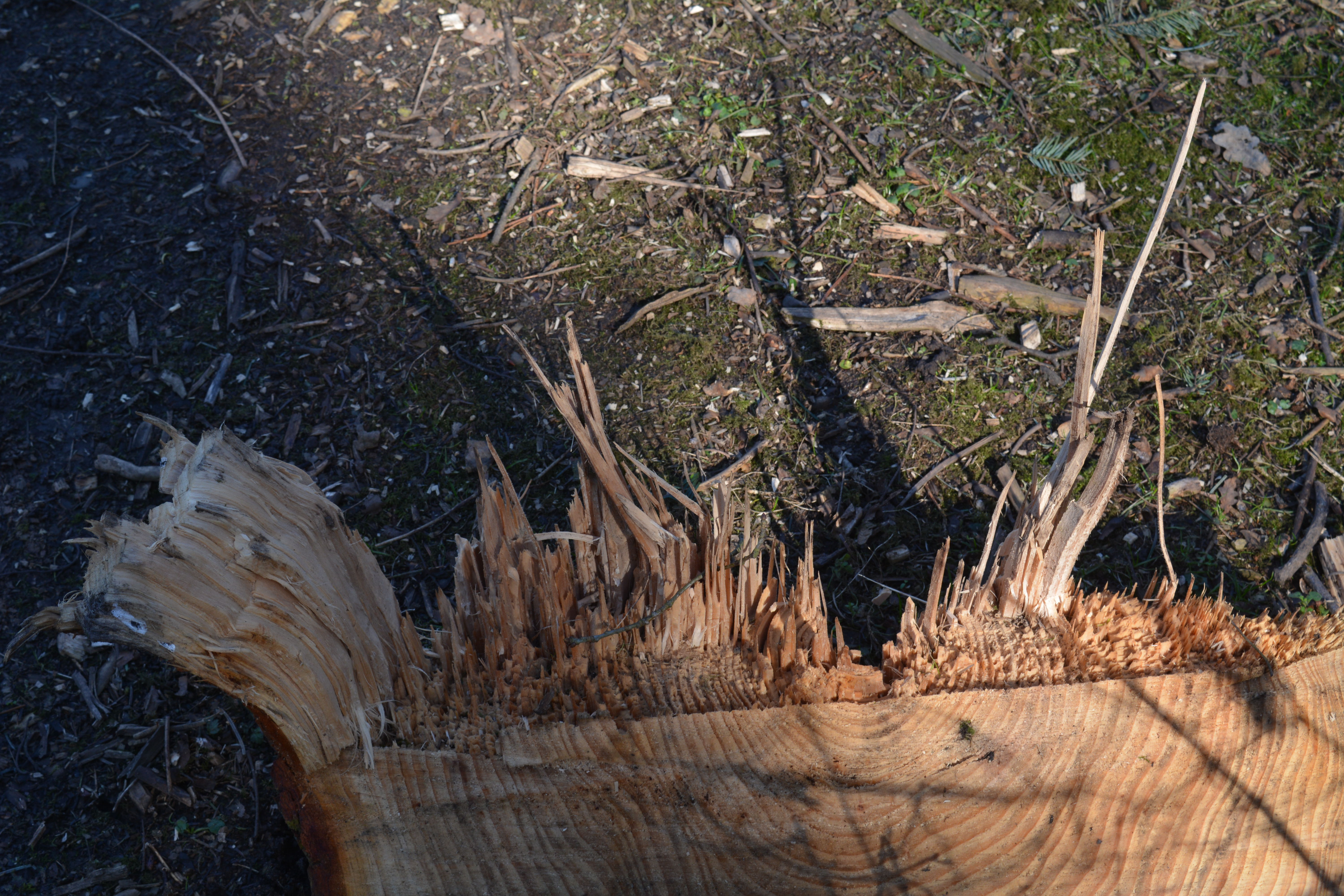
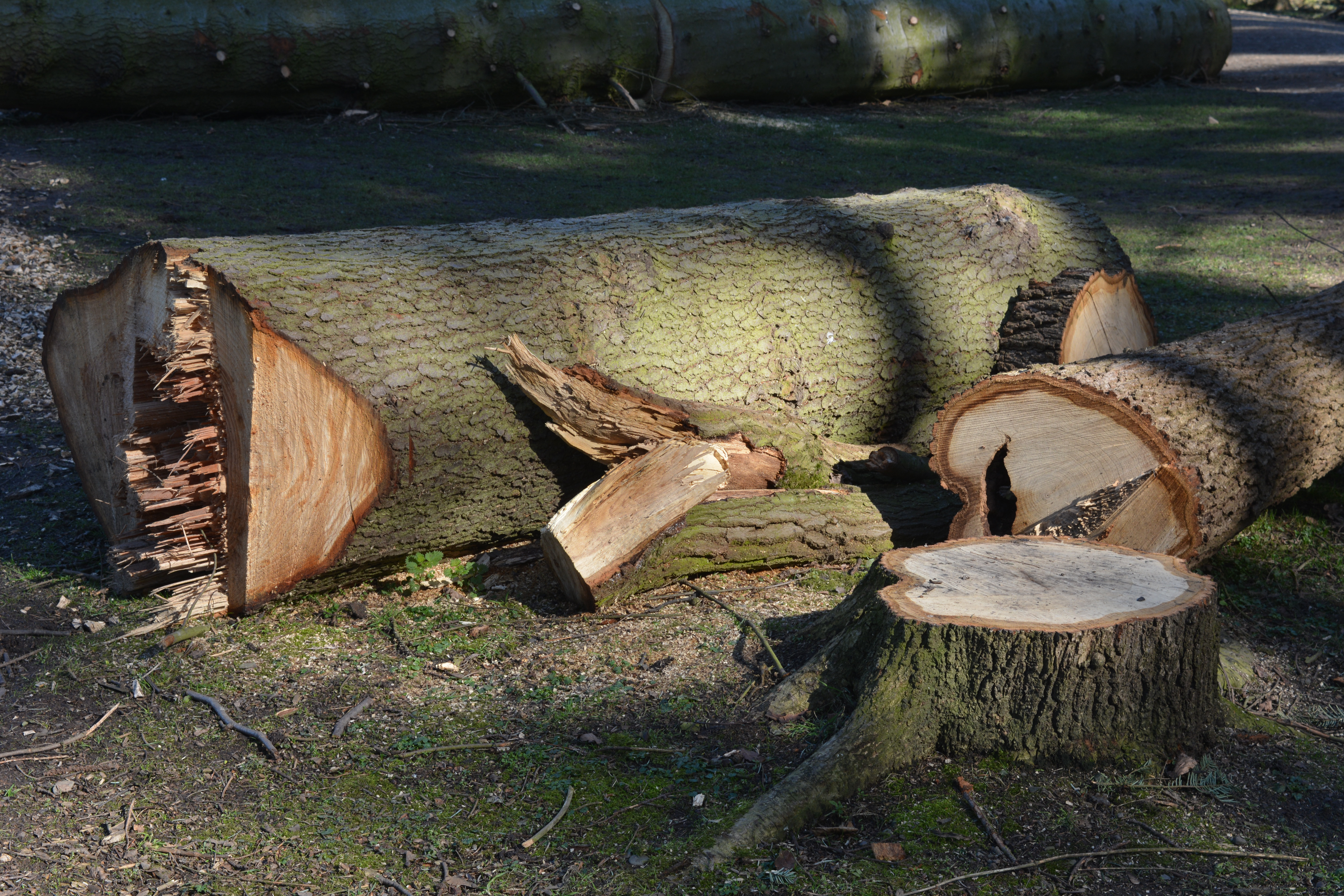
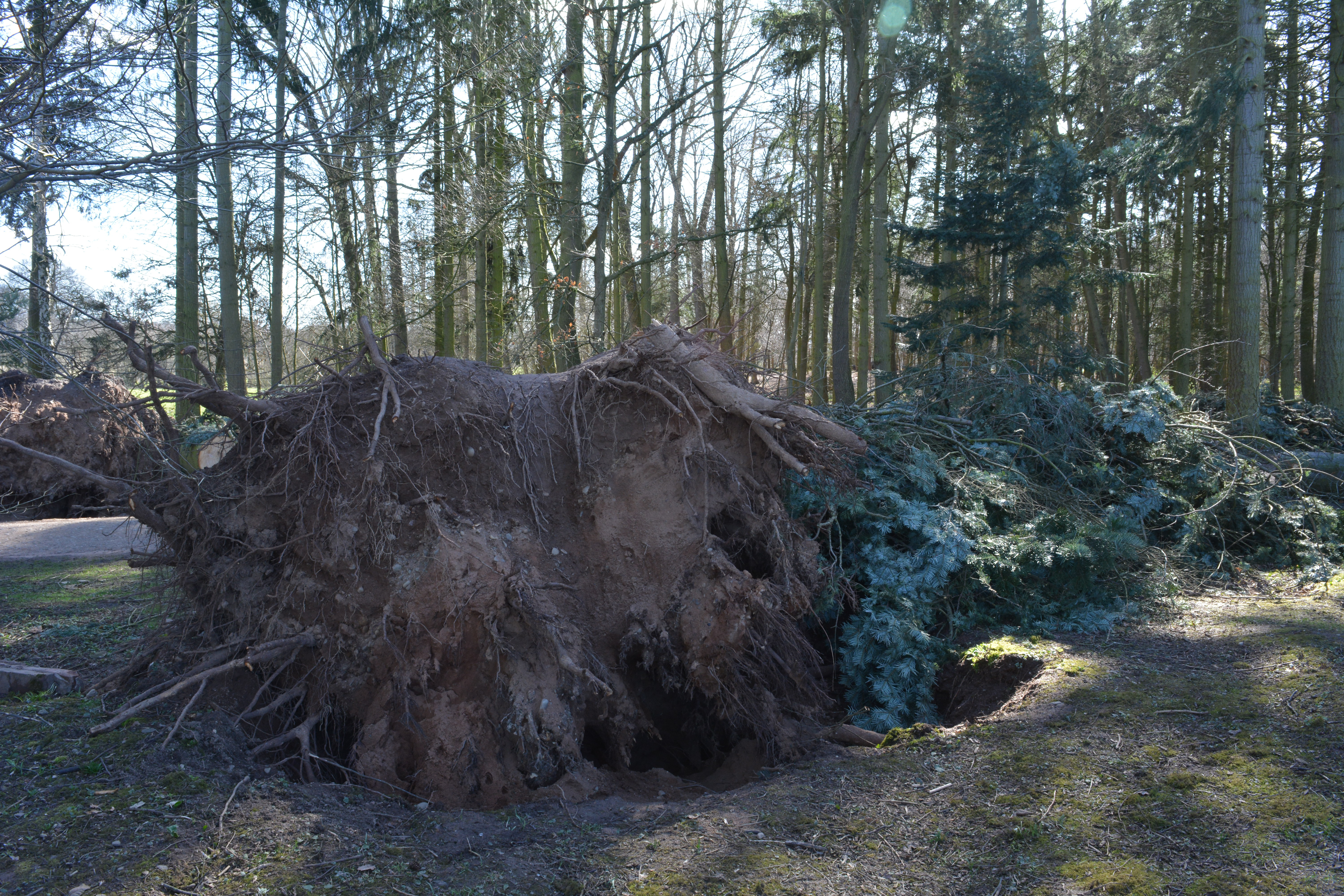
We soon encountered signs of the work of Storm Doris, a huge mature tree had been ripped from the ground. We imagined  how  frightening the sounds of the tree being torn and wrenched from the ground must have been. The gardeners had been hard at work tidying up the mess of her destruction.

Places that usually look boggy looked much wetter on this visit with tiny ditches and streams full of water and flowing into larger areas of clear standing water with wetland plants looking full of life and thriving.


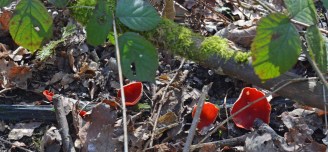
We passed beneath mature deciduous trees as we followed the woodland trail. On the ground beneath them the bright green freshness of this year’s herbaceous growth shone out. But an even brighter red patch caught our attention, a small group of fungi.


We came out into the open, which appeared much brighter as as we left the trees behind, and made our way back across the deer park back towards the house.

A bridge took us over the river which was flowing quickly in a light flood. Weeping willow branches were being swept along and the water was lapping at the feet of a row of elderly pollarded willows. The pollards looked so sculptural.

Next month’s visit to Attingham Park should feature more signs of spring becoming established.

Categories
colours flowering bulbs fruit and veg gardening gardens gardens open to the public grow your own kitchen gardens ornamental trees and shrubs Shrewsbury Shropshire spring bulbs spring gardening The National Trust walled gardens walled kitchen gardens

A Walk in the Park – Attingham Park March – The Walled Garden

I shall post two reports for our March visit to Attingham Park, the first about the Walled Garden followed by one about the walk we followed, the Woodland Walk.

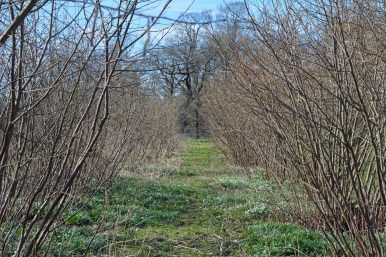
We walked our usual track beneath tall mature deciduous trees to take us to the walled garden. We had a detour to look at the nut walk, lined with coppiced Hazel trees and to have a look at Attingham Park’s famous old bee “building”, the Georgian Bee House. It is a very decorative wooden construction painted white and featuring fancy trellis-work.


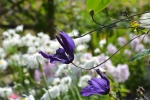
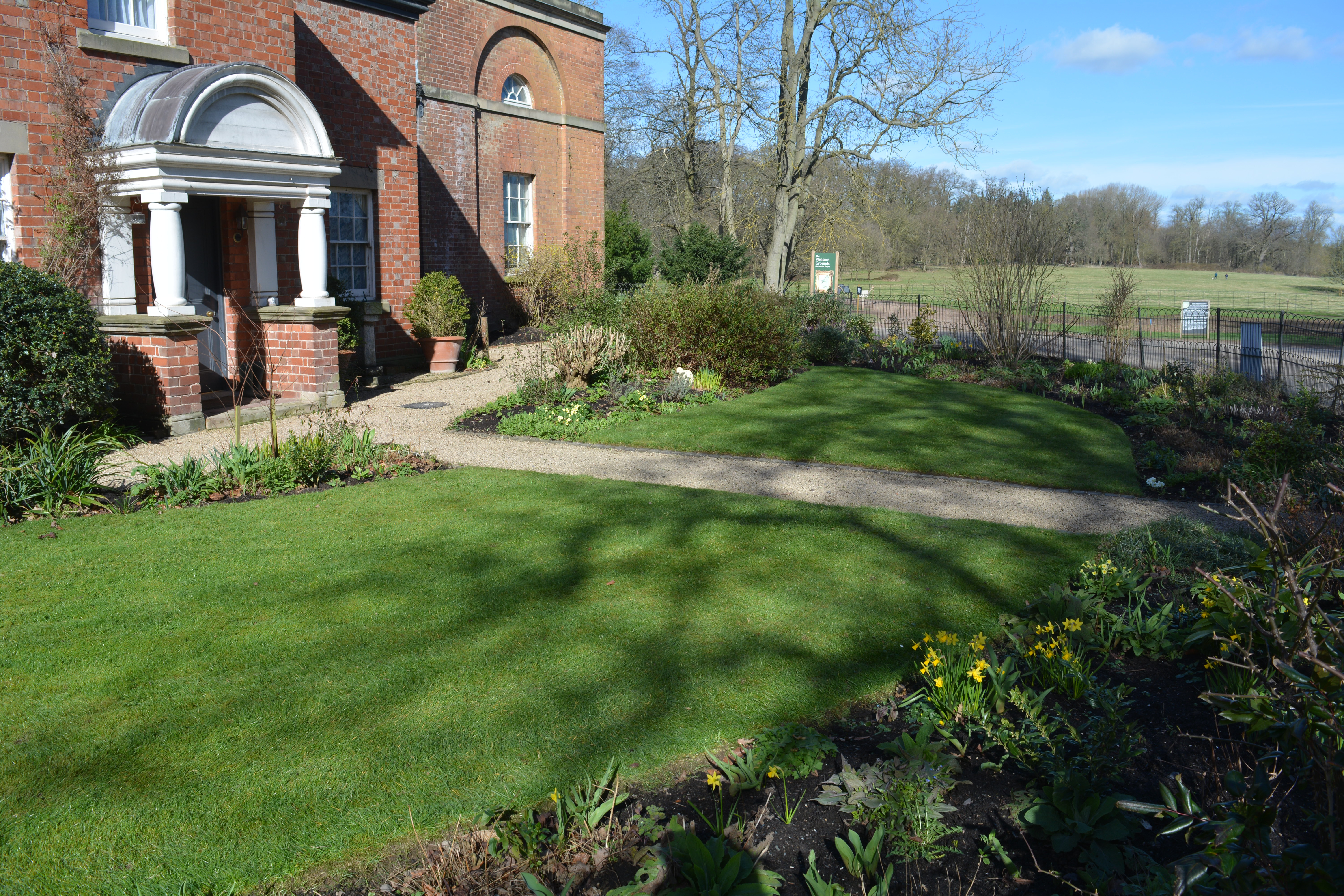
On route we discovered naturalised Daffodils and native Celandines glowing bright golden-yellow beneath magnificent mature trees. The lawns and borders of the gardener’s cottage looked neatly prepared to celebrate Spring. A Clematis alpina displayed deep purple buds fit to burst. Species Tulips were already in flower among emerging growth of herbaceous perennials.


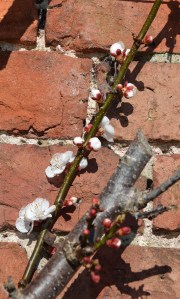
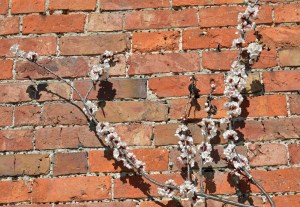
Approaching the gateway into the walled garden we noticed colour on the trained fruit trees, the white and pinks of blossom.


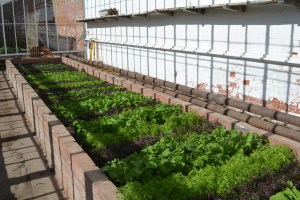
Once we were within the walls we could appreciate the extra warmth and protection afforded by the tall red-bricked walls. Leaf buds were opening on fruit bushes and canes and perennial plants were emerging strongly now the soil had some warmth to it. Bulbs were already flowering and sharing perfume.


We were sure that the gardeners, who like to garden organically, were delighted at the sight of emerging Ladybirds.

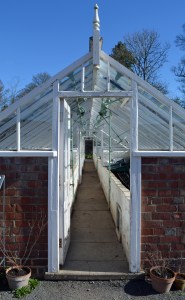
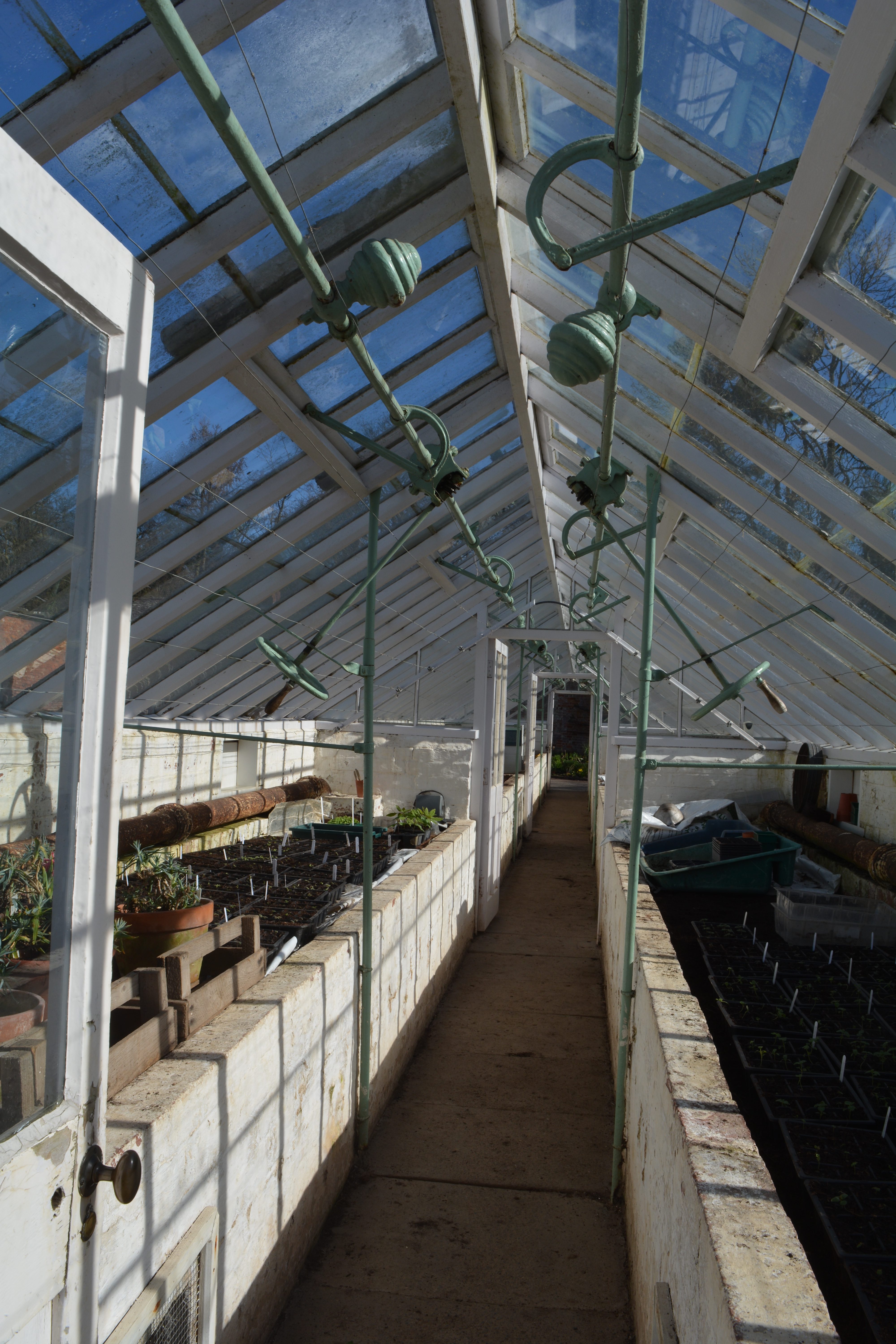
We were so pleased to find the glasshouse doors open to allow us to wander inside to study their structure and mechanisms as well as allowing us to check what the gardeners were up to.


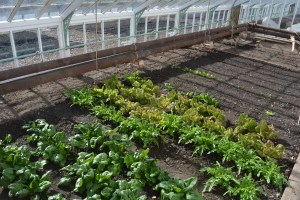
The informal decorative and cut flower borders surrounding the glasshouses were most colourful, with Primulas and bulbs taking full advantage of the extra degree or two of warmth afforded by the walls.


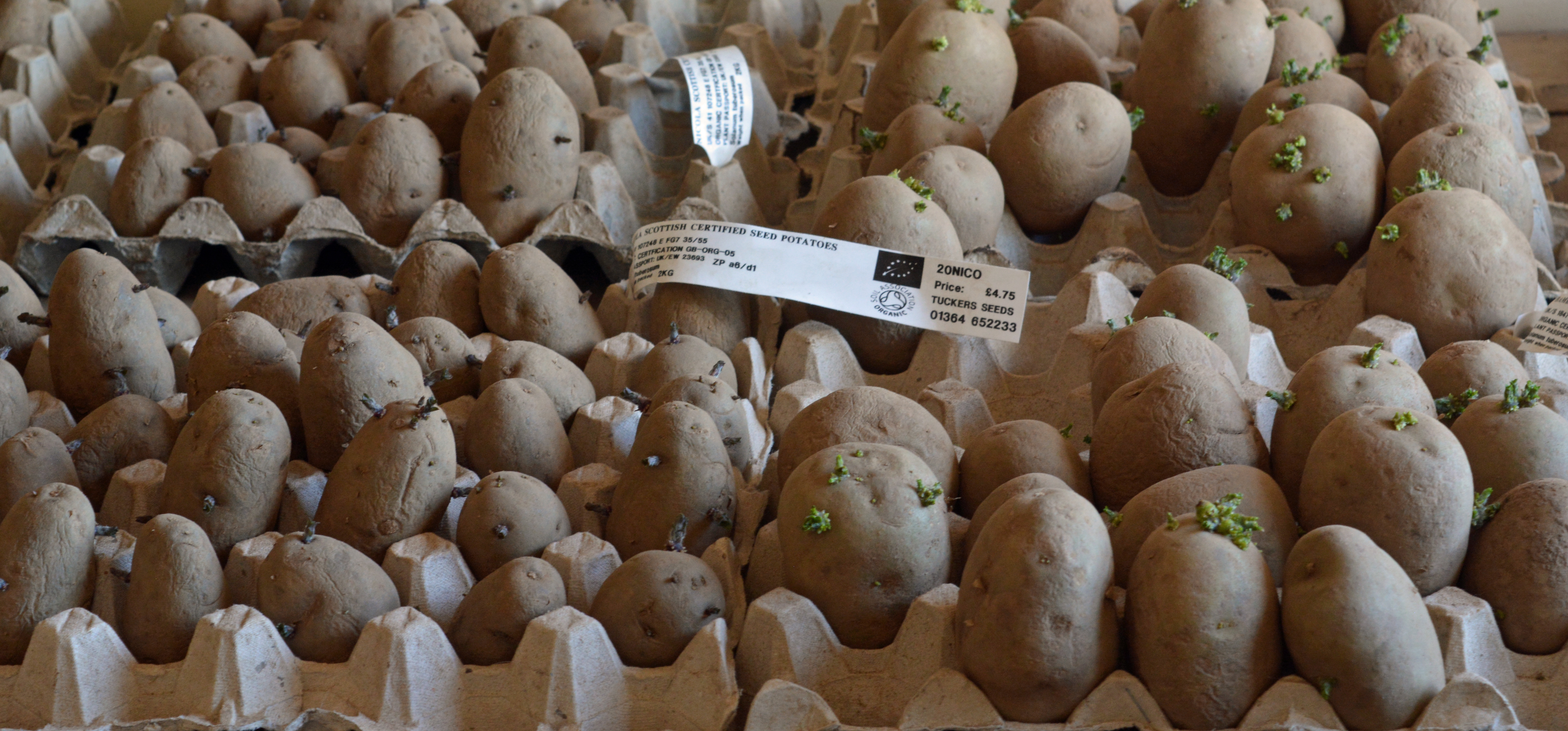
A quick look into the gardeners’ bothy showed us that lots of seed potatoes were chitting nicely and we noticed that the volunteer gardeners had plenty of jobs to challenge them.

When we return next month we look forward to seeing big changes in the productive borders.

When we left the bothy we continued to walk beneath tall trees along the way marked track taking us towards the start of the Woodland Walk. This walk will be the subject of the next March Attingham Park post.


Categories
colours garden photography gardening gardens gardens open to the public National Trust ornamental trees and shrubs Shrewsbury Shropshire shrubs The National Trust trees Winter Gardening winter gardens woodland woodlands

A Walk in the Park – February at Attingham Park – Part 2

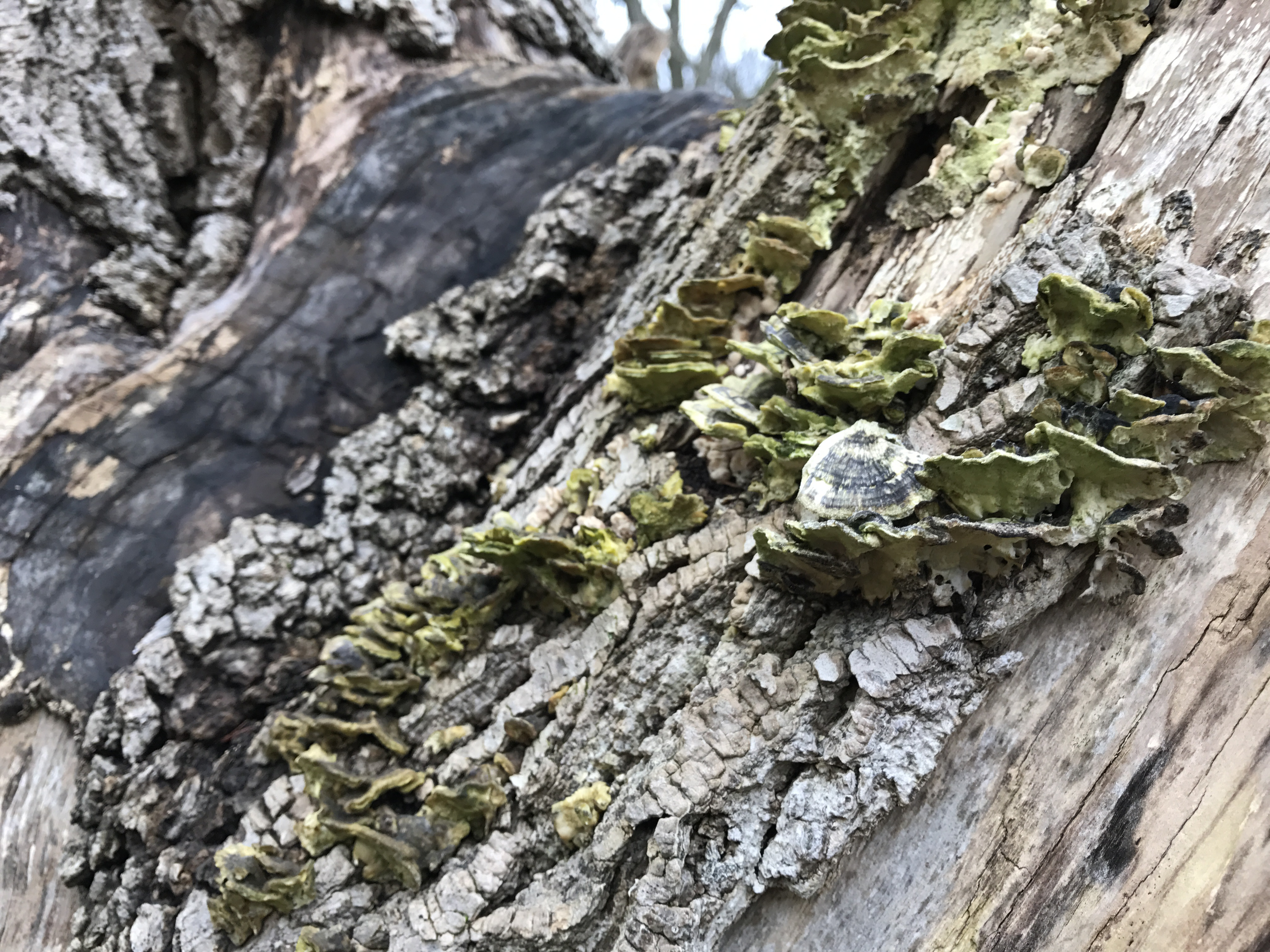
After enjoying time exploring the walled garden and its outbuildings we continued our wanderings towards the beginning of “The Mile Walk”, passing along the way this tree half covered by orange lichen, which looked so colourful on this dull day.

a9-16 a10-5

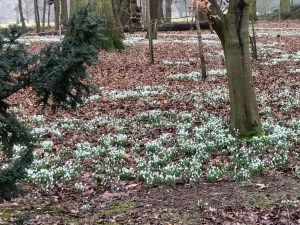
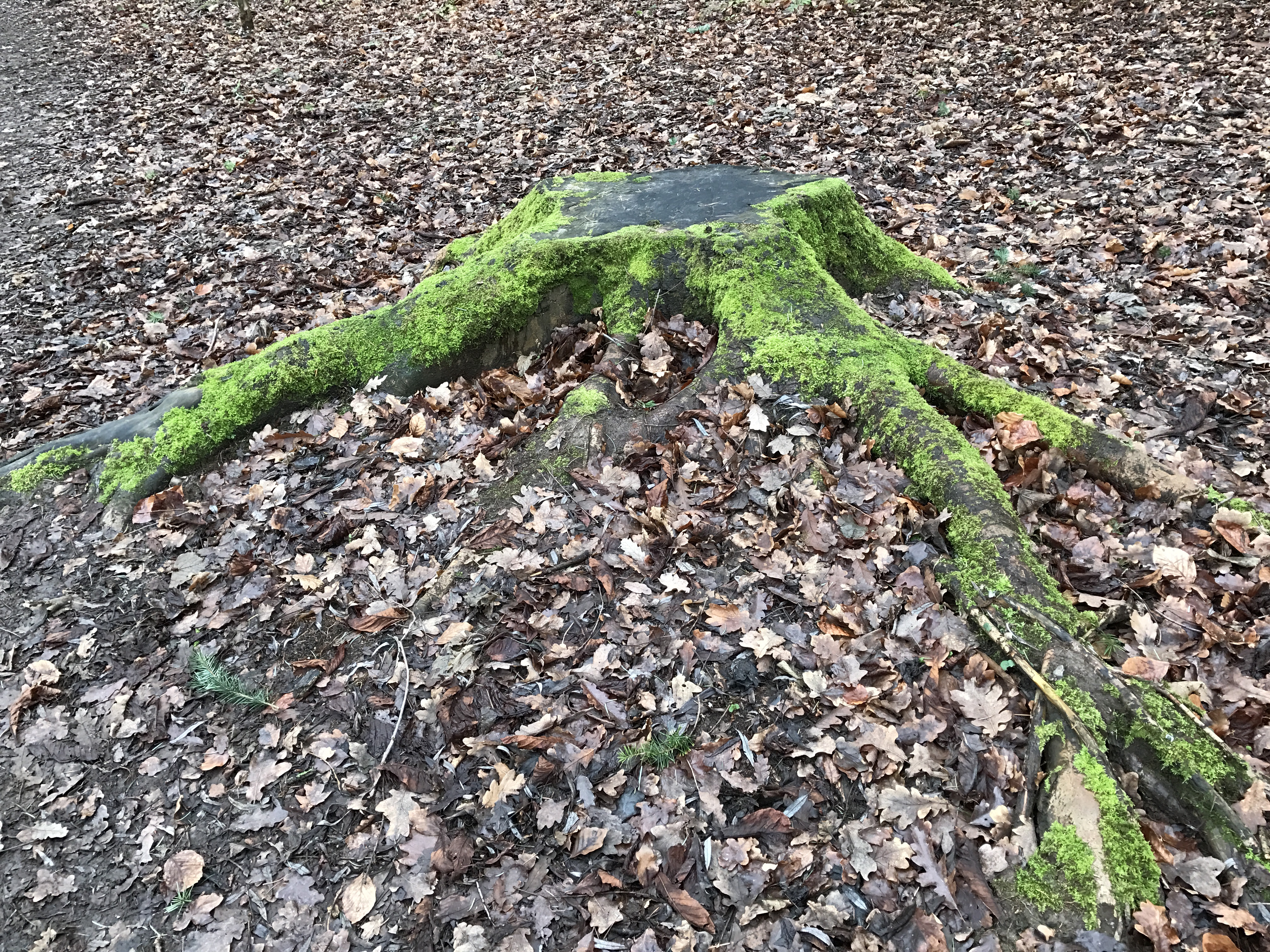
On the way we noticed how much moss was growing at the bases of the mature trees and how bright their green colours were. Of course we enjoyed the white sparkles of snowdrops on the way.

a9-01 a9-04a9-06 a9-14a9-11 a9-03a9-05 a9-02

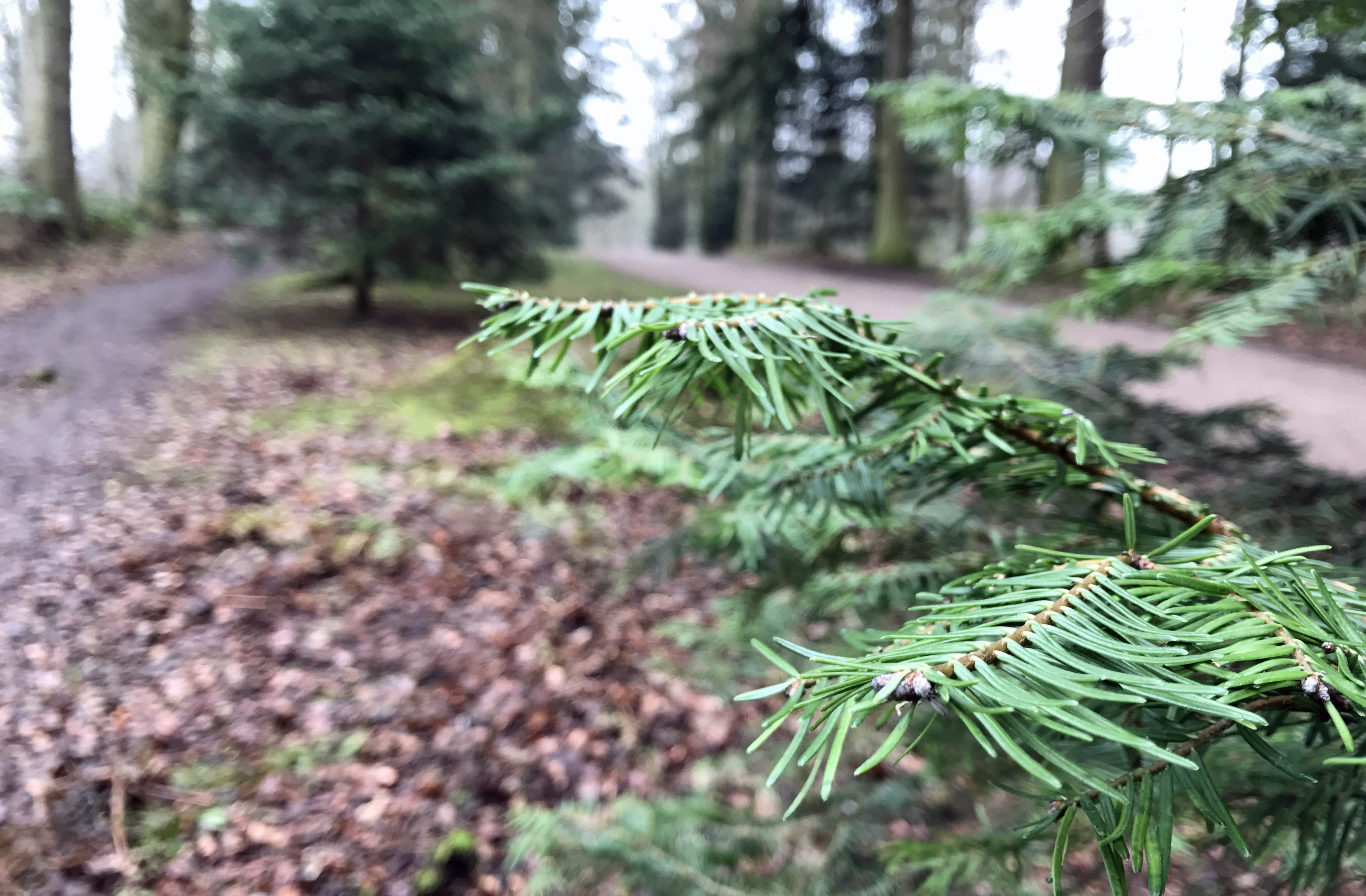
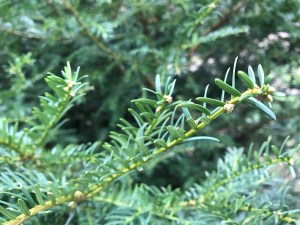
There is a wide variety of coniferous evergreens growing close to the path, collected centuries ago under the guidance of Lord Berwick, a keen tree and shrub collector. We looked closely at the freshest of branches to compare colours and shapes.

a9-07 a9-10a9-18 a9-17

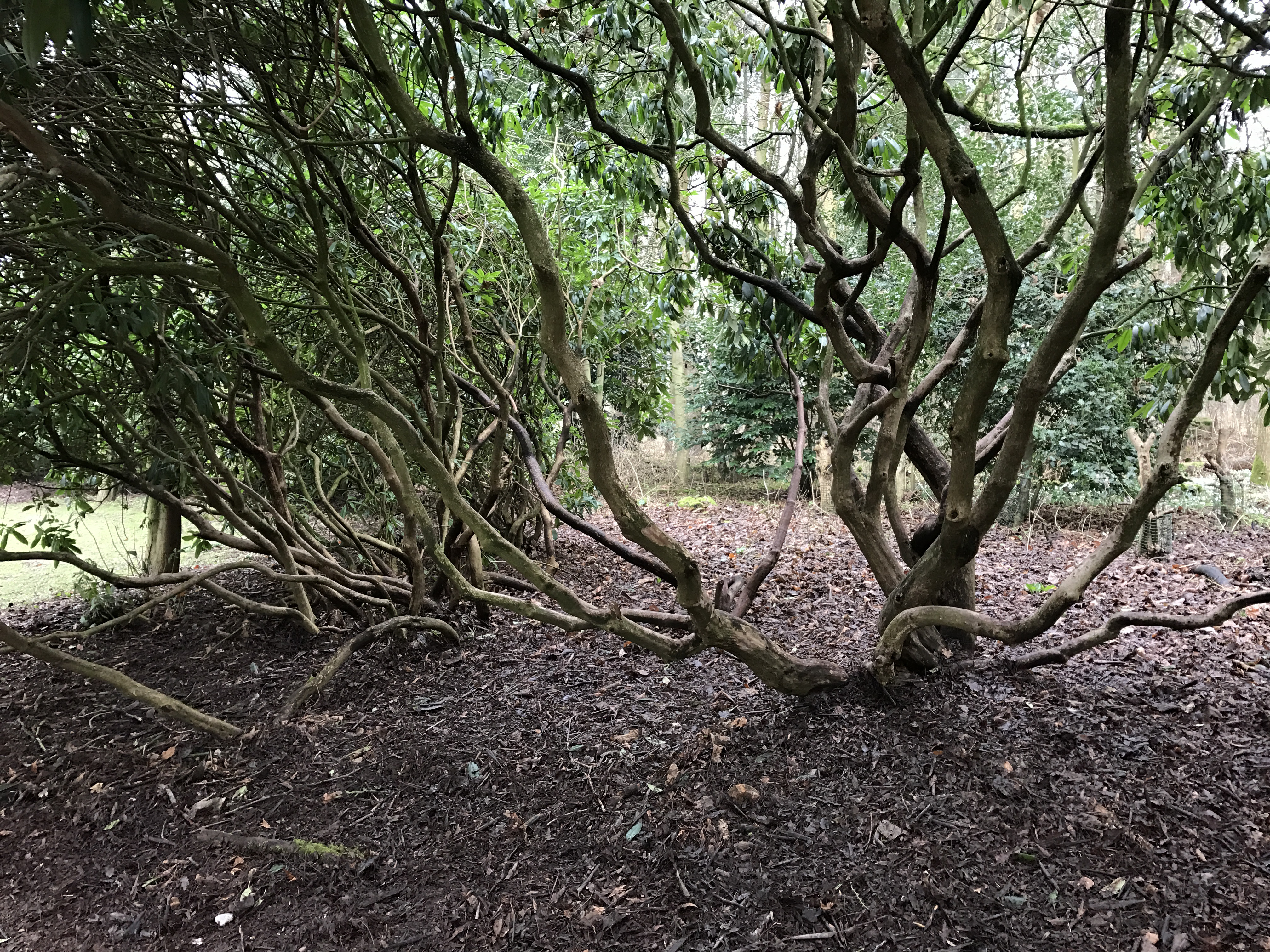
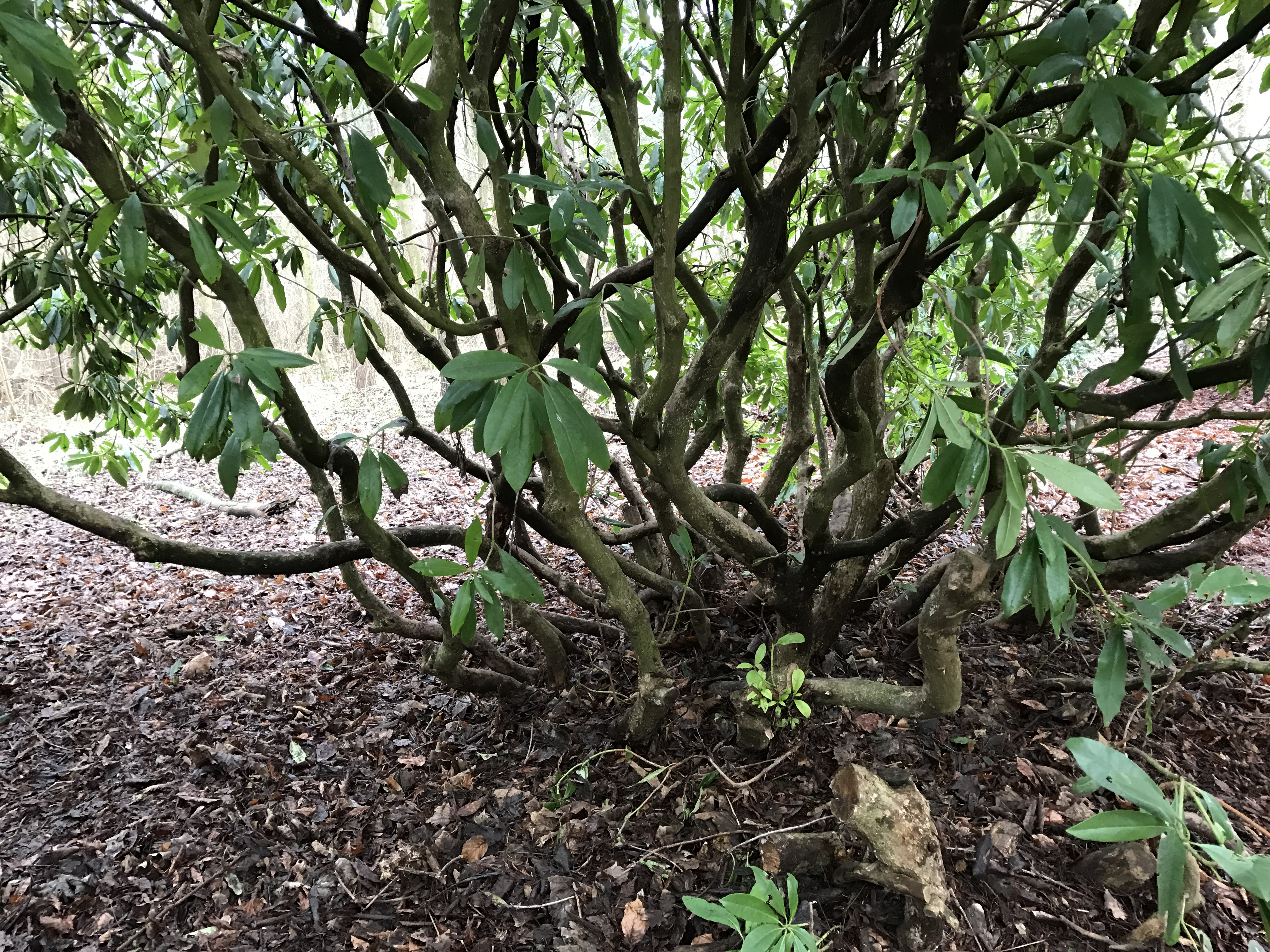
It is only in the depth of winter that we can really appreciate the beautifully gnarled lower stem structure of rhododendron bushes.

a9-12 a9-13

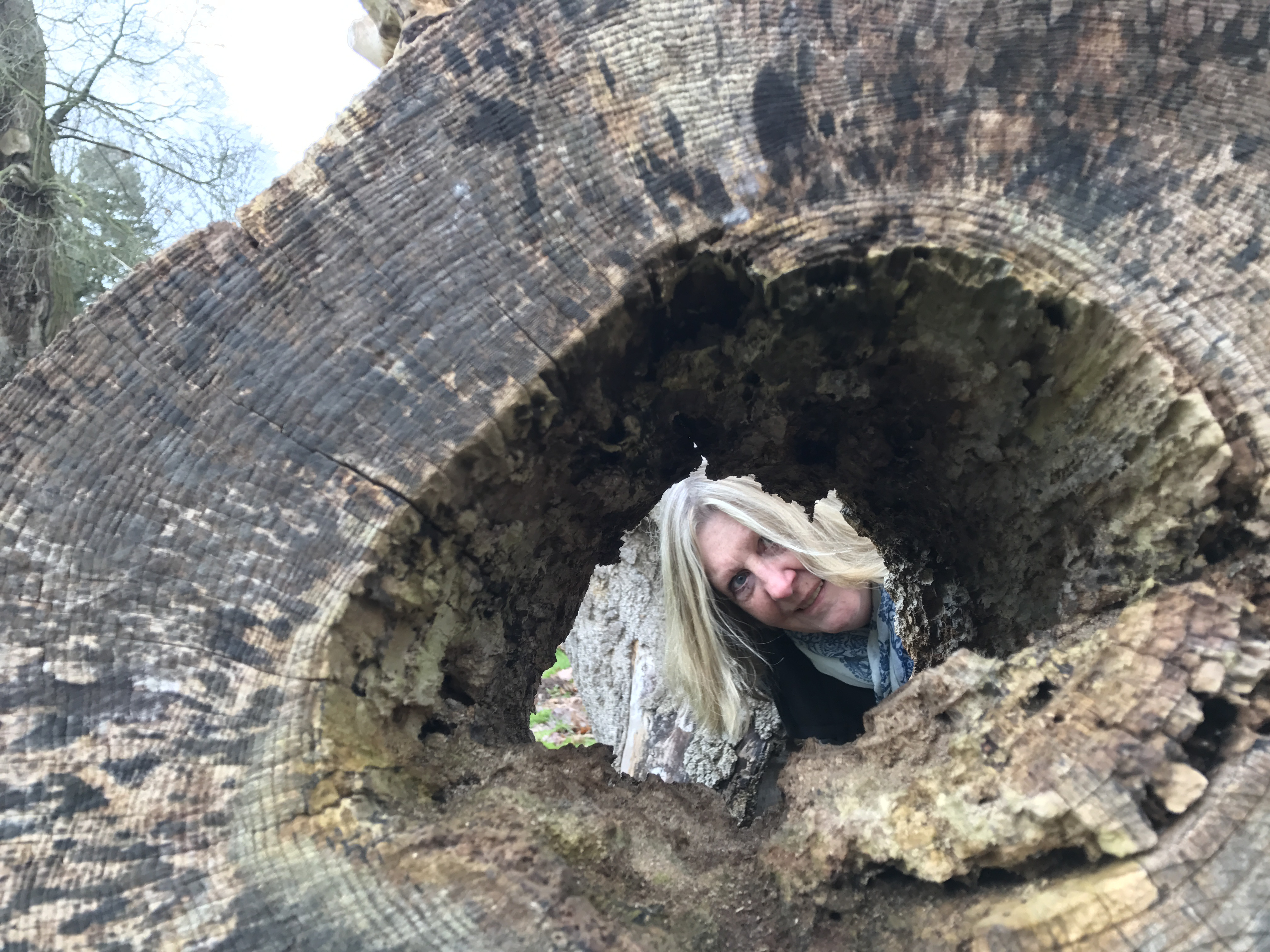
Old tree trunks hollowed out over centuries always bring the child out in us. We were drawn to it as soon as we spotted it along the riverbank.

a10-4 a9-21 a9-22 a9-23 a9-24

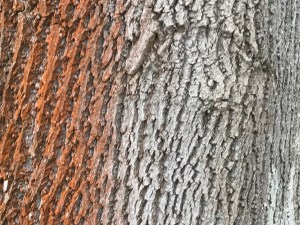
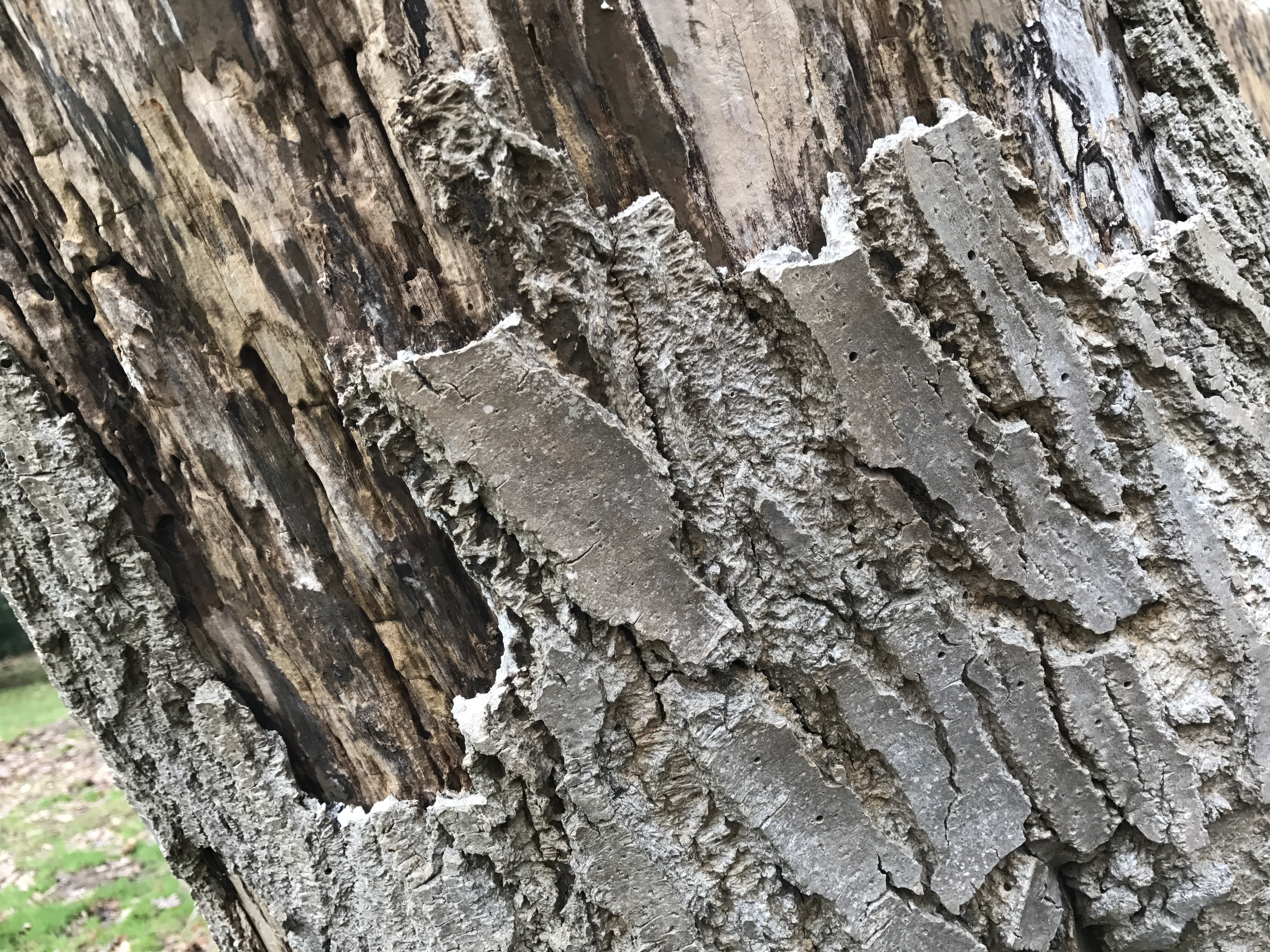
Closer study revealed wide varieties of texture and pattern.

a9-25 a9-26 a9-27 a9-28 a9-29 a9-30

It is always good to find a little humour in gardens and parks. This worm was enjoying nibbling away at the big apple. What a great way to take advantage of an old uprooted tree stump. The final photo shows a seat which we imagines was rarely used particularly as it was just a few feet from the river!

a2-51 a2-50   a9-19

Our next visit to Attingham Park will be in March so we are already looking forward to searching for changes. Of course we will be full of anticipation knowing that the new coffee shop is getting close to its opening date!

a10-6 a10-7


Categories
birds flowering bulbs garden design garden photography garden wildlife gardening gardens hardy perennials ornamental trees and shrubs Shropshire shrubs spring bulbs wildlife Winter Gardening winter gardens

My 2017 Garden Journal – February

Here is the second time in 2017 when I share with you my Garden Journal, so please enjoy my February pages.
fj-1

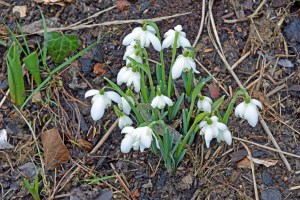
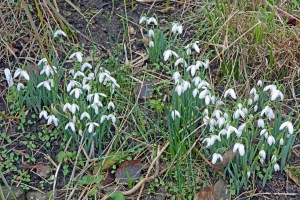
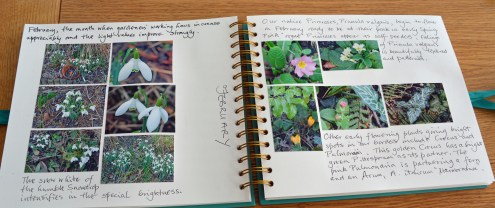
On the first double page spread I look at Snowdrops and some early plants of interest. I wrote, “February, the month when gardeners’ working hours increase and the light values improve strongly. The snow white of the humble Snowdrop intensifies in the special brightness.”
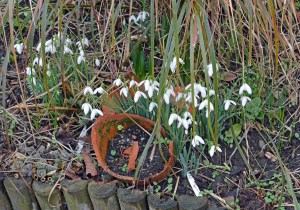
fj1-03 fj1-06fj1-01 fj1-05 fj1-02 fj1-04

On the opposite page I wrote, “Our native Primroses, Primula vulgaris, begin to flower in February ready to be at their peak in early Spring. Pink “rogue” Primroses appear as self-seeders. Foliage of Primula vulgaris is beautifully textured and patterned.”

fj1-07 fj1-08

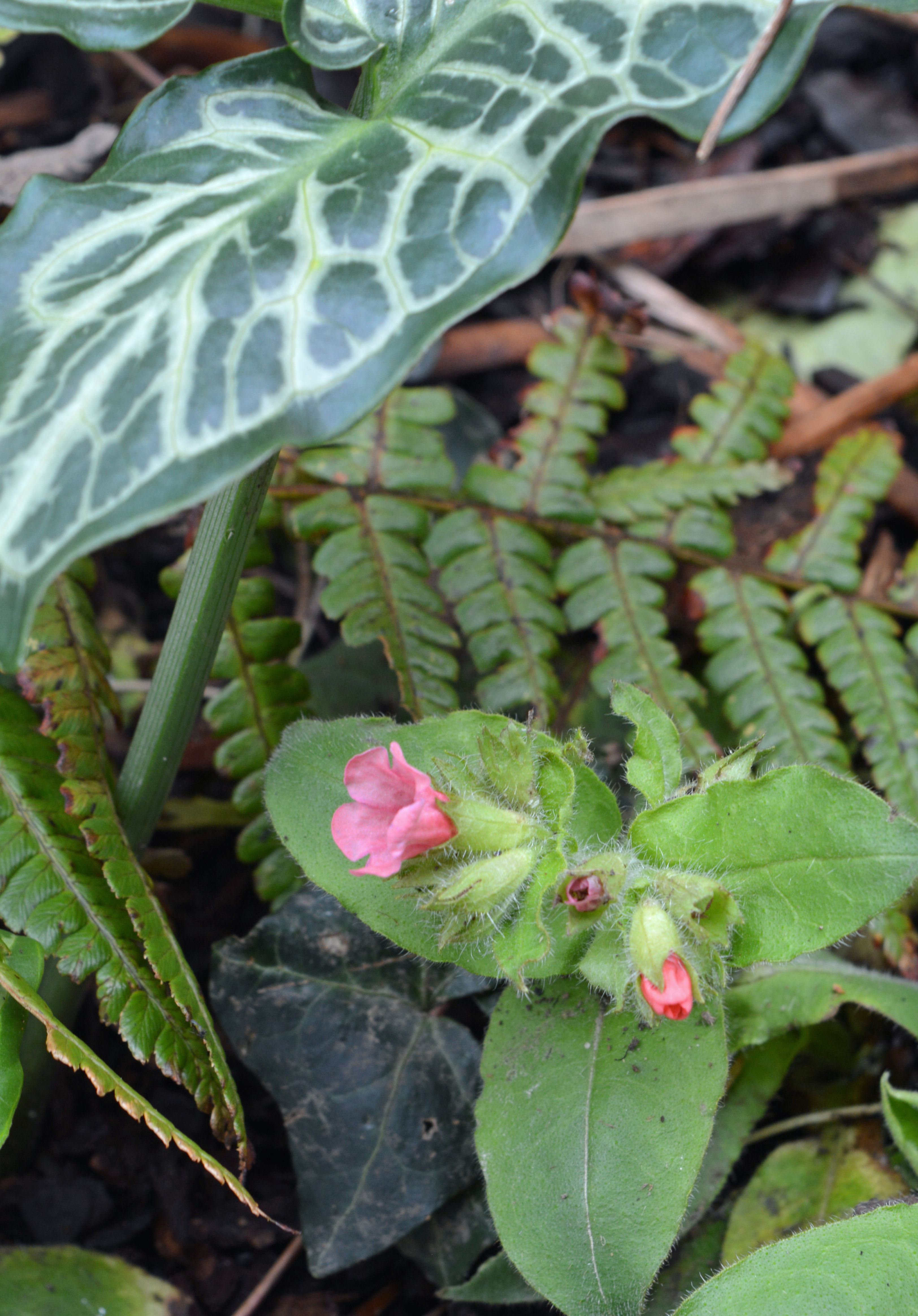
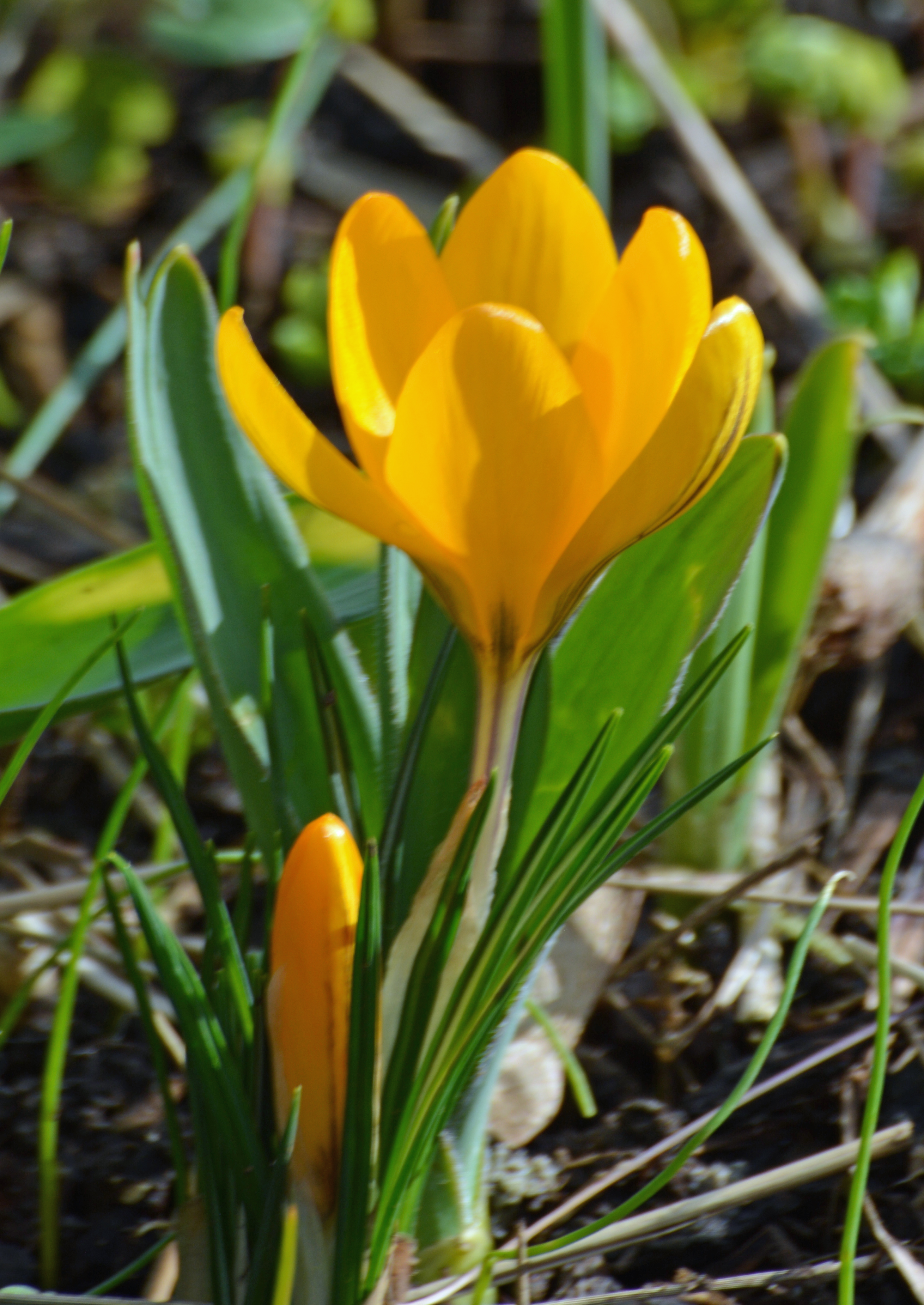
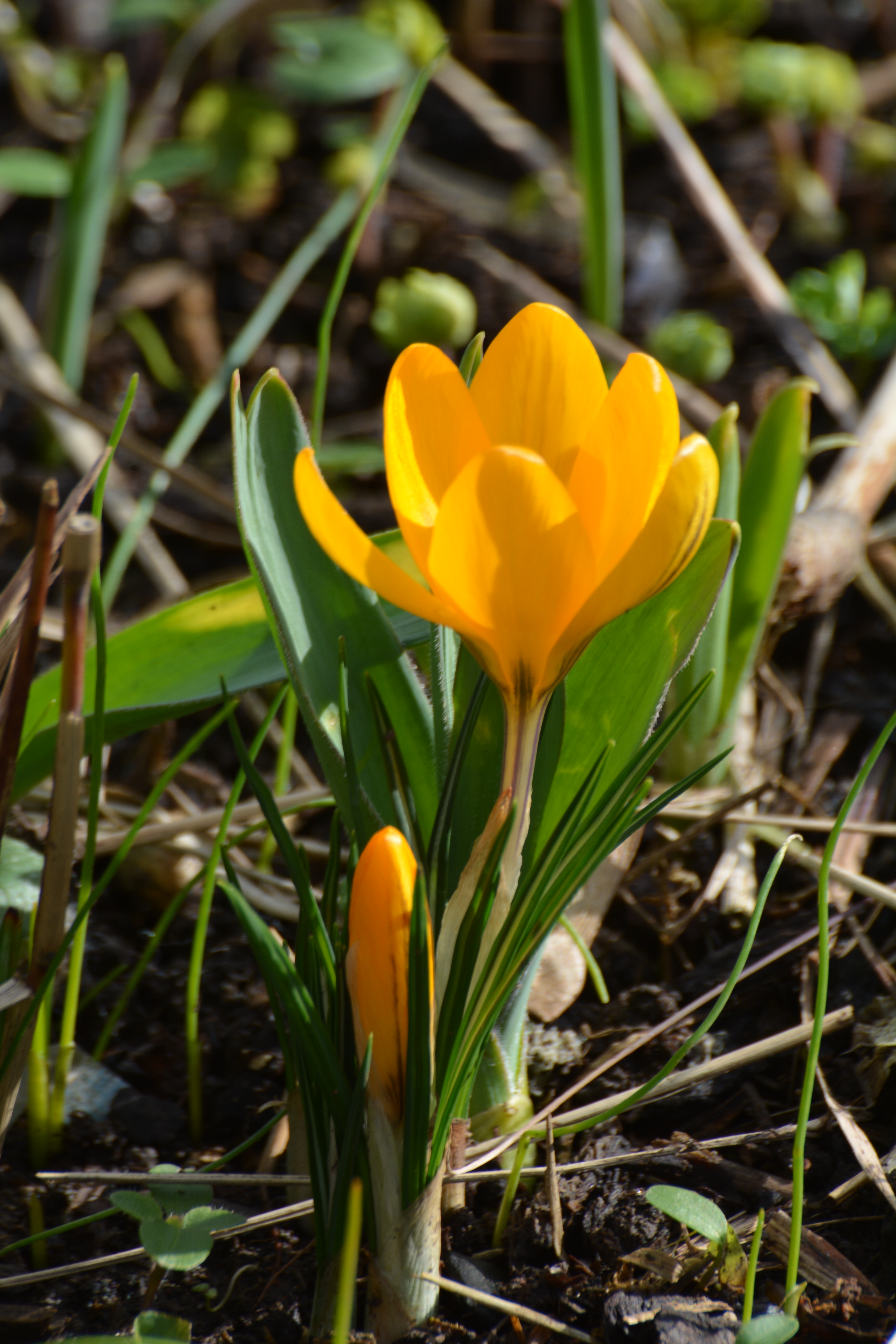
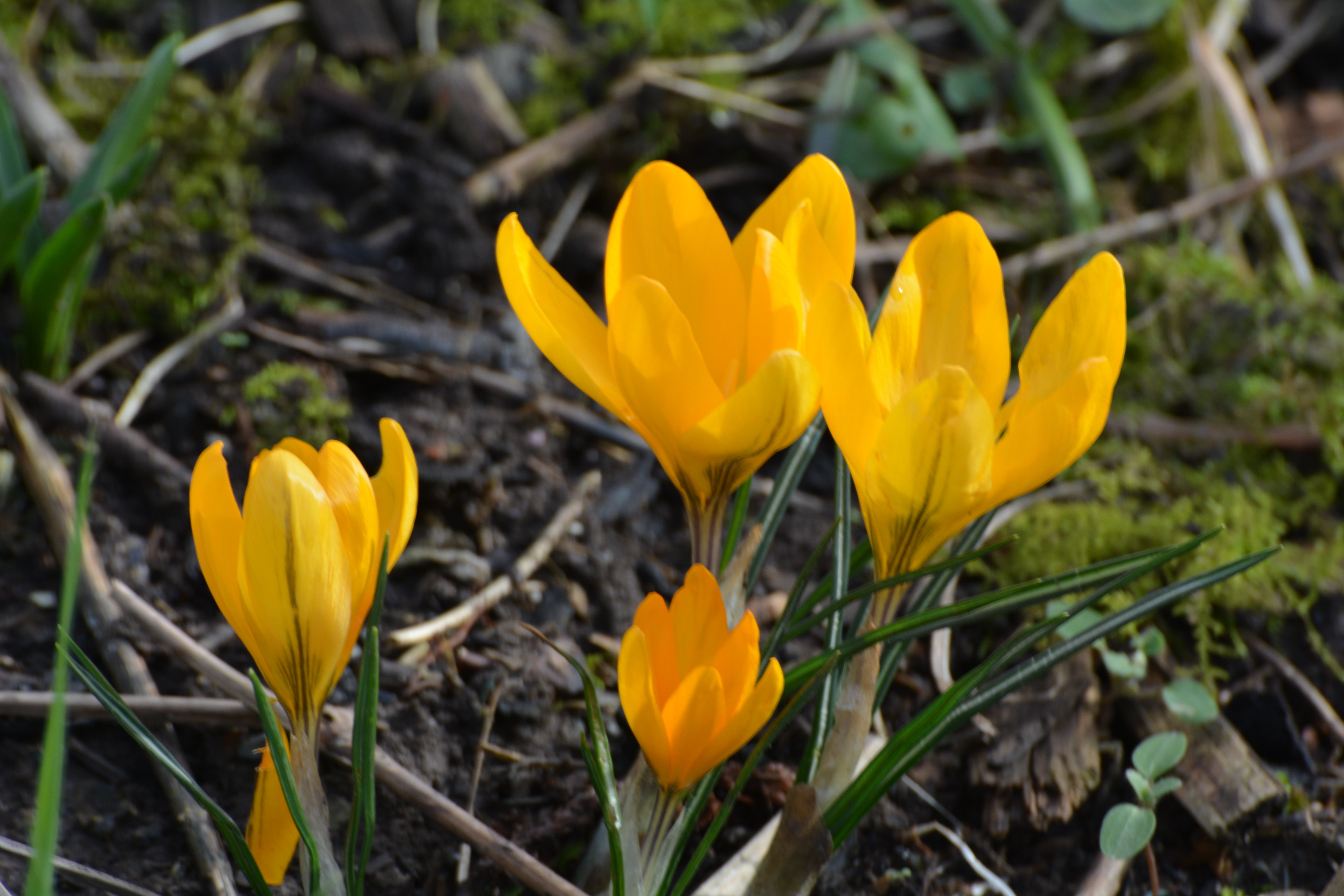
Other early flowering plants giving bright spots in our borders include Crocus and Pulmonaria. This golden Crocus has a bright green Pittosporum as its partner. The pink Pulmonaria is partnering a fern and an Arum, A. italicum “Marmoratum”.

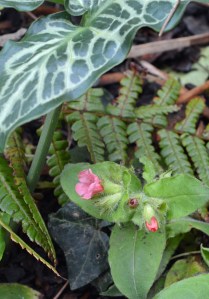
fj1-09 fj1-10 fj1-11

A February flowering shrub features on the next double-page spread along with Hellebores.

fj-2

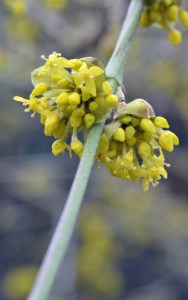
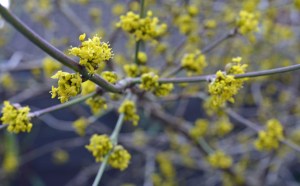
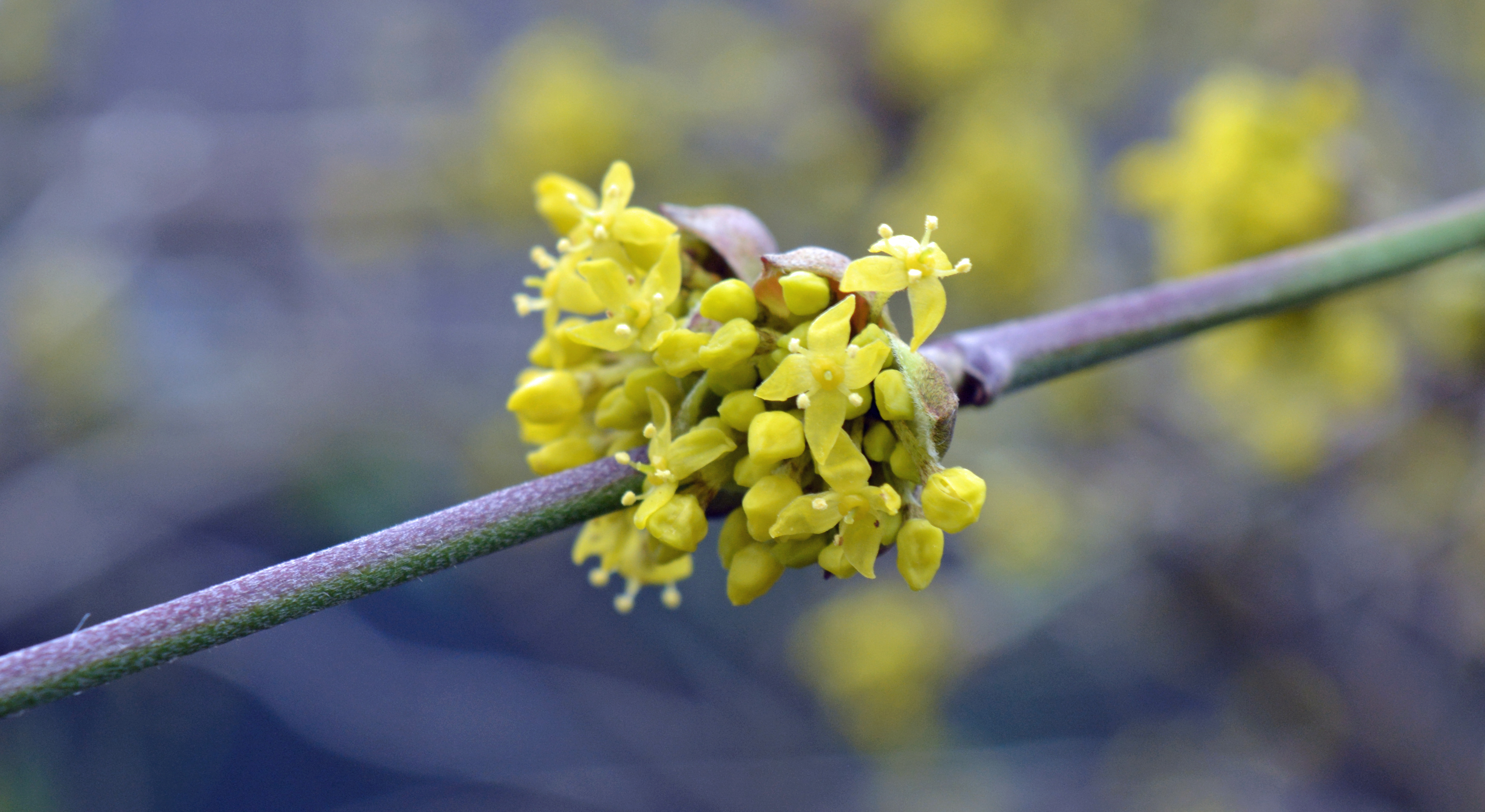
The flowering shrub is Cornus mas, which reliably flowers profusely early every year. I  have selected it as my “Plant of the Month” for February. I wrote, “The star of our garden this month has to be Cornus mas, the Cornelian Cherry, with its bright yellow flowers with just a hint of green. We prune off the lower branches and select main boughs to improve the structure of our’s and this also exposes the texture of the bark on the lowest boughs.”

fj2-01 fj2-07 fj2-05fj2-03 fj2-06fj2-04

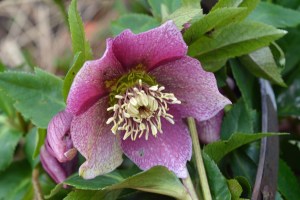
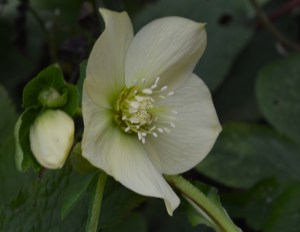
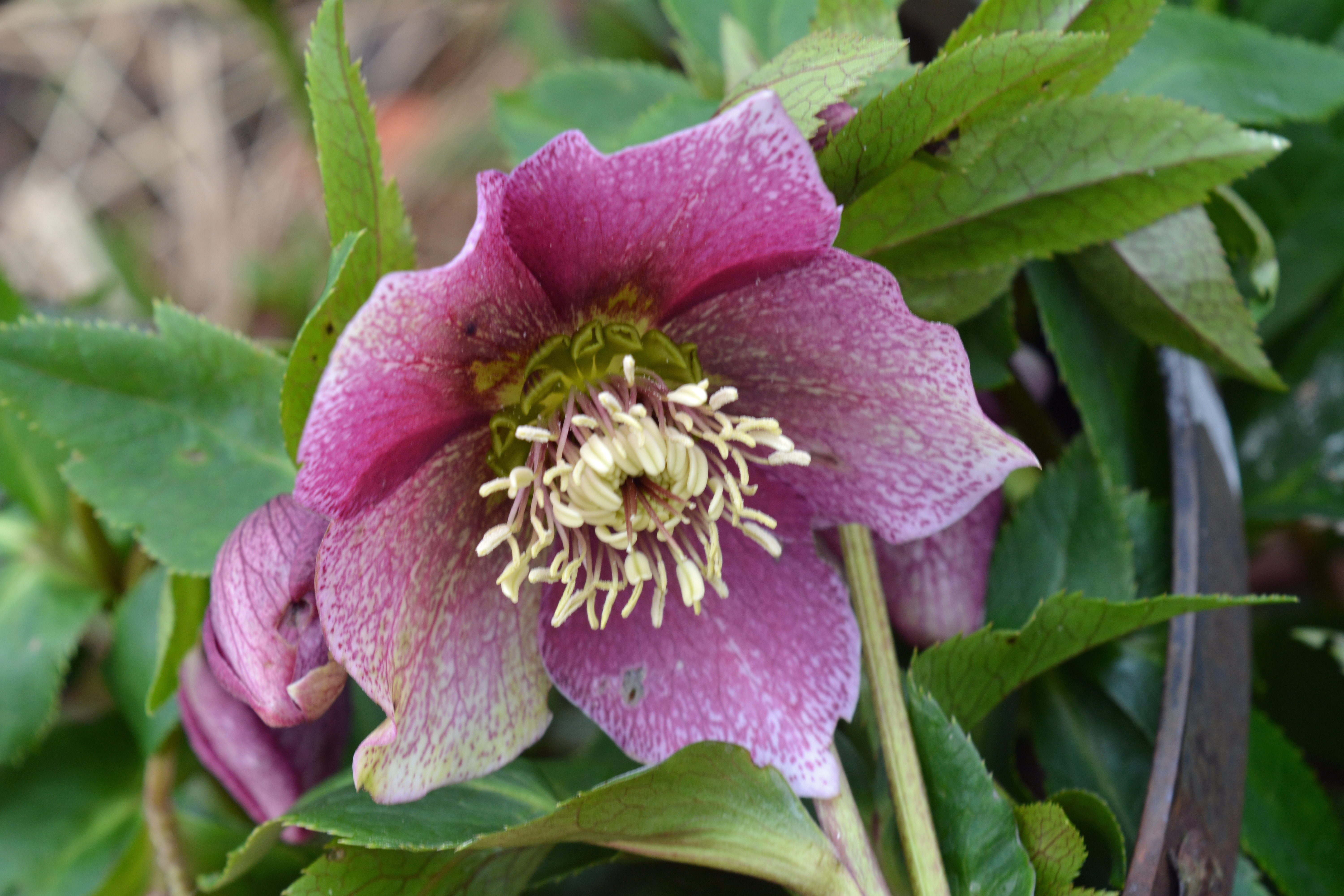
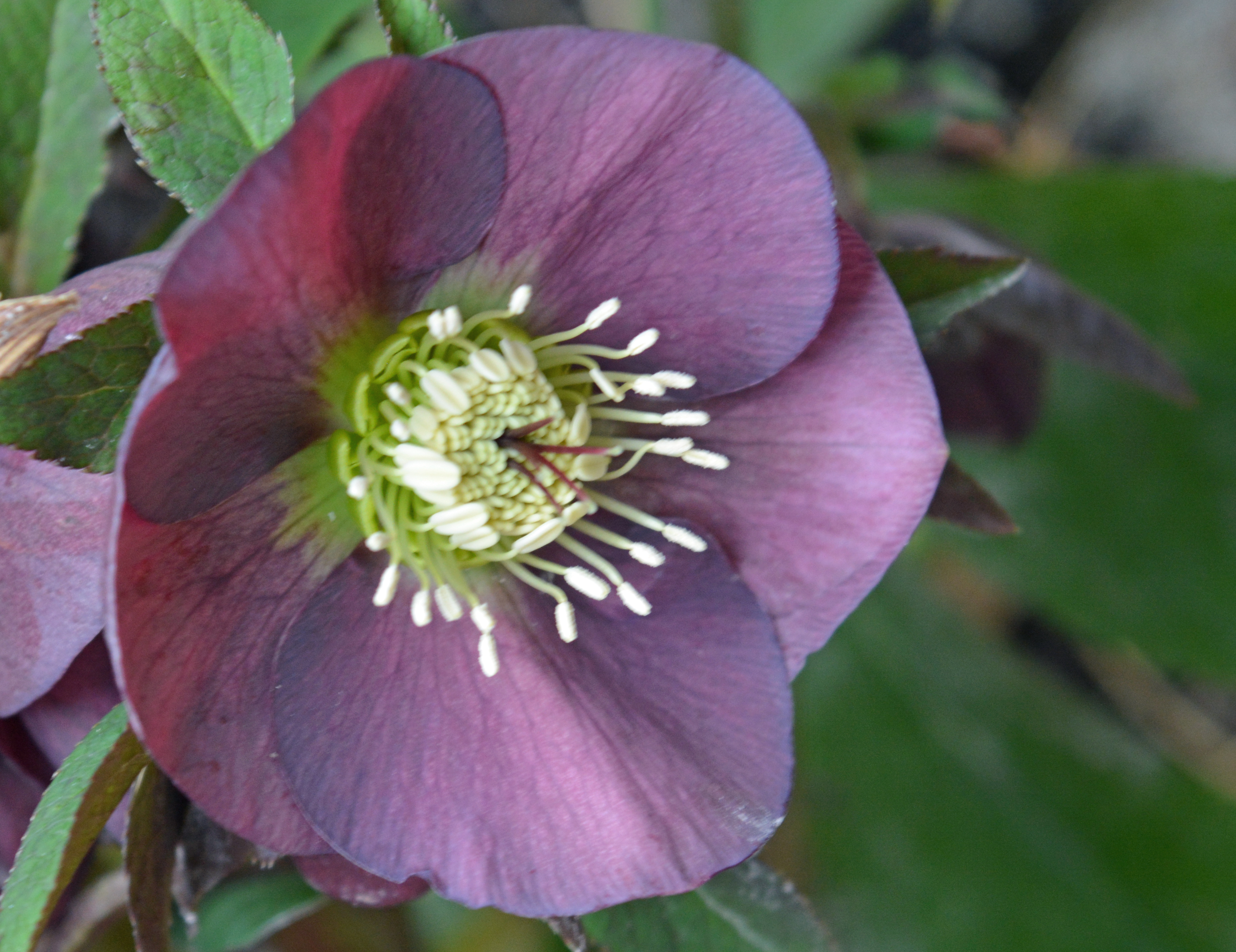
I moved on to show a few of our many Hellebore hybrids and wrote, “Hellebore hybrids start to put on a colourful show from green to yellow and from red to purple. Lots more will come into flower throughout the coming weeks.”
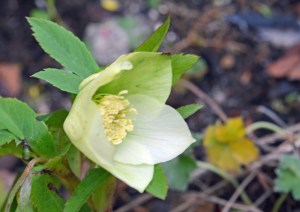
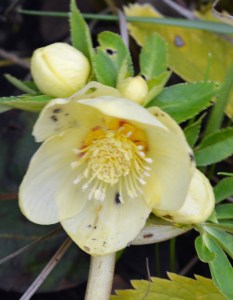
fj2-10 fj2-12fj2-09 fj2-11  fj2-13 fj2-08

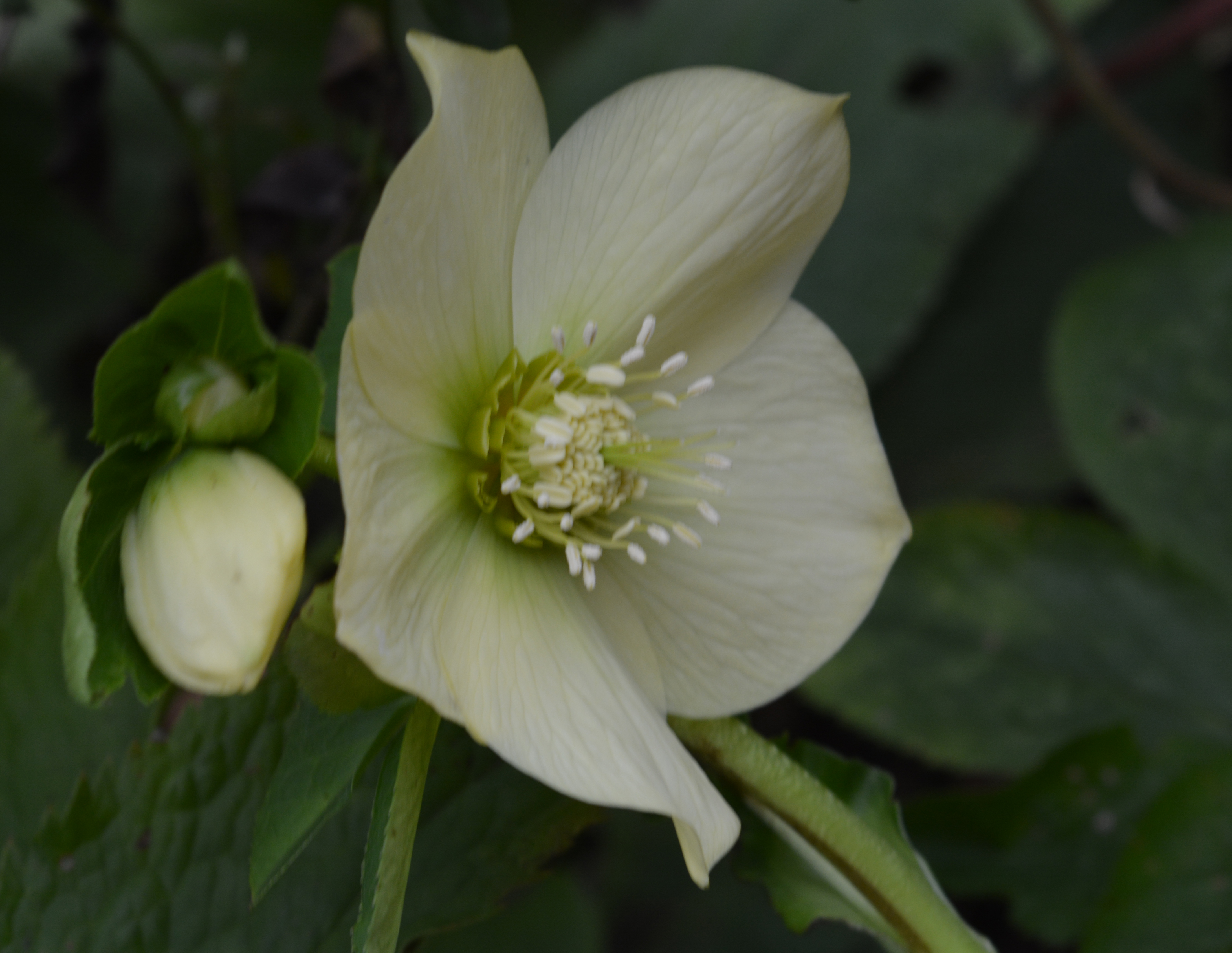
The last photo is not a hybrid Hellebore like the others but our native Helleborus foetidus with its pale green flowers, a subtle beauty with an upright habit.

On the turning of the page we discover my account of re-developing an old border, the Shade Garden”.

fj-3

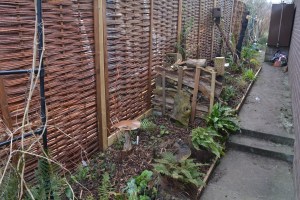
I wrote that “By mid-February we had finished re-vamping our “Shade Garden”, an opportunity that arose when we moved a shed that was situated part way along it. The shed was just 6ft by 3ft but the space released by its removal seemed far more significant that that. Its removal opened up the border. We decided to add a couple of Maples, Acer palmatum “Koto-no-ito” and Acer palmatum “Eddisbury”, and increase the variety and number of ferns and grasses, We liked the idea of mixing ferns and grasses, a new plant combination for us.”
fj3-08 fj3-02fj3-07 fj3-09fj3-11

“Mr and Mrs Green Man”

fj3-03 fj3-05

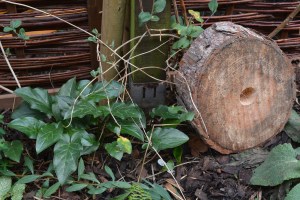
Rotting wood pile, Acer and Ivy, Ivy and Fern.”

fj3-06 fj3-01 fj3-12

New growth appearing in the Shade Garden”

fj3-04 fj3-10

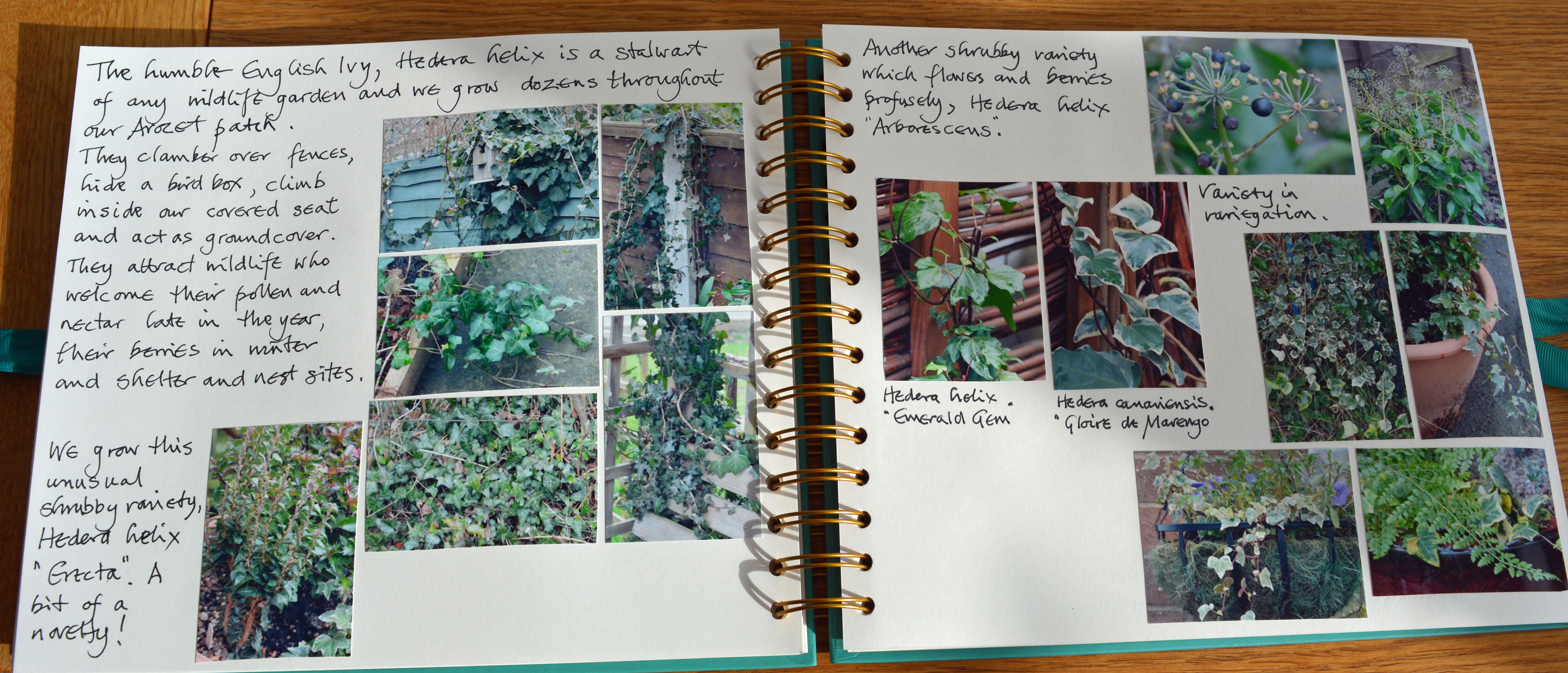
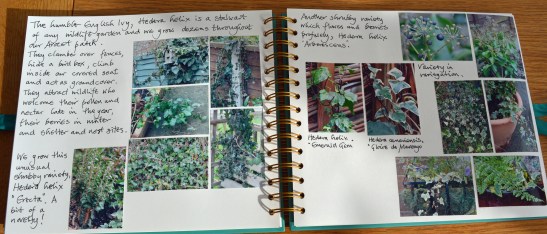
Ivy is the feature plant over the next pair of pages.
fj-4

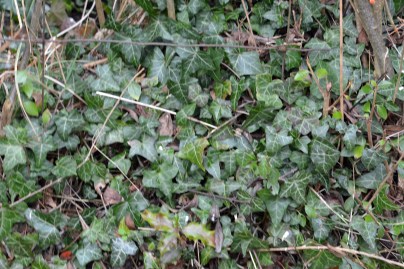
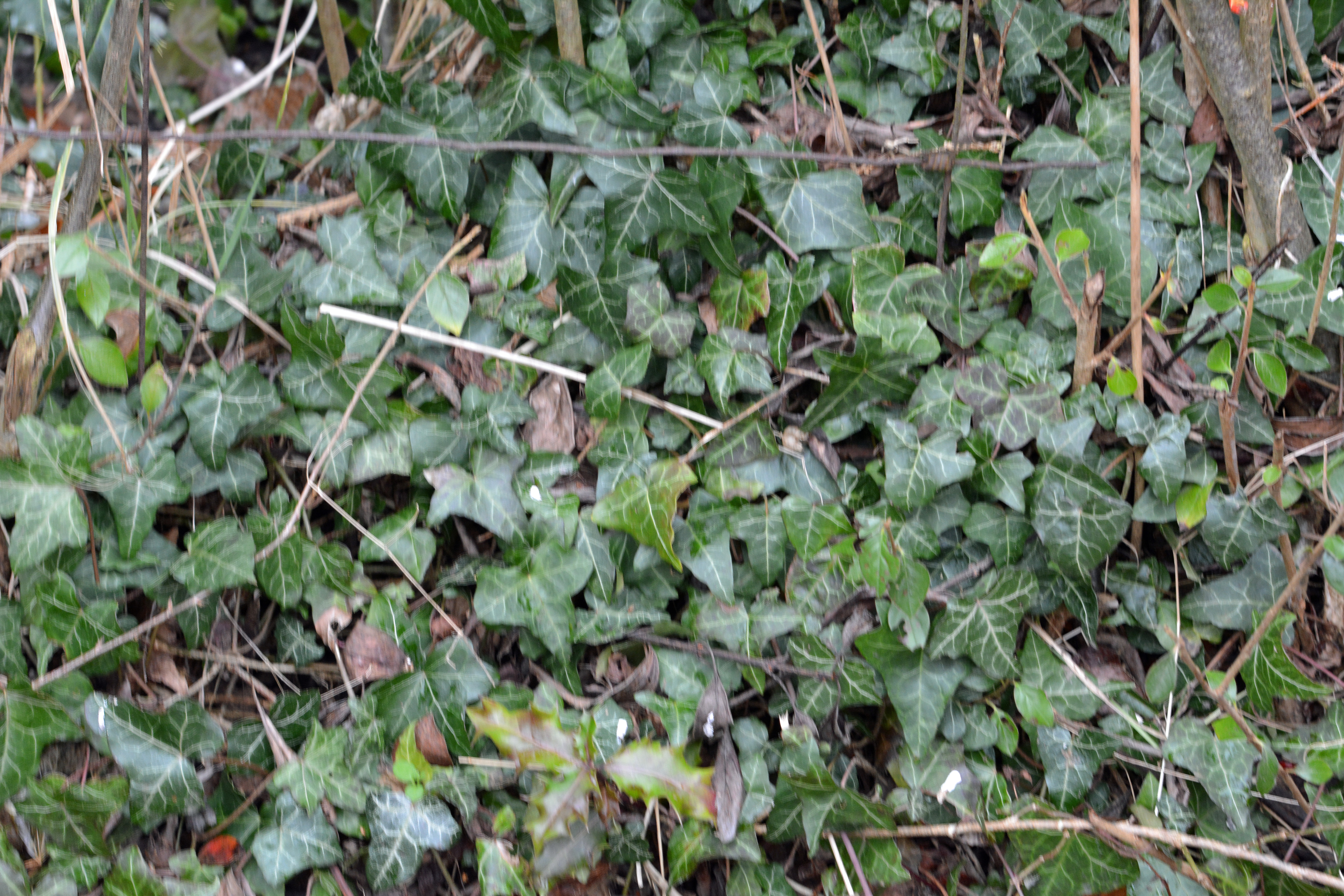
I wrote of the ivy, “The humble English Ivy, Hedera helix is a stalwart of any wildlife garden and we grow dozens throughout our Avocet patch. They clamber over fences, climb inside our covered seat and act as ground-cover. They attract wildlife who welcome their pollen and nectar late in the year, their berries in winter and shelter and nest sites.”

fj4-15 fj4-11fj4-03 fj4-10 fj4-09

We grow this unusual shrubby variety, Hedera helix “Erecta”, a bit of a novelty!”

fj4-05 fj4-07

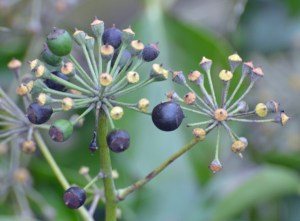
Another shrubby variety which flowers and berries profusely, Hedera helix “Arborescens.”
fj4-02 fj4-01

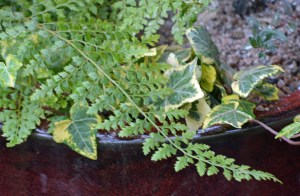
Variety in variegation.”

fj4-08 fj4-06fj4-04 fj4-16

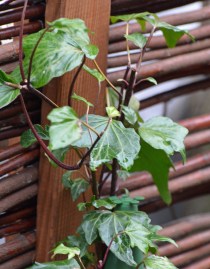
Finally two climbing ivies growing in our Shade Garden.
fj4-12 fj4-13 fj4-14

“Hedera helix “Emerald Gem”                         “Hedera canariensis “Gloire de Marengo.”

Next I featured the birds that share our garden with us, particularly the ones who take advantage of our feeding stations.
fj-7

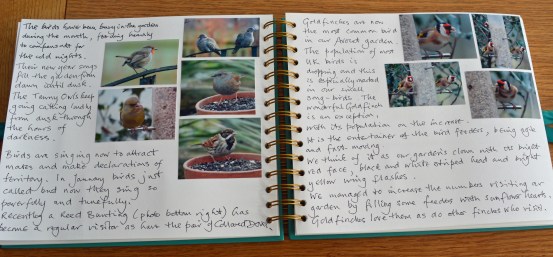
“The birds have been busy in the garden during the month, feeding heavily to compensate for the cold nights. Their new year songs fill the garden from dawn until dusk. The Tawny Owls keep going, calling loudly from dusk through the hours of darkness.”

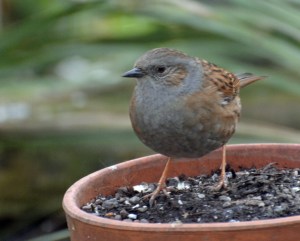
“Birds are singing now to attract mates and make declarations of territory. In January birds just called but now they sing so powerfully and tunefully. Recently a Reed Bunting (photo bottom right) has become a regular visitor as have the pair of Collared Doves.”

fj5-4-1 fj5-9-1fj5-7-1 fj5-8-1fj5-6-1

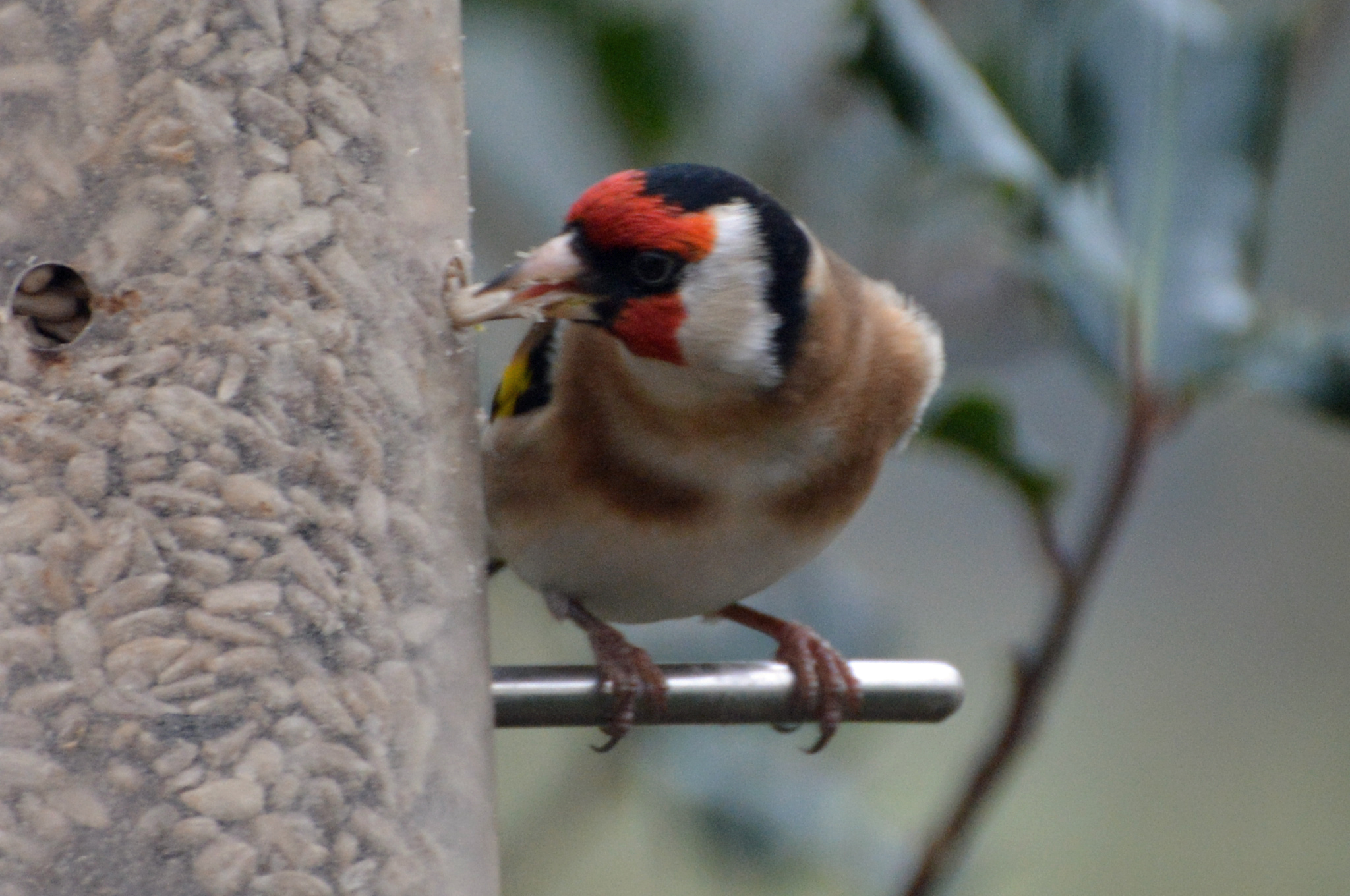
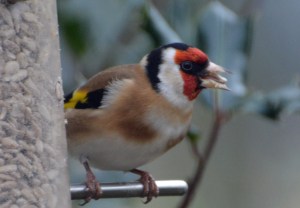
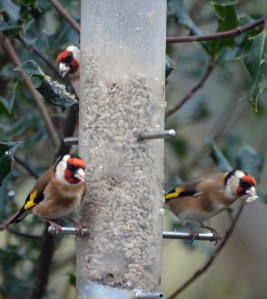
“Goldfinches are now the most common bird in our Avocet garden. The population of most UK birds is dropping and this is especially marked in our song-birds. The wonderful Goldfinch is an exception, with its population on the increase. It is the entertainer of the bird feeders, being agile and fast-moving.

We think of it as our garden’s clown with its bright red face, black and white striped head and bright yellow wing flashes. We managed to increase the numbers visiting our garden by filling some feeders with sunflower hearts. Goldfinches love them as do other finches who visit.”
fj5-3-1 fj5-2-1fj5-1-1 fj5-5-1

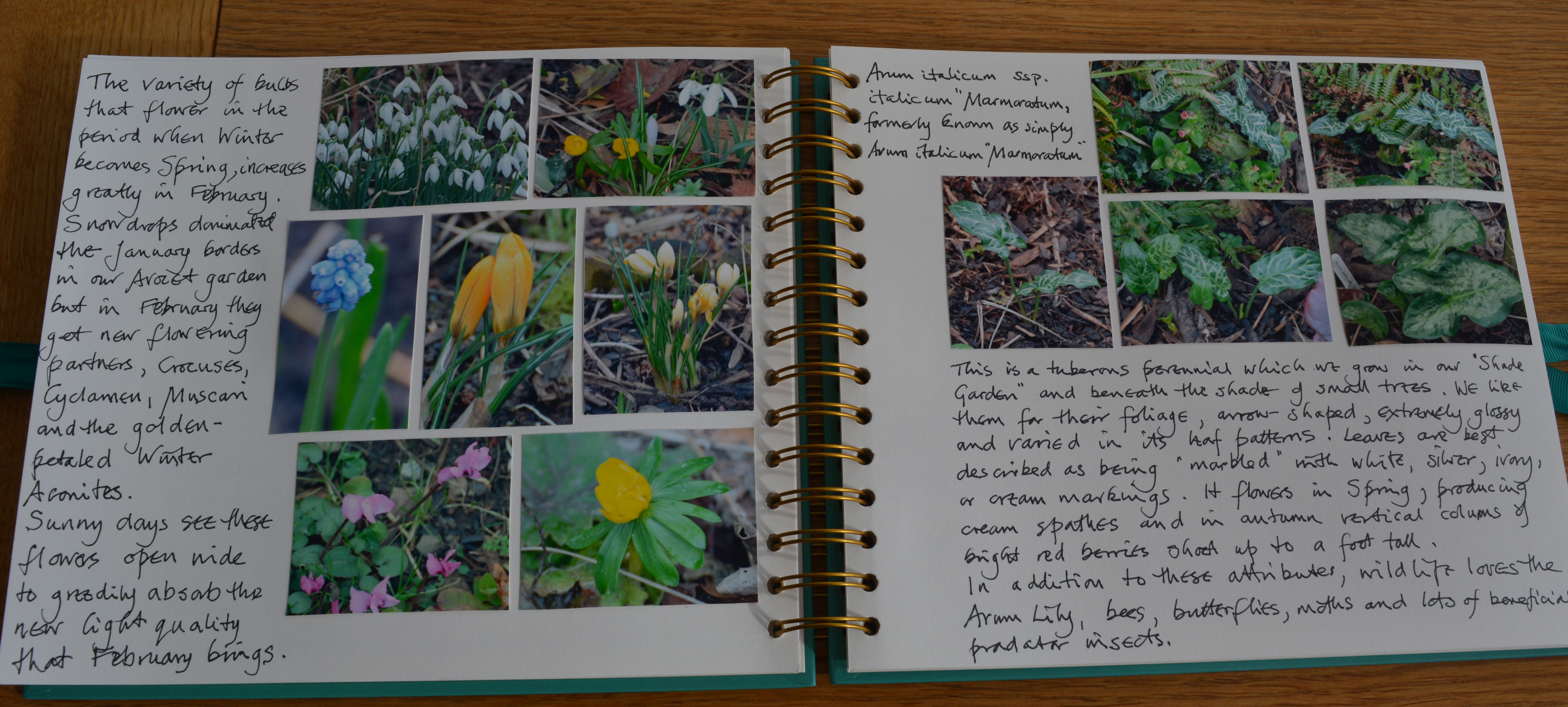
We next turn over to a double page spread all about early flowers and a plant that displays amazing unusual foliage.

fj-6

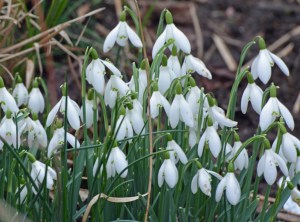
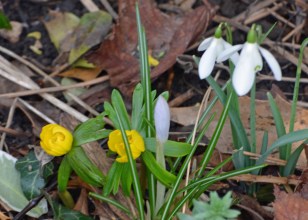
I wrote, “The variety of bulbs that flower in the period when Winter becomes Spring, increases greatly in February. Snowdrops dominated the January borders in our Avocet garden but in February they get new flowering partners, Crocuses, Cyclamen, Muscari and the golden-petaled Winter Aconites.

Sunny days see these flowers open wide to greedily absorb the new light quality that February brings.”
fj6-18 fj6-15fj6-17 fj6-19 fj6-16fj6-01 fj6-02 fj6-03  fj6-05 fj6-06 fj6-07 fj6-14fj6-04 fj6-09

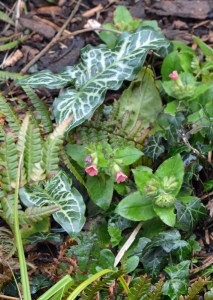
Concerning the unusual Arums we grow I continued, “Arum italicum ssp. italicum “Marmoratum” formerly known simply as Arum italicum “Marmoratum”. This is a tuberous perennial which we grow in our Shade Garden and beneath the shade of small trees. We like them for their foliage, arrow-shaped, extremely glossy and varied in its leaf patterns. Leaves are best described as being “marbled” with white, silver, ivory or cream markings. It flowers in Spring, producing cream spathes and in Autumn vertical columns of bright red berries shoot up to a foot tall. In addition to those attributes, wildlife loves the Arum Lily, bees, butterflies, moths and lots of beneficial predatory insects.” 
fj6-11 fj6-10fj6-13 fj6-12

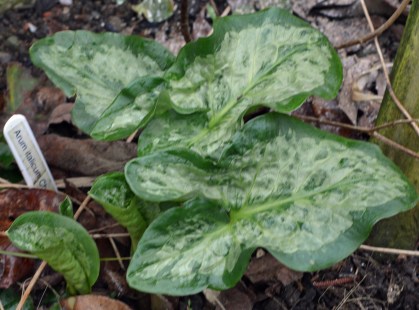
We are so pleased to have established a clump of the rare Arum Lily called “Arum italicum Chameleon”, seen in photo below.
fj6-08

More foliage features over on the following pages, the newly emerging foliage of perennials.


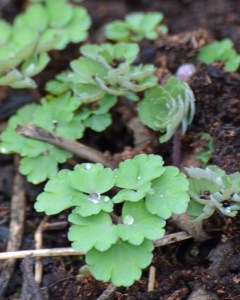
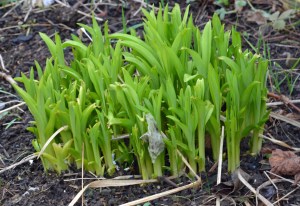
I wrote, “In the second half of the month we had a special treat in store, a few days of heatwave with daytime temperatures reaching 15 C in Plealey. This resulted in rush of new growth from the perennials that had died down after their display last year. The photos show perennial growth with new leaf growth penetrating the soil like the blades of swords.
fj7-11 fj7-09fj7-12 fj7-04fj7-10 fj7-07

This final picture of new growth illustrates how new growth of Pulmonarias shows both foliage and flower bud shooting together.

fj7-06

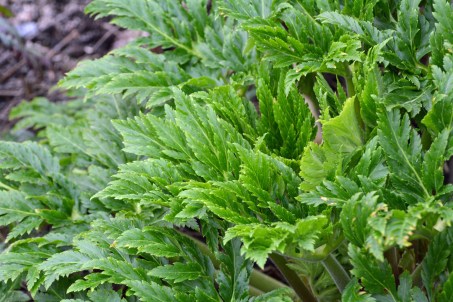
Opposite I share photos of broad-leaved perennials displaying their new growth, where I wrote, “Elsewhere broad-leaved herbaceous perennials were unfurling their fresh foliage ready for the new year. Here we have new leaves of Primula vulgaris, Sedum, Aquilegia, Polemonium, Centaurea, Fennel and Geranium palmatum. More growth appears daily as February comes to an end. It all bodes well for Spring and Summer.”
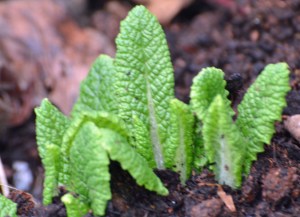
fj7-02 fj7-13fj7-03 fj7-05fj7-01 fj7-08fj7-14

And so that is my February report from my Garden Journal. We will visit again in March.
 

This Veggie Life

A Vegetarian | Nature Lifestyle Blog

Rambling in the Garden

.....and nurturing my soul

The Arch City Gardener

Journeys In St. Louis Gardening and Beyond
Garden Dreaming at Châtillon

Consult the genius of the place

Storyshucker

A blog full of humorous and poignant observations.

gardeninacity

Notes from a wildlife-friendly cottage garden

PlayGroundology

...an emerging social science

The Official Blog of British Wildlife

'The most important and informative publication on wildlife of our times' - The Independent. This blog is a member of The UK & Ireland Natural History Bloggers group: www.uknhb.blogspot.com

iGrowHort

Inspire - Cultivate - Grow Native Plants - Restore Landscapes

Bishops Meadow Trust

To create and protect a semi-natural wild space for the people of Farnham to enjoy and experience an array of British wildlife in our town

Gardening with Children

The www.gardeningwithchildren.co.uk Blog

UKbirdingtimeline

birding through the seasons, why birds matter and how to conserve them

NATURE WALKER

with a camera in hand

Jardin

Transform your outdoor space

Eva's space

My allotment, cooking and other interests

Old School Garden

my gardening life through the year

LEANNE COLE

Trying to live a creative life

fromacountrycottage

trying to live as lightly as possible on our beautiful planet

Good Life Gardening

Nature lovers from Leicester living the good life.

mybeautfulthings

Finding the beautiful in the everyday

mawsonmichelle

Michelle's Allotment

In and Out of My Garden

thoughts from and about my garden

Greenhousing

Big plans for a small garden

The Scottish Country Garden

A Walled Country Garden in South East Scotland

The Fruity Chicken

Life at the fruity chicken

willowarchway

Off grid living. Self sufficient. "PERMAGANICS RULE".

St Anns Allotments

Nottingham's Grade 2* Listed Allotments and Community Orchard

Manifest Joy Harvests

a journey in suburban vegetable gardening

Allotmental

The madness of growing your own

Penny's Garden: a harvest beyond my front door

A novel approach to vegetable gardening

arignagardener

Sustainable living in the Irish countryside.

NewEnglandGardenAndThread

Master Gardener, amateur photographer, quilter, NH native, and sometimes SC snowbird

dianajhale

Recent work and work in progress and anything else that interests me

planthoarder

a chaotic cottage gardener

Lens and Pens by Sally

a weekly blog that creates a personal philosophy through photographs and words

Dewdrops and Sunshine

Stories from a sassy and classy Southern farmbelle.

The Pyjama Gardener

Simple Organic Gardening & Seasonal Living

gettin' fresh!

turning dirt into dinner

JOY...

today the world is created anew

Garden Birds

Notes from a Devon garden

ShootAbout

Life Through The Lens

Adapting Pixels

A photography blog showcasing the best photography pictures and videos on the internet

Wildlifegardening's Blog

Just another WordPress.com site

naturestimeline

personal observations from the natural world as the search continues for a new approach to conservation.

LATEBLOOMERBUDS

The Wonders of Life through my Eyes, my Heart, my Soul