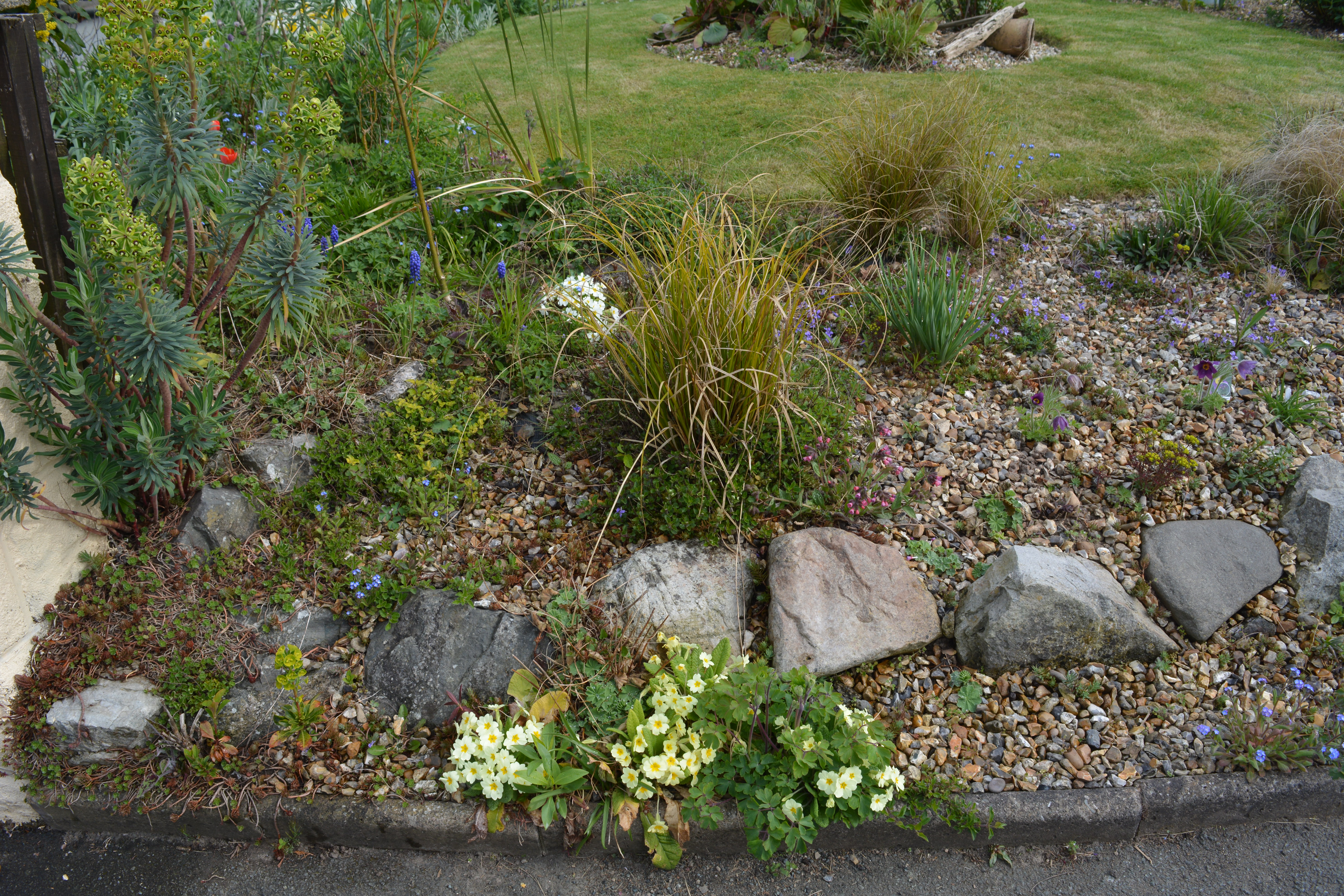
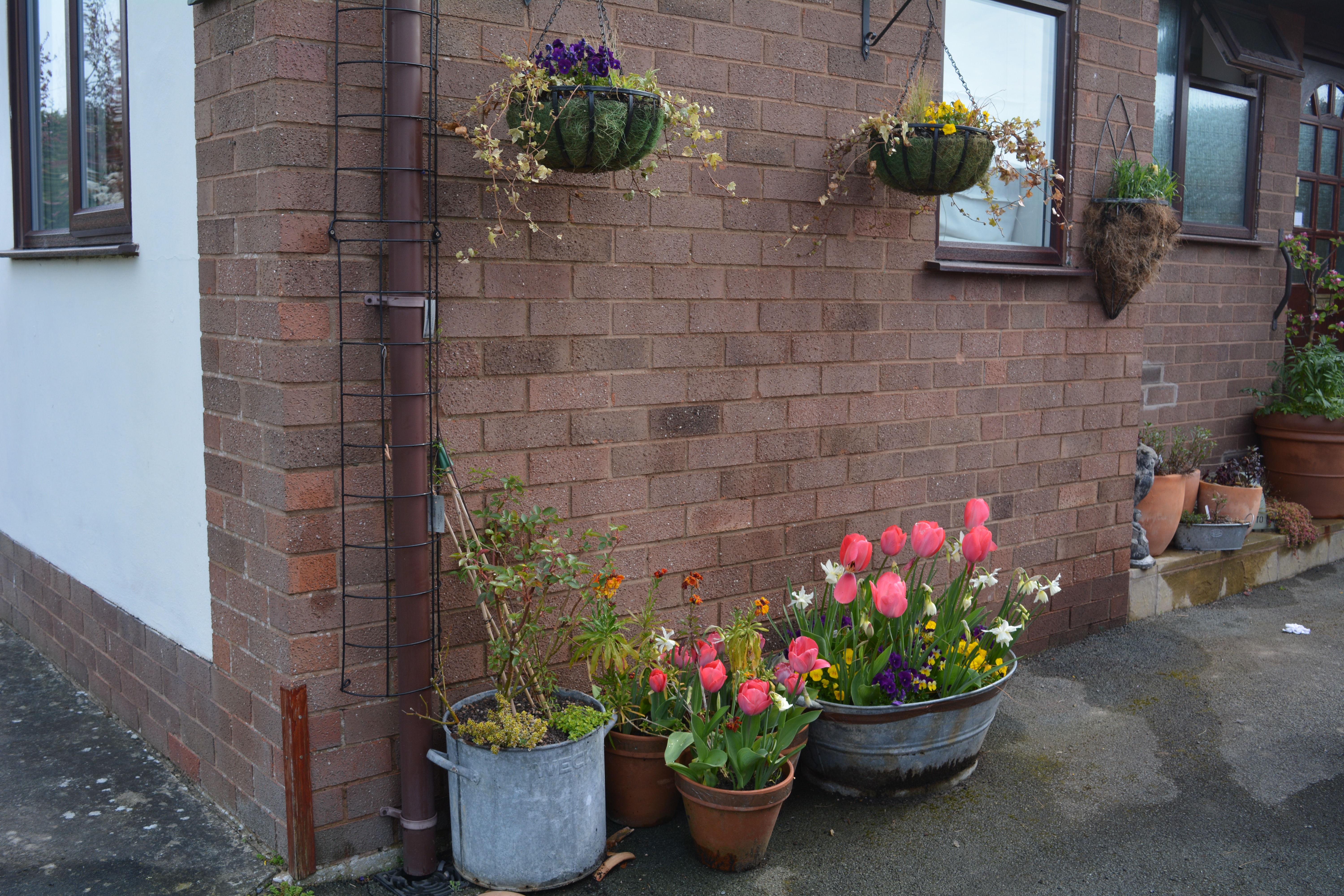
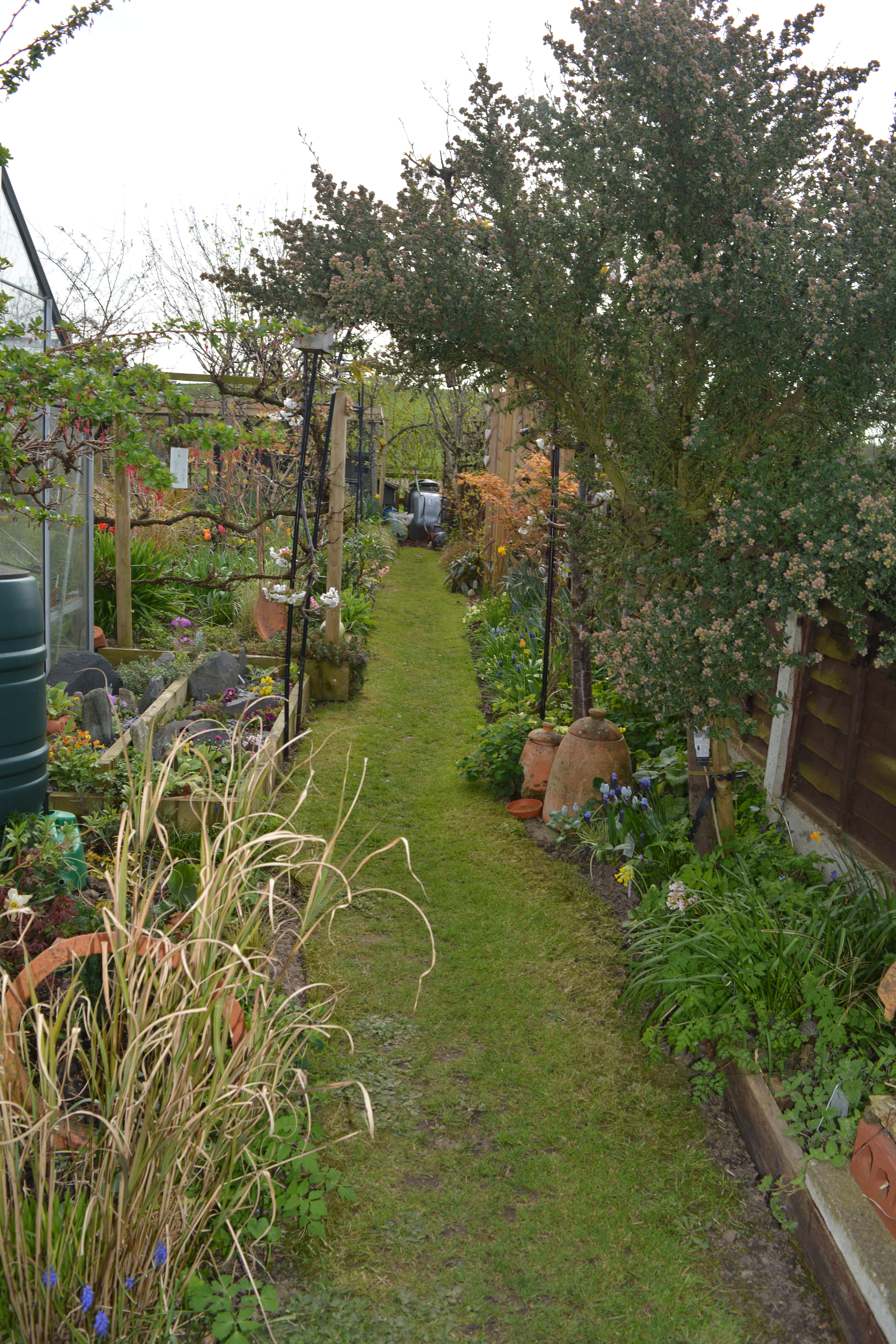
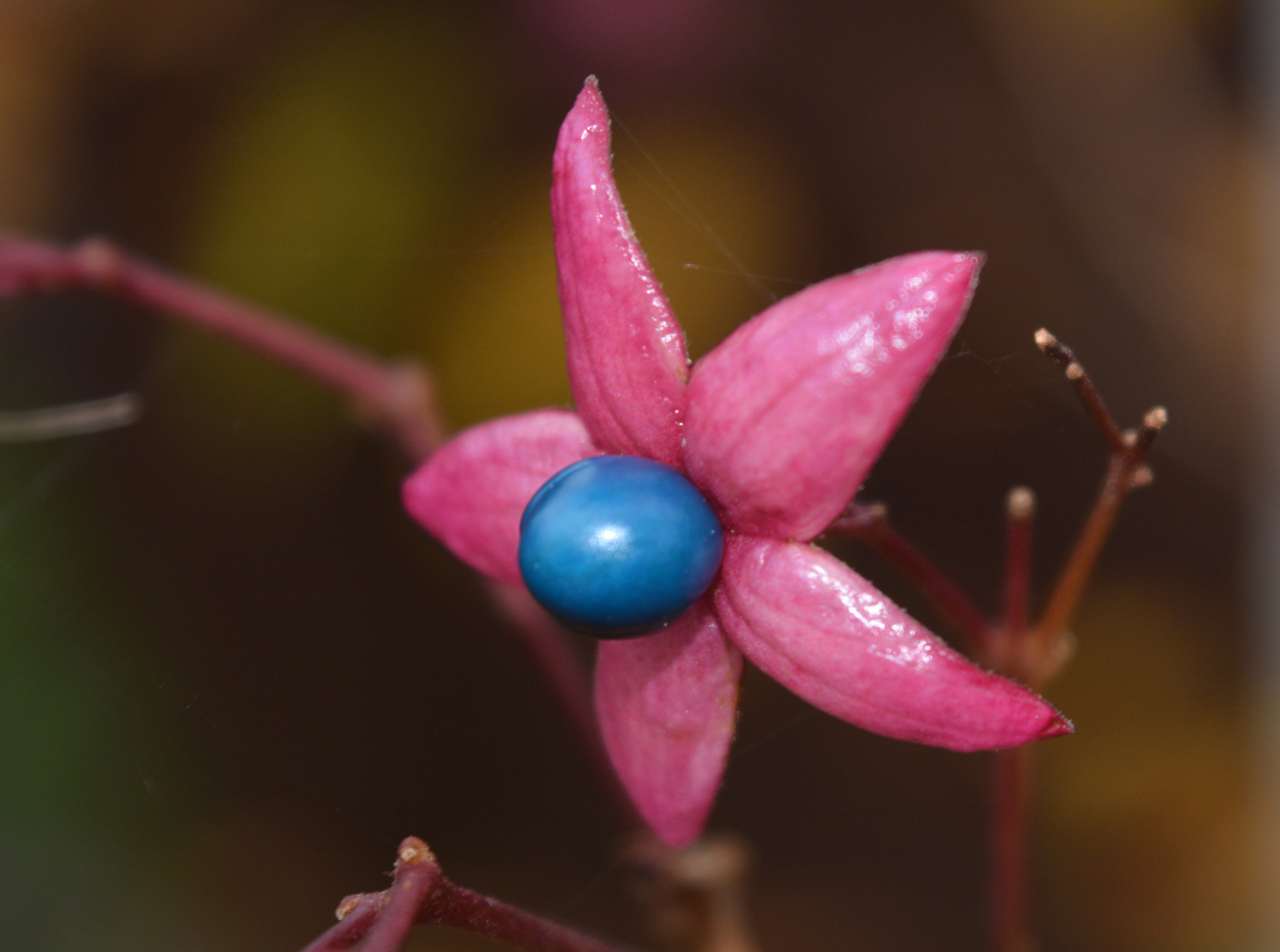
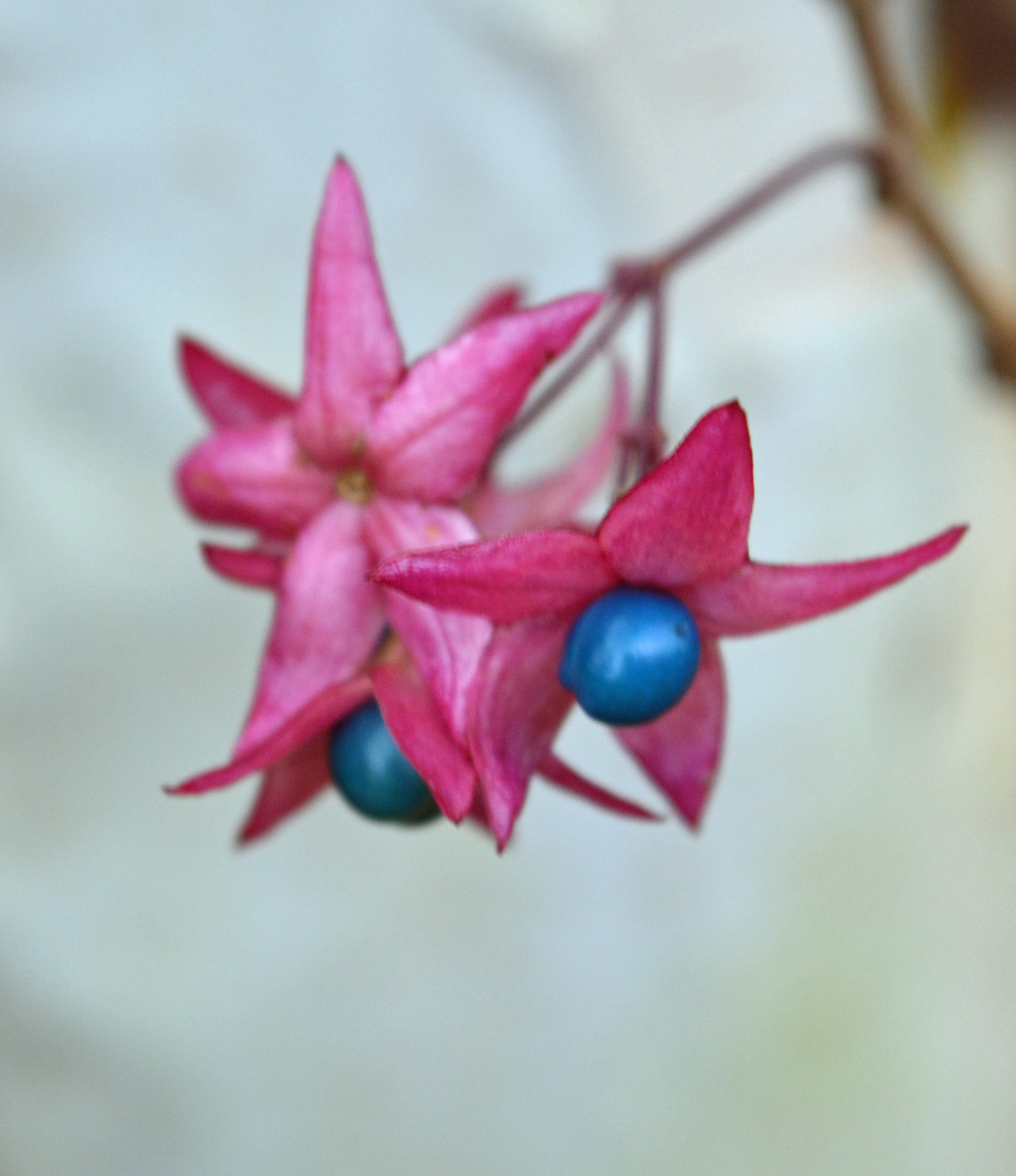
There are certain plants that are full of interest most of the year but they usually have powerful peaks. Such a plant is Clerodendrum trichotoma var fargesii, which we grow in our spring border. It is one of those plants with lots going for it and to recommend itself to us gardeners.
Category: Shrewsbury
In the words of the children’s song, “If you go down to the woods today are in for a big surprise!” proved to be true this week when we went for a walk around the National Trust property, Attingham Park.
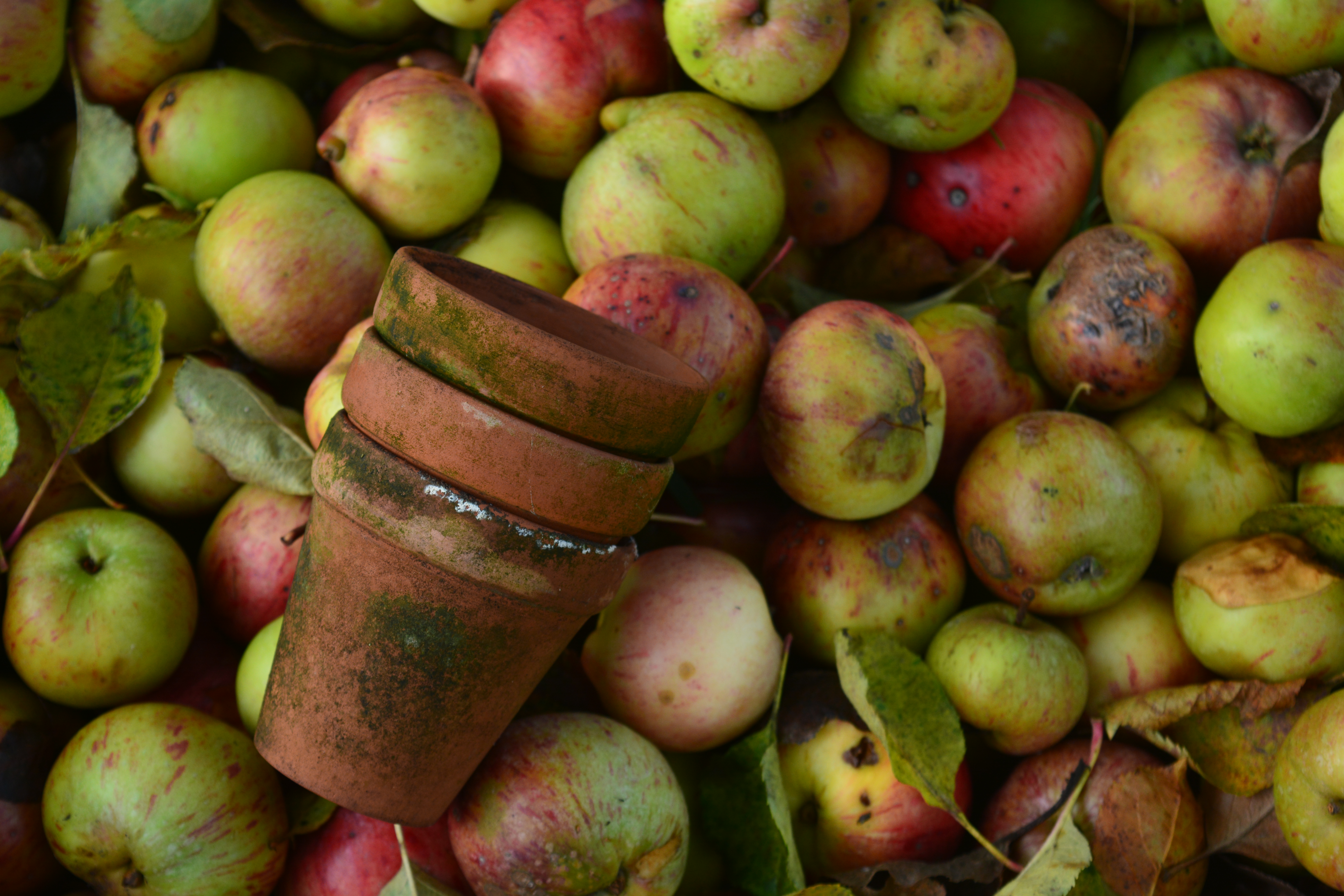
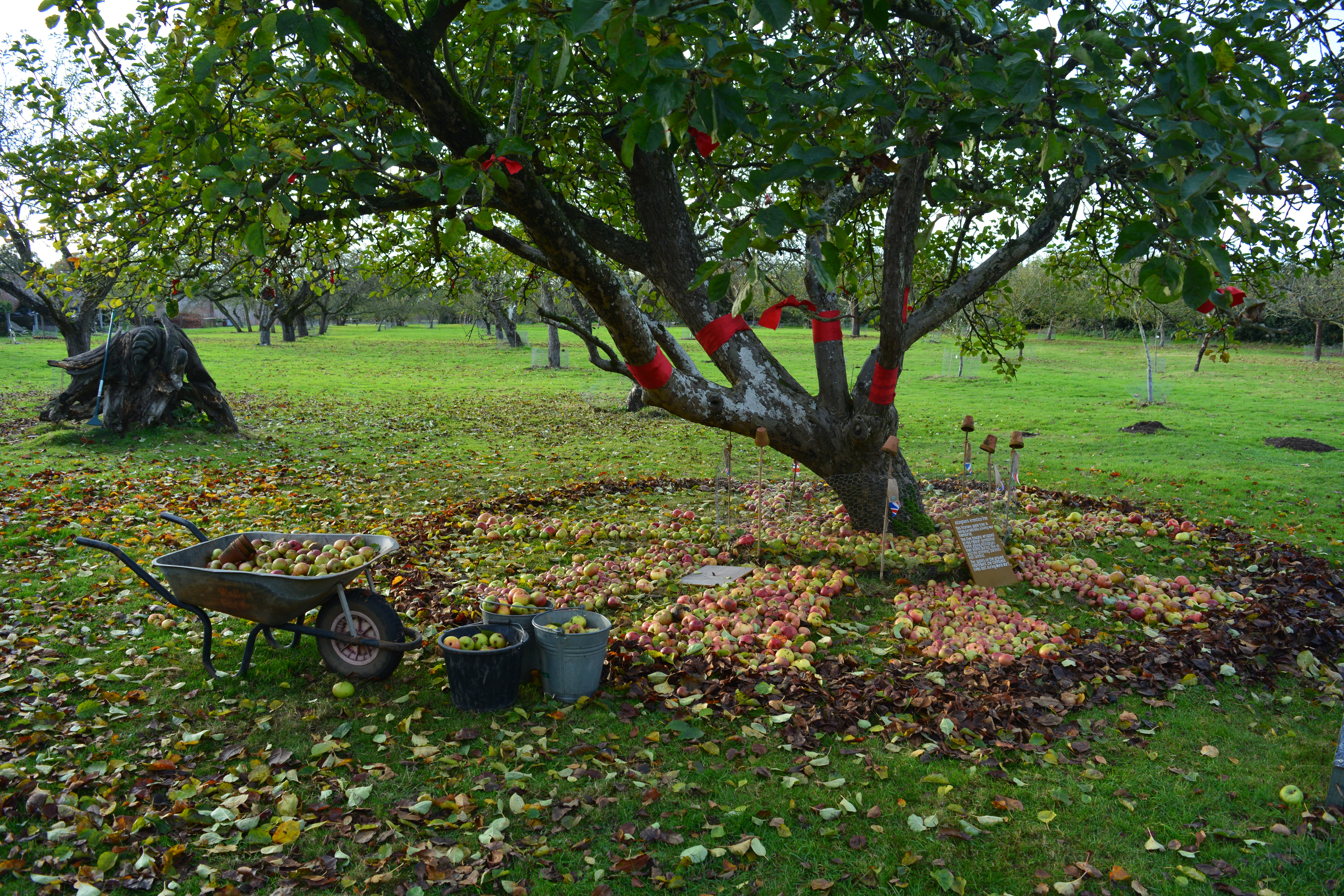
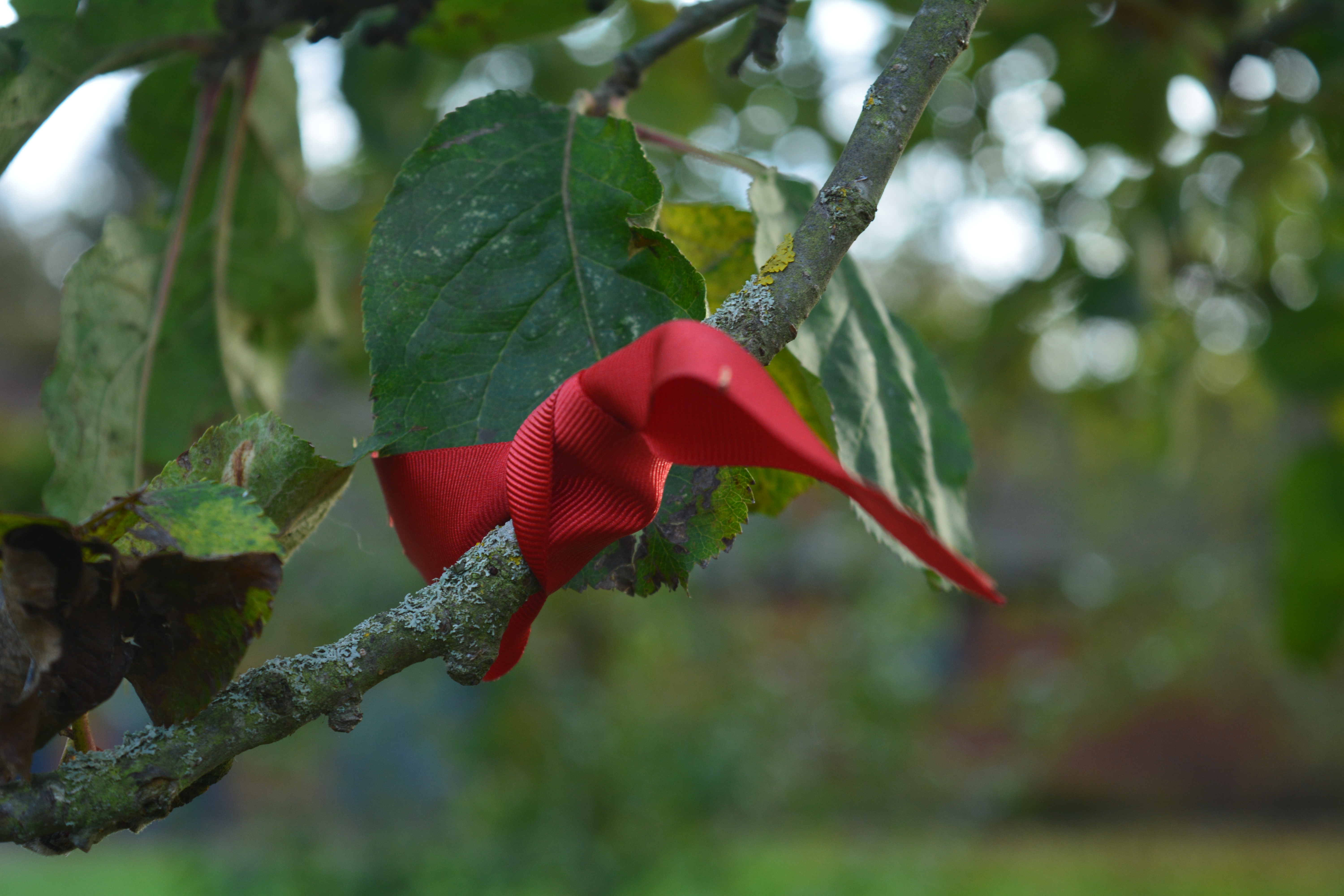
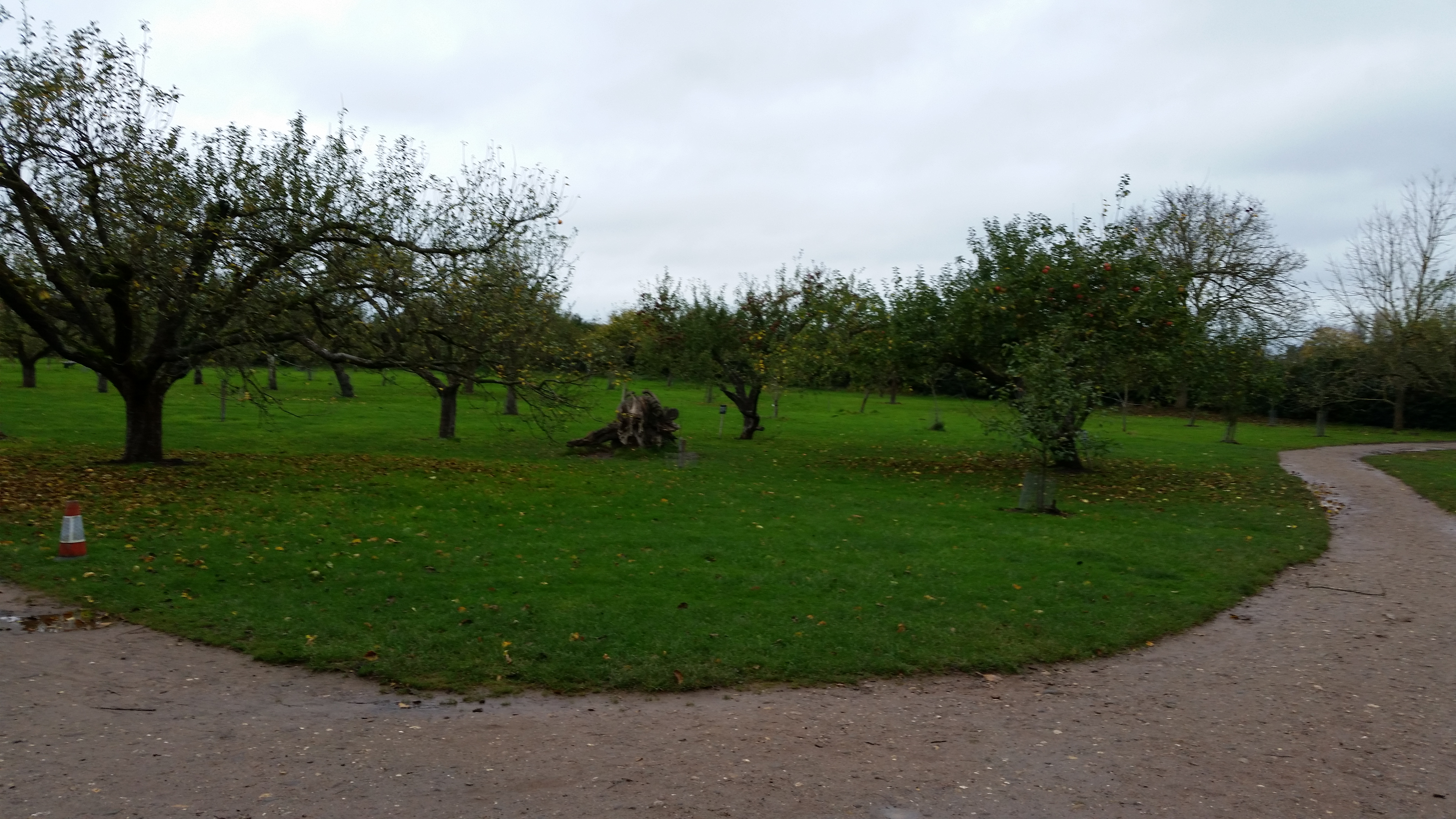
And we were! I shall share these few moments with you when we felt very emotional by this surprise awaiting us. The gardening staff had created a “remembrance tree” by decorating, very tastefully, an old gnarled apple tree in the orchard abutting the old walled garden. It was a very special, personal way for the current team of gardeners and volunteers to remember the gardeners who worked at Attingham Park walled garden when war broke out and sadly never returned.
The Walled Garden at Attingham Park
Our local National Trust property, Attingham Park, is just a 20 minute drive away. We are so lucky as within the grounds are several different walks to choose from including woodland walks, but we also love visiting the renovated walled gardens. When we first visited Attingham Park years ago now there were very few walks accessible, the walled gardens were in a poor state of repair and the refreshment facilities were poor. Things have certainly changed for the better!
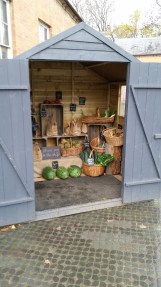
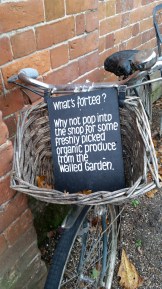
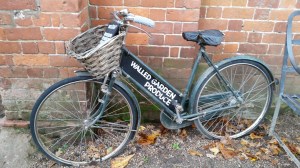
In late November we decided to go for a walk around the woodlands and explore the walled garden to see what was going on. The improvements become immediately obvious as there is now a new entrance building and a newly refurbished Carriage House Cafe in the stable yard. After sampling the delights in the cafe we wandered off towards the Walled Garden one of our favourite elements of the Attingham Estate. In the Stable Yard sits a little sales hut selling produce from the walled garden, freshly picked and delivered by bike.

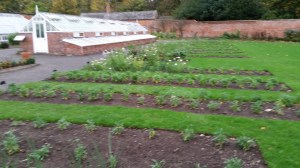
The Walled Garden was originally created way back in 1780 and its job was to provide the estate with fresh fruit and vegetables throughout the year. Looking at it now it is hard to believe that it fell into total disuse and dereliction. An amazing team of volunteers have recently brought it back to life. It no longer produces food for the “big house” but instead sends its organic produce up to the restaurant and cafe and for sale to the visitors.
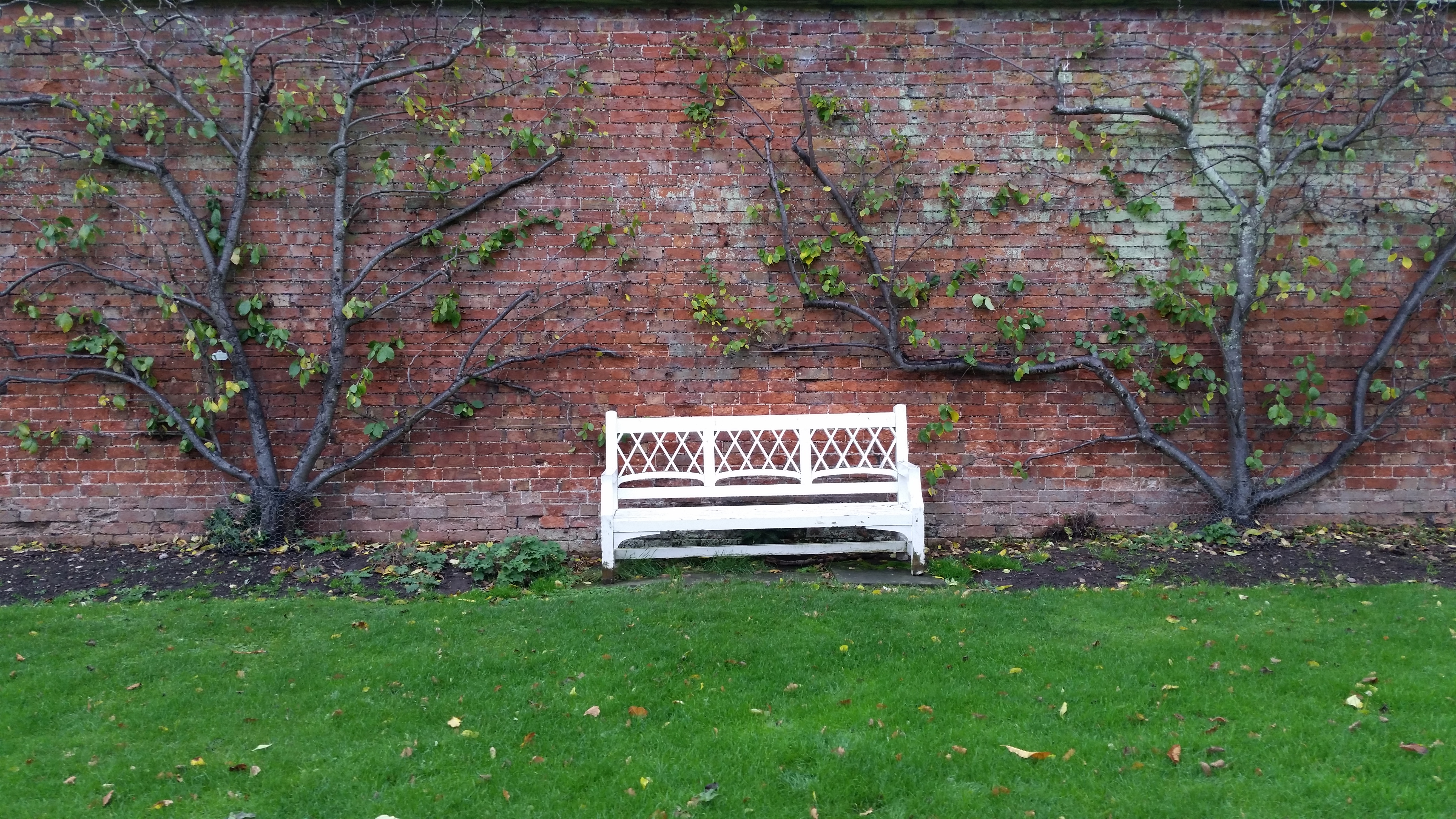
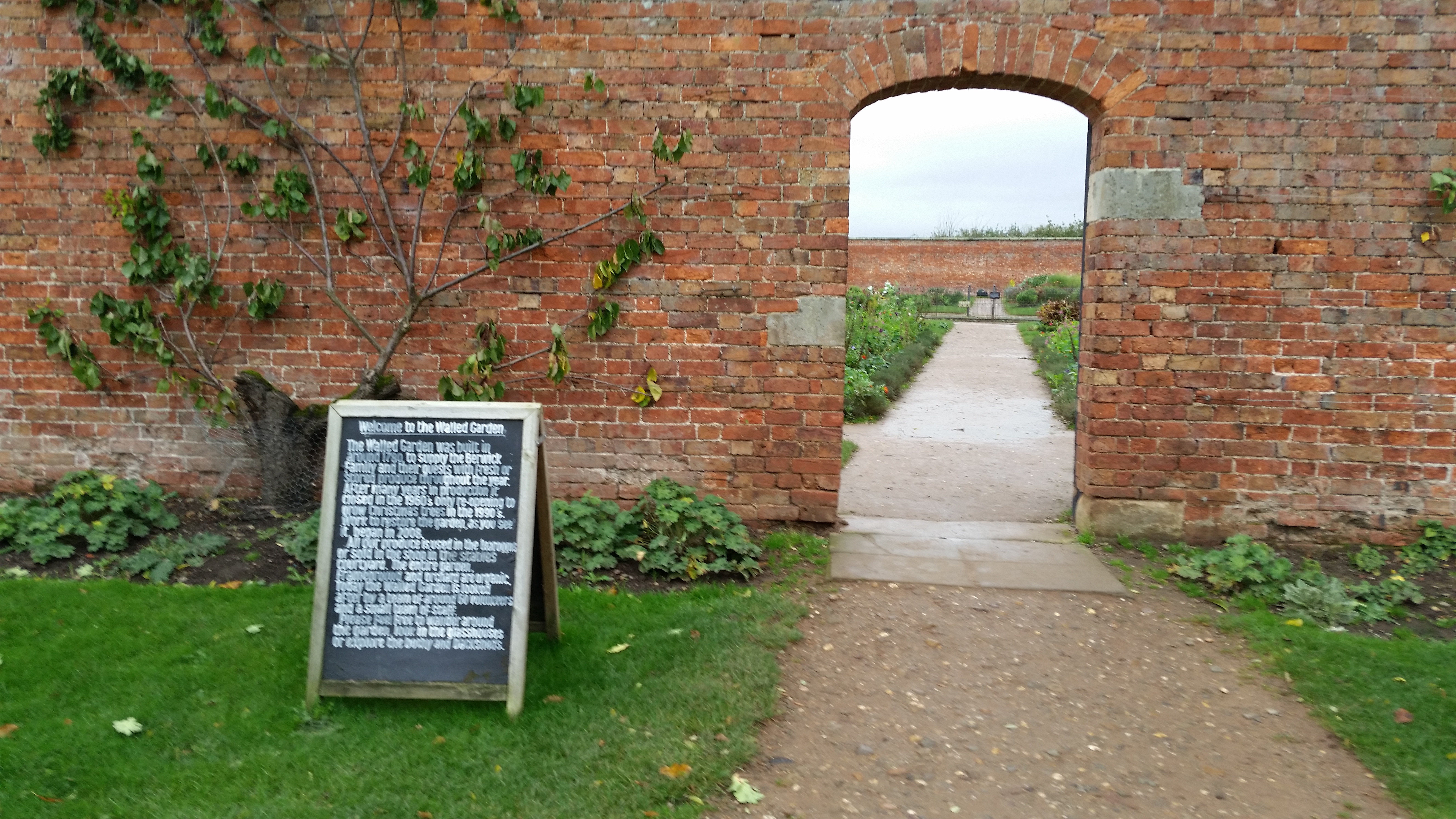
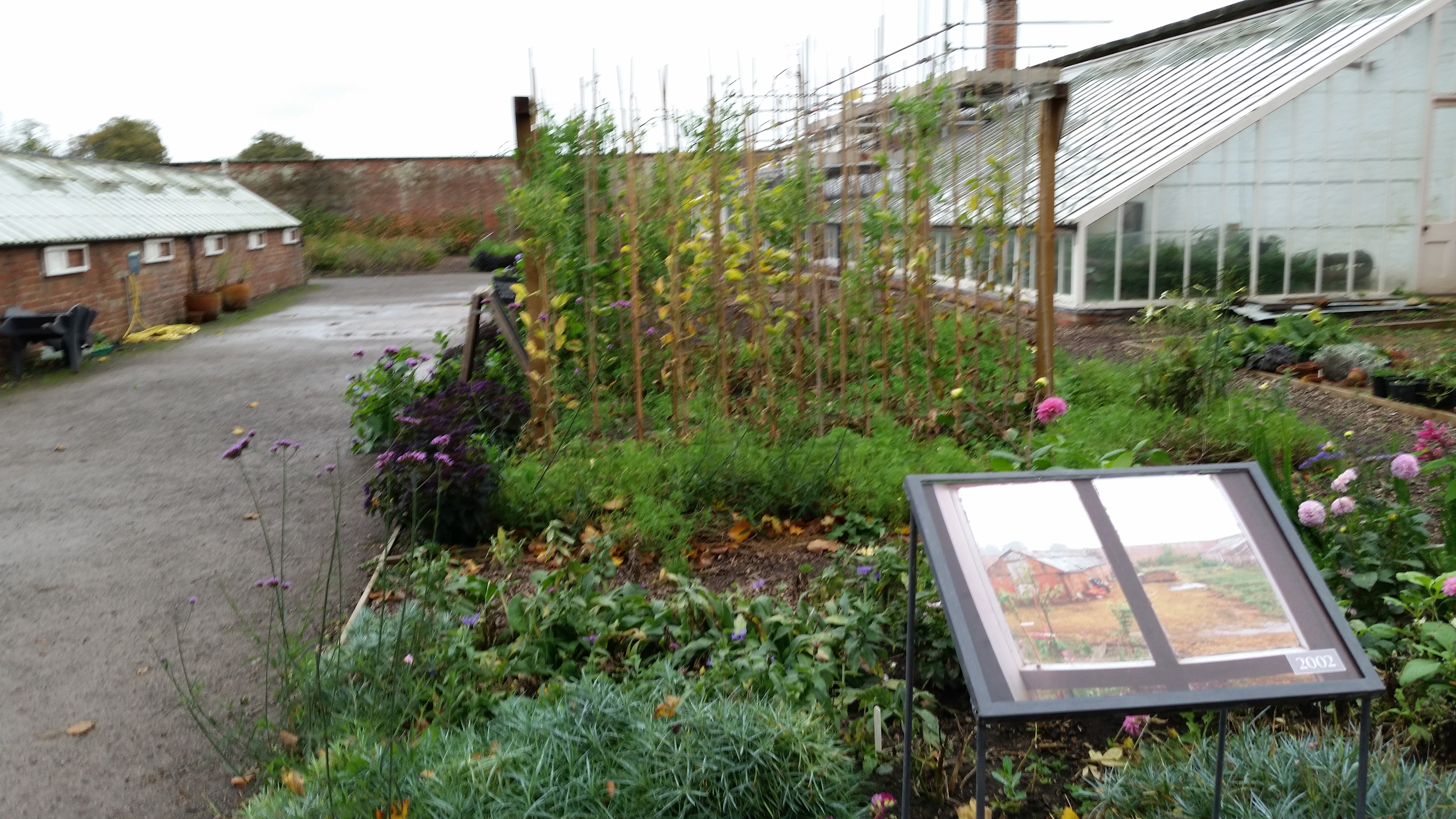
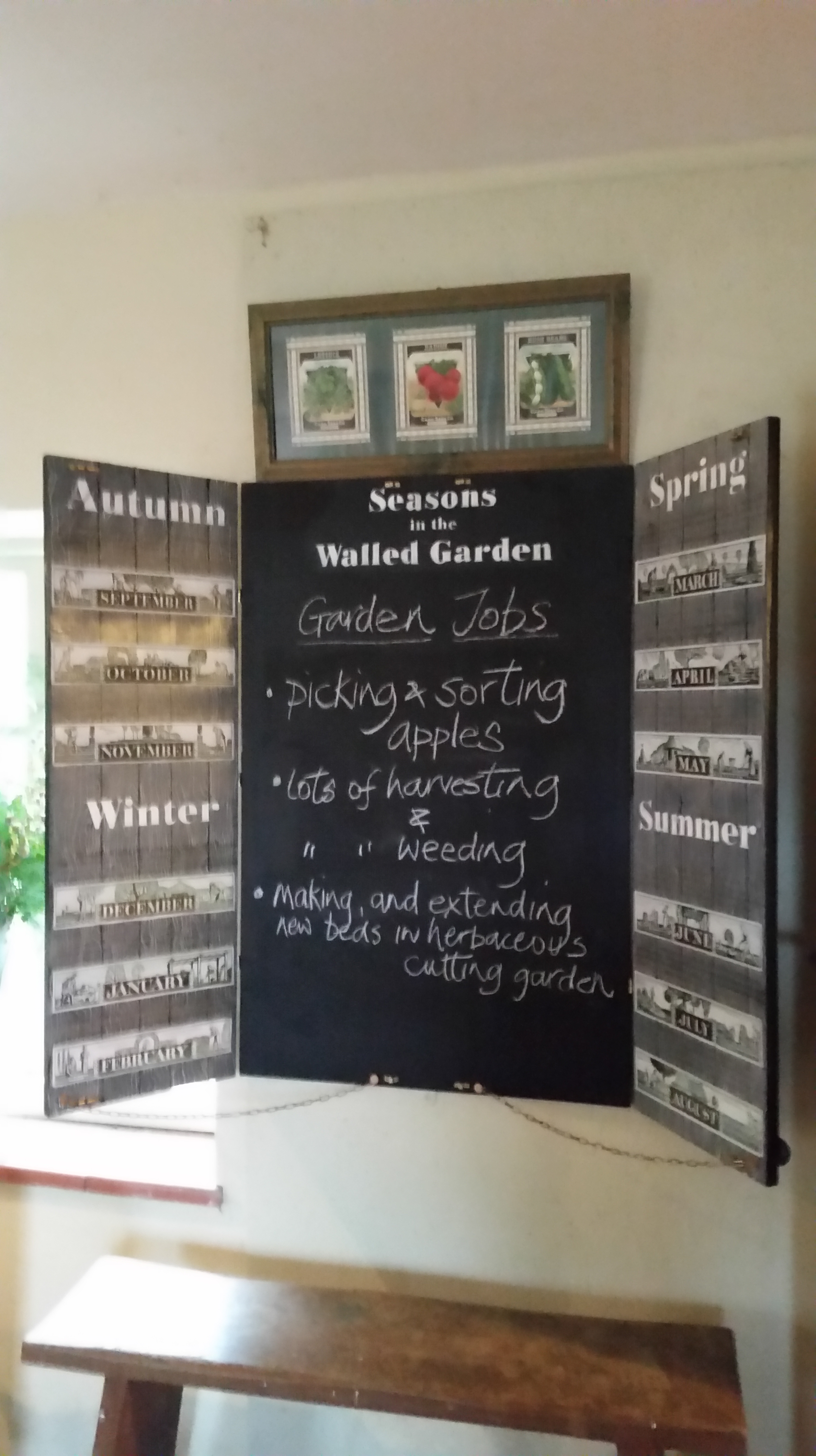
One of the impressive features of the Walled Garden is the amount of information boards placed carefully to keep visitors fully informed. Before passing through the gateway into the garden itself we always love seeing the beautifully trained fruit on the outside wall.
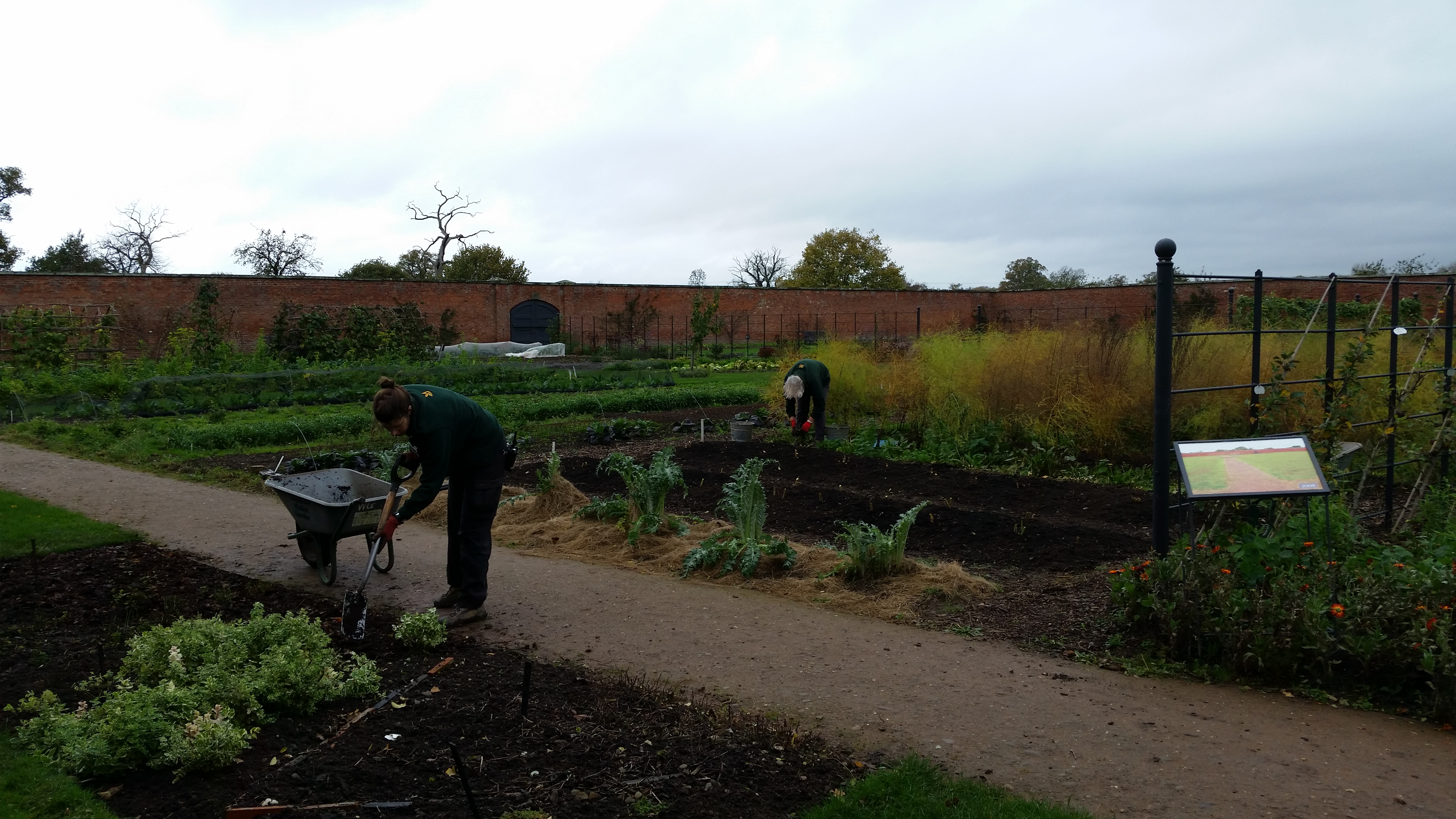
Taking a step inside and the garden came to life before our eyes, volunteers busy harvesting, weeding the beds and clearing ground ready for winter digging.
The volunteer gardeners enjoy getting creative with Birch and Hazel boughs and branches and their bean supports, tunnels and wigwams always look impressive.
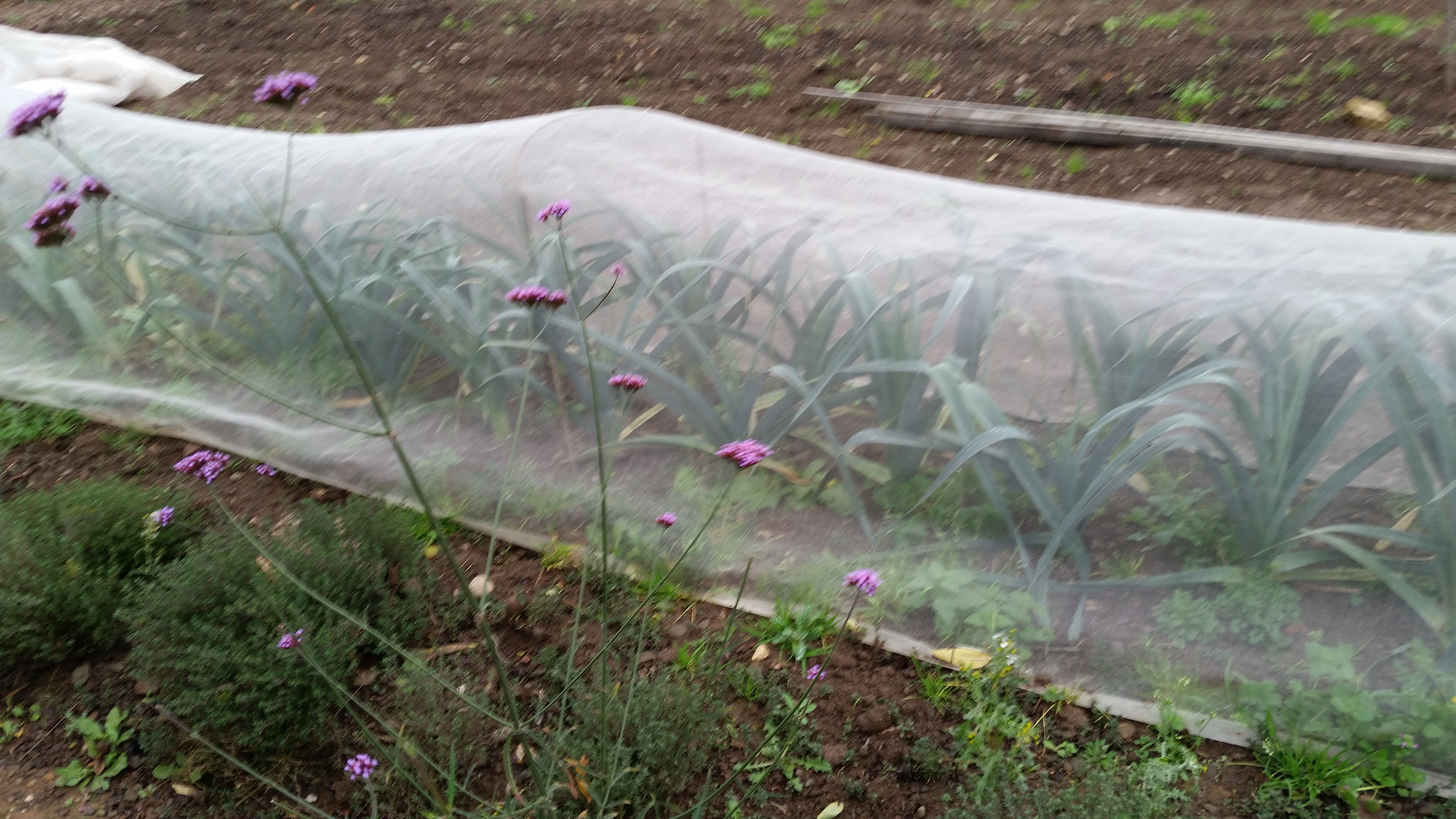
It was good to see sound organic principles being used here, barriers, green manures and companion planting and herbaceous borders to attract beneficial insects, predators and pollinators.
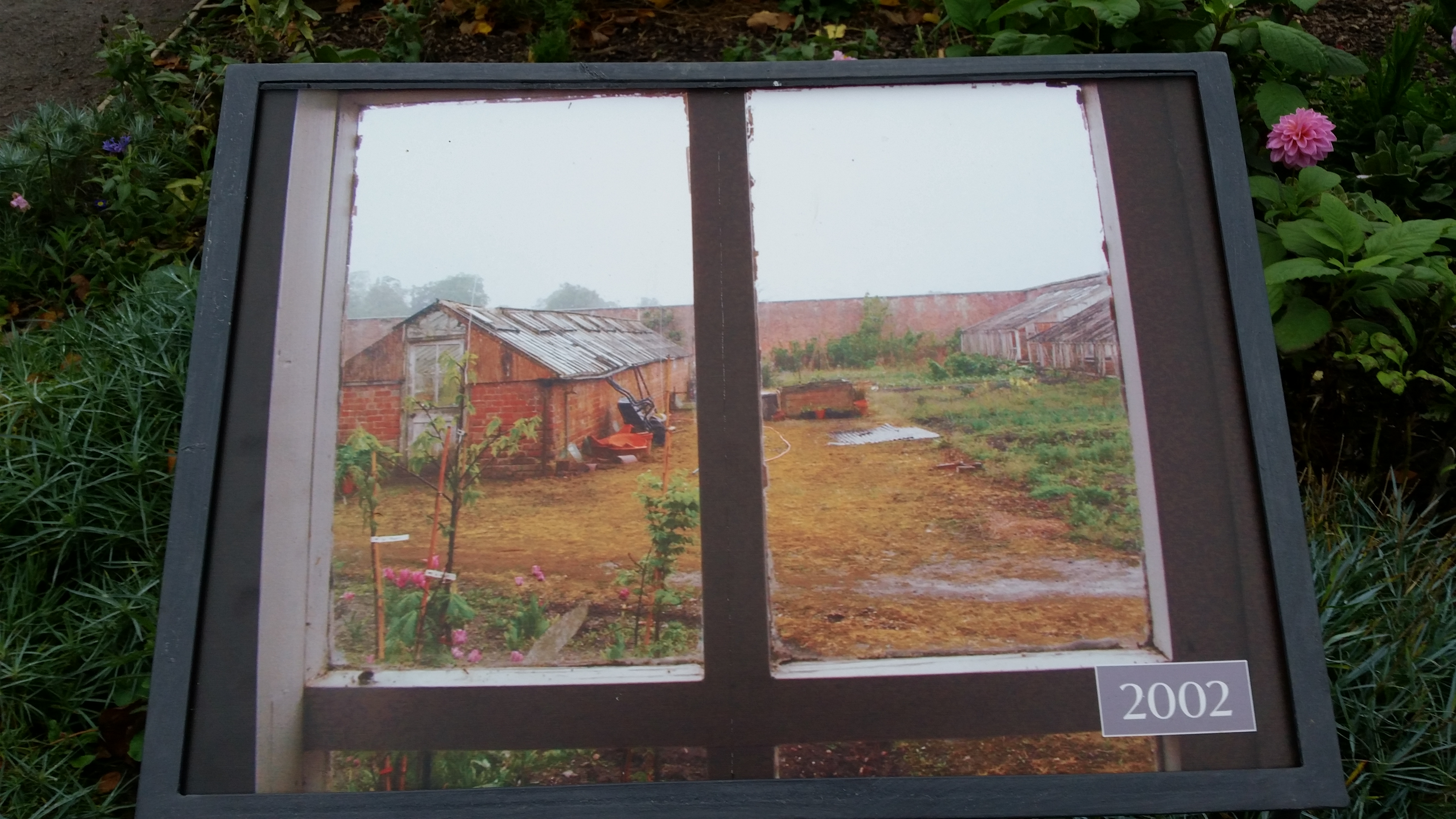
As we moved into the glasshouse area we were impressed by the renovation work being carried out on the glasshouse ranges. Information boards show visitors what the area looked like prior to its rescue.
Cut flowers were also grown here and even in November the Dahlias were flowering well due to the protection of the walls and protection from Earwigs provided by the old fashioned method of putting a pot stuffed with straw on top of a cane.
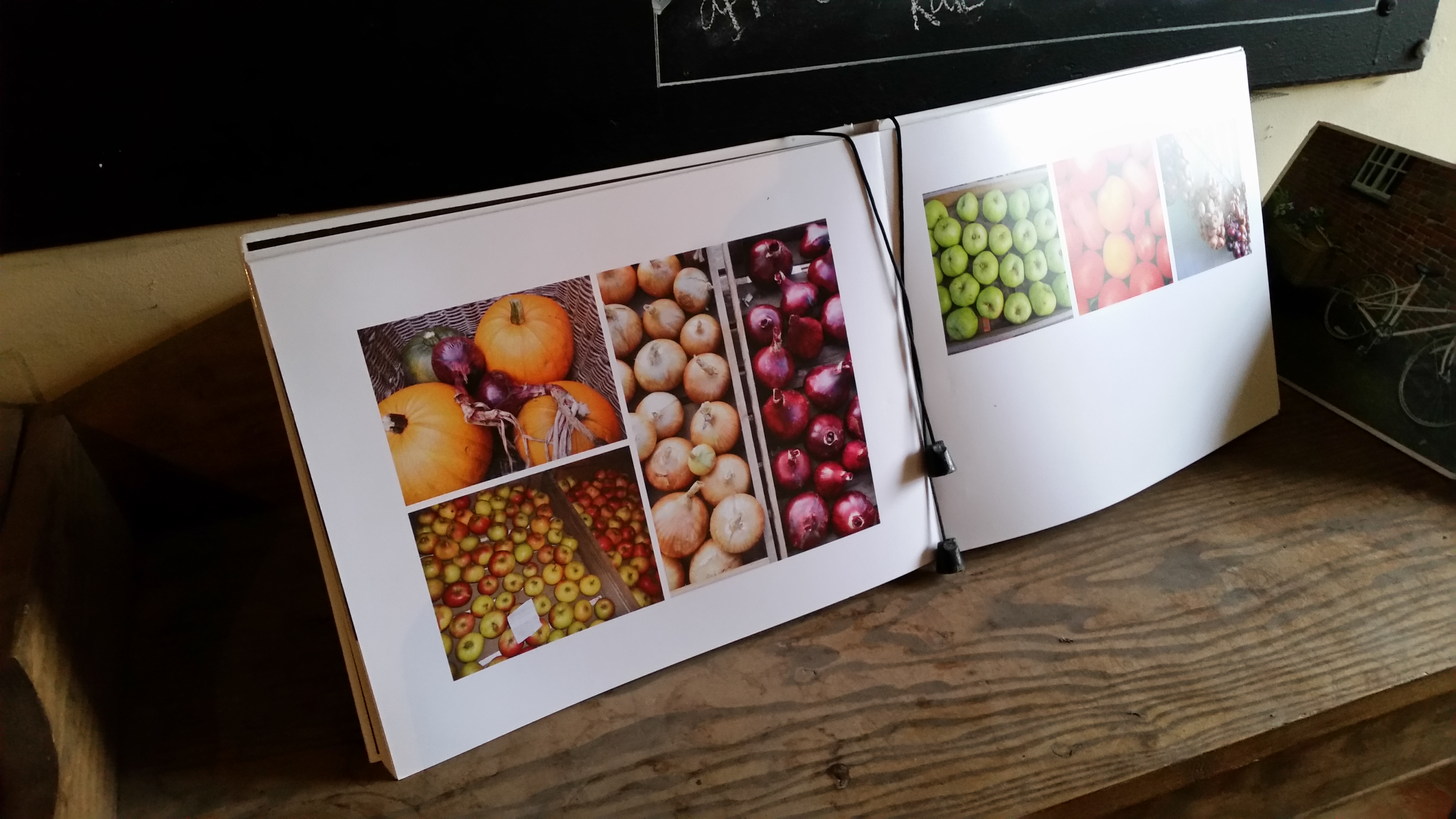
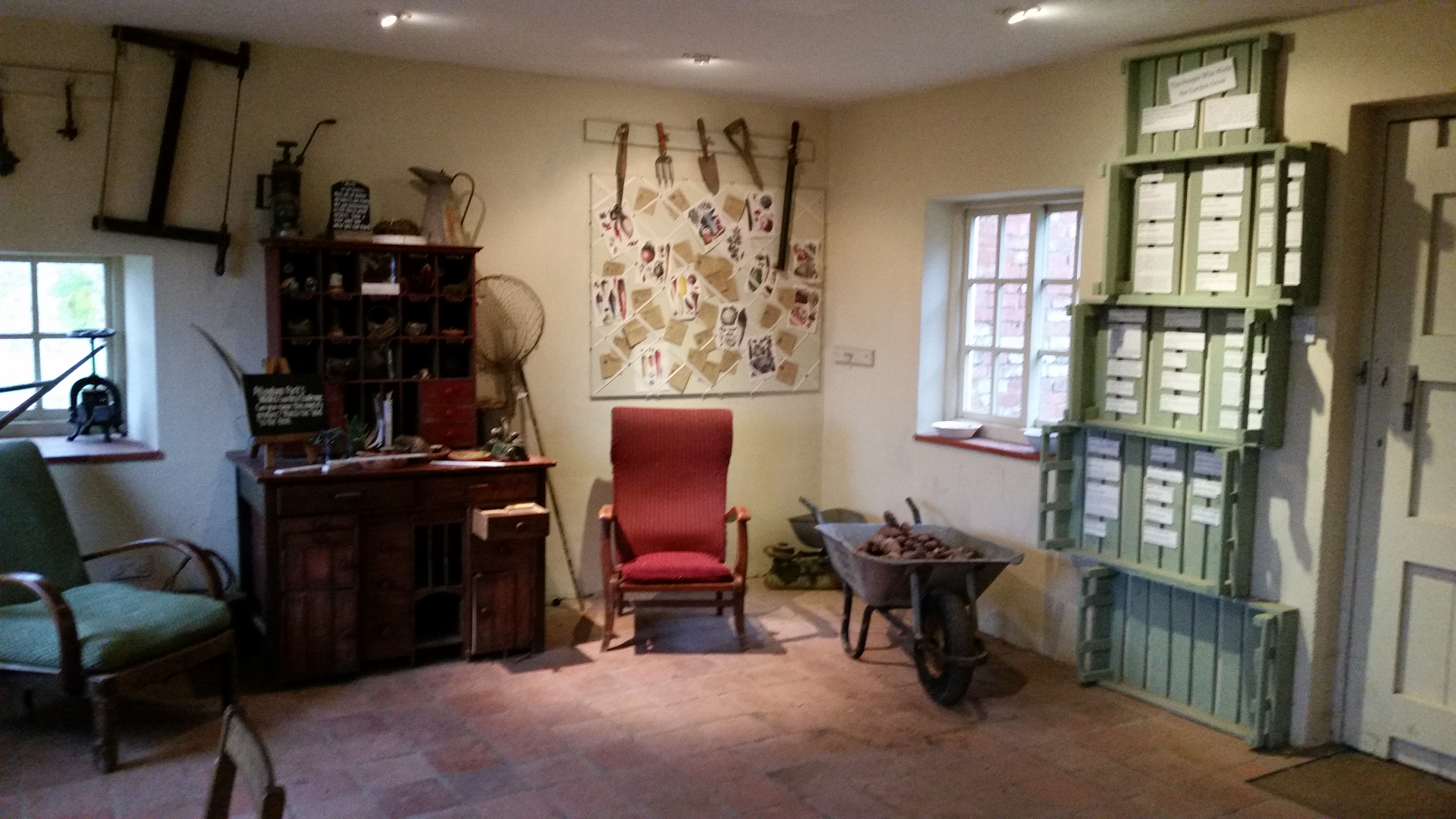
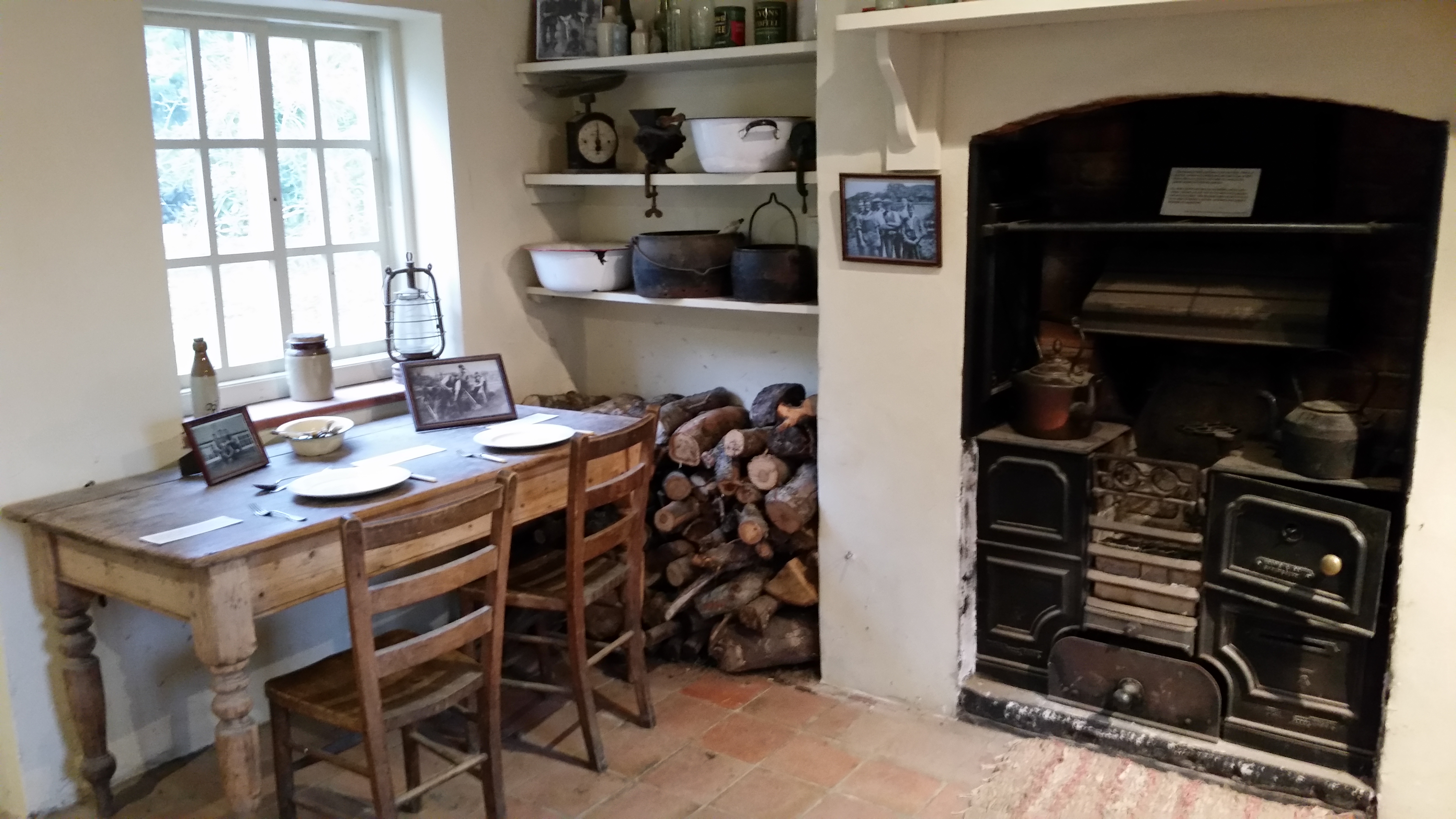
On a cold day a look inside the gardeners bothy proved to be a welcome time to warm up and enjoy the displays.
Exiting the Walled Garden via the orchard gave us a chance to look at the front of the old red brick buildings. The Walled Gardens here at Attingham are worth visiting throughout the year as there is always something interesting going on. We are so lucky having this national trust property so close to Shrewsbury.
From the walled gardens we wandered off into the woodlands following one of the marked trails. My next post will feature what we found there.
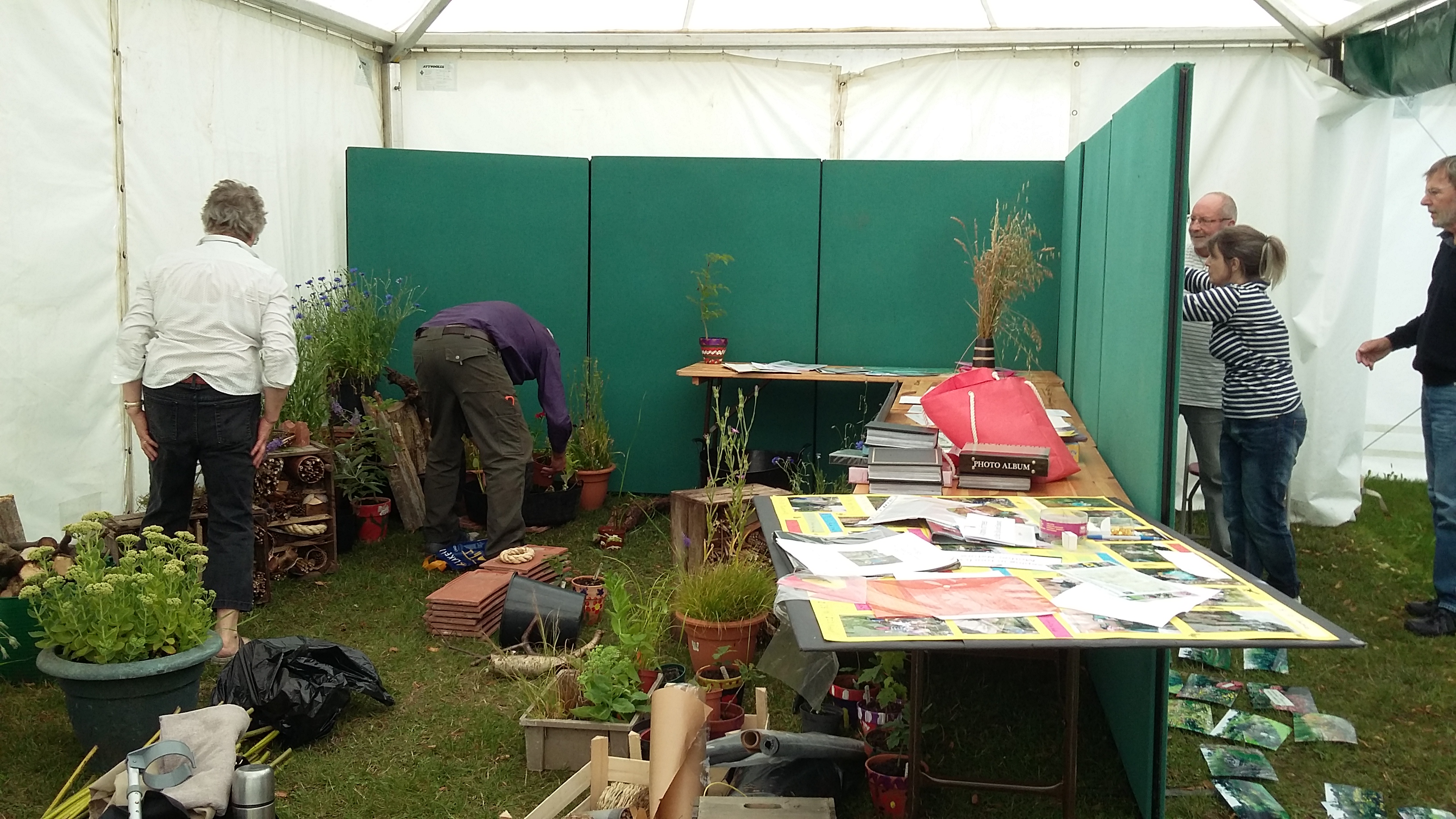
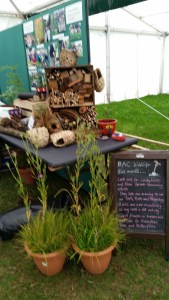
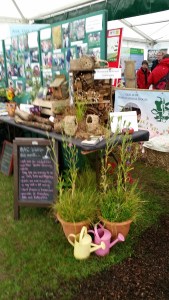
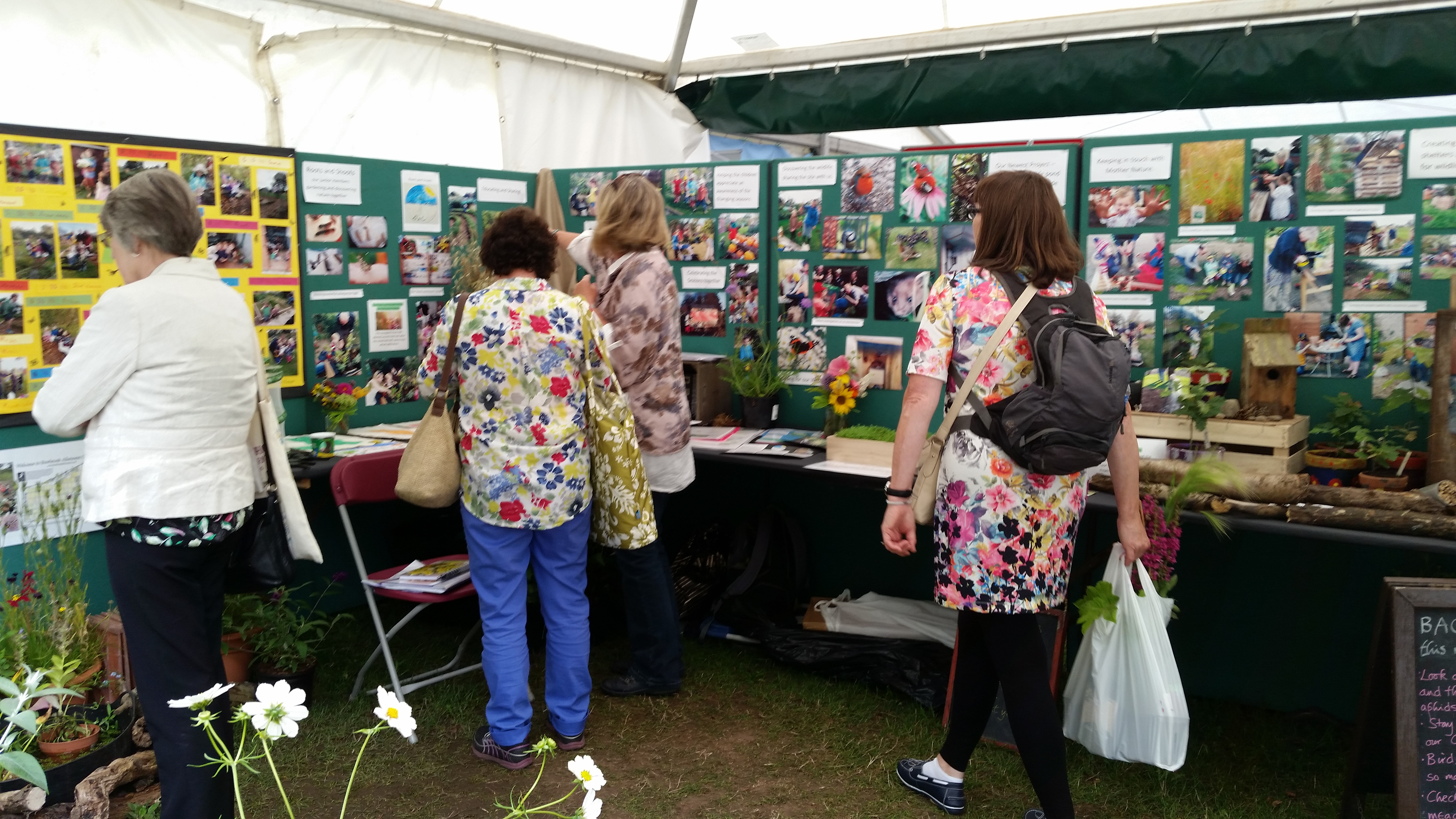
This summer we were contacted by the organisers of the Shrewsbury Flower Show to see if we could put on a display about the work our allotment community does with children. There is a marquee at the show called the Futures Marquee and we were allocated some space in this marquee to illustrate how we work with the youngsters at Bowbrook Allotment Community to encourage them to become the gardeners of the future, the wildlife lovers of the future and ultimately the wildlife gardeners of the future.
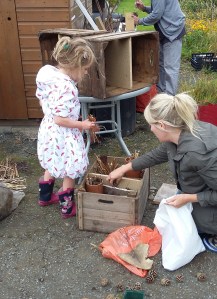
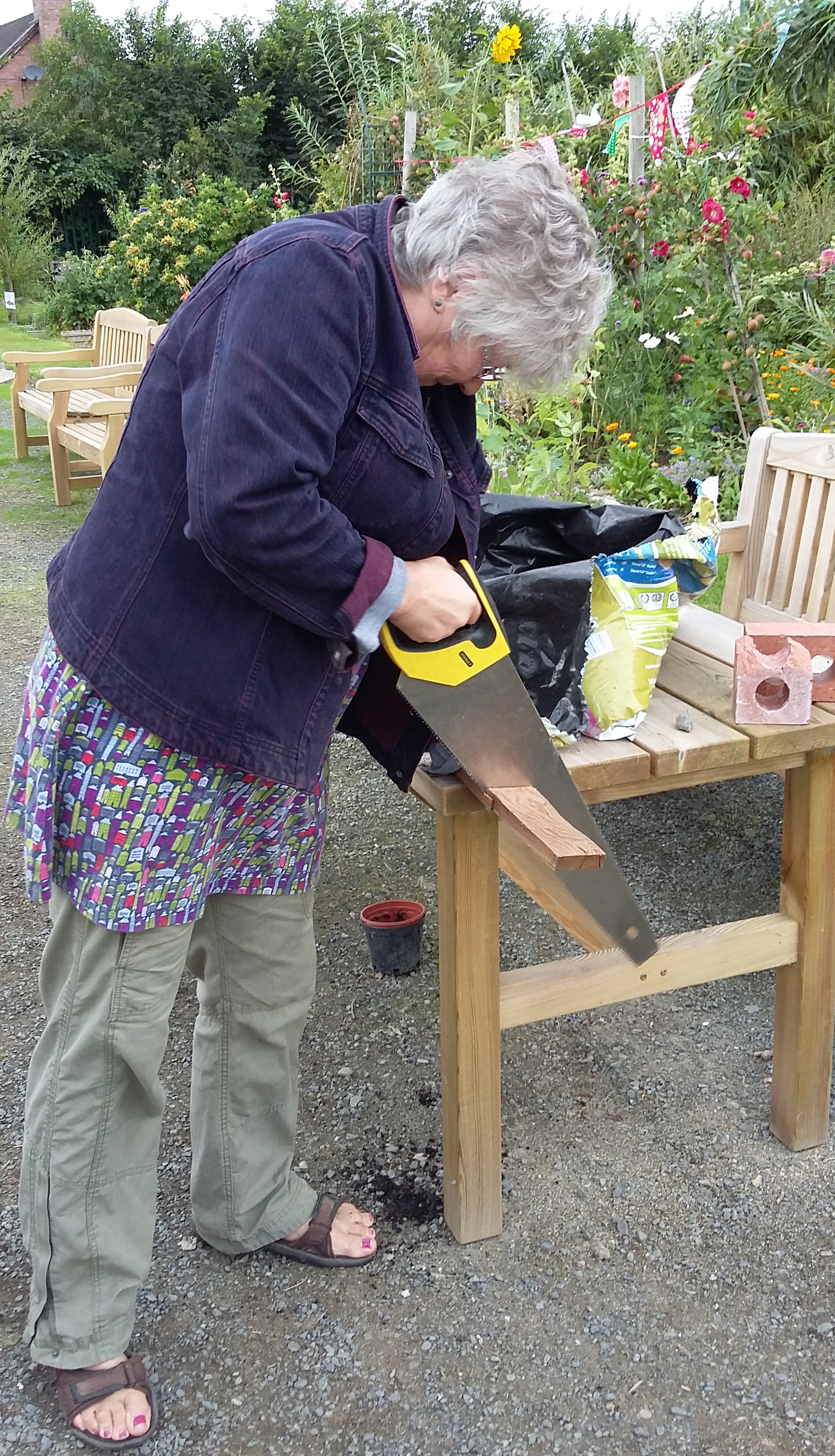
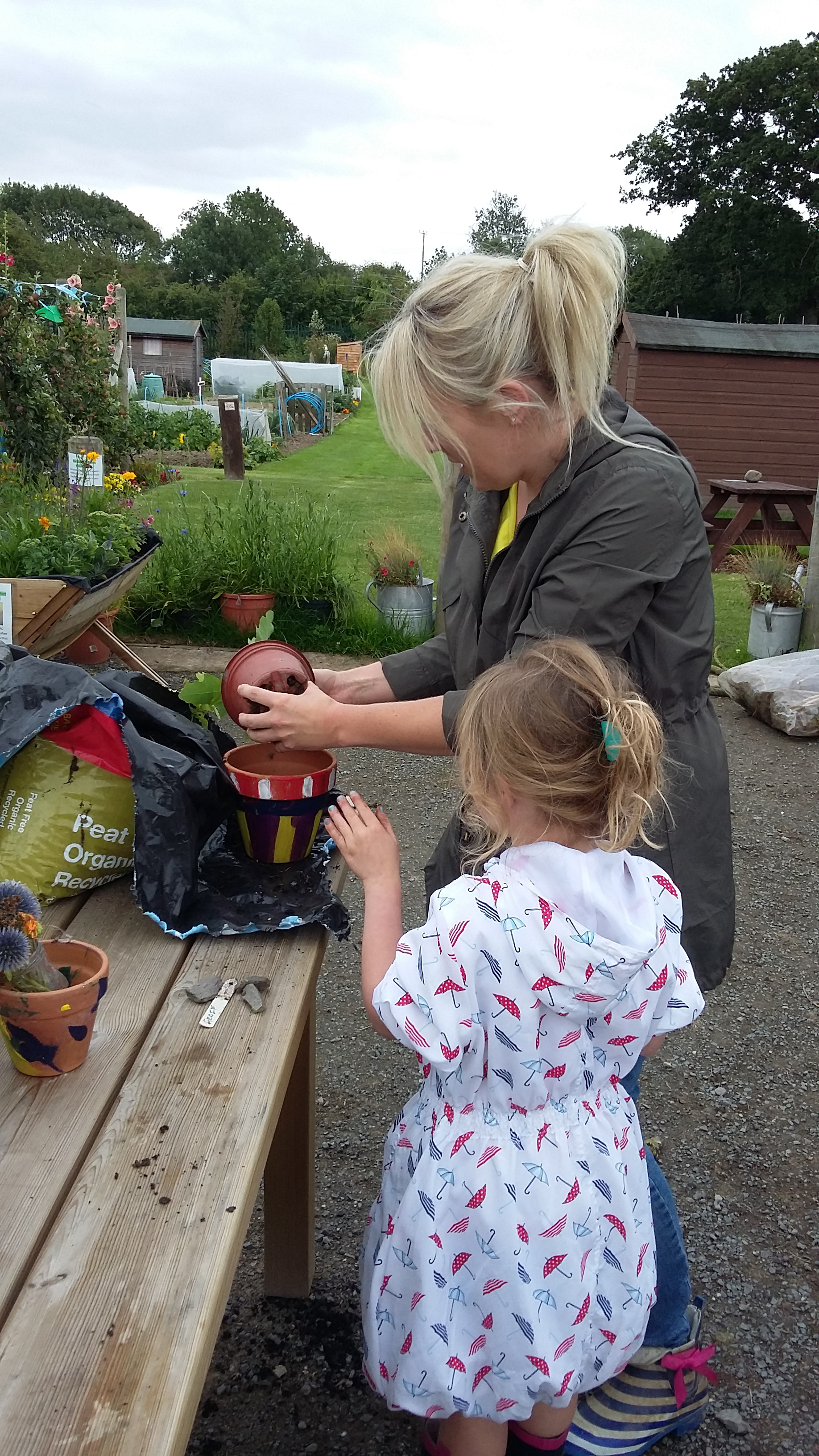
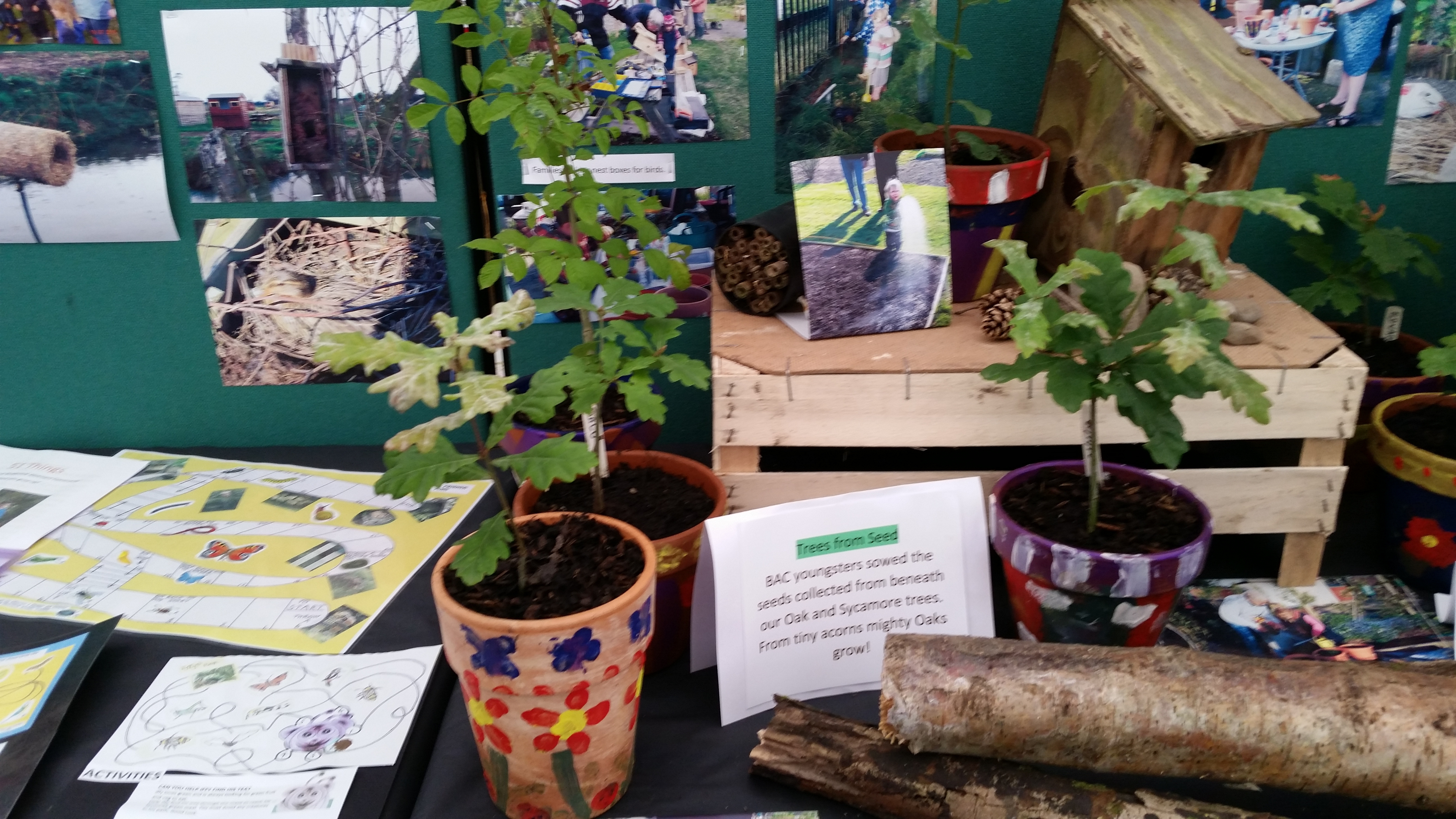
But to give a full picture we need to go back a few days to a wet morning on the allotments when we met with some families and committee members to put together some insect hotels and wildlife shelters and pot on some tree seedlings the youngsters had sown 2 years ago. The pots we were using had also been painted by the youngsters. We had great fun! And dirty hands!


We arrived to set up our exhibit a few days prior to the first day of the show but struggled to find the correct marquee as there were no signs up, but by asking several stewards we did manage to locate it and parked up our two vehicles right outside. We definitely needed to be close as our car and Pete and Sherlie’s camper van were loaded solid without an inch to spare. We unloaded our materials and miscellaneous bits and pieces.

We had a message from the show organisers informing us that our tables and screens were all up ready for us to be creative and put up our display, so imagine our despair when we walked in the marquee to find nothing in place and a huge dividing wall cutting through our space. We had a pile of tables and some some broken and the others the wrong size!

So we set to work getting help from the marquee erectors and a very helpful steward. We found enough screens, we put up our tables and even got the dividing screen moved.

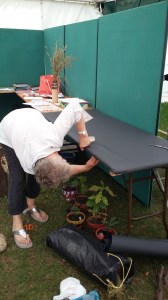
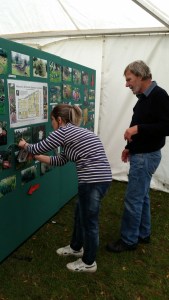
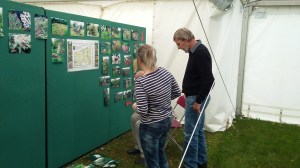
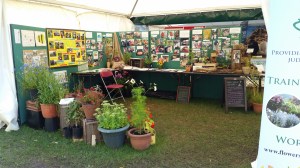
Once we had sorted the problems out we could at last get creative. We arranged our 3 trestle tables and display screens in the design we wanted and unloaded the vehicles. There looked so much to do! We covered the table tops with black paper to give a uniform look …….
….. and started pulling it all together.
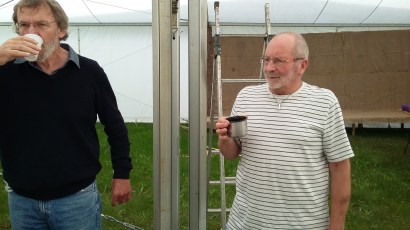
Frequent coffee breaks were essential!


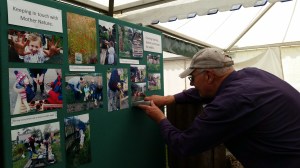
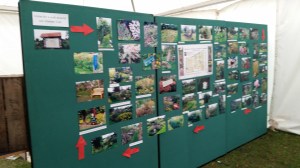
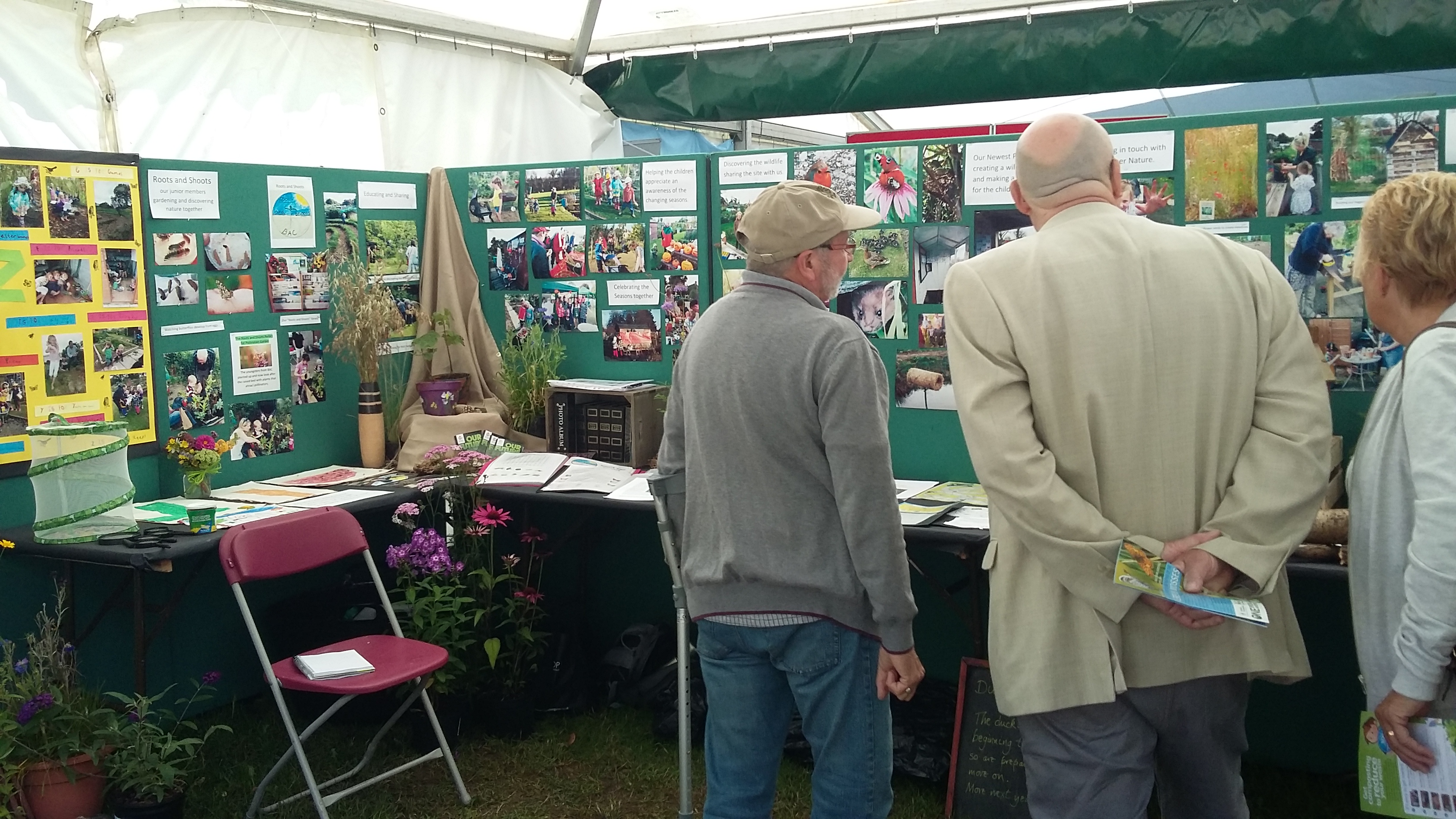
On the back side of the long run of screens we created a photographic journey around our Interest Trail.

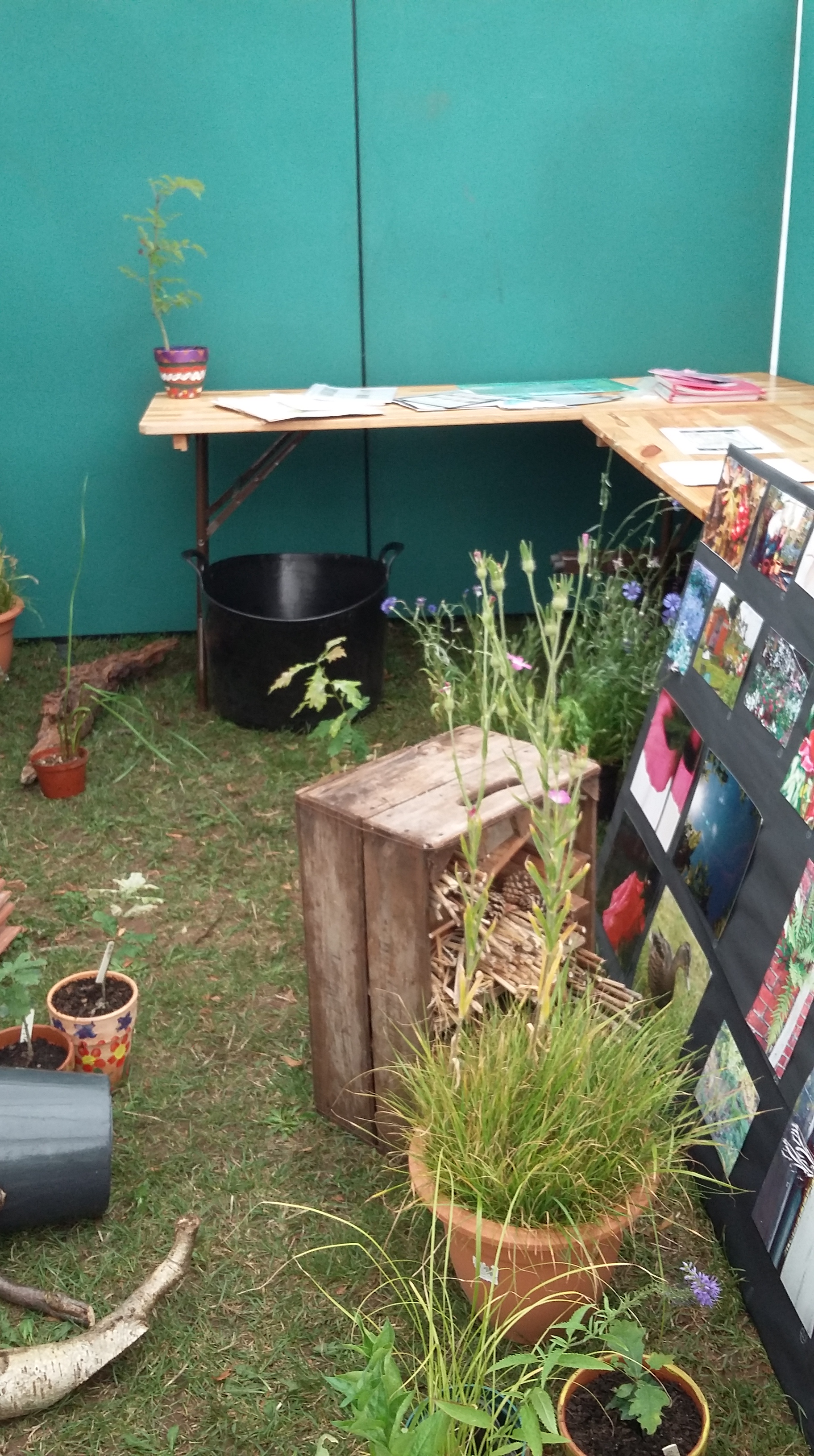
After a few very busy hours it all came together and we were pretty pleased with it. Our display illustrated how we encourage the children of Bowbrook Allotment Community to engage with wildlife and to discover the joys of gardening. It showed how we help develop the gardeners of the future, and ultimately the wildlife gardeners of the future.
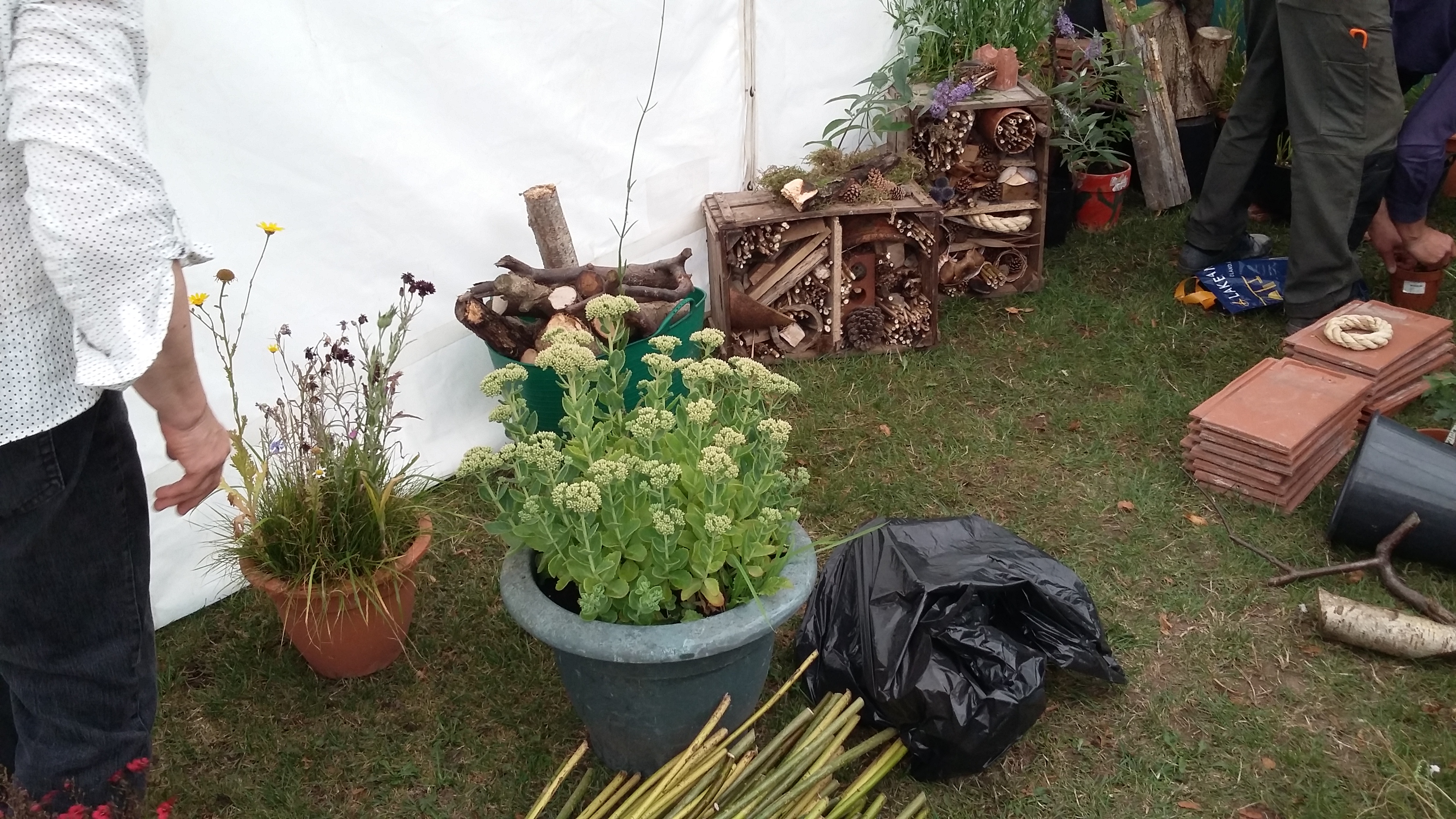
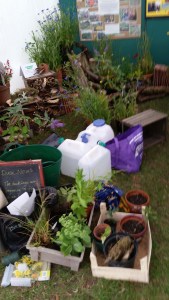
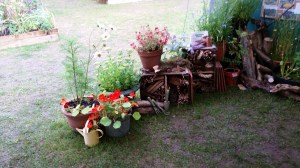
We featured mini-meadows our youngsters had grown in terra-cotta pots and insect shelters and hotels they had made.
We left the show site to return 3 days later to meet the public and talk about our work with children at our allotments. This is the display as we arrived ready for the show.

Day one was extremely wet so quiet at the show but day two was brighter and busy all day. We went home with sore throats and aching legs.
On our allotment site, Bowbrook Allotment Community, we try to be as inclusive as possible and encourage everyone to become members, take part in our activities or simply visit us to enjoy our special community garden.
So far this summer we have hosted youngsters from our local Beavers and Rainbows groups and more elderly groups from the Fitz Friendship Group and the National Women’s Register.
The Cubs came on a wet evening to help us with garden jobs in our borders, weeding and mulching. A week later we were joined by our local Rainbows group who came for a wander around our Interest Trail using one of our quiz sheets. They enjoyed the excitement of our wildlife areas and community gardens. The pics below show the Cubs weeding the edge of one of our Butterfly Borders and the Rainb0ws exploring our Fruit Avenue.

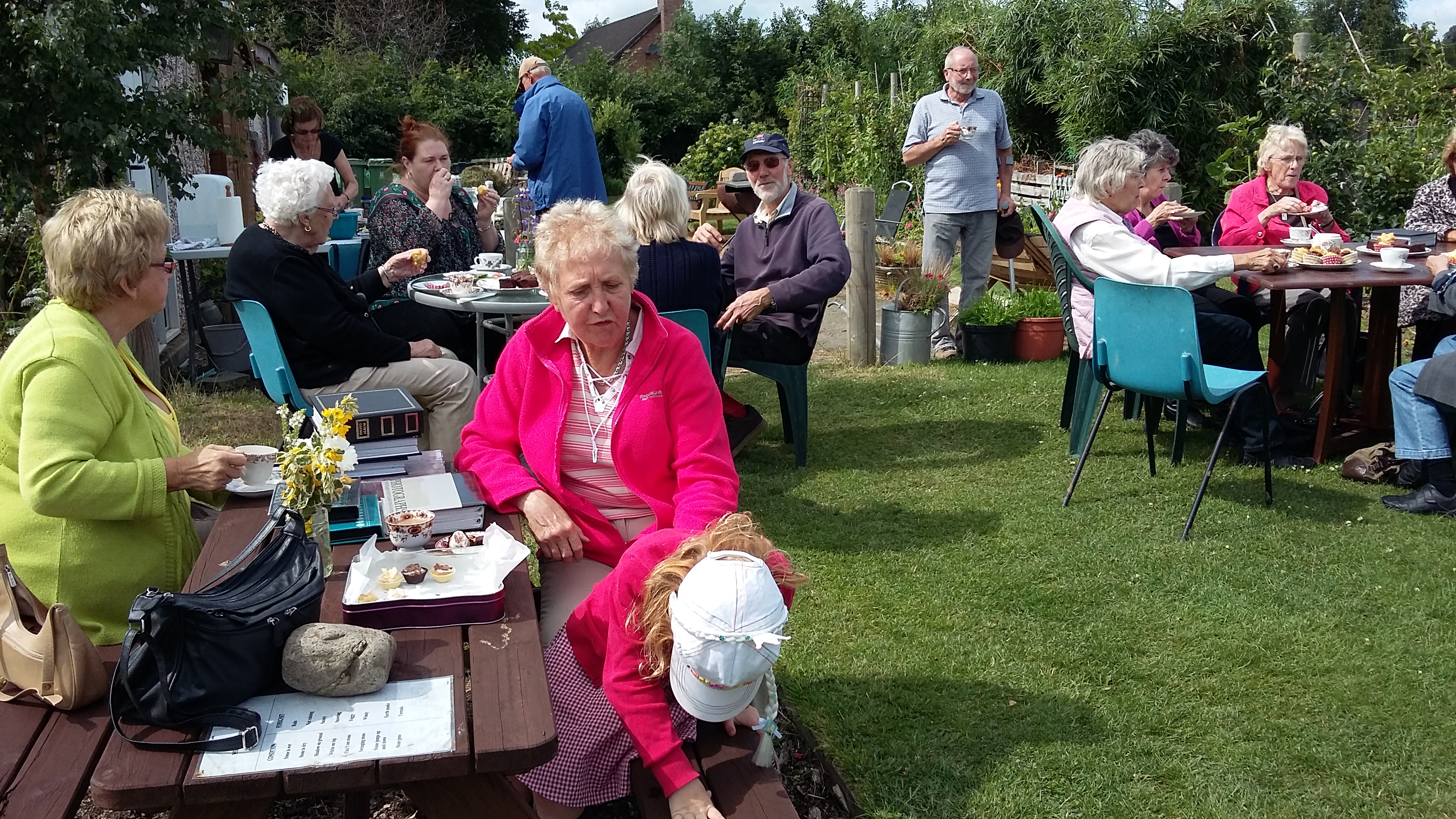
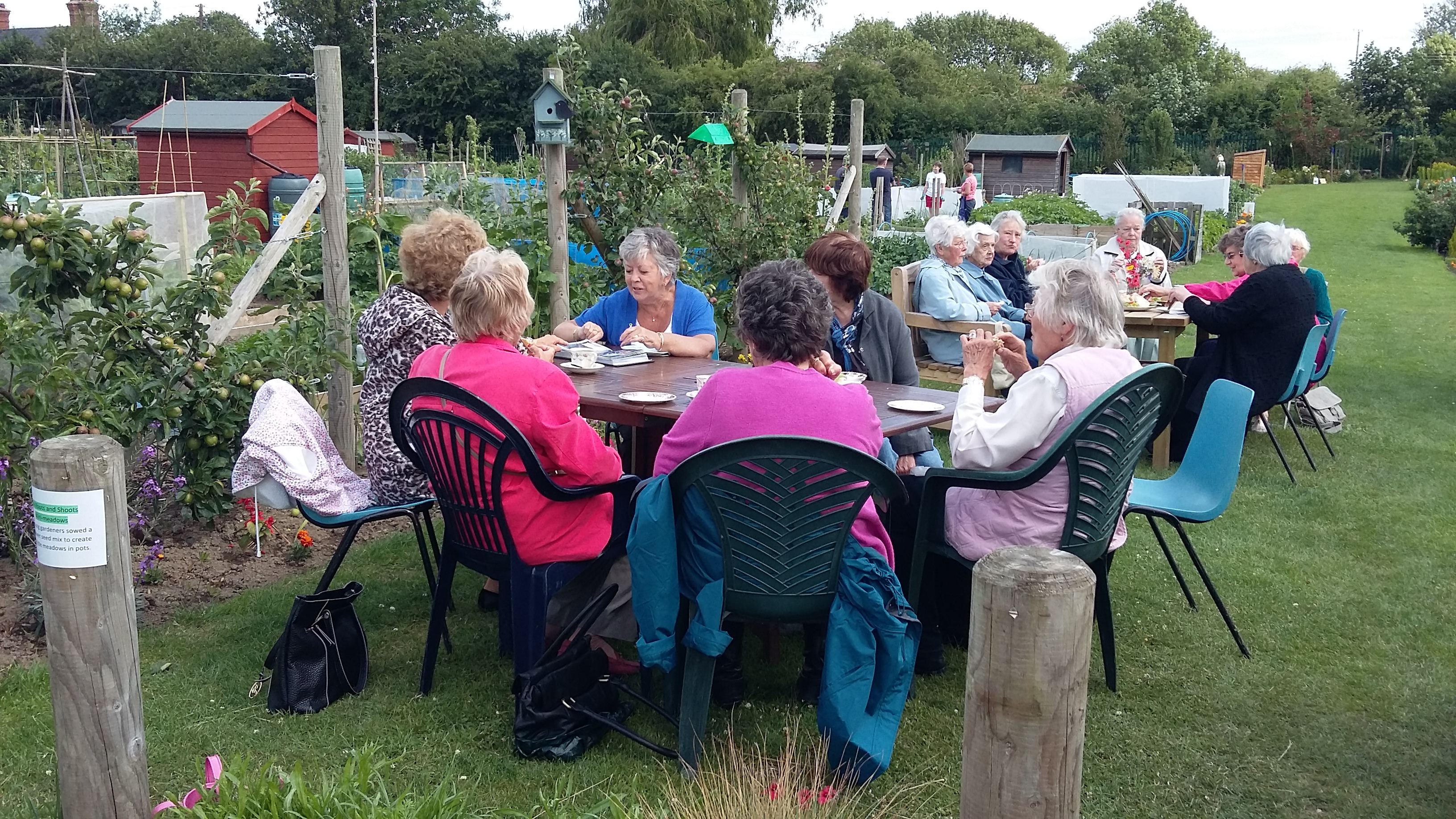
This week we entertained a group called the Fitz Friendship Group who were mostly elderly but equally excited at visiting our site.
We serve our visitors with tea/coffee with cakes and we have our own tea committee who call themselves the Tea Bags. The first two photos below show our beautiful antique cups and saucers lined up ready to be filled and our selection of tables and chairs ready to be used.
Anne can be seen working away in the kitchen area of our communal hut, slicing the home-made cakes ready for serving.
When our visitors arrived we assembled for a quick background talk about our site explaining how we have developed over the six years of our existence, before setting off on a gentle stroll around.
As we walked the trail Jude, Sherlie, Pete and I pointed out areas of interest. We were amazed how many memories our wildflower meadows evoked. It was a slow but very successful wander. Several of the group found walking difficult but showed such determination to get as far as they could.
We call these sessions “Walks and Talks”, and the fees our visitors pay go towards the charities of the National Garden Scheme. The refreshment money helps to run the sessions and enables us to purchase equipment to make such days easier.
After the “Walk and Talk” refreshments were relished by all. The “Tea Bags” waited on and the four of us who led the tour wandered between tables answering questions.
Here I am with tea cup in hand trying to share words of wisdom!
Our collection of camping stoves were kept busy boiling water to make drinks and the cakes disappeared rapidly.
A great day was had by all and our visitors left tired out but well-refreshed talking about what they had seen.
Within a half hour we had cleared away and all that was left to see of the day was the collection of flower arrangements Sherlie had created for table centres, using flowers picked from the cutting border on our plot. We have another seven groups already booked for the rest of the summer.
At our allotments, Bowbrook Allotment Community, we celebrate each season of the year. We celebrated Spring in late April, with activities and games for the children followed by a BBQ sat around our new fire pits.
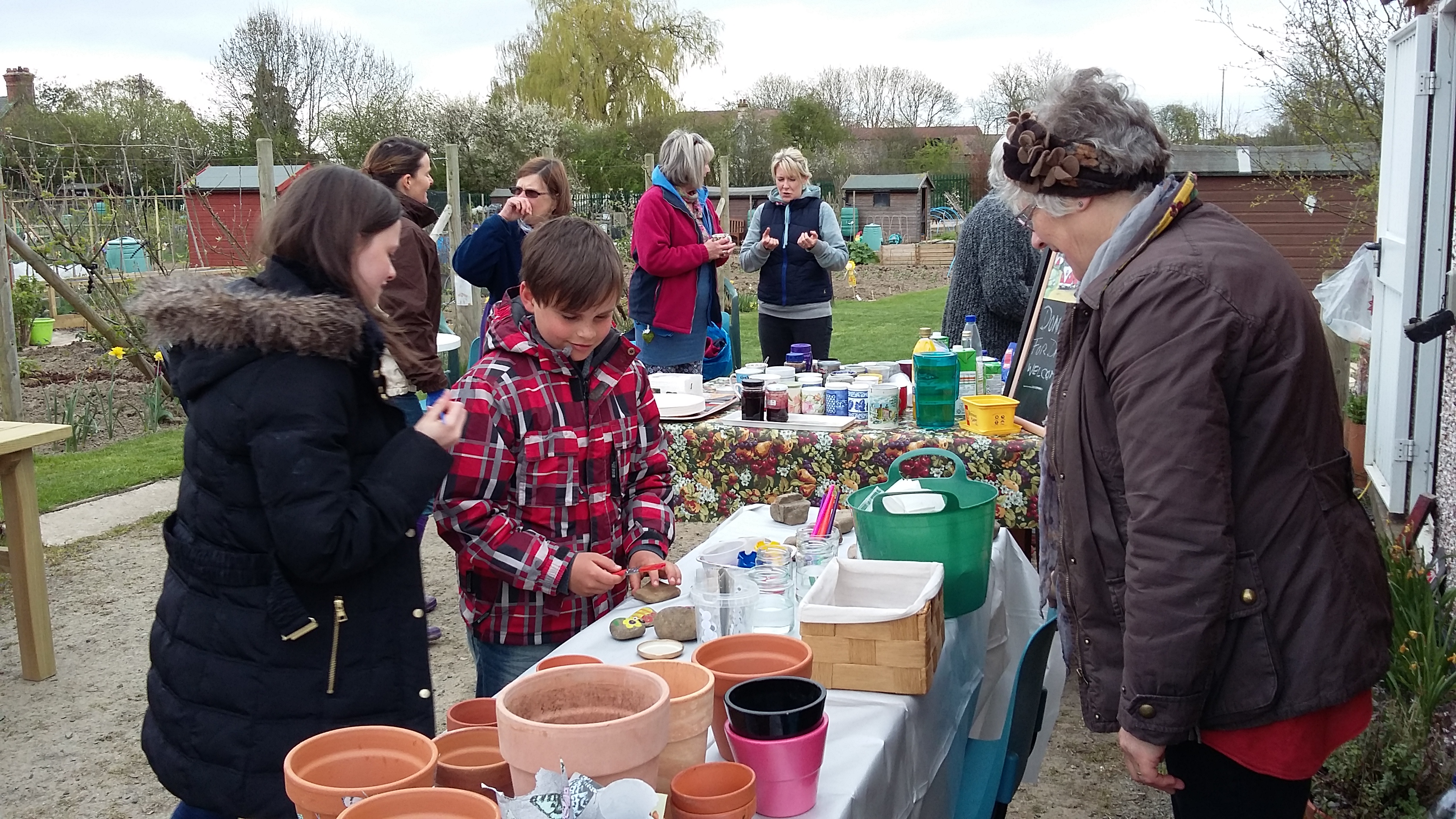
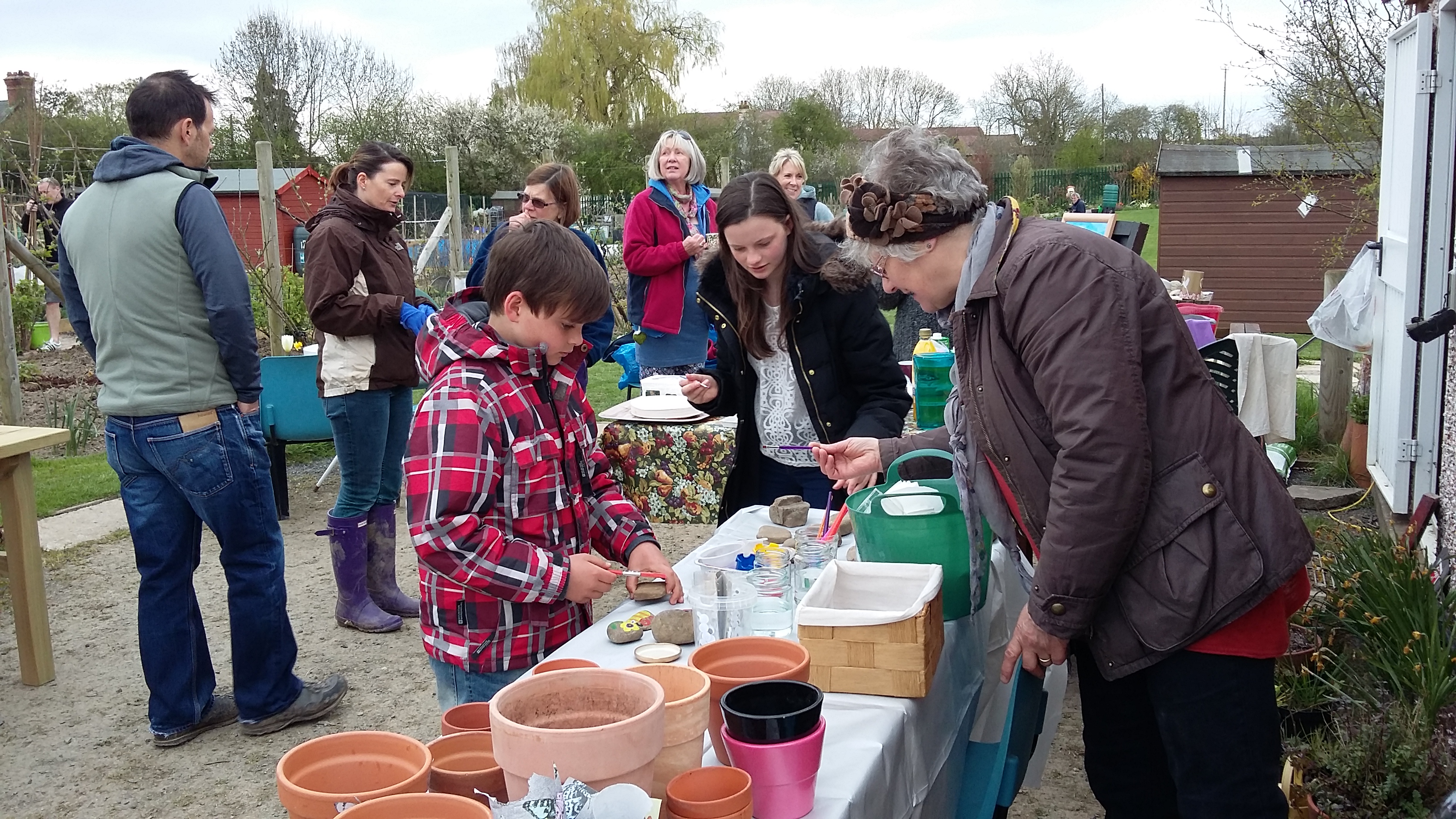
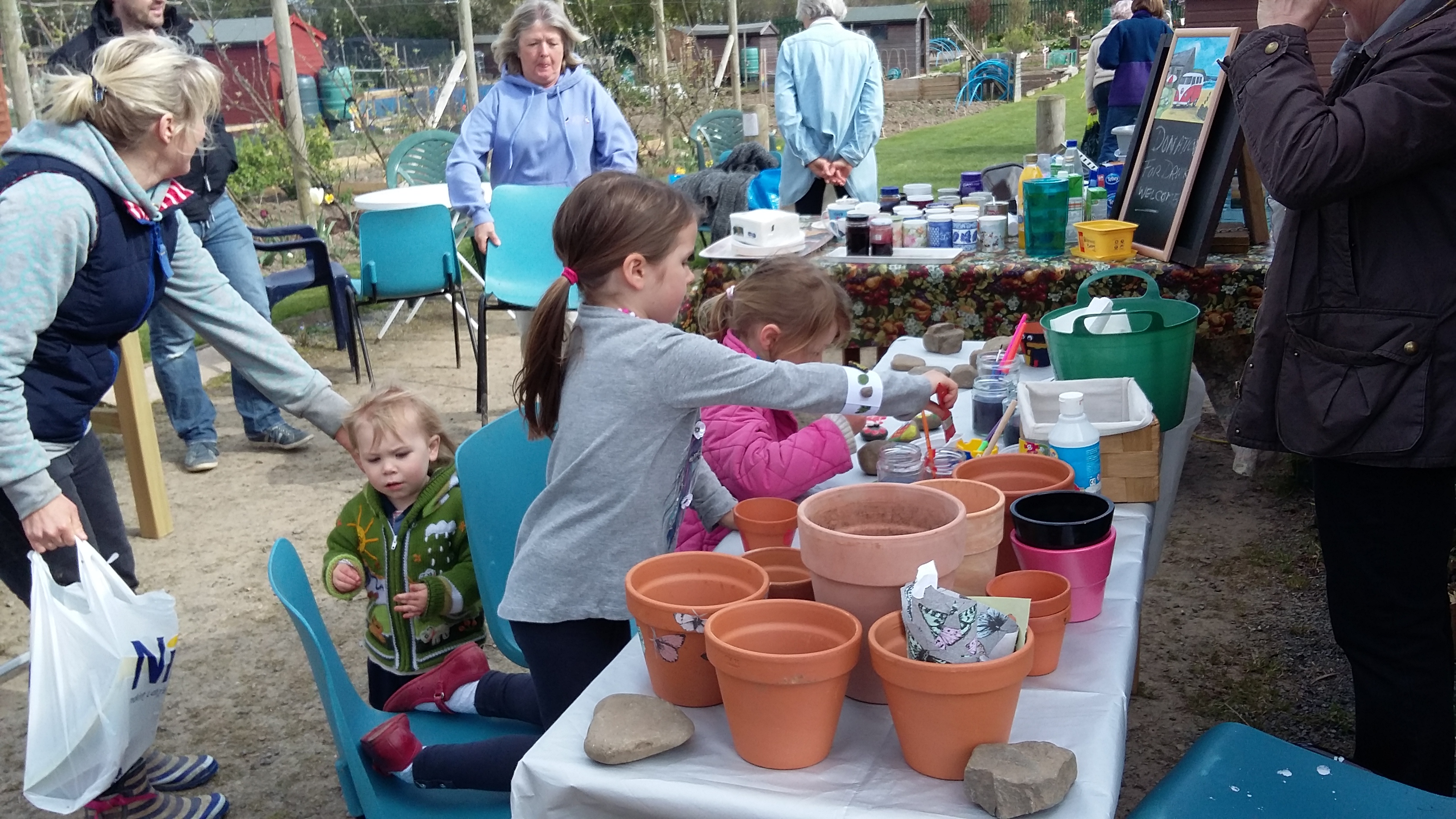
One of our members, Sherlie had planned craft activities for the children including painting faces on pebbles complete with moving eyes and decorating plant pots.

Our social celebration days provide the chance to catch up for a chat and to get to know each other better. It lets new members meet their fellow gardeners too. The fire pits draw people in like magnets.
Out tea committee, the Tea Bags, were on hand to keep us all plied with tea and coffee and cake of course!
Michael, our machinery expert always finds time to look after our machines and teach others as well as looking after his own plot. He showed us how to use our new strimmer and demonstrated different cultivators and tillers. This gave members the chance to try machinery out with Michael on hand to help out and advise. Everyone feels so much more confident after advice from Michael.
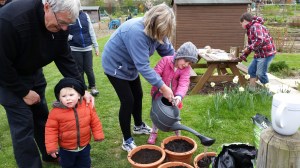
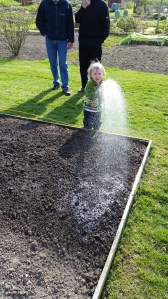
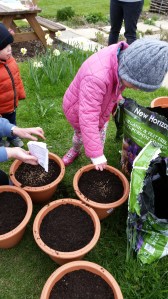
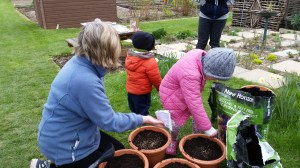
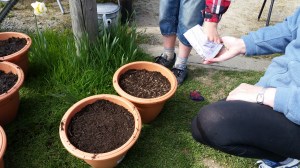
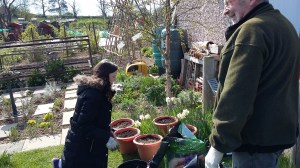
We always try to involve children in some gardening activities too giving adults and children a chance to discover skills together. At our Spring Celebration we sowed wildflower meadows in pots. Everyone joined in from the youngest upwards. The youngest gardener is Edward who loves his gardening already especially watering. He has a wonderful sense of humour so he really enjoyed showering me with a hose!


The children are now looking after their mini-meadows and we have made them responsible for watering and checking on them regularly. It is good to see how keen the youngsters are to sow seeds and tend them afterwards. These meadows will form a part of our display at this year’s Shrewsbury Flower Show – in fact we hope they will be the centre piece.
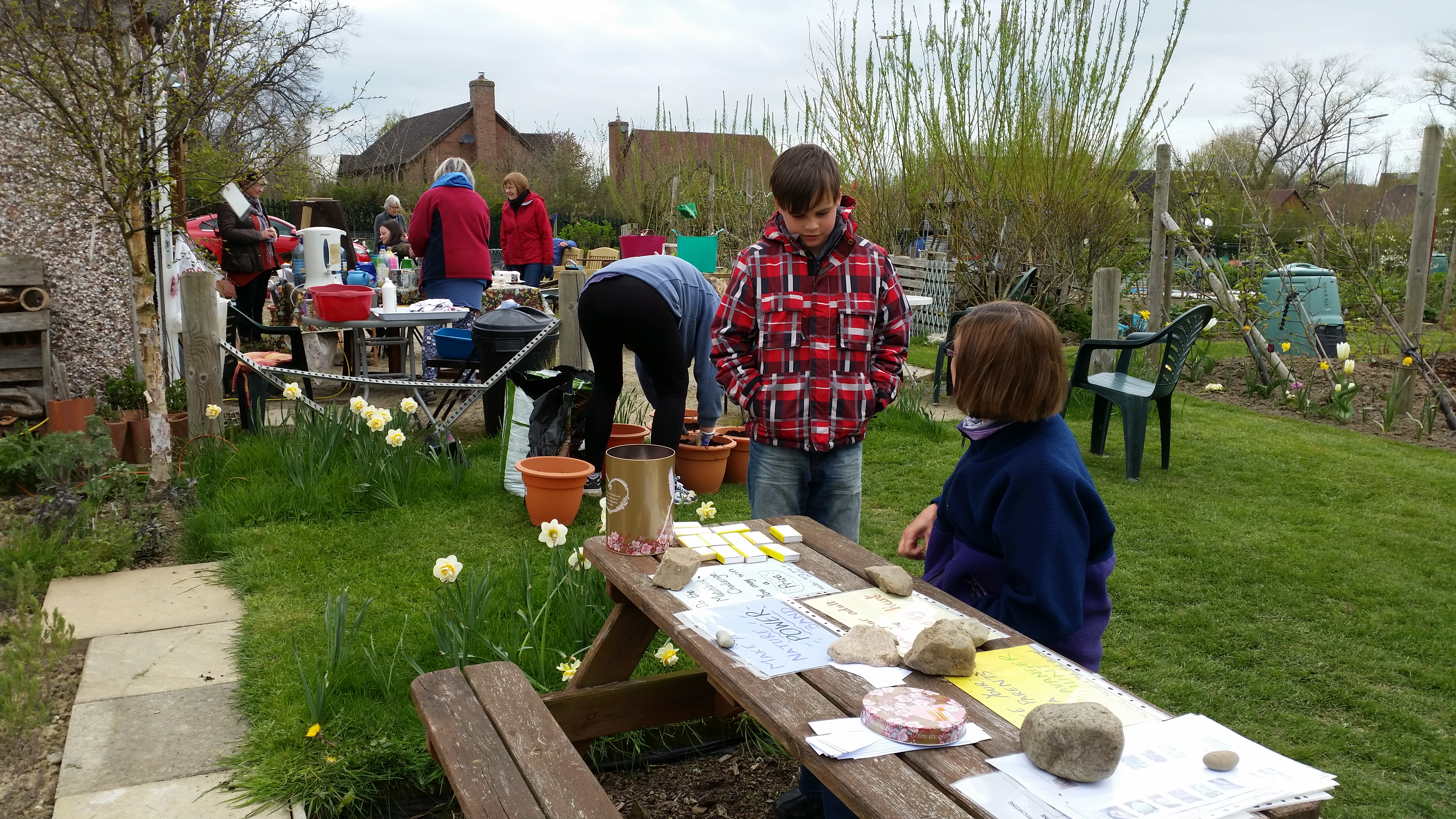
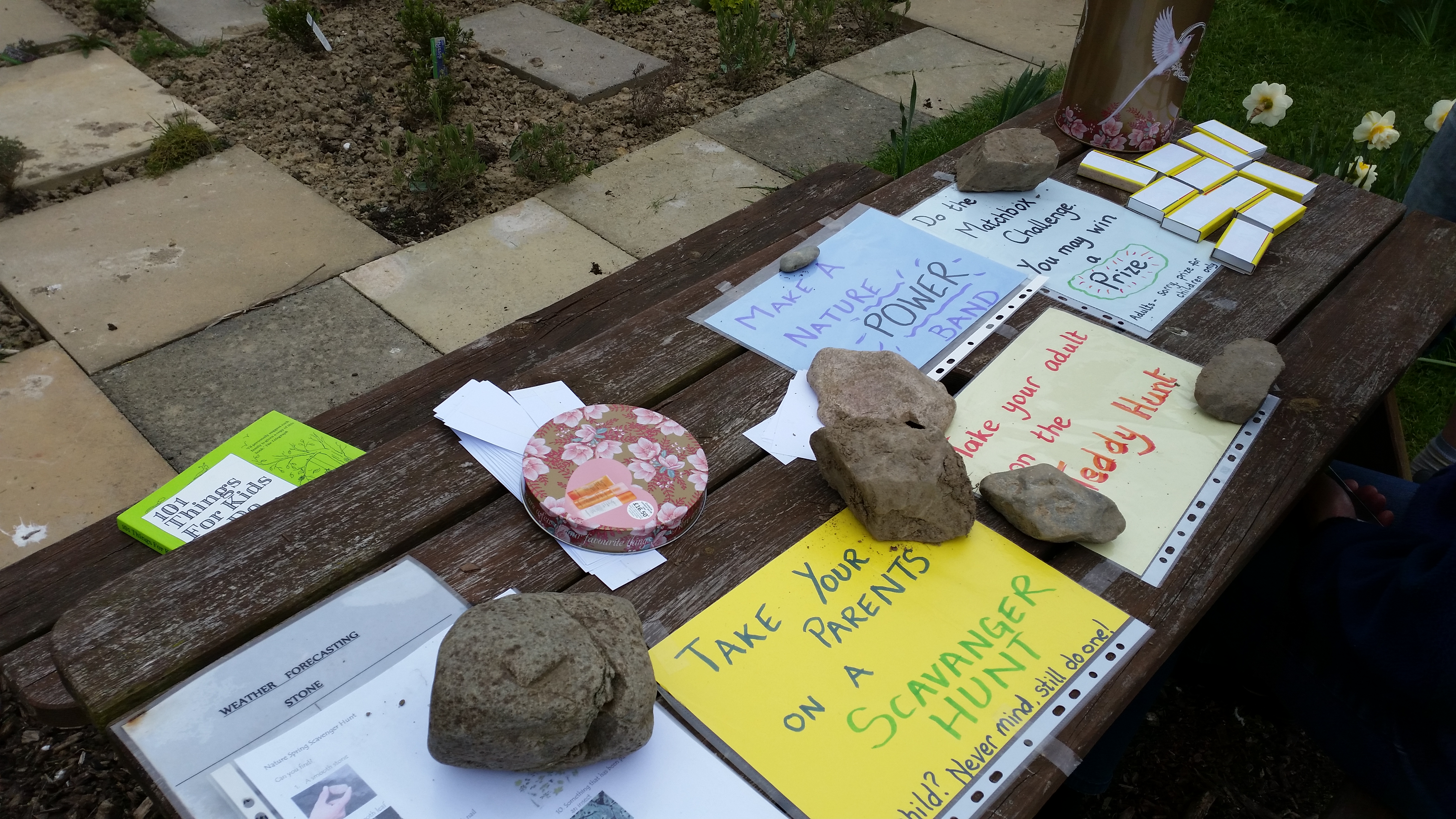
We also provided the children with games to play which involved them in exploring the site and its wildlife areas. We challenged them to fit as many tiny objects as possible into a matchbox, and challenged them to take their parents and/or grandparents off on a scavenger hunt. We love to see different generations getting involved in our activities. It is so heartening to see how involved children can be learning about and enjoying being close to nature and gardening.
We finished off with a BBQ as has become a tradition here at our allotments. Our new table and benches proved a real hit. What a great day we had!

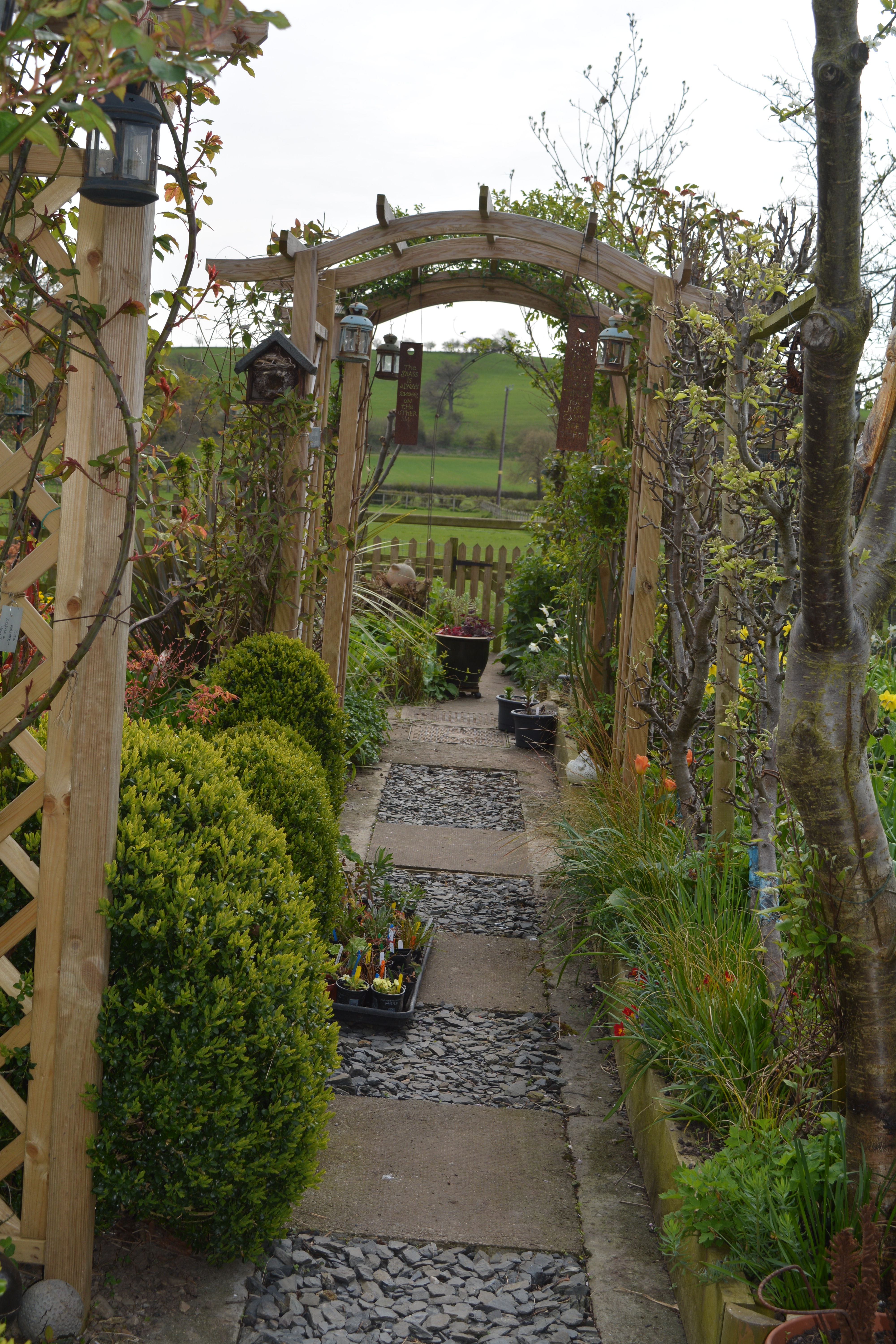
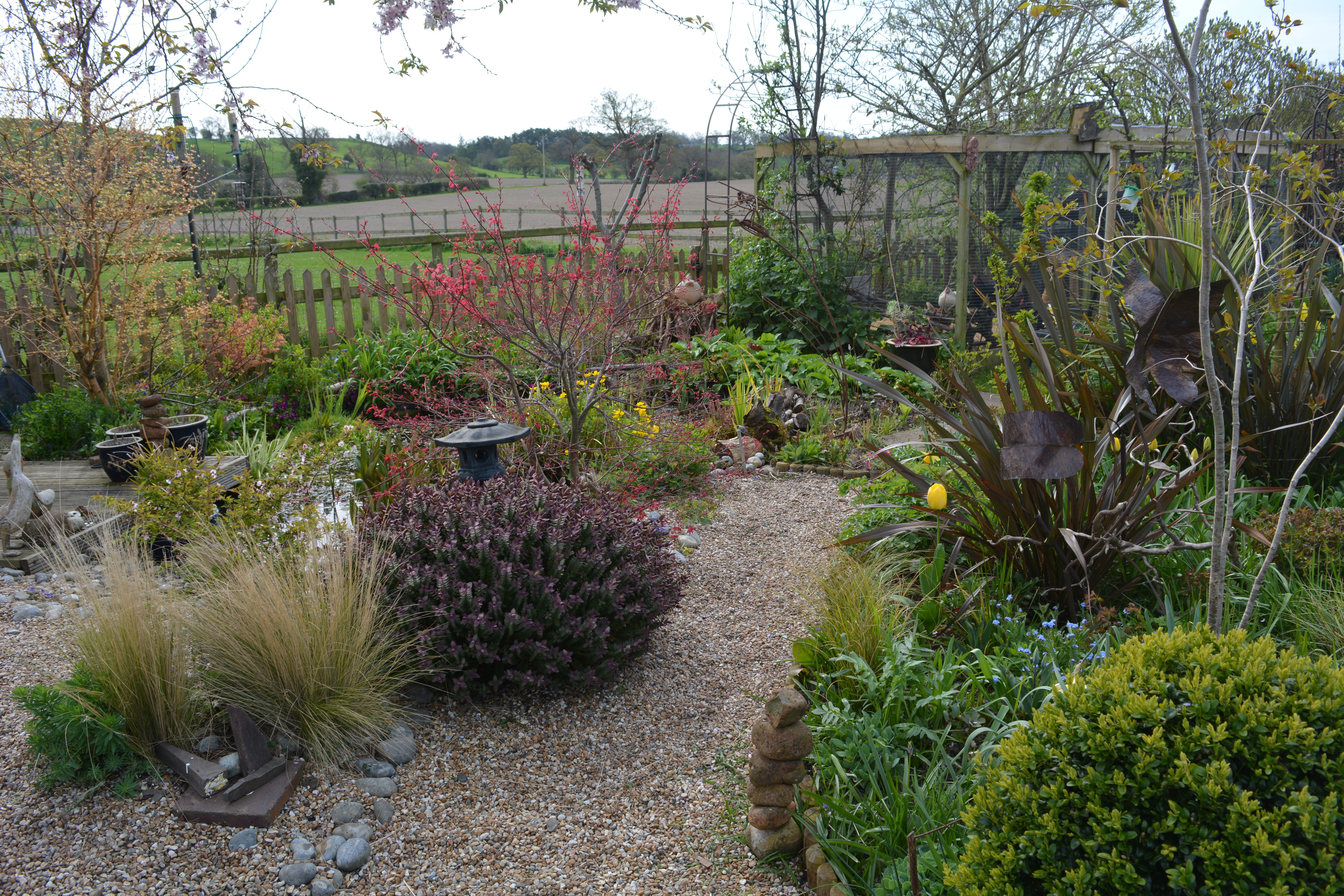
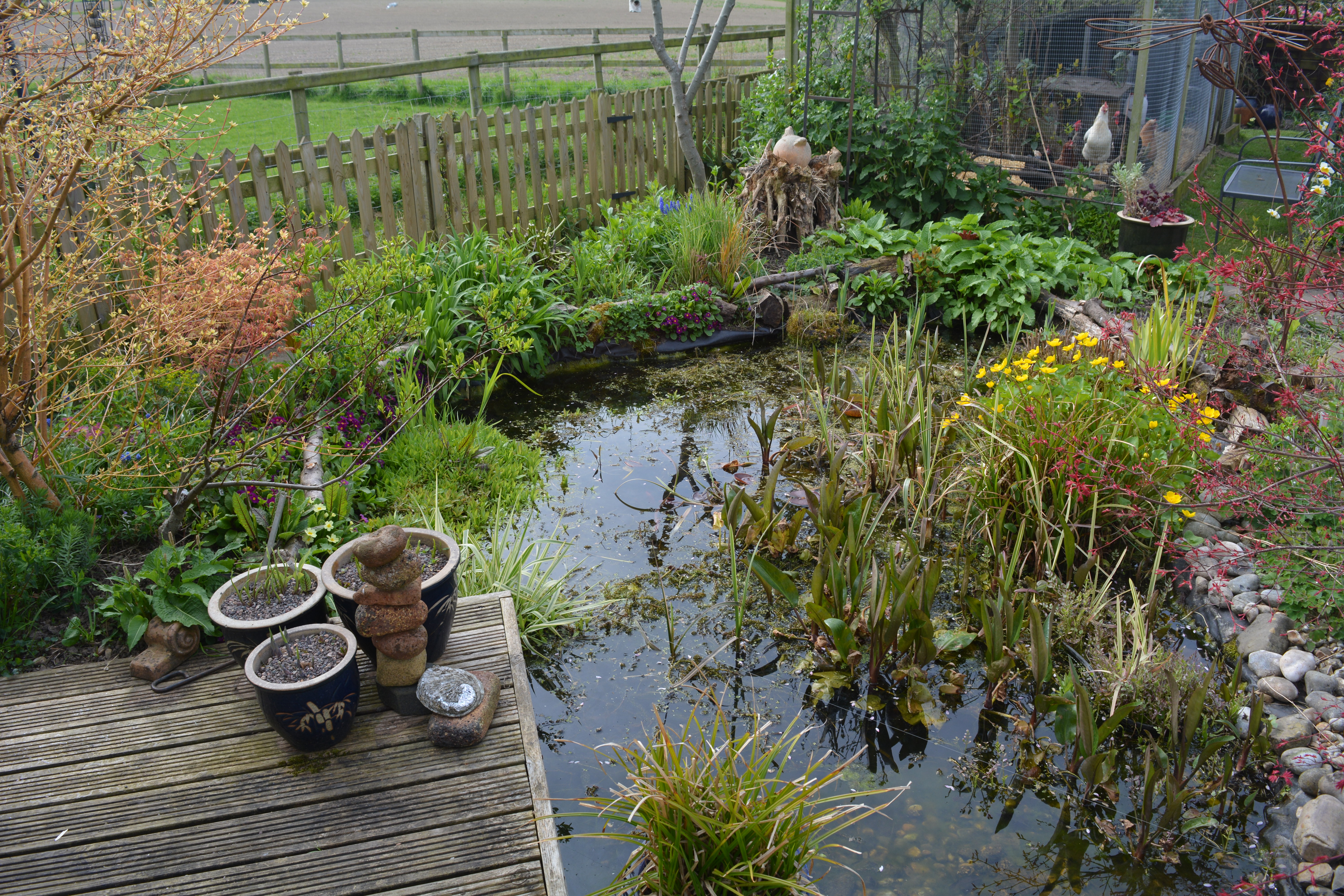
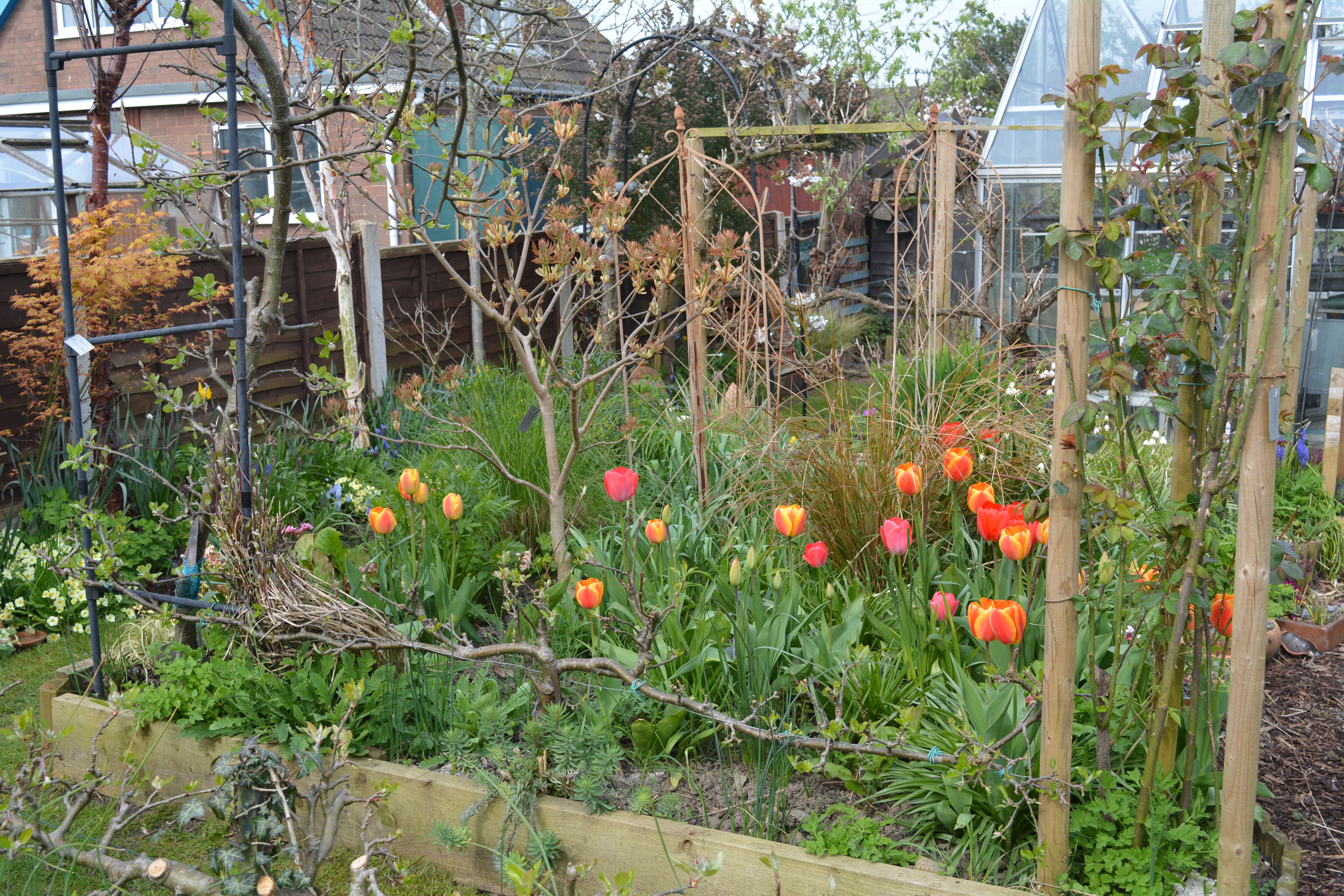
This year we are opening our garden five times, once each month from April to August so that visitors can see it develop as the year progresses. Our first opening was on 15th April, a sunny warm day so we were pretty busy. This blog is a wander around our Avocet garden with my camera just before our visitors arrived. Enjoy a wander with me.
Our next opening will be in May when the garden will look very different.
My Garden Journal – April
Back to my garden journal where we can see what was interesting me in our garden at Avocet during the month of April. My journal for April begins “As March gave way to April the weather responded with the sun making regular appearances and for the first time this year daytime temperatures made double figures. The garden celebrates!”
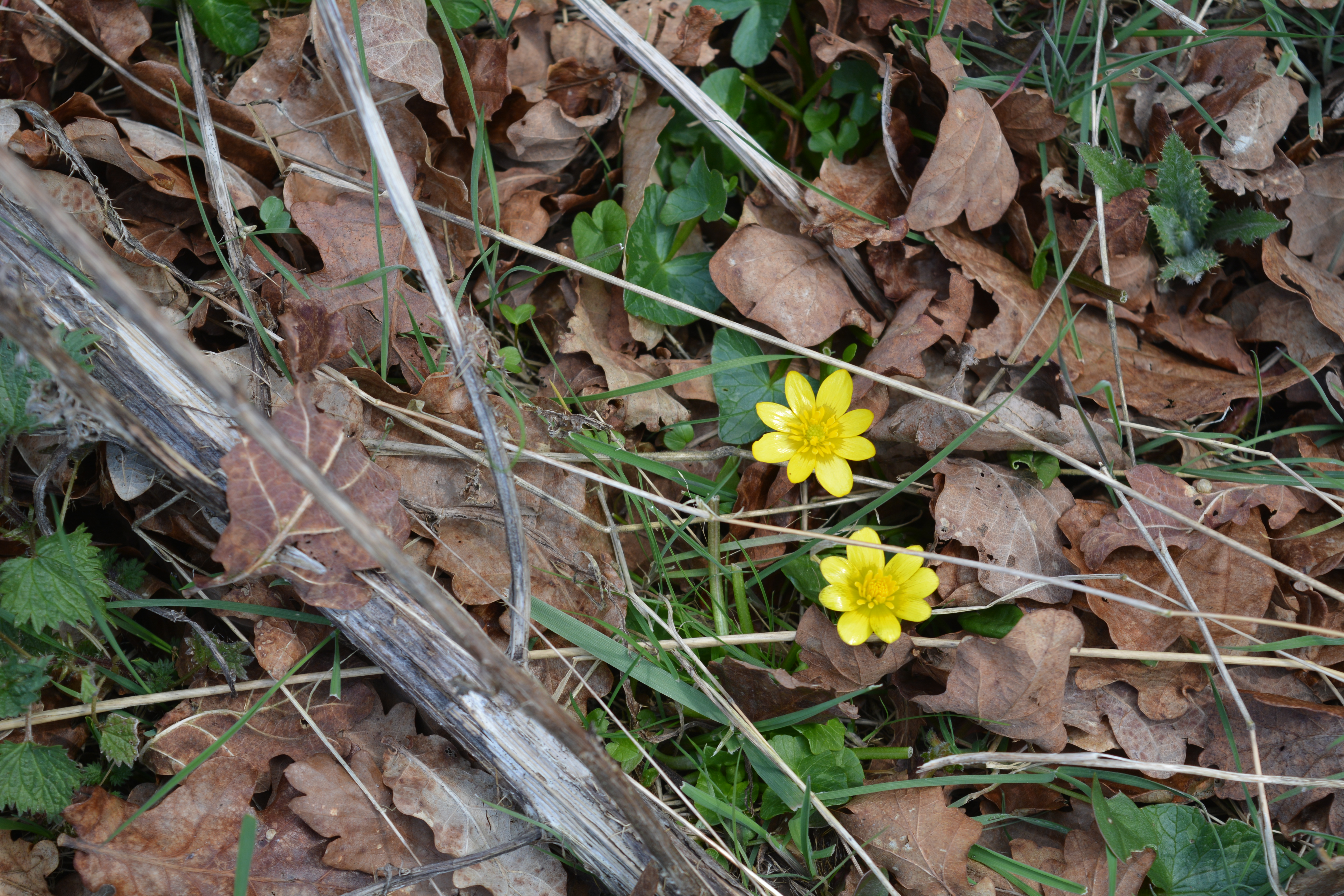
It celebrated with bright colours of spring flowers such as Celendines, Pulmonarias and early chartreuse flower s and bracts of Euphorbias.
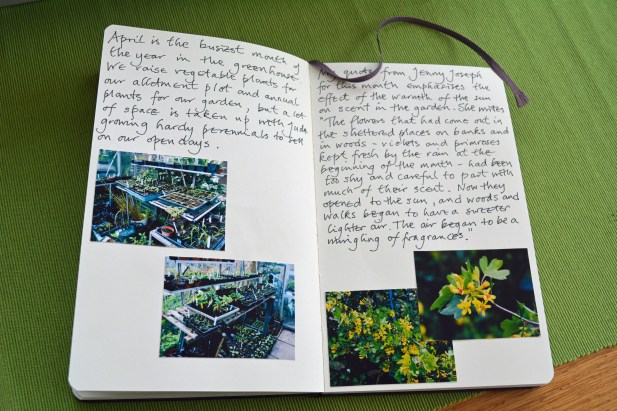
My quote from Jenny Joseph’s book “Led by the Nose – A Garden of Smells” speaks of the delicate scents of the garden and in the countryside that are so important in spring.
“The flowers that had come out in the sheltered places on banks and in woods – violets and primroses kept fresh by the rain at the beginning of the month – had been too shy and careful to part with much of their scent. Now they opened to the sun, and woods and walks began to have a lighter sweeter air. The air began to be a mingling of fragrances.”
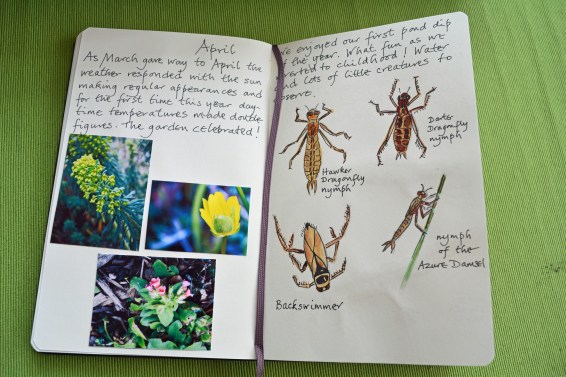
As the water in the wildlife pond warmed up we thought we would have our first dip with our net to see what wildlife was in evidence beneath the surface. In the journal I wrote “What fun as we reverted to childhood!”We were surprised by just how many different creatures had already stirred into life. I chose to paint the nymphs of Dragonflies and Dameslflies and a Backswimmer. The Damselfly Nymph will hatch out into an Azure Damsel and the two Dragonfly Nymphs into a Hawker Dragonfly and a Darter Dragonfly. They were quite a challenge to paint in their subtle earthy hues.

Continuing on the watery theme on the next page of my garden journal I wrote “Jude gets excited each time she catches a newt when she is on her regular pond maintenance forays. The first this year appeared in early April. Such excitement at Avocet!” We were so pleased to find so many newts out and about and so active this early in the year. As well as enjoying seeing them using our pond we are even more pleased to know that they are helping us with out pest control out in the borders. They spend much of their time out of water and are partial to slugs. Welcome visitors indeed!

Now these little critters were even more of a challenge to paint than the other pond creatures! Anyway here are the results.

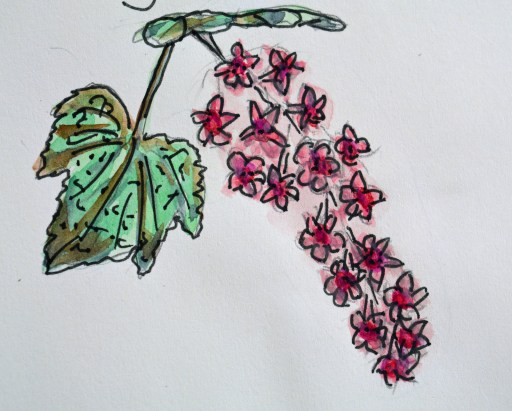
On my next page I wrote, “During Easter Weekend, usually associated with cold and rain, the sky turned the deepest, clearest blue. Temperatures suddenly doubled and the garden buzzed and hummed with the arrival of bees and hoverflies. The most popular of all plants is the flowering currant, Ribes sanguineum.”
April is the busiest month of the year in the greenhouse. We raise vegetable plants for our allotment plot and annual plants for our garden, but a lot of space is taken up with Jude growing hardy perennials to sell on our open days.
Towards the middle of the month the ponds were getting livelier with Water Boatmen, Pond Skaters and Water Beetles in evidence whenever the sun shone on the water. We set up our live moth trap for the first time this year to see what was about when darkness fell on the garden. Moths have such wonderful names, mostly given to them by English country clerics with far too much time on their hands. We found Small Brindled Beauties, Muslin Moths, Common Quakers and Early Greys.
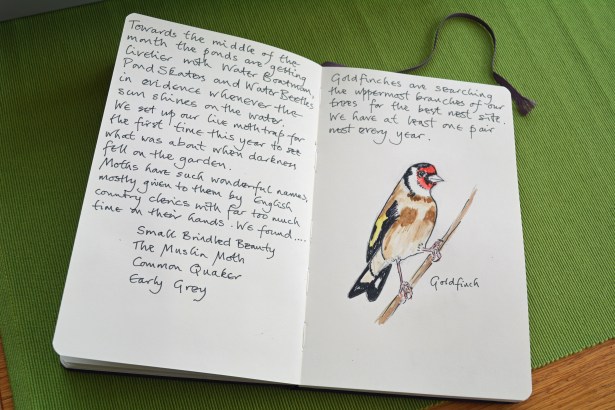
I next wrote “Goldfinches are searching the uppermost branches of our trees for the best nest site. We have at least one pair nest every year”. I then got out my watercolour paints and pens and attempted a painting of a Goldfinch.

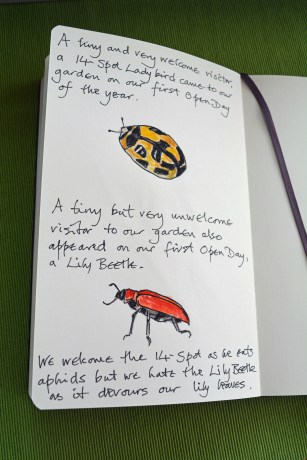
My final page in my journal entries for April featured two colourful beetles which we found in our garden in that month. “A tiny and very welcome visitor, a 14-Spot Ladybird came to our garden on our first Open Day of the year. A tiny but very unwelcome visitor to our garden also appeared on our first Open Day, a Lily Beetle. We welcome the 14-Spot as he eats aphids but we hate the Lily Beetle as it devours our lily leaves.”
Back at the site of the Battle of Shrewsbury we return to look more closely at the church and the sculptural tree. First though it might be a good idea to say a little about the battle itself. The Battle of Shrewsbury took place in 1403 just north of the town. Here two armies met in what was to be a ferocious and bloody battle. The rebel army of Sir Henry Percy, locally known as Harry Hotspur, met the Royal army of Henry IV on the land of the medieval Manor of Albright Hussey. There is now no sign of the village but there is a building known as the Albright Hussey which was built over a century after the battle in 1524. So many lives were lost during the battle that a memorial chapel was built in 1406 in their memory.

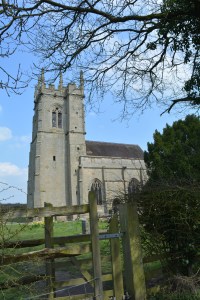
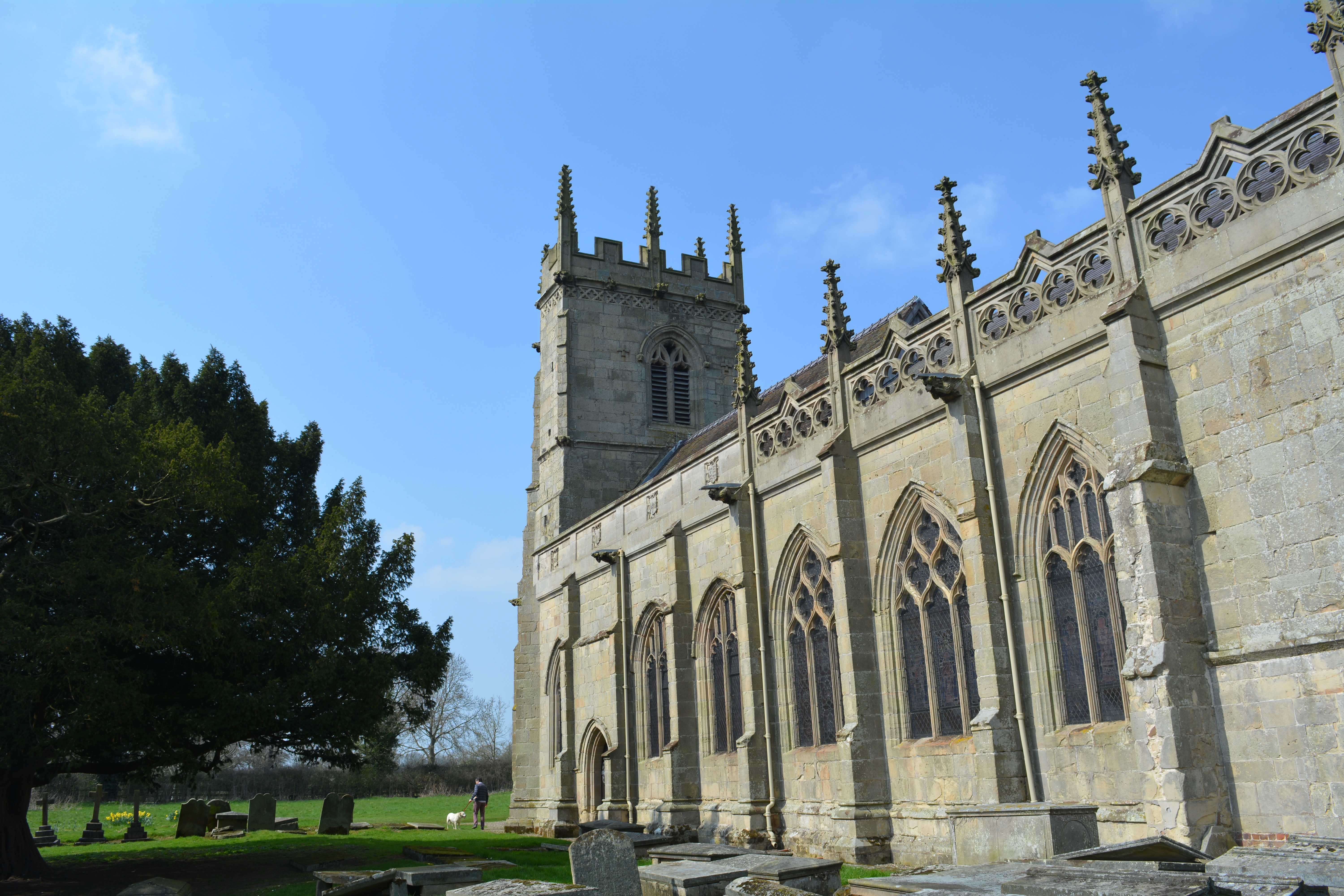
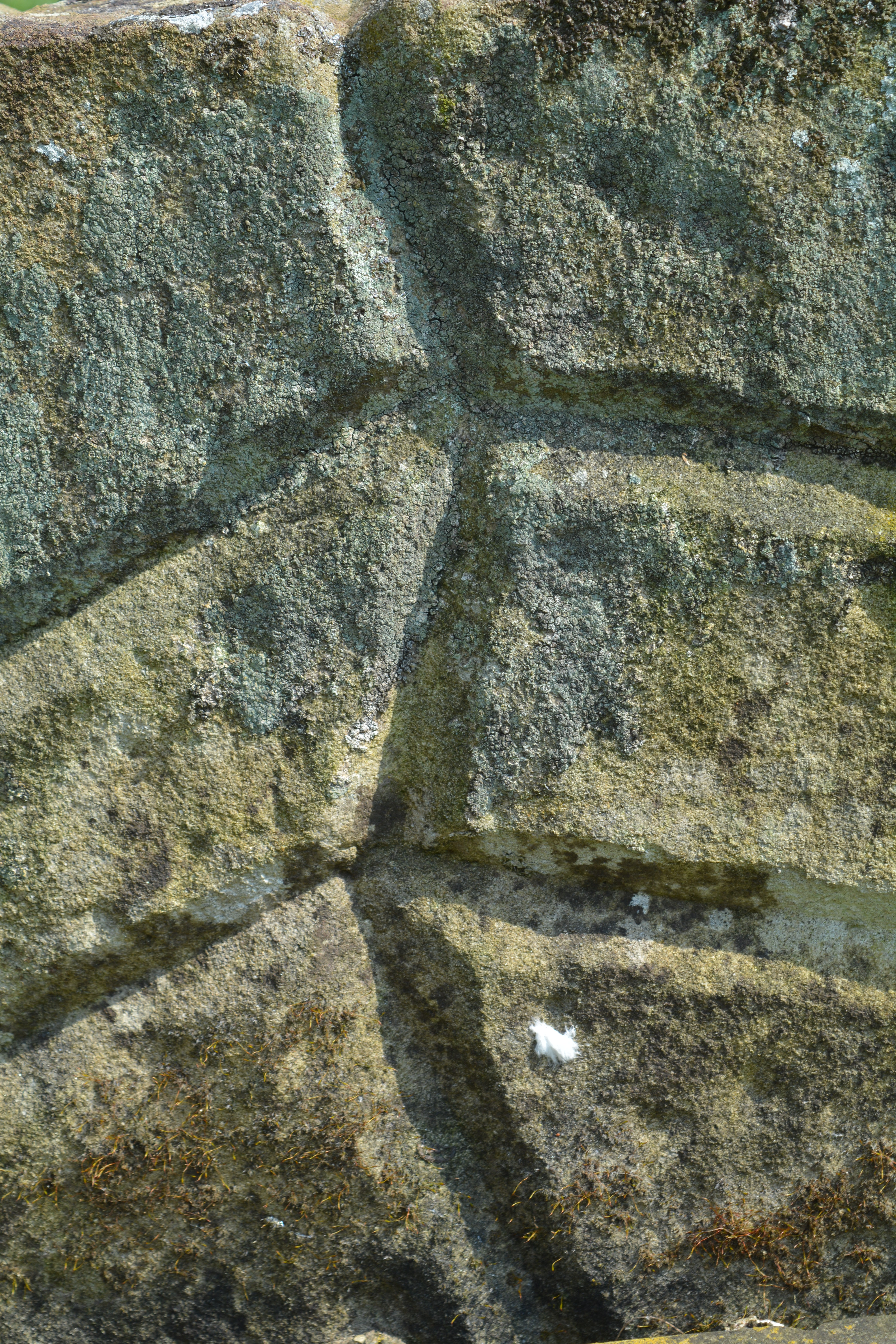
This church is now known as St Mary Magdalene’s Church. Below is my photographic record of our visit to the church. We loved the detailing around the door knocker with its design based on a crown, and all the different gargoyles around the top of the building from which would originally have spouted rainwater.
Inside the church we soon found its famous stained glass windows, but we were also drawn to the reed lamp holders and the oak carved figures on the ends of the pews.
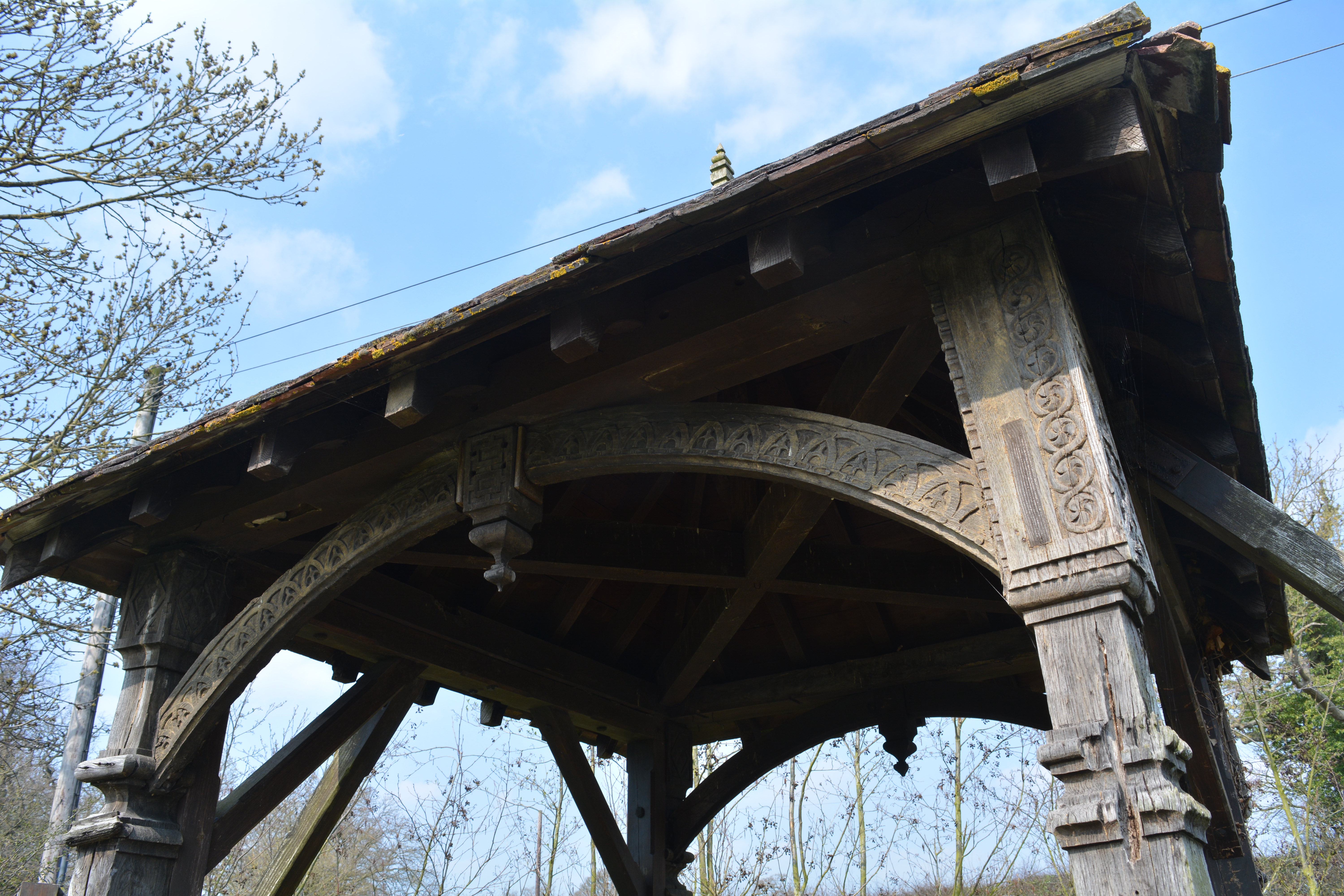
The ancient lych gate is looking worse for wear but its intricate carved detailing is still here to be enjoyed and appreciated, but I wonder for how much longer.
Over 5000 men died in this battle and their remains lie in an unmarked mass grave below the churchyard. Some of the headstones found in the churchyard here are very simple and others show very stylised carving.
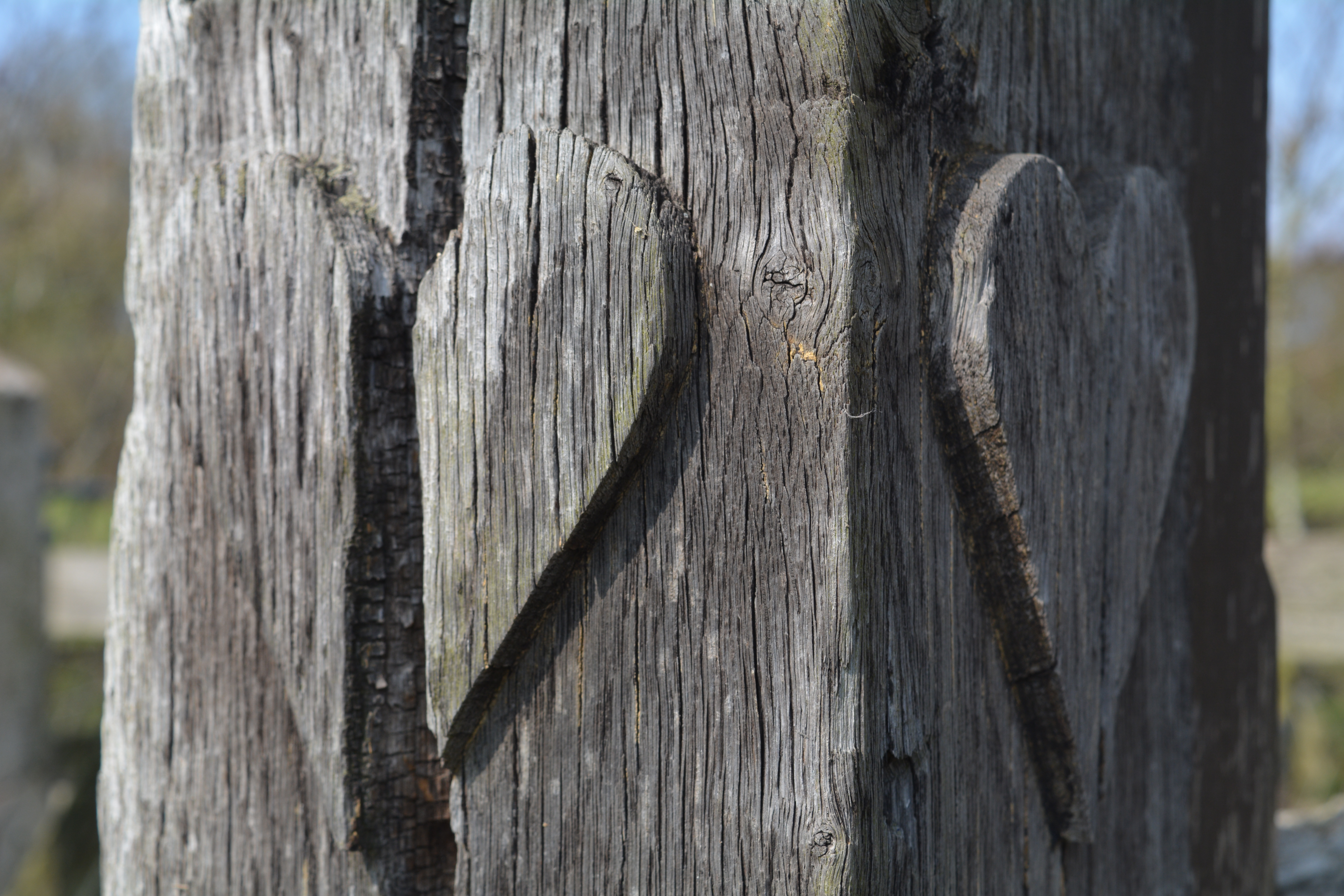
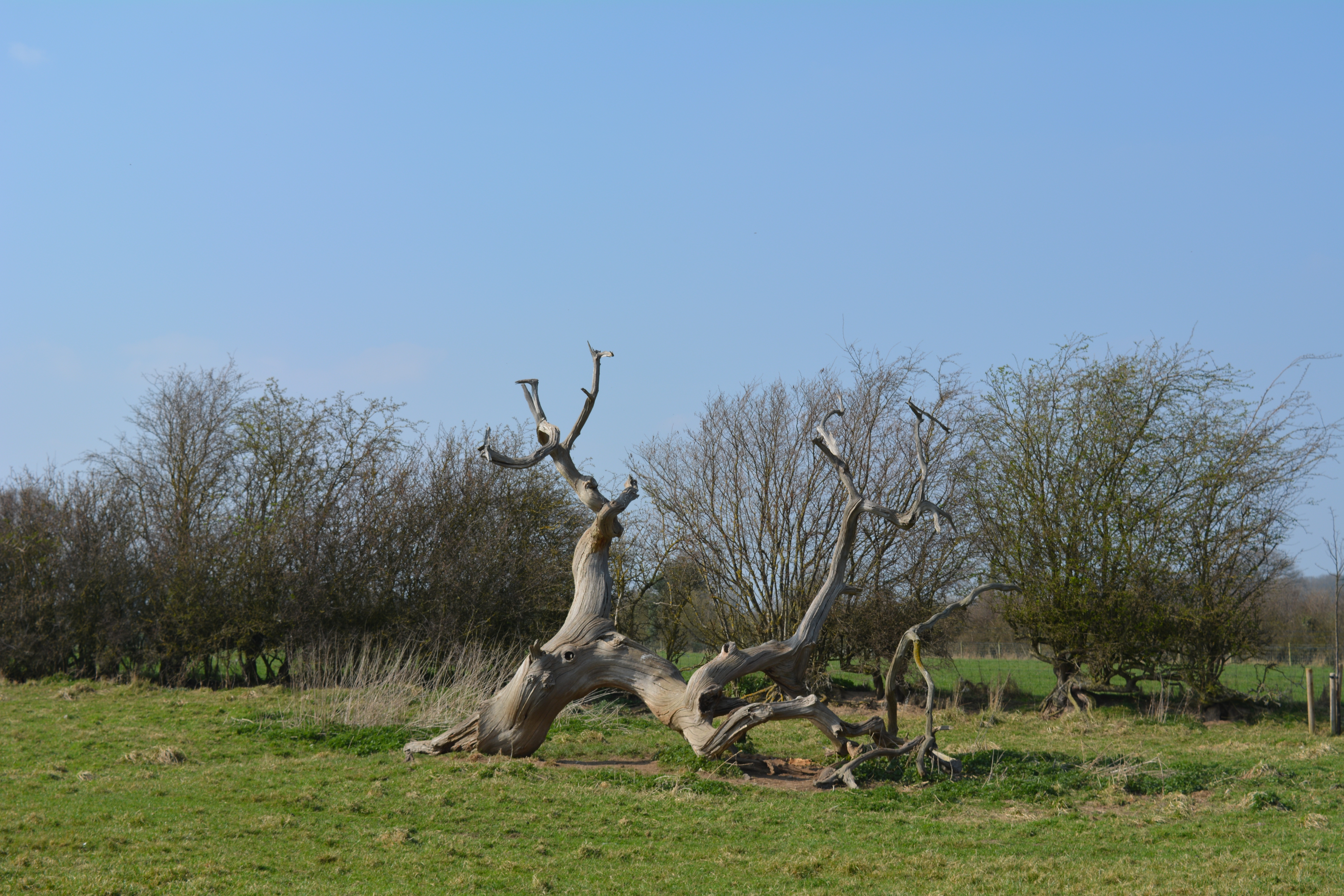
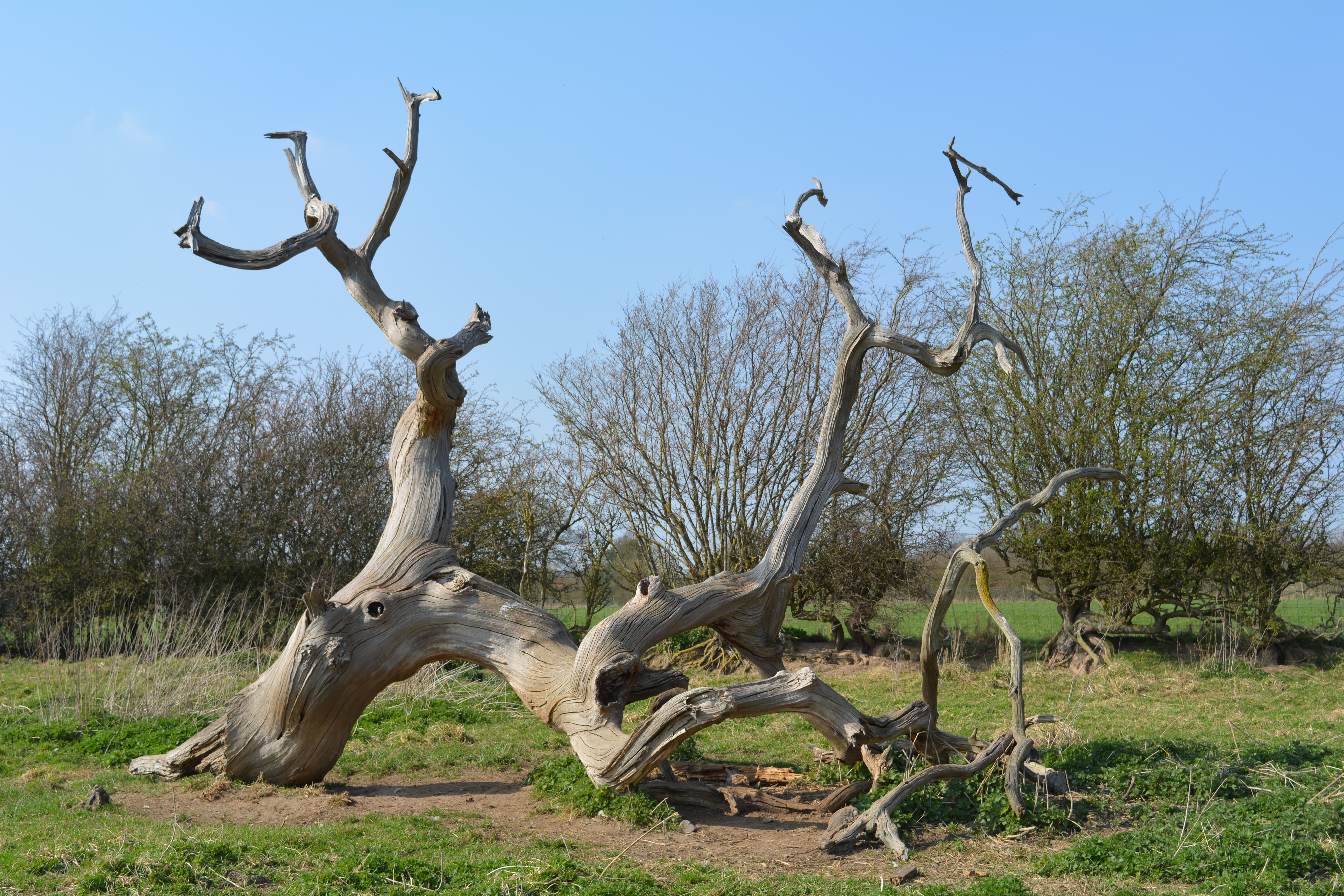
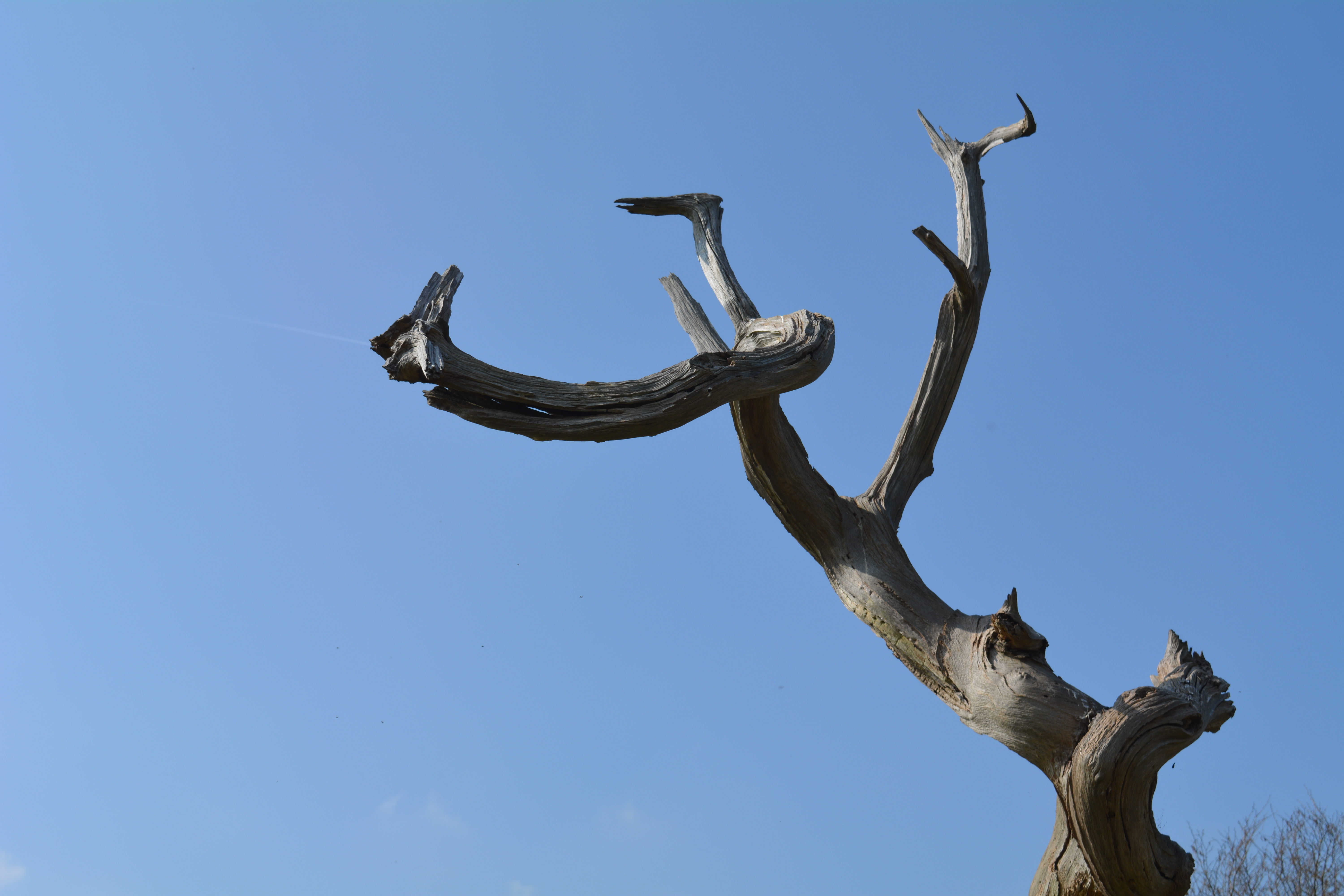
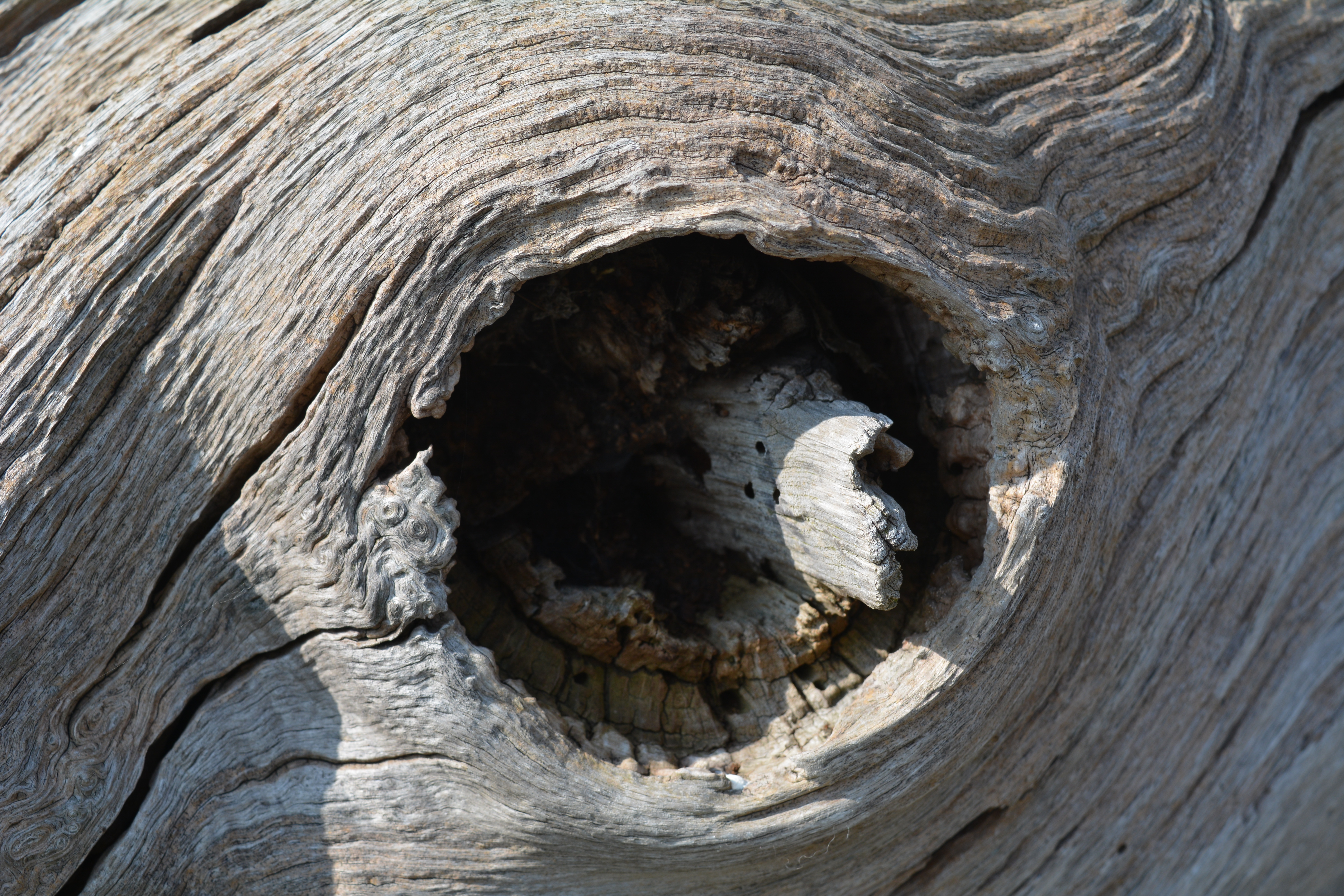
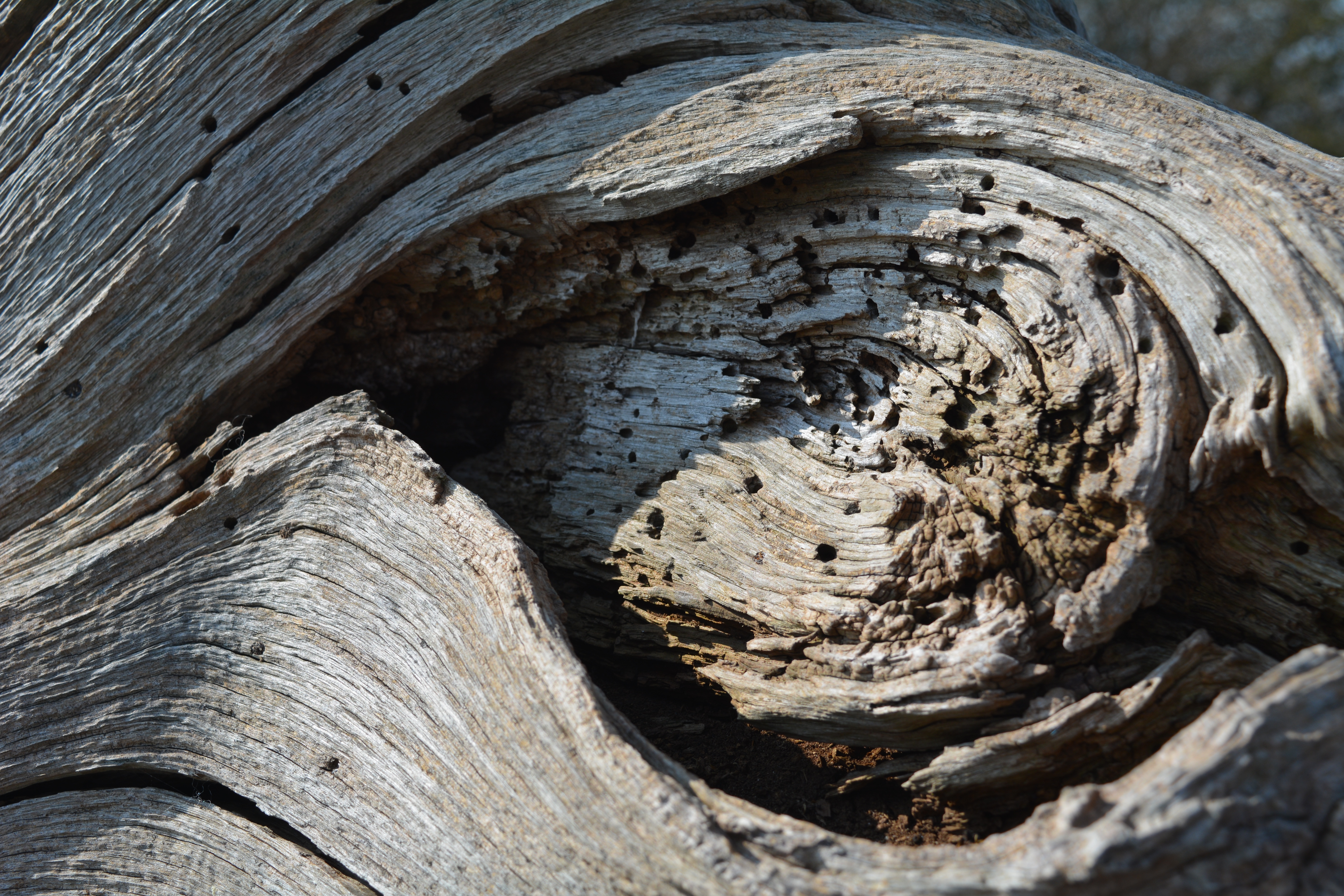
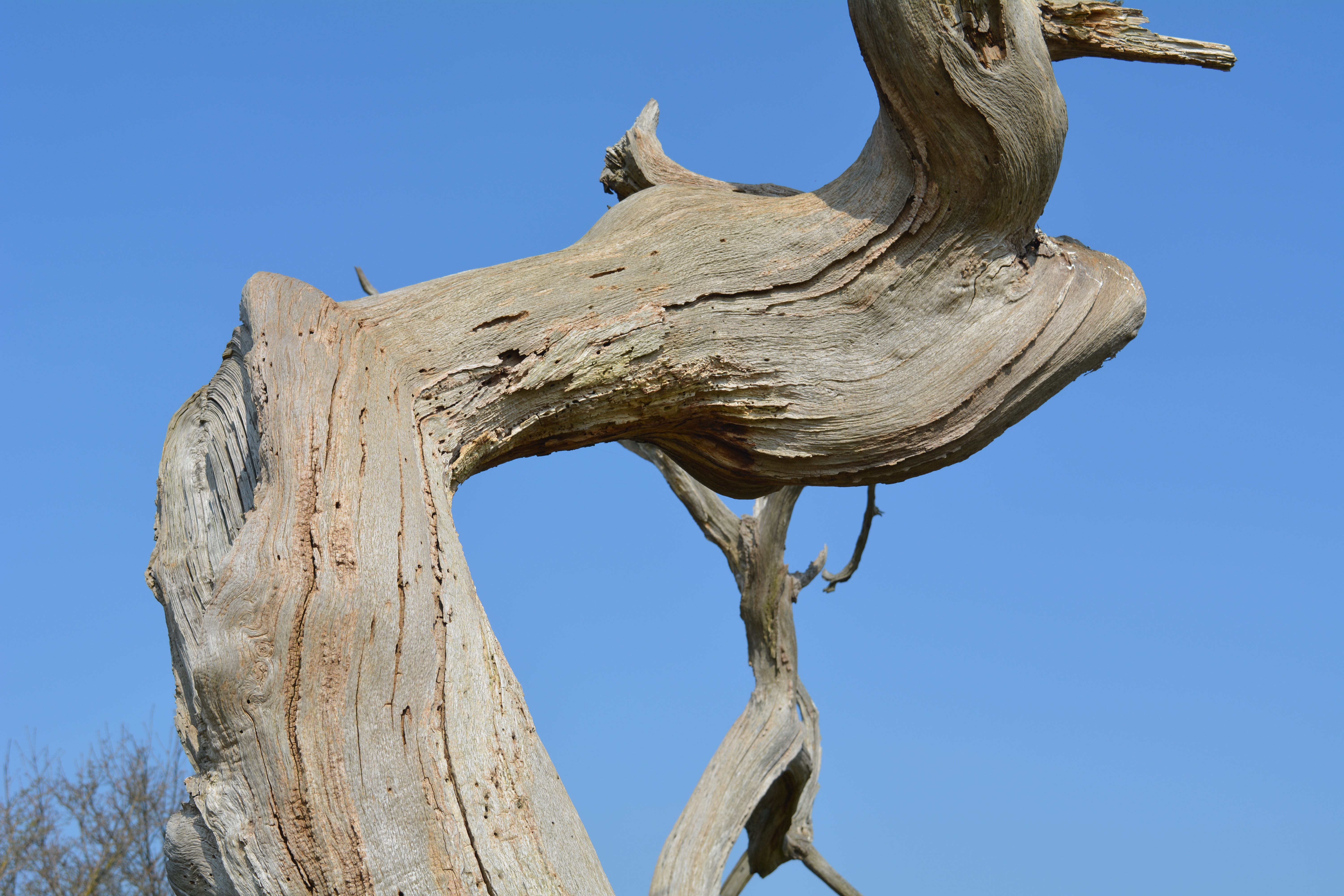
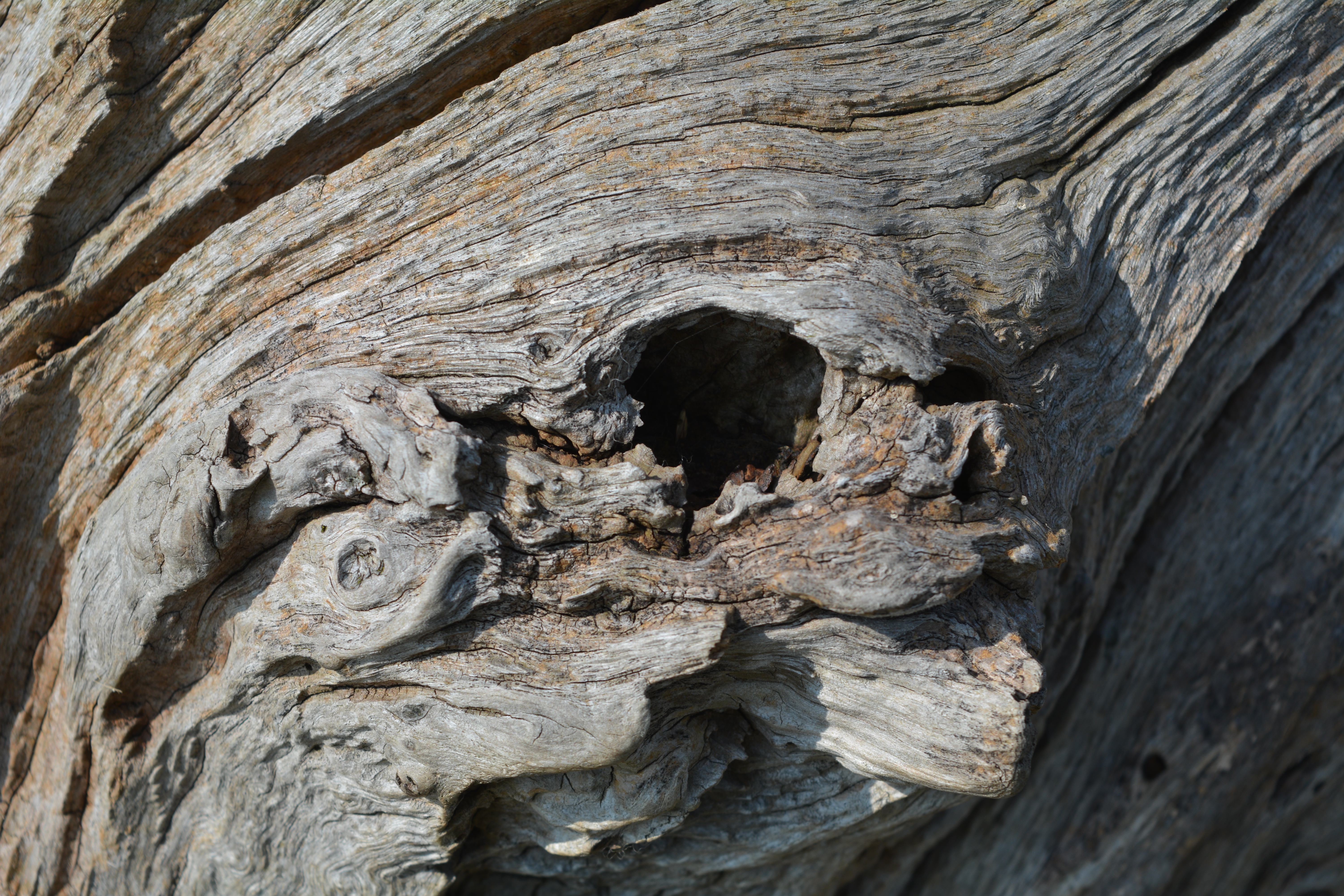
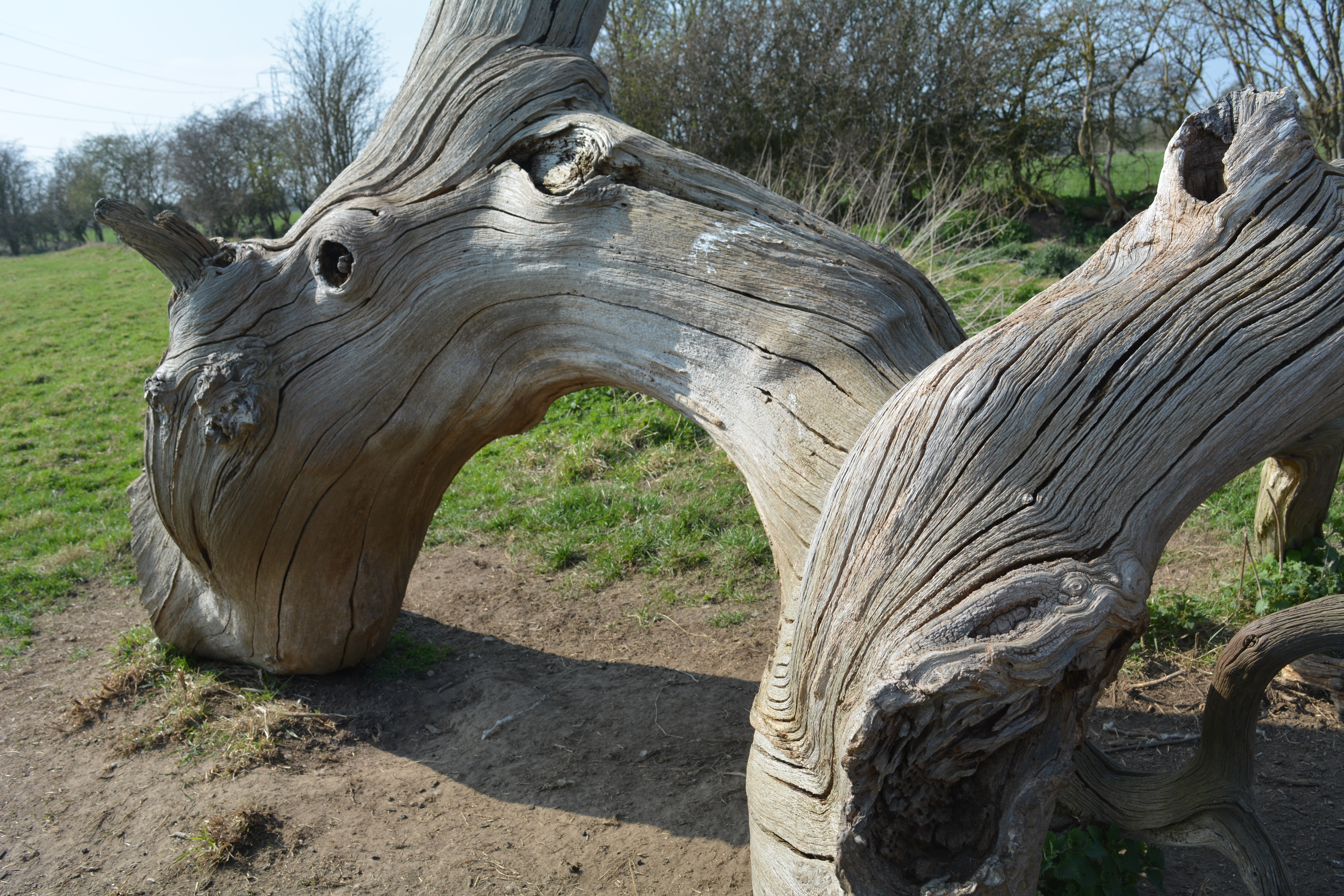
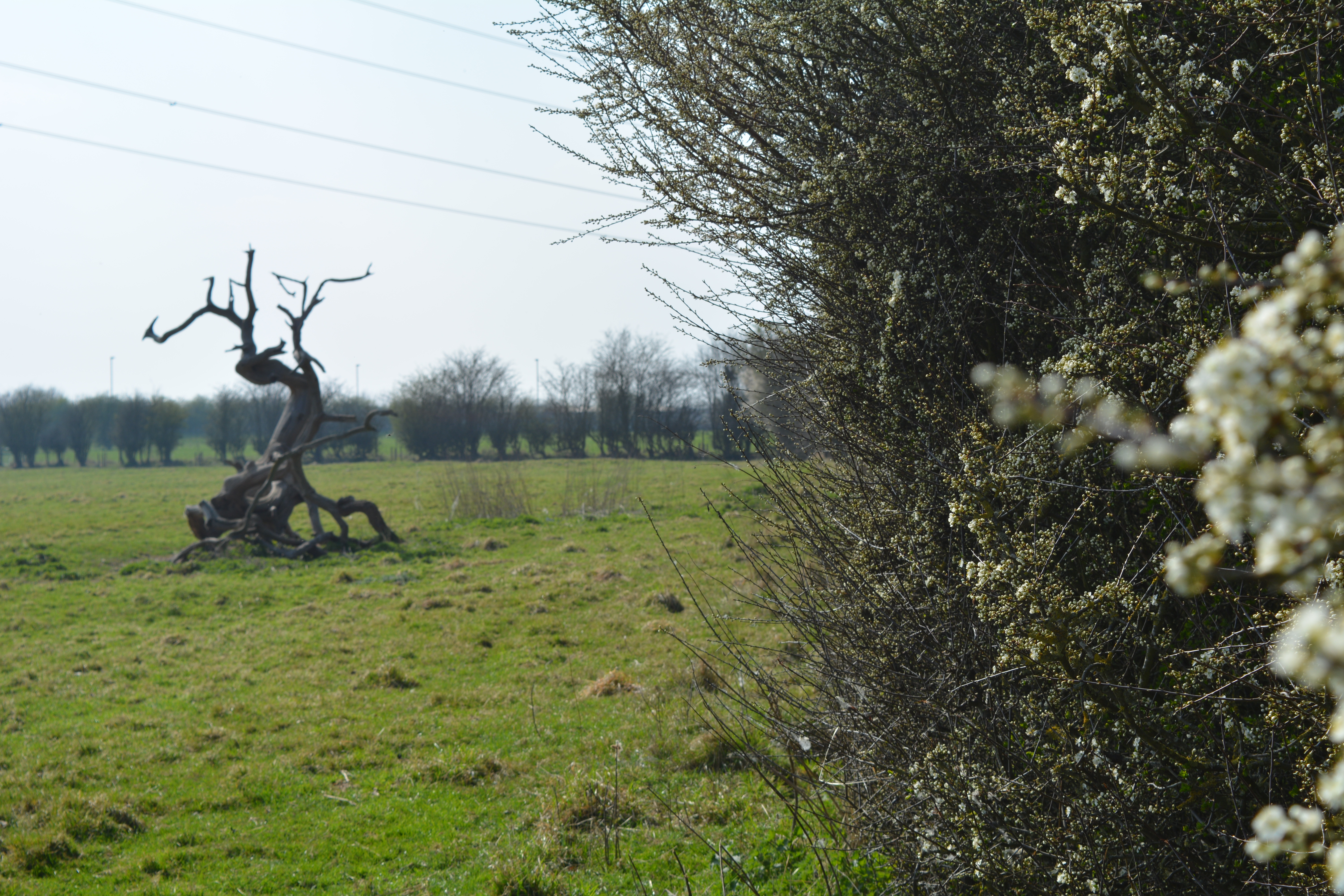
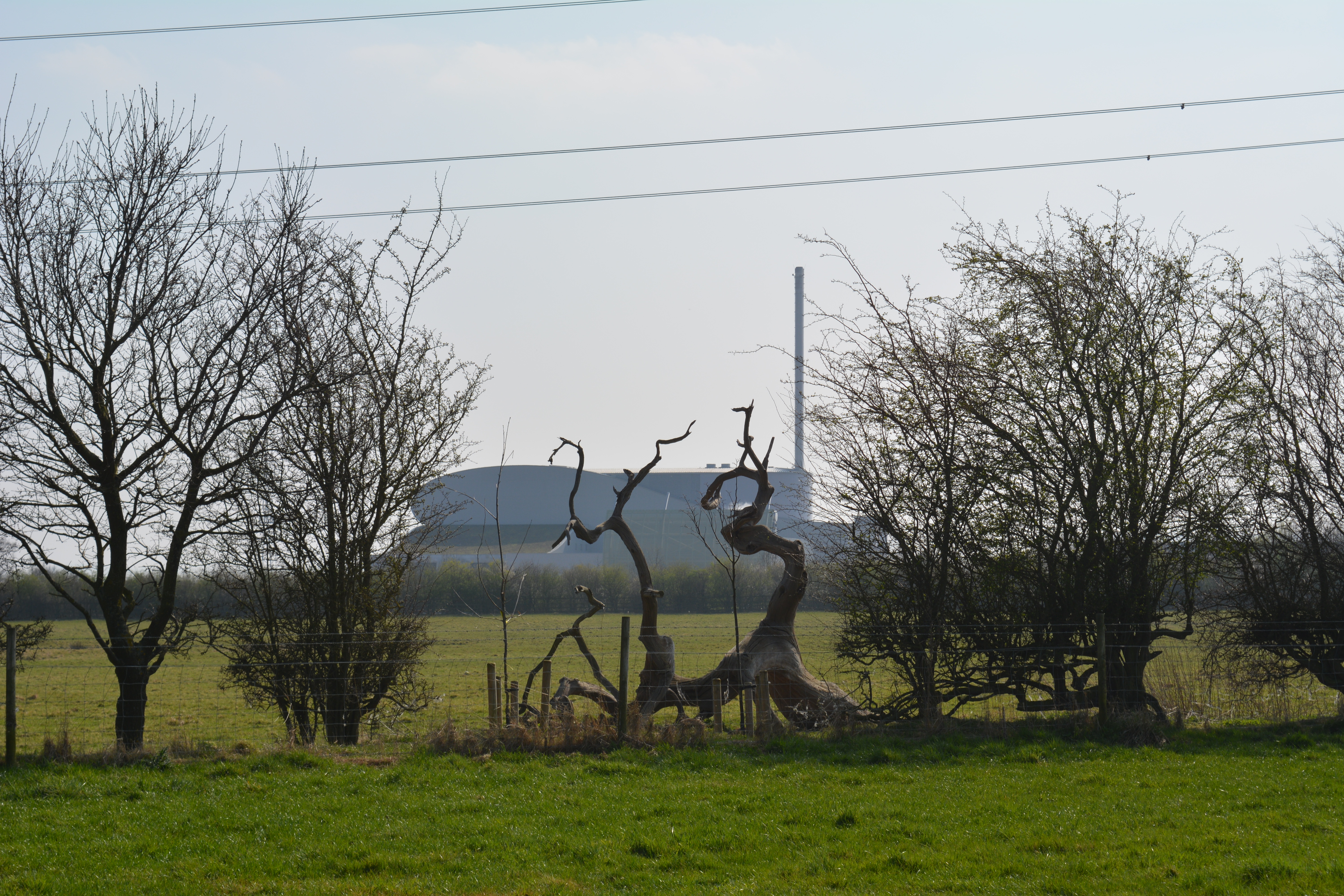
When we finished looking around the church and its surroundings we made our way back along the footpaths around the site of the Battle Field. Half way back we spotted a pool in the middle of a field which still showed signs of medieval ridge and furrow farming patterns. Close to the hedge we saw a wonderfully sculptural old tree. The tree must have fallen years ago and has now lost its bark so was smooth in texture. This is Mother Nature at her most creative. Please enjoy looking at my photos of this natural piece of sculpture.
Although we have lived in Shropshire for years it is only now that we have finally visited the site of the famous Battle of Shrewsbury and the Church of St Mary Magdalene built there to commemorate those who died in battle.
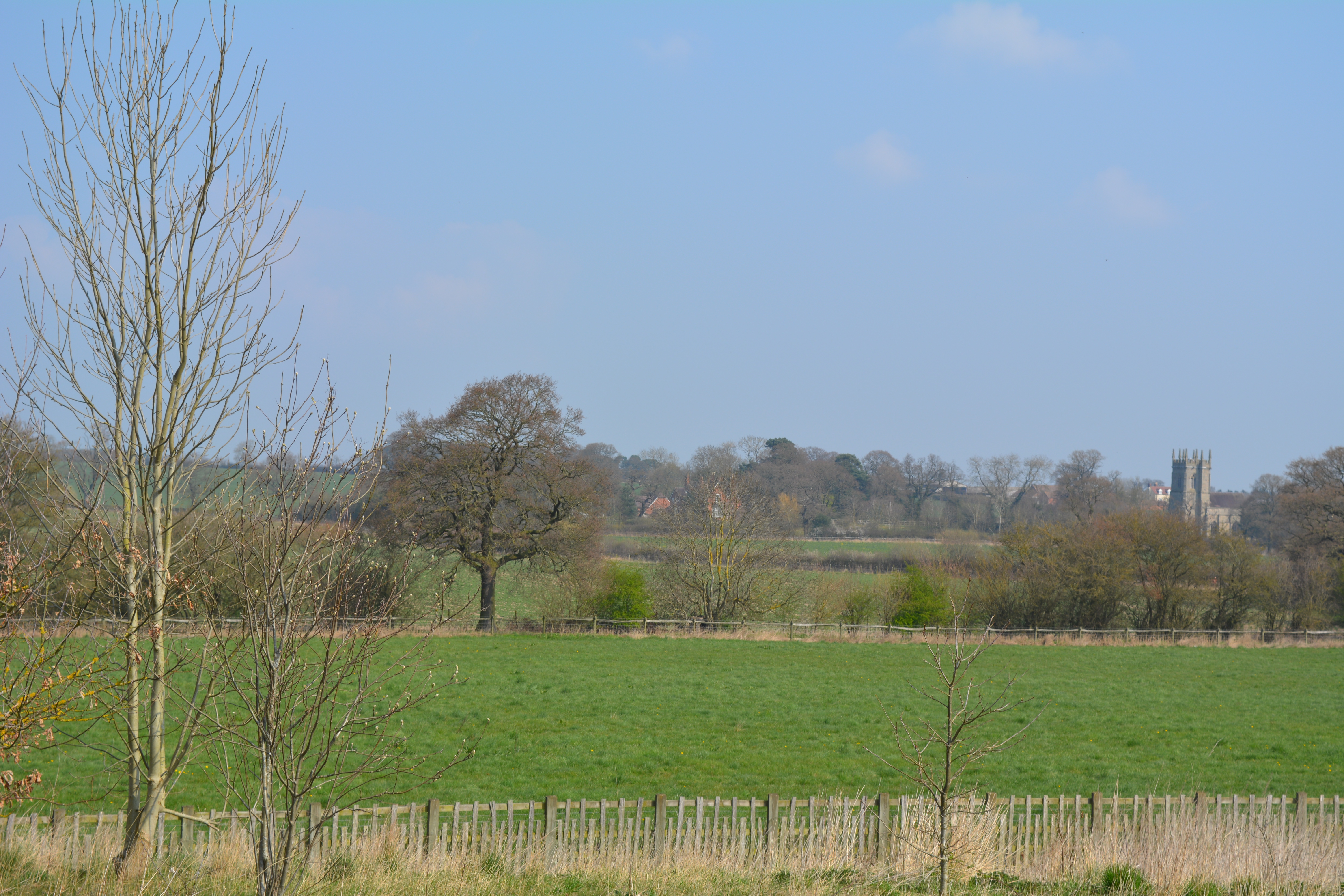
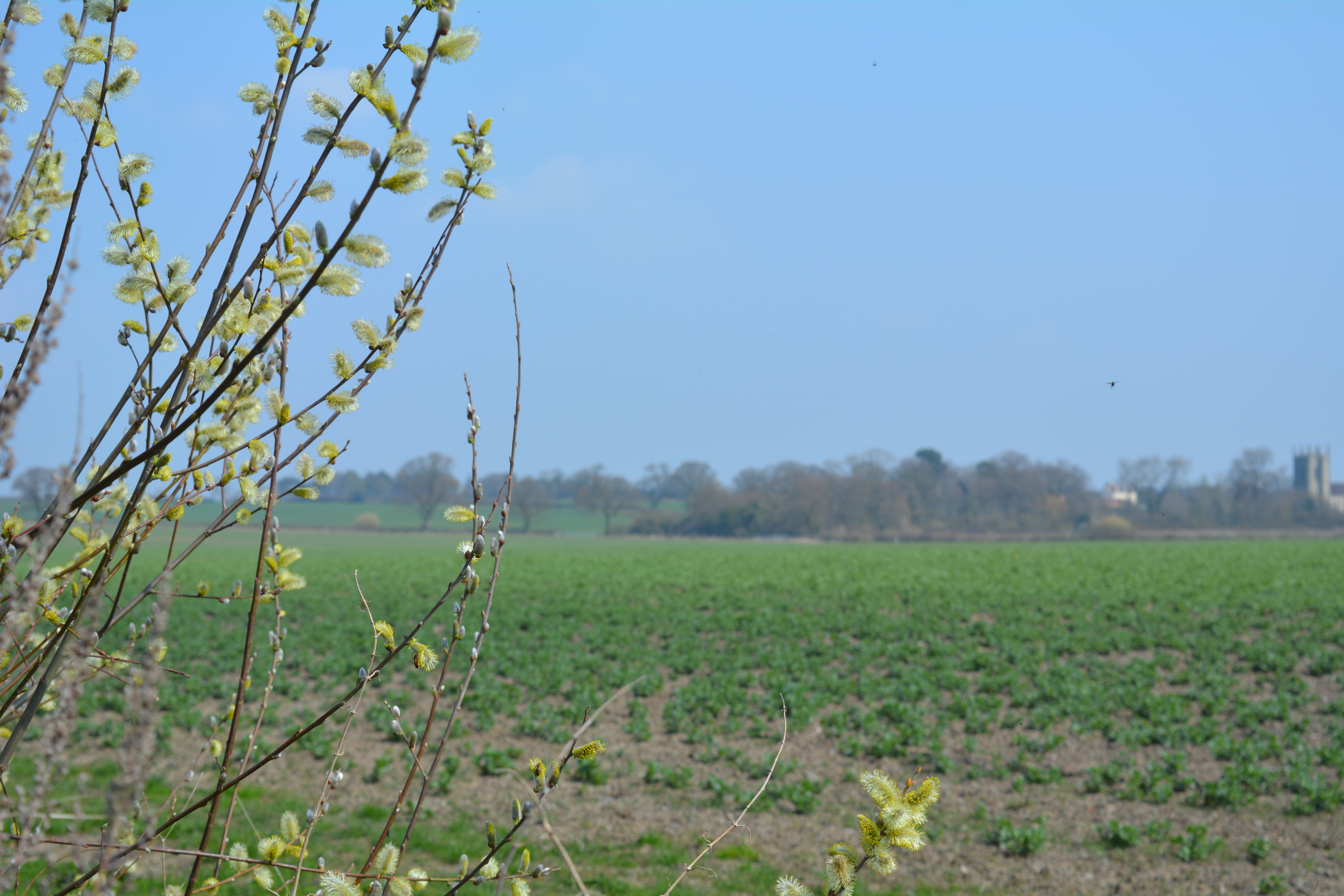
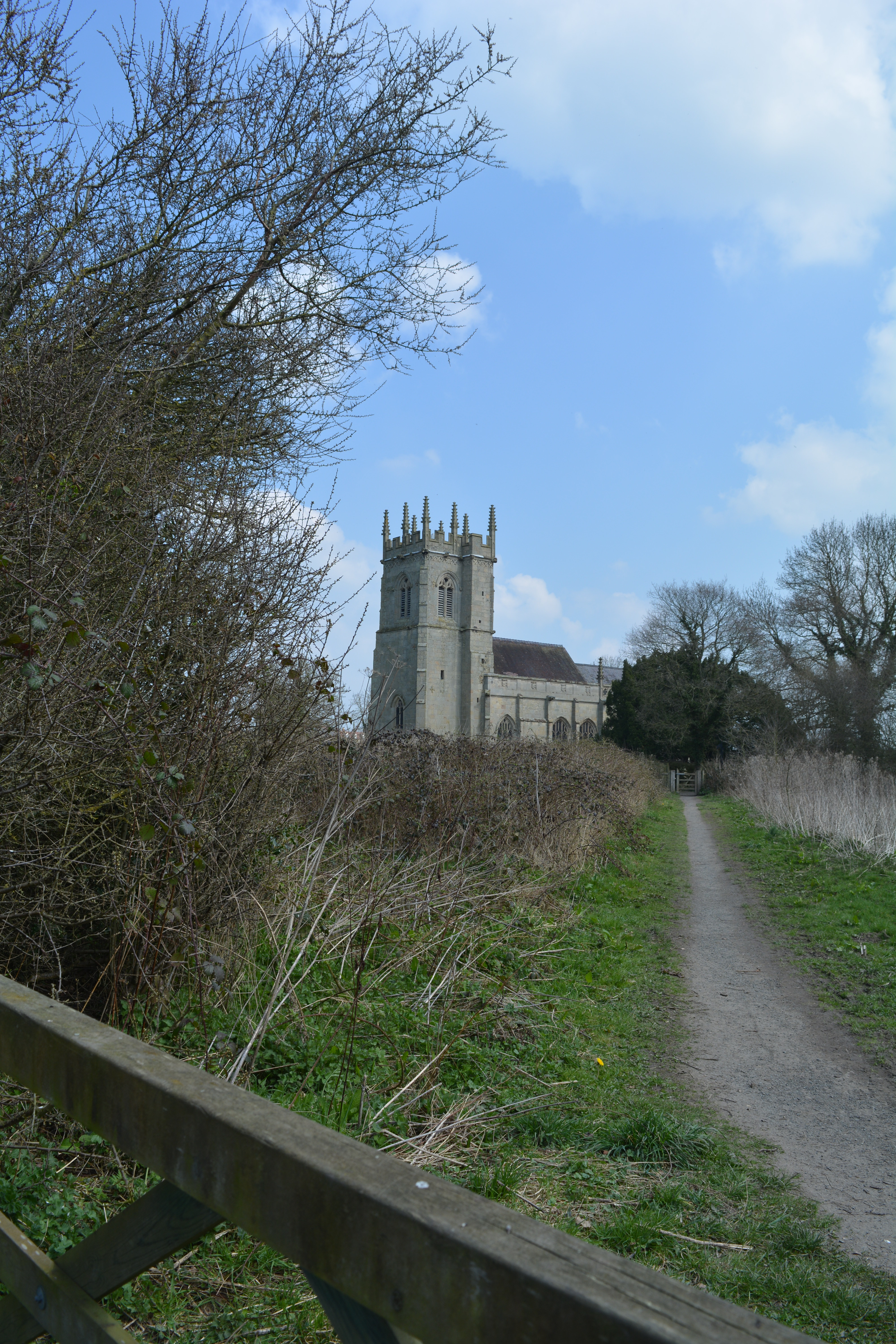
There were absolutely no clues that a battle ever took place here as we walked the footpath across the site of the battle, but we enjoyed wandering along the hedgerows with the song of Skylarks high above us and the distinctive call of the first returning migrant warbler, the Chiffchaff. We enjoyed seeing and hearing a Yellow Hammer a scarce farmland bird.

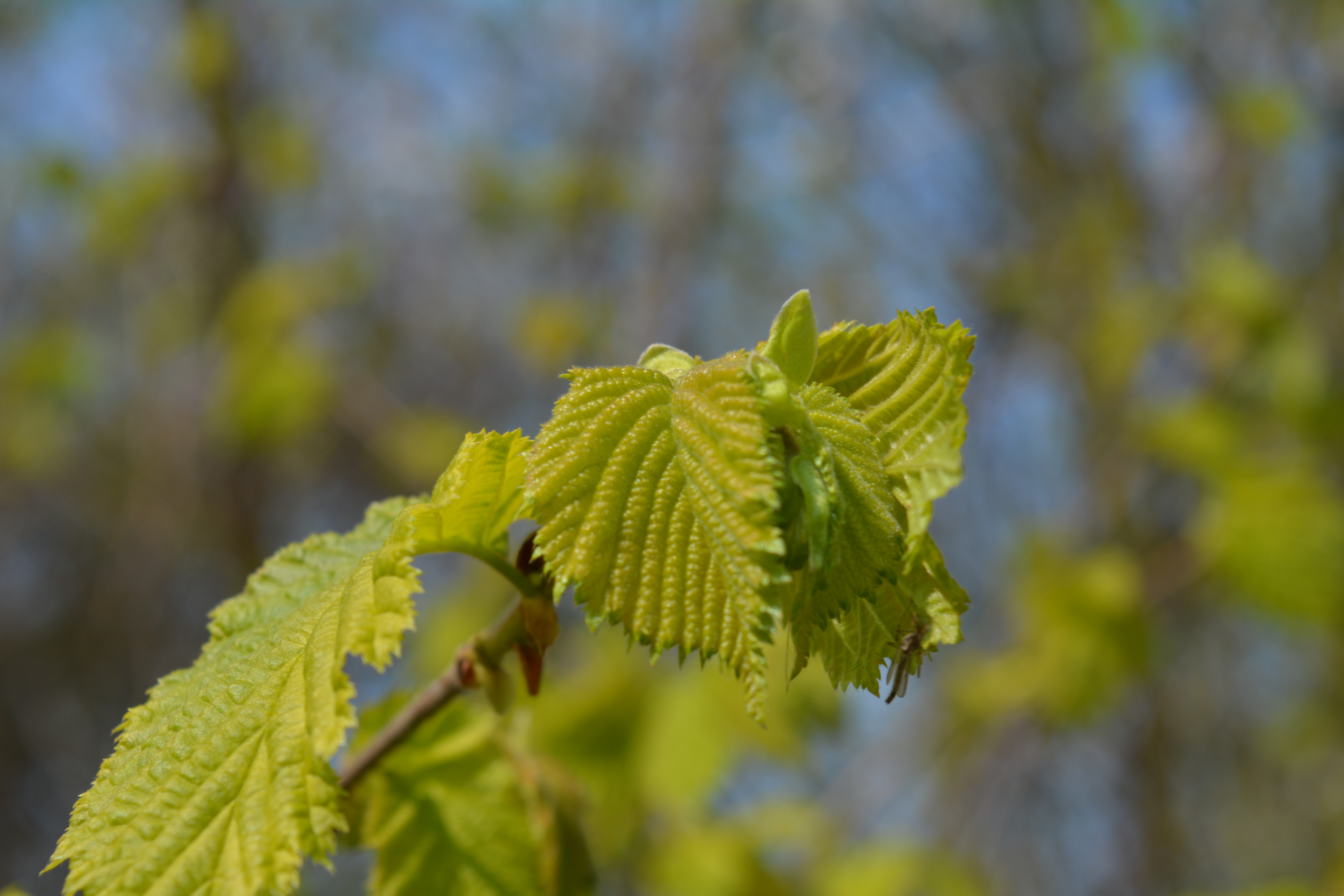
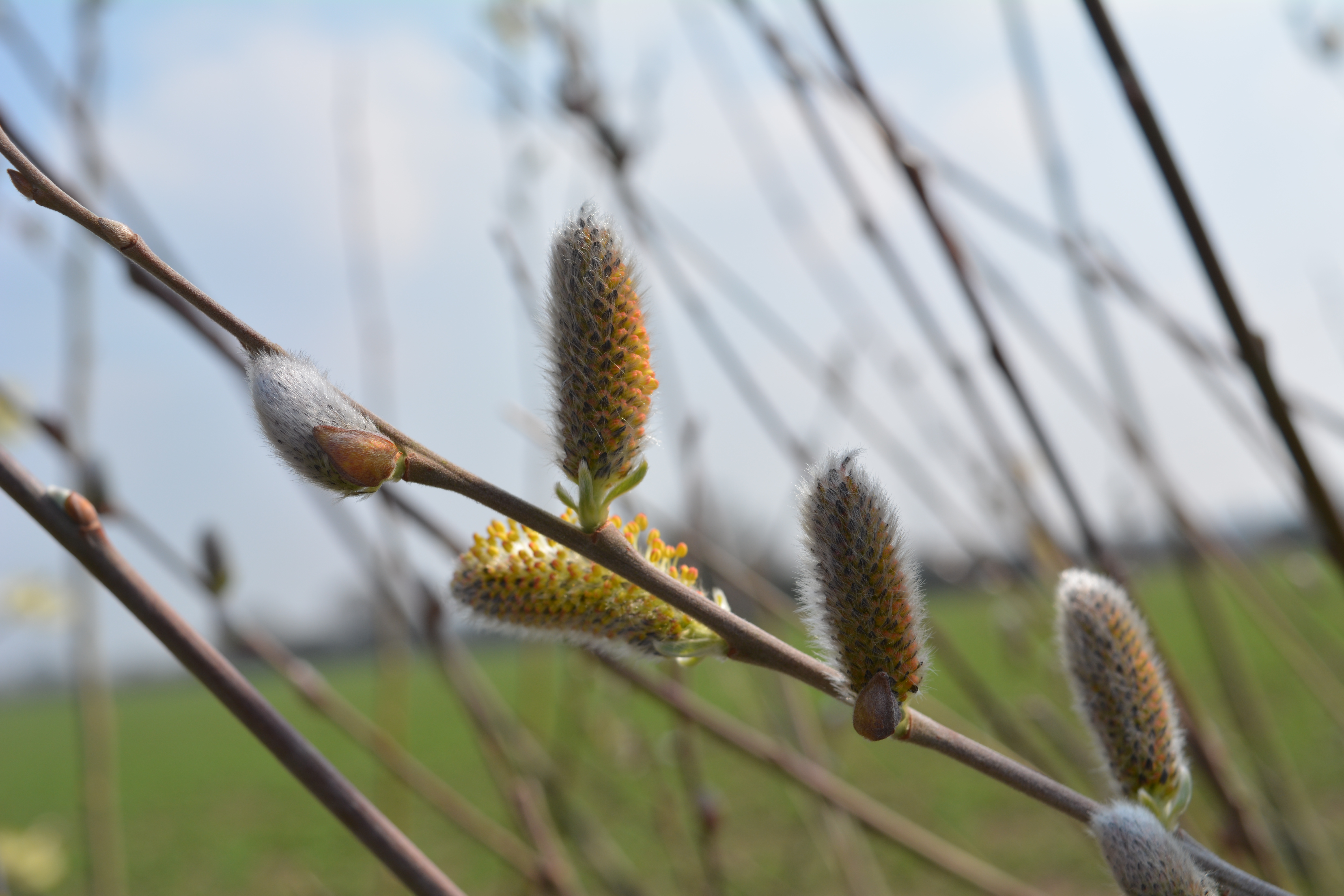
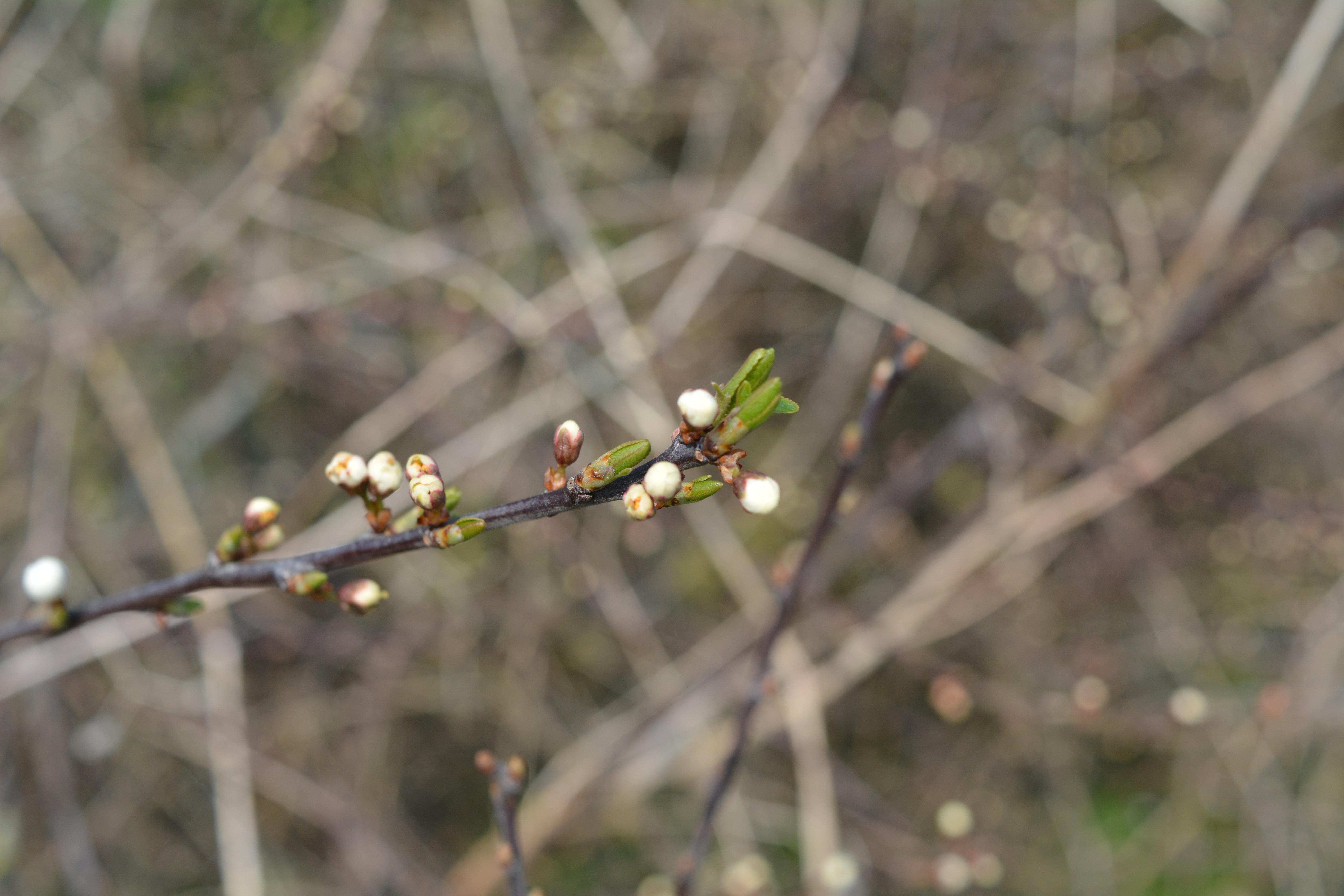
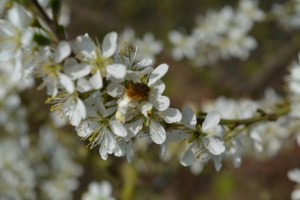
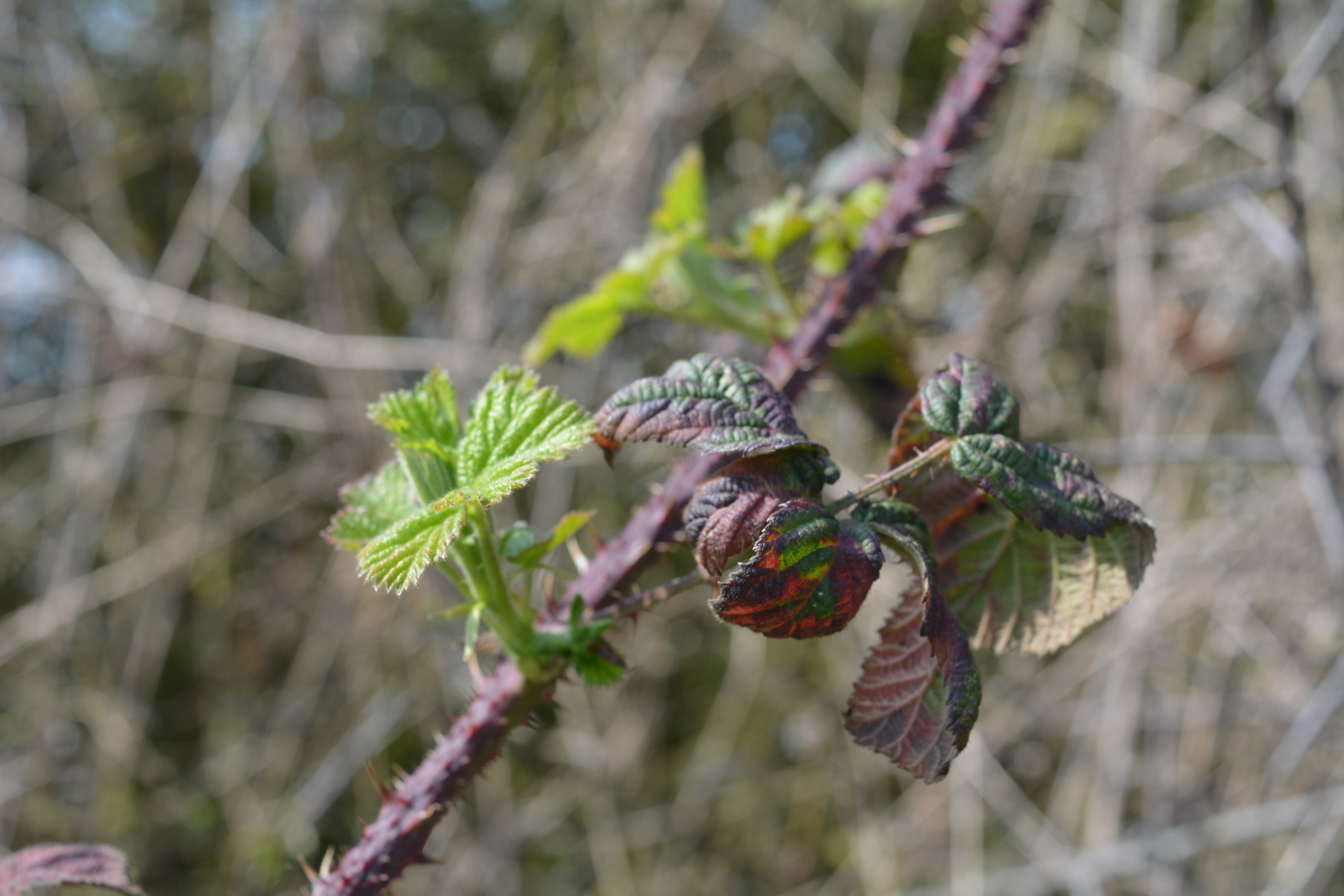
Signs of spring were to be seen every step of the way, freshly bursting buds with the brightest of greens emerging and the earliest of blossoms.
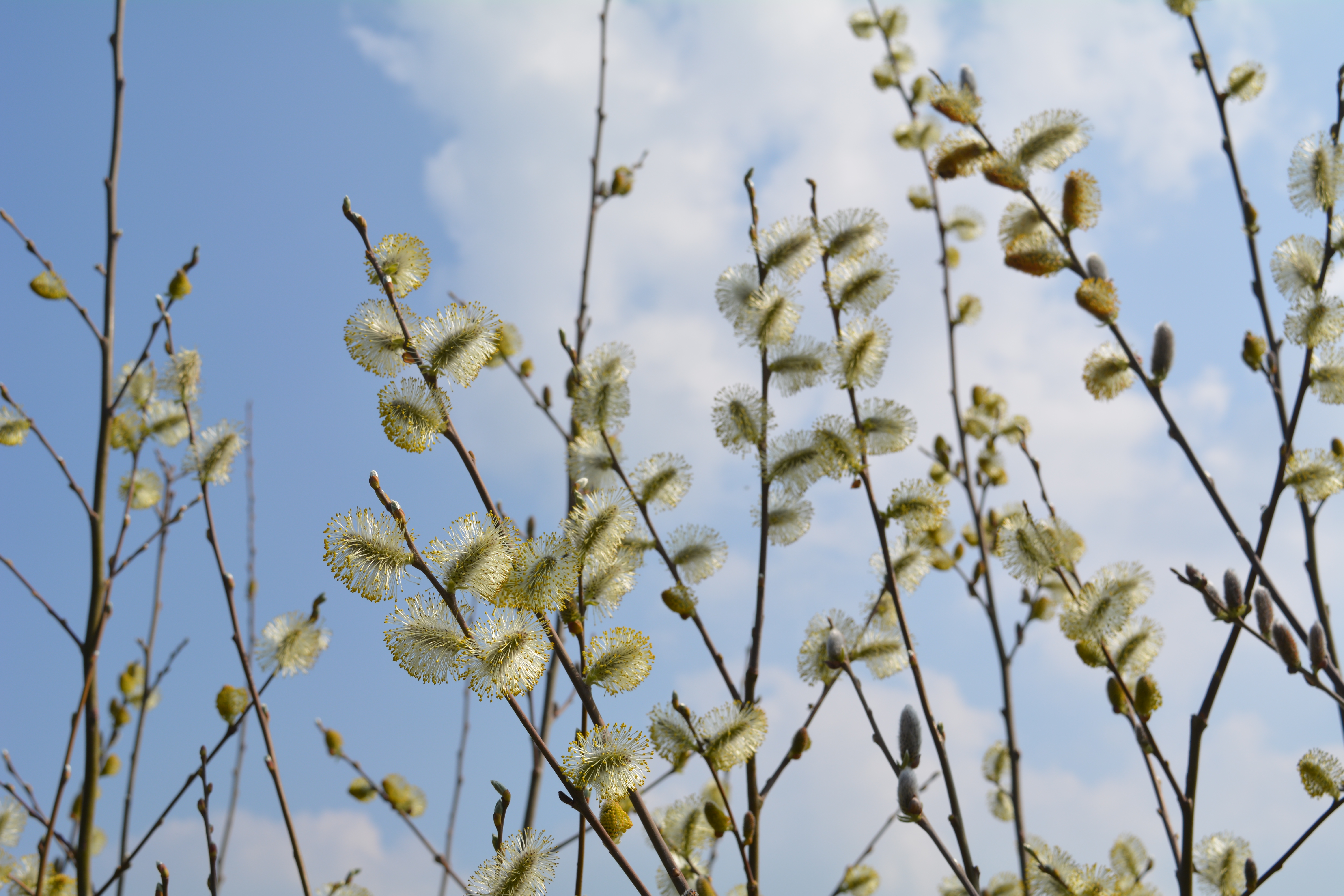
The willows were giving a light show, as the sun shone through their catkins.
Some trees were still bare skeletons against the blue skies.
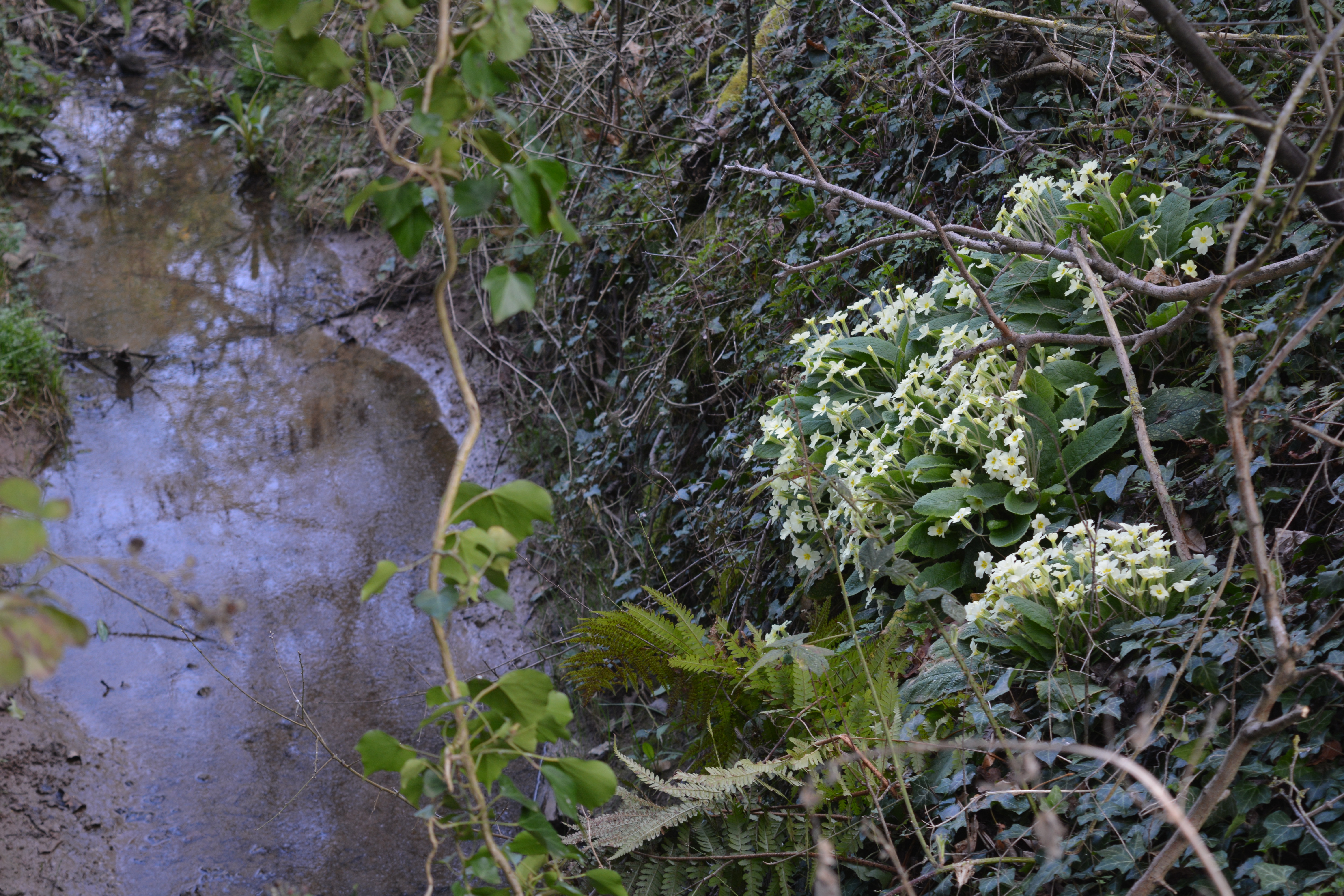
As we approached the scatter of buildings around the church, a shallow stream flowed alongside with banks of water plants coming to life.
In the woodland around the church we discovered the remaining fish ponds used by the college chaplains.
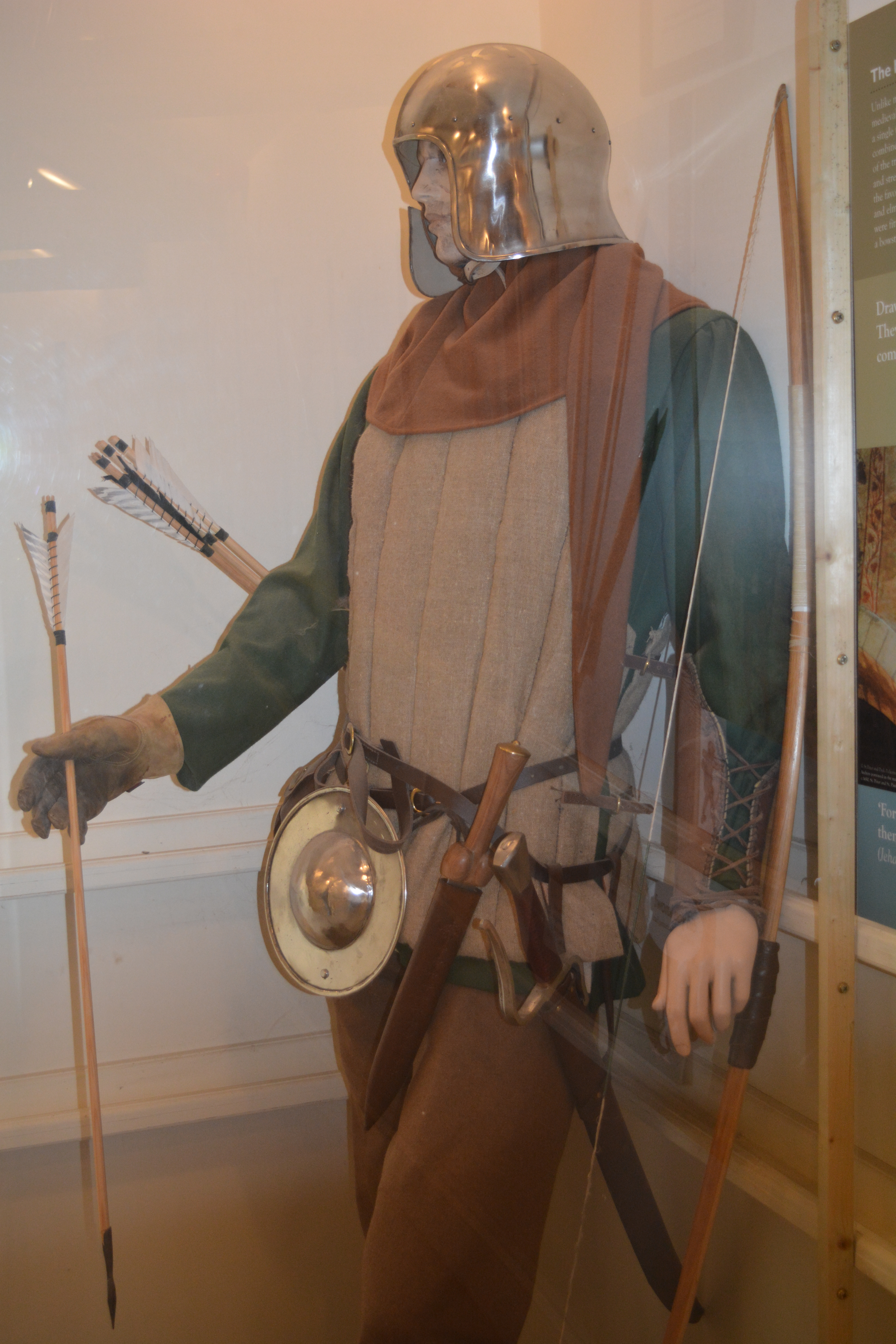
We wandered past the church and made our way to the nearby Battlefield Farm Shop which luckily had a coffee shop! We decided to have a look at the church on the way back when we would be well-refreshed. In converted old farm buildings an exhibition explained all about the Battle of Shrewsbury.
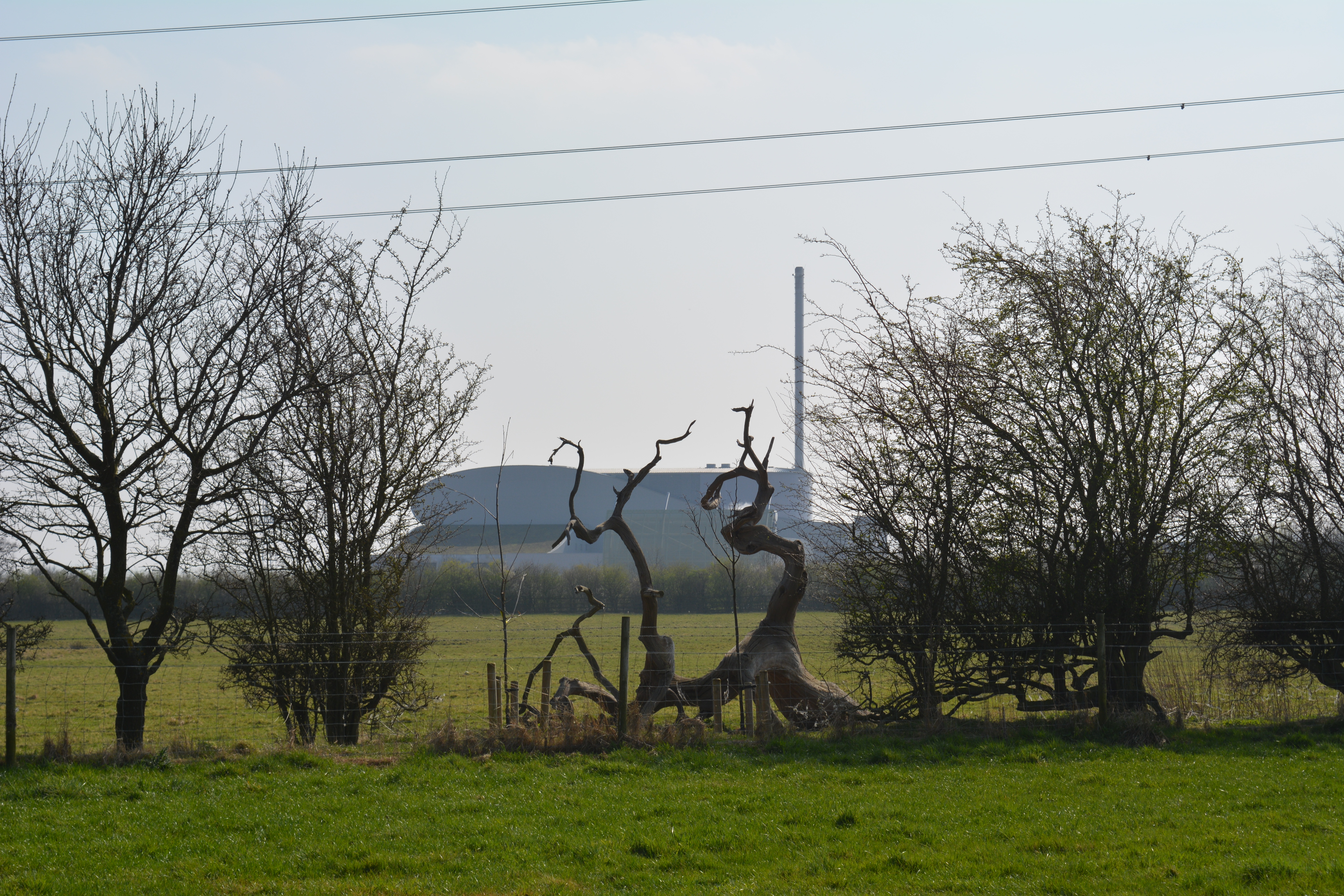
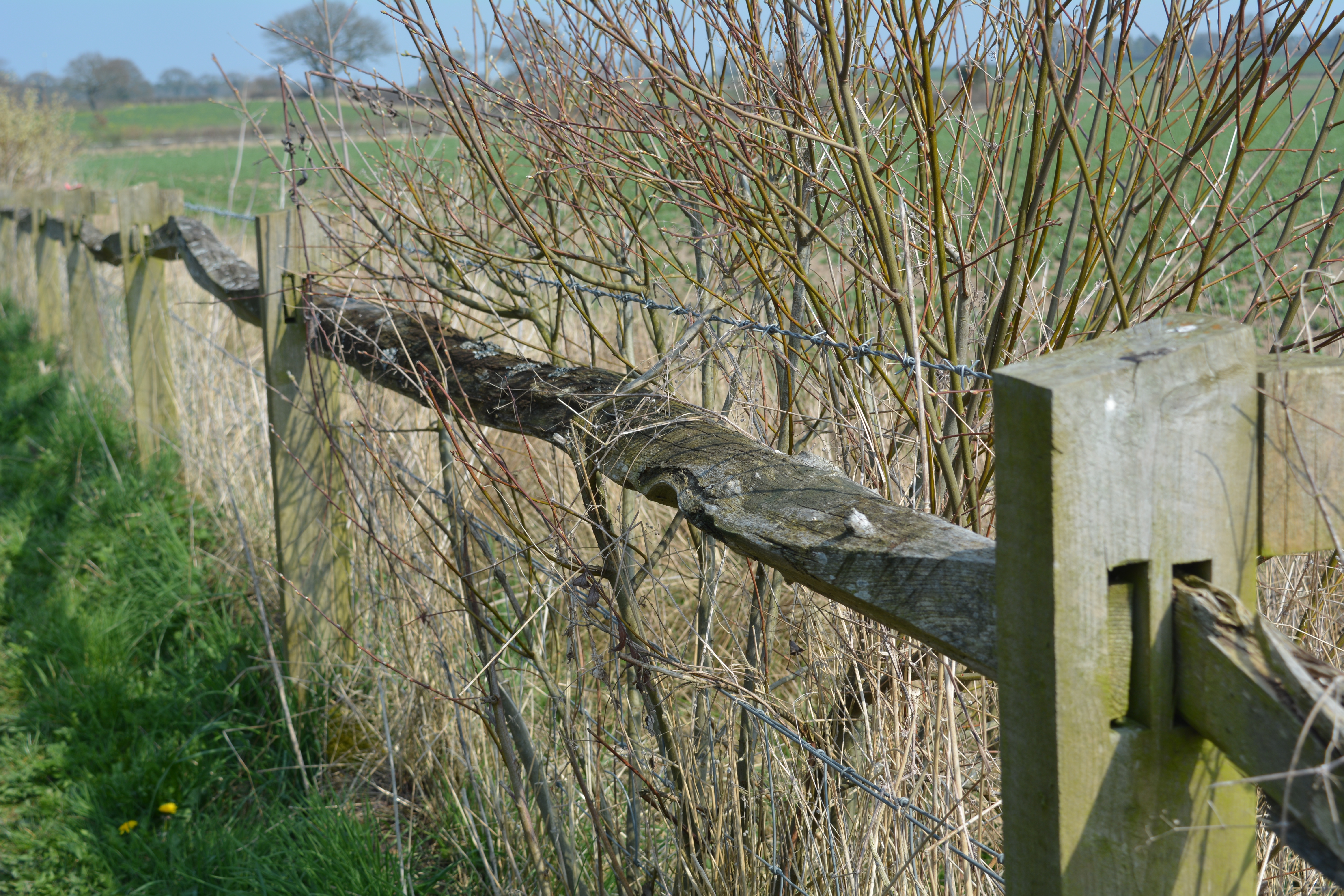
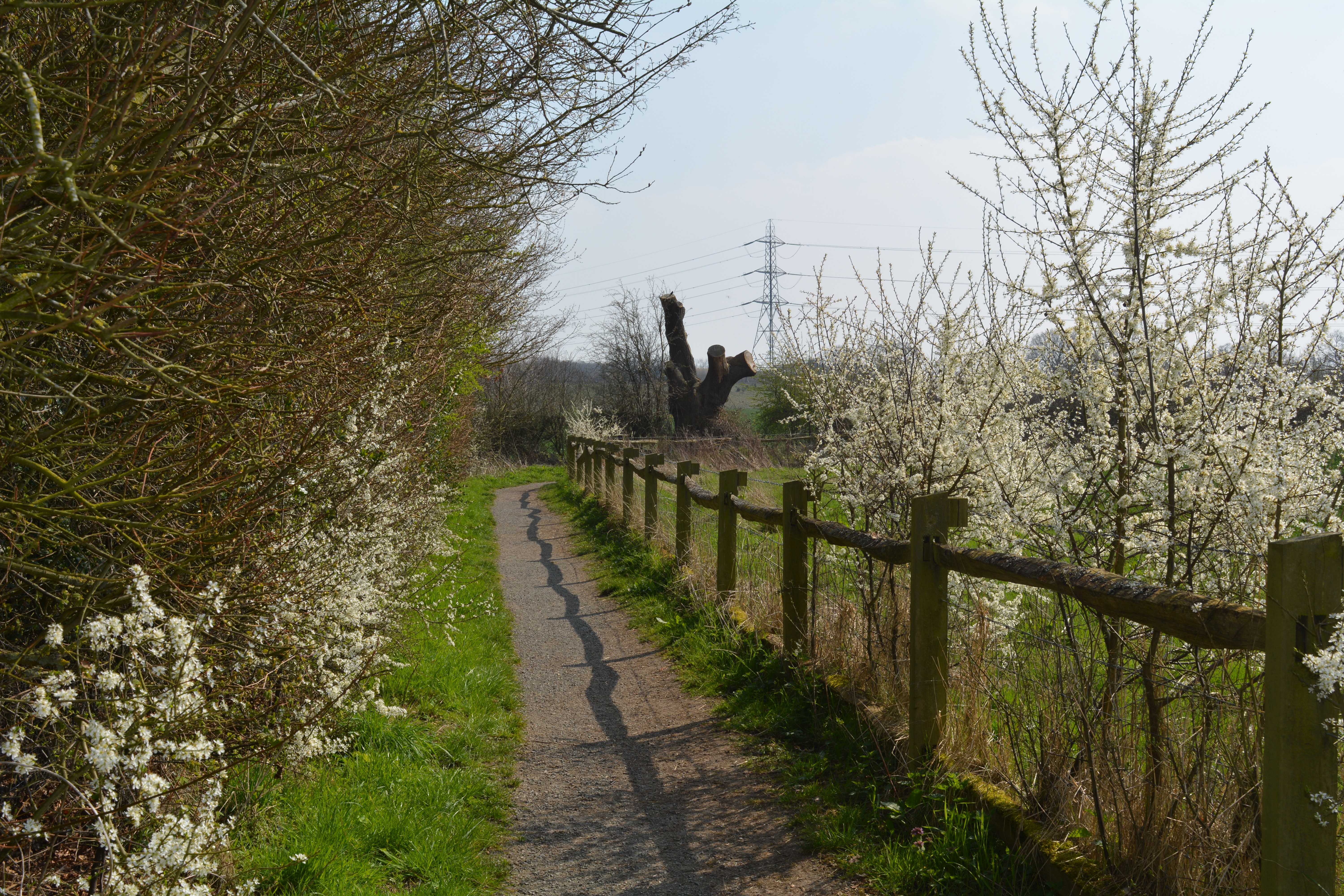
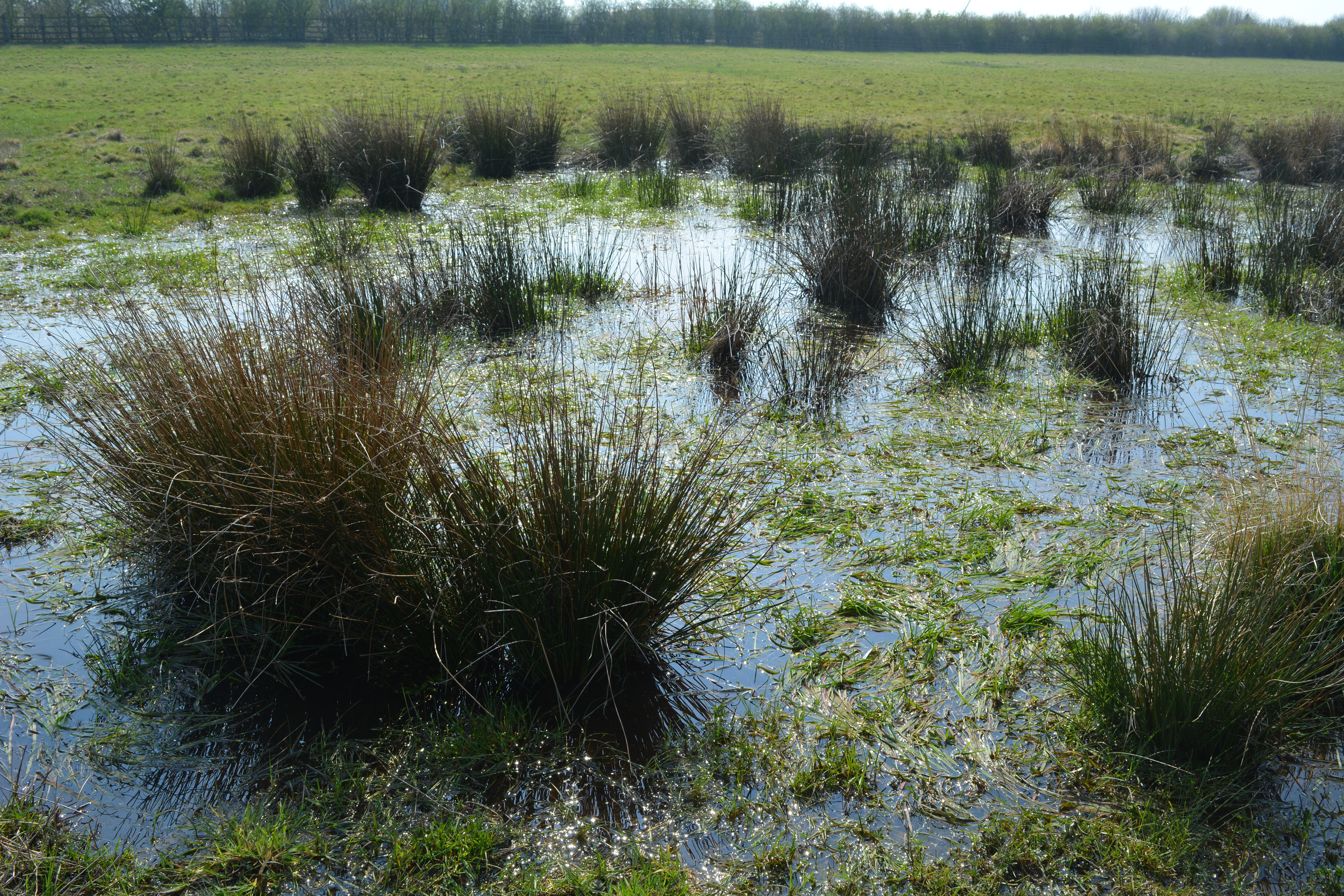
We began our walk back around the battlefield site following a narrow gravel path between a tall hedge and an old chestnut fence. In a field showing signs of ancient ridge and furrows agriculture we spotted a drainage pond rich in vegetation and a old fallen tree with the most amazingly shaped trunk and branches.
In part two of our look at the Shrewsbury Battlefield site we will look at the church and the skeletal tree in more detail.