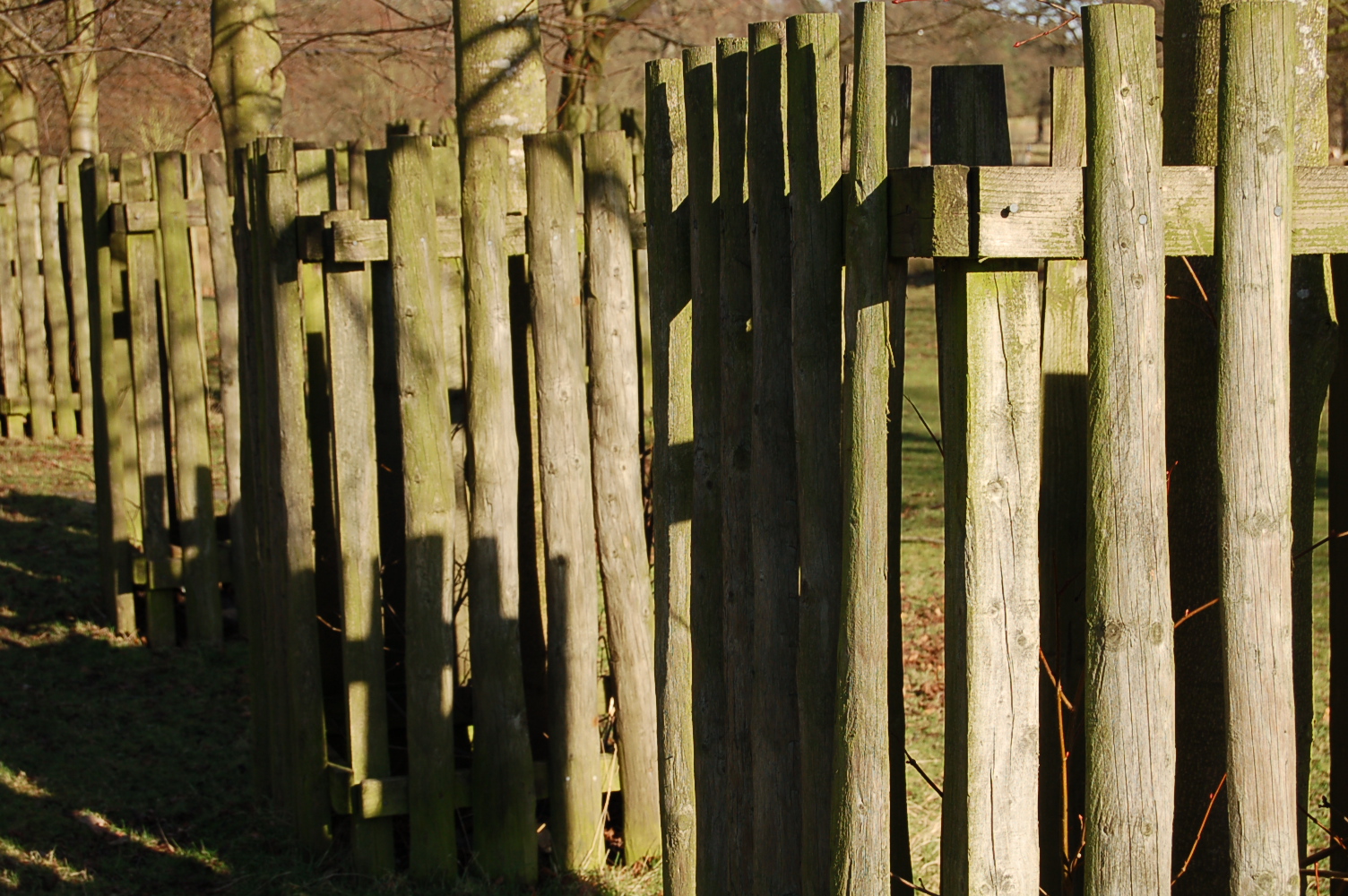
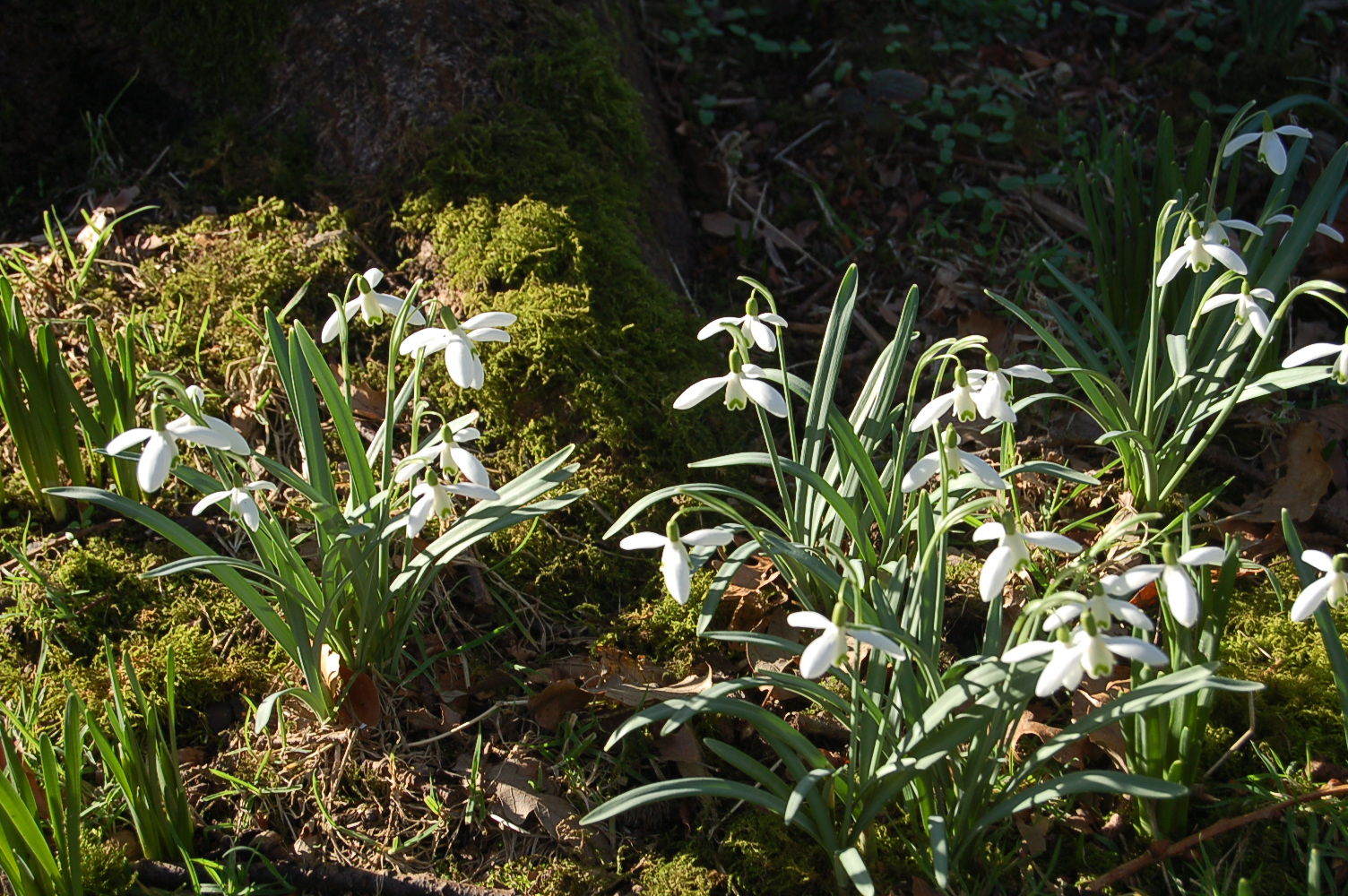
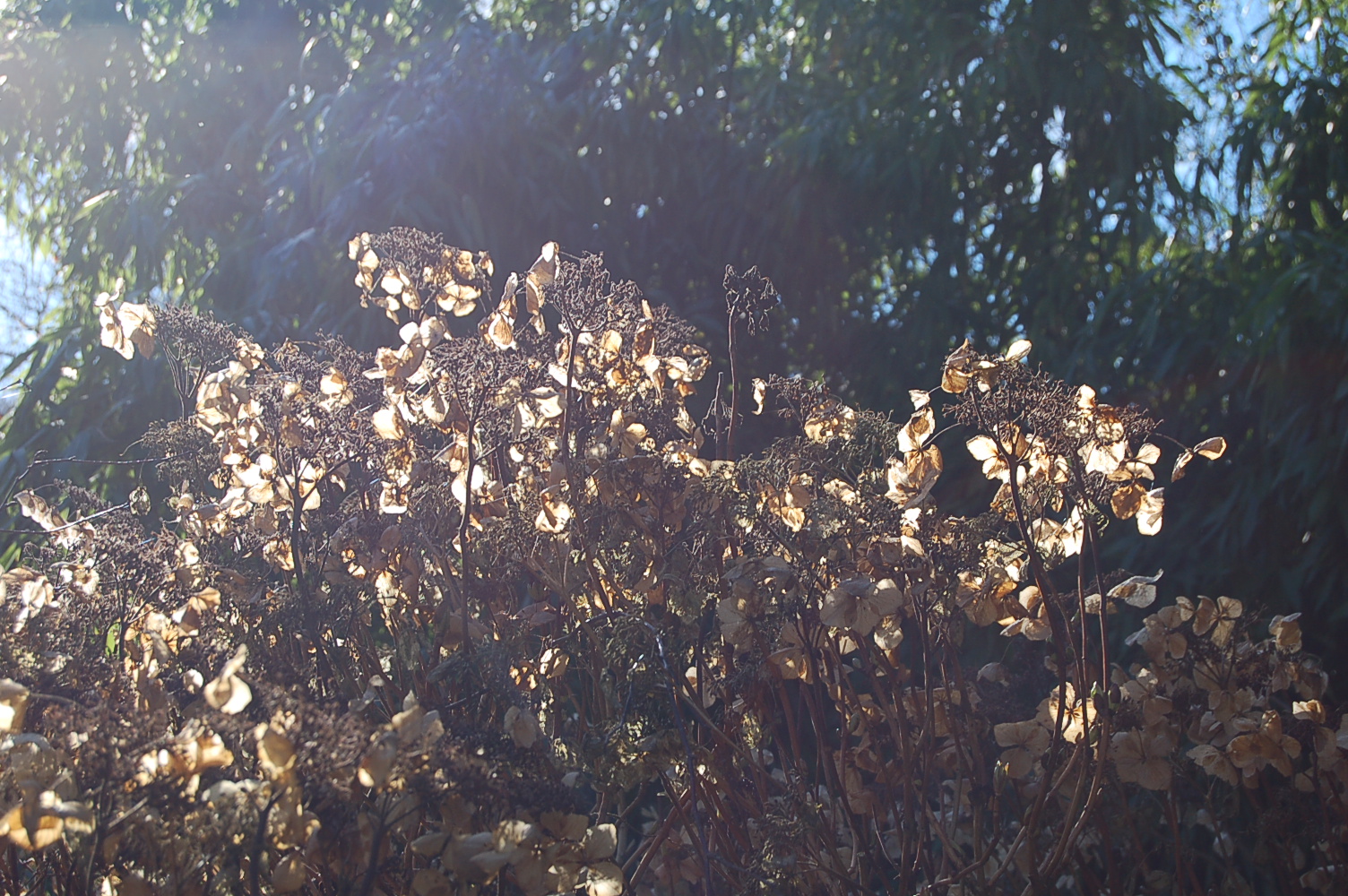
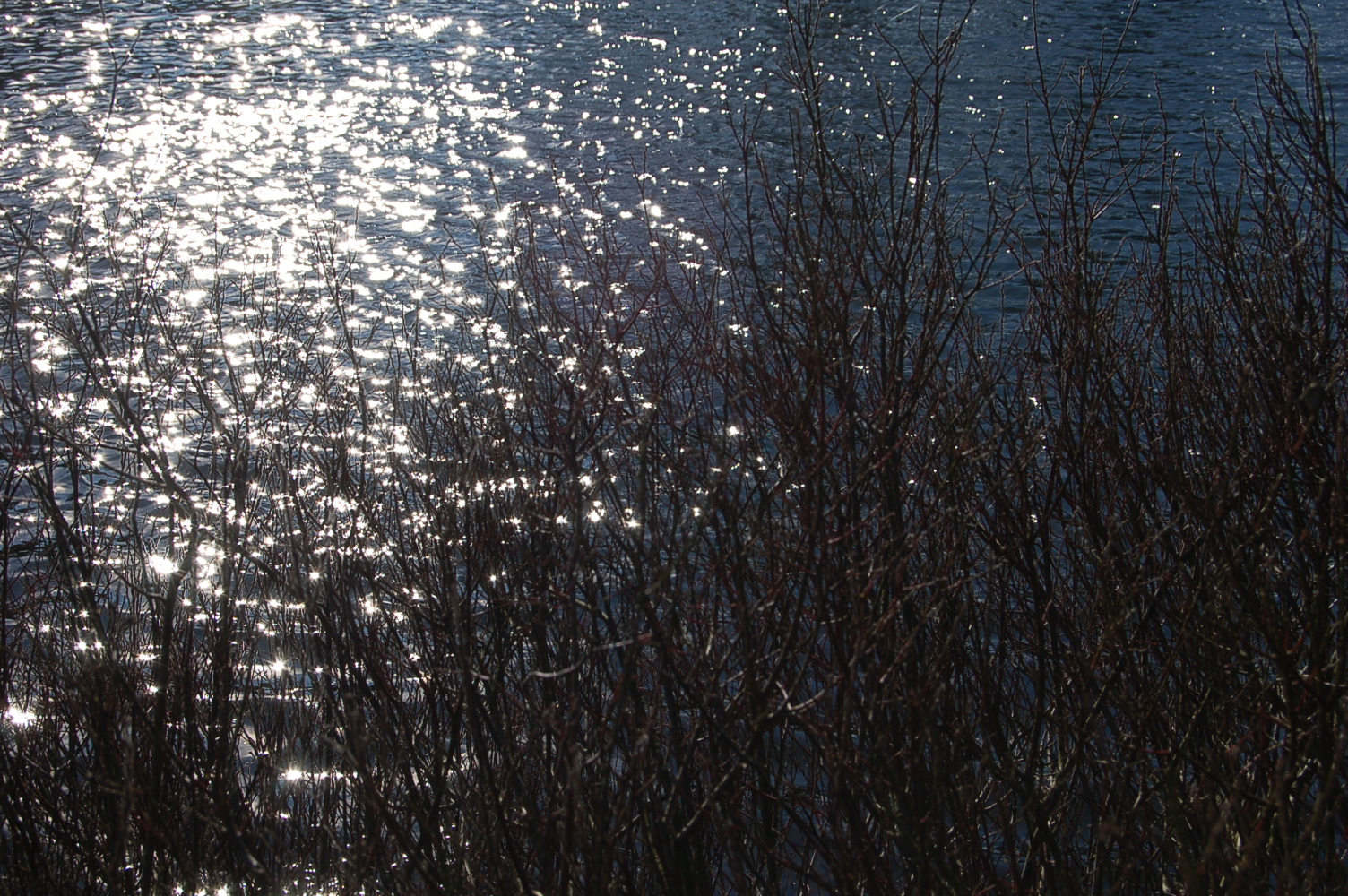
The lighting on the day of our visit to Durham Massey recently was amazing for taking photographs. It was a sunny day with a bright blue sky above. The light acted light a spotlight shining just above ground level. It lit up leaves, tree trunks, flower petals. And it shone in “The Undergardener’s” eyes!
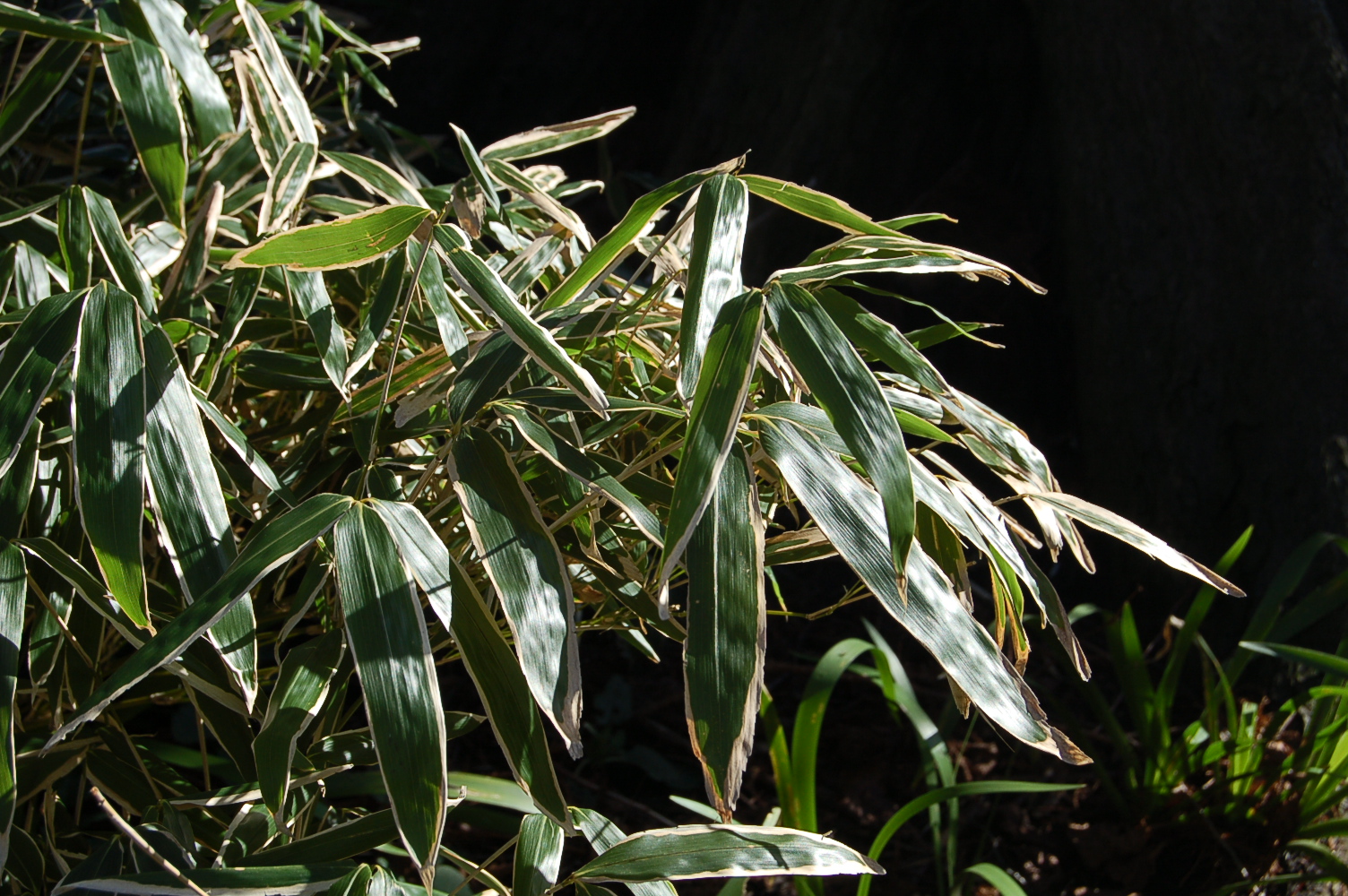
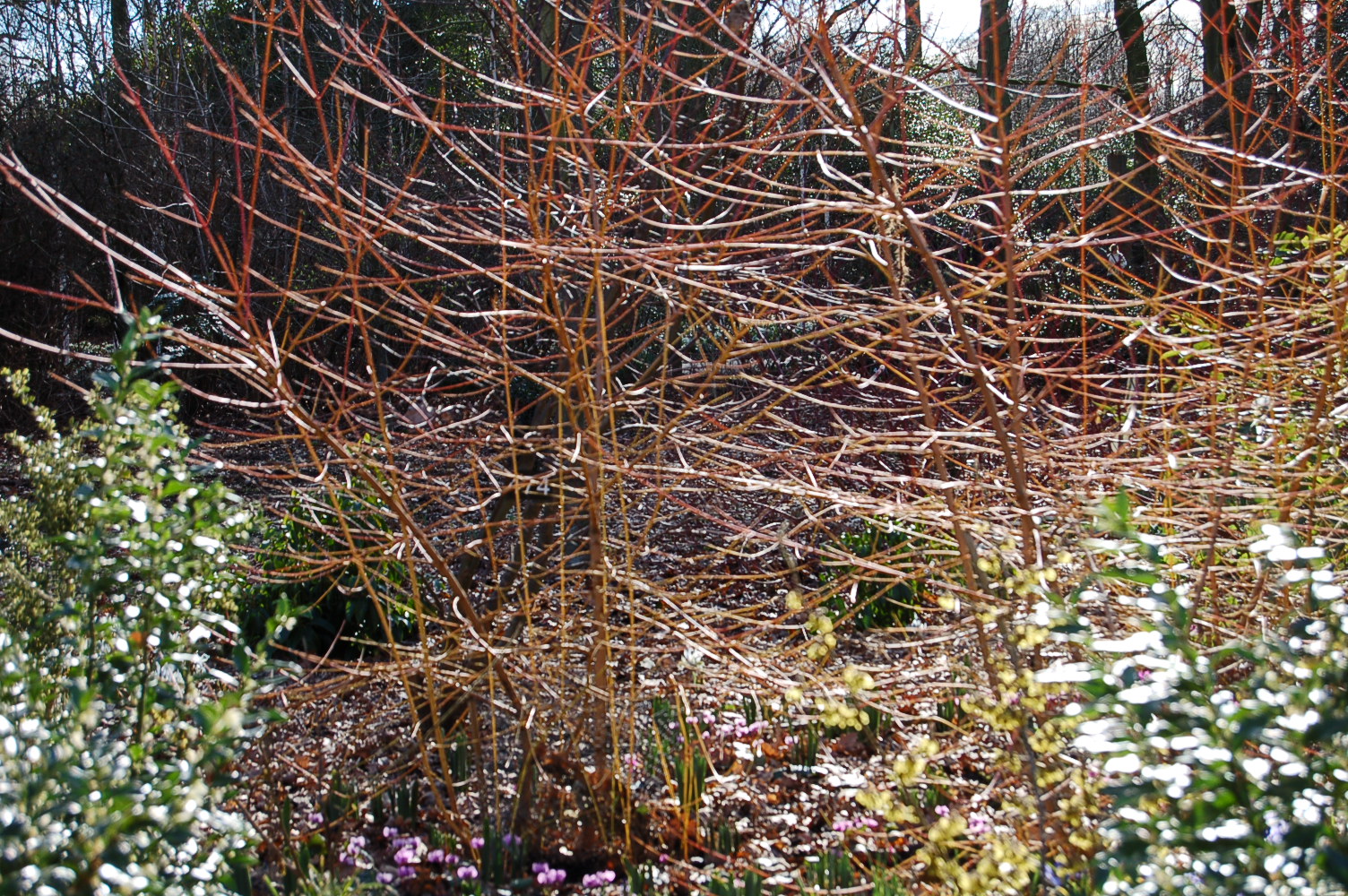
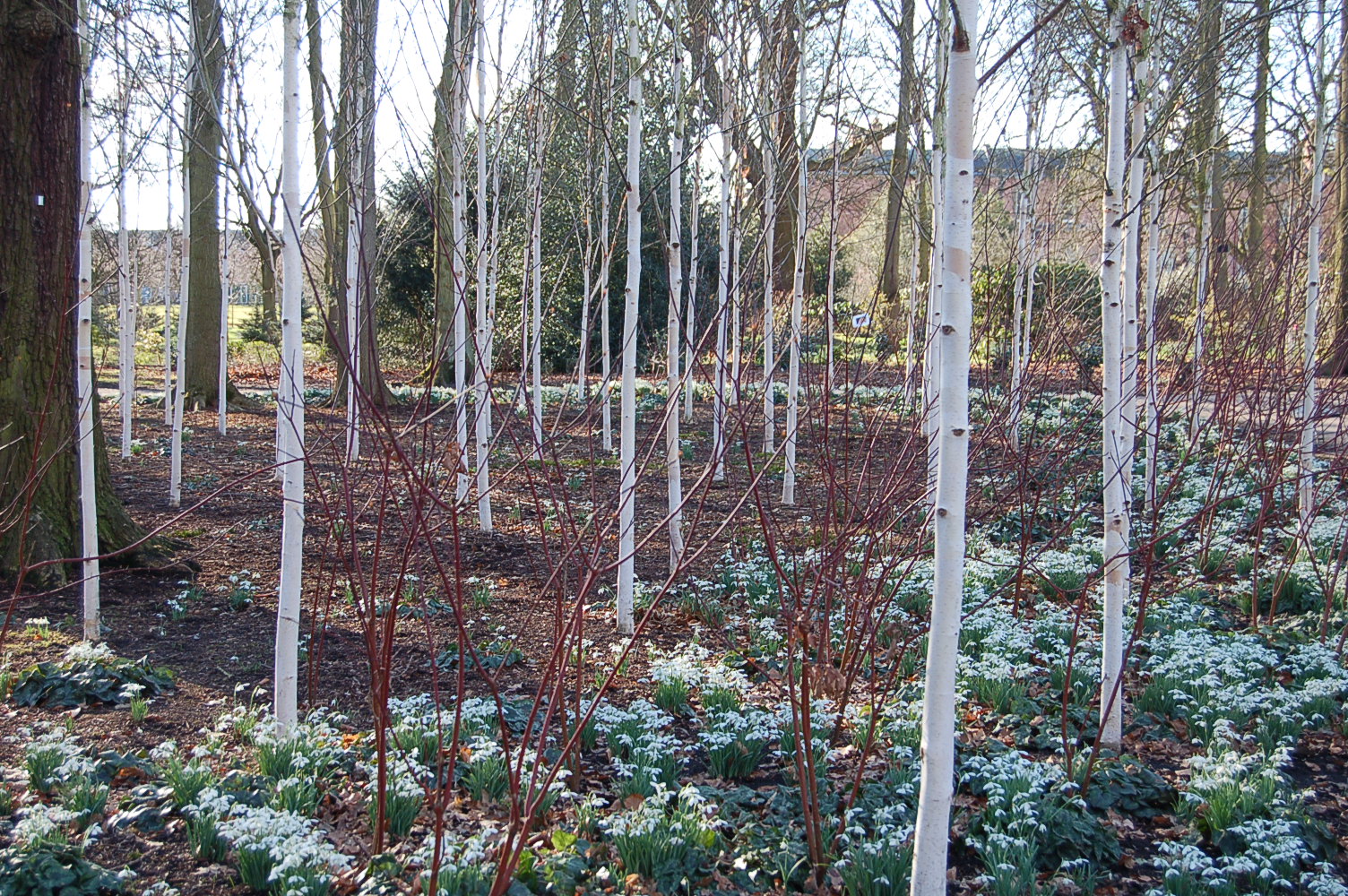
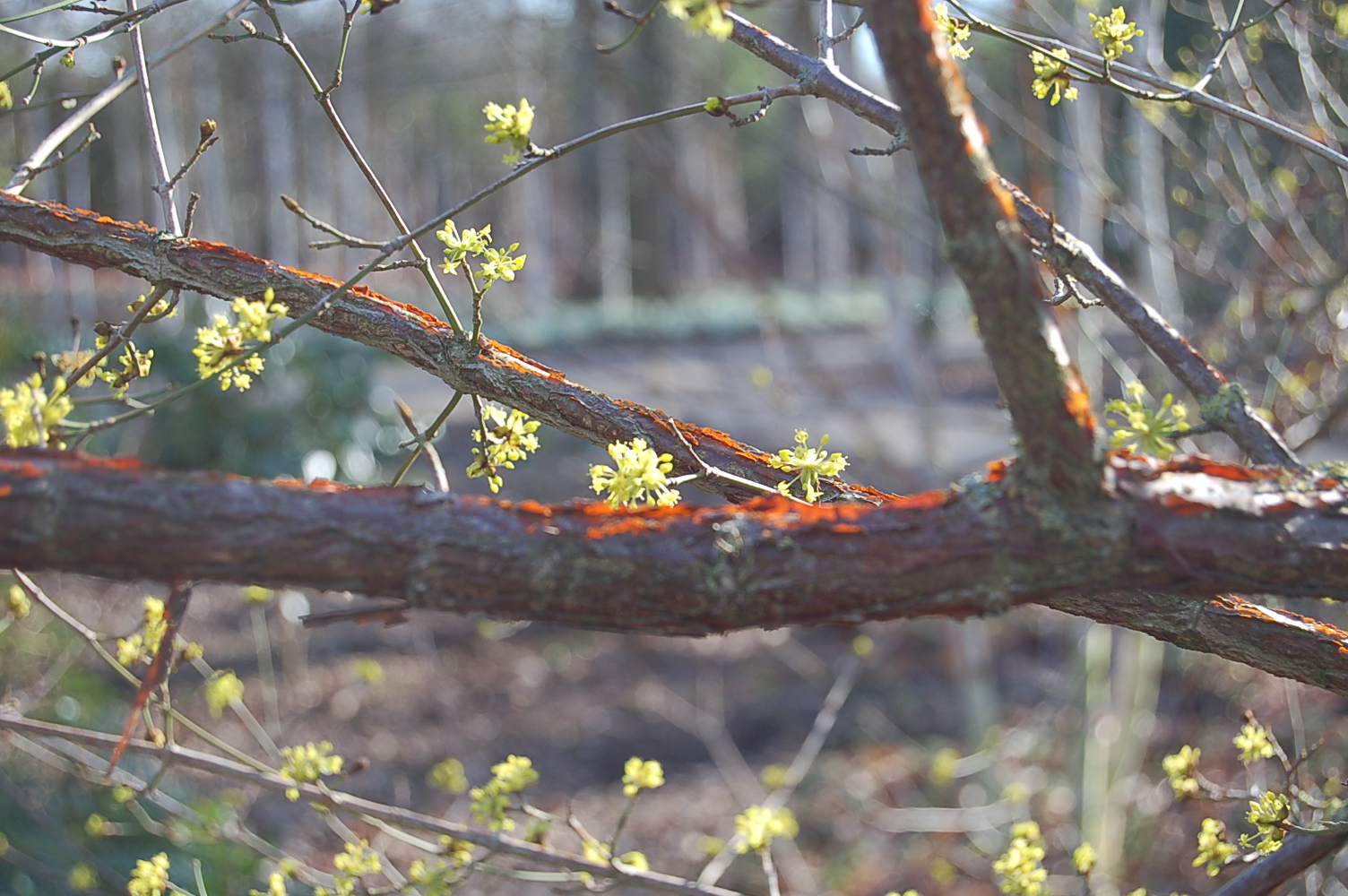
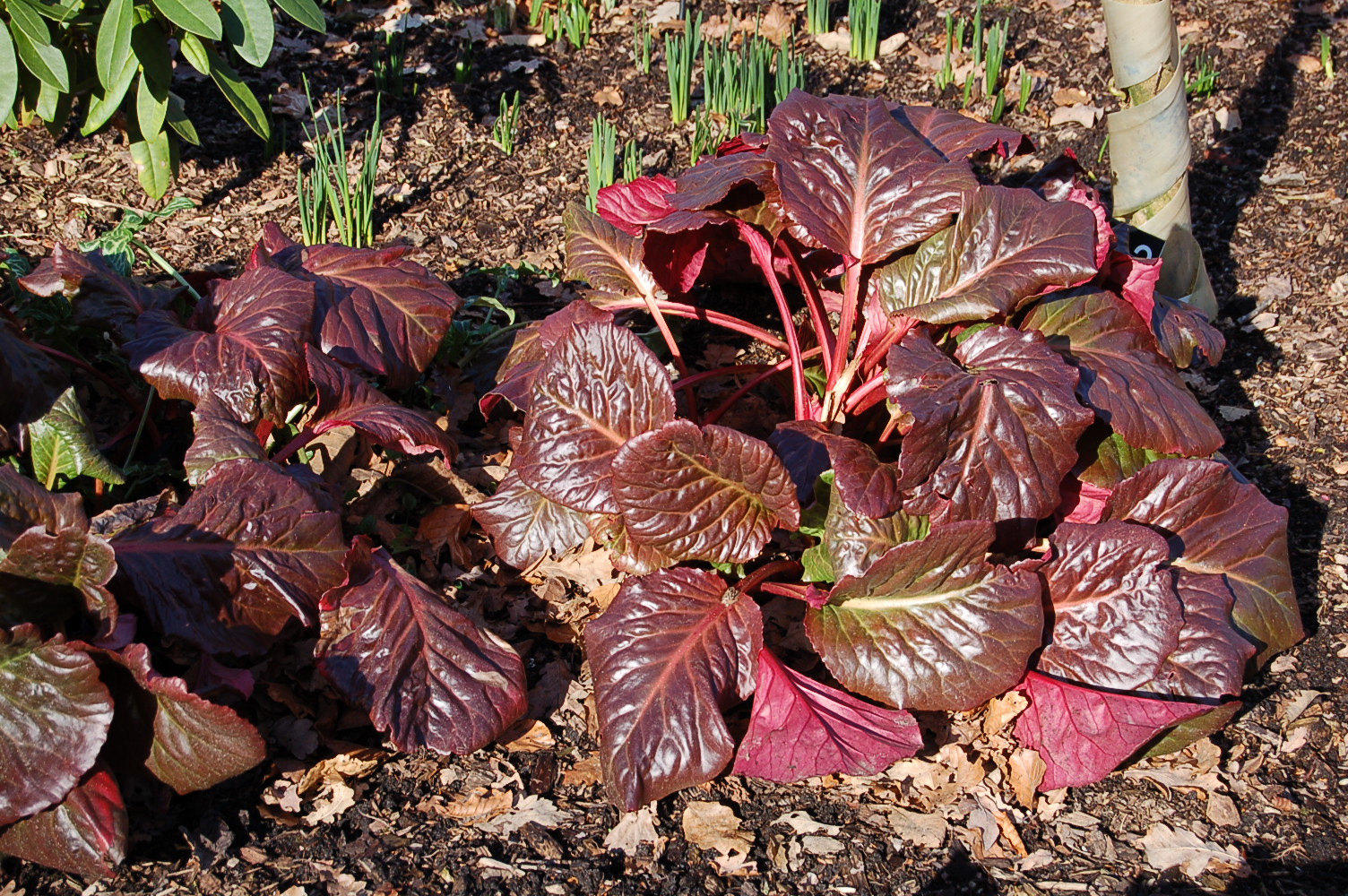
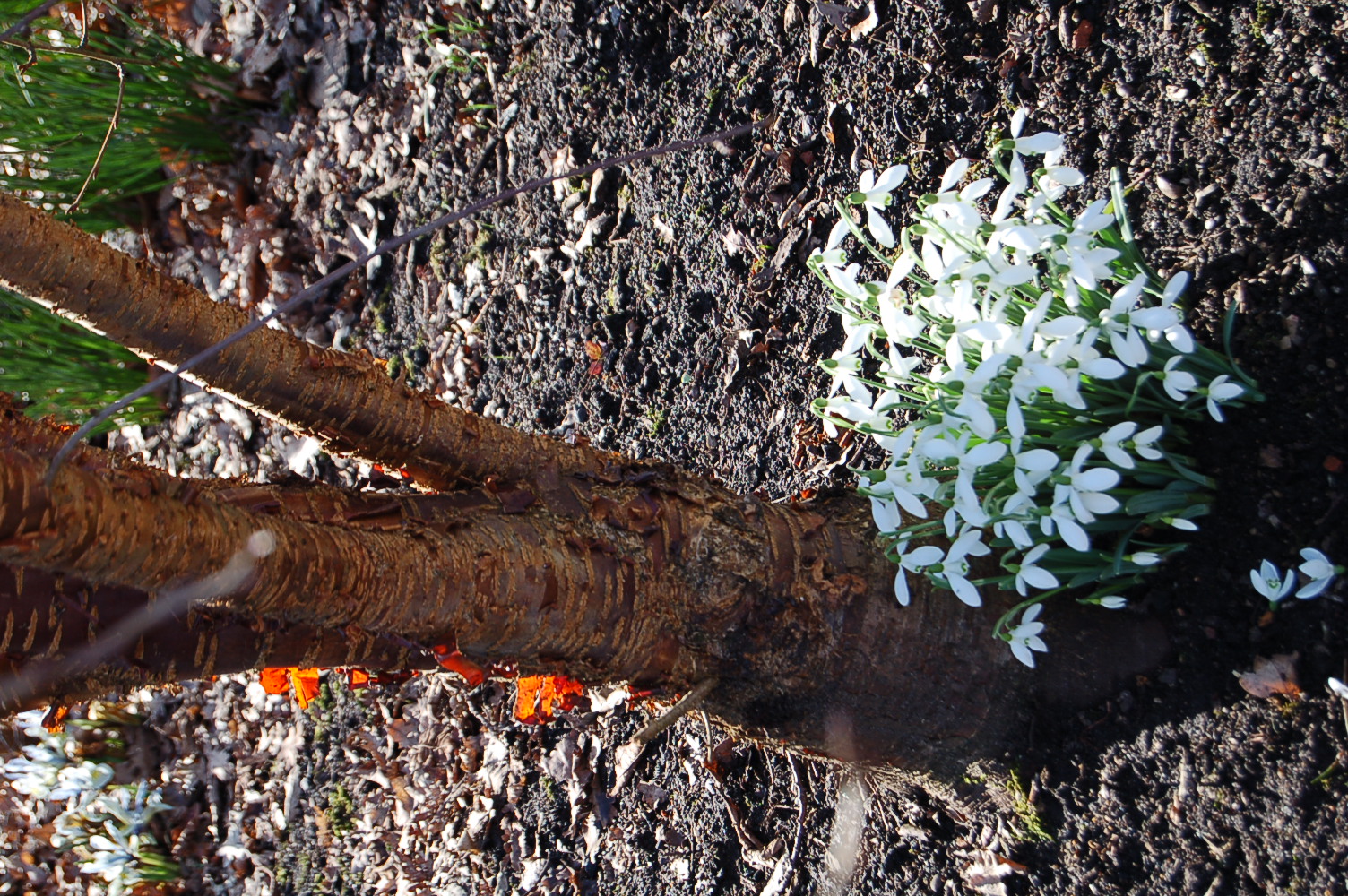
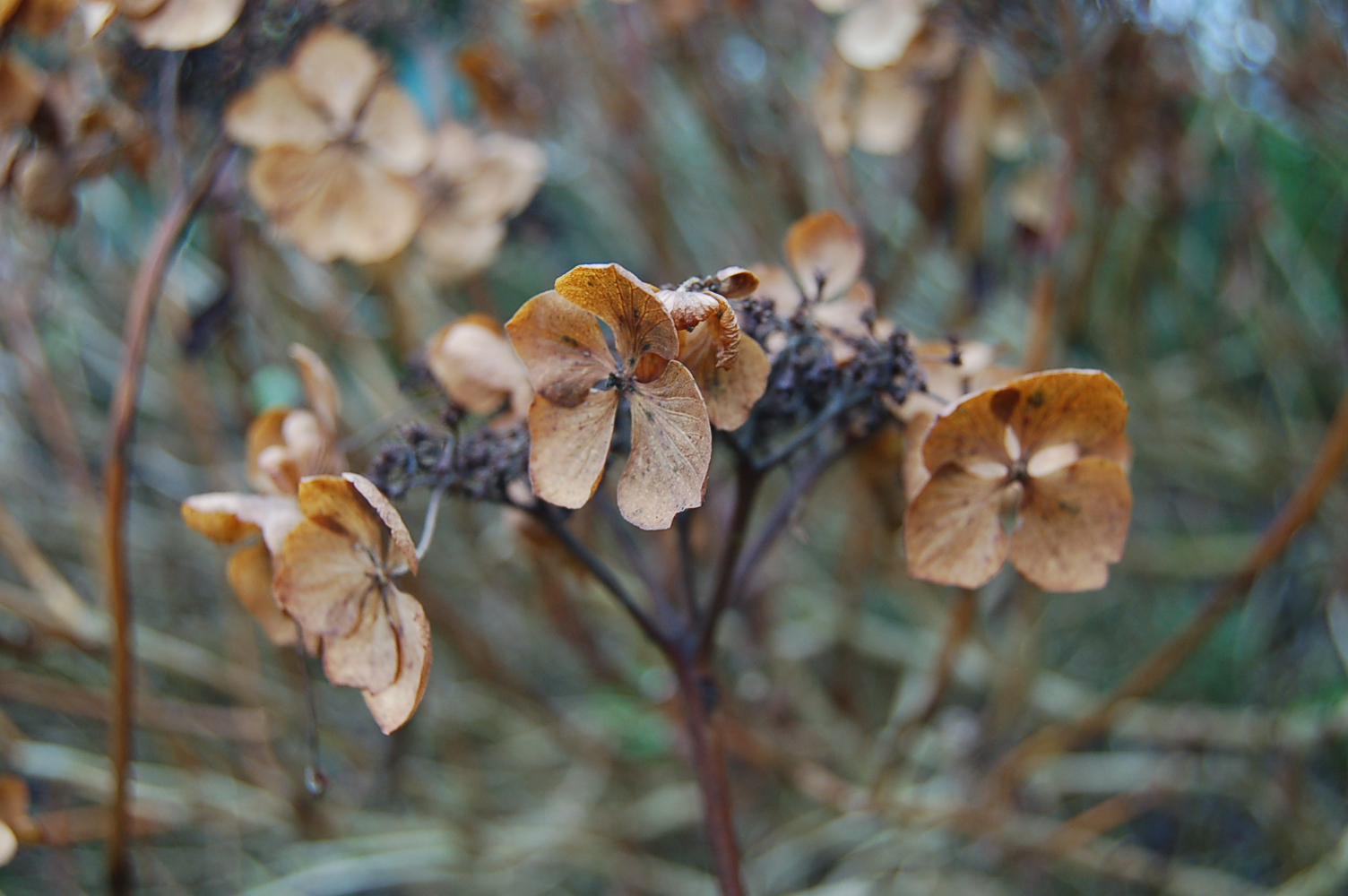
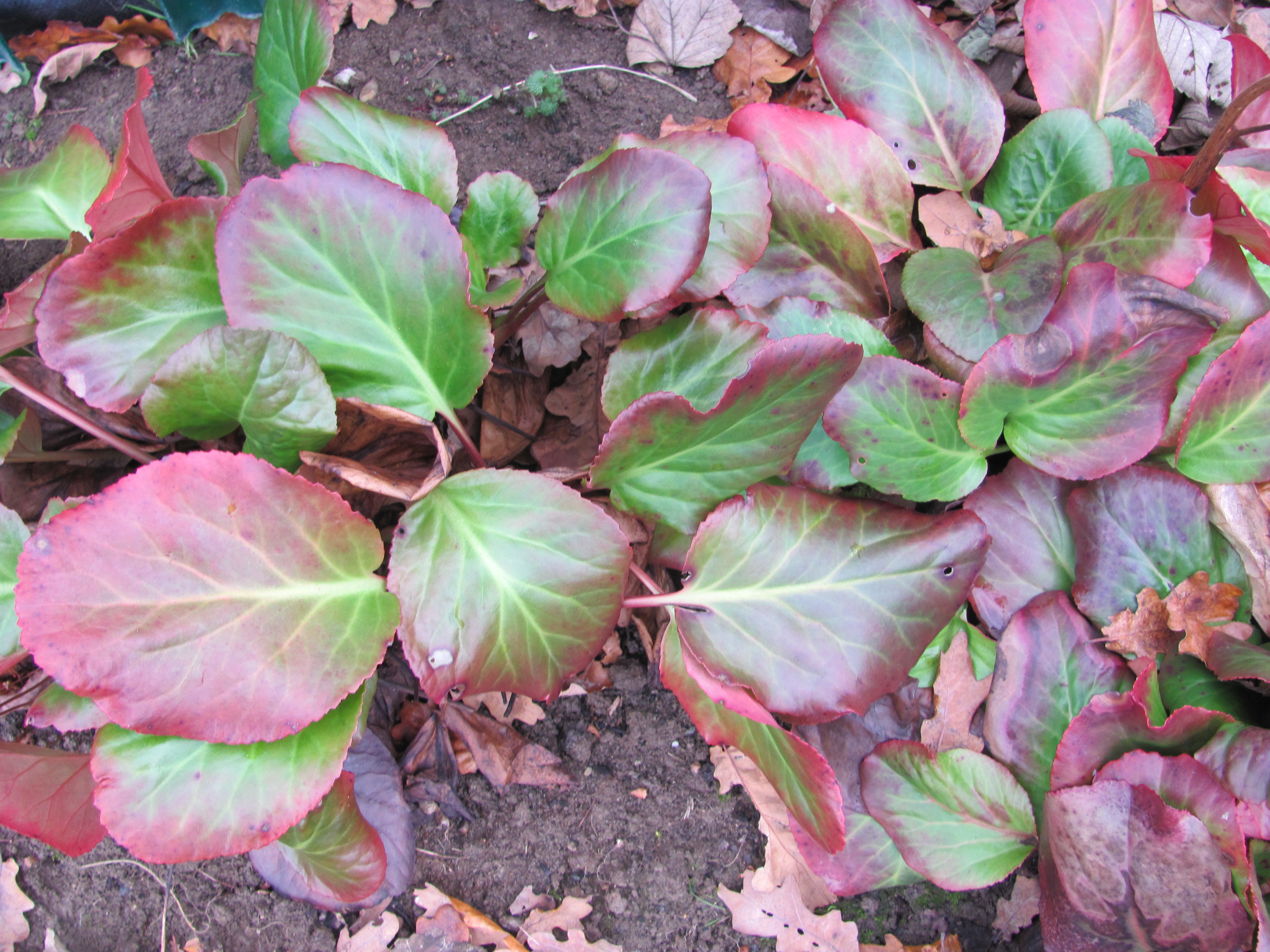
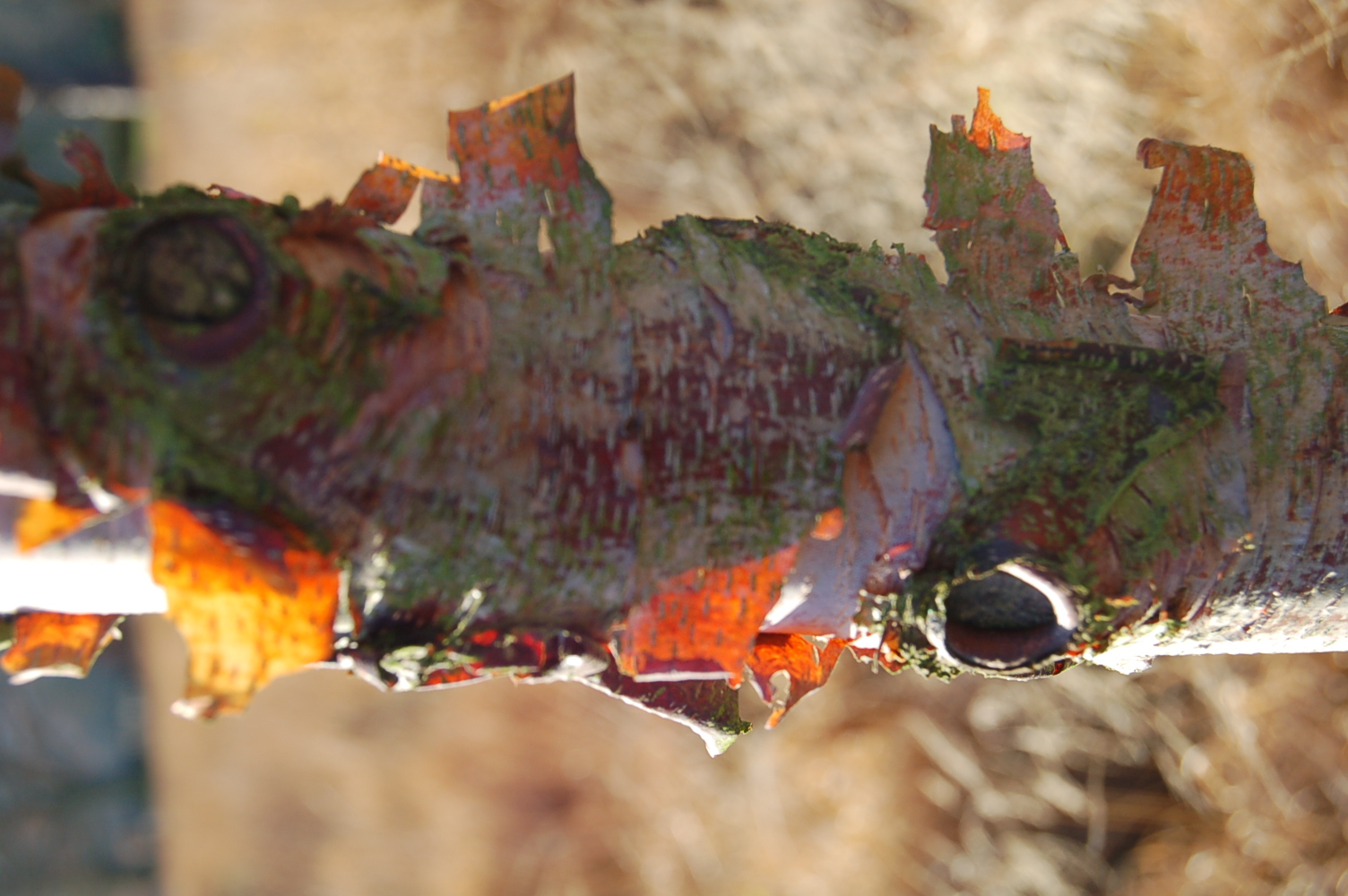
Peeling bark and Snowdrops.Winter light reflected in the glossy bamboo foliage.Back-lit Hydrangea seed heads.Twiggy highlights like spiders' webs.Long shadows of the White-stemmed Birch cross the carpet of Snowdrops.Winter light turns Cornus mas flowers into gold along the orange peel bark.Orange stems and yellow foliage enriched by the lightLooking out from the shadows.Curling silhouettes of an old gnarled Rhodendron bush.Fence shadows.Snowdrops and moss.Sparkling Hydrangeas.Into the light.Fallen rotting tree trunk looking like a huge tuning fork.Jewel coloured Bergenia leaves.Sparkling Lake
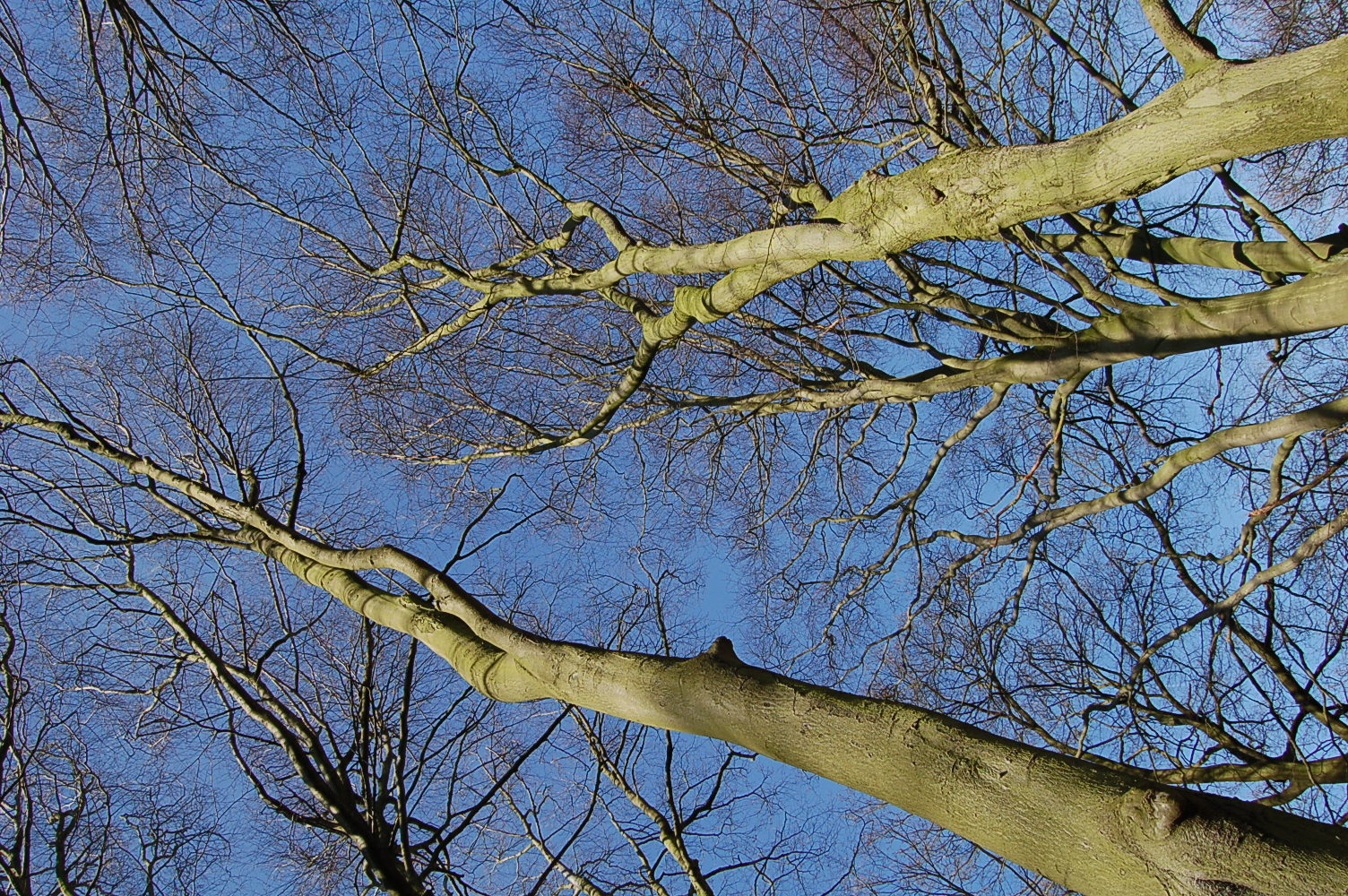
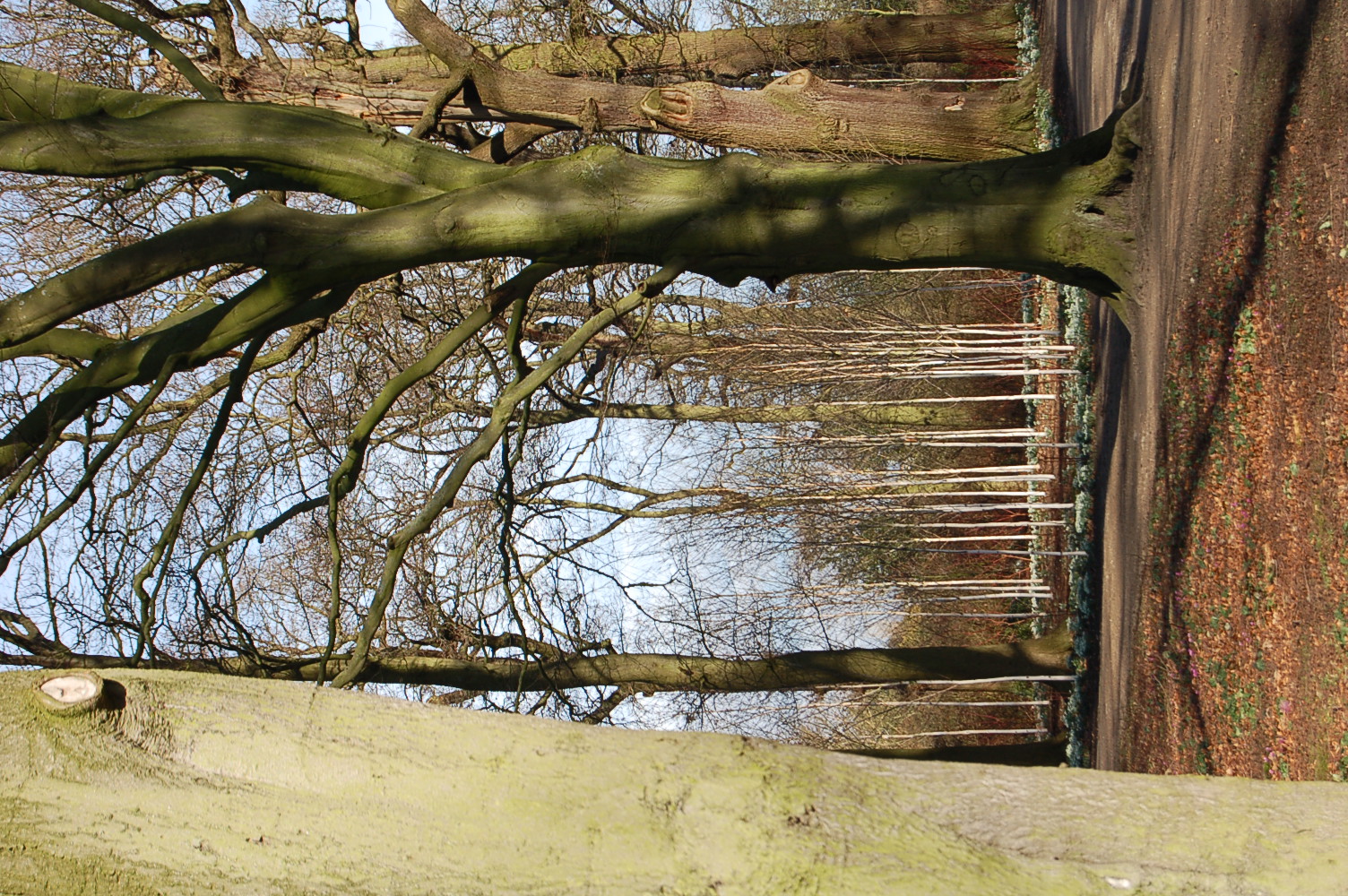
I recently published my blog about the winter garden at Dunham Massey. (see “The Winter Garden at Dunham Massey”) This wonderful area of planting is beautifully situated within and underneath an area of mature trees, some of great age and height, so my camera wandered upwards and shot some pictures.
Jet aircraft from the nearby airport painted white lined art against the deep blue of the sky.
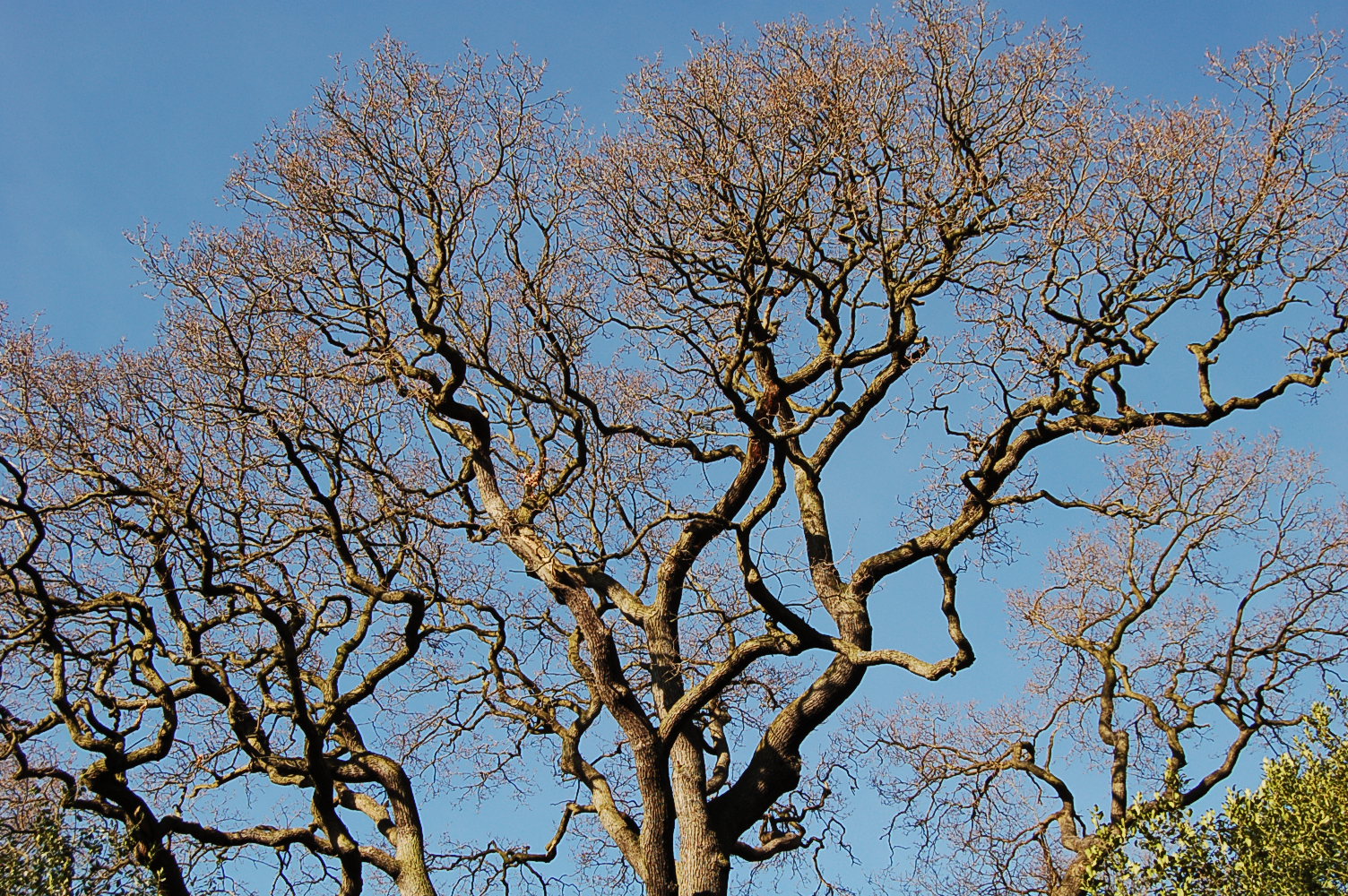
The tracery of bare winter branches bursting from the thick trunks of the mature trees painted far more delicate works of art in the sky. No straight lines in their doodlings.
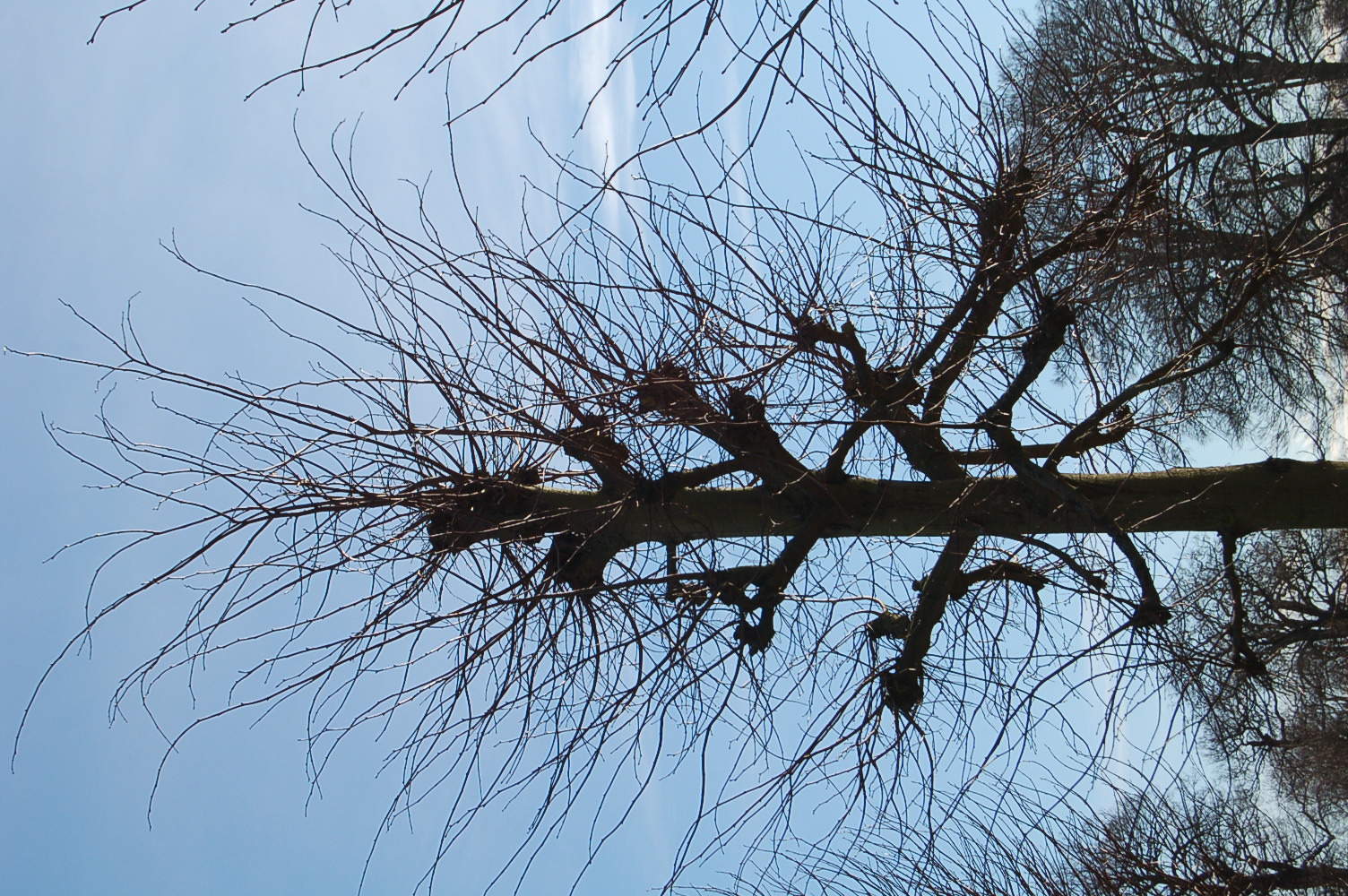
In this avenue the gardeners have added their personal touches to the trees’ artwork with their pleaching work.
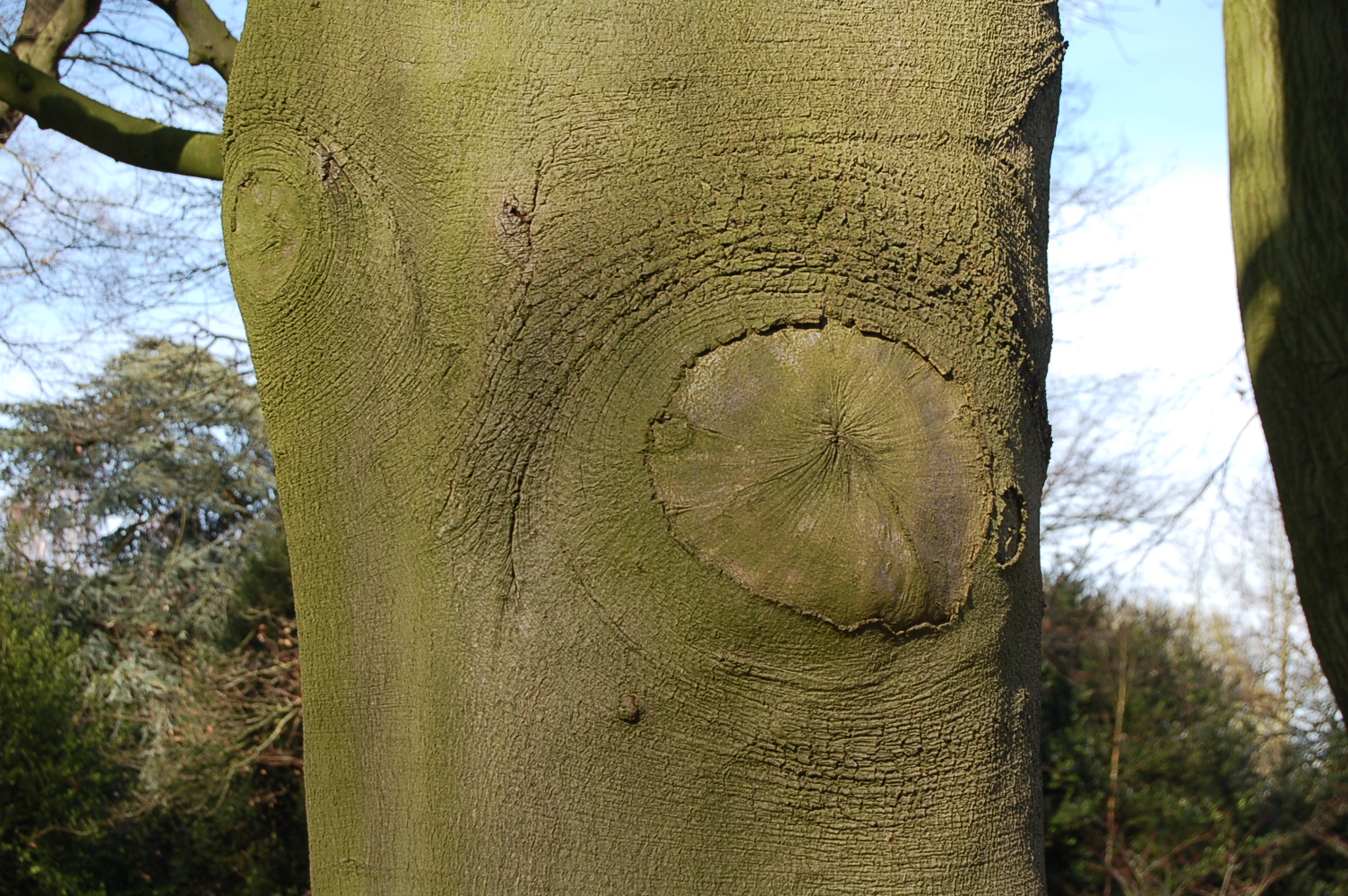
The artwork below has been created over decades by the growth and development of this huge tree, creating its own unique textures and patterns.
Looking up gave surprises and delights, looking up into the world enjoyed by birds and insects. Looking up also concentrated and enhanced our listening, affording us the joy and thrill of hearing the calls of Nuthatches, Goldcrests and the Titmice family against the drumming sound of Woodpeckers.
We visited the Winter Garden at the National Trust’s Dunham Massey just after it opened, so we returned this week to see how things had developed. Wow! This is some Winter Garden. The National Trust enlisted Roy Lancaster, one of my gardening heroes, to help with its design so there is some interesting planting. We wandered around it for hours trying different routes through it which afforded us the opportunity of seeing each bit of planting in a different light. This is a garden for all the senses, our eyes, noses, fingers and ears enjoyed every moment. It was busy but the design and quality of planting seemed to make everyone remain quiet. Quiet enough to hear the birds, bees and insects at work.
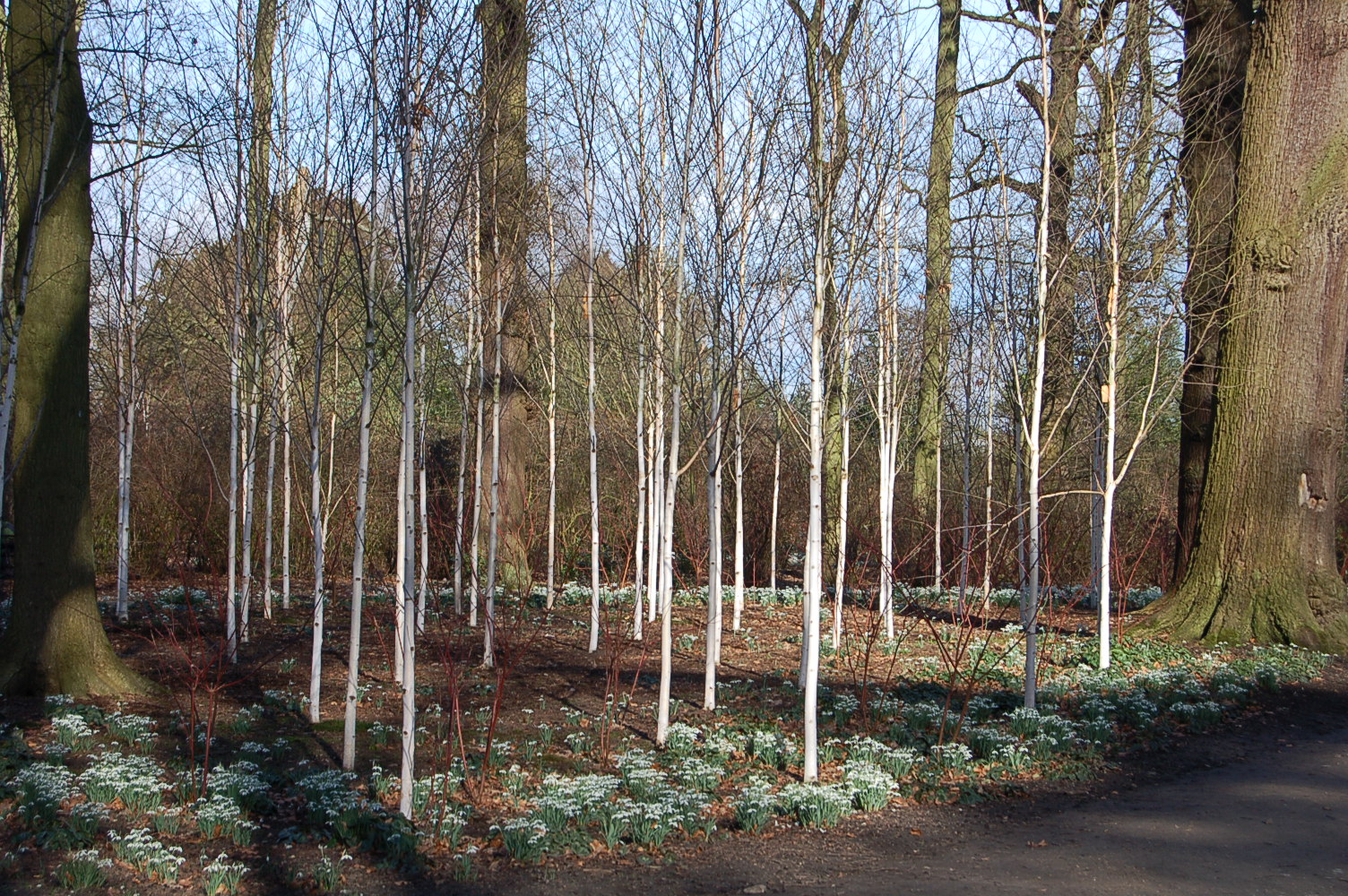
A winding path lead us through an area of mature trees underplanted with miniature daffodils, an area where the trees’ long shadows cut across the Daffodils, beautifully lit by the low sun and shining like gold, and soon we glimpsed the massed planting of white barked Birches.
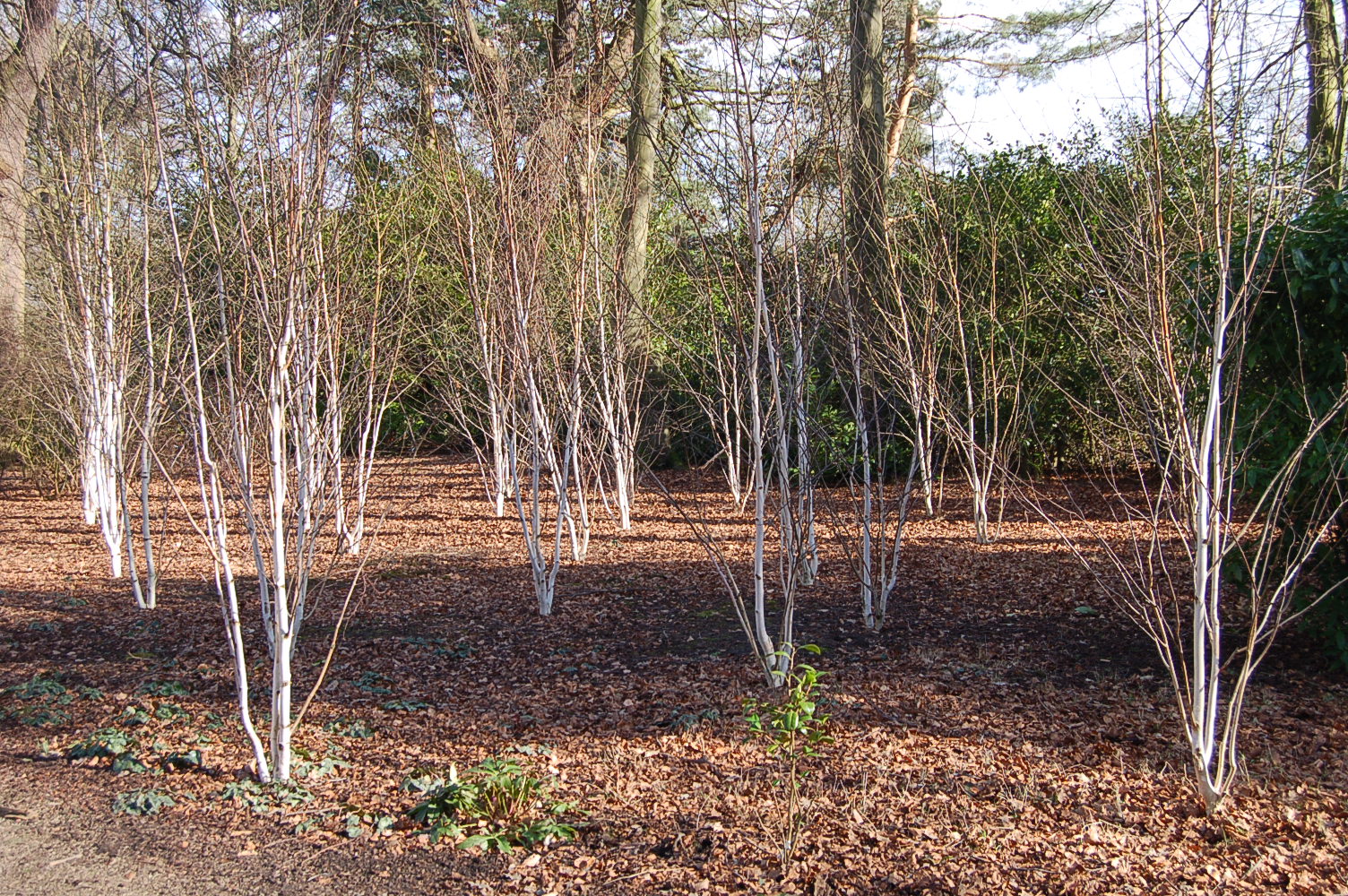
There were two distinct areas of Birch trees, single stemmed specimens one side of a path and multi-stemmed on the other. Betula utilis “Doorenbos” was the chosen variety and their trunks were a clear crisp white.
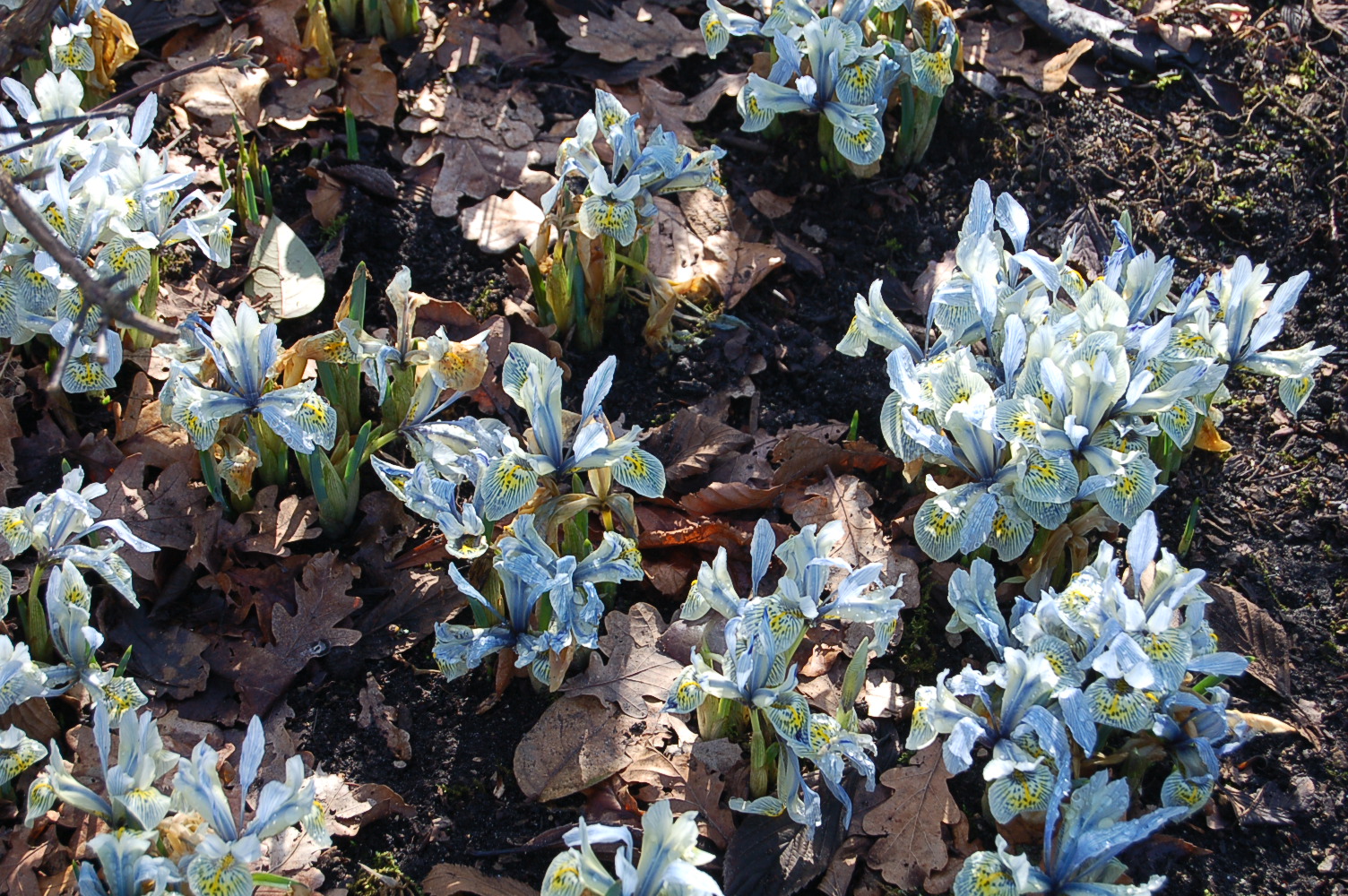
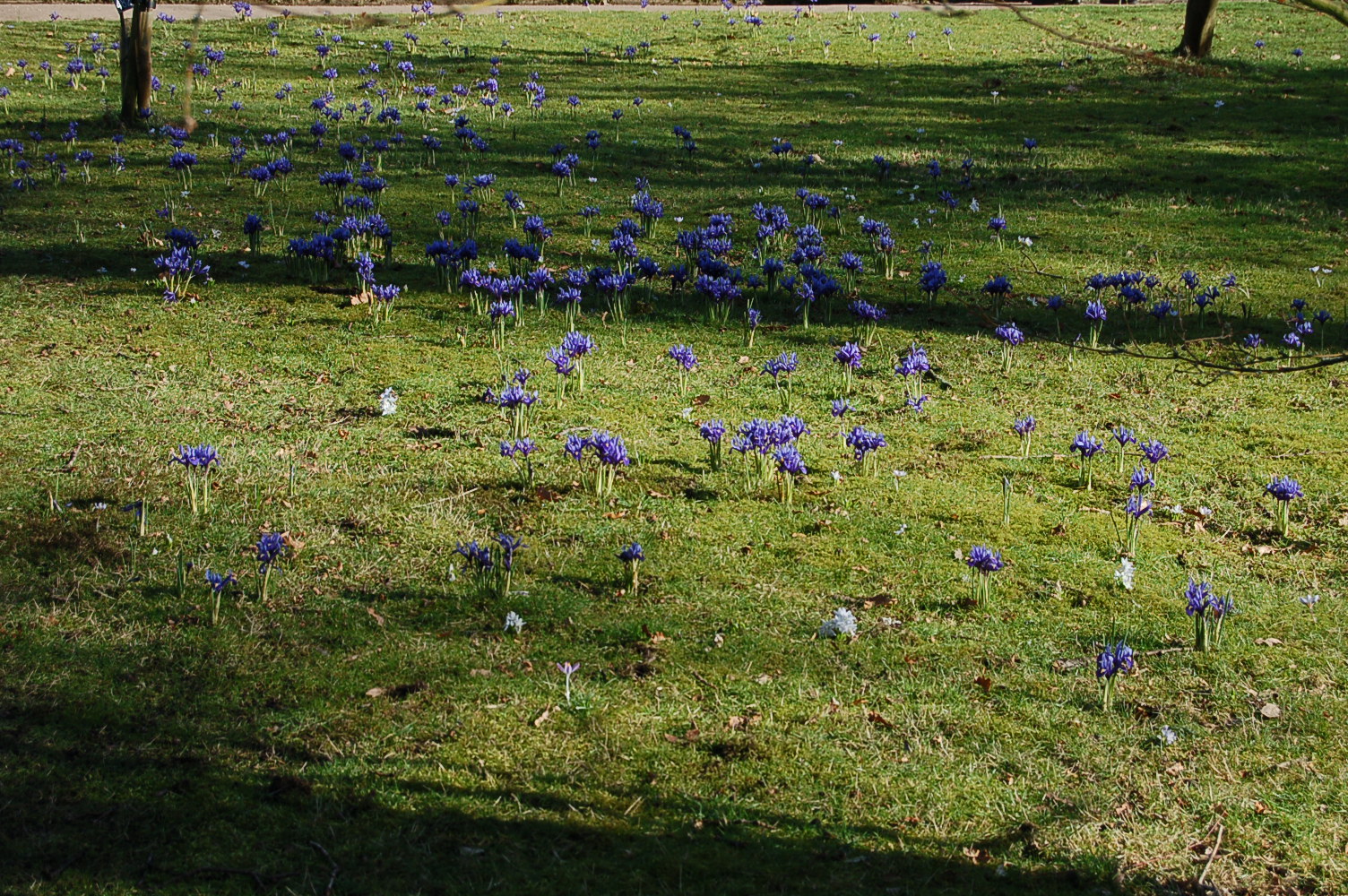
As well as the usual winter flowering bulbs such as crocus, snowdrops and daffodils there were several different coloured varieties of Iris reticulata those tiny bulbous plants with over-sized flowers in shades of purple and blue, all with yellow beards.
In some areas of lawn these diminutive Irises have been naturalised under trees. We had never seen this done before and have to say it was very effective.
It was so heartening to see and hear bees, hoverflies and other insects at work around the flowering shrubs, Lonicera fragrans, Cornus mas, Daphne mezereum “Alba”, Viburnum bodnantense and Viburnum tinus.
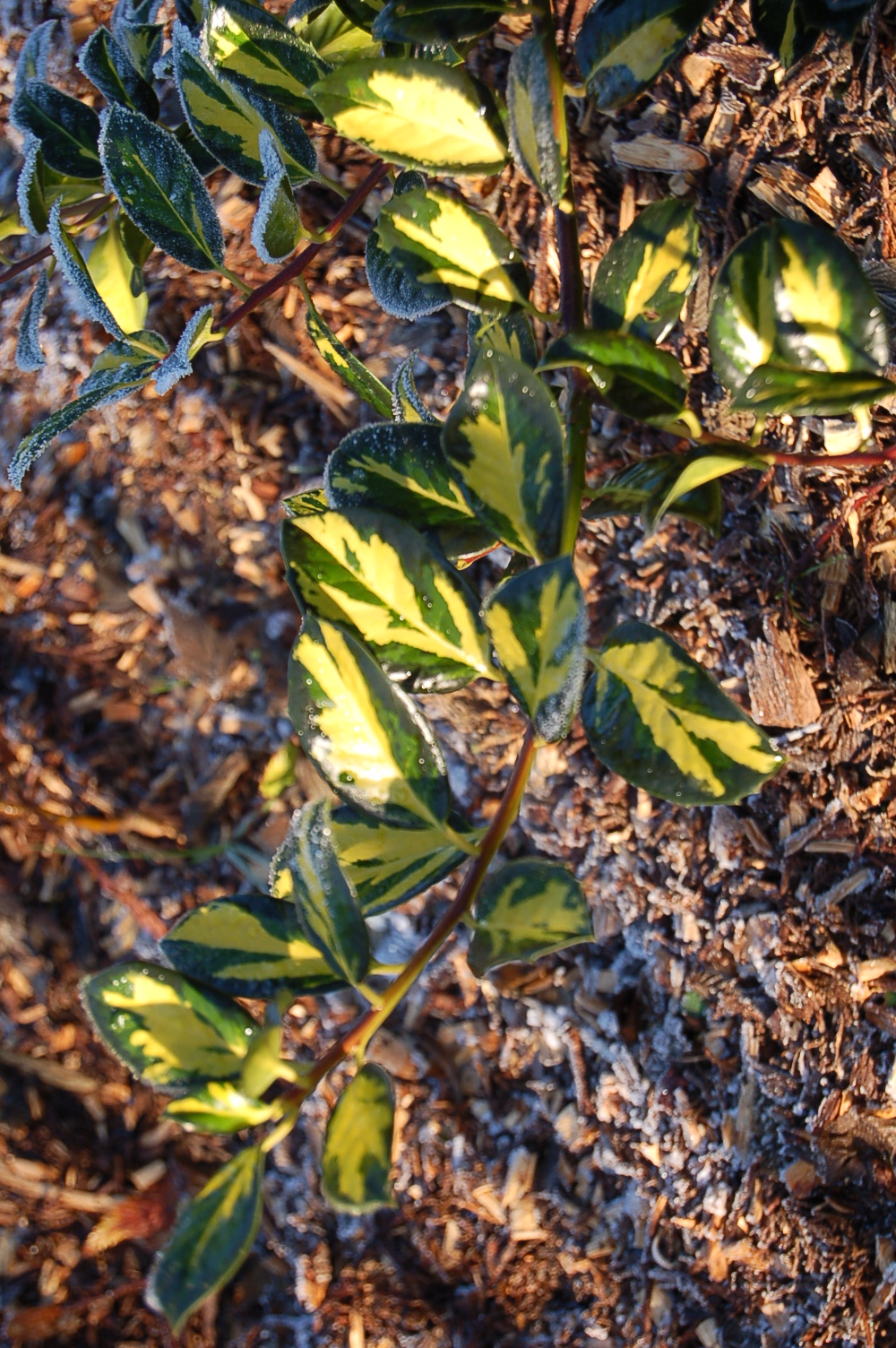
Lovely as the flowers of winter are, sometimes the colours, textures and shapes of leaves can be just as impressive – Bergenias, Liriope and variegated Ilex for example in their many colours.
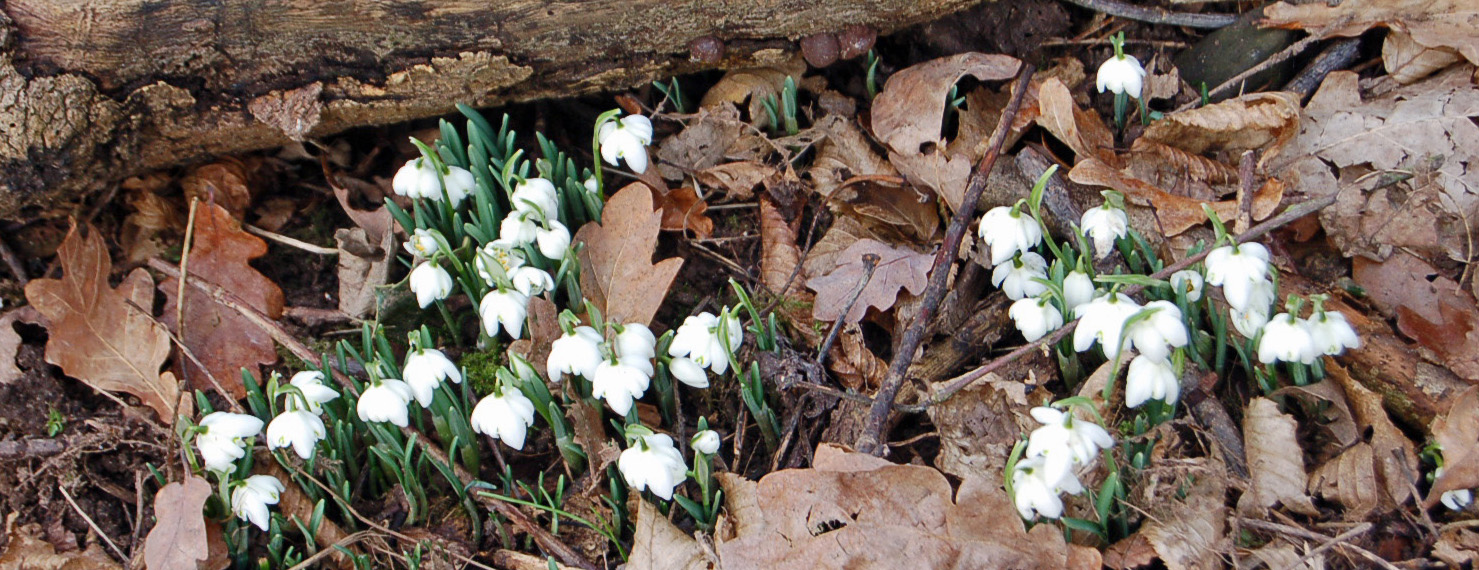
We cannot ignore the snowdrops though, and here at Dunham Massey they have been so thoughtfully placed, at the bases of trees or shrubs.
The textures and colours of bark add another dimension to this winter garden, peeling bark, shining bark, bark like snake-skin, red stems, contorted stems, curling stems, shimmering stems.
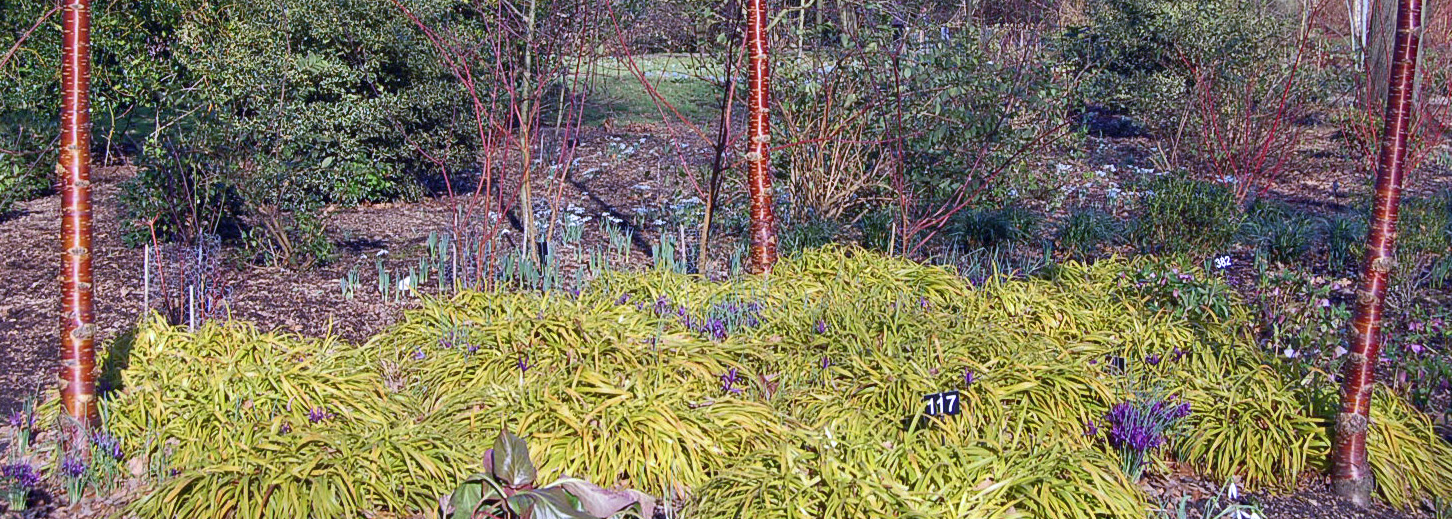
In the photo below the ginger-coloured shining bark of Prunus serrula shoot upwards from the golden leaves of Liriope.
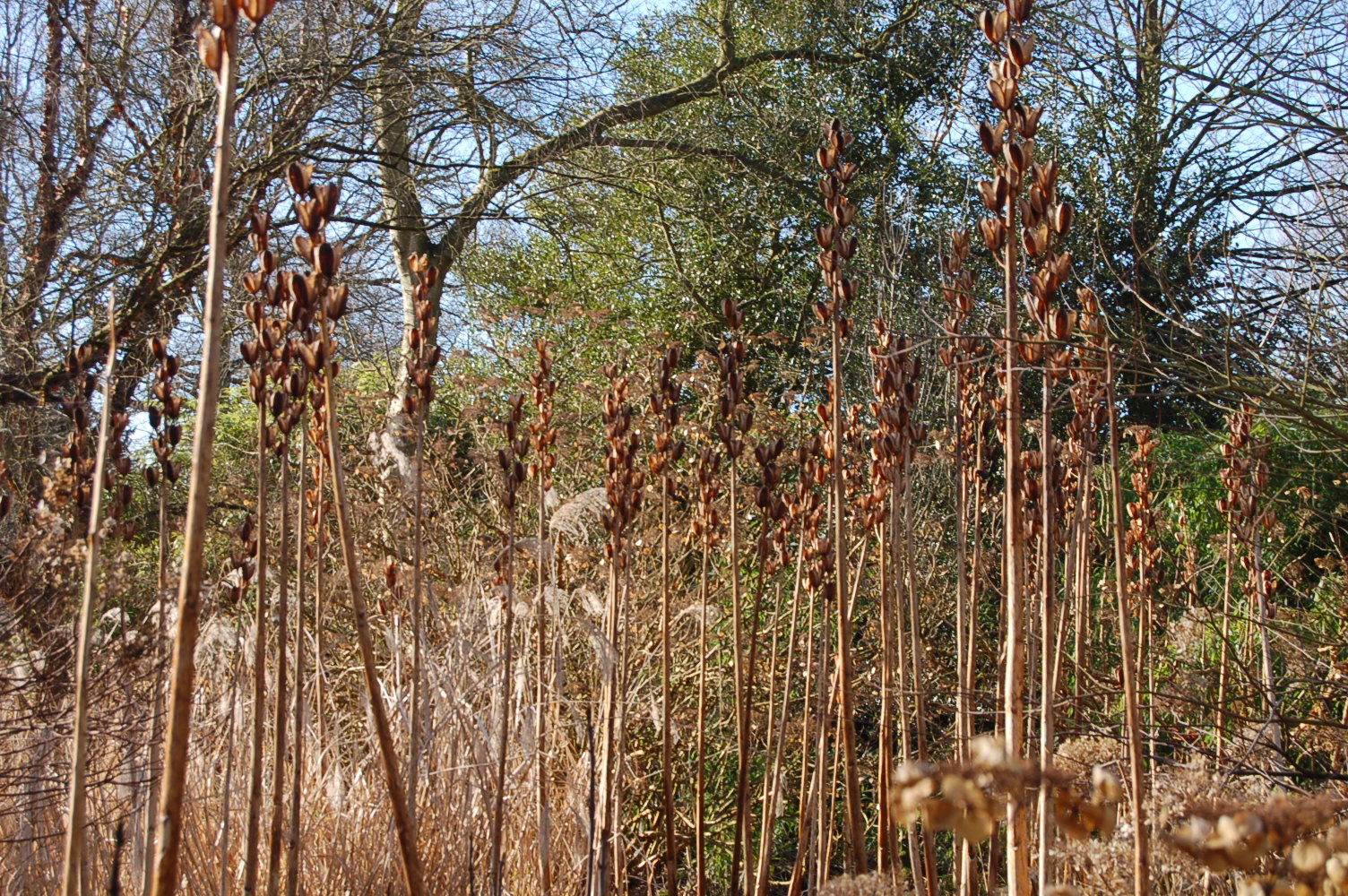
With all the new season’s flowers, the colourful stems and bark, and the scents it would be too easy to miss the effect the winter light can have as it plays across the seed heads of last year’s flowers and stems. Giant lilly stems with their huge seed pods towering up above a sea of desiccated flower heads of a variety of Hydrangeas stopped us in our tracks.
When the wind blew these seed heads rustled gently, temporarily drowning out the sound of the Blackbirds turning over the mulch of bark and throwing the dried leaves fallen from trees last Autumn over their shoulders. The gentlest breeze set the bamboos swaying and rustling but it took a stronger wind to move the conifers overhead and start their music making. Over our heads in the mature tree canopy we could hear the calls and songs of Goldcrests, Nuthatches, Coal Tits and Blue Tits occasionally drowned out by the drumming of Great Spotted Woodpecker, all proclaiming their territorial rights in their own unique way.
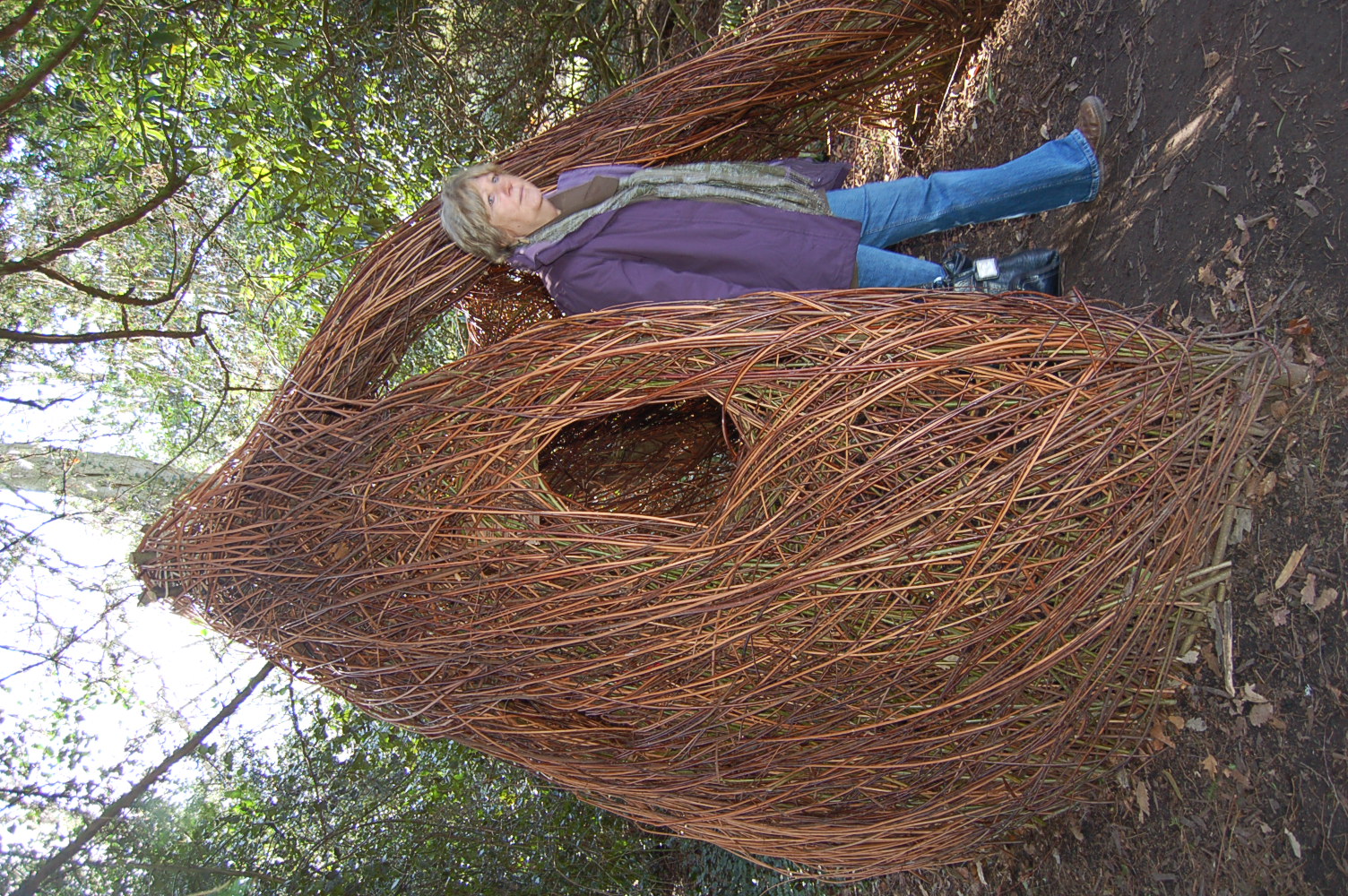
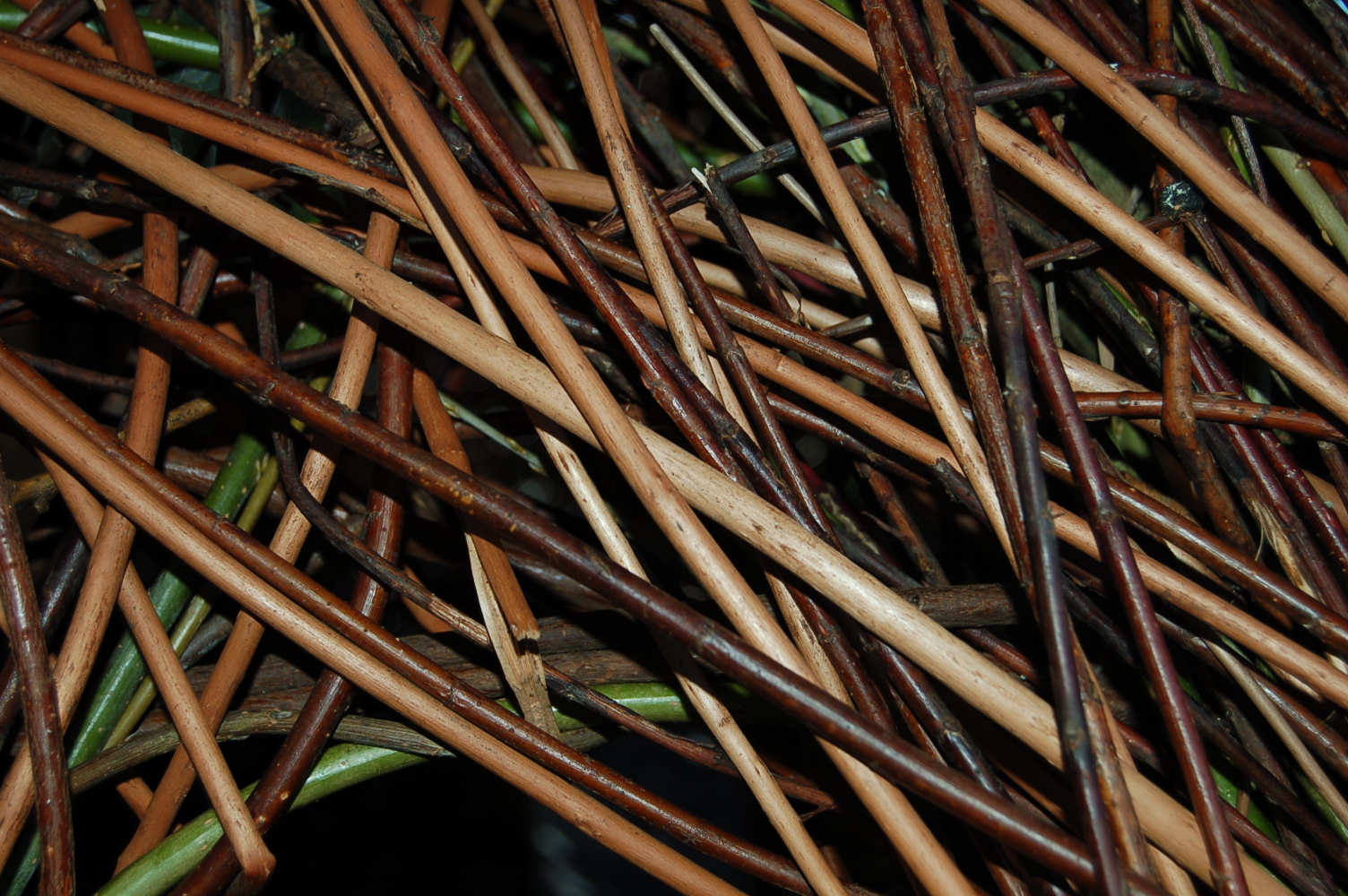
There was so much to appreciate in the Winter Garden at Dunham Massey that it is hard to leave. But it had another surprise around another corner, a beautifully woven willow den, created from many coloured stems. Jude, the Undergardener, as usual could not resist, so a quick exploration was called for before coffee and cakes called even louder from the restaurant!
As part of the development of the shared community spaces at Bowbrook Allotment Community we have created “Gardens of the Four Seasons”. We did this with the support of “The Peoples Postcode Trust” who awarded us a generous grant for the purchase of plants. In early 2011 we began work on the Winter Garden and now we are beginning to see some results of our labours. The work was carried out by allotment holders who attend regular working parties (look out for future blog about our working parties) and the gardens are maintained by members. Much work is also done outside working parties by individuals or small groups.
I designed the garden and presented the plan to the management committee and informed other members by e-mail, asking for comments, further suggestions and ideas. The basic idea was to create a garden full of trees, shrubs, grasses, bulbs and perennials that looked good in the winter, for their stem colour, bark colour and texture, their flowers, their scents. Movement and sound was also considered so we included many grasses and some trees with rustling stems.
It is now a year since we began the groundwork. The preparation was completed by the end of February 2011 and the main framework of planting by the end of March.
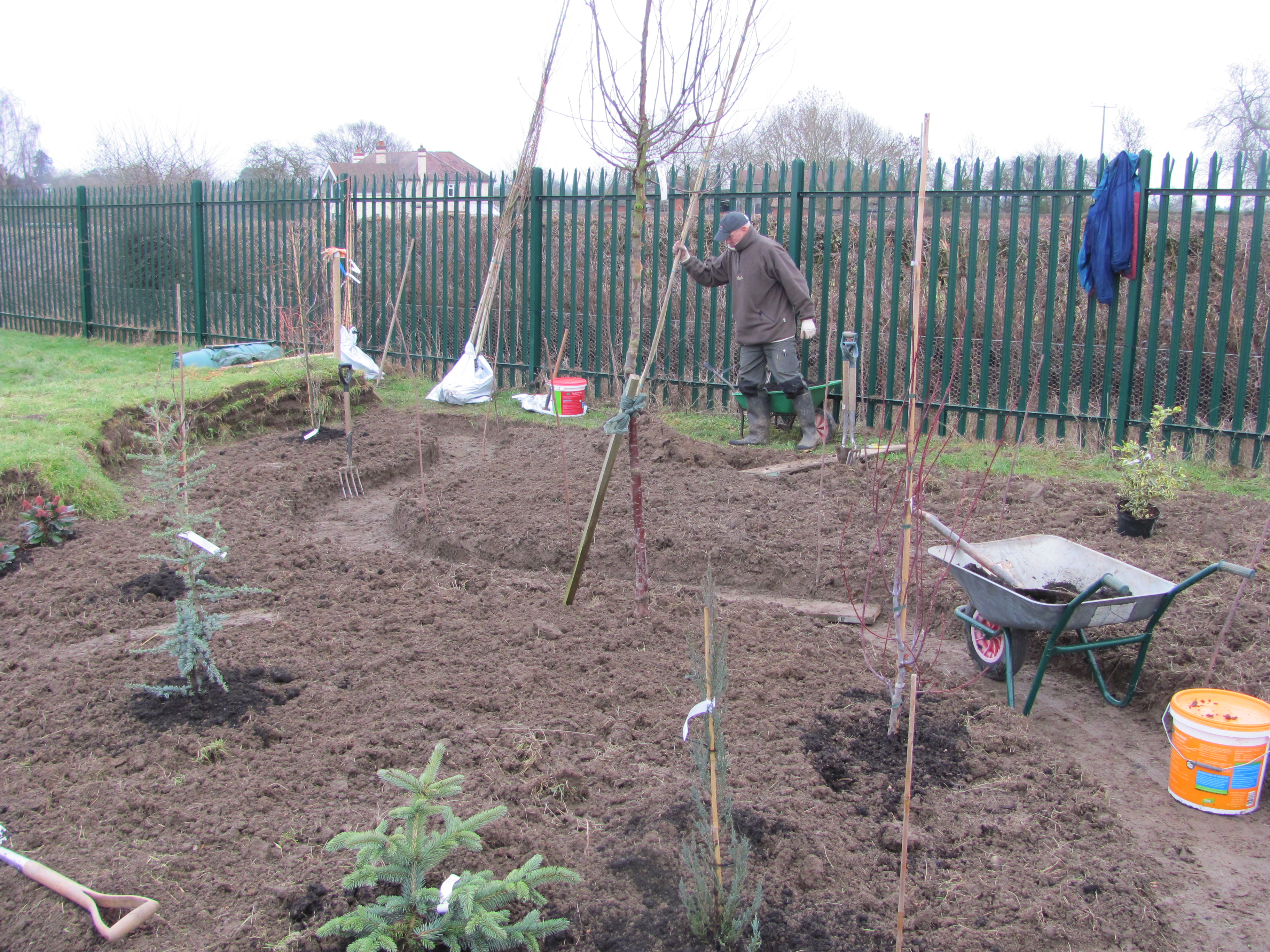
The first step was to rotovate the land, almost triangular in shape, in the corner of the site furthest from the huts, about 10 x 20 metres. We then added manure and rotovated once more. We dug out a path shaped as a serpentine curve, which cut the border in two, edged it with logs and gave it a deep layer of bark. It proved soft and comfortable to walk on. A thick layer of compost was added to the planting areas and raked level and we were prepared for planting.
Our Winter Garden is situated in a corner of the site. A water-butt is ready to be placed conveniently for watering in dry periods. In front is one of our wildlife banks.
Trees and shrubs were delivered by The Dingle Nursery from Welshpool, who had proved so helpful in helping us to select the best when we visited them to place our order. Unloading the truck and unpacking the plants was an exciting time, full of anticipation. Transporting them across the site took longer than expected involving three plot-holders with wheelbarrows. Some of the trees were just too long to stay put. After an hour of laughter and regular rescuing of dropped goods, we finally began planting. It was to take a few days.
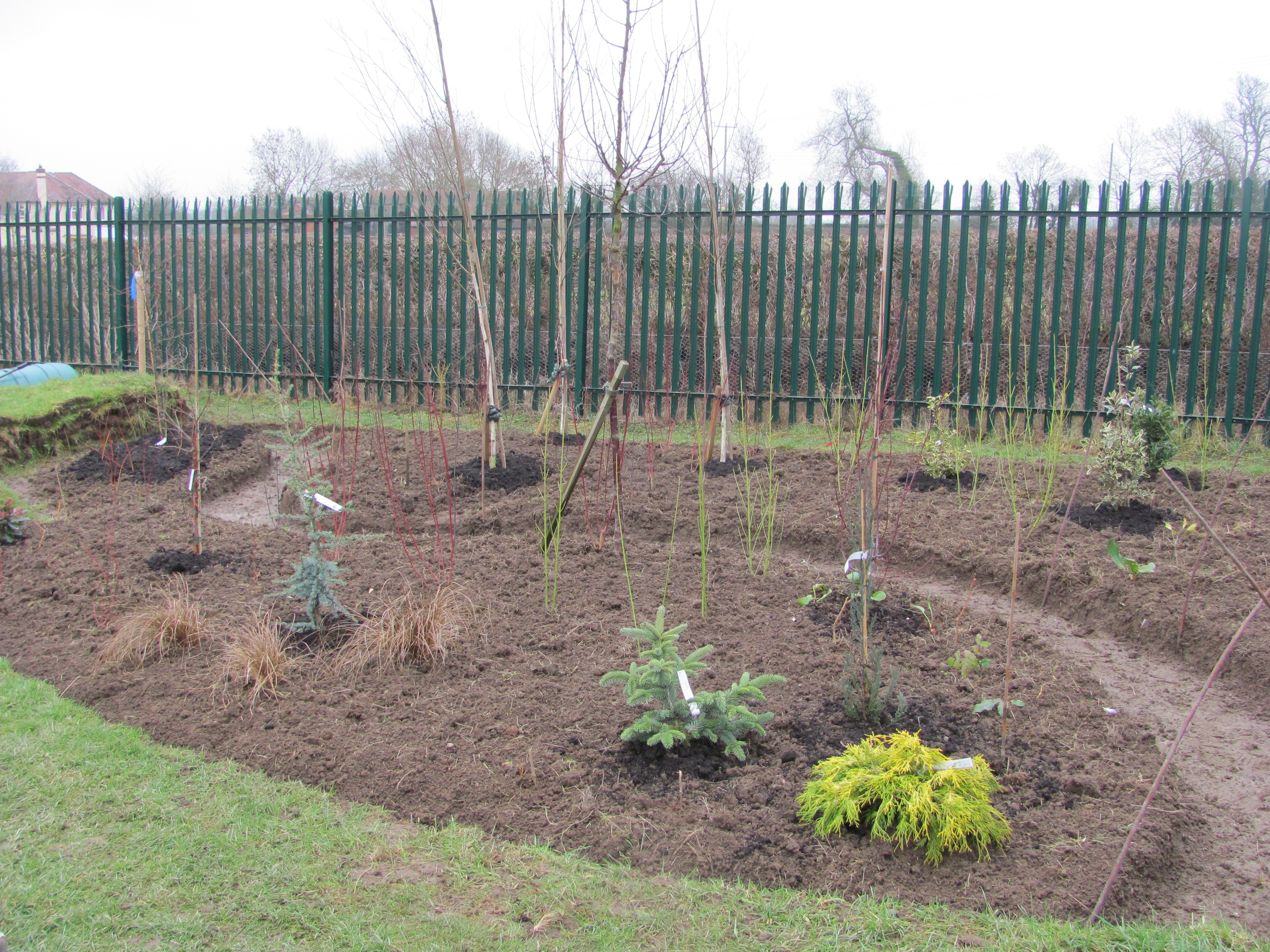
Trees in place.
Bulbs and herbaceous plants arrived by post and were added to our structural planting of trees and shrubs. a selection of grasses was added later. We now had trees with coloured bark, shrubs with coloured stems and a winter flowering time, perennials such as Hellebores and Pulmonaria and grasses to give movement and beautiful seed heads.
Plot holder Pete busy planting.
In pride of place are our three silver-barked Birches, Betula utilis “Jacquemontii” planted as 3 metre tall specimens, along with similarly sized Prunus serrula with its shining gingery-bronze bark. Smaller specimens of Acer davidii (a snake bark maple), Acer griseum appreciated for its peeling red bark and a selection of variegated Hollies completed the structural planting.
Key plants in place.
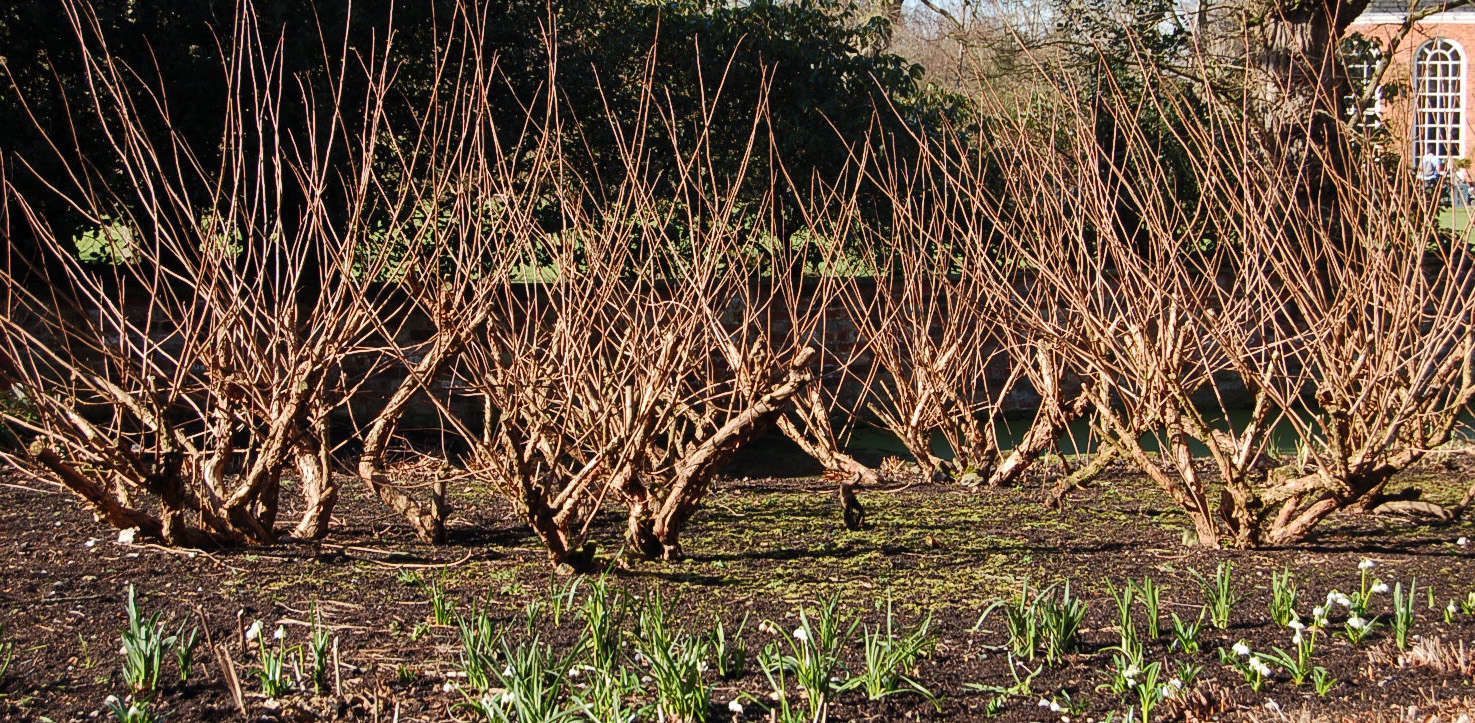
For bark colour we planted dozens of Cornus, Salix and Rubus tibeticanus to give an airy network of colour all winter and early spring. We interplanted these with patches of Lavender to give some summer interest, to attract butterflies, bees and hoverflies and to provide gentle bluish foliage colour all year. For winter flowering interest and scent we planted Cornus mas and Viburnum bodnantense “Dawn”.
In order to maintain all year interest with greatest emphasis of interest we added evergreens. As well as the Hollies we included Viburnum tinus and several conifers chosen for the variety of foliage colour, texture and habit of growth – Picea pungens Procumbens, Pinus sylvestris, Chamaecyparis “Boulevard” and to top it off John, our committee’s chairman donated a lovely specimen of Cedrus atlantica glauca. As a contrast we also planted a Larix decidua a conifer that is deciduous.
When we planted the trees and shrubs, following the allotment site’s organic policy, we gave them a sprinkling of bonemeal in the planting holes and top-dressed with blood fish and bone fertiliser before mulching with manure. We plan to give the bed regular mulching of compost and manure to give a slow-release nutrient regime.
Working parties and individual volunteers worked throughout the year to keep weeds at bay.
Volunteers at work tidying and weeding.
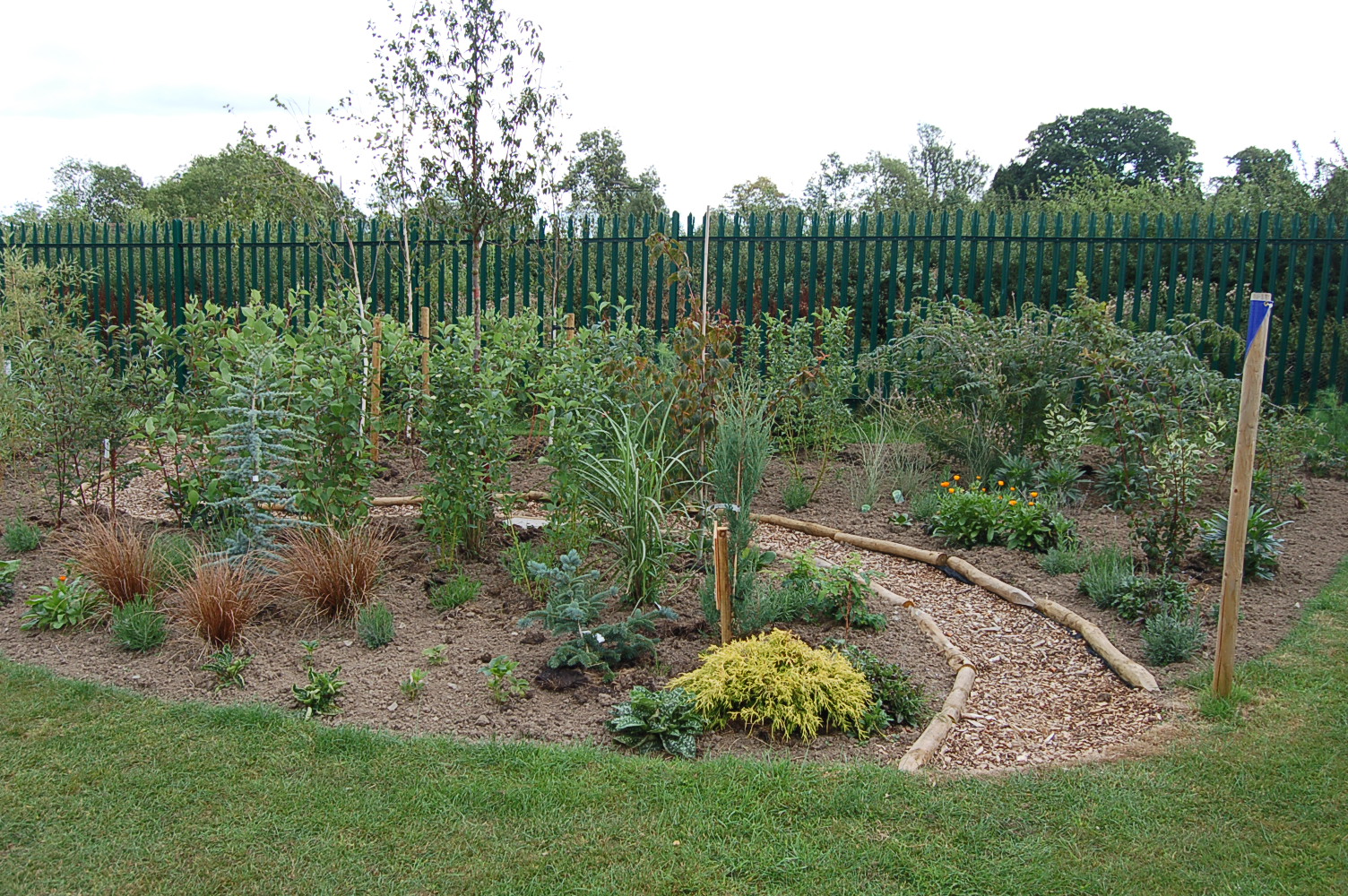
By late summer the garden was showing lots of healthy growth and we could see much promise for the future.
Full of promise.
In the autumn we gave the garden a mulch of chipped bark to protect it from the ravages of winter and to slowly break down releasing nutrients and improving humus levels ans soil texture.
This week three of us weeded the bed over, tidied, pruned and loosened up the soil. It was amazing to look at progress and realise how the garden had developed in less than a year. Bulbs were flowering, the trees and shrubs have made good growth and in particular the willows and dogwoods are showing strongly coloured stems.
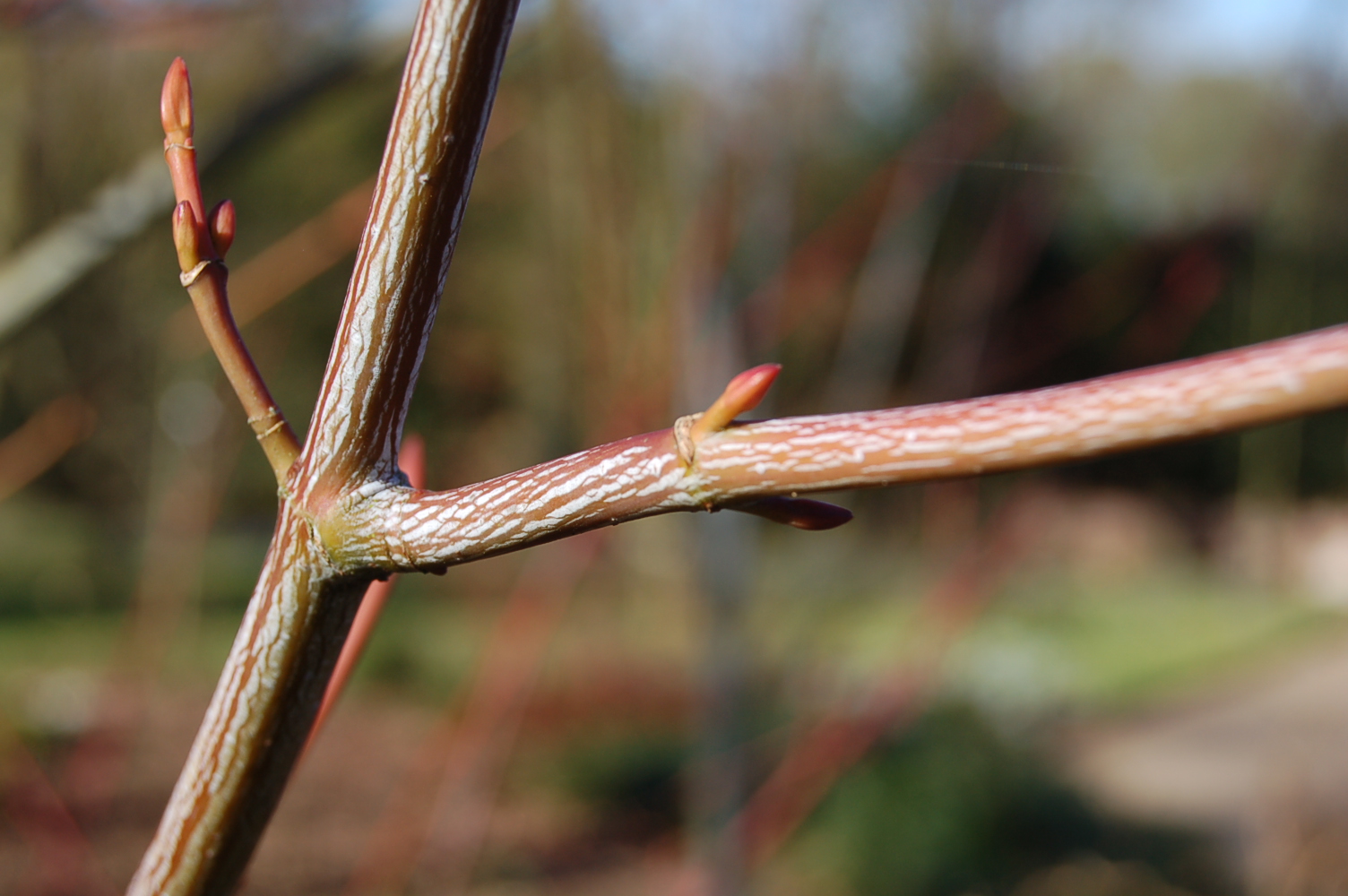
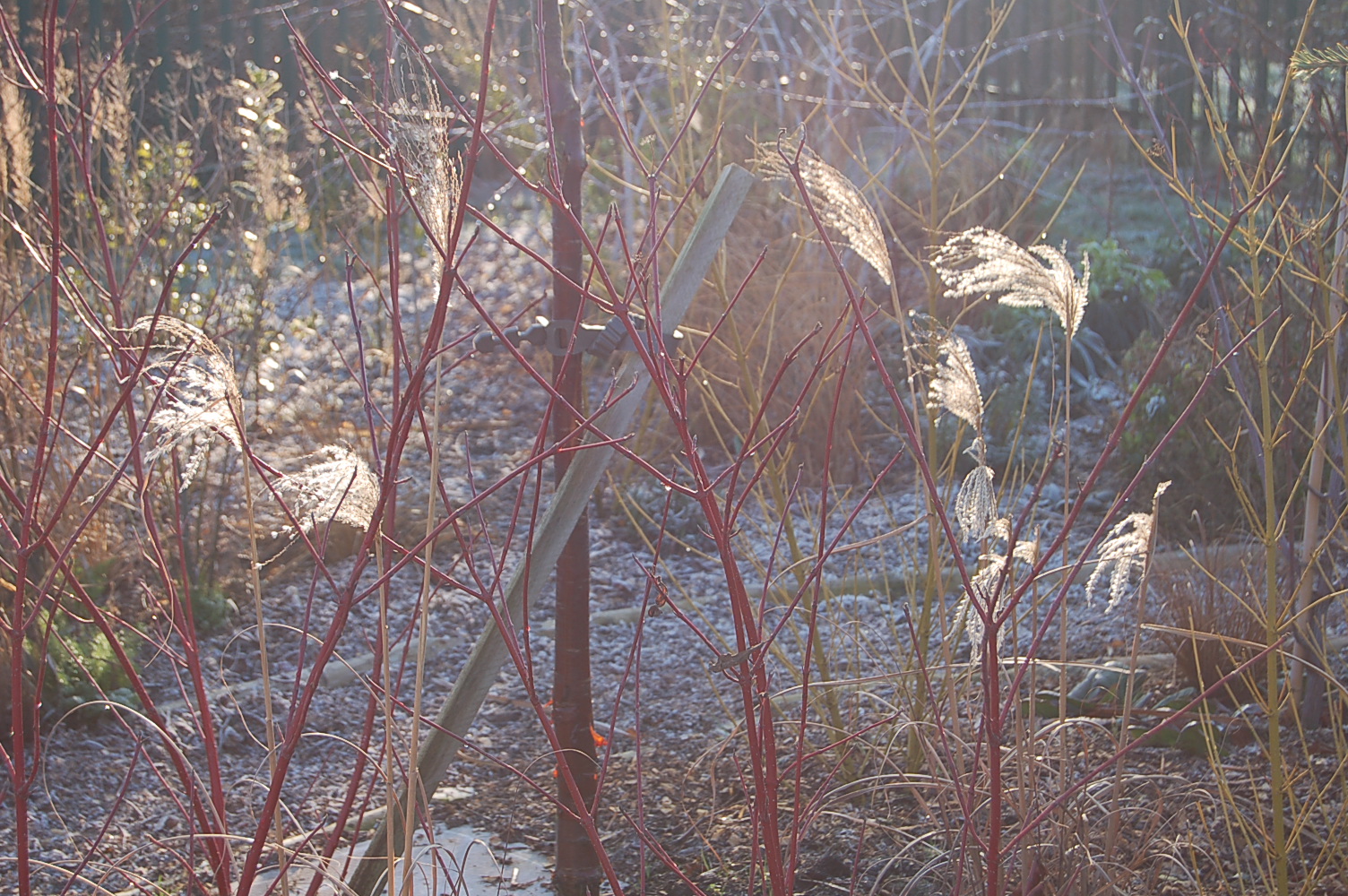
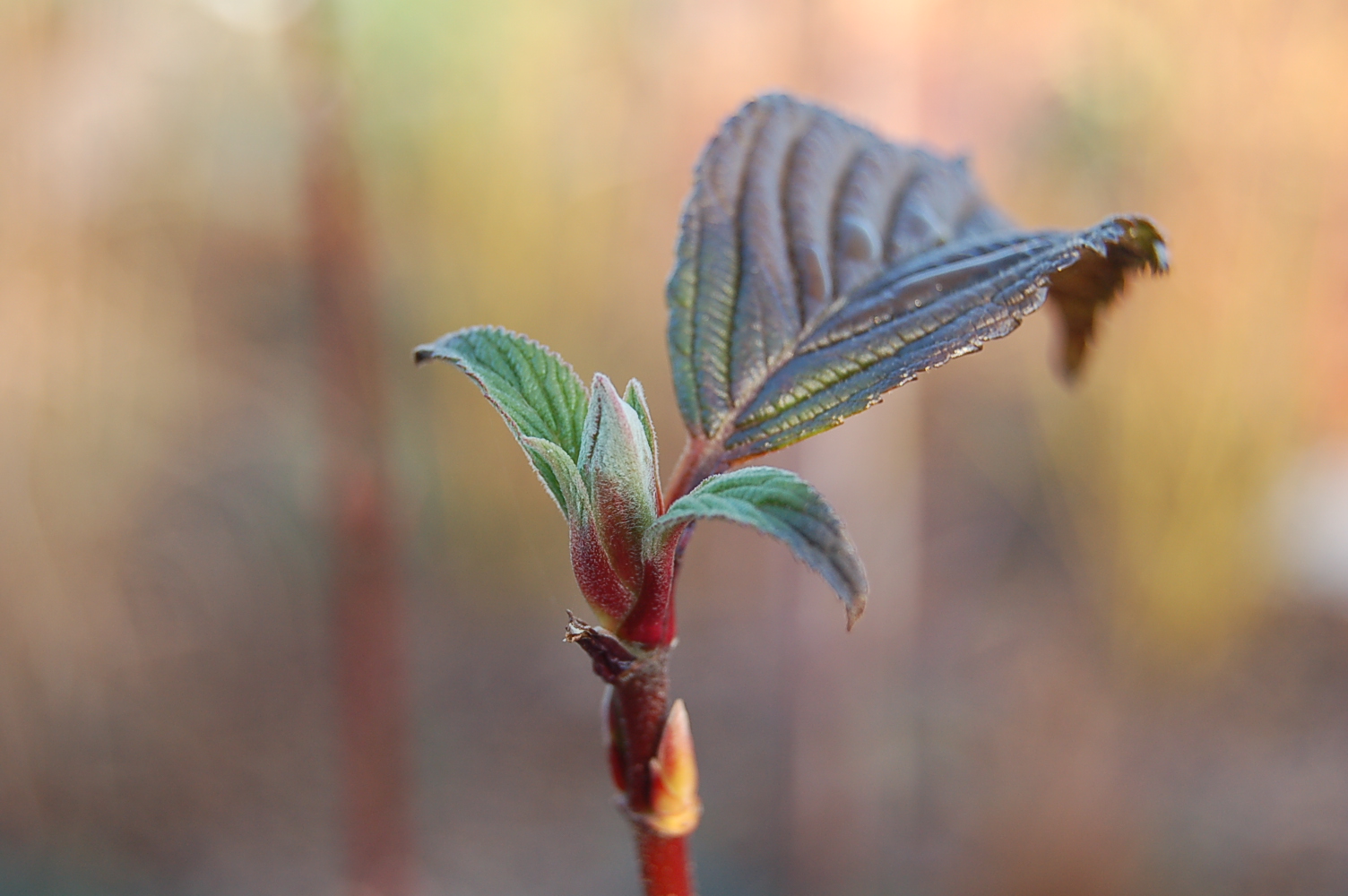
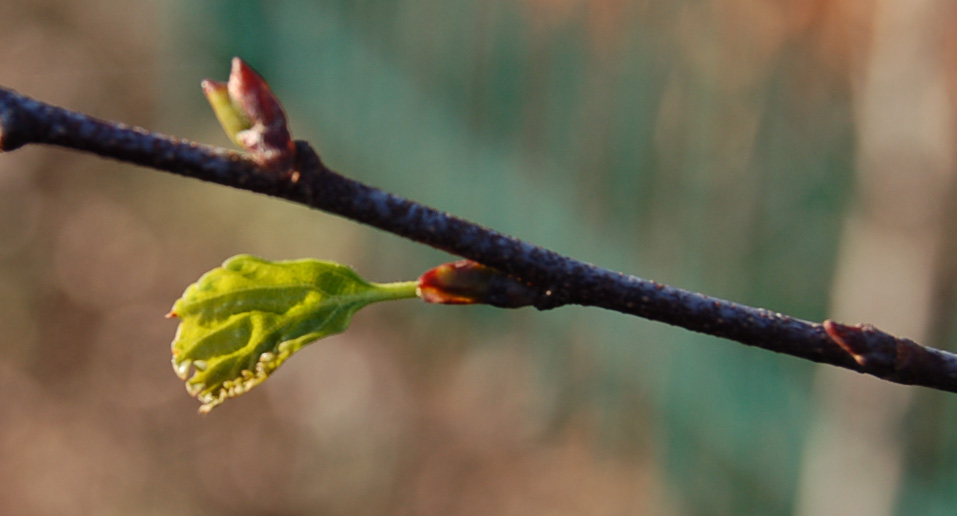
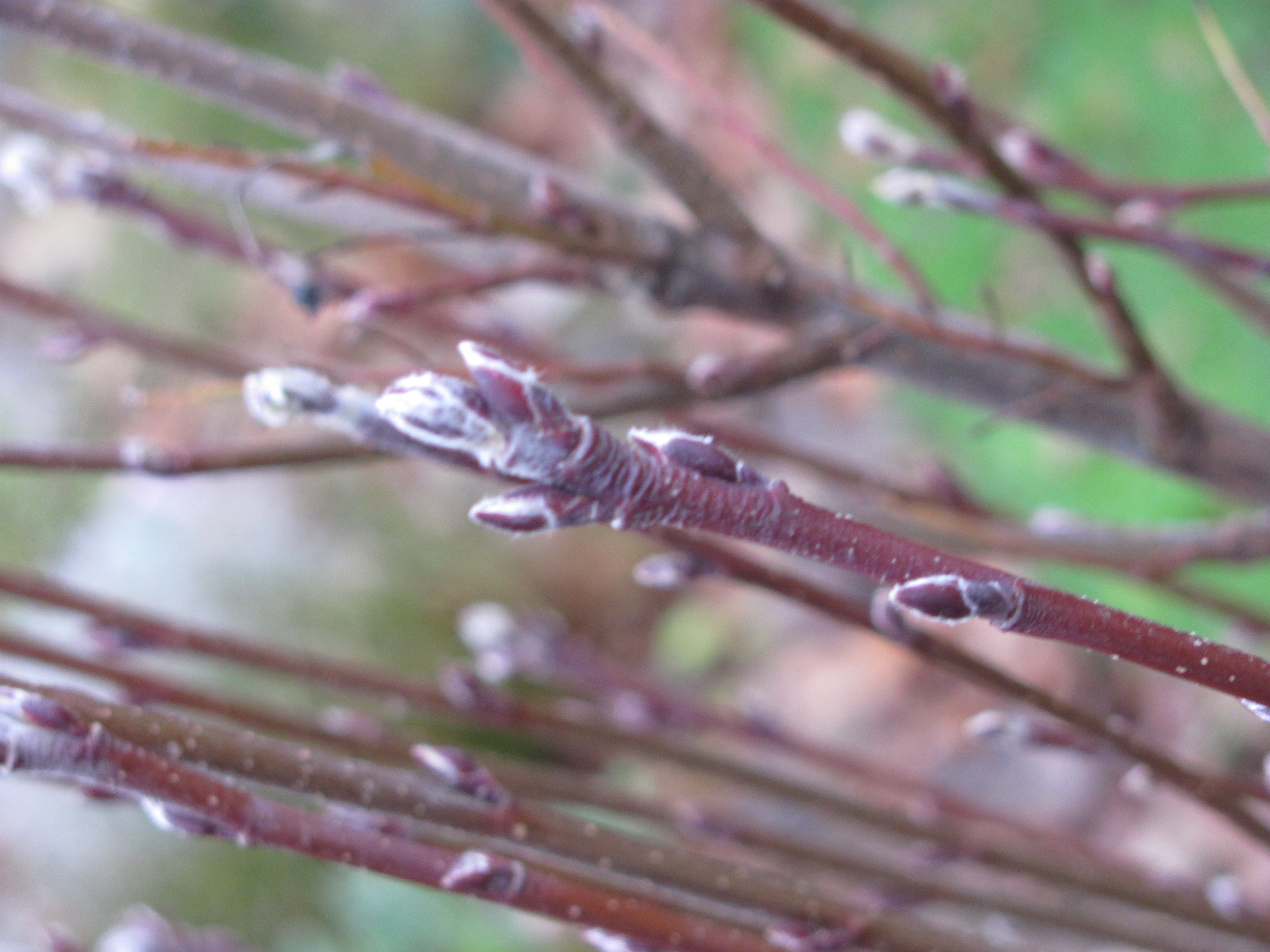
Winter sunlight through Miscanthus and Cornus.Stripes of fence shadows fall across a variegated holly.Blood red dogwood stems.Peeling bark like brittle toffee.Green flowered hellebore with striped shadows.Premature bud burst on Viburnum.Striped snake bark maple.
With so much to see after such a short time, we can but wonder at what our Winter Garden will bring us in the future. It was great fun creating it and judging from comments from plot holders it is already bringing much joy!
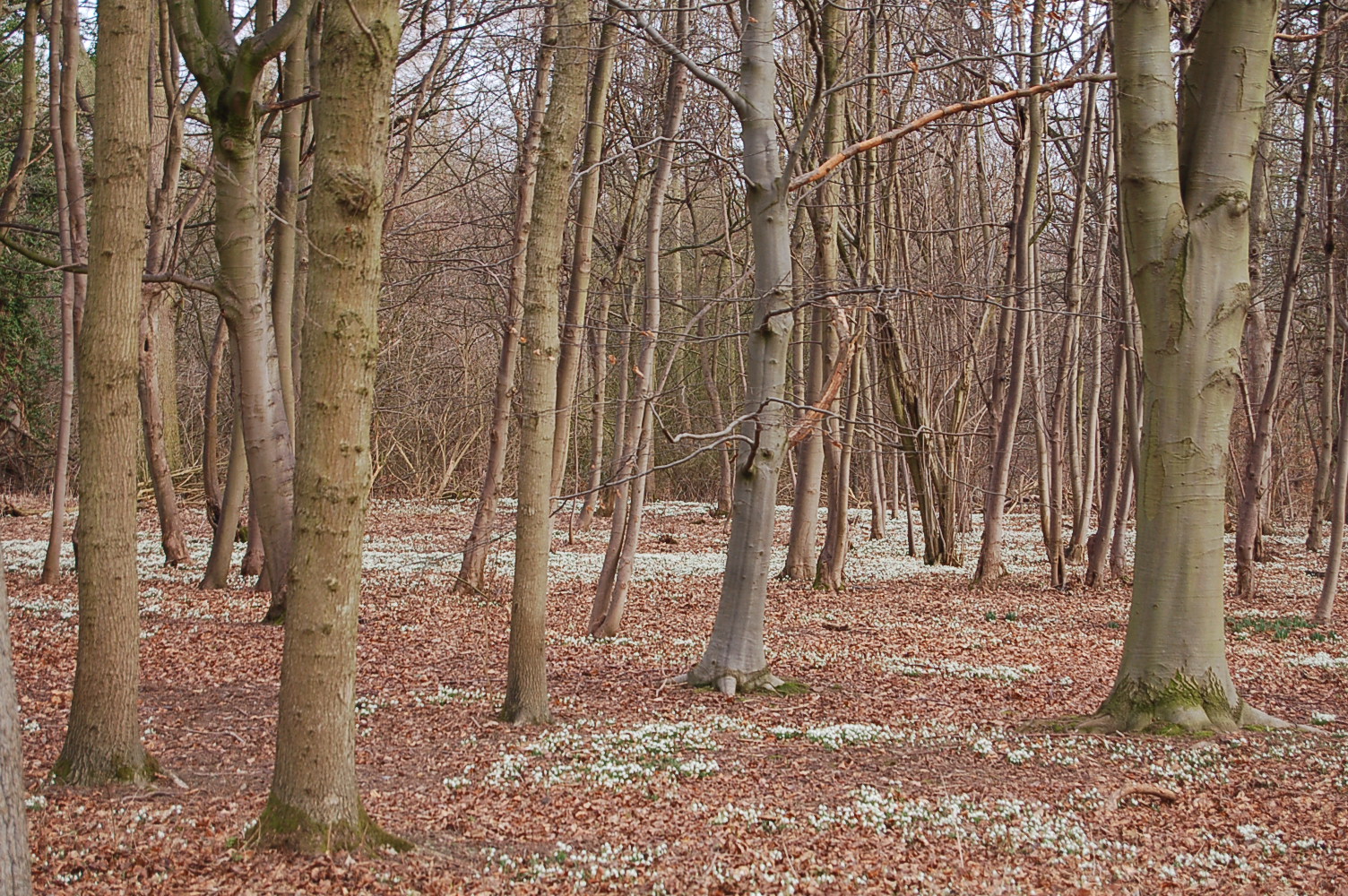
Today as the weather has warmed up and the sun is seeping through a thin cloud layer, we decided to take a twenty-minute drive out to Attingham Park for a walk through the woodlands where snowdrops are the stars in February. It was half-term so the woods were colourful, bright coloured anoraks, scarves and hats as families took to the paths. Every child seemed to have found a suitable rustic walking stick from the undergrowth. It was great to see young families out enjoying the natural world.
As we passed through the stable block the sound of vigorous hammering filled the air echoing around us. A noisy coffee break but we enjoyed watching youngsters wielding hammers busily constructing nest boxes. A great idea from the National Trust. Every family leaving Attingham today has at least one child clutching proudly a newly built nest box.
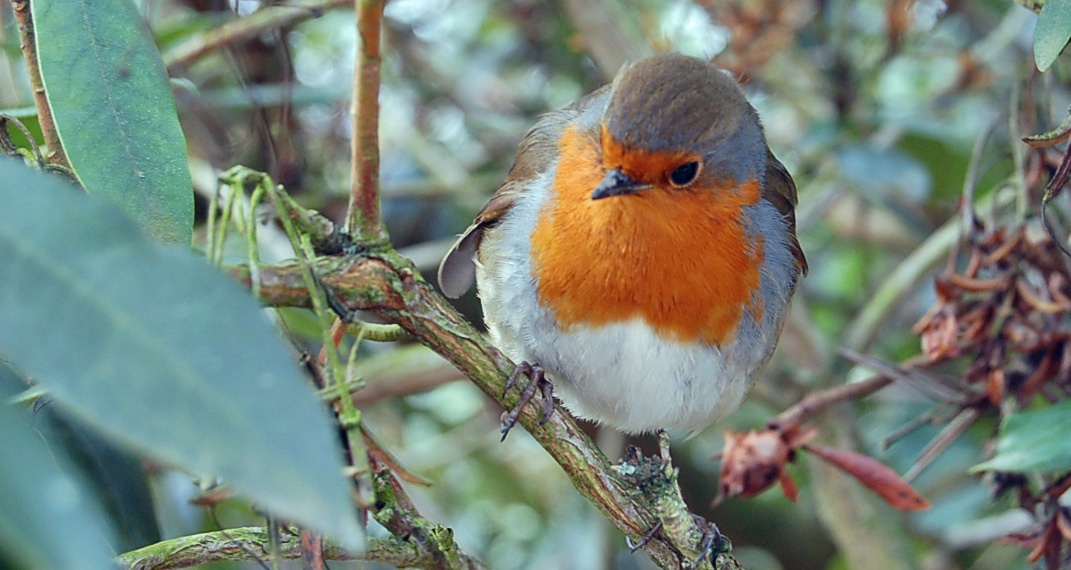
Once into the wood itself we seemed to be guided along by Robins who entertained us with their songs.
The snowdrops are small this year and very slow to develop. Many are just at the early bud stage and those that have come our sport small blooms. The swathes under the tall bare deciduous trees were far less vibrant than expected so the beauty was to be found in the little clumps hidden away deeper into the woods.
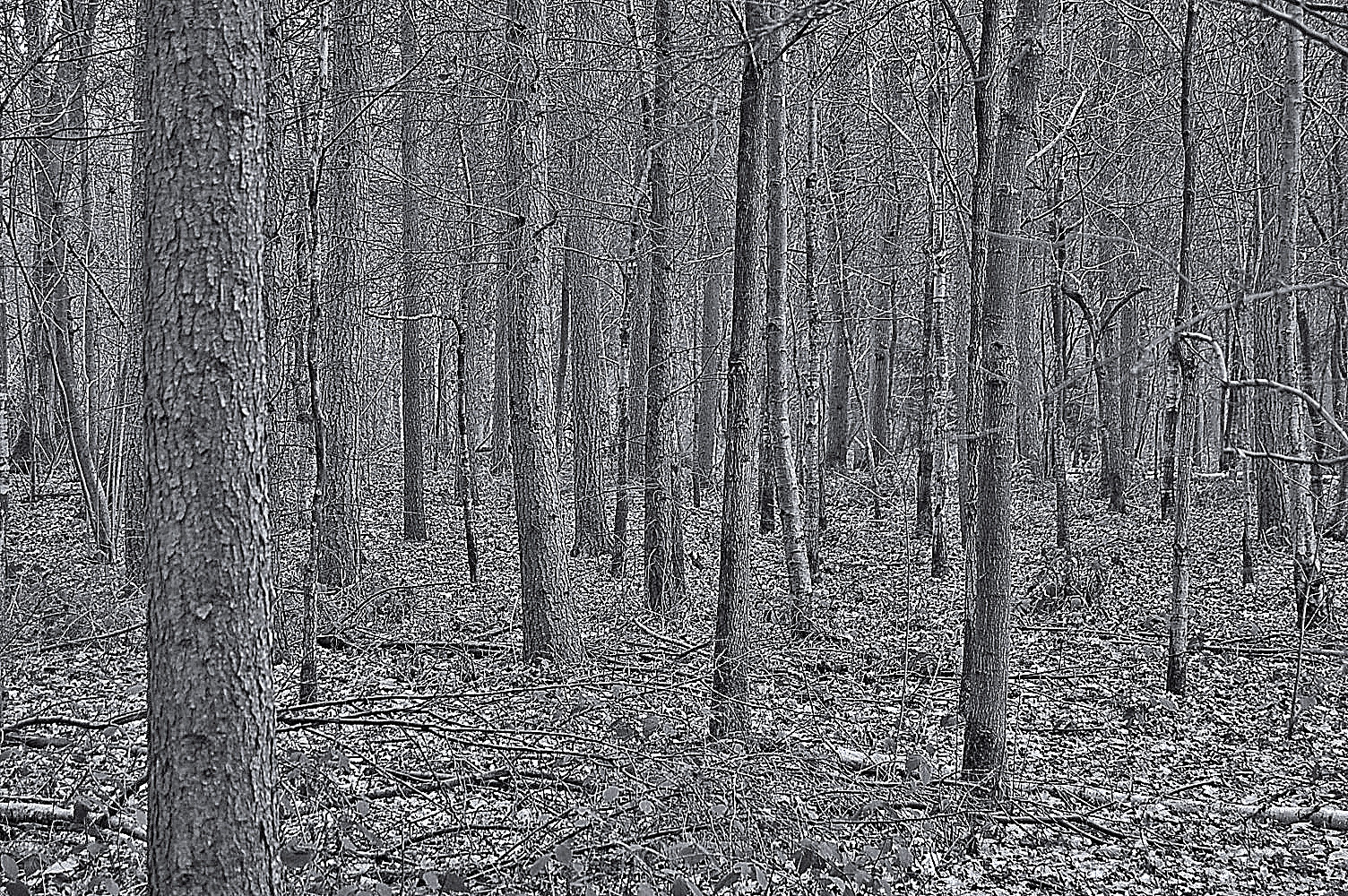
But there was far more to the woods than Snowdrops and the temptation to photograph the textures and patterns found there was easily given in to.
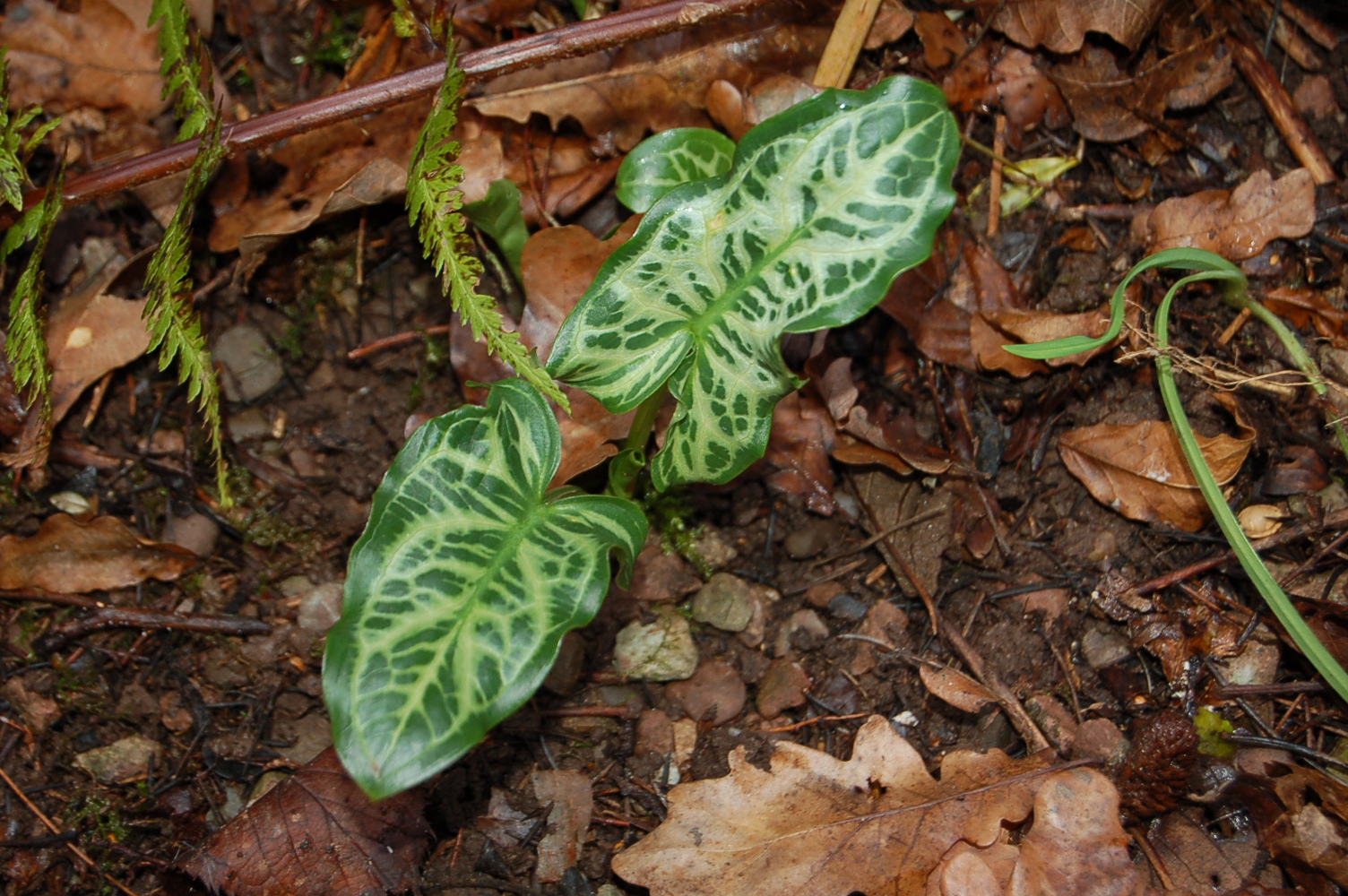
The earliest of woodland shade loving plants are beginning to appear taking advantage of the light filtering through the veil of bare branches above them. The arrow shaped leaves of the Cuckoo Pint are glossy and shine out amongst in the monochrome leaf litter.
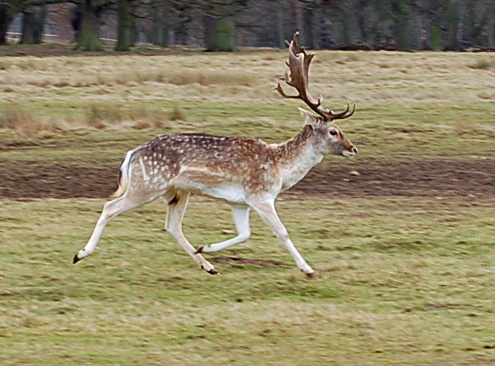
Leaving the woodland we took a track across the Deer Park. A warden appeared on a mini tractor closely followed by herds of excited deer. The tractor was pulling a trailer full of feed! This was an unexpected opportunity to see the park’s deer close up.
The deer may be the biggest and most obvious creatures here but the littlest are also of equal importance. Where the trust have been clearing dead and damaged trees they have taken the opportunity of creating habitats such as log piles, brash stacks etc to attract insects and invertebrates and small mammals. The woods here are now well-known for the population of Lesser Stag Beetles. In some places fallen branches and larger trunks are left to rot away to become hosts to fungi and multitudes of minibeasts.
This fungus seems to be leaking from the cracks in the dead bark, like woodworker’s glue seeping from a joint.
This dead tree left standing for fungi, invertebrates and insects looks dramatic alone in a clear area of parkland. Woodpeckers will enjoy attacking the peeling bark and rotting wood in search of tasty morsels.
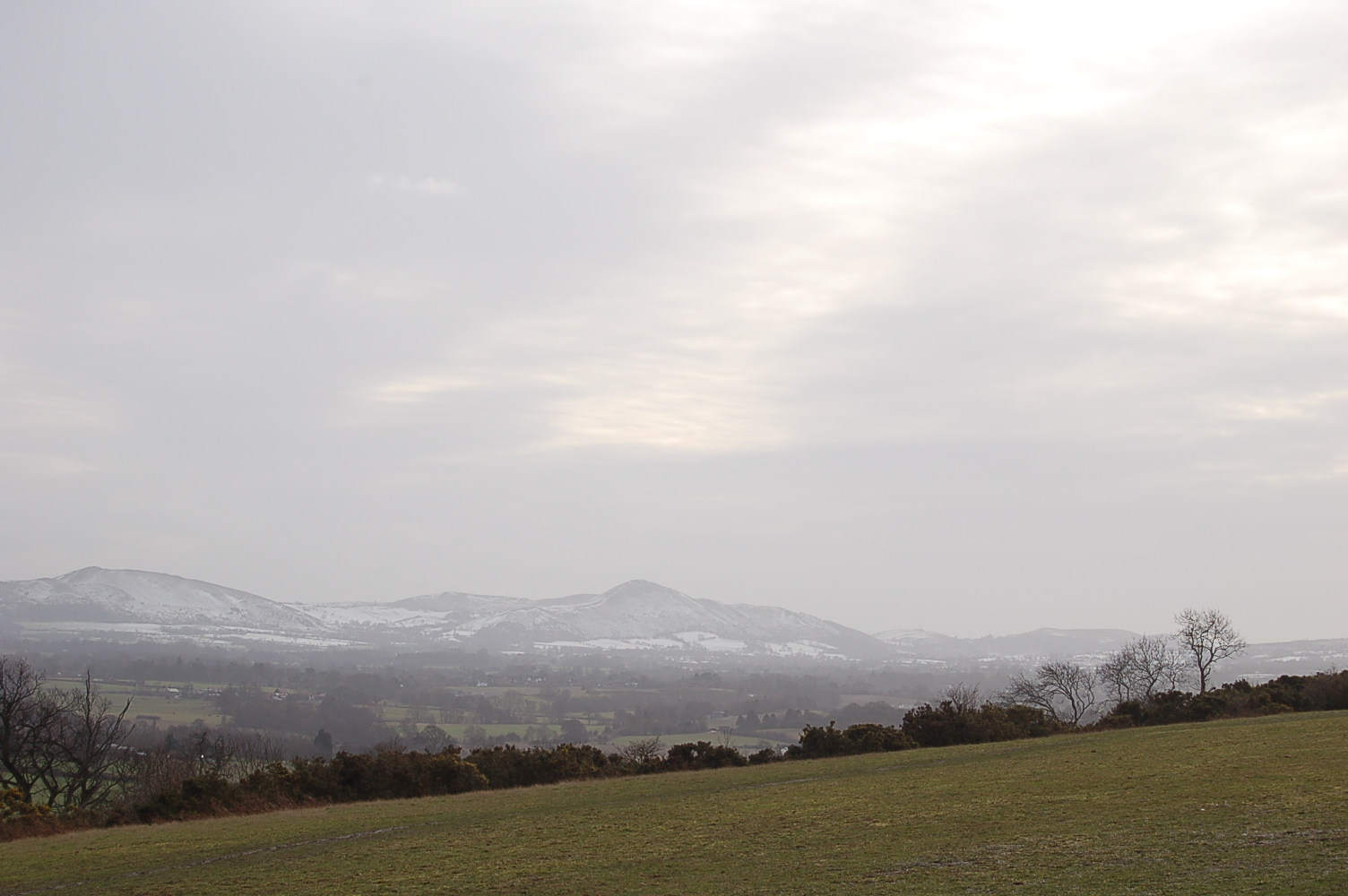
Today dawned bright, Robins sang and the blue colour of the sky coupled with a forecast of a dry day ahead, tempted us out for a countryside walk. A short 10 minute drive along winding lanes saw us park up at the start of the walk. This car park must have one of the best views in Shropshire, a view presenting a huge panorama. Snow on the hills and iced water in the furrows of the ploughed fields below reminded us that whatever the day looked like it is still winter.
Beneath our feet the muddy track was frozen solid a few millimetres down and this made for a tense start. We walked slowly along the ridge tempted repeatedly to glance leftward at the hazy view. Thin clouds were building. The hedge to our right was mostly of Hawthorn and Holly over which Brambles clambered. Blackbirds aplenty sought out the last of the hedge’s berries, and a pair of silhouetted Carrion Crow gorged on Ivy berries as black as themselves. They went about their business in silence. Crows are rarely silent.
We enjoyed the view of Yellow Hammers, birds that are sadly declining so rapidly from our hedgerows. A trio flitted amongst the uppermost branches of the taller Hawthorns calling continuously. It was good to see them. Small noisy flocks of Linnets frequently passed over our heads. We were relieved to leave our frozen footway and enter a tiny coppiced area alive with the calls of Great Tits, Bluetits and Longtailed Tits. We attempted the sloping footpath down through the copse and slid our way down a few yards before giving up and were forced to carry on along a rough roadway alongside a few houses. The conifers in their gardens added Coal Tit to the titmice collection and Jays squawked in their topmost branches.
Our cold noses were subjected to the unpleasant odour of male fox which had crossed our path an hour or two before probably as dawn light was announcing the day. The odour hung in our nostrils for several minutes as we walked on.
We were glad that this hard man-made surface lasted such a short while because we were to enter a beautiful coppice of old oaks, dotted with occasional Rowan and Beech. Their under-storey was of Holly and Bramble and here Dunnock, Robin and Wren skulked, given away by their calls. Lichen and algae coloured the trunks of the old once-managed oaks. These would have been cut to the ground every few years to encourage rapid upright growth which could be harvested. But we are enjoying the habitat created after years of neglect, a habitat equally appreciated by wildlife. The oaks are gnarled and eccentrically shaped, covered in lichen, algae and mosses.
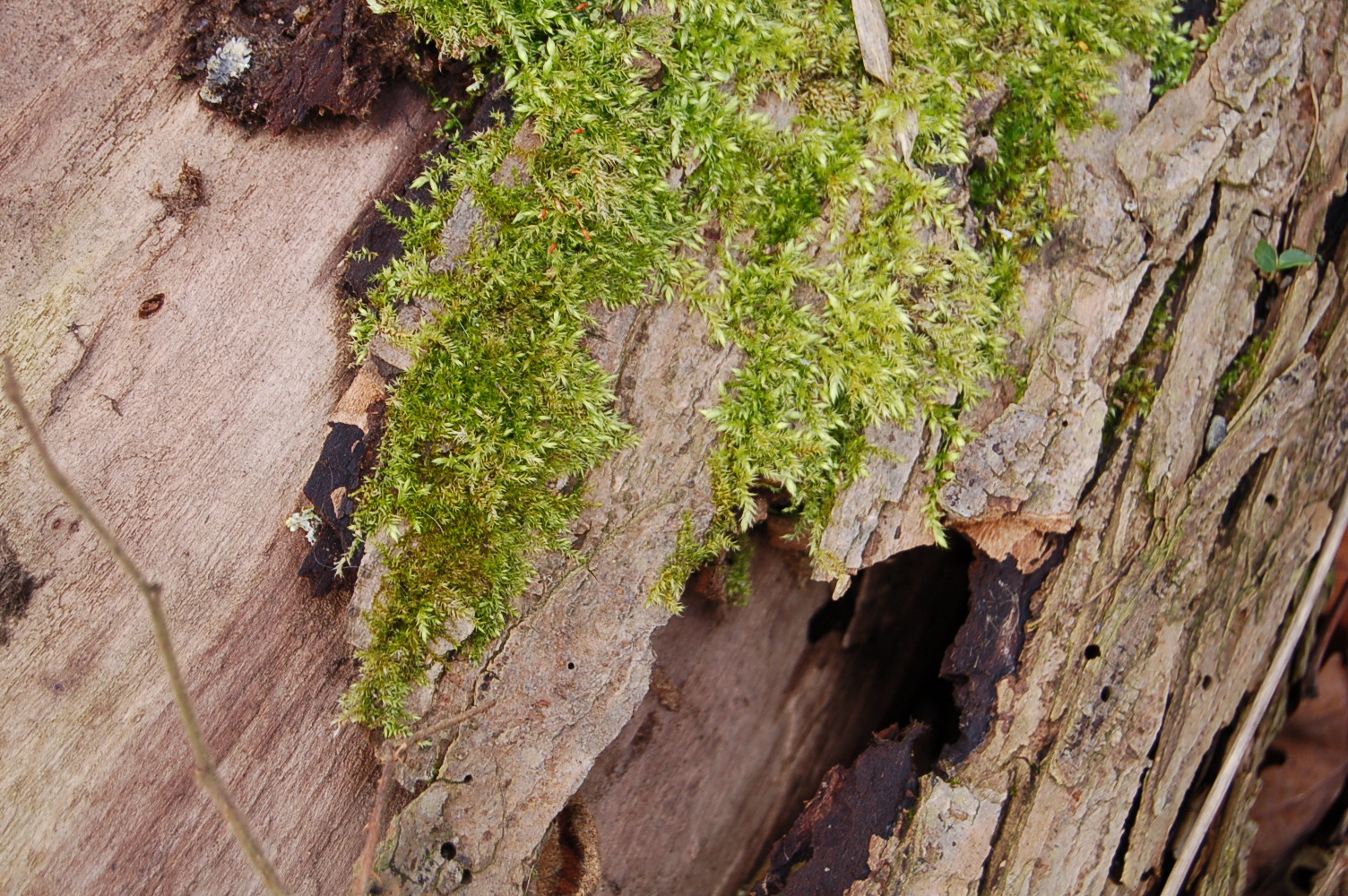
Sounds are carried freely through the coppice. The tapping of a Great spotted Woodpecker. The liquid whistlings of Nuthatches. The “chatting” of Wren. And an unidentified “churring” sound – we had no idea what bird might have made that call. Woodpeckers and nuthatches had been busy digging in the softness of rotting wood on dead trees. This chip of bark had been lifted by a Woodpecker’s powerful beak to extract a morsel of food, some beetle or grub which the bird had heard beneath the bark.
New leaves sprouted on the honeysuckles that entwined the lower trunk of the Oaks where there must be a little protection, a little extra warmth.
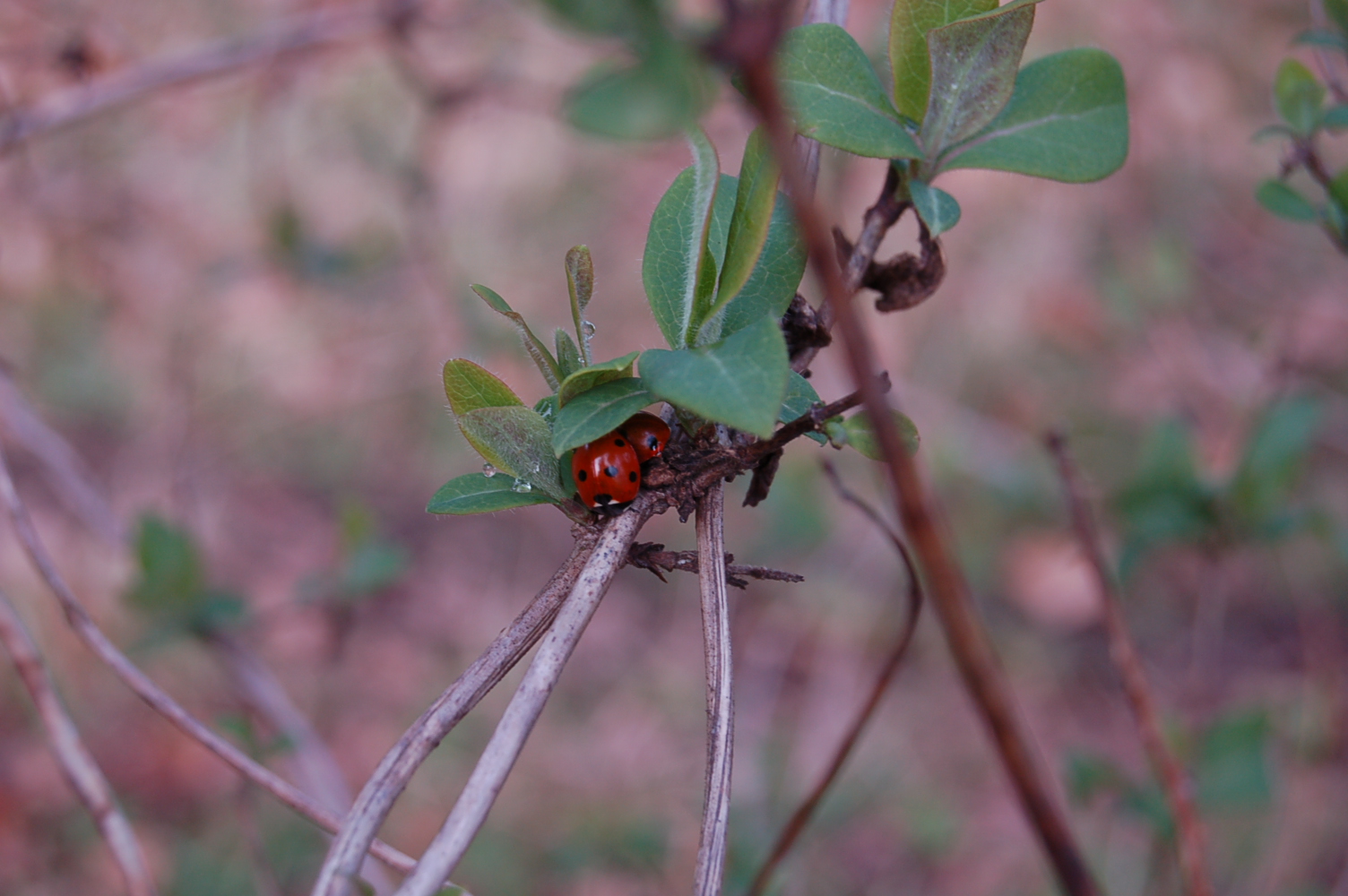
Little clumps or bunches of Ladybirds have managed to find refuges from the ravages of winter. By looking carefully shining wing cases of orange and red, spotted black could be spied. They looked so precarious but they must have some confidence in the security of their hideouts.
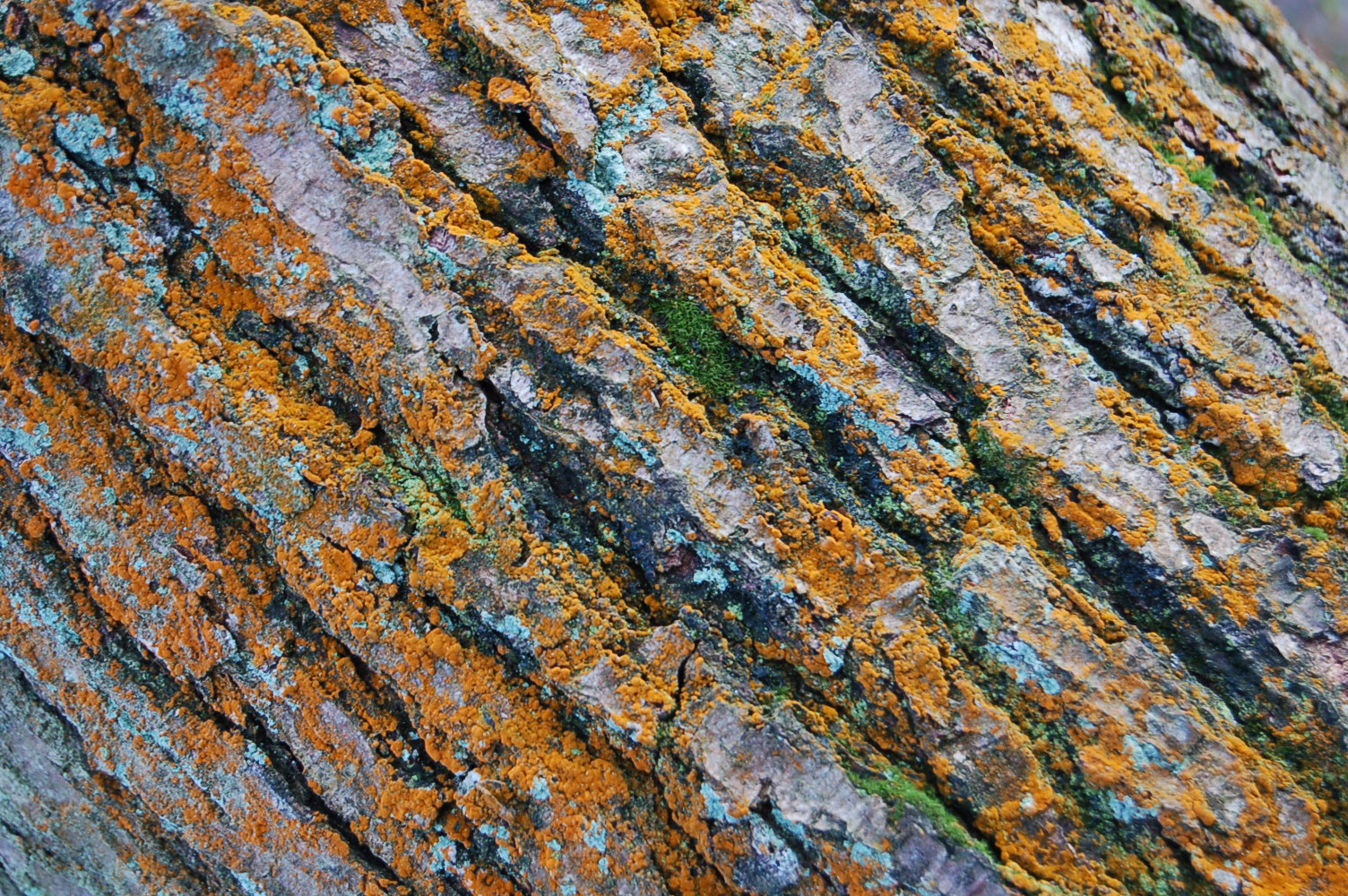
There was so much variety in the colour and texture of the tree trunks. Lichens and mosses clung to the roughness and painted over the brown bark. Silvery blues. Hot flame colours. Gentle greens.
We followed the circular route through the coppice and made our way back down the track, the light weakening and the temperature cooling. We shall return in spring when the summer migrants are back, when the coppice should reverberate to the song of warblers and Swallows accompany us along the ridge.
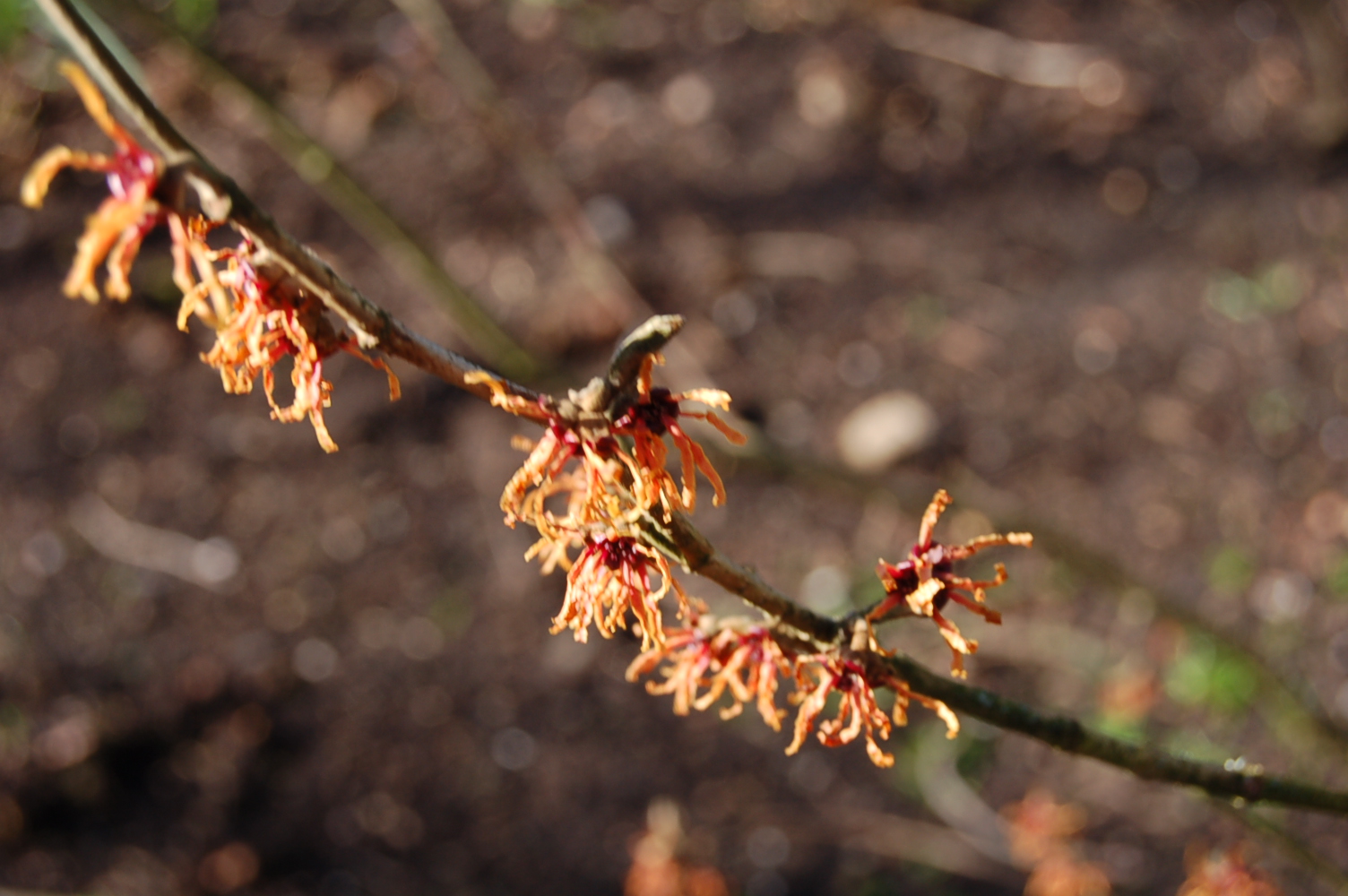
OK, so January isn’t a month normally associated with visiting gardens, but Swallow Hayes is different. It’s main feature is a huge collection of Witch Hazels, more than 70 types. The day of our visit was cold – teetering on freezing point all day – and a thin mist hung low over the land made cold by the heavy overnight frost. We wrapped up warm, wandered around this garden of winter, our fingers with just enough feeling left in them to take photos.
The garden here covers just two acres but they are two packed acres. There is so much to see here in January, leaf colour and variegation, blooms with scent to delight and patterns of tree bark for the eye to capture and the fingers to explore.
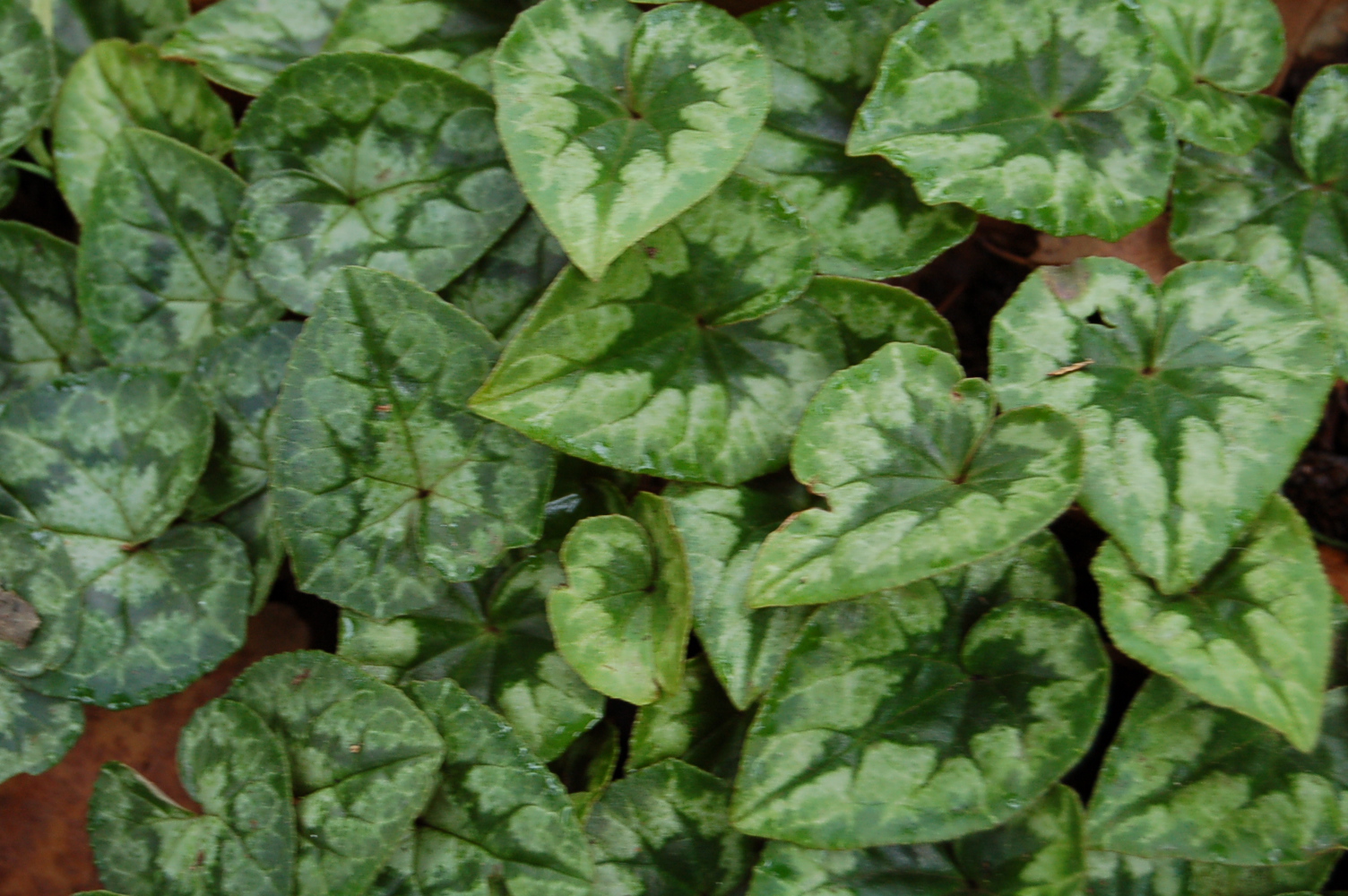
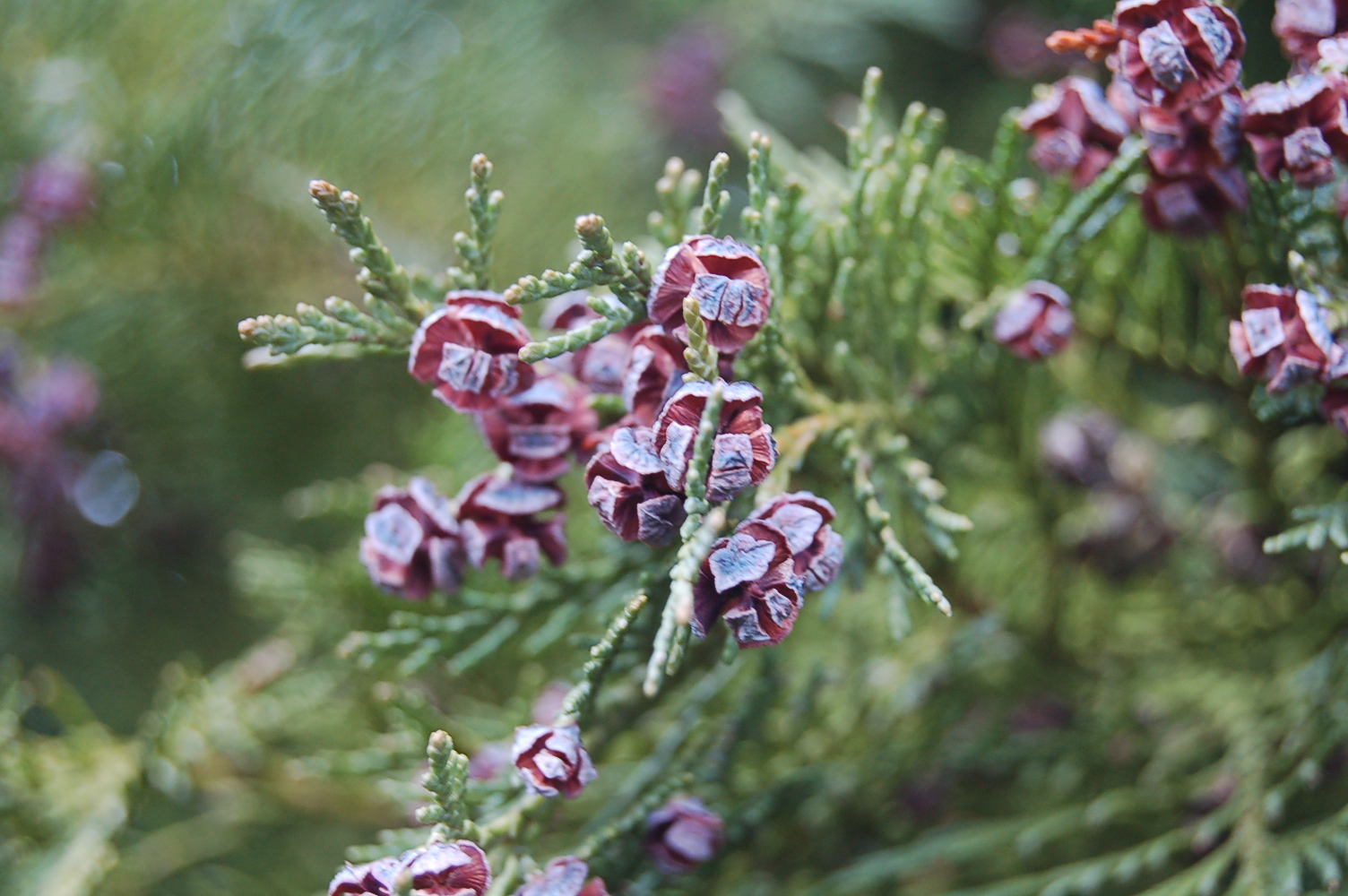
Felled by wind this branch of the blue-grey Cedrus atlantica glauca shone against the debris under the tree.Arum italicum marmoratum show leaf variegation at its best.A clump of beautifully marked Cyclamen enjoying the shade of a conifer.I am not a fan of conifers but I do appreciate them on dark winter days.Delicate deep pink berries of Berberis wilsoniae.Last year's Hydrangea flowers display structure and colour.Sparse berries hide amongst the strongly spotted variegated foliage of this Laurel.
Tree bark adds interest in winter gardens and here at Swallow Hayes Birch and Prunus add colour and texture.
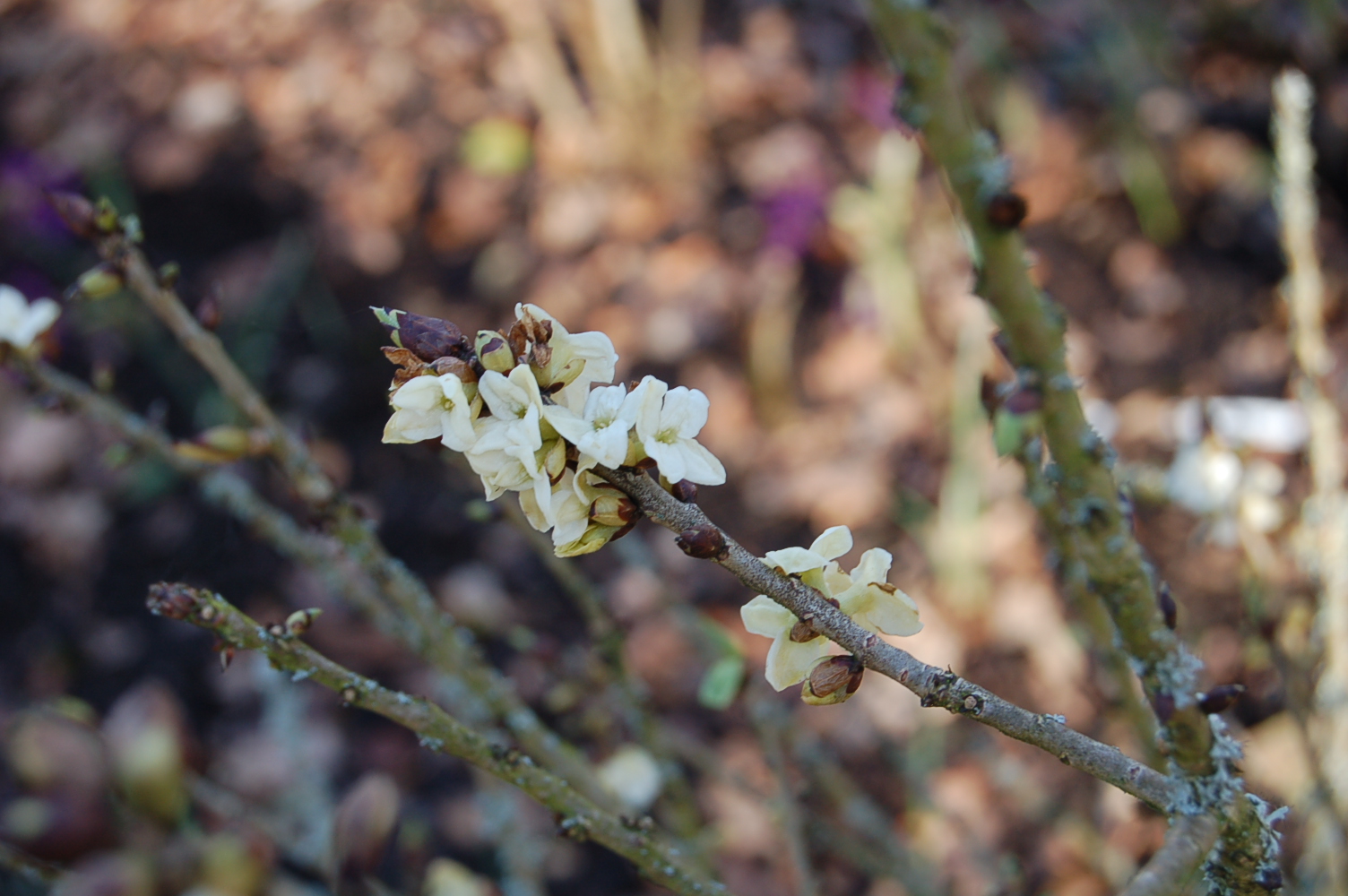
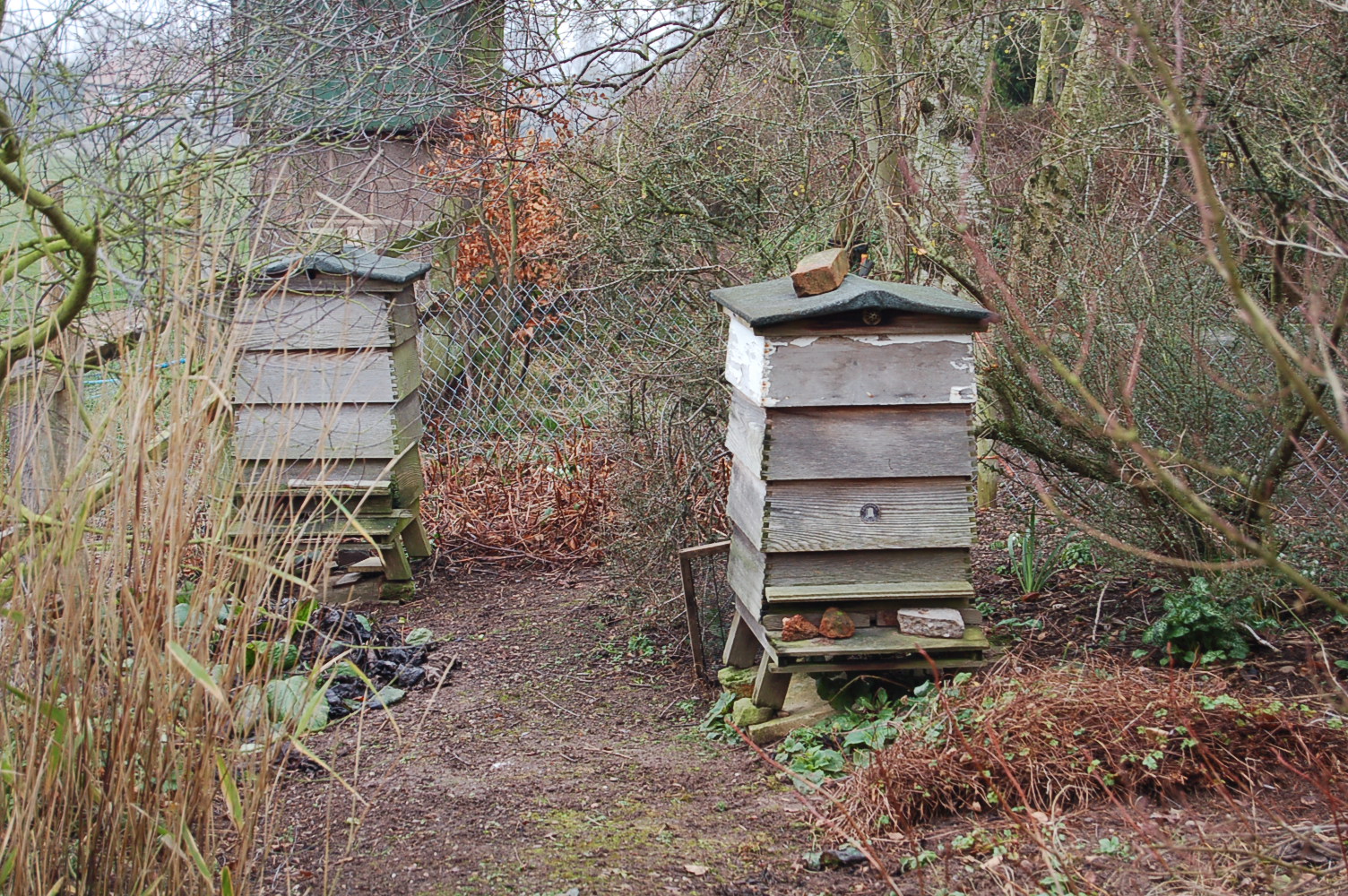
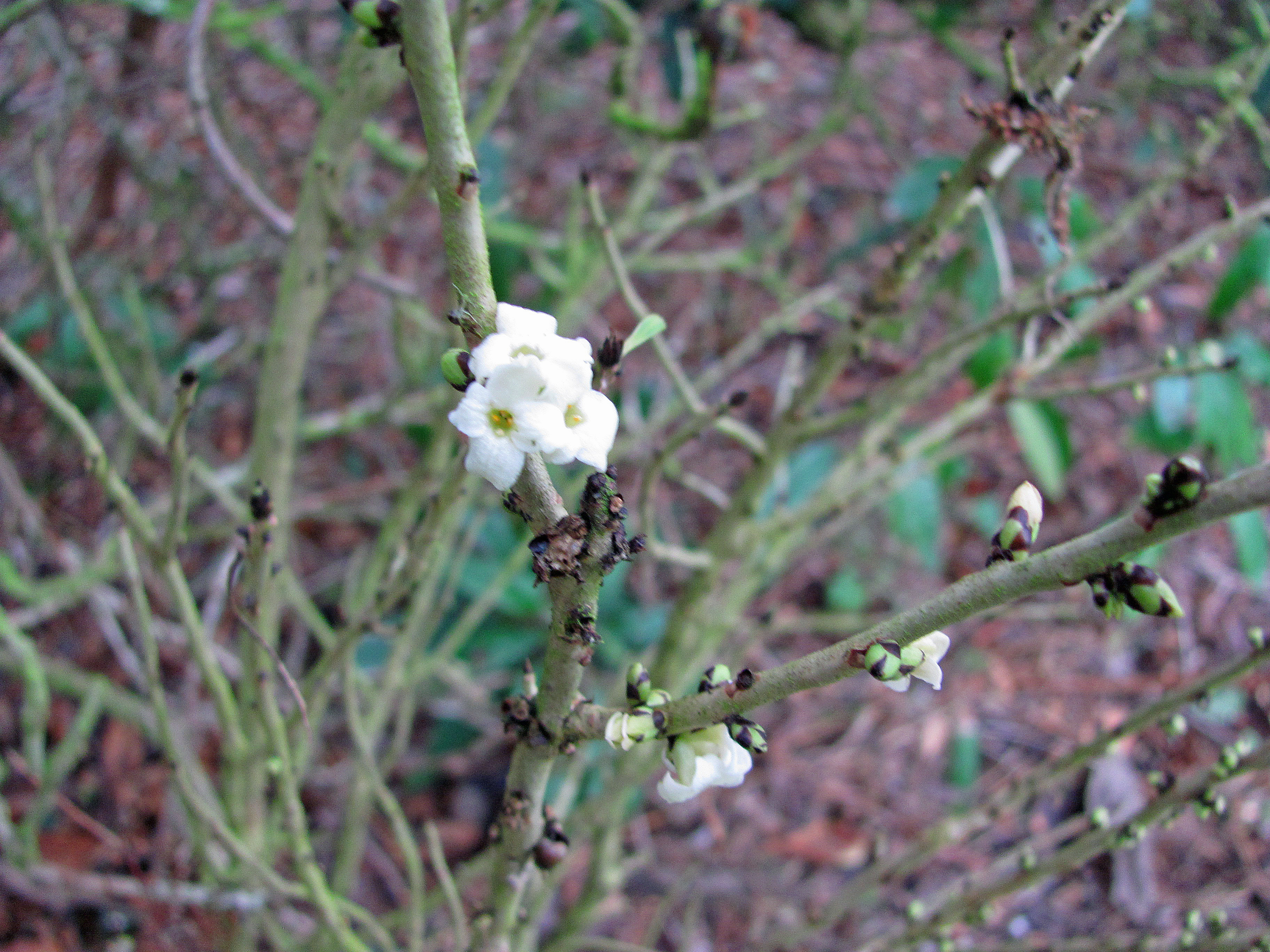
Peeling Birch bark reveals pink below the silver.Silky smoothness in deep shades of russet .Swallow Hayes' bees snug and safe in their hives.A relative of the Witch Hazels, this Sycopsis was unknown to us.Unusual white flowered DaphneLichen on Magnolia branches.Fresh shining purple growth of a hellebore looks full of promise.Fresh berries on an unusual ivy.
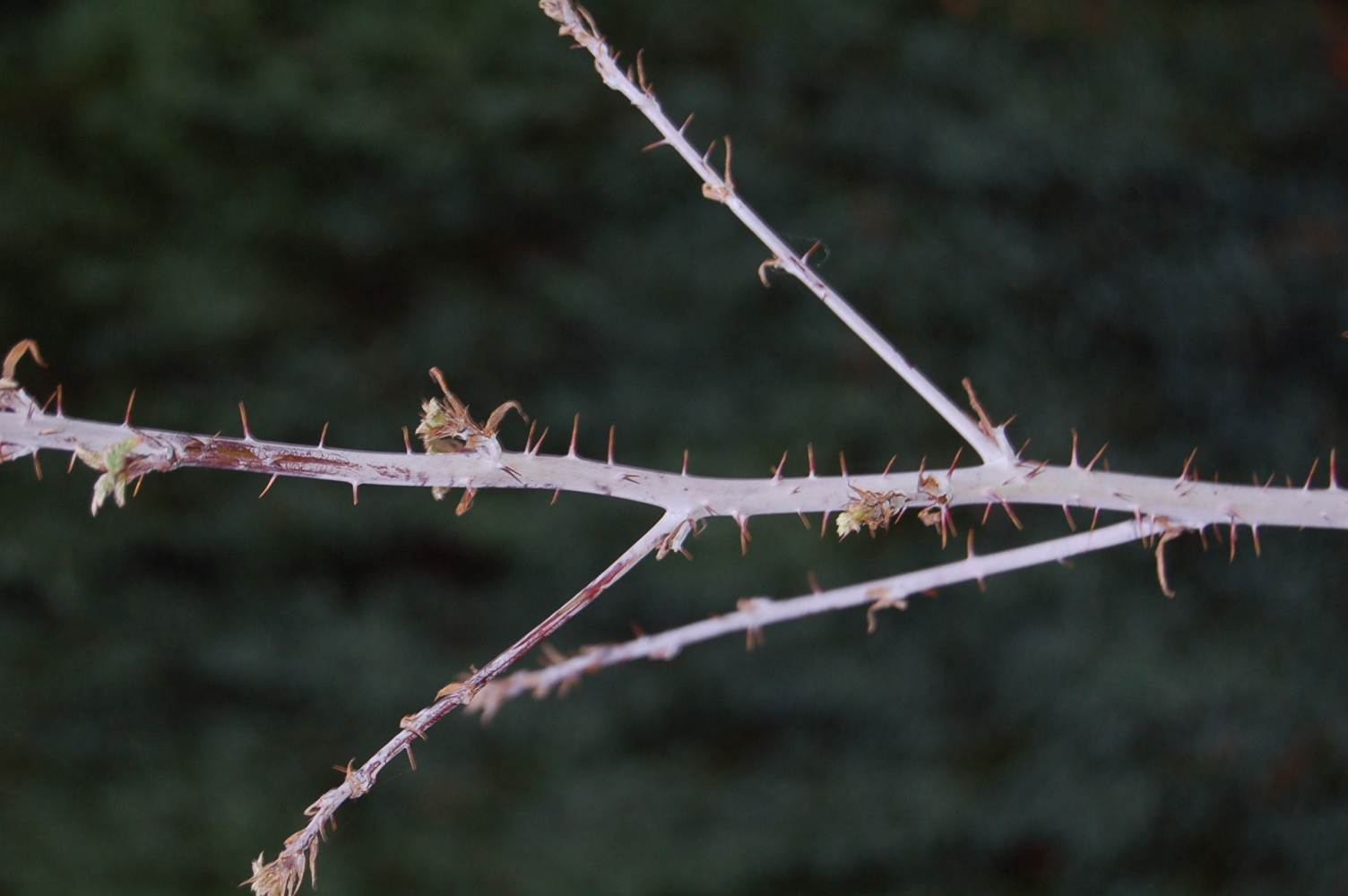
Startling white stems of Rubus.Long thin Euphorbia.
As I decided to create a blog at the beginning of each month illustrating what is going on in our garden, so I have also decided to publish a blog in the middle of each month to show what is happening on our allotment site.
So today we braved the cold and went for a wander. The weather although cold, at five below, was bright sunshine in a clear blue sky. the air felt freezing as it entered my lungs but the sight of the lotties cheered me. As we stepped from the car a kestrel was hunting low between the sheds in search of the abundant field voles. A day never goes by without seeing at least one kestrel quartering the site. A buzzard soared overhead in the thermals created by the warmer air above the cultivated plots.
First job was to fill the bird feeders at the two feeding stations. They were busy with blue tits, coal tits and great tits feeding from the hanging feeders and blackbirds, dunnocks and robins beneath picking up the feed dropped by the clumsy birds above them. All the while we could hear the call of nuthatches in the site’s mature oak and sycamore trees.
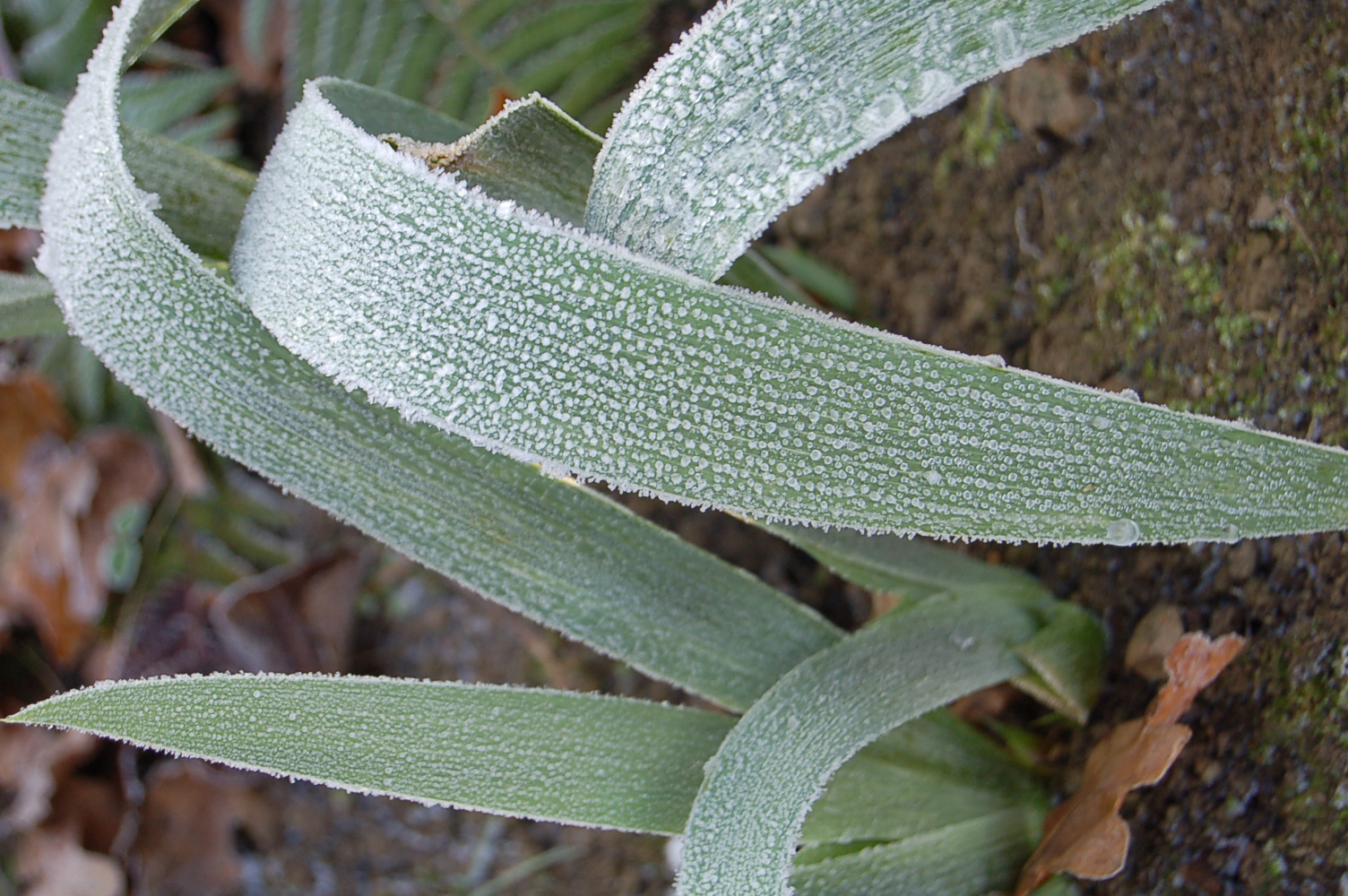
Frost sits on the bare ground and helps the gardeners by breaking it down and improving the texture in readiness for a final preparatory rake over. The fine tilth can then be home to seeds.
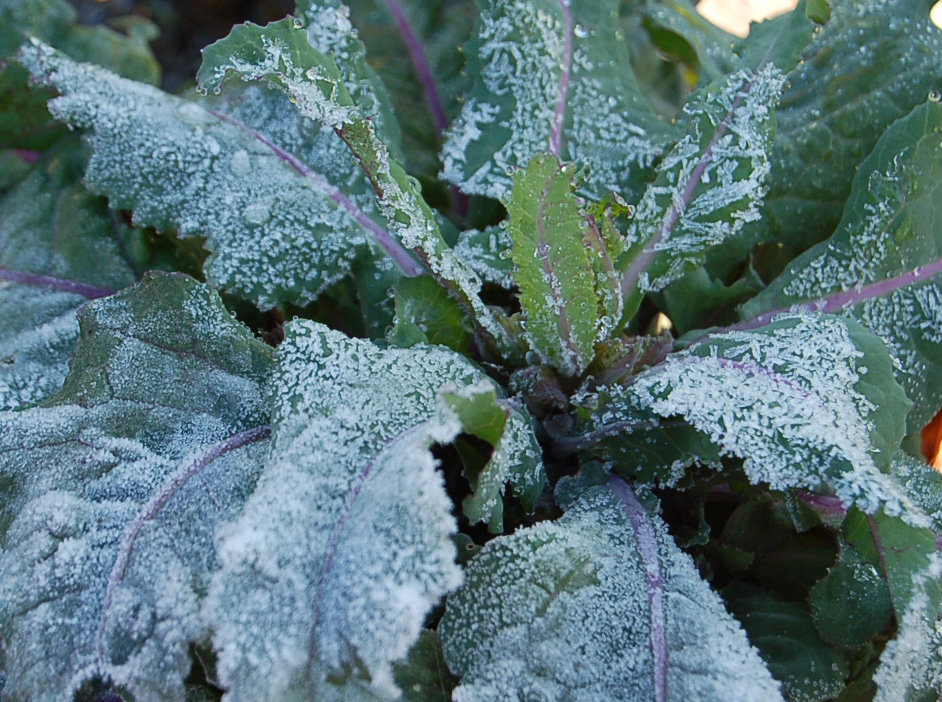
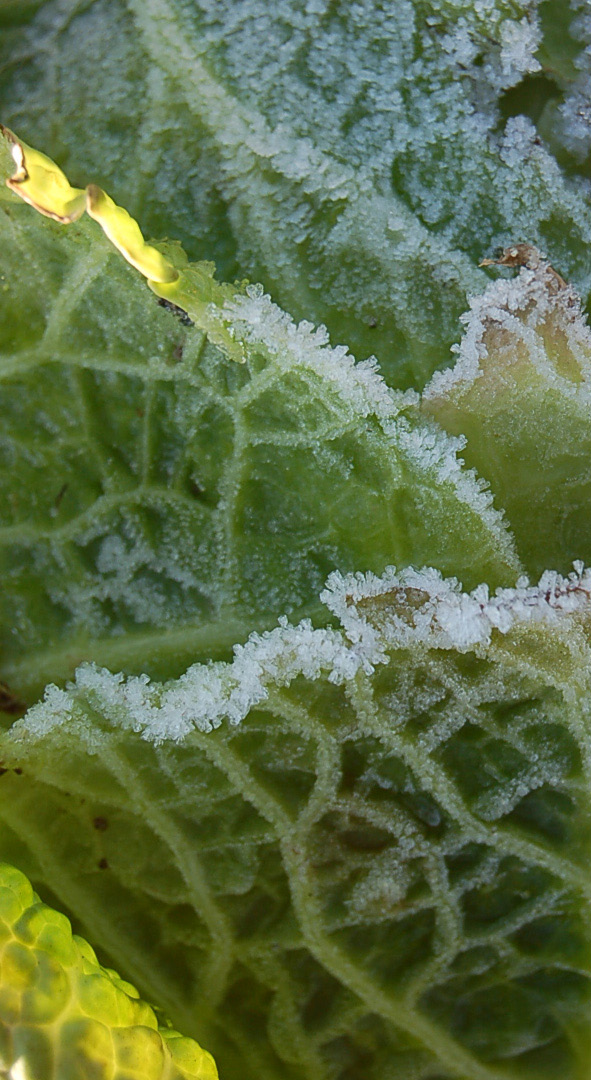
The plots themselves look very sad at this time of the year, drooping brassicas, frosted leeks and steaming muck heaps and compost bins, the warmest spots of all. The scarecrows have fallen in the recent strong winds, their clothes wet and bedraggled and their structures weakened. Frost emphasises leaf structures, settling deepest along the veins.
The strongly veined wrinkled leaves of the Savoy Cabbages withstand the cold wrapped into tight balls.
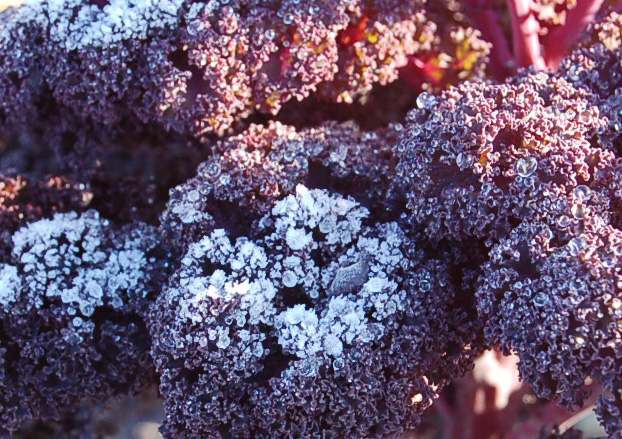
Kale defies the cold and stands upright and proud even with ice droplets and frost splattered on their tightly curled leaves.
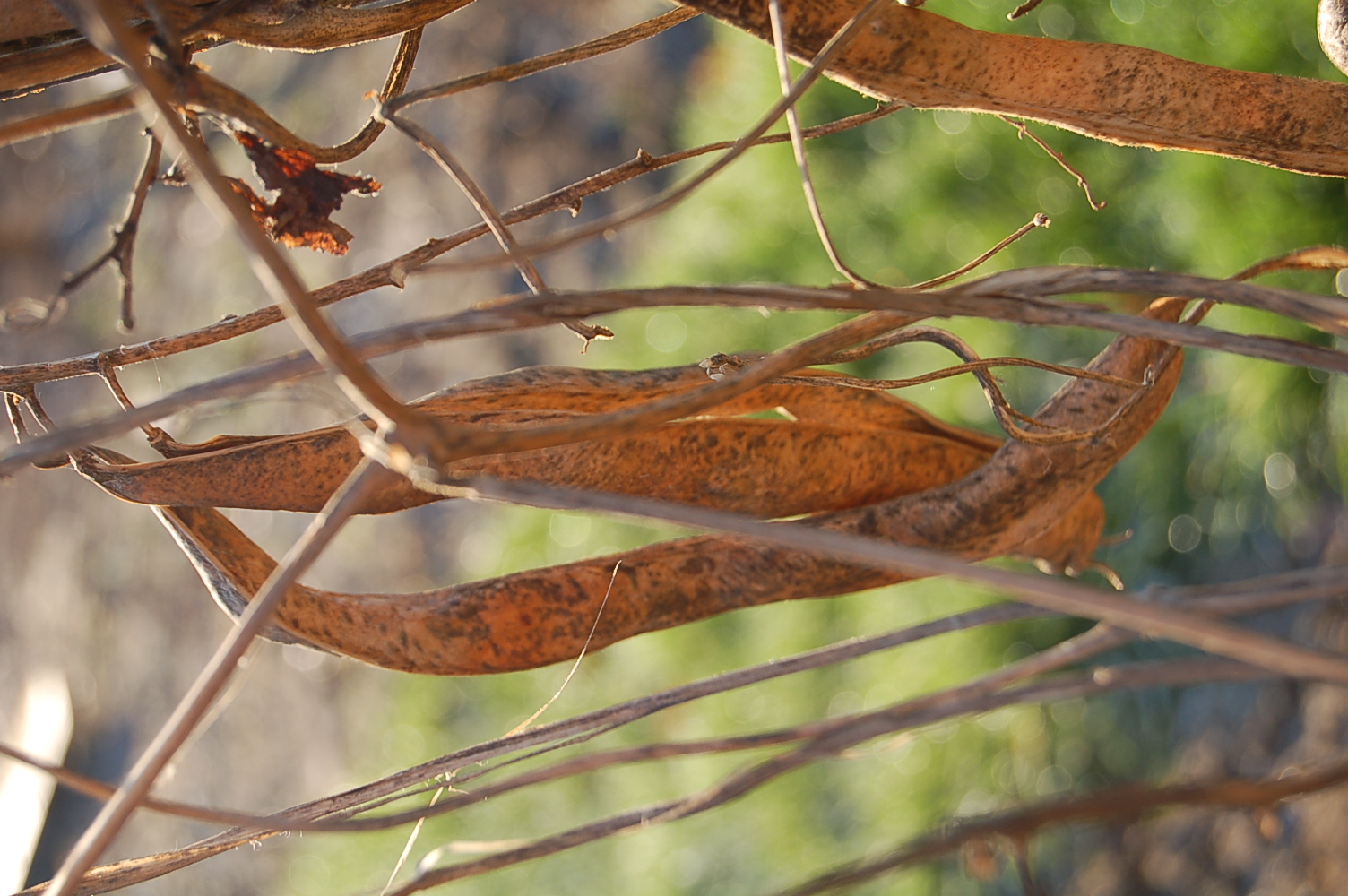
Sunlight makes the old runner bean pods translucent as they hang on the dead remnants of last year’s plants.
On our own plot the rows of Mooli, Broad Beans and Leeks look delicate in the frozen soil but will sit until spring arrives when they will have growth spurts and give us early crops.
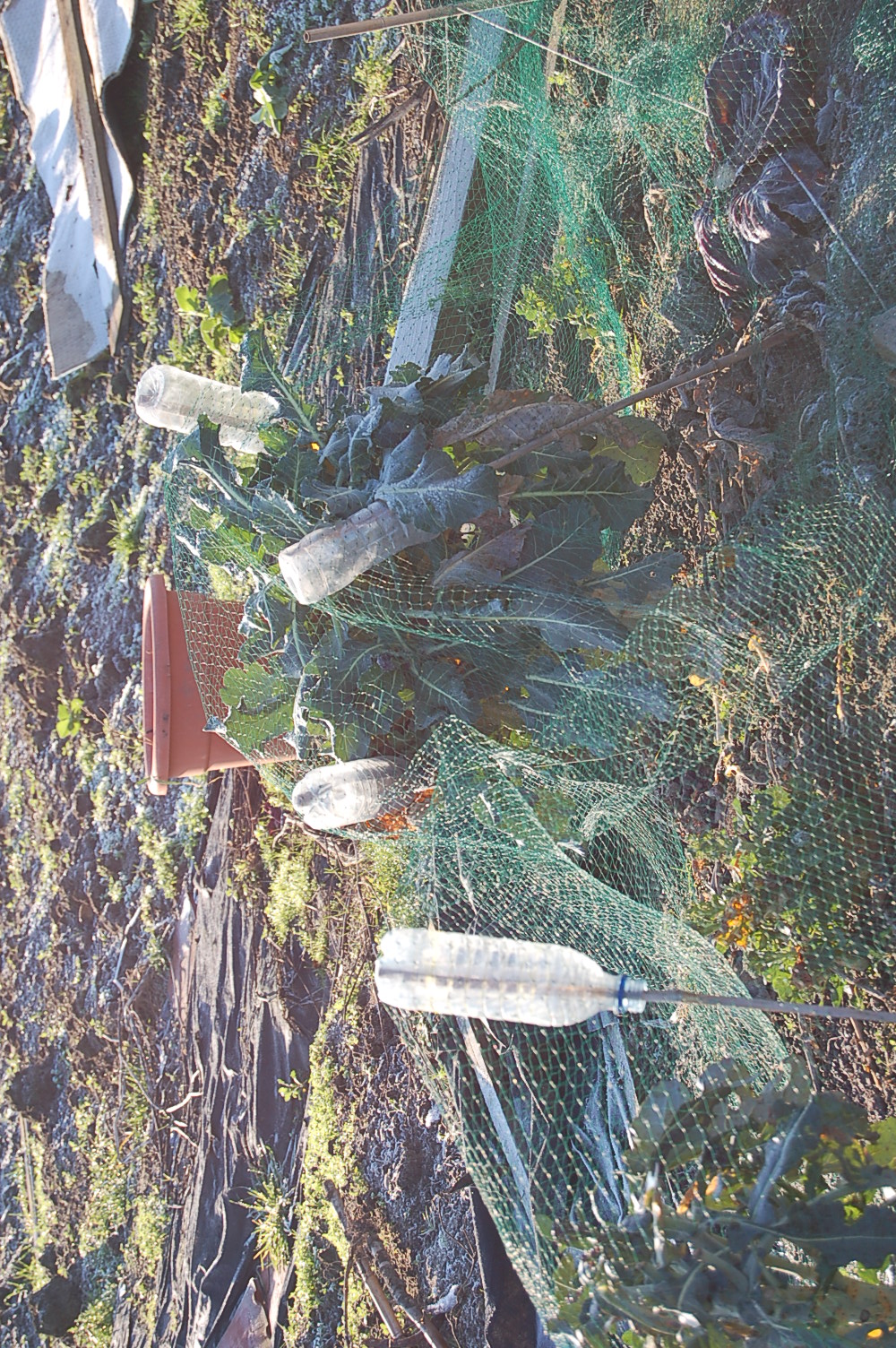
Plastic bottles on canes support last year’s netting and still protect any overwintering crops from hungry Wood Pigeons.
Blackbirds move low across the lotties settling onto any sun-warmed soil and dig for grubs, but this one sat looking sad.
We took a leisurely walk around the “Interest Trail” which took us through or close to most of the community gardens – the orchards, wildlife borders, seasonal gardens and meadows. Near the car park the first green bursts of new life have appeared, the leaves and catkins forming on the birches. The young catkins stand bolt upright at this stage but will soften in colour and structure when they dangle down in the spring.
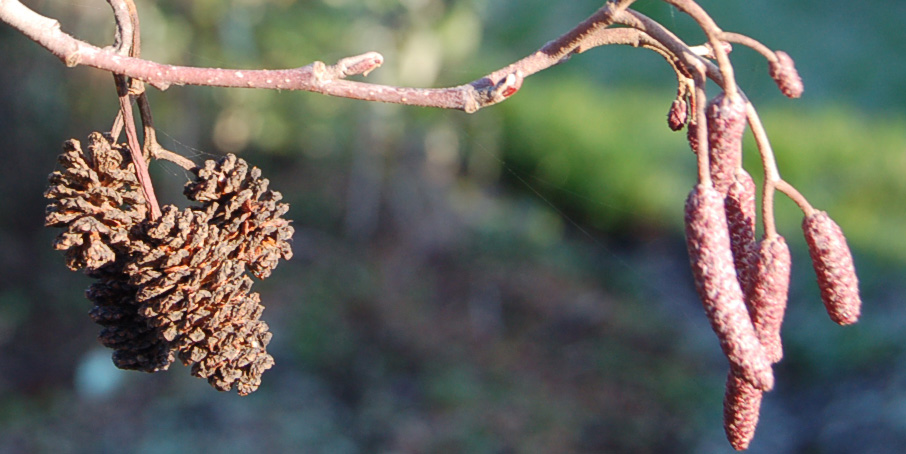
The purple catkins of the alder sit on the branches with the darker cones.
In the Autumn Garden seed heads of Asters remain long after the flowers of autumn, like tiny dandelion “clocks”.
In the first orchard th frost still lingered strongly on the logpile especially on this old chunk of bark.
When we reached the Spring Garden we were struck by the contrasting leaf texture, shapes and structures.
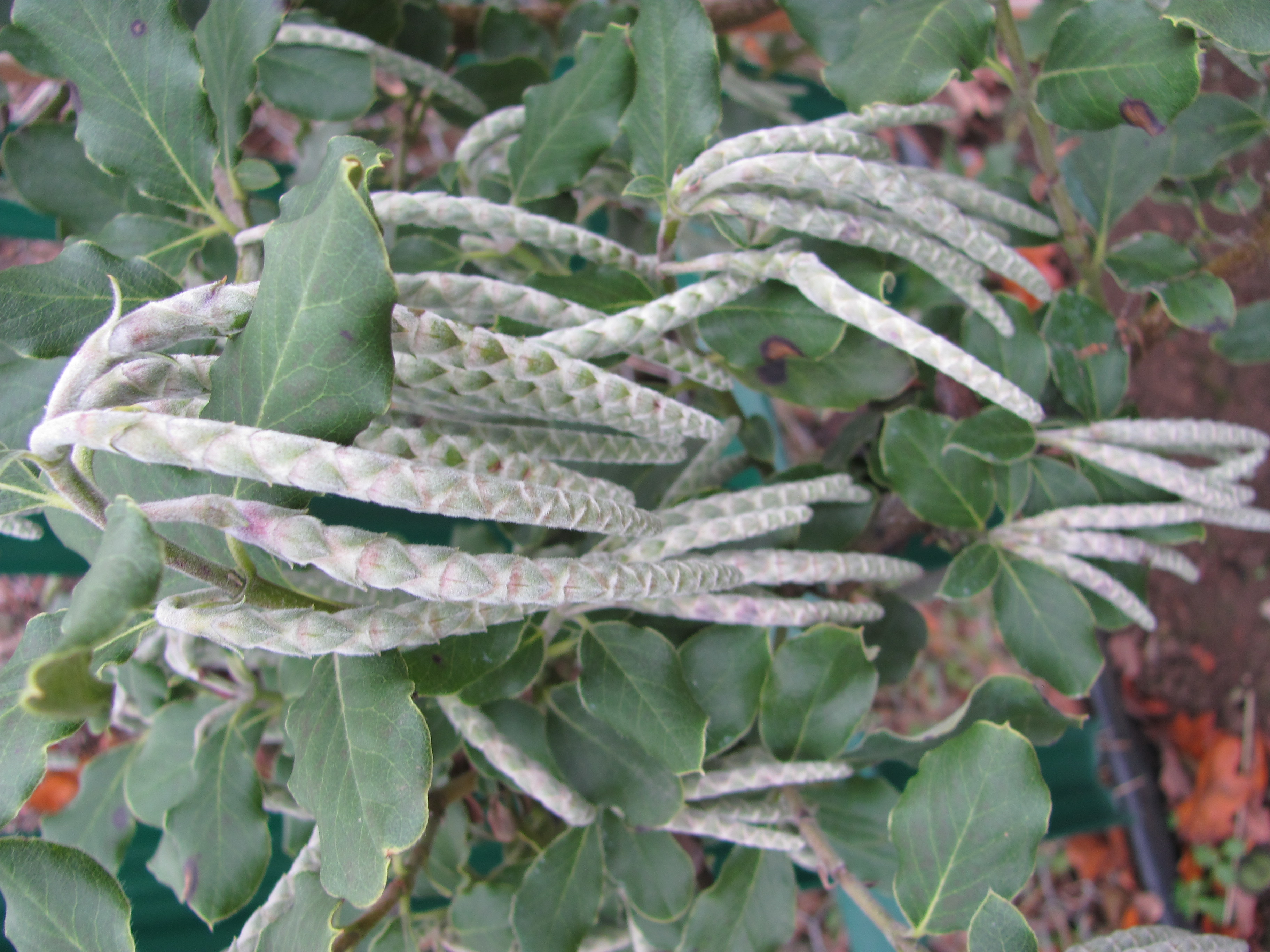
At the back of this garden the silver tassels of the Garrya hung in profusion and the new buds of the Amelanchier promised early flowers and foliage.
Further round the trail we arrived at the “Winter Garden” where the low rays of the sun sent long shadow lines of the fence right across the border between the coloured stems of the Betulas and the Dogwoods. It also illuminated this peeling bark, giving it the impression of slithers of orange brittle toffee.
The blue spruce looked bluer than ever with the whiteness of the frost laying on its needles.
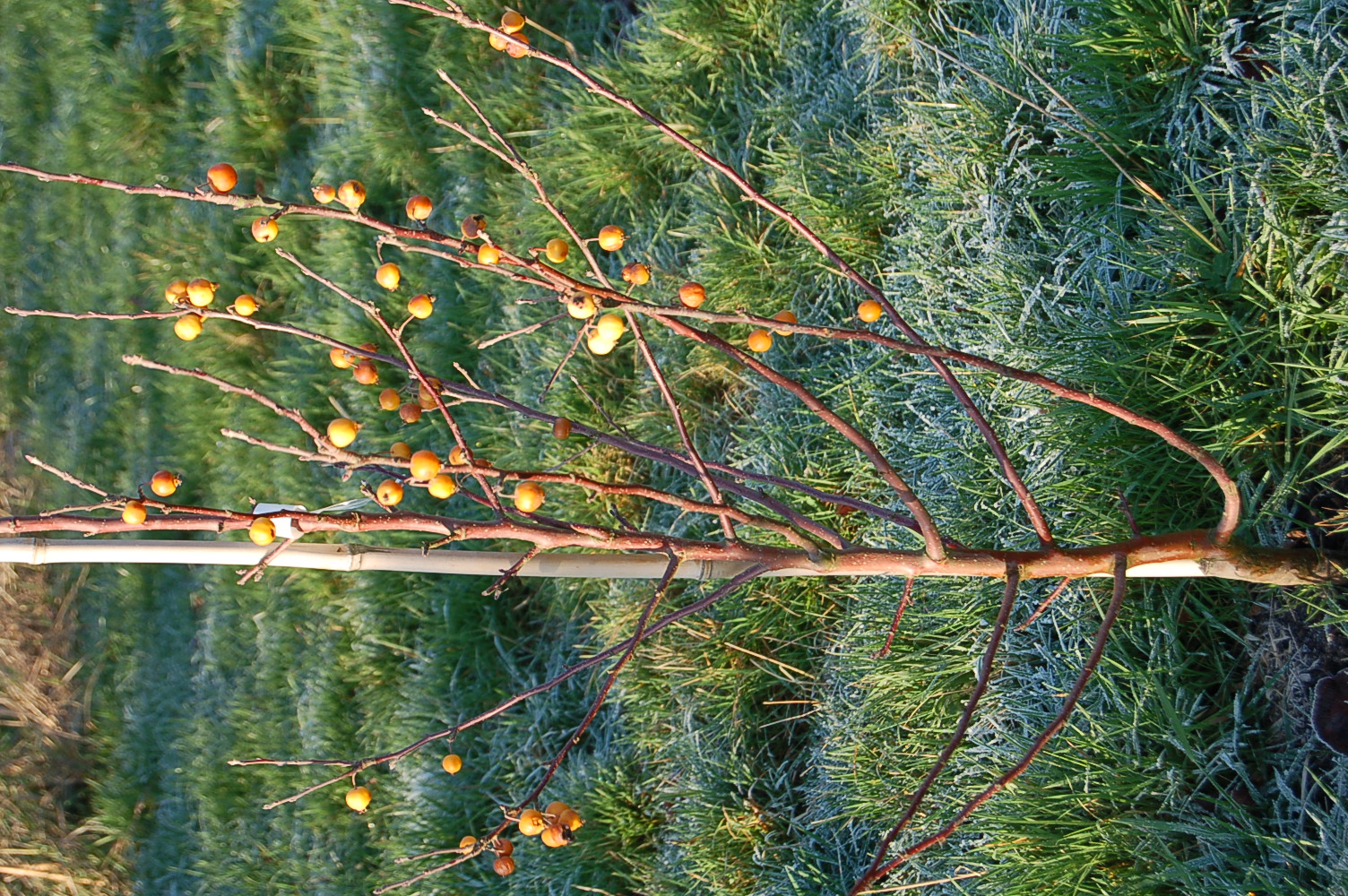
Our Winter Garden has so much of interest that I shall publish a blog just featuring it within the next few days, so for now we shall move on to the second orchard where the golden fruits of Malus “Evereste” have escaped the attentions of the winter visiting thrushes but I suspect they will soon be discovered and devoured. The insect stack in the orchard is there to attract beneficial insects who provide our very wildlife-friendly pesticide. The stack should give them some shelter to help them survive the winter cold and wet.
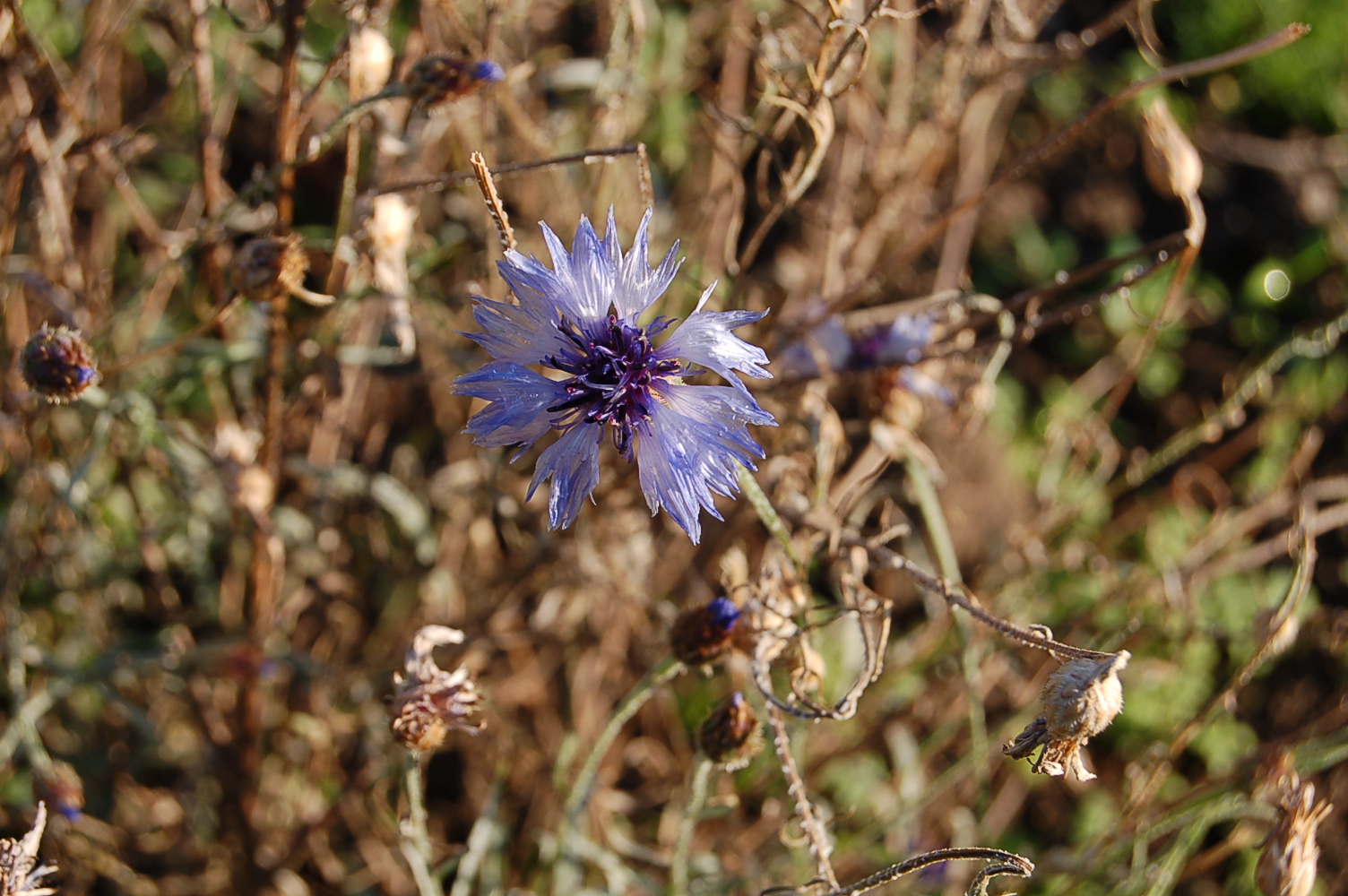
As we wandered back towards the car park we passed through the wildflowers meadows long since cut to the ground, but showing promise for next summer in its tiny seedlings. One lone flower braved the cold – a pale blue cornflower. Leaving the lotties we noticed promises of flowers from the bulbs in the car park border and in the half-barrels in the gateway.
This is the first in a series of blogs which I will write at the beginning of each month through 2012, and will show what is going on in our garden at that time – a sort of record of garden highlights.
So the new year has arrived. January 1st was a dull overcast day, with unbroken deep grey cloud and regular periods of drizzle. But at least it was warm with temperature holding up in low double figures all day. But not a day to perform a photographic wander.
So here I am on the 2nd January with camera in hand to record what’s going on appreciating a blue sky, but well wrapped against a freezing wind. Buzzards are sharing my joy of seeing a big blue sky as they are soaring silently above the garden with none of their usual sad cries. The garden is noticeably quiet, the bird feeders far less busy than they usually are in January. There is just the constant quiet, barely perceptible winter song of the Robin who follows me around and the equally gentle twittering of Goldfinches, Blue Tits and their long-tailed cousins.
Enjoy a walk around with me and my camera, as we take a tour …………
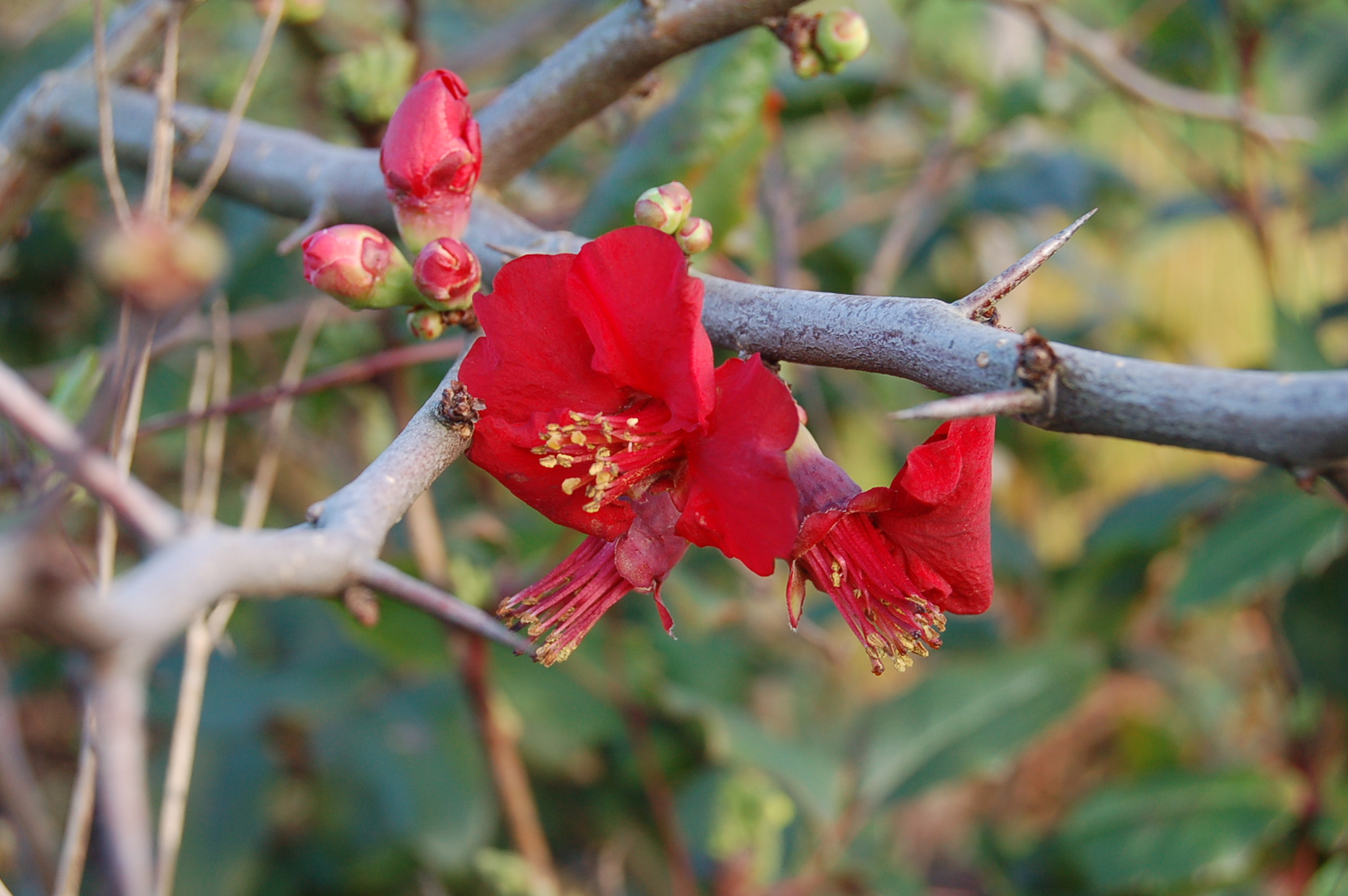
The newest addition to the garden, just planted today, is the dark foliaged Euphorbia "Redwing", spotted with fresh rain drops following a shower.This brightly flowered quince, Chaenomeles "Fire Dance", glows at the drive entrance, providing a cheerful welcome.
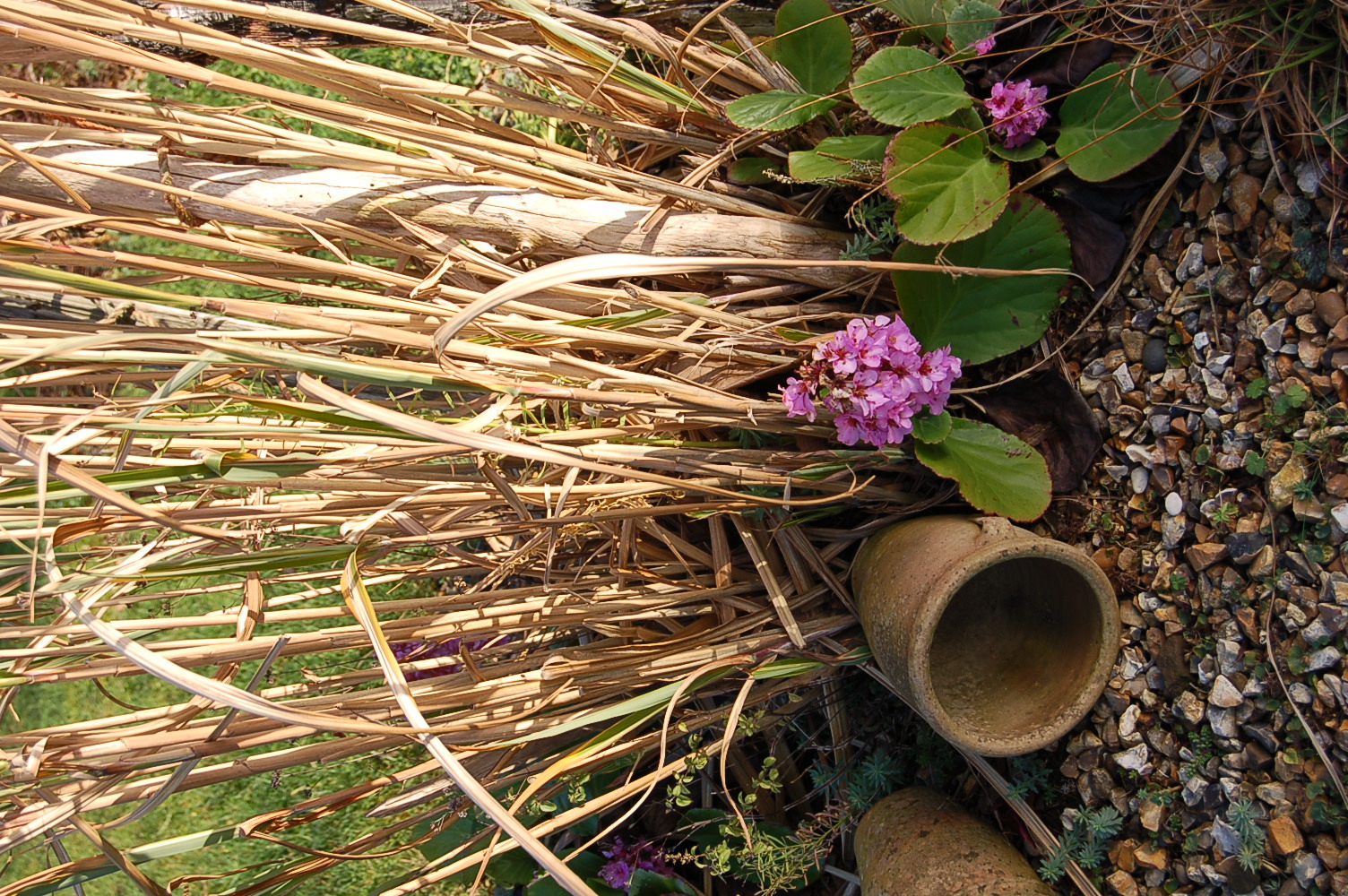
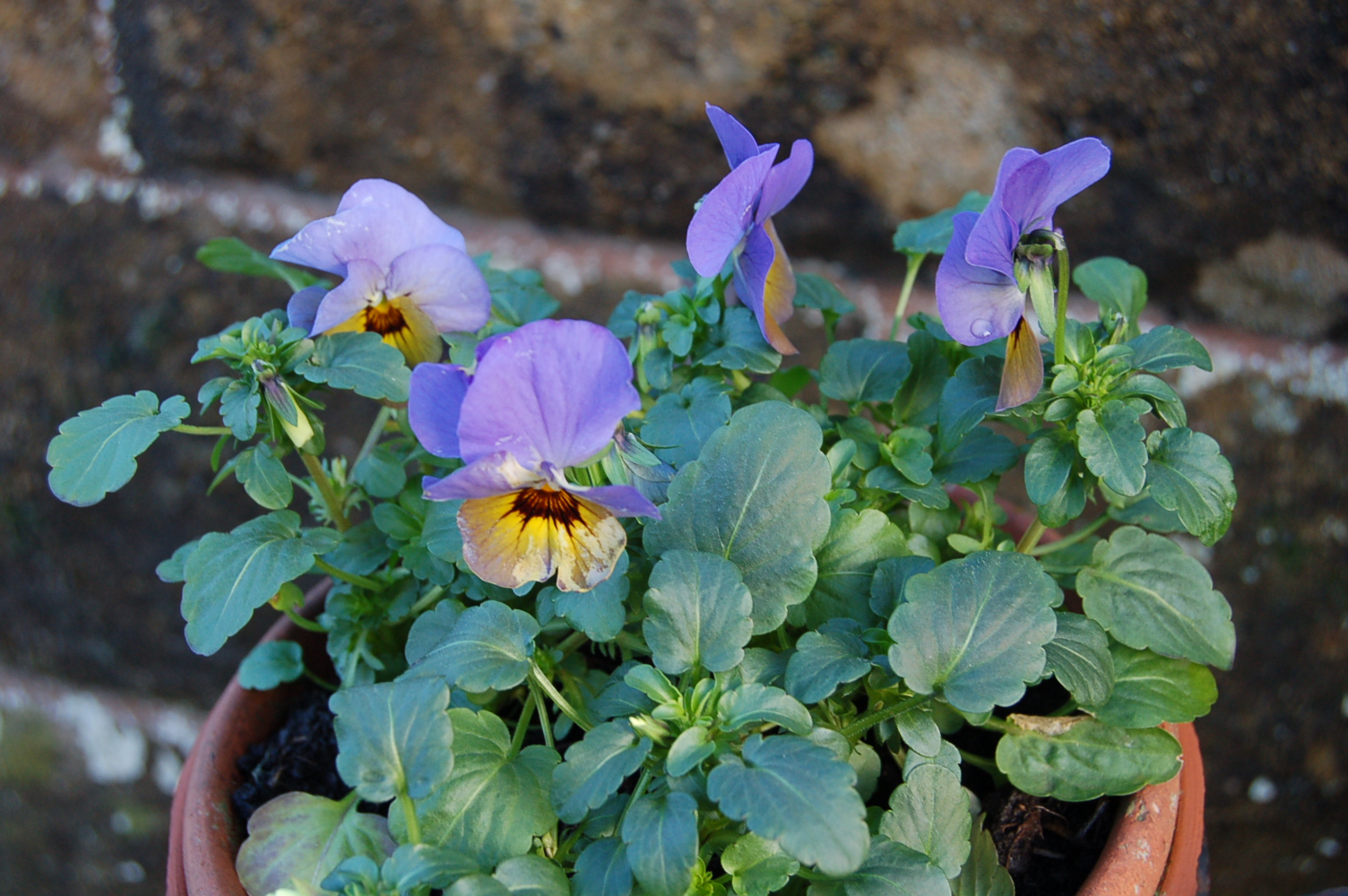
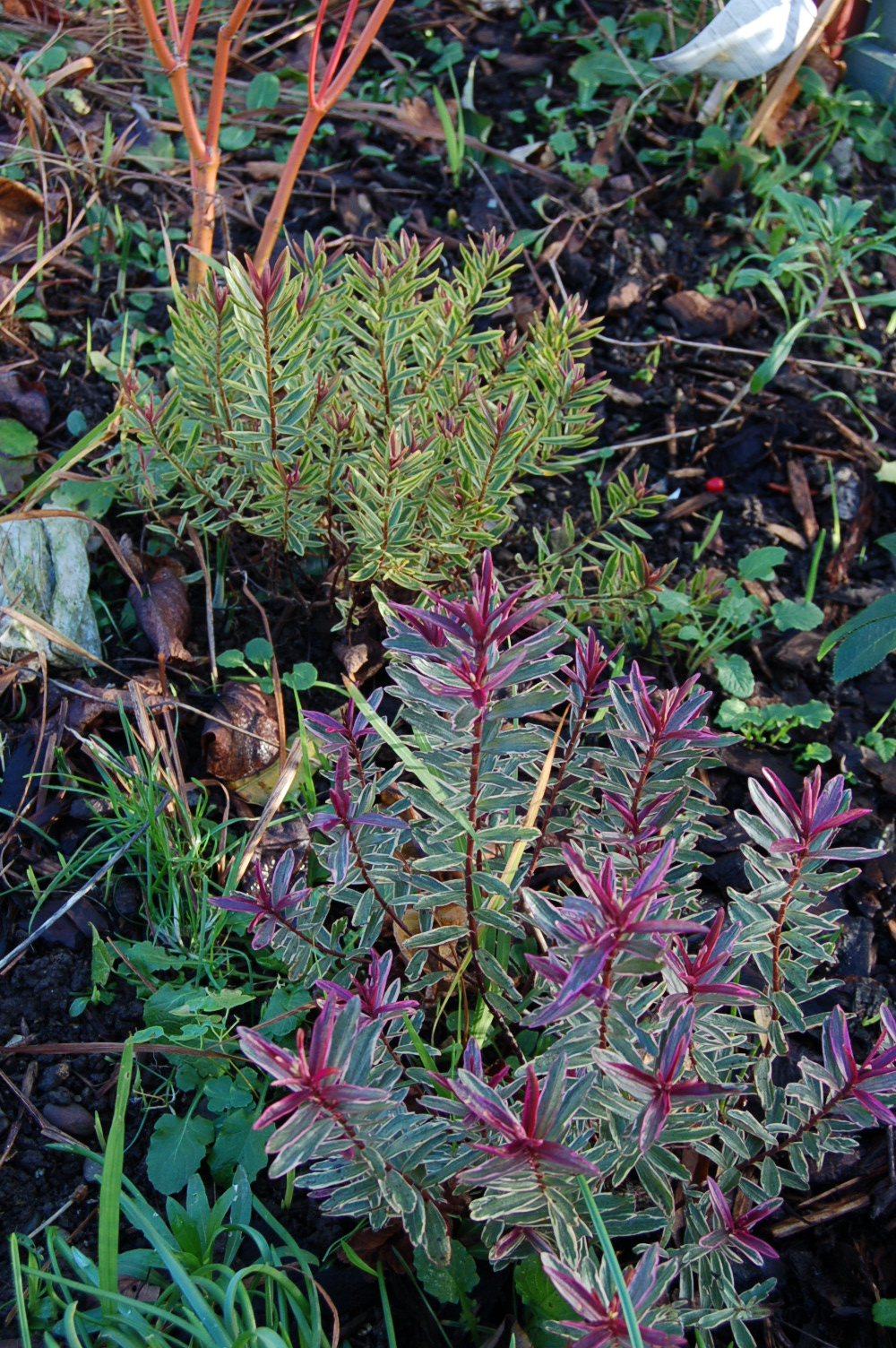
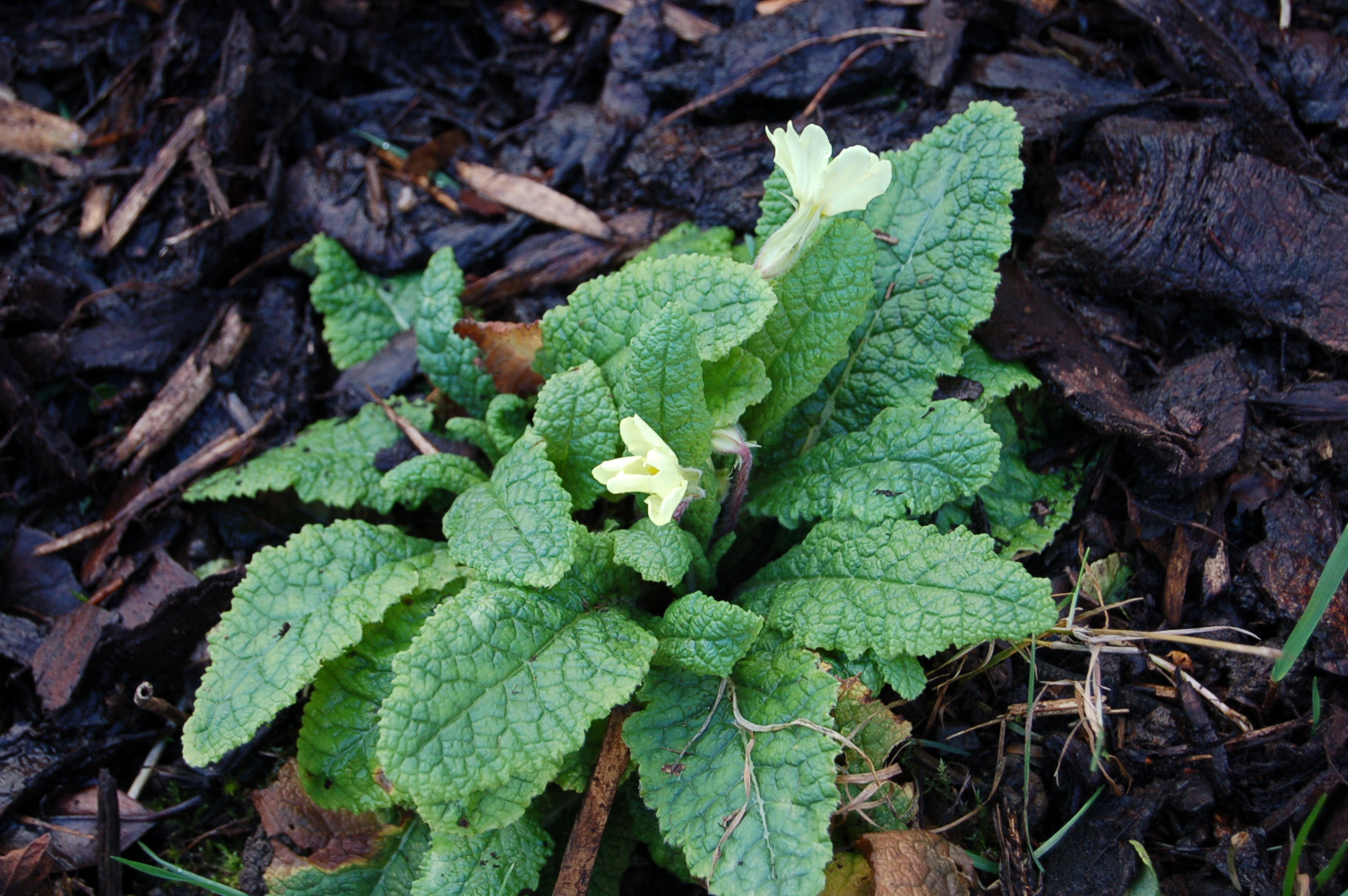
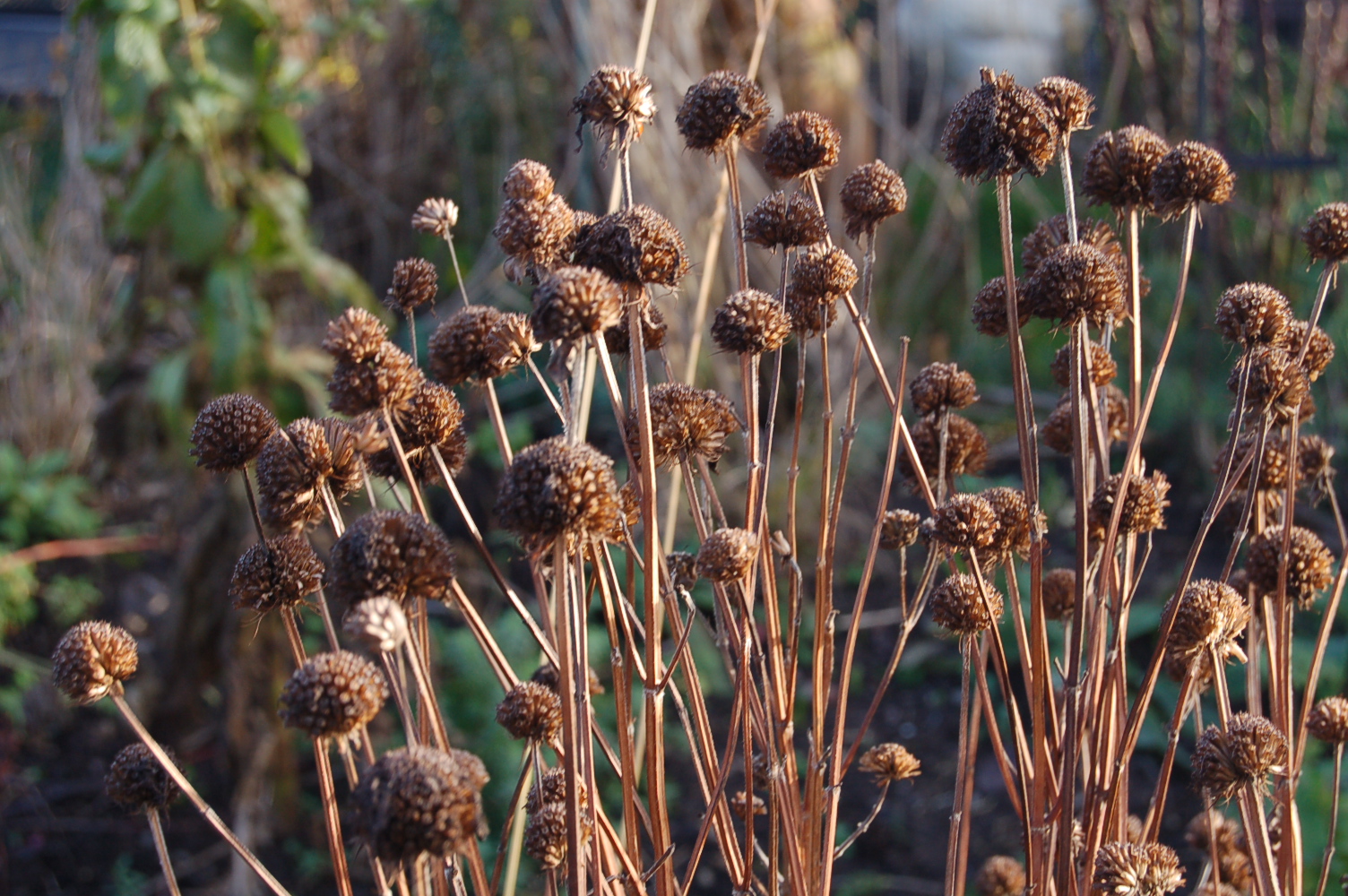
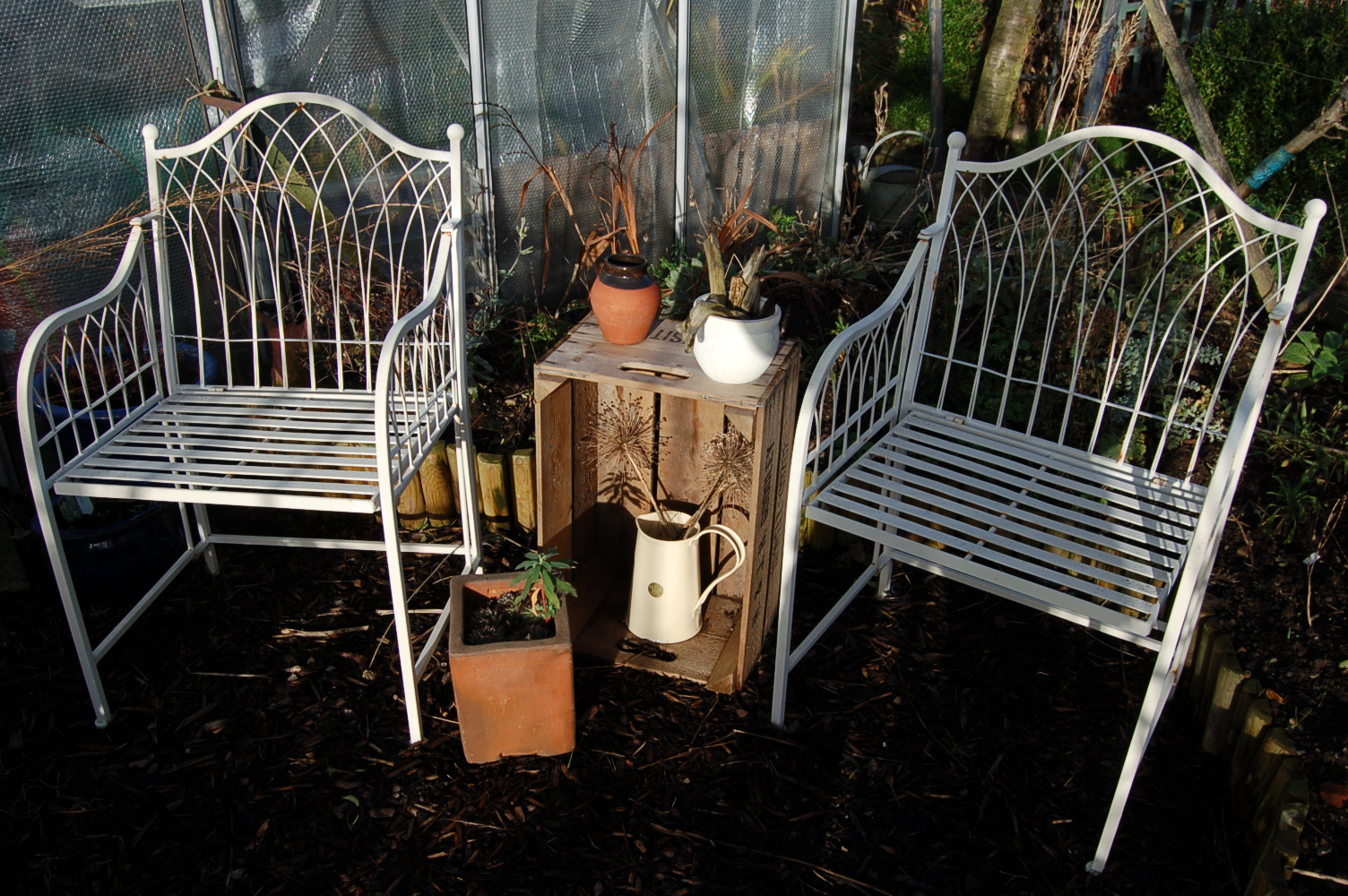
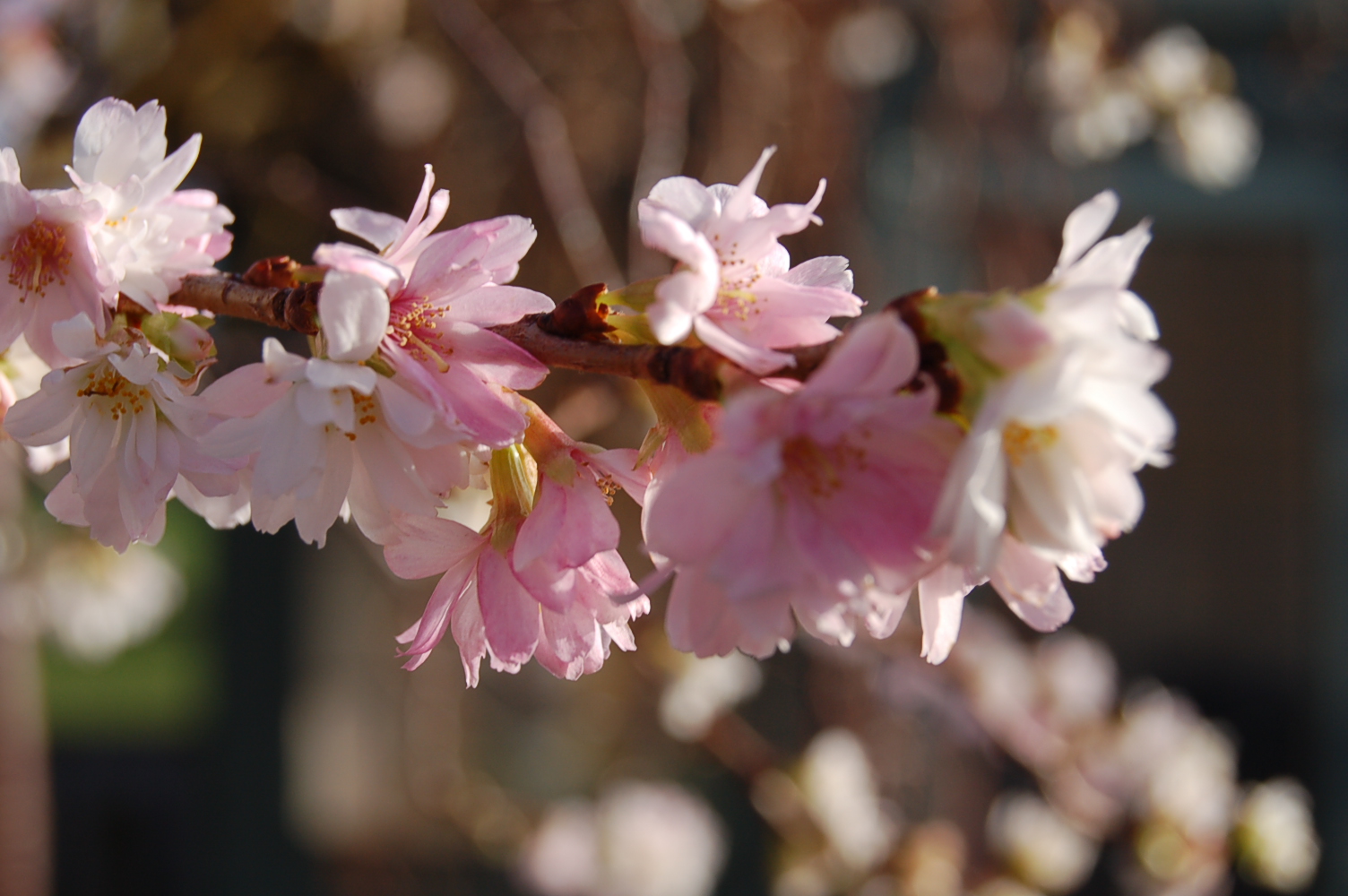
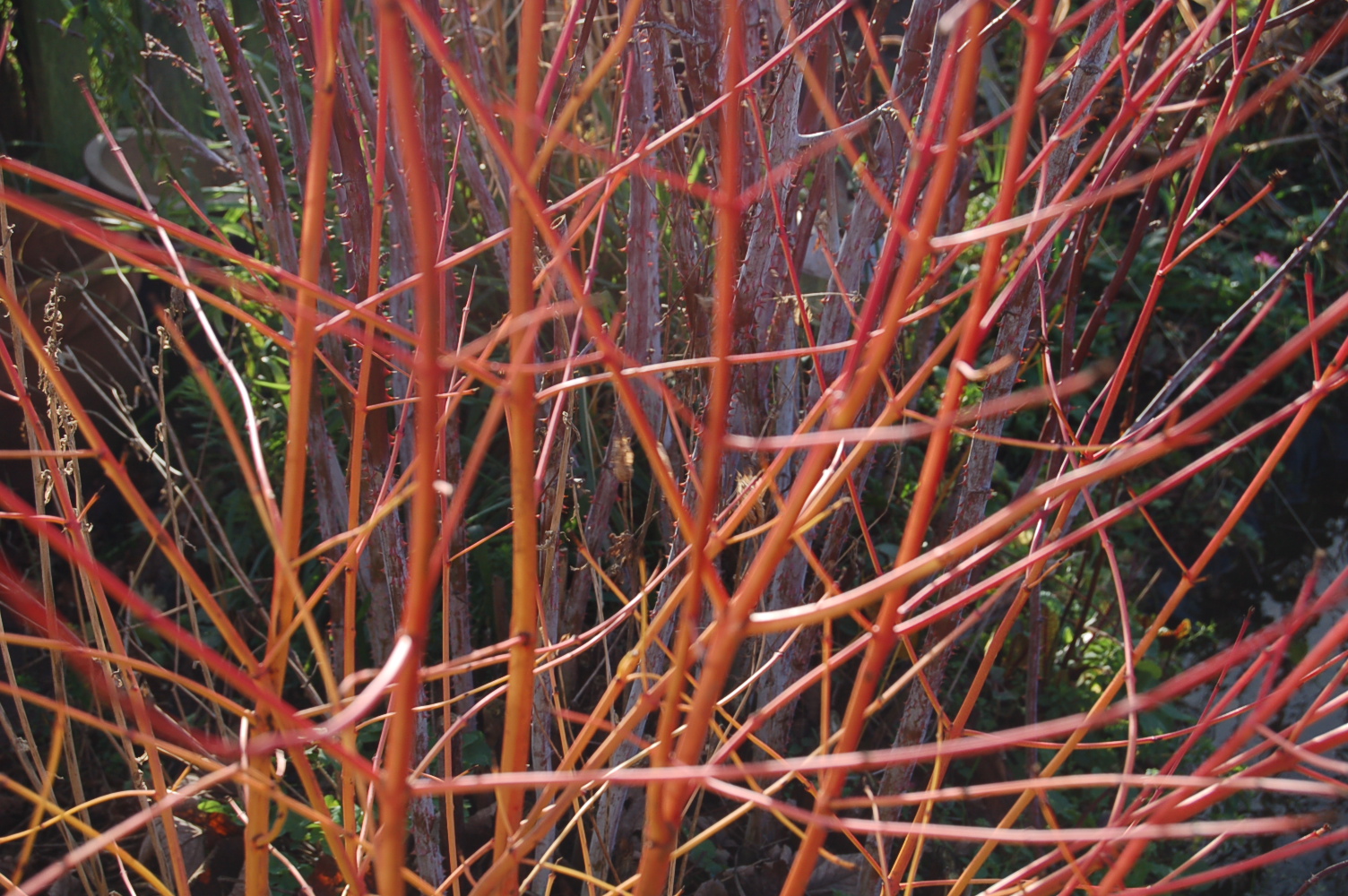
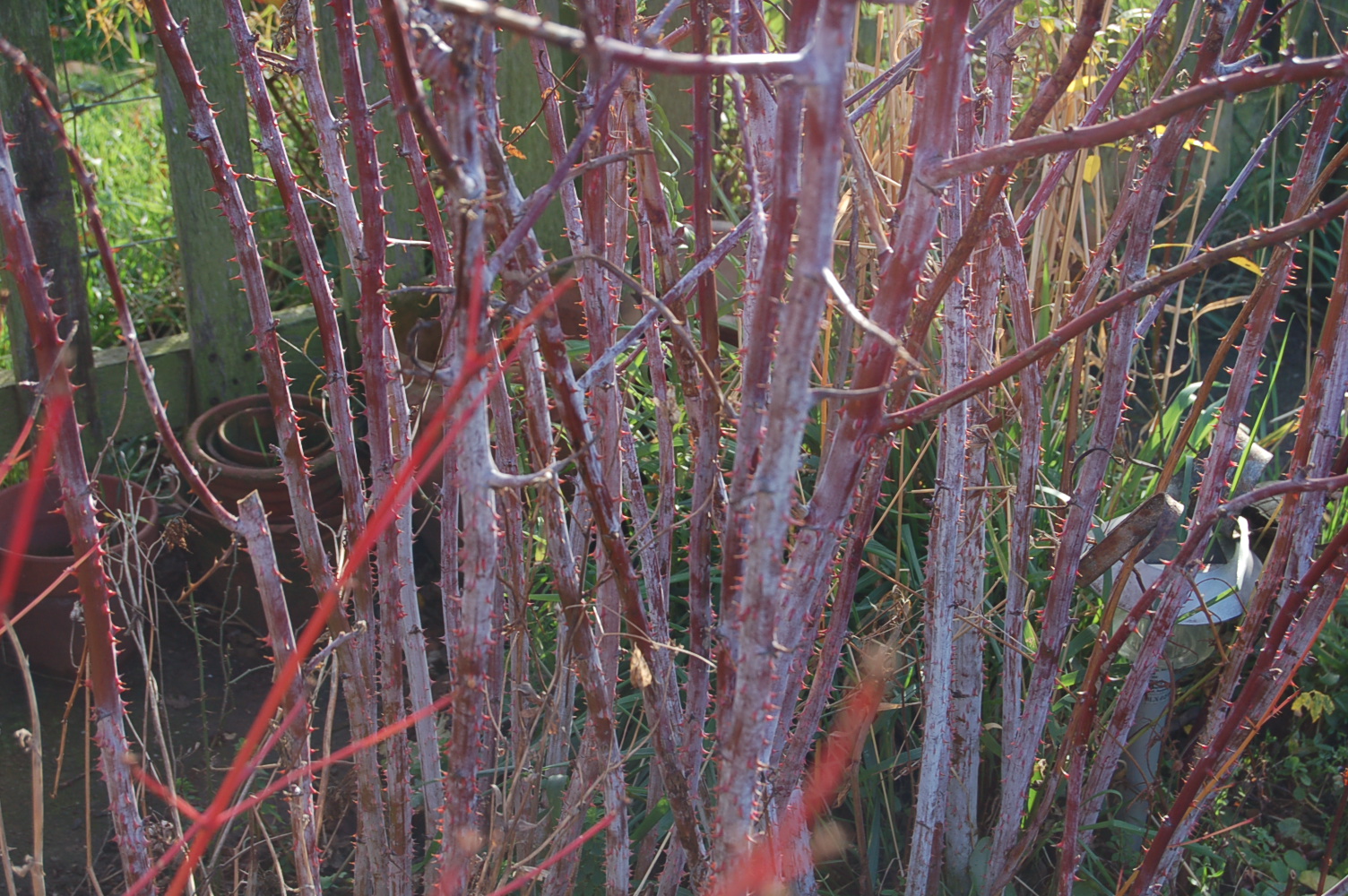
This clump of bell-shaped flowers of Arbutus unedo, the Strawberry Tree, overhangs the roadside verge. We are so grateful for its performance as it only just survived the onslaught of the last two winters. We rescued it with heavy pruning.Orange stems of Cornus "Cardinal" with the white stems of young Betula utilis in the newly planted Shrub Garden.Sea shore find amongst Euphorbias.Terra-cotta pots and the pink flowers of Bergenia sit at the feet of Miscanthus and driftwood.The yellow-faced blue Violas flower in pots by the front door.In the Rill Garden two very different Hebes with colourful foliage sit in front of an orange-stemmed dogwood.The low light of winter turns the cut foliage of the purple-leaved vine blood-red.The creamy-yellow berries of the Cotoneaster rothschildianus hang in clusters covering this small tree.The flowers of this pioneering Primrose appear too delicate to survive the cold of January.Warm brown seed heads give so much to the Chicken Garden in winter.The grasses throughout the garden catch both the winter light and the gentlest breeze. The curly seed heads of this Miscanthus napalensis are soft to the touch.In the Secret Garden the cream metal seats become more dominant just when they are too cold to sit on.In the Japanese Garden the blooms of our pink version of Prunus autumnalis subhirtella are a joy to look at.Move in close and appreciate the pink glow.The hottest of the coloured stemmed dogwoods must be Midwinter Fire - ours grows on the bank bordering the wildlife pond.The white-stemmed Rubus sits alongside Midwinter Fire on the pond bank.The fruit of our apple "Pixie" remained too tiny to pick so we have left them for the birds, who so far have ignored them.
Jasminum nudiflorum has been flowering by the chicken's run now for four months and is still going strong. What a star!
The mad seed heads of the orange-peel clematis, which I grew from seed, never cease to amaze me even though I see it each morning as I collect the chucks' eggs.
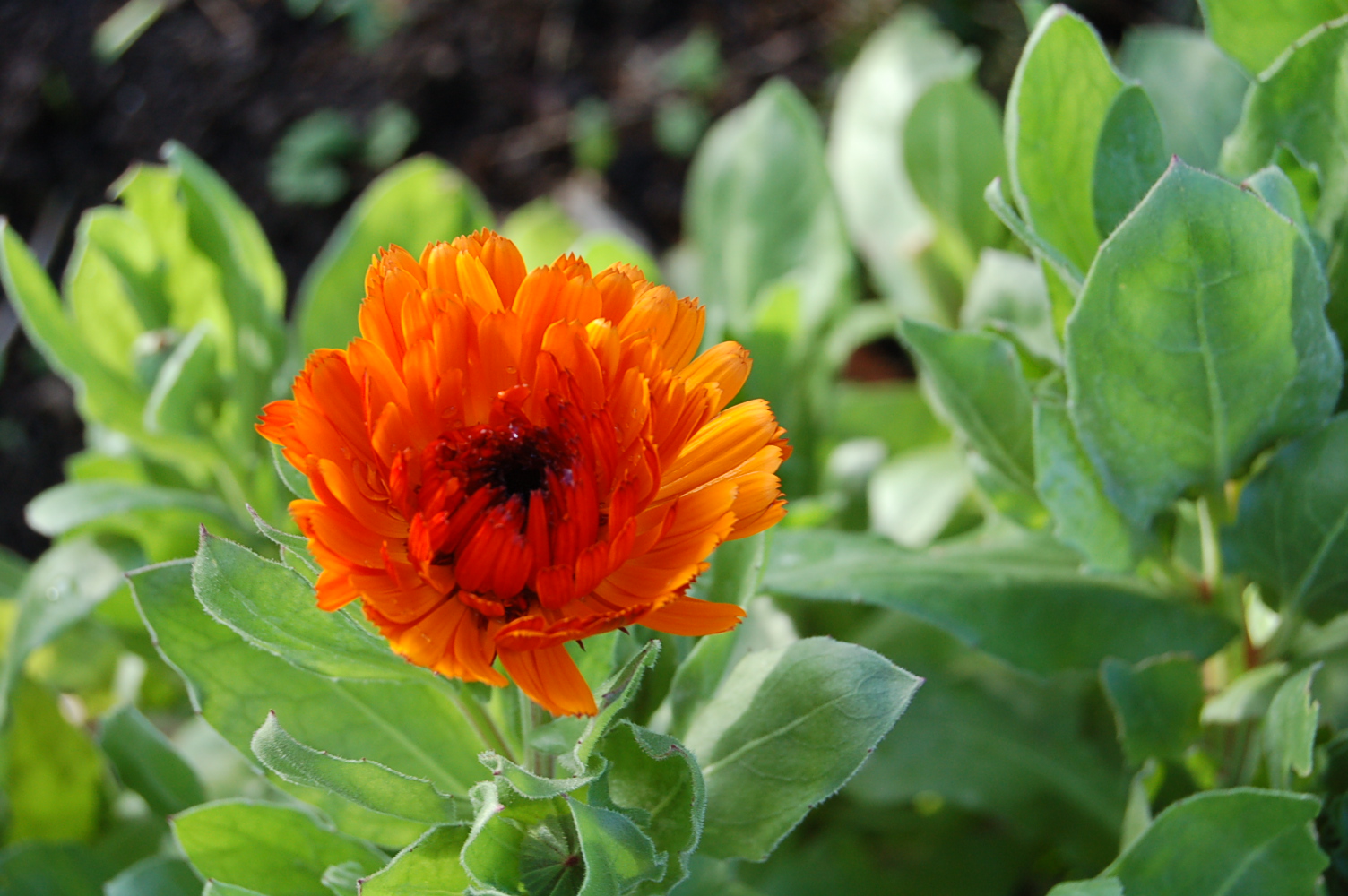
We seem to have calendula flowers somewhere in the garden every day of the year.
One of five Achillea still flowering away in January, this variety "Biscuit" is in the Secret Garden.
We went down to London for the day, not to see a show or visit a museum or shop in Harrods, but to go birdwatching. Not something I could have said a few years ago, but luckily for us and the residents of the capital city the Wildfowl and Wetlands Trust have created a haven for wildlife right in the heart of the city. We hate cities and definitely hate driving in them, so we hoped our visit would be worthwhile. We were accompanied by our daughter Jo and son-in-law Rob who had recommended the place to us, so the pressure was on them! They are good navigators in cities which was most useful. Last year they visited and were amazed at 5 Bittern sightings.
The day dawned cold and wet with a bitter wind so we wrapped up in thermals and layer upon layer of clothing suitable for Polar Bear spotting. First impressions were favourable – the centre was attractively built, we were “meeted and greeted” by a friendly WWT person who told us where to go starting with the cafe. it turned out to be a good cafe which served tasty lattes and even tastier bacon butties. We reluctantly left the cafe’s warmth and shelter expecting to have to tackle the weather to reach the first hide. Wrong! It was in the same building as the cafe and a most comfy place to view the large expanse of water.
Watching the numerous species of duck against an urban background seemed somewhat incongruous. And watching a Peregrine spook the ducks in a diagonal stoop over the cold grey water added to this feeling. We saw over 40 species of bird including Snipe, both Common and Jack, wildfowl such as pochard, teal and shoveller, but fewer small birds but we were treated to a close up view of a Stonechat, that dapper little alert chap dressed in russet and wearing a black cap. The Jack Snipe, Pintail and Water Rail were probably the star spots of the day. It has been 30 odd years since we last saw this diminutive Jack Snipe, the little wader with the long beak that is surprisingly shorter and less ridiculous than the one sported by its larger cousin the Common Snipe. We had a fine view allowing us to appreciate its wonderful striped head and russet wing markings.
Walking between the hides we were impressed by the wildlife gardens planted along the walkways. The dried stems of perennials and the stark outlines of dogwoods, willows and birches gave a taster of how attractive they must be in warmer months. There were examples of methods of attracting wildlife such as this magnificent “insect tower block”.
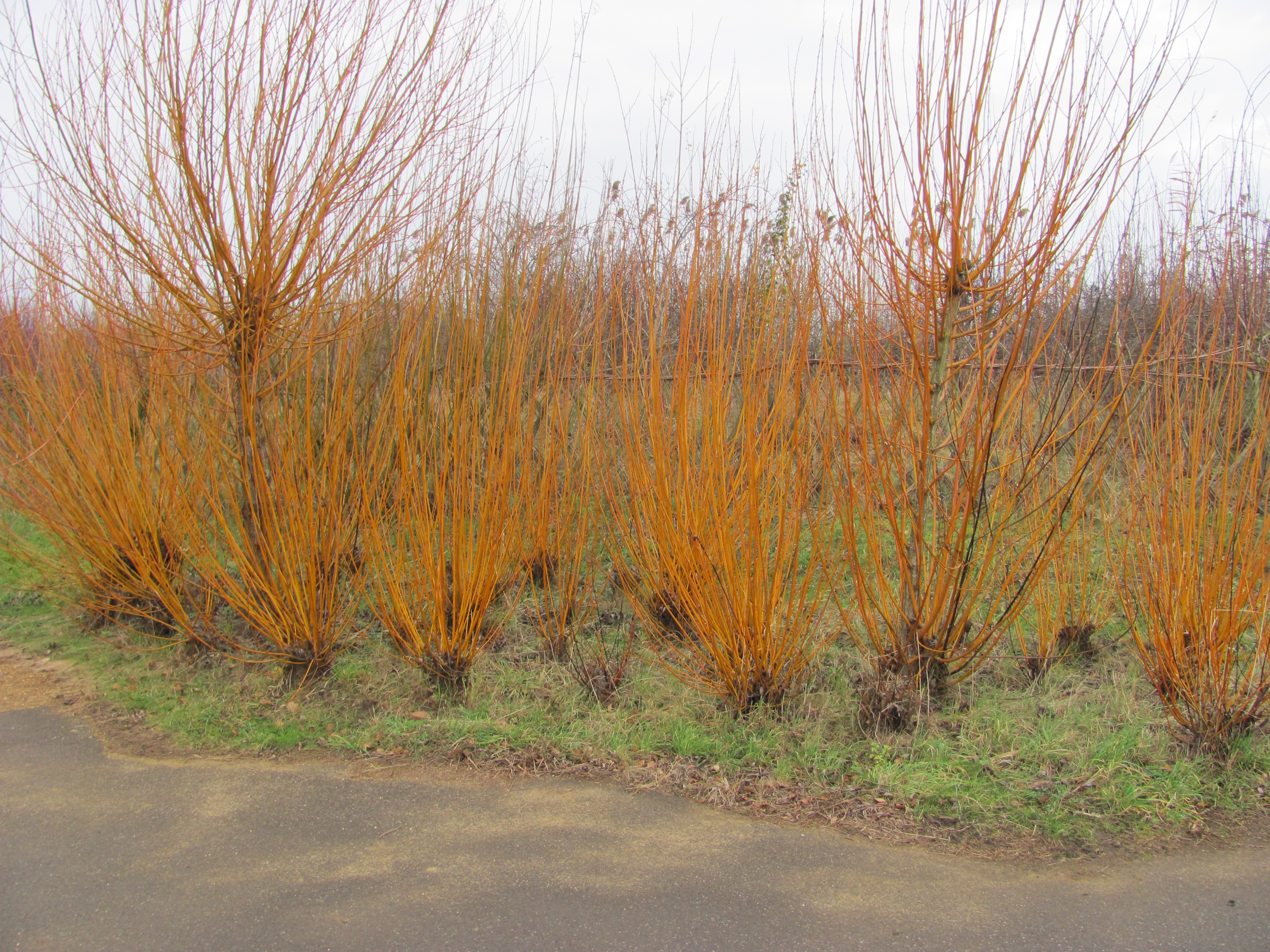
Coloured stemmed willows feature strongly as pollarded trees, hedges, structures such as arches and living fences. These yellow stemmed pollarded and coppiced specimens lit up the dull grey day.
Barnes certainly lived up to expectation even though the visitors’ favourite failed to put in an appearance, the weather being too inclement for the Bitterns, a bird that dislikes the wind. But it gives a reason to return. We plan to visit next in the summer when it will be interesting to see what summer migrants are in evidence in this wildlife oasis in the city. I know how corny the phrase “wildlife oasis” is, but how else can you describe this little gem.
'The most important and informative publication on wildlife of our times' - The Independent. This blog is a member of The UK & Ireland Natural History Bloggers group: www.uknhb.blogspot.com







































































 greenbenchramblings