Categories
birds garden wildlife gardening hardy perennials trees wildlife

Agapanthus – a plant for winter?

On my early morning wander down to feed the chucks today I was accompanied by the usual Robin who followed me, flying from post to post down the fence line stopping off to treat me to a burst of his gentle transparent winter song. He does this every day except when the rain is torrential when he never shows. If I take the grass path past the slate bed, the Secret Garden and the Chicken bed he takes the fence route, but if I take the concrete central path he flies along the cordon pears and plums stopping to sing on each tree. Today was different for I had the added benefit of the first song this winter from the Song Thrush. The first signs of true territorial song mapping out his patch and letting others know. Sadly recently he just sings for us for there seem few rival males to want his territory. Here in Plealey we seem to have far more Mistle Thrushes than Song Thrushes.

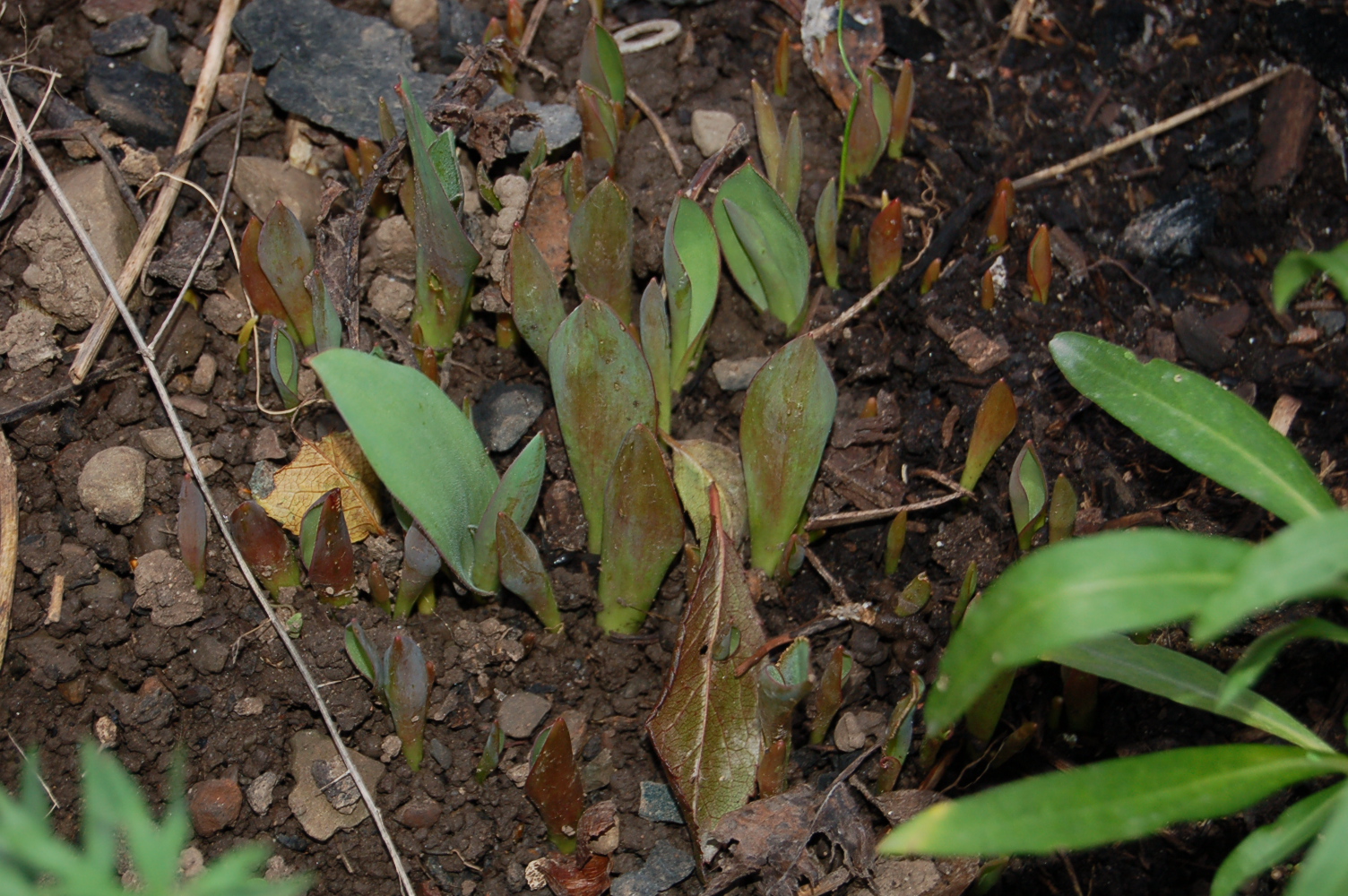
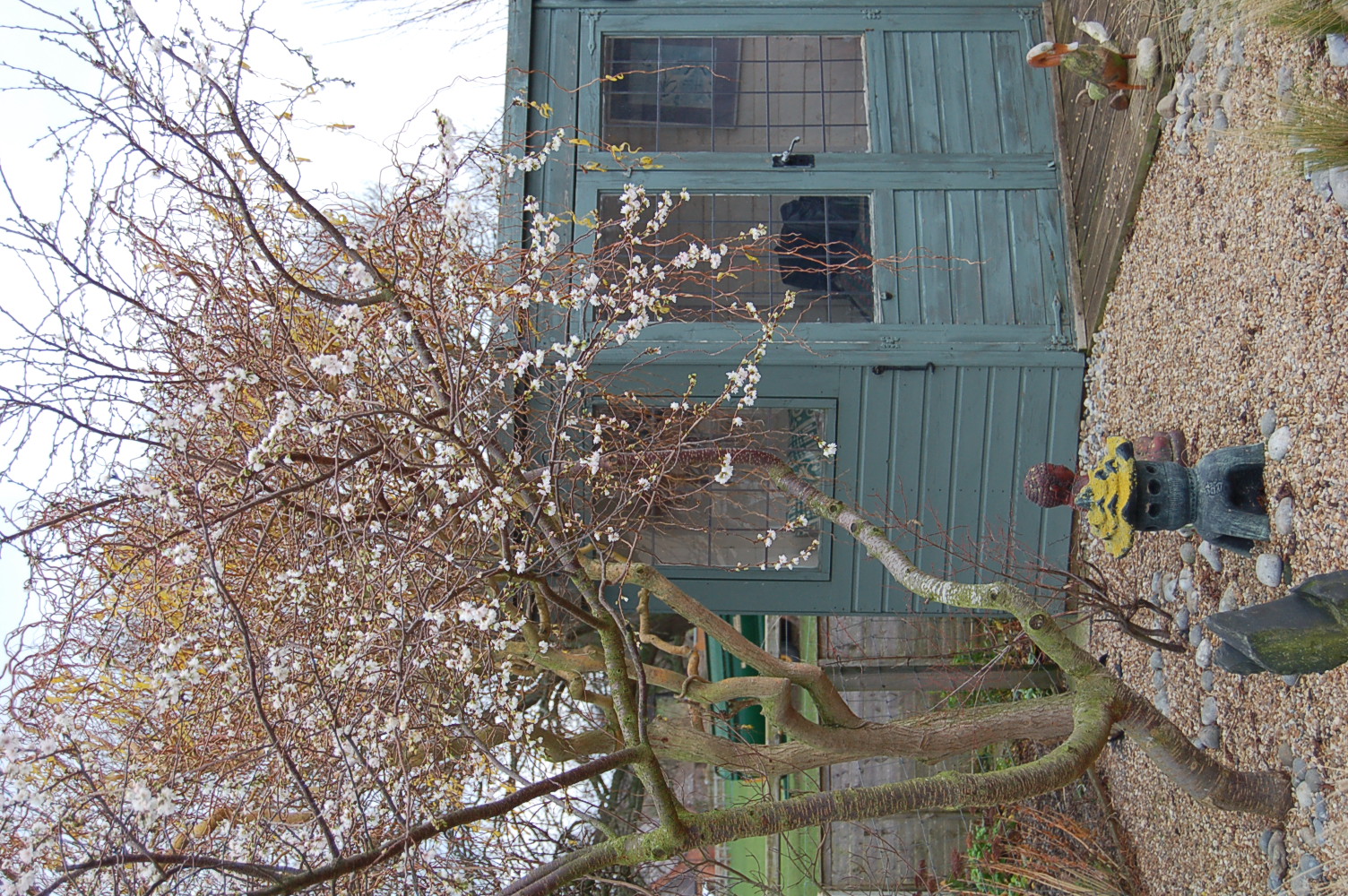
As usual I wandered around the garden to see what was happening and today felt warmer so a slow aimless wander was on the cards. I was impressed by the Prunus subhirtella autumnalis, the centre piece of our little Japanese Garden, which is littered with its delicate white blooms. And at last new spears of bulb leaves have made their way to the surface to show us their intent. But a plant that struck me as an unusual “winter interest” plant was the Agapanthus.

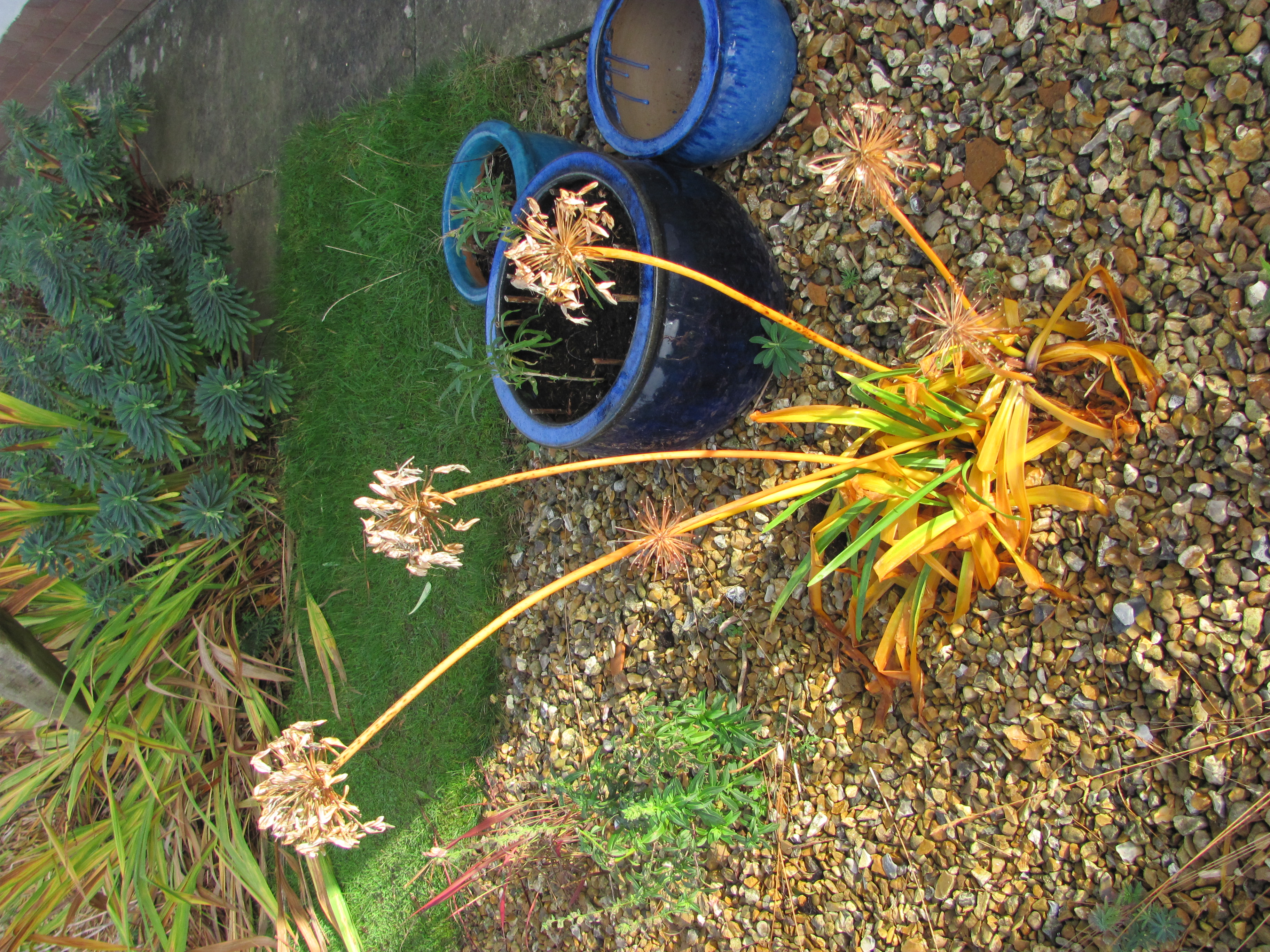
Agapanthus, a striking summer flowering plant, is growing in our “Chatto Garden”, a gravel bed we made after visiting Beth Chatto’s wonderful garden and being struck by her gravel garden created on her old car park. When there we bought a few agapanthus and on our gravel bed we grew a deep dark blue flowering variety. I wrote two earlier blogs about the amazing buds and how they open. ( see “Bud Burst” published in July 2011 and “Bud Burst Part 2” published in August 2011.)

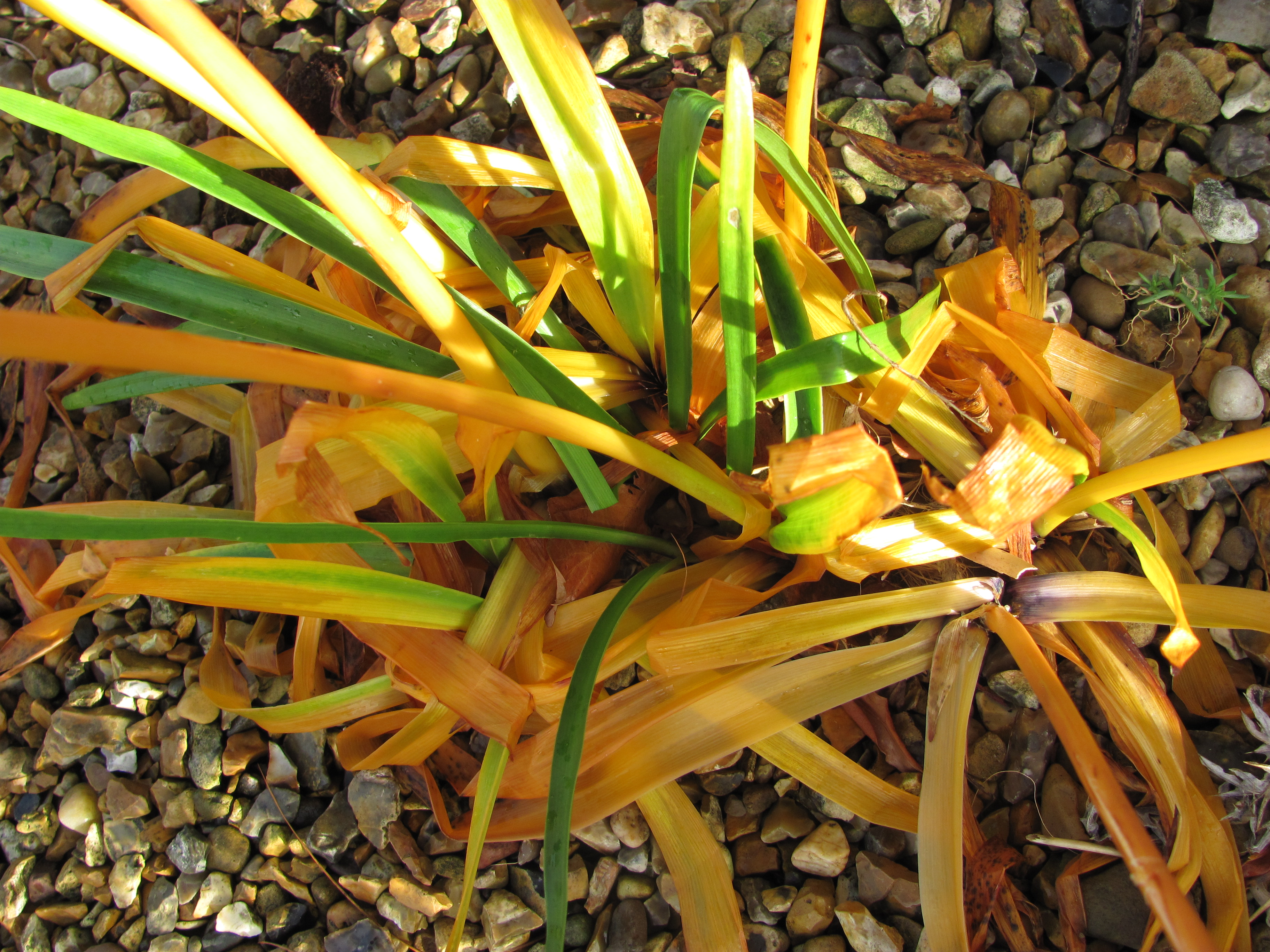
Now in December it is still giving interest on our “Chatto Garden”, but not blue this time but the absolute opposite – a rich yellow. The foliage and stems are yellow and the seed heads are like delicate sculptures.

Until now I had not considered the Agapanthus to be a plant for winter interest. They always say that a good gardener is one who never stops learning!

Categories
garden photography garden wildlife gardening ornamental trees and shrubs outdoor sculpture roses shrubs town gardens trees wildlife

A small town garden in December.

Earlier this week we spent a few days down in Gloucestershire at my Mother’s home. She has a small town house with a small town garden, about 30ft by 20ft in the back and a token patch in the front. The house is the last in a row on the edge of a small town and the garden boundary is a tall rich hedge of mixed native plants with fields beyond. For centuries this hedge has fed and sheltered wildlife in its hawthorns, ivies, wild roses and the sprawling shawl of brambles. It is home to a rogue buddleja germinated from a seed dropped by a bird and now attracting butterflies, bees  and hoverflies to its scented purple flowers each summer.

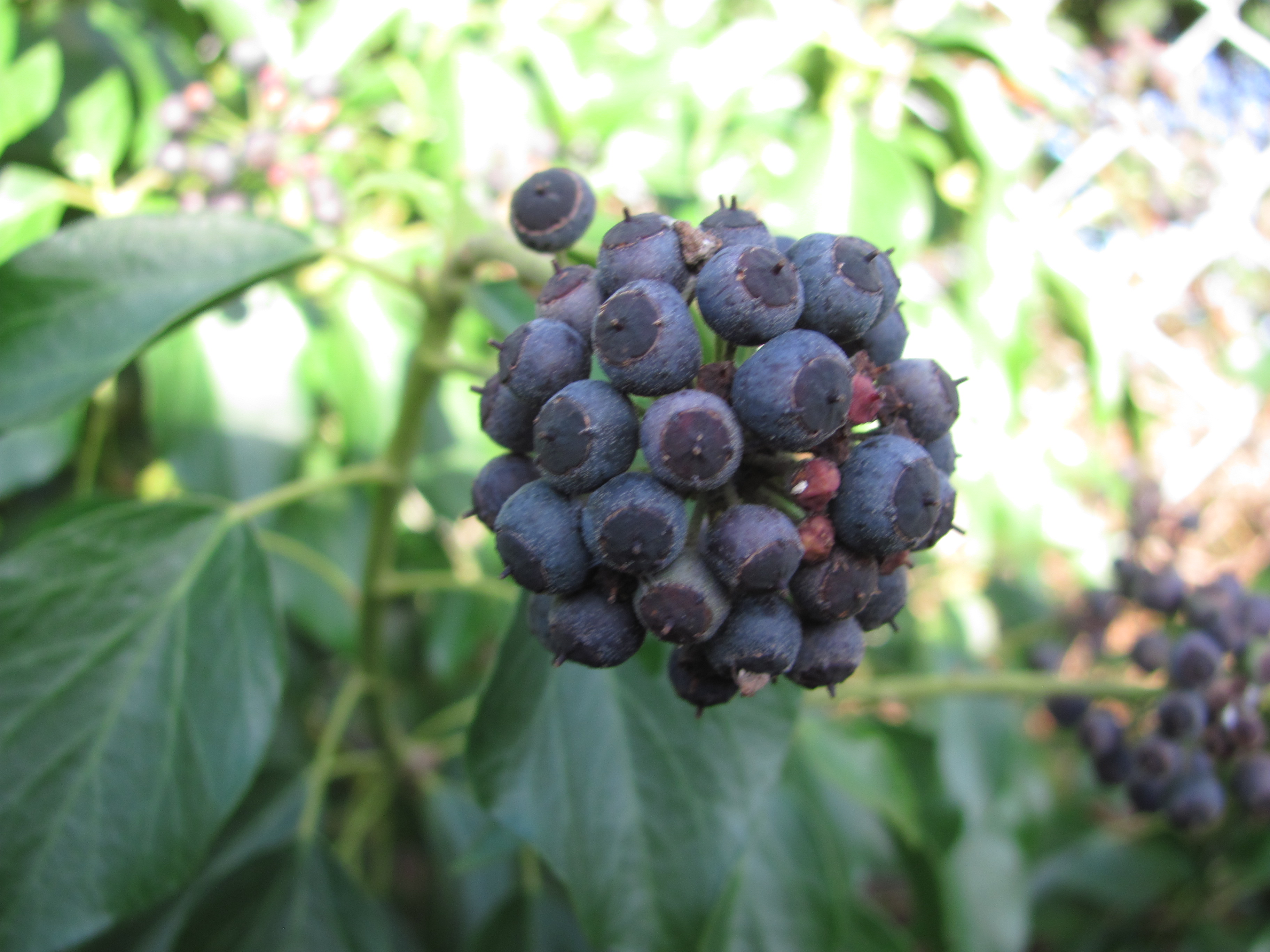
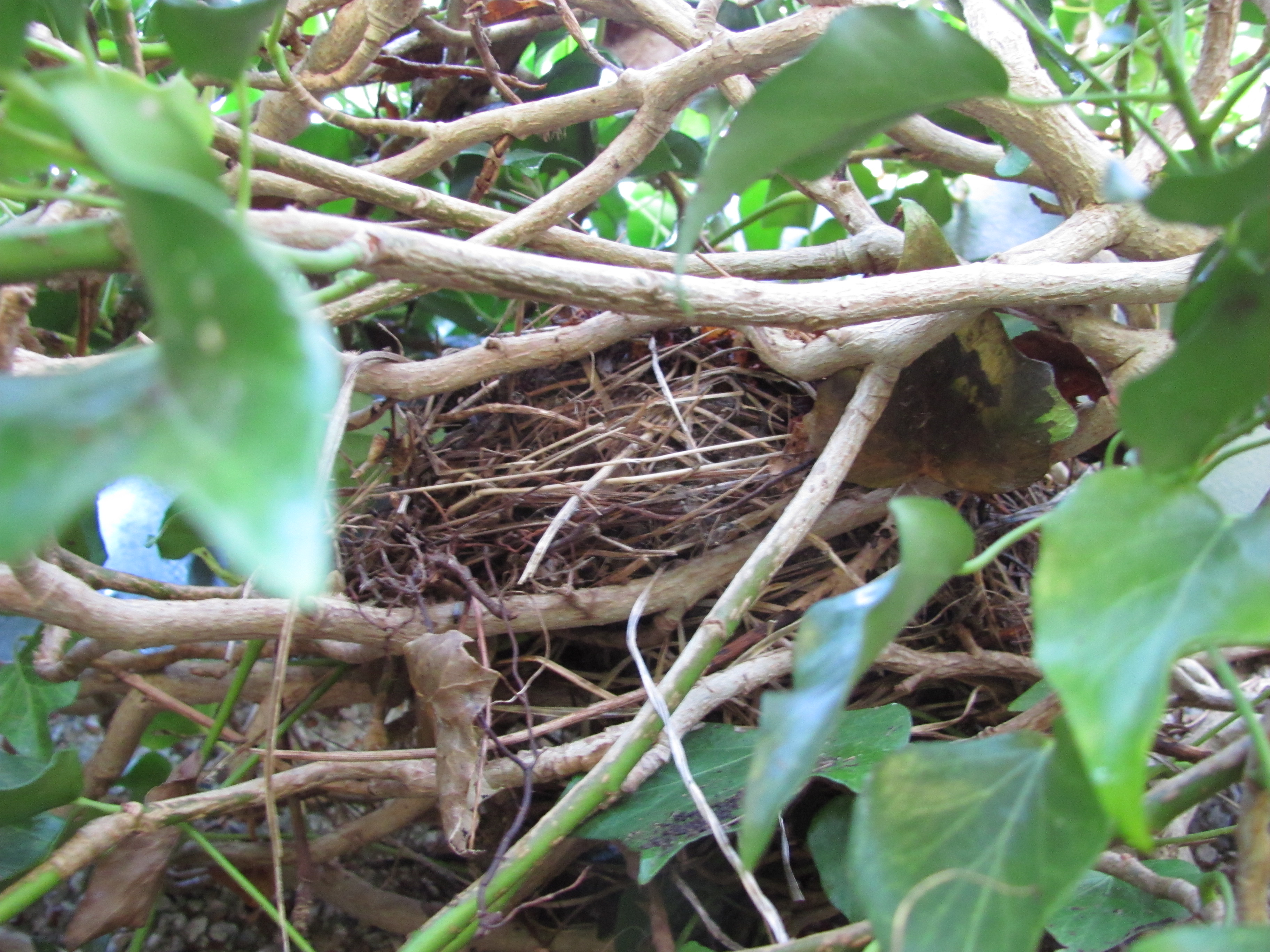
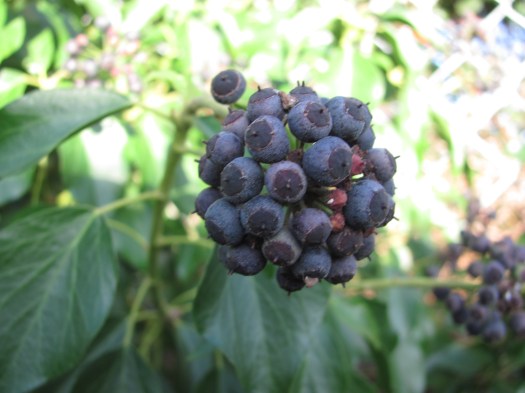
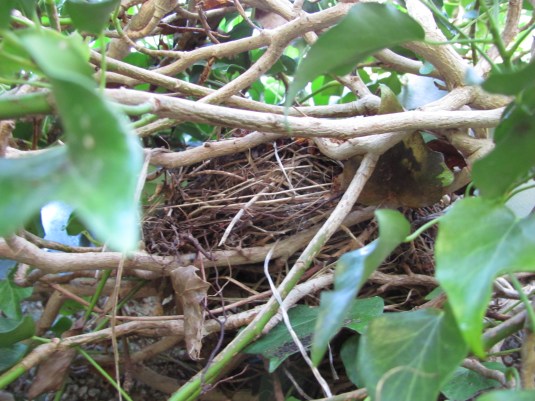
The ivy has spread from the hedge and along the garage wall which forms one side of a little secret garden, a shaded place for tea and cake. This ivy is now full of black berries, food for blackbirds who earlier in the year used its shelter in which to build their nest. It is a warm place for wrens to roost.
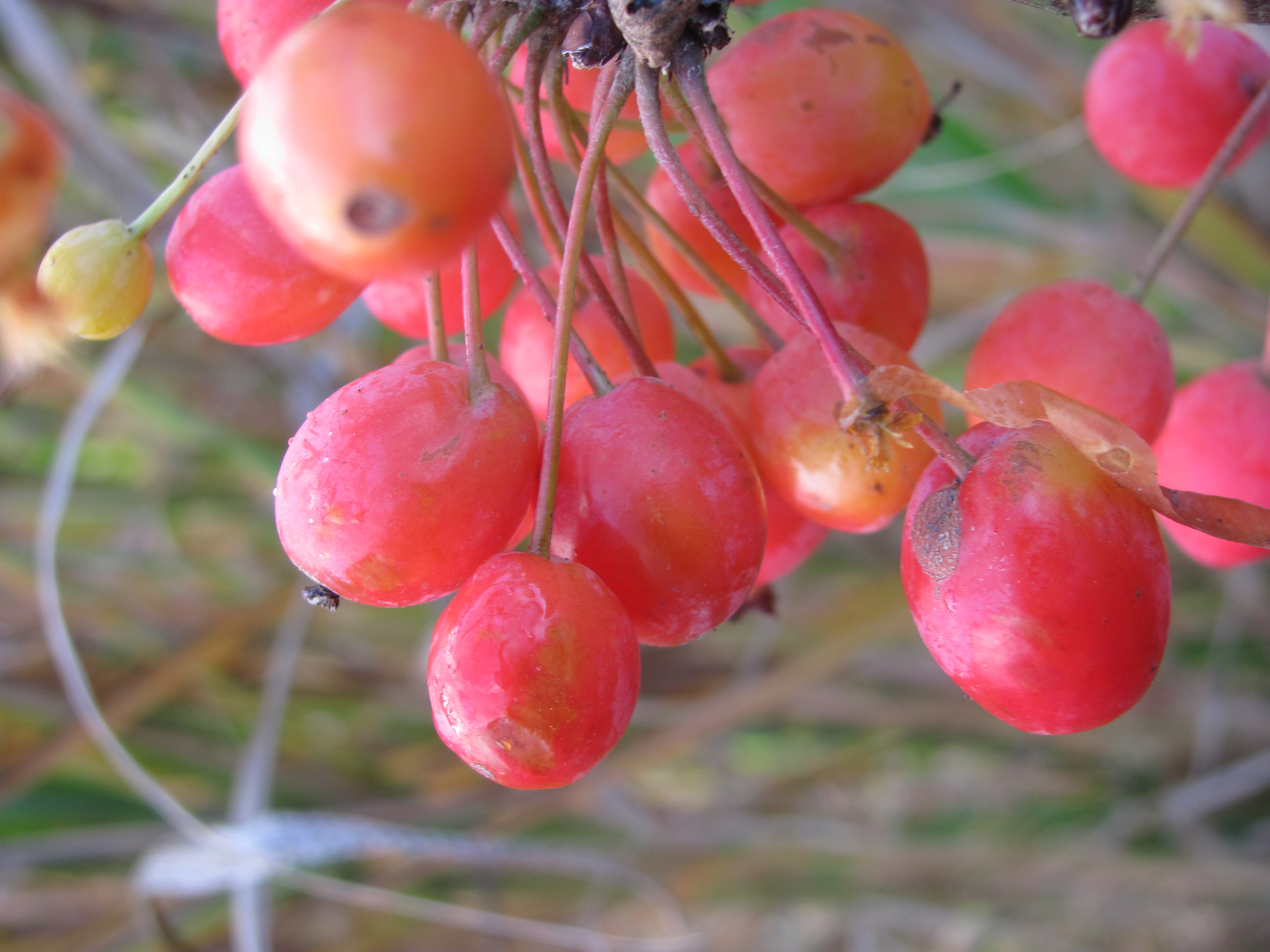
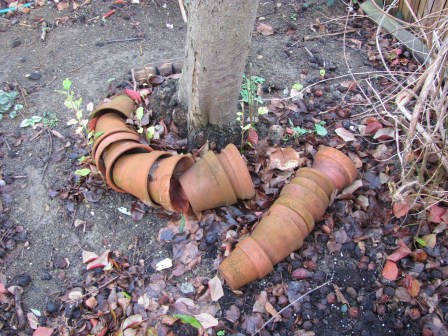
A look out from the front window into the garden shows the skeleton of silver branches of the Cercis Forest Pansy now having lost the last of its red and plum coloured leaves of autumn and a recently neatly pruned climbing rose on the porch wall. A glance at the back shows it to be dominated by a fine specimen of Arbutus unedo, the strawberry tree. There are small dots of colour from remnant flowering of earlier seasons still to be seen, but go out with camera in hand and there is so much more interest. Here the lens sees more than the eye and conjures up a garden full of textures and colours. Old terra-cotta pots spiral beneath the trunk of a malus arranged to add interest when the crab apples have been eaten by blackbirds and migrant thrushes and the yellow, orange and red of October leaves have journeyed to the ground only to be blown away by strong November winds.
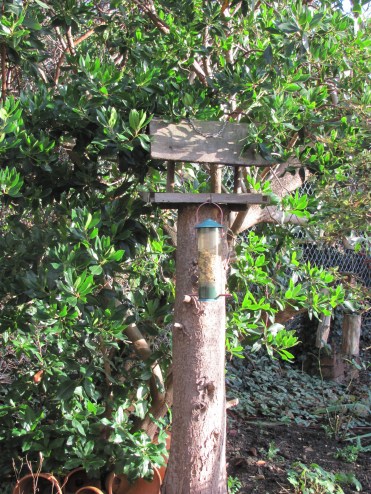
Just as the clay pots were given new life, so the trunk of the conifer, outgrown its space and lopped, has been reborn as the post for a bird table. It is now visited by the birds who ignored its barren foliage when it lived.
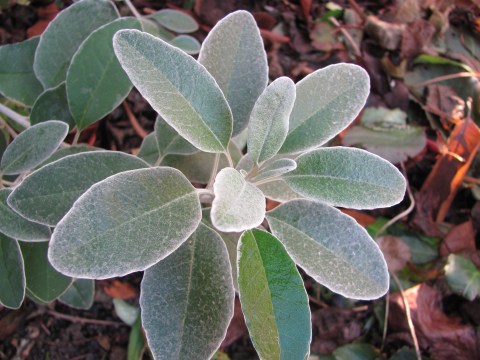
Foliage plays a central role in small gardens in winter, both for colour and texture. Some like the Senecio, now sadly re-christened brachyglotis by the botanists, has both with its leaves surfaced in silver-grey fur.
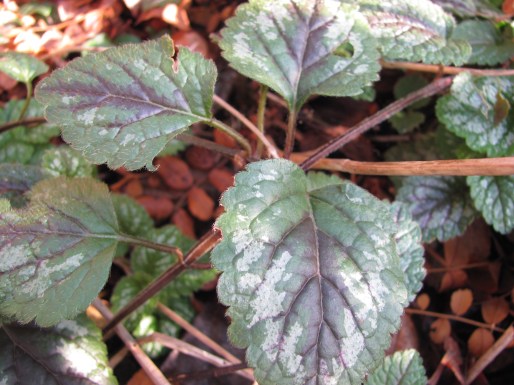
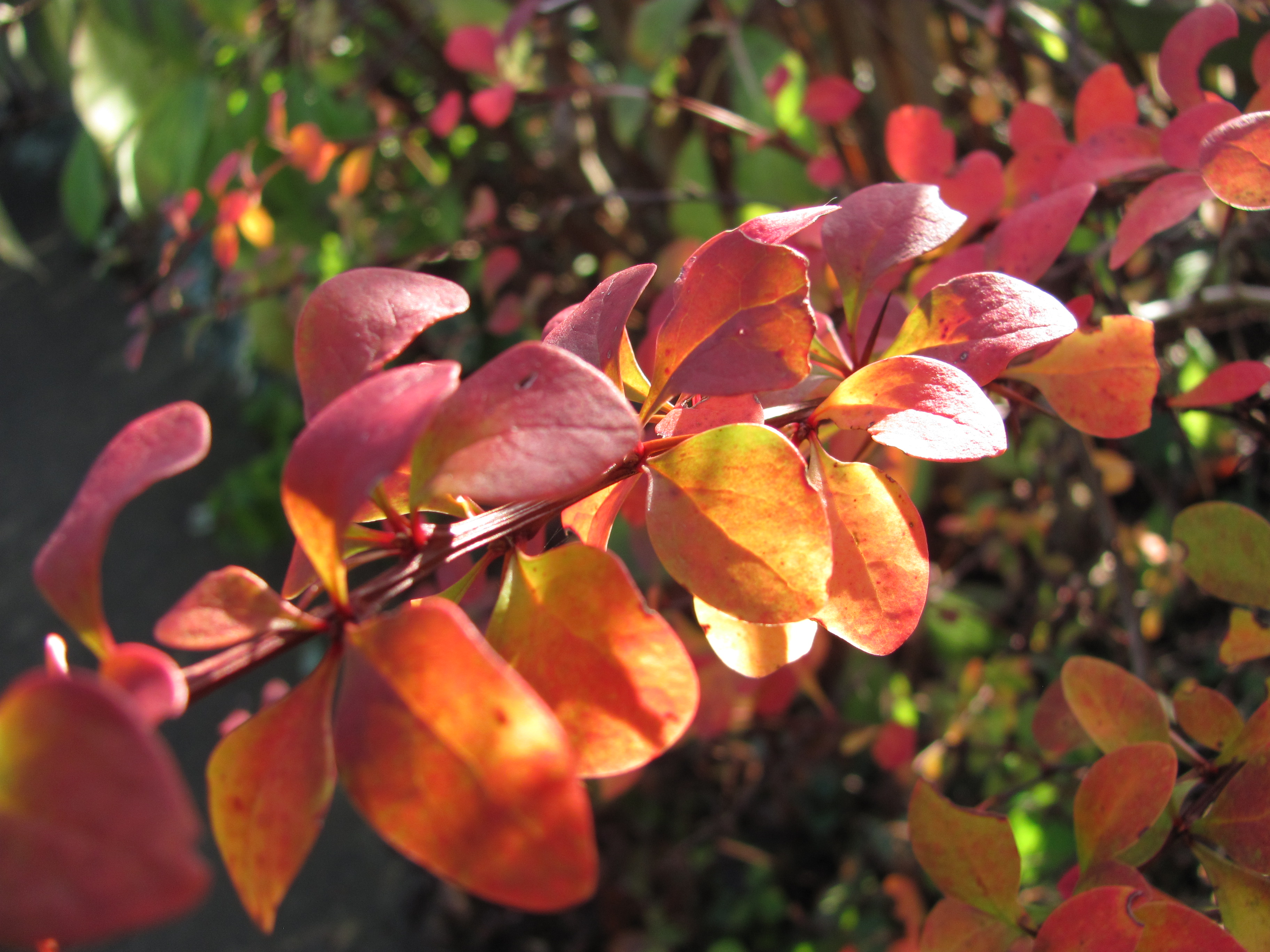
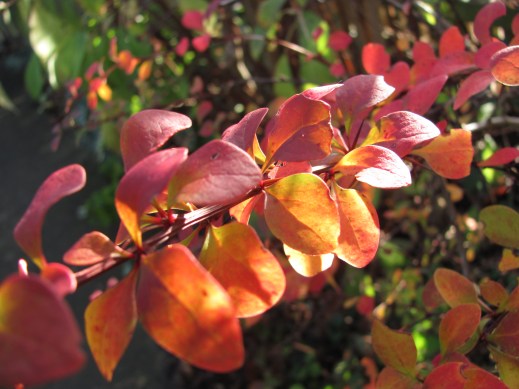
And in sharp contrast  to the delicate senecio, the bristly character of the berberis, purple in summer now turns to the red and orange tones of fire. In the shadow of the house wall a small nettle leaved plant clambers over the ground with its matt dry textured foliage shaded with silver, plum and purple. no artist could have designed these leaves.
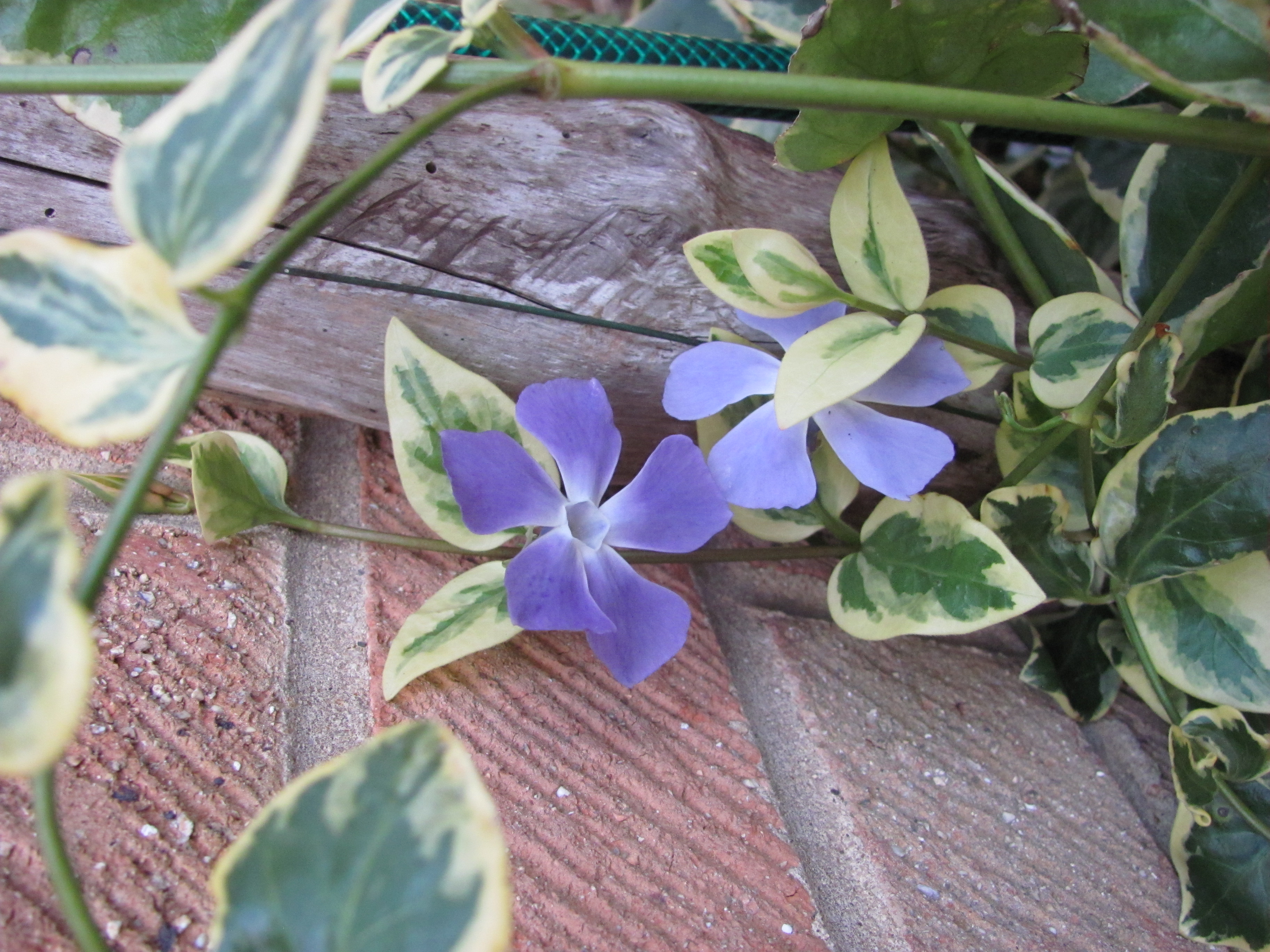
Close by the variegated periwinkle, Vinca major, defies the season and manages two pure blue blooms.

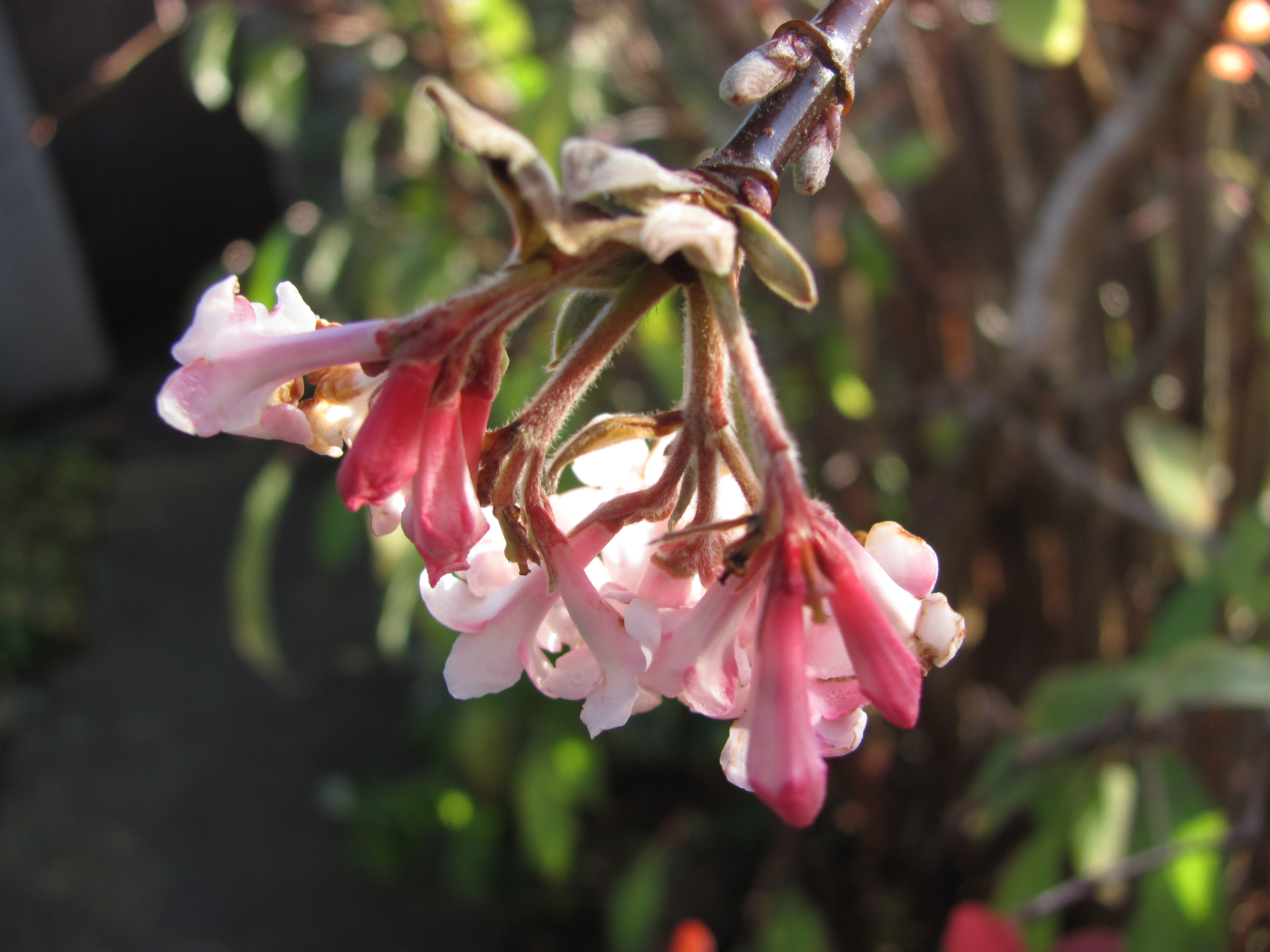
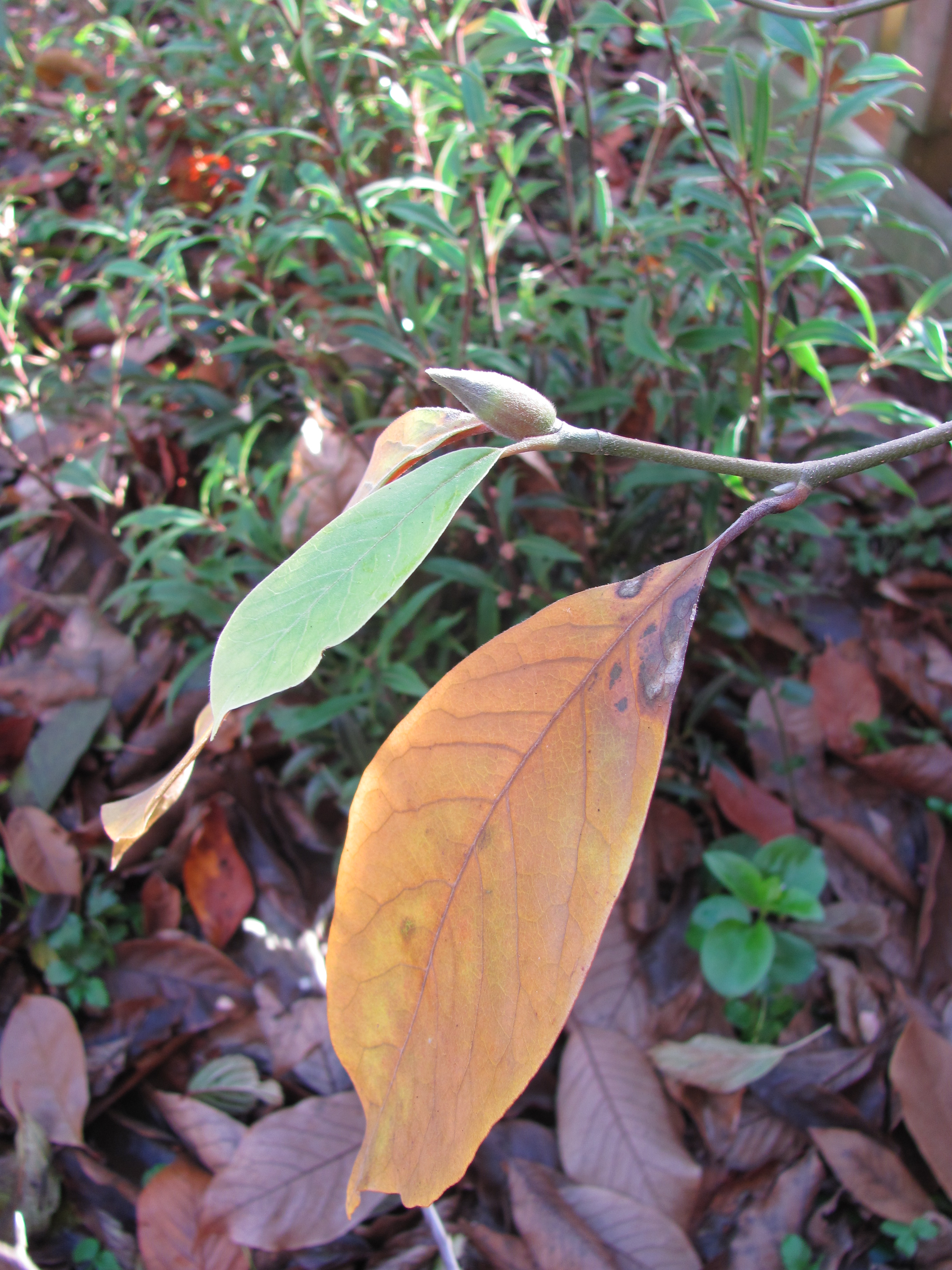
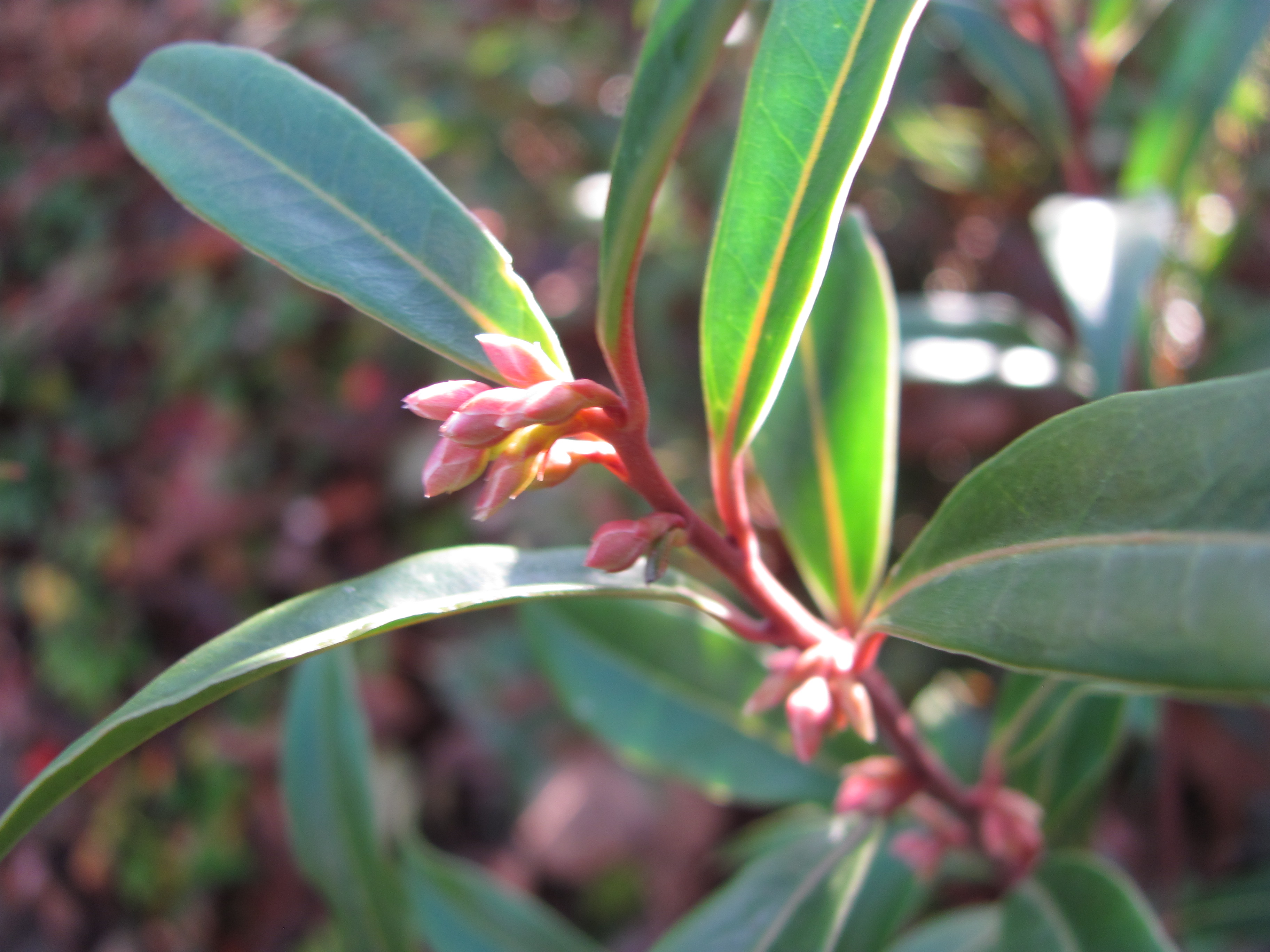
Promises of scent and colour from late winter and early spring flowers are evidence of rapidly changing seasons, the few lonely pink-blushed blooms of Viburnum bodnantense “Dawn” remind us of the profusion there is in waiting, while the soft-furred pointed buds of magnolia hide all its promises of scent and waxy petalled blooms. Sarcococca is an amazing name for a shrub. In the summer it is quite a dull little waxy leaved evergreen but below its branches are hung with tiny buds that will open into little white gems absolutely loaded with a heavy honey scent at the most unlikely time, January and February. Such a treat, and this one is planted alongside the garden path, just where it can treat anyone passing by.

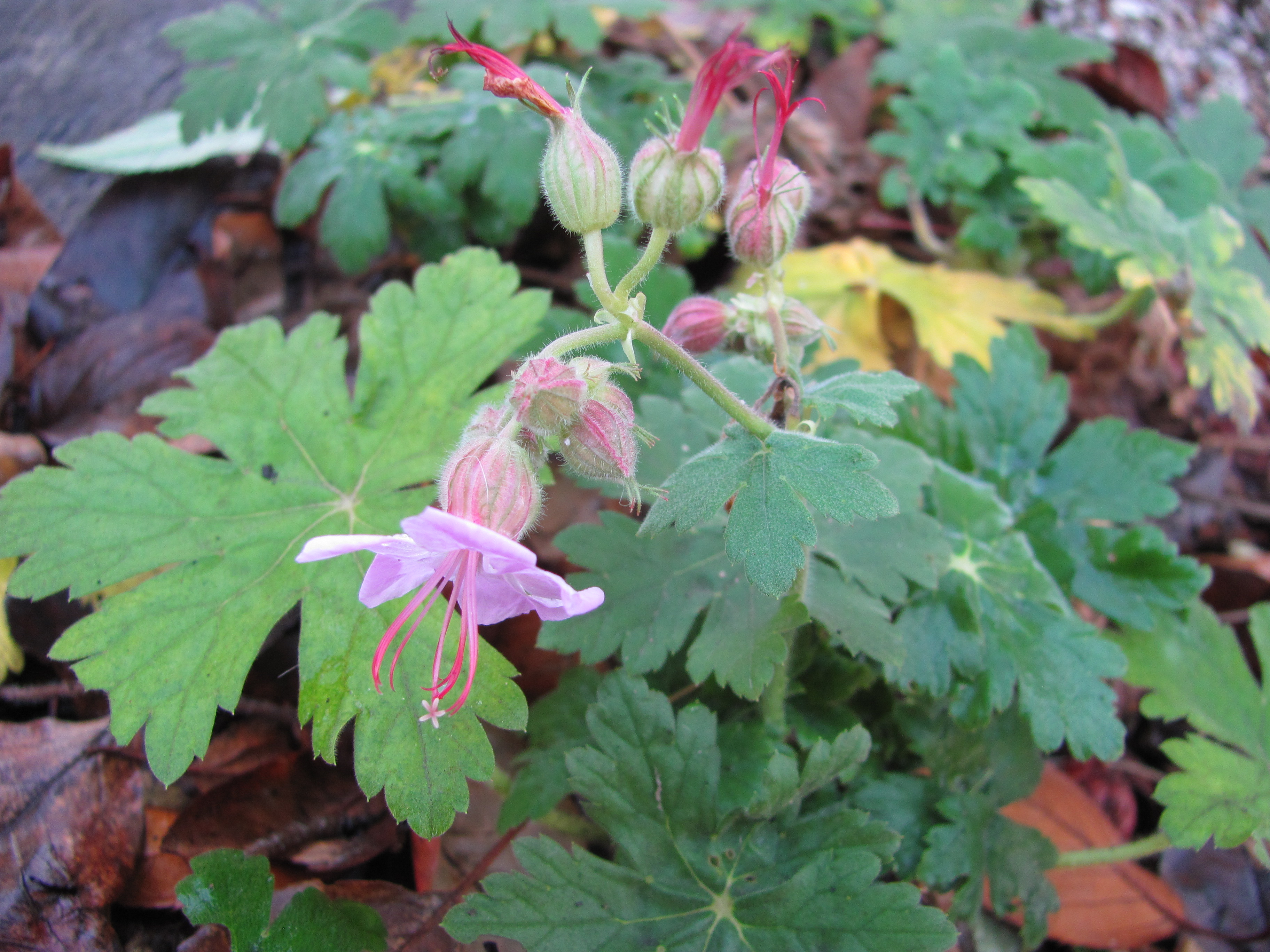
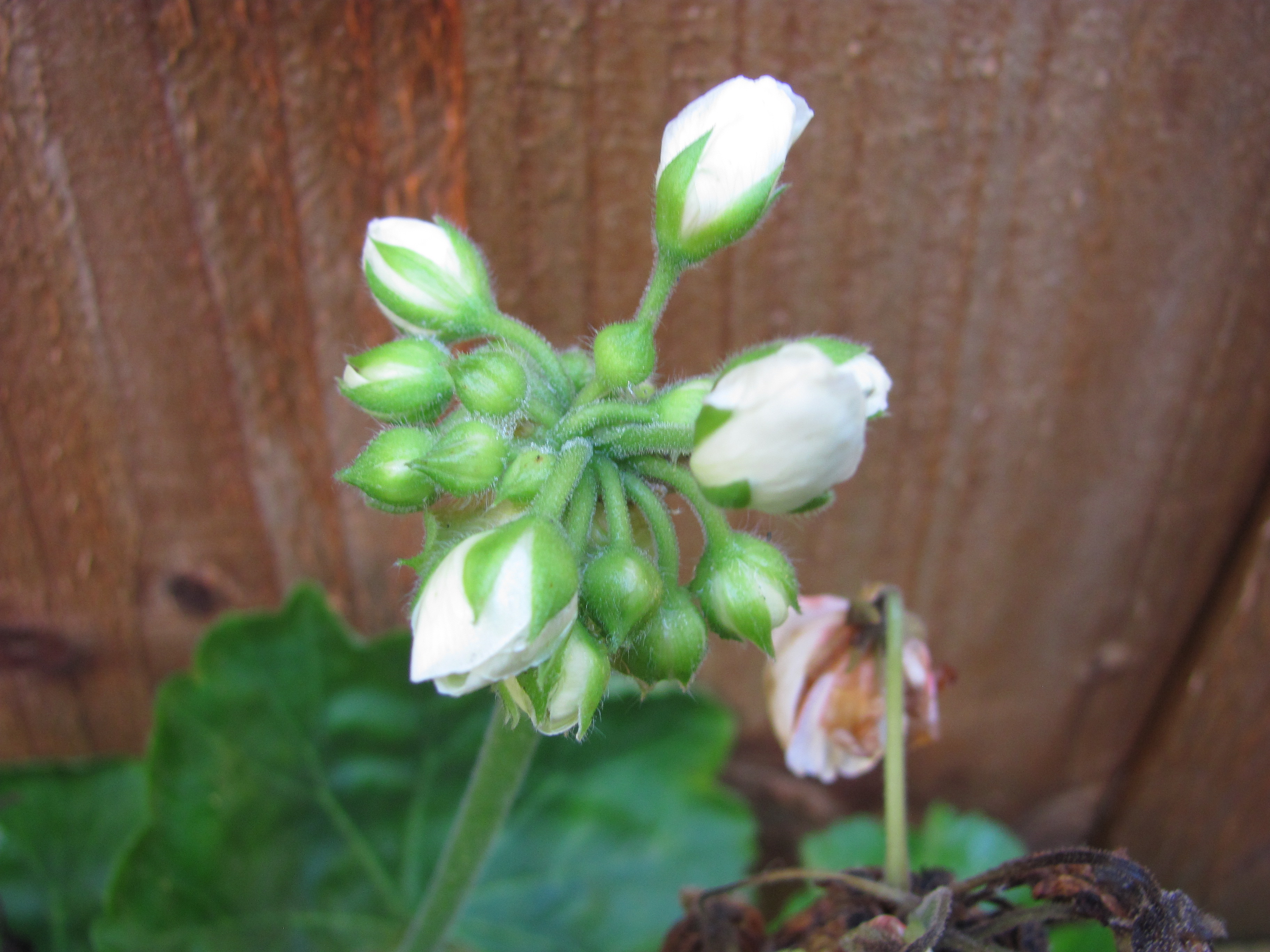
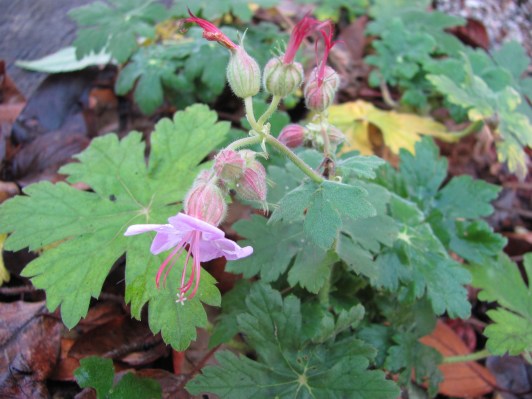
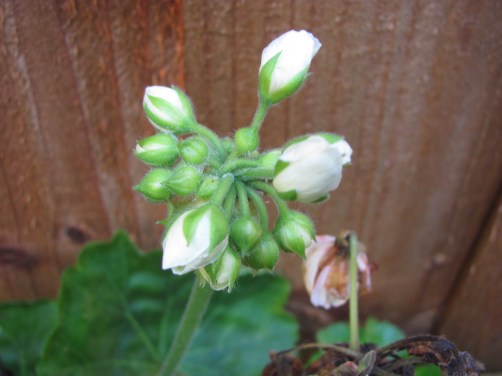
Whereas the buds of the viburnum and the magnolia are promises of future joy, other buds are remnants of the joys of summer. White buds of the annual pelargonium and the palest pink of the hardy geranium are hanging on into the cold weather. True wishful thinkers!
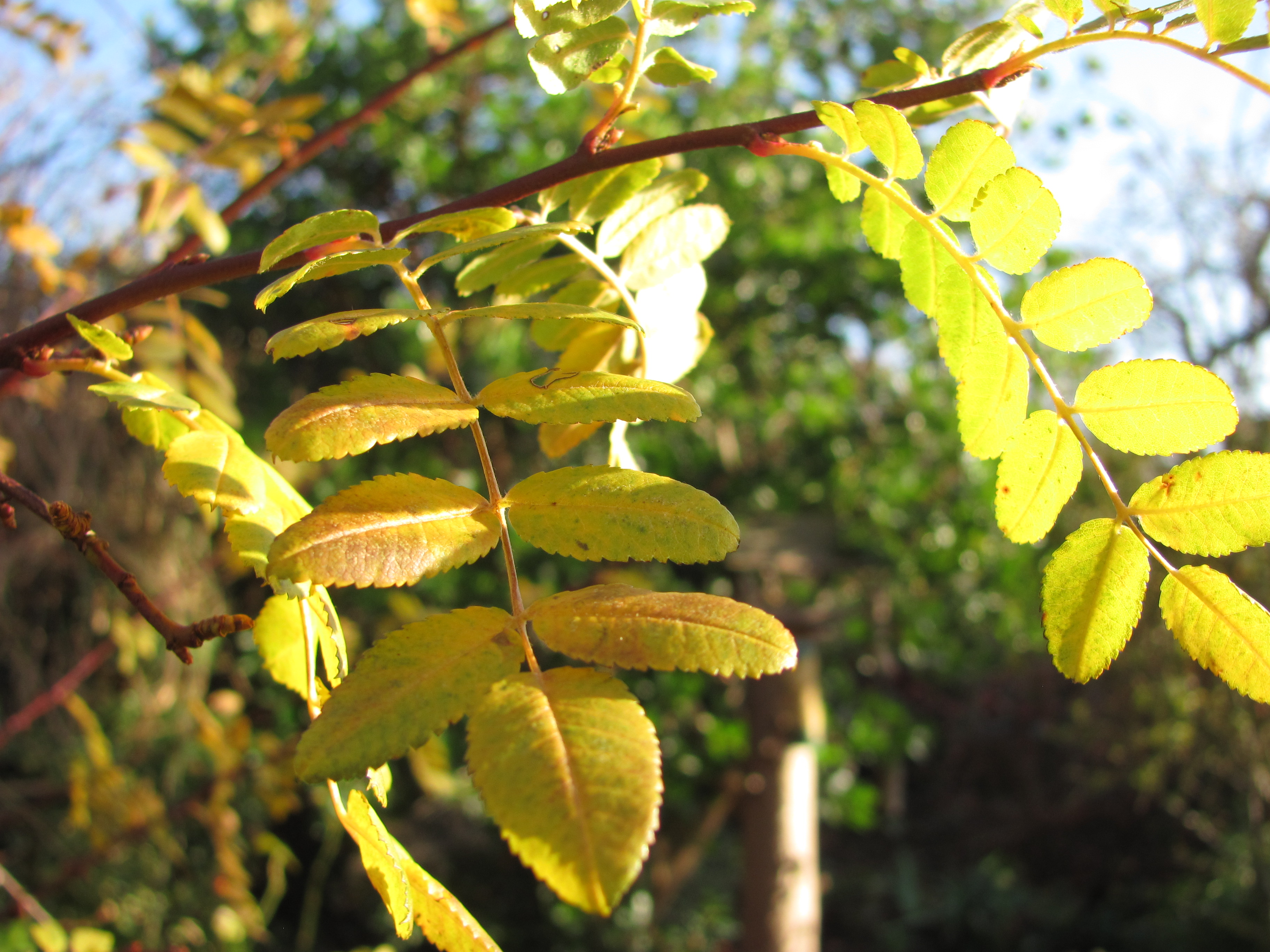
We access the front garden by passing under a rose arch, over which rambles a Canary Rose one of the earliest roses to come into bloom every year. Now its yellowness comes from its leaves glowing in the winter sun. Its foliage causes confusion as several visitors have thought it to be a rowan.

Beneath the arch the yellow of the Canary Rose is precisely reflected in the deep yellow of the richly variegated euonymus.
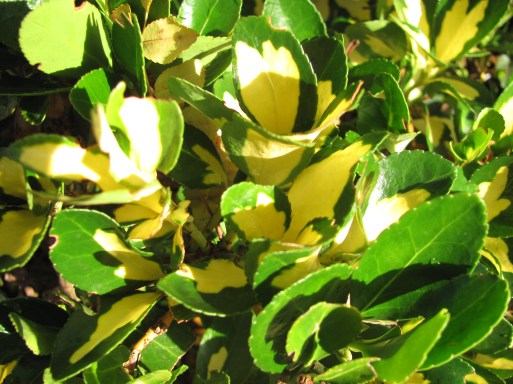
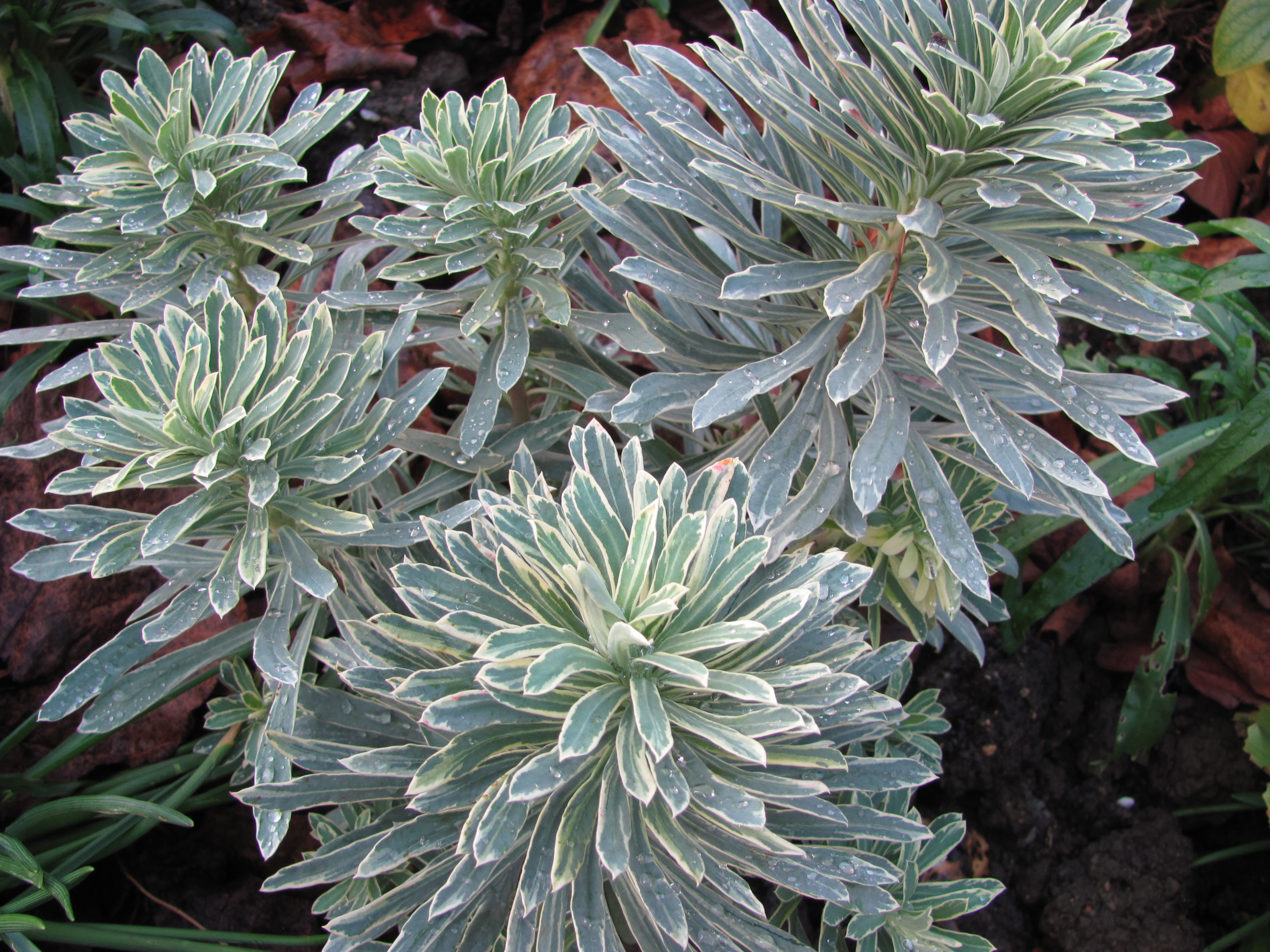
In the front the white, silver and cream variegated euphorbia is far more noticeable than at any other time of year even though it never changes.

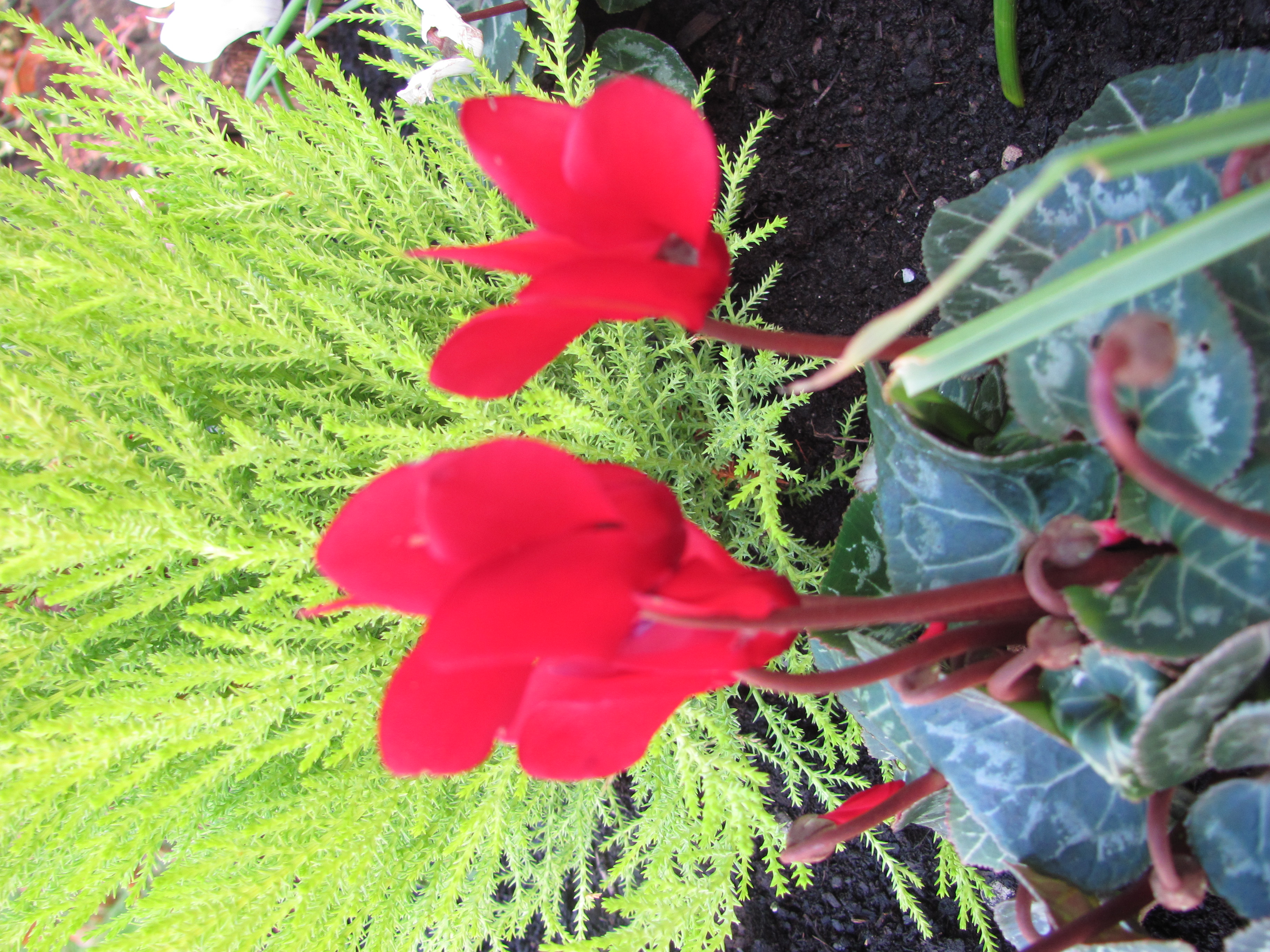
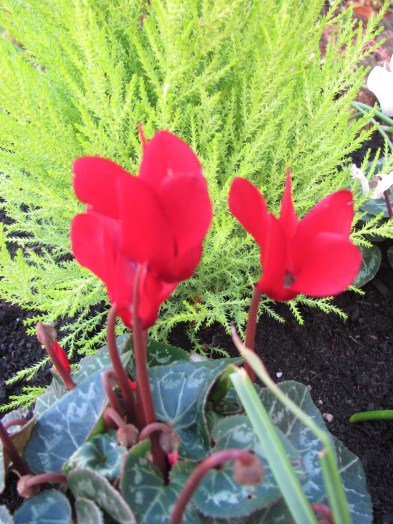
Tubs at the front have been planted to give bursts of colour mostly from cyclamen. Why can I accept such bright colours and clashes in the winter when I would find them undesirable the rest of the year?
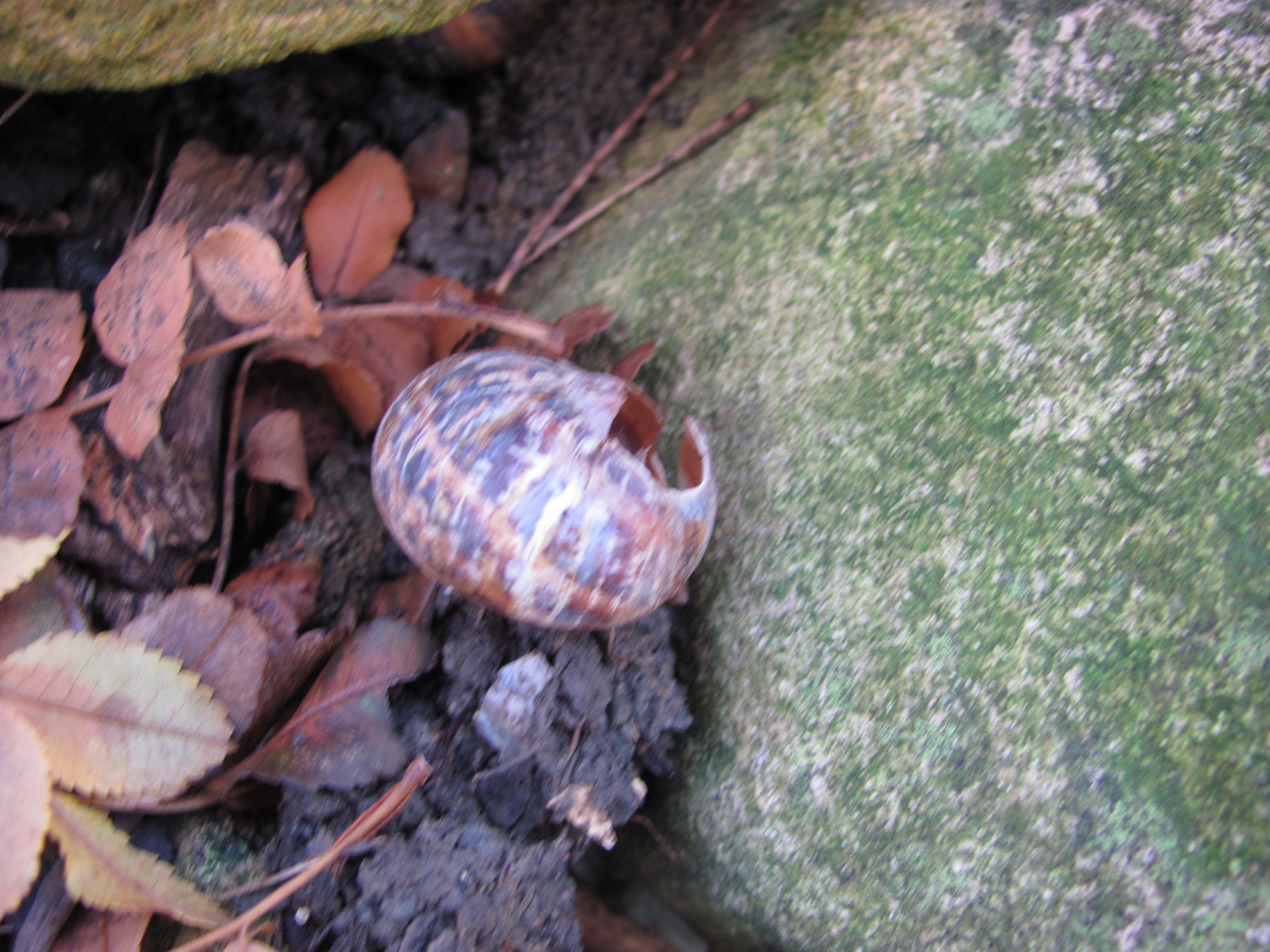
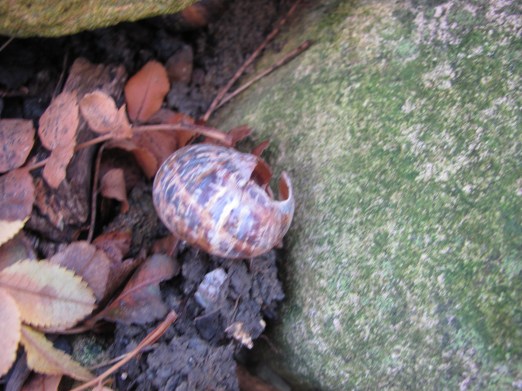
In the short stretch of low dry stone wall, between two levels of garden, I spied this snail-shell, providing just a hint at the many hibernating molluscs hidden in its warmth.
Categories
arboreta fruit and veg garden photography gardening ornamental grasses ornamental trees and shrubs shrubs trees

Malus “Admiration” – an impulse buy.

We had to visit the garden centre at Bridgemere to buy a few presents for gardening friends and relations, so as usual we had to have a wander around their plants. We always enjoy their seasonal displays where the best plants of the time are put together in border-like collections – a great idea if you want to know what is giving best seasonal interest. It was particularly good today as a chiminea was simmering away sending wafts of gentle wood smoke into the cool moist air. We were in search of a couple of specimens of Cornus “Cardinal” to creat a trio with the one we bought earlier in the winter. The garden was crying out for a group of three under the white-trunked trio of Betulus utilis “Silver Queen”.

On the journey there we had spotted a stunning malus on the grass verge that glowed an orangy peach colour. And then by coincidence we spotted one at Bridgemere just after loading a pair of cornus into our trolley and as you can imagine it ended up joining them. Gardeners should never give in to impulse buys especially if they have no idea where the plant in question could be planted. We fell for it. The temptation was too great and we definitely had no idea where it would fit into our garden.

We wandered around the garden with the new malus, trying out various spots and eventually found what we hope will prove an ideal situation in front of a grass to emphasis the fruit colour and near a bronze leaved phormium for contrast. Here it will be in the spotlight in autumn and early winter when the low sun will light up the orange and peach of the fruits and emphasise their translucency.

This malus was new to us and is also known as Malus “Adirondack”. It is a small tree or large shrub growing to just 12ft tall and 5ft wide after a decade – just right for a small garden. We look forward now to its “dense clusters of large waxy white  flowers” which follow its dark carmine buds.

Categories
arboreta autumn garden photography National Trust ornamental trees and shrubs trees wildlife

Woodland Walk – The new woodland walk at Attingham Park

We arrived at Attingham Park, the closest National Trust property to home, for a coffee and wander in the woods, to discover a sign announcing that a new woodland walk was now open. We had to try it out even though it was a miserable looking day. But once in the wood it didn’t matter what the weather was up to as the sky was hidden by the towering trees. The local bird life however didn’t appreciate the weather for they were virtually absent and almost silent, bar Wood Pigeons flying over the tree tops and small flocks of tits moving rapidly through the branches. The one ornithological treat was being surprised by a Treecreeper that swooped down onto the bottom of the tree trunk alongside us and scuttled its way upwards. It seemed totally unaware of our presence.

An inviting sight.

Lovely rustic seats gave frequent and welcome resting places. The seats were made from logs and slabs of wood felled from the park. The path was soft and relaxing to walk on being surfaced with pine needles or just deep woodland debris. Our footsteps were thus quiet and did not disturb the woodland peace.

A carpet of leaves underfoot and tall trunks on all sides called us onwards deeper into the Attingham Park woods. Logs and branches of all sizes were left in piles to attract and give shelter to insects, including the Lesser Stag Beetle which frequent the understory.

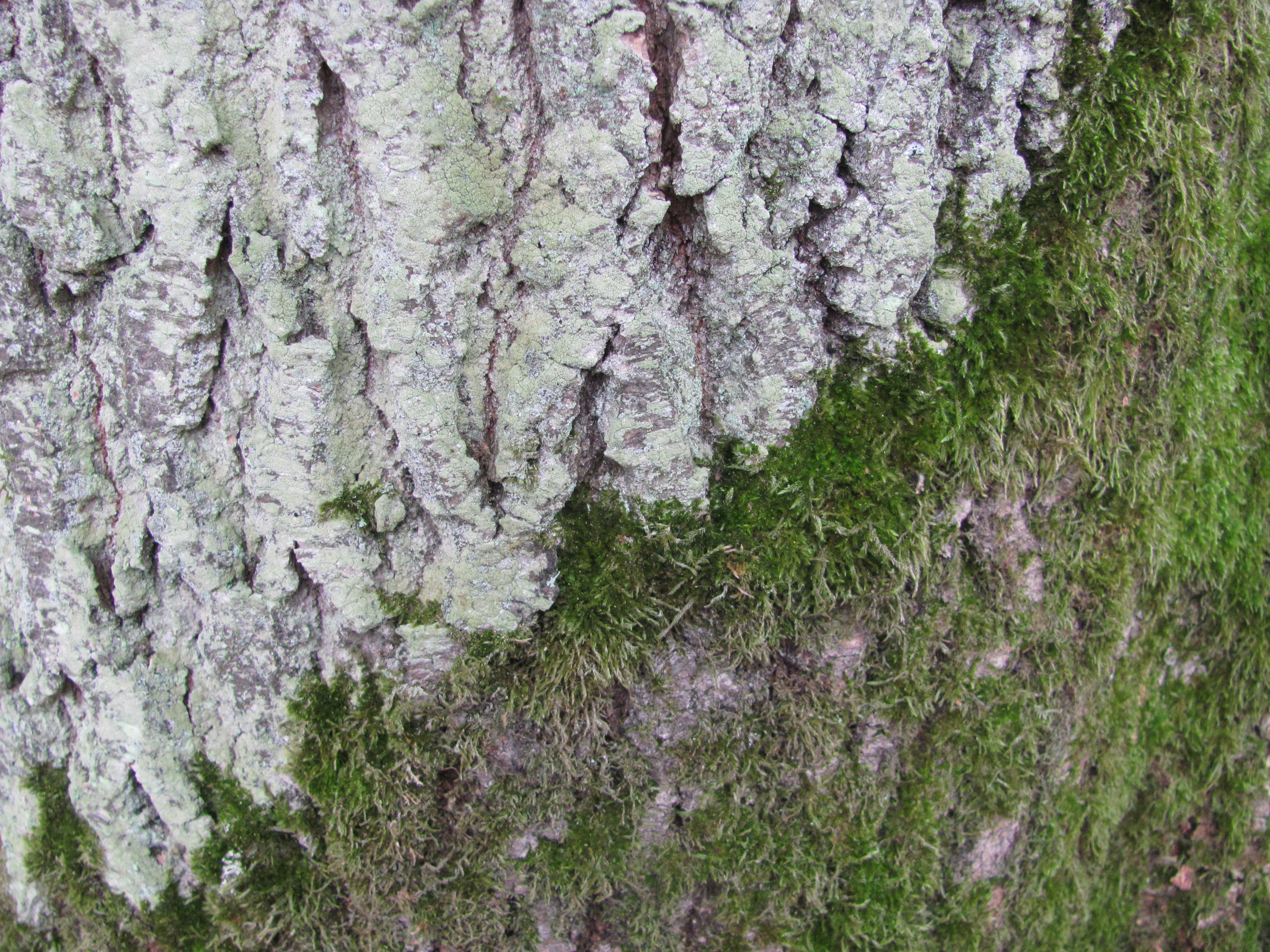
As the colours were so muted under the greyness of the cloud cover, the most striking feature of our walk was the textures found in live and dead wood. Mosses and lichens carpeted stumps and felled trunks with silvers and greens, and the spent dried leaves had settled onto rough textured bark.

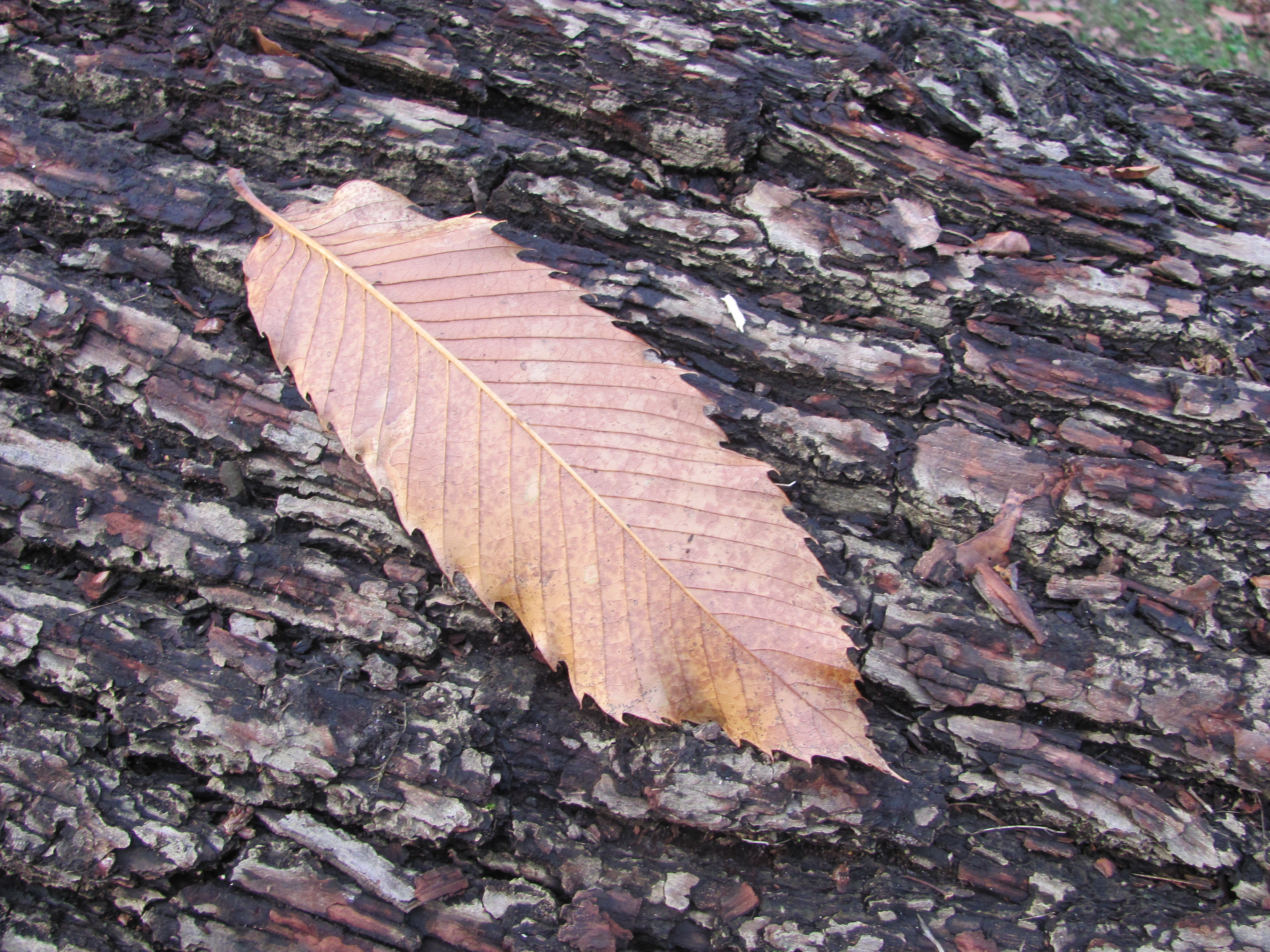
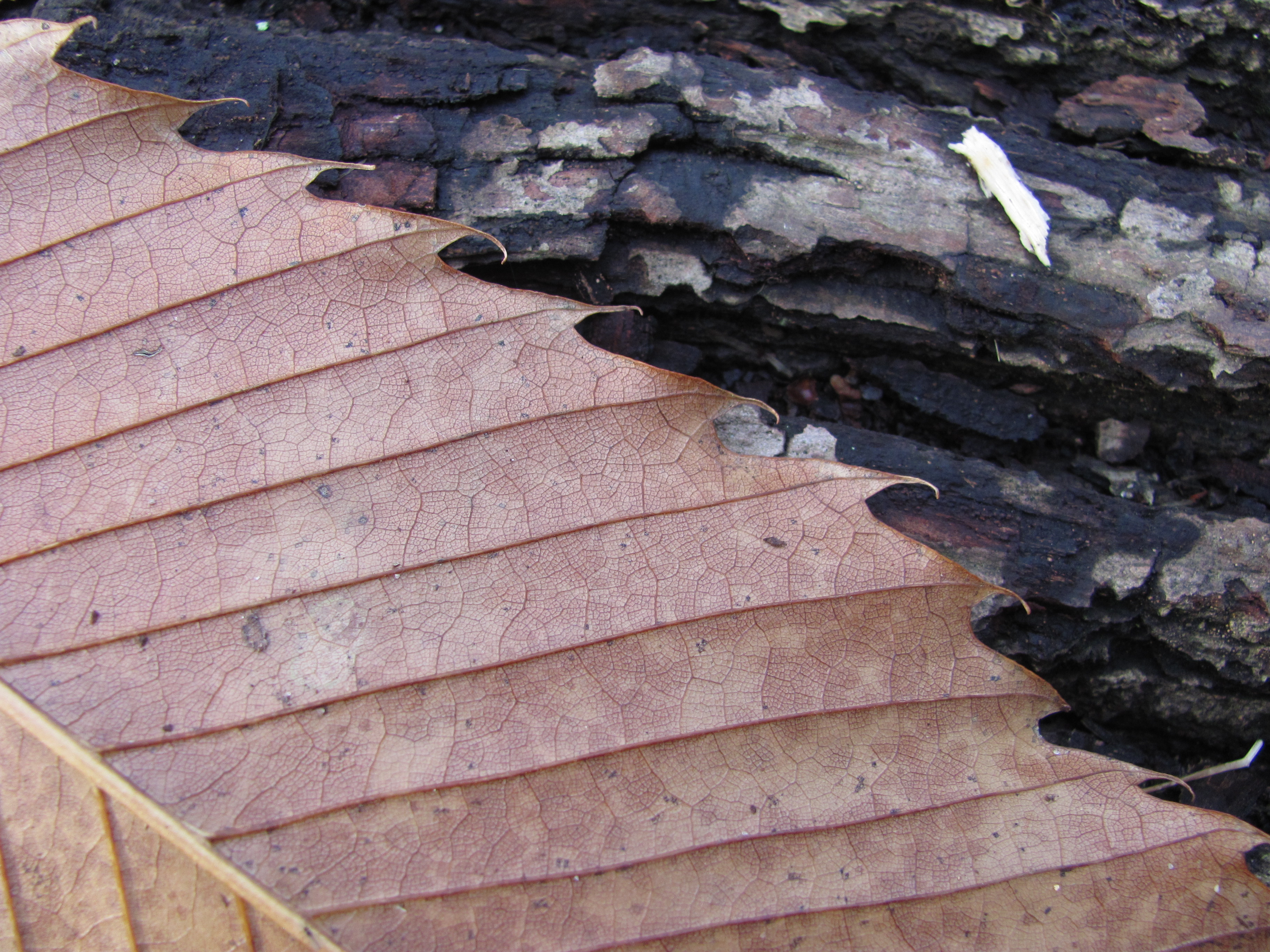
Sweet Chestnut leaf and bark.

This orange oak leaf  rested on a fallen tree, its orange matching perfectly the spots of the Coral Spot fungus. Amazing juxtaposition!

Categories
autumn gardening ornamental trees and shrubs shrubs trees

Shrub Planting

Yesterday we planted new shrubs in the front garden. The weather was dismal with light drizzle and mist hanging all around. We were entertained by the calls of winter migrants passing overhead. It sounded as if large flocks of Redwings, Mistle Thrush and Fieldfares  were passing overhead as we could hear regularly the mechanical “chick chuck” call of the Fieldfares and the higher pitched call of their smaller relative the Redwing. The cloud was so low though we only saw a few low-fliers, those with vertigo presumably.

The darkness lasted all day and daylight never seemed to happen. I took photos of the new acquisitions but the light was so poor the results were terrible,  so today a bright sunny day I tried again. The low autumn rays of the sun made photography much more interesting.

The bed already has a trio of white-stemmed birches and a Sorbus vilmorinii and some established shrubs such as Sambucus “Black Lace”, Forest Pansy and a gleditzia. As these grow we hope the new shrubs will act as an understorey. We chose shrubs with interesting berries or coloured foliage or stems.

So for berries we selected Viburnum davidii and Hypericum “Magical Beauty” with their pearl-like berries in gloss black and peachy pink respectively.

Two shrubs we bought should produce berries but the specimens we found were devoid of them. The first of these, another Viburnum selected for its berries and the colour of its foliage in autumn was Viburnum nudum “Pink Beauty”. It displays creamy-white flowers in summer followed by pink fruit which matures to purplish-black which should contrast beautifully with its deep red autumn foliage display. The second was  a shrub we have previously not grown, Itea virginica but we were tempted by the variety “Little Henry” with its deep purple autumn foliage. We can now look forward to the scent of its white drooping spires of white flowers in the summer.

The final two shubs are colour coordinated but we didn’t realise this until we put them together in the trolley. The red and orange flowers of Mahonia nitida “Cabaret” match perfectly the stems of Cornus sericea “Cardinal”.

Categories
arboreta autumn ornamental trees and shrubs outdoor sculpture shrubs trees

Bodenham Arboretum – Autumn Magic

We spent an overcast, sunless day wandering around Bodenham Arboretum this week. We have passed its brown sign hundreds of times over the years on our way down to my home county of Gloucestershire and we always declare “We must go there sometime!”. Well, we finally did! Why did we wait so long?

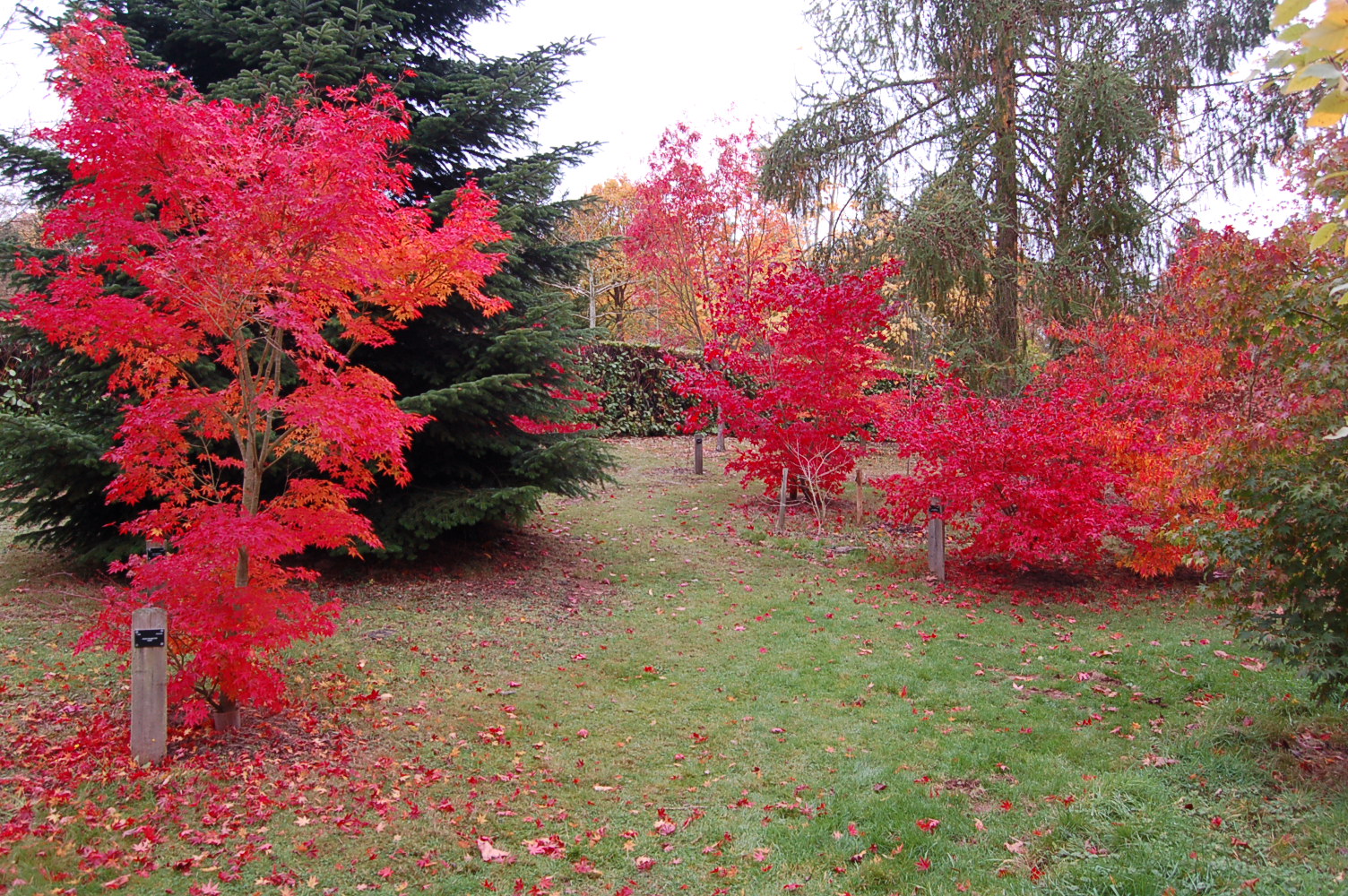
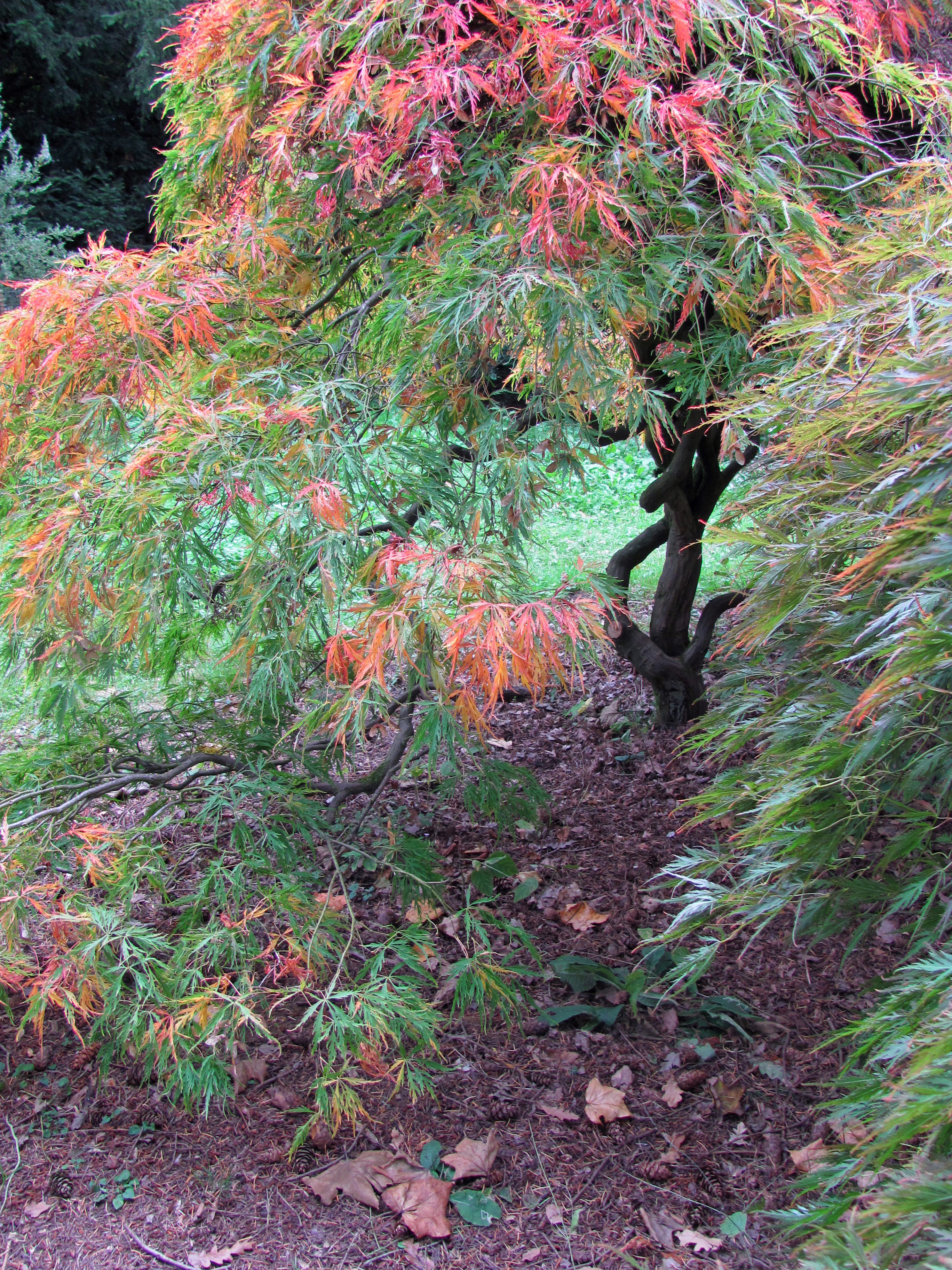
A cup of coffee and a slice of cake enjoyed whilst overlooking the lake was a great starting point, and gave us time to study the map and sort out a route. As we purchased our tickets we were advised that first time visitors should begin with a walk around the Poplar Dingle. So we took the advice and followed the gravel pathway into the dingle, where our eyes were soon treated to the sight of two small Acer palmatum growing and glowing on the banks of a small pool.

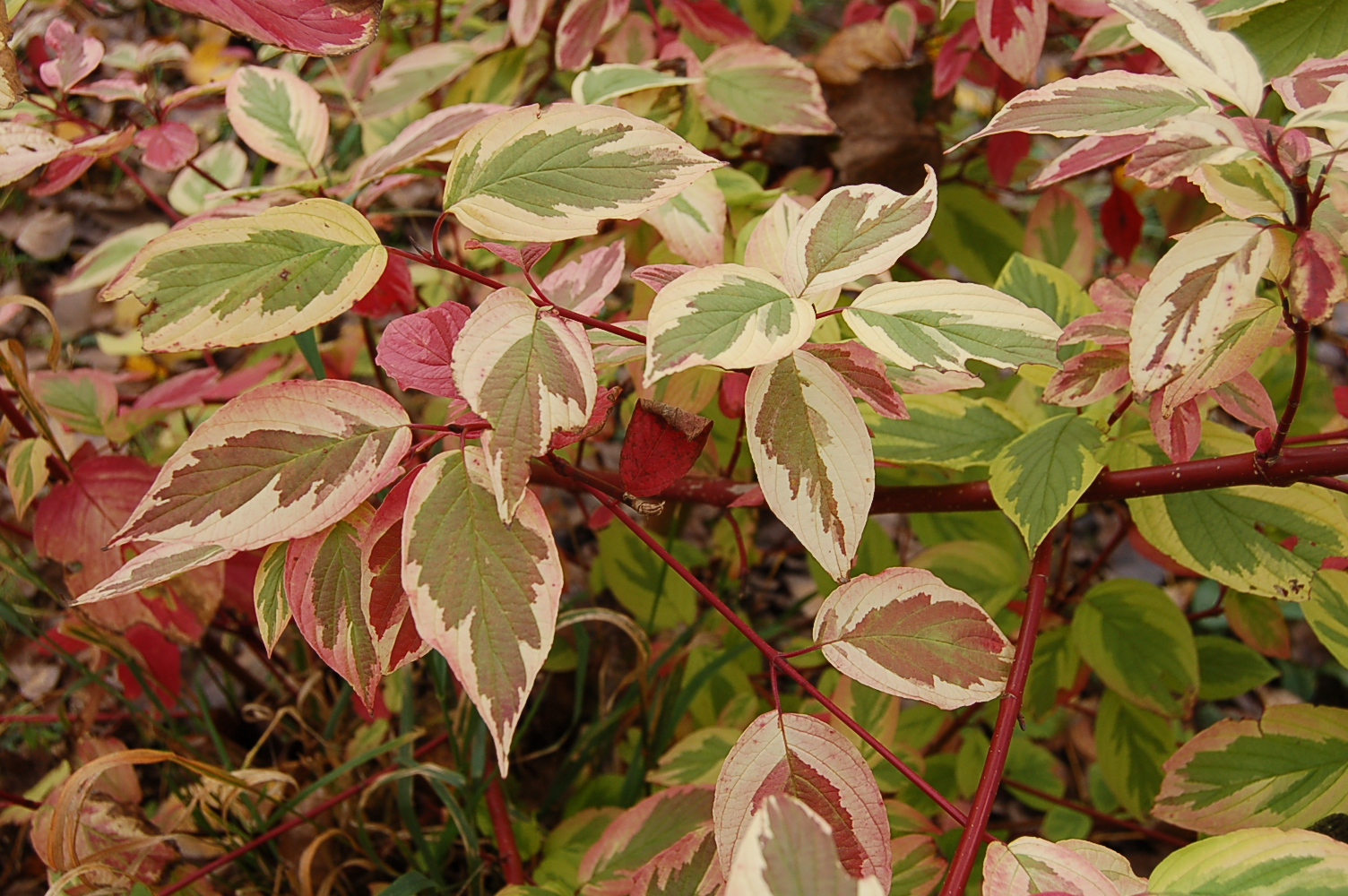
Nearby we were struck by a clump of dogwoods which to begin with looked like the usual ones we grow for their red-coloured stems in late winter and early spring, but there was something about these that deserved a closer look. the leaves were painted in pinks and creams of every hue!

Lots of the more interesting trees and shrubs at Bodenham are clearly labelled and this cornus was one of them – Cornus sericea “Hedgerow Gold”.

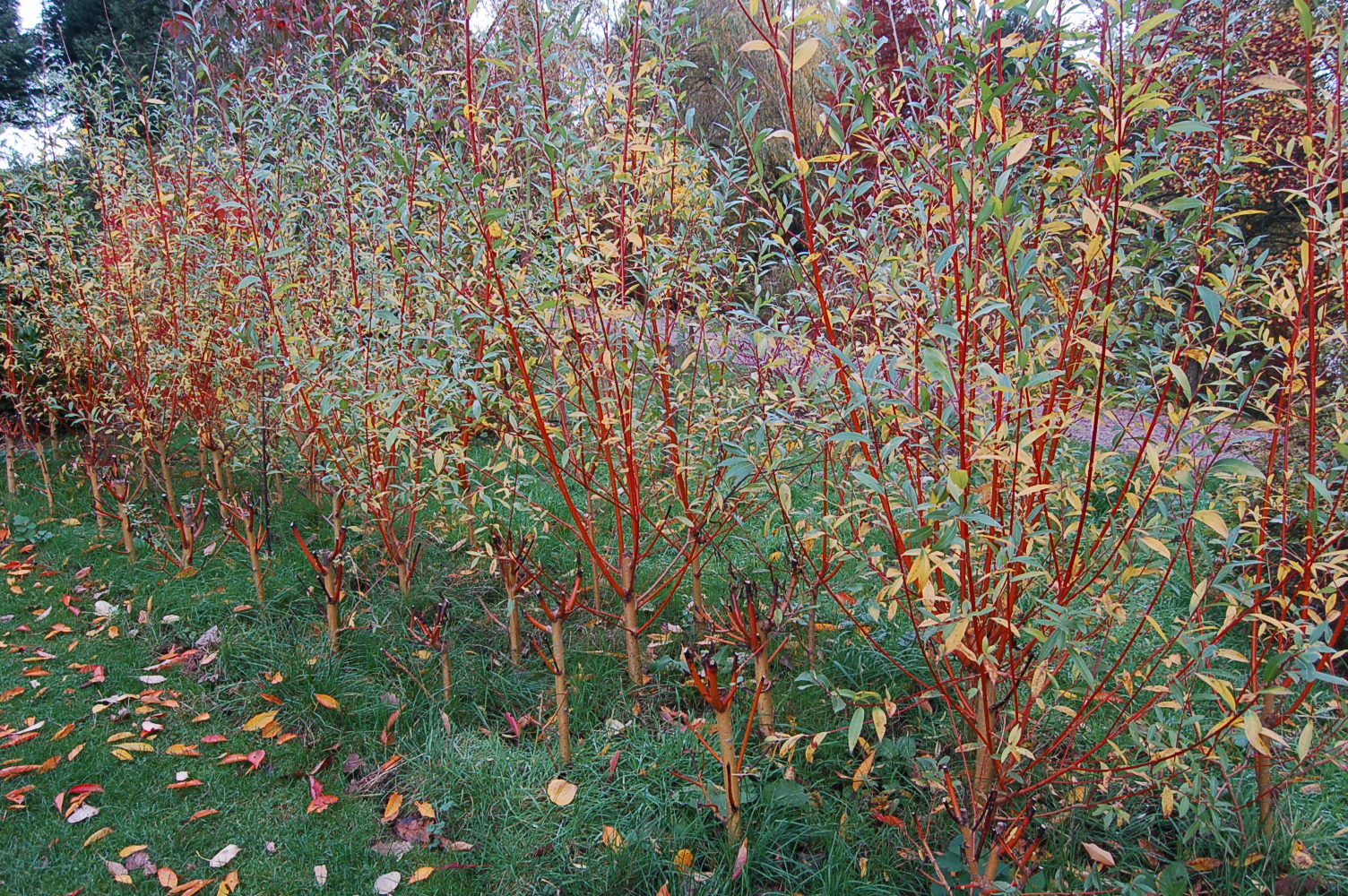
As we left the Poplar Dingle we moved into an area rich with the reds of acers, but as we entered it we were struck by this row of coloured stemmed willows, glowing in the gloomy light.

After relishing these richly-coloured acers we followed the Five Pool Walk, a trail through a wooded valley studded with small pools, leading to Bodenham Wood. Here the smell of woodsmoke followed us, seeping through the valley sides from the dying fires of woodsmen at work in the valley bottom below us.

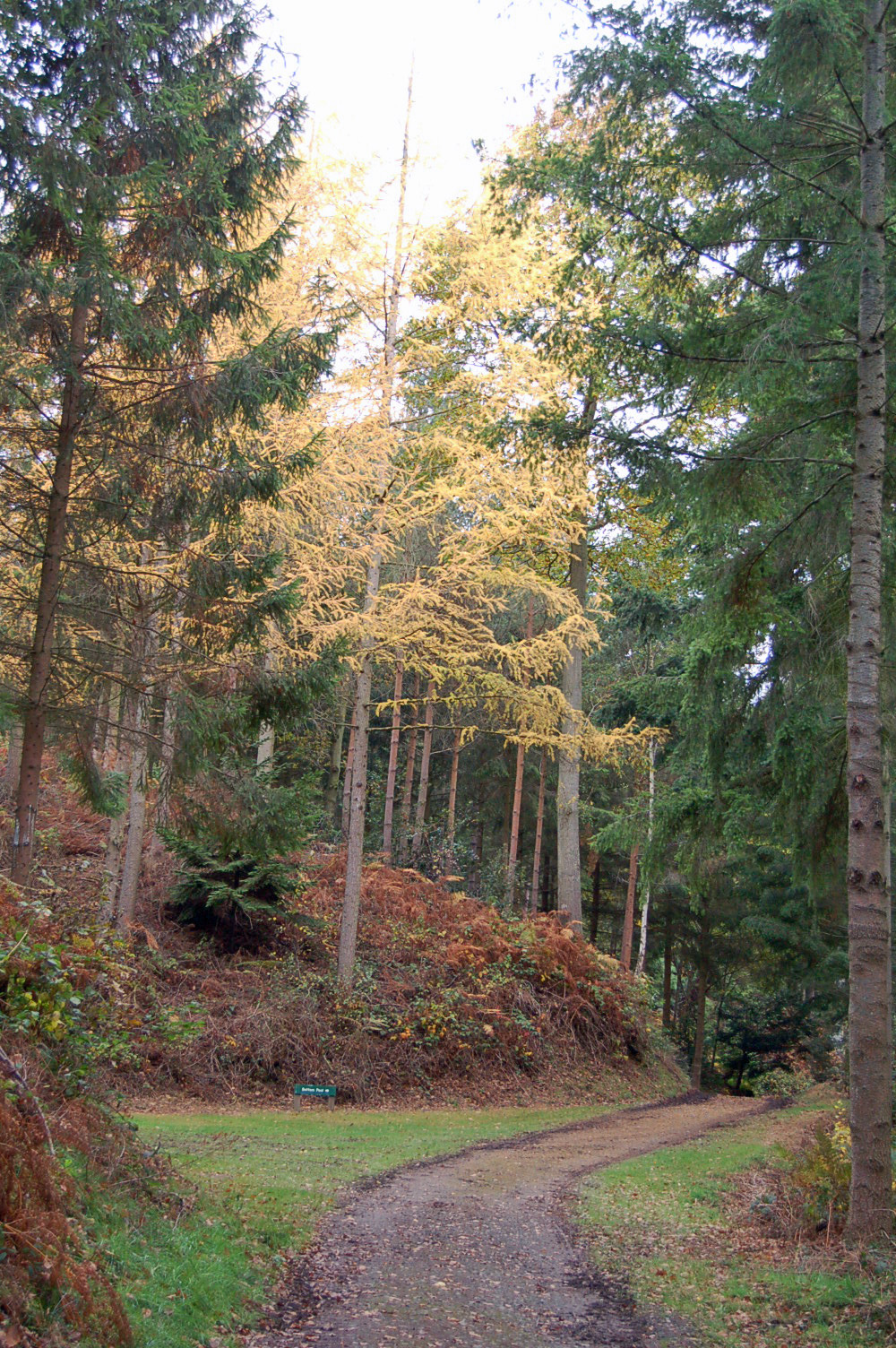
As we turned a corner this butter-yellow larch glowed against the deep green of its fellow conifers, but Larix decidua is the exception to the rule. Its needles turn yellow and fall.

Bodenham is full of surprises and as we found the track to take us back to the cafe we met this beautiful armillary sundial. Behind it the clump of trees contained some of the richest colours of our visit, and unexpectedly the colour came from a group of unusual oaks.

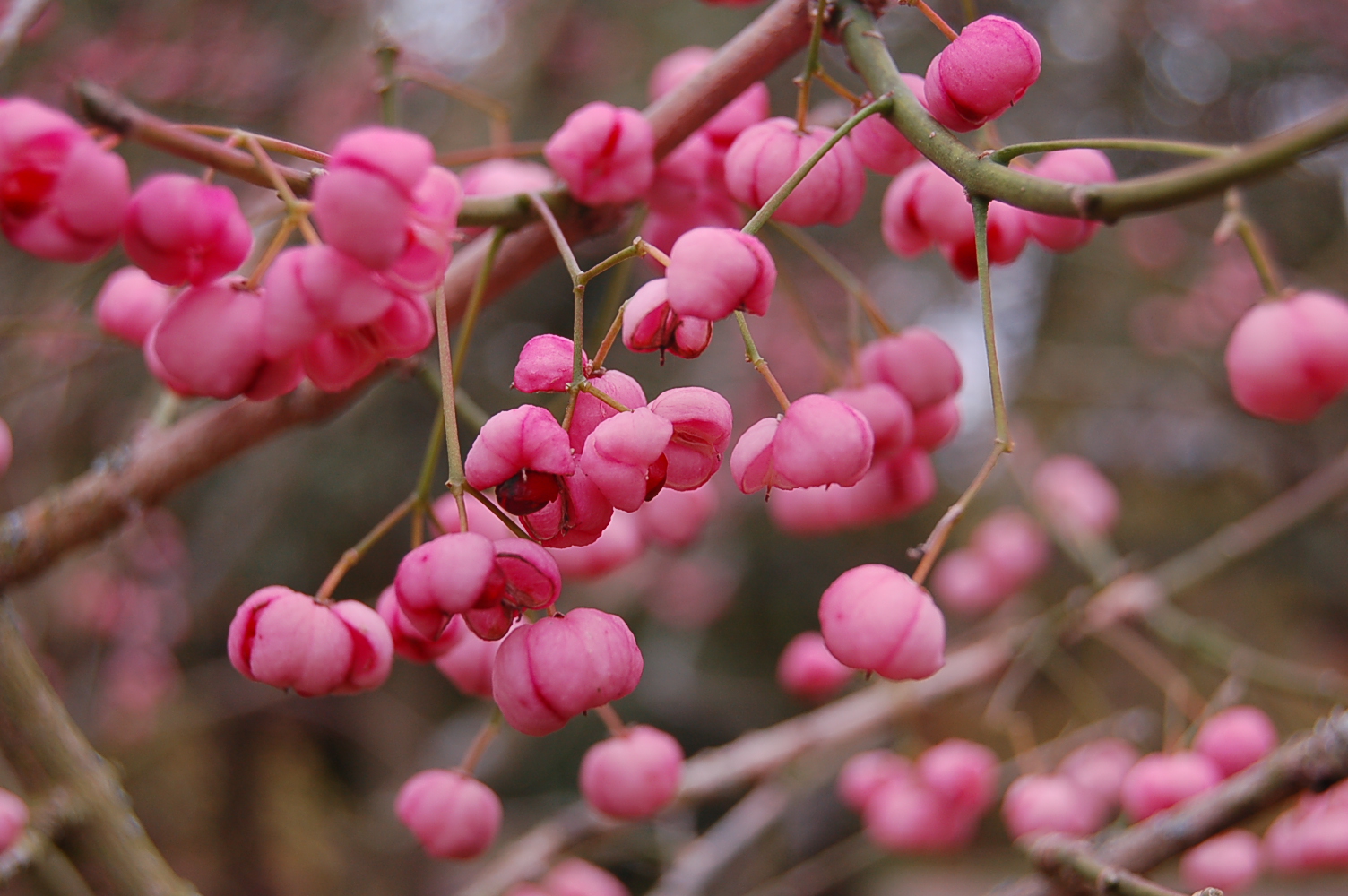
We came expecting to be wowed by the rich autumnal foliage colours – the colours of fire – and we were not disappointed, but perhaps the highlight of our visit was the spindle which gave up its shocking pink flowers. Soon these will open to reveal vivid orange seeds. What a rediculous combination, one that few gardeners would dare to put together.

We may have taken a long time to visit Bodenham Arboretum but we shall not wait so long return.

Categories
gardening ornamental trees and shrubs shrubs trees

Westonbirt extras

A visit to Westonbirt Arboretum in mid-October should mean autumn richness of red, orange and yellow. But when we went this year we were too early. The spindles, birches and chestnuts disappointed. Some acers were showing colour and would have made the visit worthwhile anyway but the real treats of the day were totally unexpected – a berberis and a sorbus.

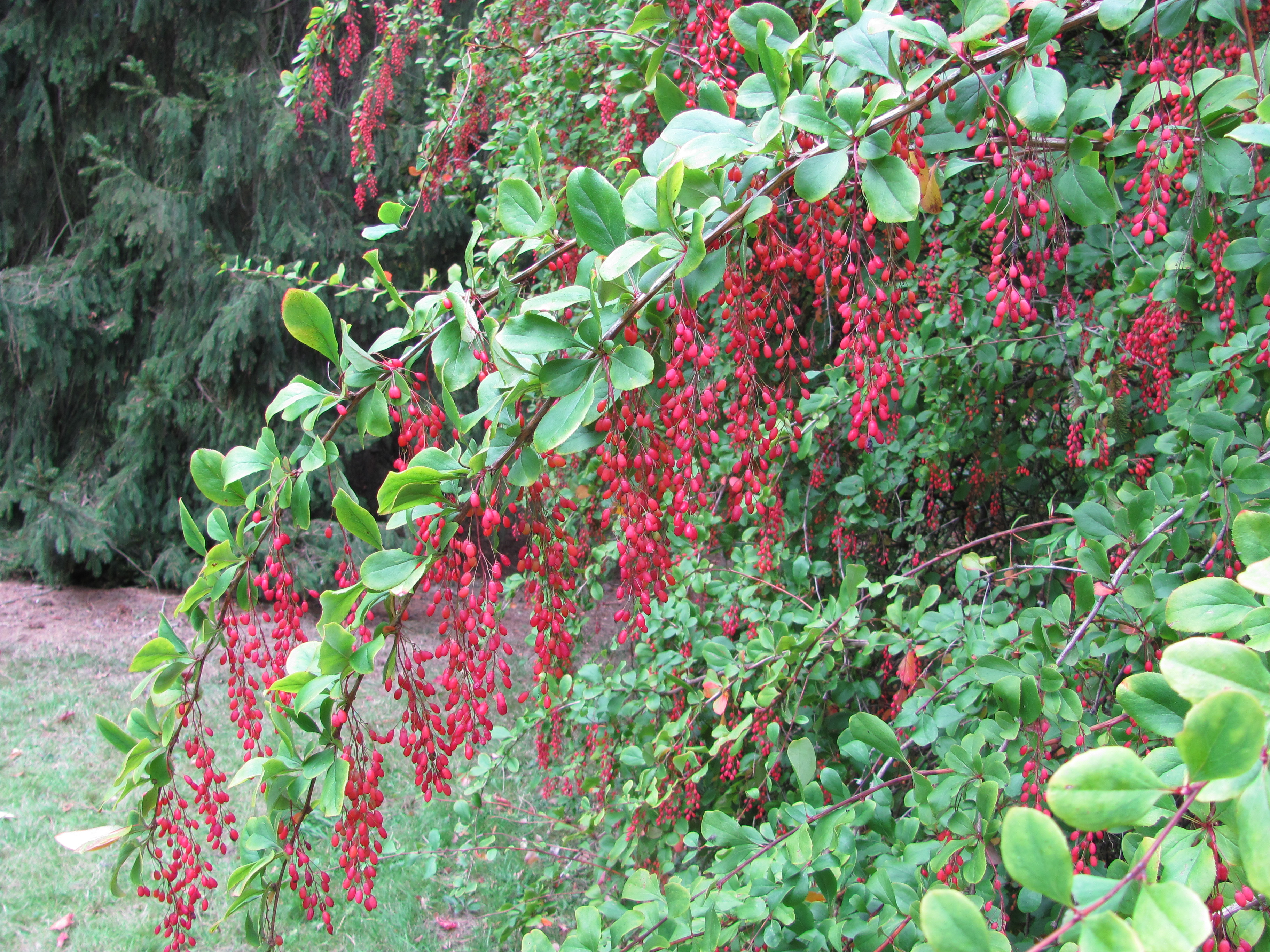
We spotted the lovely arching stems laden with red berries a long way from the main path. The sky was grey the day wet and dark but this berberis shone through it all. We made our way across wet grass to get a closer look and we met two other visitors doing the same. It was causing identification problems for everyone! The name Berberis julianae sprang to mind but I was unsure. Another visitor came over and asked if we knew what it was. She believed it to be Berberis julianae also. A Westonbirt gardener suggested Berberis concinna. But being unsure I checked in the RHS A-Z Encyclopaedia of Garden Plants as soon as we got home – we were all wrong. It was neither julianae or concinna. The mystery continued but an article in “The English Garden” showed a photo of a berberis with similar but less dense groups of pendulous berries – Berberis chitria – but I was still not convinced. As everyone was so taken aback by the large number of berries in each bunch perhaps it was just an exceptionally prolific year for it.

The RHS published an article on berberis in the November edition of their magazine “The Garden” and it presented another possibility – Berberis “Georgei”. It looks the best match so far!

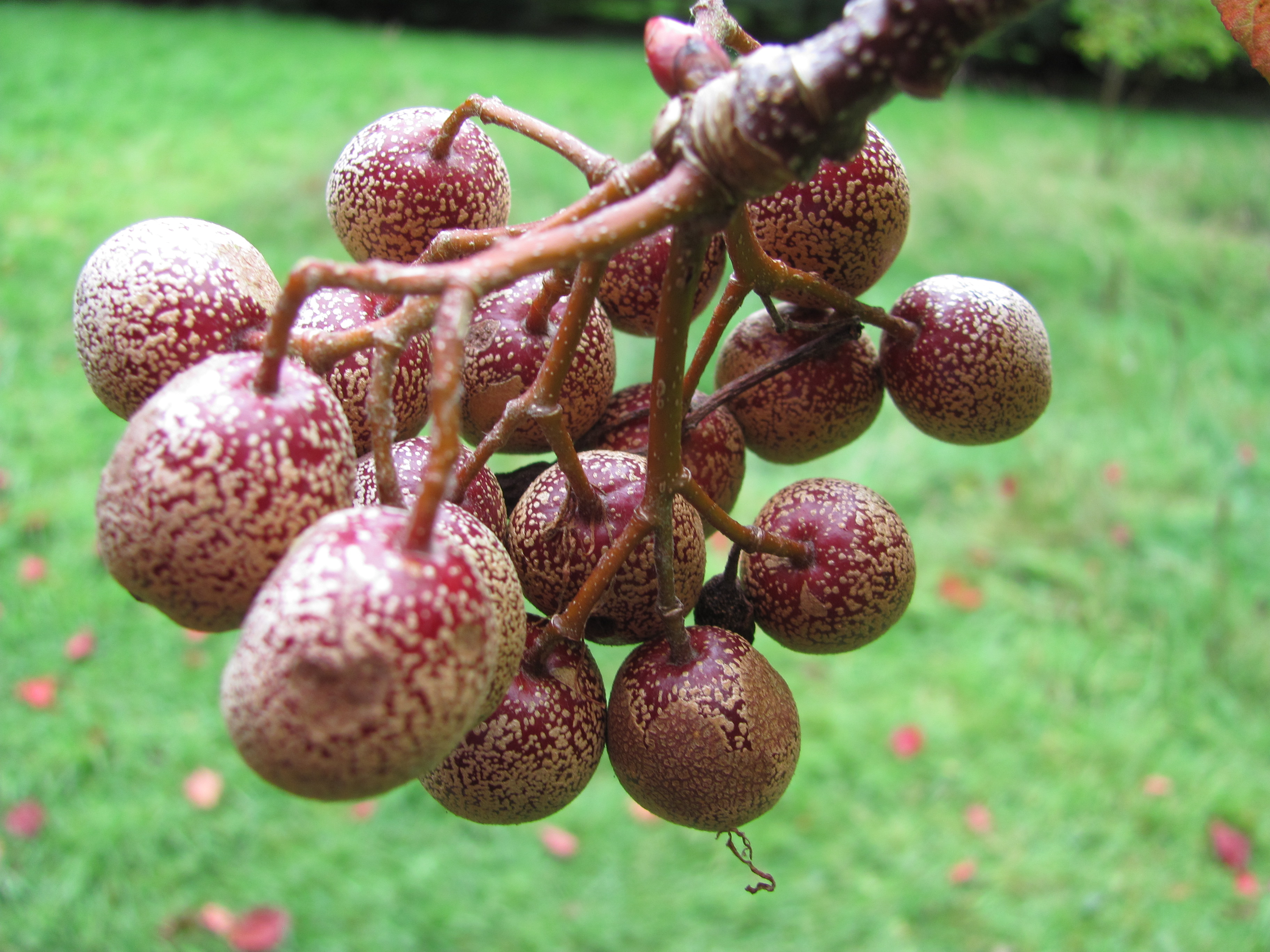
The berries of this sorbus were marble-sized and deep mahogany-red in colour overlaid with white. They felt as hard as conkers. This plant gave its identity up easily – it had a label telling us it was Sorbus megalocarpa from China.

The expected autumn views of Westonbirt must not be forgotten though as some acers were dressed in their fire coloured clothes.

Categories
gardening trees

Monkey Puzzle

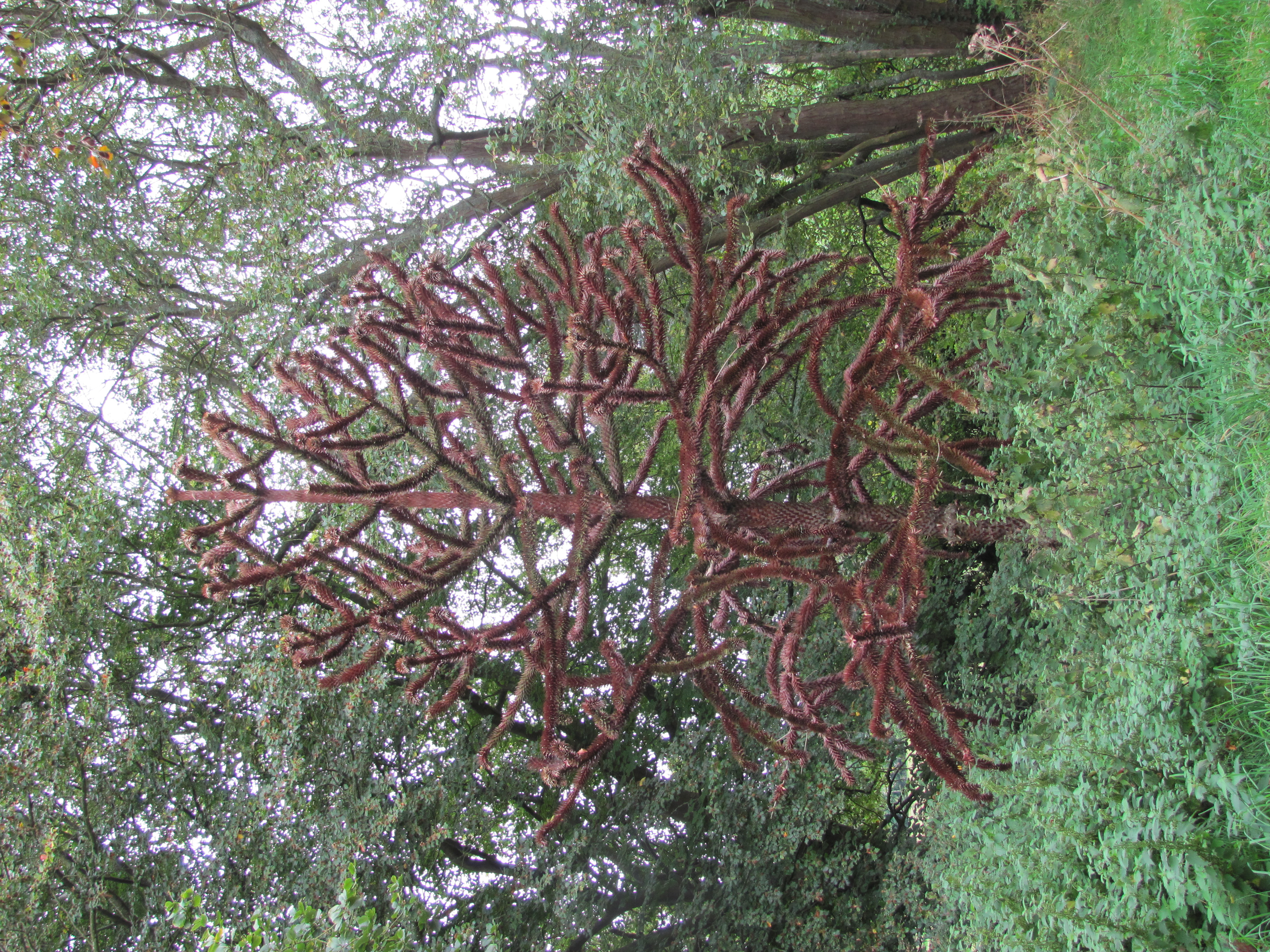
I am a real tree lover. I enjoy them in every season – their fresh spring growth, their luxuriance in summer, the colours of autumn and the structure of their skeletons in winter. There are not many trees I really dislike but the one I most definitely do dislike is the monkey Puzzle Tree. They are just too rigid and characterless for me. This one however I did like -it was dead! I couldn’t resist photographing it to send to my brother who loves them!

Categories
gardening ornamental trees and shrubs trees

Super Pods

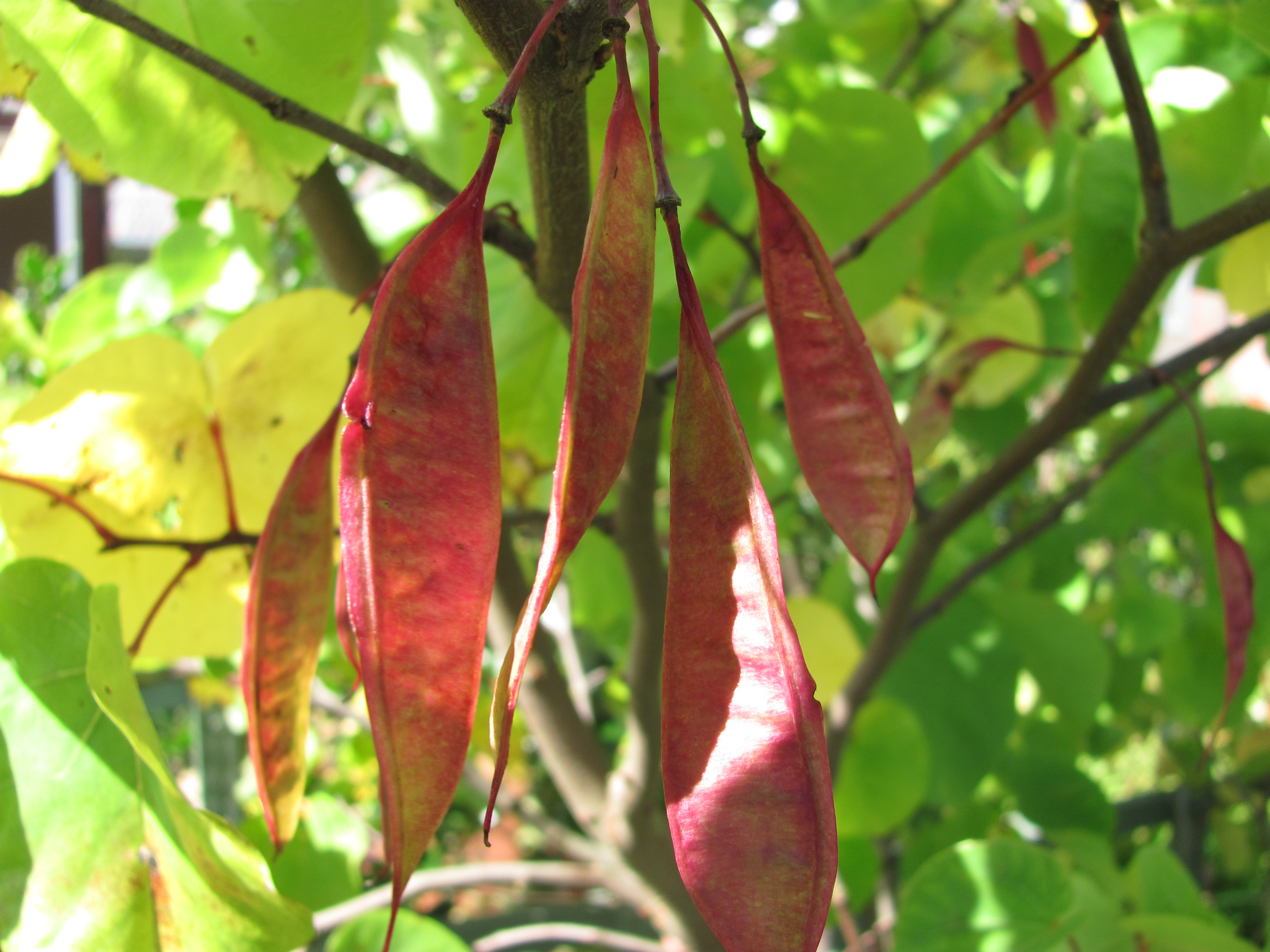
These two deep pinkish-red seed pods come from very different trees, the first is from our Judas Tree (Cercis) at home. They form after the pink flowers which appear early in the summer, bursting straight out from the bark, which is a unique habit as far as I know. (But I feel sure someone will know of others!)

The second we found under a Magnolia. Where the Judas seedpod was thin and partly see-through almost like a Mange Tout Pea, the Magnolia pod was rounded and almost waxy in texture. When they are ready to expell their seeds they dry up slightly, fissures open like dry lips and the bright orange seed is exposed.

We have now put the magnolia seeds to stratify in damp sand in the fridge for 2 or 3 months and then we shall sow them. And then wait a very long time!

This Veggie Life

A Vegetarian | Nature Lifestyle Blog

Rambling in the Garden

.....and nurturing my soul

The Arch City Gardener

Journeys In St. Louis Gardening and Beyond

Garden Dreaming at Châtillon

Consult the genius of the place

Storyshucker

A blog full of humorous and poignant observations.

gardeninacity

Notes from a wildlife-friendly cottage garden

PlayGroundology

...an emerging social science

The Official Blog of British Wildlife

'The most important and informative publication on wildlife of our times' - The Independent. This blog is a member of The UK & Ireland Natural History Bloggers group: www.uknhb.blogspot.com

iGrowHort

Inspire - Cultivate - Grow Native Plants - Restore Landscapes

Bishops Meadow Trust

To create and protect a semi-natural wild space for the people of Farnham to enjoy and experience an array of British wildlife in our town

Gardening with Children

The www.gardeningwithchildren.co.uk Blog

UKbirdingtimeline

birding through the seasons, why birds matter and how to conserve them

NATURE WALKER

with a camera in hand

Jardin

Transform your outdoor space

Eva's space

My allotment, cooking and other interests

Old School Garden

my gardening life through the year

LEANNE COLE

Trying to live a creative life

fromacountrycottage

trying to live as lightly as possible on our beautiful planet

Good Life Gardening

Nature lovers from Leicester living the good life.

mybeautfulthings

Finding the beautiful in the everyday

mawsonmichelle

Michelle's Allotment

In and Out of My Garden

thoughts from and about my garden

Greenhousing

Big plans for a small garden

The Scottish Country Garden

A Walled Country Garden in South East Scotland

The Fruity Chicken

Life at the fruity chicken

willowarchway

Off grid living. Self sufficient. "PERMAGANICS RULE".

St Anns Allotments

Nottingham's Grade 2* Listed Allotments and Community Orchard

Manifest Joy Harvests

a journey in suburban vegetable gardening

Allotmental

The madness of growing your own

Penny's Garden: a harvest beyond my front door

A novel approach to vegetable gardening

arignagardener

Sustainable living in the Irish countryside.

NewEnglandGardenAndThread

Master Gardener, amateur photographer, quilter, NH native, and sometimes SC snowbird

dianajhale

Recent work and work in progress and anything else that interests me

planthoarder

a chaotic cottage gardener

Lens and Pens by Sally

a weekly blog that creates a personal philosophy through photographs and words

Dewdrops and Sunshine

Stories from a sassy and classy Southern farmbelle.

The Pyjama Gardener

Simple Organic Gardening & Seasonal Living

gettin' fresh!

turning dirt into dinner

JOY...

today the world is created anew

Garden Birds

Notes from a Devon garden

ShootAbout

Life Through The Lens

Adapting Pixels

A photography blog showcasing the best photography pictures and videos on the internet

Wildlifegardening's Blog

Just another WordPress.com site

naturestimeline

personal observations from the natural world as the search continues for a new approach to conservation.

LATEBLOOMERBUDS

The Wonders of Life through my Eyes, my Heart, my Soul