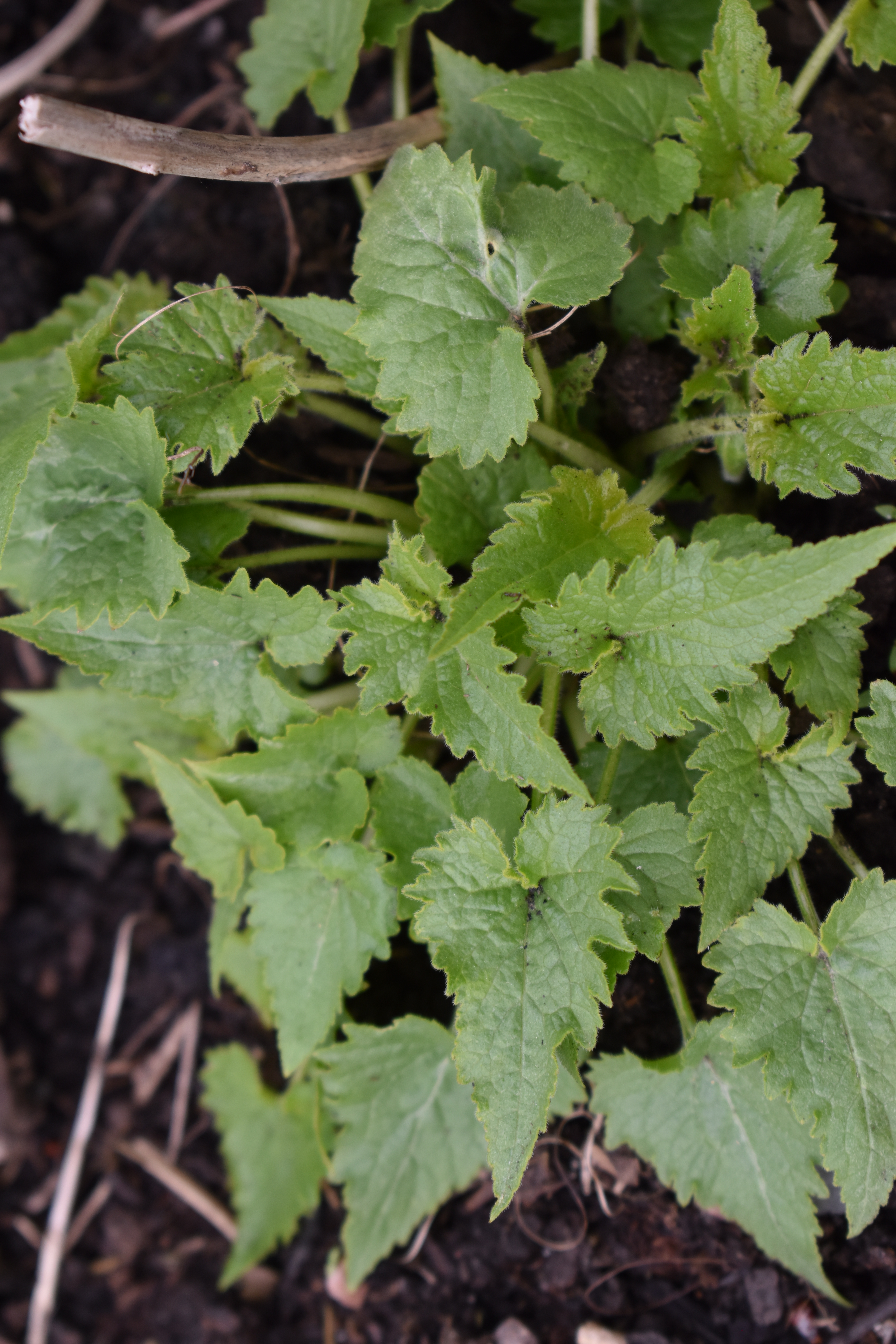
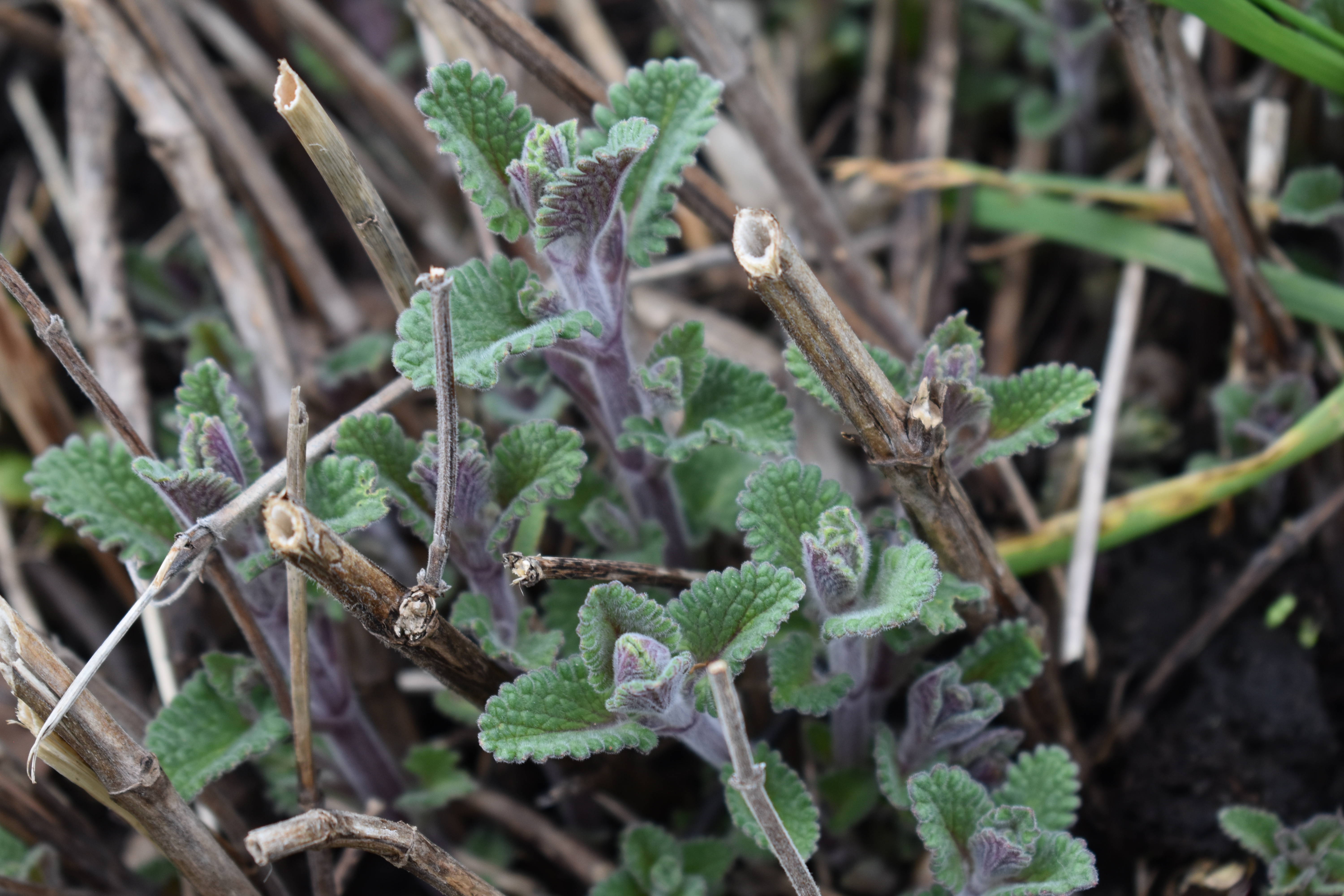
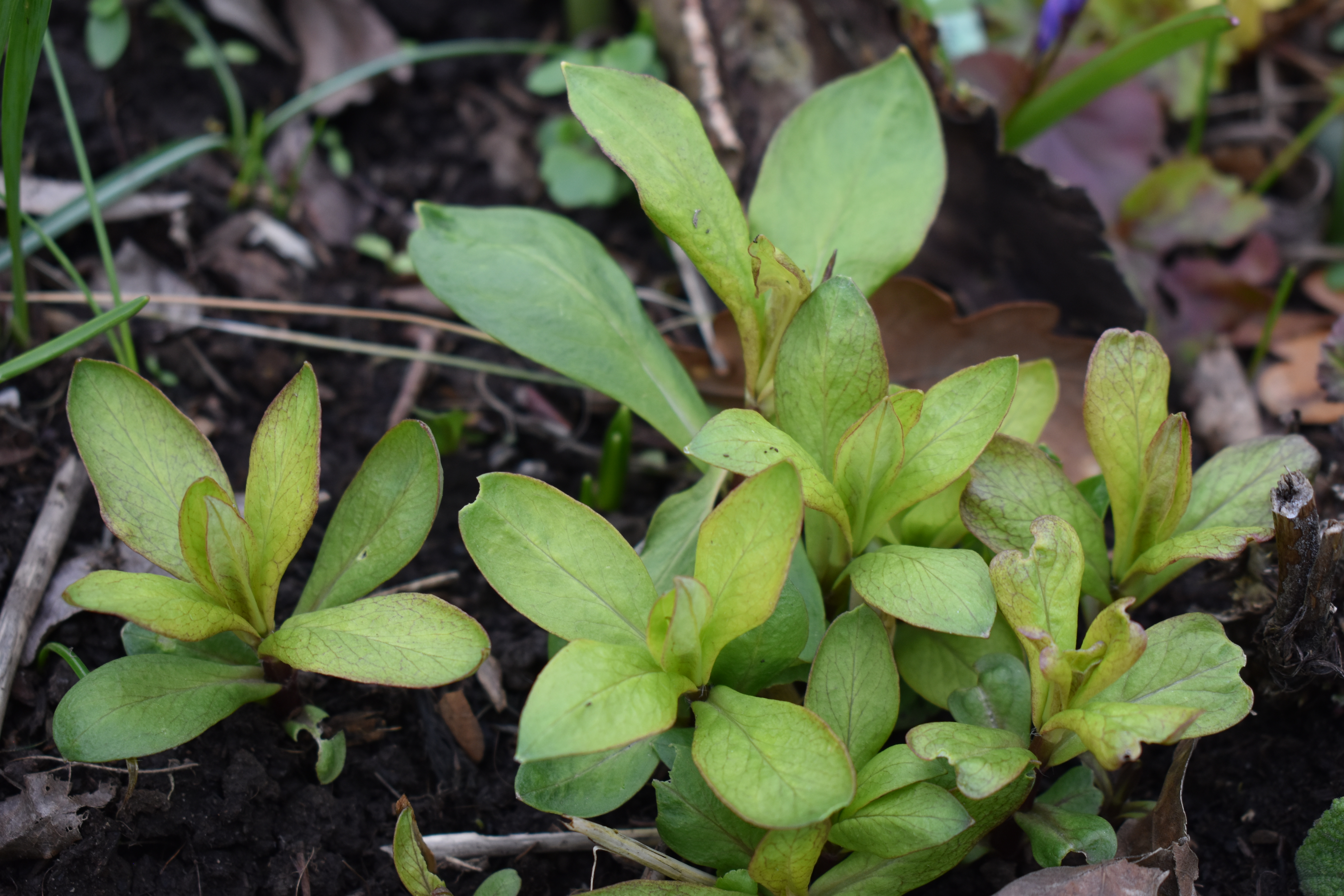
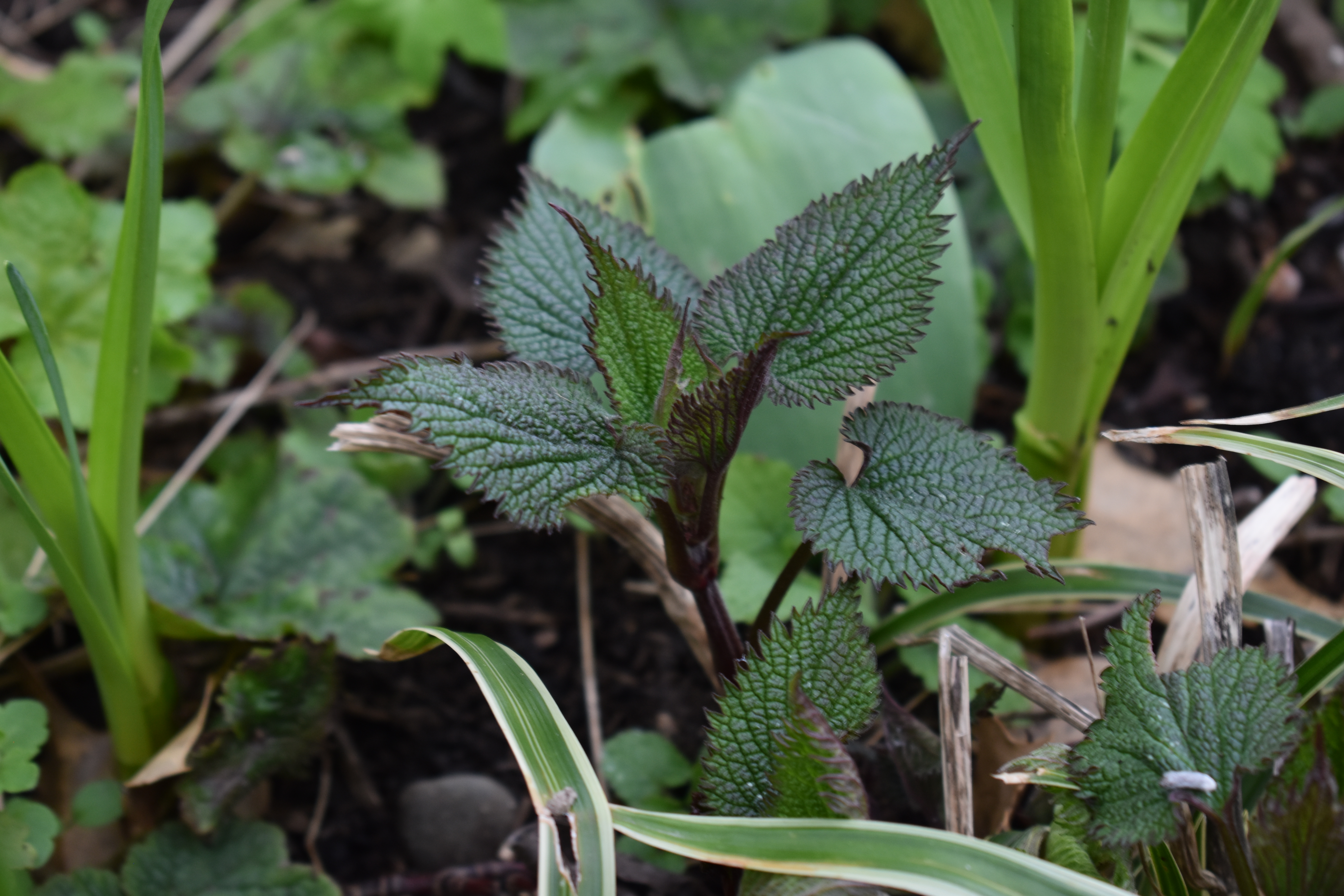
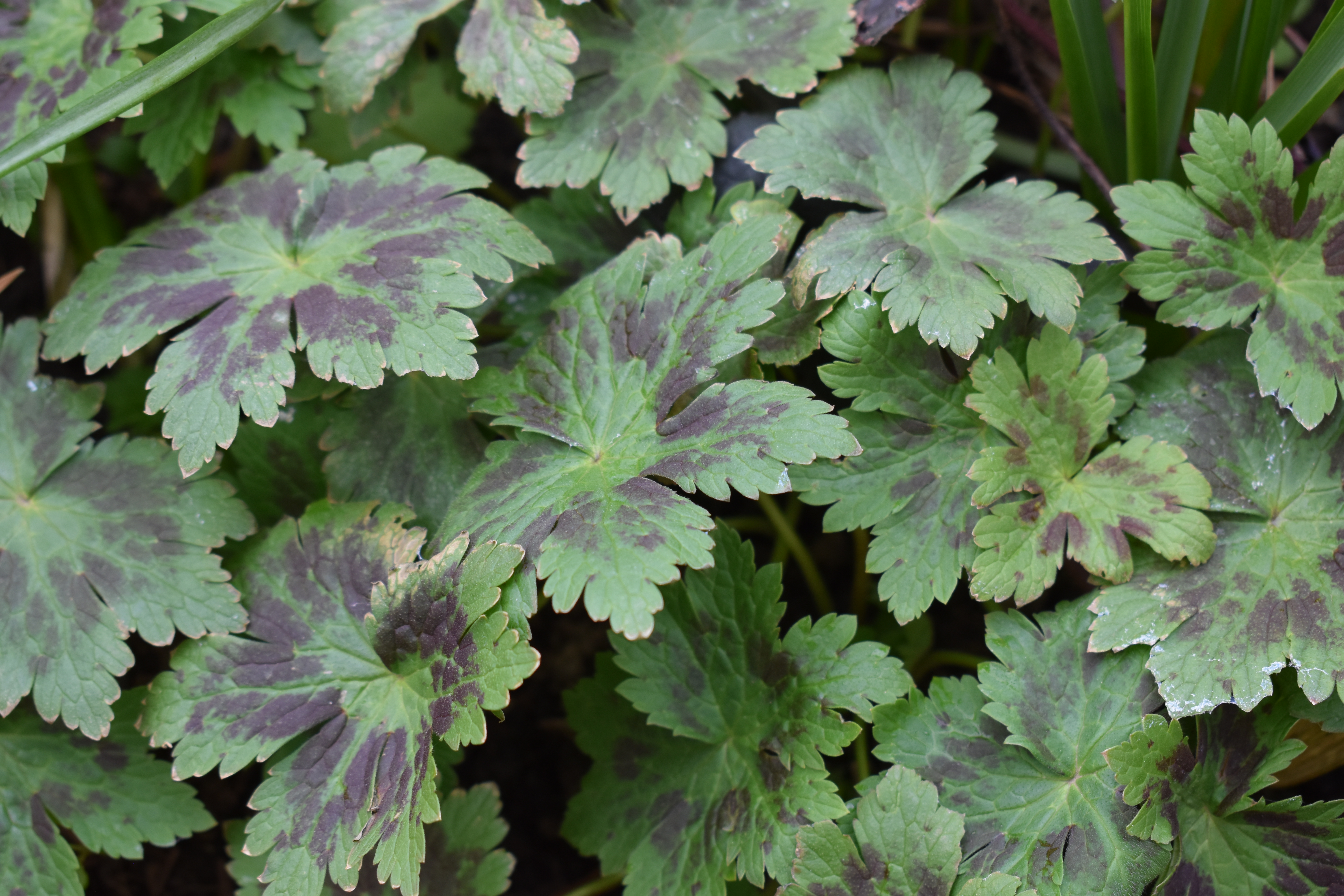
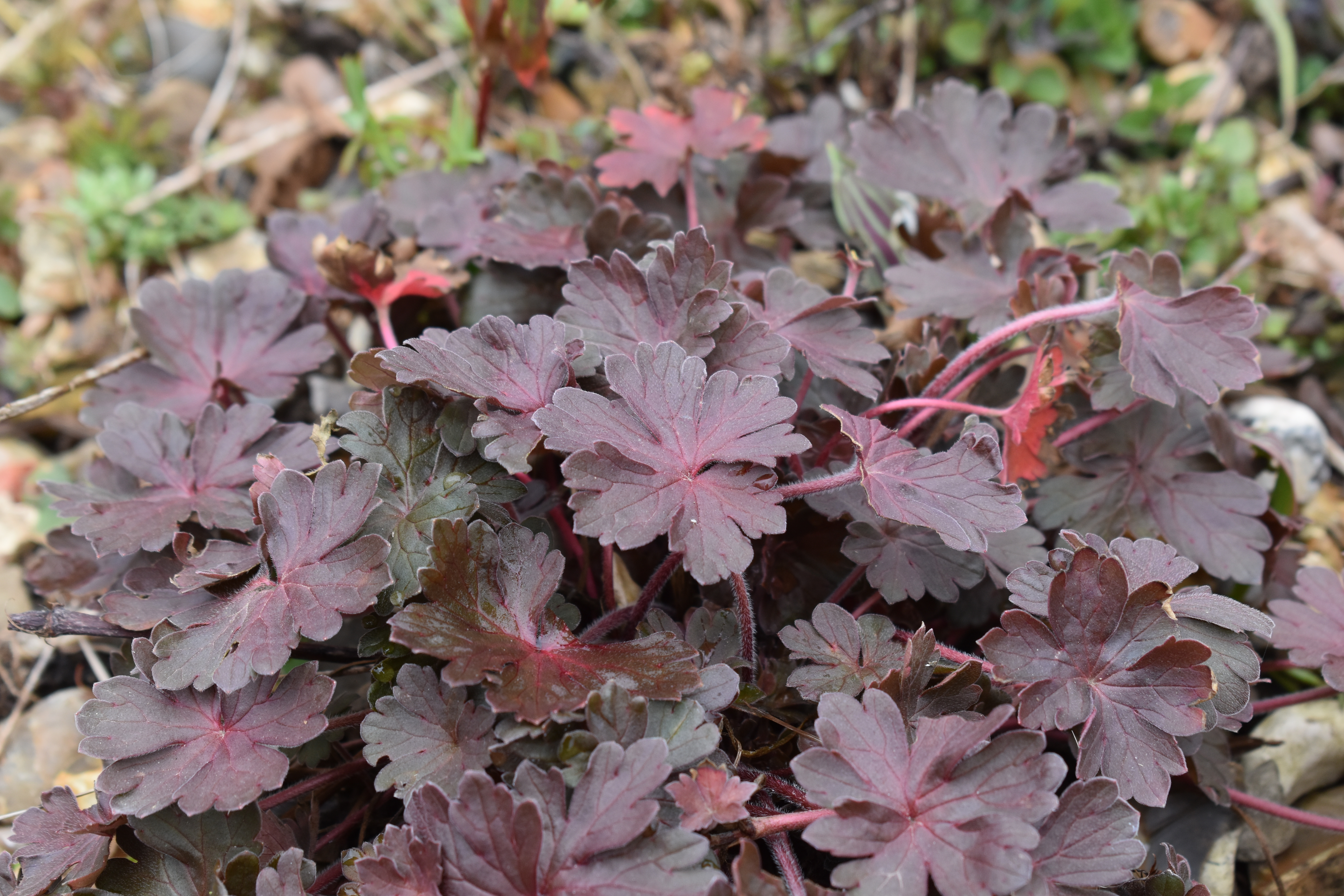
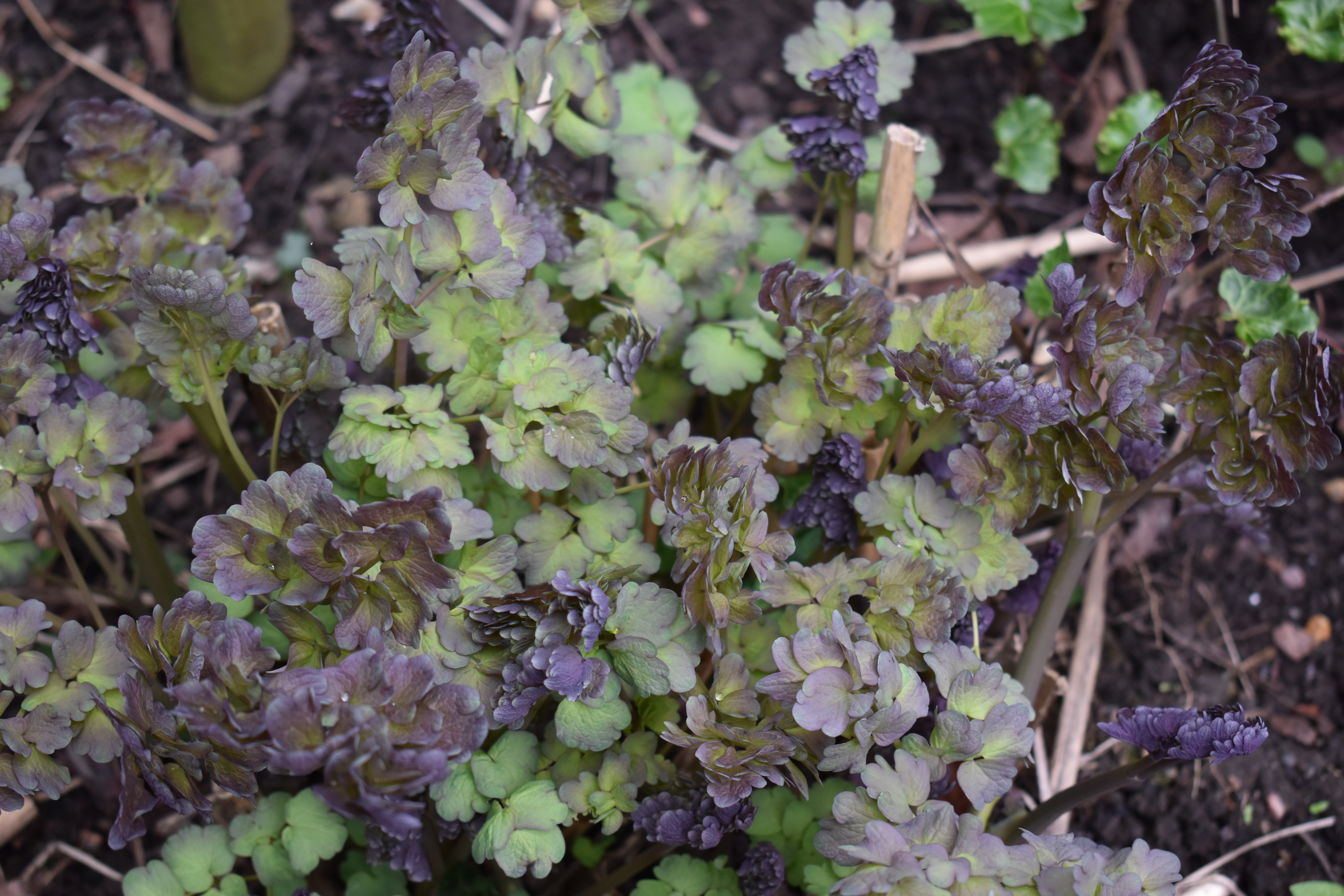
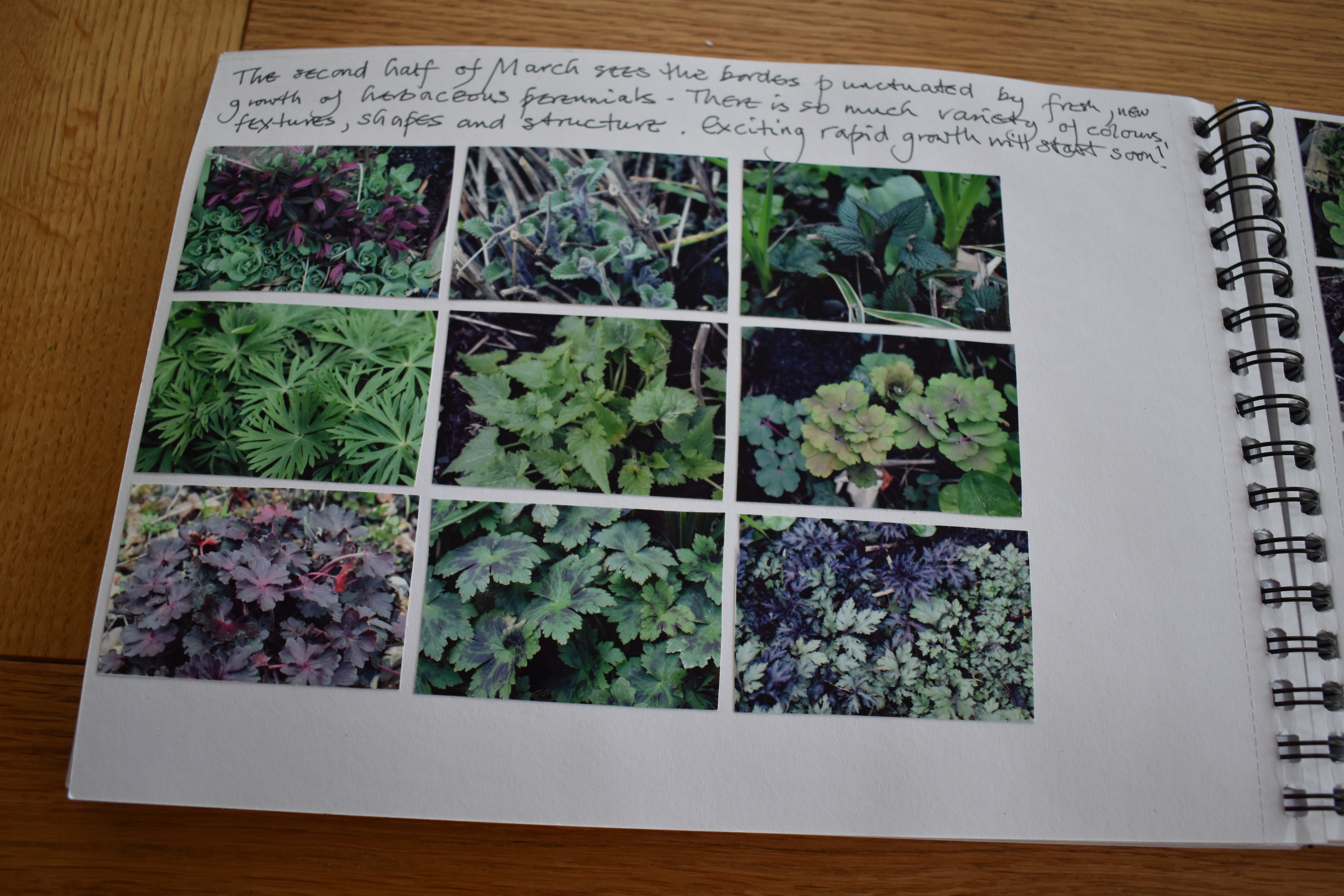
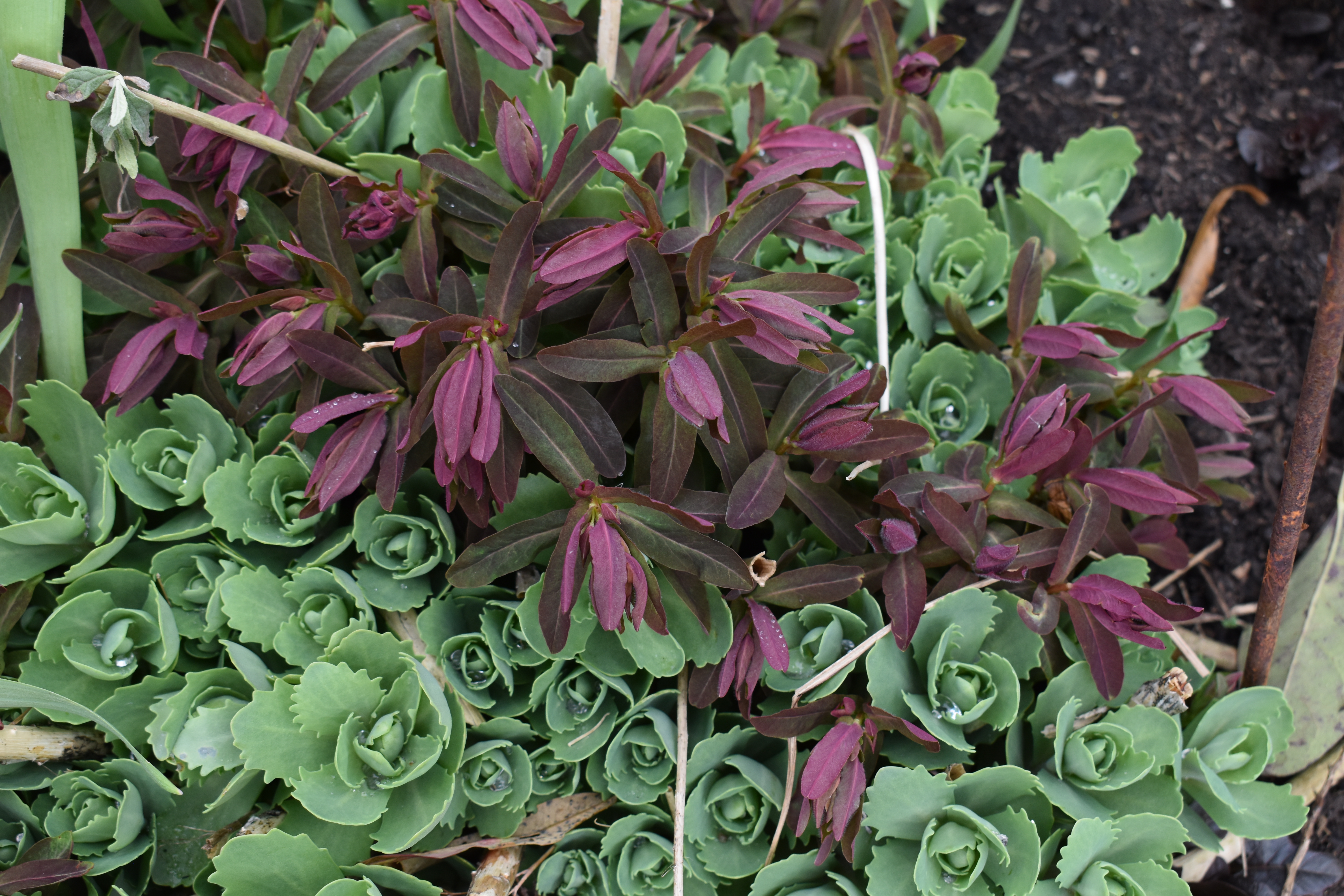
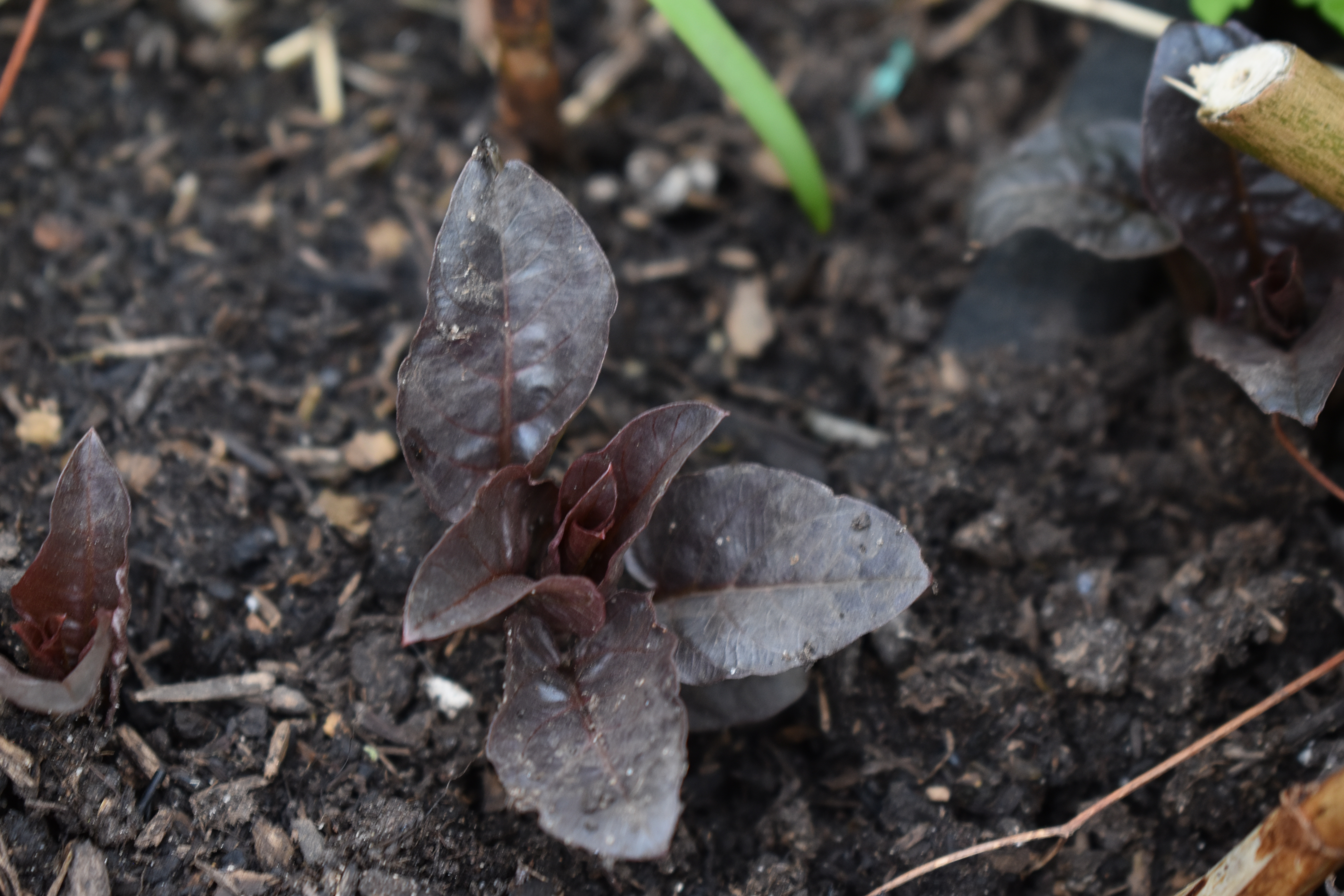
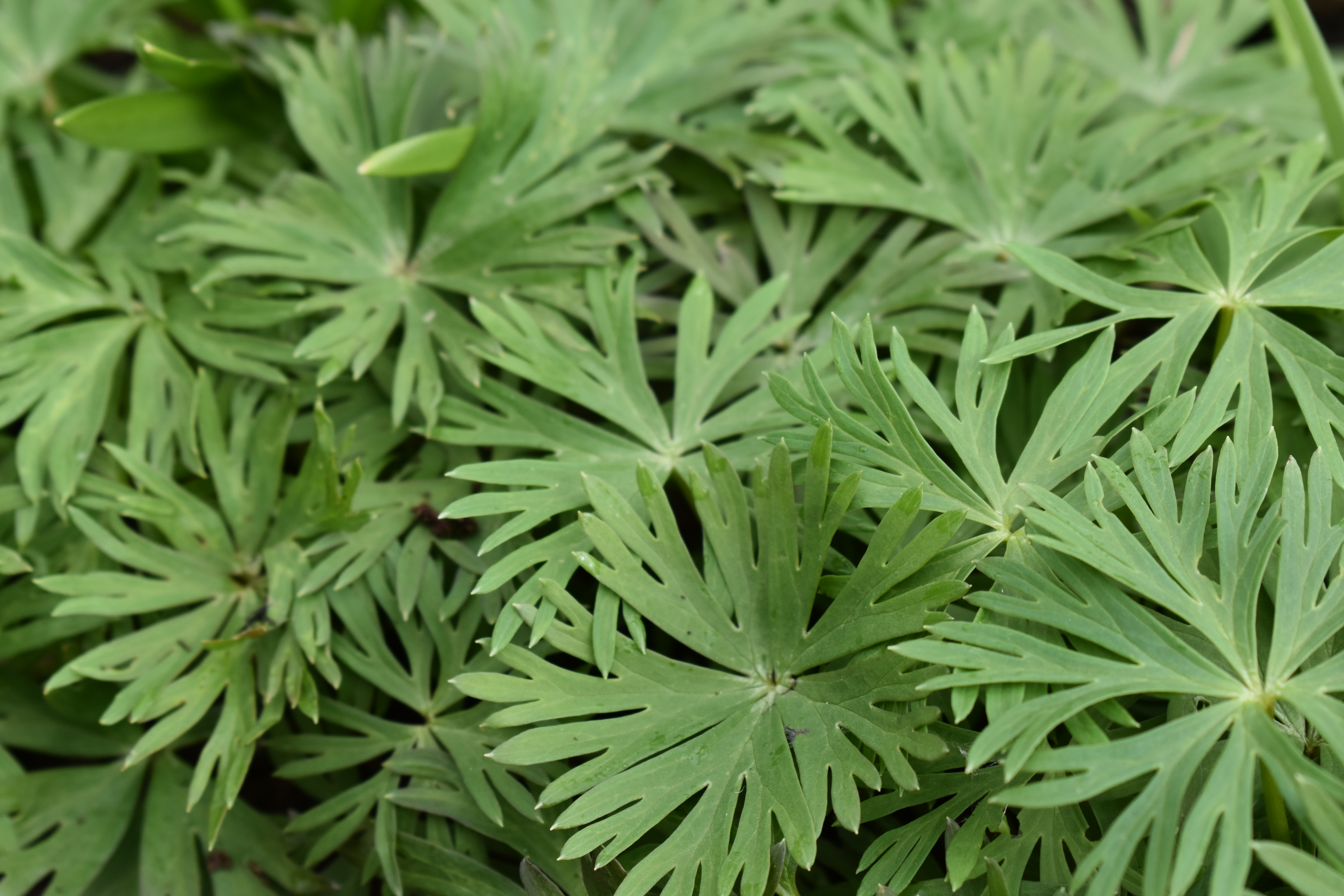
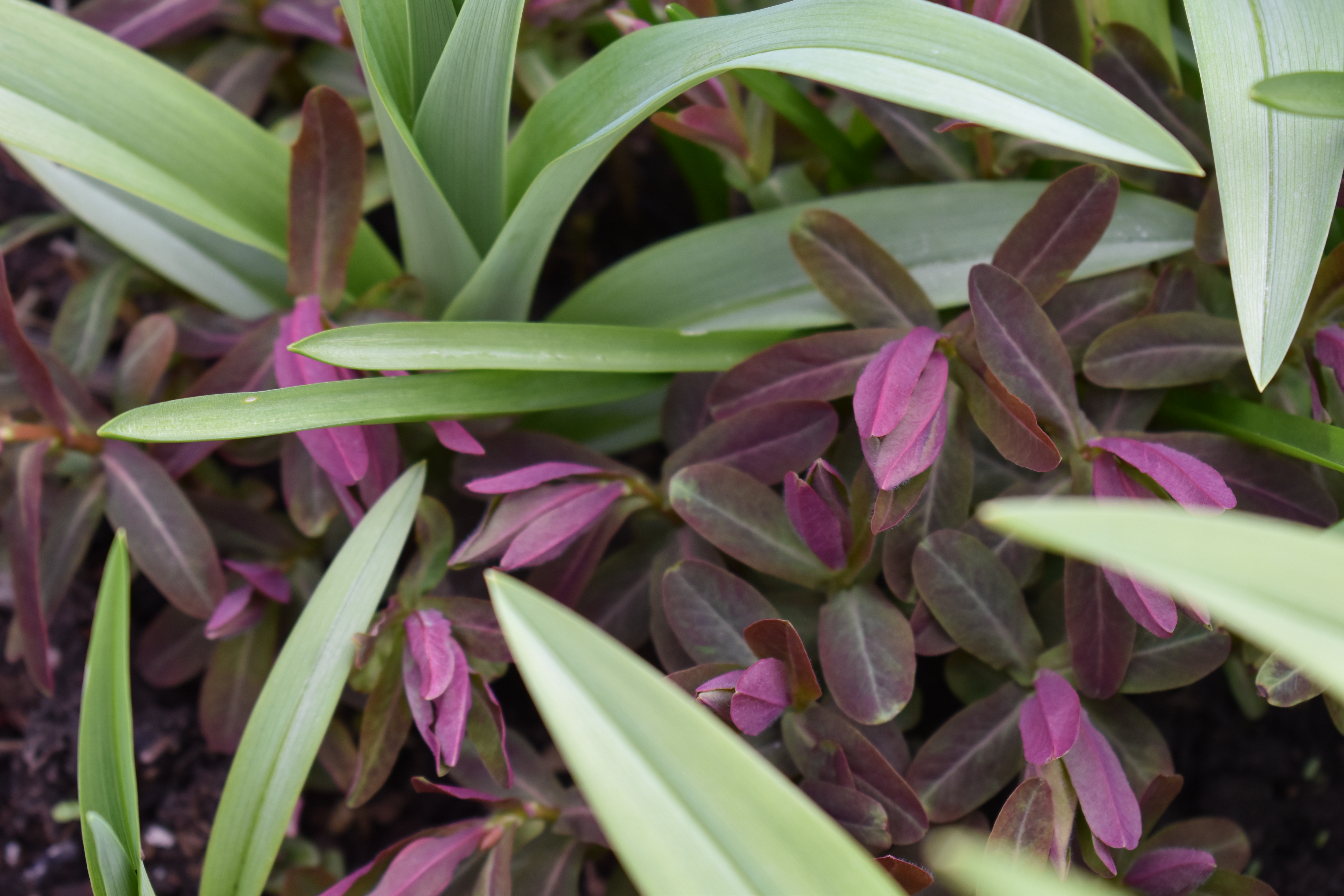
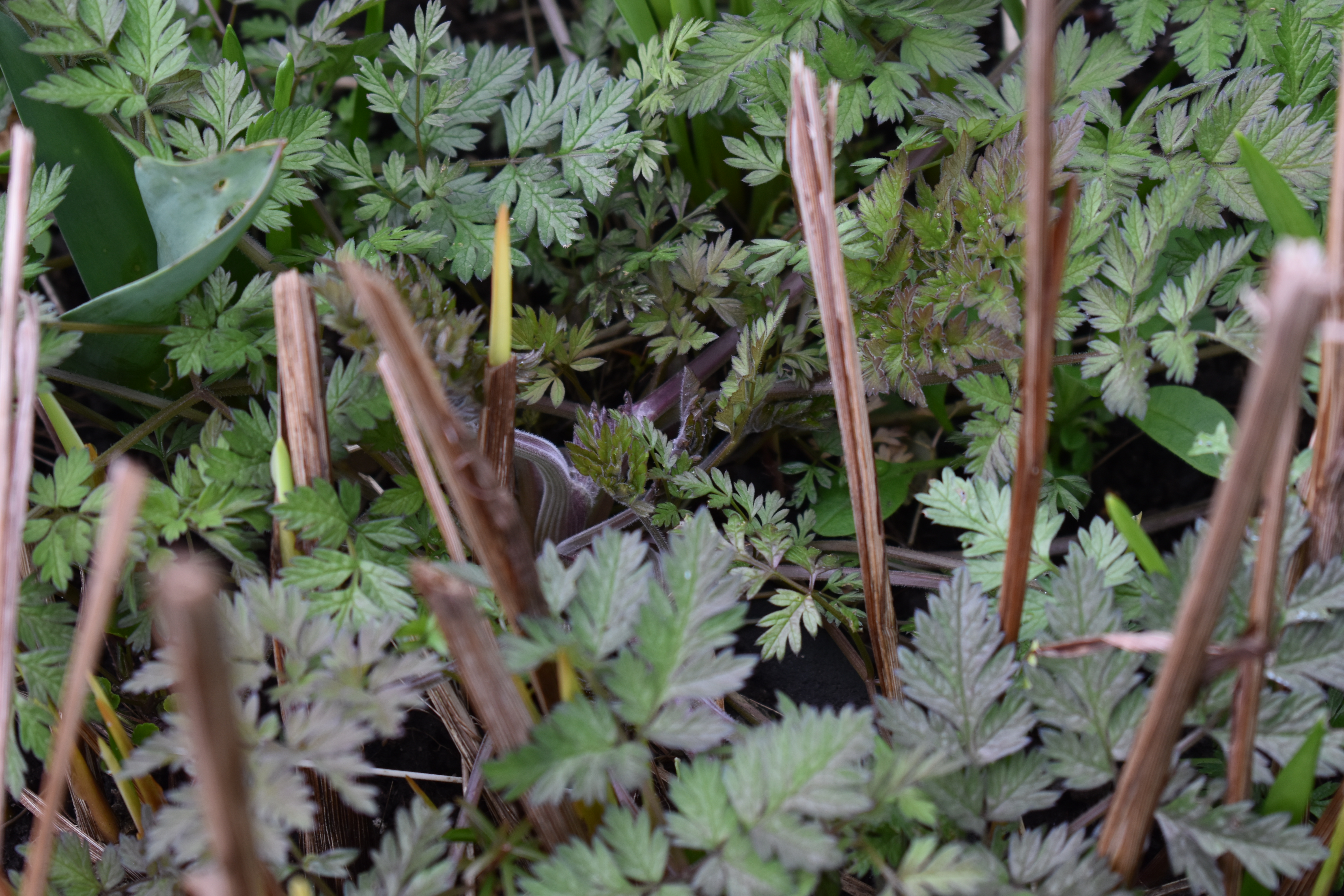
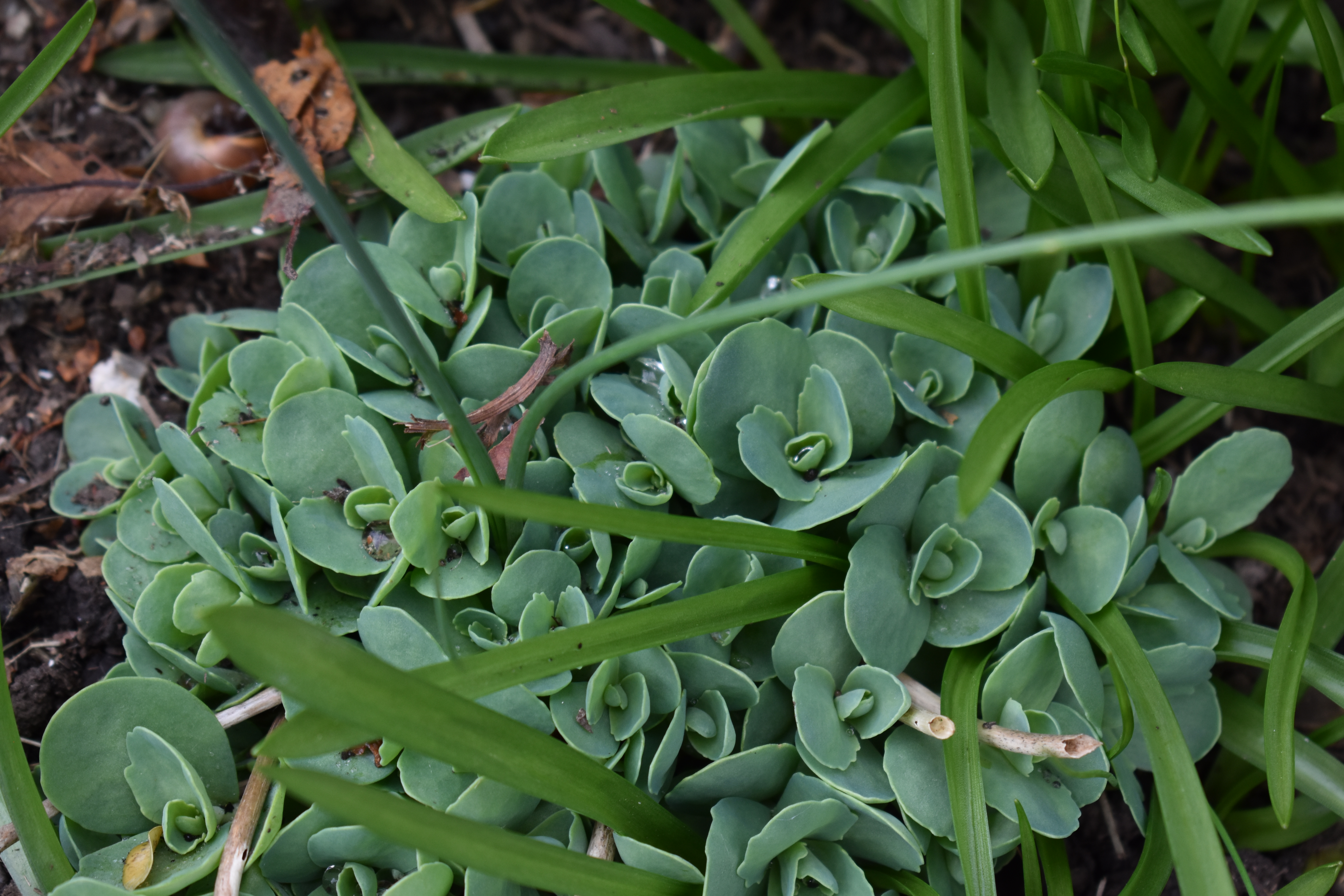
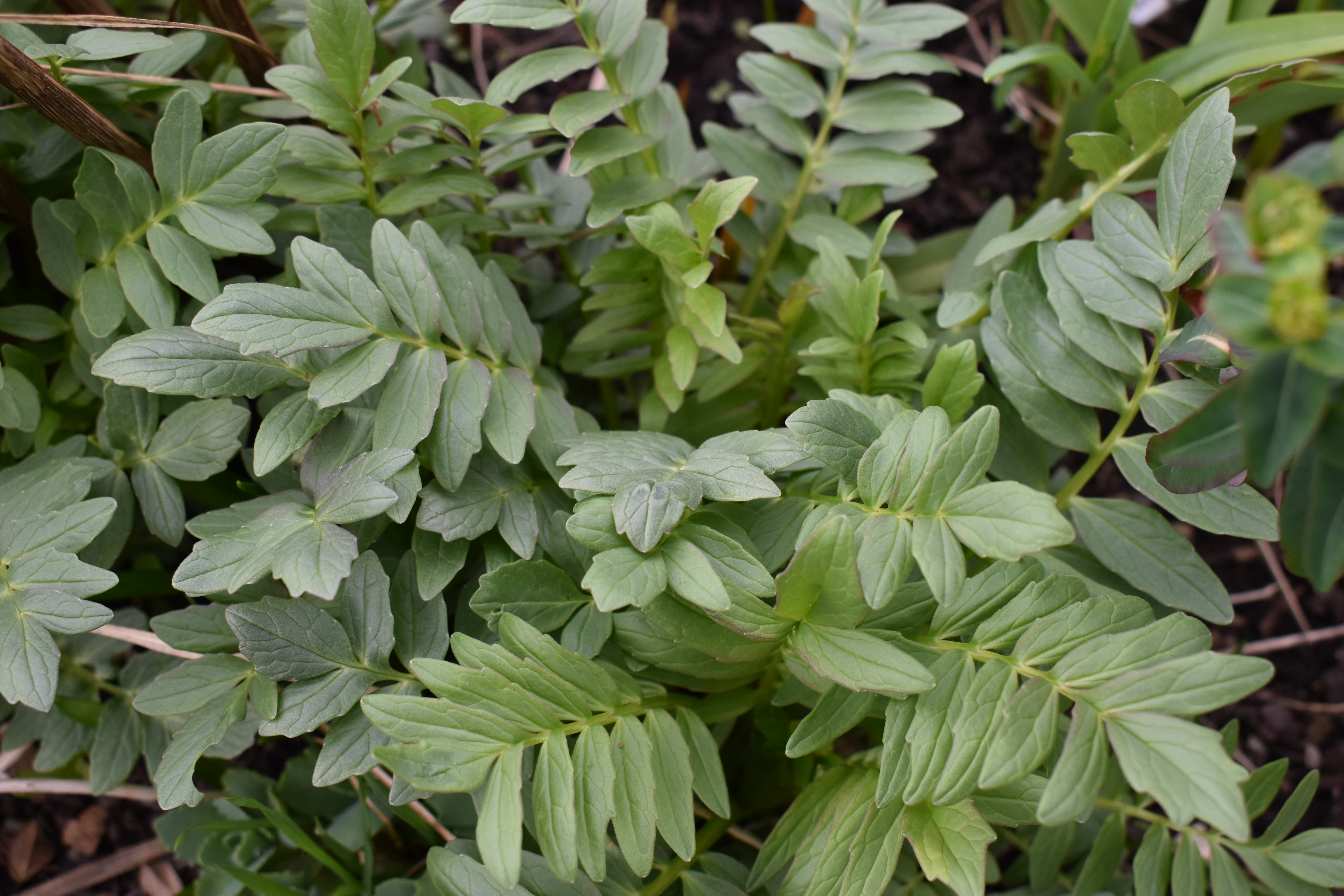
Around the middle of March the garden gained a freshness full of promise for the months ahead. I took a wander around the garden with Jude, aka the Undergardener and my trusty Nikon finding fresh new herbage perennial foliage as it bursts out with renewed life.
I hope you enjoy sharing the photos we took.
All these delicate fresh leaves will, within a few days, take off growing at an amazingly rapid rate and the plants will mature and get ready for flowering. Such an exciting time in the garden!
This is the month when spring will really come to life and we will begin to appreciate the freshness of new growth. We must also find time to sit and appreciate what is happening all around us, the garden we care for and the wildlife that joins us in our quarter acre patch.
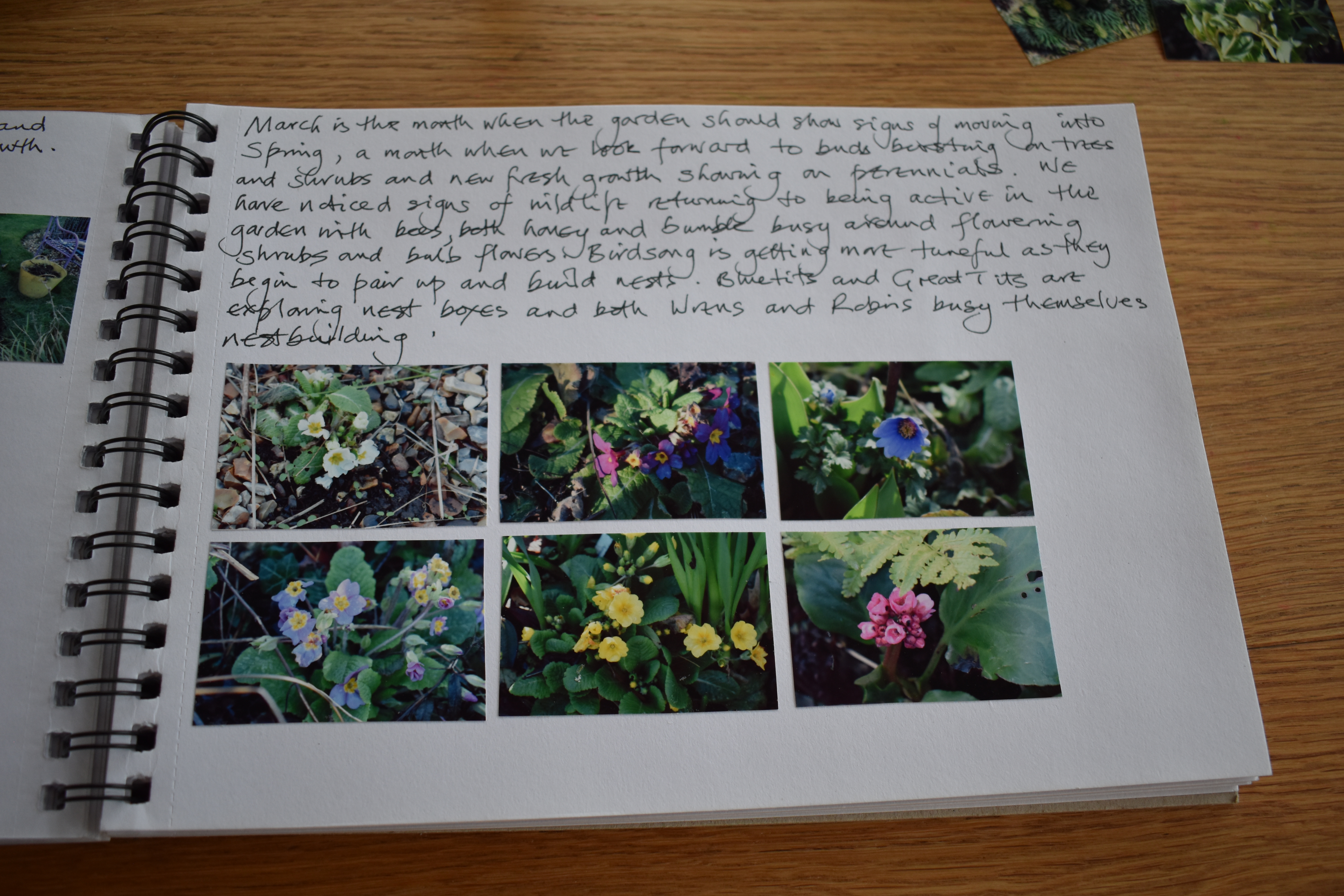
On my first page for the new month I wrote, ‘March is the month when the garden should show signs of moving into spring, a month when we look forward to buds bursting on trees and shrubs and new fresh growth showing on perennials. We have noticed signs of wildlife returning to activity in the garden with bees, both honey and bumble, busy around flowering shrubs and bulb flowers. Birdsong is getting more tuneful as they begin to pair up and build nests. Blue Tits and Great Titsare exploring nest boxes and both Wrens and Robins busy themselves nest-building.’
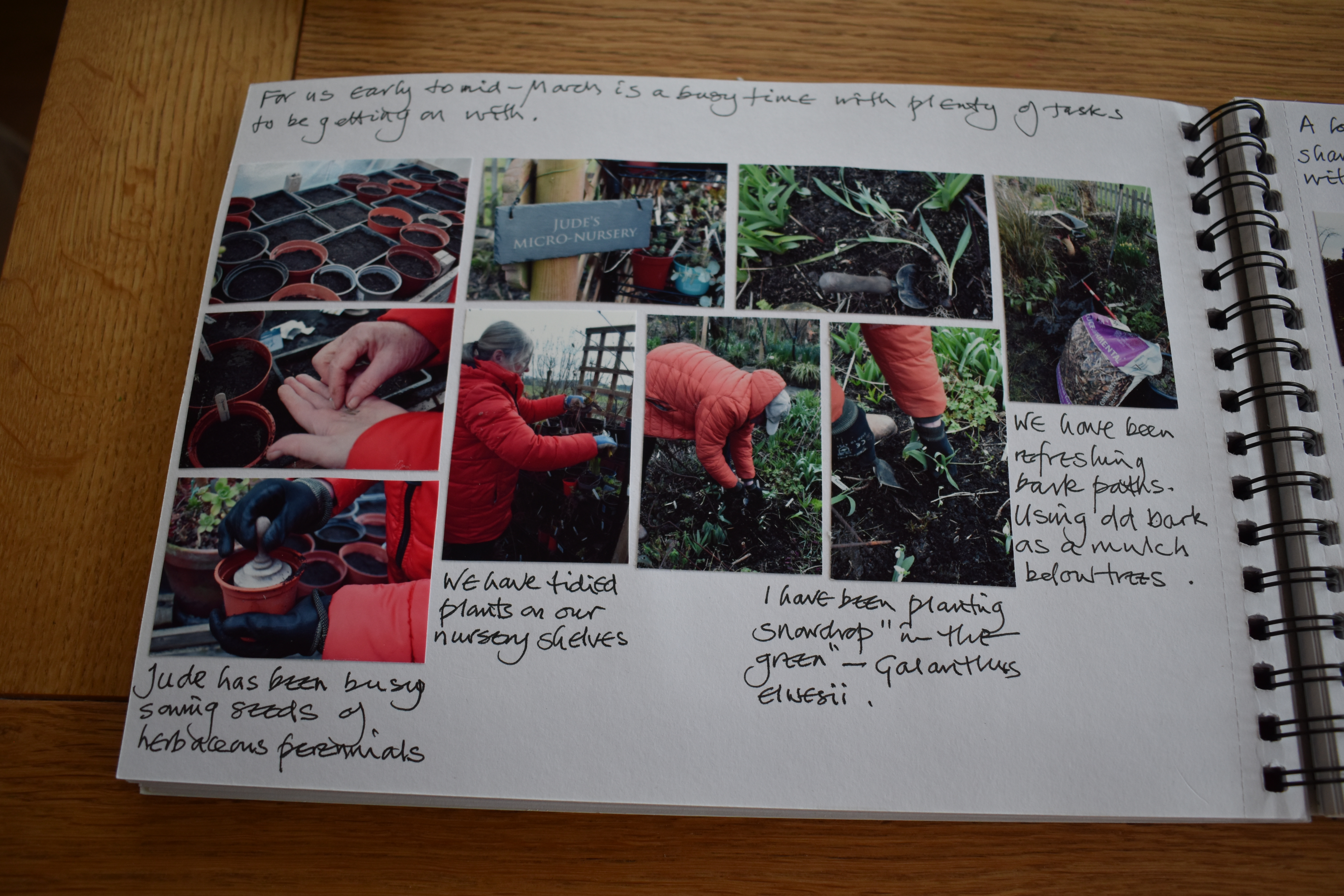
Gardening tasks featured on the second page for March where I wrote, “For us early to mid-March is a busy time with plenty of tasks to be getting on with.“
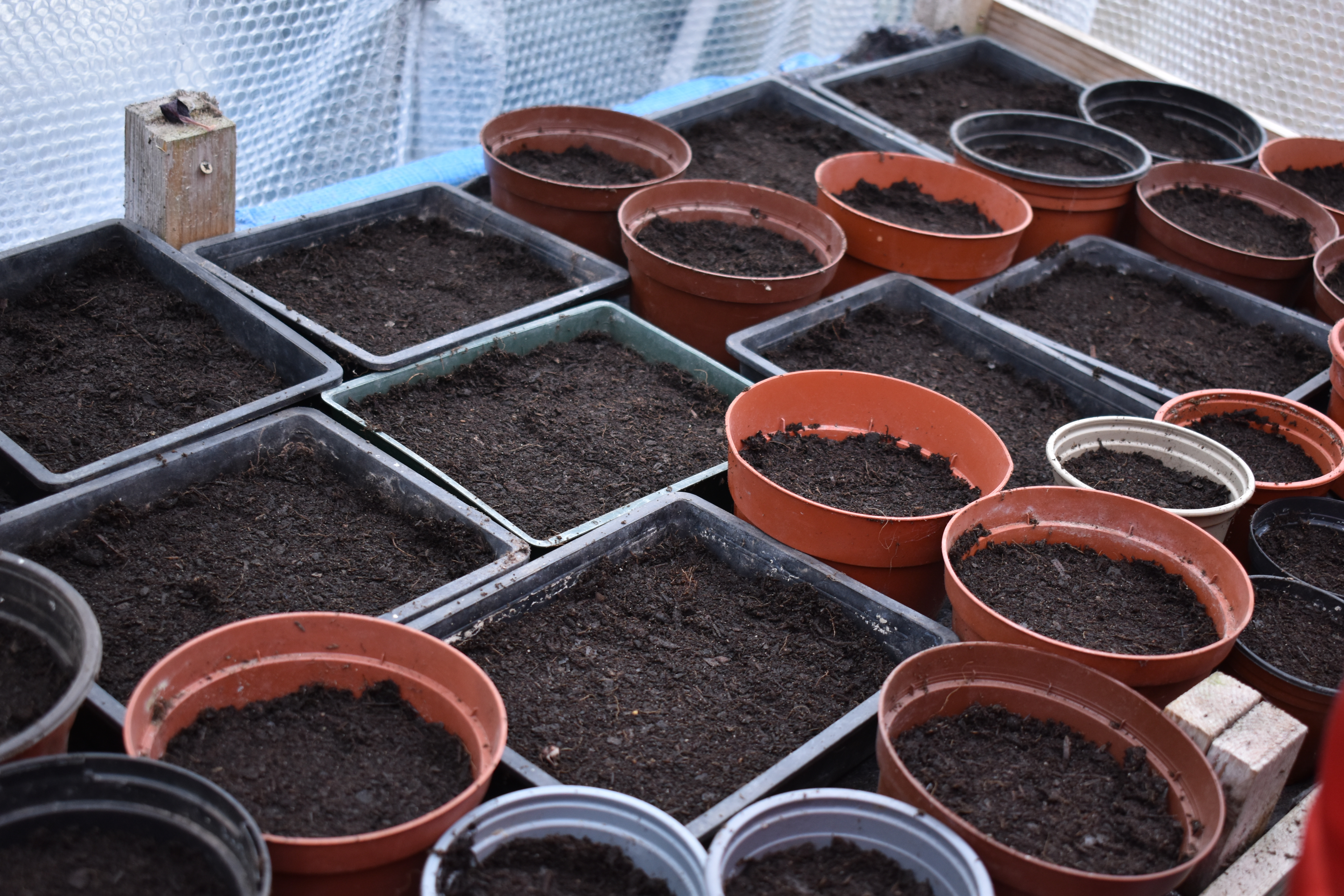
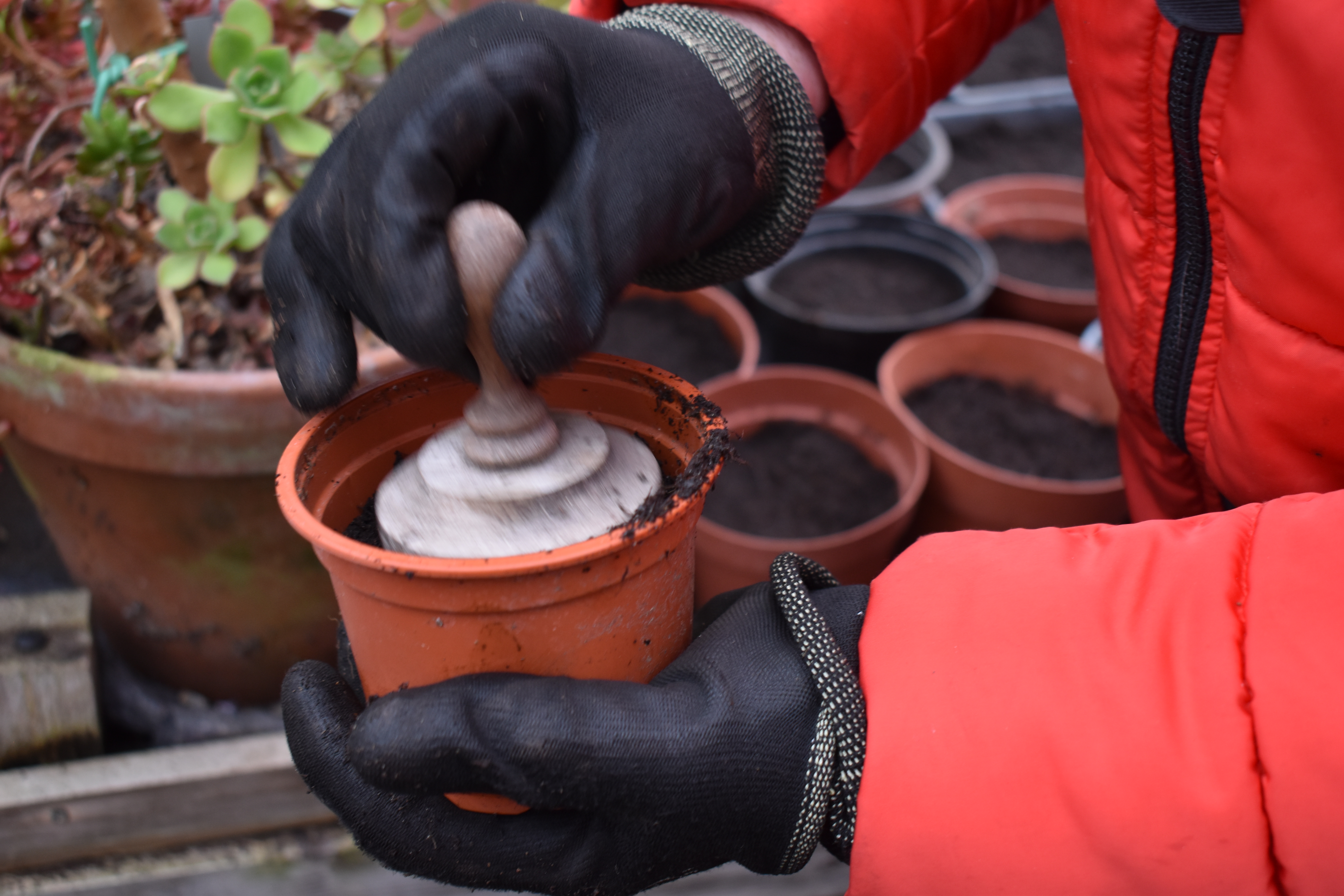
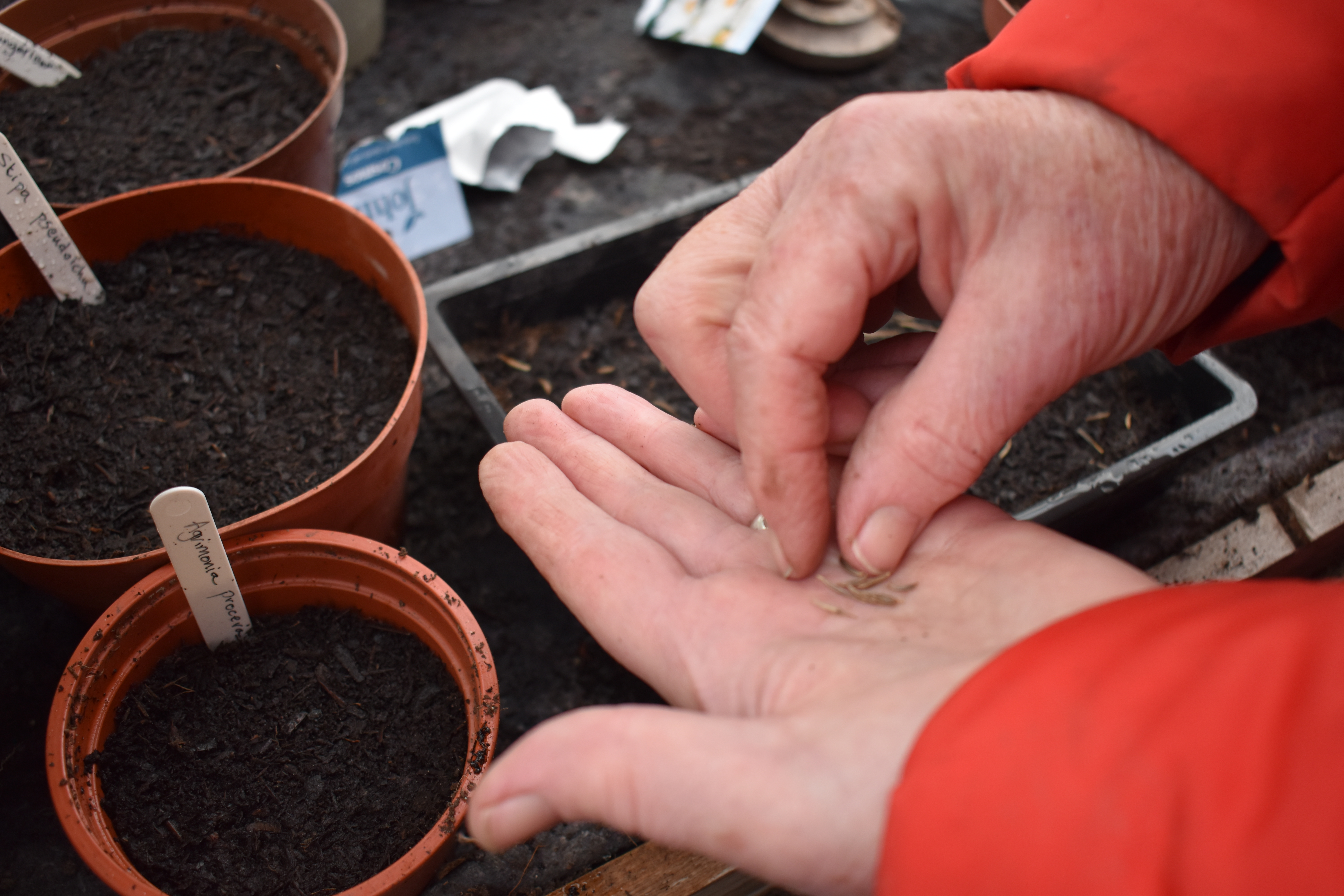
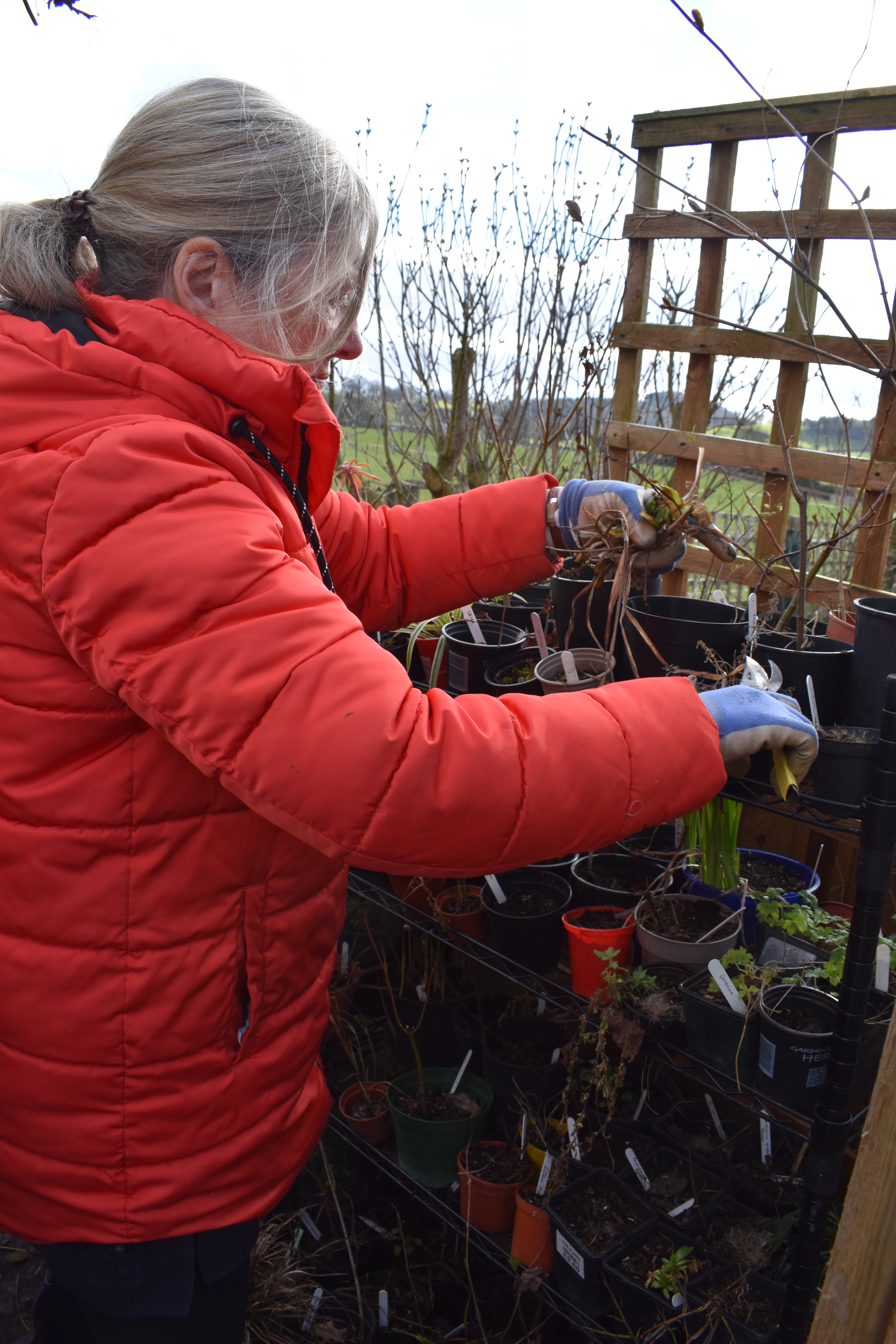
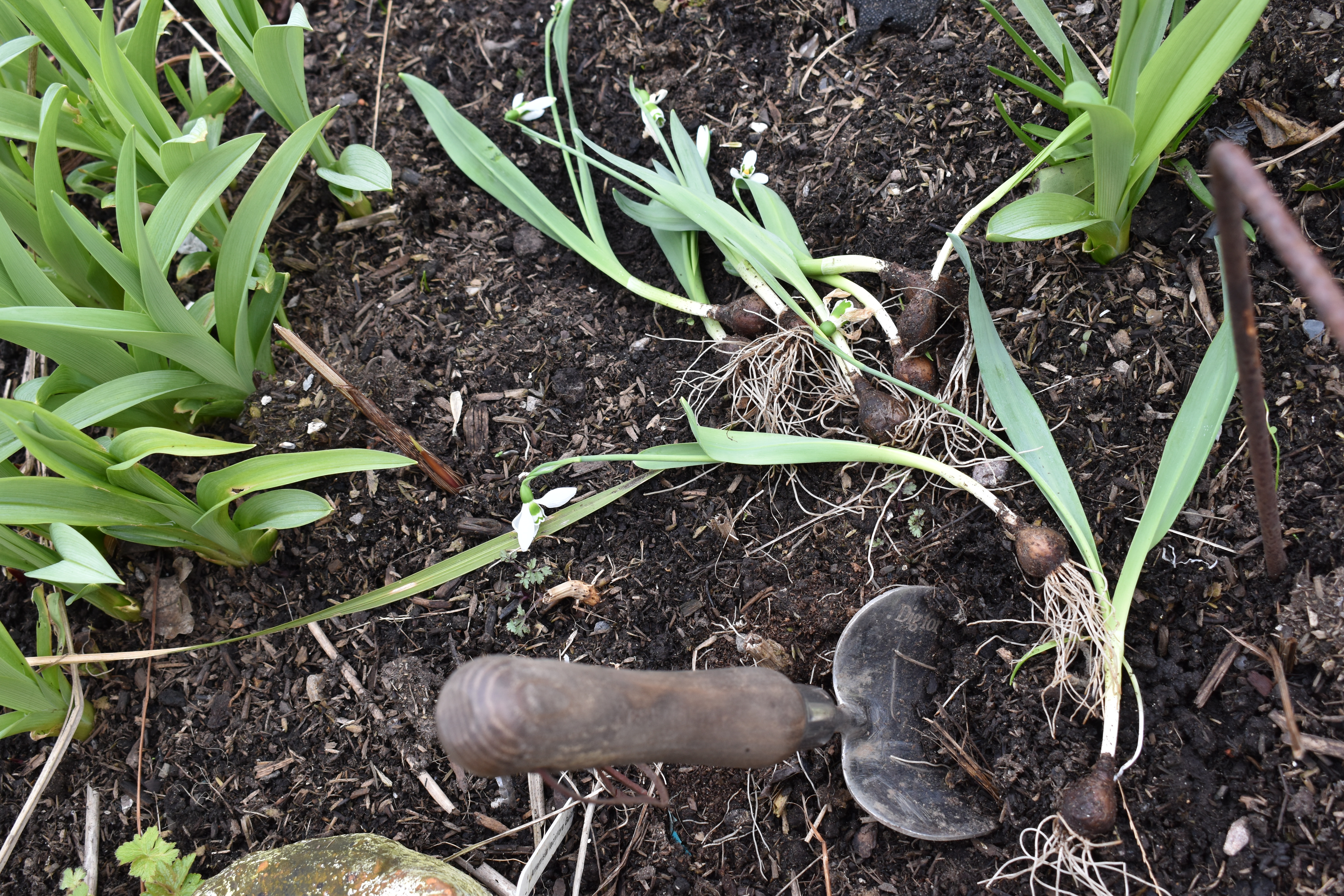
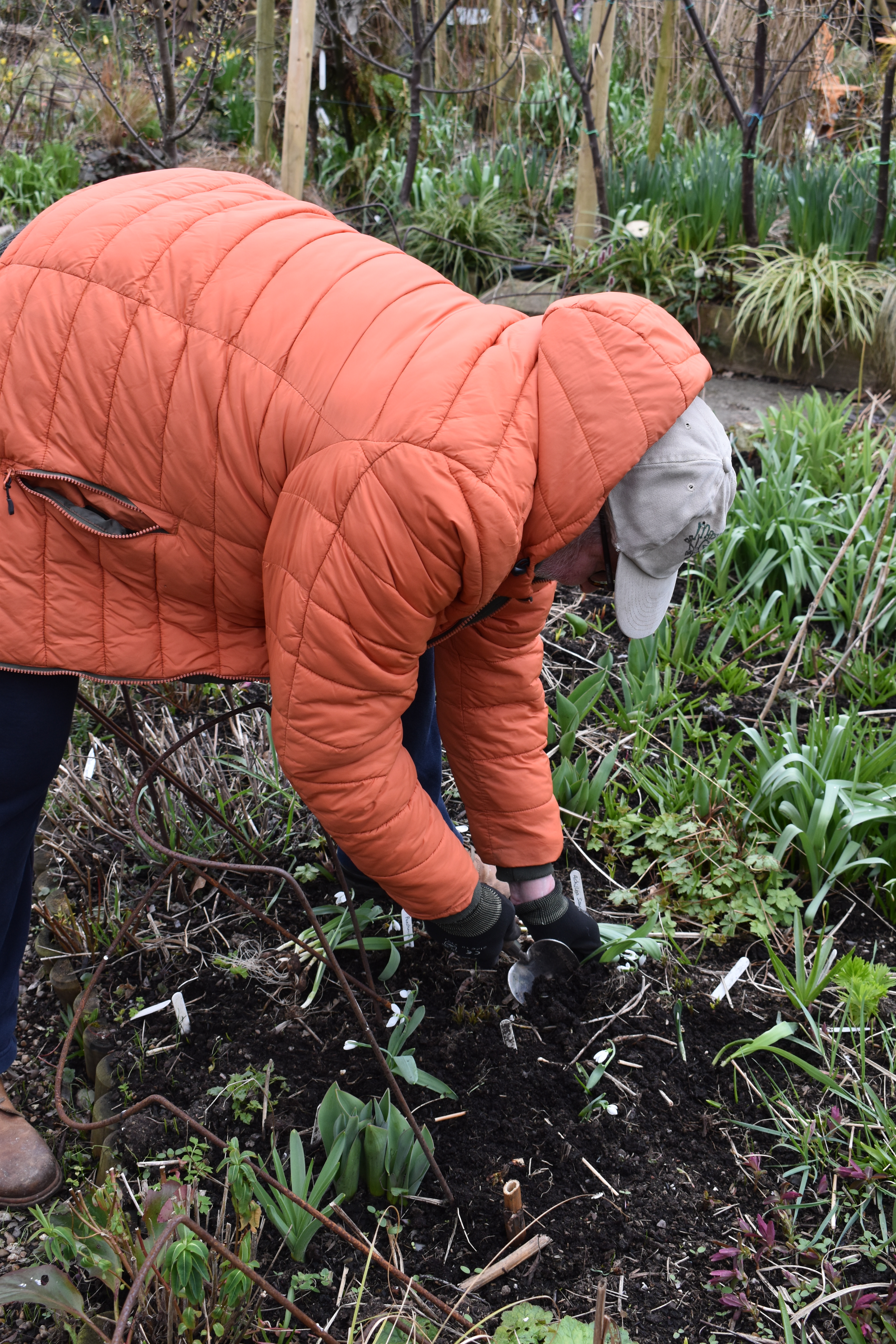
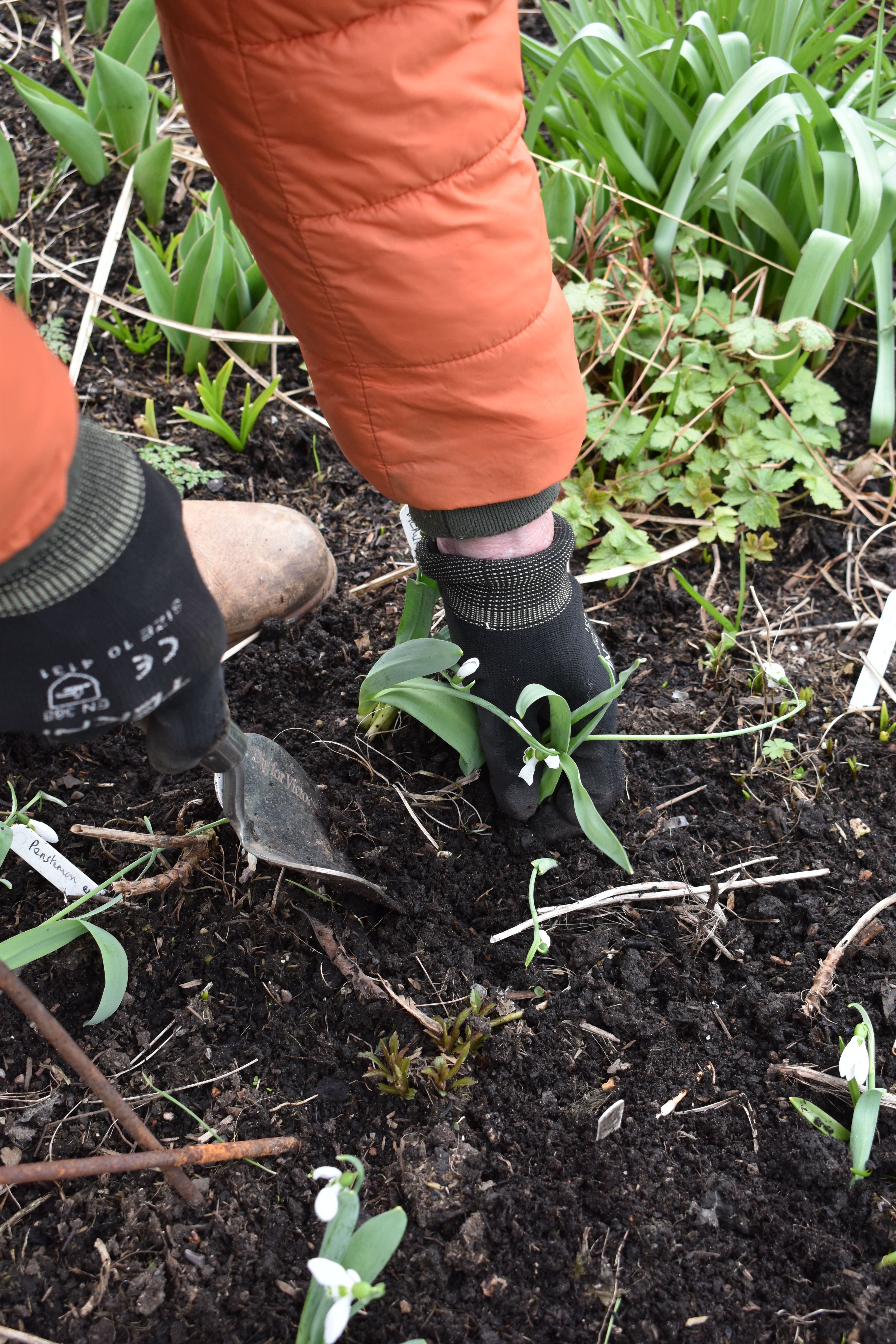
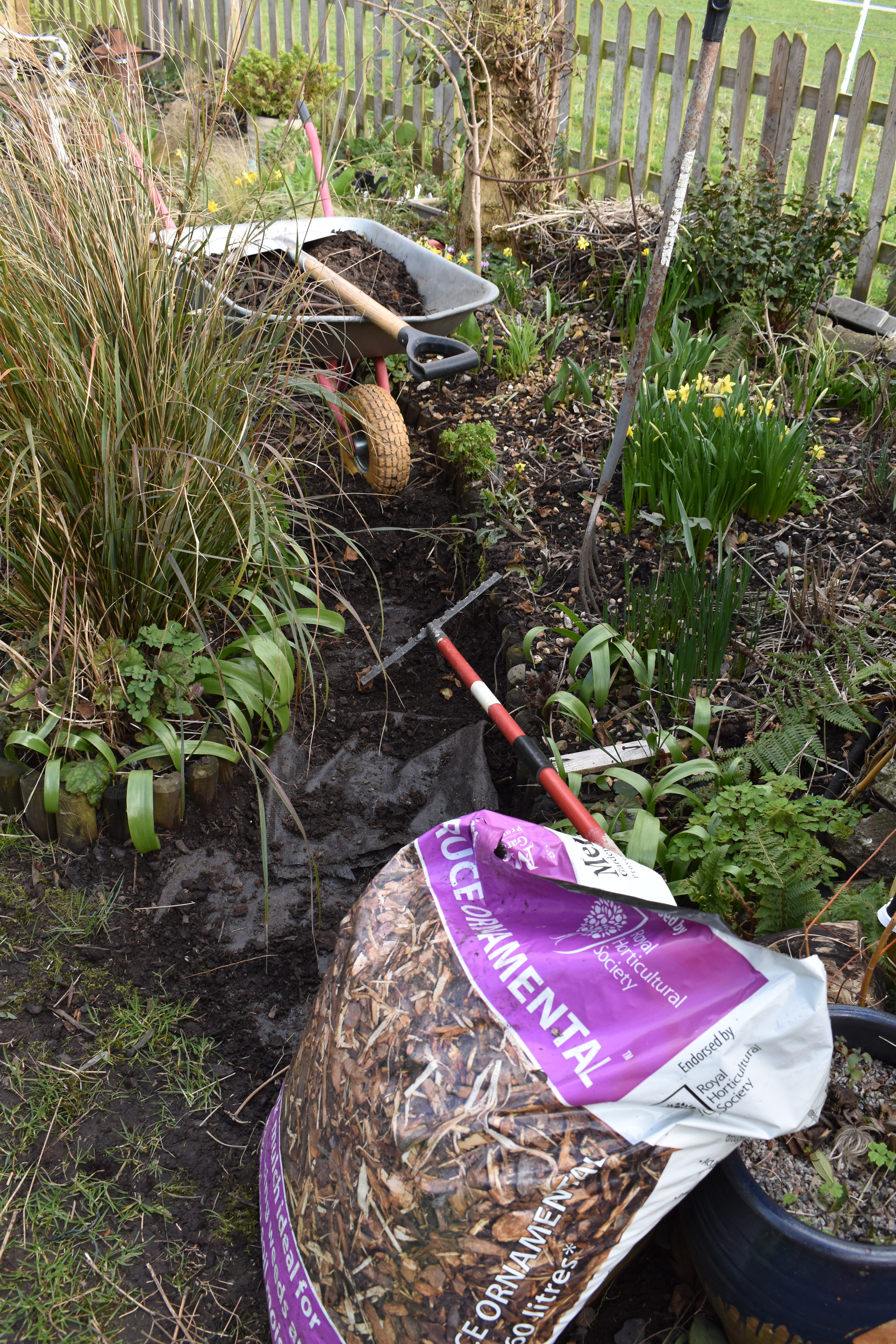
The captions for the photos read, “Jude has been busy sowing seeds of herbaceous perennials”, “We have tidied the plants on our nursery shelves”, “I have been planting snowdrops in the green – ‘Galanthus elwesii’ and “We have been refreshing our bark paths and using the old bark as a mulch below trees.”
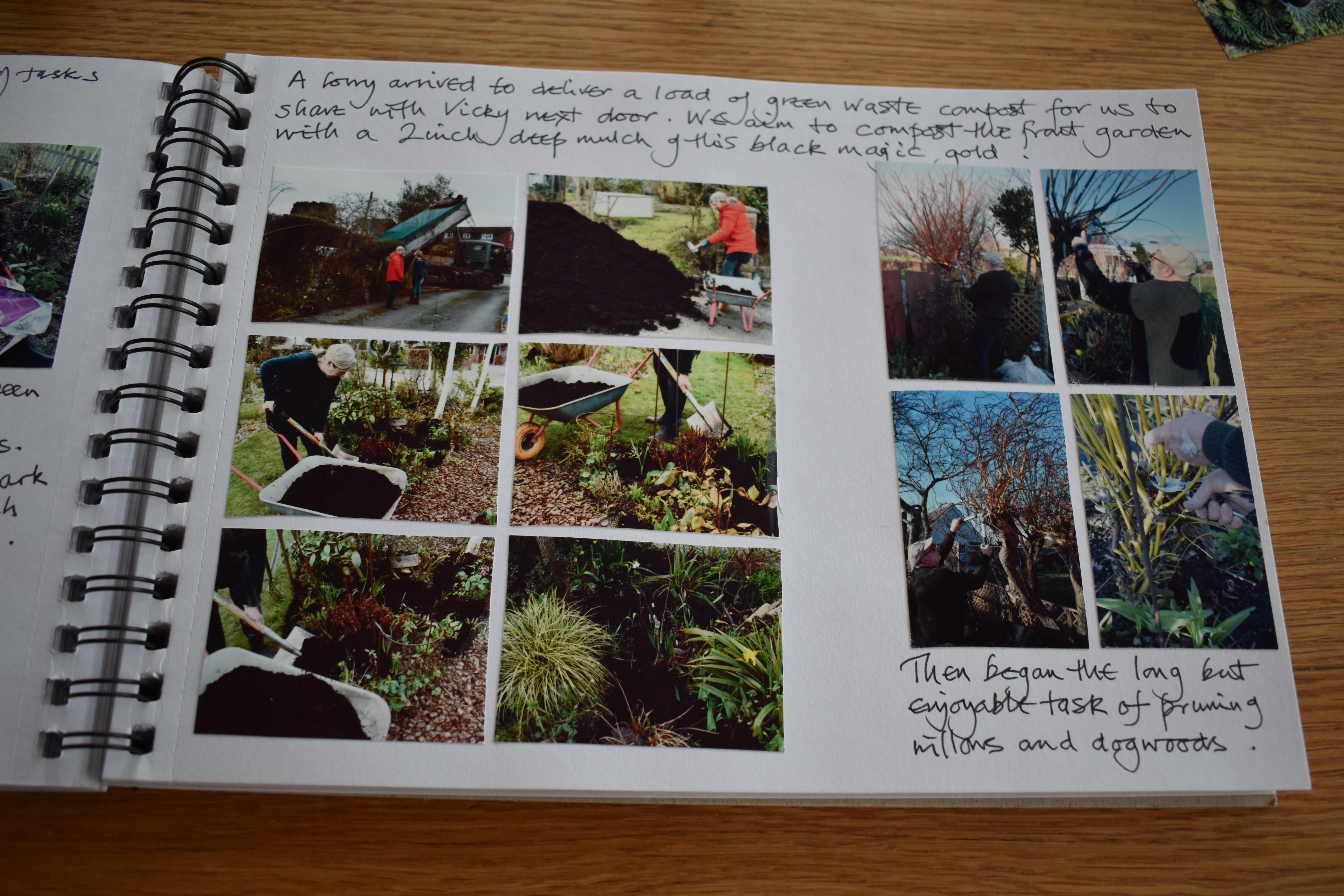
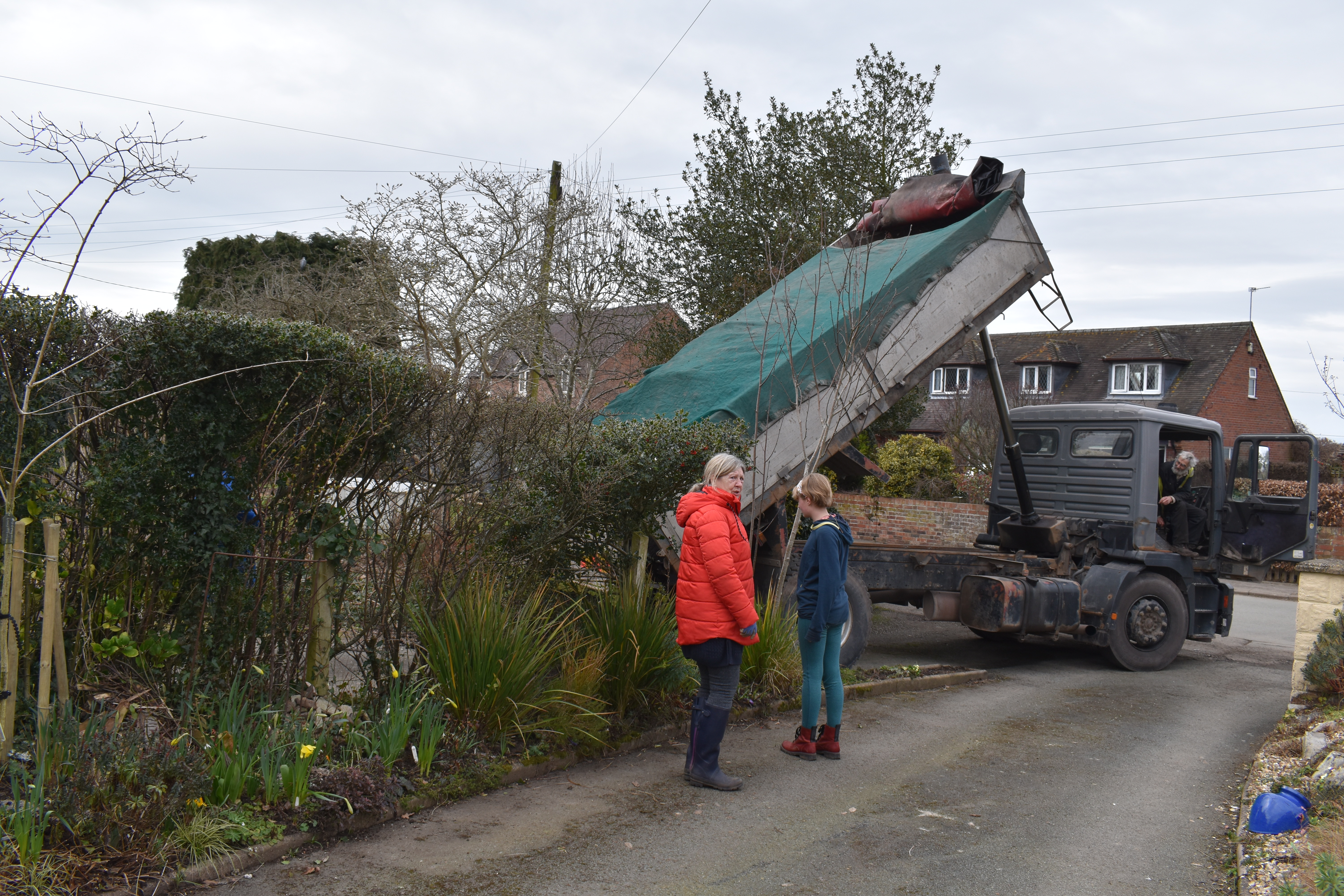
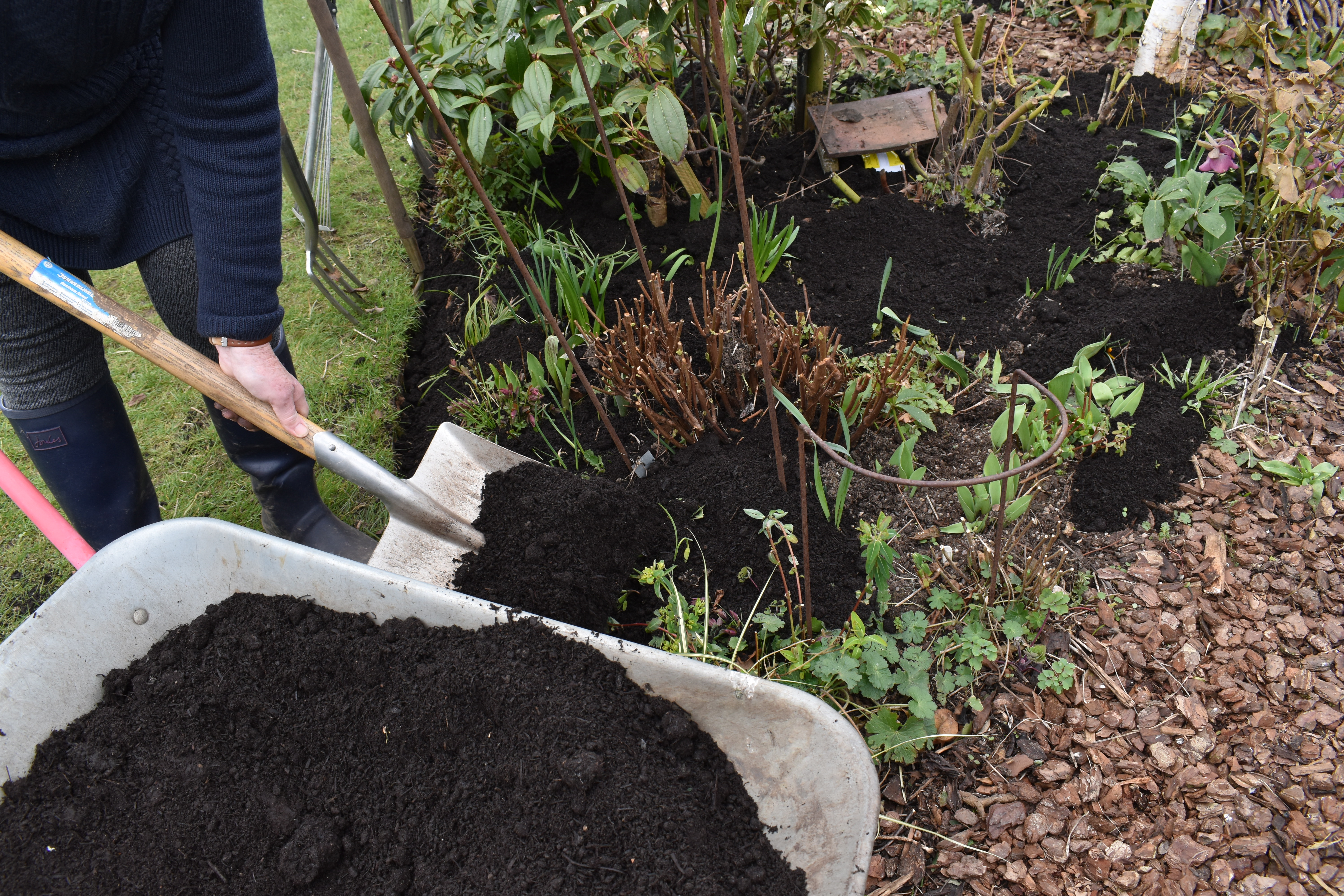
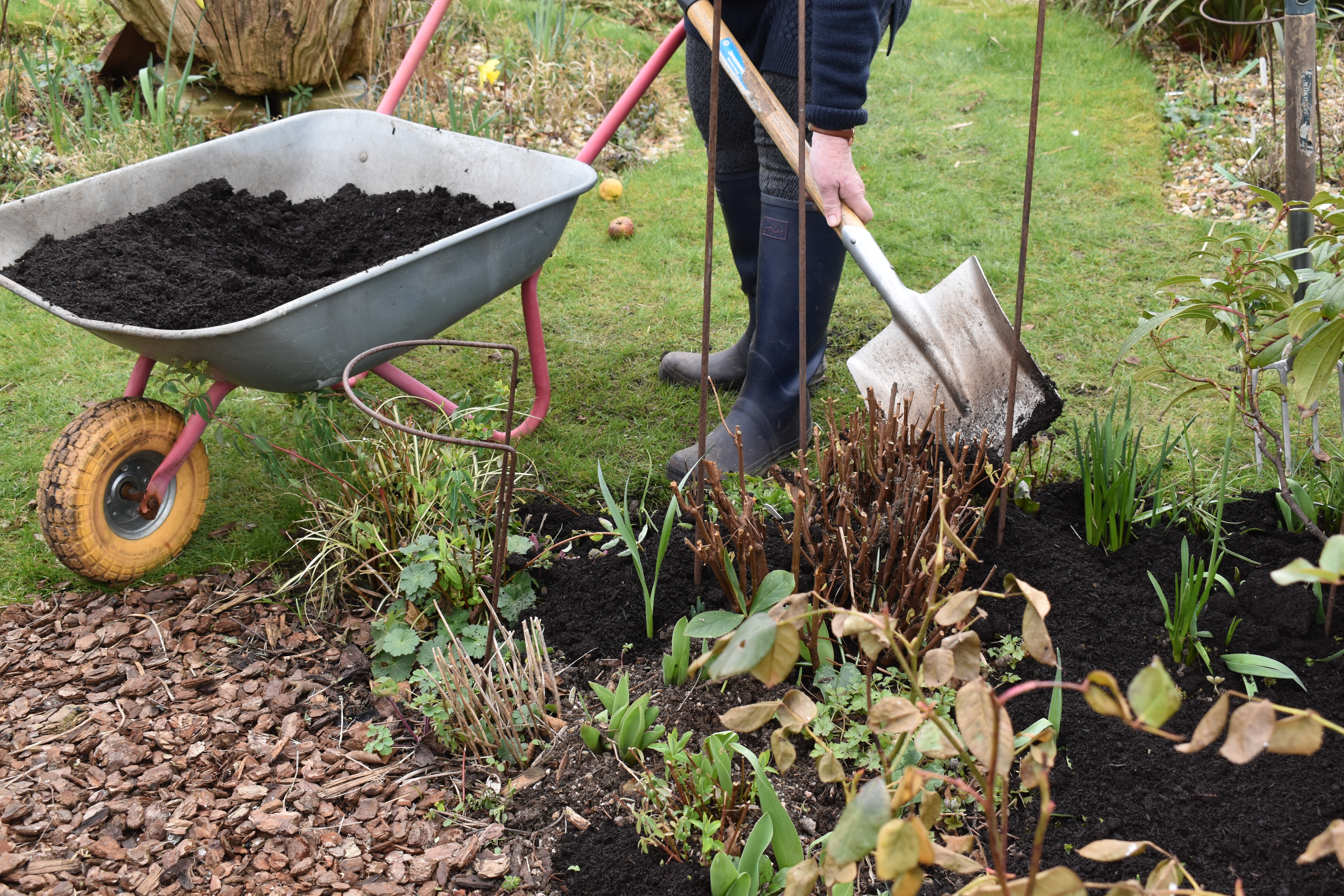
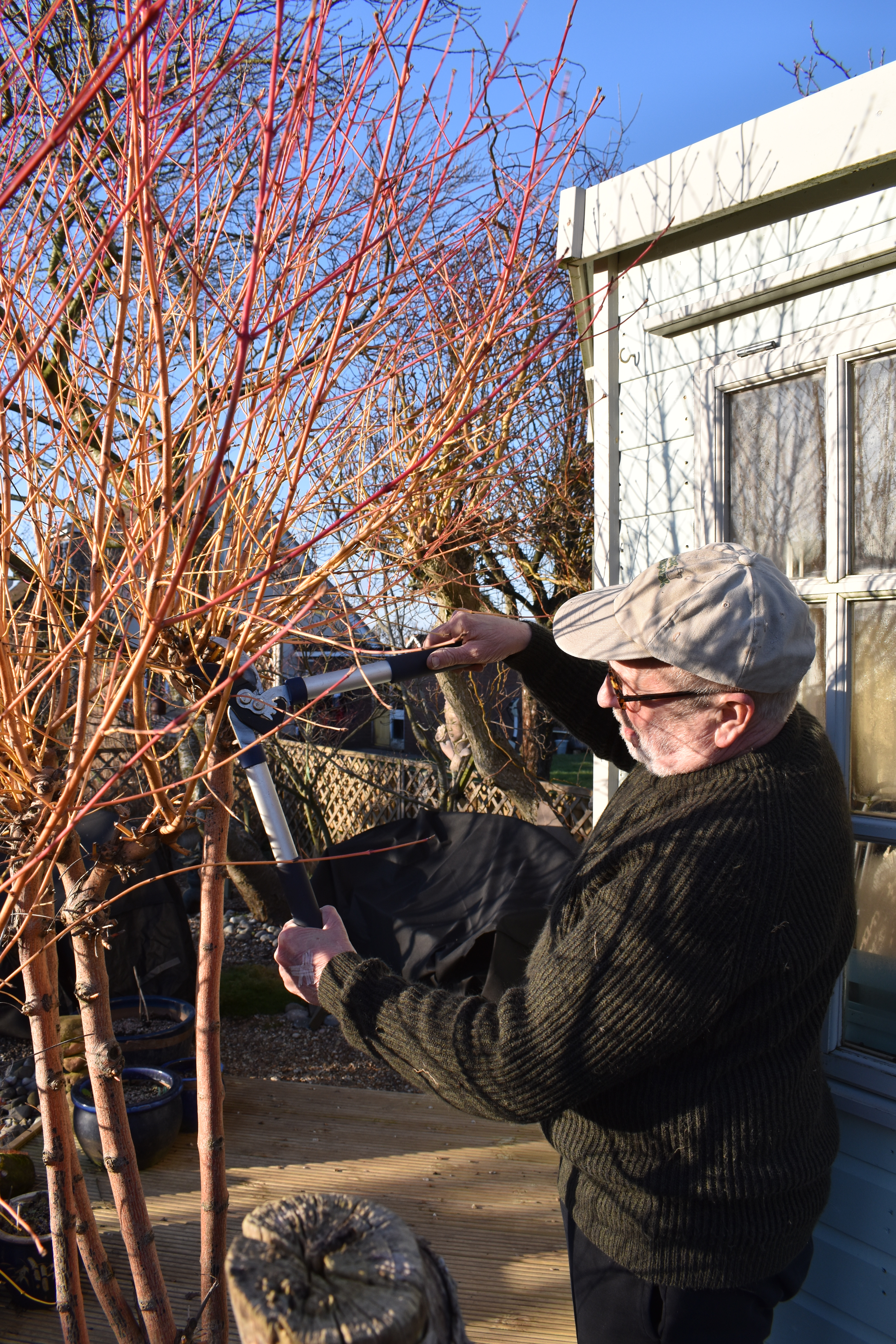
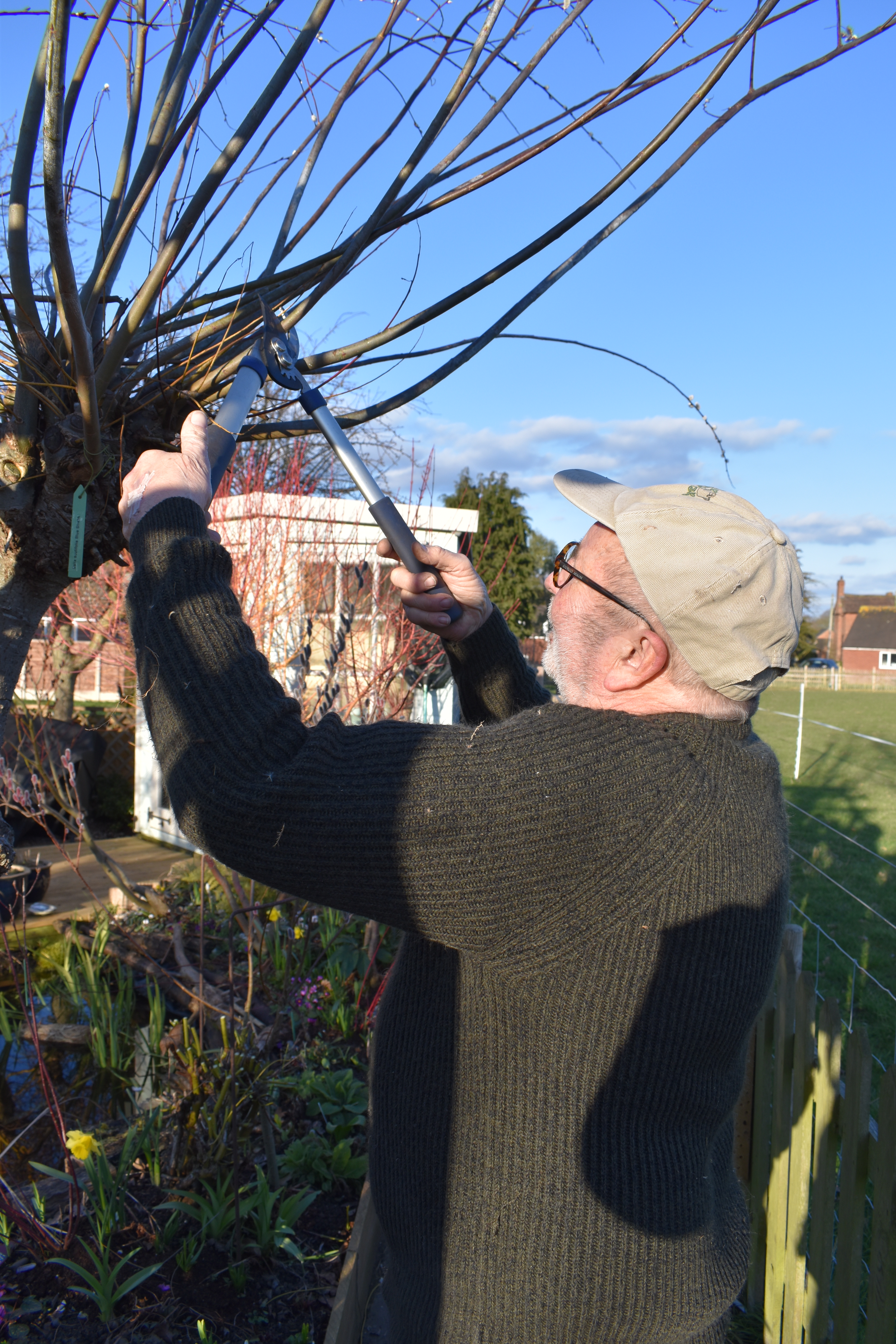
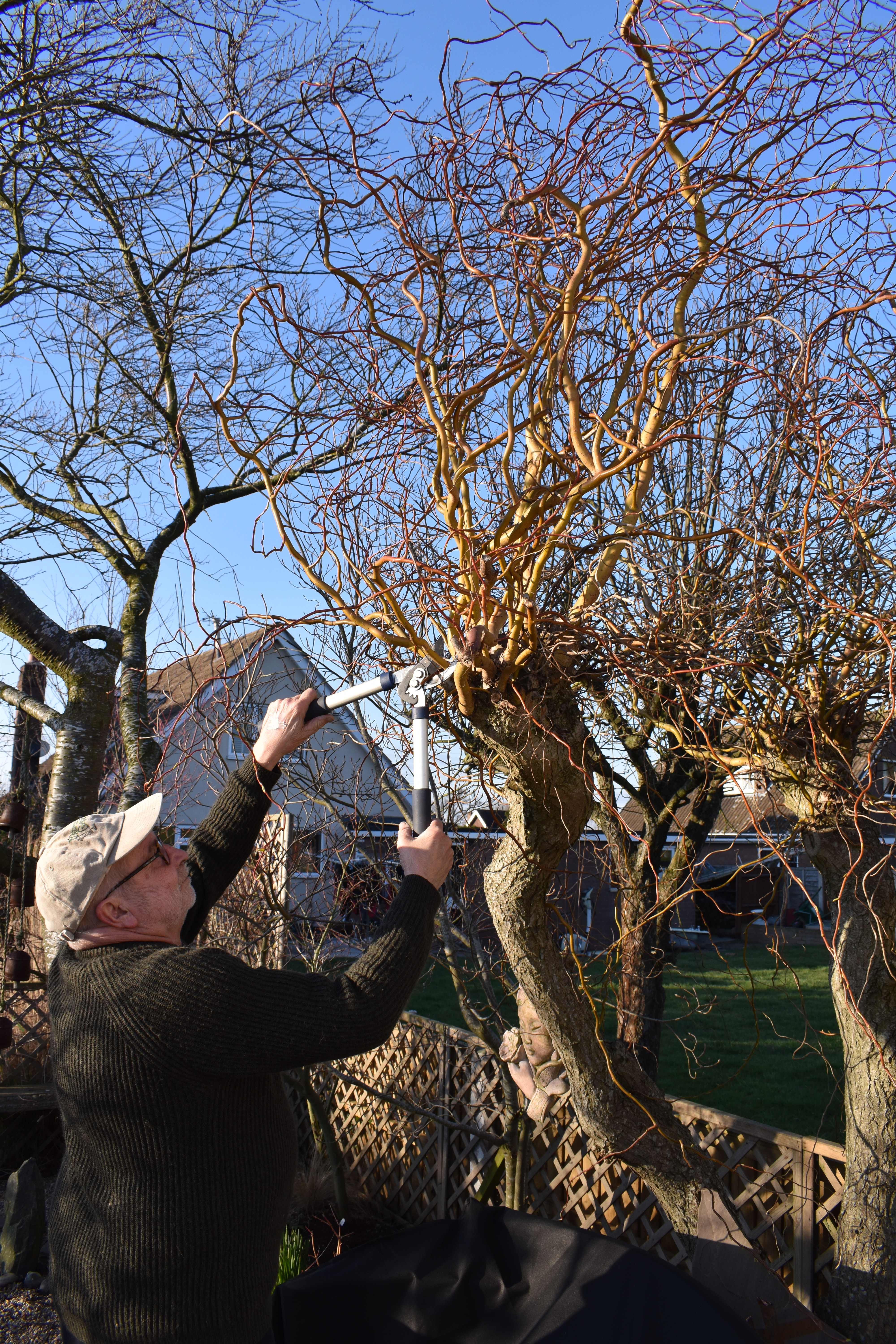
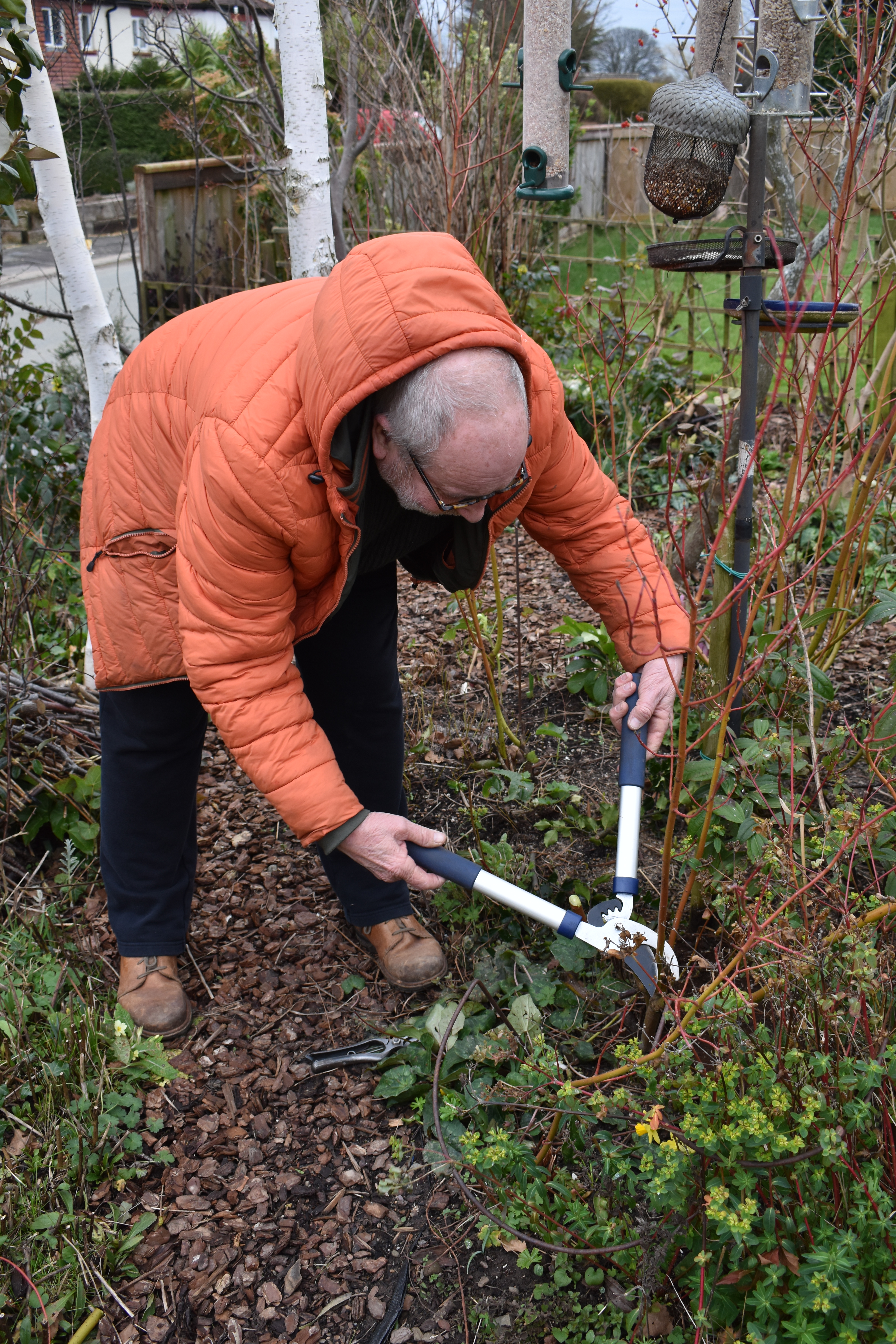
Gardening tasks continued over leaf,The first block of photos showed us working away mulching with the compost. The second block shows me pollarding my willows and a Cornus Midwinter Fire. I wrote, “a lorry arrived to deliver a load of green waste compost for us to share with our next door neighbour, Vicky. We aim to compost the front garden with a 2 inch deep mulch of this black magic gold.”, and followed by, “Then we began the long but enjoyable task of pruning willows and dogwoods.”
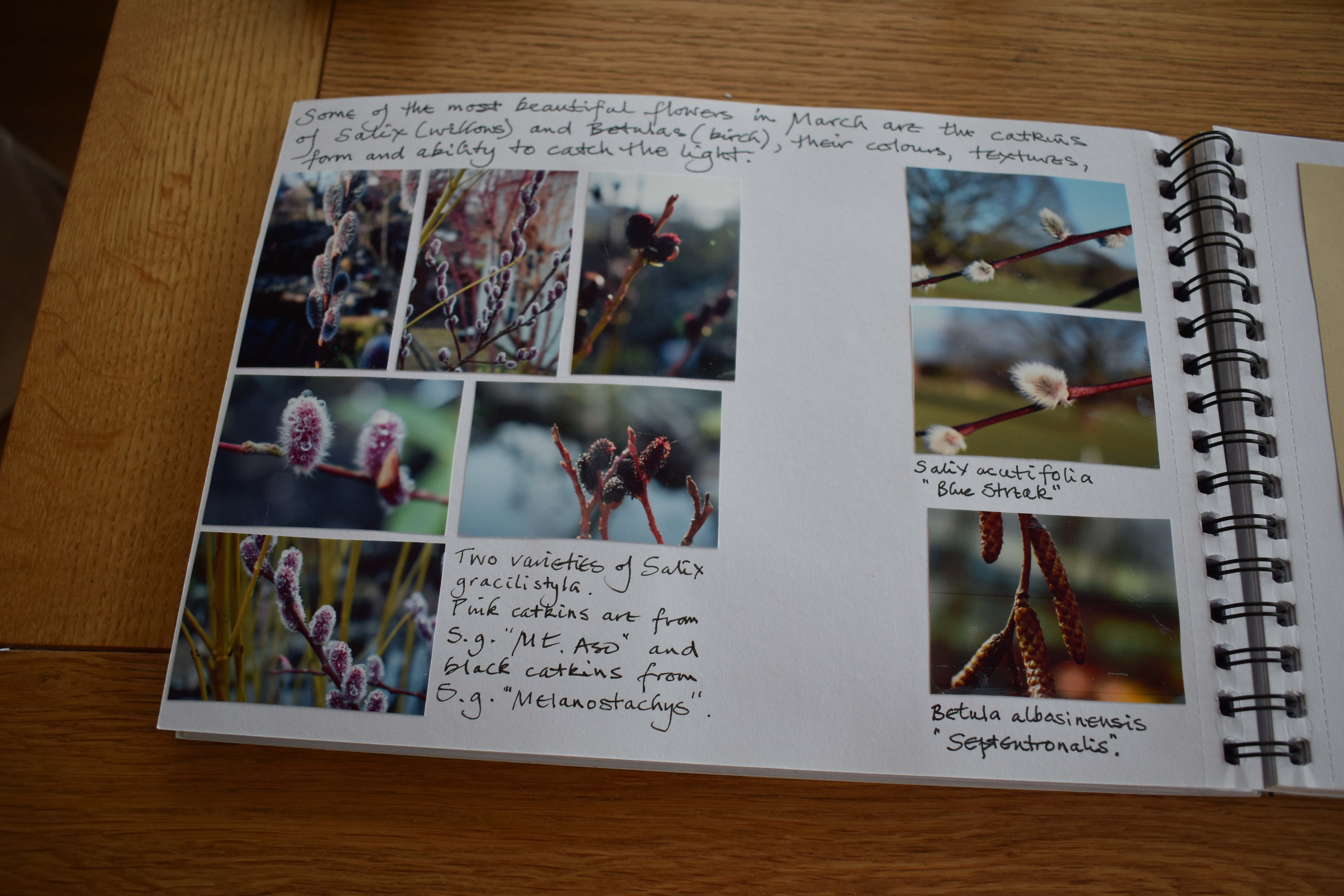
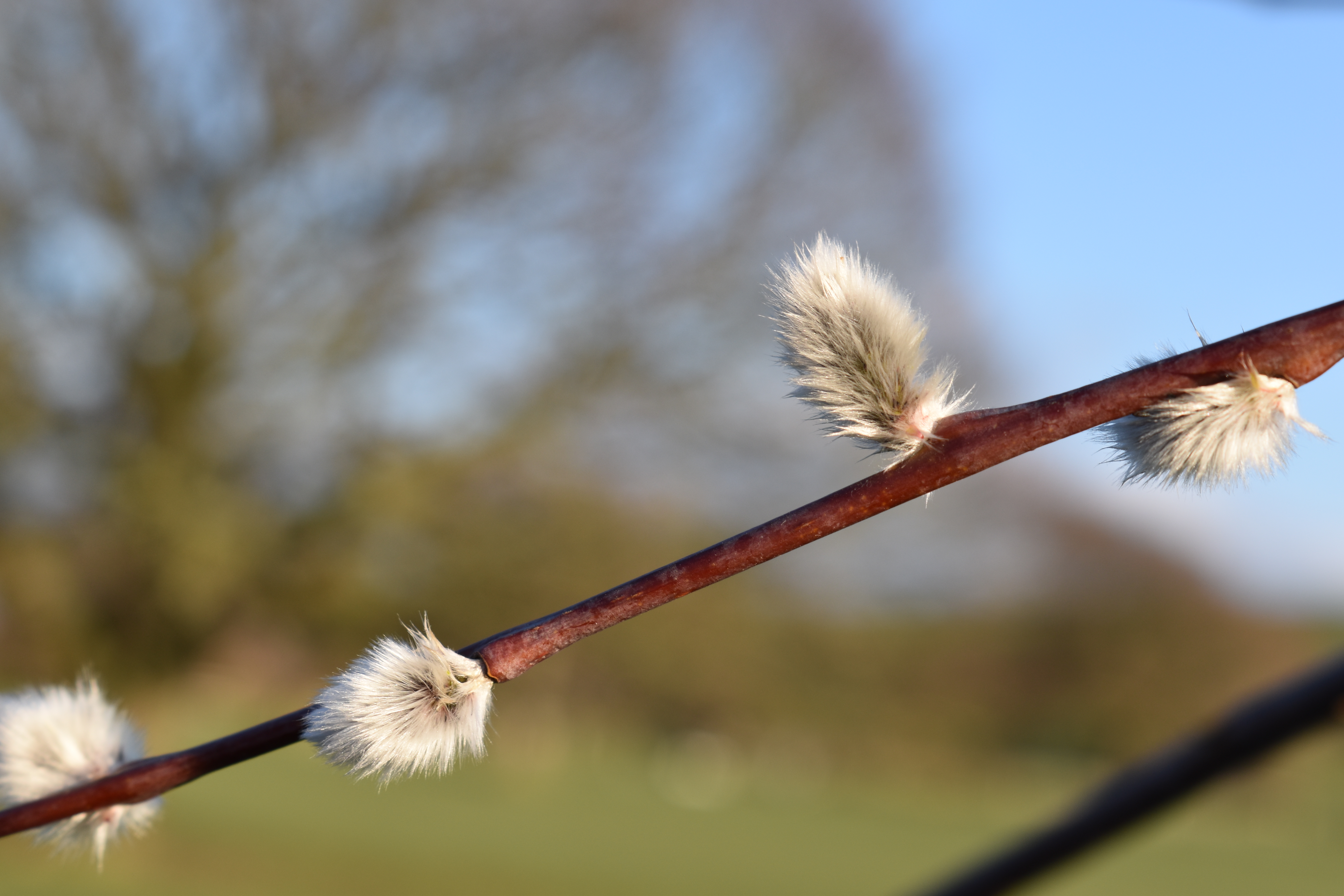
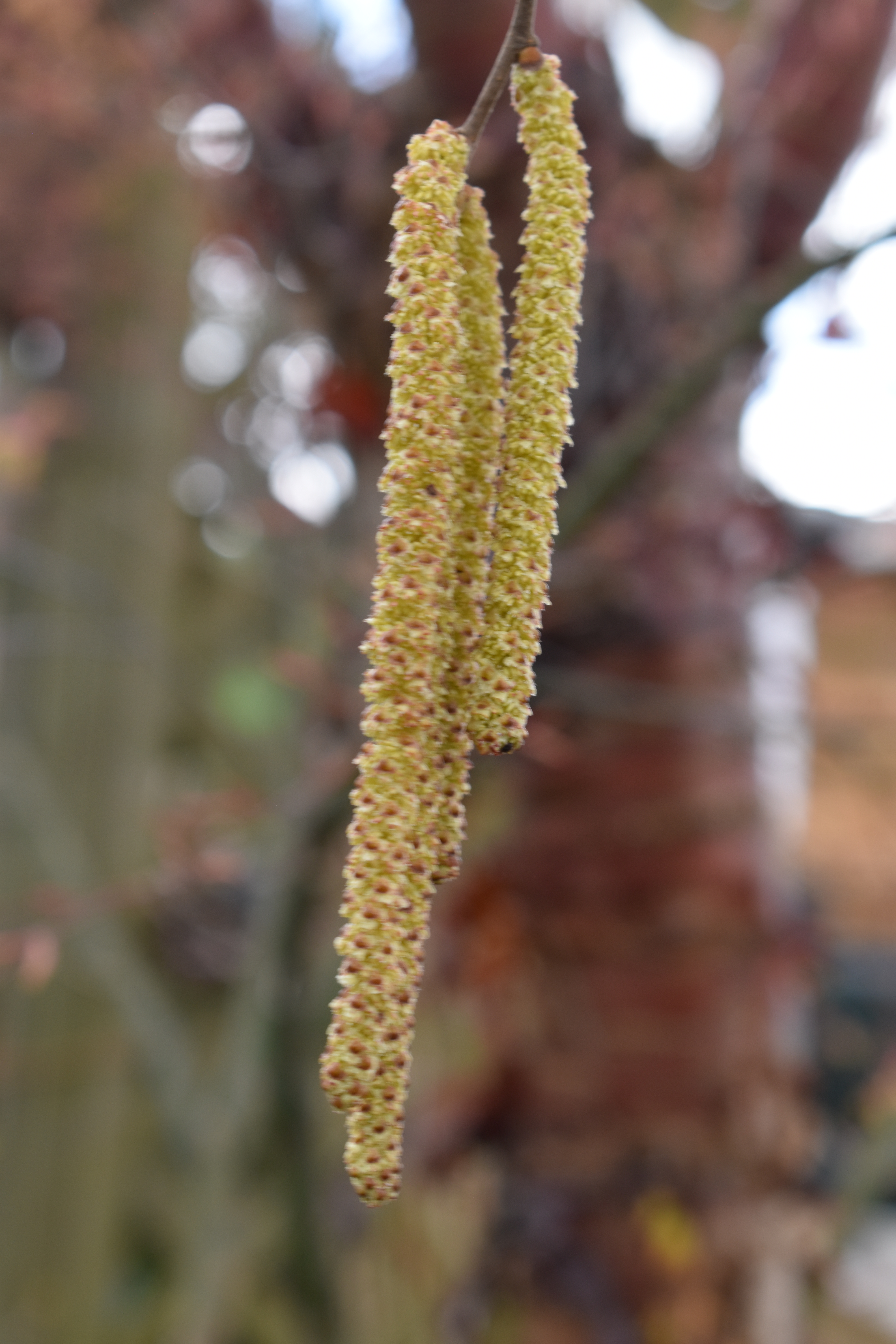
Onto the next page and I concentrate on our Salix (willows) and their catkins. I noted, “Some of the most beautiful flowers in March are the catkins of Salix (willows) and Betulas (Birches), their colours, textures, form and their ability to catch the light.”
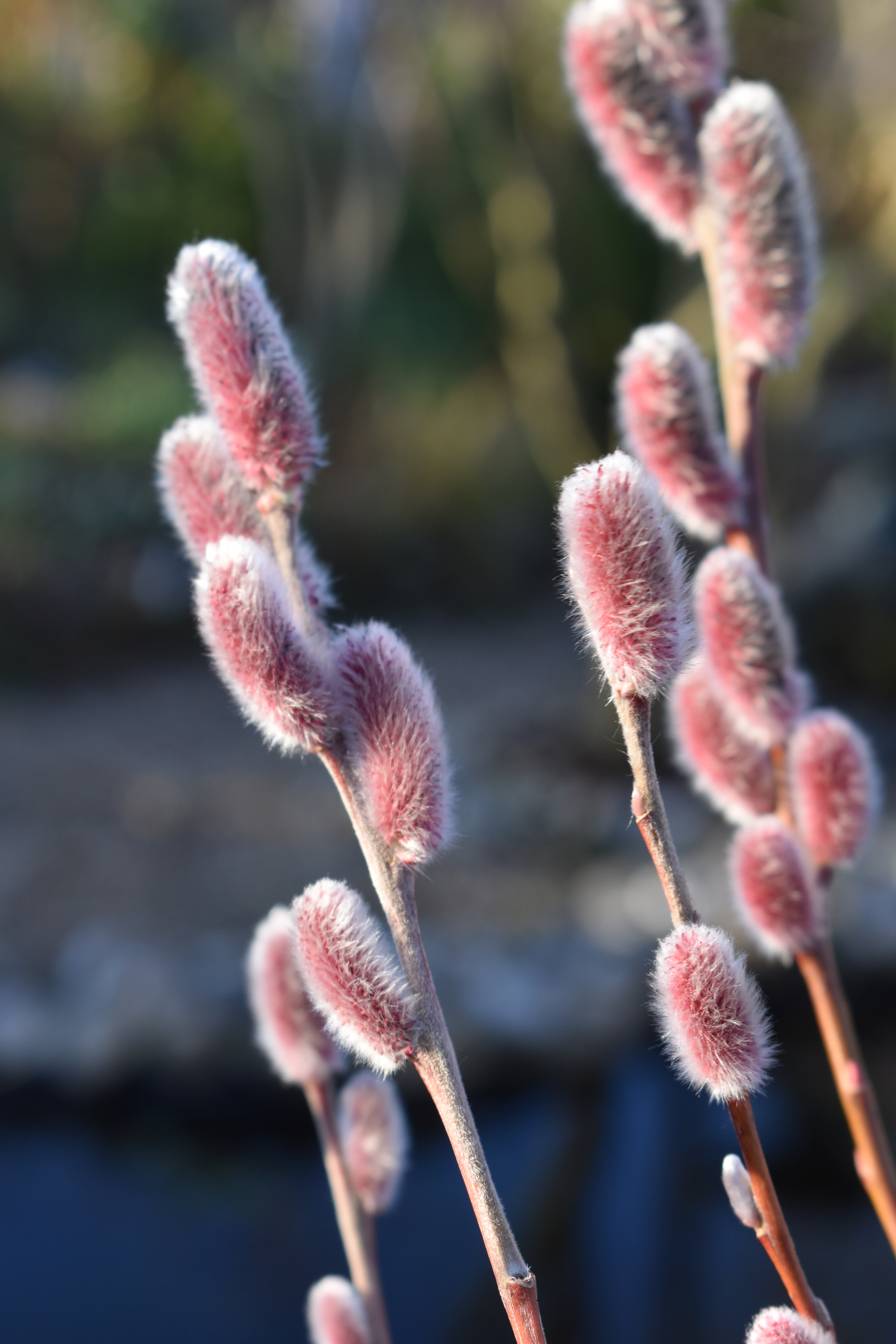
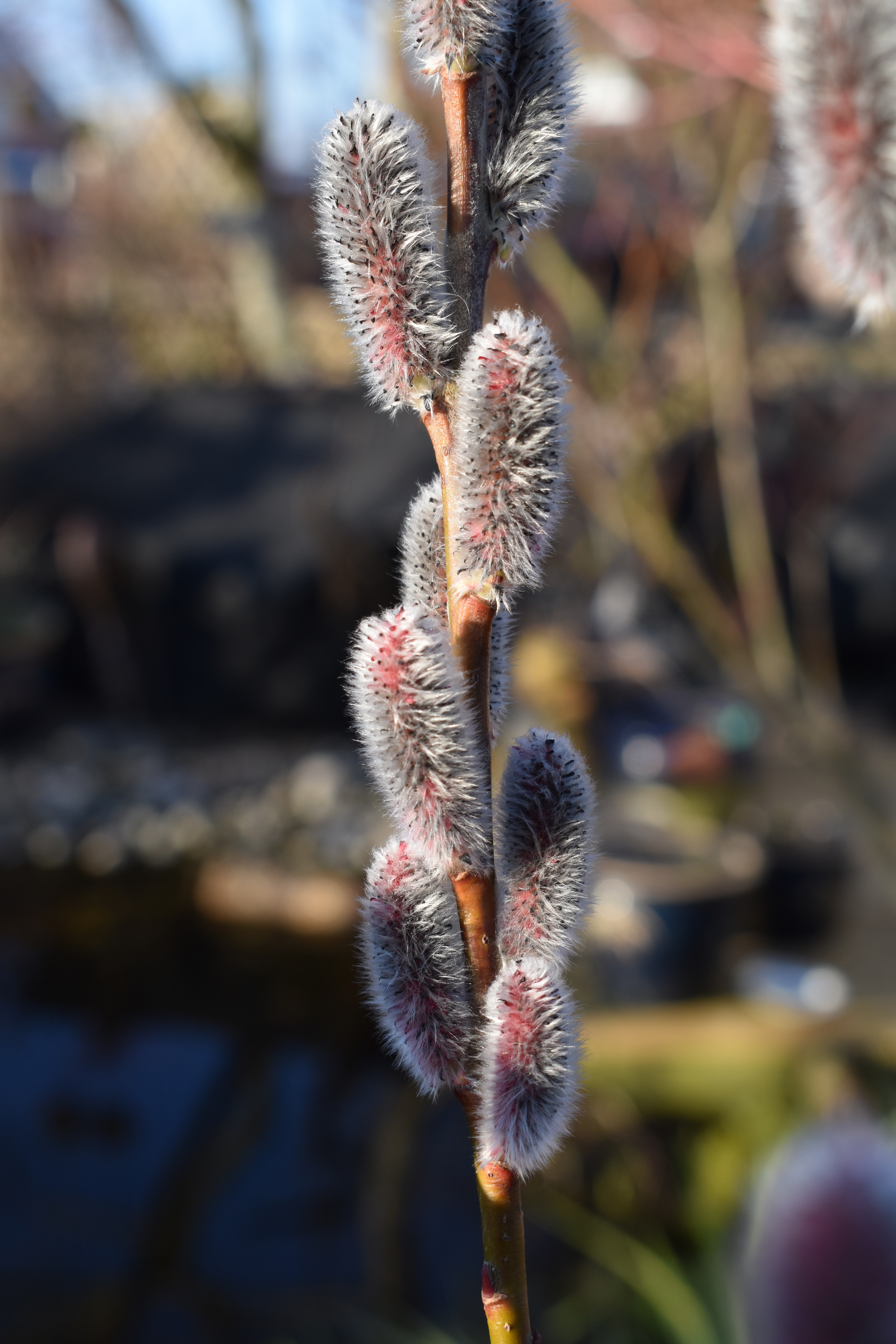
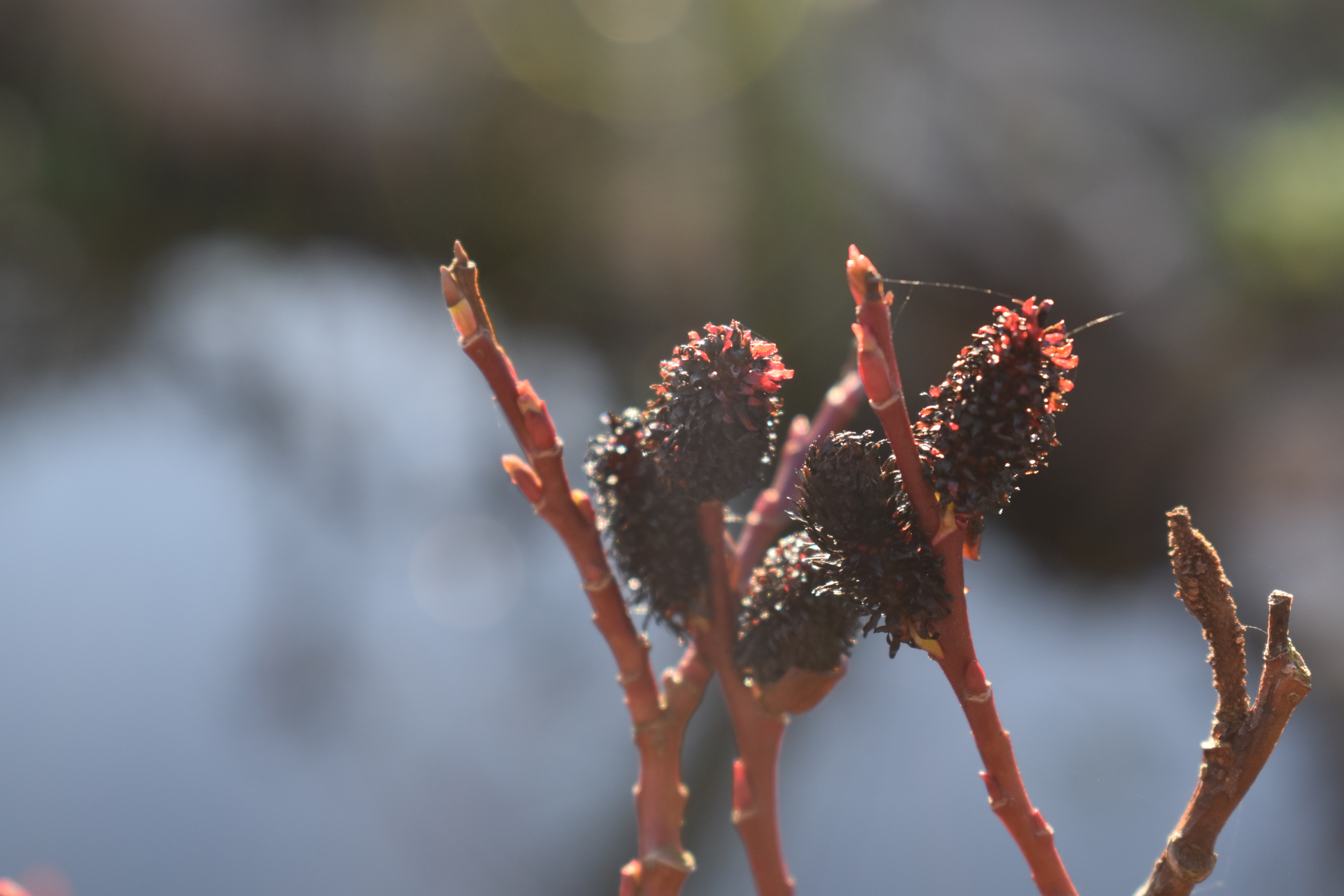
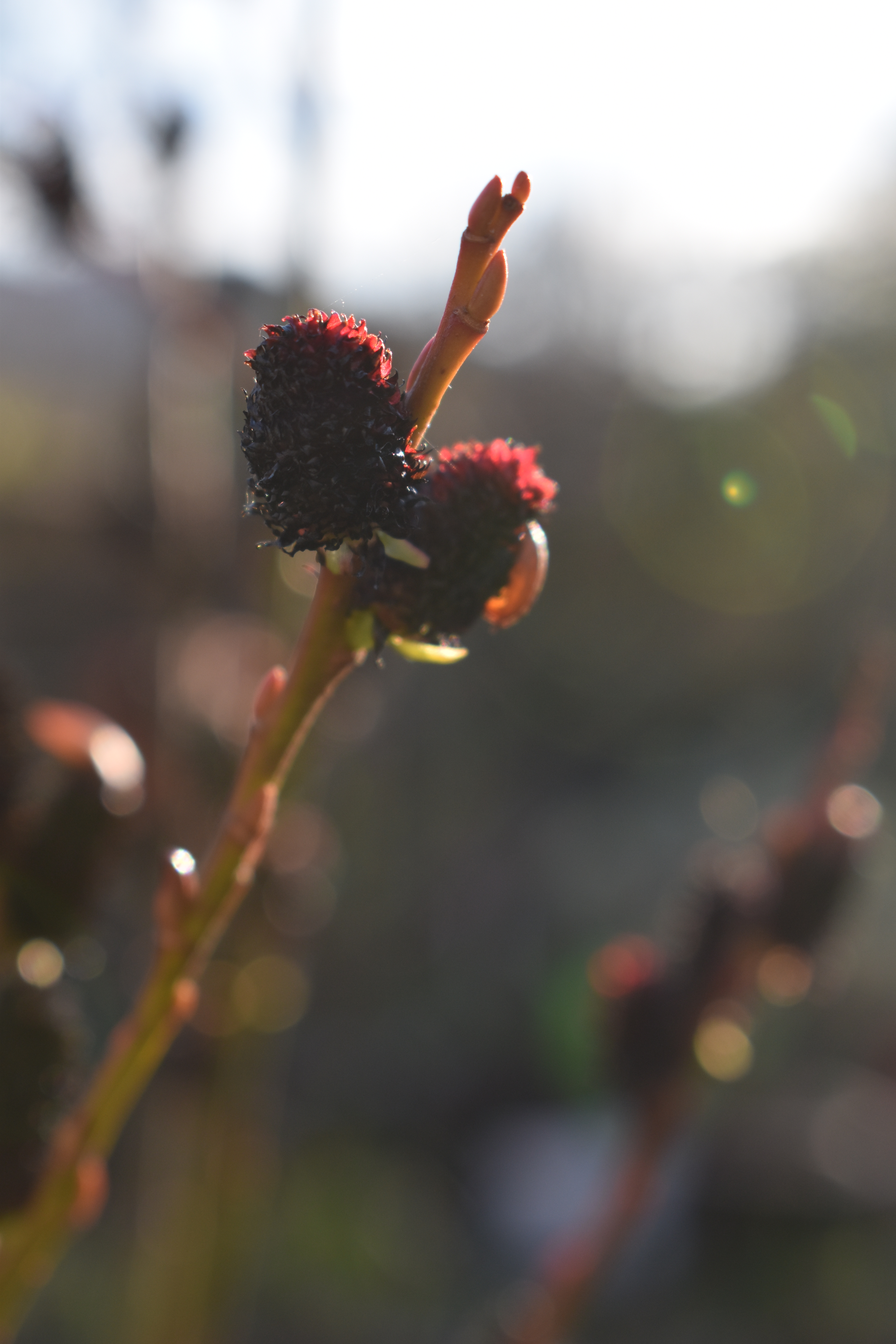
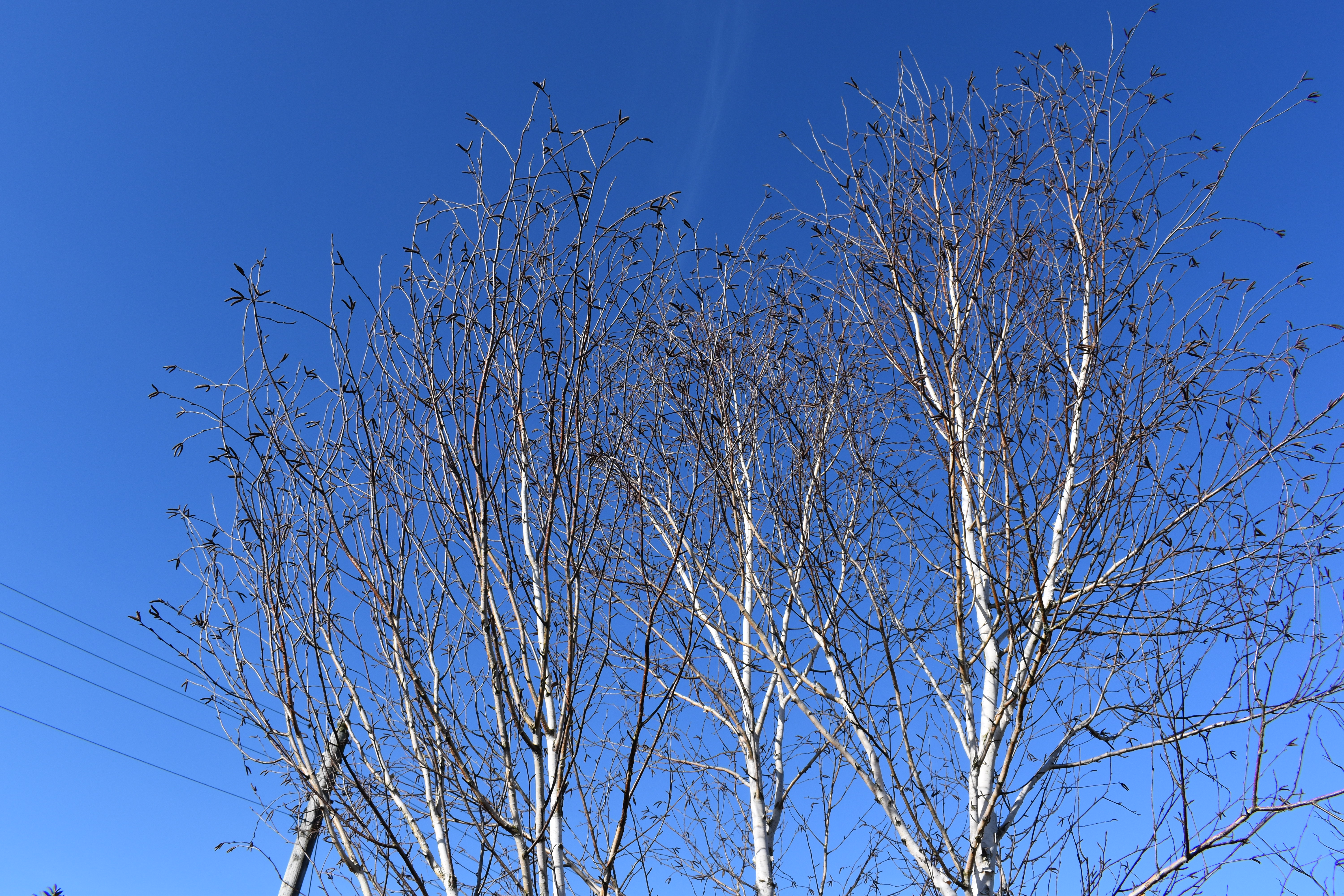
The two blocks of photos show on the left the catkins of two varities of Salix gracilistyla. The pink catkins are of Salix gracilistyla ‘Mount Aso’ and the black ones from Salix gracilistyla ‘Melanostachys’ “ The second batch of photos shows the catkins of our pollarded willow, Salix acutifolia ‘Blue Streak’ and one of our many Birches, Betula albosinensis ‘Septentronalis’.
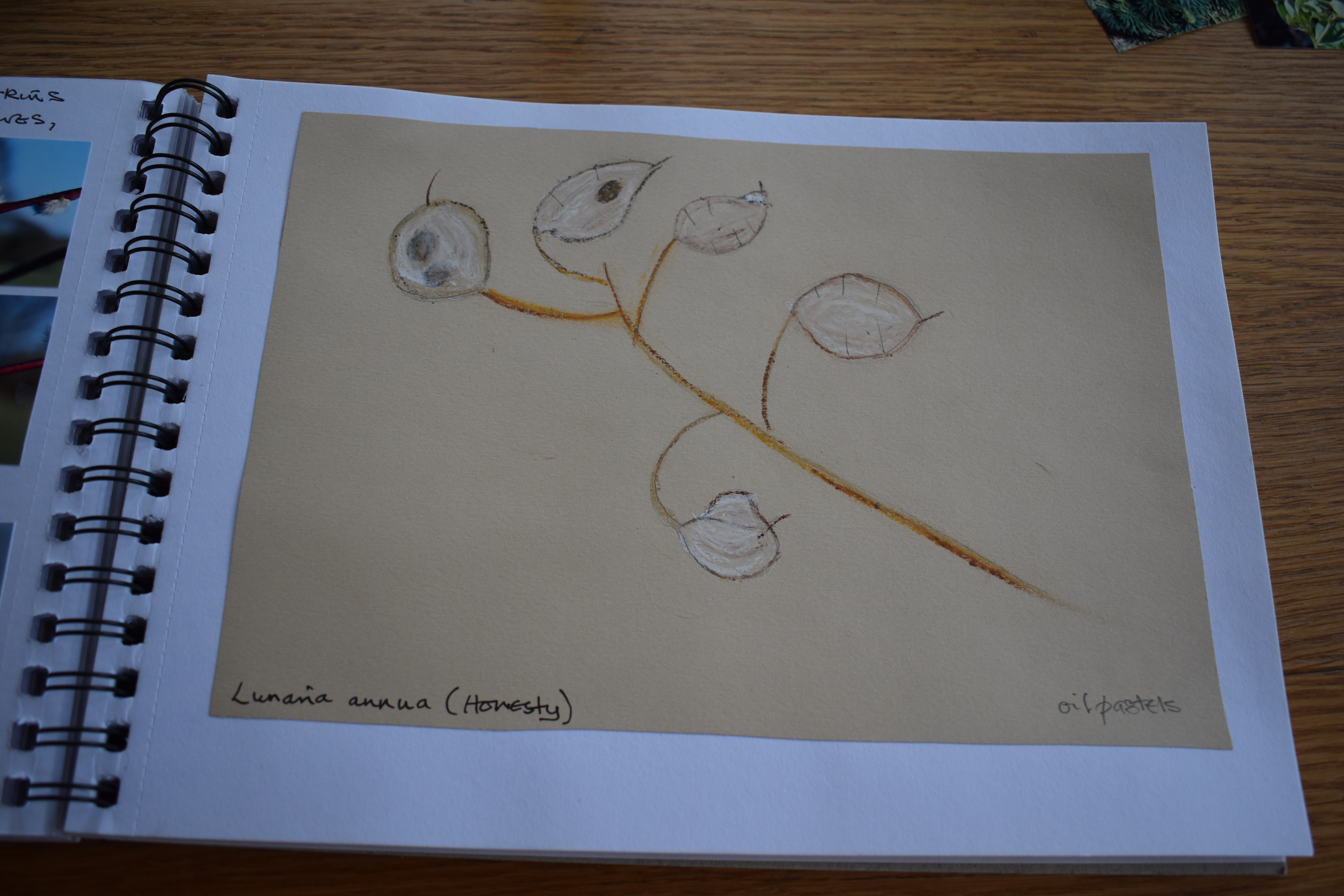
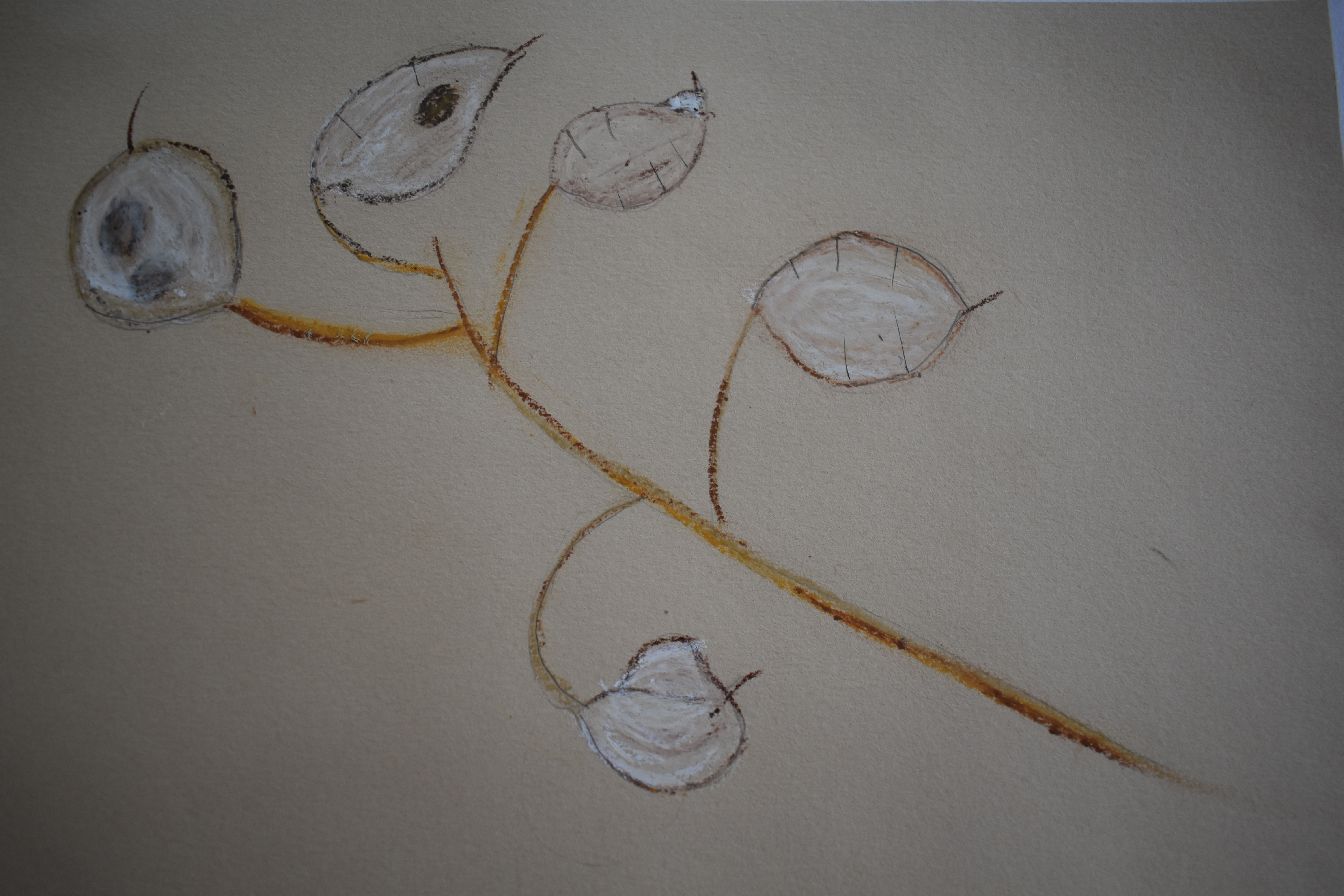
On the opposite page is a drawing of one of the most unusual and beautiful seed heads in the garden, Lunaria annua (Honesty) for which I turned to oil pastels.
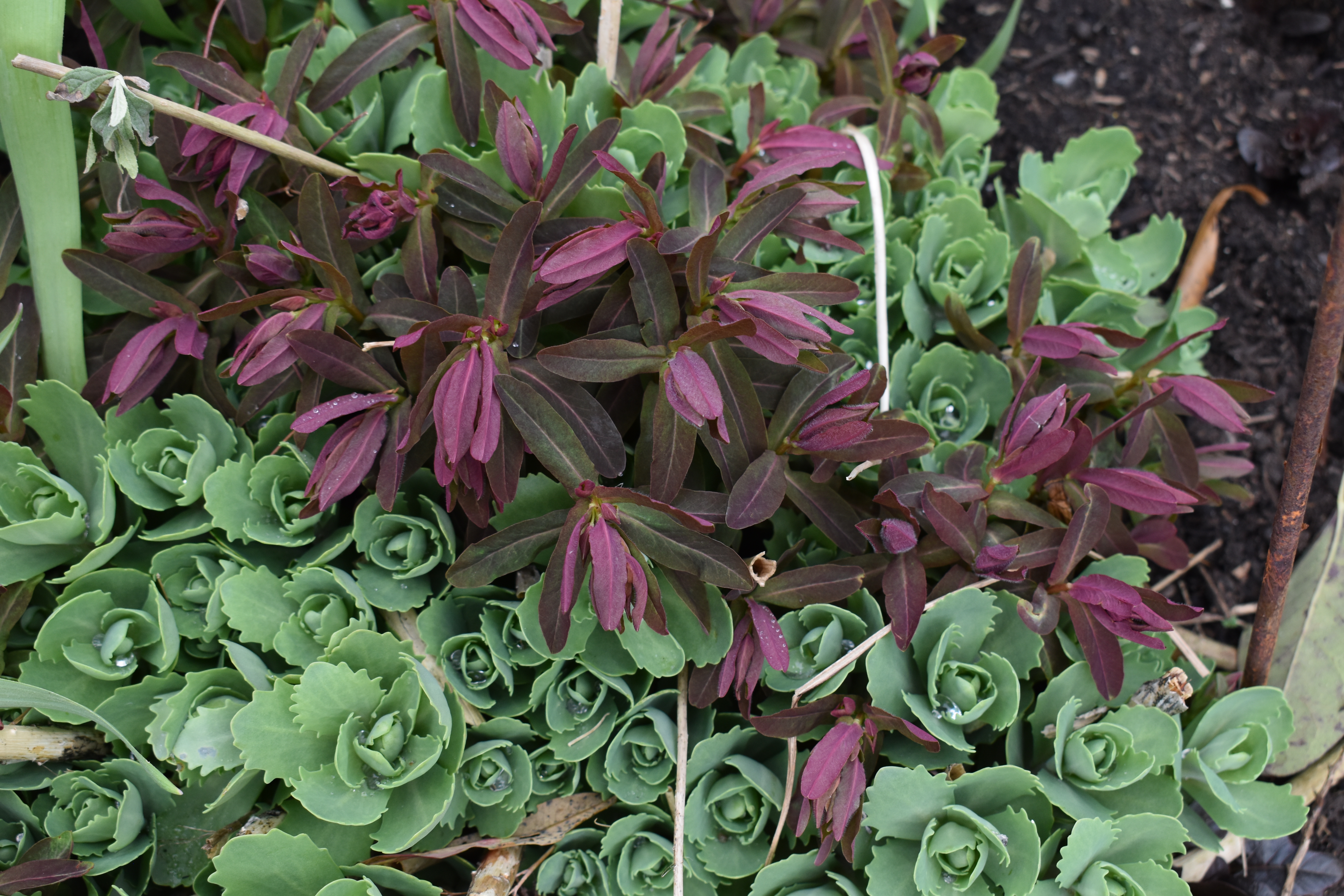
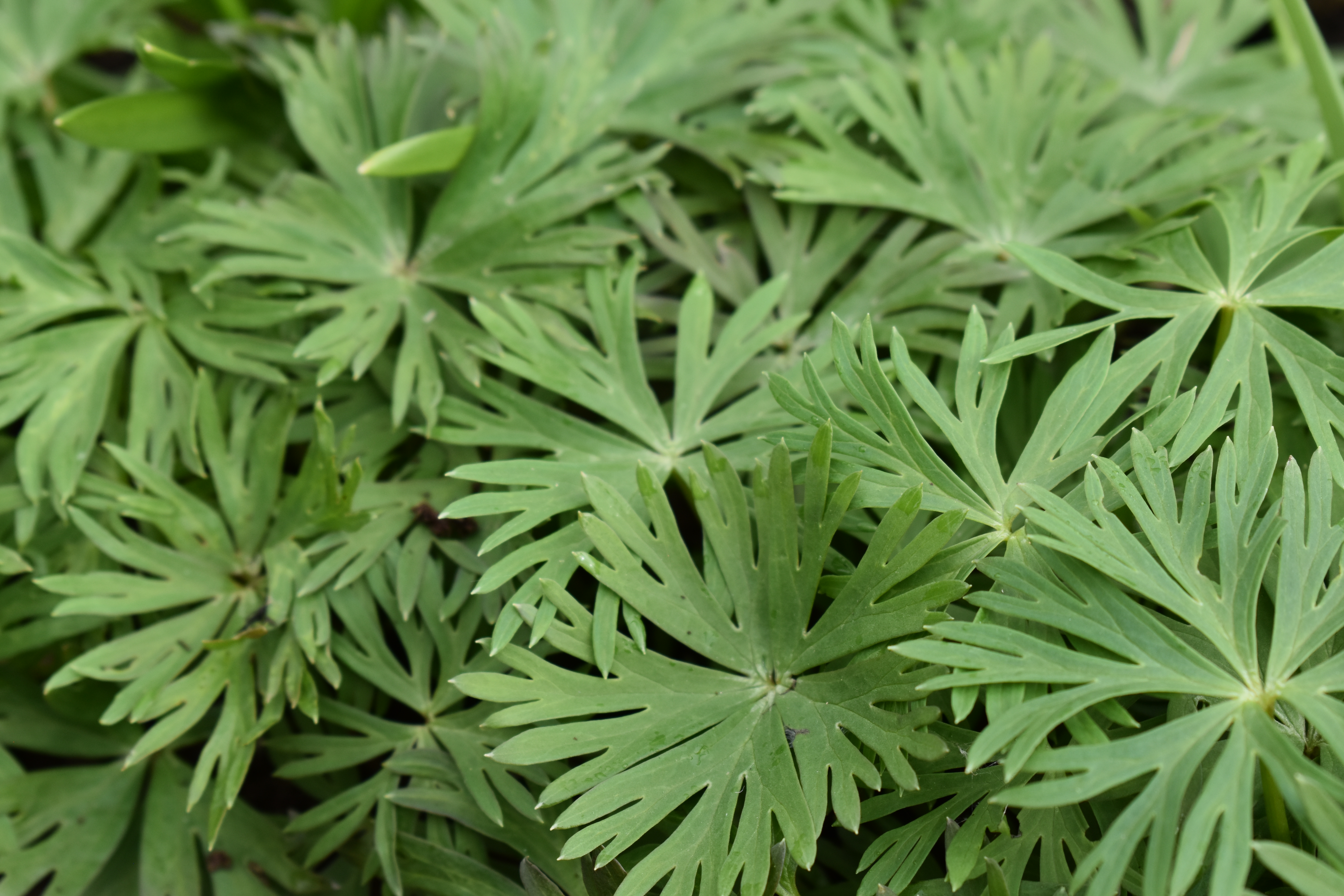
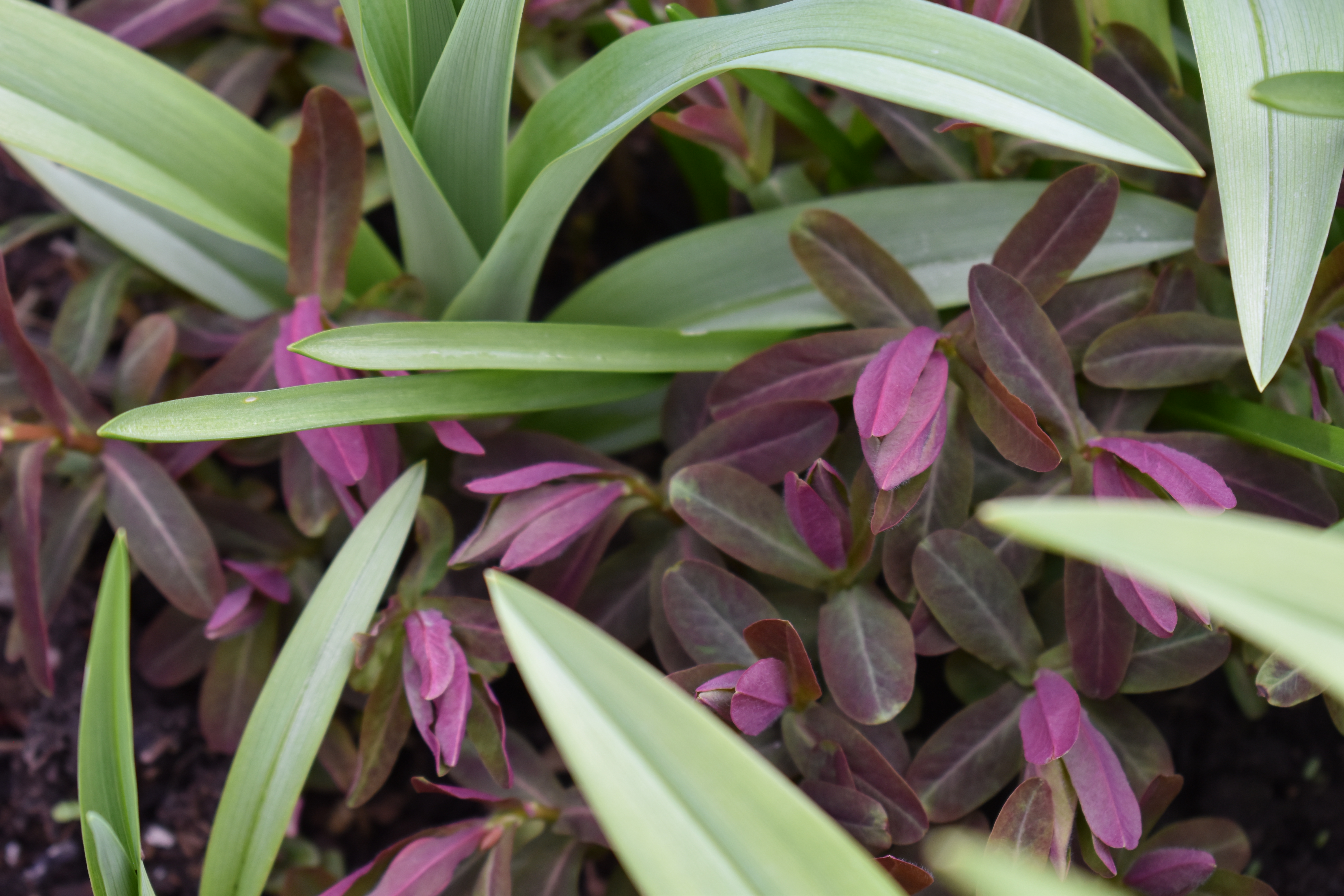
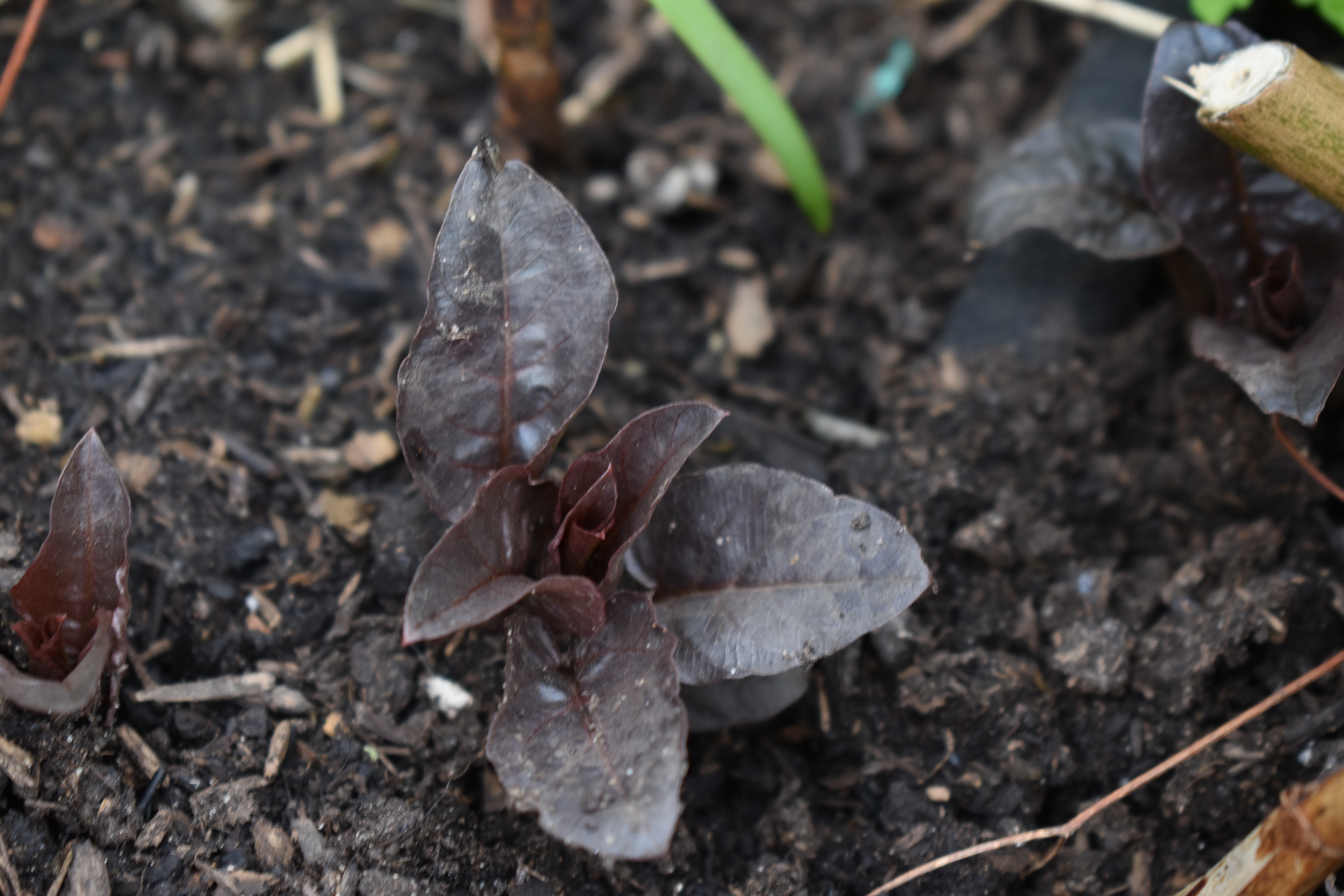
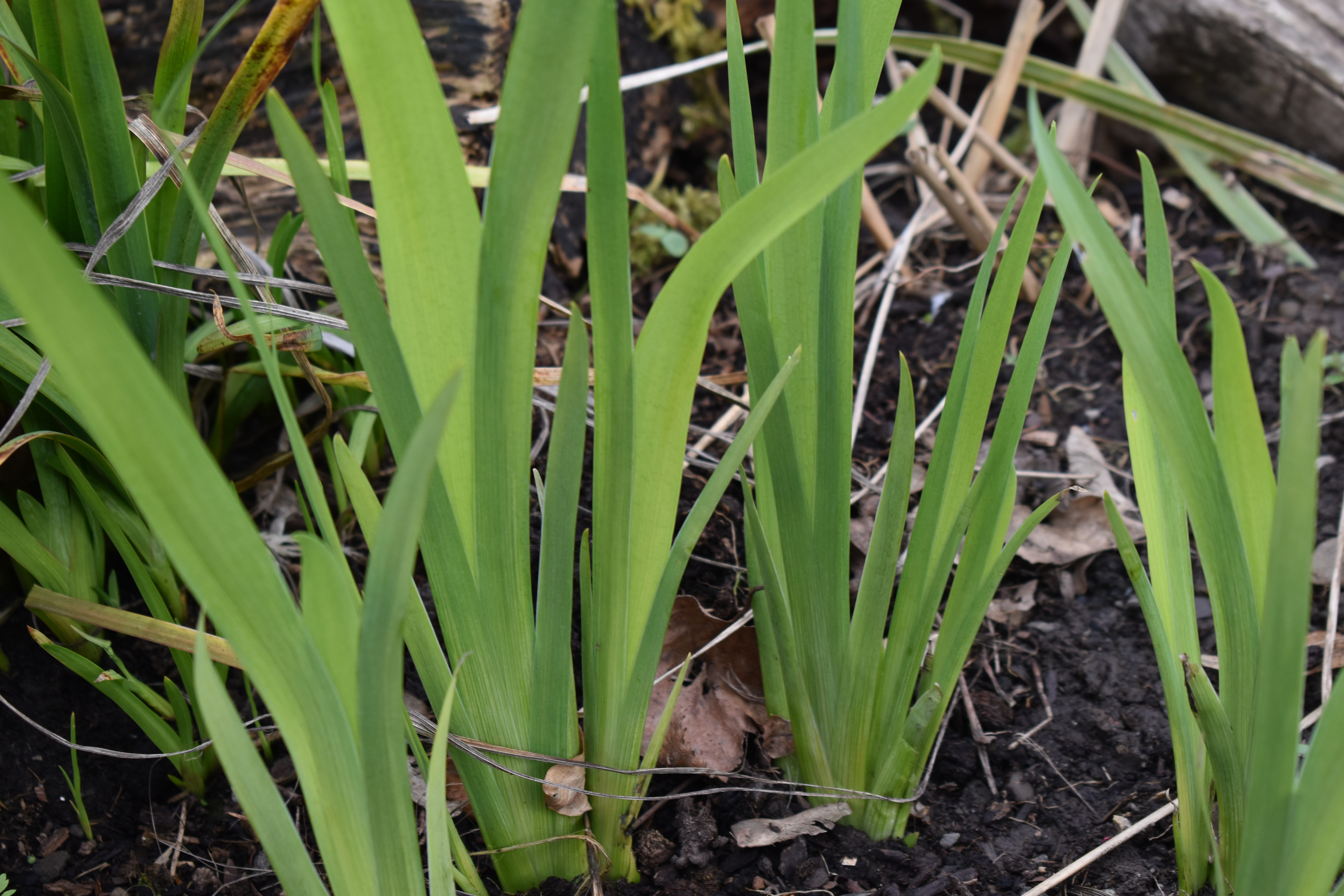
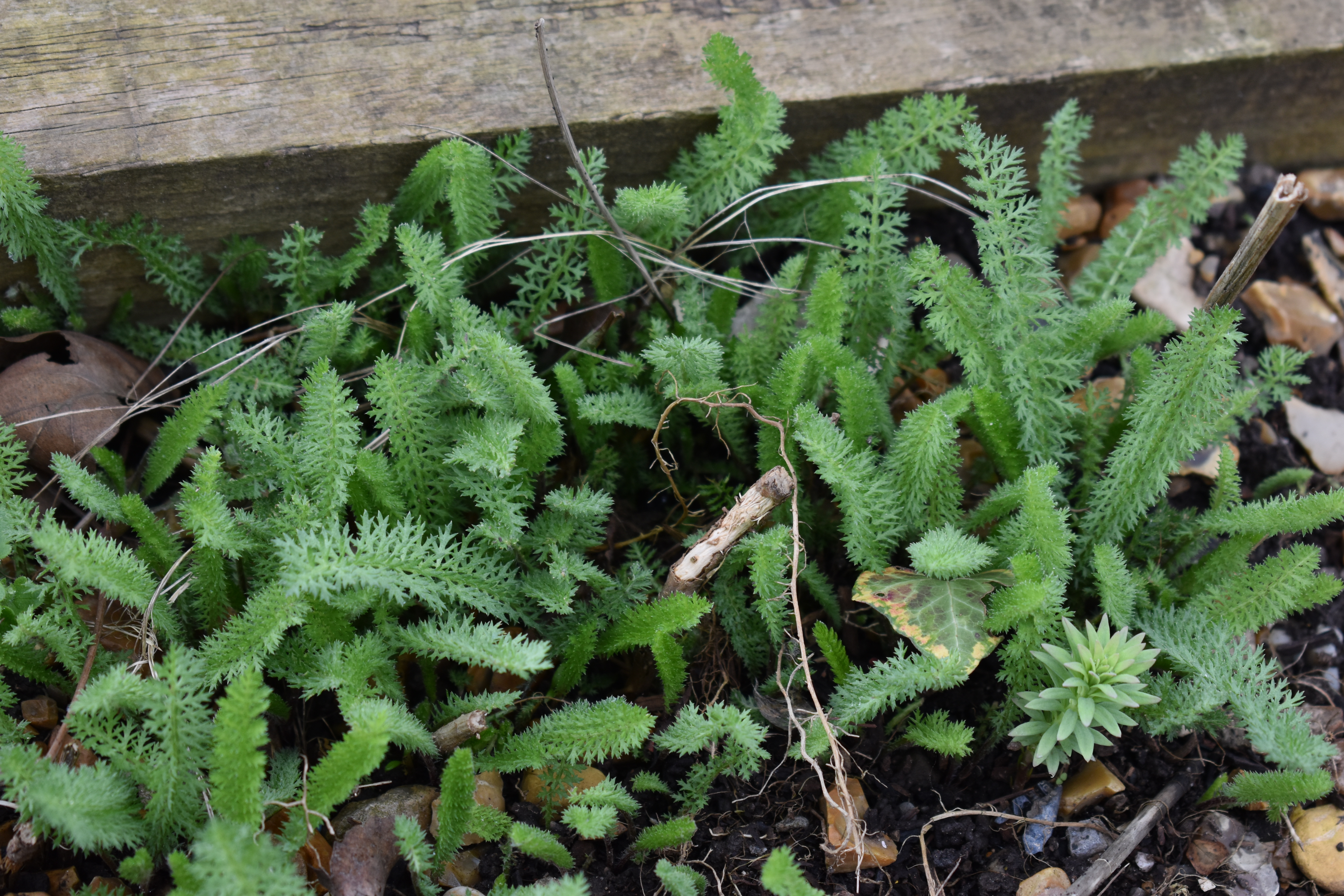
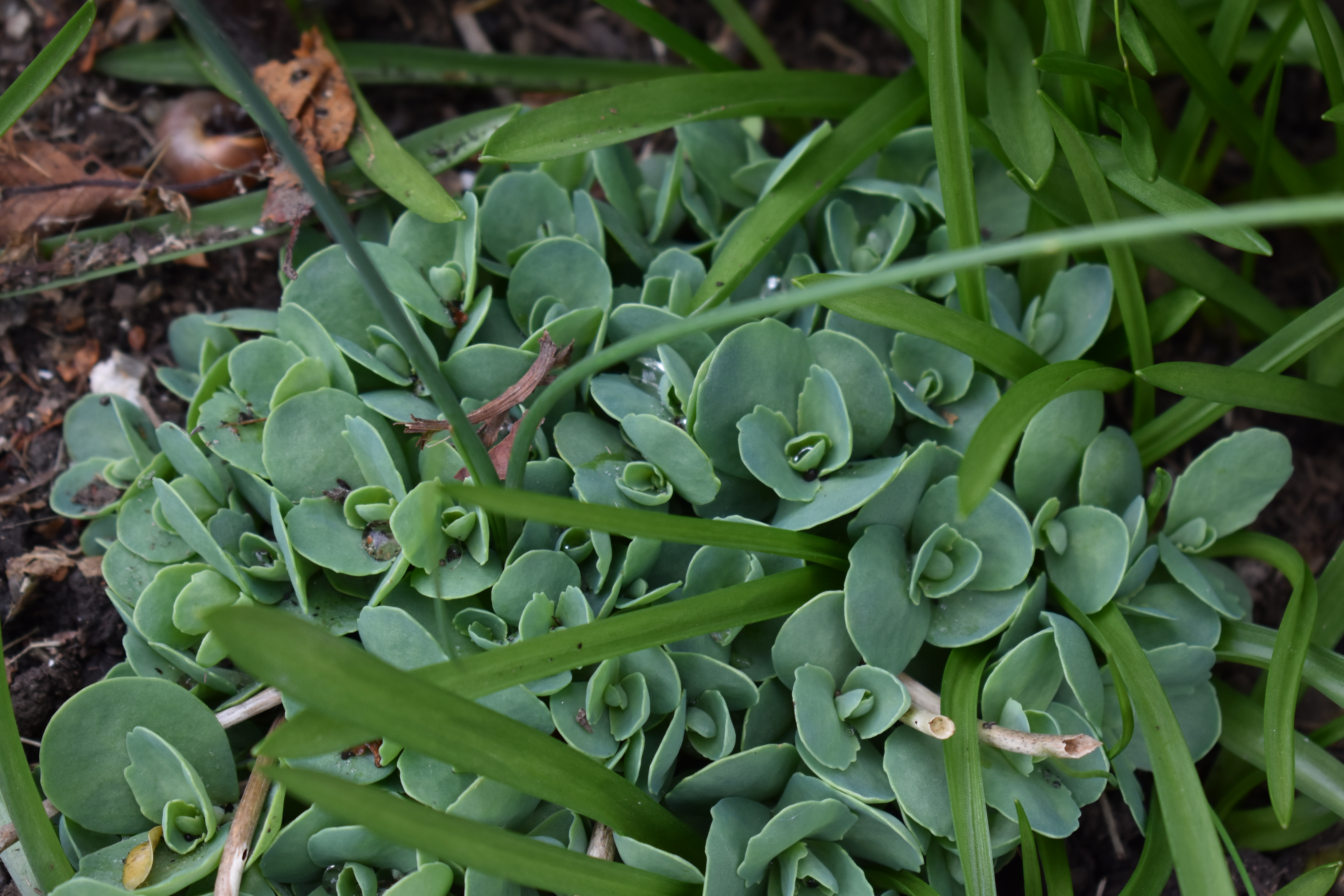
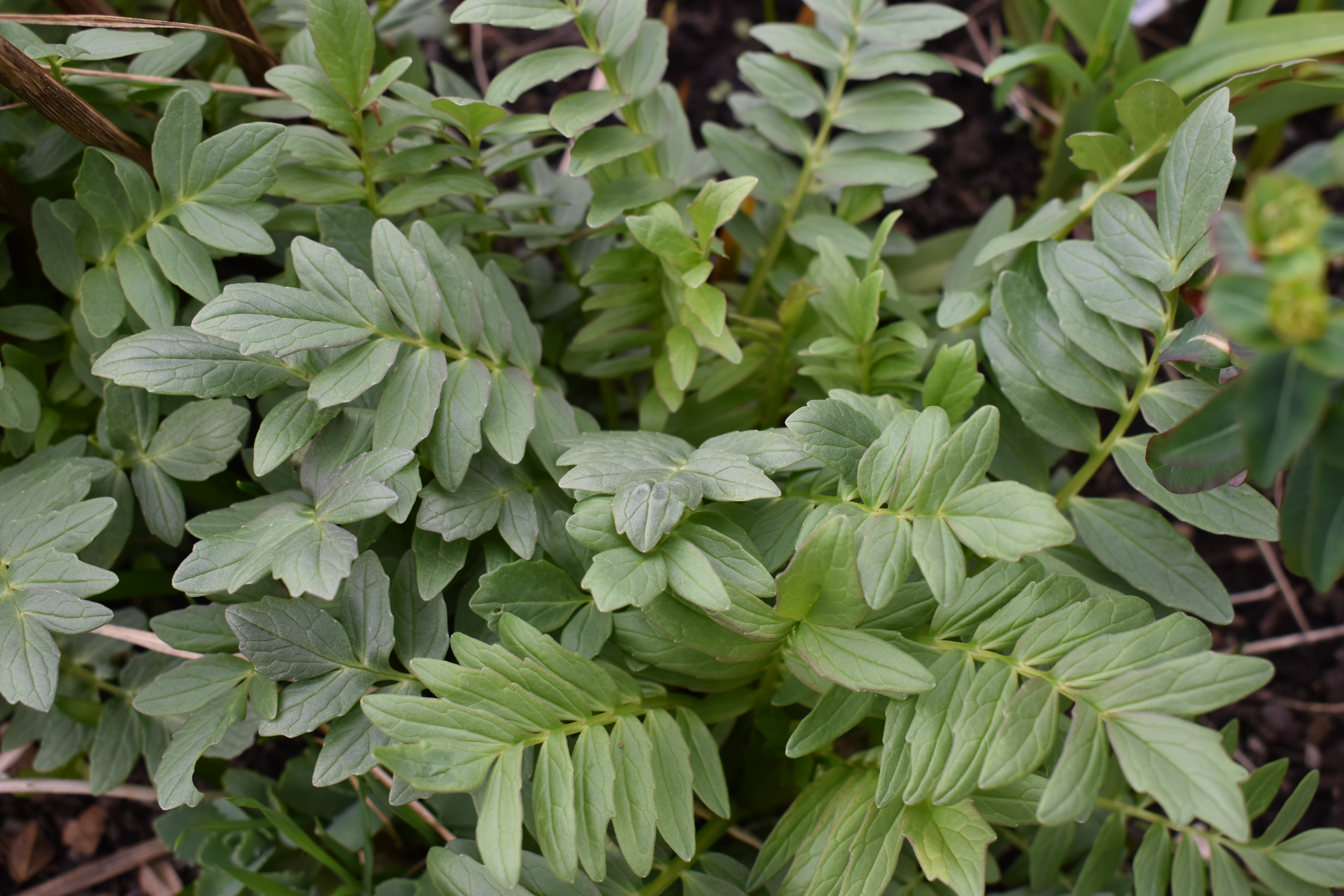
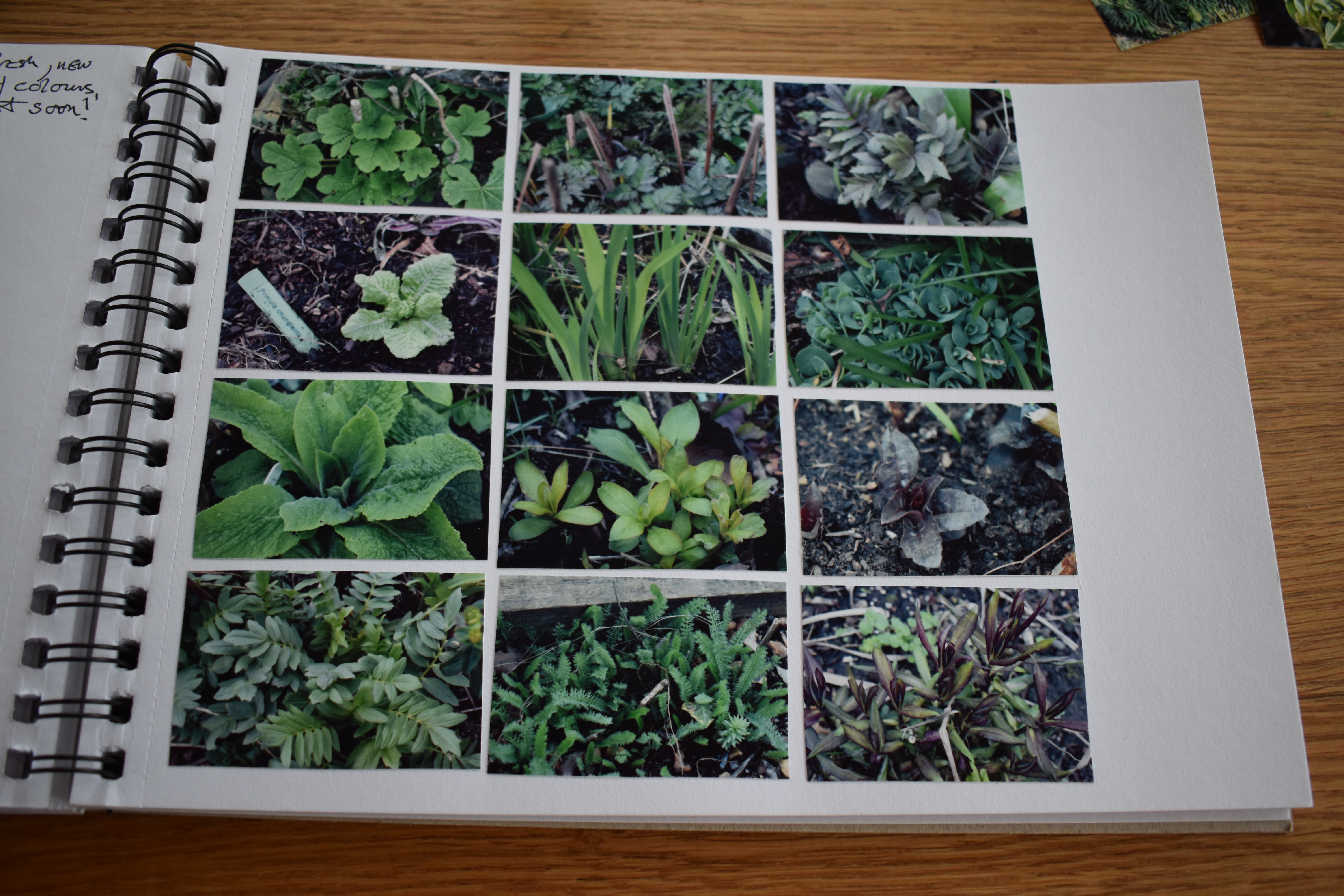
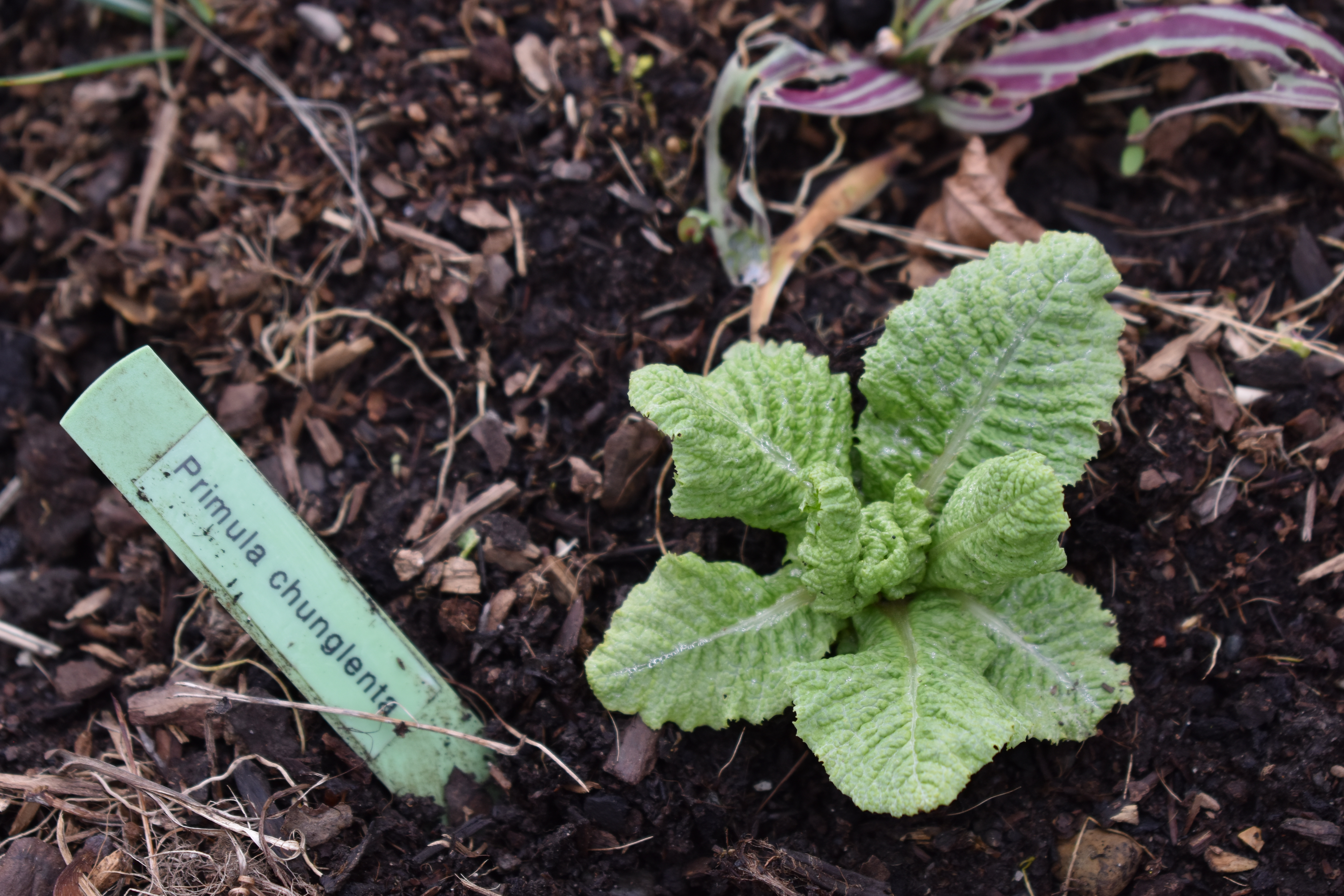
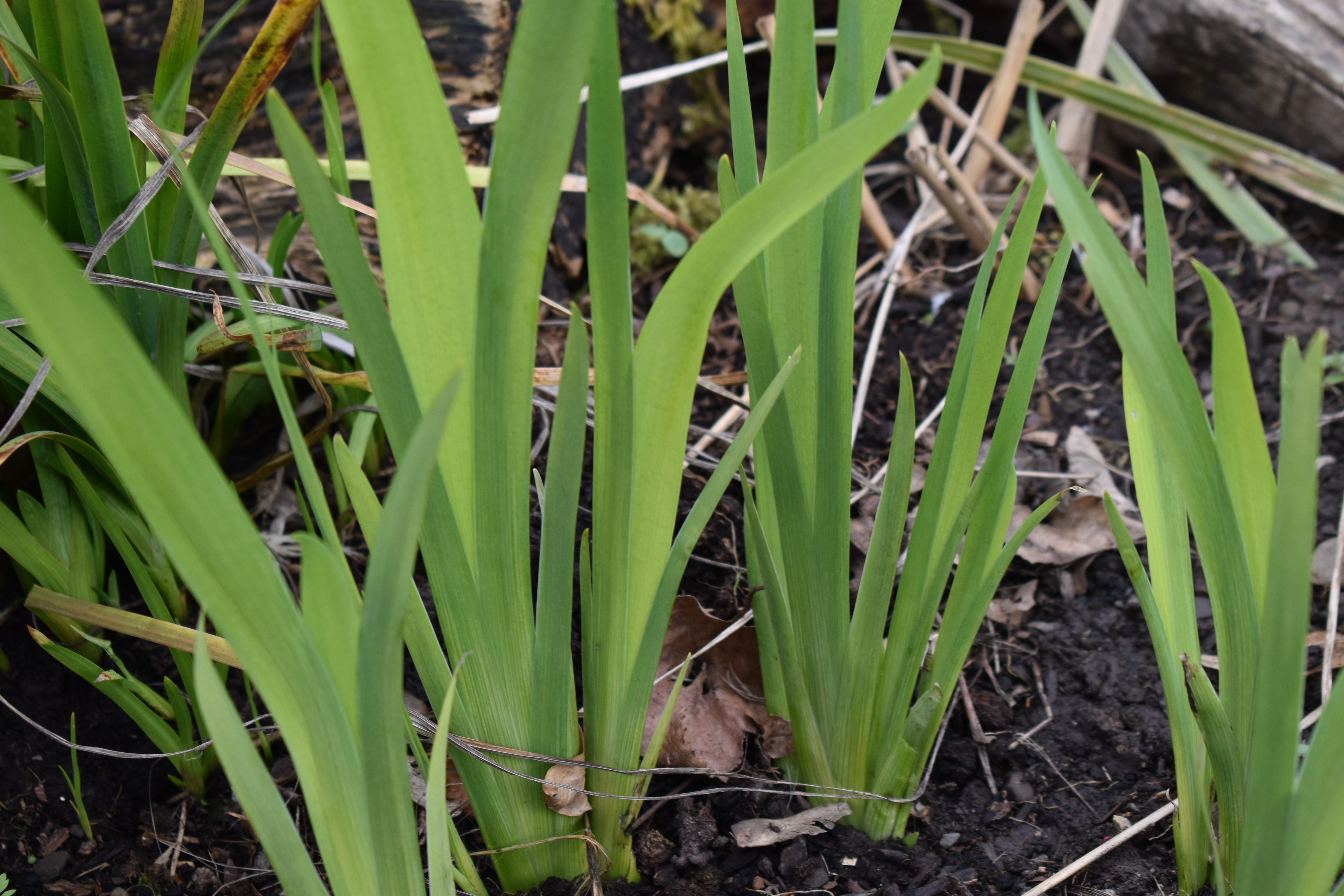
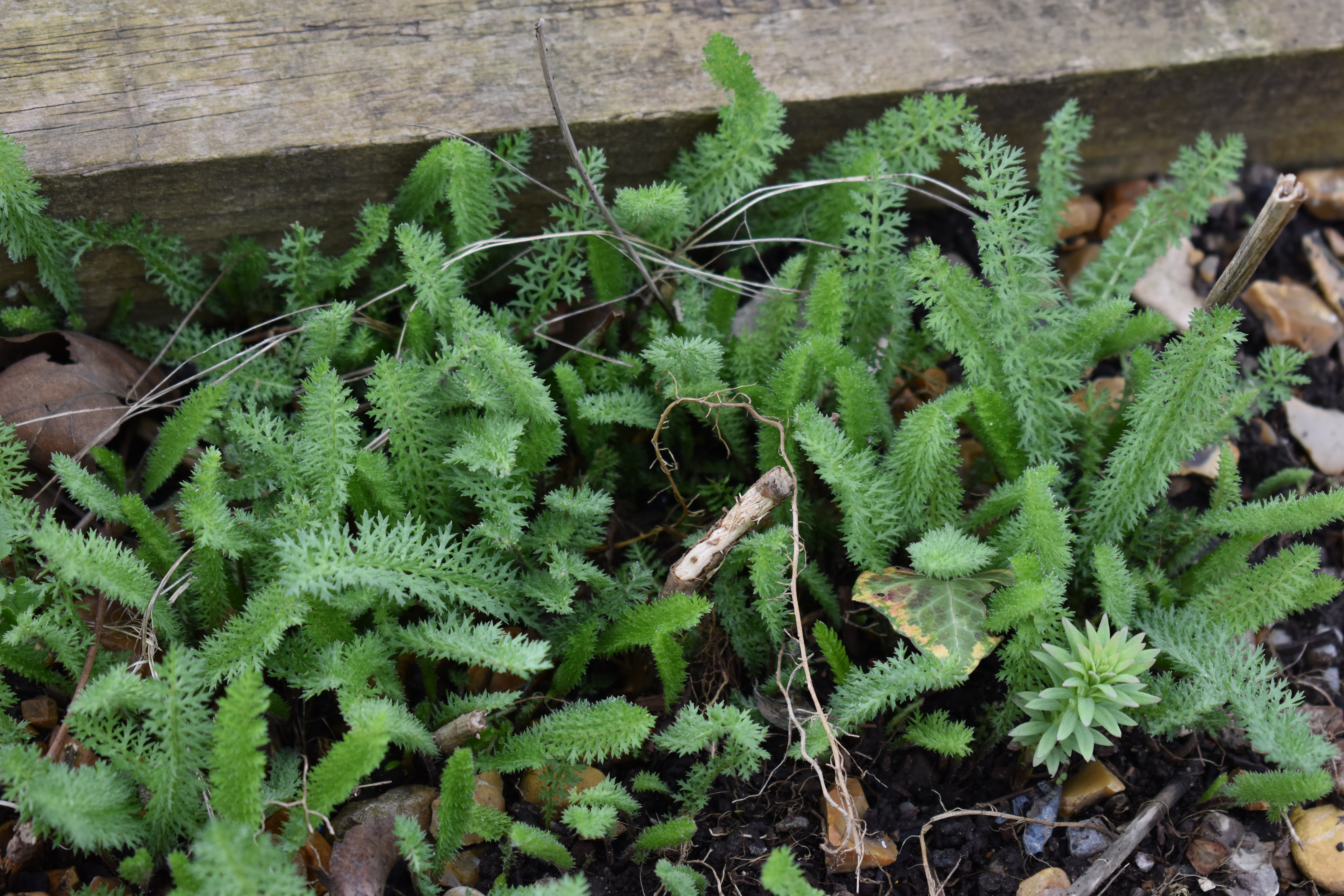
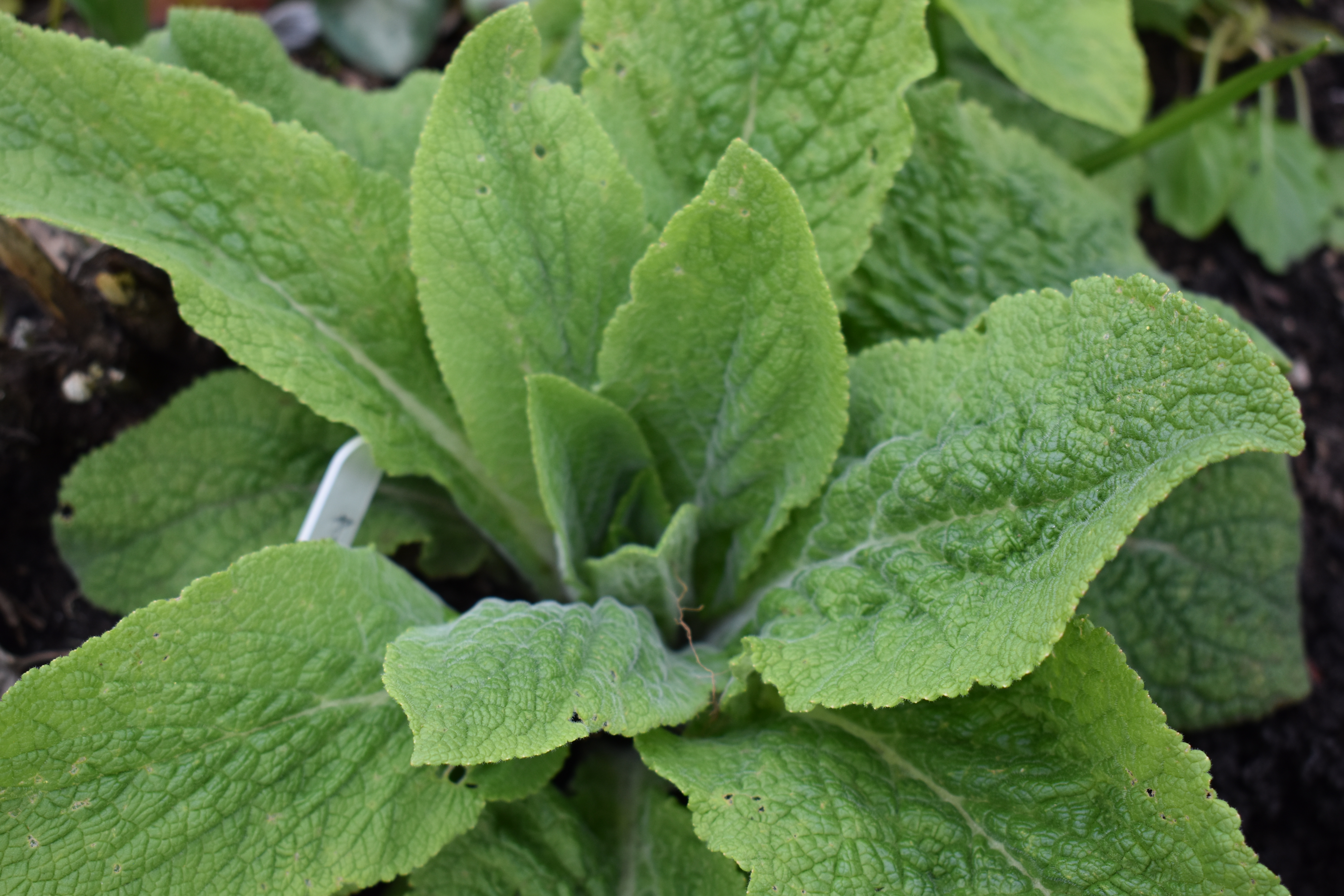
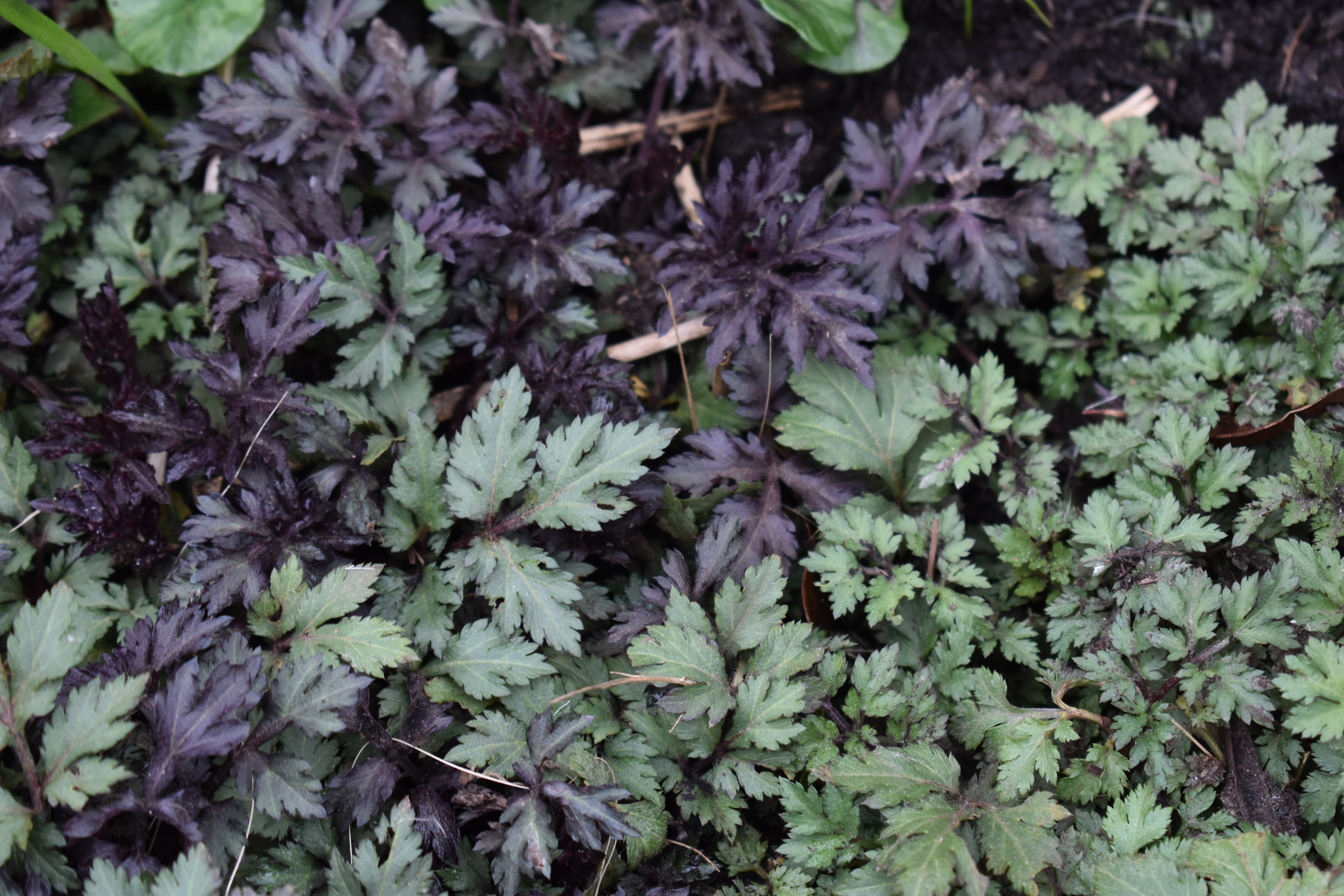
For the next two pages I look at the new foliage growth of our many herbaceous perennials. I noted, “The second half of March sees the borders punctuated with fresh new growth of herbaceous perennials. There is so much variety of colour, texture, shape and structure. Exciting even more rapid growth will start soon!”
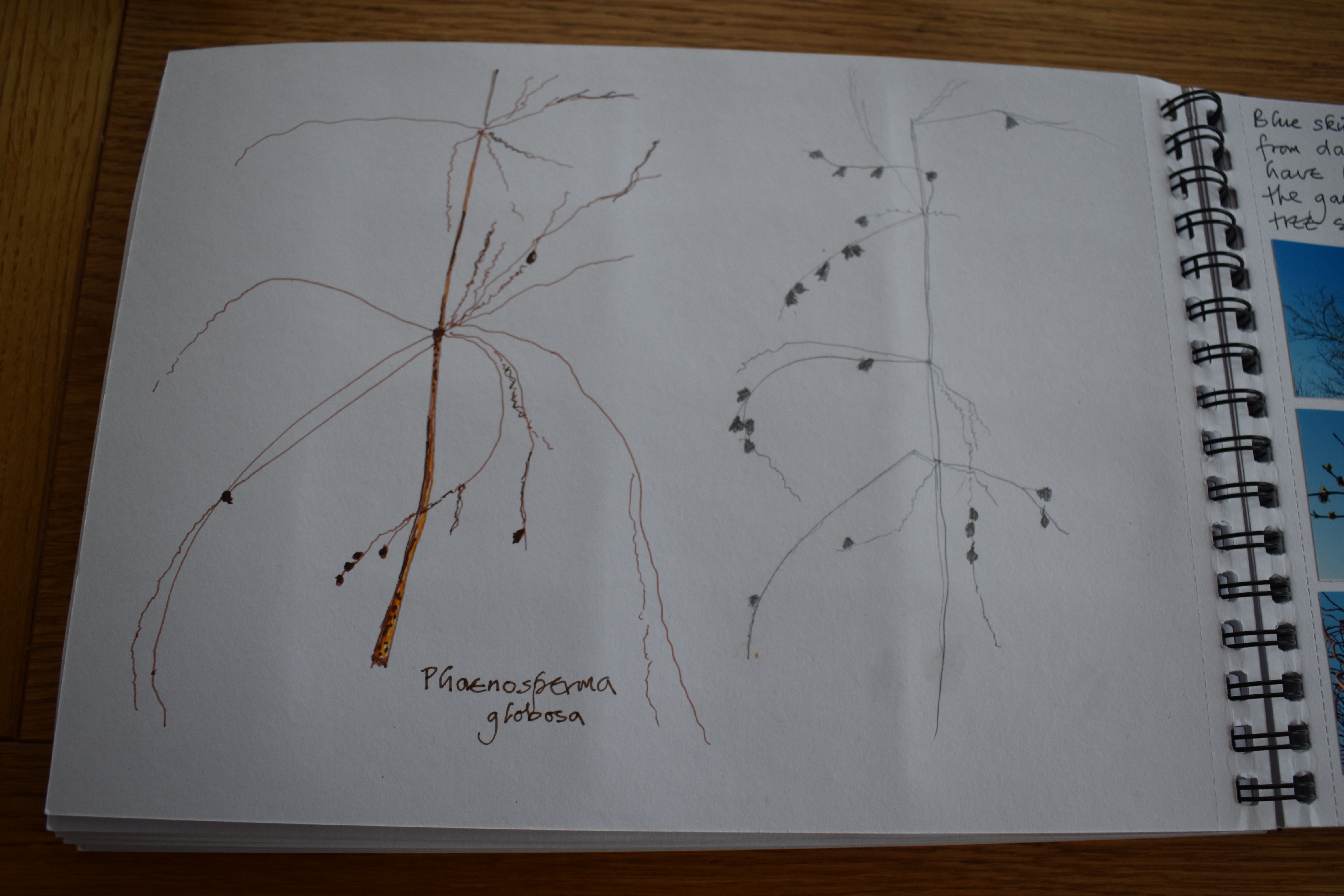
Over the page in complete contrast to the lush greens of newly emerged foliage I did two drawings of a grass seed head. The grass is an unusual one which is difficult to find for sale, Phaenosperma globosa, the second part of its name referring to the rounded seeds which are scattered around the delicate stems.
The left hand sketch was created in fine tipped fibre pens while the right hand drawing is in fine tipped mechanical pencil.
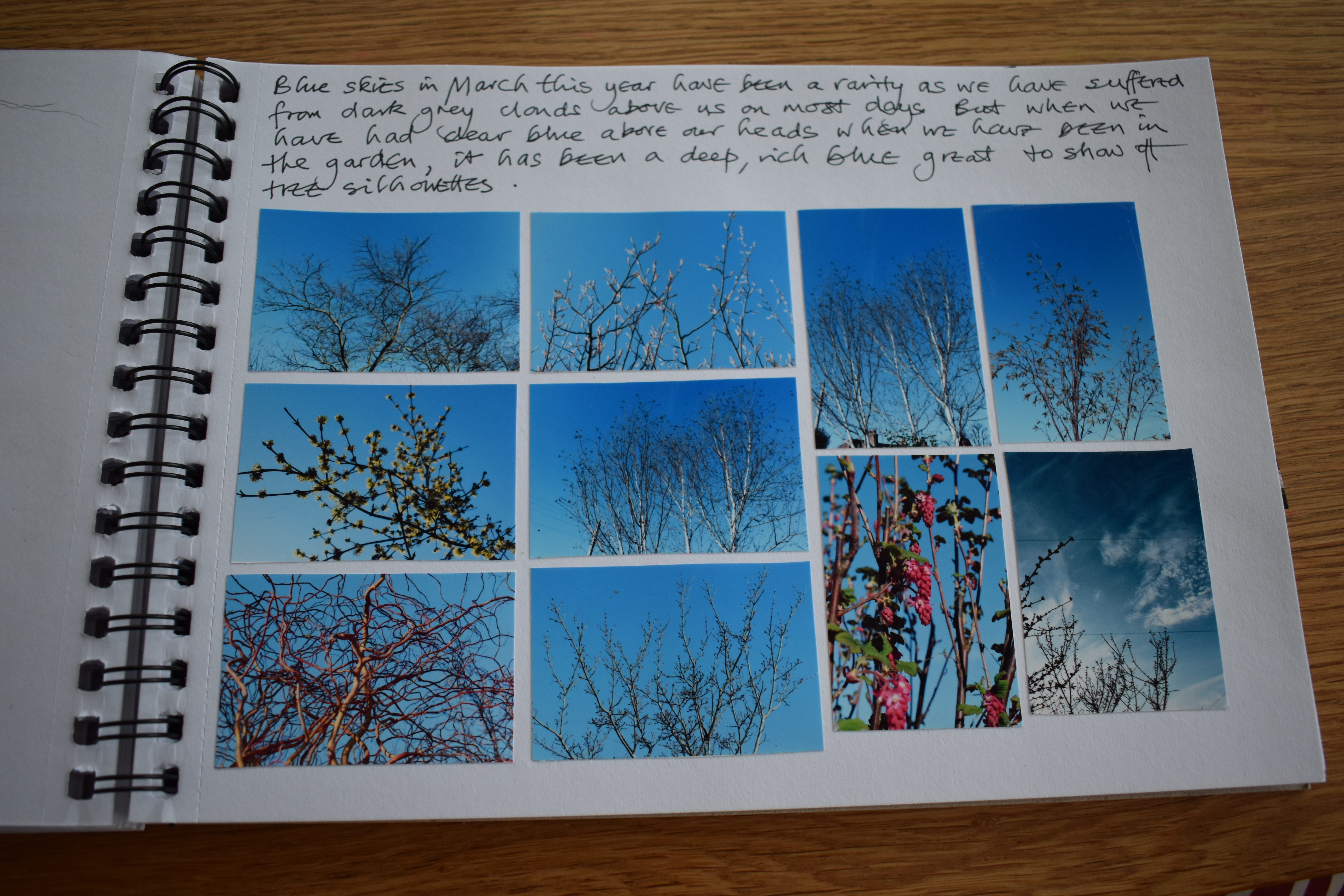
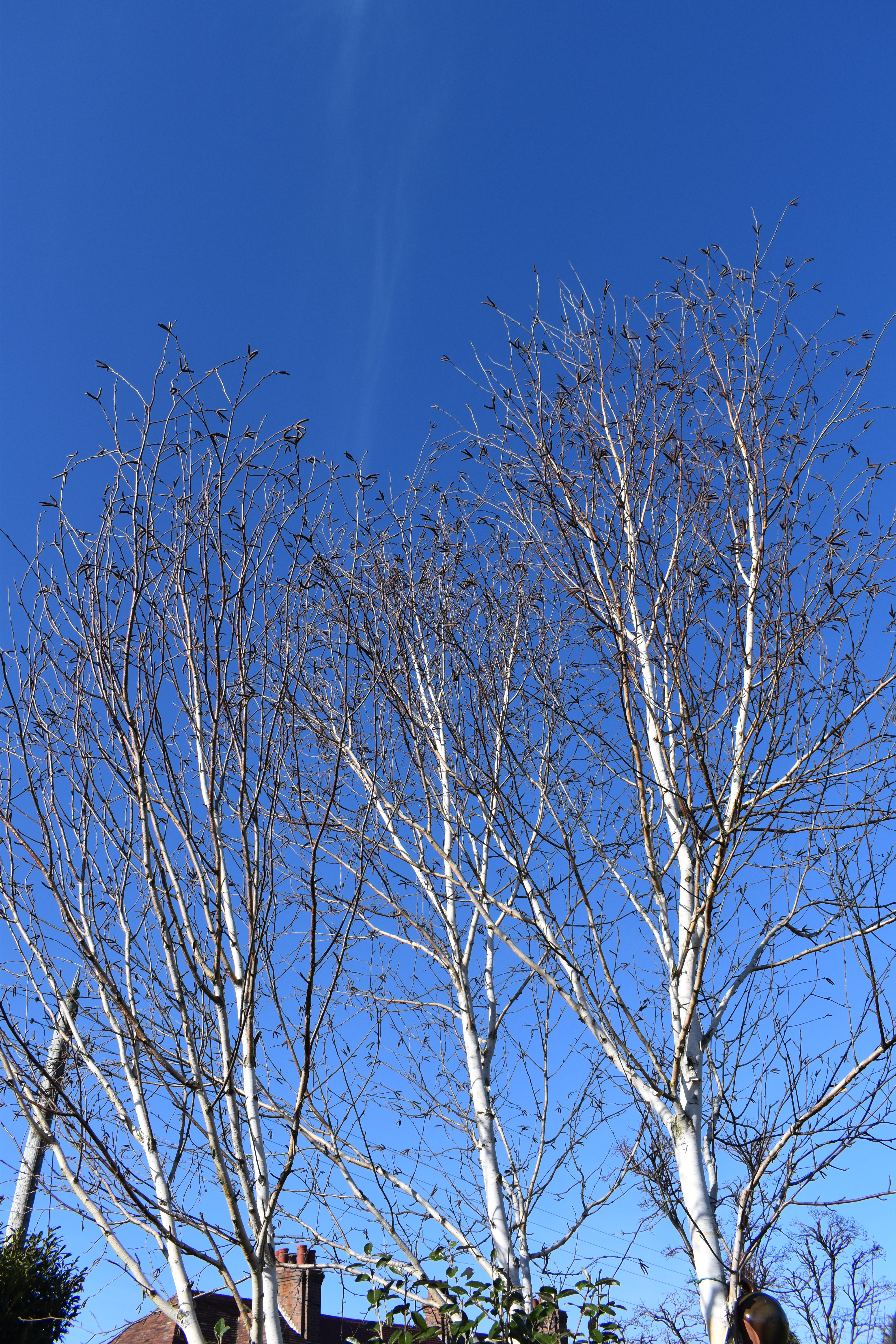
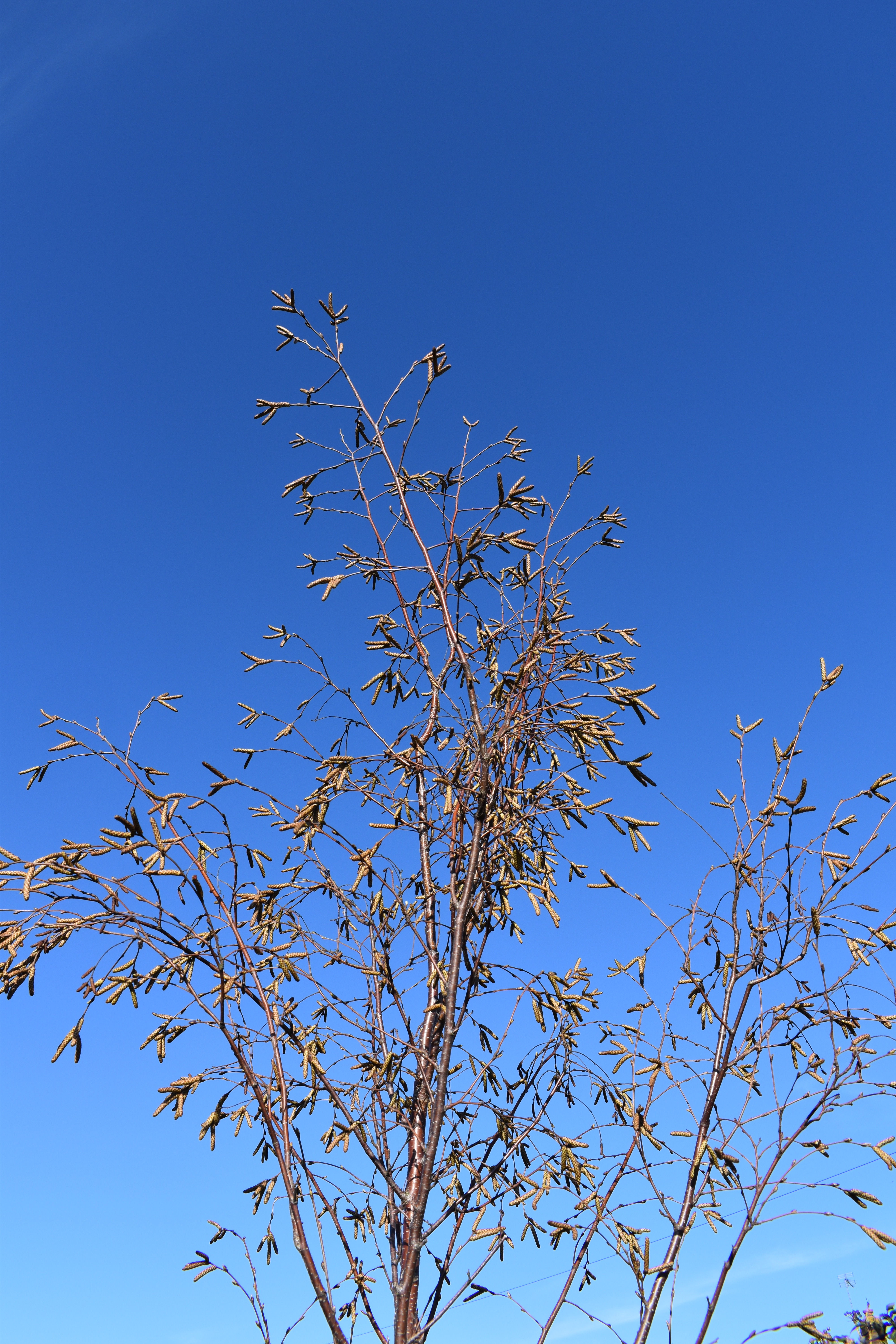
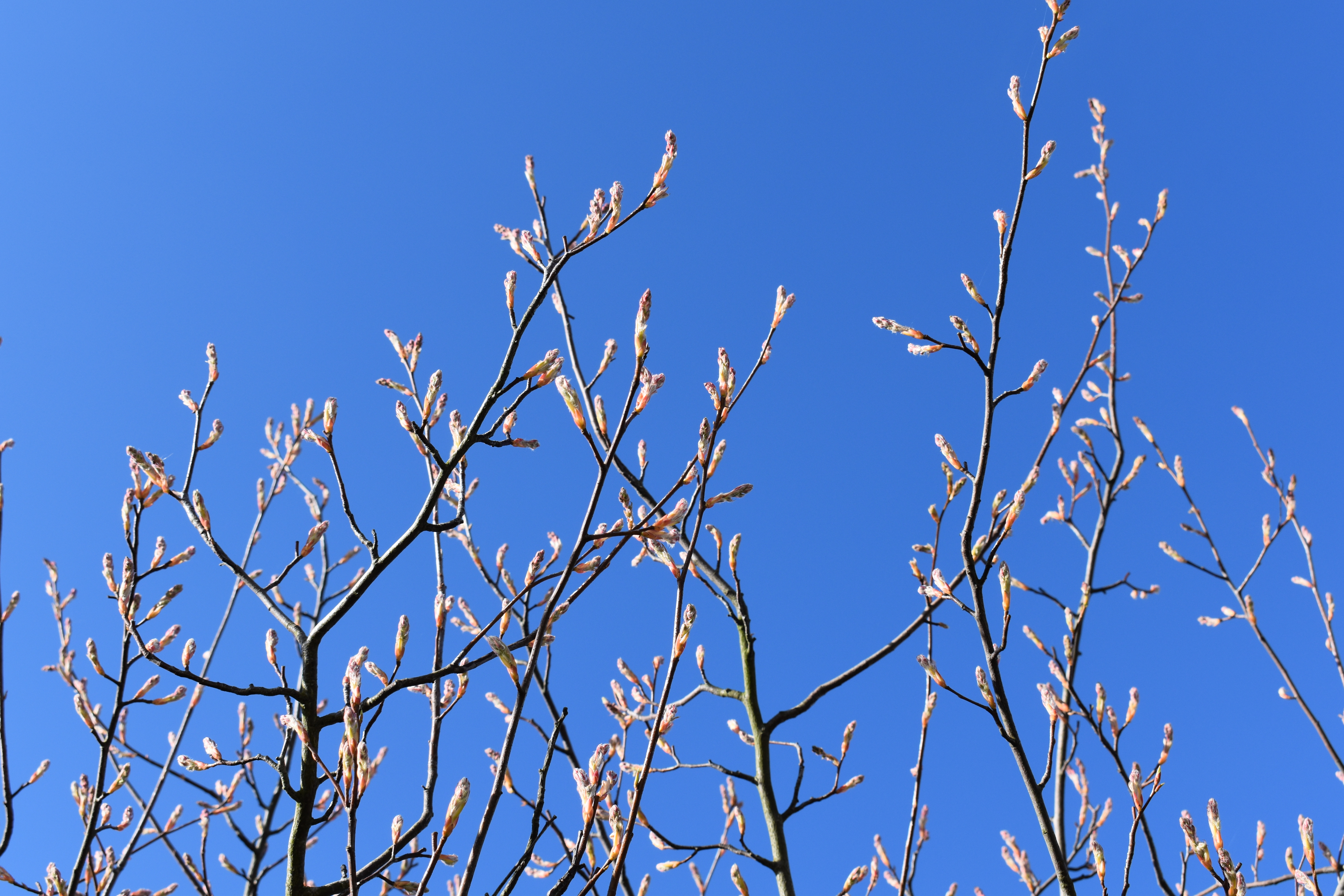
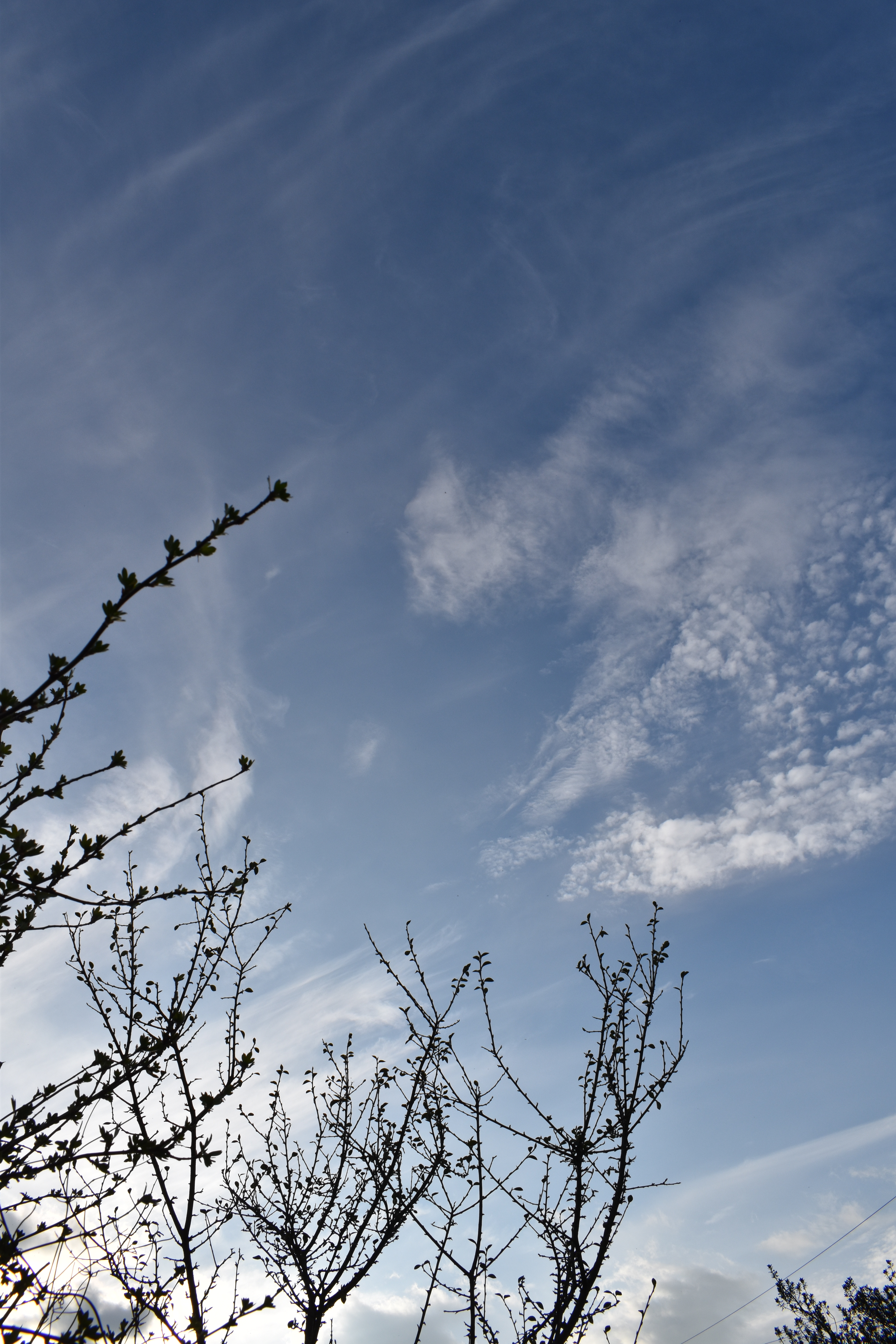
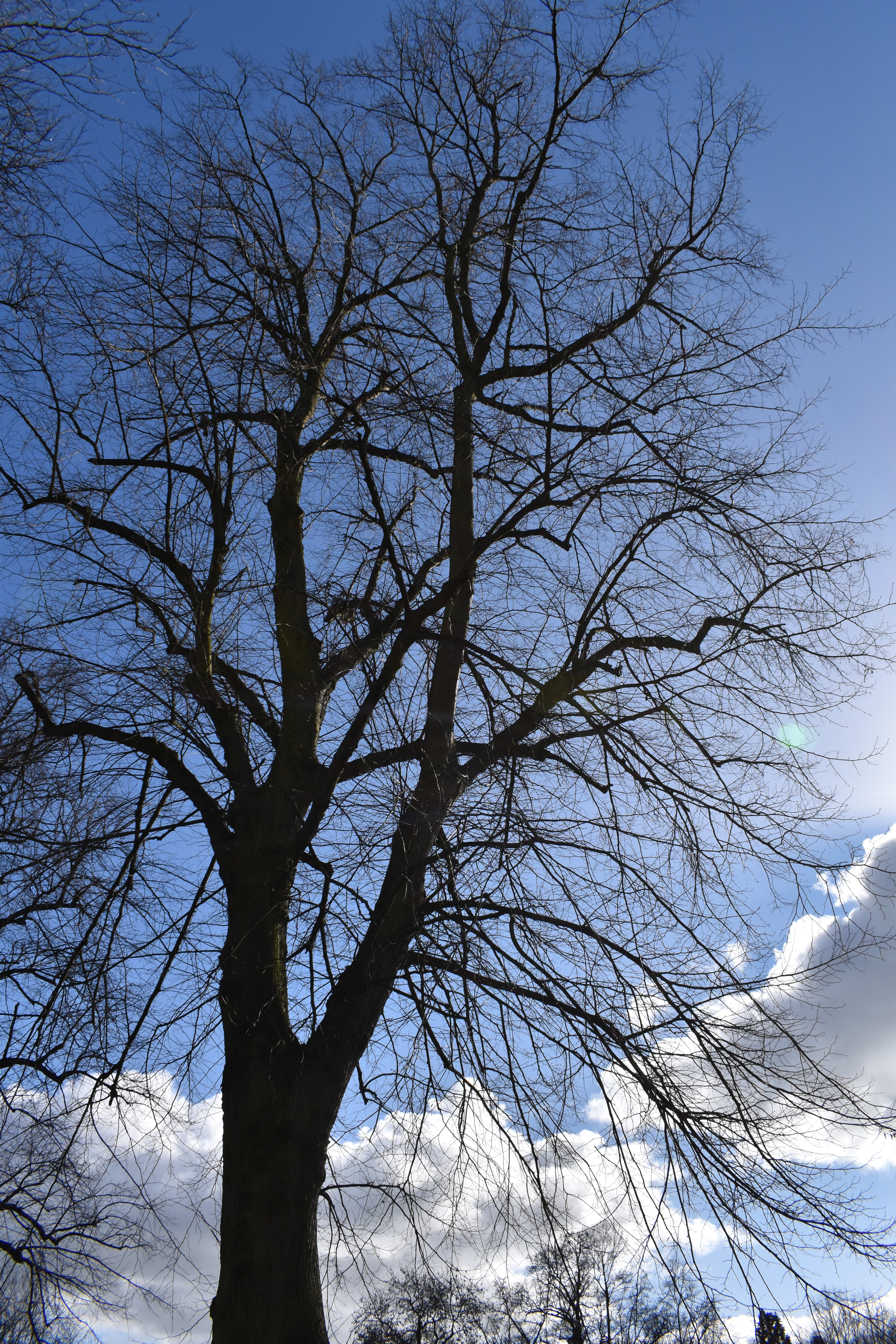
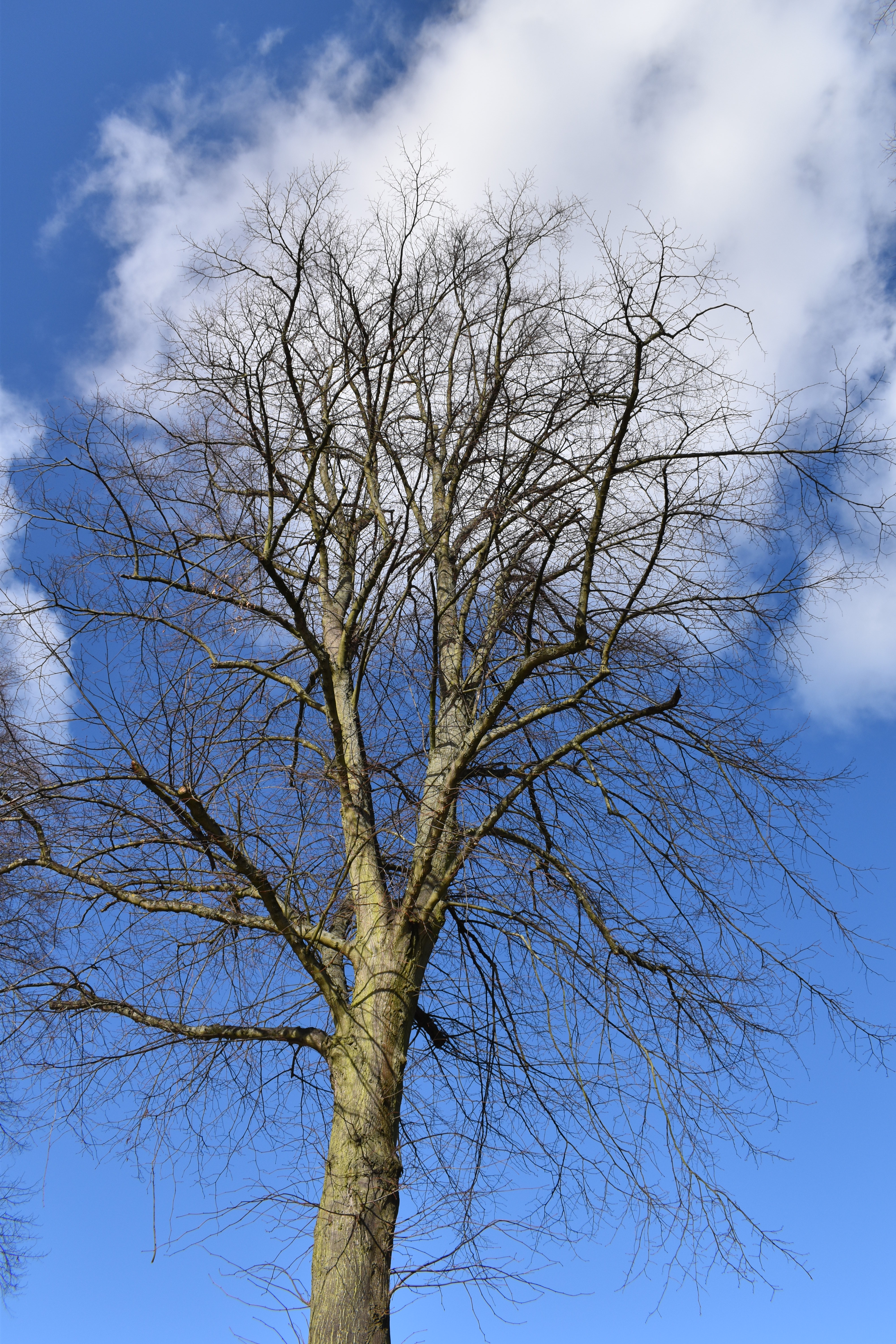
Opposite the drawings are photos of tree silhouettes against blue skies. I wrote, “Blue skies in March this year have been a rarity as we have suffered from dark grey clouds above us most days. But when we have had clear blue above our heads when we have been in the garden, it has been a rich, deep blue, great to show off tree silhouettes.”
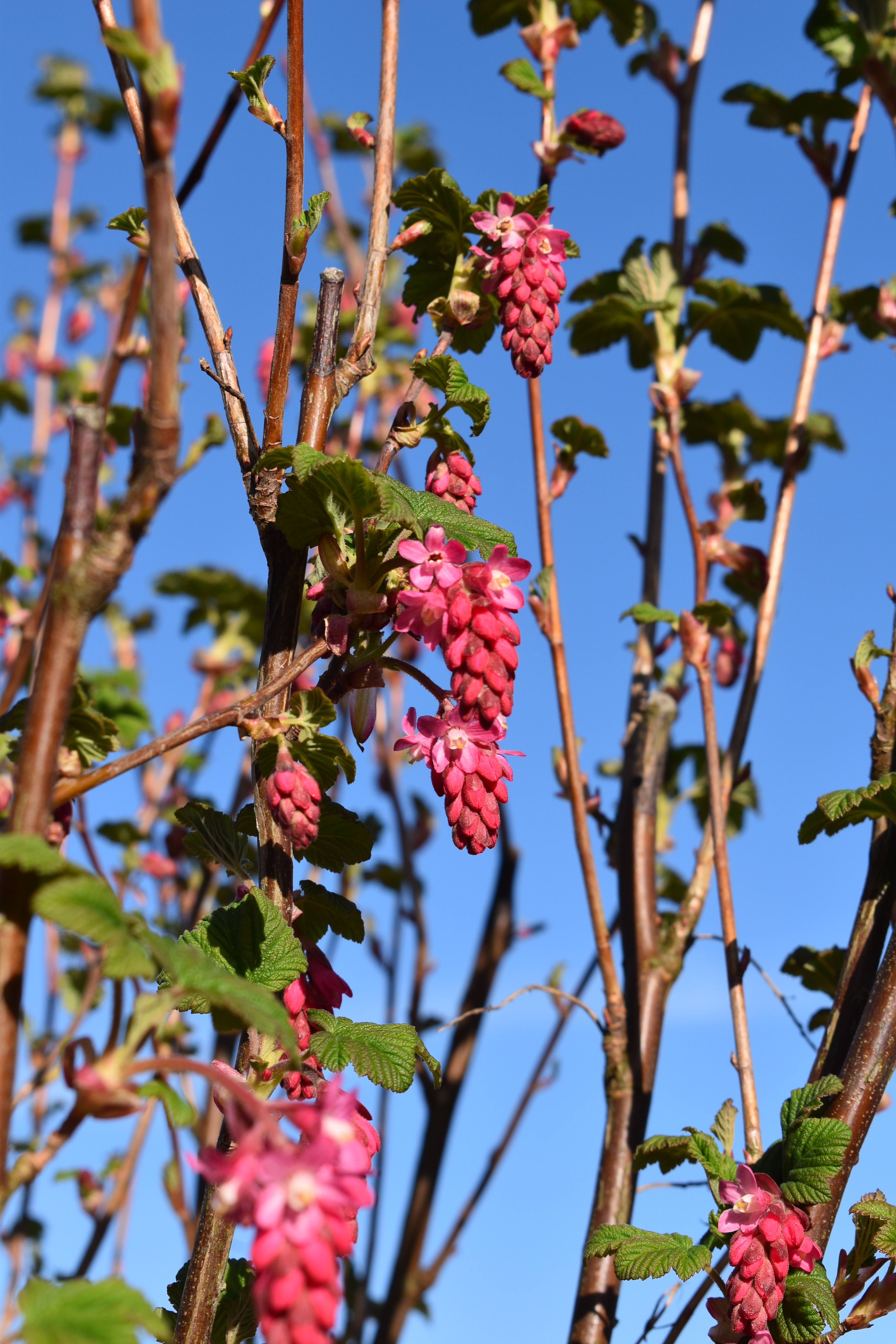
In the gallery below I did include one flowering shrub, Ribes sanguineum ‘King Edward VII’ which is at its best with blue skies behind.
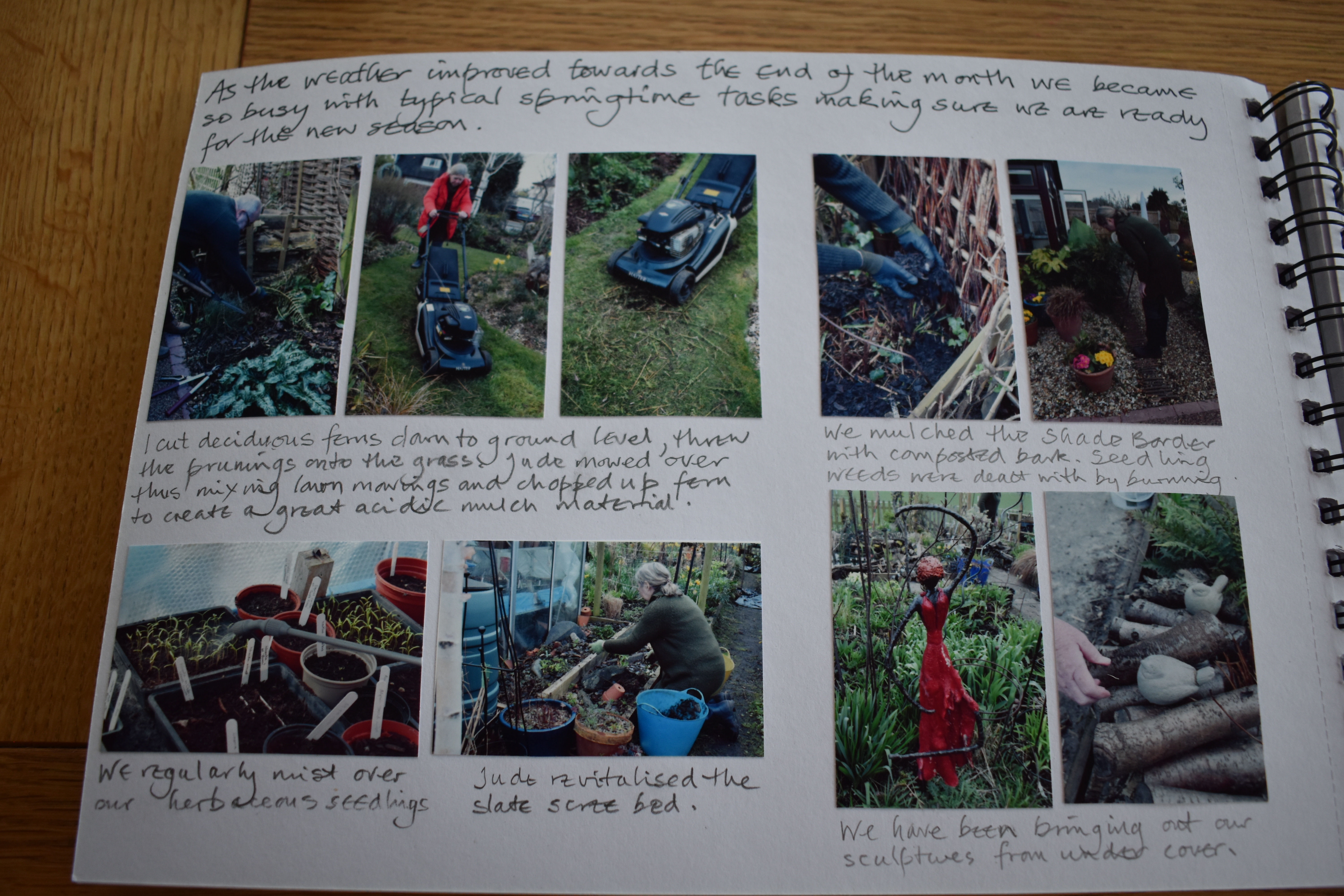
Garden tasks feature on the final page of my garden journal for March, where I stated, “As the weather improved towards the end of the month, we became so busy with typical springtime tasks, making sure we are ready for the new season.”
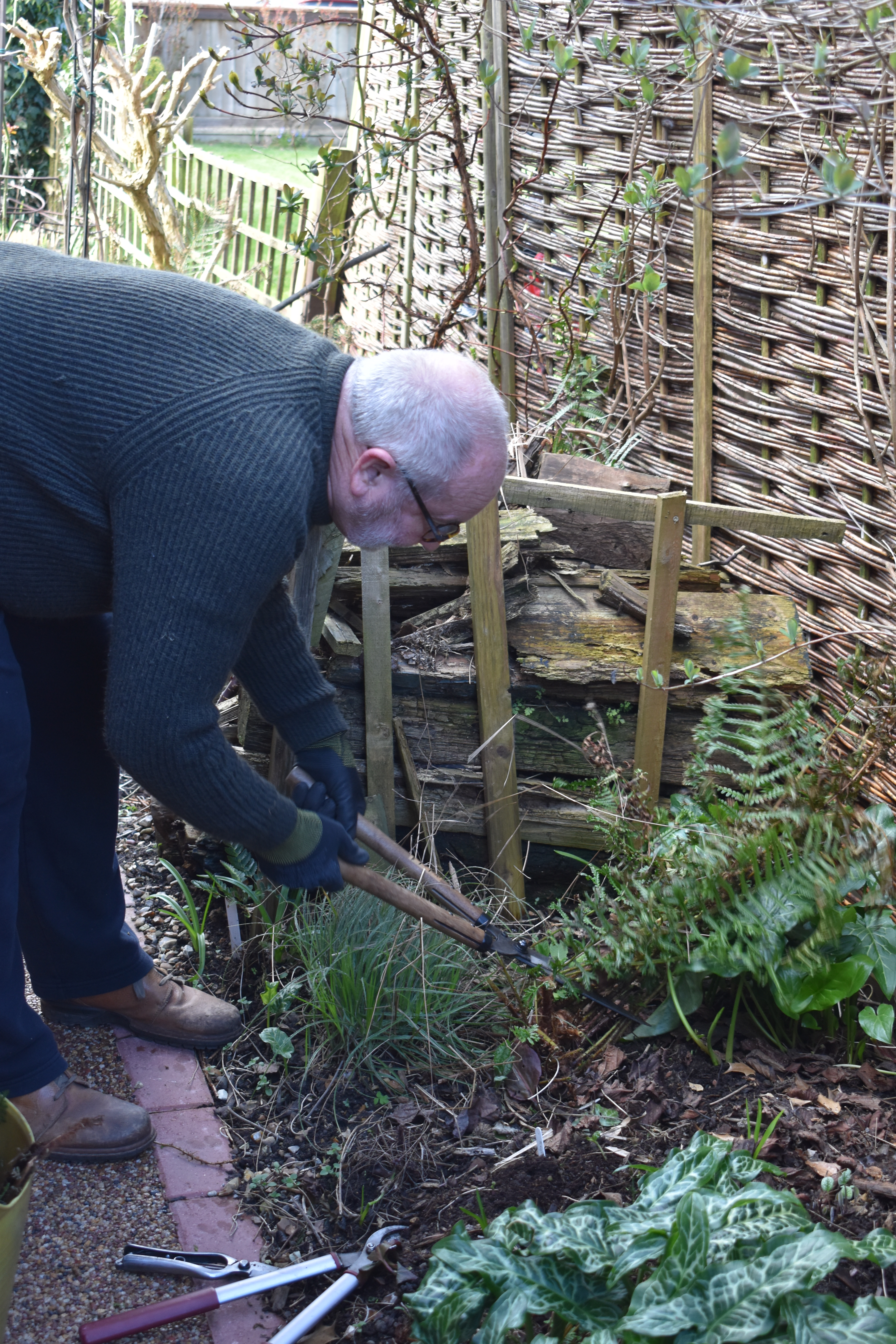
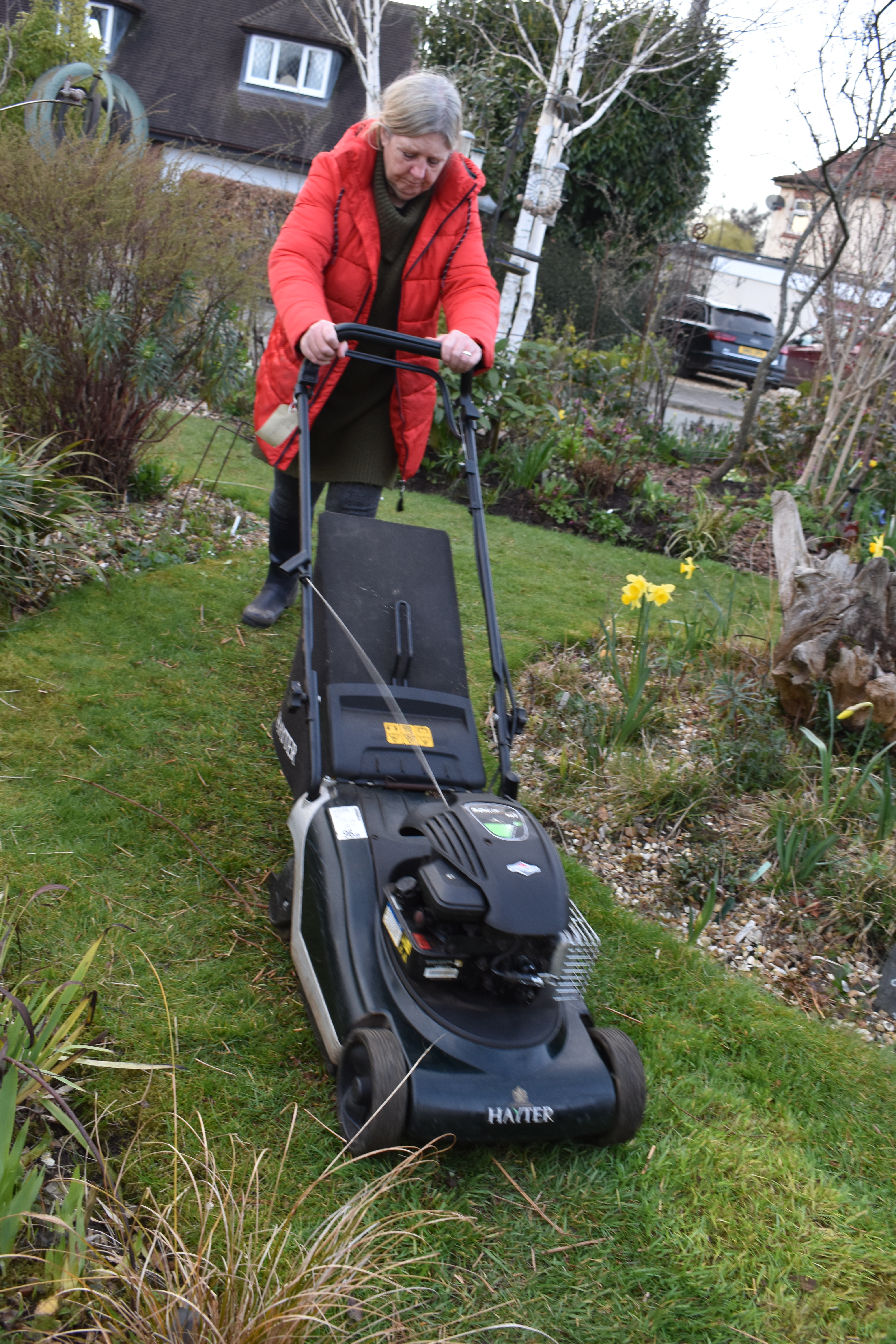
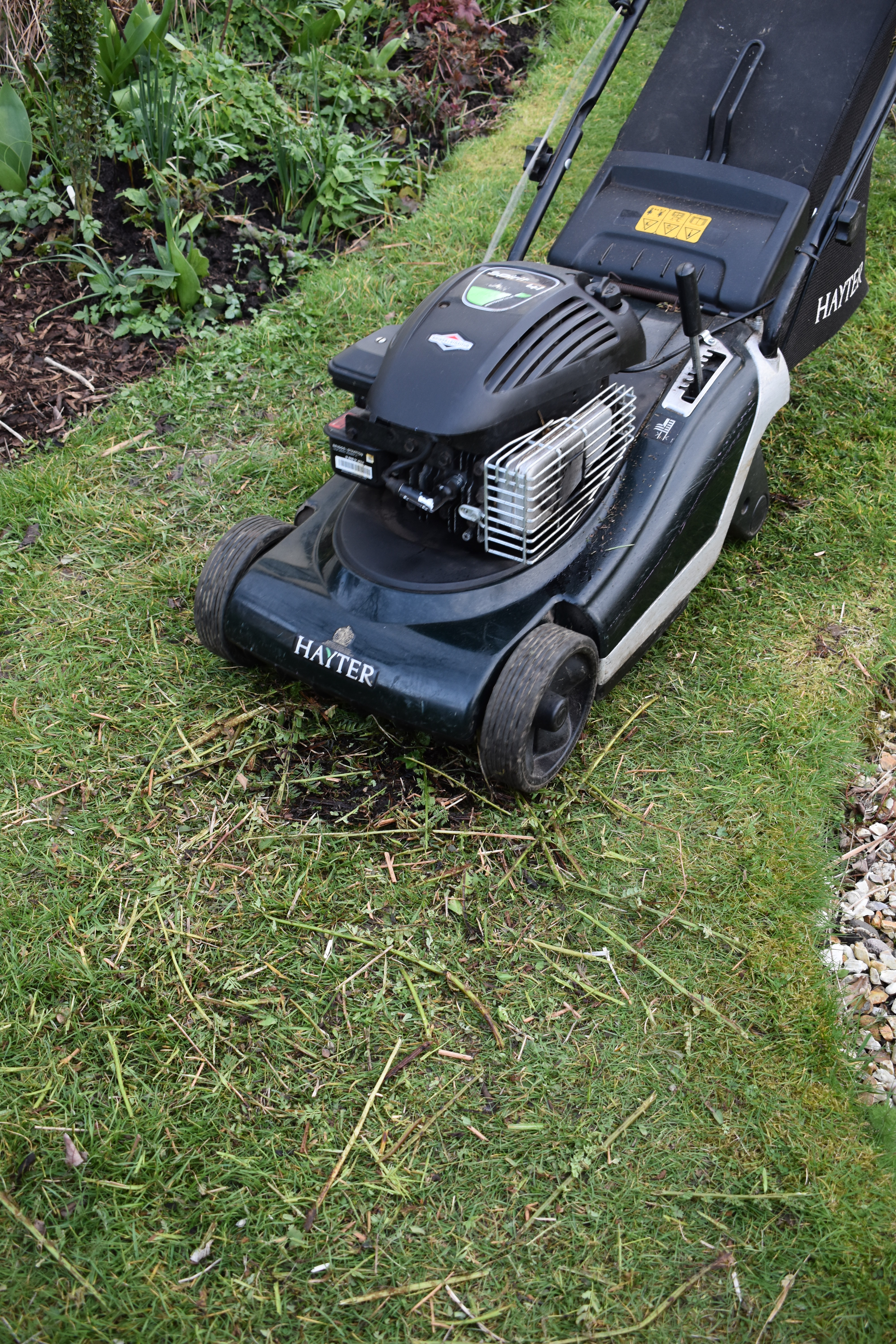
Beneath the first group of photos below I noted, “I cut deciduous ferns down to grass level, threw the prunings onto the grass . Jude then mowed the grass going over the fern cuttings and thus cutting them up mixing them with the grass mowings to create a great acidic mulch material.“
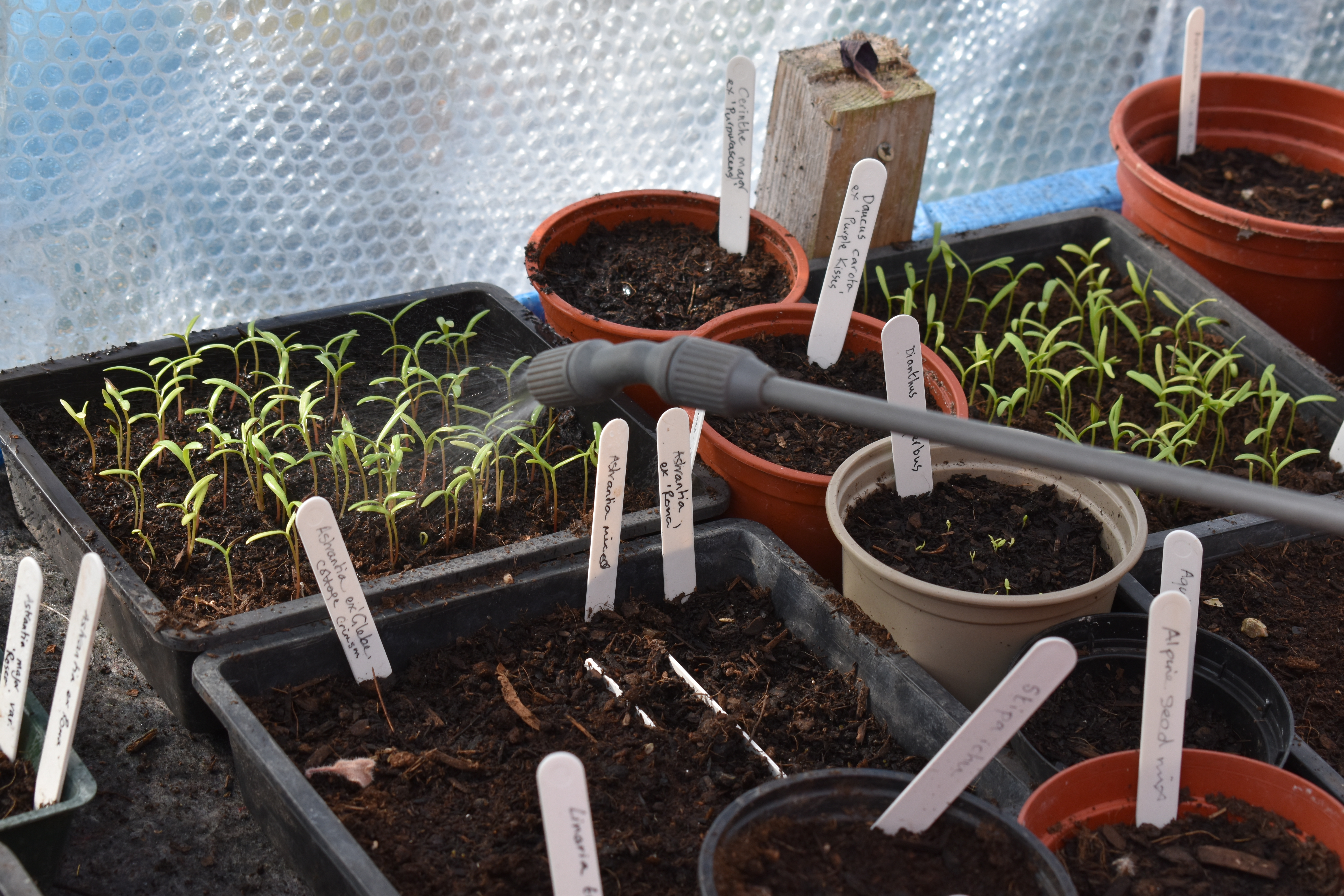
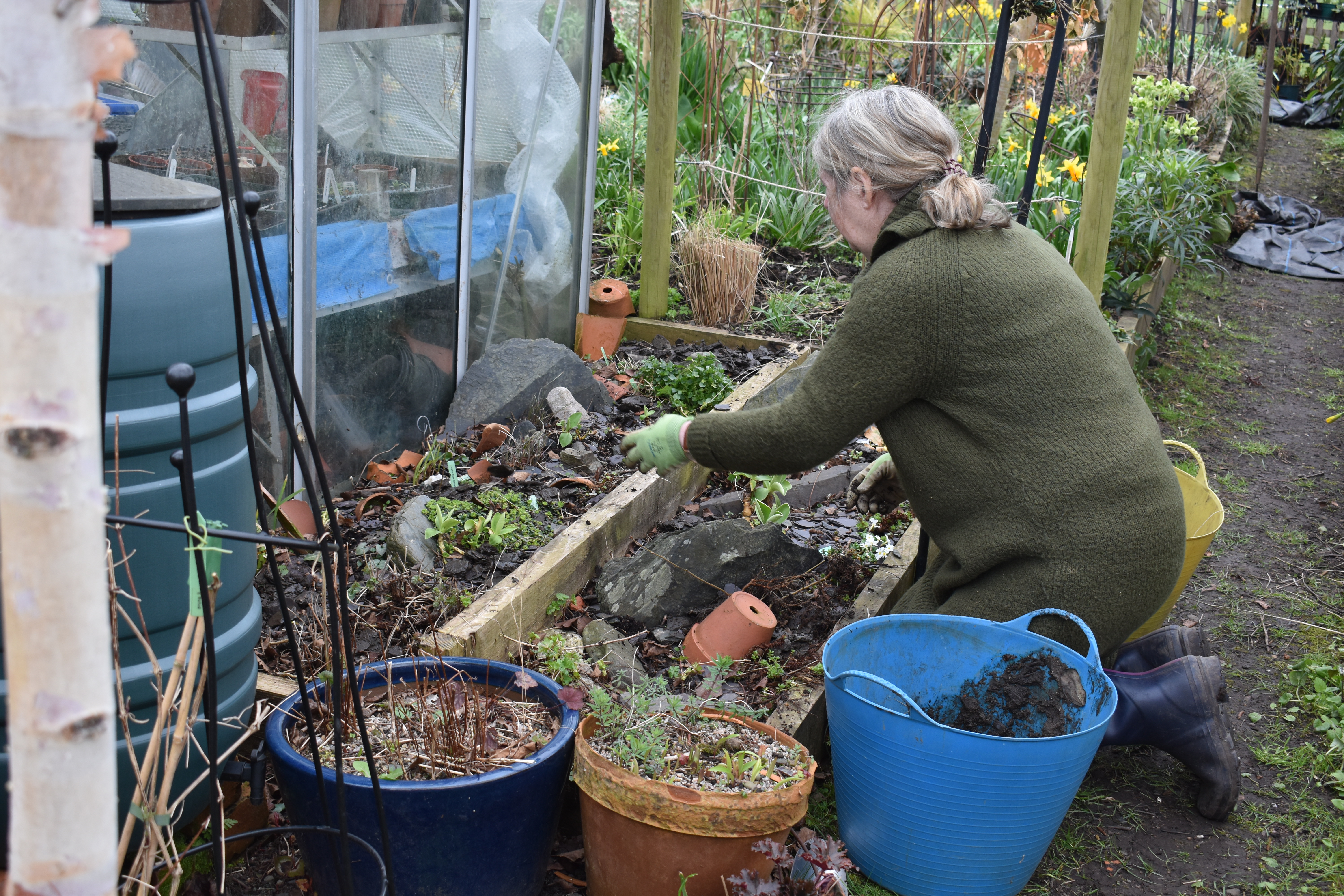
Beneath the next pair of photos I noted, “We regularly mist over our herbaceous seedlings and Jude revitalised the Scree Bed.”
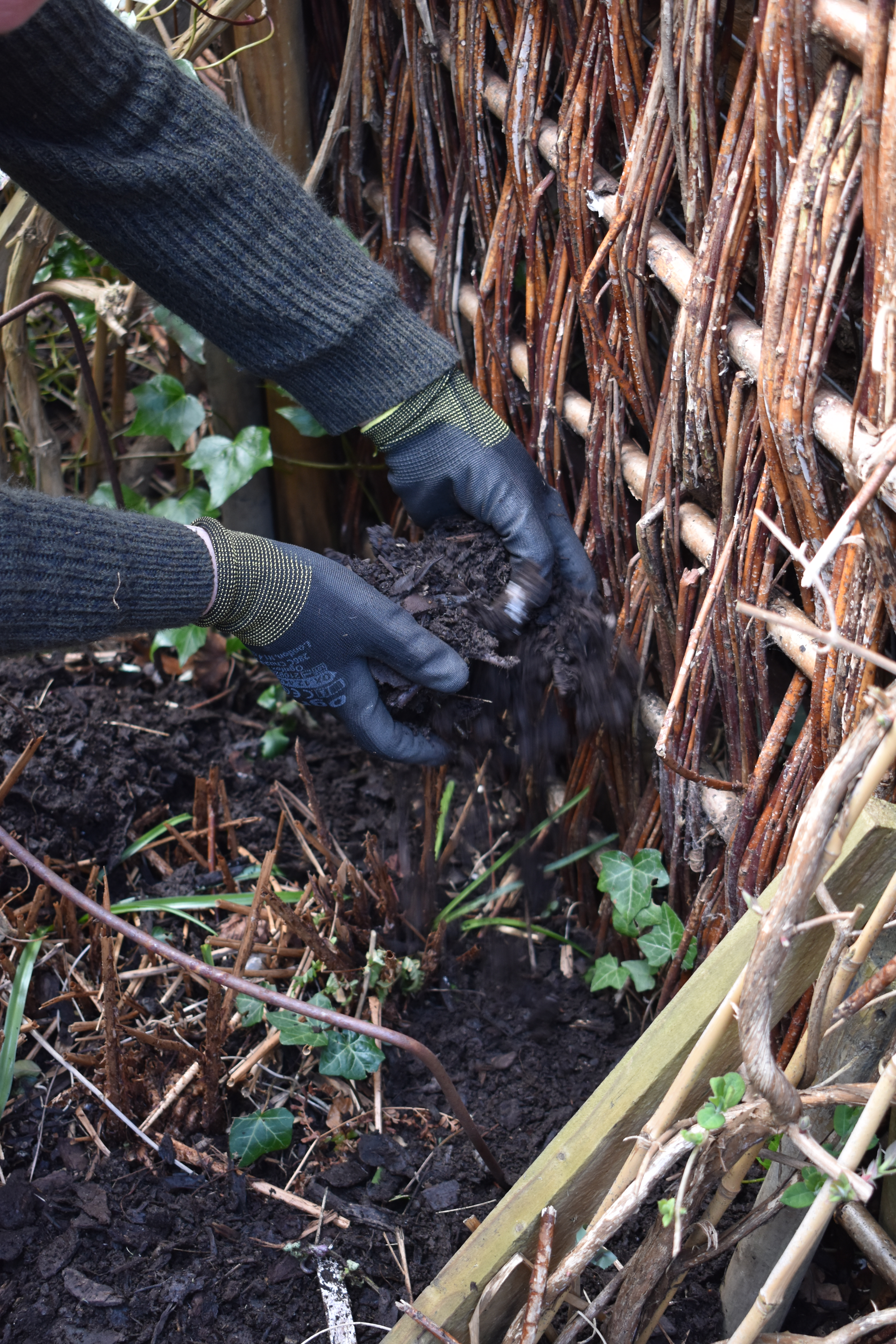
Just four pictures remain organised in two pairs. Beneath the first pair I wrote, “We mulched the Shade Border with composted bark. Seedling weeds in the Rill Garden were dealt with by burning.”
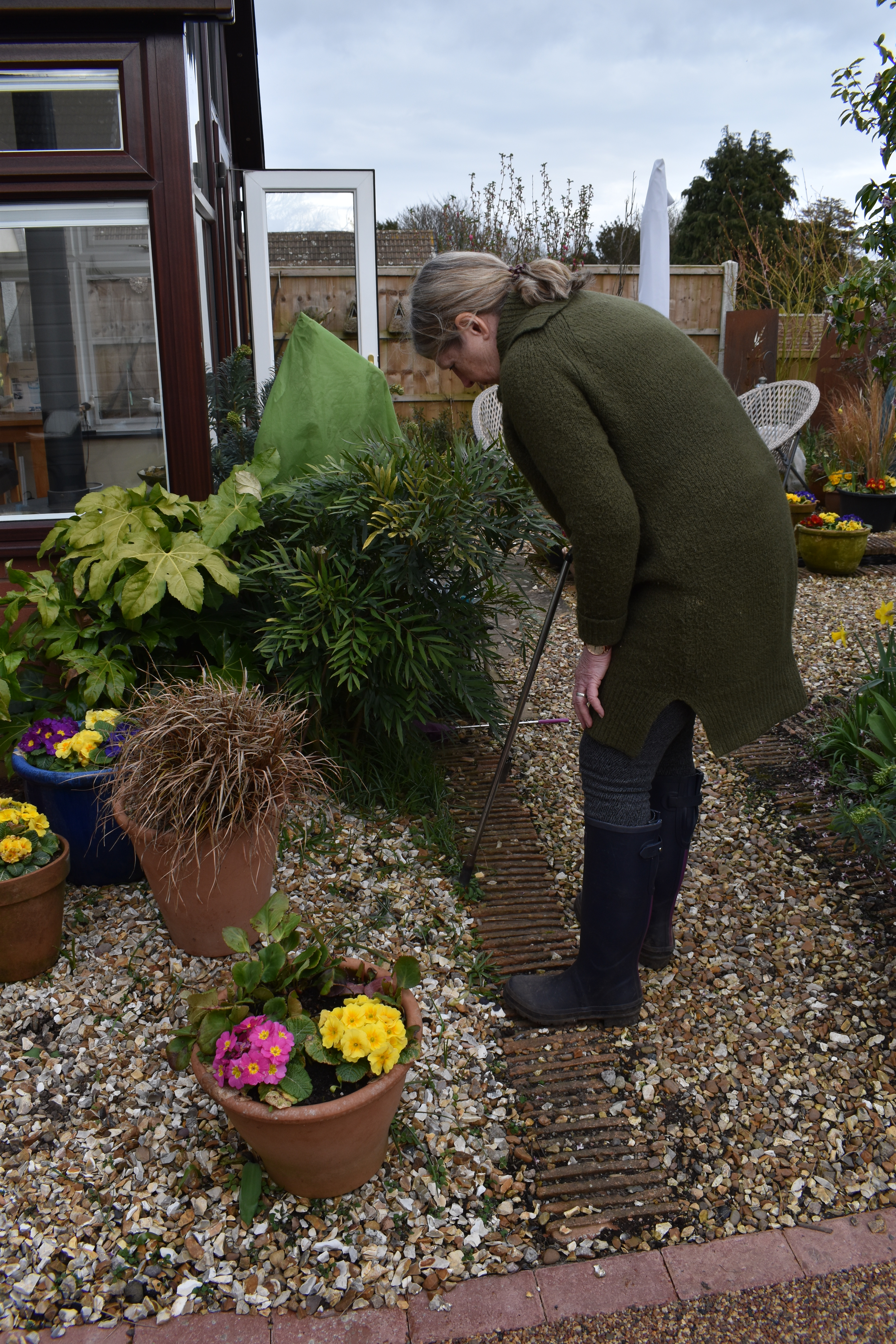
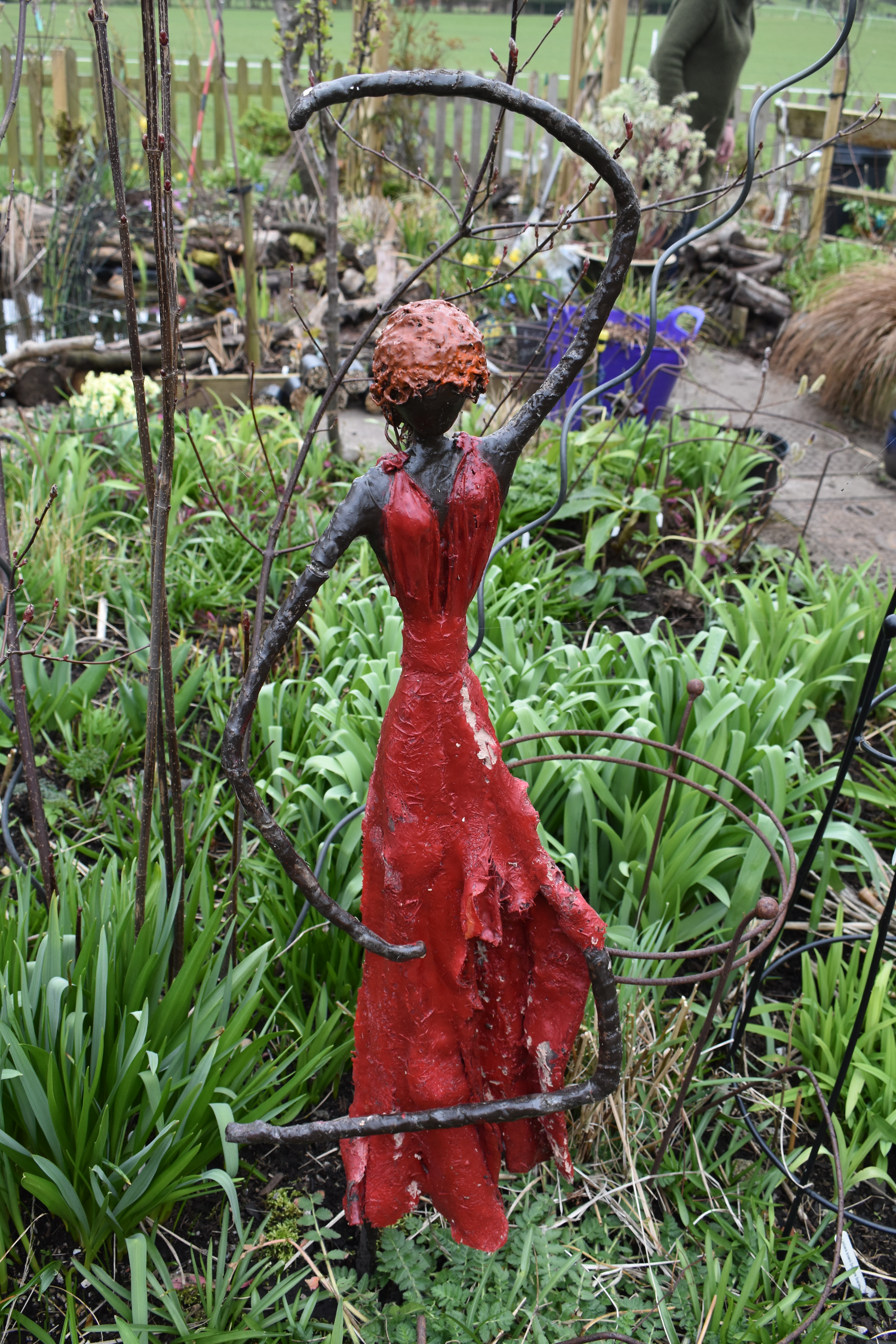
Beneath the second pair I wrote, “We have been bringing out our garden sculptures from under cover.”
So there we have my entries for March in My Garden Journal 2021. We shall share another look in April.
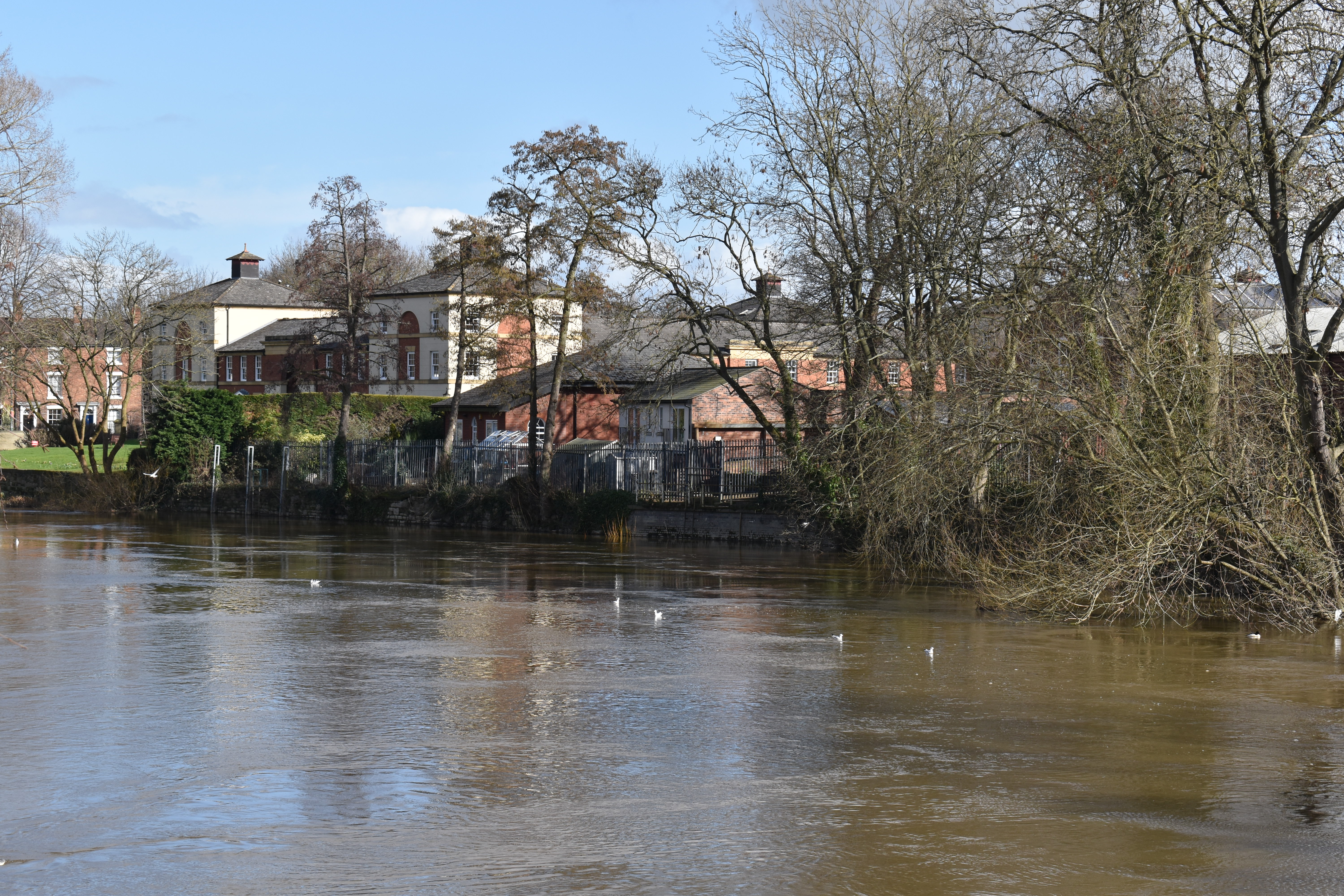
As promised we are back on our town wanders around Shrewsbury carrying on as we arrived at the river. We took a short but steep flight of stone steps to the toll path but flooding took away our choice of going left or right. Only our path to the right was open! To the left the path was under water!
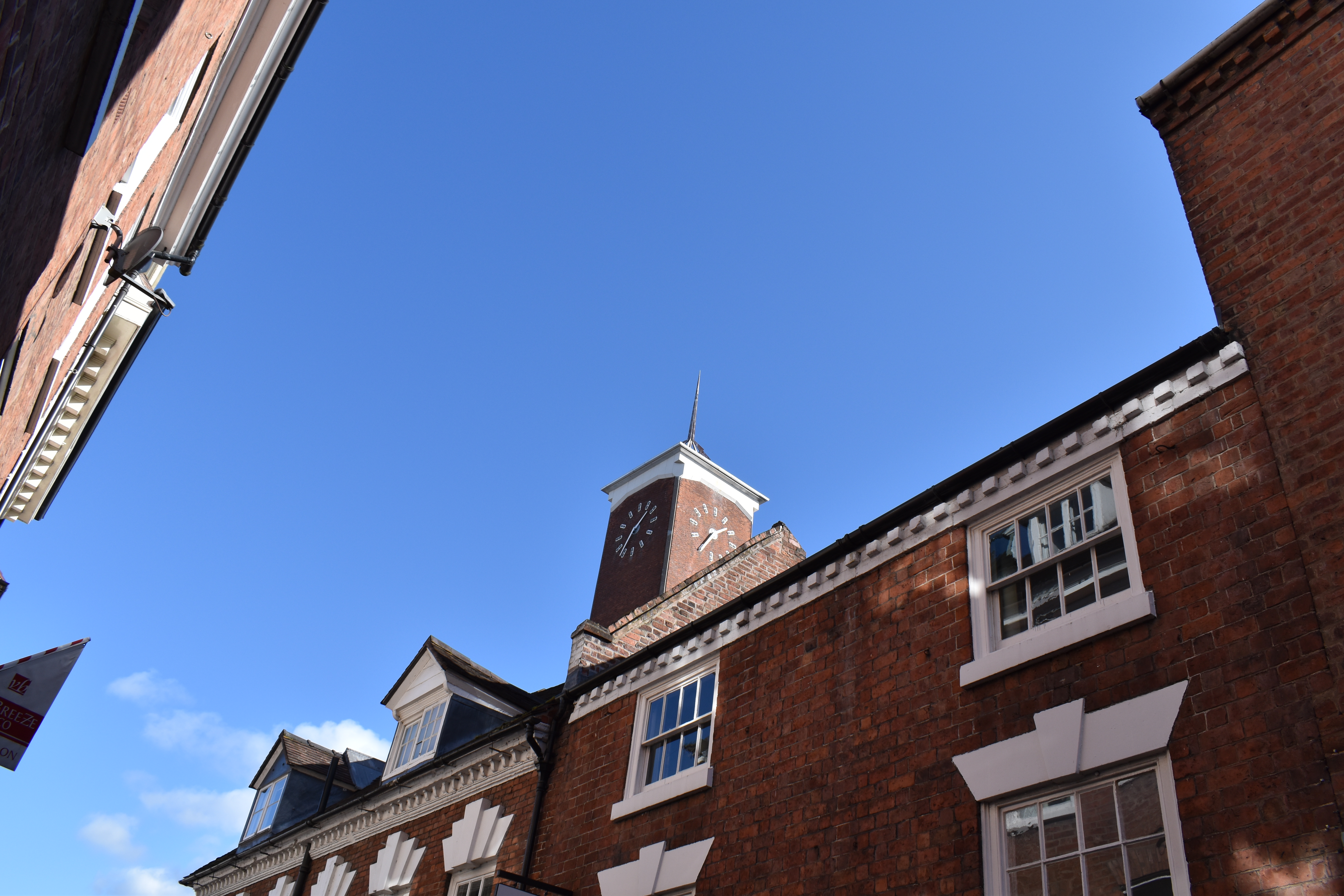
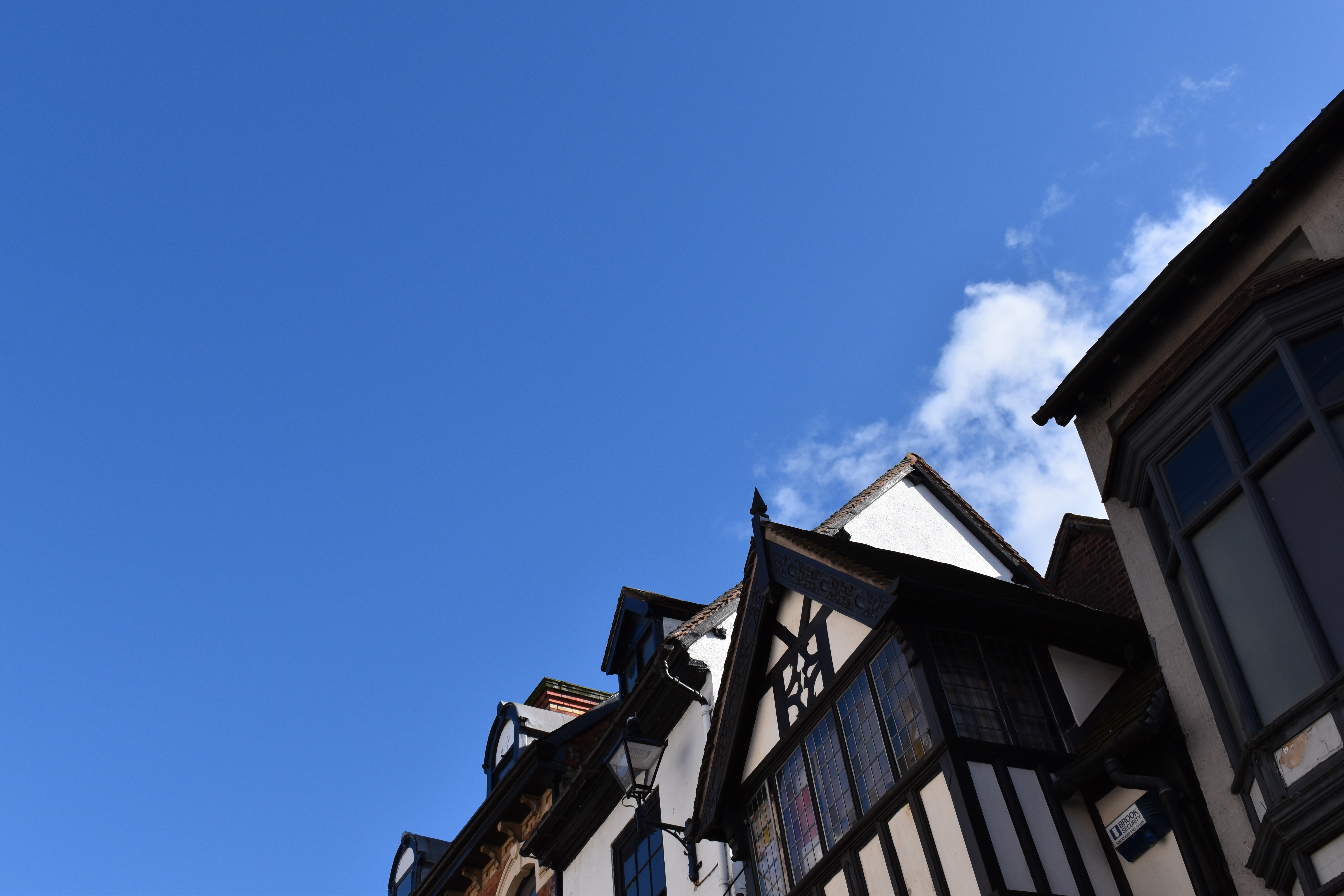
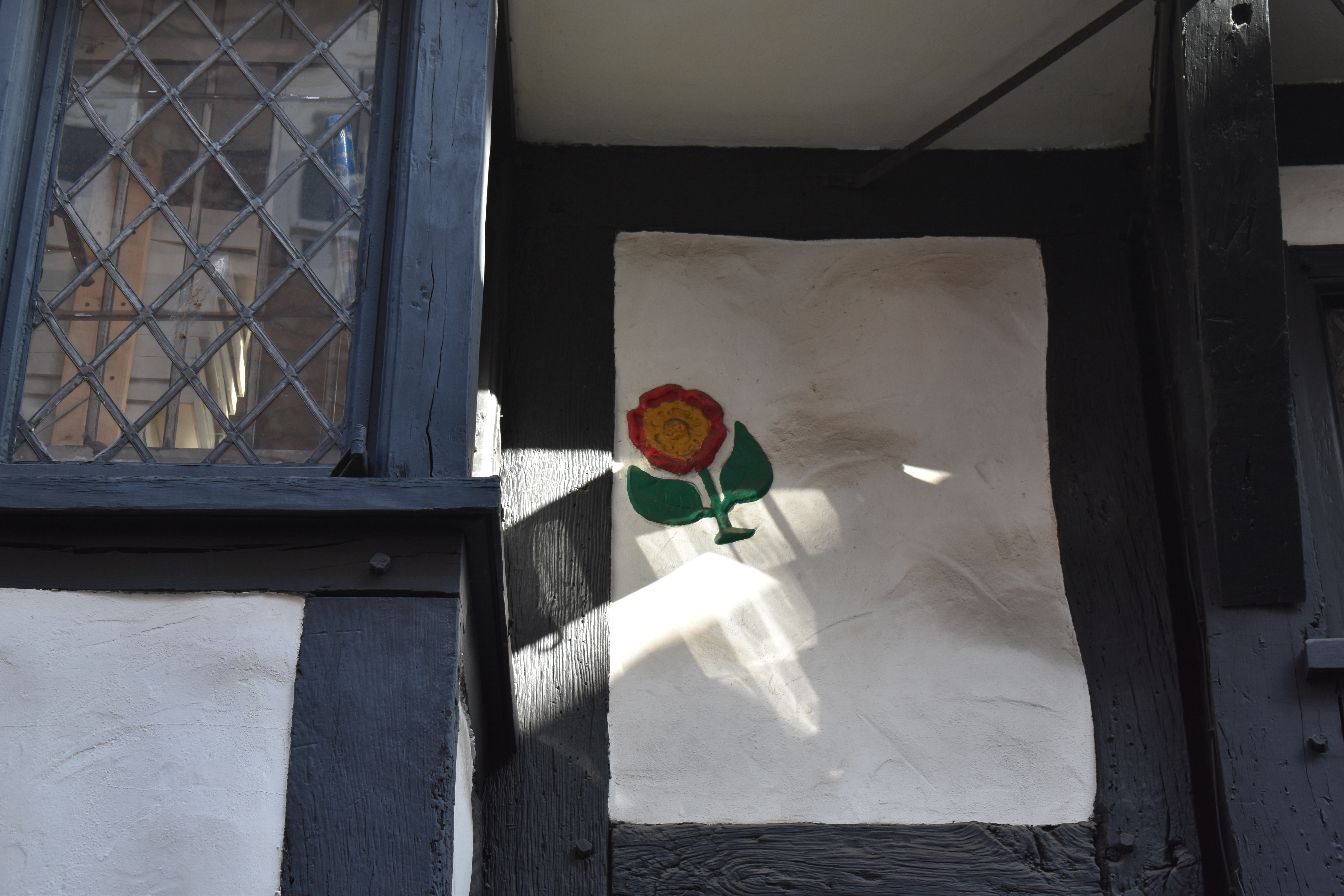
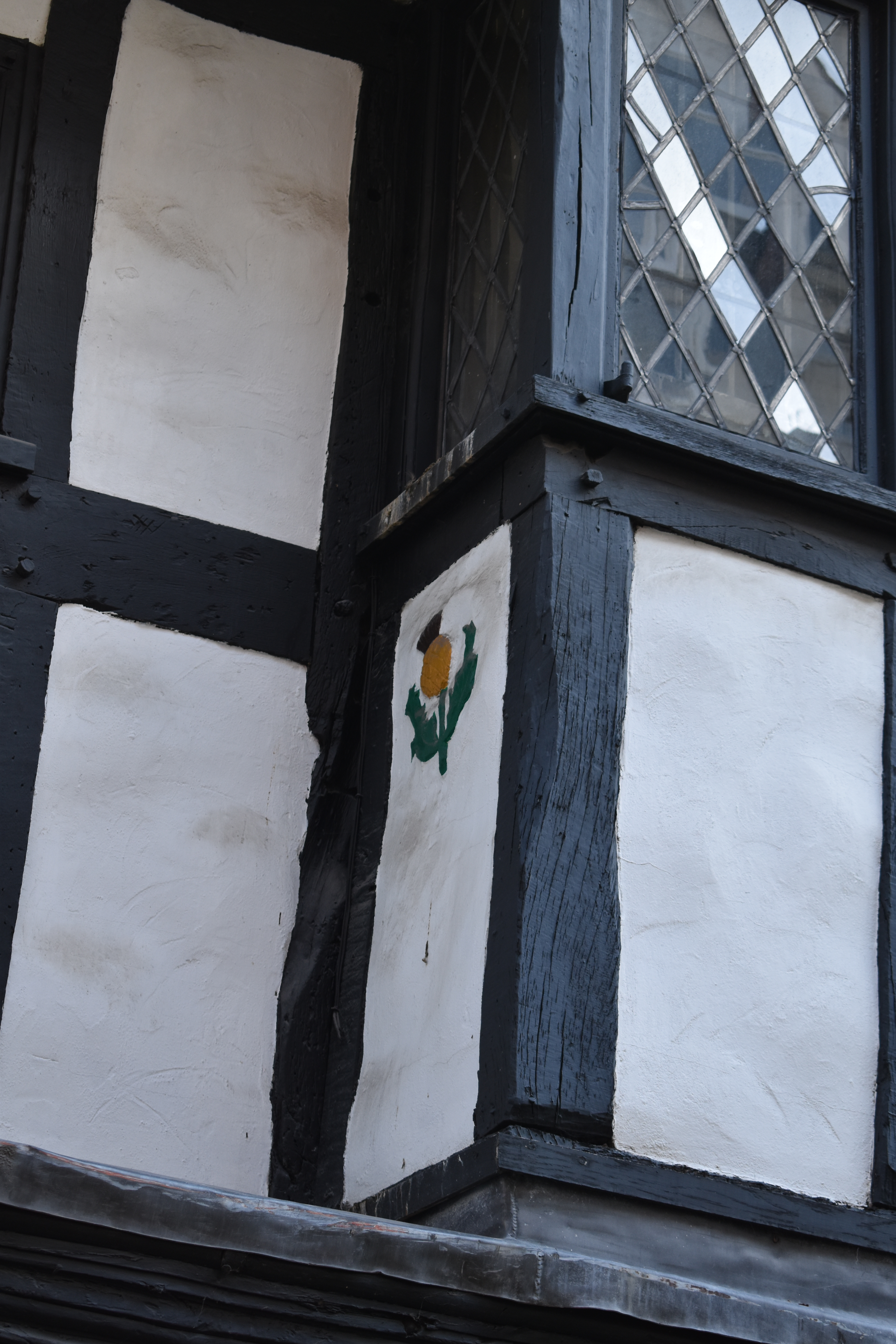
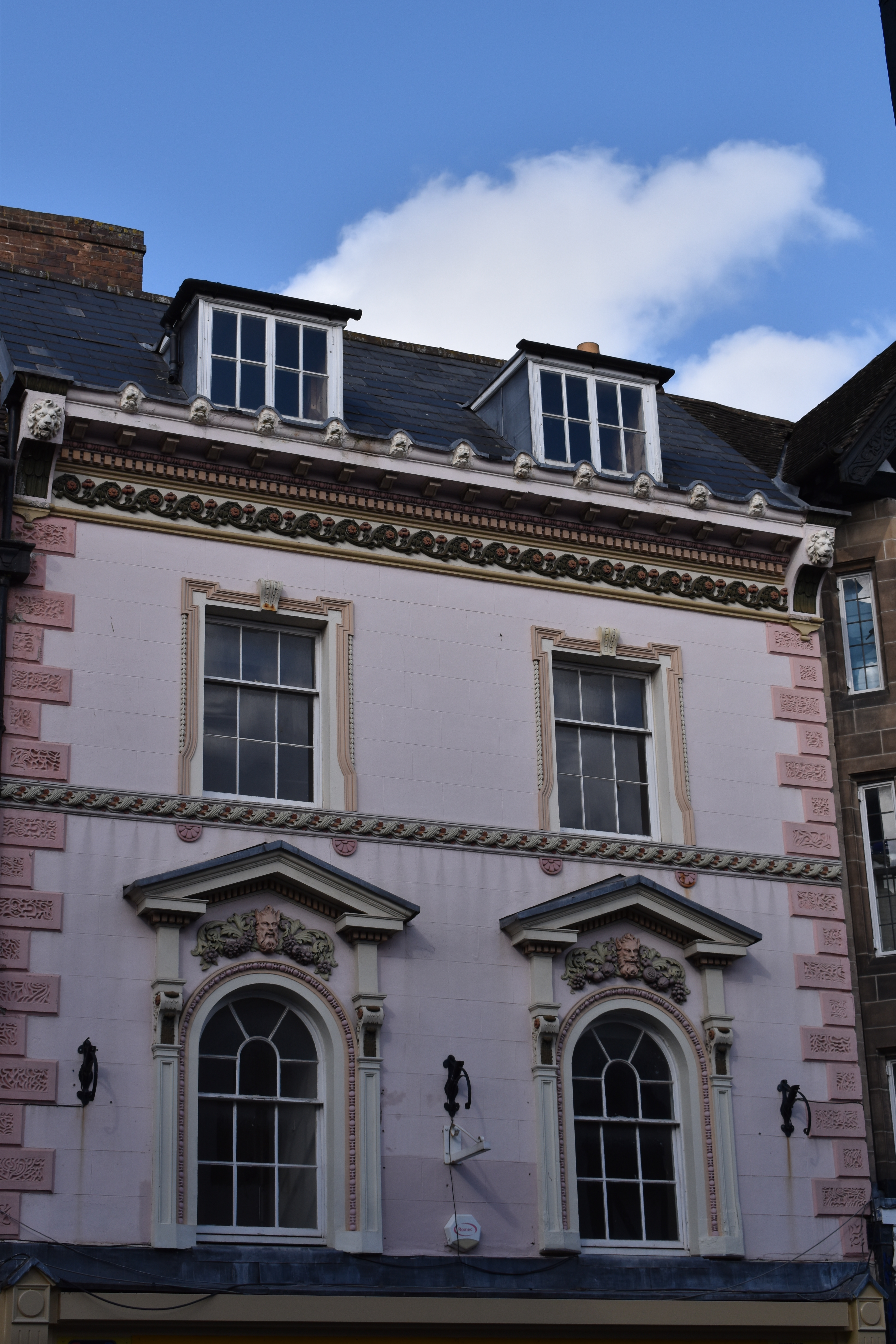
Before taking the steps we passed this interesting colourful building with a ceramic tile montage adorning a window place. It is one of a series to be found around Shrewsbury made by the students of the Wakeman School had created featuring things seen while looking upwards in the town.
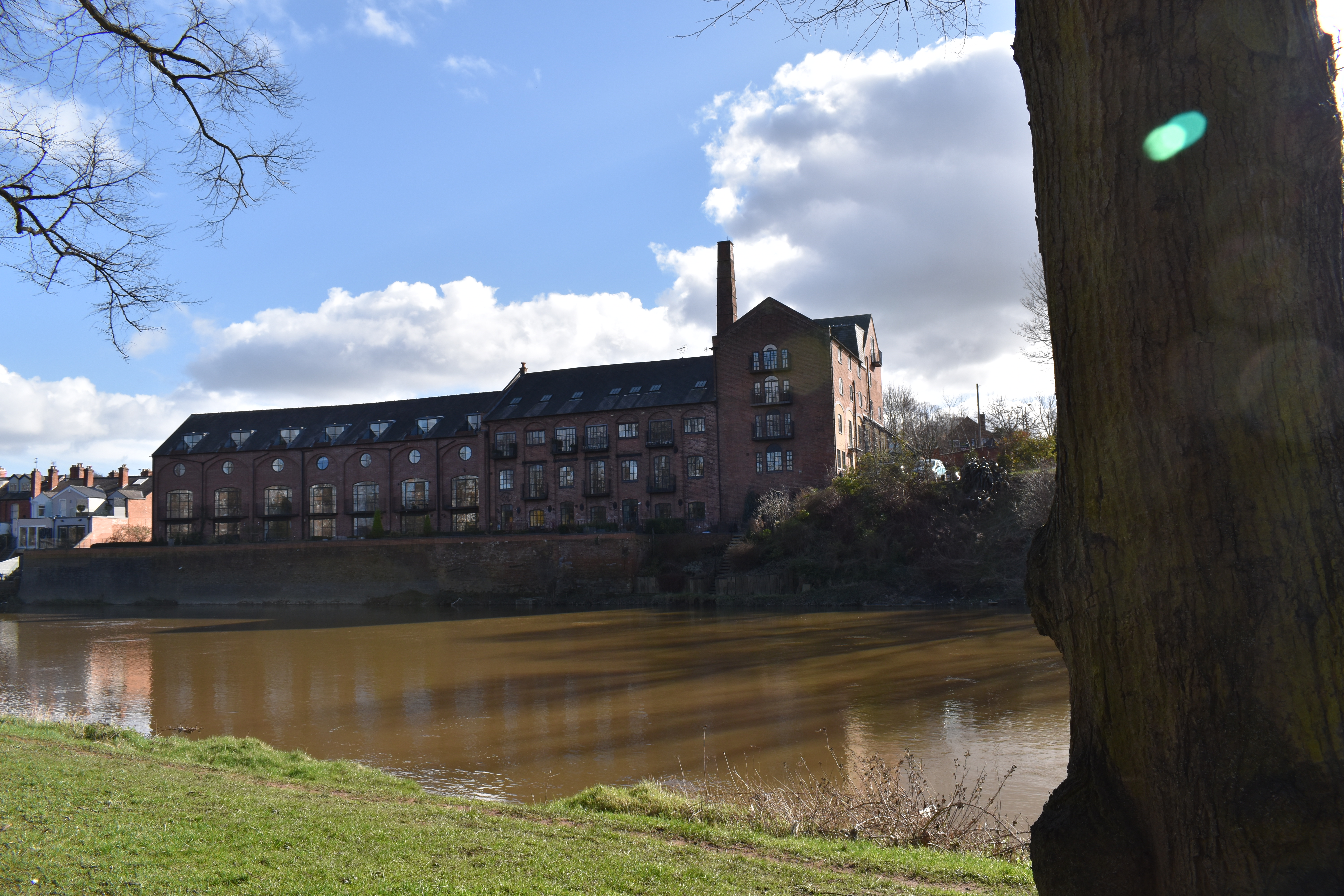
One thing that attracts us to this walk is the architecture on the opposite bank, which is so varied all with gardens flowing down to the water’s edge. The right hand photo below is of a beautifully and sensitively renovated brewery building turned into an apartment block
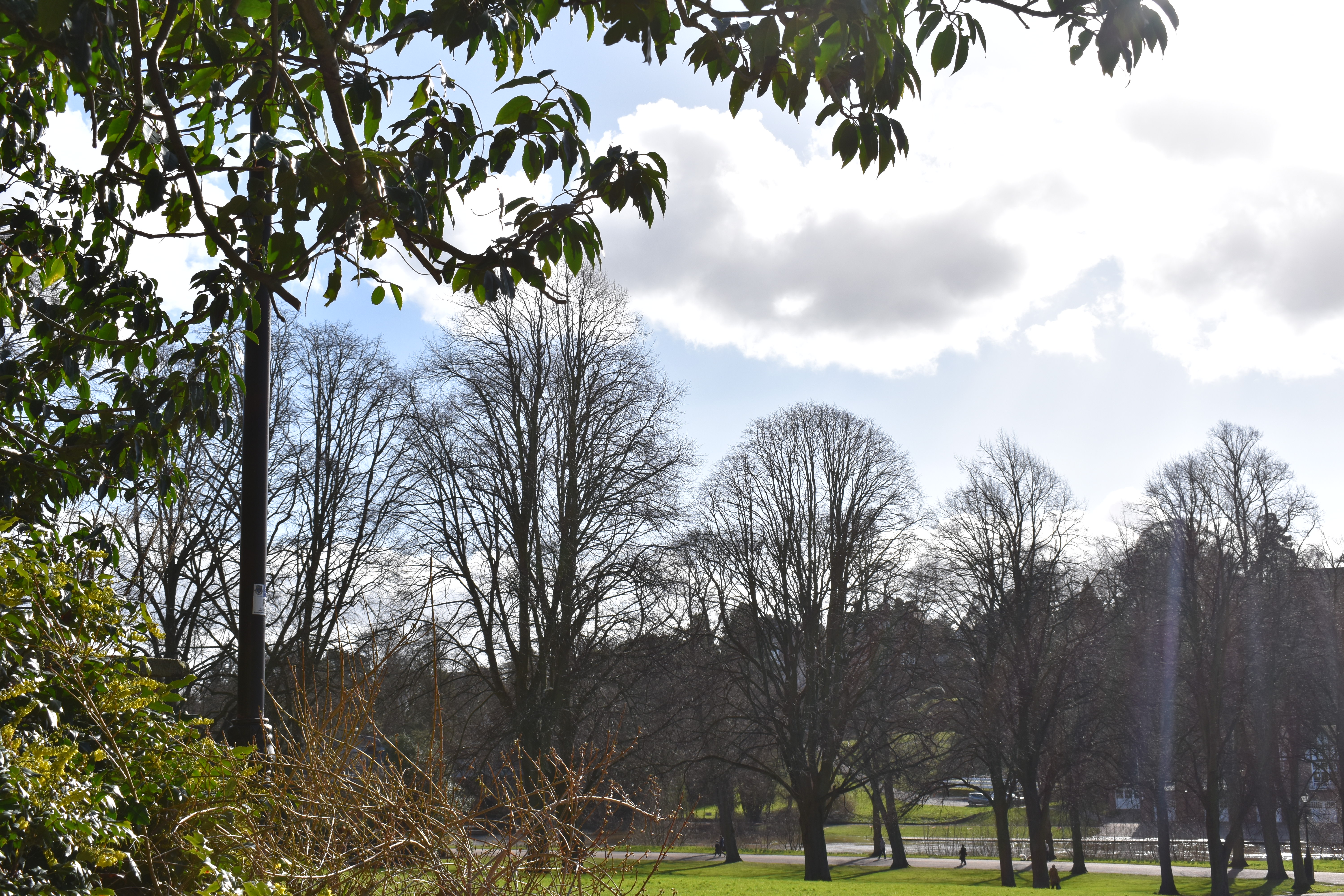
The side of the river we walk along features a long avenue of mature, very tall, upright and graceful Lindens, or Lime trees. Opened grass areas combine with these trees to give the park its character and make it such a popular place.
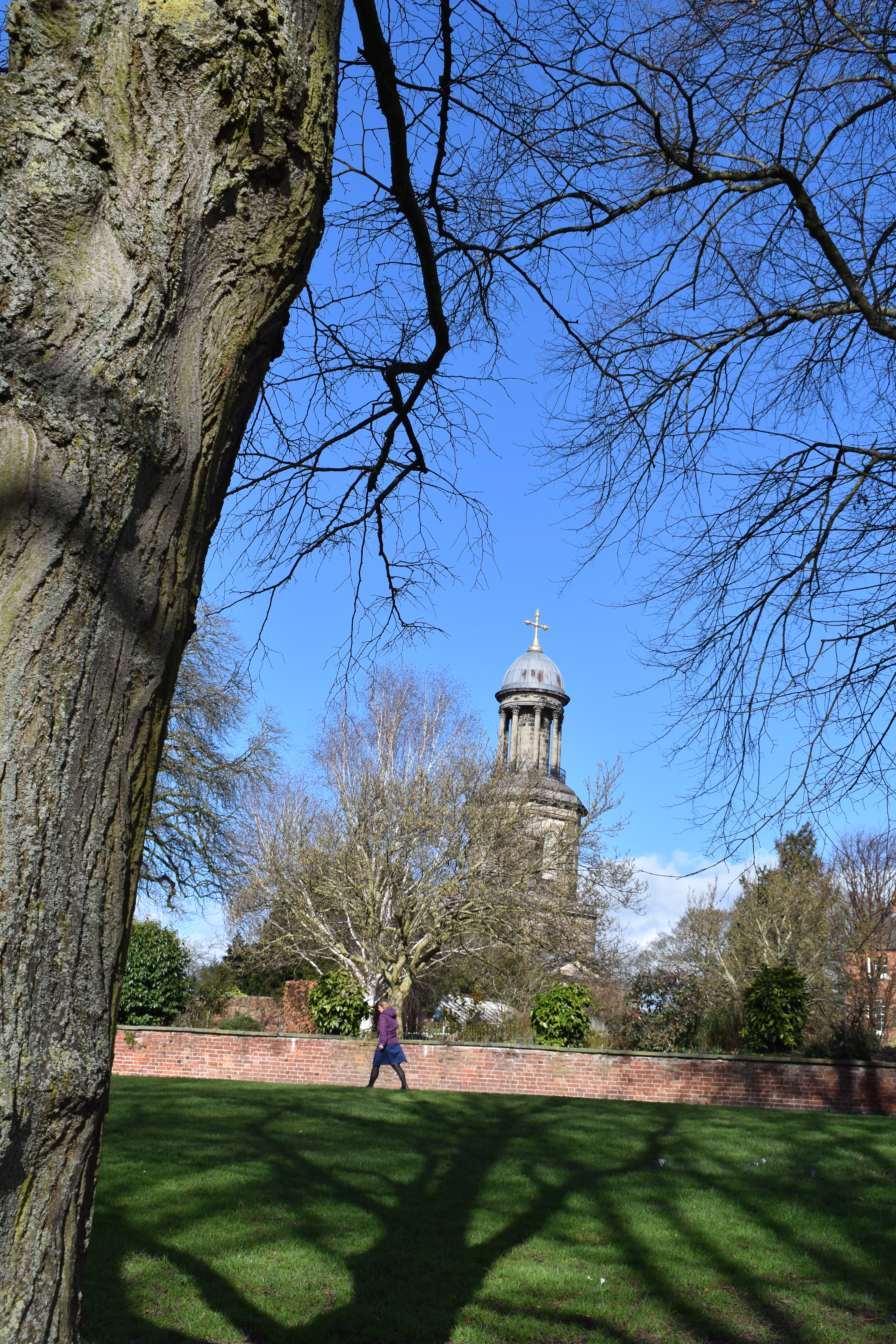
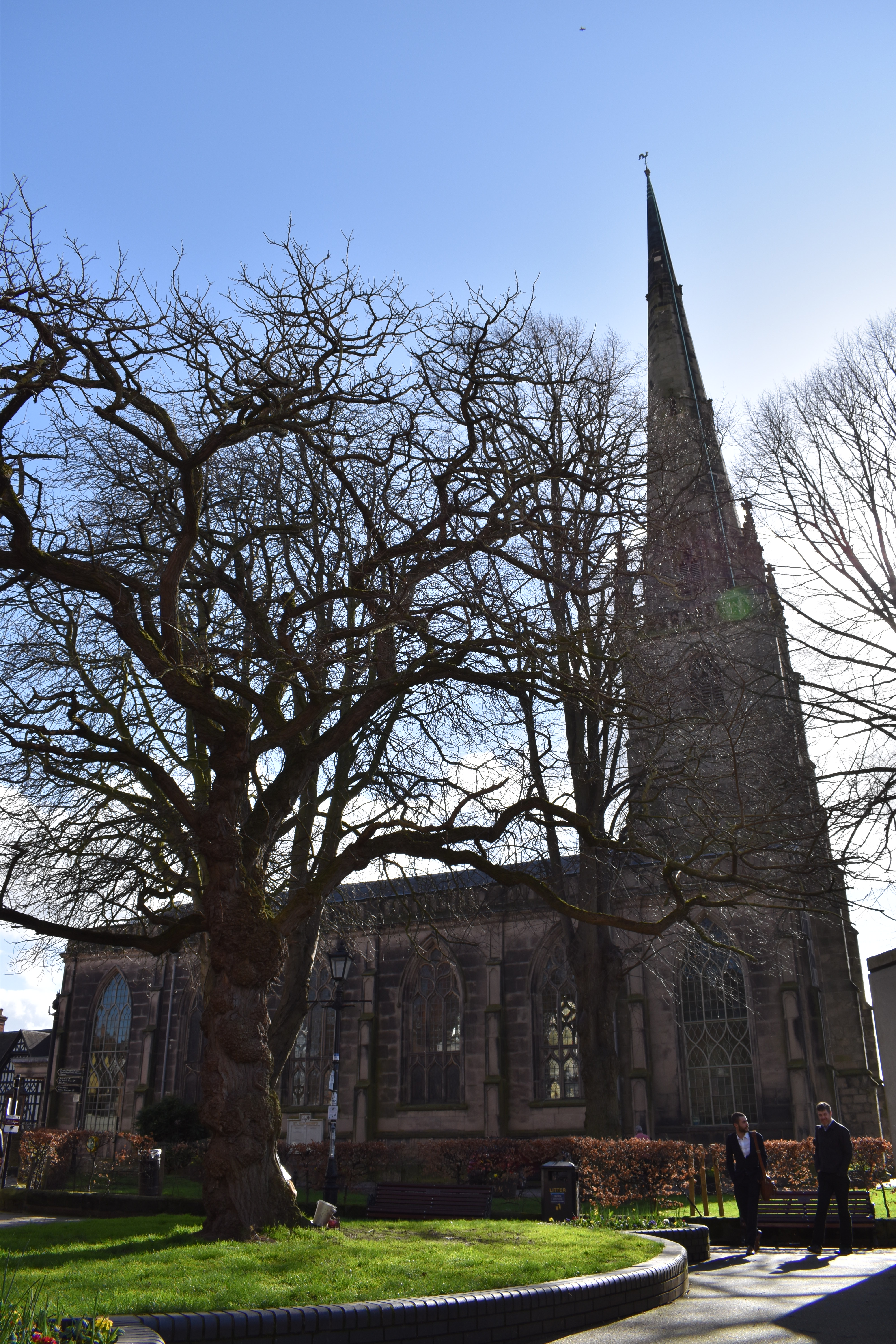
The grassed area of the park is on a slope upwards back towards town and towards the top of this slope we began to see the new St. Chad’s Church with its tower topped by a golden cross which caught the sun.
From St Chad’s we made our way back into town down and our parked car.
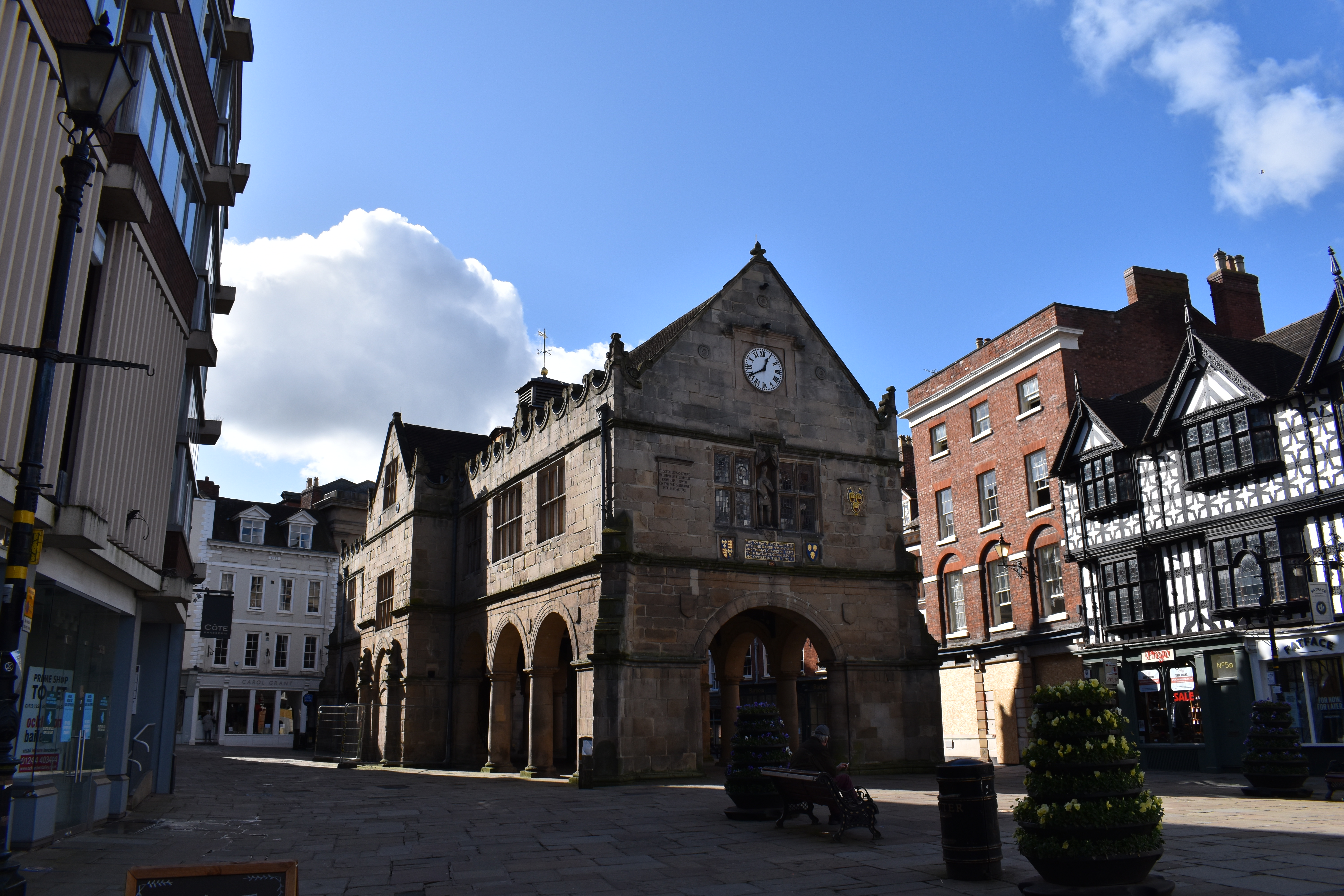
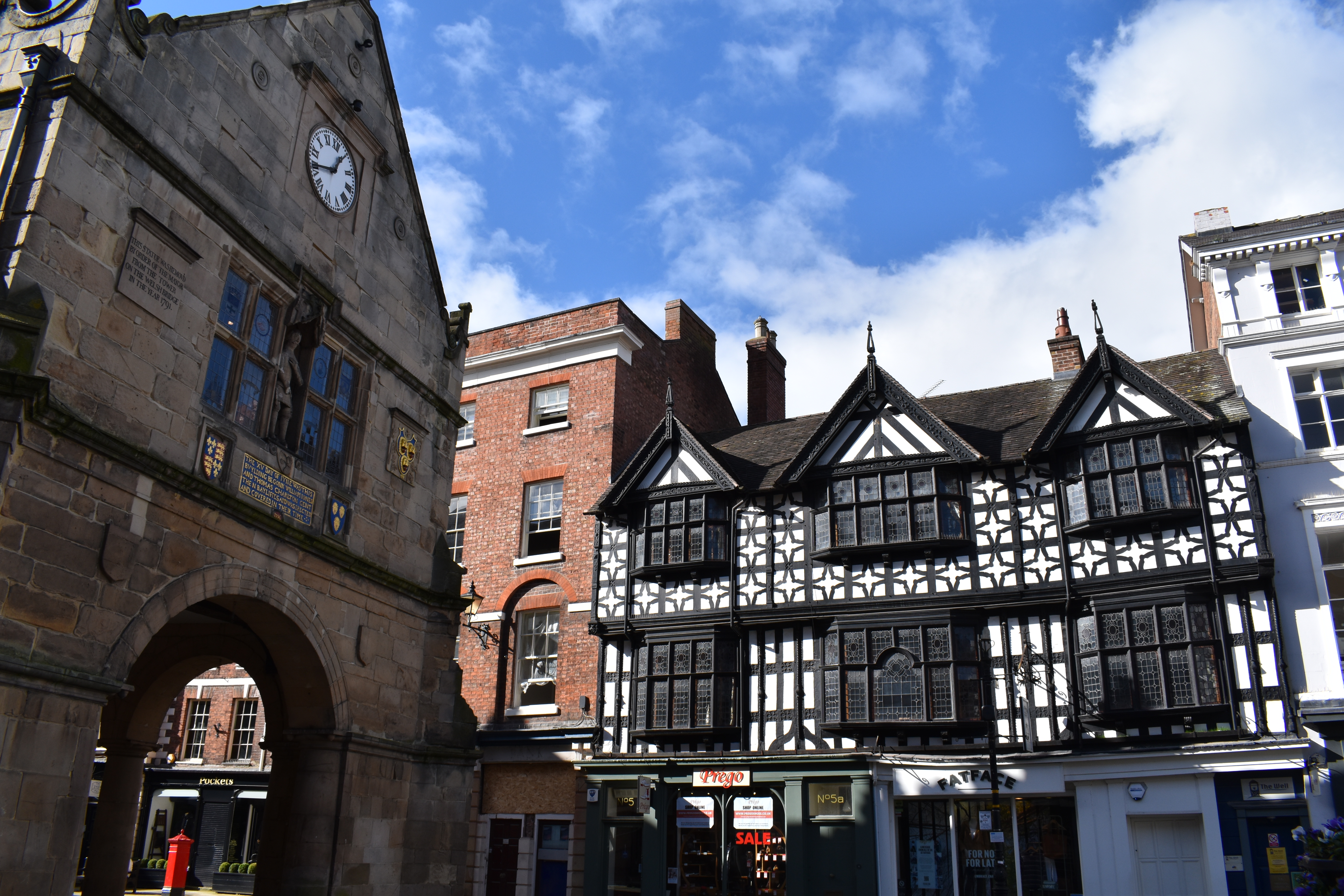
We were back by the market hall that replaced the old stone built one from The Square that we saw earlier.
We dislike going into town with too many people, noisy shops and traffic. Towns seem to make people need to hurry and forget manners and even forget how to smile, hence we visit as little as possible. During lockdown we found it necessary to go into our nearest town Shrewsbury. It felt a different place with so few shoppers around and little traffic.
Decades of destruction has changed the face of Shrewsbury when poor planning decisions were made allowing dozens of beautiful, architecturally important buildings to be demolished to make way for very poor buildings to take their place and in one area, Frankwell the heart of a mediaeval village within the town boundaries was ripped out to make room for a roundabout! Despite this our county town has over 300 listed buildings remaining today.
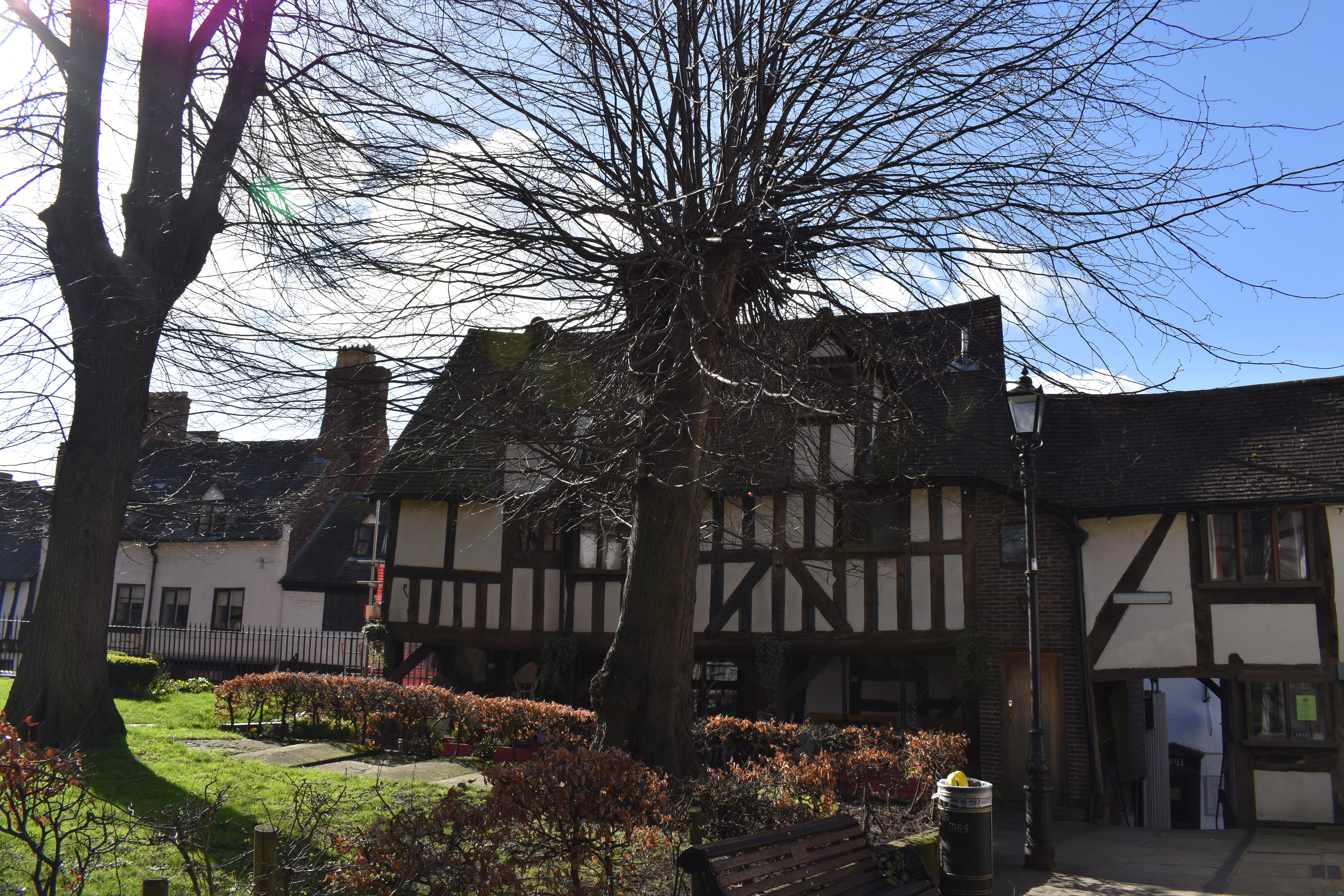
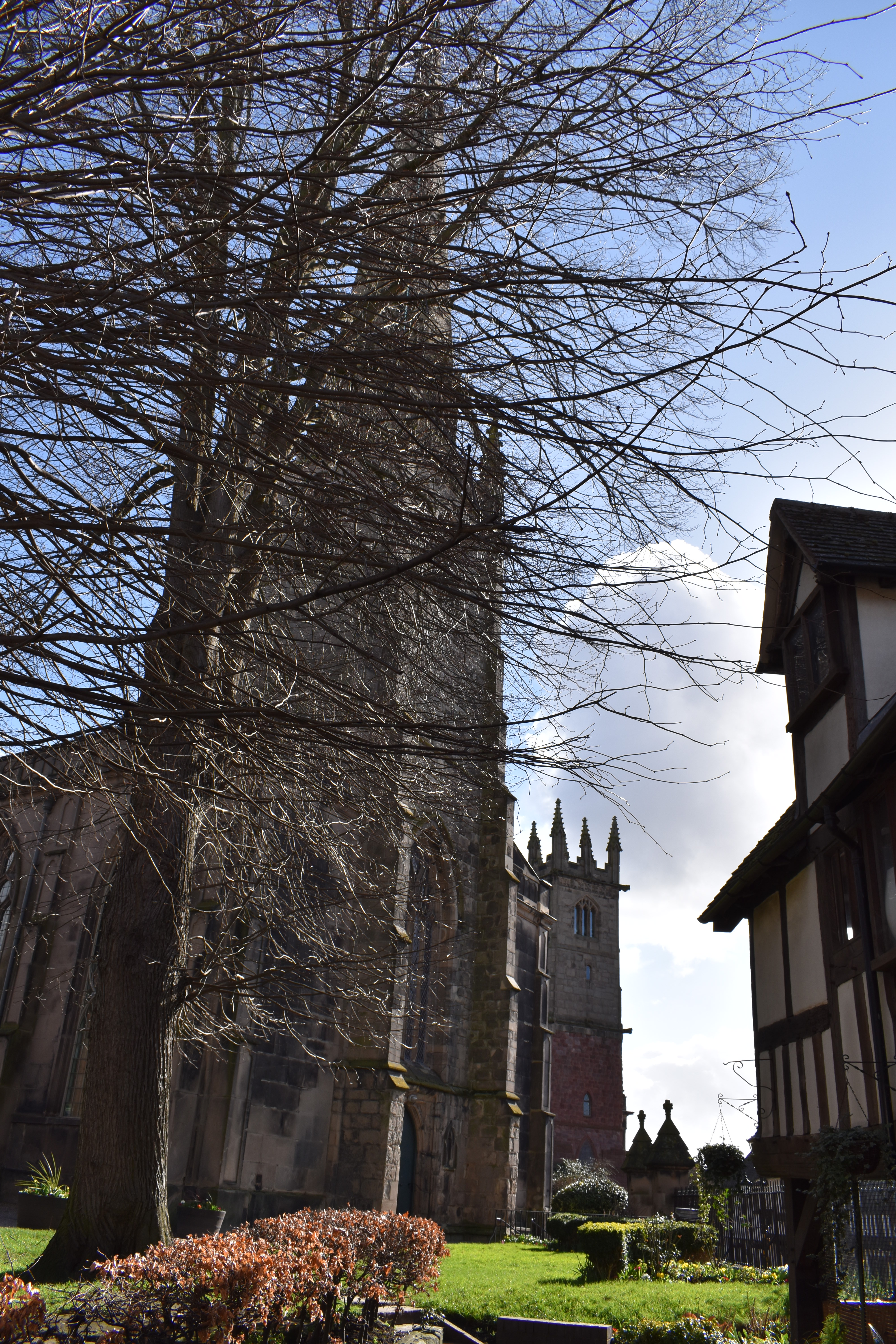
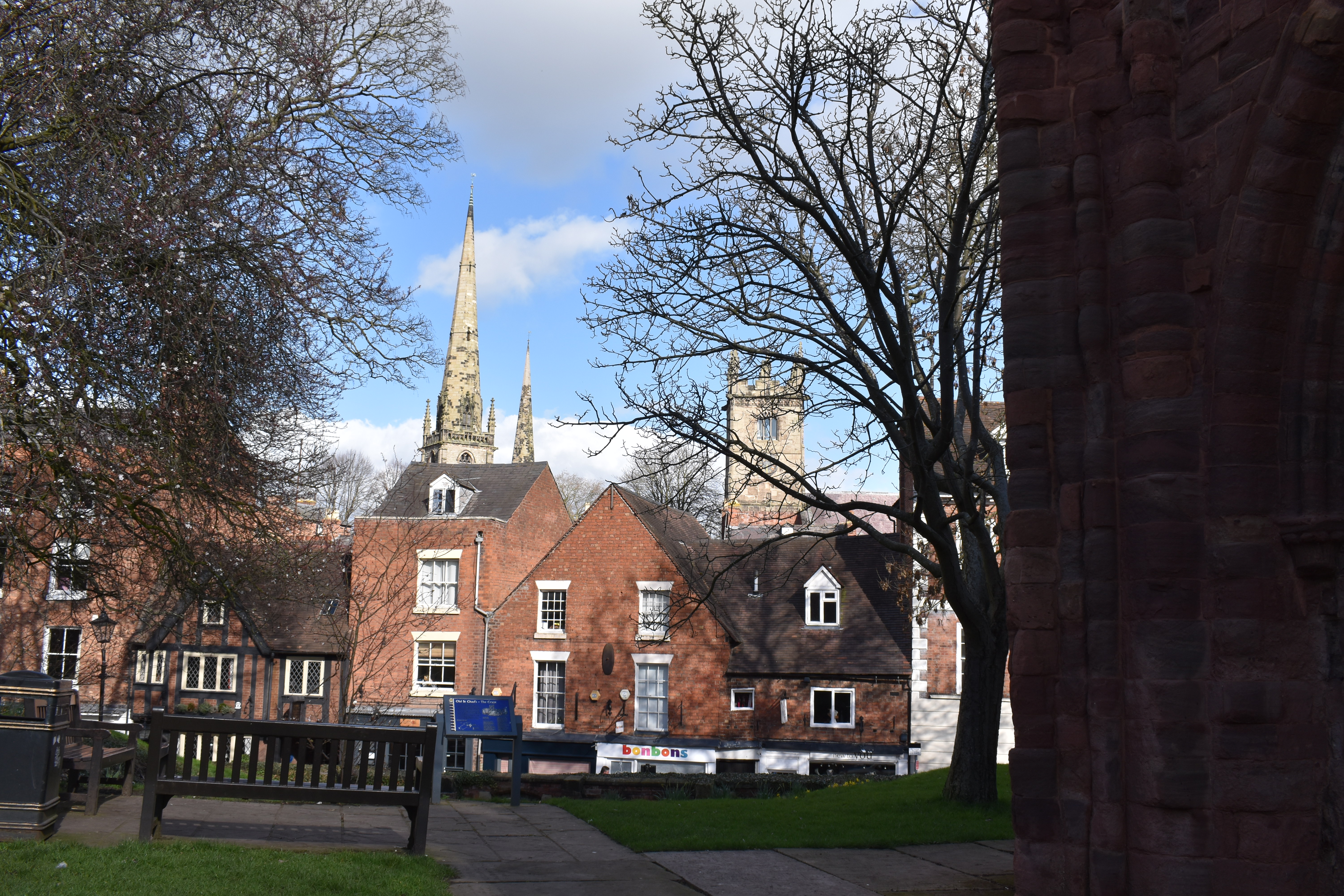
Hidden behind the main streets of the town down a narrow road can be found a beautiful area around open lawn with mature trees and two churches bounded on one side by rambling medieval buildings, the Bear Steps.
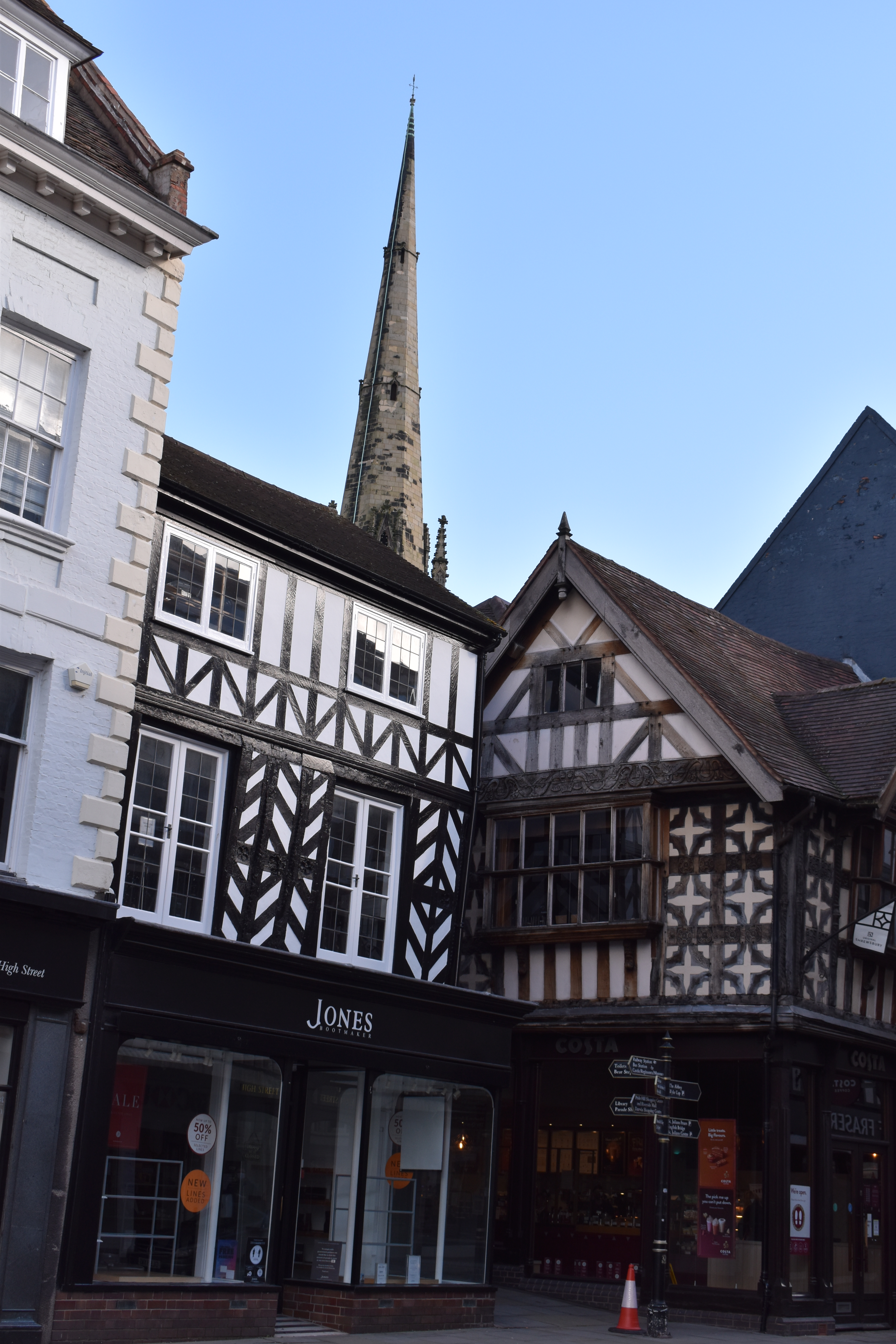
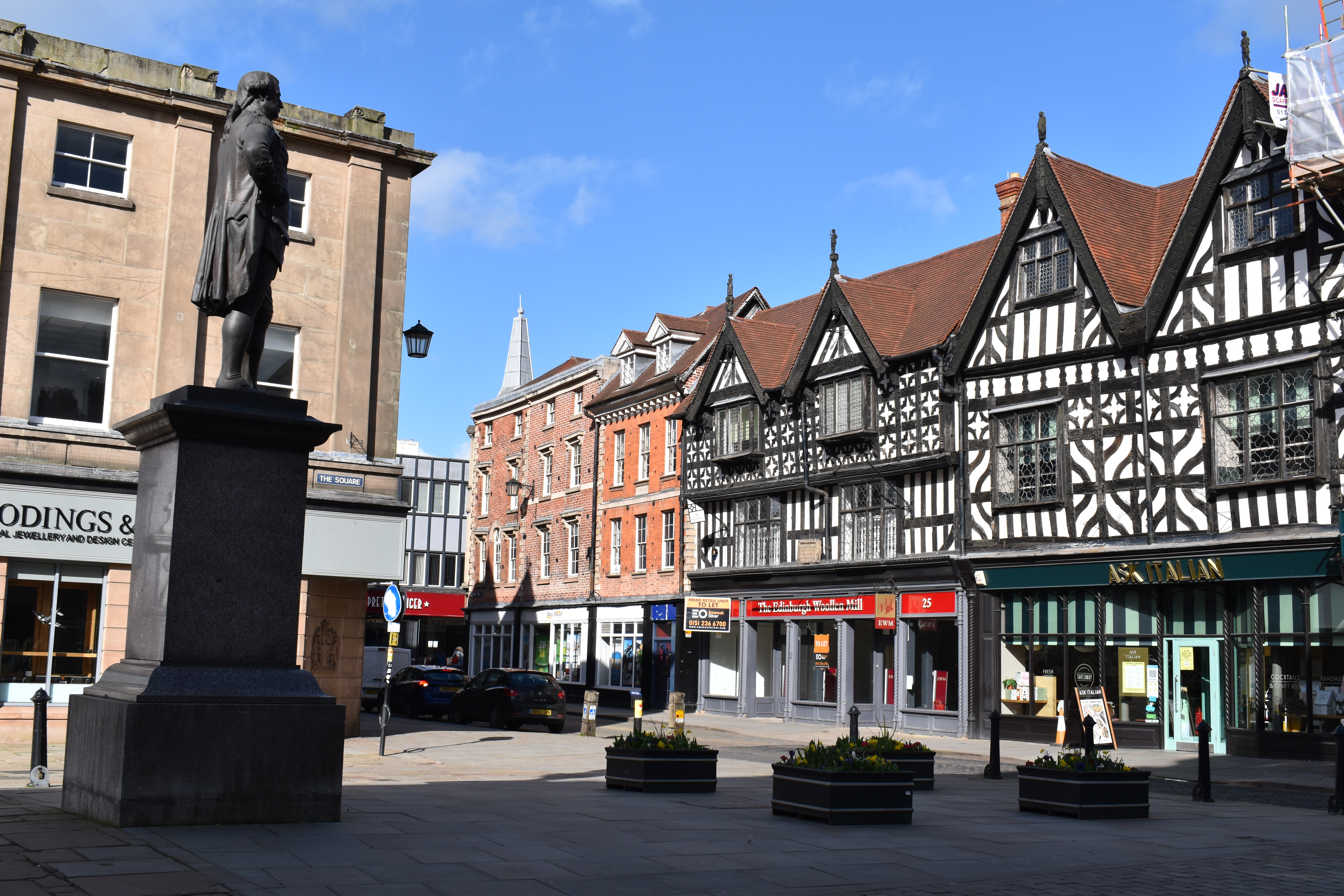
We left this area by following a narrow passageway called Grope Lane. Shrewsbury has its own name for these narrow alleys, “shuttes”, but the steep one we took is called simply ‘lane’. It took us down into the High Street where we made for the Market Square. This area is home to an interesting array of architectural styles, but sadly some of our favourites were hidden behind scaffolding.
From the square we made our way towards another open area, the home of the original St Chads church. Today it presents as a green space dotted with seats for locals to rest and chat upon. The only stone work showing is a red sandstone chapel. The main church collapsed and was reduced to a pile of rubble overnight back in 1788. Thomas Telford designed its replacement which is still standing near the town park. I have a photo of the new church in my next blog – part two of this wander around Shrewsbury.
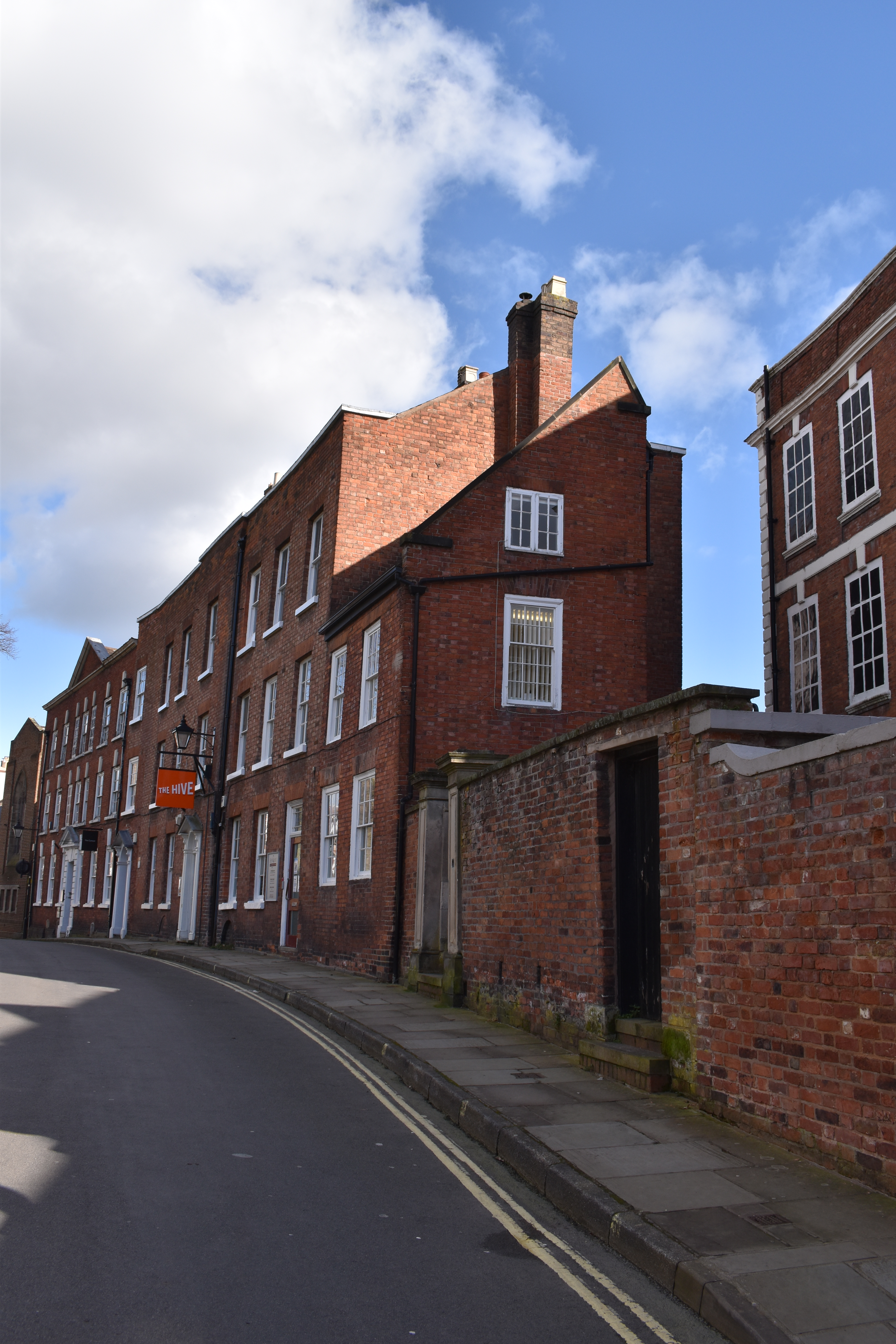
We left the openness of the green space and wandered back into town, via quiet red-bricked backstreets. We were aiming for Wyle Cop, a steep shopping street full of ancient attractive buildings housing unusual shops.
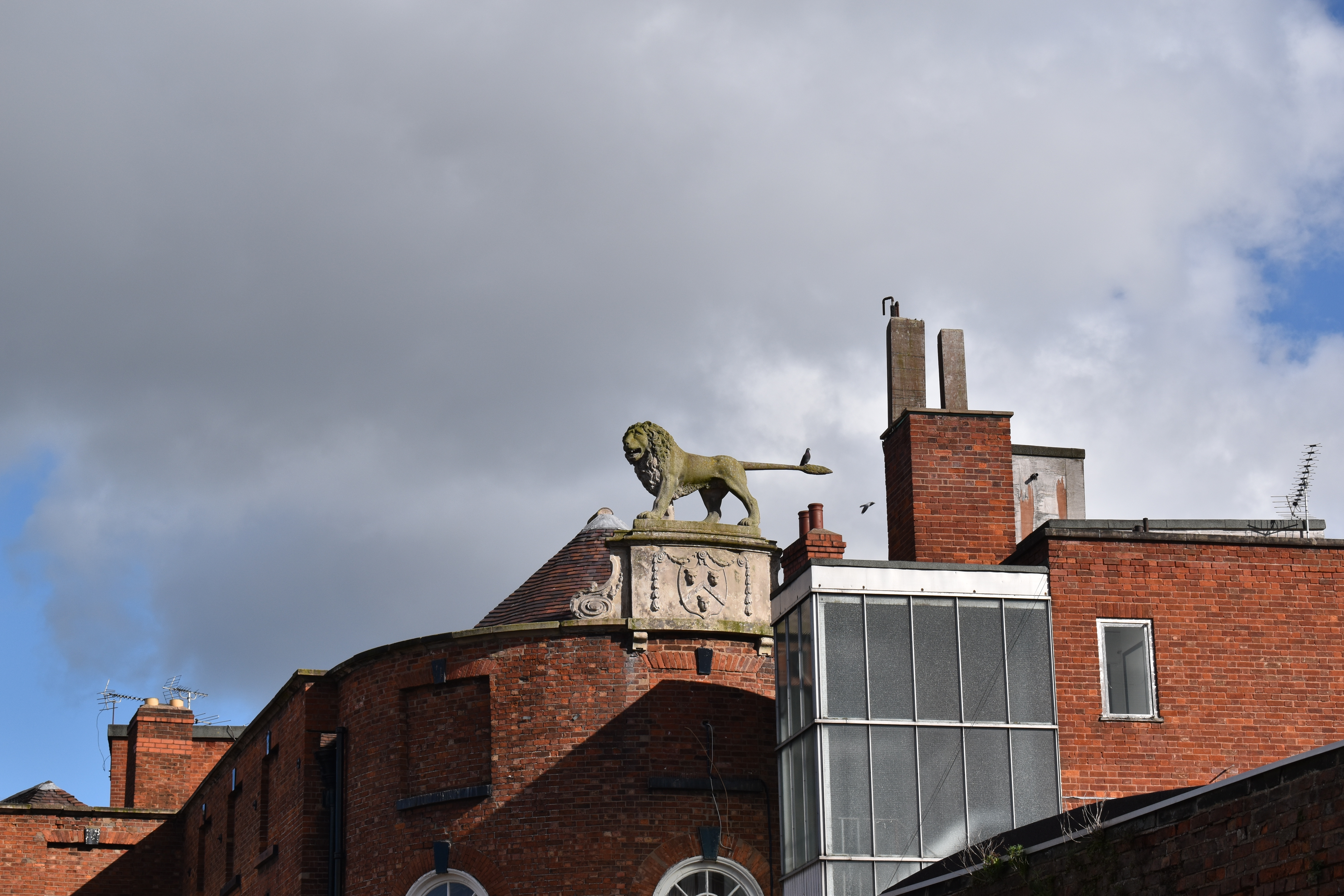
We took the lane between the red-brick old mill building and the stone-built imposing building which was once a cinema, aiming for the walkway alongside the river. (see part two)
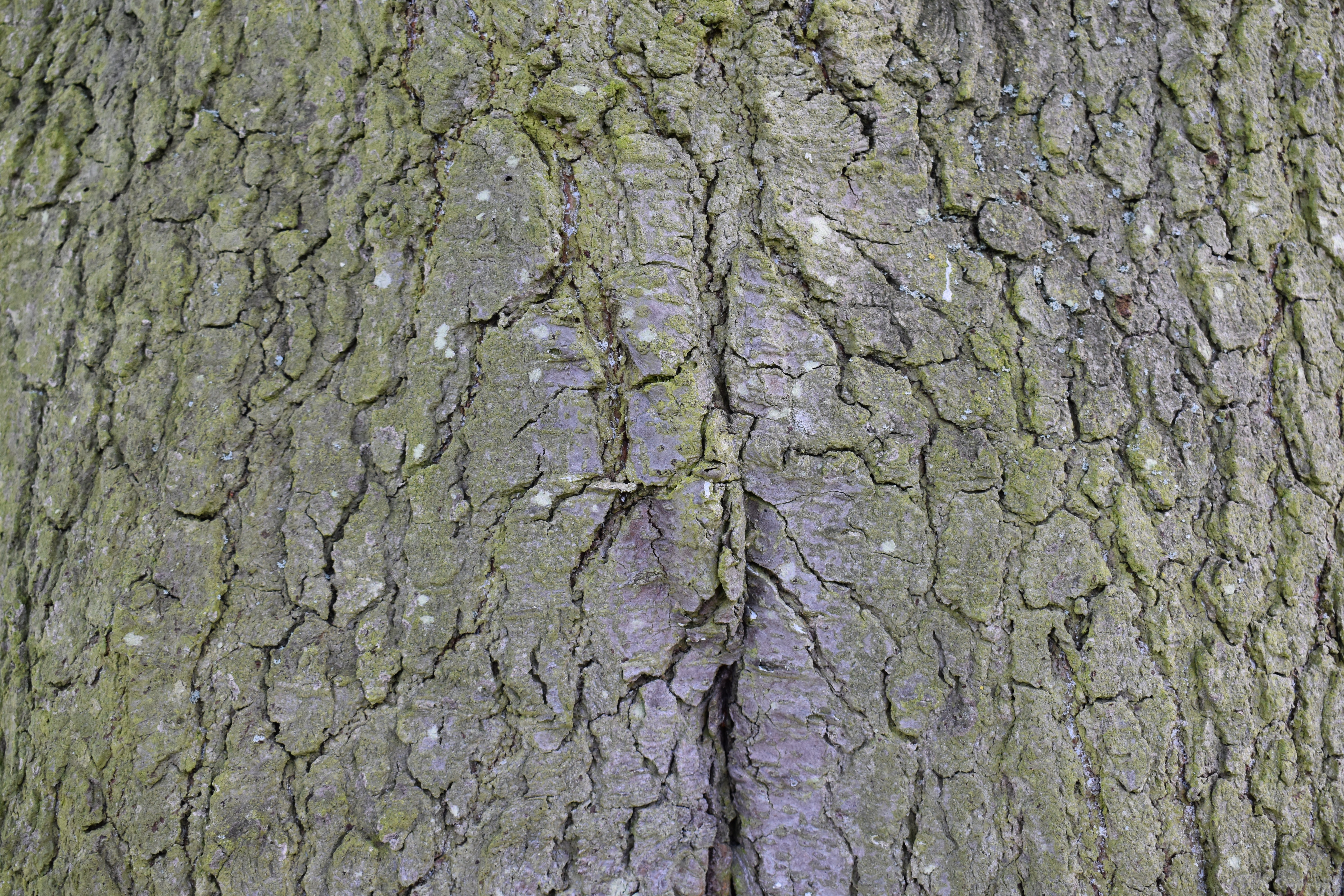
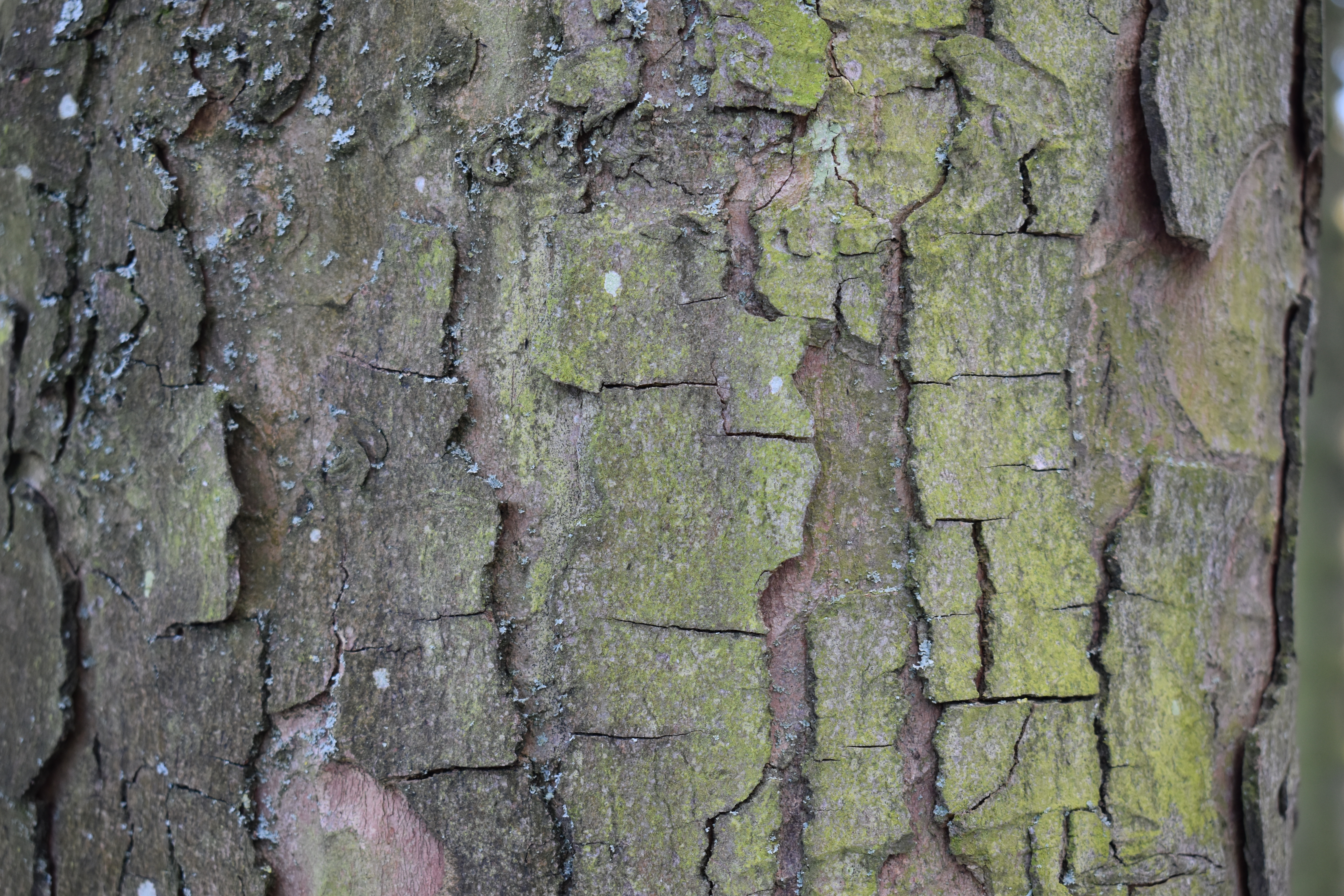
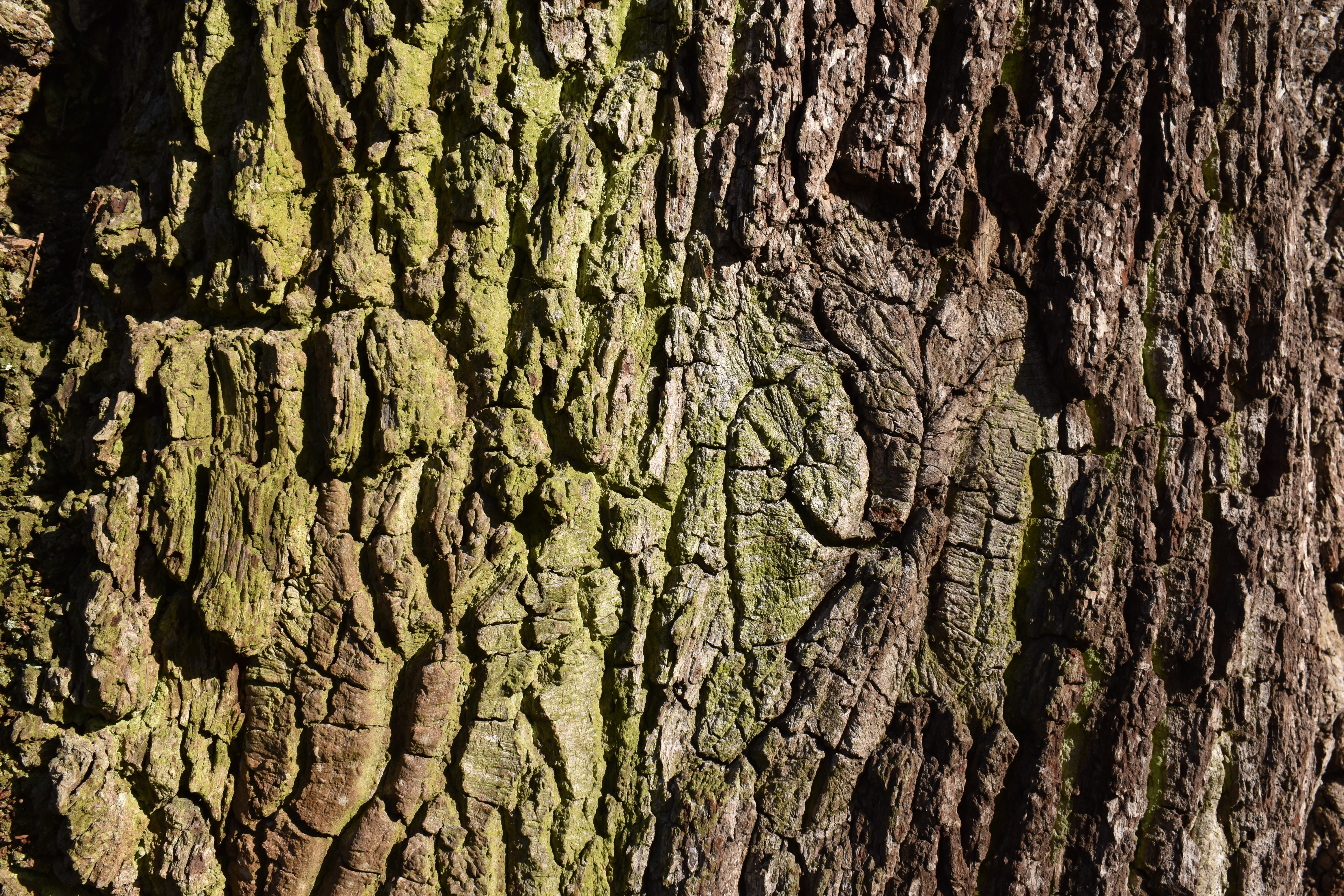
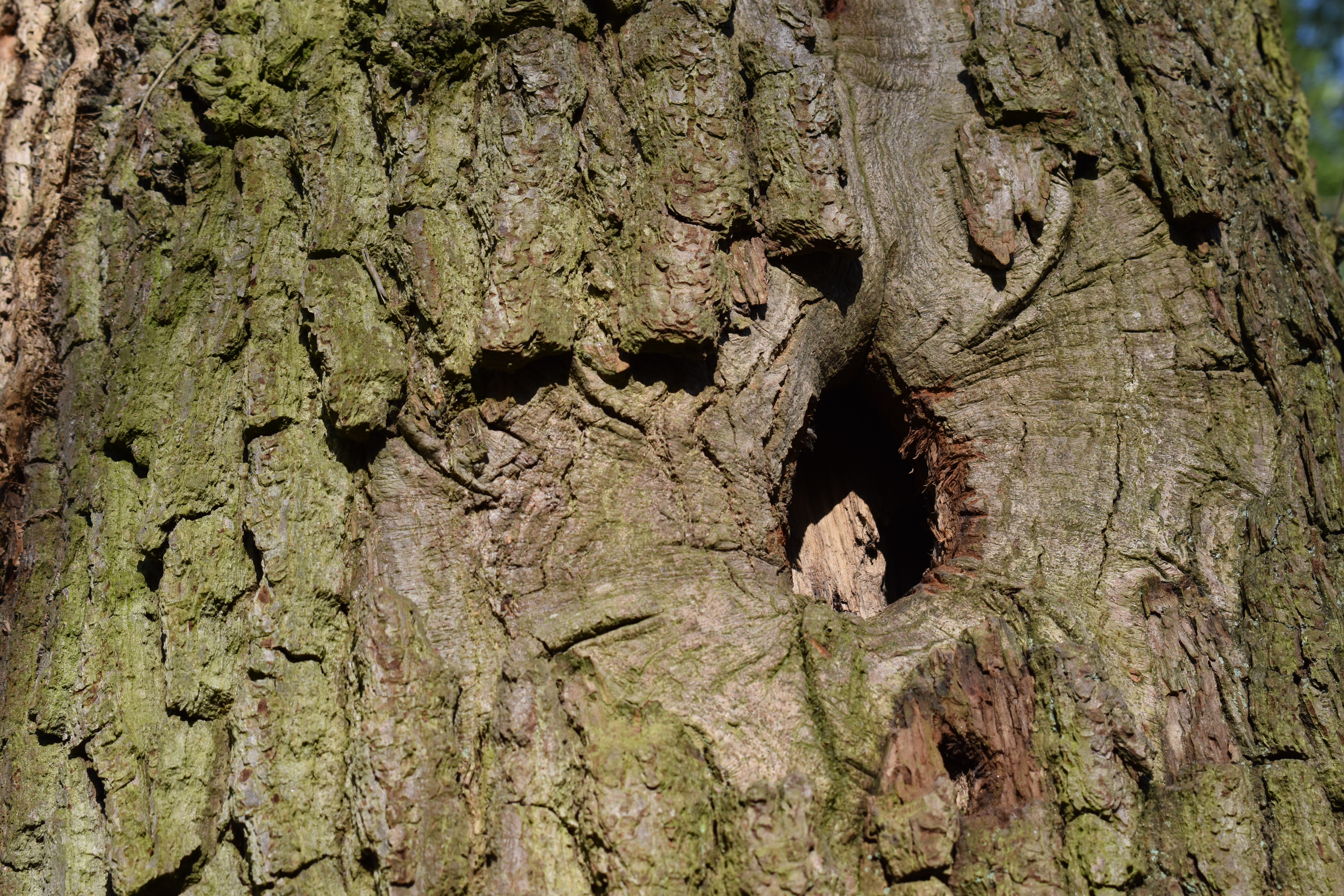
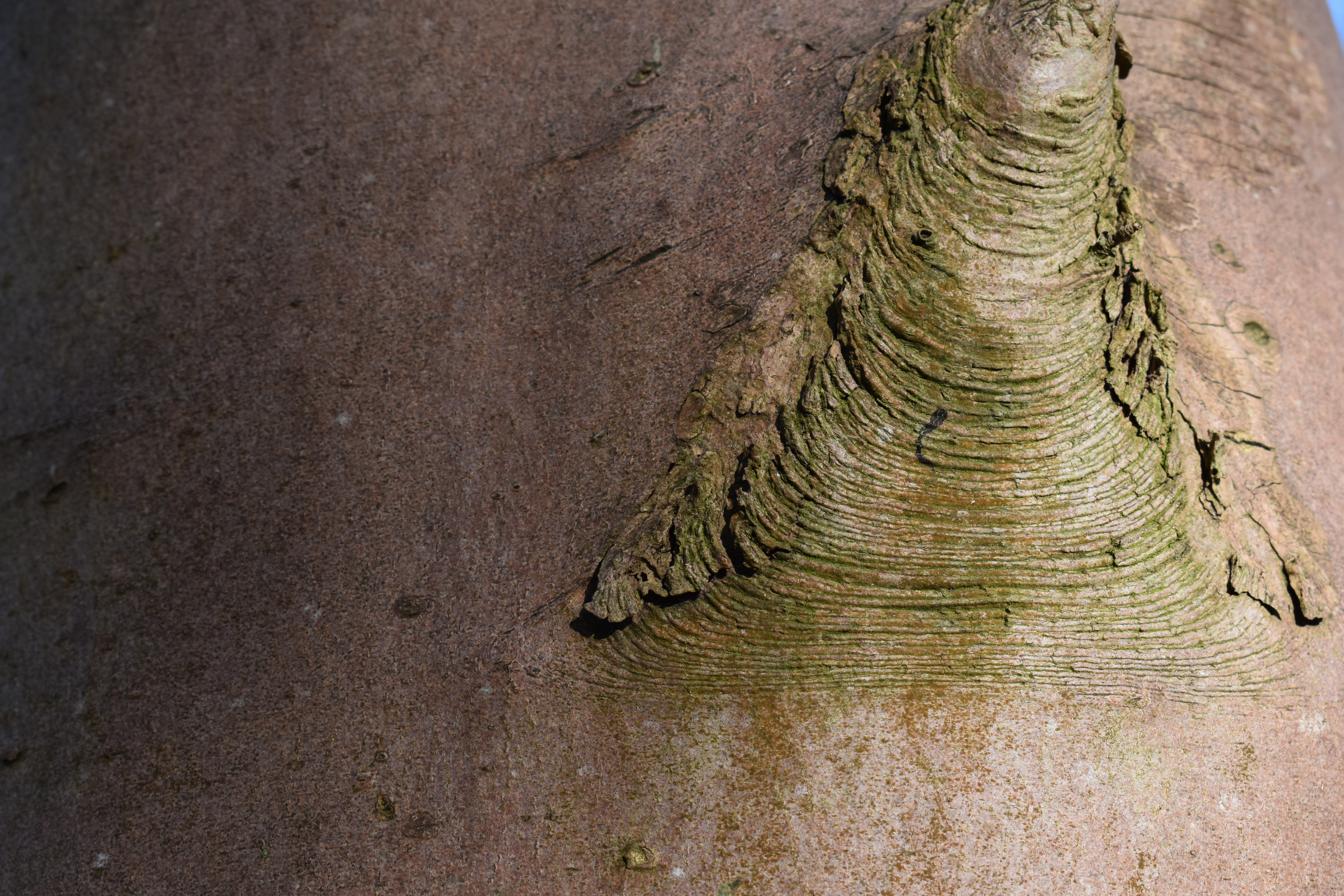
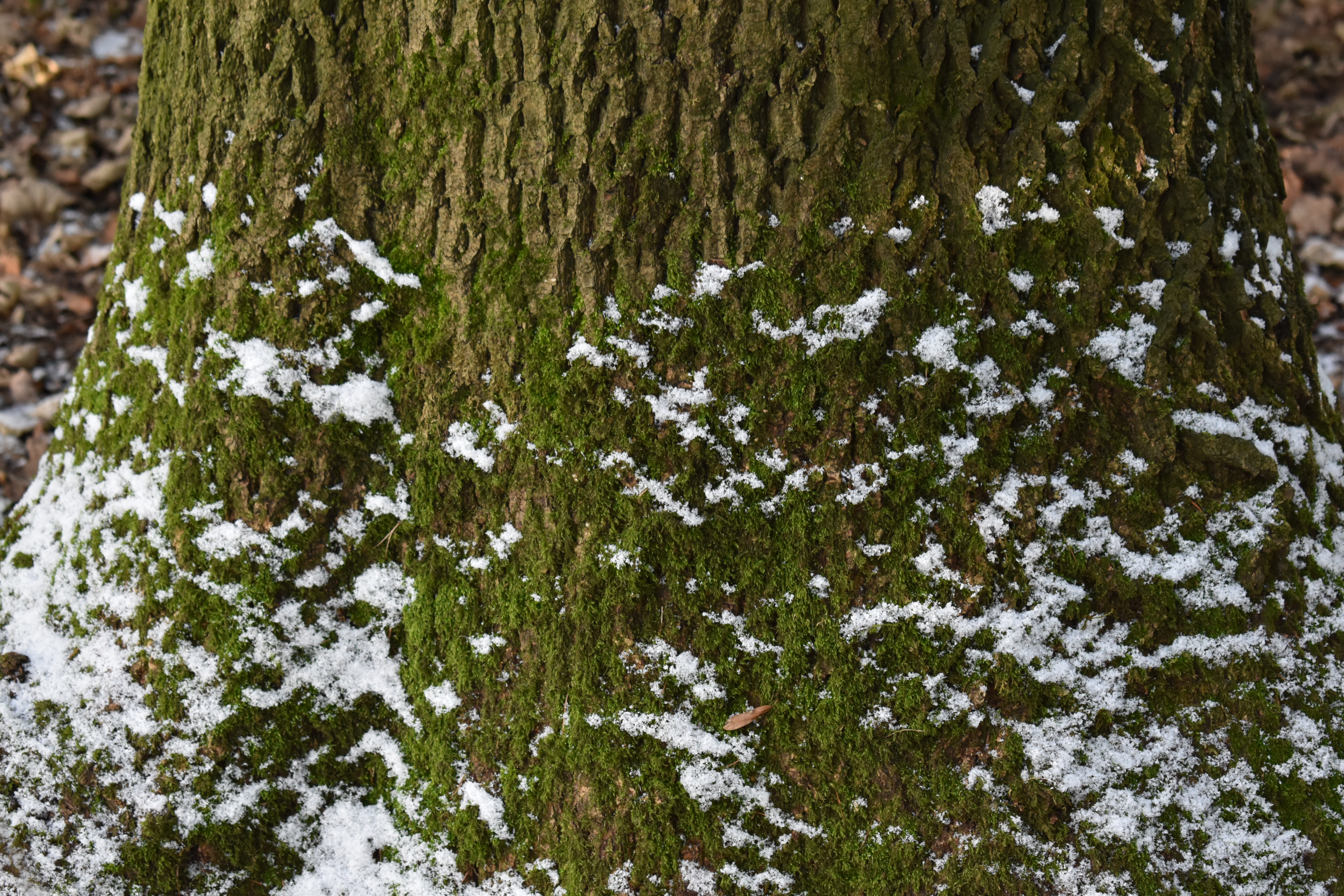
This is the final winter walk report from our wanderings around the woodland walks at our local National Trust property, Attingham Hall. So far we have concentrated on different aspects of the trees we love looking at as we wander, and this one will be no different. We will be enjoying the differences in their bark, colours, textures and patterns.
Hopefully the next report may be more spring like!
Here is a gallery of the shots I took in late February showing close-ups of tree bark.
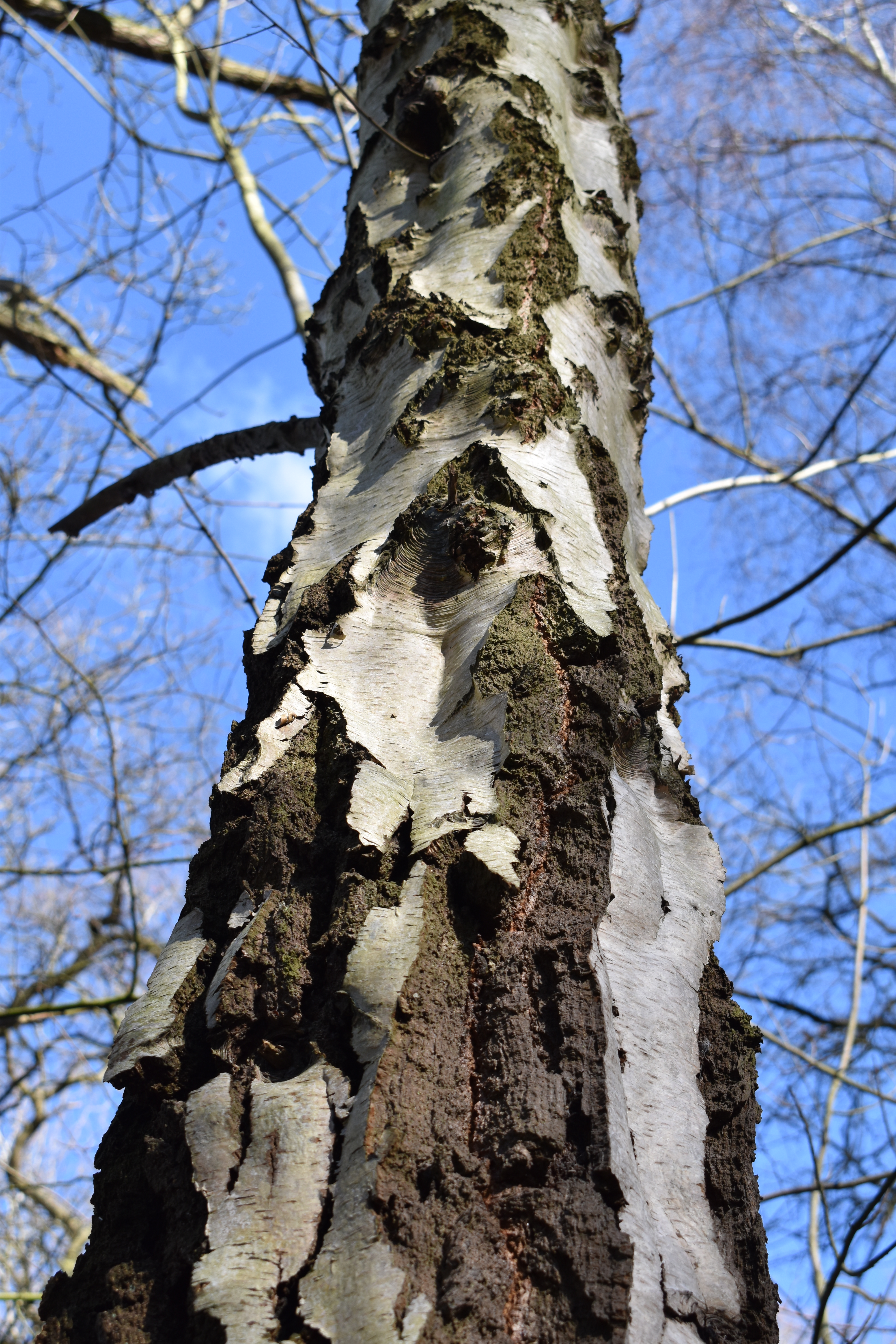
I thought I would finish with what is in my mind the most beautiful bark of all, that of the Betula pendula, our native birch. It changes so much during the lifetime of the tree. My photo shows it at its most mature. Beautiful!
Winter has now progressed into February a month of weather extremes and of plenty of interest in our garden. So here are my February pages from my Garden Journal 2021. I hope you enjoy seeing what has been happening in our Avocet patch.
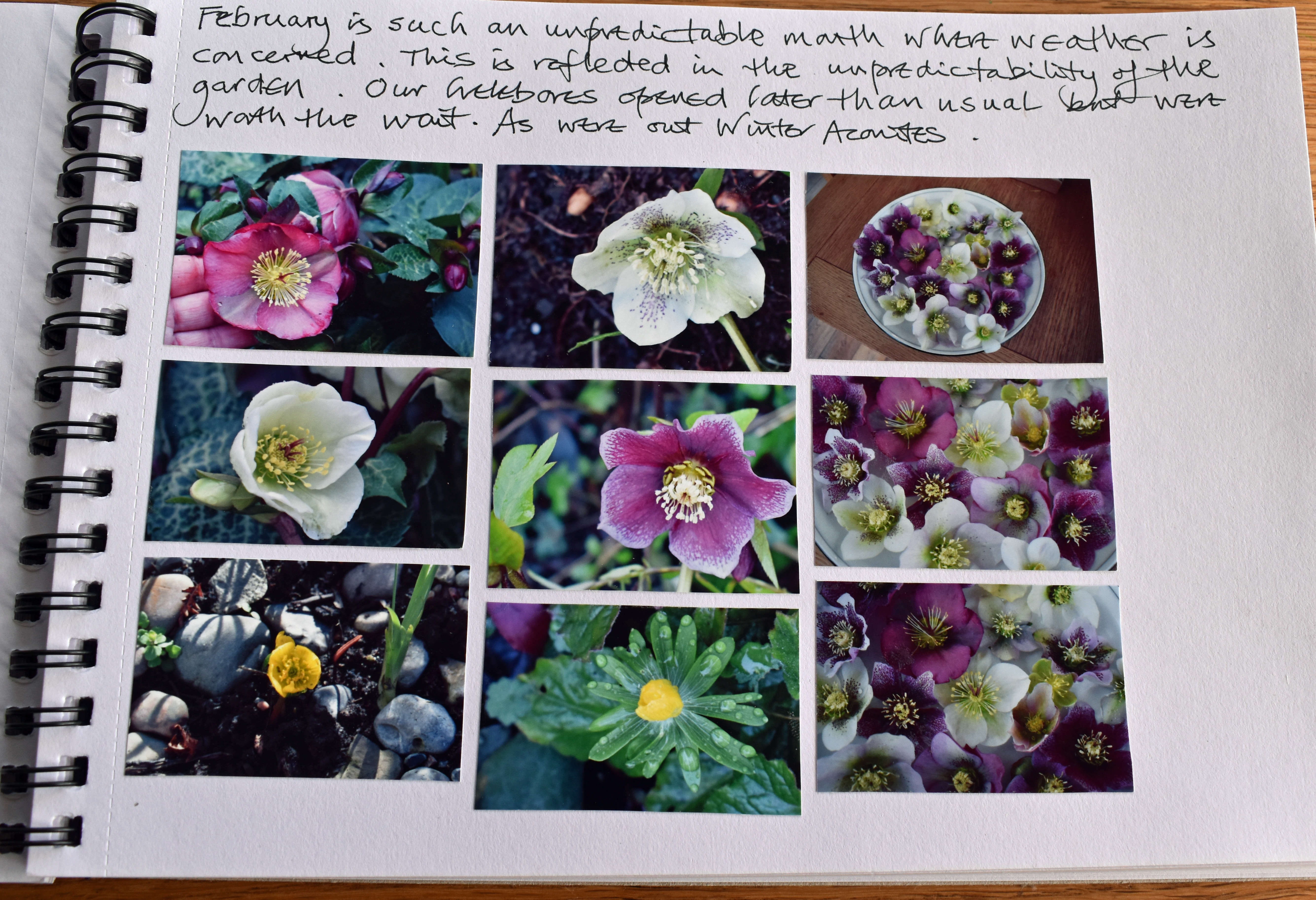
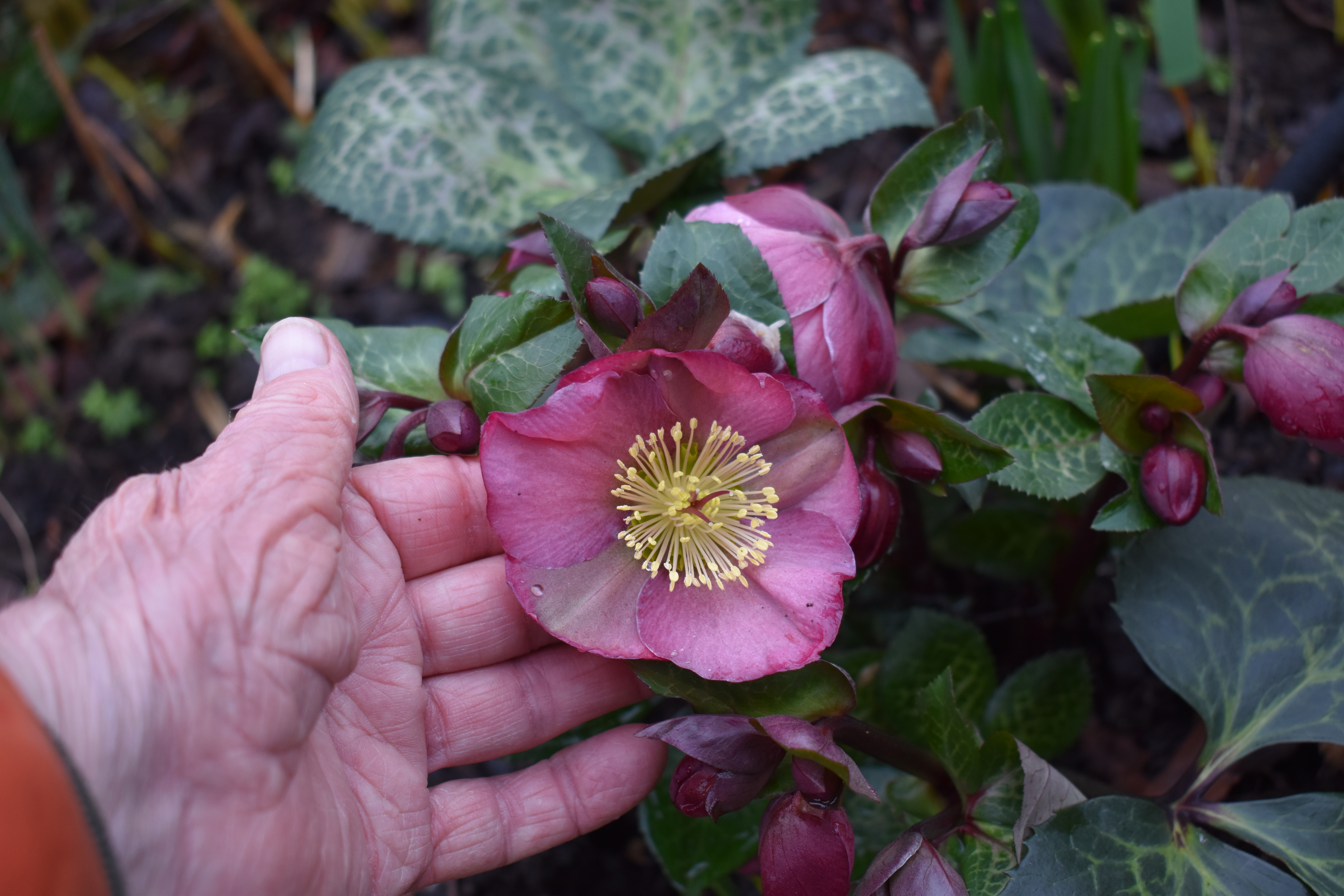
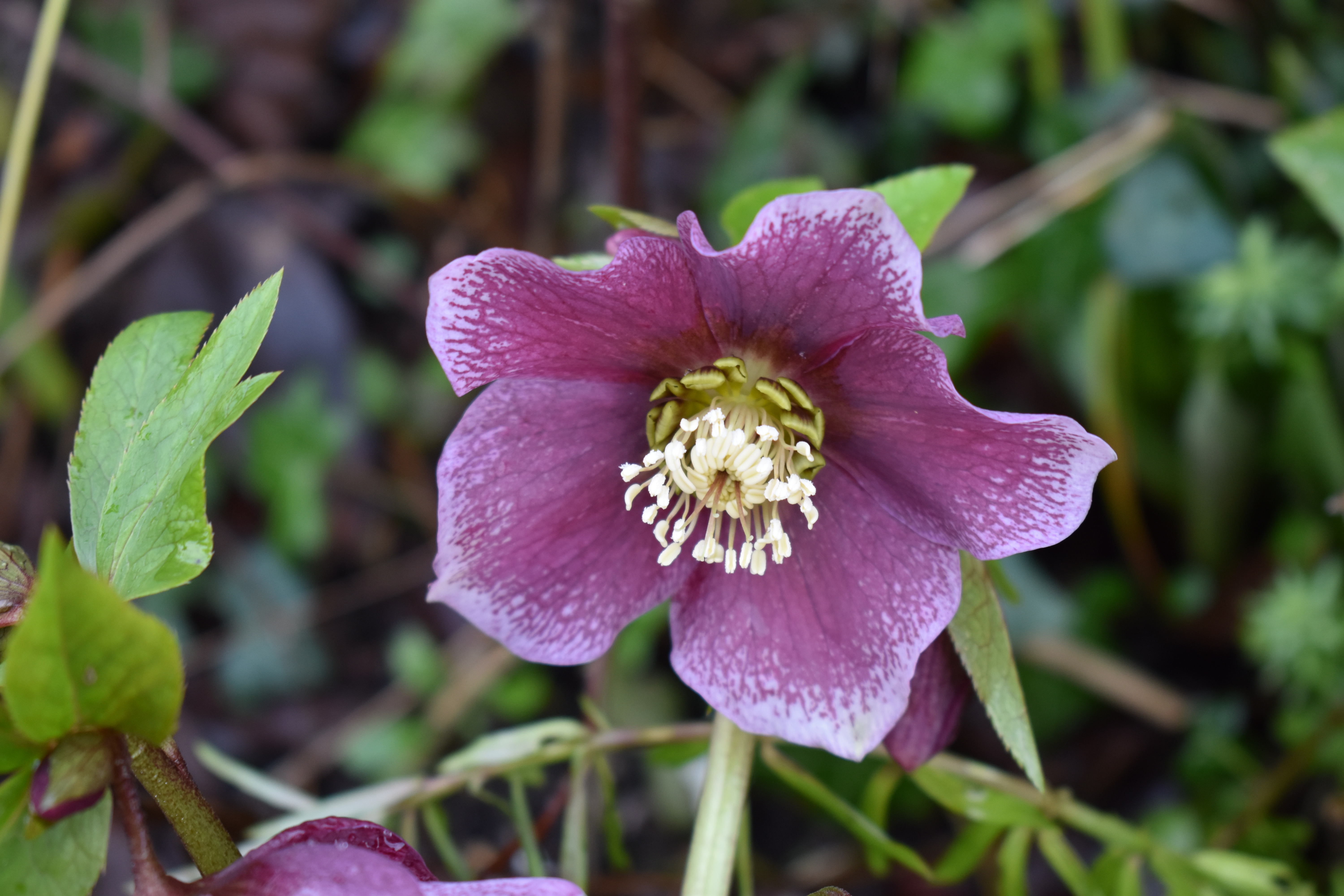
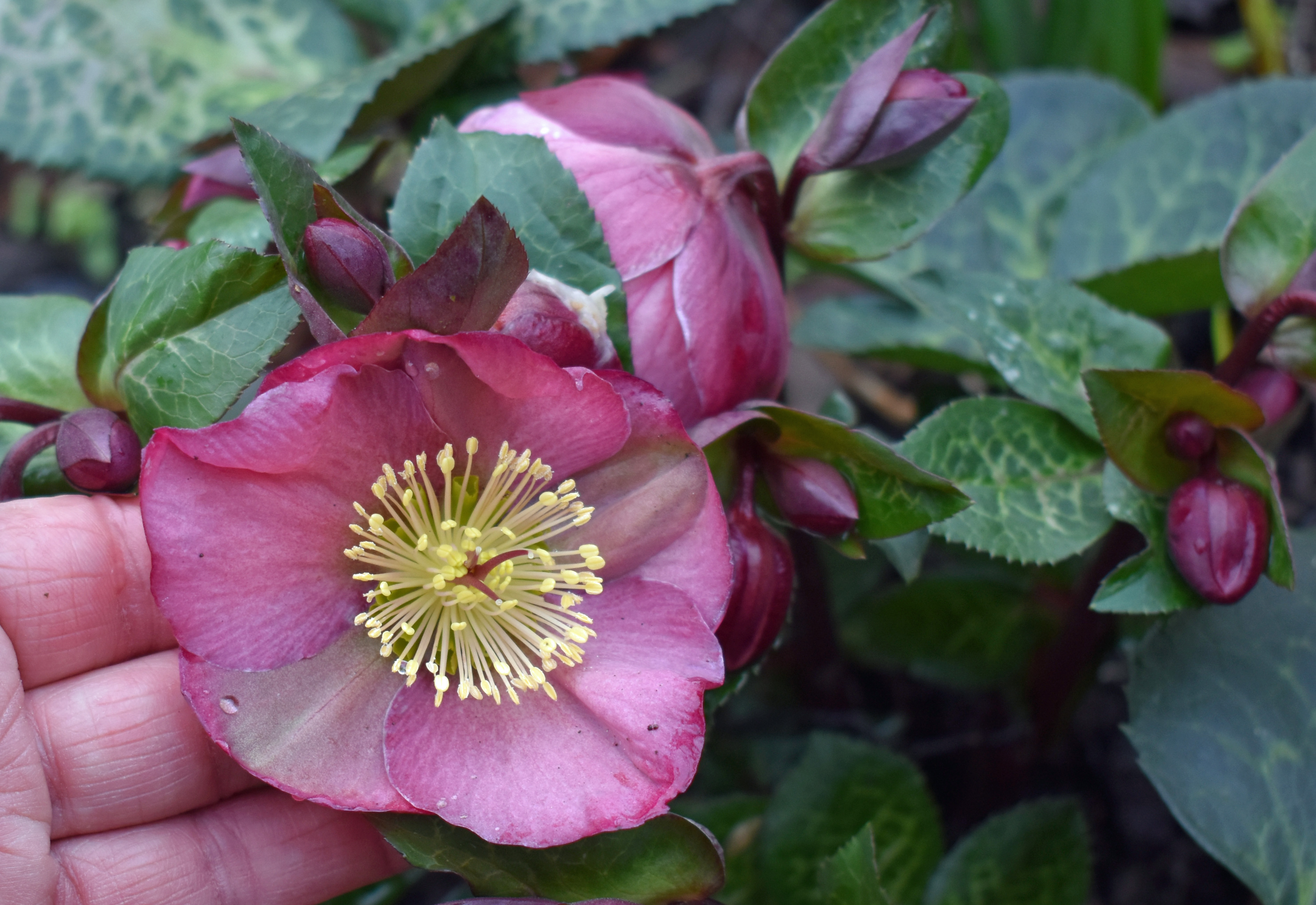
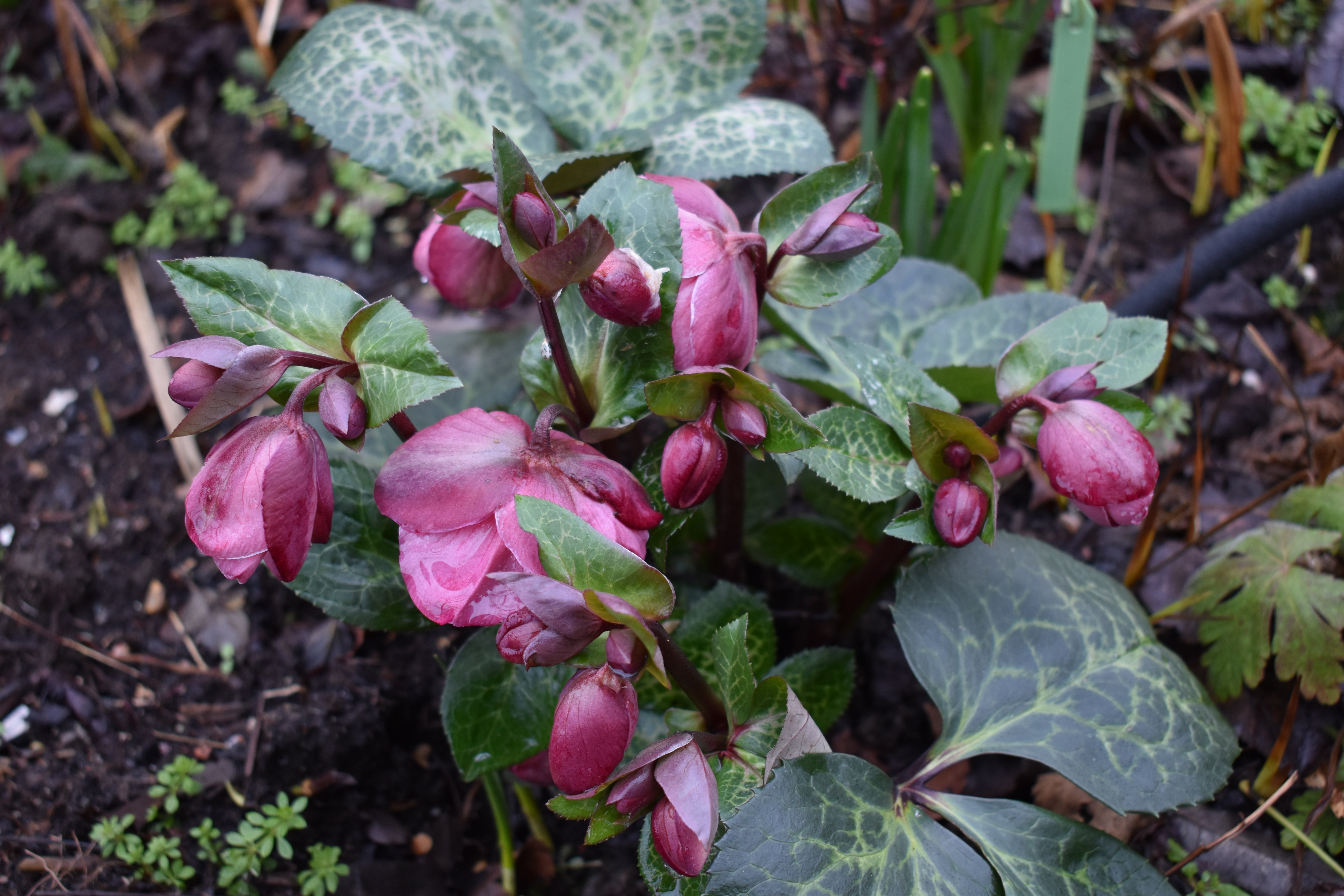
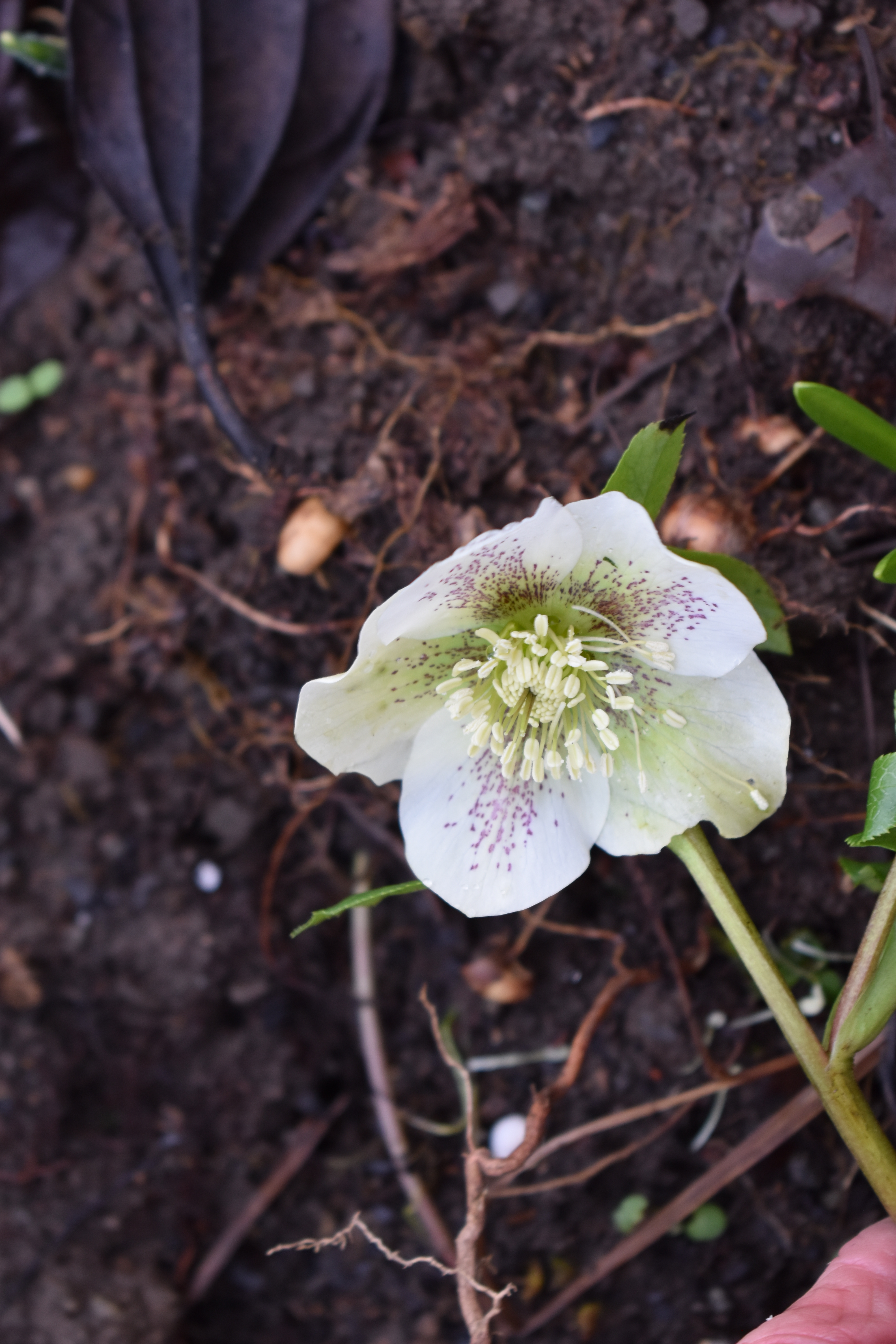
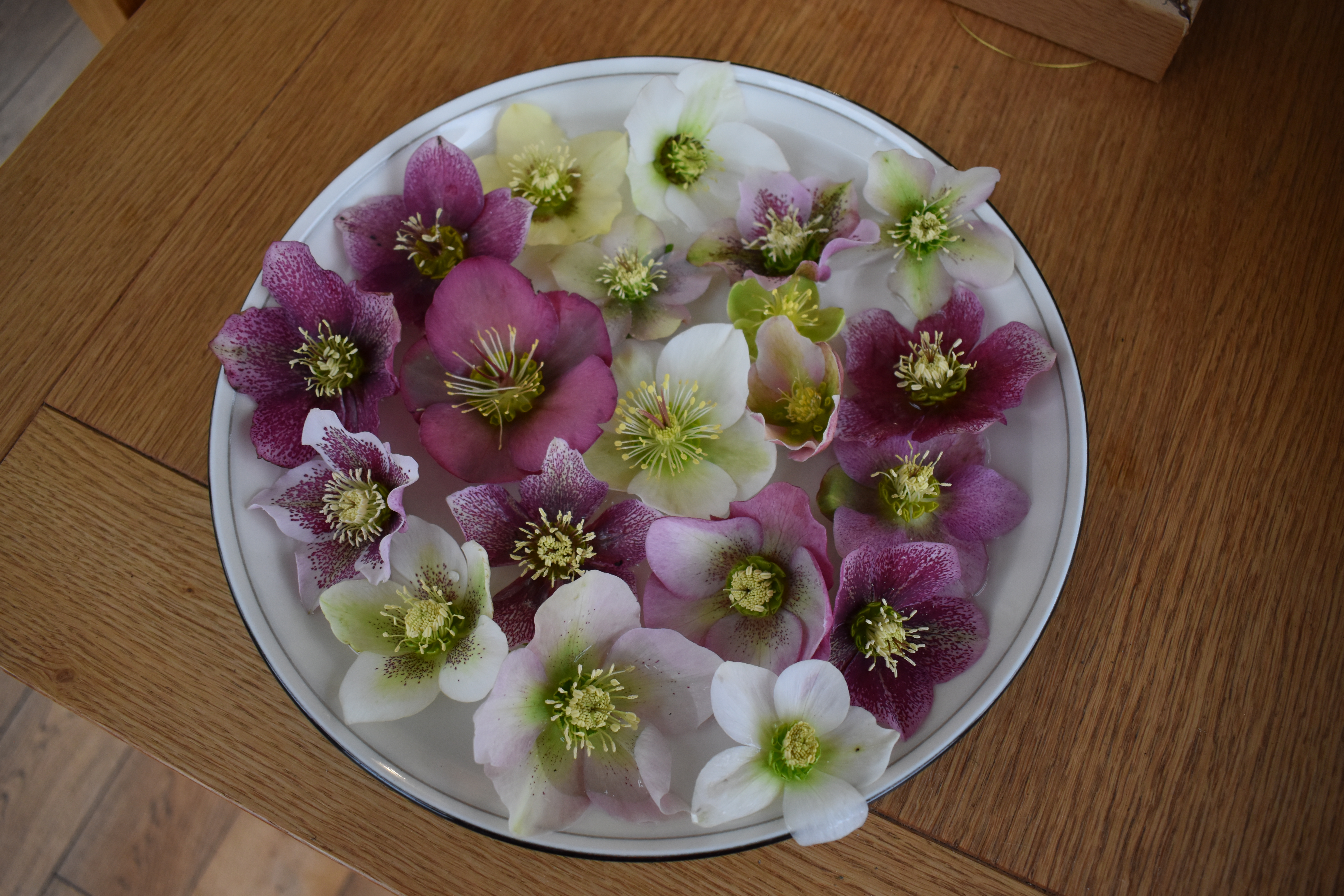
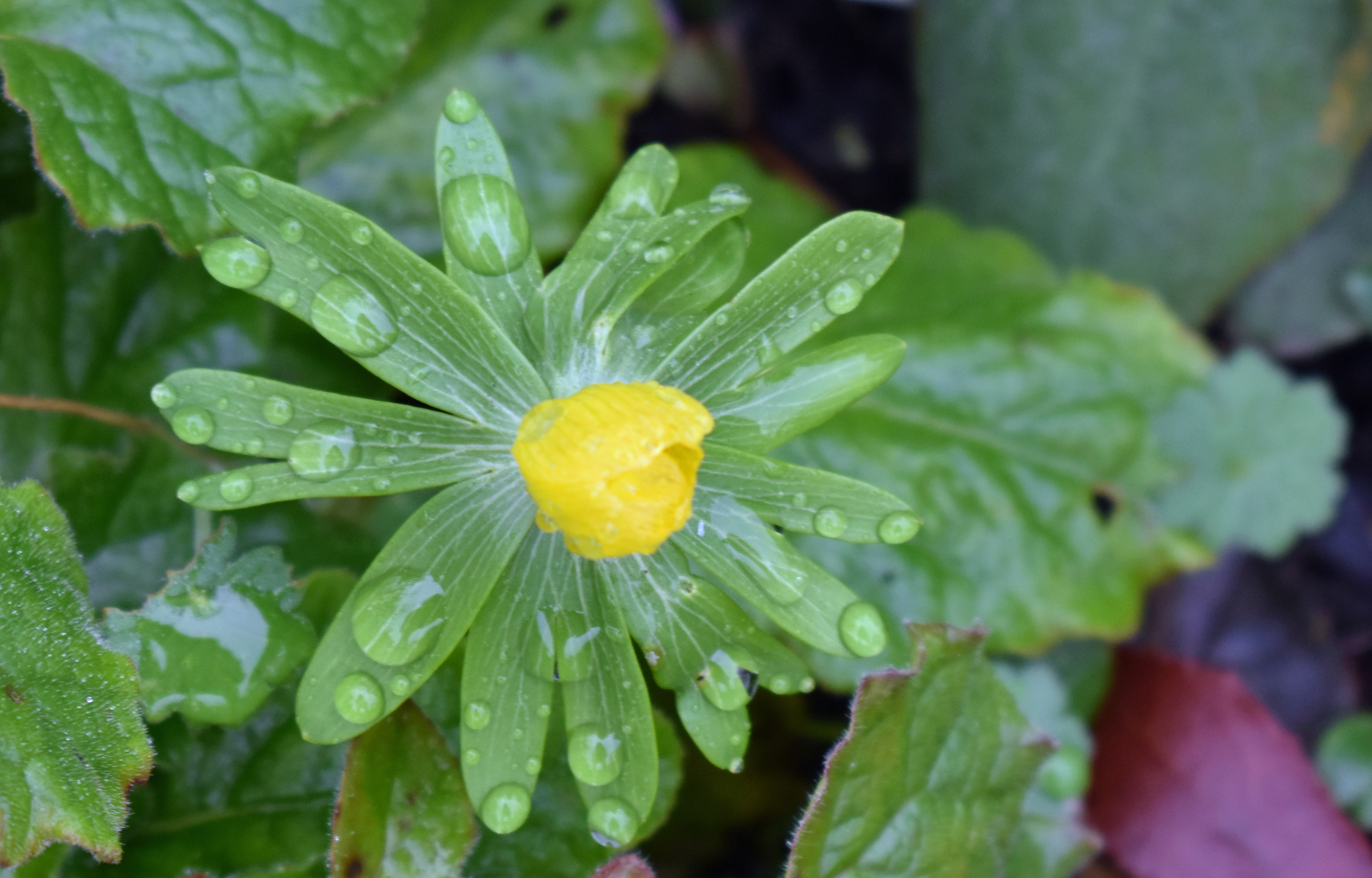
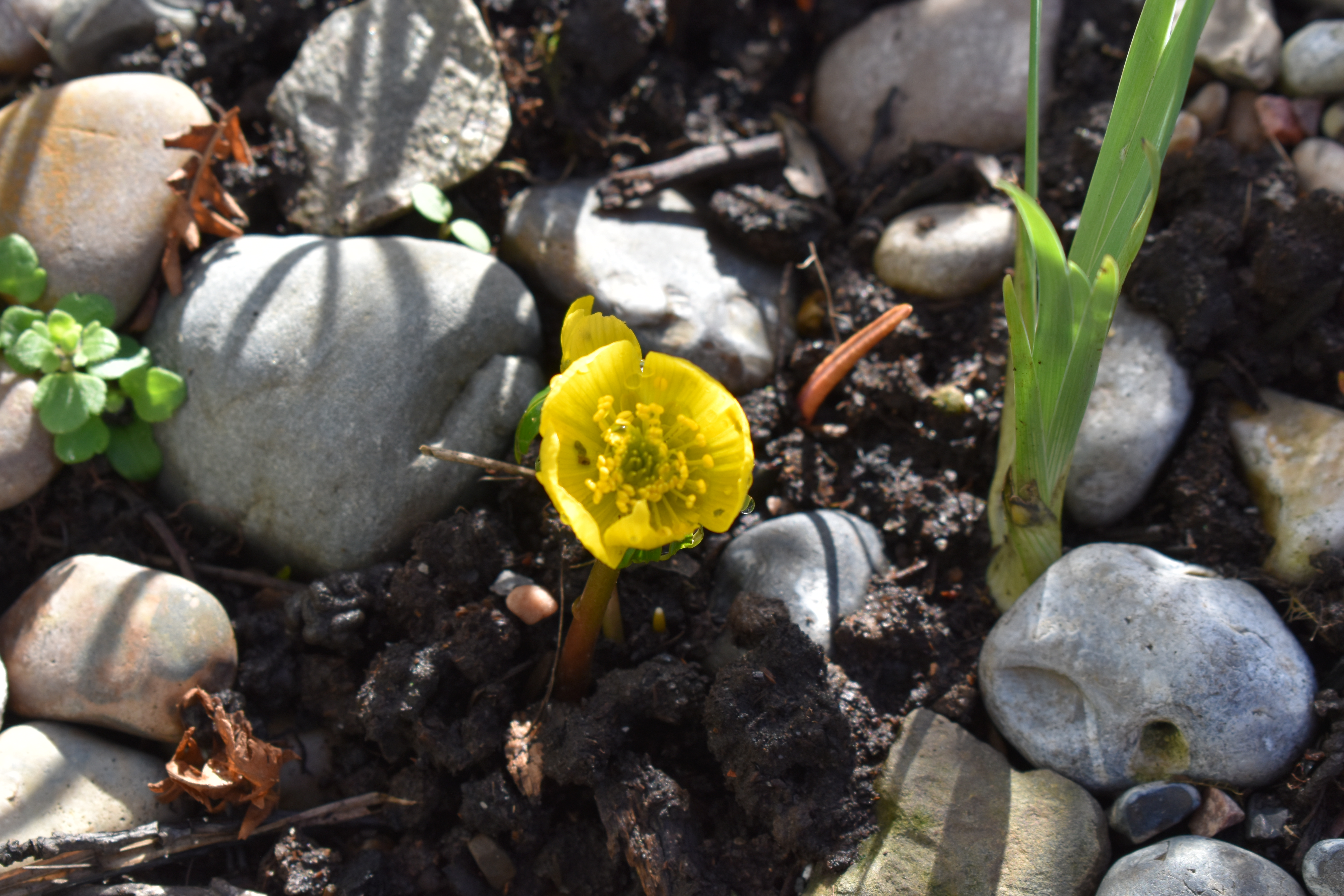
The first page for February began with me writing, “February is such an unpredictable month where the weather is concerned. This is reflected in the unpredictability of the garden. Our hellebores opened later than usual but were worth the wait, as were our Winter Aconites.”
Every February we pick several flower heads of different hellebores to float in a dish to see these lovely blooms close together side by side.
Our Winter Aconites have been a little undecided about when to flower this year, a few opened very early but then a gap followed before any more came out to share their shiny golden flowers with us.
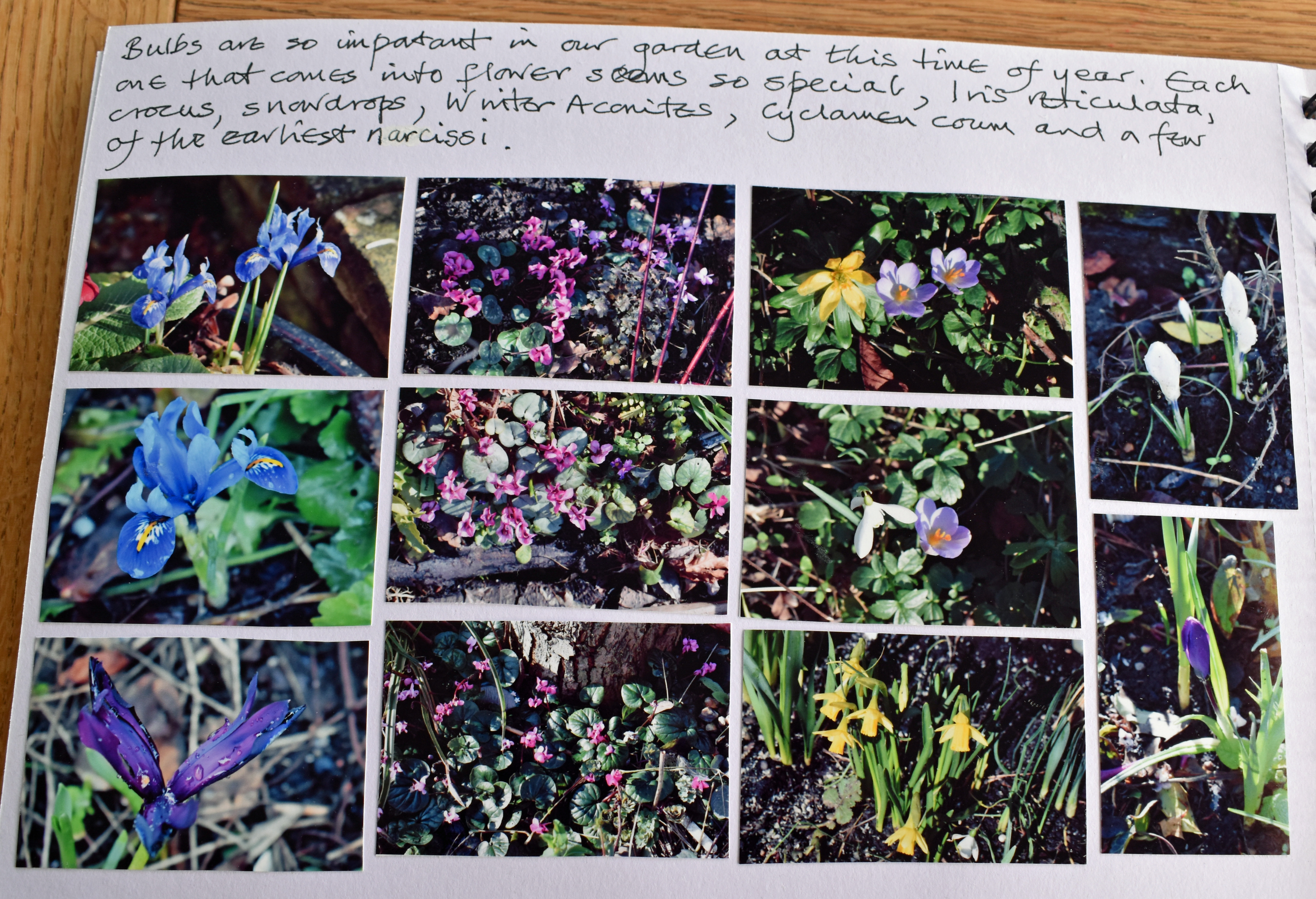
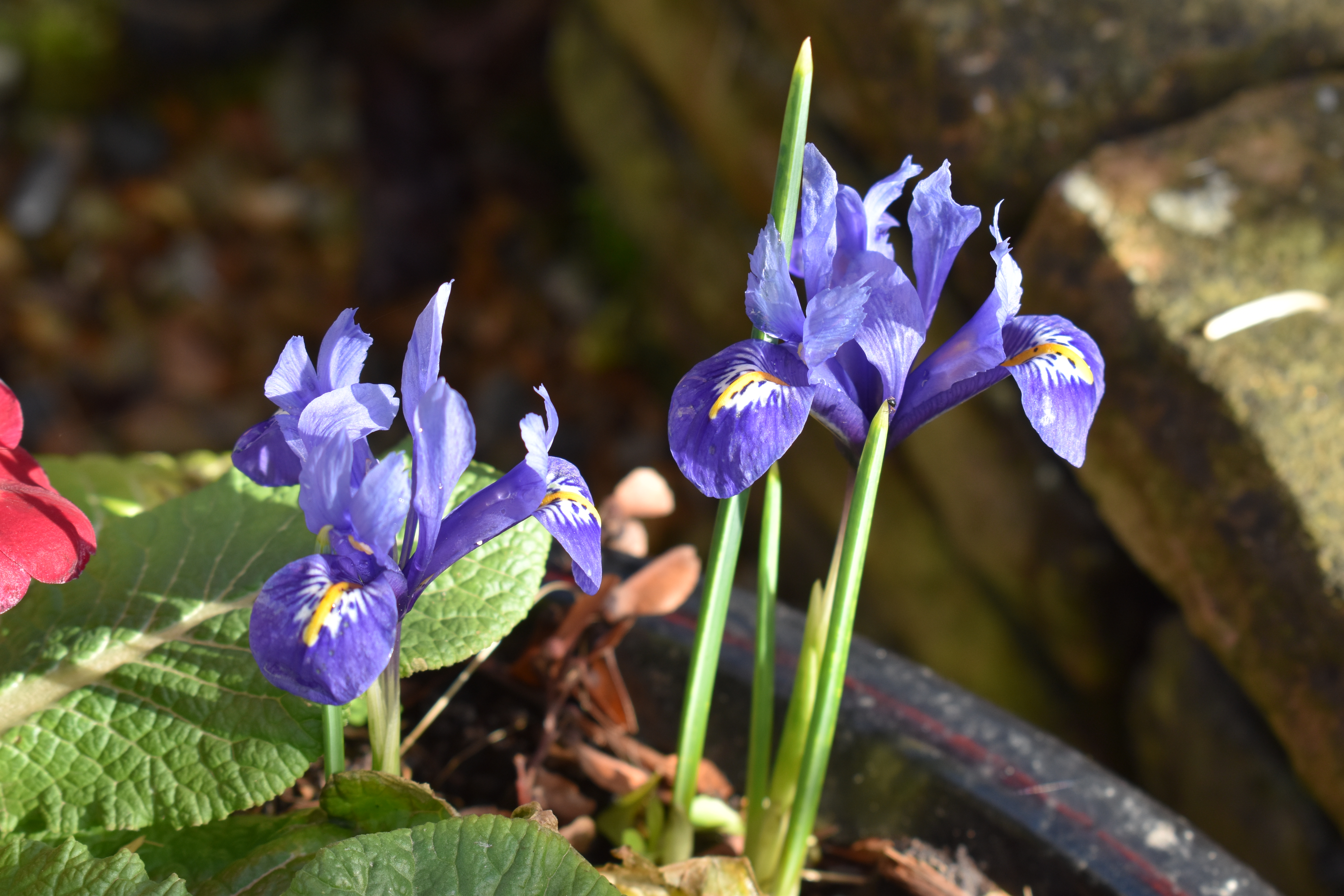
Winter flowering bulbs were the theme of the next page where I wrote, “Bulbs are so important in our garden at this time of year. Each one that comes into flower seems so special, Iris reticulata, crocus, winter aconites, Cyclamen coum and a few of the earliest narcissi.”
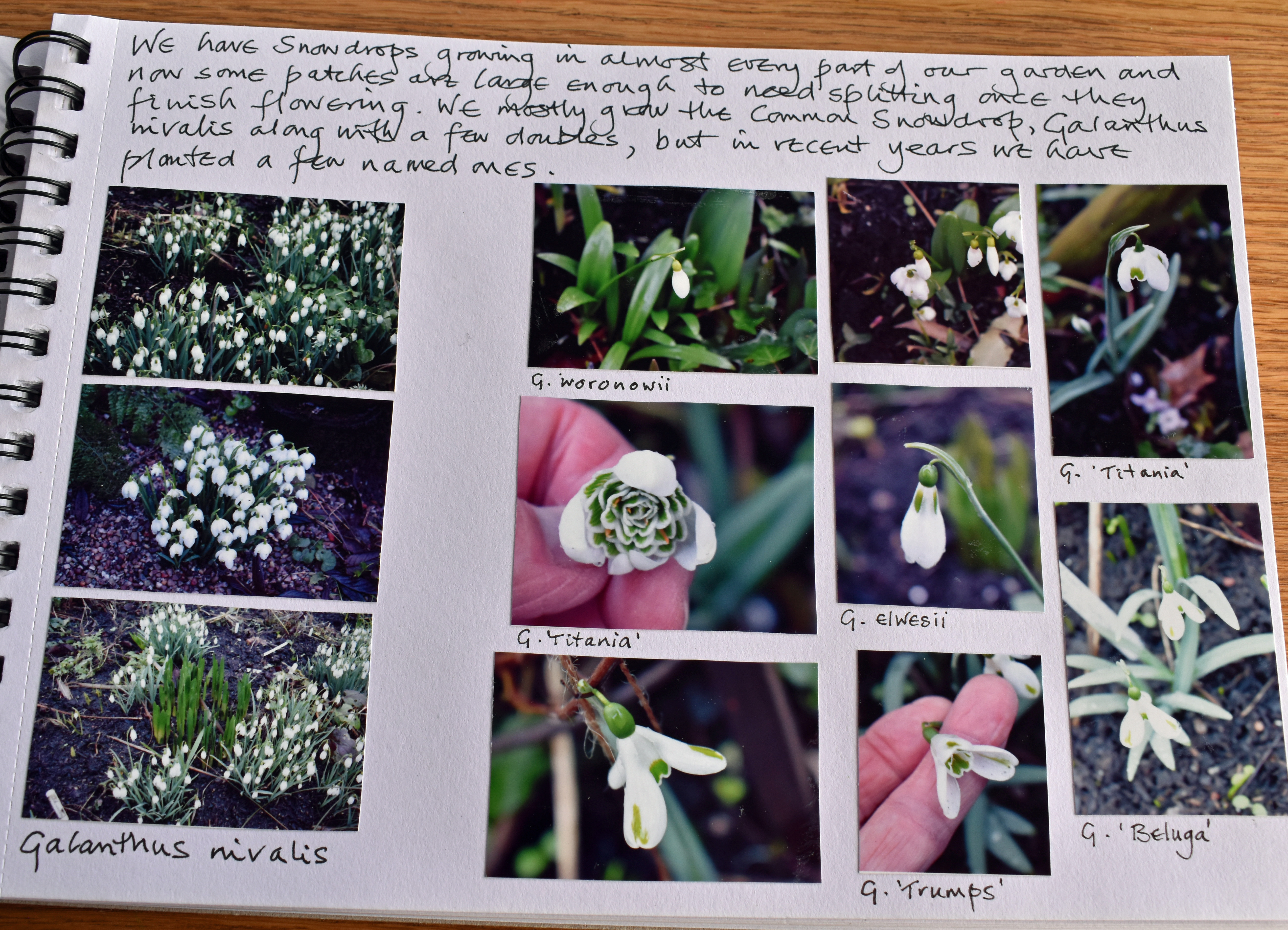
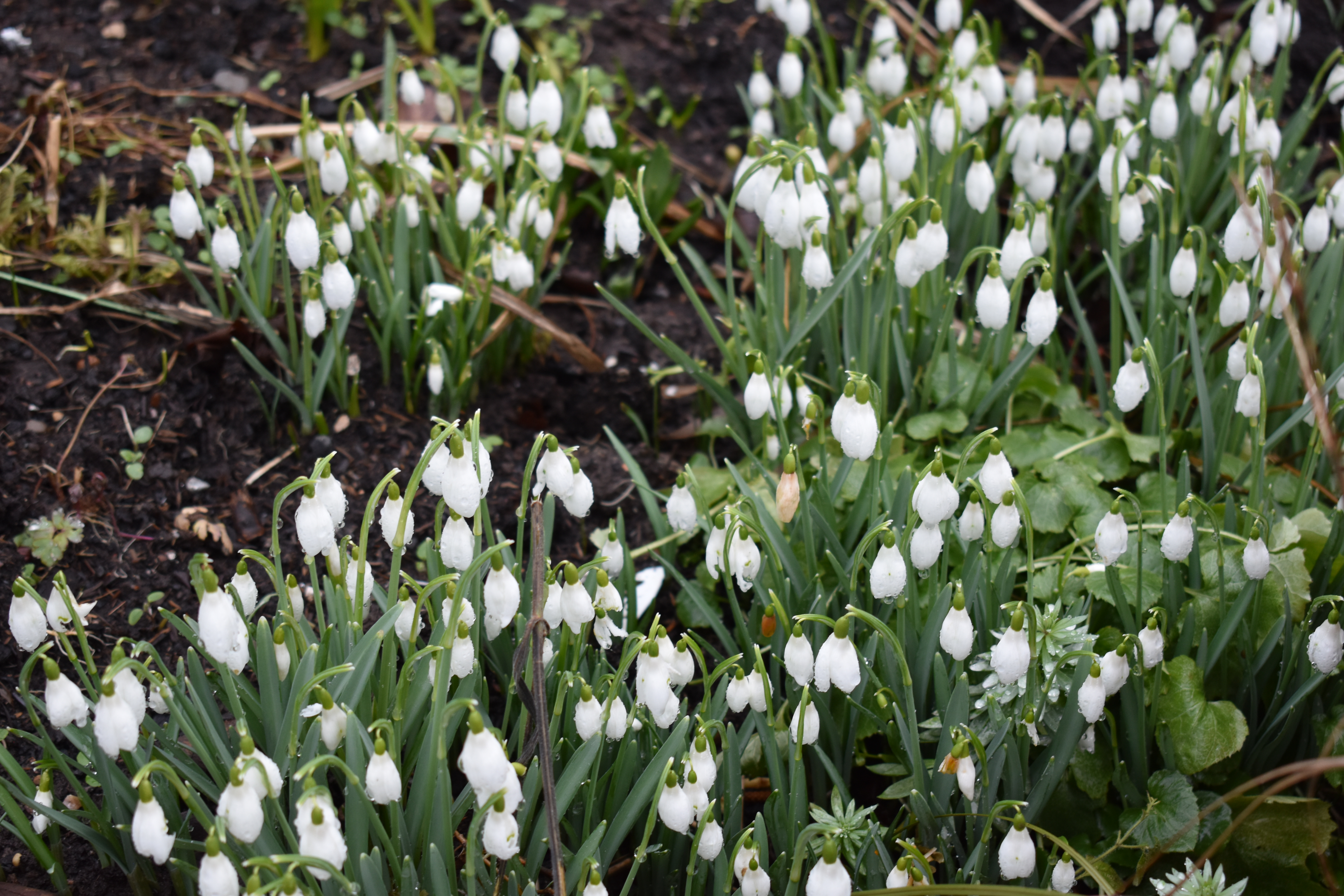
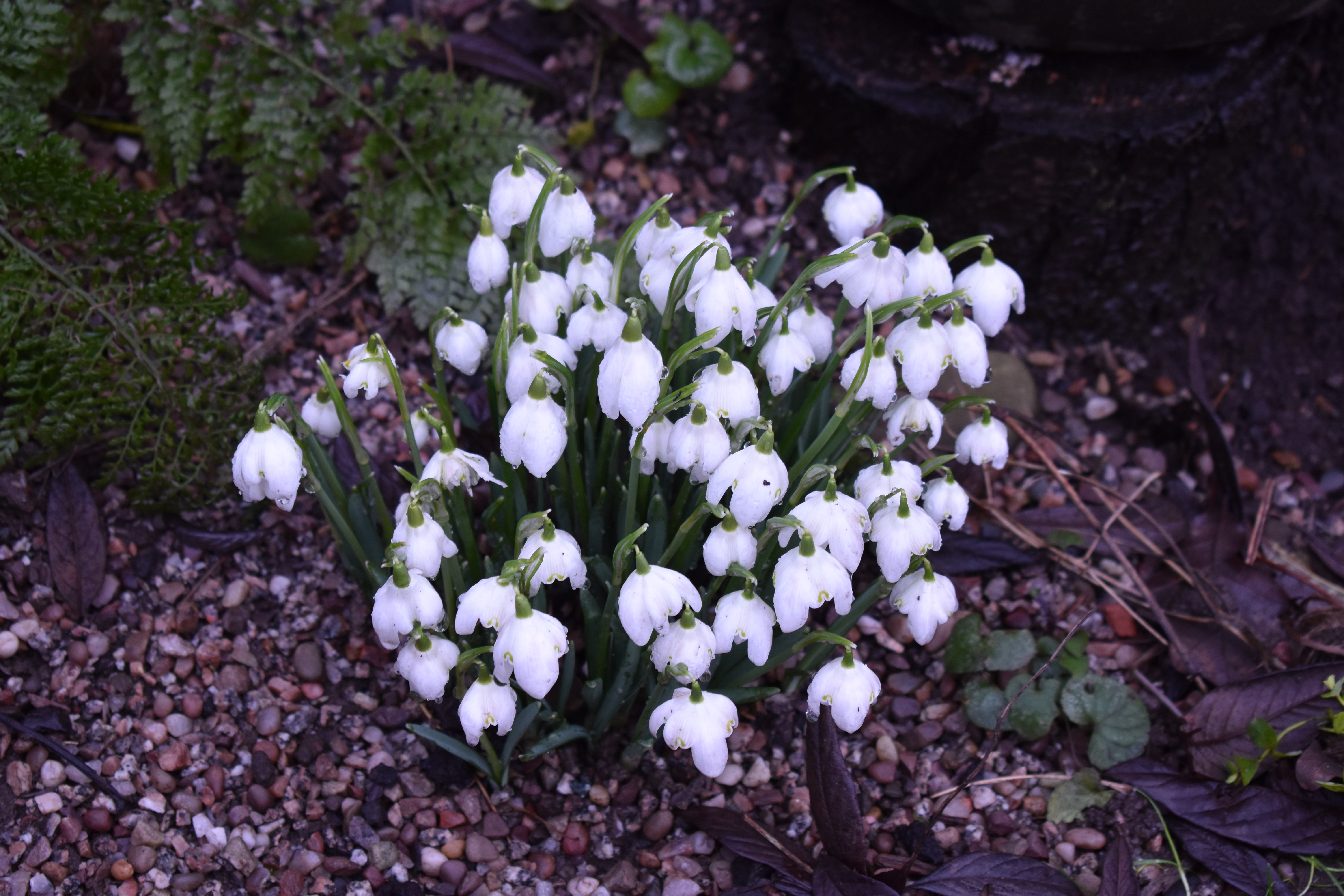
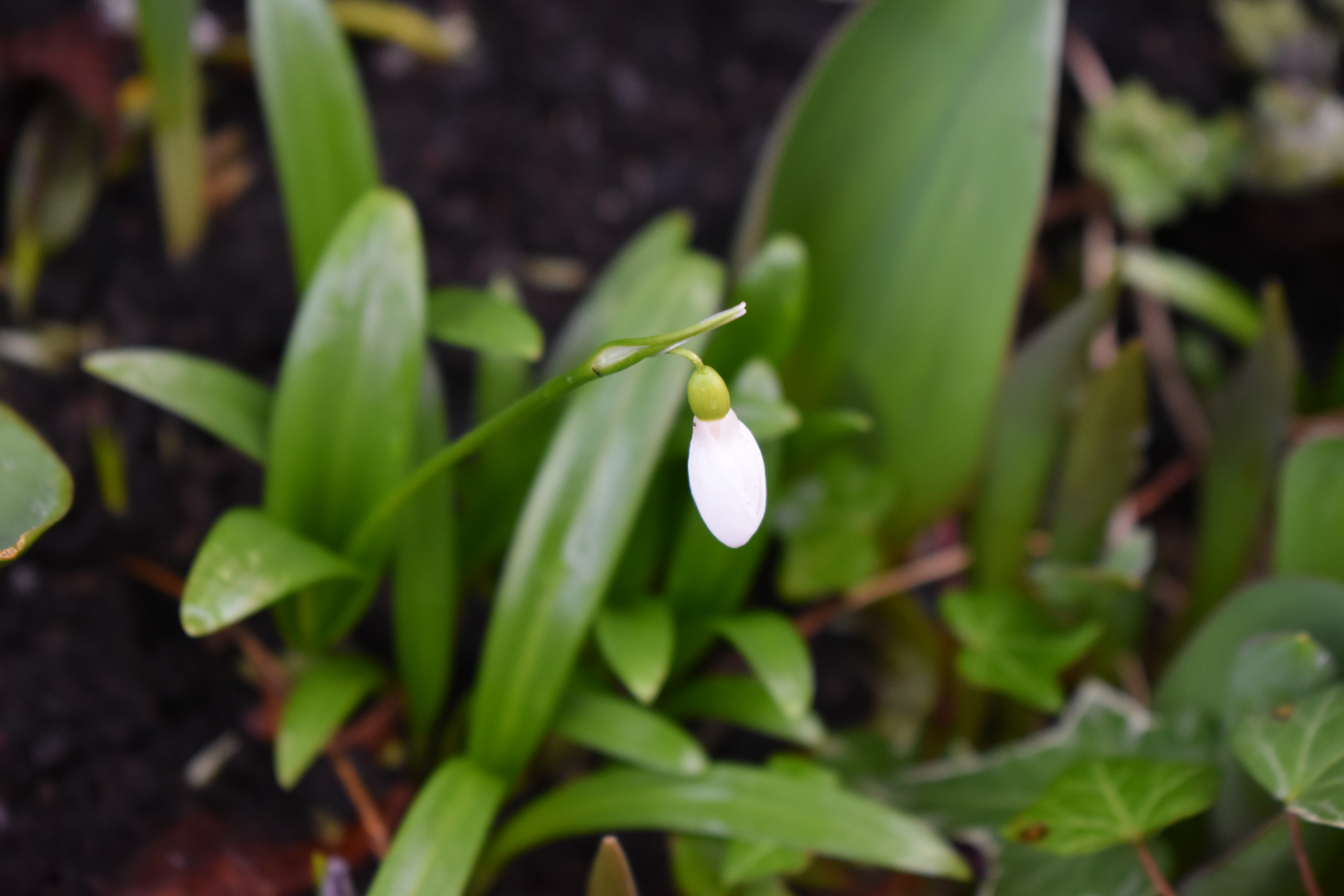
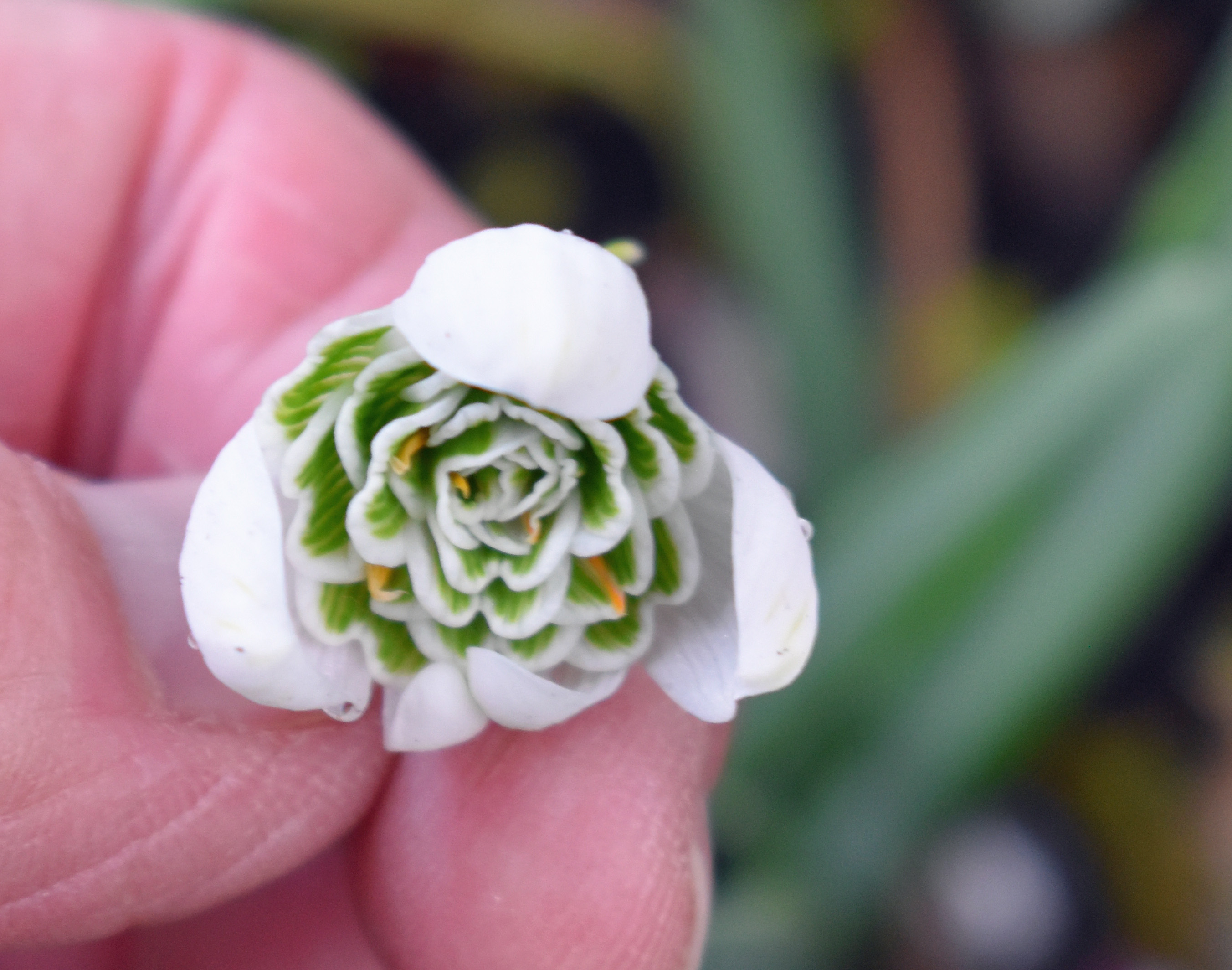
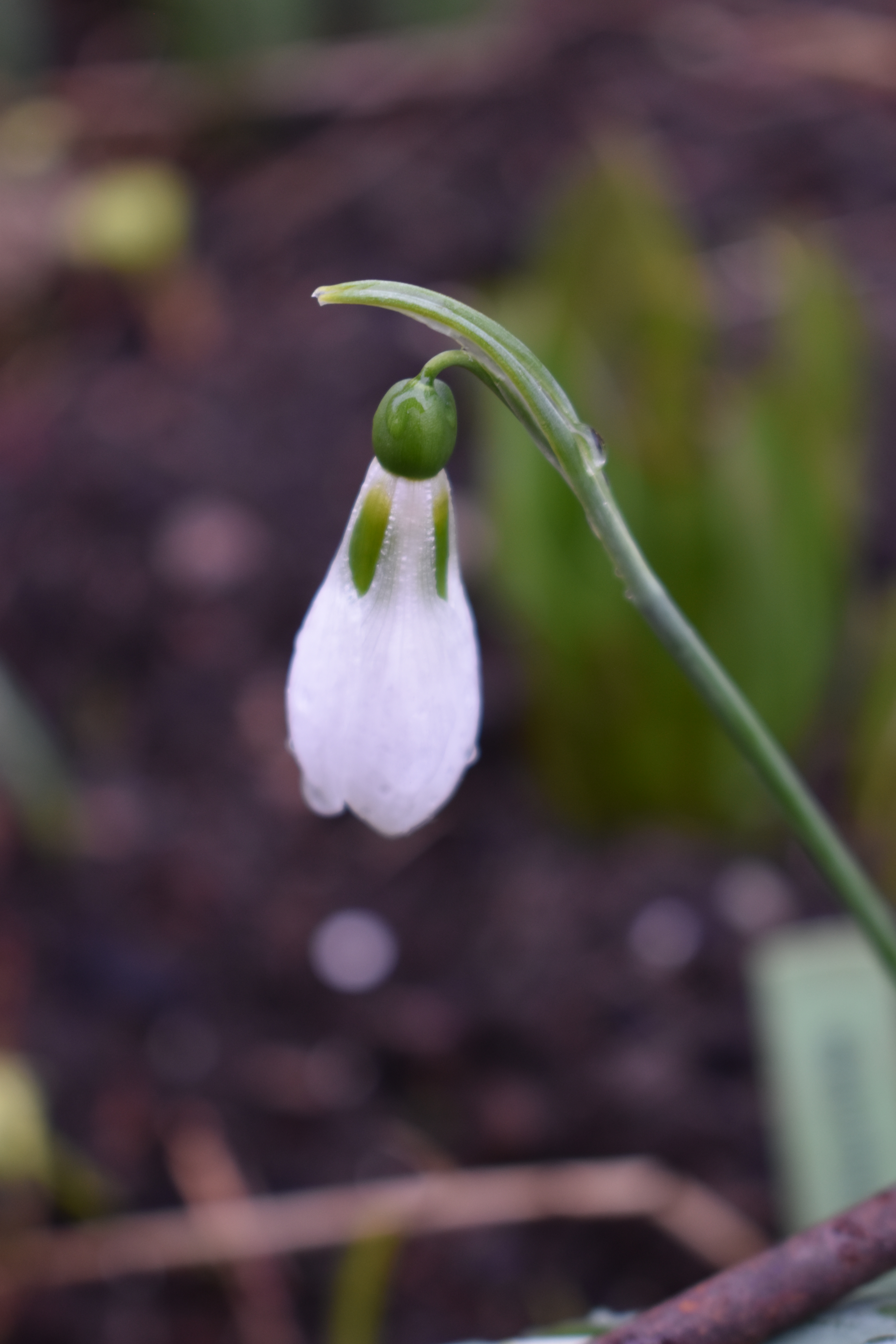
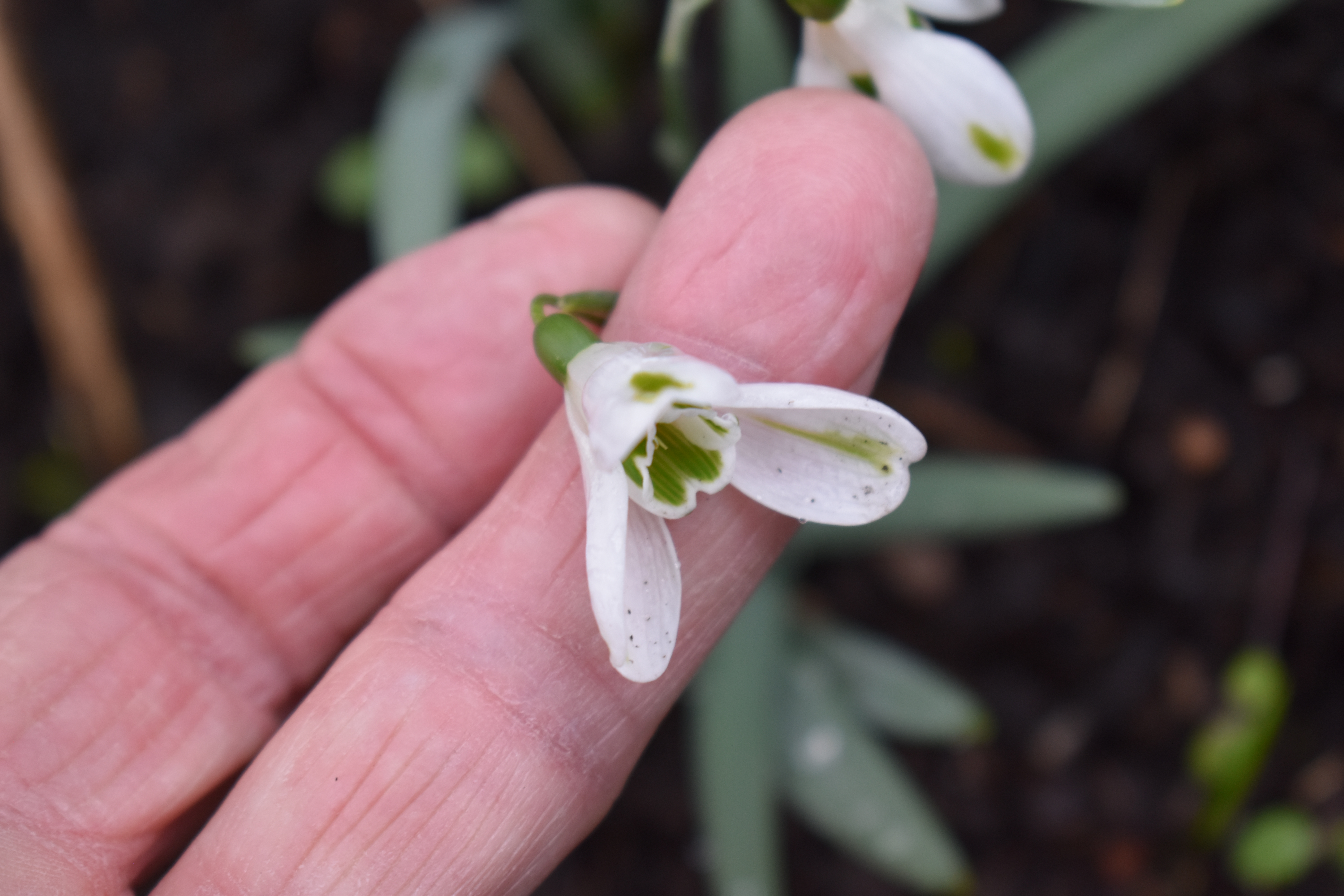
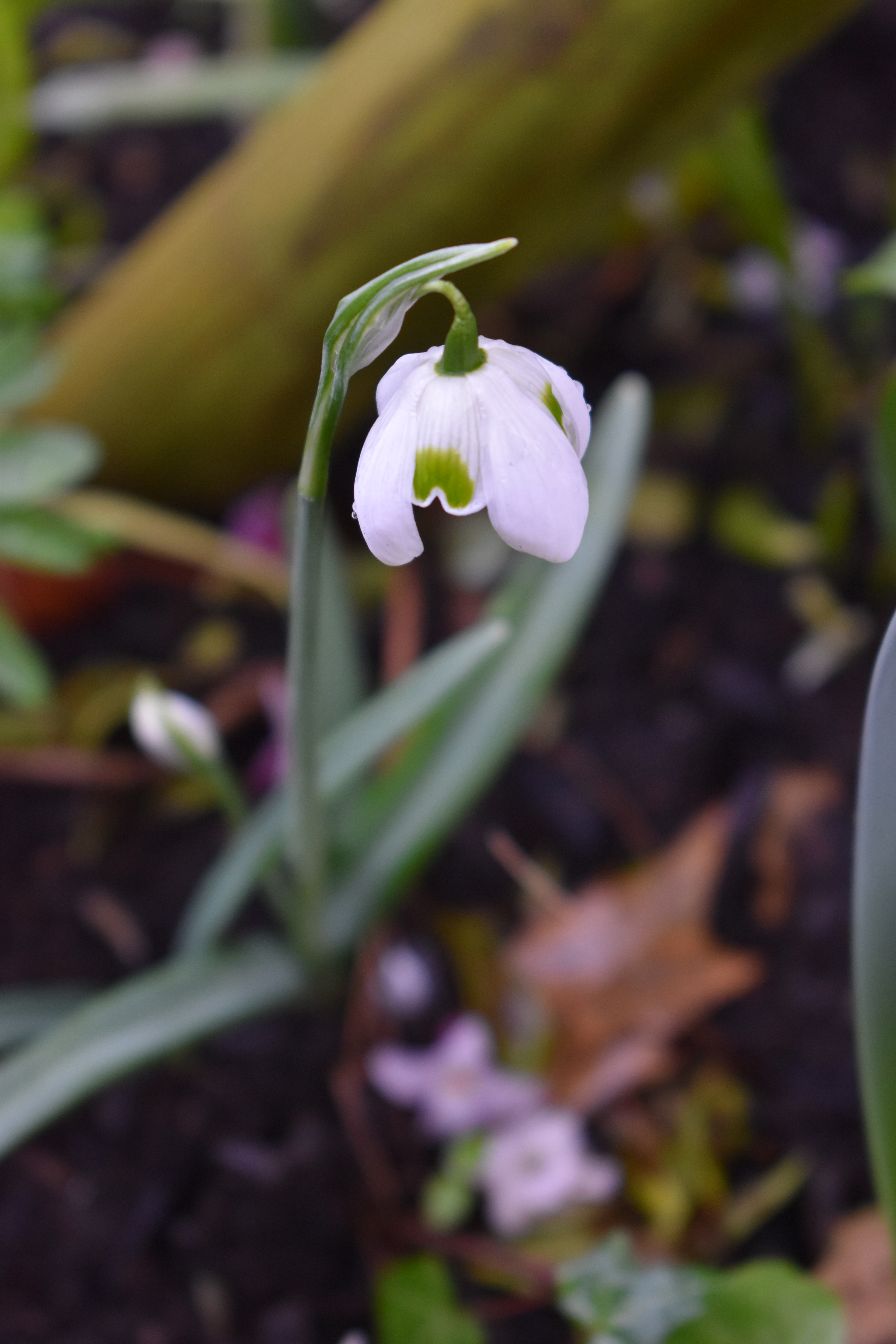
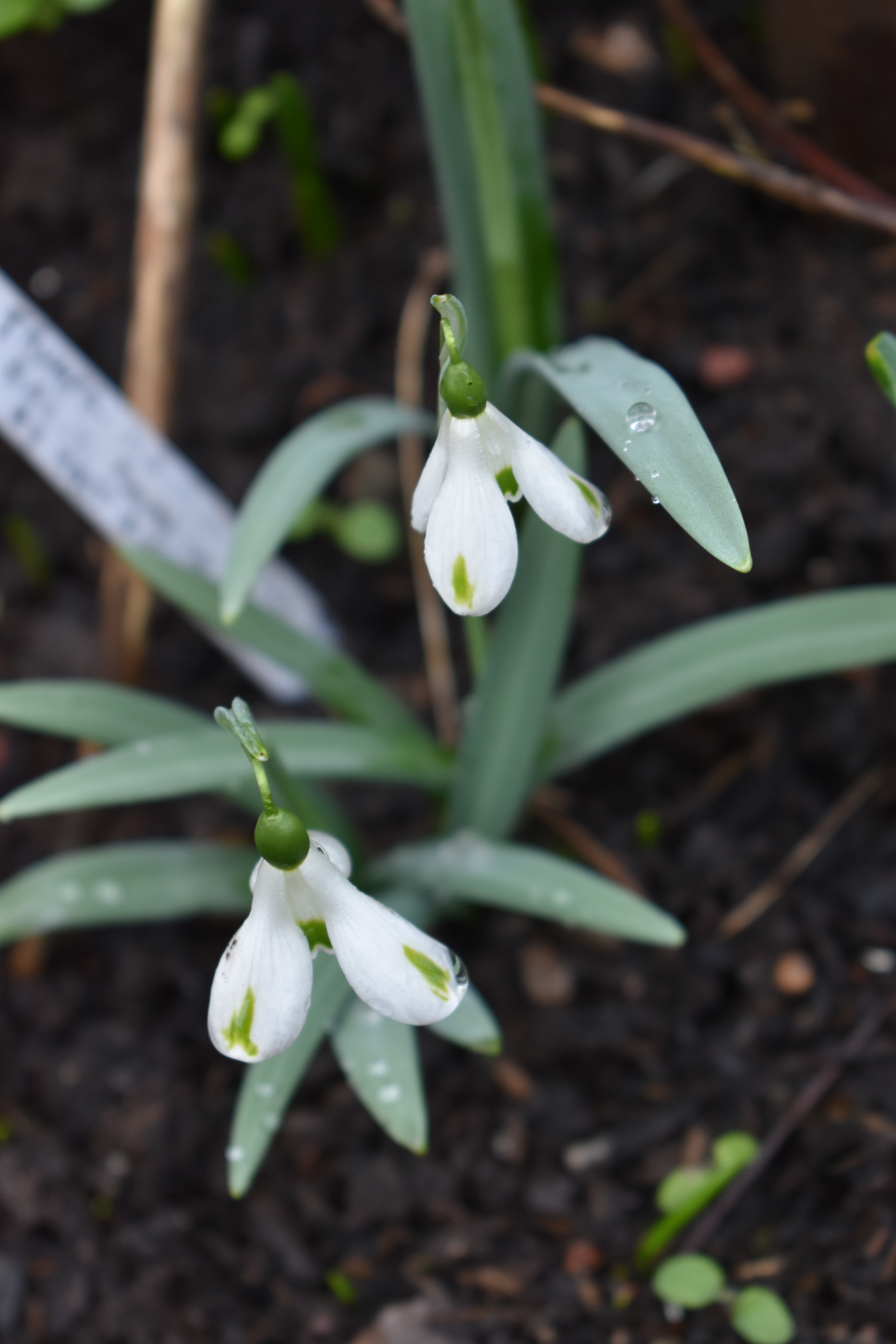
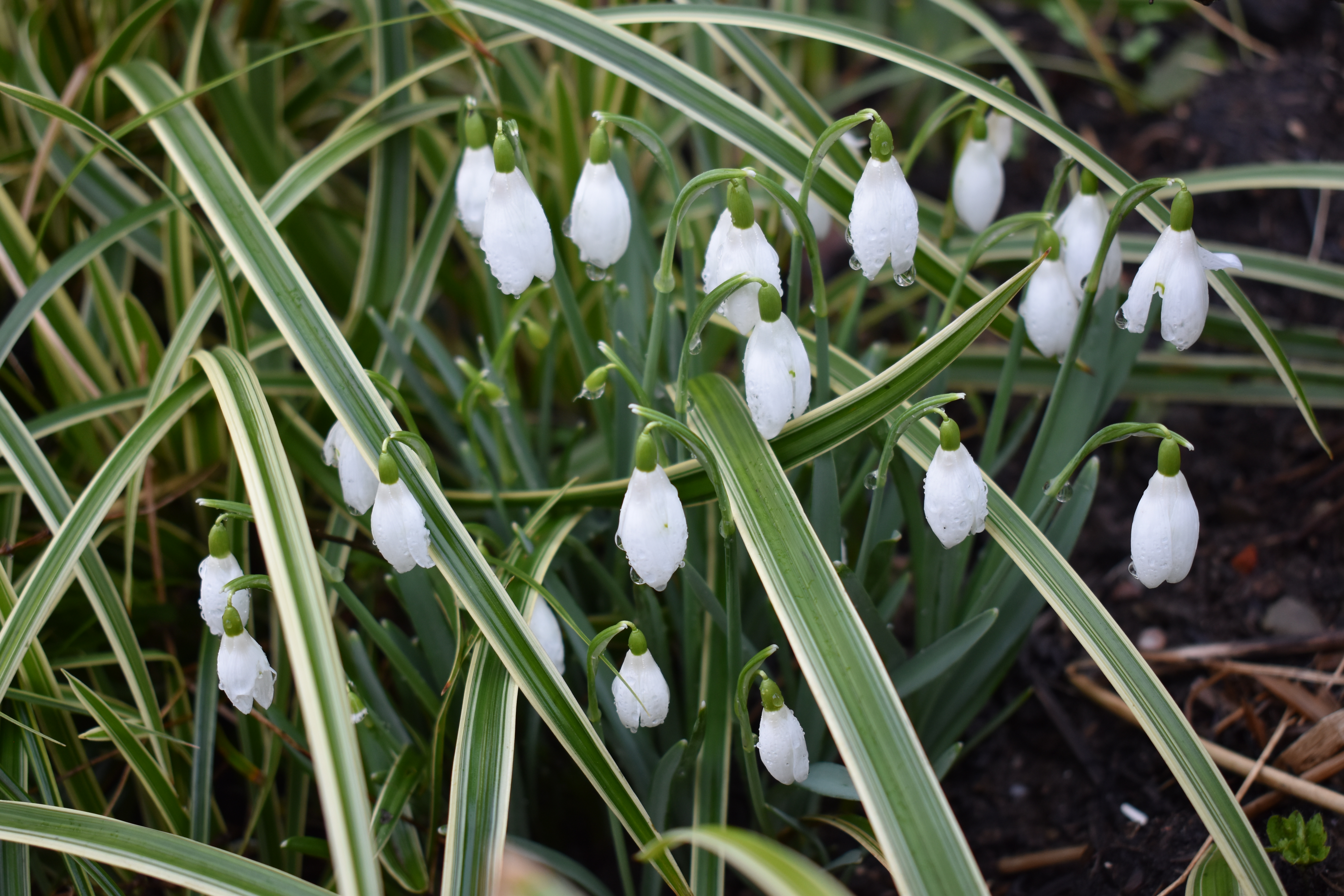
Another of our favourite winter flowering bulbs features on the next page, Snowdrops. I wrote, “We have snowdrops growing in almost every part of our garden and now some patches are large enough to need splitting once they finish flowering. We mostly grow the Common Snowdrop, Galanthus nivalis with a few doubles, but in recent years we have planted a few named cultivars.”
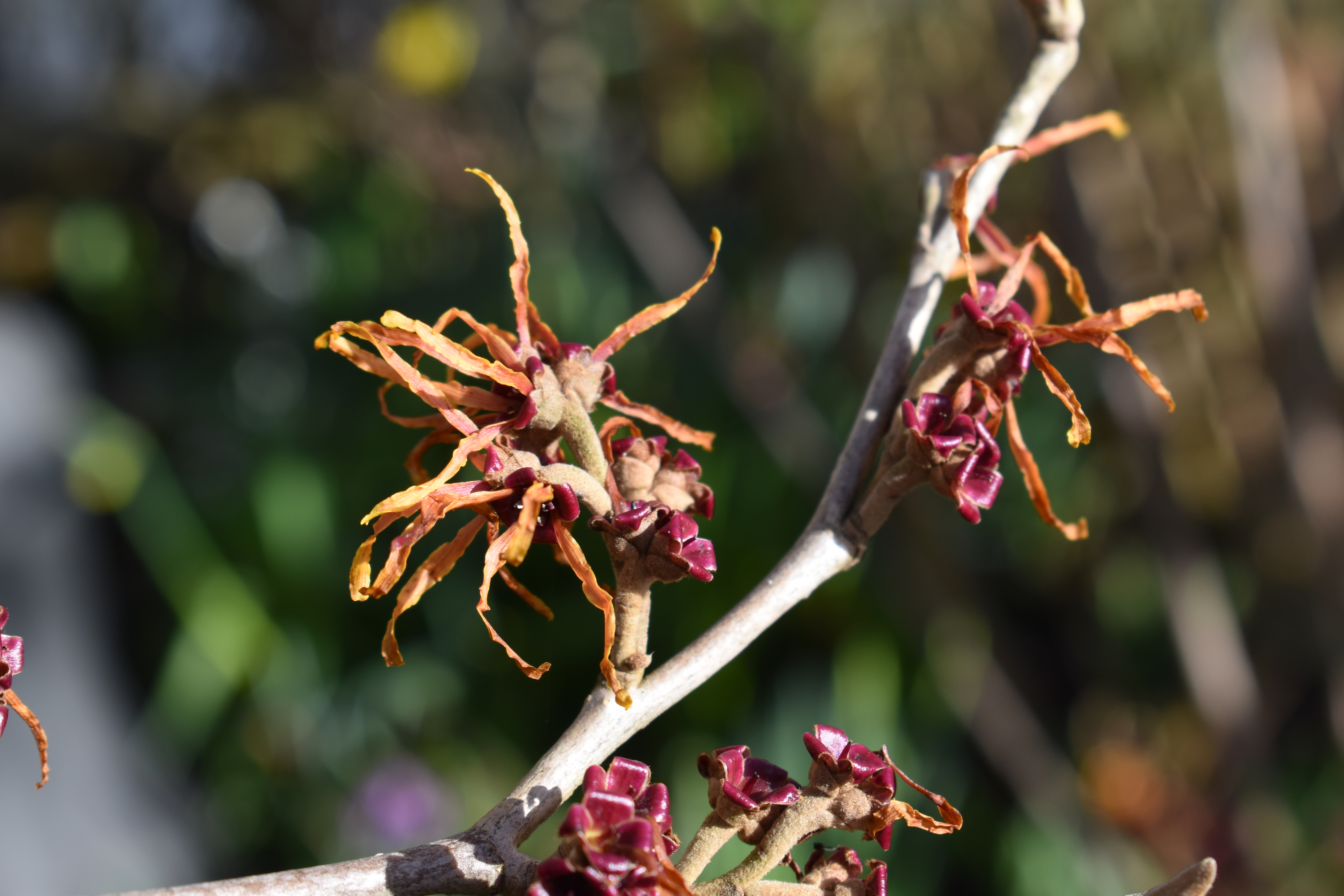
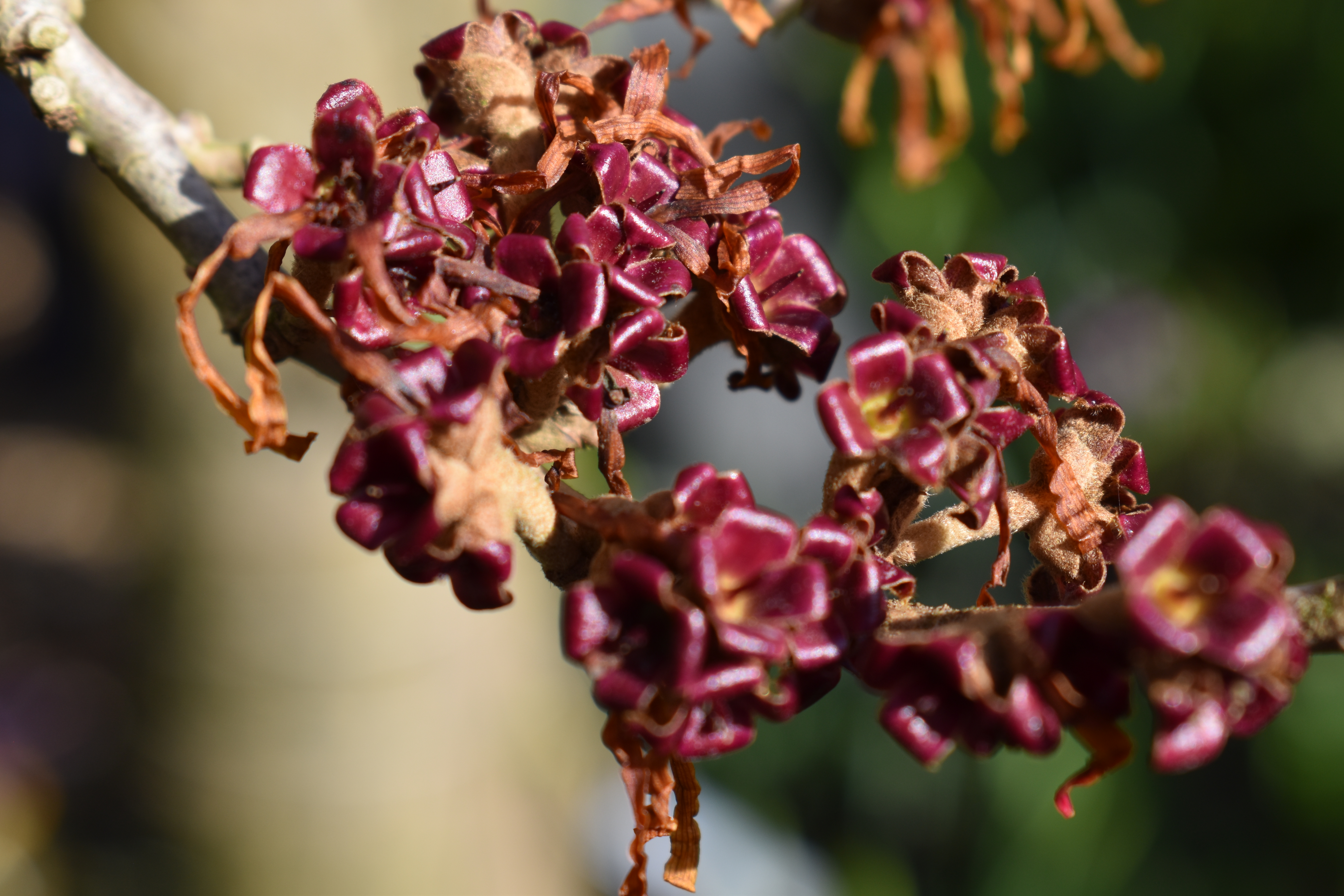
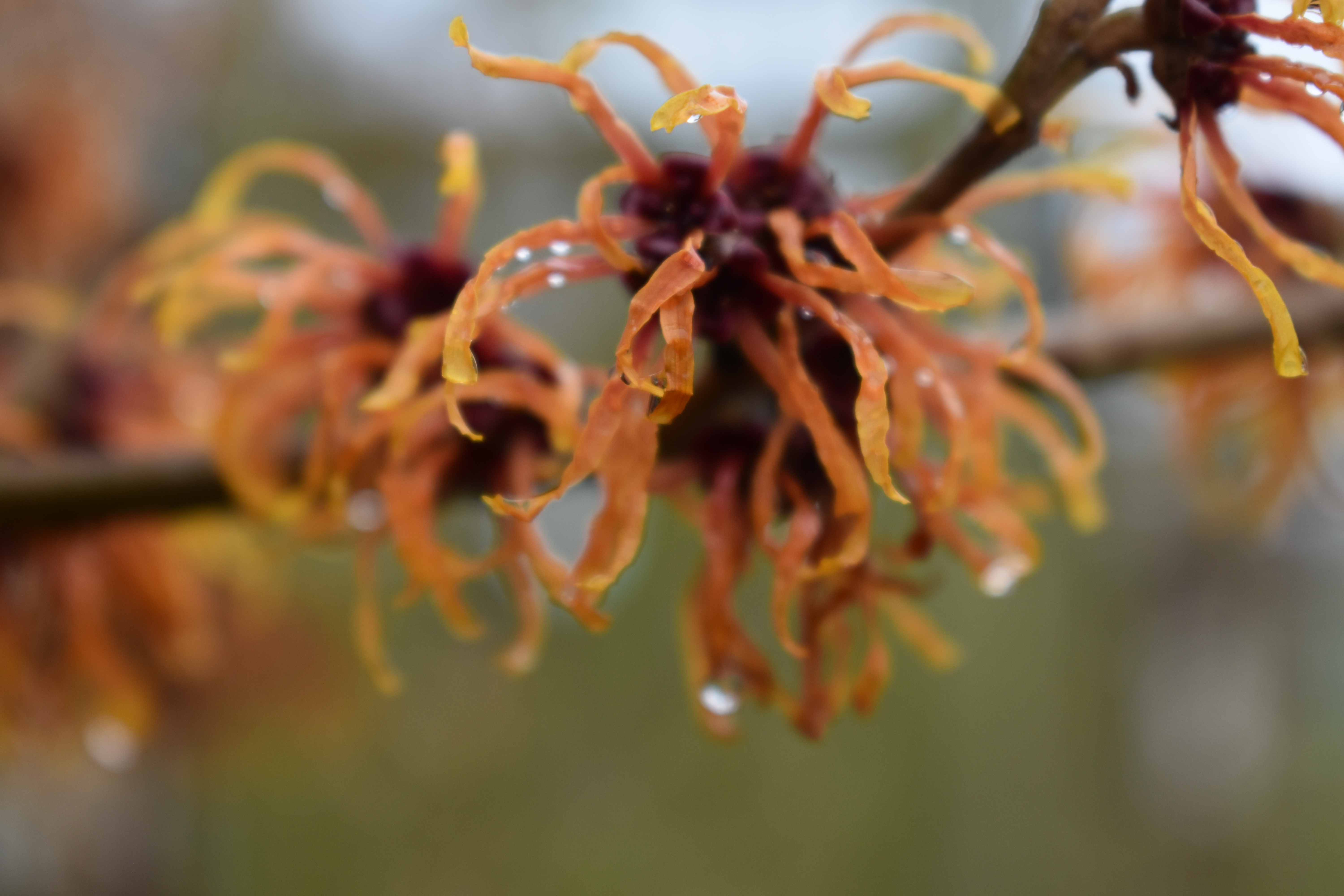
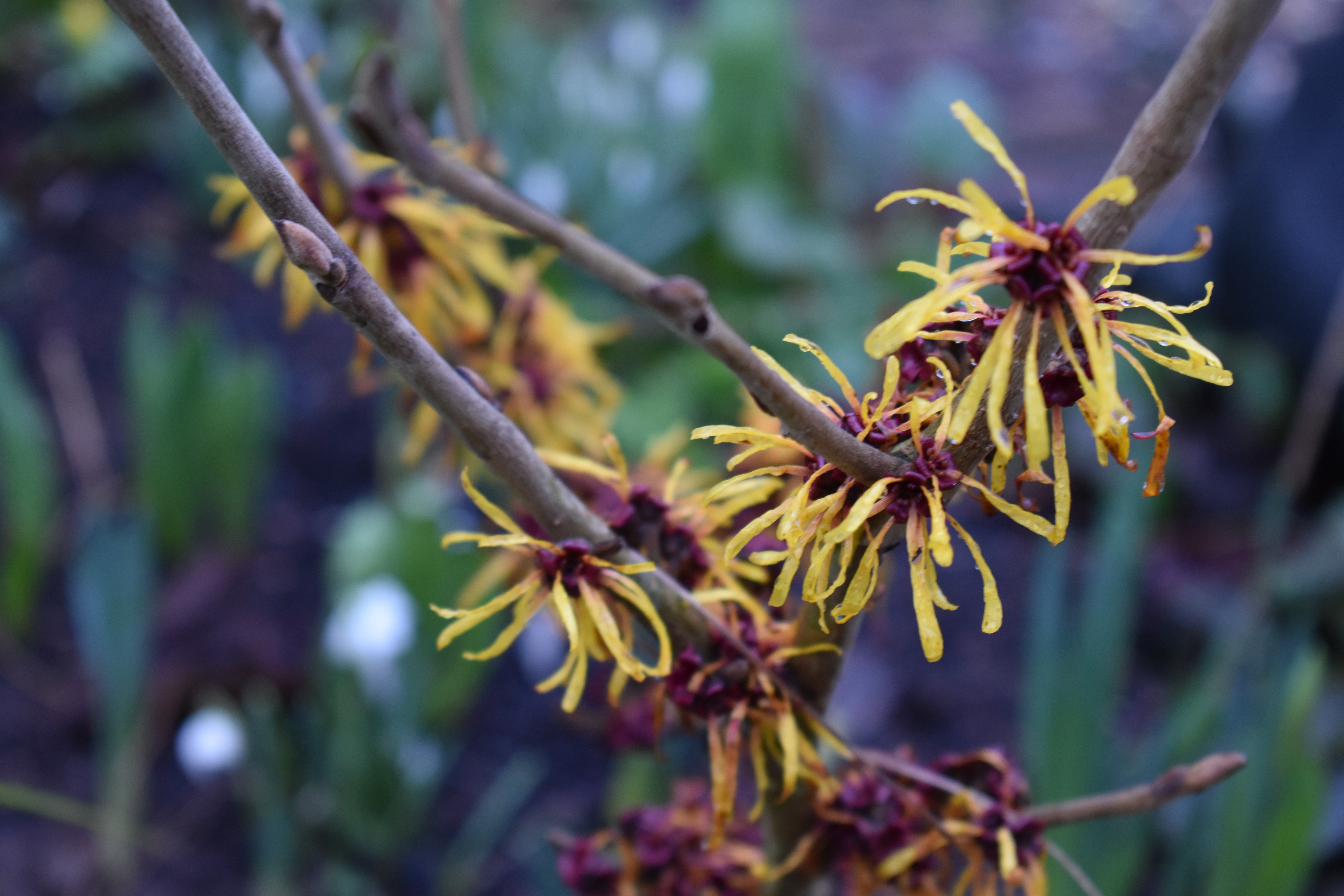
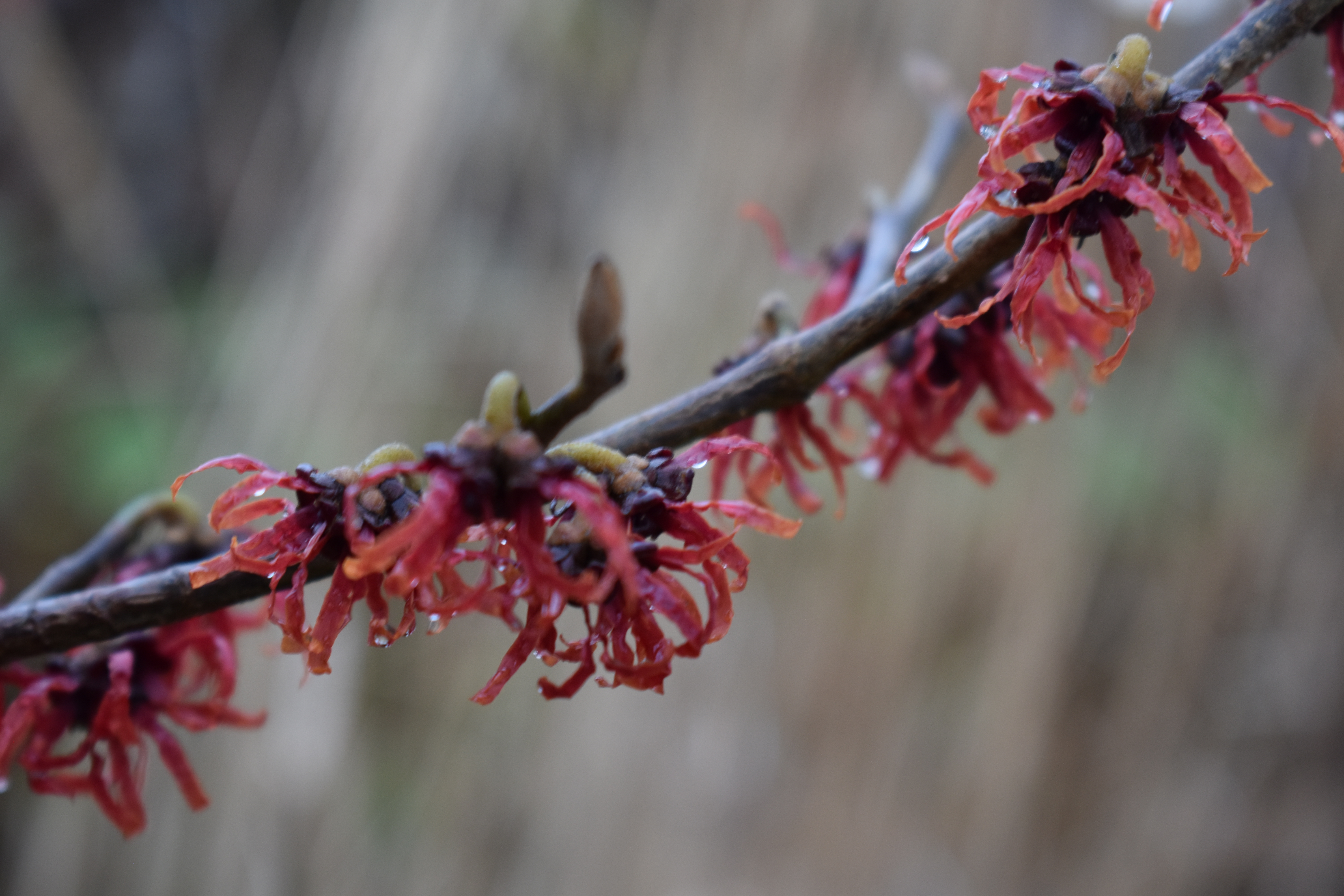
Witch Hazels feature next, “Our three Hamamelis, Witch Hazels, H. ‘Diane’, H. ‘Jelena’ and H. ‘Harry’ have been sharing their brightly coloured and sweetly scented blossom with us for quite a few winter weeks. As the petals begin to fall the deep maroon/red flower bases provide new interest.”
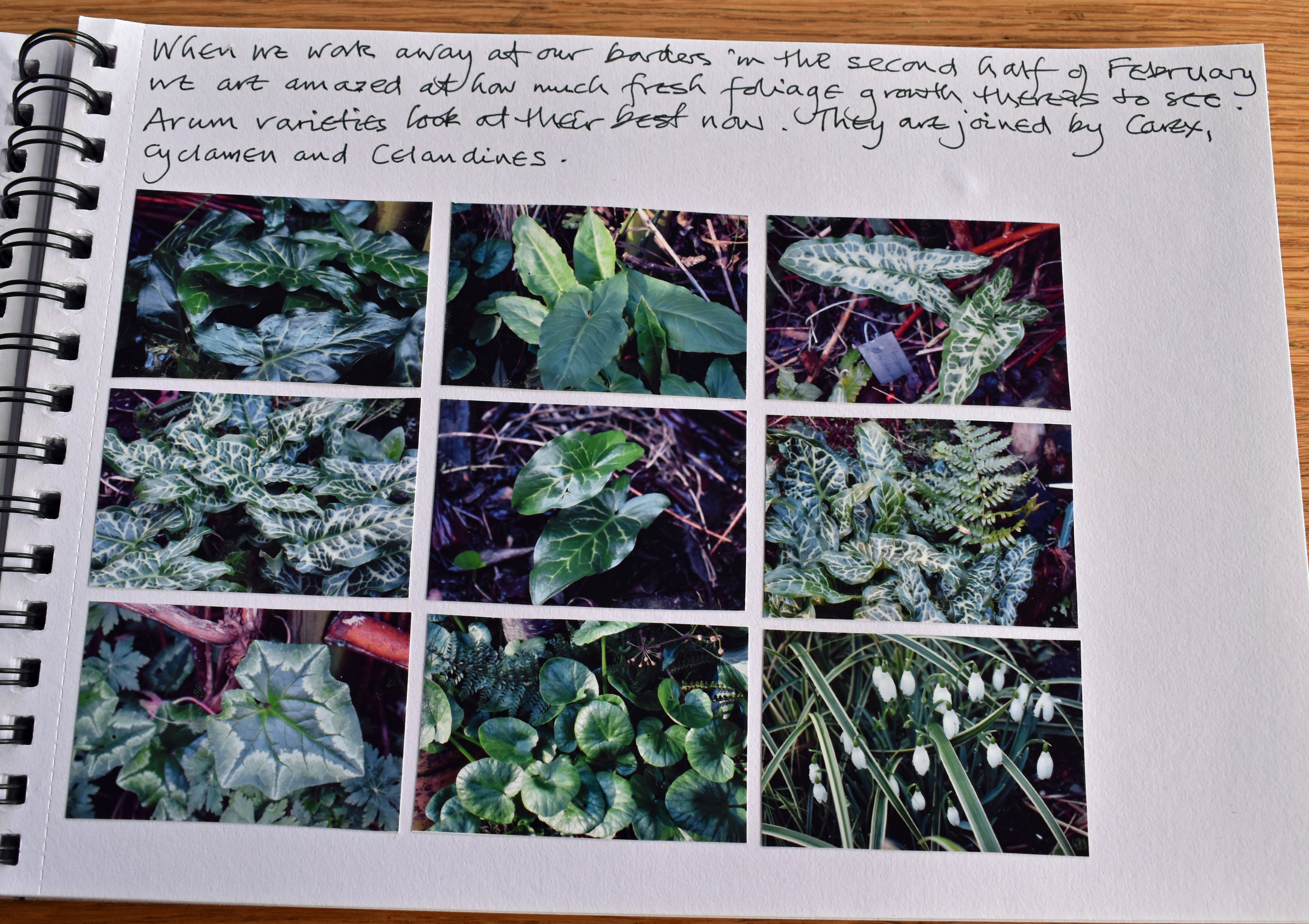
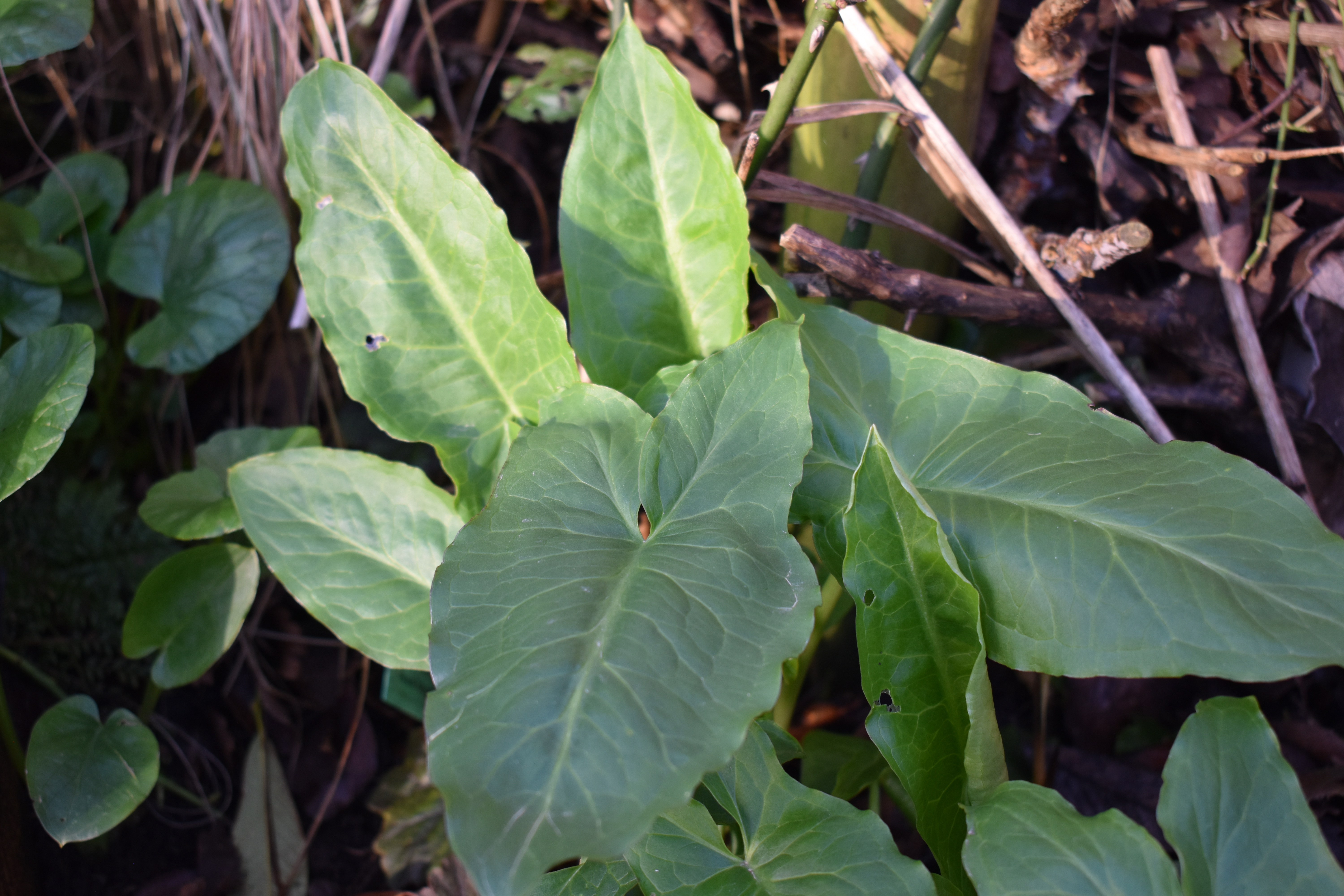
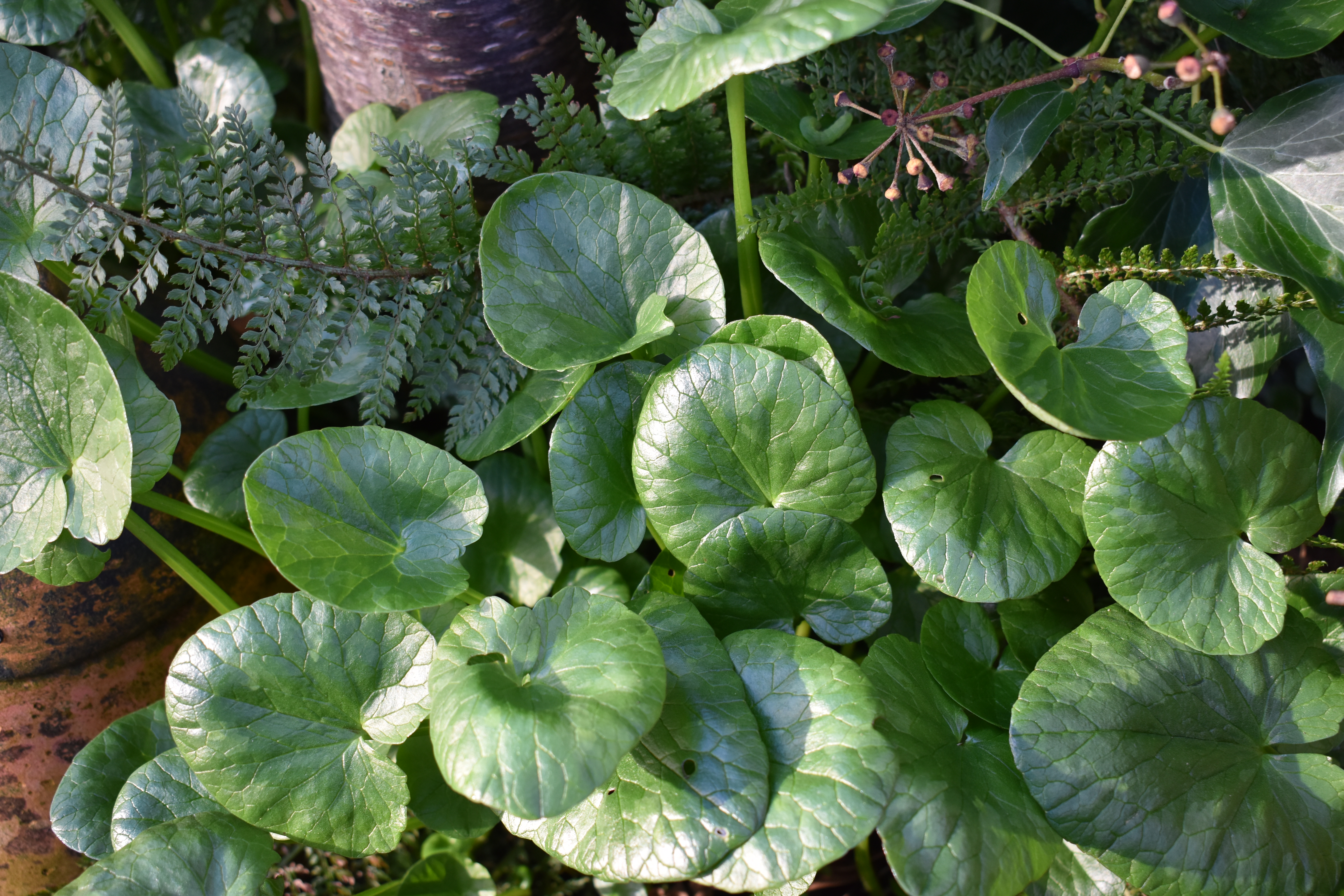
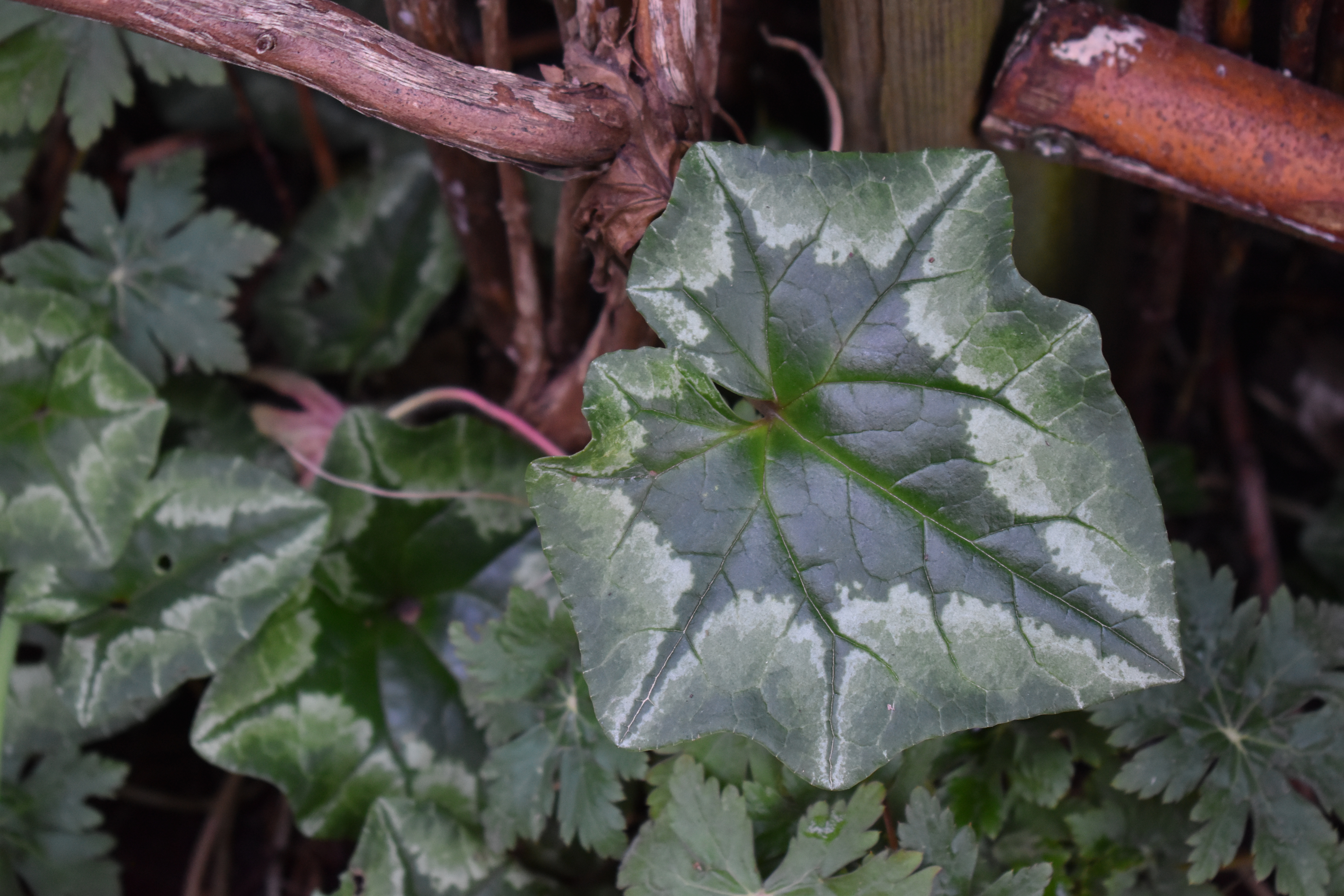
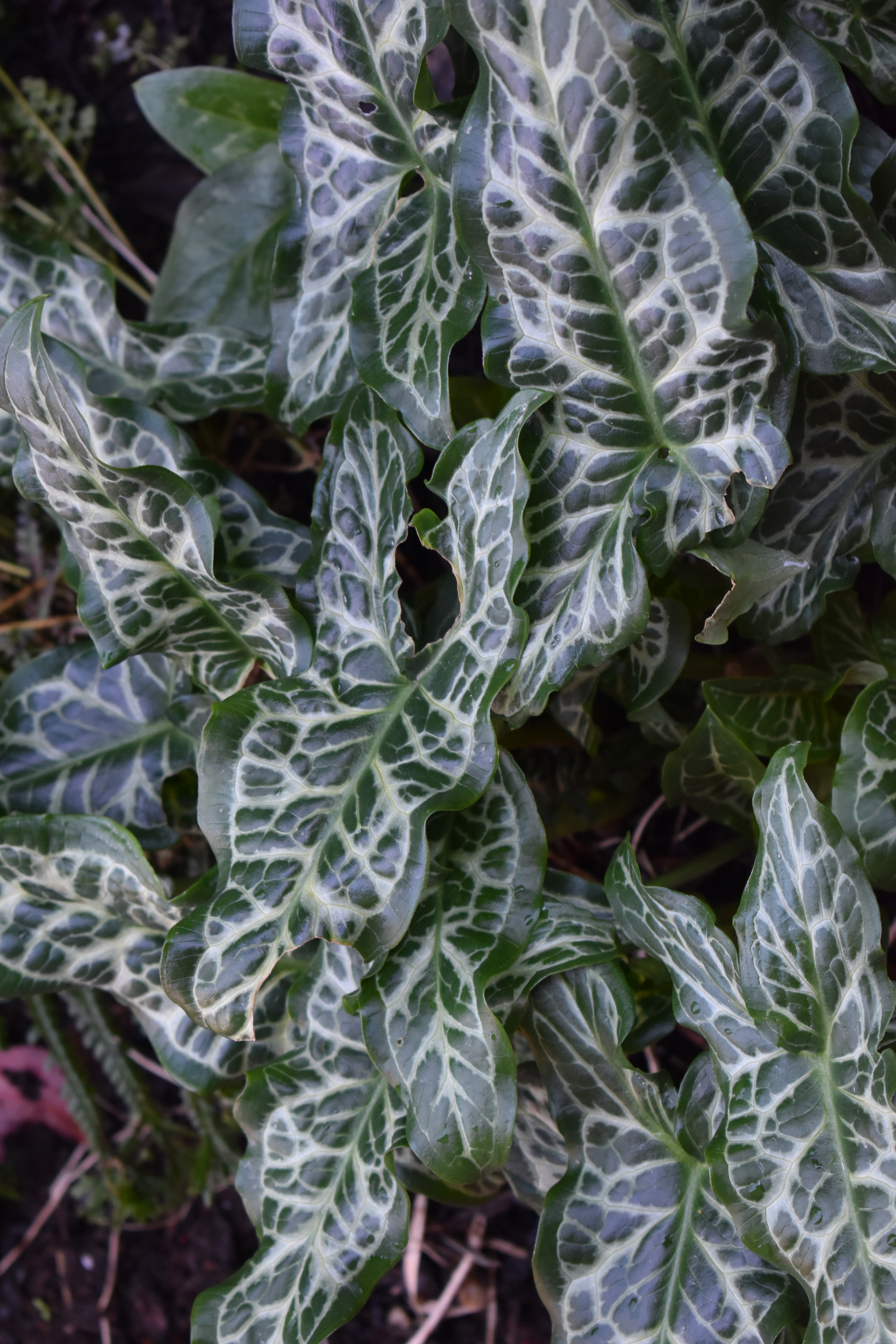
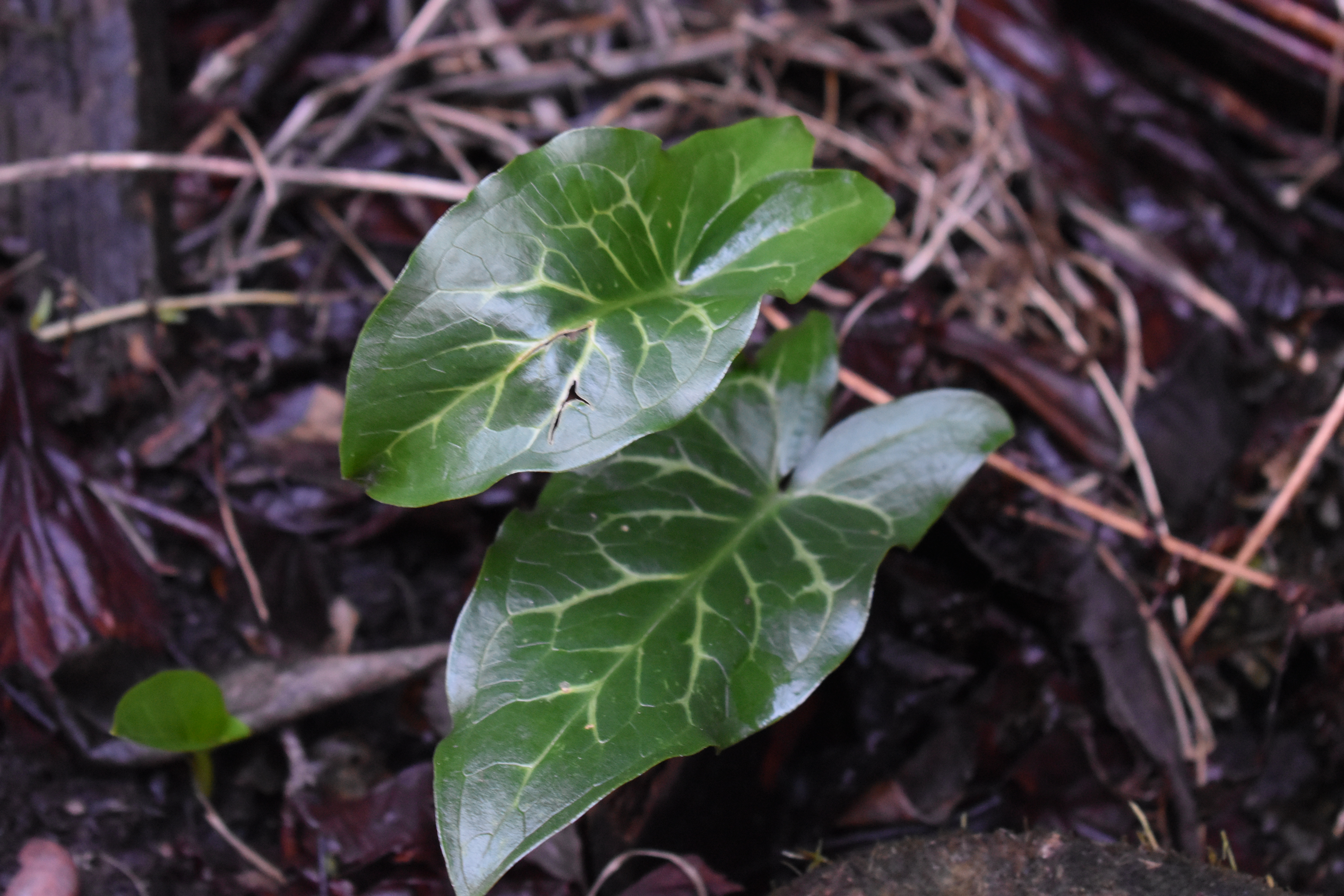
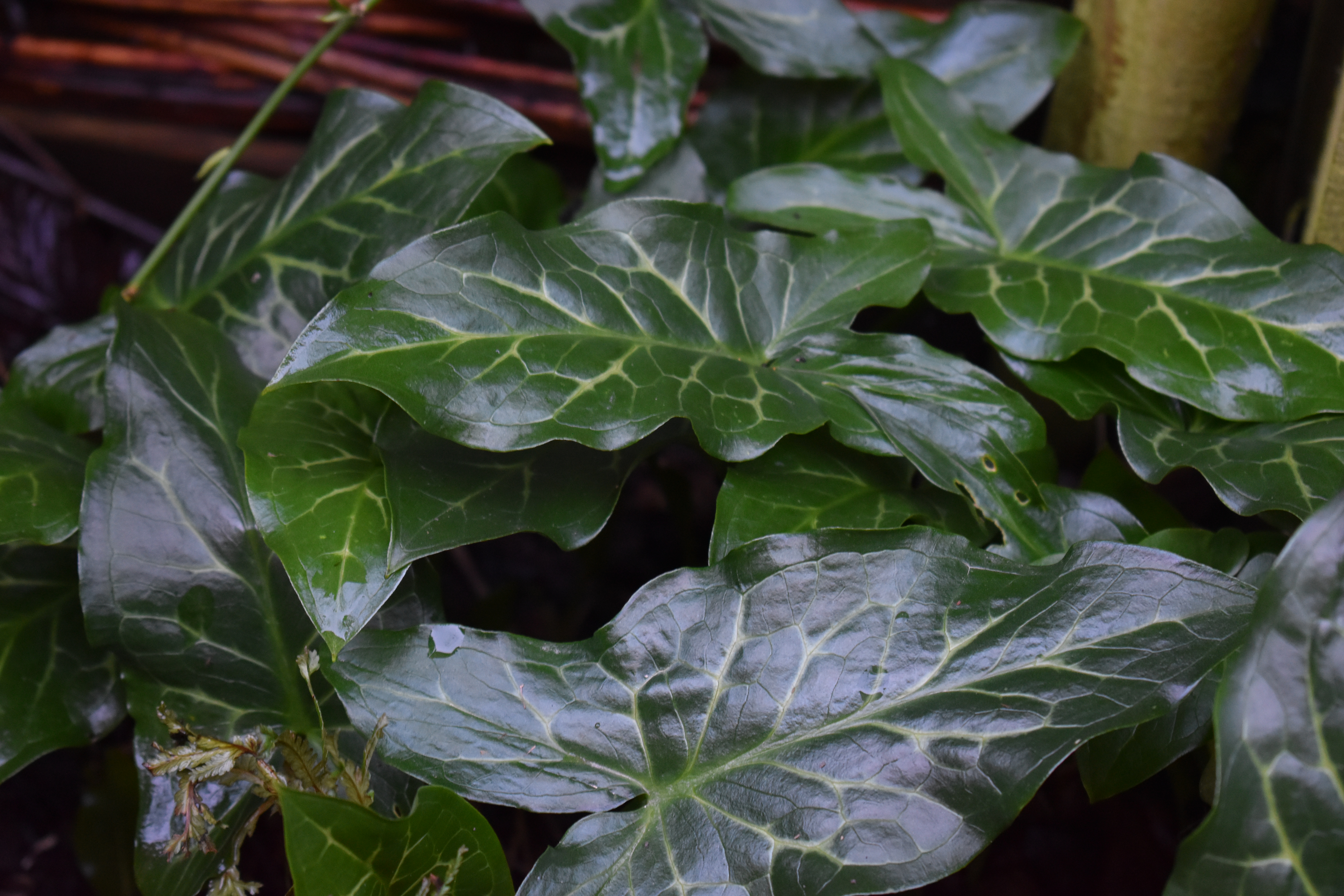
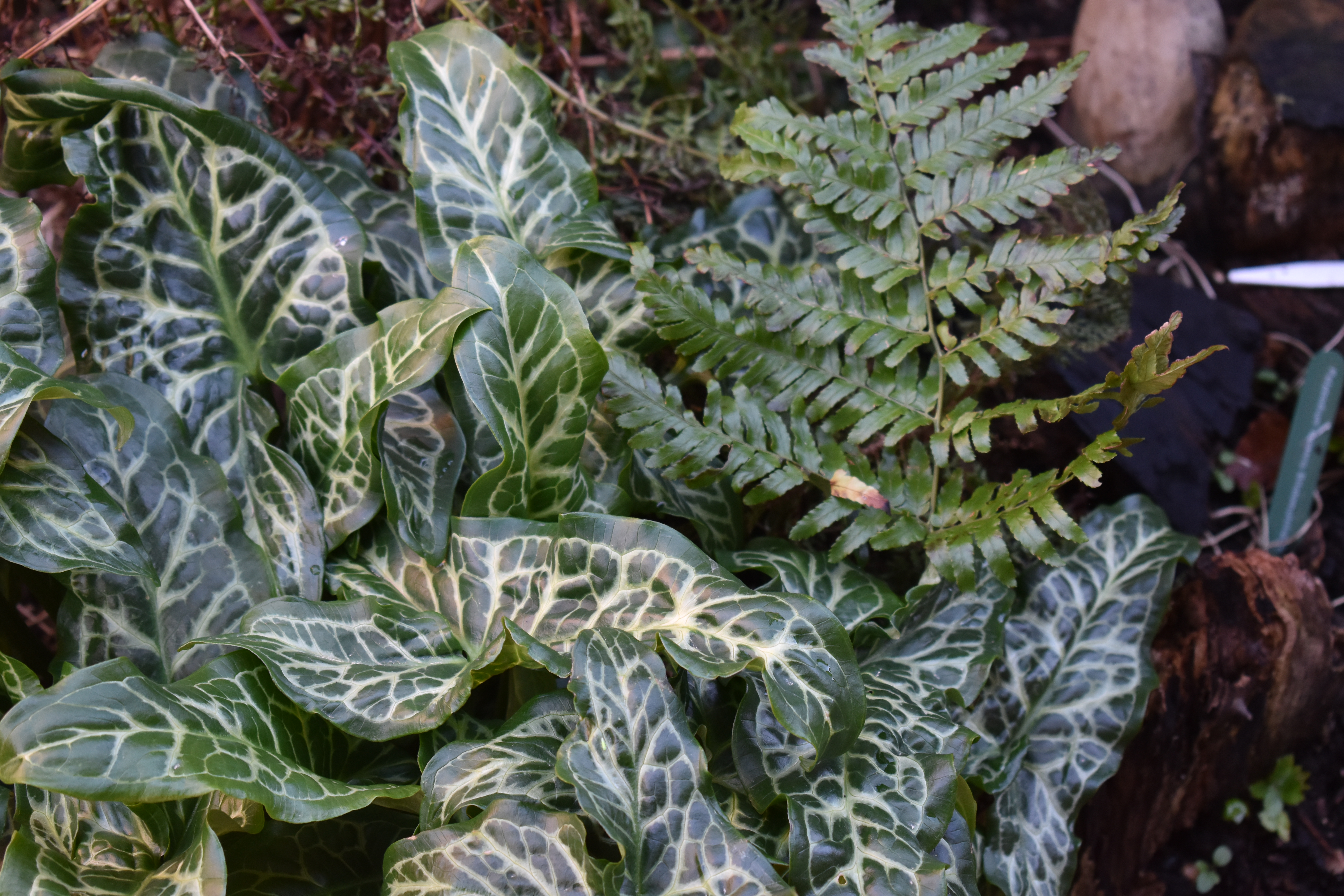
Foliage takes over next and it provides much more subtle colours, mostly shades of greens. “When we work away at our borders in the second half of February we are amazed at how much fresh foliage growth there is to see. Arum varieties look at their best now. They are joined by carex, cyclamen and celandines.”
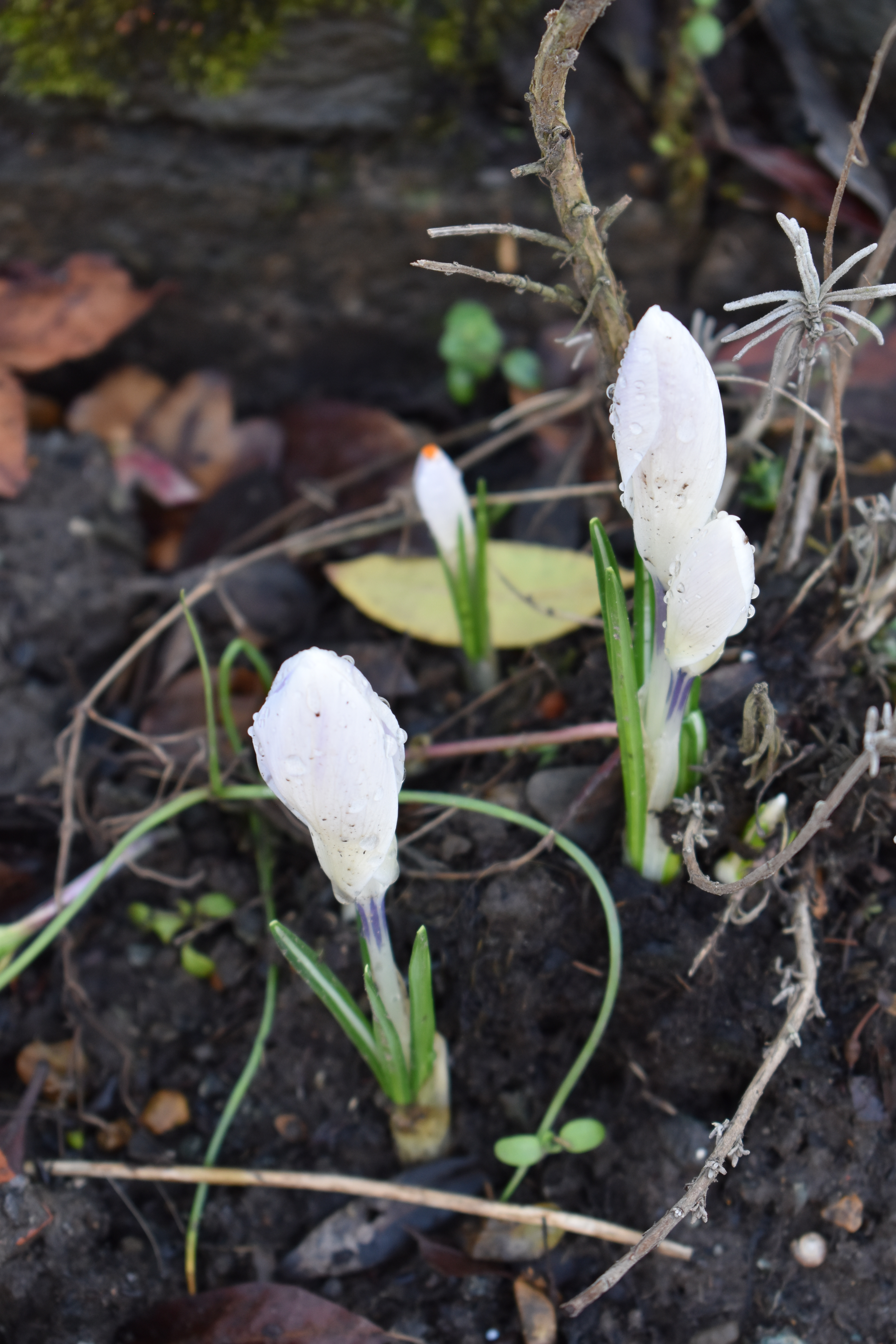
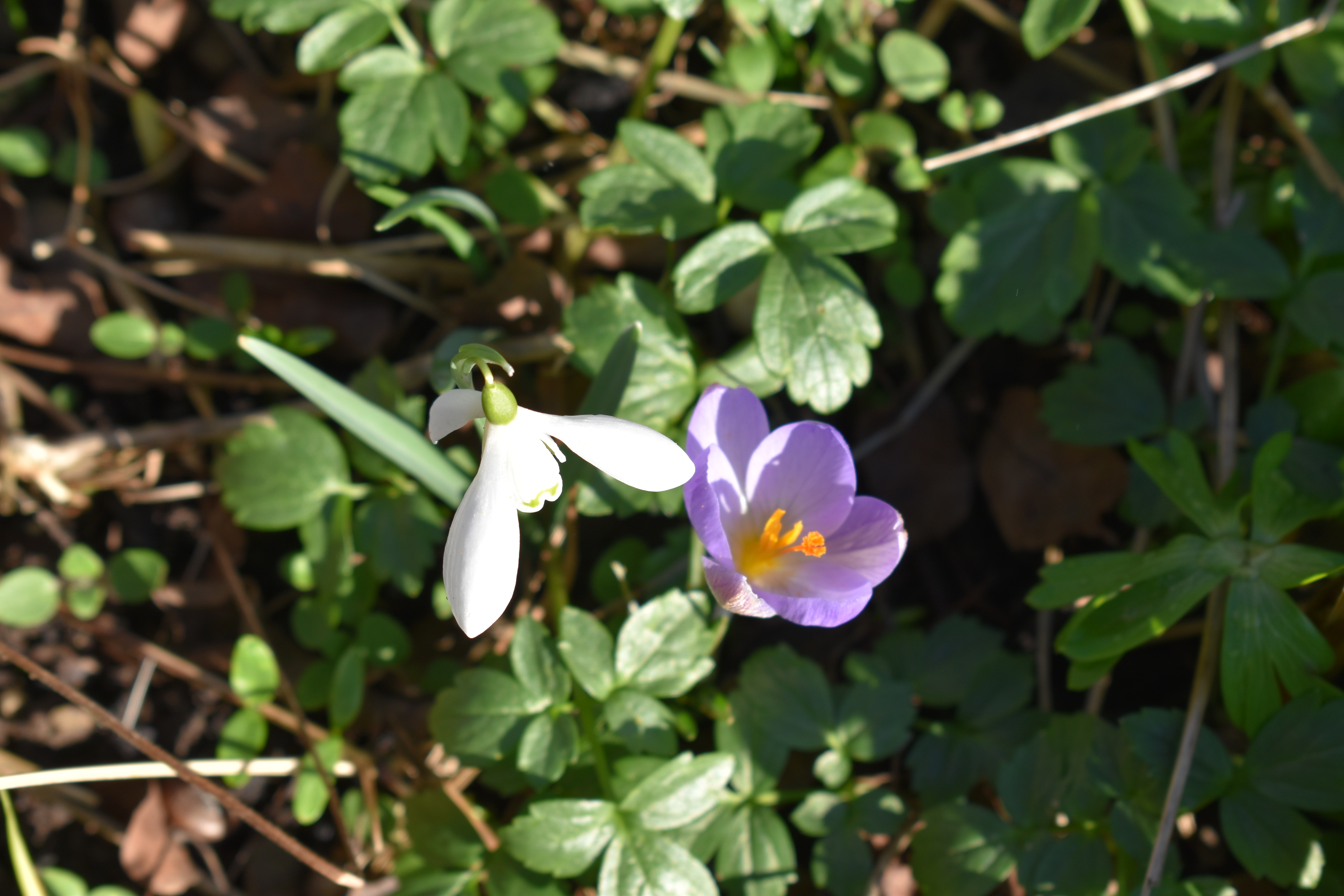
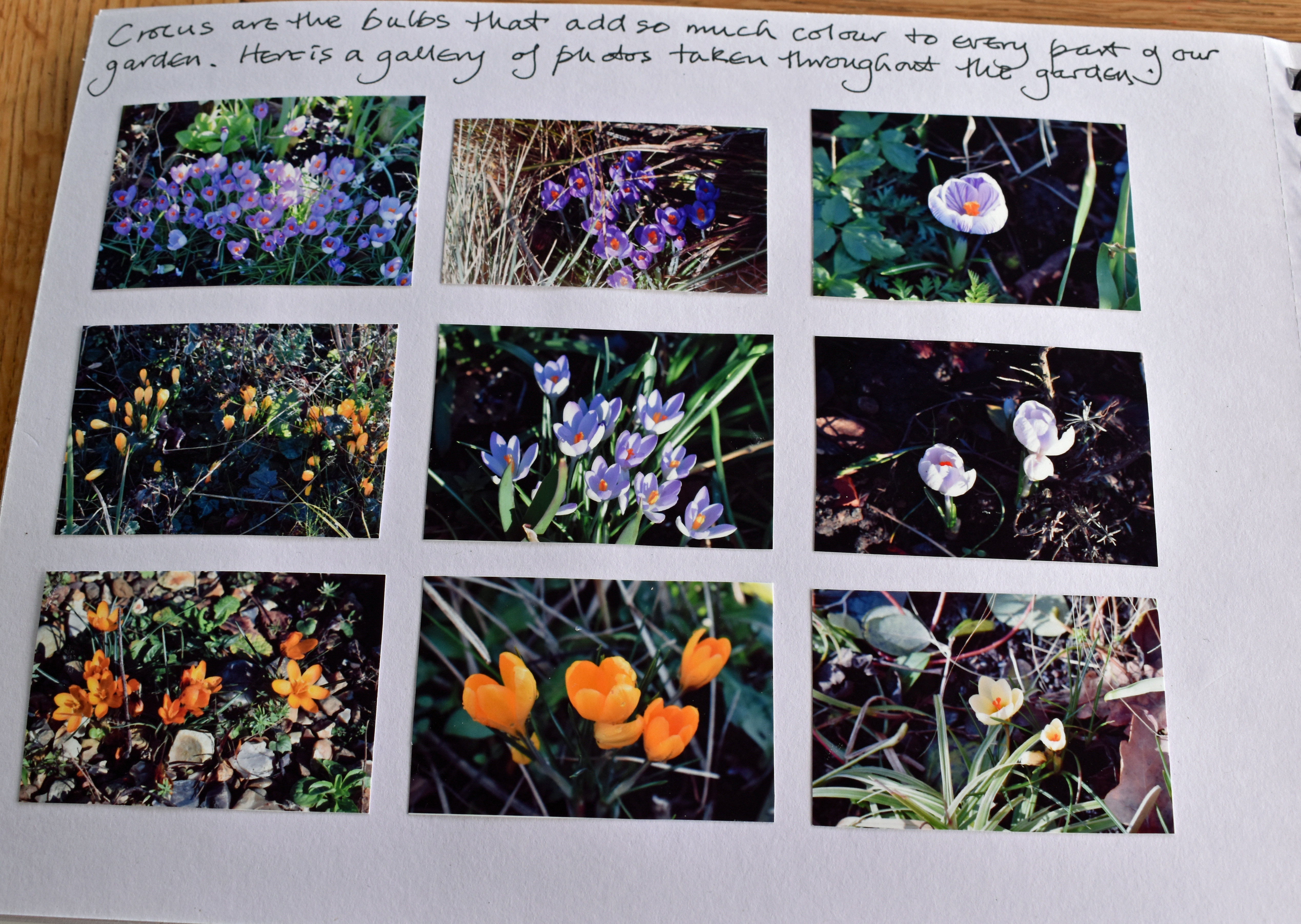
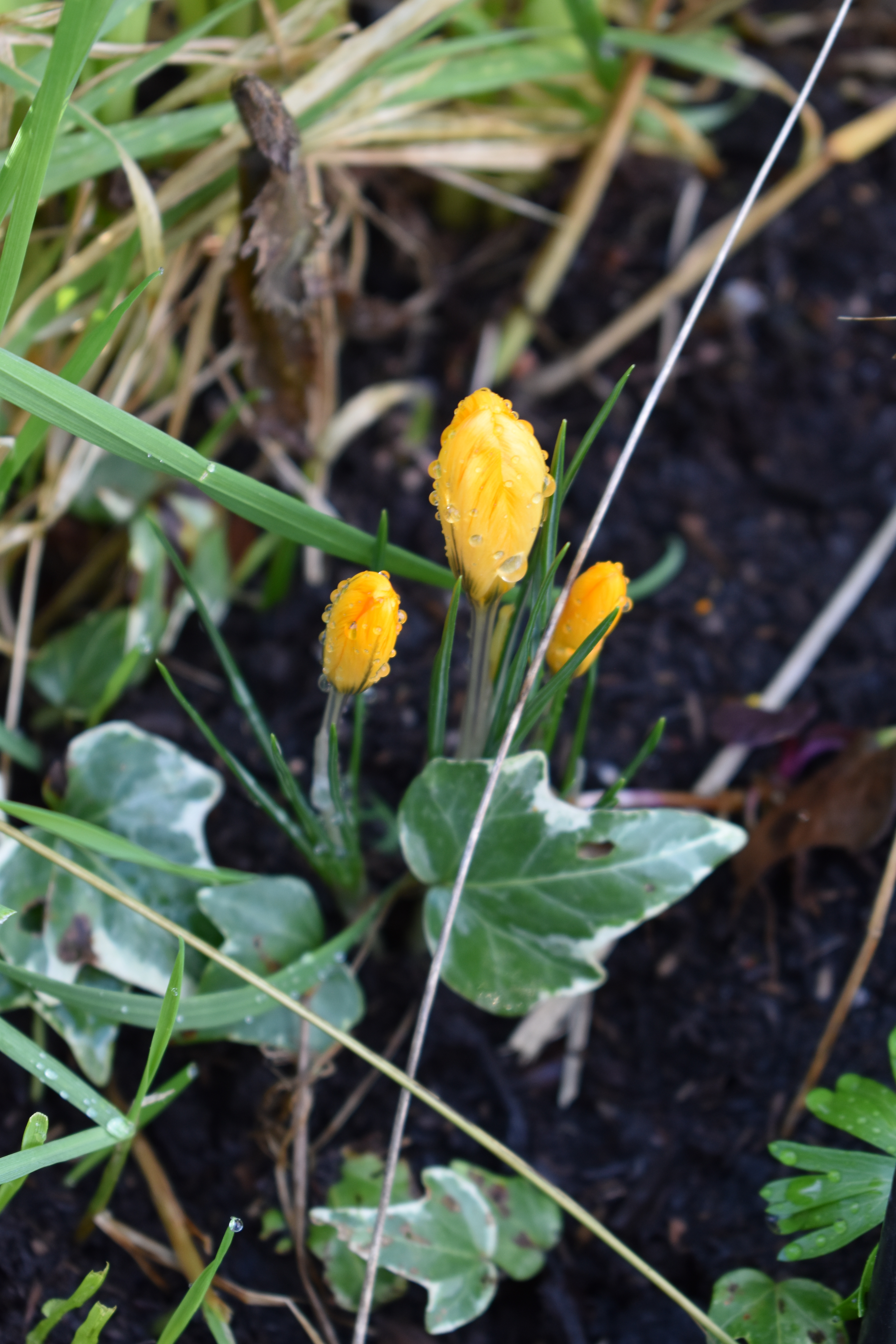
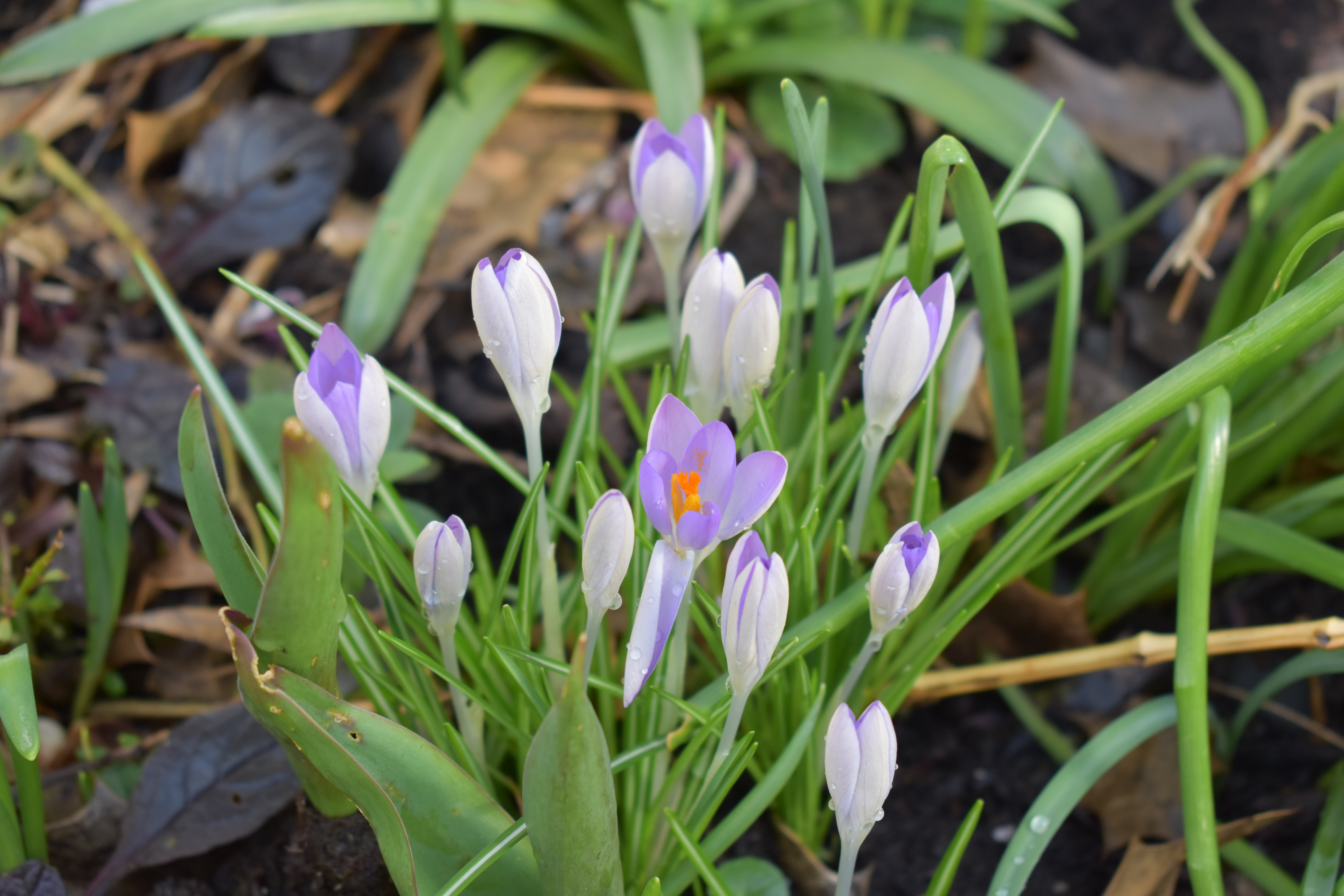
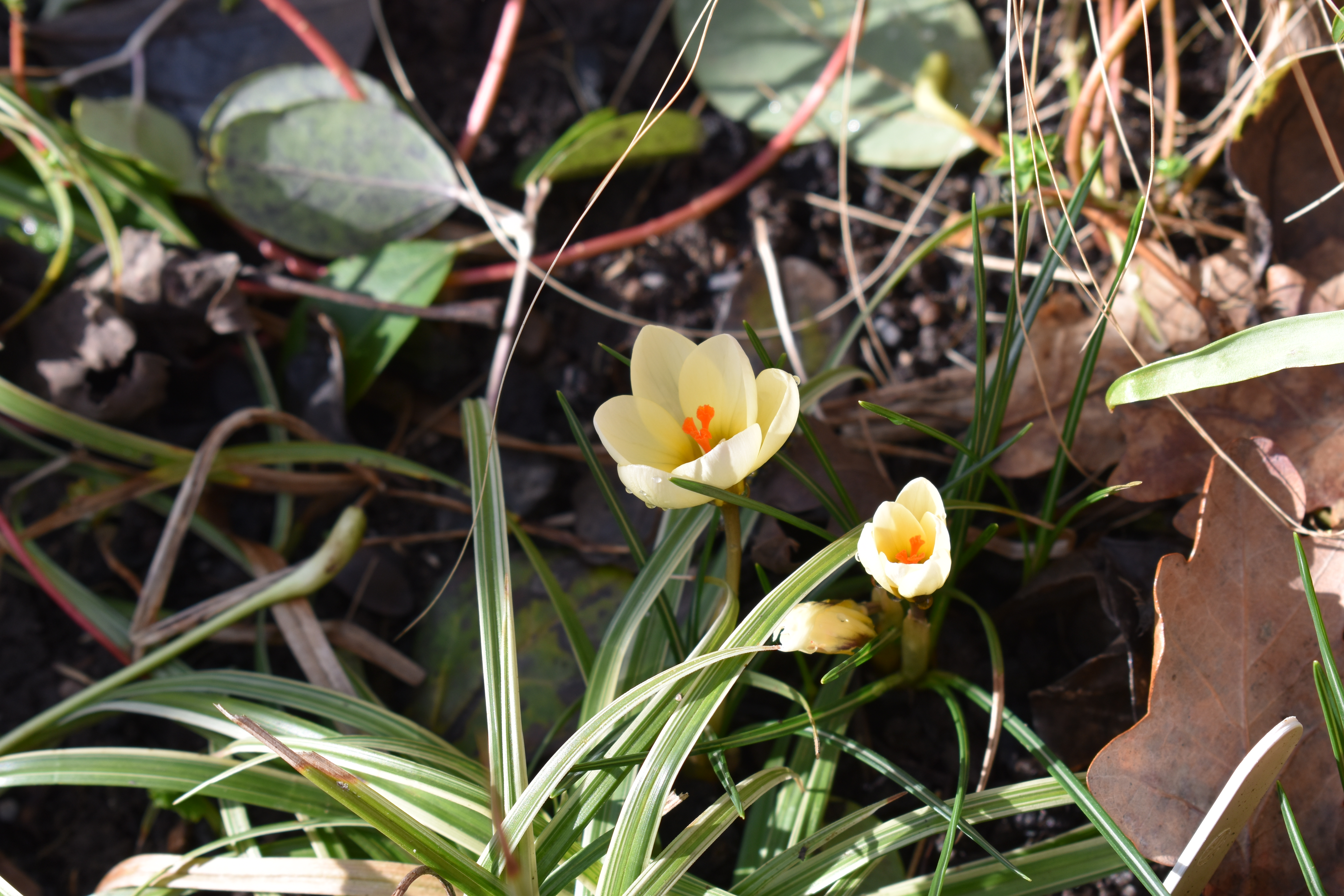
More bulbs appear over on the next double page spread, this time crocus. I wrote, “Crocus are the bulbs that add so much to every part of our garden. Here is a gallery of photos taken throughout the garden.”
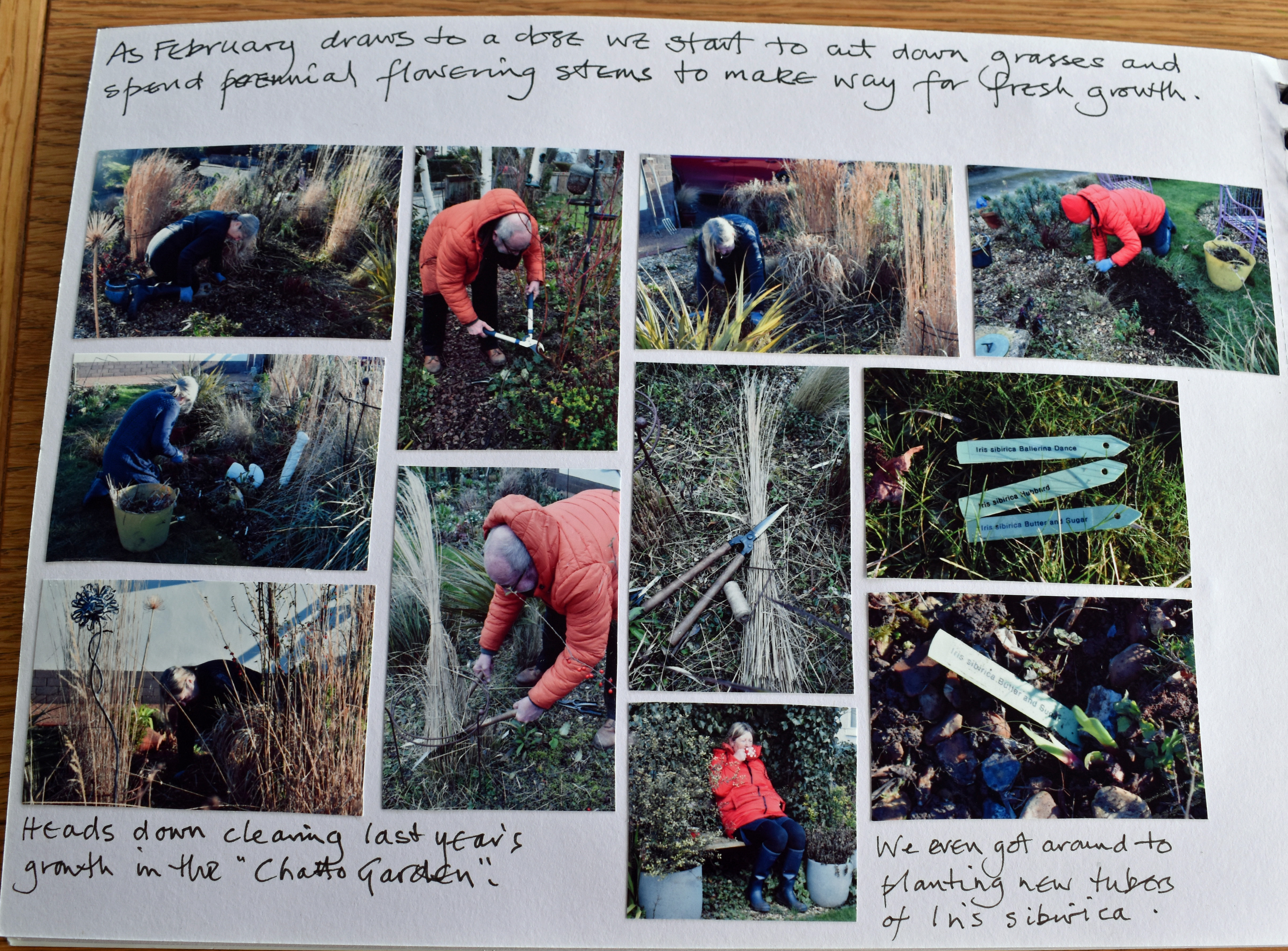
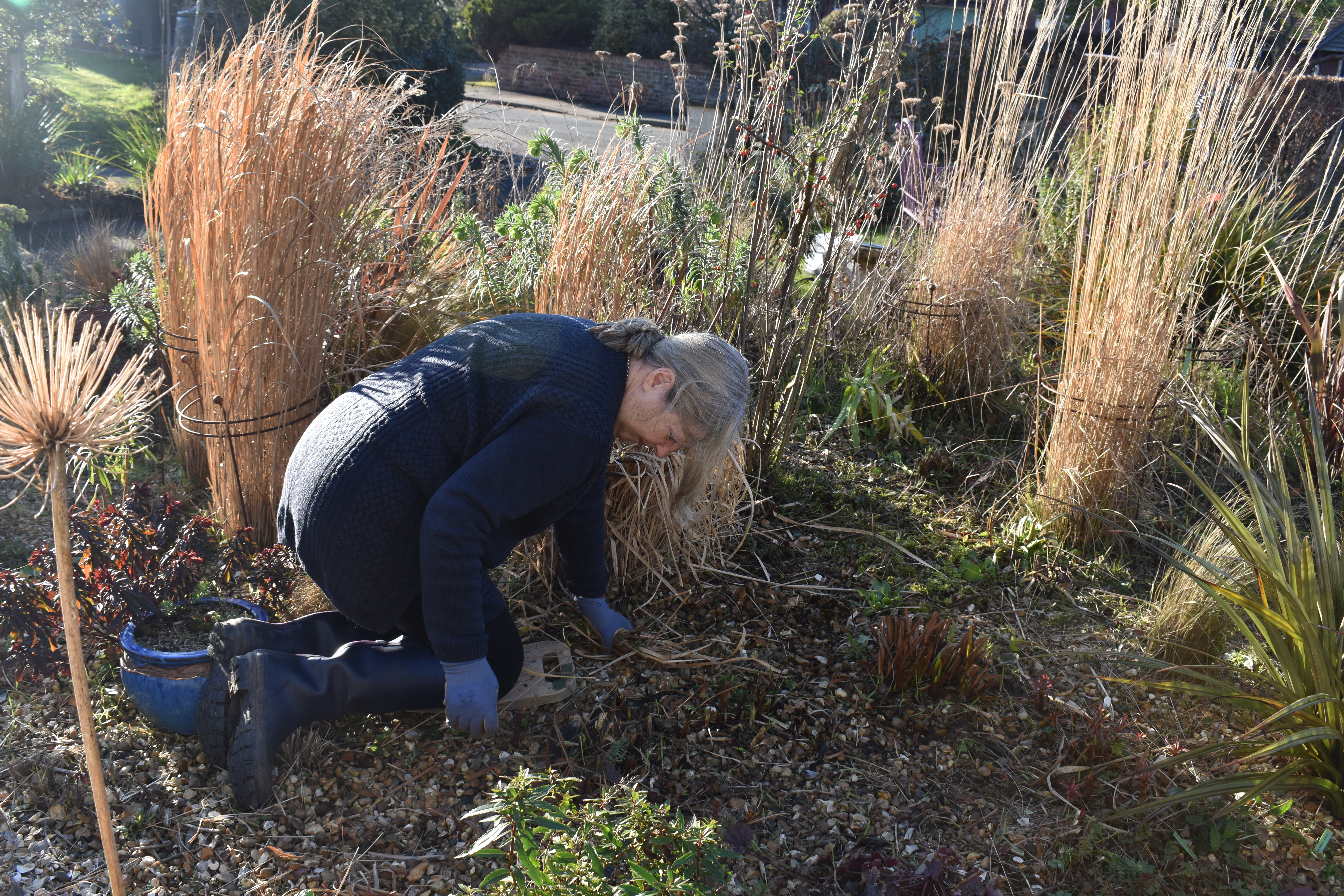
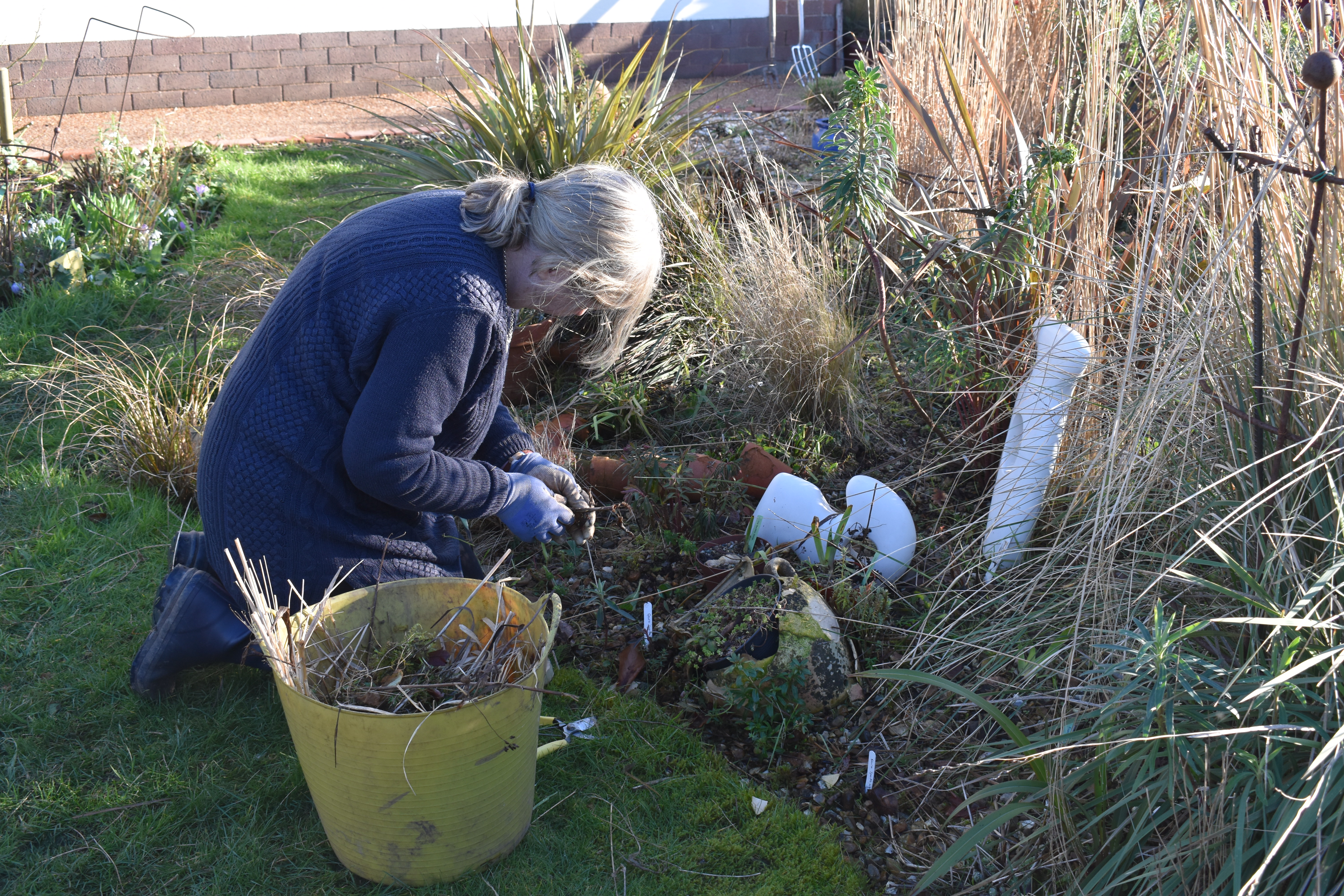
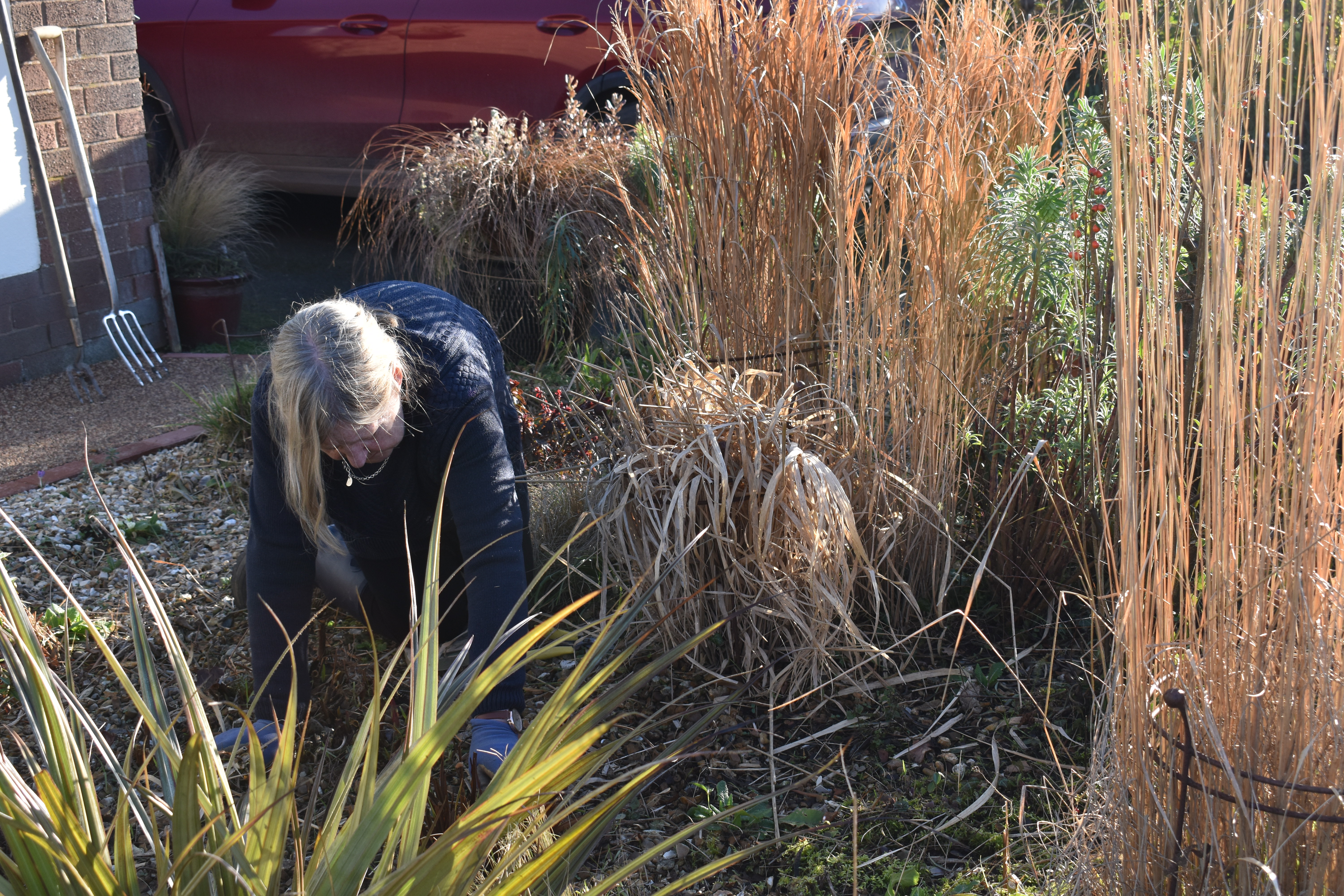
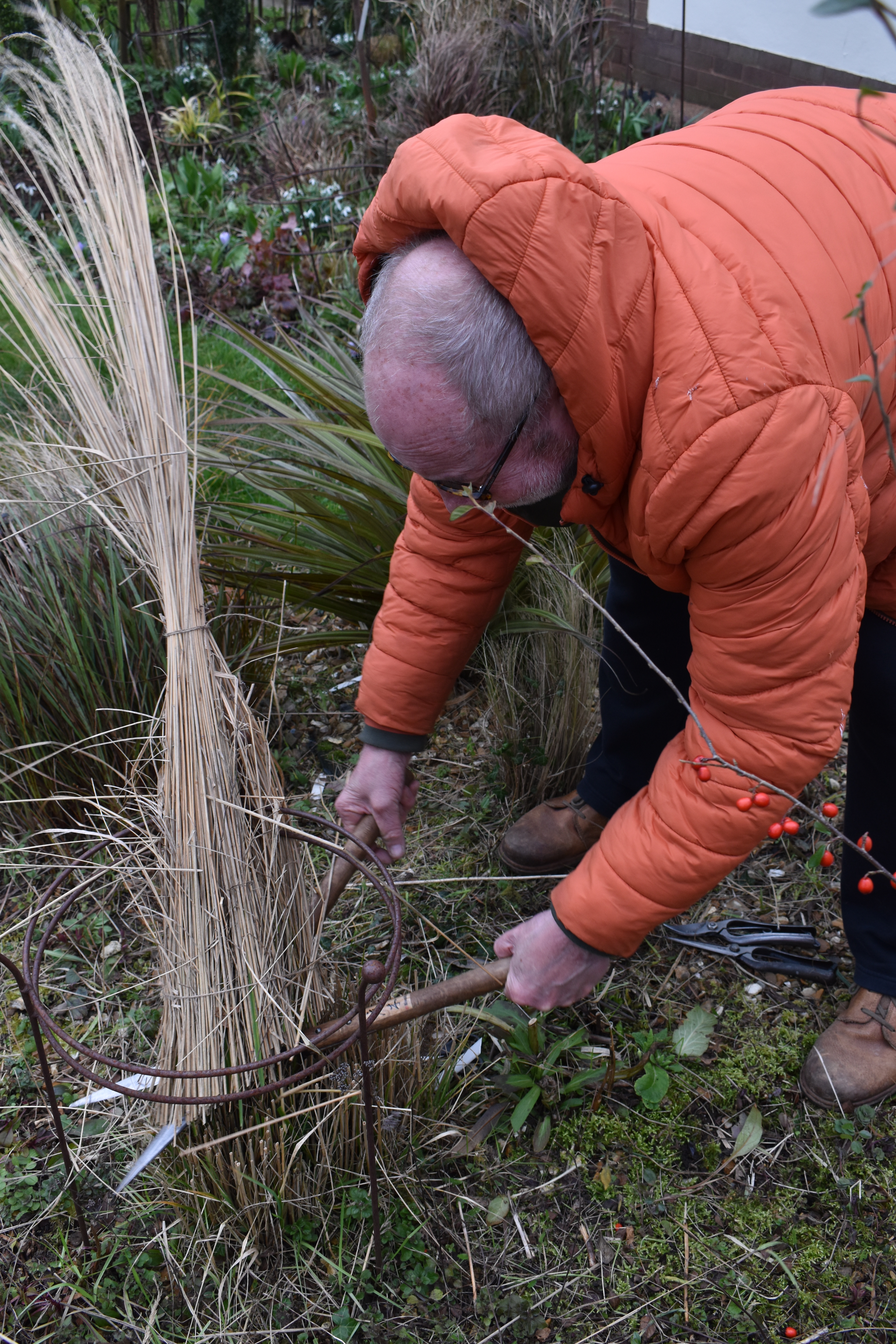
My last page for this month looks at some of the garden tasks we have been tackling. Here I wrote, “As February draws to a close we start to cut down grasses and spent perennial flowered stems to make way for future growth.”
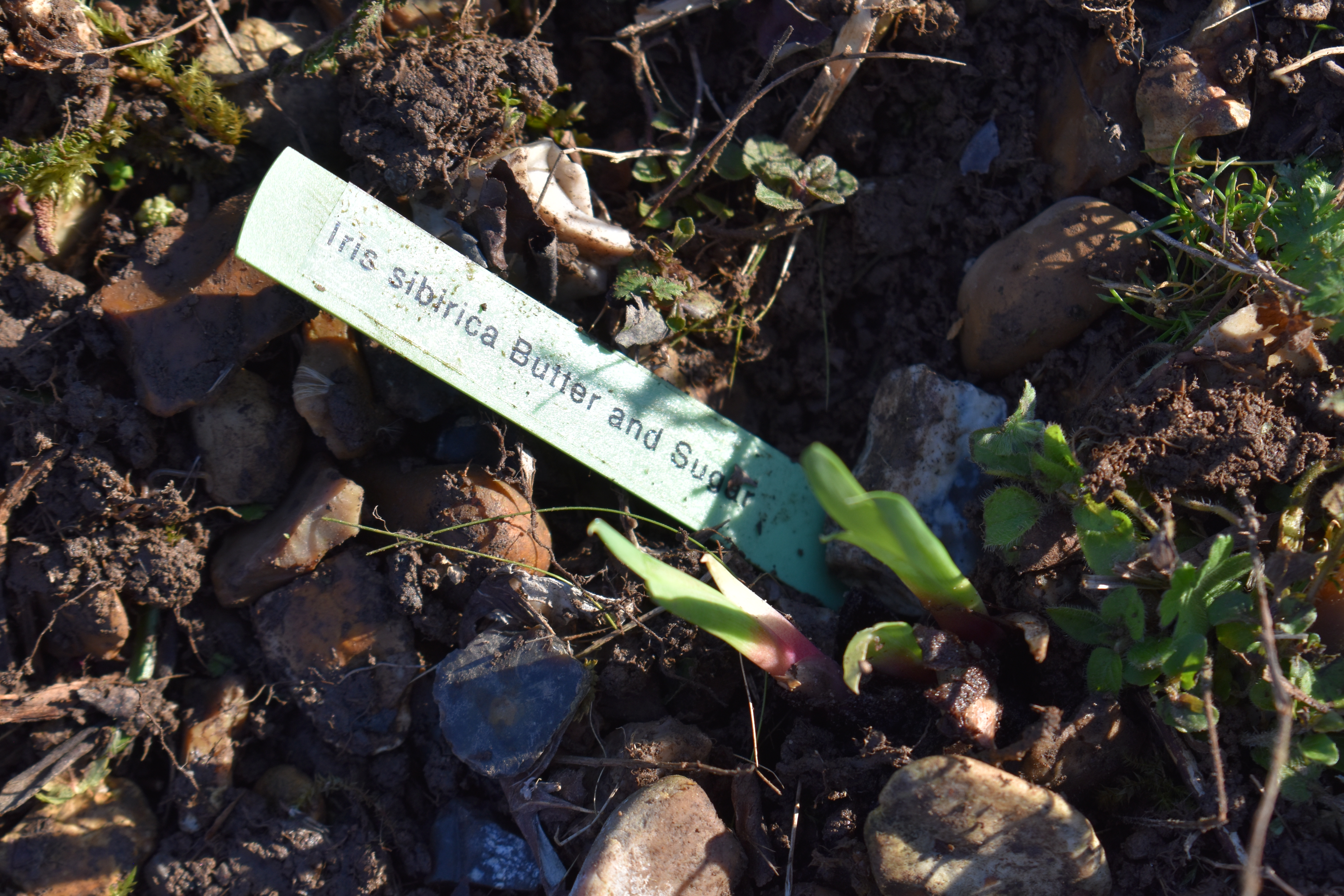
We managed to acquire two new to us cultivars of Iris sibirica, ‘Ballerina Dance’, ‘Butter and Sugar’ and ‘Hubbard’.
So that is it for my February entries in my Garden Journal 2021. I will be back with my March reports.
Another wander around the ‘Woodland Walk’ at Attingham Park on a much warmer day in late January when the temperatures crept into double figures. The wind was calm almost a totally calm day which made for a quiet atmosphere along the pathways. This allowed us to appreciate the tiniest bird song and calls, blue tit, wren, robin, treecreeper, willow tit and nuthatch.
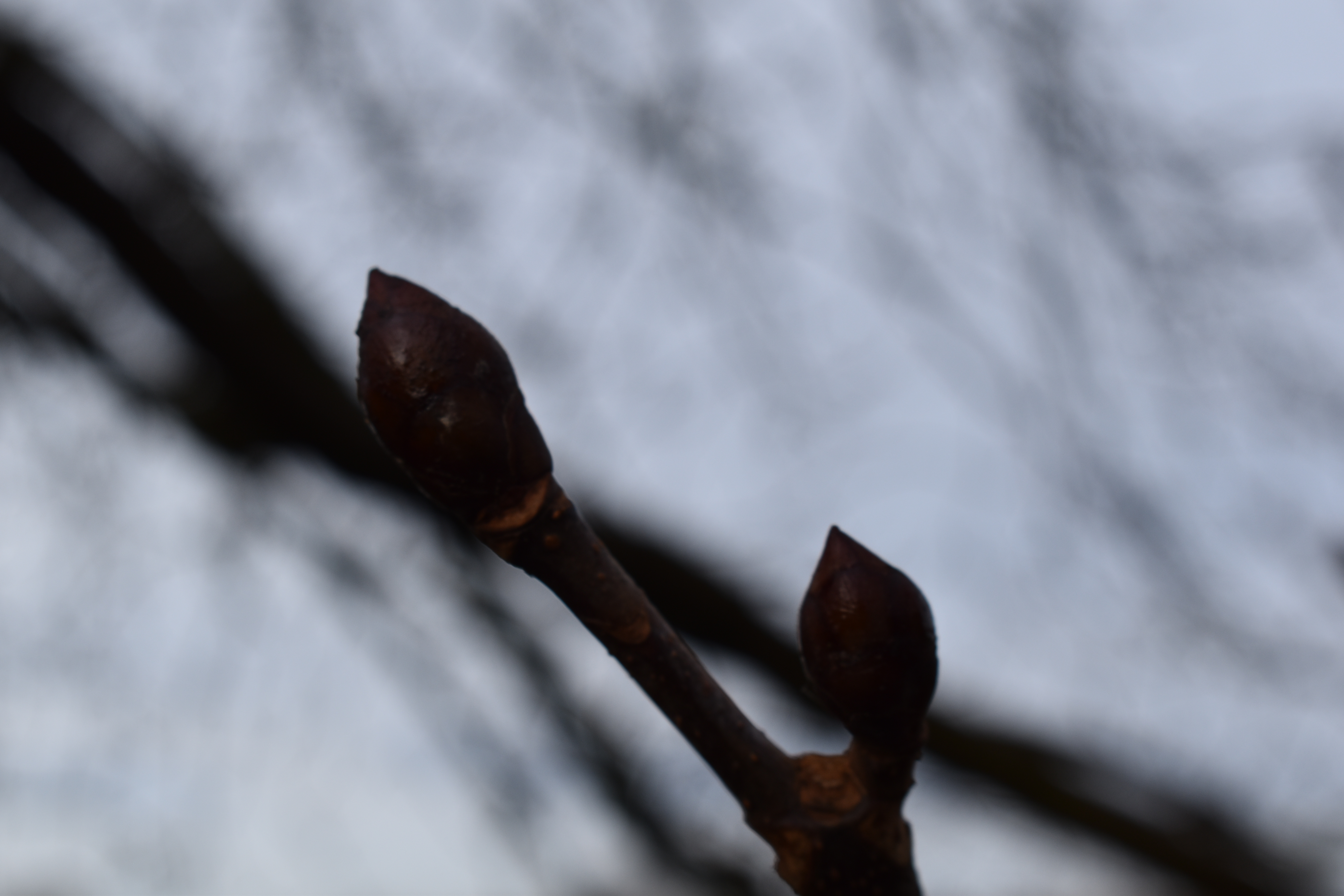
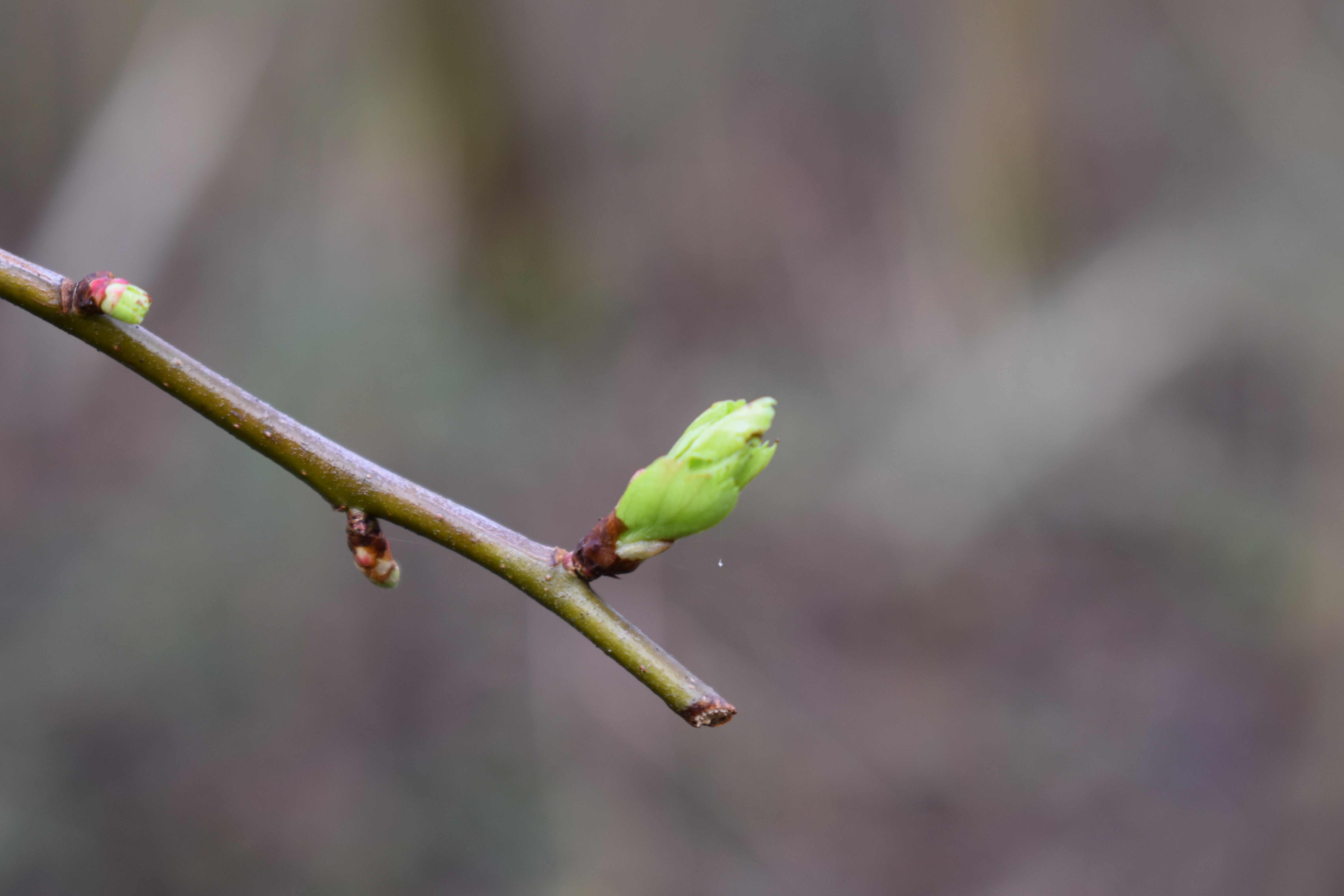
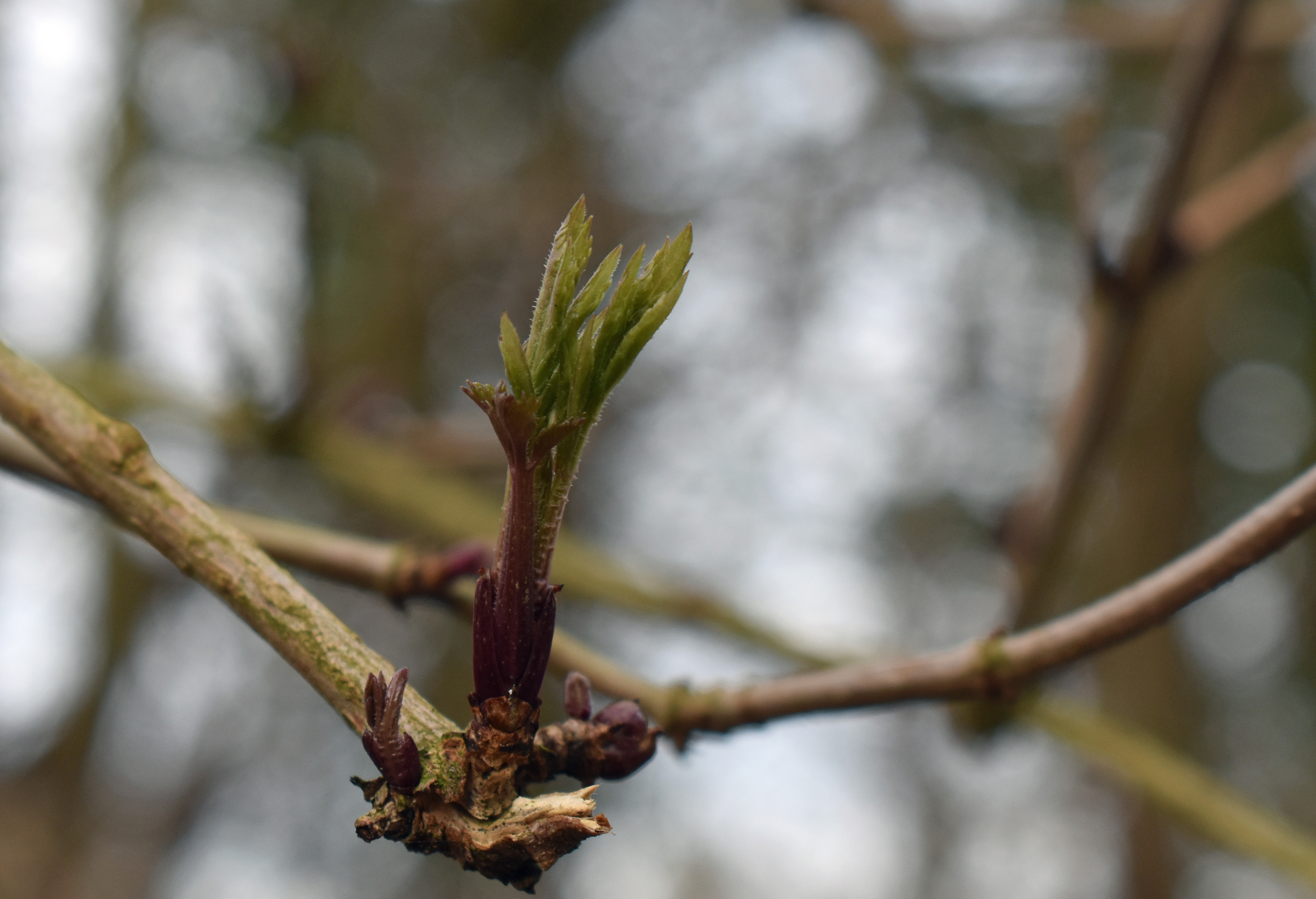
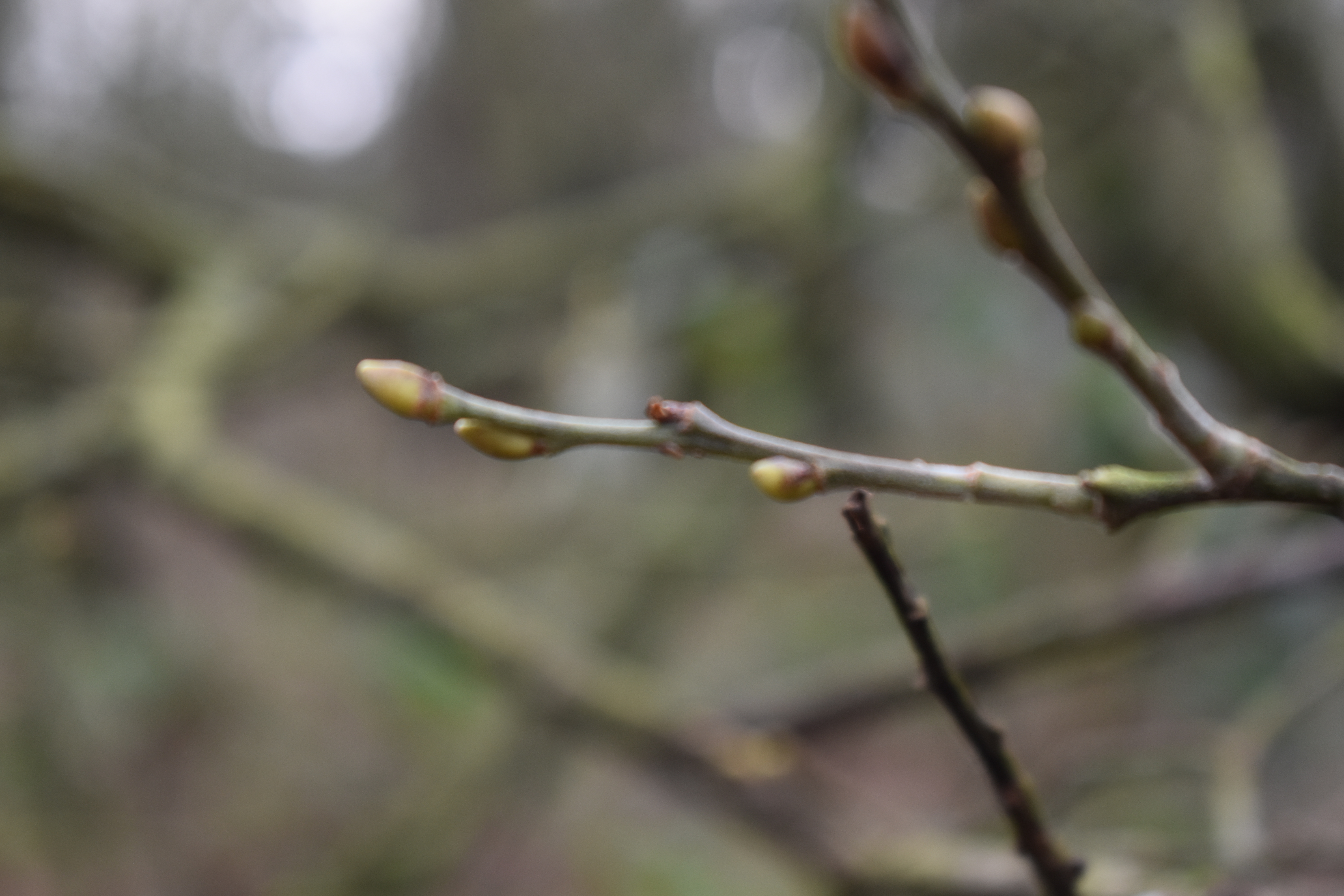
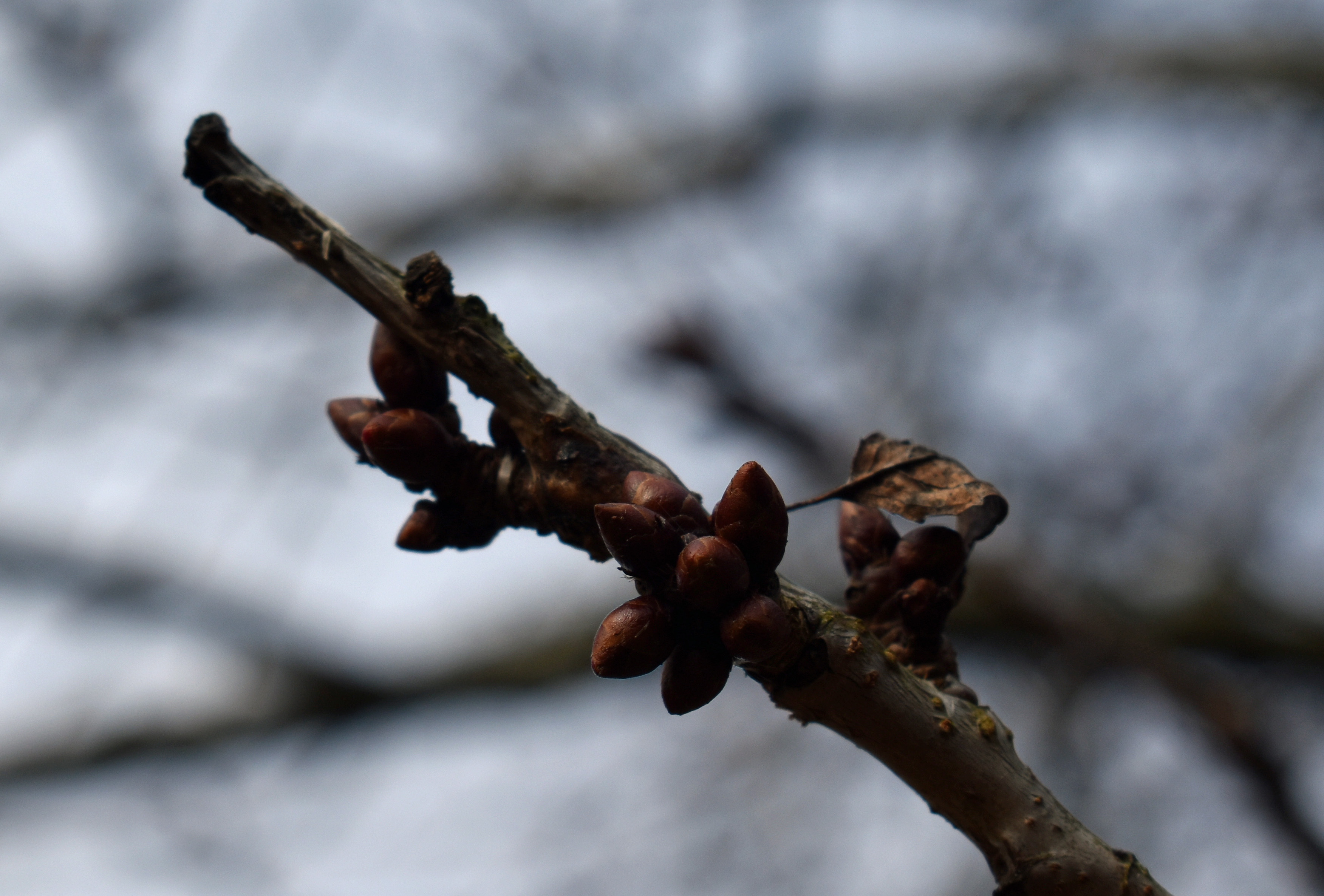
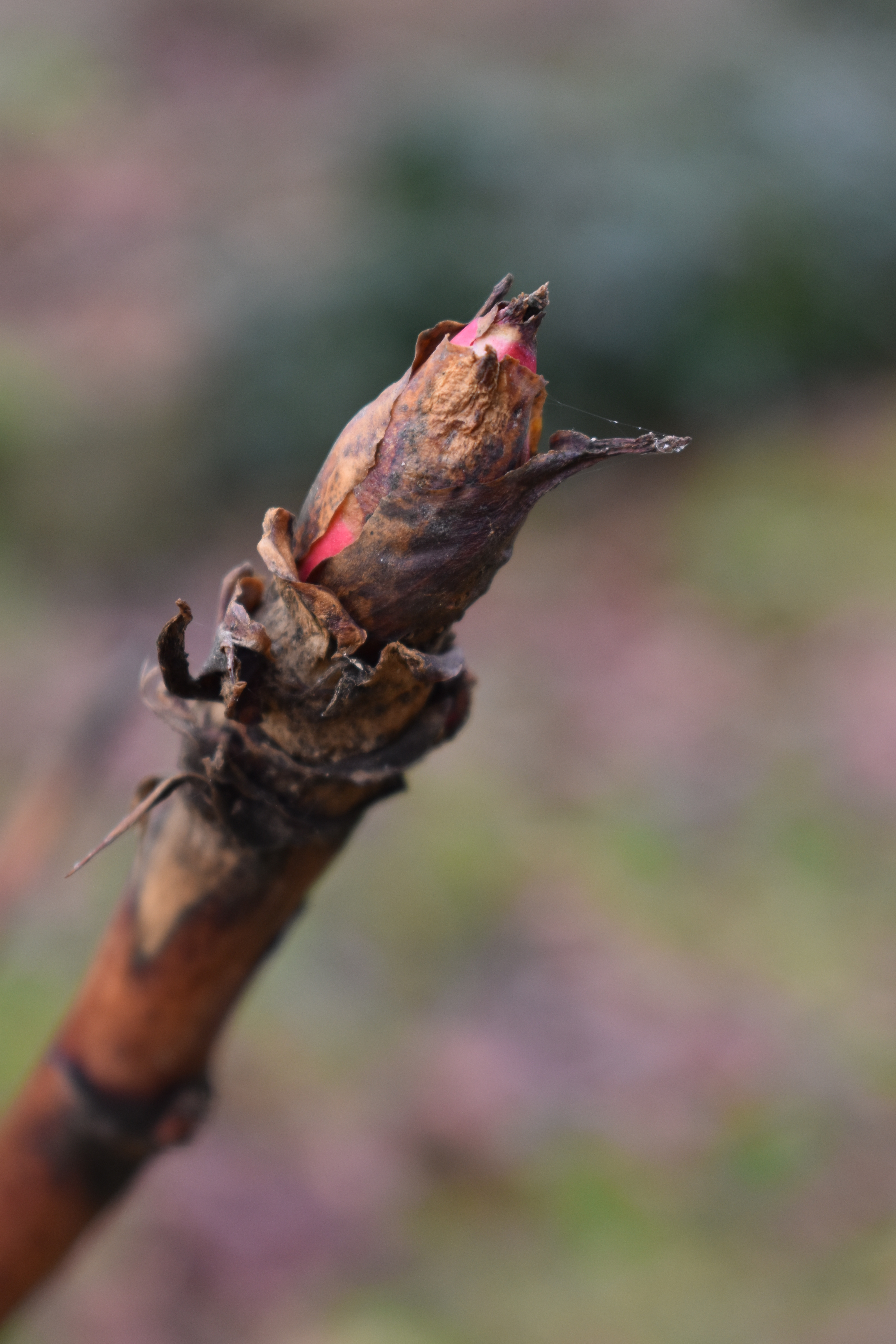
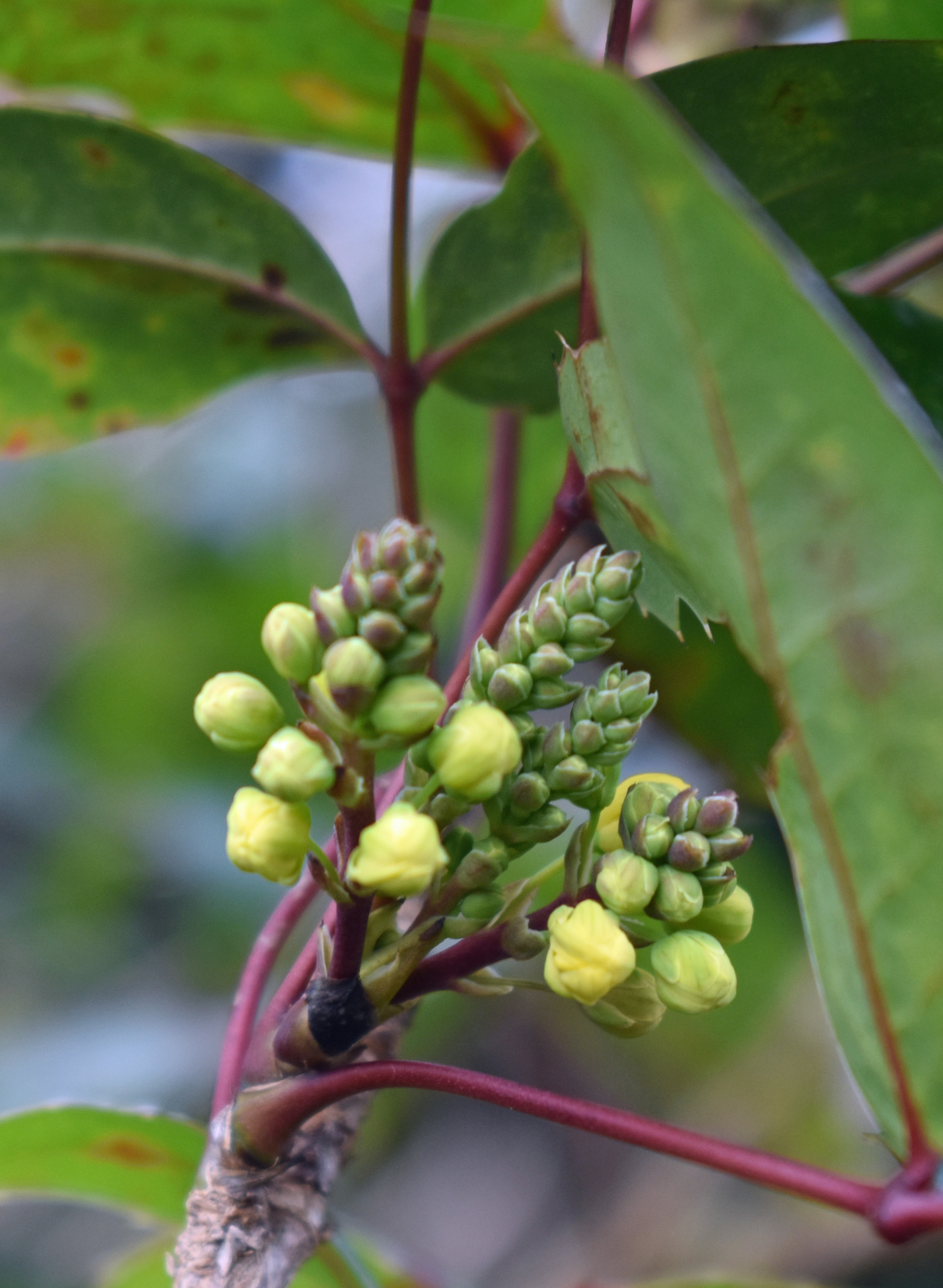
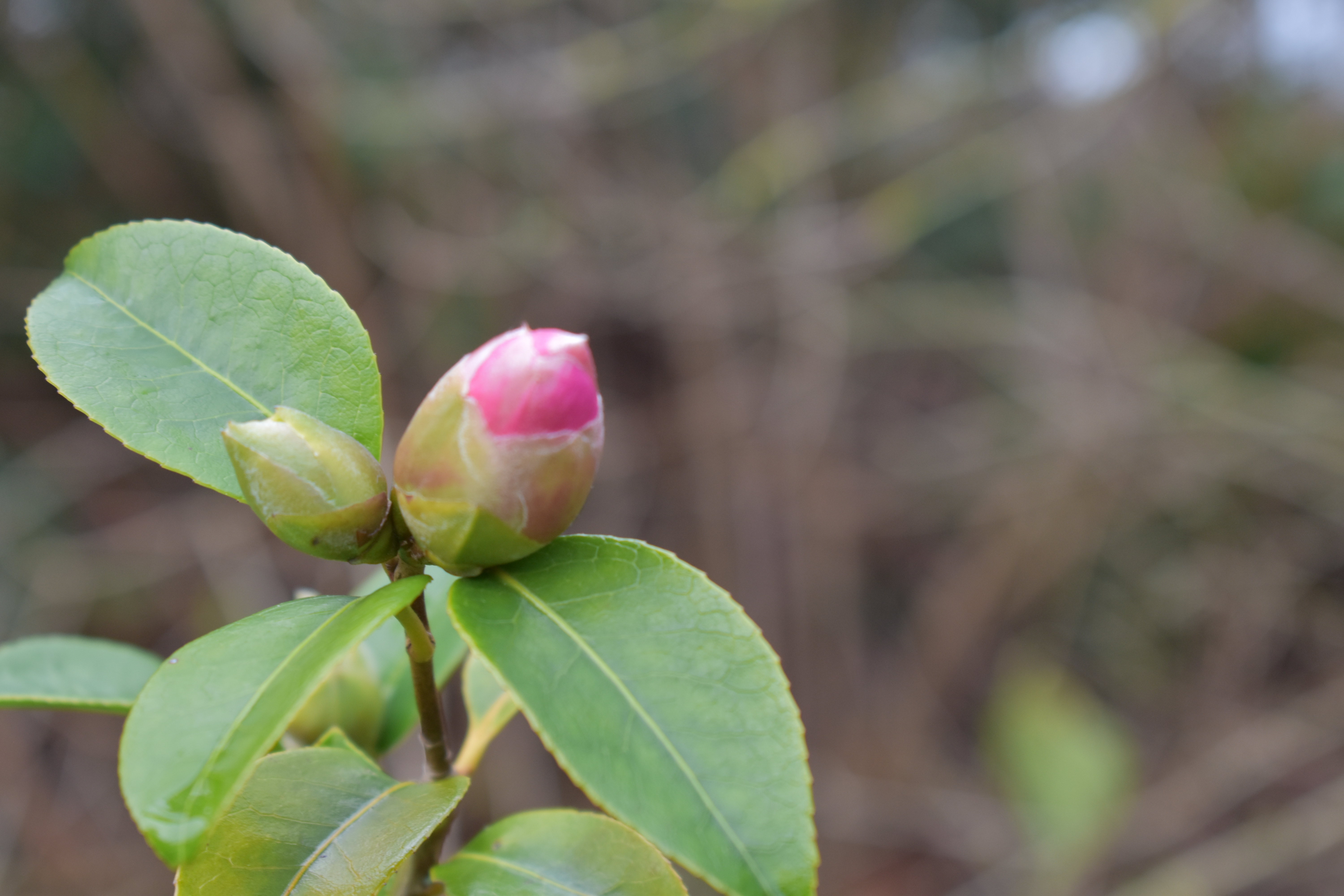
I decided to look out for early signs of buds hoping that some were showing promise of greener times to come. Leaf buds were very small with one exception, big sticky buds! I presume these were from a chestnut of sorts.
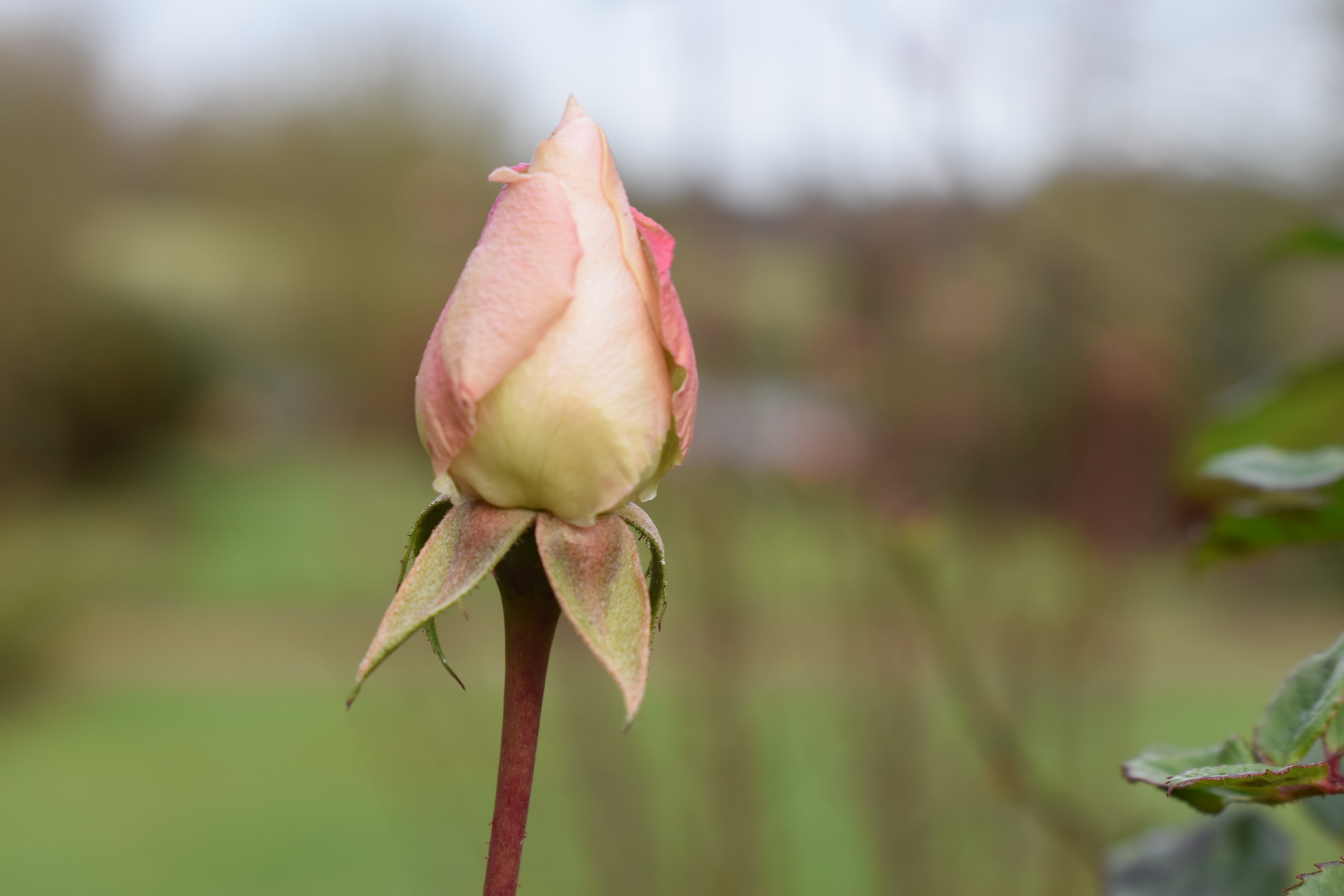
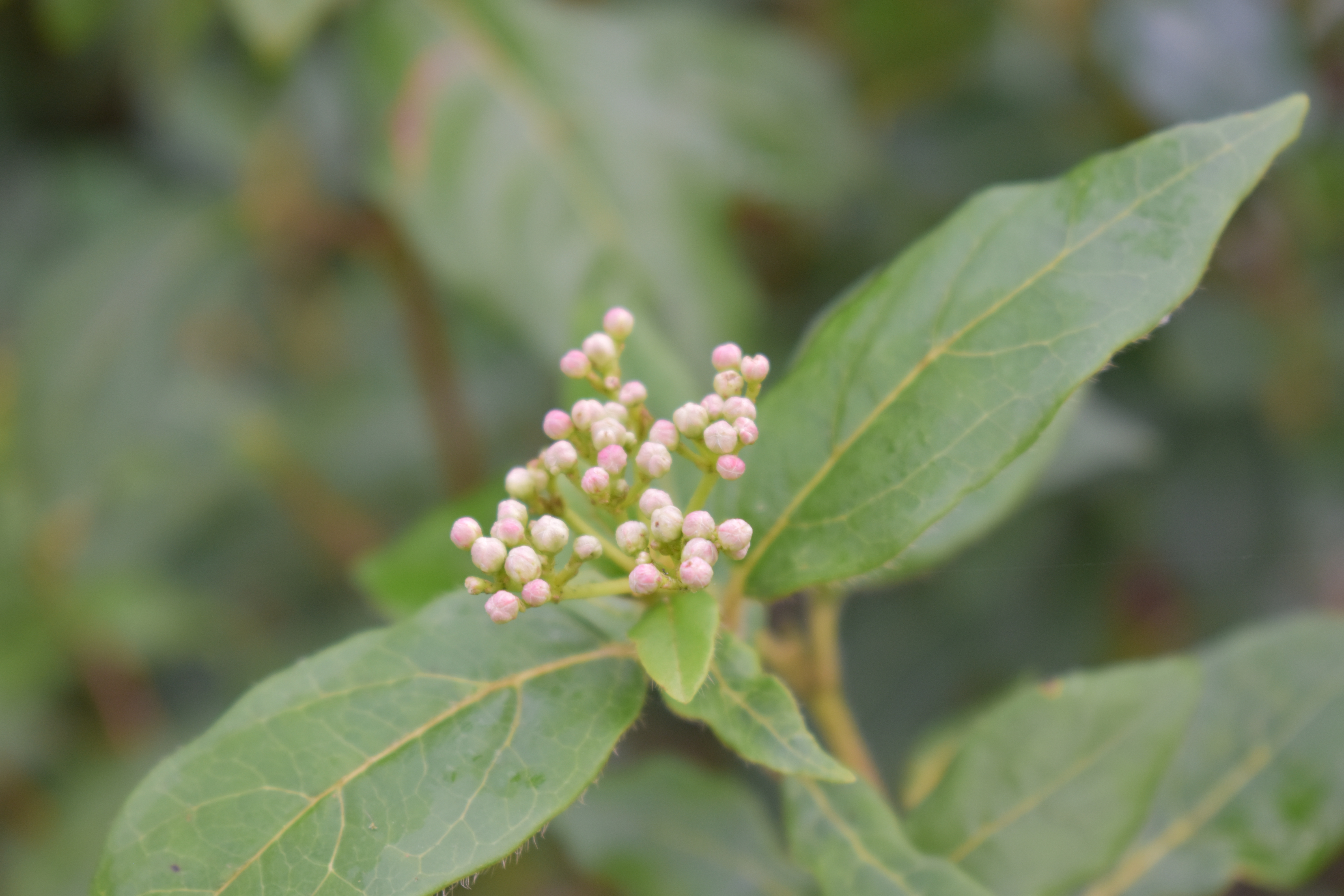
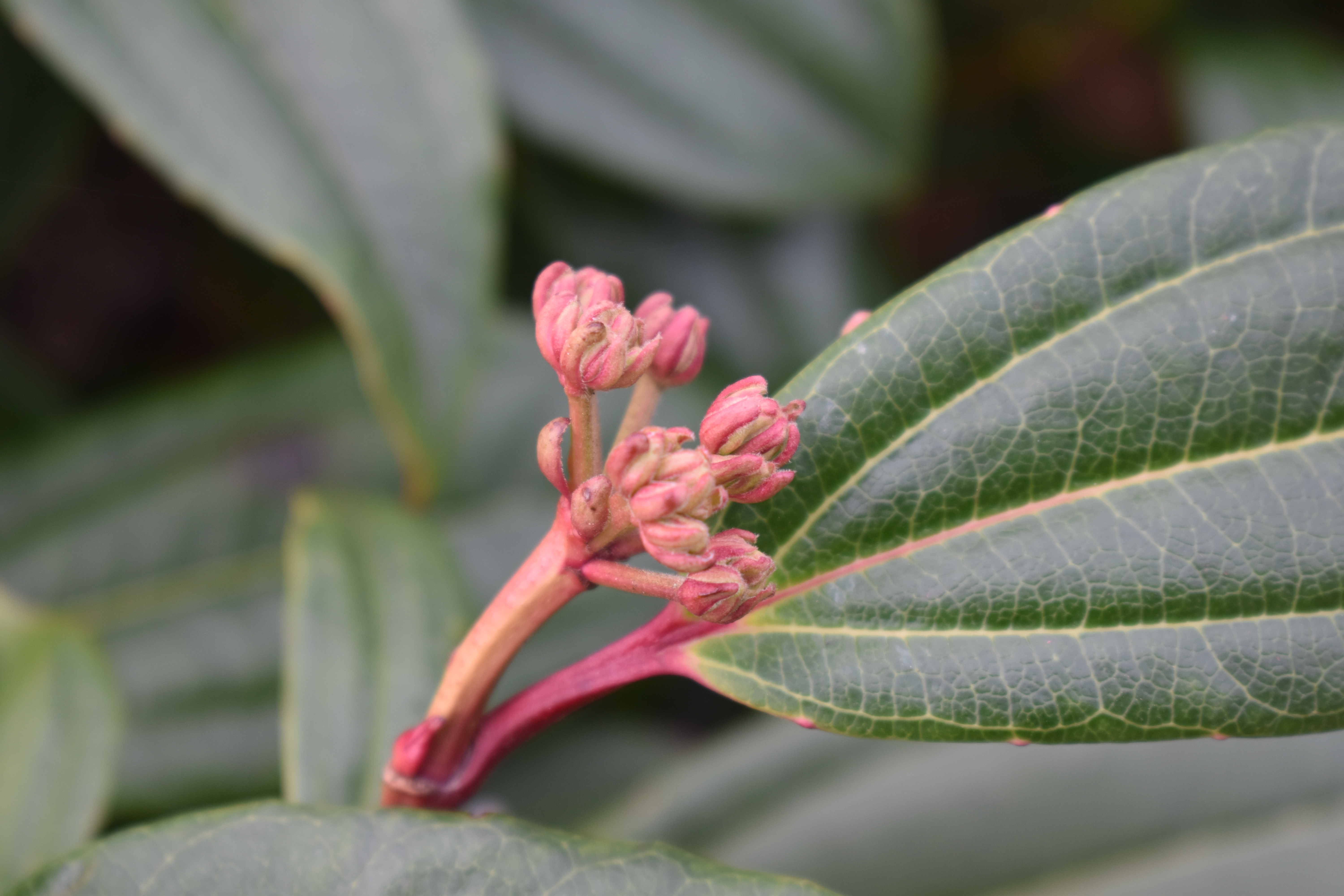
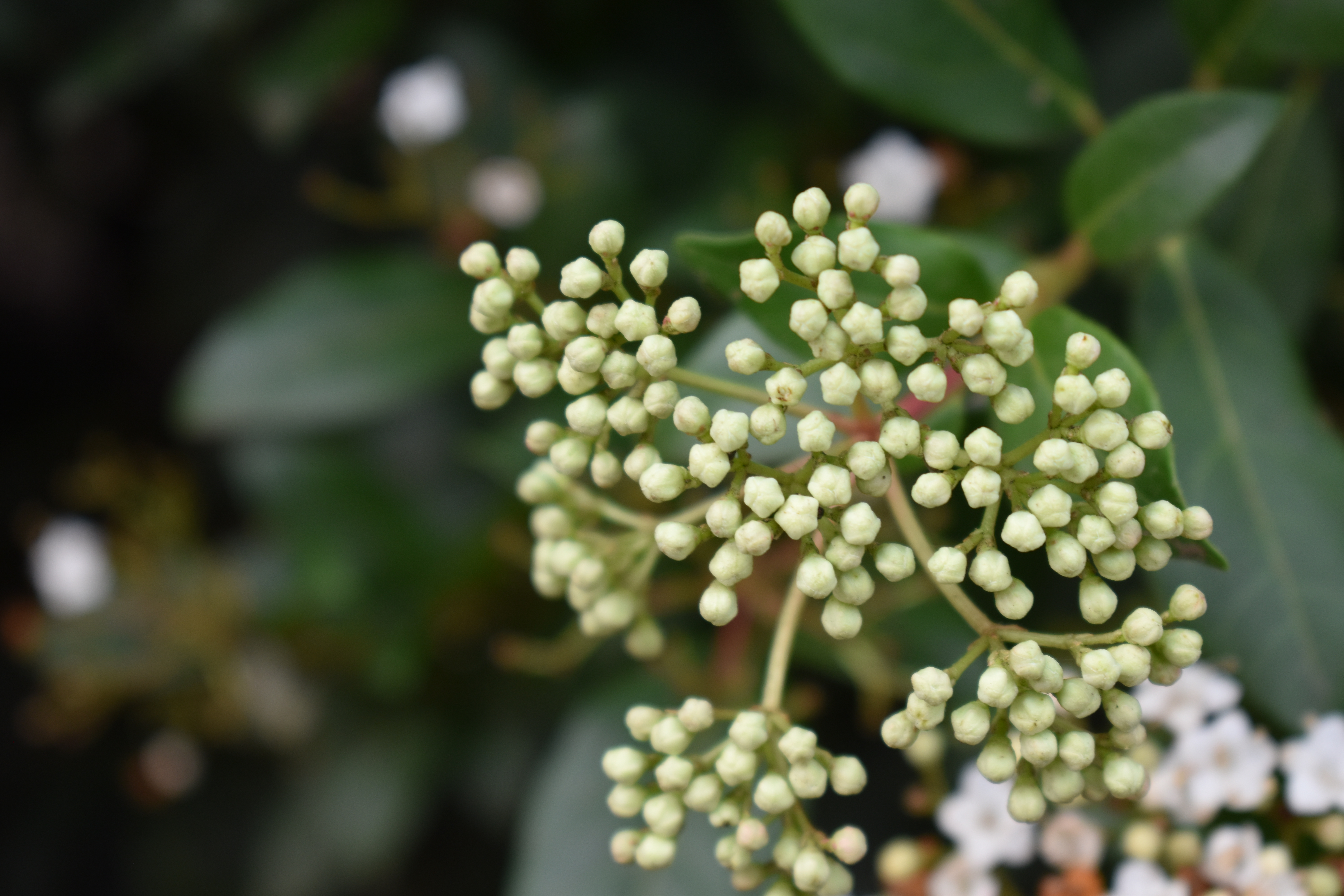
As we began our walk we began to find many buds of early flowers of evergreen shrubs like these viburnum intermingled with a few out of season brave souls like this rose.
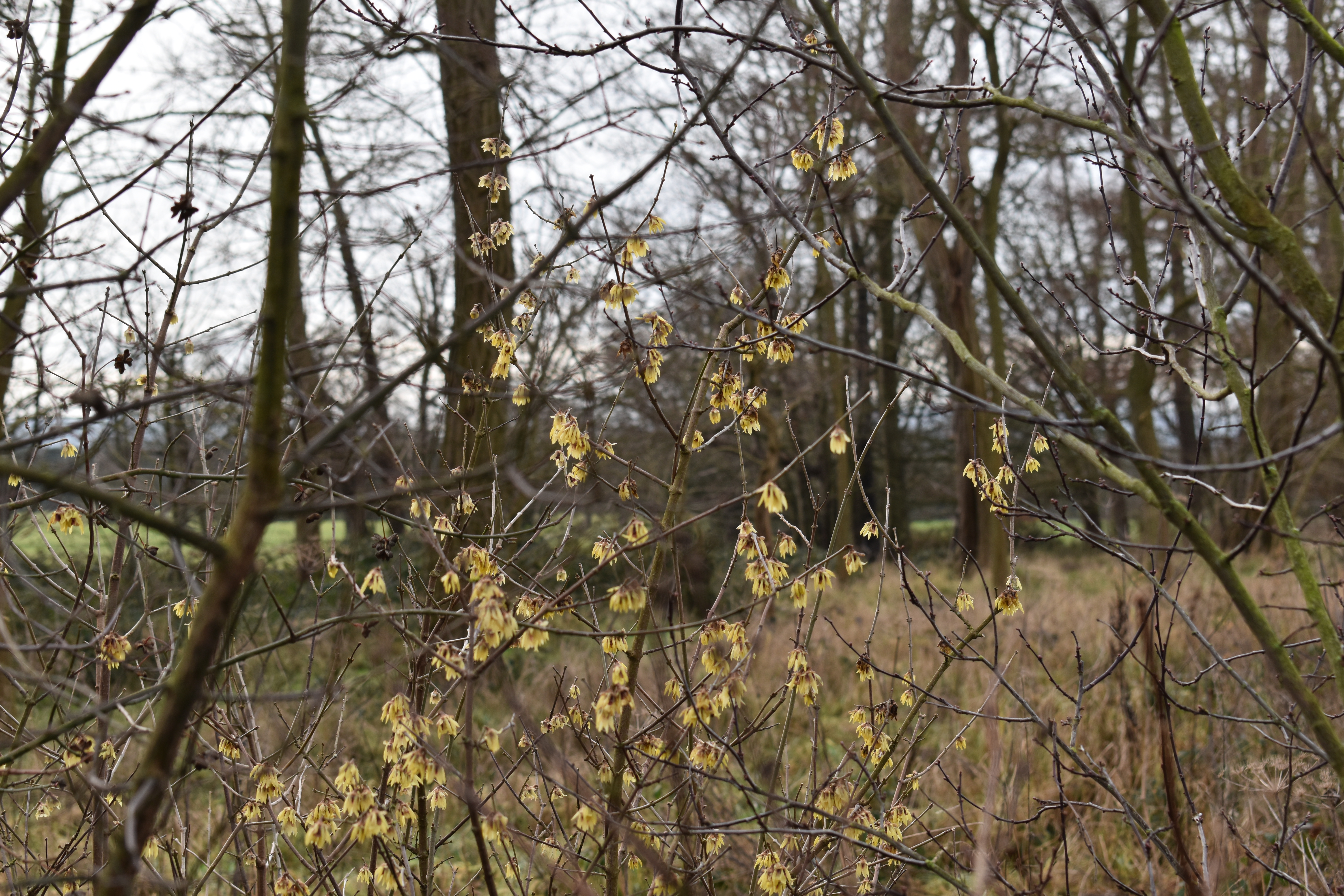
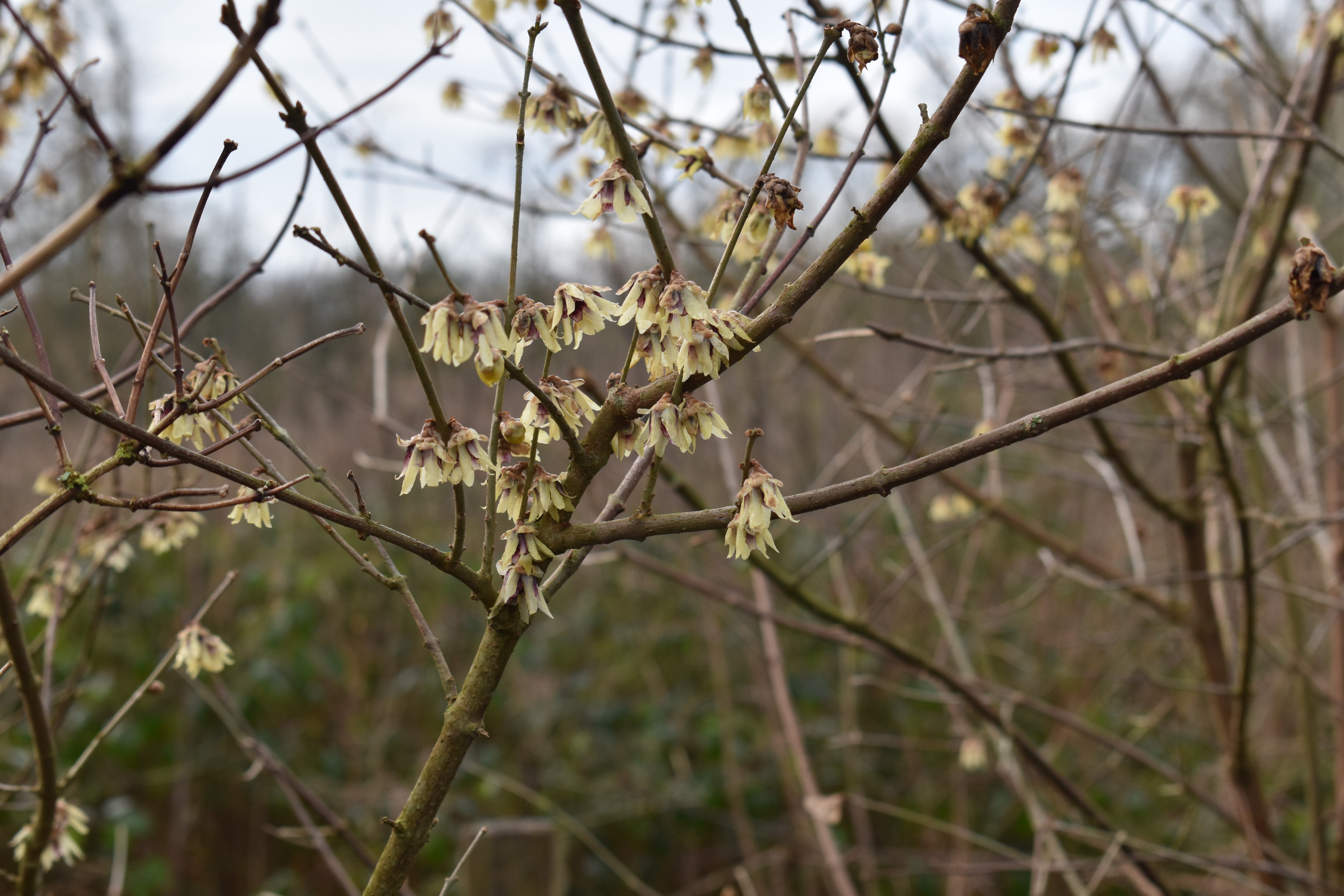
As we approached the walled garden we noticed two winter-flowering shrubs showing off their yellow blooms in the border alongside the gravel pathway. They were in fact two varieties of the same shrub, both lightly scented called chimonanthus.
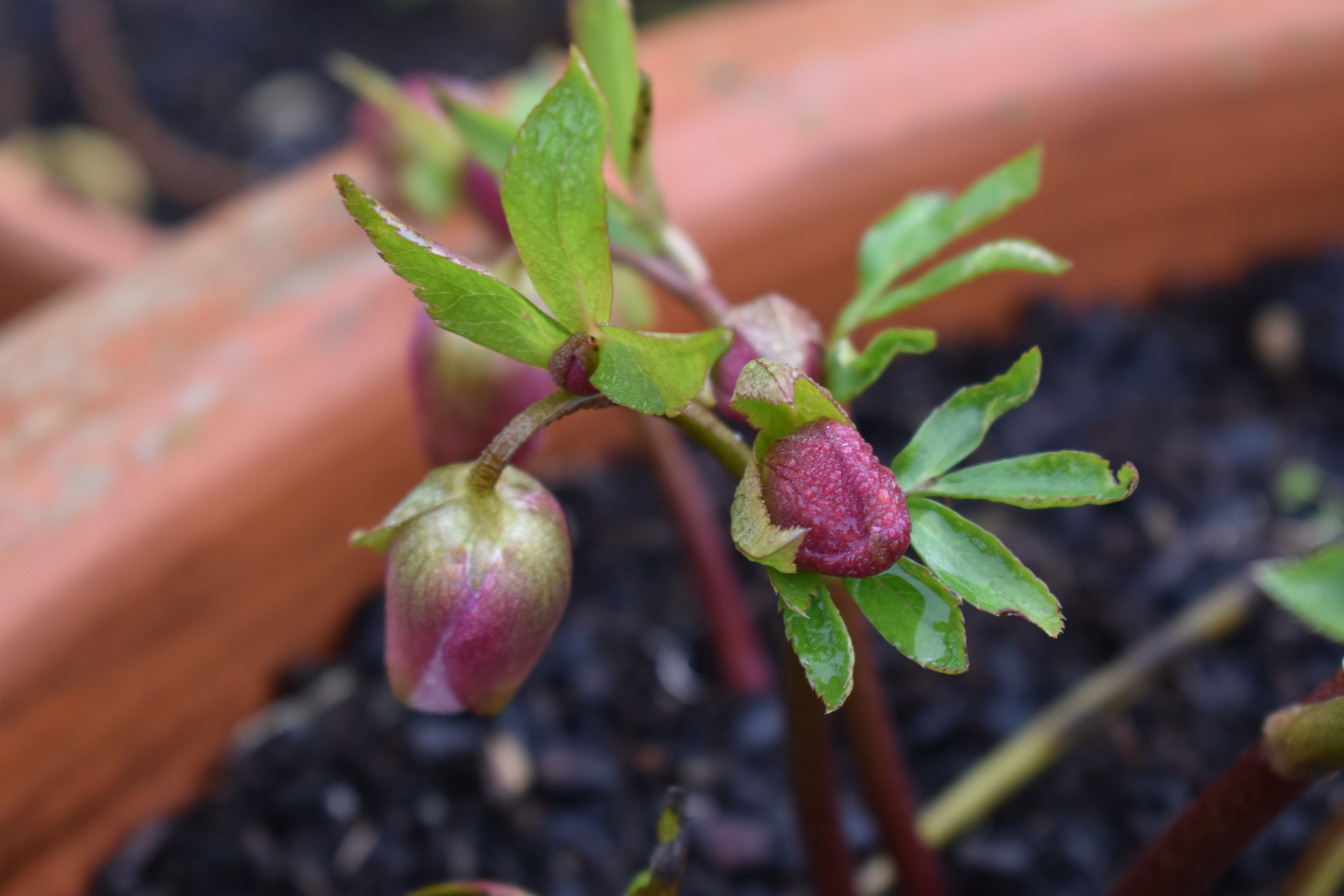
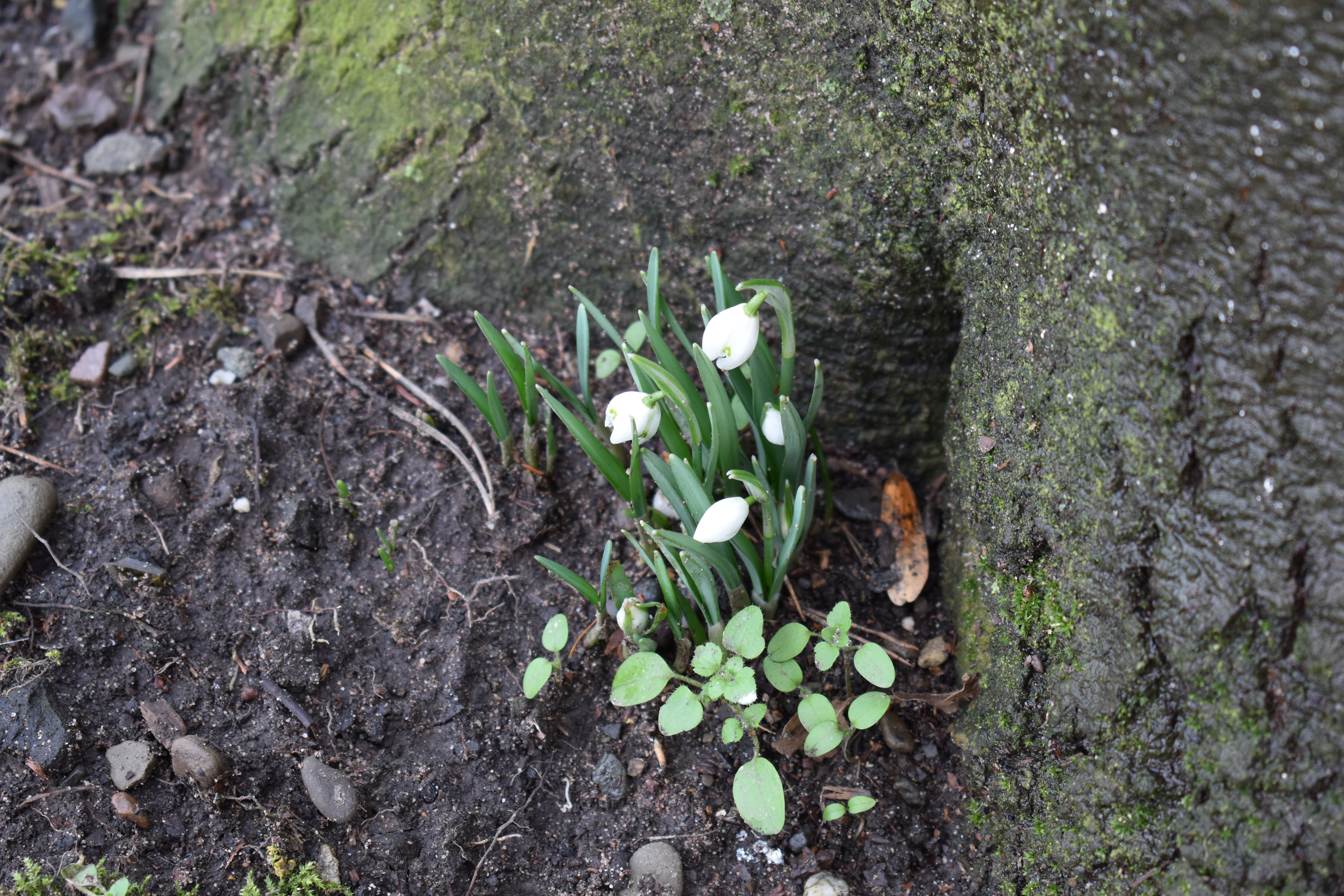
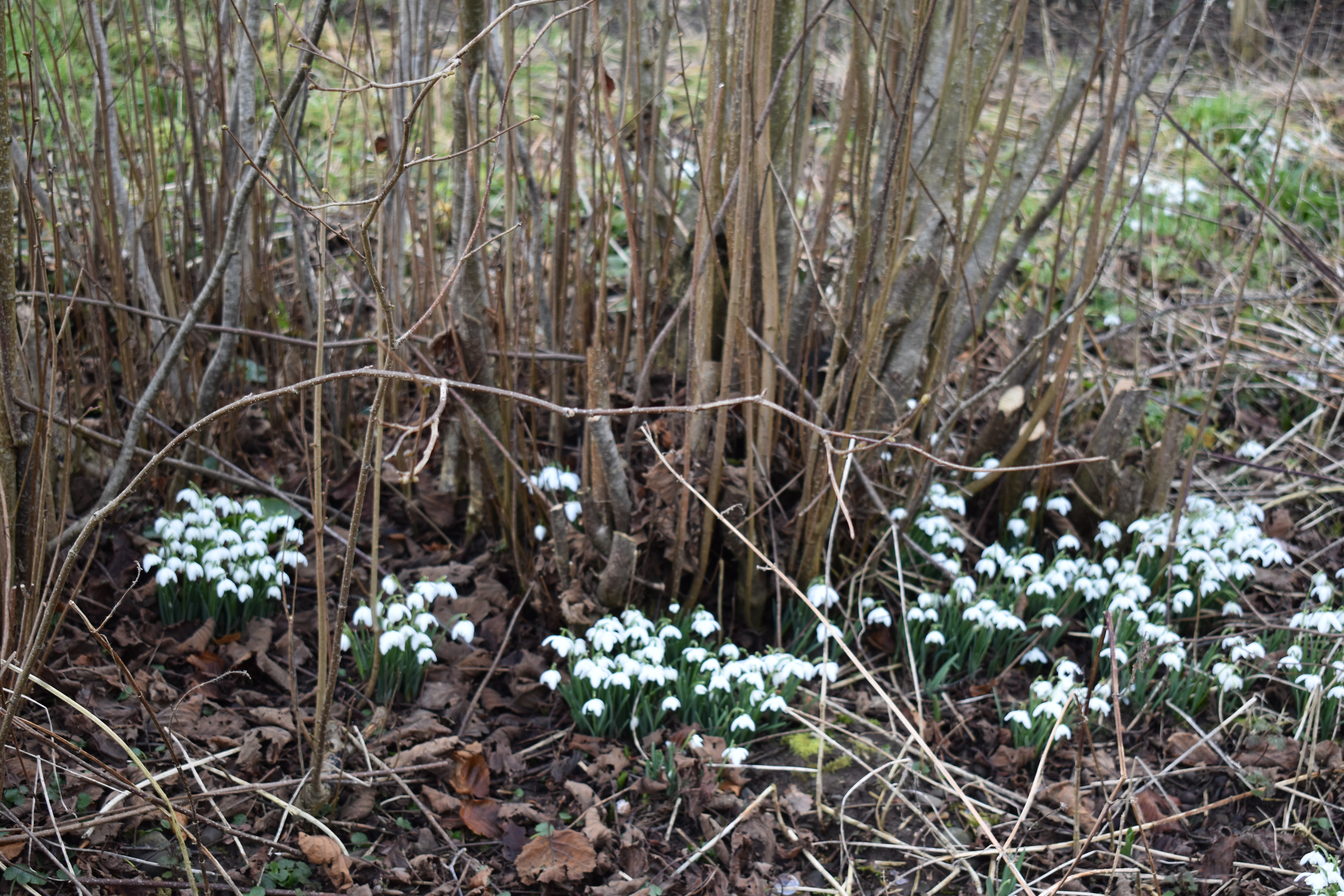
As we left the walled garden we began to see carpets of snowdrops beneath mature trees. I love the way some batches snuggle up to the base of huge tree trunks. The hellebore buds were on the verge of opening so should be in bloom when we next visit. We love growing both snowdrops and hellebores in our home patch but they seem so different in the woodland setting.
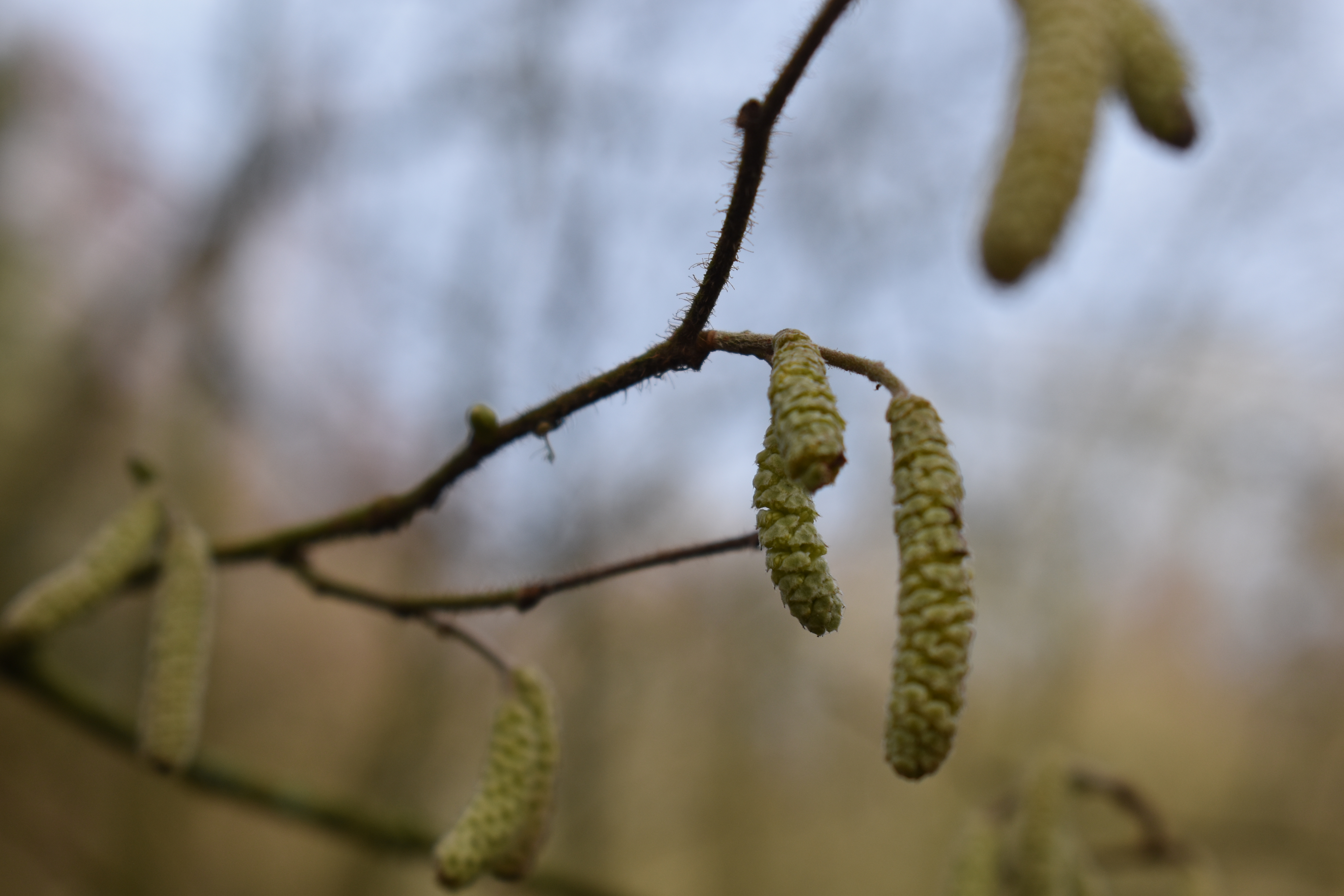
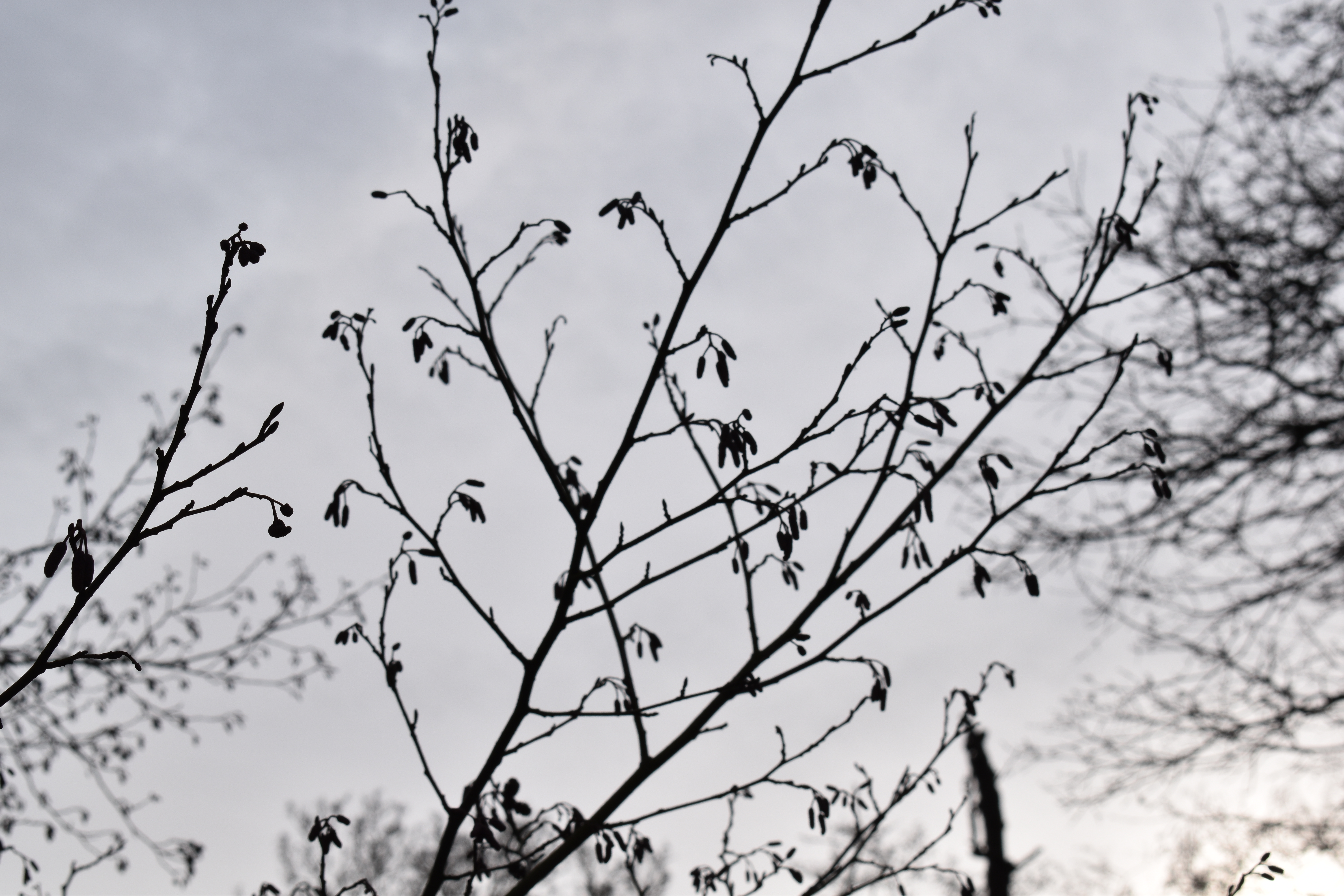
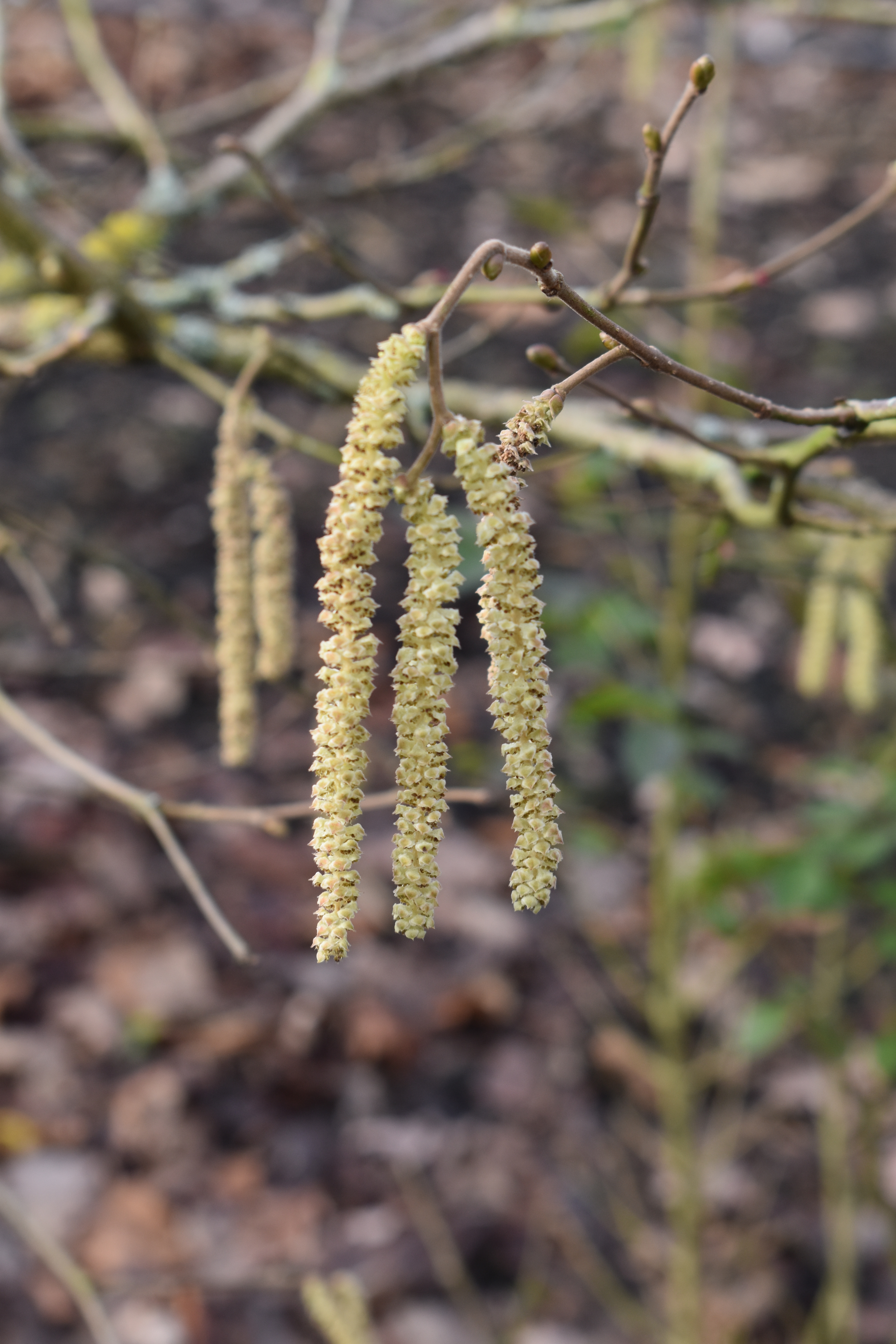
The buds we anticipated seeing as we wandered through the woodland were the tiniest fresh green of deciduous trees, but we also came across young catkins of hazel and birch, which are of course flower buds rather than leaf buds.
As we left the woodland area we crossed an open grassland patch dotted with oak trees of all ages. Here we also found the flower buds of wild cherry trees.
We crossed a couple of bridges with the sound of rushing water beneath and made our way back up past the house, Attingham Hall. The buds we found here were of both leaf and flower mostly on ornamental shrubs.
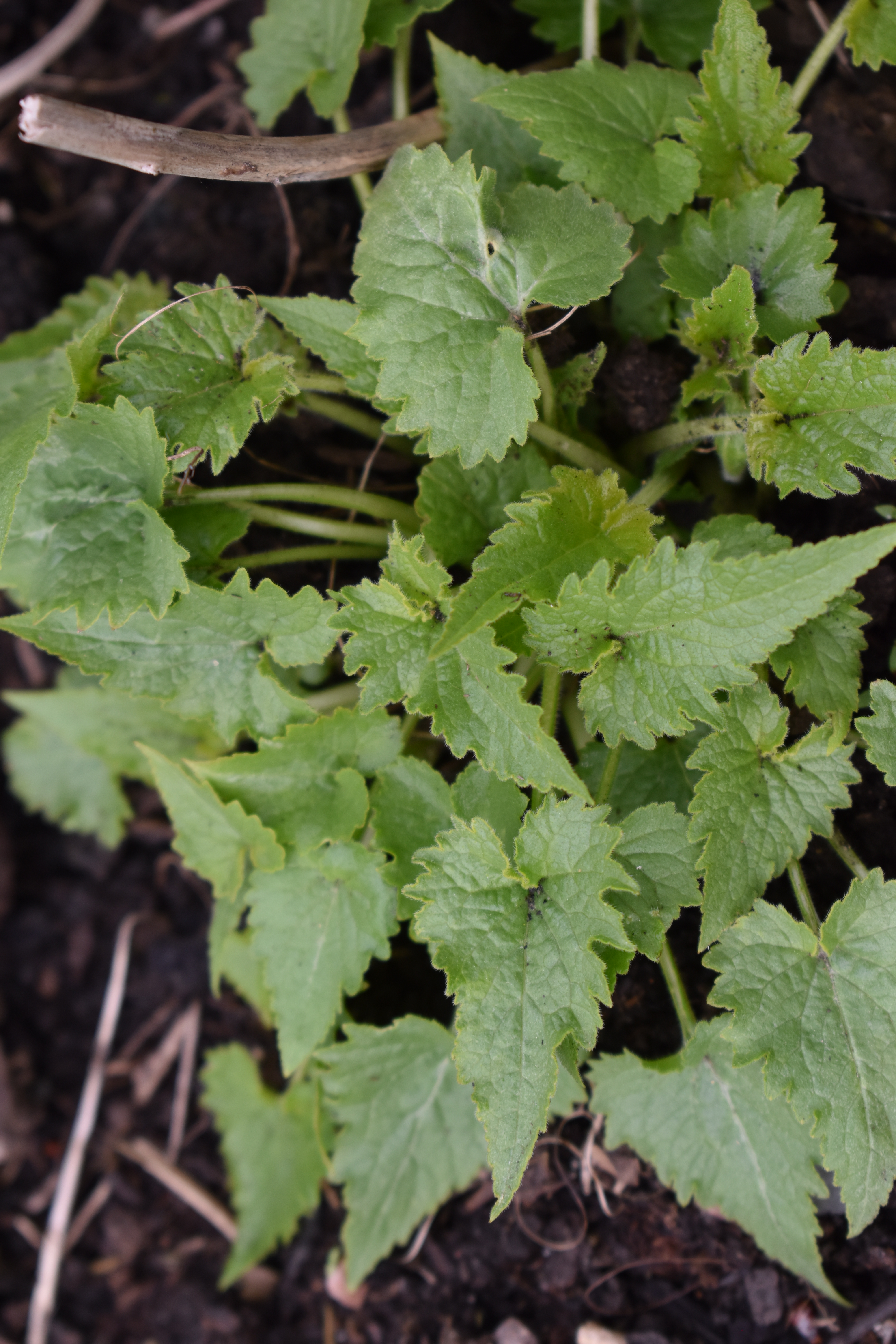
I will finish with the fresh green leaves of our native White Dead Nettle with the white flower buds snuggled against the stem and a ladybird sunbathing on top trying to absorb a little warmth from the rays of the winter sun. I presume he will hibernate away once the sun goes in. This little wild flower shows all the promises of what we have in store for us as the weather warms up.
Once again during lockdown we took our exercise at our nearby National Trust property, Attingham Park. A bright start to the day gave us a good start to our walk. We decided to follow the walk called the Woodland Walk and then take a detour to add a few extra miles on by following the World War Two Walk.
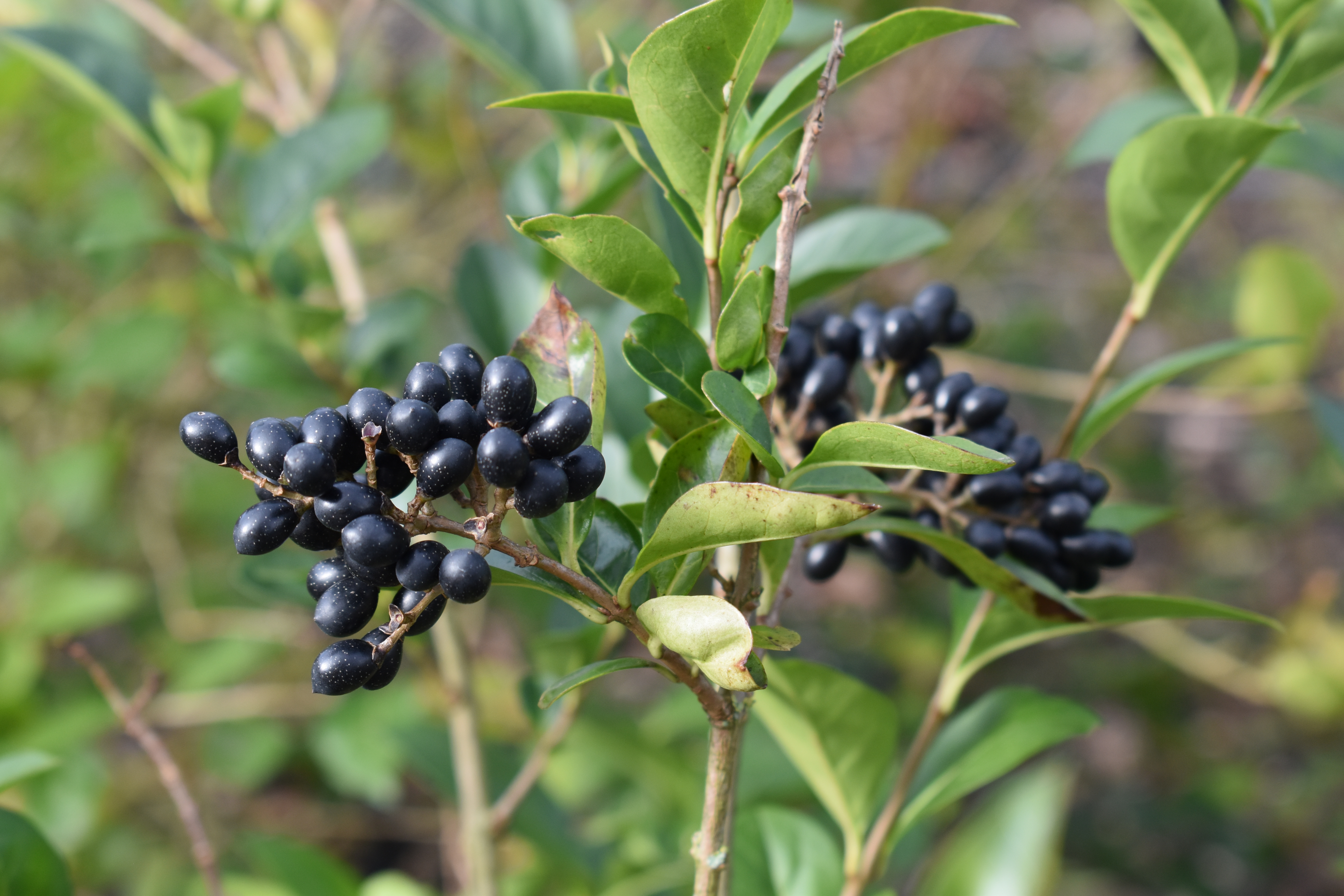
On the way to collect a coffee and cookie in the stable yard cafe we passed a few bright cameos, hazel catkins and berries on shrubs.
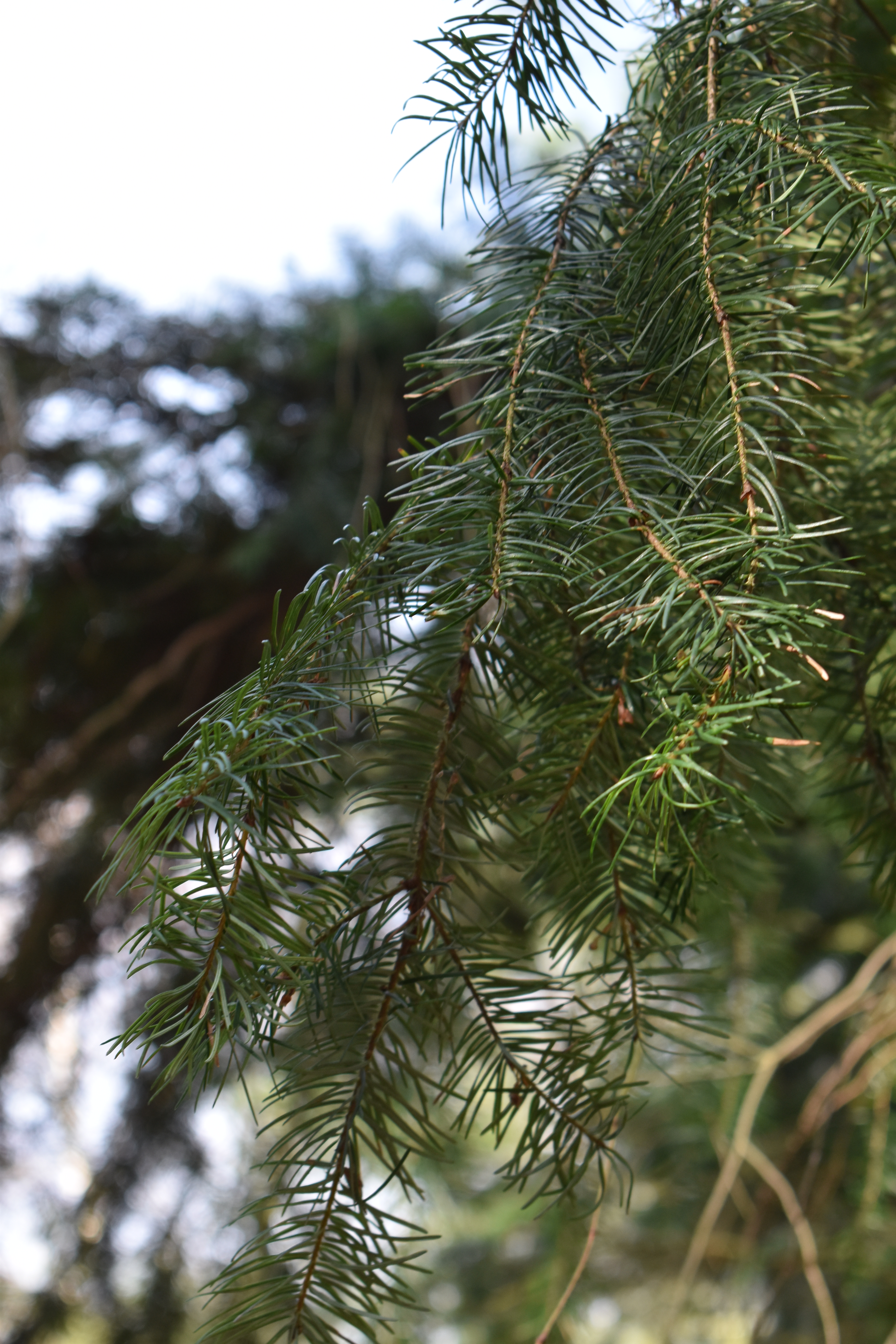
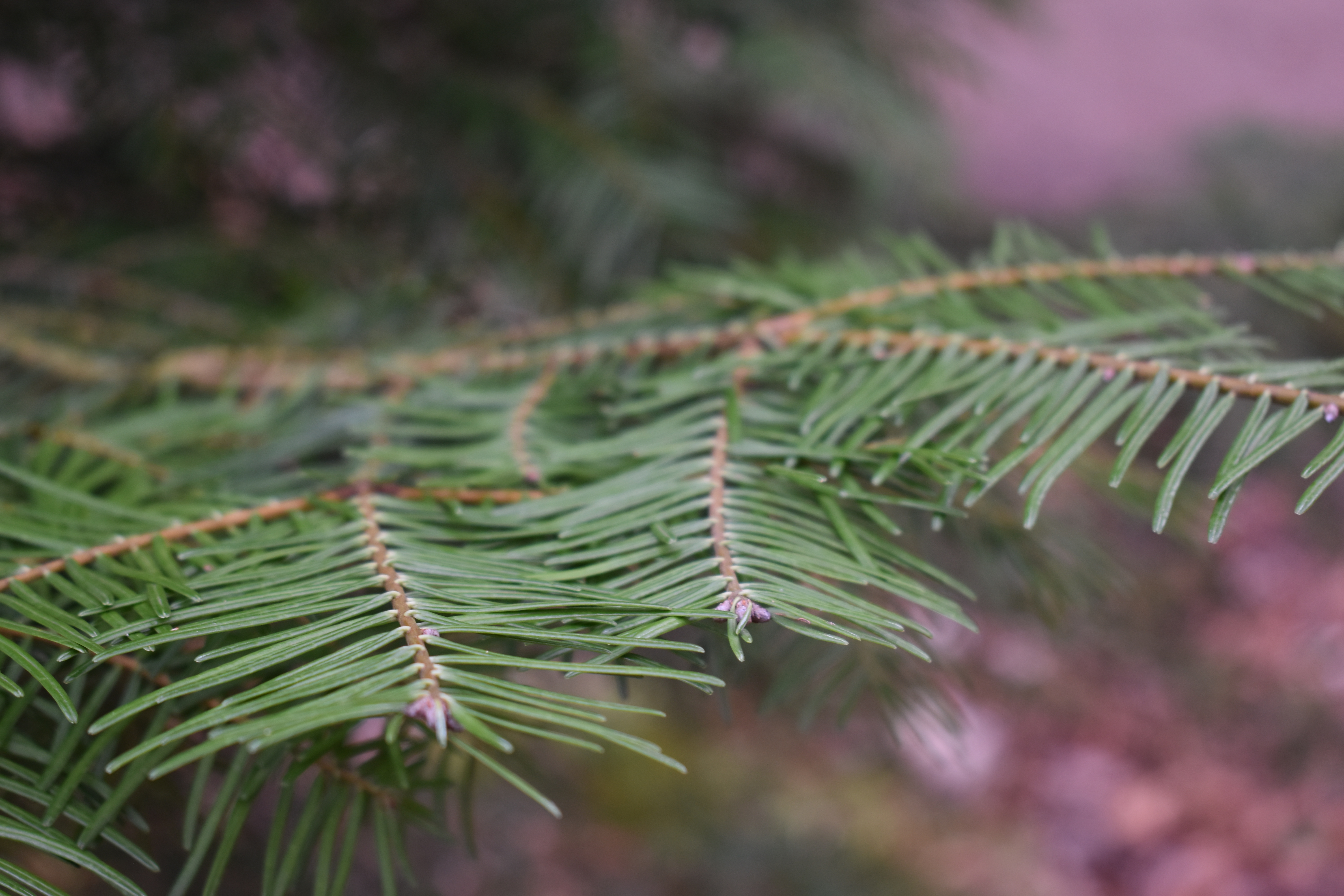
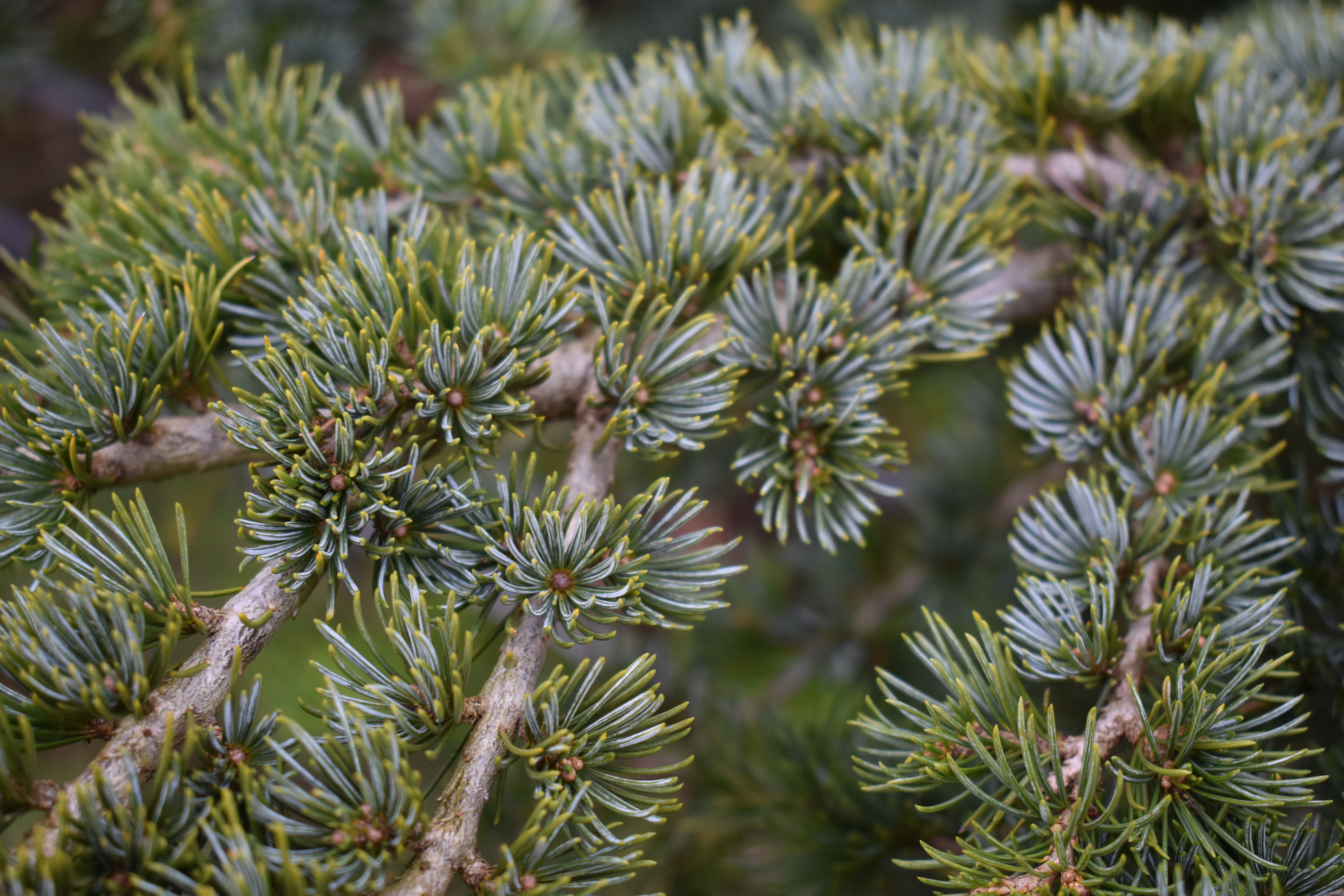
We decided we would concentrate on looking at conifers, evergreens which have needles or scales instead of leaves. Most remain on the trees all year round with the exception of Larch which has needles but these turn golden yellow in autumn and drop for winter.
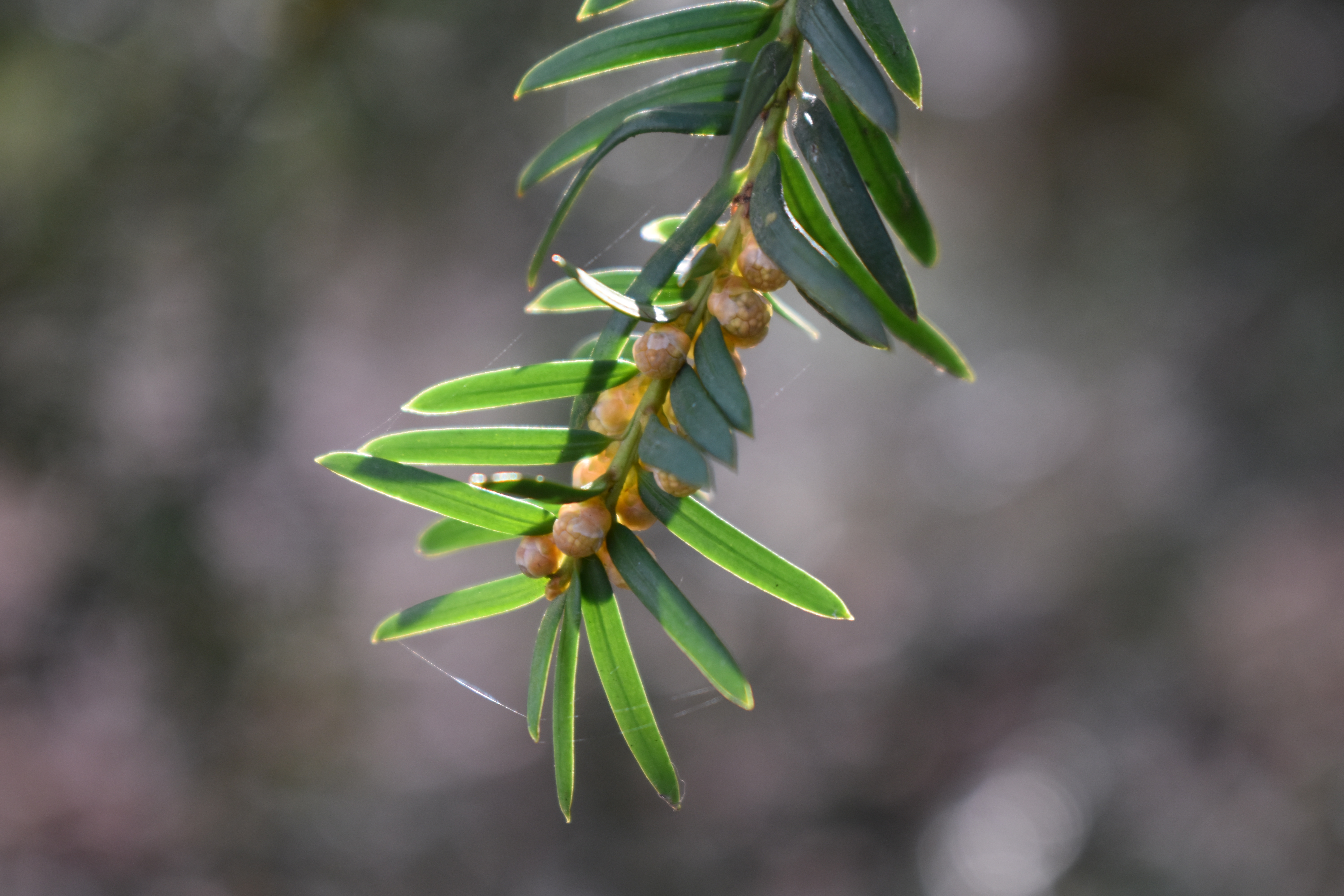
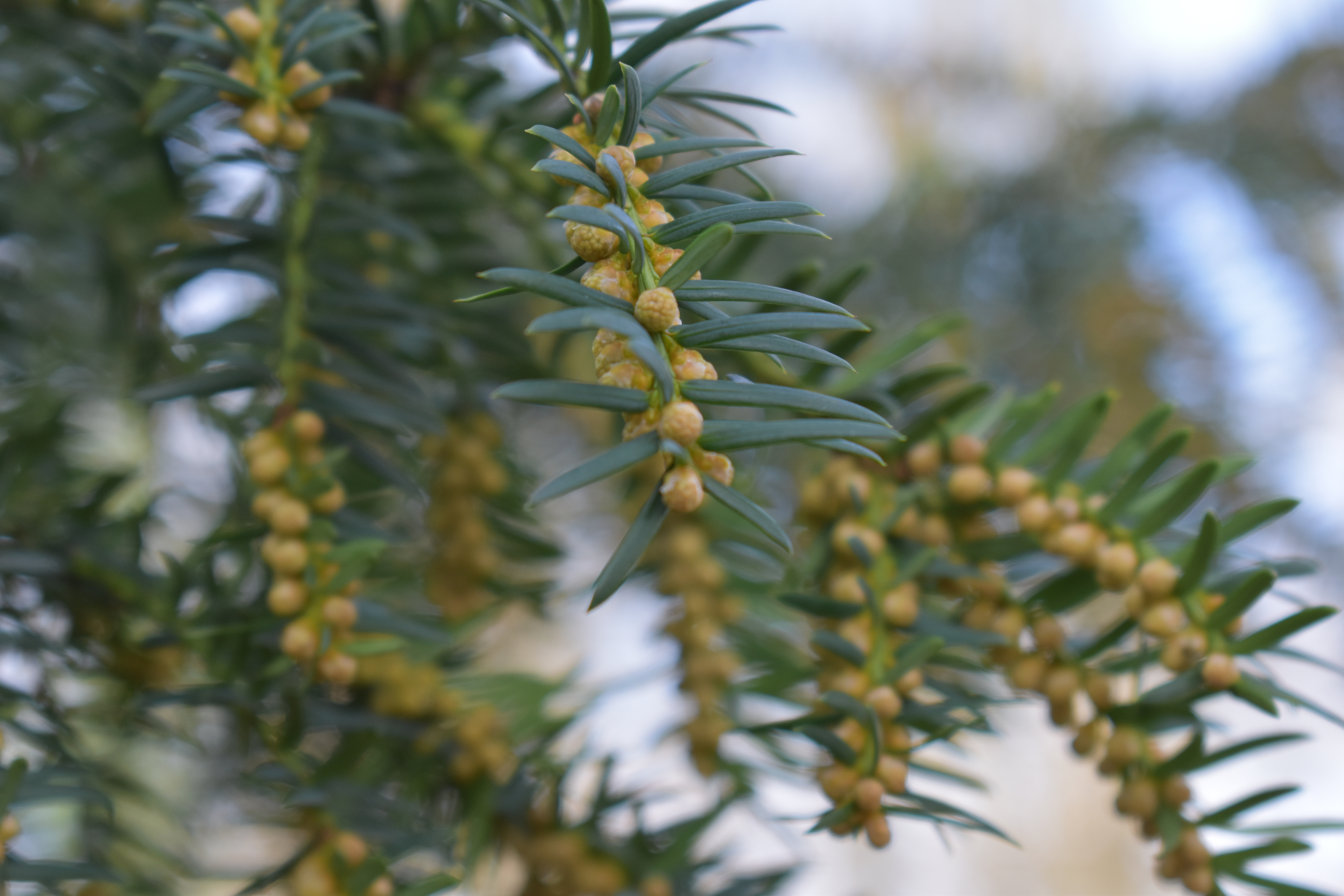
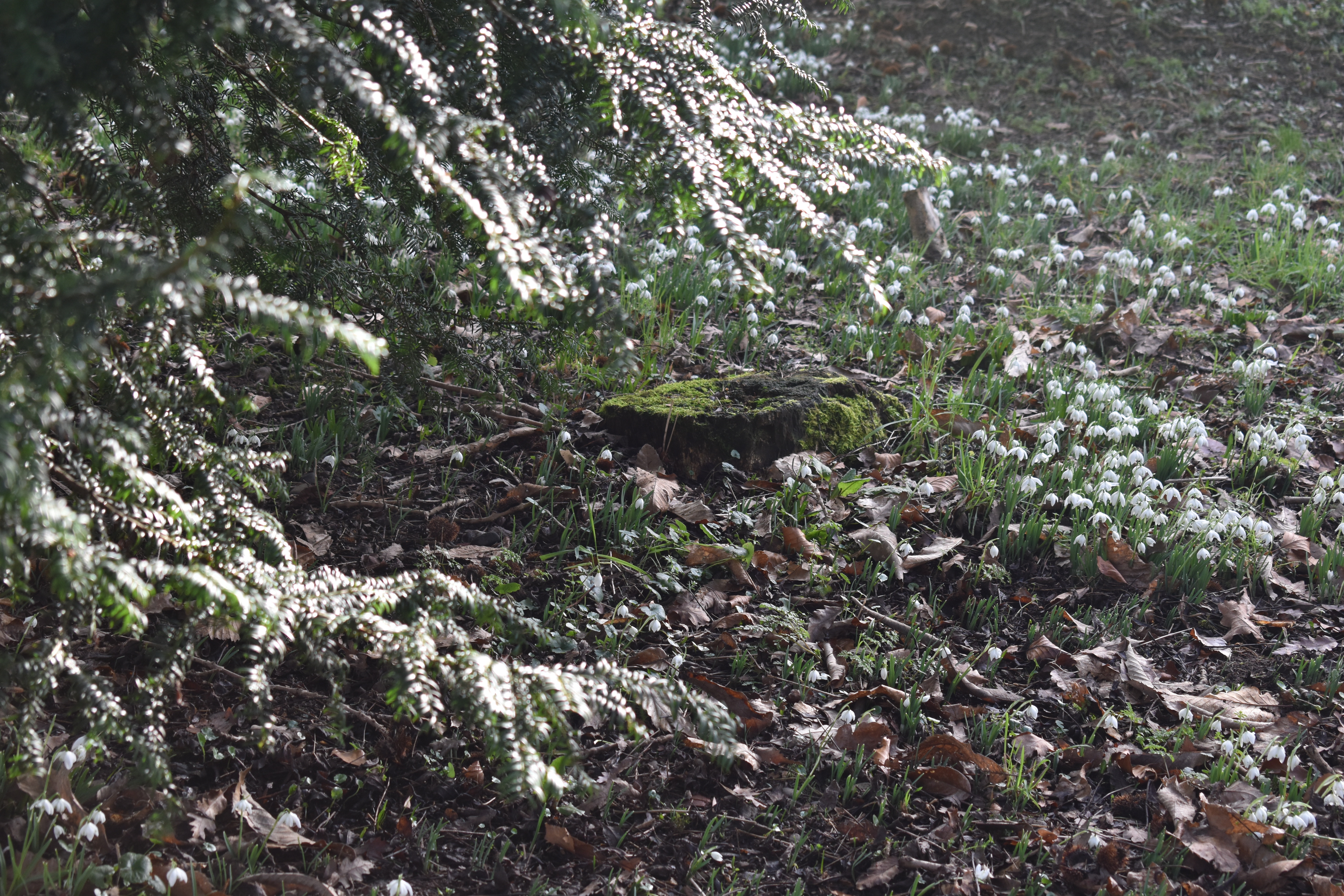
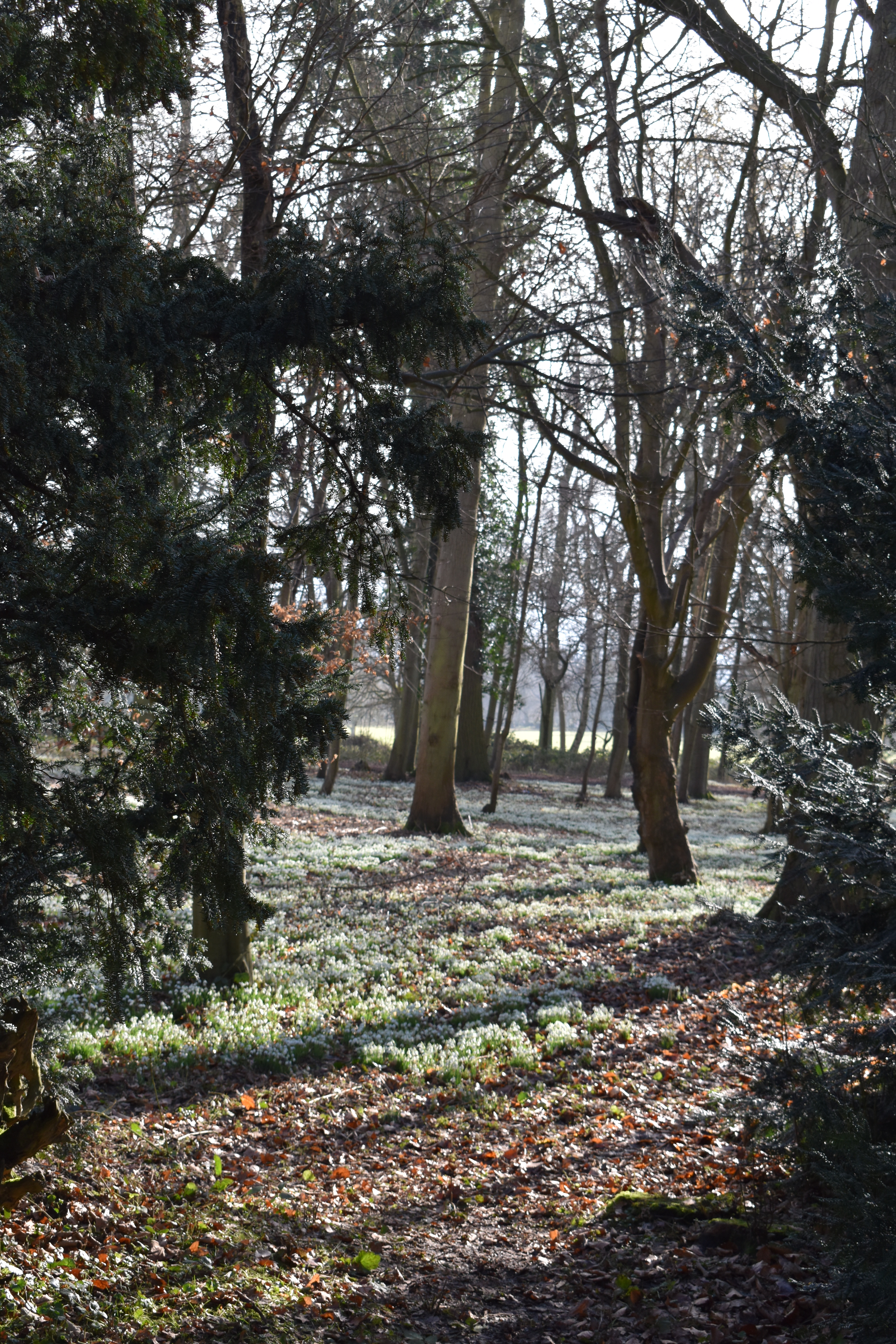
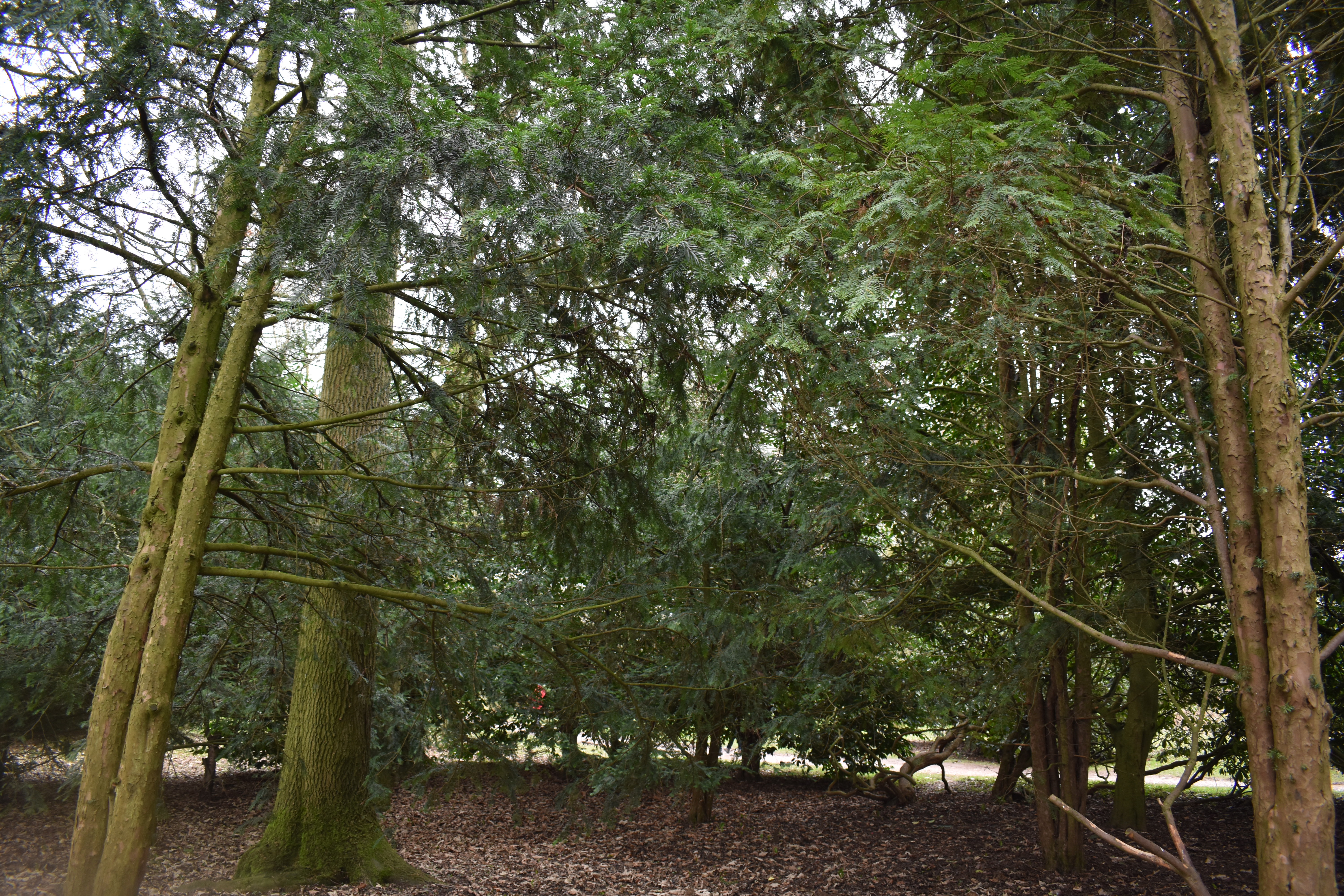
We hadn’t walked far when we wandered through a grove of young yews, Taxus baccata. The low winter sunshine lit up new needles on the ends of many branches, giving bright green against deeper tones. On lower branches the sunlight gave a sheen to the upper branches and beneath and between patches of pure white from snowdrops (Galanthus nivalis) glowed boldly.
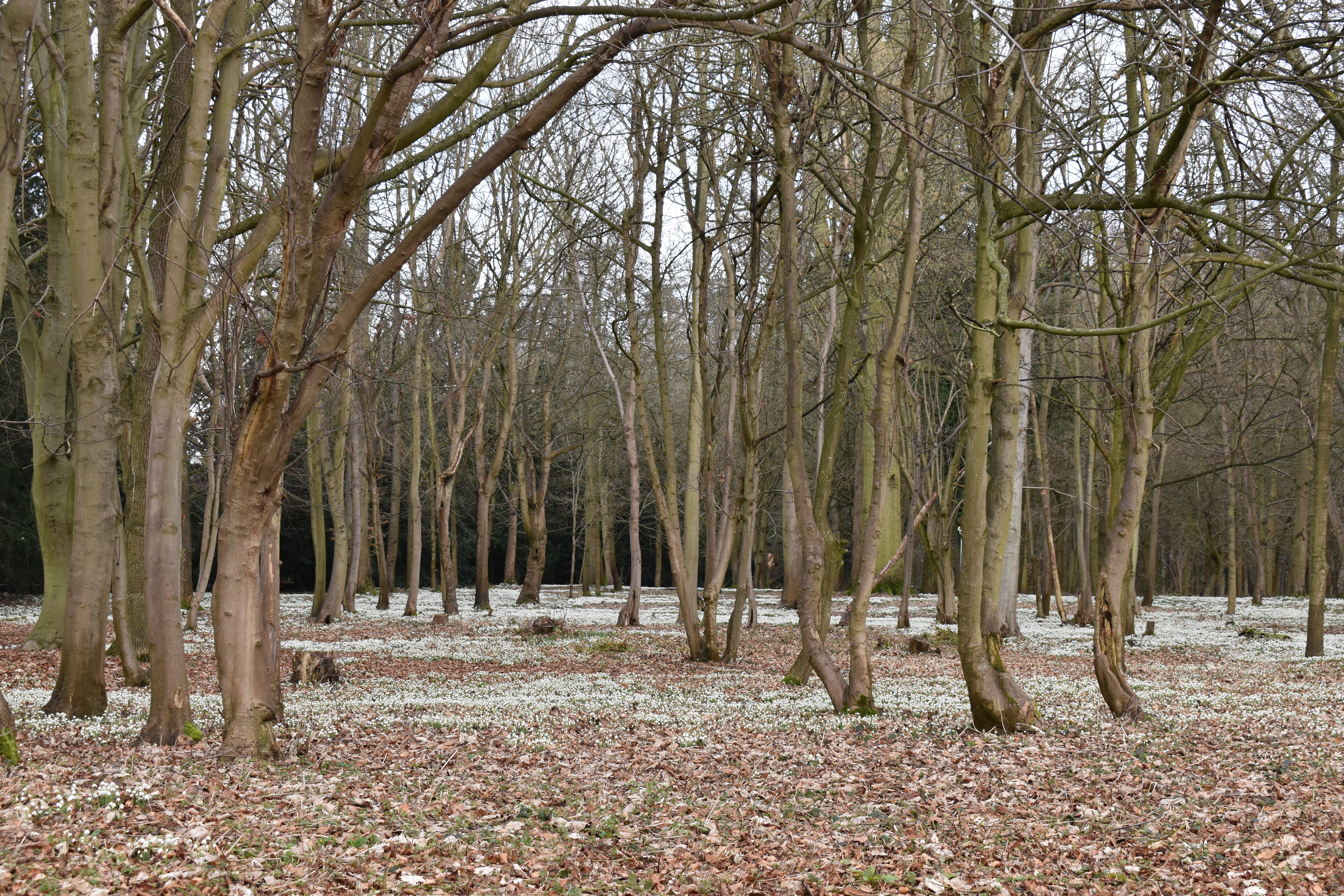
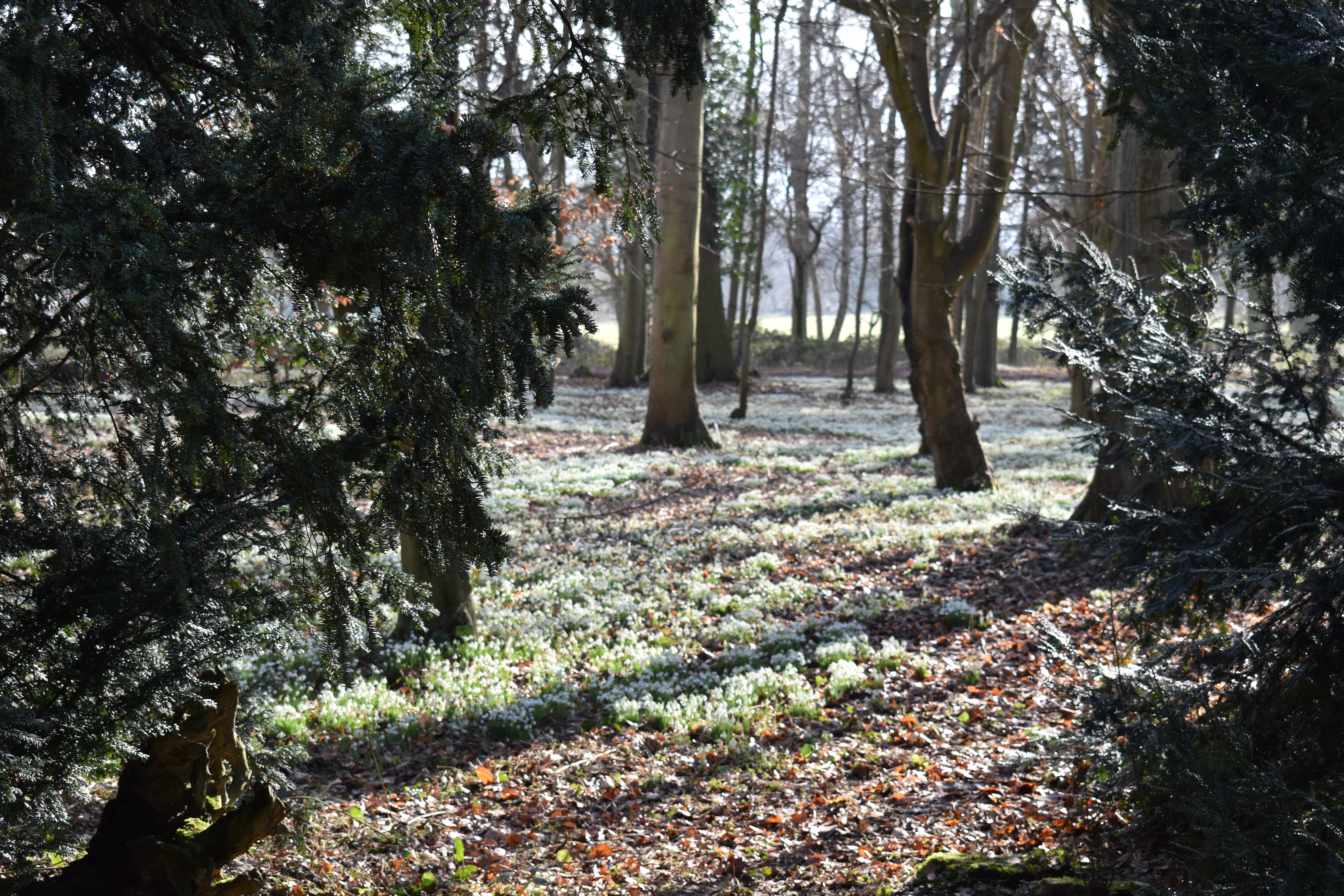
These patches of snowdrops prepared us for the SnowdropWalk that we were soon to come across. A woodchip pathway took us beneath beech and oak trees which towered over thousands of snowdrops which carpeted the floor. Galanthus nivalis, G. nivalis ‘Flore Pleno’ and G. elwesii with their broader more glaucous leaves all merged into on pure sheet of white.
Conifers acted as effective frames for taking shots of more snowdrops.
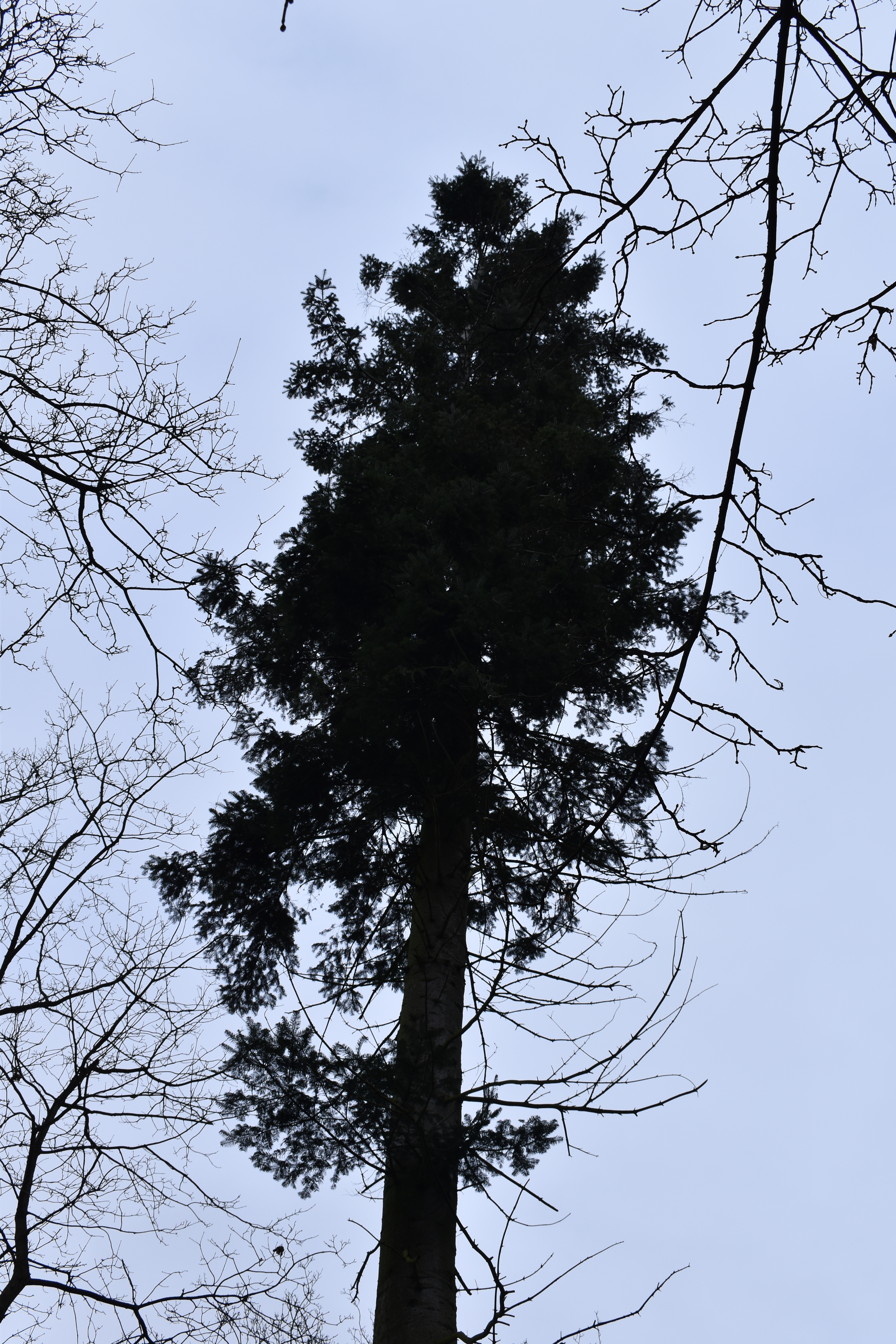
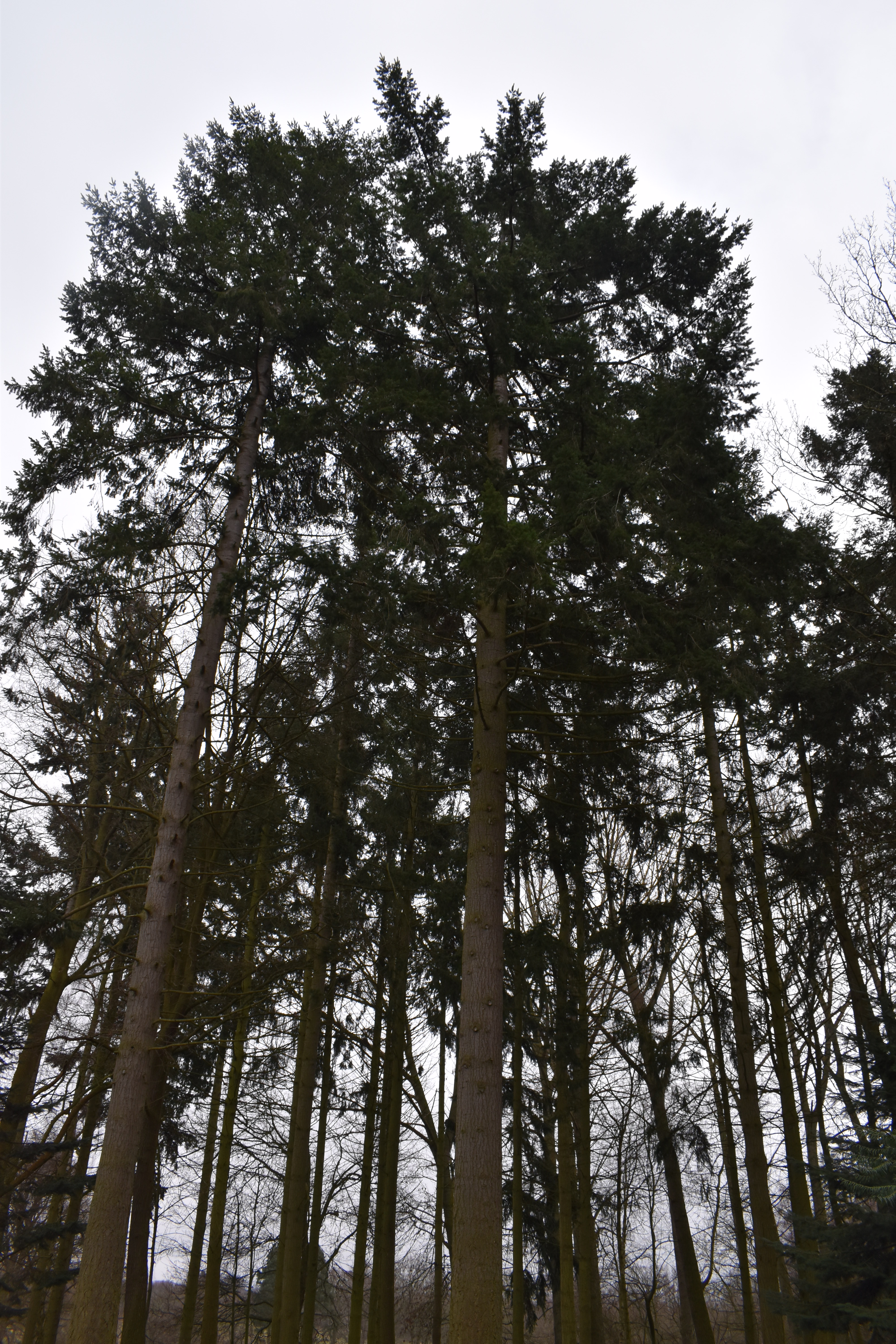
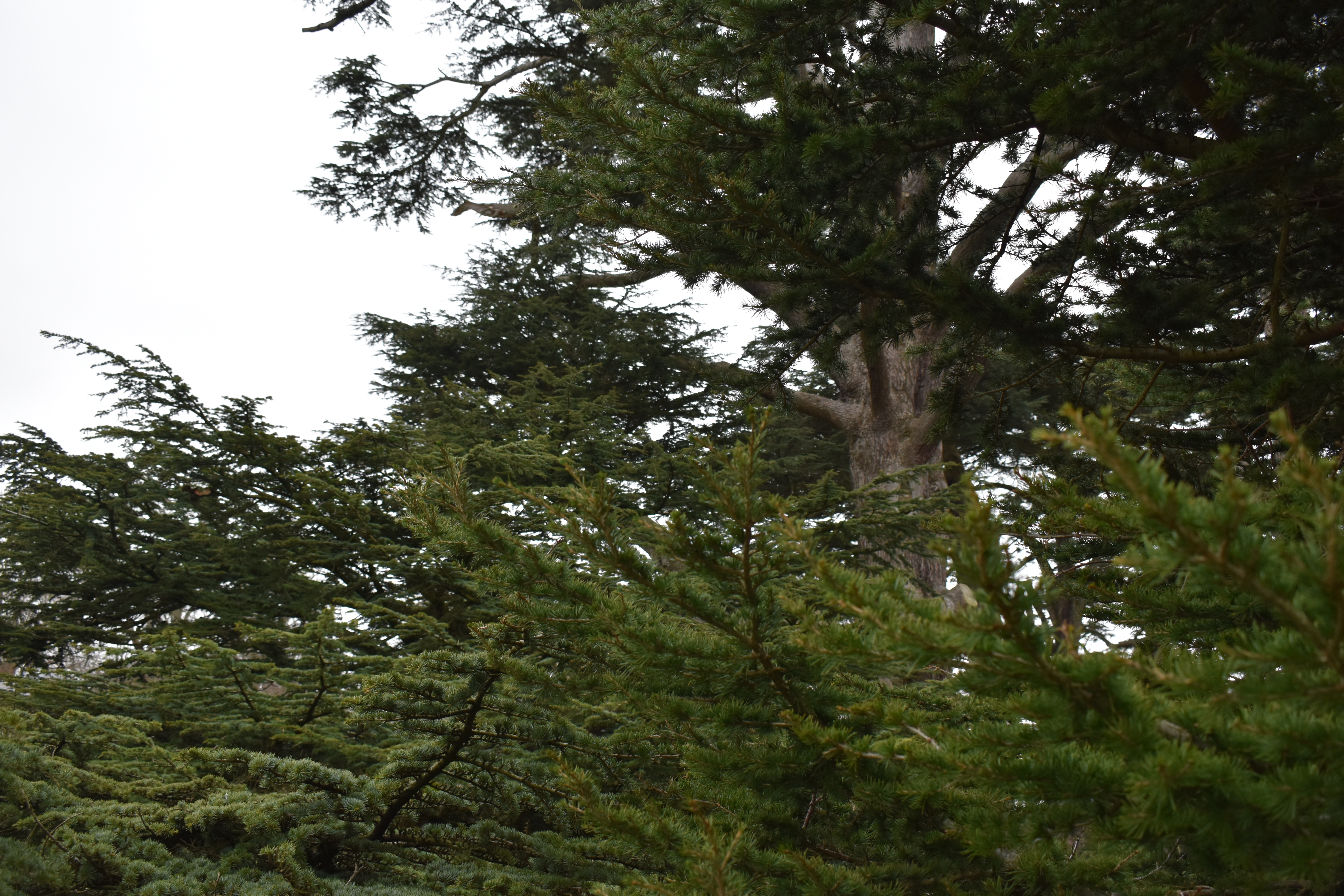
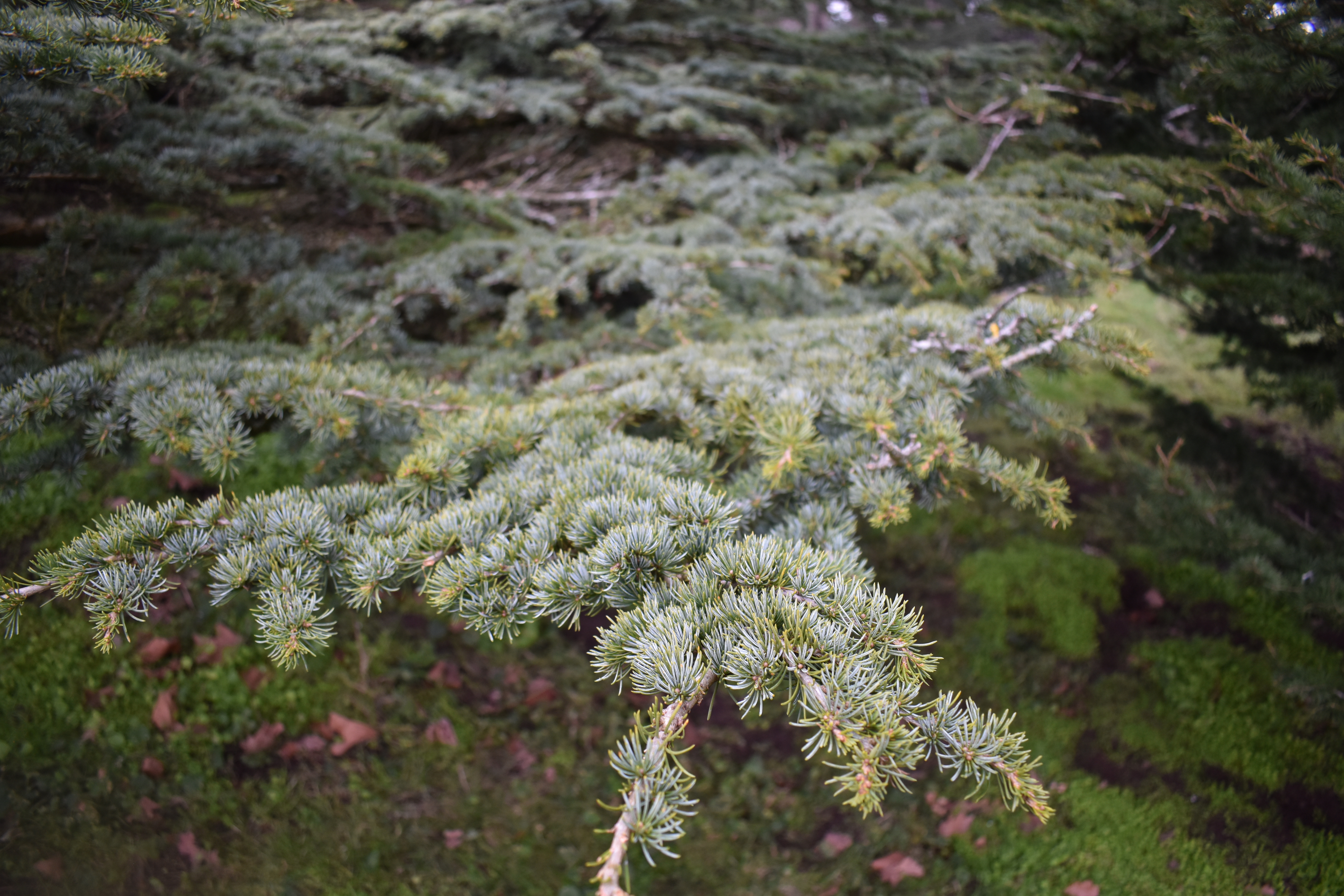
Leaving the snowdrops behind we discovered more different coniferous trees alongside our pathway, now muddy underfoot after recent wet weather. Looking skyward at mature coniferous trees they are such a strong contrast to the light open outlines of their deciduous cousins. Sometimes conifer foliage appears quite glaucous but others appear black and heavy. As we found each one we tried to photograph their needles or scales.
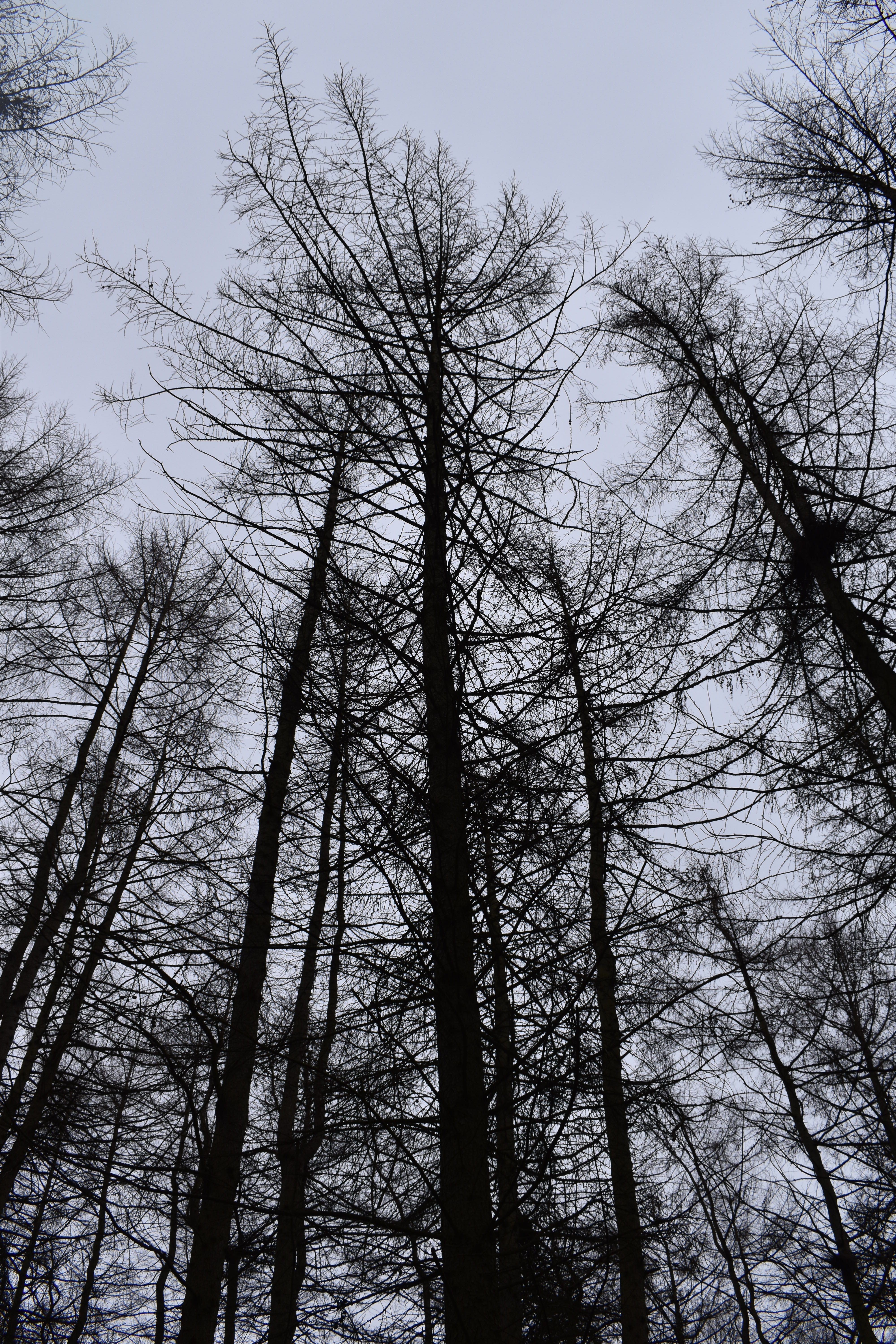
Carrying further into the woodland we looked upwards to see the canopies above us.
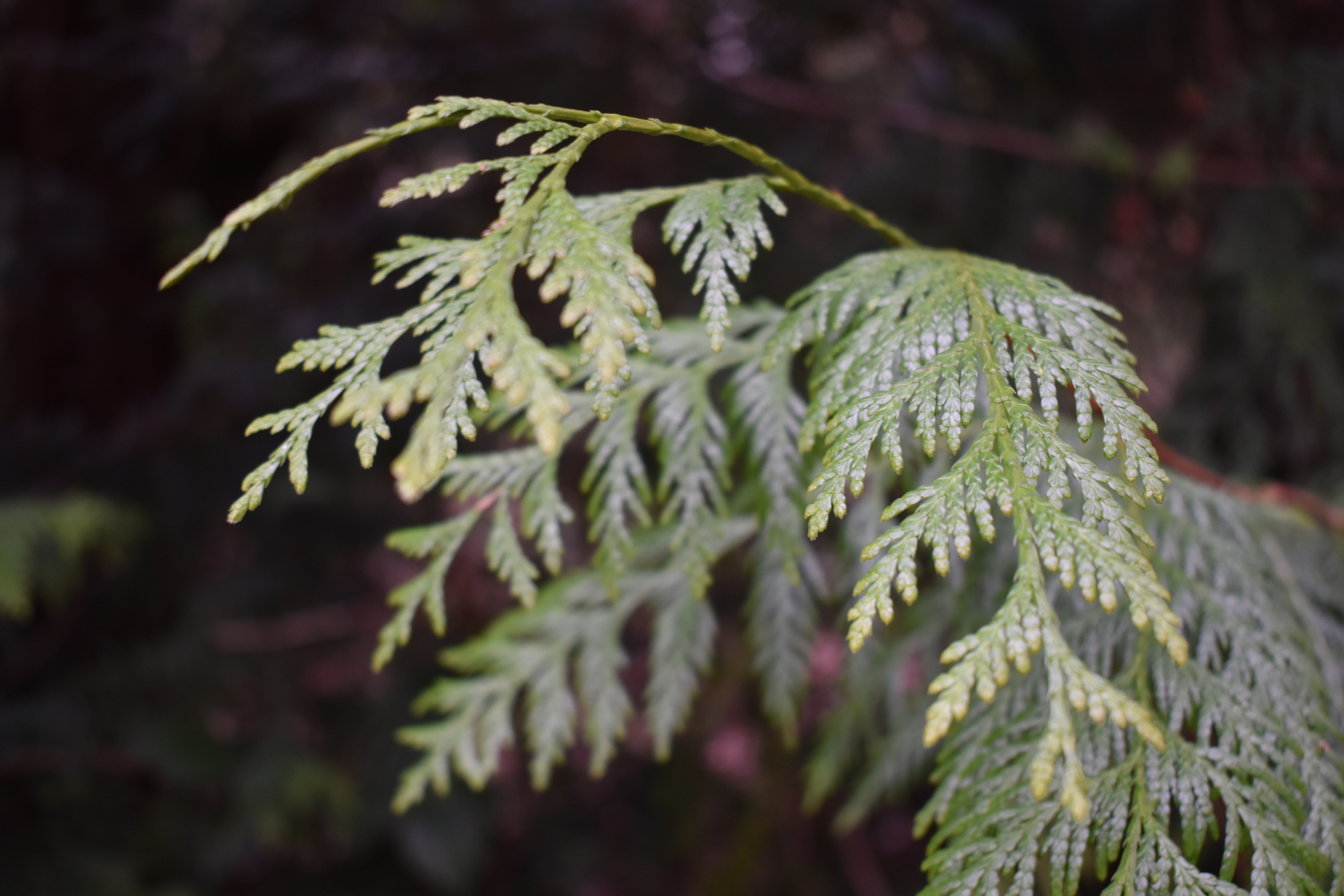
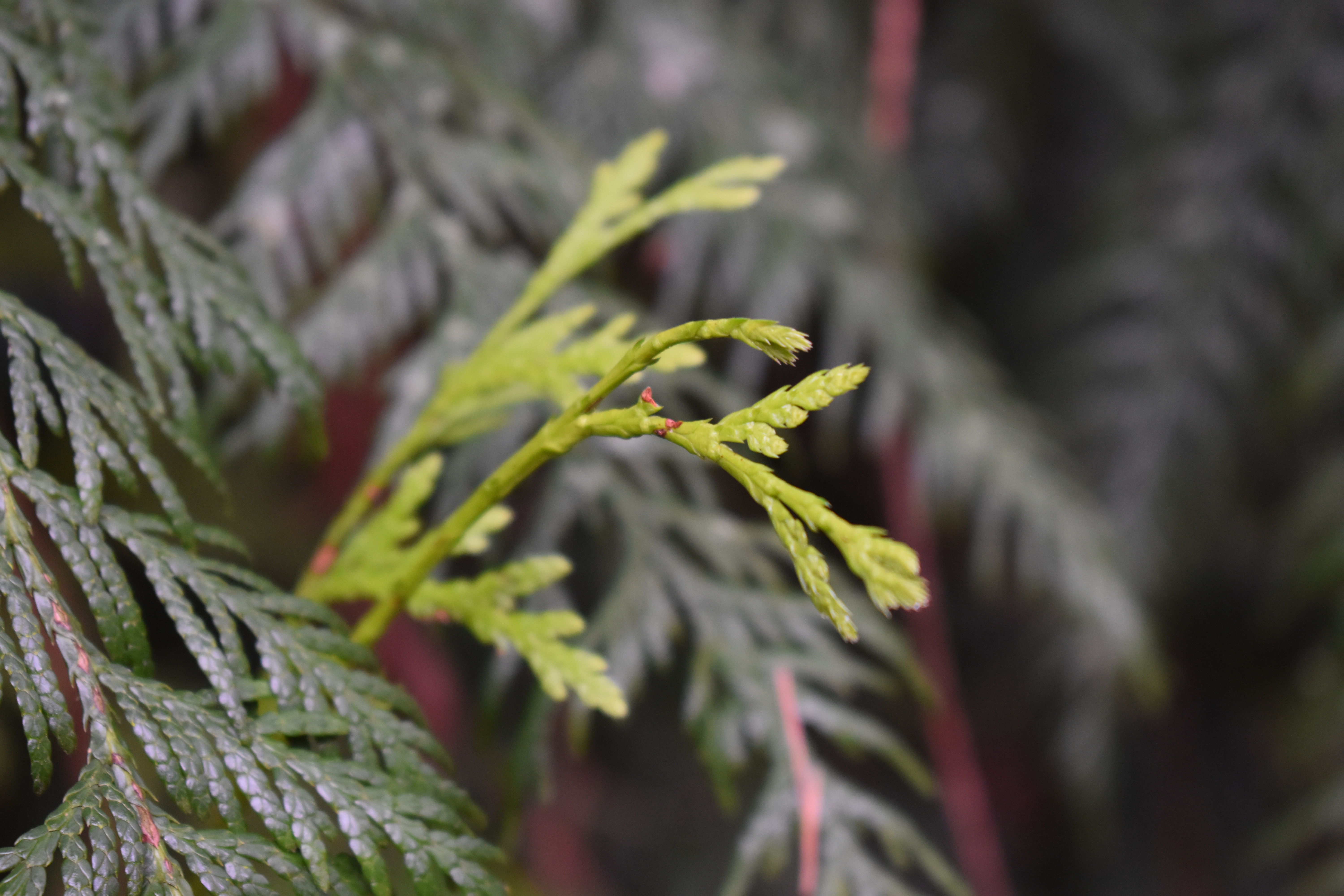
As we took a turn off the main track we came across the first of our conifers to have scales rather than needles. New growth was a bright grass green against the more glaucous tints of last years foliage.
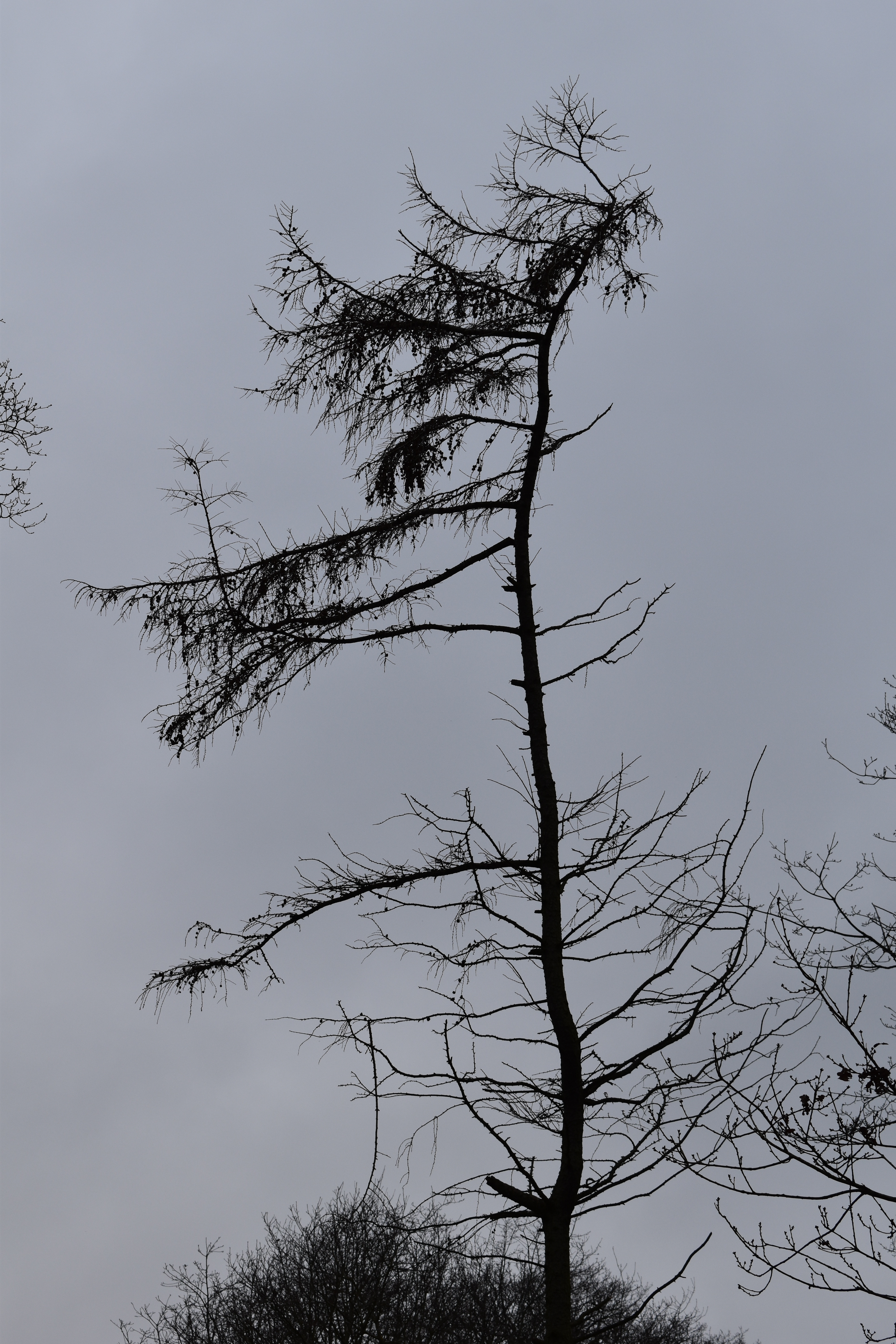
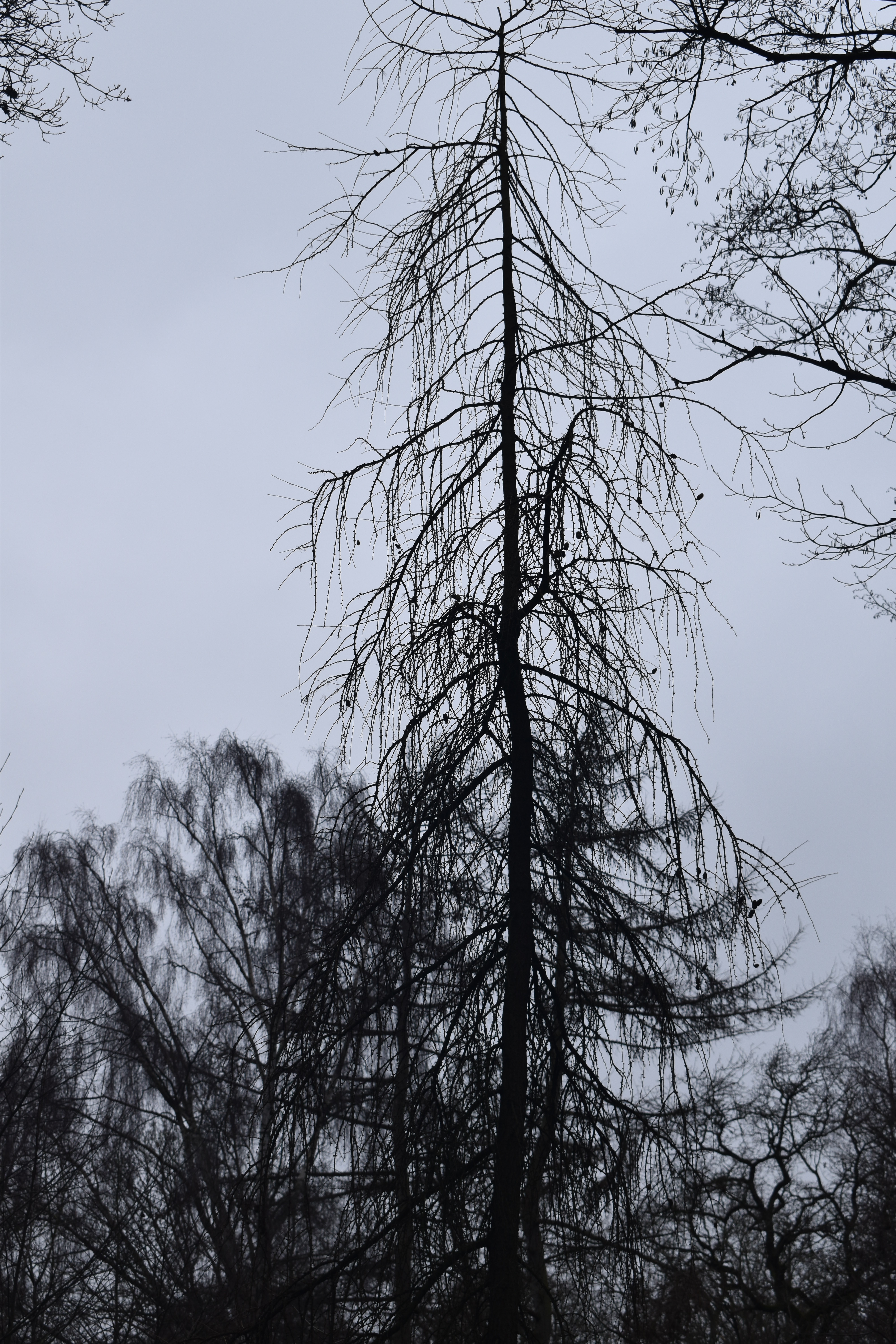
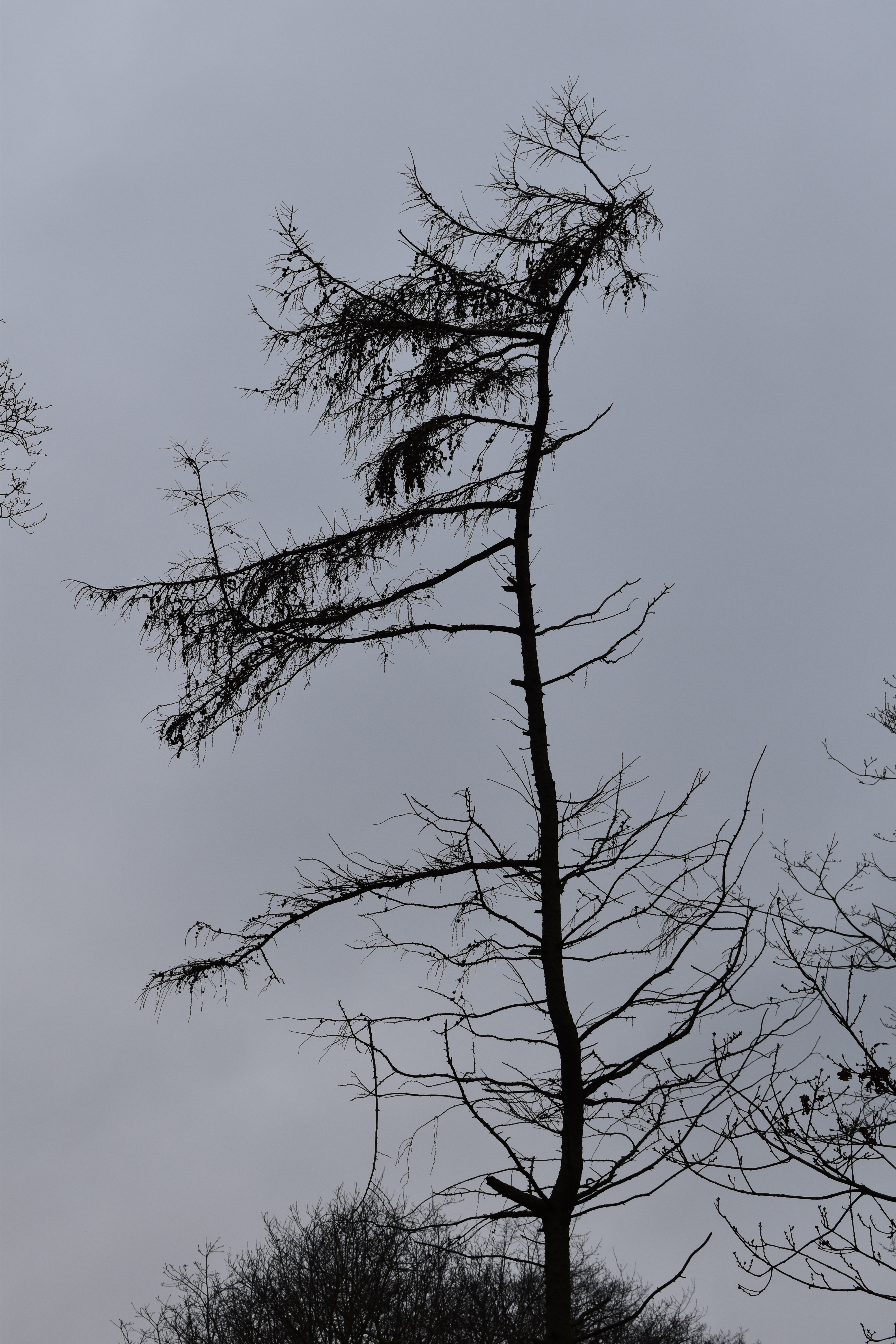
A little further on we were pleased to find a group of our only conifer that is deciduous, the European Larch, Larix europaeus, which presented as a very different outline. Its needles carpeted the earth beneath.
A few yards further along our wanderings we came across a tree we had never seen before but guessed it was some sort of larch but it was small and weeping in habit. I have since discovered it to be Weeping Japanese Larch. A lovely silhouette!
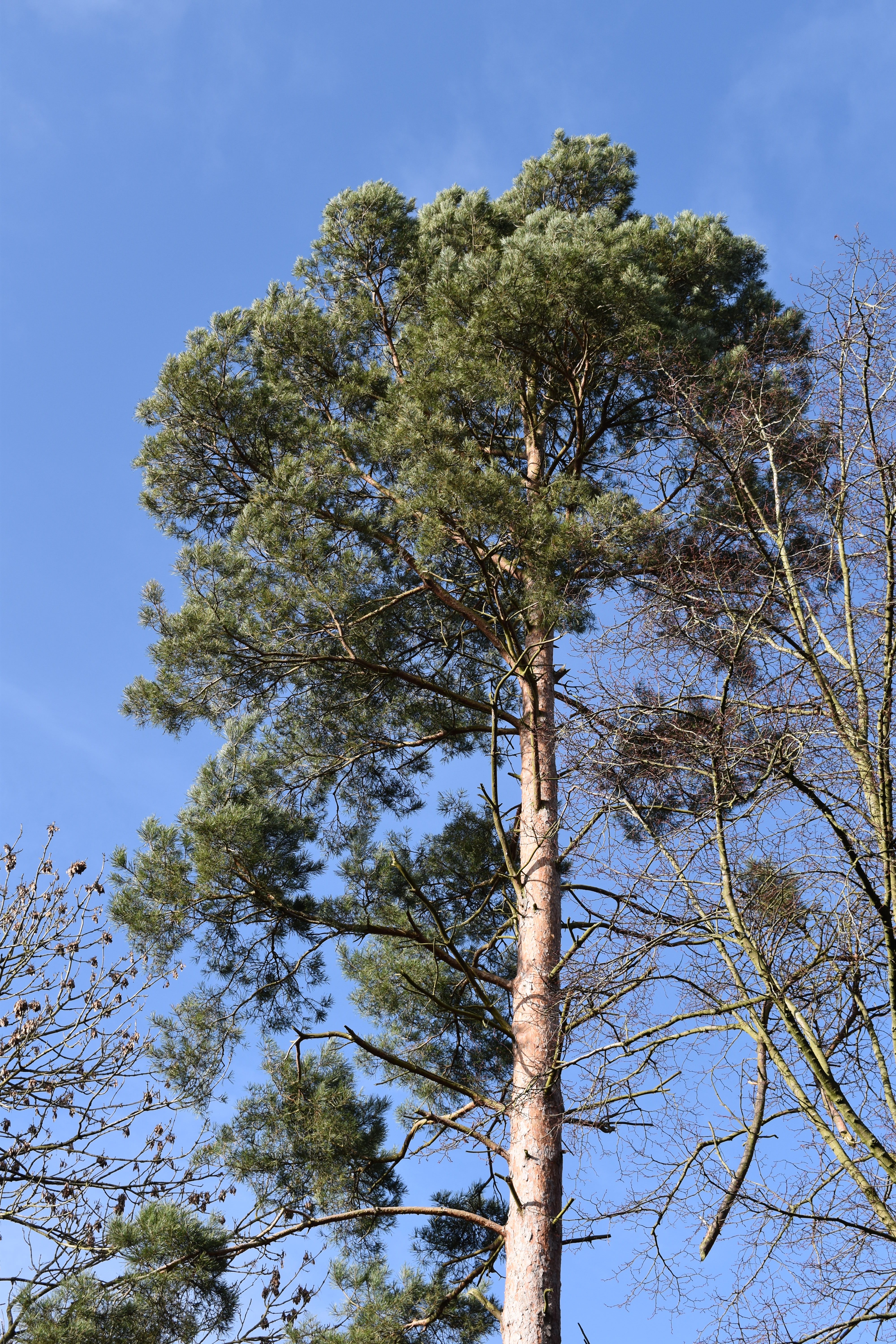
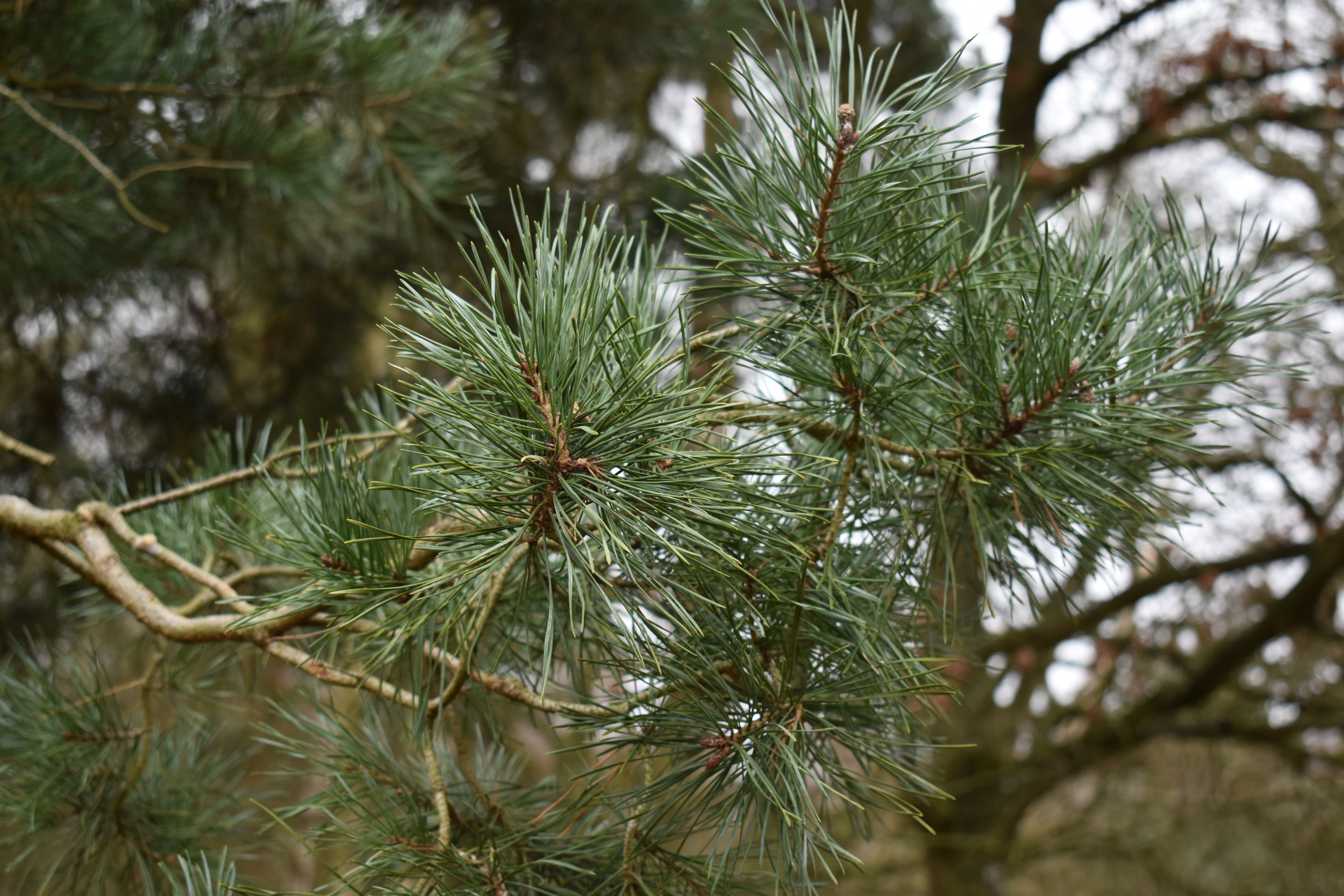
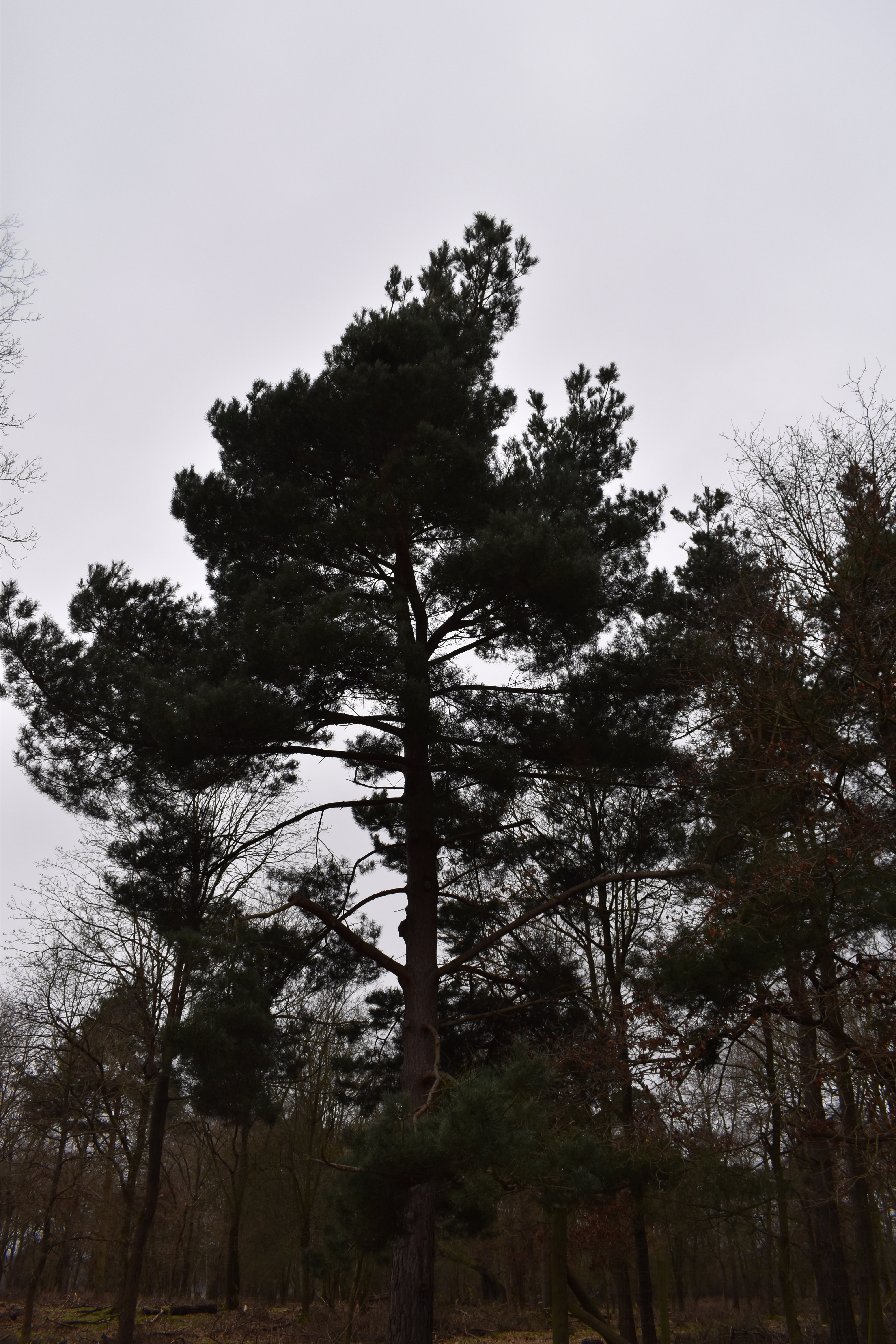
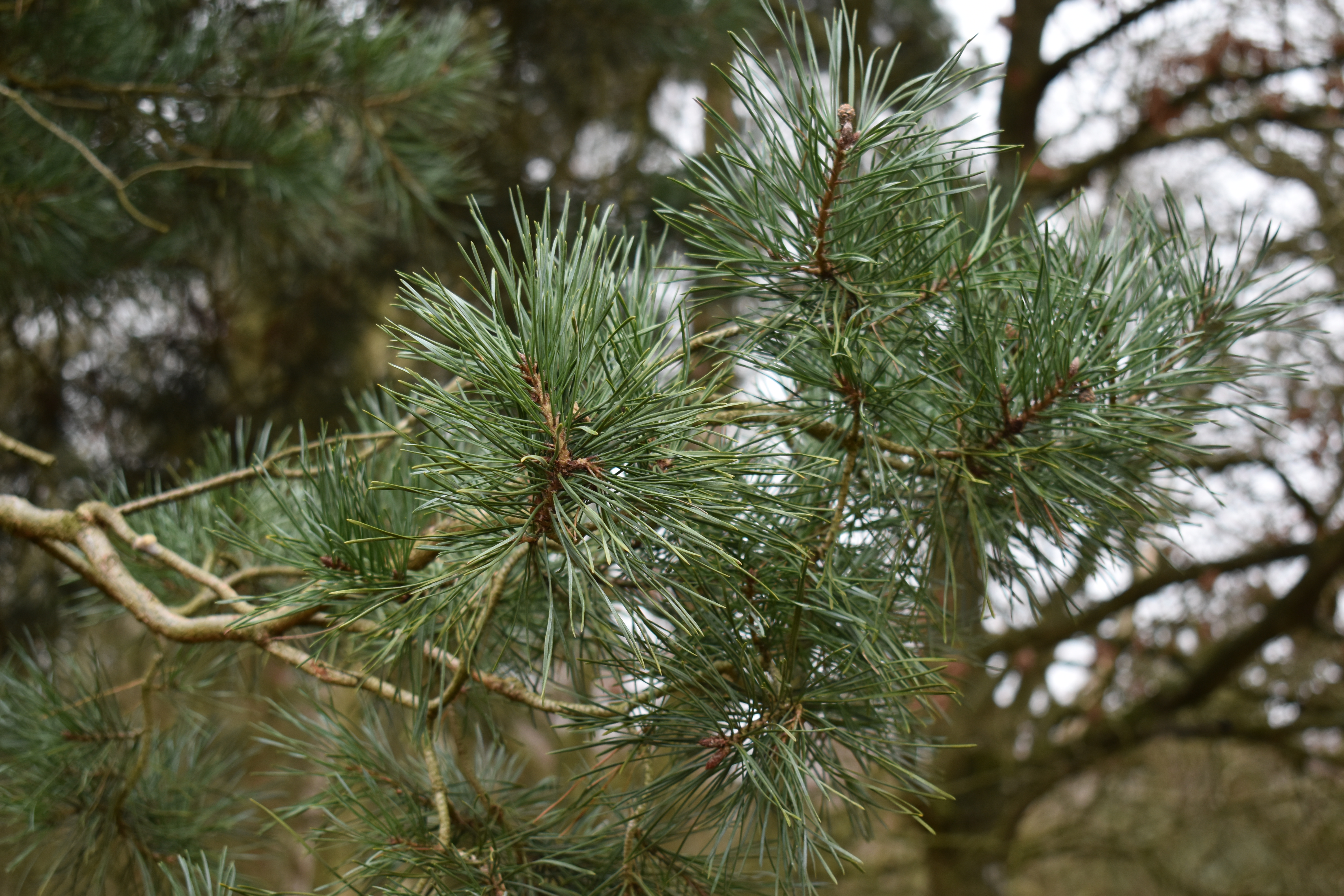
The final piece of woodland our wanderings took us through featured pine trees such as Scot’s Pine with long glaucous needles in batches. several had been felled by winter storms and these were being enjoyed by the resident herd of deer who have been gnawing away at their bark. Odd ones were dead but still standing providing shelter for insects and invertebrates which will in turn predators such as tits, woodpeckers, tree creepers and nuthatches.
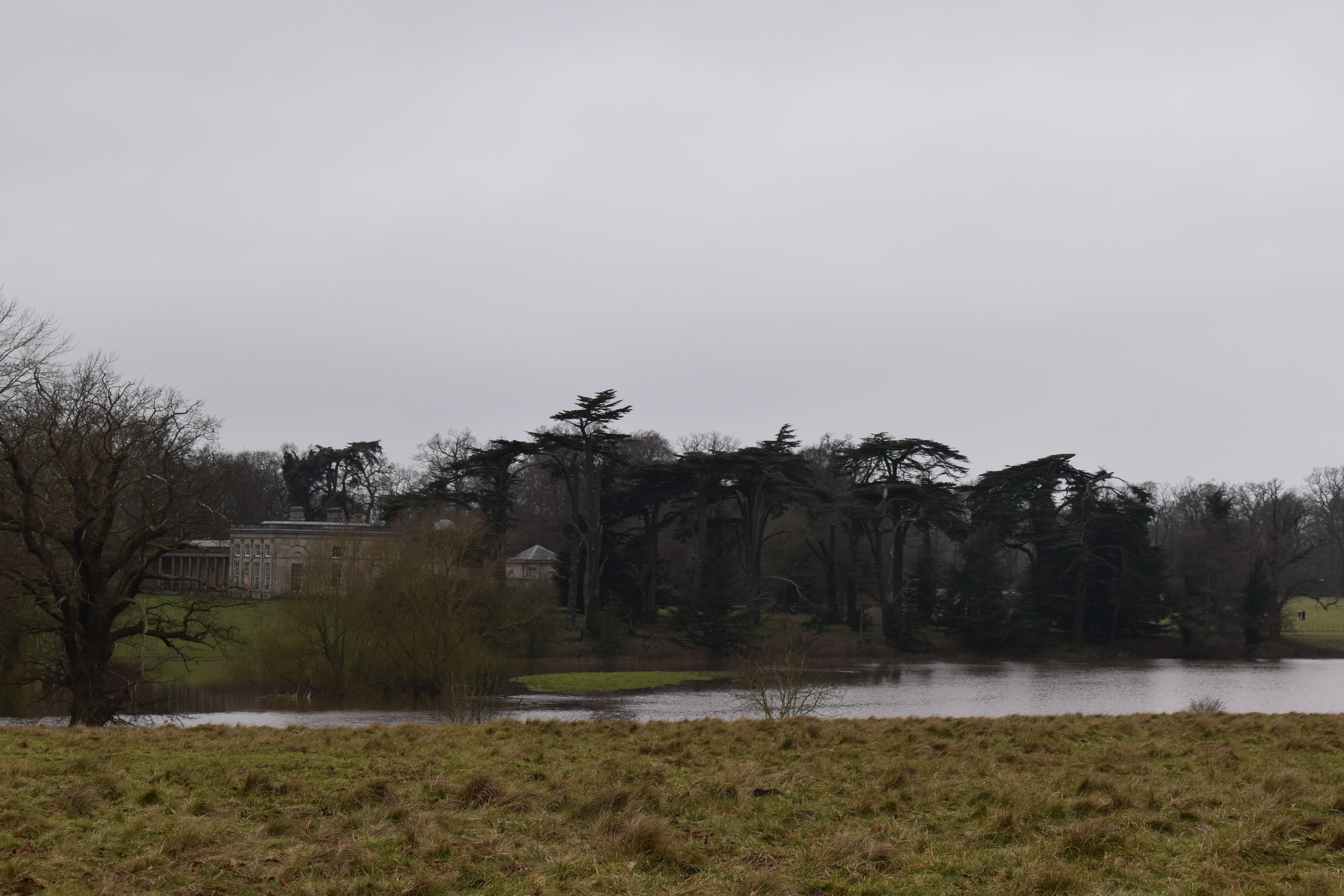
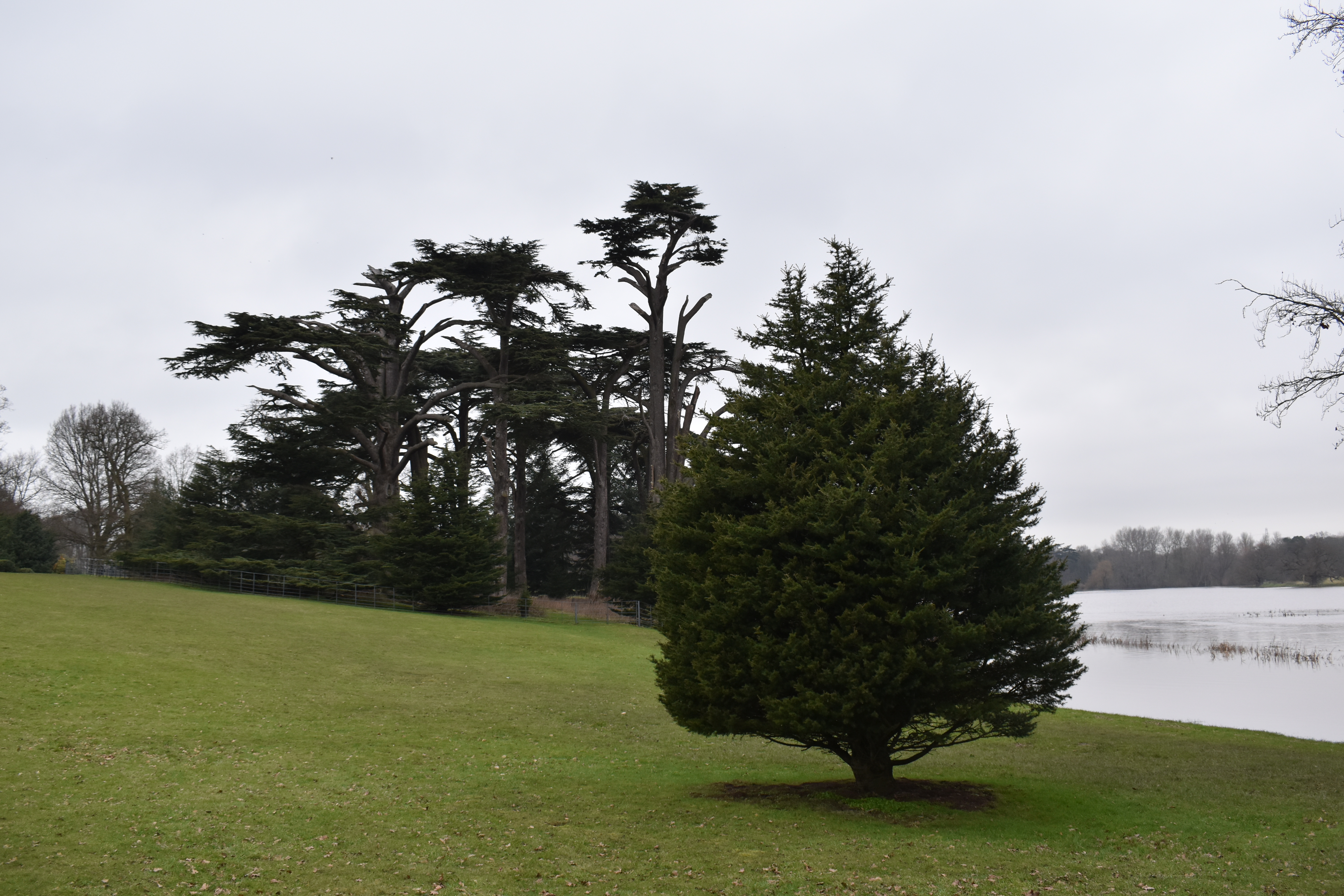
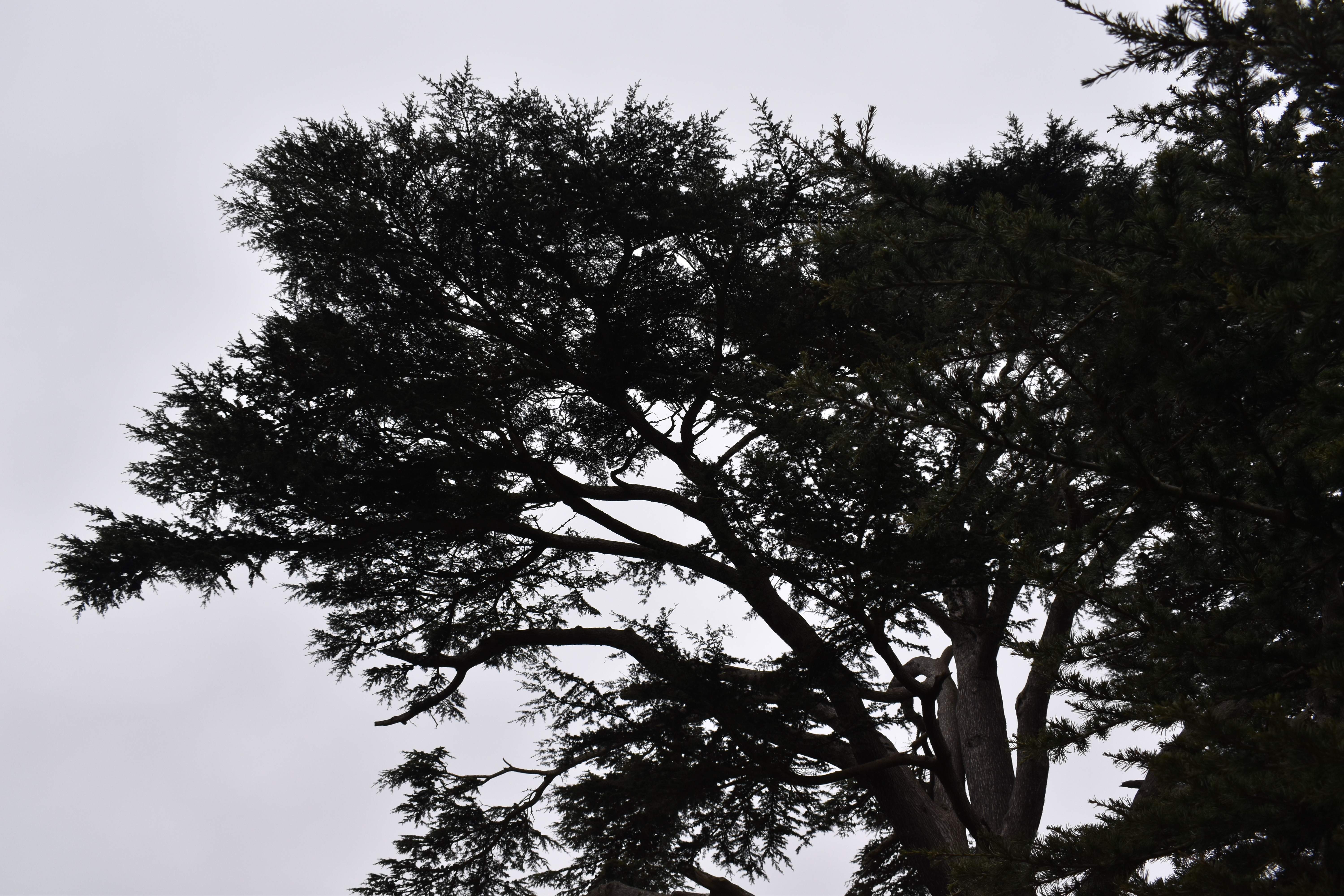
We had one final clump of very special coniferous trees to enjoy. We could see them as we left the woodland path filling the area between the river and the buildings. These are the ubiquitous cedars seen at most stately homes and they are need of constant attention from tree surgeons as they are dropping huge branches as they wither slowly away.
We found a few small conifers as we crossed over the huge lawn area to have a close look at them.
Upon reaching the cypresses we were impressed with the amont of work done on them and also the number of young trees planted over the years as replacements. These graceful but huge trees are Jude the Undergardener’s favourite trees!
After we had studied these statuesque specimens we were close to the coffee so we decided to sit for a while and enjoy another!
We have been slowly building up winter interest in our garden here at Avocet for some time now. We are approaching mid-February enjoying the colours provided by flowering shrubs and trees. I decided I would take a wander with my camera to see what there was to impress us and to attract any insects out and about in search of nectar.
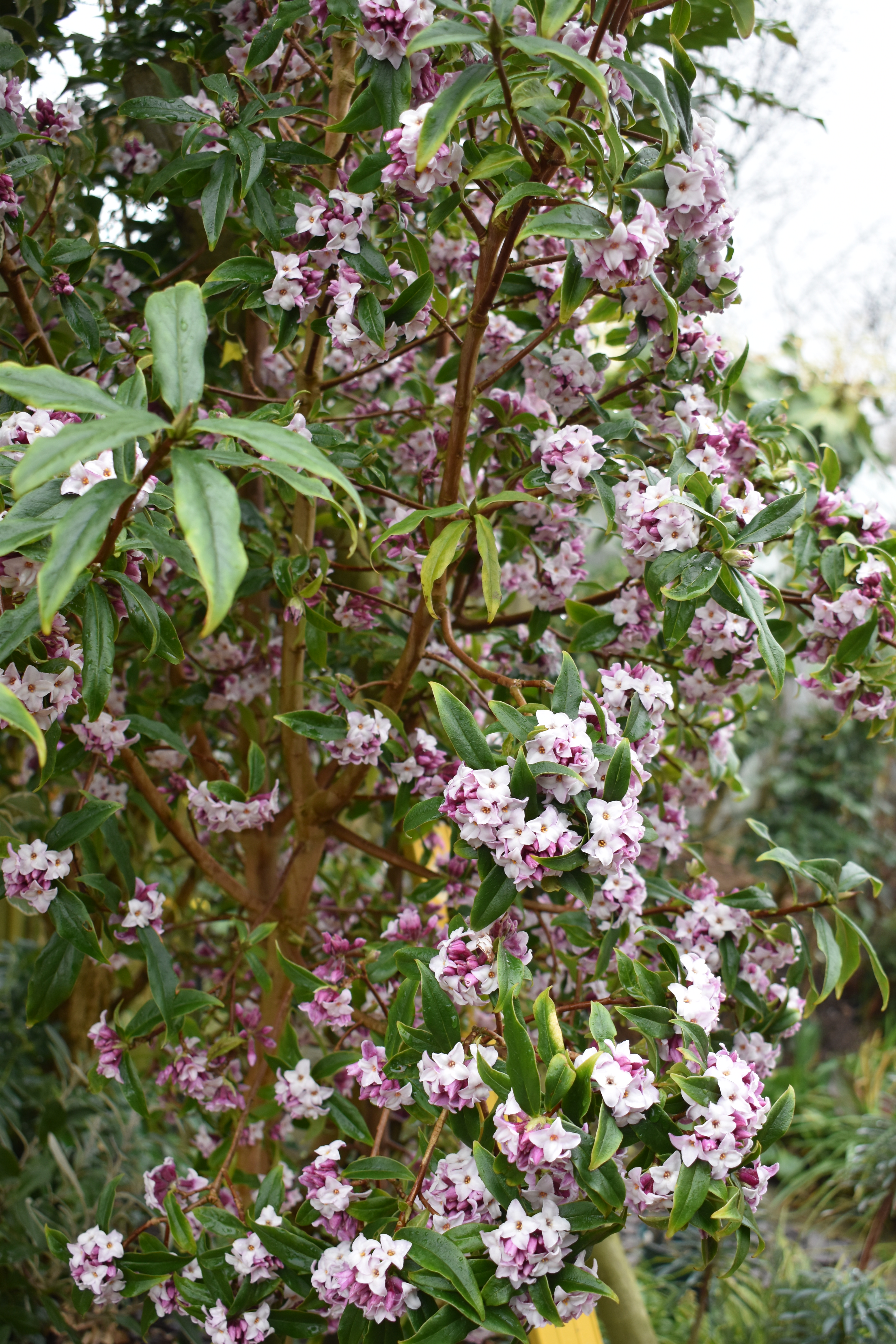
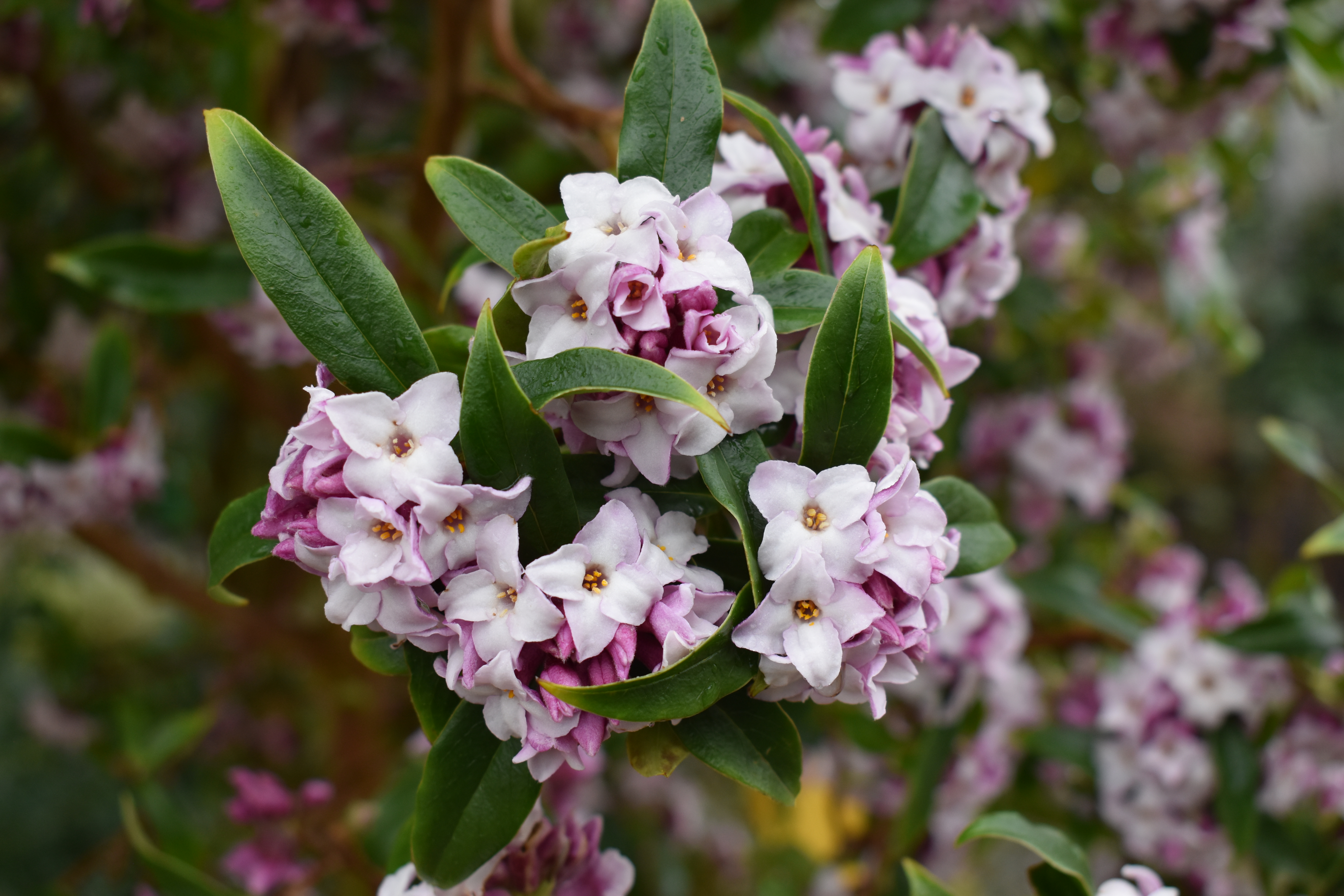
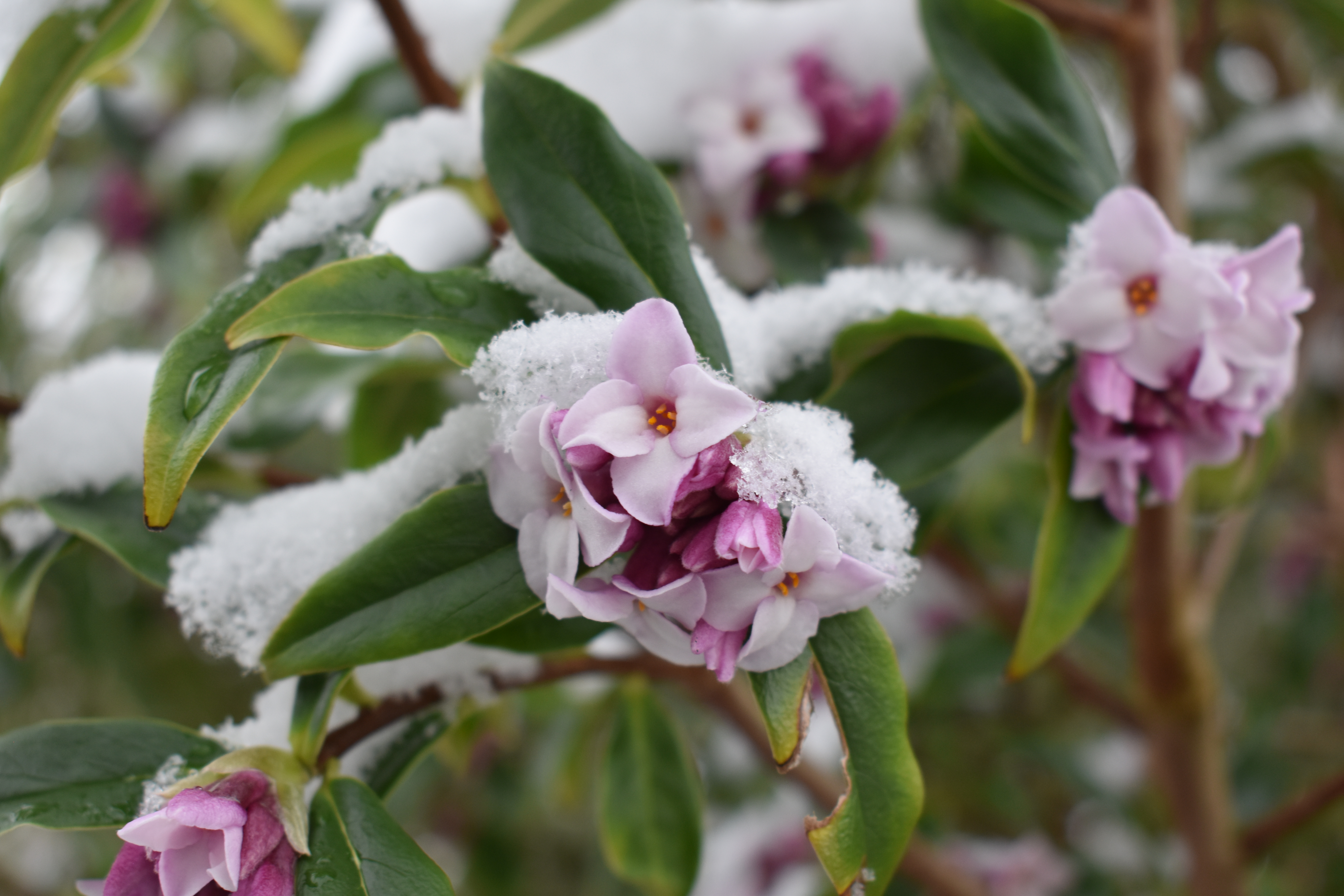
The first set of photos illustrates our Daphnes, D. bhuloa ‘Jacqueline Postill’, which I think emits the best aroma of all winter flowering shrubs. This year it is flowering better than ever with bigger clusters of flowers and far more of them. we grow it in the Winter Garden close to the conservatory and alongside a path to get best value!
Below this trio of pictures are of our three Witch Hazels, Hamamelis ‘Jelena’, H. ‘Harry’ and H. ‘Diane’ which are lightly and sweetly scented.
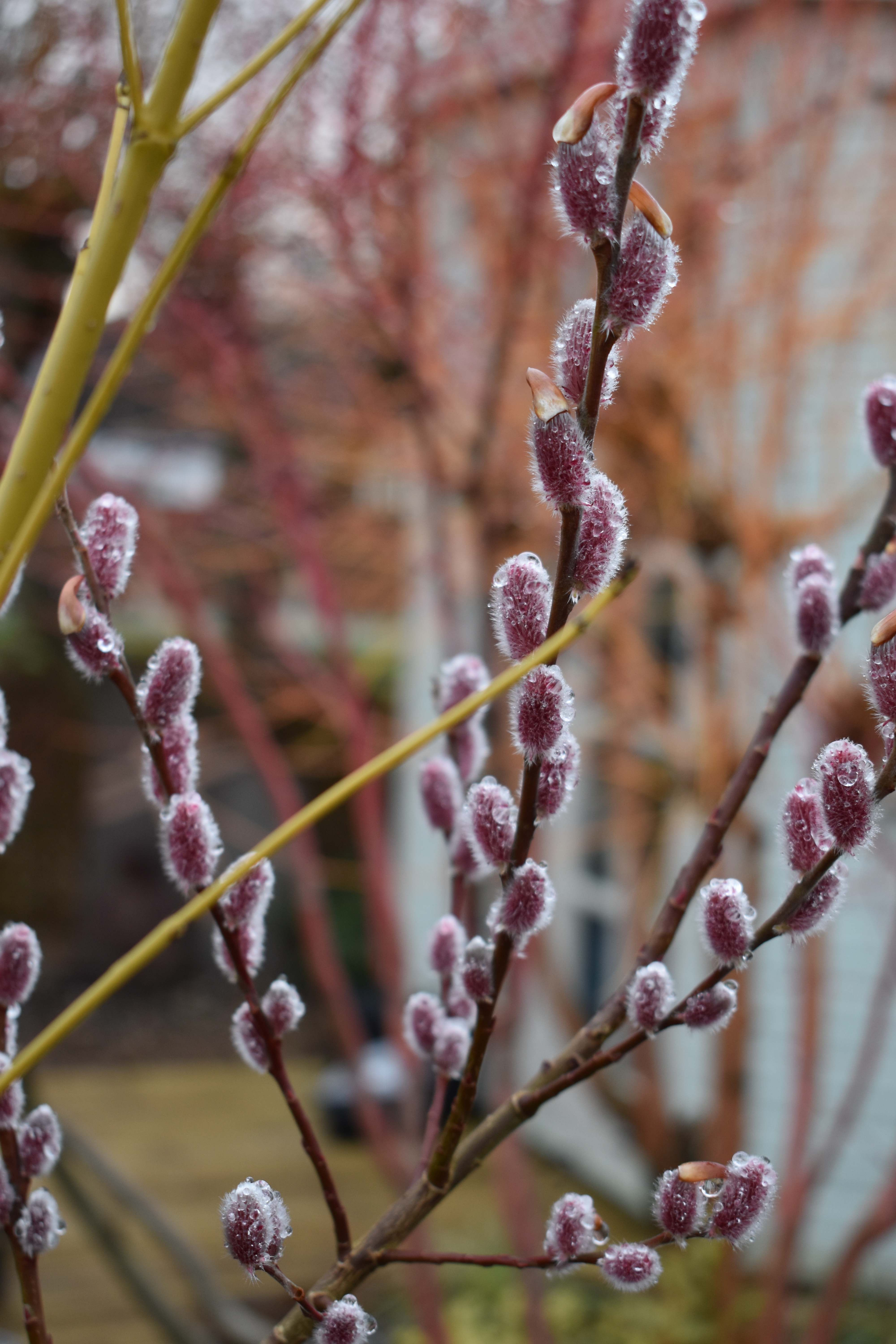
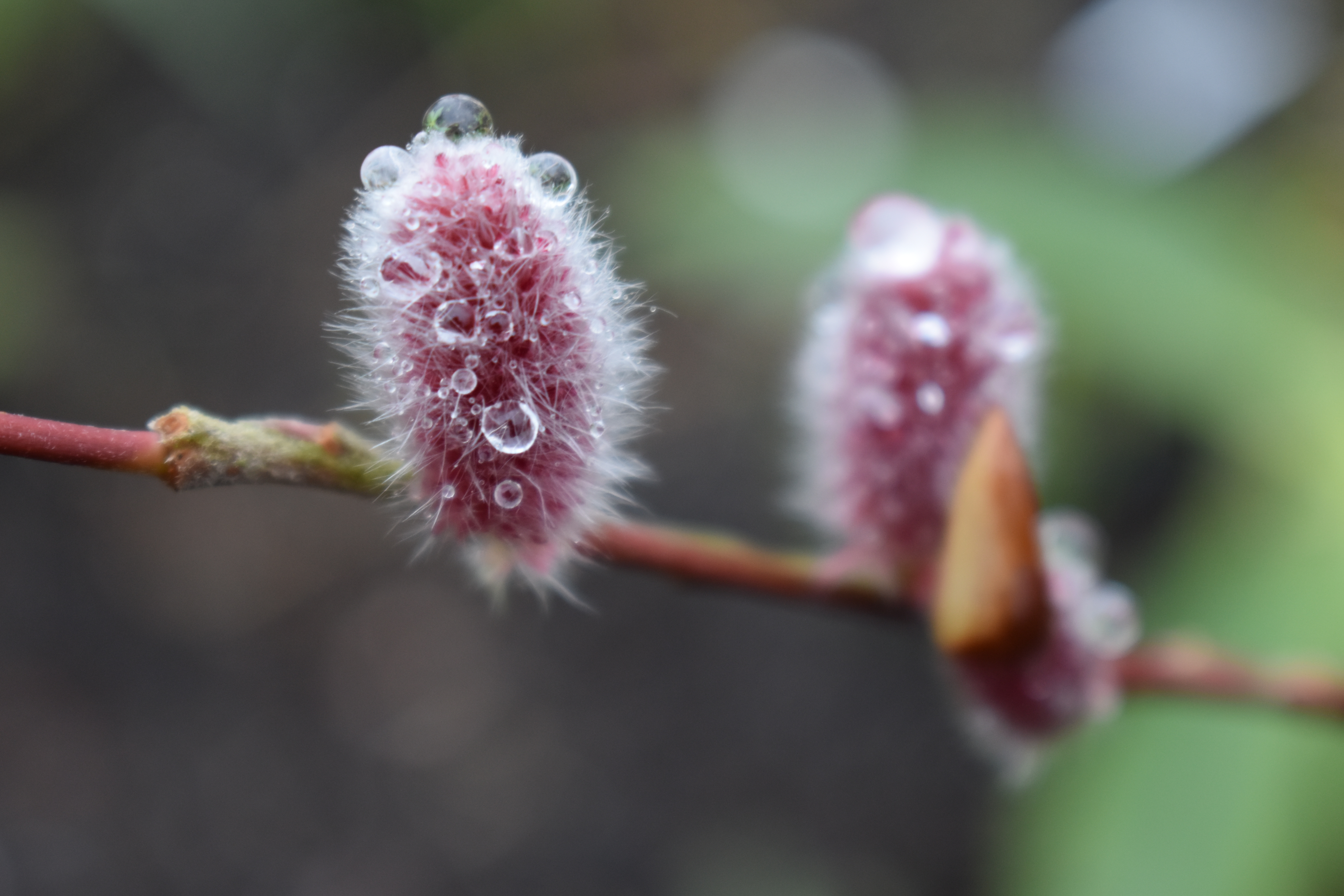
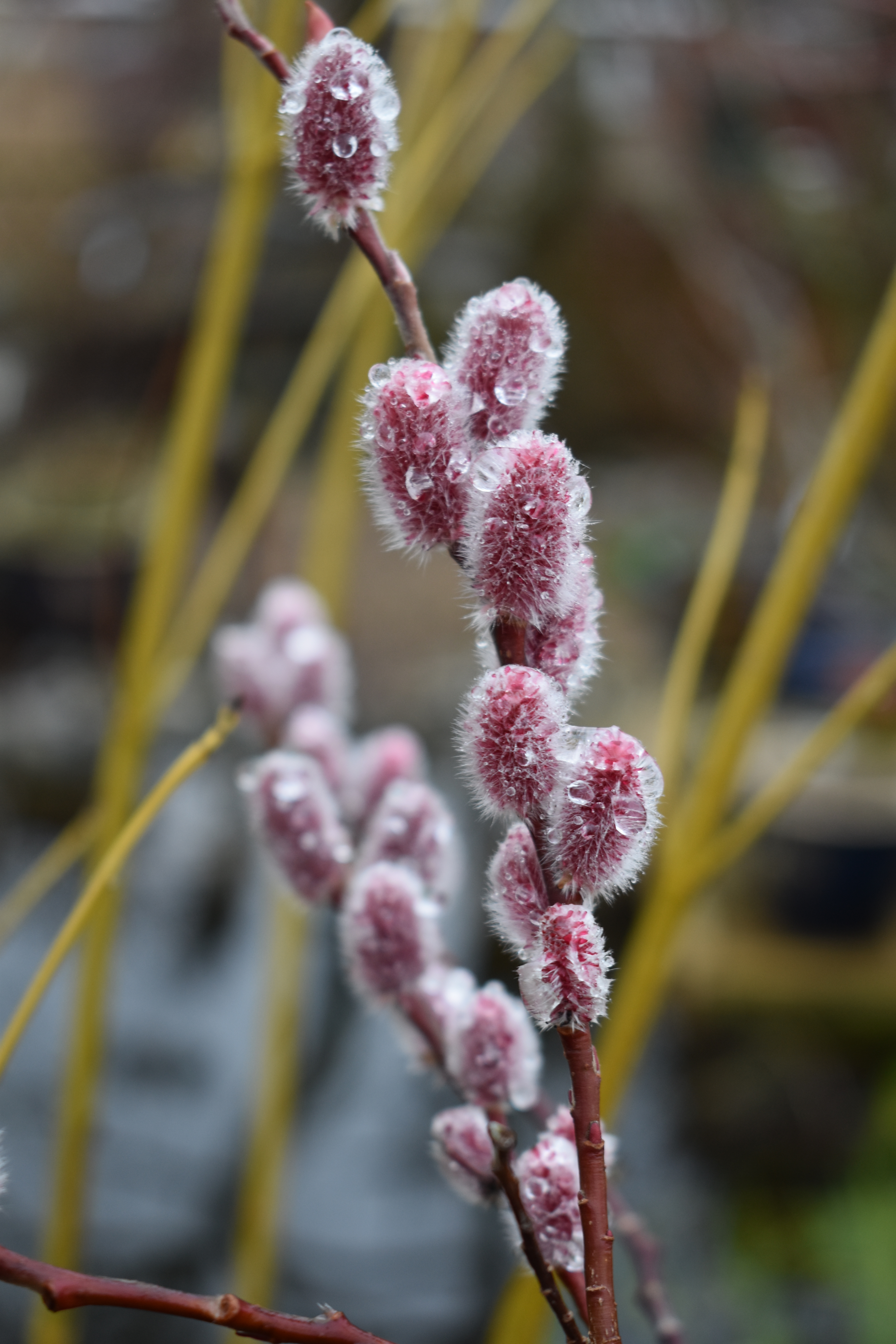
We grow lots of different willows in our garden which look good in the garden in winter, either for their coloured stems or for their beautiful catkins. My favourite is Salix gracilistyla ‘Mount Aso’ with catkins of dusky pink and grey as featured in the first 3 photos below. I took these photo just as a shower stopped and the catkins caught droplets on their hairs adding an extra dimension to this willow’s beauty
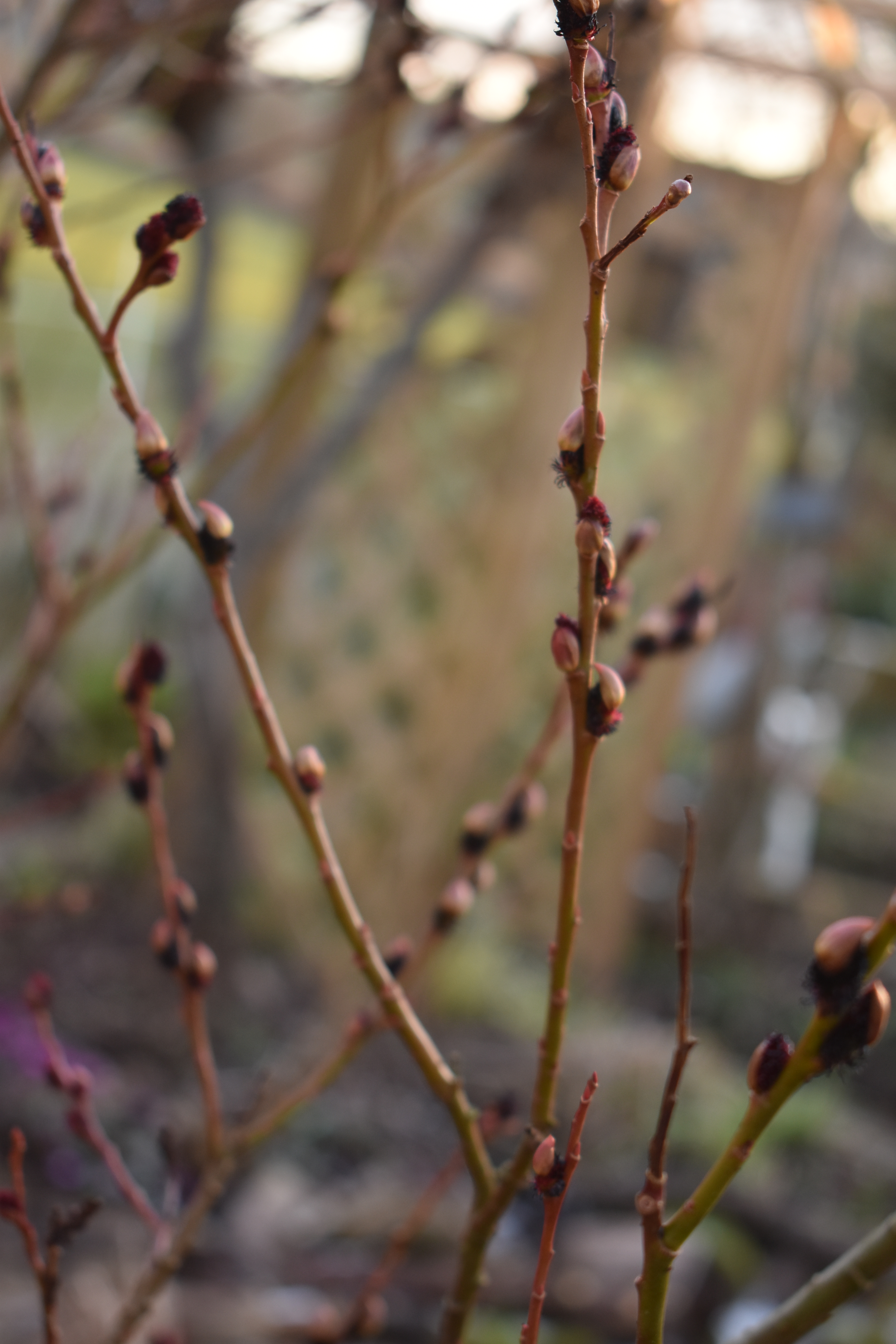
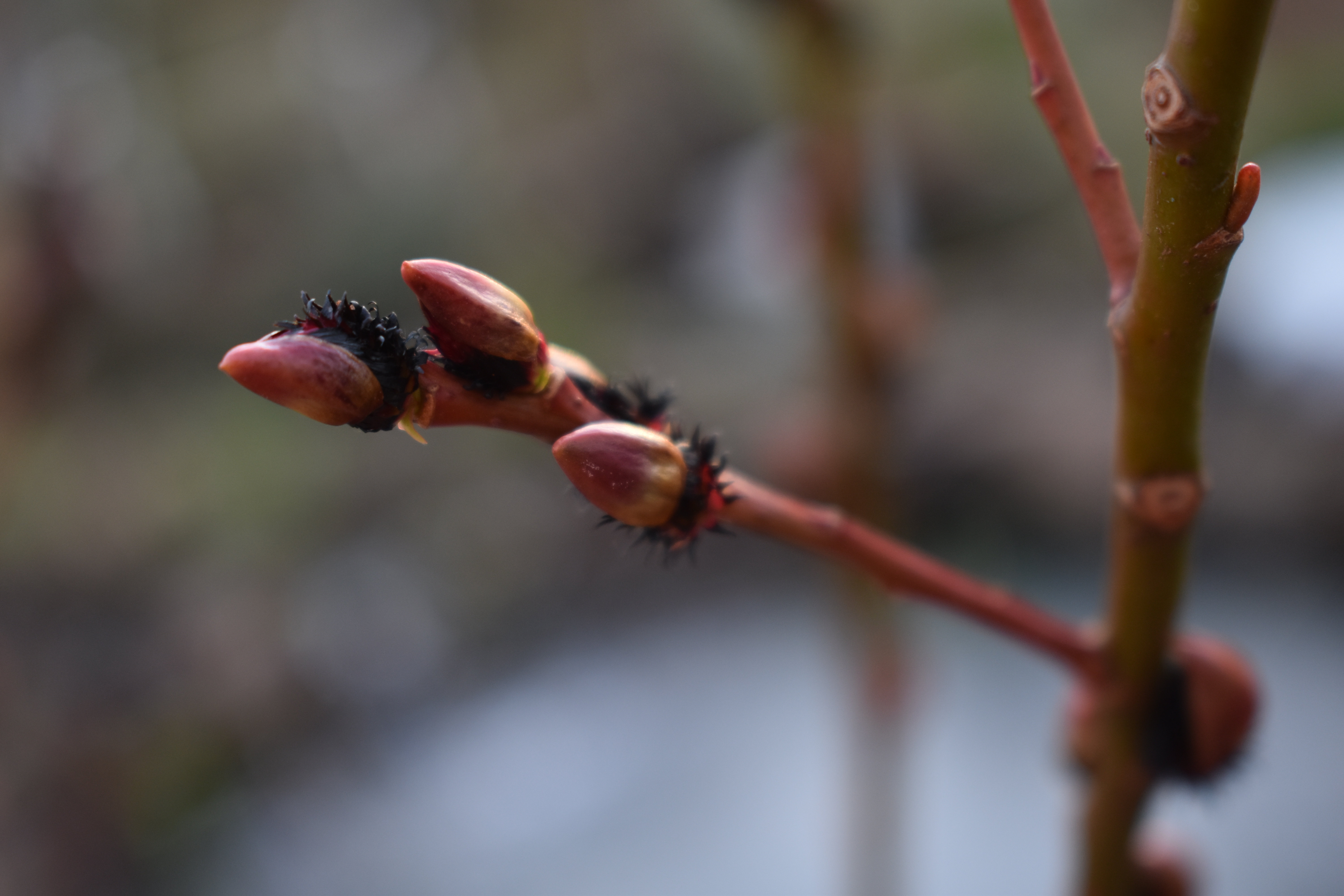
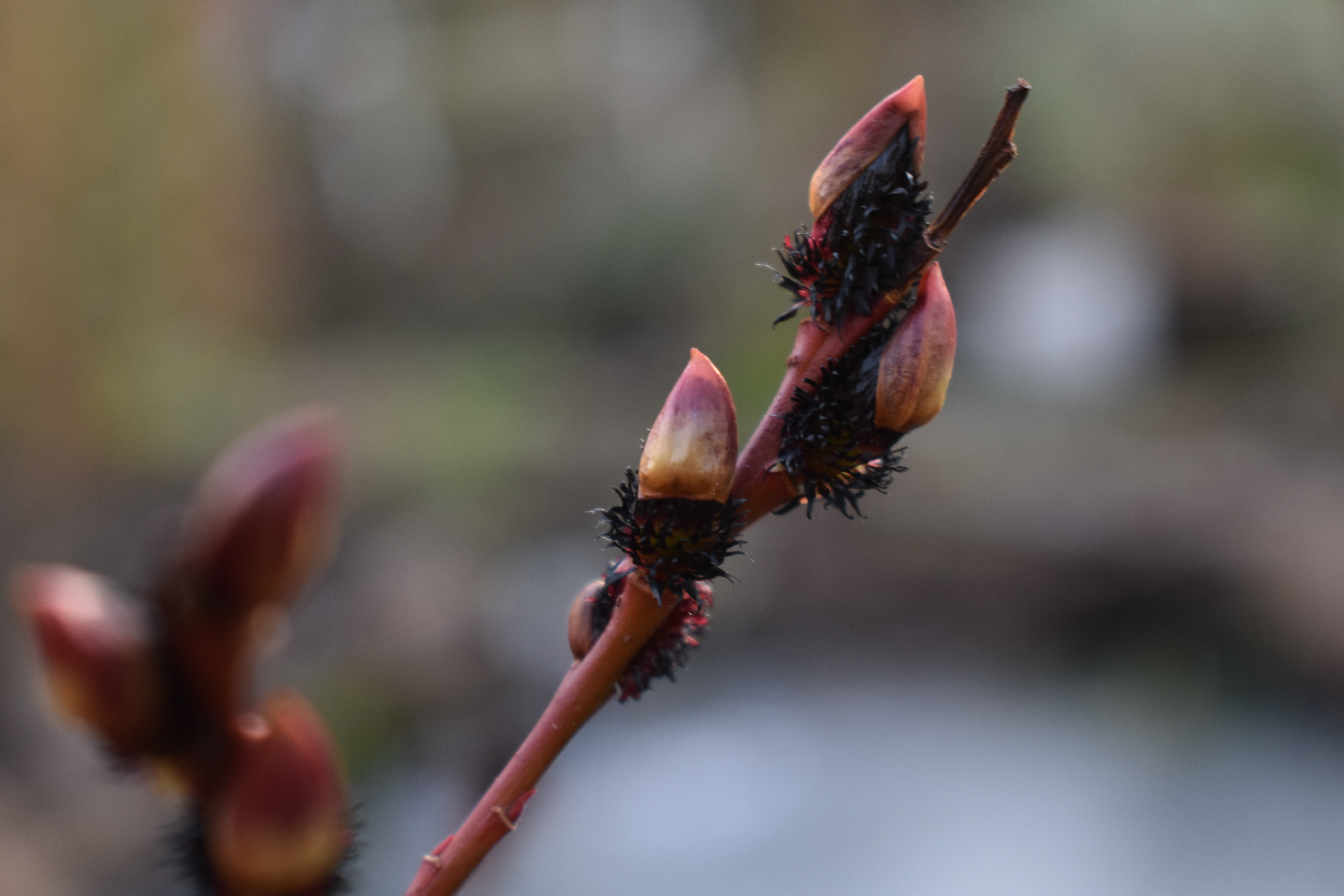
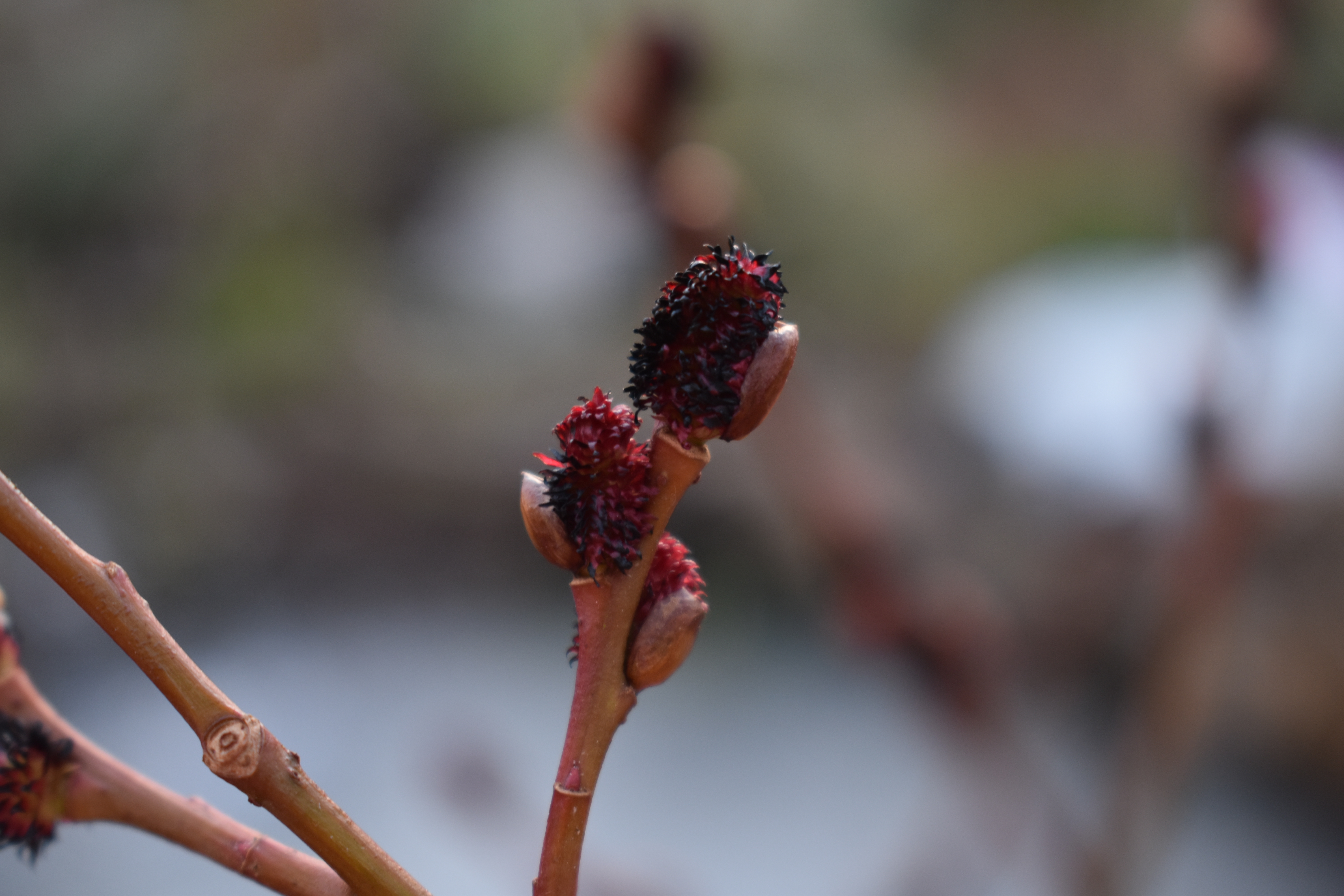
Another Salix gracilistyla variety that we grow around our wildlife pond is S. g. ‘Melanostachys’ which has stumpy catkins like Mount Aso but these are red and black. So dramatic when caught in the winter sunlight! My photos of it below show the catkins half formed but already looking good.
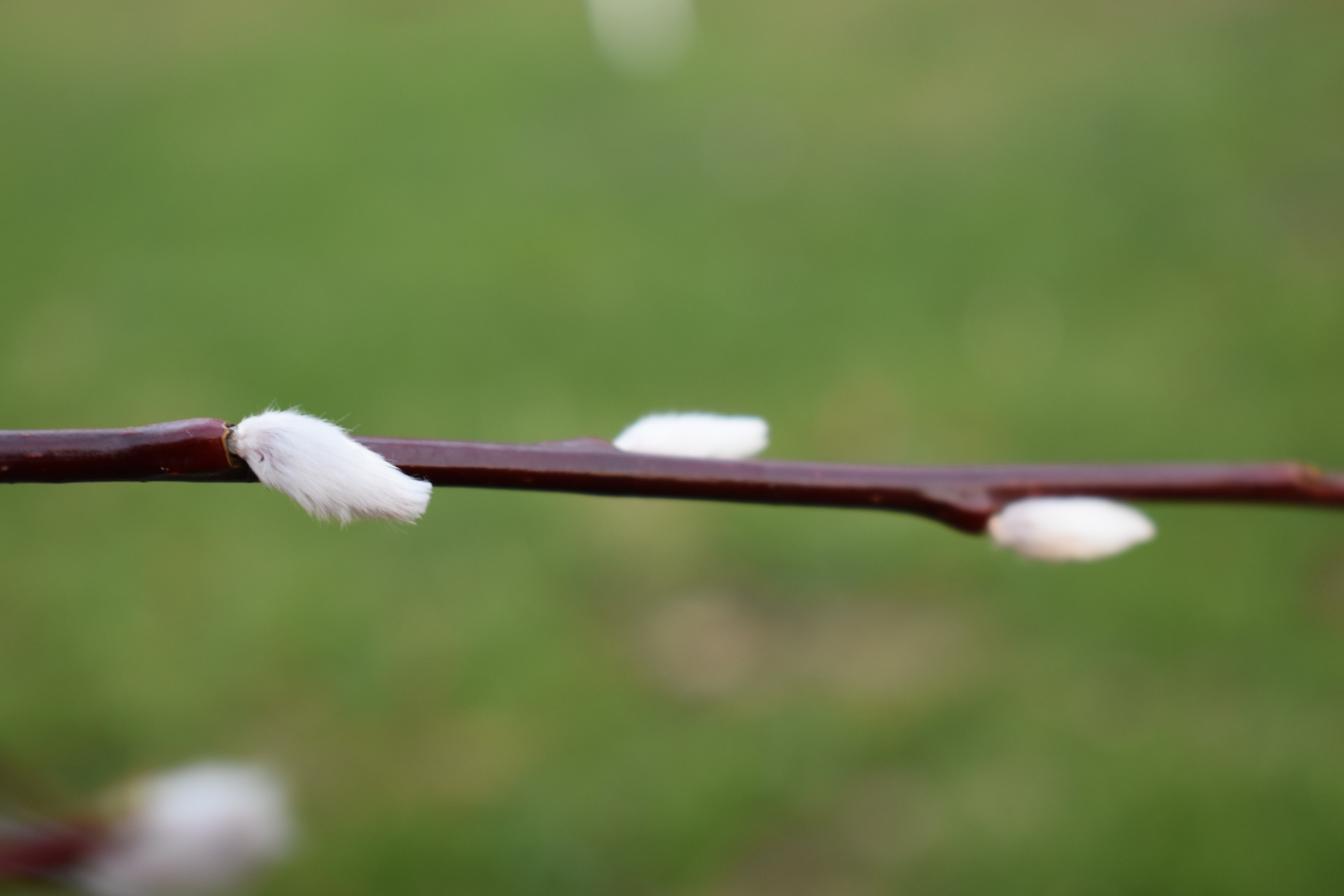
A willow of very different stature and differently shaped is our ‘Violet Willow’, Salix acutifolia ‘Blue Streak, although several other salix share this common name. Its catkins are the purist white and much more pointed than the two willows featured above. Later on the catkins will become more rounded and the stems dark purple-black covered in white meal. We grow ours as a pollard with a main trunk about six feet tall and from here long whippy stems emerge each spring. We pollard this willow in March each year and its stems grow a good ten feet long.
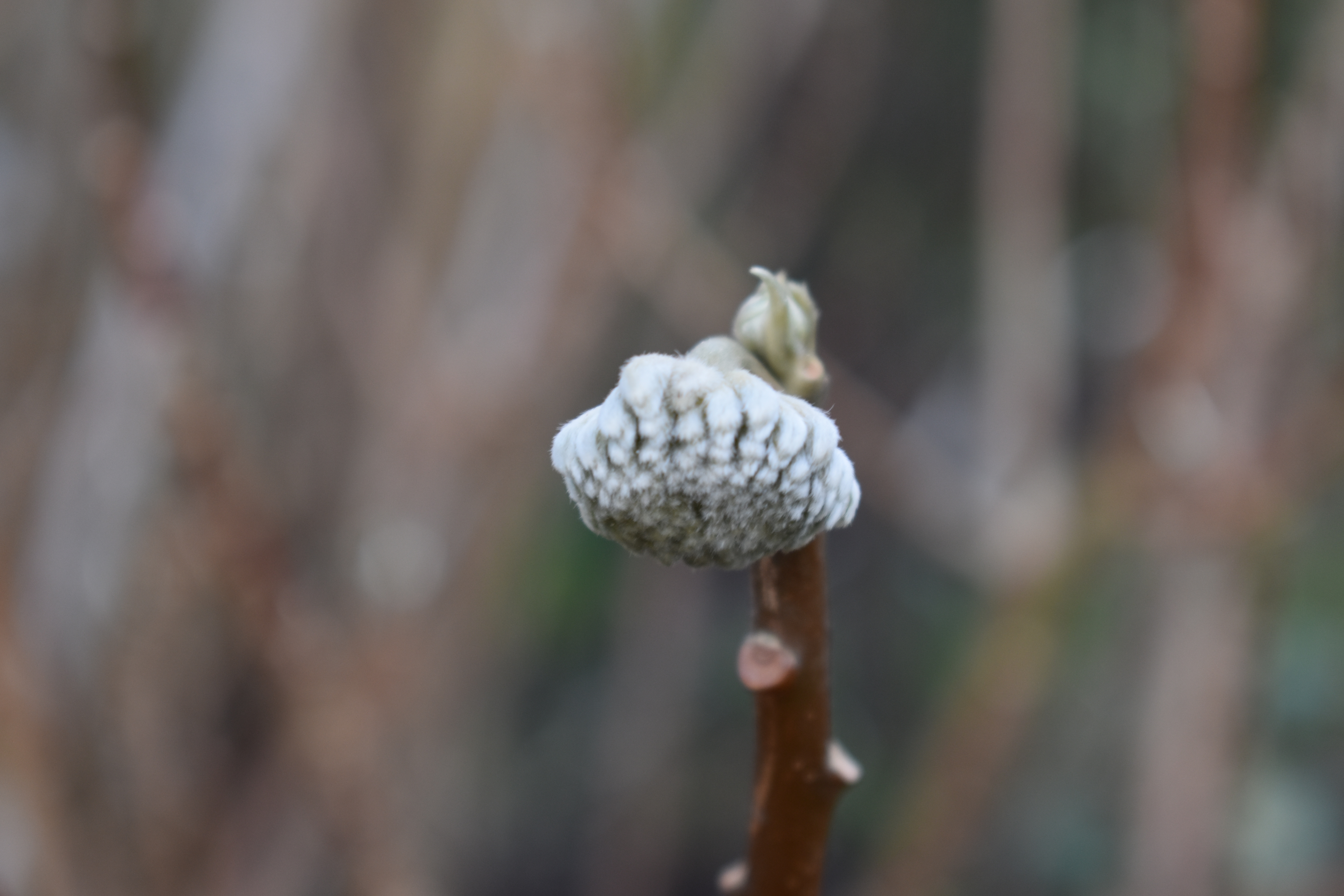
A winter flowering shrub not very often seen is Edgeworthia chrysantha which has buds showing and looking fit to open soon, when we can appreciate its yellow scented clusters of blooms on the very end of each and every stem. But for now a photo showing it in mid-February to ‘whet your appetite’.
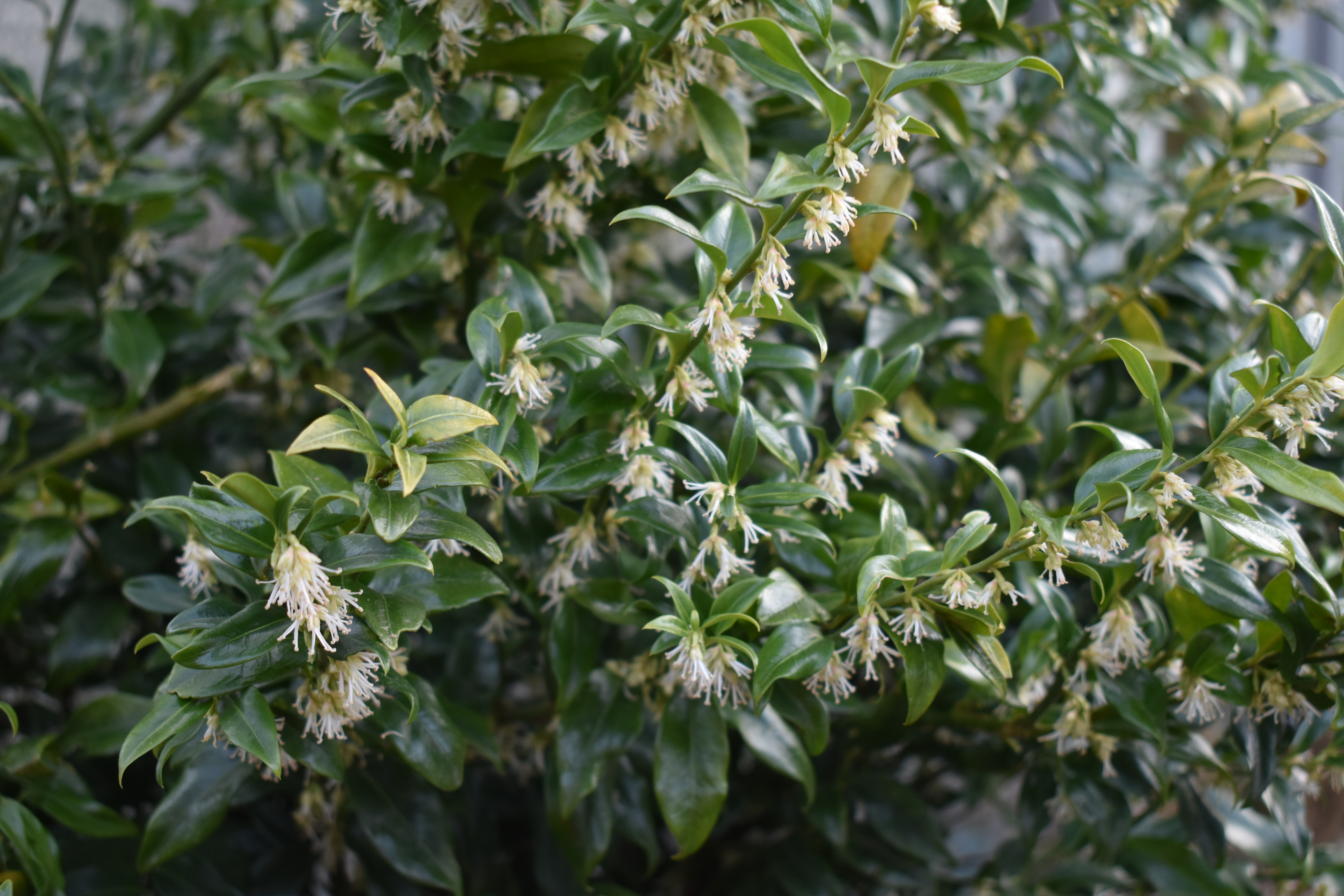
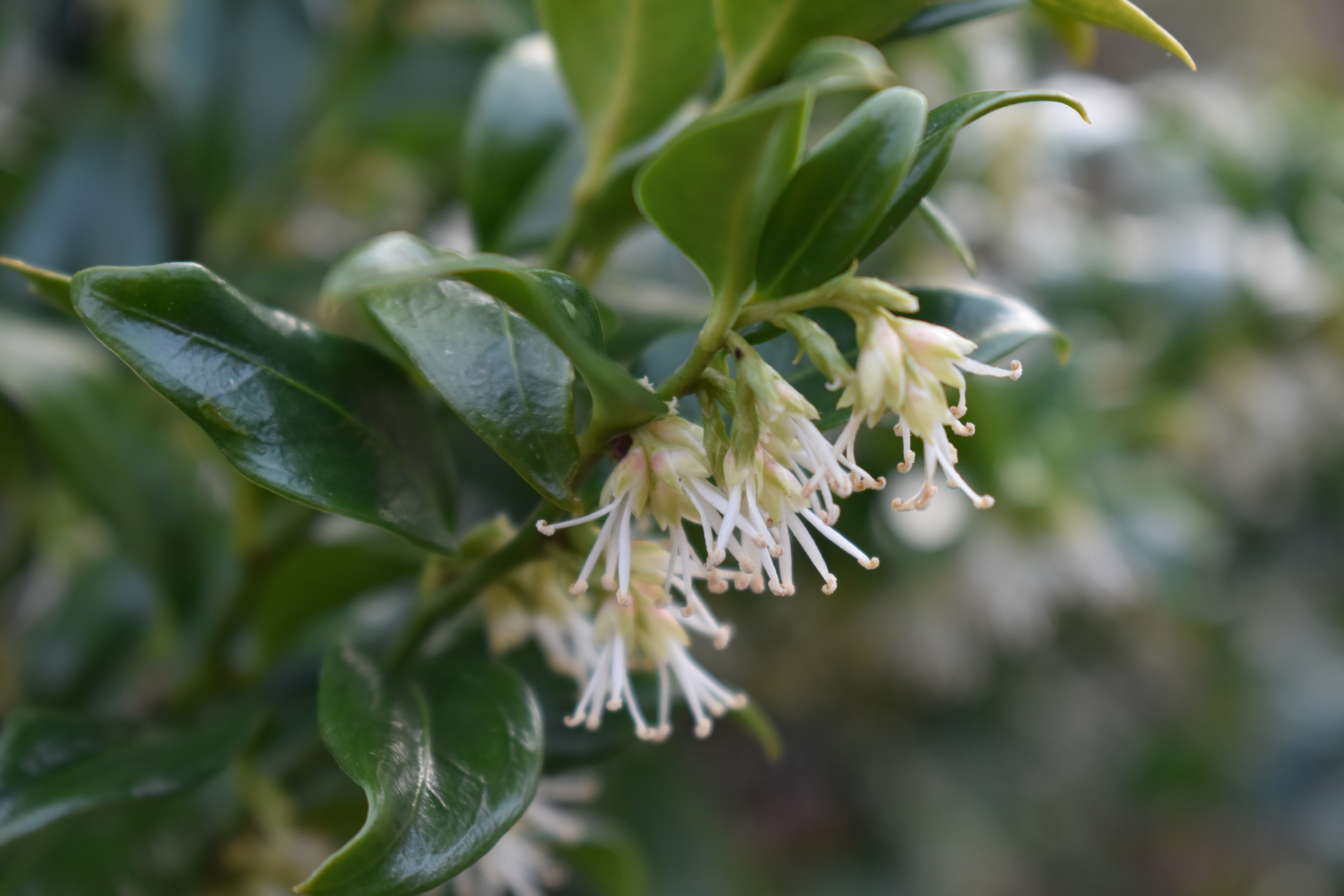
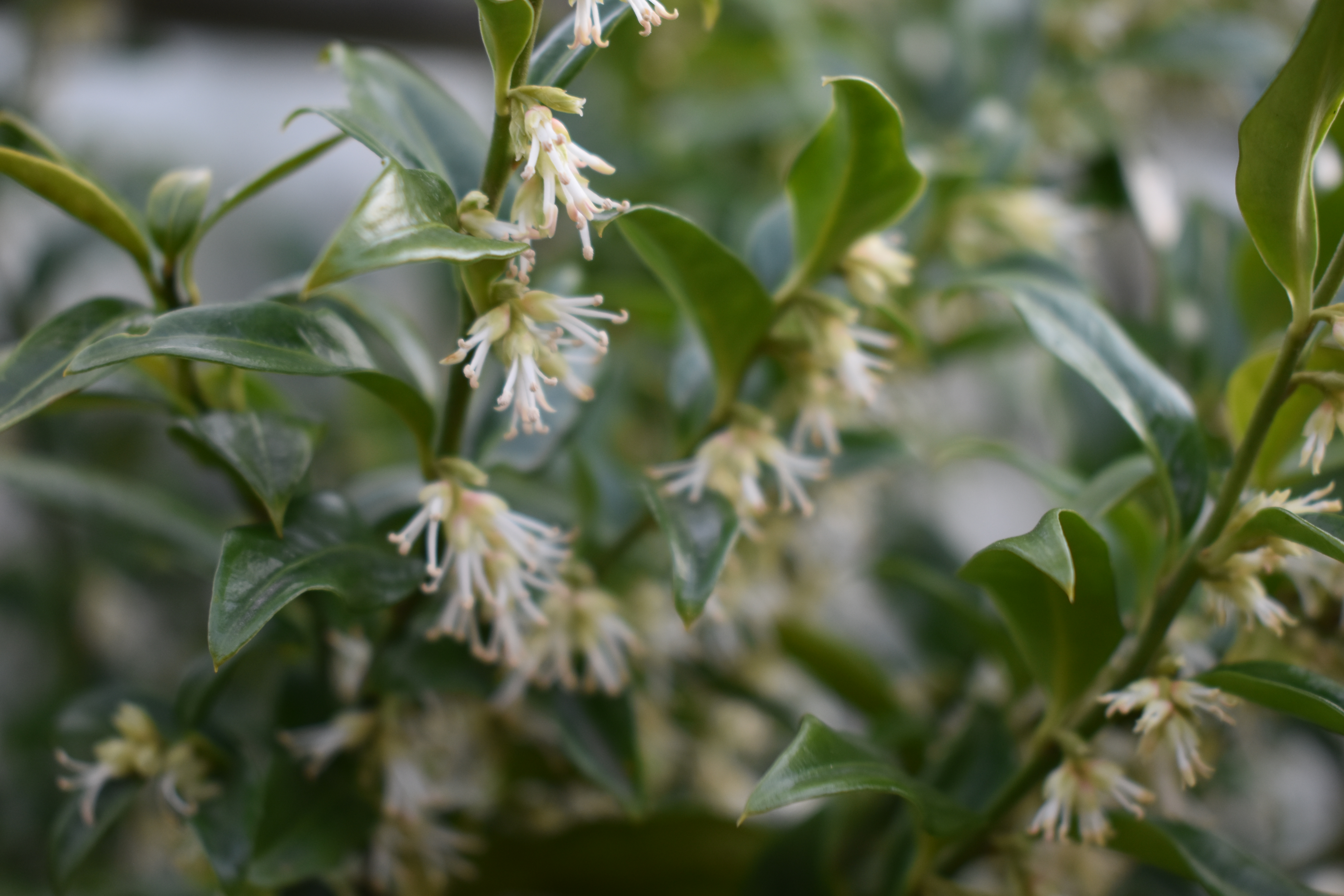
Probably the heaviest scent of all shrubs in winter in our garden is the Sarcococca confusa. I planted one opposite the Winter Garden and right by the greenhouse door much to Jude, the Undergardener’s disgust as she hates the smell. It is a scent that is a bit of a marmite aroma – love it or hate it. Those who love it say it smells of honey while those who dislike it claim it smells of cat pee! It does however have beautiful white blooms, almost like miniature Witch Hazels, and they are followed by black and very glossy berries the size of Blackcurrants.
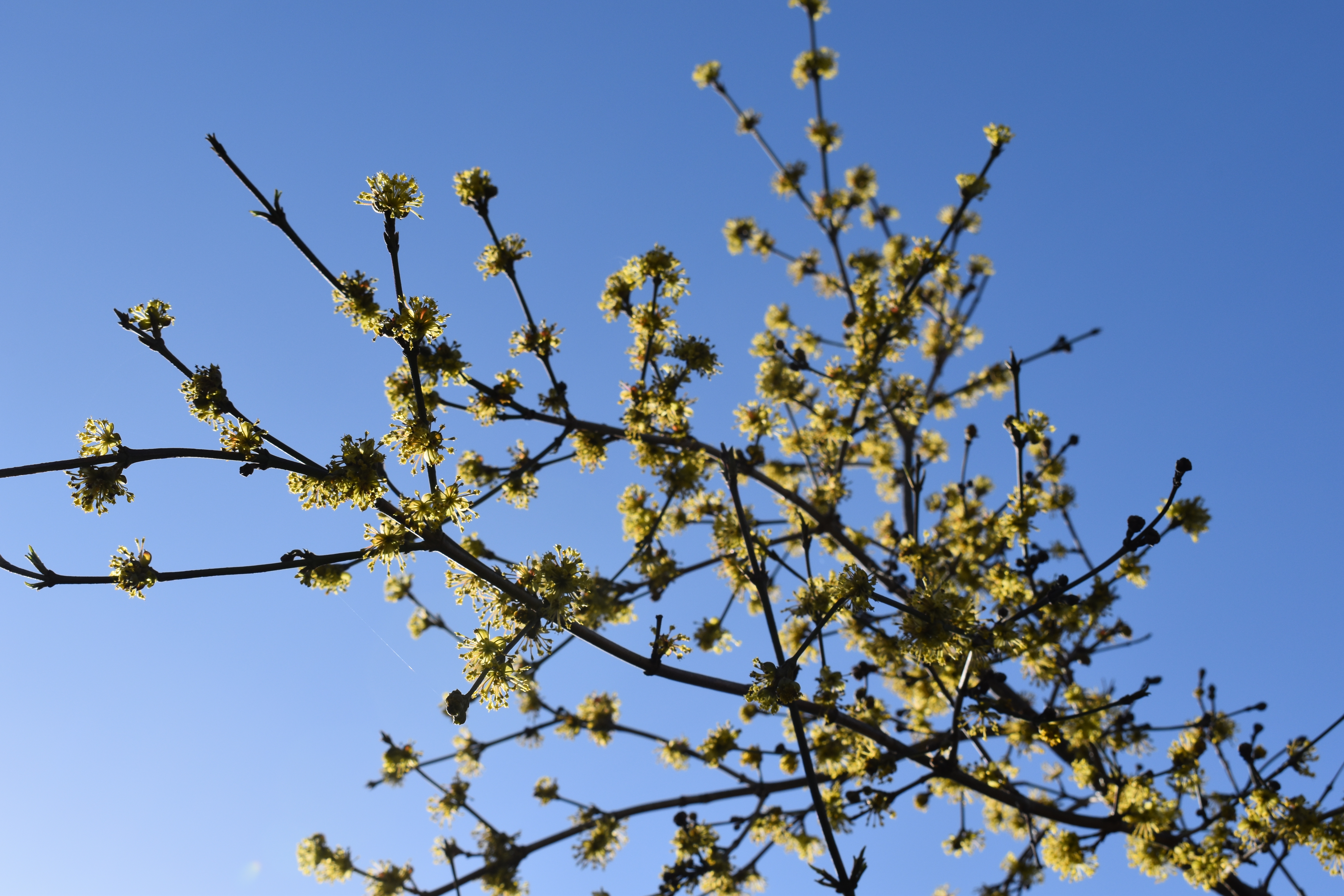
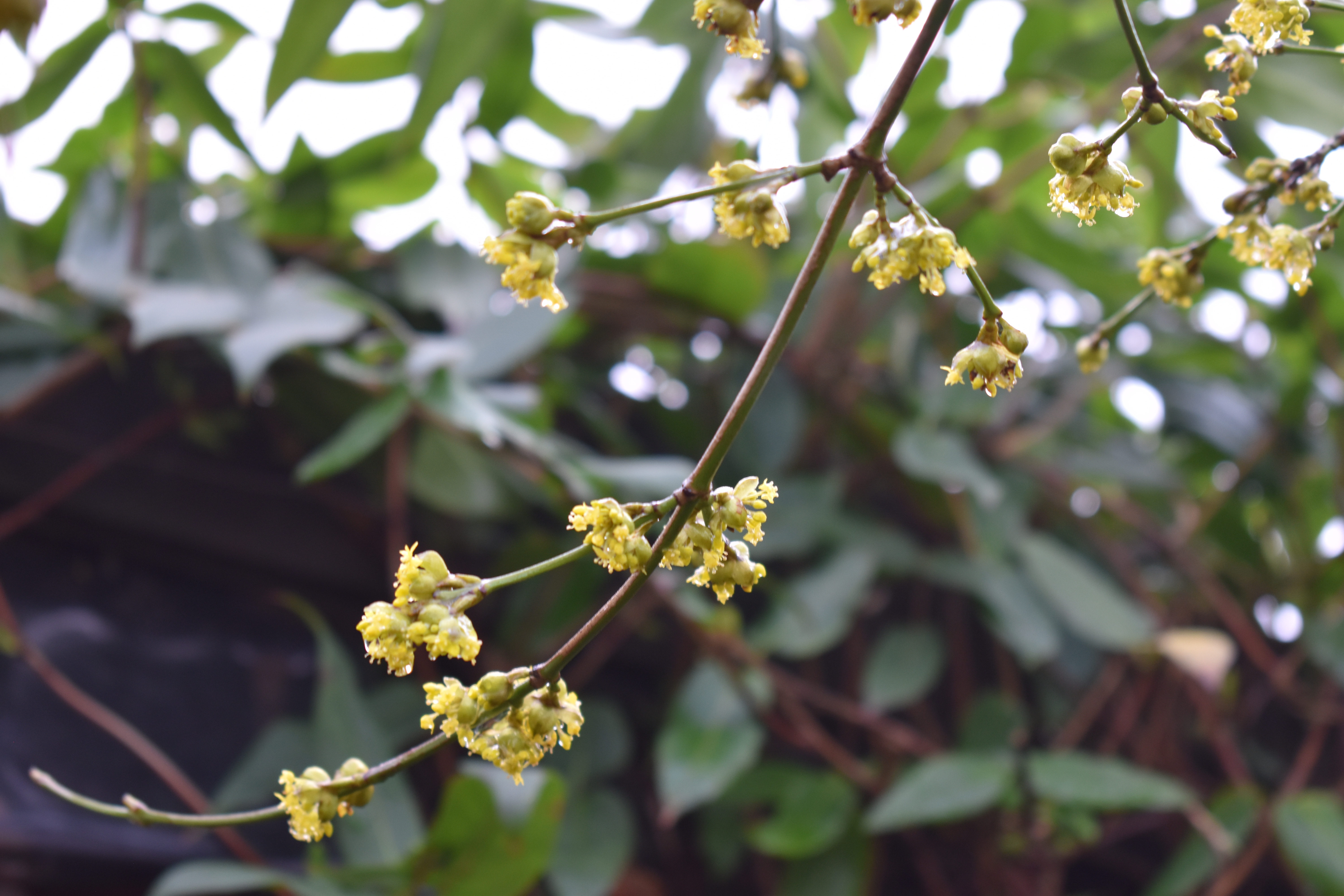
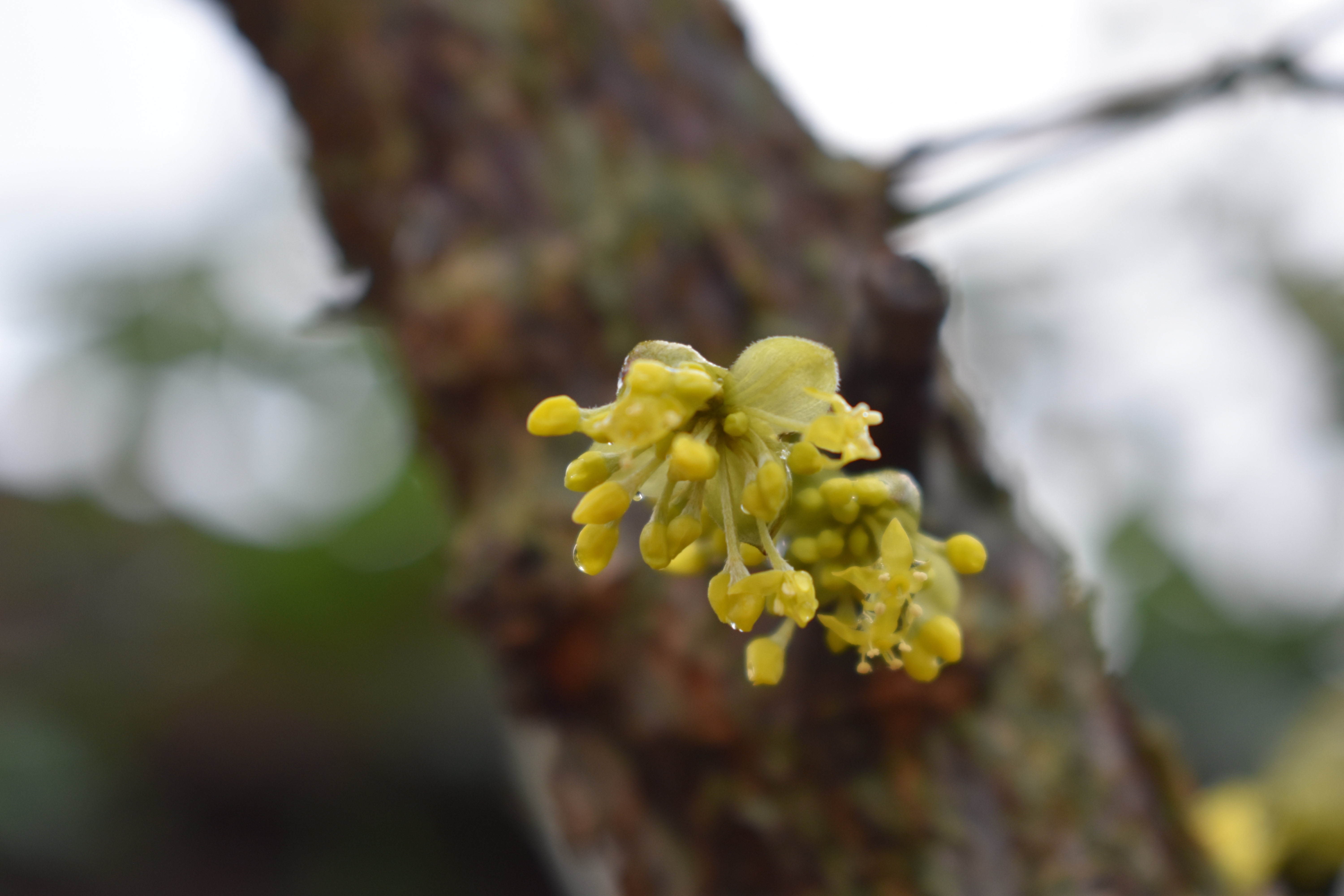
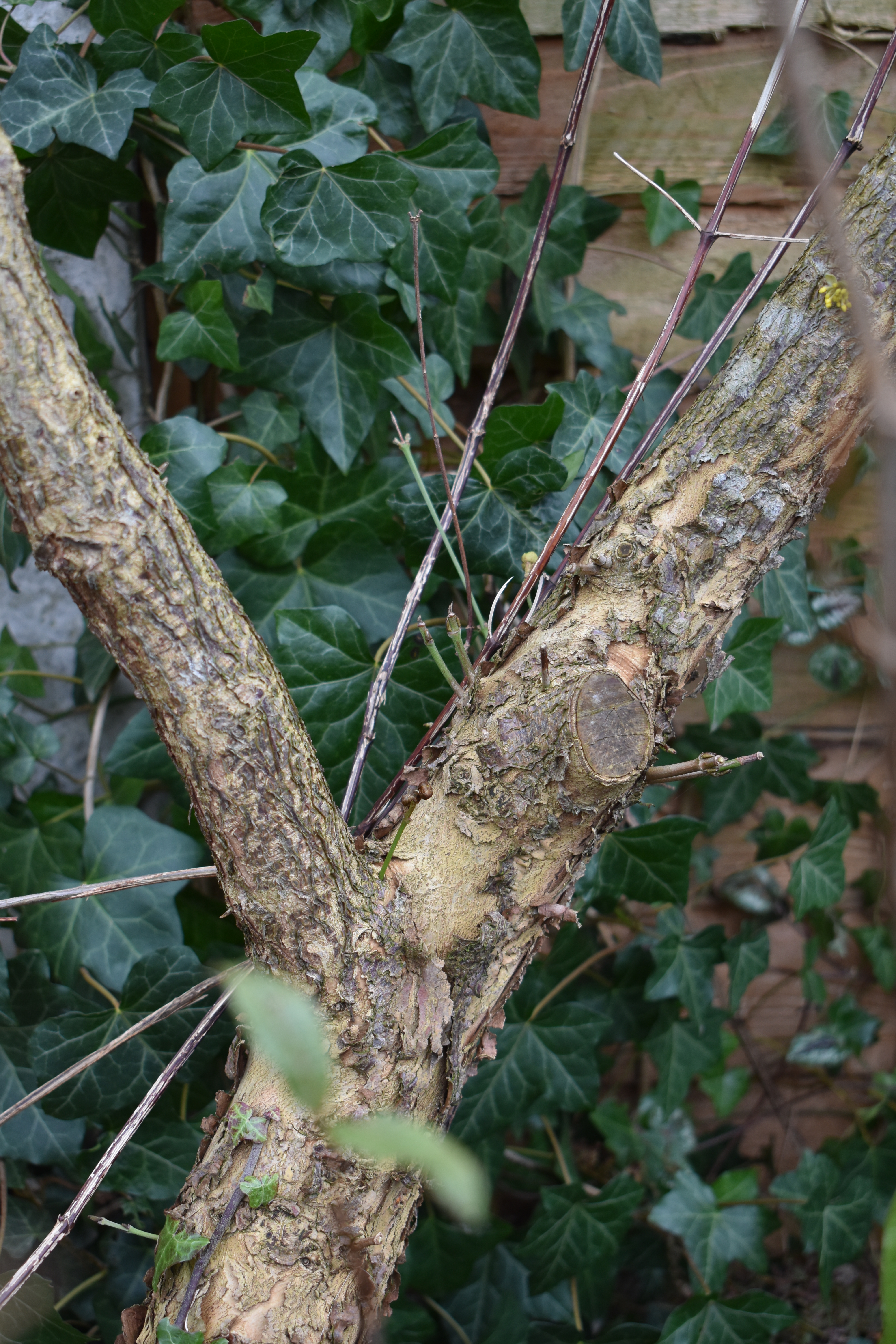
When we are washing up we can look out of the kitchen window and see the wonderful Cornus mas, commonly known as the Cornelian Cherry. It is such a cheerful flowering shrub with its bright yellow-green scented flowers which open on bare stems and give us weeks of interest. Later in the year these flowers are followed by red coloured grape-like berries, which once fallen to the ground re loved by blackbirds. It has the extra bonus of beautifully textured bark too.
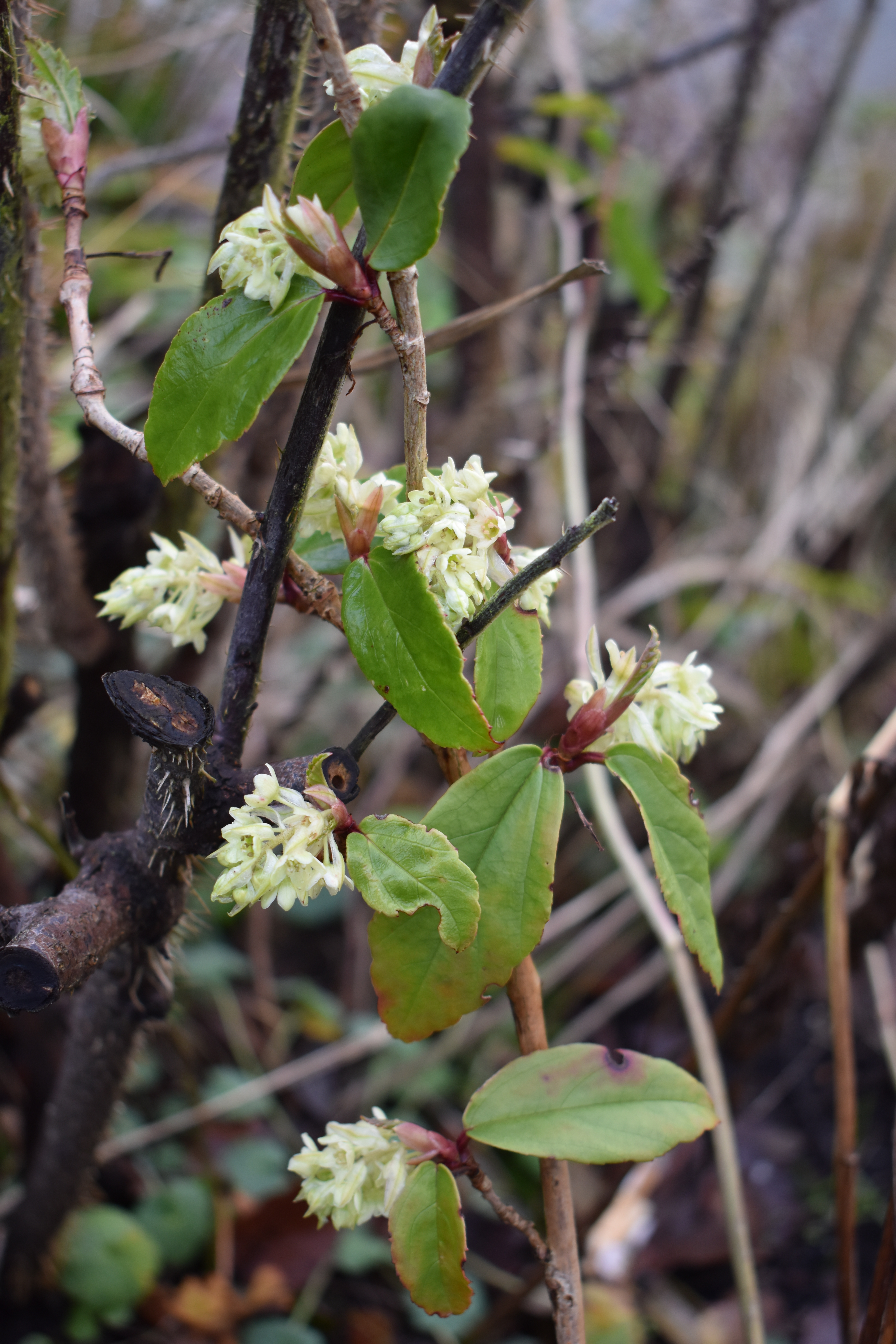
I will finish this look at our winter-flowering shrubs in our garden with an unusual Ribes or flowering currant. Ribes laurifolium is an evergreen with deep green leathery foliage and in winter is graced with racemes of white flowers. On closer inspection you can see that the flowers are a greenish-cream rather than pure white. It is commonly known as the laurel leaved currant. We find it very slow growing in our garden so it is still a small specimen.
In my next post I shall take a wander with my camera to hand to see what winter interest climbers are putting on a performance.
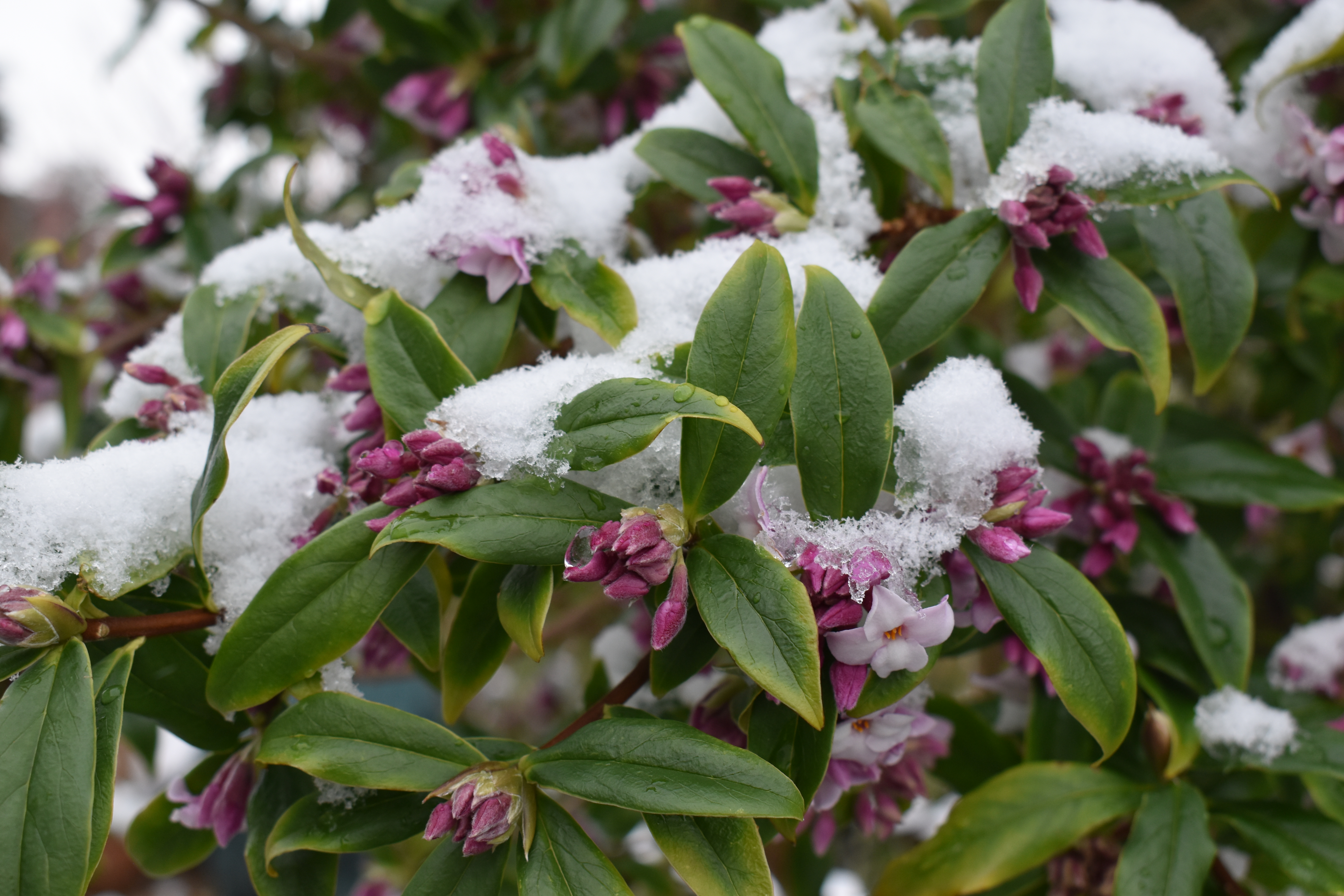
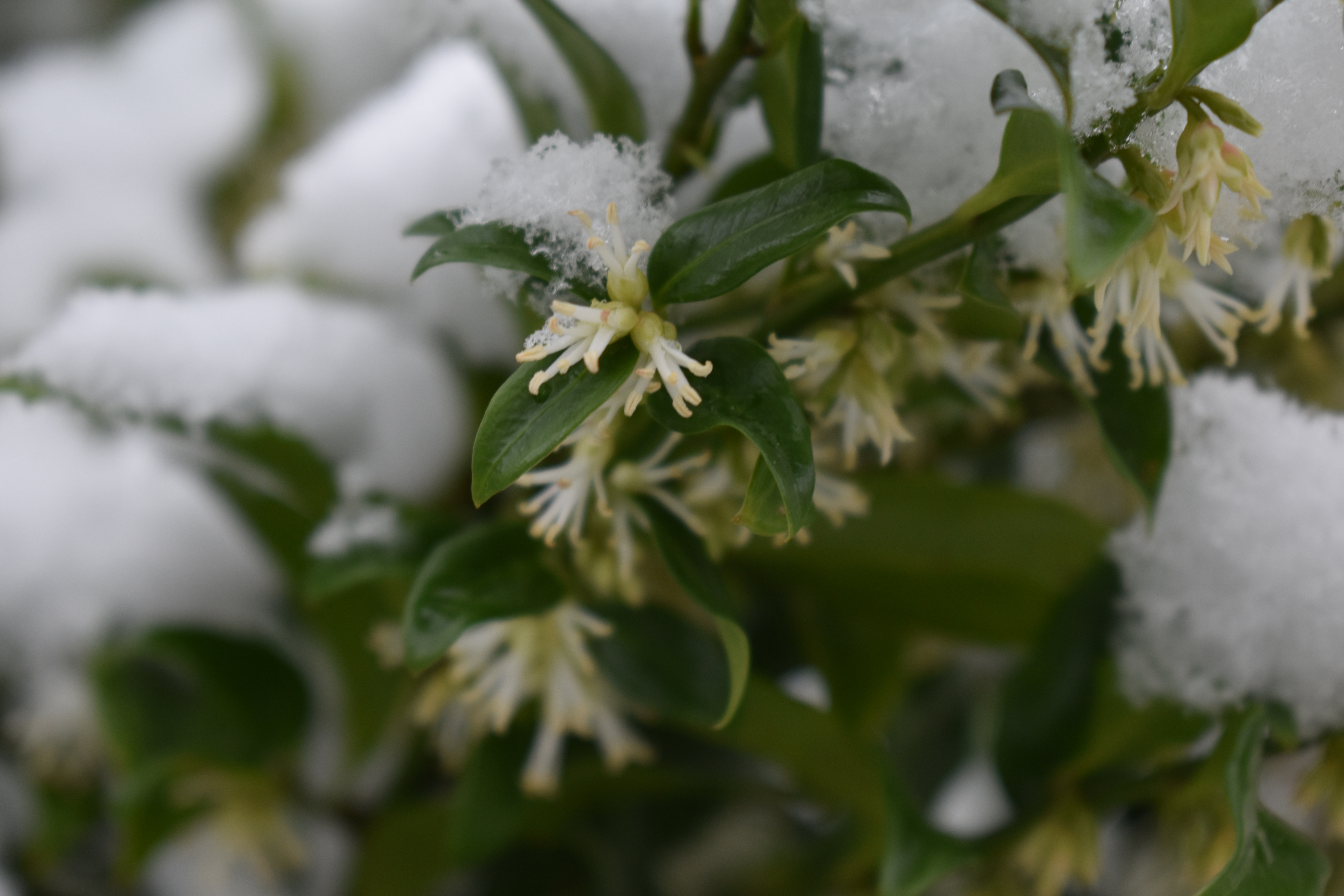
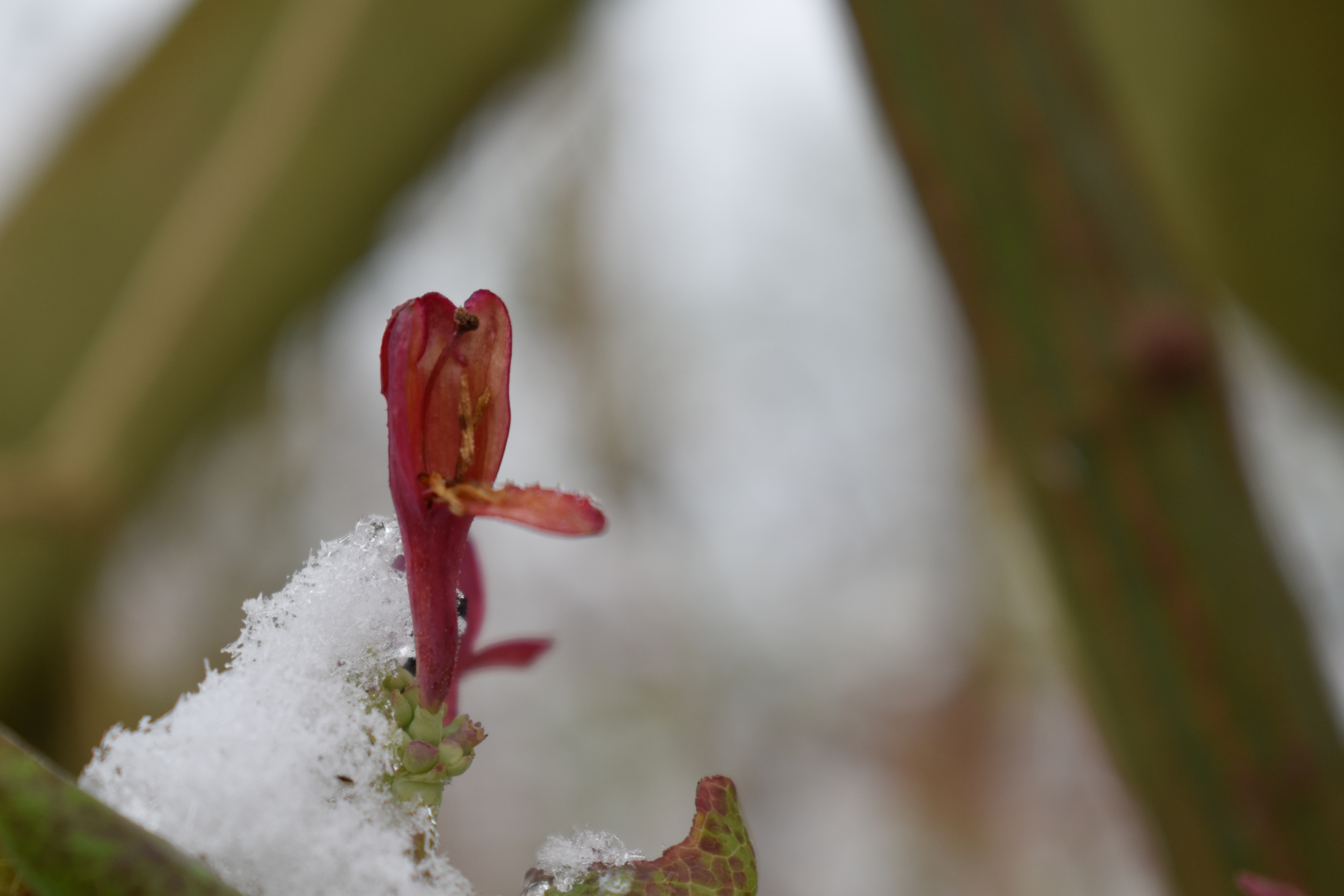
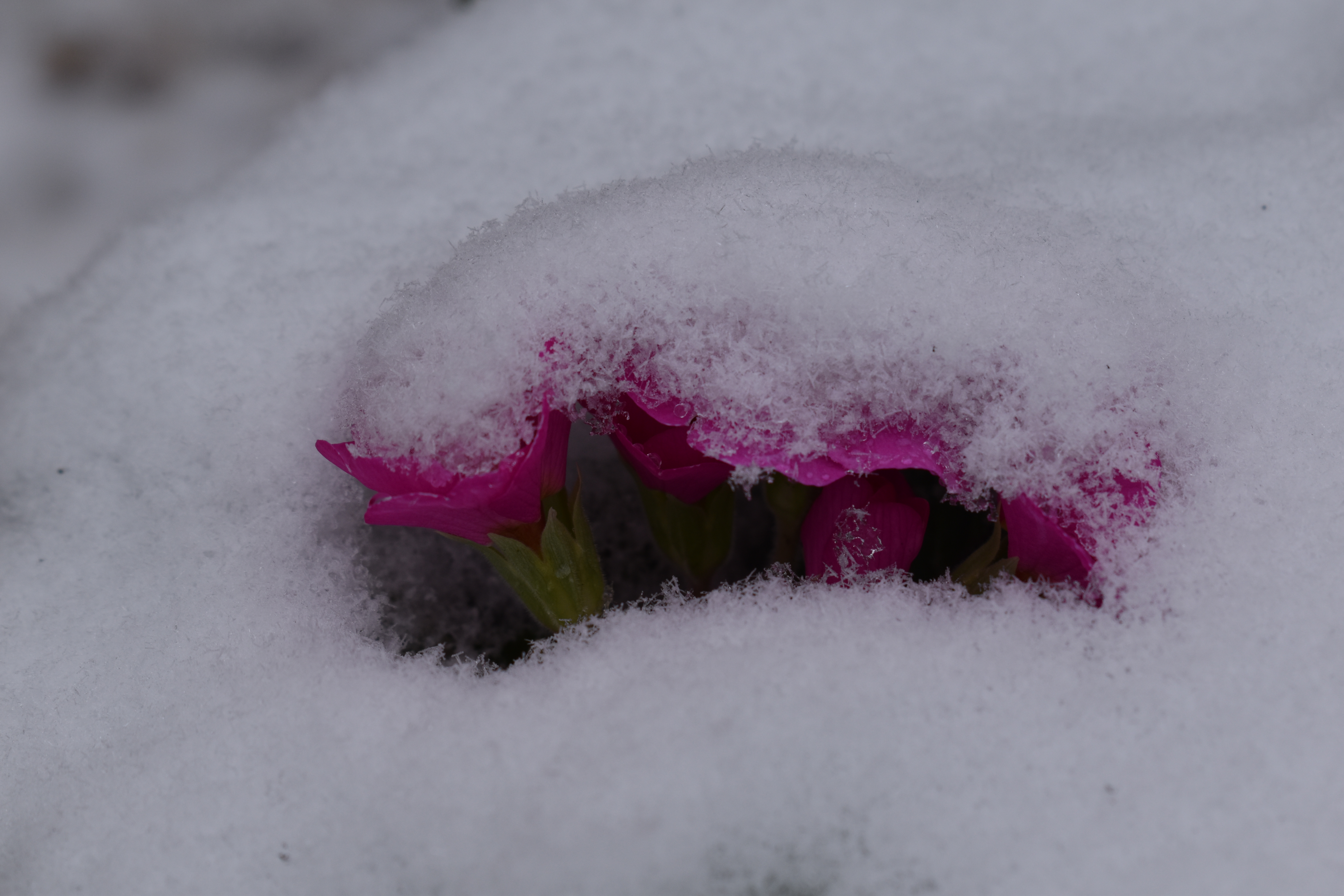
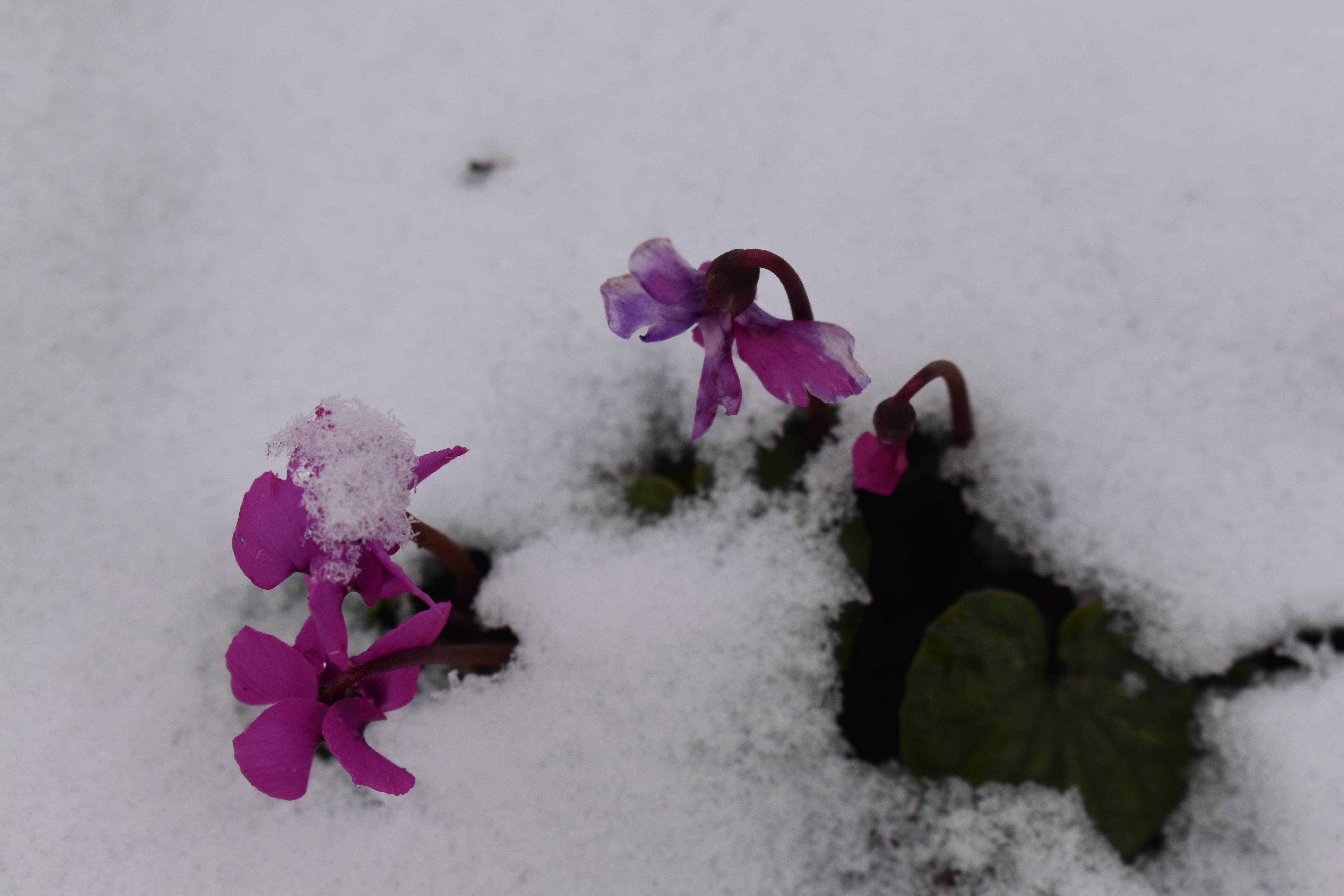
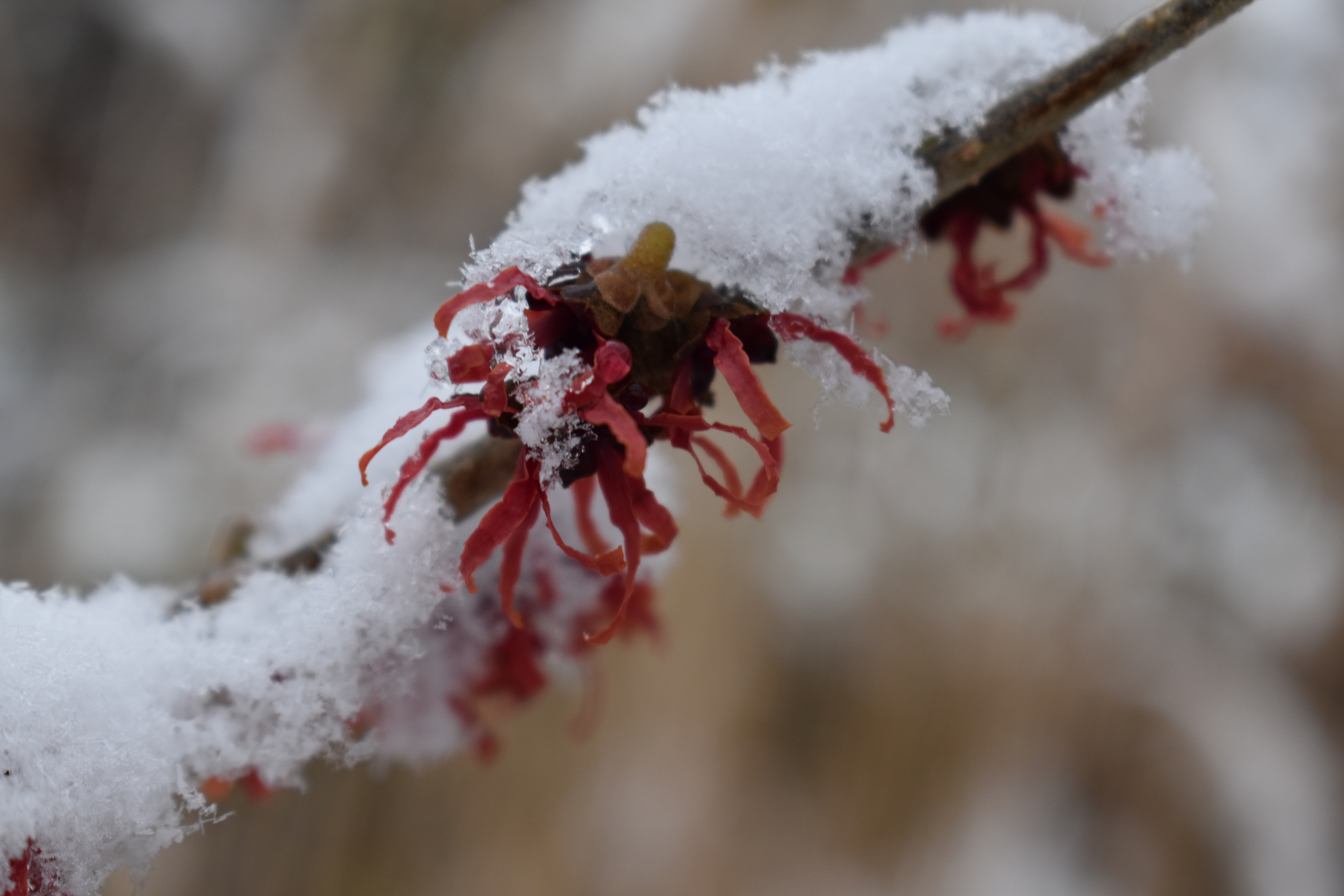
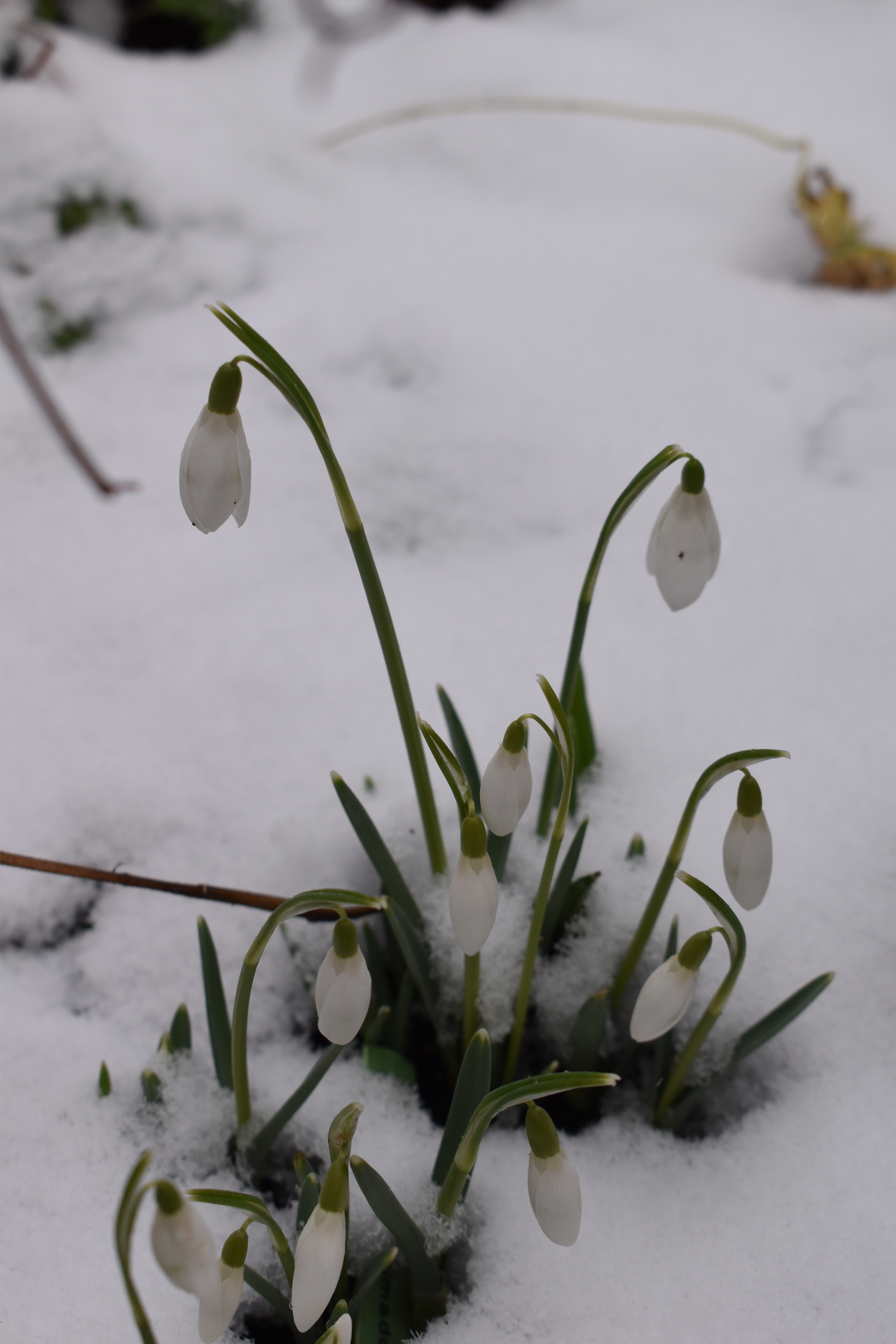
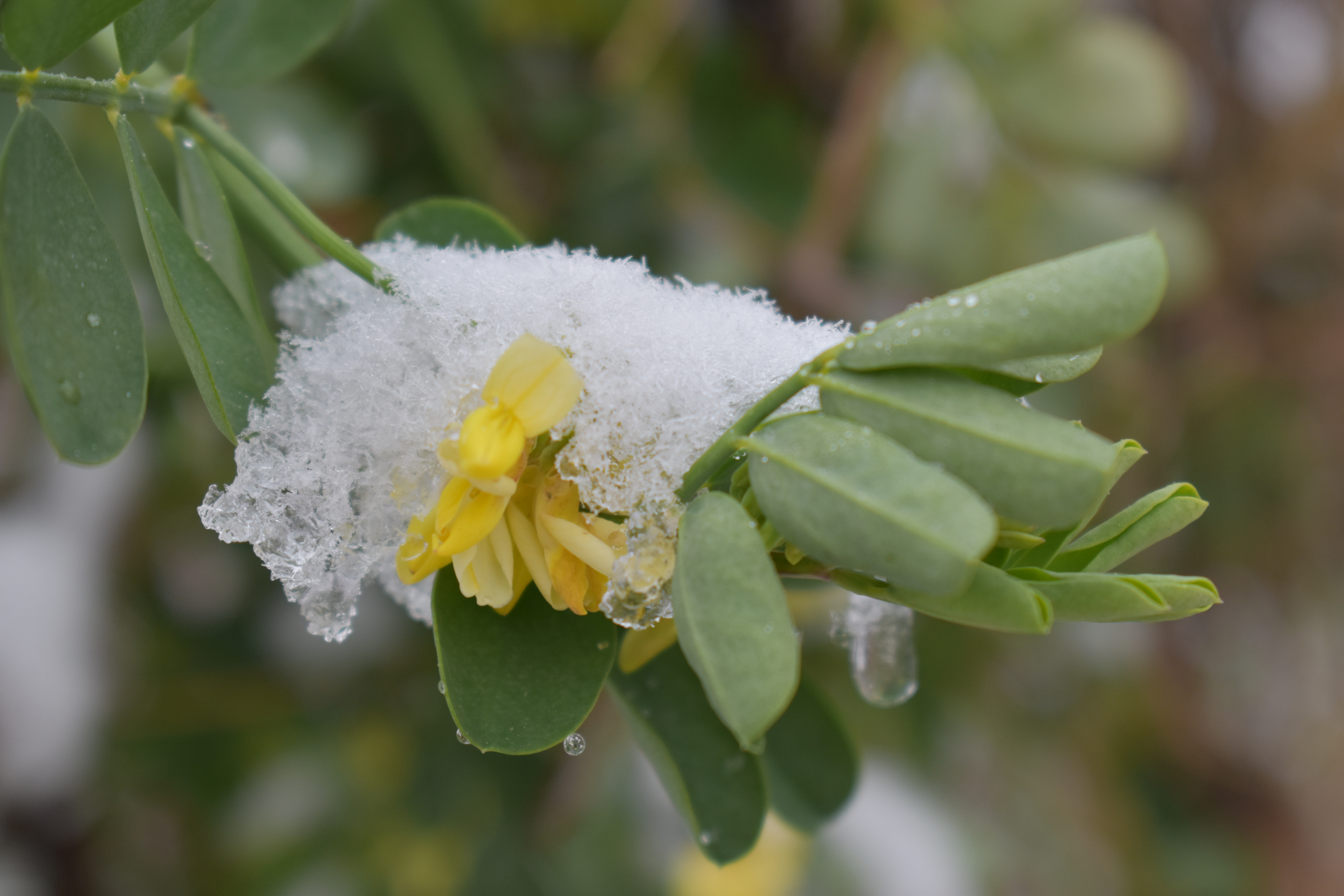
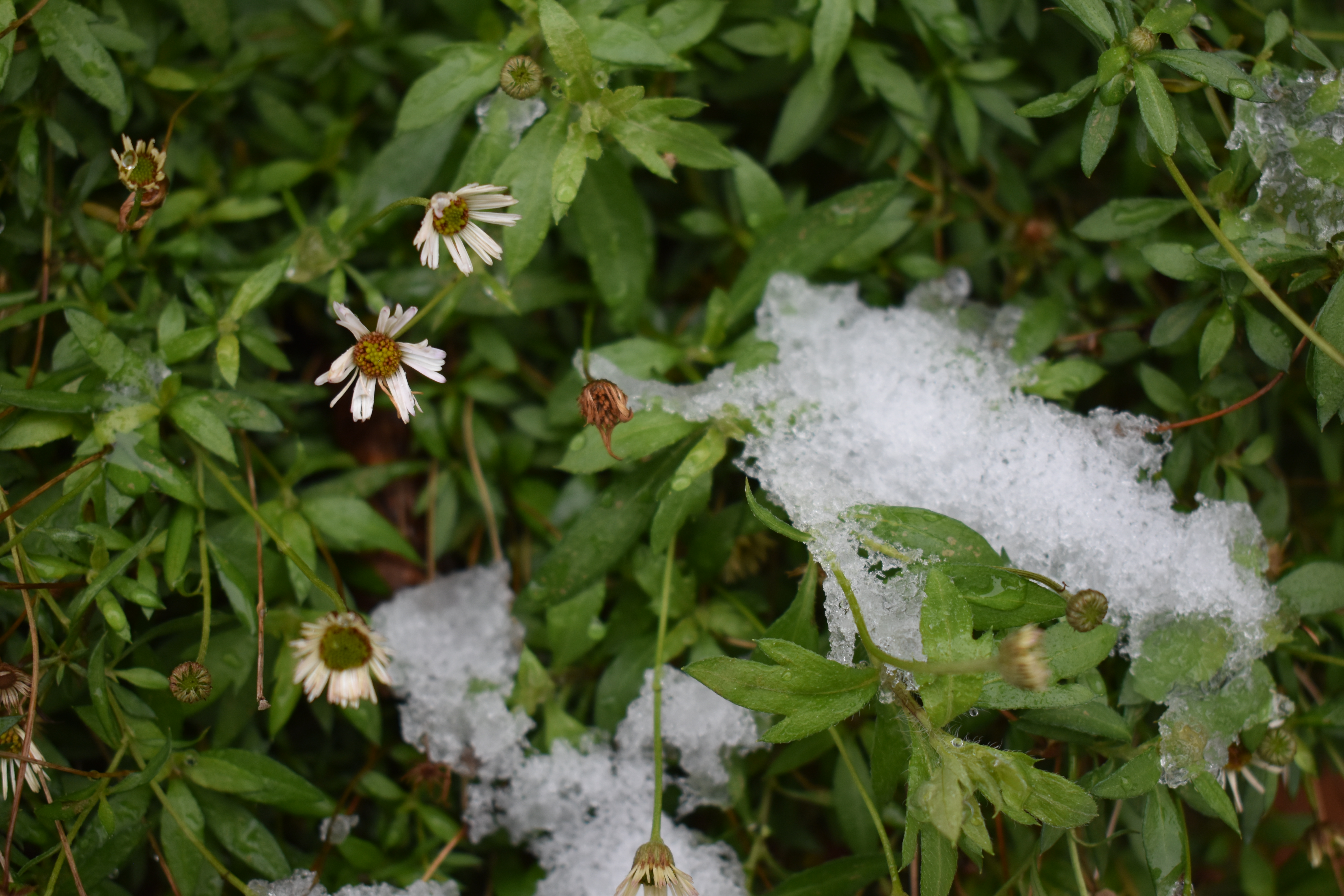
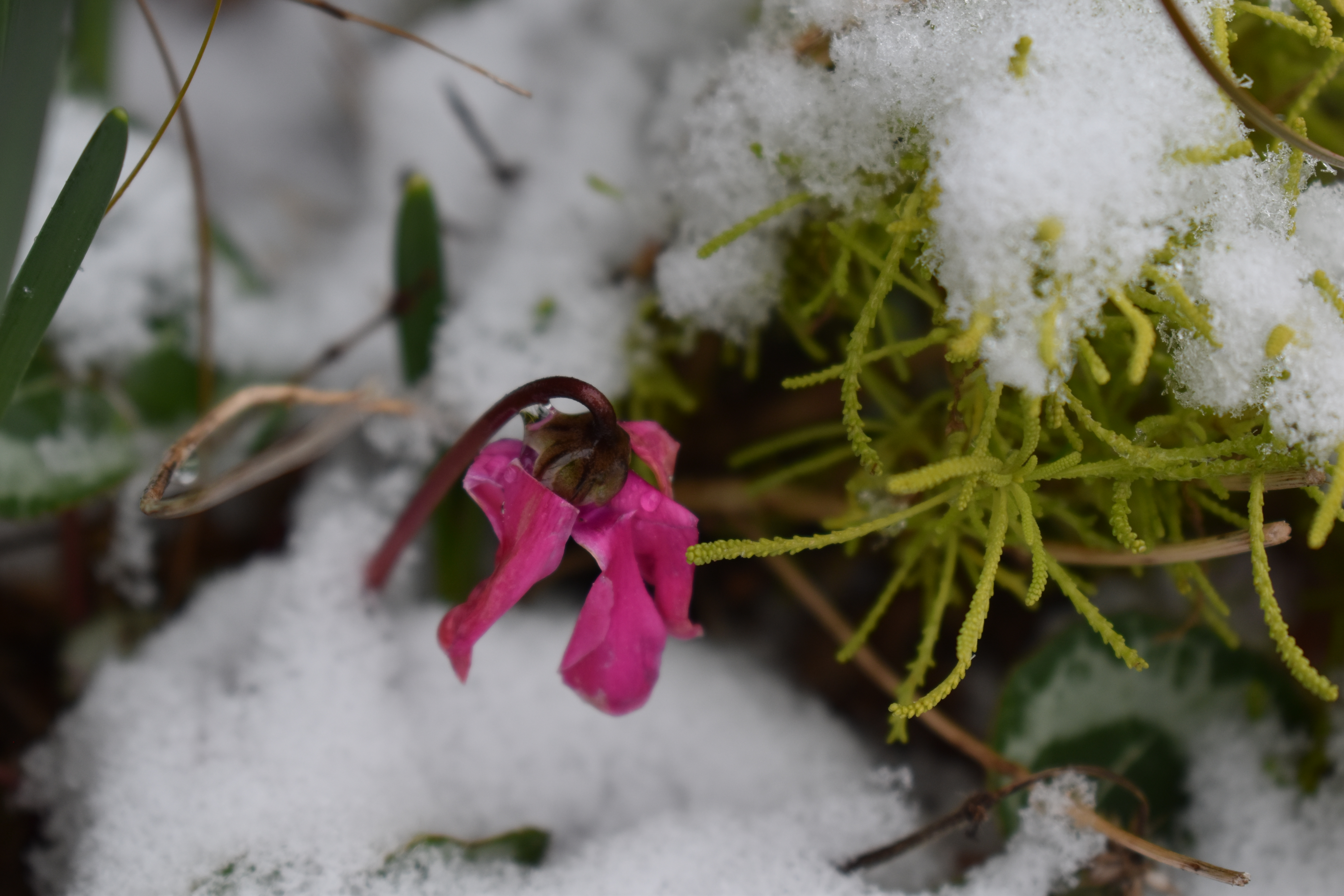
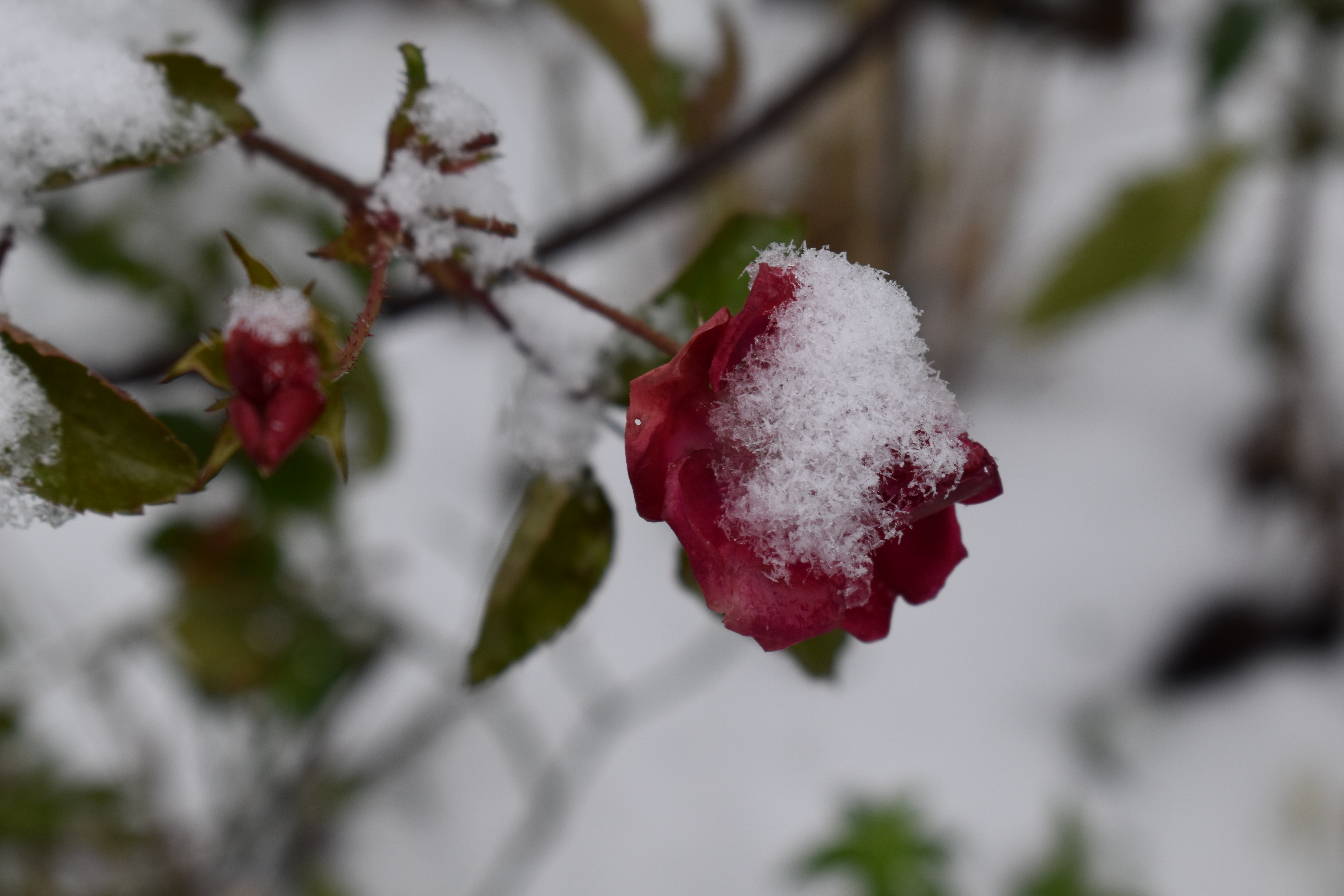
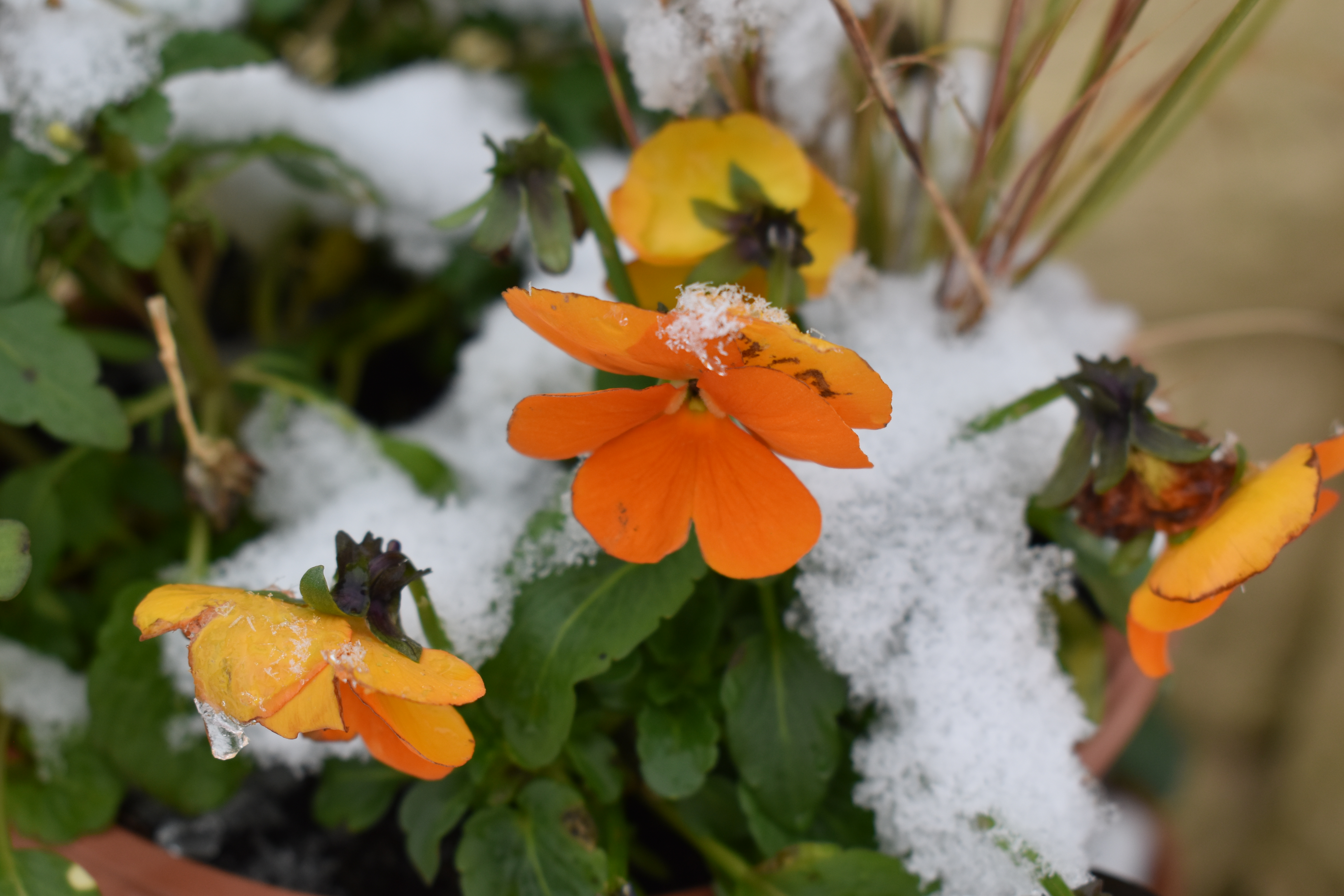
I had planned one day in late January to take a wander around our garden taking photos of flowers blossoming in our garden wether in season or not. But we awoke to an all-white garden! Mother Nature had sent us overnight snow showers to blanket our patch.
So, come with me and my camera to see what I found.
'The most important and informative publication on wildlife of our times' - The Independent. This blog is a member of The UK & Ireland Natural History Bloggers group: www.uknhb.blogspot.com
















































































 greenbenchramblings