Source: Planting for the future
Category: Uncategorized
Simply Beautiful – 11
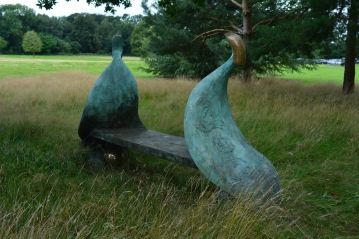
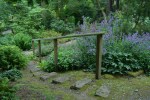
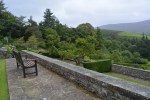
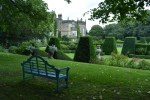
So back again with another selection of garden seats discovered on our visits and wanderings around gardens of all sizes. Every garden however small needs one seat, but every garden deserves as many seats as the design allows. Gardens are to be enjoyed, by the gardeners themselves first and foremost but also by guests and visitors.
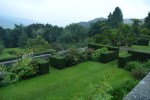
At the end of April we visited two spring gardens, The Weir near Hereford, a National Trust property, and a garden open for the Hardy Plant Society 60th Birthday celebrations.
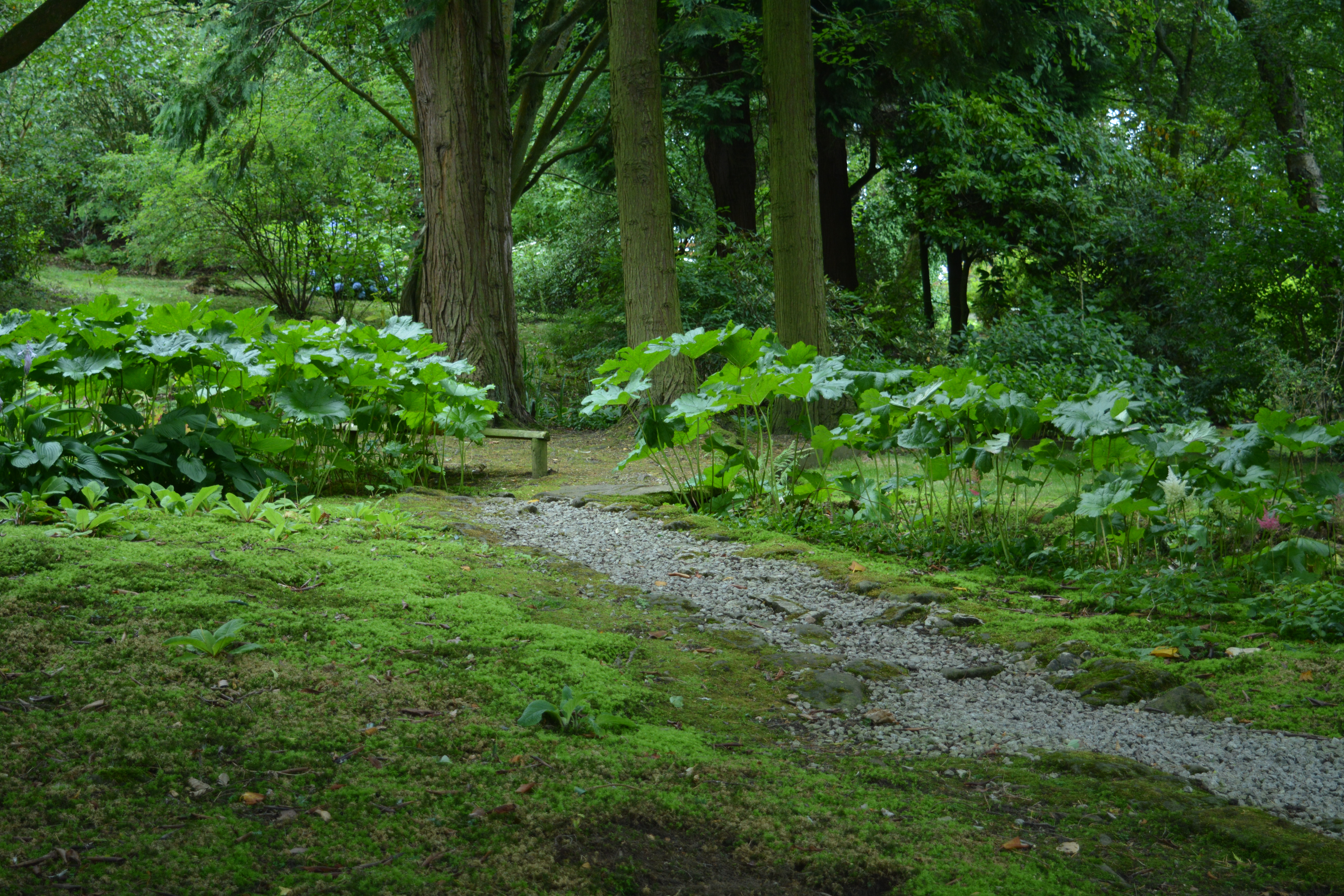
The Weir Garden is an unusual design as it runs in a valley alongside a river, with its paths following the valley side. There are so many points of interest and viewpoints but only a few seats to invite the visitor to sit and take it all in.

Conversely our second garden in Stafford was a medium-sized town garden but had seats to help appreciate the beauty of the plants and design features.
More seats to come in “Are you sitting comfortably – Part 13”. We will be on the look out as we visit gardens for more fine examples of places to relax, sit down and enjoy the views.
Starlings under the Pier
Aberwyswyth on the mid Welsh-coast is a seaside resort and a very traditional small seaside town, with promenade, castle, Georgian hotels all along the sea front and a pier pointing out to sea.
This pier is there for the entertainment of holiday-makers and day-trippers alike but many of these human visitors do not realise that many more starlings visit early each evening that humans during the day.
As light falls tens of thousands of these black glossy birds put on a great aerial display, a show in the sky above the waves, an extravaganza! A murmuration no less – one of the wonders of the natural world far superior to anything man can create.
We do love to be beside the seaside and love the surprises it gives us! When we visited Burnham-on-Sea we were in for a real treat, a big colourful surprise which took us totally by surprise. It was a lighthouse on the beach but not only that, it was wooden lighthouse!
We knew one existed somewhere as we remember seeing it on a BBC series called “Coast” but didn’t realise it was at Burnham until we spotted it in the distance as we were taking in the sea air promenading aimlessly along the soft sandy beach. We walked towards it seeing more detail as we got closer.
The first picture shows the point at which we stopped to decide if we could get to it and back again in the time we had and of course before the tide slowly returned to maroon the lighthouse back at sea. The second picture shows me photographing the lighthouse just as we reached a point close enough to fully appreciate its strange beauty.
The third photo records the moment that the lighthouse filled the viewfinder.

When we got close enough to touch the wooden boards of the lighthouse we looked upwards and then realised how tall it actually was and how bright the red and white clapboards were glaring in the sun and against the deep blue of the October sky.

Its reflections in the saltwater pool beneath it were crisp and sharply outlined.

To enjoy our visit to see the crazy lighthouse please enjoy my gallery of illustrating our amble across the sands. As usual click on the first photo and then navigate using the arrows.
I hope you enjoyed sharing our discovery of the lovely eccentric construction on the beach. We love being at the seaside, wandering beaches or discovering the character of shoreland towns. Surprises like this lighthouse add to the experience.
Kinny’s Patch
Kinny’s Patch – a few acres of valley on the English and Welsh border – is a very special place where wildlife shares its home with a little collection of domestic animals. Kinny has been a friend of Jude, the Undergardener, since their early childhood, a long special friendship. They went to infant school together and followed education experiences right through to the end of teacher training college.
We see a lot of Kinny meeting up about once a month with a small group of special college friends for coffees, meals and catch up times. In February we all met up at Kinny’s bungalow for coffee and cake, enjoyed a meal at her local hostelry and then went off to meet her animal friends who lived a short way away.
We were greeted by the chickens, loudly and enthusiastically, with the cockerels particularly tuneful. Overhead Buzzards mewed and soared gracefully and the calls of songbirds was all around.
Our presence was soon spotted by the flock of Alpacas across the field. They were not really interested in us but the food we had with us. They were a multitude of colours and sported a fine variety of hair styles.
One was very aloof and turned its back on us as it wandered away to a safe distance.

The last animals in Kinny’s menagerie were a couple of horses, both quite elderly and rationed the time they wanted to be stroked. A fine end to our day out on the Welsh border.
Imagine my surprise when checking back through my list of posts to find my Garden Journal for November still waiting to be posted. It nearly got away but here it is. Better late than never! Imagine we are back in the autumn!
This will be the penultimate visit to my 2016 Garden Journal as we look at what November has in store for our Avocet patch.
Colour launches my November pages with a double page spread of rich colours with the words, “Autumn has crept in further as November arrives and the garden is starting a new chapter where foliage colours dominate and individual plants become the focus of our attention rather than whole borders of blooms.”
I move on to share our purchase of three new trees for our patch, an oak and two birches, all trees that we have been seeking out for several years. The oak is good for a small garden like ours because it has a columnar habit of growth growing tall but very slim. It is Quercus palustris “Green Pillar” which hides the fact that its main reason for growing it is for its bright red autumn leaves. I wrote, “Three new trees have been planted at Avocet. Tree planting is such a satisfying experience as is choosing and collecting your selection. So a journey down to the best tree nursery near us, The Dingle at Welshpool, saw us returning home with 3 specimen trees neatly tied up and fitted, threaded in fact, into our car. We sat with three of our favourite trees surrounding us, embracing us with the scents of Autumn. We chatted excitedly of the emotions of tree planting, the positive messages and the future joy these trees will give us.
Quercus palustris “Green Pillar”is an upright growing, narrow oak and is a relatively new introduction. The deepest red leaves imaginable hold on through the Autumn and odd batches of foliage remain on the columnar tree into the Winter. To add further magic, the foliage is highly glossed almost like Japanese lacquer.”
I chose three leaves to paint in watercolours and fibre tipped pens trying to capture the texture and colour variations.
My next double page spread featured our other 2 new trees and I started by writing, “Anyone who knows us as gardeners will have guessed that the other two new trees are our favourite Betulas, B. nigra “Heritage” and B. “Hergest”. Both of these Birches should be the same dimensions reaching 16 feet tall by 6 feet wide after 10 years. We have planted them either side of a covered bench in the front garden. “Hergest” is a Birch we have been longing to plant in our patch because of its wonderful bark texture and colour. It is in the “albosinensis” family of Betulas described by tree
specialist Frank Matthews a rare and beautiful tree possibly a cross between B. albosinensis and B.ermanii. We look forward to the bark turning light copper-brown and glossy. Another reason we love it is because it orginates from a local, favourite garden, Hergest Croft. We chose B. nigra “Heritage”, a variety of River Birch, because of its peeling bark of cinnamon, pink, purple and gold. These Betulas will add so much to our garden.”
“Betula albosinensis “Septentronalis” (first 3 pics top row) and Betula utilis jacquemontii “Snow Queen” (bottom row) with the odd photo of our immature B. albosinsensis “Chinese Ruby” awaiting a colourful future.”
Moments of delight come next in my journal for November, “Autumn in the garden is he time and place for special moments, seen once and never repeated. Cobwebs, droplets of dew and a beam of sunlight catching colours. November moments!” I would like to share seven photos of some of our special moments in our garden.
“Often our moments of delight are light shows starring grasses, their movement, their filigree seed heads and their biscuit and ginger hues.”
Turning over the page we encounter a page looking back at early tree planting and I checked out how one favourite is doing now 13 years on.

I reported, “Looking back into the early November pages of my first Avocet Garden Journal, I notice that back then we were celebrating Autumn by planting trees. “Tree hunting at Harley Nursery, saw us ordering 16 trees. Should give us structure, a top plant storey and the colours of leaves, flowers and berries.” Later in the month I continued, “Three Betula utilis jacquemontii “Snow Queen” and a single Liquidamber styracifolia “Worplesdon” were planted along the road side border to begin the required woodland feel. In the Winter Garden we planted a snake barked maple, Acer rupestris.” We had intended to choose between the more usual snakebark maples, Acer greggii and A. davidii, but our friend Duncan who owned the nursery promised to find us a much better one, A. rupestris. This he did and it has proved to be the right choice. It is a true 12 month tree and a visitors’ favourite.”
My photos show some of its attributes including the bark which varies in colour and texture up the trunk.
In my October journal I featured the tiny flowered Fuchsia minimiflora and promised to look at two other Fuchsias this month, so I began by stating, “Unlike F.minimiflora these two have long thin flowers and colourful foliage. They are so similar that we are not sure if they are identical but sold under different names. One we bought as F. thalia, the other was a thank you gift from friends and its label gives its name as Fuschia x hybrida “Koralle”.
A strange creation makes an appearance next, a phenomena we have never seen before anywhere. A sculpture created in grass by the wind! “We grow the delicate grass, Stipa tenuissima , or Pony Tail Grass, on our green roof. The flowering stems grow to 15 to 18 inches long and move in the slightest breeze. Passing the roof and looking up I noticed this strange knot which the wind had created by spinning a few flowering stems together. It hung still attached to the plant presenting an amazing silhouette against the blue sky.” I captioned my photos of it “garden magic”.
The colour red is the theme of the next section in my November journal. I noticed how powerful this colour looked in the garden at this time of year so took my trusty Nikon out for a walk.
“Red is such an important colour in the November garden. In life red relates to many different emotions from love and passion at the one pole to danger and anger at the other. Red in the garden simply draws me to it and makes me smile. David Bowie wrote, “Put on your red shoes and dance the blues”. The garden puts on its red shoes and chases away the winter blues. Red appears in flowers, berries, leaves, stems and bark, but also on the handles of Felco secateurs and the wattles of garden hens.”
And there we have, the garden in November. My next look at my garden journal will be the final one of 2016. Where did the time go, simply flying as we enjoyed being in our special patch.
My Garden Journal in October
Here is the 10th visit to my Garden Journal 2016 as we look at what our patch has got up to in October.
Peppers feature strongly and cover the first 4 pages of this month’s entries which begins with the words, “October arrived and temperatures started falling especially in the evenings and overnight. We seem to be verging on the arrival of our first frost. In my very first journal I wrote, “October arrives and brings Autumn. The first ground frost and the final crop of sweet and hot chillies. Best harvest ever!” This year we still have lots of peppers to harvest and enjoy and as yet no frosts.”

I took photos of the different sorts of peppers to show the varieties we are growing and then took out my water colour paints to attempt to capture their individual charms.


Soon after enjoying painting our lovely colourful peppers we harvested the chillies and prepared them for drying and freezing.

Turning over the page reveals the left page showing off a few of our Persicaria amplexicaulis collection and the right a page of juicy sweet fruits. Persicaria amlexicaulis is one of my favourite herbaceous perennials and we have a dozen or so different ones planted throughout the garden. In my journal I describe it as “A true performer”.


P. amplexicaulis Pink Elephant. P. amplexicaulis “Blackfield”
Persicaria amplexicaulis “September Spires”
Looking at the page of fresh, sweet juicy fruits I wrote “The fruits and berries of Autumn, some for us and some for migrant and native thrushes.” I took a few of pics of just 6 of our fruit bearing plants.


Moving on from my fruit page I turn my thoughts towards two unusual plants sporting the tiniest of flowers. both of these plants draw a lot of attention when we open our gardens when visitors are totally fascinated by them and want to know what they are. The first is a Fuschia, one of only three we grow as we do not like the large flowered, over-developed cultivars most commonly grown. I wrote, “We grow very few Fuschias in our Avocet garden and those we grow are the species in preference to the more usual blousy over-blown hybrids. We both find them far too fussy for our gentle garden.”

I then turned to my box of watercolour paints and my fine fibre-tipped pens to create my impressions of this little beauty. The Fuschia is called Fuschia minimiflora, more commonly known as F. microphlla.


After my paintings I wrote, “I shall look at 2 other of our Fuschias in my November entries as we take them in for the winter.”
The second of my featured tiny-flowered plants is very rarely sold or grown and it is known as Polygonum scoparium. Turning to the same media I studied a tiny individual flower and a section of the stem.


Of this unusual little plant, I wrote, “Polygonum scoparium is the plant with the smallest flowers imaginable. The plant shows its tiny flowers for months during the summer and well into the autumn. Each flower is no more than a few millimetres across, borne every few inches up the whole length of its deep green wiry stems, and the blooms are scented. We were surprised after 4 years of growing and enjoying this unusual and very special little plant, about 2 feet tall, to discover that it is classified as a shrub. It appears to have no leaves but early in the year tiny leaves a few millimetres long appear up the stem. These disappear during early summer to be replaced by a deep brown band fading to yellow above. What a special plant! We love it! Close up these minute little flowers reveal such beauty with bright centres and pale green on each petal.”
Next I returned to Sedum after looking at them in September and promising a return. I wrote, “I celebrated the Sedum family in September and looked at the many variations in the shades of pink and red found in the heads of tiny flowers. So for this month I want to look at them again and see how the colours have deepened and become more dramatic.”
So turning to the next double page spread in my journal I continued by looking at a yellow flower called Leontodon rigens and some white flowers with yellow centres.

About this wonderful rare yellow flowered perennial I commented, “Leontodon rigens is a most ugly, unfortunate name for such a beautiful plant. It was previously known as Microseris ringens which is just as ugly a name. It is a herbaceous alpine which flowers throughout the summer, but this year in our garden it is in flower again now. The yellow of the petals is so intense and when the autumn sunshine catches them in its front of border position hints of orange and even a little pink appear. Its foliage is in the form of a rosette and the leaves are hairy with toothed edges.”

My next page is titled “Hearts of Gold” and is all about white flowers with golden centres, about which I noted, “Have you noticed how insignificant white flowers become in the misty autumn dawn? Give them a hint of gold though and they zing!”


In contrast to yellows and whites I next turned to the deep richness of the foliage of our exotic Ricinus plants and their eccentric seed pods.

I wrote, “Ricinus is a beautifully statuesque exotic plant with interesting foliage, stem colours and crazy seed capsules like spiky pink golf balls. Sadly few gardeners give it space in their plots because of its links to poisons. We grow several varieties each year from seed and they vary greatly in leaf, stem and flower colour. We grow Ricinus “Blue Giant”, R. “New Zealand Purple”, R. carmentcita and more.”
Under the third photo I wrote the caption, “Orange glow beneath this leaf matches leaf rib colours.”
For the fourth photo I put the caption, “The orange of this Crocosmia contrast with the metallic purple leaves.”
On the opposite page I noted that “Seed pods vary as much as the flower and leaf colour.”

Moving on through my October journal entries I take another look at our Agapanthus collection which I had considered the flowers of in my September journal. This month I decided to see how that were developing from flowers towards seed pods.

I wrote, “I want now to return to our Agapanthus collection grown in our gravel garden, the Beth Chatto Border. Last month I looked at their flowers but now a month later we can observe the magical transformation from flowers to seeds.”
Across the double page spread I shared nine of my photos.
Turning over in search of the next double page and colour is the theme, the colours of Autumn, but not the usual autumnal colours.

I wrote, “The flame colours of Autumn usually refer to the changing colours of tree and shrub foliage but, red, orange and yellow add depth to the flower borders too, and even the colourful grass leaves.”
Every gardener loves checking on the weather and talking about it too! It controls what we do if it gets too wet or too cold for us to get outside and enjoy pottering. So for the final two pages I turn to the skies!

“We have wonderfully colourful skies over our garden in October. Rainbows add delight and bright hues.”
The first pair of photos show “A rainbow finds its twin.”
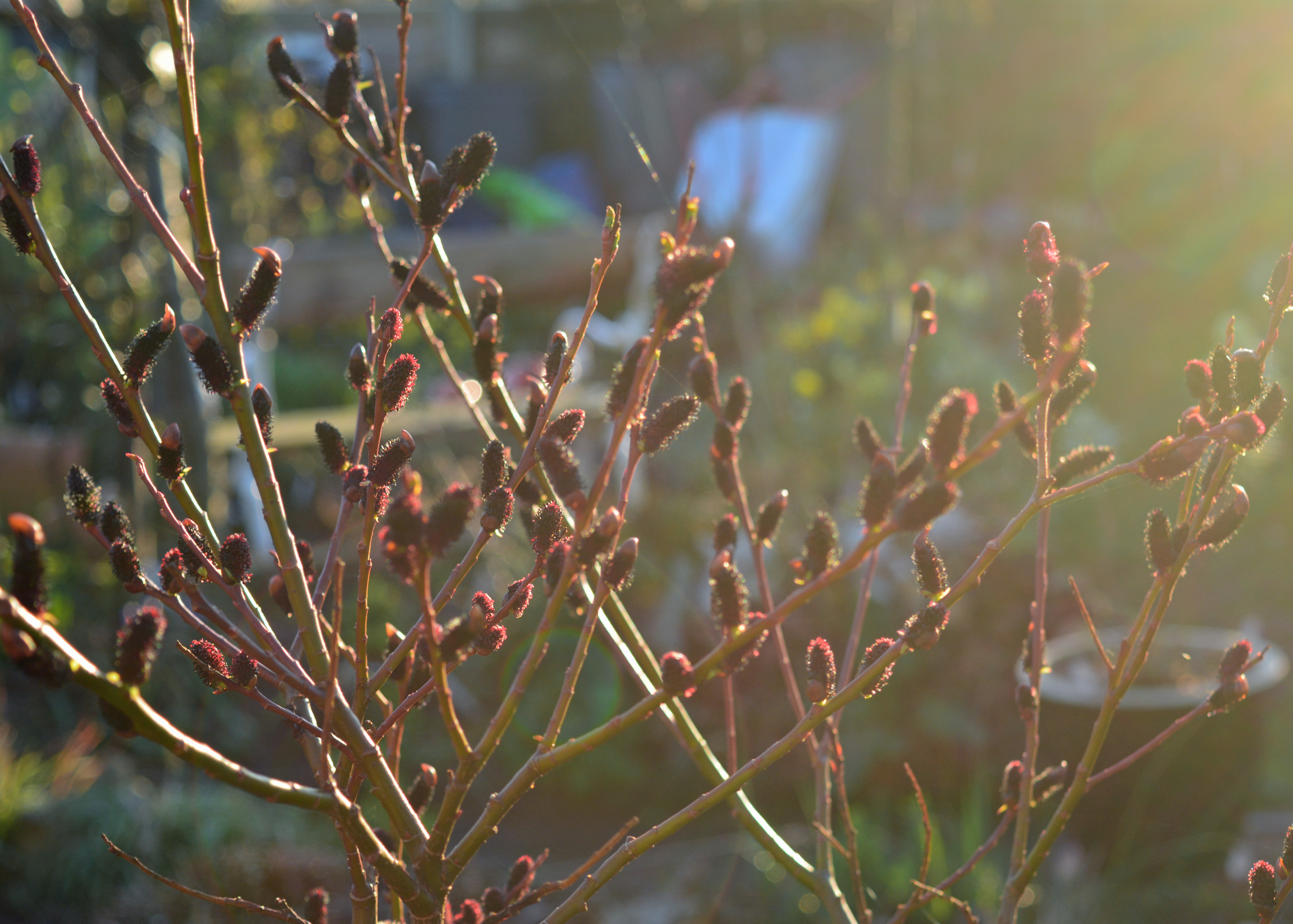
“The rainbow follows the curve of the Violet Willow.”

The last page of the October entries for my October garden journal shows five pages of the sun and light changing over the fields beyond our garden fence. I added the caption, “Light changes over our borrowed landscape as the sun lowers and a storm approaches.”
So October was a very busy month here in our patch at our home, Avocet. Next time we consider my garden journal it will be the penultimate visit to it.
Snapshot: Greenbenchramblings
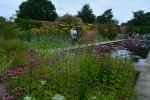
Malcolm Mollart is the author of a long-running garden blog Greenbenchramblings which is inspired by the garden he created with his wife, Jude, in the South Shropshire Hills. In June of this year, Malcom paid us a visit and took plenty of photographs whilst he was at it. We asked him to select some of his favourites, tell us about his own passion for horticulture and pick out those bits of Winterbourne which made the greatest impression.
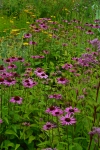
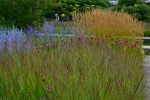
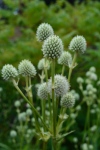
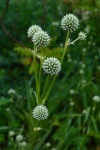
Agapanthus and Eucomis, photograph by Malcolm Mollart
“I am a 65-year-old retired head teacher, who had to retire early due to disability. I have now spent more years in retirement than working, so have had the luxury of time to develop my gardening skills and ideas. My love of gardening comes from my Father who loved his cottage style garden and was well-known locally for his roses.”
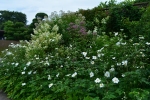
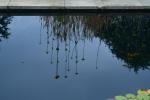
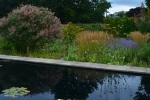
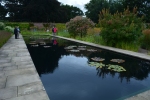
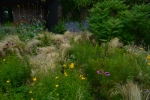
Edgbaston Pool, photograph by Malcolm Mollart
View original post 405 more words
Windy Ridge – another Yellow Book Garden
Windy Ridge is a fellow “Yellow Book Garden” in Shropshire and thus like us opens for charity under the auspices of the National Garden Scheme. The gardener owners have been opening their garden for many years more than we have and we have visited several times before. We decided the time was right for a return visit to discover how it has developed over the years. The owners/gardeners are real plantspersons with plenty of knowledge to share and impart related to both plants, garden management and design.

Windy Ridge is a garden of wandering paths, secret places, surprises around every corner but above all a garden full of plants to stop you in your tracks either because they are so well grown or very unusual.


There are quality sculptural pieces among the plants for visitors to enjoy beginning with a huge carved tree trunk at the garden entrance.
Secret pathways which lead the visitor onward and present choices are an important element of a quality garden.


In our own “Avocet” garden we enjoy raising the canopy of our trees and shrubs to expose interesting bark and trunk shapes and to let in light to allow planting beneath. At Windy Ridge this is performed to perfection and helps give the garden its character. The first photo below shows how this technique even helps Laurel, my most disliked plant! To make it work the gardener must look closely at and listen to the plant before attempting the first cut. If the gardener does this he is more likely to react to the character of each tree and shrub and give it the shaping it deserves and wants.


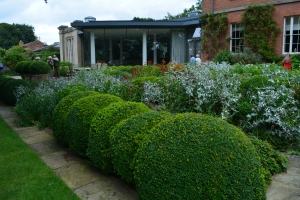
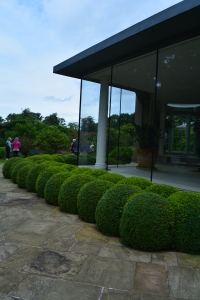
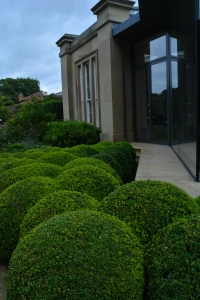
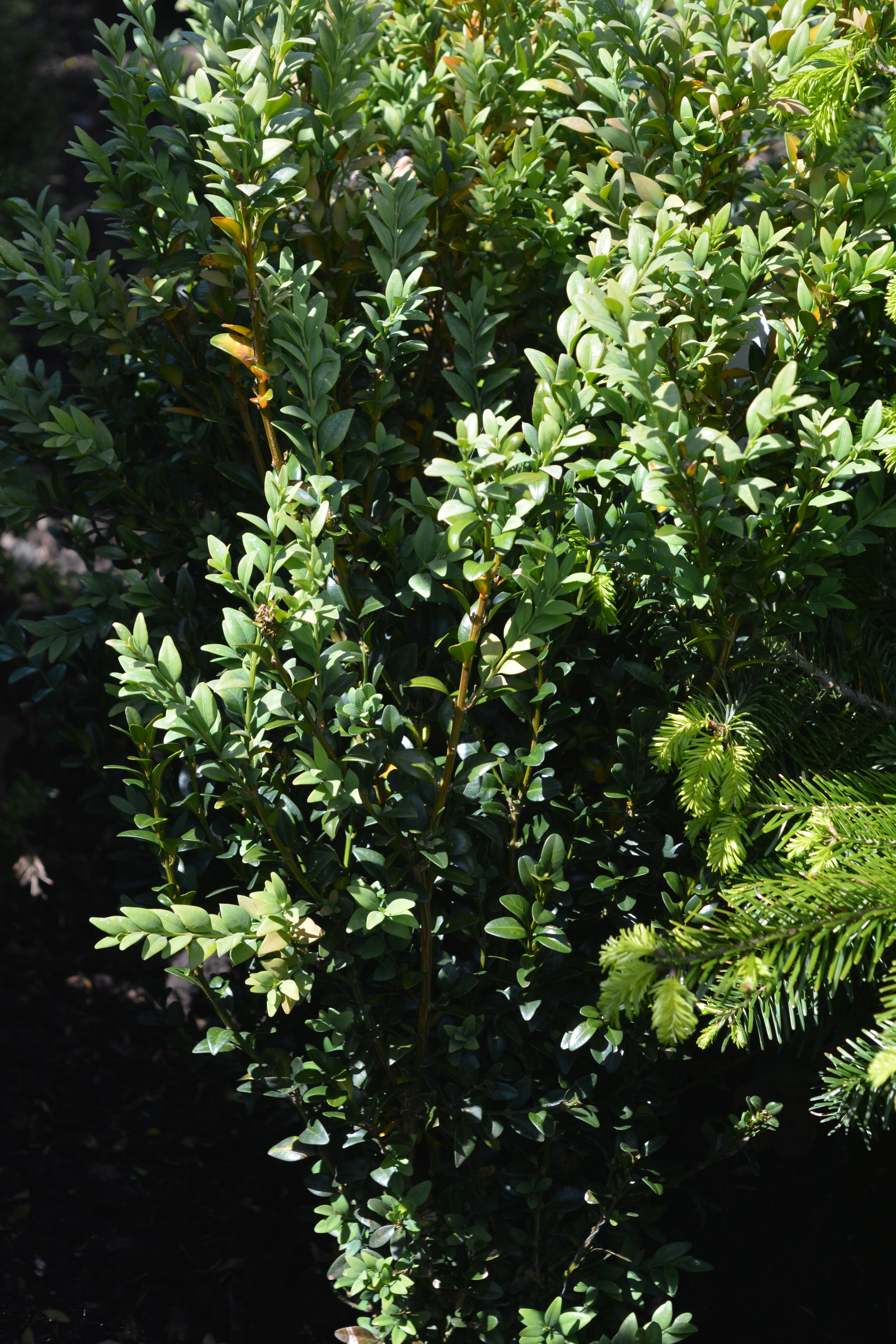
We enjoyed and admired the way that the formality of clipped box integrates so well into the softness of the planting.


Berries enhance the September garden and add even more colour to that provided by flowers. Windy Ridge had colour aplenty!
If I had to pick out one plant as my favourite at Windy Ridge it would have to be beautiful coloured and scented Clematis, C. odorata, a plant left to ramble unpruned to great effect. It is a Clematis we have been seeking for our own patch for many years so seeing and smelling it here has renewed our determination to add it to our huge clematis collection already climbing and clambering in our Avocet garden.
Hydrangeas were well in bloom when we visited and the sheer variety of colours was to be admired.
The highlight for many visitors is the large garden pond with wonderful marginal planting, a decked area with white ironwork seats and a narrow pathway behind it for the visitor to explore. We had a great afternoon returning to the garden at Windy Ridge and found it as inspiring as always. We were pleased to note that it had received an award in a national garden competition.