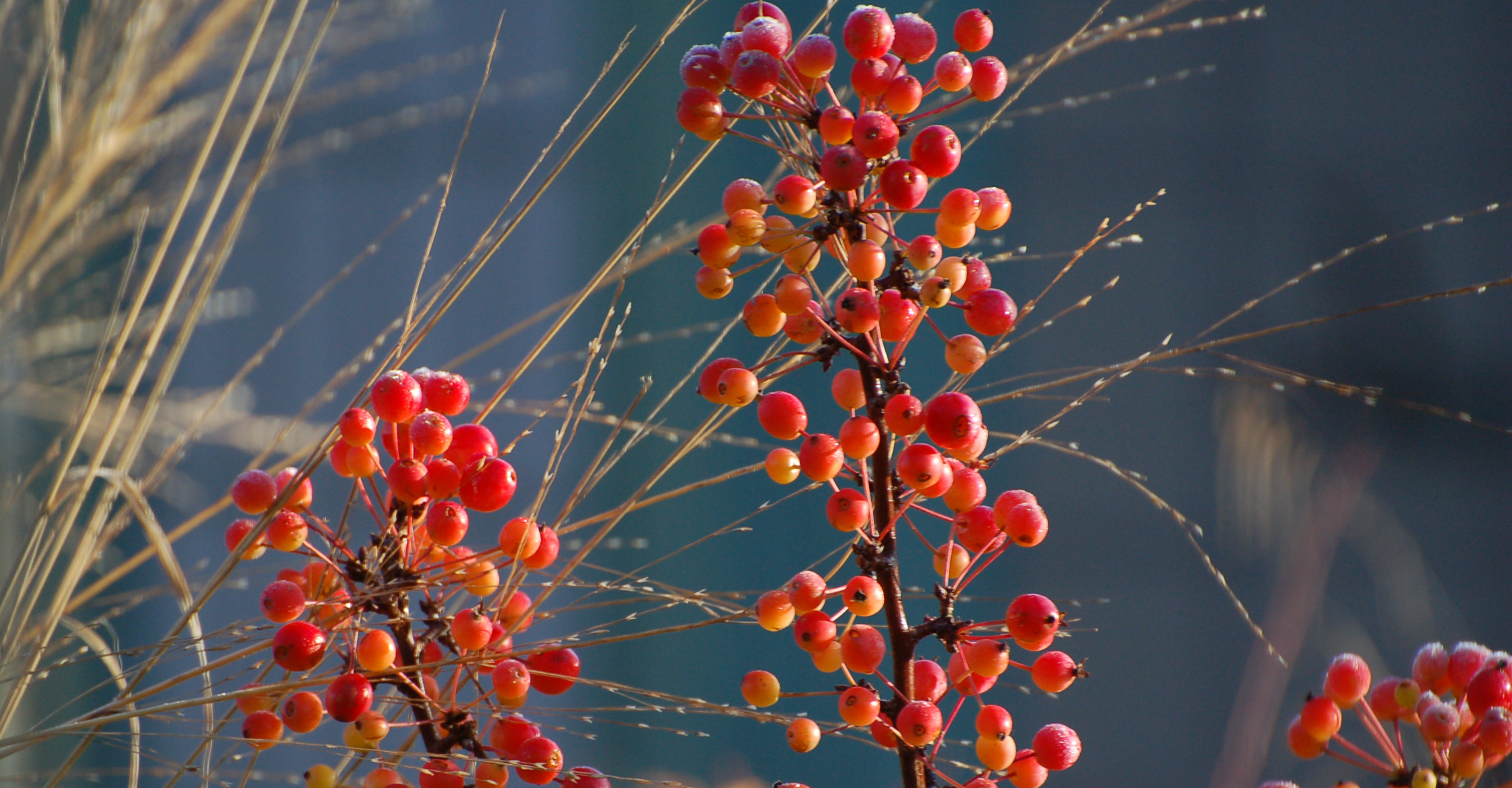
A Berry Merry Christmas,
with love from Malc and Jude
aka Mr and Mrs Greenbench aka Headgardener and Undergardener.

We always describe our garden as being wildlife friendly. But what makes it good for wildlife? What elements of our garden invite wildlife in? We are proud of the fact that we have gardened with organic principles at the front of our minds for decades. A garden cannot be regarded as wildlife friendly if the gardener is not working with these principles constantly driving what goes on.
We make deliberate decisions to attract wildlife by providing food, shelter and nesting places. Each time a plant is bought, a bed restructured or new beds made, wildlife is a factor. Equally how we manage the garden has to be friendly towards our natural friends.
But let’s be honest, we don’t do all these things just for wildlife, as there is a selfish element to it. We like being surrounded by birds, butterflies, insects et al. We need to hear, see and experience the natural history of our plot. A cup of coffee outside is all the better if accompanied by the song of birds, the movement and colour of butterflies and the constant flittering of insects.
I have recently read a wonderfully informative and thought-provoking book by John Walker entitled “How to Create an Eco Garden”, and in it he proposes the concept of “eco-fitting” your garden. This idea is all about making the garden “more self-sustaining, less wasteful of valuable resources, more reliant on renewable sources of energy and friendlier to wildlife”. This will provide a useful guide when considering the content of my blog, and it will be at the forefront of my mind as we go on a journey around our garden looking at how we make it good for wildlife.
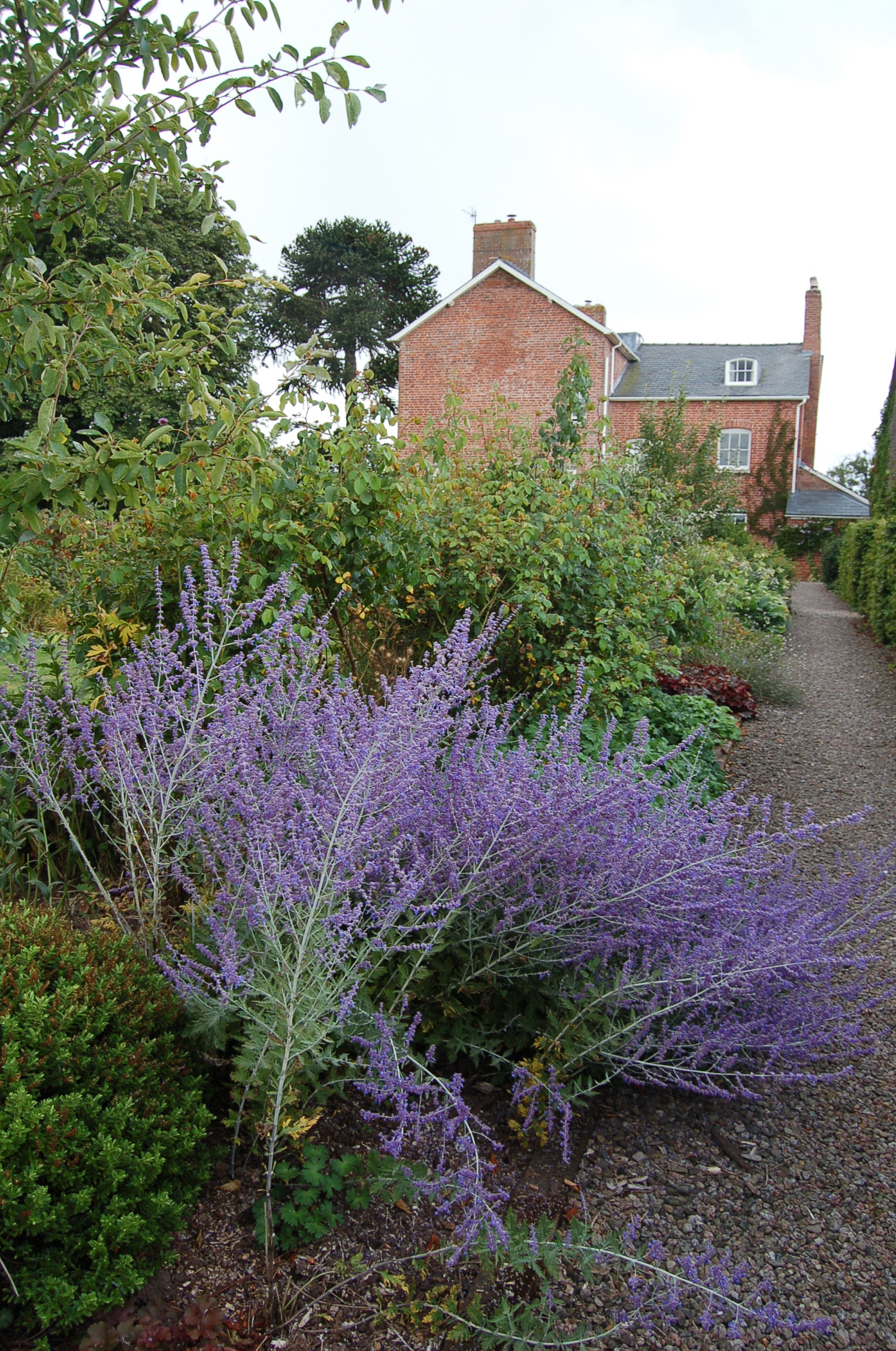
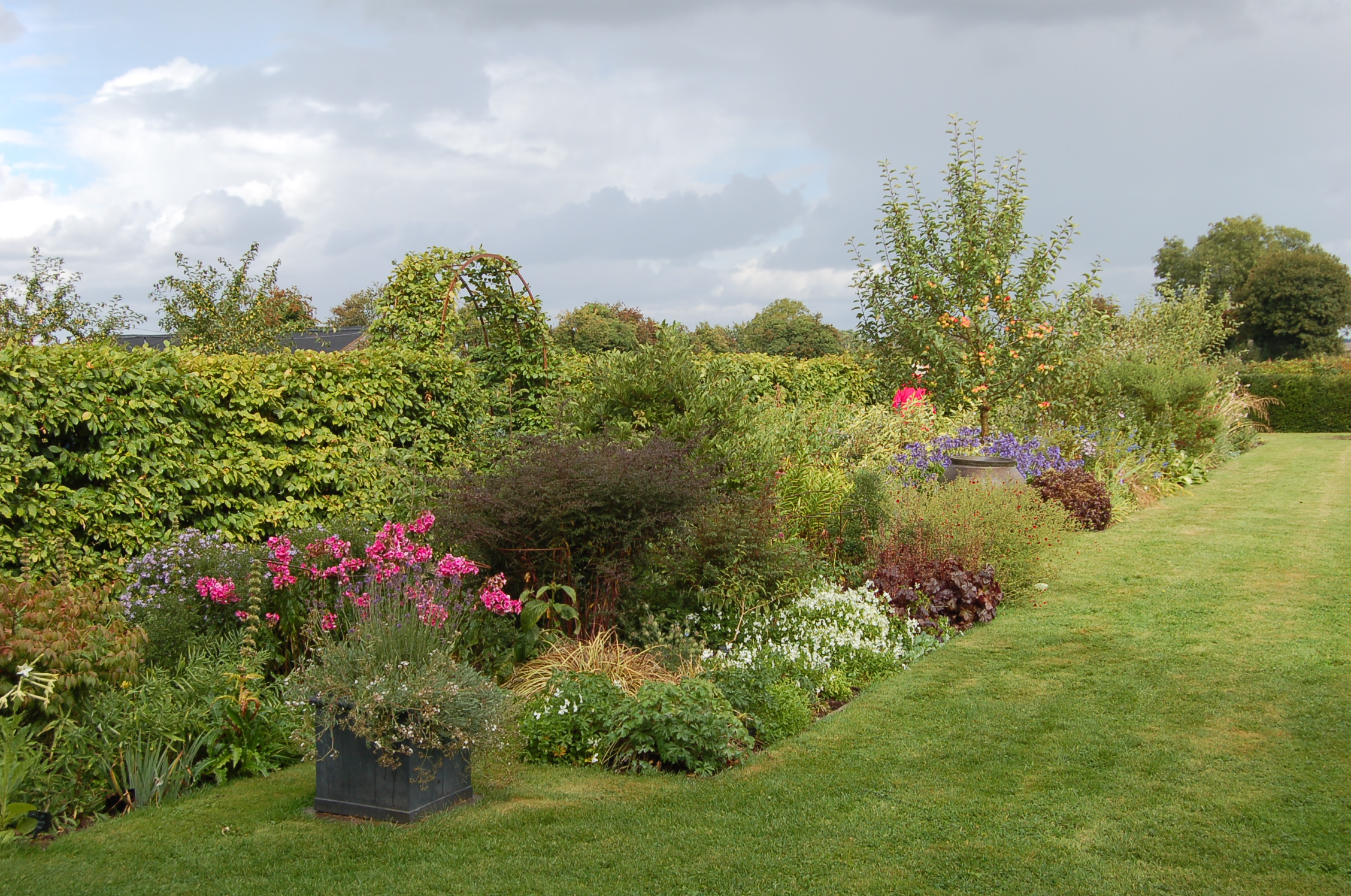
Throughout the garden, the trees and shrubs we have planted were chosen partly for their berries to feed the birds, blossom to attract pollinators and how well they give shelter, homes and nesting places.


Look into our front garden and in full view of all windows is one of our three bird feeding centres where we provide mixed seeds, peanuts, suet balls and suet blocks. The front lawn supports White Clover and Dog Violets both loved by bees. Although we cut the grass and keep it quite short these wildflowers react by flowering on shorter stems. We use no weed killers or fertilisers on our grass as we enjoy knowing that Blackbirds can safely feed there. Tawny Lawn Bees make their homes here and in the gravel patch alongside. They make miniature volcano shaped piles of fine soil as they construct their tunnels.


We have an old Oak stump around which we grow ferns and grasses. The Wrens, Robins, Warblers and Dunnock soon recognised this as a home for the insects they enjoy eating.


In our side garden opposite our main door are bird boxes for Robins, Tits and House Sparrows and an old trug was placed in a dogwood to provide a nest shelf for Blackbirds. On the shed there and the fence we grow Honeysuckles and Climbing Roses to provide shelter for wildlife and nest sites for Wrens and blackbirds. The Apple Trees growing in large terra-cotta pots are favourites of bees early in the spring, and in other large flower pots we have sown mini-meadows of wild flowers.


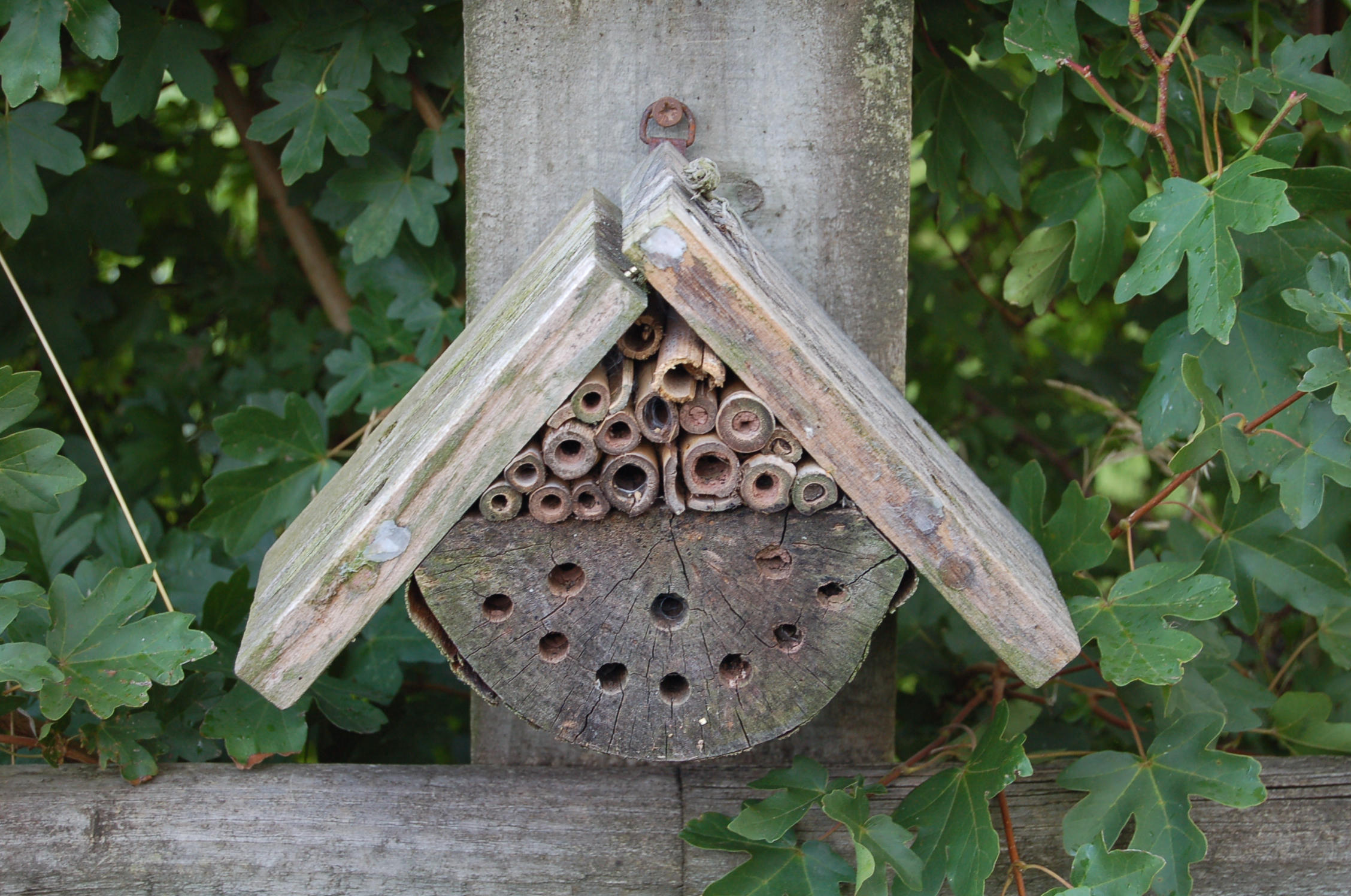
Into the back garden and immediately we spot the insect hotel, which sits in amongst our comfrey bed. The leaves of the comfrey provide us with our organic plant food and their flowers are loved by bees and hoverflies.

Nest boxes are scattered throughout the garden wherever we can find a suitable space. Most are used by members of the Titmice family or Robins. Our trained fruit trees and climbing roses are favourite nesting places. Last year a pair of Goldfinches nested in a climbing rose called Goldfinch – they must have read the label!


Throughout the borders we select plants with simple flowers, rarely doubles, and grow several native plants such as Red Campion, Cowslip, Foxglove and Cow Parsley.


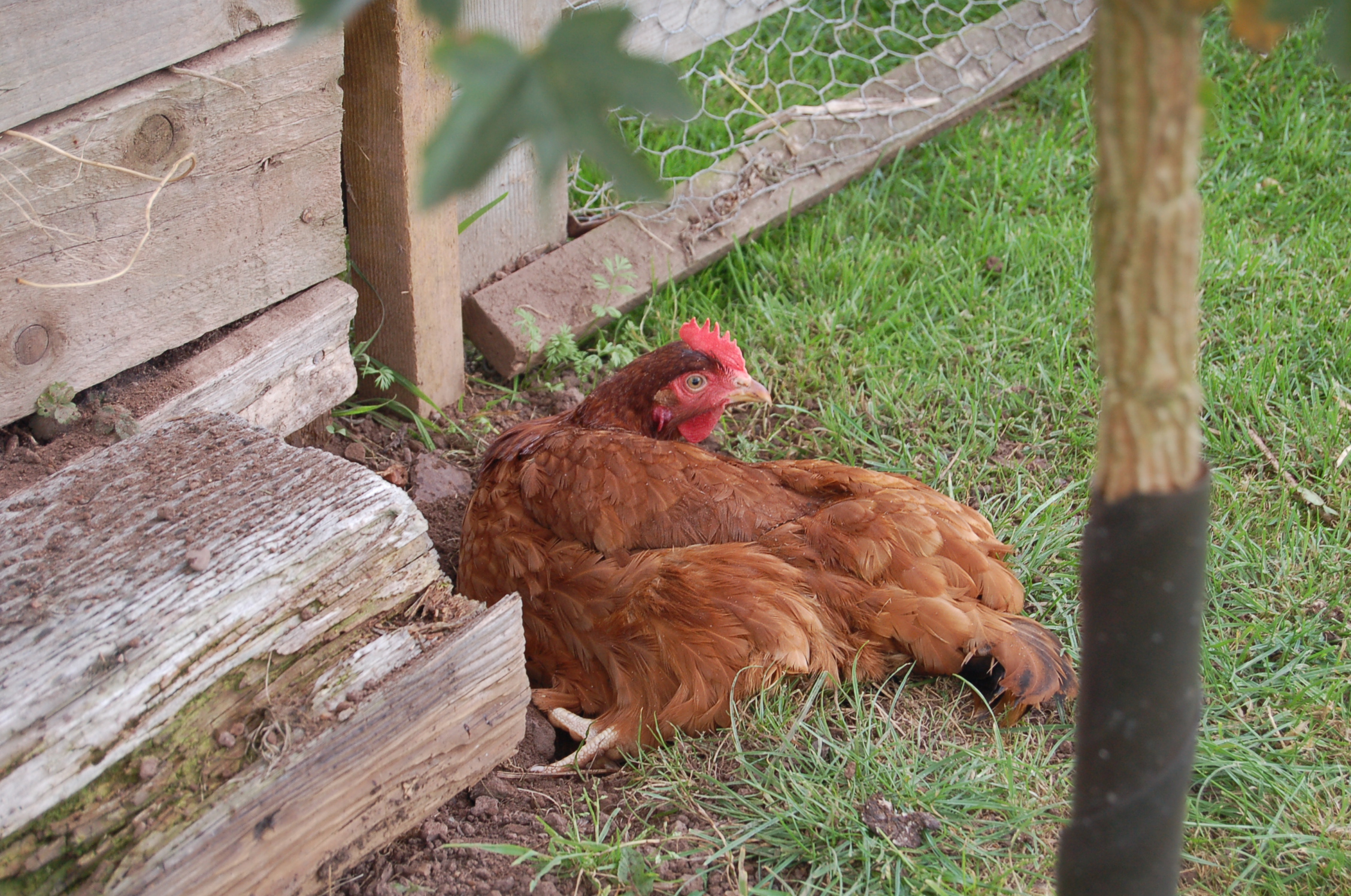
Towards the bottom of the garden is our wildlife pond all planted up with native plants, whereas the bog garden alongside is a mix of native and more exotic plants. The pool and bog are popular with our resident amphibians, toads, frogs ands newts as well as Dragonflies and Damsel Flies which breed in the pool. Birds use the shallow pebble beach area for bathing. Beneath the water live diving beetles and water boatmen, and on the surface Pond Skaters skim arouns on the surface film.

Beyond the pool and chicken run is a strip of wild grass about 6 feet wide which gives us access to the surrounding countryside. We cut this grass to attract Green Woodpeckers who come down to feed here. We grow a pair of Hazel bushes here which gives safe place to approach one of our bird feeding stations in the winter, give nuts for Jays in the autumn and every few years gives us poles to use as bean poles and brash to use as pea sticks.

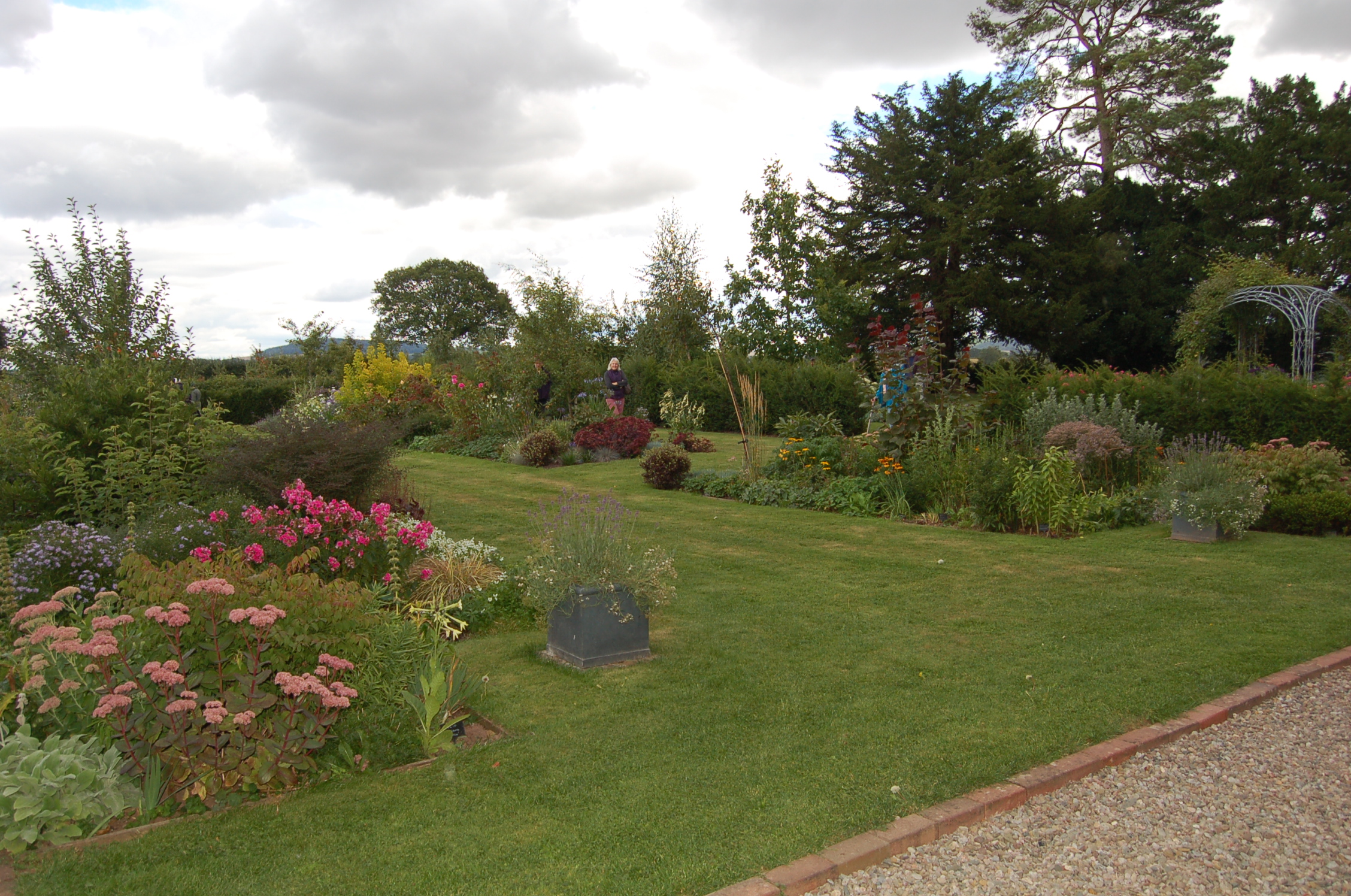
This quick wander around our garden shows some of the wildlife friendly features we enjoy. Our whole garden is a little reserve where we hope wildlife can feel welcomed and safe.
My blog reporting on “A January Wander around the Allotments” was all about the cold, as my wander then was on a bright, sunny but cold day with the thermometer registering minus five. Today my wander was a real treat, with temperatures of plus seven, it felt so mild. The sky however was grey and produced the occasional bout of drizzle. The bird life definitely appreciated the improvement, with so many to see and hear.
My walk over to our plot was halted by the whoosh of wings and the sight of a Kestrel in full hunting mode, its grey and rufus back curling low through the plots in search of its favourite prey, Field Voles. In a matter of a few minutes it had covered half the site, stopping occasionally to peer from a post or shed roof. The birdsong didn’t diminish with its presence but later when a Sparrow Hawk appeared, in threatening mode over the plots, silence reigned.
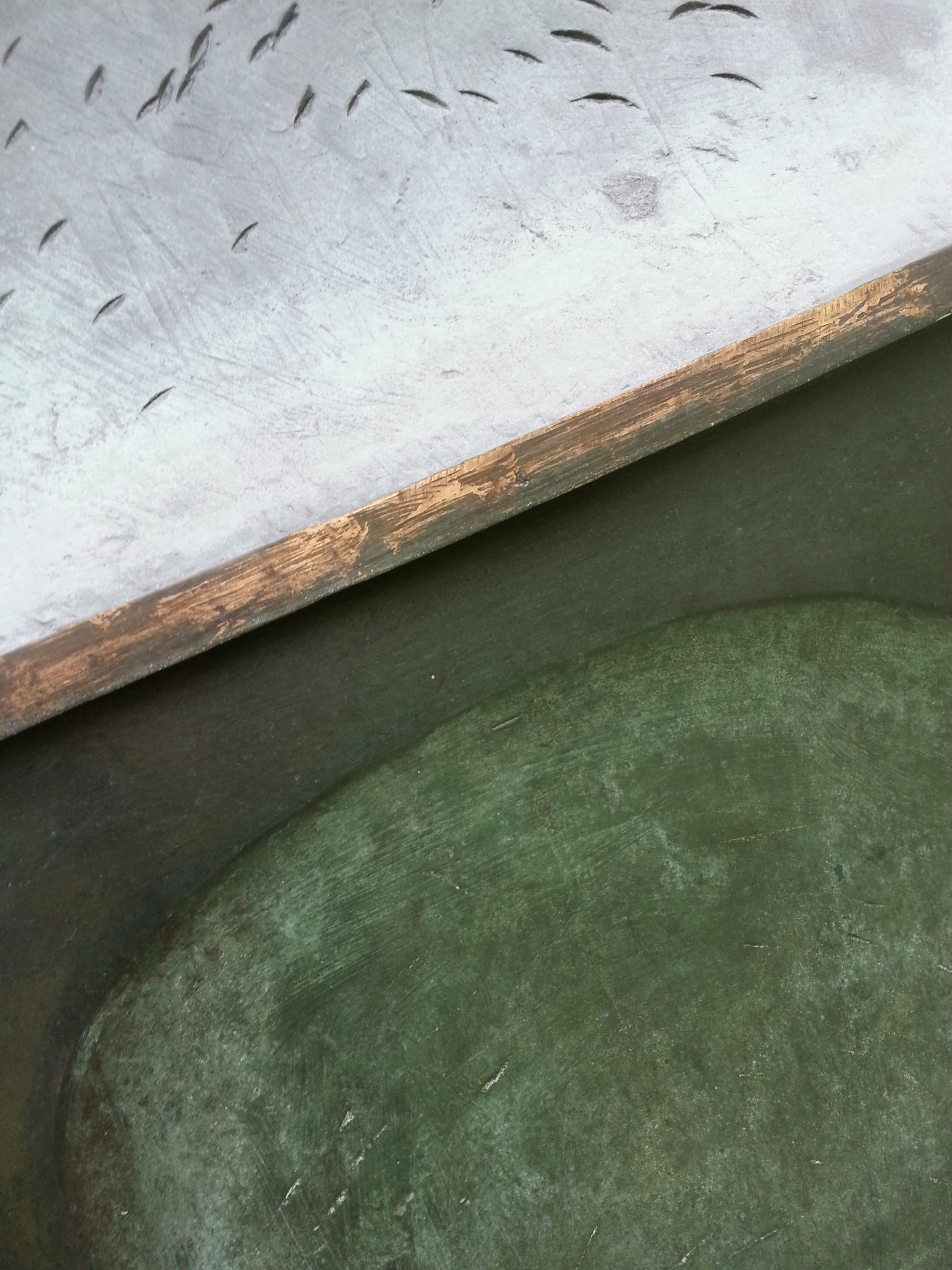
As I went to open up the shed I noticed how the recent freezing weather had shattered the little orange glazed dish I keep shells in on our coffee table, exposing the white china below its glaze.
The feeders on our plot needed topping up before I set to work. My first task was to prune the Autumn fruiting raspberries, so pulled back their hay mulch and cut each stem down to just a few inches above the ground. Then their warm mulch blanket was replaced ready for the next cold spell.
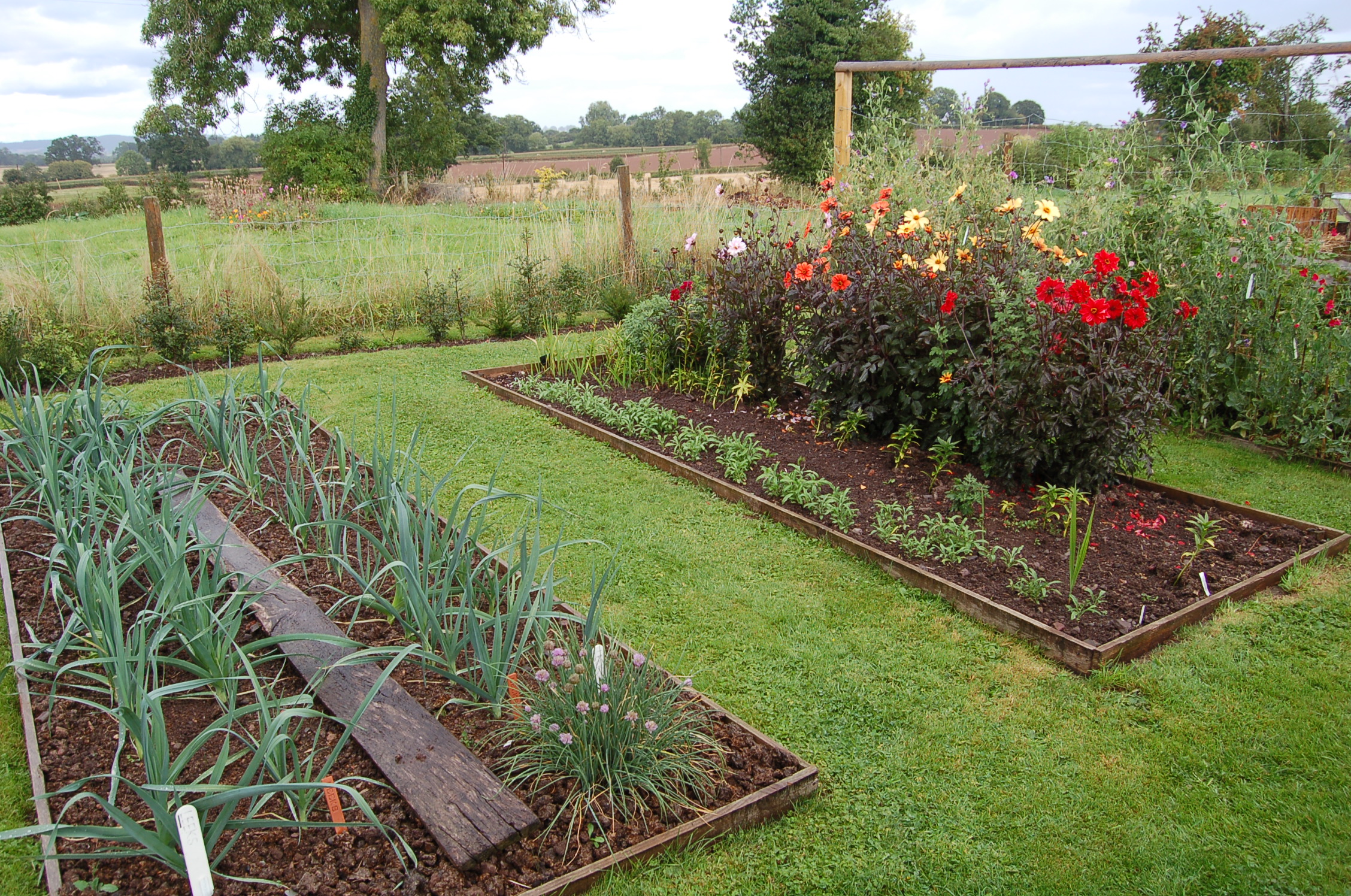
After tidying the edge of the plot where Calendulas had died down messily, I cut down perennials in the “Bug Border” alongside our central path, Sedum spectabile “Autumn Joy”, Linaria and several different Marjoram, all grown for the butterflies and hoverflies. As I pruned down the Sedum a few “slips” came away which I popped into my trug to be potted up at home.
A coffee break was called for to rest an aching back. A chance to do some bird spotting and listening out for their calls and songs. It was noticeable how some had moved on from calls to songs with the changing light of February. The Great Tit was giving a good performance repeatedly calling out “Teacher Teacher” just as it says in the books, but I often think it sounds more like the squeak of a tyre foot pump in need of lubrication. Its smaller cousin the Blue Tit sang gently from all around the site.
The peace was shattered as soon as the Rooks from the rookery on the northern boundary lifted as one and poured overhead, a cacophony of “cawing” and “rarking”. They are busy now restructuring last year’s nests. When one returned to the tree tops with twig in beak all its neighbours objected vocally craning their necks threatening and warning others to keep their distance. They live together in huge nesting groups but argue all the time! Their little corvid cousins, the Jackdaw, are quieter and more social. They pass overhead without any argument.
Signs of things to come! New growth is appearing at the base of perennials and the Globe Artichoke plants. Disappointingly the green manures have grown very little but just manage to cover the bare soil.
Buds are fattening on the Black Currants and the Blackberries. Promises of autumn bounty.
So once the work on our Plot 37 was completed I wandered off around the site, with wheelbarrow loaded – secateurs for pruning the roses in the Summer Garden, camera to take shots, surgical gloves and step-ladder to clear out nest boxes. As I walked along the established hedgerows flocks of chattering finches moved away, keeping close top the hedge and to each other – Goldfinches, Linnets and Greenfinches. A surprise sighting was a flock of about 15 Yellow Hammers, the first time they have been seen here. Unfortunately one of the loudest noises was the dry screech of my wheelbarrow’s wheel! A quick detour to the shed for a squirt of penetrating oil cured it.
Where the hedge has been left uncut for several years (where the council flailing machines can’t reach) the bushes are tall and busy with finches and tits. A Song Thrush was throwing leaves and under-hedge debris out onto the path searching for its lunch. The calls of Nuthatches and Great Spotted Woodpeckers echoed around the allotments all the time I was on site, but one call was unexpected. It stopped me in my tracks. I had never heard the piping call of a Bullfinch up here before. It wasn’t hard to find – a male with its pink, almost cerise breast glowing from a tall Hawthorn.
Nestbox cleaning can be a painful business if the nests have been colonised by nest fleas, hence the surgical gloves. Luckily none in residence today! Four of the five tit boxes had been used last year. The open-fronted Robin boxes were ignored by our population of redbreasts.
This photo shows how the Great Tits who nested here used their tails for added balance when feeding their young through the hole. The wood stain has been worn away.
The box in the photo below was used three times in 2011, but the third attempt was thwarted by cold wet weather in the early autumn, so the clutch of eggs remains. When I emptied out the nesting materials I could see the three layers of nesting material. When I had emptied all the boxes the old nests were put in the compost heap.
In the meadow areas seedlings cover the ground, so our plan for self seeding meadows seems to be working out. In one meadow area a lone cornflower continues to throw up an odd bloom of the most beautiful blue.
This year we created a new meadow from scratch on the Bowbrook Allotment Community green spaces. The area was cleared of turf which we used on our loam pile and dug over removing as many roots of pernicious weeds as possible as we went along. We then rotavated the area and left it to let weed seedlings appear. As they did so we hoed them off.
We sowed with a mixture called “Pictorial Mix” which included annuals, biennials and perennials which were mostly British natives but we added other wildflowers were included to extend the season and add extra colour. The result can be seen below, but it did keep us on tenterhooks as the seeds germinated very slowly in the dry weather we have experienced here in Shropshire all year.
We have been so pleased with the result! It is the most photographed border on the site. Now in late September it is still showing some flower.
We have launched our competitions this year at Bowbrook Allotments Community – scarecrows and sunflowers. We will be judging the scarecrows on our National Garden Scheme (Yellow Book) open day on July 17th but leaving the measuring of the sunflowers until late summer. We measure the height to find the tallest grown by a child and by an adult and measure the width of the flowerheads to determine the biggest grown by an adult and a child.
The scarecrow competition last year produced two very worthy winners.

The Willow Man won in the children’s competition.
for people who want more than gardening from gardens
A Vegetarian | Nature Lifestyle Blog
.....and nurturing my soul
Journeys In St. Louis Gardening and Beyond
Consult the genius of the place
A blog full of humorous and poignant observations.
Notes from a wildlife-friendly cottage garden
...an emerging social science
'The most important and informative publication on wildlife of our times' - The Independent. This blog is a member of The UK & Ireland Natural History Bloggers group: www.uknhb.blogspot.com
Inspire - Cultivate - Grow Native Plants - Restore Landscapes
To create and protect a semi-natural wild space for the people of Farnham to enjoy and experience an array of British wildlife in our town
The www.gardeningwithchildren.co.uk Blog
birding through the seasons, why birds matter and how to conserve them
with a camera in hand
Transform your outdoor space
My allotment, cooking and other interests
my gardening life through the year
Trying to live a creative life
trying to live as lightly as possible on our beautiful planet
Nature lovers from Leicester living the good life.
Finding the beautiful in the everyday
Michelle's Allotment
thoughts from and about my garden
Big plans for a small garden
A Walled Country Garden in South East Scotland
Life at the fruity chicken
Off grid living. Self sufficient. "PERMAGANICS RULE".
Nottingham's Grade 2* Listed Allotments and Community Orchard
a journey in suburban vegetable gardening
The madness of growing your own
A novel approach to vegetable gardening
Sustainable living in the Irish countryside.
Master Gardener, amateur photographer, quilter, NH native, and sometimes SC snowbird
Recent work and work in progress and anything else that interests me
a chaotic cottage gardener
a weekly blog that creates a personal philosophy through photographs and words
Stories from a sassy and classy Southern farmbelle.
Simple Organic Gardening & Seasonal Living
turning dirt into dinner
today the world is created anew
Notes from a Devon garden
Life Through The Lens
A photography blog showcasing the best photography pictures and videos on the internet
Just another WordPress.com site
personal observations from the natural world as the search continues for a new approach to conservation.