Carrying on from Part 1 of my posts about Dyffryn Fernant Garden, Part 2 will gradually move aware from the cottage towards and into the wilder areas. I hope this post, which I wrote in September, will remind us of better weather at the beginning of autumn.
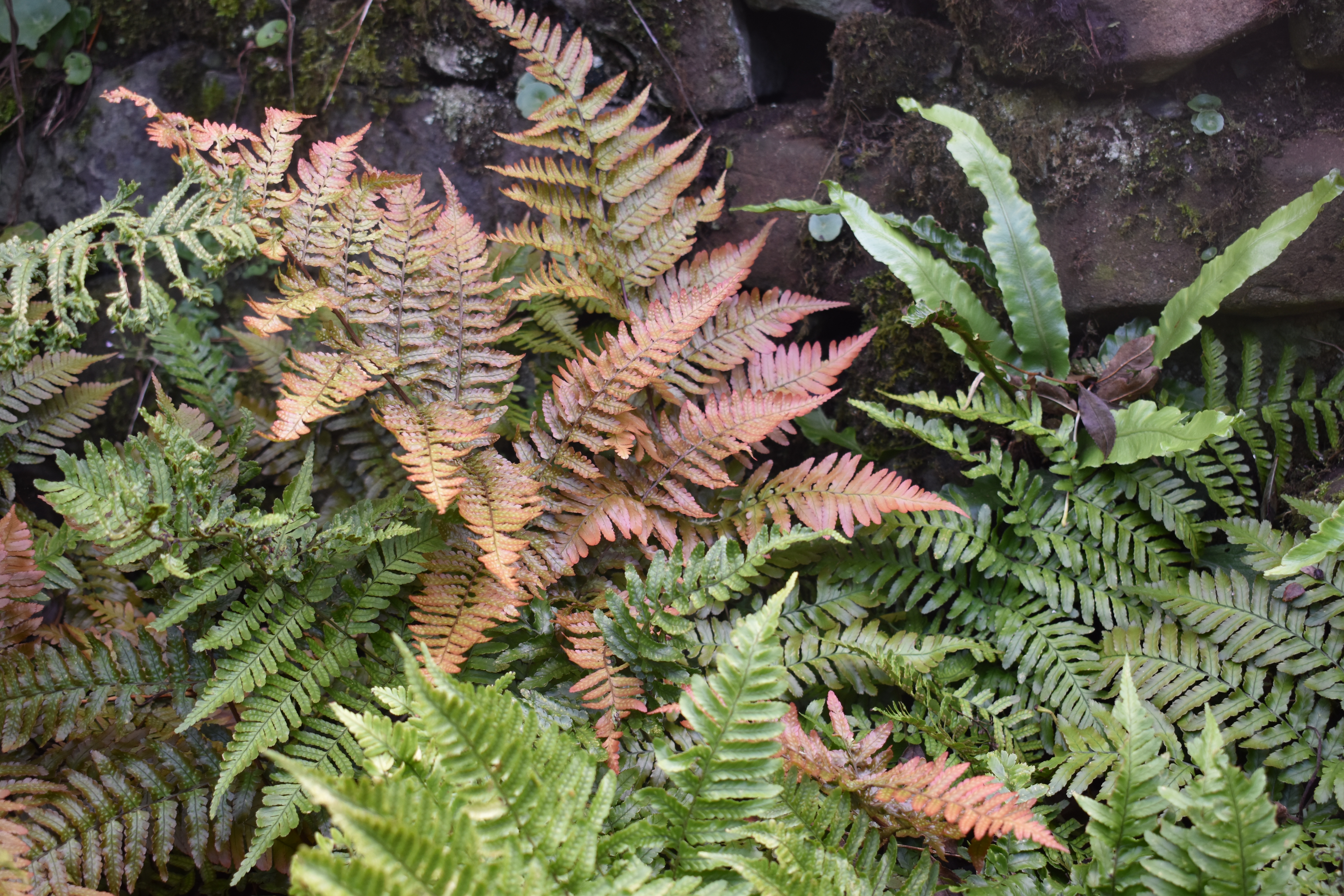
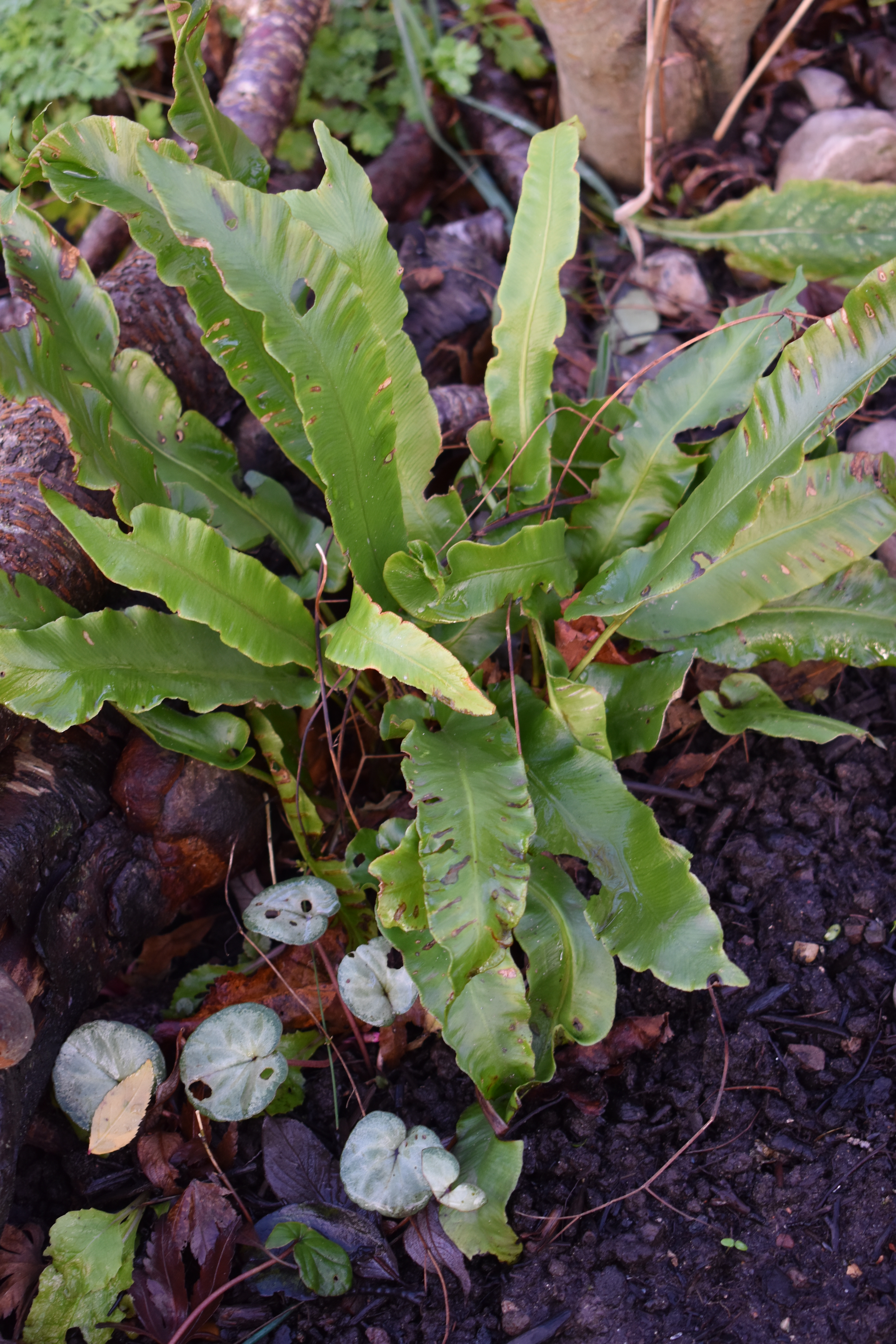
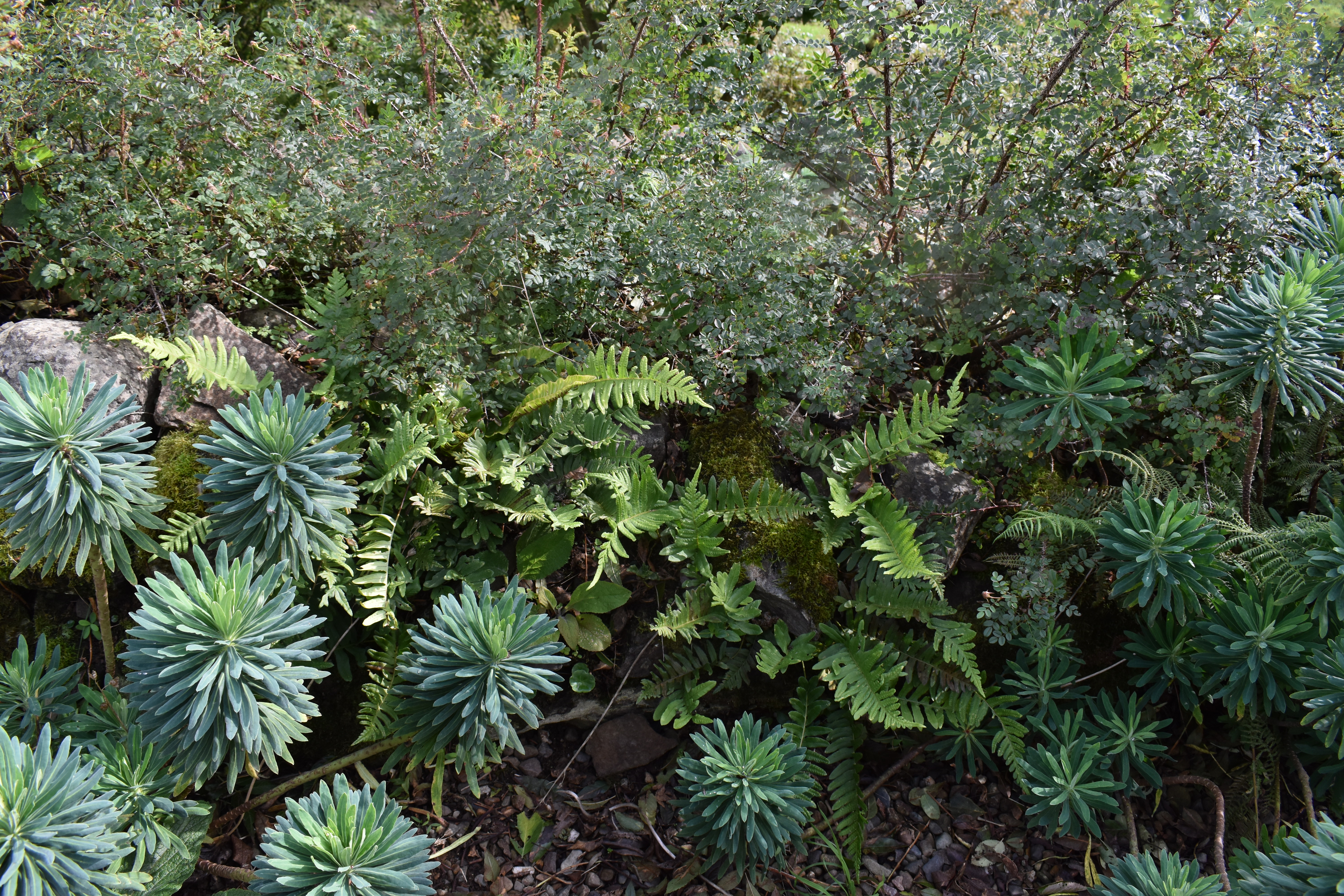
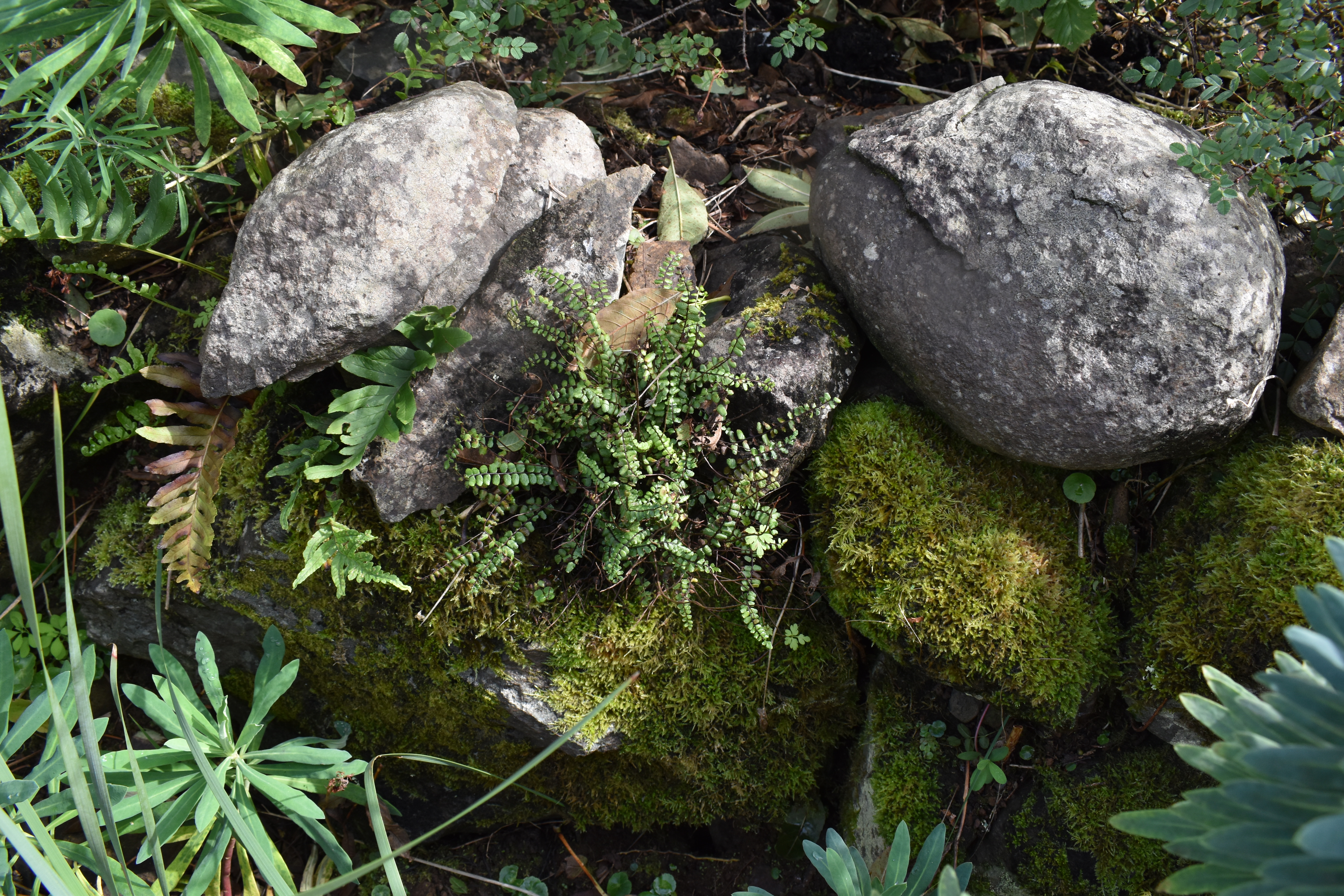
First though we need to look at ‘The Fernery’ an enclosed quiet spot in the shade. This well sheltered garden area sits alongside a tractor shed. The ferns looked very healthy here and seemed at home.
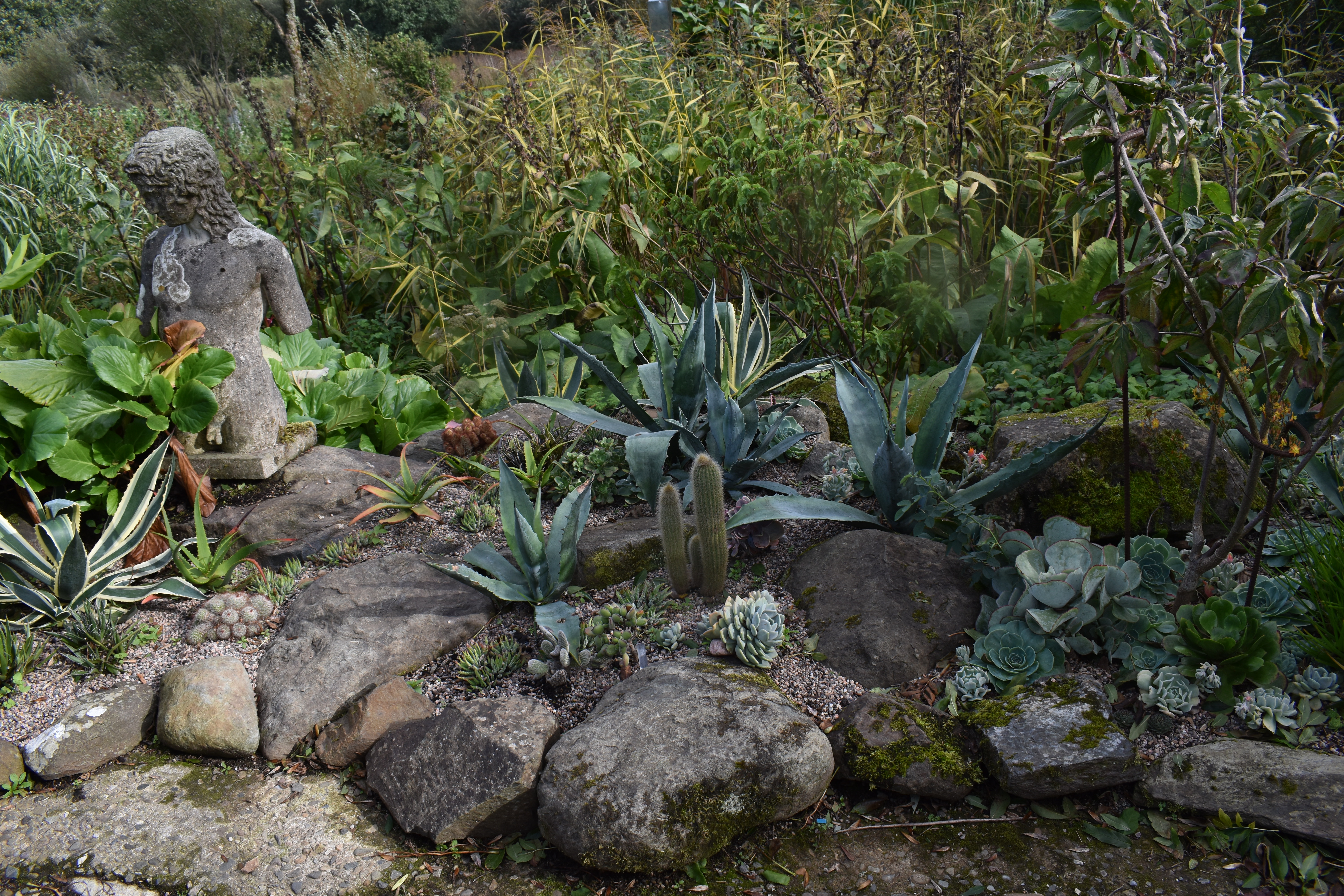
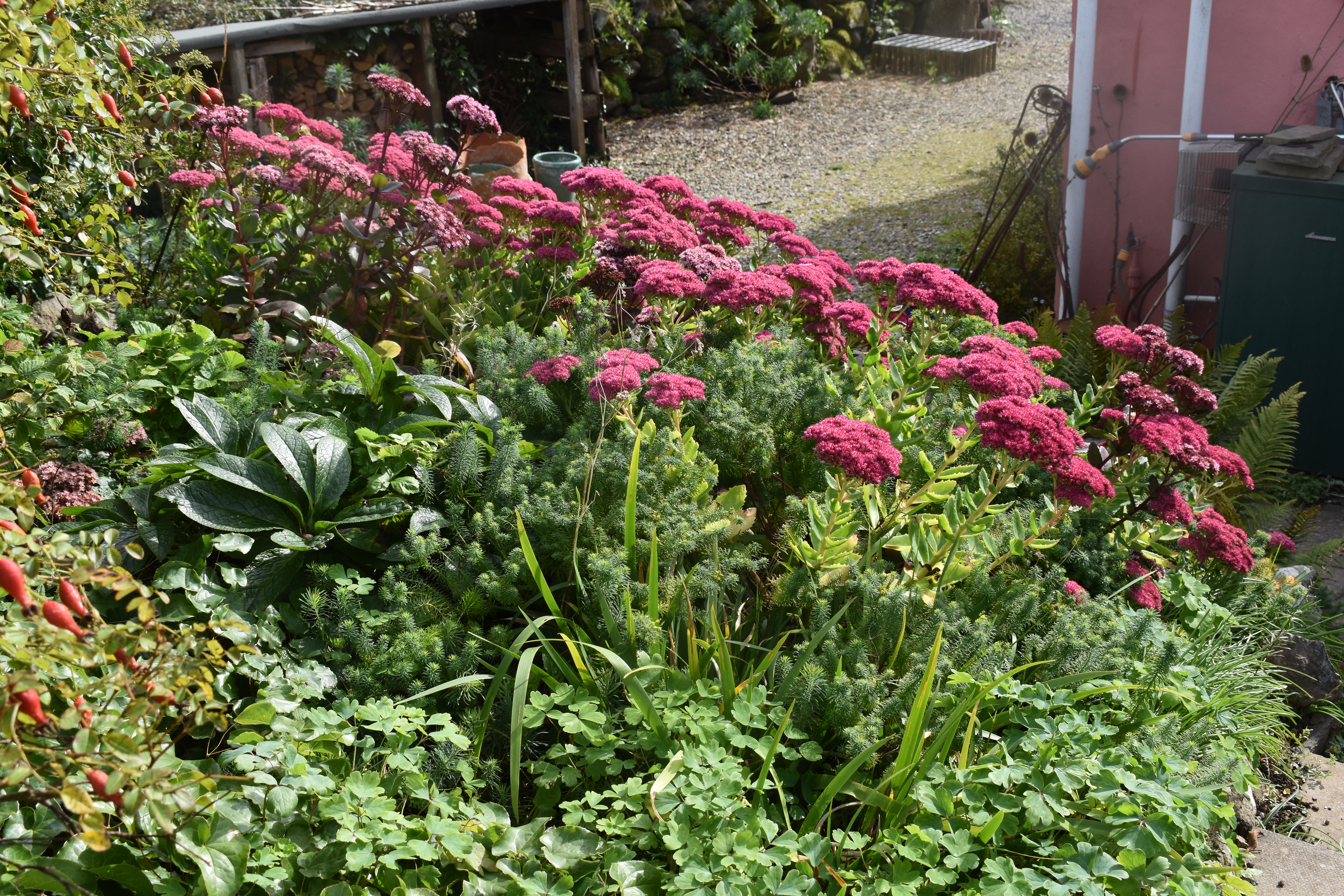
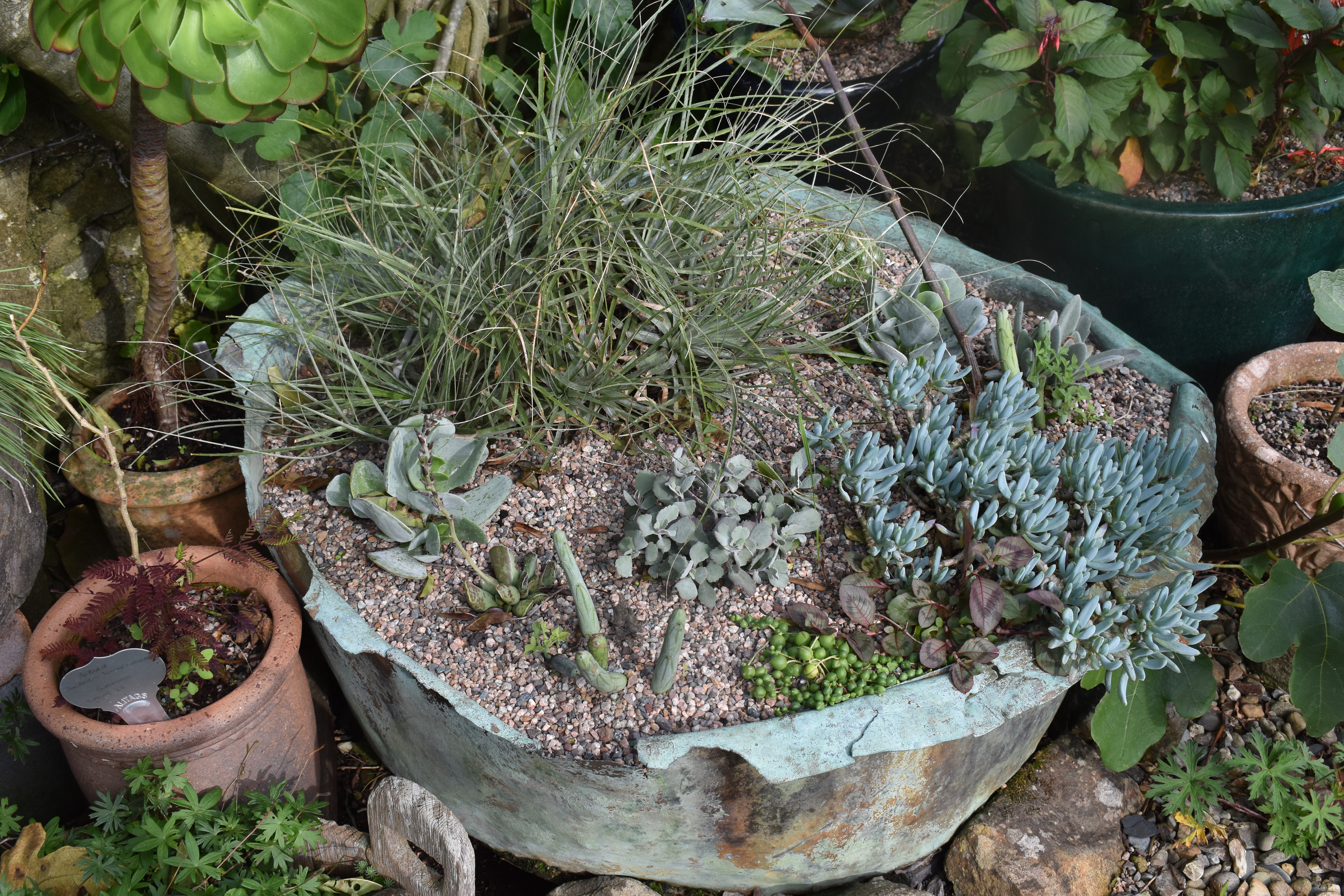
The xeriscape garden looks equally at home close by with its specimen succulents beautifully arranged.
And so next we moved out into the wild!
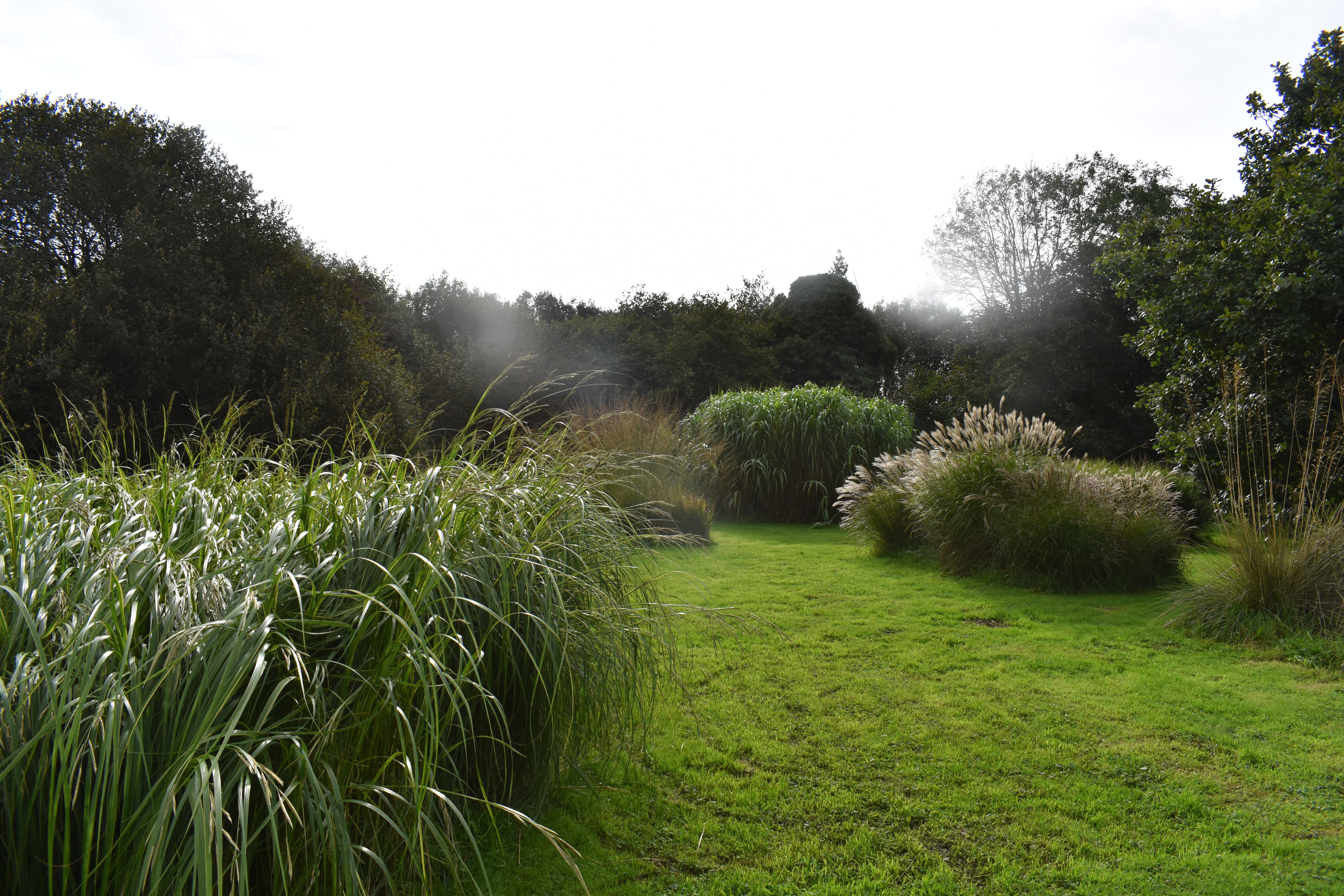
We walked around in the woody area following a stream which finally lead us towards the grass paths and onwards to the area called ‘Nicky’s Field’. Here there is a formal layout where the 30 beds are rectangular and full of ornamental grasses and sedges. Each area features mass planting of different types of grass.
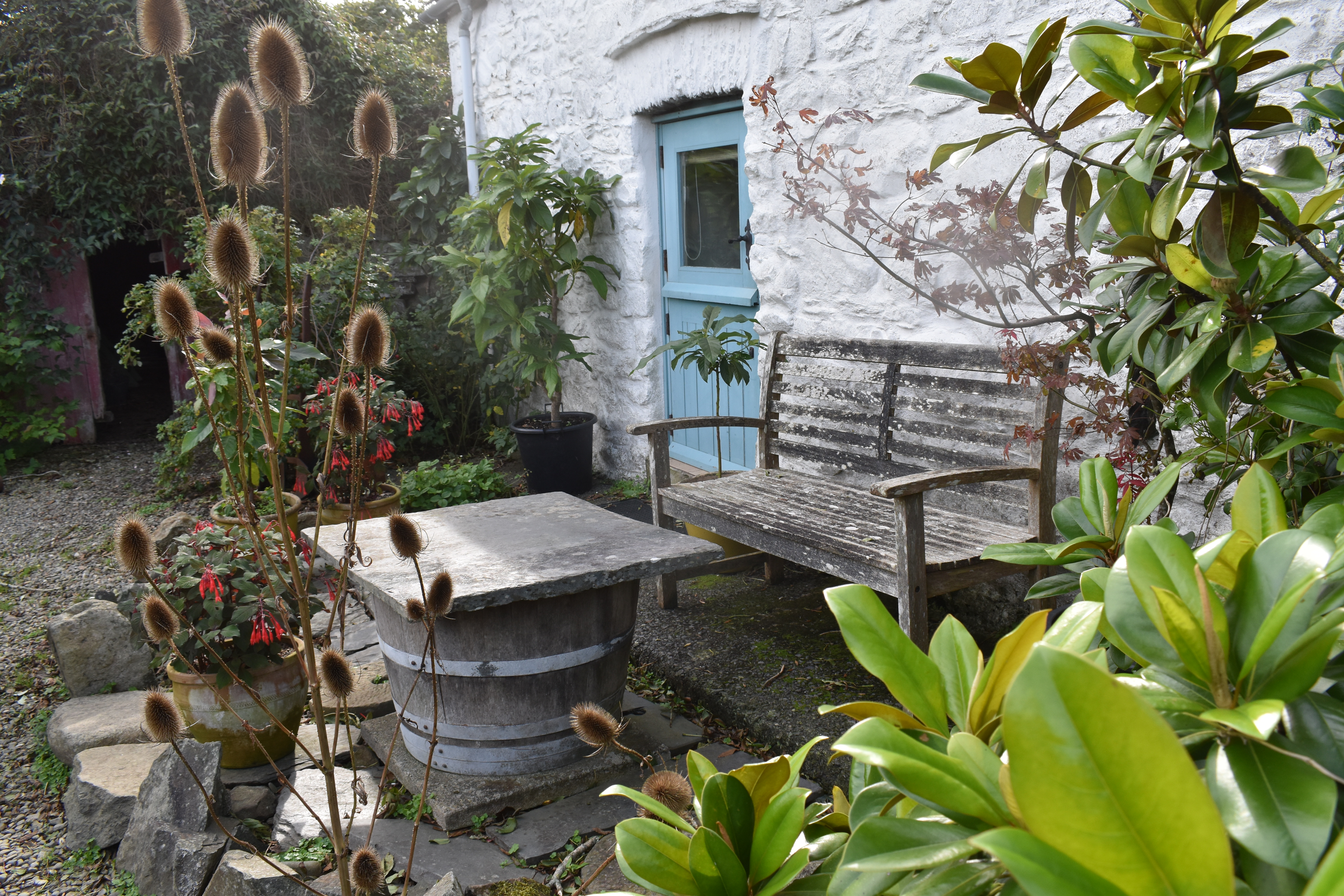
Every area in this garden seemed to have its own seating, and ‘Nicky’s Field’ was no exception. Here the benches were arranged around a tree and looked a very social space.
From here we accessed the gravel track which took us back to the car. Another great day in Pembrokeshire!
As promised in my first post about Oakgate Nursery and Garden, we can now look at the second half of the garden. After crossing the lane we noticed that the grass paths were much narrower than on the other side.
To our right this perfectly shaped birch looked so good against the blue sky background. A completely different silhouette was presented by the pendular, fastigiate beech. Many of the trees and shrubs here are evergreen both broadleaf and coniferous.
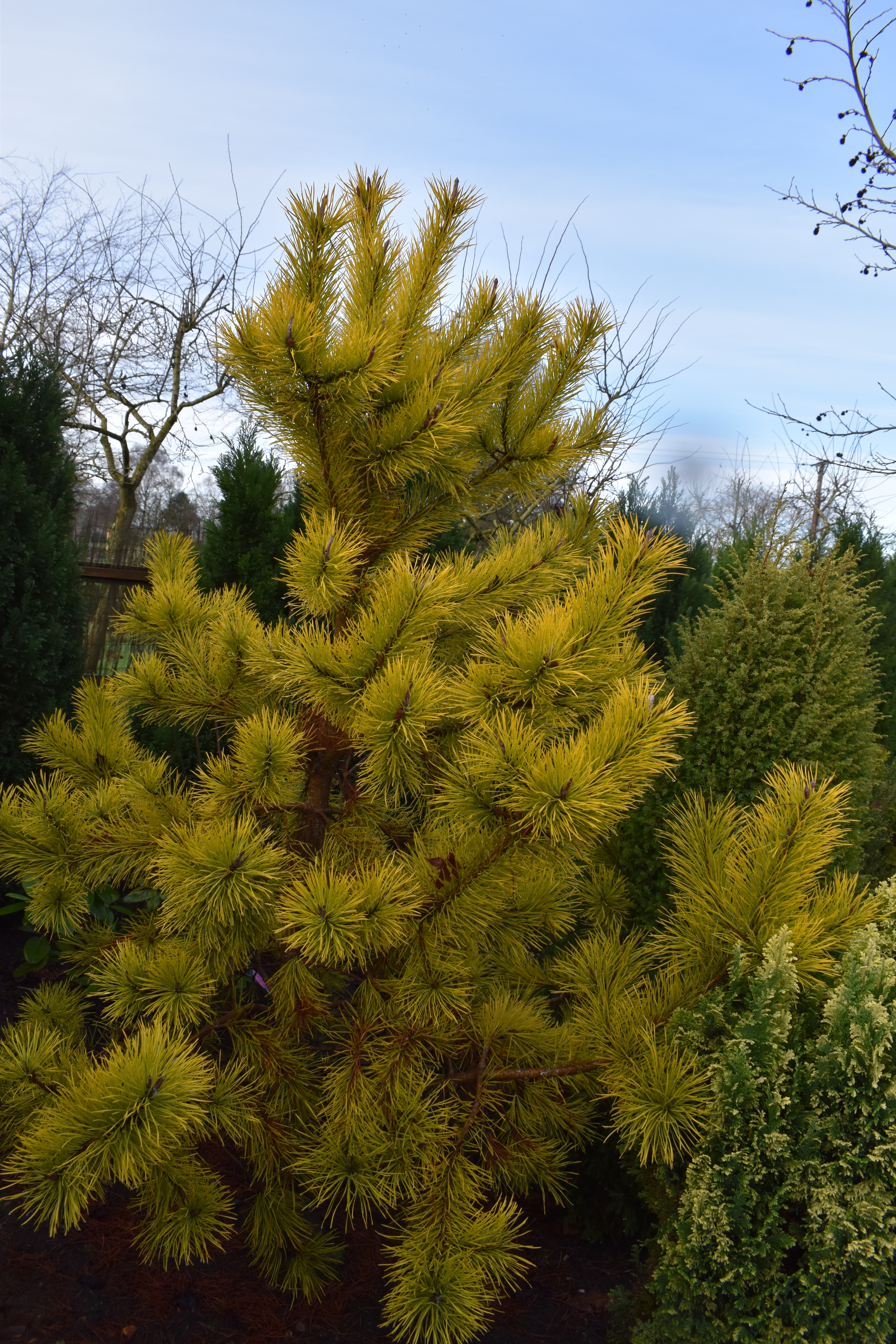
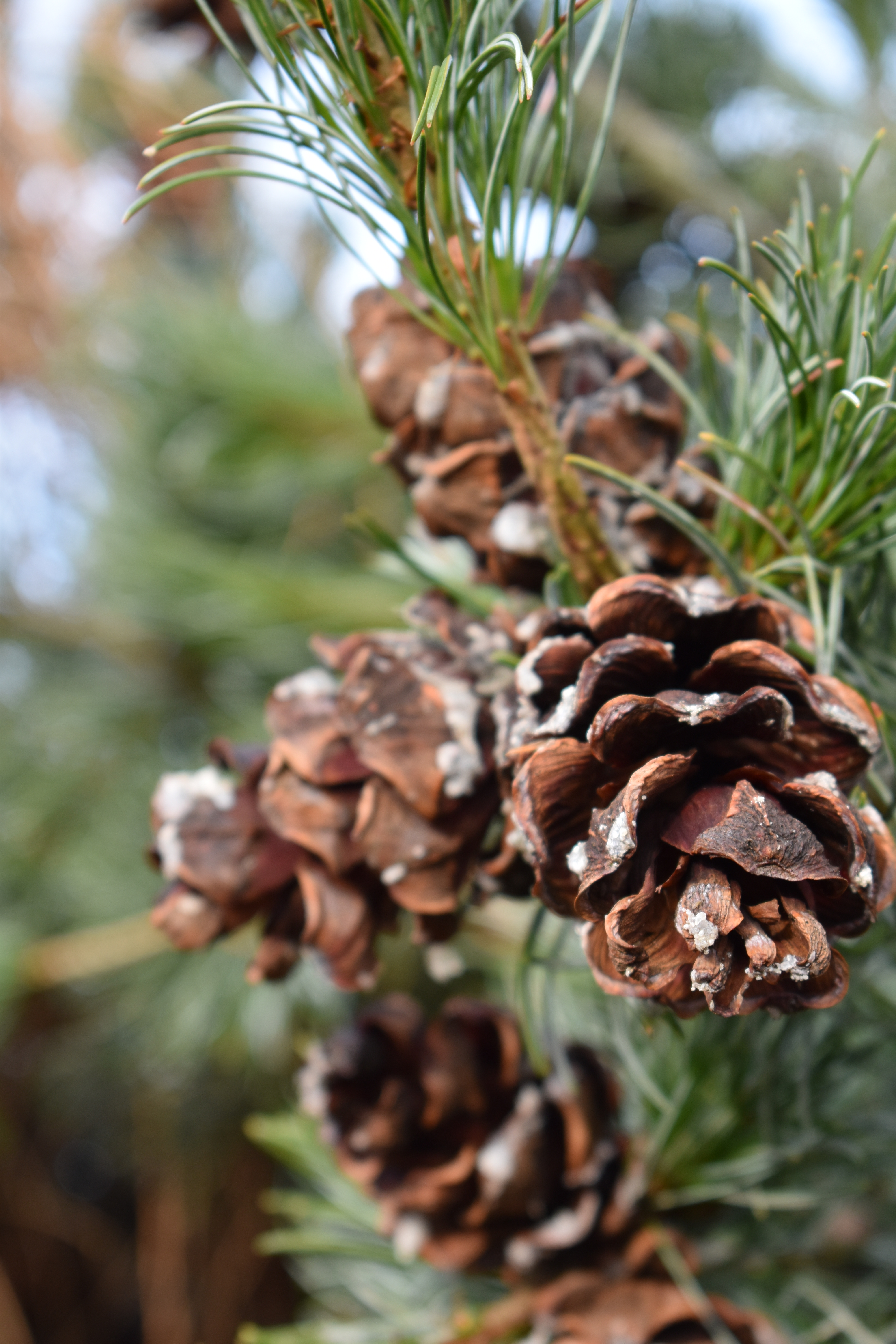
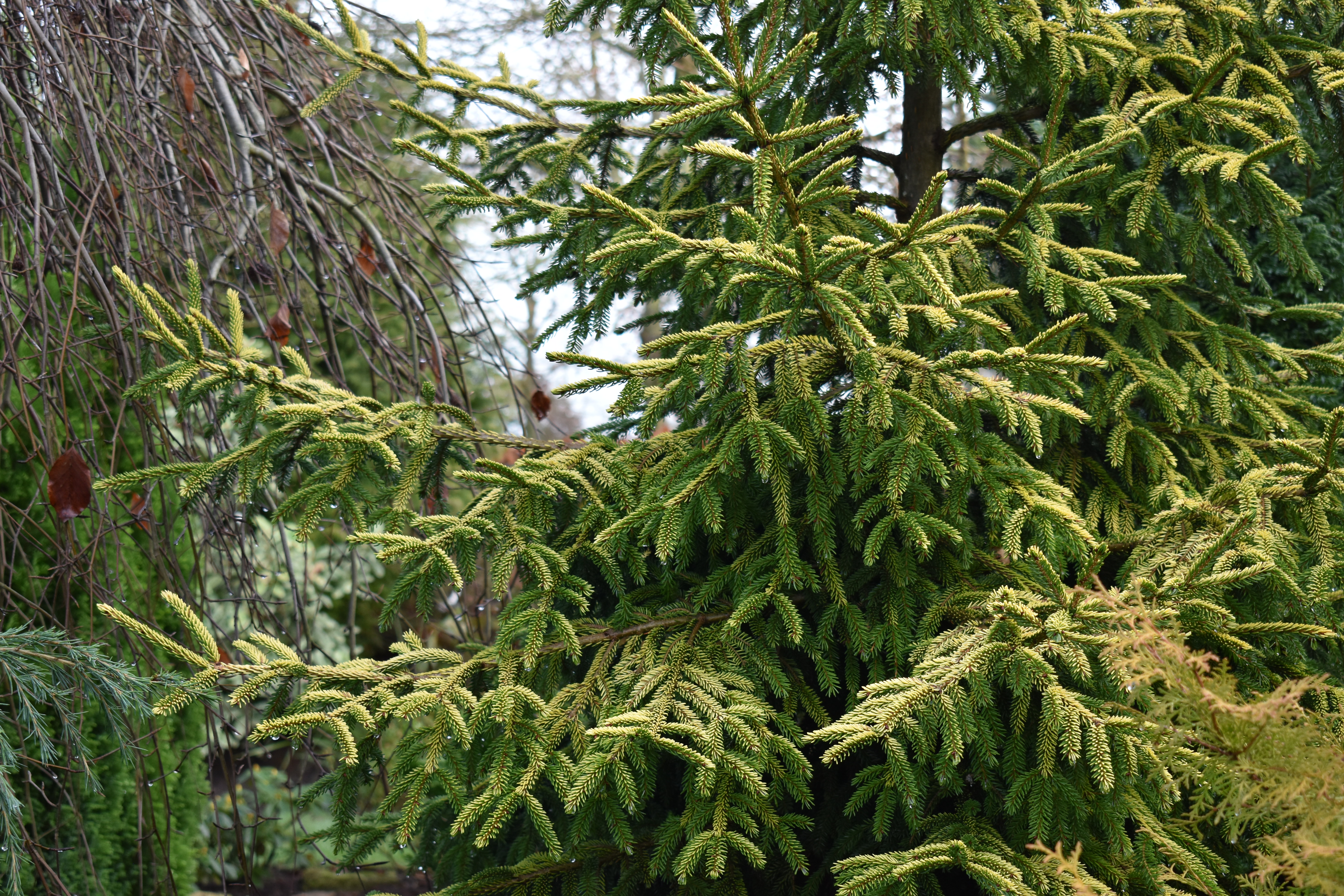
In the first photo below we have two evergreen shrubs, one broadleaf, one conifer which look similar enough to sit together well. The second photo is a golden conifer, one of the brightest we have come across, but needs sunlight to look at its best, as seen in the third photo.
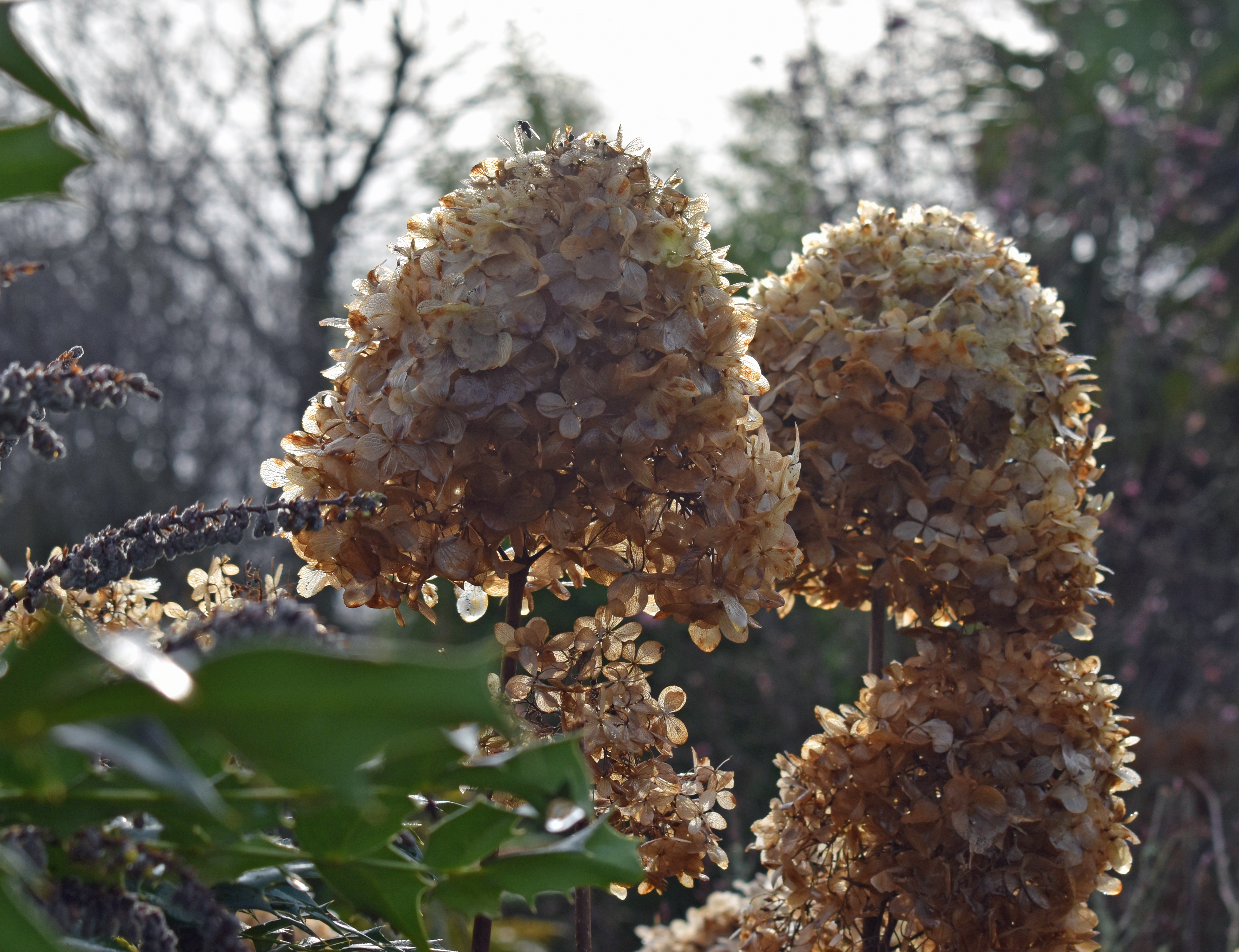
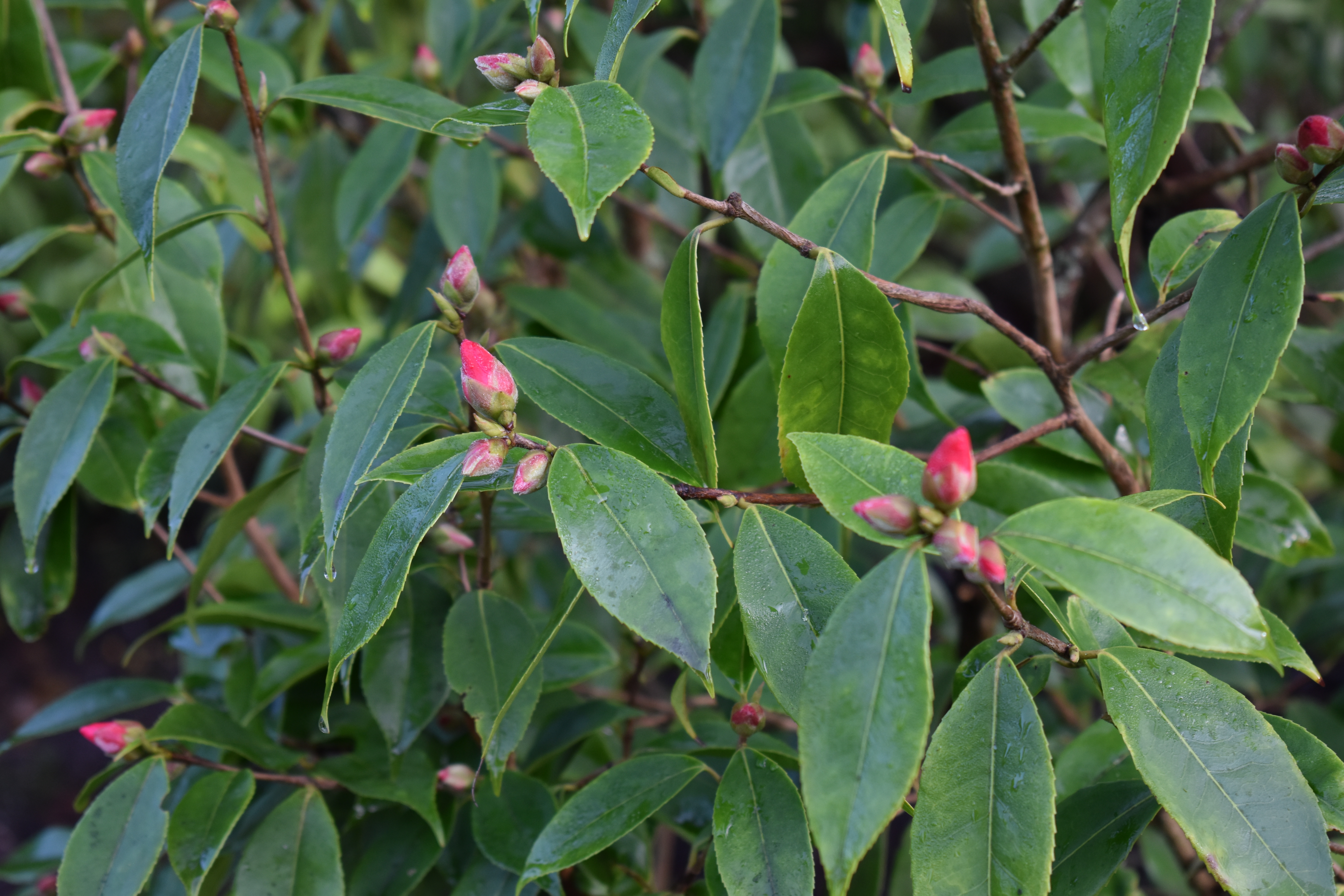
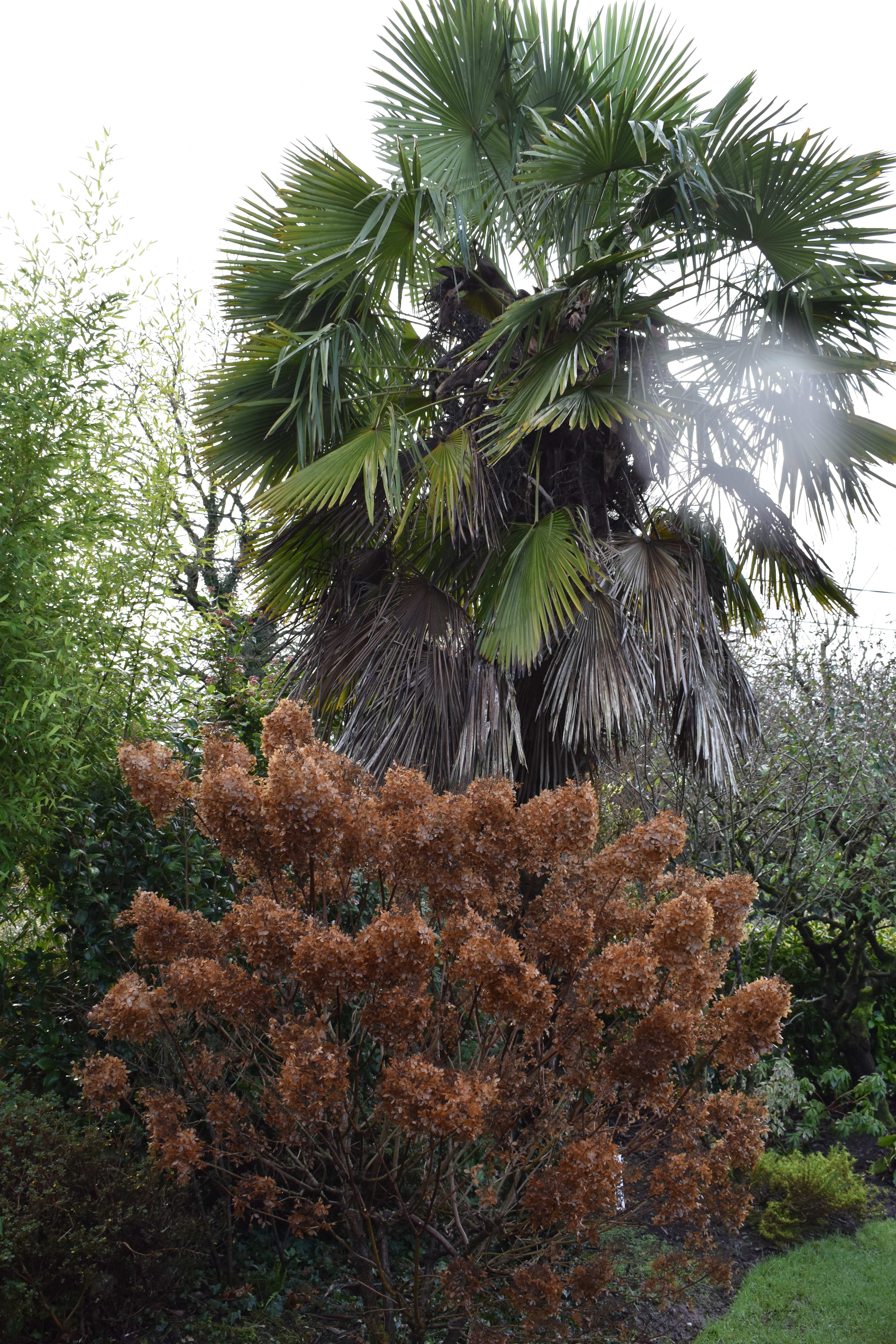
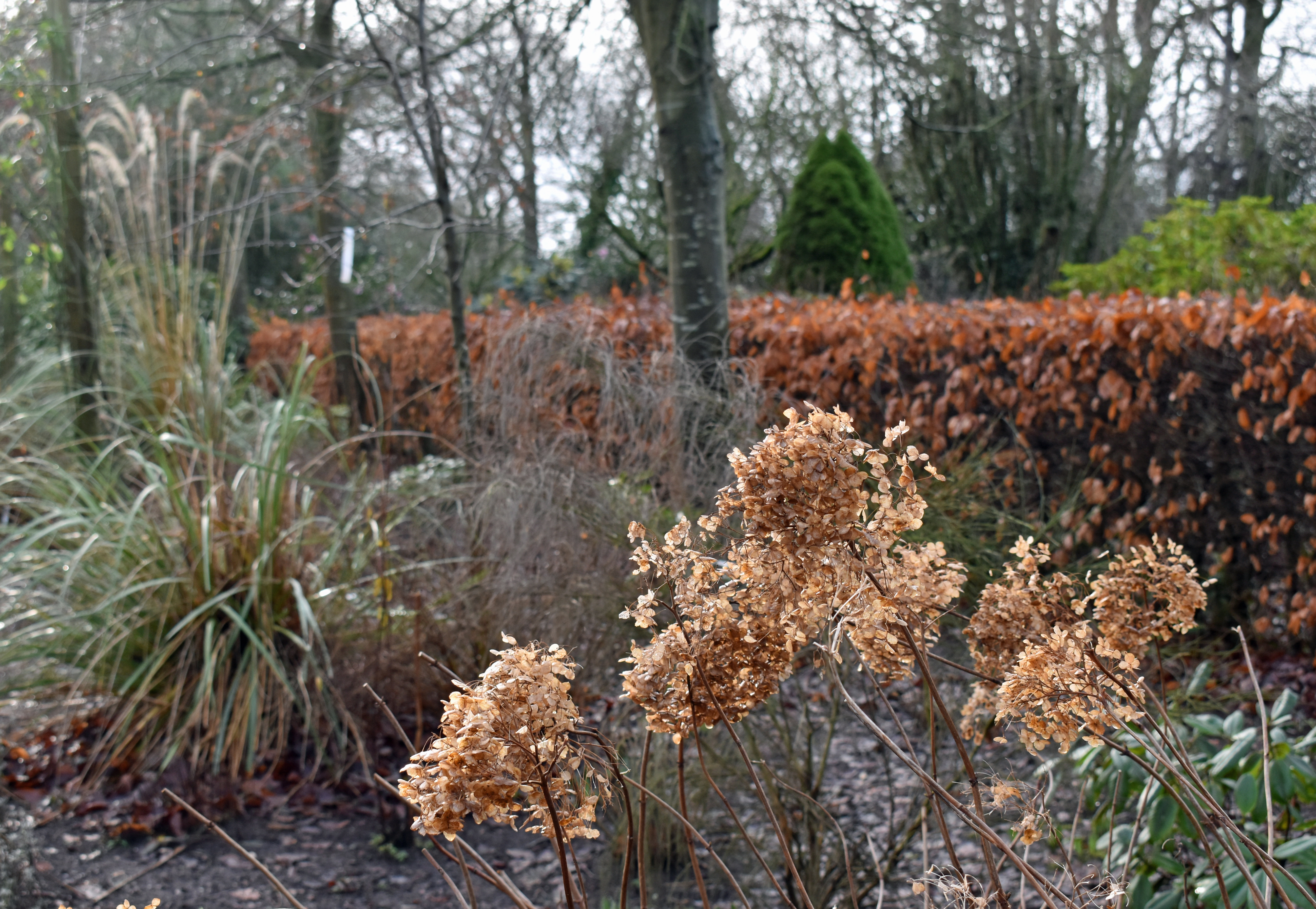
Flowering shrubs and perennials, can be seen with dried up flowers from last year, especially hydrangeas and also buds getting ready to to burst.
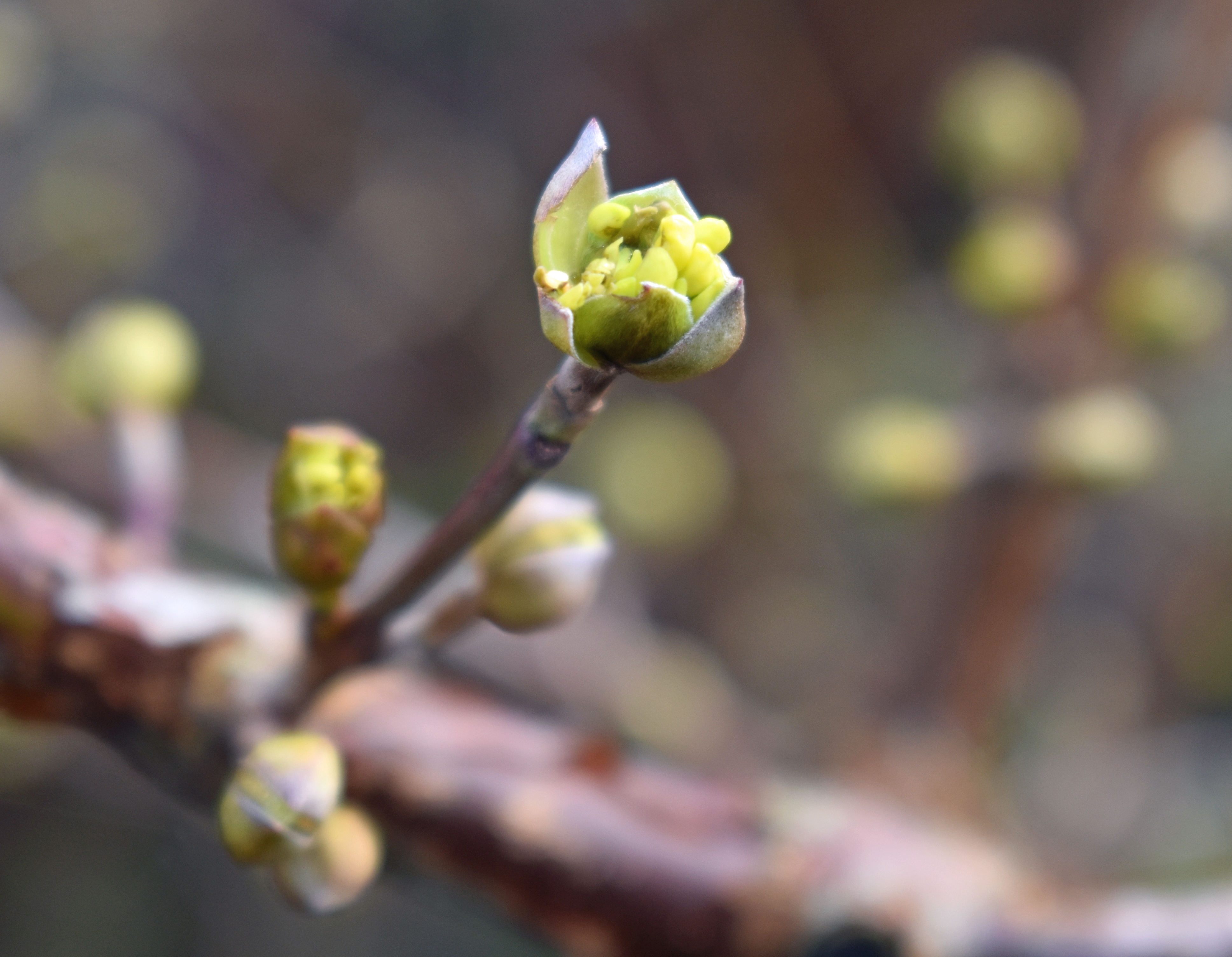
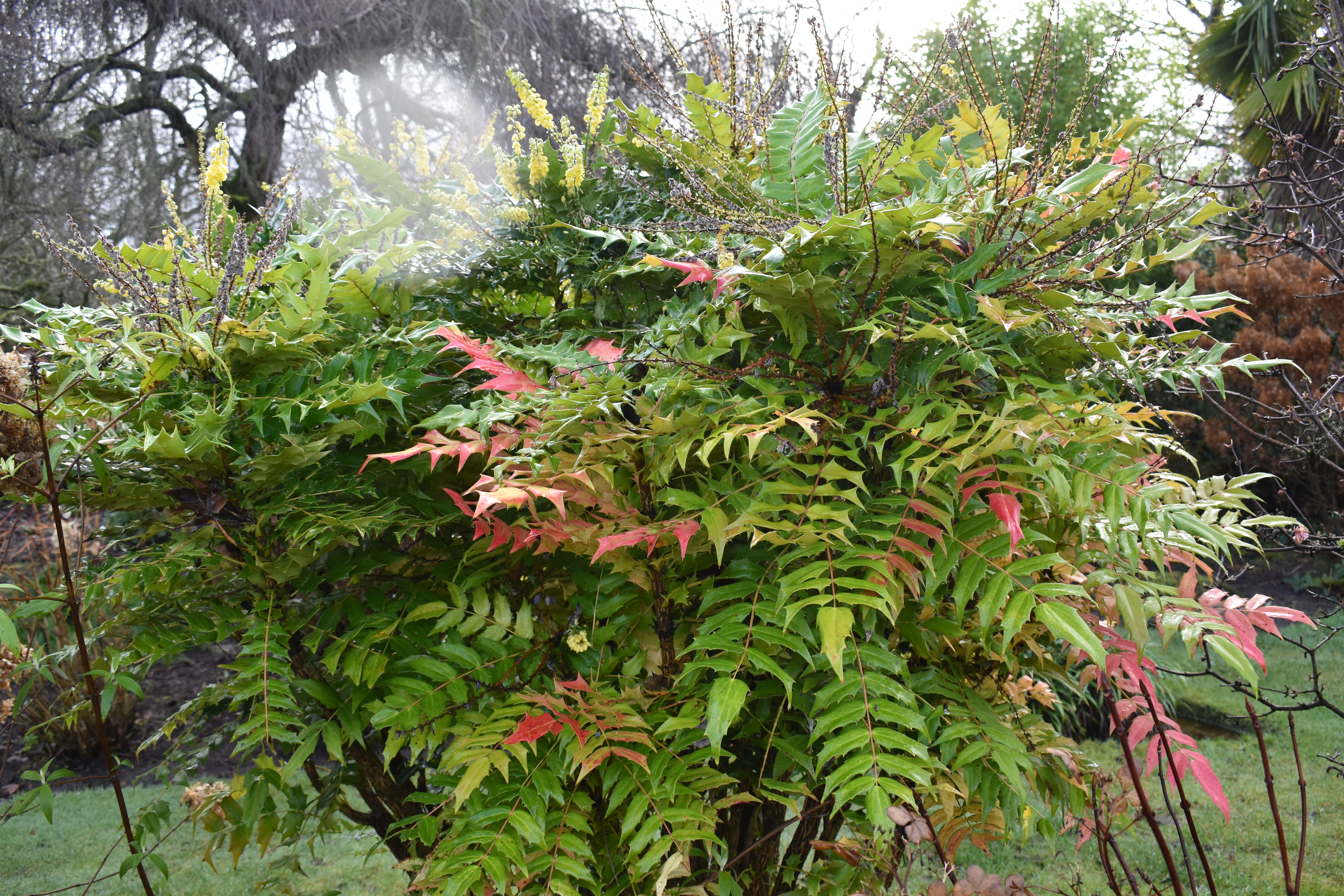
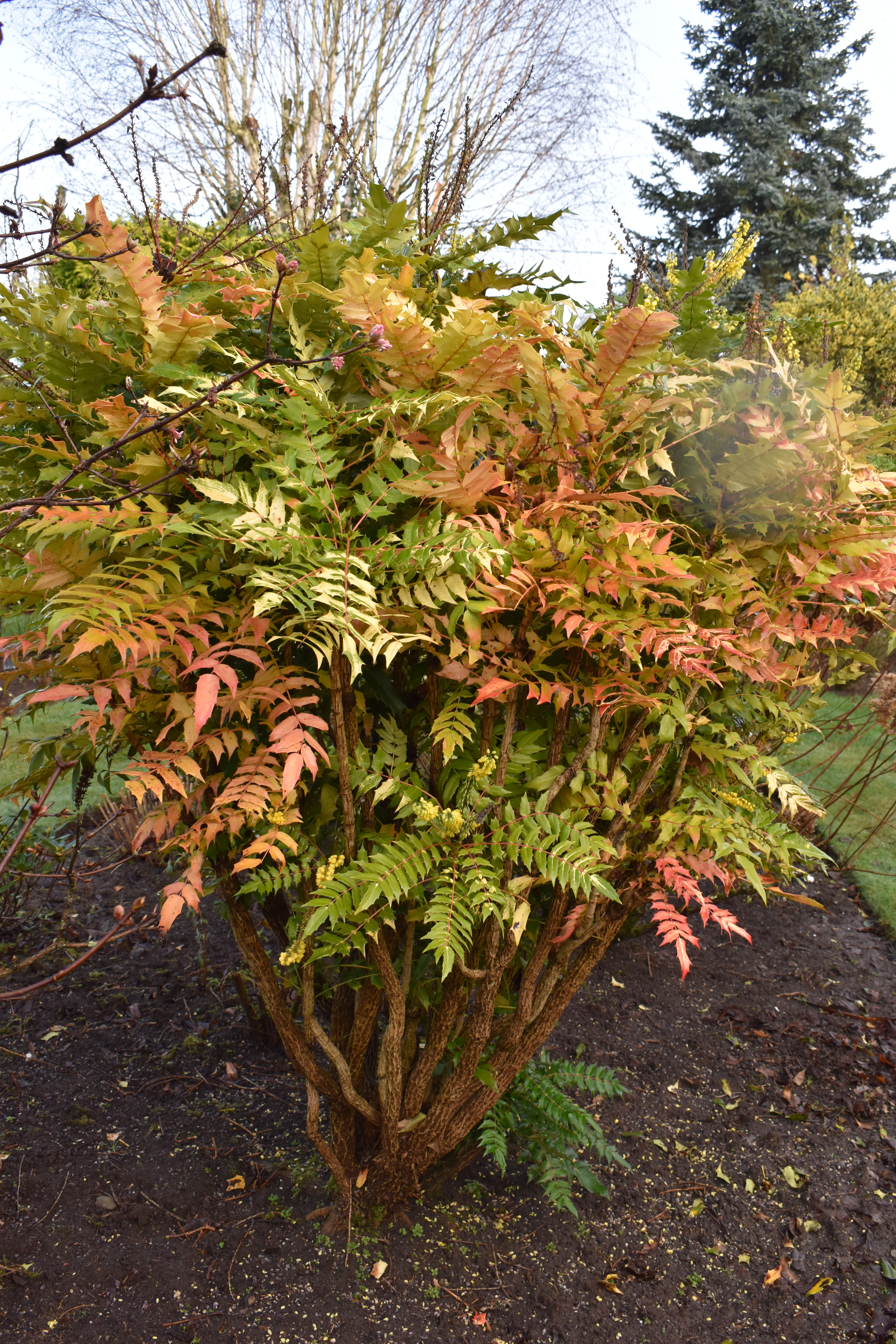
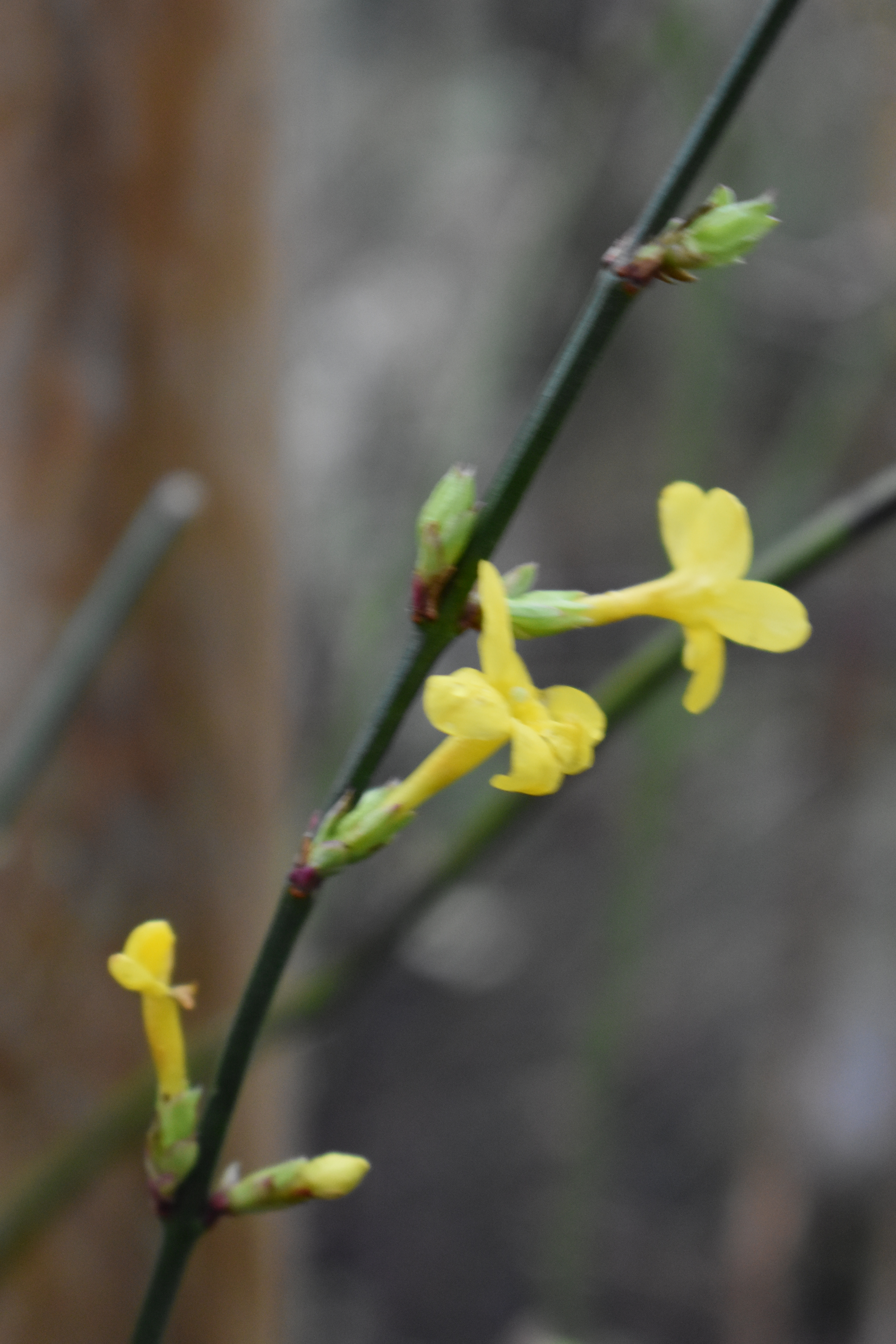
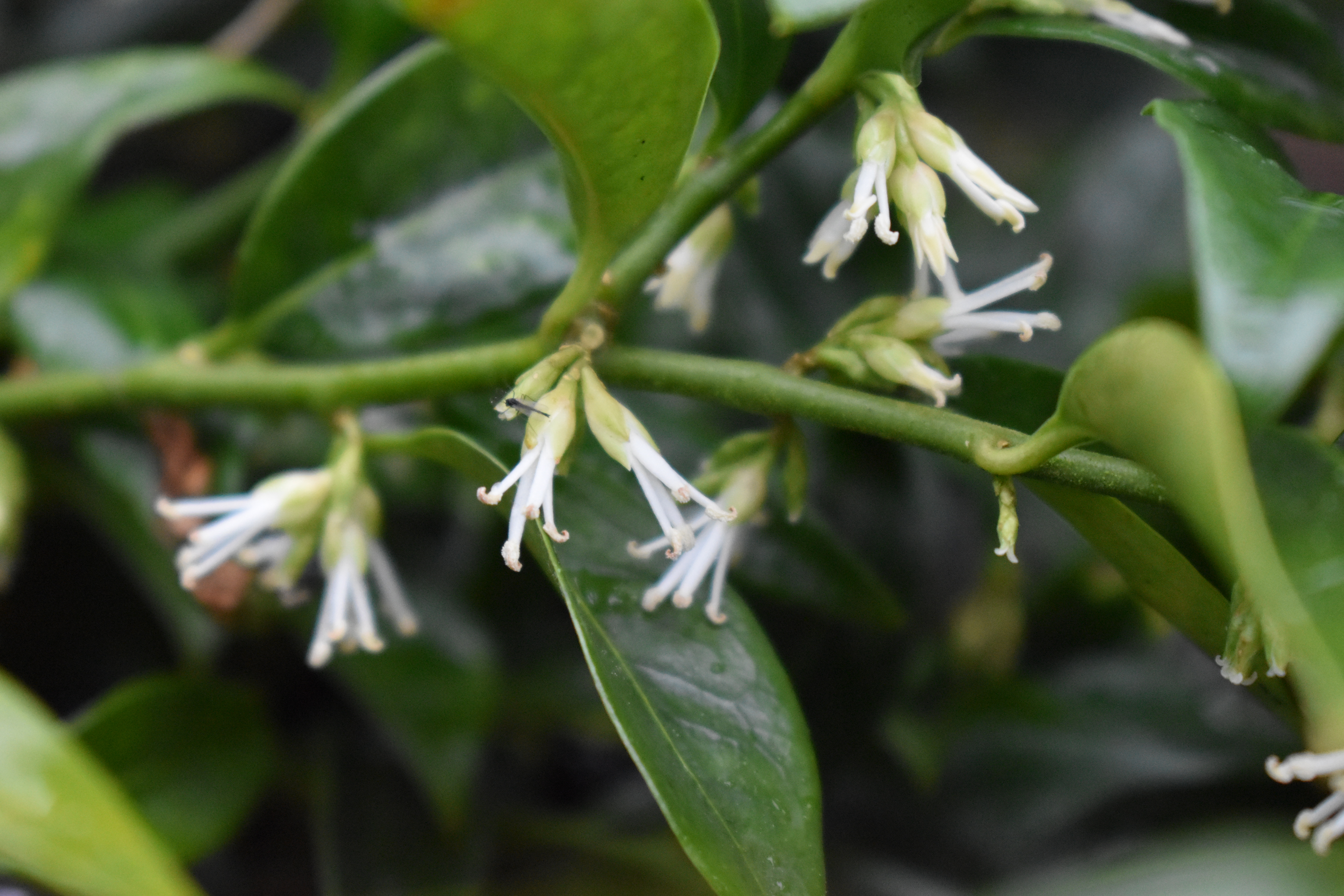
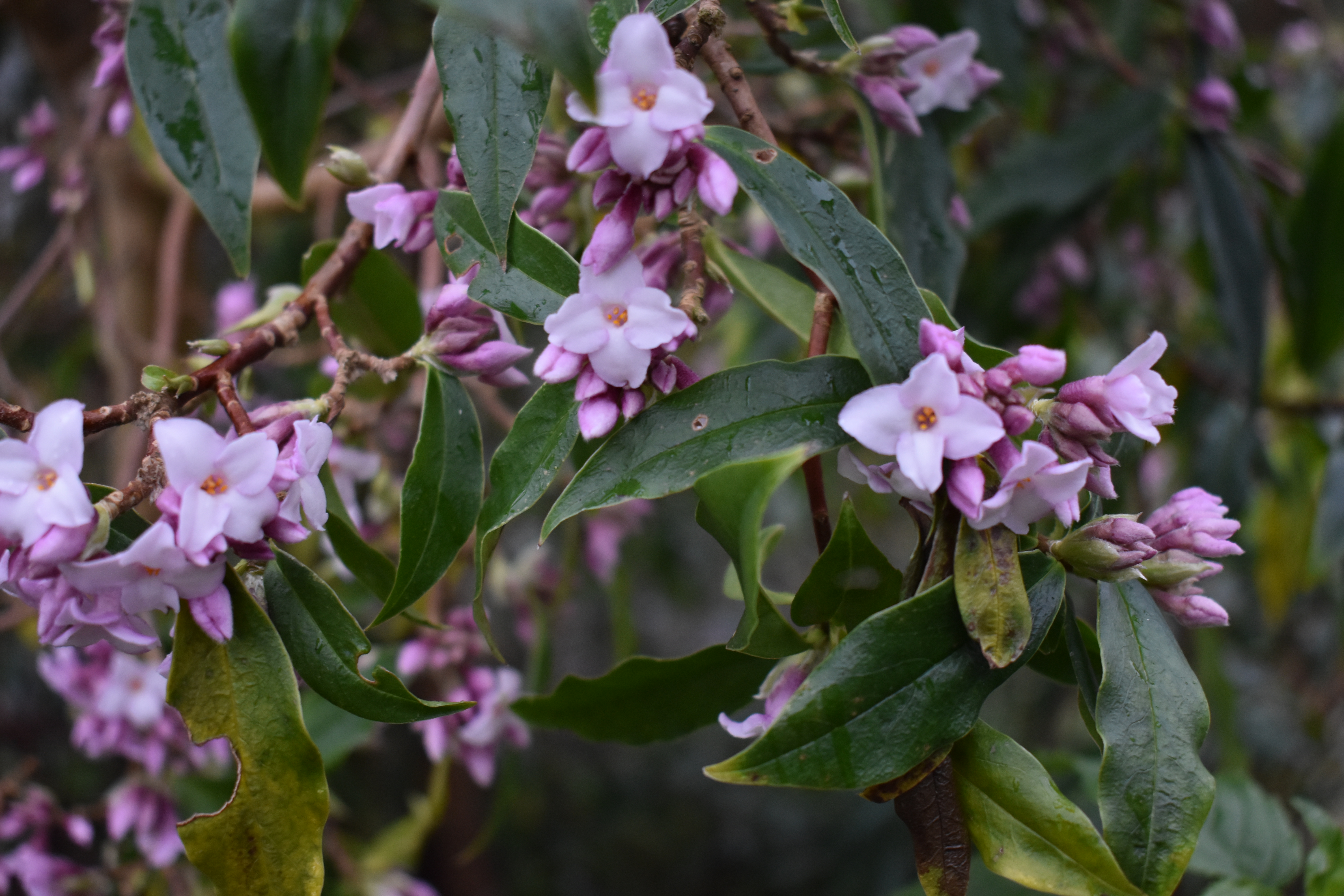
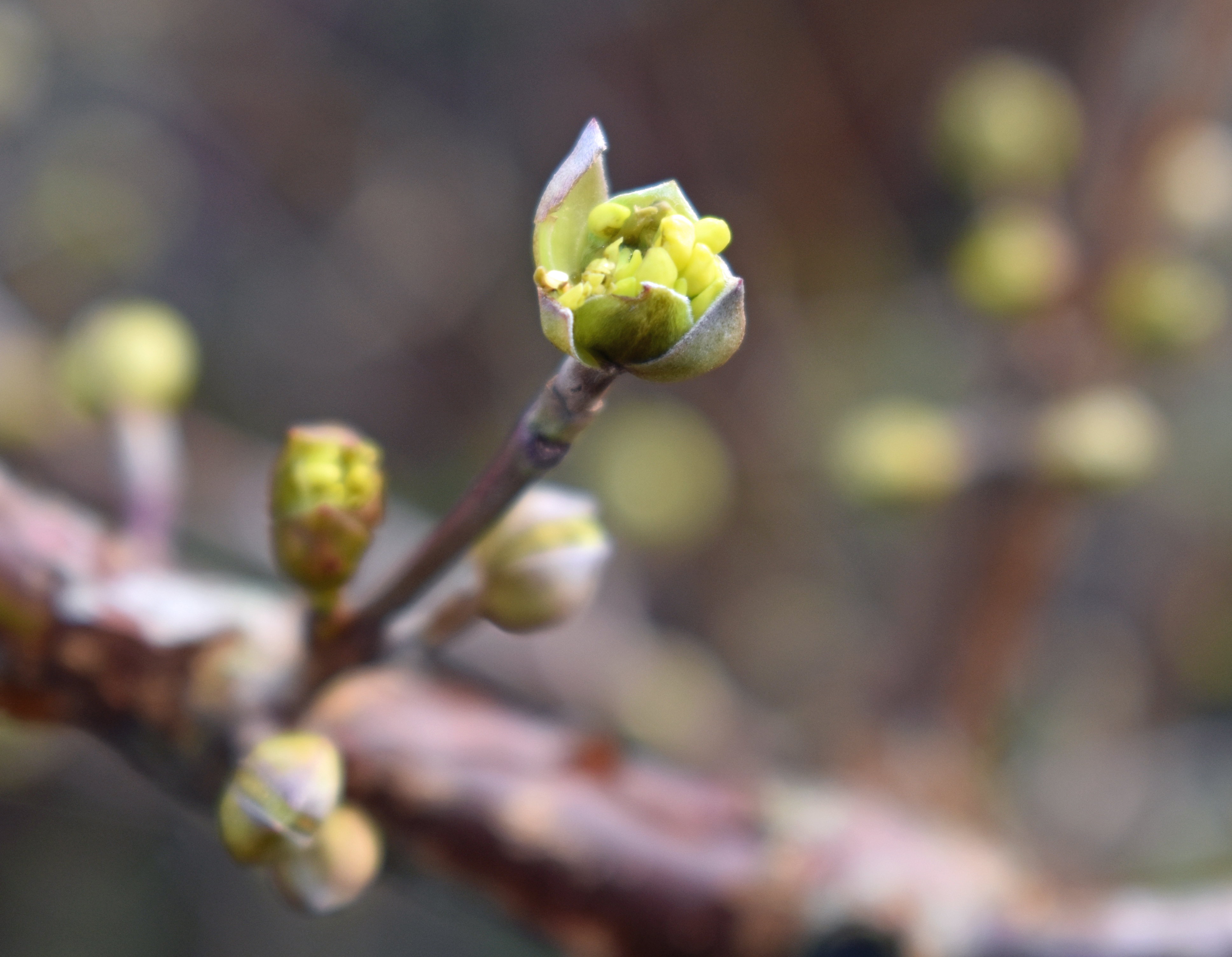
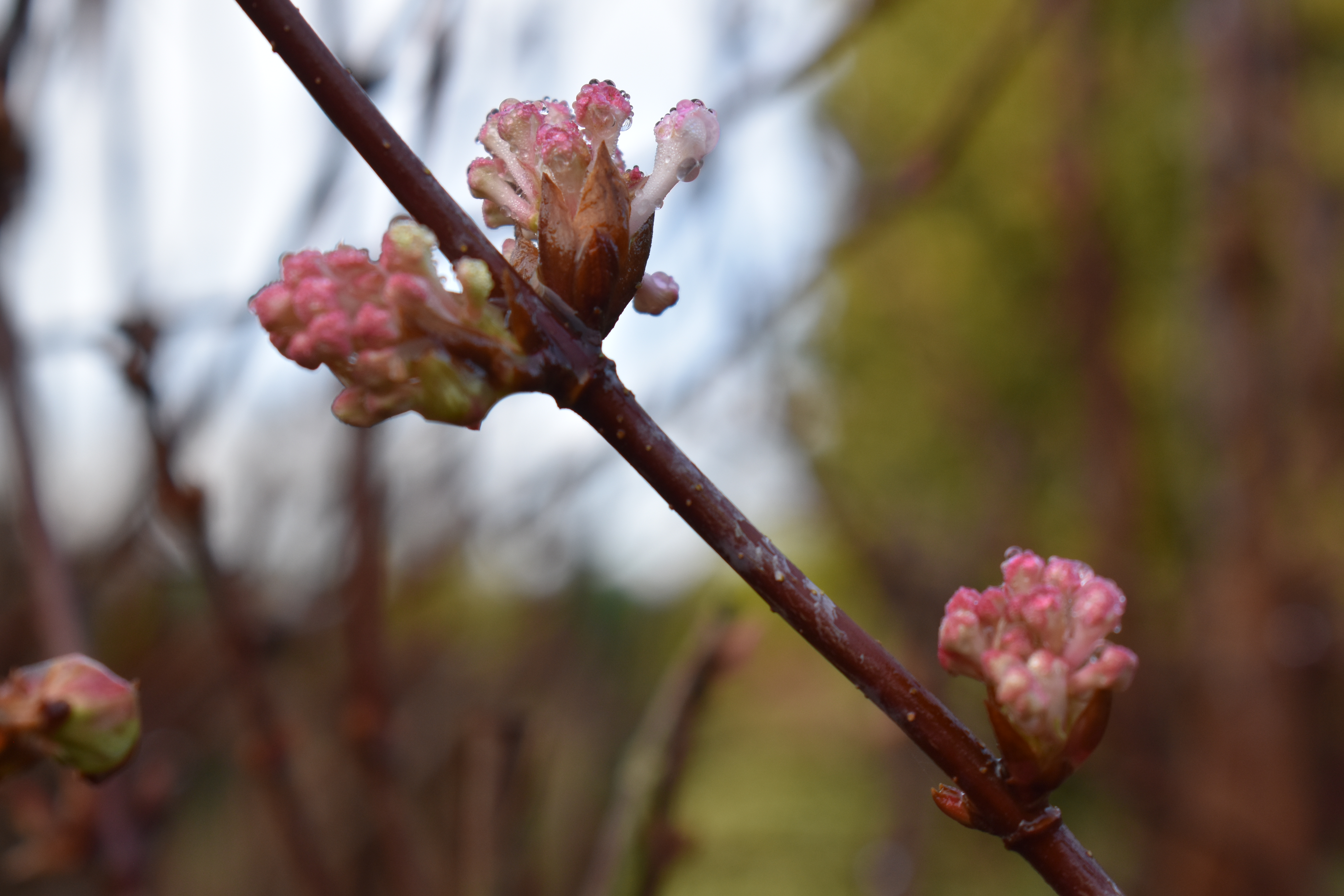
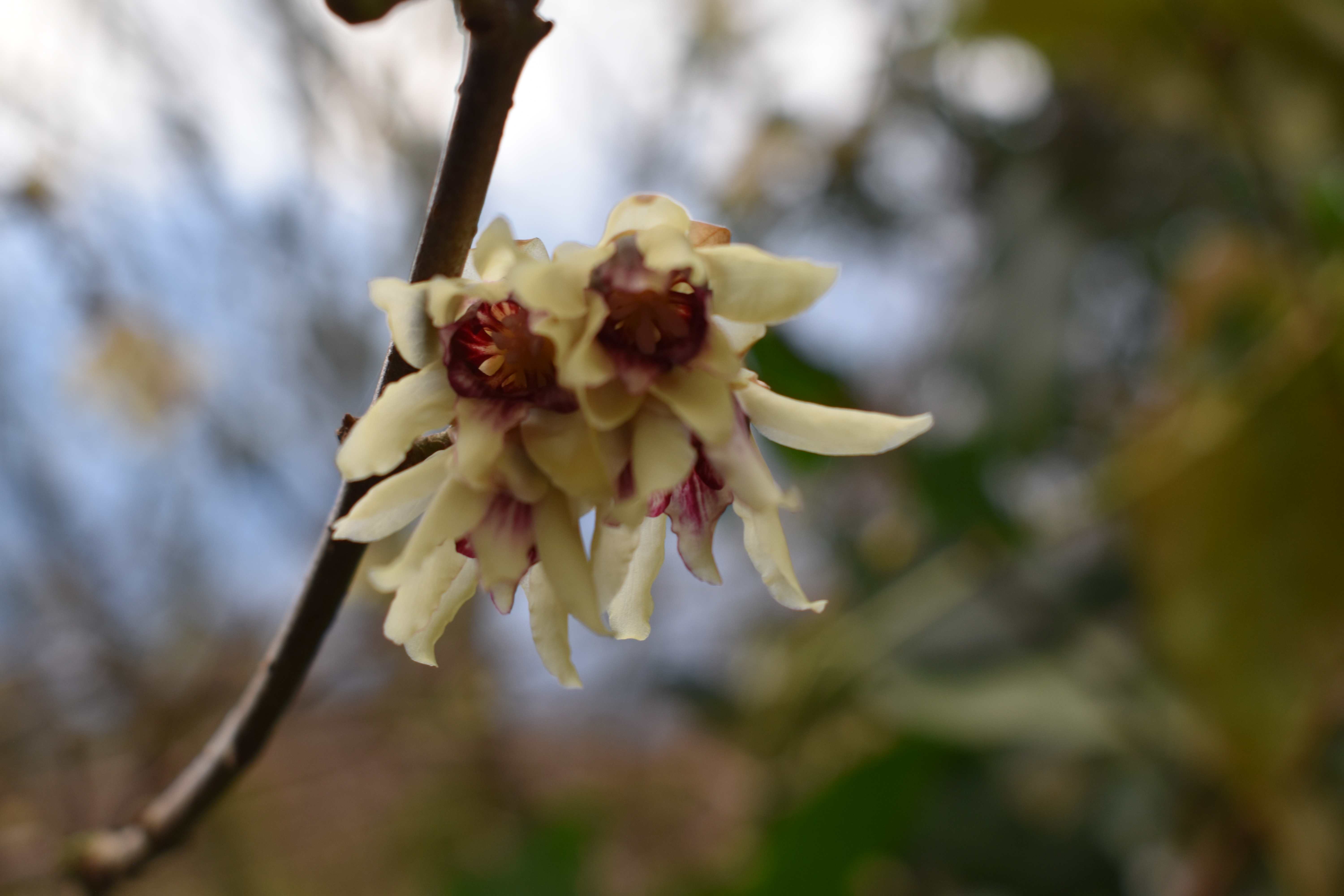
There are a few shrubs that are winter flowering and they are also scented to help attract the few pollinators that appear on milder, brighter days.
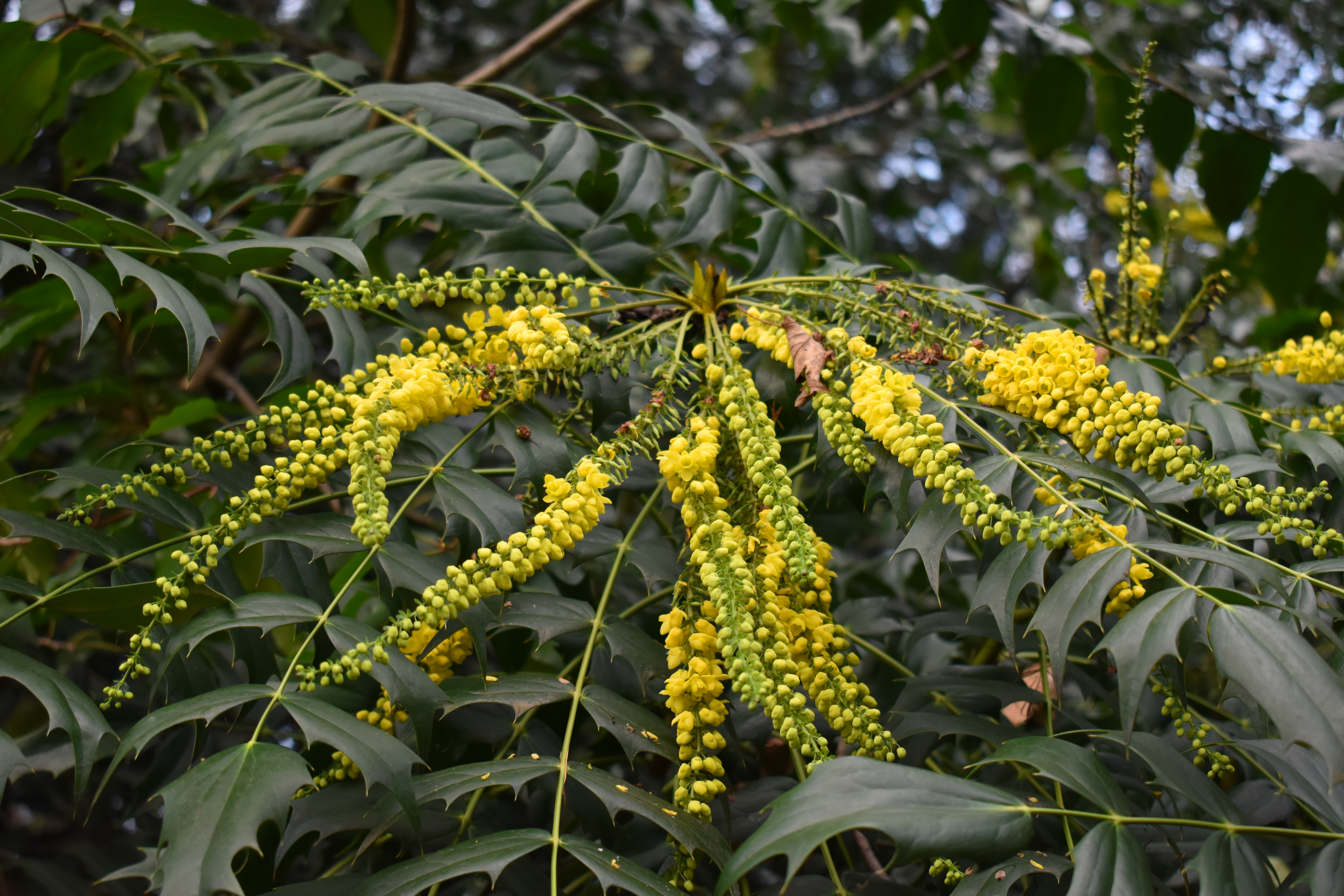
Below from left to right – Cornus mas, Viburnum bodnantense ‘Dawn’, Mahonia media ‘Charity’.
I will finish this report of our new monthly post of our visit to Oakgate Nursery and Garden with a handful of interesting photos that didn’t fit into the main text. We will return in February.
As we enter a new year, 2024, we are hoping that the winter weather will be more conducive to gardens and gardeners. Perhaps we will be able to wander around the garden, have a look at what is going on and actually get some gardening done.
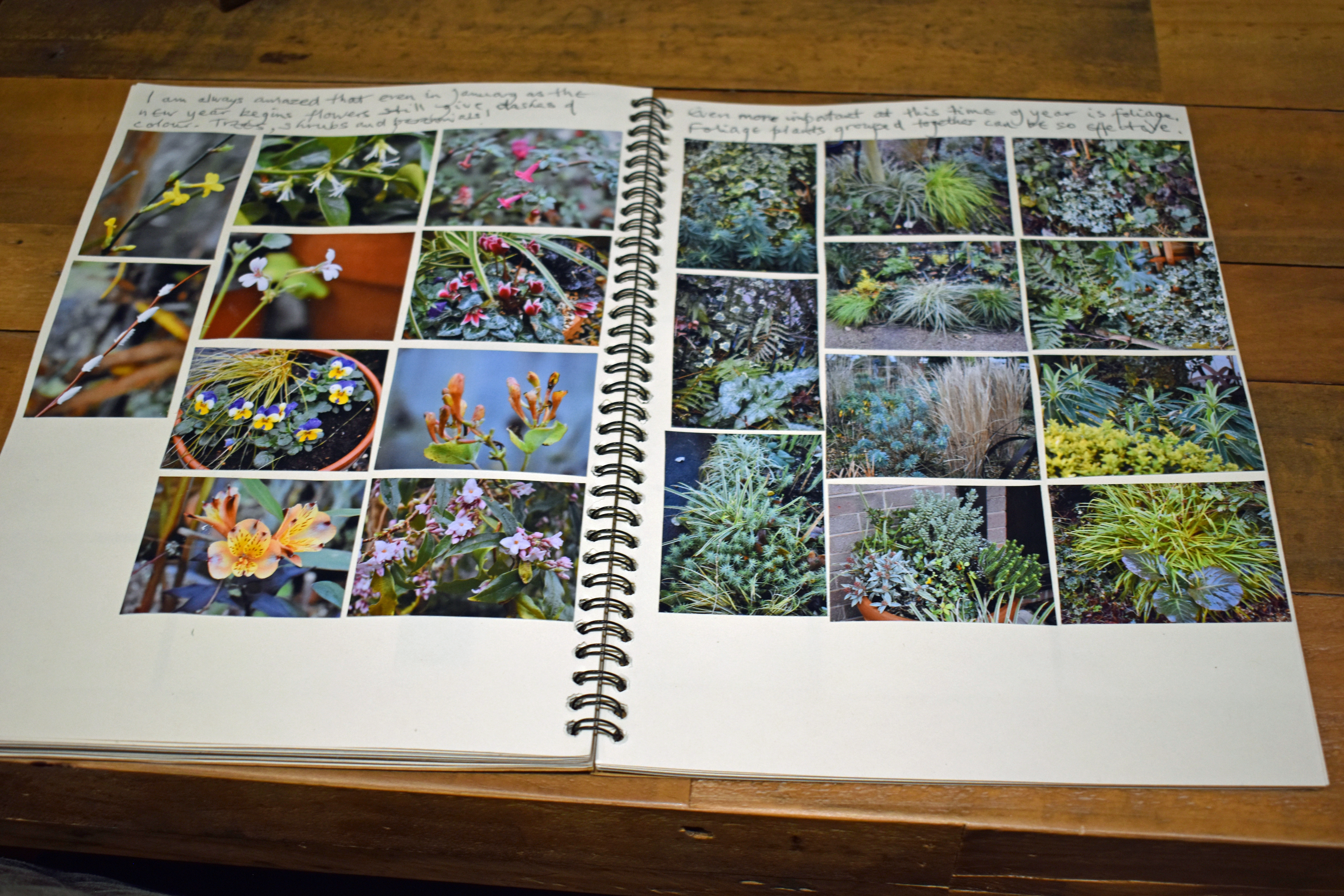
I began my entries for January 2024 with a look at plants flowering in our garden, writing “I am always amazed that even in January, as the new year begins, flowers still give dashes of colour. This colour can come from trees, shrubs and perennials!”
To support my introduction I shared ten photos of flowers in our patch.
On the page opposite I moved on from flowers to foliage. I noted that, “Even more important at this time of year is foliage. Foliage plants grouped together can be so effective.”
I then shared some photos of such plant pairings.
“Arum are one of the most important plants due to the incredibly varied leaves – shape, colour, silver markings and splodges of black or purple.” Their varied markings go well with any other foliage plants to create striking combinations.
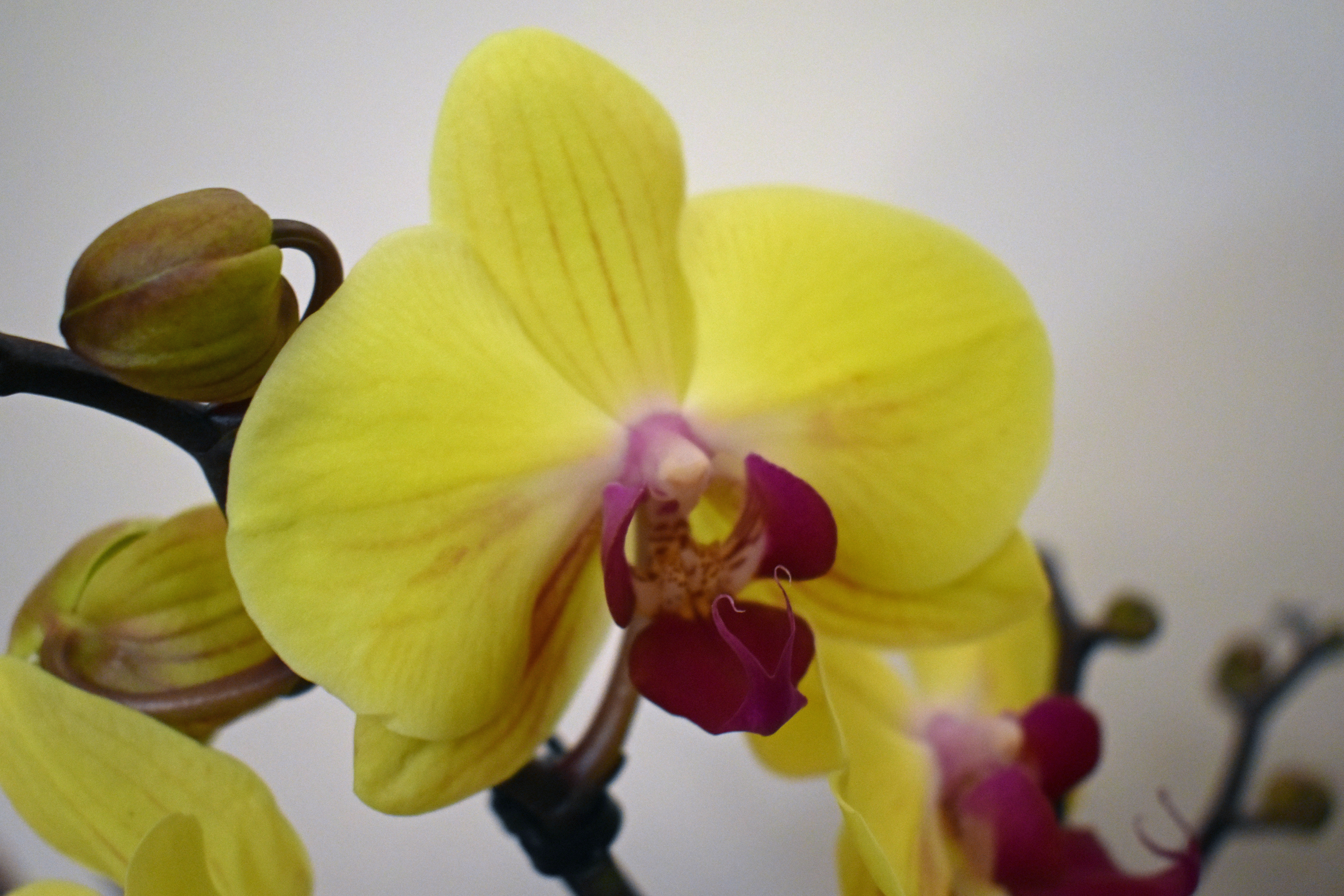
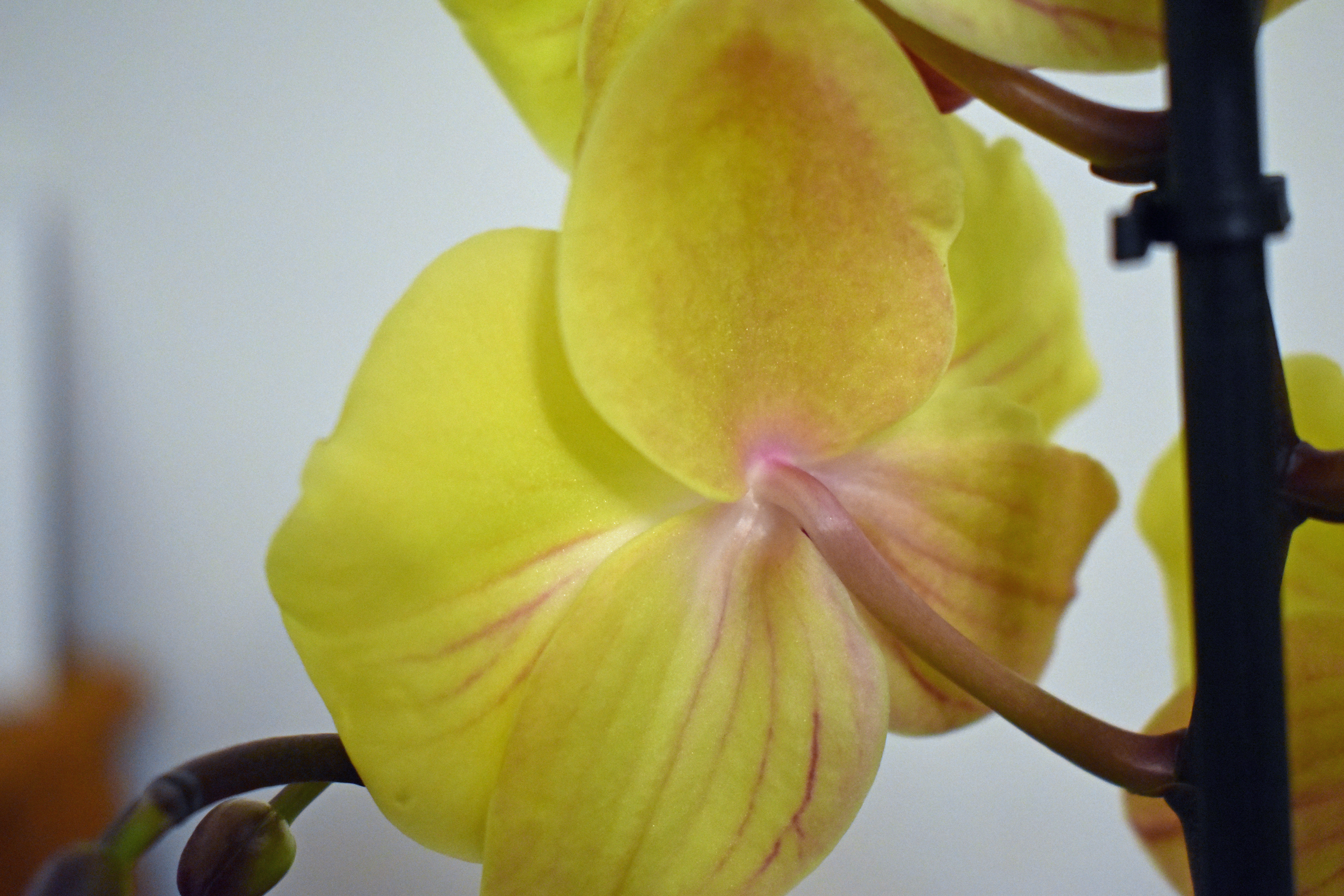
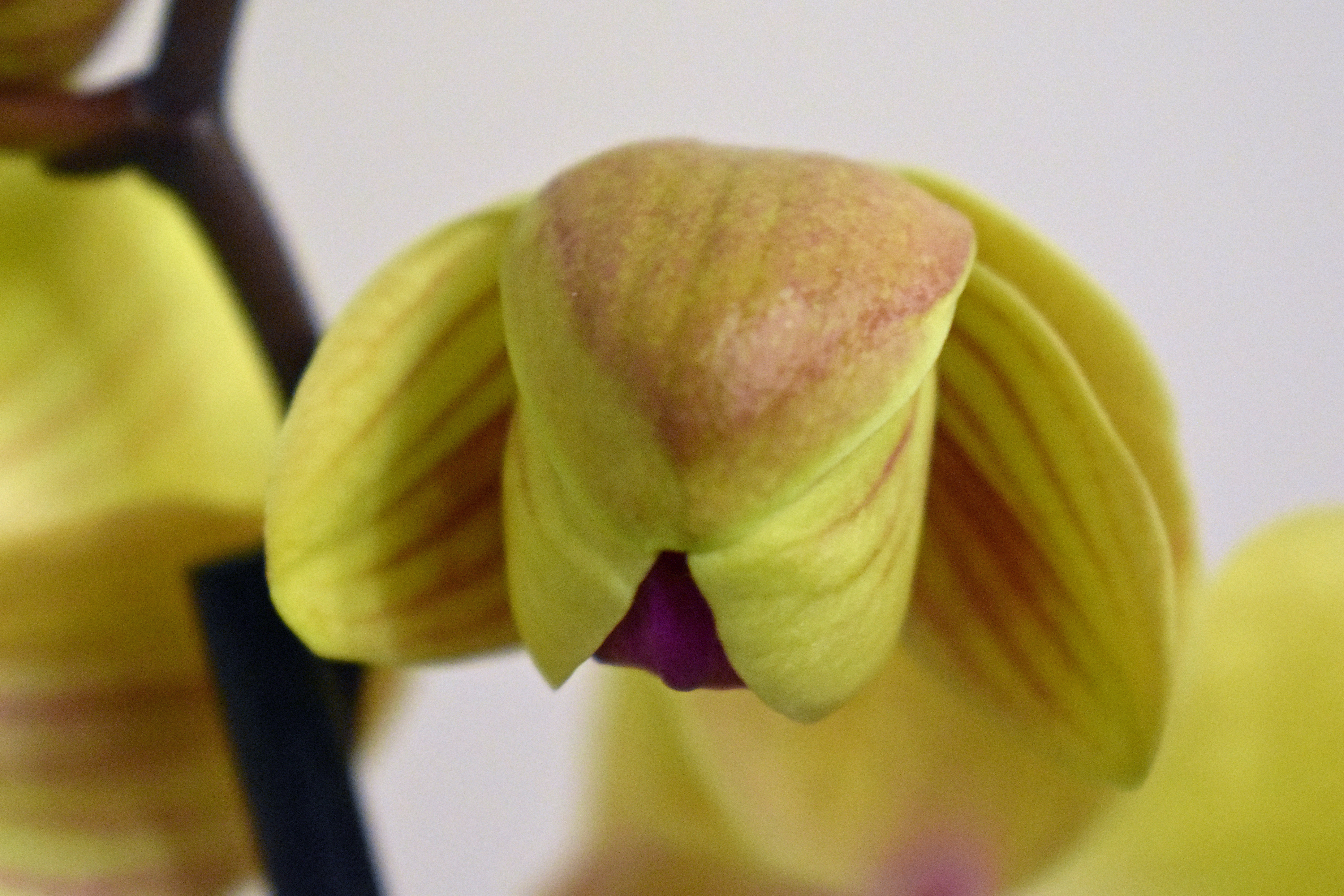
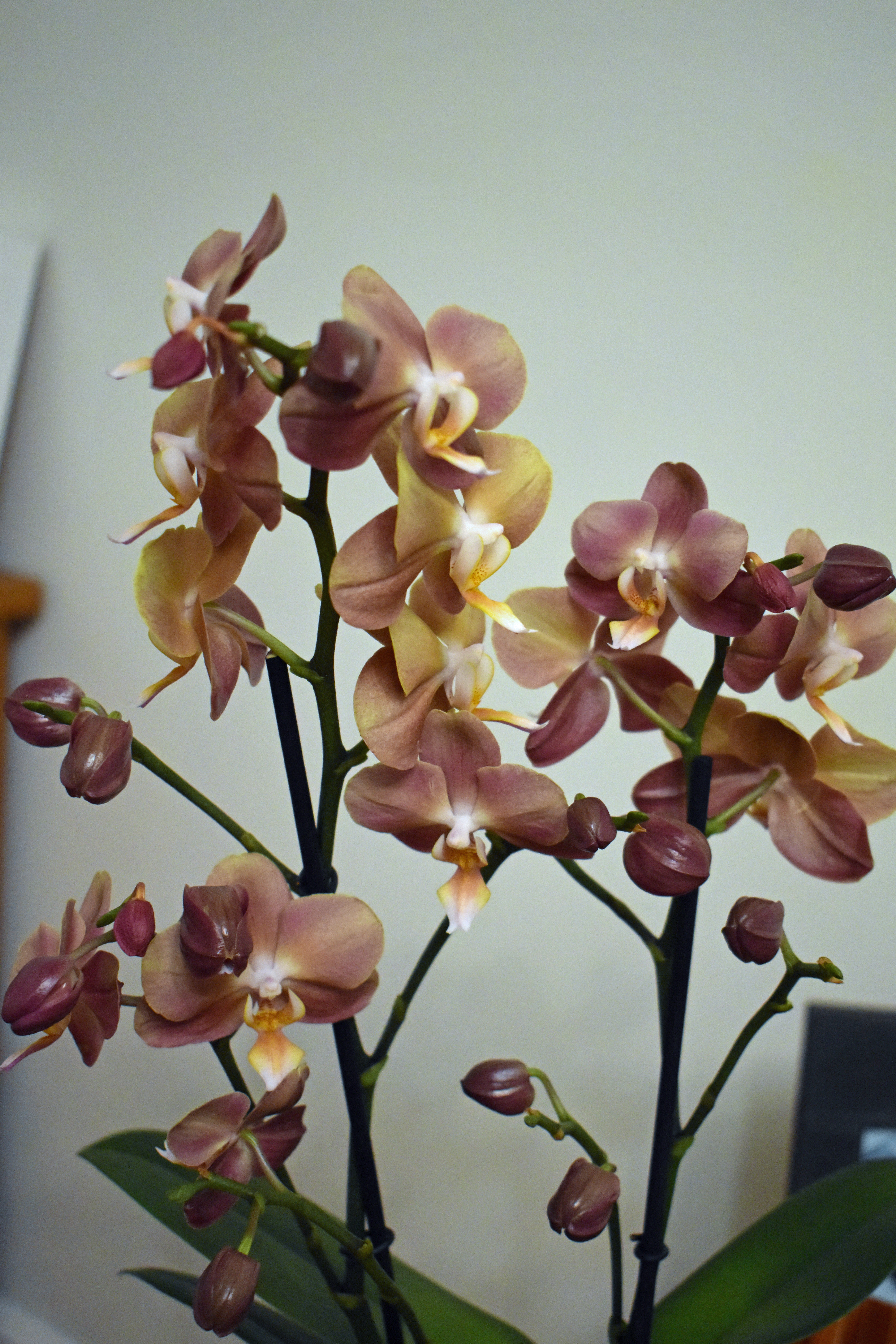
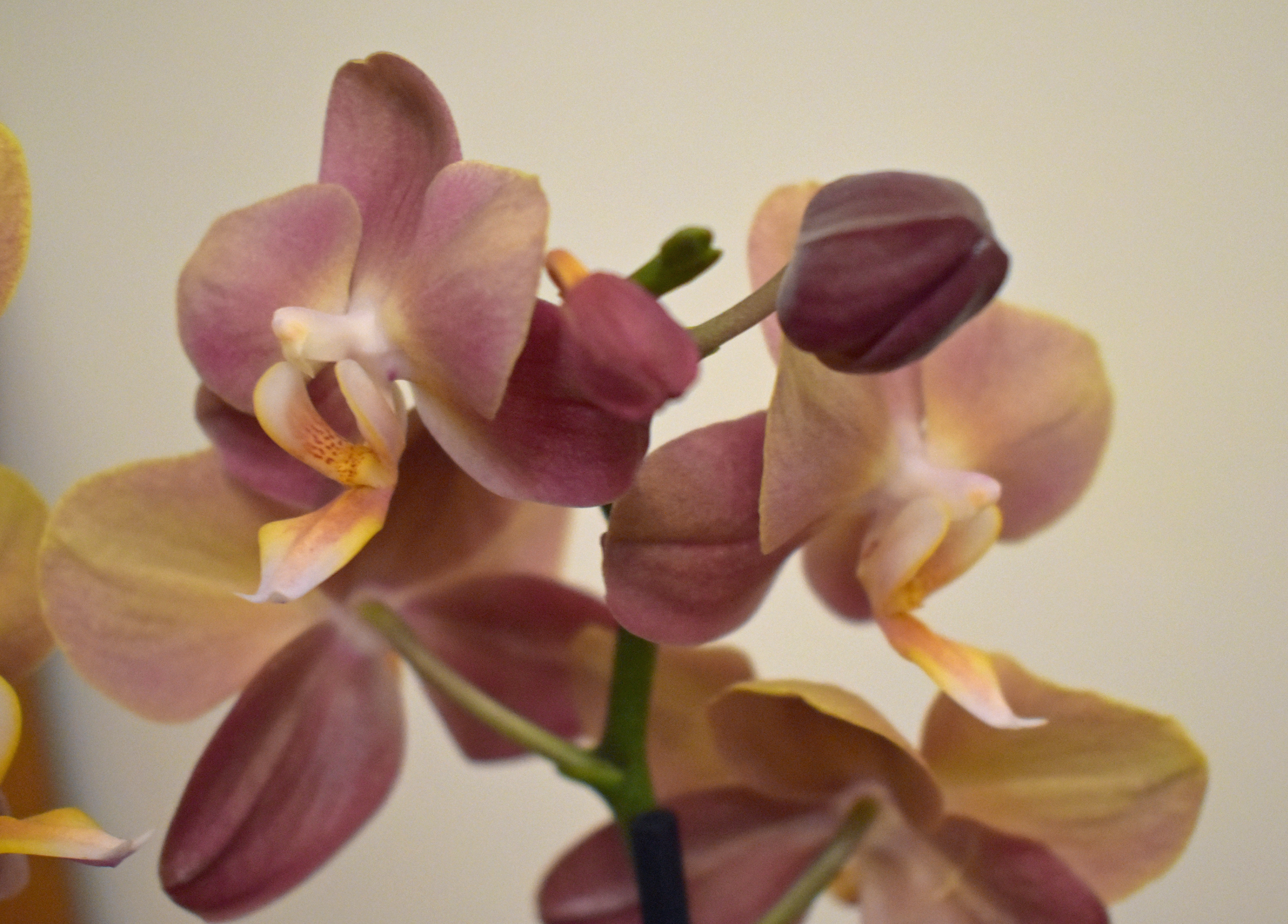
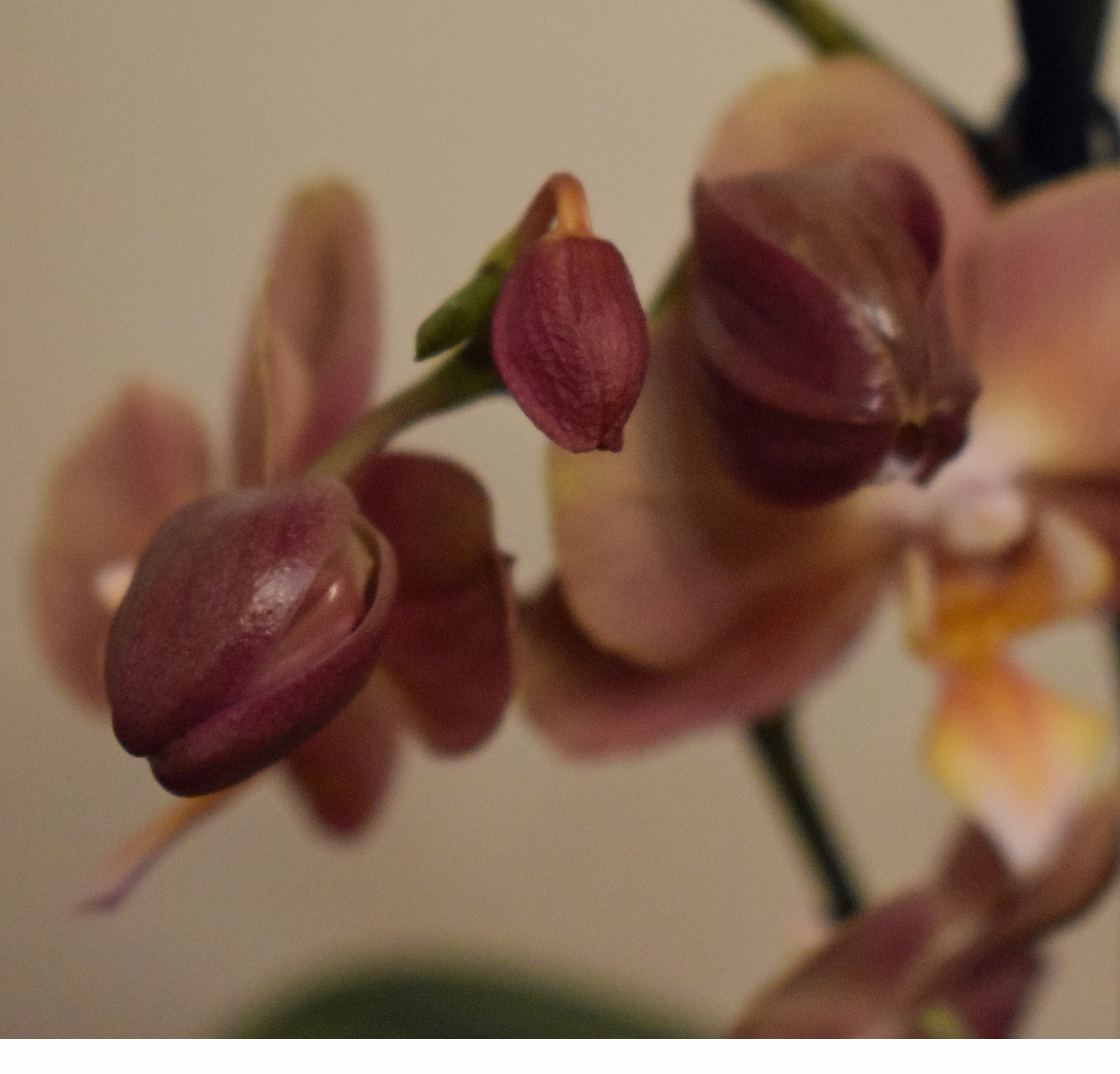
On the page opposite the arums I specialised in some orchids, phalaeonopsis coloured in rich yellows and oranges.
Concerning our moth orchids I wrote,”We grow just one hardy orchid outside, in amongst our ferns in the ‘Shade Garden’, but we have a few more orchids inside, a small batch of citrus coloured phalaeonopsis, the Moth Orchid. The outside orchid is called Bletilla striata Shi Ran.
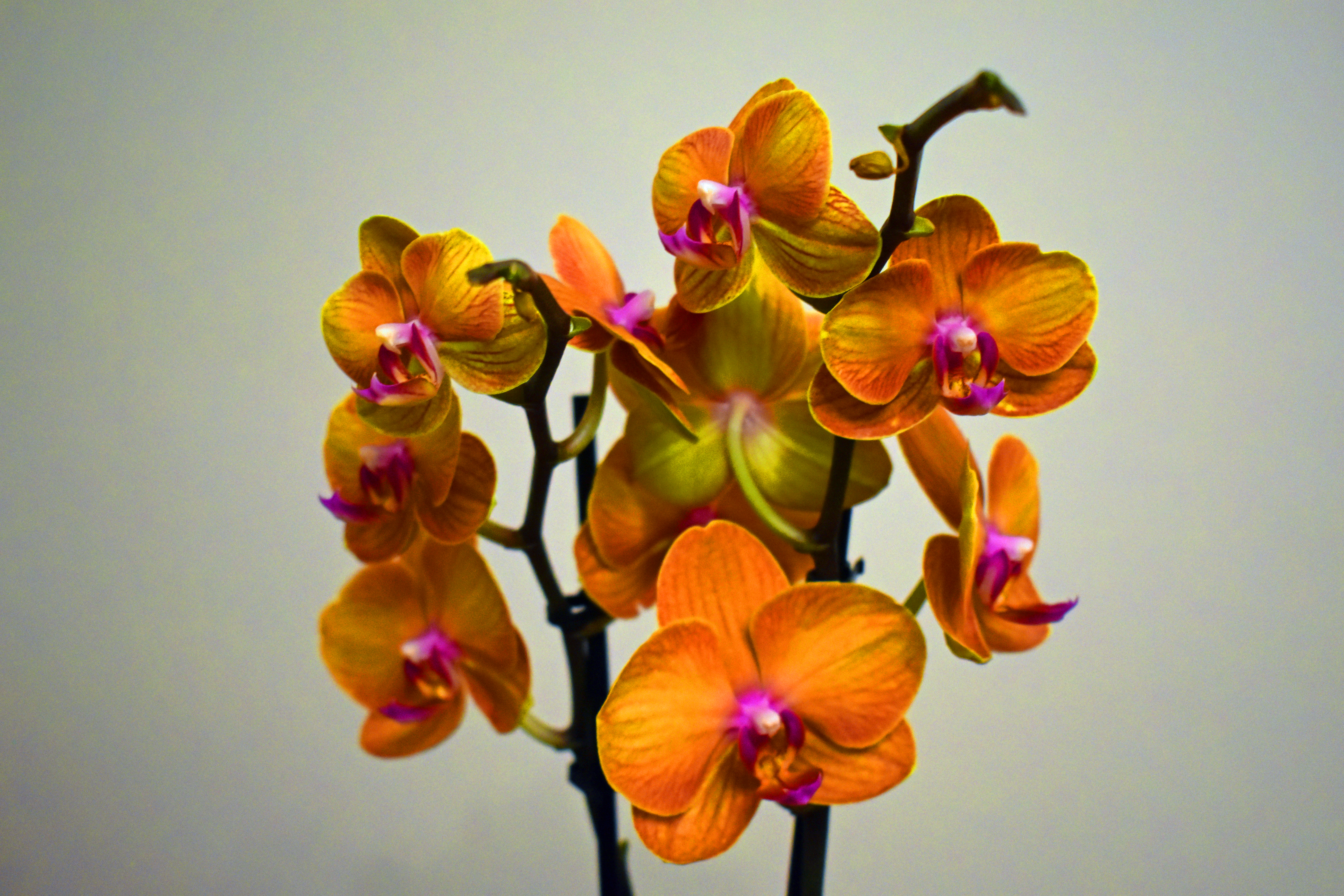
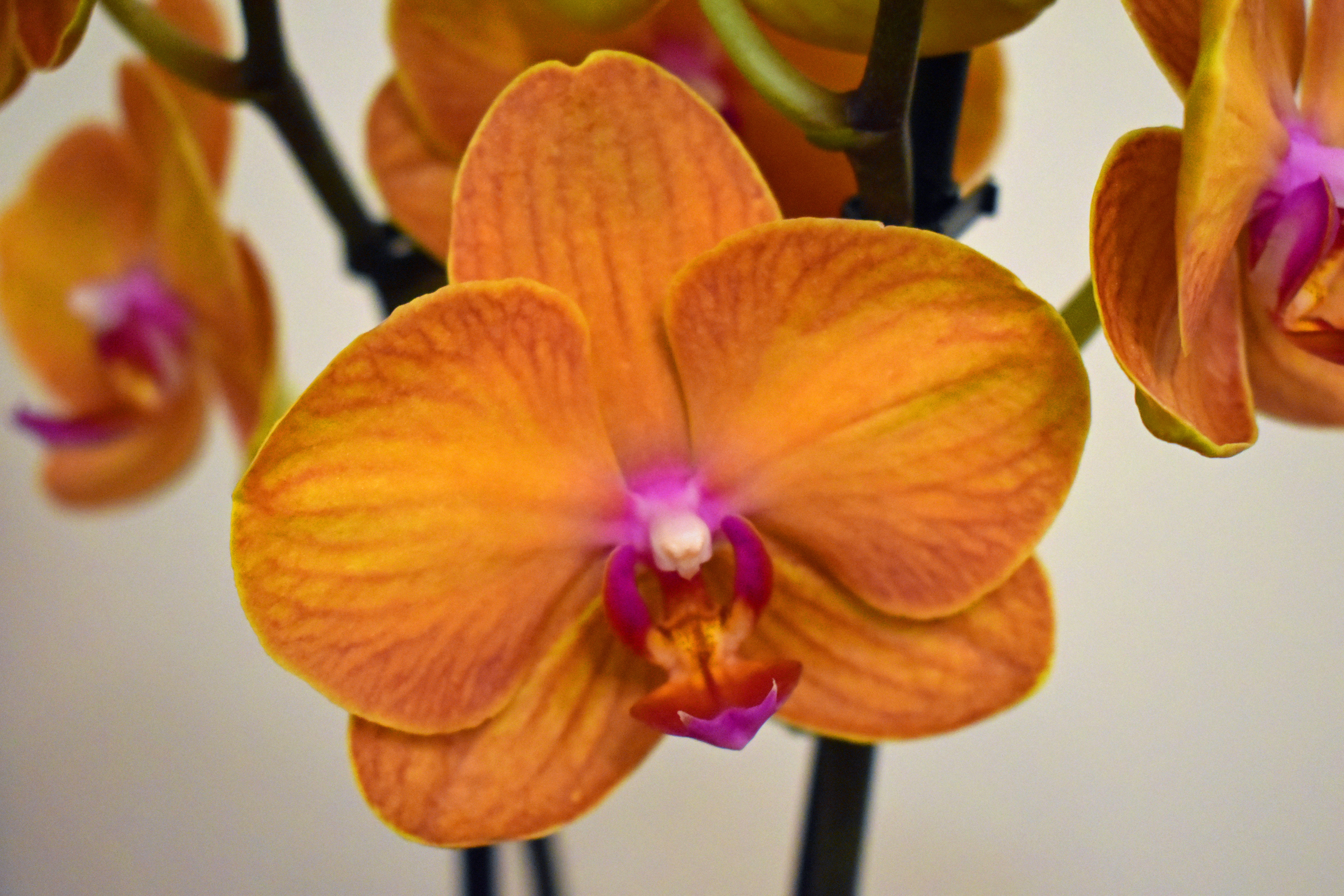
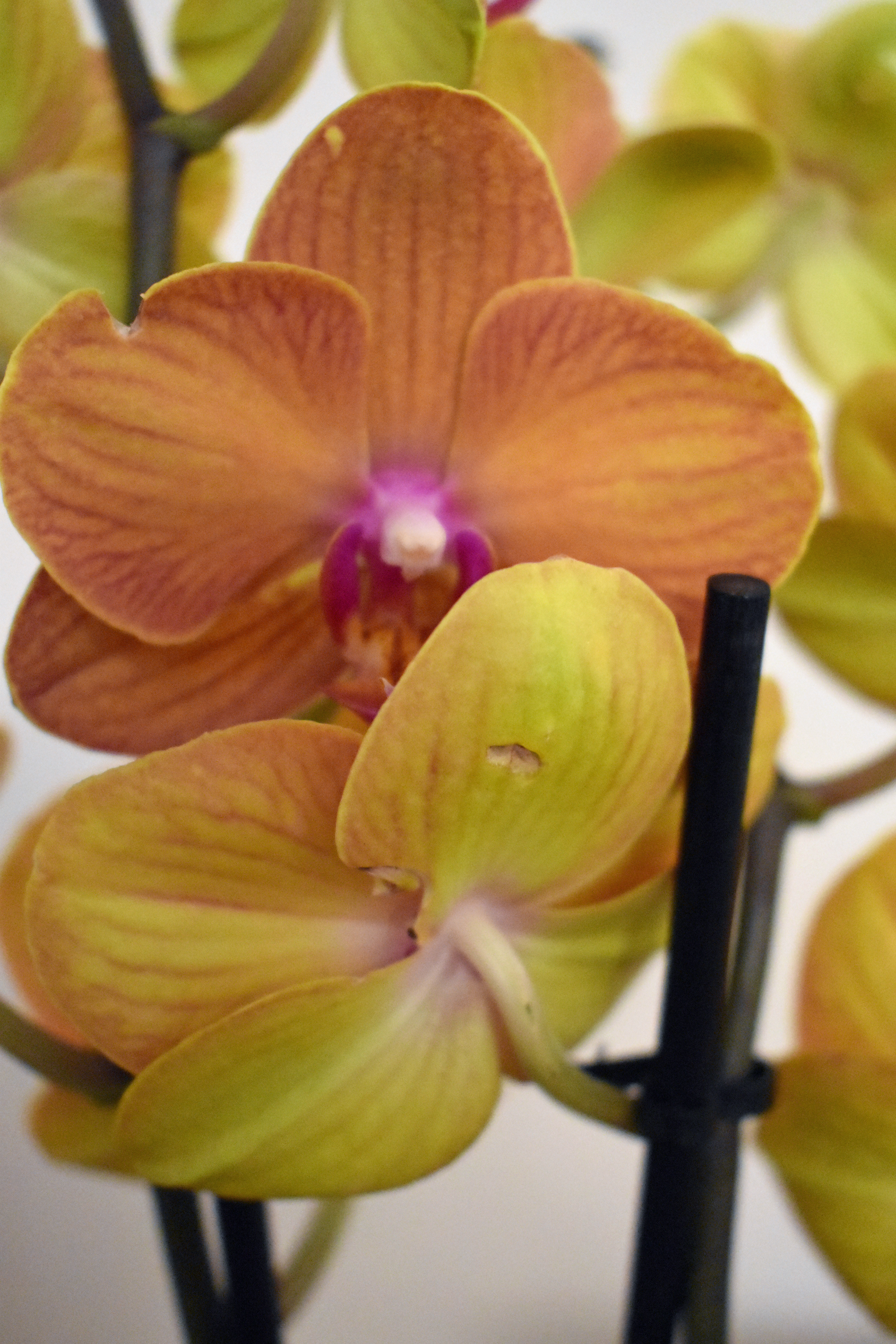
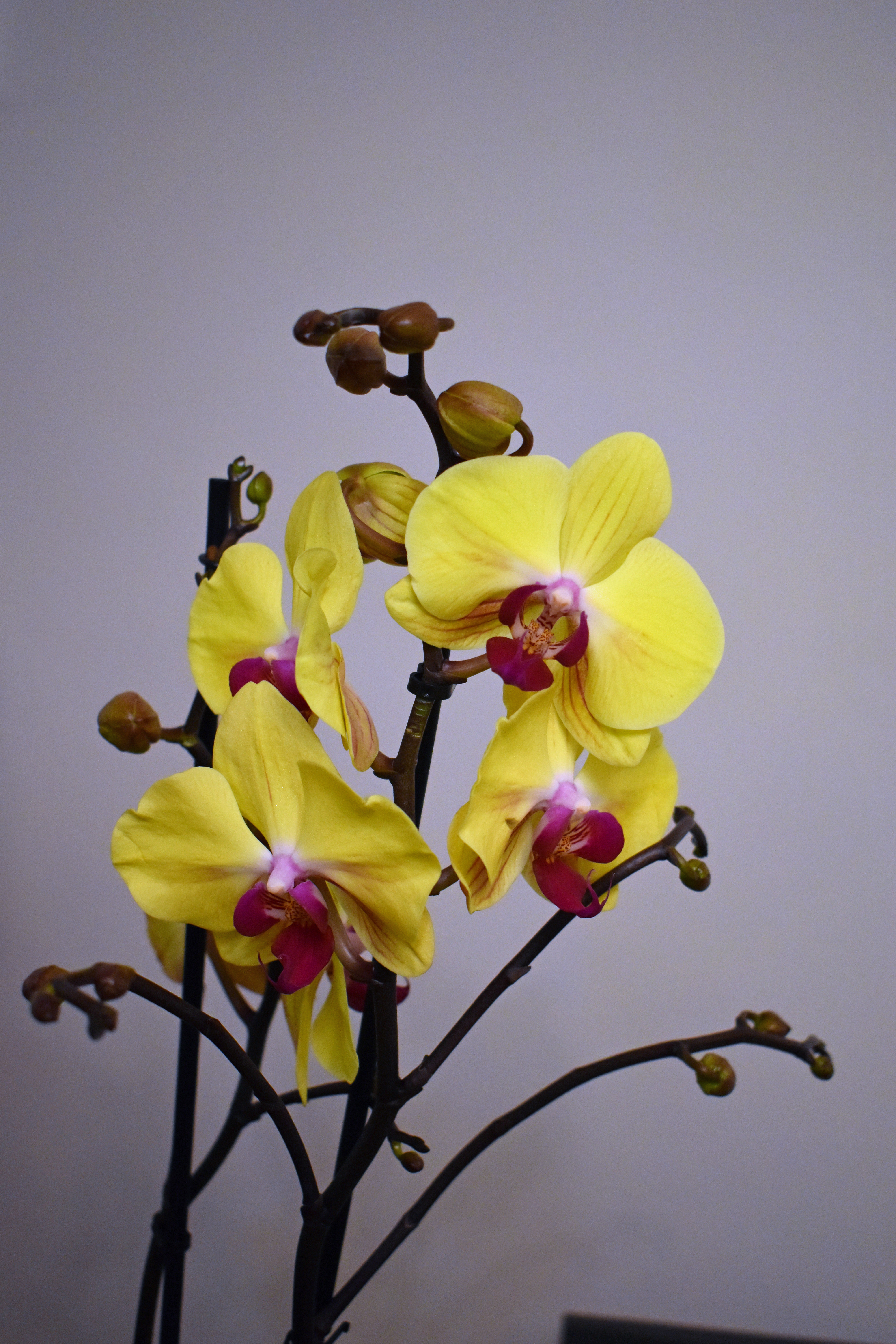
Below are photos of the brightly coloured yellow and orange phalaeonopsis. The orange blooms are of P. ‘Bologna’ and the yellows are P. “Goldion”.
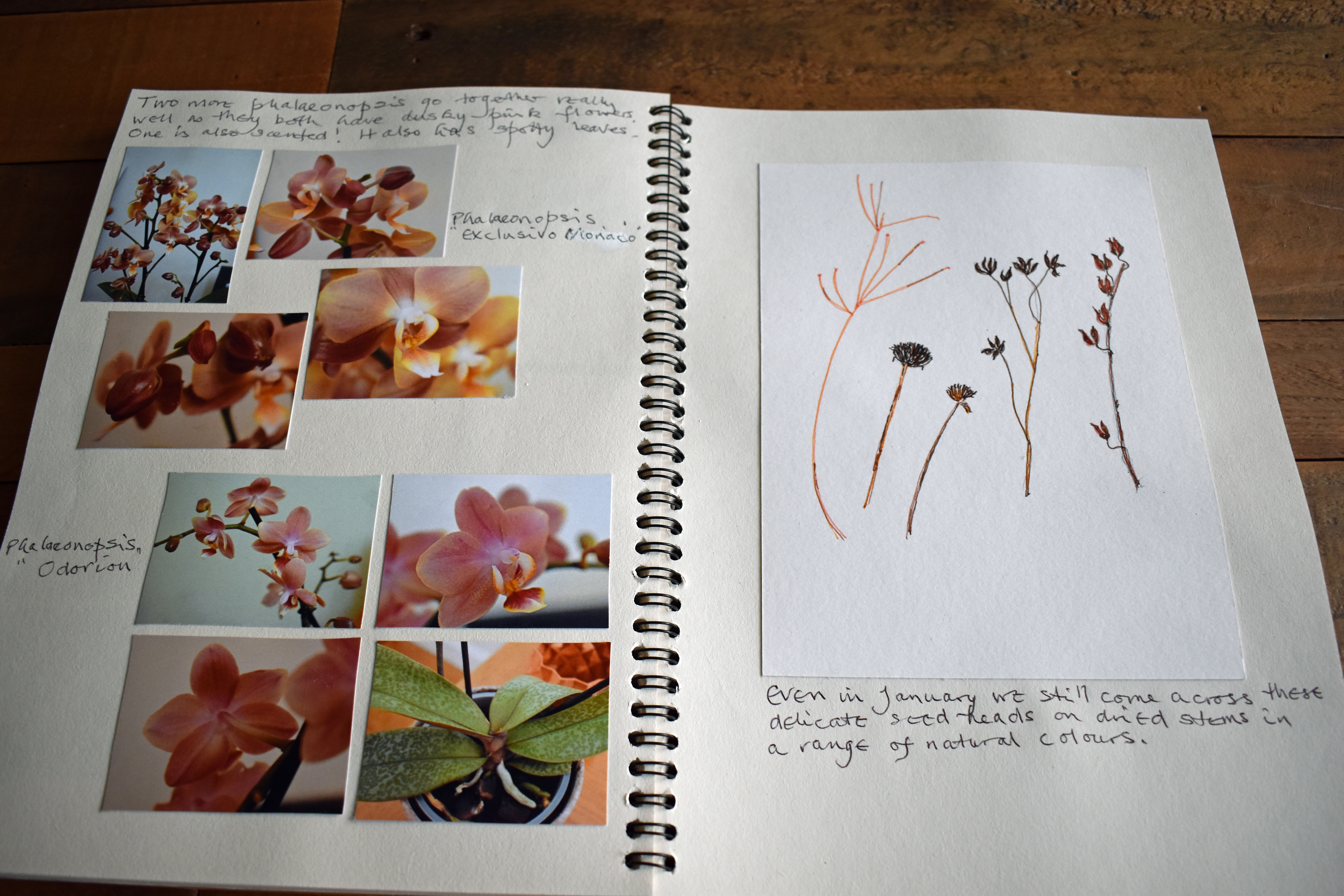
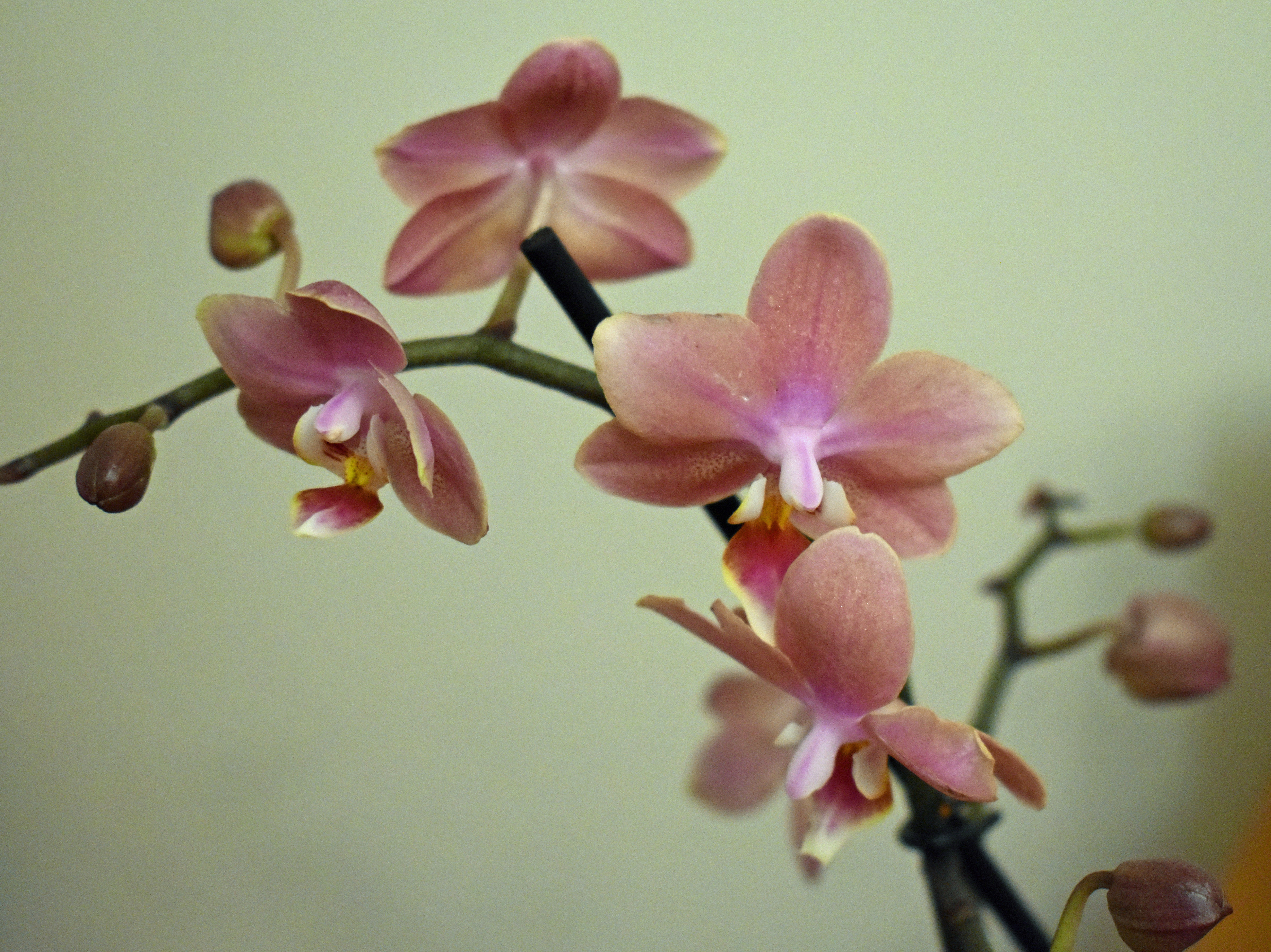
Onto the next double page spread I looked at another pair of Moth Orchid one of which is scented. Then the final page for this month shows another of my sketches of seed heads found while working in the garden in January.
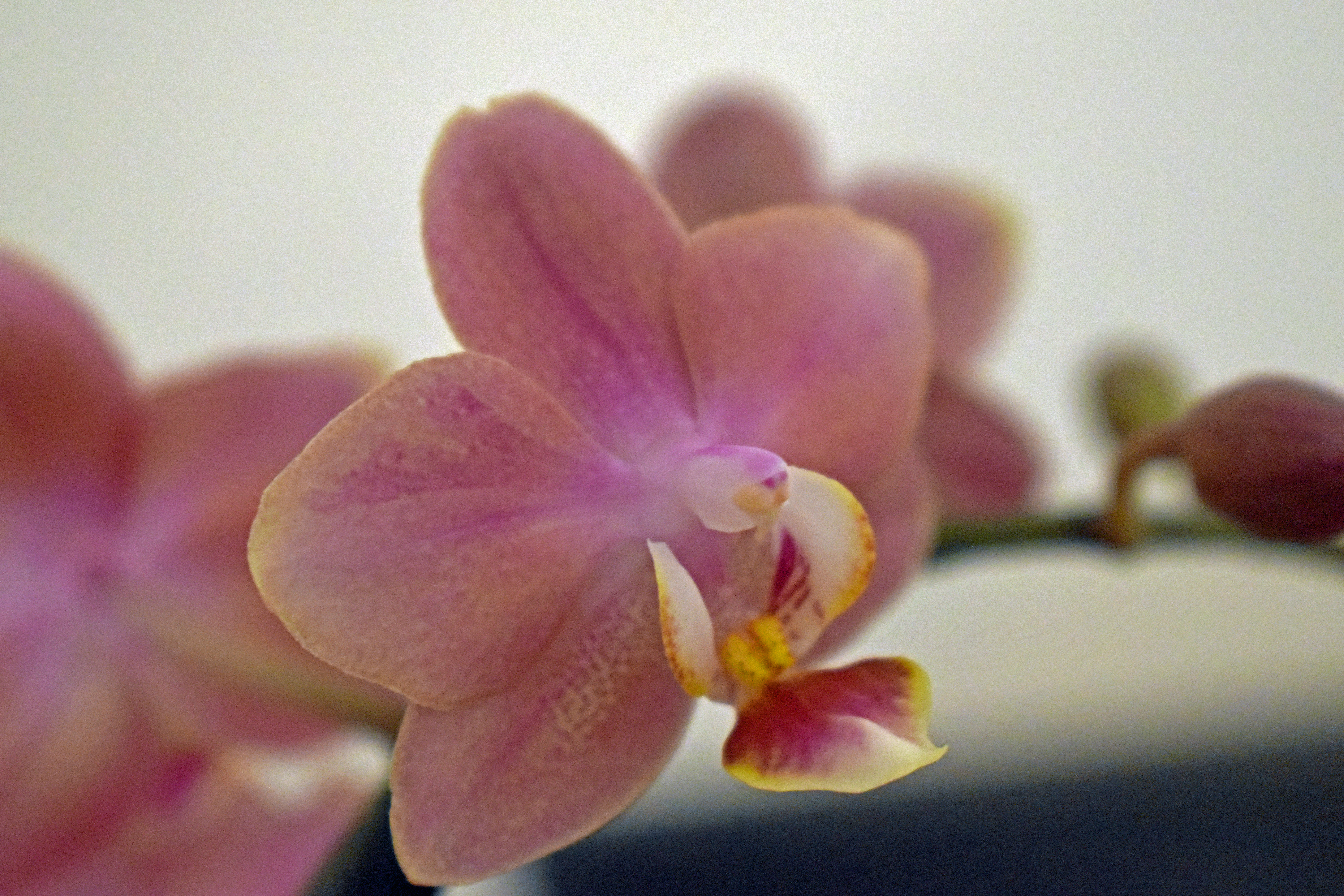
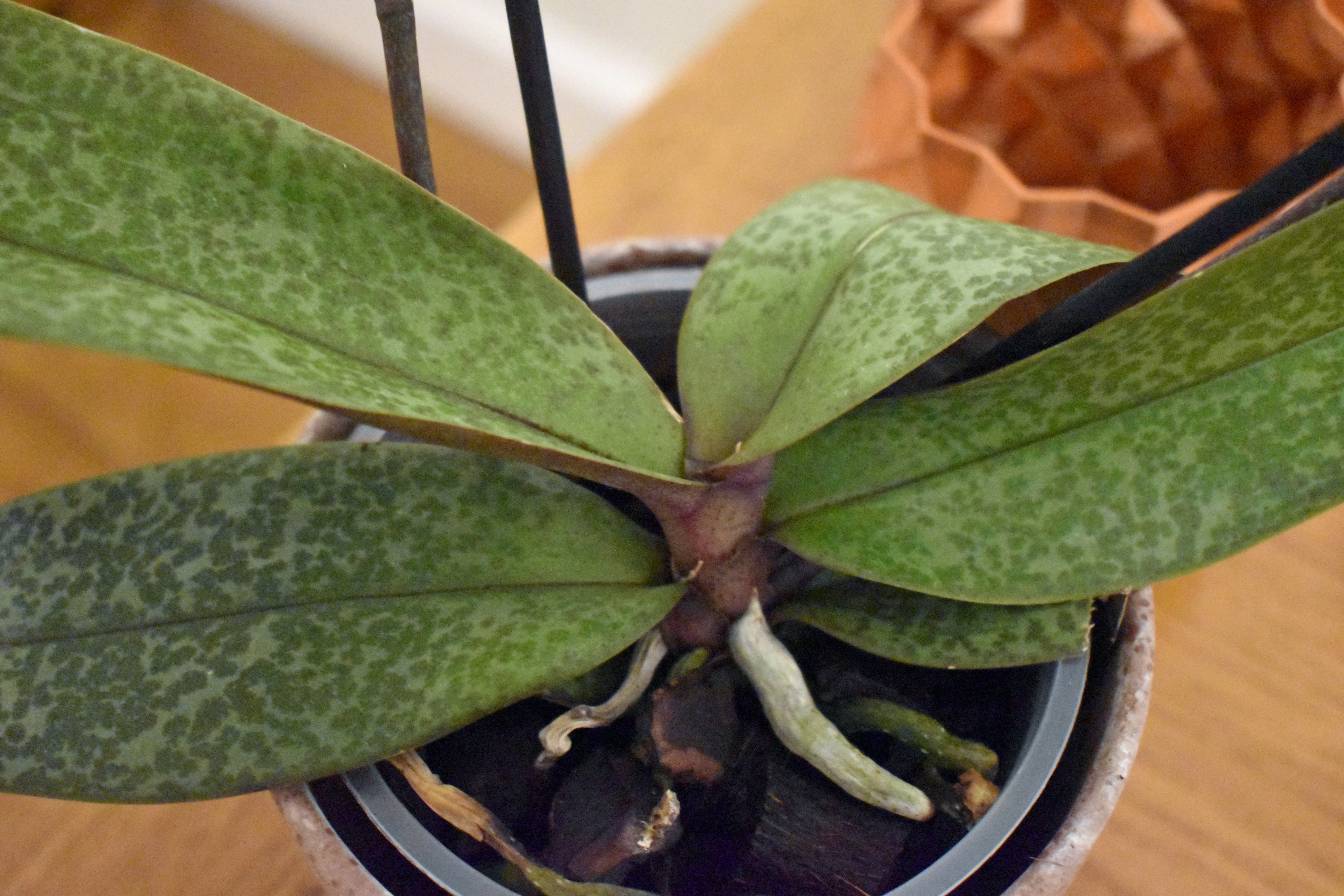
About the orchids I wrote, “Two more phalaeonopsis go together really as they both have dusky pink flowers. One is also scented! And it also has spotted leaves.”
Below; Phalaeonopsis ‘Exclusivo Monaco’
Below; Phalaeonopsis ‘Odorion’
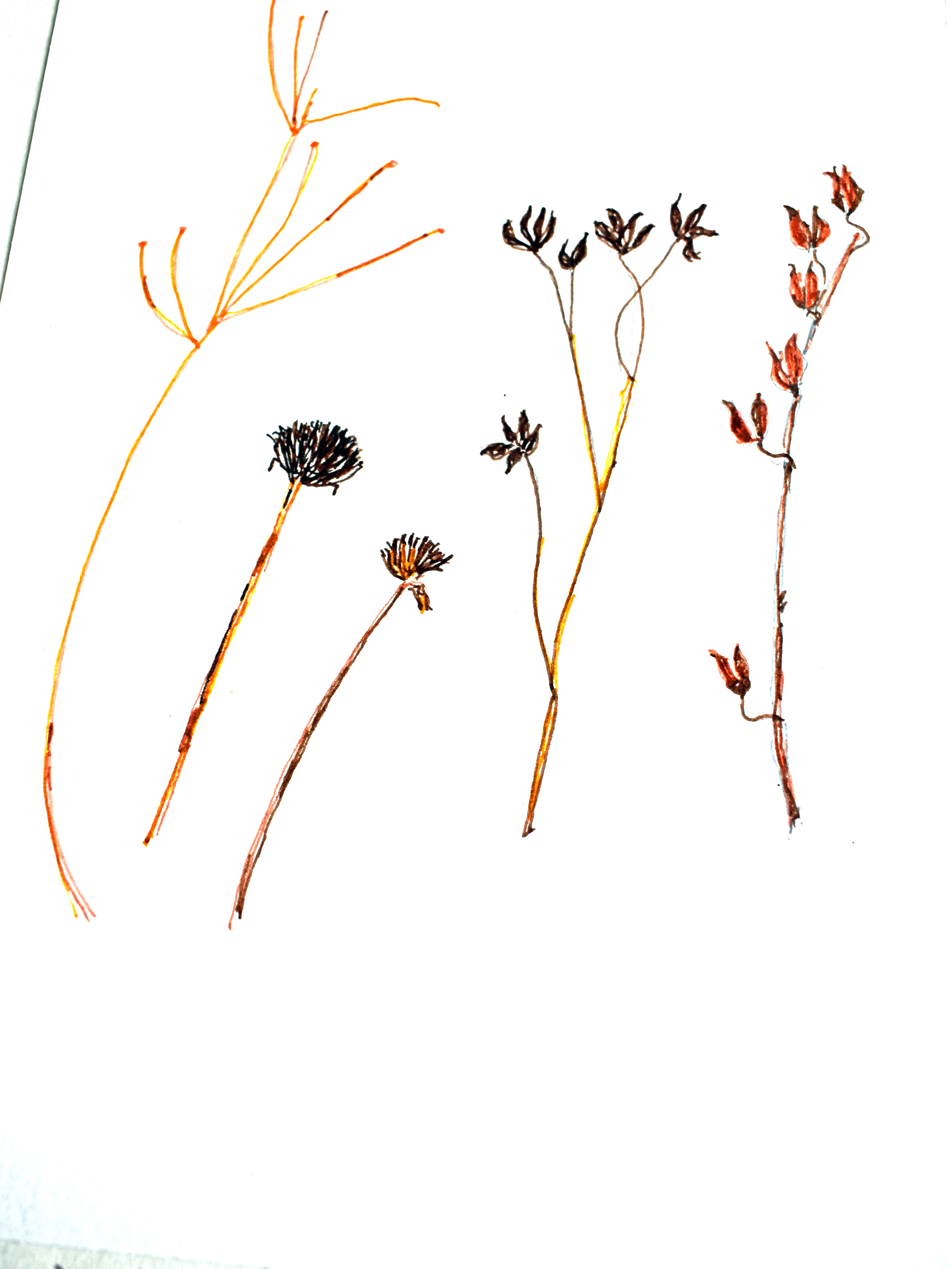
The final page for January in my Garden Journal 2024 concerns one of my sketches featuring seed heads found while we tidied up some perennial plantings.
I noted that, “Even in January we still come across these delicate seed heads on dried stems in a range of natural, neutral colours.”
The next time we visit my Garden Journal 2024 will of course be in February, our shortest month of all. Perhaps I will be able to report on some better weather for us gardeners and our plants.
We decided to feature this small garden as a monthly feature throughout 2024, as we visit regularly anyway for a wander, coffee and cake and a look at the nursery itself. The garden here is right by the cafe and is the private garden of the owners’ home, which visitors can enjoy.
This is a beautifully planted ‘wandering garden’ with grass paths meandering around the many mixed borders. Trees, both deciduous and evergreen, mix with climbers, shrubs, again evergreen and deciduous, as well as perennials and flowering bulbs.
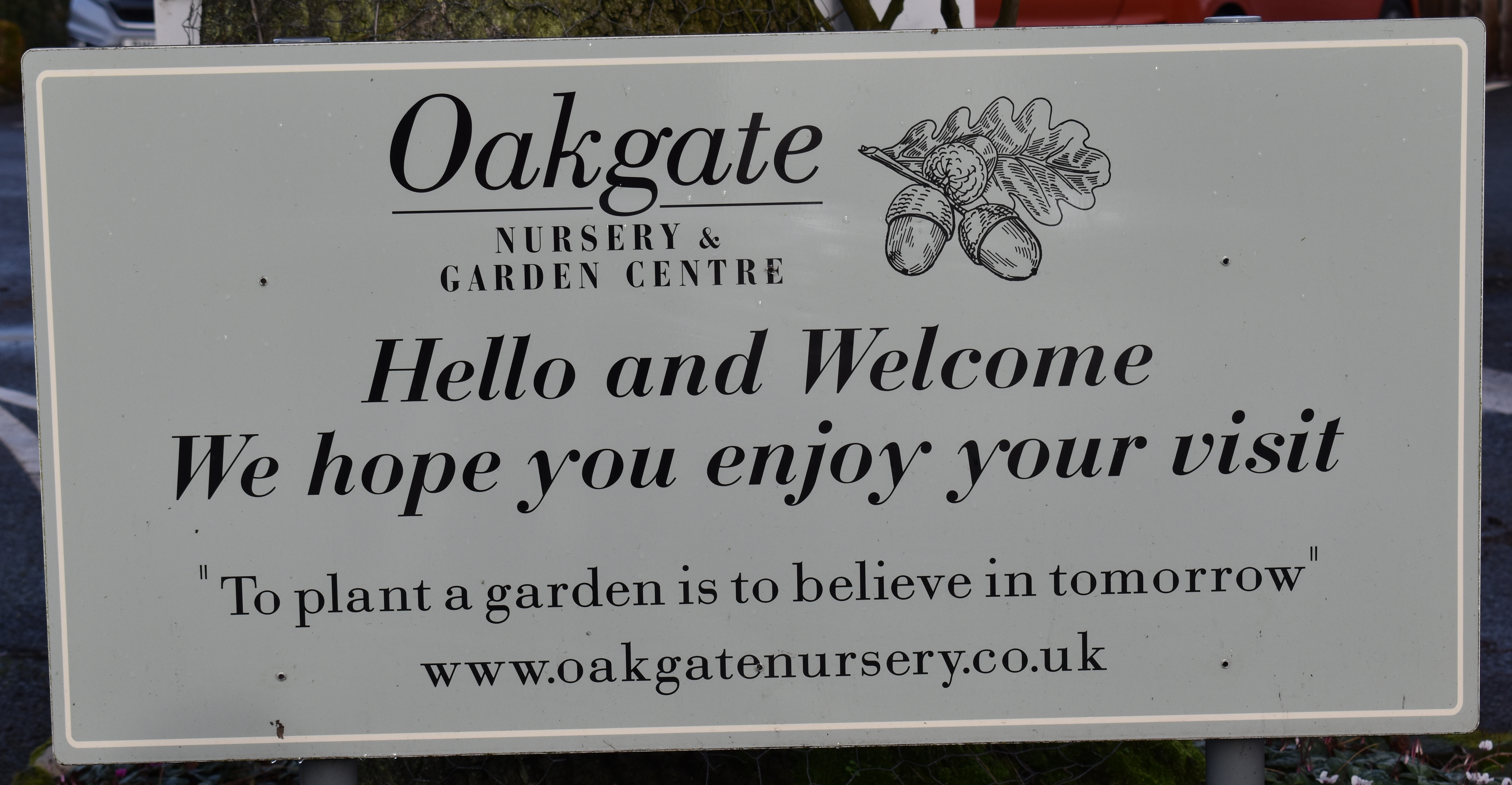
The welcome sign is sited on the driveway and is designed in a calm grey with black writing with the quotation “To plant a garden is to believe in tomorrow”. Next to its name is its logo, a beautiful line drawing of an oak leaf and acorns in their ‘thimbles’.
The drive sides are long mixed borders.
Turn left at the top of the drive and follow around the cafe into the main garden itself, which is divided into two by the exit driveway. One of the best foliage plants with their strappy, sword-like leaves in many colour combinations.
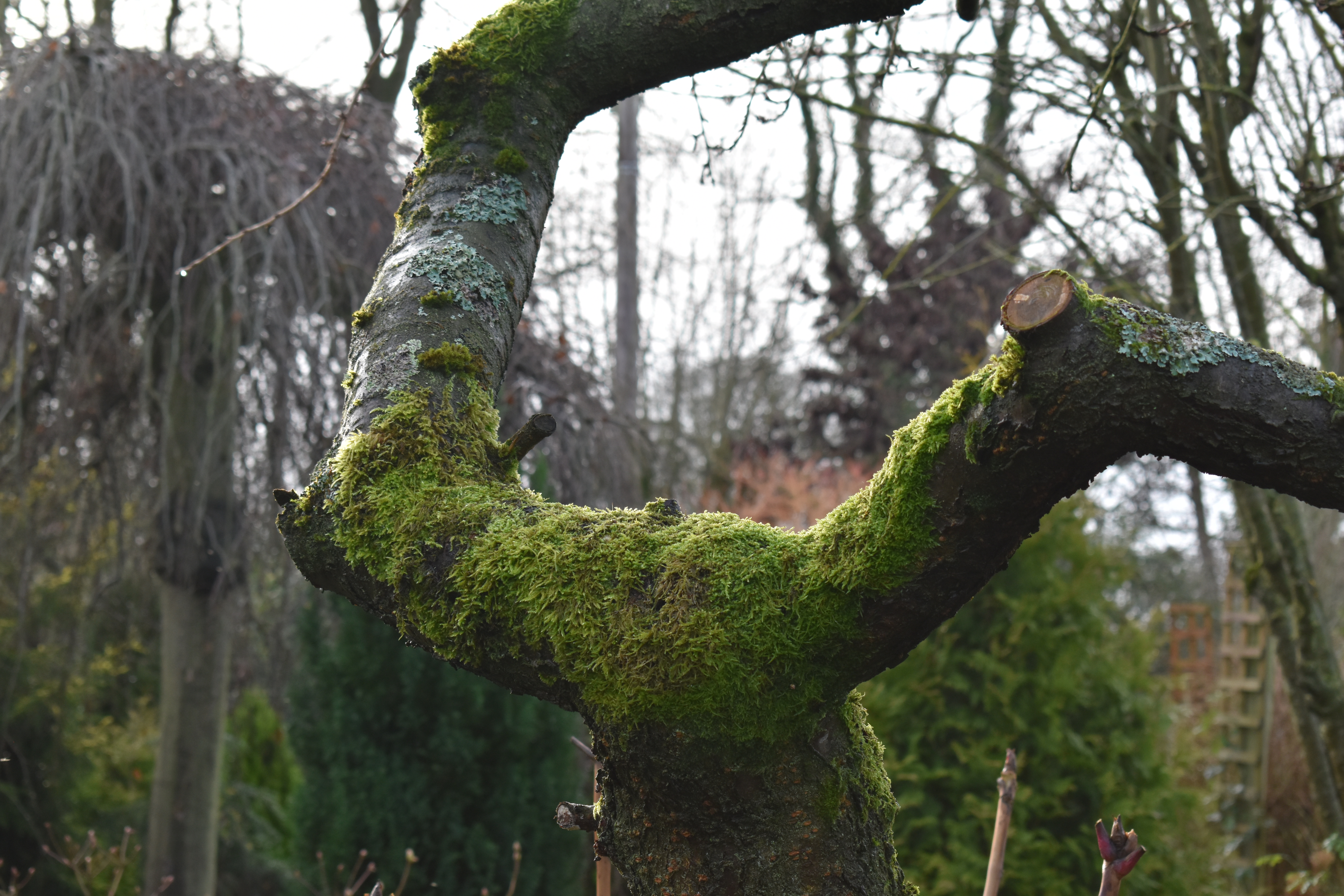
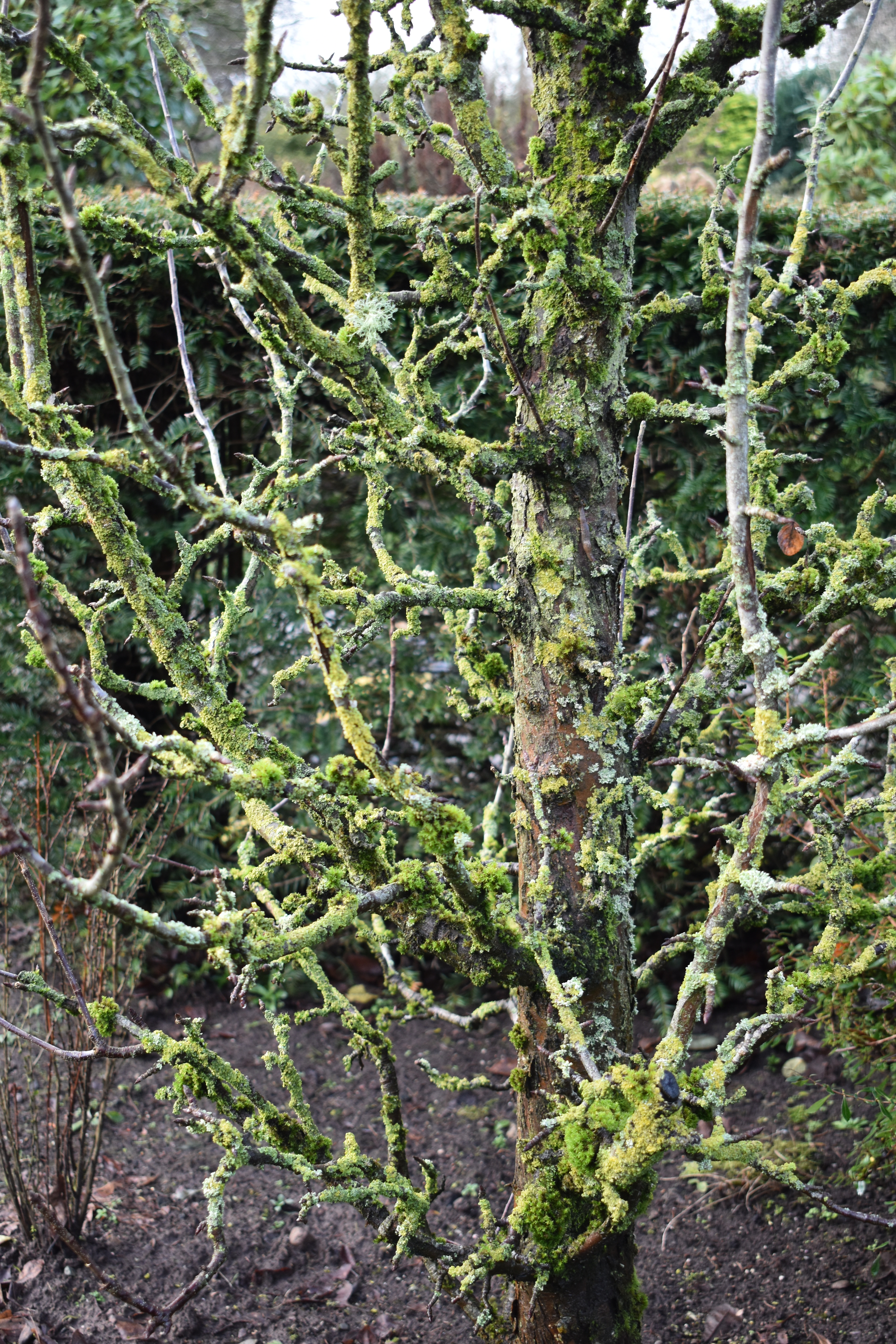
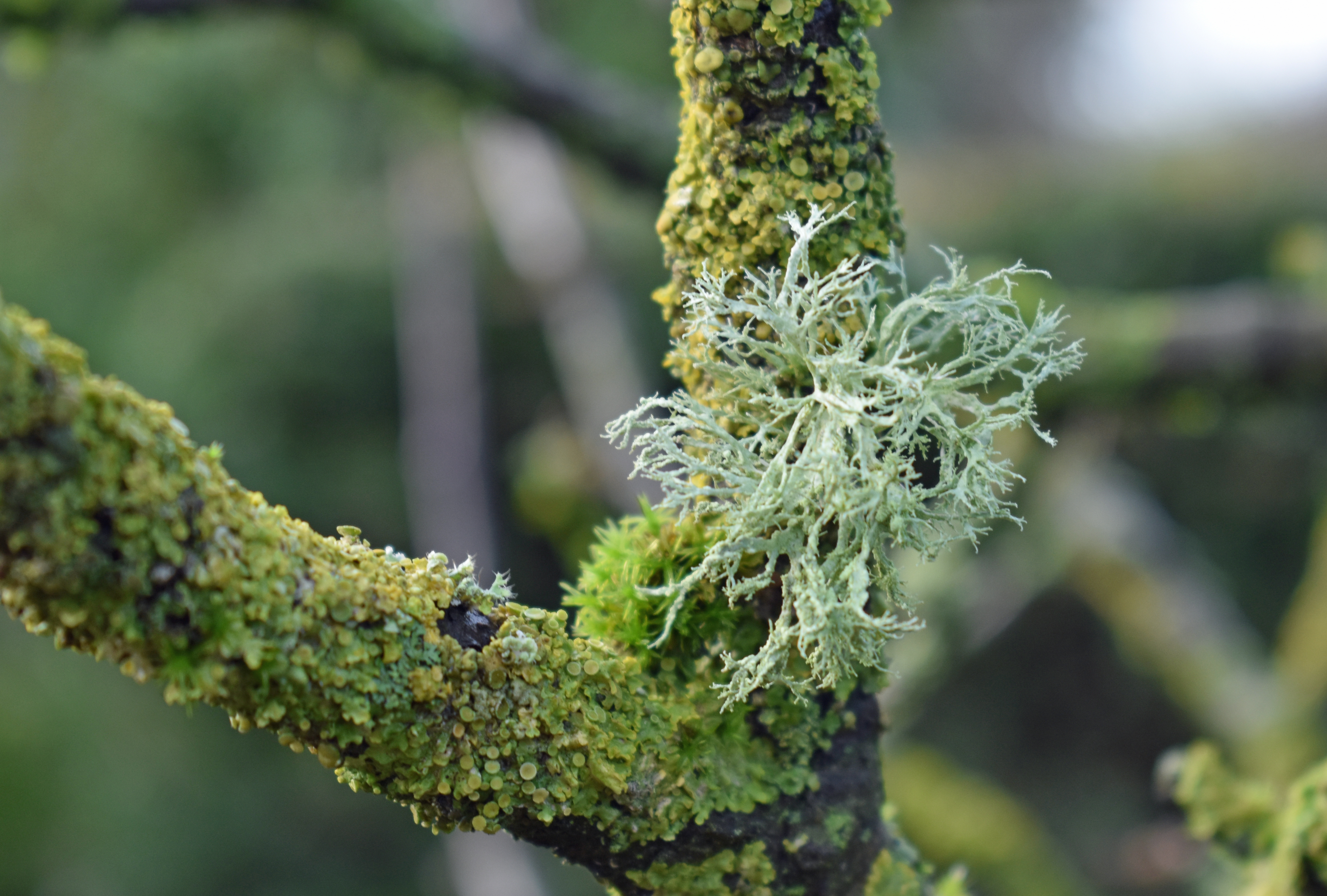
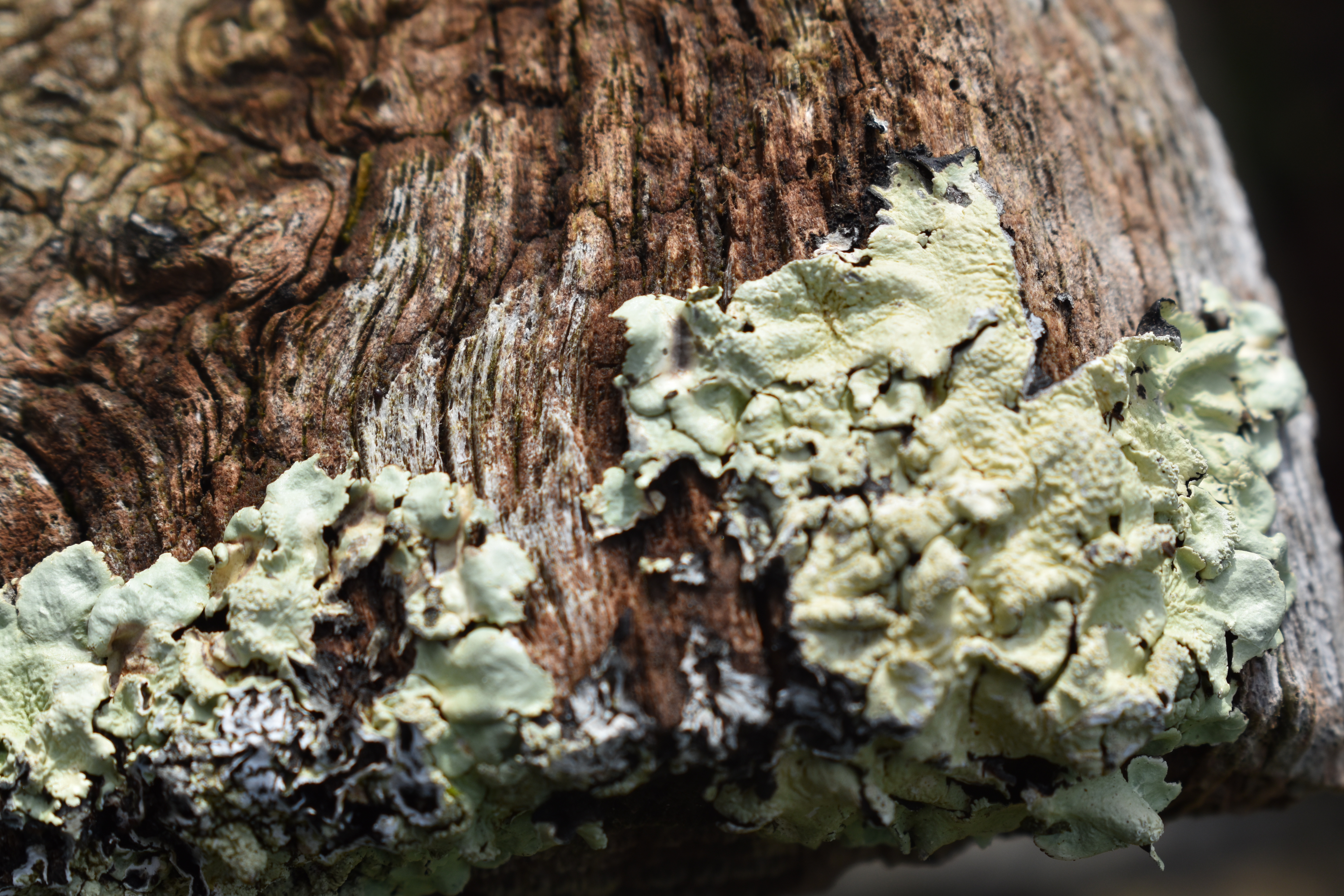
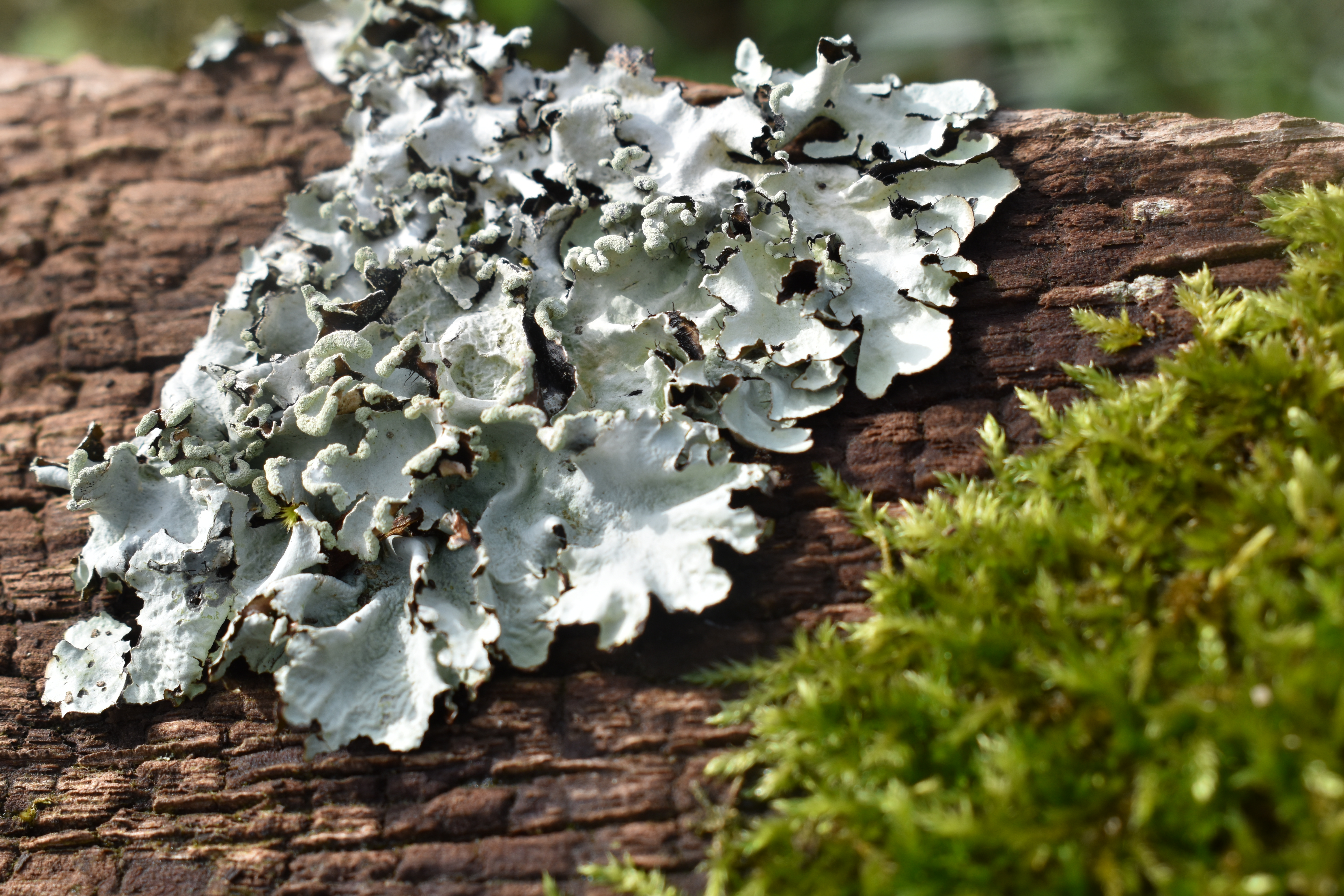
Close by is this wonderful tree decorated with mosses and lichen, illustrating how healthy the air here must be.
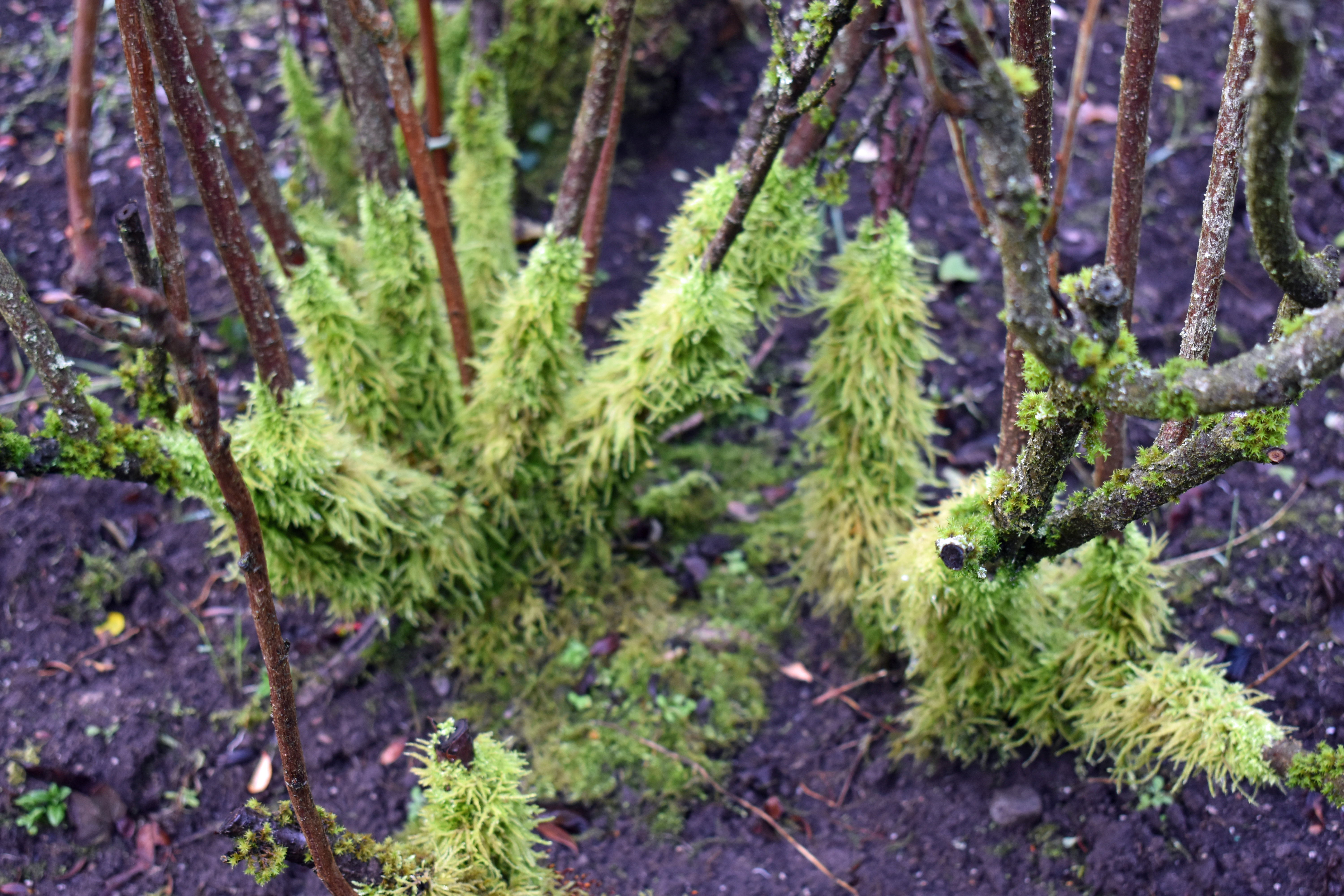
Other trees and shrubs display similar coverings of lichen, mosses and ferns. We do not grow such plants specifically for these wonderful lichen, mosses and ferns but it feels so satisfying to find them.
Shrubs give points of interest at this time of the year, some for their winter flowers, some for interesting foliage. The following shots show shrubs growing in the first half of the garden which is close to the outside seating area of the cafe. After enjoying our cafe we cross the bridge over the pond and enter the garden.
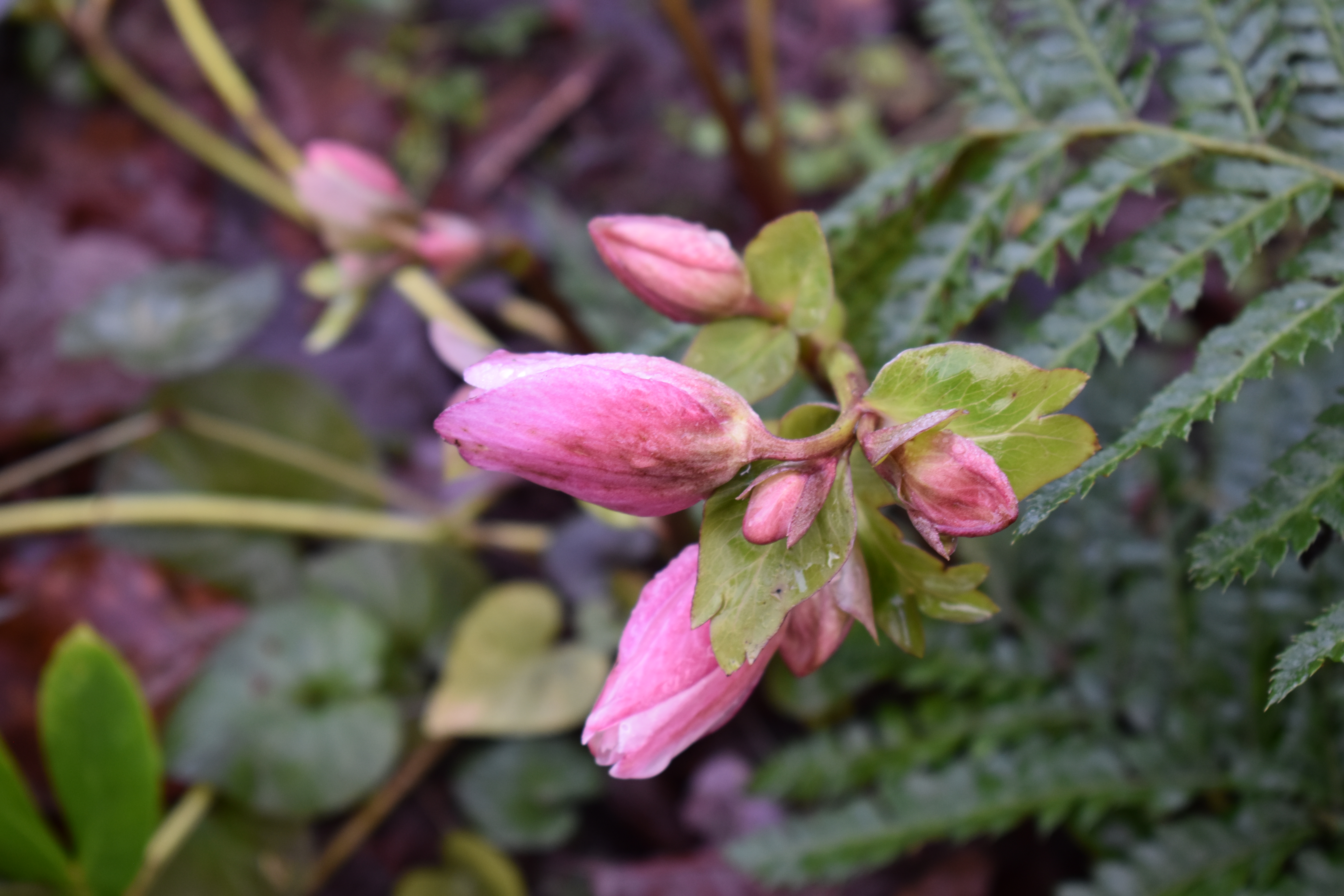
There are a few perennials that give interest in mid-winter, displaying interesting flowers, flower buds and foliage.
From here we need to cross the lane to enter the second half of the garden. We will visit that part of the garden in the second post. We plan to visit this garden once a month to record what we see and to discover how the garden changes through the year, 2024.
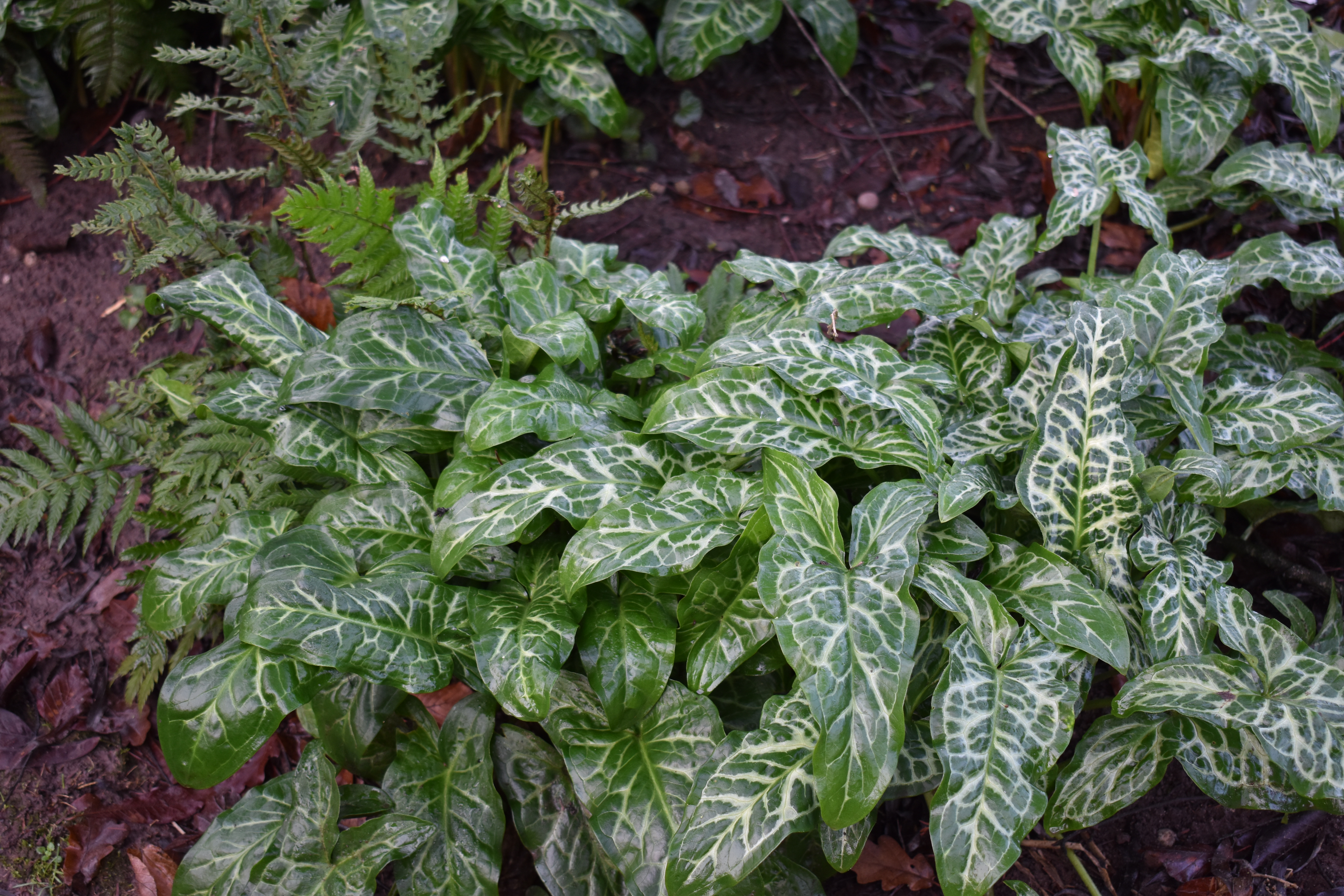
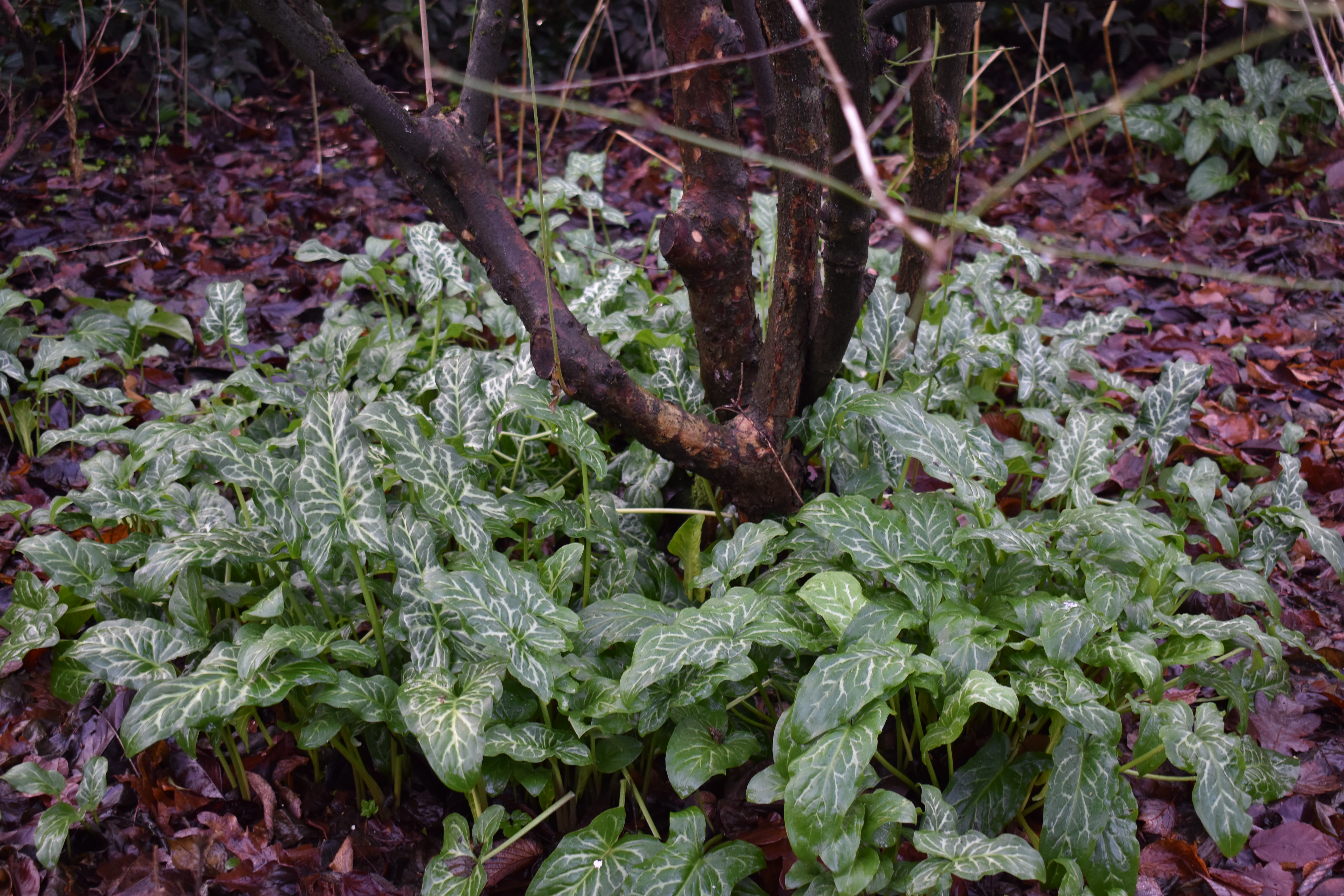
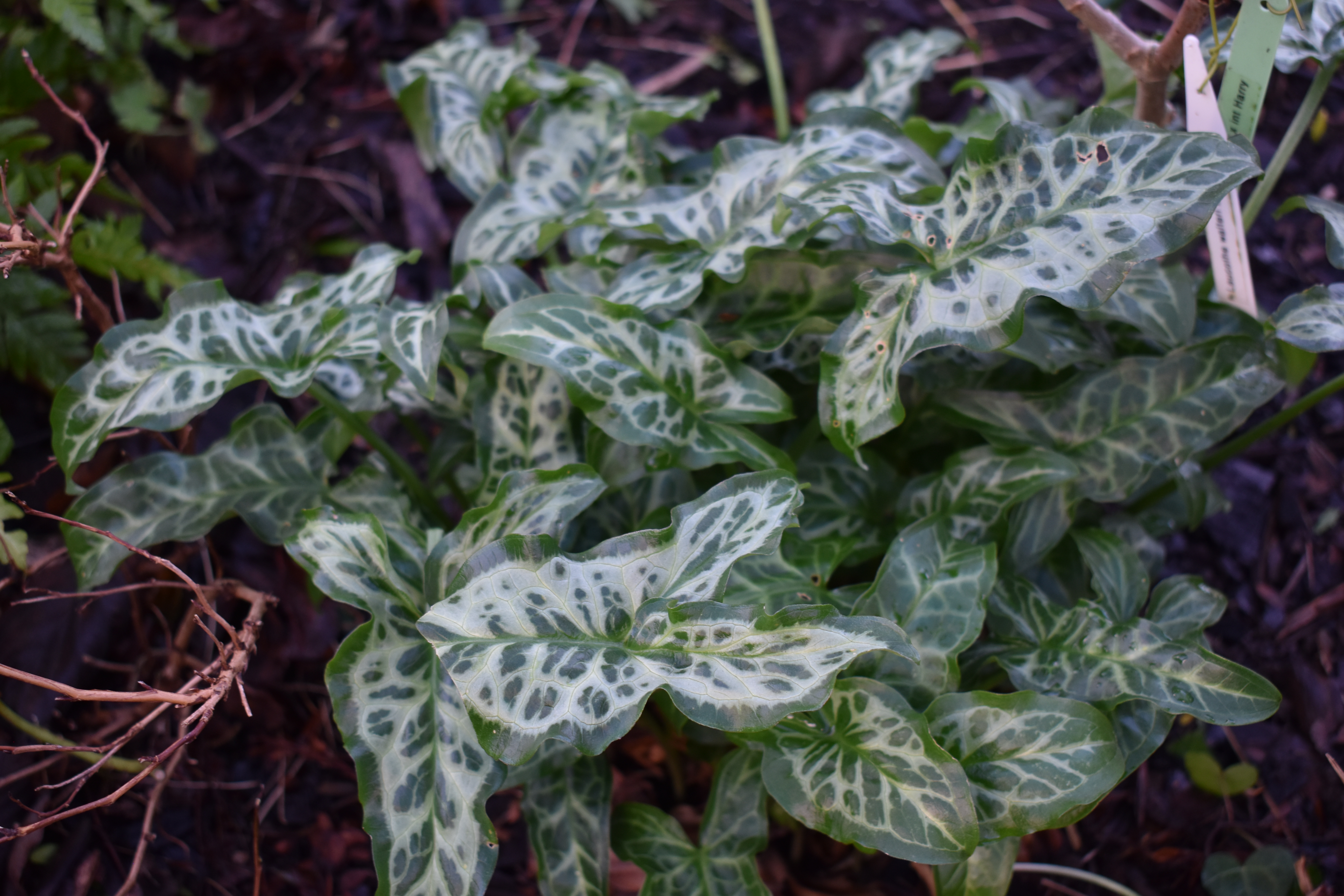
One of the most important foliage plants in the garden in winter must be the Arum in its many variations. In all honesty I am not sure exactly how many different ones we have growing in our Avocet garden simply because they seem so promiscuous!
They mix beautifully with other foliage plants such as carex and ferns.
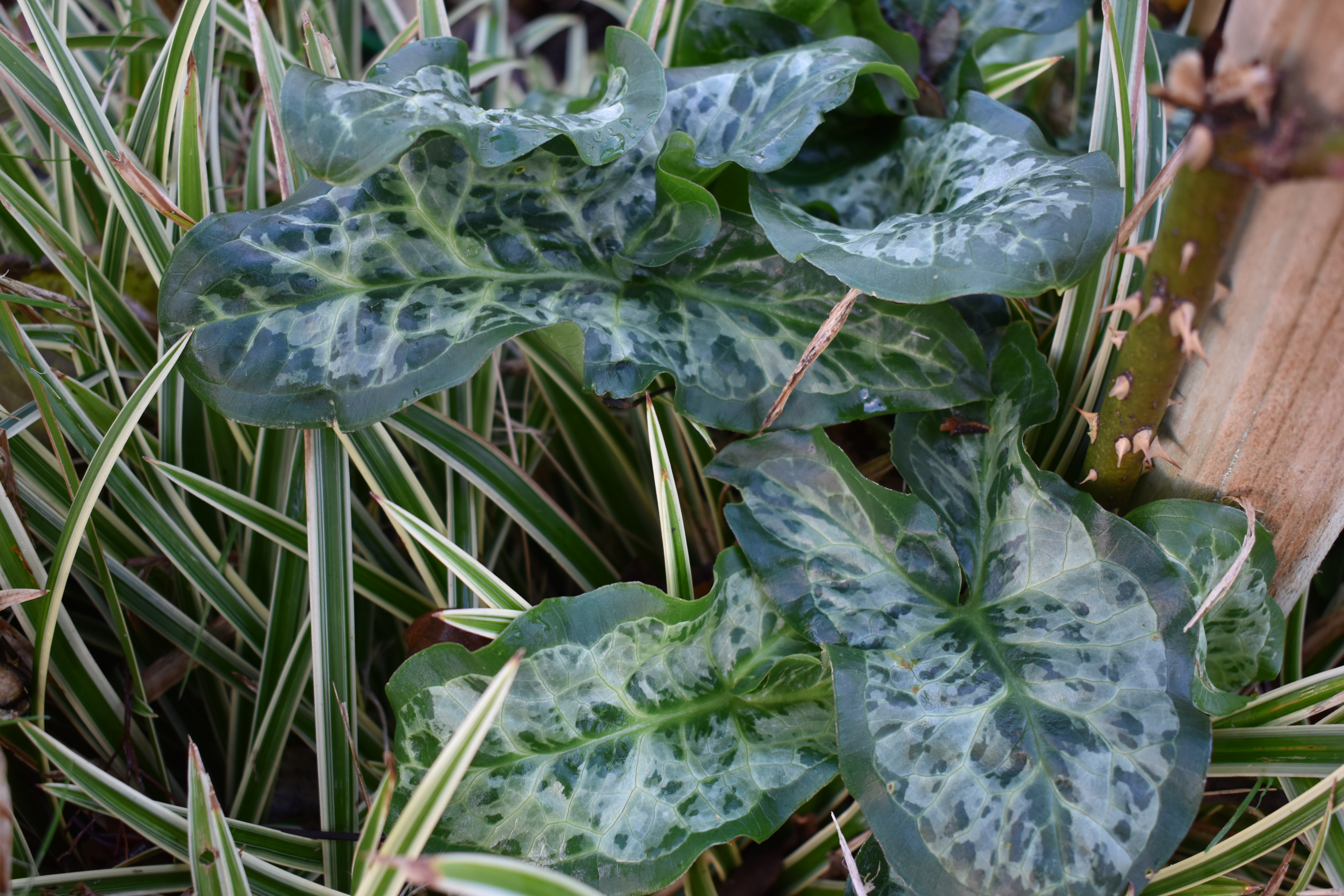
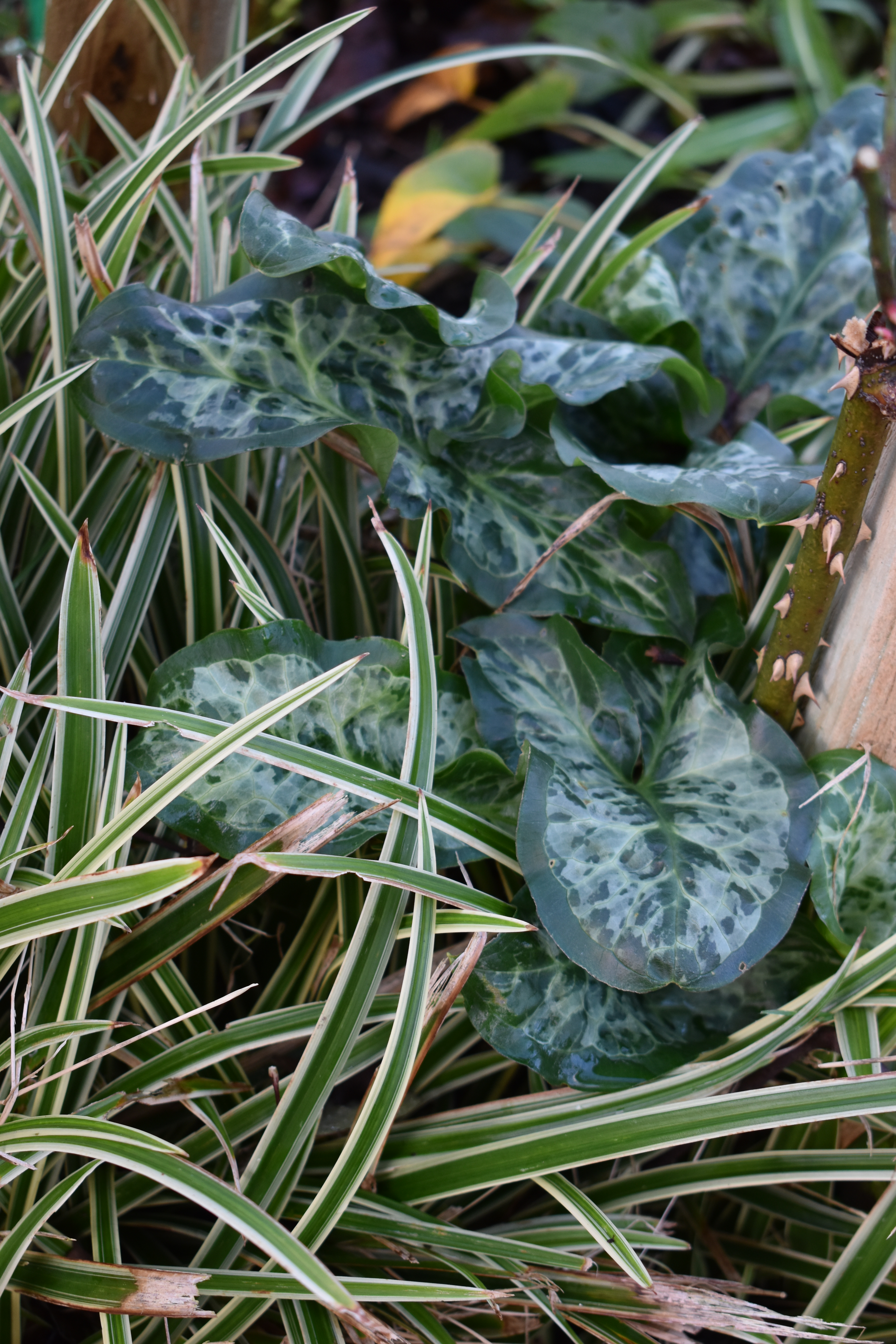
Below are two photos of one of my favourite arum called ‘Chameleon’ growing with Carex ‘Ice Dance’ creating a lovely combination, with each enhancing the other. Both of these plants appreciate growing in shade or semi-shade.
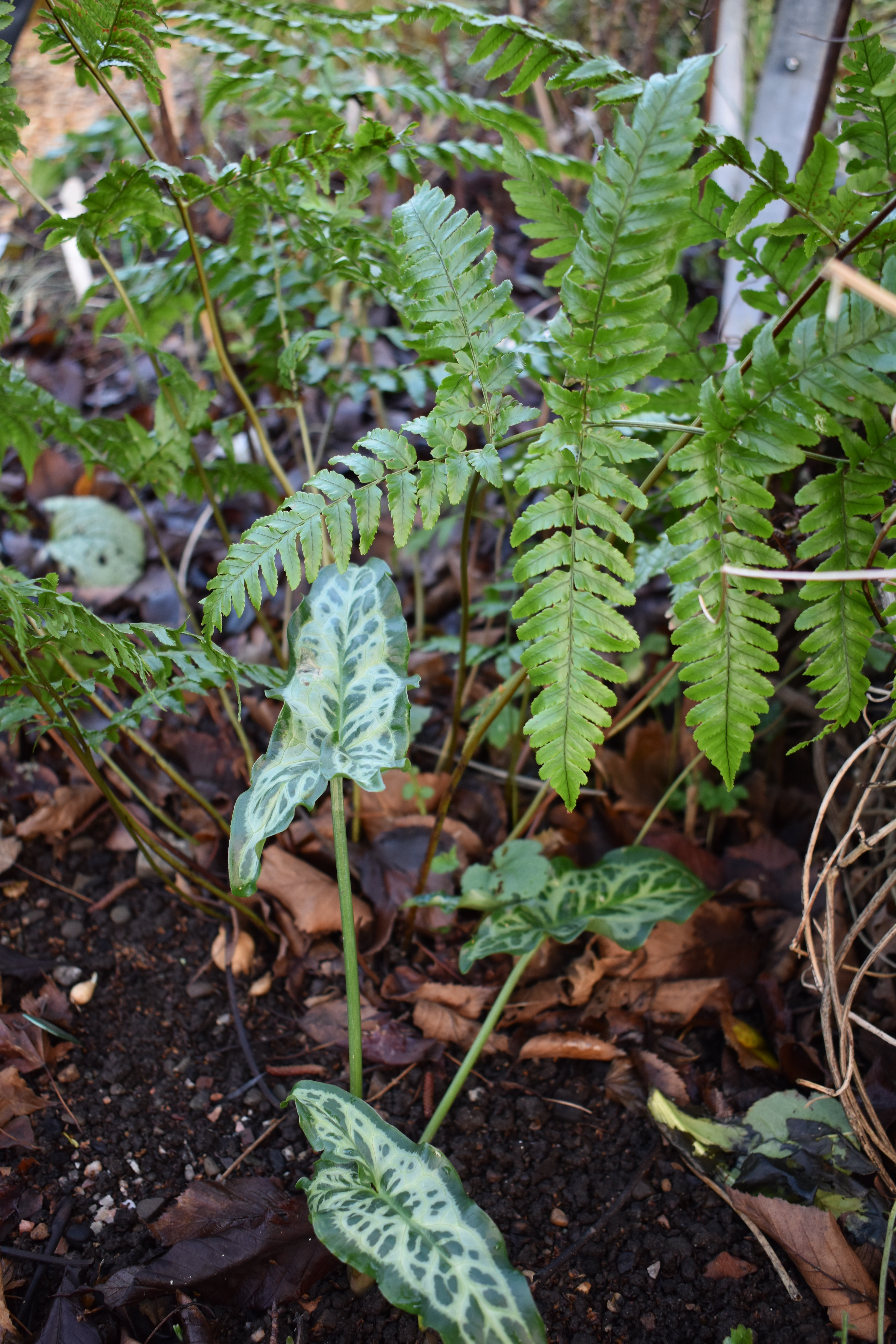
The next pair of photos shows arum combined with ferns.
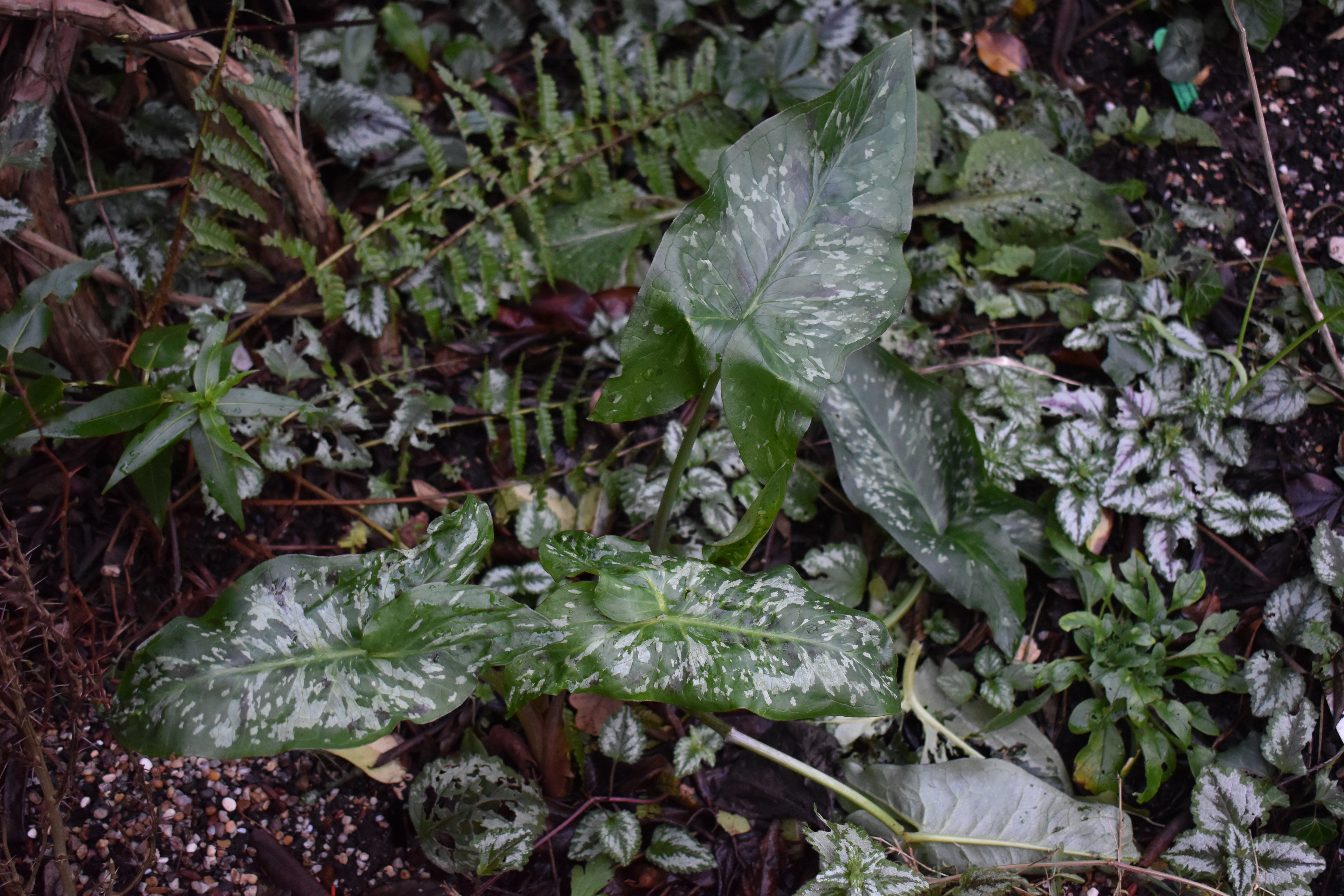
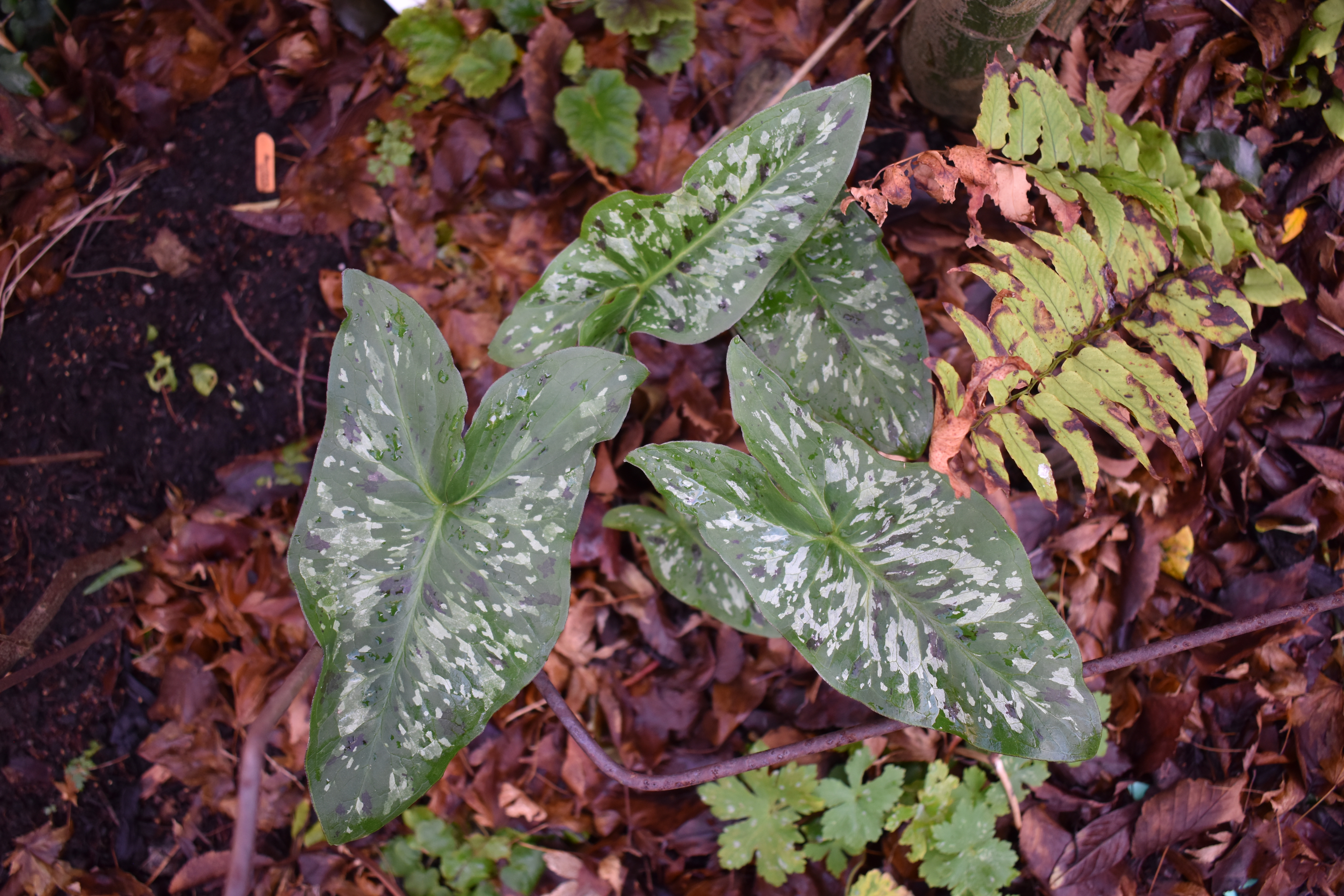
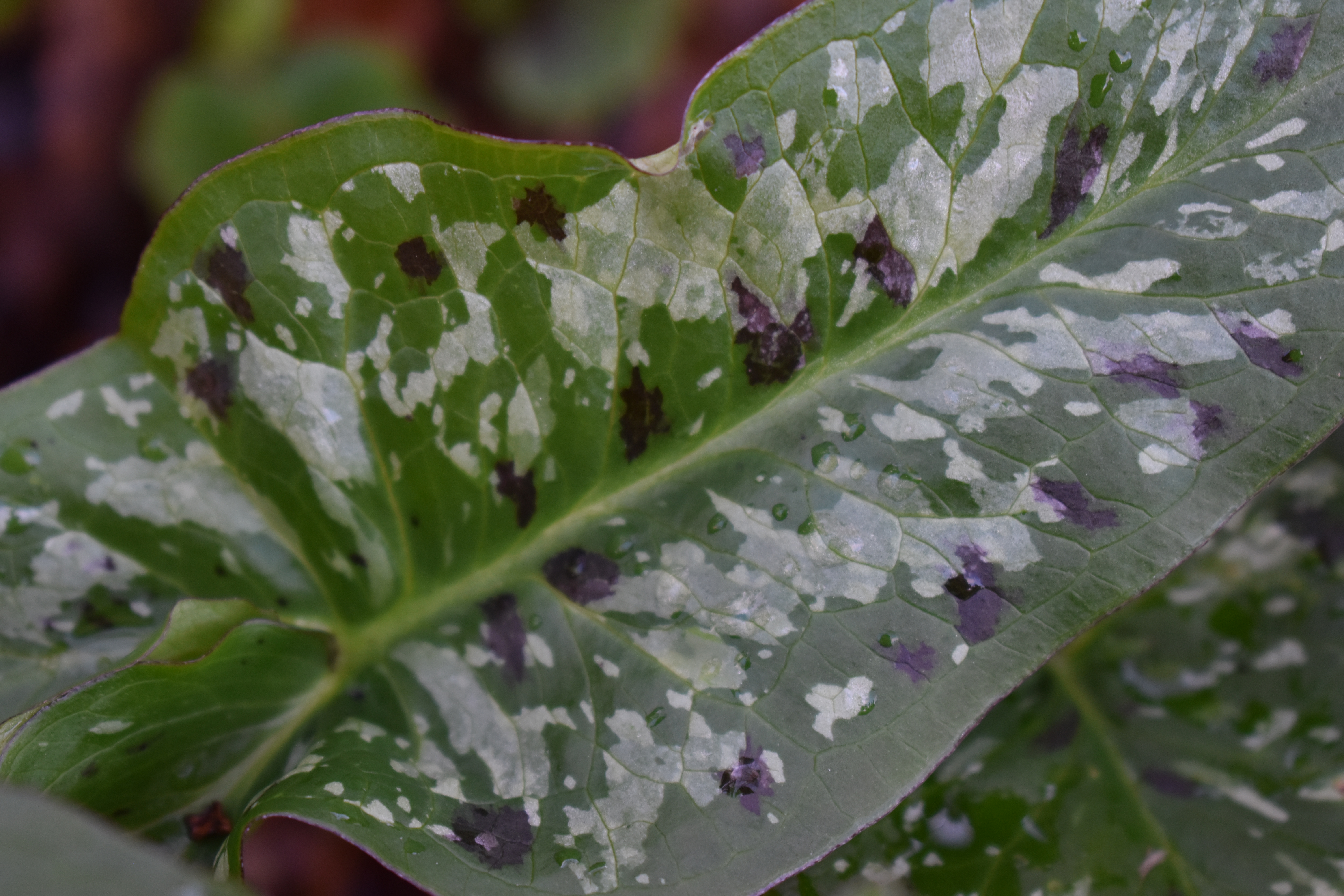
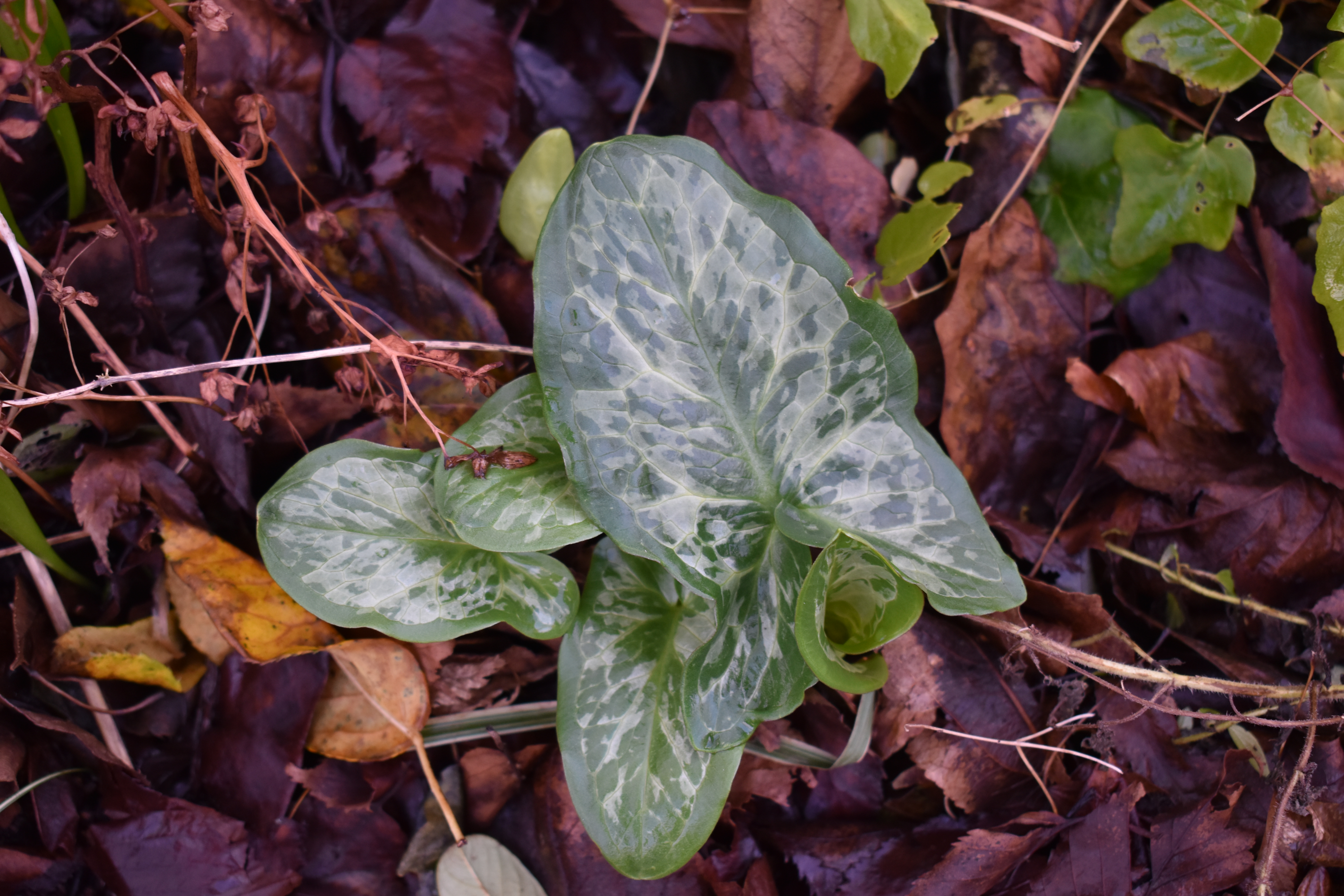
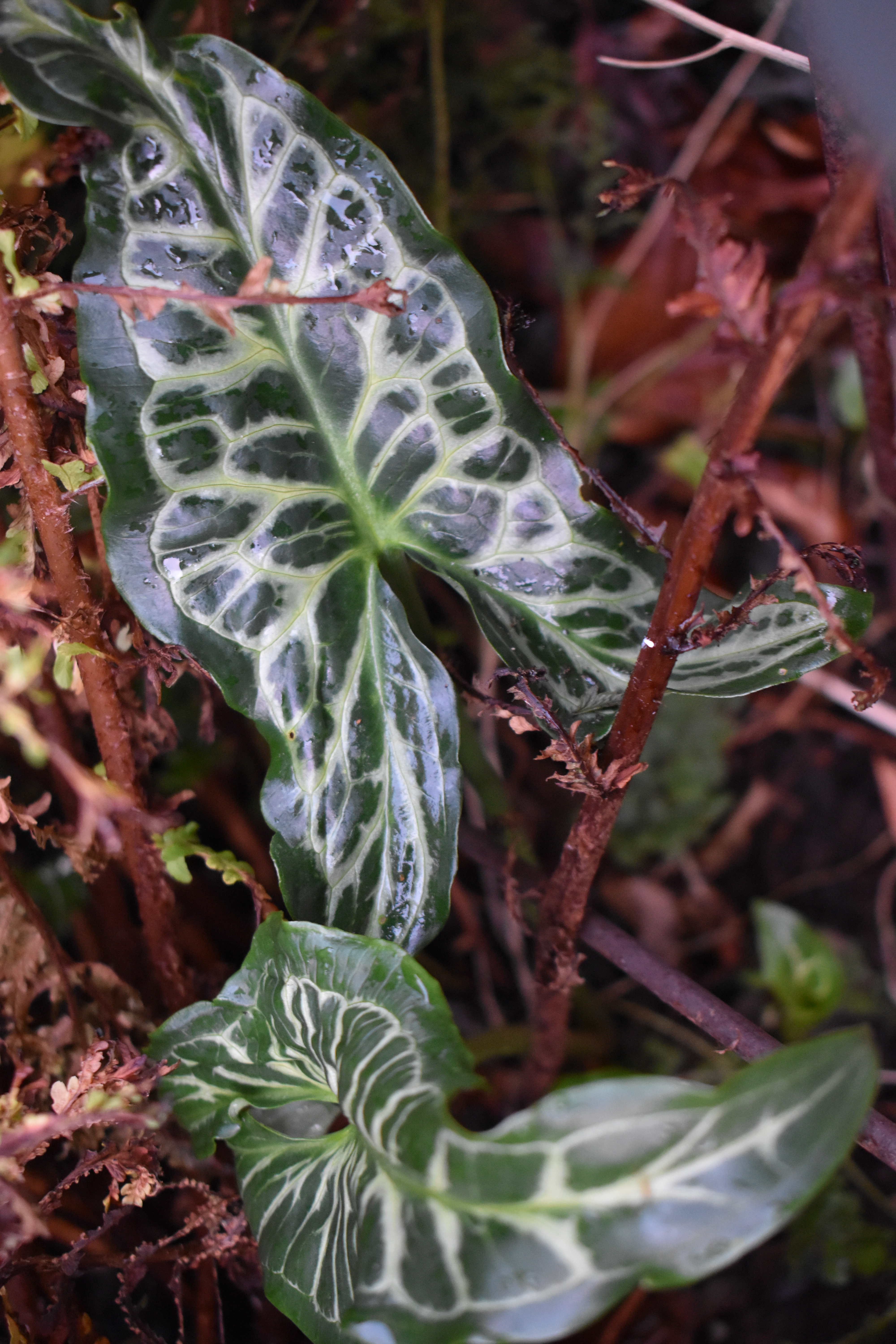
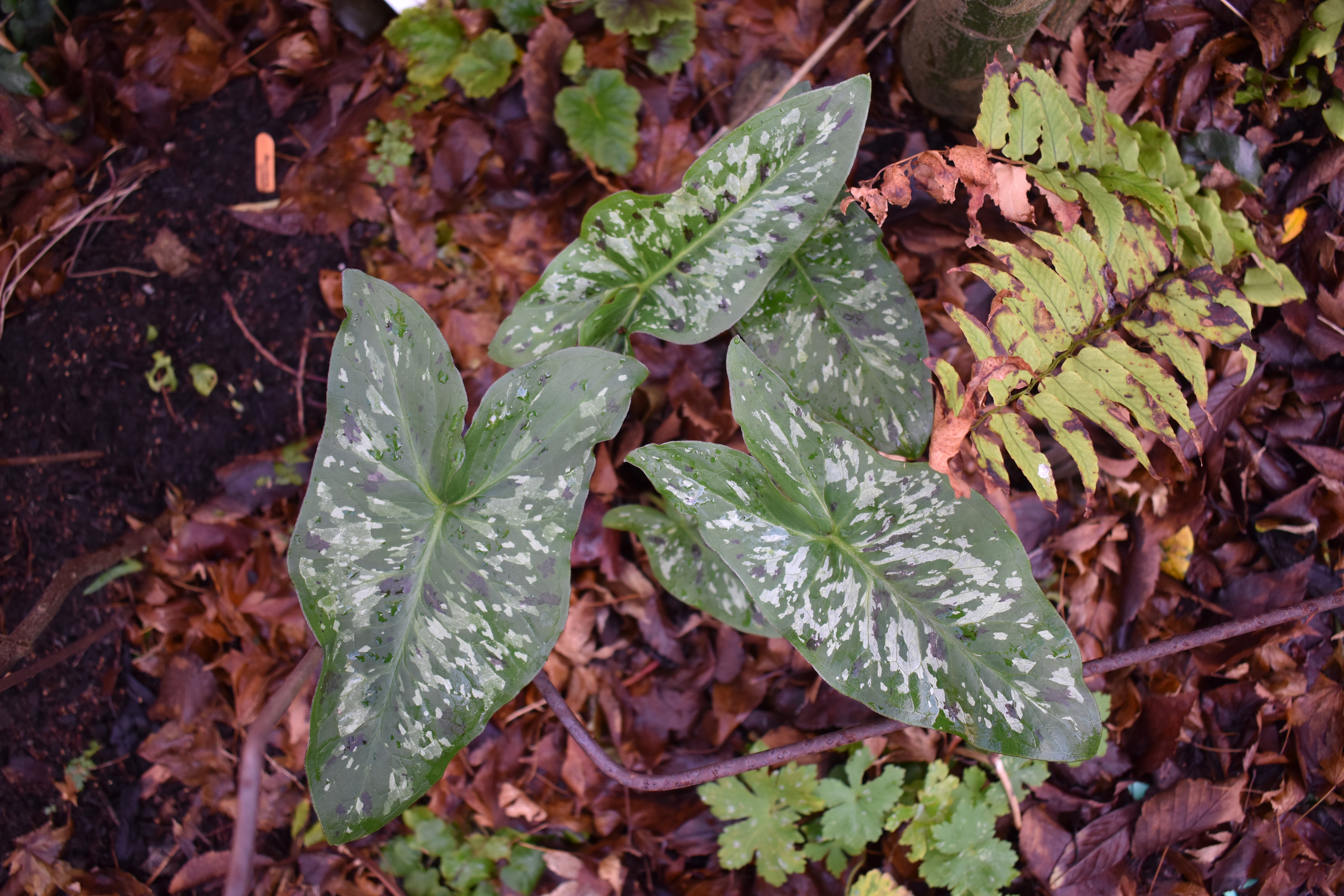
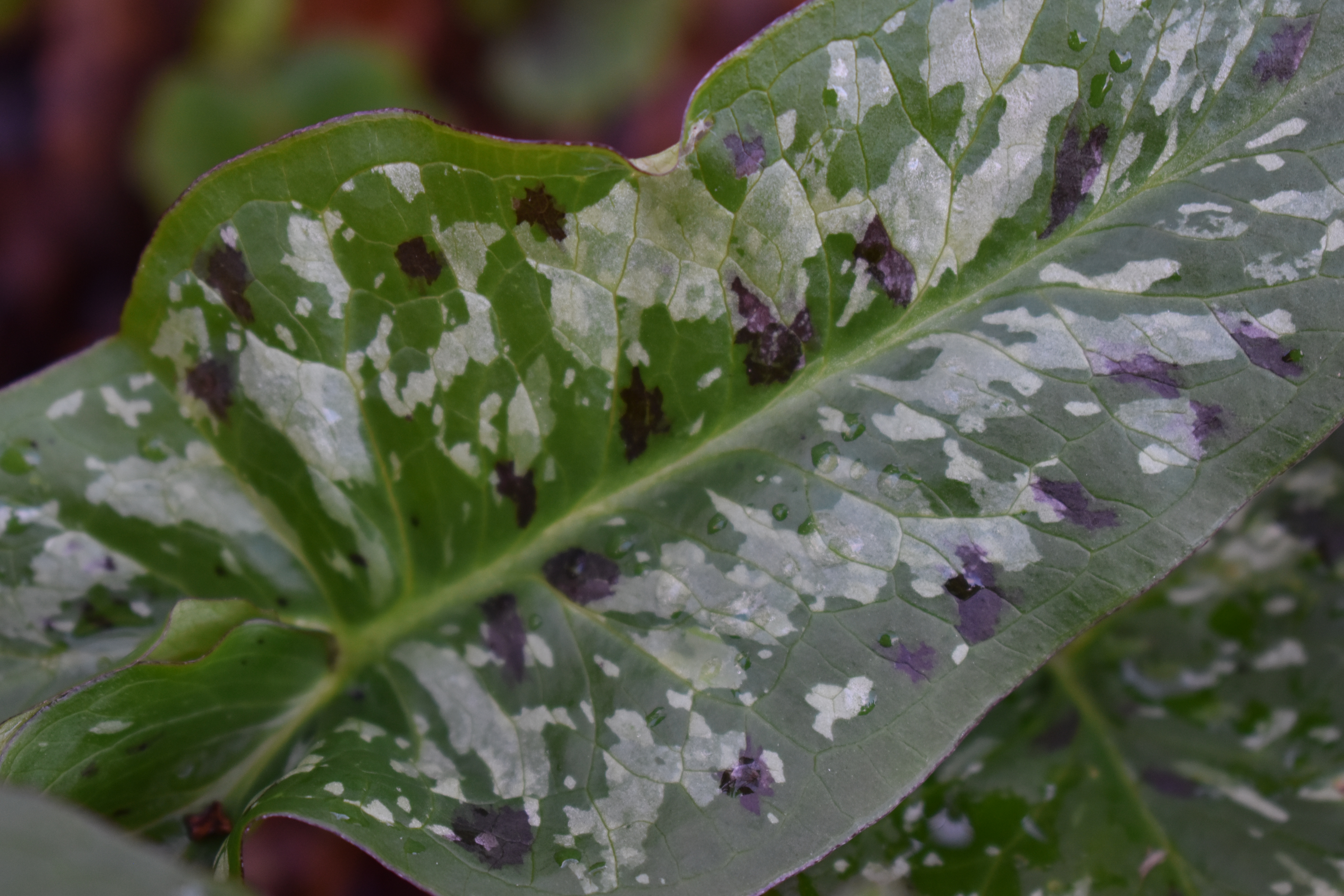
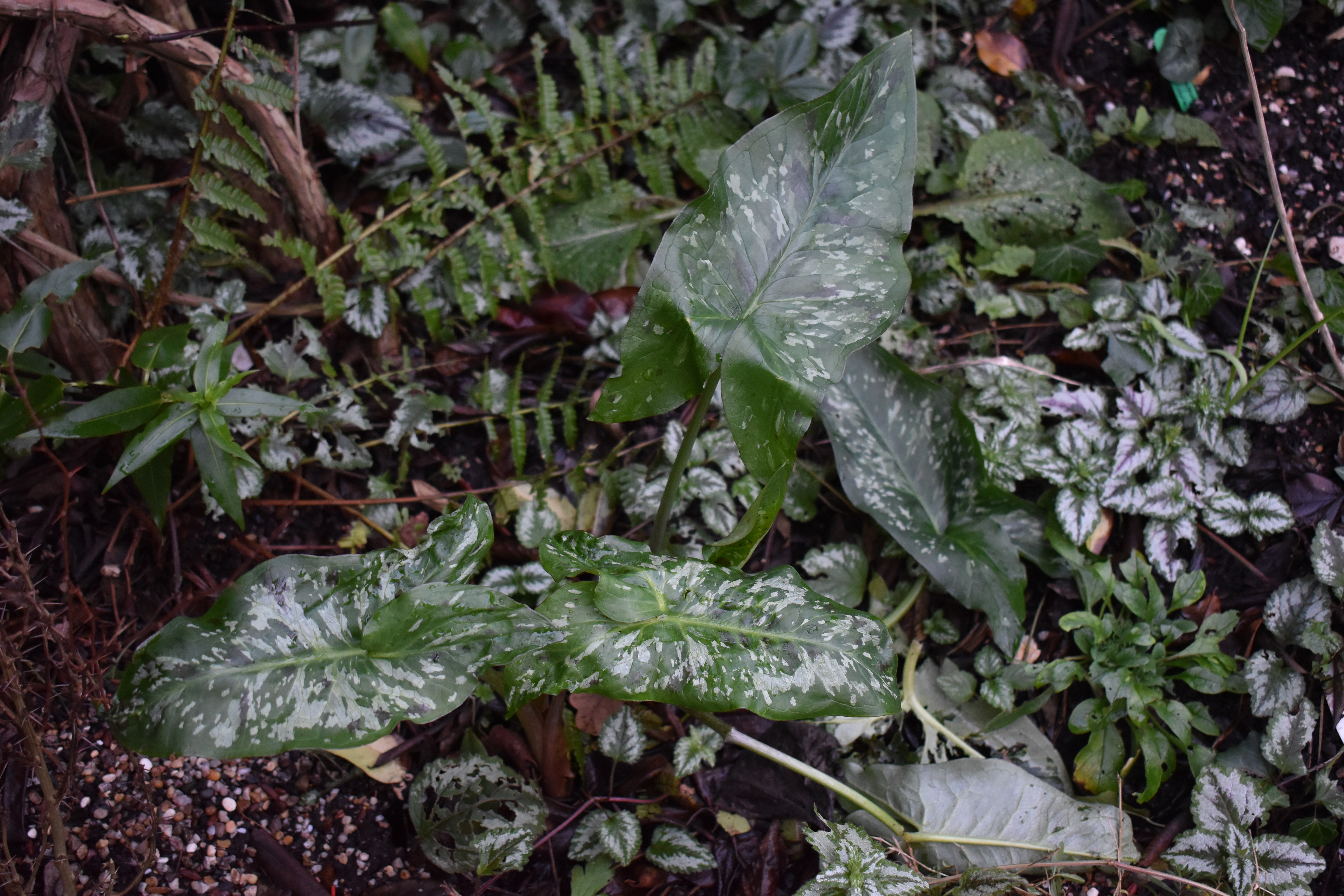
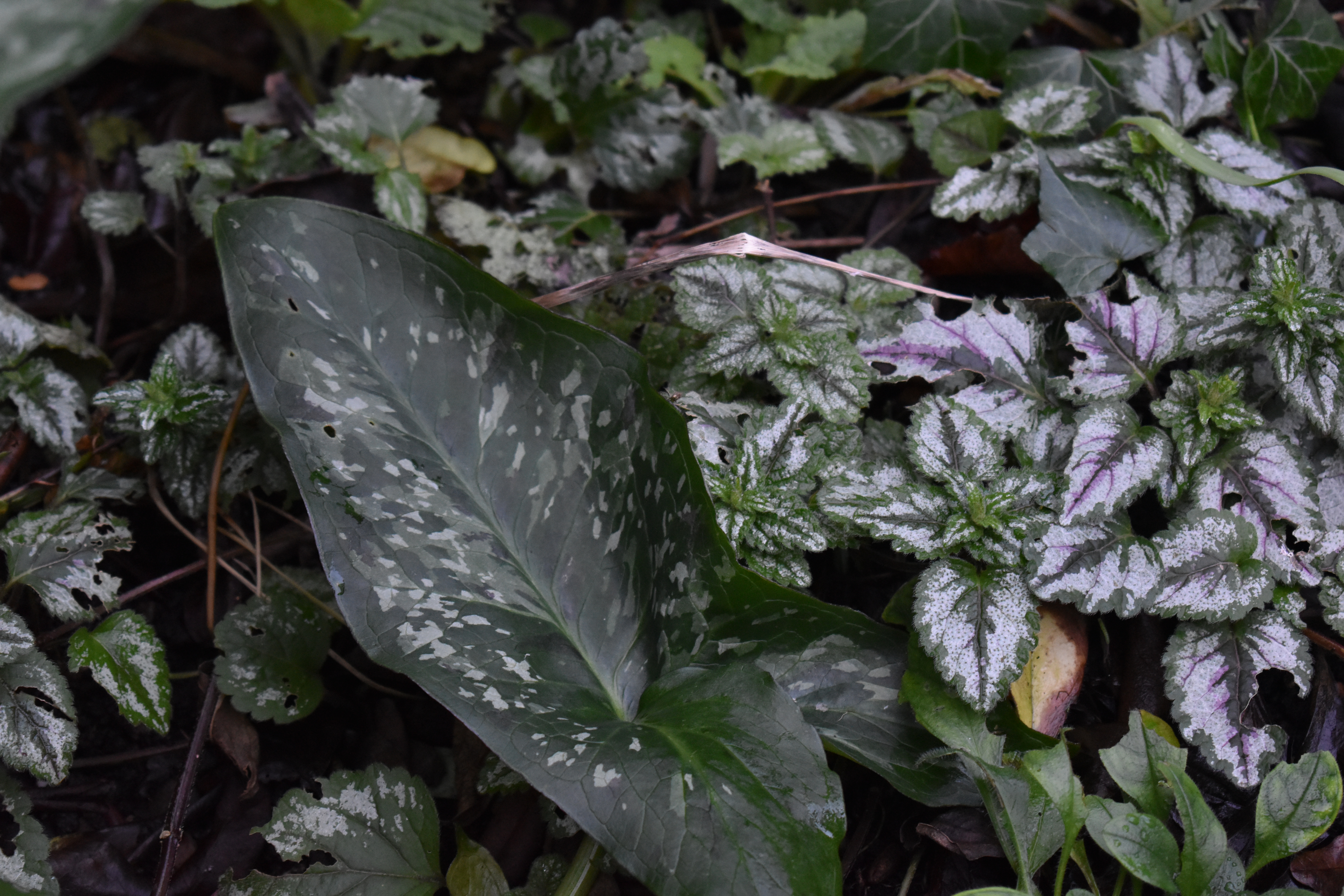
The two photos below show one of my favourites with large almost triangular leaves well marked in white/silver with the addition of splodges of black or purple randomly across the face of the leaf. Each leaf is a good 6 inches long and shaped like an arrow head.
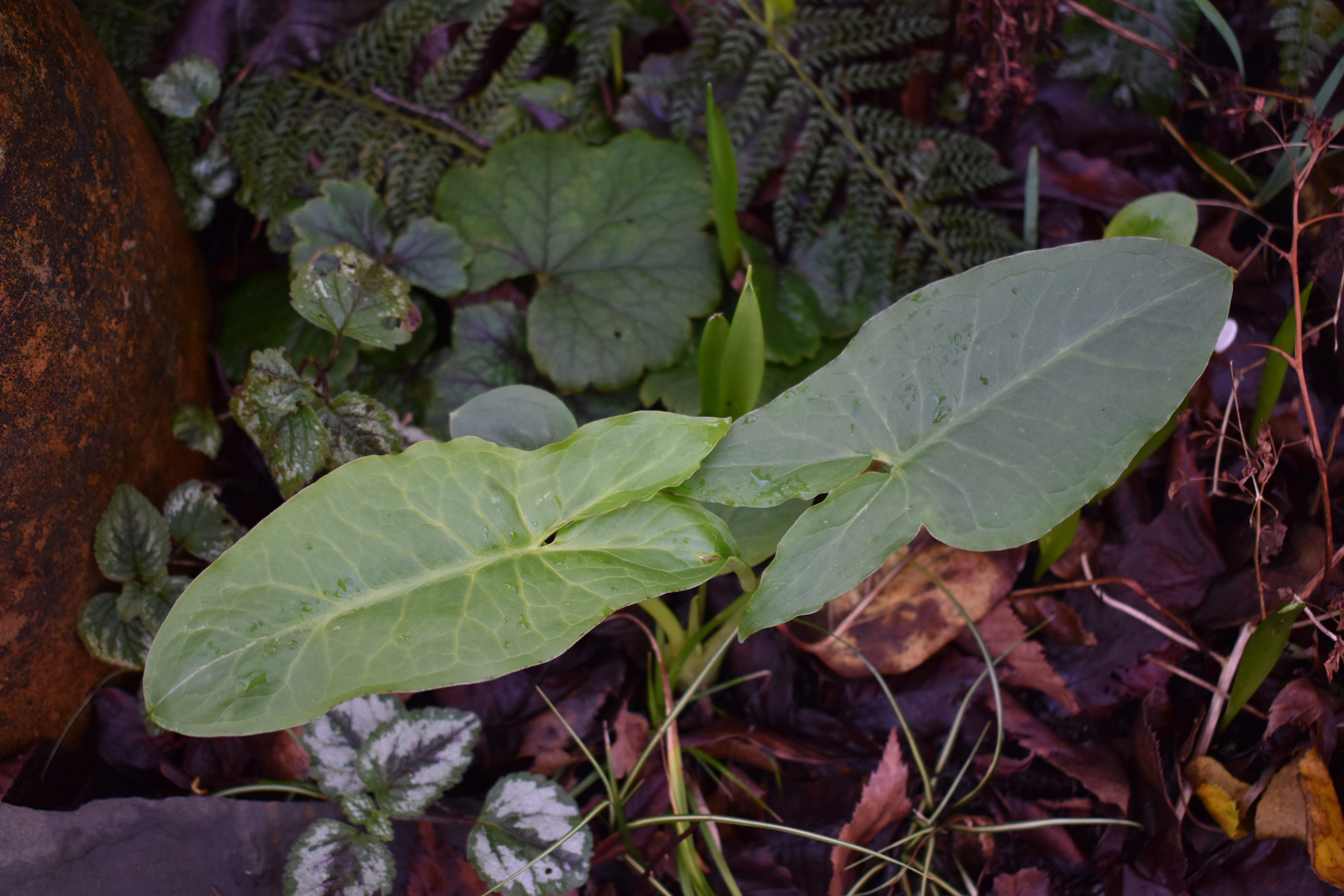
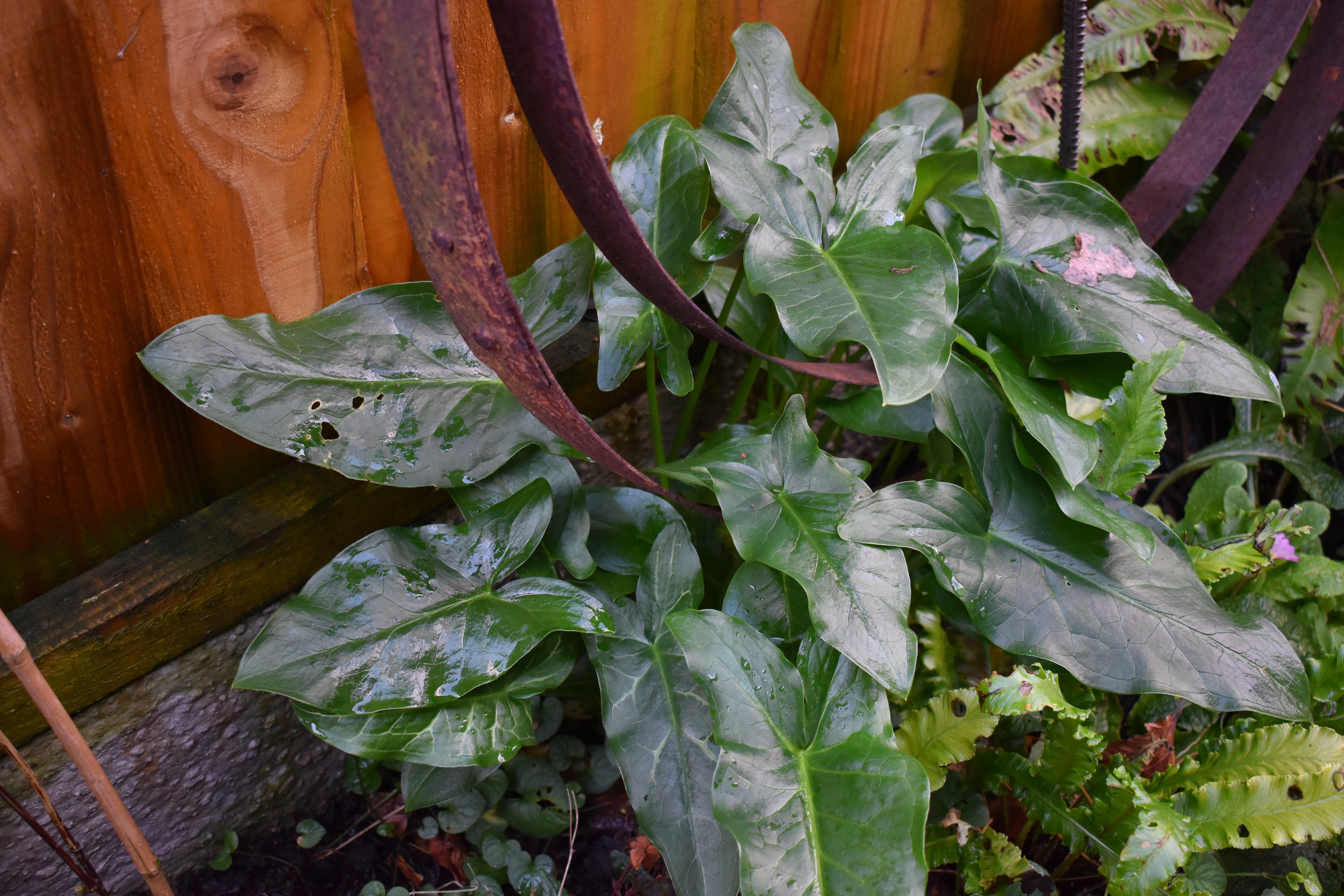
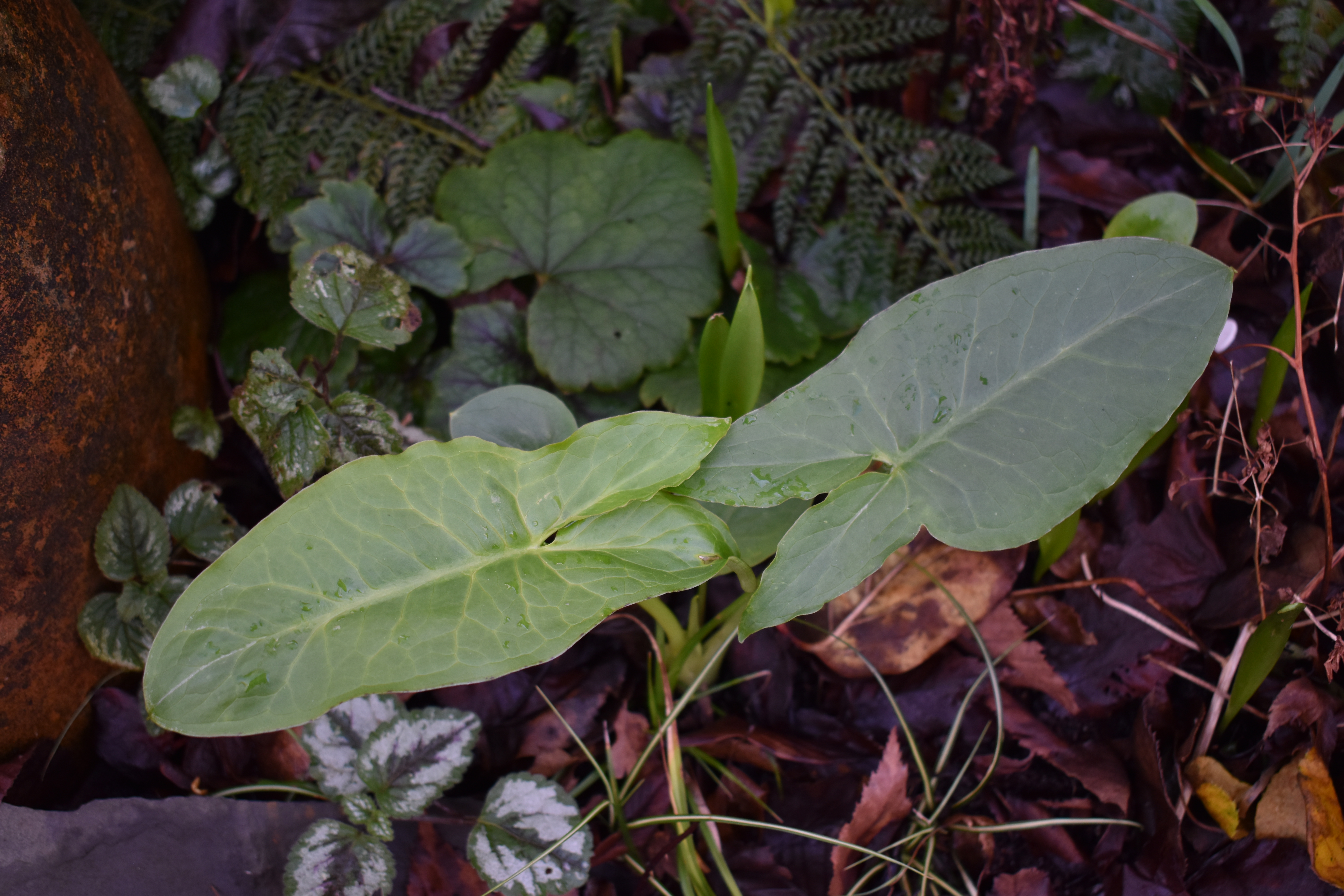
Another of my favourites has virtually no markings on at all just beautifully shaped leaves. When I first acquired this particular arum it had really small leaves just a few inches long, but now after a couple of seasons growing the foliage is much larger. It grows amongst a piece of my Corten Steel sculpture.
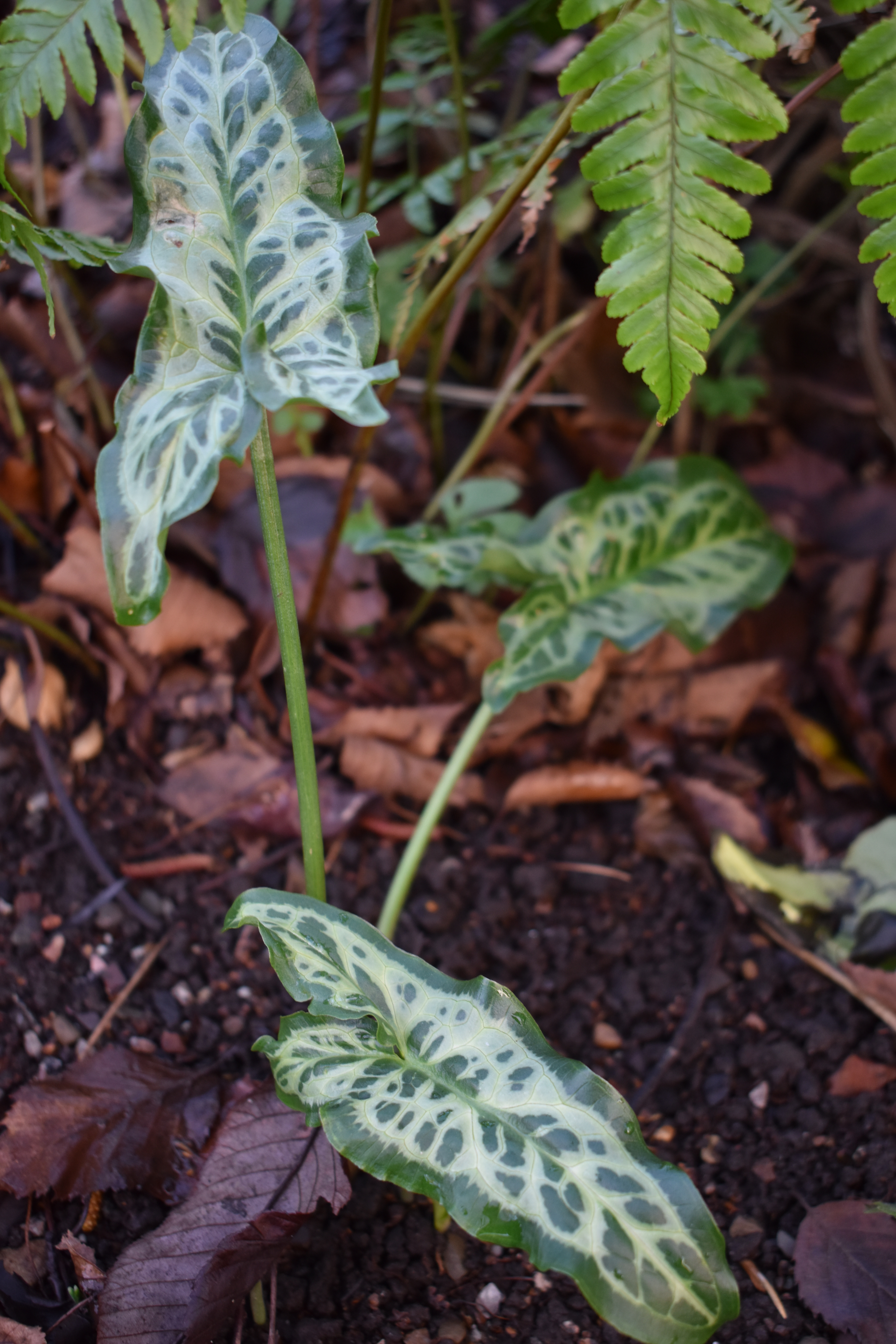
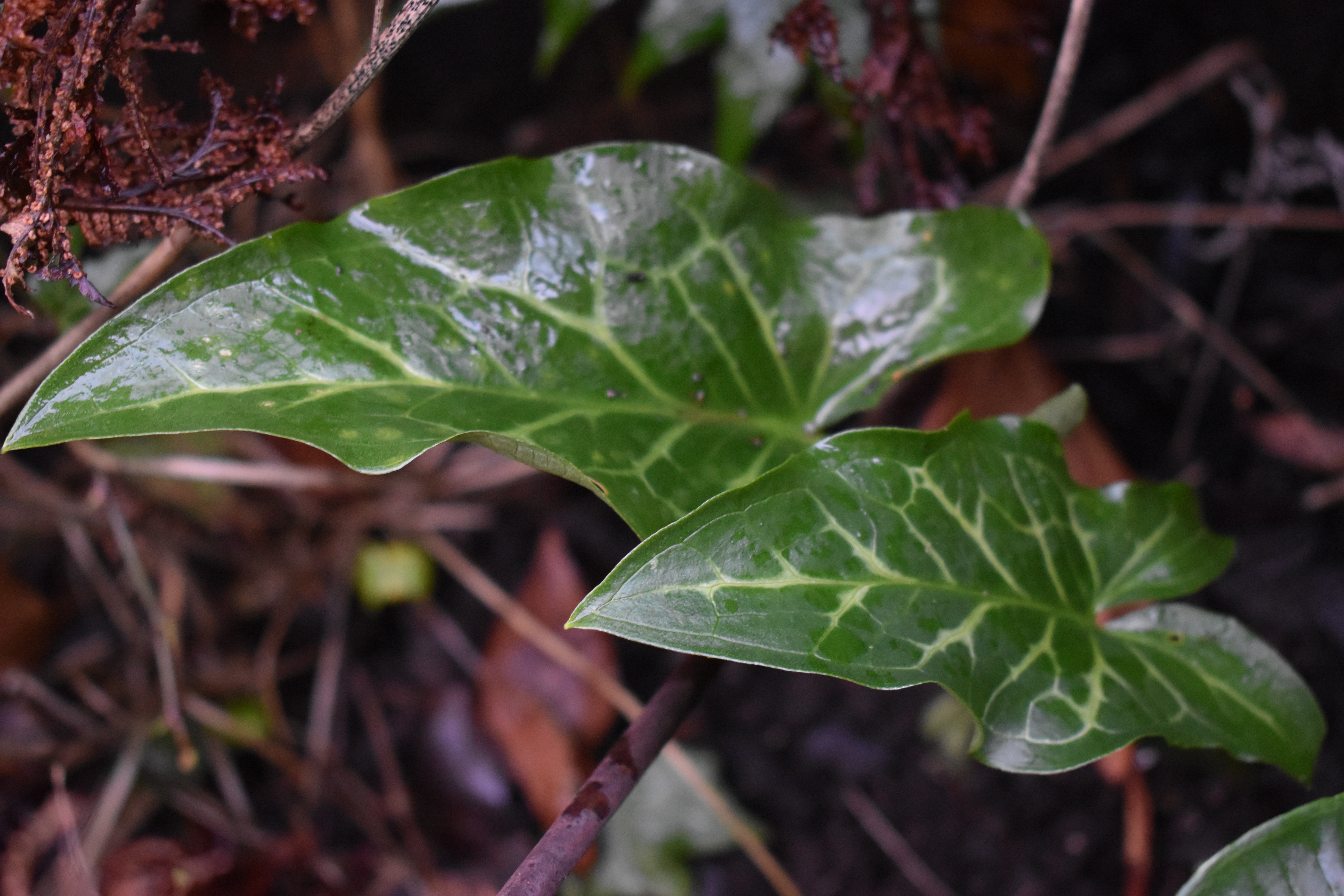
We have several with almost plain green foliage, often with just thin pale yellow-green or white lines with each leaf being unique.
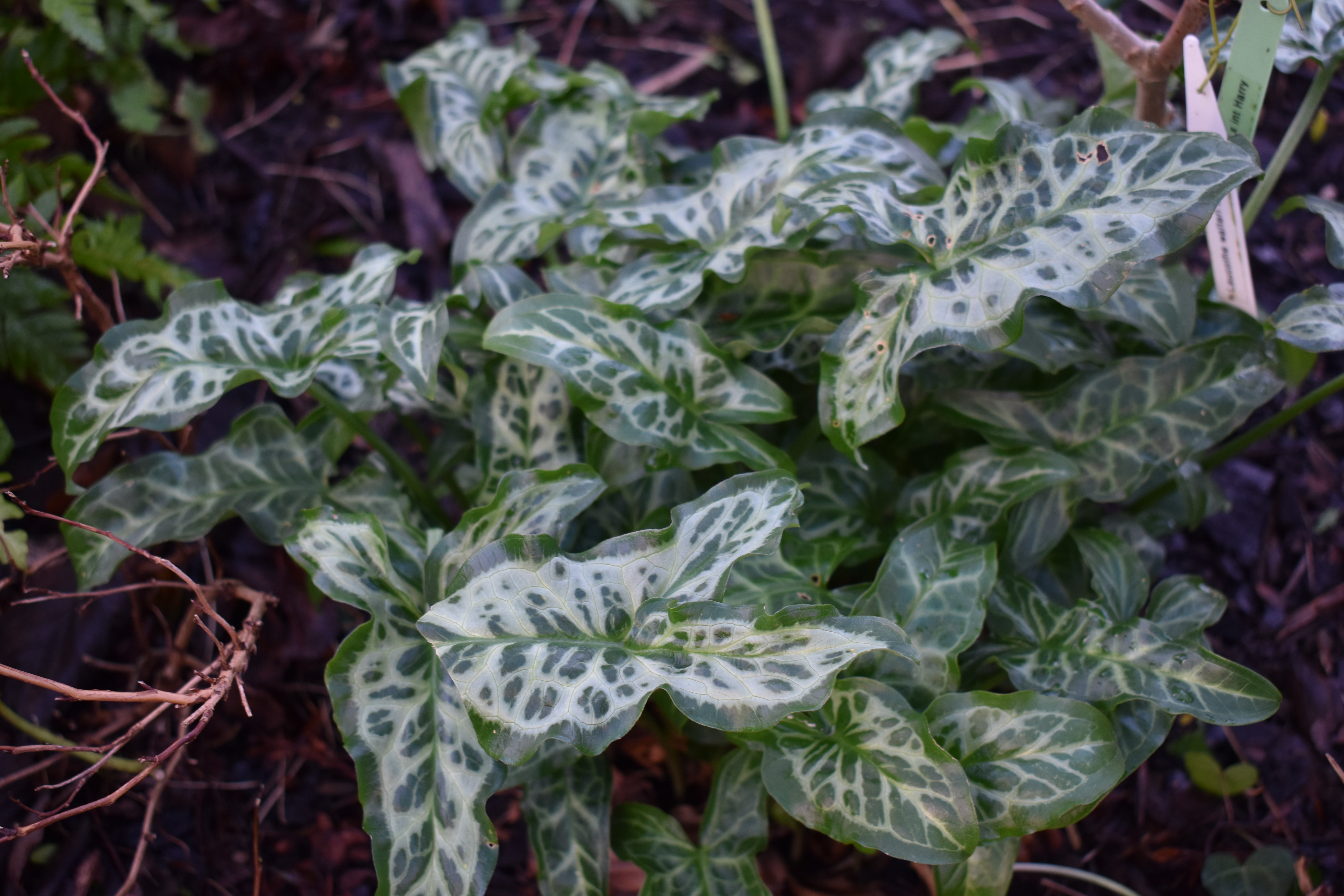
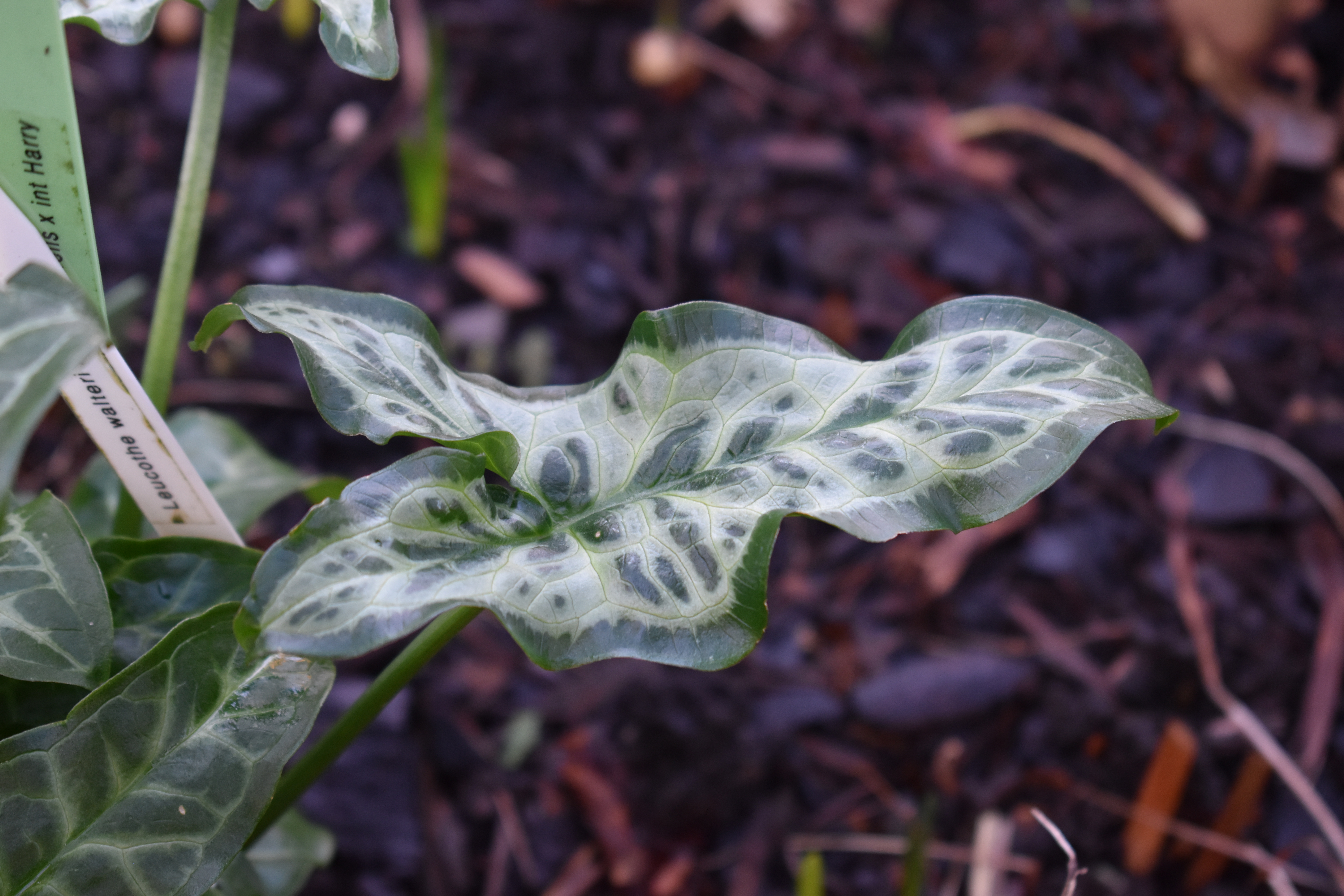
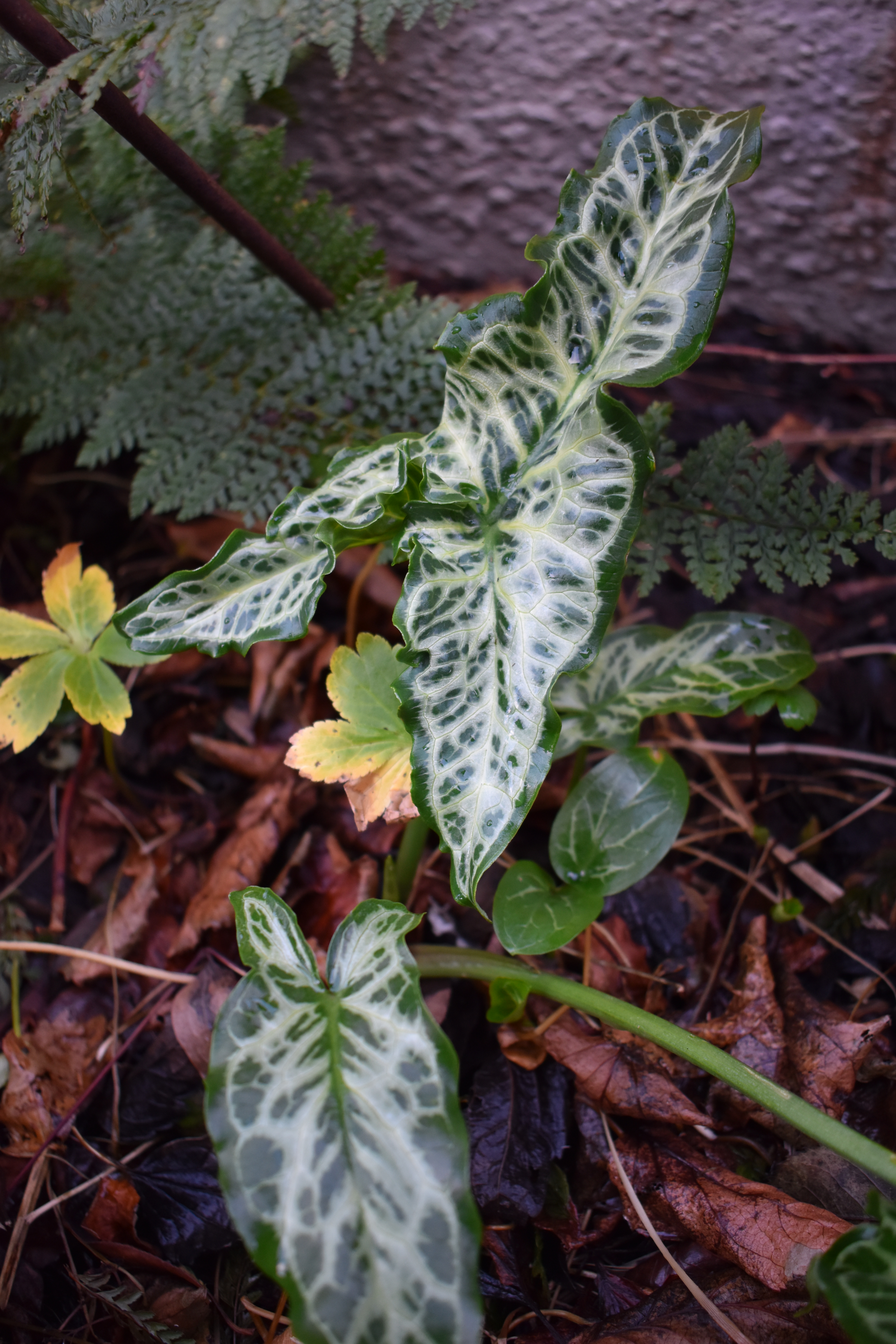
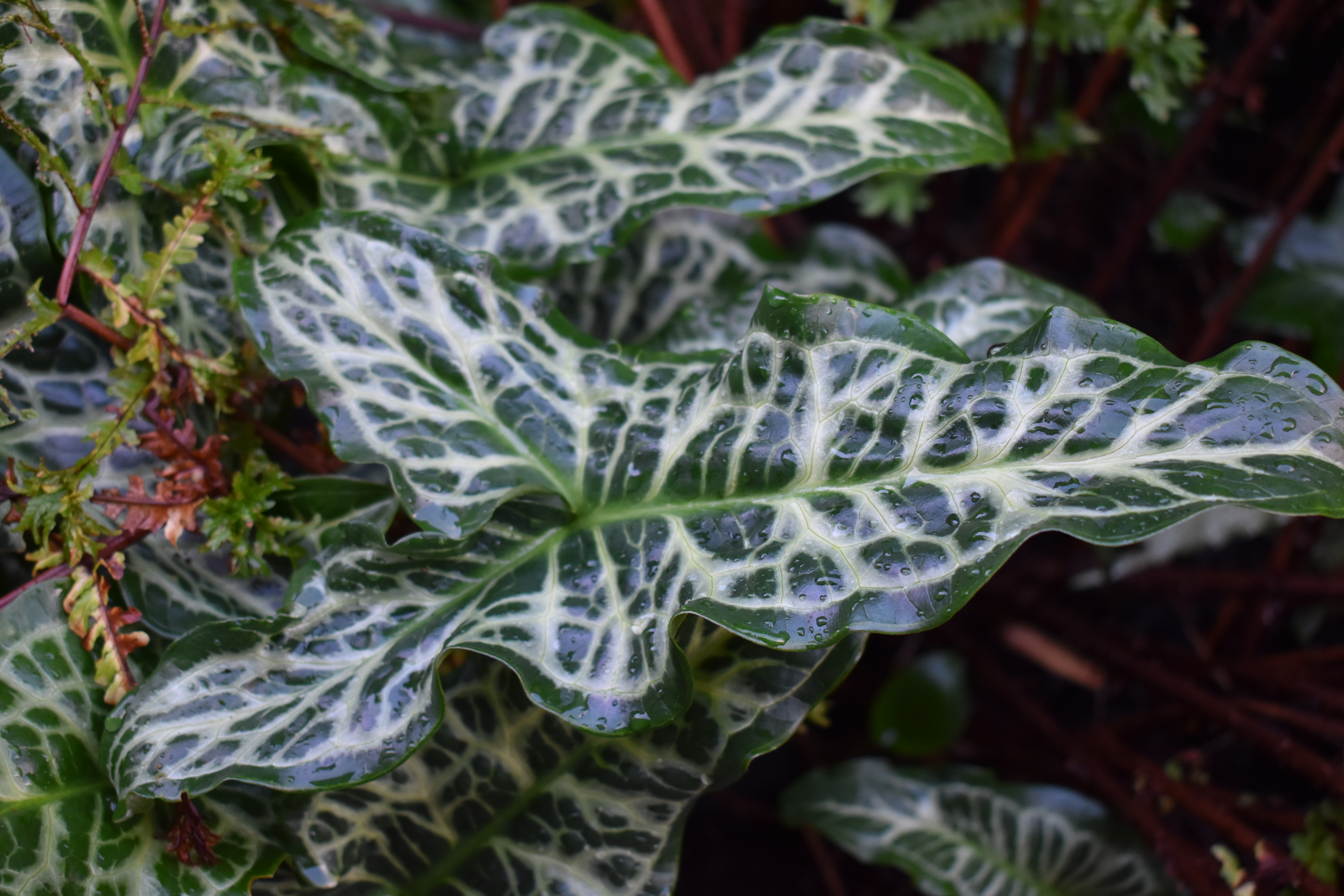
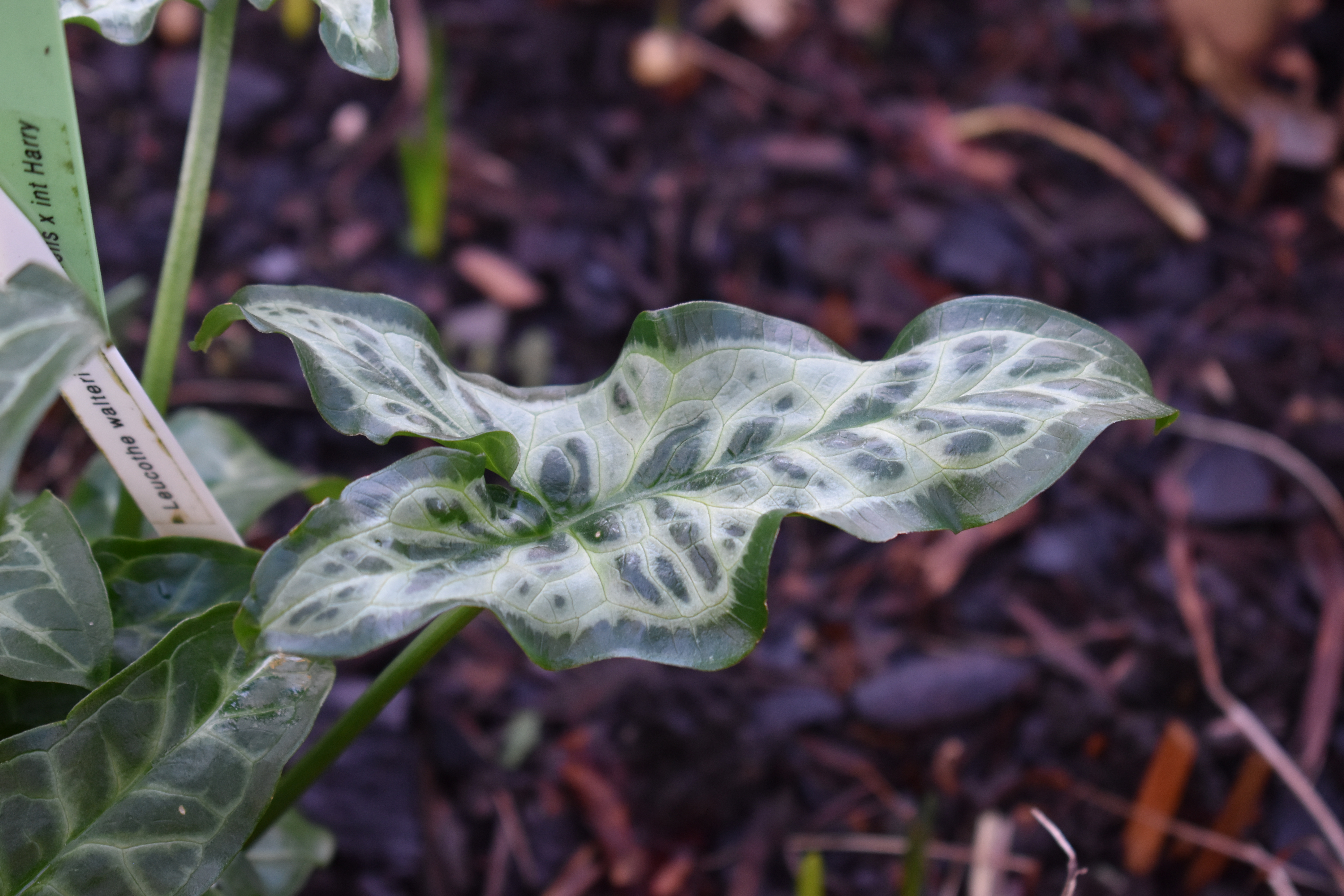
One particularly special arum has large, undulating foliage which is marked in a silver -white pattern.
This is probably the most impressive arum that we have in our garden.
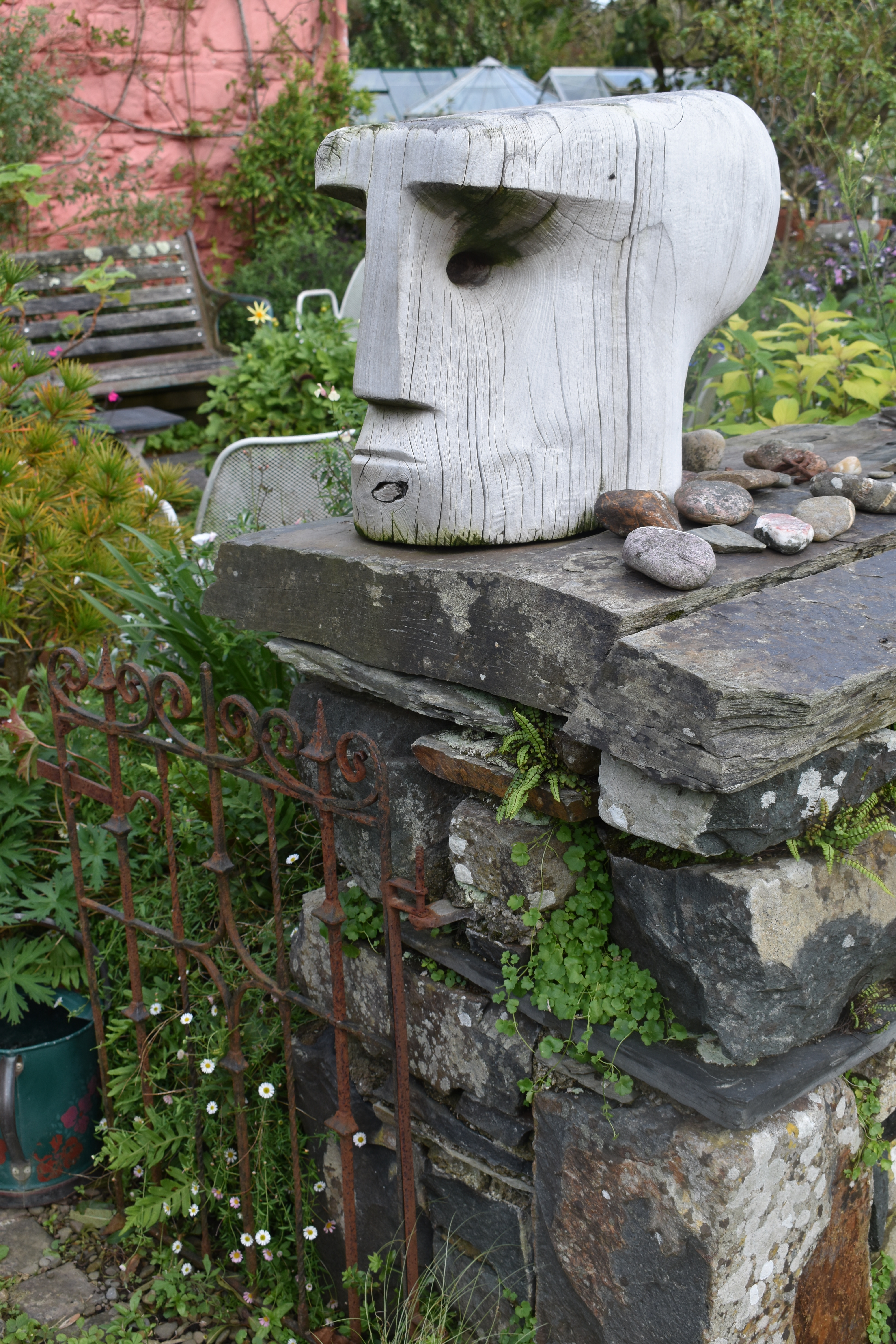
“The most inspiring garden in Wales?” This is how it was described in a magazine I read. It certainly is inspiring and full of ideas and creative cameos. It really is a garden to explore and discover!
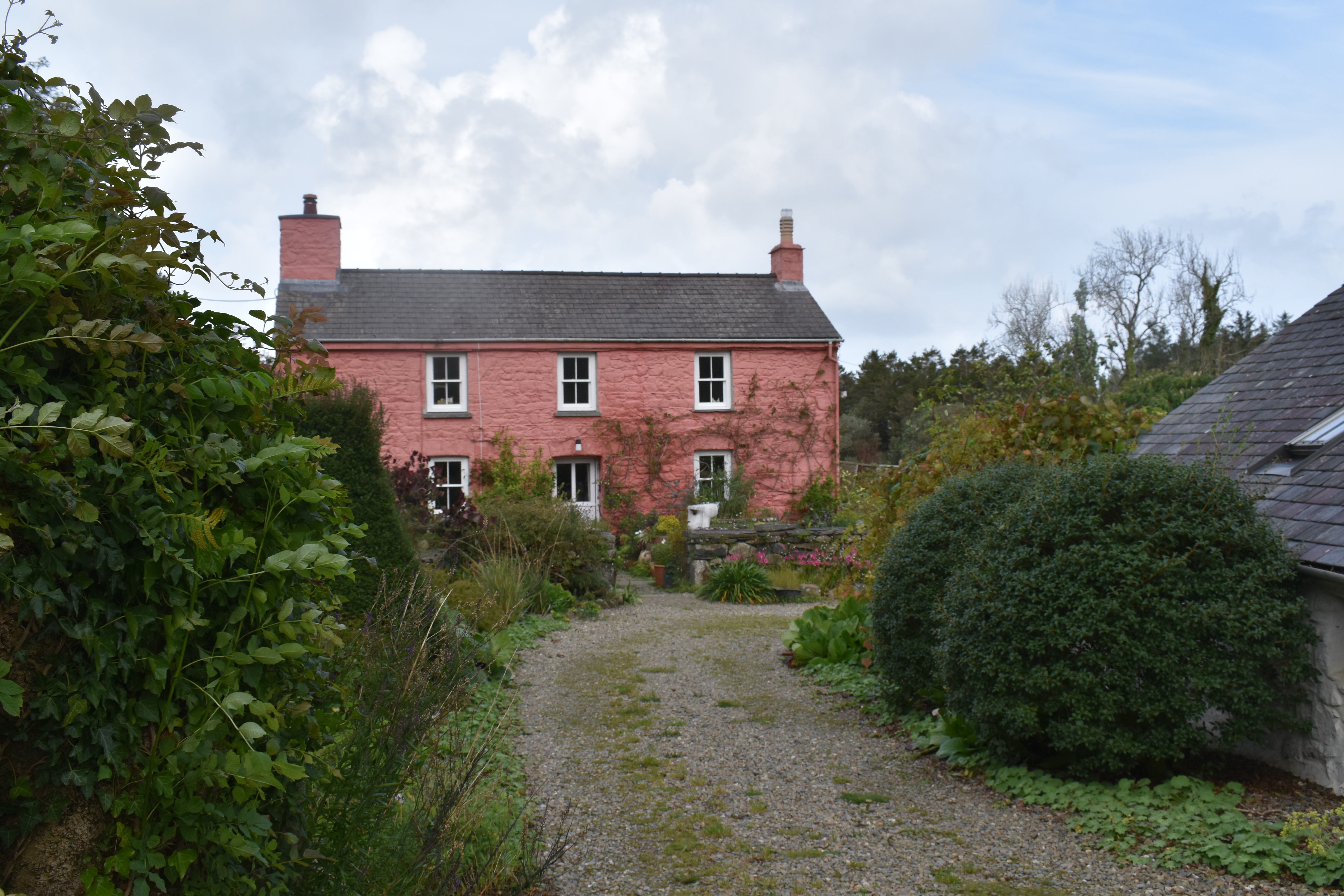
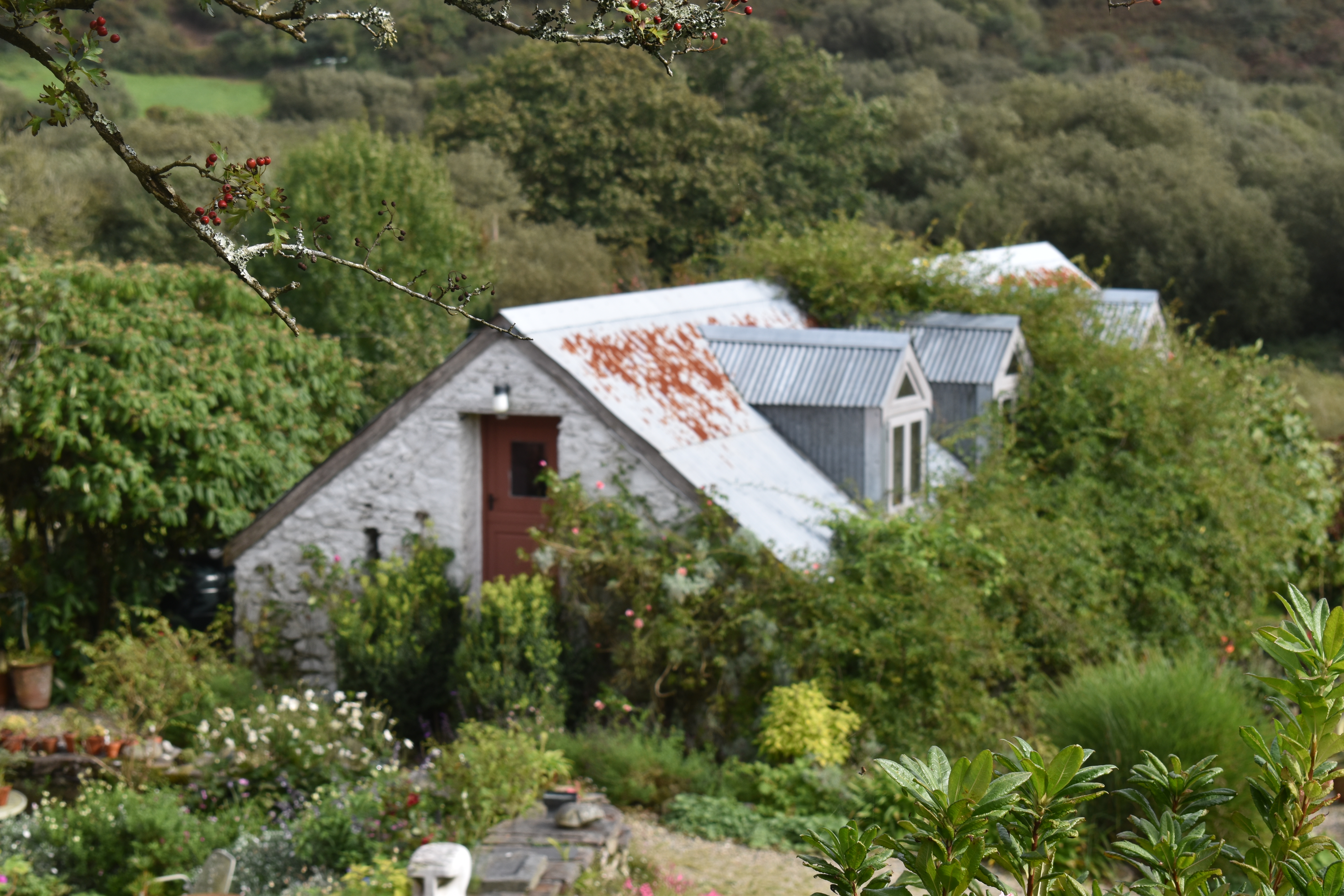
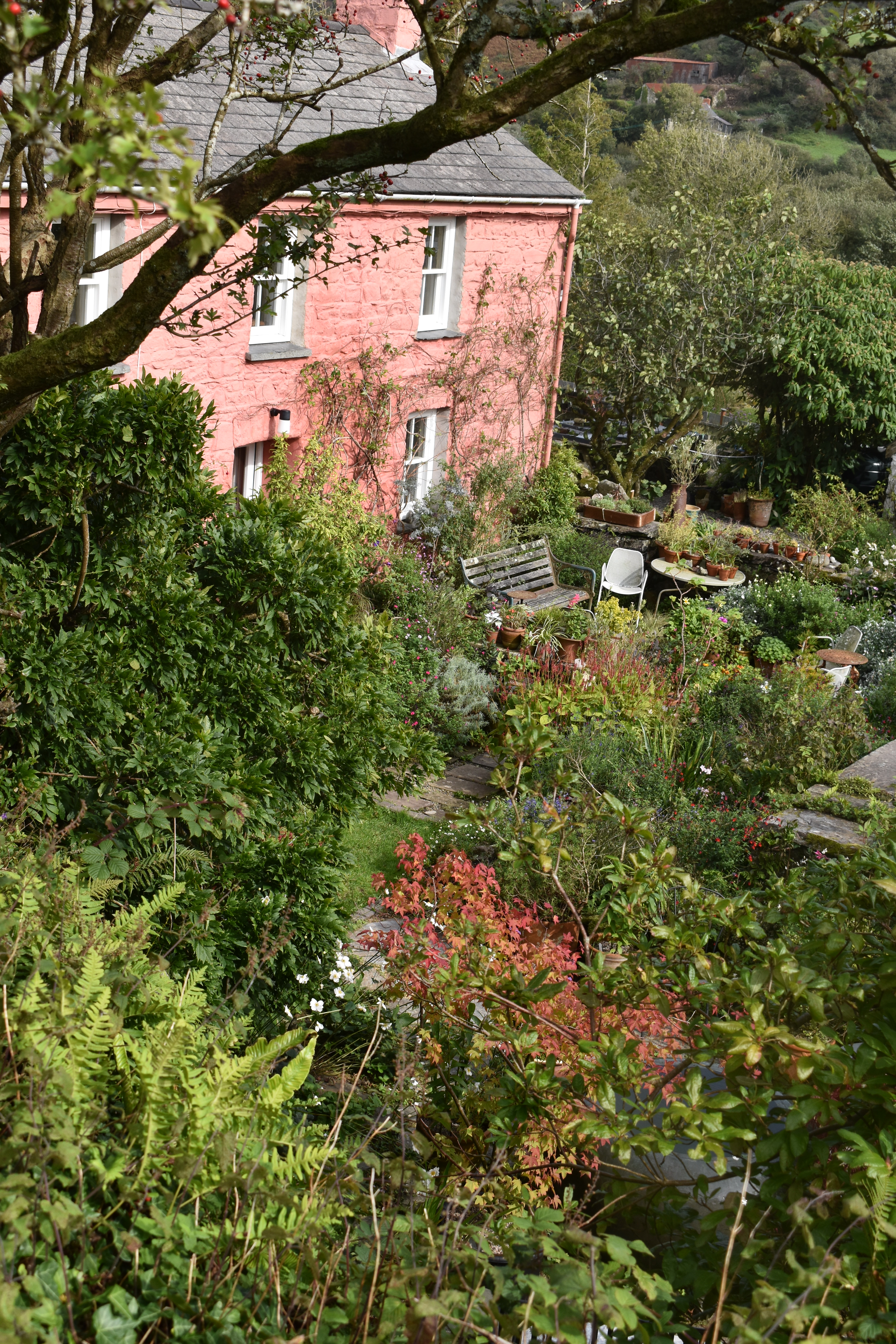
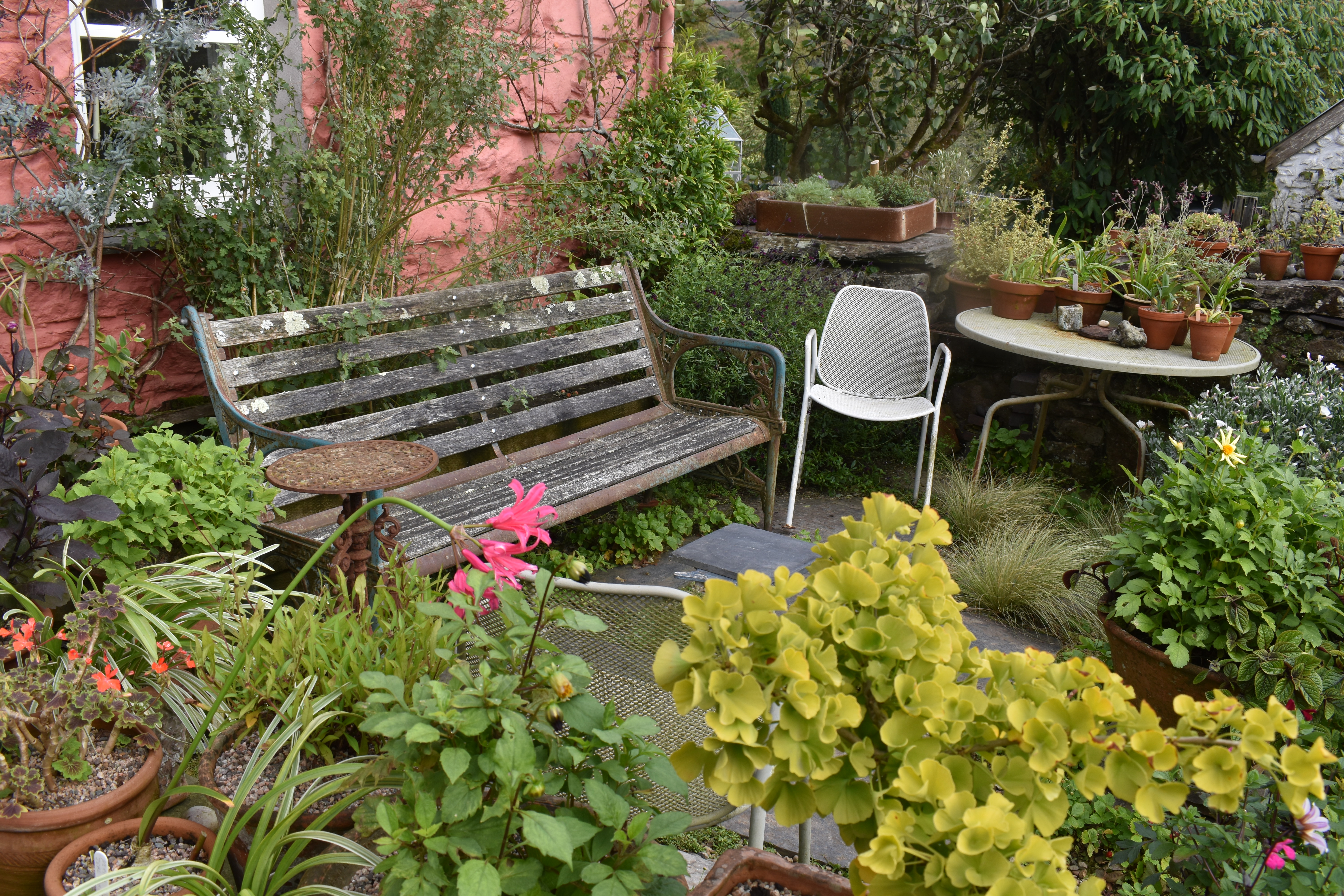
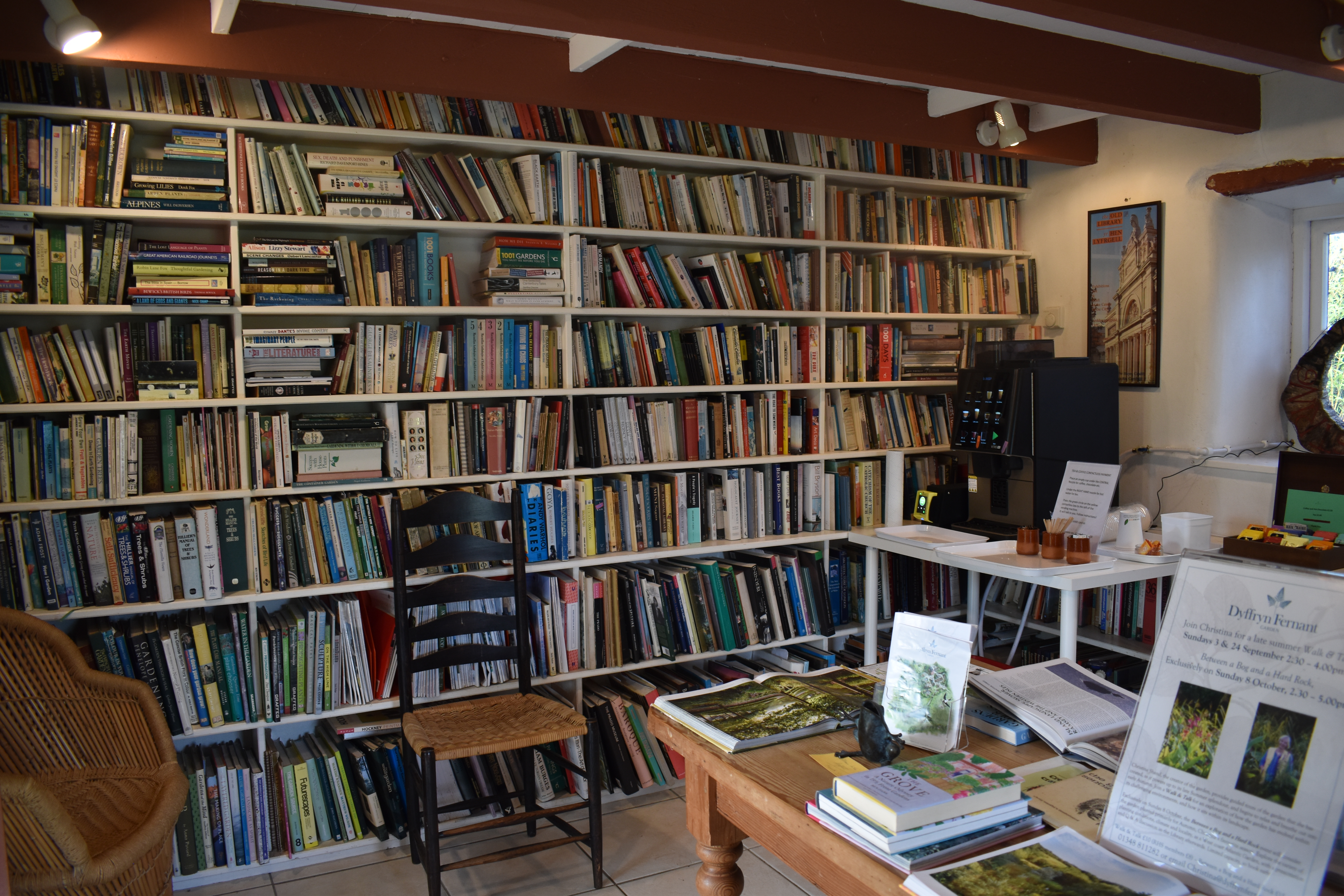
The gravel driveway leads to the salmon pink cottage and short distance away is a rustic library building where we enjoyed freshly brewed coffee and browse some of the hundreds of books lining the walls.
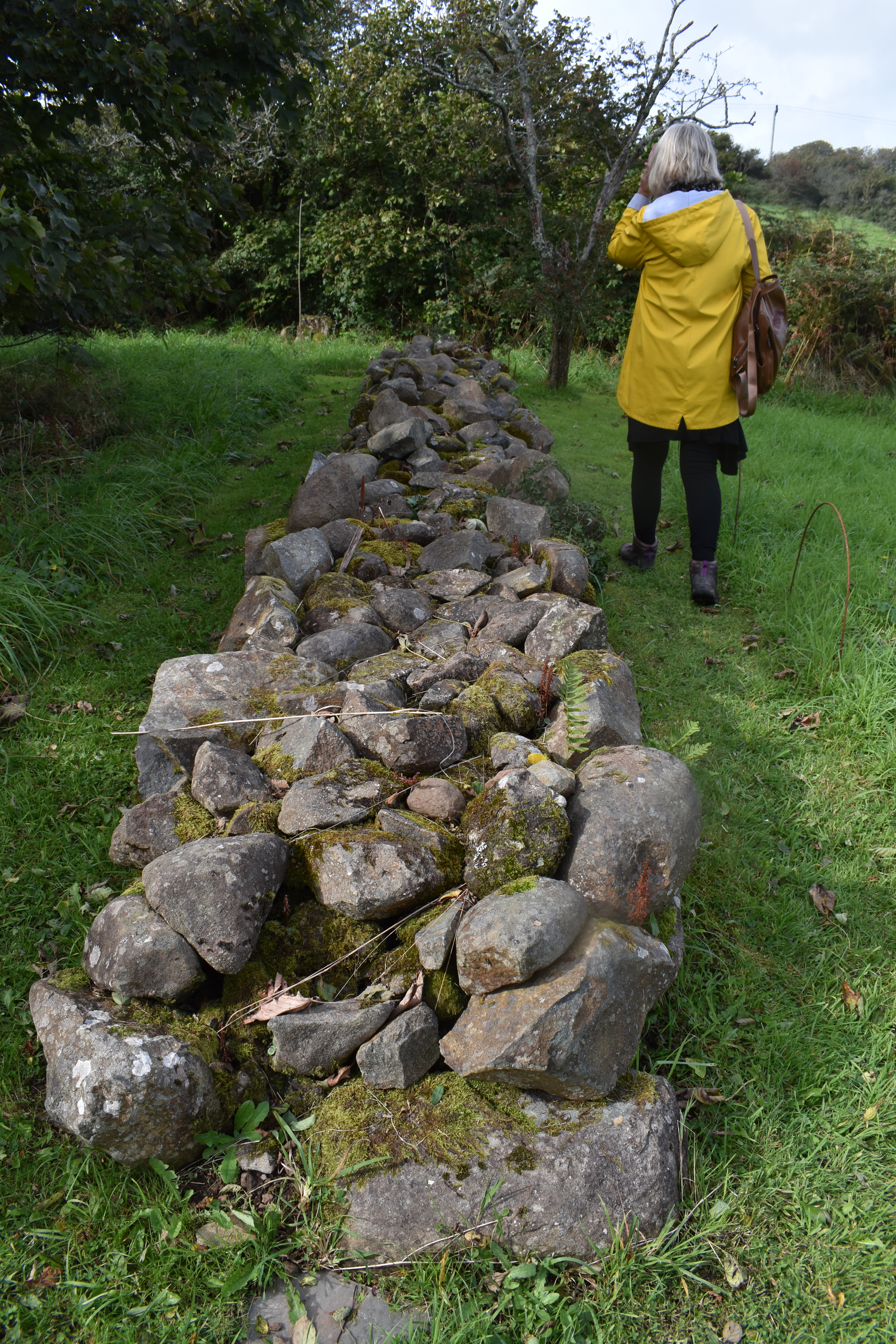
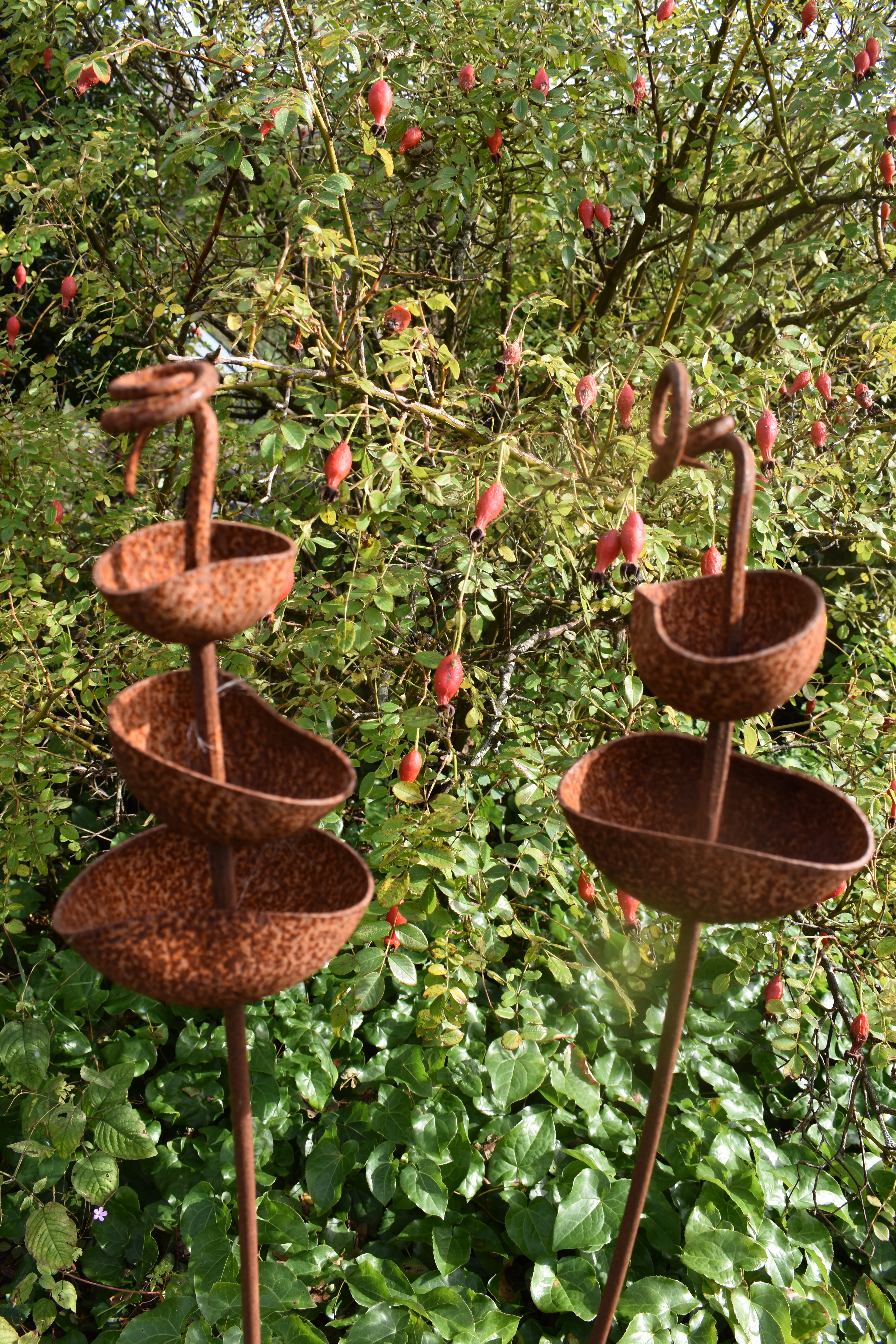
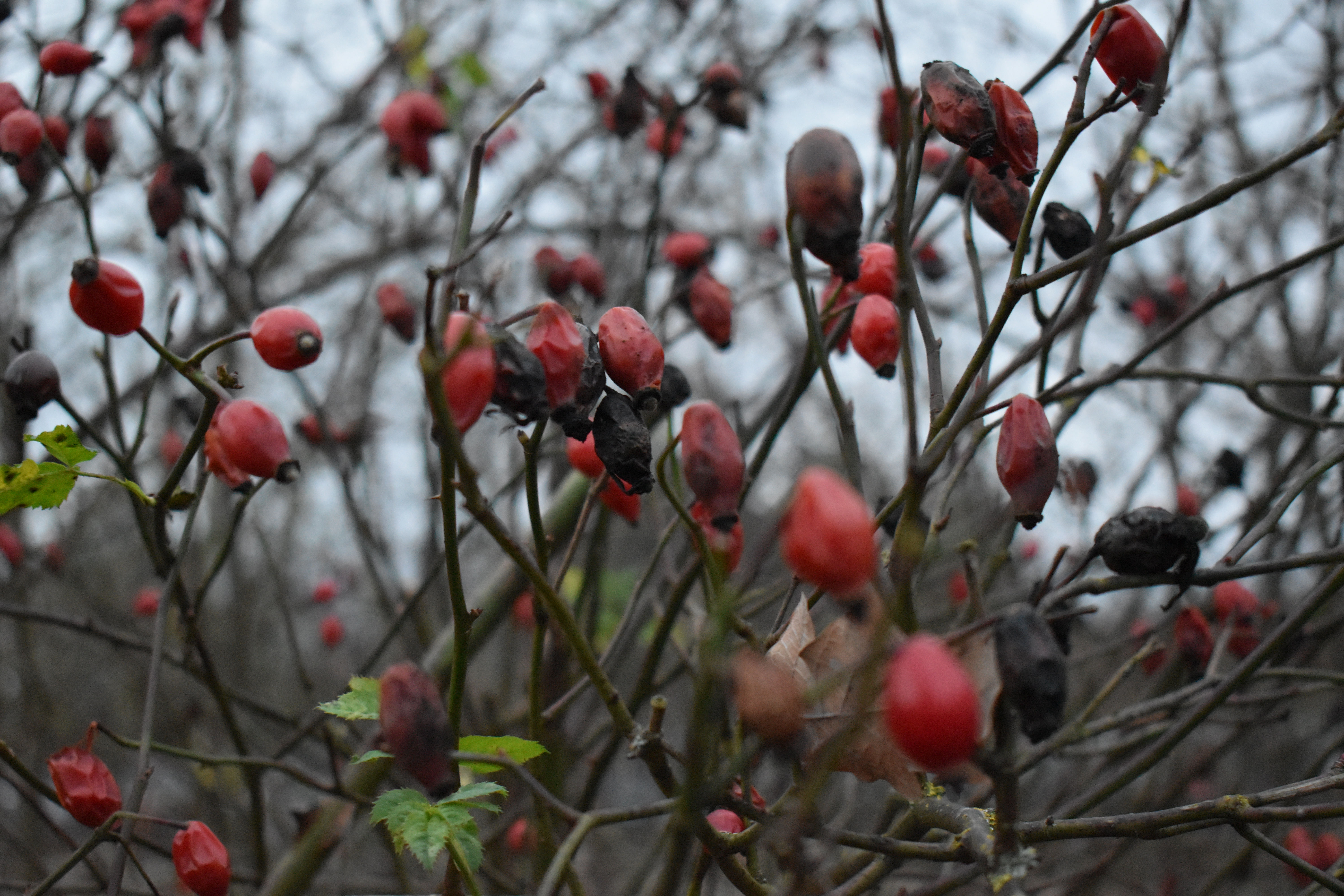
We parked in a field on the opposite side of the lane to the garden and here we were delayed while I looked a hedgerow Hawthorn dripping with red berries giving it the look of a red waterfall. We crossed the lane and entered the ‘Quarry Garden”. From there we followed the lane up to the cottage and its front garden. We stopped to look at this strip of stone which reminded us of the work of Richard Long, landscape sculptor.
The “Front Garden” is a small patch with plenty of points of interest.
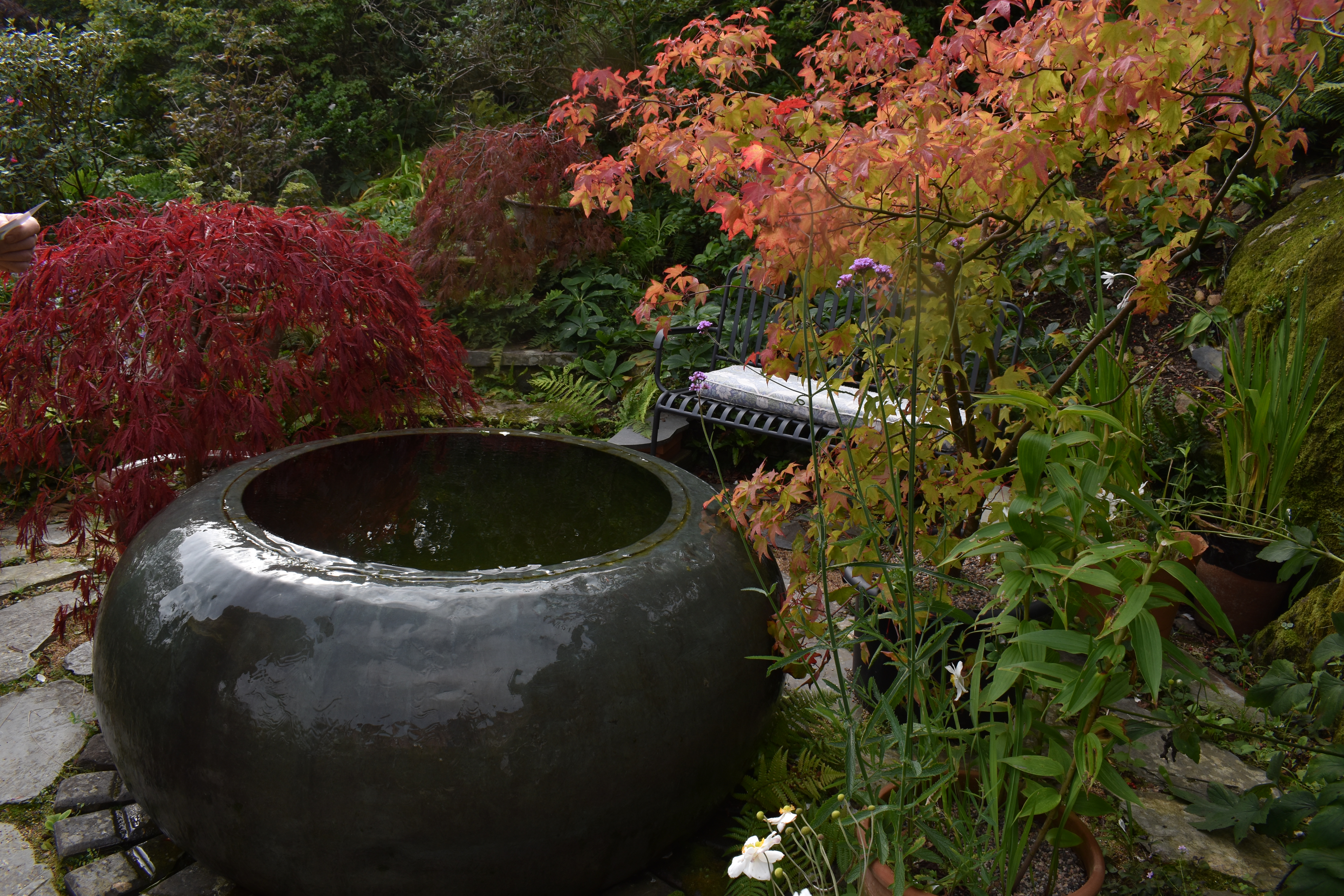
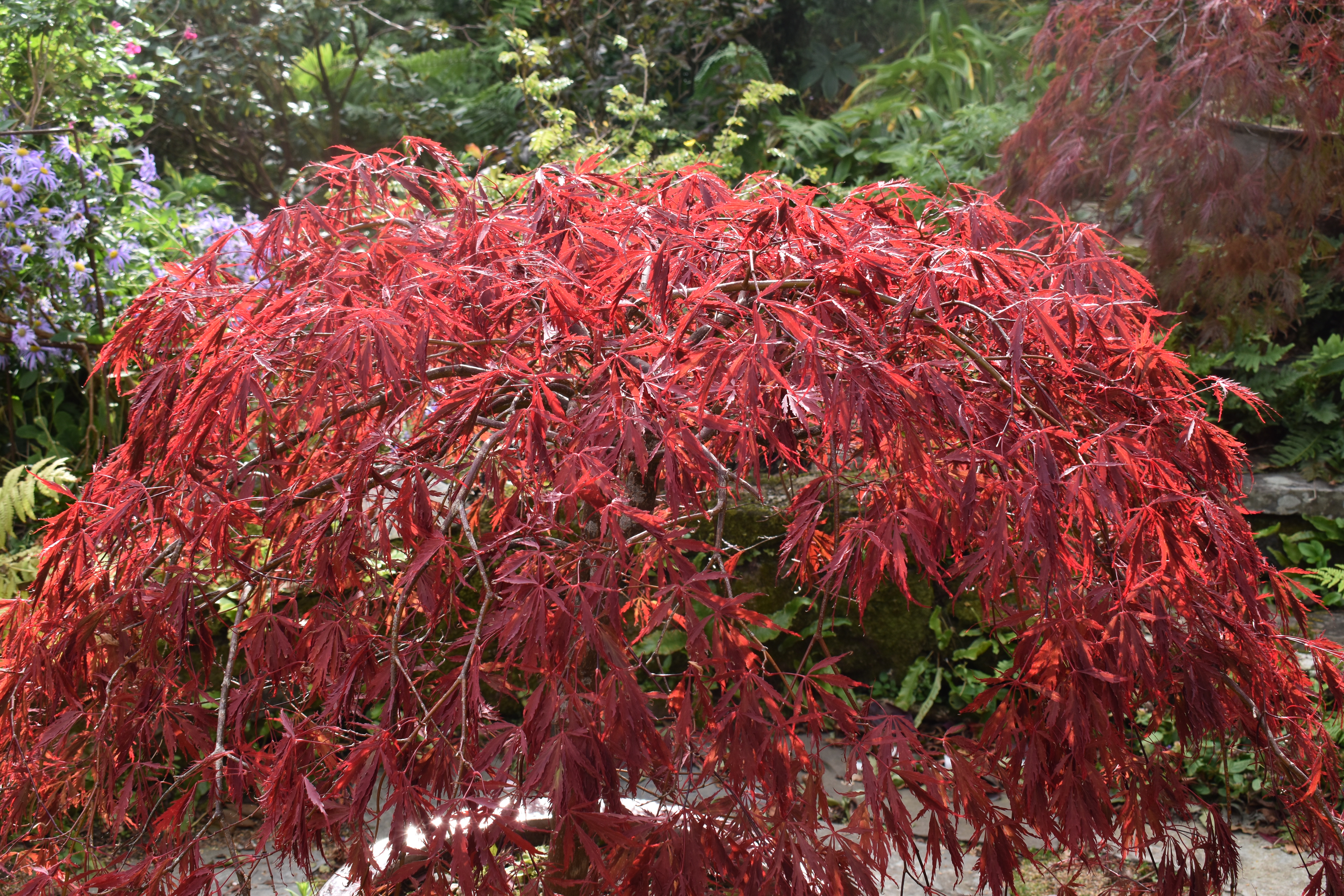
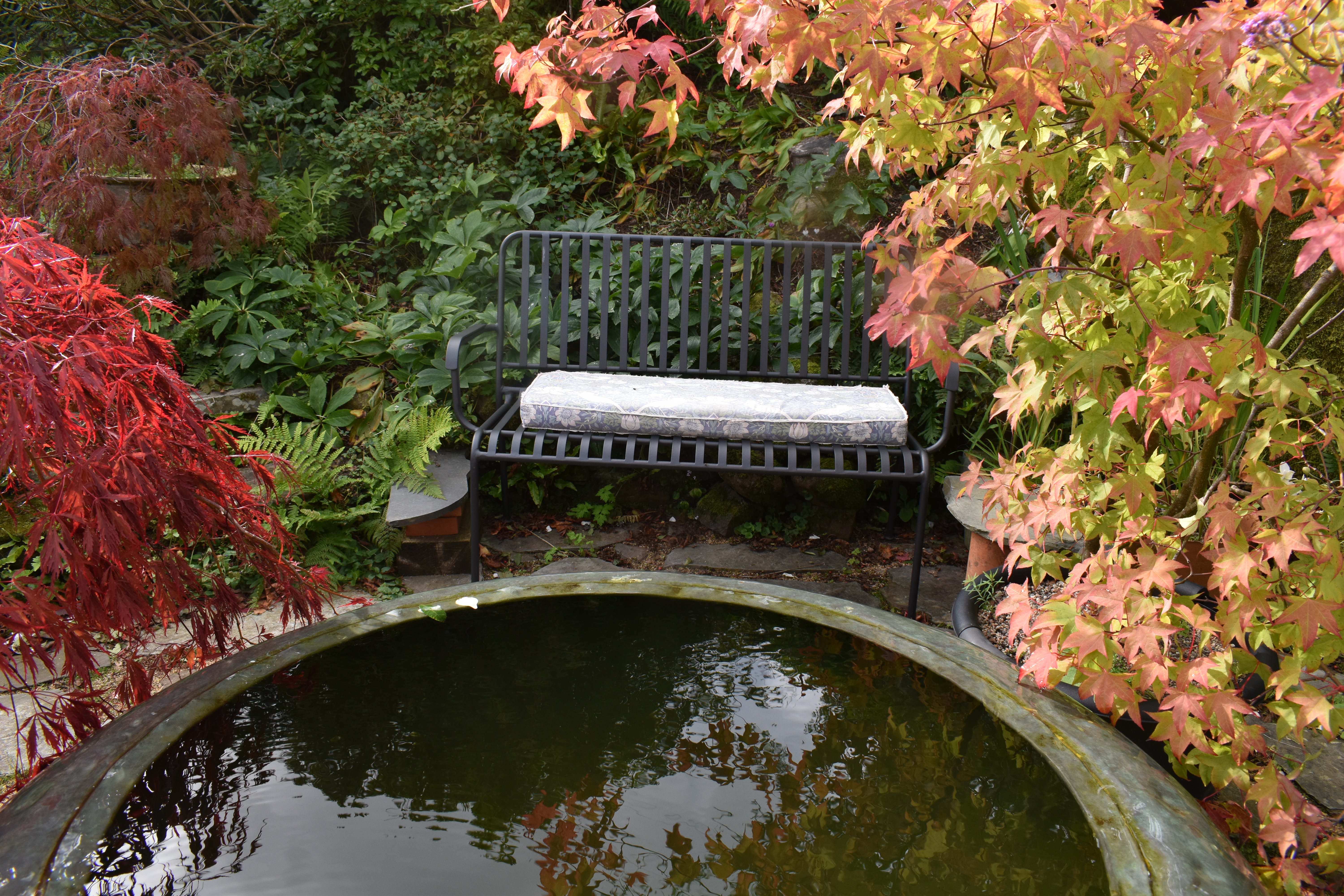
Acers in September provide so much colour marking autumn’s beginnings.
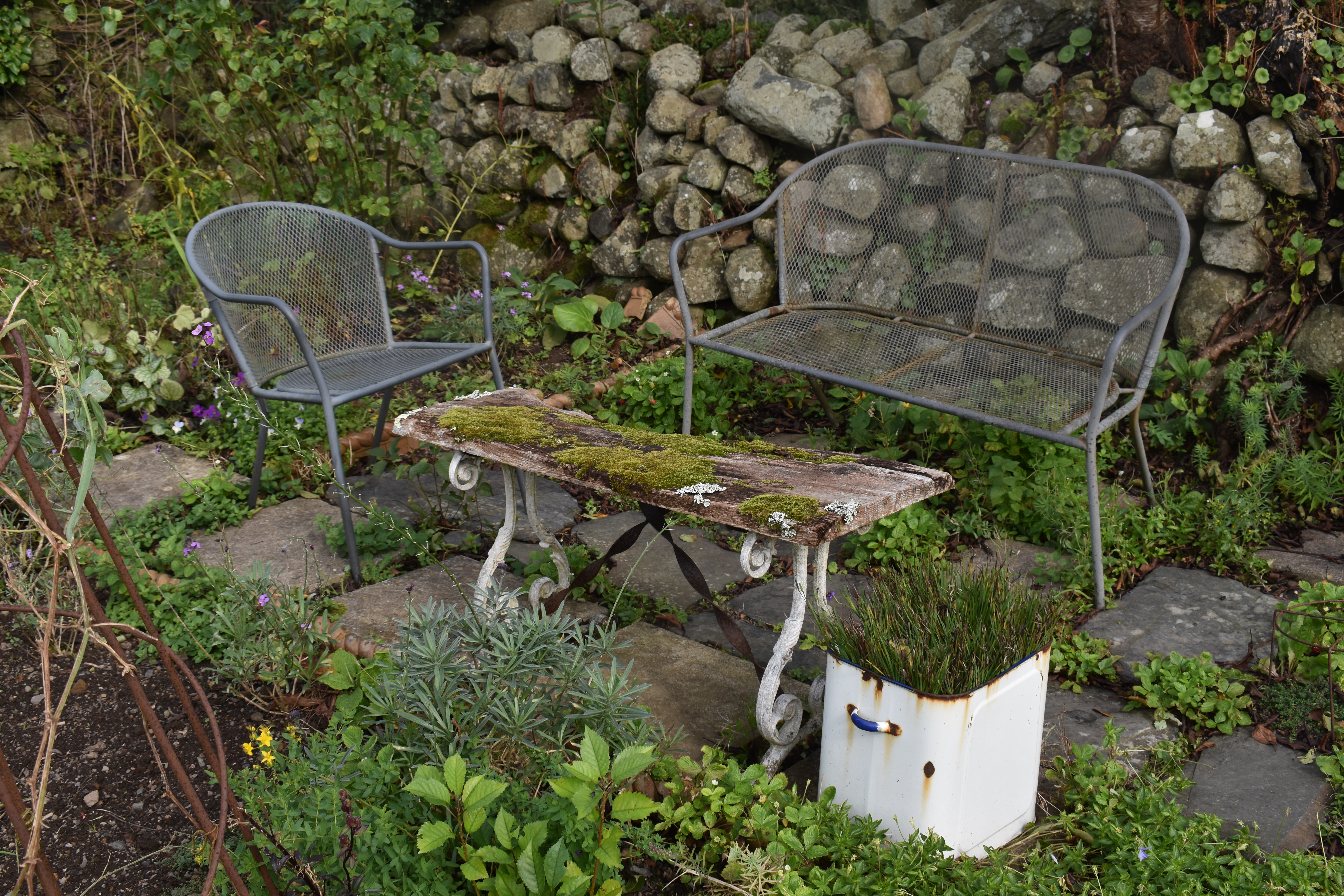
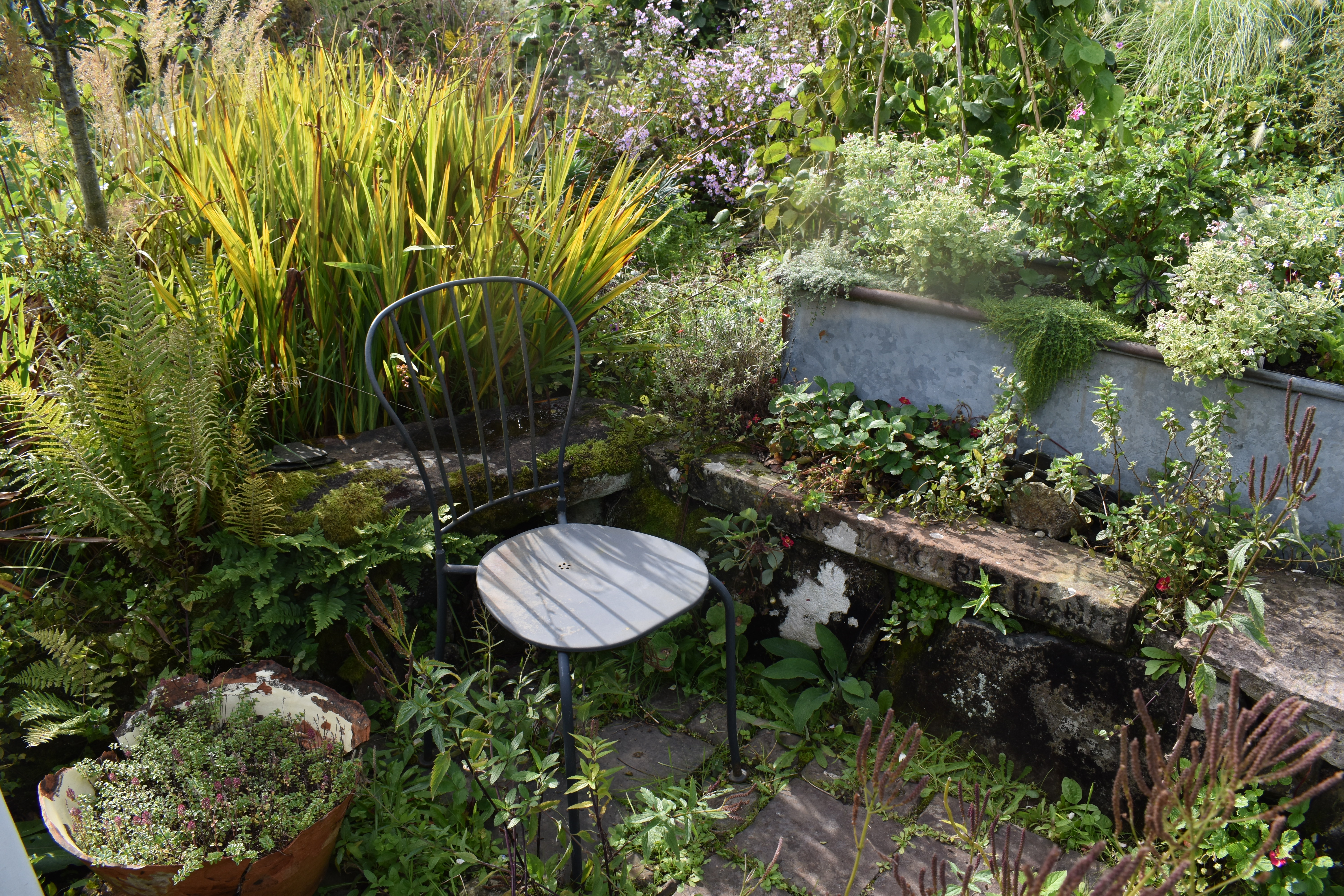
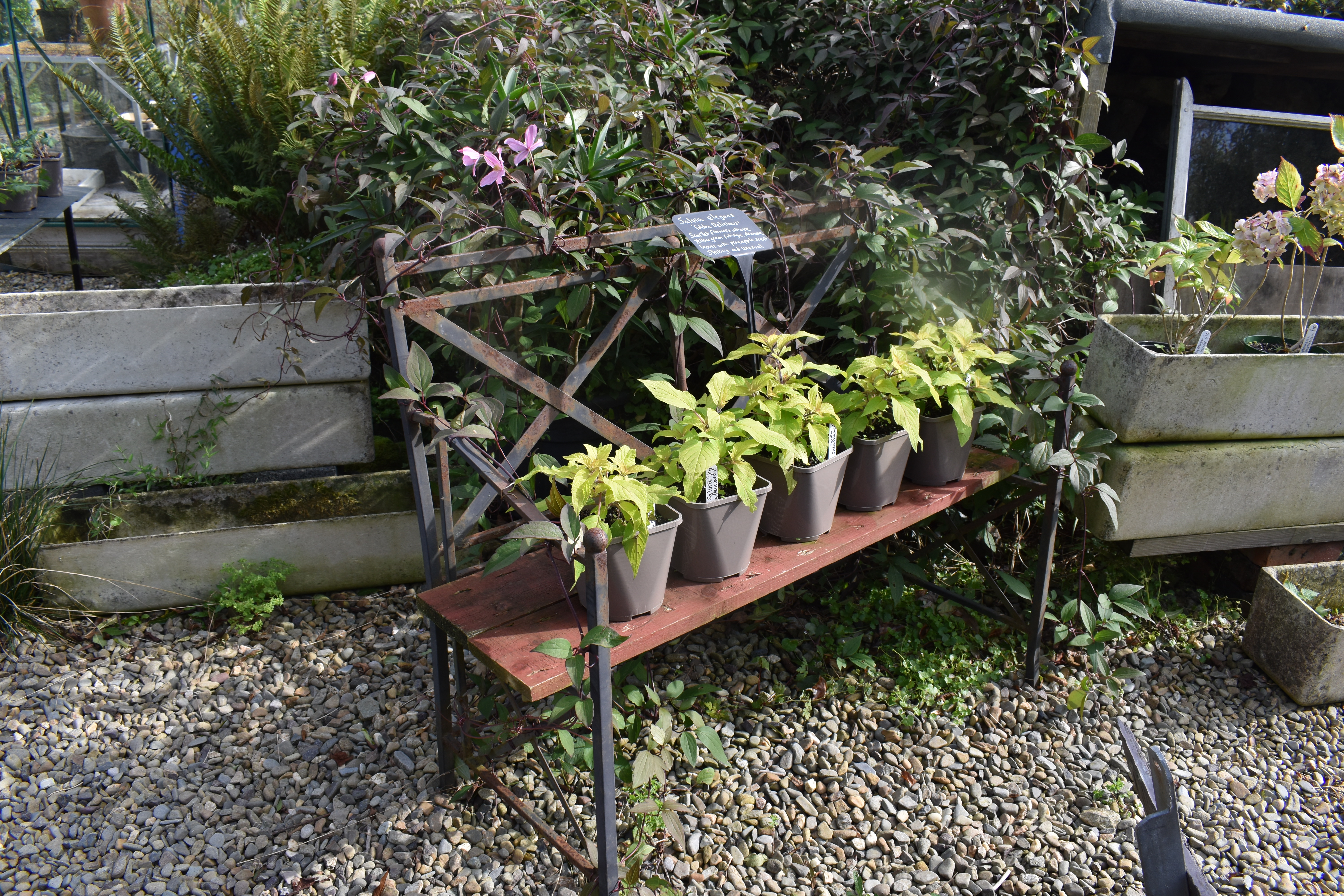
The old ‘Kitchen Garden’ still shows signs of production but it also is home to stock plants. There were interesting places to sit and consider and even spot wildlife.
Off to the Library next for our coffee break, comfy chairs and time to look at a few of the hundreds of books. The view from the library doorway takes in ‘The Courtyard’ and ‘Bog garden’, which was the next place to enjoy.
Leaving ‘The Library’ and feeling well refreshed we continued our journey of discovery – discovery of interesting plants and how they are put together to give the best possible pictures.
The areas we still had to look at were various planned borders and garden rooms gently fading into more wild areas.
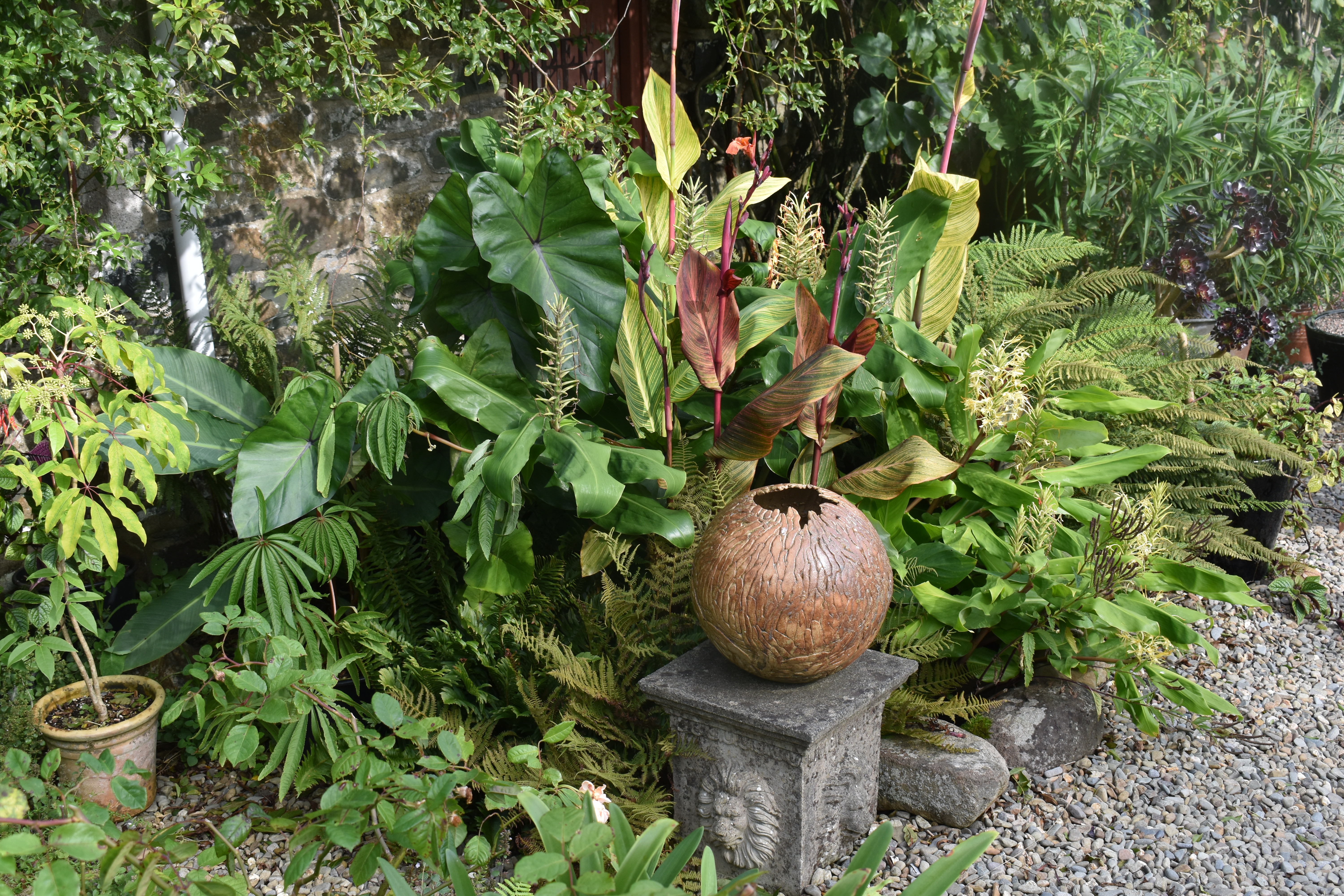
Some brilliant plants and planting combinations on our way to ‘The Fernery’!
And so we reached ‘The Fernery’ and close by a ‘xeriscape’ planting which are strongly contrasting conditions. These areas and the wilder patches will be in the second part of my post about Dyffryn Fernant.
We haven’t visited our local National Trust property, Attingham Park, very many times in 2023 for a variety of reasons but when we found ourselves with a free afternoon in December we took advantage and made the short drive there.
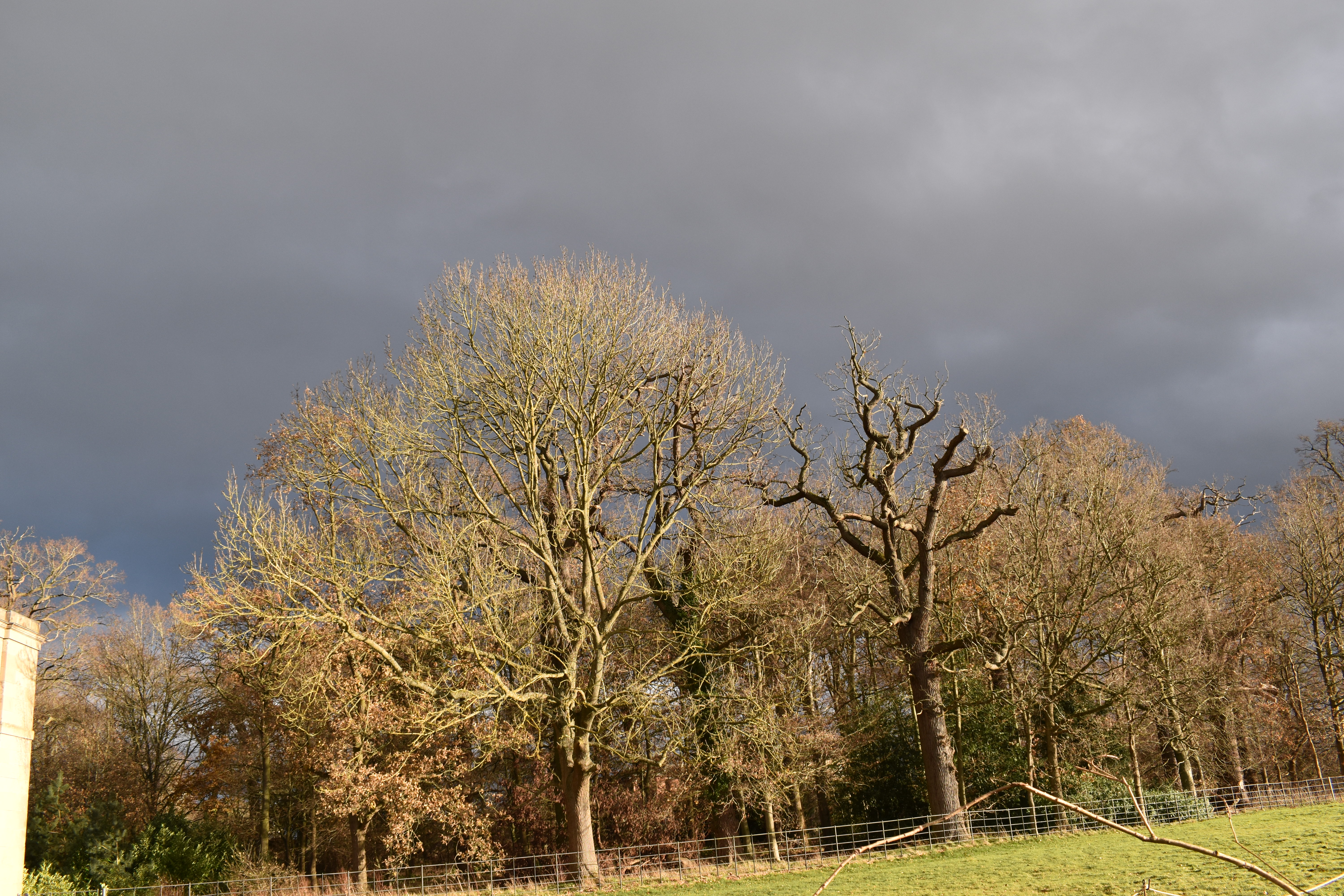
The sky turned a dark shade of grey as we arrived but the sun still shone highlighting the silhouettes of naked trees and the stone of the main buildings.
We decided to take the ‘One Mile Walk’ with the weather not looking too promising, starting off by following the bark pathway to the walled garden in search of signs of the season.
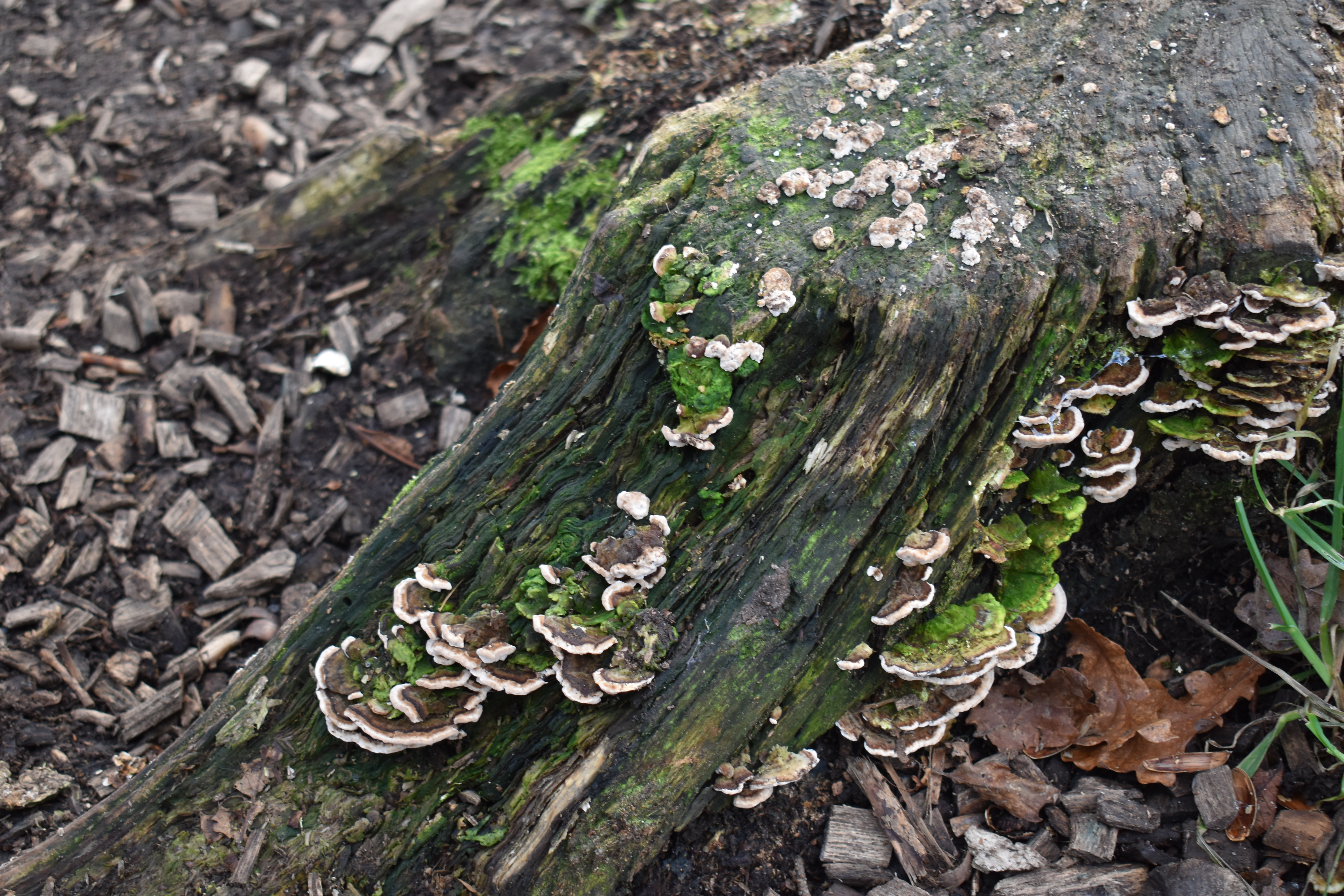
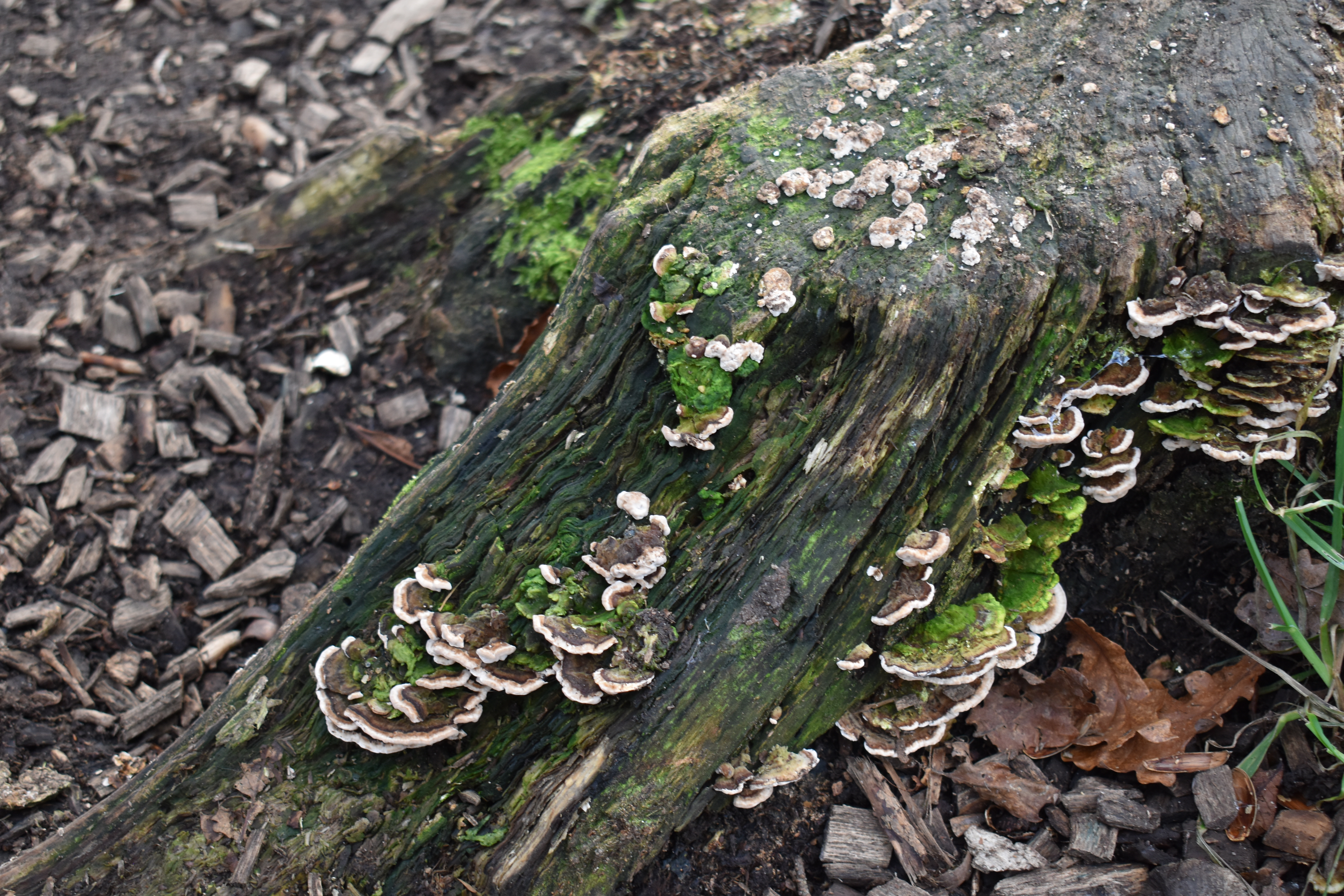
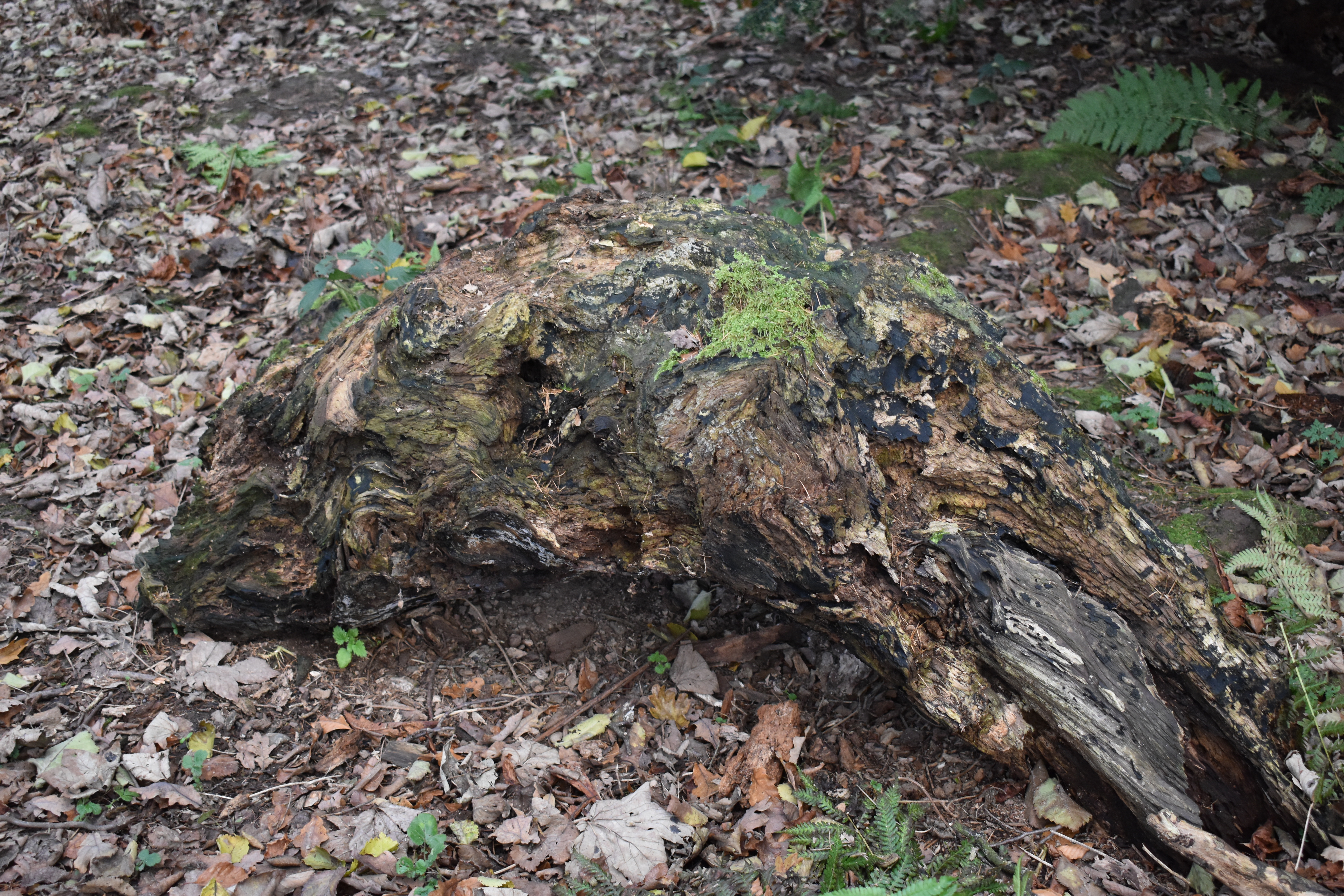
We used to think of autumn time as the best time to enjoy spotting fungi but as our winters are getting wetter and wetter we see them right through to the end of the year. The National Trust has changed its policy on woodland management for the better with the emphasis being on increasing biodiversity. Fallen or felled trees are no longer cleared away but are left for insects, invertebrates, flora and fungi to live on and feed on. They then become the base of the food chain of the wood.
Fungi on tree stumps thrive alongside mosses, lichen, ferns and even tree seedlings.
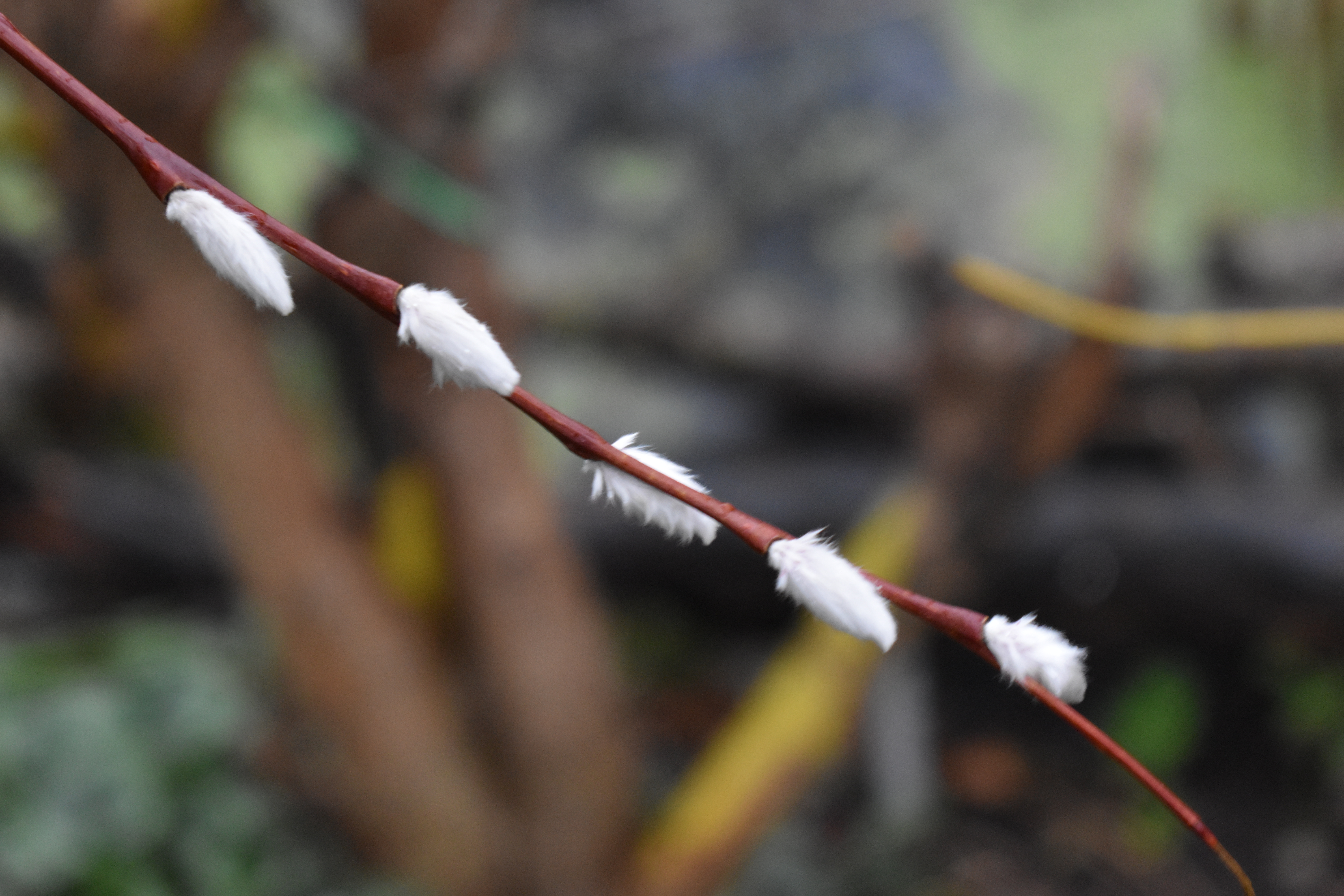
Even in the depths of winter we can find flowering shrubs to give us colour and often scent. These are joined by berries and catkins.
Here along the Mile Walk we always look forward to arriving at this splash of yellow and the rich pineapple scent provided by the flowers of a mahonia. It is a large thicket of branches mostly hidden behind its glossy deep green foliage, a perfect foil.
Our final visit to Attingham in 2023 gave us plenty to enjoy, as it does whatever day throughout the year we wander it’s paths.
I seems appropriate to publish this post on the first day of the new year, 2024 when I will be preparing for creating the first pages of my garden journal January 2024.
2023 was not an easy gardening year with the weather making things so difficult. Let us hope that 2024 is going to be a good one!
It is hard to believe that we are already looking at the entries for the last month of 2023, a difficult year for gardens and gardeners alike, trying to cope with unusual weather events and mixed up seasons.
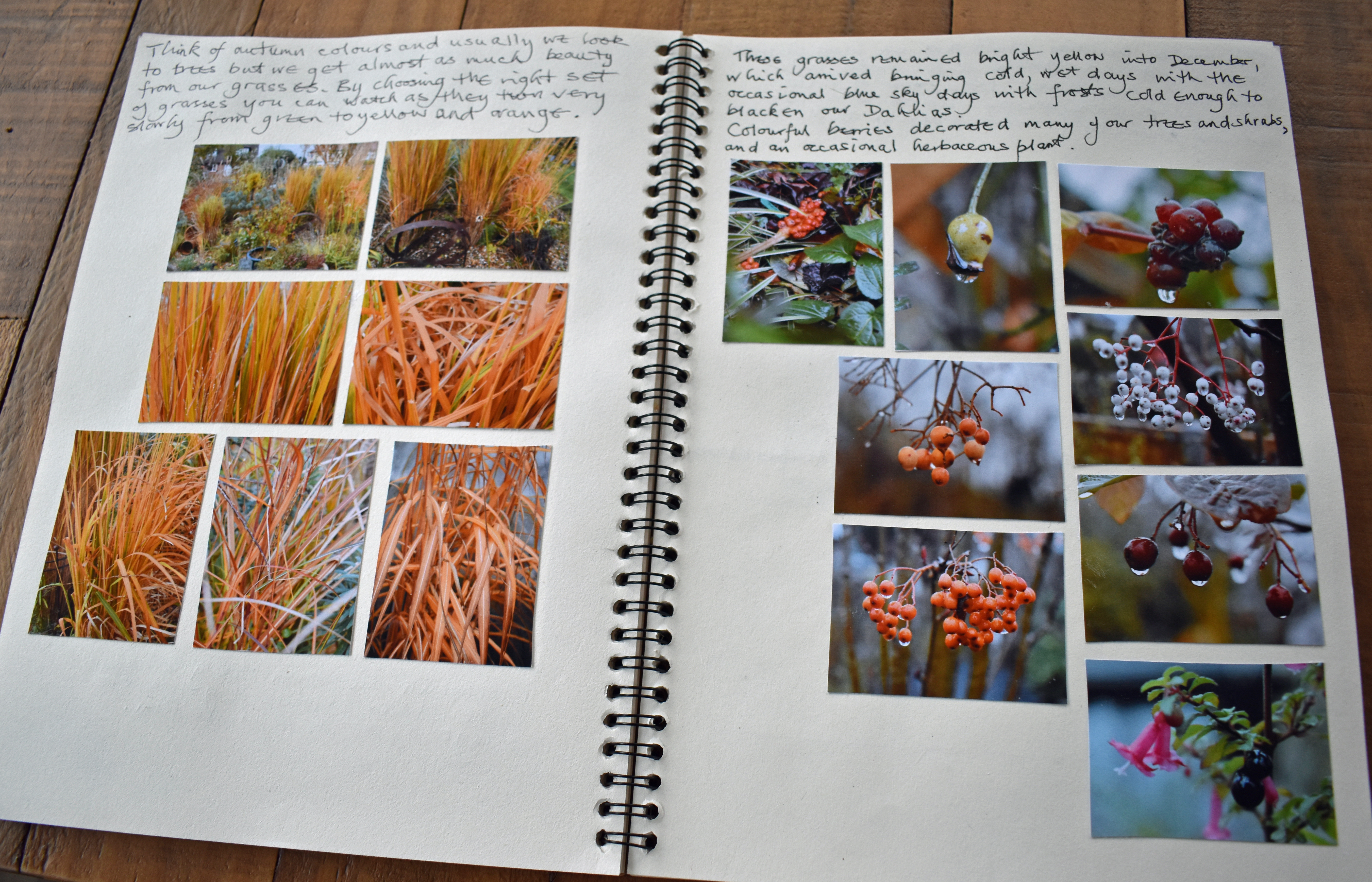
Looking below at the first double page spread you may notice that the final page for November is included. This is because my first words for December refer to the yellow grasses.
I wrote,“These grasses remained bright yellow into December, which arrived bringing with it cold, wet days with the occasional blue sky days with frosts cold enough to blacken our dahlias.
“Colourful berries decorated many of our trees and shrubs, and an occasional herbaceous plant.“Colourful berries decorated many of our trees and shrubs, and an occasional herbaceous plant.“
Alongside this introduction to December I shared a set of eight photos featuring some of our berries.
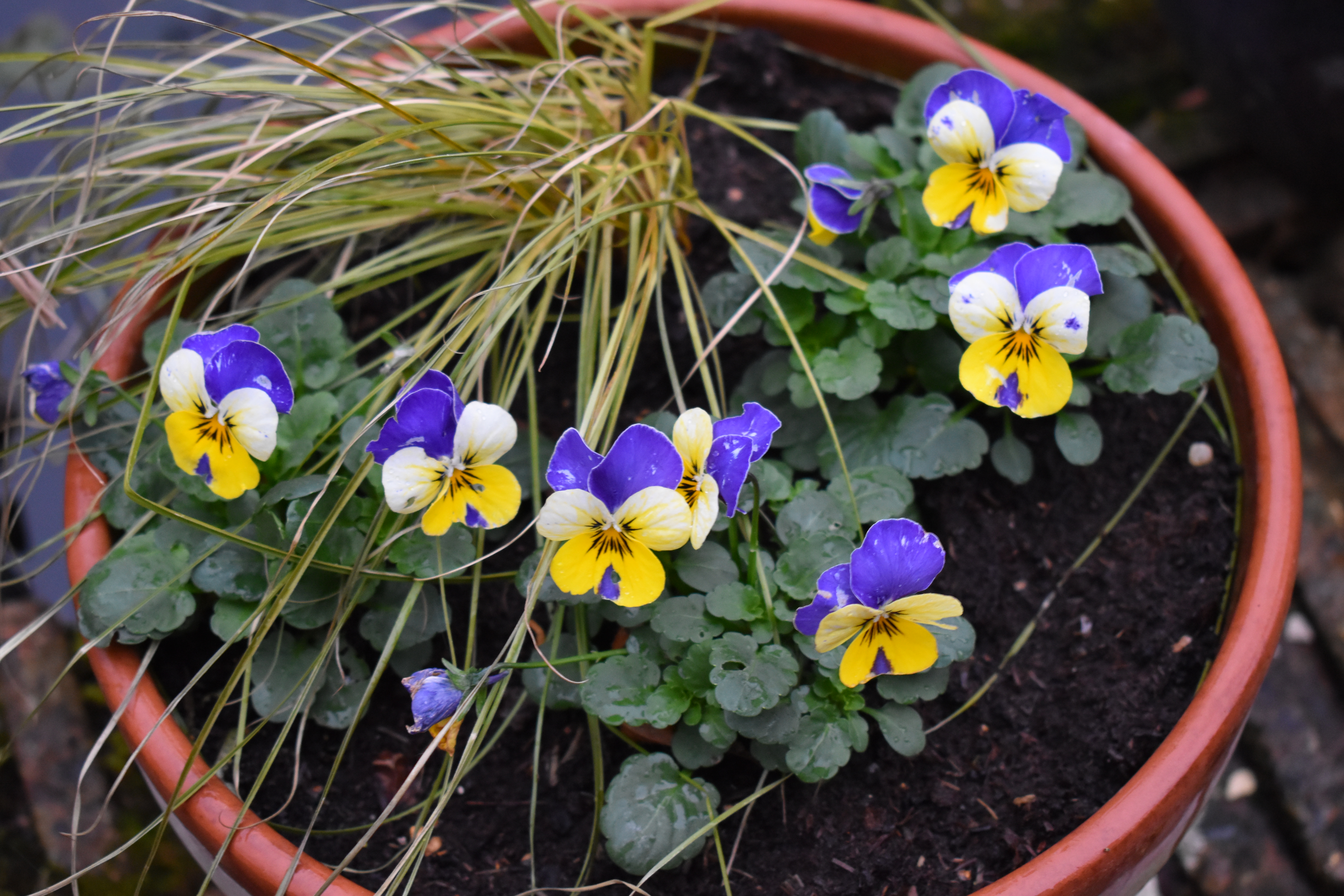
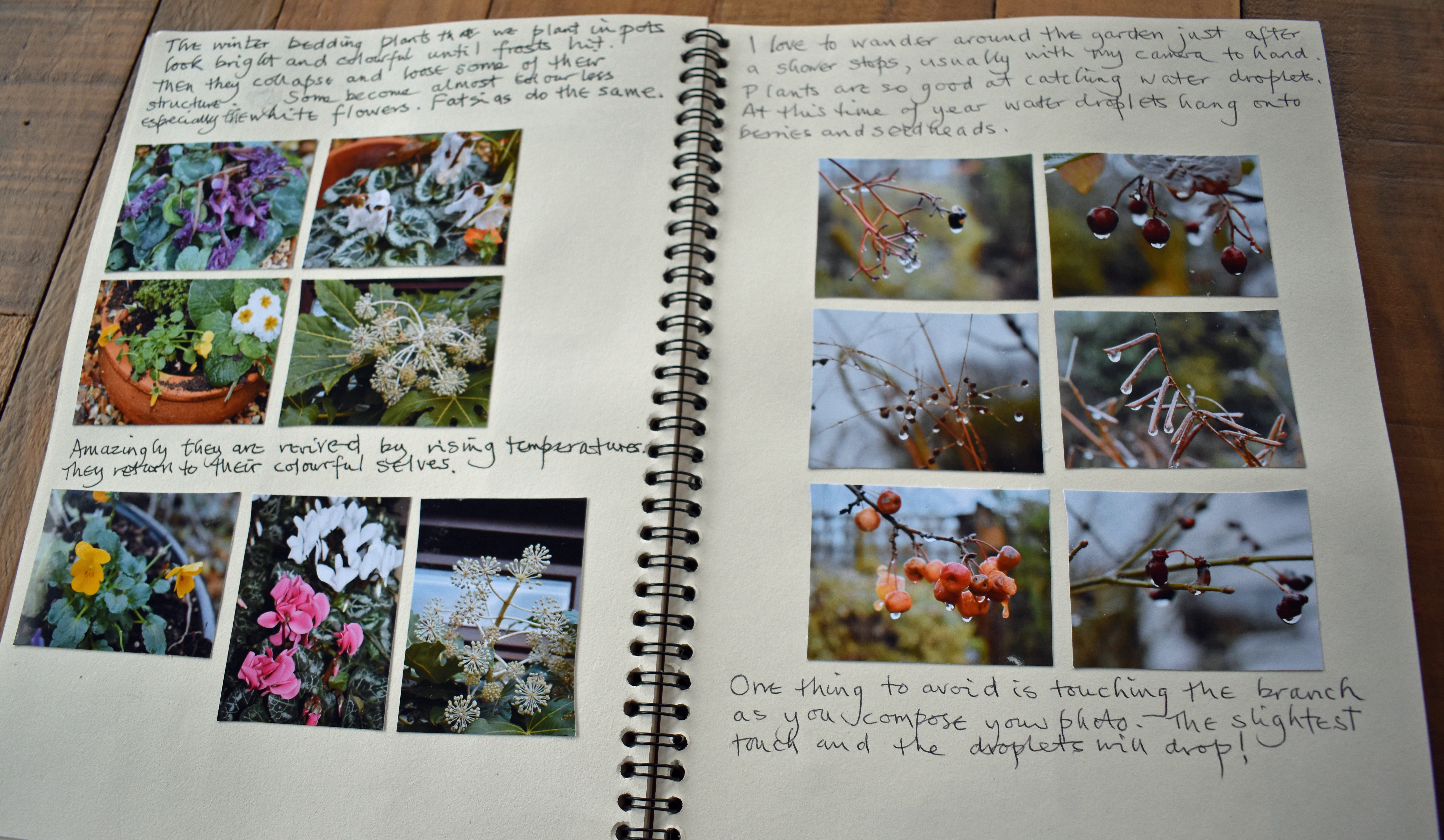
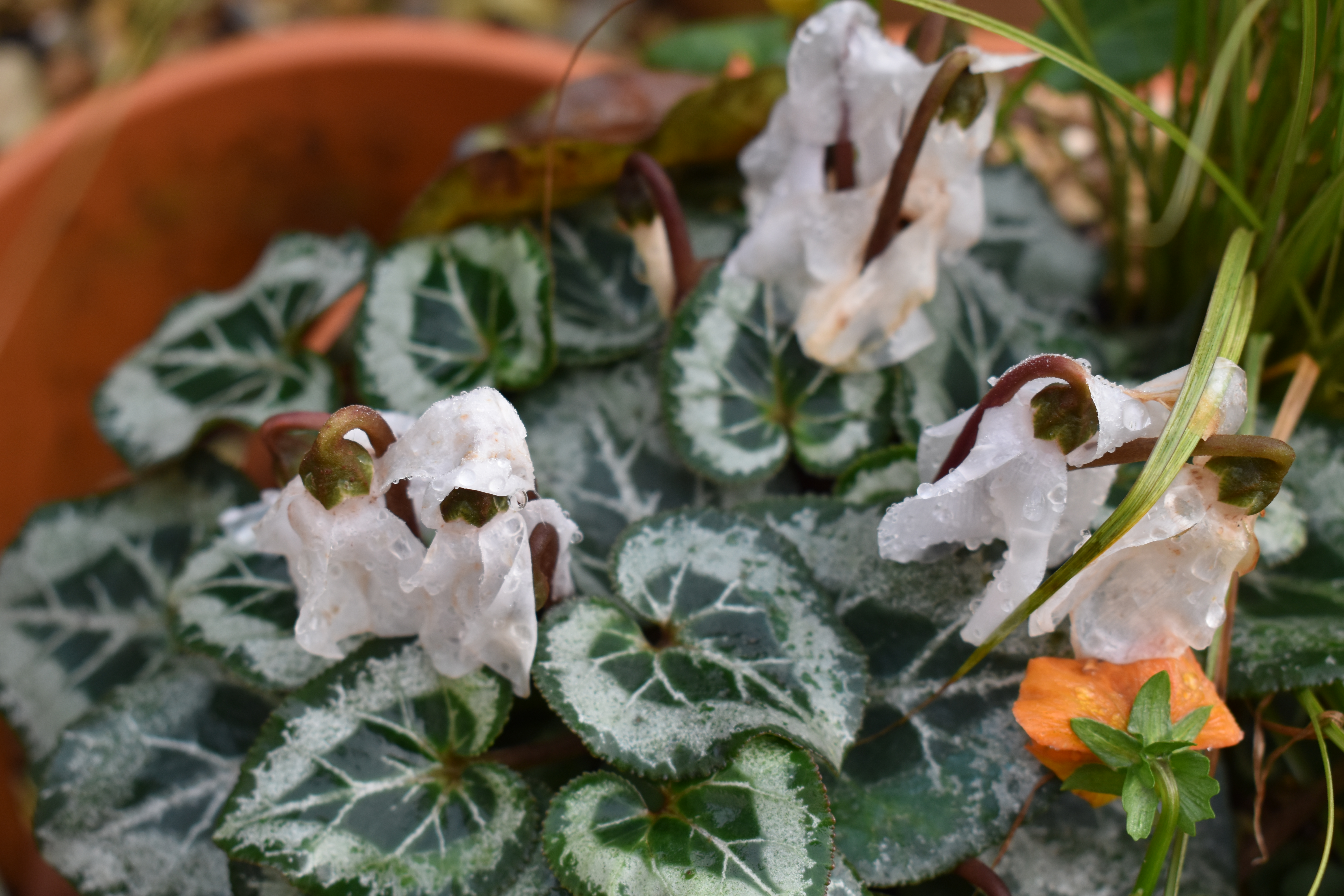
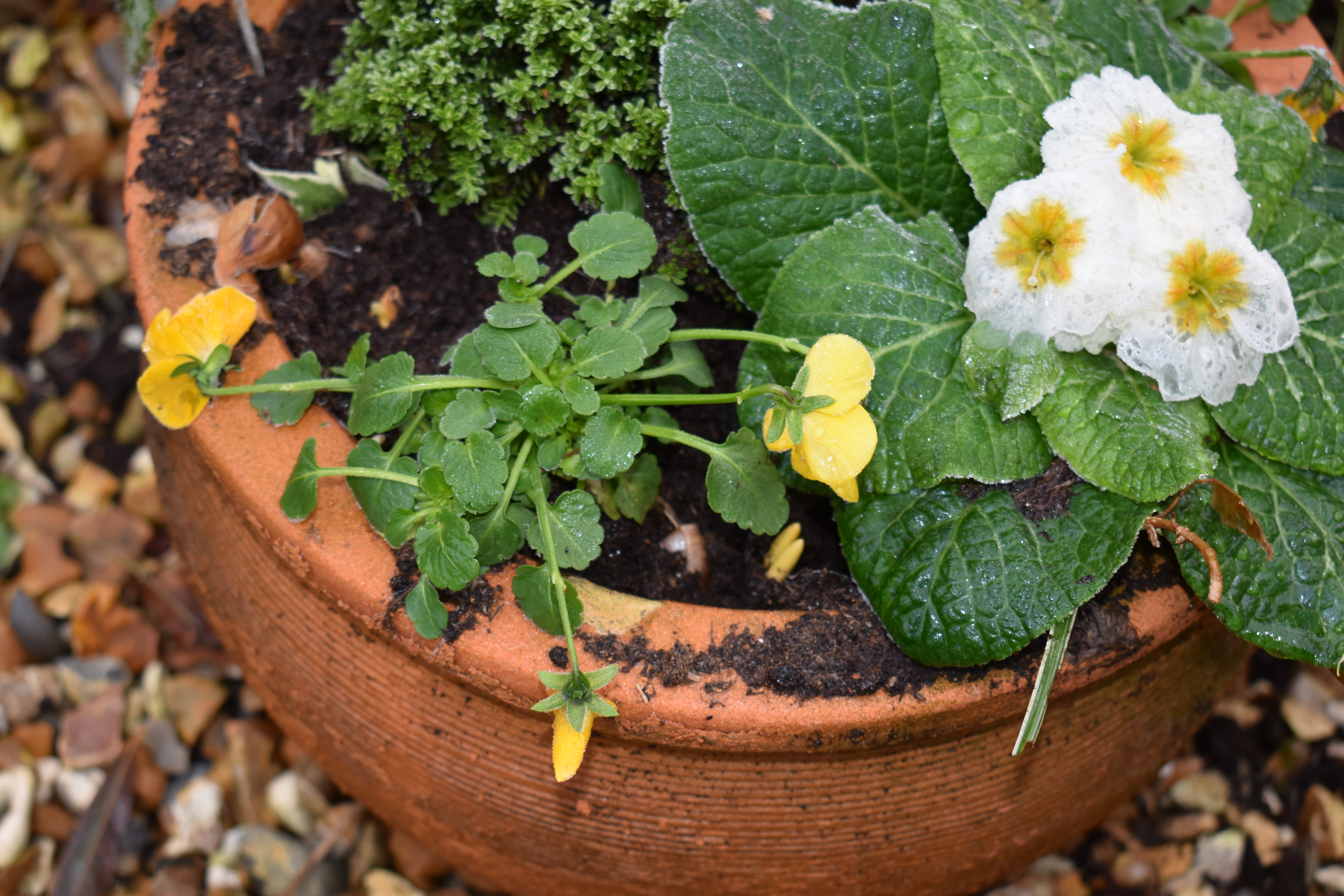
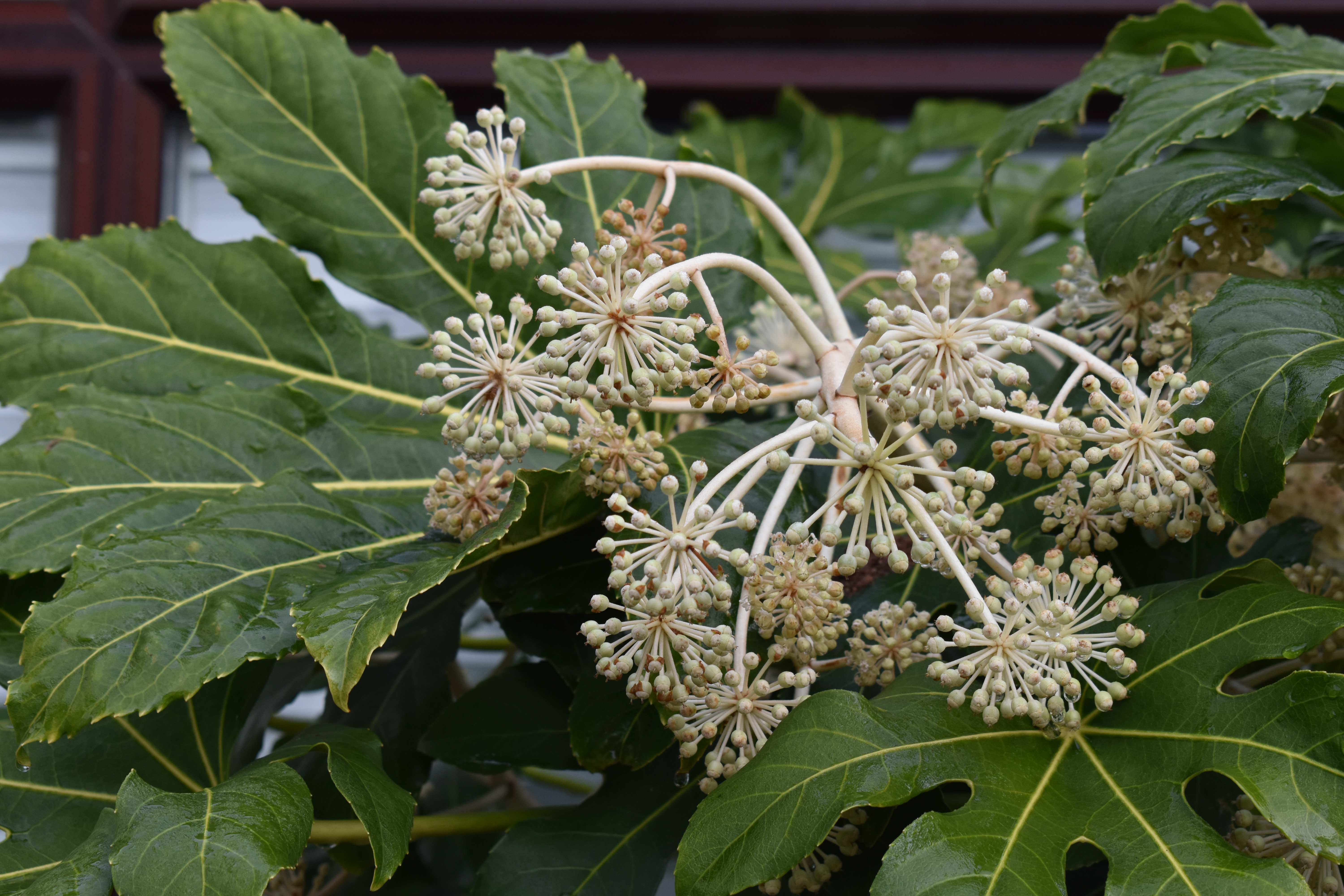
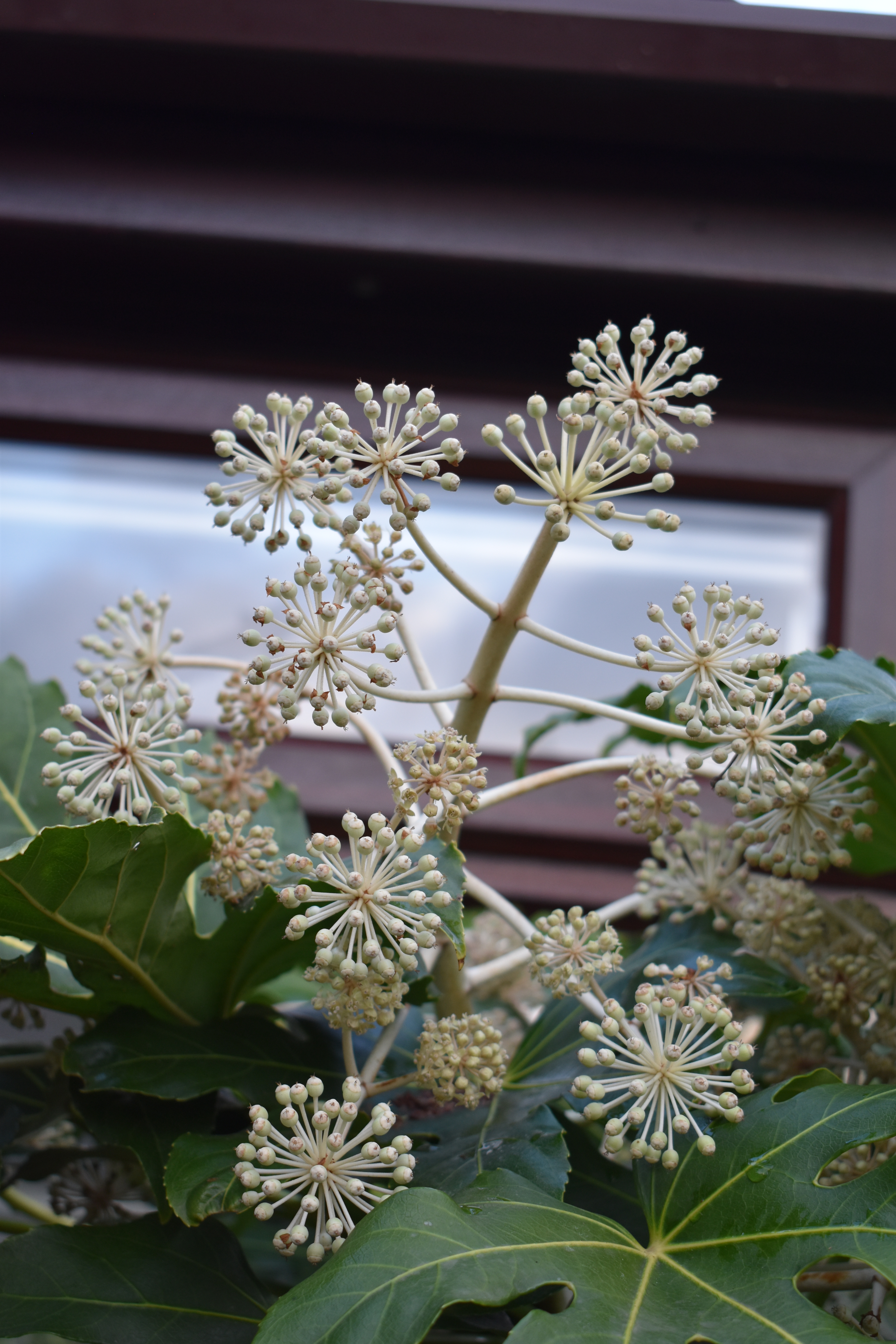
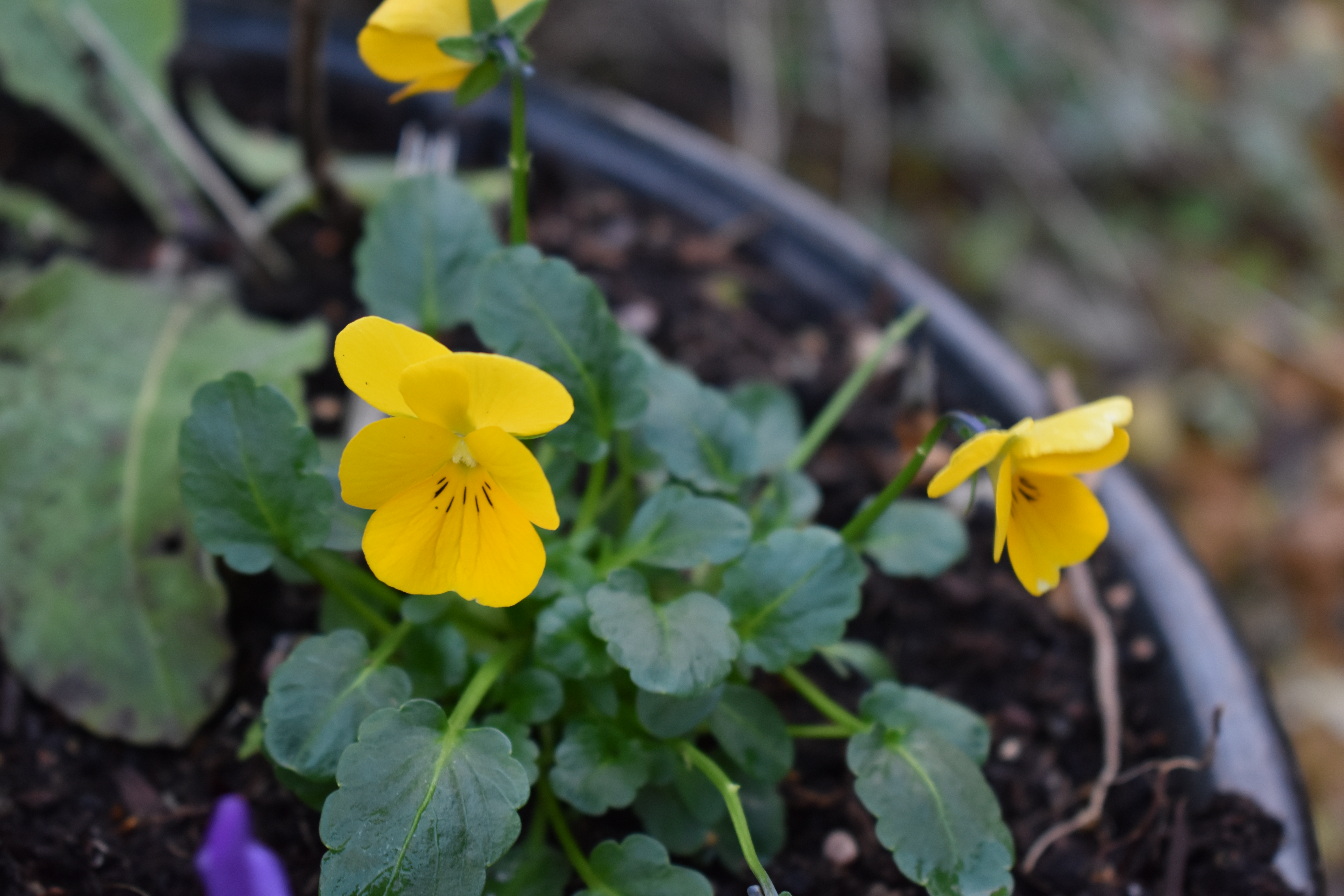
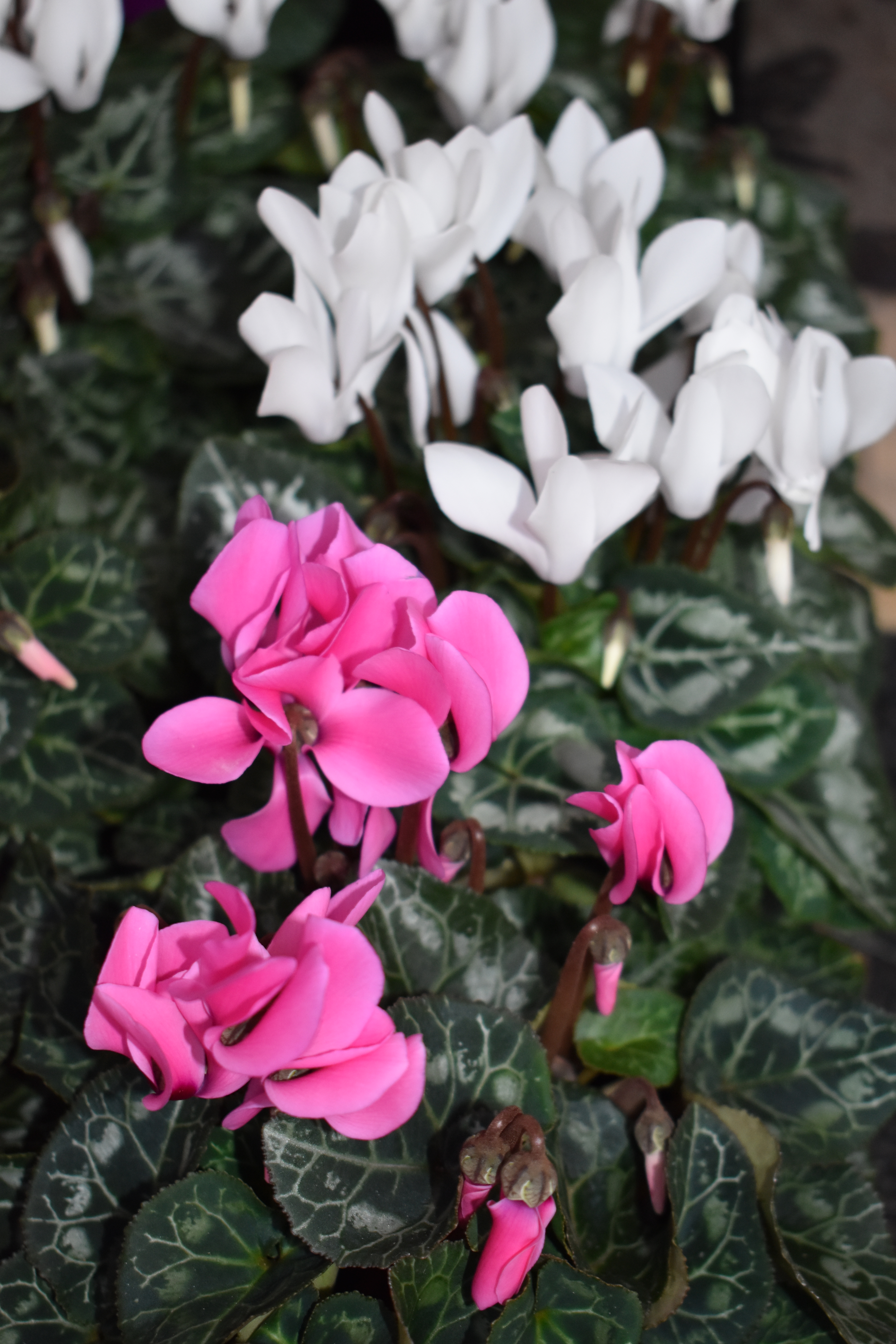
On the next two pages I featured winter bedding plants and opposite that I considered our garden after rain. I noted that,“The winter bedding plants that we plant in pots look bright and colourful until frosts hit. Then they collapse and lose some of their structure. Some become almost colourless, especially the white flowered ones. Our fatsias do just the same.”
I then shared four photos of collapsed bedding plants.
“Amazingly they are revived by rising temperatures when they return to their colourful selves.”
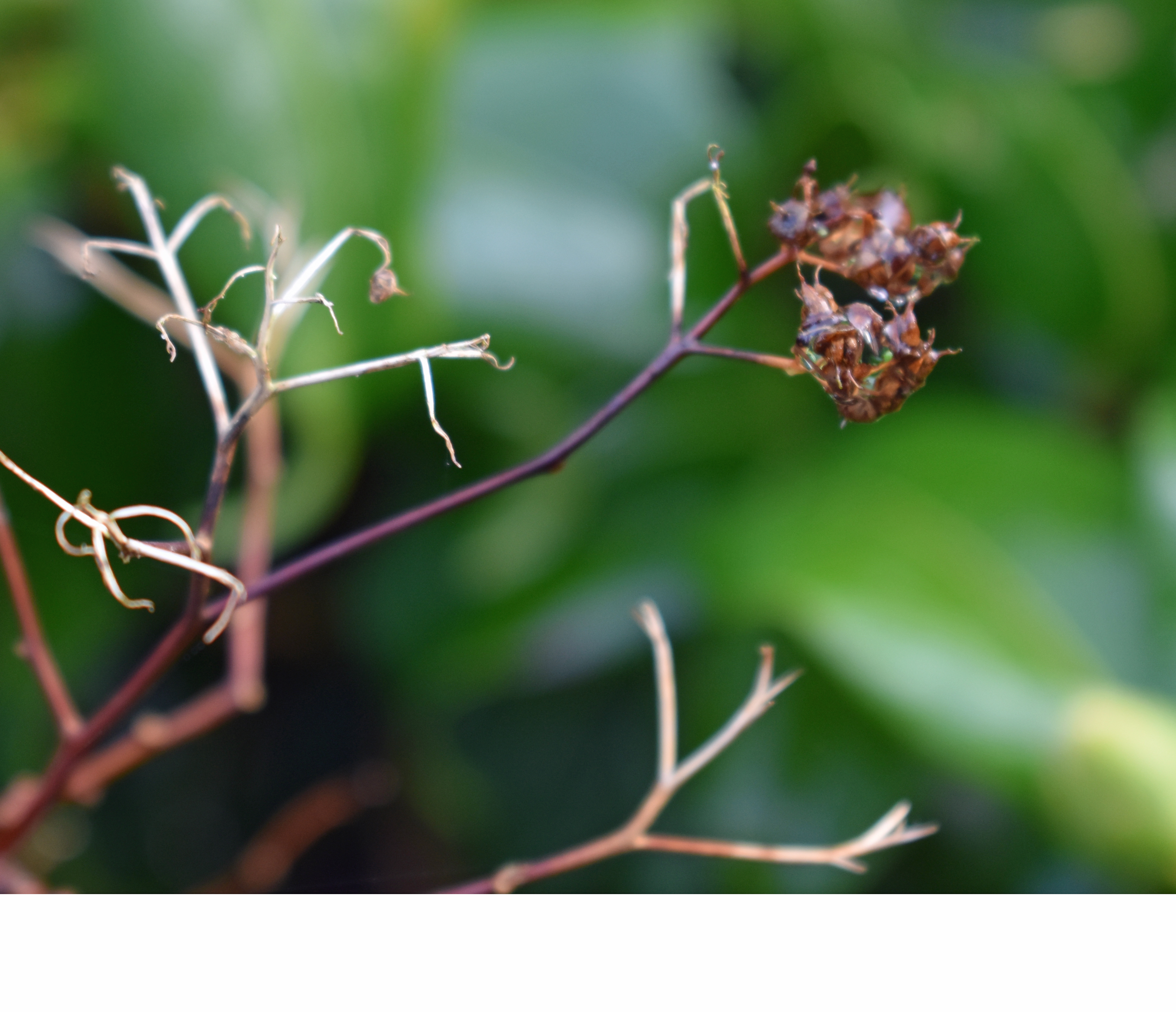
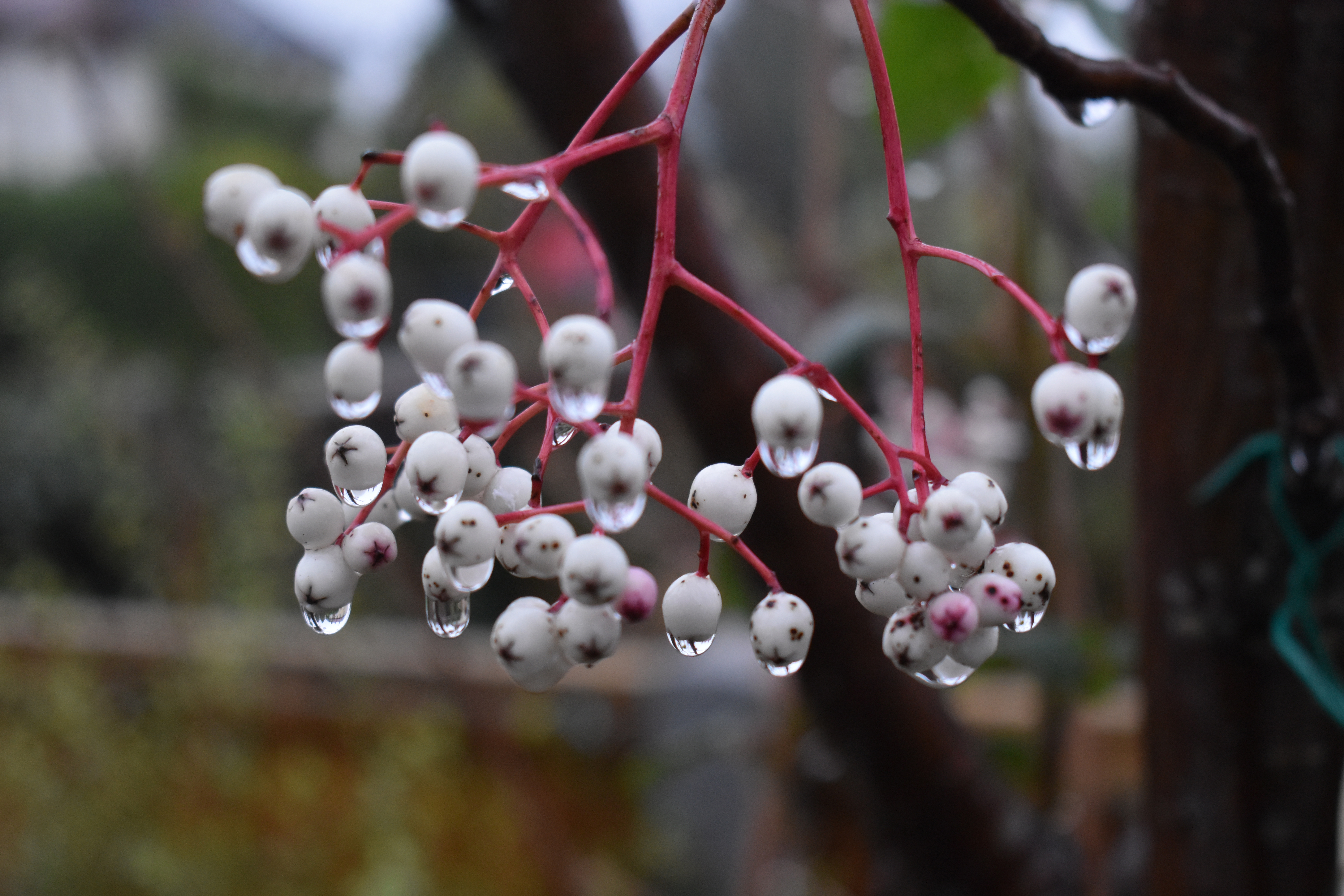
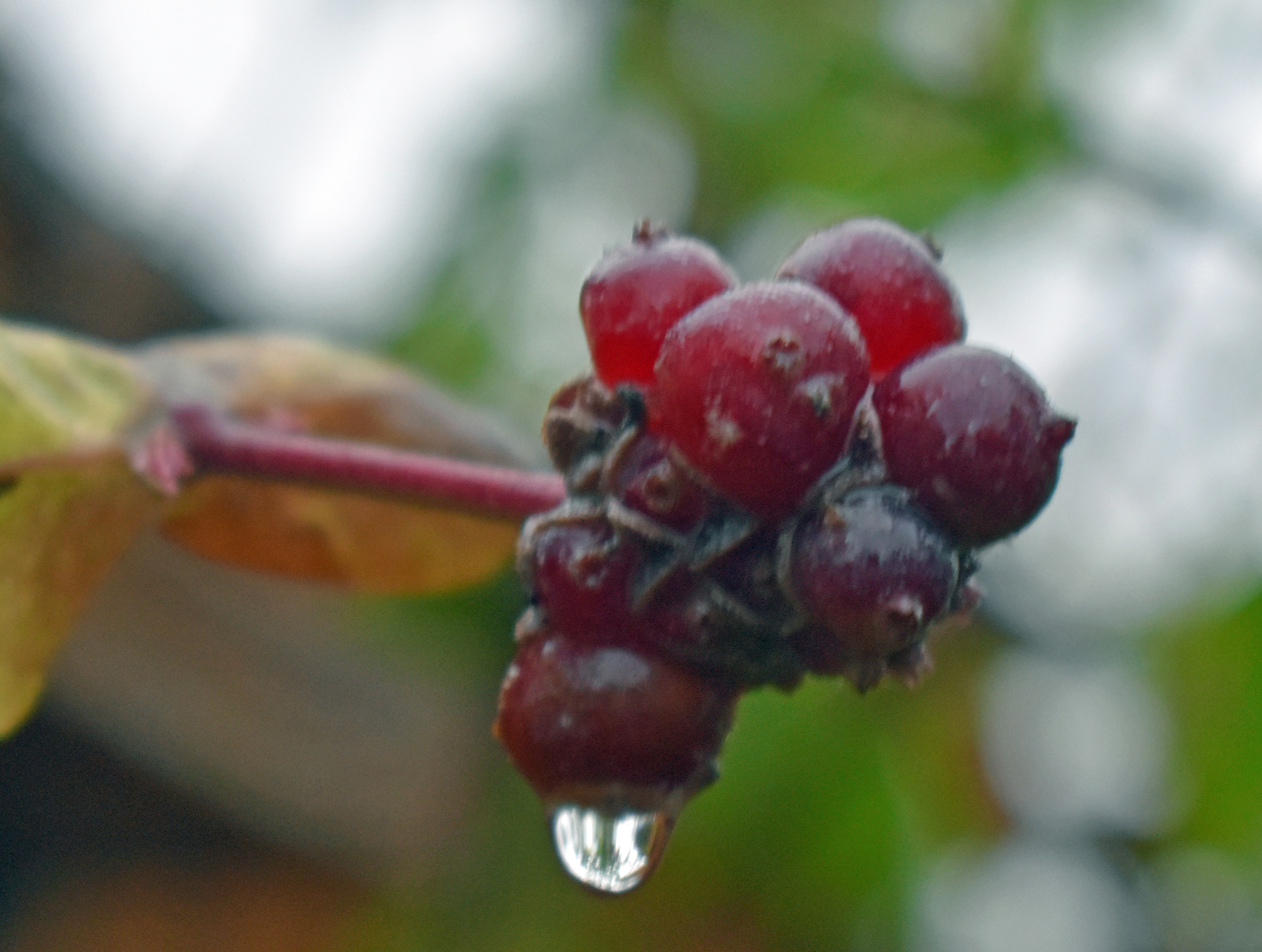
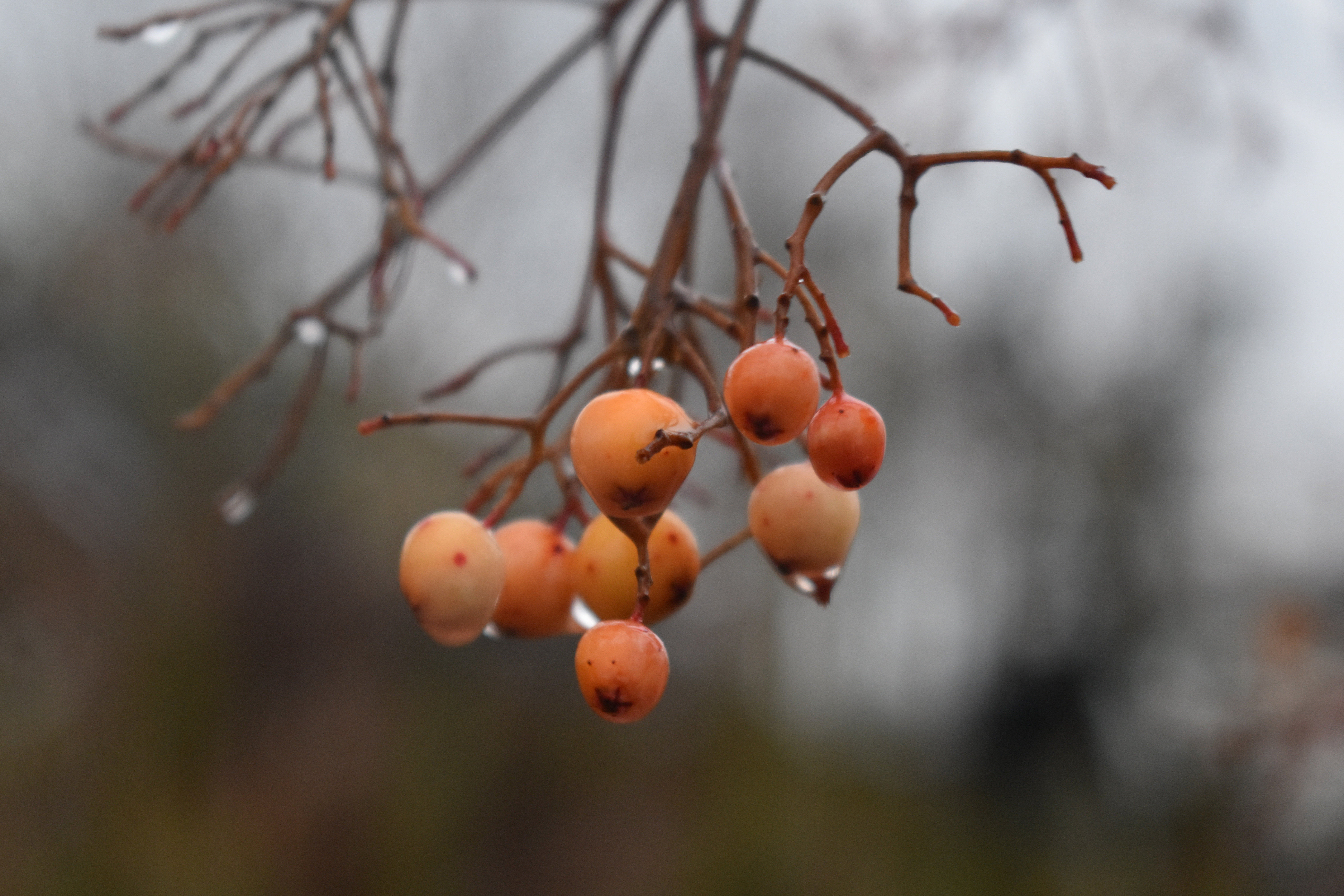
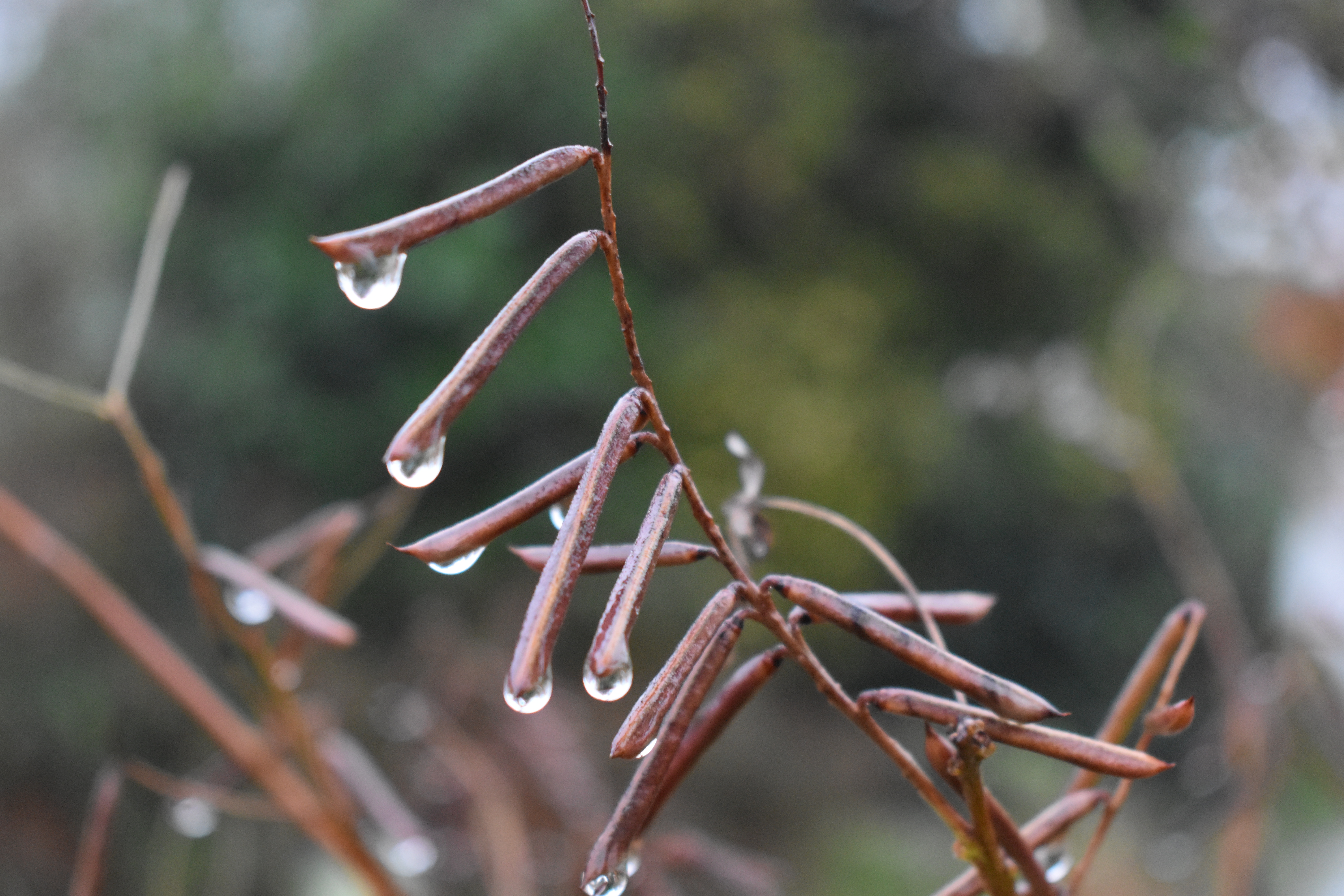
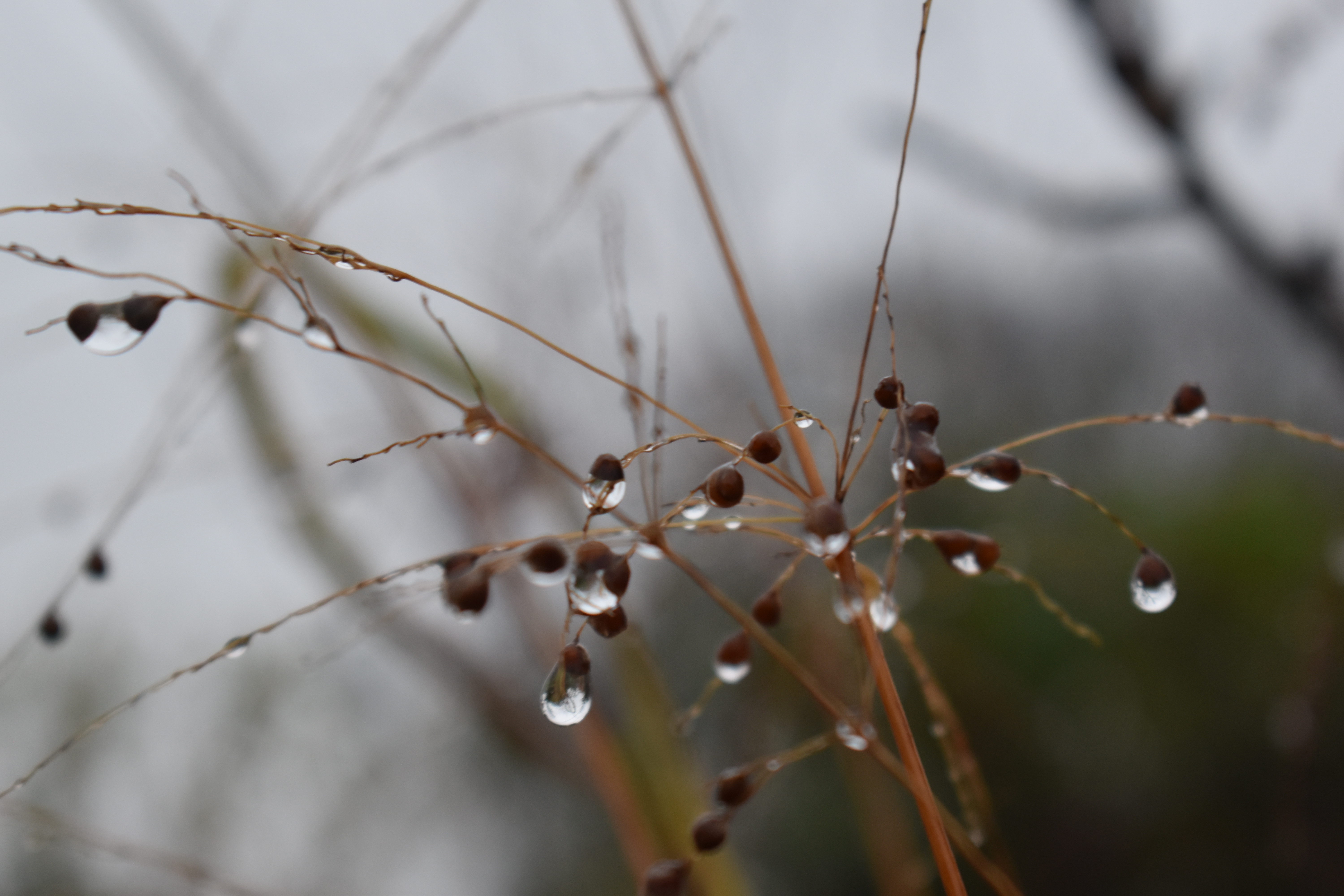
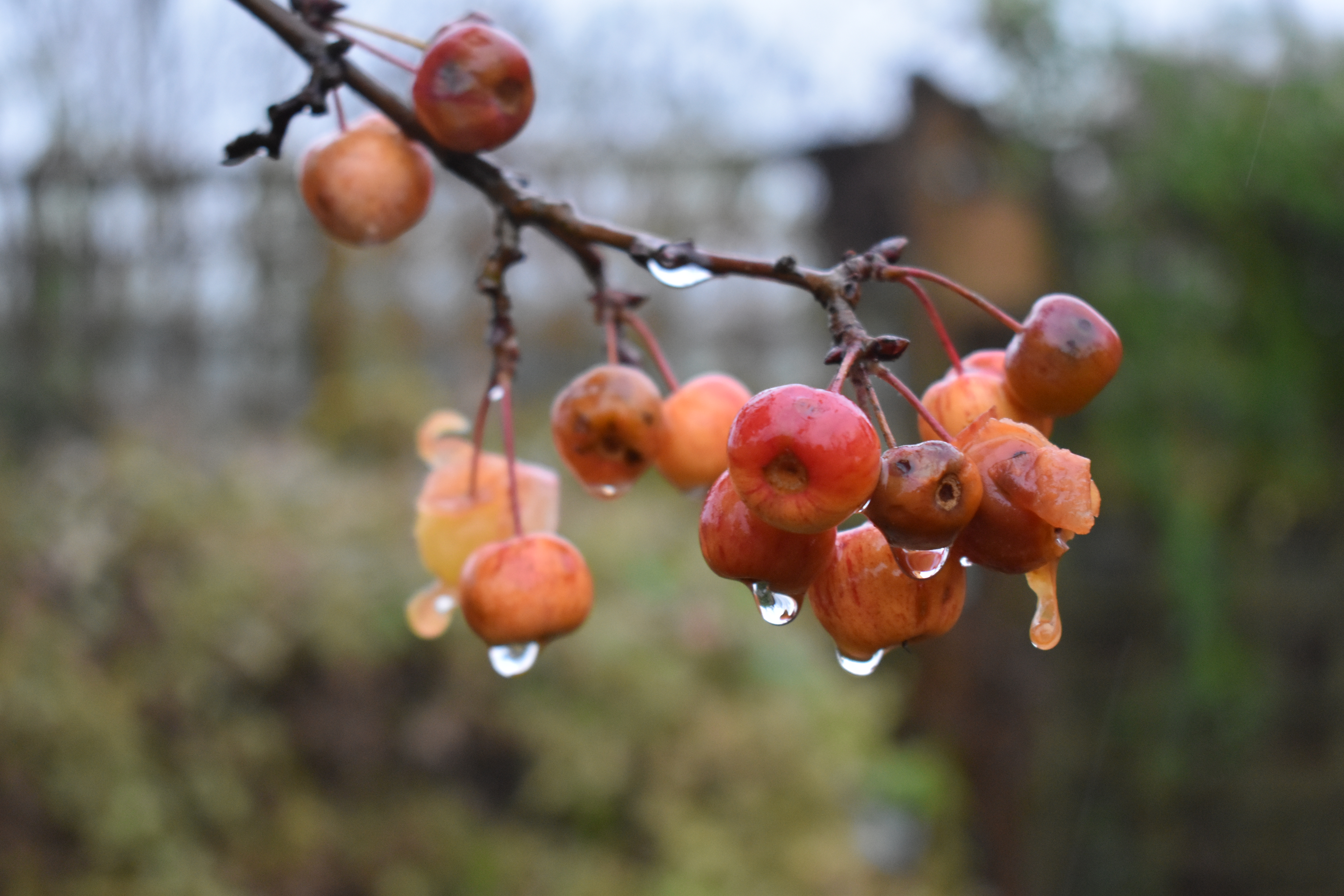
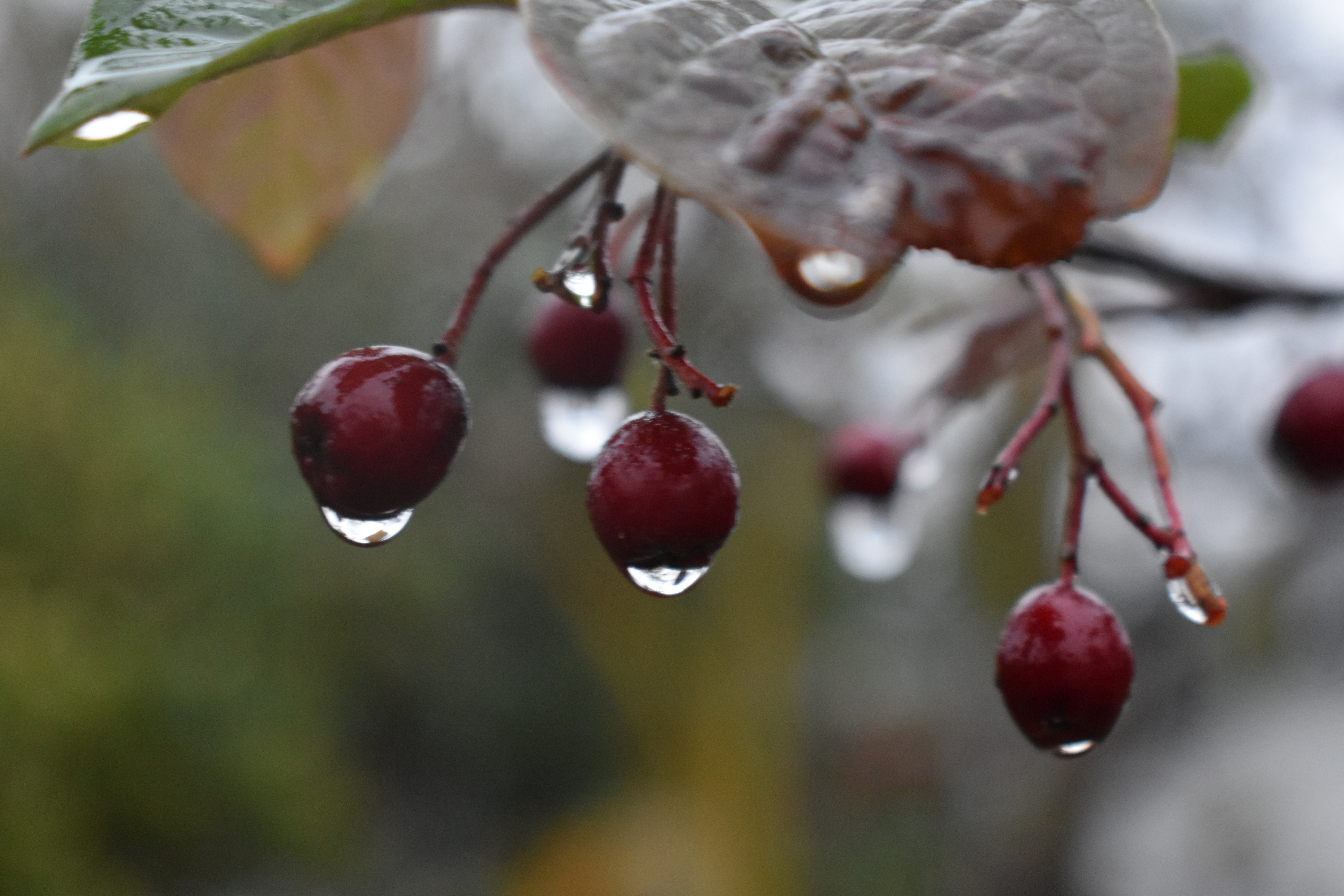
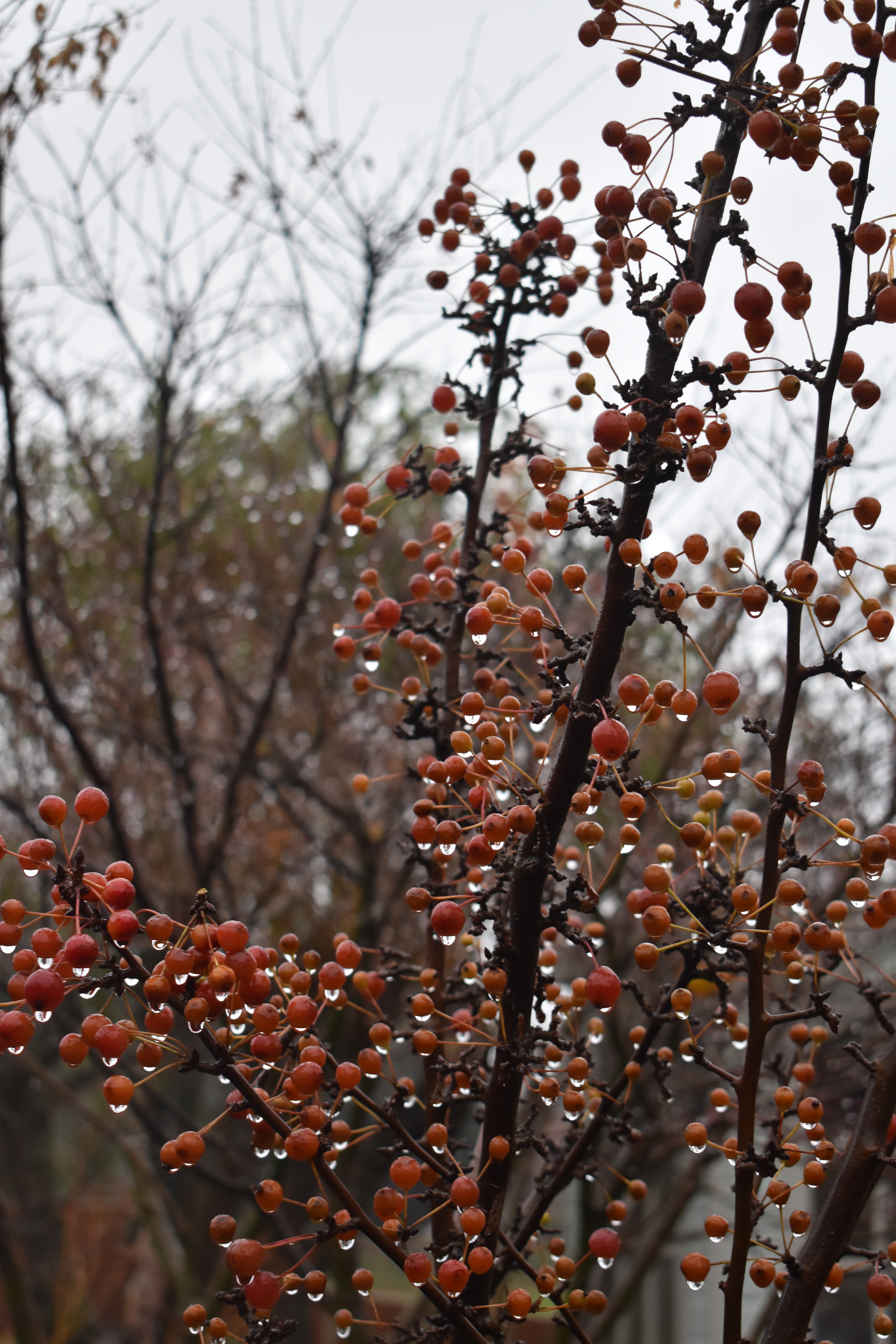
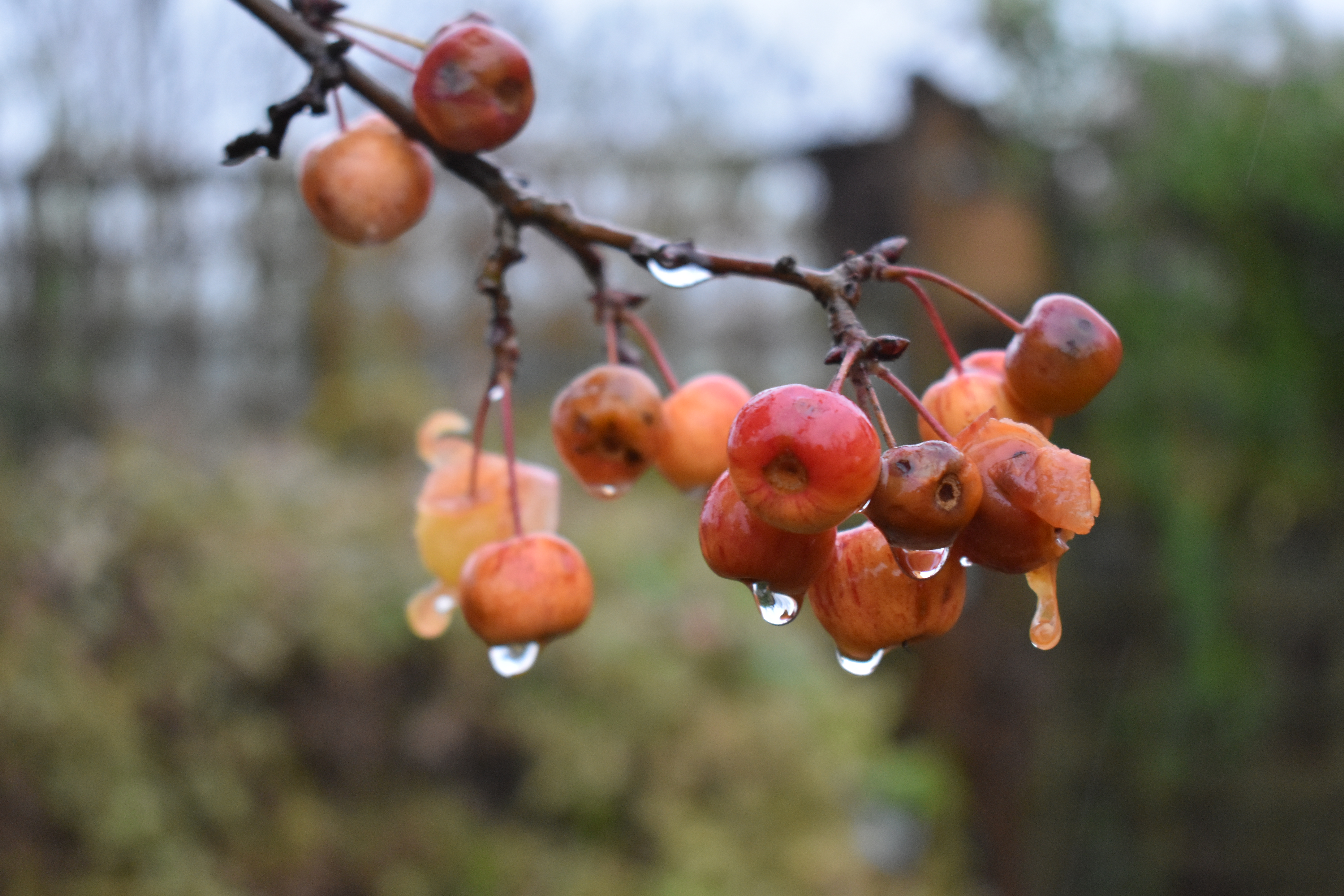
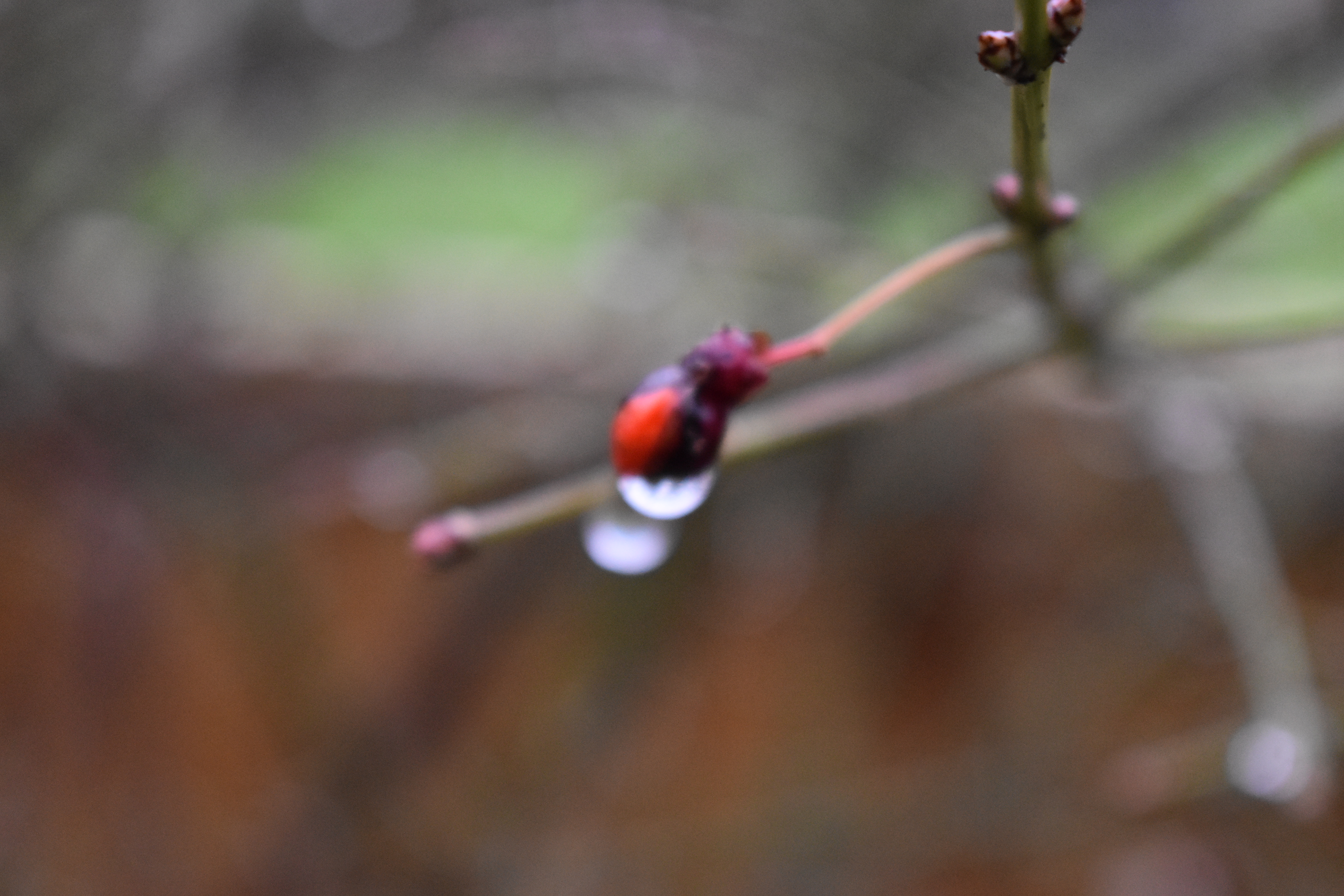
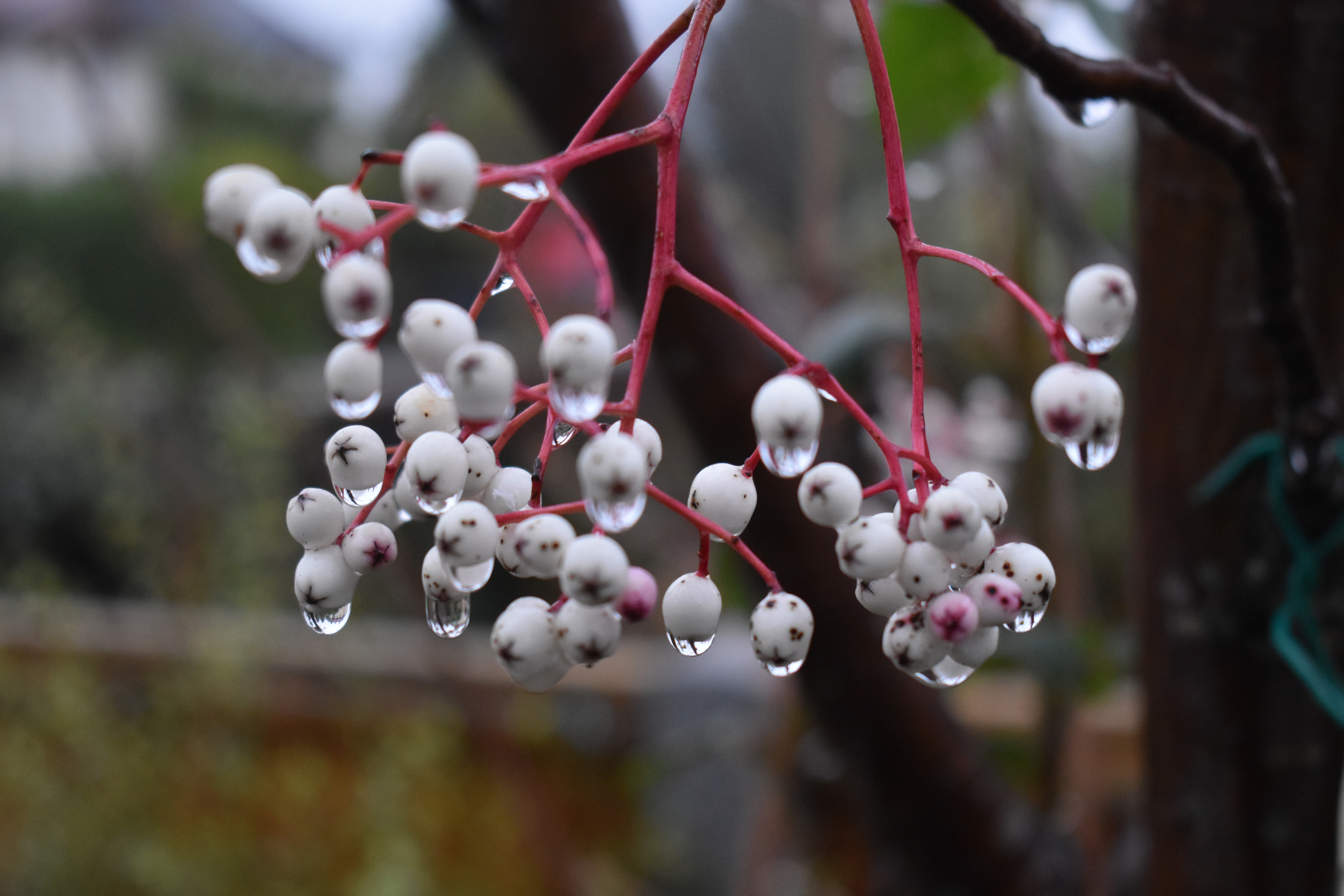
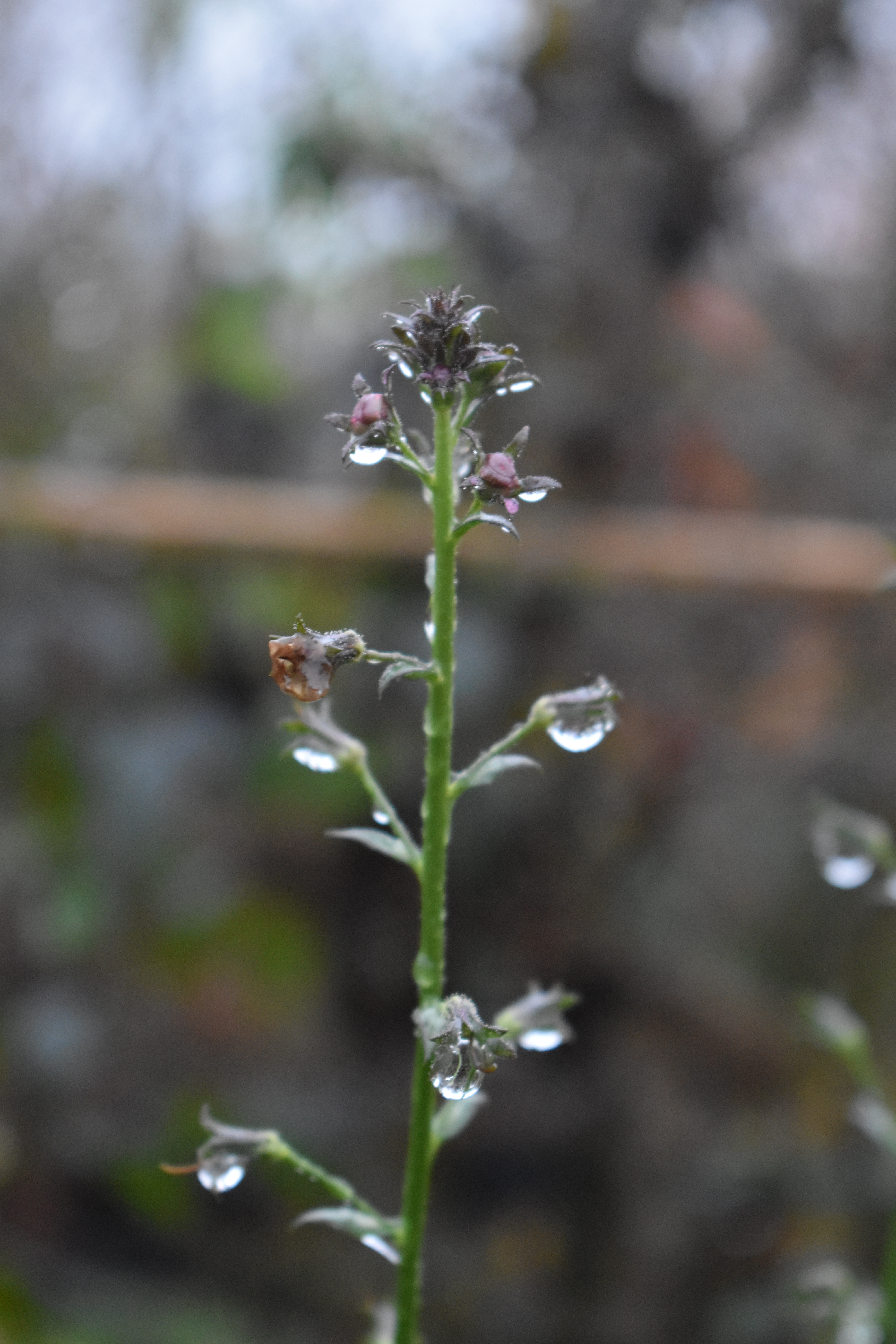
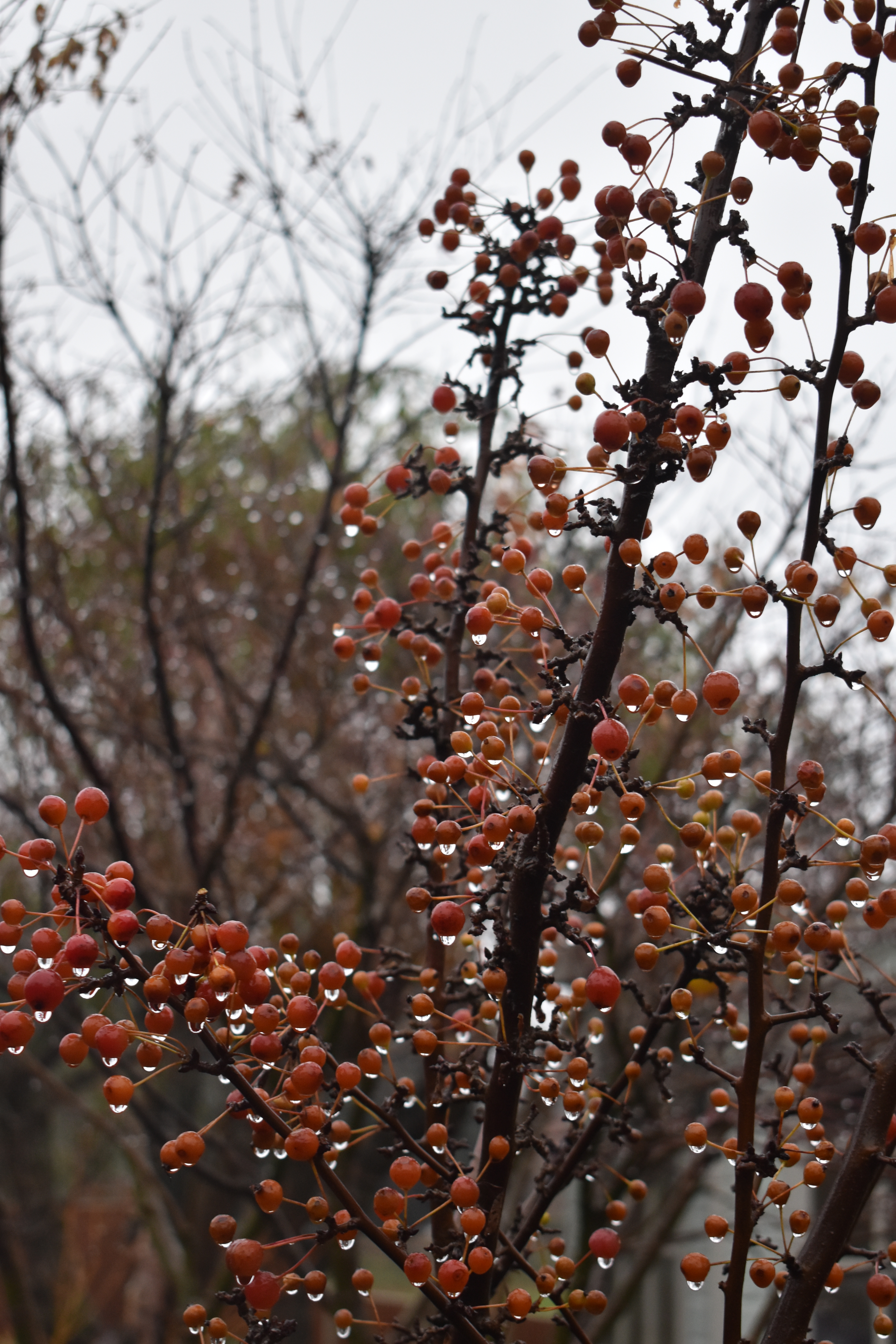
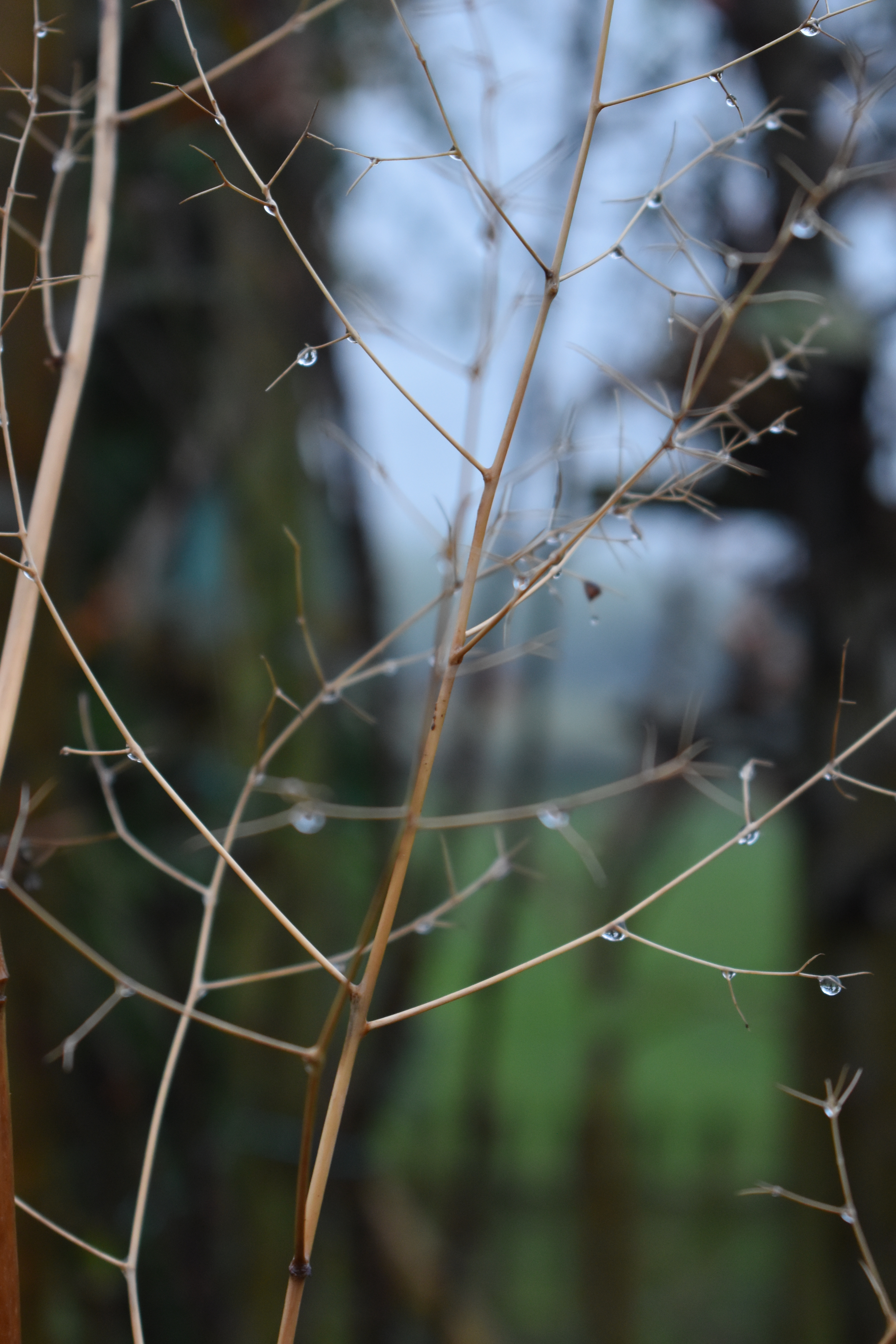
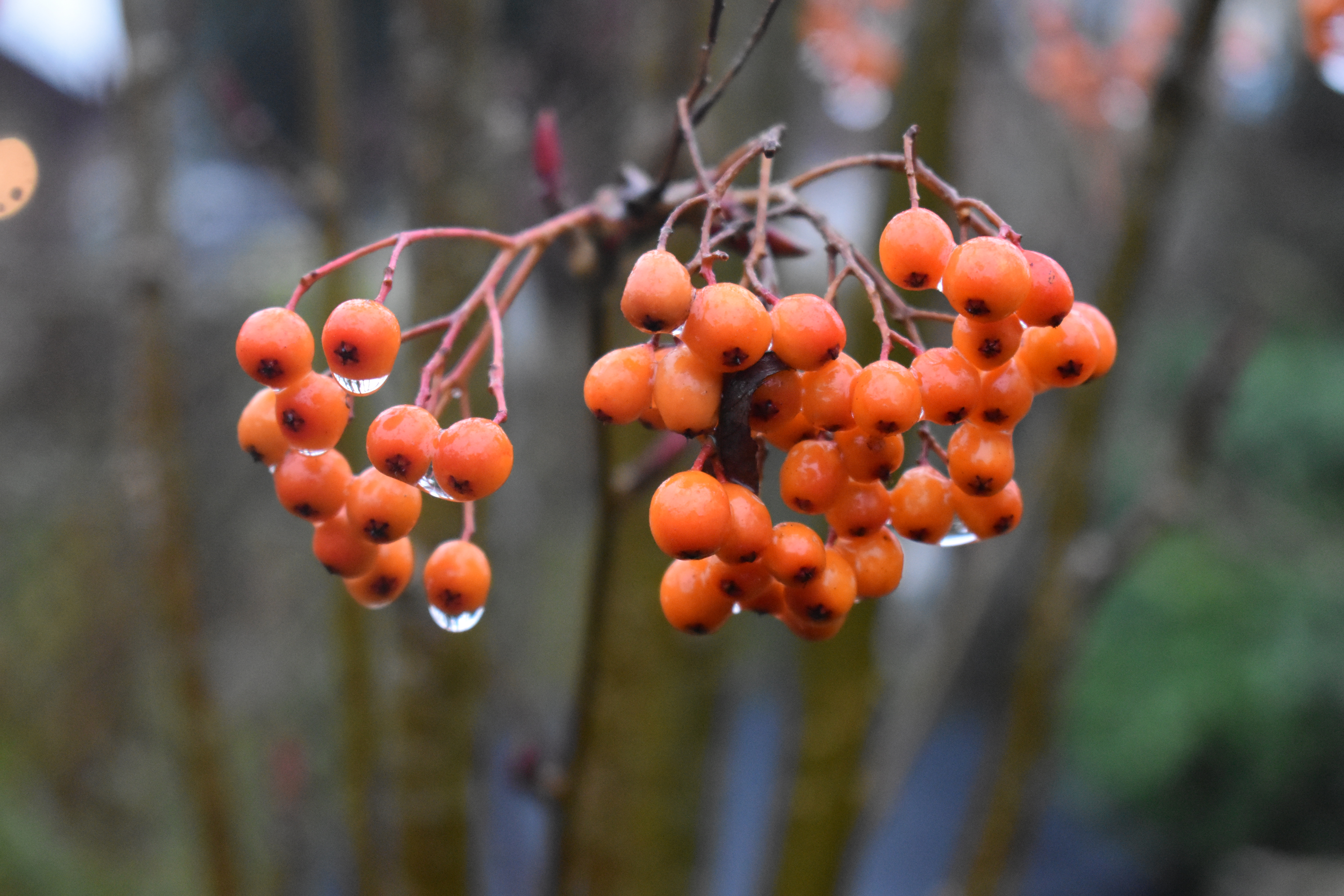
At the top of the next page I wrote,“I love to wander around the garden just after a shower has stopped, usually with my camera to hand. Plants are so good at catching water droplets. At this time of year water droplets hang onto berries and seed heads. One thing to avoid is touching a branch as you compose your photo. The slightest touch and the droplets will drop!”
Six photos of water droplets on plants follow on.
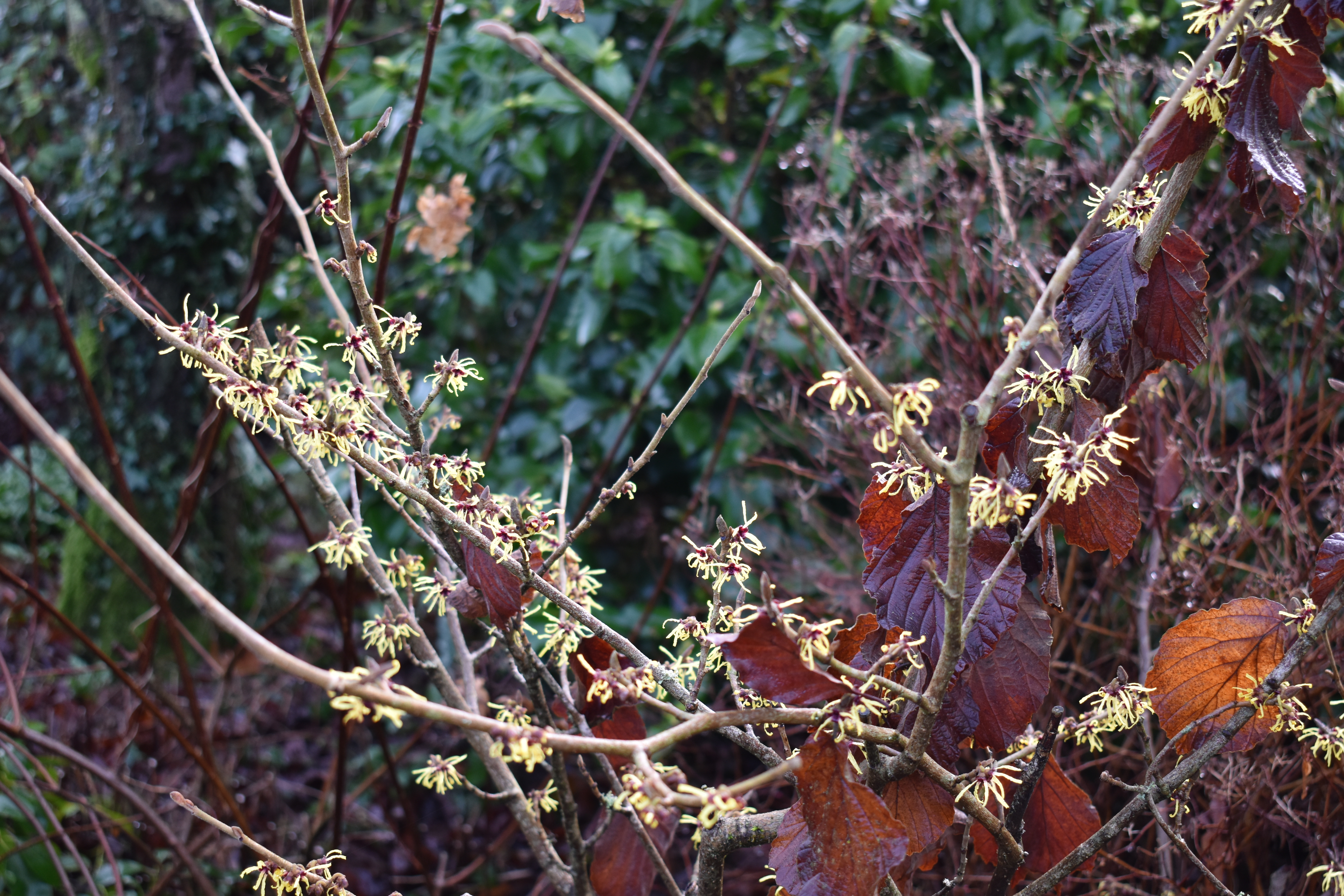
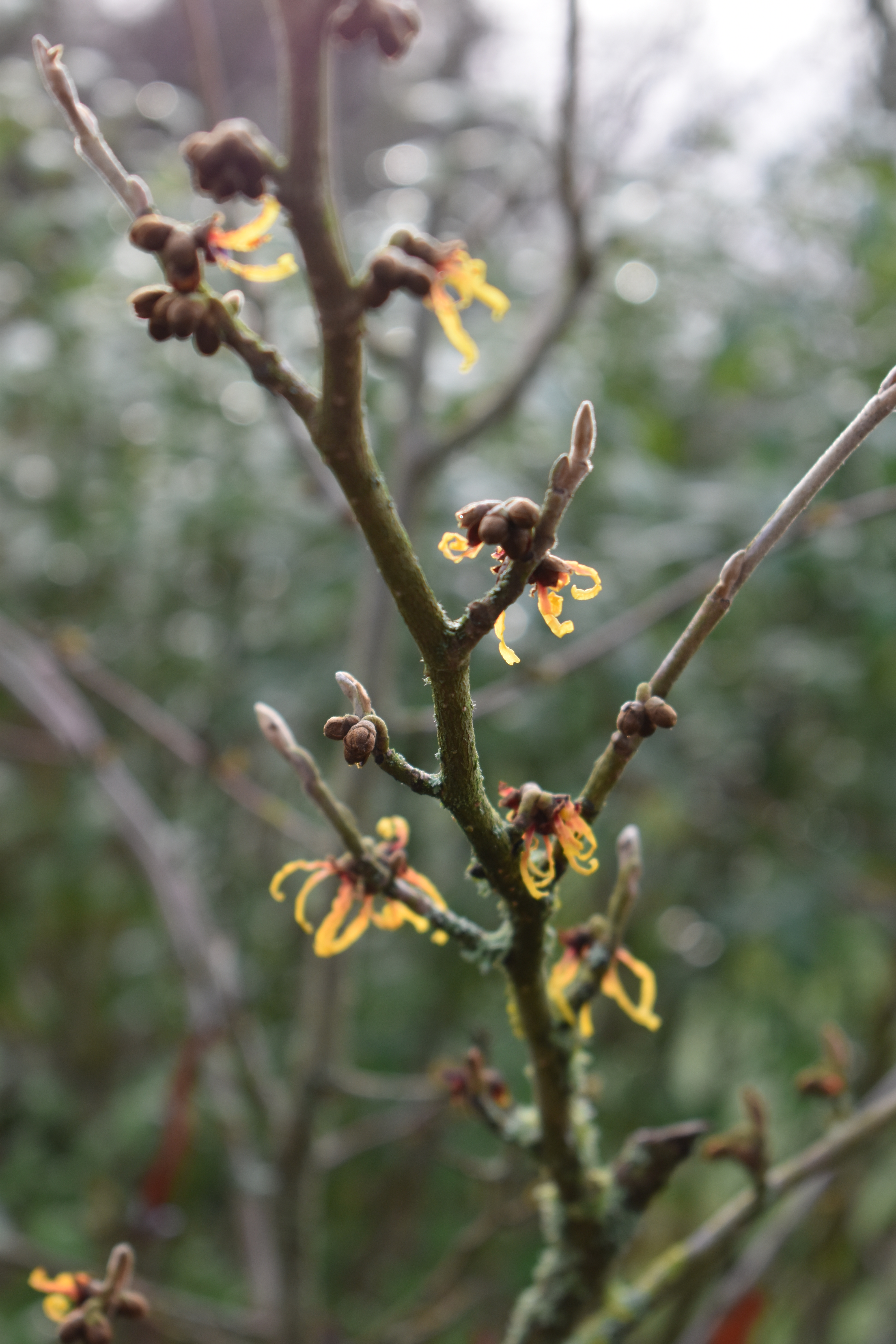
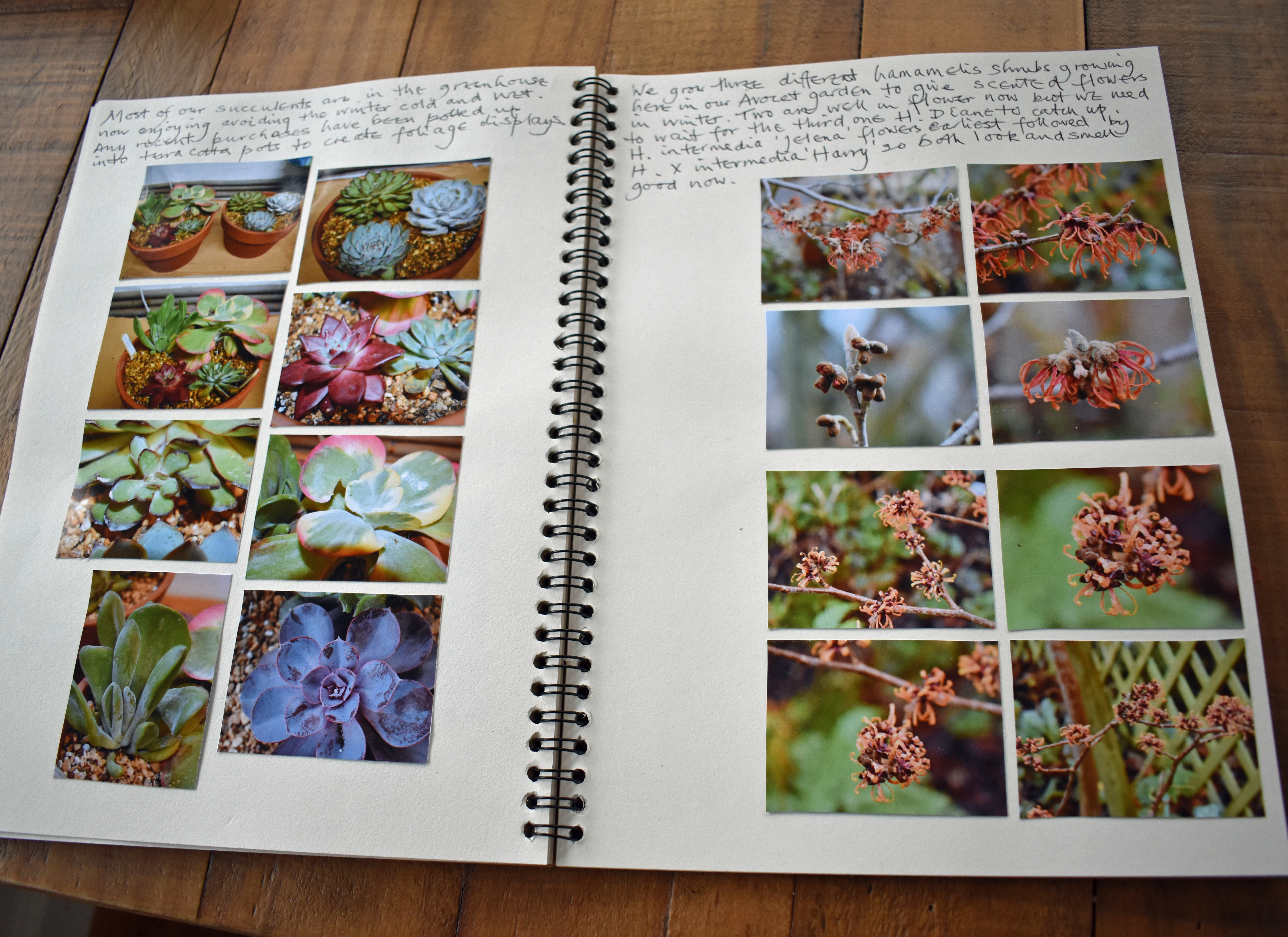
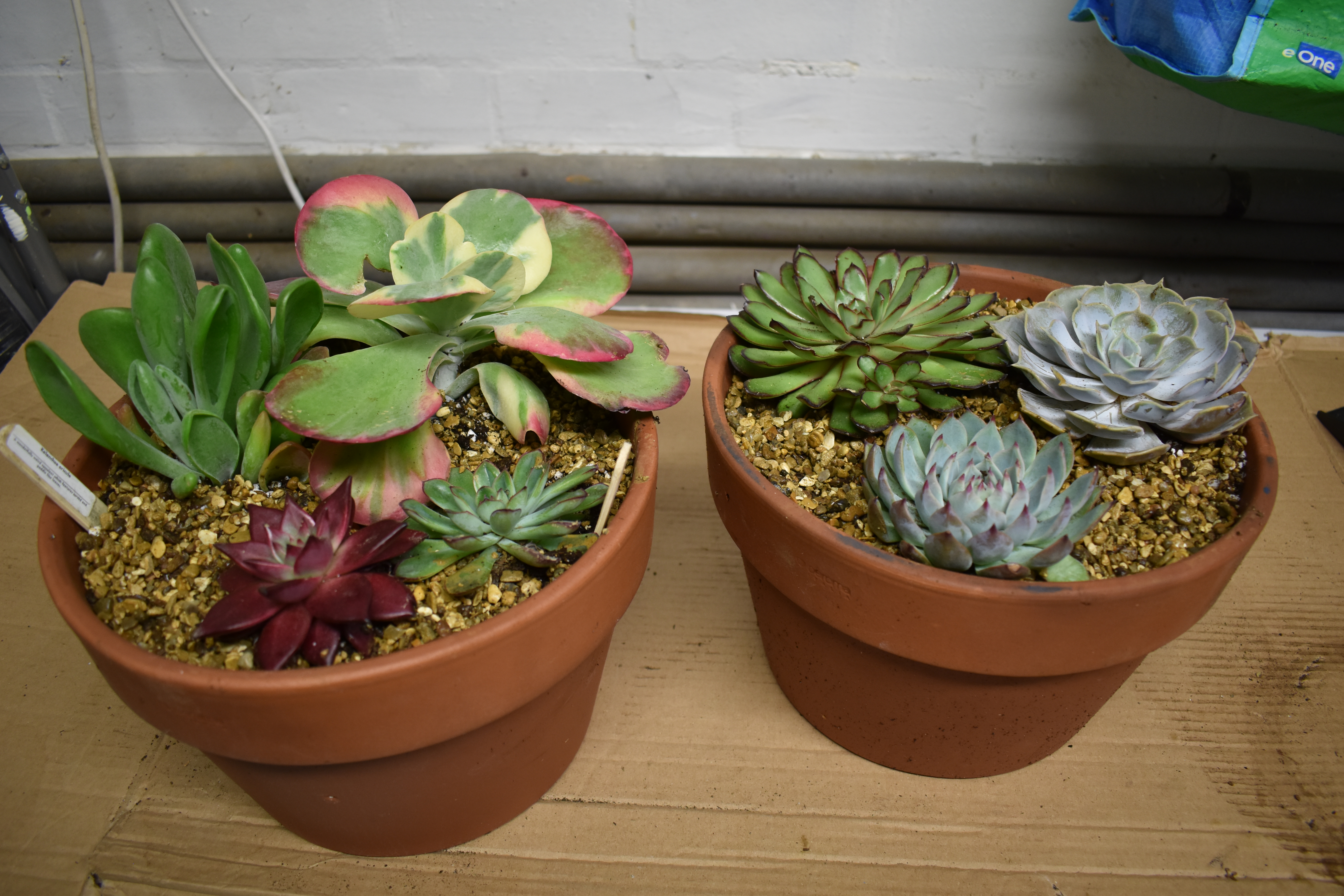
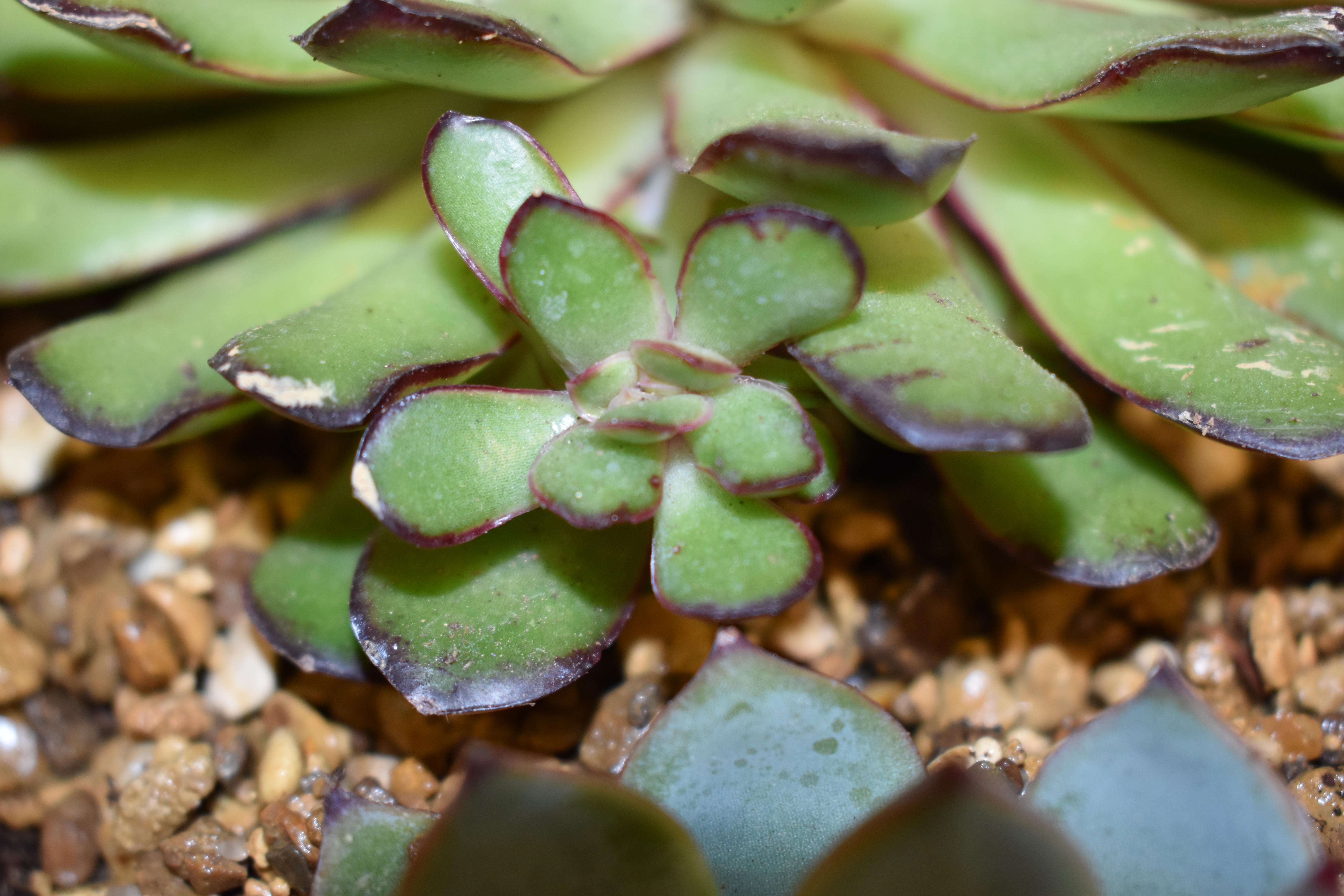
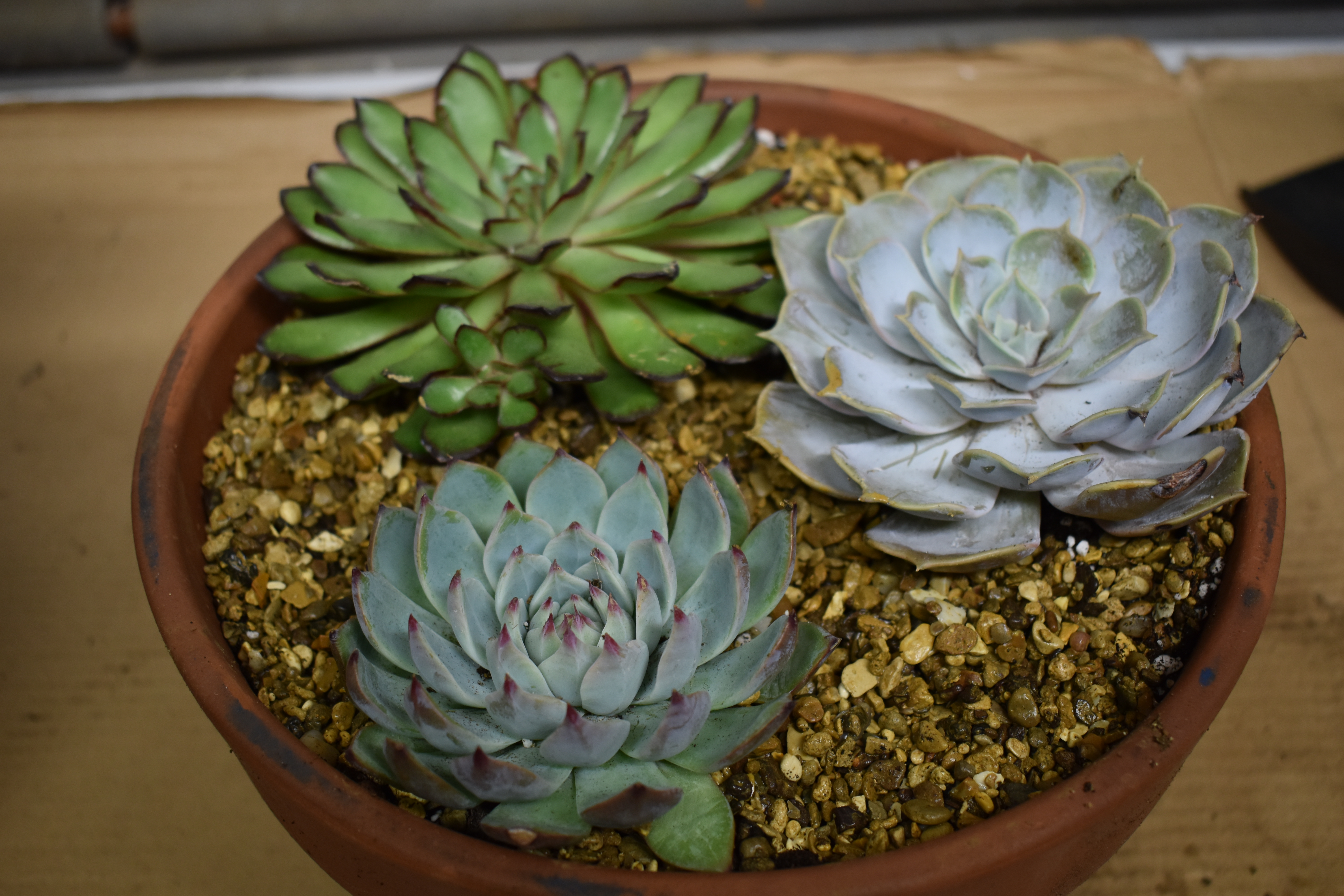
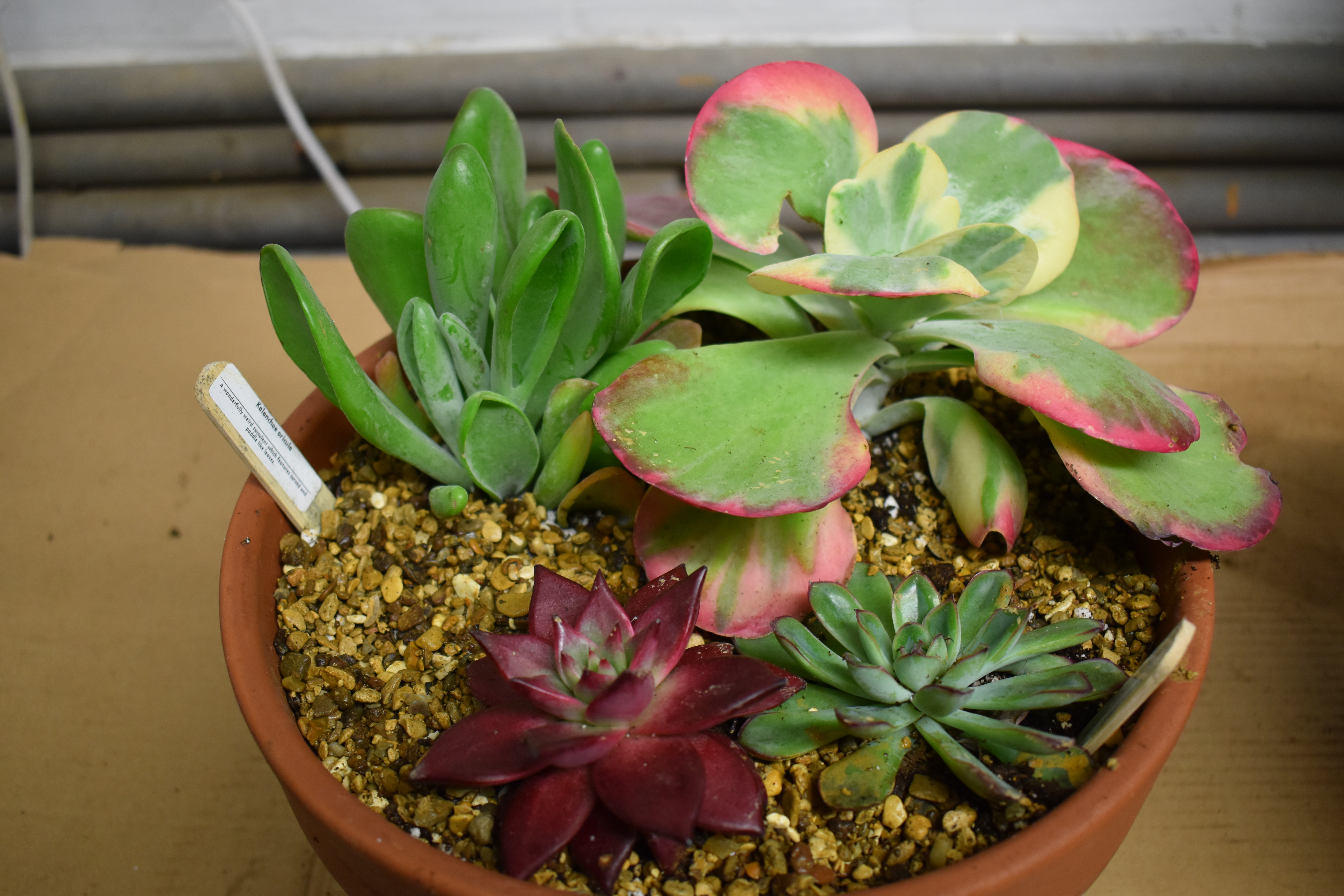
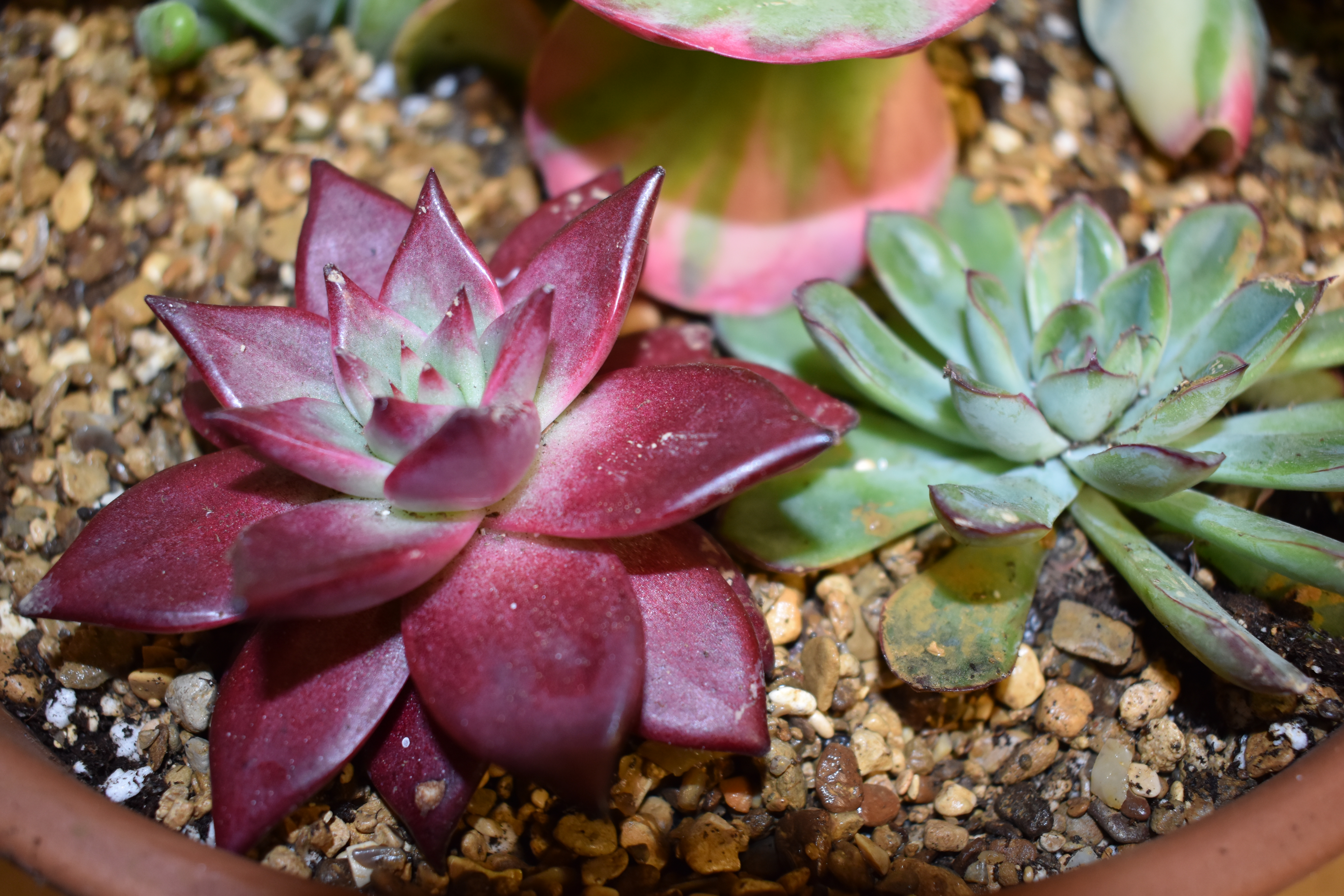
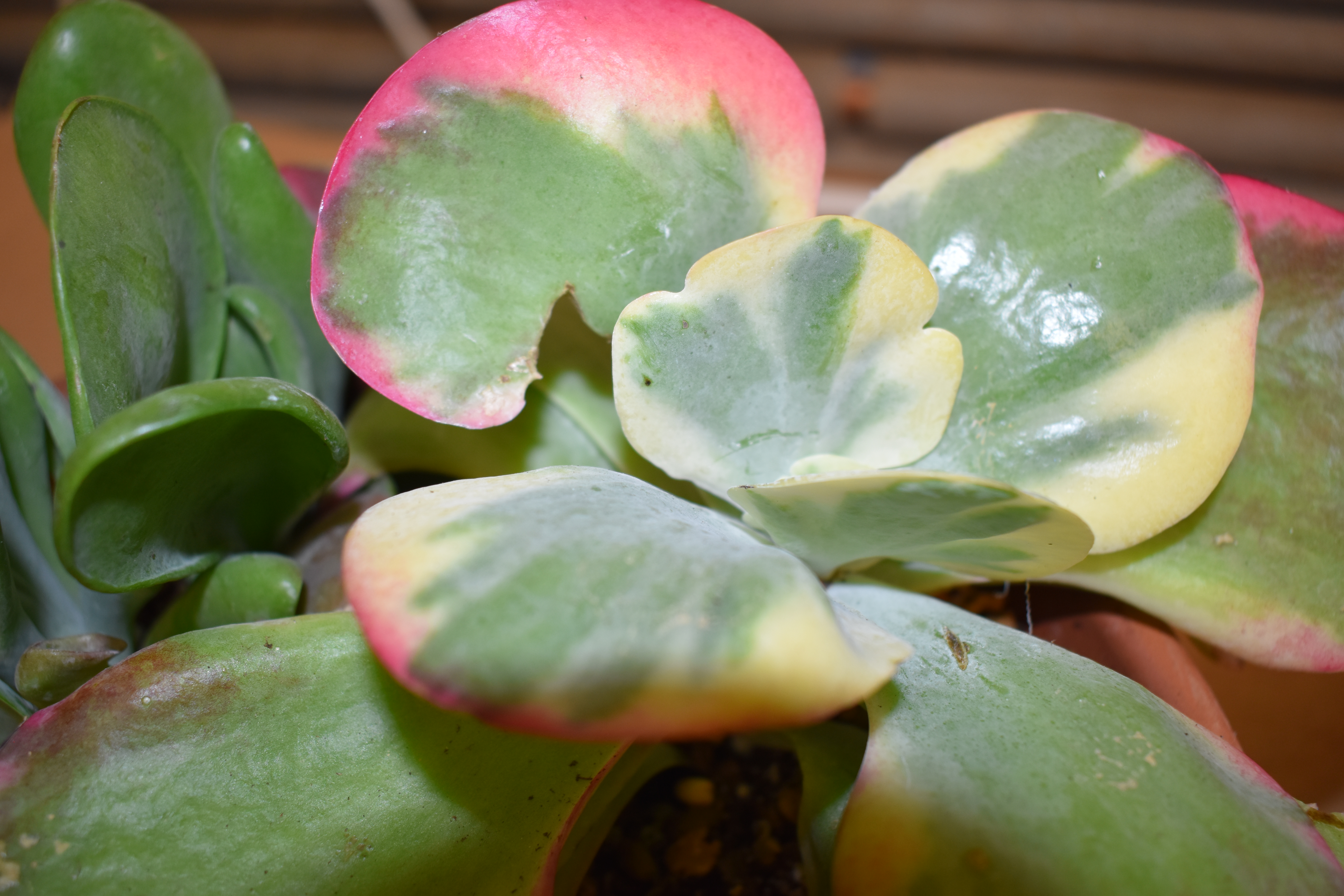
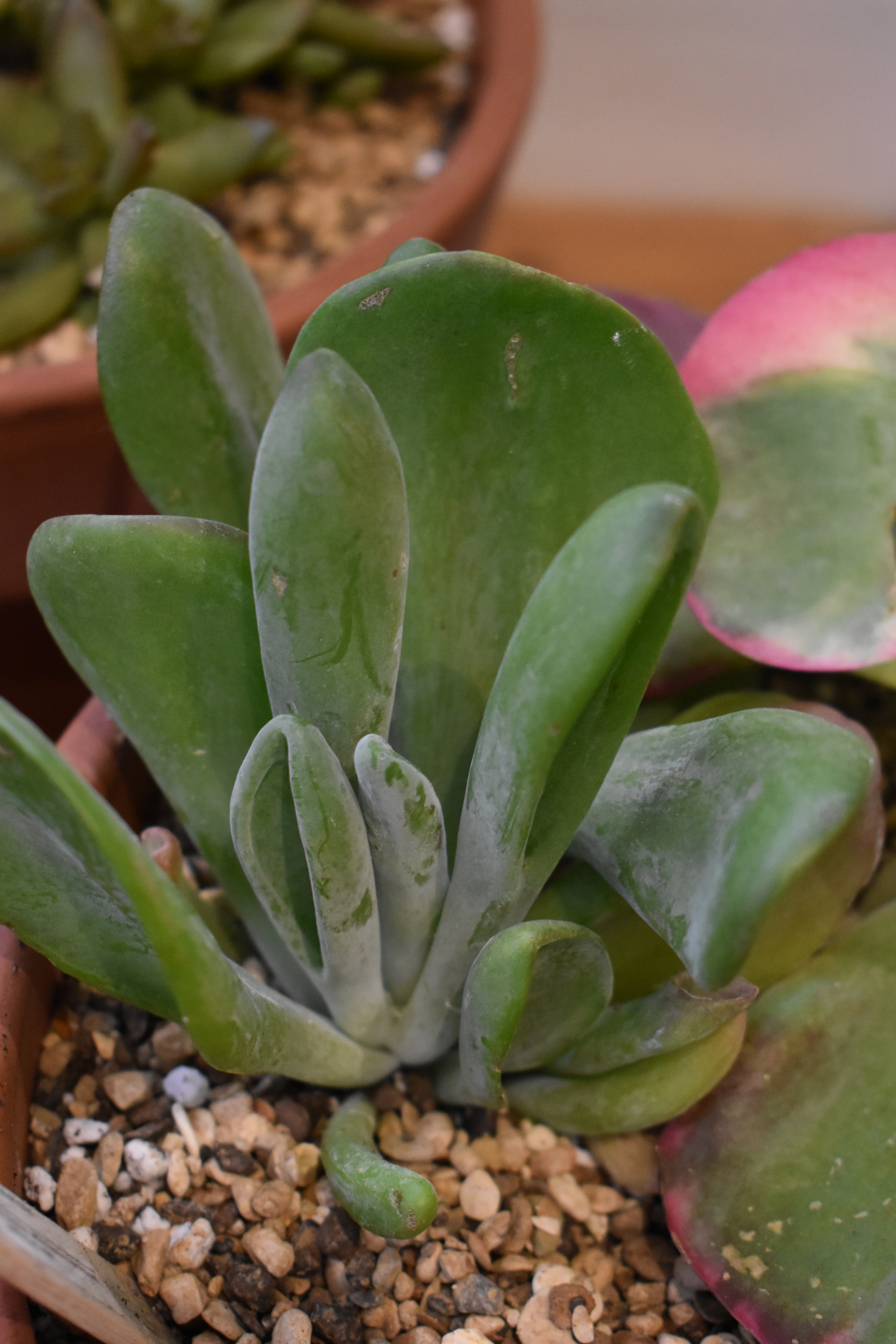
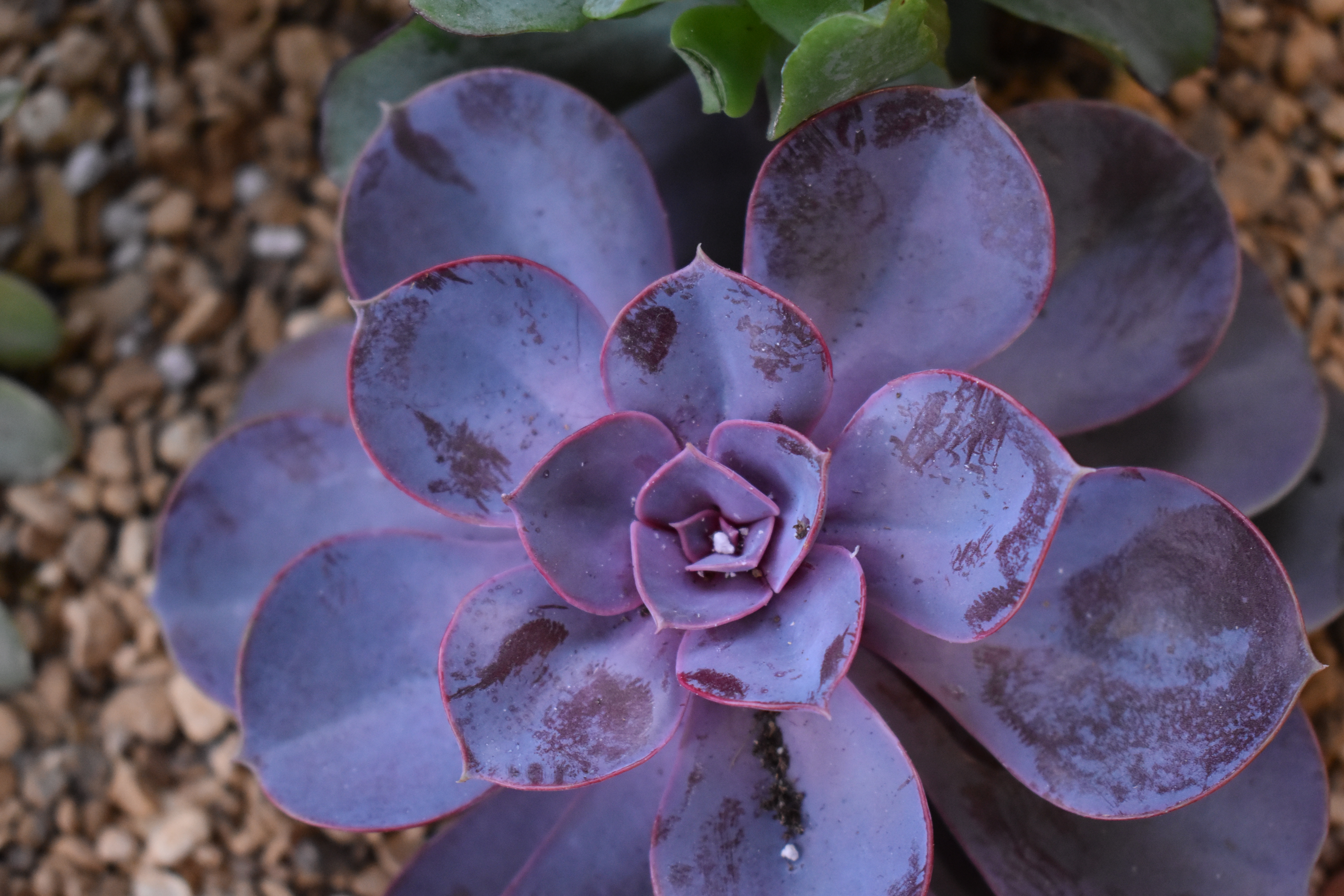
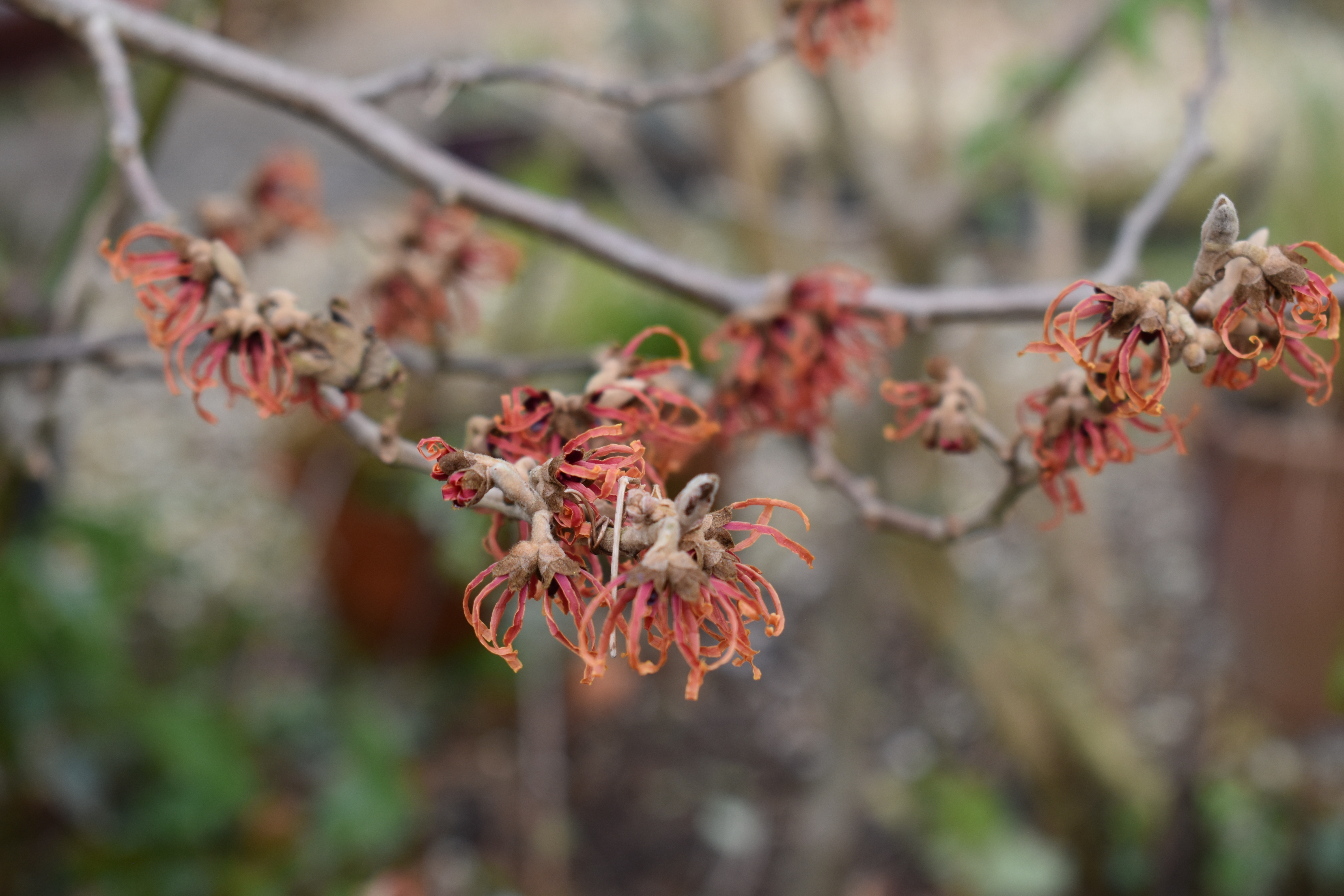
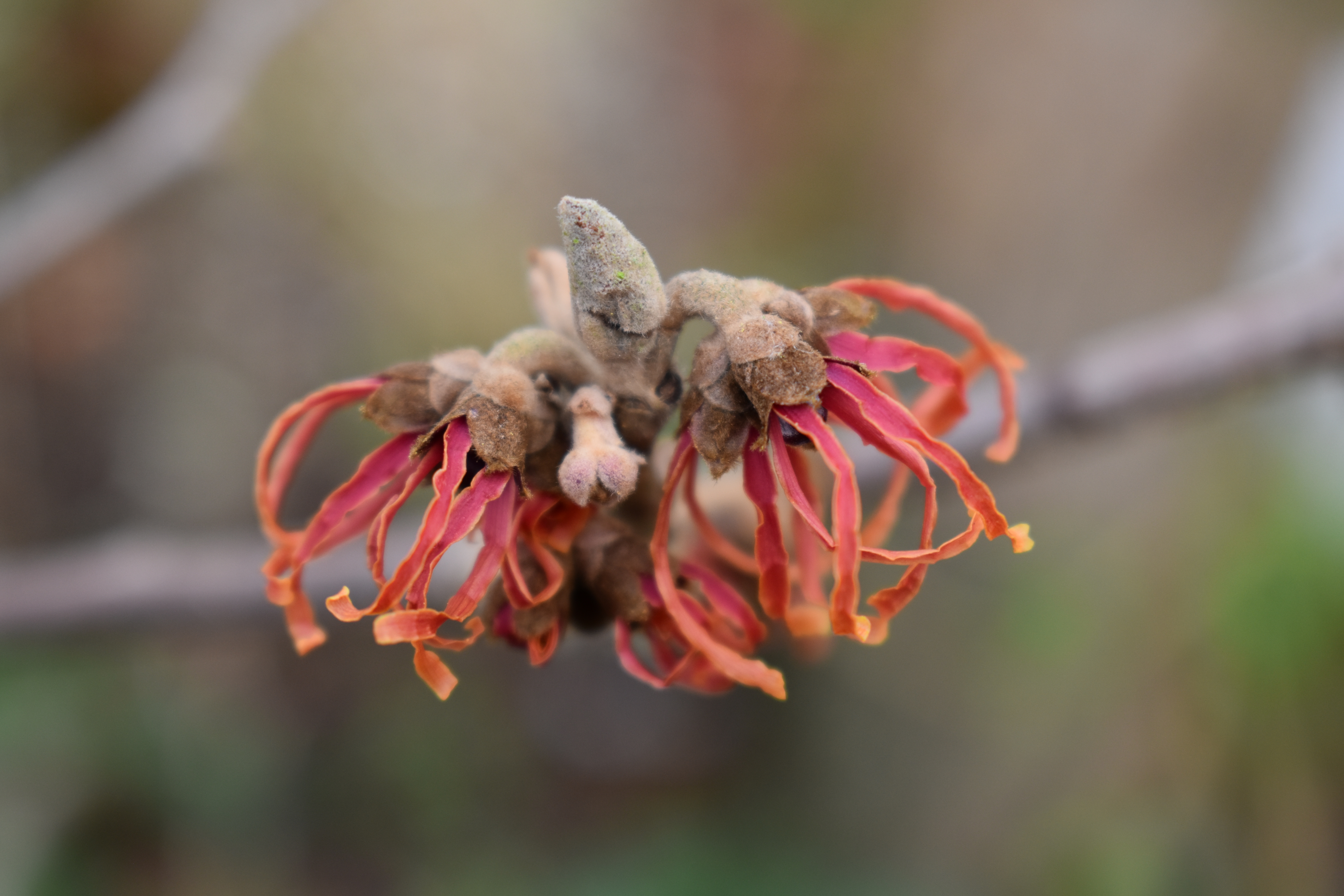
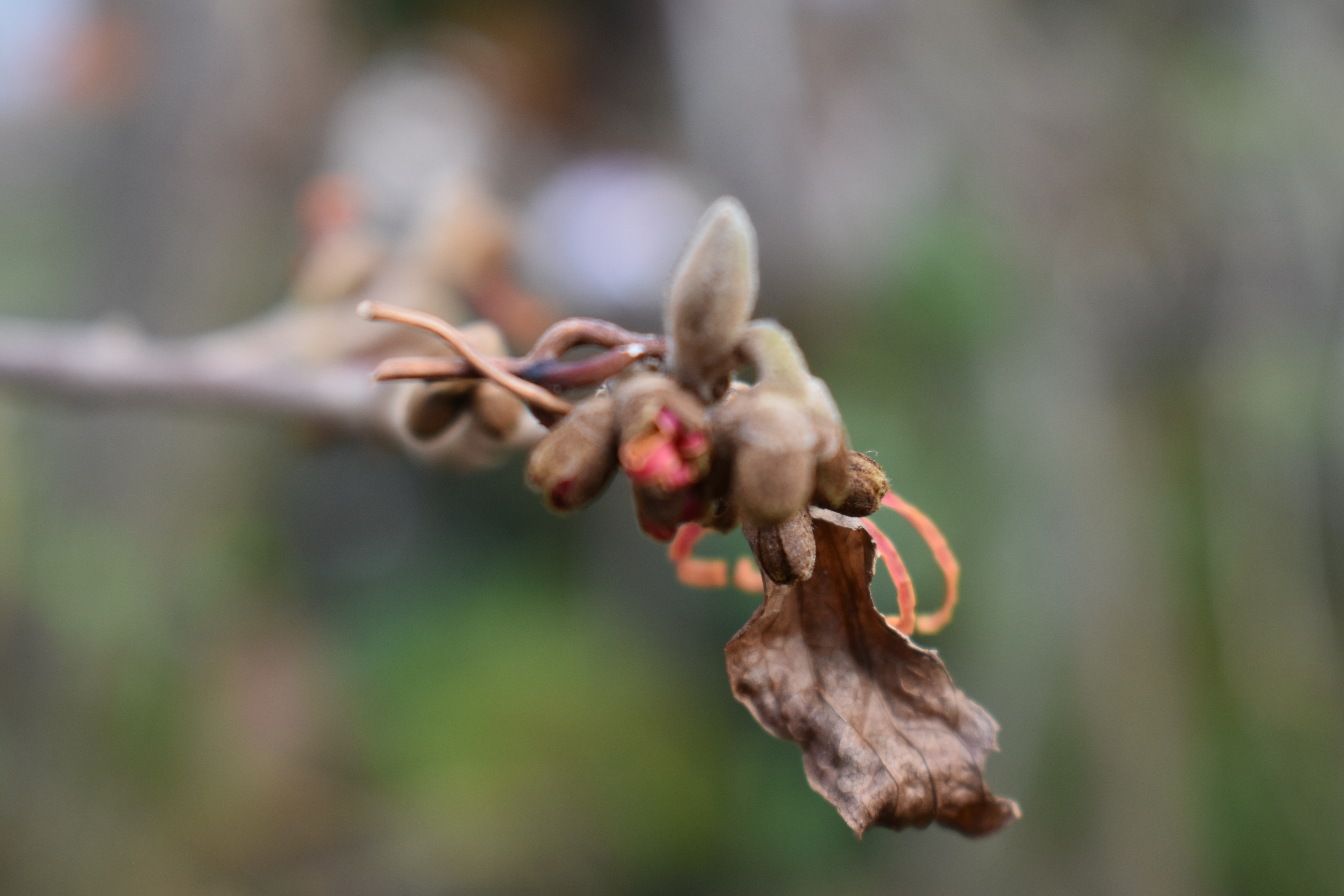
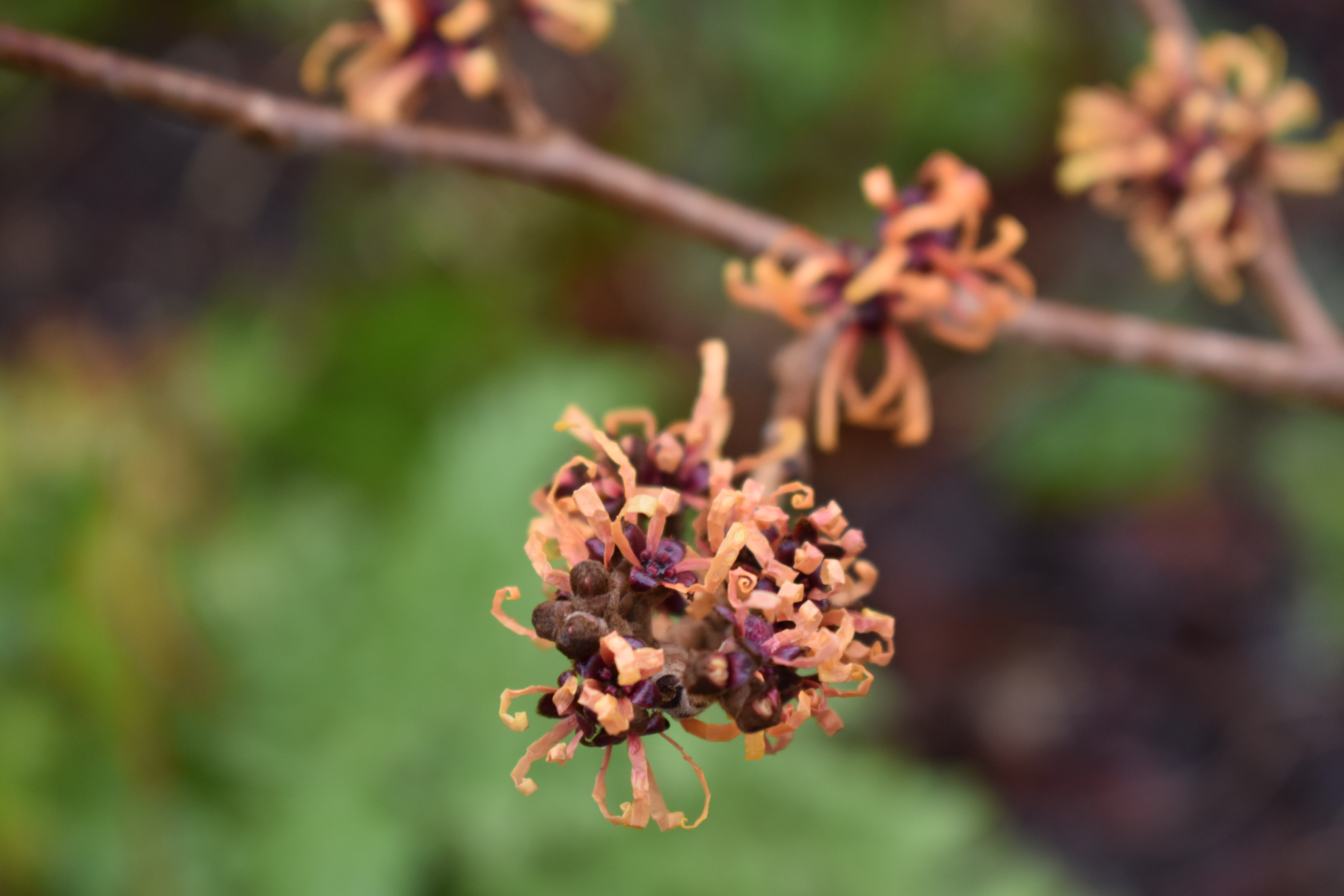
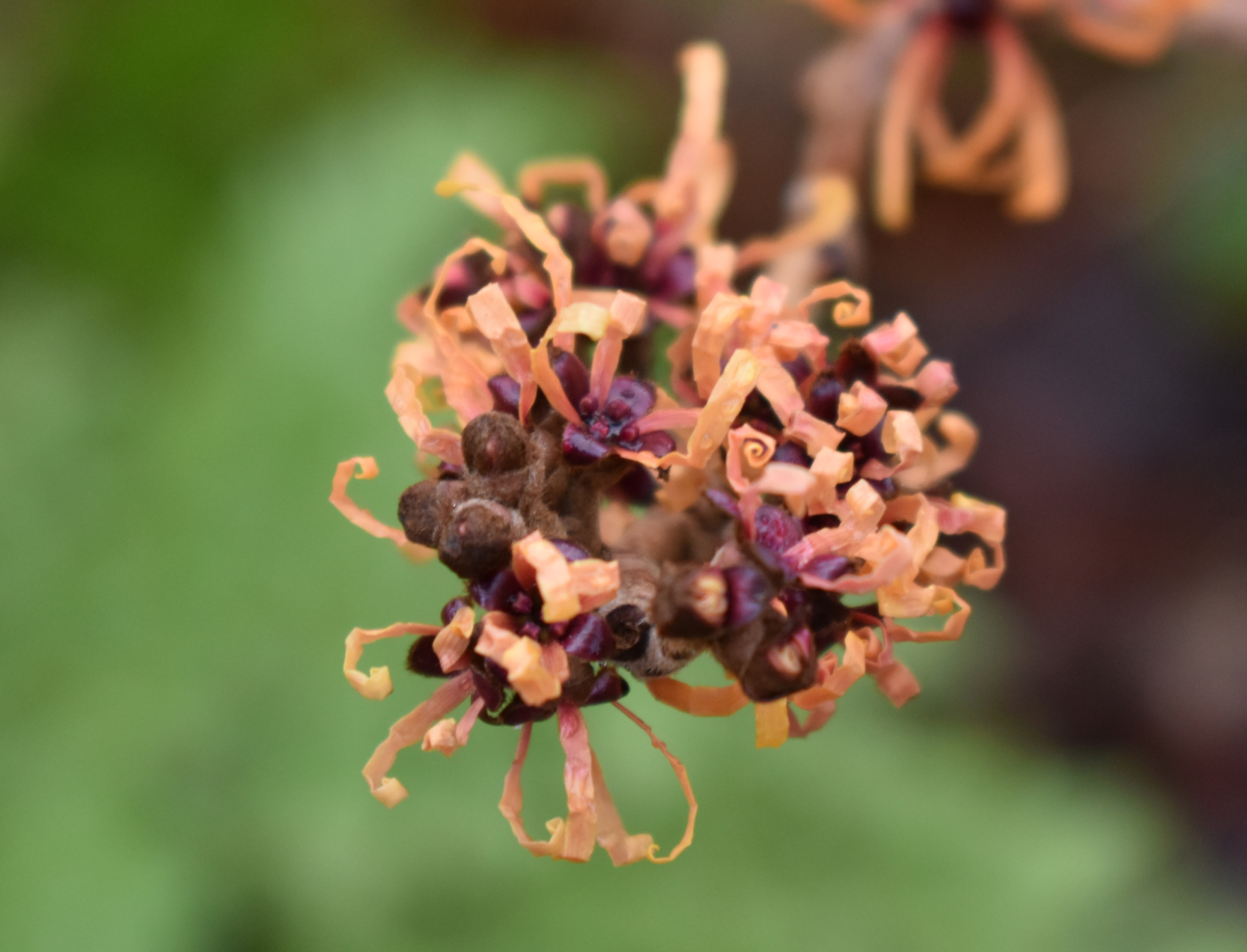
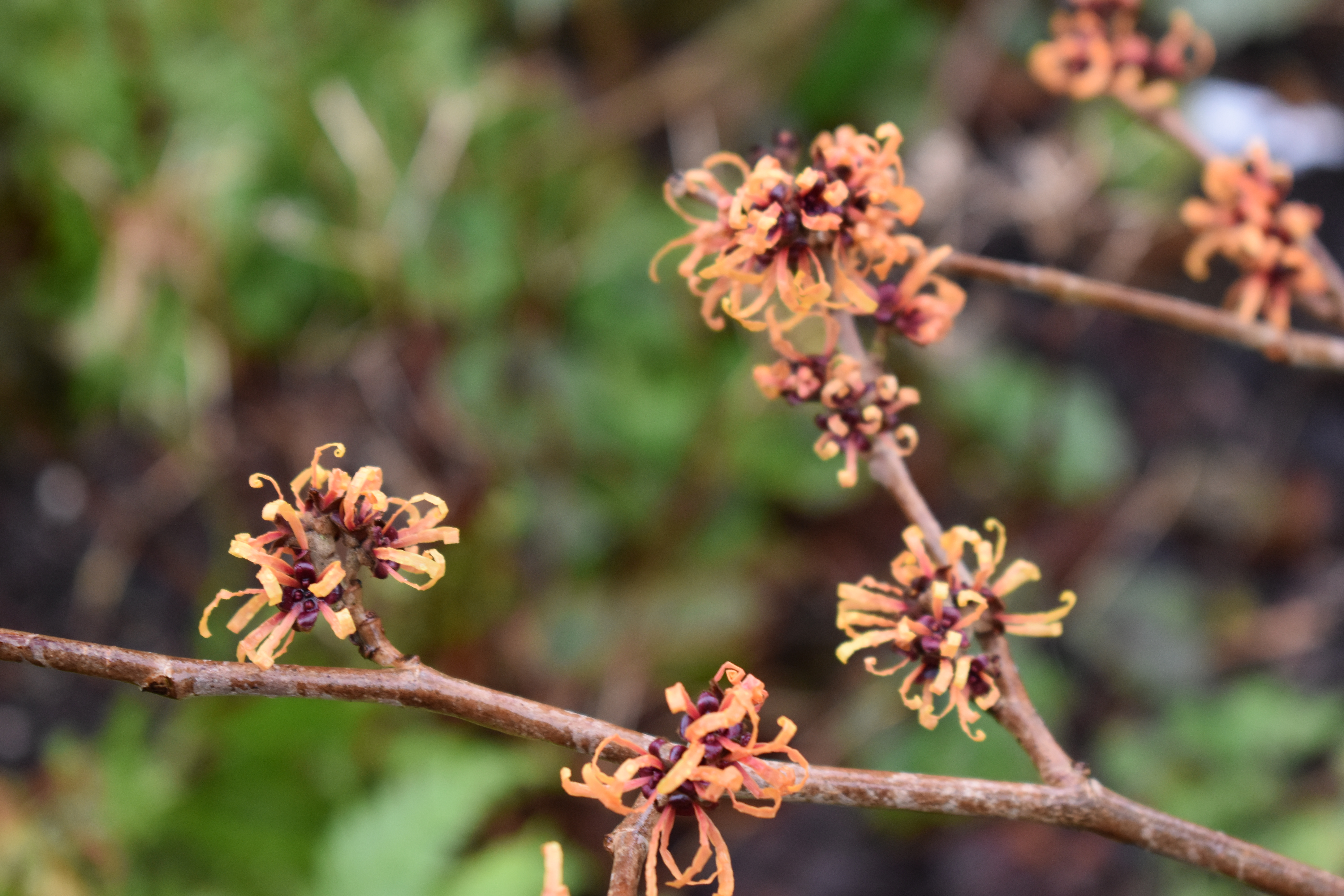
If we look over onto the next double page spread we can see succulents featured on the left page, where I noted that,“Most of our succulents are in the greenhouse now enjoying avoiding the winter cold and wet. Any recent purchases have been potted up into terracotta pots to create foliage displays.” On the opposite page we considered our garden after a storm. I noted that,“We grow three different hamamelis shrubs here in our Avocet garden to give scented flowers in winter. Two are well in flower now but we need to wait for the third one H. ‘Diane’ to catch up. H. x intermedia ‘Jelena’ flowers earliest followed by H.x intermedia ‘Harry’ so both look and smell good now.”
Eight photographs of our newly acquired succulents.
Now we can look at the hamamelis that are currently flowering their hearts out in our garden. Four photos of “Jelena” and four of “Harry”.
Firstly “Jelena”.
And now four photos of H. ‘Harry’.
So that is it for my Garden Journal 2023, but of course tomorrow I will be considering my entries for the first days of January 2024!
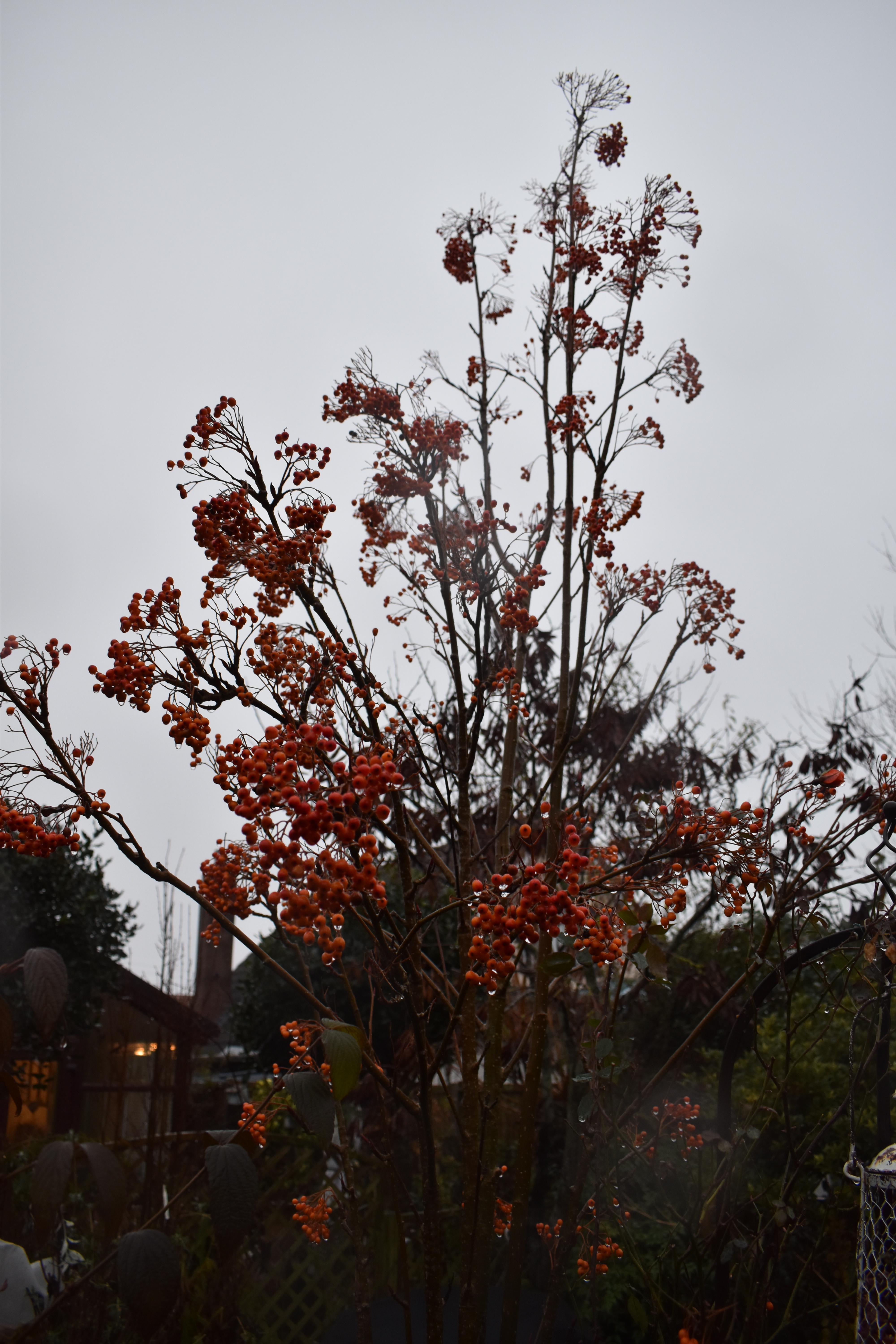
As fewer flowers are in evidence as December sets in we rely more on berries and seed heads to provide lots of interest. However, we also grow berrying shrubs and trees to help the birds through the harsh times of winter. Our resident blackbirds and thrushes, song and mistle, enjoy the nutritious berries early on in the winter but when the weather on the continent becomes harsh they are joined by their cousins, including redwing and fieldfare.
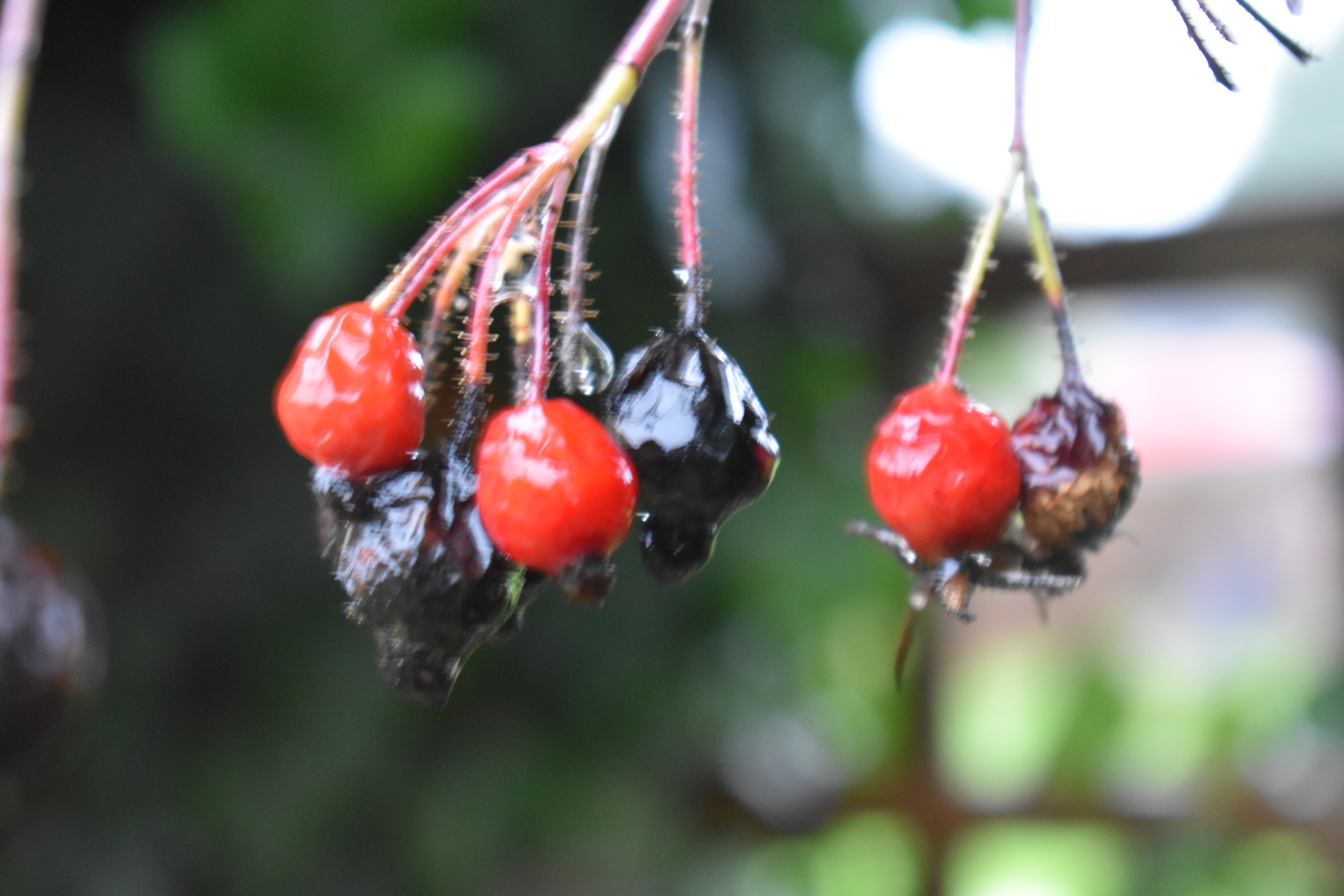
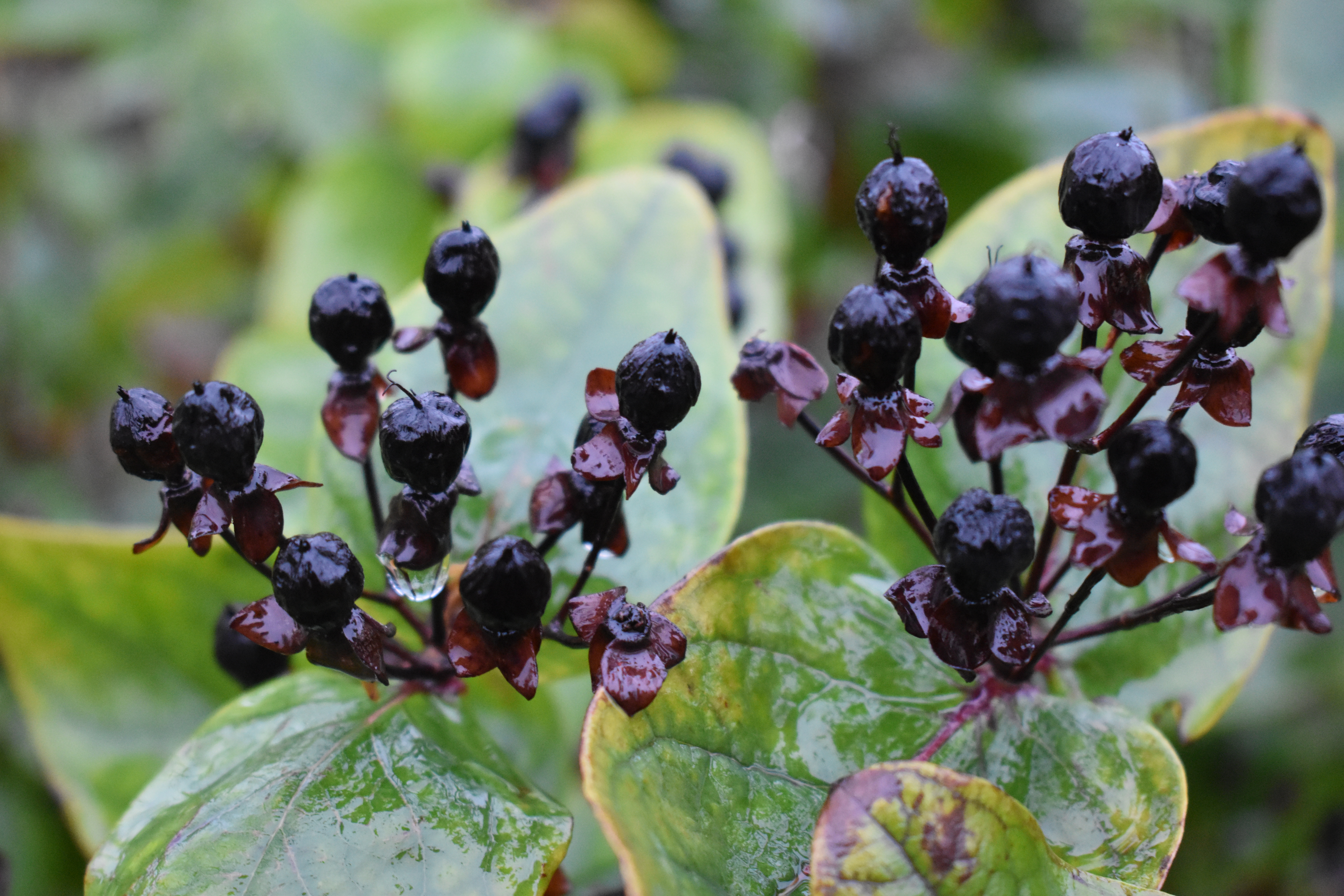
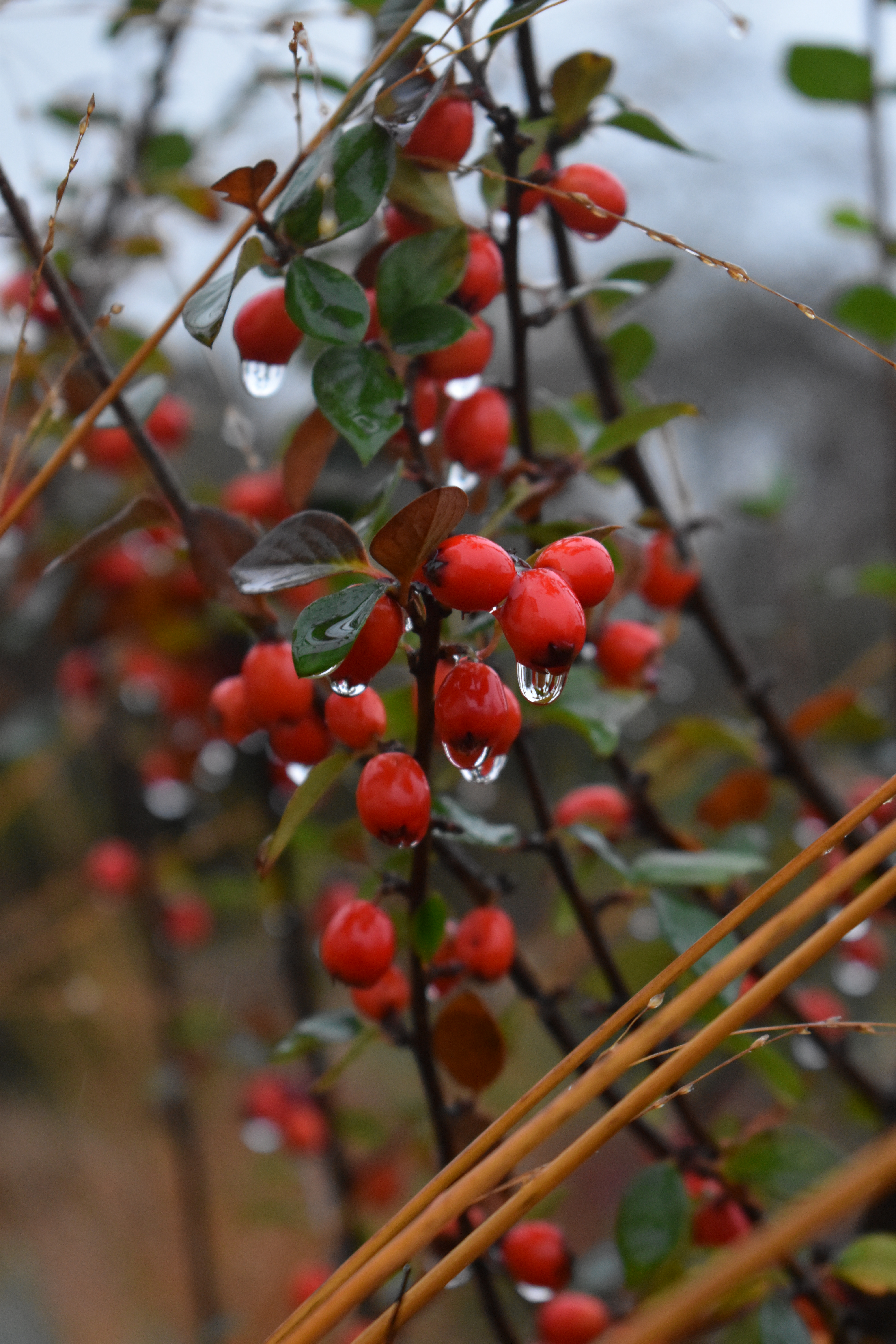
The first block of photos shows the black berries of Sarcococca confusa, a cotoneaster, Rosa glauca hips and one of our many Hypericum inodorum.
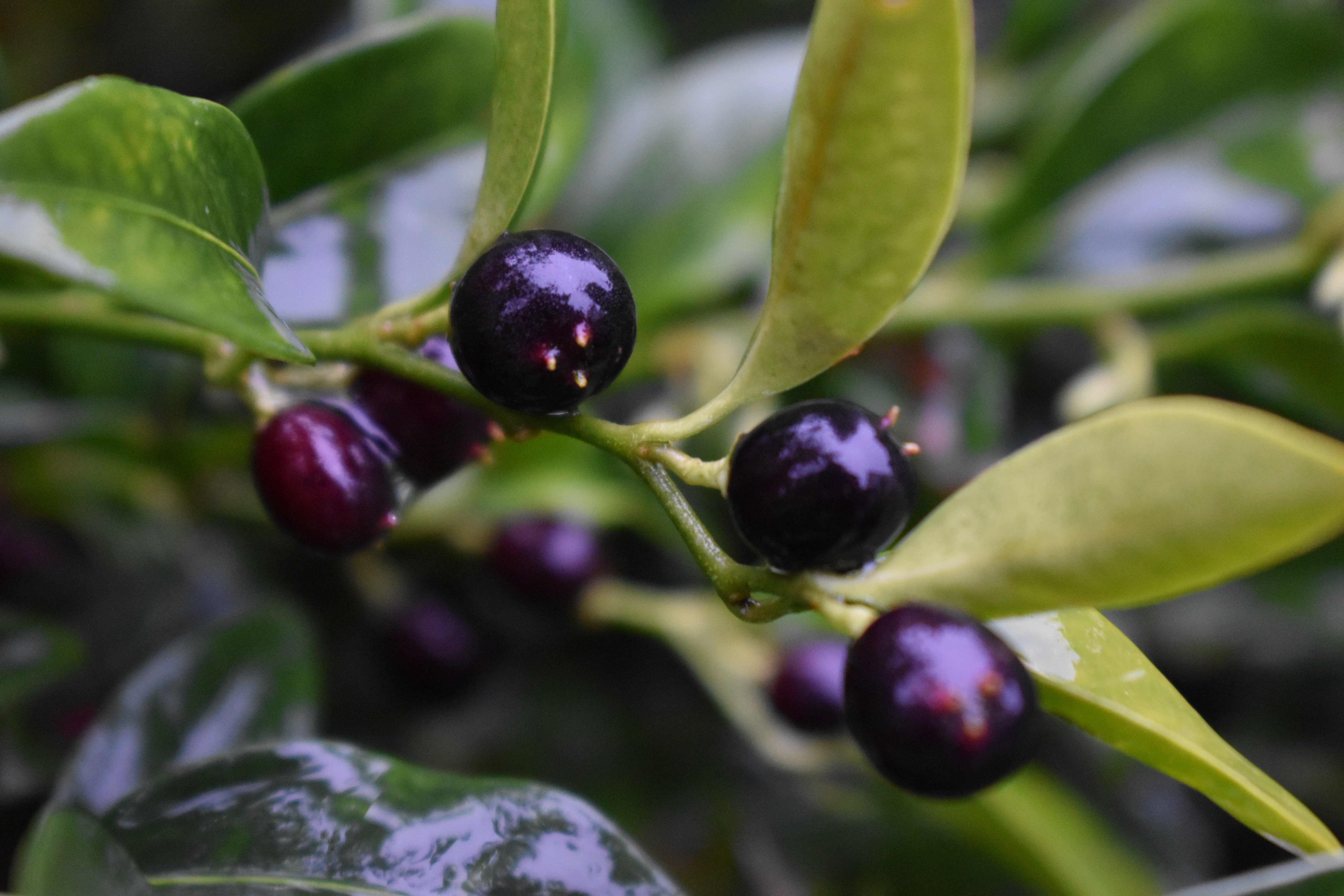
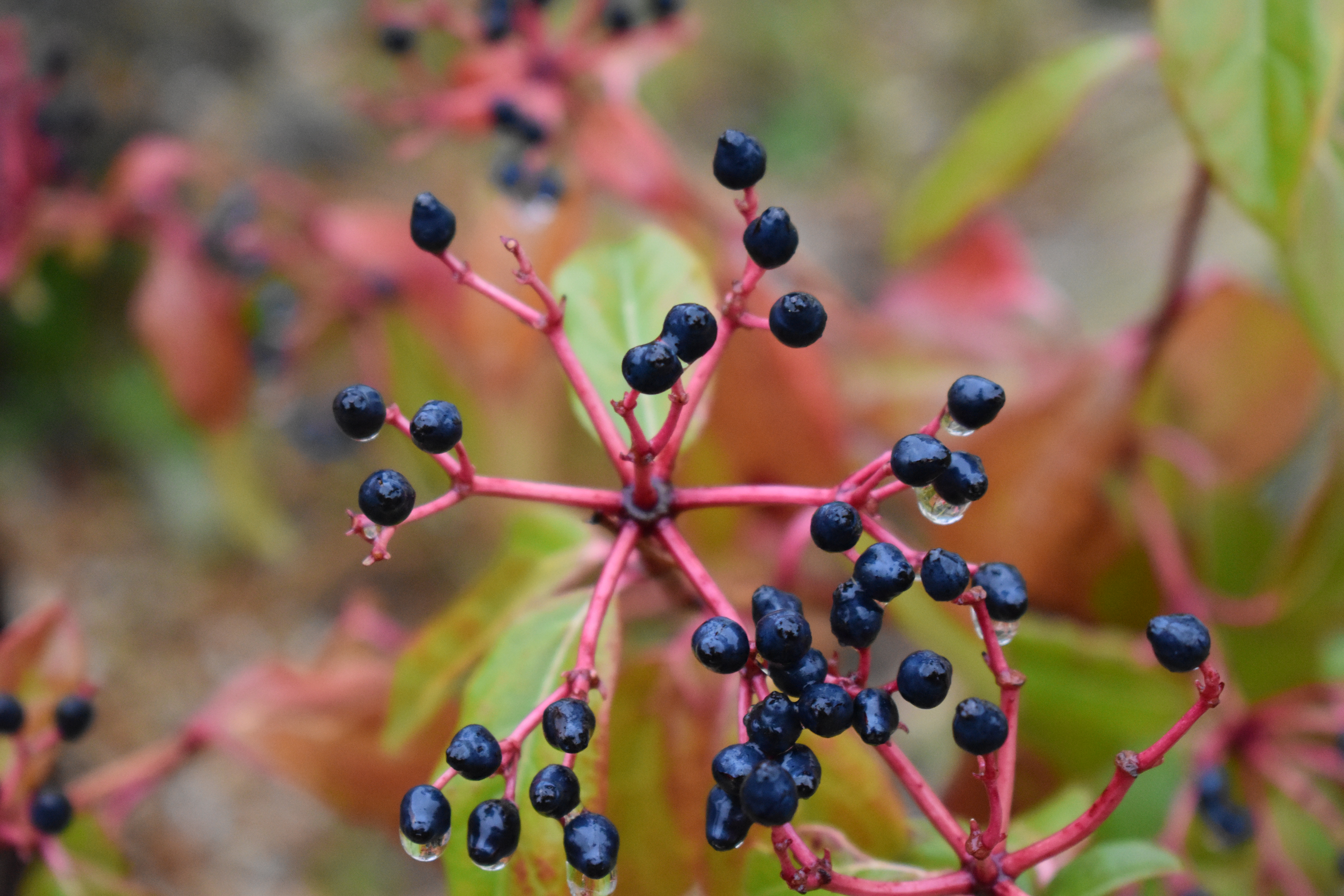
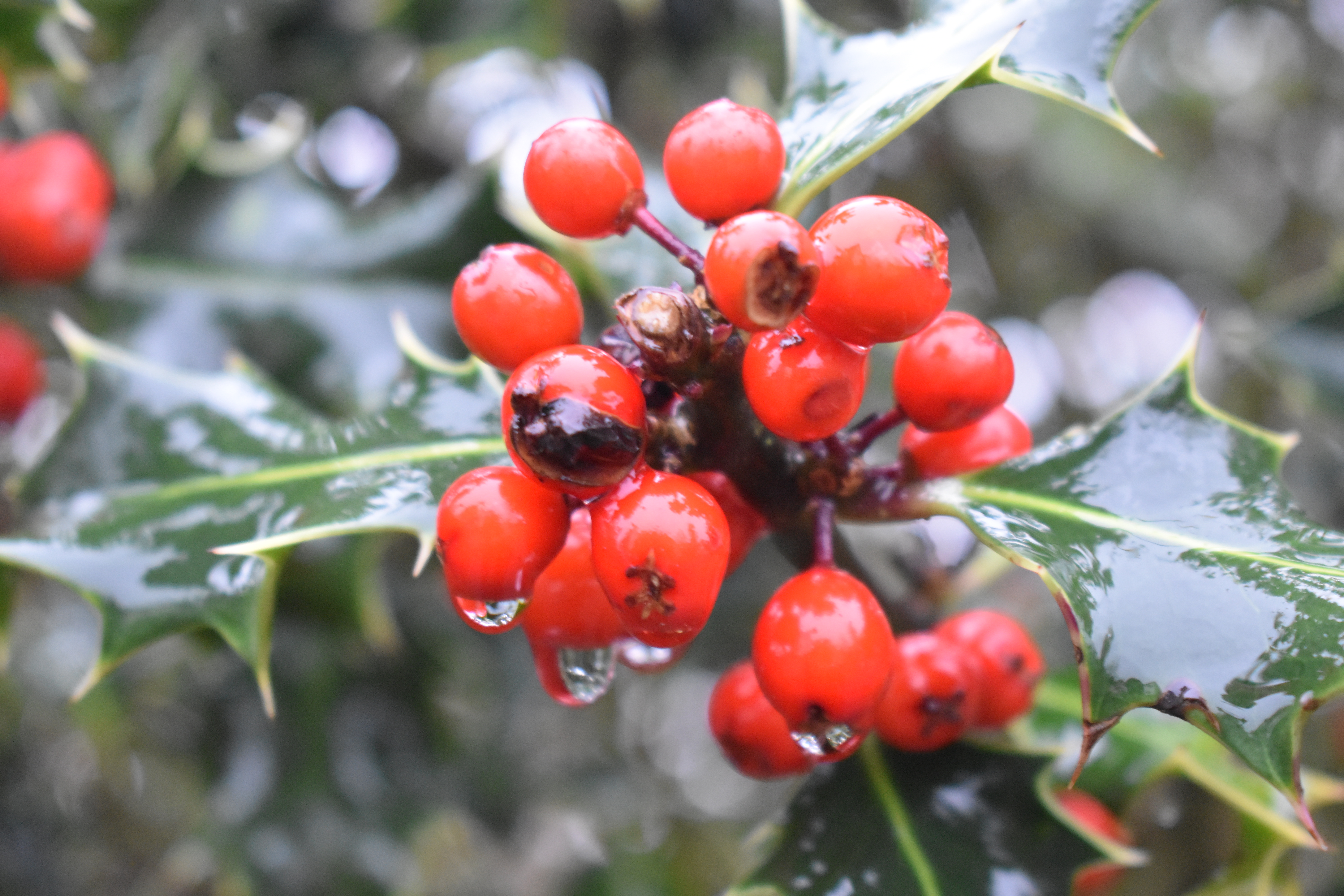
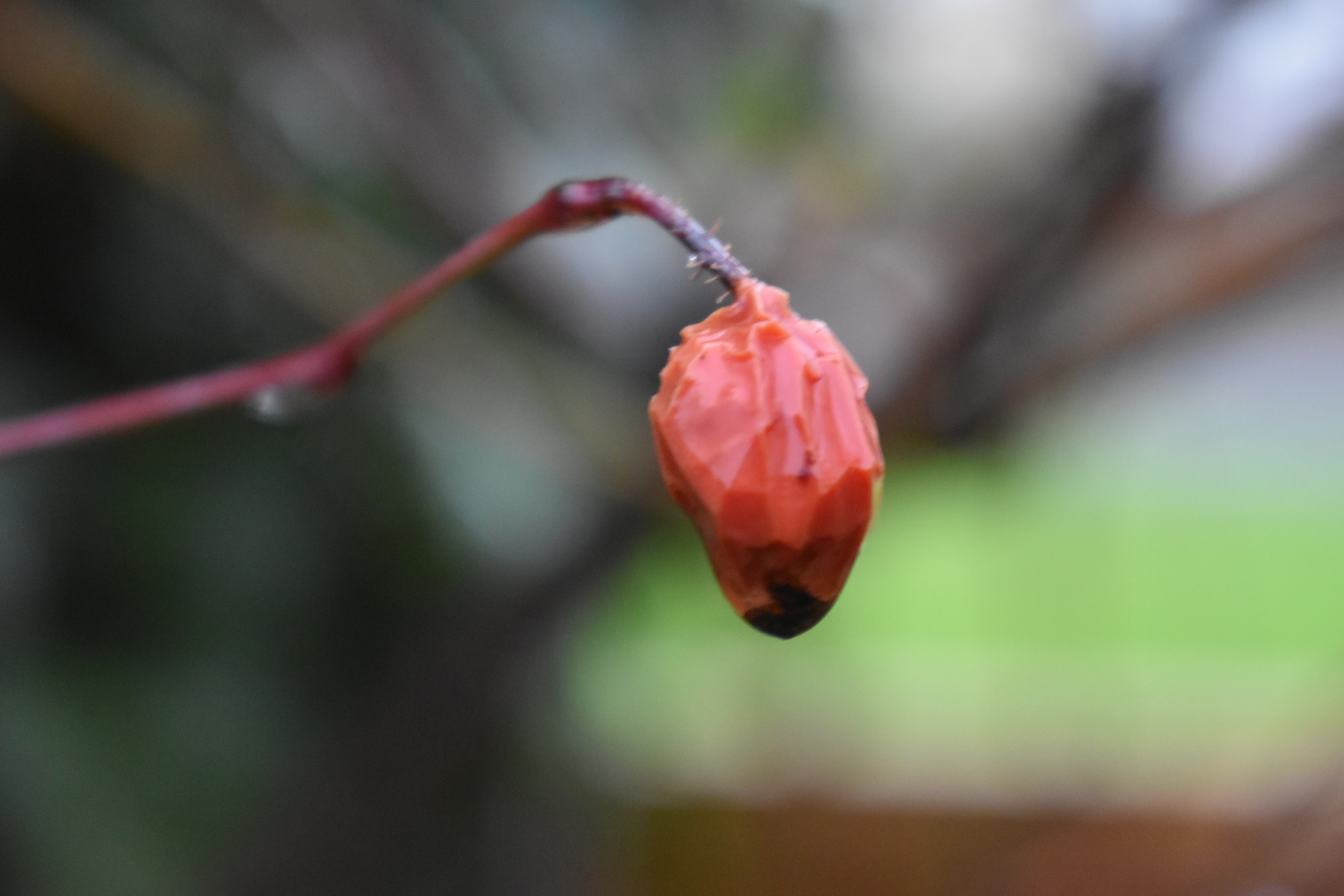
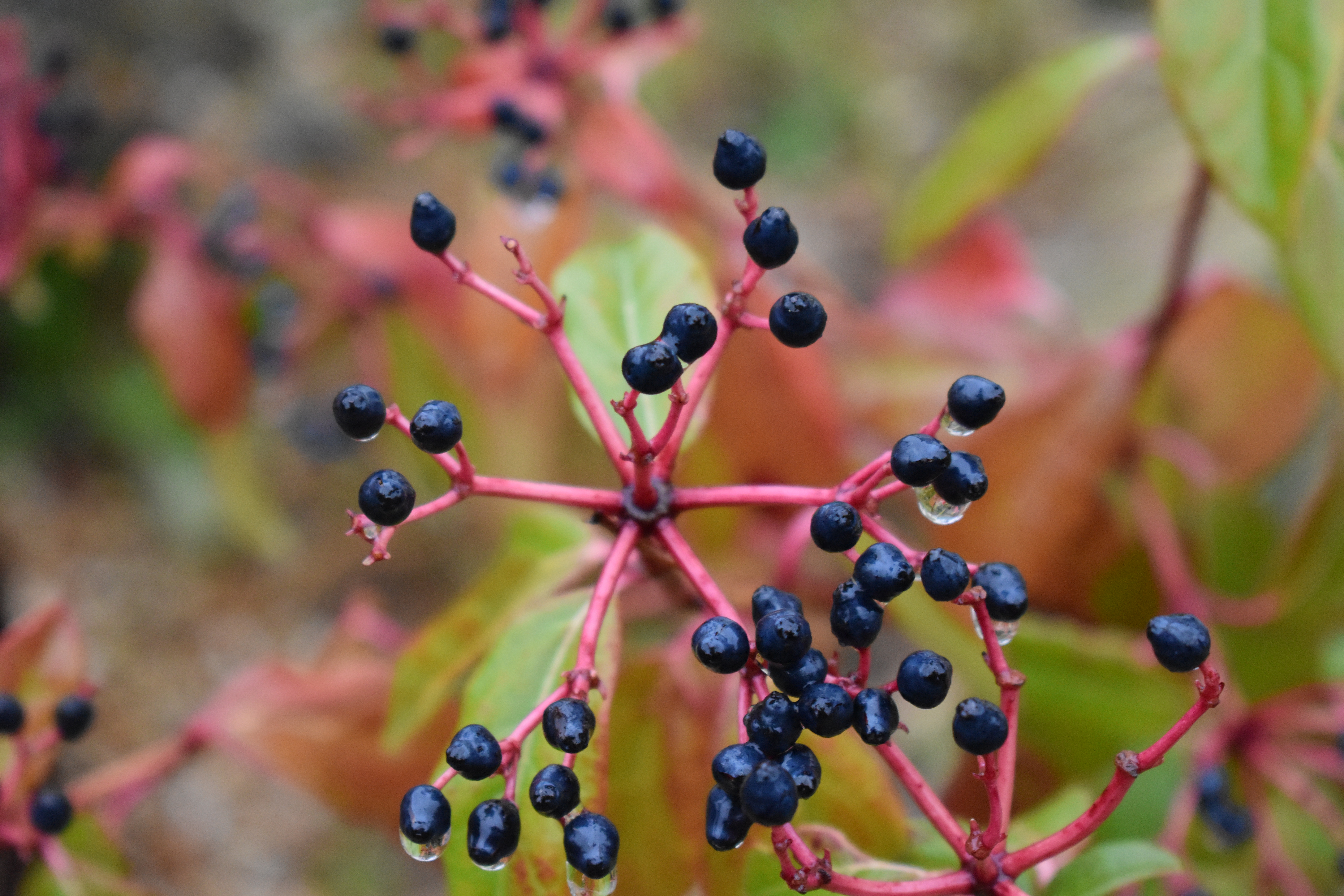
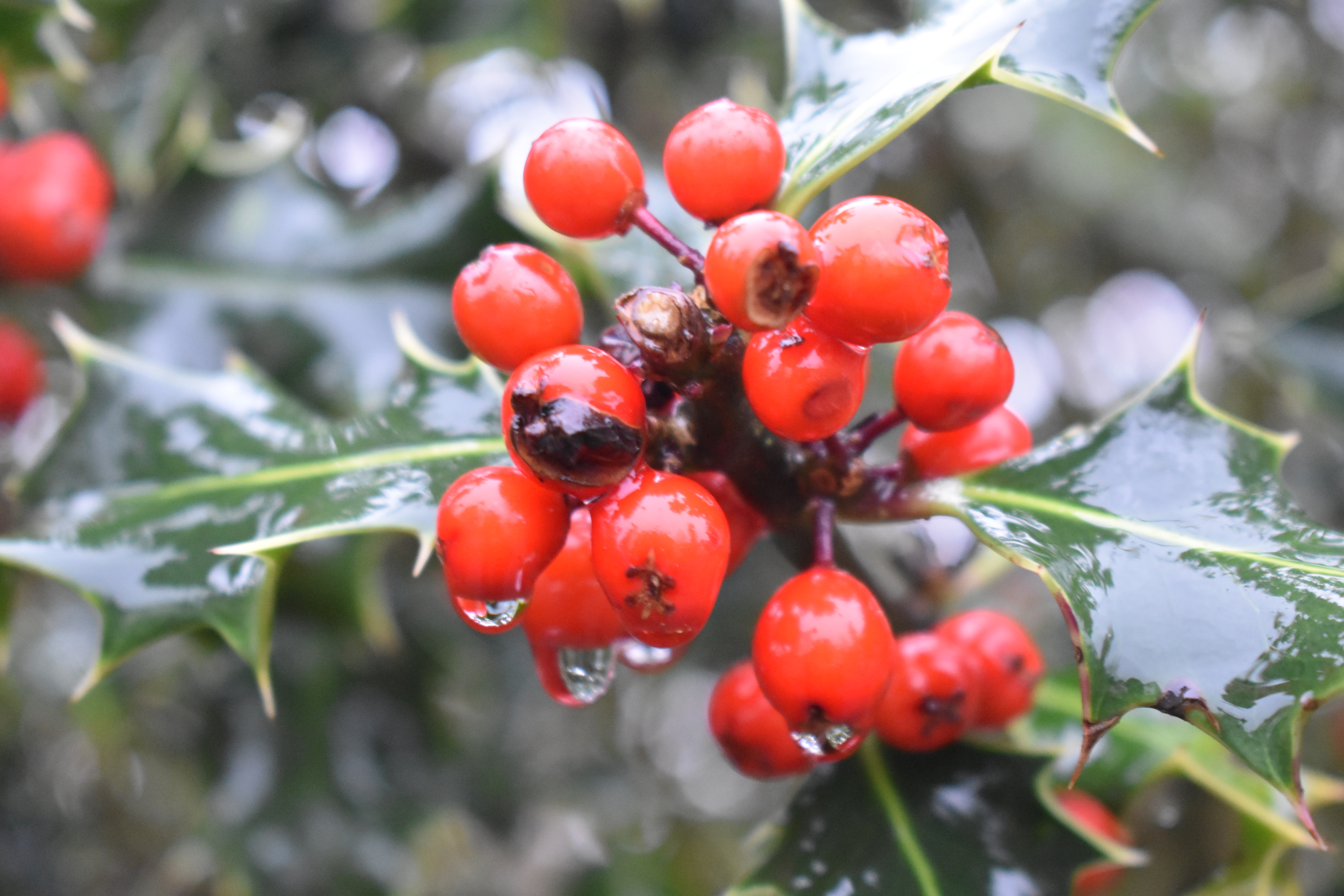
The next block of photos illustrates the deep glossy blue berries of Viburnum tinus with delicate red petioles alongside our native holly Ilex aquifolium and a lone hip of Rosa glauca.
Below in the first row are photographs of Malus ‘Adirondack’ sometimes referred to as Malus ‘Admiration’ plus rotting apples of Malus ‘Evereste’.
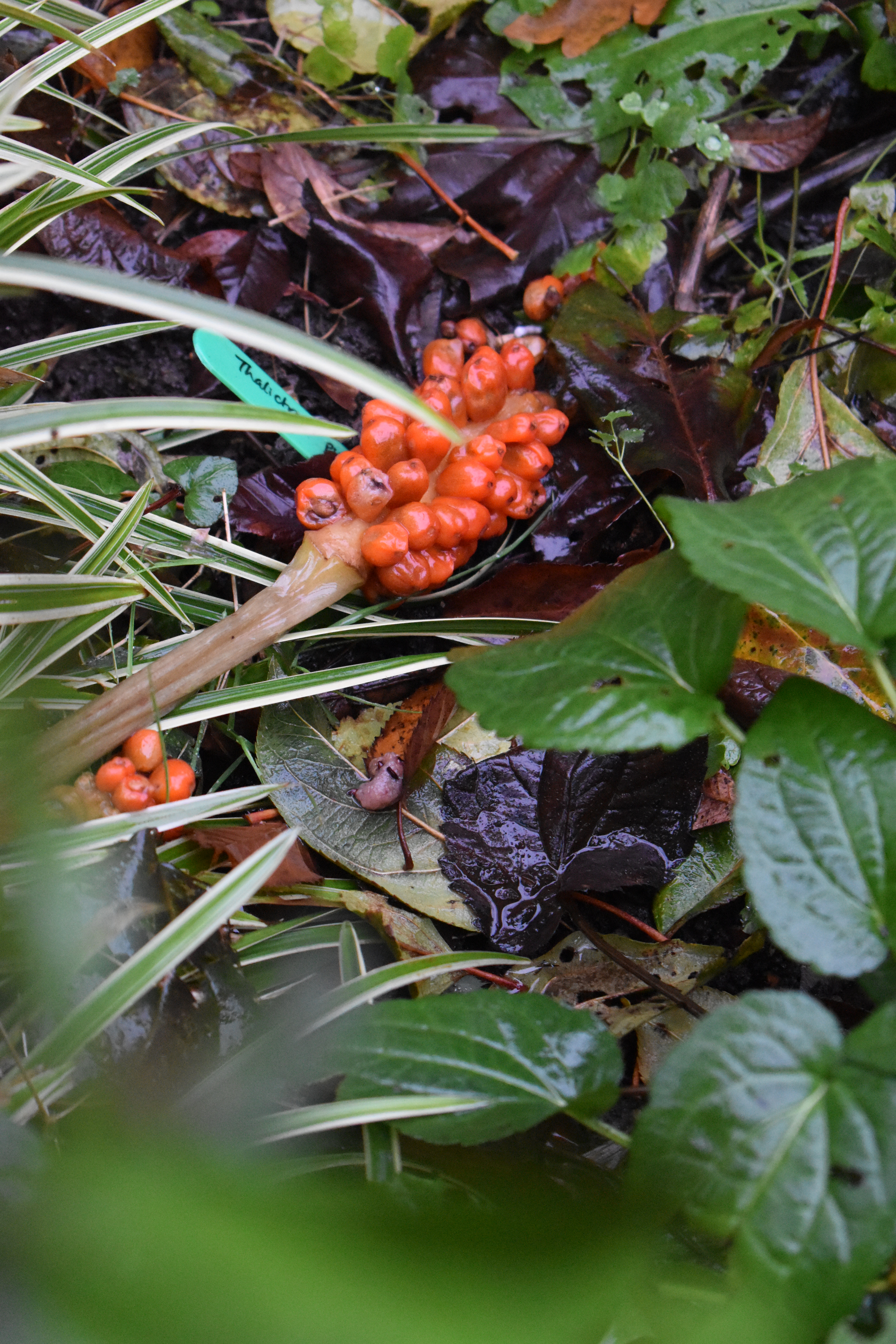
The next row of berry photos shows an Arum maculatum spike of berries just collapsed after a storm, an unripe hip of Rosa glauca followed by two pictures of Sorbus ‘Autumn Spire’.
Each year as our trees and shrubs mature they provide even more nutritious fruit for our avian friends.
December has so far, today being 10th of the month, been exceptionally wet with named storms following each other closely. So far during September, October and November, we experienced Agnes and Babet and Ciaran. Debi featured in November. During December, so far we have experienced storms named Elin and Fergus.
We have actually had very few dry days this month, so it has been difficult to find suitable times to go outdoors to work or simply wander. I enjoy the hour or so following a bout of rain.
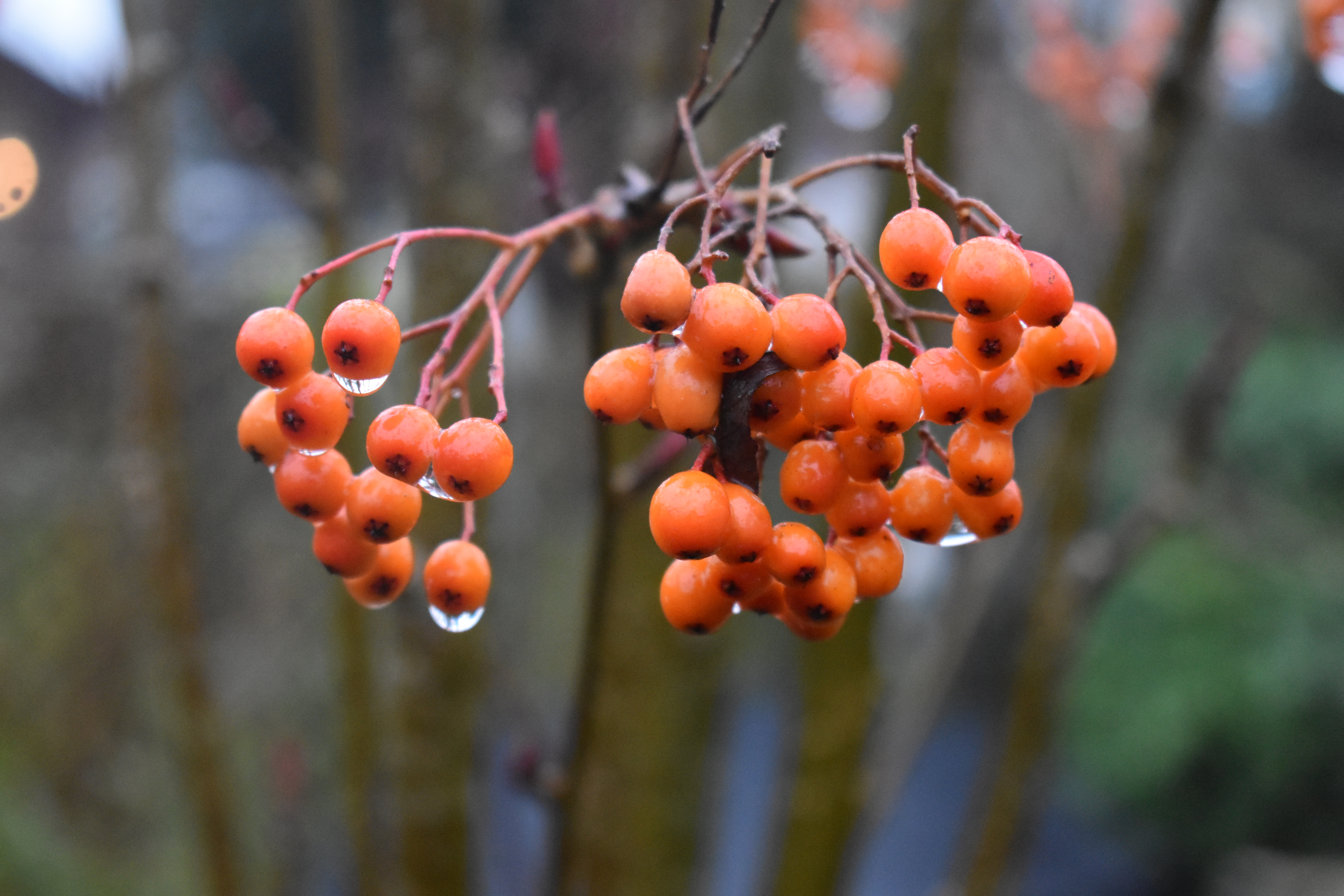
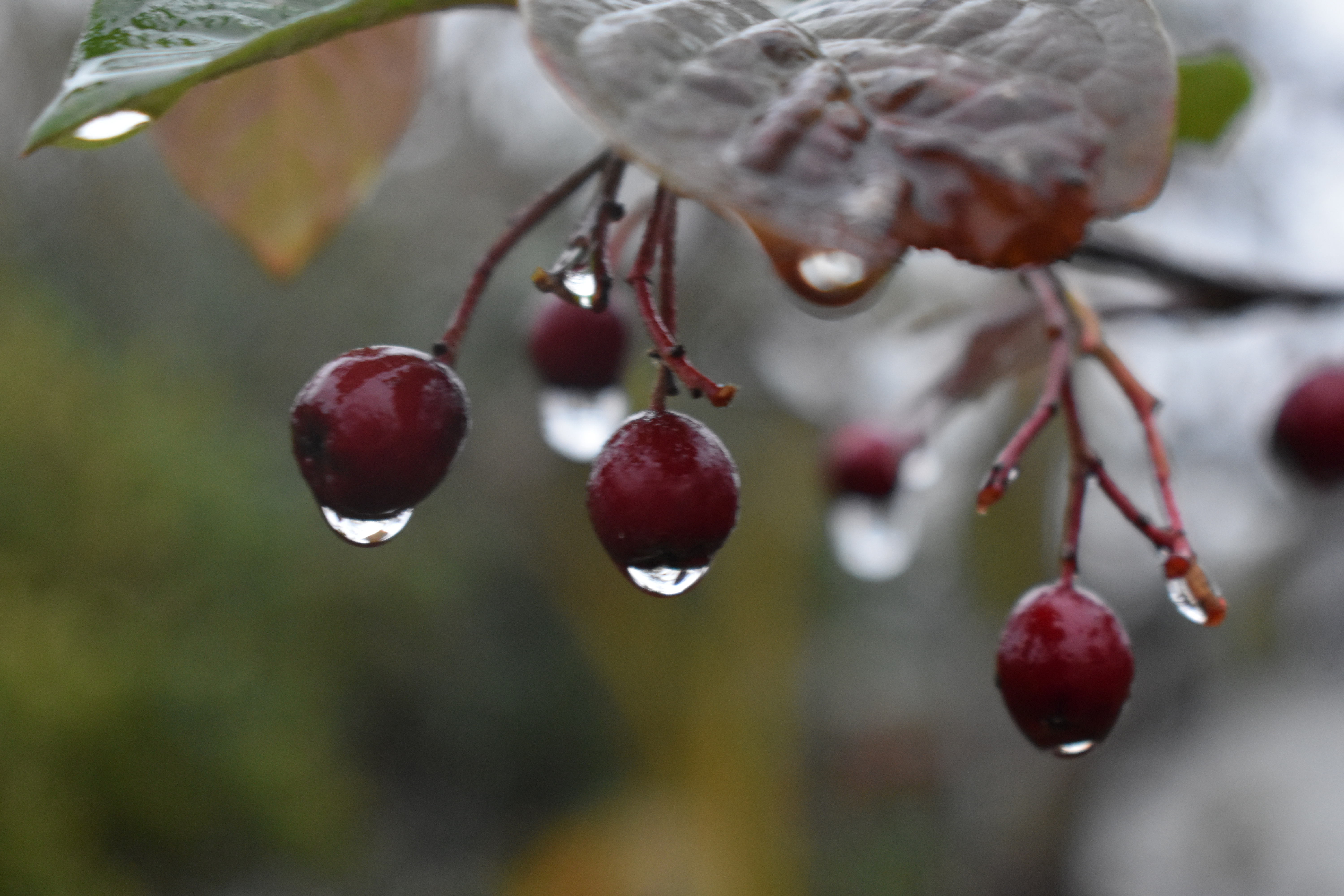
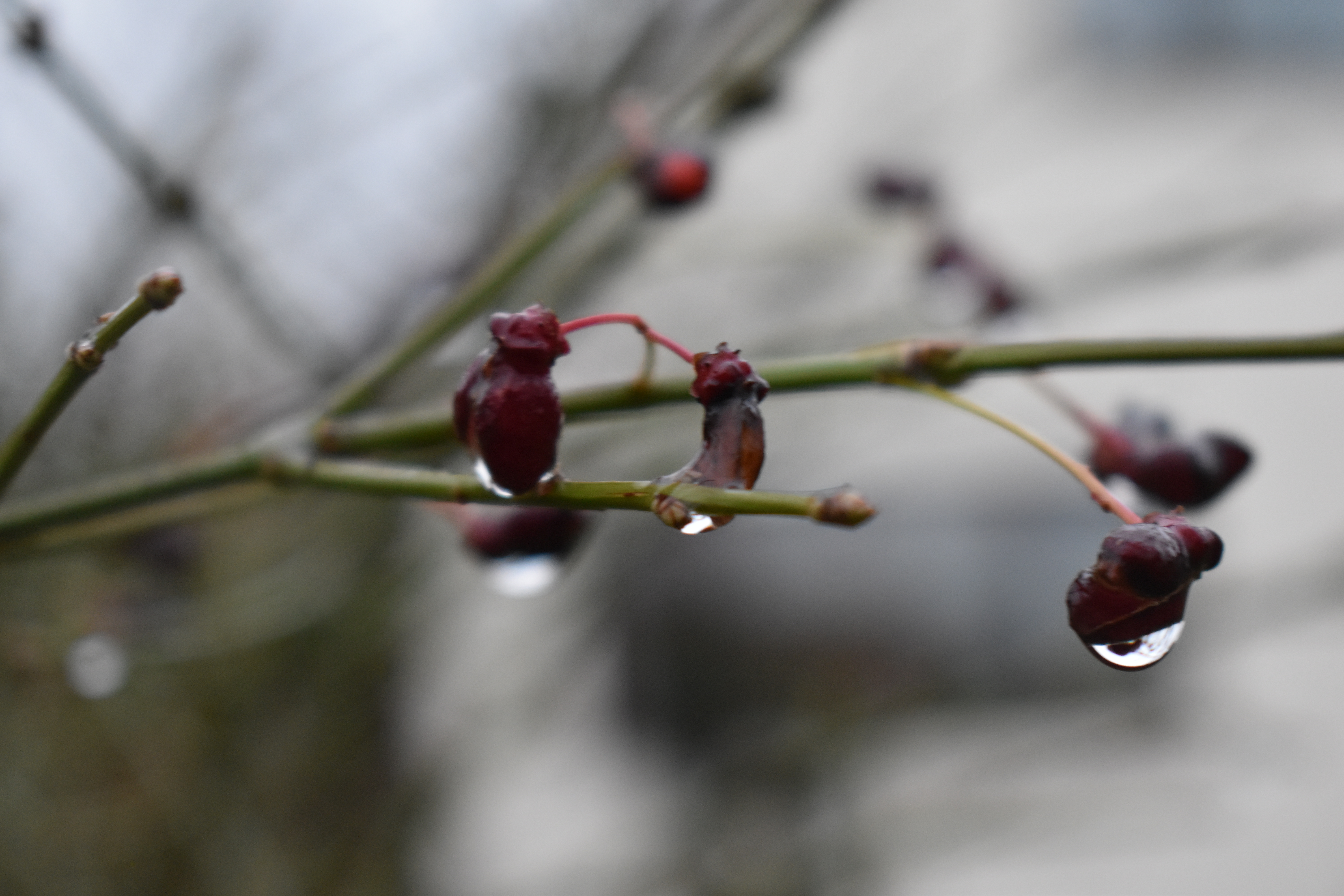
I took my camera out for a wander to find droplets of rain on plants.
I hope you enjoy my little gallery of shots taken on my wanders.
One thing to keep in mind when taking such photographs is to ensure you do not touch the branch in the slightest because if you do the droplets will drop!
'The most important and informative publication on wildlife of our times' - The Independent. This blog is a member of The UK & Ireland Natural History Bloggers group: www.uknhb.blogspot.com




































































 greenbenchramblings