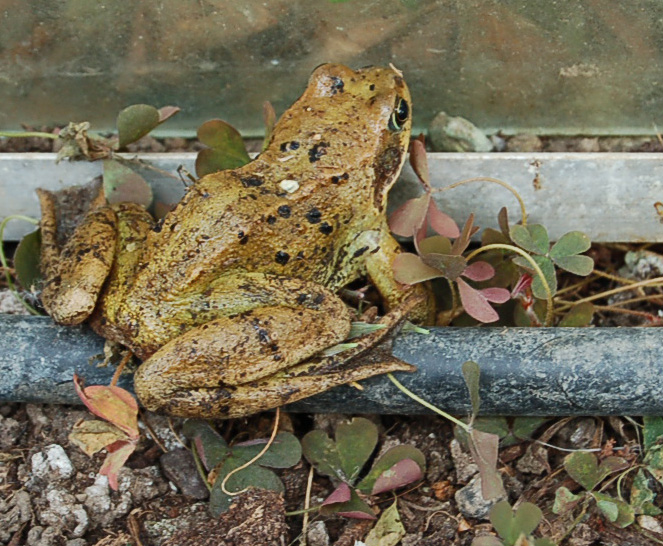
This has to be the greenest method of pest control any gardener can have in the greenhouse. He is one big frog! We are so lucky to have not just frogs but also toads and newts to help rid the greenhouse of slugs and bugs.
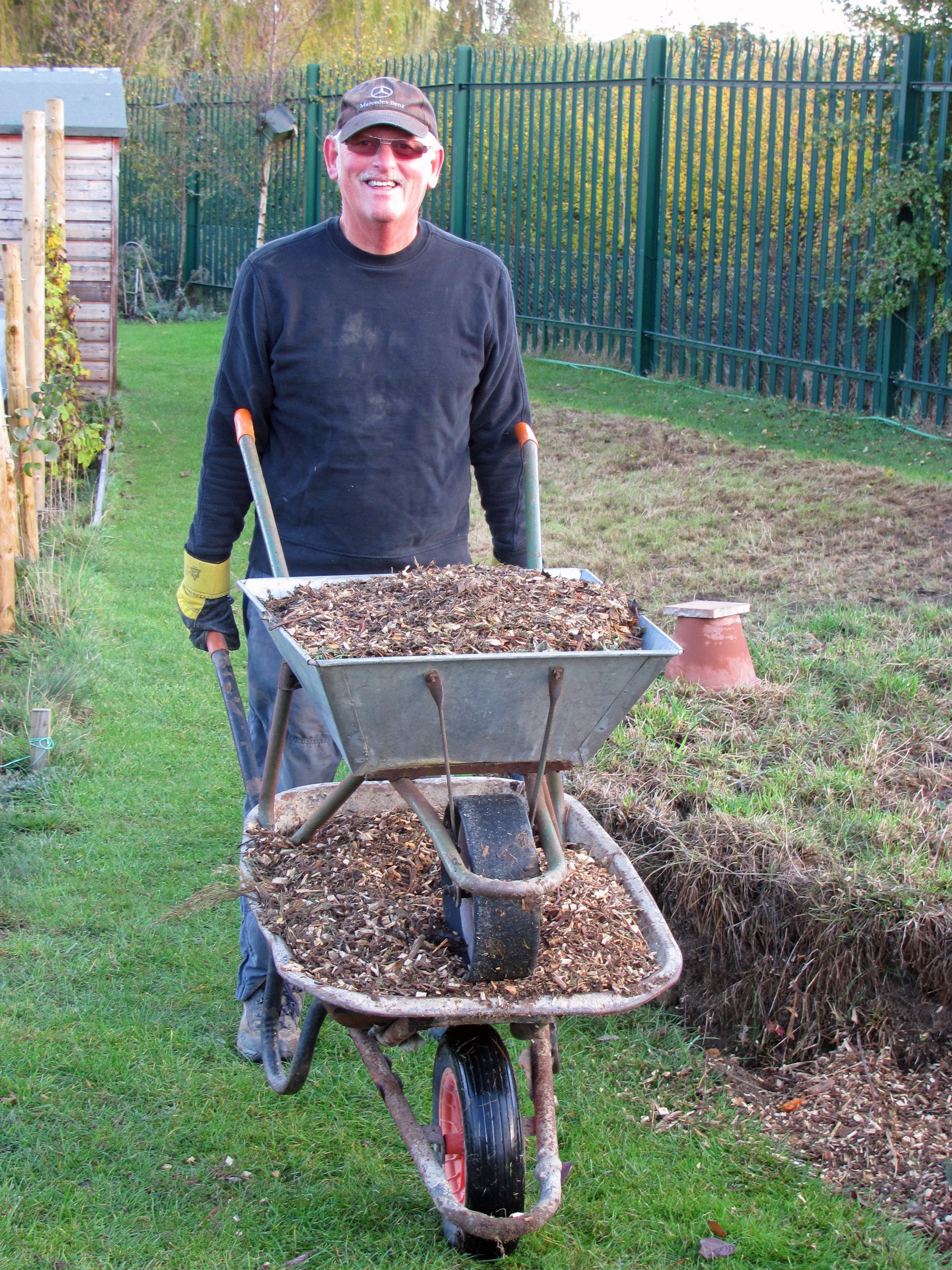
Today we held our October working party at Bowbrook Allotment Community. We took advantage of a bonus day of sunshine and warmth. Lots of hard work and lots of laughter – a typical lottie working party day.
Soon the smell of cut hay permeated the lotties as we cut the meadow under the orchard trees. It was a warm herby smell as well as nostalgic. A true sense of the feel good factor.
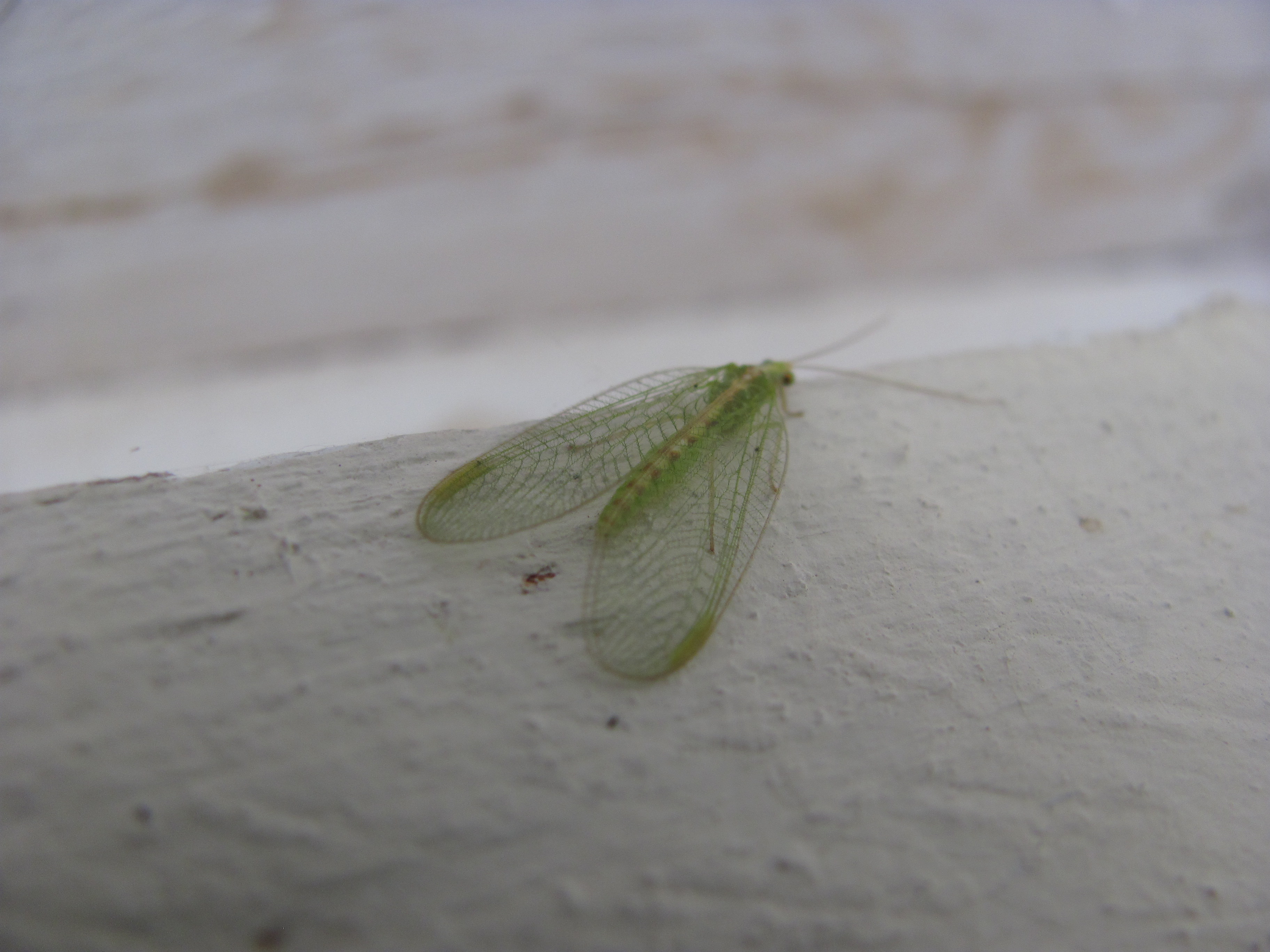
Above, Dee and Wendy rake up the mown hay in the orchard and below Pete and Jude tidy the long grass from around the logpile. The logpile is there to attract beneficial insects as part of our organic, natural approach to pest control. We welcome ladybirds and their larvae, beetles and lacewing larvae as pest controllers and bees as pollinators.
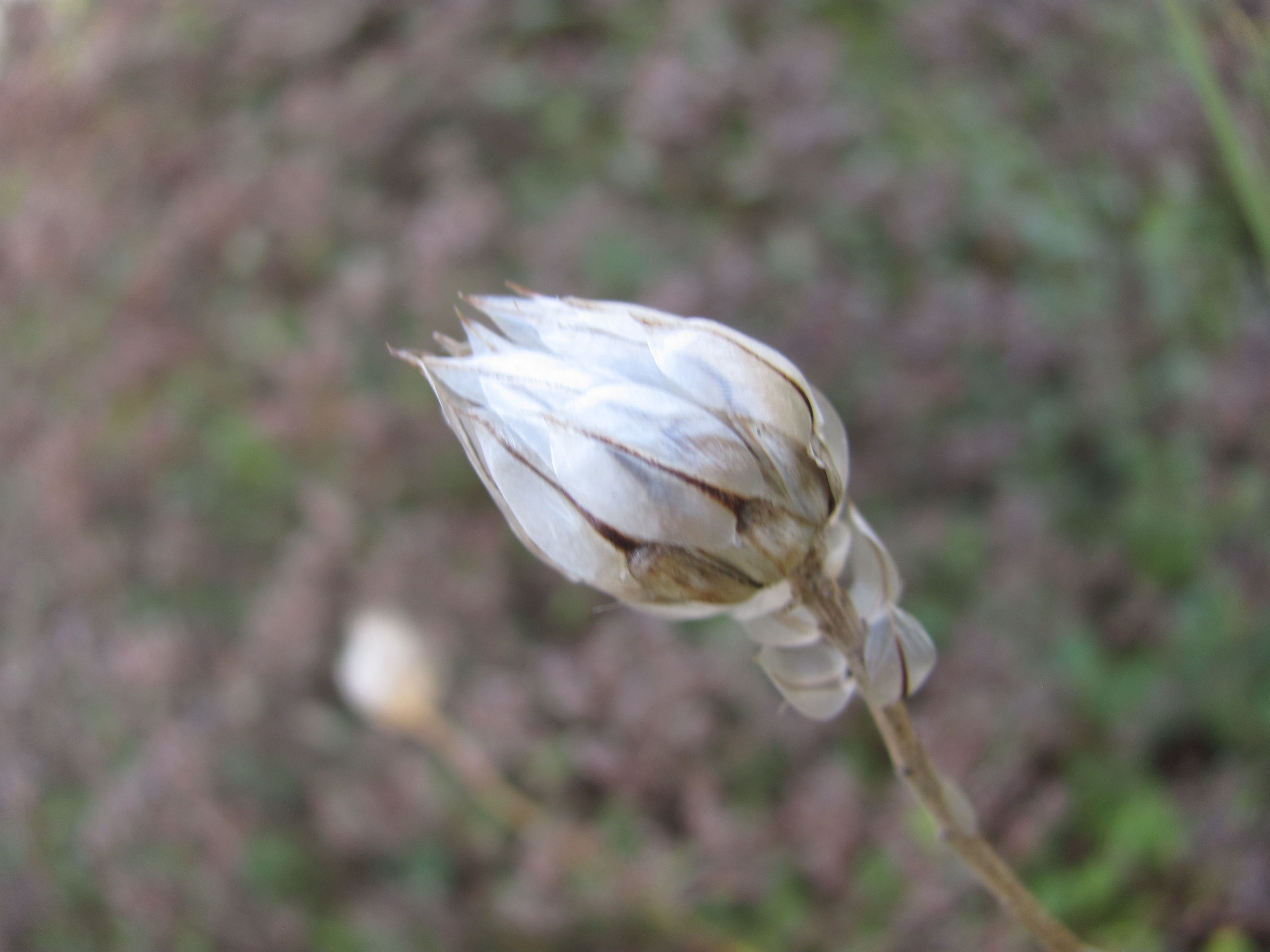
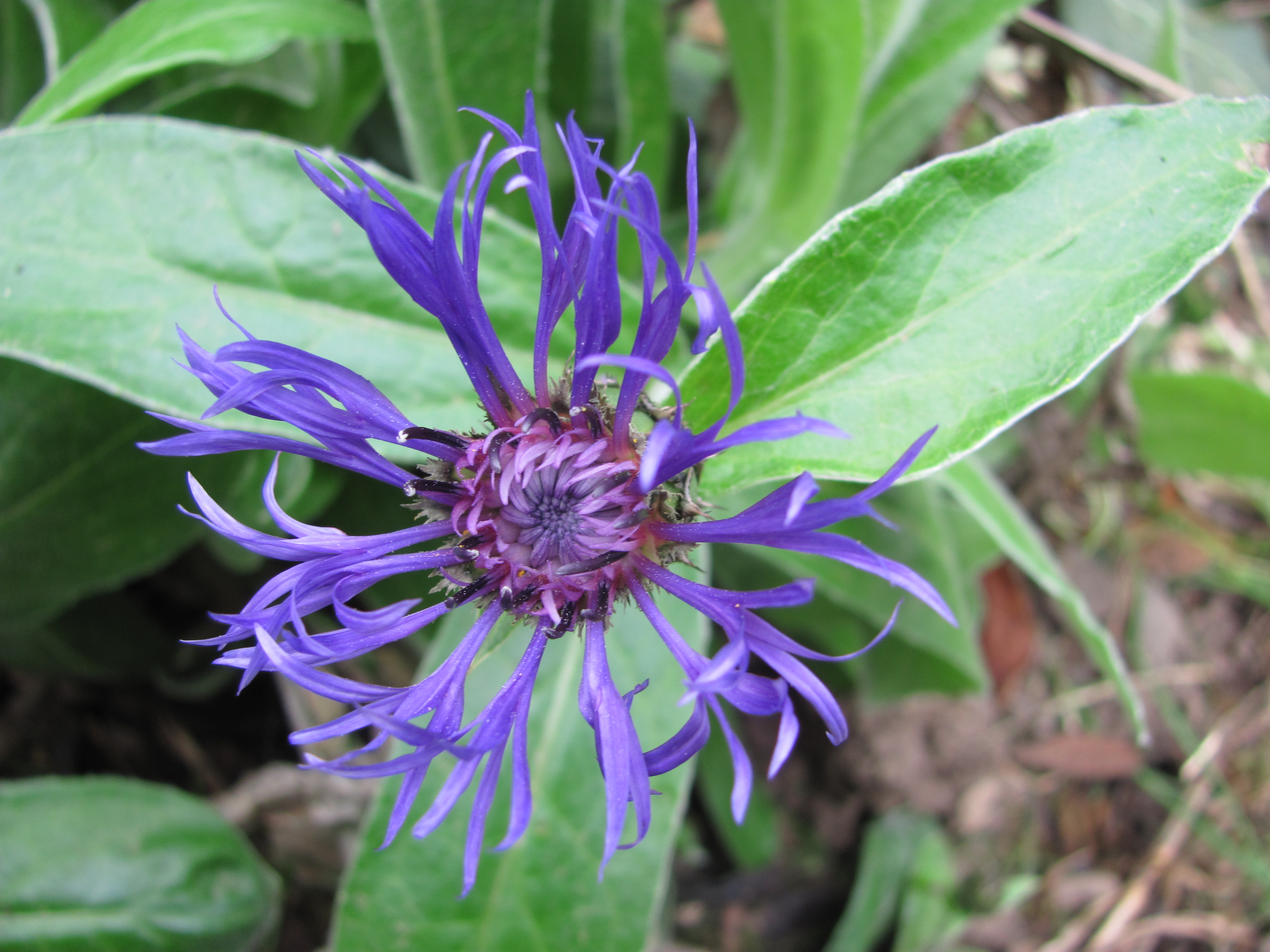
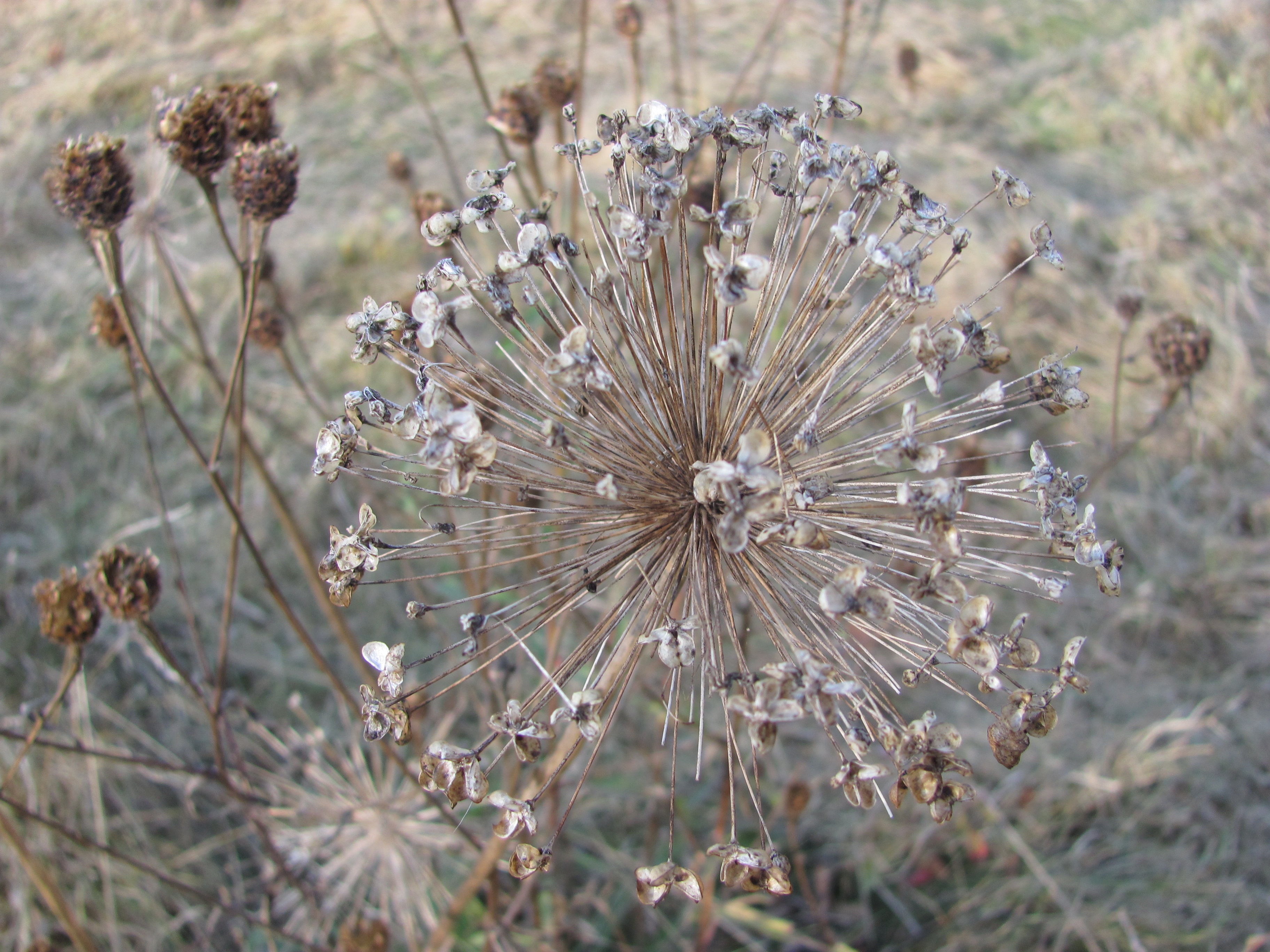
Before cutting the grass I spotted this group of seedheads – alliums and knapweed. They had shed their seeds ready for next year but I felt I had to record this particularly beautiful and delicate clump in a photo before we cut them down.
Bulbs donated by plotholders were planted around the entrance and the car park, with daffodils going in the car park border and muscari in the gateway borders. The Spring Garden was extended and the Winter Garden path was topped up with chipped wood donated by a local tree surgeon. The final task was to trim the long grass and wildflower stems growing on the wildlife banks.
We have just planted four hebes in an effort to replace some of those we lost last winter after months of the big freeze. We experienced night time temperatures of -21 for three nights on the trot. Too cold for hebes by far!
So we bought Hebe “Charming White”, Hebe “Wiri mist”, Hebe pinguifolia Sutherlandii and Hebe”Pastel Elegance”. The leaves of each one differ in colour and shape.
Charming White is actually in flower now as we plant it and what a delicately beautiful flower it is, white with a hint of purple at the very tip of each petal.
The recycled veggie box
How about this for a nifty bit of recycling! A simple transformation from veggie box to coffee table for the garden. We were in search of something unusual to use in a newly created section of our garden so searched the web for wine boxes and came across this veg storage box.
The box was used by J &JH Goodley, fruit and veg growers from Upwell near Wisbech in Lincolnshire and is dated 1970. There is a red inked stamp on the side indicating that it was manufactured by W Groom Ltd, Boxmakers of Spalding also in Lincolnshire.
The box has a red ink note stamped onto its side indicating an 8 shillings deposit. This was a brilliant way to encourage re-use of packaging which seems to have faded away. Could it be a good time to re-introduce the idea?
The undergardener and I spent a busy day at the lottie yesterday making the most of a warm bright day and catching up on autumn plantings. We weren’t the only ones as there were lots of plotters beavering away on this bonus “summer’s” day. It was a day of two characters with the brightness and warmth of the sun giving the pretence of summer but the calls of the jays passing overhead on the way to our great old oak in search of acorns hinted at autumn. The warmth and gentleness of the day encouraged lottie holders to wander around the green spaces and sit with their coffee on the benches. Talk with other gardeners was all of the lack of rain and the dry state of the soil. We have had no appreciable rain since mid-July. Turning the soil over sends up dust.
We prepared the ground by digging over the soil and adding a good 2 inch deep layer of compost. The ground was desperate for some organic matter to hold the moisture that the rains of autumn will hopefully bring.
We sowed broad beans, Aquadulca Claudia of course, planted onion sets, Troy and Radar, French shallots Giselle and three types of garlic, Lautrec Wight, Solent Wight and elephant Garlic.
Last year we planted just two cloves of elephant garlic to provide enough for planting out a row this year. They proved to be a real success giving us enough for a row and a few to cook. We look forward to discovering their taste – if it is a good as their gentle scents then they will be worth the effort of growing. They are strange crops though as they are not garlic at all but more closely related to leeks. As the photo below shows the cloves are a lovely golden colour when harvested and they most definitely look like garlic!
I am a real tree lover. I enjoy them in every season – their fresh spring growth, their luxuriance in summer, the colours of autumn and the structure of their skeletons in winter. There are not many trees I really dislike but the one I most definitely do dislike is the monkey Puzzle Tree. They are just too rigid and characterless for me. This one however I did like -it was dead! I couldn’t resist photographing it to send to my brother who loves them!
stripes and spikes
Galictites tomentosa! What a name! But just look at the beauty and presence it brings to our gravel garden! The grey and silver foliage arranged in dramatic star-bursts.
The seed heads sit through the autumn and most of the winter providing interest for us particularly on frosty days and food for the goldfinches who sit atop the stalks and pull the seeds out. Luckily some are left to drop in readiness for warmer spring weather when they germinate in the gravel to give us next year’s plants. We can enjoy feasting our eyes on their fresh new foliage, summer flowers and statuesque stalks topped off with fluffy seedheads. But there has to be a drawback – weeding out the excess seedlings is a painful business as the spikes on the end of each leaf spike can give the unwary gardener a prickly shock. They need a warning – handle with care!
Haughmond Hill Stones
Just enjoyed a slow ramble on Haughmond Hill just outside Shrewsbury. Near the top we came upon a real surprise – three beautiful stone blocks each textured, worked and marked in different ways but linked to each other. They felt so right – happy in their environment and adding to it richly.
Although the sculptures are worked by the hand of man they fit within their “habitat”, their colours, textures and the materials from which they are carved.
Early autumn is the ideal time to visit them as their colours perfectly reflect the colours of the season.
It will be interesting to see how they weather and to watch out for lichens and mosses taking up residence on their surfaces.
This year we created a new meadow from scratch on the Bowbrook Allotment Community green spaces. The area was cleared of turf which we used on our loam pile and dug over removing as many roots of pernicious weeds as possible as we went along. We then rotavated the area and left it to let weed seedlings appear. As they did so we hoed them off.
We sowed with a mixture called “Pictorial Mix” which included annuals, biennials and perennials which were mostly British natives but we added other wildflowers were included to extend the season and add extra colour. The result can be seen below, but it did keep us on tenterhooks as the seeds germinated very slowly in the dry weather we have experienced here in Shropshire all year.
We have been so pleased with the result! It is the most photographed border on the site. Now in late September it is still showing some flower.