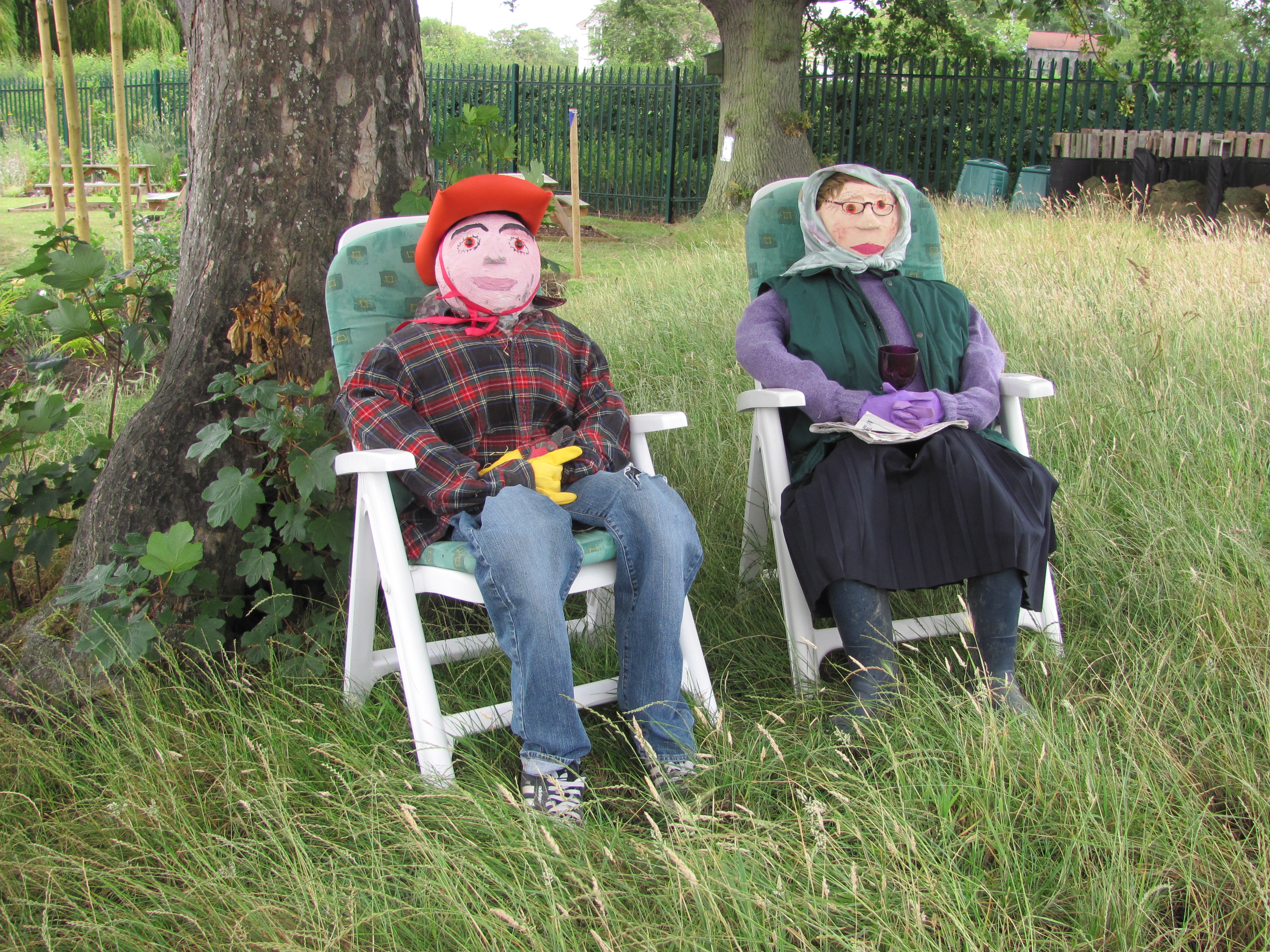
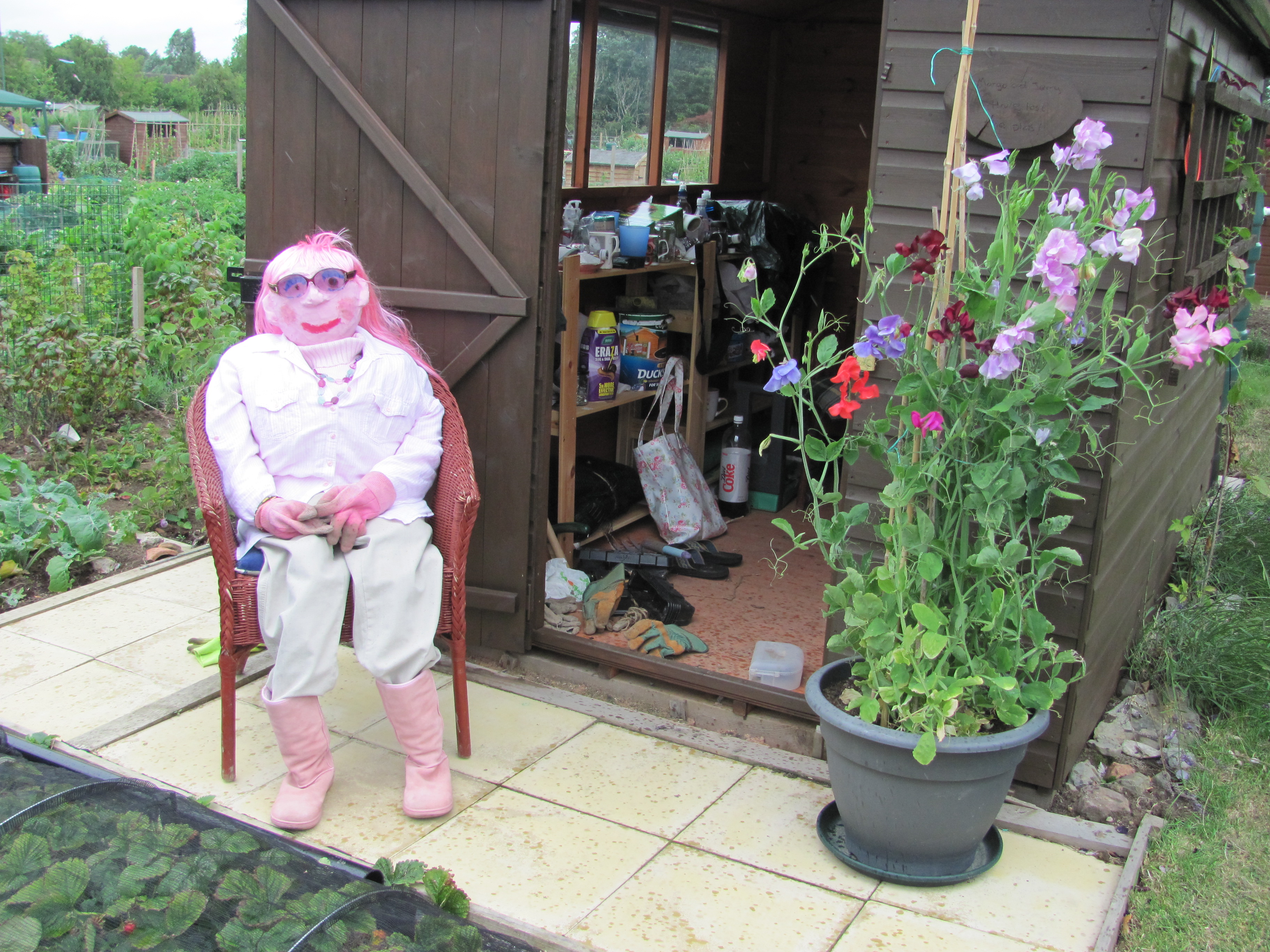
We have a real champion creator of scarecrows at our lottie site, Bowbrook Allotment Community. Every year Mrs Anna as she calls herself, crafts splendid characters for us to enjoy. Last year we had a scarecrow version of Shrek but this year she produced three wonderful characters based on her family apparently. The old couple who doze in the shade under our sycamore tree are based on her parents while the pink beauty is herself 10 years from now. Incredible!
We have had the pleasure of watching avian feeding frenzies in our Avocet back garden in the last few days. Firstly we watched flocks of noisy crows wildly feeding on flying ants on the hillside behind us. Through our scope we could see their wildness and greed as the ants in the big patch of sloping dry ground took to the air. It seems little gain for such large birds, but perhaps ants provide some essential nourishment. Or some drug!
The ants nesting alongside our garage wall took flight the following day and were instantly gorged upon by robins and blackbirds. How do birds know this is about to happen?
The food source of the third instance was a complete mystery. Early one sunny evening the garden was invaded by dozens of swallows swooping low through the trees and borders, occasionally landing on the roofs of the conservatory and garage. This continued for a good hour with the garden seeming at times absolutely full of swallows performing amazing aerial acrobatics. What entertainment! They put the Red Arrows to shame.
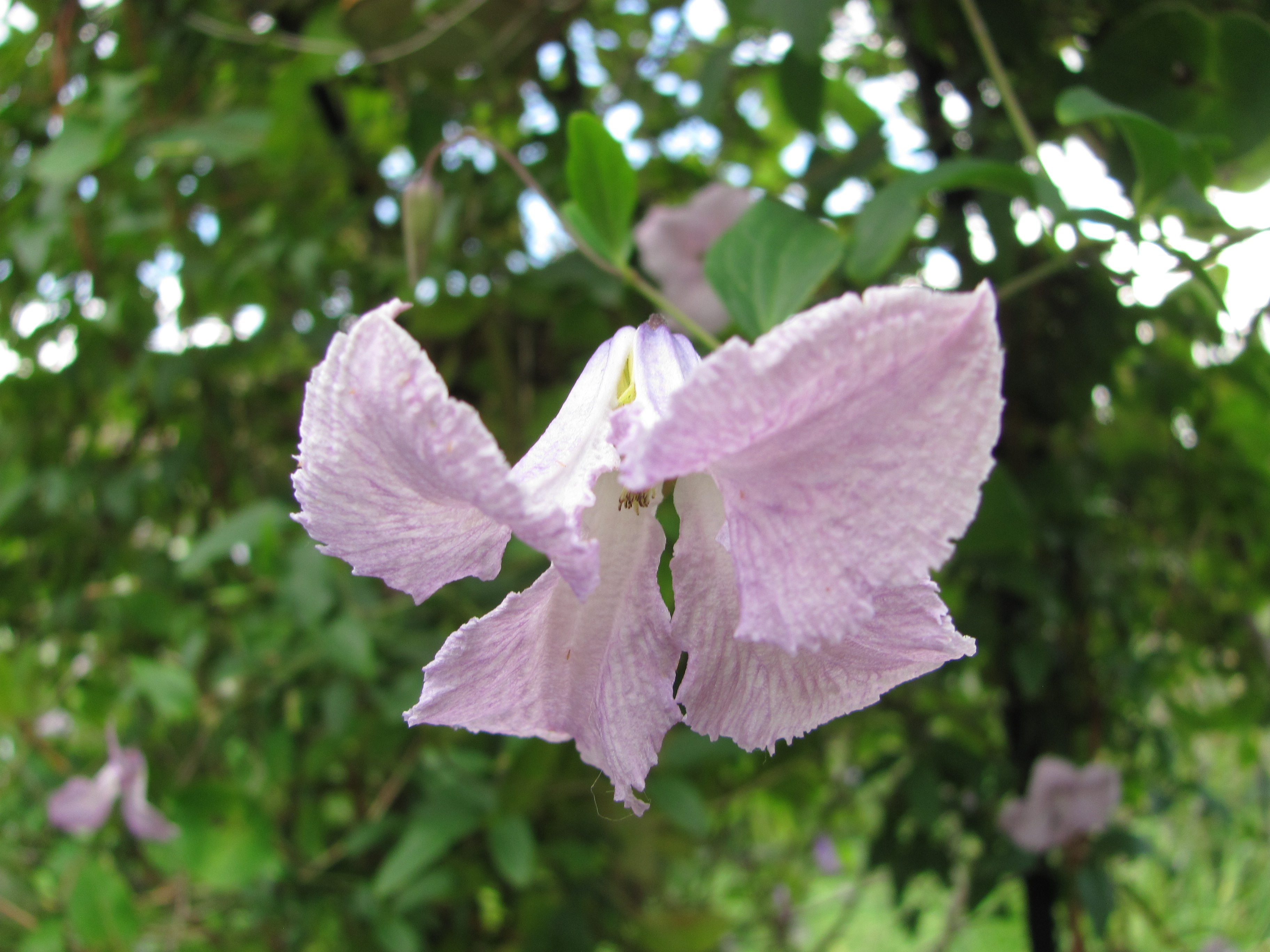
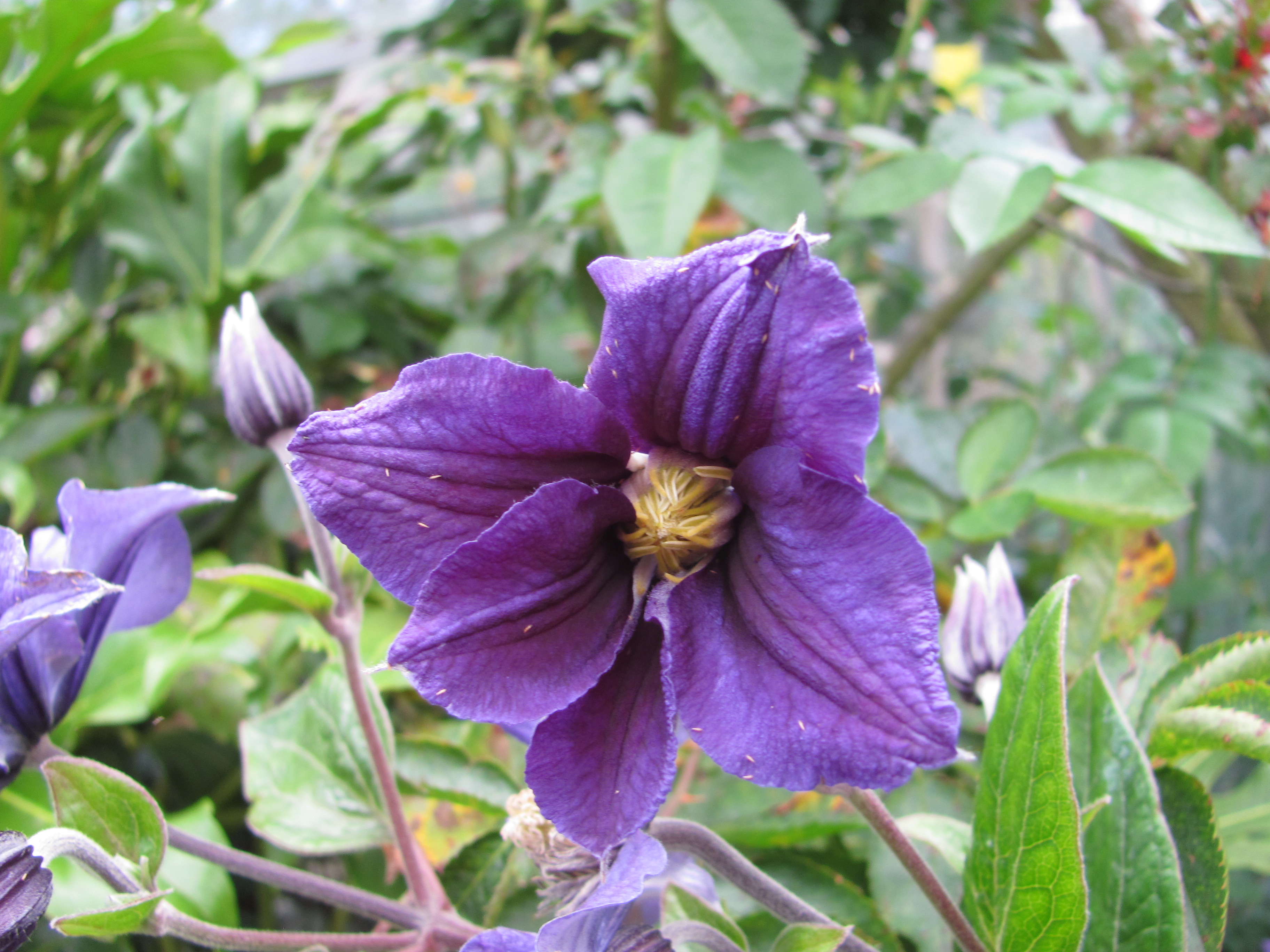
Should 2011 have been “The Year of the Clematis”? All ours have flowered so well and for so long, be they the usual climbers or the less-often grown and less well known herbaceous varieties. Just look at the photos! The first is a climber and the second an herbaceous type.
This is a controversial issue with strong feelings on both sides I suspect, but should we really be expending energy, resources and finance on reintroducing creatures such as the beaver when we could be concentrating on improving and increasing scarce habitats? My feeling is that if we concentrate on habitat conservation and improvement first then an increase in all species indigenous to that habitat would increase in numbers and indeed some species that have disappeared could reappear – plants, insects, birds and mammals.
The landscape in the photo is part of the RSPB reserve on Anglesay which consists of cliffside habitat and cliff top heathland. The habitat here is well maintained and as well as looking colouful with its heathers, lings and gorse, and dramatic with its steep cliffs and huge splashing waves, it is home to so much wildlife. On a recent visit we watched choughs along the clifftop crying out their “chee-ew” calls. And perching atop stems and stalks stonechat and pippets. On other visits we have watched hunting displays of peregrines and sparrowhawks.
The cliffs themselves are home to nesting seabird colonies of razorbills, guillemots and puffins while out at sea lucky watchers may spot porpoises and dolphins. The heathland is home to adders.
While there I decided that by conserving rich habitats such as this we are best serving wildlife. Surely value for money and value for effort wildlife conservation is best served in this way. Reintroducing beavers to a remote loch in Scotland surely comes a poor second!
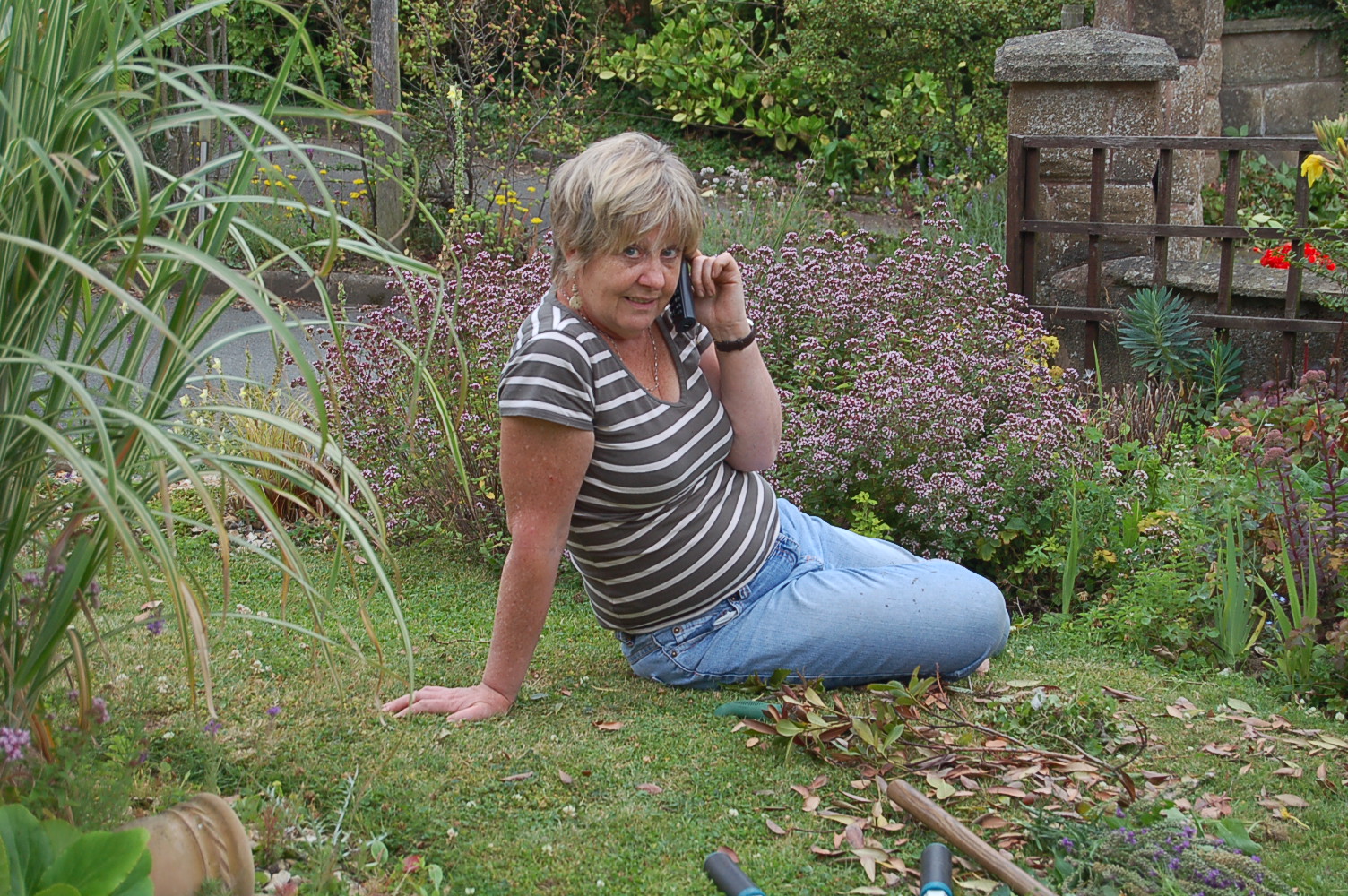
Most of the hard work in the Avocet garden is done by Jude the under-gardener. She does the digging, weeding and humping around while I have the ideas and do the glamorous jobs like planting new acquisitions.
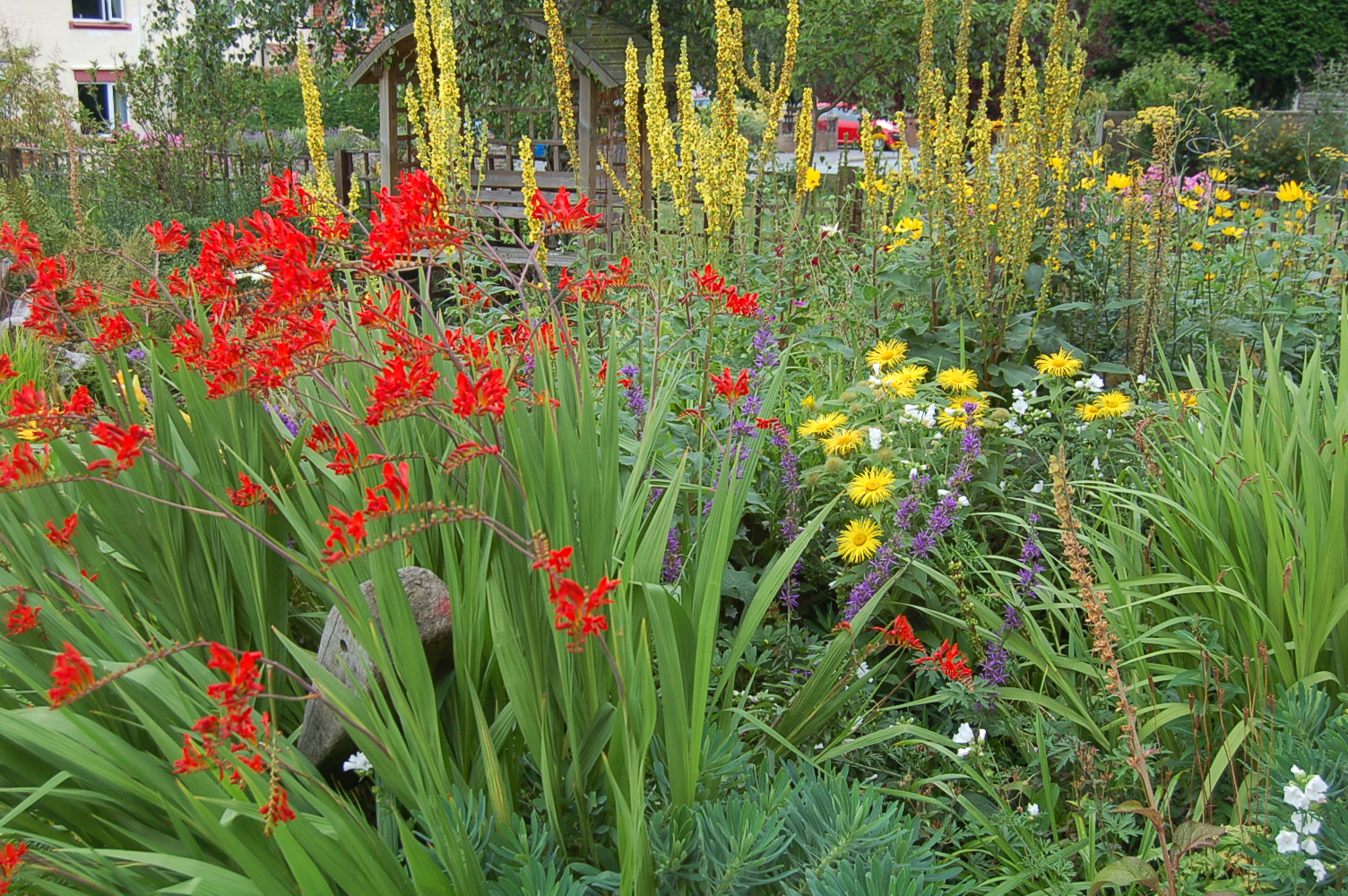
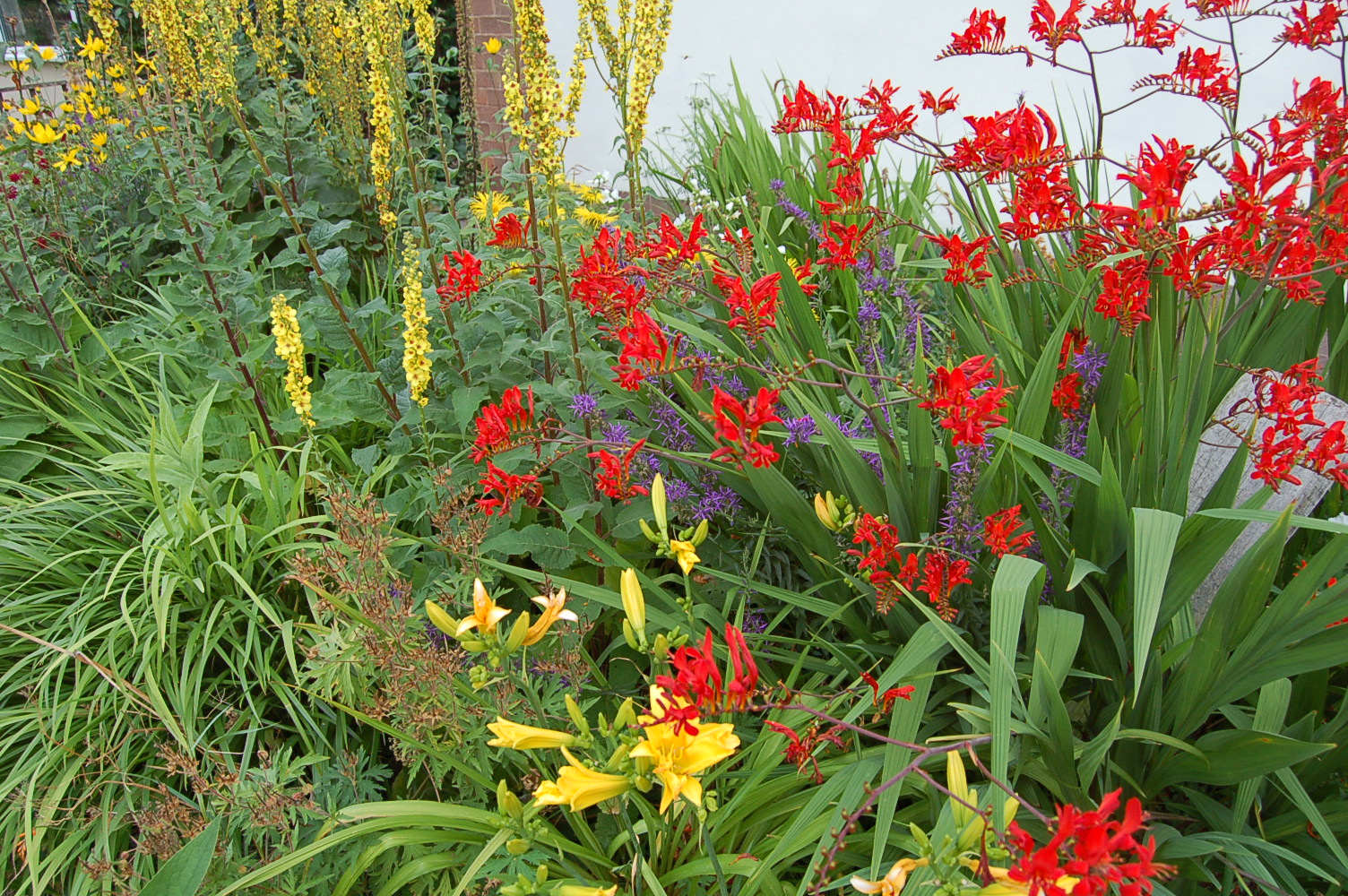
The hot border in our front garden at our home plot is looking good! Hot! Hot! Hot!
The rich colours of fire dominate – yellows, oranges and reds with splashes of warm blues and the occasional white highlight. But without plenty of green to act as a foil and enrich the colours it would look less effective.
But we still need more red at one end as we have a predominance of yellows.
In the foreground in the first photo the deepest red of Crocosmia “Lucifer” dominates while spires of verbascum send their yellow flames into the air, while in the second photo it is the trumpets of a daylilly that blast through the red.
This must be the year of the hoverfly, with the garden alive with them every hour of daylight every day, their intensity increasing as the sun comes out. They seem particularly attracted to fennel, echinops and alliums.
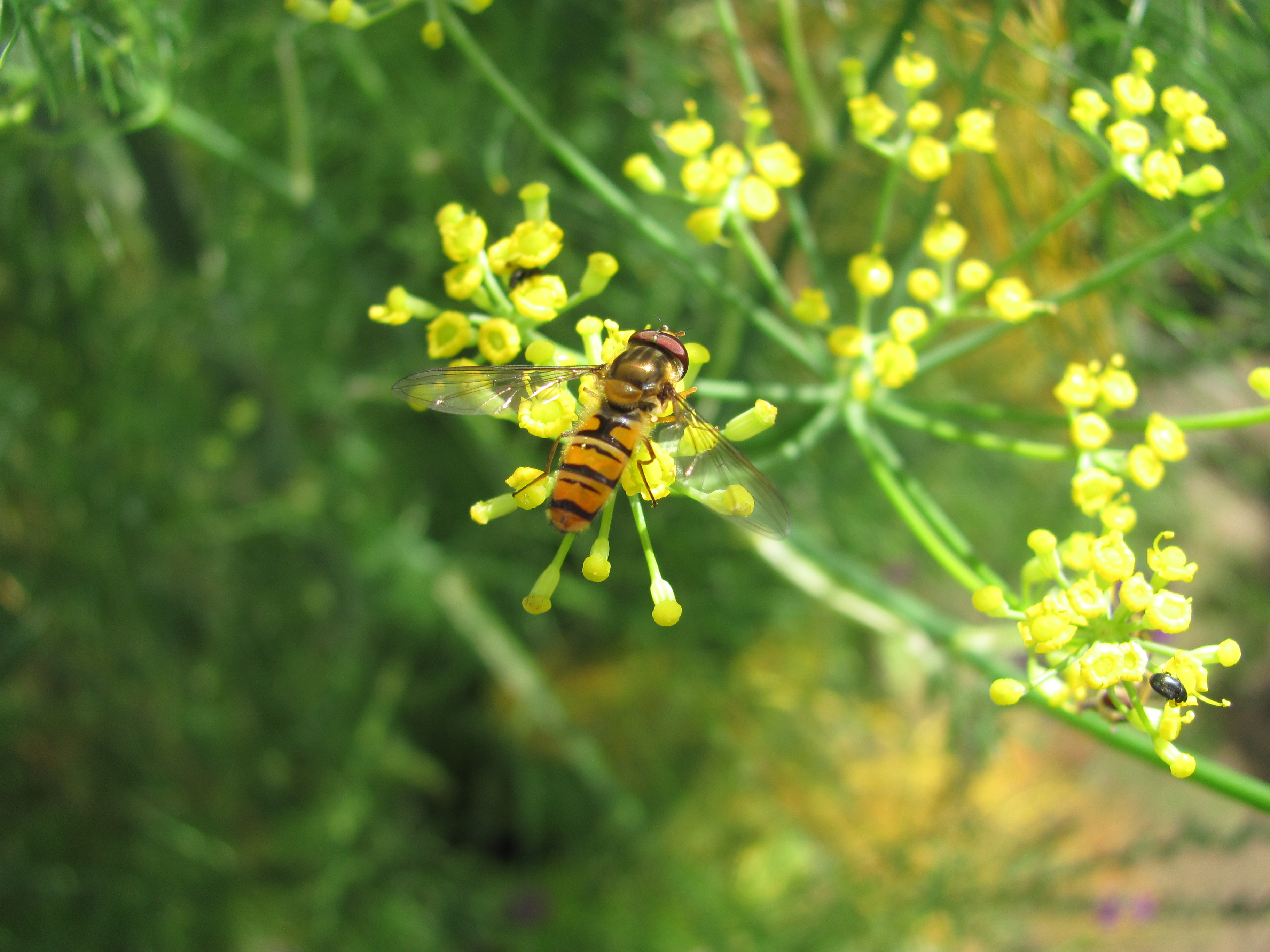
There are so many different hoverflies around us, with Britain alone host to 276 species, and many so cleverly copying other insects that we are not aware that we are looking at hoverflies at all. The most obvious one is the yellow striped one, the Marmalade Hoverfly, seen in the photo which mimics a wasp. This is a clever move as wasps are rarely preyed upon by larger creatures, their yellow and black striped colour scheme acting as a warning.
The hoverfly sadly however did not reckon on human beings who kill them falling for their deceit and believing them to be wasps. They do however possess and deploy a “pretend” sting which gives a slight prick but no chemical to sting us.
The hoverflies we see most of in our gardens, the Marmalade Hoverfly, are attracted to plants that can give them both pollen and nectar as they are one of the few insects that are equipped to digest pollen. Apart from copying wasps some take the form of look-a-like bees, flies and some tiny ones have developed to look like gnats.
The Real Thing - the Common Wasp
For organic gardeners hoverflies are true friends as their larvae eat aphids with as much relish as the larvae of Ladybirds, so we should be planting for them and providing shelter for them. On our lottie we plant Phaecelia and Sedums specially for them. We never see aphids on our plot. and similarly at home we select plants for insects in general but keep hoverflies, ladybirds and bees especially in mind.
Two contributions that hovers gift to the garden that are rarely attributed to them are that of champion pollinator and a brilliant indicator of biodiversity. Their presence is a sign of a garden with biodiversity in a healthy state. We should be pleased to have them in so many ways.
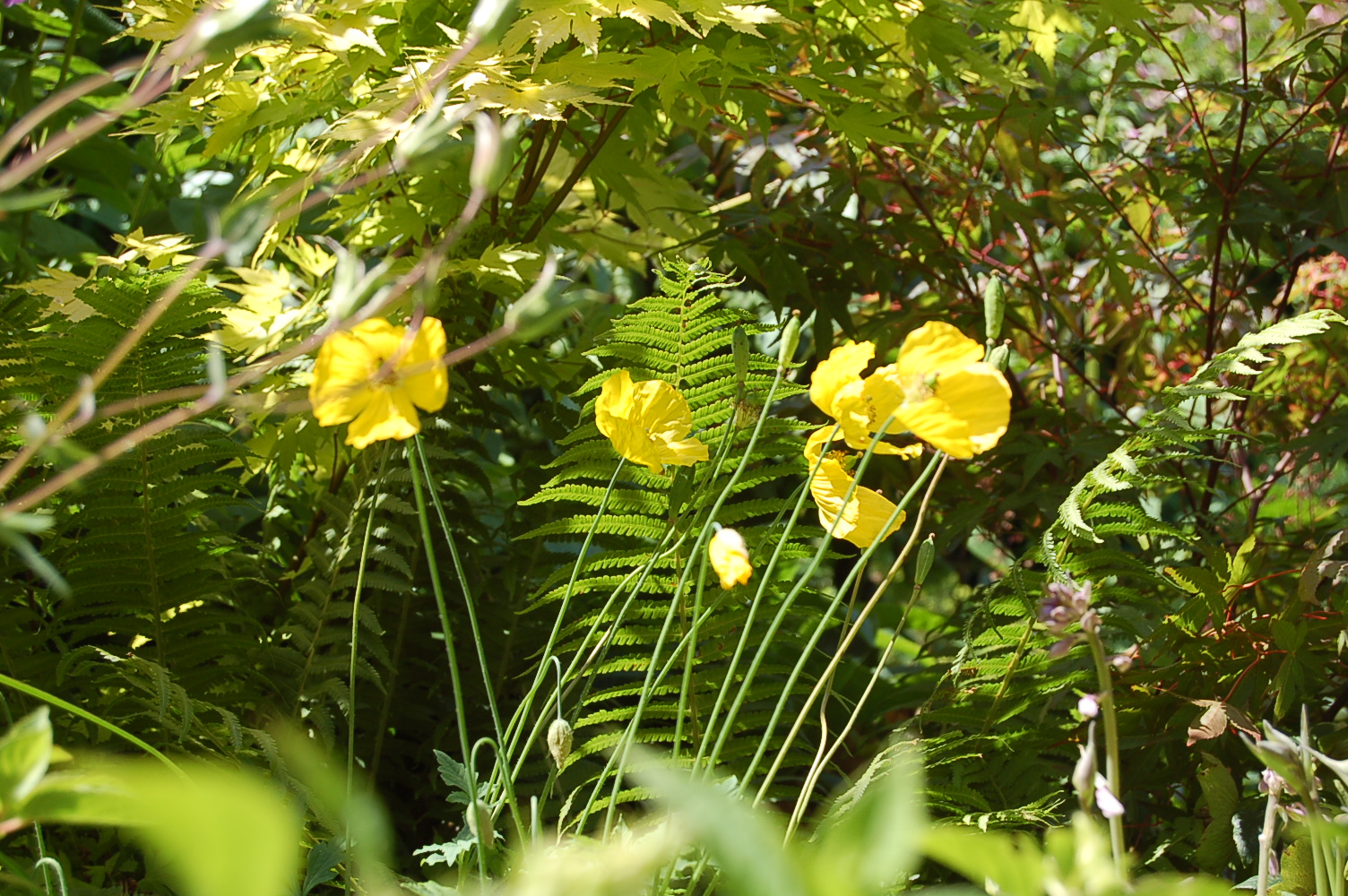
Sometimes the simplest and most common of plants are the stars of the garden. This yellow Welsh Poppy, Meconopsis cambrica, comes to life in the low-angled rays of sunshine at the beginning and end of the day. Considered by many gardeners to be a weed because it happily and freely self-seeds wherever it is happy, this diminutive gem has the knack of placing itself brilliantly. We wouldn’t be without it.
'The most important and informative publication on wildlife of our times' - The Independent. This blog is a member of The UK & Ireland Natural History Bloggers group: www.uknhb.blogspot.com




 greenbenchramblings