We spent a sunny day wandering along the North Wales coast early last week. We strolled along the promenade at a place called Rhos. I thought you may like this little set of three pictures.



We spent a sunny day wandering along the North Wales coast early last week. We strolled along the promenade at a place called Rhos. I thought you may like this little set of three pictures.
We had planned to visit the National Trust garden at Mottisfont to see its rose garden for many years so took advantage of being in Hampshire for a short break in June. Little did we know that hoards of others were planning the same visit! The car park was overflowing when we arrived but we managed to find a space. Why had we not realised that this garden is famous for roses so most people would visit in the month of roses, June?


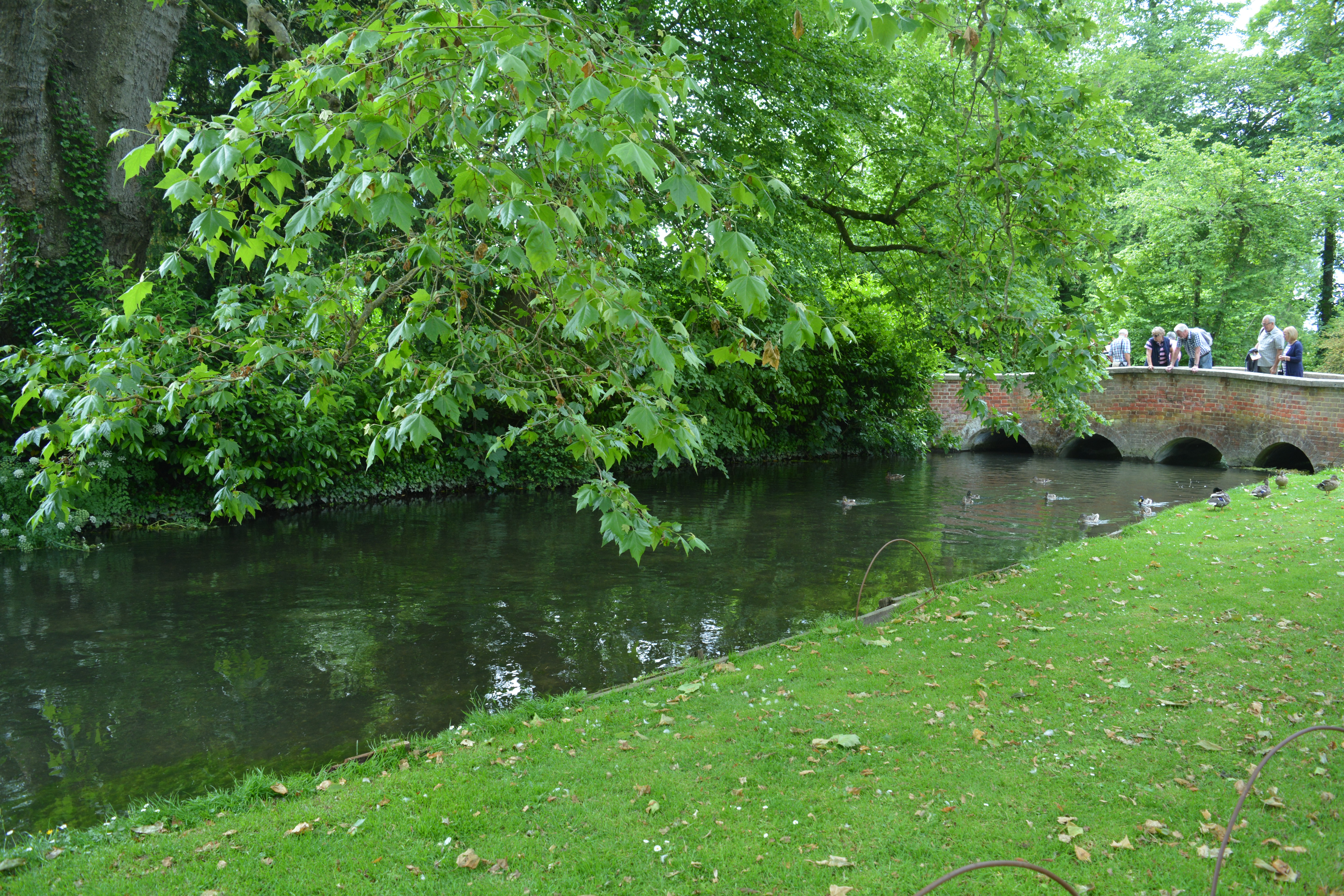
A short wander from the car park into the garden took us over the River Test via an old stone bridge. As a fisherman seeing the River Test is an exciting thing! Peering down from the bridge we spied big Brown Trout seeking out flies and other insects right below us. These were “Brownies” that anglers dream of!

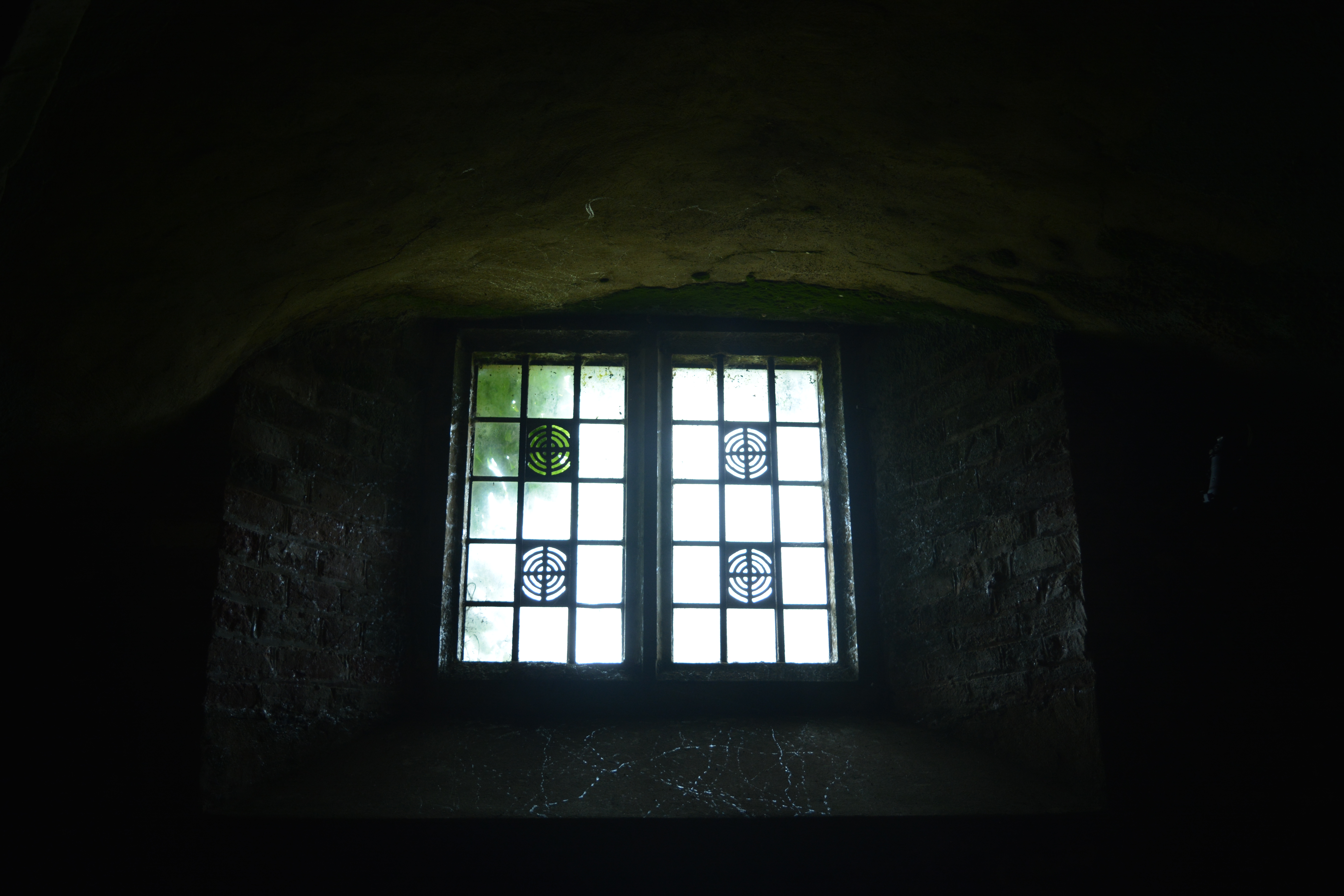
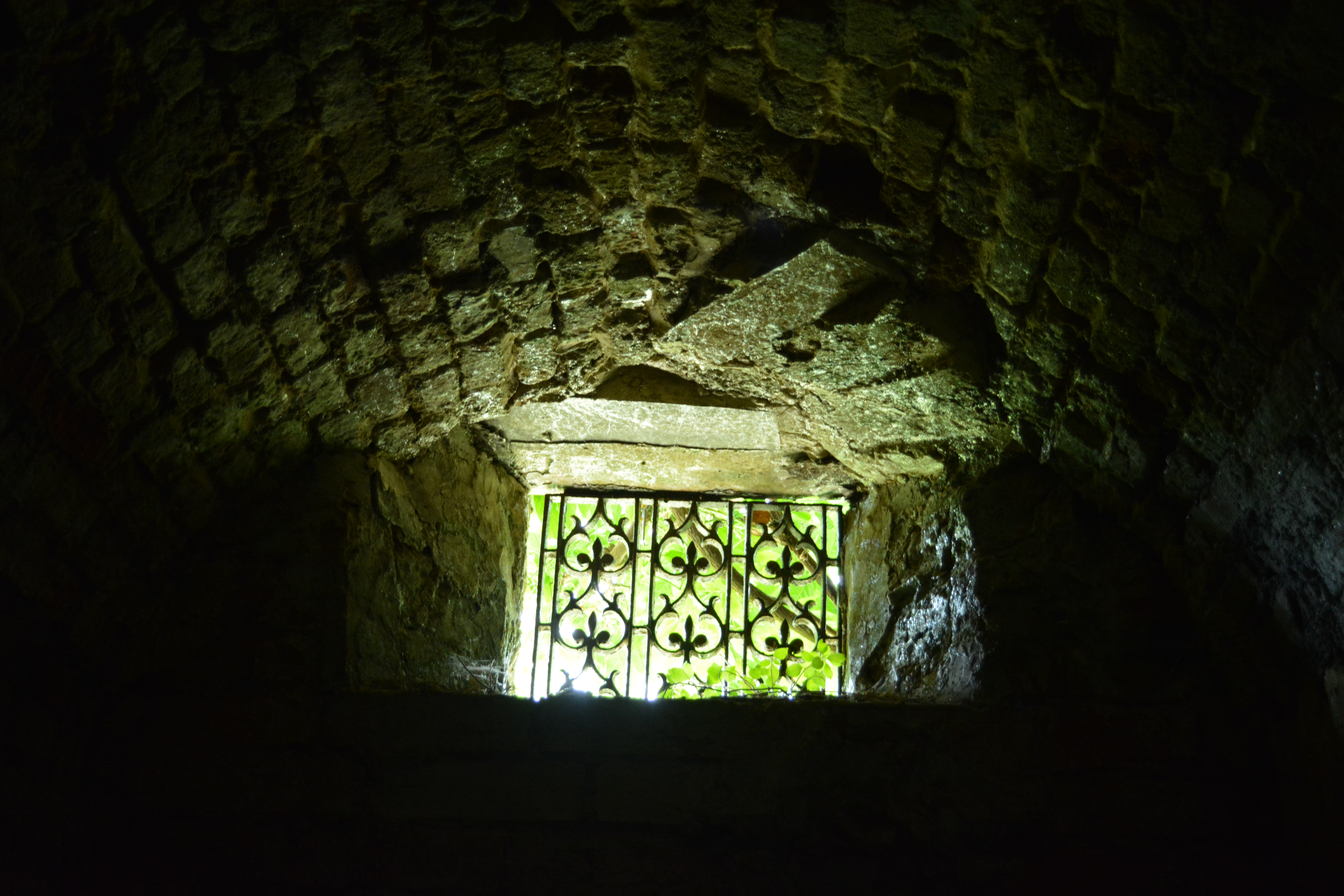
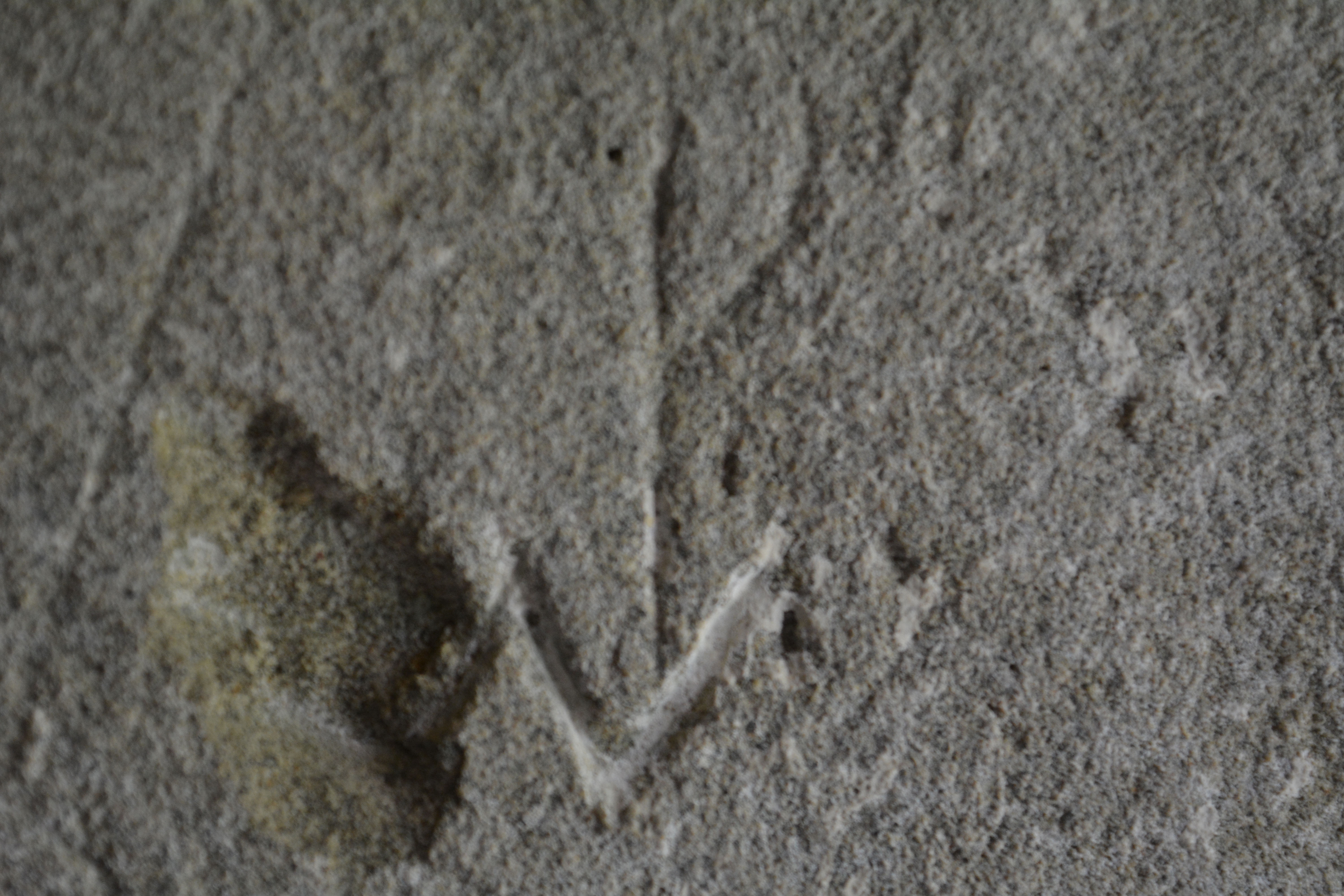
The building at Mottisfont was originally a monastery and a quick look inside soon revealed its past. We found ancient dark vaulted cellars and even a mason’s mark. Outside roses clambered over the ruins of stone buildings.

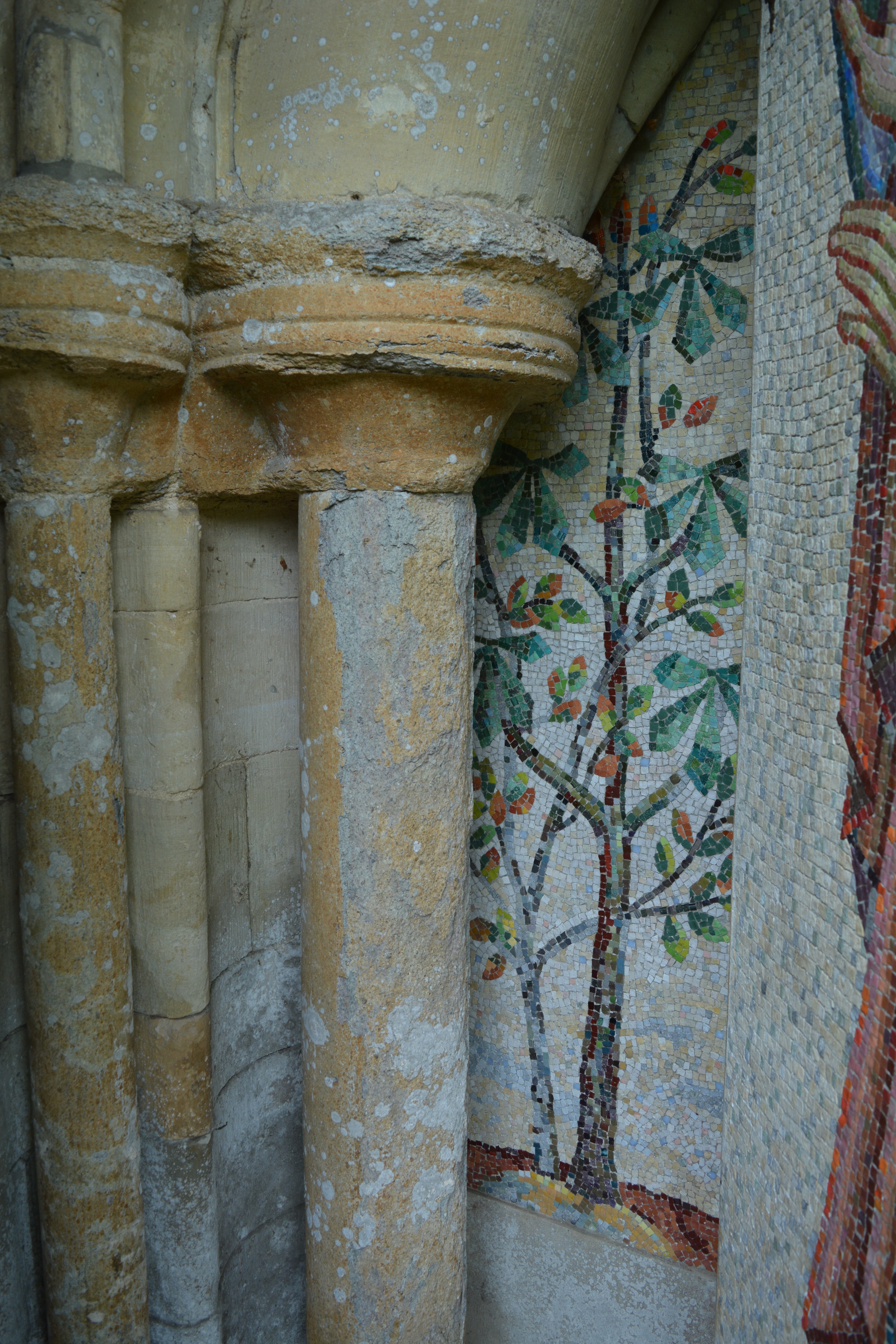
A mosaic decorated a section of wall created by the artist Boris Anrep to depict the likeness of the mistress of the house Maud Russell in the 1930’s. The style was far from modern.

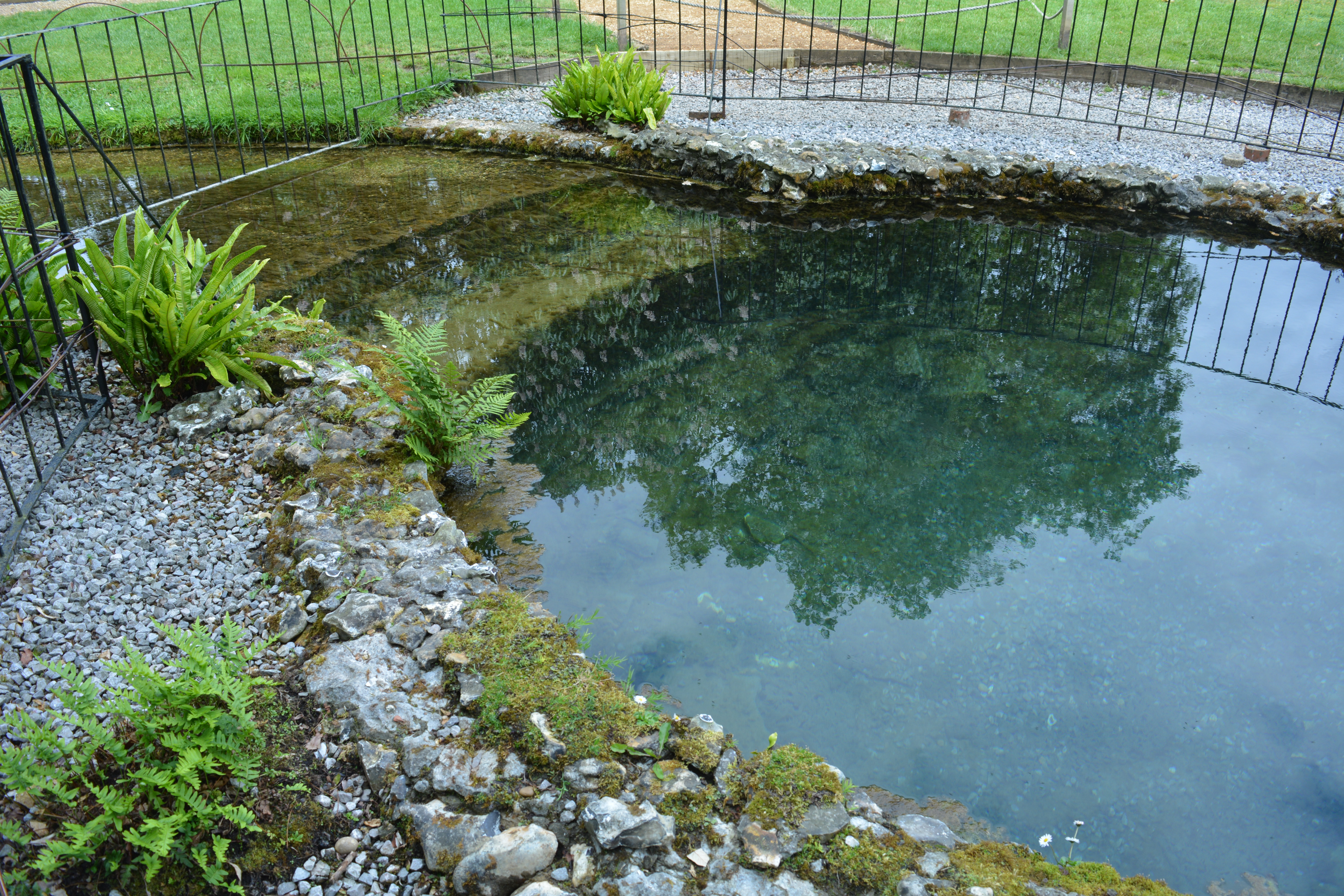
We made our way towards the walled garden where Mottisfont’s collection of roses is grown. On the way we found a dipping well fed by a tiny clear stream, a diversion from the Test.

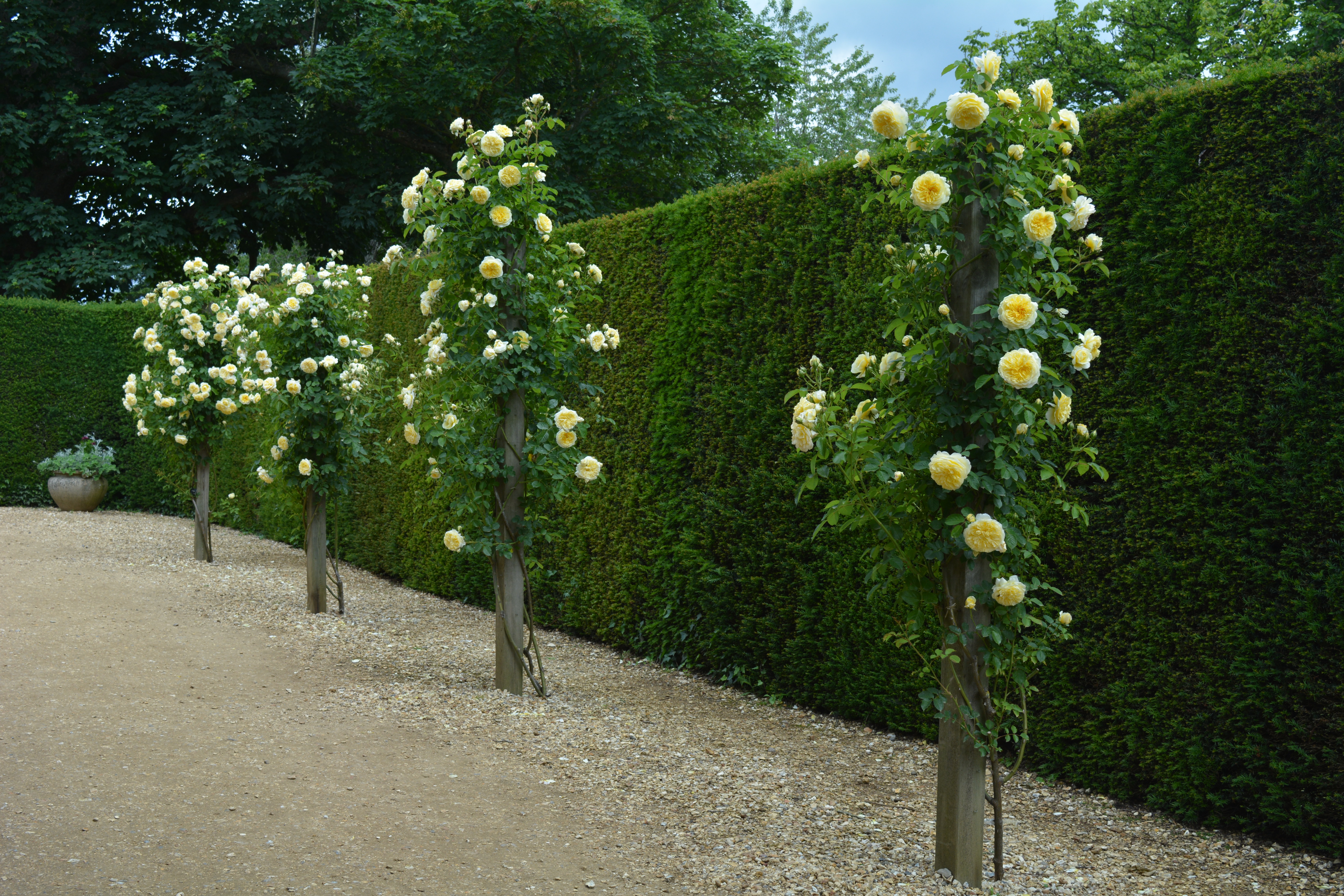
A walkway featuring cream coloured roses trained up pillars took us into the richly coloured and scented rose garden. Insects found the roses as appealing as the visitors and we enjoyed spotting all the bees and hoverflies feeding delicately on the nectar and pollen.
Luckily there were plenty of herbaceous perennials to add variety of shape and colour and give the nose a break from the scents.

Please enjoy my gallery of roses. There were so many people looking at and smelling the roses that taking these pics was a real challenge. Click on the first photo and take a tour by clicking on the arrows.


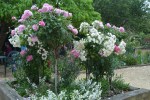

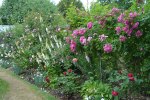


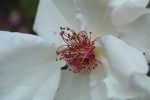

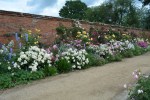
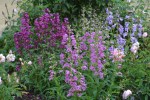


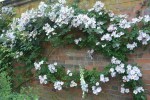
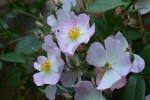
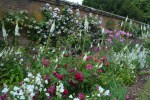

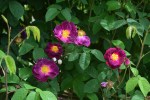
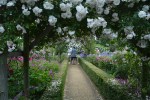
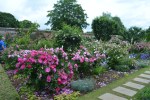

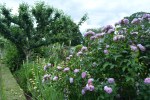
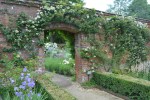





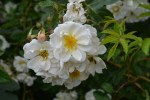
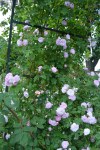
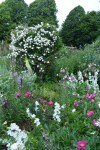


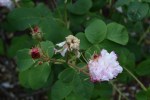
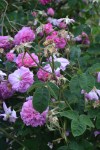


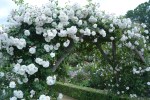

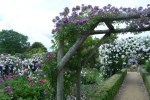

The walled garden was not only full of roses but also of people. We were not the only visitors who thought it a good time to make the journey to Mottisfont! After a while we found the volume of people just too much and left the Roses in search of other interesting things. Surely there must be more than Roses!
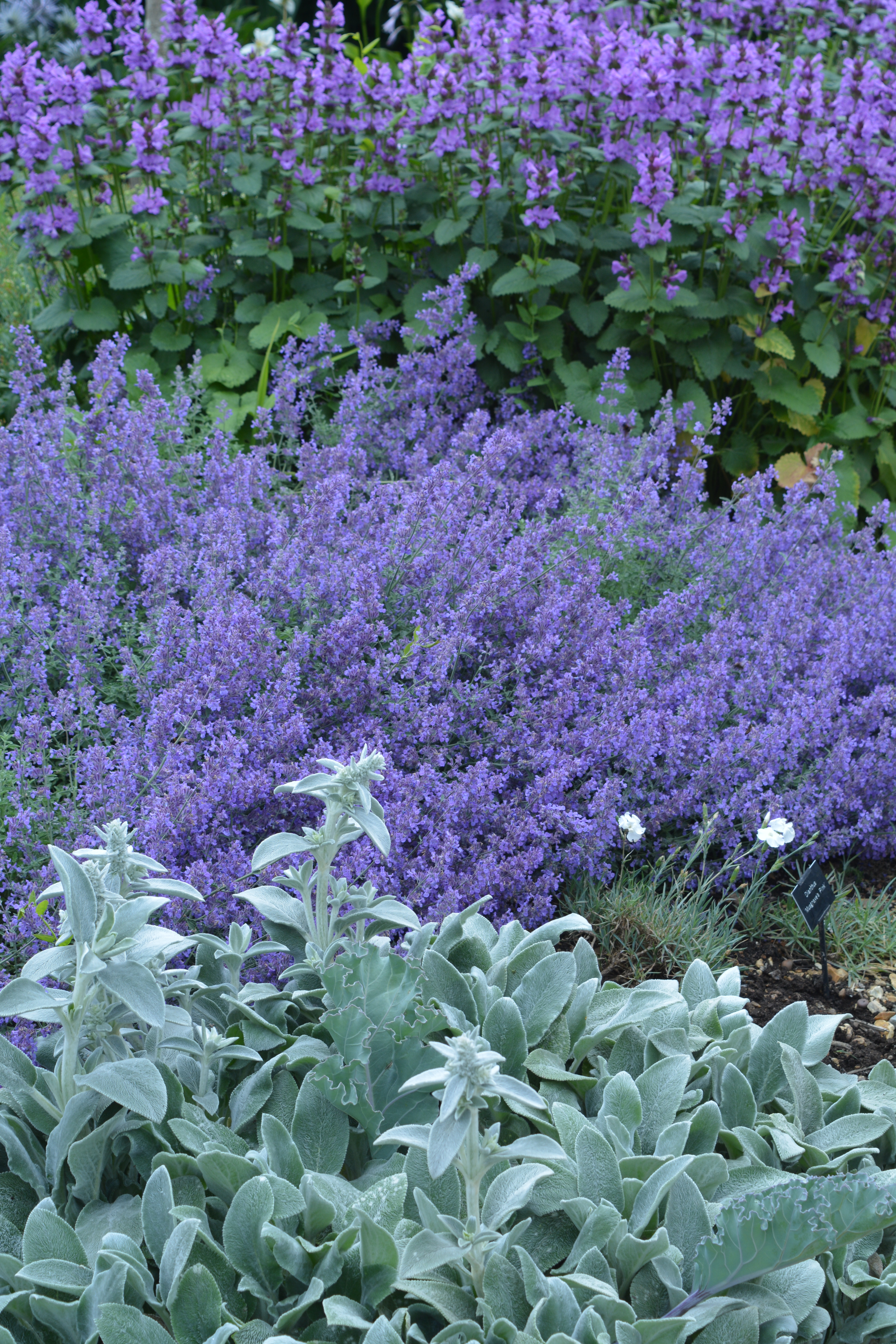
We decided to make our way back towards the River Test and follow the riverside walk. As we left the Rose Garden the gentle colours of this group of perennials was a relief after too many roses. This was just the first of several interesting features here beyond the Rose Garden.
Walking away from the walled garden we spotted in a large area of lawn this intriguing group of trees and to its right an old wooden trailer.
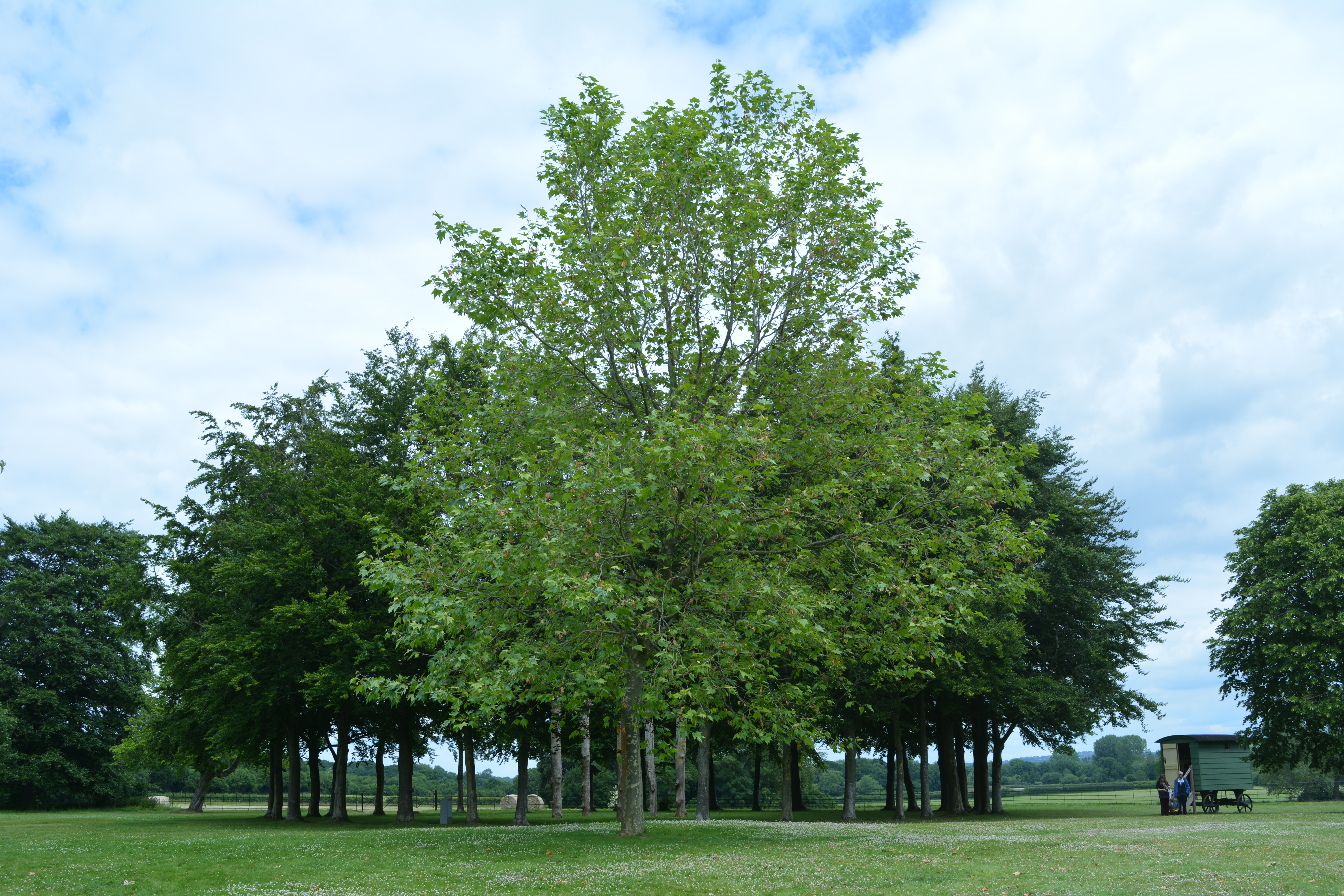
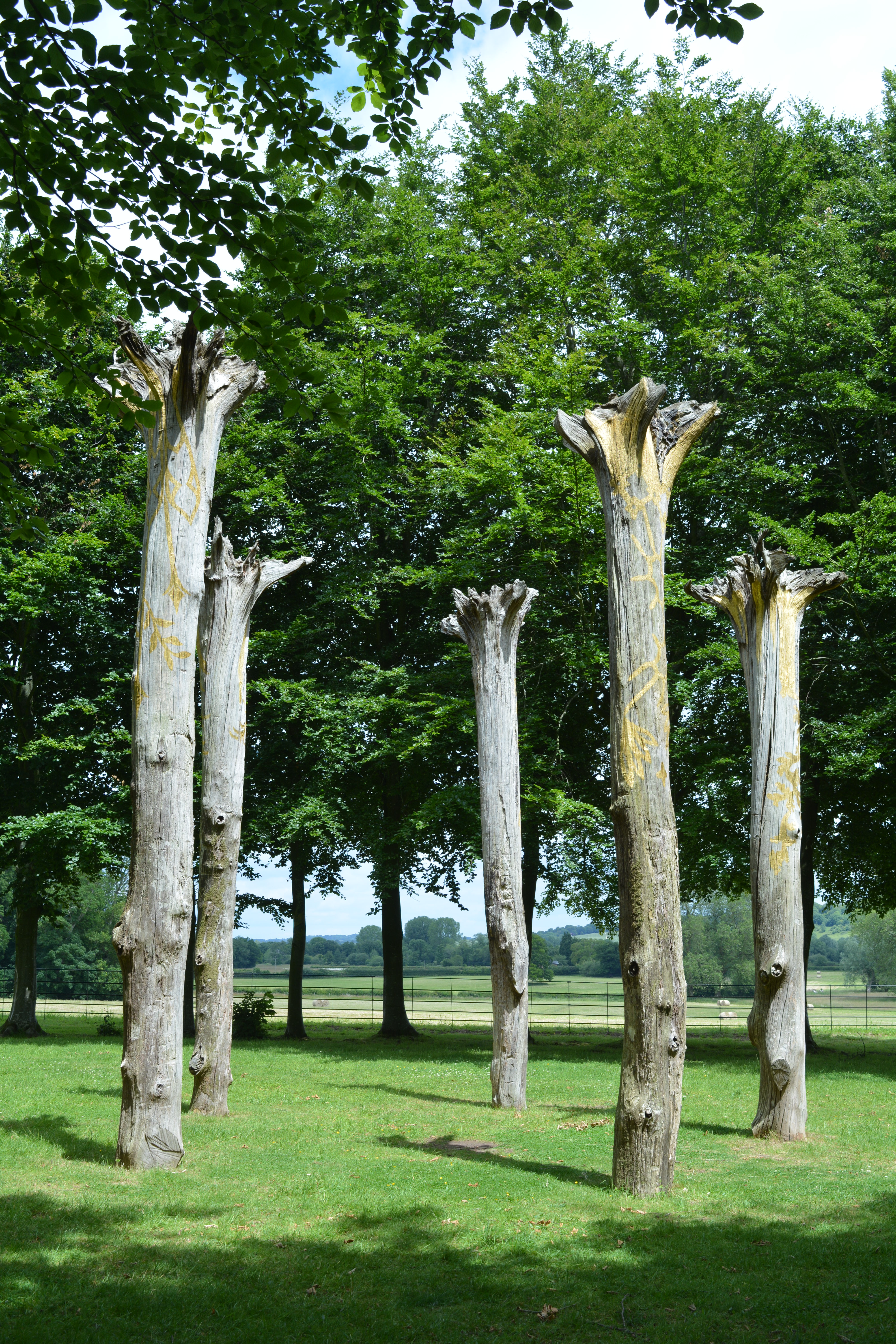
A wide circle of tall, mature trees encircled a smaller circle of dead trees inserted upside down in the earth. Some were decorated with gold leaf.



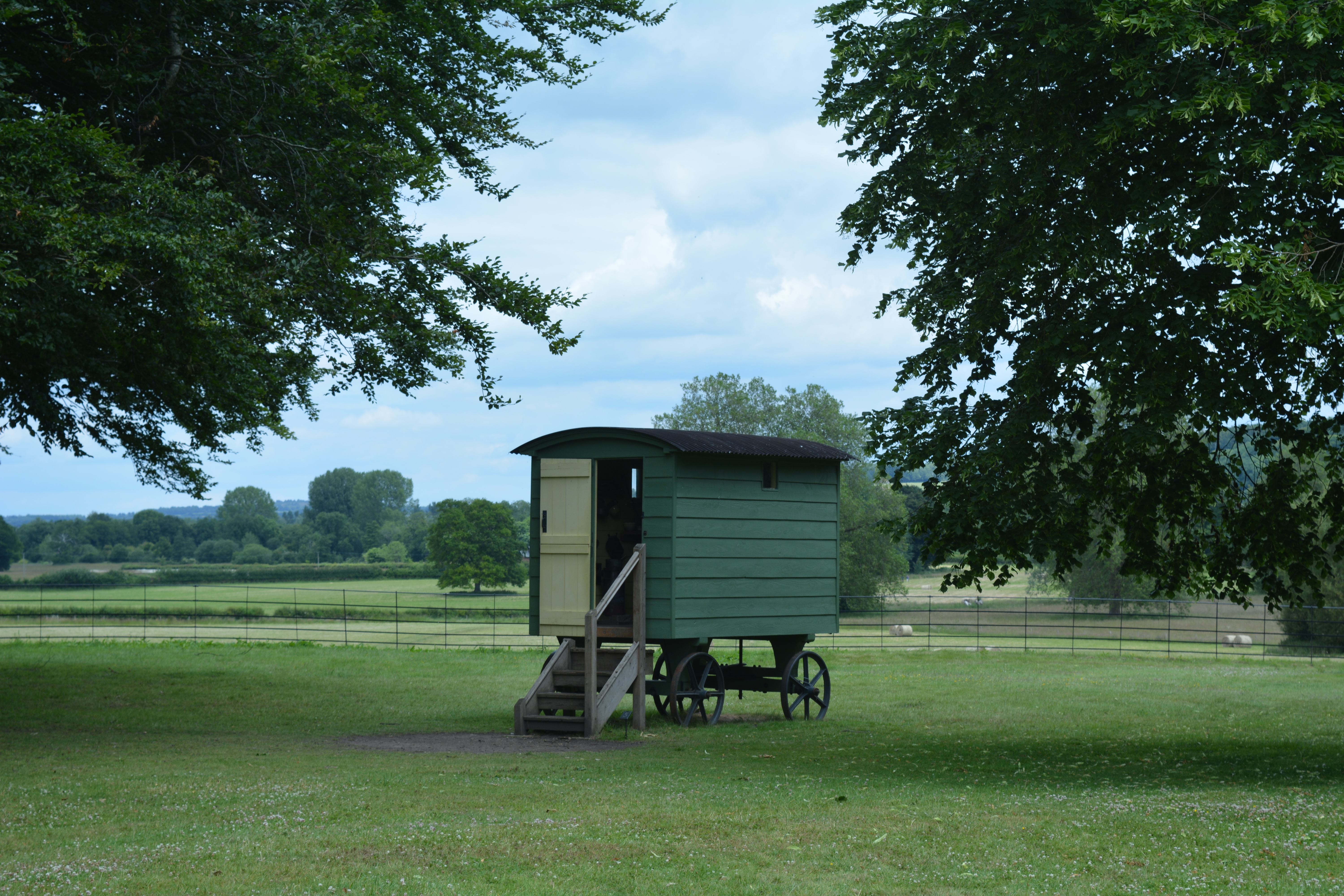
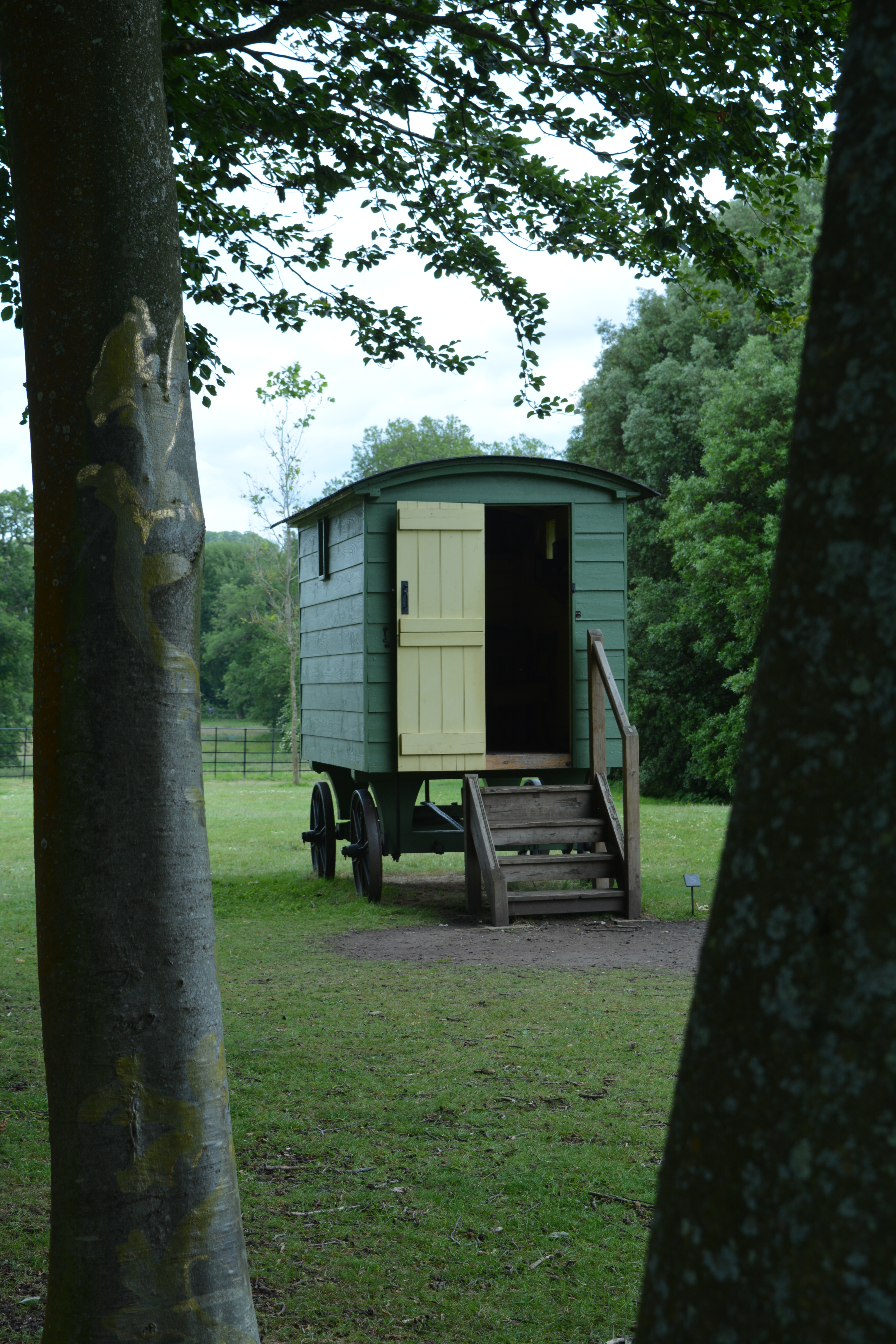
The little wooden caravan turned out to be a shepherd’s hut used during lambing time. It contained a bed, heater, stove and all the basic home comforts.


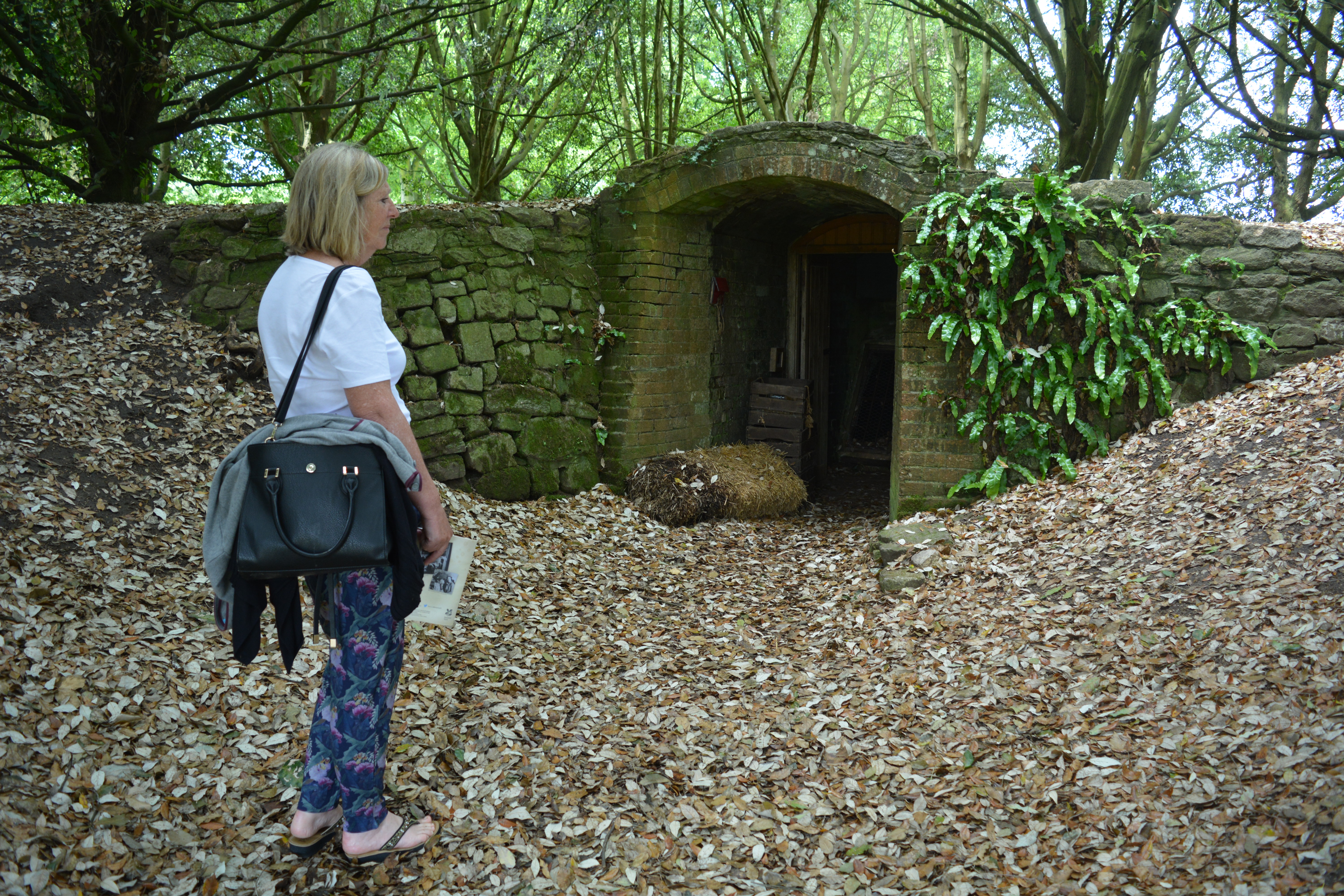
The Ice House was hiding in a group of trees whose shade added a few degrees of cooling. The storage area was much larger than we expected and as we peered inside we could feel the coolness which was used to keep food cool and to keep ice frozen for a while.
Leaving the Ice House we passed a neatly planted avenue and continued on our way towards the riverside walk.

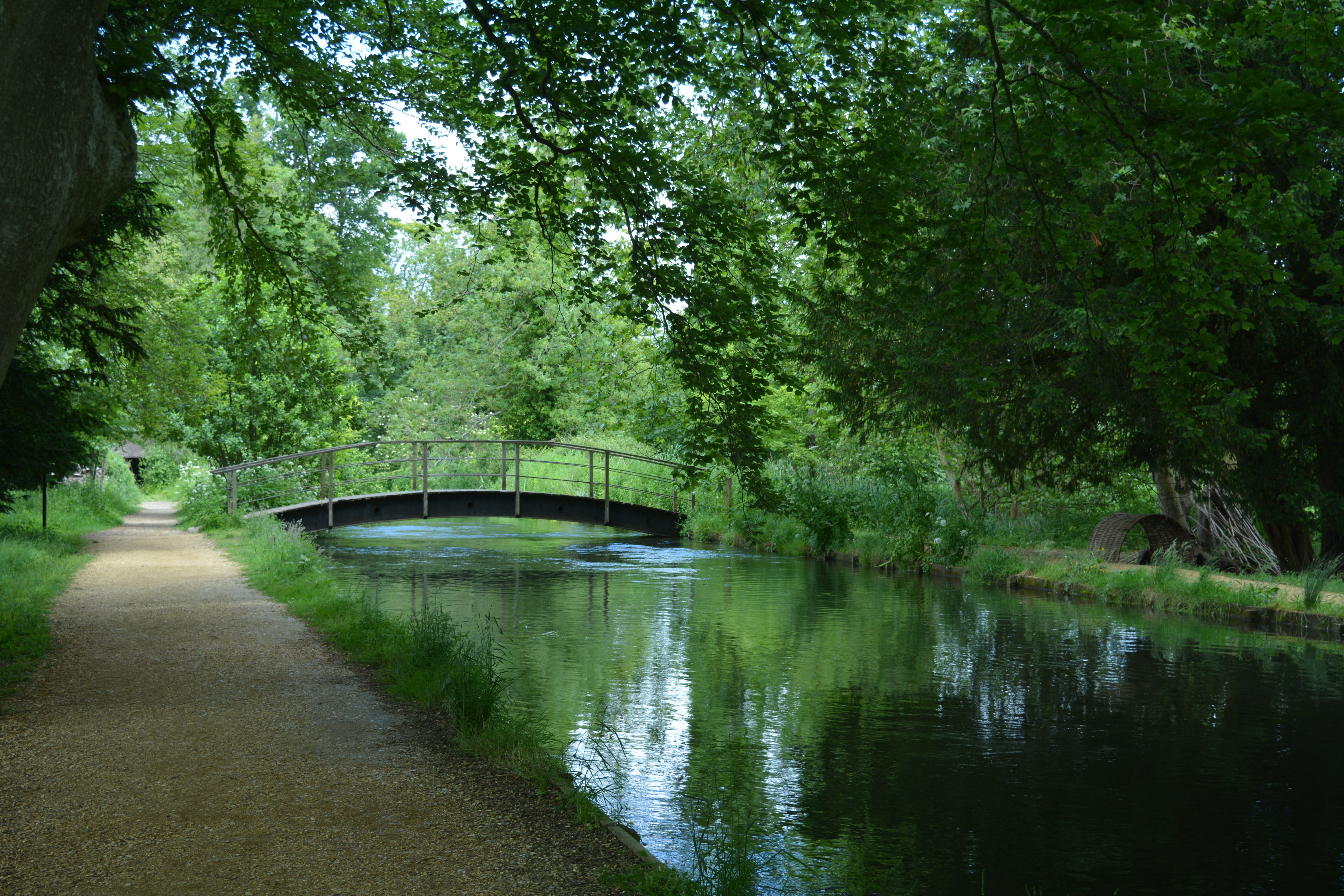
The cool shade afforded by the trees along each bank of the Test was welcome after the heat out in the open. We wandered alongside the clear waters of the fast moving river enjoying occasional glimpses of impressively sized Brown Trout leaping for flies passing overhead. Can you spy this big old Brownie hanging in the flow of the river?

This was the home of dry fly fishing and considered by most anglers to be the best fly-fishing river in the world.

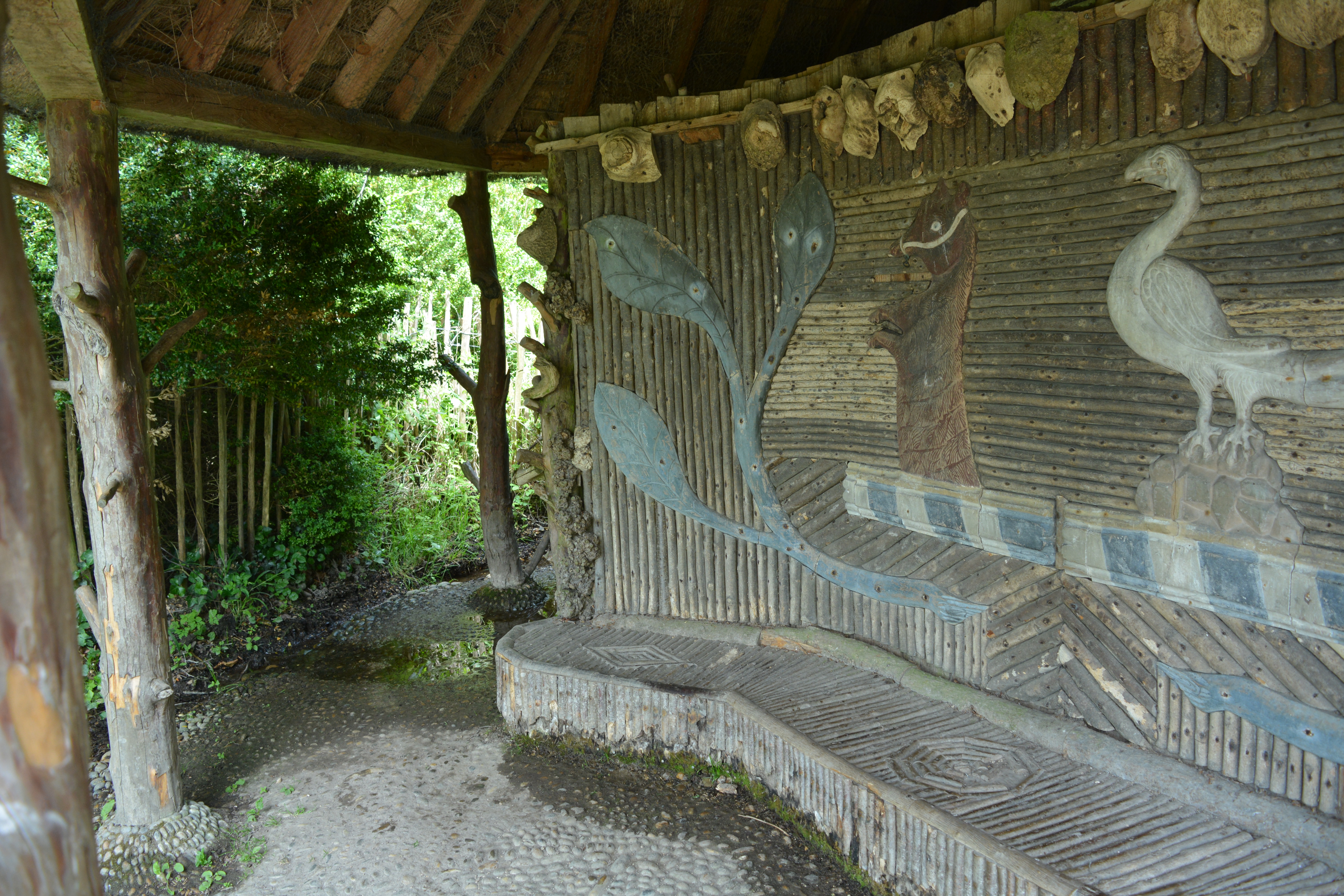
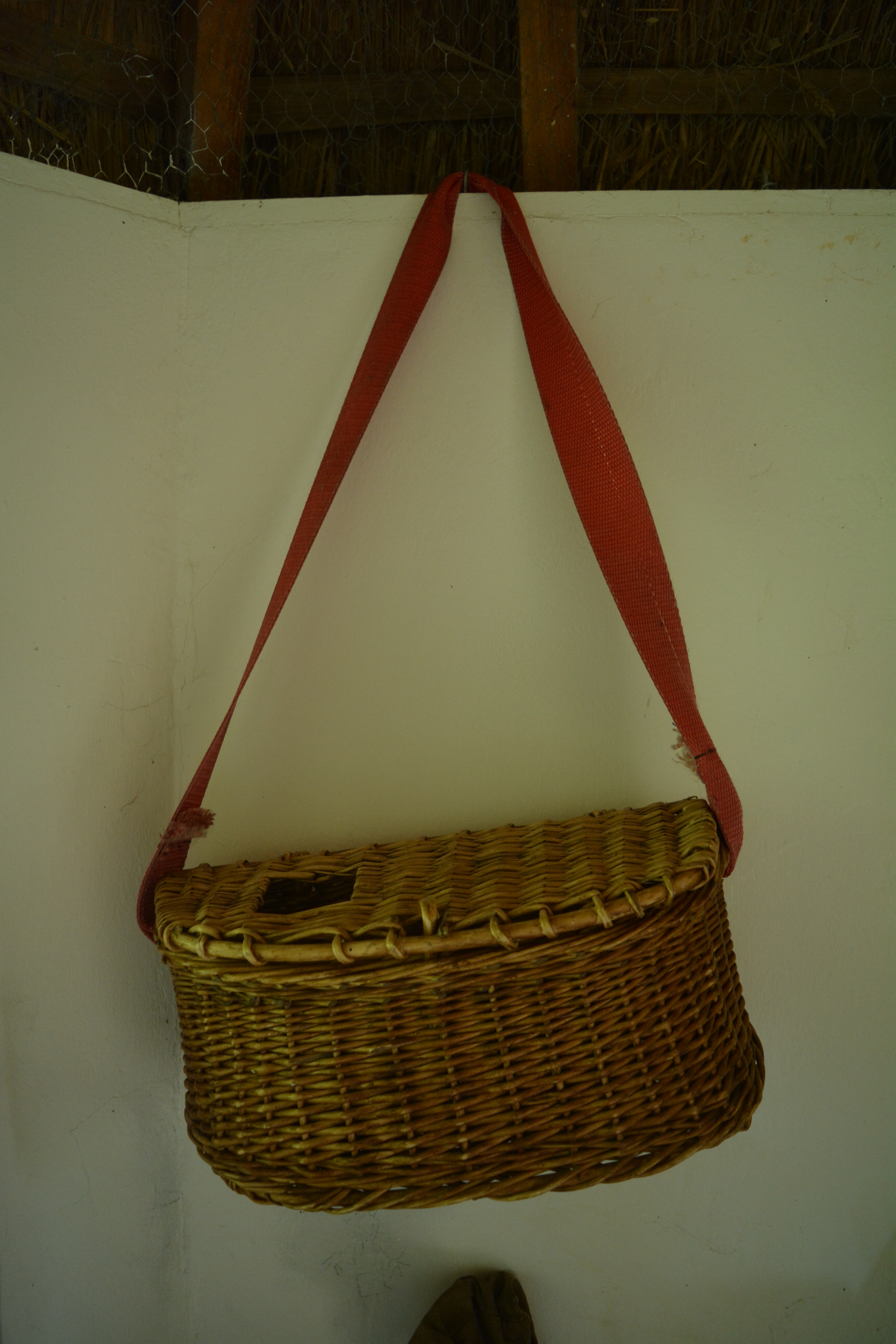
It felt like touching angling history to explore the old fisherman’s lodge. An old creel hang from the wall among other fishing memorabilia.


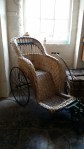
We found interesting objects such as these two very different but equally impressive chairs made from willow harvested from the river banks.


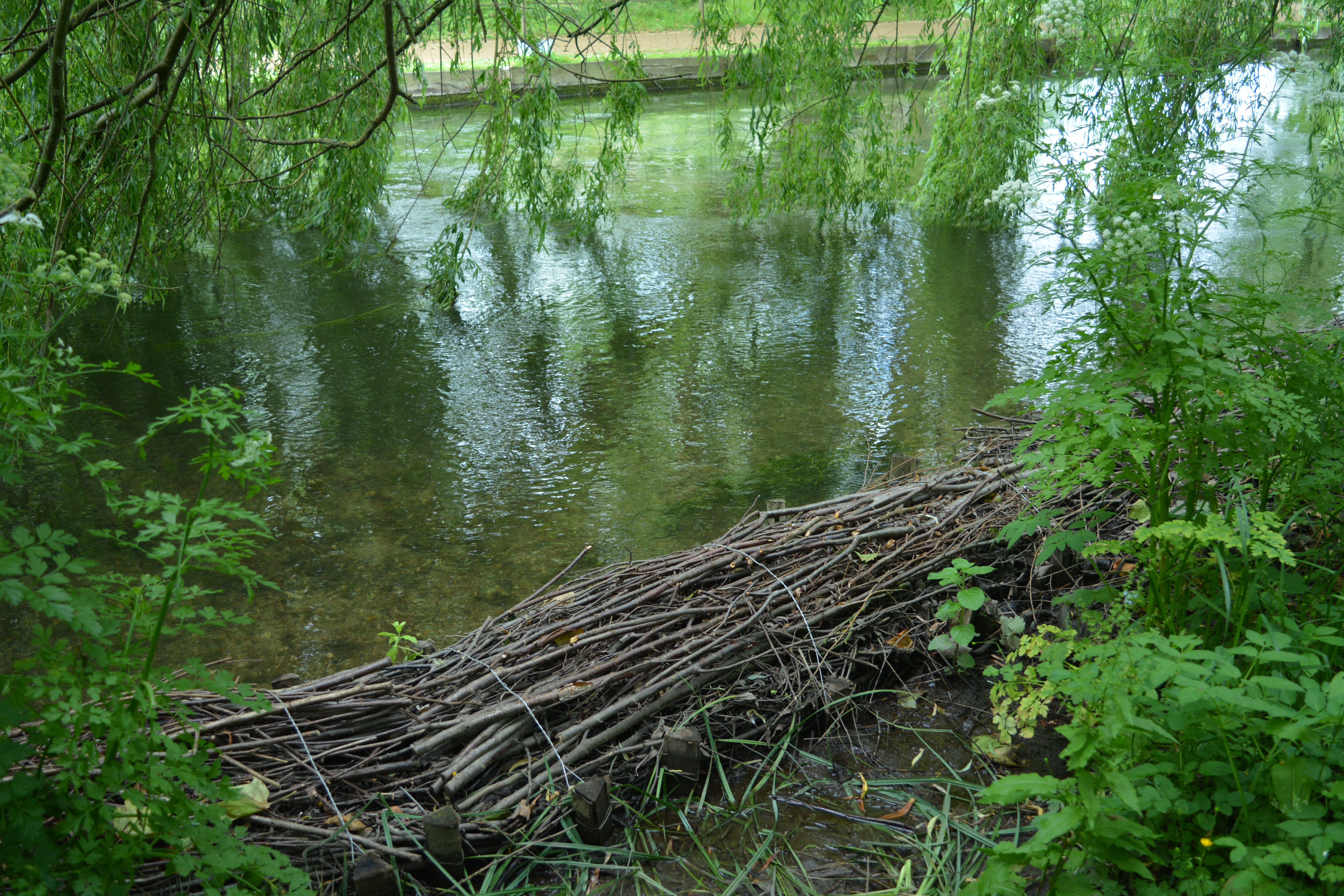

As much as we enjoyed the roses at Mottisfont we were delighted to find there was lots more to see and appreciate.
I love Salix (willows) – they are one of my favourite trees almost on a par with Betulas (Birches). I always have liked them, our own native species and the garden varieties we can grow. We have several at home in our garden and use them on our allotment communal gardens where we have a Withy Bed with 17 different varieties with different coloured stems and leaves. From these we have made a Fedge, which is a living hedge and a Willow Dome and Willow Tunnel for the children.
I used to like seeing them as a child when I fished a local stream. We moved from one ancient gnarled willow to another. Many were hollow pollarded specimens completely open on one side. We explored the hollow ones as we could often get inside them and look up at the sky. They were great shelters when rain showers stopped us fishing.
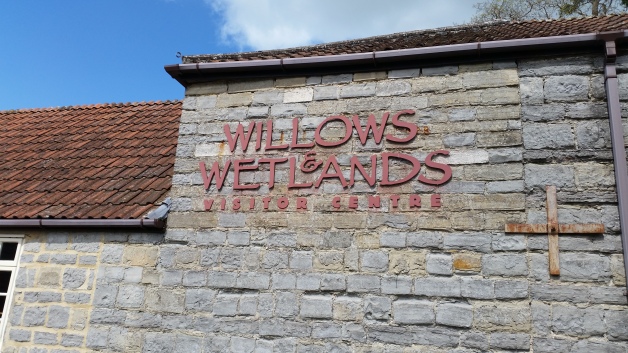
When we found ourselves in Somerset we realised that we were close to the Wetland and Willows Centre, so we just had to drop by and have a wander.
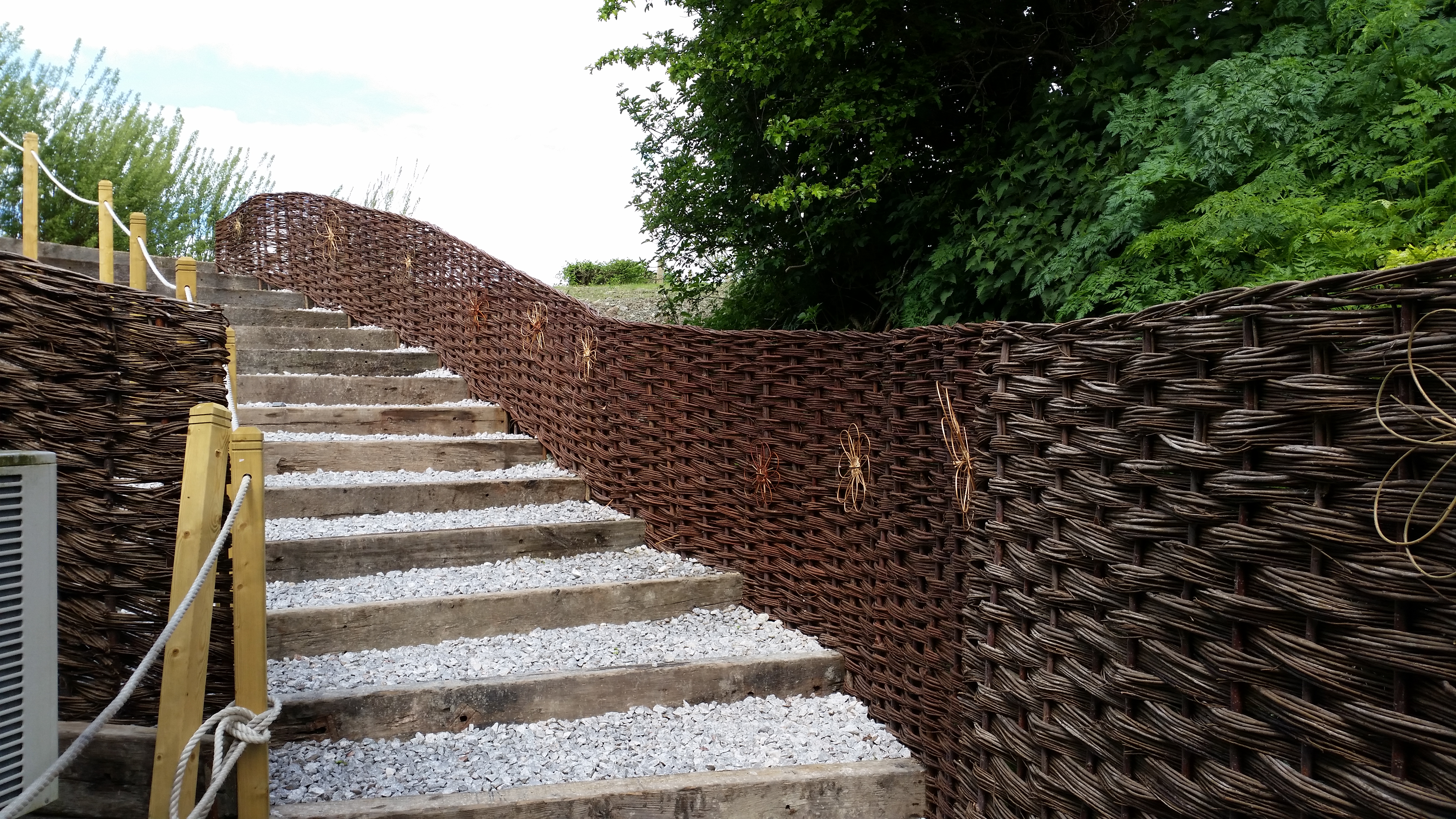
We followed a sign taking us for a tour around the productive land around the centre. We passed over a bridge with sides constructed from willow with decorative willow features within.

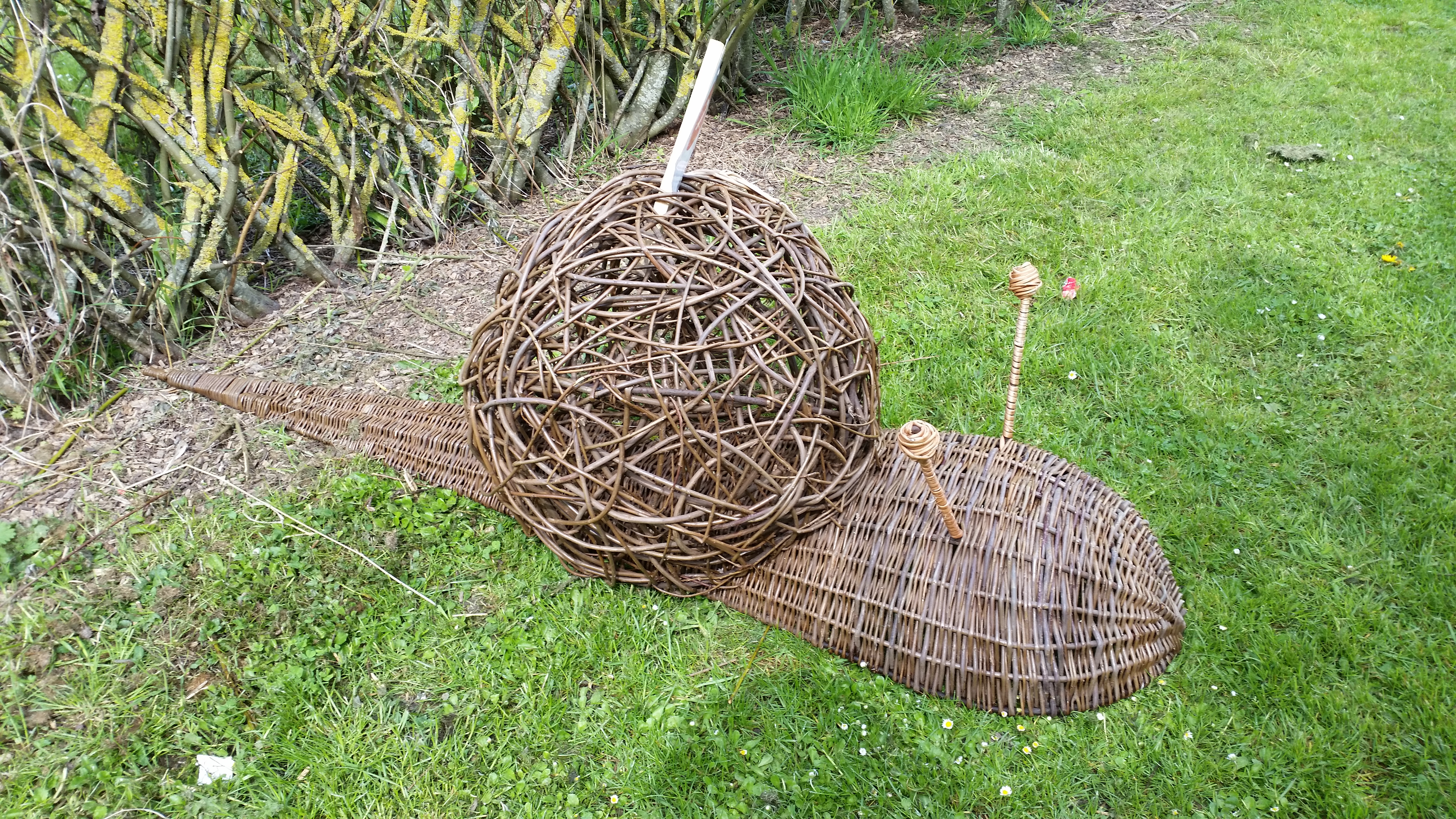
The path took us to an area full of willow structures mainly places for children to explore, even including a willow snail!
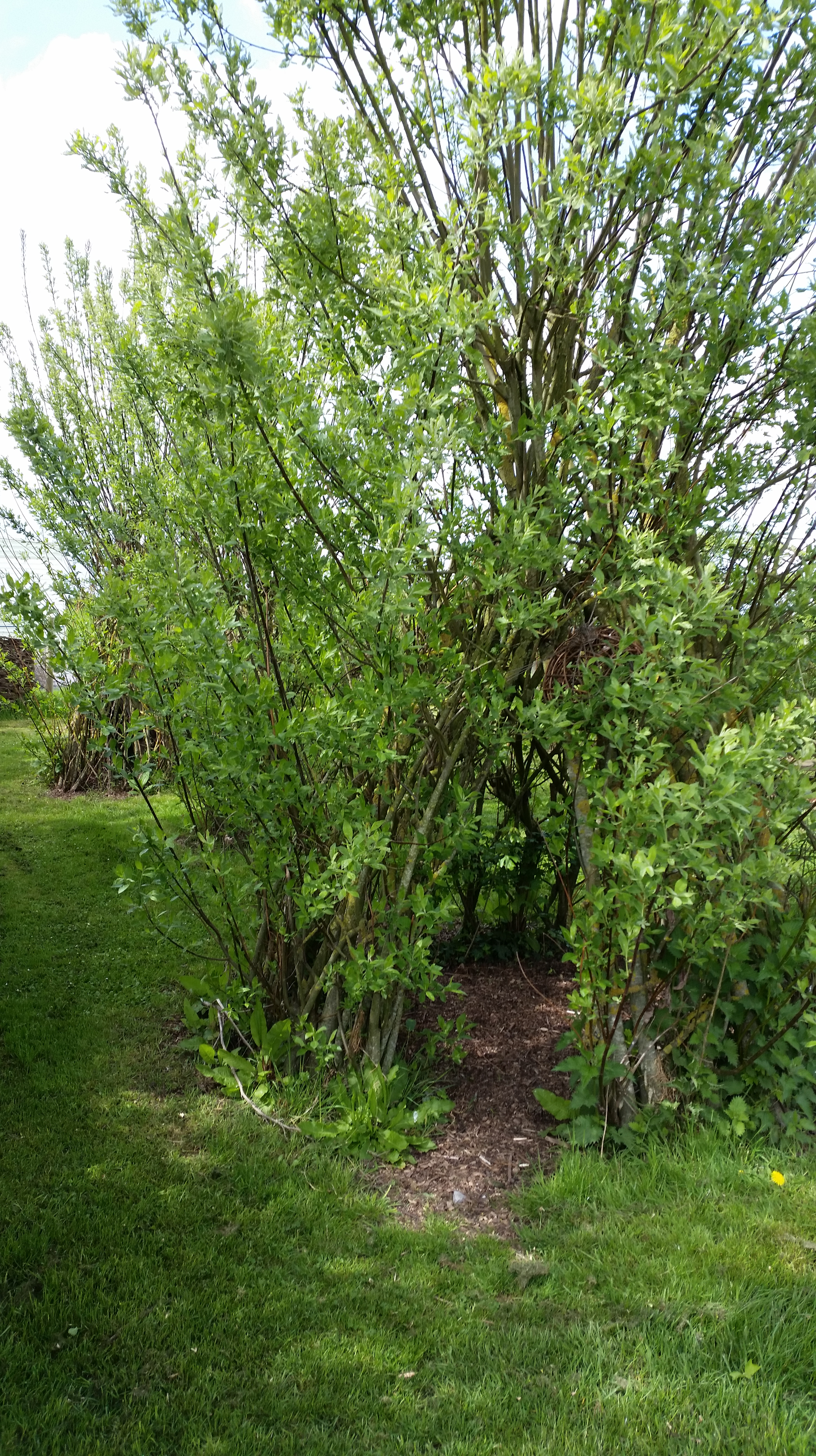
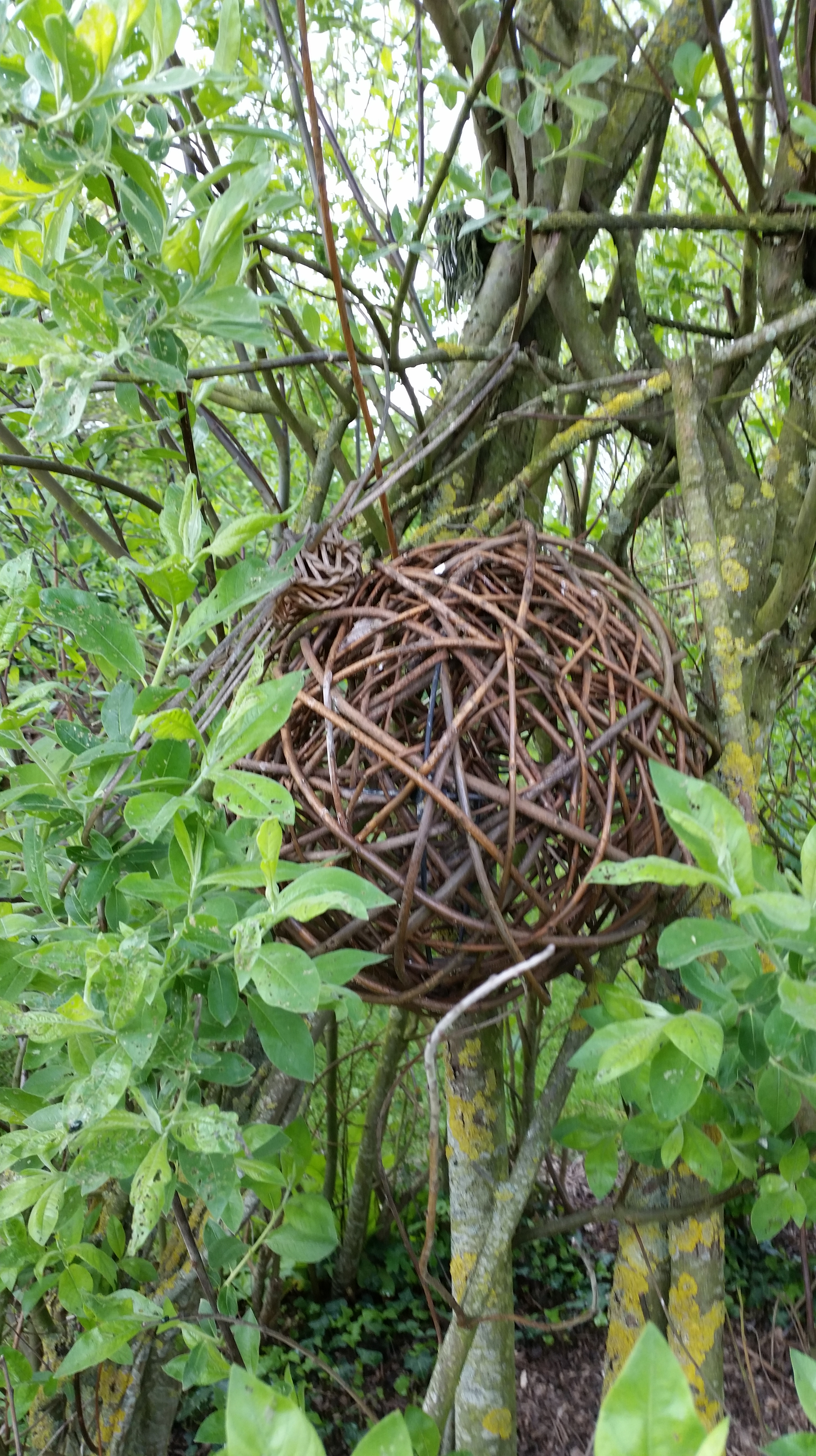


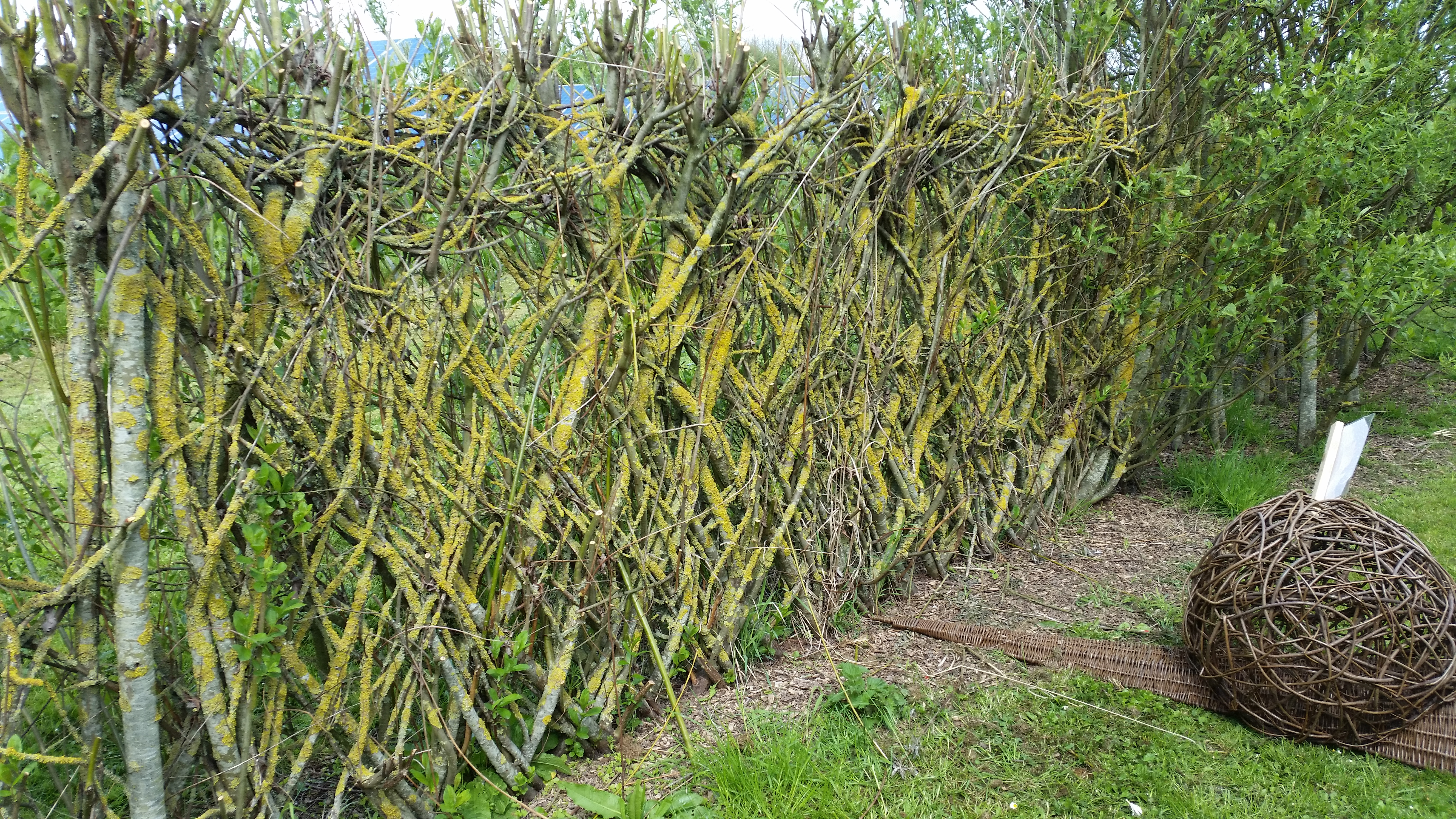
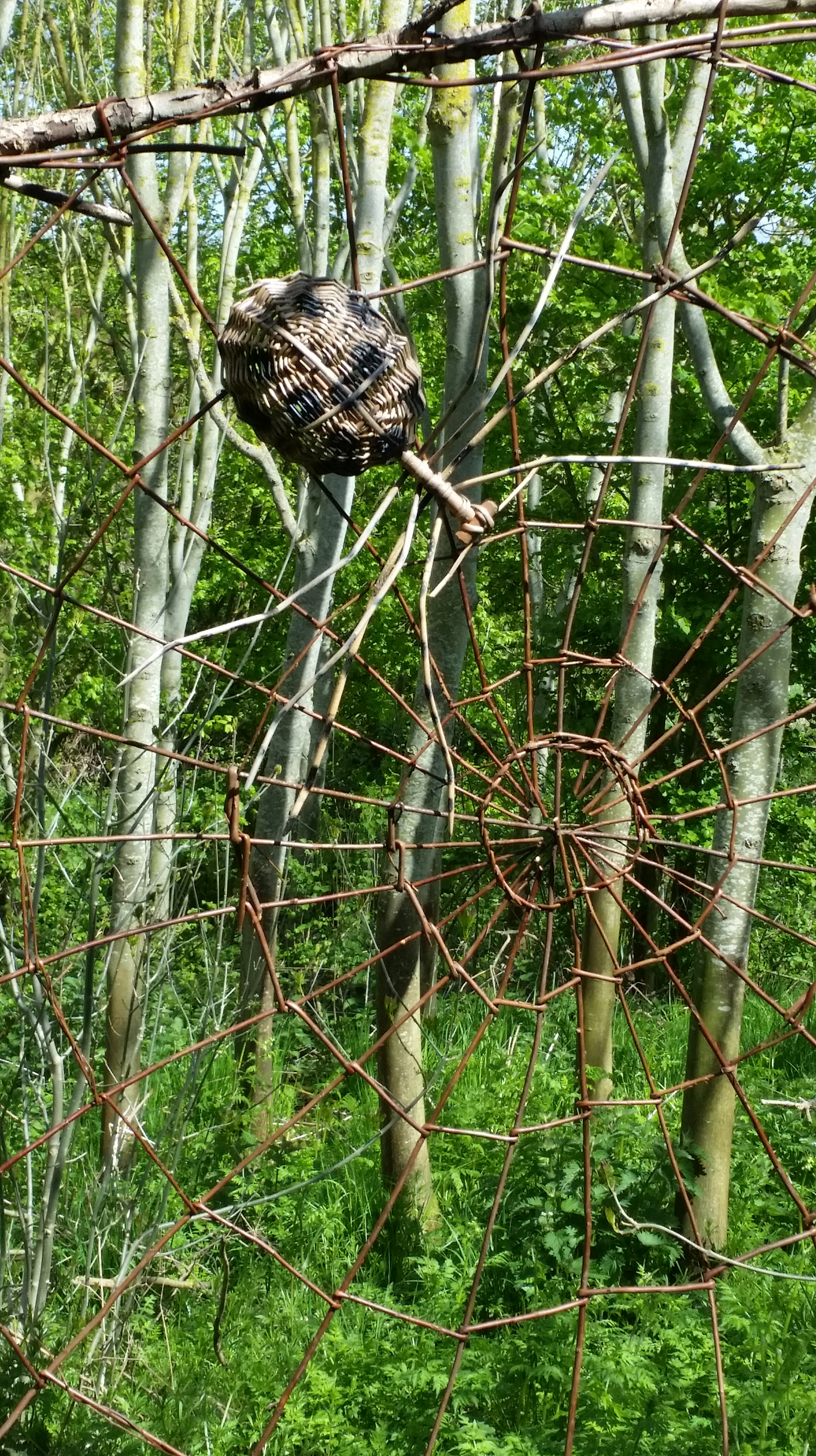
As we moved on we came across a willow drying fence where the harvested willows were hung out to dry. A little further on as we made our way through a wooded area we found this willow spider in its web, a beautiful hedgehog and a buzzard flying through the branches.



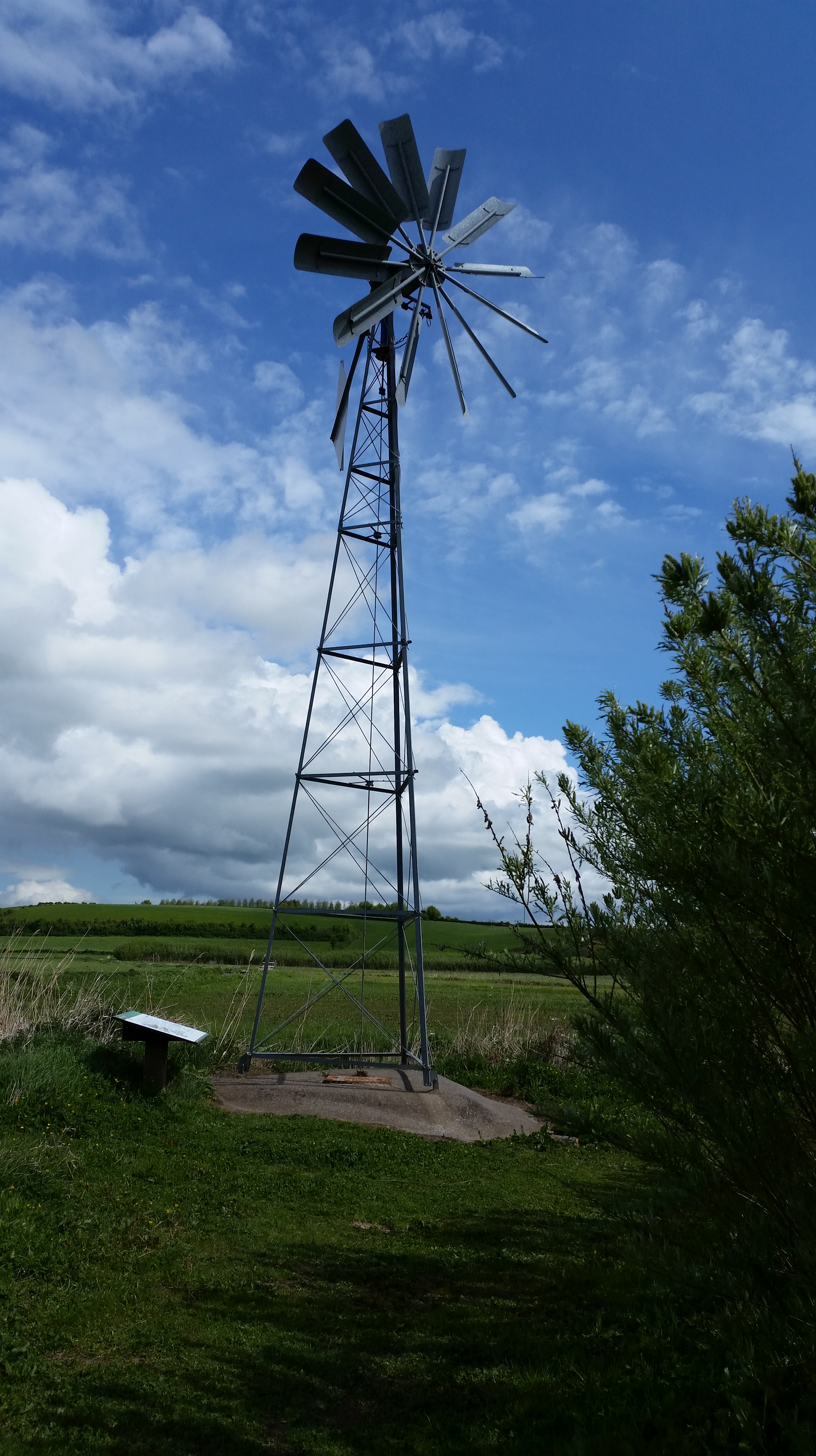
Leaving the wood we found ourselves walking through the wetlands, the drainage of which was controlled by windmills, sluices and a series of ditches. Large areas were willow plantations, the productive heart of the wetlands.




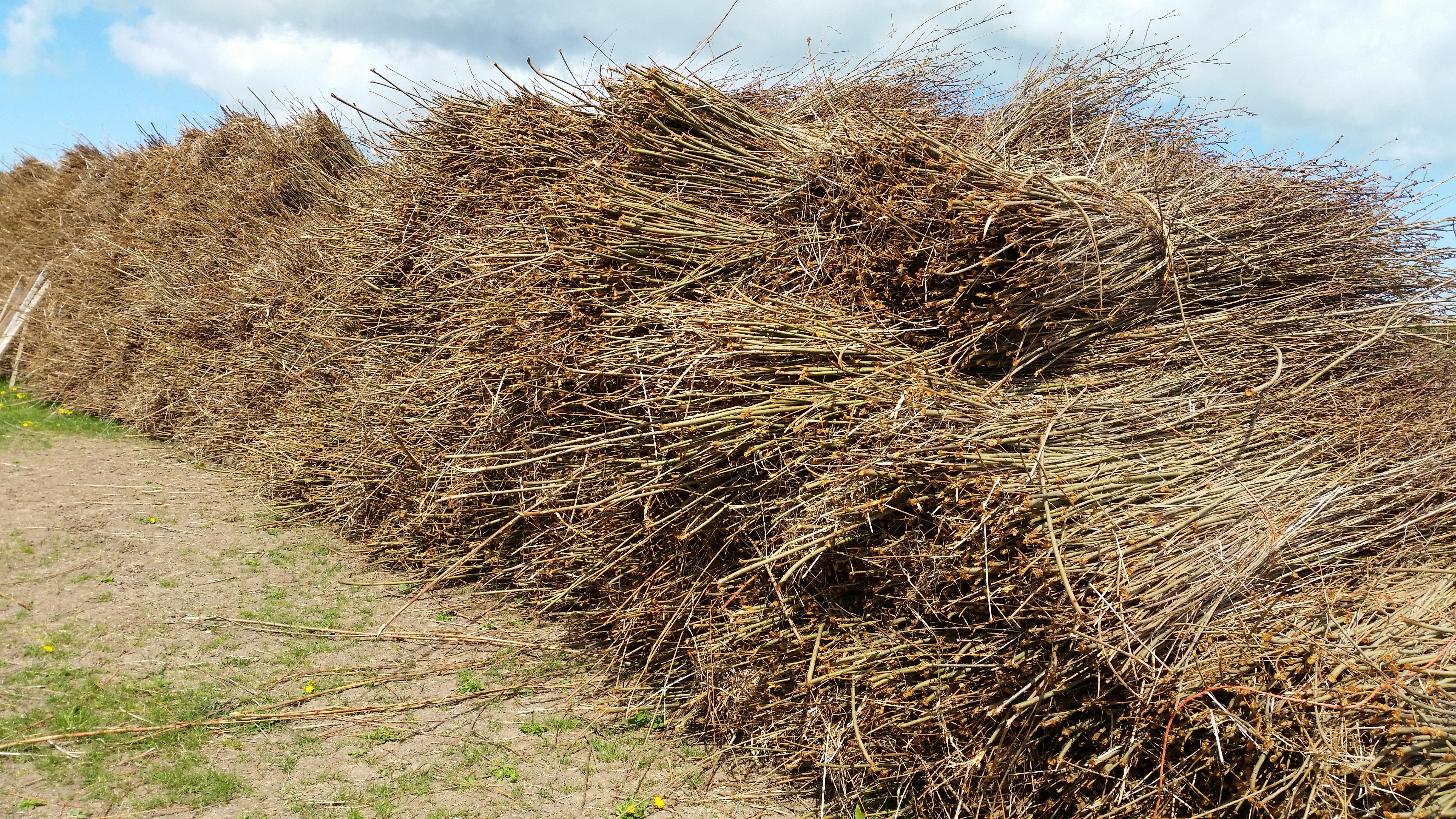
As we were reaching the end of our tour of the wetlands we discovered the drying racks where the harvested willow wands were left to dry.
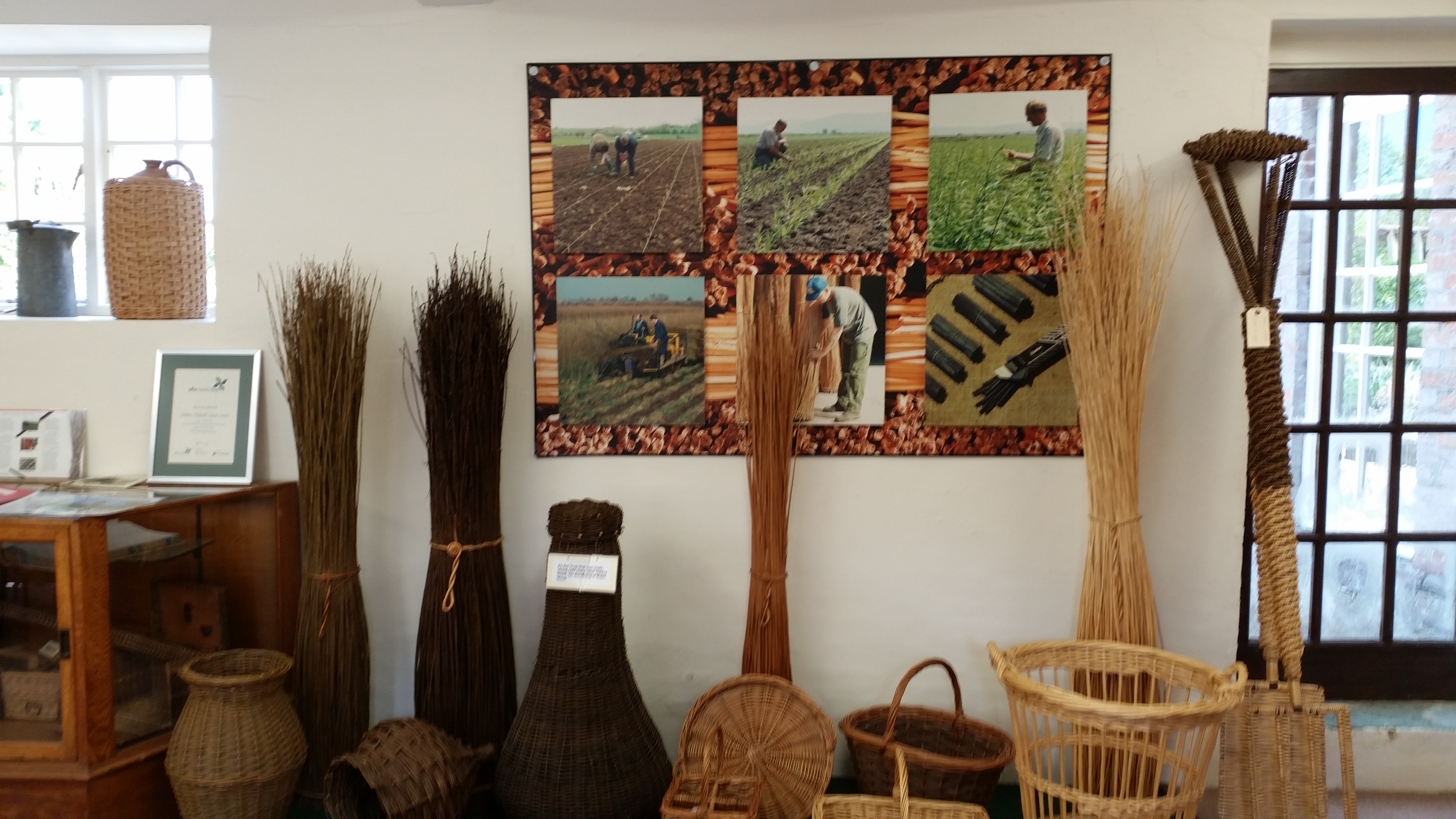
Before leaving we just had to look at the centre’s museum. We were amazed at how many things are made from willow and all the other items from the past. My first museum photo gives a taster of the delights in the museum. To find out more look through the gallery below. To enjoy my gallery just click on the first picture and use the arrows to negotiate your way through.
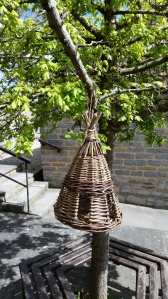
We enjoyed our visit to find out more about willows and came away simply amazed! We came away with this unusual willow bird table.






I can’t believe we are in the second half of the year but as this is the post about my garden journal in July then we most certainly are!
I began my July journal entry with a reference to the weather, the obsession of the British especially gardeners. “The month of July burst in with a heatwave. Some plants objected by wilting but flower colours were enriched in the sunlight. Lilies and Clematis joined the colour pallette provided by June’s Roses and Geraniums.”
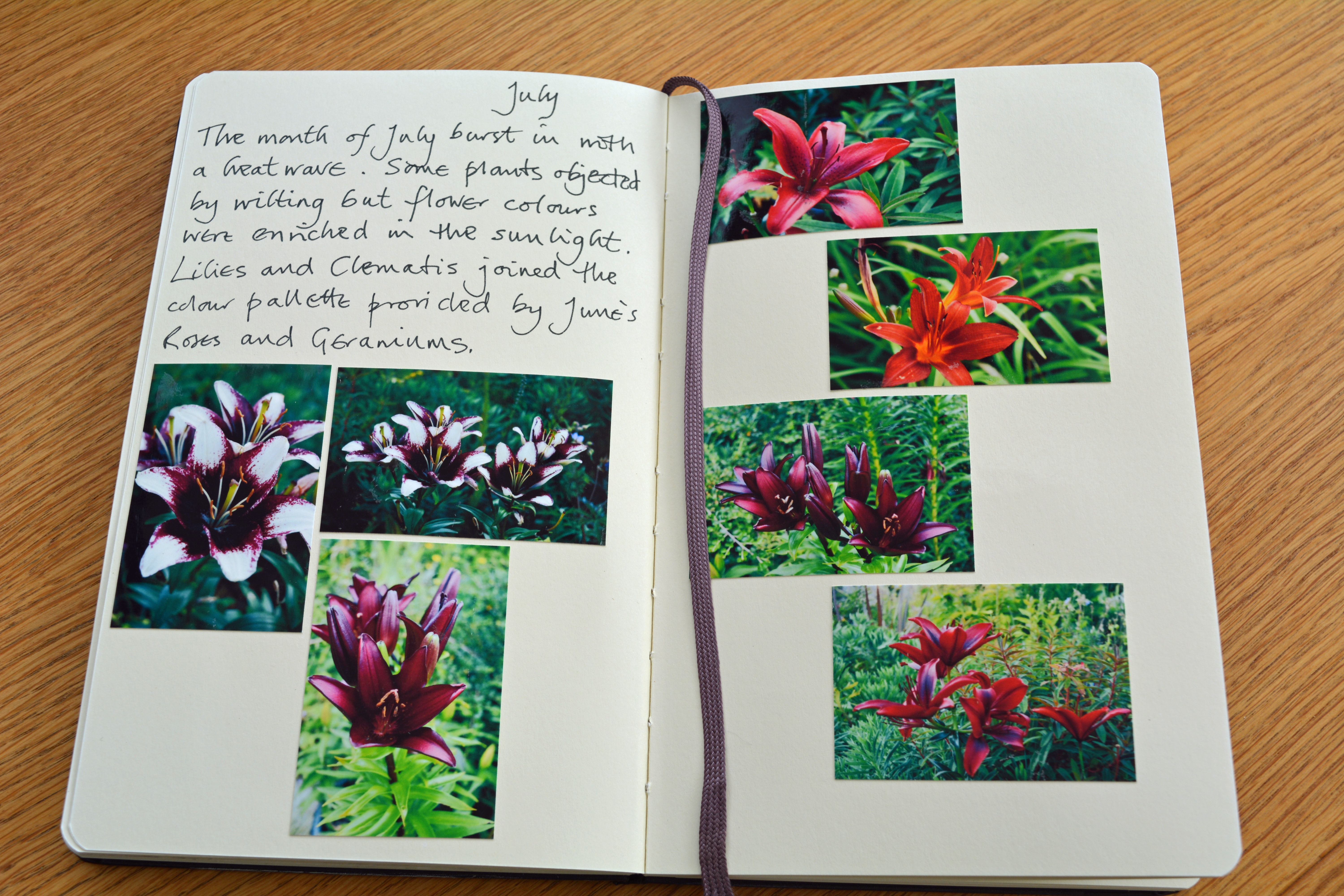
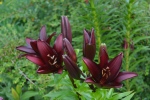
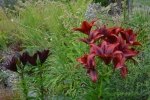
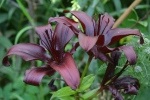
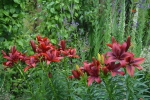
Our Oriental Lilies were the best we have ever had this July and we have been growing them for many years. We grow them in big pots so that we can simply drop them in where and when they are needed to add splashes of dramatic colour. Enjoy my little gallery of Lily photos. Just click on the first photo and then use the arrows.




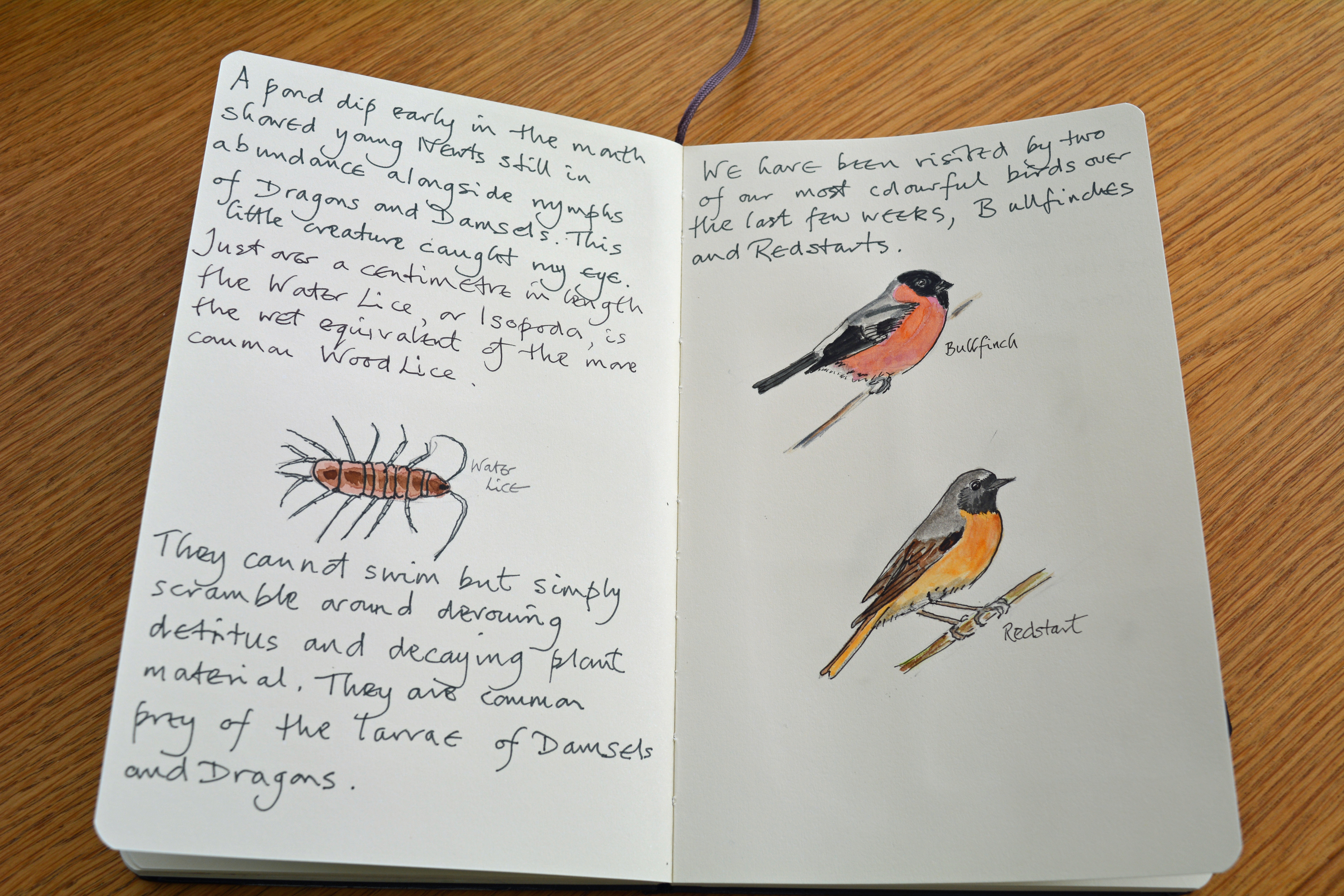
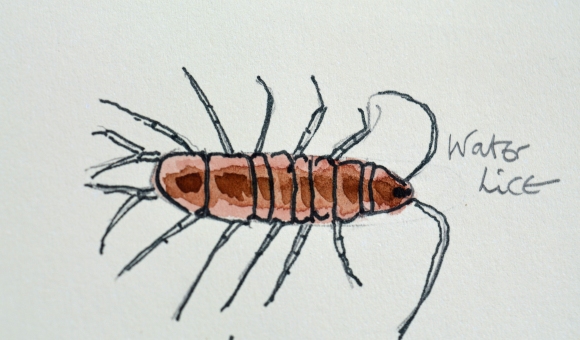
I then wrote about our July pond dipping adventure, “A pond dip early in the month showed young newts still present in abundance alongside nymphs of Dragons and Damsels. This little creature (painting below) caught my eye. At just over a centimetre in length the Water Lice, or Isopoda, is the wet equivalent of the more common Wood Lice. They cannot swim but simply scramble around devouring detritus and decaying plant material. They are common prey of the larvae of Damsels and Dragons.”
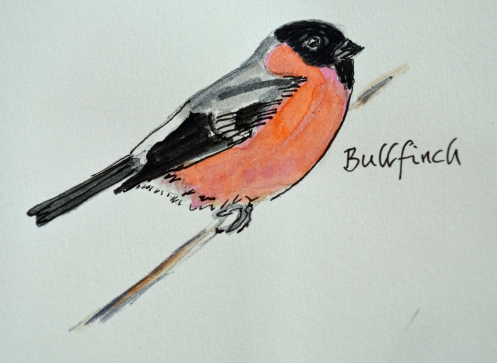
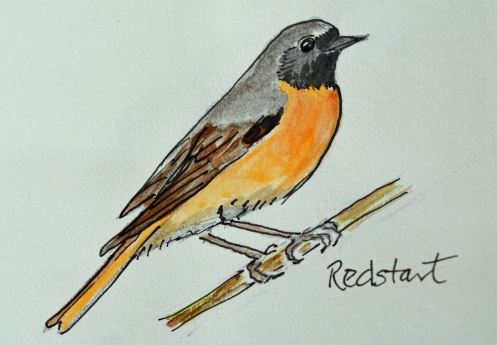
I moved on then from pondlife to birdlife and looked at two of the most beautiful birds that visit our garden. “We have been visited by two of our most colourful birds over the last few weeks, Bullfinches and Redstarts.” The Redstart made a fleeting visit on our last open day at our garden when it was full of visitors, which seemed a bit brazen for a normally shy woodland bird.
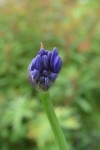
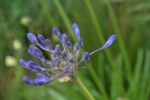
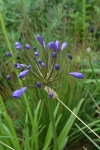
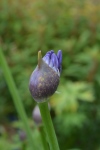
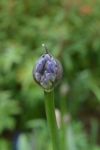
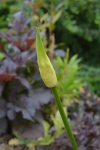
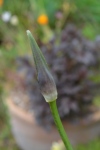
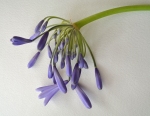
Agapanthus featured next in my July garden journal as our collection in our Beth Chatto garden were budding up nicely promising a beautiful display before too long. We have been building up our collection of favourite Agapanthus for a few years now and it is now coming along well. “Our collection of Agapanthus in our Beth Chatto Garden is slowly getting more colourful as flower buds burst. Surely these are the slowest of buds to become flowers!”

To see some of our Agapanthus up close, some still in tight buds some opening up, please enjoy the little Agapanthus gallery below. As usual click on the first picture and use the arrows to move through. Next month promises to be a month of Agapanthus flowers rather then buds. Can’t wait!



My next double page is about the weather and our min-meadows.
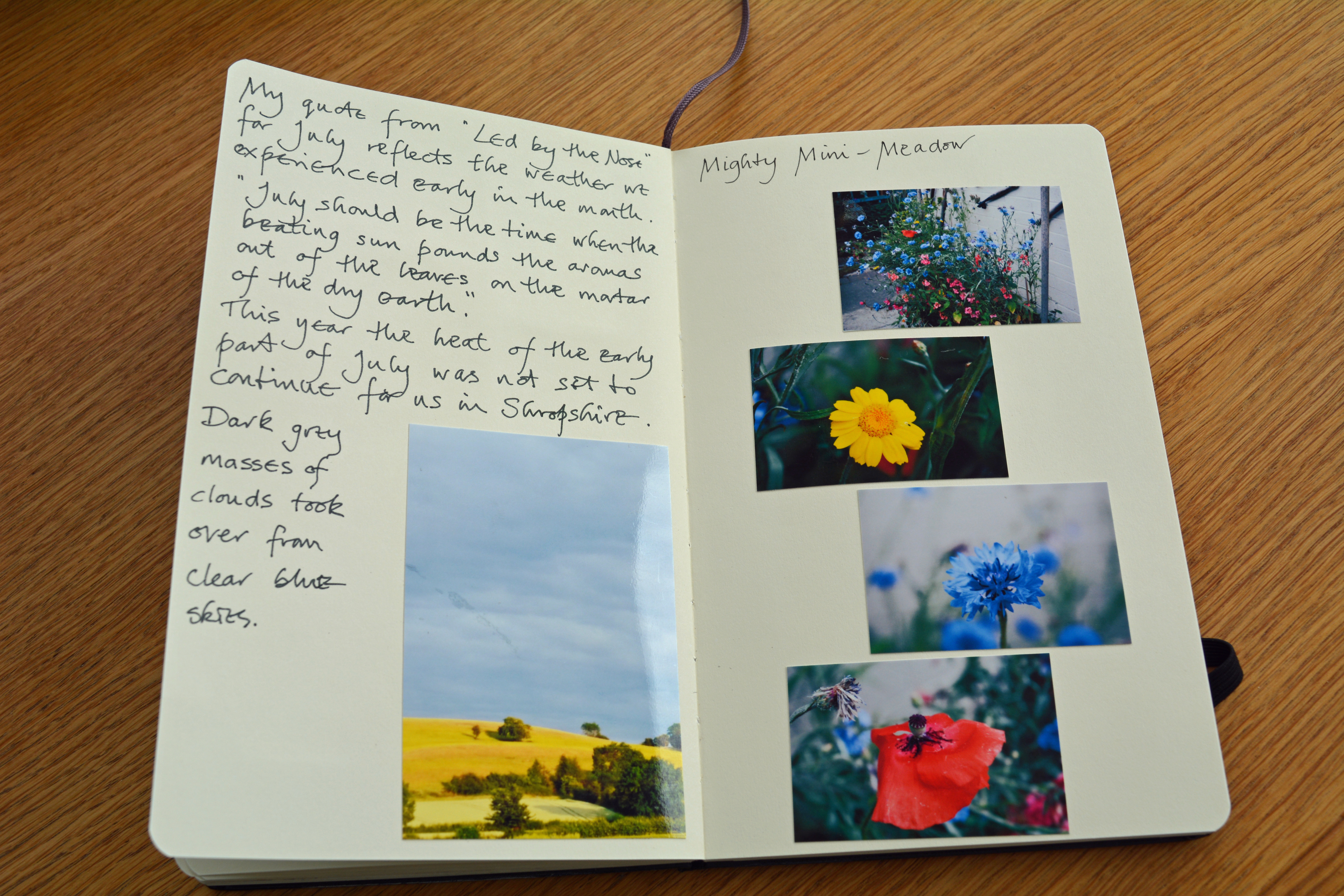
My journal continues, “This year the heat of the early part of July was not set to continue for us in Shropshire. Dark grey masses of clouds took over from clear blue skies.”
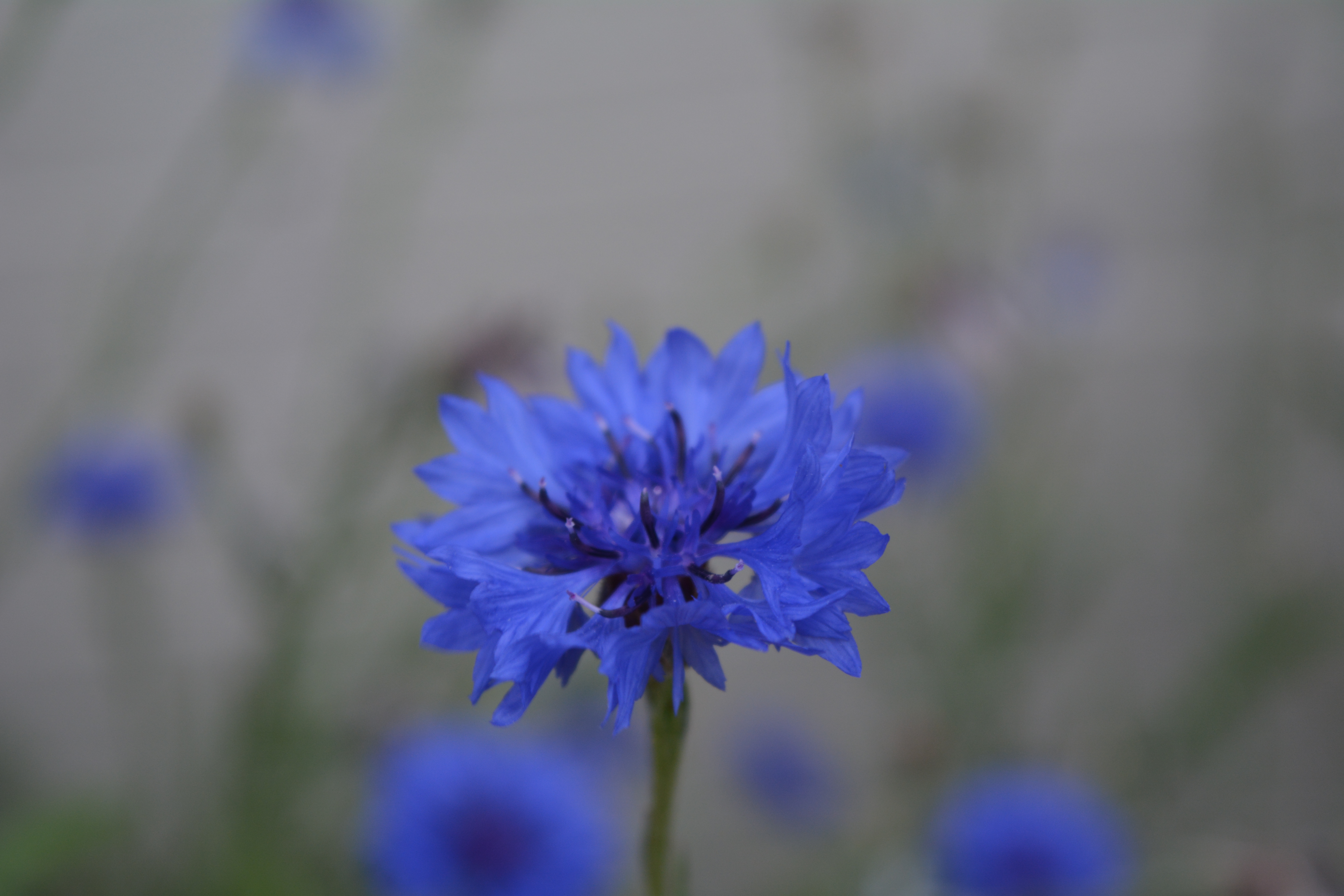
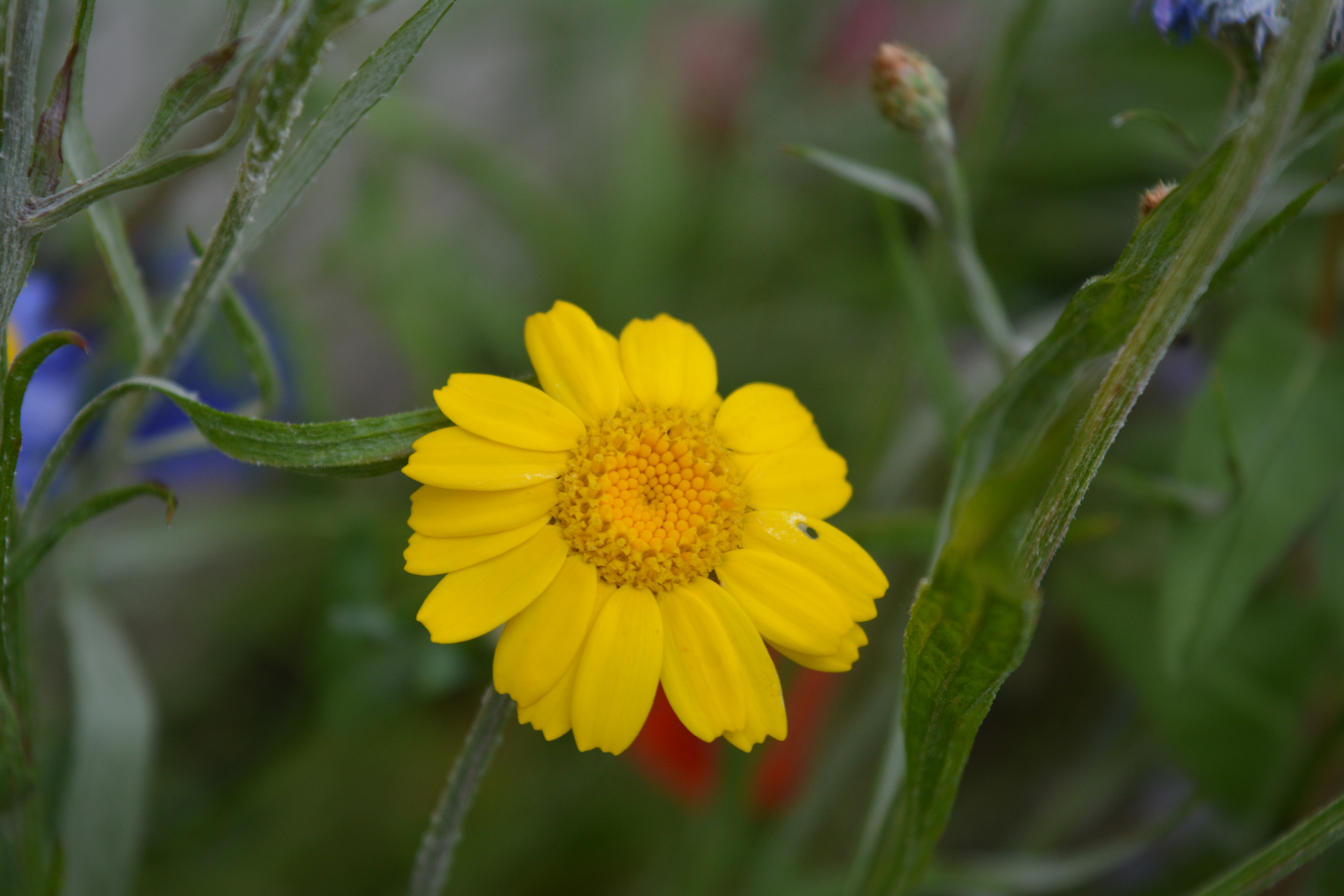
Mighty Mini-Meadow is the title of the next page of my journal which features photos of the little but very floriferous meadow we sowed in early May in vegetable bags. The seeds germinated so well that we have been treated to a mass of blooms reminiscent of a summer meadow from the days before intensive agriculture changed our countryside into huge barren fields of monoculture. It sits beneath my collection of antique garden tools. These native wildlflowers attract insects as if drawn in by distant memories, bees, hoverflies and butterflies.

What an honour Mother Nature bestowed on us this month! This is how the next page of my journal begins. It is all about a special time in our garden, a moment we will never forget.
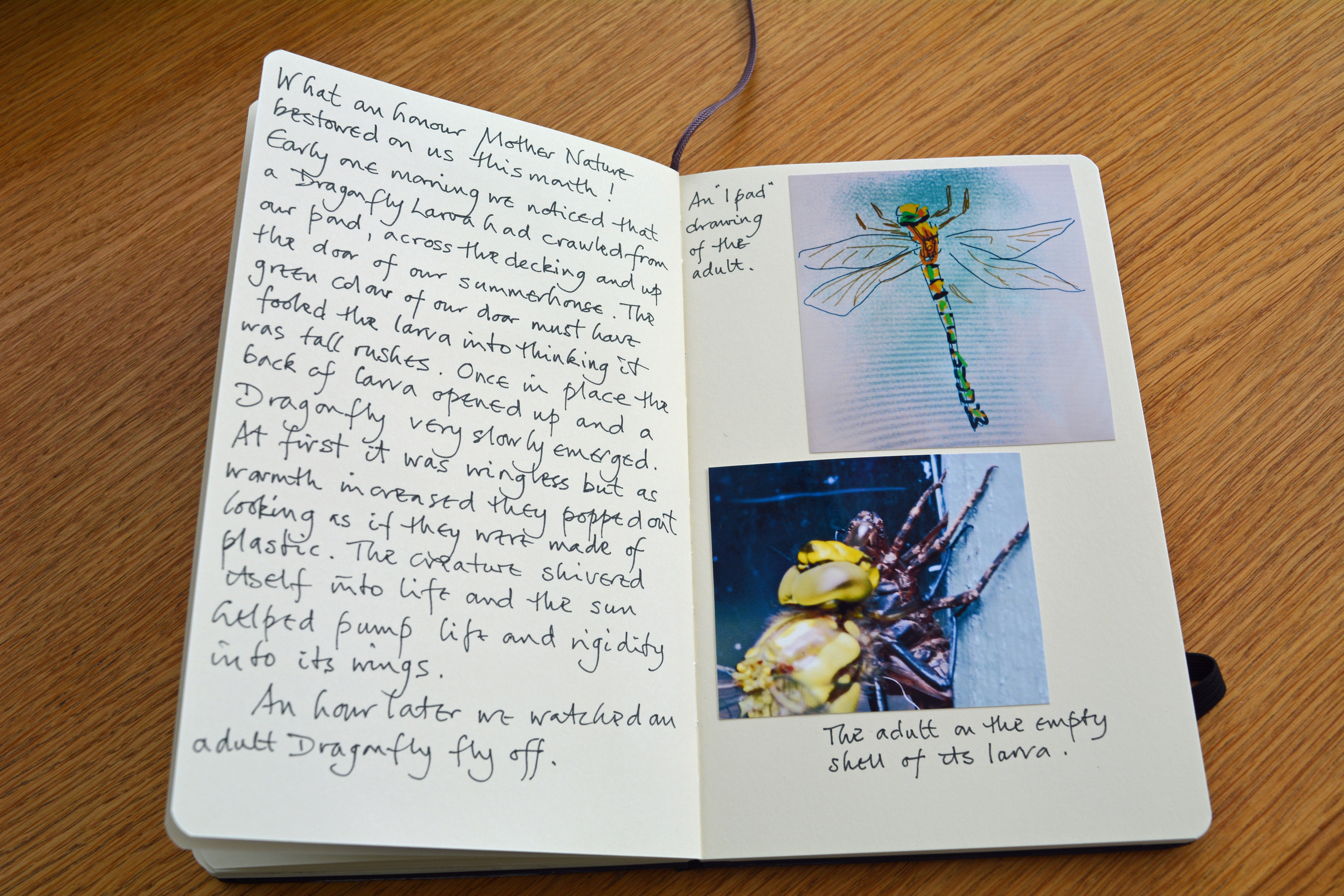
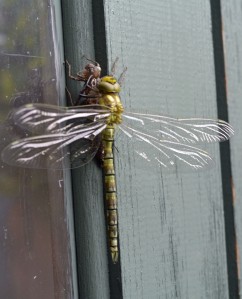
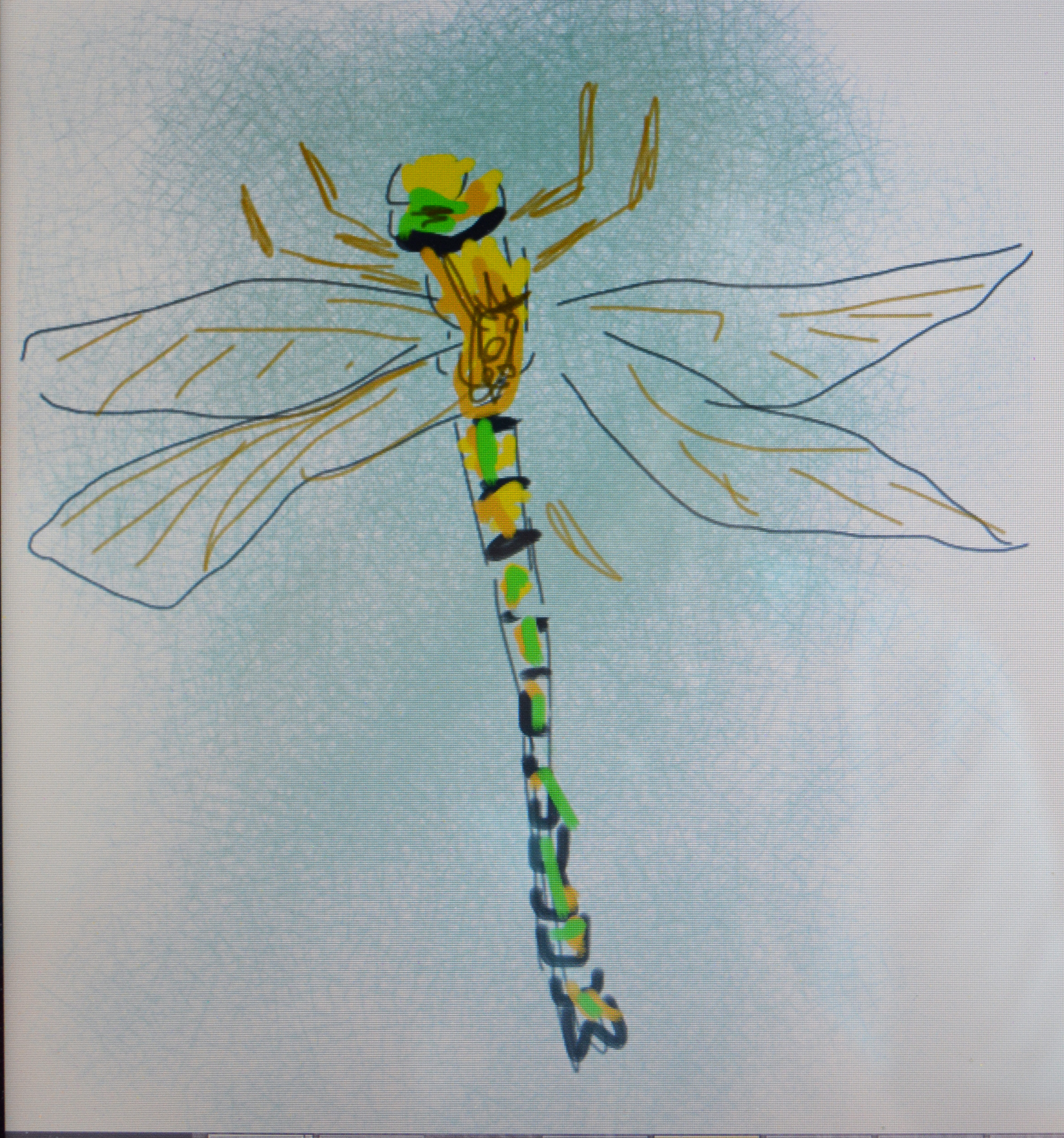
“Early one morning we noticed that a Dragon Fly larva had crawled from our pond, across the decking and up the door of our summerhouse. The green colour of the door must have fooled it into thinking it was tall rushes. Once in place the back of the larva opened up and a Dragonfly very slowly emerged. At first it was wingless but as warmth increased they popped out looking as if they were made of plastic. The creature shivered itself into life and the sun helped pump life and rigidity into its wings. An hour later we watched an adult Dragonfly off.”
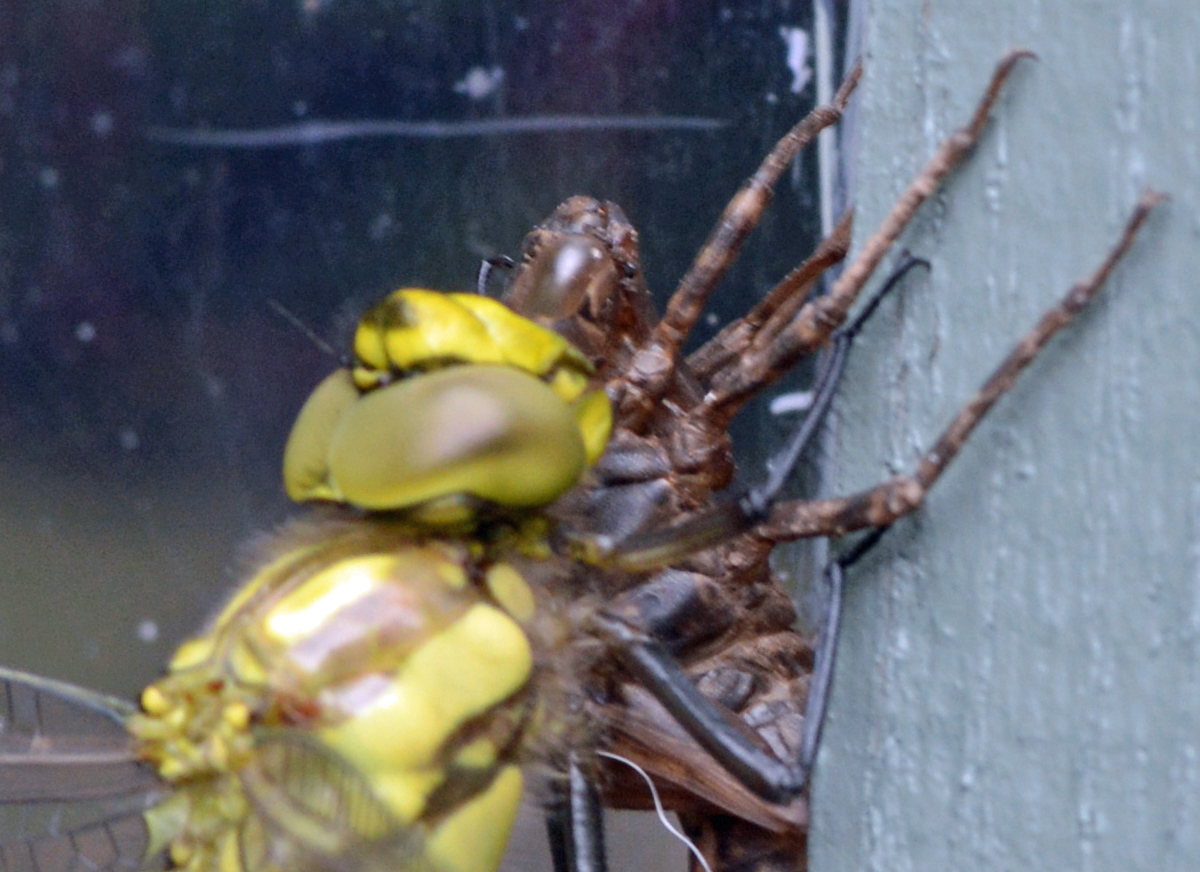
I illustrated this amazing spectacle with a simple i-pad drawing and a photo of the head of the Dragonfly gripping the empty shell of its former self.
So with this amazing experience my journal closed up for July and will soon re-open for August.
Occasionally we buy plants wrongly labelled and usually realise the mistake the nursery has made but this is impossible to do when bulbs are wrongly named. It is a long wait for the error to reveal itself. Early in the year we bought a batch of Asiatic Lily bulbs to boost the range we currently grow in containers throughout our garden. We chose varieties of deep reds with some almost black. Most performed just as expected and we loved them. They added depth to the colour range.
But one pot of bulbs was late throwing up its flowering stems and when we saw how it grew with thin dark stems it made us realise we had something rather unexpected. When it started to produce flower buds in large groups atop each stem we realised it definitely wasn’t what the label said. This Lily was supposed to be Lilium Landini with very dark red almost black flowers.
Just look at what our mystery Lily turned out to be!


And just look how each beautiful golden flower opens up for us to enjoy!


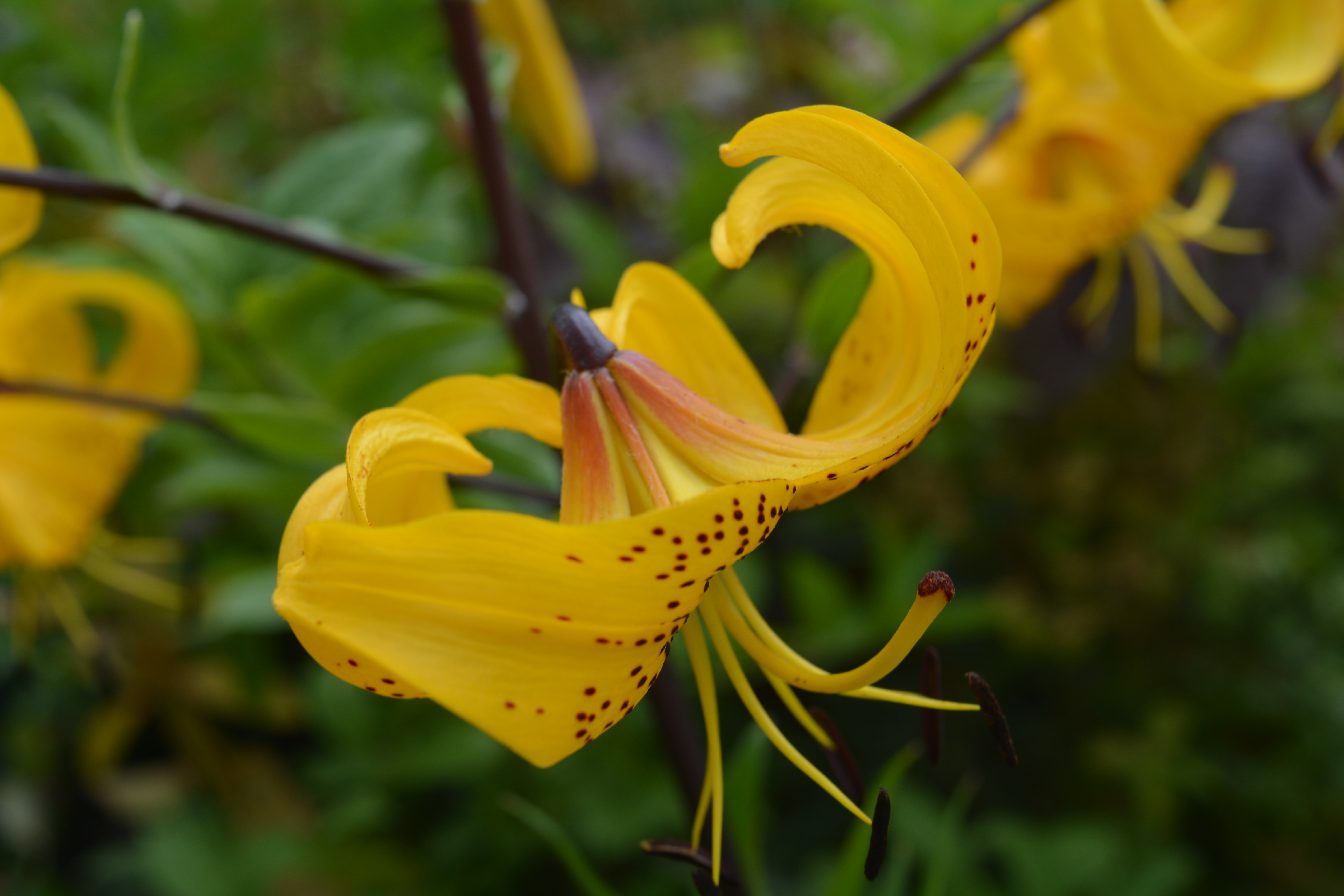
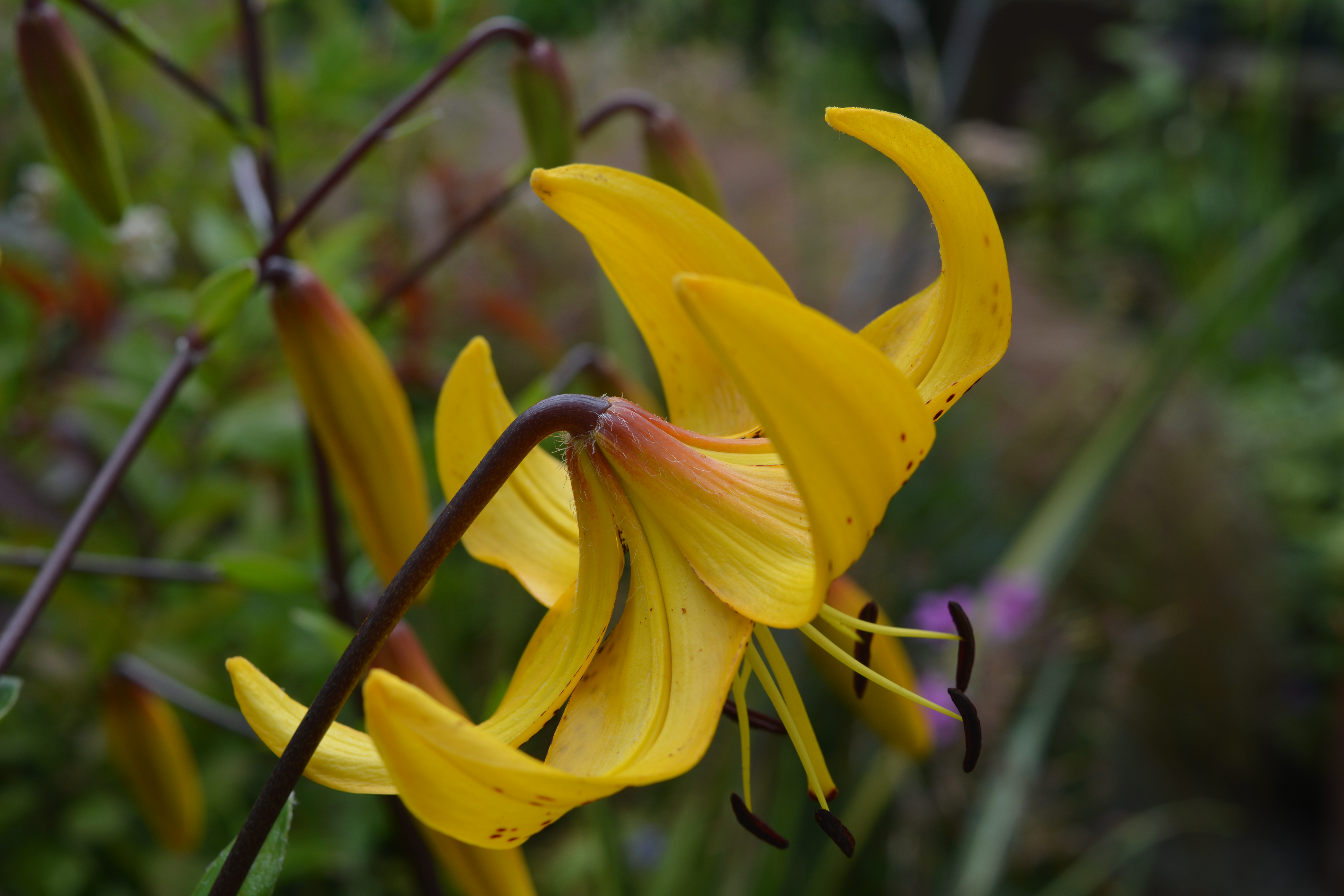

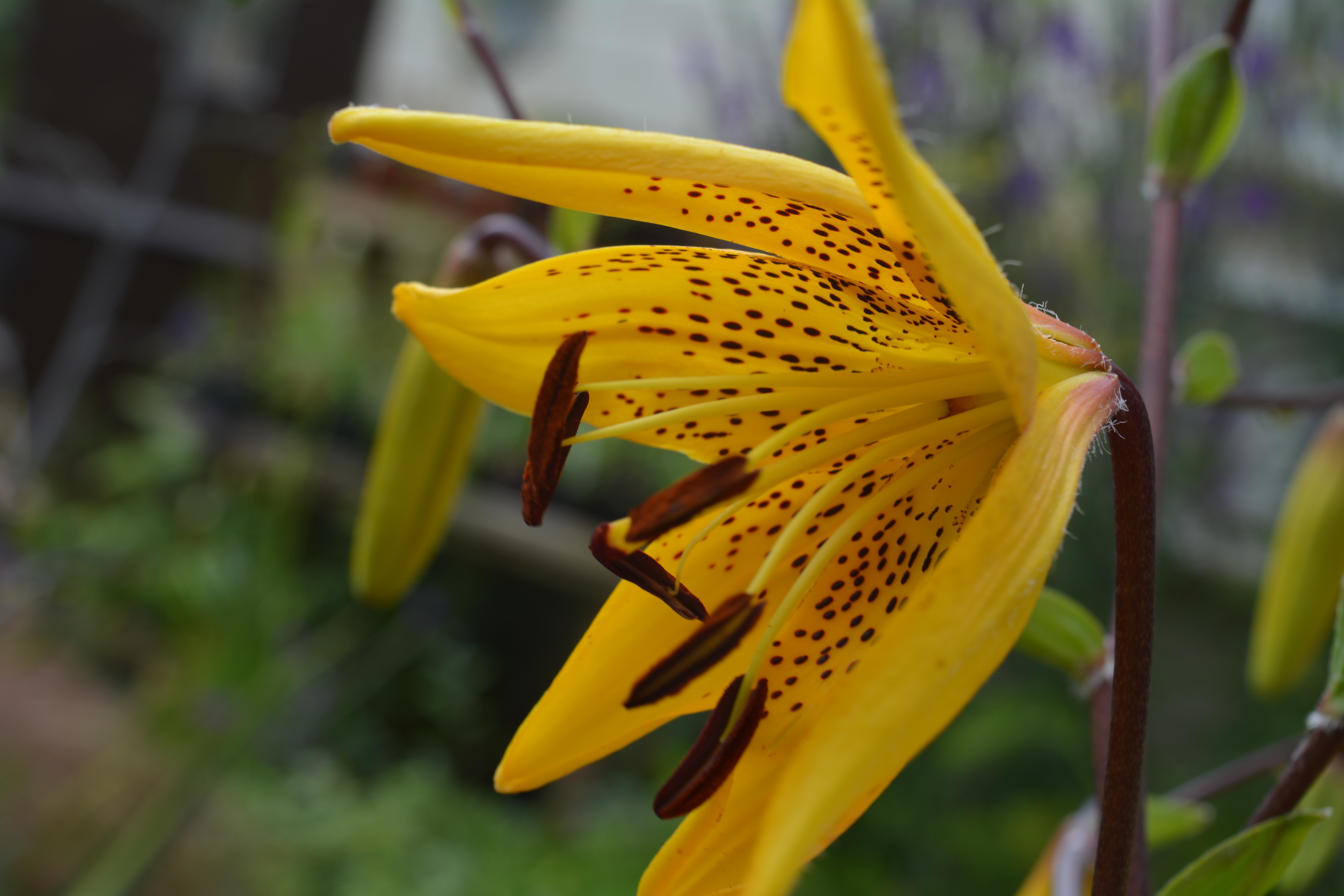

What a wonderful mystery! A golden Turks Cap Lily!

But what would have grown in our pot if the label was correct – an equally beautiful but oh so different so dark bloom. Almost black velvet! Luckily we had three pots full of these too.

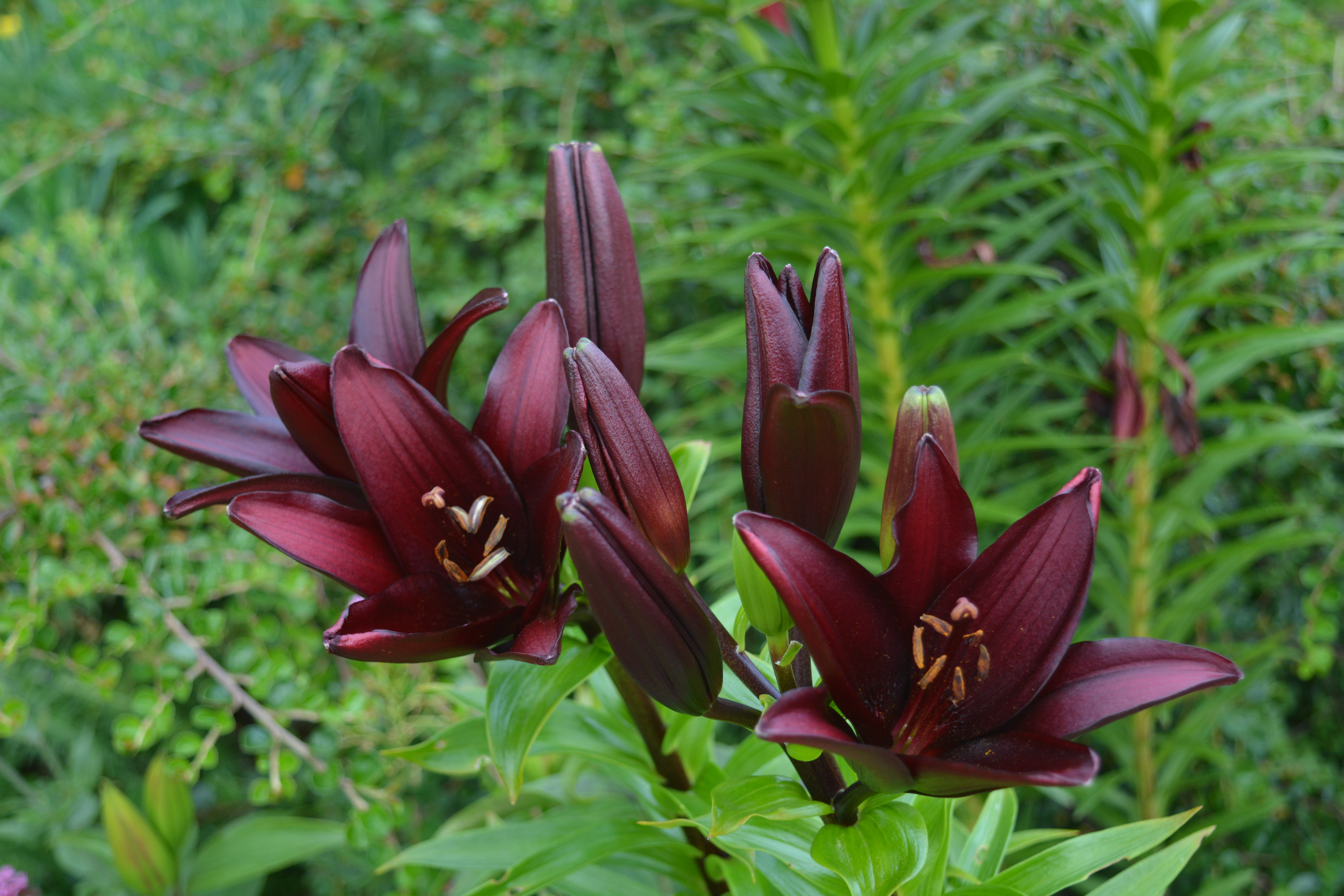
It was getting towards the end of July so was time for our monthly visit to see what had changed throughout the garden at Croft Castle. The weather certainly wasn’t what we expected in July, as rain fell intermittently and temperatures failed to rise much above the mid-teens.
The first big change in the garden was in the long border we have to pass on every visit on our way to the walled garden.
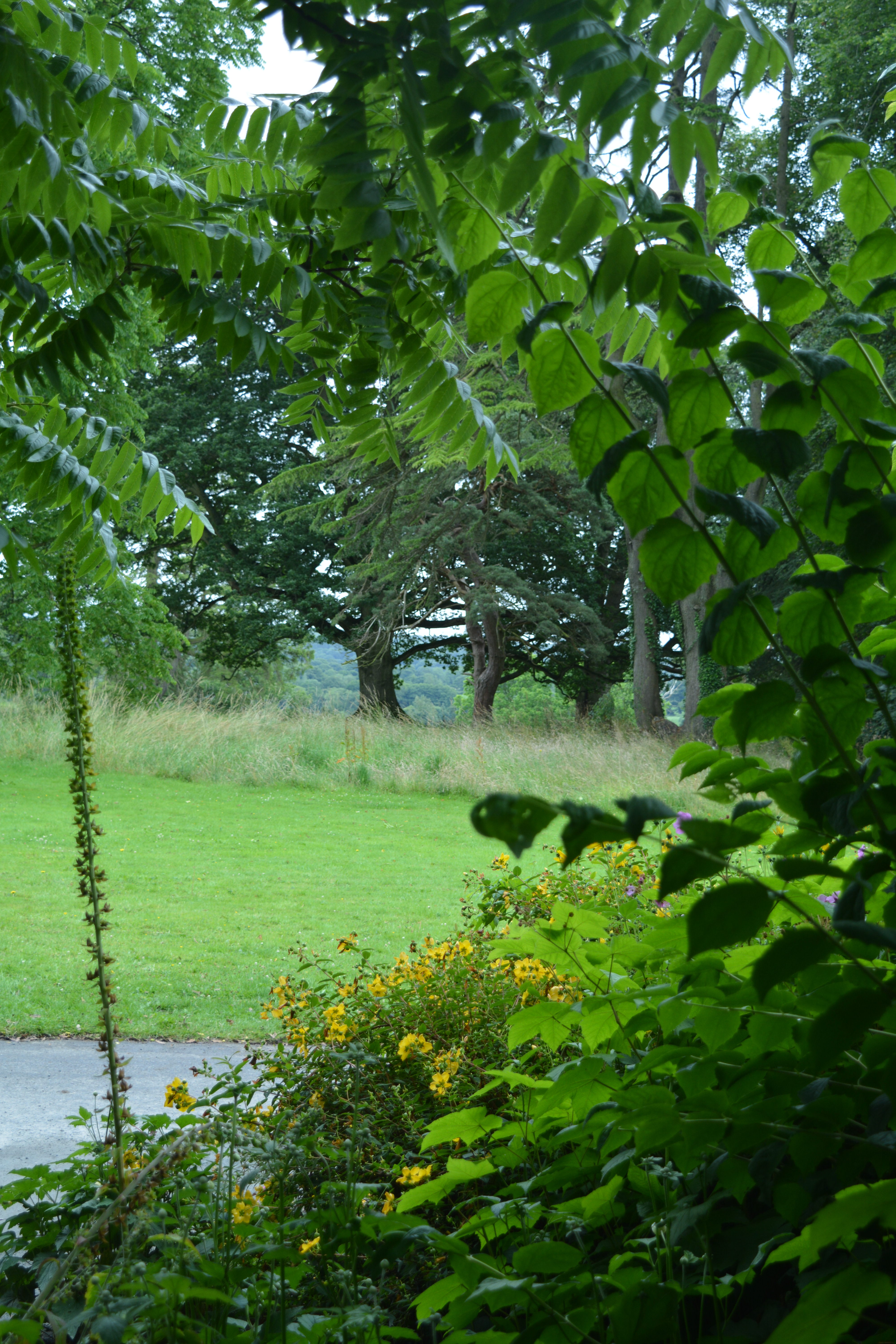


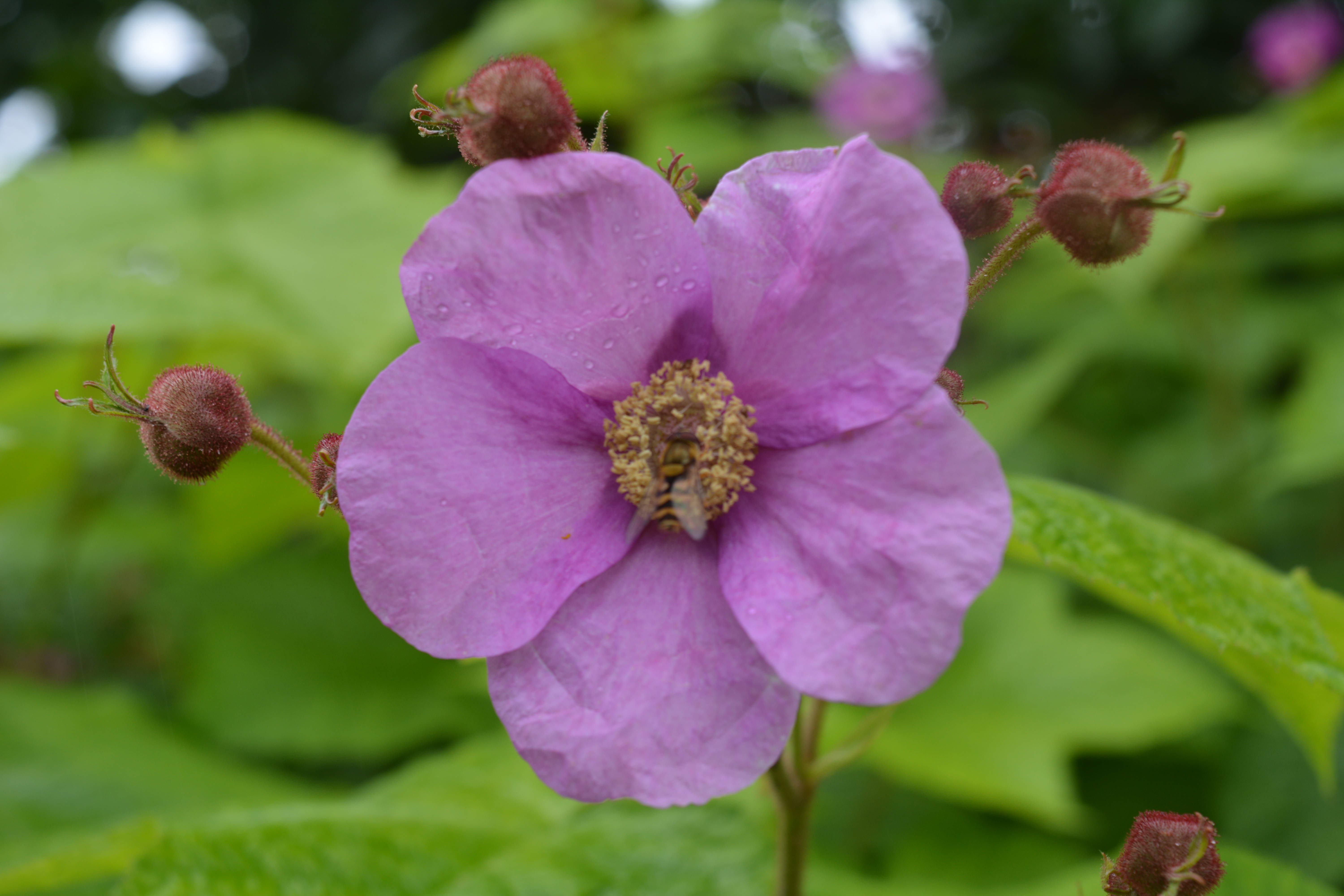
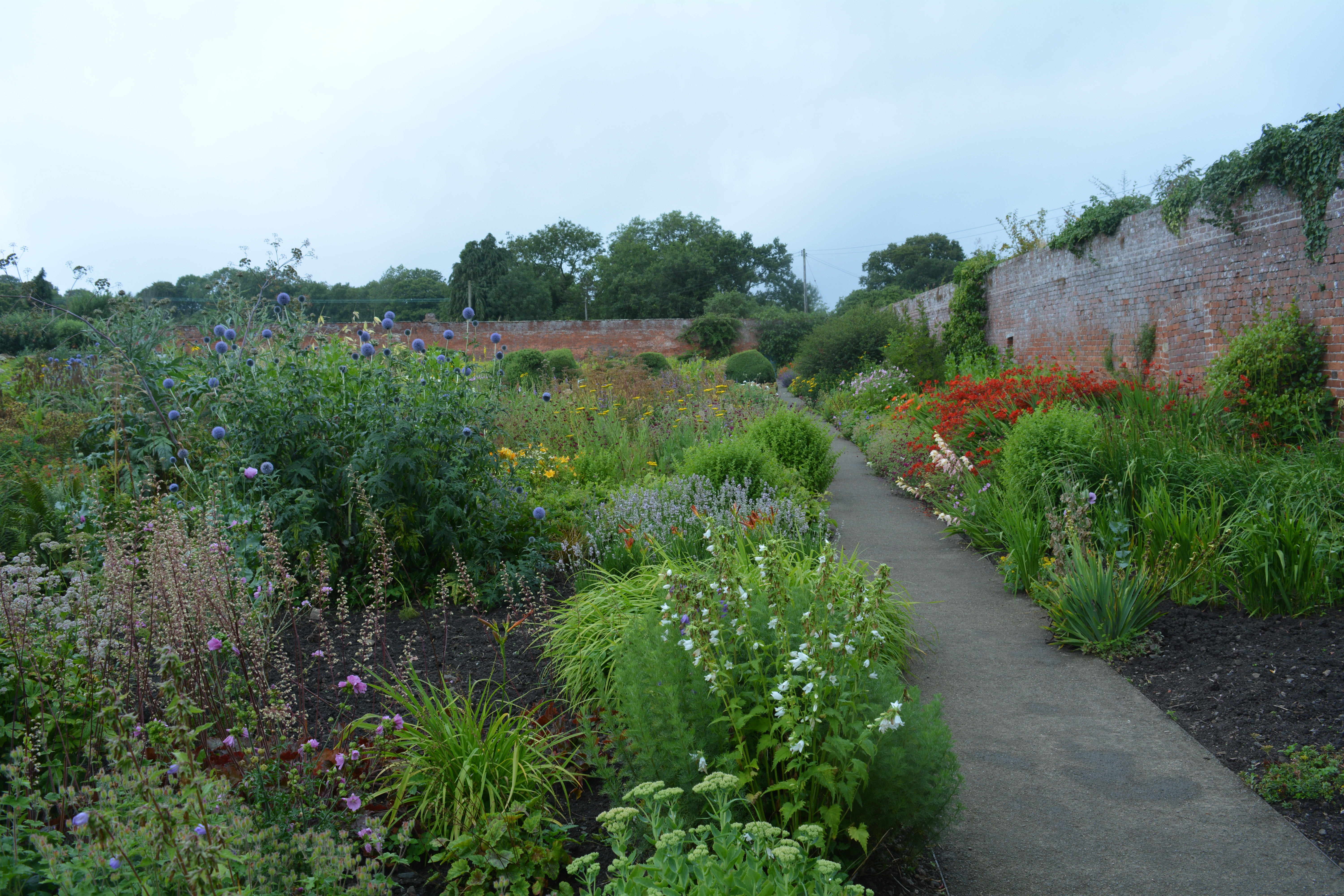
Our first view of the walled garden convinced us that we were in for a colourful time.

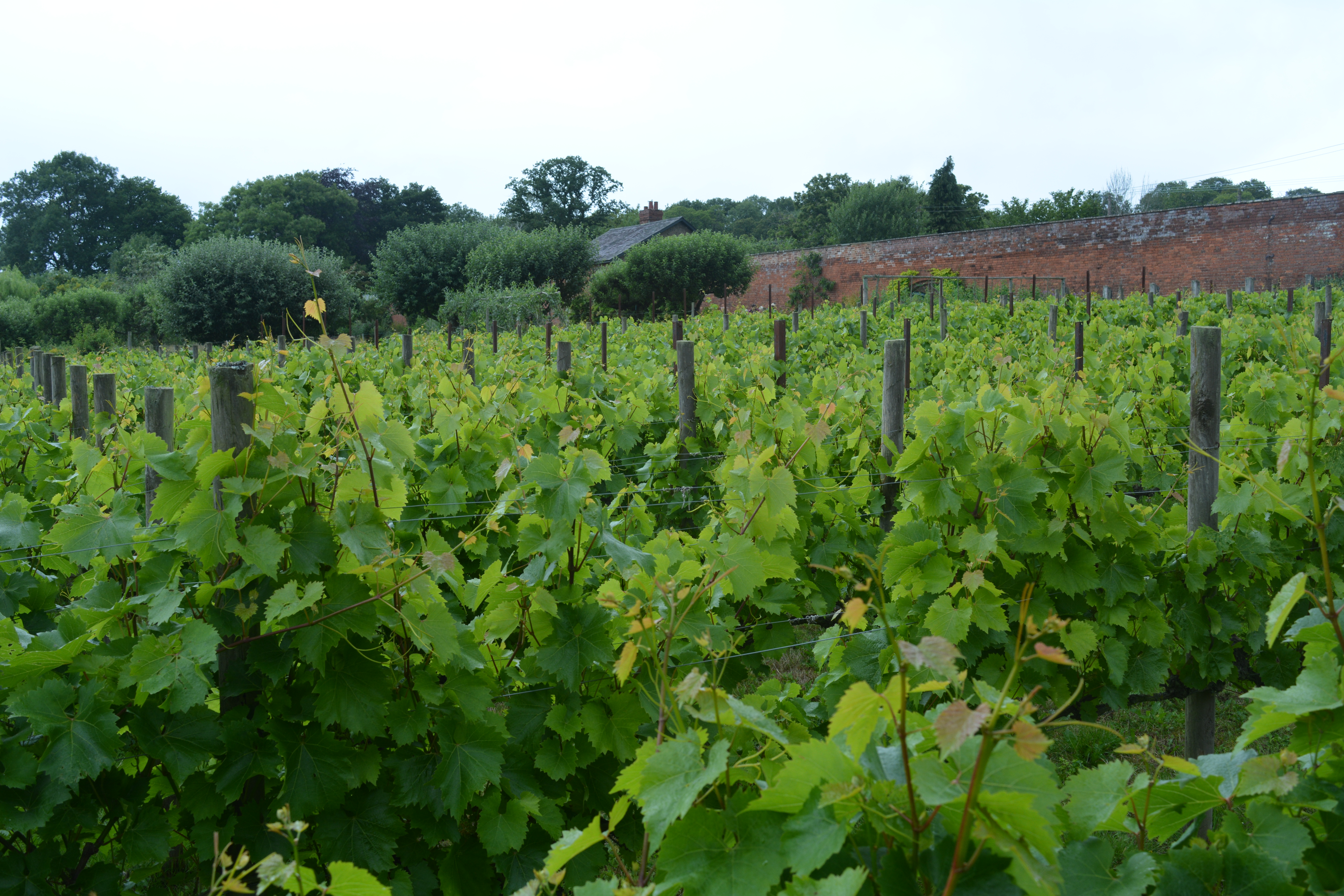
The beautiful pink poker like flowers of this Francoa caught our eyes in the borders opposite the grape vines, which were now showing the first signs of little bunches of tiny bright green grapes.


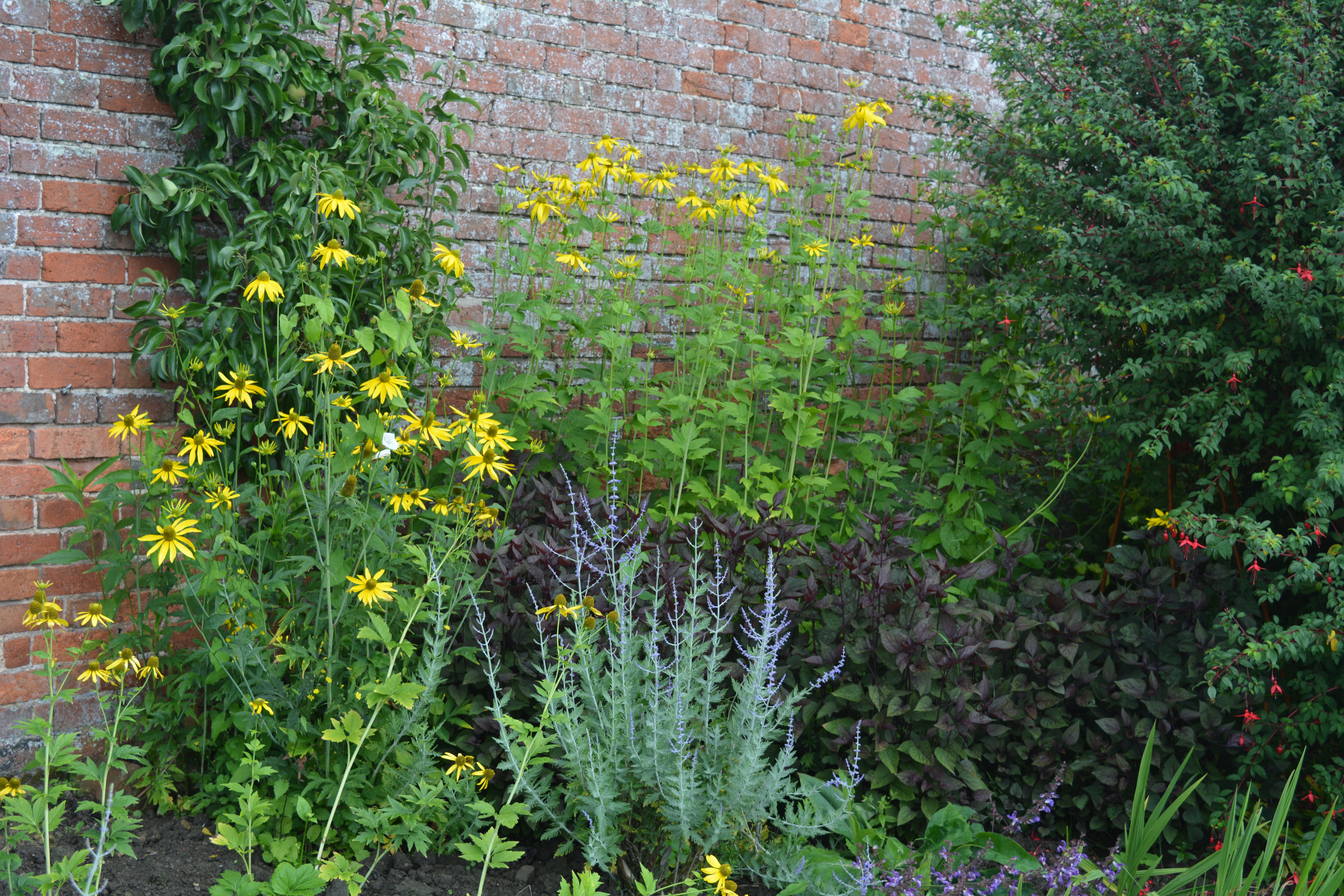
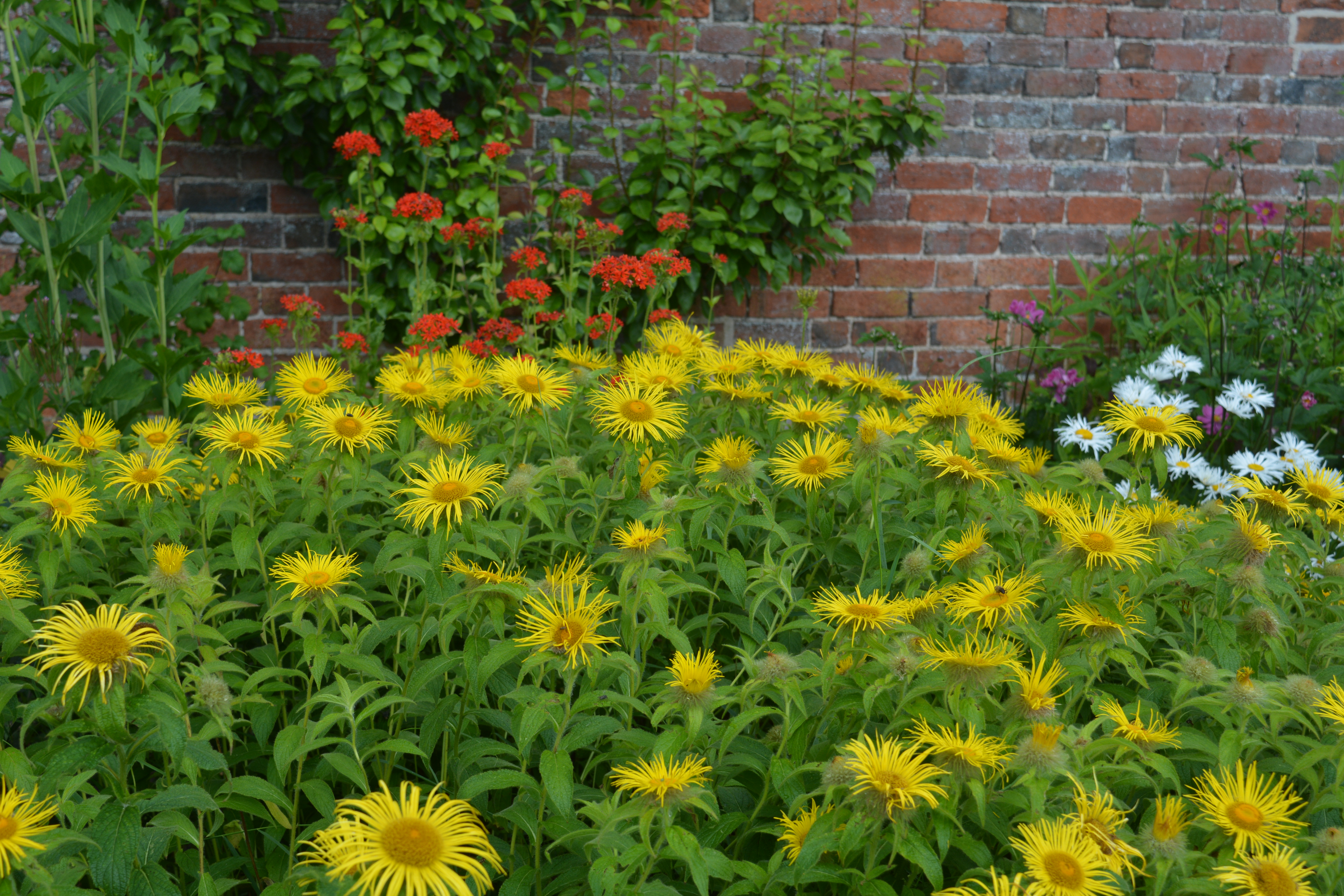
July was definitely the month for Crocosmias and Japanese Anemones. Crocosmias provided hot colours to enjoy while the Anemones gave us the cooler colours.


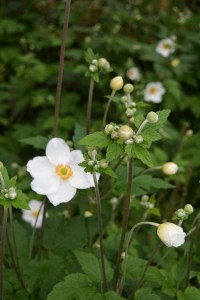
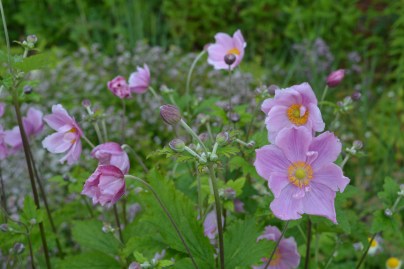
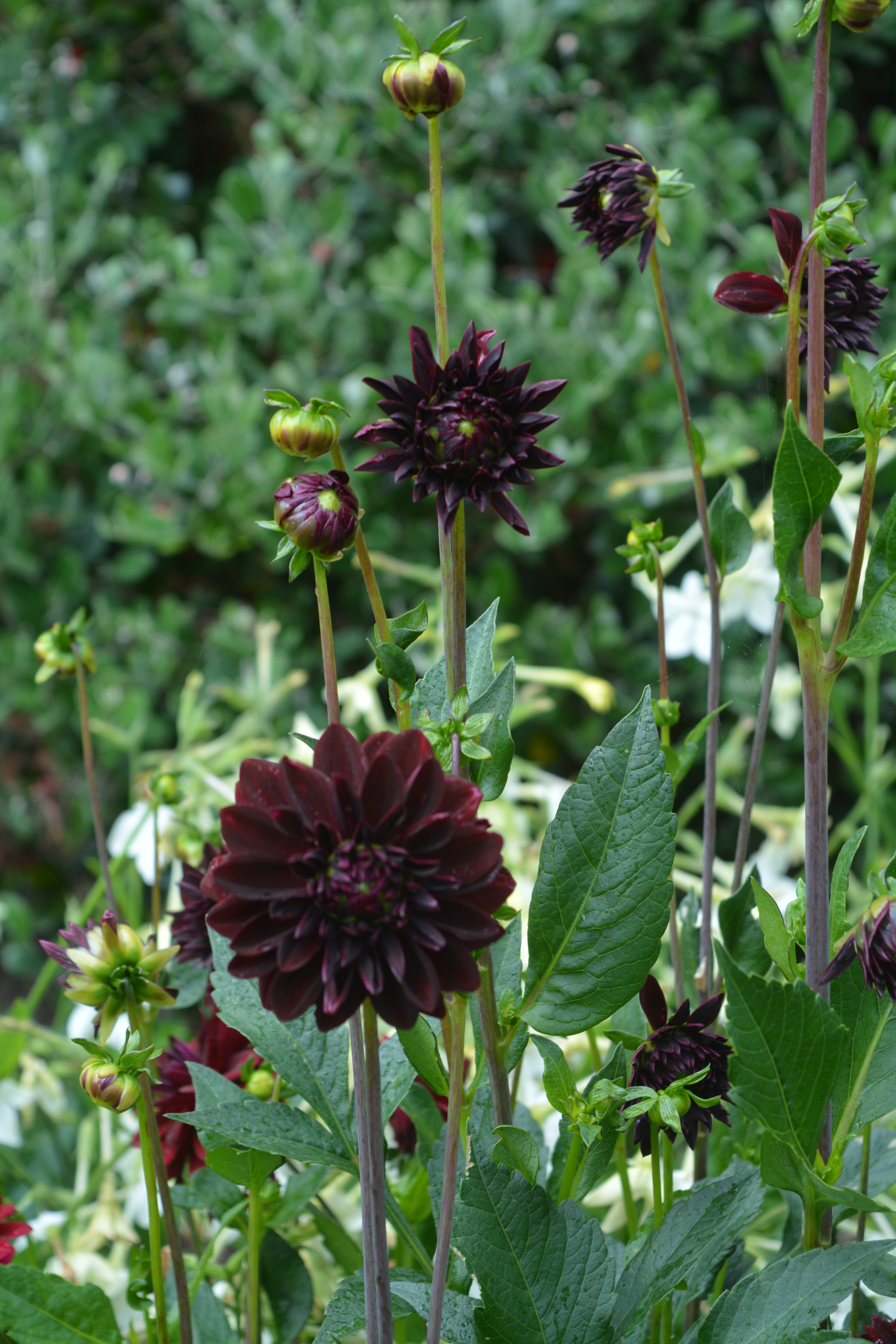
On the north wall Nicotiana and Dahlias were flowering well among a mixture of flowering shrubs, annuals and perennials. Buddlejas were already flowering and we hope to see each bush covered in long racemes of butterfly-attracting blooms on our next couple of visits. Let us hope the sun is out then so that all the wildlife that loves Buddleja will be out seeking nectar and pollen.




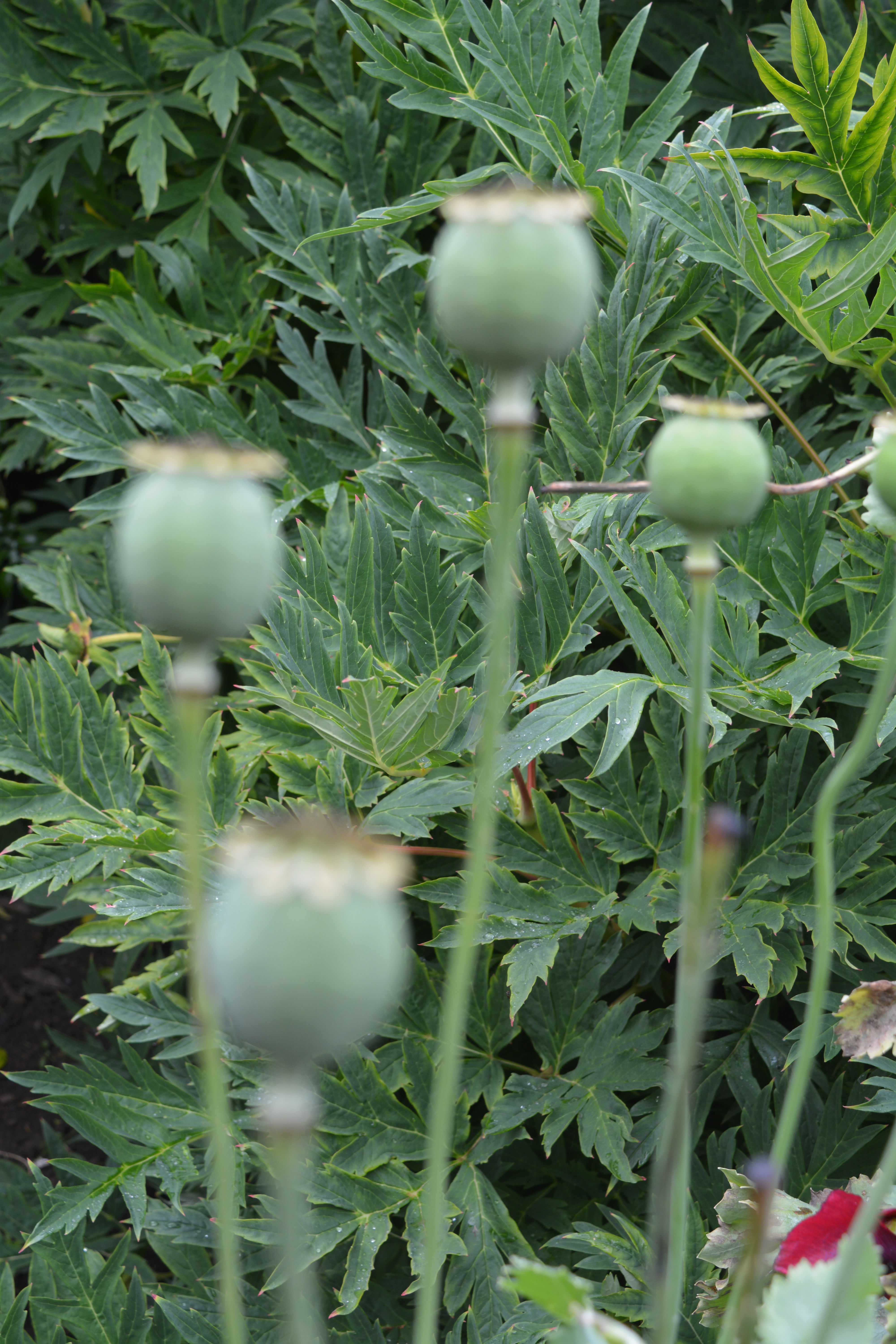
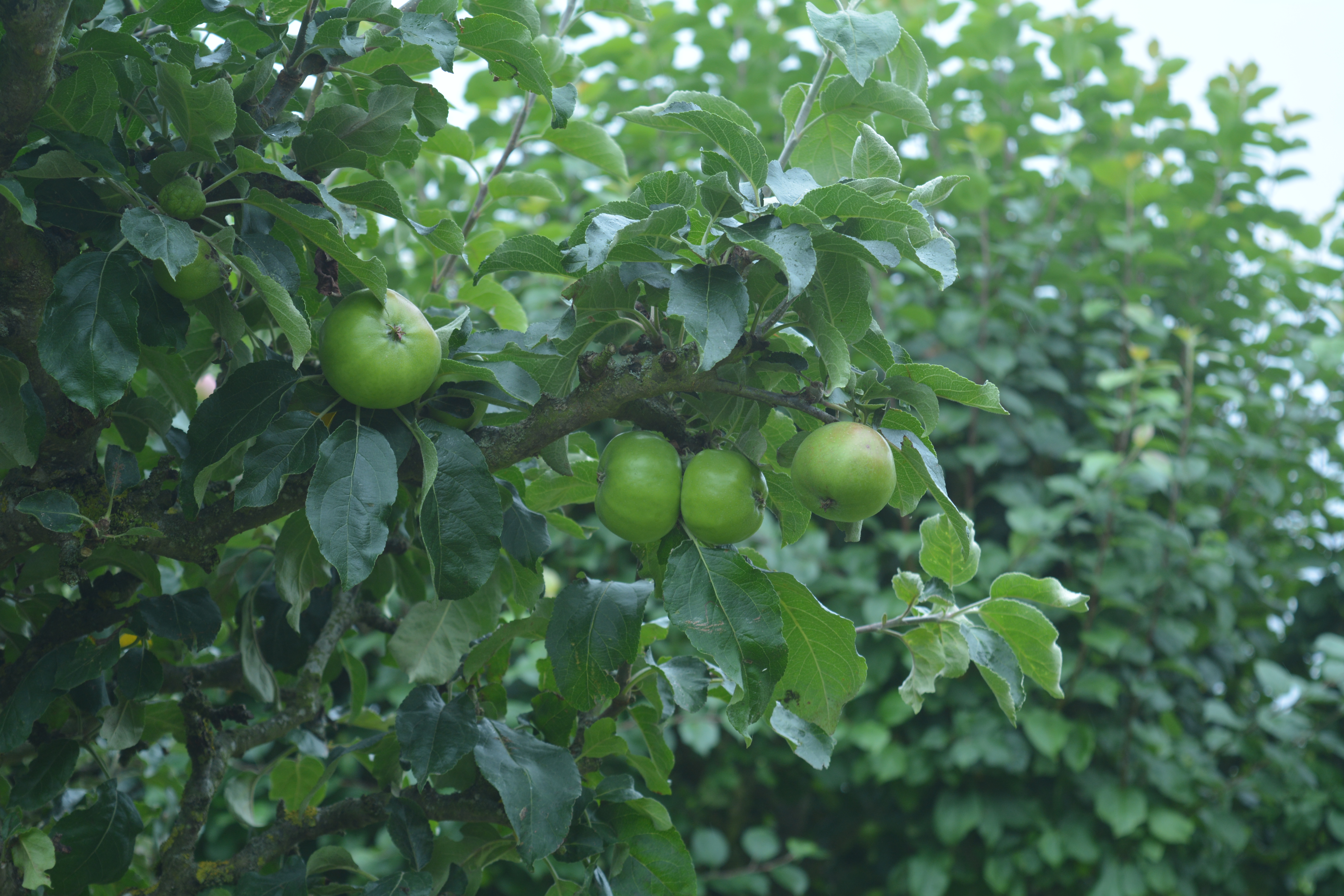
Apples were beginning to show the first signs of ripening as they blush a little. Close by there were plenty of Figs forming on the plants grown close to the walls for extra protection. The borders along this side of the walled garden were mostly blue and white.

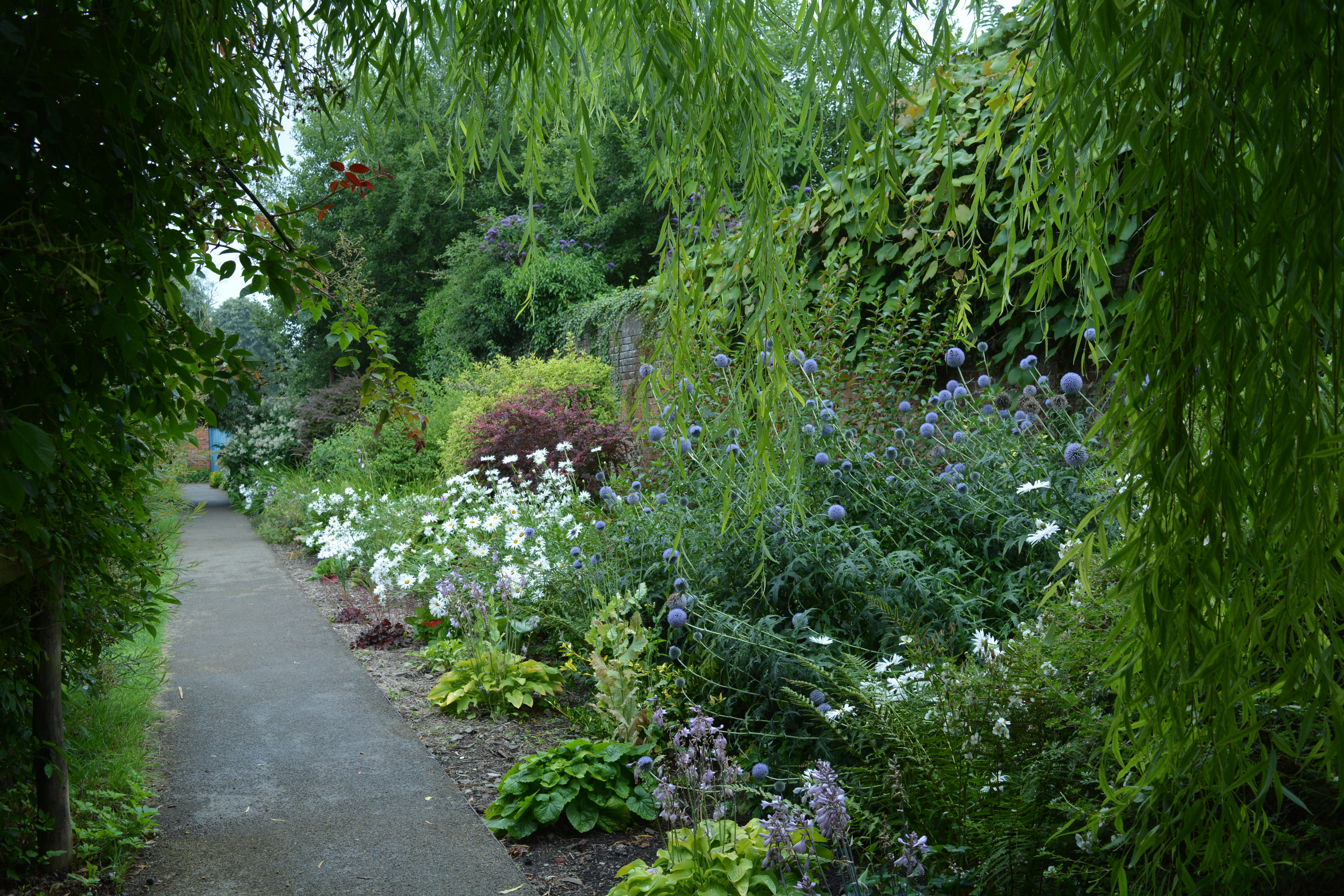
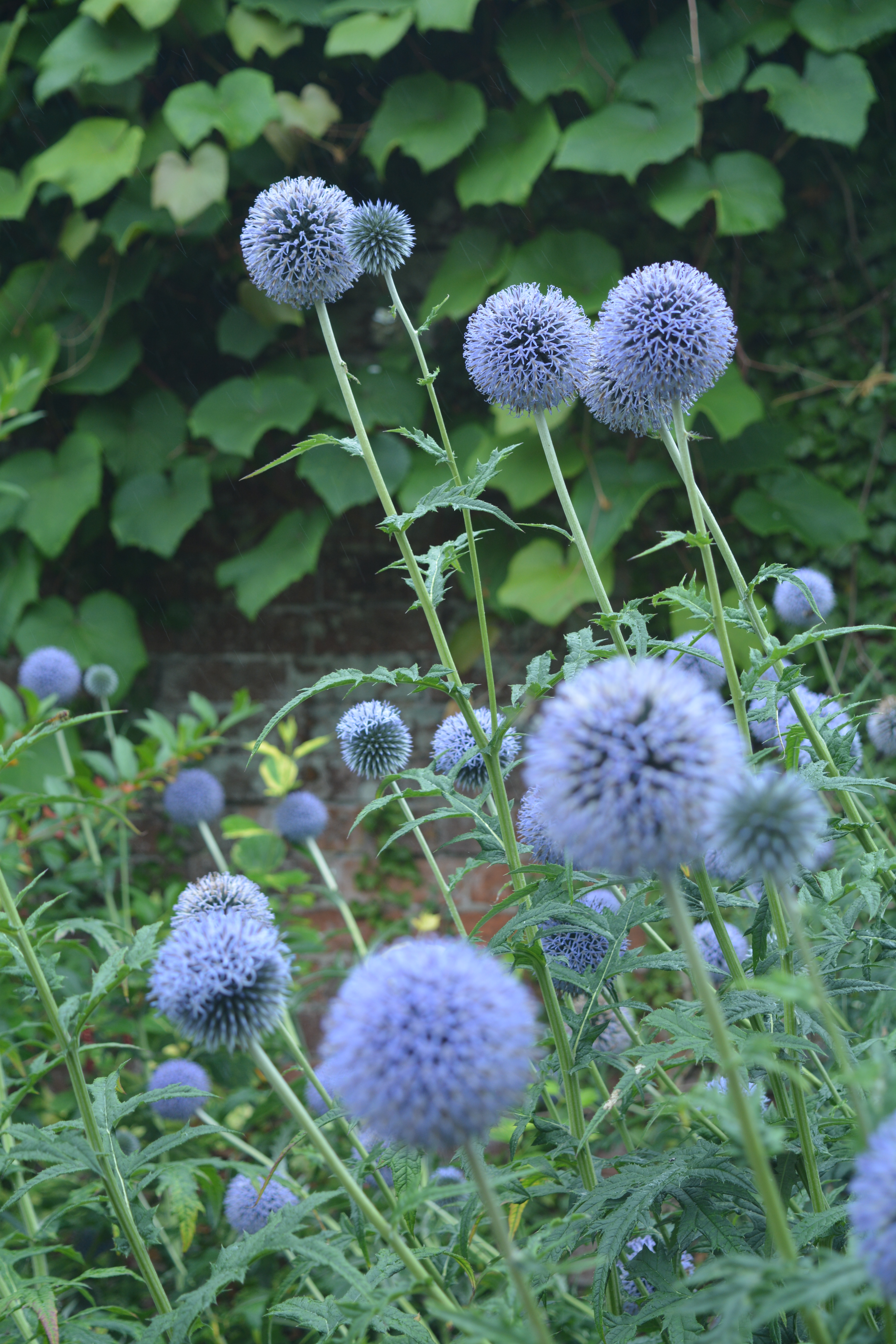
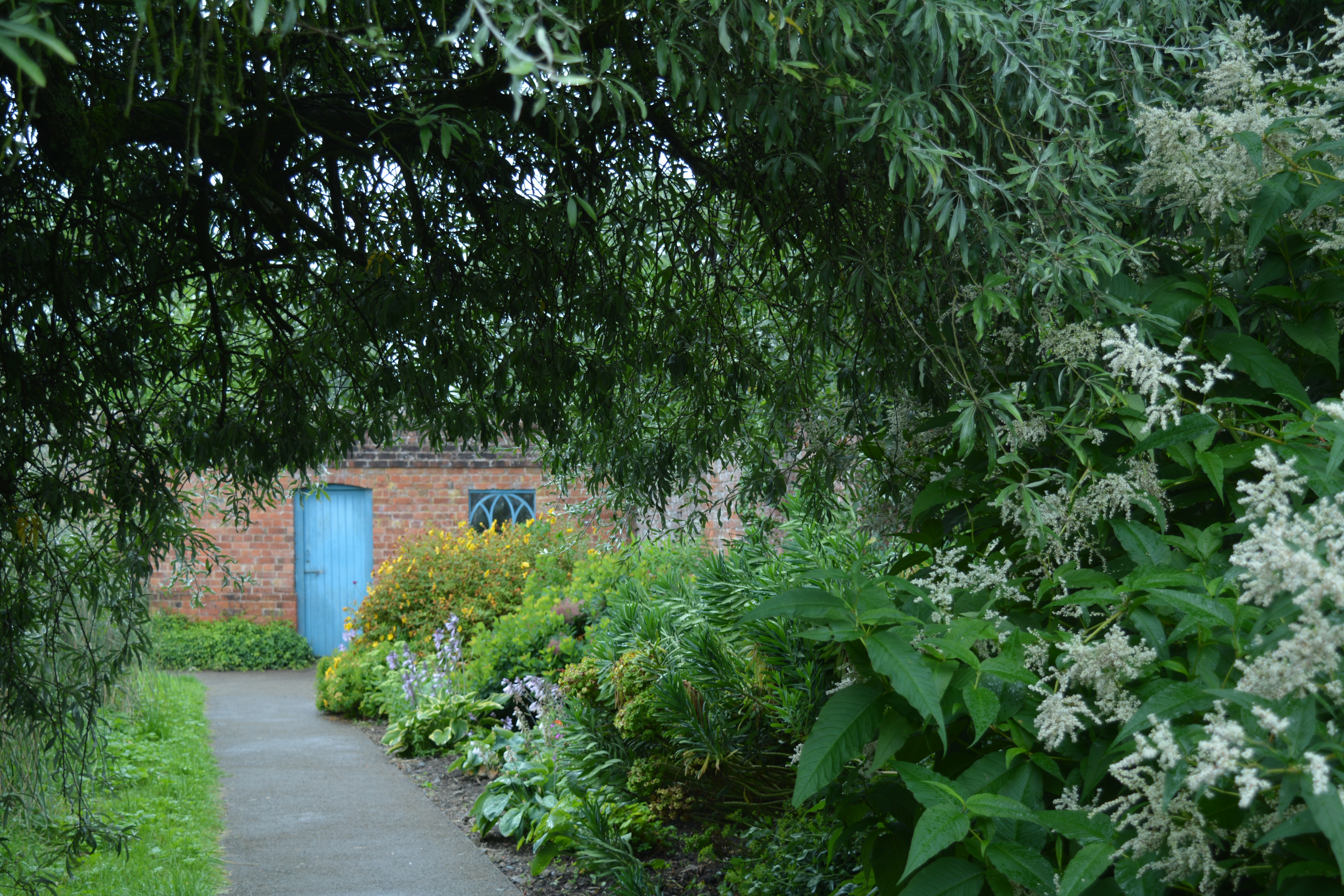

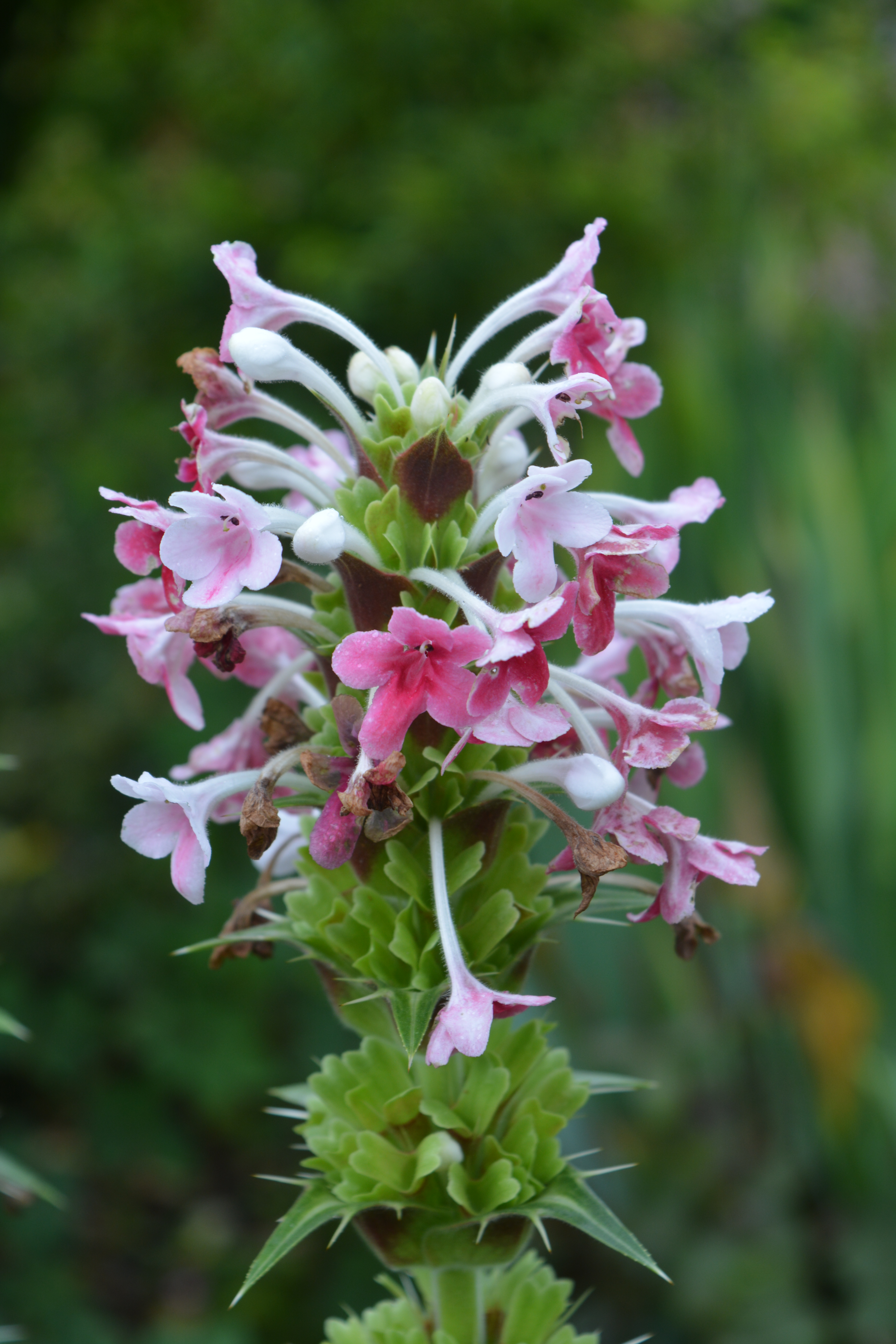
There were few Rose flowers to be seen on this visit but perennials did make up for it, with Morinia, Geraniums and herbaceous Clematis taking centre stage.
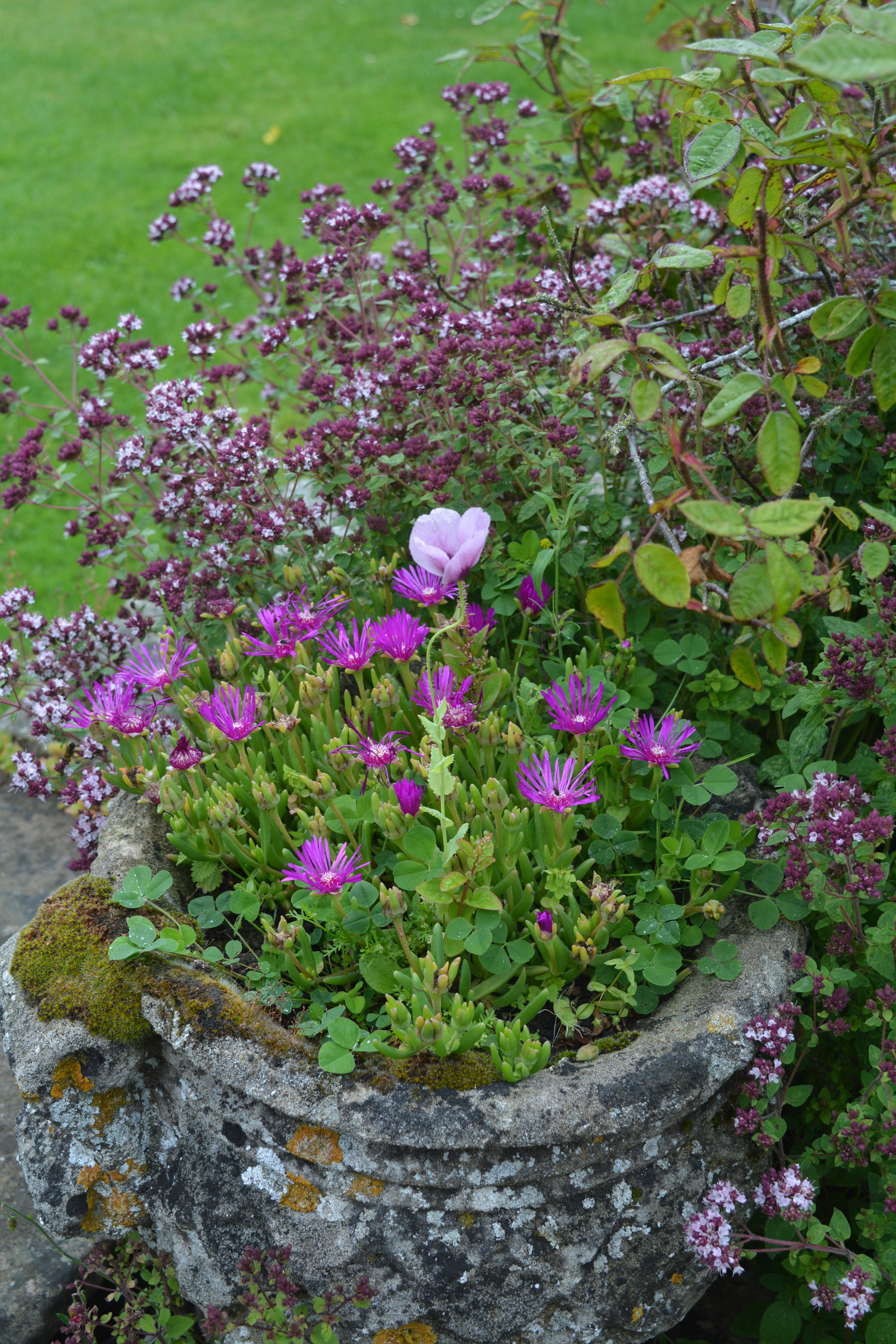
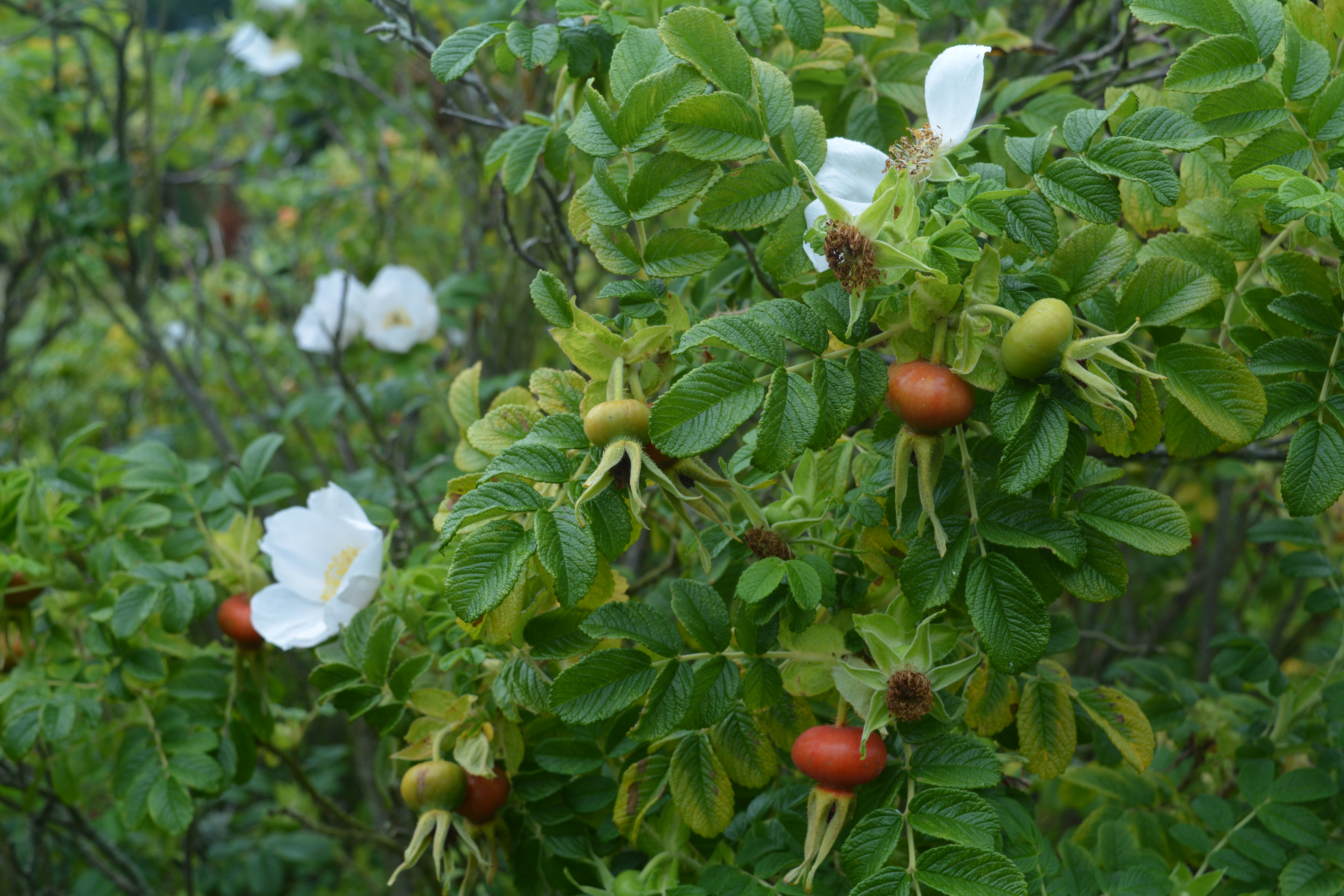
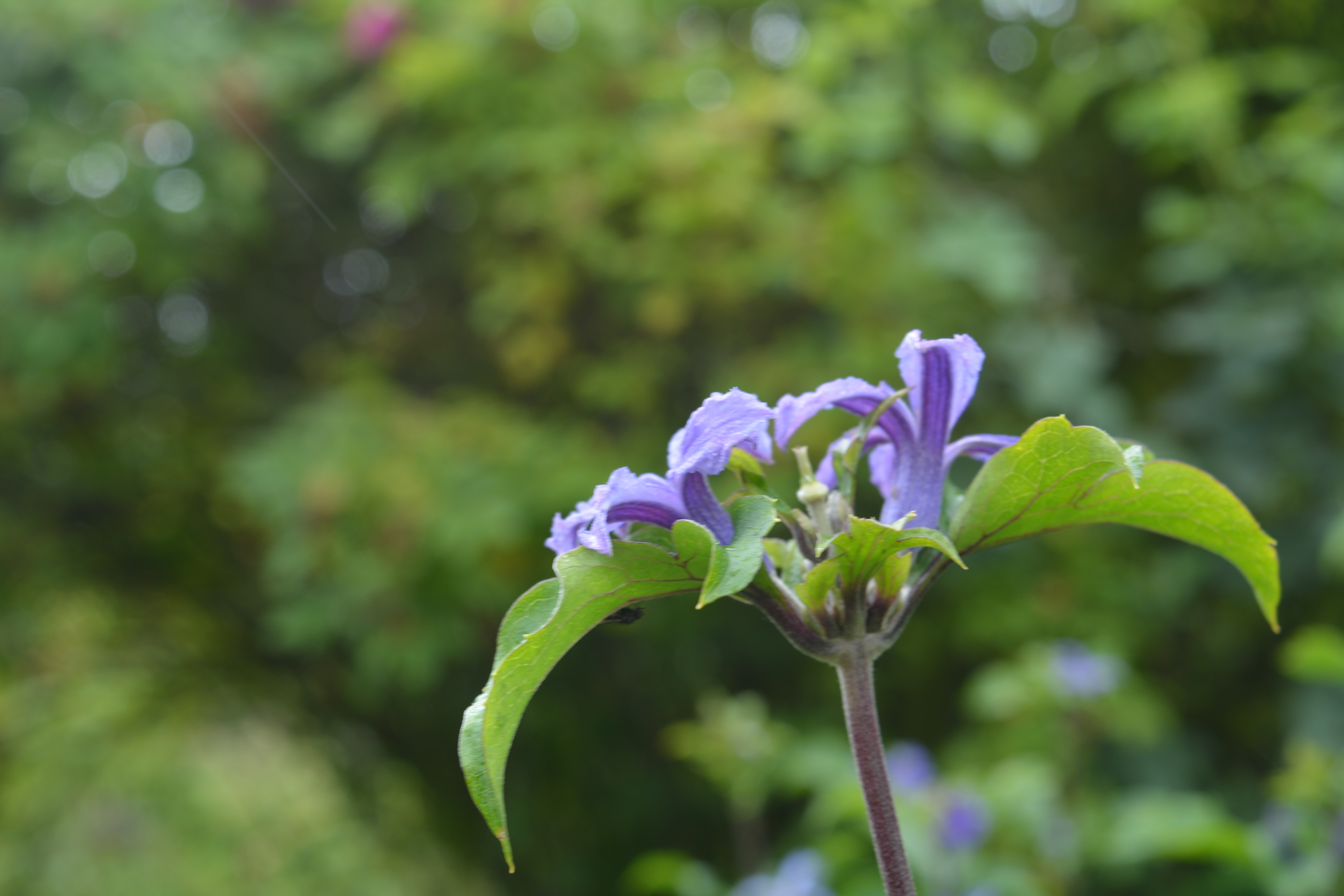
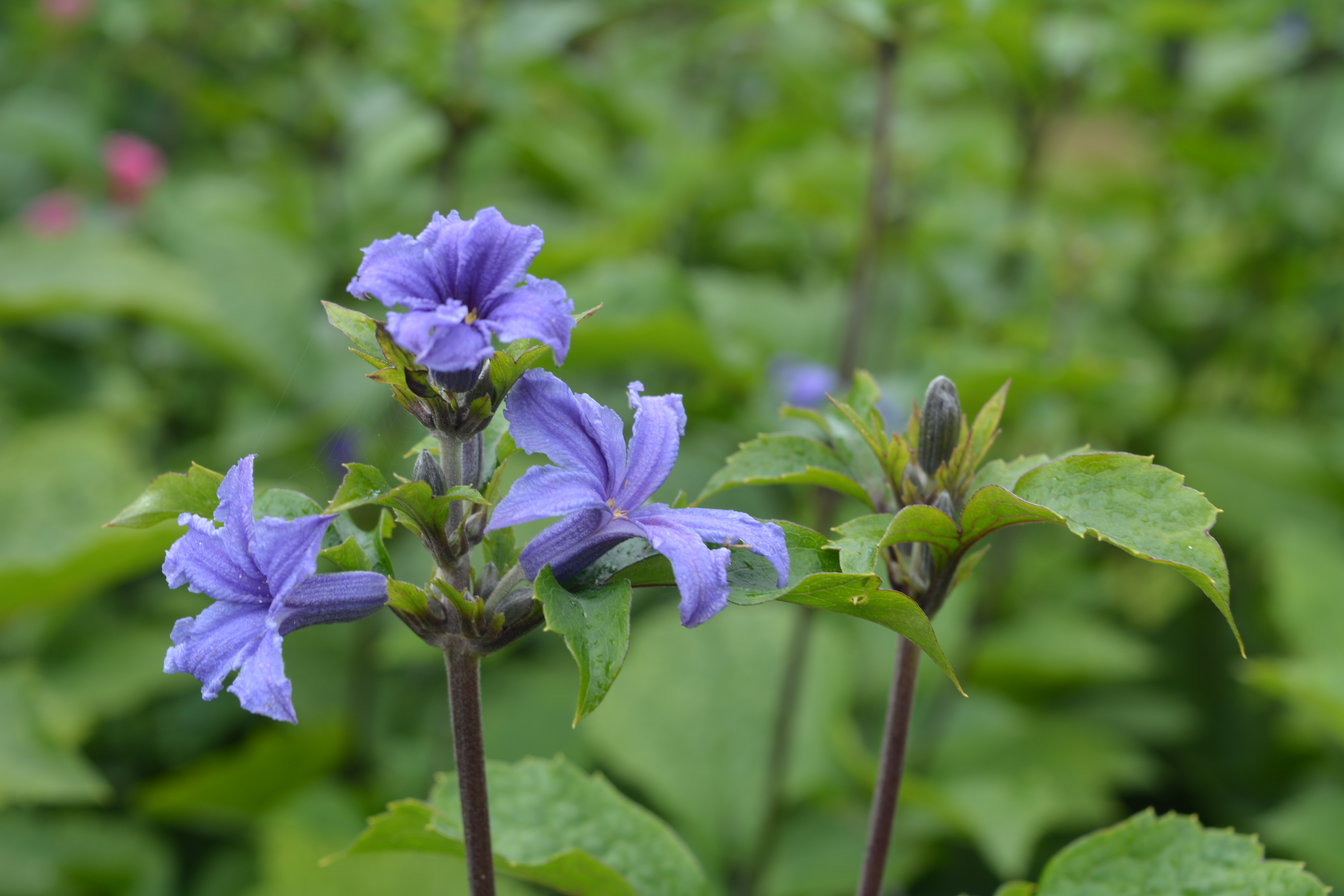

The veggie beds were looking good with healthy rows of salad crops and the newly created willow walkway was coming on nicely.


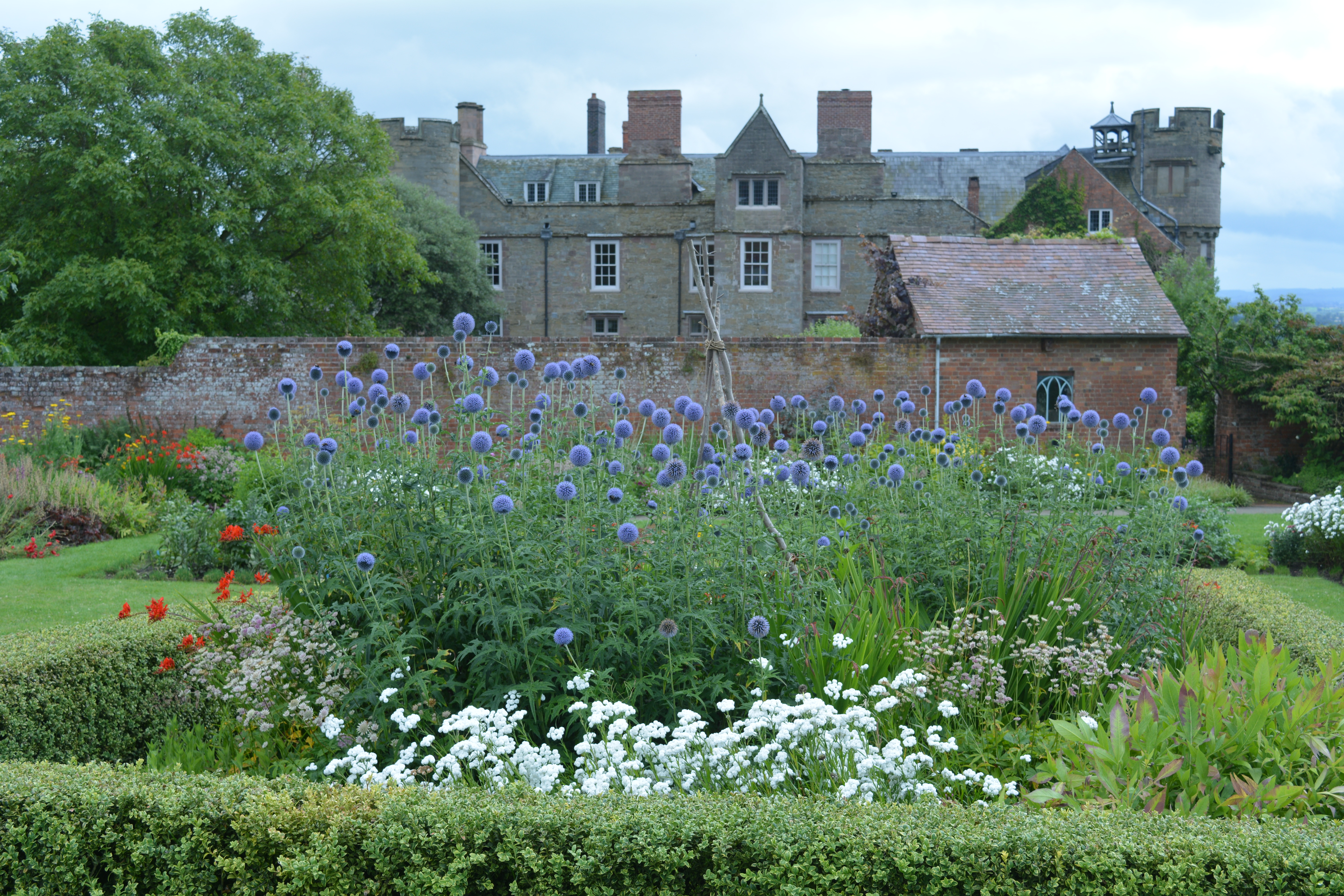
Views looking over the perennial plantings in the main borders towards the castle and its surrounding buildings showed the softness of the plantings.

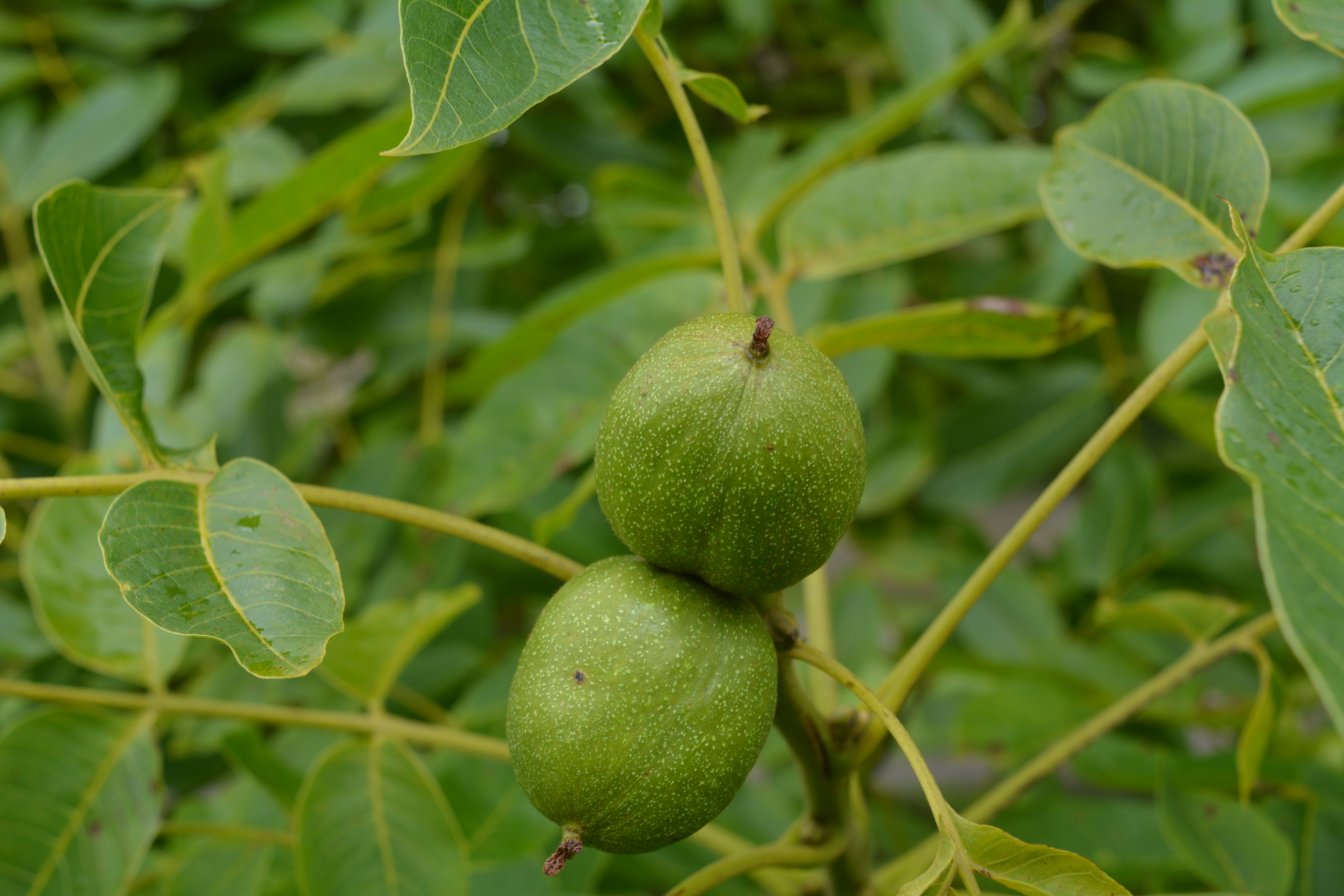
The final part of our monthly tour involved us leaving the shelter of the walled garden with its own special micro-climate and wandering towards the castle followed by a walk around the perimeter of the building. We noticed that the old Walnut tree is now loaded with green shelled nuts so it looks as if it may produce an impressive harvest in the autumn. Our next visit to Croft Castle will be our August one so we will be able to see if the nuts are still developing.


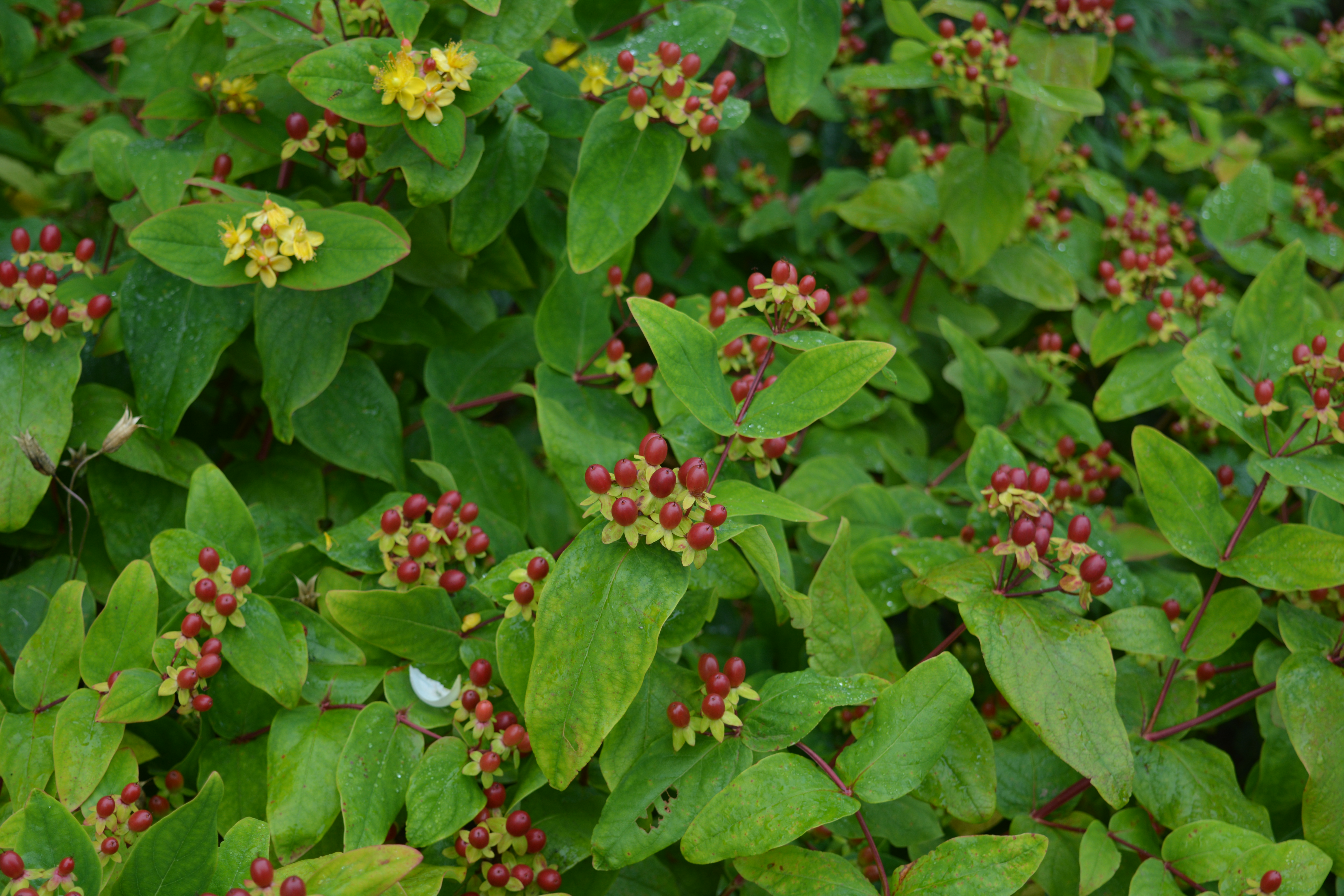
In this post we will be looking back to a garden visit we made in mid-May when we visited a garden near Welshpool just over the border into Wales but still only a half hour drive away. The last time we had visited the gardens at Glansevern Hall was about ten years ago when the current owners had just started to rejuvenate the run down gardens.
We arrived to find everything improved so much so that some areas were hard to recognise. It is now a garden of real atmosphere, a truly romantic garden. After parking up in a car park which was a clearing among beautiful mature trees, we entered the garden through a courtyard which would have originally have been the stable block of the hall. Planting in narrow borders at the base of the wall included some interesting plants and some great ironwork.
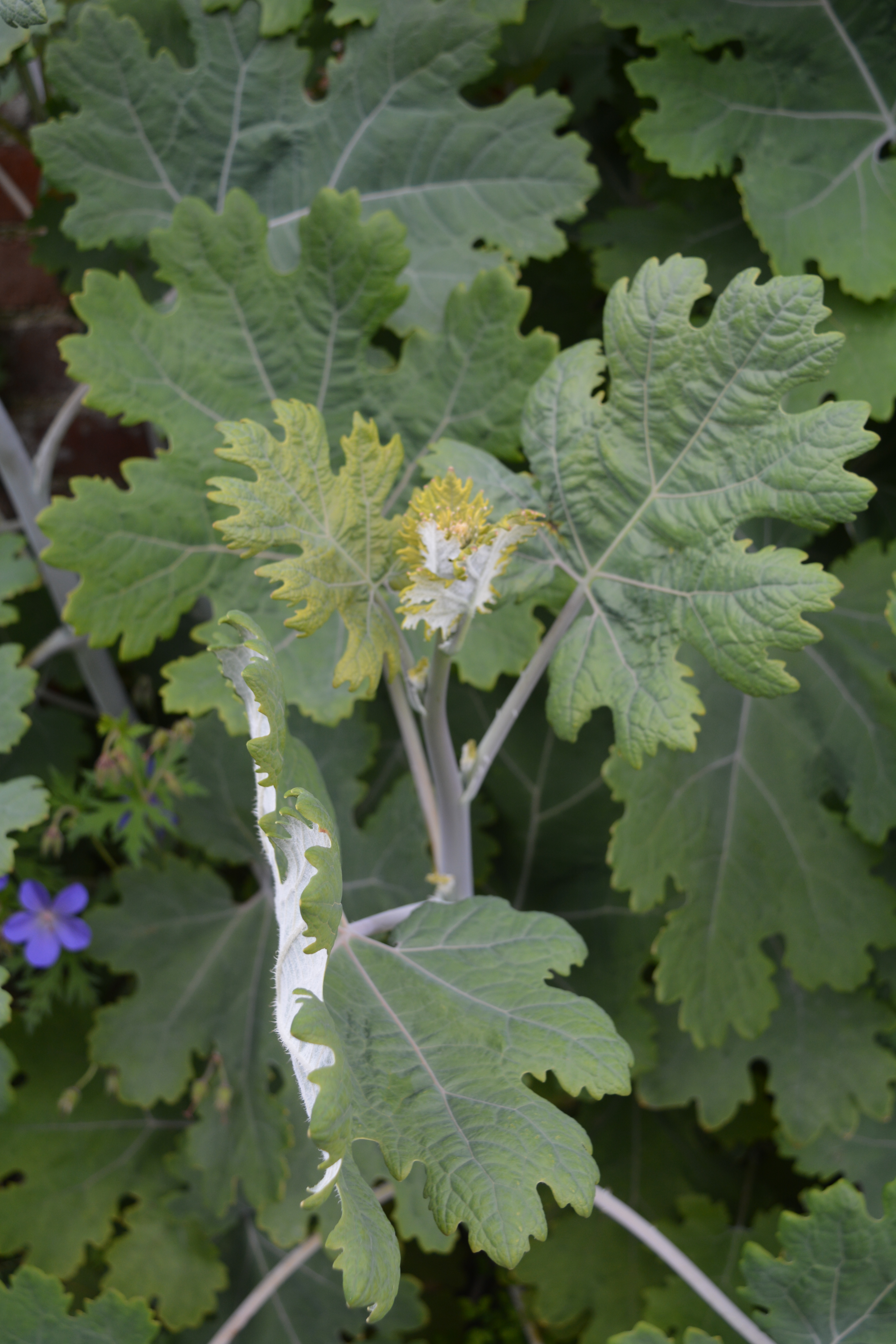


Once outside the courtyard several garden rooms contained exciting plant combinations and swathes of colour and texture.
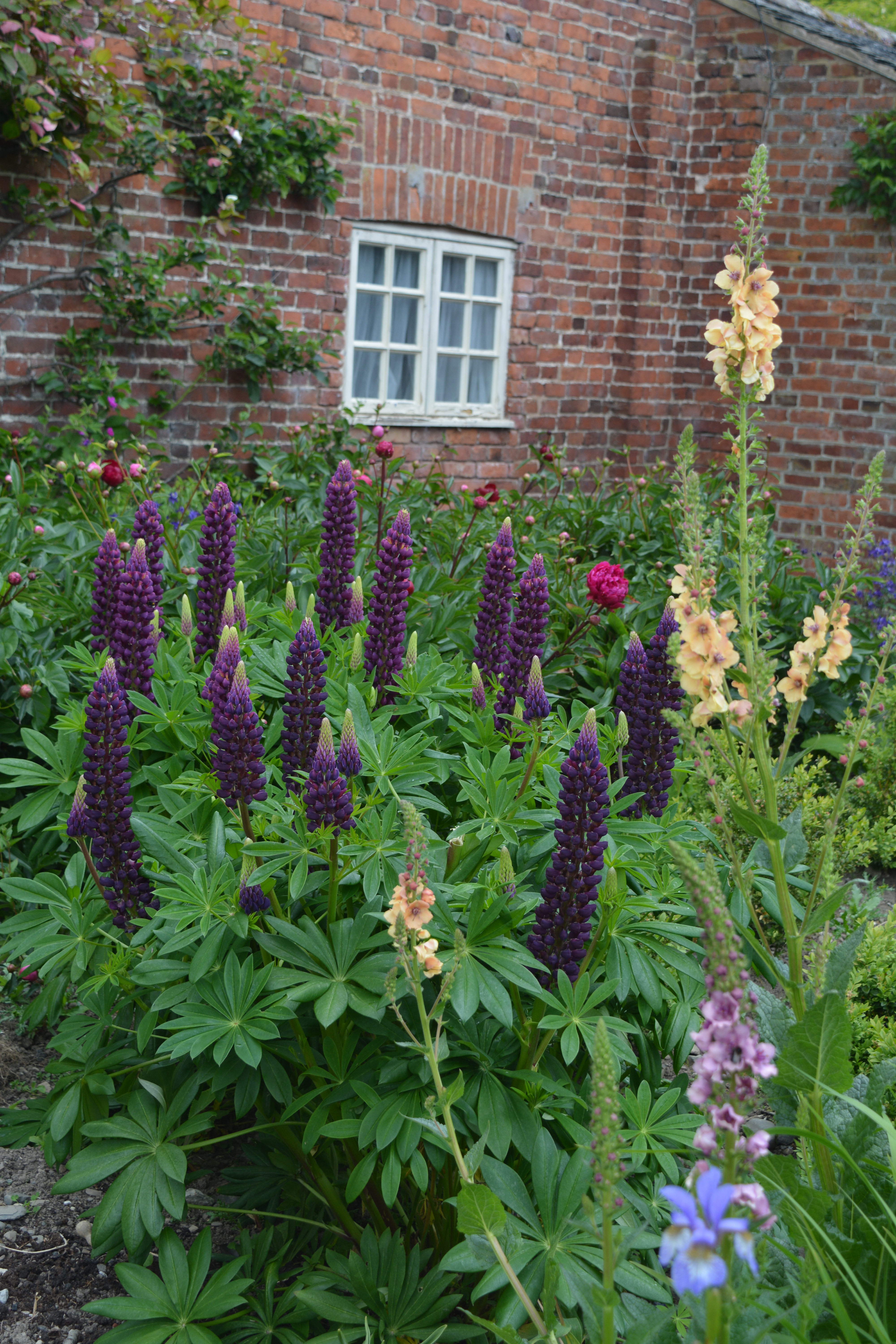


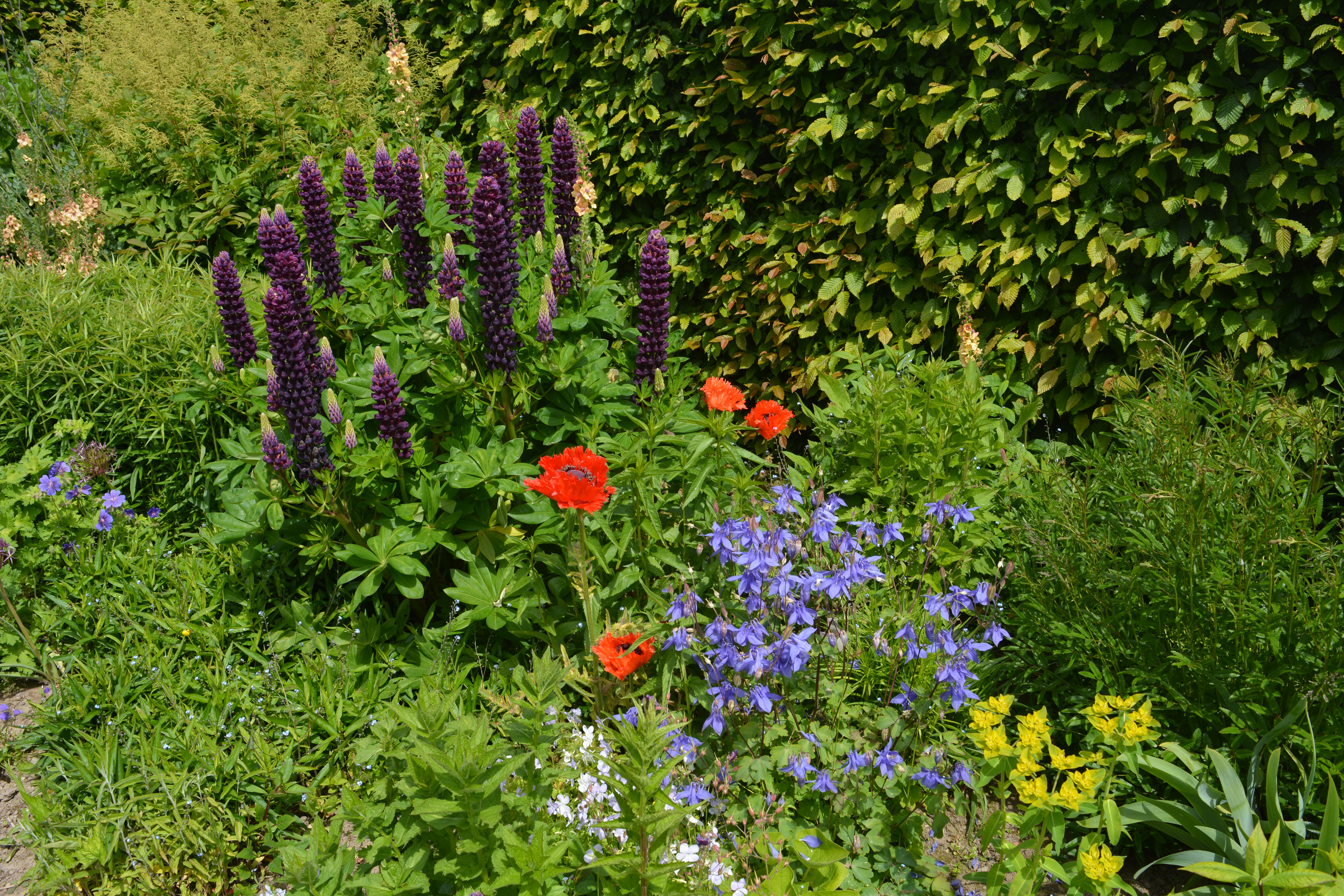
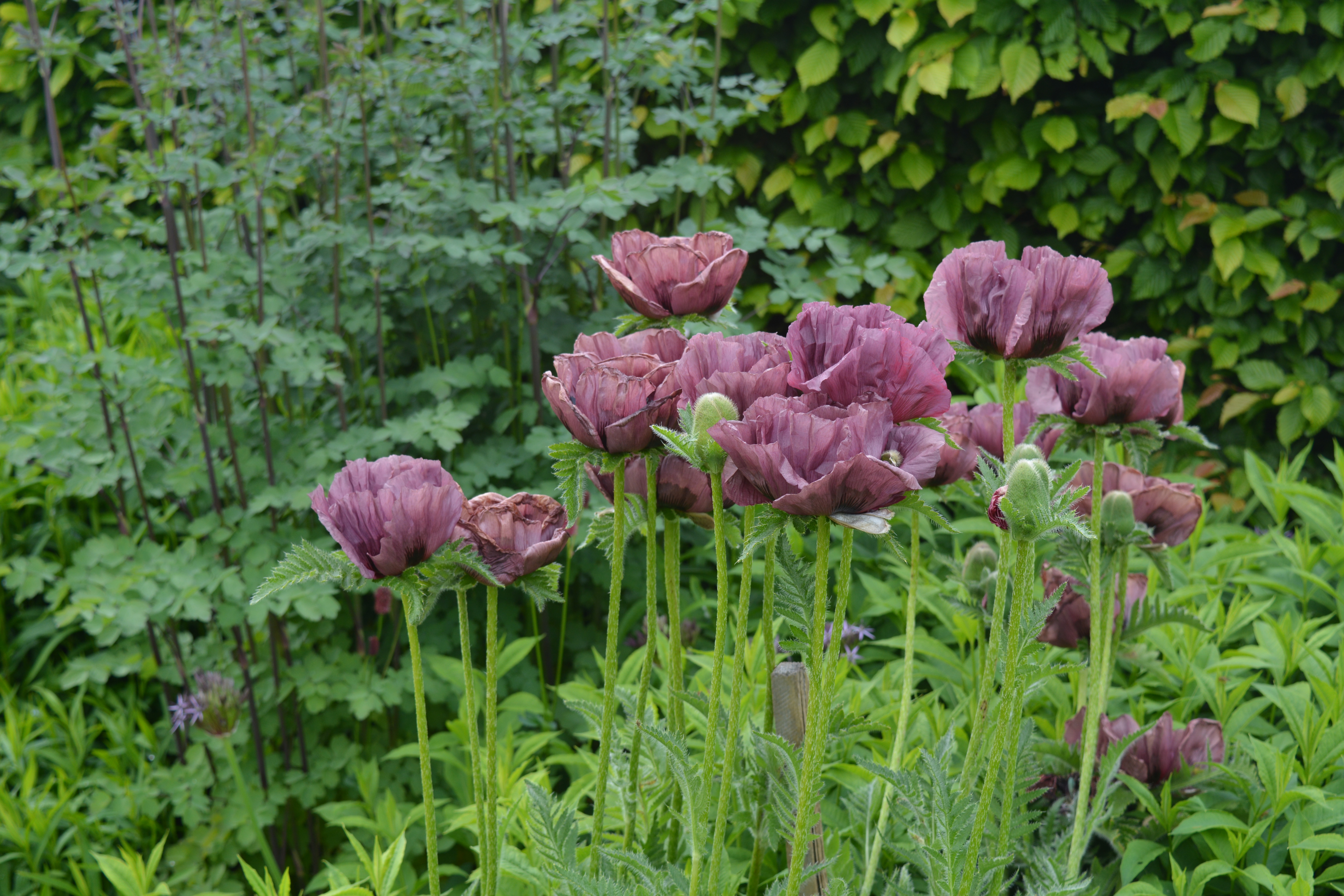
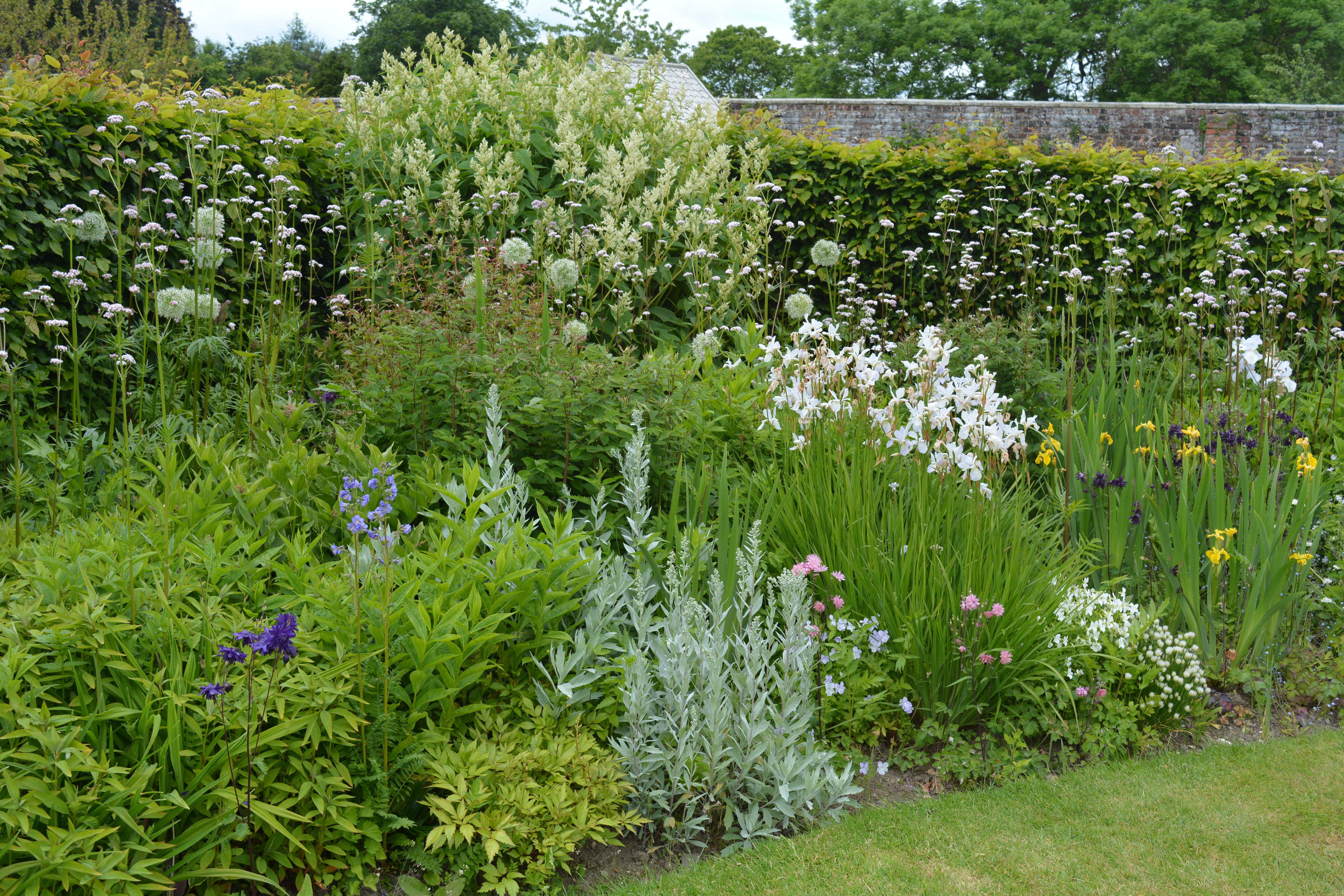
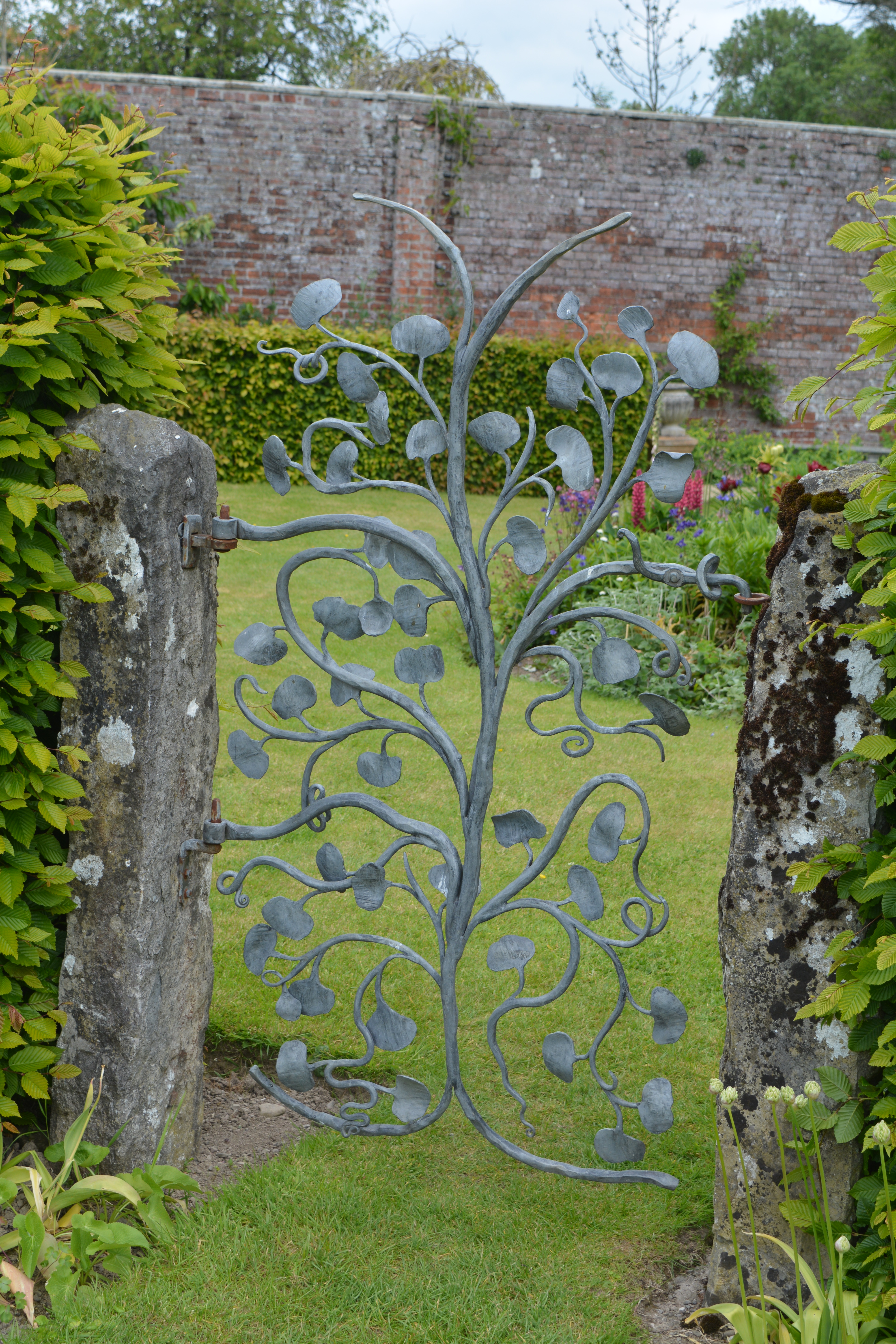
We discovered more wonderful ironwork too!
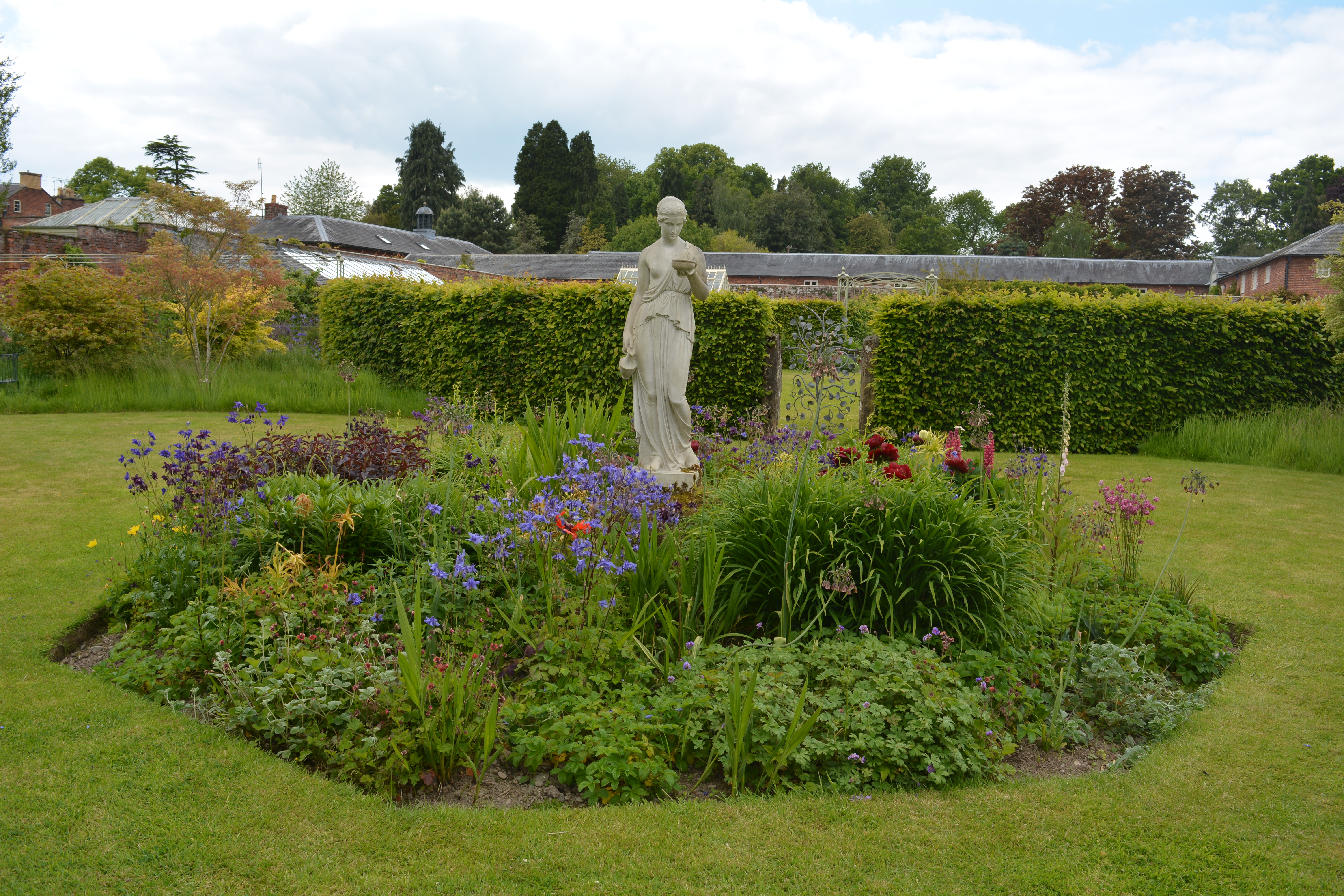
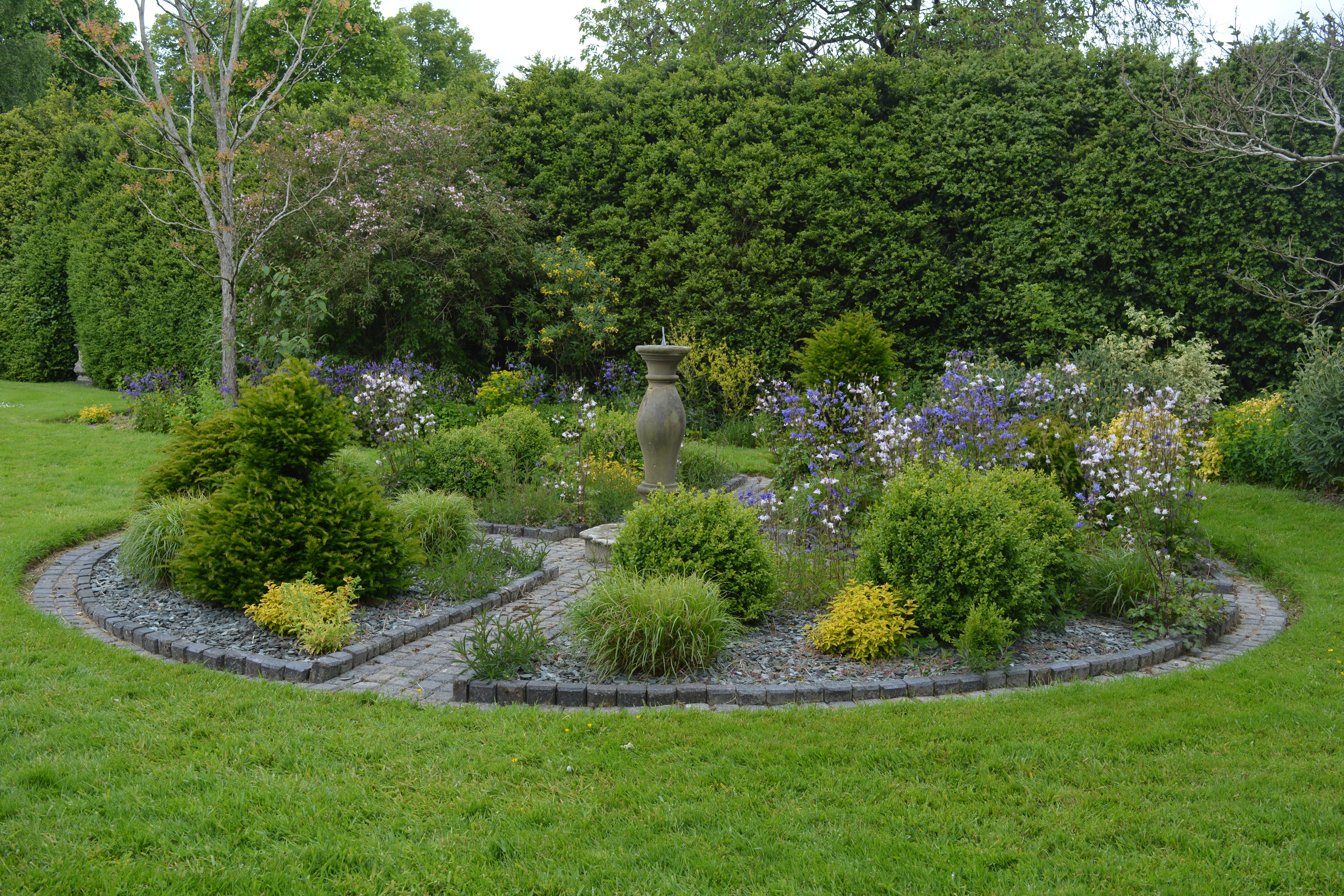
In contrast to the irregularly shaped beds we came across circular beds planted in very different styles.
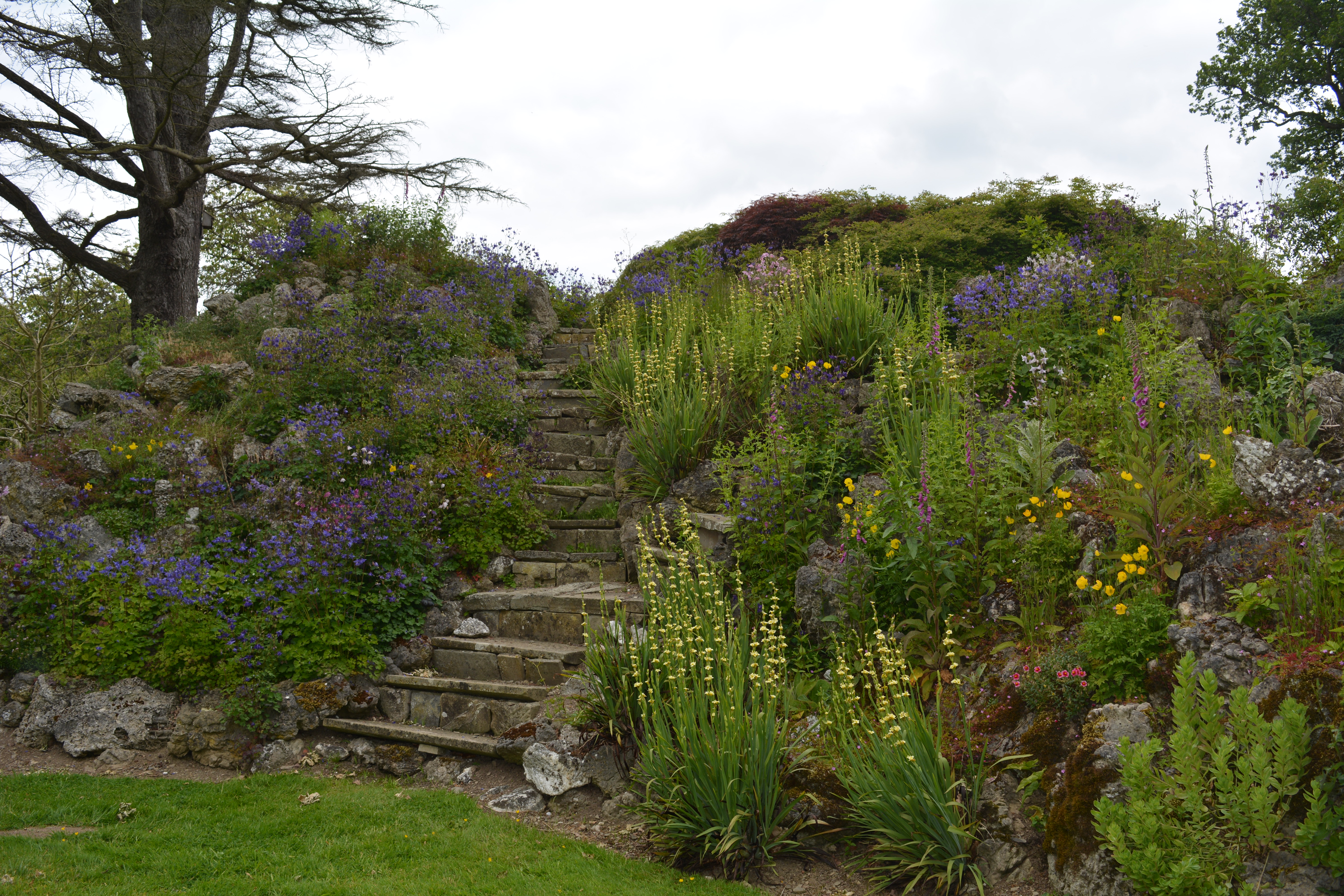
A pergola covered in Laburnum with its bright yellow racemes was a real surprise to find as we began finding our way to the informal meadow areas and their collection of interesting trees and shrubs.


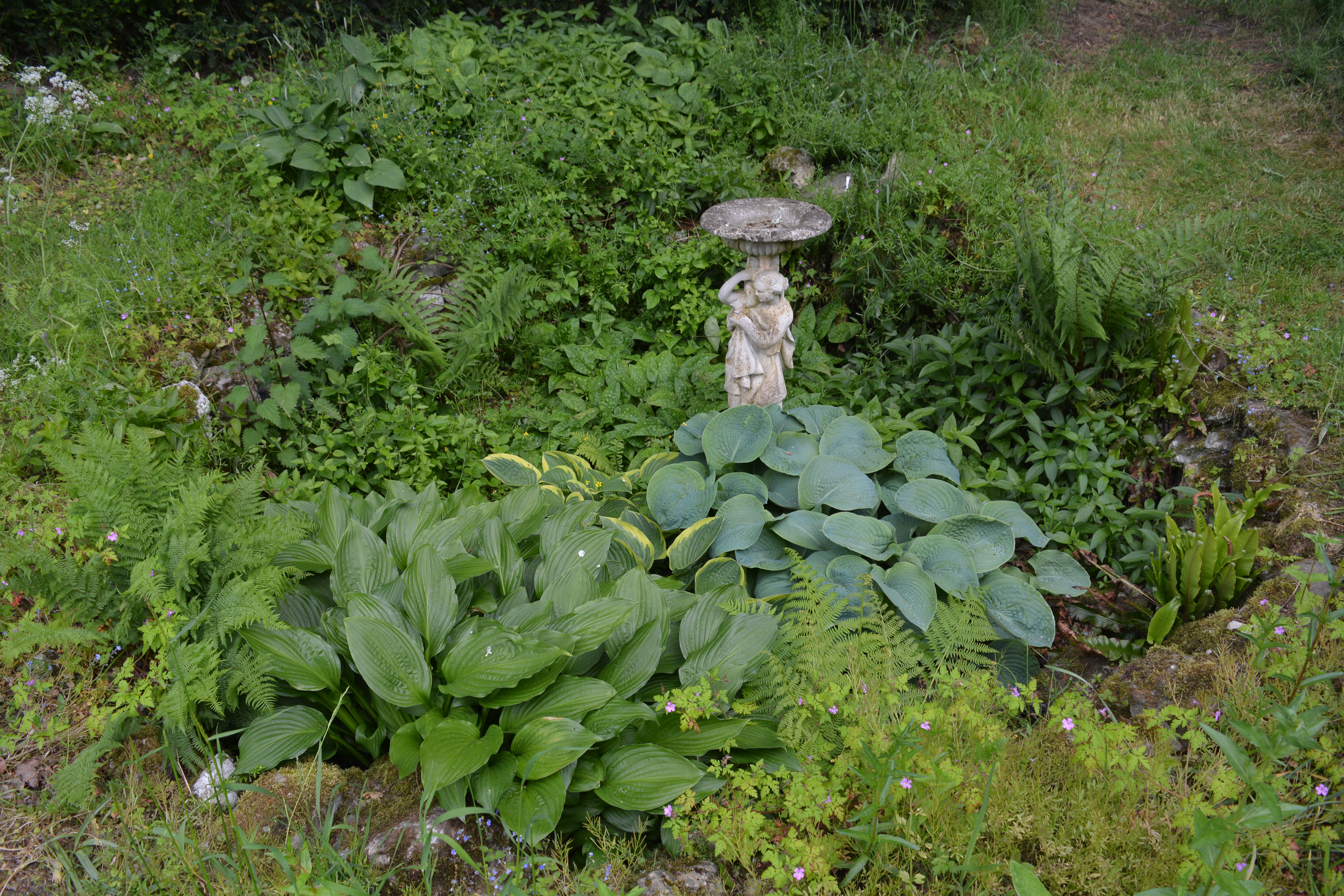

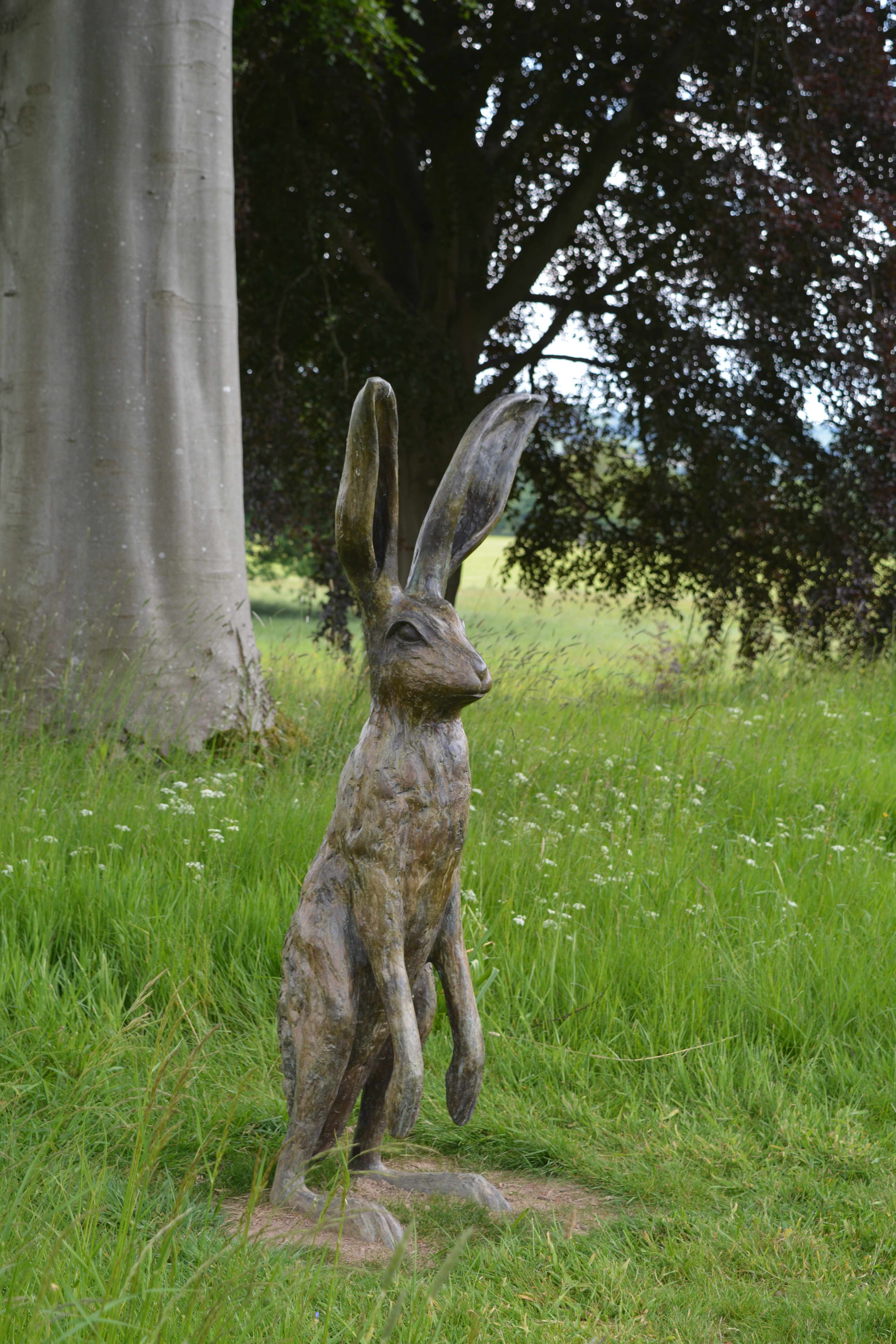
This weeping specimen tree took some identifying. We had never seen one before but eventually came to the conclusion that it was a Weeping Mulberry, Morus alba pendula. A real beauty. The sculpture and the Viburnums were much easier to identify.


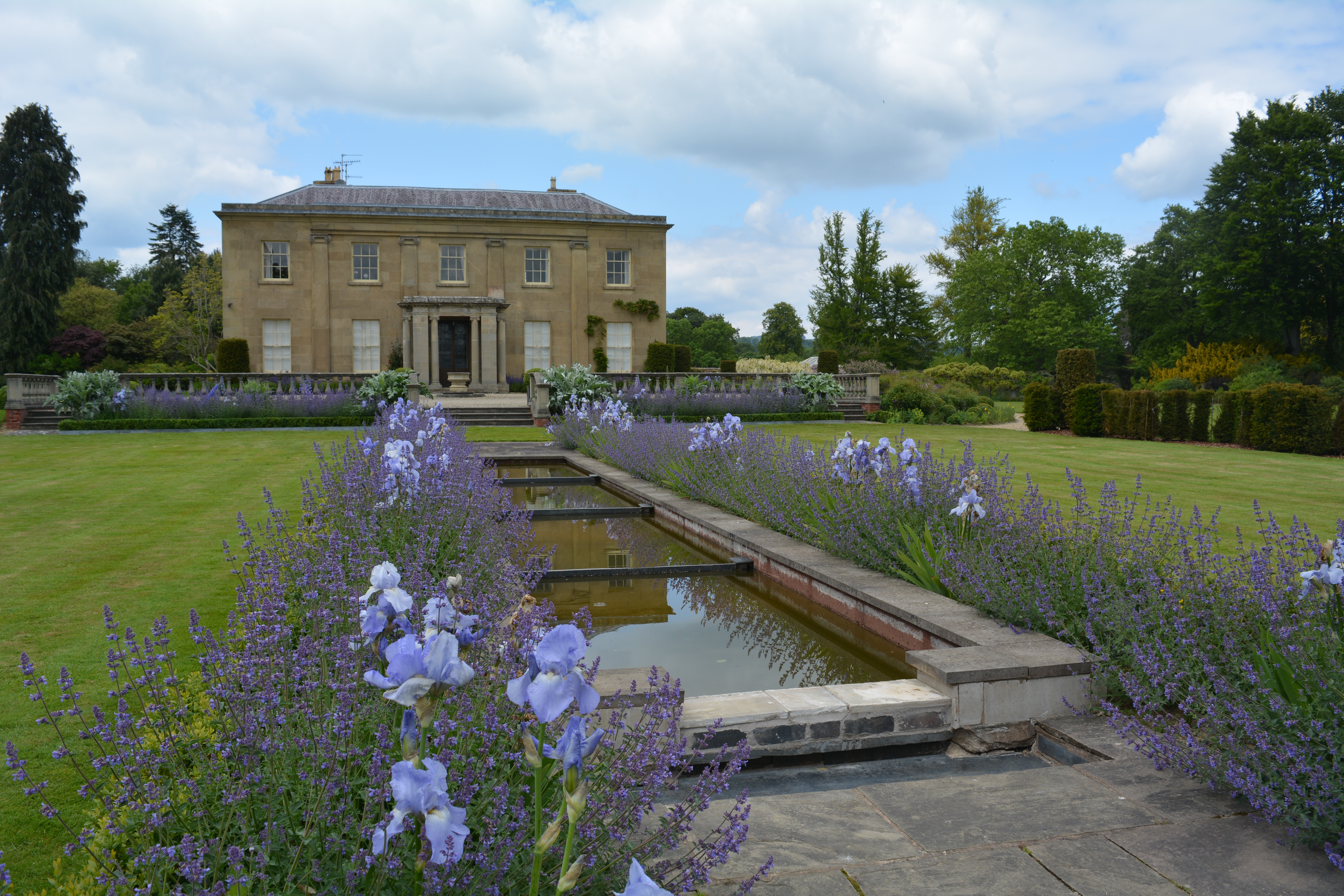
The gardens close to the hall itself were much more formal and had an “arts and crafts” feel to them. The colours of the planting were most unusual in different pale shades of blue around the front and shades of yellow along the side borders.


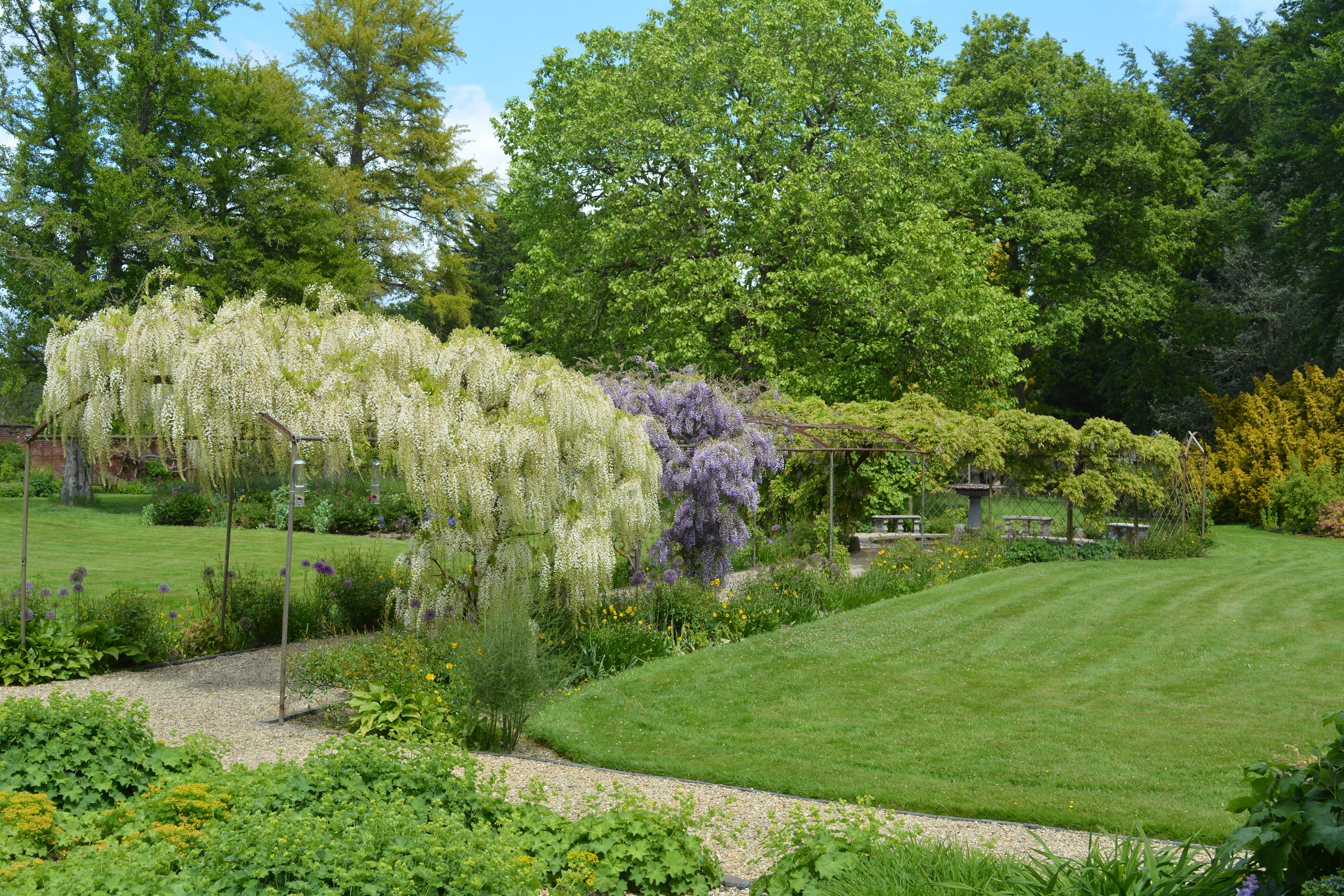
Moving away from the hall we walked beneath a wonderfully colourful and highly scented pergola swathed in Wisteria with its long white and blue racemes of flowers. Beneath the narrow borders were full of purple headed Alliums.


After a quick break for coffee and cakes we traced the path around the lake which was surrounded by specimen trees many rare or unusual, some we had never seen before and a couple we had never even heard of!


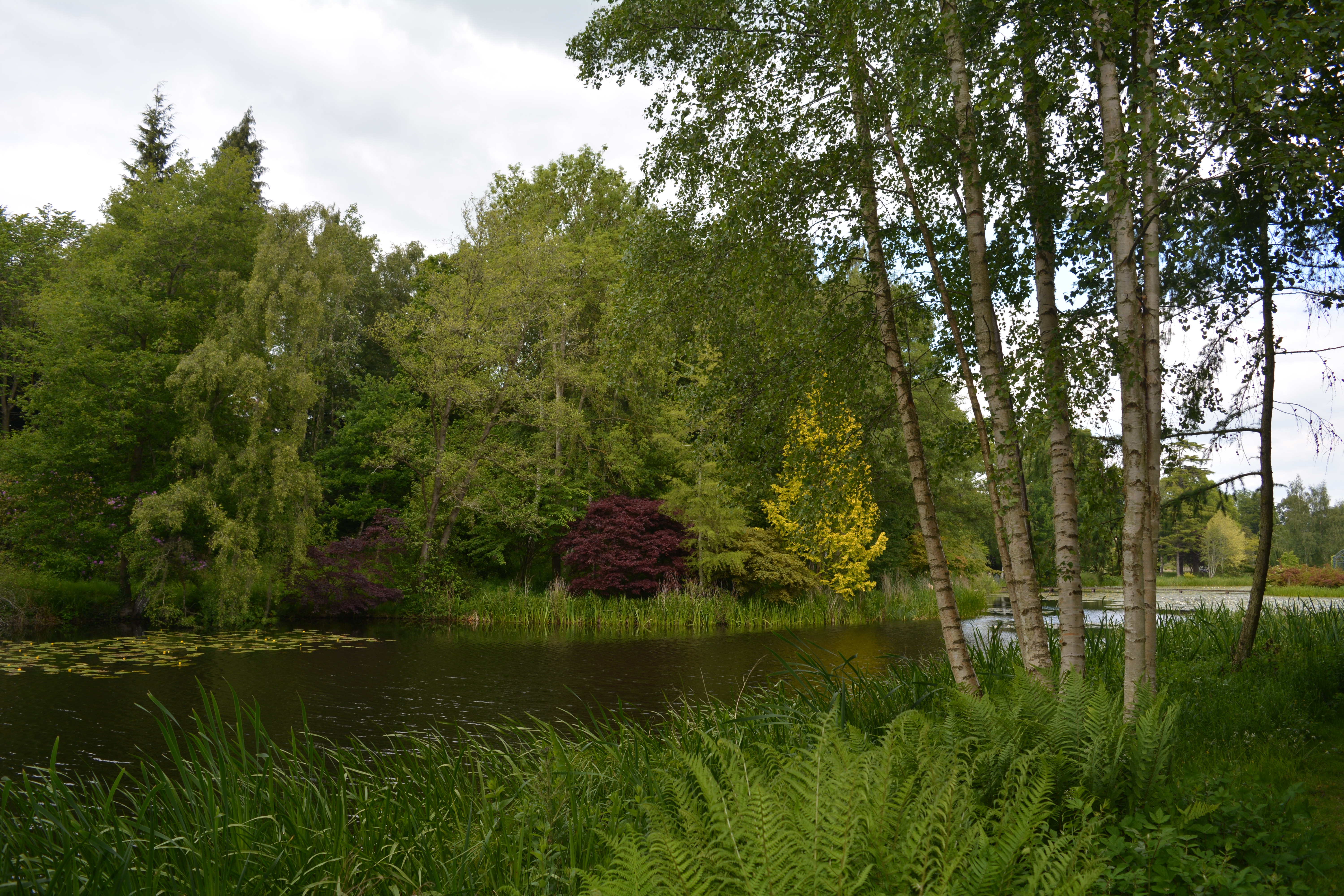

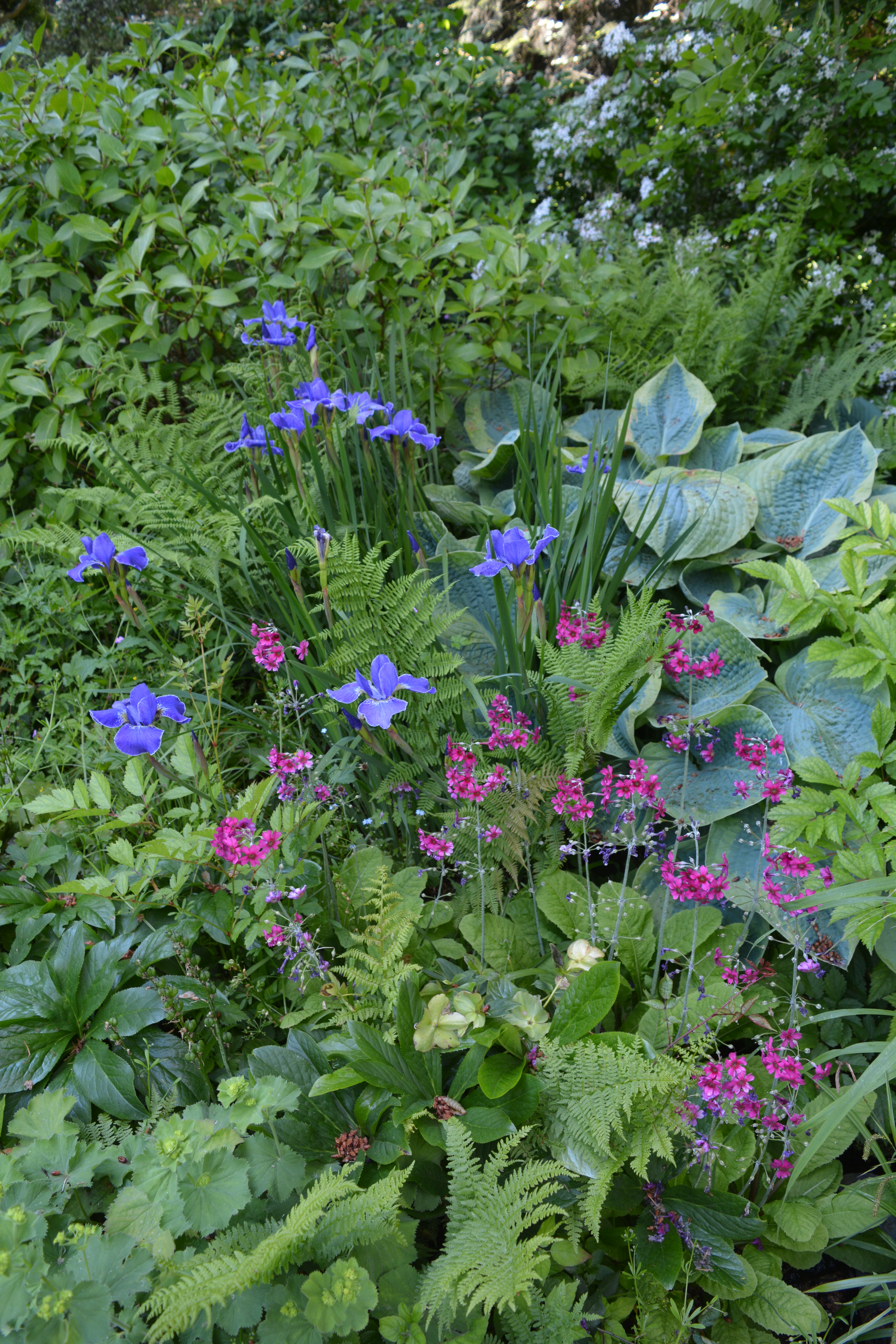

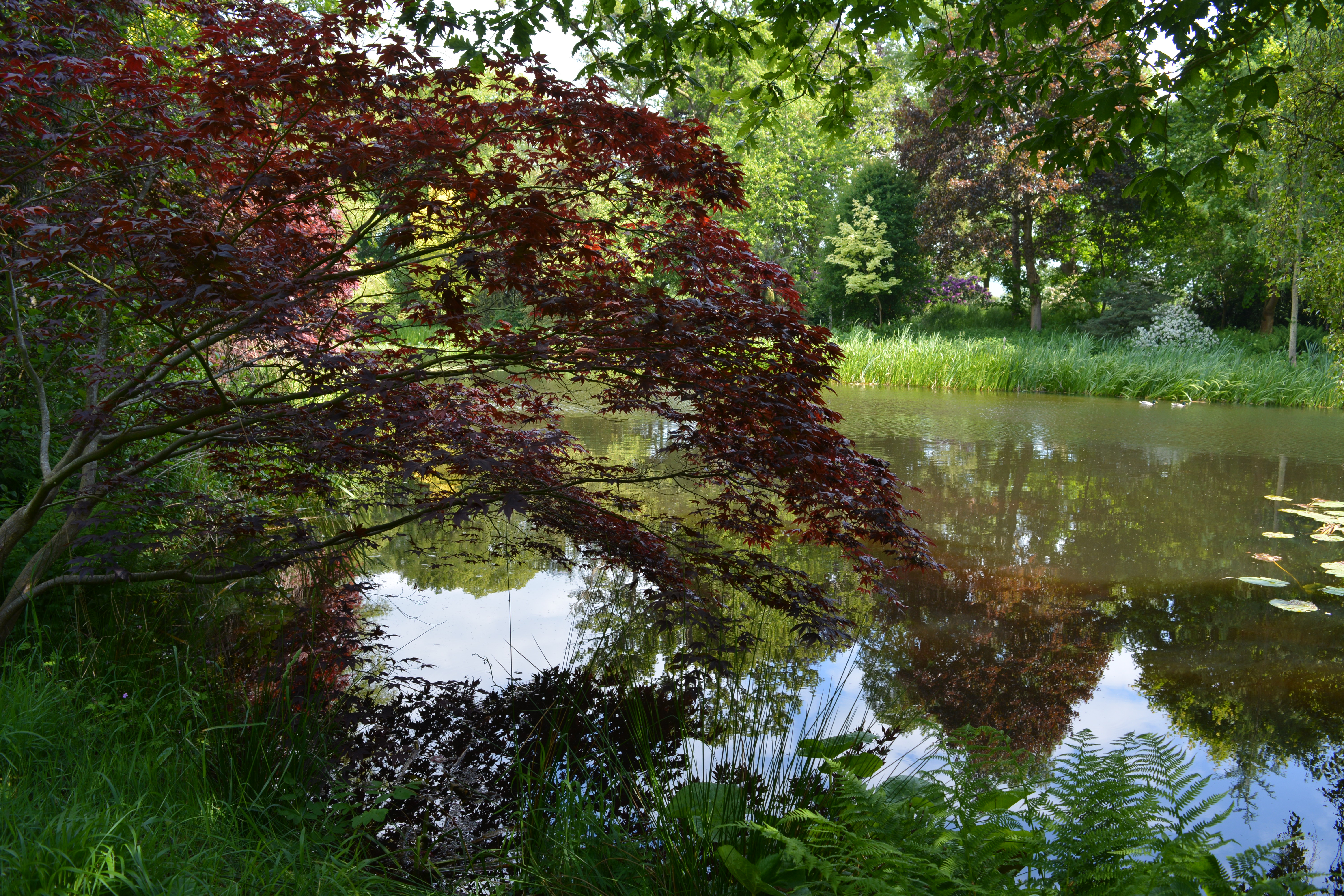

We had a great day at Glansevern and came away amazed at how much work had been done developing the gardens into such a romantic place.
On our allotment site, Bowbrook Allotment Community, we try to be as inclusive as possible and encourage everyone to become members, take part in our activities or simply visit us to enjoy our special community garden.
So far this summer we have hosted youngsters from our local Beavers and Rainbows groups and more elderly groups from the Fitz Friendship Group and the National Women’s Register.
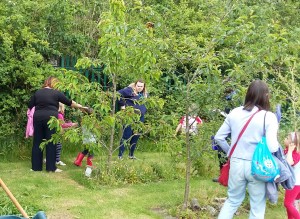
The Cubs came on a wet evening to help us with garden jobs in our borders, weeding and mulching. A week later we were joined by our local Rainbows group who came for a wander around our Interest Trail using one of our quiz sheets. They enjoyed the excitement of our wildlife areas and community gardens. The pics below show the Cubs weeding the edge of one of our Butterfly Borders and the Rainb0ws exploring our Fruit Avenue.
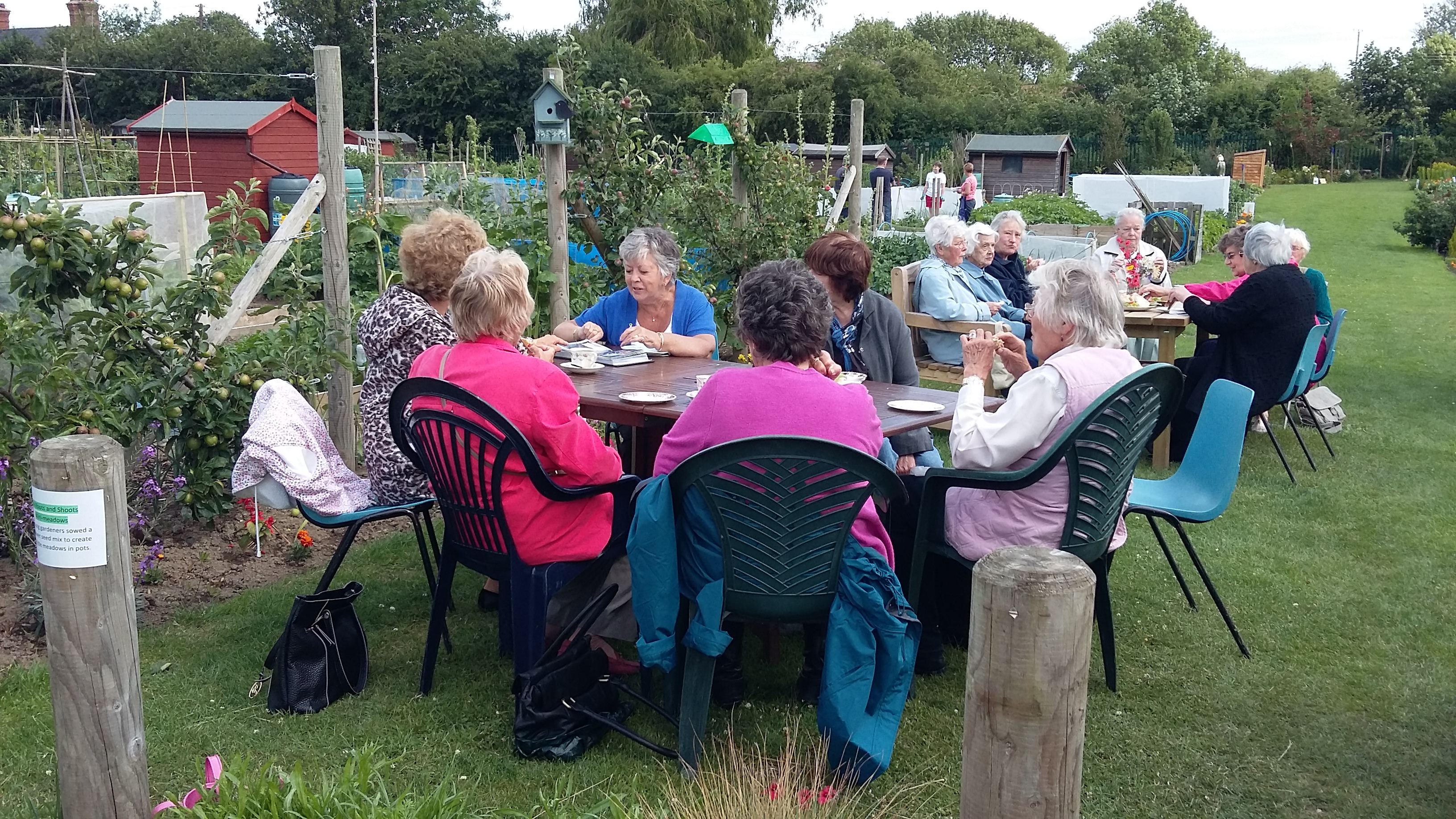
This week we entertained a group called the Fitz Friendship Group who were mostly elderly but equally excited at visiting our site.
We serve our visitors with tea/coffee with cakes and we have our own tea committee who call themselves the Tea Bags. The first two photos below show our beautiful antique cups and saucers lined up ready to be filled and our selection of tables and chairs ready to be used.


Anne can be seen working away in the kitchen area of our communal hut, slicing the home-made cakes ready for serving.


When our visitors arrived we assembled for a quick background talk about our site explaining how we have developed over the six years of our existence, before setting off on a gentle stroll around.


As we walked the trail Jude, Sherlie, Pete and I pointed out areas of interest. We were amazed how many memories our wildflower meadows evoked. It was a slow but very successful wander. Several of the group found walking difficult but showed such determination to get as far as they could.
We call these sessions “Walks and Talks”, and the fees our visitors pay go towards the charities of the National Garden Scheme. The refreshment money helps to run the sessions and enables us to purchase equipment to make such days easier.
After the “Walk and Talk” refreshments were relished by all. The “Tea Bags” waited on and the four of us who led the tour wandered between tables answering questions.
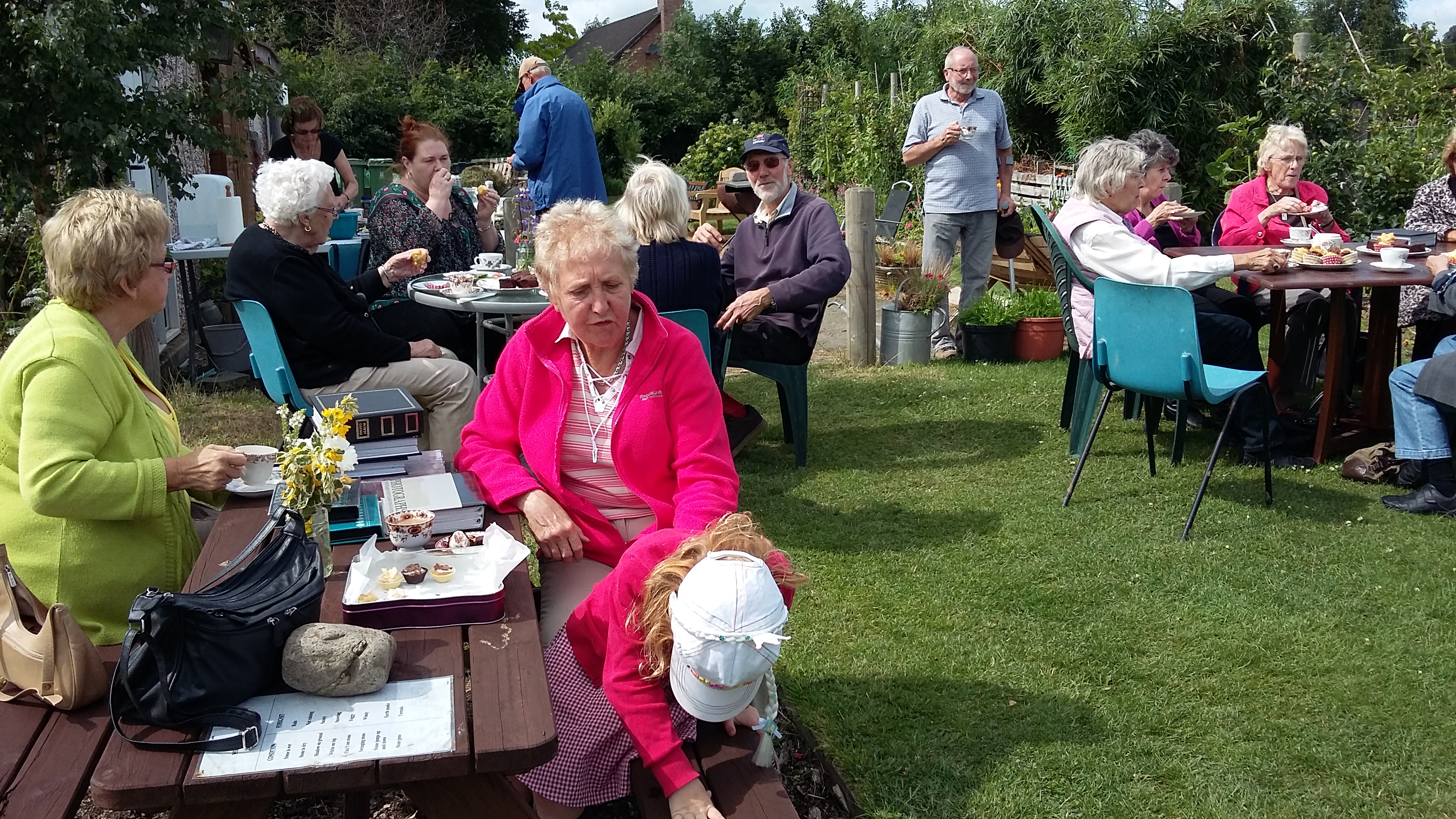
Here I am with tea cup in hand trying to share words of wisdom!

Our collection of camping stoves were kept busy boiling water to make drinks and the cakes disappeared rapidly.


A great day was had by all and our visitors left tired out but well-refreshed talking about what they had seen.
Within a half hour we had cleared away and all that was left to see of the day was the collection of flower arrangements Sherlie had created for table centres, using flowers picked from the cutting border on our plot. We have another seven groups already booked for the rest of the summer.

We usually go out somewhere on both of our birthdays so today being my birthday, Jude, The Undergardener, decided to take me on a nostalgic trip on an old steam railway line. We often pass the stations and see the track. At times while journeying down the River Banwy valley the track runs quite close to the road out into mid-Wales and towards some of our favourite stretches of coastline.

We drove in to the car park of the Welshpool Raven Square Station, parked up and bought our tickets, which were just like the ones we could remember as children, little card ones which the Guardsman clipped while we sat on the train waiting to leave.

The station building looked so small as we wandered up the path once inside we discovered that a booking office and waiting room were squeezed into it. When we went through the station and onto the platform the building showed its true dimensions.

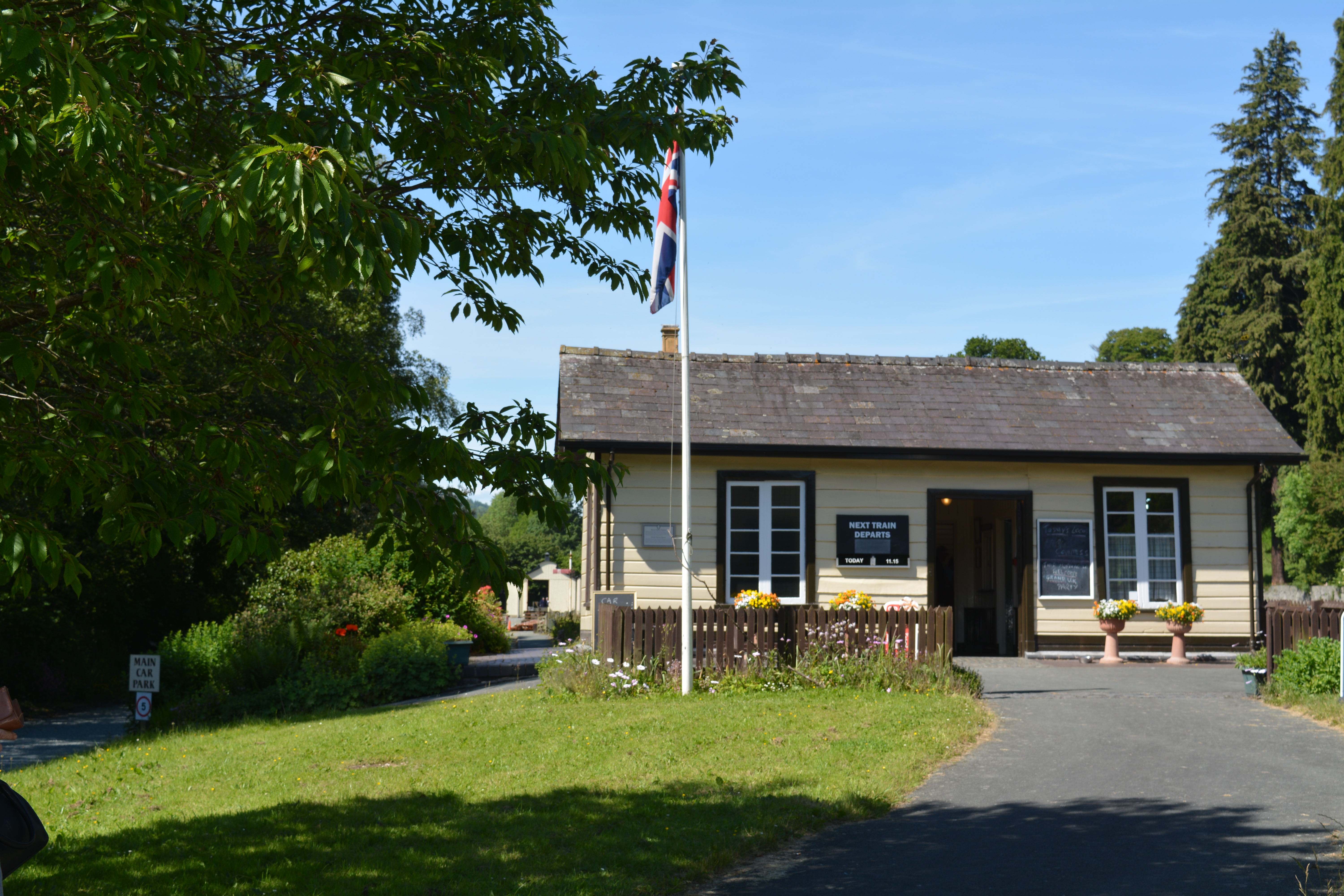
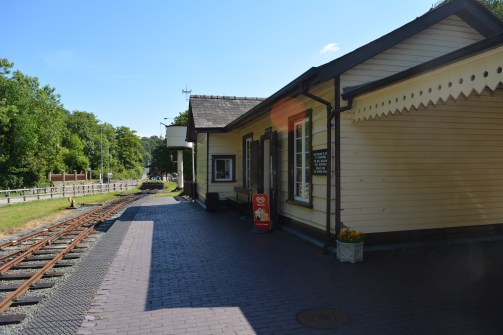
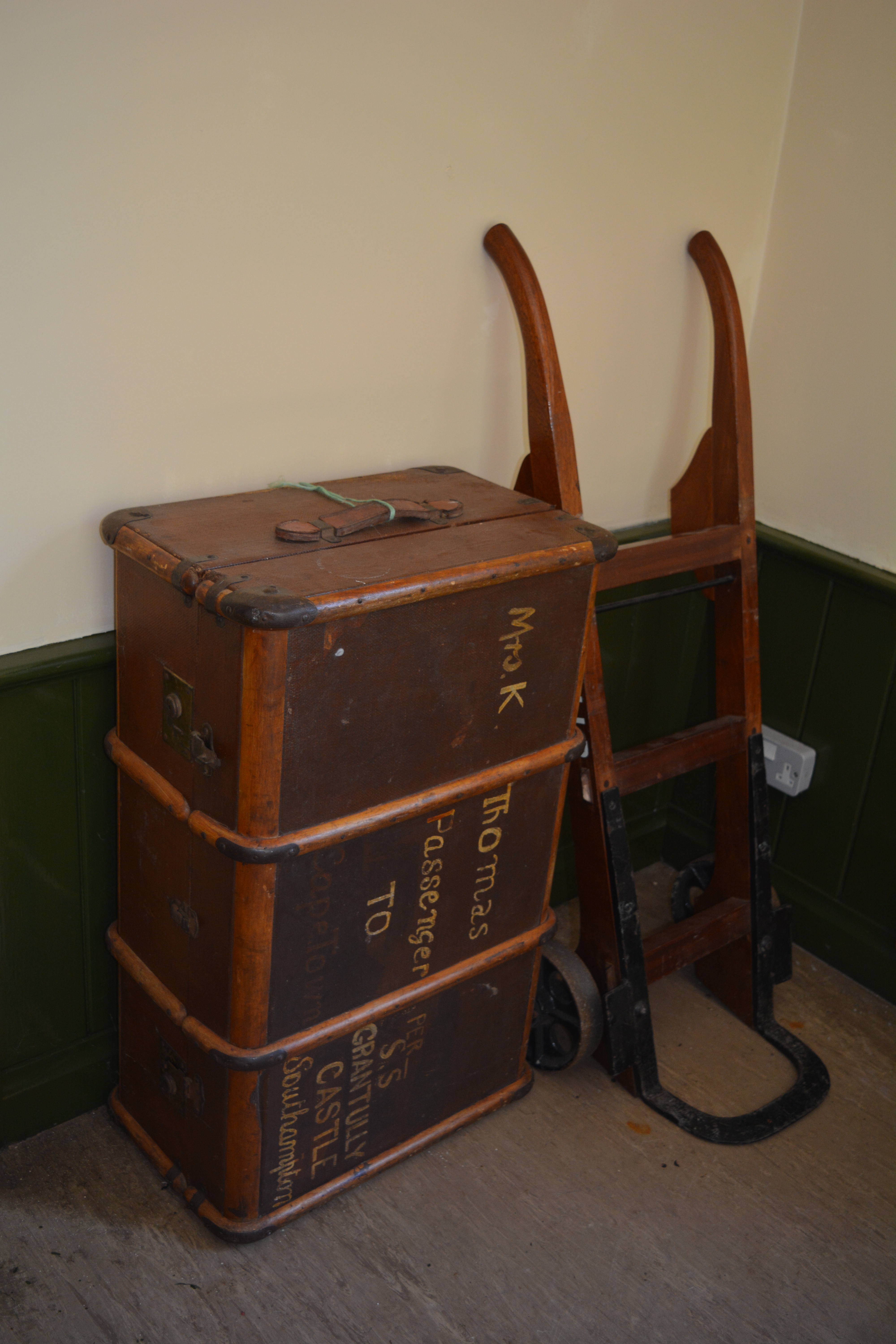
Interesting old signs caught our attention wherever we went. In the waiting room artifacts from the railway’s previous life added authentication.




We didn’t have to wait long before we heard the hoot of the little steam engine approaching the platform.


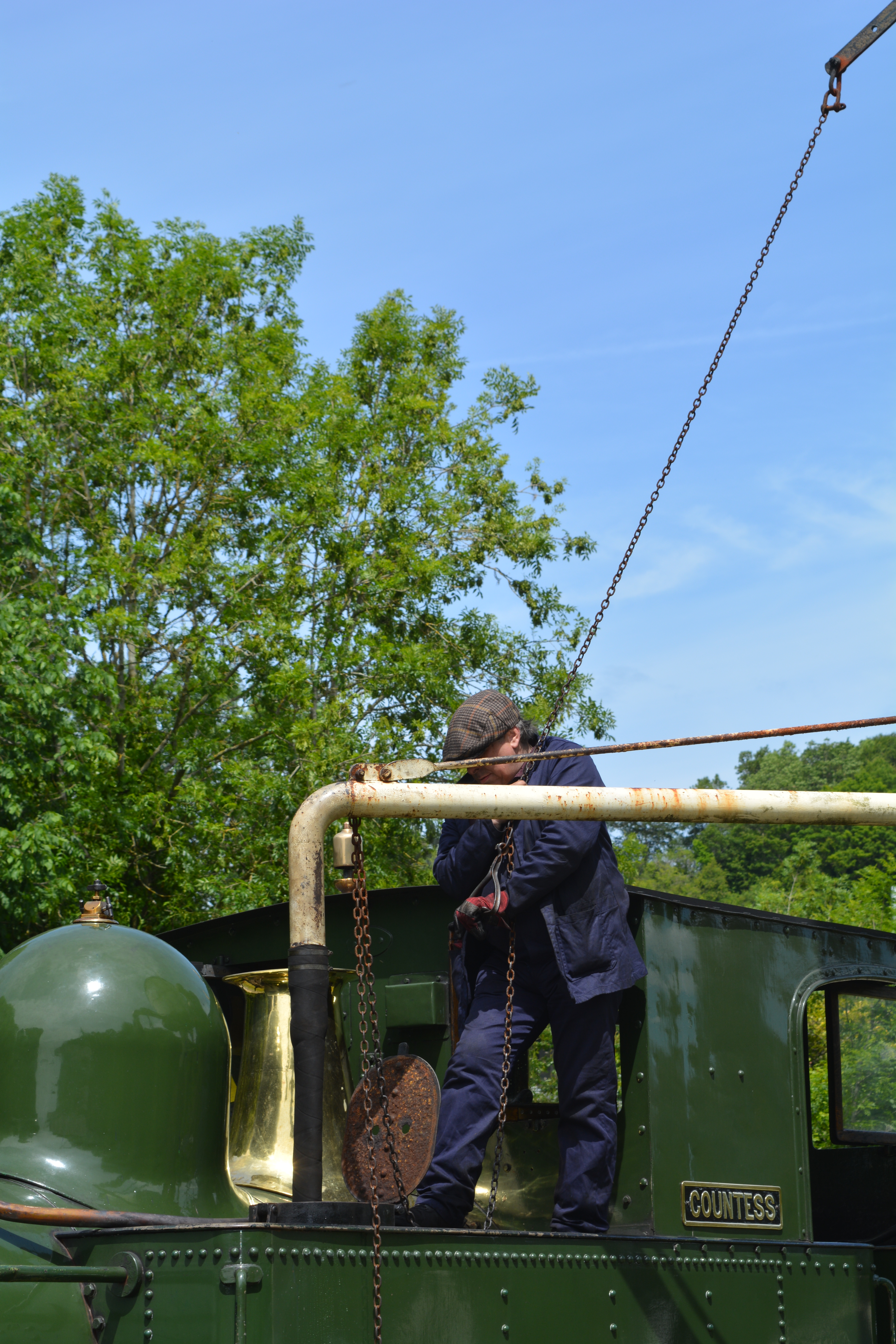
The little engine proudly displayed its name, Countess, on the side of its boilers.

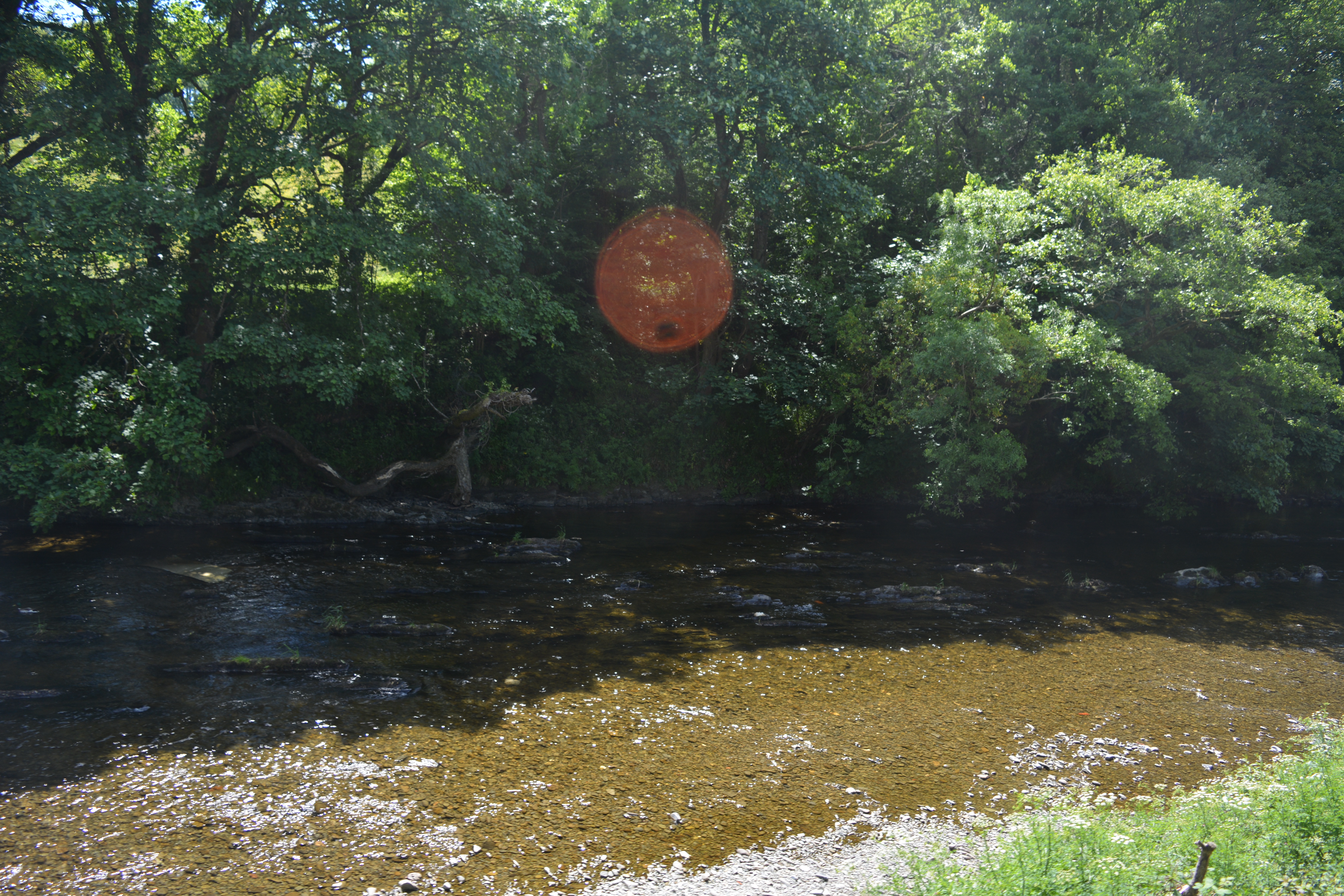
Once steam was up and the Guard waved his green flag the little train moved very slowly away from the station and we travelled along the beautiful valley of the River Banwy.
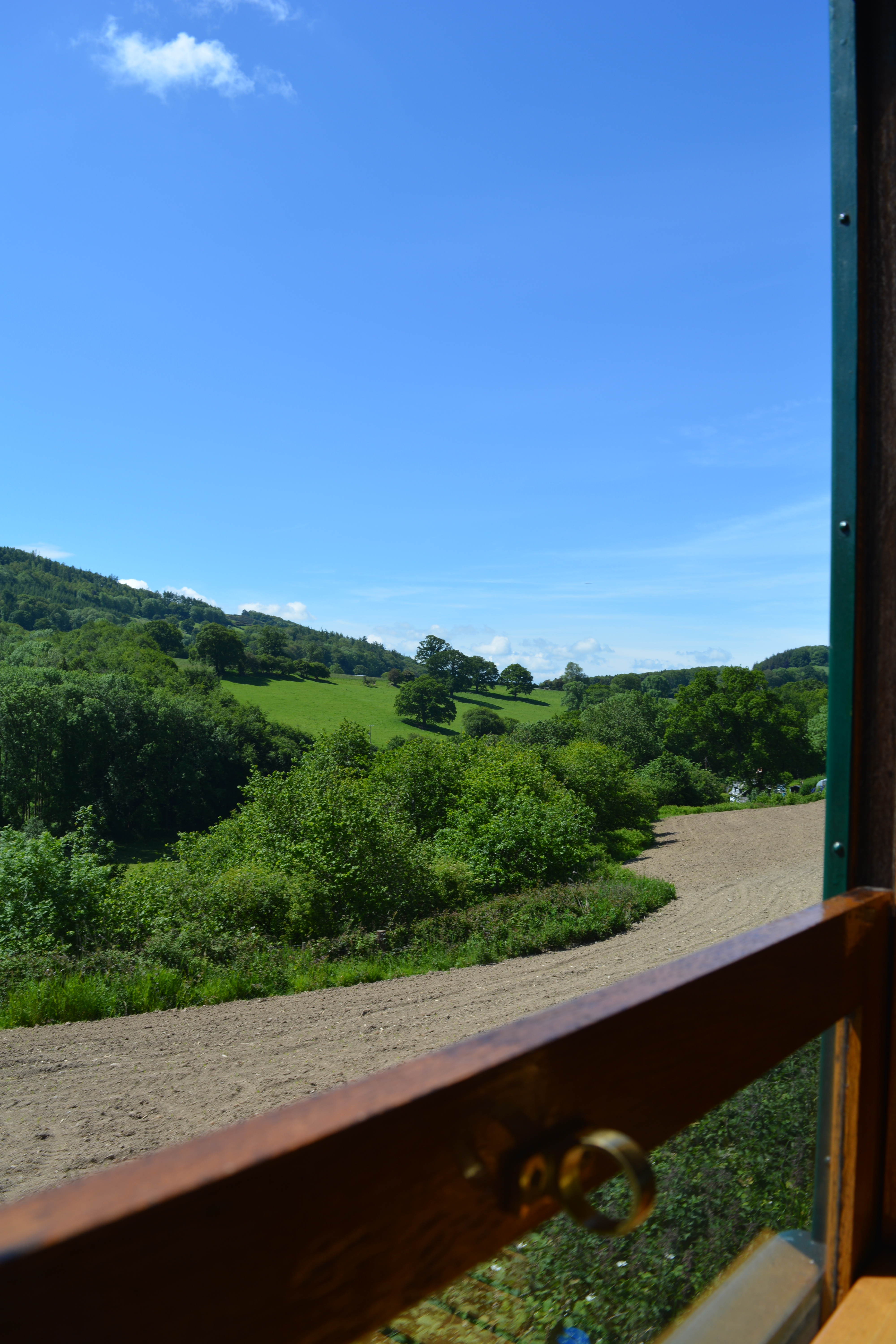
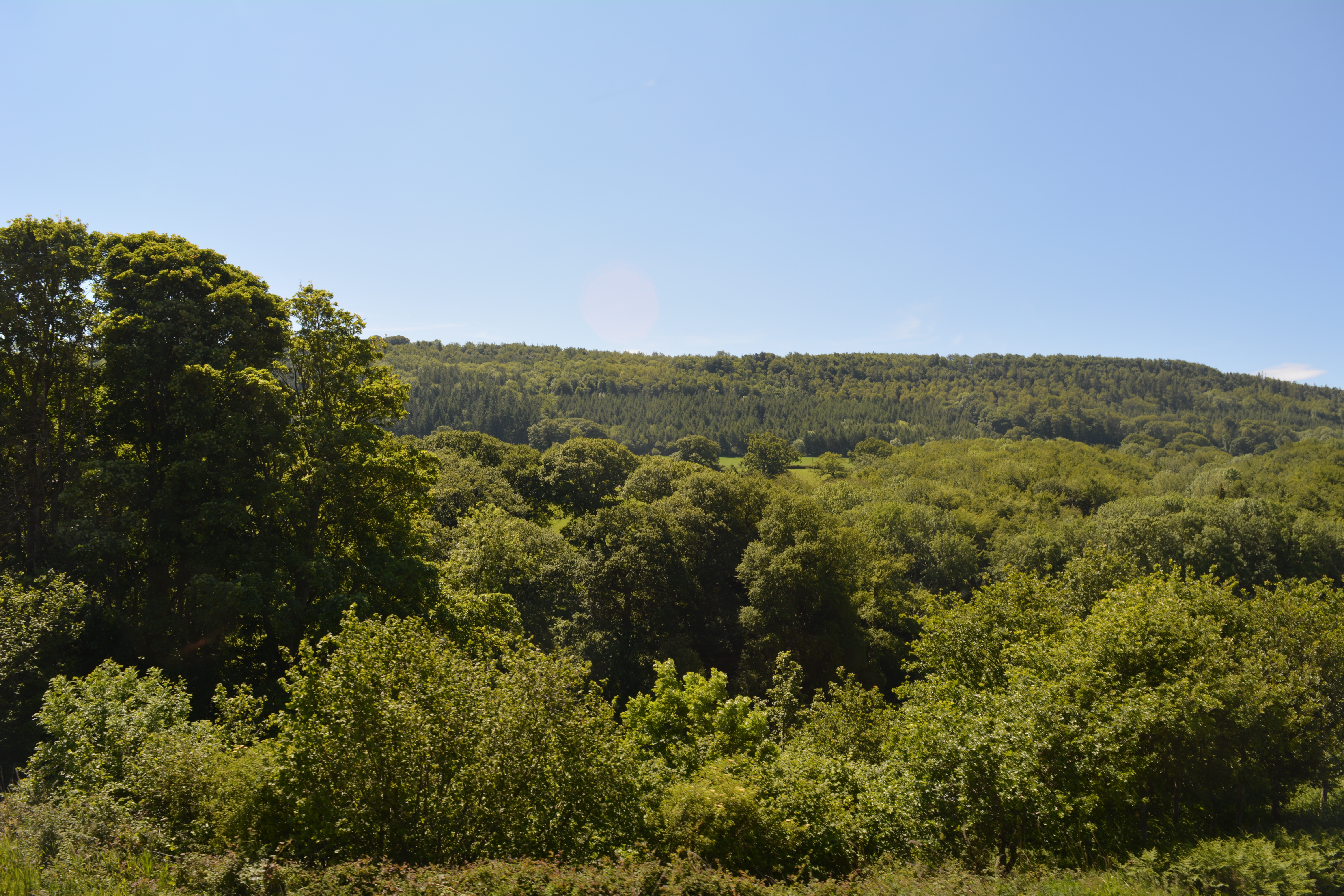

After enjoying so much beautiful countryside we arrived at the end of the little narrow guage line at the station at Llanfair Caereinion. Here we refreshed ourselves with coffee and cake while the engine topped up with water and coal in readiness for the return to Welshpool.




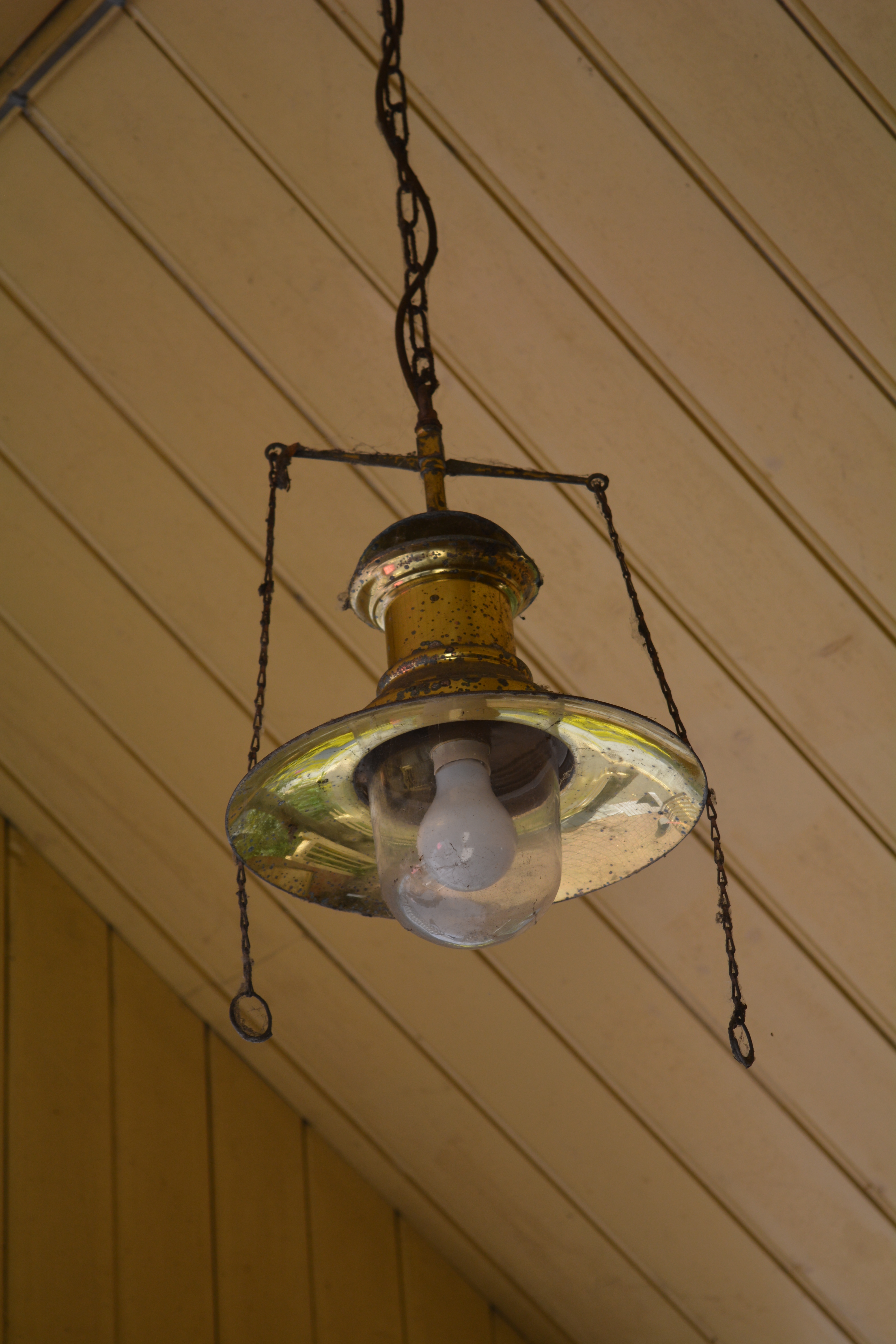
We found more authentic old items from the days of steam at this station too mixed up with little patches of colourful gardens.



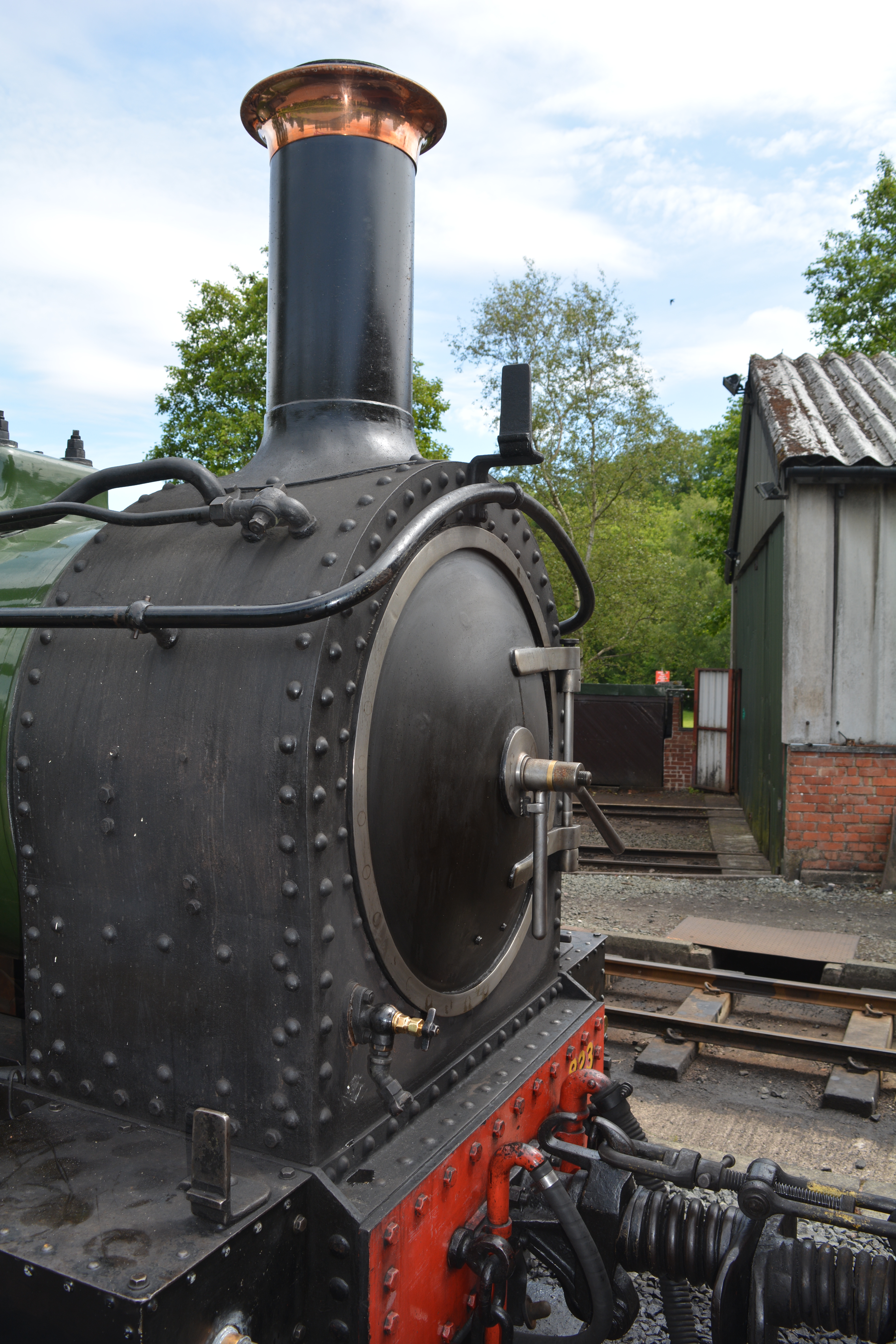
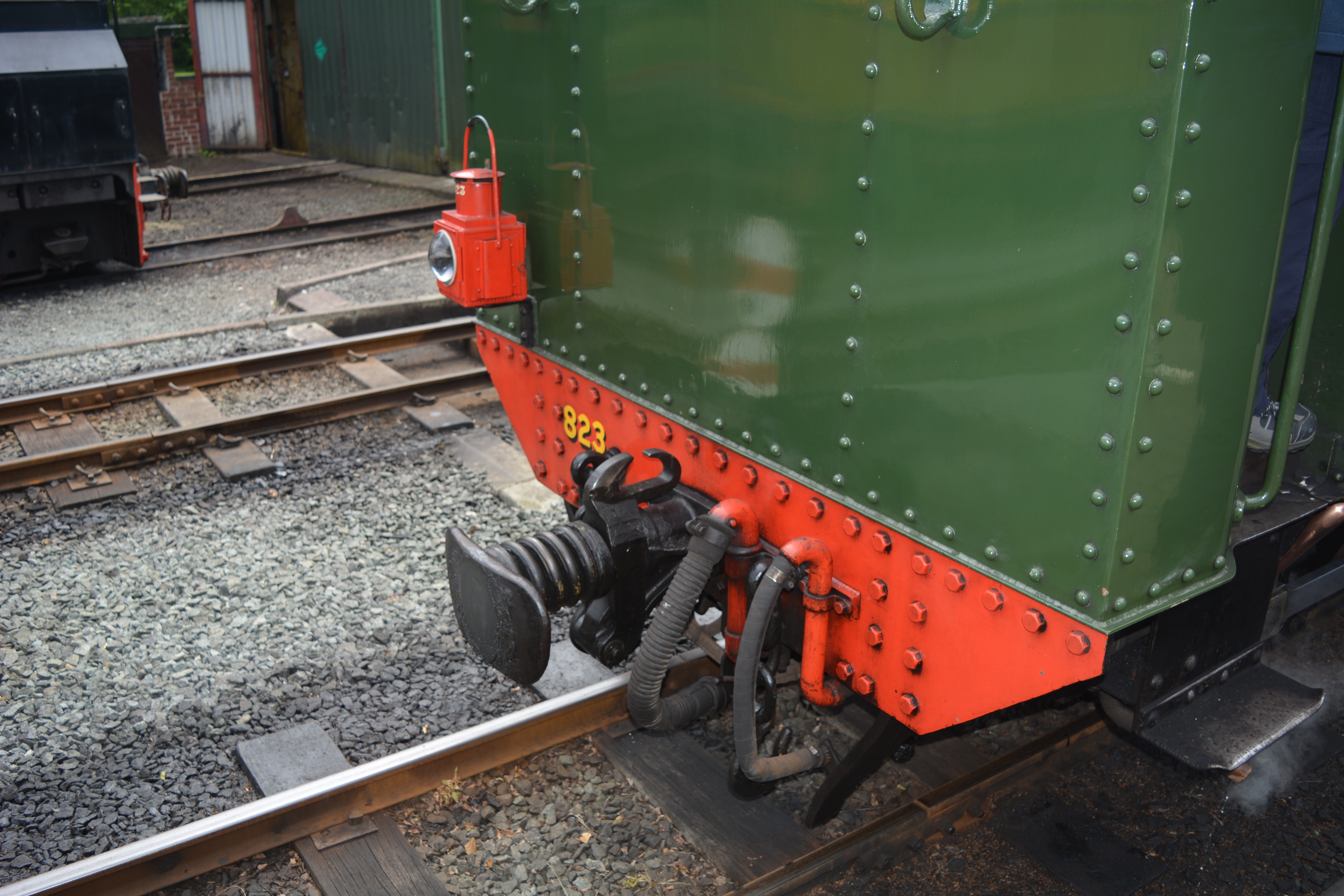
Before climbing back on board and sitting on the hard wooden benches that were our seats, we took a few moments enjoying looking close up at our engine “Countess”. She positively sparkled as every surface had been rigorously polished, buffed, oiled or greased.



The journey back along the valley gave us the chance to enjoy different views of the surrounding landscape.
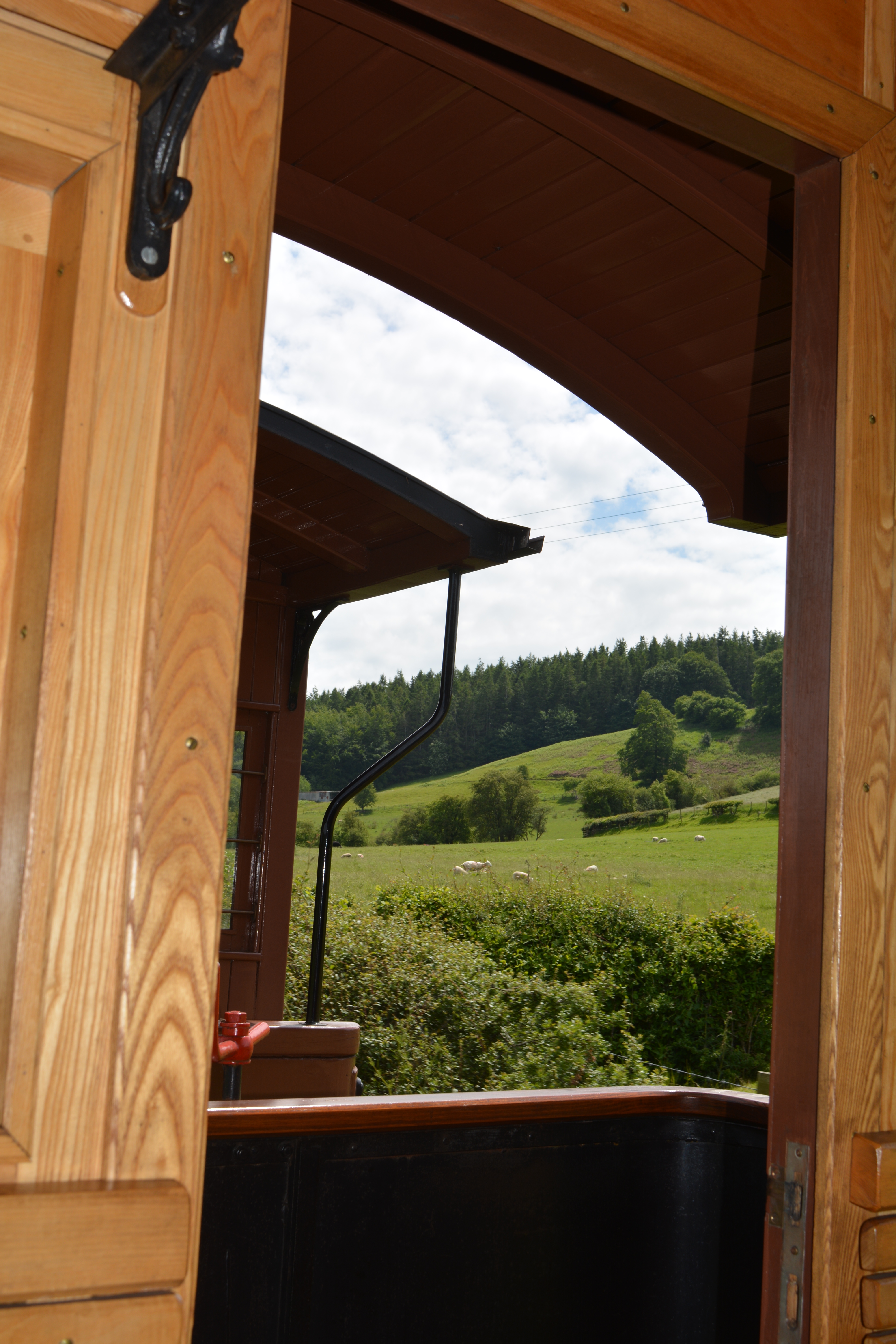
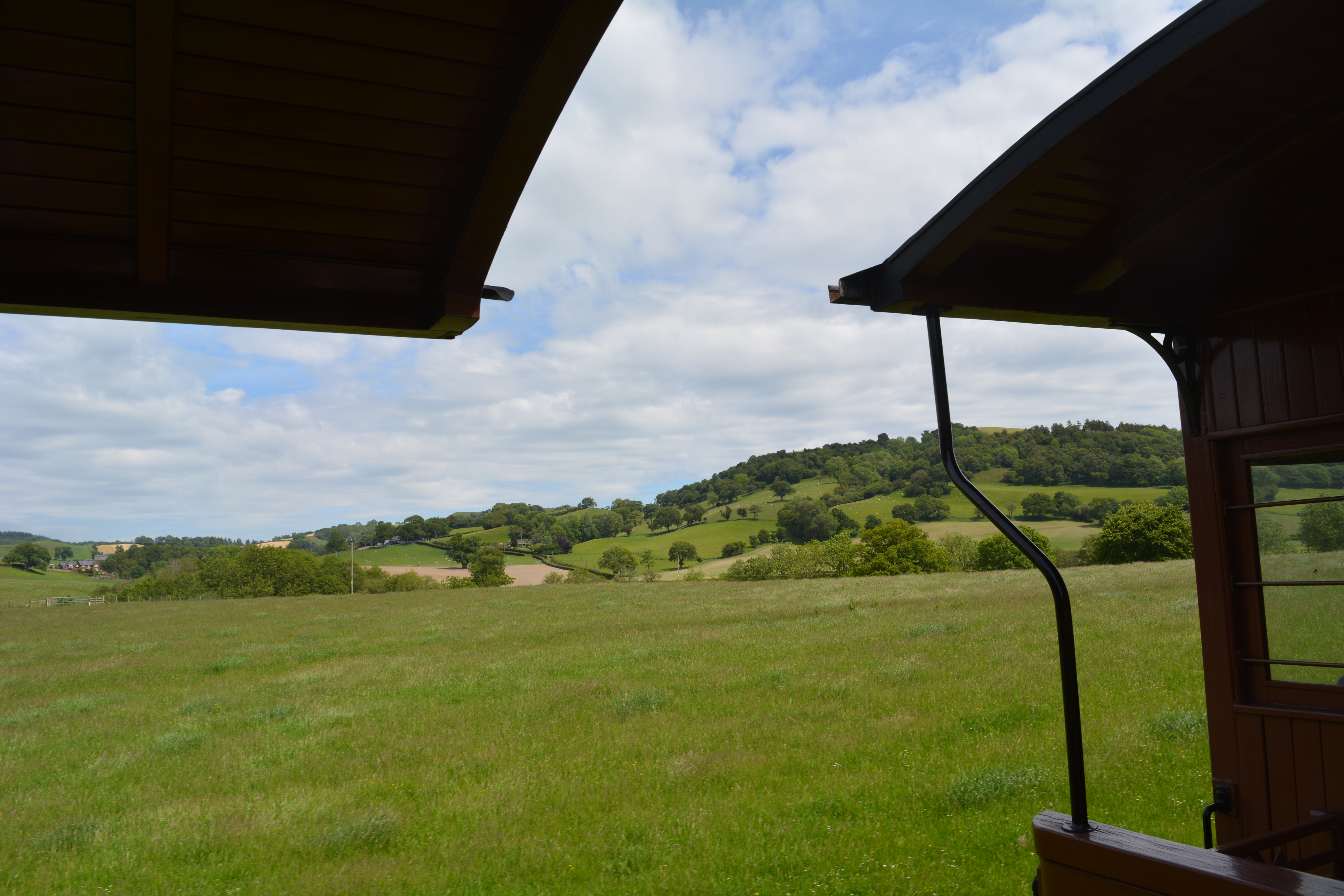


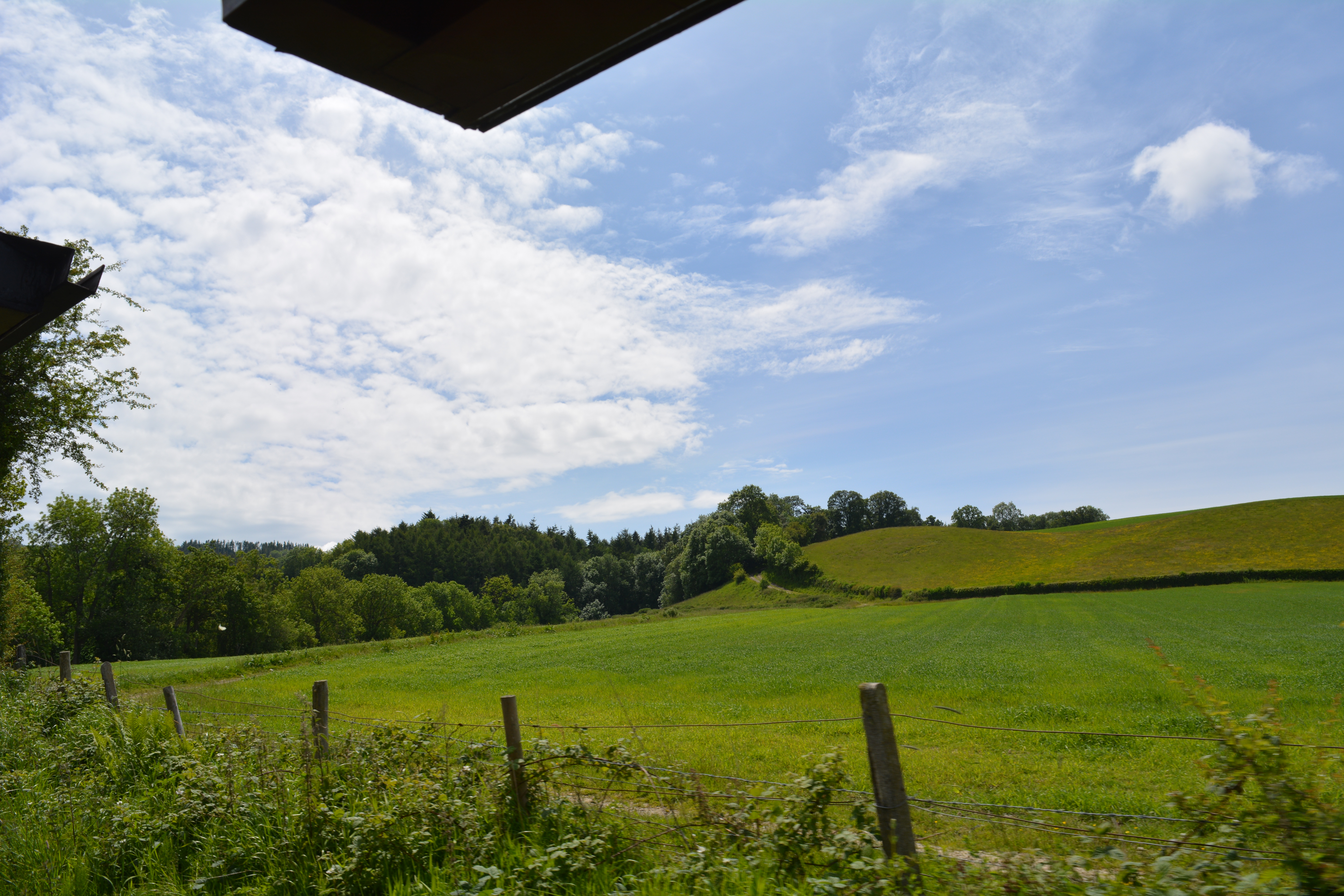

As soon as all the passengers had disembarked the little old locomotive squeaked its way a little further down the rail track to the water tower and drank thirstily.

After this delightful day of memories and nostalgia we promised ourselves a day on the old barges on the canal at Llangollen and of course there are all those other narrow guage railways scattered throughout Wales to indulge ourselves with!
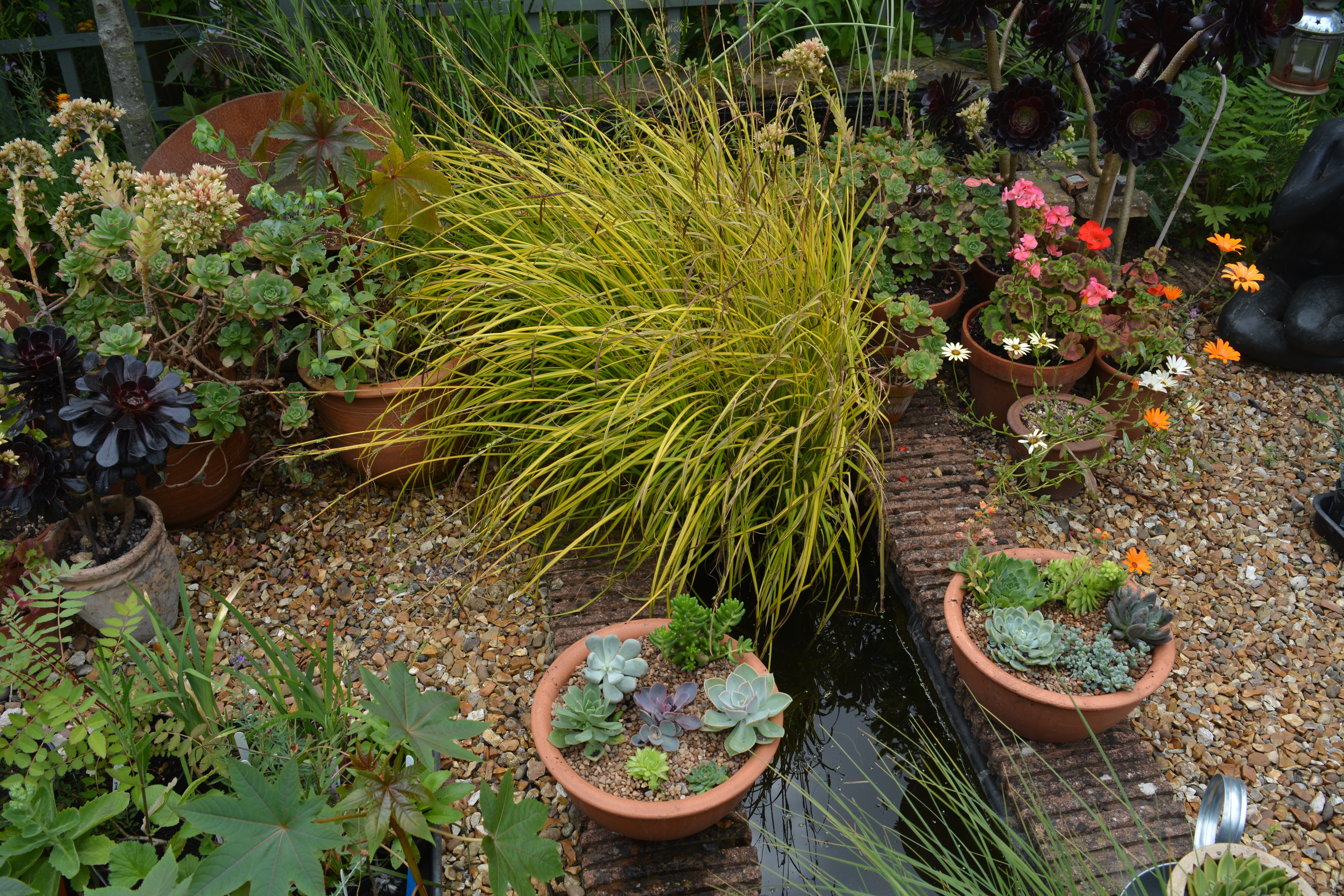
It is always good to have little projects to get on with in the garden. My latest little project was to create a pair of succulent pots. We already have pots of succulents dotted or hopefully arranged around our Rill Garden. Here we feature several different Aeoniums, Echeverias and Sempervivum. They grow happily here because it is south facing and gets extra light reflected off the glass of our garden room.
We thought it about time we introduced some more succulents for added interest for our garden visitors on our open days, so bought a pair of beautifully shaped terracotta bowl-shaped pots and went off to our local nursery, Love Plants, to get an interesting selection of different succulents. We looked for different leaf colours, textures and shapes. A few had the bonus of brightly coloured flowers too. They have such wonderful names too – much too difficult to remember, Oscularia deltoides, Sempervivum jovibarba alionii, Echeveria elegans, Pachyphytum “Dark Red”, Pachyphytum bracteosum and Sedum x rubrotinctum.


So we gathered together everything we needed on the table in the Rill Garden and got to work.

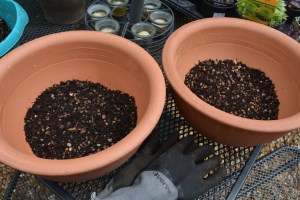
We mixed up a suitable growing medium by combining equal quantities of a soil based compost and horticultural grit. We hoped this would be free draining while just holding enough moisture to keep the plants happy.

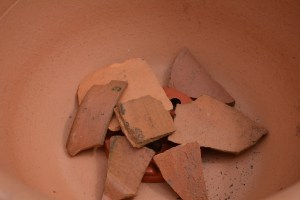
We then covered the drainage hole with crocks and added a shallow layer of my compost mix, ready to arrange the plants to their best advantage.

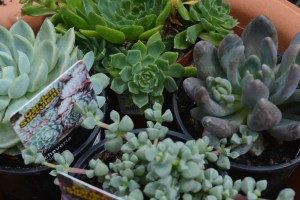
Some of the plants we put in the pots were our own cuttings. The picture on the left shows how new plants have grown from leaf cuttings. The plant on the right was grown from an offset.
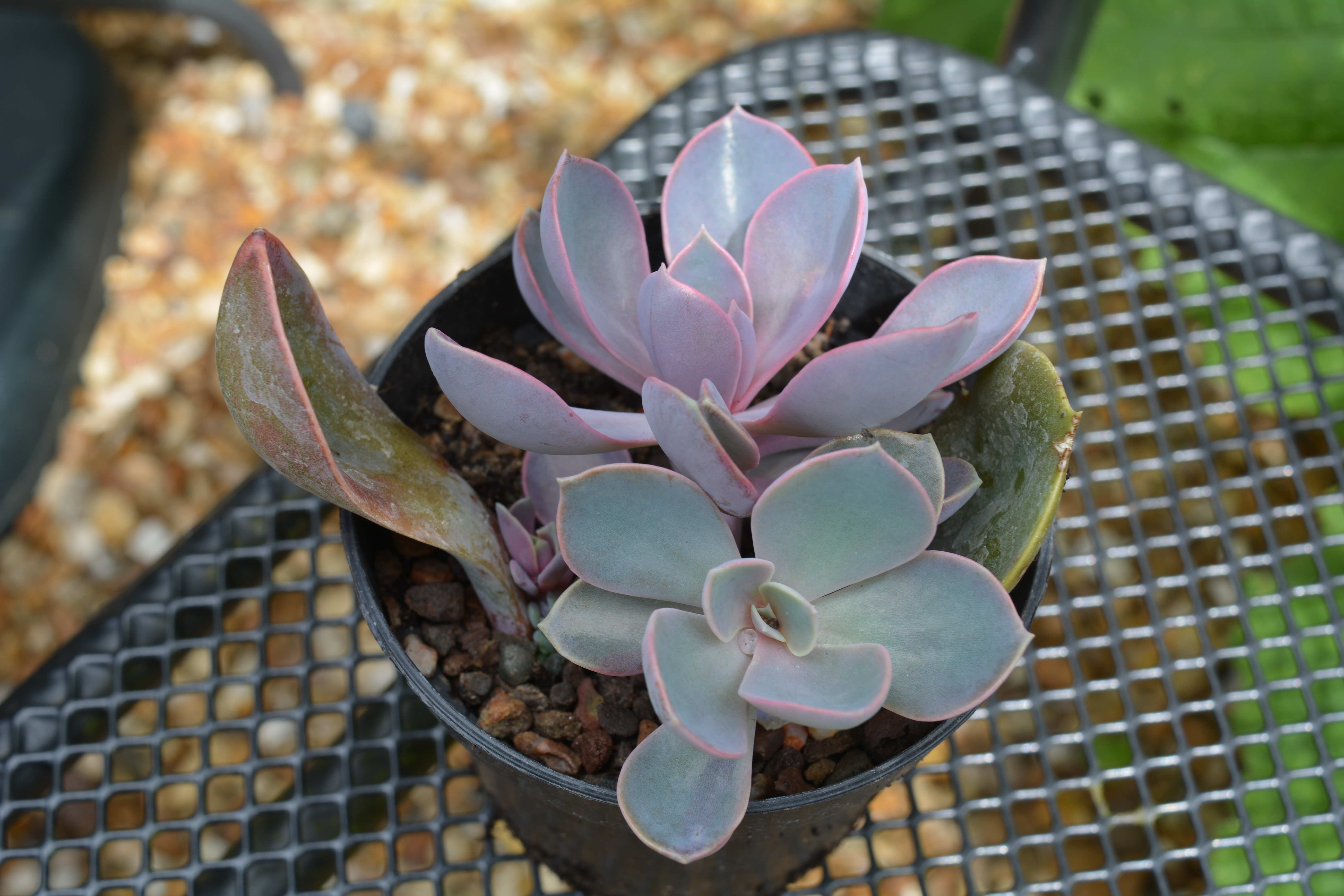
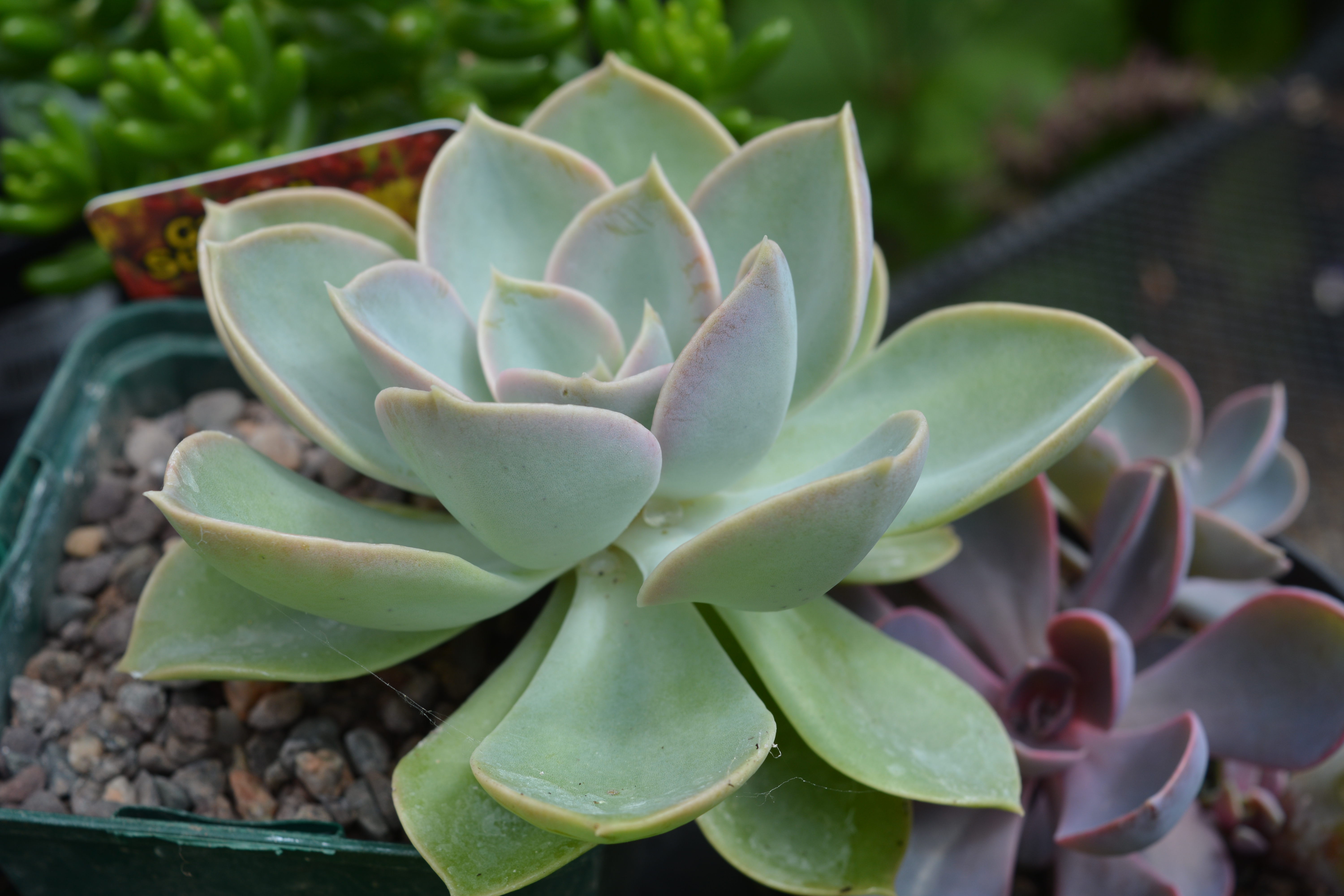
Once satisfied with the arrangement we filled in between the plants with the compost mixture and topped it off with a mulch of horticultural grit.


Whenever you deal with succulents bits fall off and each bit can become a cutting. Other pieces we deliberately took as cutting material.

The photo below shows a leaf cutting taken from an Echeveria which is now forming tiny plants at its base. This is an easy way to make new plants albeit rather slow. It is a process requiring a lot of patience but not much skill.

And here they are in situ, alongside our rill, our new succulent planters.
A Vegetarian | Nature Lifestyle Blog
.....and nurturing my soul
Journeys In St. Louis Gardening and Beyond
Consult the genius of the place
A blog full of humorous and poignant observations.
Notes from a wildlife-friendly cottage garden
...an emerging social science
'The most important and informative publication on wildlife of our times' - The Independent. This blog is a member of The UK & Ireland Natural History Bloggers group: www.uknhb.blogspot.com
Inspire - Cultivate - Grow Native Plants - Restore Landscapes
To create and protect a semi-natural wild space for the people of Farnham to enjoy and experience an array of British wildlife in our town
The www.gardeningwithchildren.co.uk Blog
birding through the seasons, why birds matter and how to conserve them
with a camera in hand
Transform your outdoor space
My allotment, cooking and other interests
my gardening life through the year
Trying to live a creative life
trying to live as lightly as possible on our beautiful planet
Nature lovers from Leicester living the good life.
Finding the beautiful in the everyday
Michelle's Allotment
thoughts from and about my garden
Big plans for a small garden
A Walled Country Garden in South East Scotland
Life at the fruity chicken
Off grid living. Self sufficient. "PERMAGANICS RULE".
Nottingham's Grade 2* Listed Allotments and Community Orchard
a journey in suburban vegetable gardening
The madness of growing your own
A novel approach to vegetable gardening
Sustainable living in the Irish countryside.
Master Gardener, amateur photographer, quilter, NH native, and sometimes SC snowbird
Recent work and work in progress and anything else that interests me
a chaotic cottage gardener
a weekly blog that creates a personal philosophy through photographs and words
Stories from a sassy and classy Southern farmbelle.
Simple Organic Gardening & Seasonal Living
turning dirt into dinner
today the world is created anew
Notes from a Devon garden
Life Through The Lens
A photography blog showcasing the best photography pictures and videos on the internet
Just another WordPress.com site
personal observations from the natural world as the search continues for a new approach to conservation.
The Wonders of Life through my Eyes, my Heart, my Soul
 greenbenchramblings