Categories
bird watching birds garden photography garden wildlife gardening grow your own hardy perennials ornamental trees and shrubs photography shrubs winter gardens

A Wander Around Our Garden in February

This is the second of our monthly garden wanders designed to give an insight into what is going on each month. Our February wander will be a colder one so don those thermal gloves and woolly hats with silly bobbles and join us. We hope you enjoy what our garden offers in the second month of 2012.

The day dawns frosty but with a bright blue hat on. A lovely fresh winter’s day, with the quiet plaintive song of the Robin as company – he always comes around the garden with us and entertains us with a song. Overhead Buzzards call from their thermals high above the slope of the hill. It feels a perfectly calm day to us but these big, broad winged predators always find movement in the air. Why does the call of the buzzard always sound further away than the bird itself? Have they mastered the art of ventriloquy? We see them most days but we never lose the desire to watch them enjoying their freeform flight.

I fed the chucks and topped up their frozen water with some warm, before collecting their eggs from the nest boxes. Today the hens’ contribution to our larder had added benefits. Handwarmers! Holding these little warm parcels of food felt more special than usual. As I passed the shed on my way down to the chuck pen three Wrens burst out of their roosting pocket – late risers. A pair nested in here in the summer just a few inches above the shed door. They took no notice of our comings and goings. They filled the roosting pouch with moss, feathers and delicate grasses which now insulate them on cold nights.
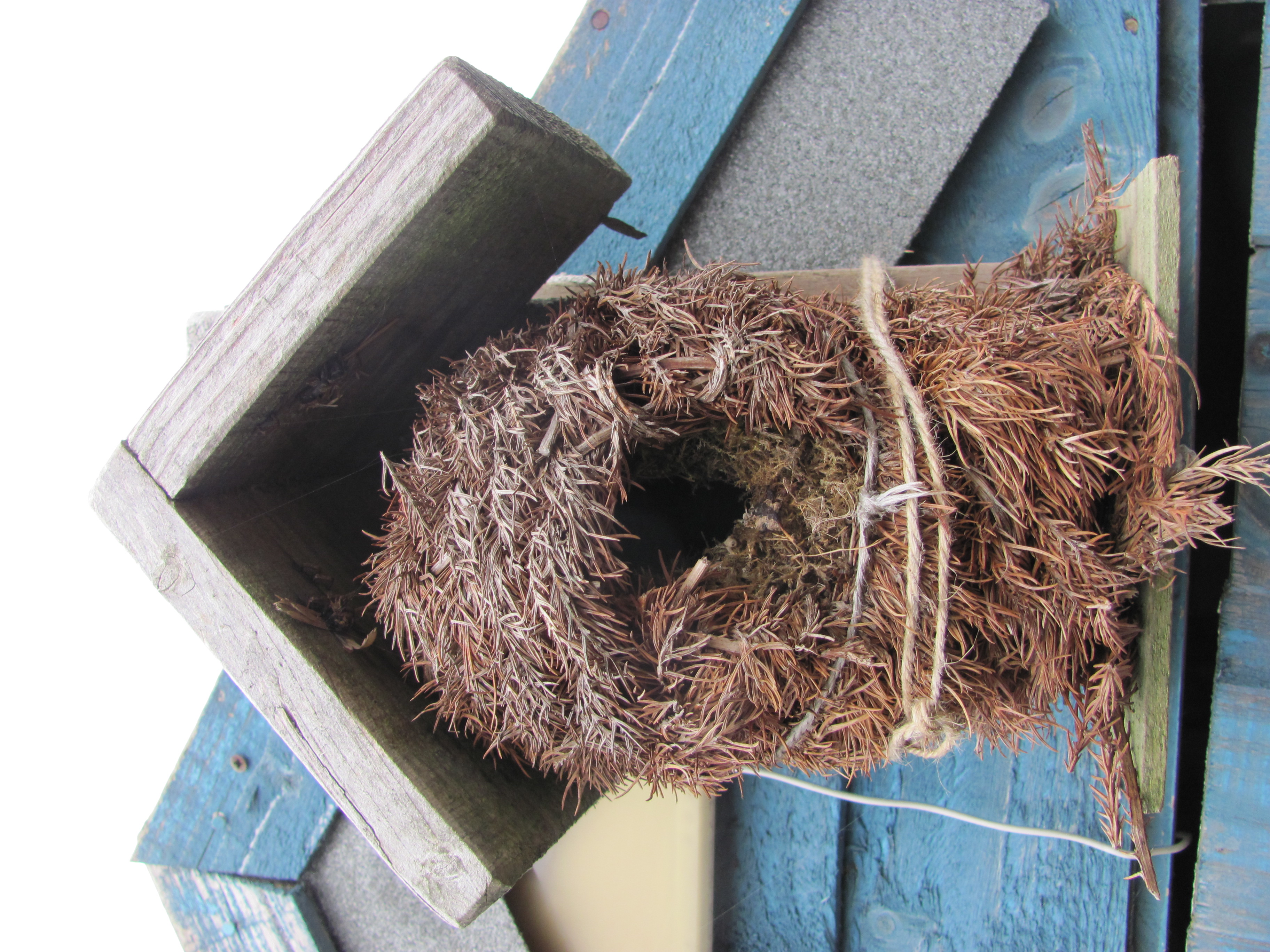
Dual purpose roosting pouch.

The garden is full of birds once more after a quiet few months. We were beginning to wonder where all the birds had gone, but today Goldfinches have reappeared in busy red and gold flecked flocks. mixed feeding flocks of titmice invade every tree and shrub and Linnets sit on the highest branches. Long Tailed Tits in groups of a dozen or more flit from tree to shrub and from feeder to feeder, never still, always fidgeting like a class of infant pupils awaiting a favourite story. The odd Bullfinch and Blackcap conduct their business more quietly.

On the feeders Jackdaws attack the peanuts dropping morsels for the Dunnocks and Chaffinches waiting below. Jackdaws are long-lived and today two old favourites are to be seen, one with a white wing and one with a wing that droops low when he settles. Overhead their much larger relatives pass over, a “cronking” trio of Raven flying effortlessly with outstretched fingers.

It is noticeable that the clusters of berries on the Hollies and Cotoneasters are much depleted as greedy groups of resident Blackbird and Mistle Thrush are joined by migrant members of the thrush family, the winter visiting Redwing and Fieldfare. The small yellow crab apples on Malus “Butterball” have now been stripped by these members of the thrush family.

Our horizontal cotoneaster is a favourite of Blackbirds, Redwing and Mistle Thrush.

There has simply been plenty of natural food for our avian friends this winter. It has been mild enough for insects to be on the wing, for invertebrates to be creeping and crawling, and the hedges and trees have heavy berry crops. We want to see them in our garden but we are being selfish. They come to us when they need to and not before!

The blackbirds have finally discovered the windfalls.

The re-appearance of the Goldfinches gives us close-up entertainment as close to the conservatory window grow Onopordon, the Scotch Thistle, and its seed heads tower into the blue sky. Goldfinches love them and soon dig in for seeds, bursting the heads open as they do so, and the white fluffy insides overflow like raw cotton.
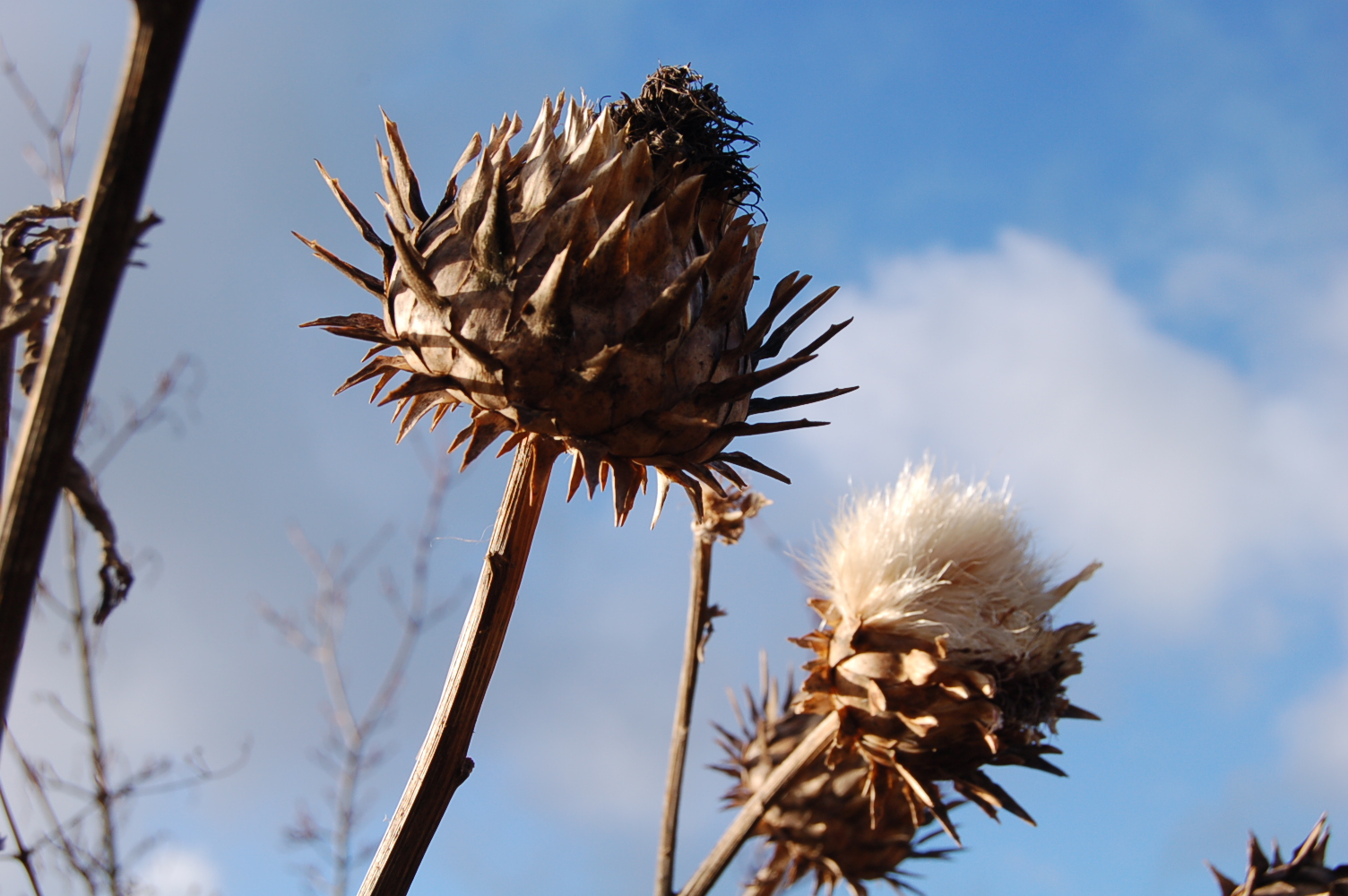
Scotch Thistle seed heads towering into the blue.

The intensifying of the cold sucks structure from leaves and hardens the ground beneath them. The accompanying frost layers the ground and plants with lines and layers of frozen crystals. The blueness of the skies on a clear February day is more intense than earlier in the winter. The sunlight seems brighter.
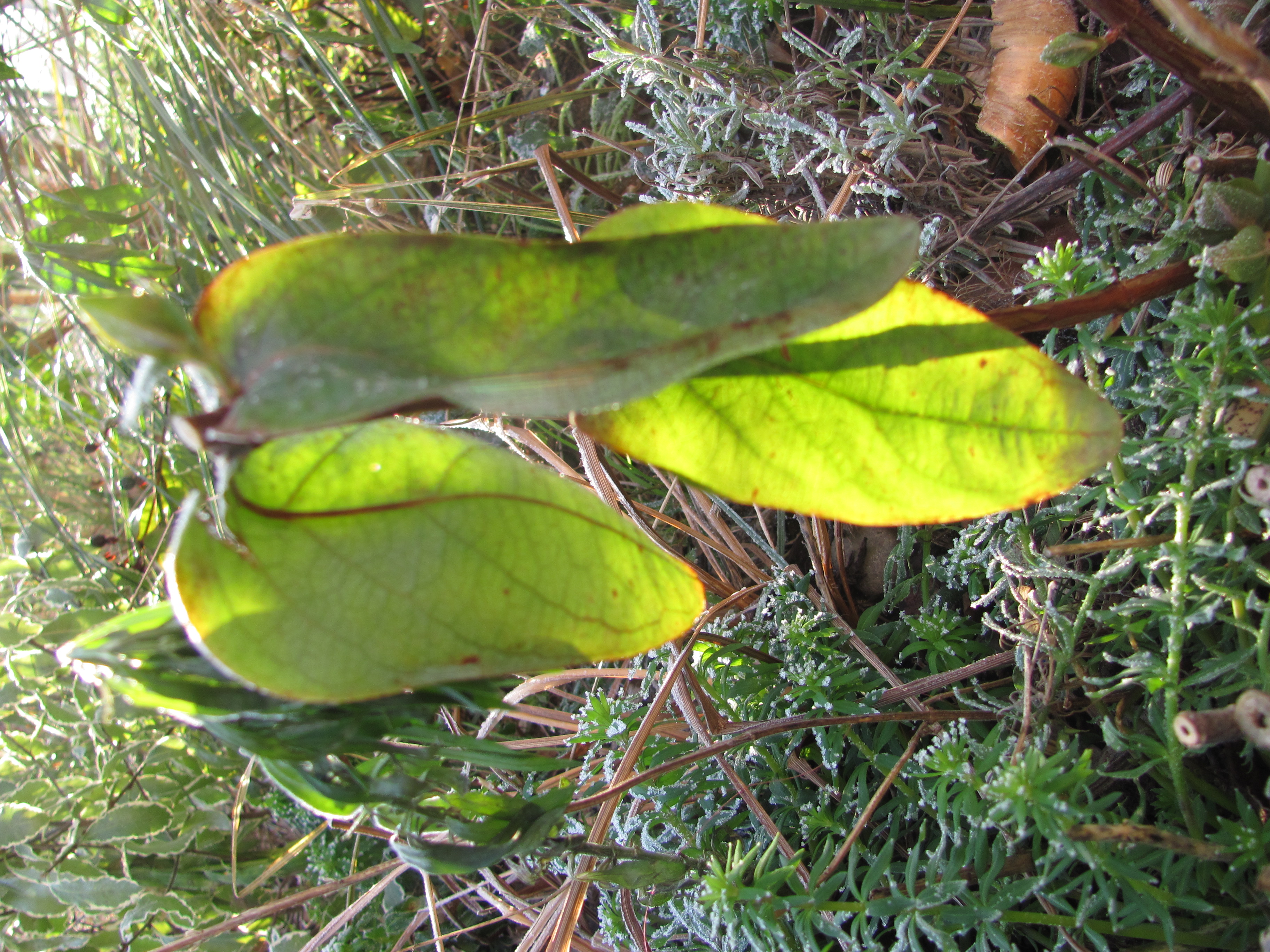
The deep cold has taken the structure out of the young self-seeded sunlit Hypericum.
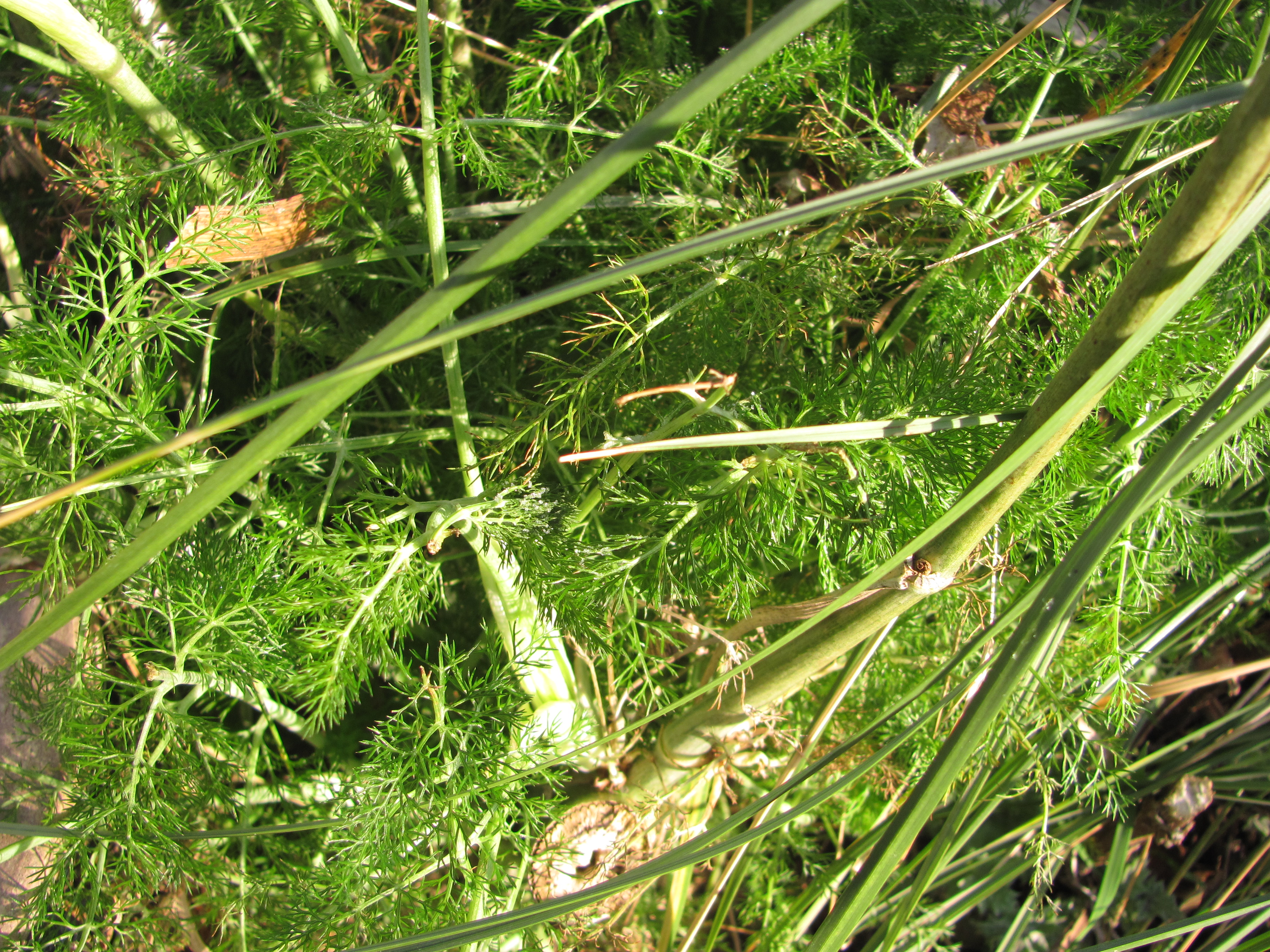
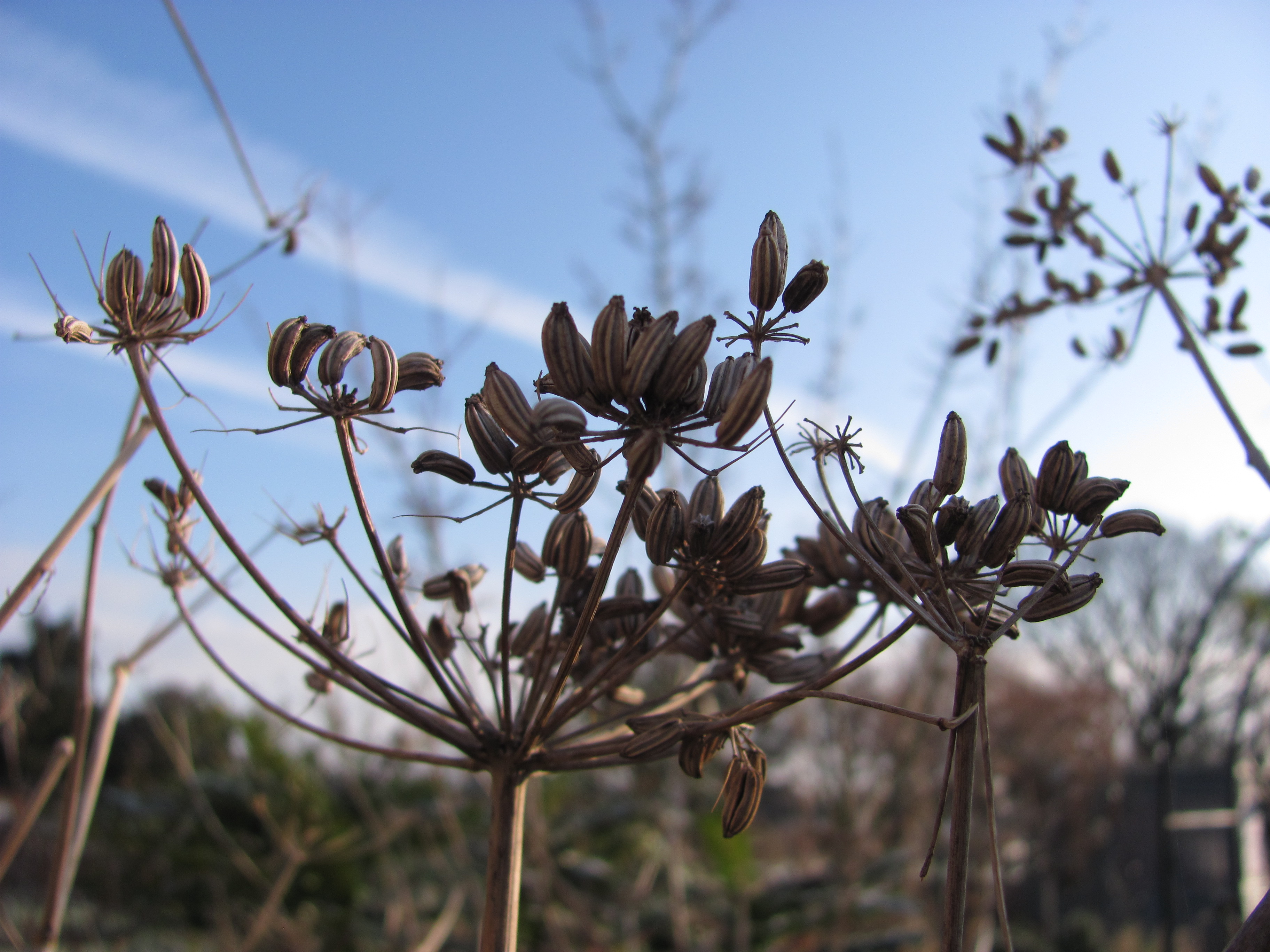
Fennel seed heads still stand strong while its delicate bright green seedlings shelter below.
Sheltering Fennel seedlings.
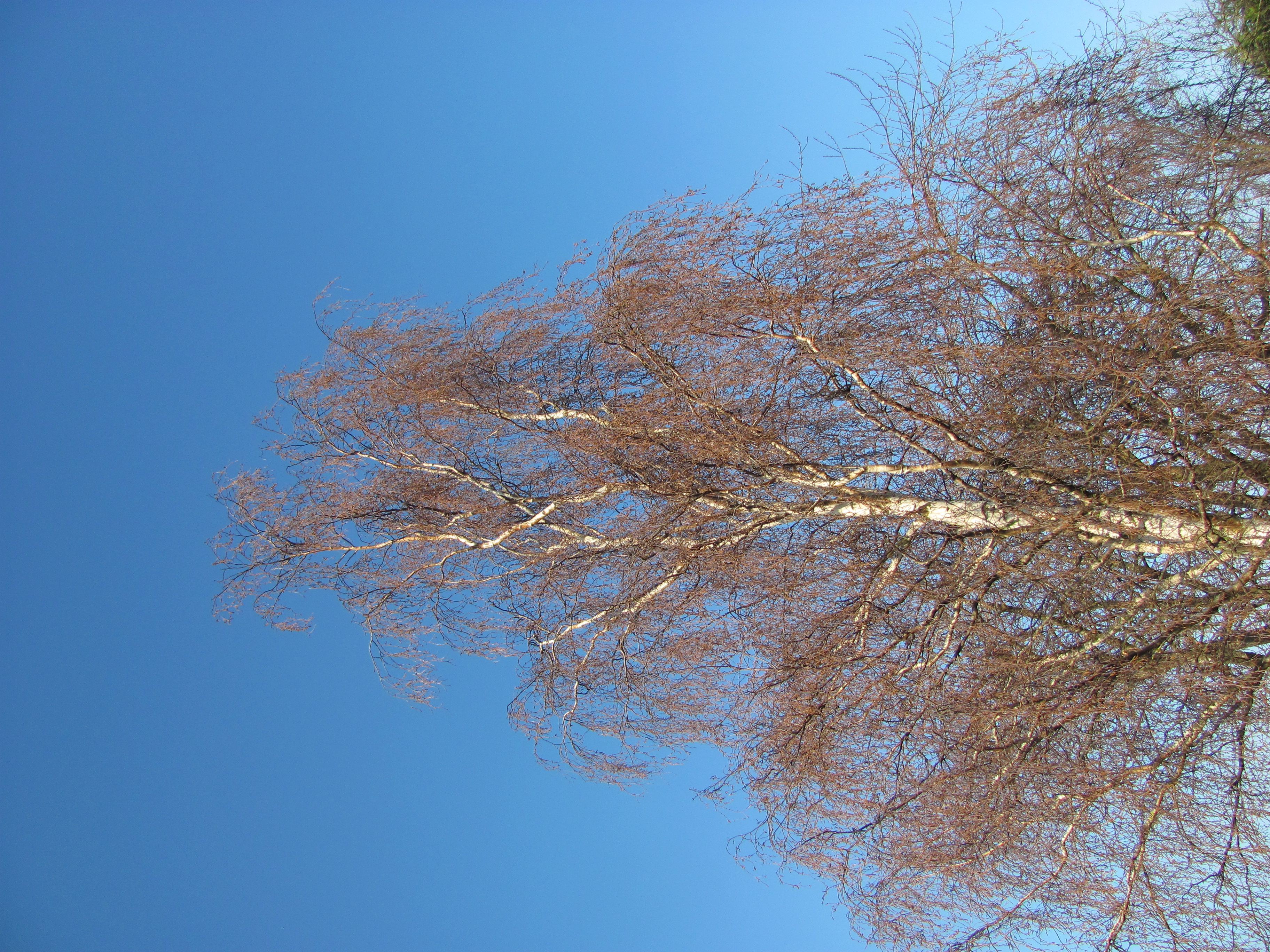
The deep blue February sky increases the purple tints in the tracery of the Birch's finest branches.
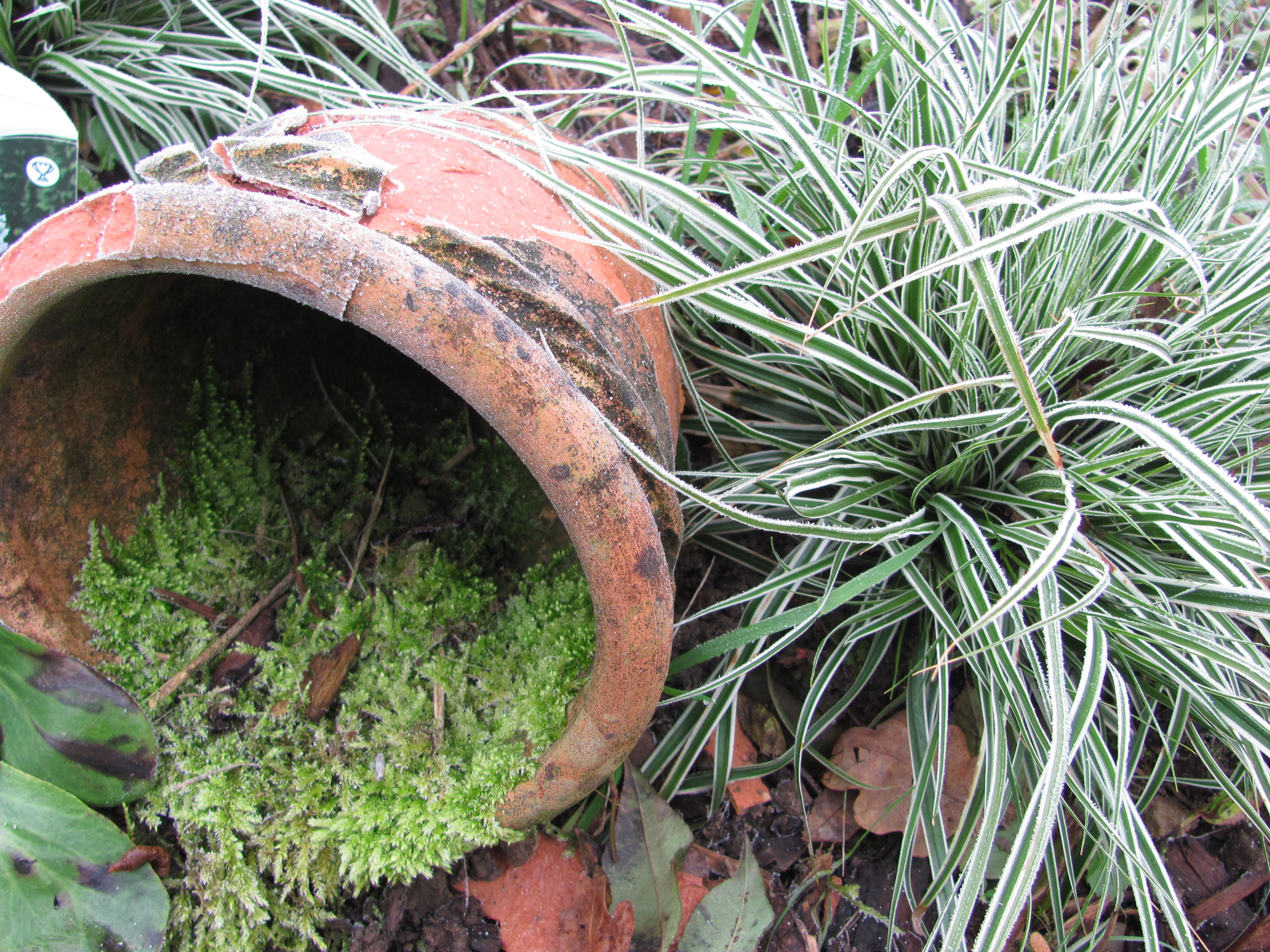
The frost gives an extra line of silver along the leaf edges of these grasses.
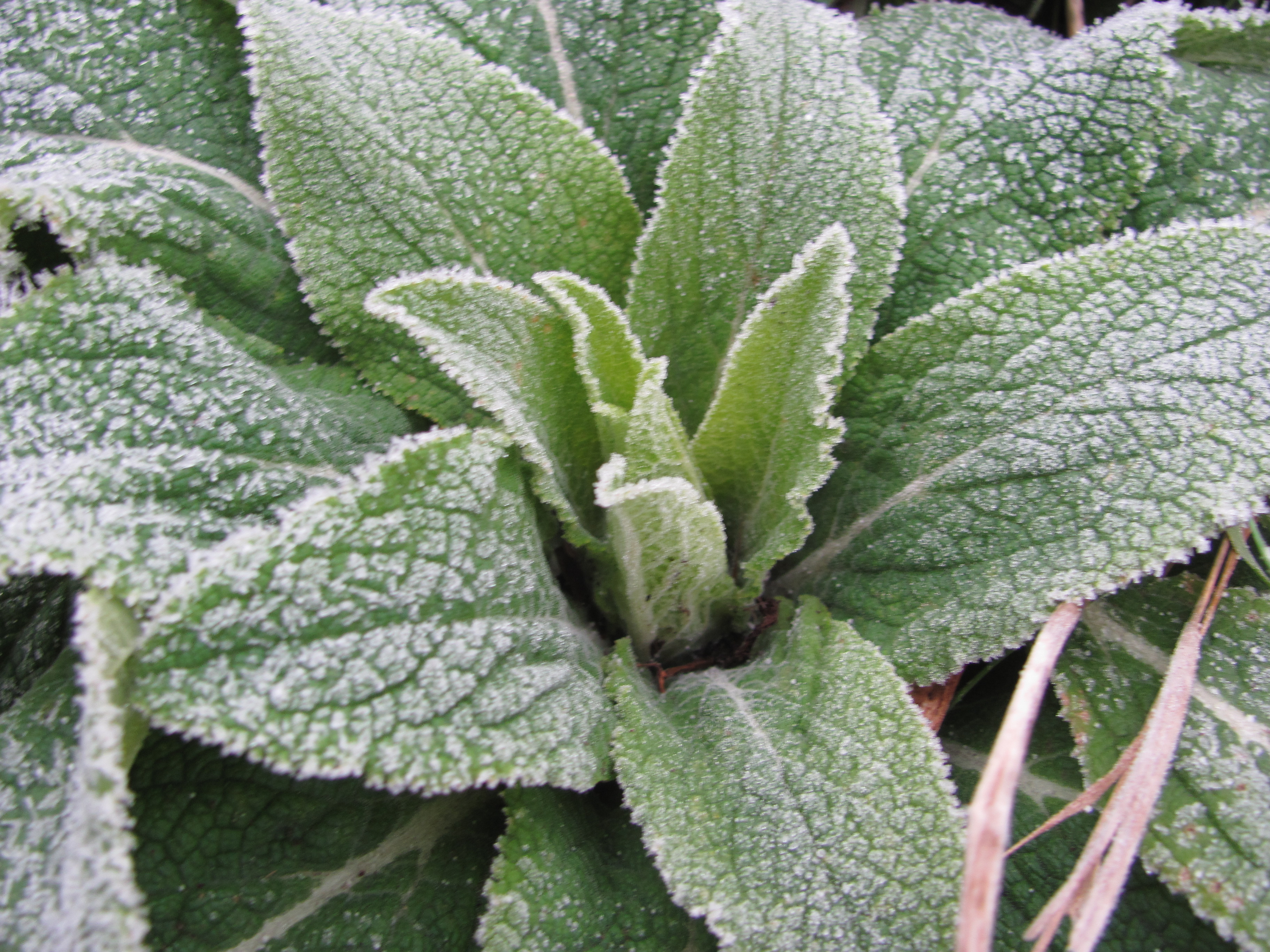
Icing sugared Foxglove leaves.
Frost adds another layer of texture.

Something special happens to light in February. There is something about the quality of light that changes. It makes you feel better. It makes plants look better, their flower colours intensify. If, like both “The Undergardener” and I, you suffer from SAD (Seasonally Affected Disorder) then you will feel and experience this change. You feel the tunnel of winter has brightness at its end. Monty Don, in the book “Fork to Fork” refers to this improvement in light quality, writing that February displays a “tangible promise of a better time” and talks of a “surge of energy and hope running through the garden”. This will be tangible from about the middle of the month but even now the hint of that promise is in the air. It isn’t just S.A.D. gardeners who believe in the wonder of February however, as we have a pair of Blue Tits taking up residence in one nest box and a pair of House Sparrows in another. Spring is in the air! Well, maybe not! No, these two pairs are just like serious sun-bathers on a busy sandy beach, just getting there early to “bag” the best spots.

Nowhere is this new hope more obvious than in the flowering of the bulbs and the bright green signs of new growth of perennials. Snowdrops, Crocus and Aconite, the pearls of the month.

Winter Aconite Gold.
So delicate but so tough.
Marbled foliage of Cyclamen with golden flowers of Winter Aconite
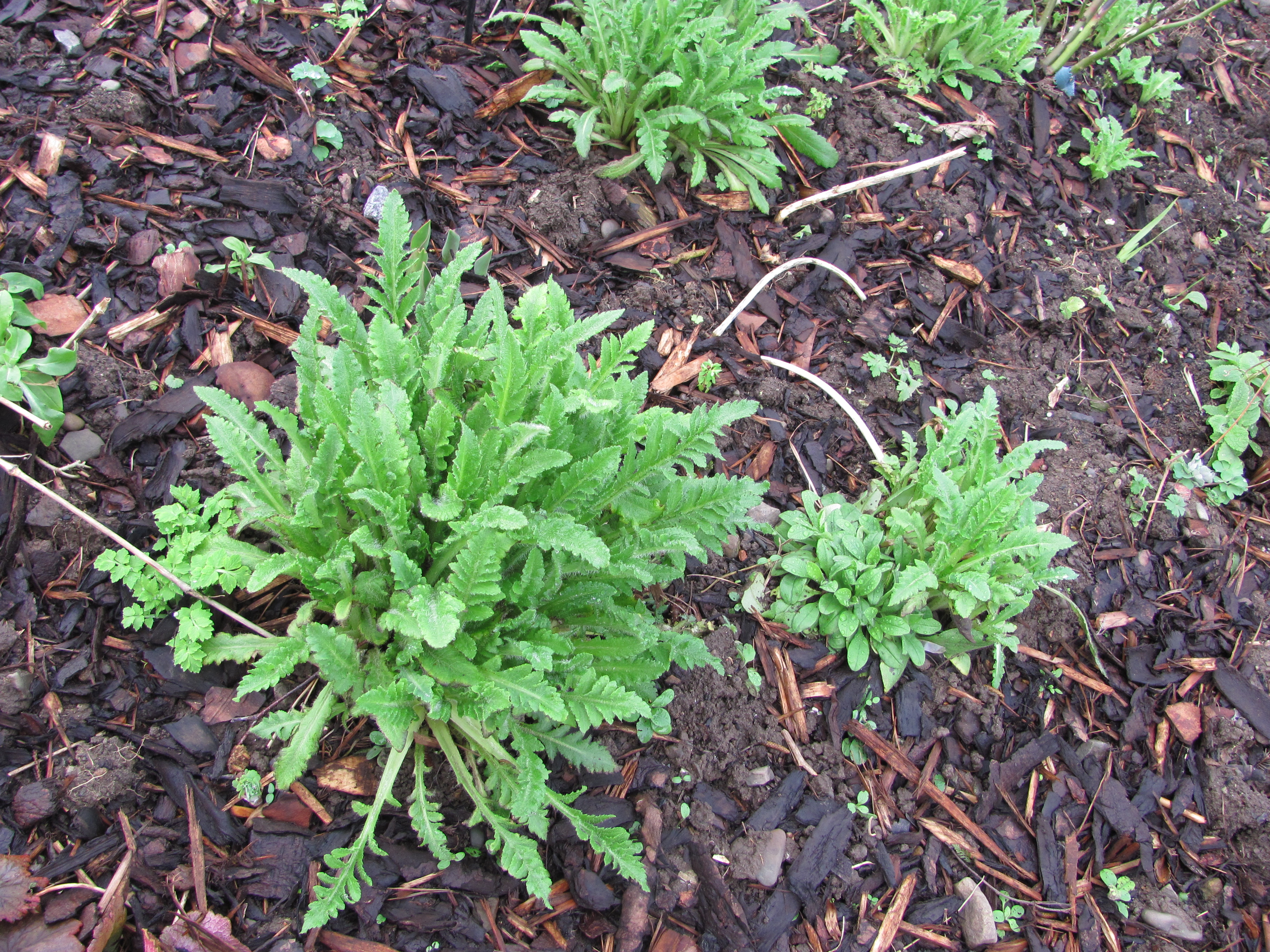
New growth on the oriental poppies - promises!
The leaves of Day Lilies spear the frozen mulch.

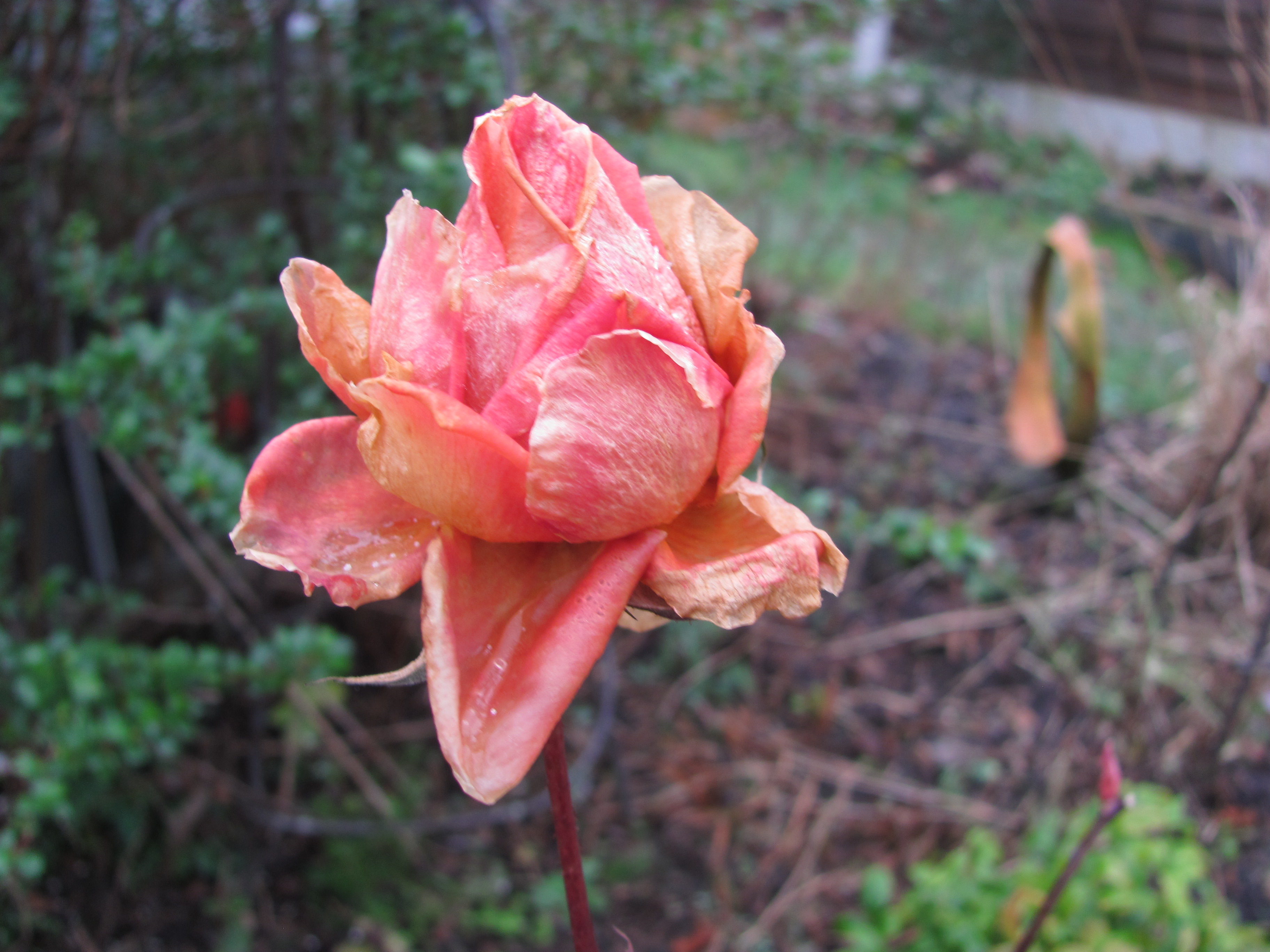
But some new life is out of sinc. Buds appear and surprise. The blue anemone with its metallic sheen on its indigo bud is a special treat and is reflected in the blue berries of the Viburnum davidii. The last of the rose buds however that gave promise of flowers have given in to winter’s grasp.

Out of Season Aconite
Blue pearls.
The promise of a rose flower stopped by the frost.

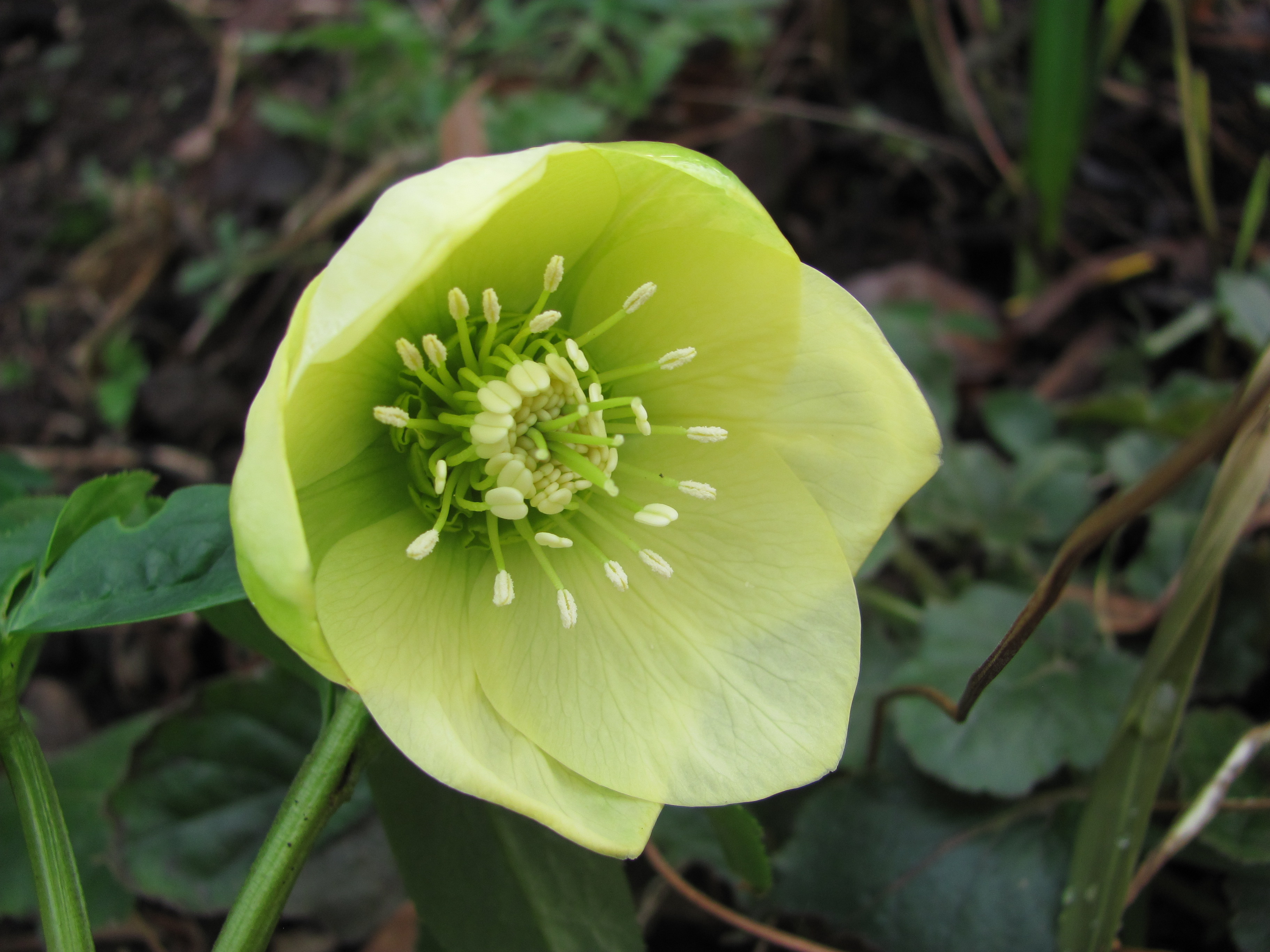
No February garden can be complete without Hellebores so here are just two of ours. But my true favourites to finish our February wander around our garden are the Witch Hazel “Jelena” and Cornus mas.

Upright growth and rich reds and purples make this a special Hellebore.
Perfect primrose yellow cup.
Witch Hazel "Jelena"
Cornus mas, the Cornelian Cherry, a modest beauty.
Categories
bird watching birds conservation photography Wildfowl and Wetlands Trust wildlife

Martin Mere – “spectacular displays of feather and flight”.

The Wildfowl and Wetland Trust, in one of their booklets describe Martin Mere as offering “spectacular displays of feather and flight.” This is but one aspect of this special place, the large-scale side of it, but it possesses alongside the spectacular displays, simpler, smaller but equally special experiences for anyone interested in the natural world.

We had a long trek northwards in motorway commuter traffic to get there, but sitting in our slow-moving car with thousands of others creeping in four lanes over the Runcorn Bridge, we were content with the thought that we had a day of peace and wildlife to look forward to. Not a boring day in the office like most of those around us had to look forward to.

The flat land through which the road finally winds toward the end of our journey, was sodden with the recent heavy rain, the road covered in slime. The fields were full of leeks, cabbages and root crops, grown in the richness of the silted land. Turning into the site and we were in a different world away from the commuters, the farmers and away from reality. The noise that greeted us was the melee of calling geese and swans in their thousands all talking at once. The mere was full, hardly any water surface left to see. It was solid with ducks, geese and swan. A confusing site – where to look? Our eyes had to become acclimatised to the sheer numbers of wildfowl, the sea of confusion.

The majority of the swans were Whooper Swans with Mute and Berwick present in much smaller numbers. The Whoopers’ yellow beaks appear over-sized and over-bright, exaggerating the pure whiteness of their plumage. Their’s is the sort of white that washing powder manufacturers strive for. Pink Foot and Grey Lag Geese make up the majority of the geese and Shelduck and Pintails seemed to be the ducks of preference. Hundreds of Black Headed gulls in various stages of moult filled the gaps in between.

Looking carefully amongst these large and noisy birds we were able to spots waders, hundreds of Lapwing with smaller numbers of Grey Plovers and Golden Plovers. Larger Black Tailed Godwits and the much smaller Redshanks fed busily probing the mud with their long bills.

A short amble from the Mere is the diminutive Janet Kear Hide, which overlooks an intimate pool surrounded by small leafless trees, mostly willow and hawthorn. Here feeding stations have been set up to give close up views of the reserve’s smaller birds. Greenfinch, Goldfinch and Chaffinch dominate, feeding busily on the mixed seeds, with Great Tit and Blue Tit attracted to the peanuts in the hanging feeders. A real treat was the number of Reed Bunting using the feeding station. At Slimbridge we were excited to spot one, here there were dozens.

The finch family and tit family were also represented by rarer members, a Willow Tit and a Brambling. These were birds which a decade or so ago were frequent visitors to our garden in winter, but are now so seldom seen. A single Tree Sparrow was the only representative of the sparrows, as we did not see any House Sparrows that day.

The feeding stations here were so busy most of the time but were silenced three times, once by a group of fleeing Feral Pigeons charging through the trees pursued by a Peregrine and twice when a male Sparrow Hawk came ahunting. He reduced the Chaffinch population by one on his first visit.

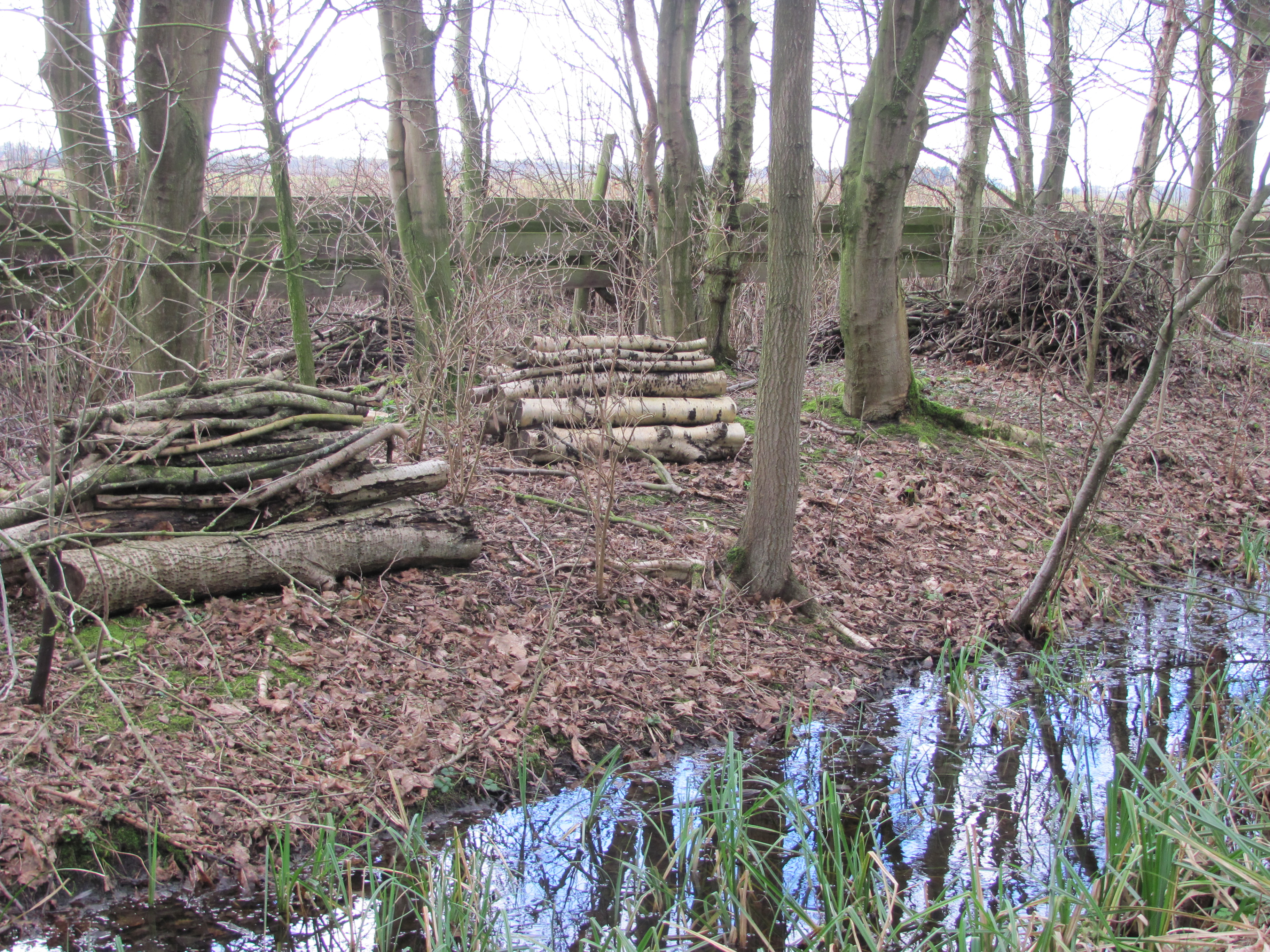
Moving on to the United Utilities Hide and the Harrier Hide we passed through avenues of trees dotted with nest boxes and the ground below dotted with log piles and brash heaps, both great insect habitats. They are also useful hunting places for Wren and Dunnock.

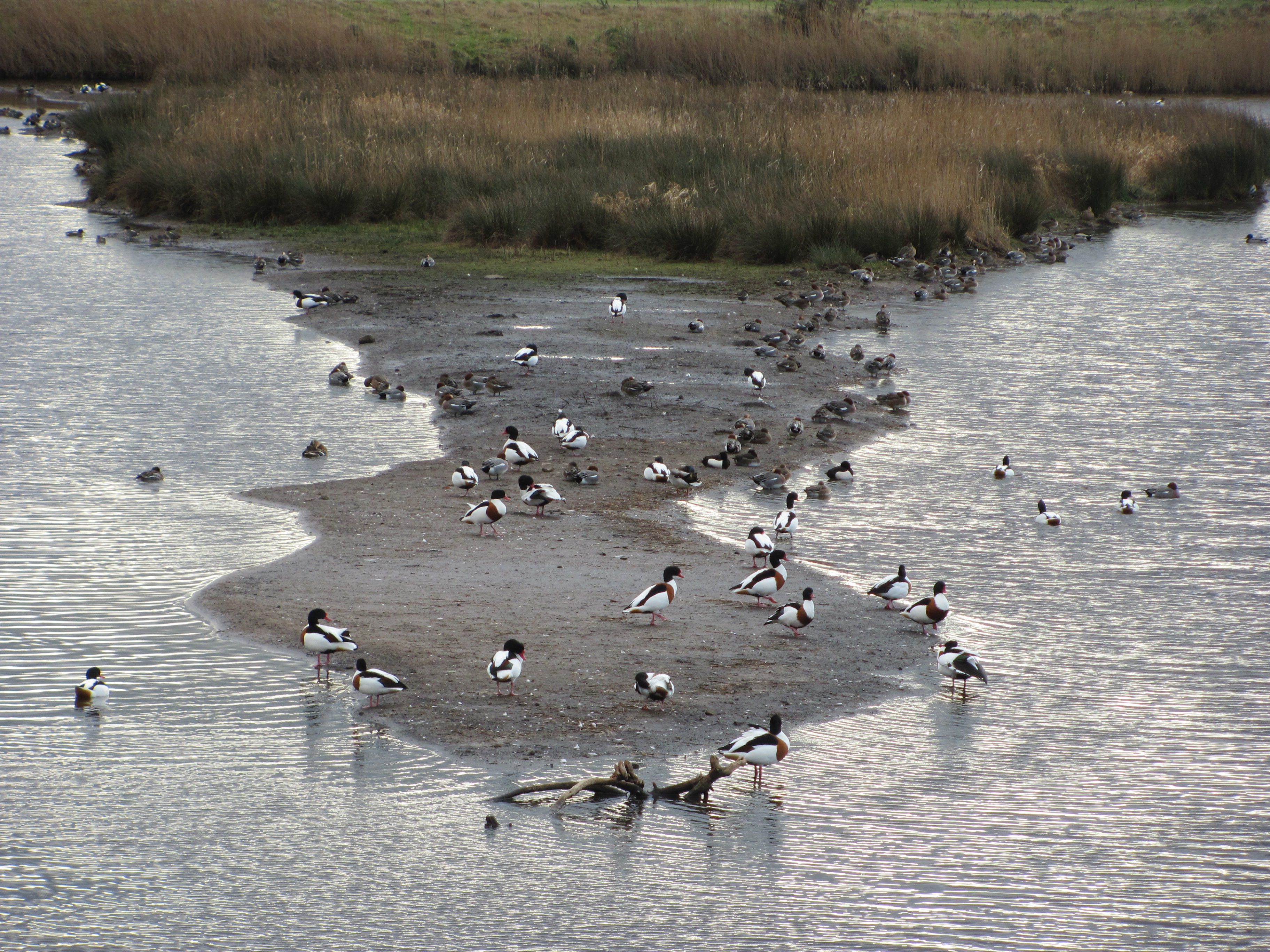
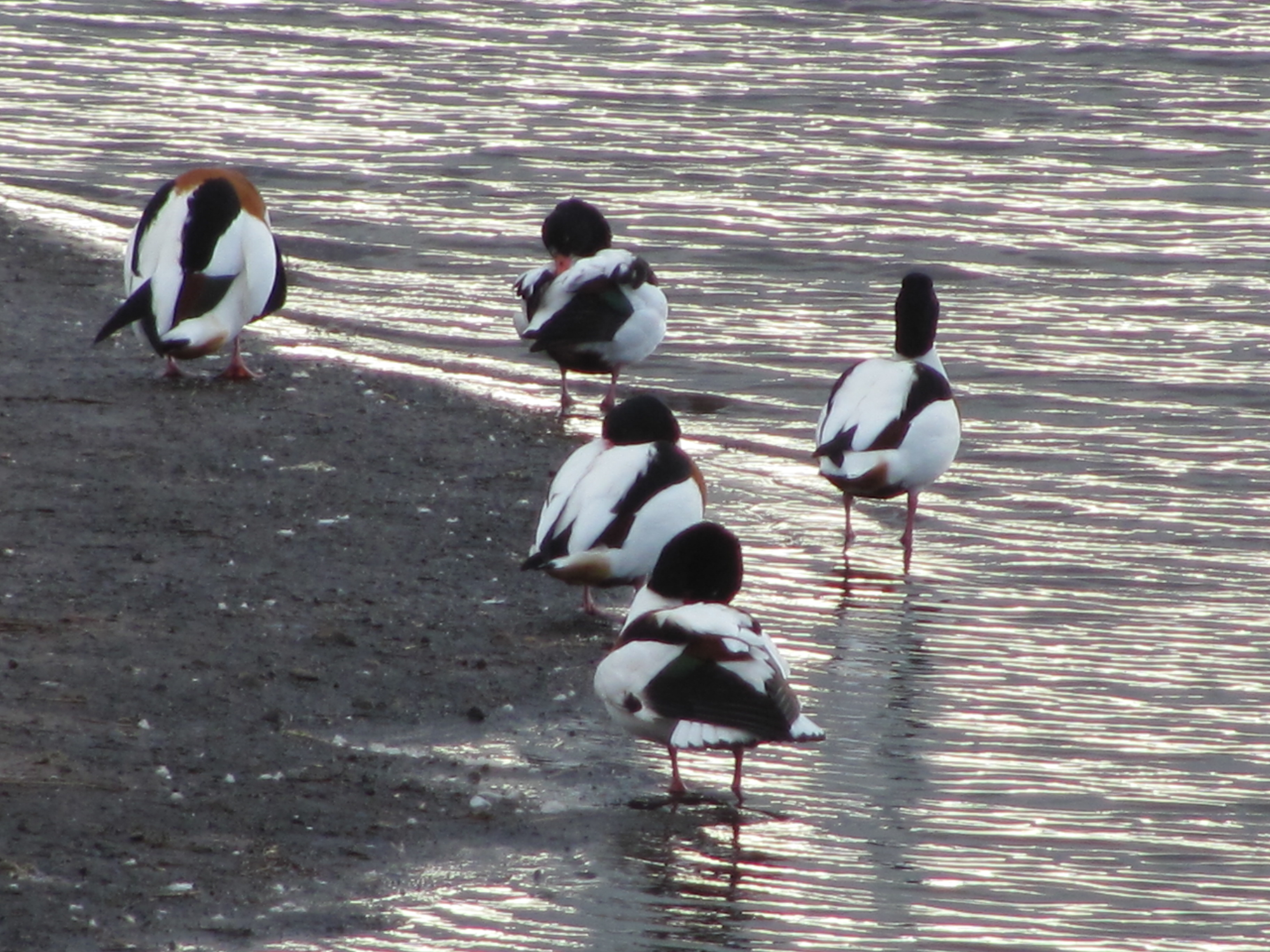
The wind was blowing strongly, carrying cold air across the flatness of the land around this end of the site. When we opened the viewing windows our noses ran and our eyes shed cold tears. Shelduck were here in large numbers on the fingers of mud, spending their lunchtime preening.

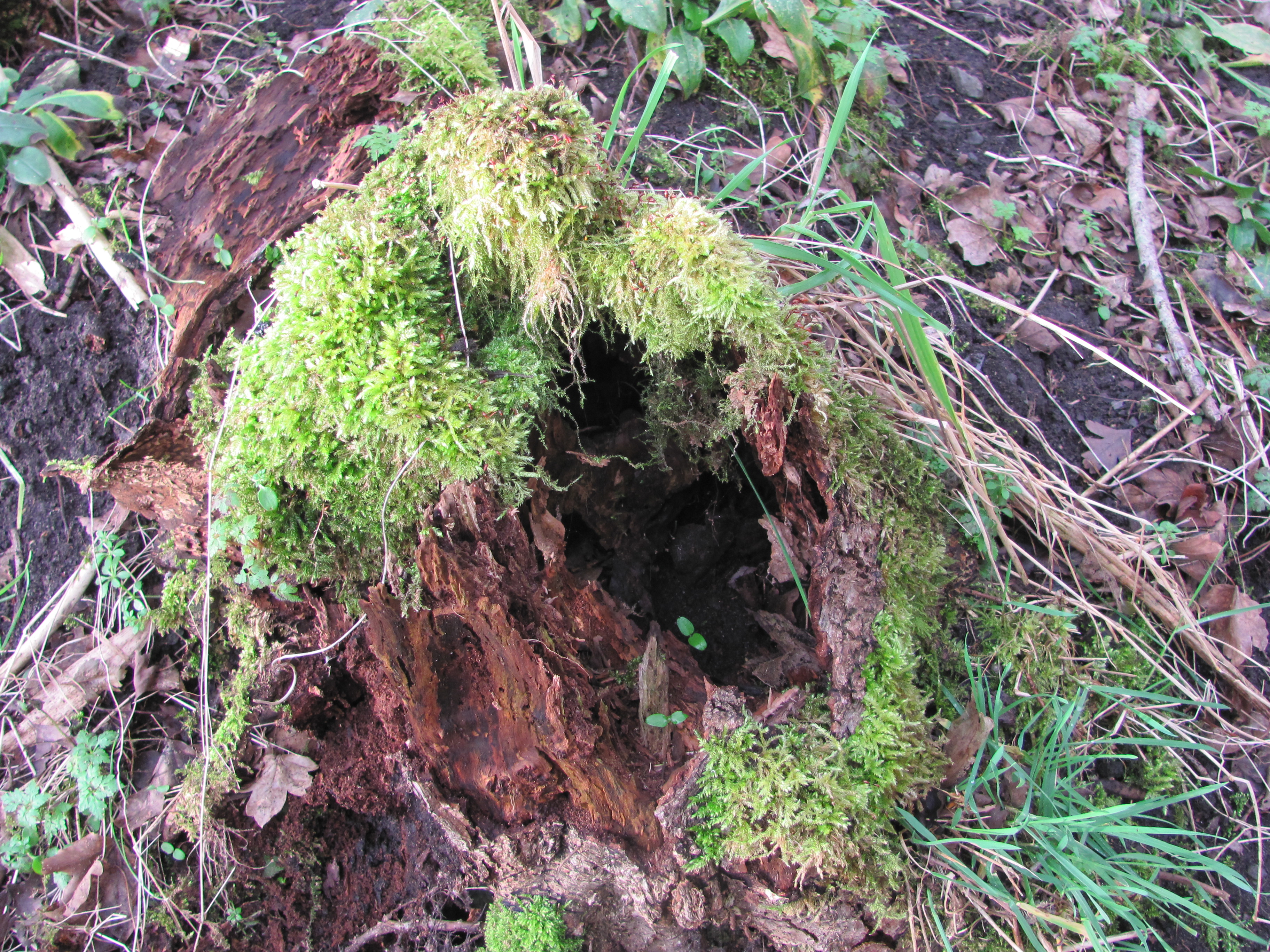
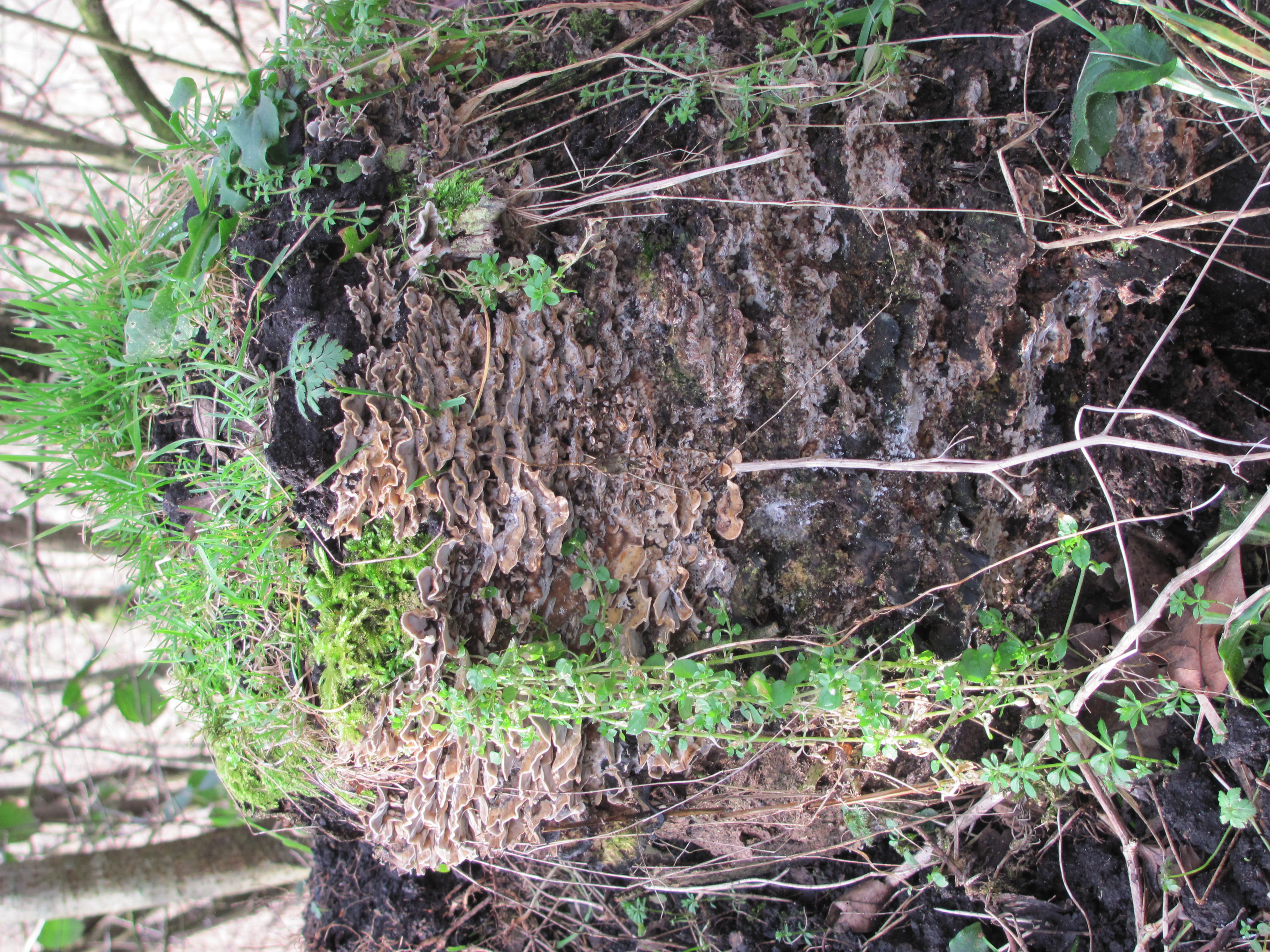
During the afternoon we wandered  across to the other side of the reserve making our way to the Ron Barker Hide. We followed paths alongside a stream, the pathways overhung by bare trees of winter. Beneath them on the verges mosses took advantage of the extra damp atmosphere and colonised any rotting stump or fallen trunk. We were surprised to see so much fungi in evidence. Each stump a garden made by nature.

We arrived at the Ron Barker hide – it was busy. Rows of birdwatchers peering through telescopes, or scopes as they would call them, the front lenses poking out into the thin cold January air. “Third bush past the gate!” “Follow the shining fence down from the red tractor!” Instructions to each other, aids to spotting a rarity.

There was so much noise across the water, reeds and farmland beyond, bird noise carried by the wind to our cold ears. We joined in the spotting and scanning and were rewarded with the sight of a Snow Goose gently landing on rough grass beyond the nearest watery expanse. Alongside the Grey Lags and Pink Foots these smooth white geese appear delicate. They appear whiter than the multitude of swans bustling around them.

A Marsh Harrier was hunting on the edge of the farmland, flying low over the tall grasses and occasionally dropping down appearing minutes later with no sign of prey. As he followed a fence line he spooked a Hen Harrier, much smaller and slender. They hunted almost together for a while but occasionally the larger Marsh Harrier dived at the Hen Harrier putting it down. We watched this spectacle for an enjoyable ten minutes before they moved in front of the dropping sun, which hid them from our prying eyes.

We just had time left for another perusal of the Mere before the light defeated us. The swans now looked ghostly in the pink-tinted water. they were joined by more and more geese flying in to roost. The day finished with a real show. A Short Eared Owl was quartering the marshland abutting the mere, hunting voles with a periodic hover, his colours made richer in the late afternoon light. It is sightings like these that make the reserves of the Wildfowl and Wetland Trust so special.

Categories
bird watching birds conservation garden wildlife natural pest control photography Wildfowl and Wetlands Trust wildlife winter gardens

A Day at the Original Wildfowl and Wetland Trust Centre – Slimbridge

Our recent visit to Barnes, the WWT centre in London, reminded us that we hadn’t visited Slimbridge for a good few years. Bitterns were being spotted regularly so a relatively mild day in January seemed a good day to visit. A long and very slow drive down in the drizzle failed to dampen our enthusiasm. So having arrived an hour after we had planned a welcome cup of coffee was gulped down before we headed for the hides. Trouble is we had to begin by walking passed the flamingo enclosure – an assault on the eyes and ears. Not our favourite birds – the Dame Edna Everidges of the wildfowl world.

The walk to the first hide took us through wildfowl enclosures. We don’t stop here much but it was a favourite when our children were young, and is still a  favourite for young families today. it is a great way to introduce youngsters to the joys of the bird world. It is safe to say that many children who marvel at the beautiful fowl from every corner of the world become birdwatchers – their interest is sparked here at Slimbridge.

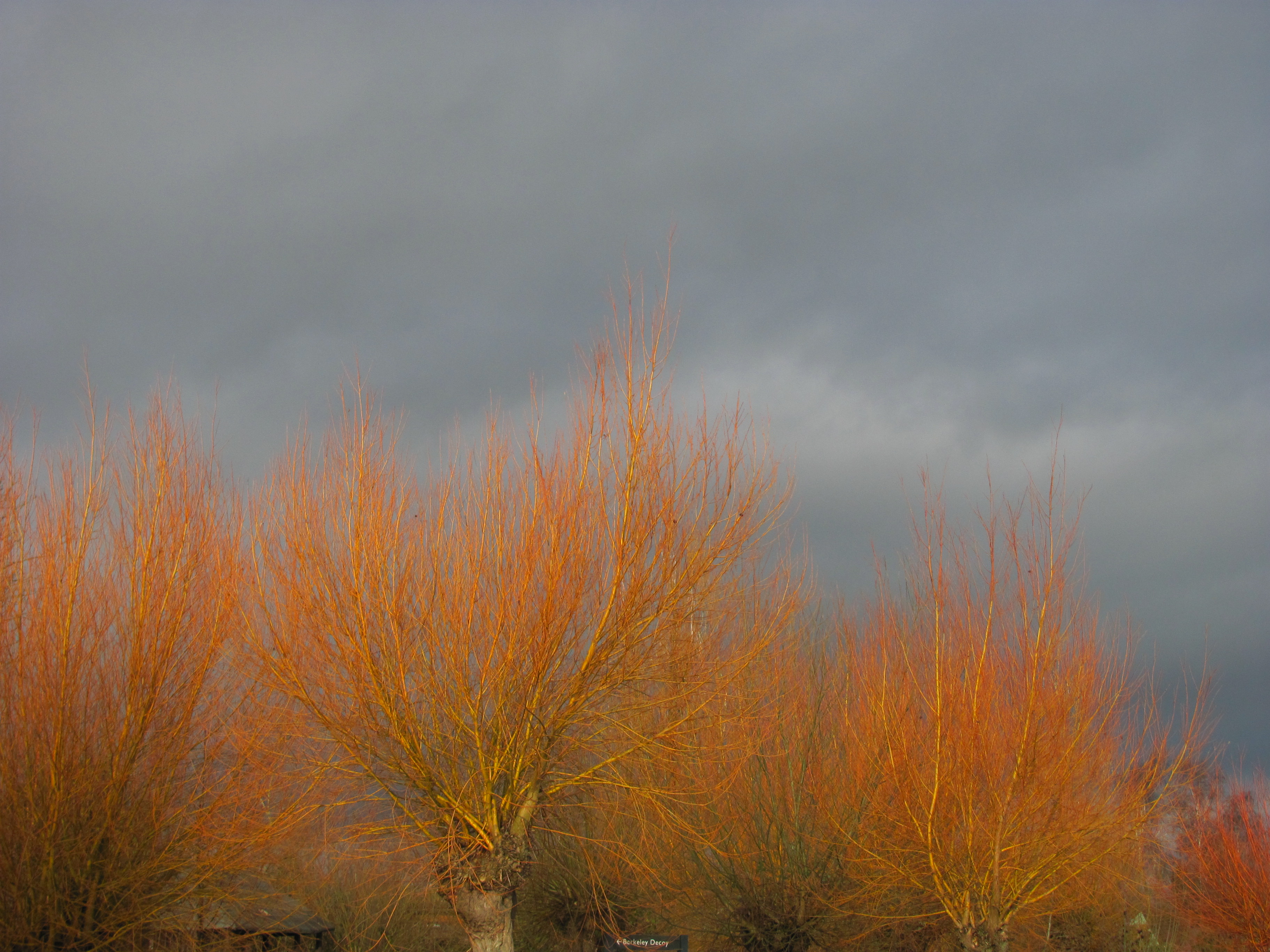
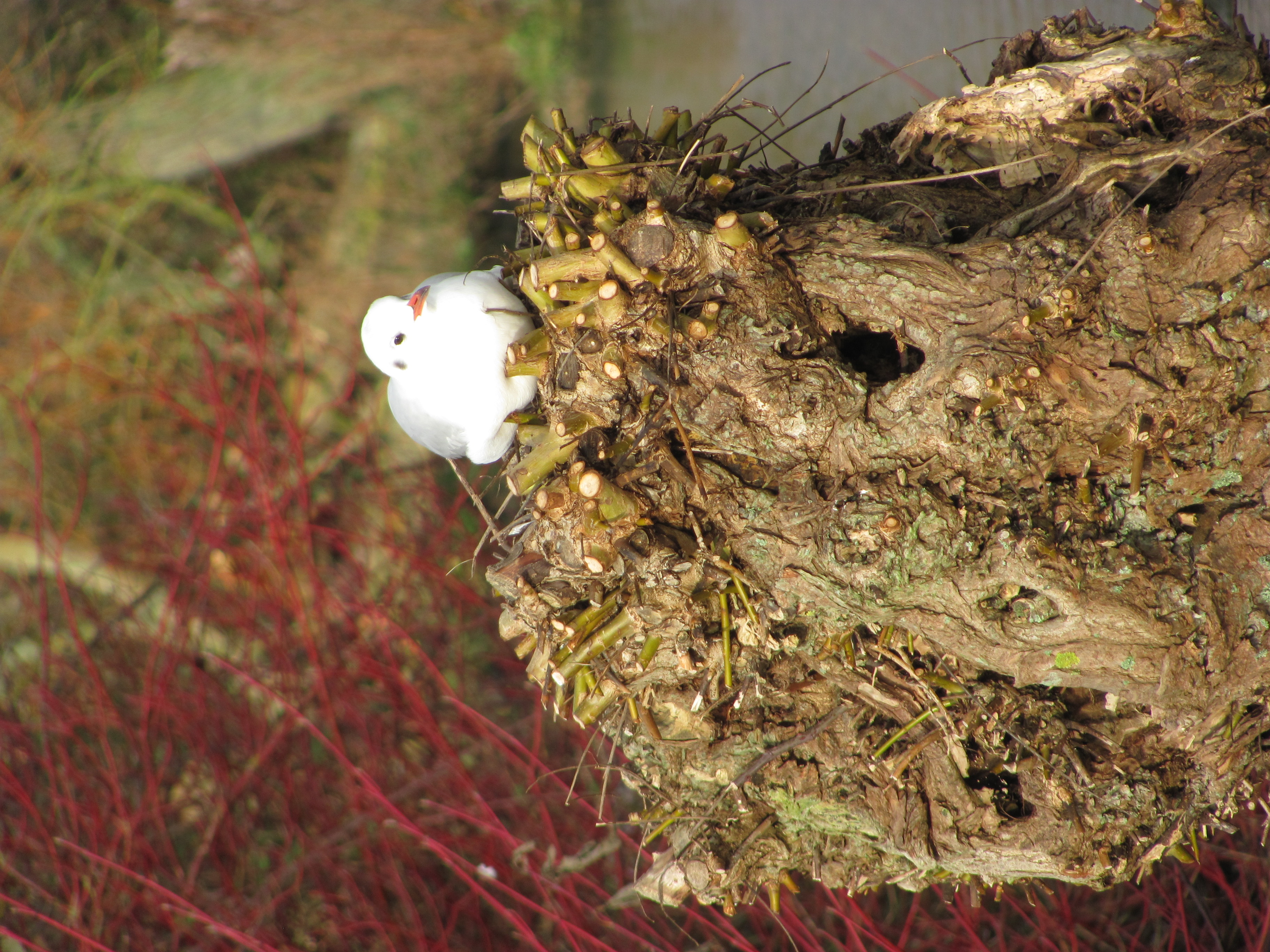
In this area pollarded willows with wands the colours of fire glow against the storm-laden sky. Some newly pollarded trees look like they are sporting designer stubble, others throw their stems rigidly into the air.

Flames of willow lapping the airforce blue sky.
Winter light gives so much colour to a dull day.

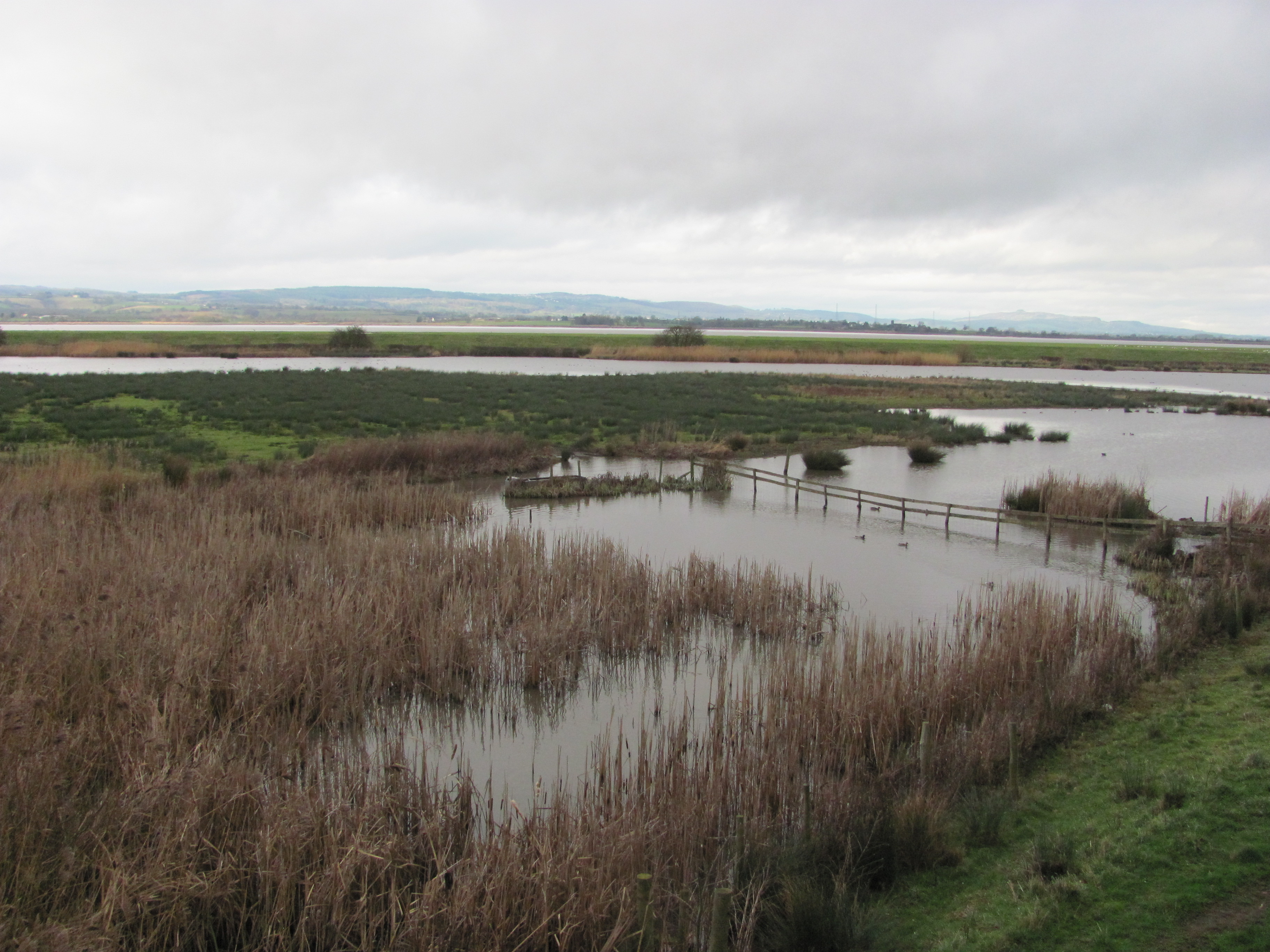
We arrived at the first hide after a twenty-minute walk through the wildfowl pens regularly distracted by the low winter sun and its magical effect on stems and stalks. The view from the hide was one of flat landscape of reedbed, river and shallow pools. Shelduck were relaxing on the grassy bank of a patch of cold looking water while mallard and teal flirted in the edge of the reed fringed pools. This was a quiet place with just the wind rustling the reeds, the whistling calls of the teal disrupted by the quarreling mallard. A small bird flitted from one reed seed head to another never settling, a brown backed warbler with rounded end to its tail – a cettis warbler. This is a sight worth the long journey to see. But Jude quietly whispered to me “I can see a bittern”. There it was, so hard to find and so easy to lose, skulking in the fringes of the reeds a few metres from the hide. Stripes of brown on warm beige, provided the perfect camouflage, the bittern moved so slowly like a clump of dried reeds. Jude saw it with head and neck stretched up – lucky lady!

Our view from the Zeiss Hide

We remained in this hide long enough to get cold and stiff after perching on the hard wooden seating, revived somewhat by regular coffees. Eyes soon become tired staring over such huge areas of wetland, so blinking and rubbing them was a necessity. But our tired eyes did see many delights, Pintails, Shovellers, Water Rail among multitudes of Pochard, Wigeon, mute swan mixed with Bewicks and the occasional heron flying in and landing on fenceposts. The only birds of prey we spotted were several buzzards all lined up on fence post on the edge of the river. Our eyes needed a rest and luckily the nearby Kingfisher Hide provides just this as the views are smaller, the birds more intimate. Here bird feeders hang in a tree just outside one of the hide’s windows. A half hour of close-up views of finches and tits while eating lunch is an enjoyable interlude.

Goldfinch enjoying nyger seed.

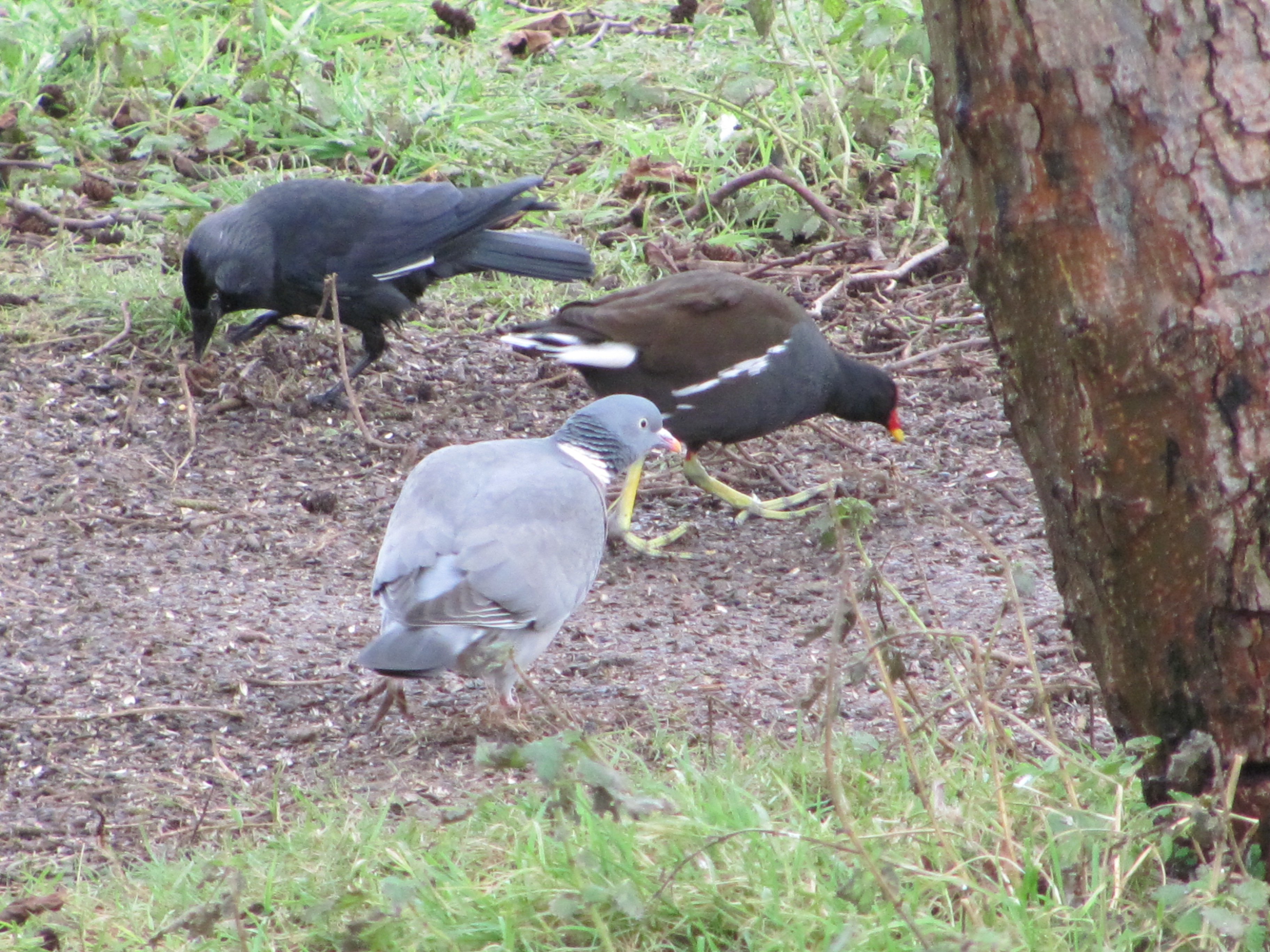
As Jude read an information board about kingfishers she informed me that they moved elsewhere during the winter but returned in March, but as she told me this one flew across the water low and purposefully. You can’t mis-identify a kingfisher, there is nothing else like it. Then it flew back across the water to prove he really was there. Beneath the feeders opportunist pigeons, blackbirds, moorhen and jackdaws joined by a squirrel picked up the seeds and peanut crumbs dropped by the messy small birds above. We enjoyed watching the antics of a Little Grebe as he swam around just feet from the hide, a delightful ball of feathers.

Greedy opportunists find easy pickings.

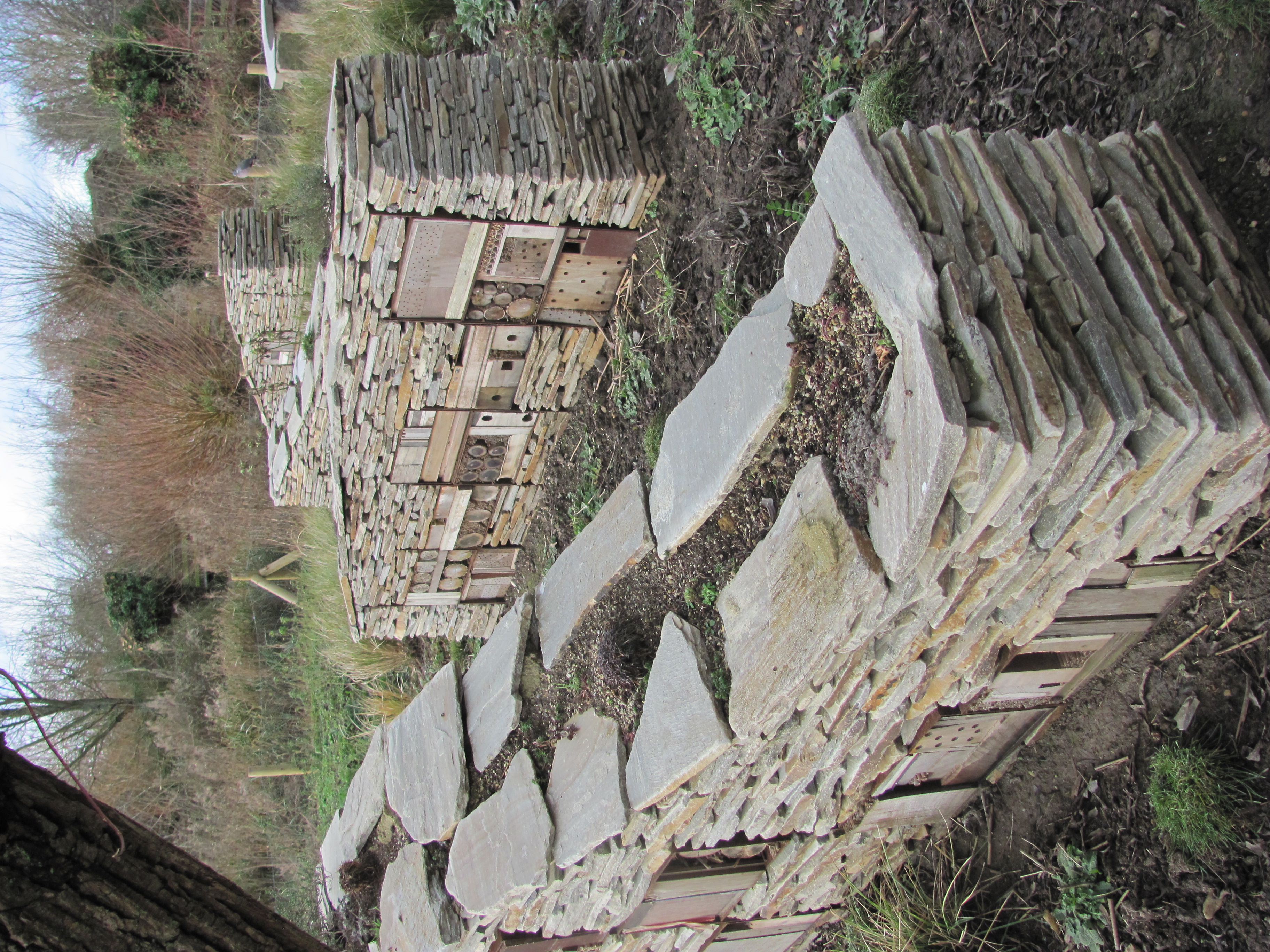
Picnic eaten and eyes rested we continued our tour of the site visiting smaller hides and enjoying the walkways in between. We passed the Rain Garden with the most wonderful, sculptural insect shelters.

The art of the dry-stone wall-builder provides shelter for wildlife.

Many of the birds have become so used to human visitors that they let you take photos without huge telescopic lenses, just compact digital cameras like the one I carry in my pocket.

It's not just me that appreciates pollarded willow.
The moorhen, common but beautifully marked and subtly coloured.
The coot creating his own patterns in the water.

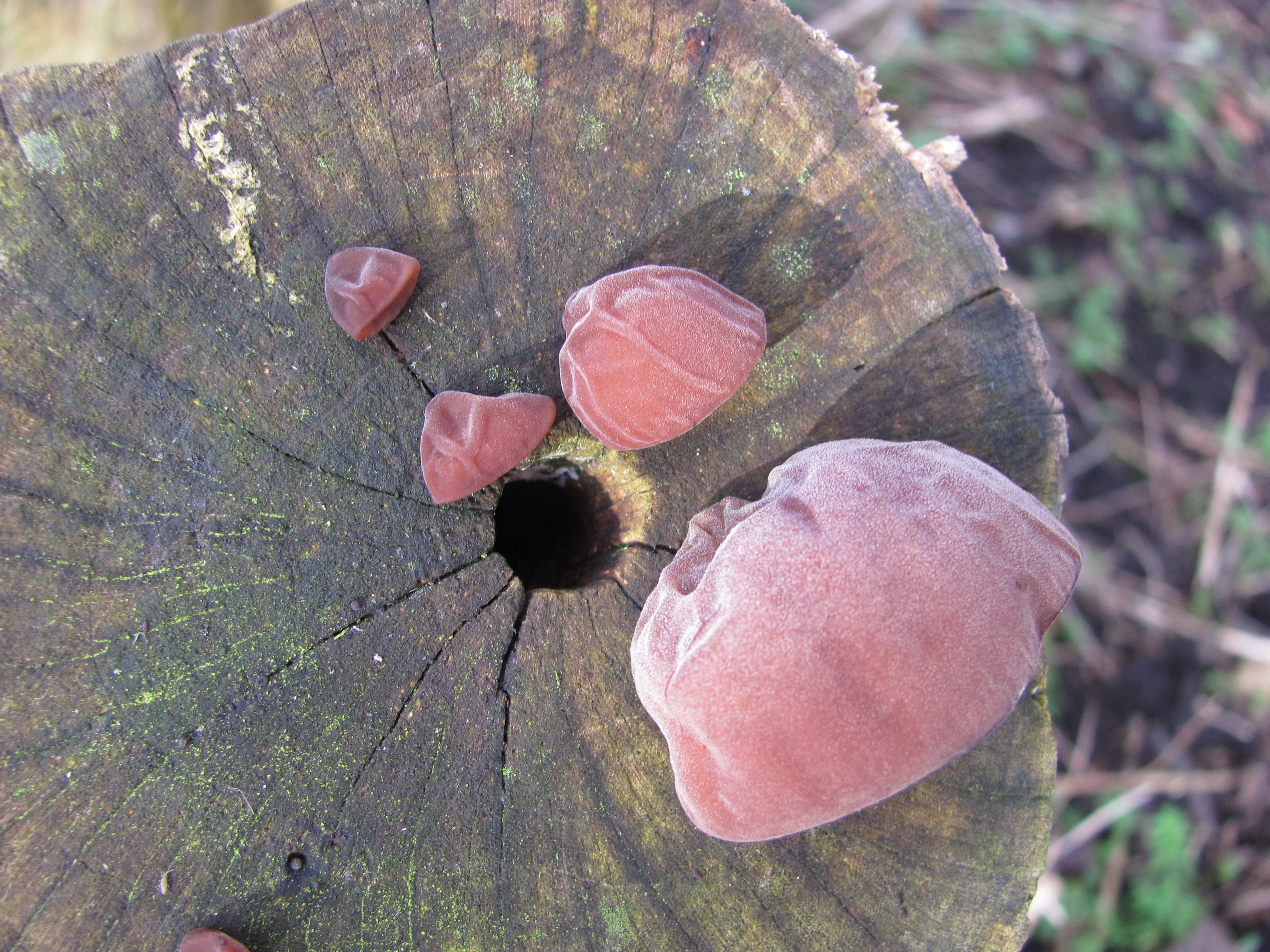
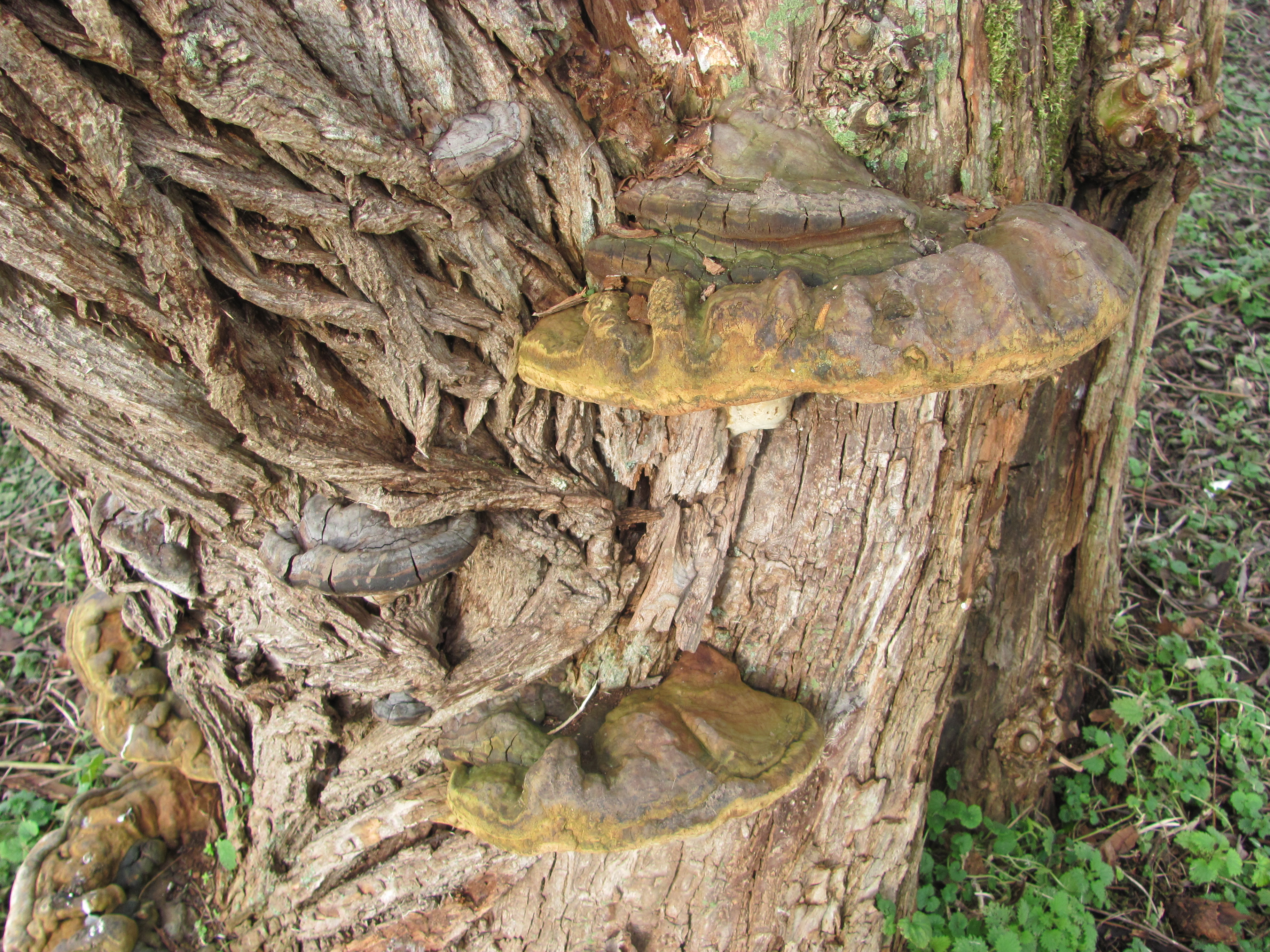
It was between some of the smaller hides that we spotted the first good-sized clump of snowdrops of the winter so far bursting from the leaves that had dropped in the autumn to give the ground a warming duvet. Nearby gnarled old bracket fungi clung to equally gnarled old willow bark.

Bright lights in the gloom under the bare stemmed trees.
Such varied texture and so many shades of brown.

We reached the Holden tower as the poor light was fading further. The multitude of waders, geese and ducks were almost in silhouette now. A flock of Tufted Ducks had taken over one small pond exclusively, but the other pool was busy with Lapwing by the hundred interspersed by a scattering of their cousins the Golden Plover. Out on the far estuary Pintails could be seen feeding in the margins and Curley in the muddy banks. A real treat was spotting a female Reed bunting close to the hide atop a twiggy bush. She was a bird of subtle beauty. Completely unlike the black hooded male, she sported black and cream streaks all over.

Our view from the Holden Tower

The fading light that makes the afternoons in January too short, made us hurry to the South Lakes for a final half-hour bird spotting. Gulls, waders and ducks galore greeted us, unaware that they were being watched by a Buzzard in one tree and a Peregrine in its neighbour. We were entertained by a group of Black Tailed Godwit feeding in the shallows close to us and Lapwing moving across the shallower water feeding incessantly. Scanning the Lapwing flock with the telescope, I spied a small gang of Redshank, easily identified by their red legs. But amongst them was a different character, a slightly longer and down-turned beak and marked eye stripe and more marked plumage identified it as a Spotted Redshank. What an end to the day! Our time watching and appreciating the waders on the South Lake was  forshortened when the Peregrine launched itself from its tree top perch. The waders disappeared.

But it is not just the rarities that it is possible to see at Slimbridge, and we certainly revelled in seeing our Water Rail, Spotted Redshank, Bittern and Cettis Warbler, that makes this such a wonderful place to visit but is the enjoyment of seeing the commonest of birds in such a varied range of habitats. Journeying home we looked back on a day when we spotted over 50 species of birds some of them in their hundreds and satisfied with a short glimpse of the ubiquitous Bittern.

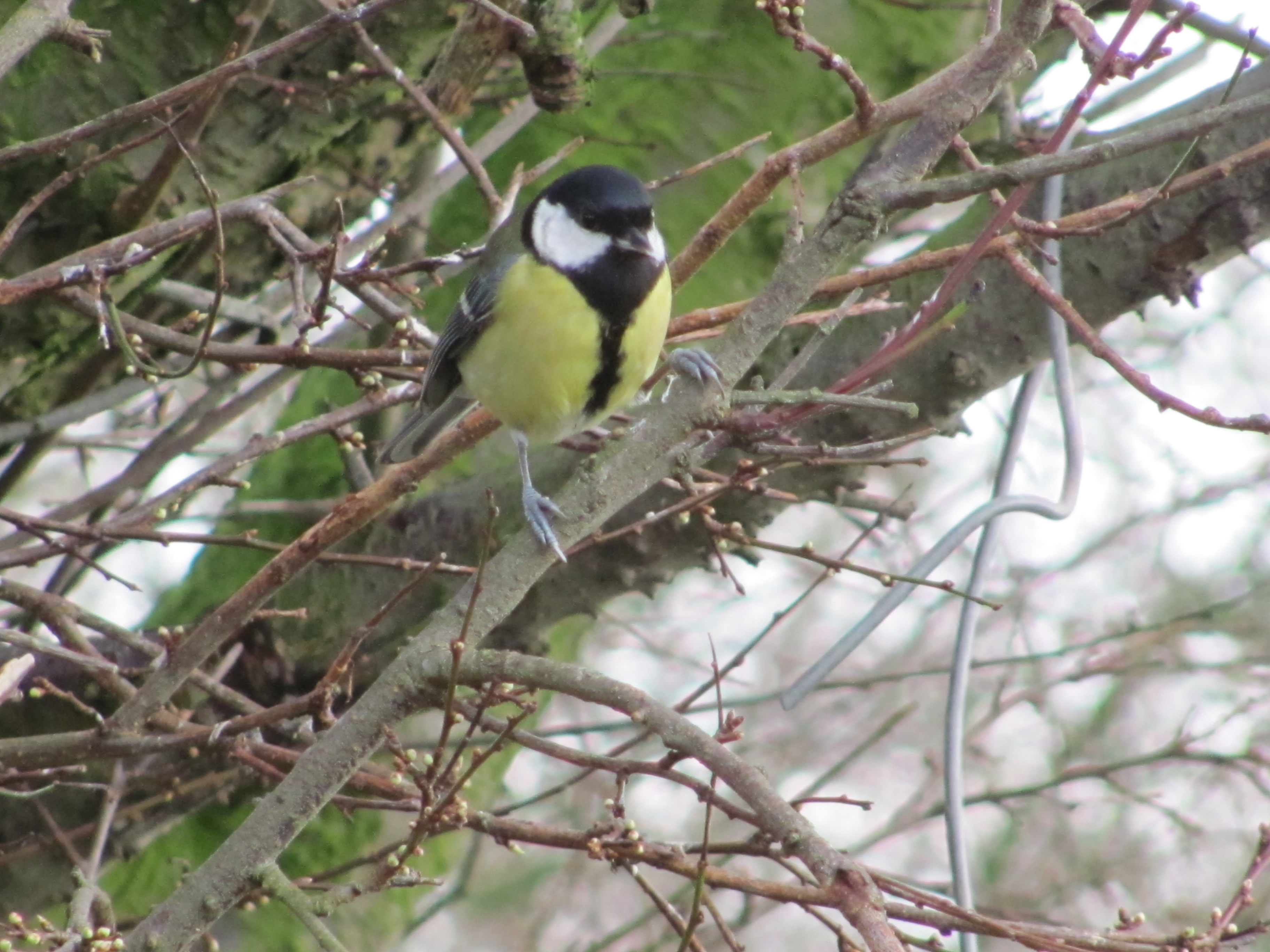
The common but oh so special Great Tit.
Categories
garden wildlife

Feeding Frenzies

We have had the pleasure of watching avian feeding frenzies in our Avocet back garden in the last few days. Firstly we watched flocks of noisy crows wildly feeding on flying ants on the hillside behind us. Through our scope we could see their wildness and greed as the ants in the big patch of sloping dry ground took to the air. It seems little gain for such large birds, but perhaps ants provide some essential nourishment. Or some drug!

The ants nesting alongside our garage wall took flight the following day and were instantly gorged upon by robins and blackbirds. How do birds know this is about to happen?

The food source of the third instance was a complete mystery. Early one sunny evening the garden was invaded by dozens of swallows swooping low through the trees and borders, occasionally landing on the roofs of the conservatory and garage. This continued for a good hour with the garden seeming at times absolutely full of swallows performing amazing aerial acrobatics. What entertainment! They put the Red Arrows to shame.

Categories
conservation

Conservation – habitat or species?

This is a controversial issue with strong feelings on both sides I suspect, but should we really be expending energy, resources and finance on reintroducing creatures such as the beaver when we could be concentrating on improving and increasing scarce habitats? My feeling is that if we concentrate on habitat conservation and improvement first then an increase in all species indigenous to that habitat would increase in numbers and indeed some species that have disappeared could reappear – plants, insects, birds and mammals.

The landscape in the photo is part of the RSPB reserve on Anglesay which consists of cliffside habitat and cliff top heathland. The habitat here is well maintained and as well as looking colouful with its heathers, lings and gorse, and dramatic with its steep cliffs and huge splashing waves, it is home to so much wildlife. On a recent visit we watched choughs along the clifftop crying out their “chee-ew” calls. And perching atop stems and stalks stonechat and pippets. On other visits we have watched hunting displays of peregrines and sparrowhawks.

The cliffs themselves are home to nesting seabird colonies of razorbills, guillemots and puffins while out at sea lucky watchers may spot porpoises and dolphins. The heathland is home to adders.

While there I decided that by conserving rich habitats such as this we are best serving wildlife. Surely value for money and value for effort wildlife conservation is best served in this way. Reintroducing beavers to a remote loch in Scotland surely comes a poor second!

This Veggie Life

A Vegetarian | Nature Lifestyle Blog

Rambling in the Garden

.....and nurturing my soul

The Arch City Gardener

Journeys In St. Louis Gardening and Beyond

Garden Dreaming at Châtillon

Consult the genius of the place

Storyshucker

A blog full of humorous and poignant observations.

gardeninacity

Notes from a wildlife-friendly cottage garden

PlayGroundology

...an emerging social science

The Official Blog of British Wildlife

'The most important and informative publication on wildlife of our times' - The Independent. This blog is a member of The UK & Ireland Natural History Bloggers group: www.uknhb.blogspot.com

iGrowHort

Inspire - Cultivate - Grow Native Plants - Restore Landscapes

Bishops Meadow Trust

To create and protect a semi-natural wild space for the people of Farnham to enjoy and experience an array of British wildlife in our town

Gardening with Children

The www.gardeningwithchildren.co.uk Blog

UKbirdingtimeline

birding through the seasons, why birds matter and how to conserve them

NATURE WALKER

with a camera in hand

Jardin

Transform your outdoor space

Eva's space

My allotment, cooking and other interests

Old School Garden

my gardening life through the year

LEANNE COLE

Trying to live a creative life

fromacountrycottage

trying to live as lightly as possible on our beautiful planet

Good Life Gardening

Nature lovers from Leicester living the good life.

mybeautfulthings

Finding the beautiful in the everyday

mawsonmichelle

Michelle's Allotment

In and Out of My Garden

thoughts from and about my garden

Greenhousing

Big plans for a small garden

The Scottish Country Garden

A Walled Country Garden in South East Scotland

The Fruity Chicken

Life at the fruity chicken

willowarchway

Off grid living. Self sufficient. "PERMAGANICS RULE".

St Anns Allotments

Nottingham's Grade 2* Listed Allotments and Community Orchard

Manifest Joy Harvests

a journey in suburban vegetable gardening

Allotmental

The madness of growing your own

Penny's Garden: a harvest beyond my front door

A novel approach to vegetable gardening

arignagardener

Sustainable living in the Irish countryside.

NewEnglandGardenAndThread

Master Gardener, amateur photographer, quilter, NH native, and sometimes SC snowbird

dianajhale

Recent work and work in progress and anything else that interests me

planthoarder

a chaotic cottage gardener

Lens and Pens by Sally

a weekly blog that creates a personal philosophy through photographs and words

Dewdrops and Sunshine

Stories from a sassy and classy Southern farmbelle.

The Pyjama Gardener

Simple Organic Gardening & Seasonal Living

gettin' fresh!

turning dirt into dinner

JOY...

today the world is created anew

Garden Birds

Notes from a Devon garden

ShootAbout

Life Through The Lens

Adapting Pixels

A photography blog showcasing the best photography pictures and videos on the internet

Wildlifegardening's Blog

Just another WordPress.com site

naturestimeline

personal observations from the natural world as the search continues for a new approach to conservation.

LATEBLOOMERBUDS

The Wonders of Life through my Eyes, my Heart, my Soul