The walk to the first hide took us through wildfowl enclosures. We don’t stop here much but it was a favourite when our children were young, and is still a favourite for young families today. it is a great way to introduce youngsters to the joys of the bird world. It is safe to say that many children who marvel at the beautiful fowl from every corner of the world become birdwatchers – their interest is sparked here at Slimbridge.
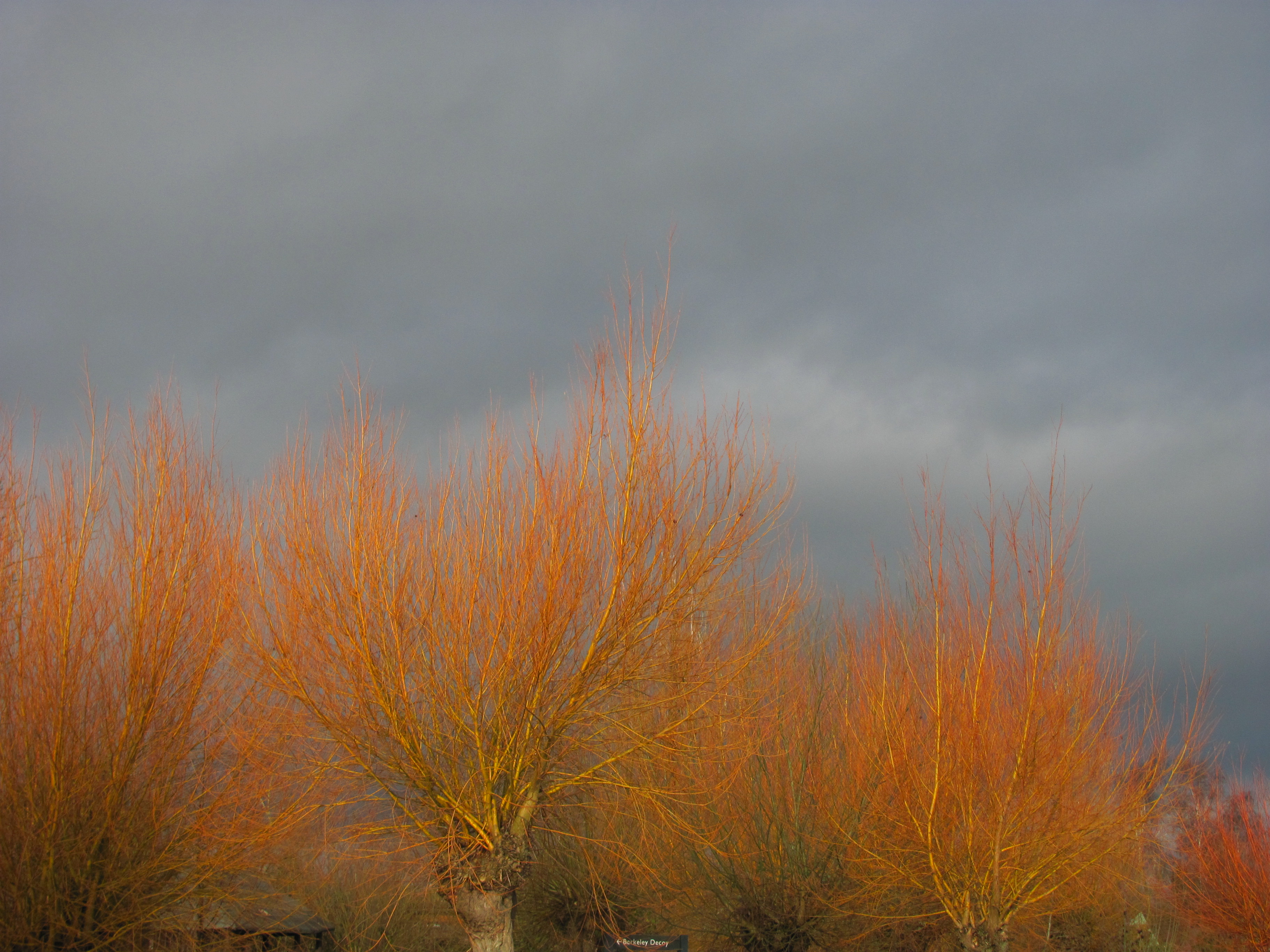
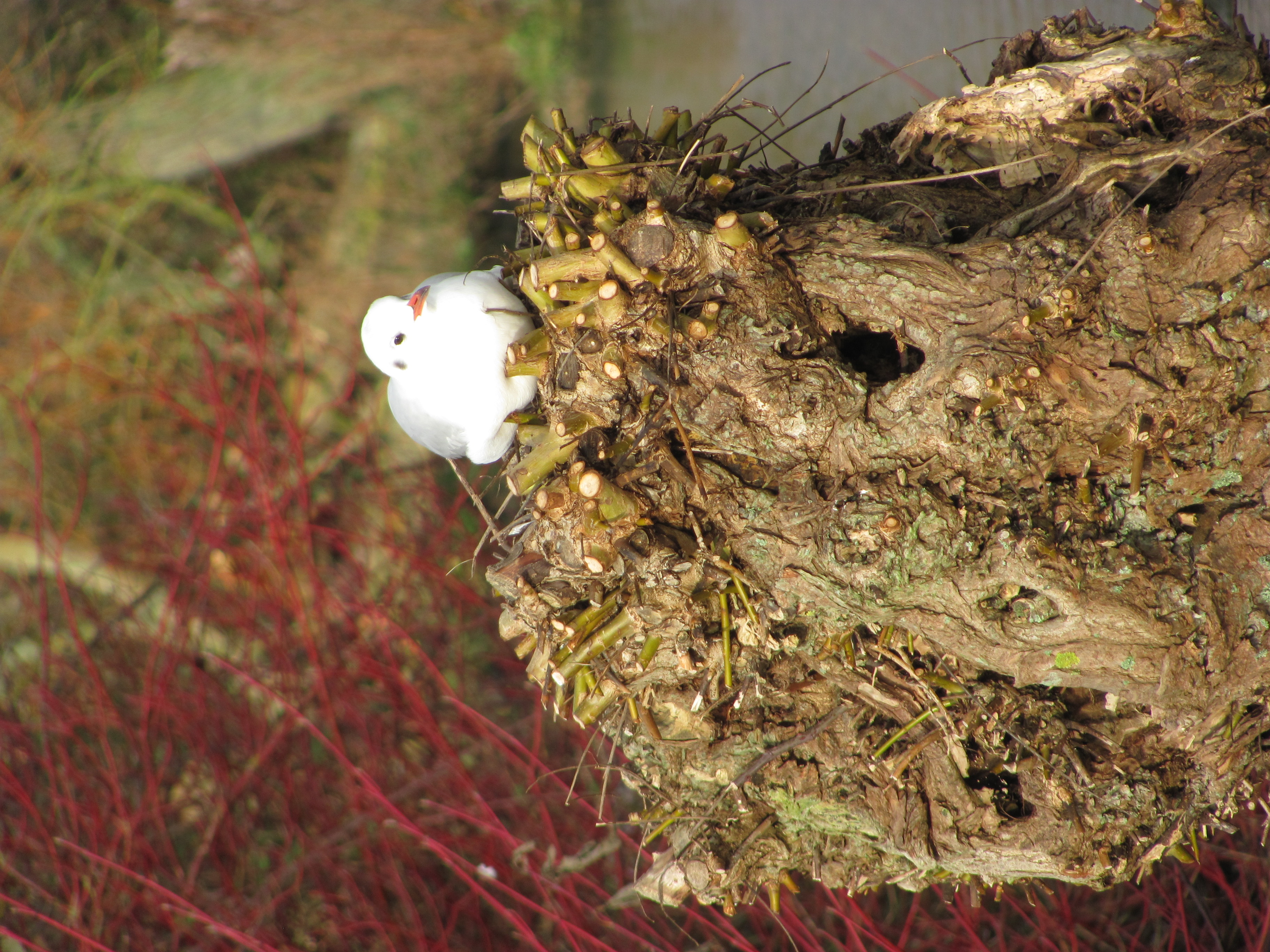
In this area pollarded willows with wands the colours of fire glow against the storm-laden sky. Some newly pollarded trees look like they are sporting designer stubble, others throw their stems rigidly into the air.

We arrived at the first hide after a twenty-minute walk through the wildfowl pens regularly distracted by the low winter sun and its magical effect on stems and stalks. The view from the hide was one of flat landscape of reedbed, river and shallow pools. Shelduck were relaxing on the grassy bank of a patch of cold looking water while mallard and teal flirted in the edge of the reed fringed pools. This was a quiet place with just the wind rustling the reeds, the whistling calls of the teal disrupted by the quarreling mallard. A small bird flitted from one reed seed head to another never settling, a brown backed warbler with rounded end to its tail – a cettis warbler. This is a sight worth the long journey to see. But Jude quietly whispered to me “I can see a bittern”. There it was, so hard to find and so easy to lose, skulking in the fringes of the reeds a few metres from the hide. Stripes of brown on warm beige, provided the perfect camouflage, the bittern moved so slowly like a clump of dried reeds. Jude saw it with head and neck stretched up – lucky lady!
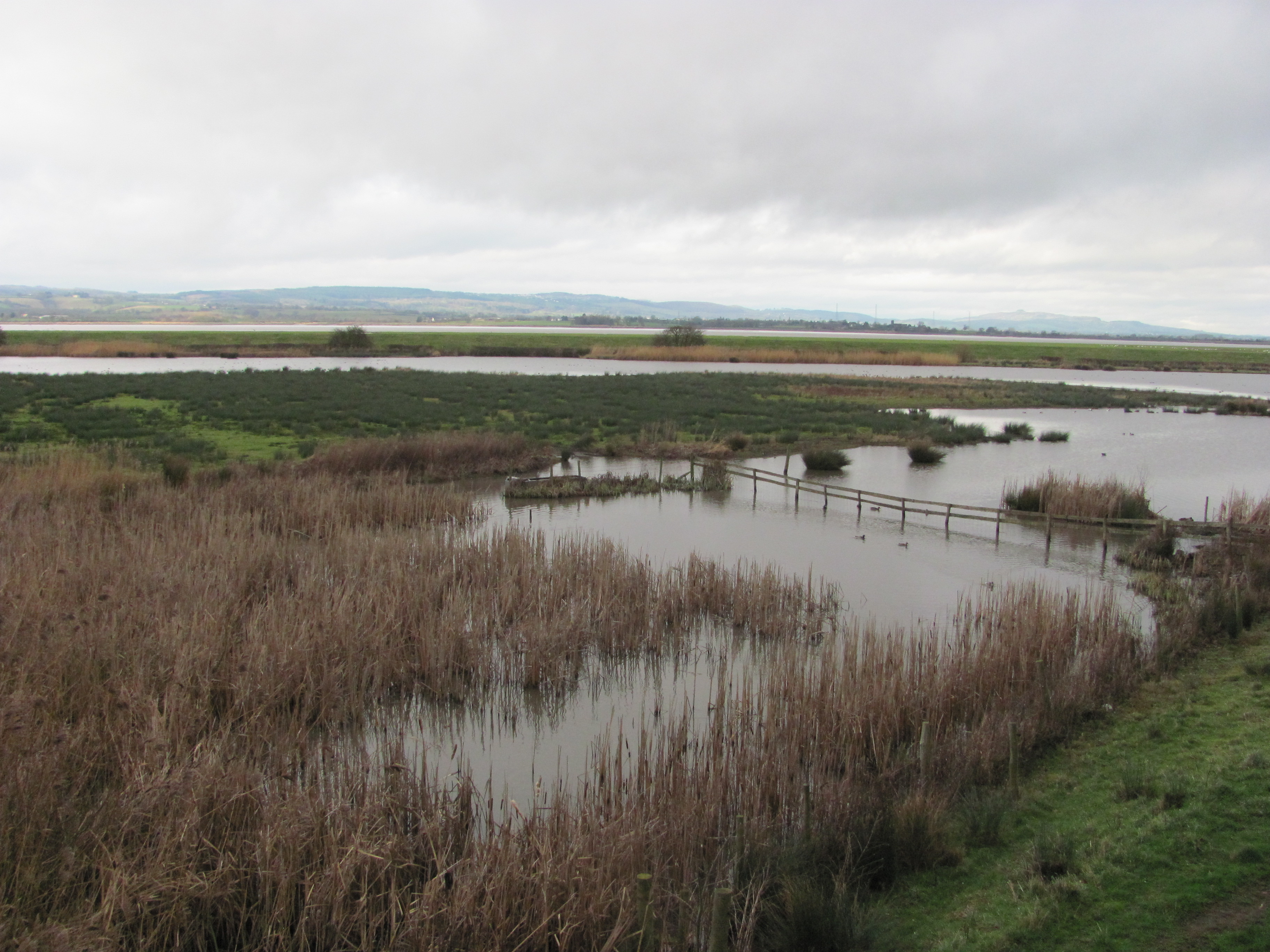
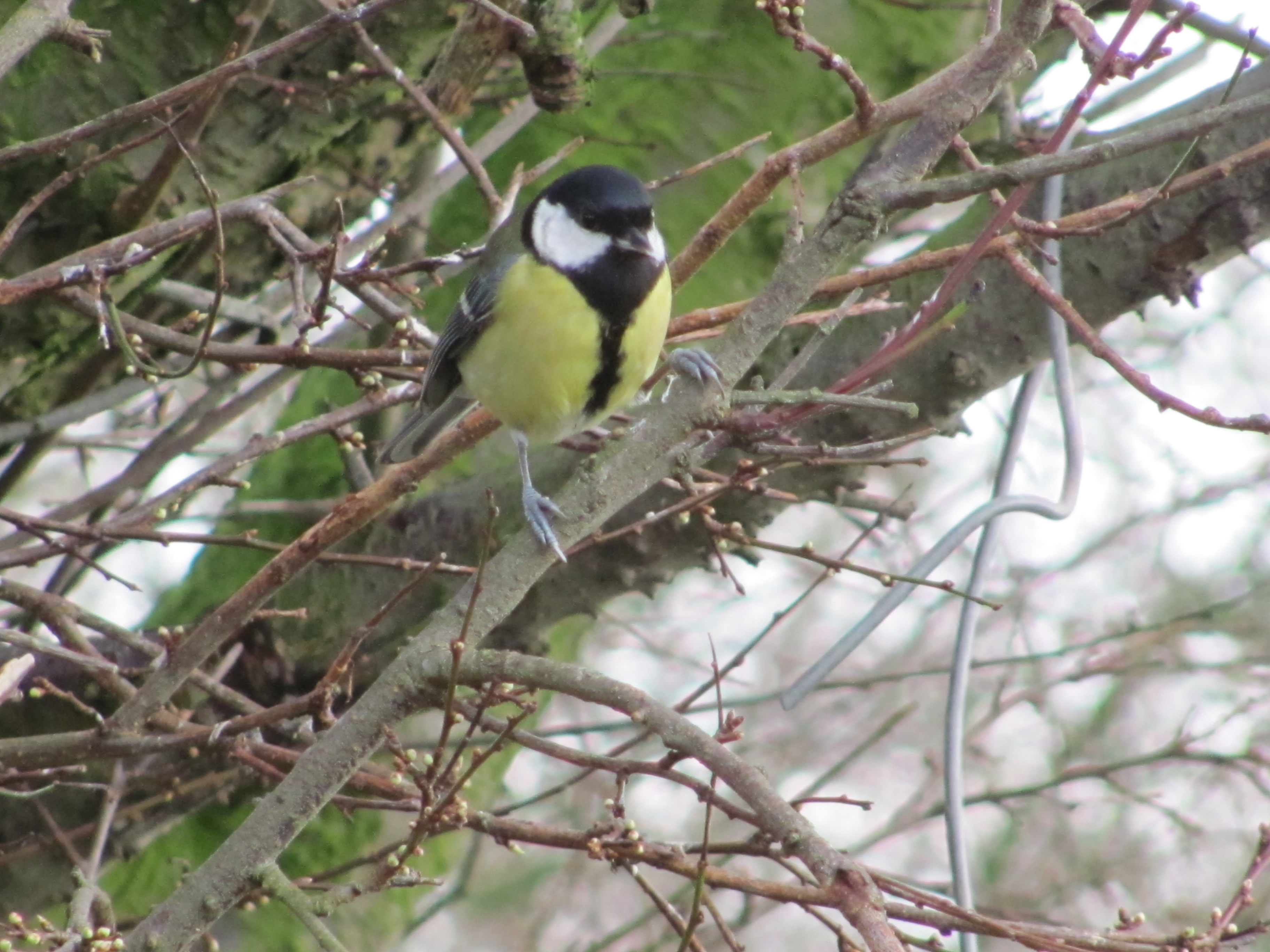
We remained in this hide long enough to get cold and stiff after perching on the hard wooden seating, revived somewhat by regular coffees. Eyes soon become tired staring over such huge areas of wetland, so blinking and rubbing them was a necessity. But our tired eyes did see many delights, Pintails, Shovellers, Water Rail among multitudes of Pochard, Wigeon, mute swan mixed with Bewicks and the occasional heron flying in and landing on fenceposts. The only birds of prey we spotted were several buzzards all lined up on fence post on the edge of the river. Our eyes needed a rest and luckily the nearby Kingfisher Hide provides just this as the views are smaller, the birds more intimate. Here bird feeders hang in a tree just outside one of the hide’s windows. A half hour of close-up views of finches and tits while eating lunch is an enjoyable interlude.

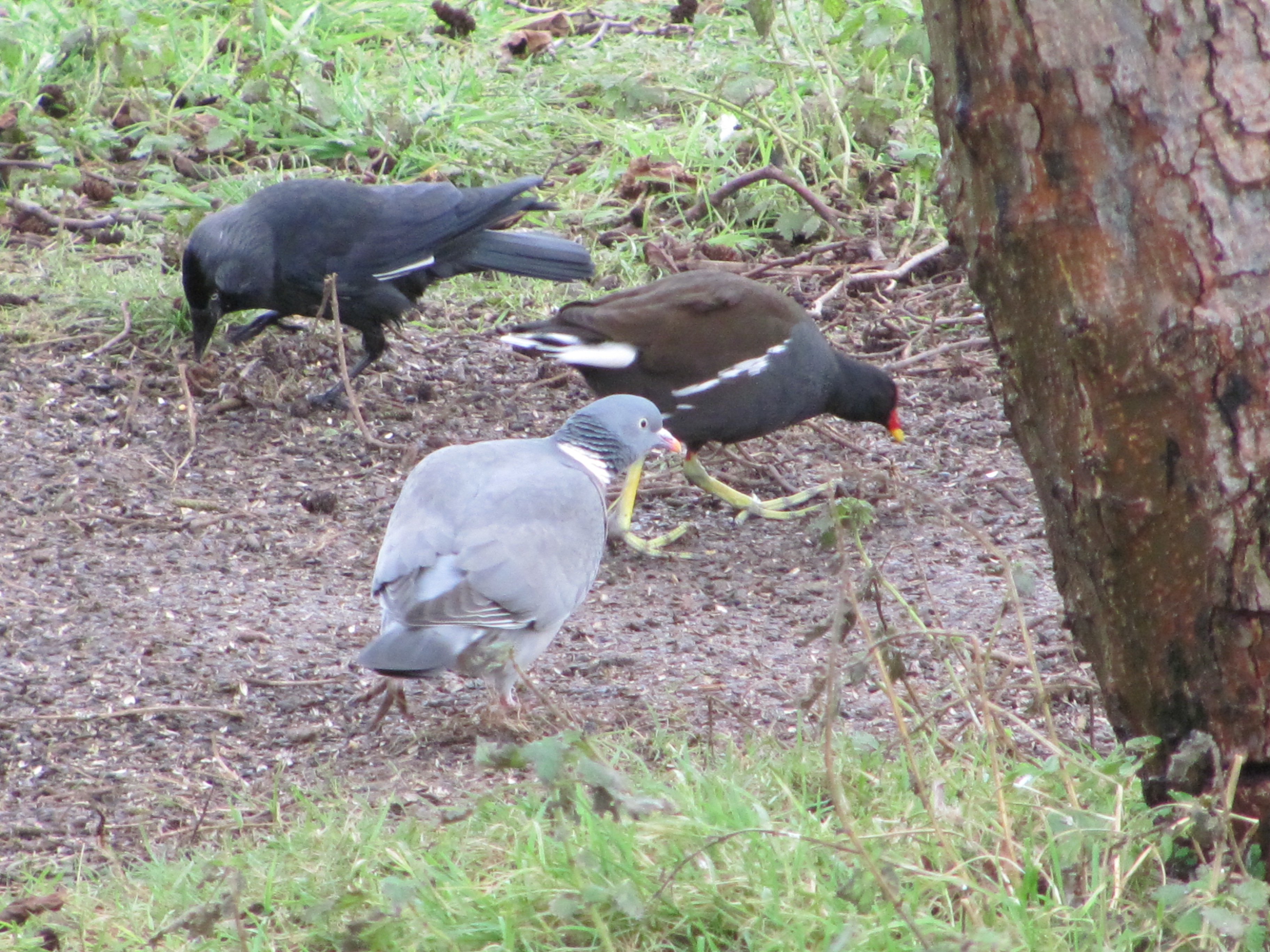
As Jude read an information board about kingfishers she informed me that they moved elsewhere during the winter but returned in March, but as she told me this one flew across the water low and purposefully. You can’t mis-identify a kingfisher, there is nothing else like it. Then it flew back across the water to prove he really was there. Beneath the feeders opportunist pigeons, blackbirds, moorhen and jackdaws joined by a squirrel picked up the seeds and peanut crumbs dropped by the messy small birds above. We enjoyed watching the antics of a Little Grebe as he swam around just feet from the hide, a delightful ball of feathers.
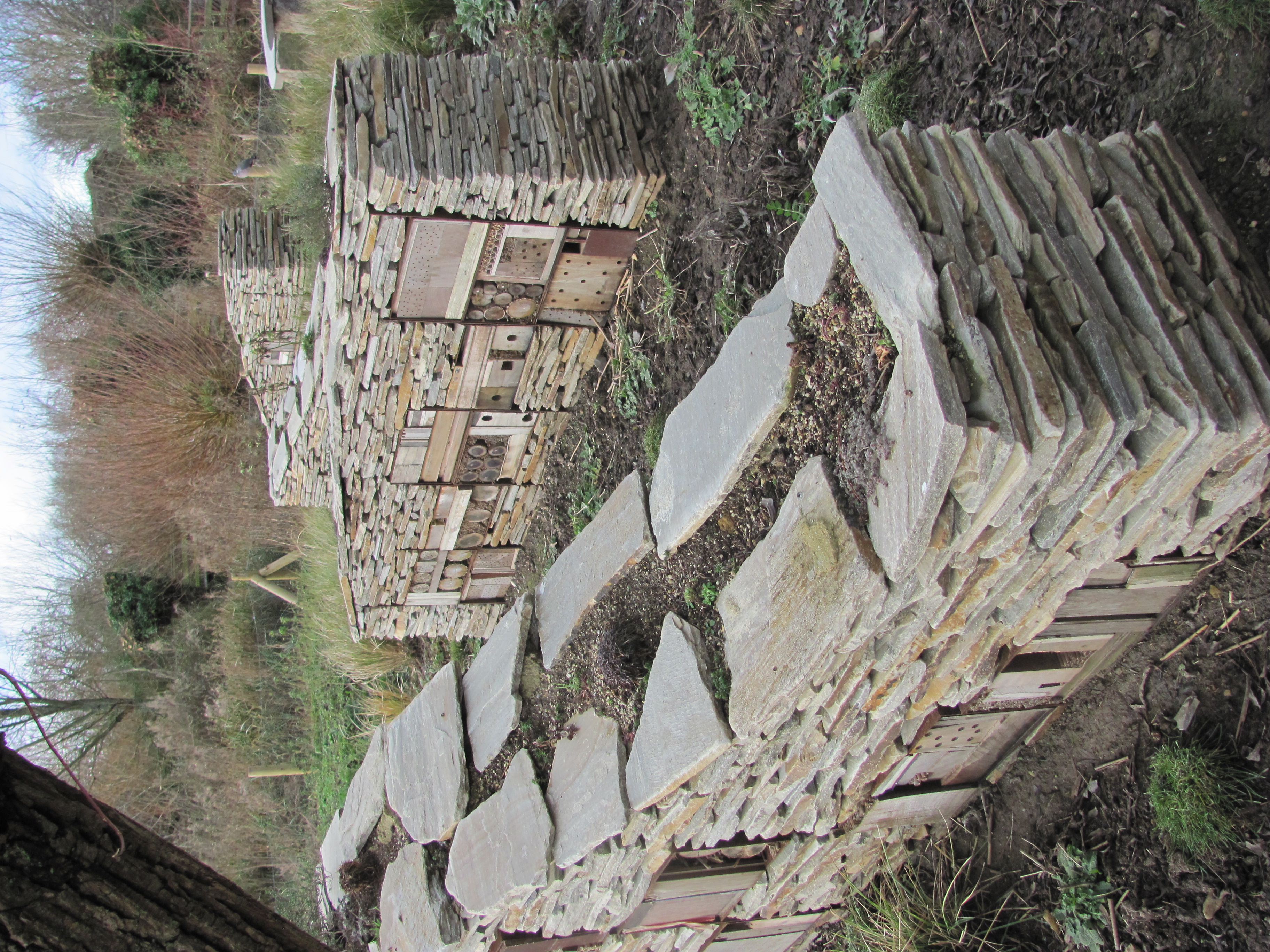
Picnic eaten and eyes rested we continued our tour of the site visiting smaller hides and enjoying the walkways in between. We passed the Rain Garden with the most wonderful, sculptural insect shelters.

Many of the birds have become so used to human visitors that they let you take photos without huge telescopic lenses, just compact digital cameras like the one I carry in my pocket.


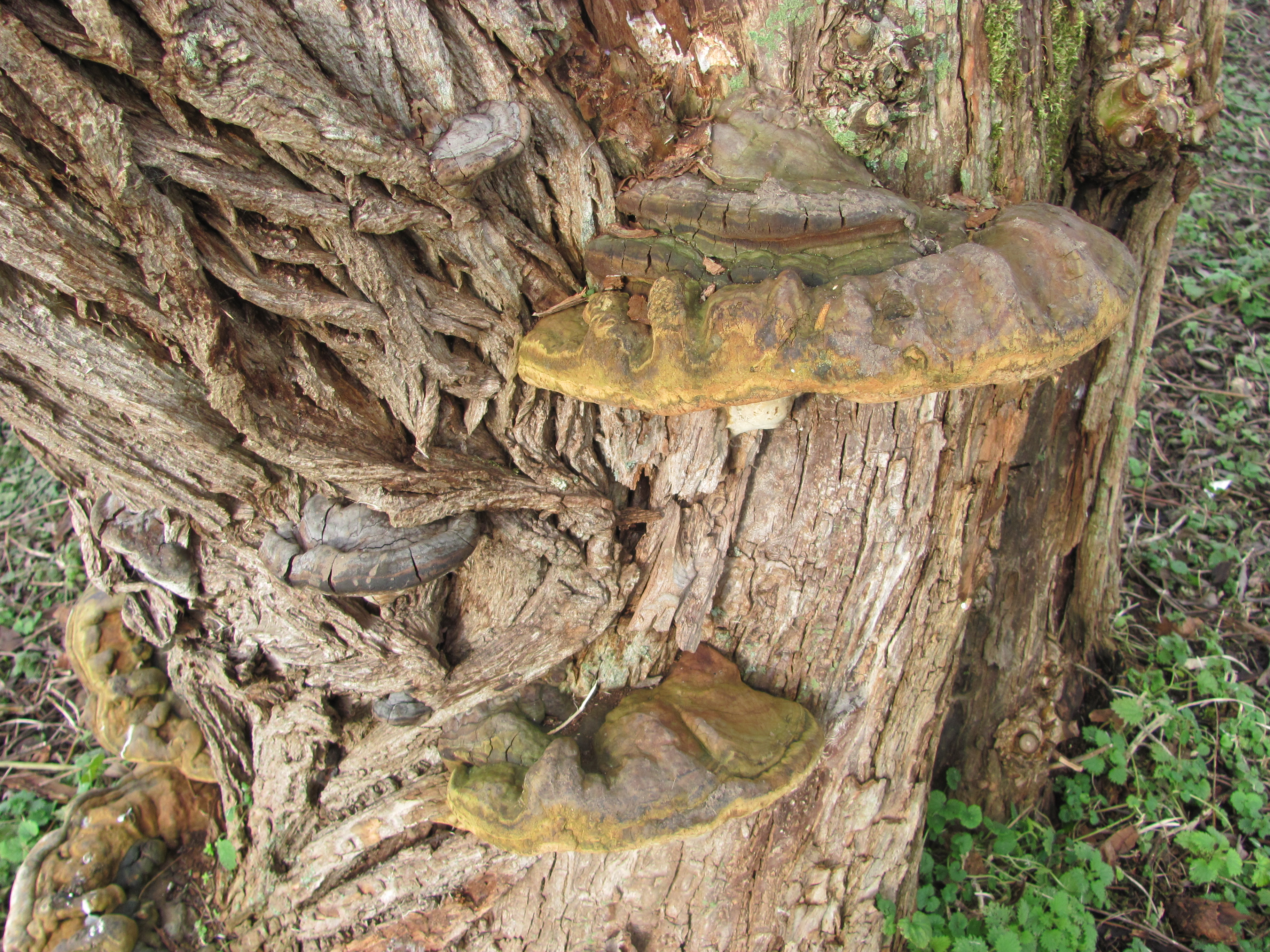
It was between some of the smaller hides that we spotted the first good-sized clump of snowdrops of the winter so far bursting from the leaves that had dropped in the autumn to give the ground a warming duvet. Nearby gnarled old bracket fungi clung to equally gnarled old willow bark.

We reached the Holden tower as the poor light was fading further. The multitude of waders, geese and ducks were almost in silhouette now. A flock of Tufted Ducks had taken over one small pond exclusively, but the other pool was busy with Lapwing by the hundred interspersed by a scattering of their cousins the Golden Plover. Out on the far estuary Pintails could be seen feeding in the margins and Curley in the muddy banks. A real treat was spotting a female Reed bunting close to the hide atop a twiggy bush. She was a bird of subtle beauty. Completely unlike the black hooded male, she sported black and cream streaks all over.

The fading light that makes the afternoons in January too short, made us hurry to the South Lakes for a final half-hour bird spotting. Gulls, waders and ducks galore greeted us, unaware that they were being watched by a Buzzard in one tree and a Peregrine in its neighbour. We were entertained by a group of Black Tailed Godwit feeding in the shallows close to us and Lapwing moving across the shallower water feeding incessantly. Scanning the Lapwing flock with the telescope, I spied a small gang of Redshank, easily identified by their red legs. But amongst them was a different character, a slightly longer and down-turned beak and marked eye stripe and more marked plumage identified it as a Spotted Redshank. What an end to the day! Our time watching and appreciating the waders on the South Lake was forshortened when the Peregrine launched itself from its tree top perch. The waders disappeared.
But it is not just the rarities that it is possible to see at Slimbridge, and we certainly revelled in seeing our Water Rail, Spotted Redshank, Bittern and Cettis Warbler, that makes this such a wonderful place to visit but is the enjoyment of seeing the commonest of birds in such a varied range of habitats. Journeying home we looked back on a day when we spotted over 50 species of birds some of them in their hundreds and satisfied with a short glimpse of the ubiquitous Bittern.
 greenbenchramblings