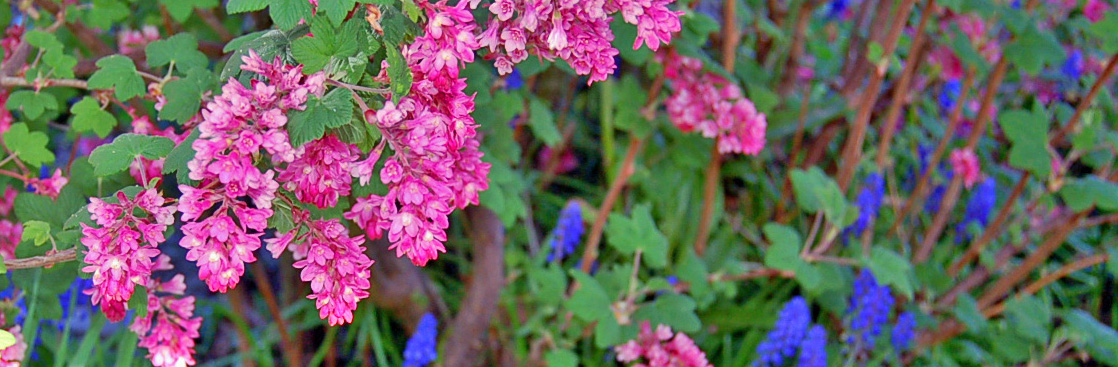
In each of our four gardens that we have developed we have grown the commonest of flowering currants, Ribes sanguinium (above) but here in our garden at Plealey we are also growing two other less common ones.
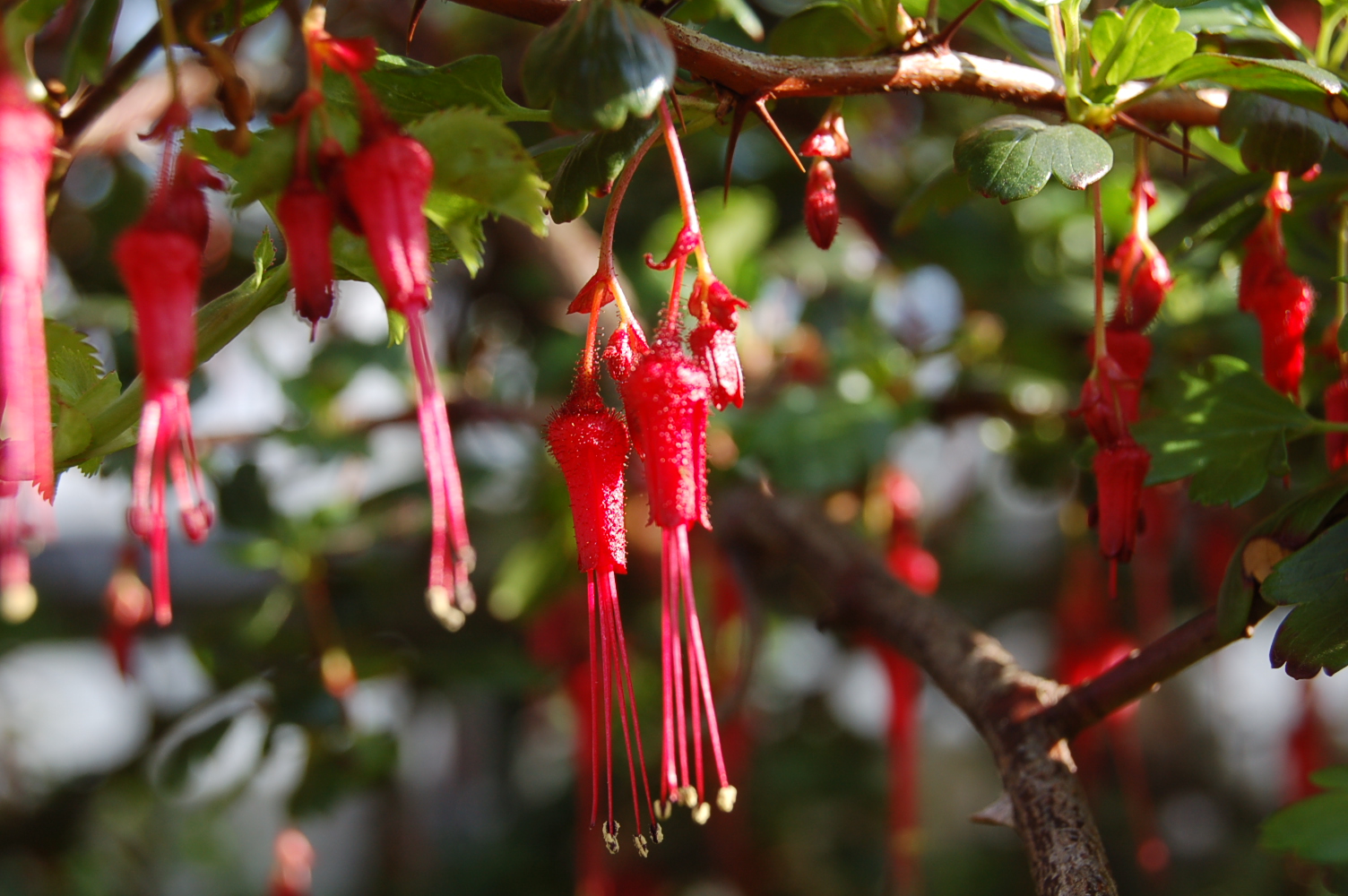
The photo below shows our specimen of the “Fuchsia-flowered Currant”, Ribes speciosum, which we grow in a sheltered spot against the greenhouse as it is supposed to be tender around here. The spiny arching stems grow up tall reaching the top the the greenhouse and peering over. Its new young branches start off a deep rusty red colour and are absolutely covered with bristly spines. Its flowers are like long fuschias in a rich deep red with long red stamens protuding. These flowers seem to be around in varying numbers just about all year. It is a true beauty!

When we bought ours from a tiny nursery hidden away in Herefordshire we didn’t know what it was when we saw it growing on the side of an outbuilding. The nurseryman told us that most people asked if he sold any cuttings of his climbing fuschia. One look at the flowers below and you can immediately see why.
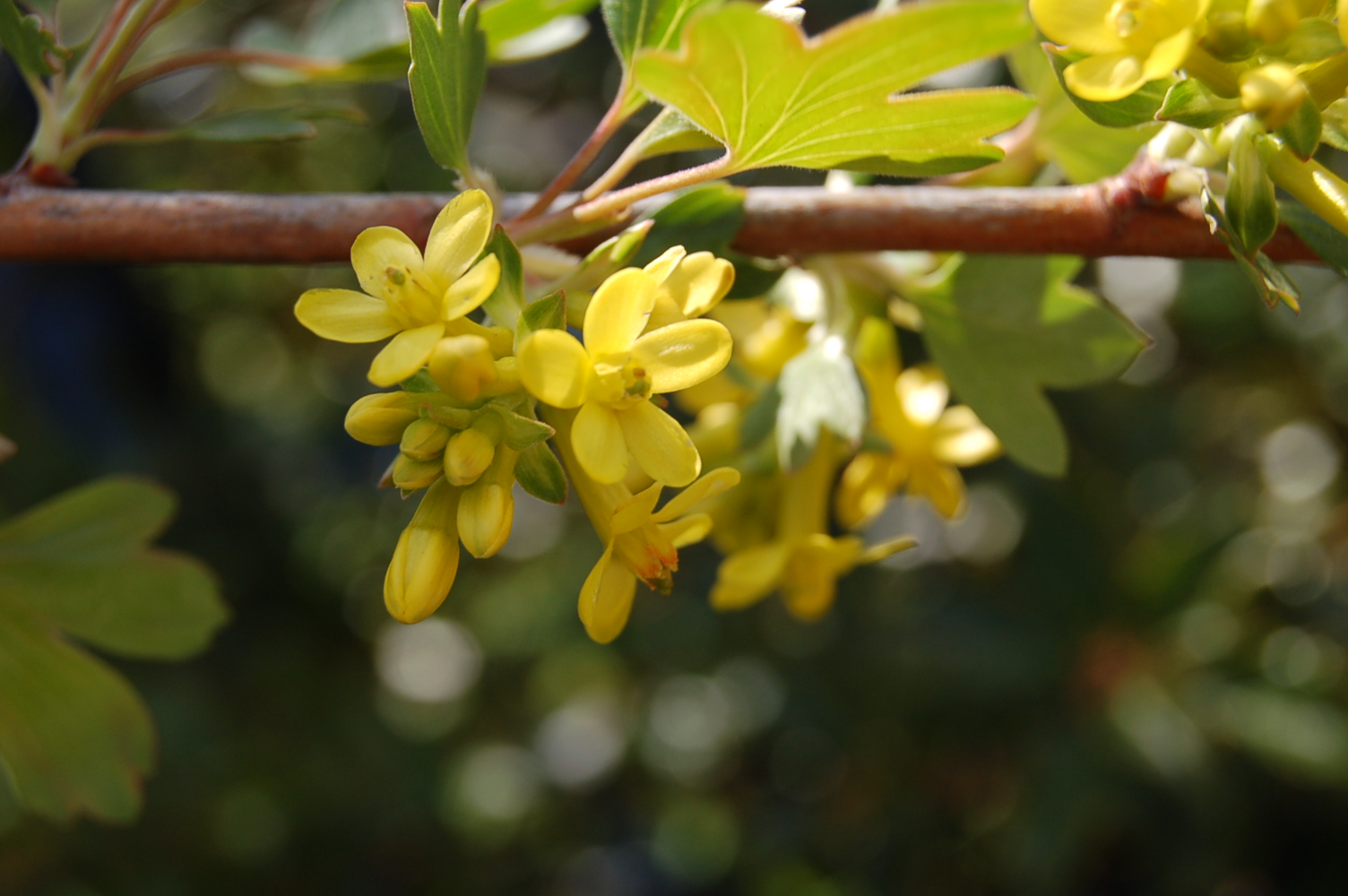
Our third currant is a yellow-flowered shrub called Ribes odorata, or the Buffalo Currant. Its lovely yellow racemes of flowers are gently scented, a much more pleasant scent than that of the more common Red Currant which smells of black currant leaves, although it has to be said that Jude the Undergardener claims it smells like cat pee! The brightness of the yellow flowers is emphasised by the fresh green of the foliage. In the autumn the leaves take on hints of red and purple.
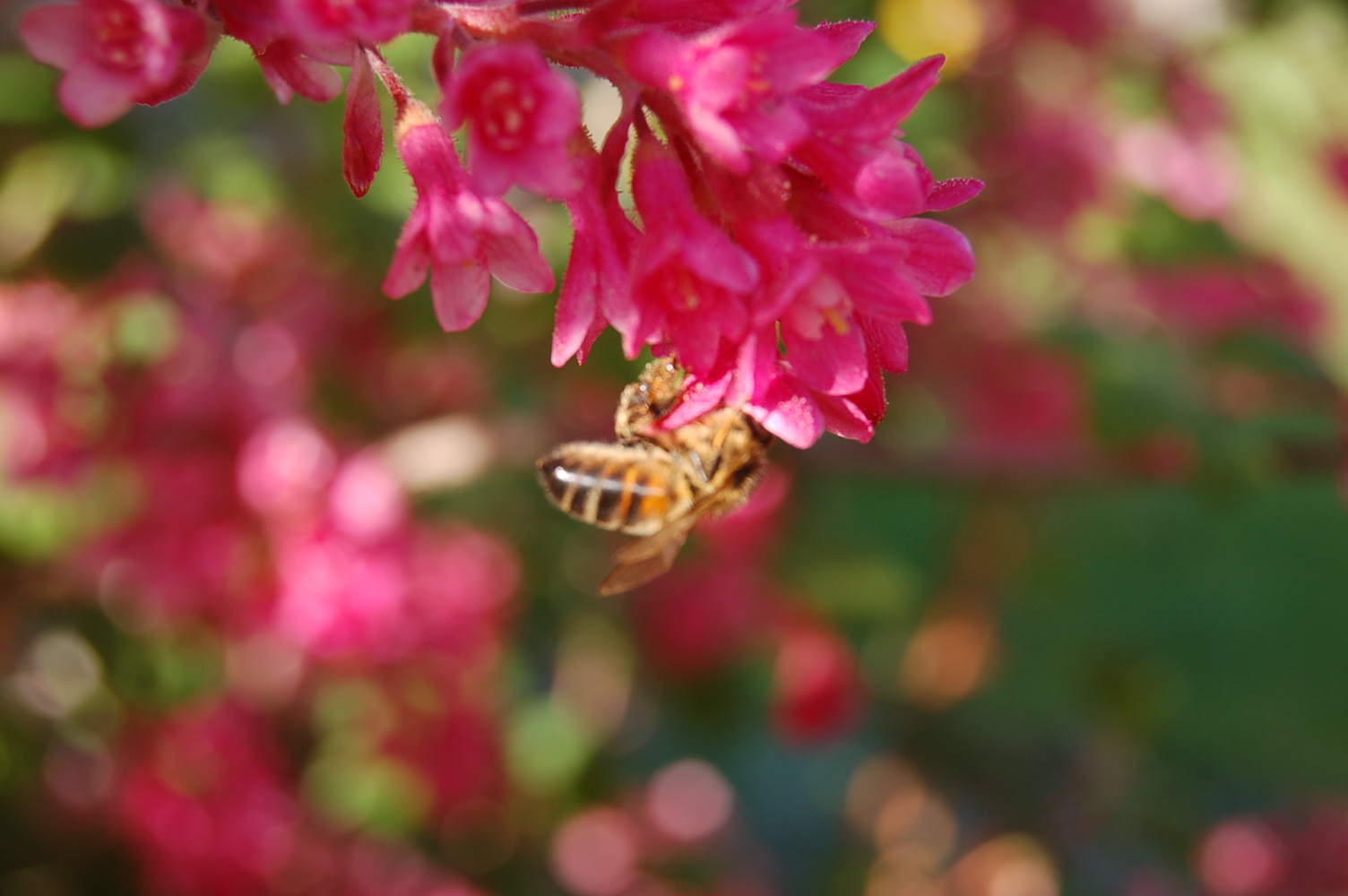
One of the main resaons for growing flowering currants, in addition to their hanging racemes of flowers is their attraction to insects especially bees and hoverflies, early in the year.
 greenbenchramblings