Categories
allotments fruit and veg gardening grow your own

Big Parsnips etc.

We are never very good at growing parsnips, but we have been getting better in recent years. With our allotment getting flooded six times this year we were not hopeful of success with our root crops. When the seedling carrots, beetroots and parsnips were just a centimetre or so tall and very delicate they found themselves underwater. When the water drained away the little seedlings just shrugged the experience off and carried on growing. The season carried on with the crops periodically under water. Imagine our surprise when we began harvesting healthy young roots of carrot and beetroot. Once frost had sweetened the parsnips and celeriac we began harvesting them too. By Christmas they were most impressive! I included my secateurs in the pictures to give an idea of scale.

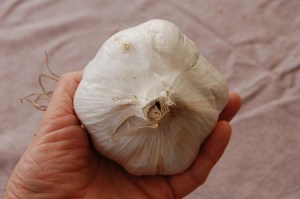
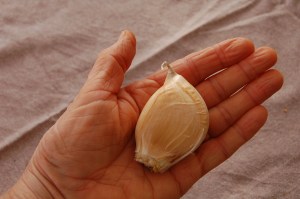
SAMSUNG SAMSUNG We haven’t used excessive amounts of fertiliser to get them to this size just simple organic gardening techniques. Lots of manure dug into the ground, deep mulches of garden compost and feeding with comfrey feed made from our own comfrey plants. Not root crops these but they did delight and surprise us with their size and flavour. Elephant Garlic is not garlic at all but more closely related to leeks. We eat them roasted when they taste of sweet, delicate garlic.

DSC_0001-16

DSC_0002

Now we definitely have something to live up to next year. Perhaps the weather will be nearer normal next year and we might even avoid the floods. Mind you of course, the crops above might have excelled because of the floods rather than in spite of them.

Categories
allotments autumn colours birds community gardening conservation garden wildlife gardening grow your own hardy perennials meadows ornamental trees and shrubs trees wildlife

A Wander around the Allotments in December

December hasn’t afforded us many days suitable for lottie gardening, sending us too much rain and flooding the site again for a while early on in the month . In fact the first attempt at working on our plot this month resulted in that too well-known sinking feeling. Algae has turned the soil green again.

We arranged to meet council officers and contractors on site one morning to start sorting out the flooding issues. It was of course raining when we met! Four trucks full of machinery and fluorescent coated workers arrived soon after, champing at the bit to start. Sods law came into play. The floods reappeared and water began lapping at our feet and at the wheels of the vehicles. One tractor got stuck in the mud!

The weather won the first round as work was abandoned even before it started, but at least everyone knows what to do now. We were promised that work would commence as soon as the weather allowed.

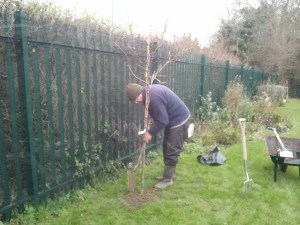
Things had improved a little by the end of the first week of the month, enough to arrange a day for Jude and I to meet our friend Pete to get some site tasks done in the communal gardens. We planted trees that had been donated by members in the new coppice we are developing, plus two others in the Autumn Garden. These were purchased with the prize money we had received when we won an award as the Best Community Garden in Shropshire by the National Garden Scheme.
SAMSUNG

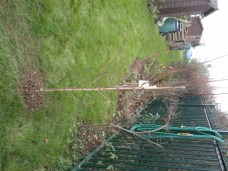
As Pete looks after the Autumn Garden he chose the trees. Two great specimens arrived in the back of his car, an Acer rubra and a Gleditsia Sungold.  In the photo above Pete is planting the Gleditsia and below is the Acer with its red stems. We can now look forward to the golden foliage of the Gleditsia and the red petioles of the Acer which contrast so well with the yellow autumn leaf colour.
SAMSUNG

We also transplanted some wild flowers and wildlife friendly plants kindly donated by a member, Dee. They were on her plot and we transplanted them to the meadows and orchards. Wild Hypericum, Red and White Campion, Mallows, Plantain, Foxgloves and Teasles plus a selection of Verbascum. In the picture below Jude is busily planting verbascum in the orchard meadows. The insect homes look so much bigger when plants die down for the winter. We just hope they are full of our friends, the overwintering pest controllers.

SAMSUNG

In the first few days of December I completed constructing the Tawny Owl nesting box which I had started weeks ago. It is by far the biggest nest box I have ever attempted to make. Each year I ask members to donate their spare wood for nest box construction and plenty came in this year so I hope to make several boxes. My next challenge is to make a box for House Sparrows.

SAMSUNG

On our own plot we have dug over the plot and given it a deep duvet mulch of manure. Now we will let the worms and other little critters get to work on it. We have pruned our fruit bushes and brambles, and are mid-point through cutting down and digging up a blackberry which refuses to produce any fruit. We gave it our “three chance and out” treatment which we allow every failing plant in our gardens.

At the mid-point of December the weather turned cold with clear ” blue-skied” days and deep frosty nights. The workers came back to get started on the flood prevention work. They are getting on well. We met them early one morning to sort things out and I took advantage of the bright conditions to get some photos taken. Having just my Samsung Galaxy with me the rest of the pics in this post are taken with its camera – a great camera for a phone.

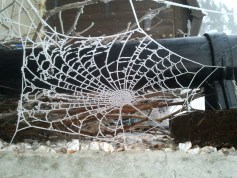
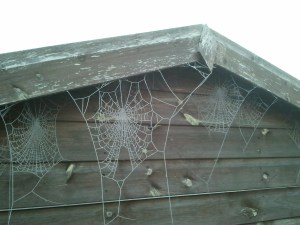
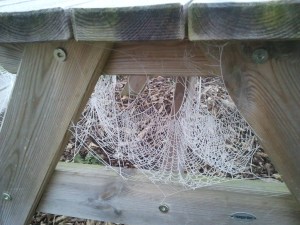
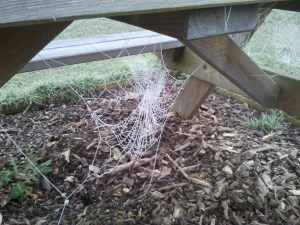
Spiders appeared to have been industrious all through the hours of darkness creating works of art for Jack Frost to add the finishing touches. In the first pic we can admire how they have decorated a shed’s gable end and the second and third show where they have added a feature to the Communal Hut.
SAMSUNG

SAMSUNG

SAMSUNG

It looks as though the spider population of the lotties have taken to using the picnic benches when it is too cold on the rear end for us gardeners to enjoy our coffee breaks on them.
SAMSUNG

SAMSUNG

On Wendy’s plot Jack Frost had iced the rose hips.

SAMSUNG

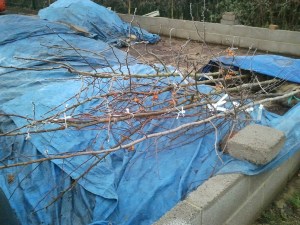
We have had some beautiful new trees delivered to the site ready for planting when the soil is not frozen. At the moment we would not get a spade in. We have been given a Weeping Silver Lime which we selected to celebrate the Queen’s Jubilee Year, plus two crab apples Malus “Evereste” and Malus “Golden Hornet” to plant, one in each orchard to improve fruit pollination, and two ornamental Hawthorns.
SAMSUNG

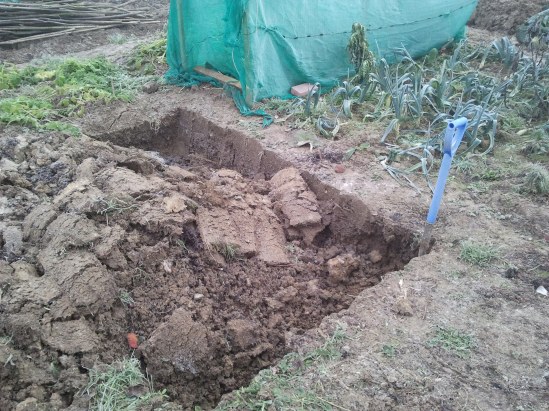
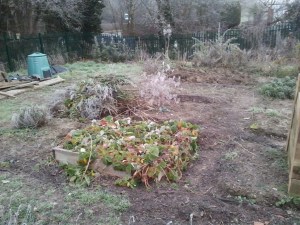
The individual plots are looking bare and forgotten. Some have been well dug for the winter, others await better weather. Where water sits in puddles it had frozen solid. On one plot a double digging session had been interrupted by the weather.
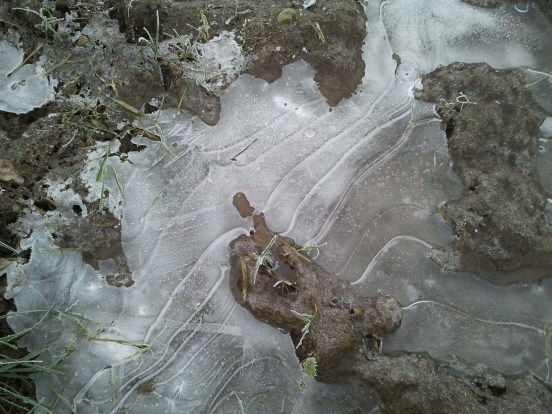
SAMSUNG

SAMSUNG

SAMSUNG

On one plot next to the new coppice area the seed heads of Angelica, left for the Goldfinches and Bullfinches to feast upon, were covered in frost.
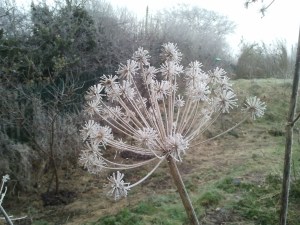
SAMSUNG

SAMSUNG

In the coppice area itself, our newly planted Hollies had attracted spiders.

SAMSUNG

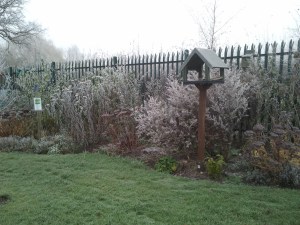
The communal gardens  looked monochrome  with frost covering the herbage.
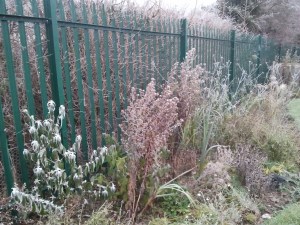
SAMSUNG

SAMSUNG

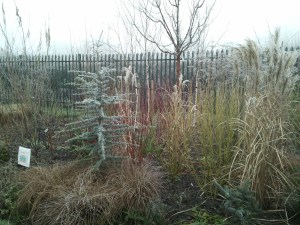
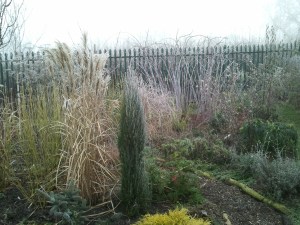
As befits the season, our Winter Garden is looking good! Pete was with me as I took these photos and he and I created this garden less than two years ago, so we keep admiring our handy work.
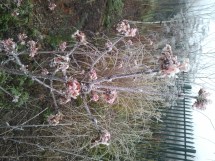
SAMSUNG

SAMSUNG

SAMSUNG

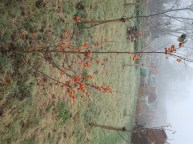
Splashes of colour sprang up to shine out in the gloom of the misty grey day, the fruit of the Malus “Evereste”, and the fire-coloured leaves of a Hawthorn in the hedge and a Raspberry on a plot.SAMSUNG
SAMSUNG

SAMSUNG

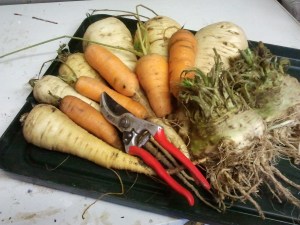
As we wandered taking these pictures we were followed around by the resident Robins who were waiting for us to start work turning soil over and exposing bugs for them to pounce upon. But no gardening was done, the soil being too solid with frost so no sod could be turned. We found time to top up the bird feeders in our feeding stations. These are busy with tits, finches, Nuthatches and Woodpeckers.
Categories
climbing plants community gardening fruit and veg gardening gardens open to the public grow your own National Trust outdoor sculpture

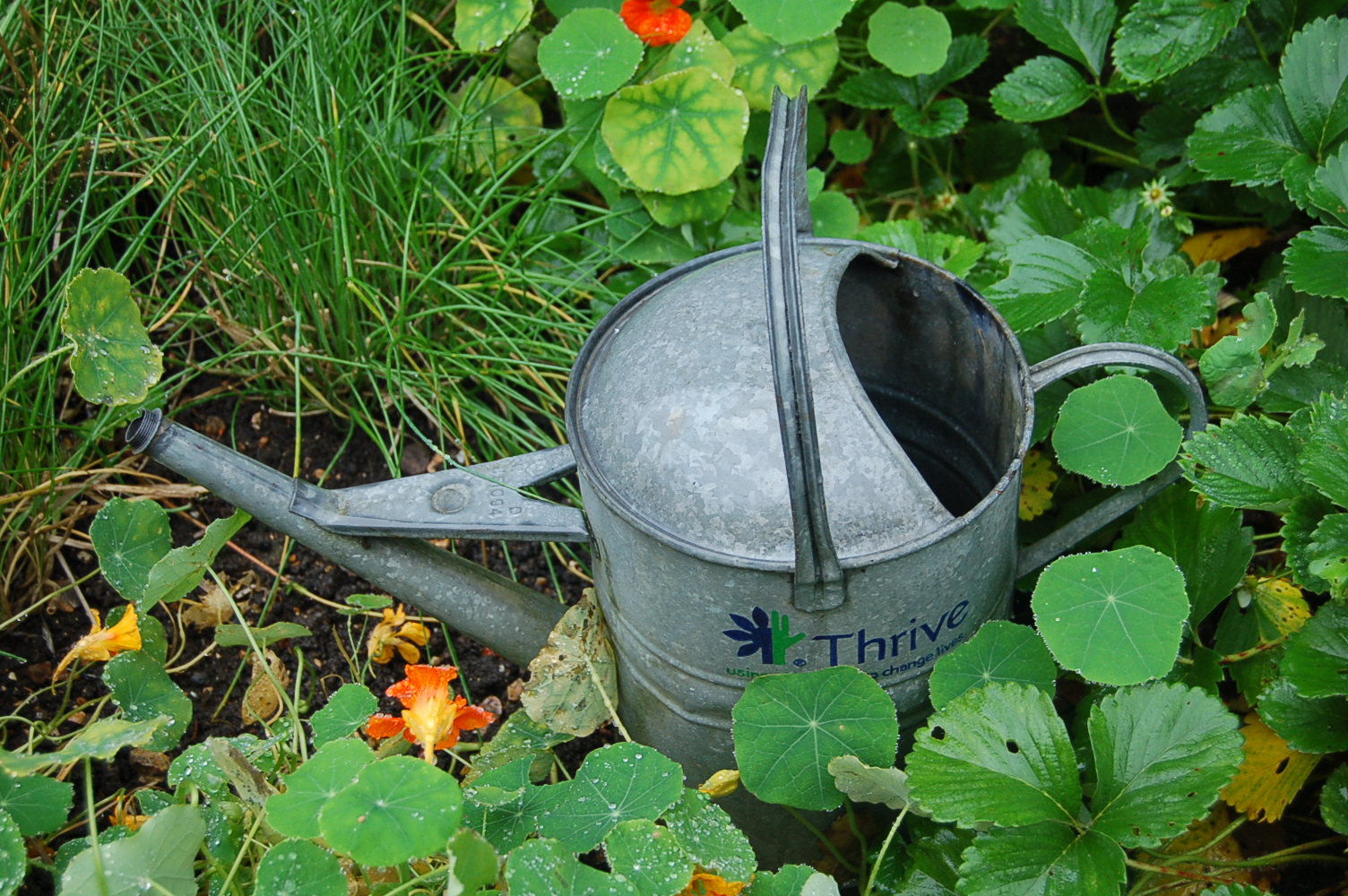
Thrive at the Vynes

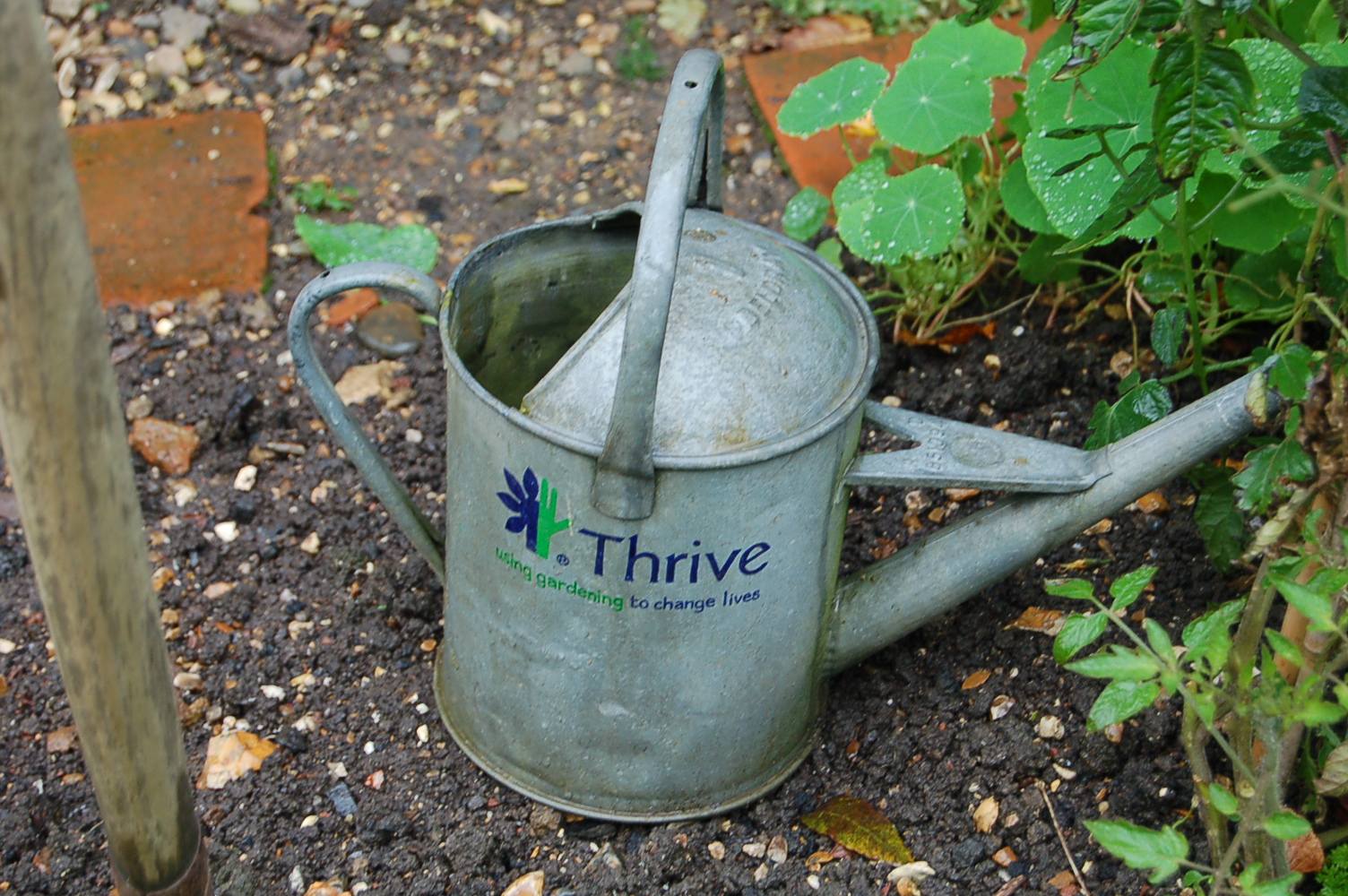
We visited the Vynes on a wet October day not knowing that the walled garden there was run by the gardening charity, “Thrive”. If you ask someone to name a garden charity the most likely answer would be the RHS, the NGS or perhaps Garden Organic but few will mention Thrive. This is sad as they do such good work. On their website when describing their role they state, ” We champion the benefits of gardening, carry out research, and offer training and practical solutions so that anyone with a disability can take part in, benefit from and enjoy gardening.”

“Thrive” is such an apt name for a charity which helps people thrive in the garden and through gardening. Sadly as the weather was so wet we met no gardeners at work. Apart from us and the occasional Robin, who provided the entertainment, the place was deserted.

The charity looks after gardens all over the UK teaching the skills of gardening and developing a love of gardening in its clients. Their gardens though are there to educate others. The gardening standards are very high and the gardens boast some effective educational and informative displays.

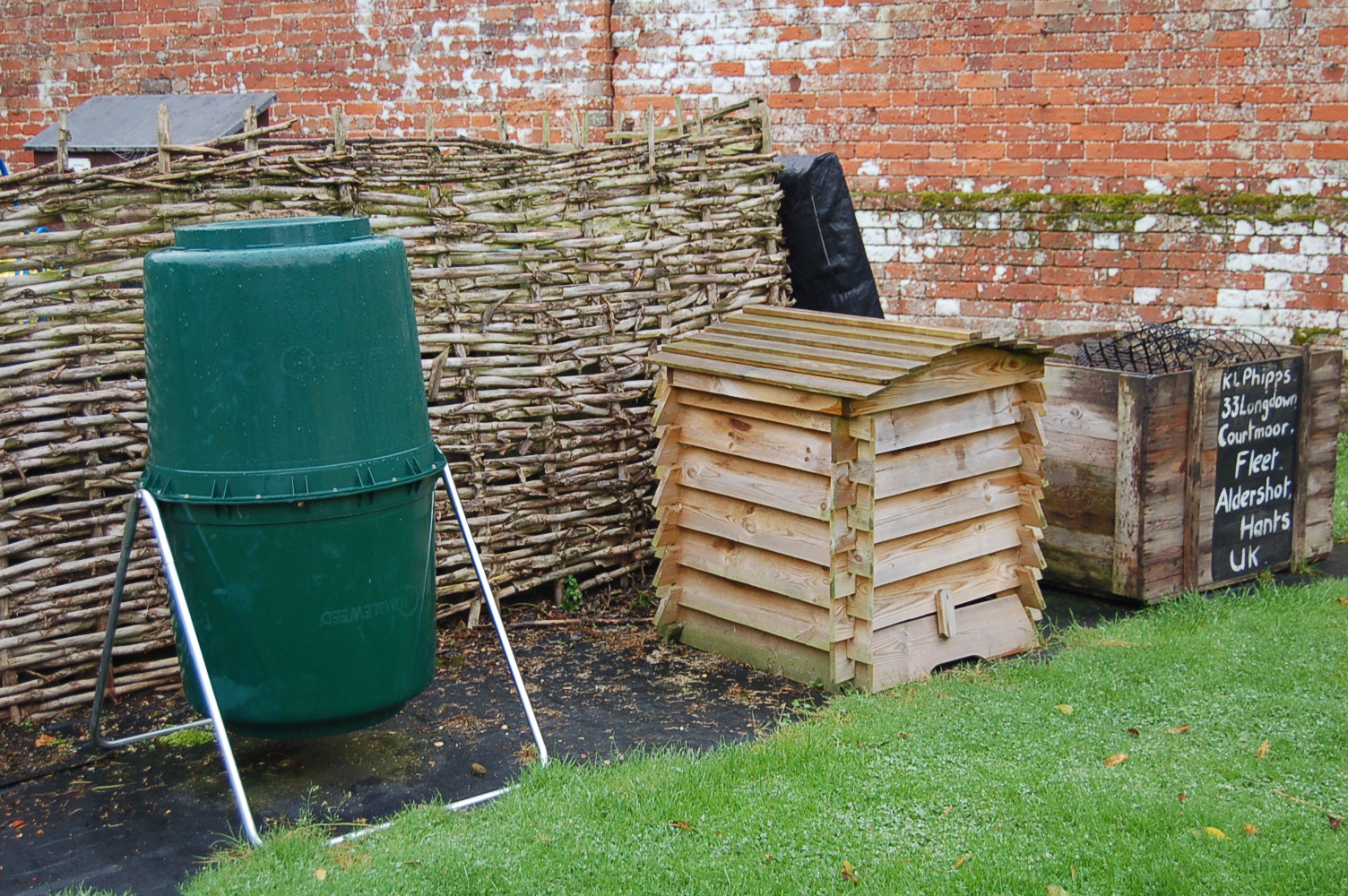
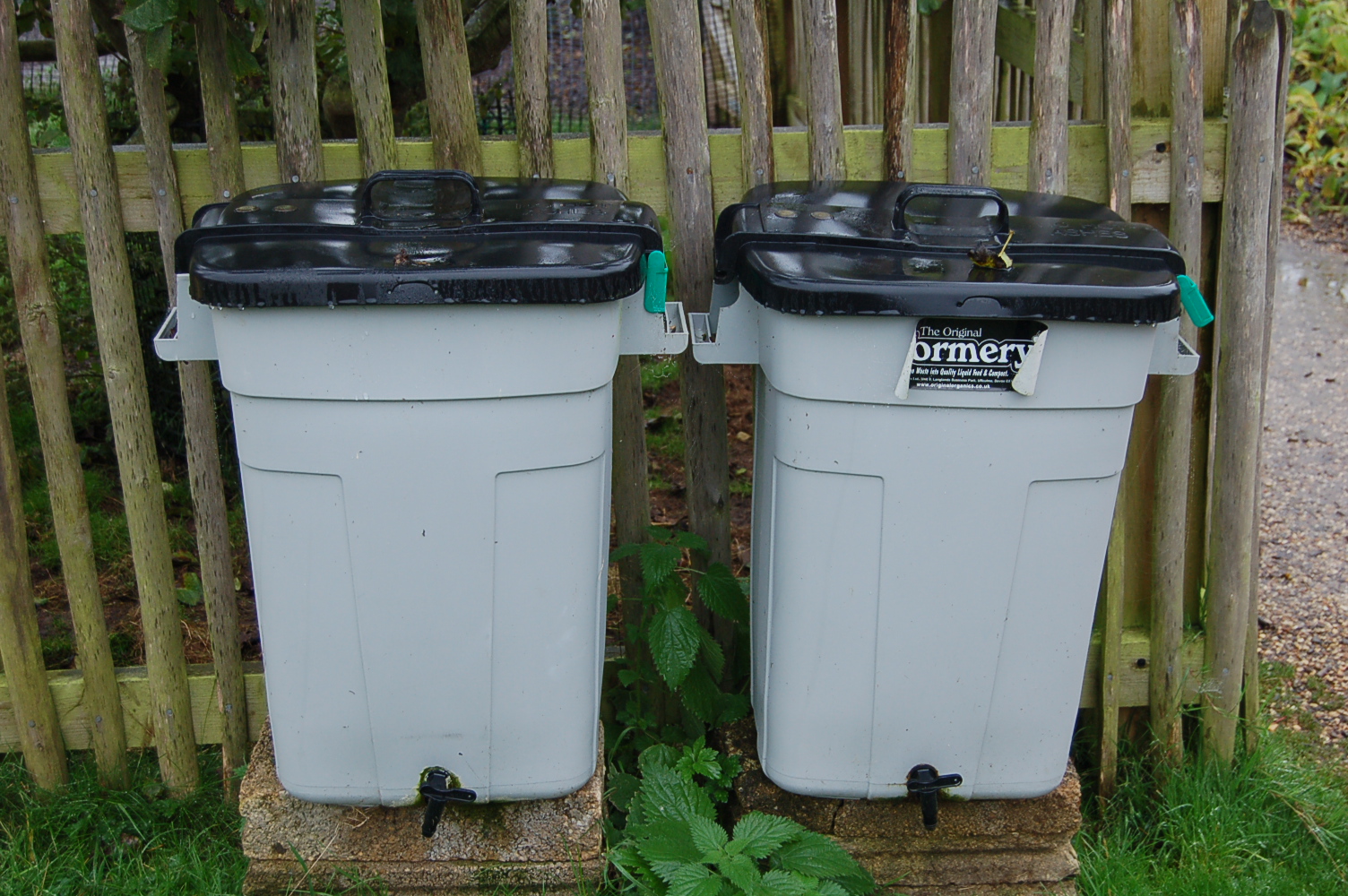
Here at the National Trust property, The Vynes, the productive garden maintained by Thrive illustrates quality techniques in action especially composting.

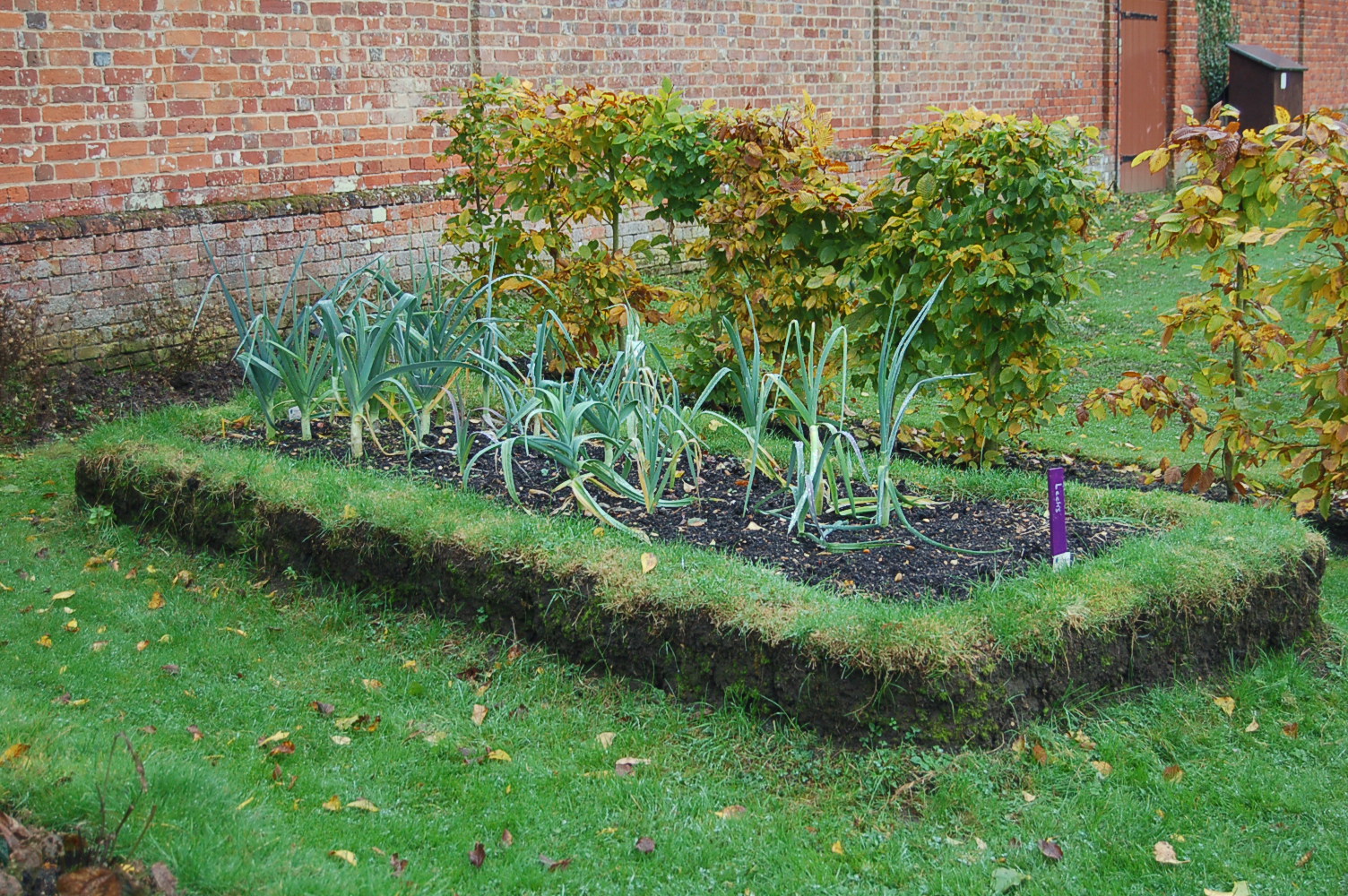
We liked these two ideas for raised beds, particularly this turf bank version, which would make gardening easier for wheelchair users or back pain sufferers (like me). The second picture shows raised beds and recycling combined – revamped old tyres.

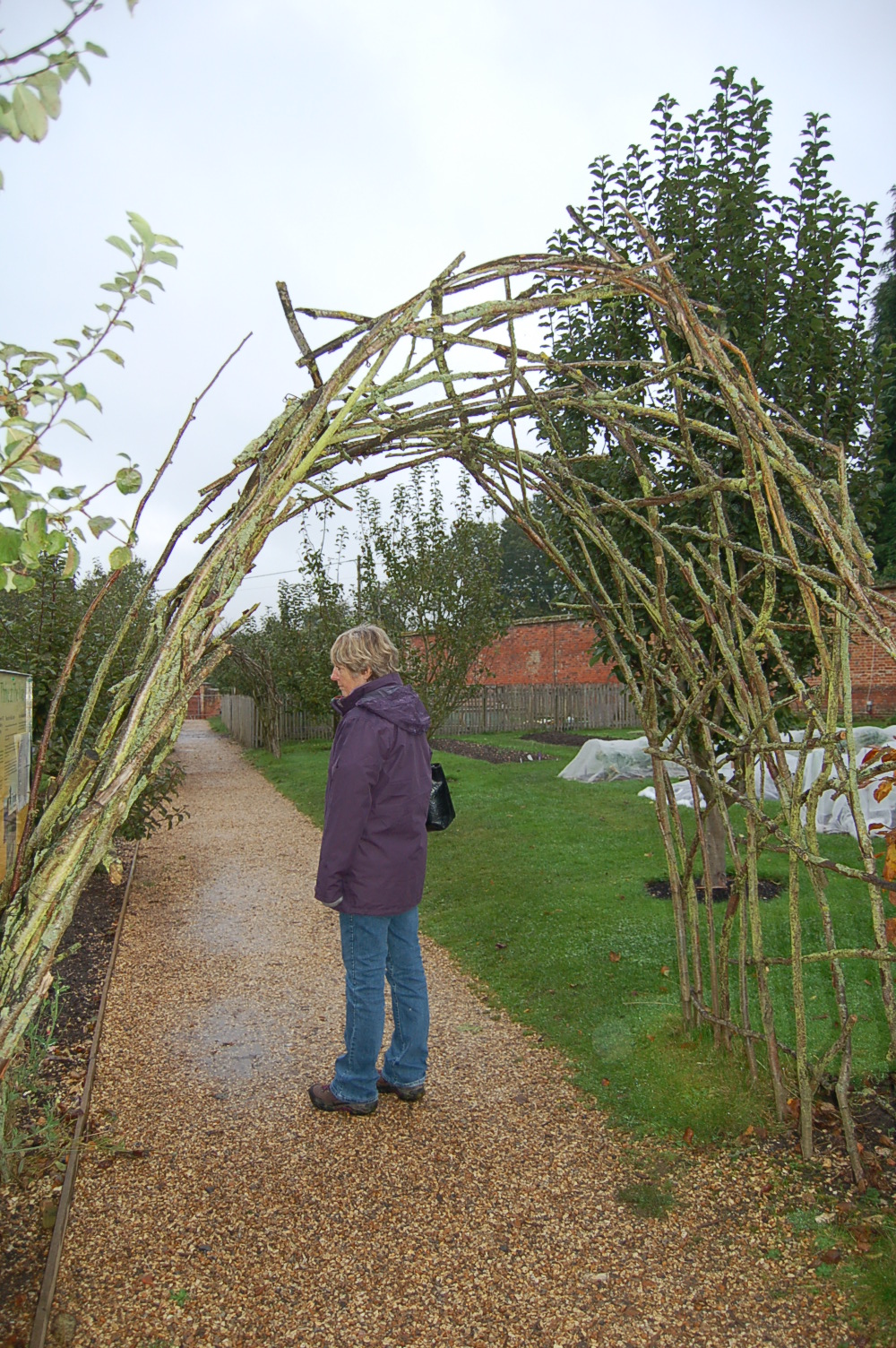
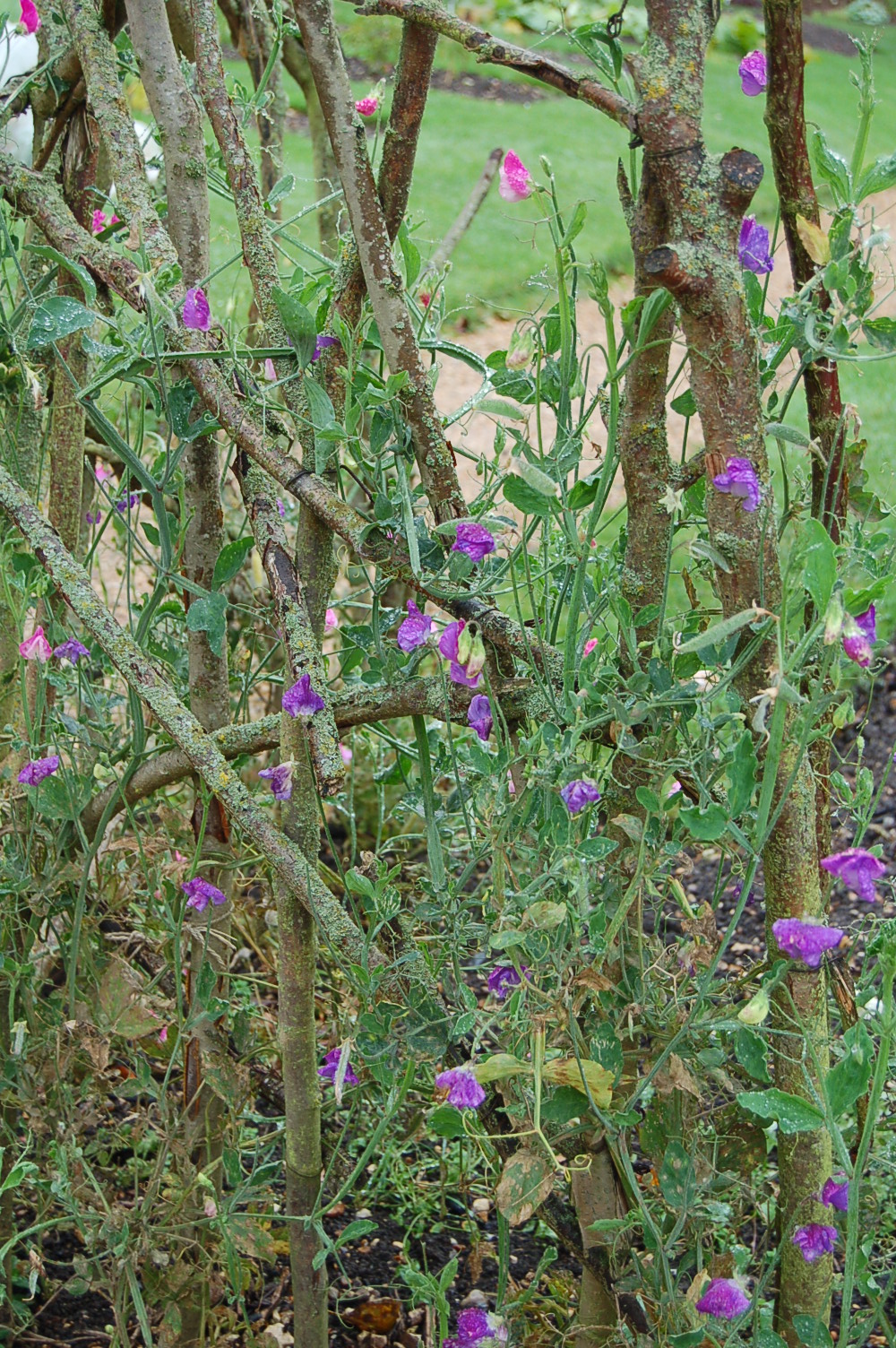
Arches constructed from tree prunings make most attractive and natural supports for climbers such as Sweet Peas and help entice you down the paths.

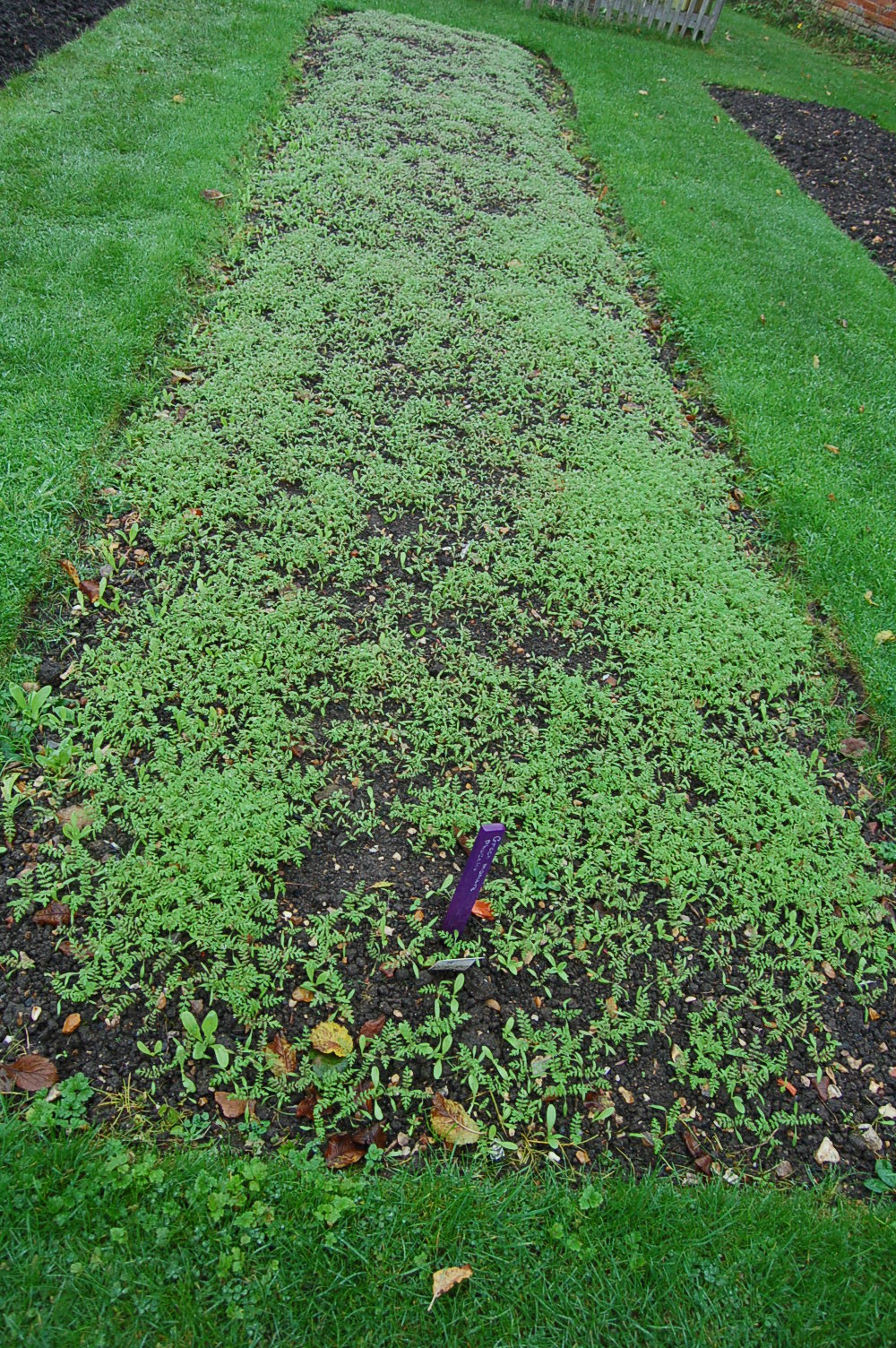
Organic ideals are followed here as well, such as using fleece as protection from pests and the cold and growing green manures such as this Phacelia.

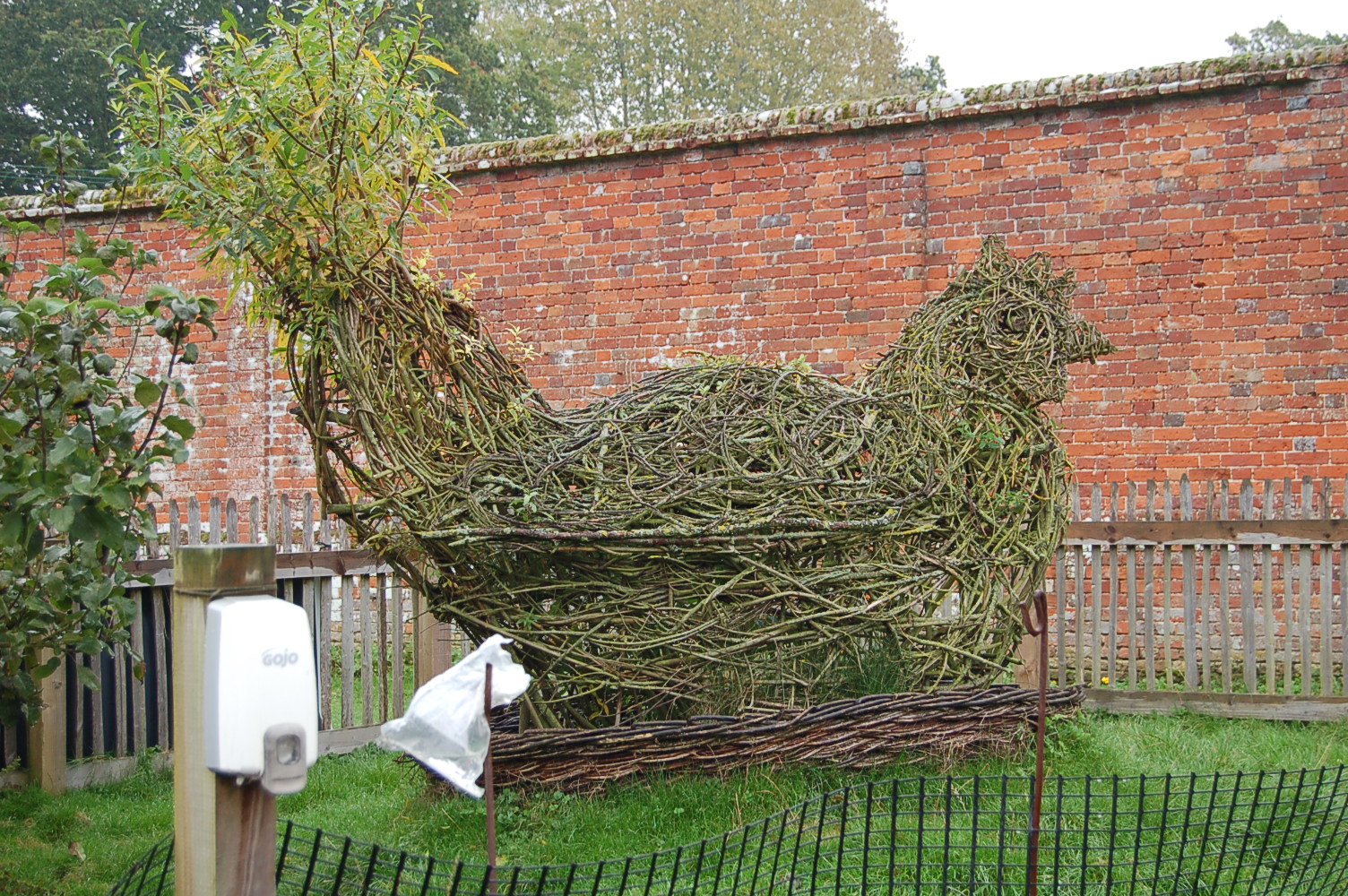
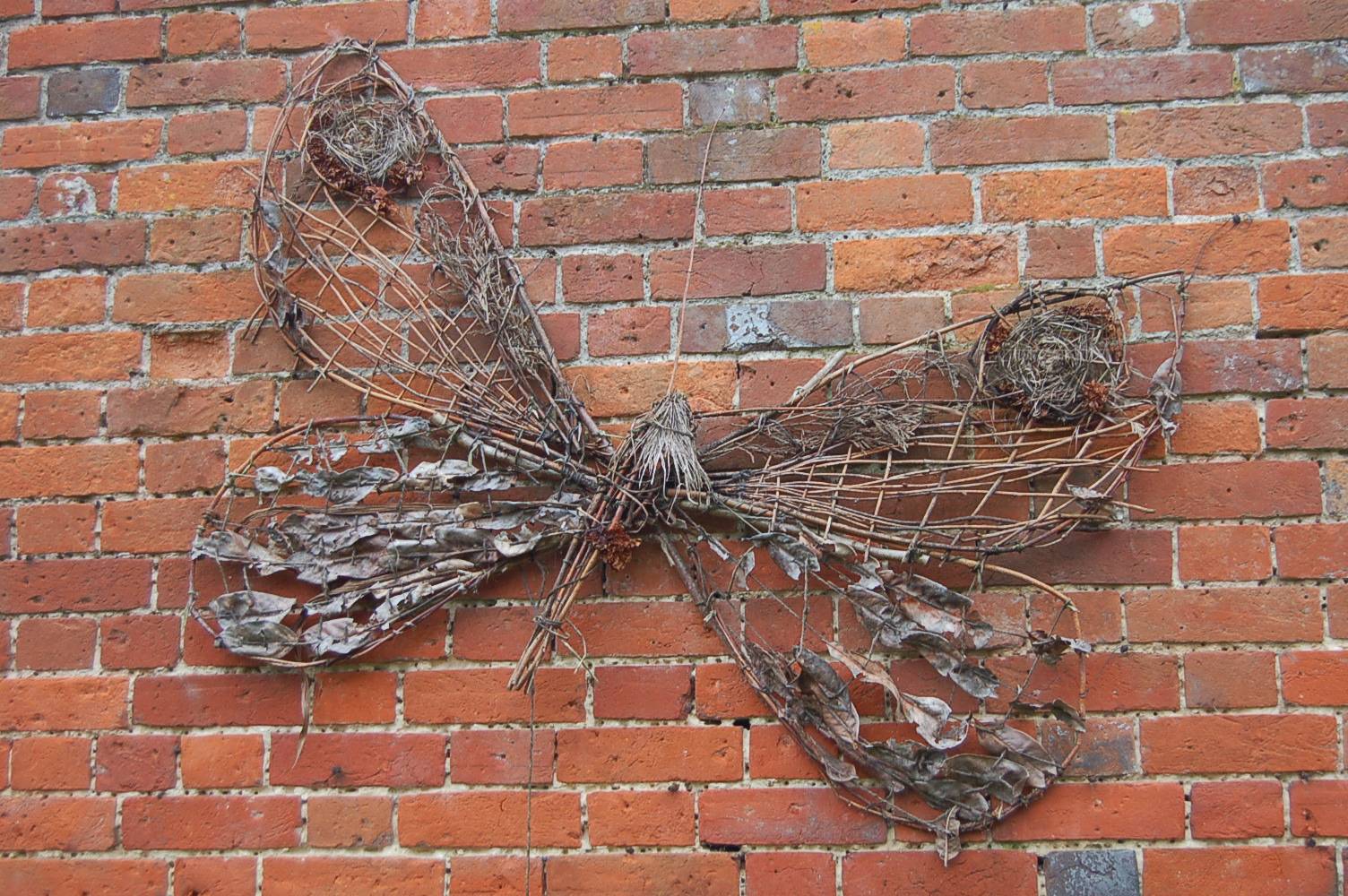
We were impressed by the use of willow as a craft material in creations such as the giant hen and the wall-mounted butterfly.

There was even a children’s garden with picnic tables topped with puzzles and a beautifully decorated shed full of special tools and games.

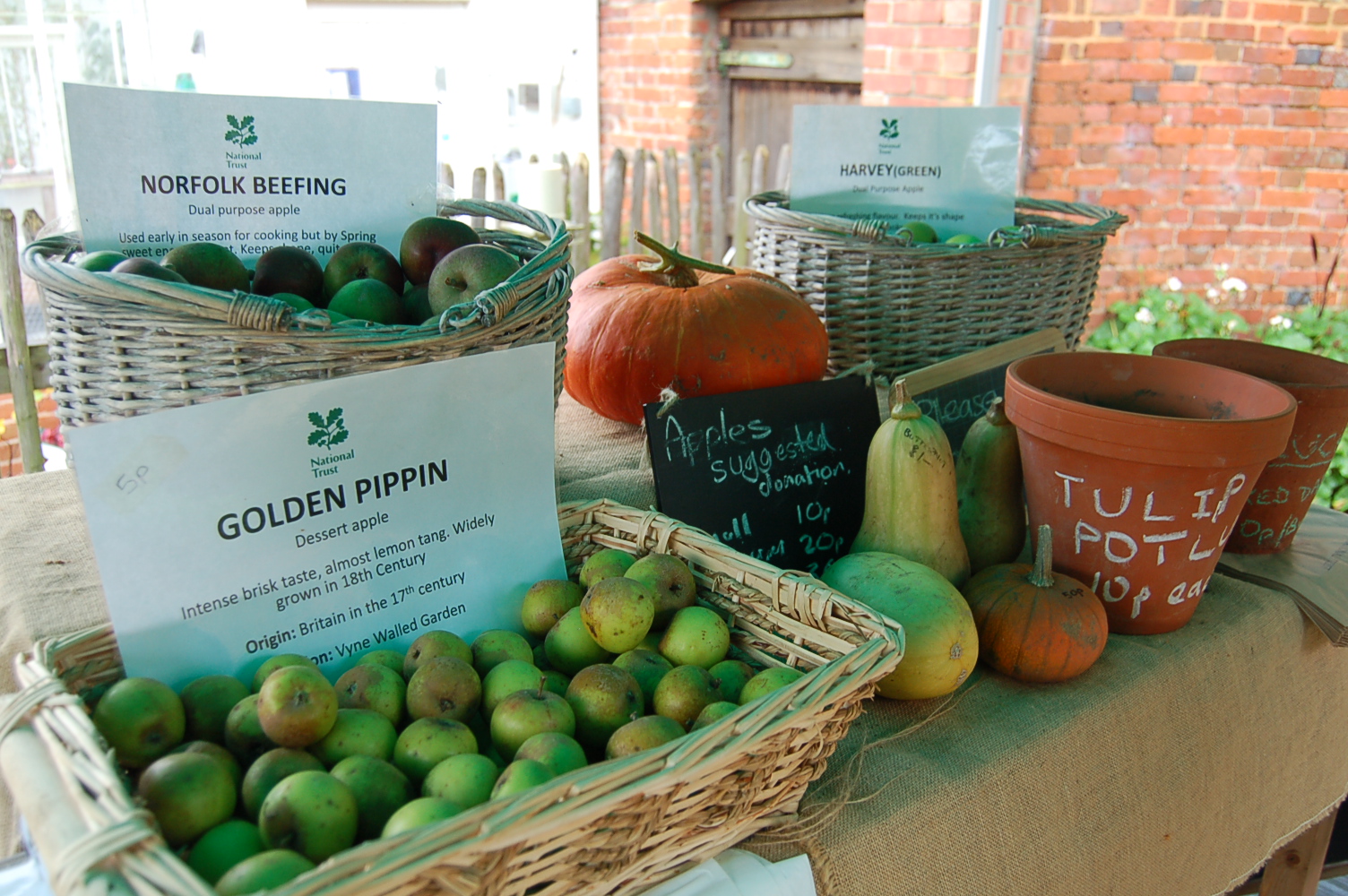
The produce from the beds are for sale to visitors and at this time of year that meant mostly apples in variety.

To find out more about the work of Thrive I suggest a visit to their website www.thrive.co.uk . To see their work in action you can visit one of their many gardens around the country. Check it out and you will be impressed!


Categories
allotments autumn autumn colours bird watching colours community gardening fruit and veg garden photography garden wildlife gardening grasses grow your own meadows natural pest control ornamental trees and shrubs photography roses wildlife

A Wander Around our Allotments in November

The penultimate lottie wander post for 2012 and at last the weather is providing a few bright cold days. This is what we look forward to in this autumnal month, rather than the wet dark days we have been presented with in the first few days. The light is warm and gives a crisp edge to any photos taken as the blue haze of summer has disappeared.

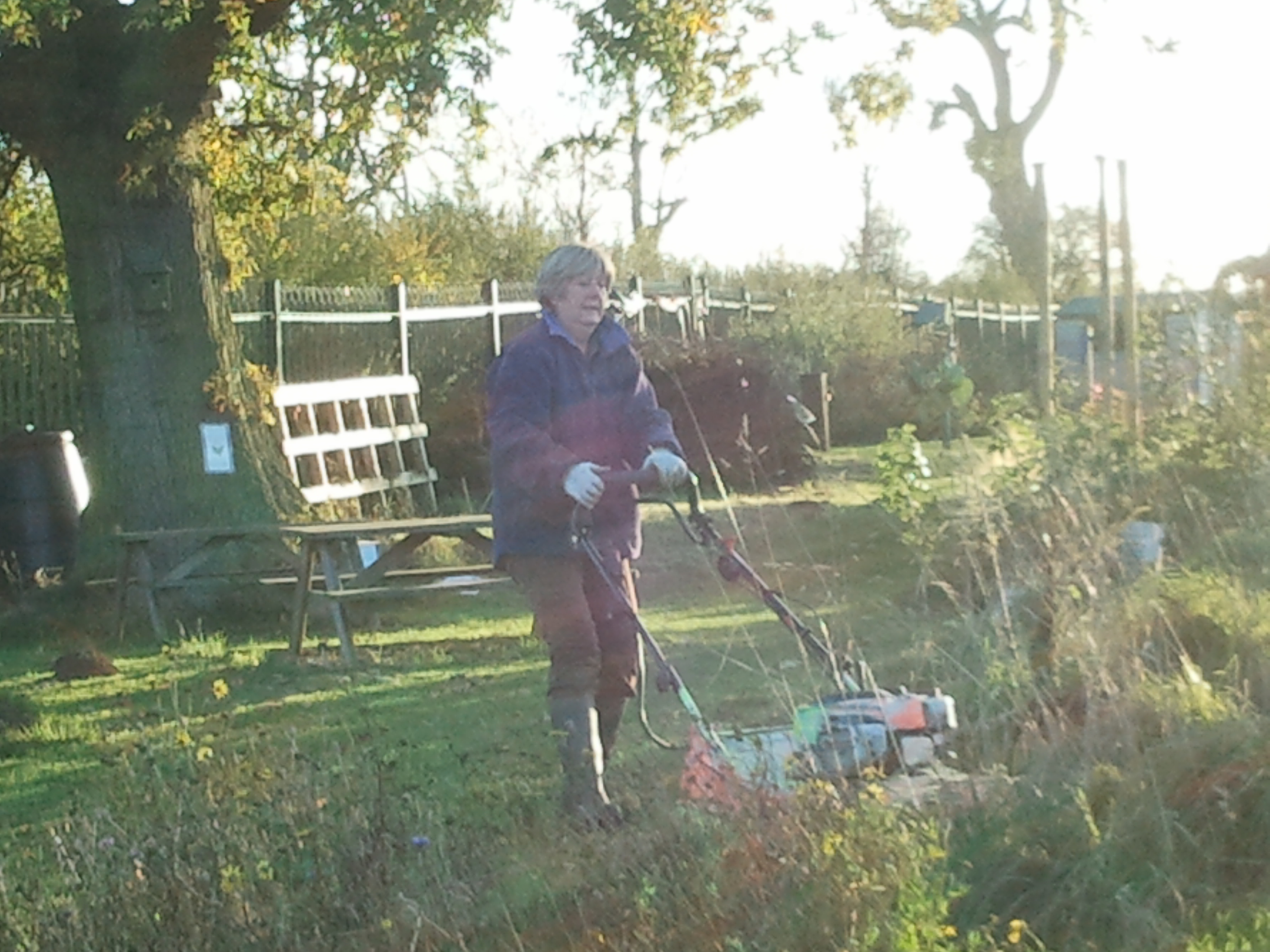
We went up the lottie yesterday to deliver some spare seeds for the Seed Swap basket and to collect some greens left by fellow plot holders for our chickens. They are spoilt by our friends from the site! It was mid-afternoon and we had not intended to stop to work, but we changed our minds. We got out the communal mowers and rakes and gave the final two meadows their annual “hair cuts”. Jude, The Undergardener did most of the work as it is a bit difficult with my spine and leg pains, so I wandered off taking advantage of the special quality of the day’s light and shot off a couple of dozen pics with my Galaxy.

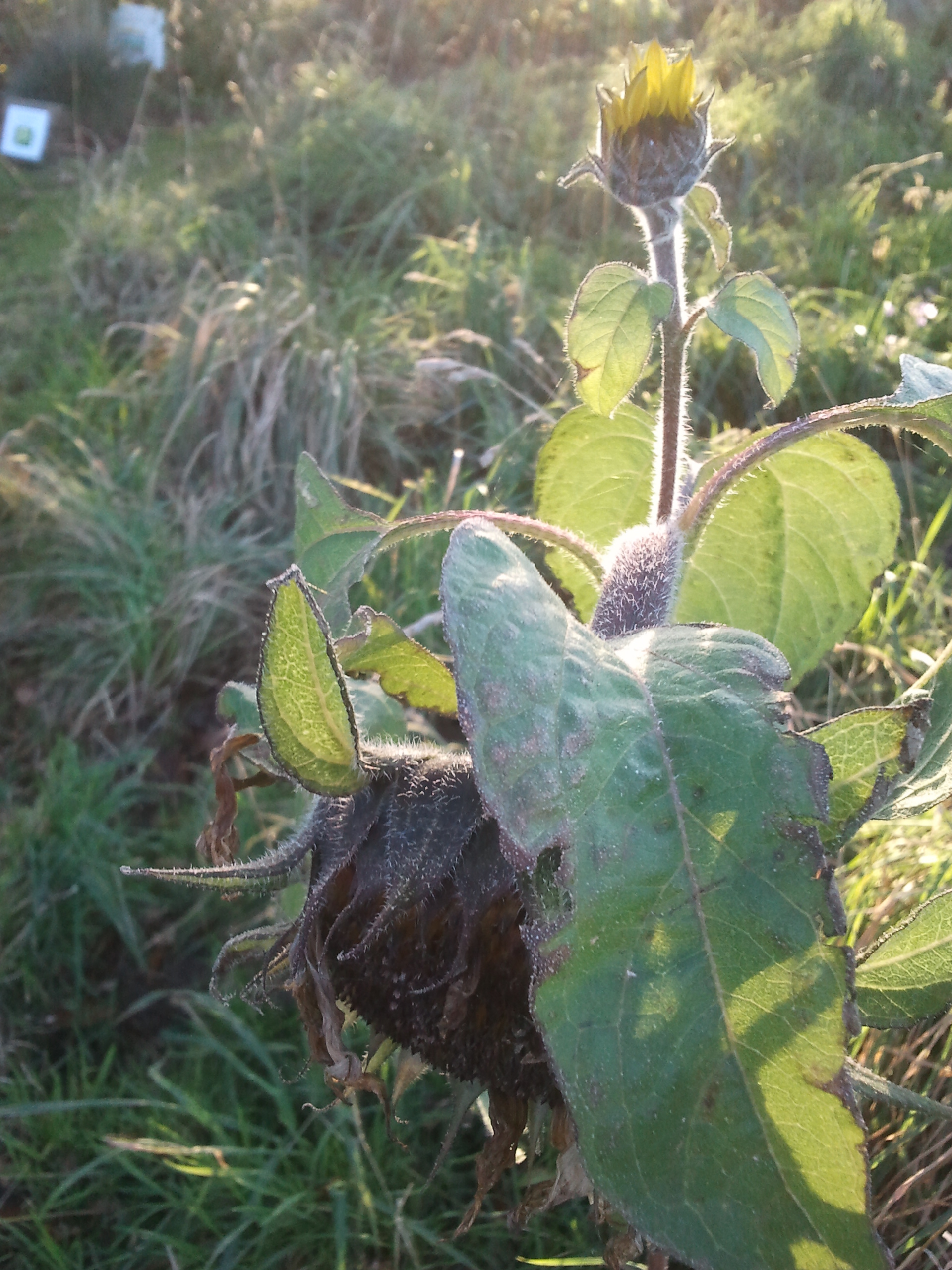
As we worked on the meadows the resident Field Voles scuttled off as they felt the mower’s vibrations and disappeared down their holes. We left a few clumps of wildflowers standing for everyone to enjoy before winter cuts them down. Field Scabious, Mallow and Sunflowers.

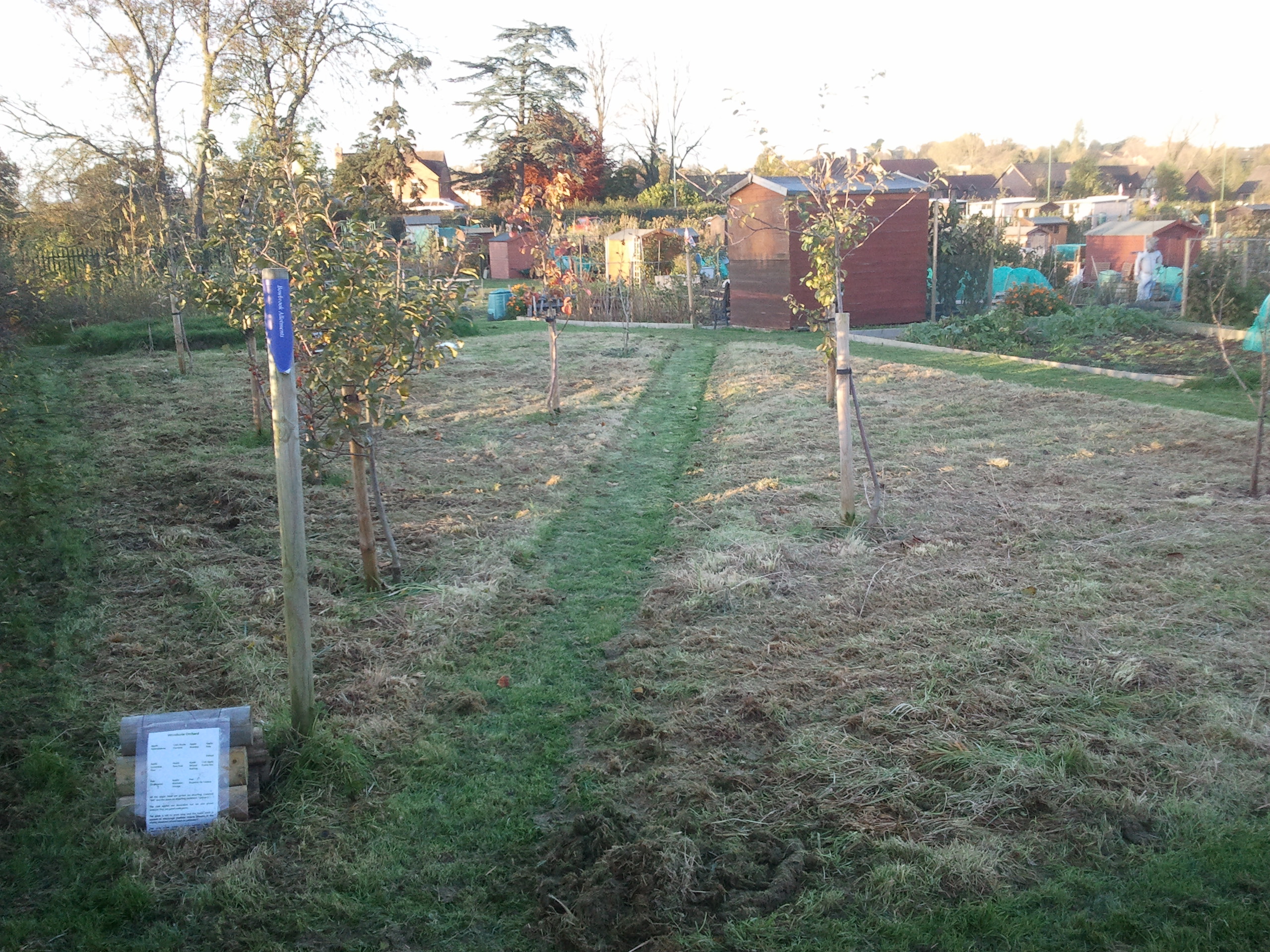
The meadows that are already trimmed look flat and brown, but the pathways mown through them look crisp and green.

The foliage in our Sensory Garden is given extra vitality in the November sunshine.

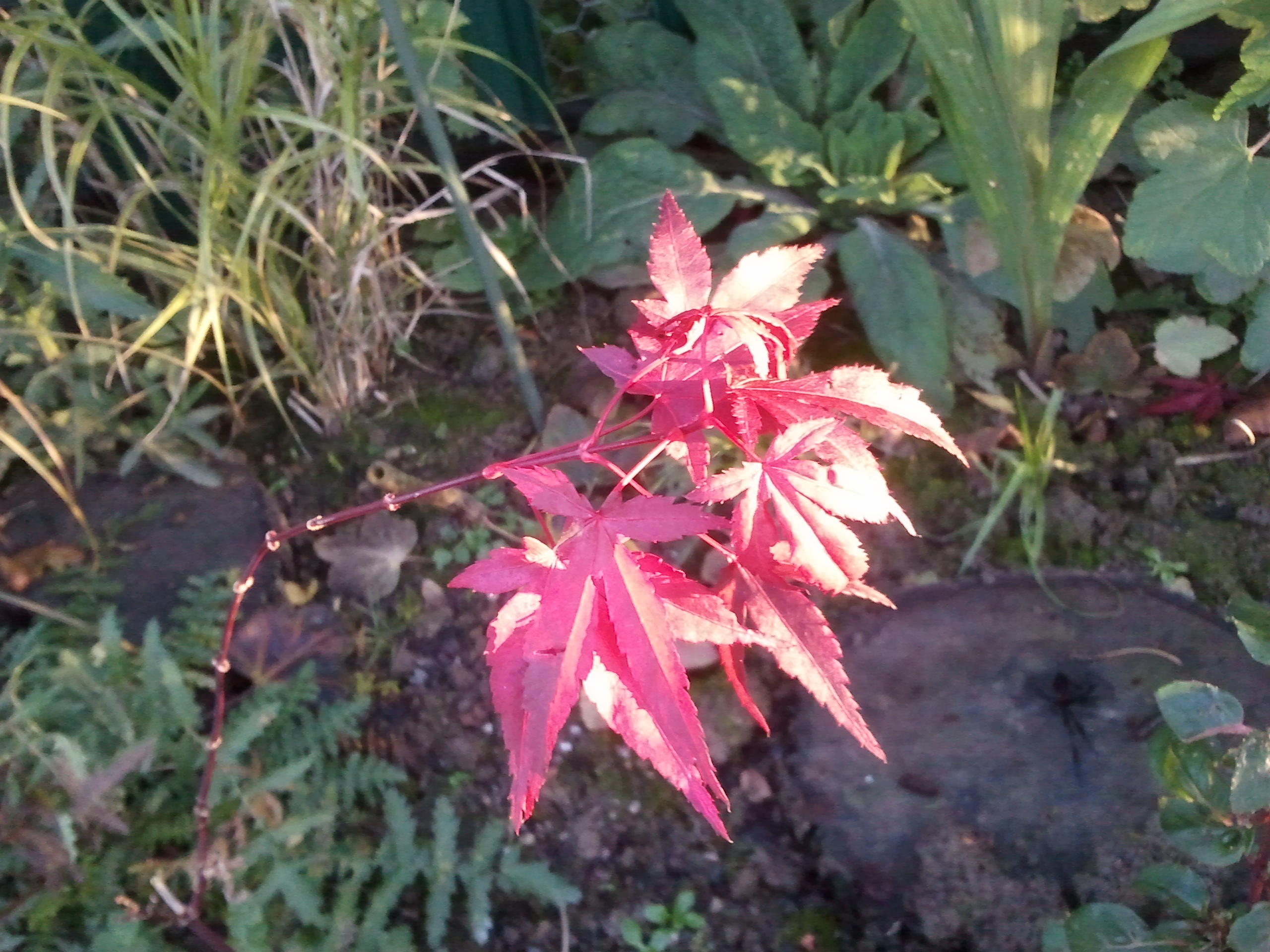
The next shot is a view of the site boundary through the seed heads of a white-flowered Actaea across the Spring Garden. In the Spring Garden a tiny Acer shows that you don’t have to be big to impress.

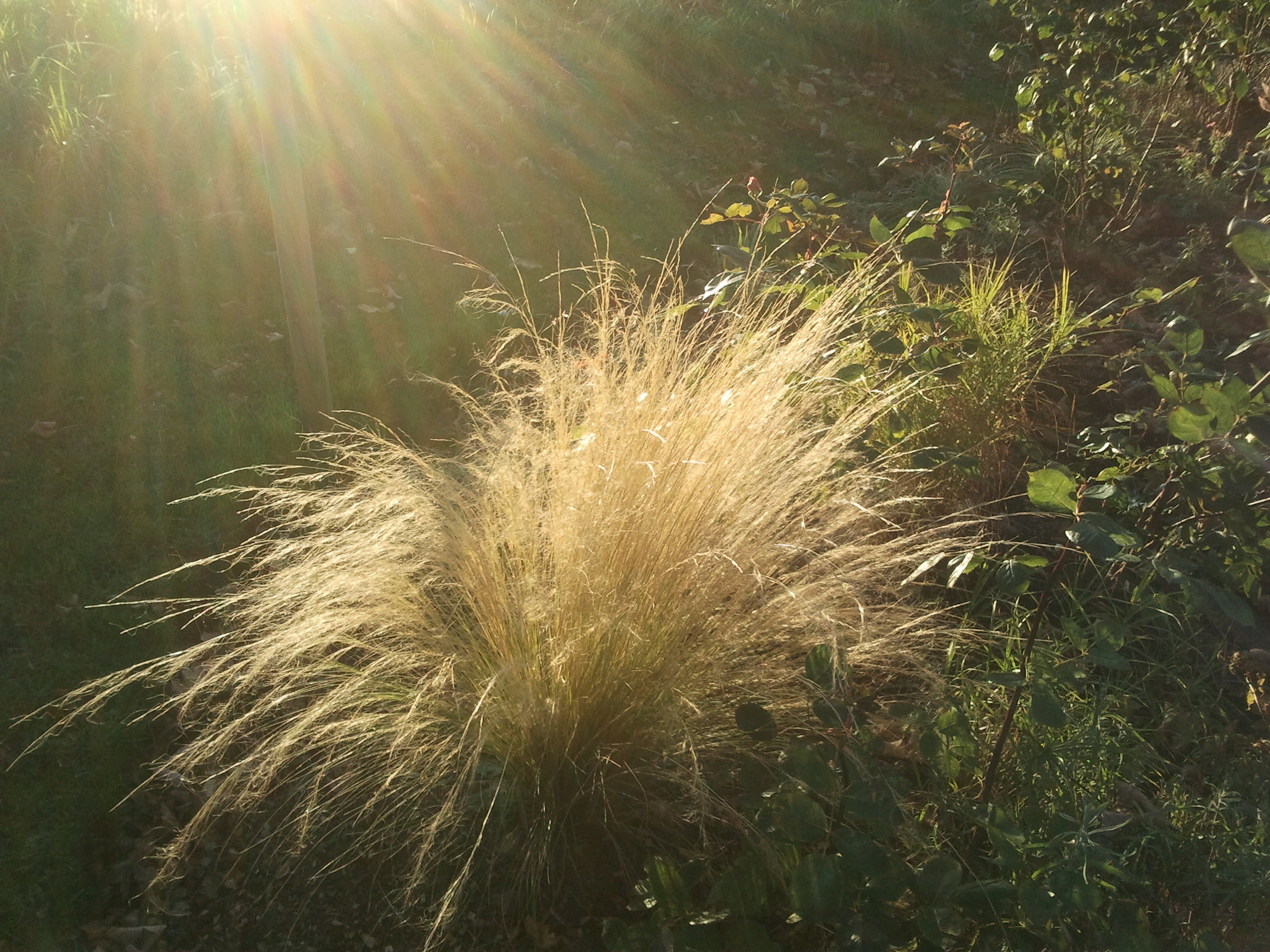
In the meadows the last of the grasses and sunflowers stand tall and proud.

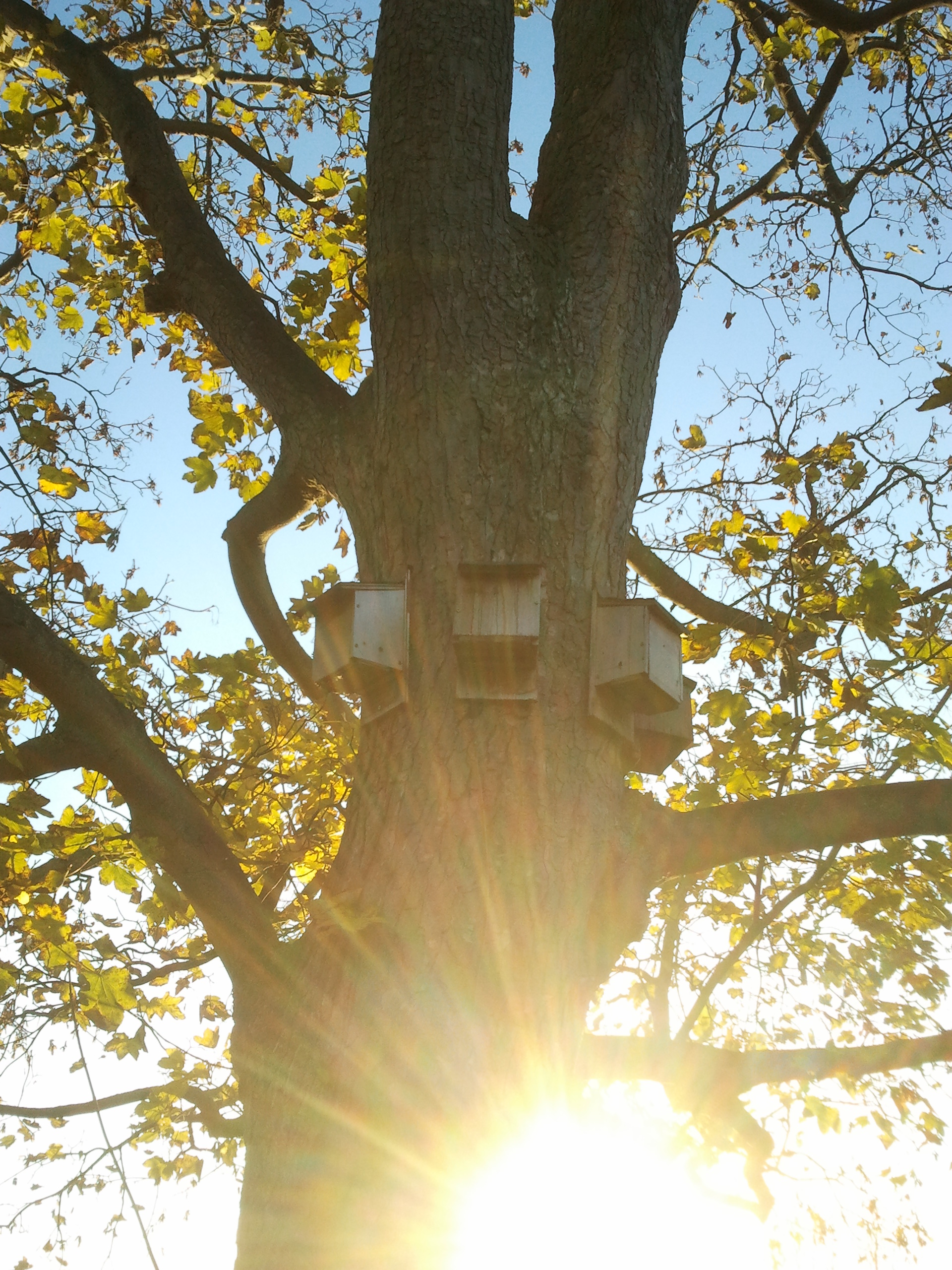
Up in the mature Sycamore and Oak the resident bats will be shuffling around and preening in readiness to leave their roosts in the boxes and go on the feed for moths and night-flying insects. Bats are our night-time pest control patrols. In the daylight hours we are being entertained by birds of prey often being mobbed by our flocks of Jackdaws and Rooks . Peregrines, Buzzard, Red Kite, Kestrel and Sparrow Hawk.

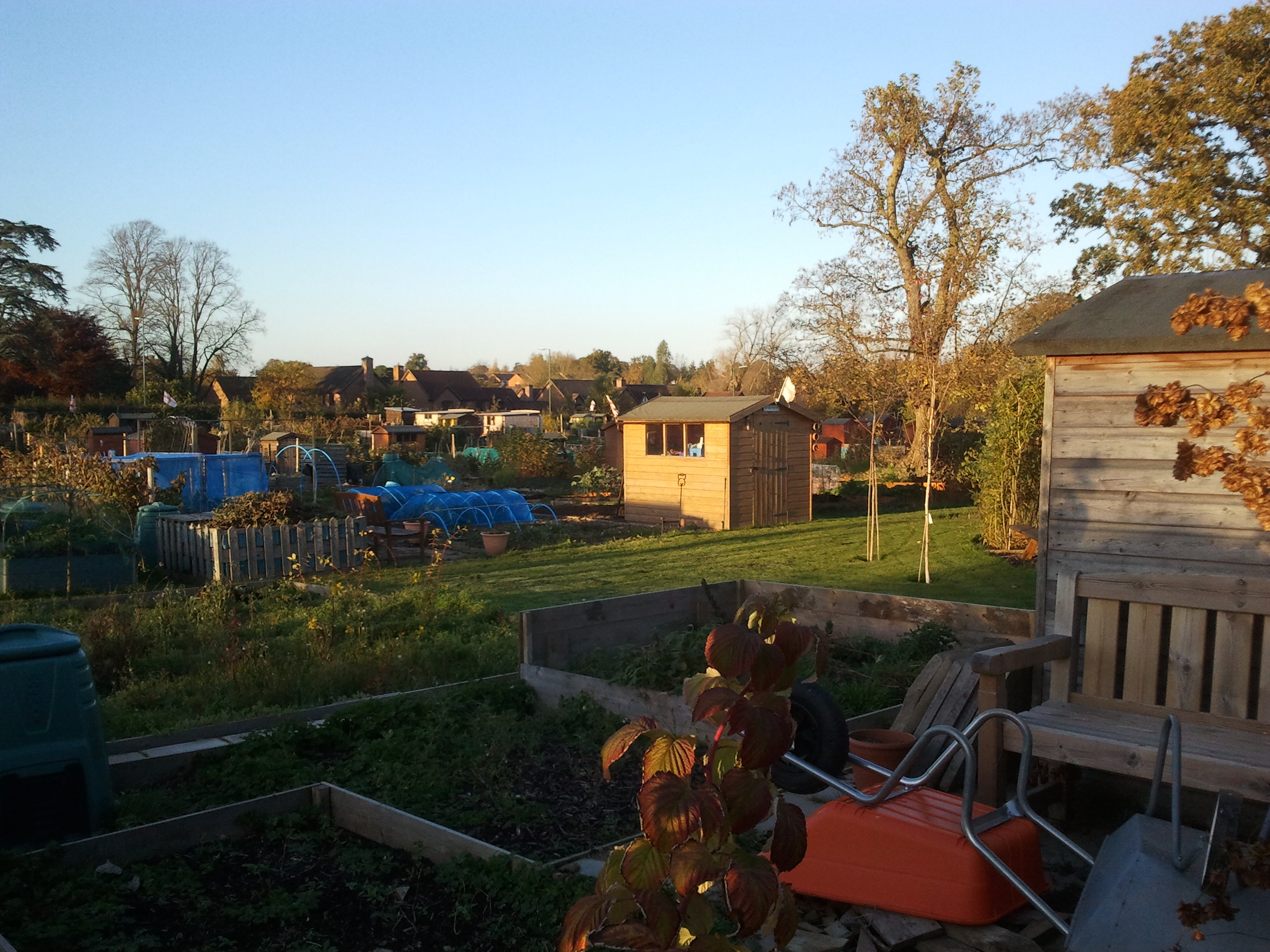
Around the plots the gardeners are preparing their plots for the winter, beds are cleared and manure piled up or spread over the surface.

A few crops remain for winter sustenance.The red stems and purple leaves of Ruby Chard add a burst of colour. Brassicas are covered to give protection from ravenous and greedy Wood Pigeons who love to eat the sweet centres of Brussels Sprouts and the tenderest, newest leaves of cabbages.

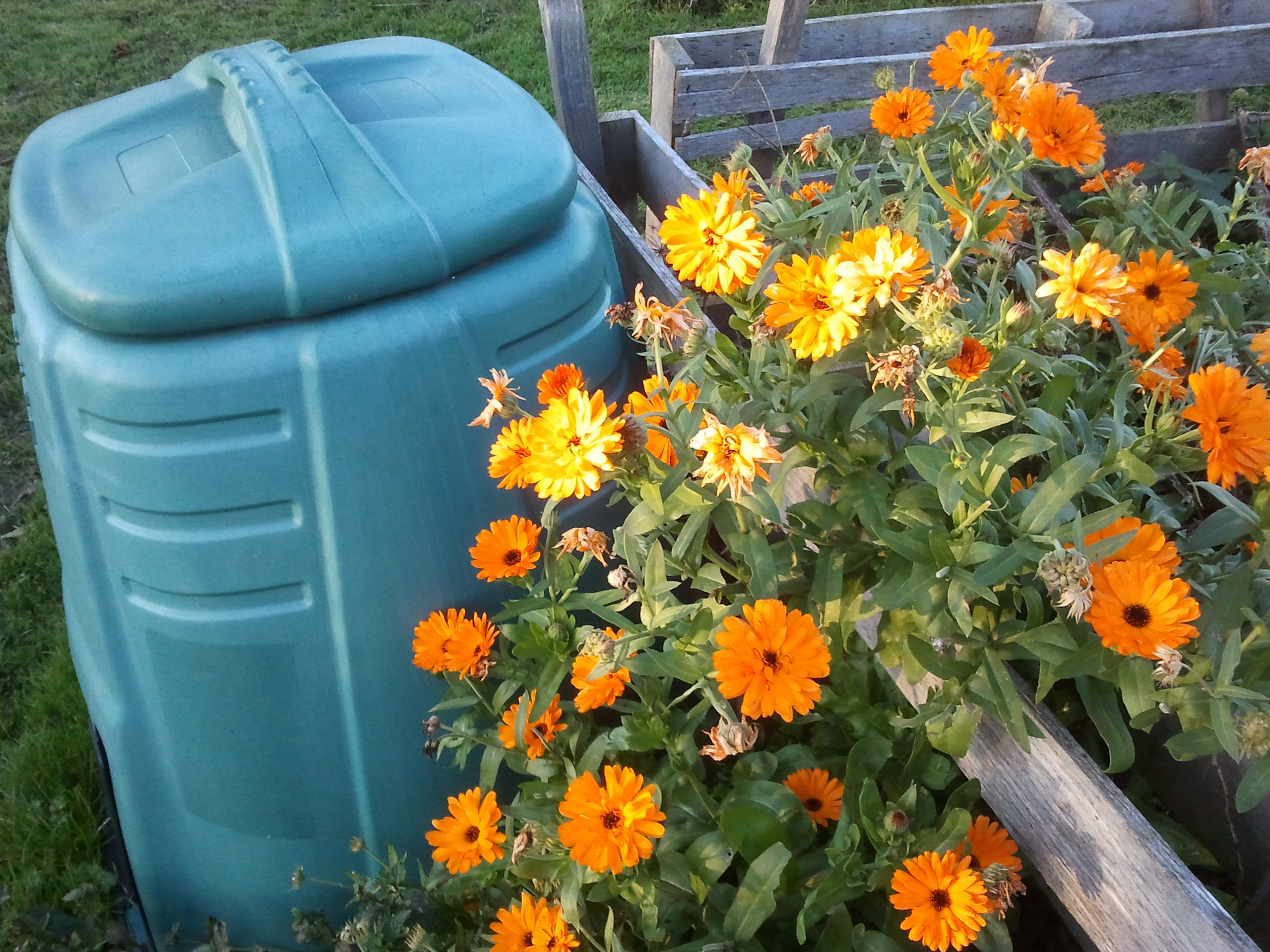
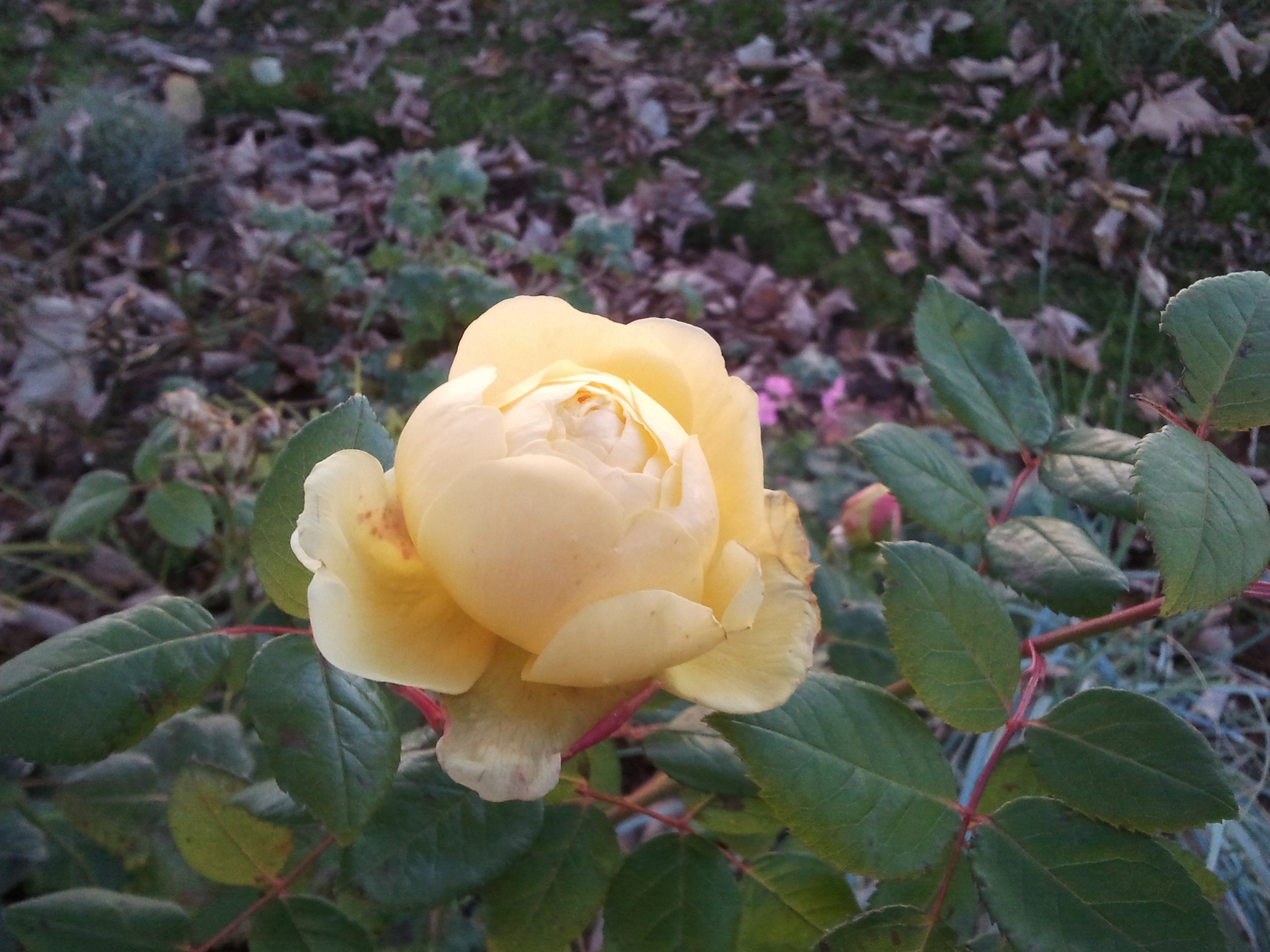
A few remaining flowers add extra brightness to the plots.Tthat most popular of companion plants, the Calendula brightens up compost areas and odd roses still perform in the Summer Garden. We can expect these David Austin roses to continue to treat us to flowers until the new year.

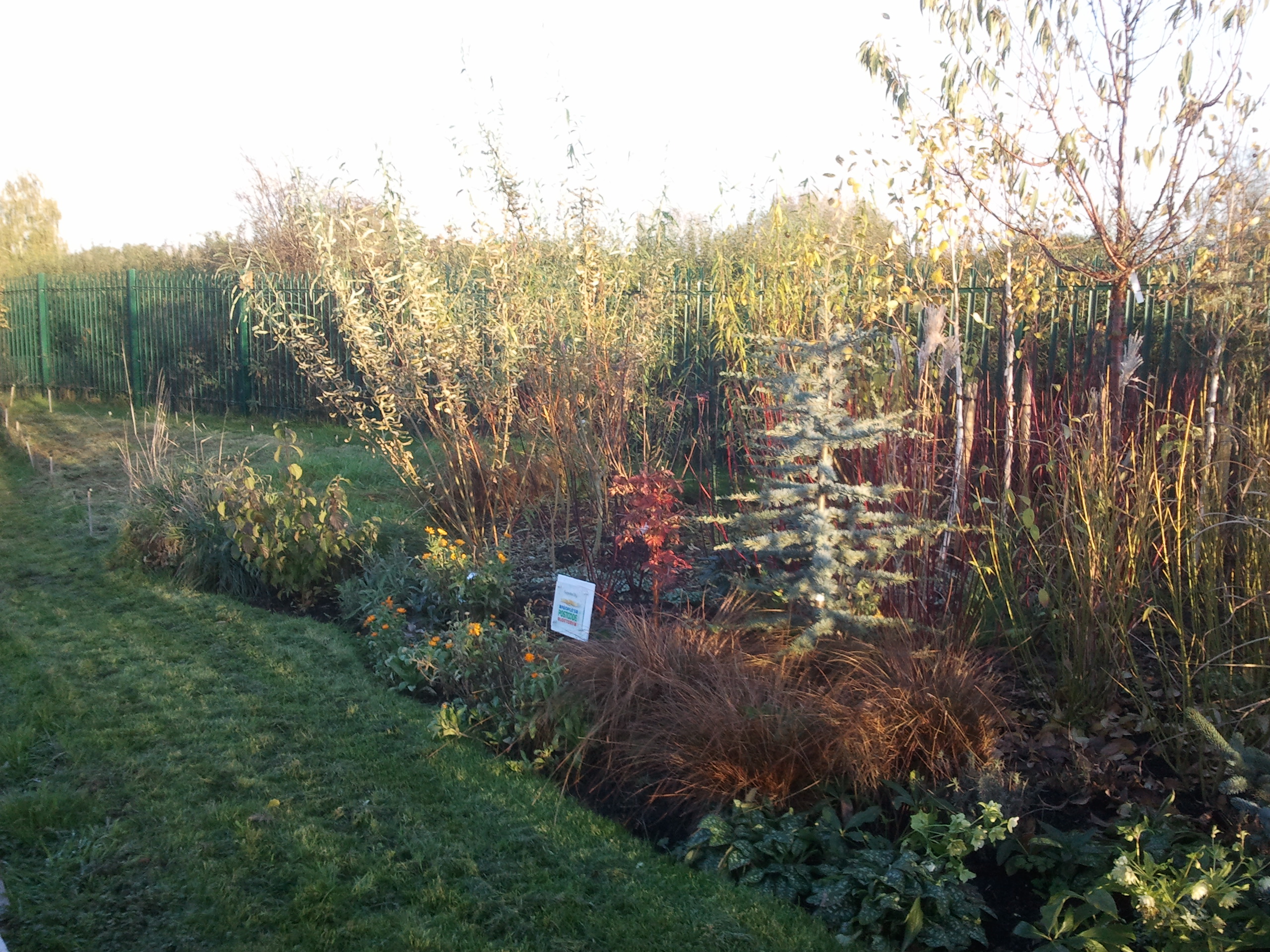
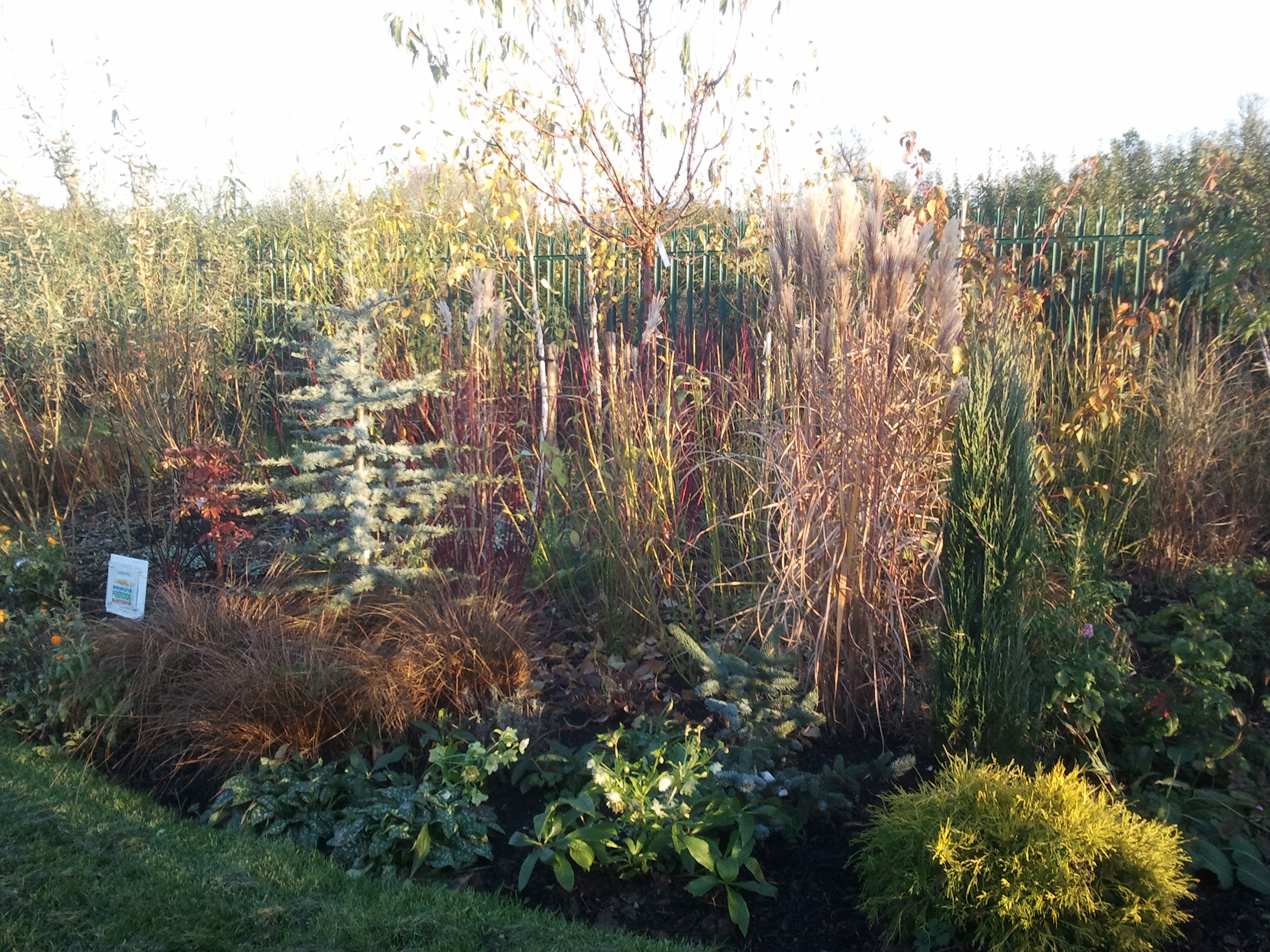
The star of the site for the next few months will be the Winter Garden and it is already showing promises and hints of what delights it has in store for us in times ahead. As leaves fall from trees and shrubs the colours and textures of the stems and trunks will come into their own.

We have endured a wet summer and autumn with each month breaking previous rainfall records. Crops have been poor and we have been flooded four times. Dave, the Scarecrow looks a bit worse for wear too!

Categories
allotments autumn fruit and veg garden photography gardening grow your own

Fruity

We harvested our first apples last month  and have been harvesting other varieties as they ripen. We still have a few varieties waiting on the treesto be collected. The first harvest was from a tree we have trained over an arch, having bought it as a one year maiden. It is a deep red-blushed beauty called “Scrumptious” which is a rather silly name but I have to admit quite apt. The basket weighed in at 8lb 7oz. – very pleasing!

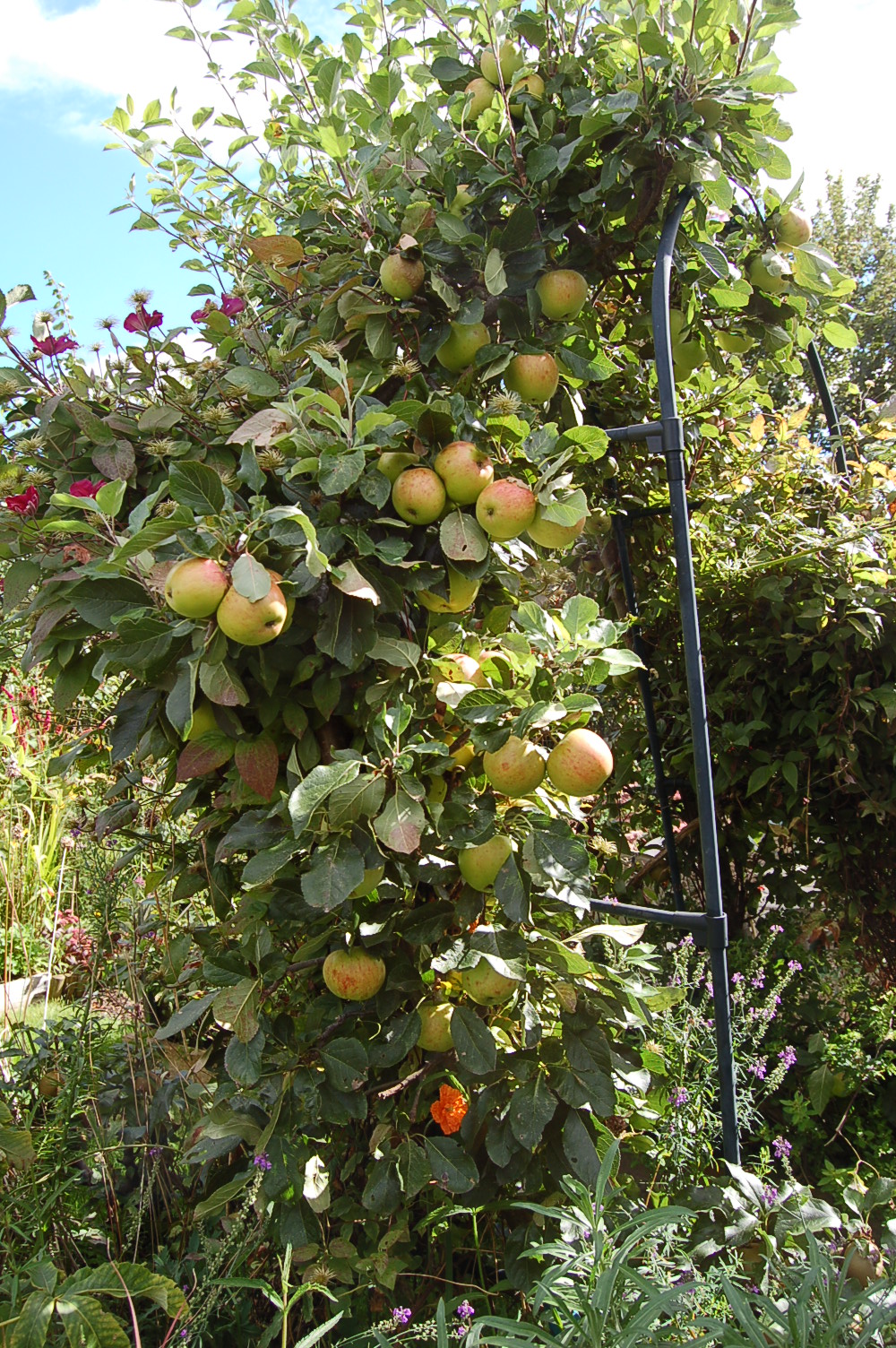
The other variety that we normally harvest in September is James Grieve, which grows in the company of a clematis over another arch. This tree is a reliable heavy cropper and this year’s crop  looked most promising as we waited for it to ripen. We can enjoy the taste of this apple straight from picking and they  stay full of flavour for a few months, but it does not store too well.

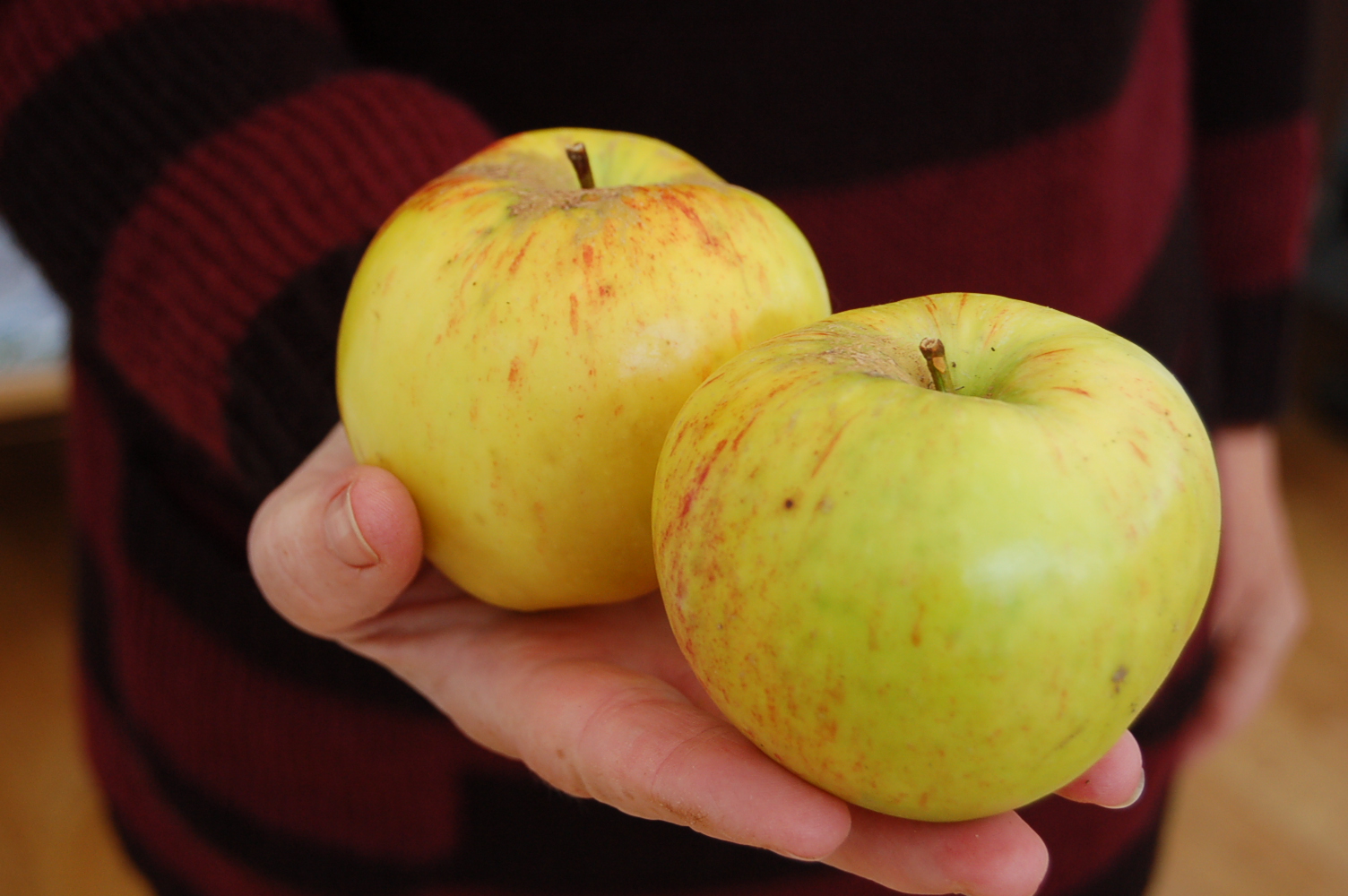
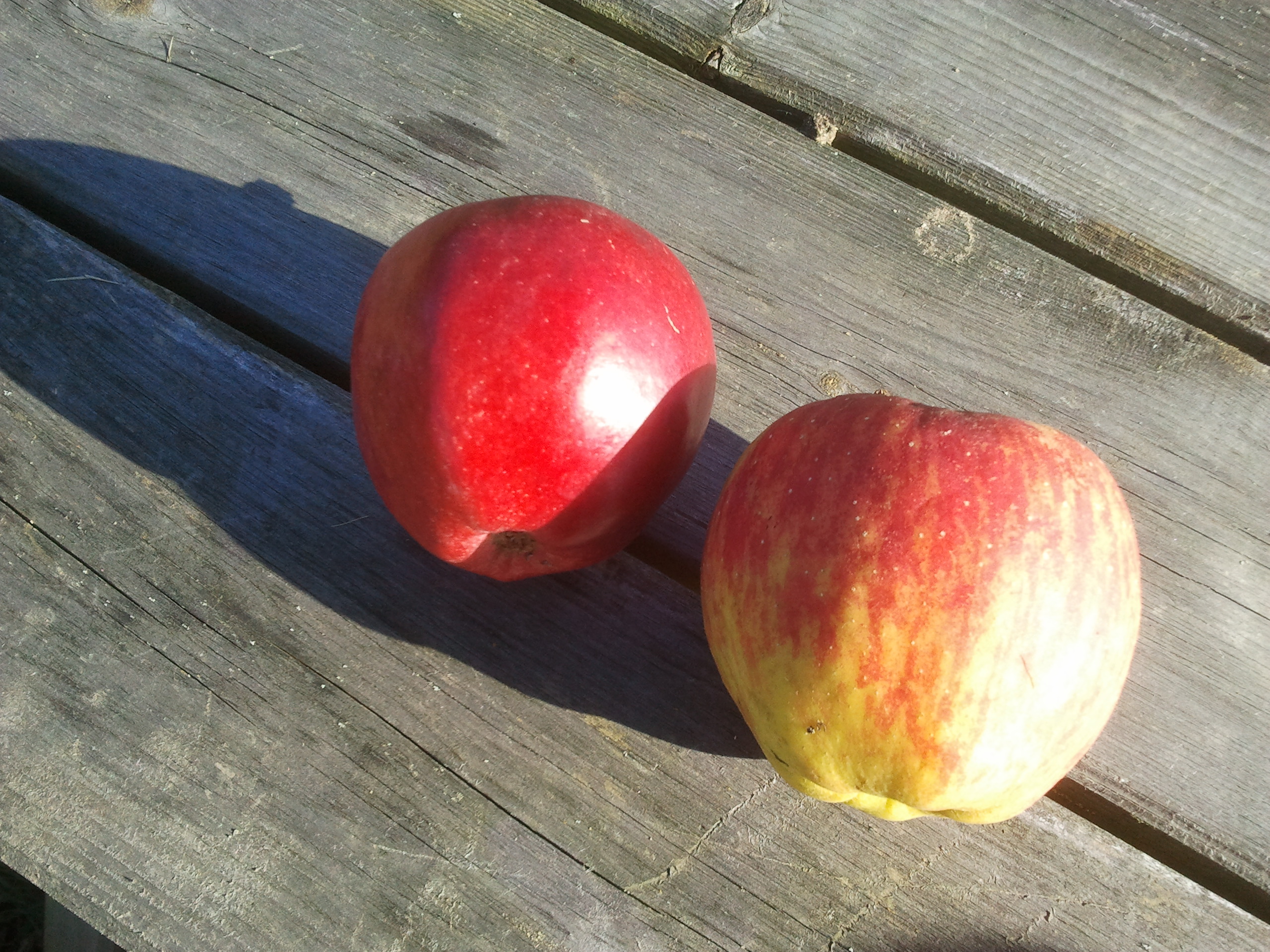
The harvest did live up to expectations weighing in at 27 lb with a few of the individual fruit being really large as we can see in the picture below of these two sitting on Jude, the Undergardener’s hand.

All the apple, pear and plum trees in our garden were bought as one year maidens and we have trained them into cordons, over arches and as step-overs. Now after ten years it is so rewarding to see them as such productive trees. Of course apple trees are worth growing for their blossom as well, so they are doubly useful to us gardeners.

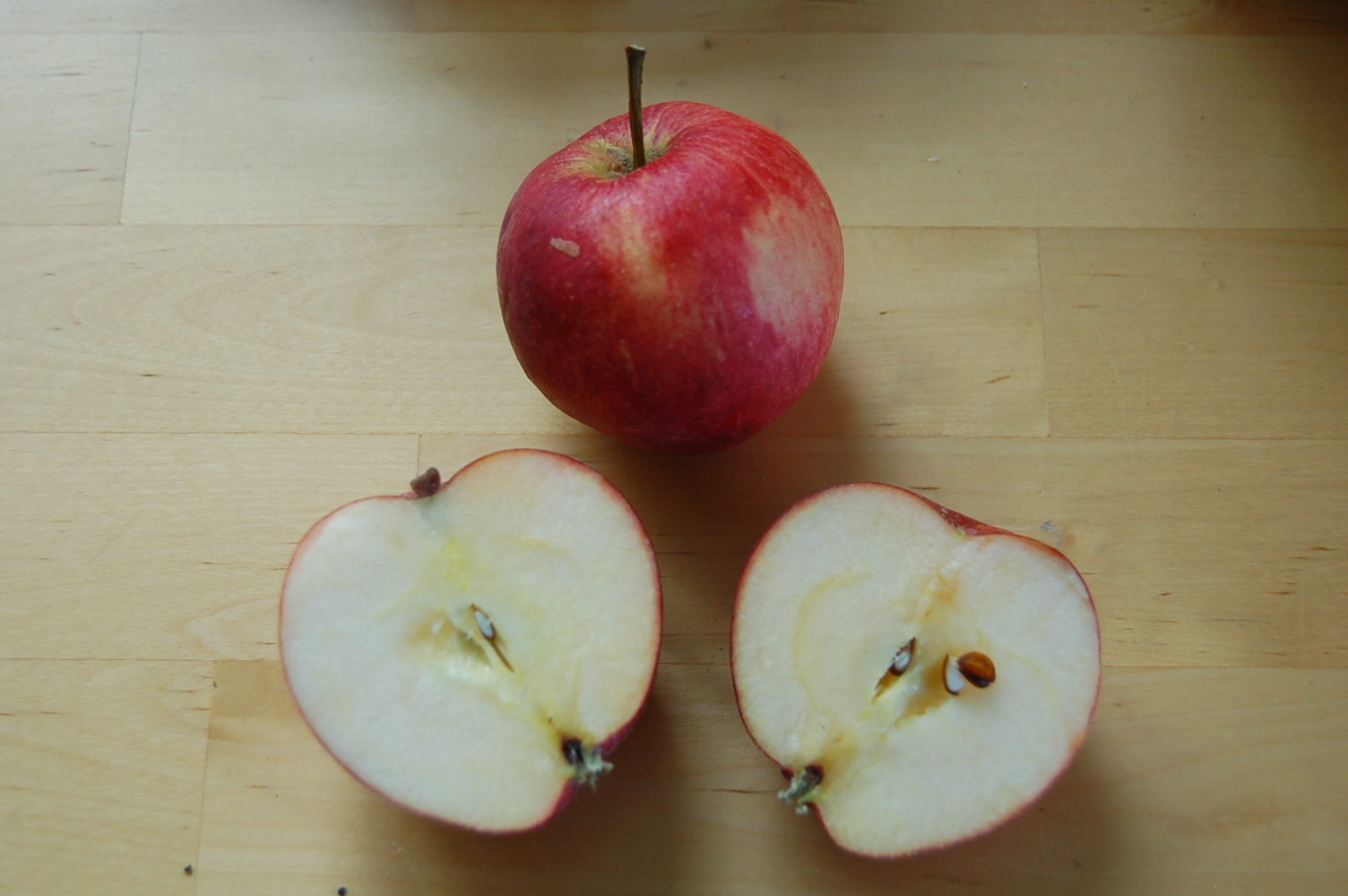
The apple below is Red Falstaff a variety we have trained as a single-stemmed upright tree. It sits to the left of our greenhouse door, where, coupled with Scrumptious on the right of the door, it gives the impression of  being one of a pair of sentinels guarding the doorway. We harvested our Red Falstaff a few days ago and the fruit has developed much deeper red blushed cheeks. In total though the little tree produced only half a dozen pounds of fruit.

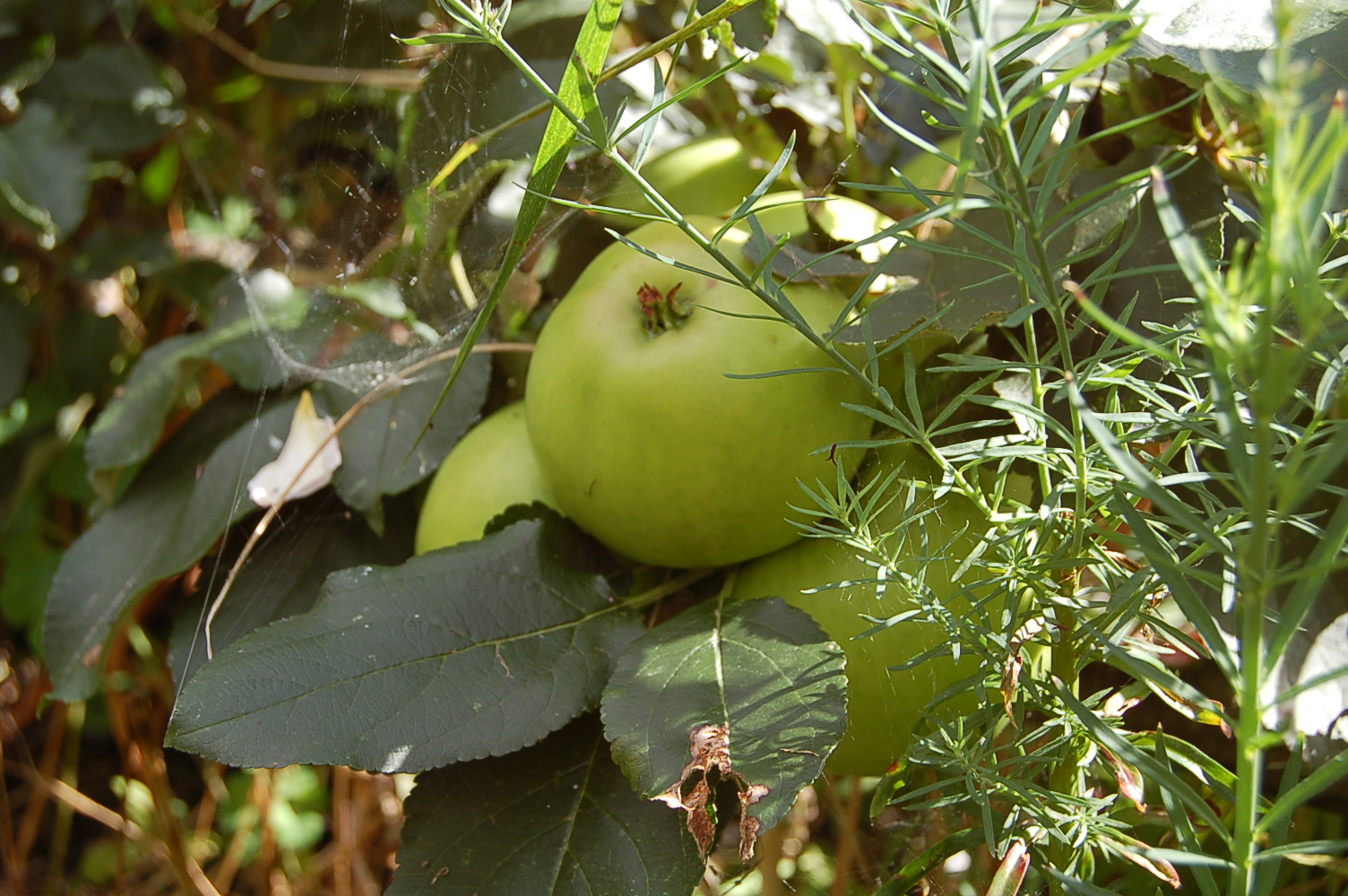
The green fruit below is a Bramley apple, the only pure cooker we grow. It is not the best of croppers as we made the mistake of training it as a step-over. Bramley is a tip-bearer so when we carry out the formative pruning necessary with step-overs we are effectively cutting out most of its future fruiting buds. However it does give us a small crop every year, so it has forgiven me my ignorance. We stew this cooking apple and then freeze them to use in pies in the winter and spring. As we do not grow many cooking varieties we tend to use wind falls and any damaged fruit of eaters as cookers or as ingredients in chutneys or mixed with blackberries in jams.

Ashmeads Kernel seen below however is a most successful step-over tree, with a dry textured skin and nutty flavour. This apple is one of the last to be harvested in late October  but will not be at its eating best until December through to February, when its flavours will have fully developed.

We grow some heritage varieties which tend to produce fewer fruits but are usually better flavoured, such as Cornish Aromatic, Beauty of Bath, Pixie and King of Pippins.

The photo below shows the unusually shaped, boxy fruit of Cornish Aromatic with its green skin with a few freckles of slightly deeper green.

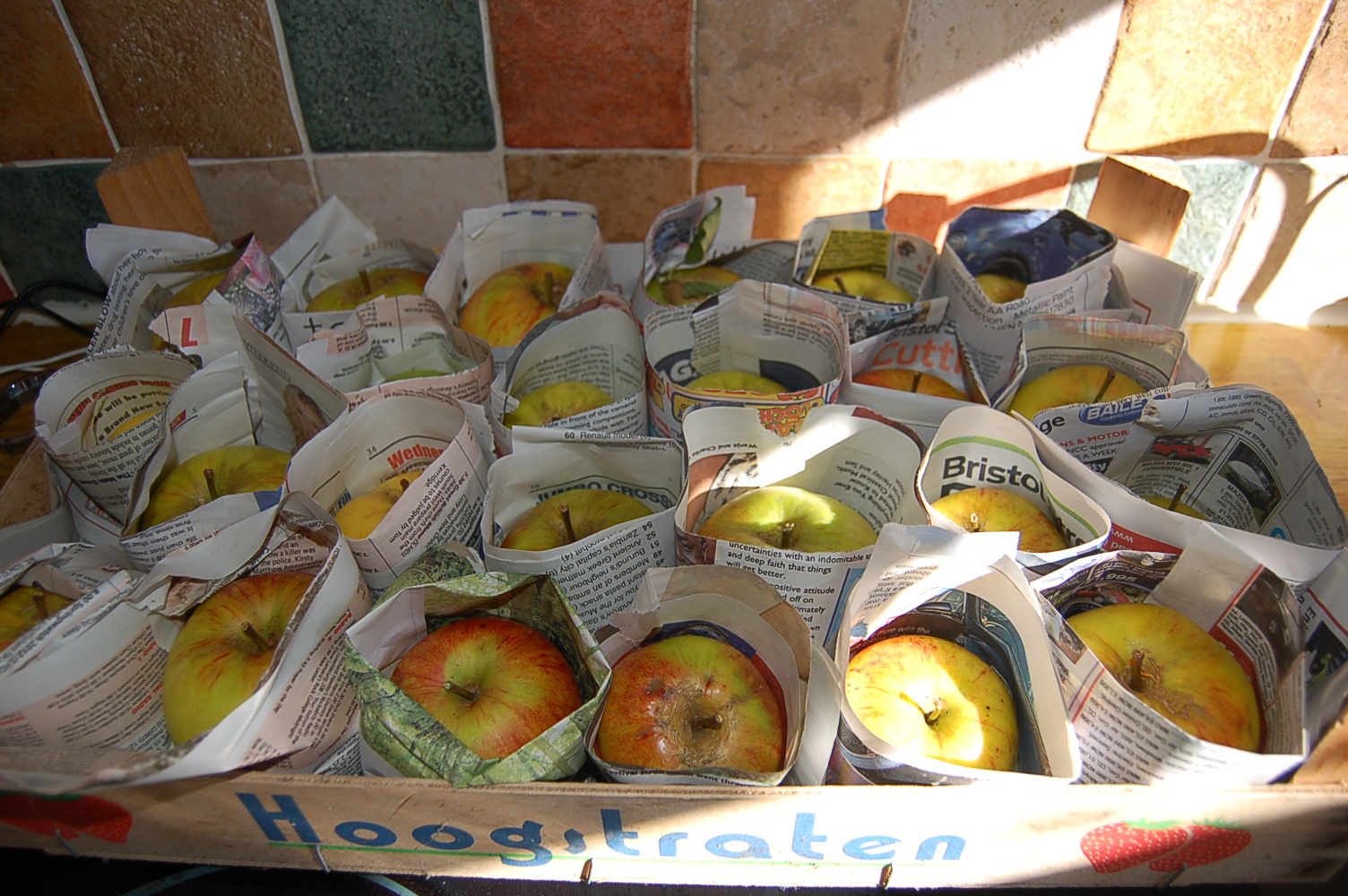
Any apples whose flavour improves with keeping ,we store in shallow trays with individual fruit wrapped in newspaper to make sure no fruits touch each other. If an apple does go bad when in store then this barrier of newspaper will stop it spreading too quickly.

The act of picking fruit evokes our senses, the touch of the skin as we twist the fruit from the tree, the scent of the fruit in the hand and the subtle variations of reds and greens to delight the eye. And then of course comes the taste, in some cases best straight from the tree in others the tastes matures with age, reaching a peak months after being plucked from the tree. There is also the sensation of the first bite, the crunch, the juice running and the balance of taste between sweet and acidic, and the hints of fruits shared with other fruits, strawberries and pineapples.

Our pear trees were a great disappointment this year. Out of our four cordons only one produced any fruit at all but just look at the size of them!

Categories
fruit and veg garden design garden photography gardening gardens open to the public grow your own outdoor sculpture photography

The Other Hampton Court – Part 2

Back to the Hampton Court Garden – not the one in London but the one in north Herefordshire.

The structure designed into the gardens here entices us to move on, to follow paths, to enter gateways, to sit and rest and to look at views.

Within the design plants sit  comfortable and happy in their surroundings.

This wonderful garden is also about fun, that essential element that acts as the vehicle for children to become involved with gardens and gardening.

Not just children though – adults need fun in the garden too, especially Jude, the Undergardener.

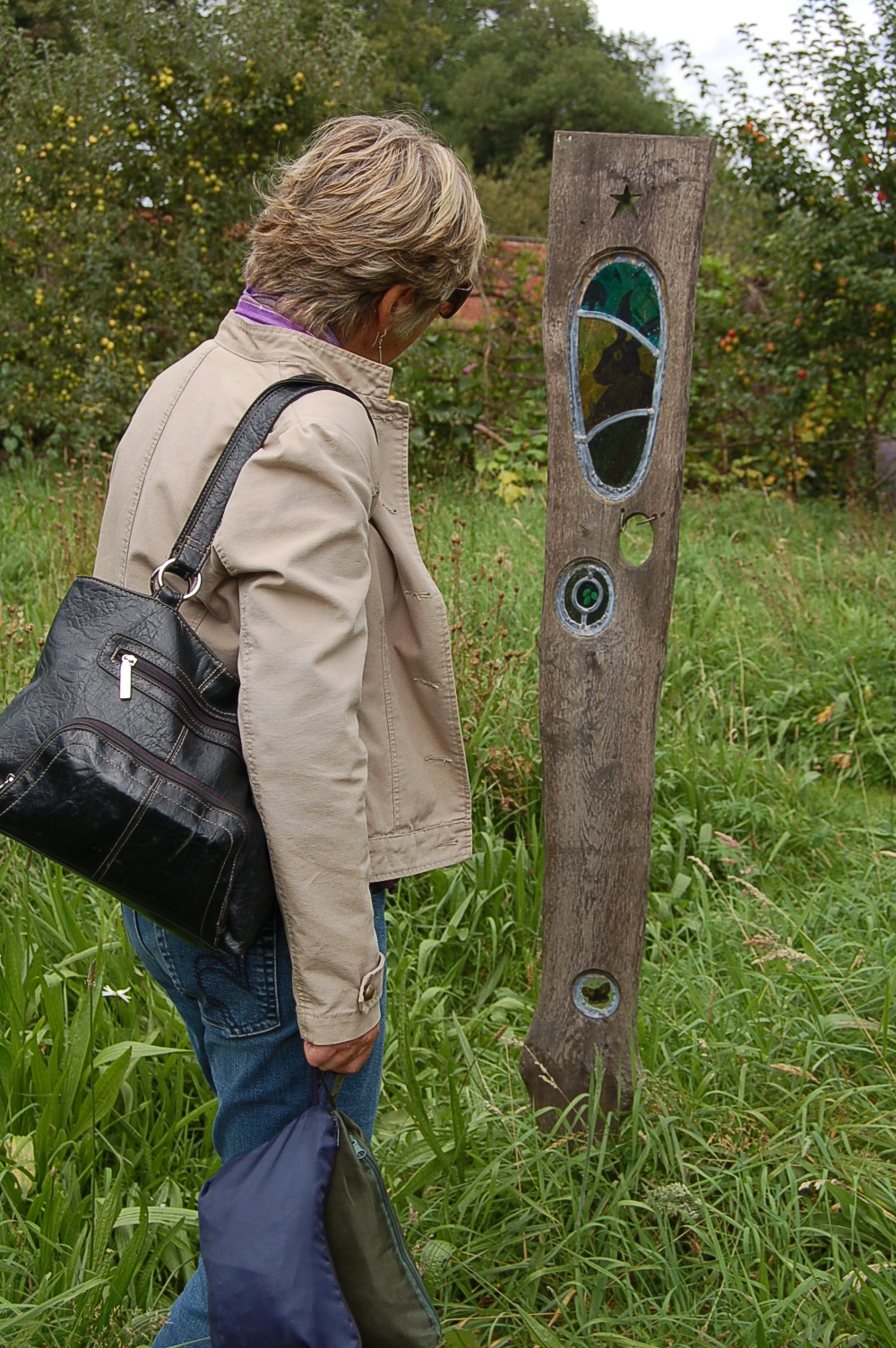
Sculpture is an important feature of Hampton Court and is enjoyed by all ages. This piece features stained glass within a wooden obelisk,

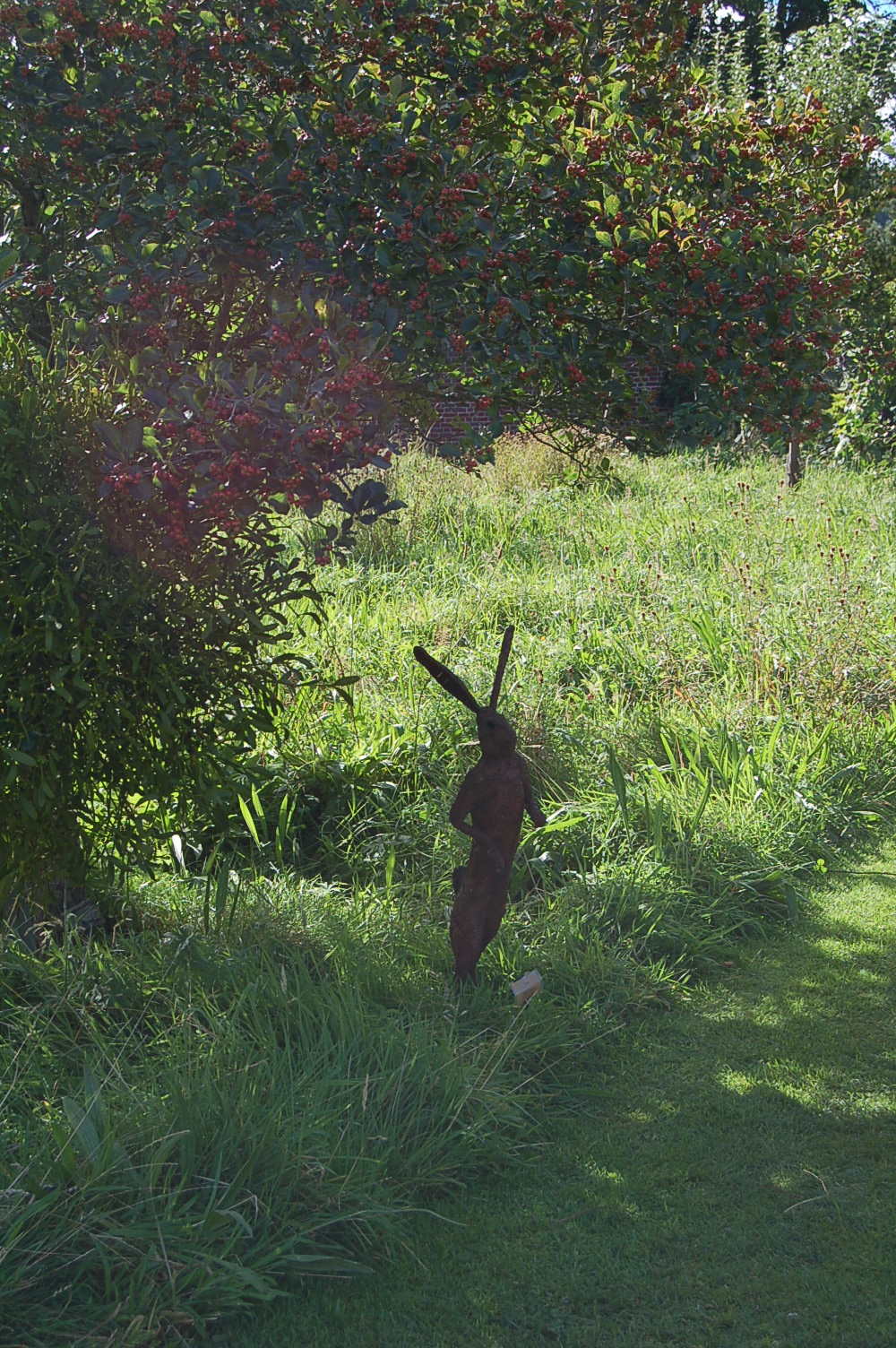
Within the orchard this sculpture of a hare in its rusty finish attracts everyone for its beauty and charm.

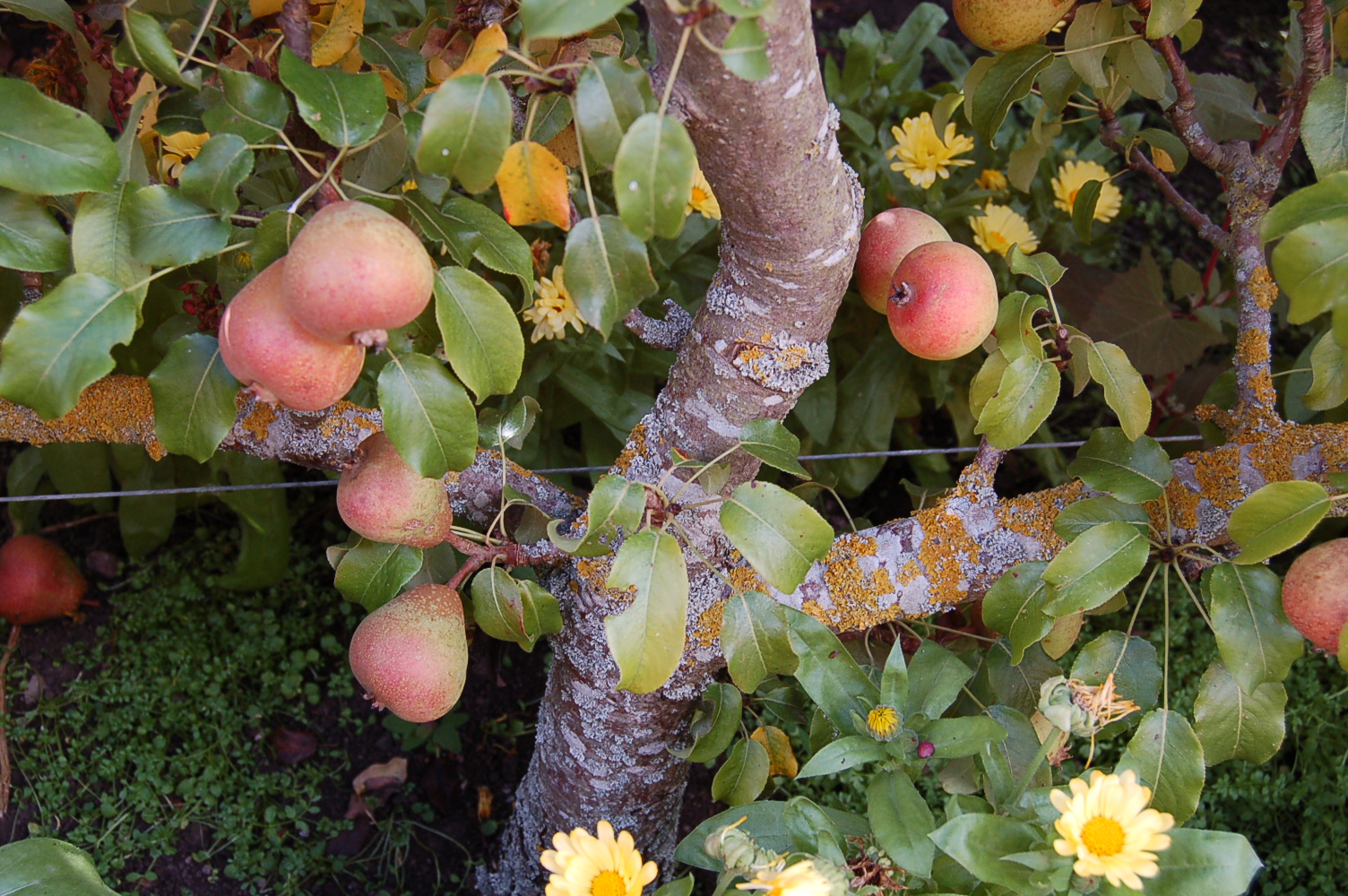
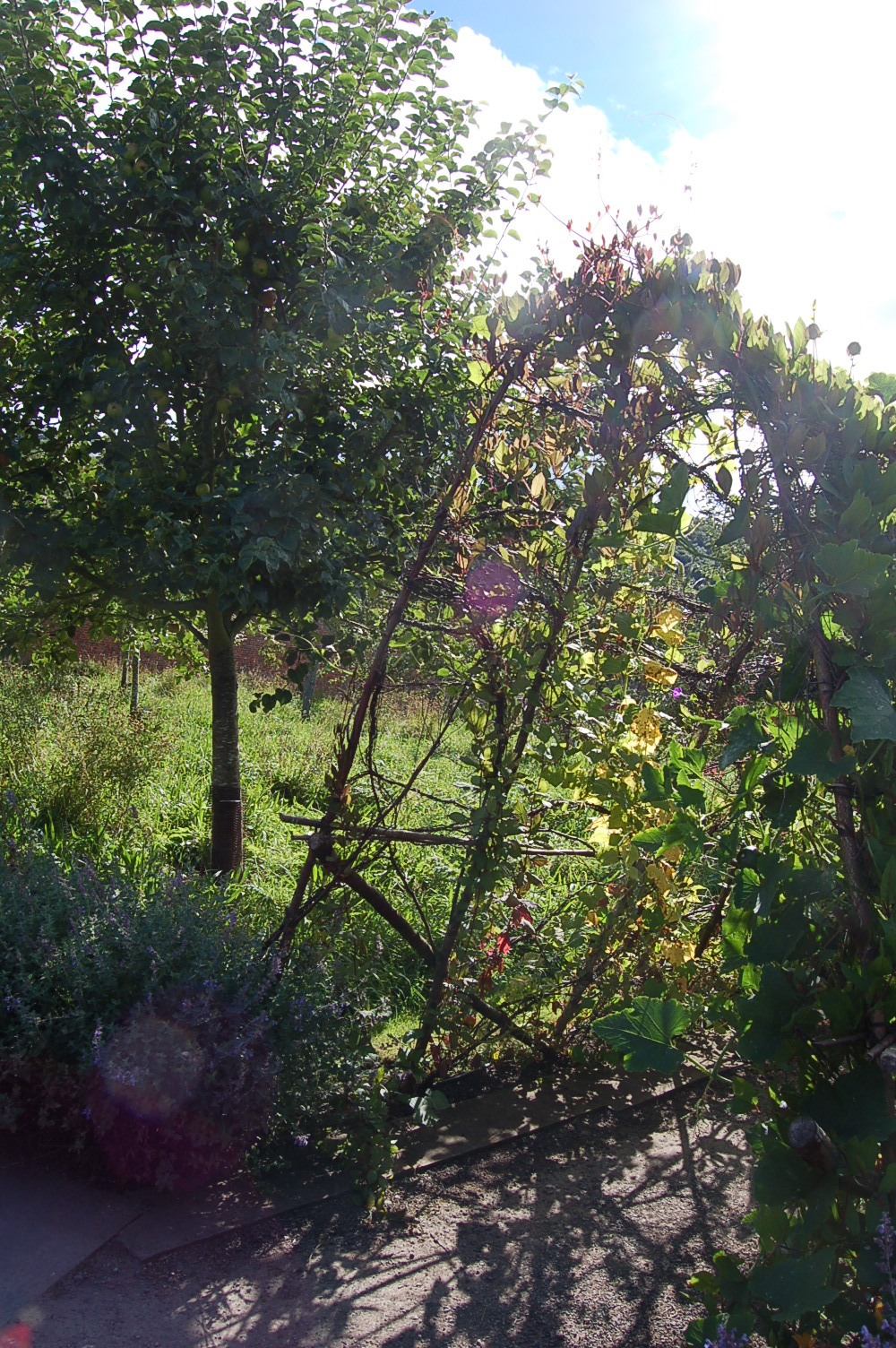
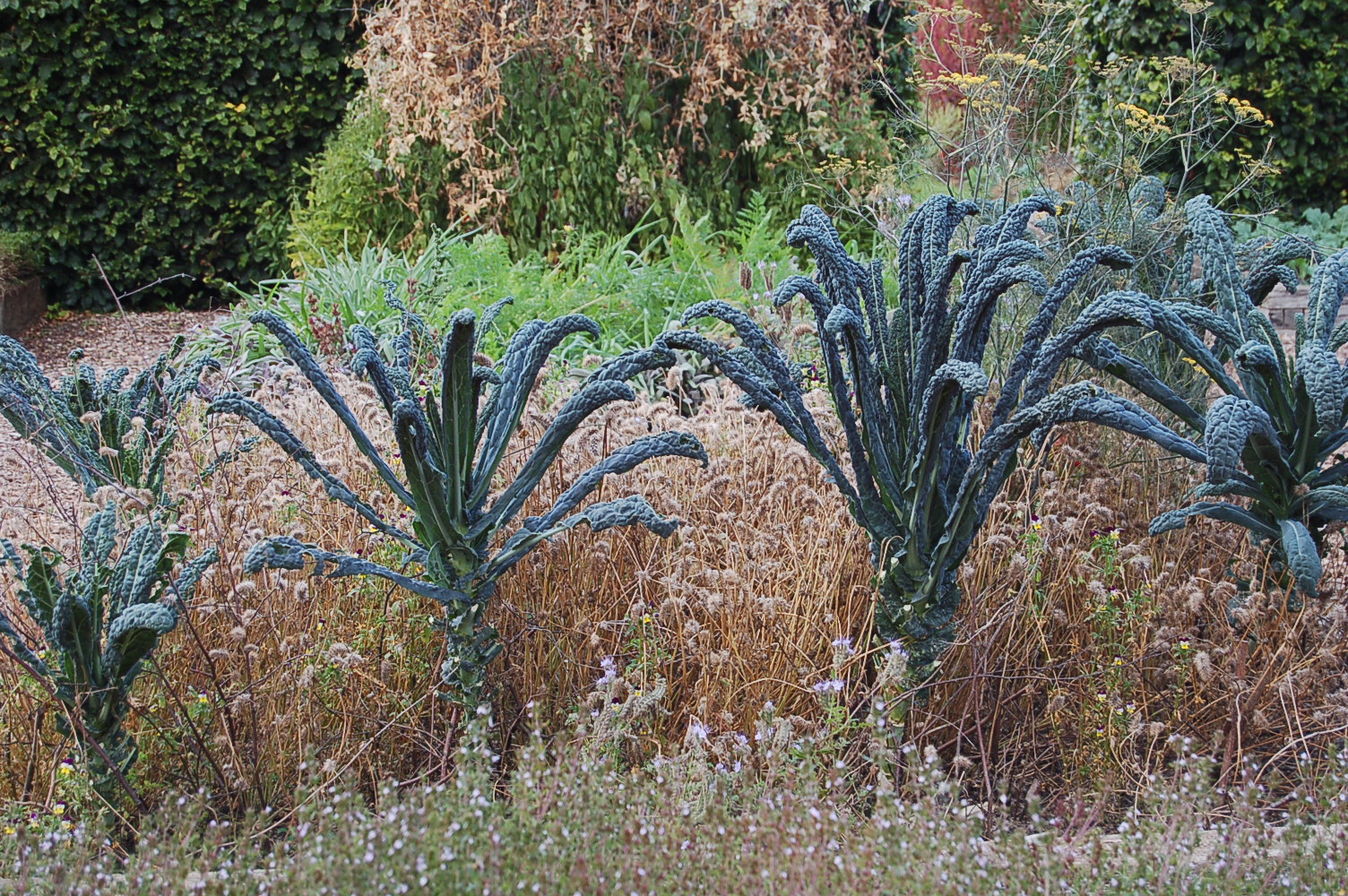
We shall leave Hampton Court in the orchard a collection of heritage fruit trees and meadows, and with a wander around the potager.

And a piece of unintentional outdoor sculpture.

Categories
fruit and veg garden design garden photography gardening gardens open to the public grow your own outdoor sculpture photography

The other Hampton Court – Part 1

Just a hour’s drive away, following the A49 south into north Herefordshire, is the “other” Hampton Court. It is much smaller and less well-known than its London namesake, but we love it. It is a garden of many moods from a formal Dutch style canal garden, a potager, herbaceous borders, sweeping expanses of lawn with towering Cypress trees,  a riverside walk to a dingle with grotto and pool. Who could ask for more?

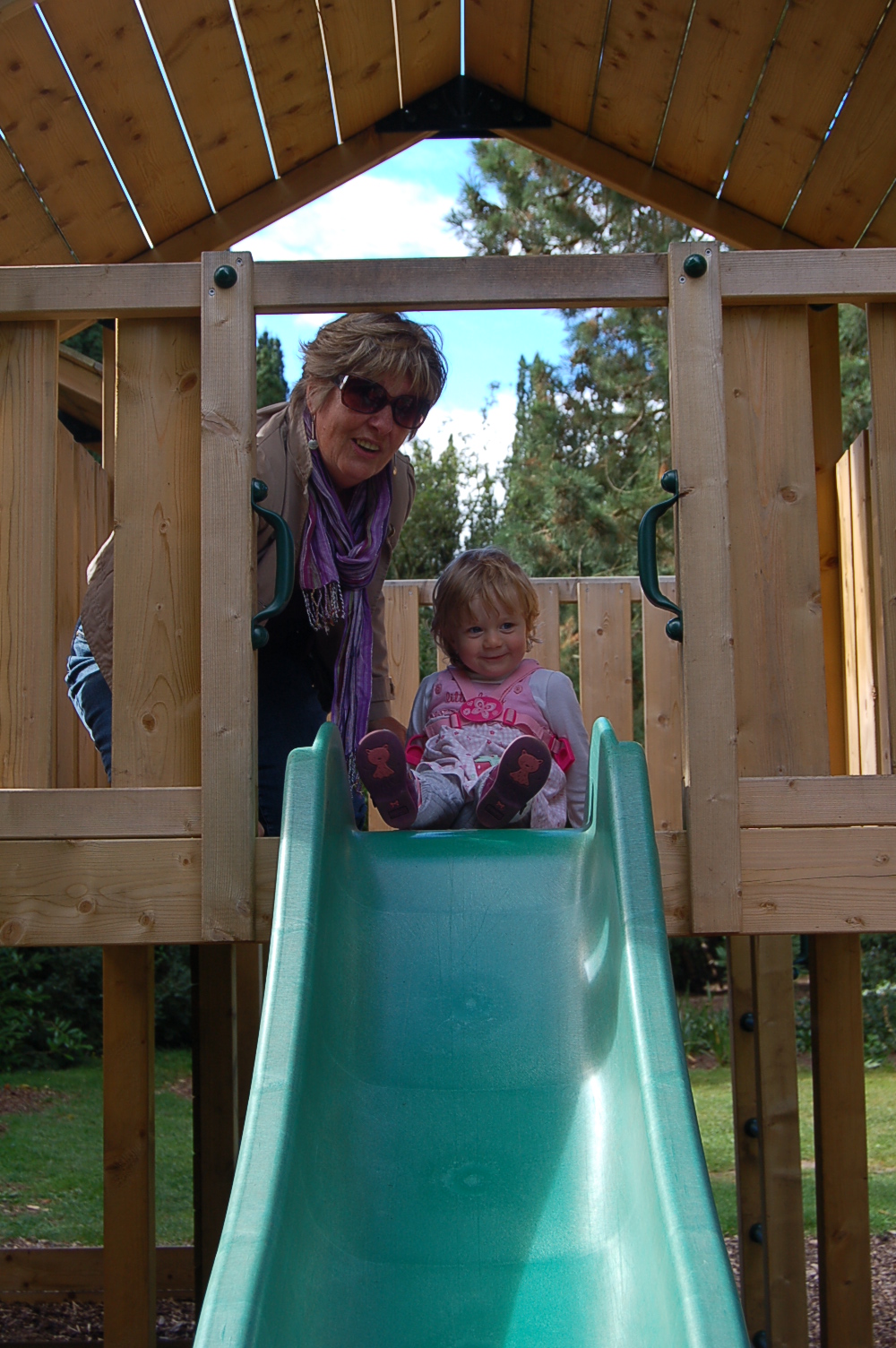
We went down for a visit in September taking friends Tony and Jean with us and their granddaughter, Lucy. They are our daughter’s in-laws and niece. Jean has loved gardens for ages, Tony is excited about recently discovering them and Lucy, just 2 years old, simply loves being outside and looking at everything around her.

Naturally we arranged to meet up with them in the coffee shop situated in the beautiful orangery. The lawns outside were decorated with sculptures for all tastes.

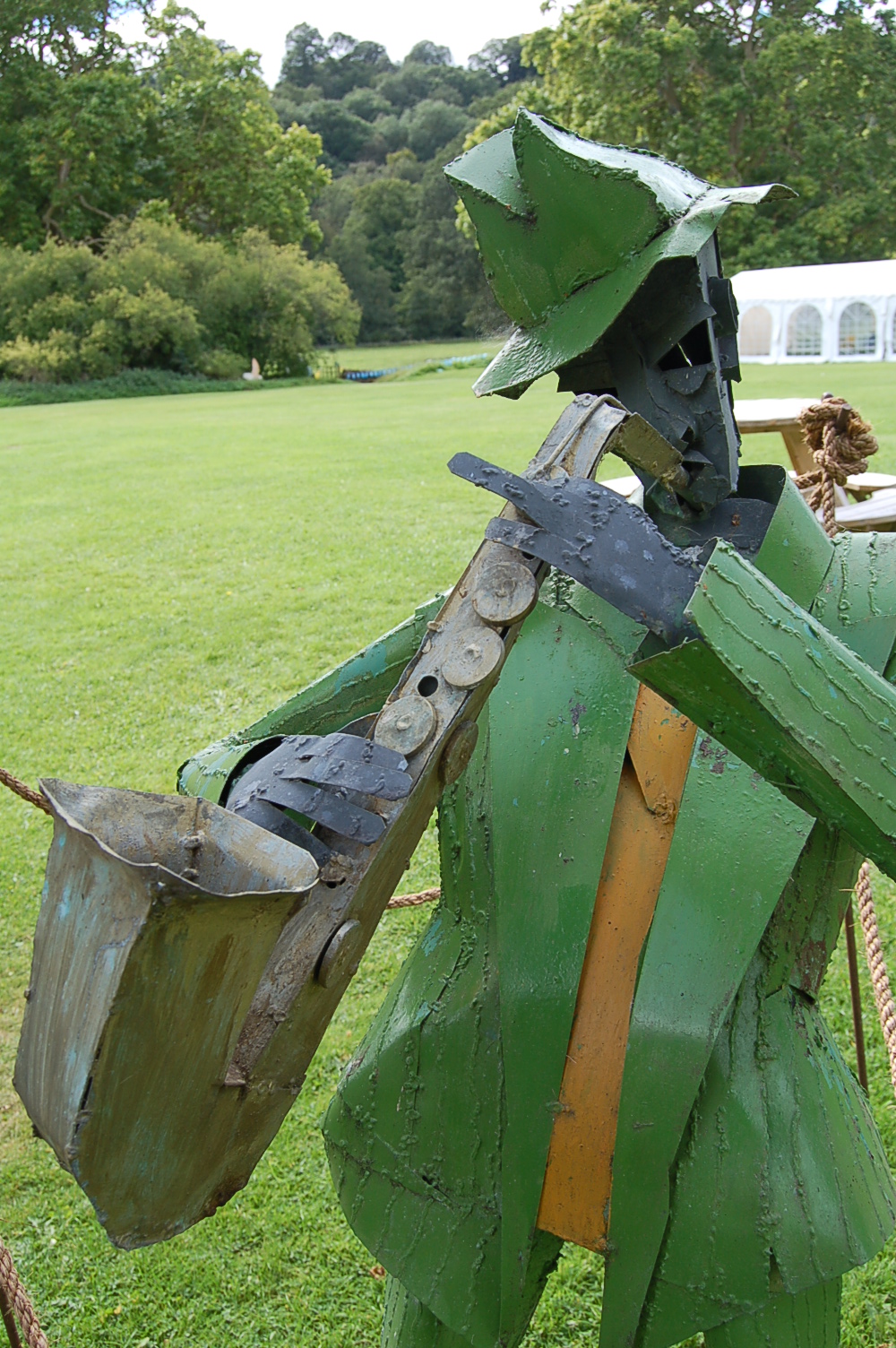
The saxophone playing sculpture serenading visitors enjoying coffee and cakes in the Orangery.
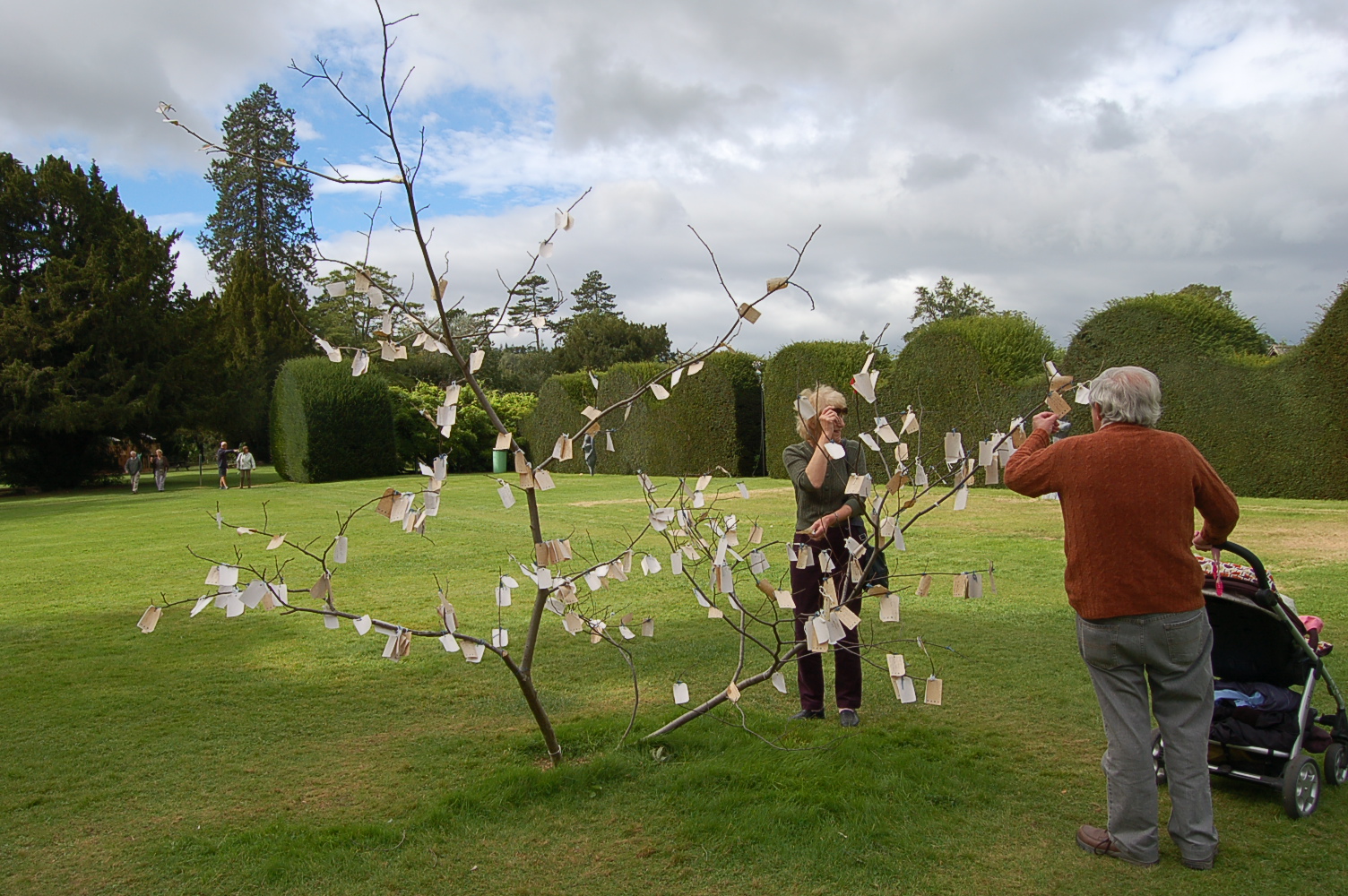
The Tree of Wishes provided insight into children’s thoughts and imagination.

One unusual piece of sculpture was “The Tree of Wishes” upon which children hung their wishes written on cards. They made inspirational reading, some sad, some happy and some that just made us think. “I wish my Mum was Happy”. “I want to play for Man United when I grow up.” “I wish I had a sister.”

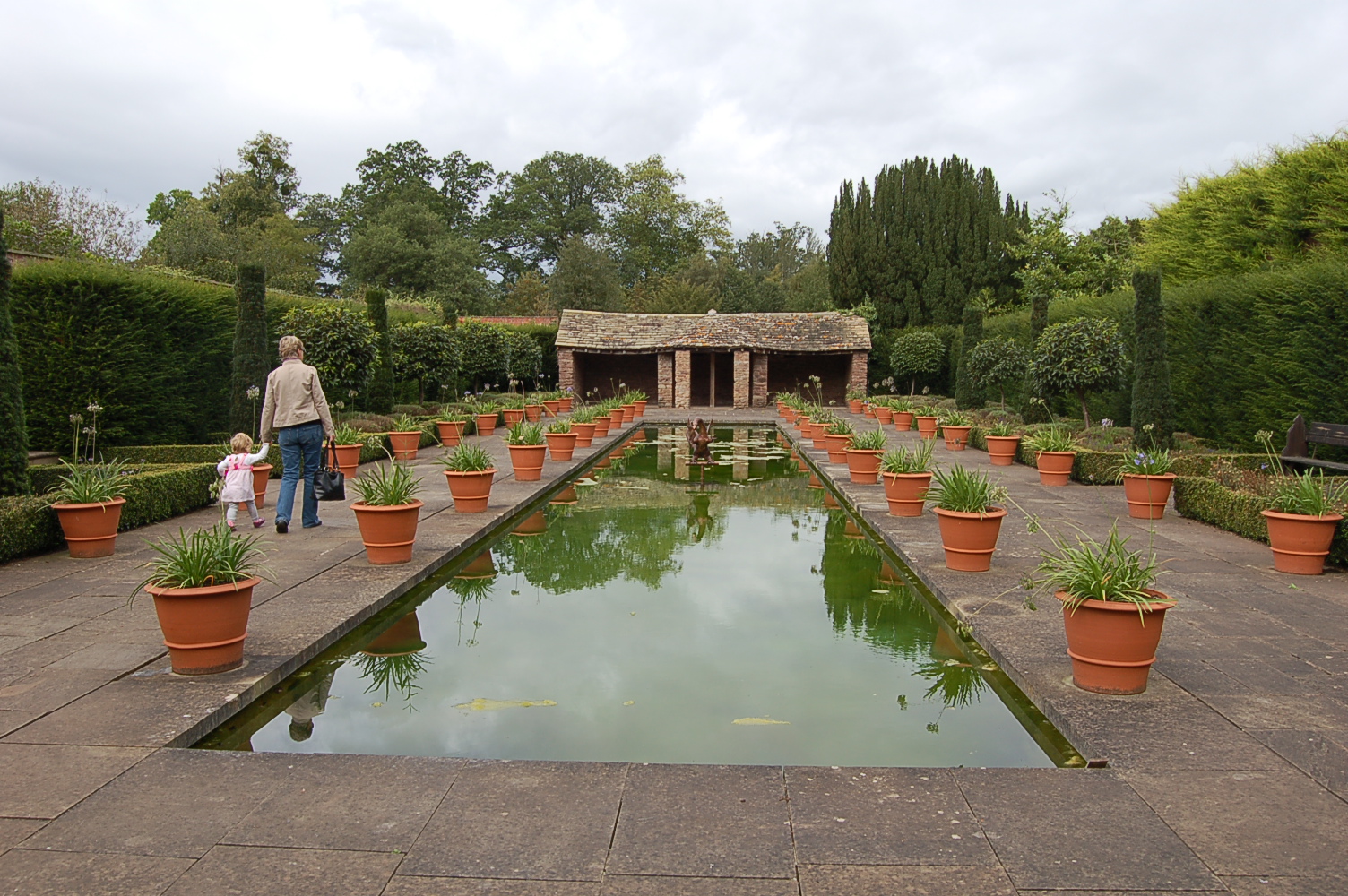
Jude takes Lucy for a walk around the pool in the canal garden.
And on that pool lived a dragon!

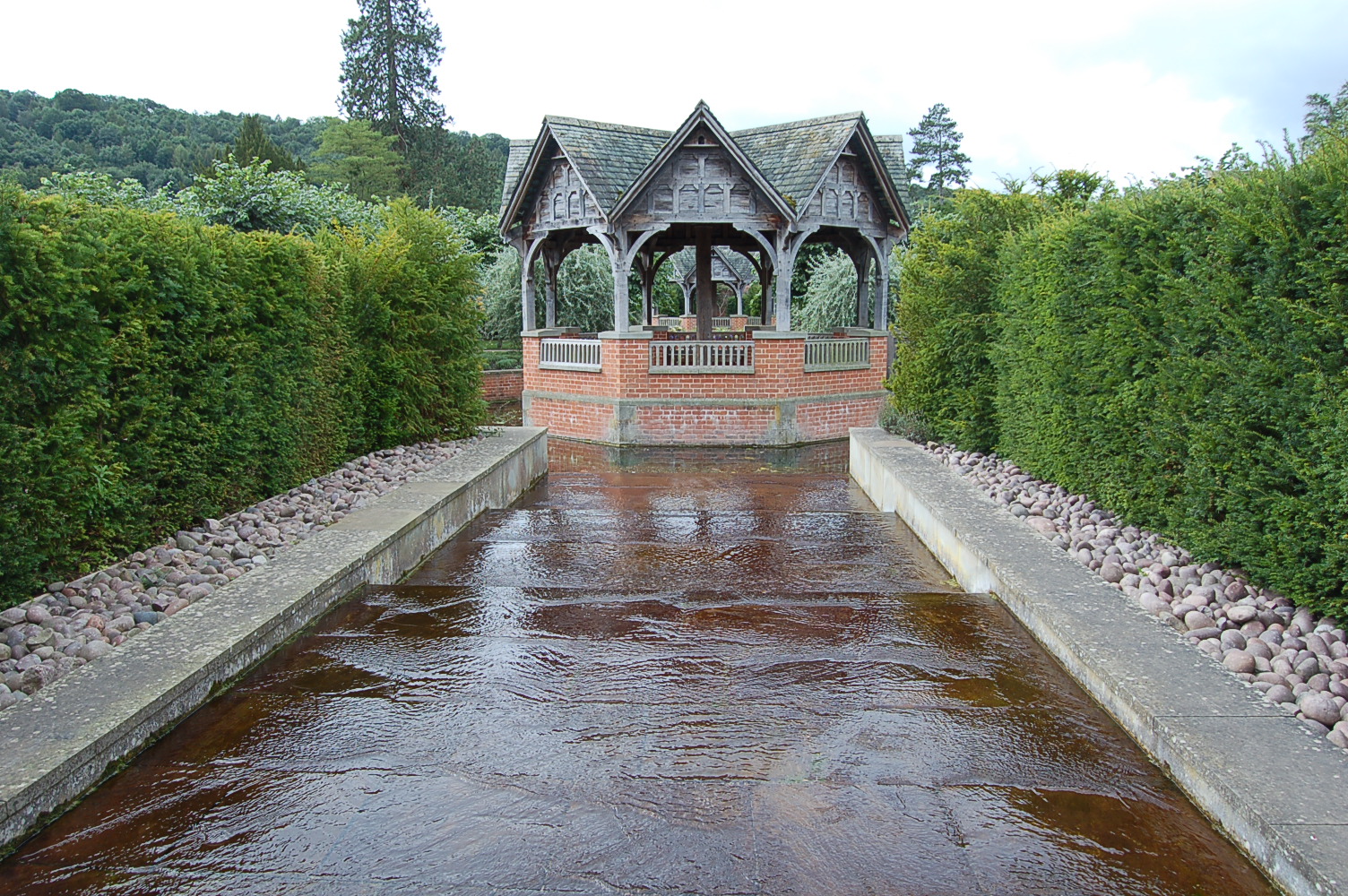
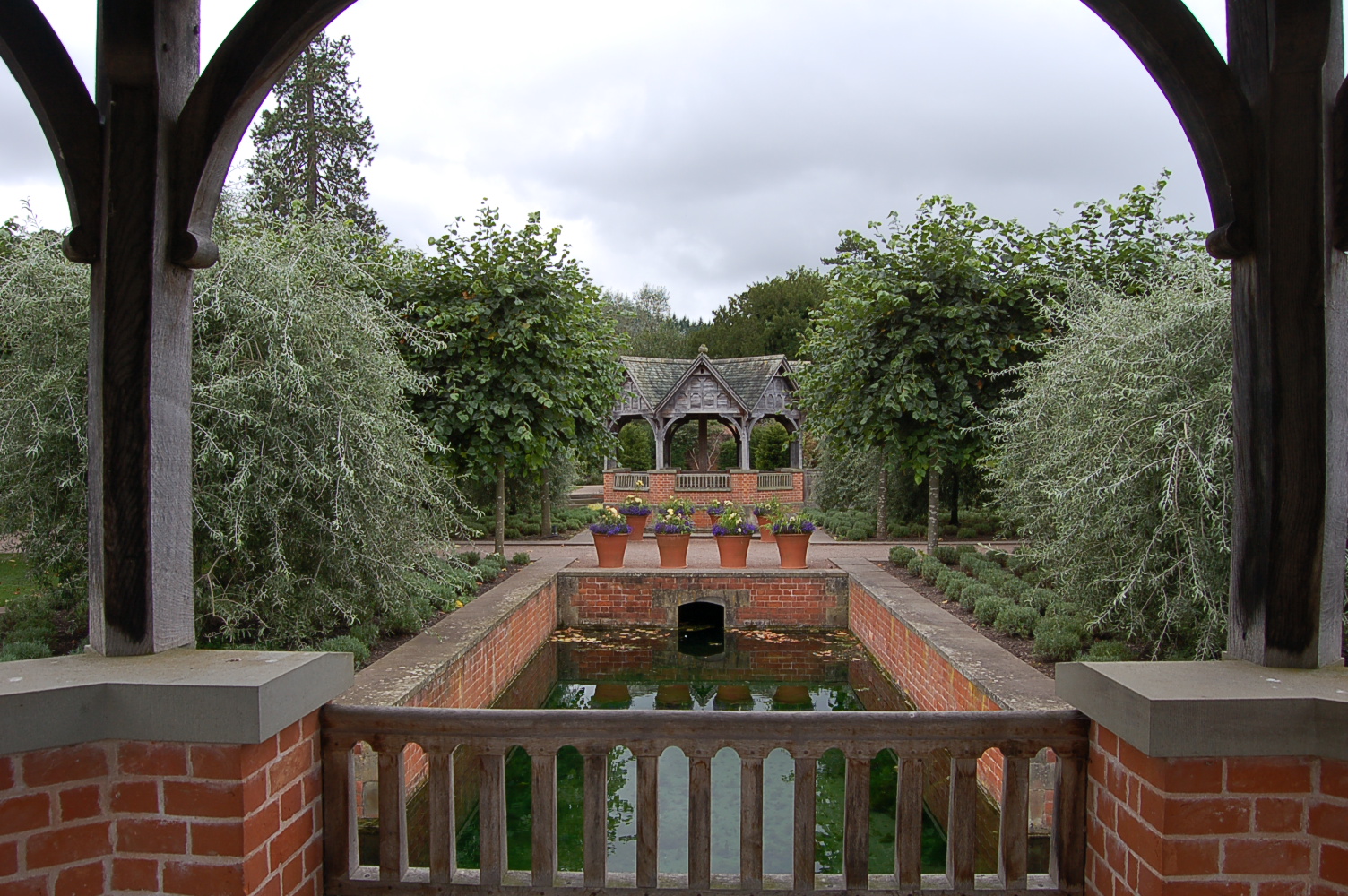
Throughout the garden interesting bespoke buildings delight and surprise.

This beautiful building is one of a pair in the Dutch Garden

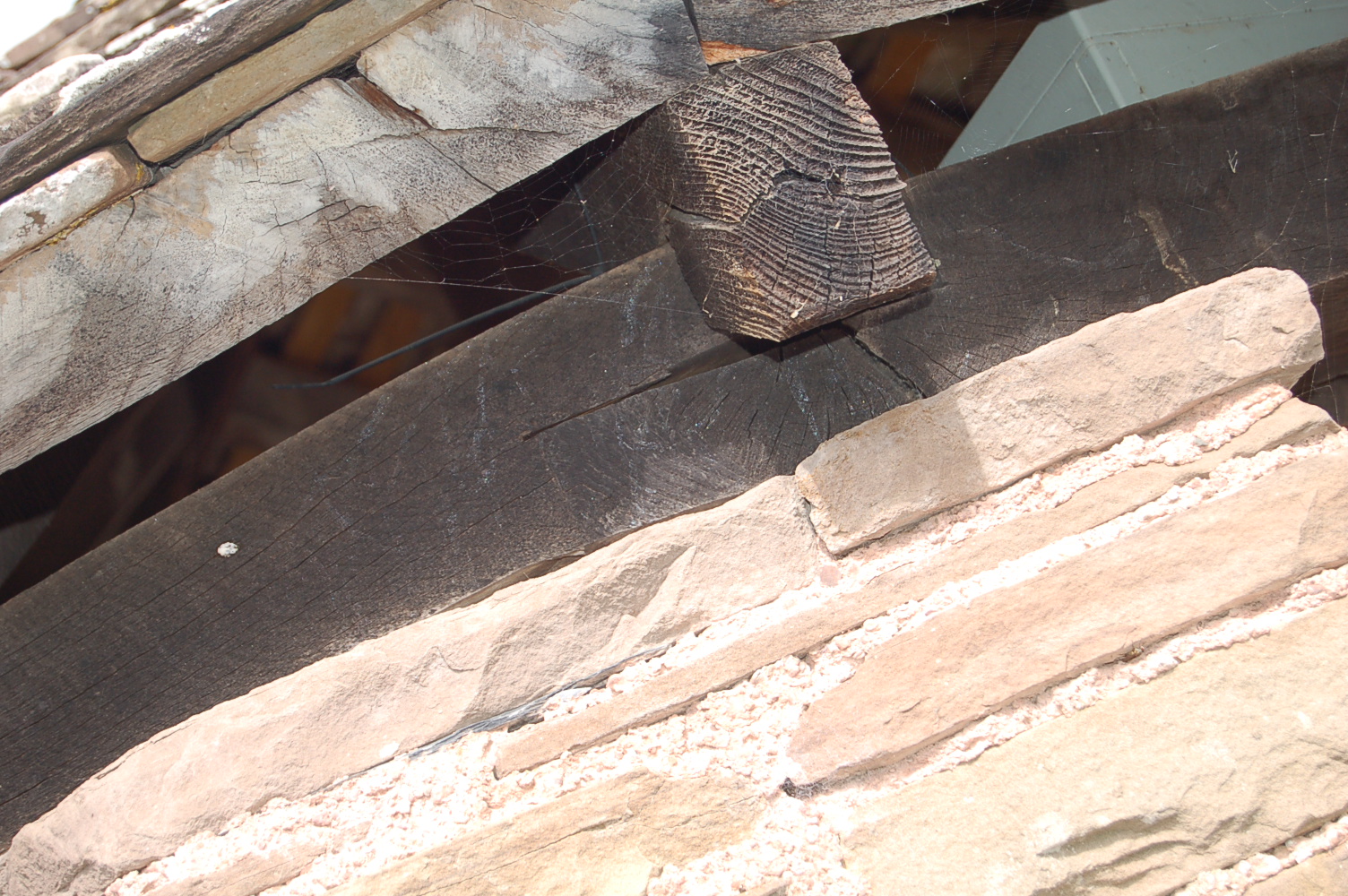
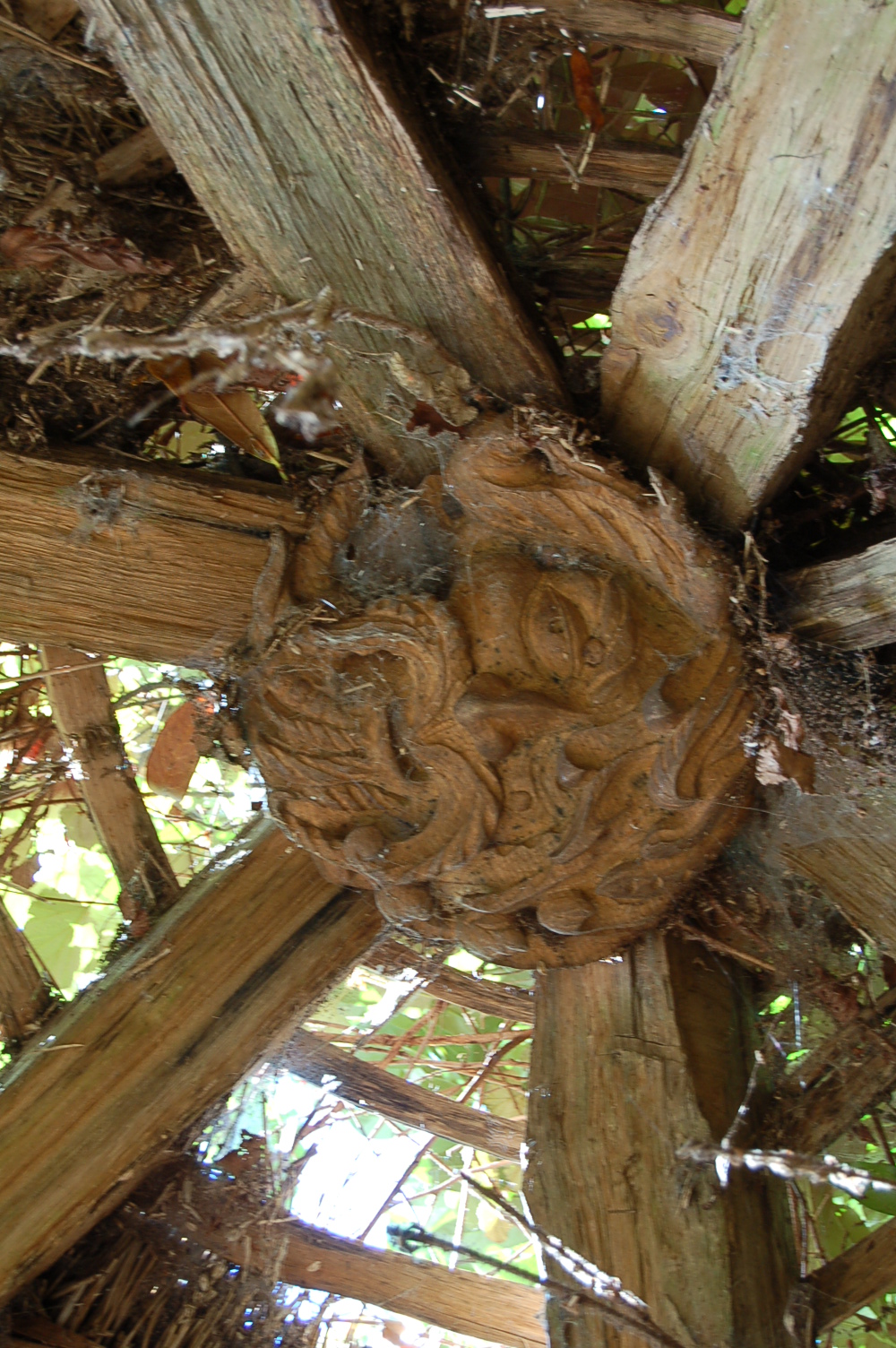
The beauty is in the detail.

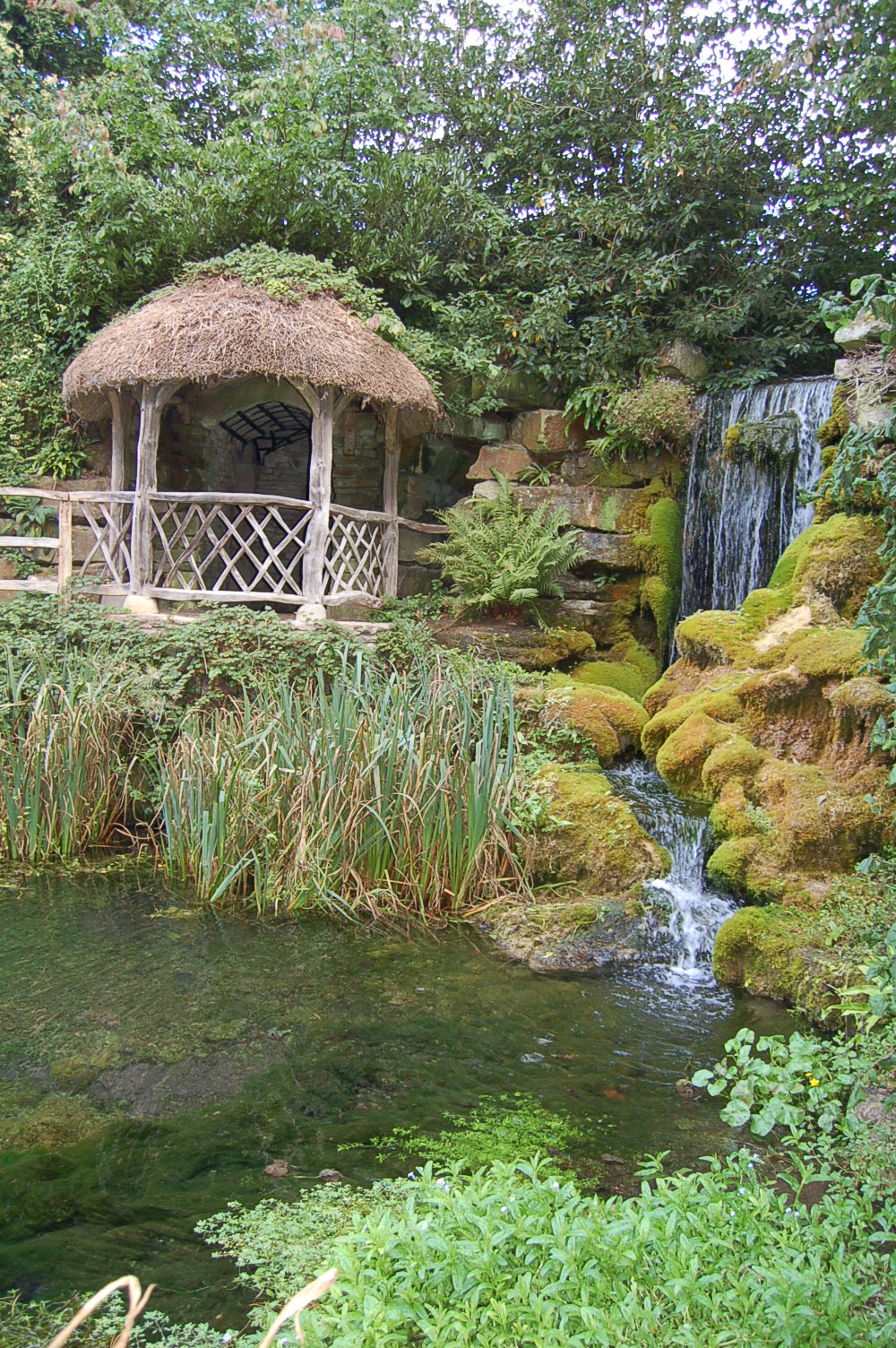
Down by the pool at the bottom of the Dingle hides this thatched beauty.

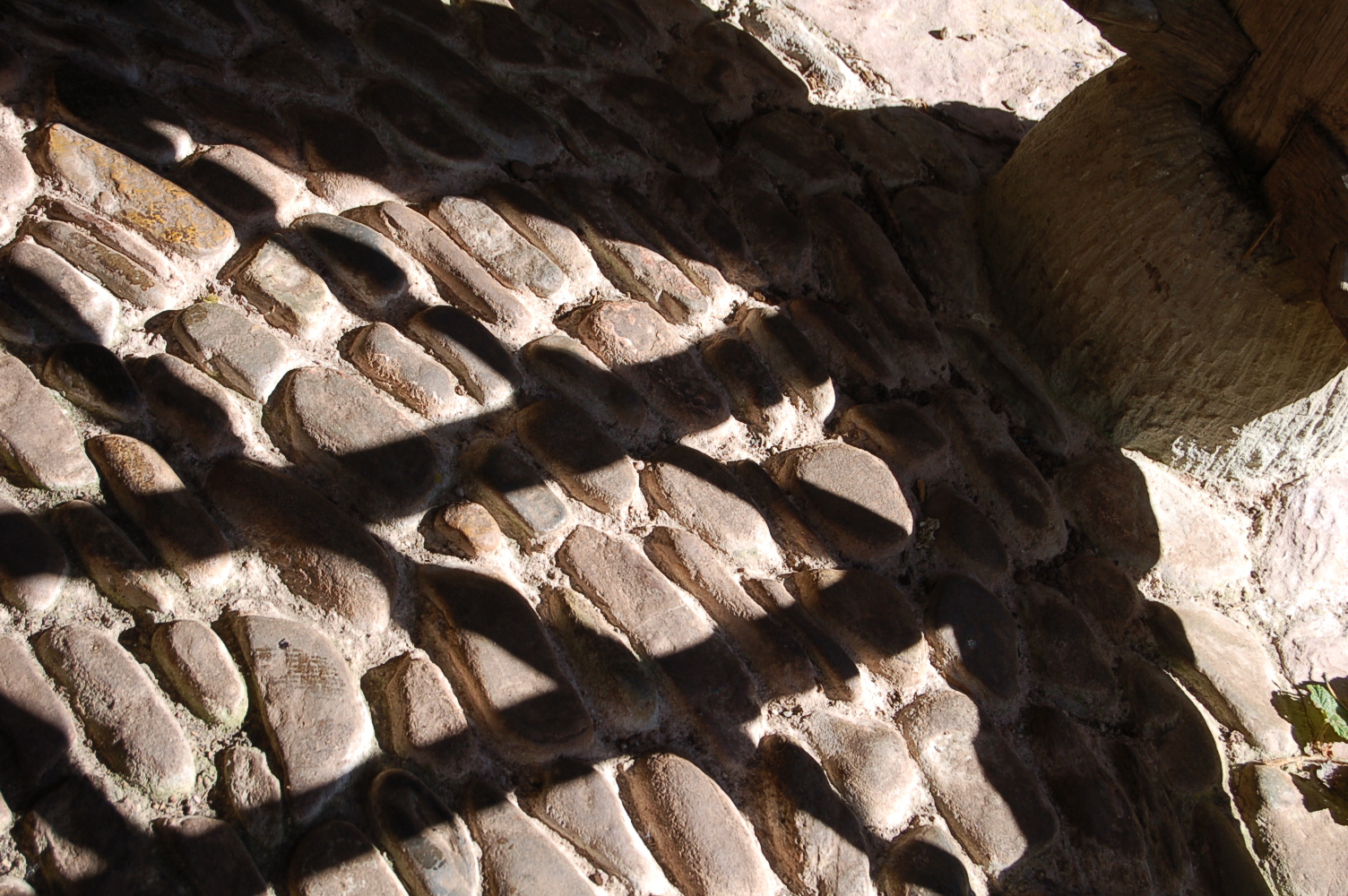
And again the detail is worthy of a pic or two.

The best garden buildings of course are those with enticing seats.

Categories
allotments community gardening fruit and veg garden design garden photography garden wildlife gardening grow your own hardy perennials natural pest control

A Wander Around the Allotments in September

This is the month of harvesting and preparing the soil recently vacated by crops that have been dug, cut, pulled and picked,ready for next year’s new crops.

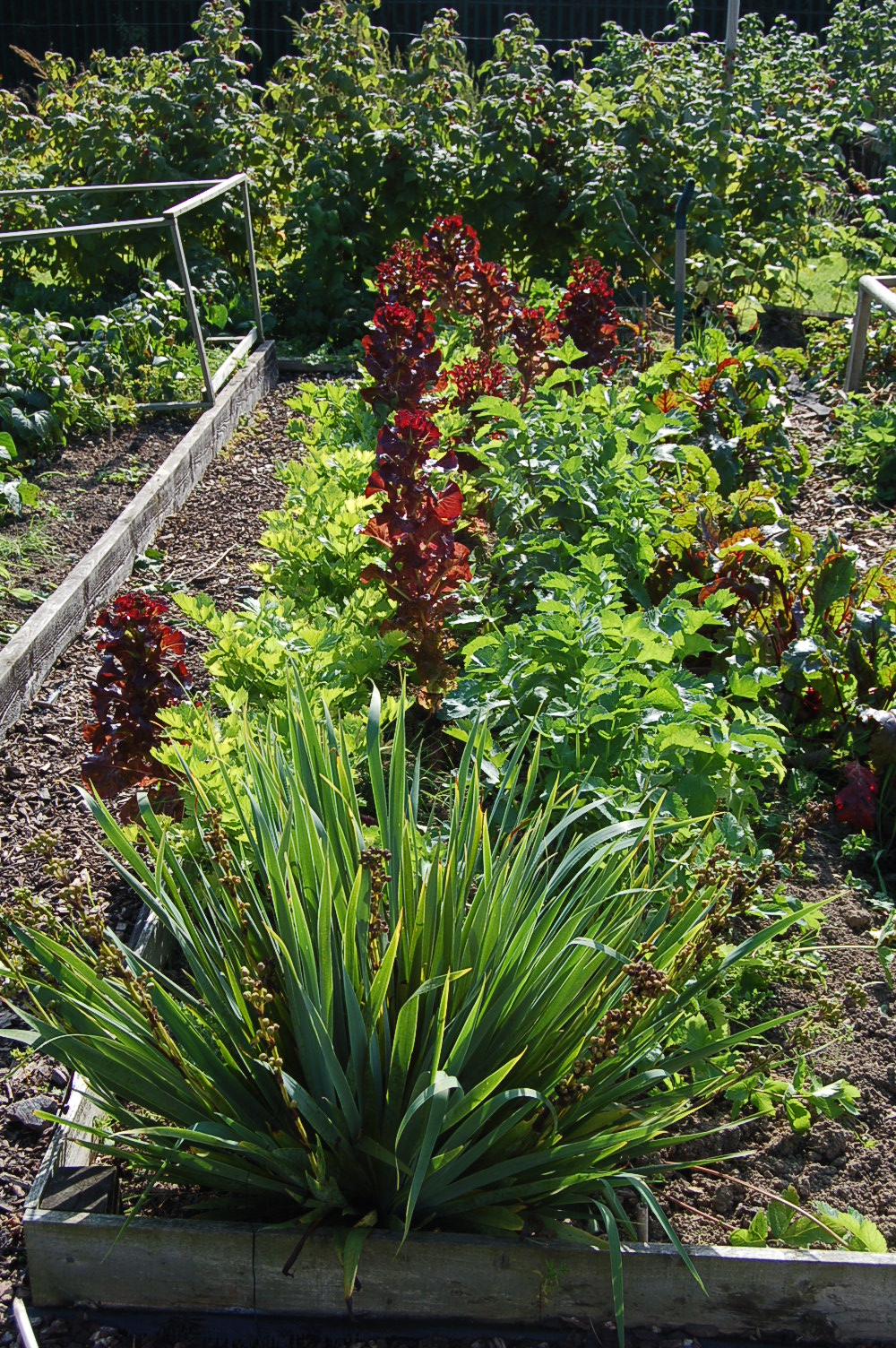
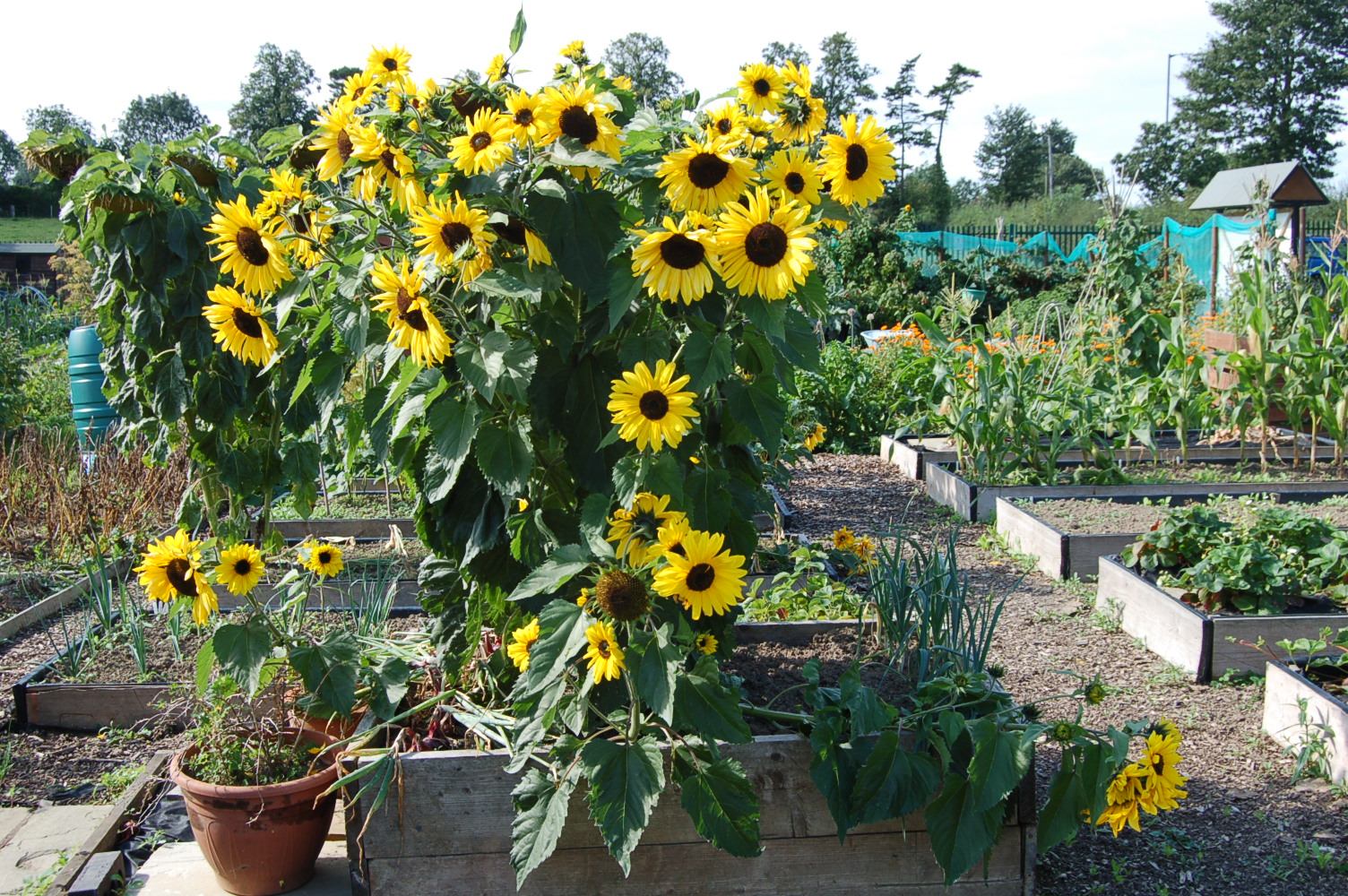
As we wander around the allotments now it is noticeably colourful – flowers abound with almost all plot holders growing some for picking, to enhance their plot or to attract beneficial predatory or pollinating insects.

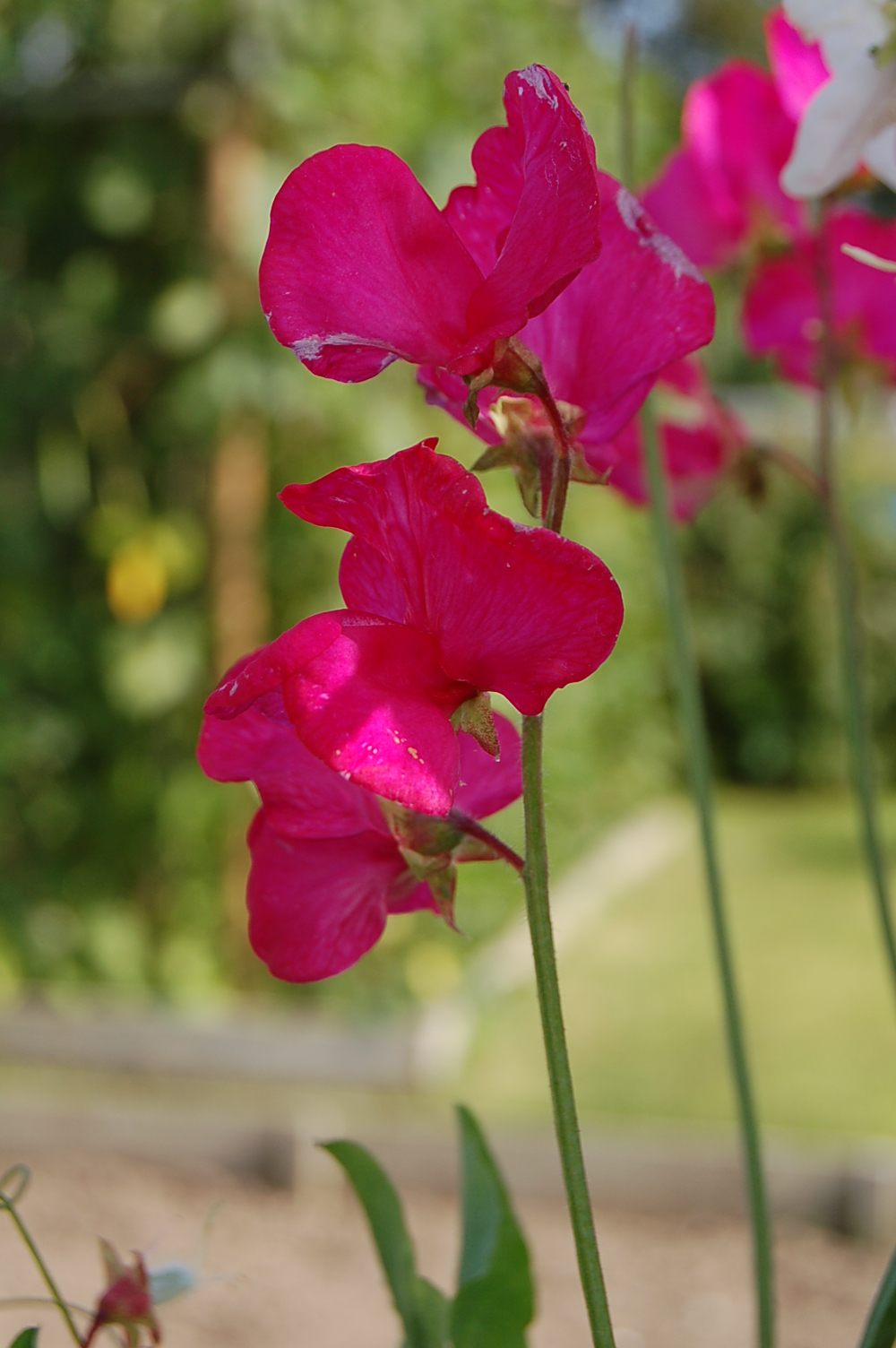
Some plots feature the more expected allotment flowers grown for cutting, such as Sweetpeas, Dahlias. Chrysanths and Gladioli.

And of course productive plants give floral displays before the fruit, pods and berries appear.

Many plot holders grow a variety of flowering plants as companion plants to attract beneficial insects, both as pollinators and predators,  or to benefit crops or act as barriers.

In our communal borders, designed to look good for the plot holders and visitors as well as serving to attract wildlife, late summer flowers are adding a feast of colour and scent.

On some plots the gardeners have such a good sense of design that their vegetable raised beds look structured and colourful without the need of flowers.

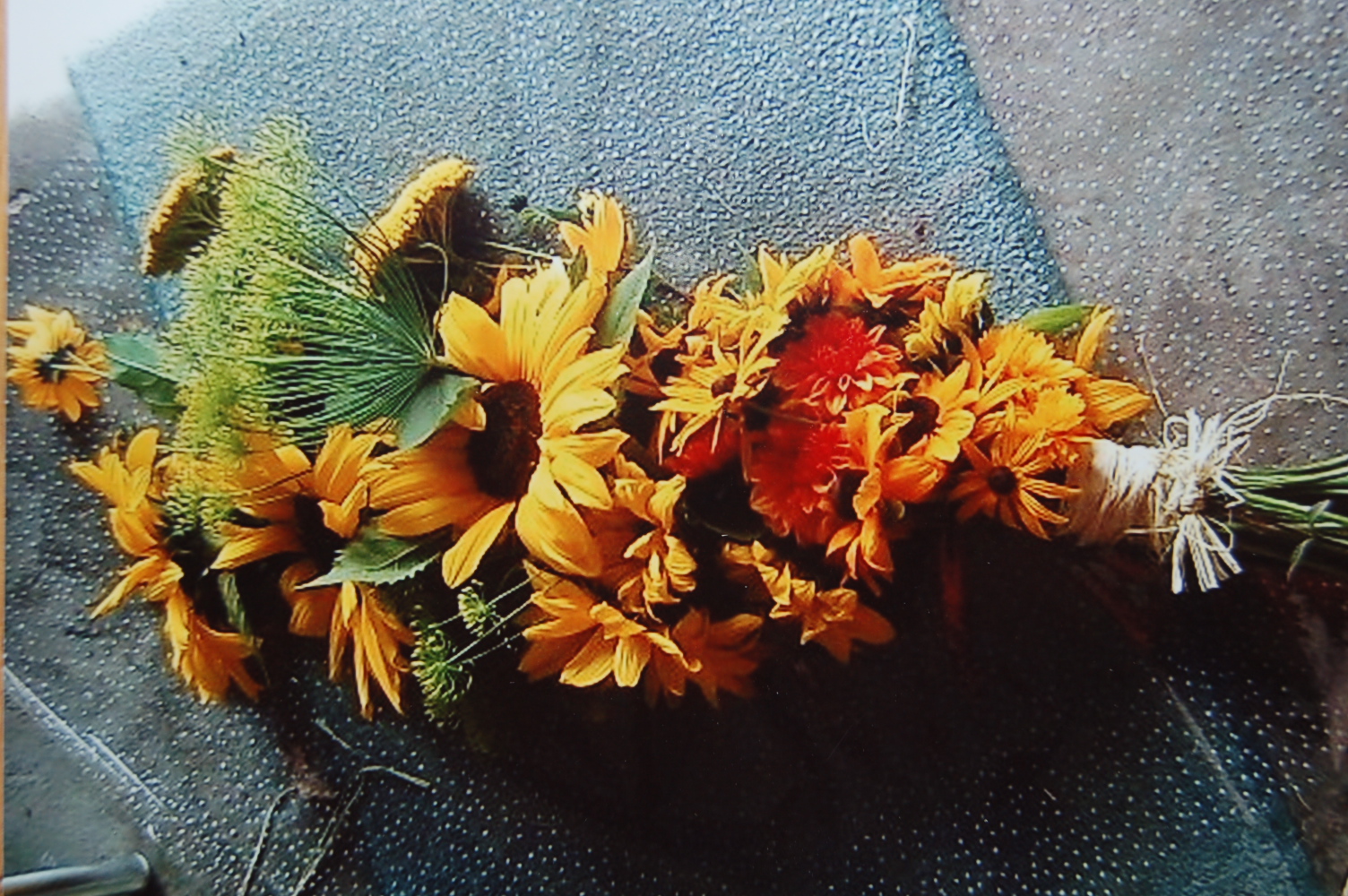
Some flowers on our lottie site had to serve a very different purpose recently. Annie, one of our neighbouring plot holders sadly passed away after a long illness. It was decided that as Annie loved the allotments so much that Jill, who represented the site at the funeral, should create a big bouquet made up of flowers cut from the plots. It was a bright, colourful, cheerful and summery and perfectly reflected Annie’s personality. We will miss her.

Categories
allotments community gardening fruit and veg garden photography garden wildlife gardening grow your own

September Lottie Working Party

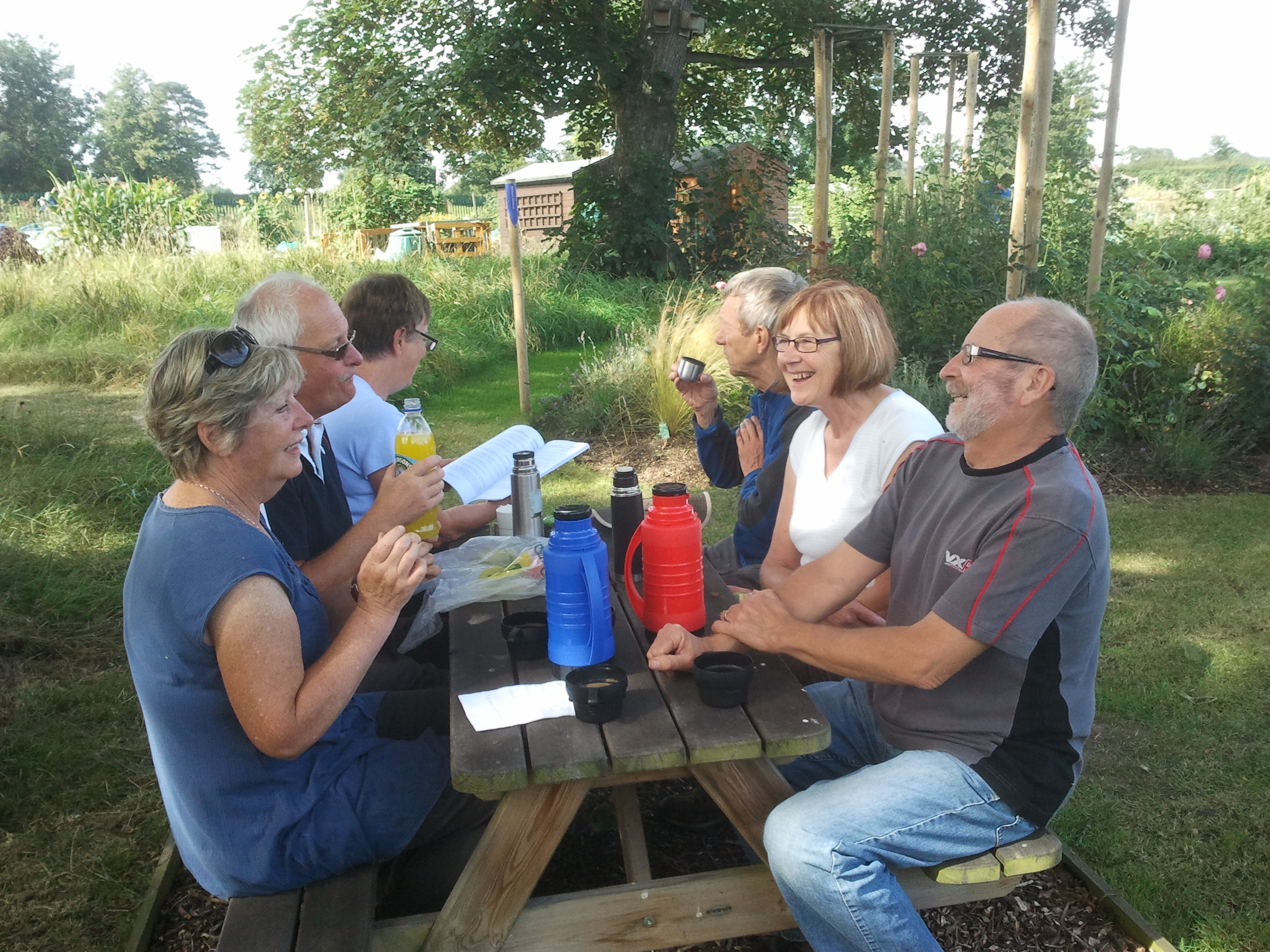
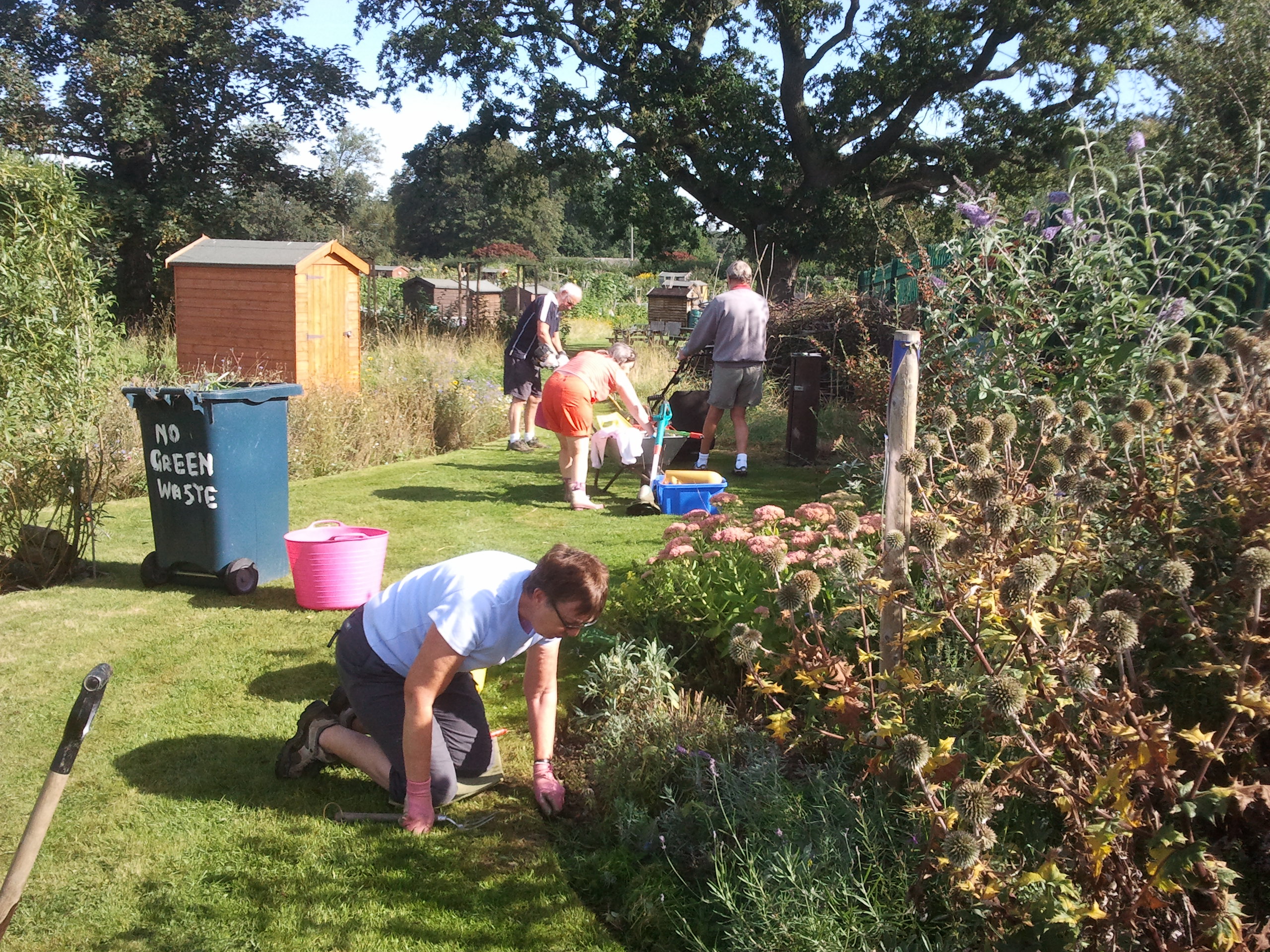
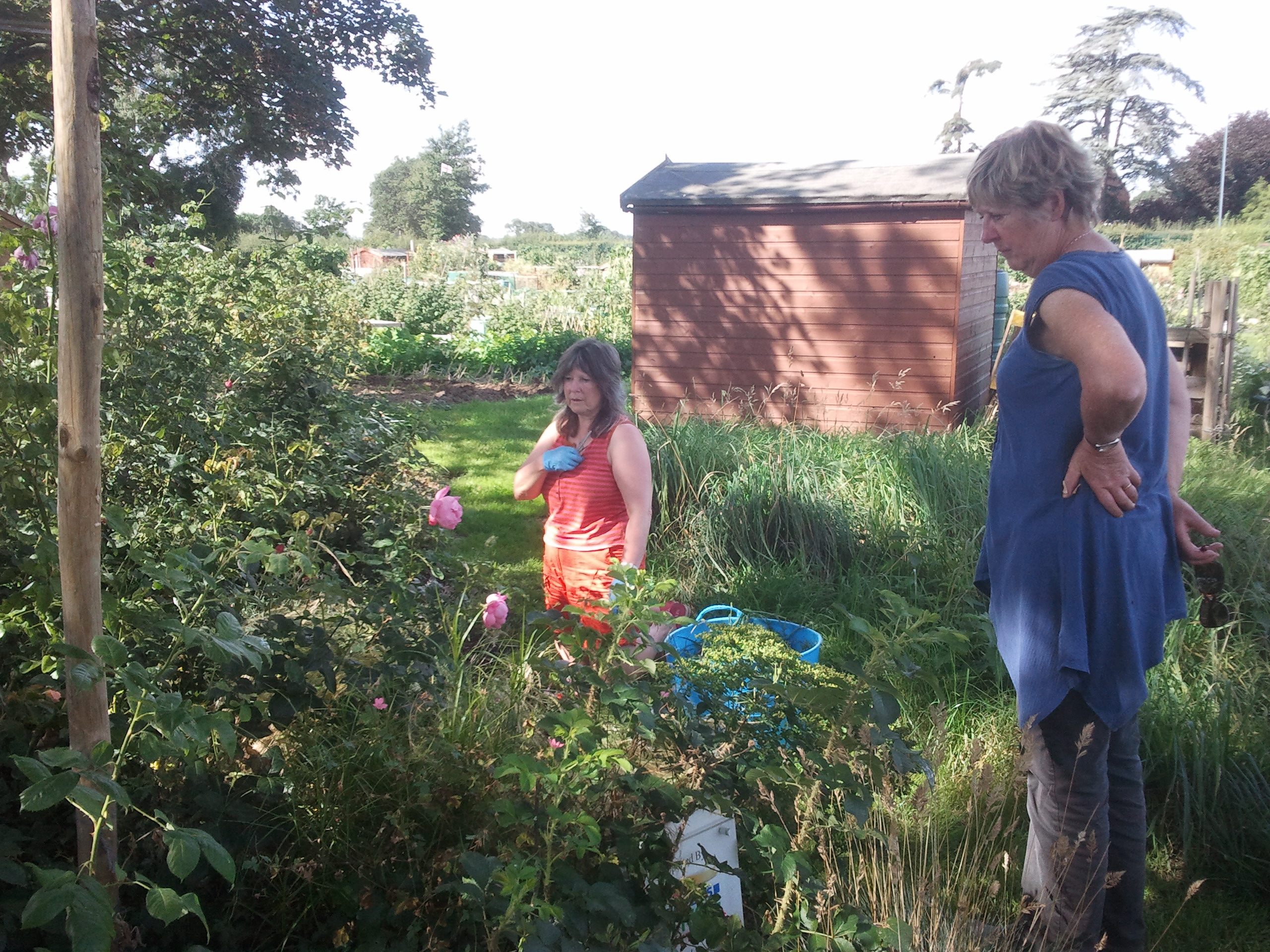
On a warm, bright Saturday morning we met at the allotments for a working party. We had lots of tasks and achieved most of them simply because everyone worked tirelessly. These working parties are so important as they not only keep the site looking good but they are good social events. Every tea or coffee break becomes an excuse for lots of talk and laughter.

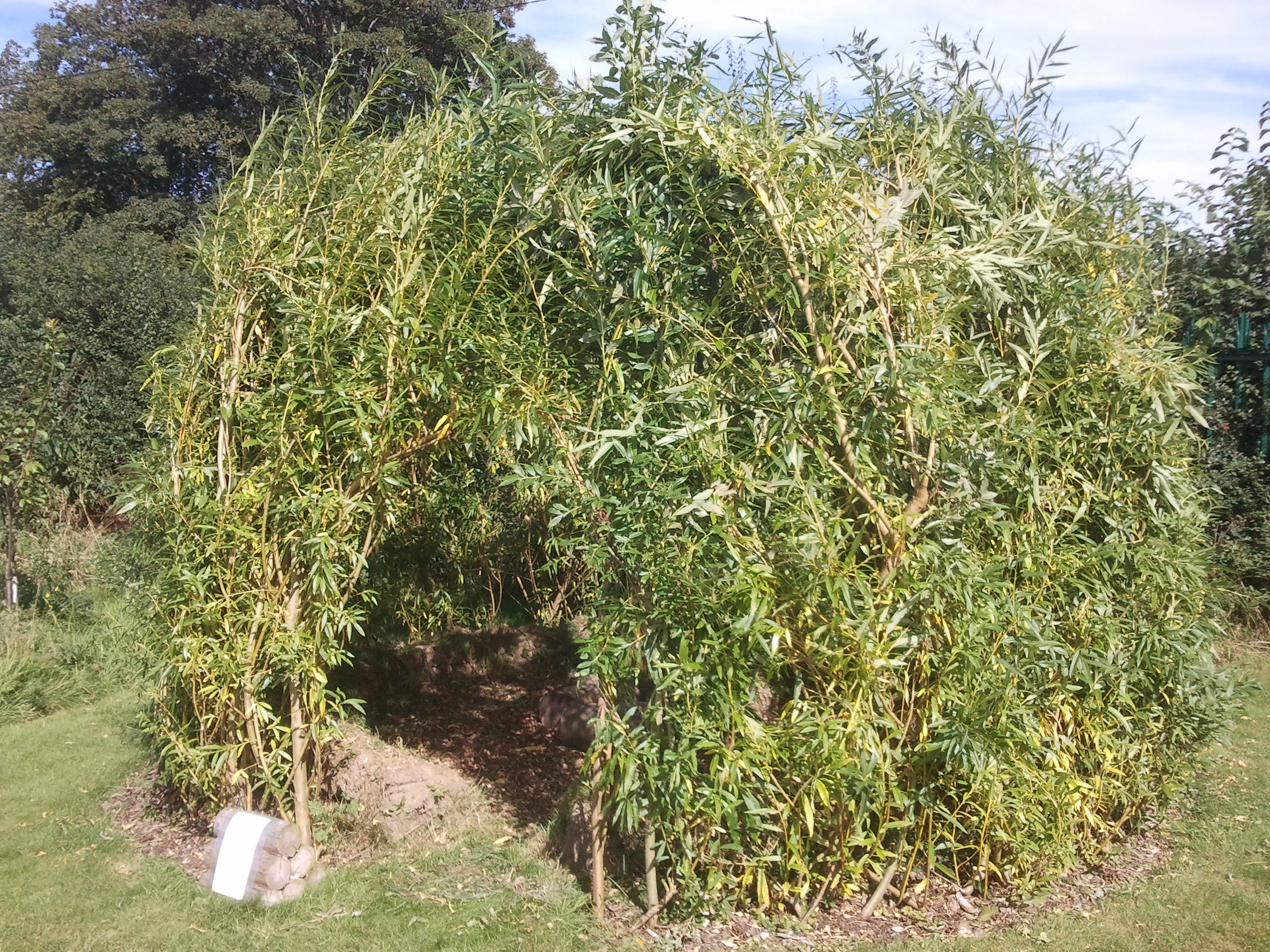
Some of the committee members and their partners gave time during the week before to get some of the jobs ticked off  our September task list. Jude and I re-vitalised the willow features, pruning, trimming, weaving and re-making the doorway and windows of the Willow dome and weaving in recent long growths on the Willow Tunnel.

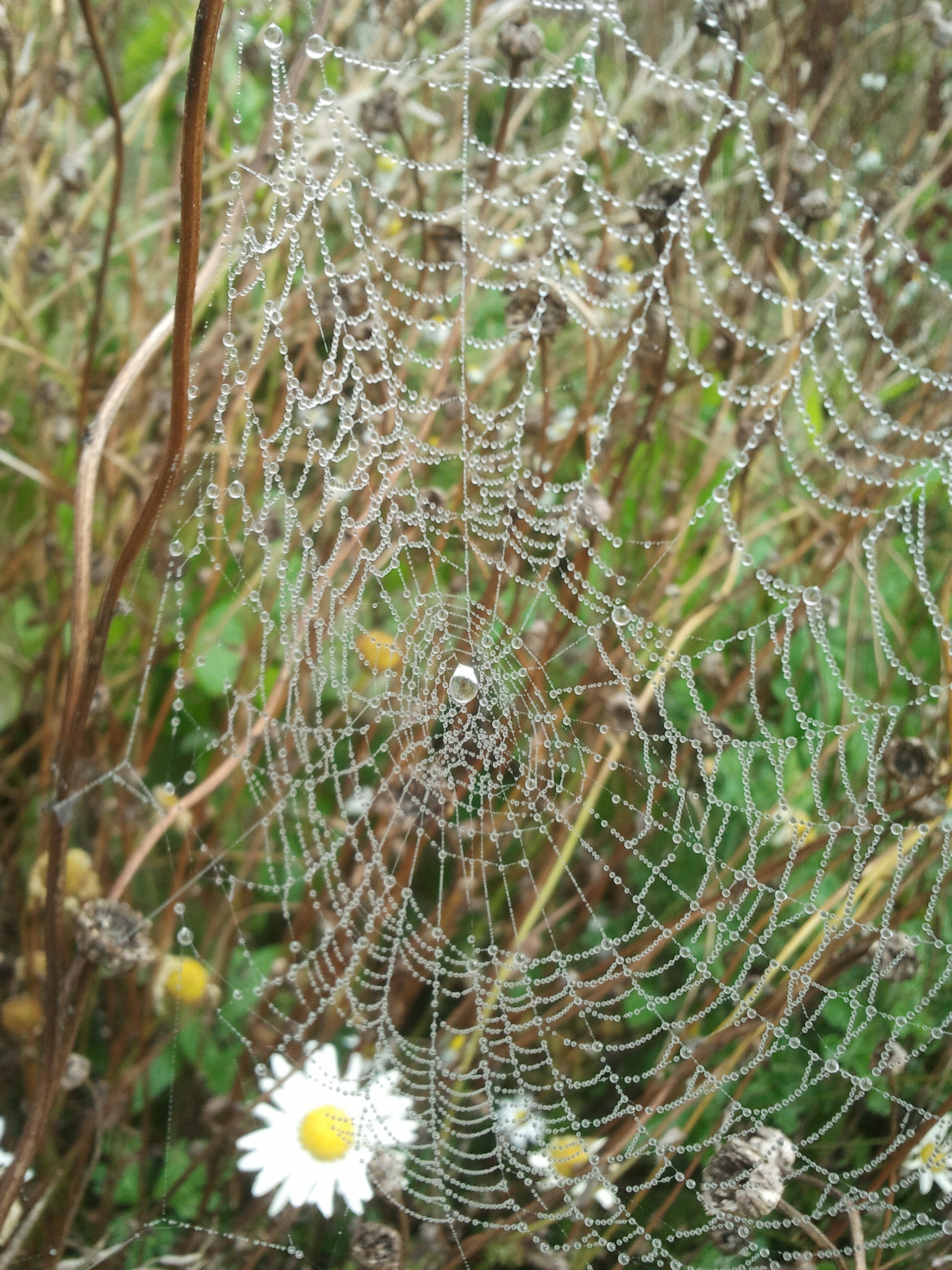
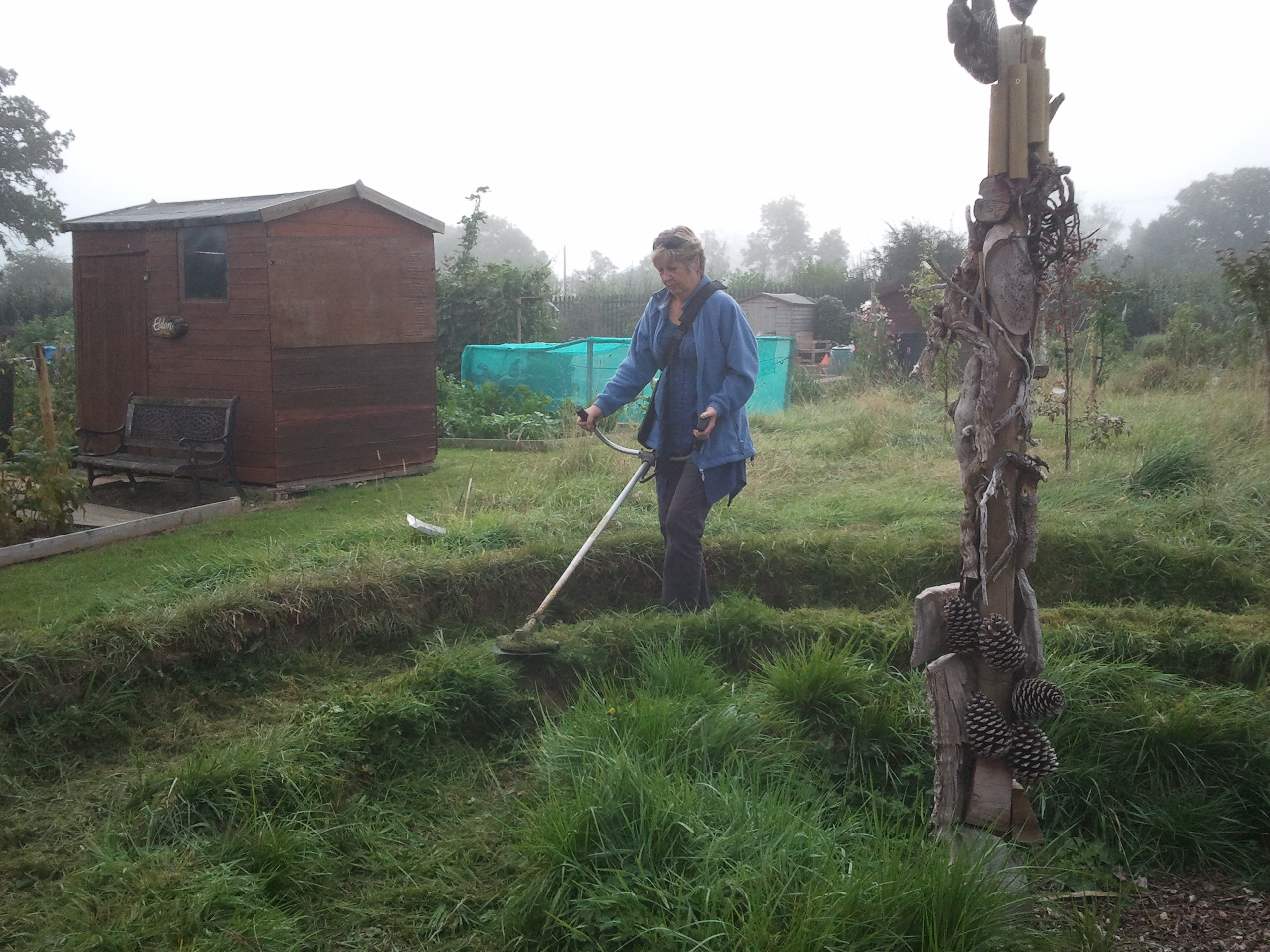
The day of the working party started off with a surprise fog which rapidly cleared as the sun warmed and chased it off. The plants of the meadows had been decorated by spiders who had created webs to which Mother Nature had added jewels of dew.  As we began work, Jude strimmed the Turf Spiral while the air was still cool and remants of fog hung over the plots.

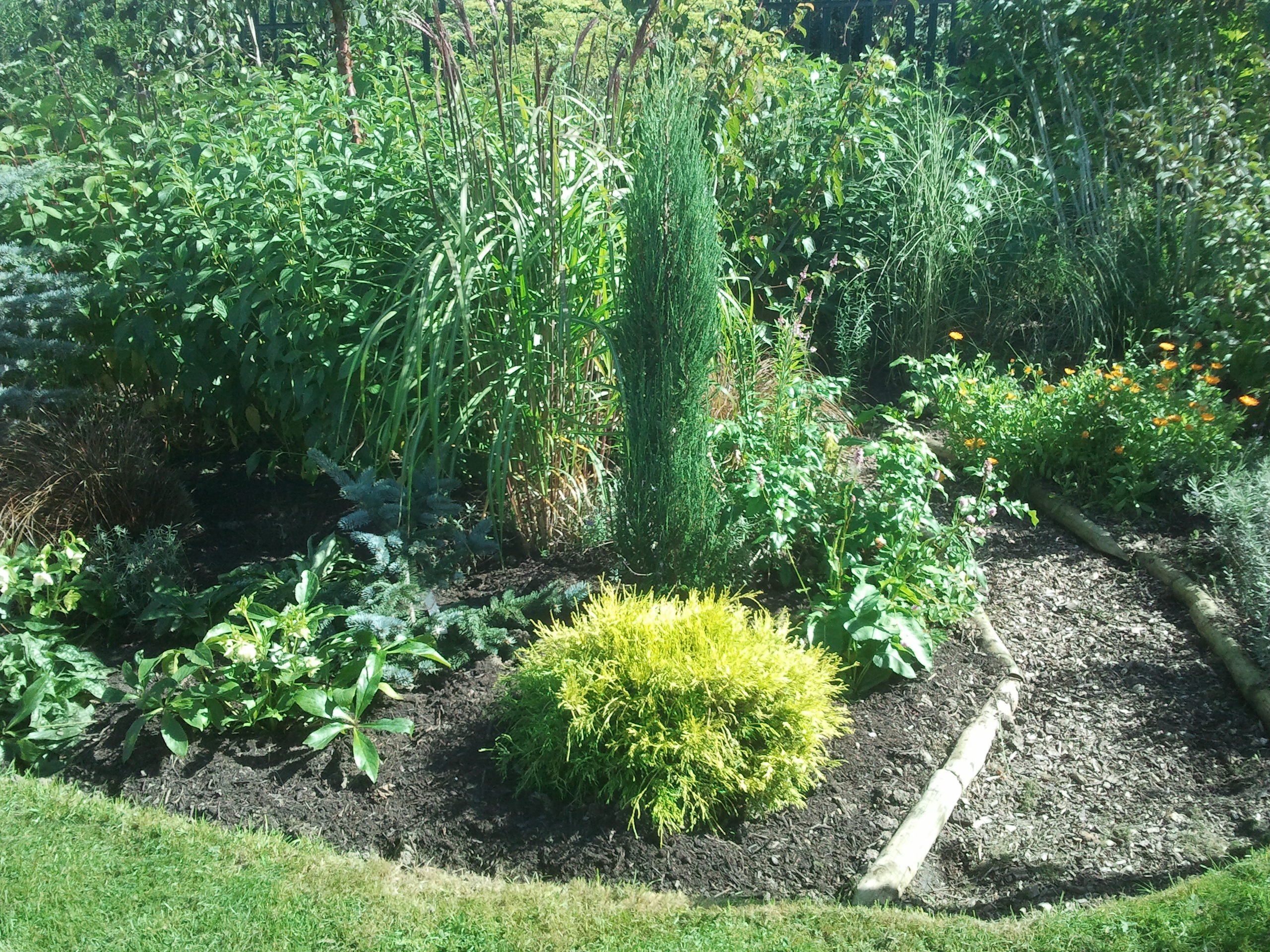
The Winter Garden was given a big tidy up. We weeded, forked it over and mulched but the biggest job of all was pruning and cutting down the shrubs.

All the Buddleia Beds were also tidied in the same way, as was the Summer Garden.

The Withy Bed was weeded and its woodchip mulch was renewed.

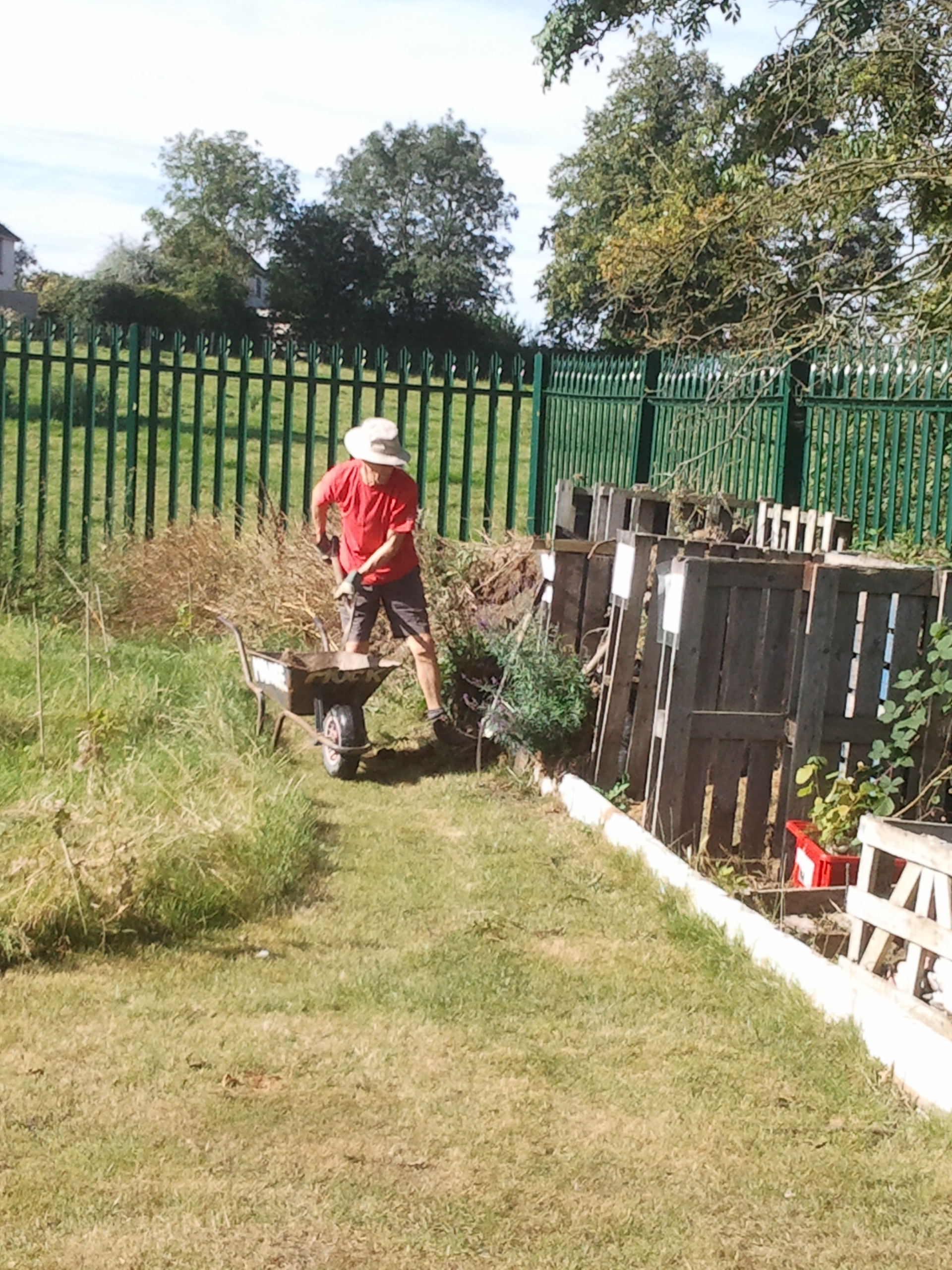
The hardest job of all though was sorting out the communal compost area and taking the compost to where it was needed around the site. We have to empty all of this area in readiness for when the development of the extension to our site starts in October.

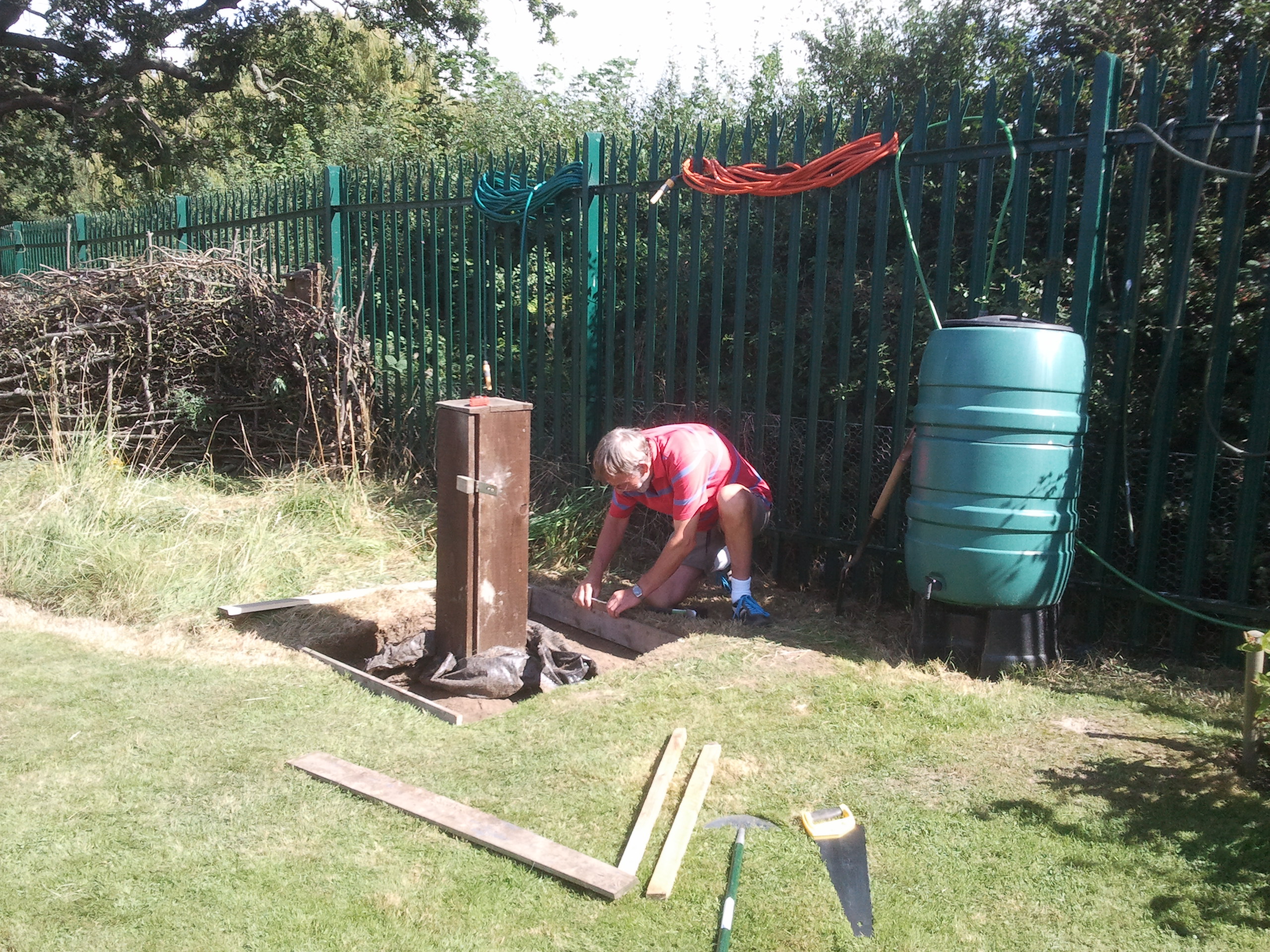
Geoff offered to sort out a tap standpipe which was becoming messy and spoilt the look of the area where it was housed. So with saw, screwdrivers, drills and recycled wood great improvements were made.

And in addition to all this the site was generally tidied. The next working party will be in October when our main task will be giving the meadows their annual haircuts.

Categories
allotments fruit and veg garden design garden photography garden wildlife gardening grow your own hardy perennials ornamental grasses ornamental trees and shrubs outdoor sculpture photography roses trees wildlife

Barnsdale – a garden of memories

We return to Barnsdale Gardens every few years on a trip down memory lane. Barnsdale was the garden of TV gardener Geoff Hamilton the nation’s  favourite gardener for many years. He was the gardener on the BBC’s “Gardeners World” programme so he visited many gardeners’ homes every Friday evening for years. He was the first truly organic TV gardener and as such he promoted these sound garden principles and backed them up by conducting experiments and sharing the results on his show.

As well as Gardeners World he made several series of gardening programmes based on making gardens such as “The Cottage Garden” and “The Paradise Garden”.

He sadly died at a young age when taking part in a sponsored cycle ride for charity, but he has never been forgotten.

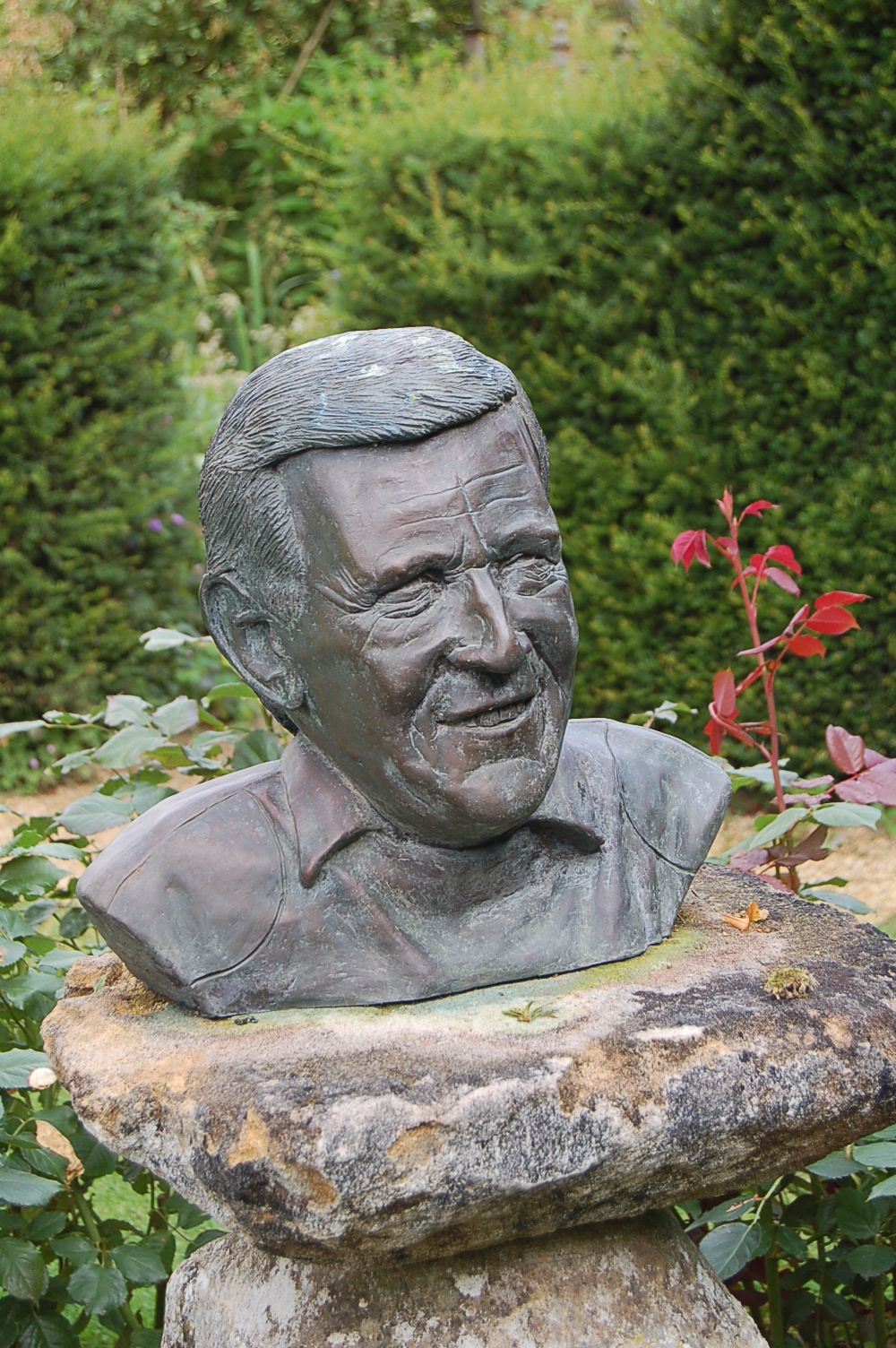
The Barnsdale Gardens still display all the model gardens Geoff made and others have been added since his death. The garden and the nursery attached  are run by his son and daughter-in-law. His other son created this bronze sculpture that graces the garden.

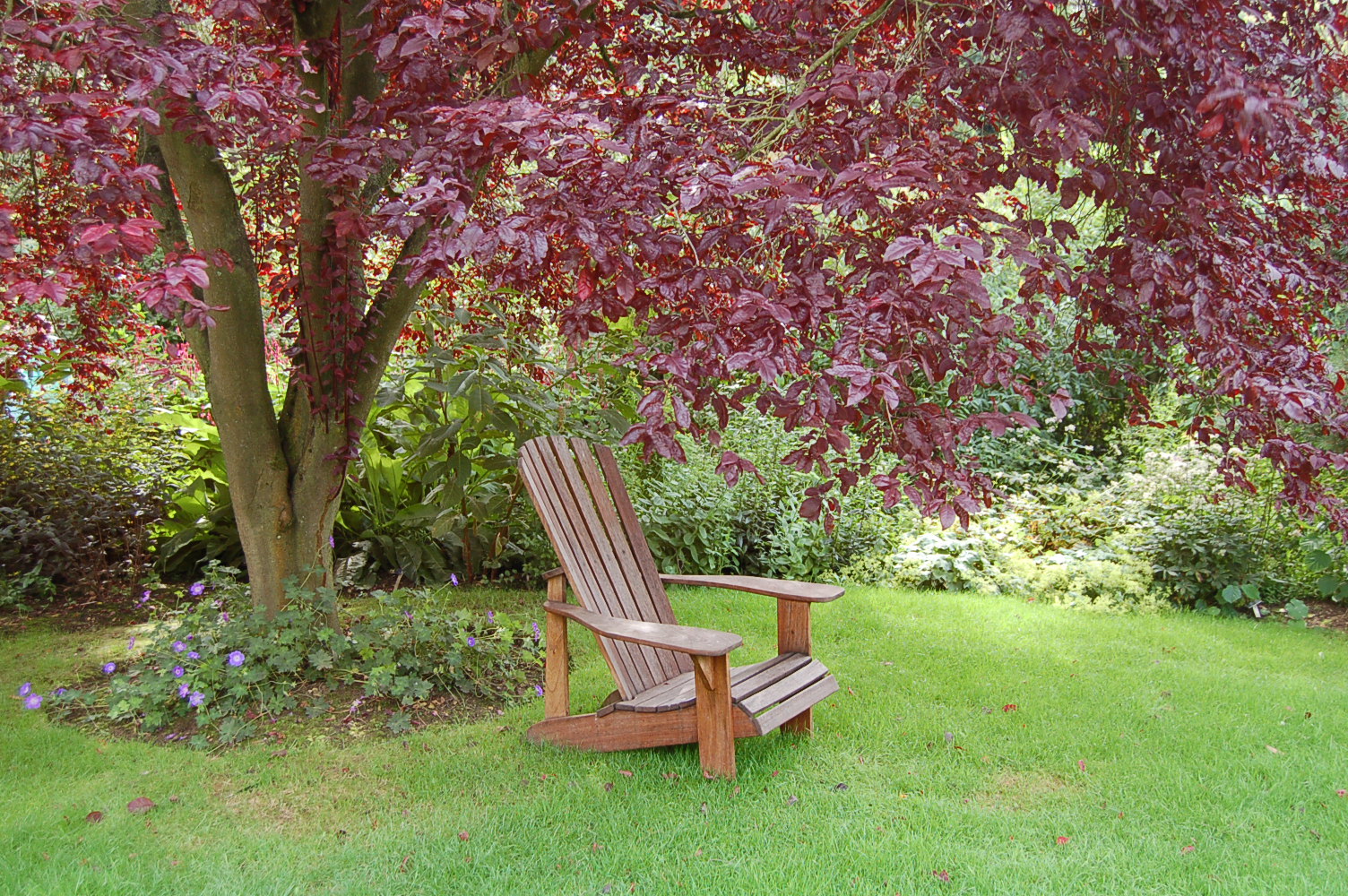
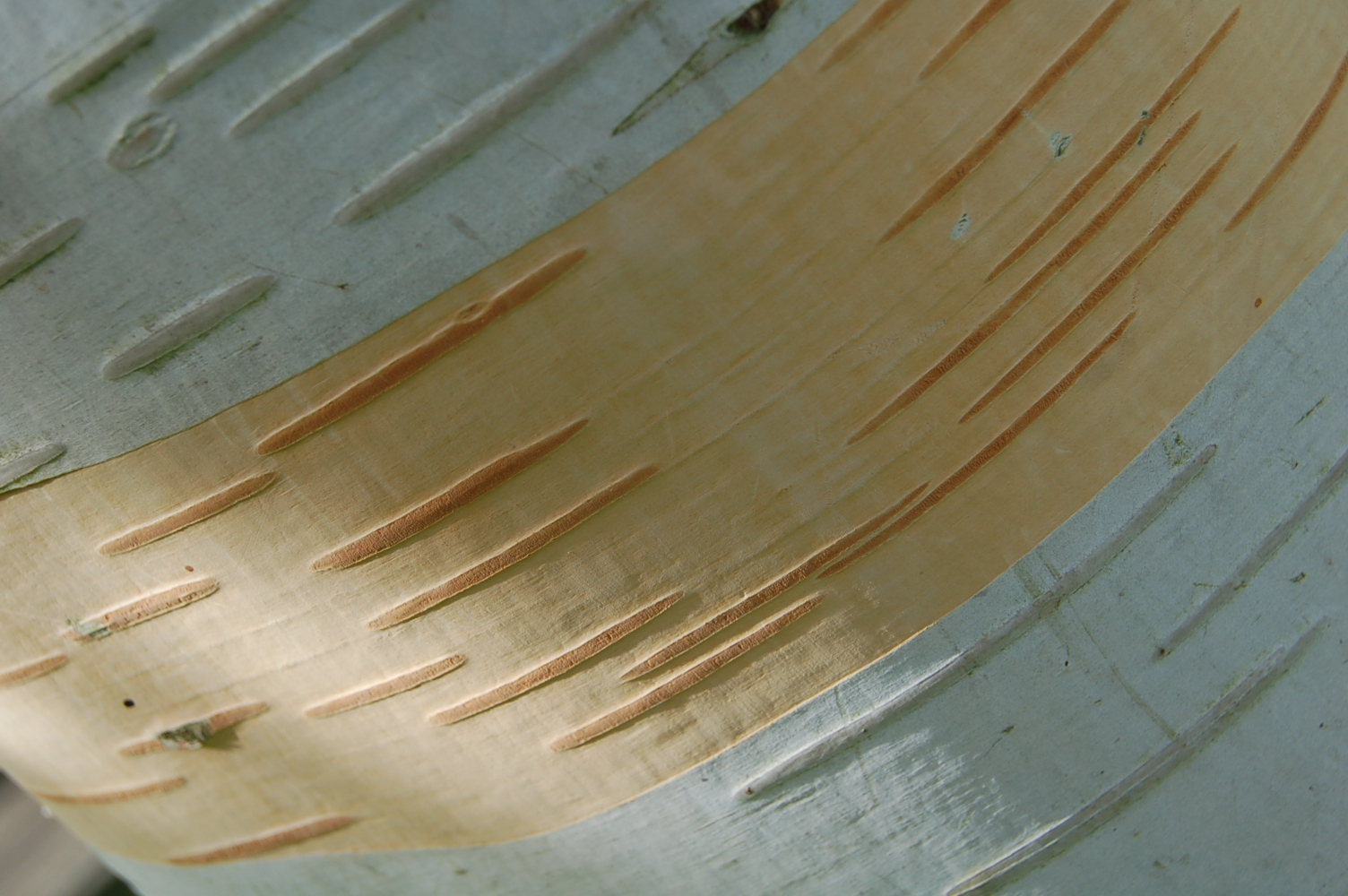
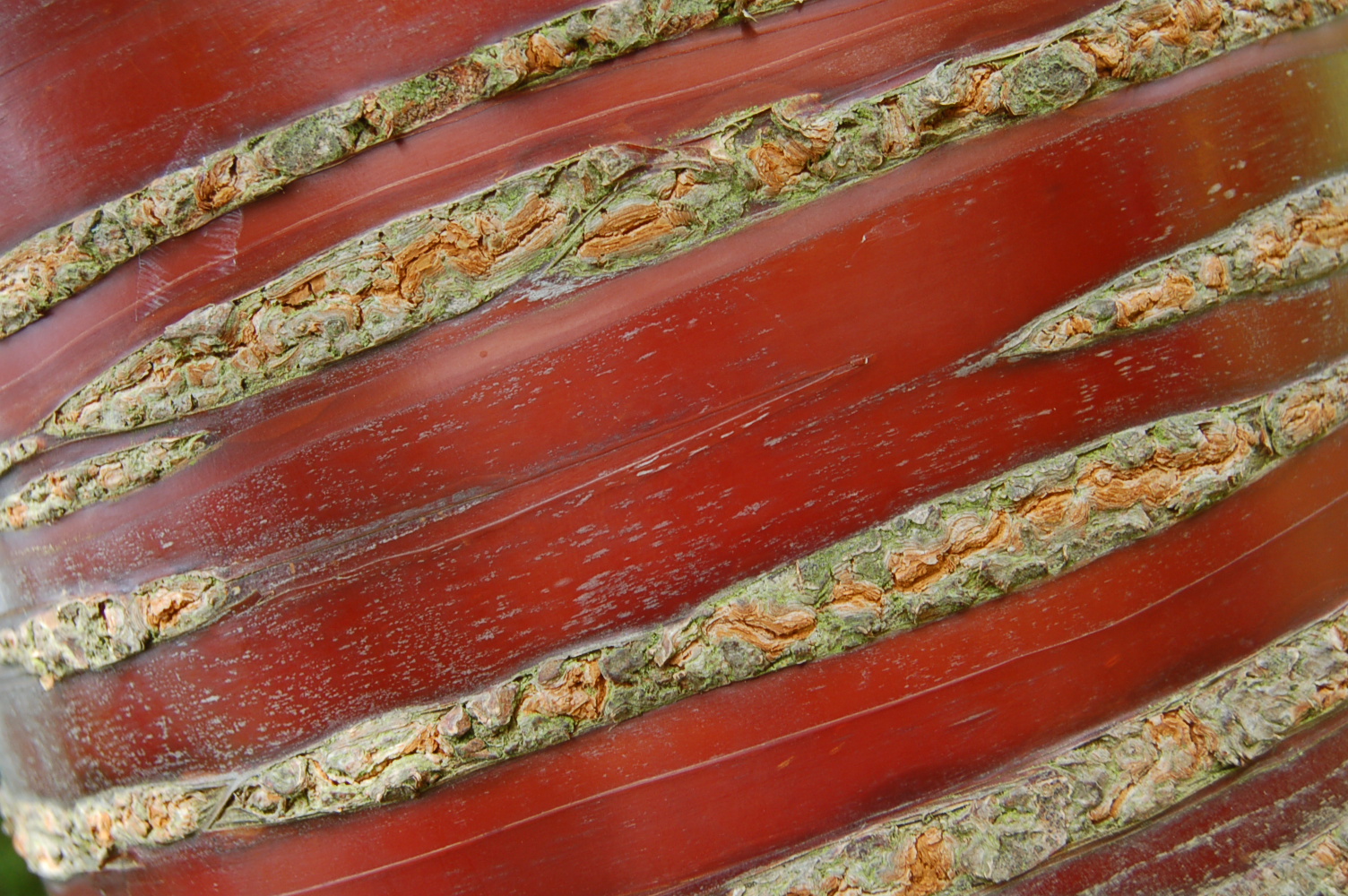
The trees that we saw Geoff plant many years ago are now impressive specimens and display interesting bark colours and textures.

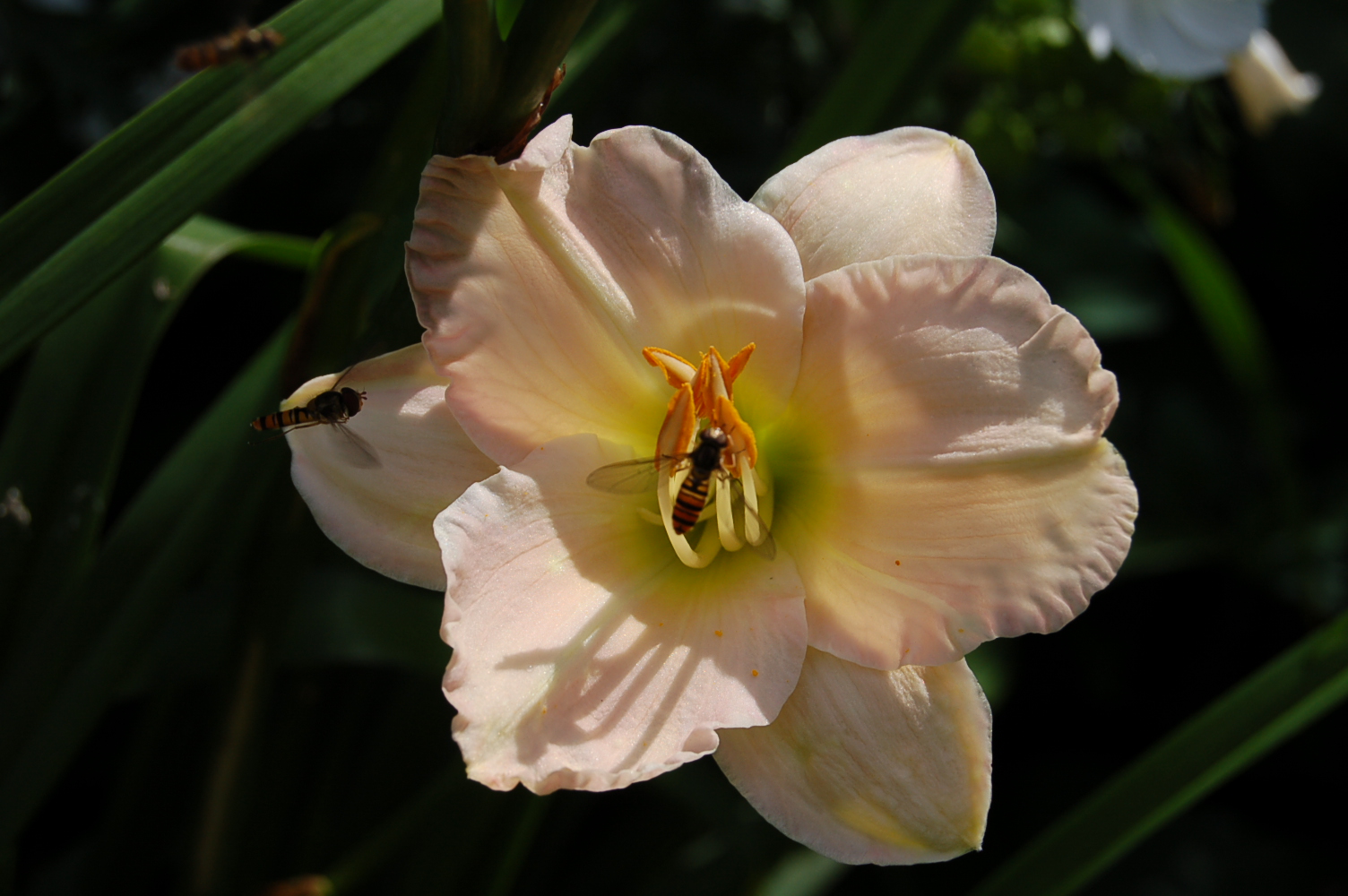
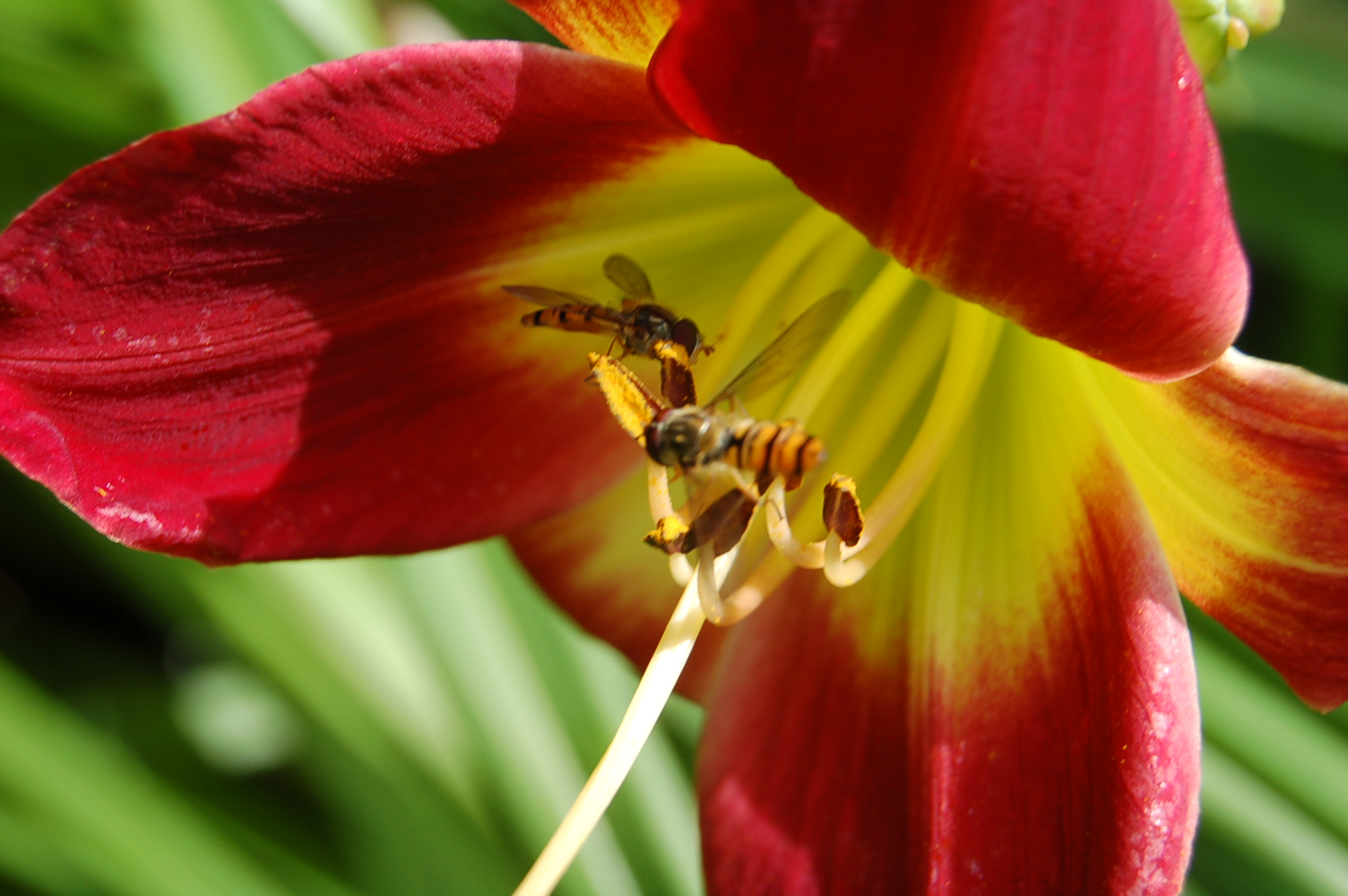
One of his favourite flowers was the Day Lily and many remain in the gardens still. Coming a close second as his most popular garden plant must be the rose.

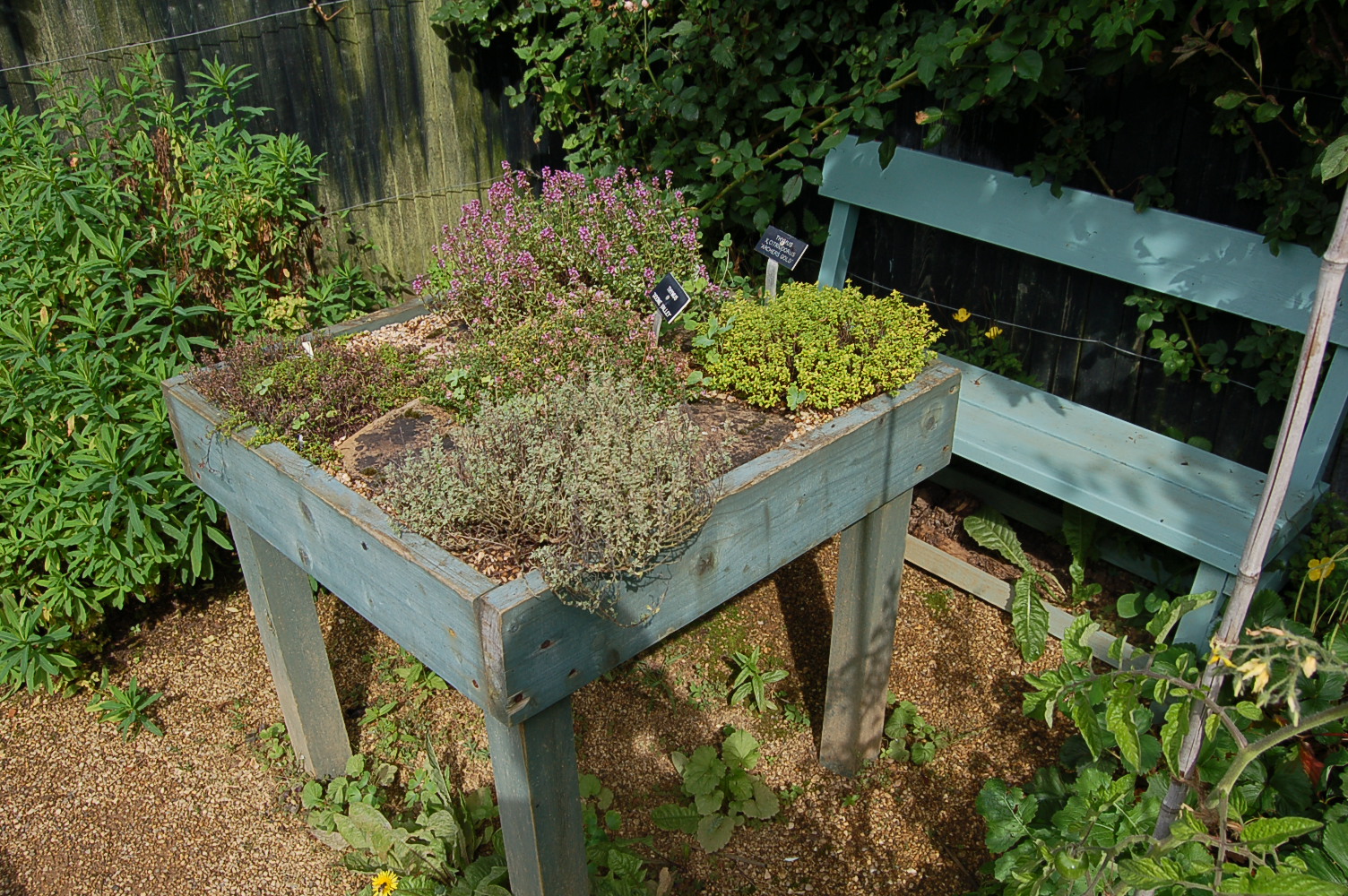
A popular feature of “Gardeners World” was Geoff’s do-it-yourself projects – he was always making furniture and garden features, to try to save his viewers money. Below is his garden bench with matching herb coffee table made from recycled pallets with old roof slates built in as coasters.

He also constructed this compost bin disguised as a beehive and accompanying garden store, both created from recycled wood.

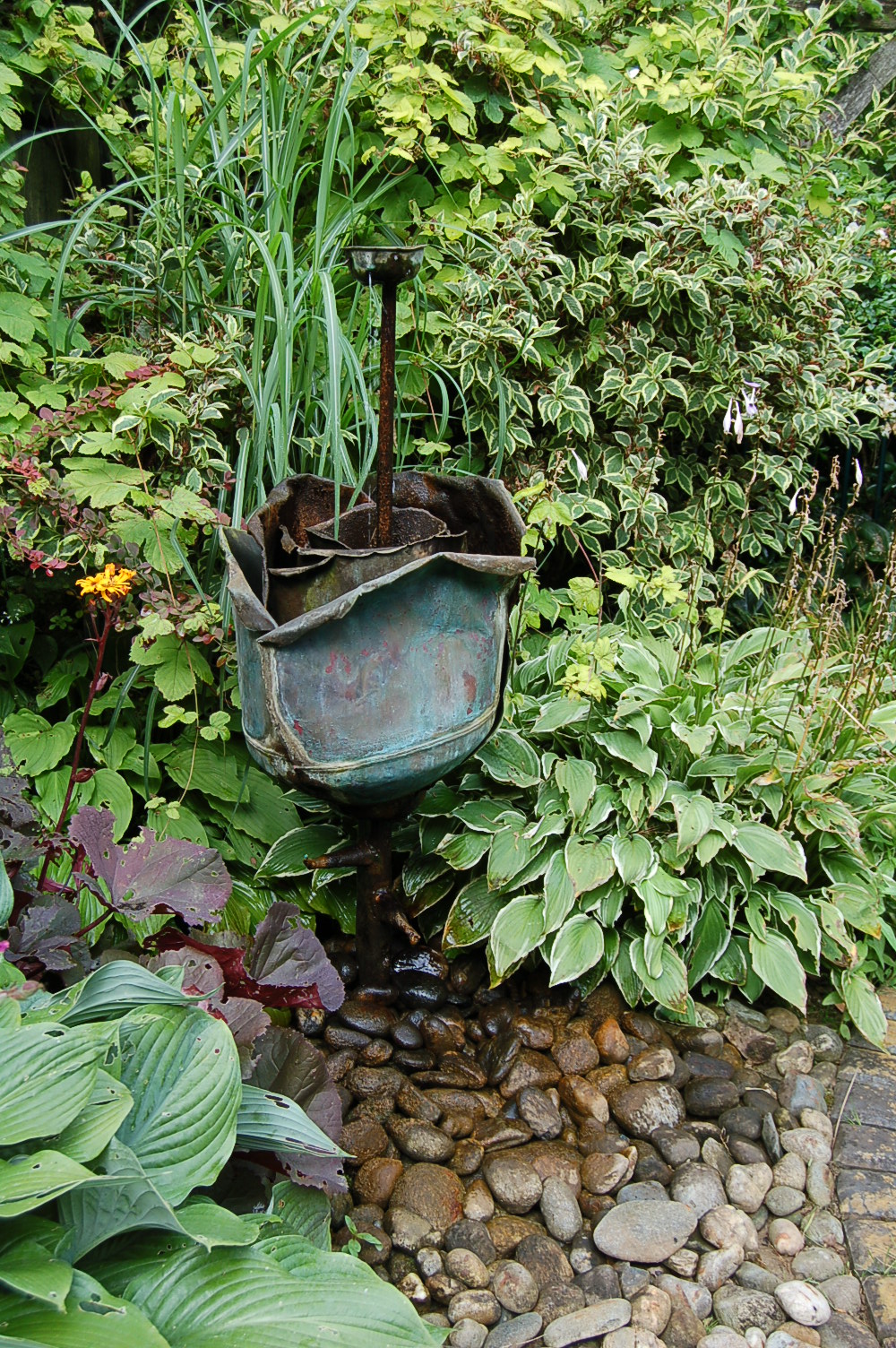
He even made a water feature from an old copper water cylinder!

Although he encouraged gardeners to construct things for their own gardens he also extolled the virtues of craftsmen and his garden diaplays many works by craftsmen local to Barnsdale. In particular he brought locally made furniture into the garden.

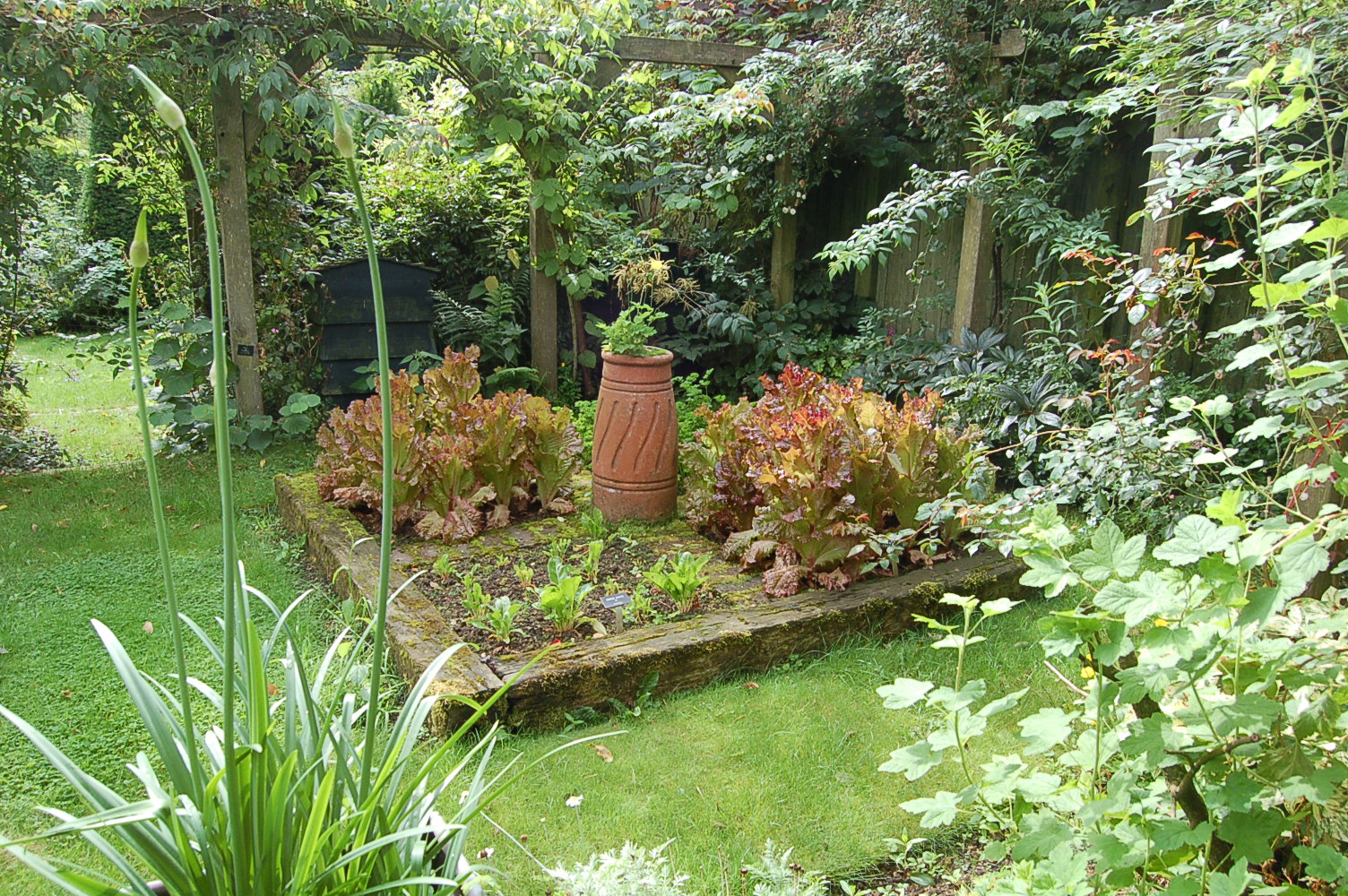
Productive gardening – fruit, veg and herbs – played a big part in his programmes, magazine articles and books. Several of his productive plots are still at Barnsdale, such as an allotment, the Ornamental Kitchen Garden, an Elizabethan Vegetable Garden. the Fruit Orchard, an Apple Arch and Herb Garden.

Geoff was definitely ahead of his time, encouraging organic principals and attracting insects into the garden. he recognised them as pollinators and predators of garden pests.

He featured plants such as Achilleas, Heleniums and other hot coloured flowers, and using lots of different grasses. These are all popular now.

Since Geoff’s untimely death the garden has continued to develop. His son, Nick and daughter-in-law have created new gardens so now Barnsdale is described as “39 inspiring gardens, all in one place”

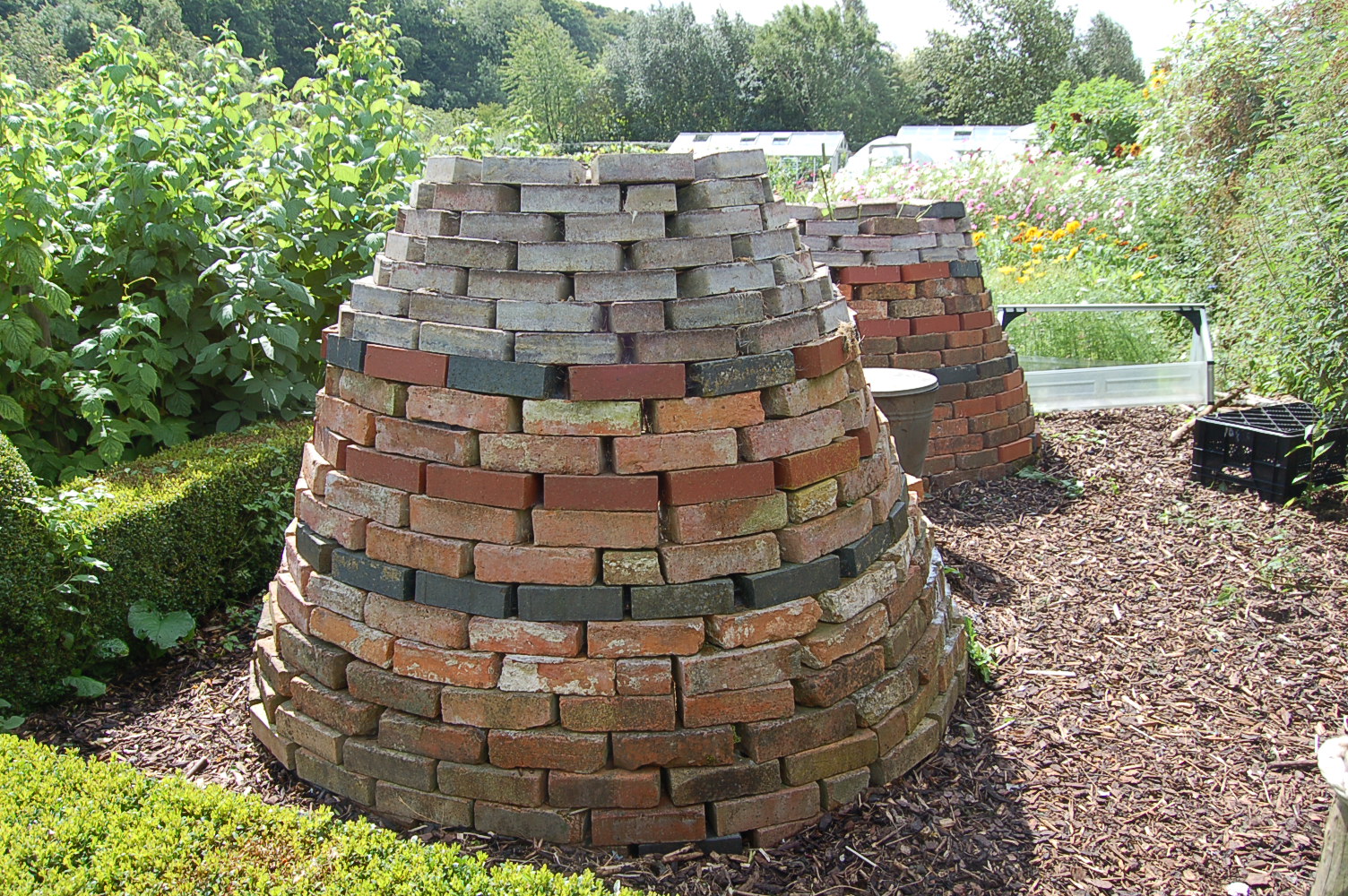
A sign of just how popular and influential Geoff Hamilton was is the fact that his book on Organic Gardening is still in print and has been updated and revised on several occasions. He was a great believer in the importance of compost and found all sorts of ways of making it efficiently. How about this brick-made composter. The bricks would absorb warmth from the sun and heat up the composting material inside and speed up its decomposition.

I shall end this visit to Geoff Hamilton’s Barnsdale with a few more views of the garden.

This Veggie Life

A Vegetarian | Nature Lifestyle Blog

Rambling in the Garden

.....and nurturing my soul

The Arch City Gardener

Journeys In St. Louis Gardening and Beyond

Garden Dreaming at Châtillon

Consult the genius of the place

Storyshucker

A blog full of humorous and poignant observations.

gardeninacity

Notes from a wildlife-friendly cottage garden

PlayGroundology

...an emerging social science

The Official Blog of British Wildlife

'The most important and informative publication on wildlife of our times' - The Independent. This blog is a member of The UK & Ireland Natural History Bloggers group: www.uknhb.blogspot.com

iGrowHort

Inspire - Cultivate - Grow Native Plants - Restore Landscapes

Bishops Meadow Trust

To create and protect a semi-natural wild space for the people of Farnham to enjoy and experience an array of British wildlife in our town

Gardening with Children

The www.gardeningwithchildren.co.uk Blog

UKbirdingtimeline

birding through the seasons, why birds matter and how to conserve them

NATURE WALKER

with a camera in hand

Jardin

Transform your outdoor space

Eva's space

My allotment, cooking and other interests

Old School Garden

my gardening life through the year

LEANNE COLE

Trying to live a creative life

fromacountrycottage

trying to live as lightly as possible on our beautiful planet

Good Life Gardening

Nature lovers from Leicester living the good life.

mybeautfulthings

Finding the beautiful in the everyday

mawsonmichelle

Michelle's Allotment

In and Out of My Garden

thoughts from and about my garden

Greenhousing

Big plans for a small garden

The Scottish Country Garden

A Walled Country Garden in South East Scotland

The Fruity Chicken

Life at the fruity chicken

willowarchway

Off grid living. Self sufficient. "PERMAGANICS RULE".

St Anns Allotments

Nottingham's Grade 2* Listed Allotments and Community Orchard

Manifest Joy Harvests

a journey in suburban vegetable gardening

Allotmental

The madness of growing your own

Penny's Garden: a harvest beyond my front door

A novel approach to vegetable gardening

arignagardener

Sustainable living in the Irish countryside.

NewEnglandGardenAndThread

Master Gardener, amateur photographer, quilter, NH native, and sometimes SC snowbird

dianajhale

Recent work and work in progress and anything else that interests me

planthoarder

a chaotic cottage gardener

Lens and Pens by Sally

a weekly blog that creates a personal philosophy through photographs and words

Dewdrops and Sunshine

Stories from a sassy and classy Southern farmbelle.

The Pyjama Gardener

Simple Organic Gardening & Seasonal Living

gettin' fresh!

turning dirt into dinner

JOY...

today the world is created anew

Garden Birds

Notes from a Devon garden

ShootAbout

Life Through The Lens

Adapting Pixels

A photography blog showcasing the best photography pictures and videos on the internet

Wildlifegardening's Blog

Just another WordPress.com site

naturestimeline

personal observations from the natural world as the search continues for a new approach to conservation.

LATEBLOOMERBUDS

The Wonders of Life through my Eyes, my Heart, my Soul