Categories
allotments community gardening conservation gardening grow your own meadows wildlife

Now that’s what I call a working party!

Today we held our first allotment working party of 2012. Once or twice a month throughout the year I organise working parties to develop and maintain the communal areas at our site, Bowbrook Allotment Community. These communal areas are for the enjoyment of our allotment holders, the local residents, school groups, nature and gardening clubs etc. We have a small sub-committee of the main allotments management committee which is responsible for these areas, The Green Spaces Committee. We invite volunteers to join us at our regular working parties.

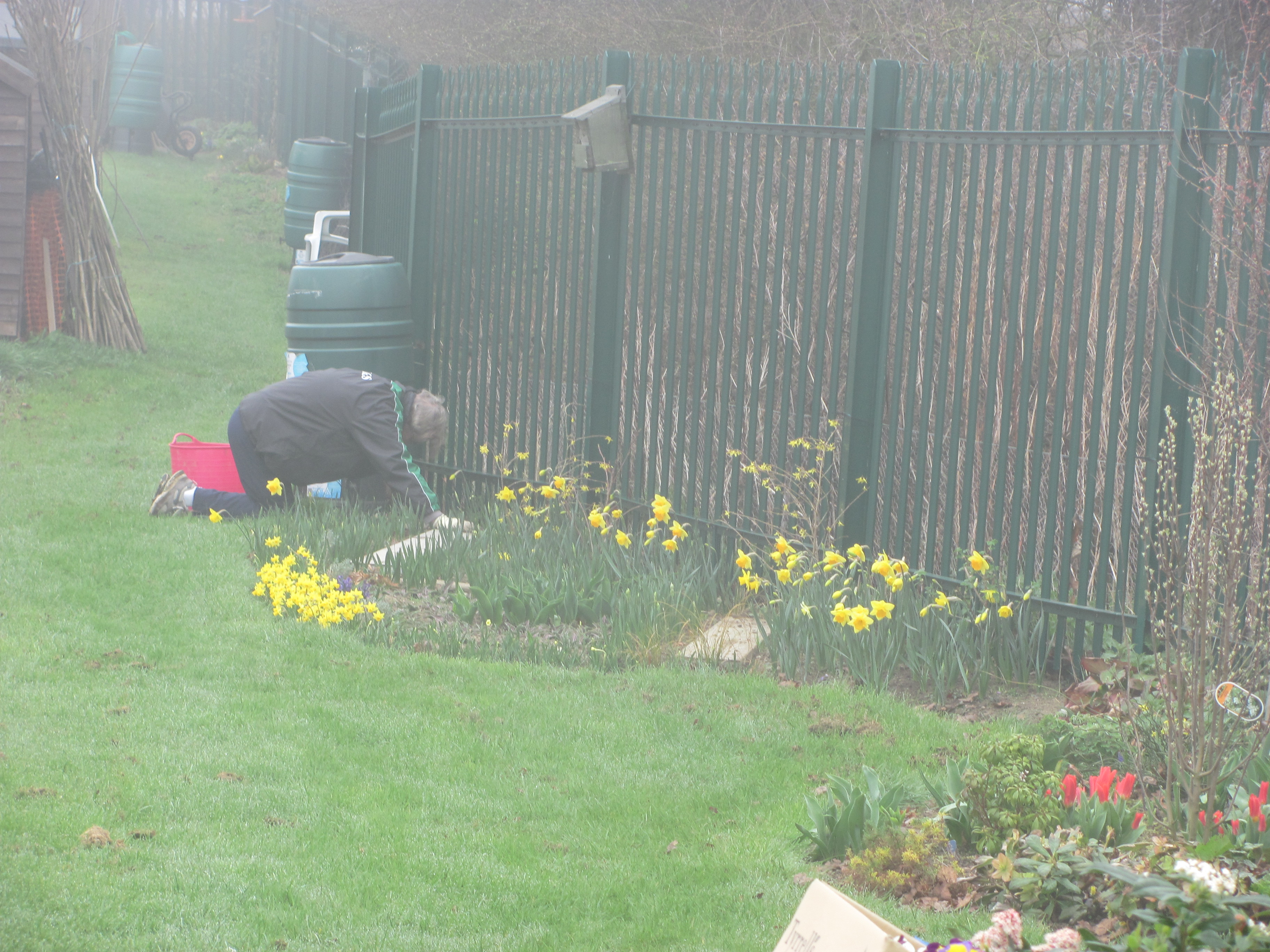
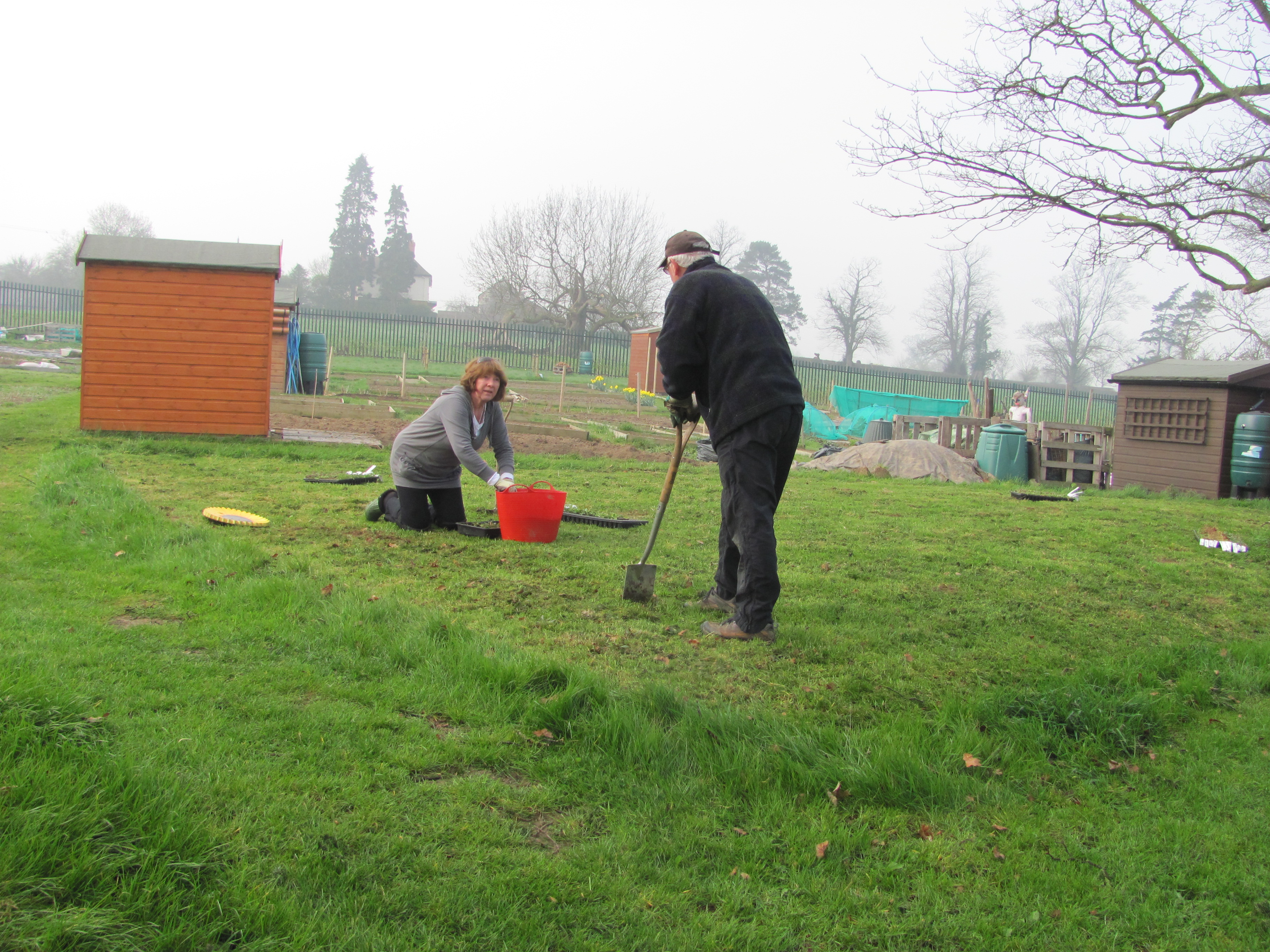
At 9:00 am we opened up the site gates and collected up the tools and machinery we might need. The day started foggy and chilly, just 6 degrees bu the forecast was optimistic. fifteen volunteers turned up with trowels, forks, spades and flasks of coffee. The mowers and strimmers were fueled and readied for some hard work.

Plots and sheds engulfed in mist.
Geoff on hands and knees planting in the mist.
Ian popping plug plants out of their trays.
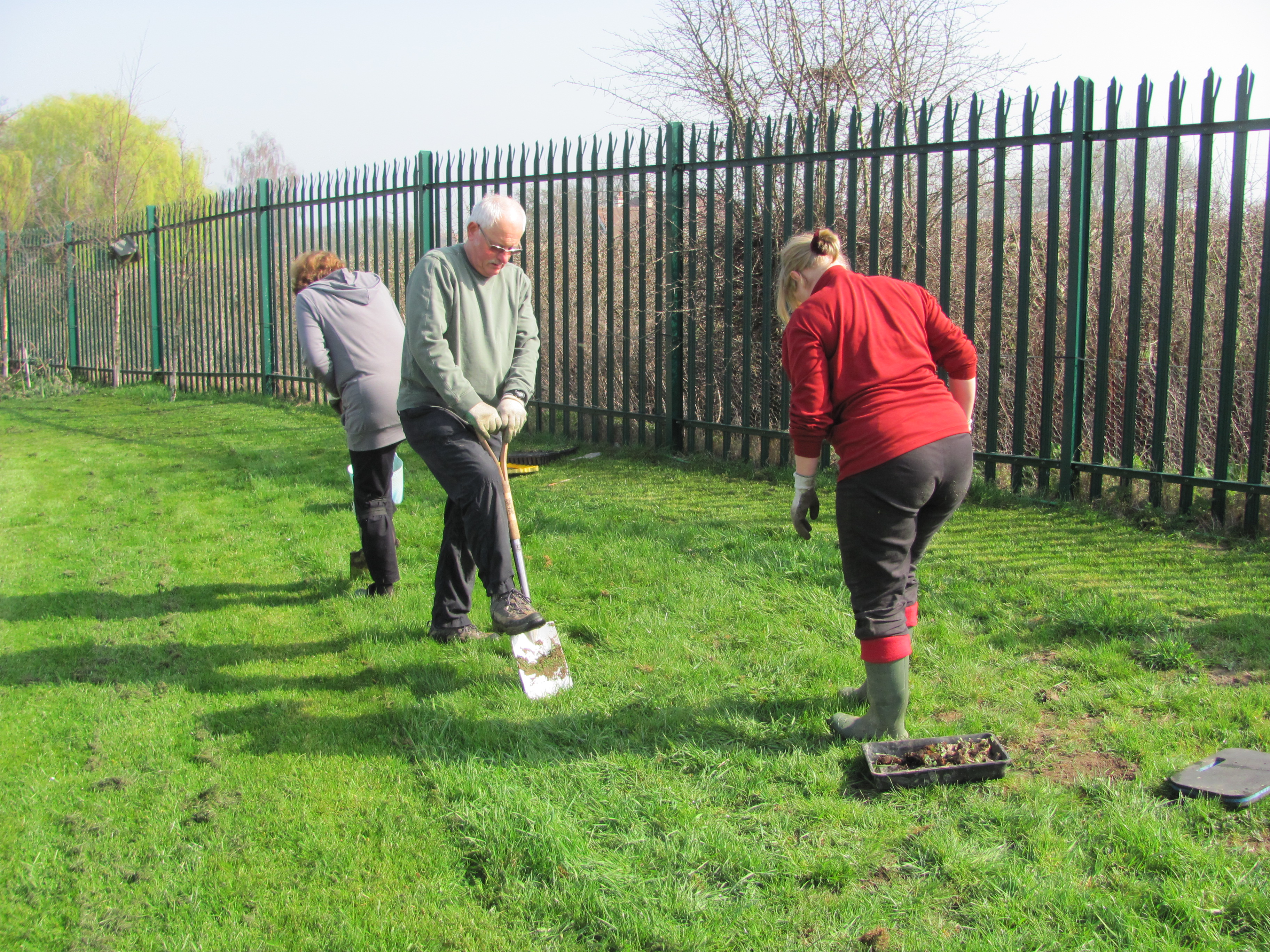
Jude, Anthony and Dave preparing planting holes for the plug plants.

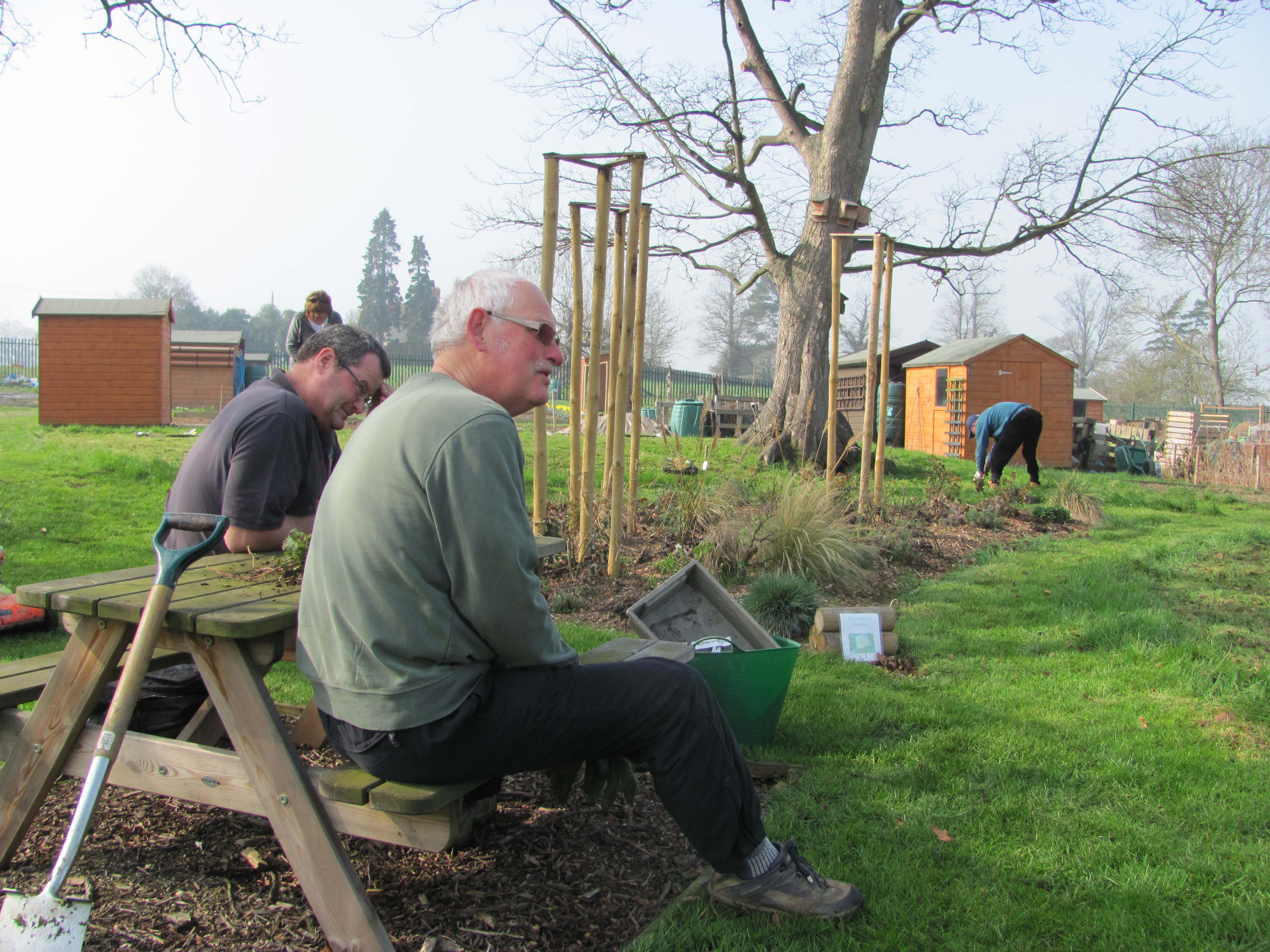
By coffee time the light had improved as the mist cleared. The sky turned blue and temperatures rose so jackets were removed as we retired to the picnic benches. The temperature rose to a hefty 20 degrees.

A well-earned rest and coffee for Ian and John.

After our coffee break we moved on to planting more plugs in other meadow areas, under the bushes in the Hazel Grove and on the Wildlife Banks.

Dee and John planting under the Sycamore tree.
Jill and Dave plugging away.
Dee, John and Tracy planting in the wetter meadow area.

After a mid-day break for lunch we moved over to the one of the orchards to plant more wildflowers amongst the trees.

Jude, still on hands and knees, in the orchard.

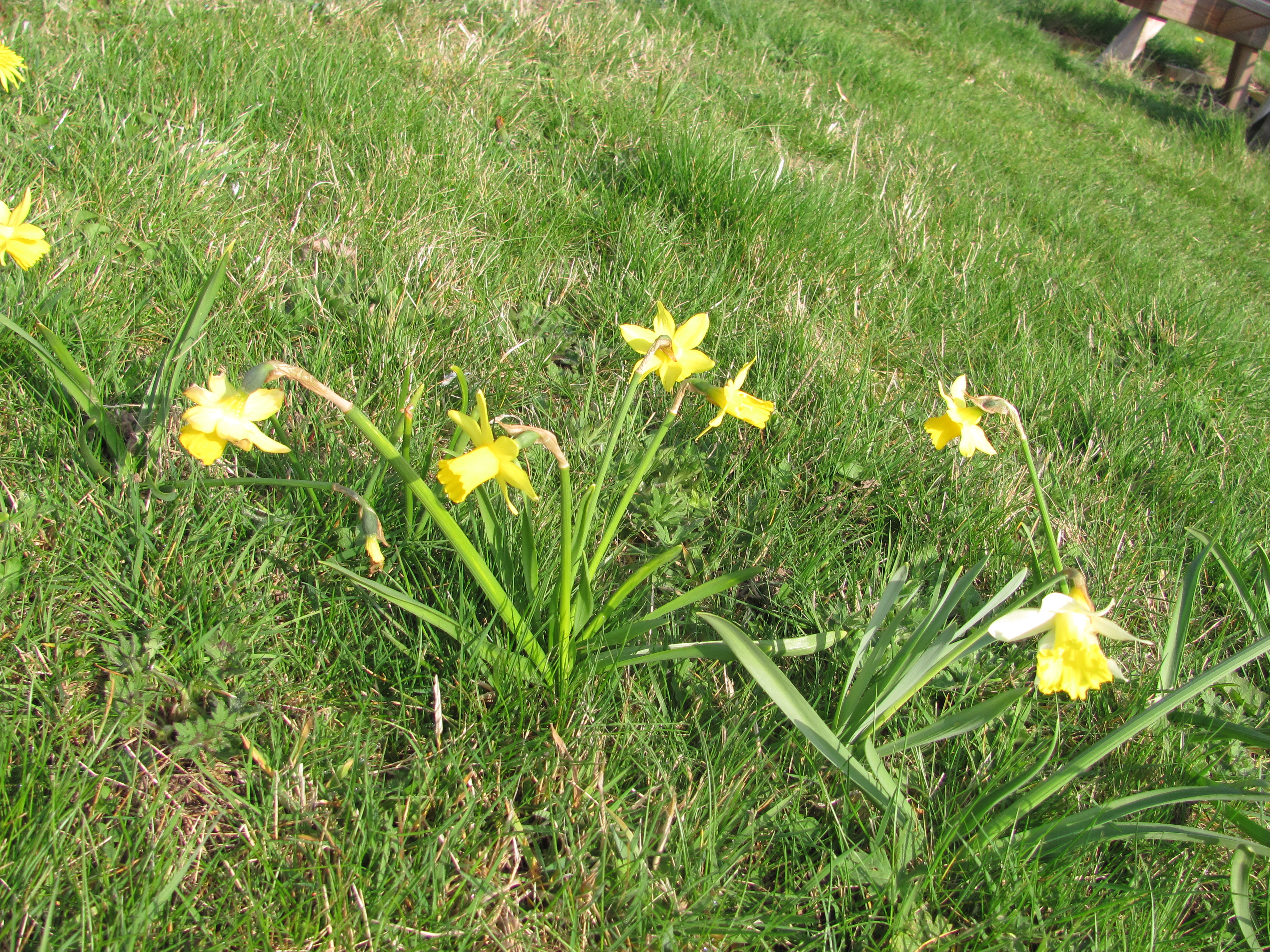
Finishing our day’s work planting in the orchard was extra rewarding as here we could appreciate the fruits of our labours. During working parties in the autumn we planted bulbs such as Fritilleries, Muscari, Narcissi and Alliums, and today many were in flower attracting bees and butterflies.

Native Daffodils flowering away under the apple trees.
The star flower of the orchard, the Snakeshead Fritillery.
Turn over, peer inside and find more magic.

So what could fifteen volunteers achieve on a sunny March day? We planted over 2500 wildflower plants to enhance our communal meadows! An amazing day!

Now that’s what I call a working party!

Categories
allotments birds community gardening conservation fruit and veg garden photography garden wildlife gardening grow your own hardy perennials natural pest control trees wildlife winter gardens

A Wander Around the Allotments in March

The third wander around the allotments at Bowbrook already! We were expecting a warm bright day but it turned out misty with a chill in the air. So much work has been done to the plots with many allotmenteers all ready for the coming growing season. Tree surgeons have been to do a bit of work on our mature Sycamore tree and the resulting wood has been put to good. The shredded wood is being used by some plot holders to surface their paths, some branches have been used to create a brash pile and some logs used to create a big impressive log pile.

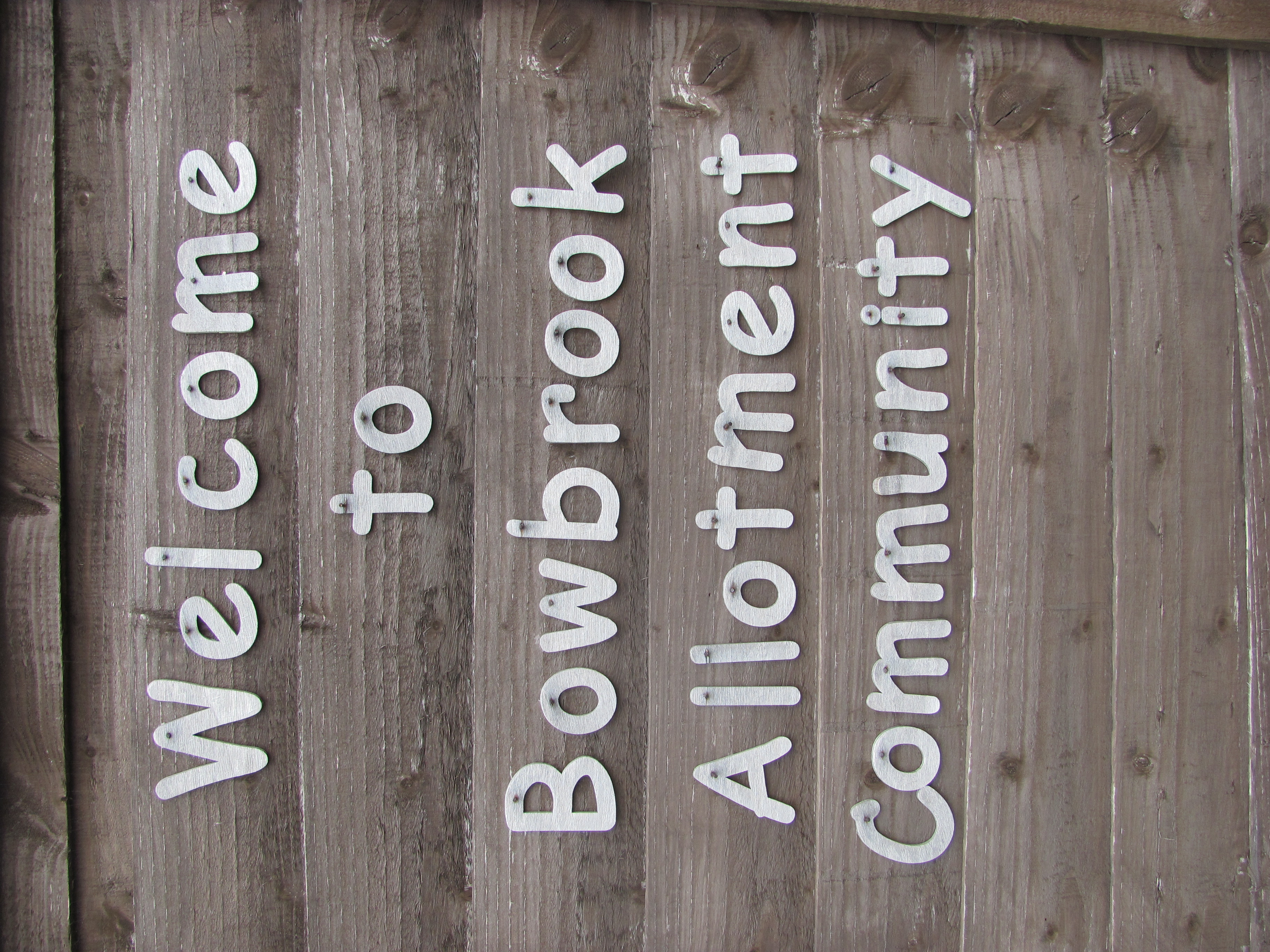
Our welcome message on the wall of our composting toilet.

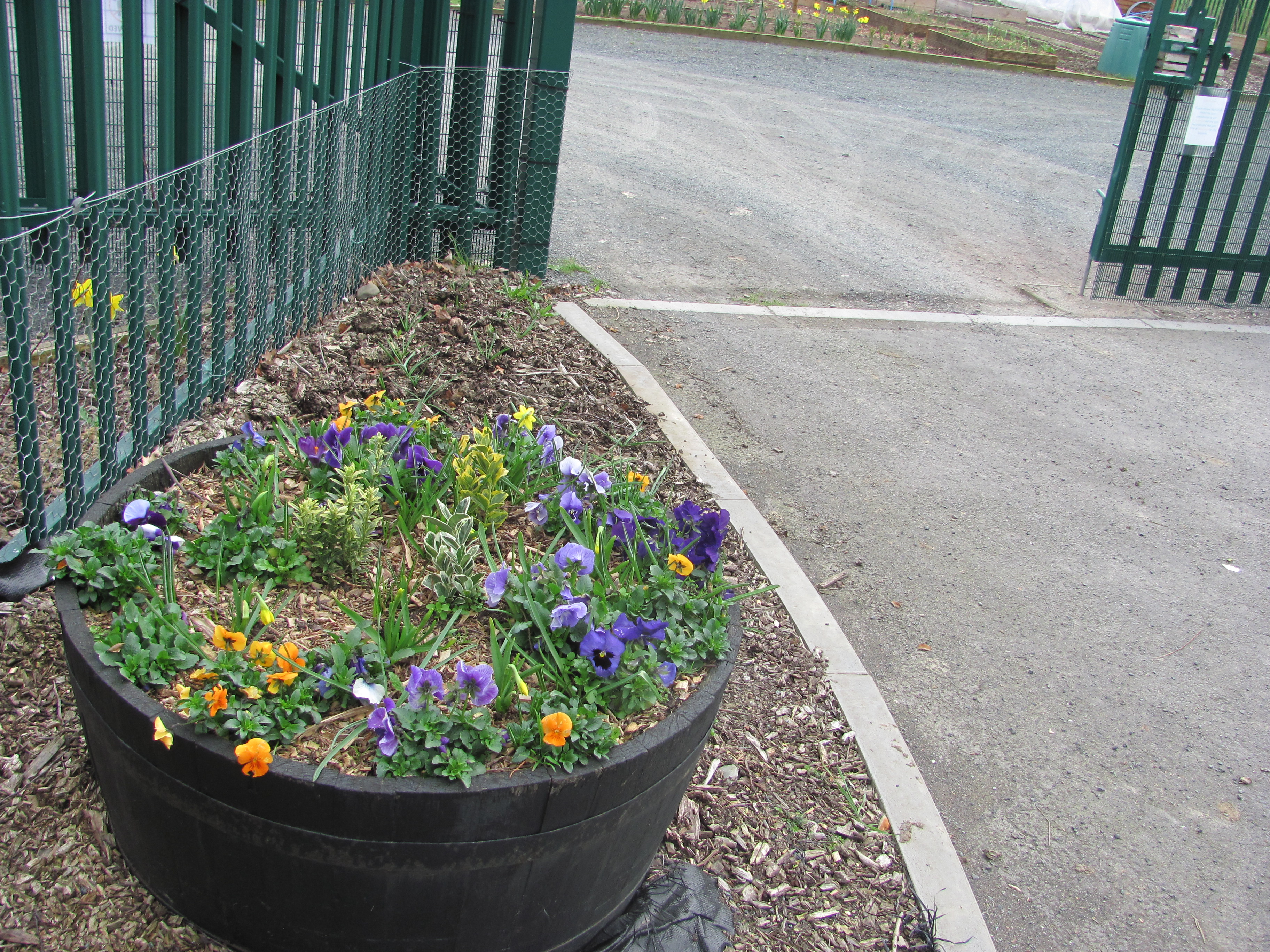
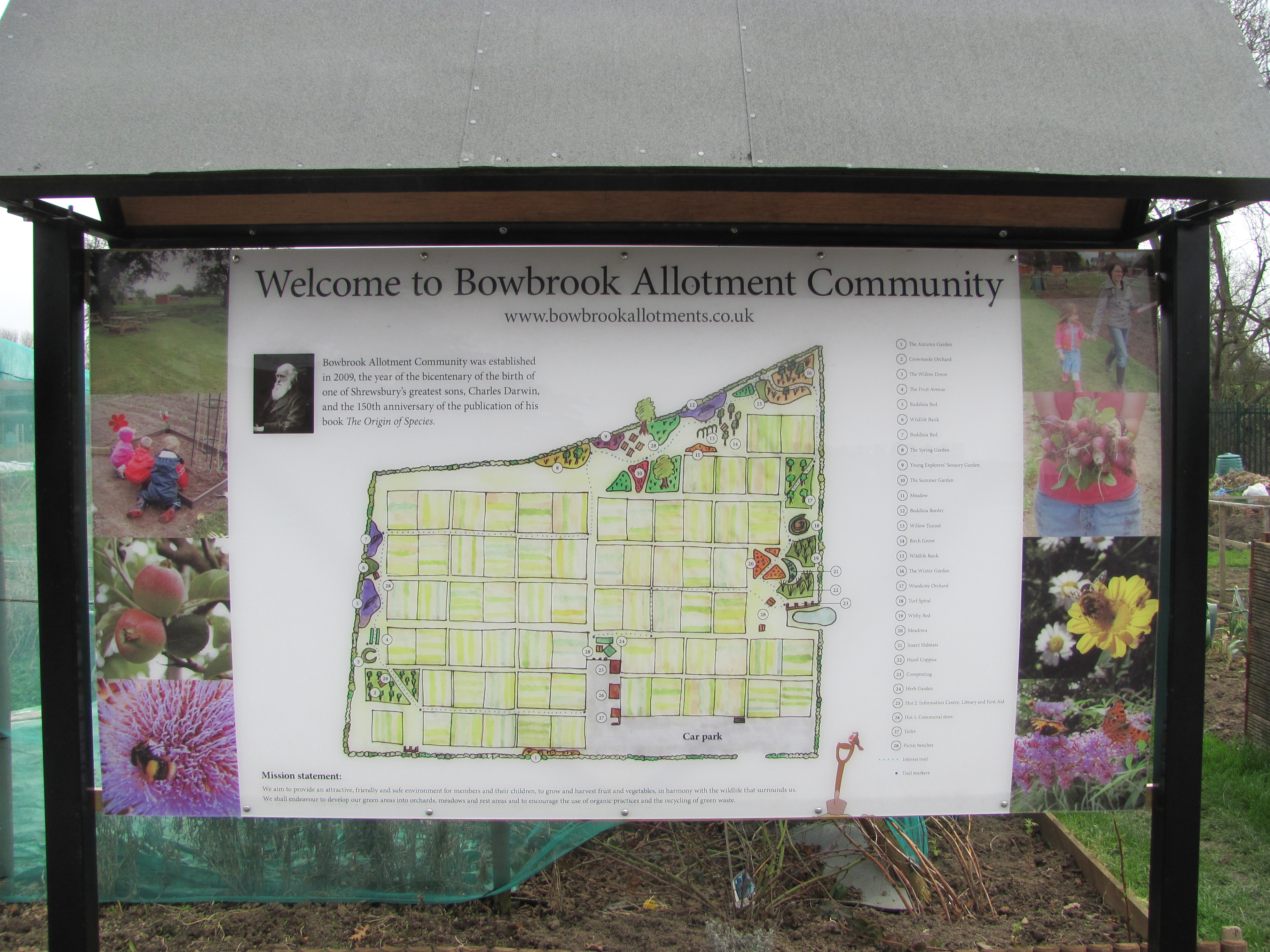
To welcome visitors and plotholders to the site we have planted up two half-barrels outside the gateway and opposite the gate on the edge of a plot we have our posh main site sign which features a map of the site, our mission statement and photos of the main functions of the site.

Let’s begin the wander with a look at what is going on our own plot, number 37. We are just about ready for the 2012 season with soil dug over composted and raked. The kale which we have overwintered looks very healthy with its wonderfully coloured crinkle edged leaves of glaucous green, purple and pink.

The perennials in out “Bee and Bug Border” are producing new shoots. These plants are grown to attract beneficial insects both predators and pollinators, such as bees, hoverflies and lacewing.

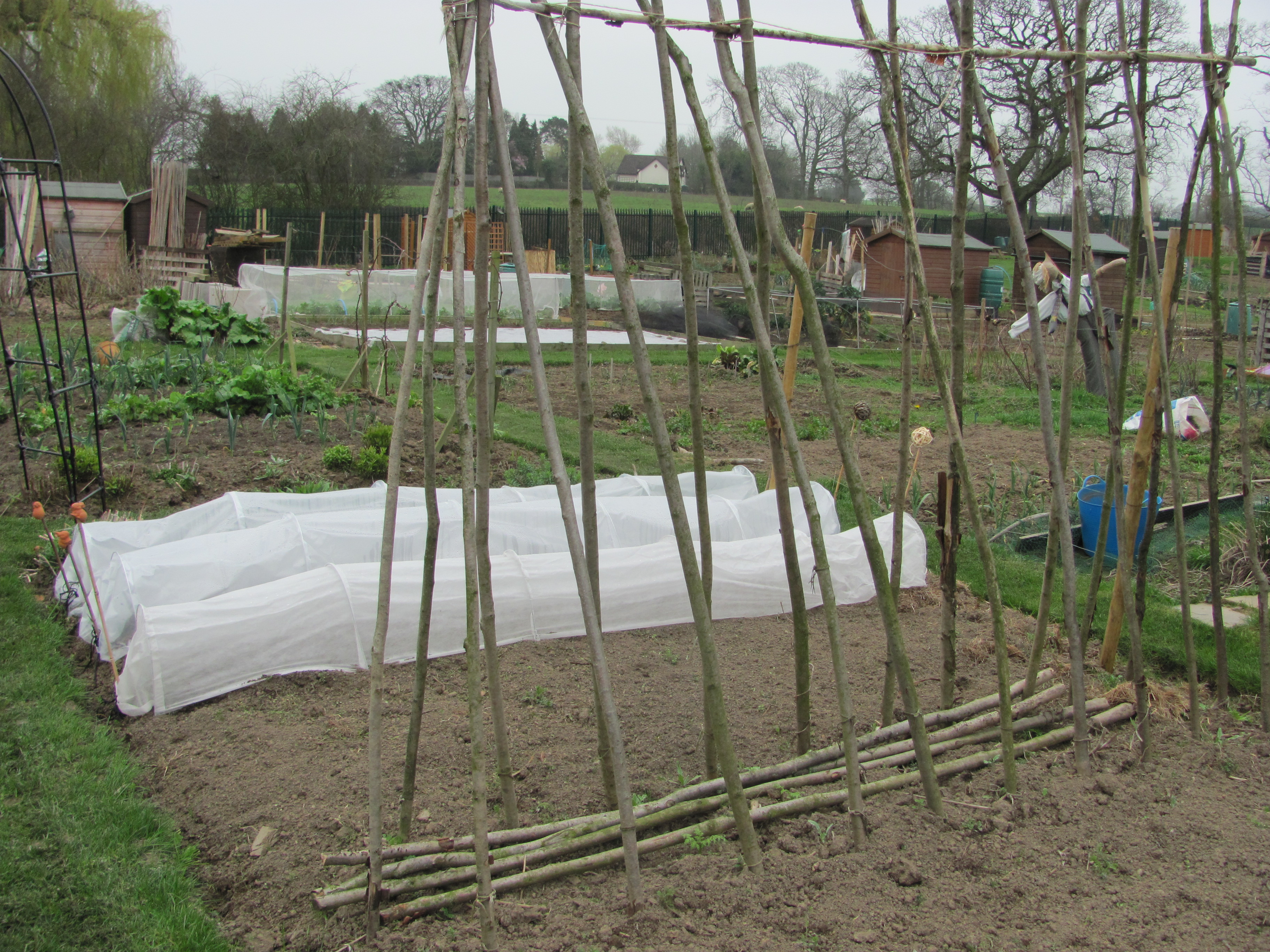
Our bean poles, made from coppiced Hazel, are up ready for Runner Beans to climb when planted out in late May and behind them we have cloches warming the ground for early plantings of Carrots, Parsnips and Beetroot. If the weather is kind we shall sow these seeds at the end of this month.

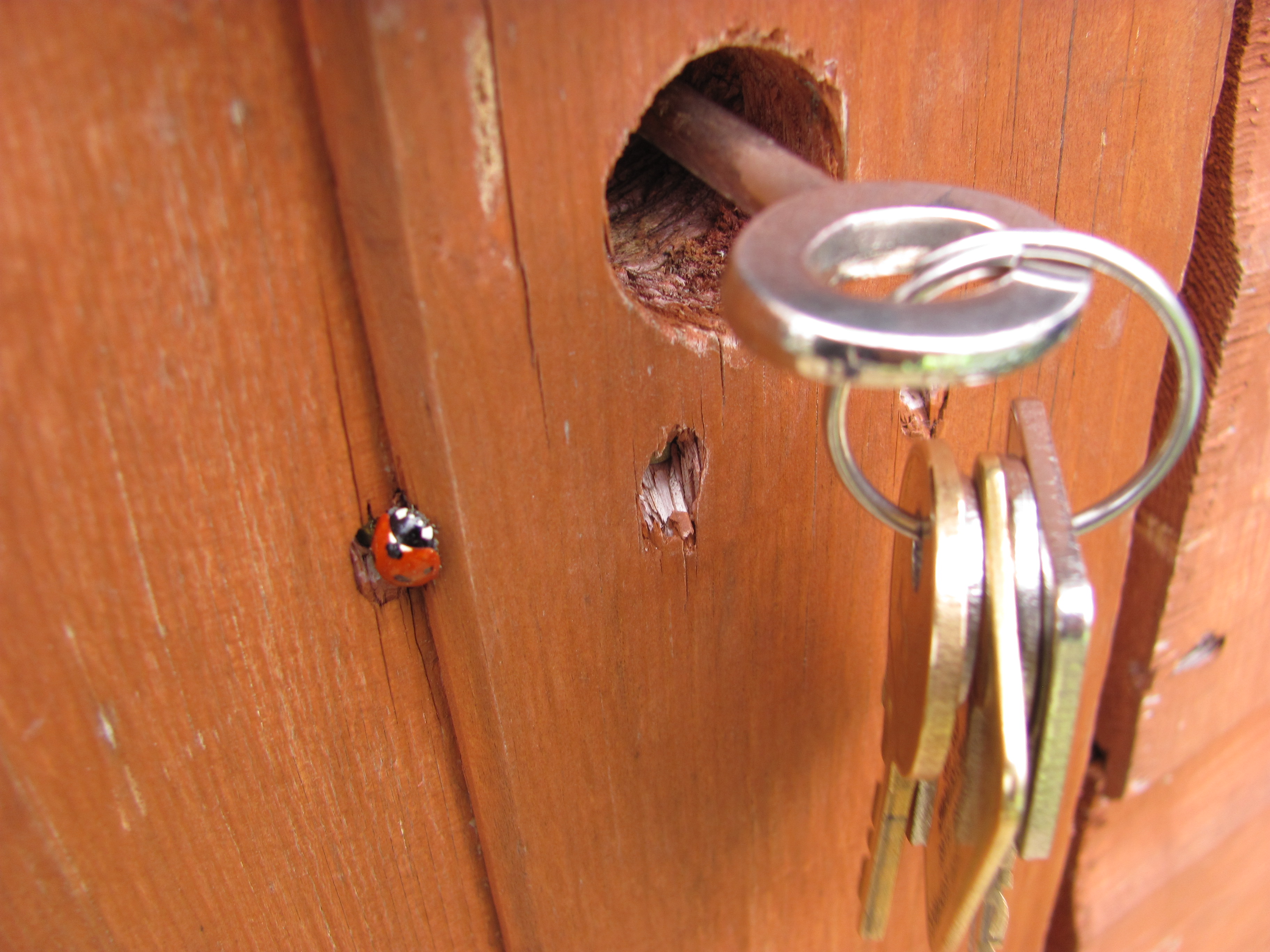
This Ladybird sheltering near our shed lock is hoping for some sun to get warmed up a bit.

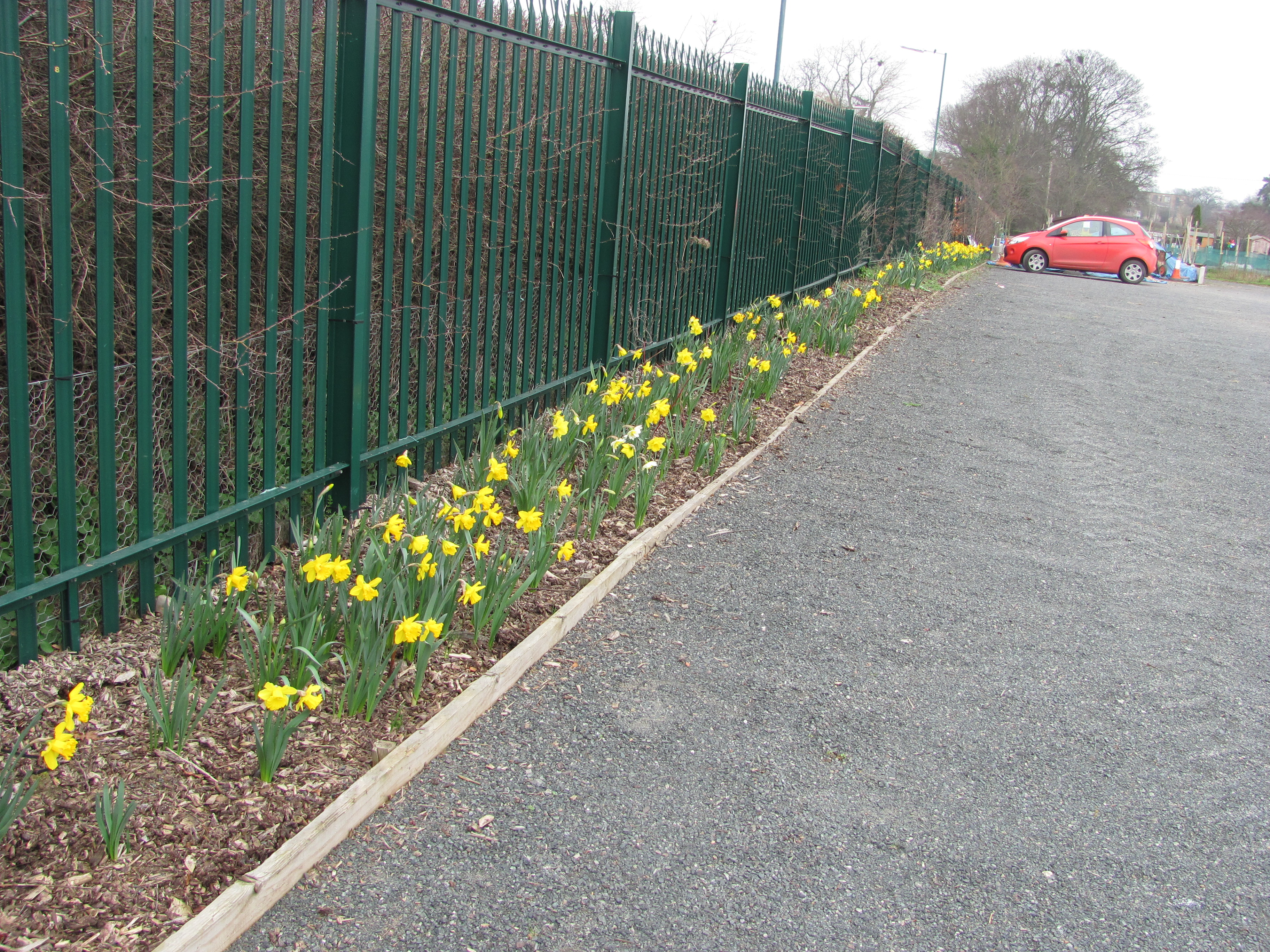
After a quick perusal of our site we began the wander around the whole allotment field, starting in the car park where Daffodils give a golden welcome as plotters arrive to work or enjoy the communal spaces.  Each September we hold a “Donate a Daffodil Day” when members are asked to donate bulbs which are then planted around the site by volunteers on one of our working parties. In the first year alone we had over a thousand bulbs donated and planted several hundred in the car park border and on the grass verge alongside our entrance gates.

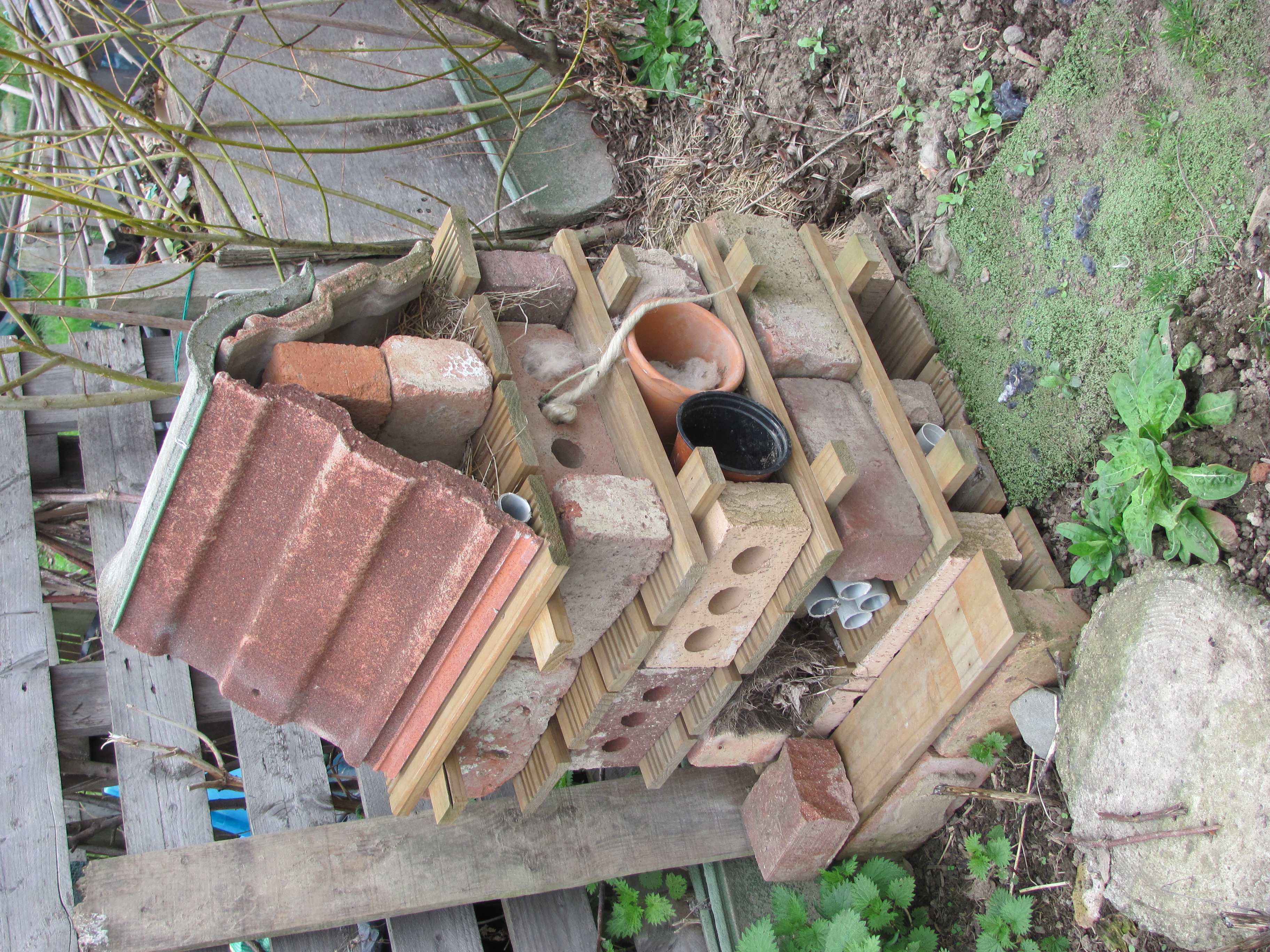
Moving on down towards the first communal orchard we spotted this insect hotel on Wendy’s plot and admired Tracy’s rhubarb which is well advanced.

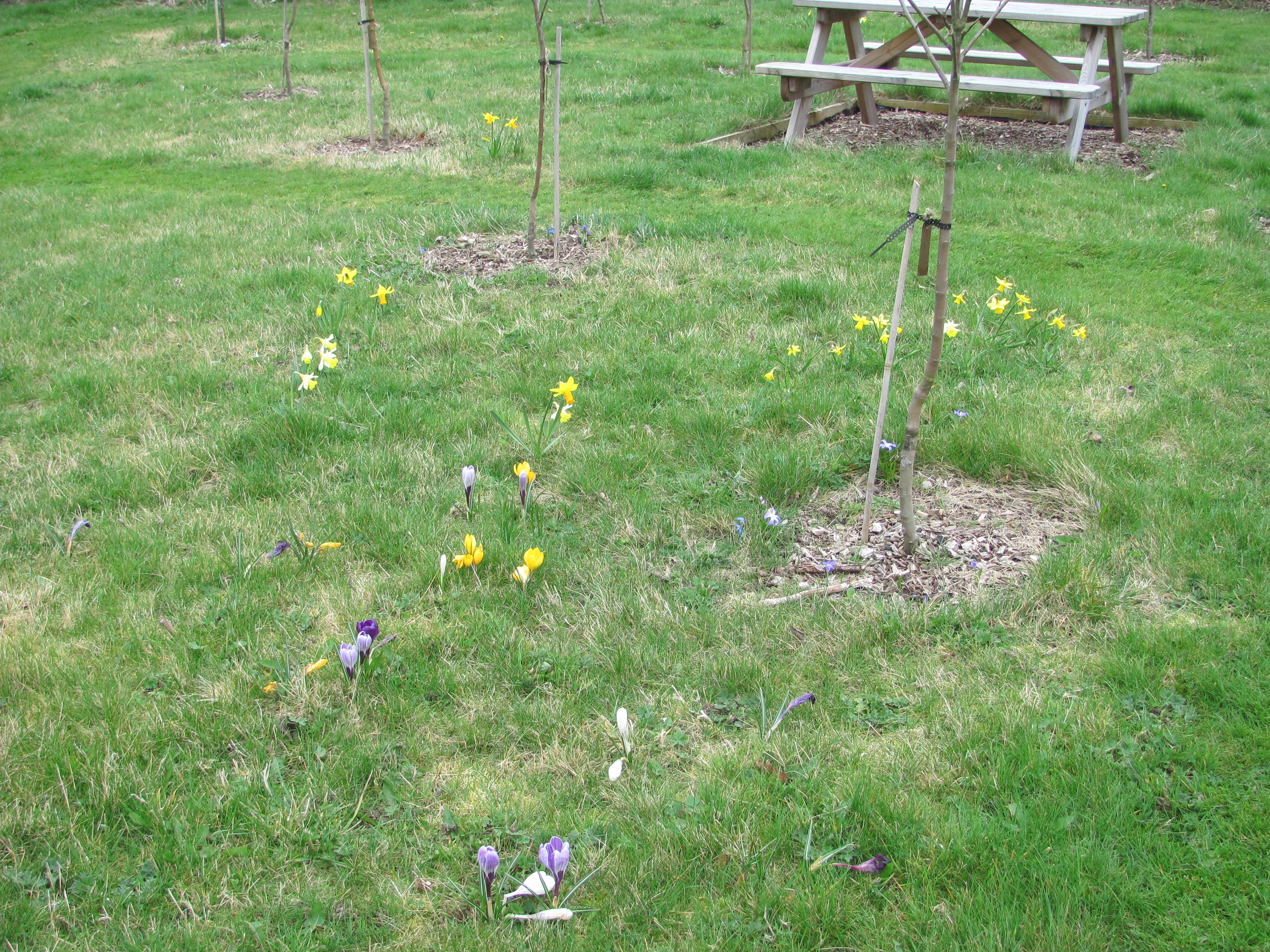
The first of the community orchards is alongside Tracy’s lottie and she looks after its maintenance, mowing the grass paths, pruning the apples, pears, plums and damsons and generally keeping it neat and tidy. She also looks after the Fruit Avenue leading away from the orchard. She is a great asset! At the moment daffodils and crocuses are flowering between the fruit and in the avenue muscari are in flower. Bees are busy exploring these early flowers.

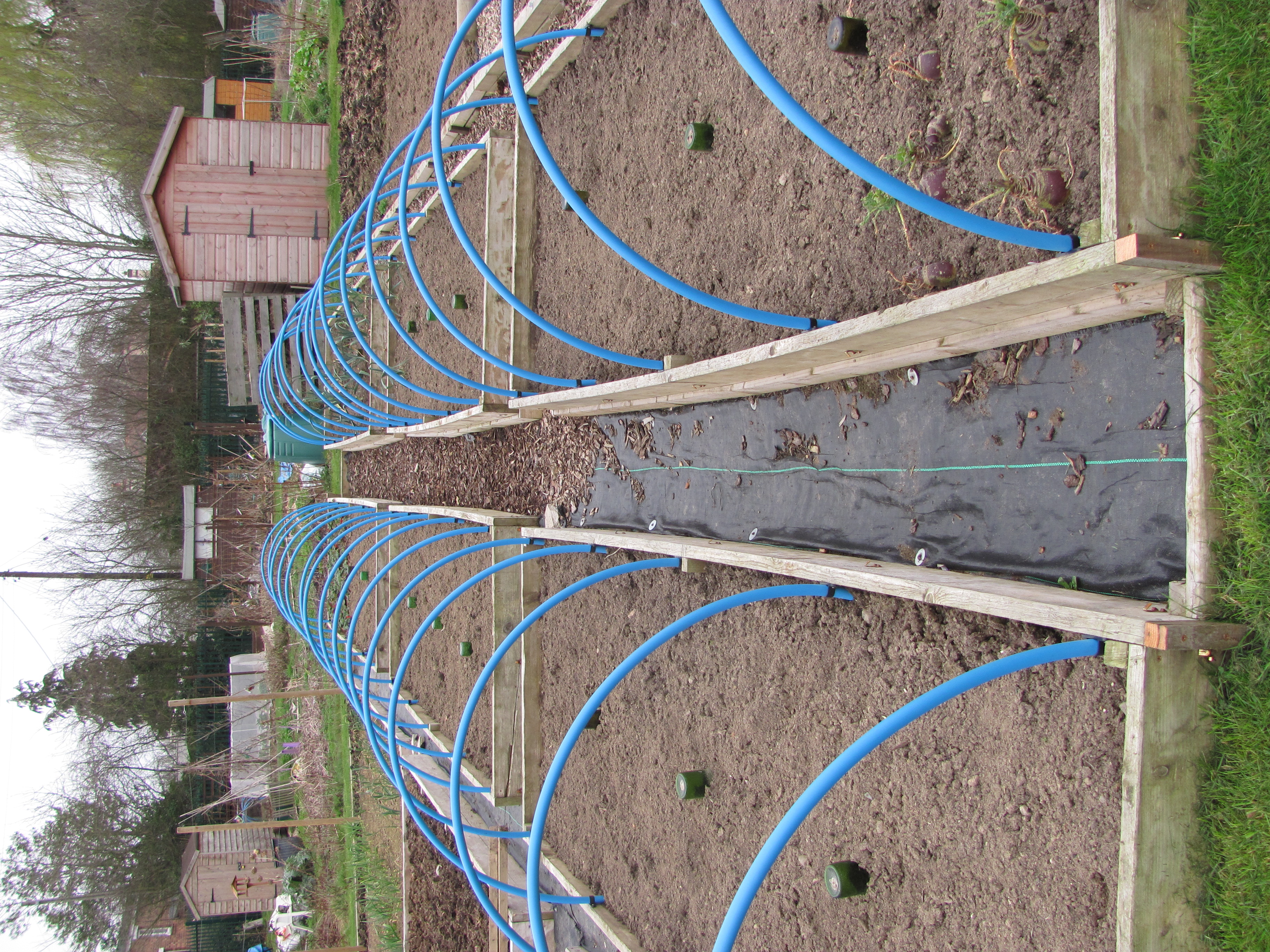
Our wander then took us through the Fruit Avenue with “super fruits” planted on both sides, out alongside Alan’s plot, affectionately known as “The Blue Plot”.

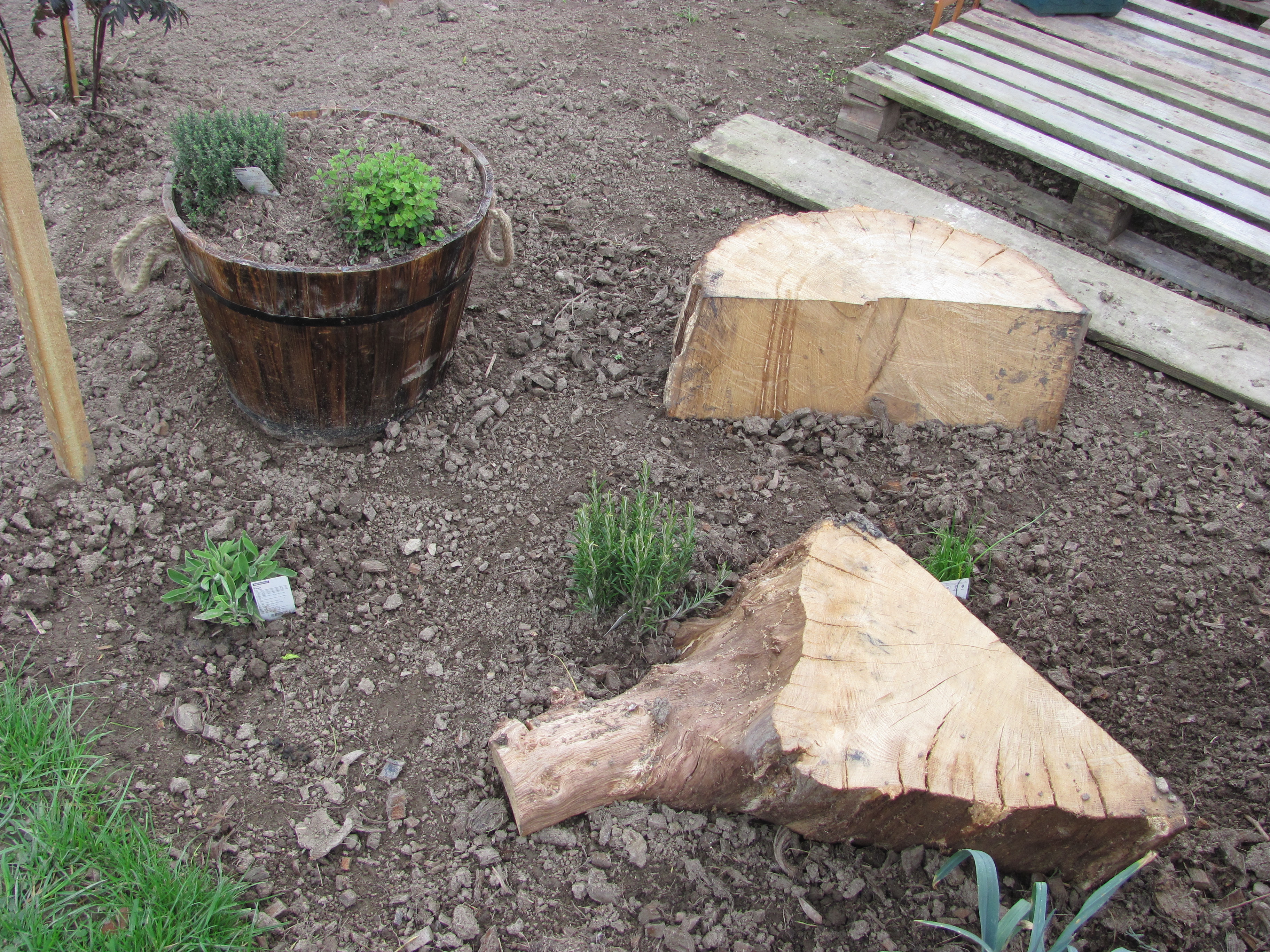
Blue alkathene water pipes are very popular around the site as effective ways of holding fleece or netting covers to protect crops. Wandering further on around the trail towards the Spring Garden we passed a plot that is always good to see as some interesting projects seem to on the go. Today we noticed that she had started to create a herb garden with tree stumps as seats and herbs in the ground around them and in a half-barrel planter. She is always building something – she seems very good at d.i.y. She made her raised beds which we saw have already got some early sowings in.

Behind this plot is the Spring Garden which is looked after by two other volunteers, Jill and Geoff, who keep it looking immaculate. Of course it is now beginning to reach its peak time.  Bulbs are well up and some flowering, perennials are showing fresh green growth and the Violet Willow is covered in its sparkling white pussy willow buds.

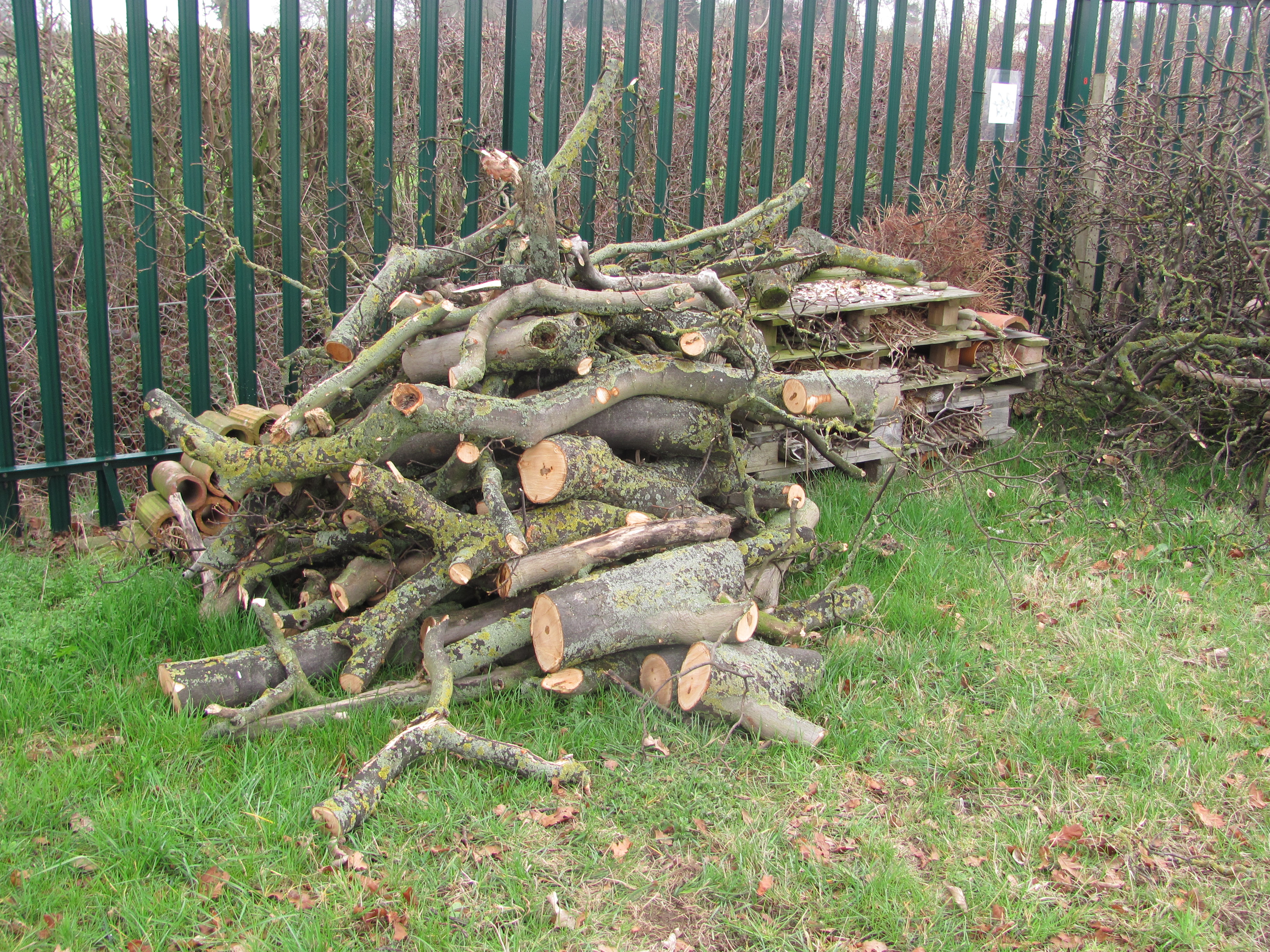
Moving on from the Spring Garden, as we followed the trail, we noticed Blue Tits exploring the nest boxes. Beyond our big old Oak is the new log pile created with logs left by the tree surgeon after his safety work on our mature trees. The log pile will soon be home to Dunnock and Wren and as it begins to rot down insects, invertebrates and beetles will move in.

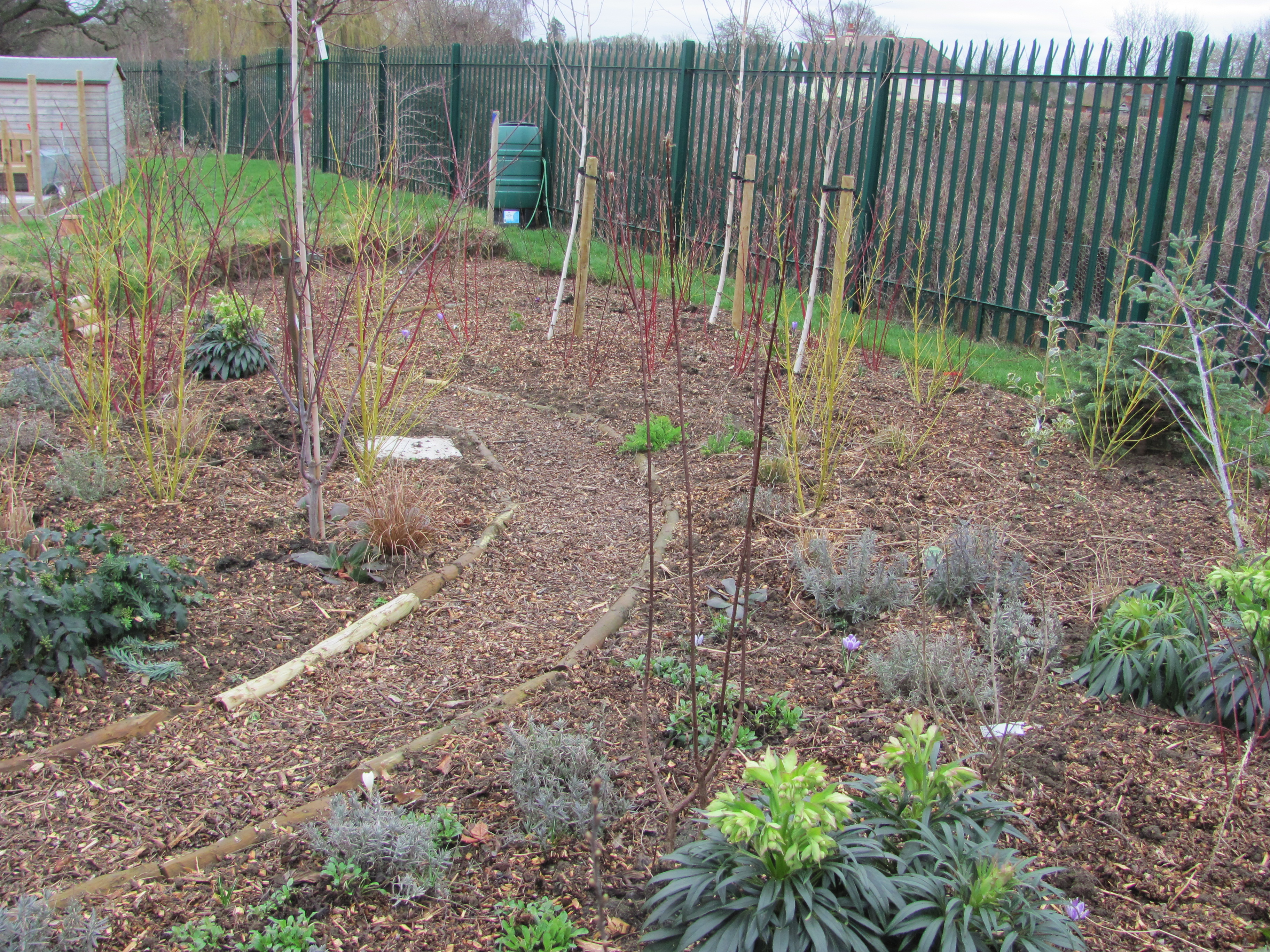
We soon reach the Winter Garden which continues to look impressive, full of interesting bark and stems on trees and shrubs and colourful flowers on bulbs and early herbaceous plants.

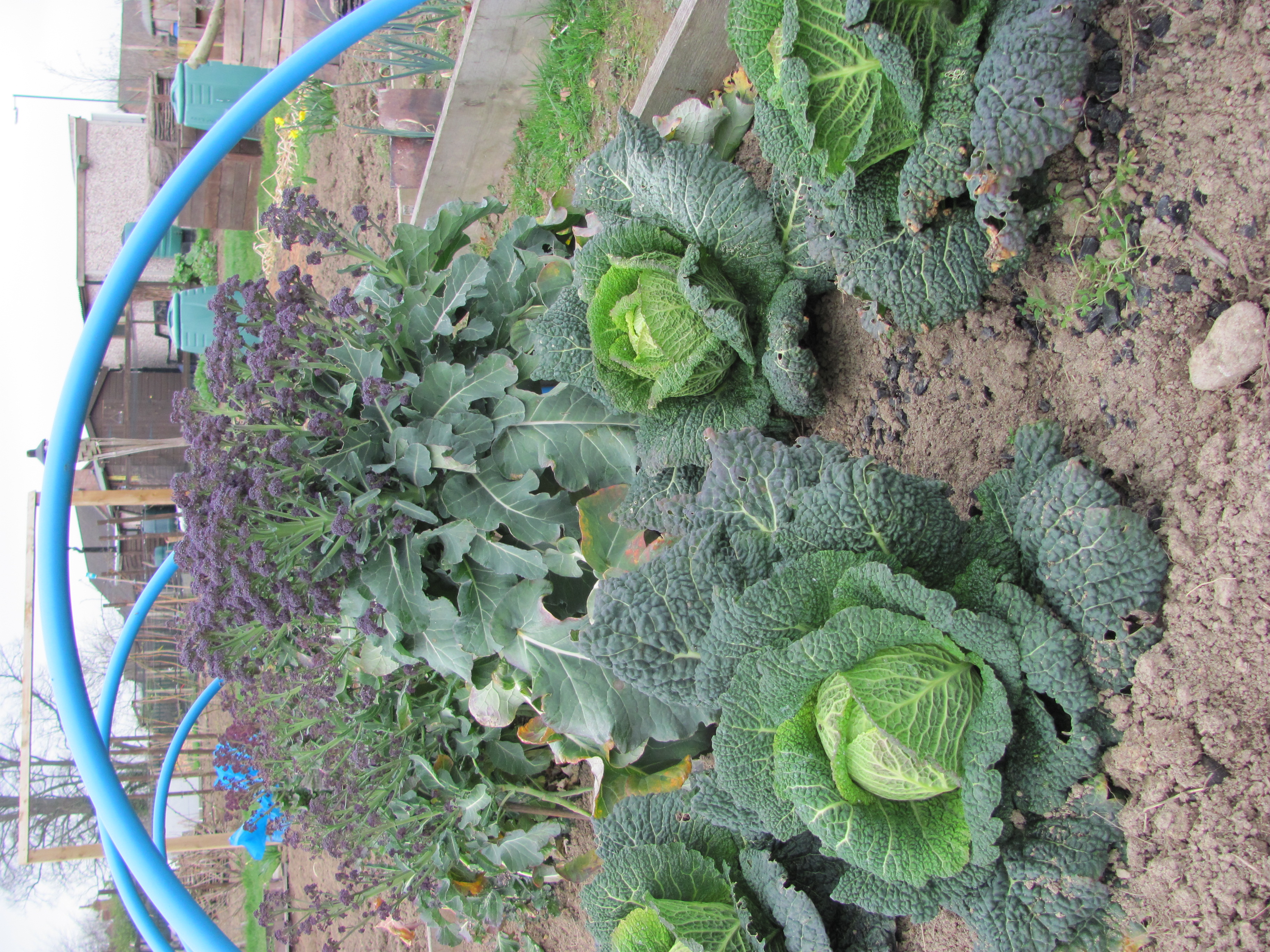
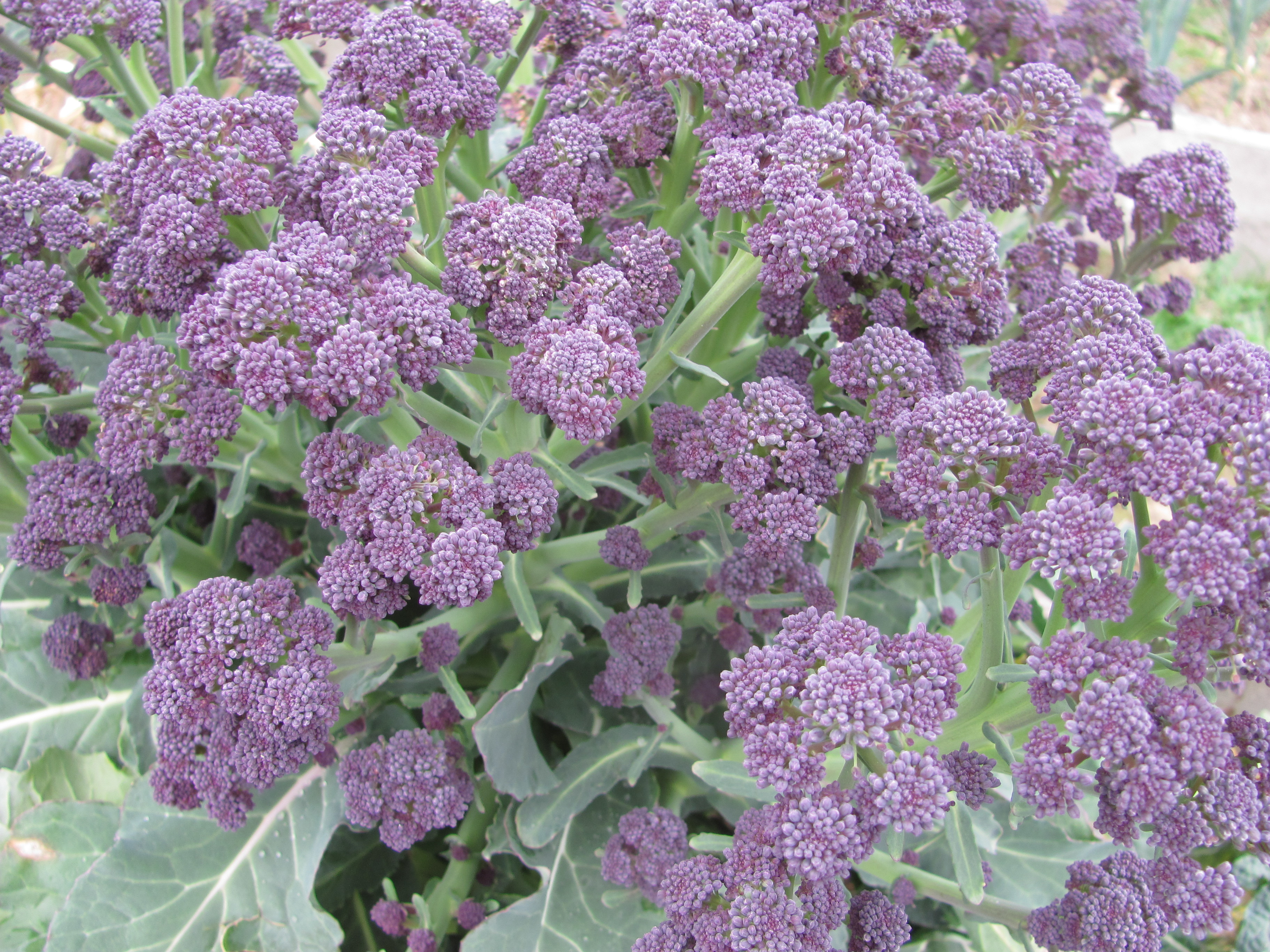
Some crops still look good after the winter and continue to give plot holders some good pickings. These brassicas, Purple Sprouting Broccoli and Cabbage look very healthy and appetising.

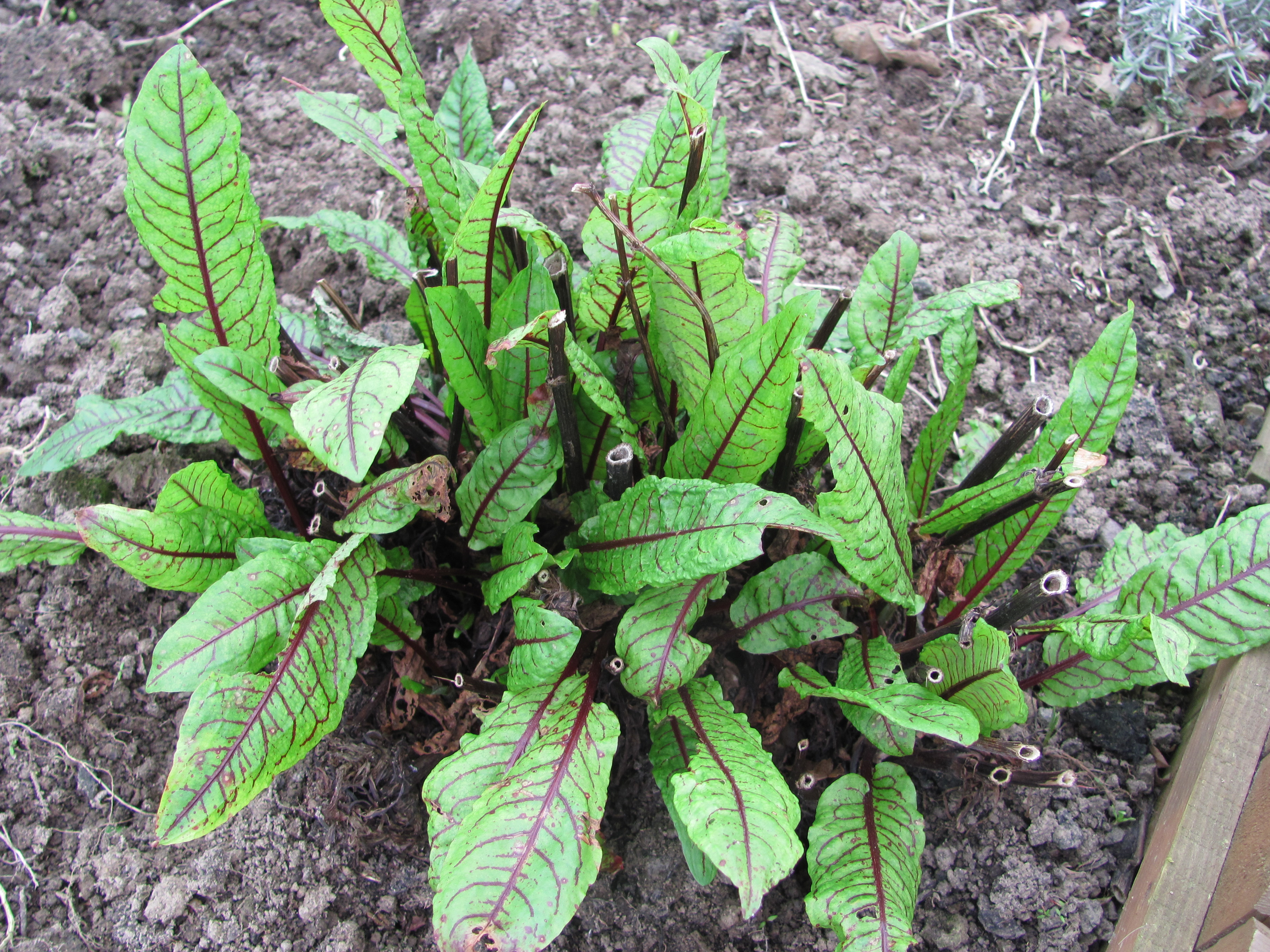
The beautifully coloured Red Veined Sorrel in the photo above is already putting on plenty of fresh leaves ready for harvesting, whereas the beautifully coloured flowers of Purple Sprouting Broccoli are now ready for enjoying after the plant has been standing through the winter.

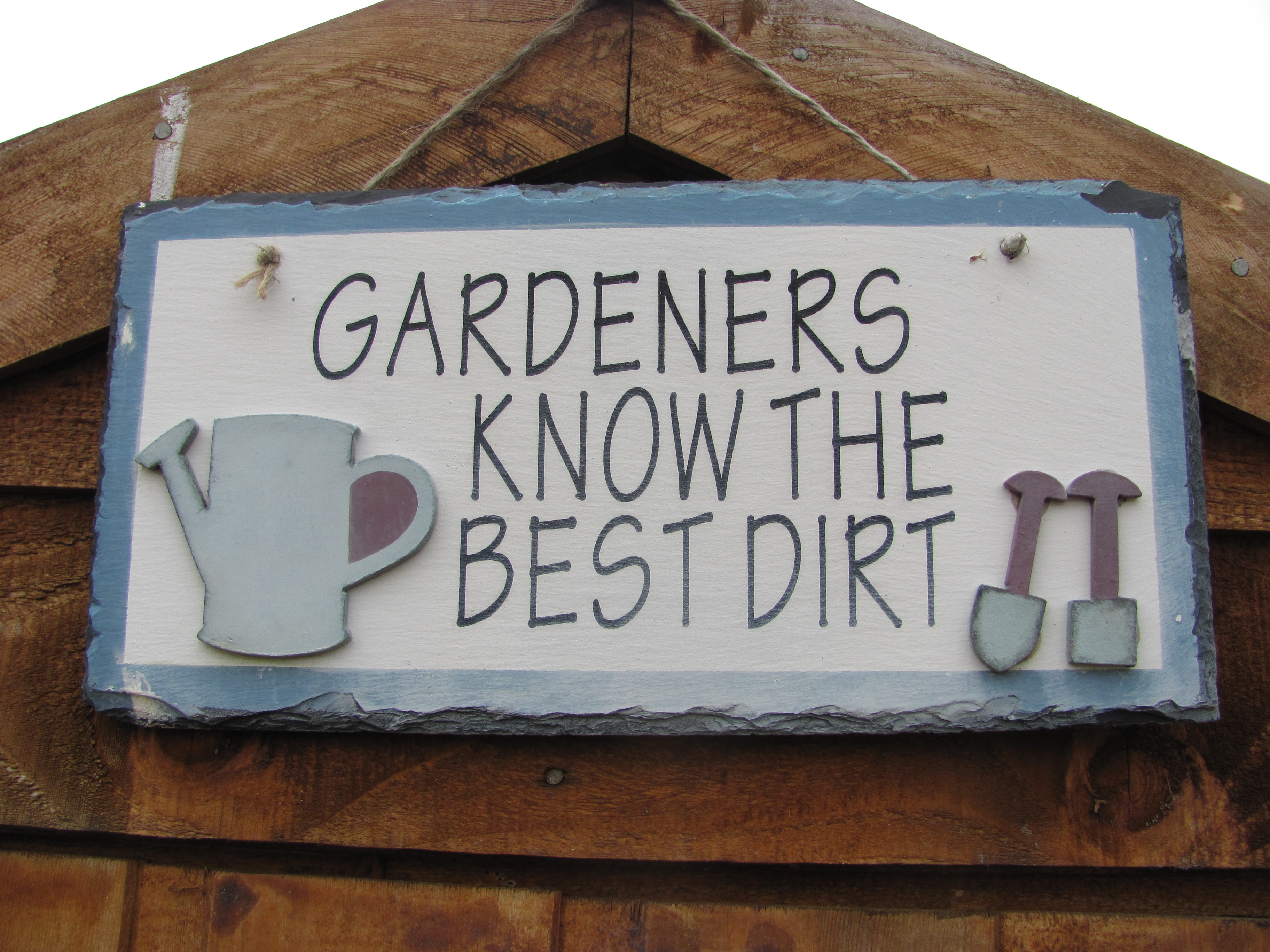
Lots of our plot holders displays plaques with garden related sayings on for the amusement of all. How about this one to finish our March wanderings around the site?

Categories
birds garden photography garden wildlife gardening grow your own

You can tell that Spring is not far away when …….

You can tell that Spring is not far away when

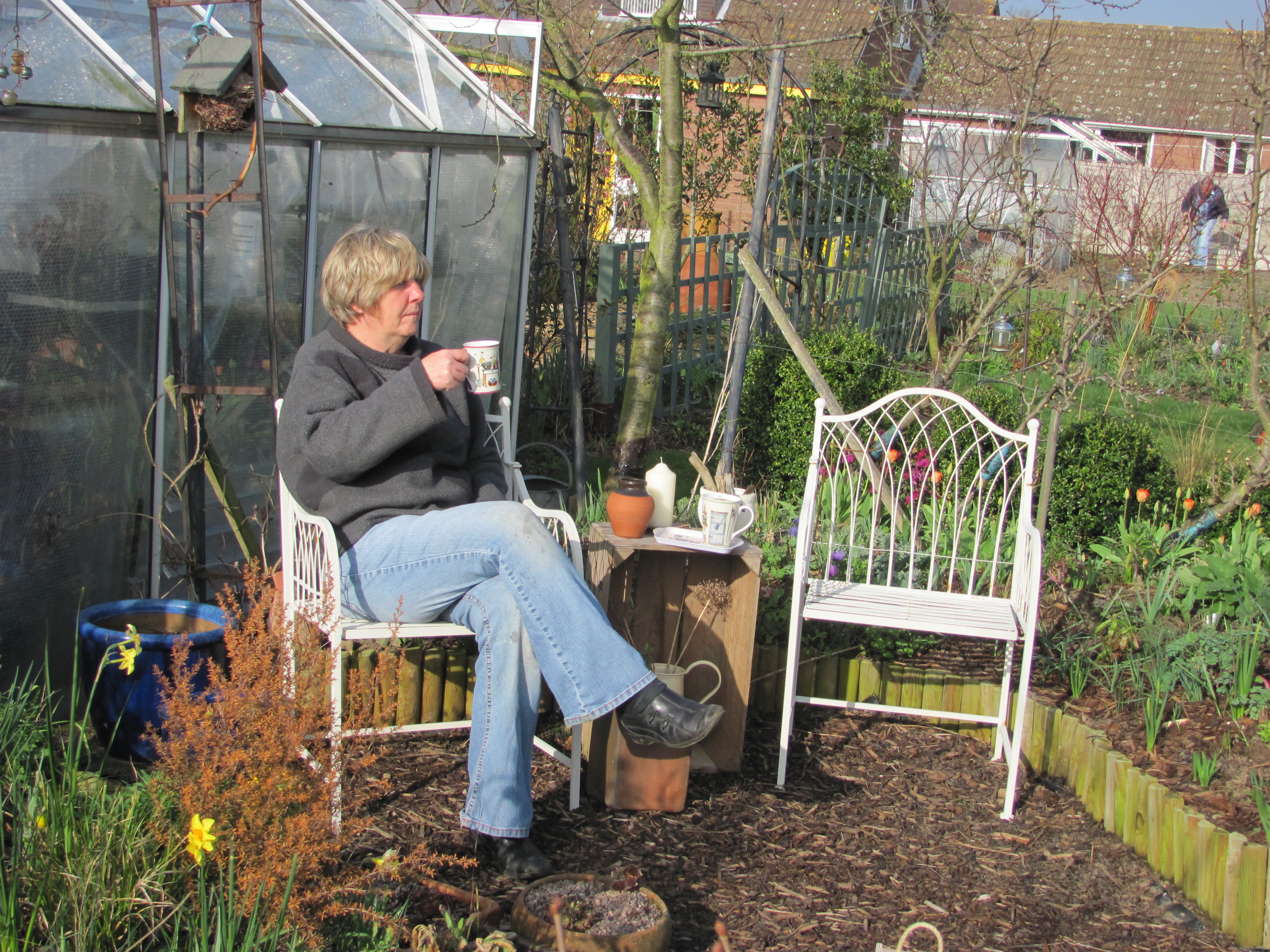
we can enjoy a cup of coffee in the garden without jackets on, and from our special gardening mugs,

and when we prick out the first tomato seedlings,

and when Tulips and Wallflowers flower side by side and clash,

and when all around us Blackbirds sing loudly proclaiming their territorial rights and the song of Goldfinches and Greenfinches fill the air,

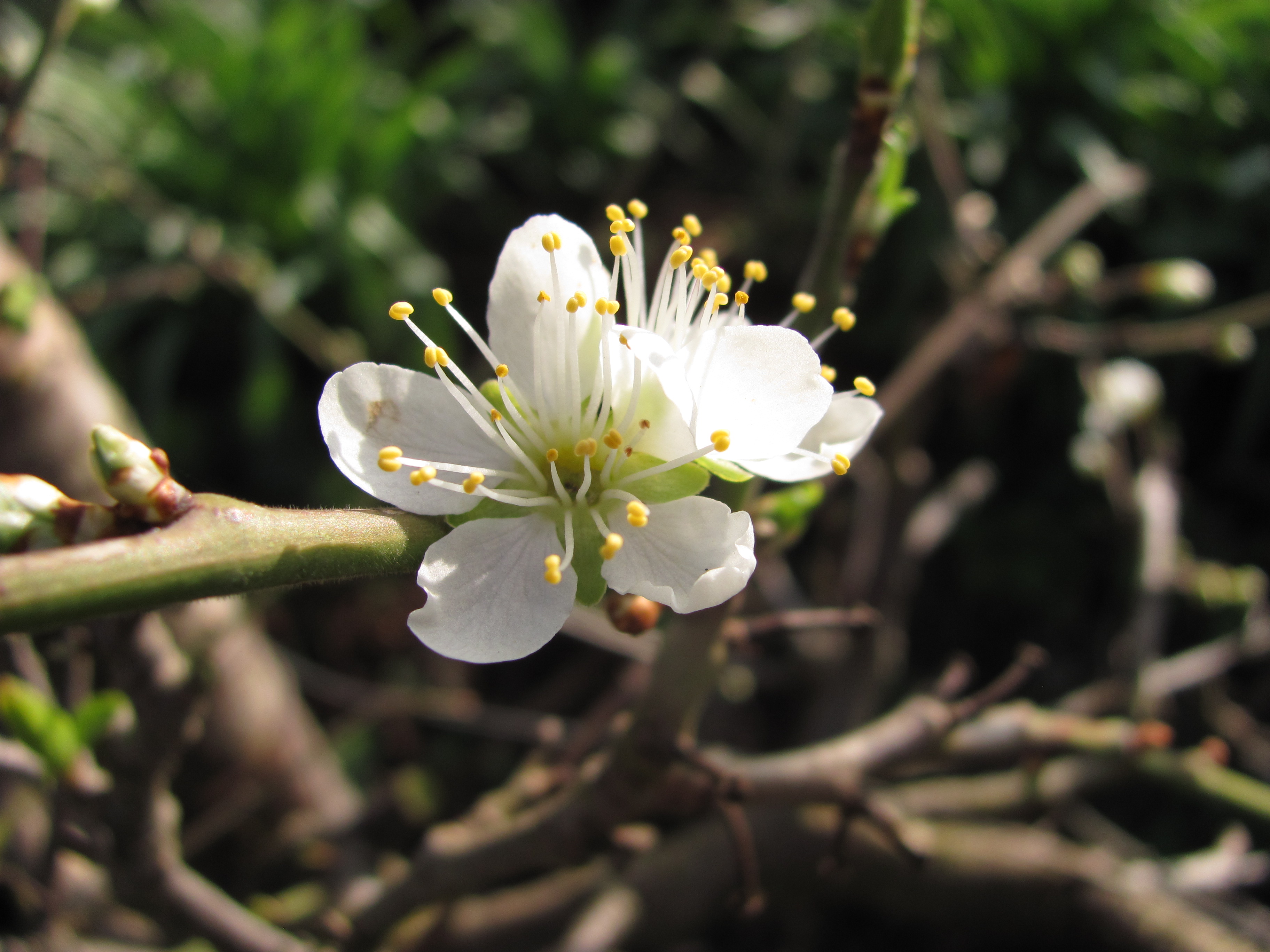
and when the first fruit blossom opens,

and when you can finish the day off by making your first harvest of your “cut-and-come -again” salad and herb leaves, and then eat them with eggs produced by your own chickens.

Categories
allotments birds community gardening fruit and veg garden wildlife gardening grow your own

New Plots to Come at Bowbrook Community Allotments

We have 68 plots at our allotment site, Bowbrook Allotment Community, and after just three seasons of being open we have a waiting list of about 50. Phase two was on the cards from the word go but with budget constraints we didn’t really think it would ever come to fruition. The plan was to open up the field next to us and create about 50 extra plots.

Meetings with town council representatives and reports in the local newspaper over the last year or so indicated that this might still happen. Then recently the allotment management committee were asked if a few members could meet with representatives from the town and the county councils to look at plans. It seemed that things would be moving ahead in the autumn of 2012.

Budget constraints had effected the plans as the draft map for the new extension showed just 25 plots covering half the field. Still we couldn’t look a gift horse in the mouth! Ideas were exchanged and the proposals will go in for planning permission and hopefully work will be done by the autumn.

So we can halve our waiting list. The plots will be so tightly packed that little space will be available to develop our community gardens but we should gain the pond, a spring and a few yards of stream and a triangle of land beneath a group of mature trees. We shall endeavour to make these exciting places!!

The strip of pastureland that will become our new allotments.
The poor neglected pond that will become part of our site.
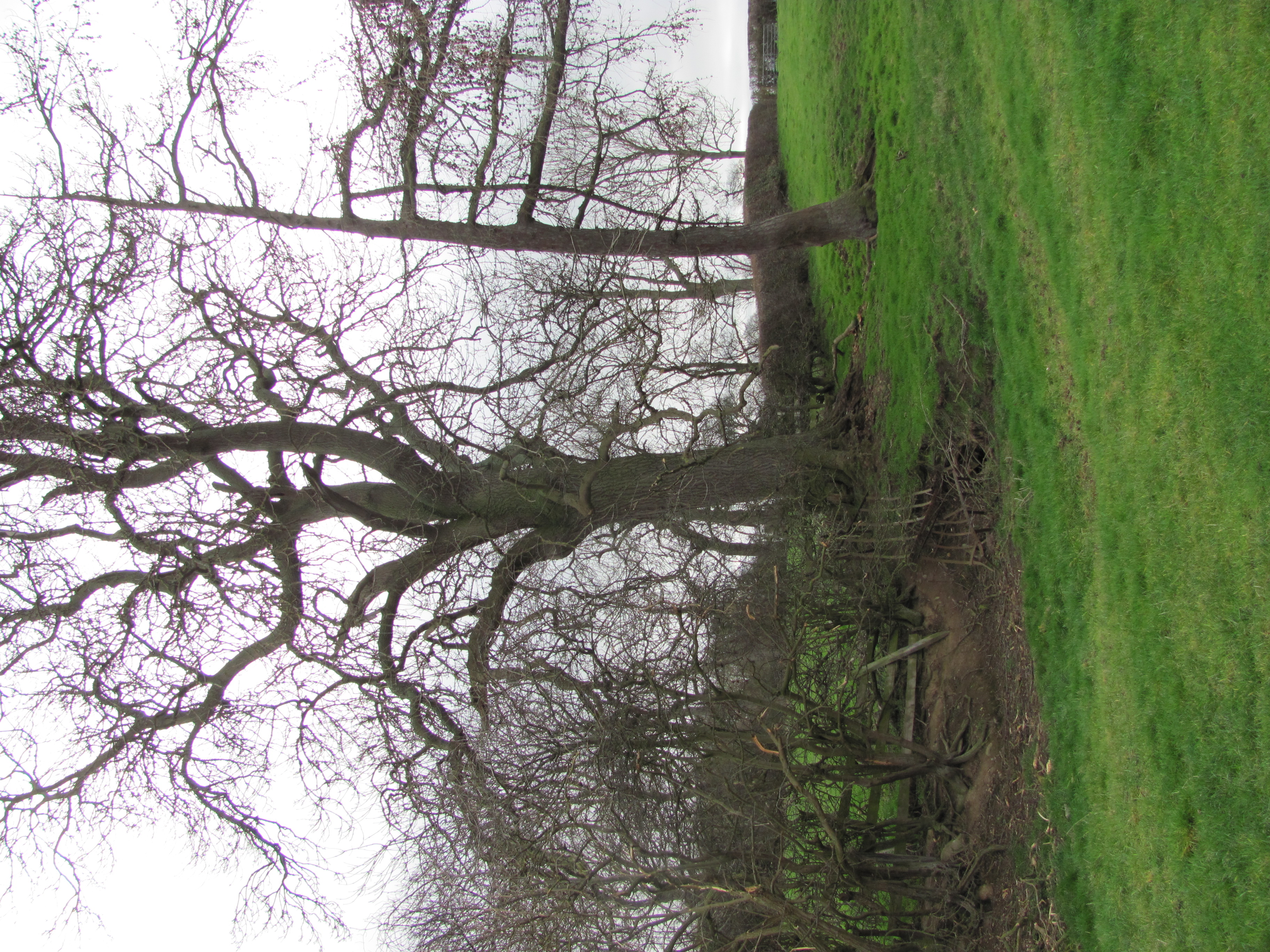
The old Ash tree that will overlook the new allotments.
The spring emerging from its old collapsed brickwork. The water table is so low it is currently dry.
The mature trees in the corner of land to be developed as part of our community gardens.

So, opportunities are coming our way. The  council will tidy out the pond, removing old fences, and other rubbish and hopefully the barbed wire surrounding it. A fence will be built around it with gated access, all conforming with the latest health and safety requirements. The old Ash tree will be attended to by tree surgeons to make it safe and ensure its future health. The 25 plots will be prepared for cultivation.

And then it will be up to new plot holders to cultivate them and the committee to develop the green spaces. the area around the spring could become a bog garden and the area under the mature trees could become a mini-arboretum. We shall see!

Categories
allotments bird watching birds climbing plants fruit and veg garden design garden photography garden wildlife gardening grow your own winter gardens

A Wander Around Our Garden in March

This is the third of the garden wandering posts already. Why is this year going so quickly? Could it be that we have had so many days when the weather has been amenable to gardening? So what is happening here in our garden? The bulbs are at last flowering well after such a slow start but in contrast the birds are responding quickly to warmer periods of weather. Robins are nesting in the box on my fishing tackle shed, House Sparrows are using three boxes around the garden, Great Tits are using the box on the summer-house and Blue Tits have started building in the box opposite the front door. They are so busy! Blackbirds are collecting moss from the lawns and dried grass stems from the borders so are nesting somewhere close by. The early morning bird song gets louder and more birds join in the chorus each day.

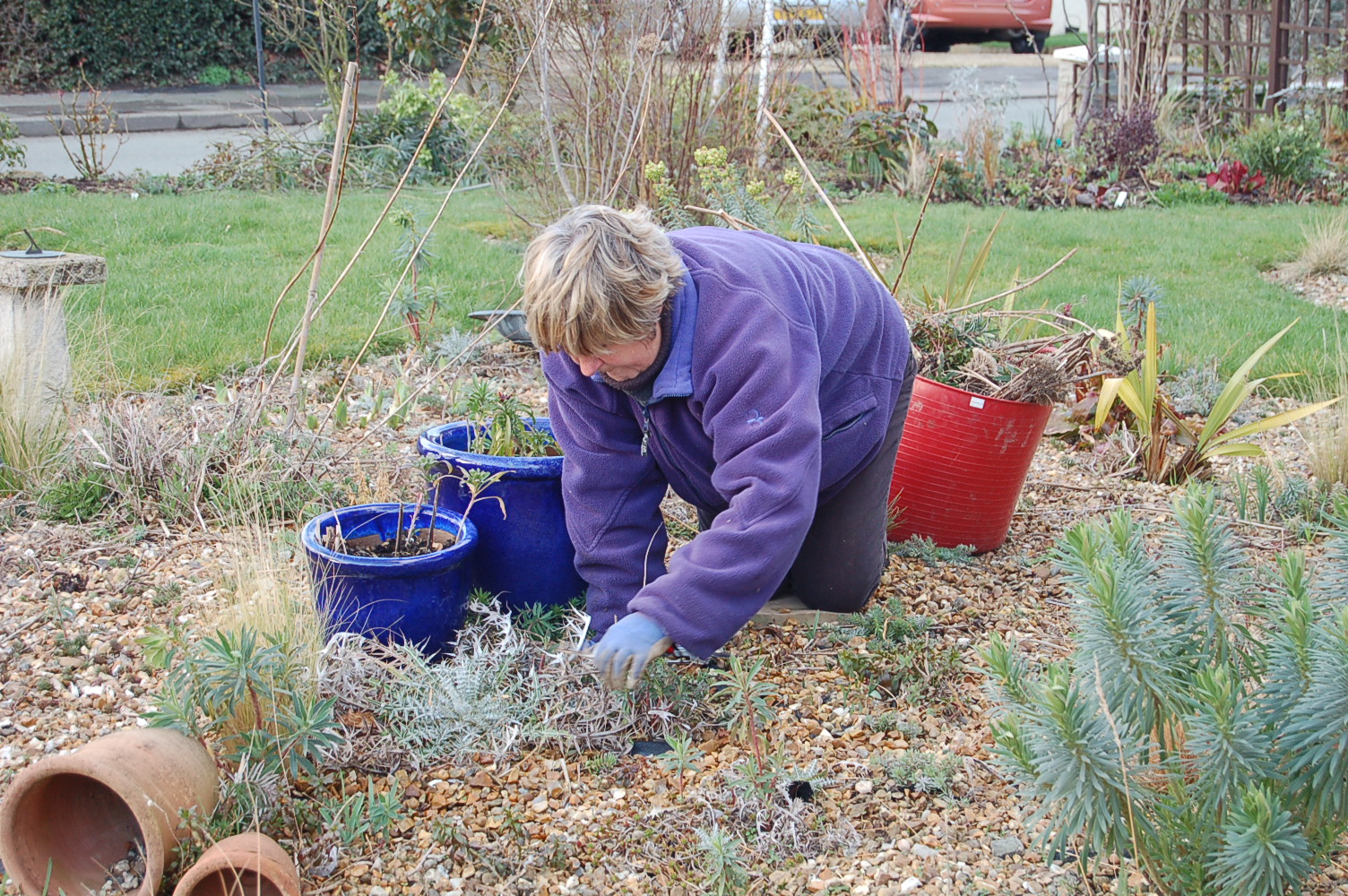
We have spent most sunny days continuing to clear borders, cutting down and adding new mulch. Clearing the “Beth Chatto Garden” is a hands and knees job. Jude the “Undergardener” pulls up weed seedlings by hand. Very tedious but made more enjoyable by the constant song of Blackbirds, Song Thrushes and Robins. Calls of Buzzards high above us provide a good excuse to stop occasionally.

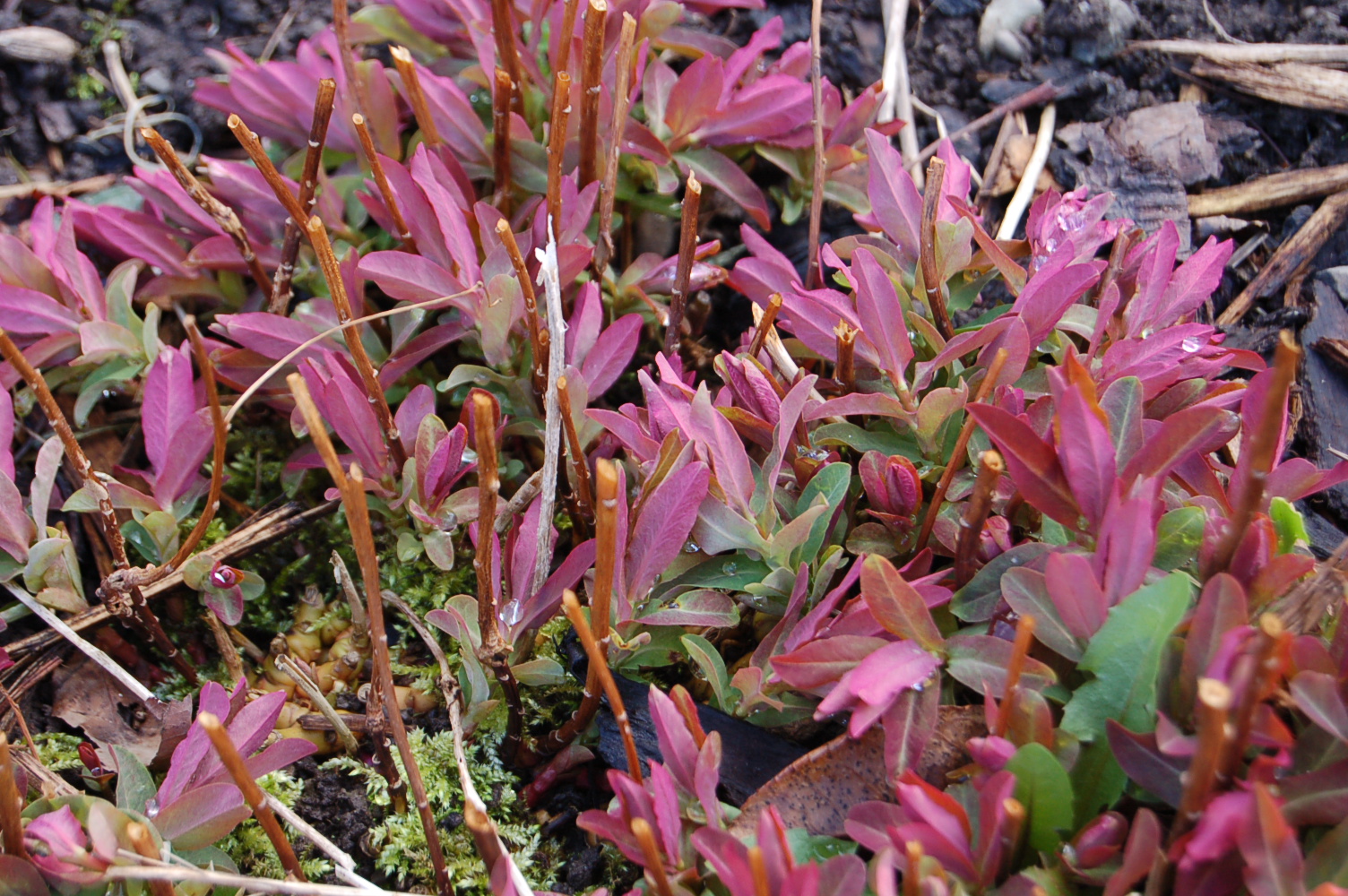
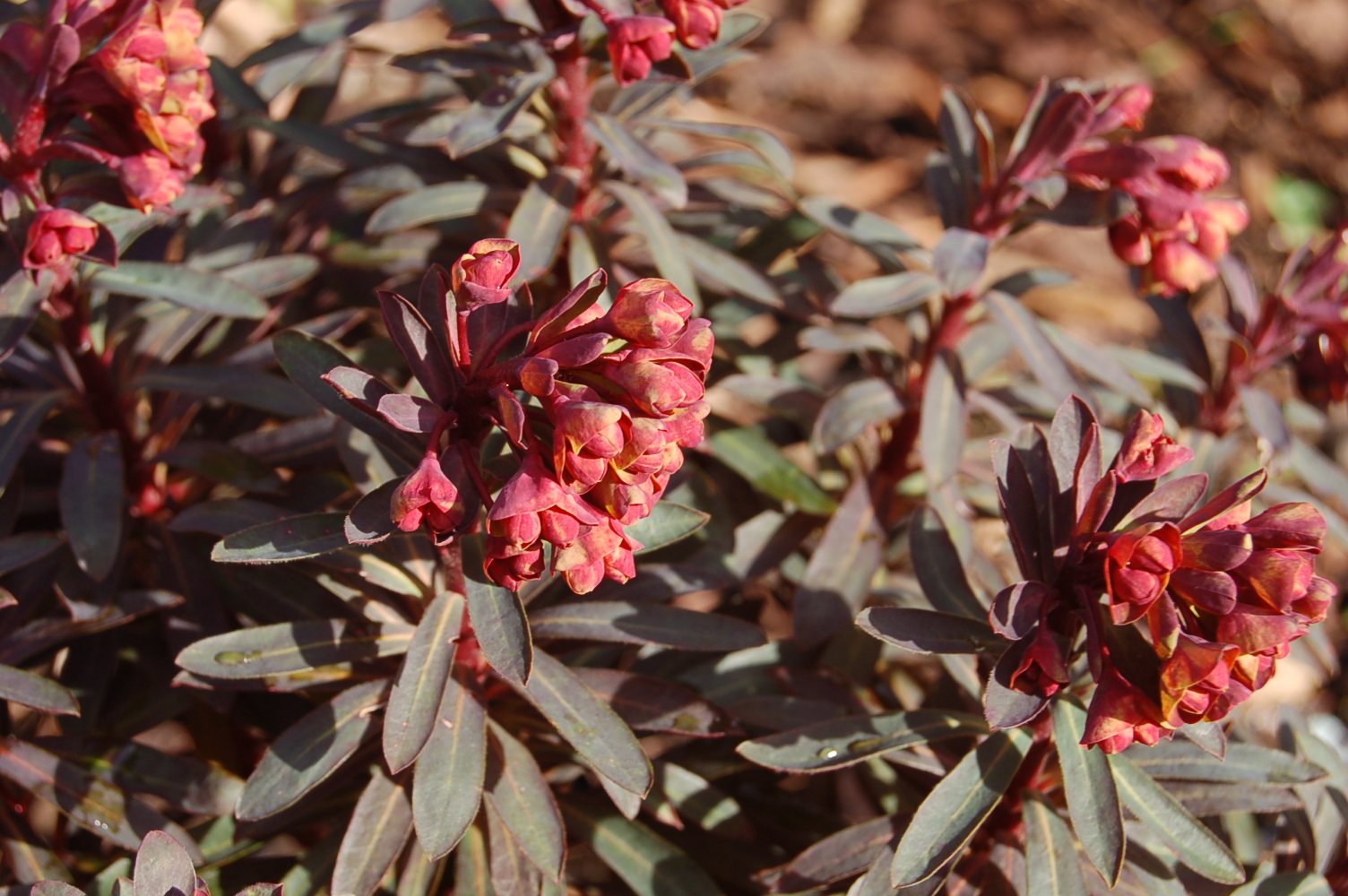
In the front garden Euphorbias are bursting into growth and some have already sent up their flower stalks curling over like shepherds’ crooks. New growth on the later ones is showing bright colours as they emerge from the bark mulch.

The flowering quince at the end of the drive is covered in bright red blooms scattered amongst its thorny angular network of stems – it will flower for months giving a warm welcome to visitors.

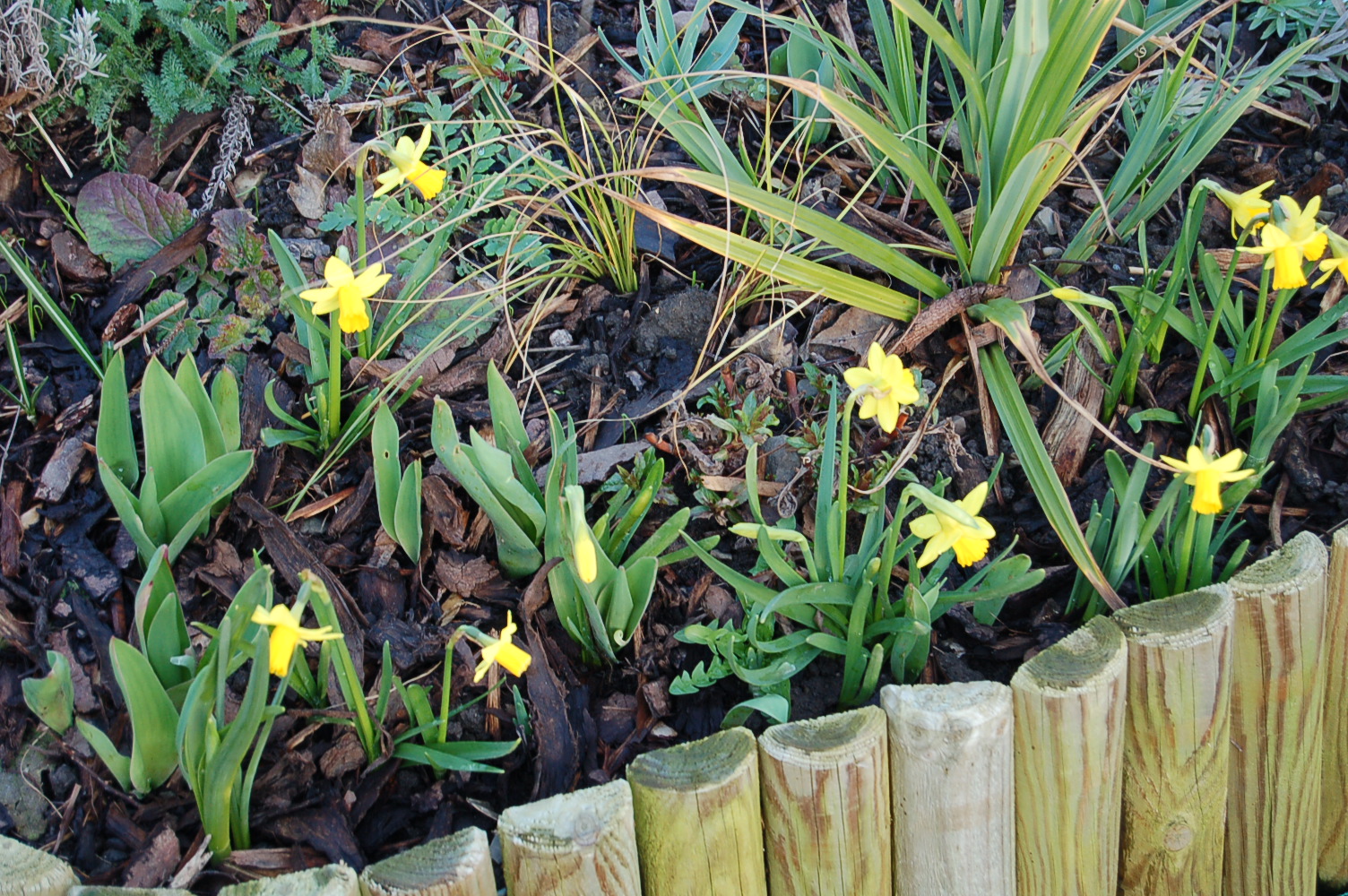
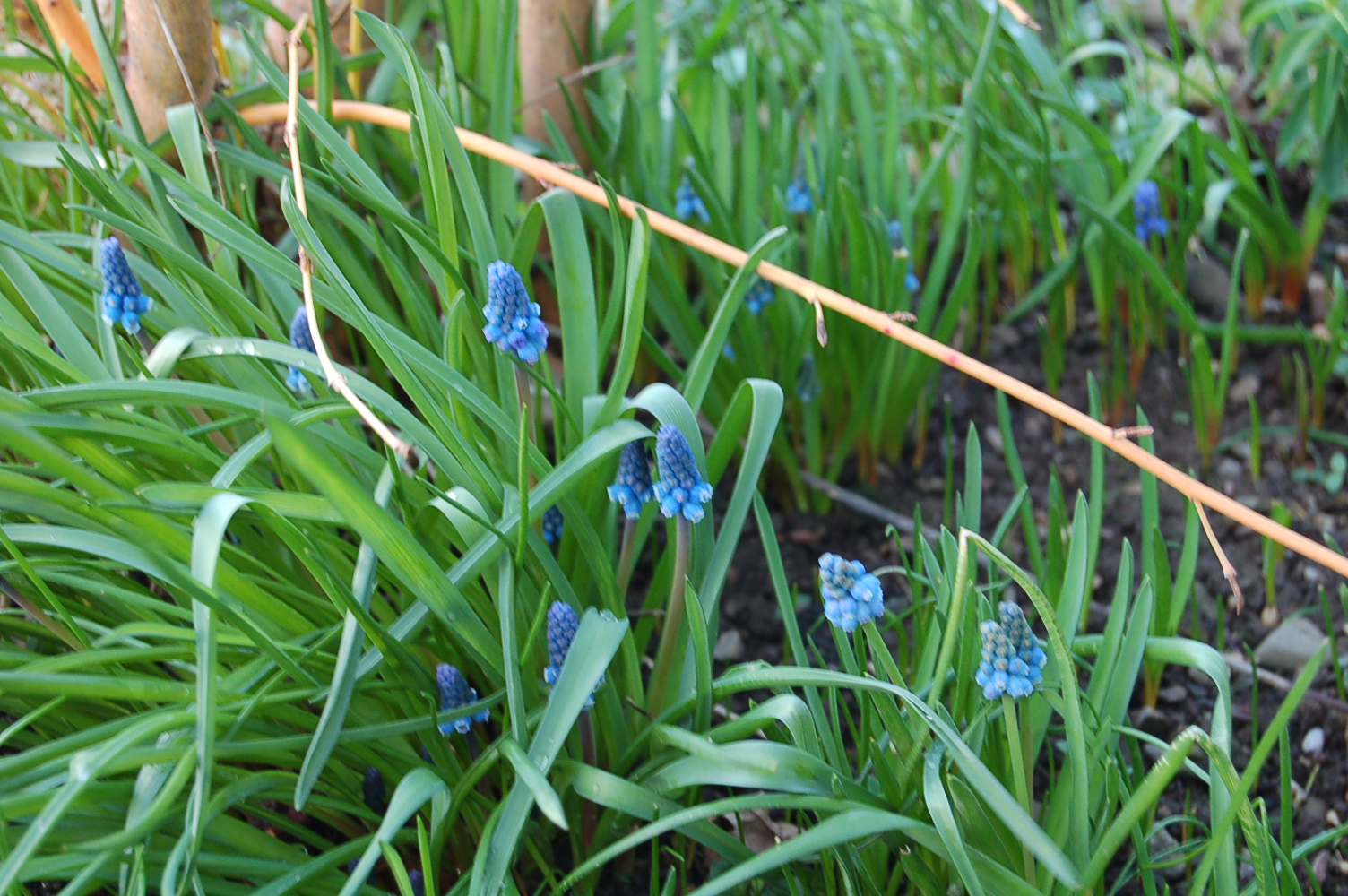
At last our first daffodils are fully in flower! We have waited so long. Muscari are also now bursting into bloom adding their own shade of blue all around the garden.

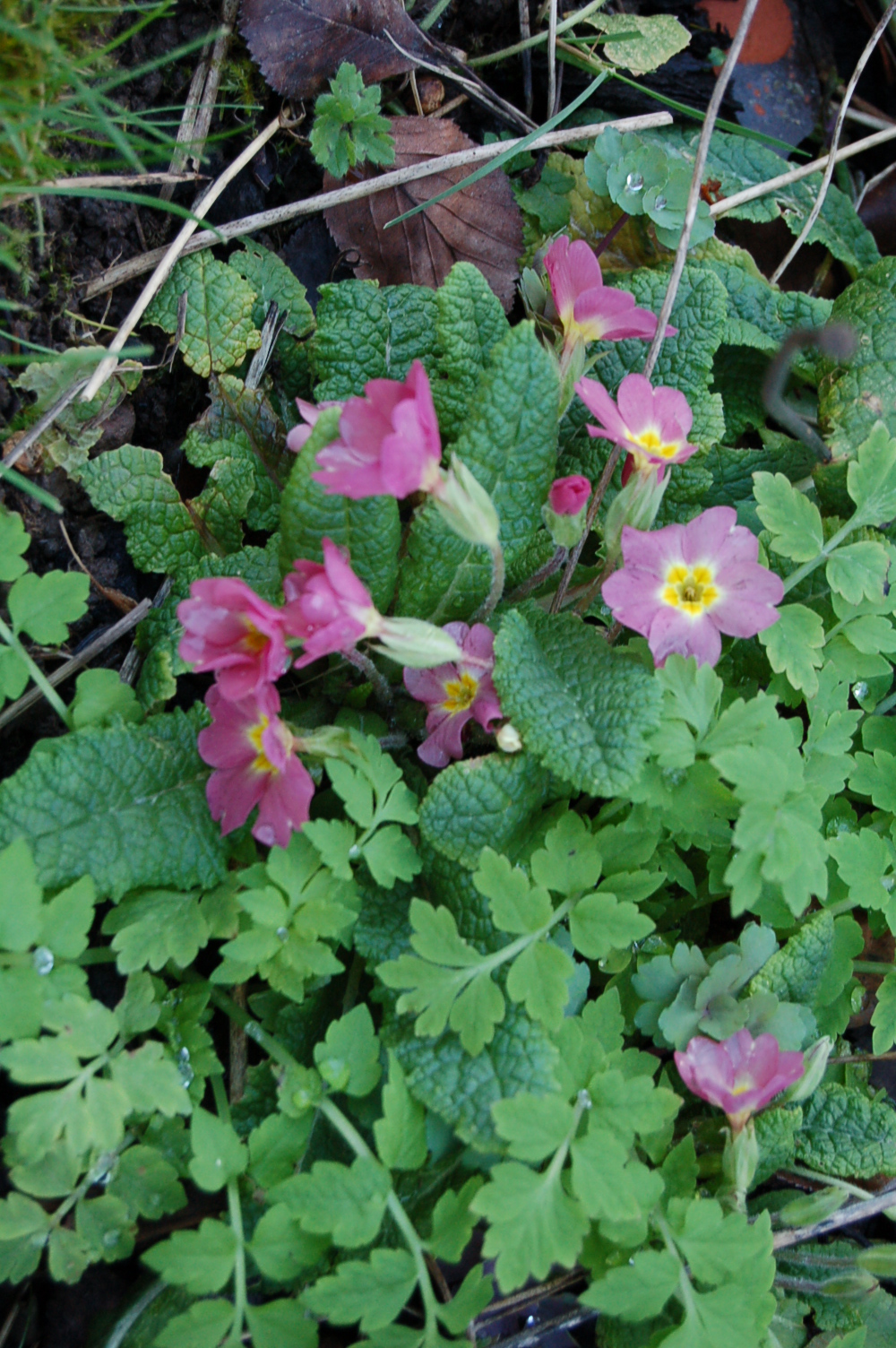
The Primroses we grew from seed a few years ago now give us big clumps of flower in their own special shade of yellow. They are self seeding and spreading around the garden, with an occasional plant producing flowers of an extraordinary shade of greyish pinky. Not sure I like them!

One of the delights of this time of year are the Pulmonarias with their flowers coloured pink and blue on the same plant and their beautifully marked hairy leaves.

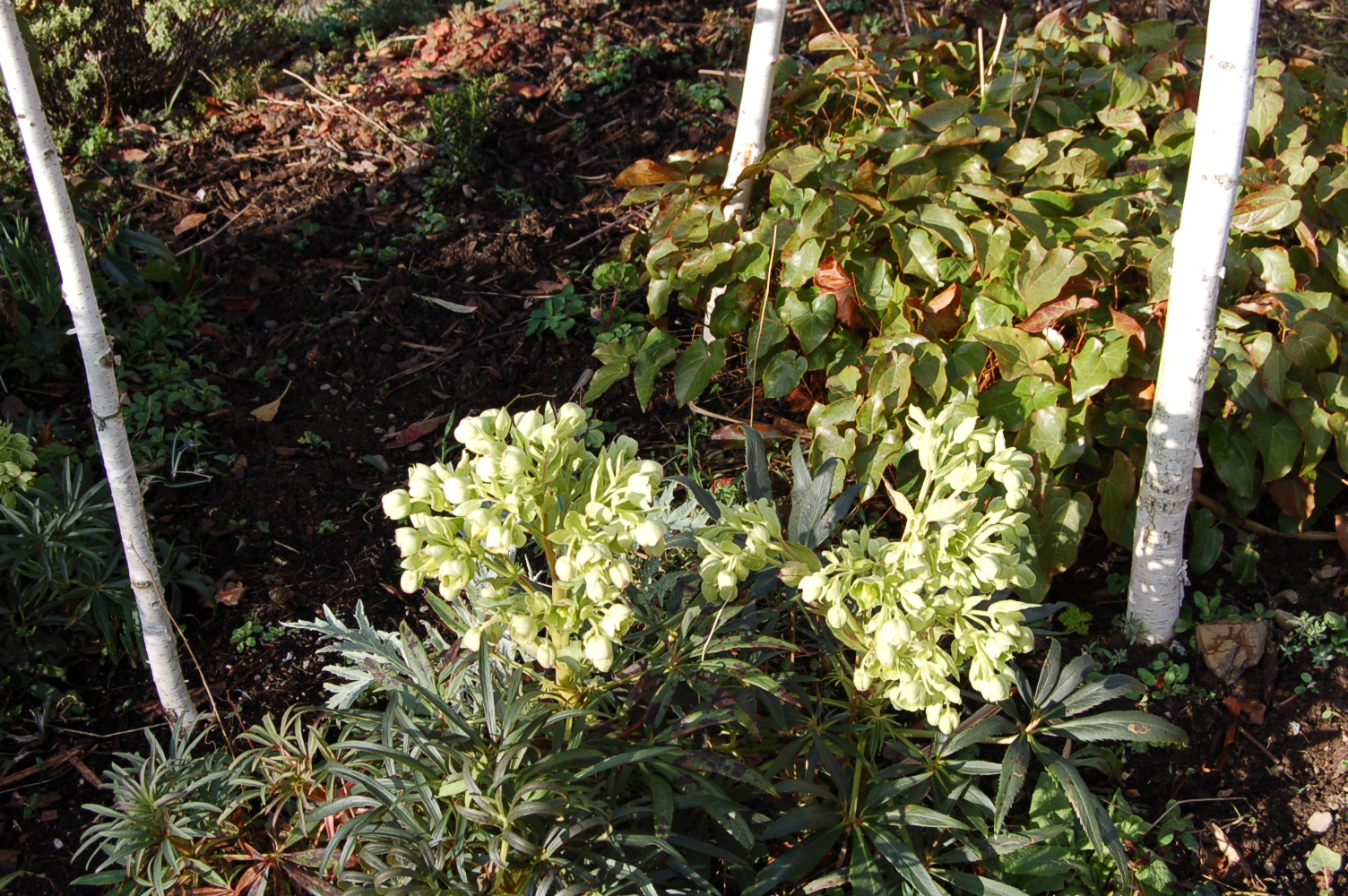
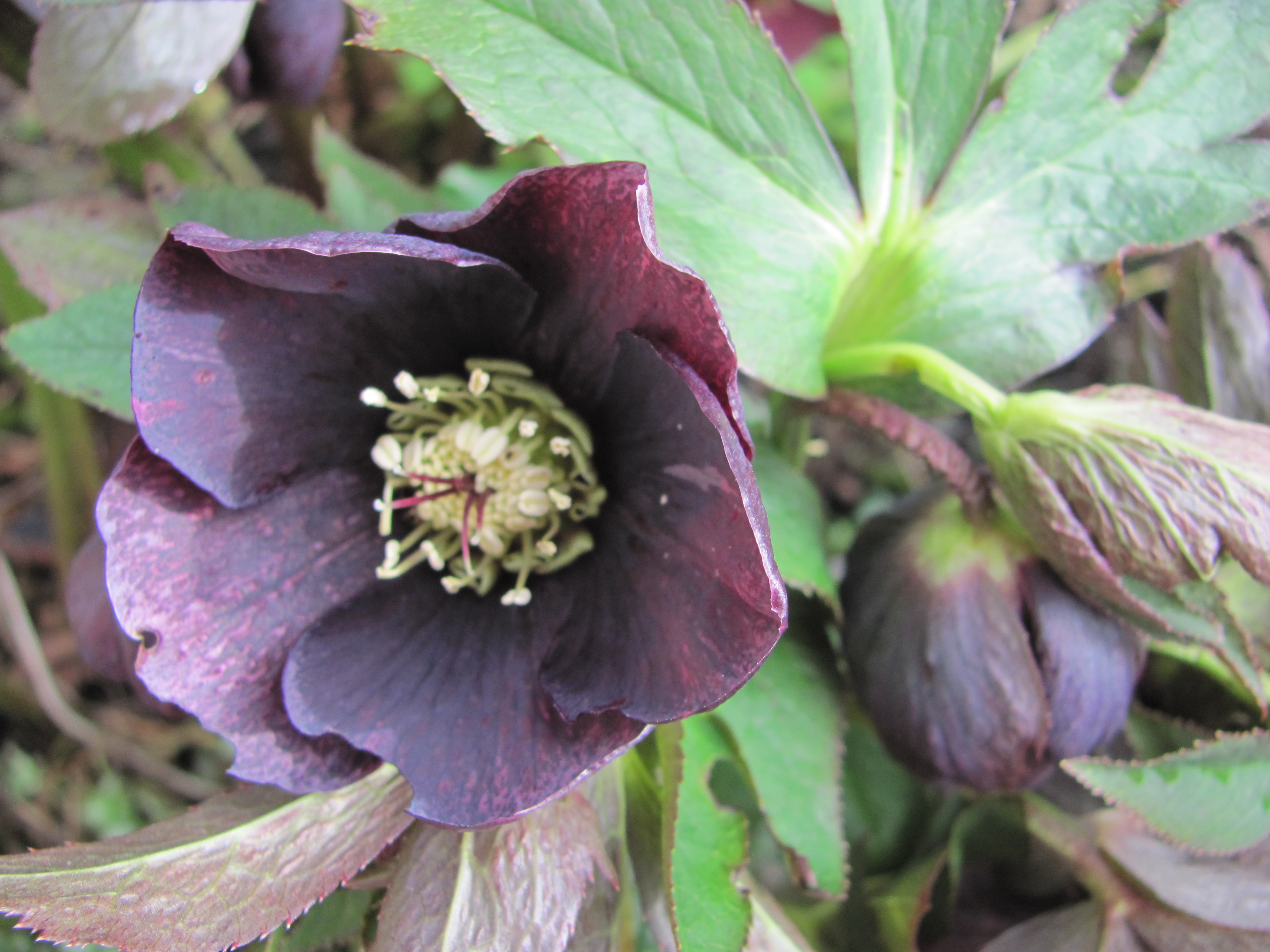
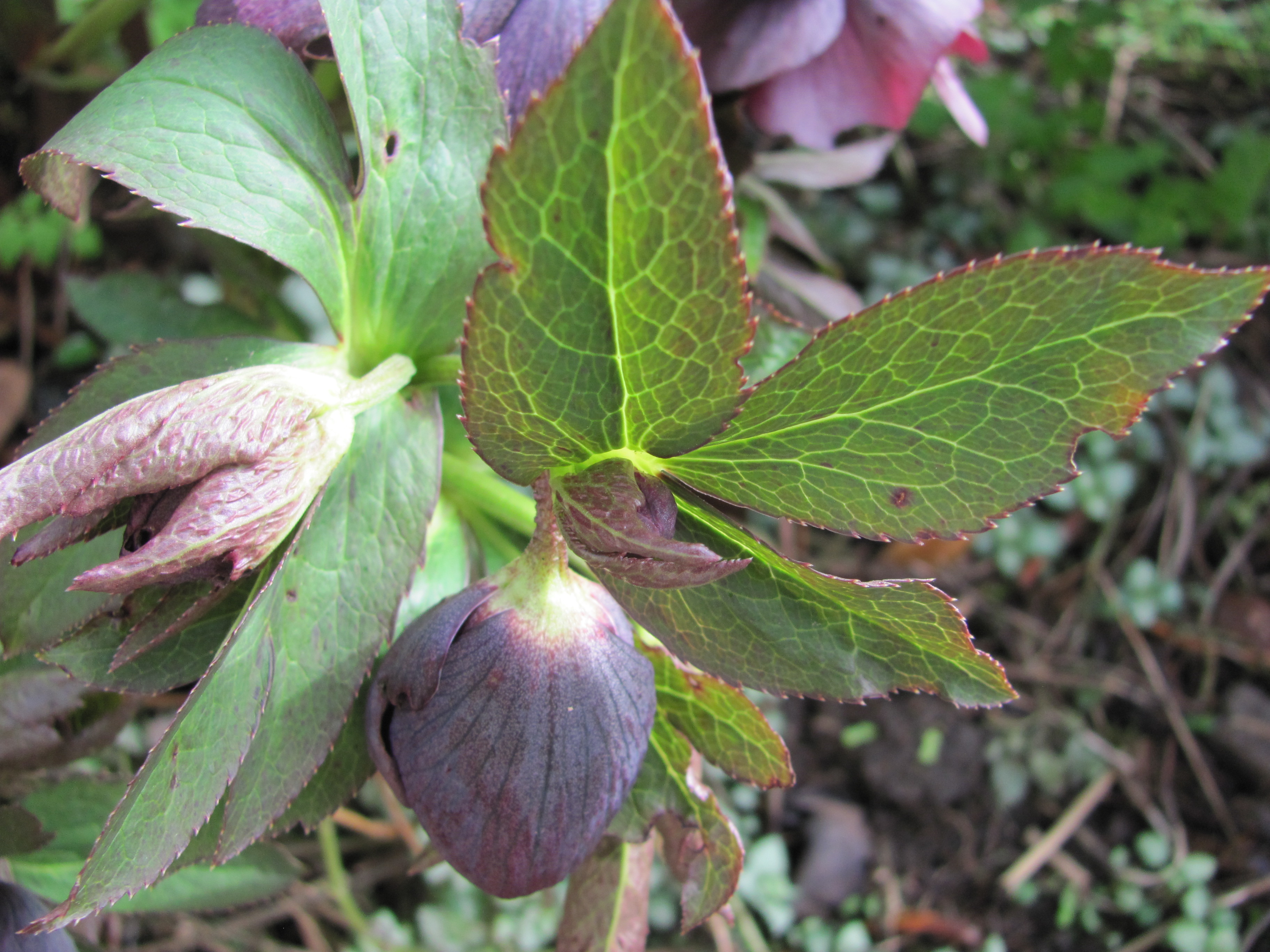
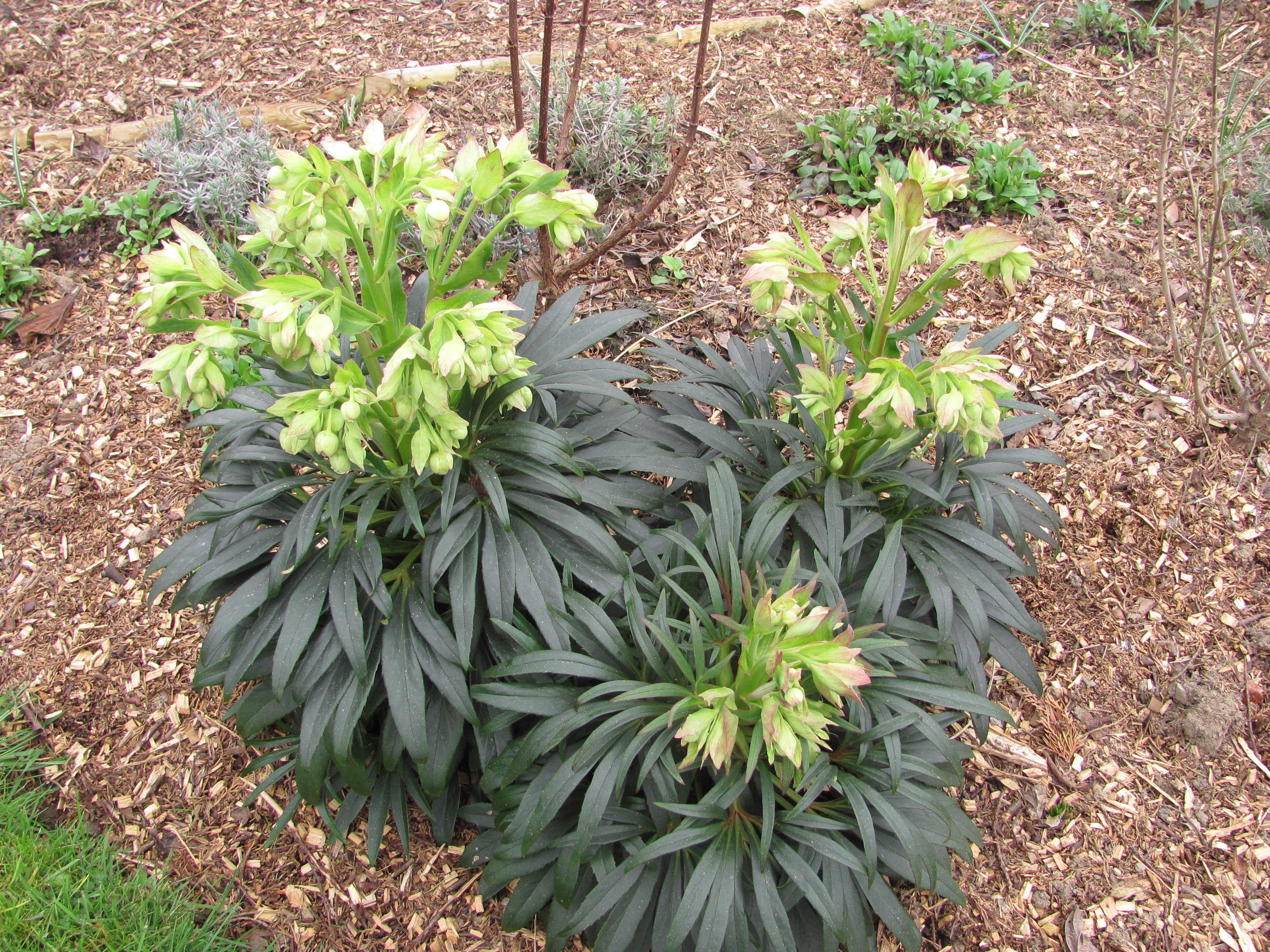
Helleborus have featured in both the January and February garden wanderings and they are still going strong. Two of the last ones to come into flower are this red hybrid and the magnificent near black variety. It looks good in bud and full flower and has the added attraction of interesting foliage. The clump of mixed Hellebores in the “Chicken Garden” give us plenty to look at on coffee breaks when the March sun bursts through and its warmth feels so good on our backs.

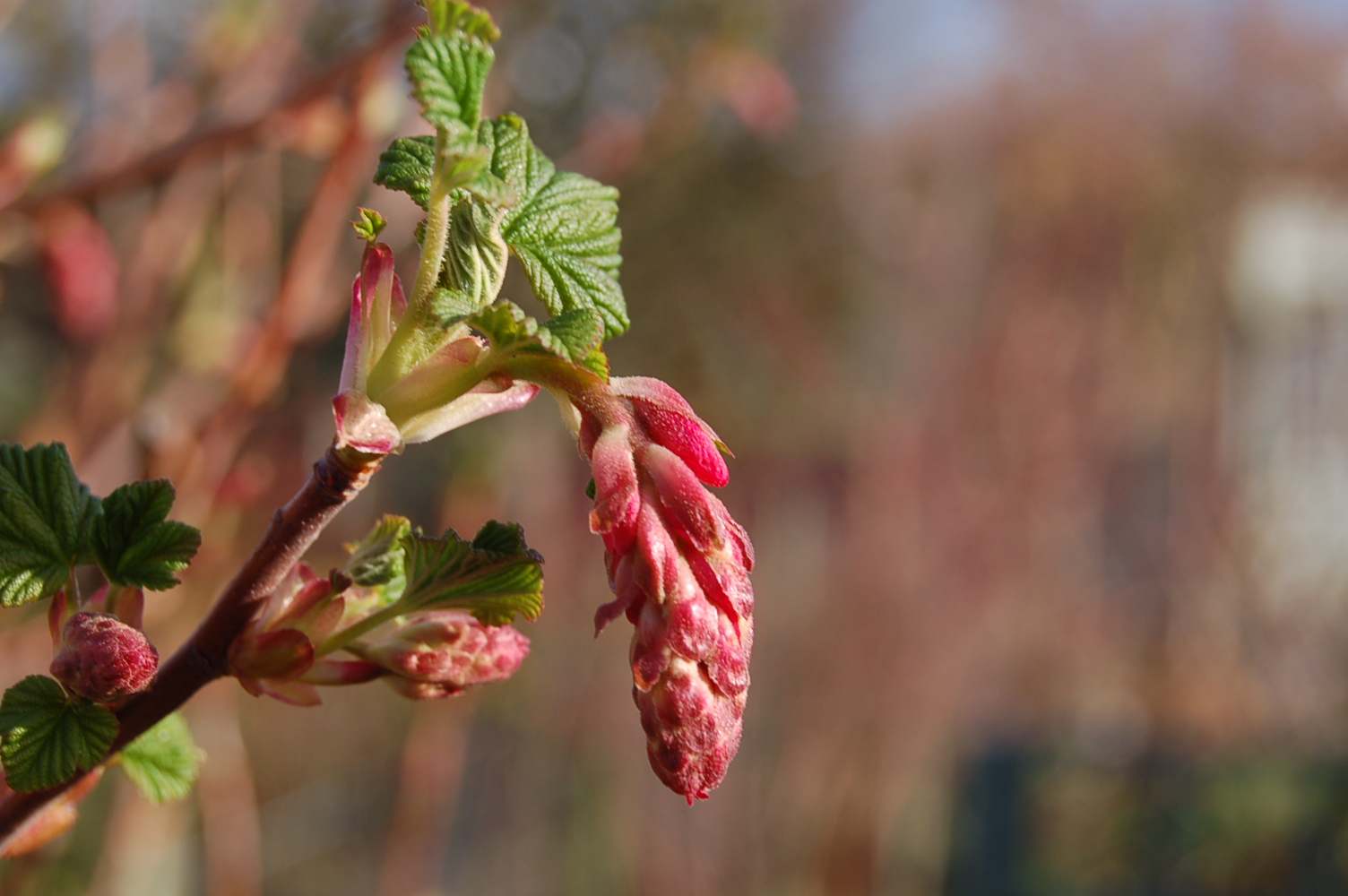
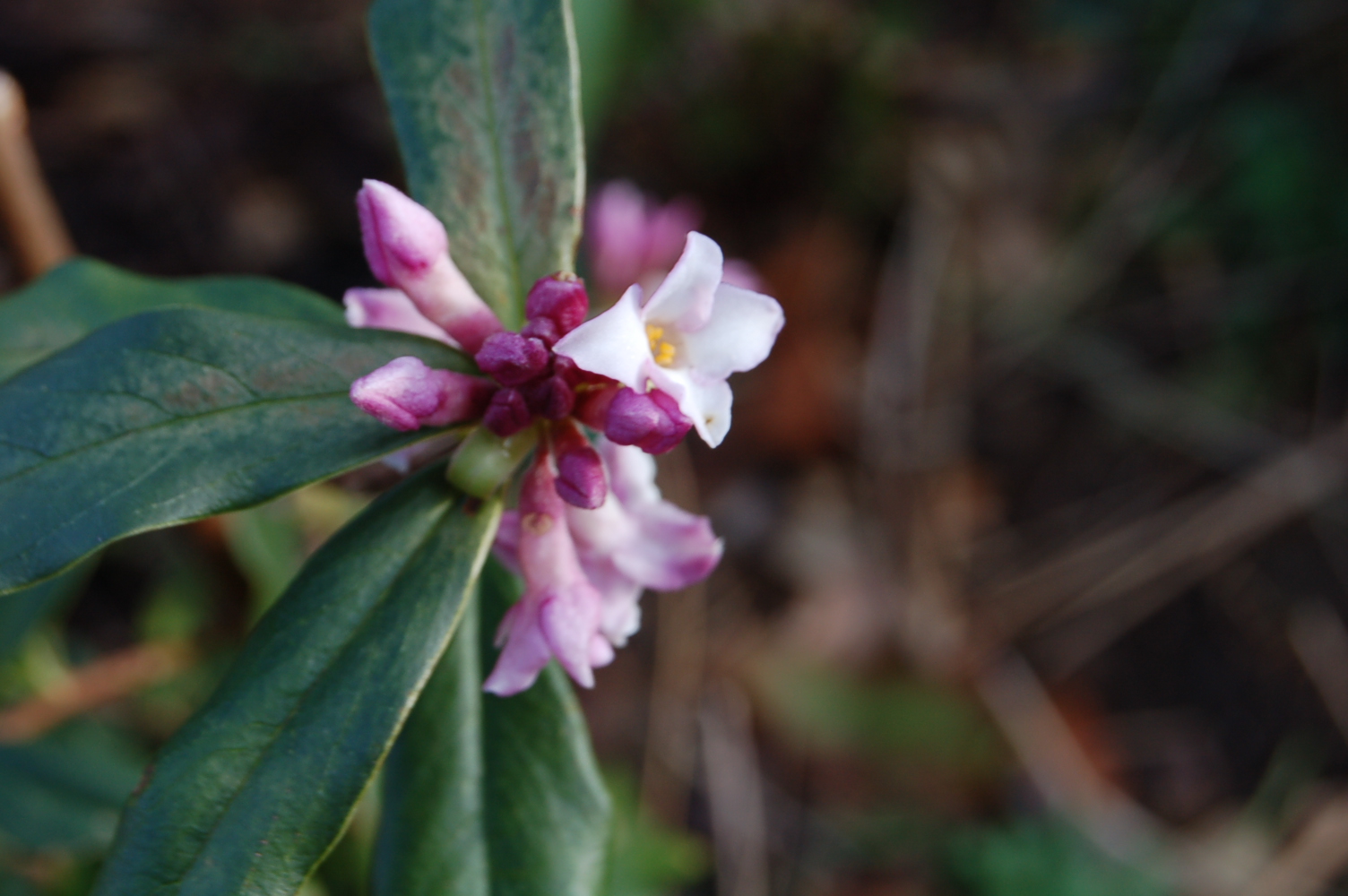
The bees appreciate the early flowering bulbs especially purple crocuses but soon they will be flocking to feed on the Flowering Currant, the exceptionally large flowered variety Ribes sanguineum King Edward VII, which is on the point of bud burst. The buds on the Daphne bhulua “Jacqueline Postill” have opened to reveal highly scented flowers in several shades of pink.

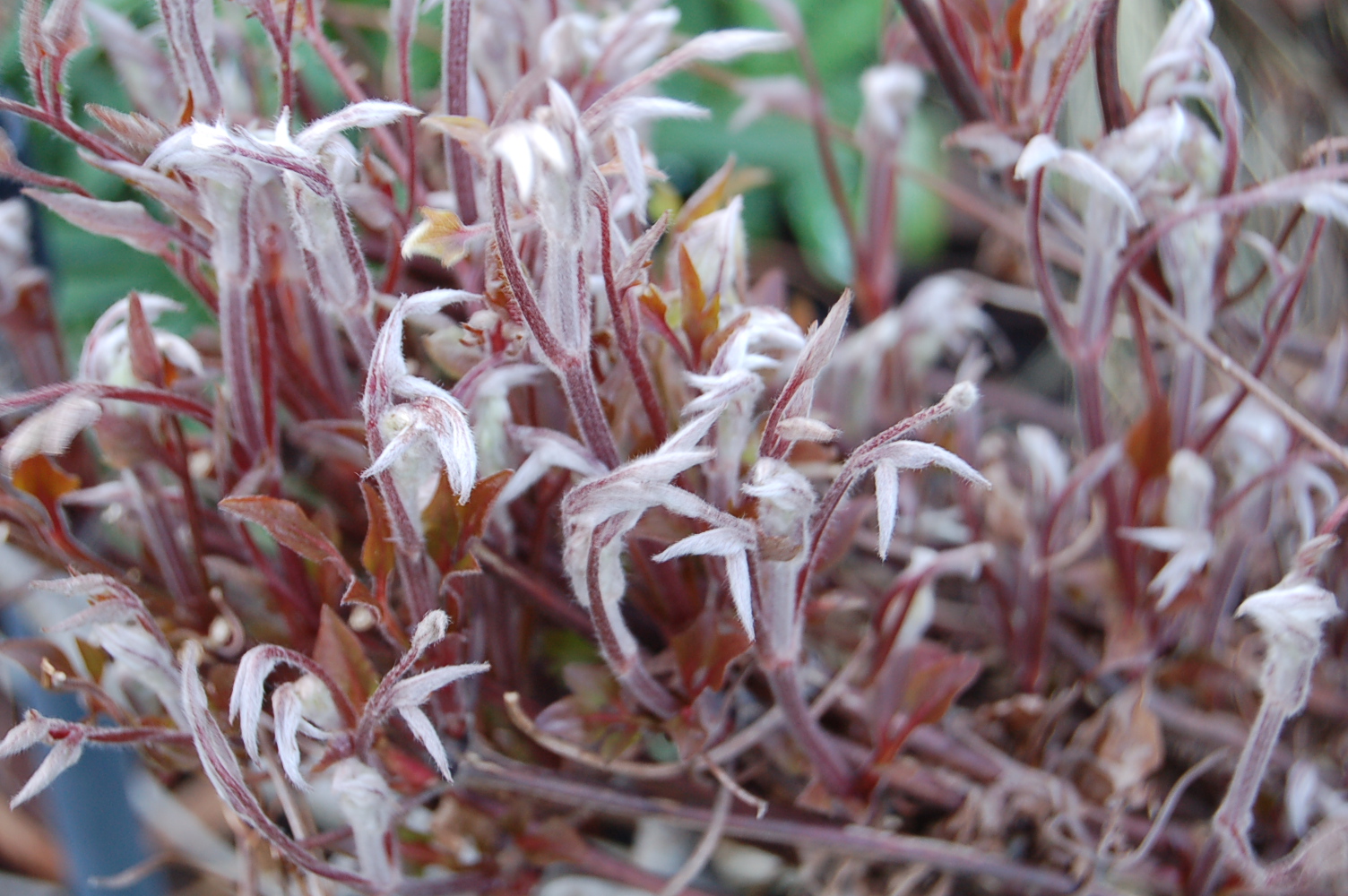
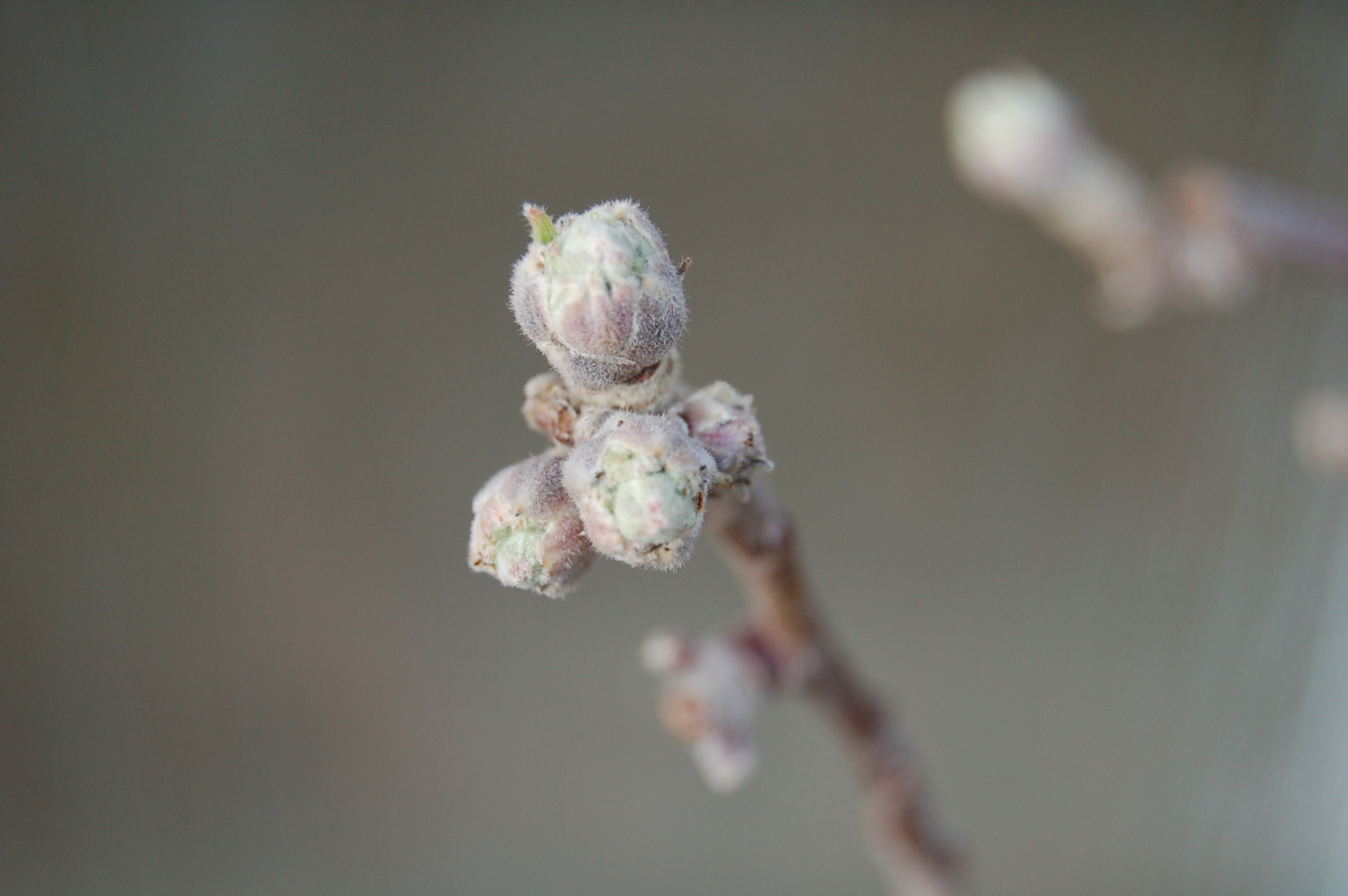
March in the garden is full of promises with buds developing and preparations underway for the productive garden. The photos show buds of Clematis, both climbing and herbaceous, and Apples and Pears.

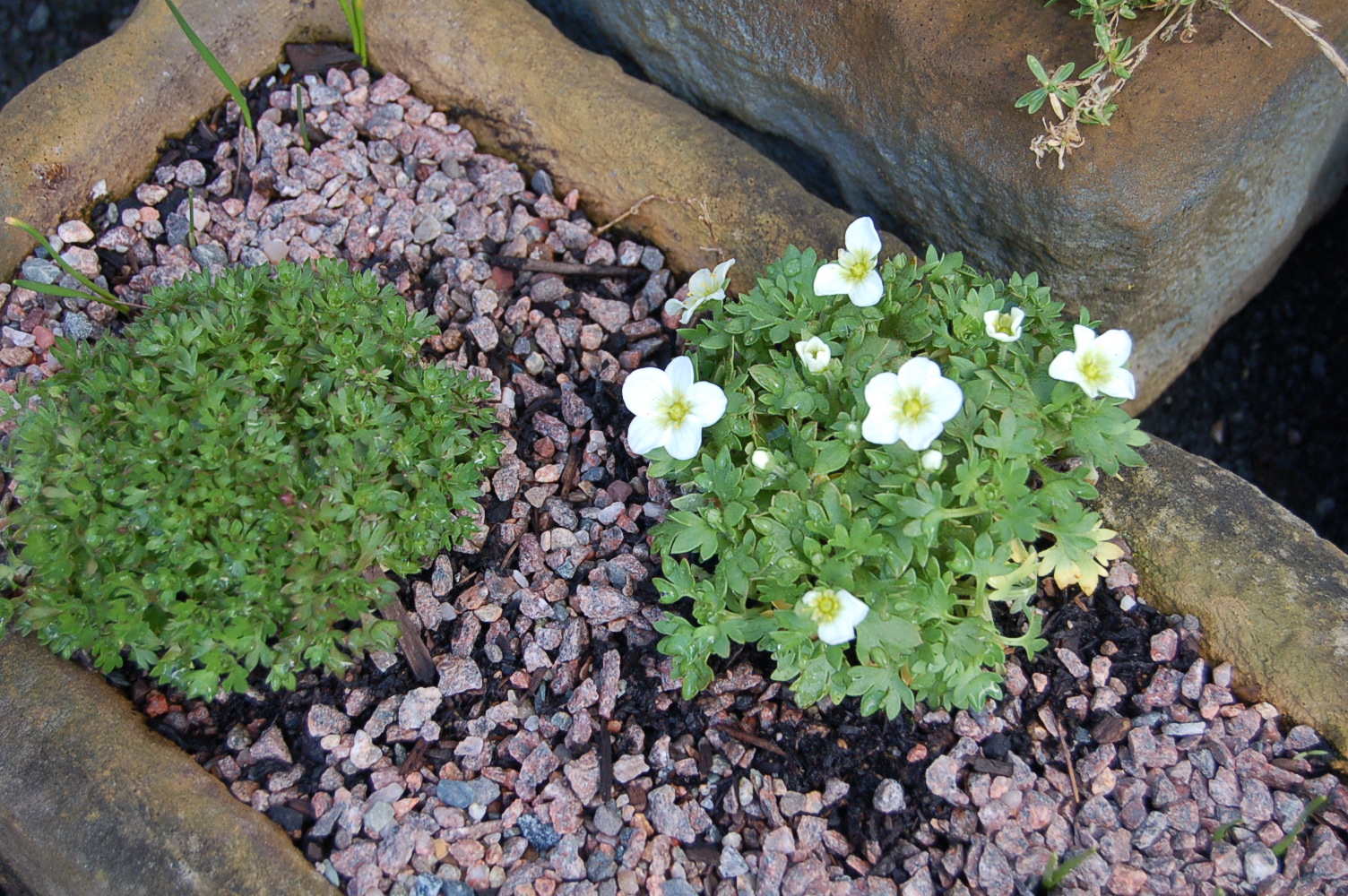
The Sempervivum in the alpine troughs and on the slate scree bed are all budding up nicely but one pure white-flowered one is out and glowing in the March sunlight. They are such precious little jewels of plants.

Our two newest areas of the garden, the Chicken Garden and the Secret Garden, are turning glaucous green with Allium leaves. One area is like a lawn of Allium. They seem to enjoy our soil too much and are spreading and self seeding madly!

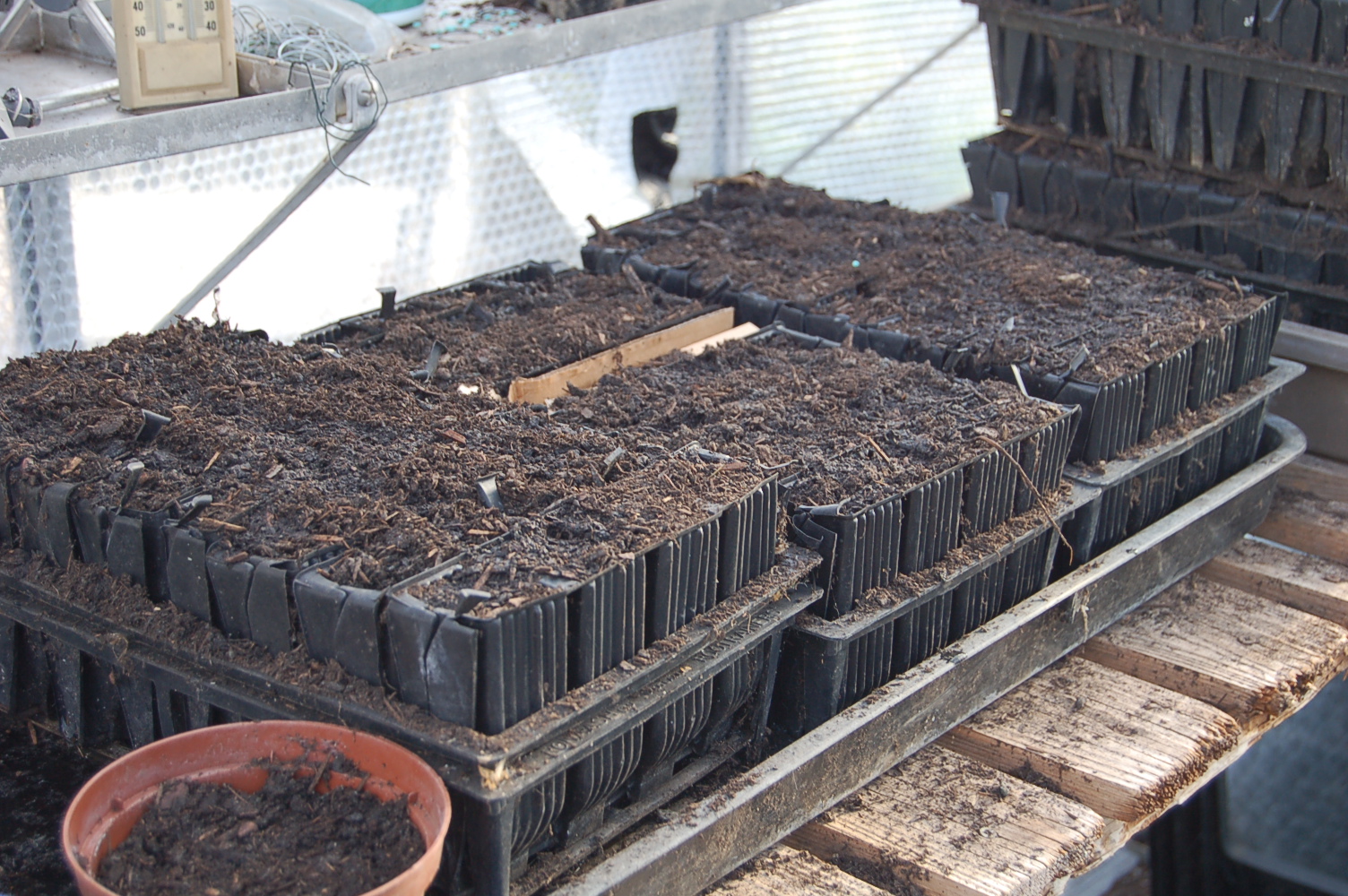
The productive side of our gardening mostly happens on our allotment but we have a big greenhouse in the back garden where we start off many of the veggie plants. Some seedlings have germinated in the propagator and lots cells and 5 inch pots are full of compost ready for us to sow peas, broad beans and sweet peas.

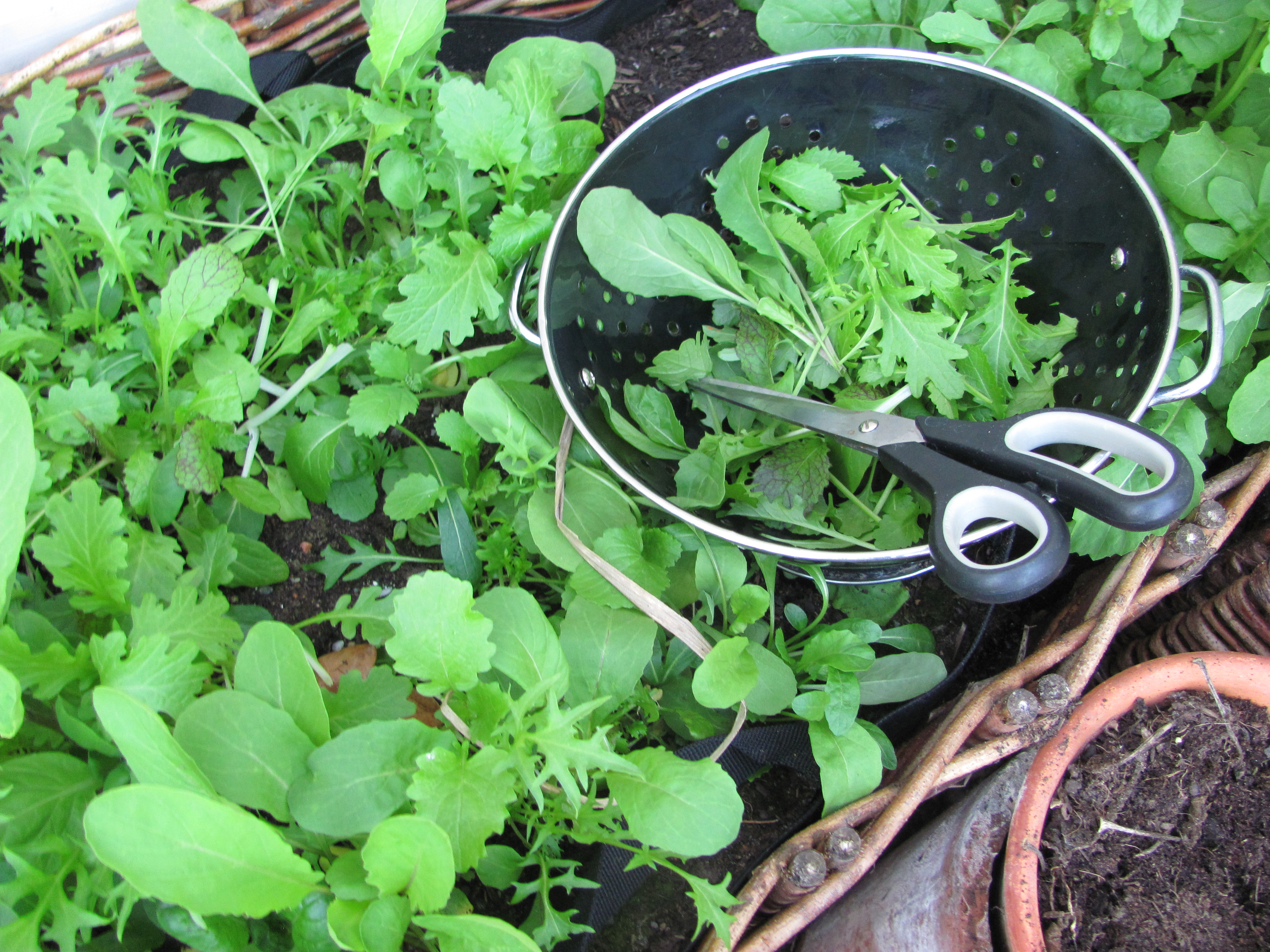
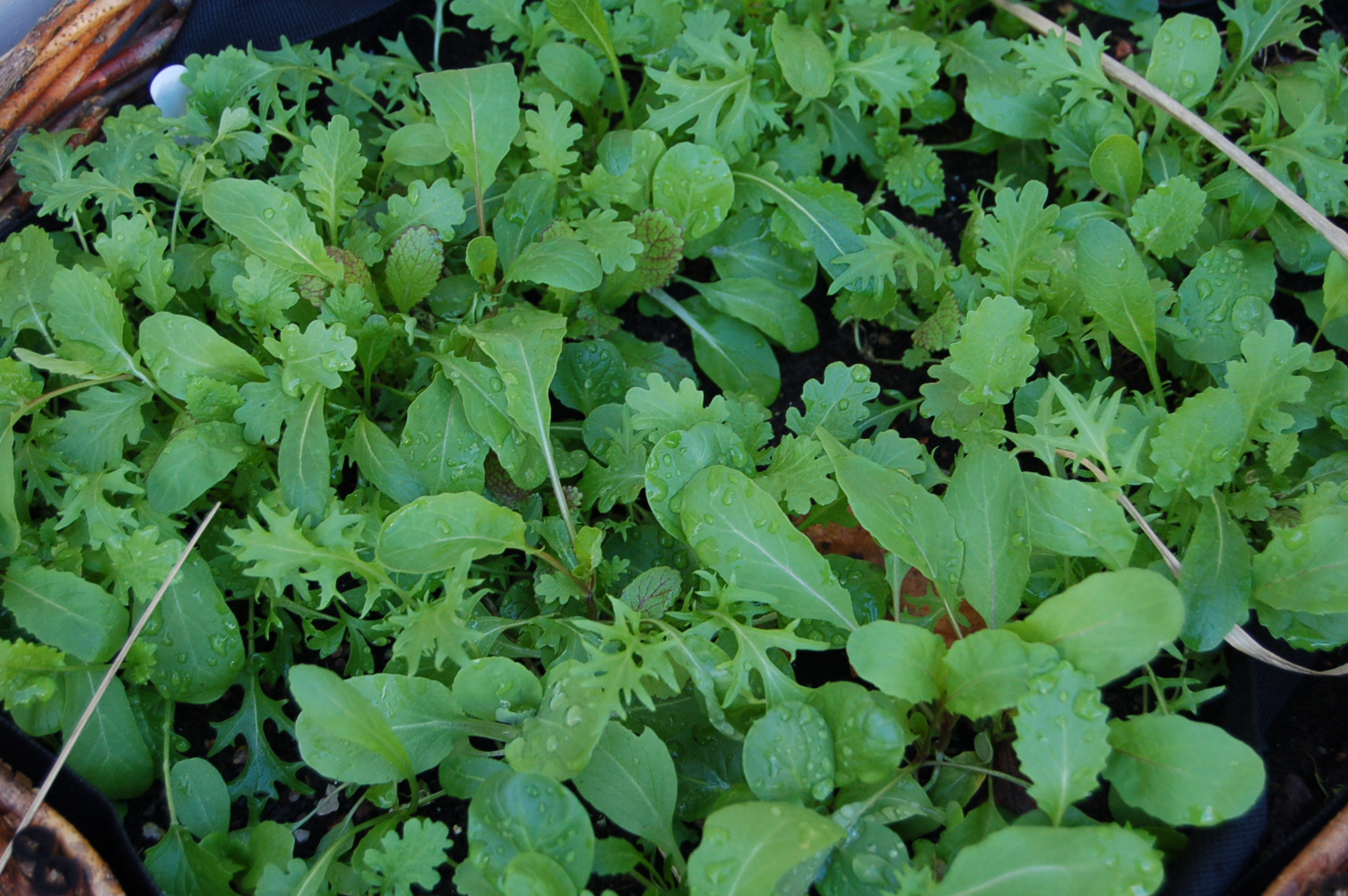
In our raised wicker beds just outside the back door the cut-and-come-again salad leaves are almost ready for the first cutting – and of course the first eating. So many different textures, colours and tastes! Delicious! Much is still to happen in March and on into April.

Our Comfrey patch is showing strong growth. This is one of the most important areas of the garden for in this 2ft by 10ft bed we grow a comfrey variety called Bocking 14, which we can cut 4 or 5 times a year. The leaves can be put in the bottom of potato trenches before we plant the potatoes to feed them and prevent the disease “Scab”. We also put them as a mulch under fruit trees and bushes as a feed and as a weed suppressant, and use them to make a liquid feed mixed with nettles.

So much is still to happen in the March garden.  It is a busy and exciting month. So much to look forward to.

Categories
allotments fruit and veg garden photography garden wildlife gardening grow your own hardy perennials Uncategorized

A Wander around the Allotments in February

My blog reporting on “A January Wander around the Allotments” was all about the cold, as my wander then was on a bright, sunny but cold day with the thermometer registering minus five. Today my wander was a real treat, with temperatures of plus seven, it felt so mild. The sky however was grey and produced the occasional bout of drizzle. The bird life definitely appreciated the improvement, with so many to see and hear.

My walk over to our plot was halted by the whoosh of wings and the sight of a Kestrel in full hunting mode, its grey and rufus back curling low through the plots in search of its favourite prey, Field Voles. In a matter of a few minutes it had covered half the site, stopping occasionally to peer from a post or shed roof. The birdsong didn’t diminish with its presence but later when a Sparrow Hawk appeared, in threatening mode over the plots, silence reigned.

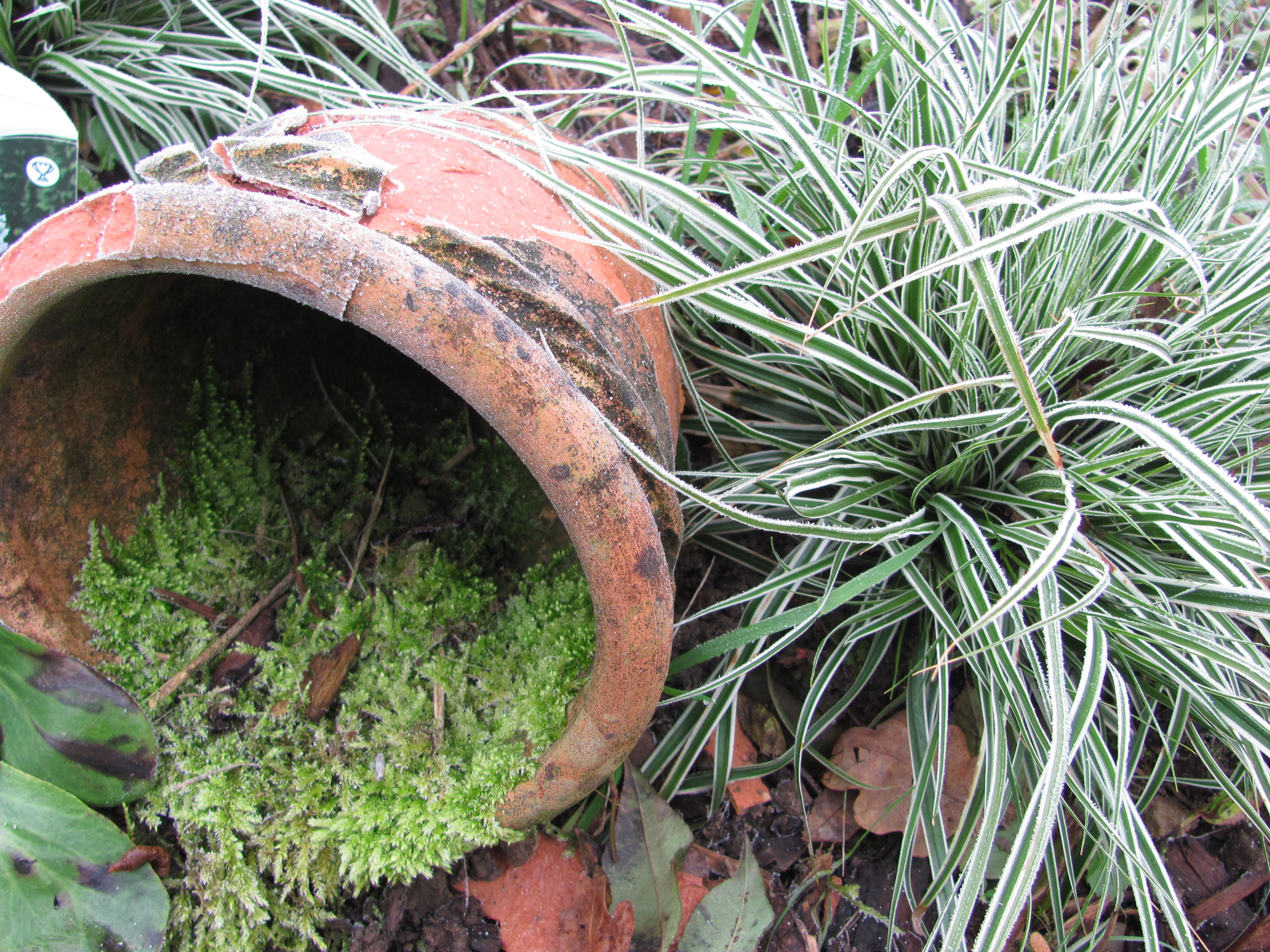
As I went to open up the shed I noticed how the recent freezing weather had shattered the little orange glazed dish I keep shells in on our coffee table, exposing the white china below its glaze.

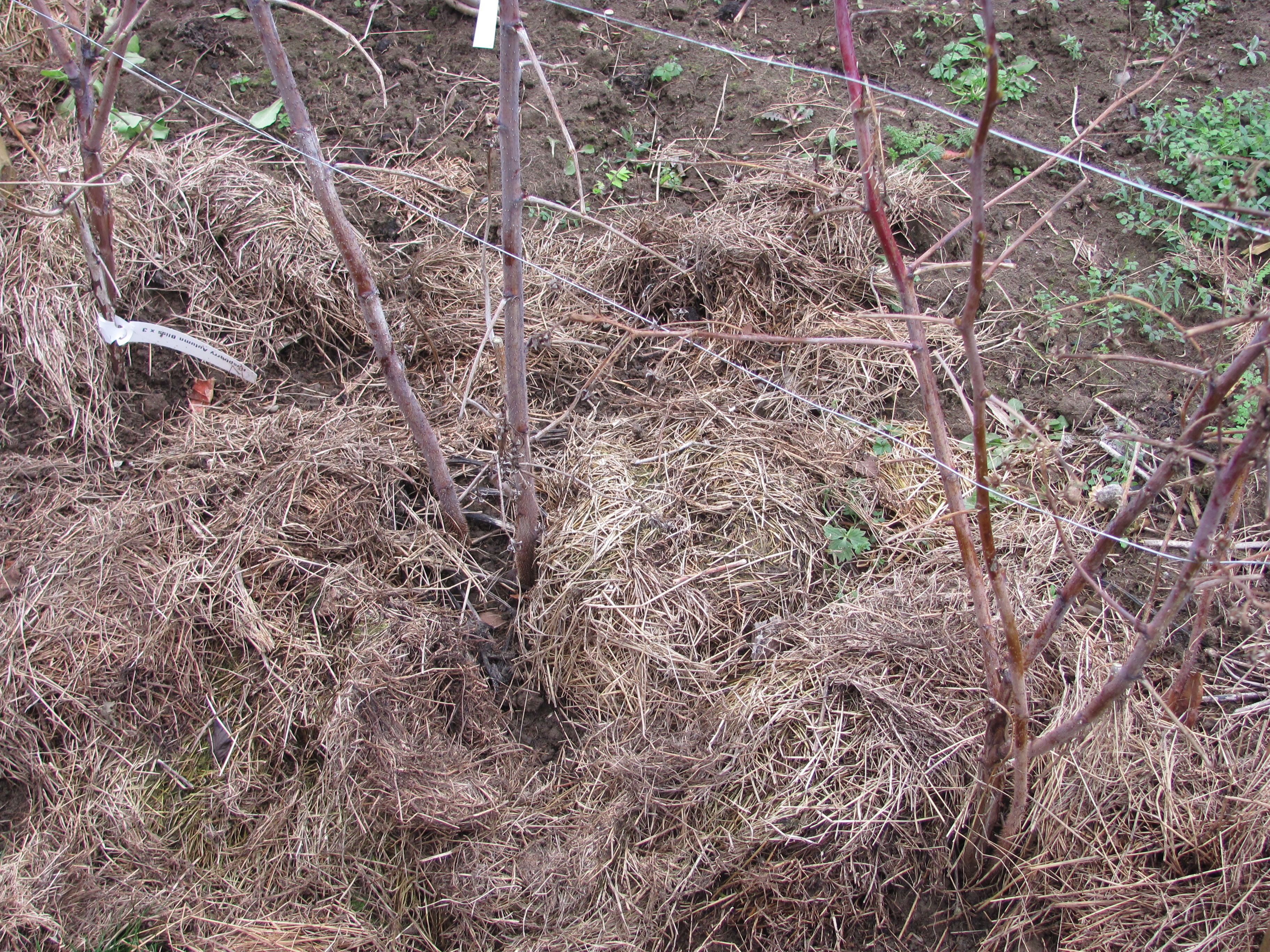
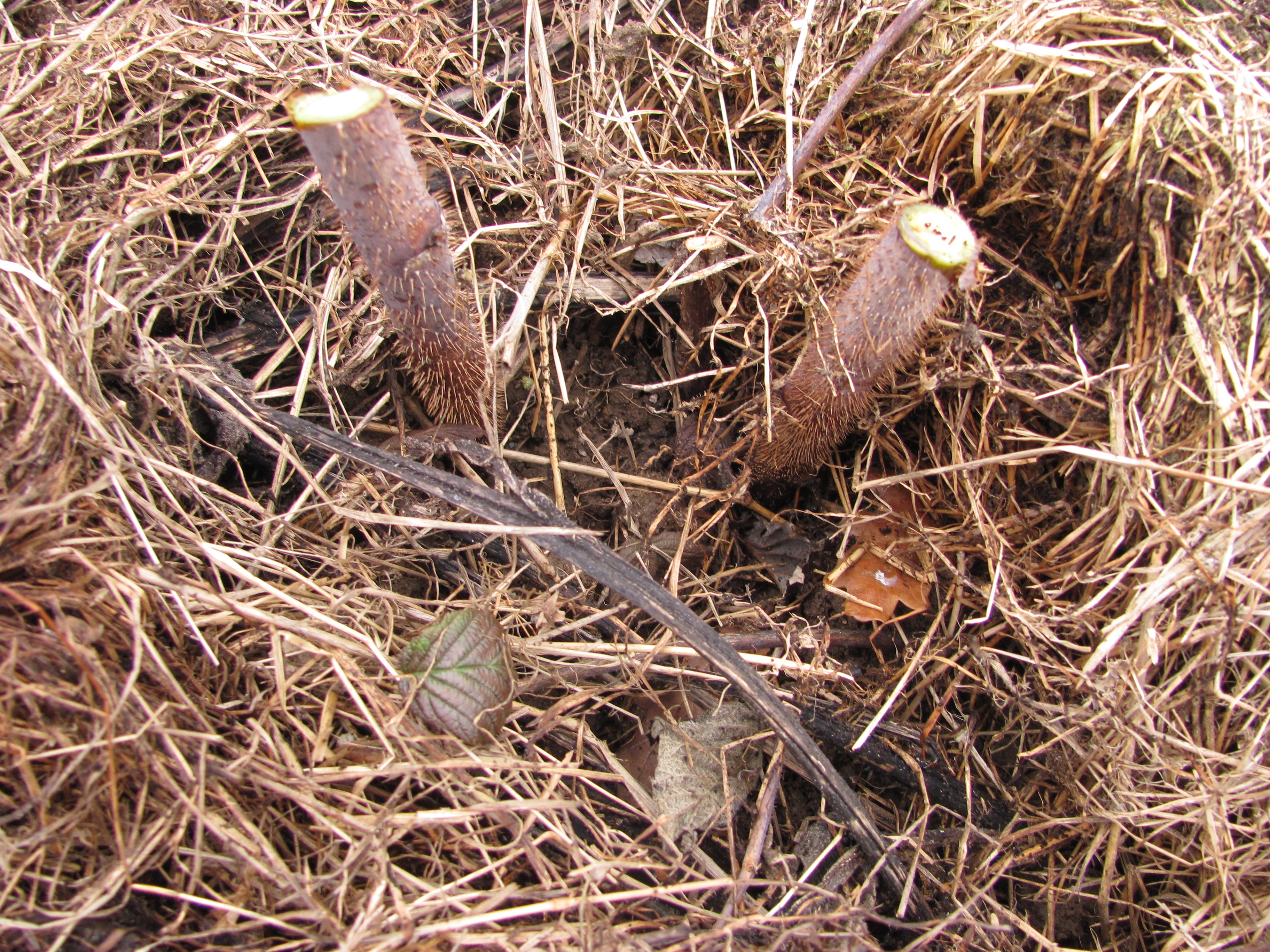
The feeders on our plot needed topping up before I set to work. My first task was to prune the Autumn fruiting raspberries, so pulled back their hay mulch and cut each stem down to just a few inches above the ground. Then their warm mulch blanket was replaced ready for the next cold spell.

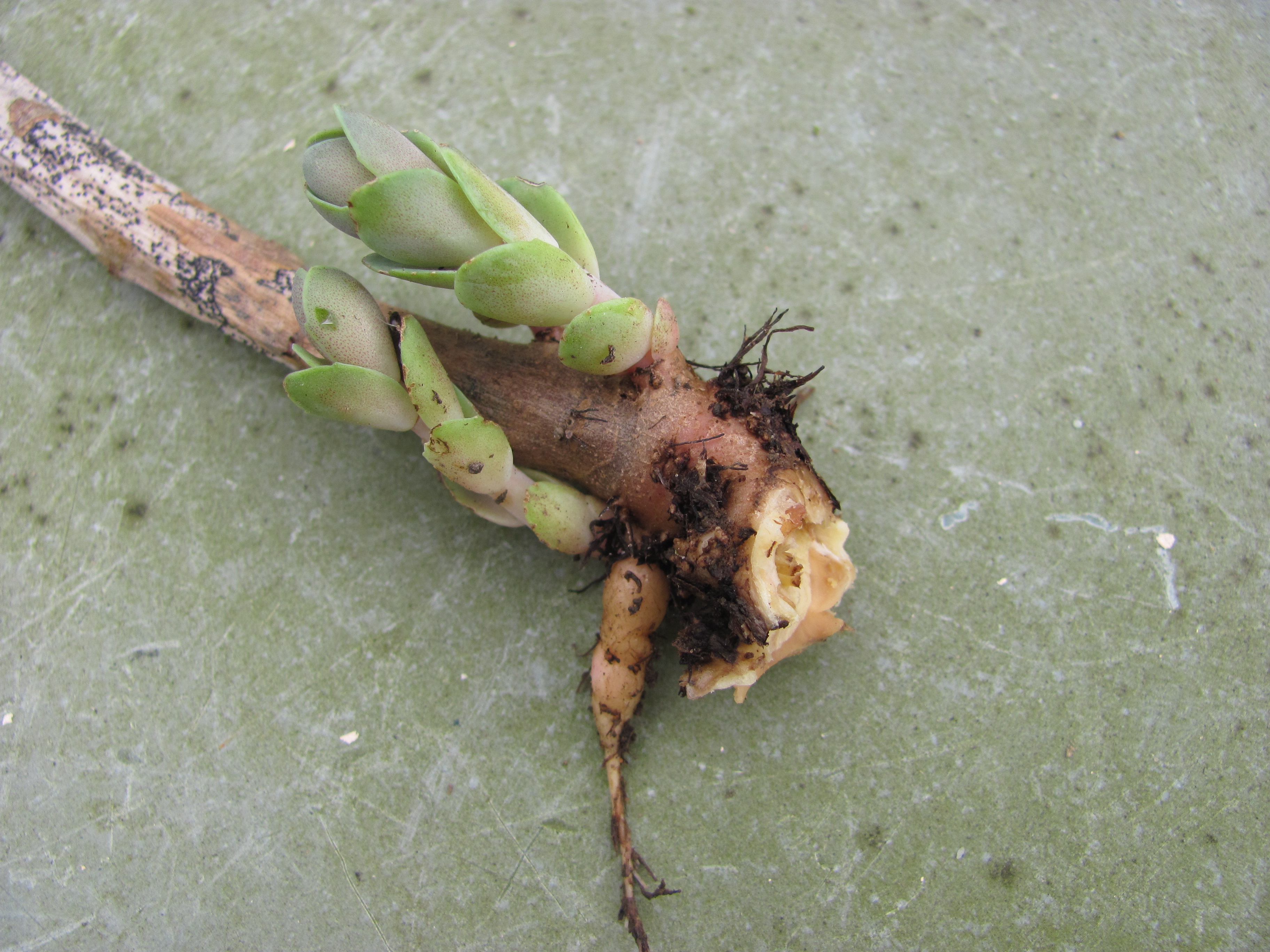
After tidying the edge of the plot where Calendulas had died down messily, I cut down perennials in the “Bug Border” alongside our central path, Sedum spectabile “Autumn Joy”, Linaria and several different Marjoram, all grown for the butterflies and hoverflies. As I pruned down the Sedum a few “slips” came away which I popped into my trug to be potted up at home.

A coffee break was called for to rest an aching back. A chance to do some bird spotting and listening out for their calls and songs. It was noticeable how some had moved on from calls to songs with the changing light of February. The Great Tit was giving a good performance repeatedly calling out “Teacher Teacher” just as it says in the books, but I often think it sounds more like the squeak of a tyre foot pump in need of lubrication. Its smaller cousin the Blue Tit sang gently from all around the site.

The peace was shattered as soon as the Rooks from the rookery on the northern boundary lifted as one and poured overhead, a cacophony of “cawing” and “rarking”. They are busy now restructuring last year’s nests. When one returned to the tree tops with twig in beak all its neighbours objected vocally craning their necks threatening and warning others to keep their distance. They live together in huge nesting groups but argue all the time! Their little corvid cousins, the Jackdaw, are quieter and more social. They pass overhead without any argument.

Signs of things to come! New growth is appearing at the base of perennials and the Globe Artichoke plants. Disappointingly the green manures have grown very little but just manage to cover the bare soil.

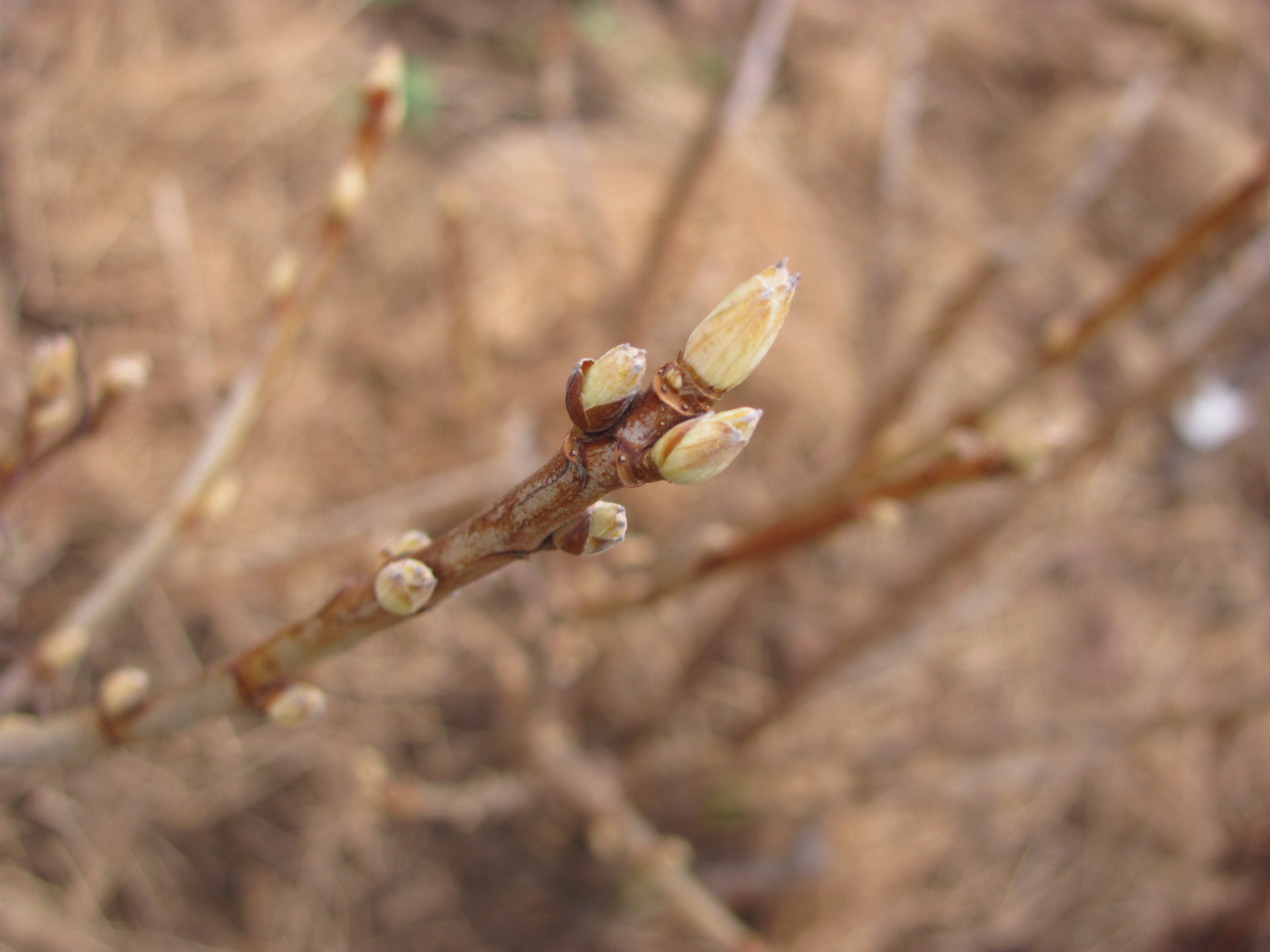
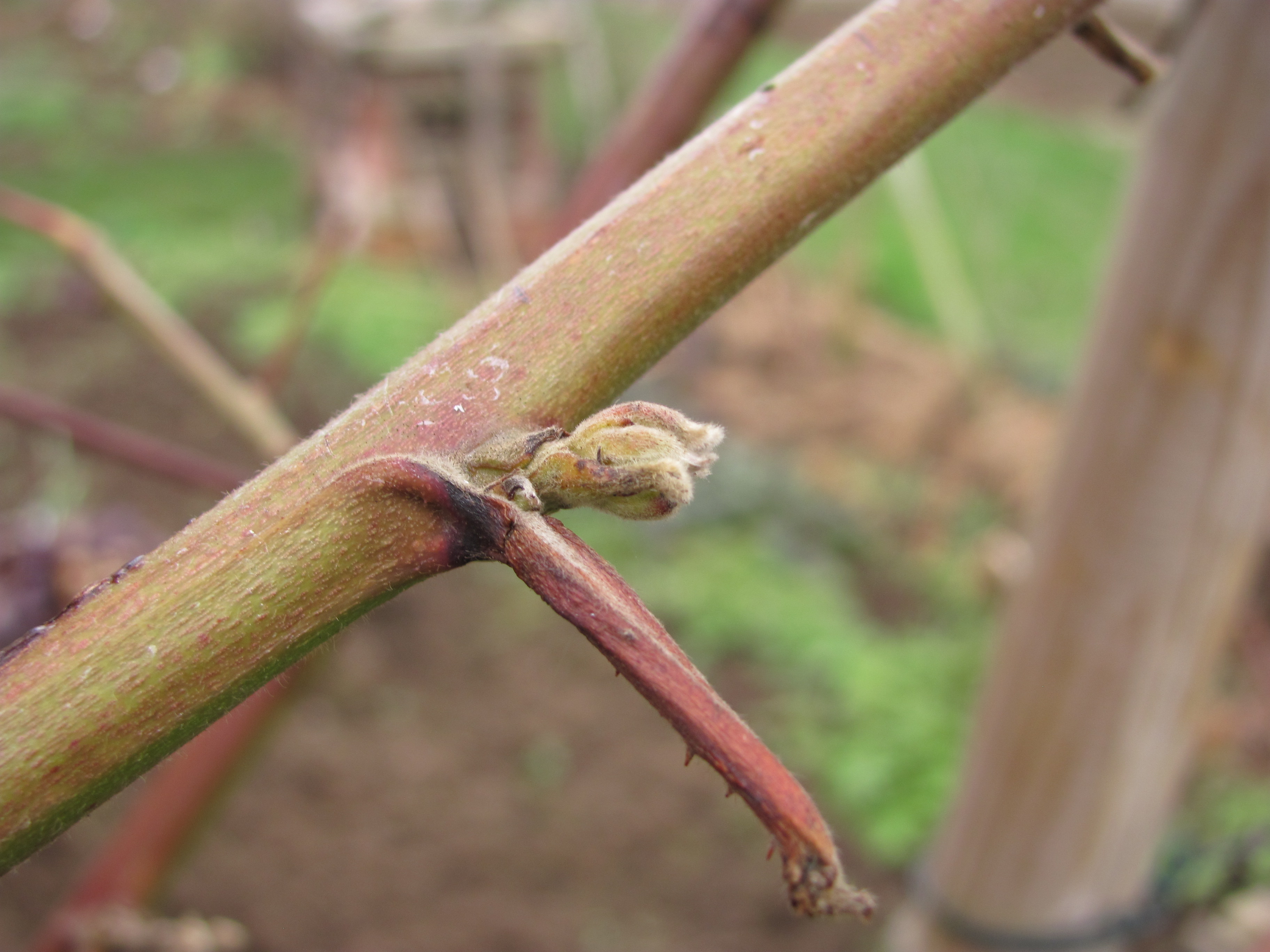
Buds are fattening on the Black Currants and the Blackberries. Promises of autumn bounty.


So once the work on our Plot 37 was completed I wandered off around the site, with wheelbarrow loaded – secateurs for pruning the roses in the Summer Garden, camera to take shots, surgical gloves  and step-ladder to clear out nest boxes. As I walked along the established hedgerows flocks of chattering finches moved away, keeping close top the hedge and to each other – Goldfinches, Linnets and Greenfinches. A surprise sighting was a flock of about 15 Yellow Hammers, the first time they have been seen here. Unfortunately one of the loudest noises was the dry screech of my wheelbarrow’s wheel! A quick detour to the shed for a squirt of penetrating oil cured it.

Where the hedge has been left uncut for several years (where the council flailing machines can’t reach) the bushes are tall and busy with finches and tits. A Song Thrush was throwing leaves and under-hedge debris out onto the path searching for its lunch. The calls of Nuthatches and Great Spotted Woodpeckers echoed around the allotments all the time I was on site, but one call was unexpected. It stopped me in my tracks. I had never heard the piping call of a Bullfinch up here before. It wasn’t hard to find – a male with its pink, almost cerise breast glowing from a tall Hawthorn.

Nestbox cleaning can be a painful business if the nests have been colonised by nest fleas, hence the surgical gloves. Luckily none in residence today! Four of the five tit boxes had been used last year. The open-fronted Robin boxes were ignored by our population of redbreasts.

This photo shows how the Great Tits who nested here used their tails for added balance when feeding their young through the hole. The wood stain has been worn away.

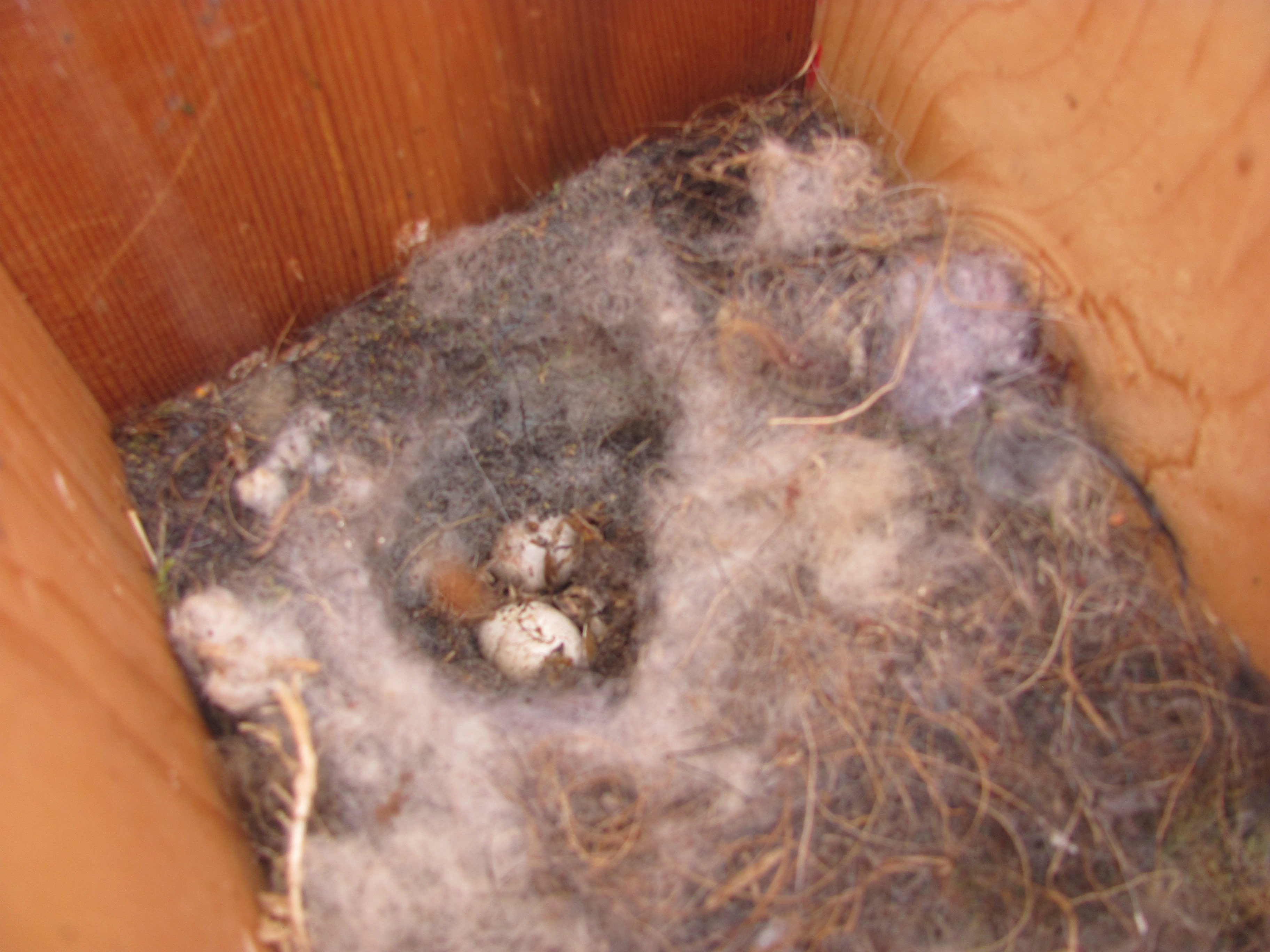
The box in the photo below was used three times in 2011, but the third attempt was thwarted by cold wet weather in the early autumn, so the clutch of eggs remains. When I emptied out the nesting materials I could see the three layers of nesting material. When I had emptied all the boxes the old nests were put in the compost heap.

In the meadow areas seedlings cover the ground, so our plan for self seeding meadows seems to be working out. In one meadow area a lone cornflower continues to throw up an odd bloom of the most beautiful blue.

Categories
allotments fruit and veg gardening grow your own

Seed Sowing Starts

It felt oh so good today to be sowing the first seeds of the year! And to make things even better it was warm and cosy in the greenhouse. There are so many seeds waiting in my tin all organised in sowing date order.

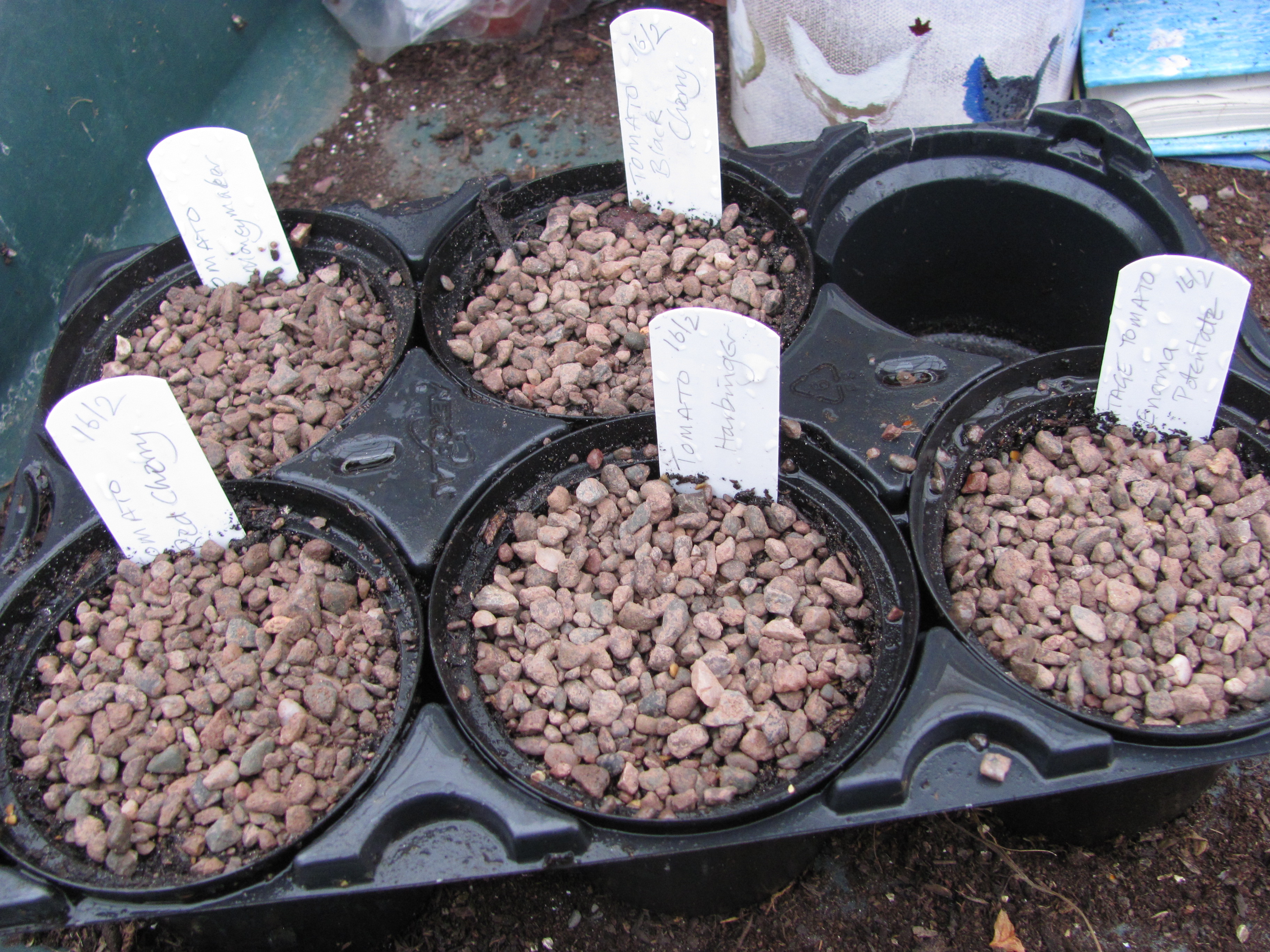
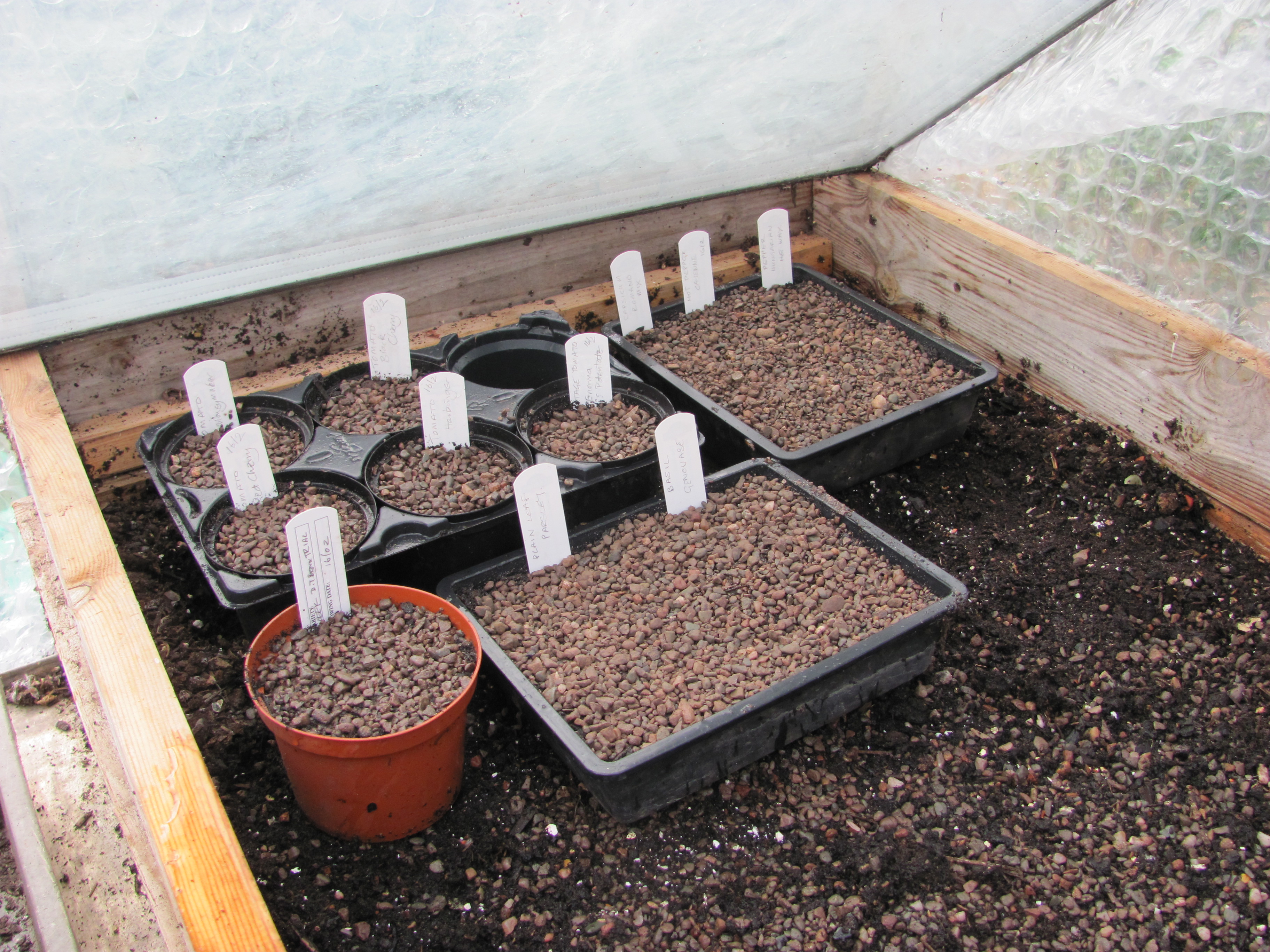
So today I sowed seeds of tomatoes, peppers (sweet, cayenne and hot), basil, parsley and leeks.

We always sow a variety of tomatoes to ensure lots of different colours, textures and flavours, so for 2012 we have Gardeners Delight, Moneymaker, Red Cherry, Black Cherry, Harbinger and a heritage variety called Potentate. Of course to go with tomatoes we need basil so we have sown Basil Sweet Genovase.

All the seeds sown today need warmth to germinate so we have put them in my home-made propagator which gives bottom heat and maintains an average 20 degrees celsius. Here they are in their special warm environment waiting for the lid to be closed.

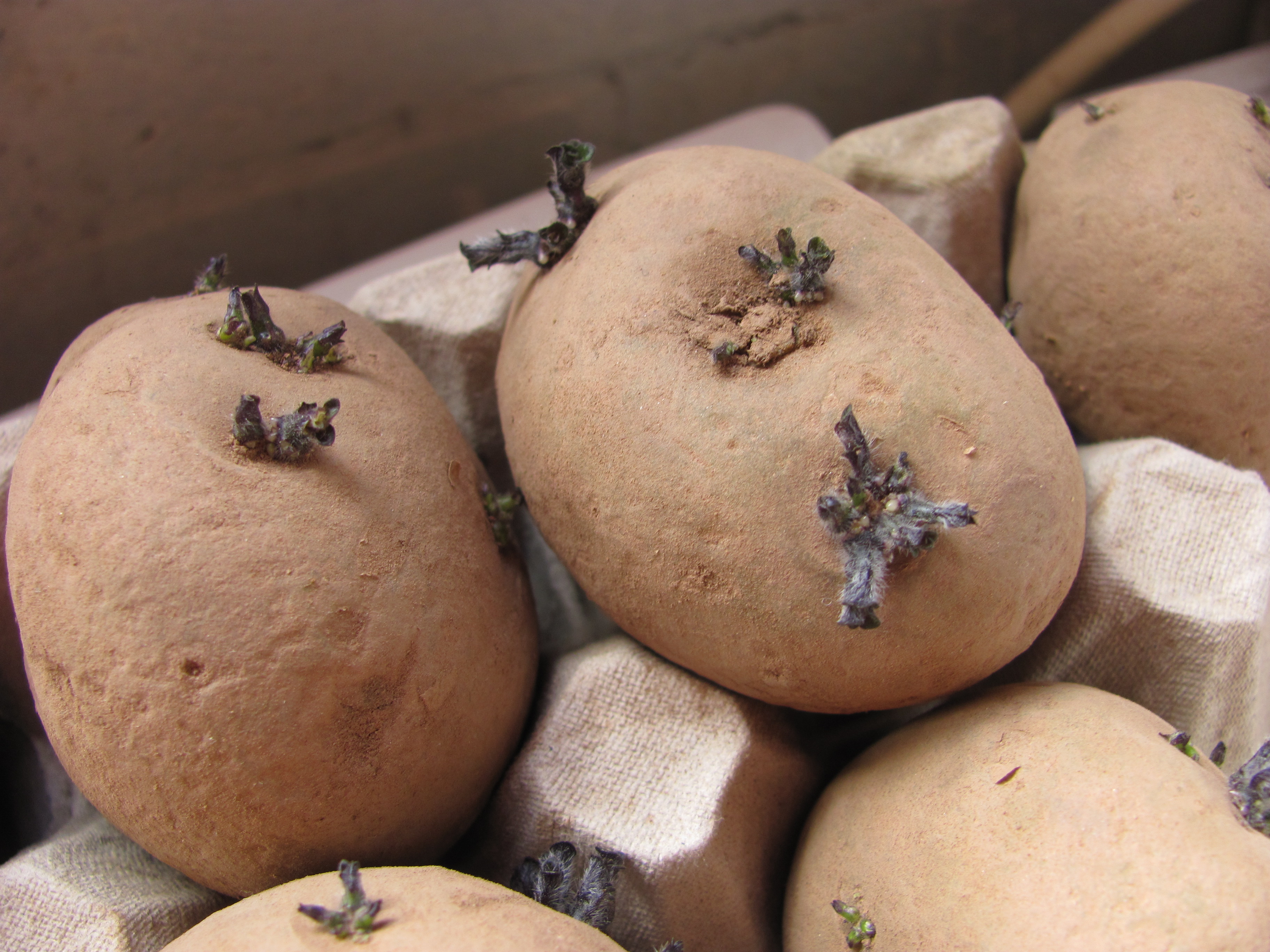
And the seed potatoes are “chitting” away in their egg trays. So the allotment year has been launched and it feels good!!

Categories
bird watching birds garden photography garden wildlife gardening grow your own hardy perennials ornamental trees and shrubs photography shrubs winter gardens

A Wander Around Our Garden in February

This is the second of our monthly garden wanders designed to give an insight into what is going on each month. Our February wander will be a colder one so don those thermal gloves and woolly hats with silly bobbles and join us. We hope you enjoy what our garden offers in the second month of 2012.

The day dawns frosty but with a bright blue hat on. A lovely fresh winter’s day, with the quiet plaintive song of the Robin as company – he always comes around the garden with us and entertains us with a song. Overhead Buzzards call from their thermals high above the slope of the hill. It feels a perfectly calm day to us but these big, broad winged predators always find movement in the air. Why does the call of the buzzard always sound further away than the bird itself? Have they mastered the art of ventriloquy? We see them most days but we never lose the desire to watch them enjoying their freeform flight.

I fed the chucks and topped up their frozen water with some warm, before collecting their eggs from the nest boxes. Today the hens’ contribution to our larder had added benefits. Handwarmers! Holding these little warm parcels of food felt more special than usual. As I passed the shed on my way down to the chuck pen three Wrens burst out of their roosting pocket – late risers. A pair nested in here in the summer just a few inches above the shed door. They took no notice of our comings and goings. They filled the roosting pouch with moss, feathers and delicate grasses which now insulate them on cold nights.

Dual purpose roosting pouch.

The garden is full of birds once more after a quiet few months. We were beginning to wonder where all the birds had gone, but today Goldfinches have reappeared in busy red and gold flecked flocks. mixed feeding flocks of titmice invade every tree and shrub and Linnets sit on the highest branches. Long Tailed Tits in groups of a dozen or more flit from tree to shrub and from feeder to feeder, never still, always fidgeting like a class of infant pupils awaiting a favourite story. The odd Bullfinch and Blackcap conduct their business more quietly.

On the feeders Jackdaws attack the peanuts dropping morsels for the Dunnocks and Chaffinches waiting below. Jackdaws are long-lived and today two old favourites are to be seen, one with a white wing and one with a wing that droops low when he settles. Overhead their much larger relatives pass over, a “cronking” trio of Raven flying effortlessly with outstretched fingers.

It is noticeable that the clusters of berries on the Hollies and Cotoneasters are much depleted as greedy groups of resident Blackbird and Mistle Thrush are joined by migrant members of the thrush family, the winter visiting Redwing and Fieldfare. The small yellow crab apples on Malus “Butterball” have now been stripped by these members of the thrush family.

Our horizontal cotoneaster is a favourite of Blackbirds, Redwing and Mistle Thrush.

There has simply been plenty of natural food for our avian friends this winter. It has been mild enough for insects to be on the wing, for invertebrates to be creeping and crawling, and the hedges and trees have heavy berry crops. We want to see them in our garden but we are being selfish. They come to us when they need to and not before!

The blackbirds have finally discovered the windfalls.

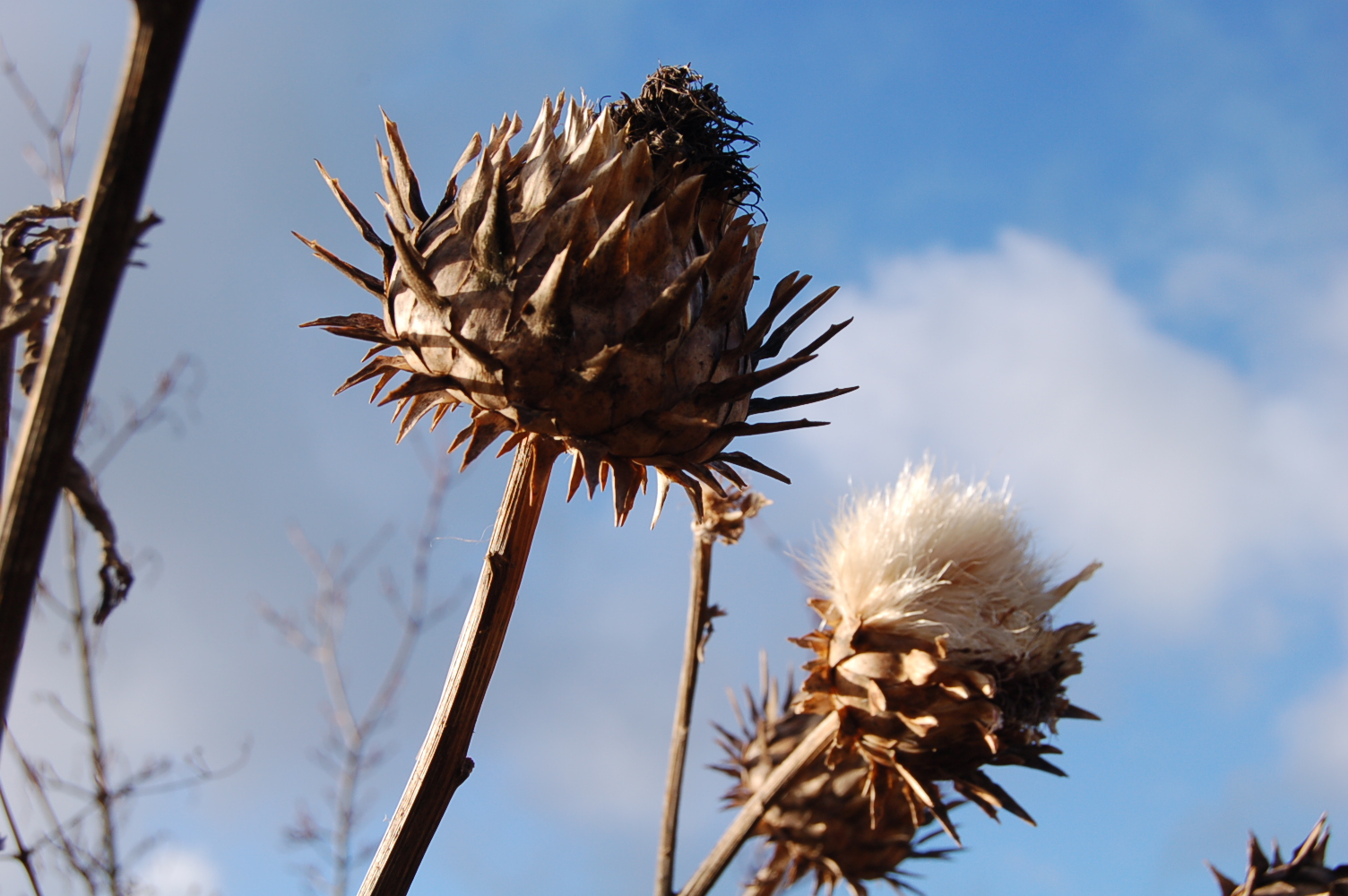
The re-appearance of the Goldfinches gives us close-up entertainment as close to the conservatory window grow Onopordon, the Scotch Thistle, and its seed heads tower into the blue sky. Goldfinches love them and soon dig in for seeds, bursting the heads open as they do so, and the white fluffy insides overflow like raw cotton.

Scotch Thistle seed heads towering into the blue.

The intensifying of the cold sucks structure from leaves and hardens the ground beneath them. The accompanying frost layers the ground and plants with lines and layers of frozen crystals. The blueness of the skies on a clear February day is more intense than earlier in the winter. The sunlight seems brighter.

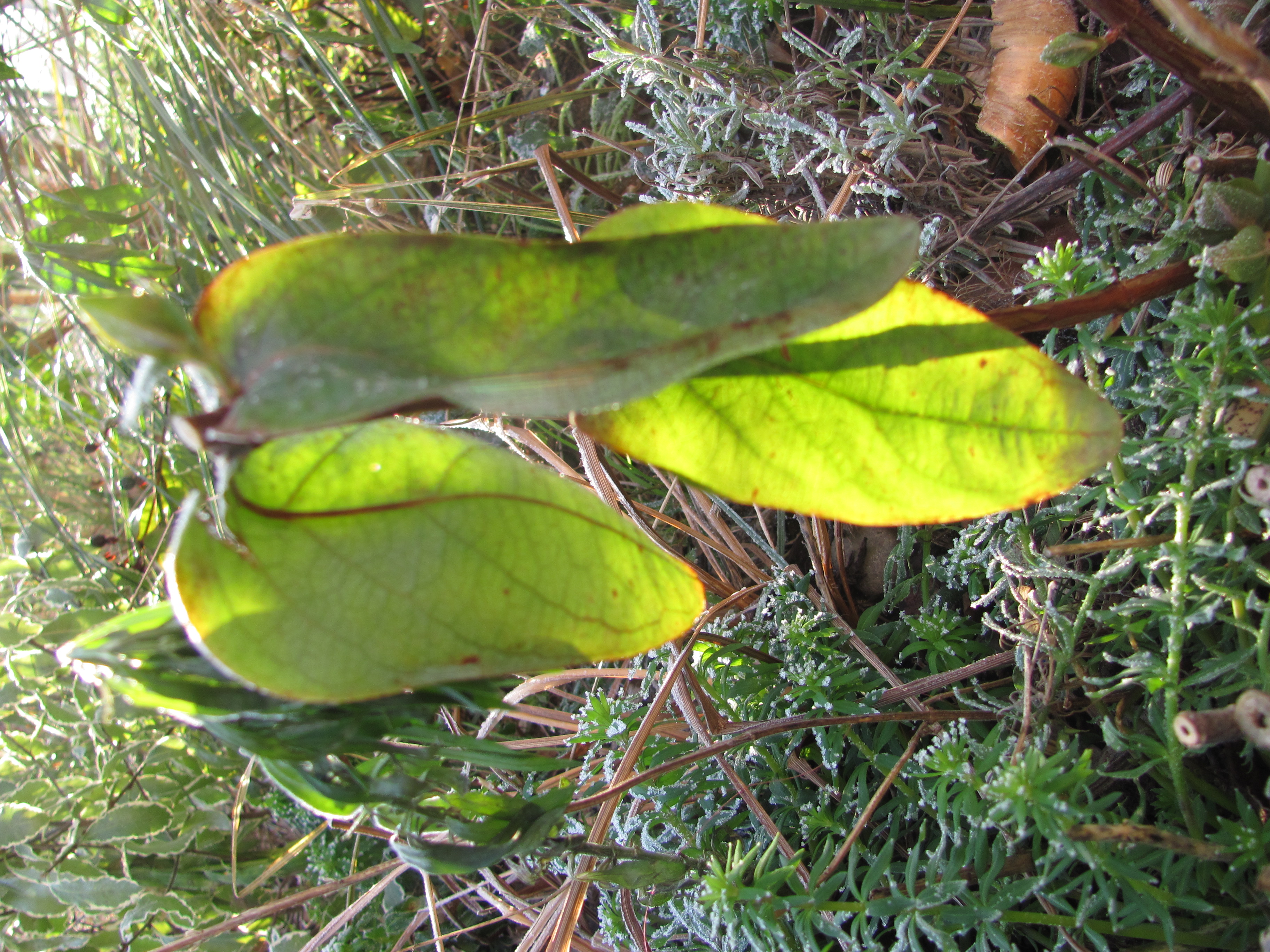
The deep cold has taken the structure out of the young self-seeded sunlit Hypericum.
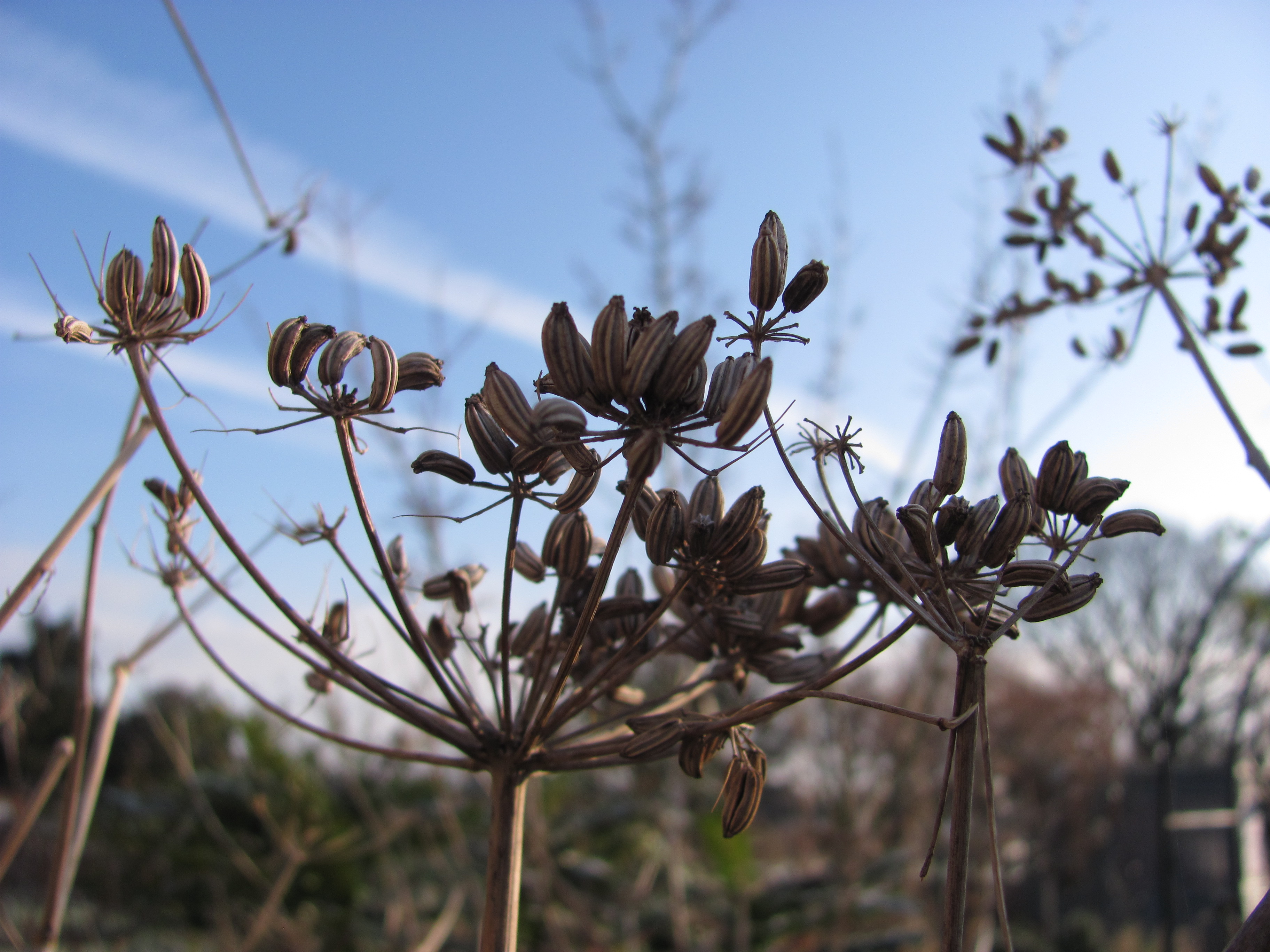
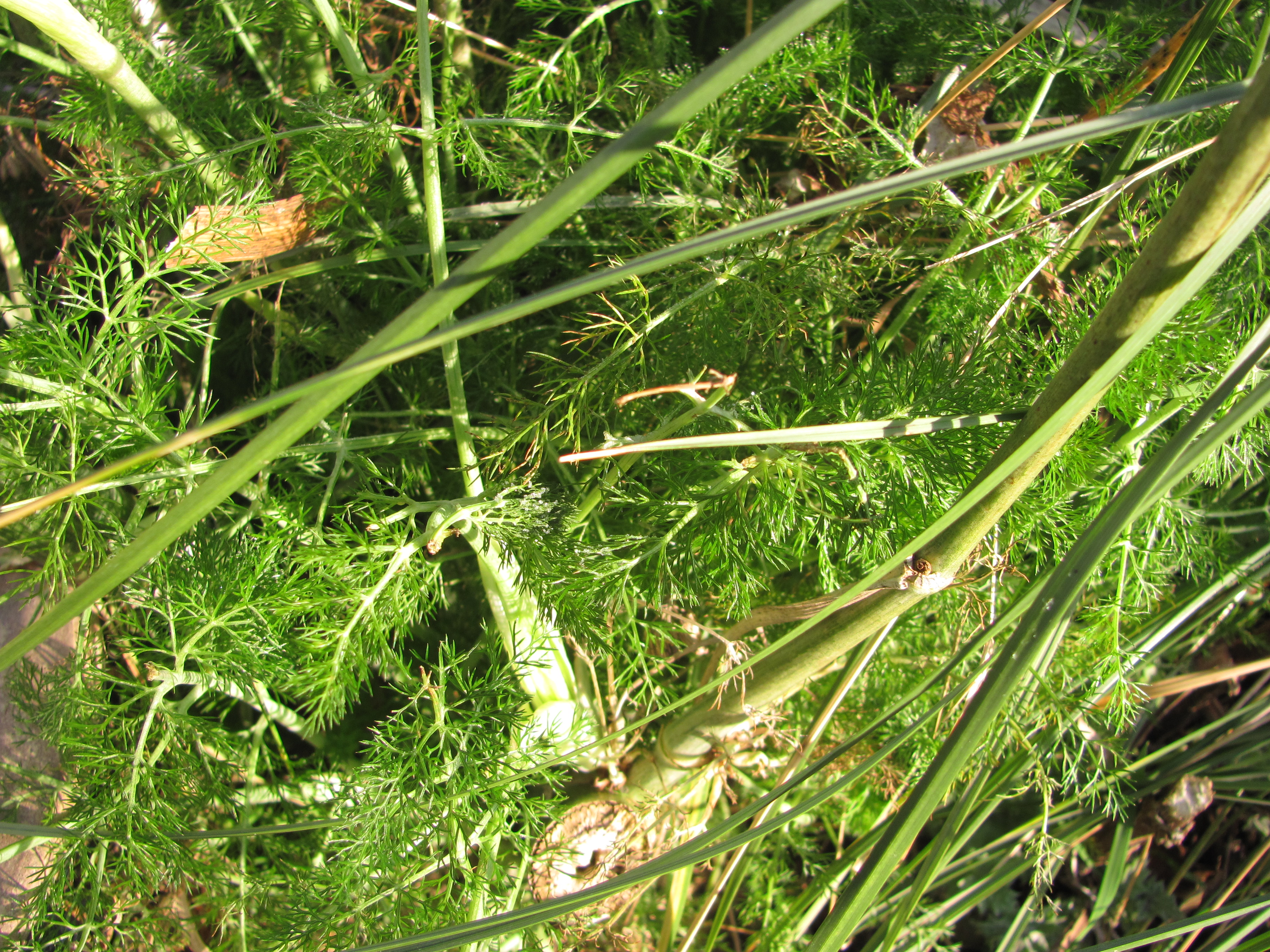
Fennel seed heads still stand strong while its delicate bright green seedlings shelter below.
Sheltering Fennel seedlings.
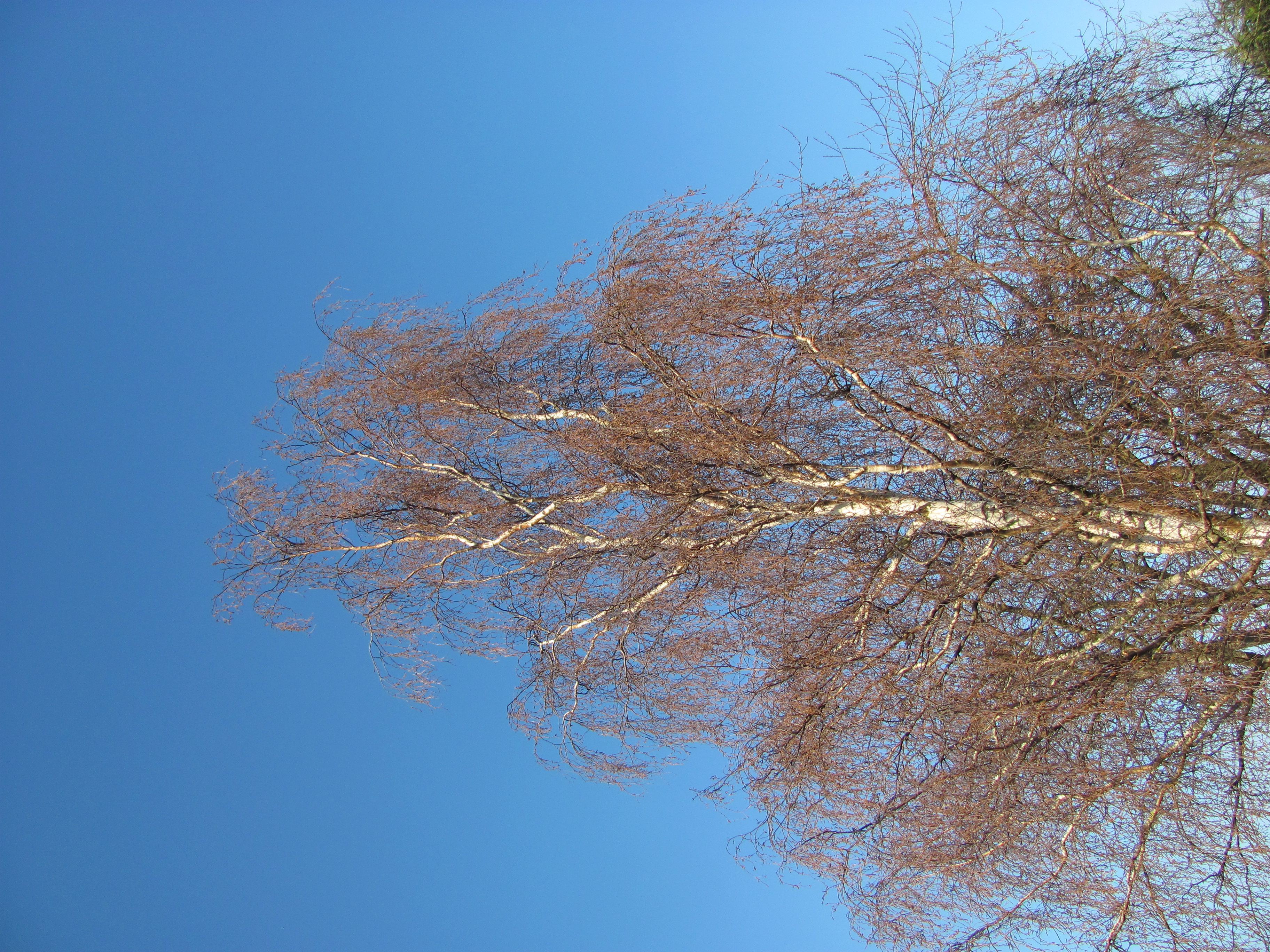
The deep blue February sky increases the purple tints in the tracery of the Birch's finest branches.
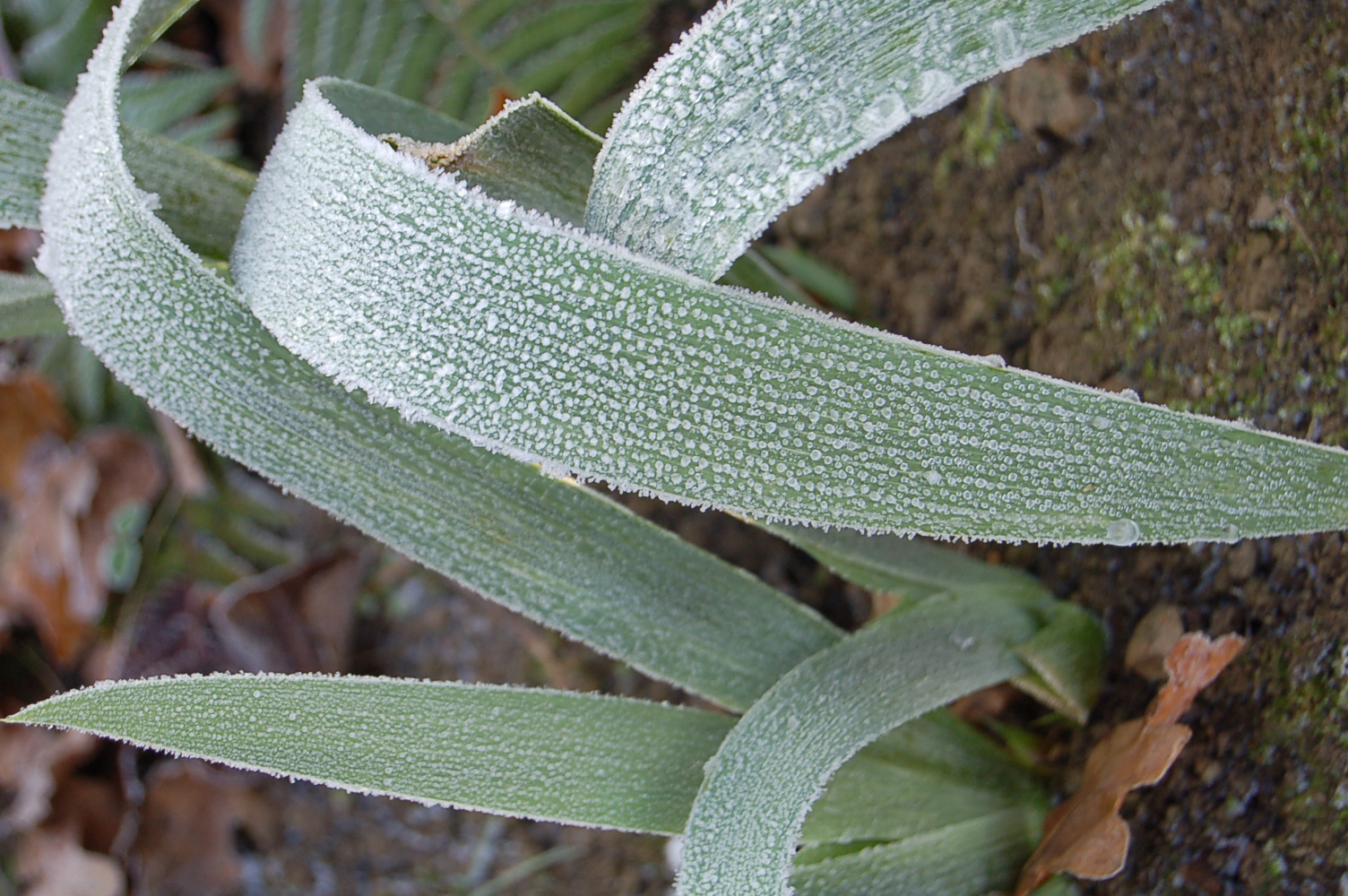
The frost gives an extra line of silver along the leaf edges of these grasses.
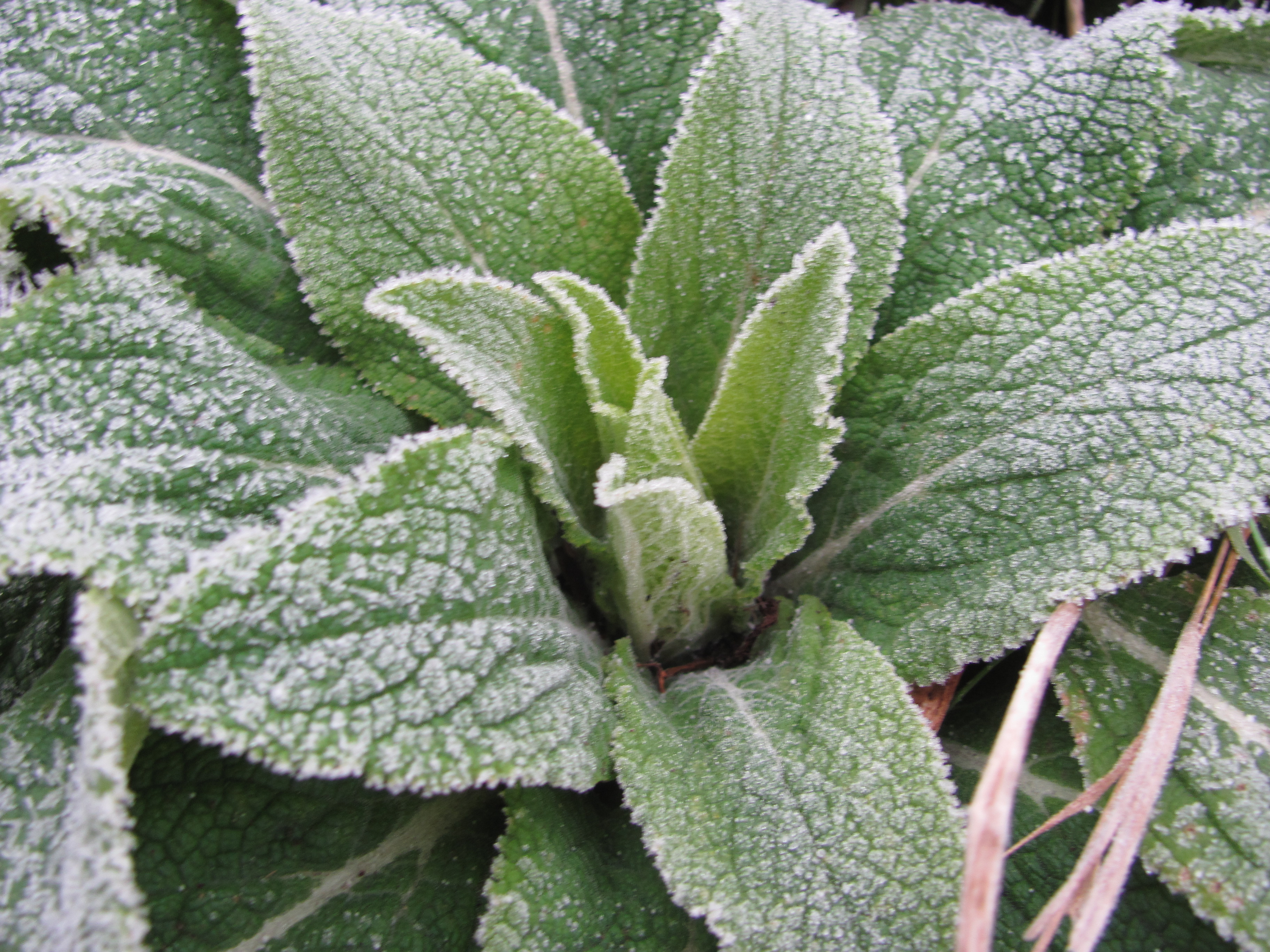
Icing sugared Foxglove leaves.
Frost adds another layer of texture.

Something special happens to light in February. There is something about the quality of light that changes. It makes you feel better. It makes plants look better, their flower colours intensify. If, like both “The Undergardener” and I, you suffer from SAD (Seasonally Affected Disorder) then you will feel and experience this change. You feel the tunnel of winter has brightness at its end. Monty Don, in the book “Fork to Fork” refers to this improvement in light quality, writing that February displays a “tangible promise of a better time” and talks of a “surge of energy and hope running through the garden”. This will be tangible from about the middle of the month but even now the hint of that promise is in the air. It isn’t just S.A.D. gardeners who believe in the wonder of February however, as we have a pair of Blue Tits taking up residence in one nest box and a pair of House Sparrows in another. Spring is in the air! Well, maybe not! No, these two pairs are just like serious sun-bathers on a busy sandy beach, just getting there early to “bag” the best spots.

Nowhere is this new hope more obvious than in the flowering of the bulbs and the bright green signs of new growth of perennials. Snowdrops, Crocus and Aconite, the pearls of the month.

Winter Aconite Gold.
So delicate but so tough.
Marbled foliage of Cyclamen with golden flowers of Winter Aconite
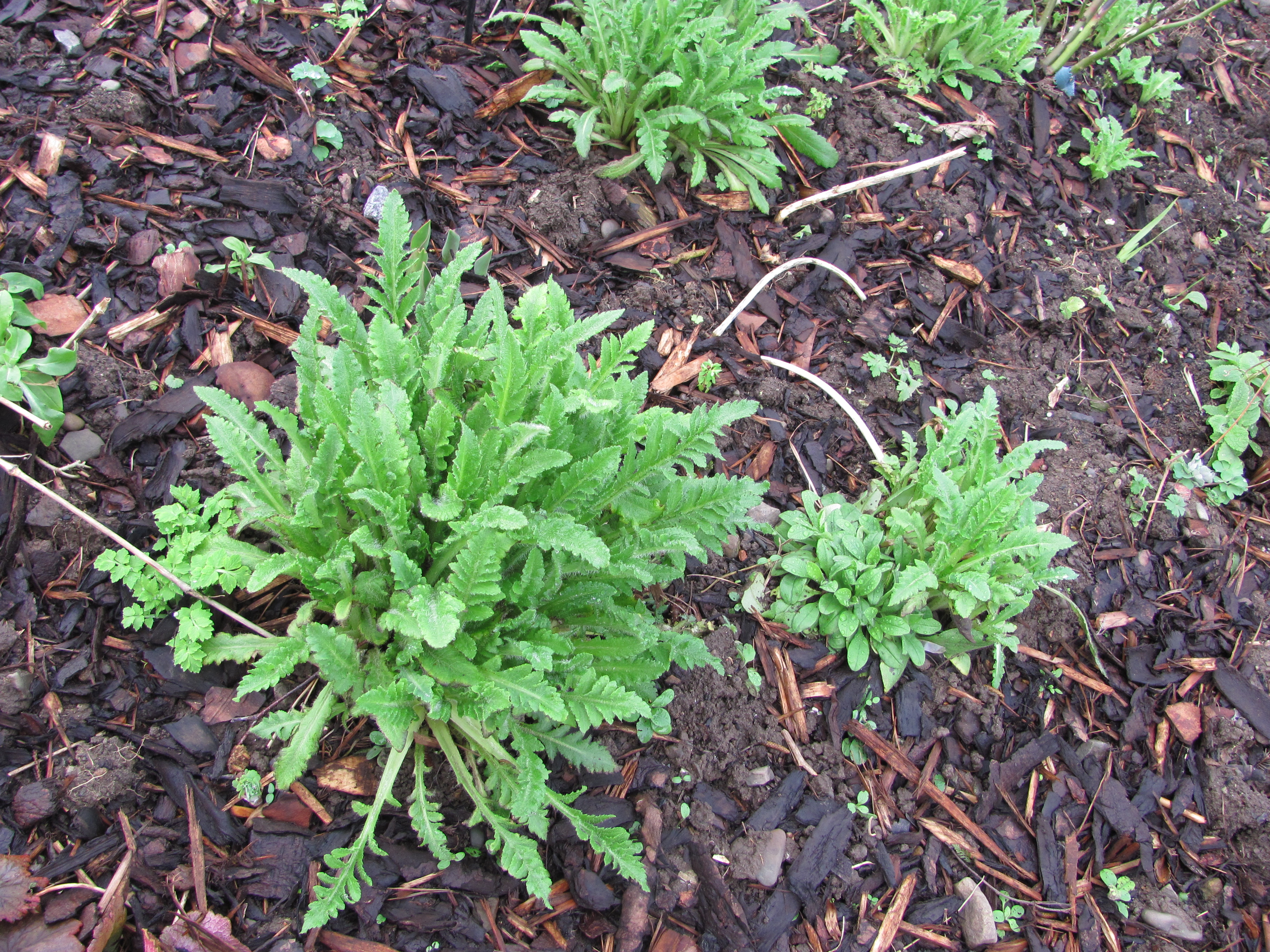
New growth on the oriental poppies - promises!
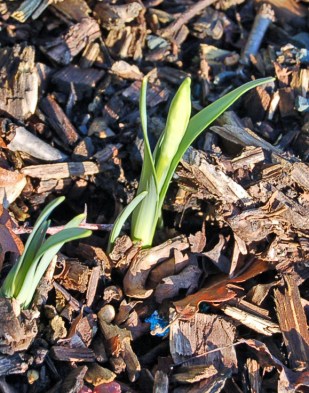
The leaves of Day Lilies spear the frozen mulch.

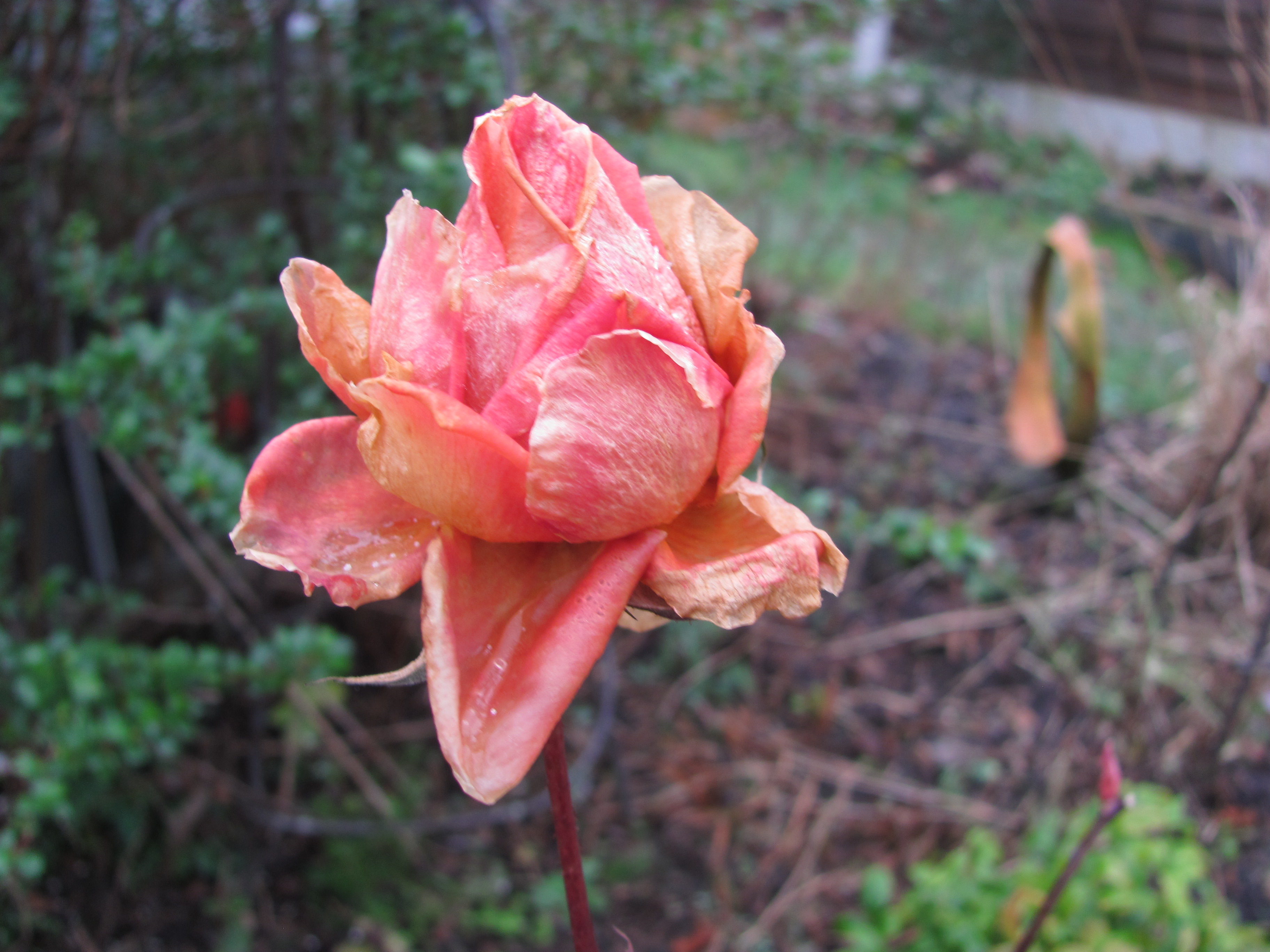
But some new life is out of sinc. Buds appear and surprise. The blue anemone with its metallic sheen on its indigo bud is a special treat and is reflected in the blue berries of the Viburnum davidii. The last of the rose buds however that gave promise of flowers have given in to winter’s grasp.

Out of Season Aconite
Blue pearls.
The promise of a rose flower stopped by the frost.

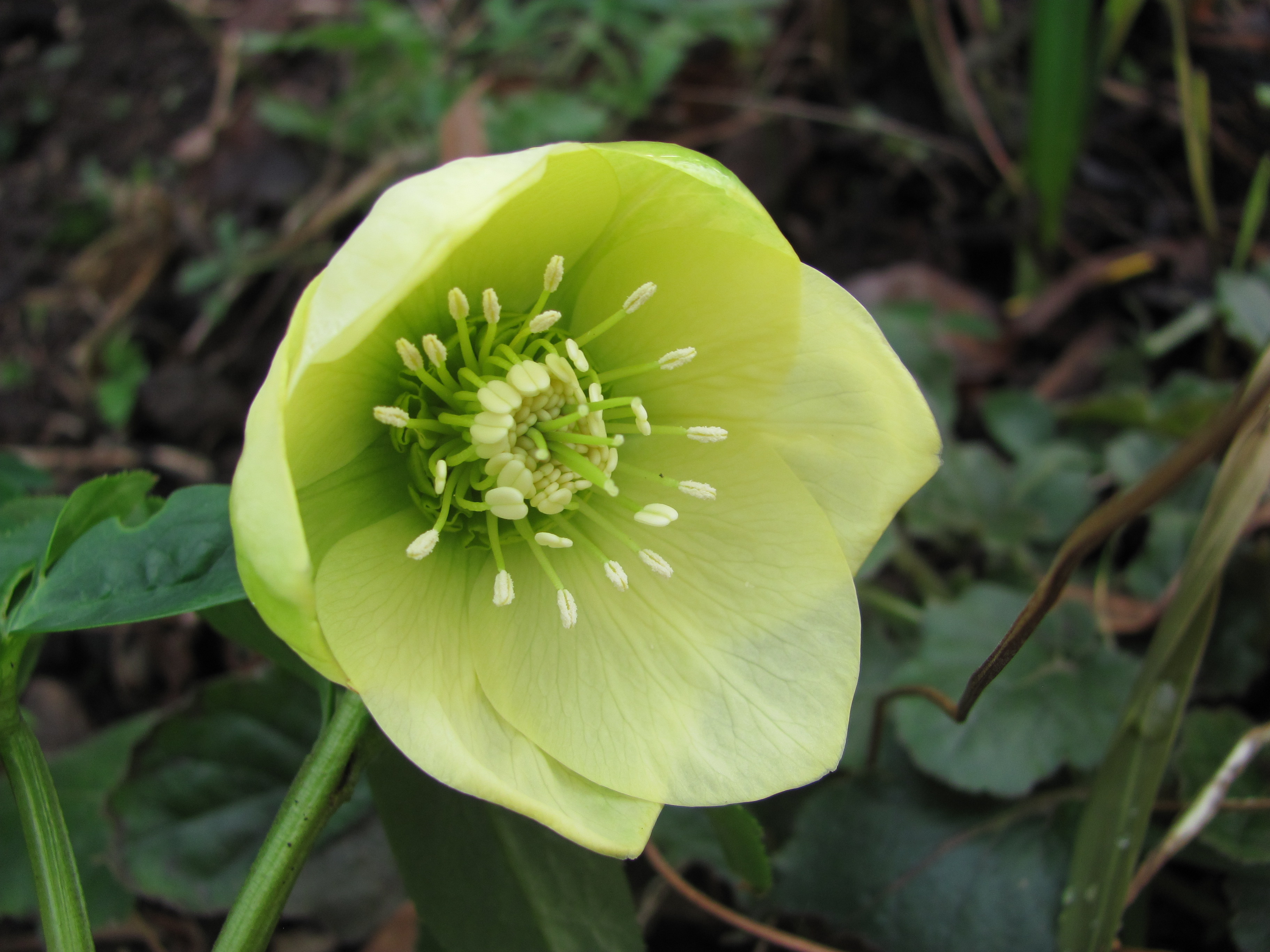
No February garden can be complete without Hellebores so here are just two of ours. But my true favourites to finish our February wander around our garden are the Witch Hazel “Jelena” and Cornus mas.

Upright growth and rich reds and purples make this a special Hellebore.
Perfect primrose yellow cup.
Witch Hazel "Jelena"
Cornus mas, the Cornelian Cherry, a modest beauty.
Categories
allotments birds community gardening conservation fruit and veg garden photography garden wildlife gardening grow your own meadows natural pest control ornamental trees and shrubs photography trees winter gardens

A Wander Around the Allotments in January

As I decided to create a blog at the beginning of each month illustrating what is going on in our garden, so I have also decided to publish a blog in the middle of each month to show what is happening on our allotment site.

So today we braved the cold and went for a wander. The weather although cold, at five below, was bright sunshine in a clear blue sky. the air felt freezing as it entered my lungs but the sight of the lotties cheered me. As we stepped from the car a kestrel was hunting low between the sheds in search of the abundant field voles. A day never goes by without seeing at least one kestrel quartering the site. A buzzard soared overhead in the thermals created by the warmer air above the cultivated plots.

First job was to fill the bird feeders at the two feeding stations. They were busy with blue tits, coal tits and great tits feeding from the hanging feeders and blackbirds, dunnocks and robins beneath picking up the feed dropped by the clumsy birds above them. All the while we could hear the call of nuthatches in the site’s mature oak and sycamore trees.

Frost sits on the bare ground and helps the gardeners by breaking it down and improving the texture in readiness for a final preparatory rake over. The fine tilth can then be home to seeds.

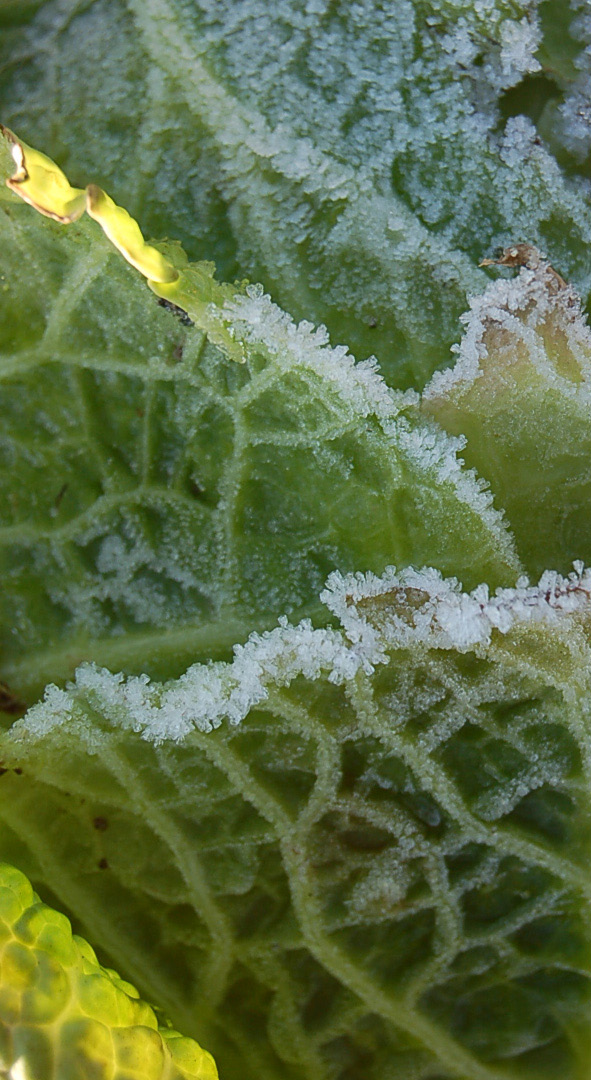
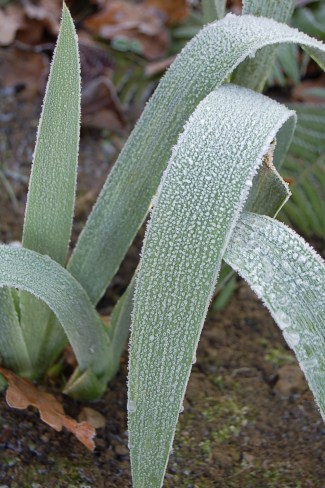
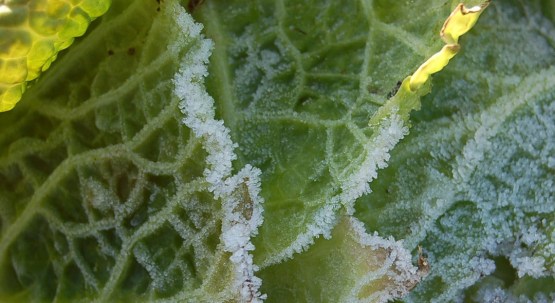
The plots themselves look very sad at this time of the year, drooping brassicas, frosted leeks and steaming muck heaps and compost bins, the warmest spots of all. The scarecrows have fallen in the recent strong winds, their clothes wet and bedraggled and their structures weakened. Frost emphasises leaf structures, settling deepest along the veins.
The strongly veined wrinkled leaves of the Savoy Cabbages withstand the cold wrapped into tight balls.
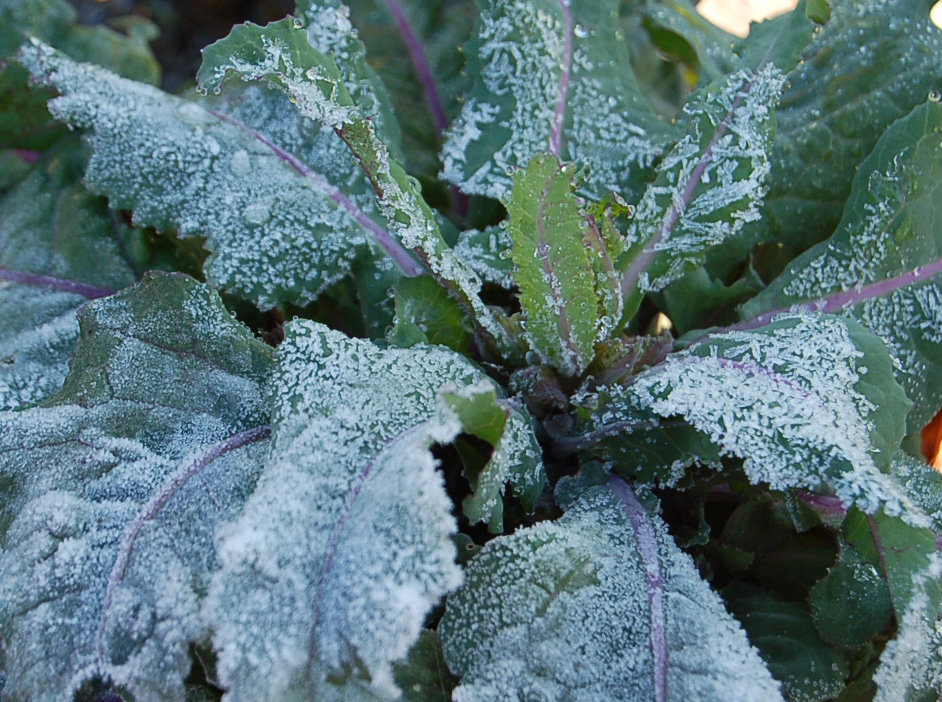
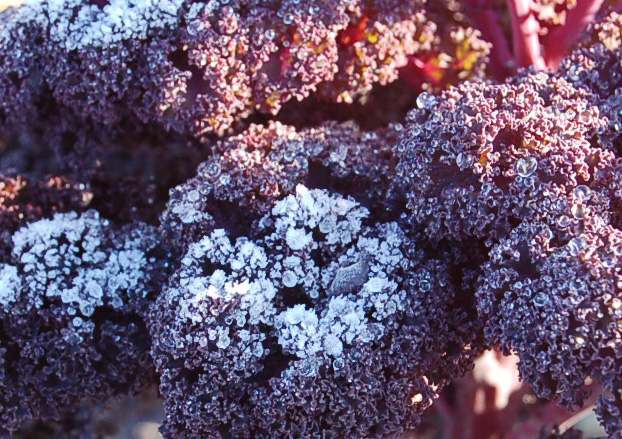
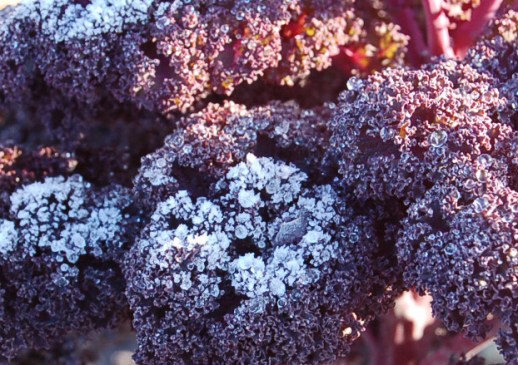
Kale defies the cold and stands upright and proud  even with ice droplets and frost splattered on their tightly curled leaves.
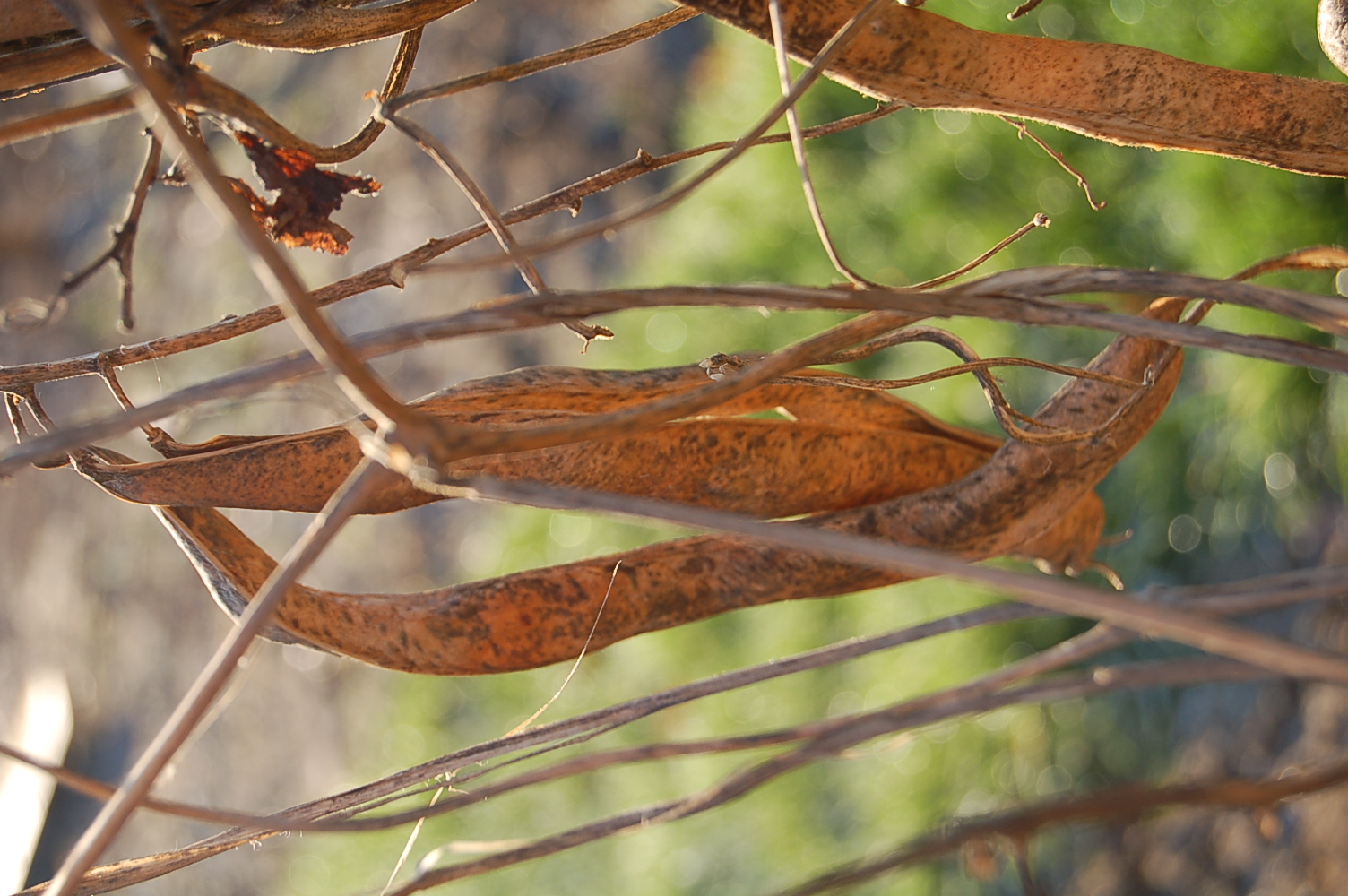
Sunlight makes the old runner bean pods translucent as they hang on the dead remnants of last year’s plants.

On our own plot the rows of Mooli, Broad Beans and Leeks look delicate in the frozen soil but will sit until spring arrives when they will have growth spurts and give us early crops.

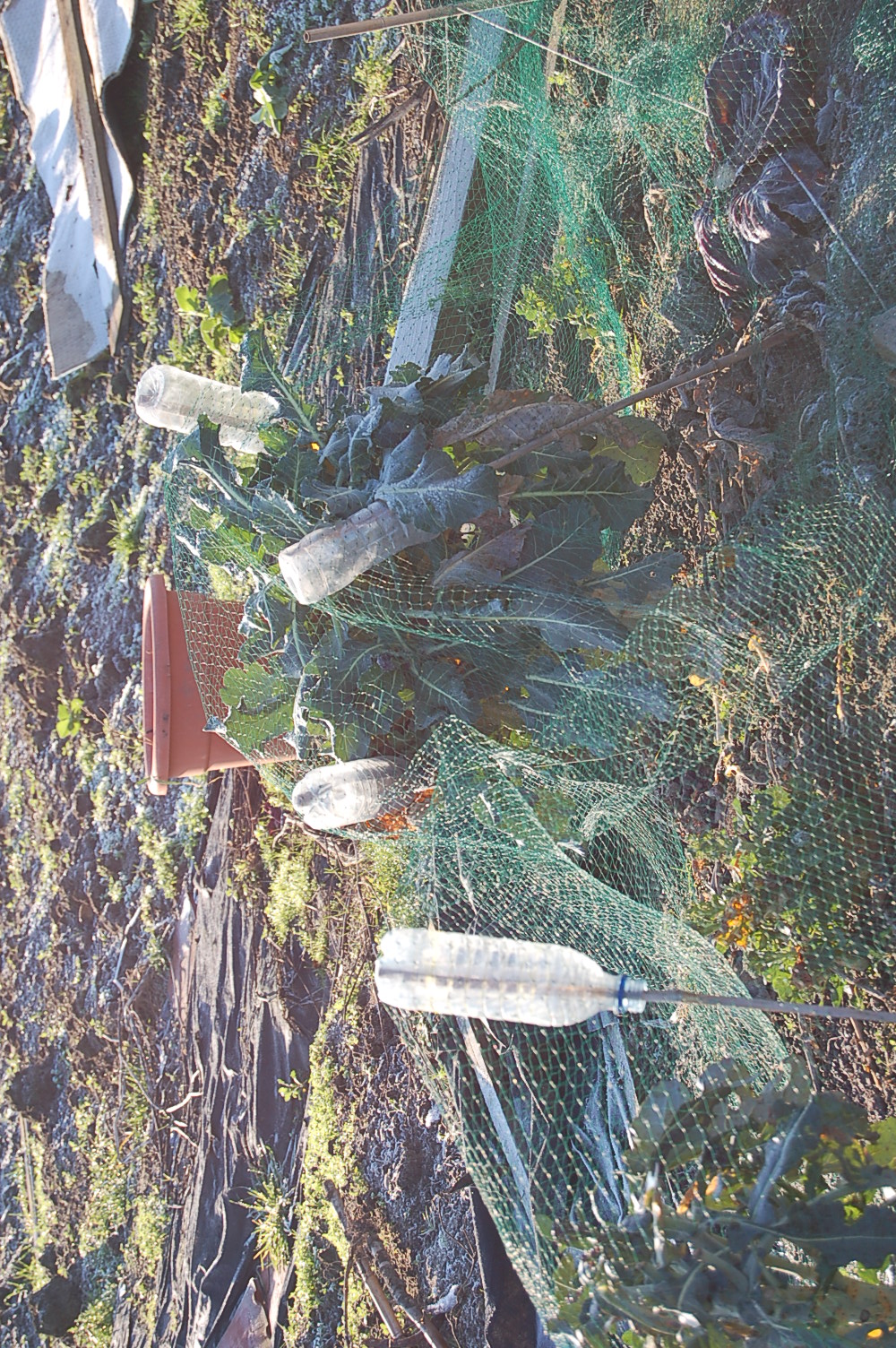
Plastic bottles on canes support last year’s netting and still protect any overwintering crops from hungry Wood Pigeons.

Blackbirds move low across the lotties settling onto any sun-warmed soil and dig for grubs, but this one sat looking sad.
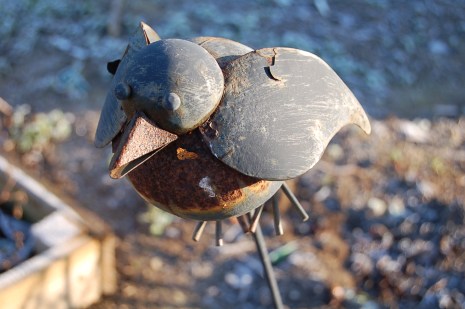
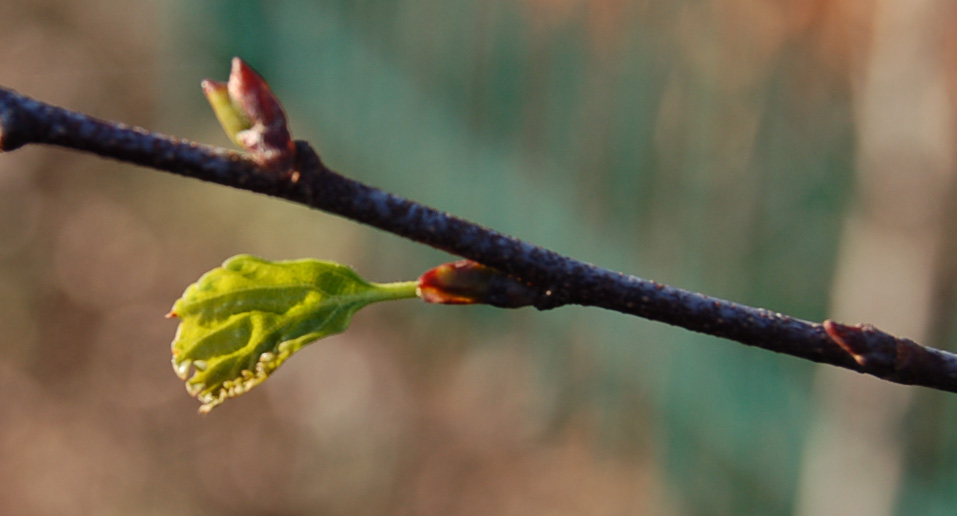
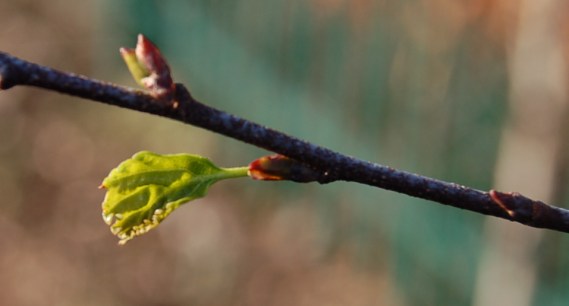
We took a leisurely walk around the “Interest Trail” which took us through or close to most of the community gardens – the orchards, wildlife borders, seasonal gardens and meadows. Near the car park the first green bursts of new life have appeared, the leaves and catkins forming on the birches. The young catkins stand bolt upright at this stage but will soften in colour and structure when they dangle down in the spring.

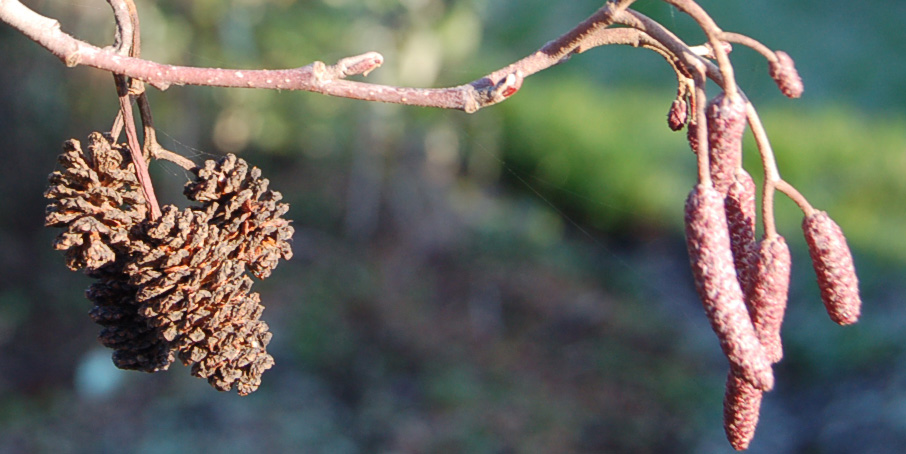
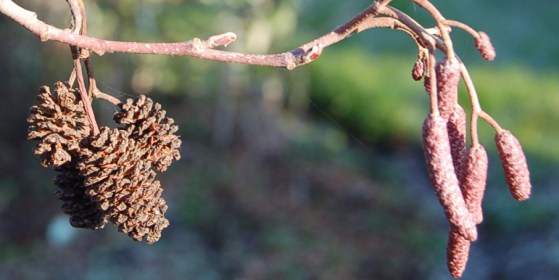
The purple catkins of the alder sit on the branches with the darker cones.
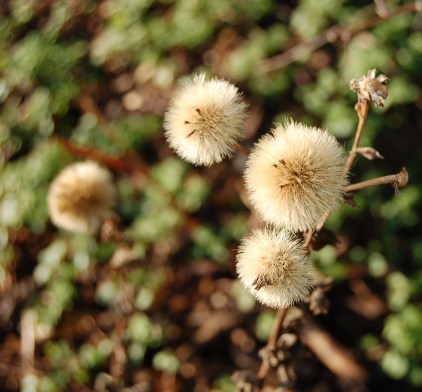
In the Autumn Garden seed heads of Asters remain long after the flowers of autumn, like tiny dandelion “clocks”.
In the first orchard th frost still lingered strongly on the logpile especially on this old chunk of bark.

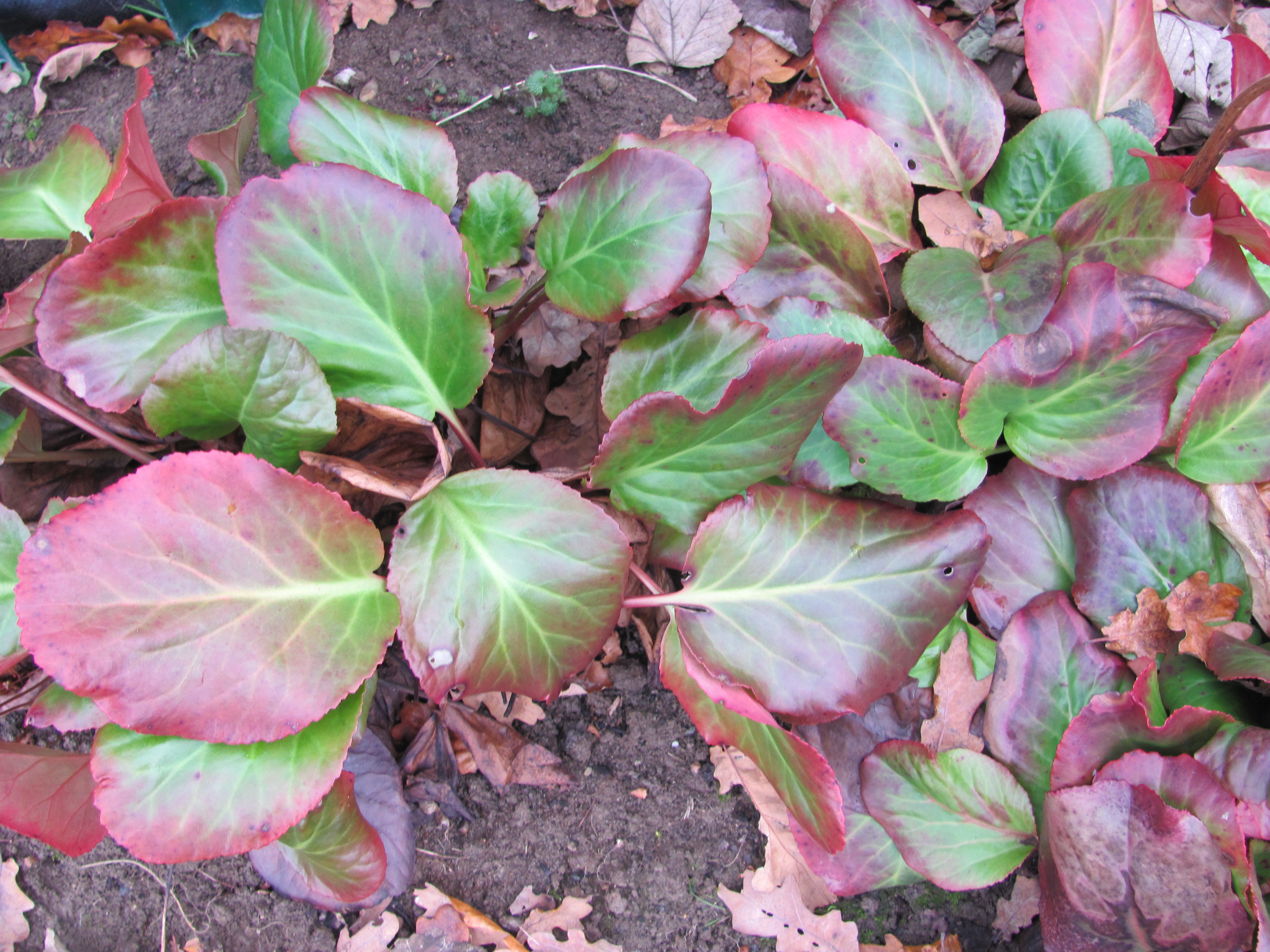
When we reached the Spring Garden we were struck by the contrasting leaf texture, shapes and structures.

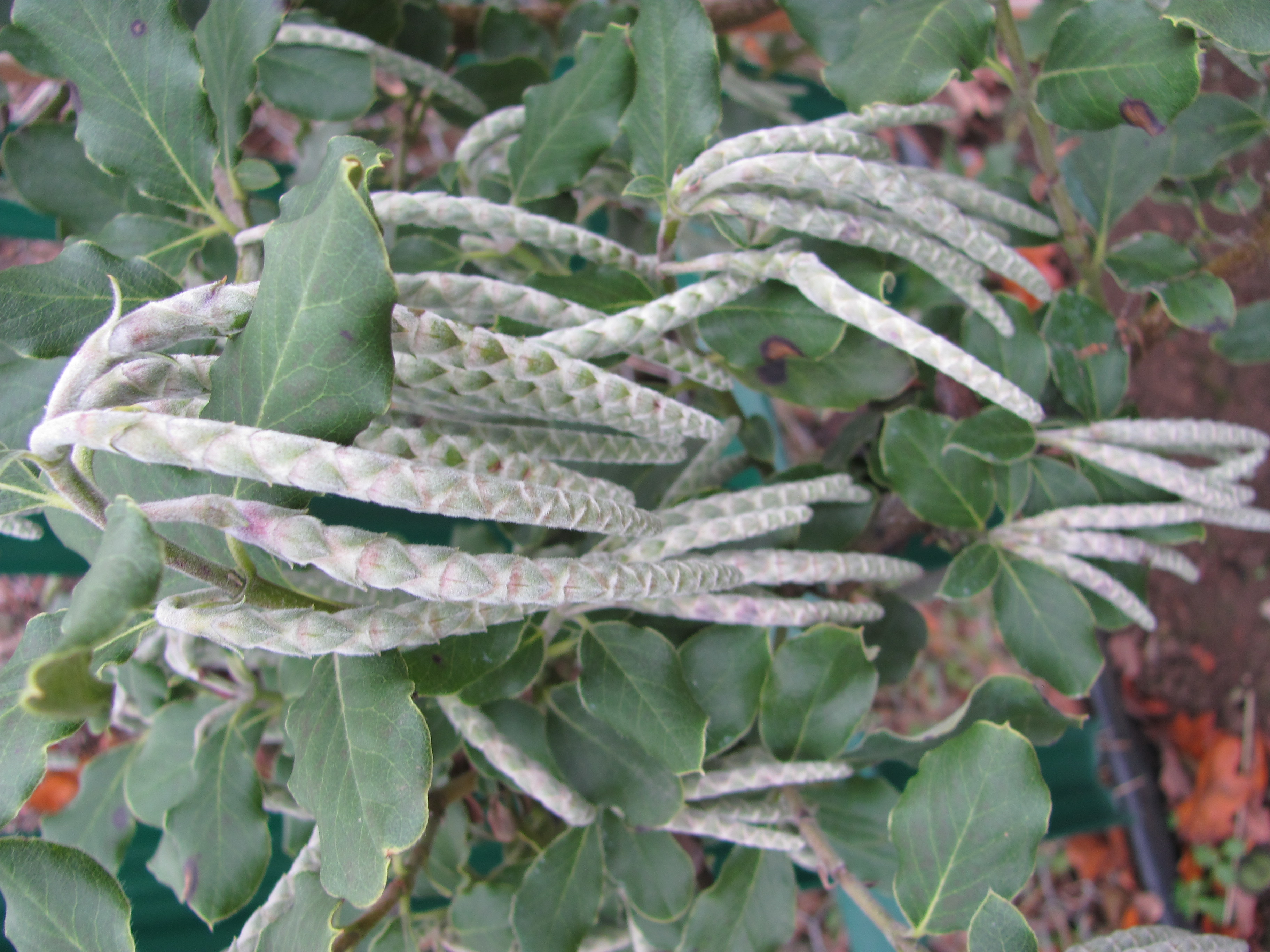
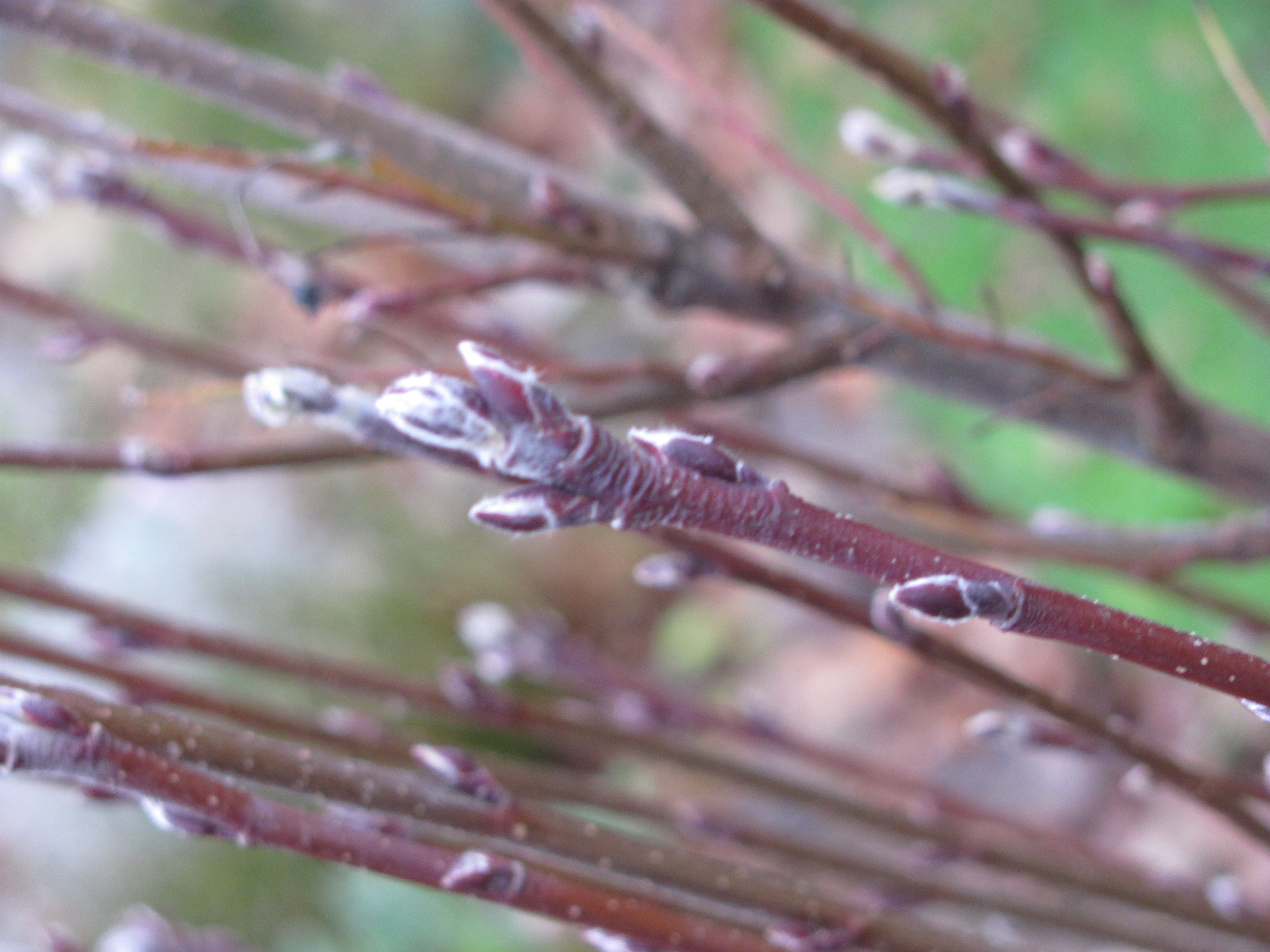
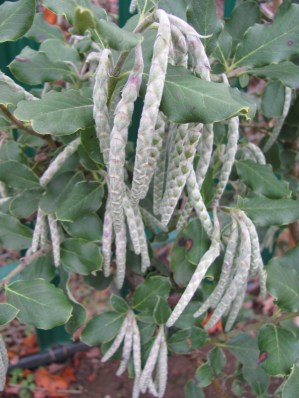
At the back of this garden the silver tassels of the Garrya hung in profusion and the new buds of the Amelanchier promised early flowers and foliage.
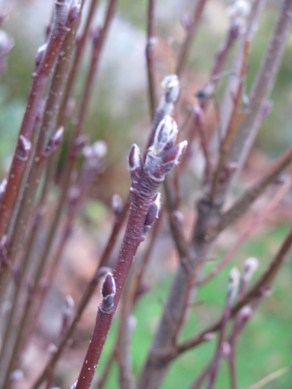
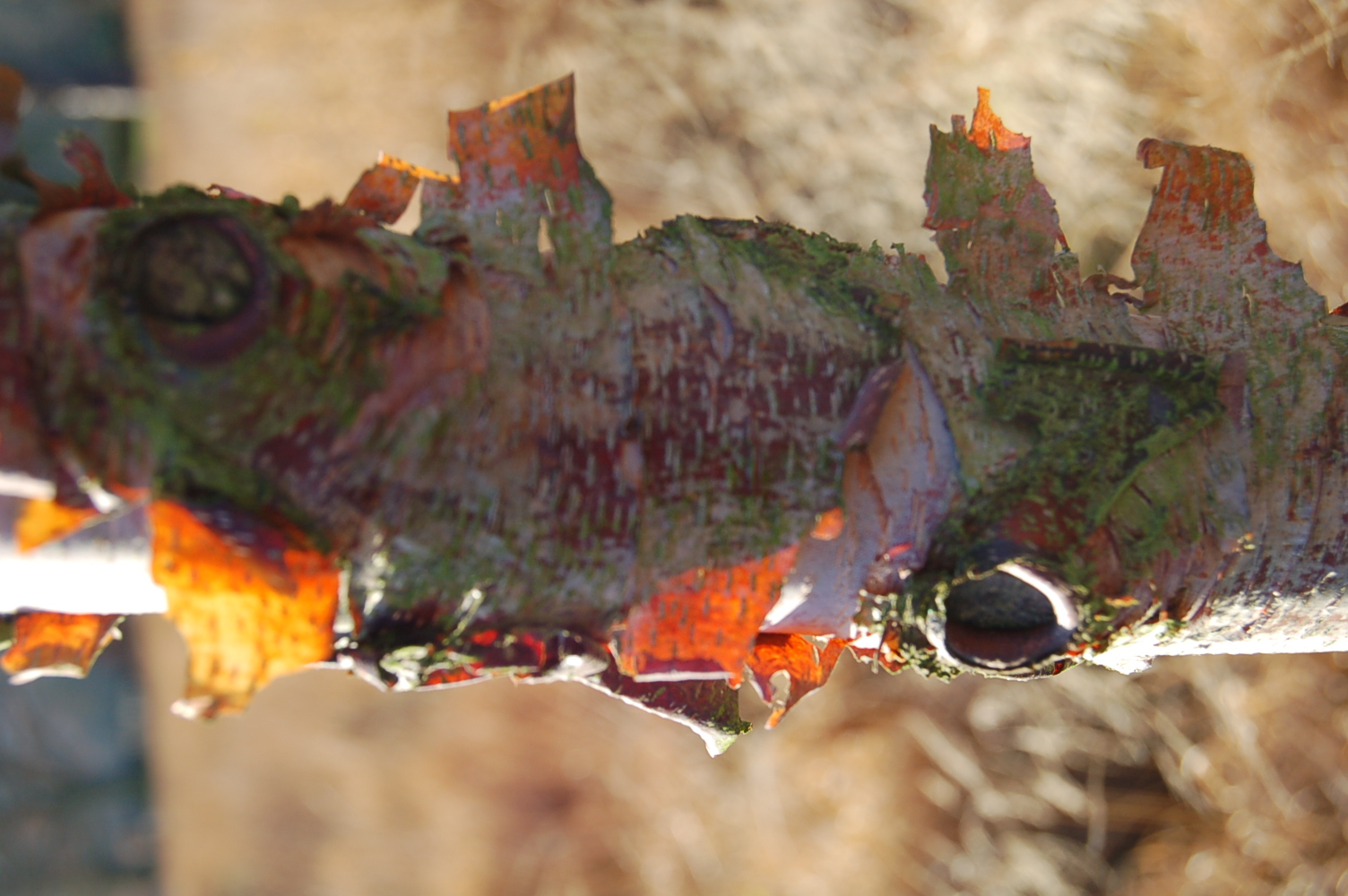
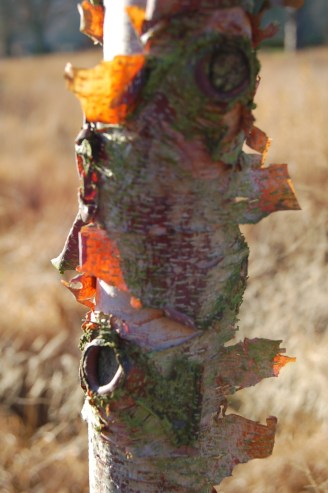
Further round the trail we arrived at the “Winter Garden” where the low rays of the sun sent long shadow lines of the fence right across the border between the coloured stems of the Betulas and the Dogwoods. It also illuminated this peeling bark, giving it the impression of slithers of orange brittle toffee.

The blue spruce looked bluer than ever with the whiteness of the frost laying on its needles.

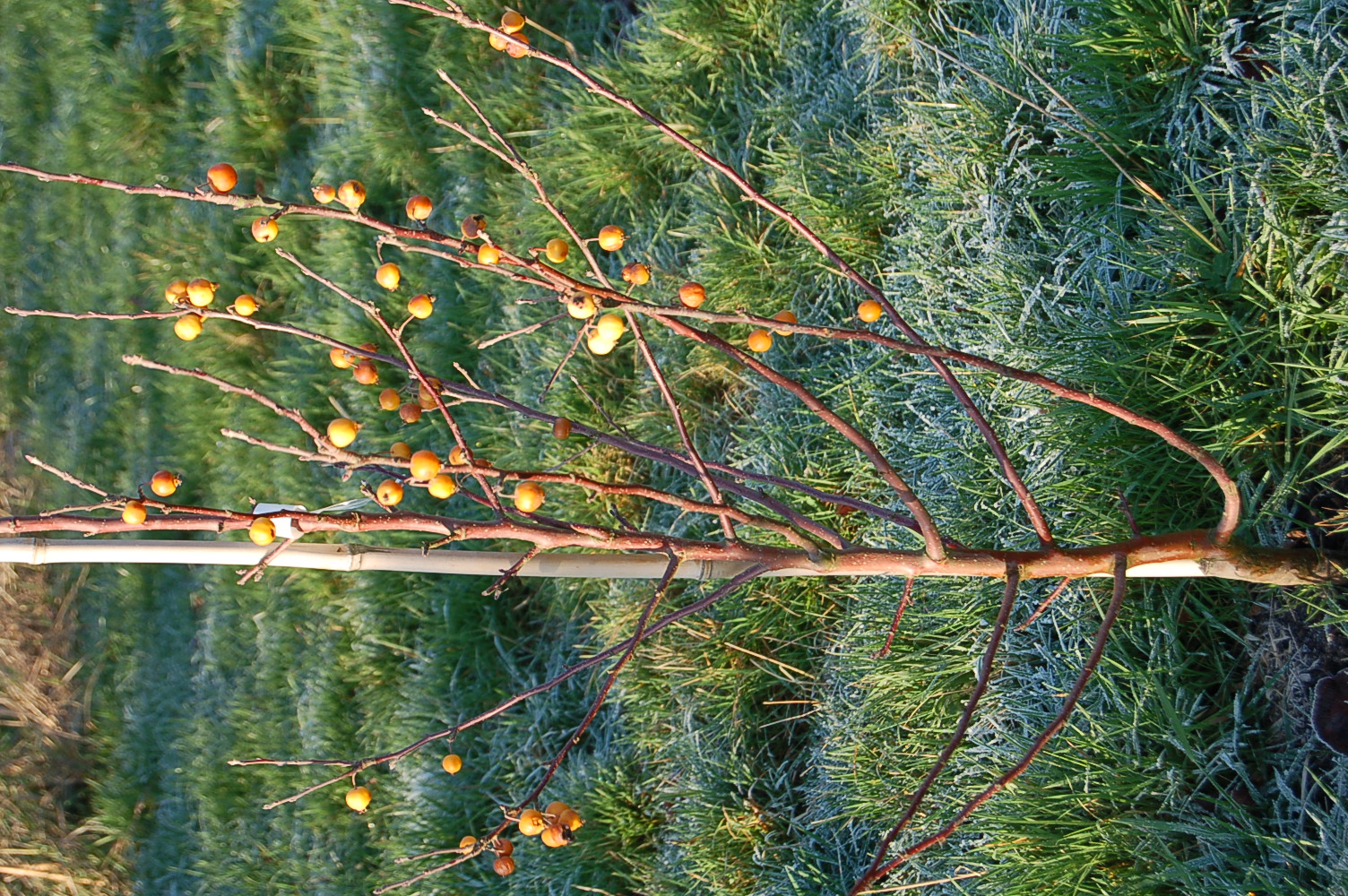
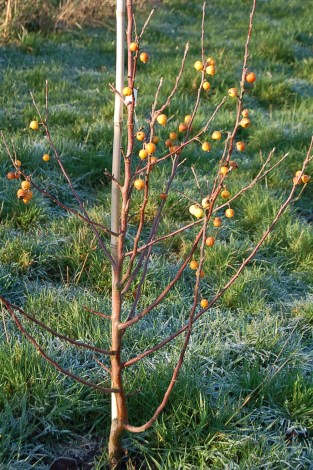
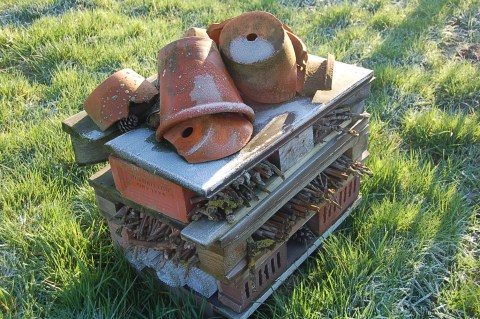
Our Winter Garden has so much of interest that I shall publish a blog just featuring it within the next few days, so for now we shall move on to the second orchard where the golden fruits of Malus “Evereste” have escaped the attentions of the winter visiting thrushes but I suspect they will soon be discovered and devoured. The insect stack in the orchard is there to attract beneficial insects who provide our very wildlife-friendly pesticide. The stack should give them some shelter to help them survive the winter cold and wet.
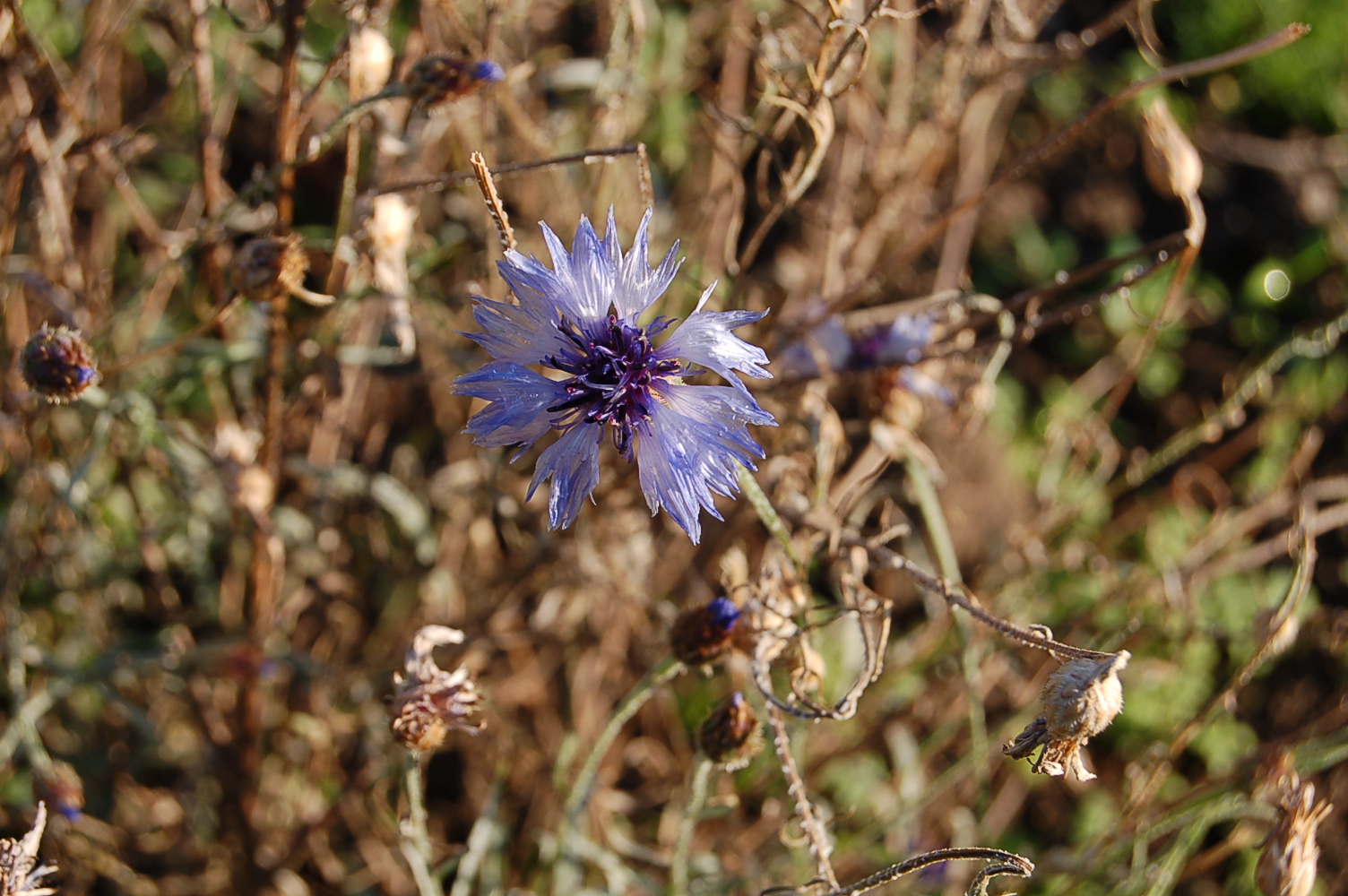
As we wandered back towards the car park we passed through the wildflowers meadows long since cut to the ground, but showing promise for next summer in its tiny seedlings. One lone flower braved the cold – a pale blue cornflower. Leaving the lotties we noticed promises of flowers from the bulbs in the car park border and in the half-barrels in the gateway.

Categories
allotments community gardening fruit and veg garden wildlife gardening grow your own meadows natural pest control

October Working Party

Today we held our October working party at Bowbrook Allotment Community. We took advantage of a bonus day of sunshine and warmth. Lots of hard work and lots of laughter – a typical lottie working party day.
Soon the smell of cut hay permeated the lotties as we cut the meadow under the orchard trees. It was a warm herby smell as well as nostalgic. A true sense of the feel good factor.
Above, Dee and Wendy rake up the mown hay in the orchard and below Pete and Jude tidy the long grass from around the logpile. The logpile is there to attract beneficial insects as part of our organic, natural approach to pest control. We welcome ladybirds and their larvae, beetles and lacewing larvae as pest controllers and bees as pollinators.

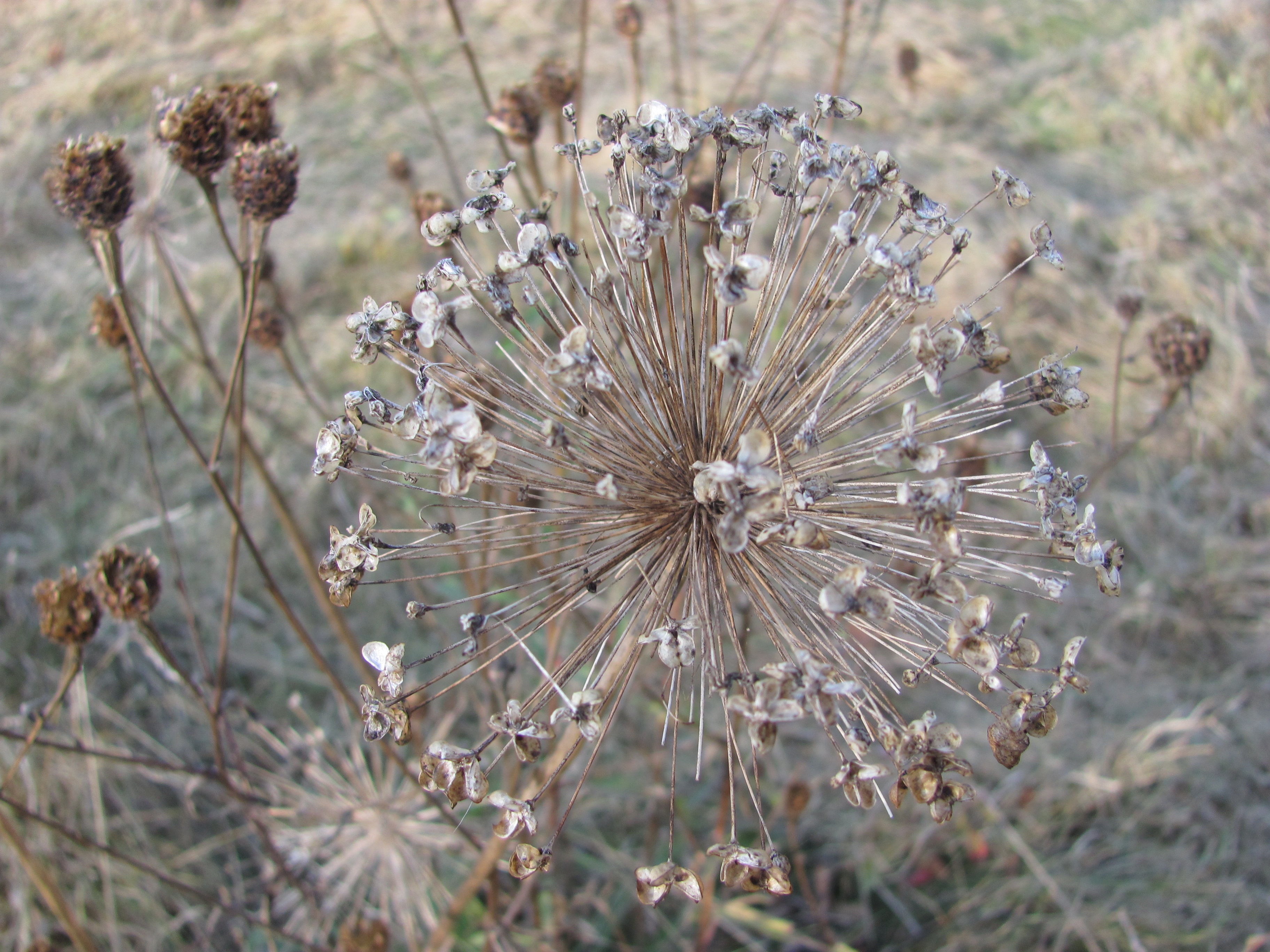
Before cutting the grass I spotted this group of seedheads – alliums and knapweed. They had shed their seeds ready for next year but I felt I had to record this particularly beautiful and delicate clump in a photo before we cut them down.

Bulbs donated by plotholders were planted around the entrance and the car park, with daffodils going in the car park border and muscari in the gateway borders. The Spring Garden was extended and the Winter Garden path was topped up with chipped wood donated by a local tree surgeon. The final task was to trim the long grass and wildflower stems growing on the wildlife banks.

This Veggie Life

A Vegetarian | Nature Lifestyle Blog

Rambling in the Garden

.....and nurturing my soul

The Arch City Gardener

Journeys In St. Louis Gardening and Beyond

Garden Dreaming at Châtillon

Consult the genius of the place

Storyshucker

A blog full of humorous and poignant observations.

gardeninacity

Notes from a wildlife-friendly cottage garden

PlayGroundology

...an emerging social science

The Official Blog of British Wildlife

'The most important and informative publication on wildlife of our times' - The Independent. This blog is a member of The UK & Ireland Natural History Bloggers group: www.uknhb.blogspot.com

iGrowHort

Inspire - Cultivate - Grow Native Plants - Restore Landscapes

Bishops Meadow Trust

To create and protect a semi-natural wild space for the people of Farnham to enjoy and experience an array of British wildlife in our town

Gardening with Children

The www.gardeningwithchildren.co.uk Blog

UKbirdingtimeline

birding through the seasons, why birds matter and how to conserve them

NATURE WALKER

with a camera in hand

Jardin

Transform your outdoor space

Eva's space

My allotment, cooking and other interests

Old School Garden

my gardening life through the year

LEANNE COLE

Trying to live a creative life

fromacountrycottage

trying to live as lightly as possible on our beautiful planet

Good Life Gardening

Nature lovers from Leicester living the good life.

mybeautfulthings

Finding the beautiful in the everyday

mawsonmichelle

Michelle's Allotment

In and Out of My Garden

thoughts from and about my garden

Greenhousing

Big plans for a small garden

The Scottish Country Garden

A Walled Country Garden in South East Scotland

The Fruity Chicken

Life at the fruity chicken

willowarchway

Off grid living. Self sufficient. "PERMAGANICS RULE".

St Anns Allotments

Nottingham's Grade 2* Listed Allotments and Community Orchard

Manifest Joy Harvests

a journey in suburban vegetable gardening

Allotmental

The madness of growing your own

Penny's Garden: a harvest beyond my front door

A novel approach to vegetable gardening

arignagardener

Sustainable living in the Irish countryside.

NewEnglandGardenAndThread

Master Gardener, amateur photographer, quilter, NH native, and sometimes SC snowbird

dianajhale

Recent work and work in progress and anything else that interests me

planthoarder

a chaotic cottage gardener

Lens and Pens by Sally

a weekly blog that creates a personal philosophy through photographs and words

Dewdrops and Sunshine

Stories from a sassy and classy Southern farmbelle.

The Pyjama Gardener

Simple Organic Gardening & Seasonal Living

gettin' fresh!

turning dirt into dinner

JOY...

today the world is created anew

Garden Birds

Notes from a Devon garden

ShootAbout

Life Through The Lens

Adapting Pixels

A photography blog showcasing the best photography pictures and videos on the internet

Wildlifegardening's Blog

Just another WordPress.com site

naturestimeline

personal observations from the natural world as the search continues for a new approach to conservation.

LATEBLOOMERBUDS

The Wonders of Life through my Eyes, my Heart, my Soul