Categories
autumn autumn colours colours hardy perennials

Simply Beautiful – 5 – purple and gold

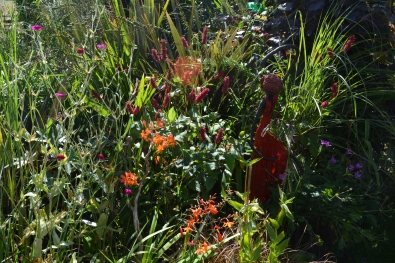
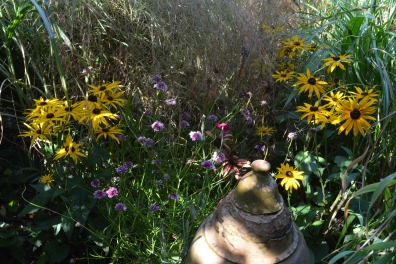
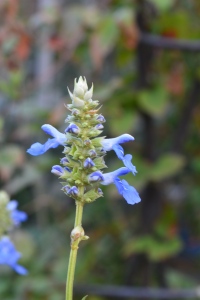
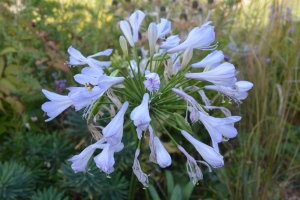
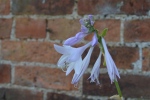
We enjoy growing Hostas in all shapes, sizes and colours many in the garden and almost as many in pots. We simply love them! We often reach the time when we think we have room for no new ones. Until! Until we spot a special one that calls to us!

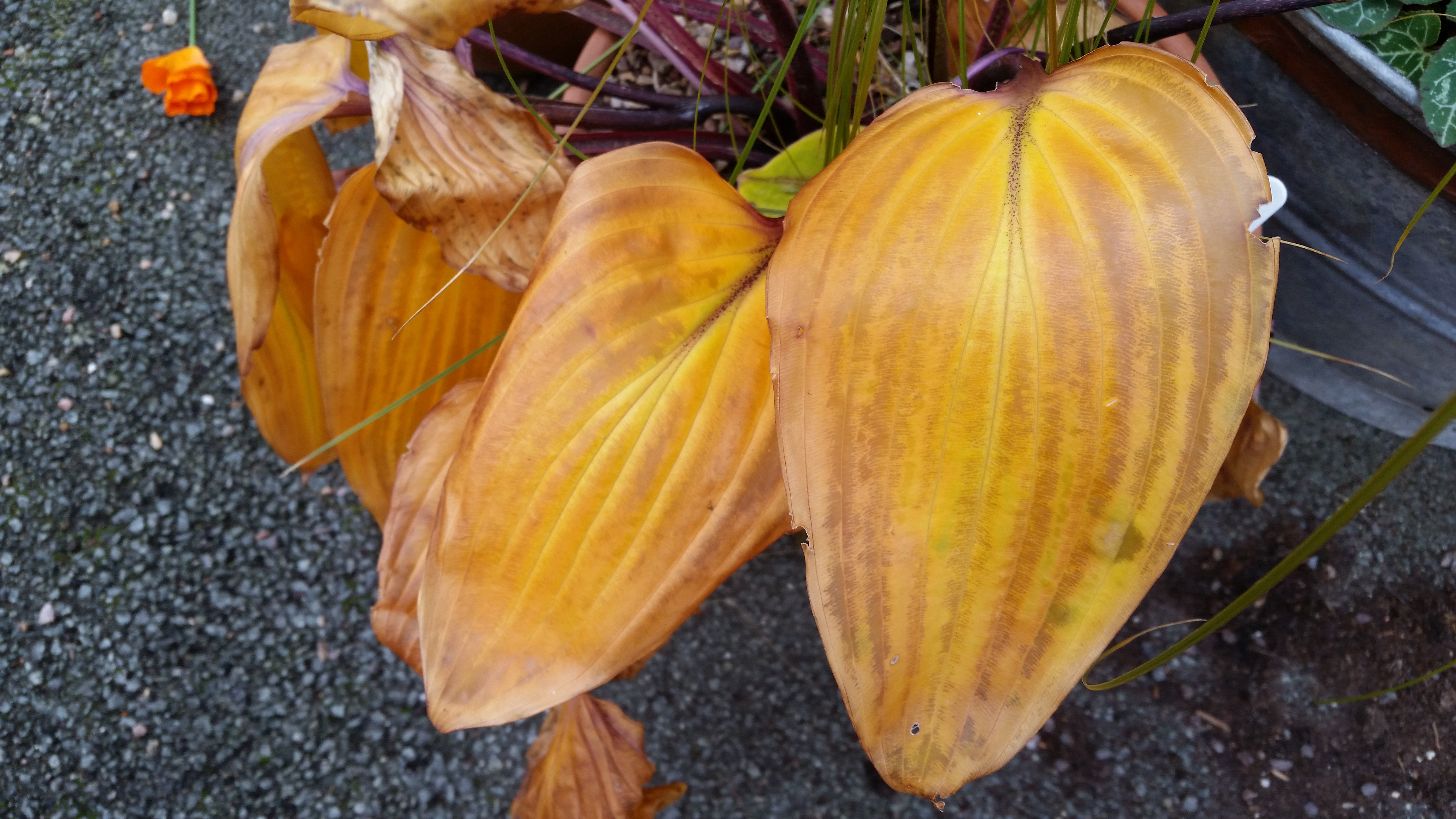
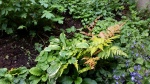
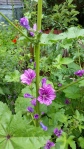
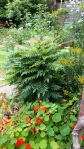
Our latest member of the Hosta family to join us is called H. Purple Heart. It had beautiful rich apple green leaves but the what made this Hosta special was the purple colour of its leaf stalk and central vein.

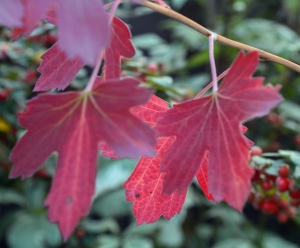
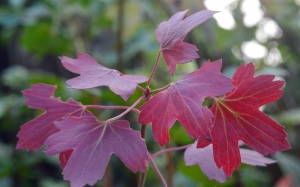
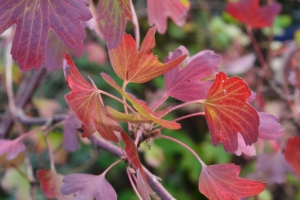
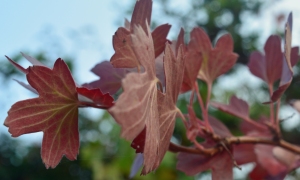
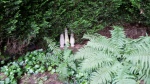
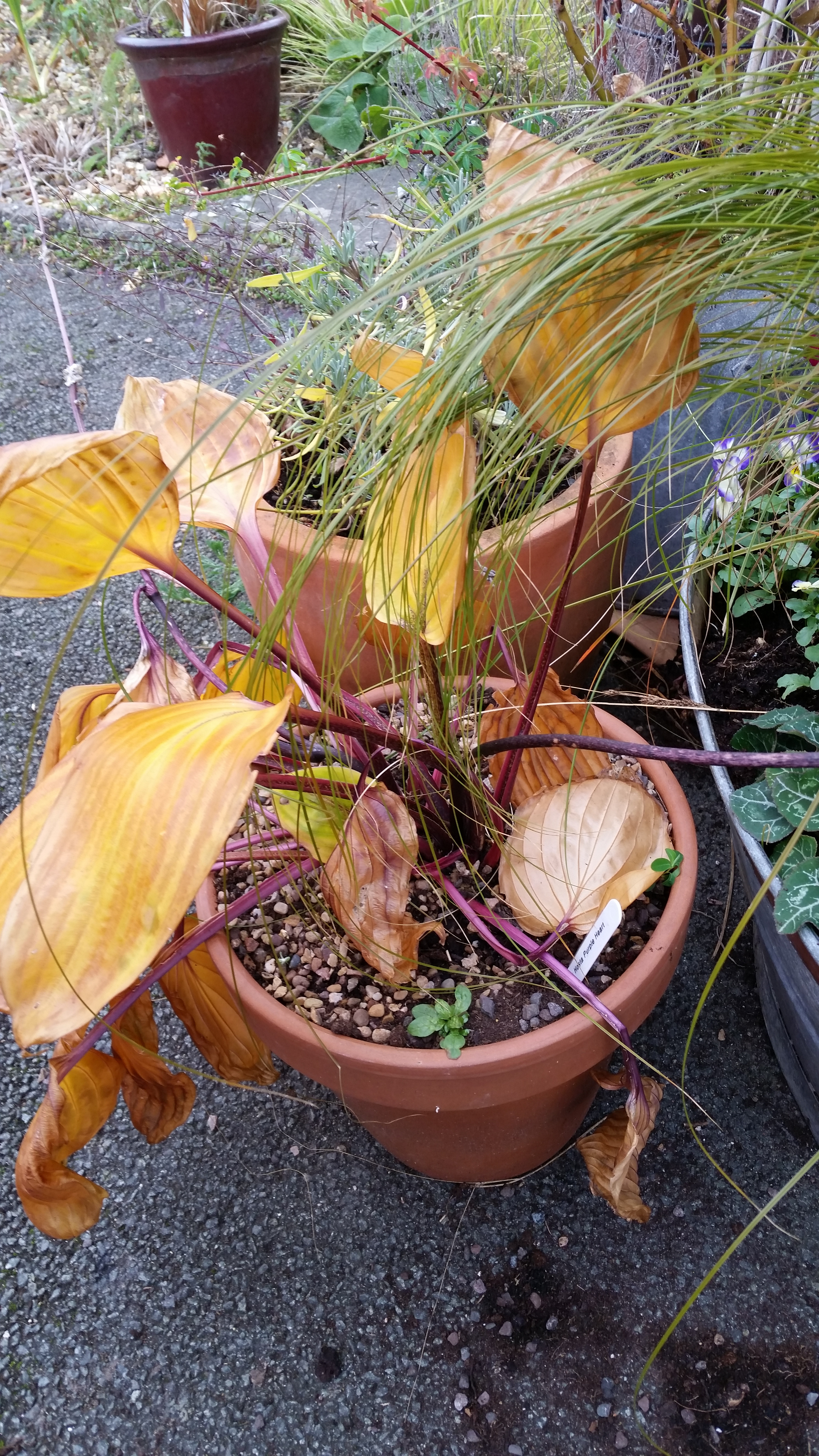
In the autumn the plant becomes totally different. Simply beautiful! The beauty is short lived as the autumn foliage soon rots and the glossy purple stems soon follow. All we have then is a pot topped off with its grit.

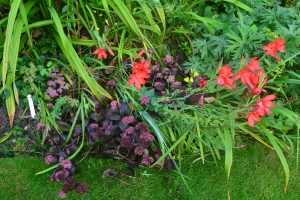
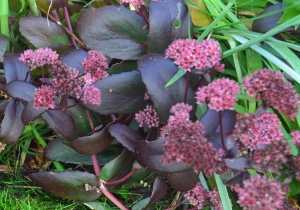
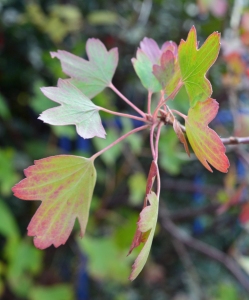
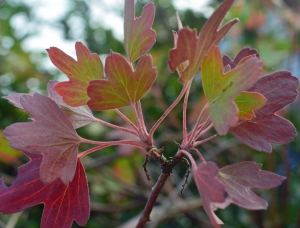
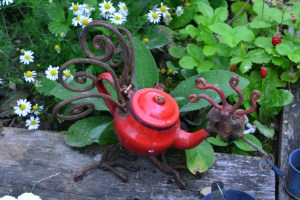
sb5-1 sb5-2 sb5-3 sb5-4

Categories
colours garden design garden designers garden photography gardening gardens gardens open to the public grasses hardy perennials Norfolk ornamental grasses ornamental trees and shrubs

Bressingham Gardens – 2 – Using Grasses.


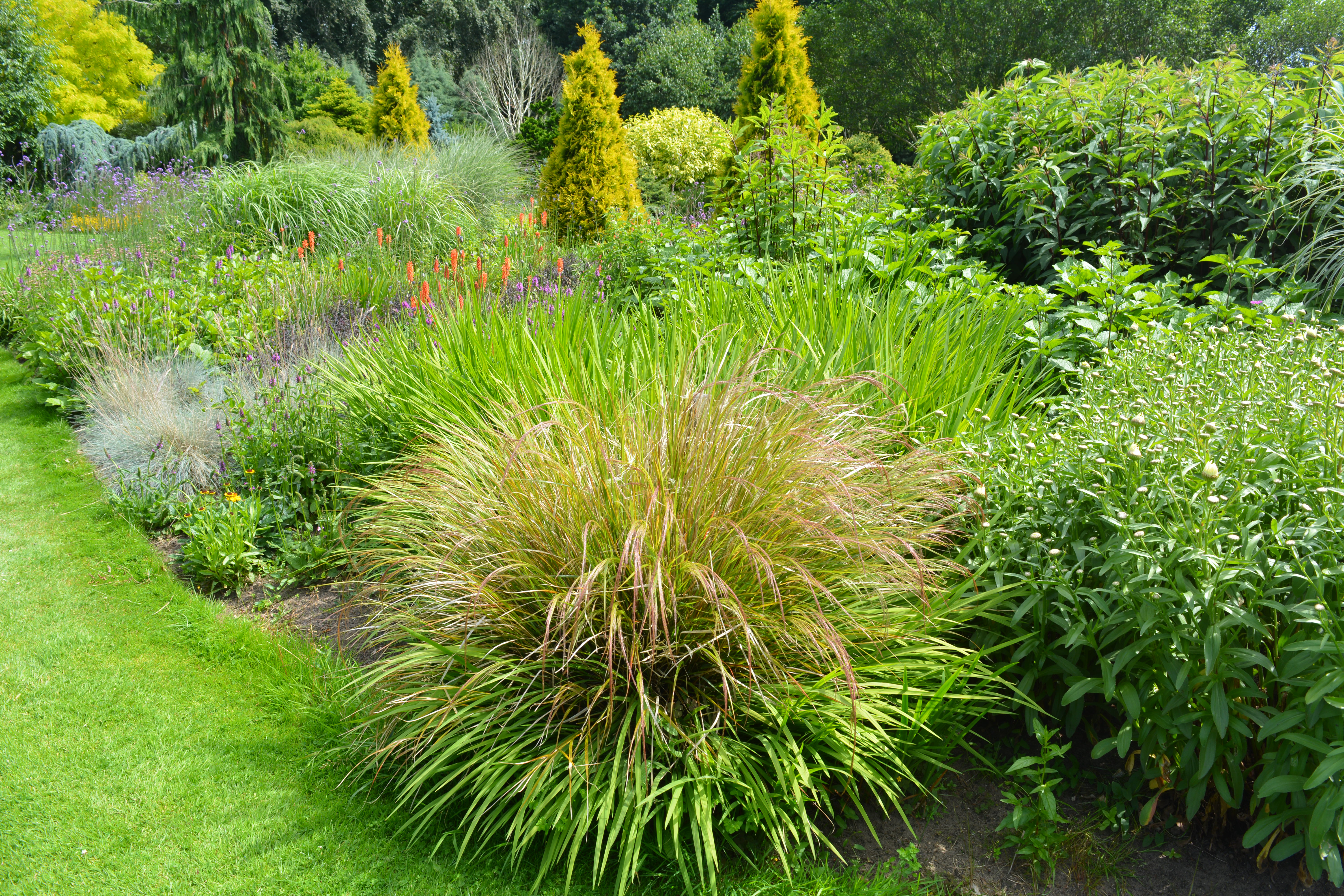
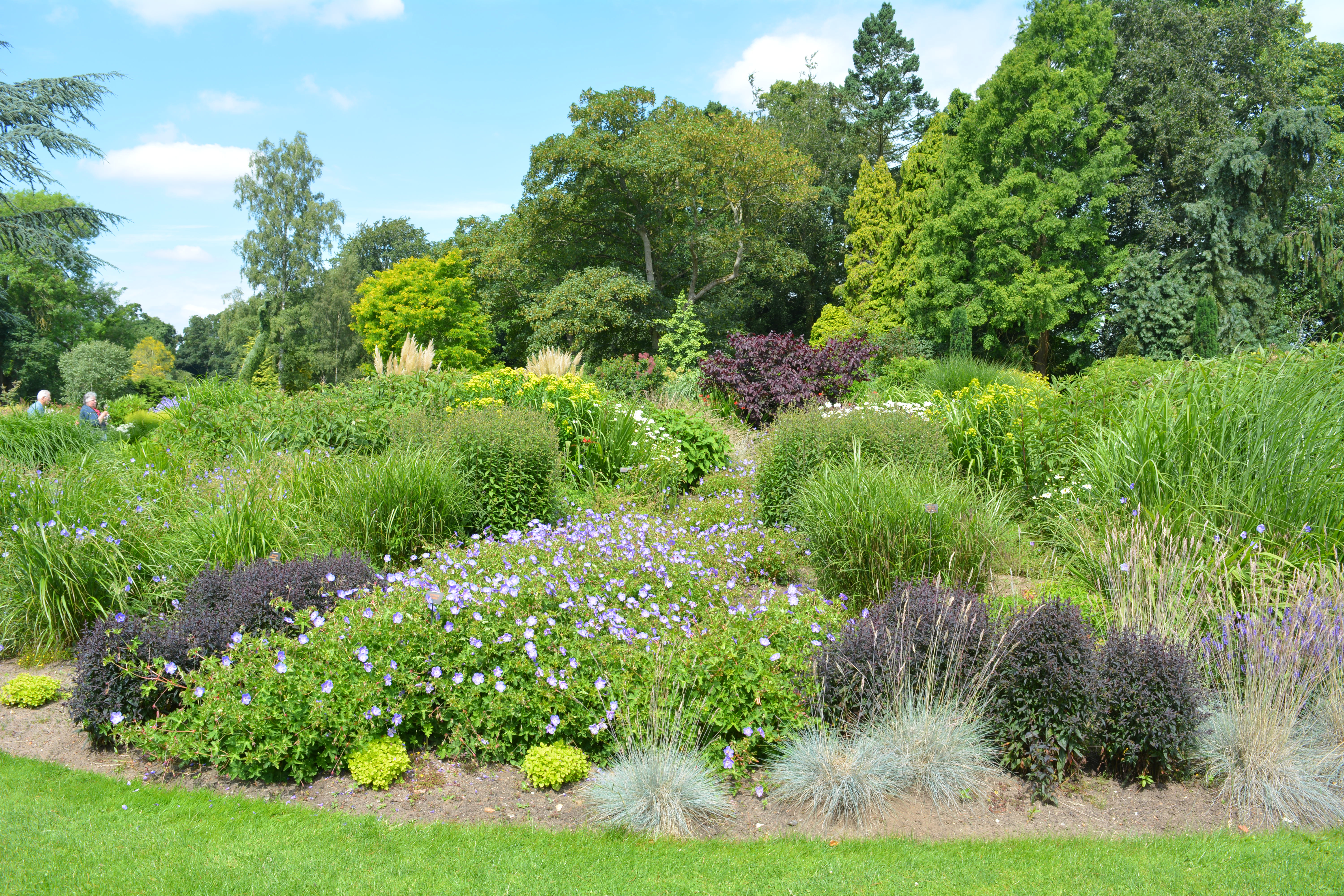
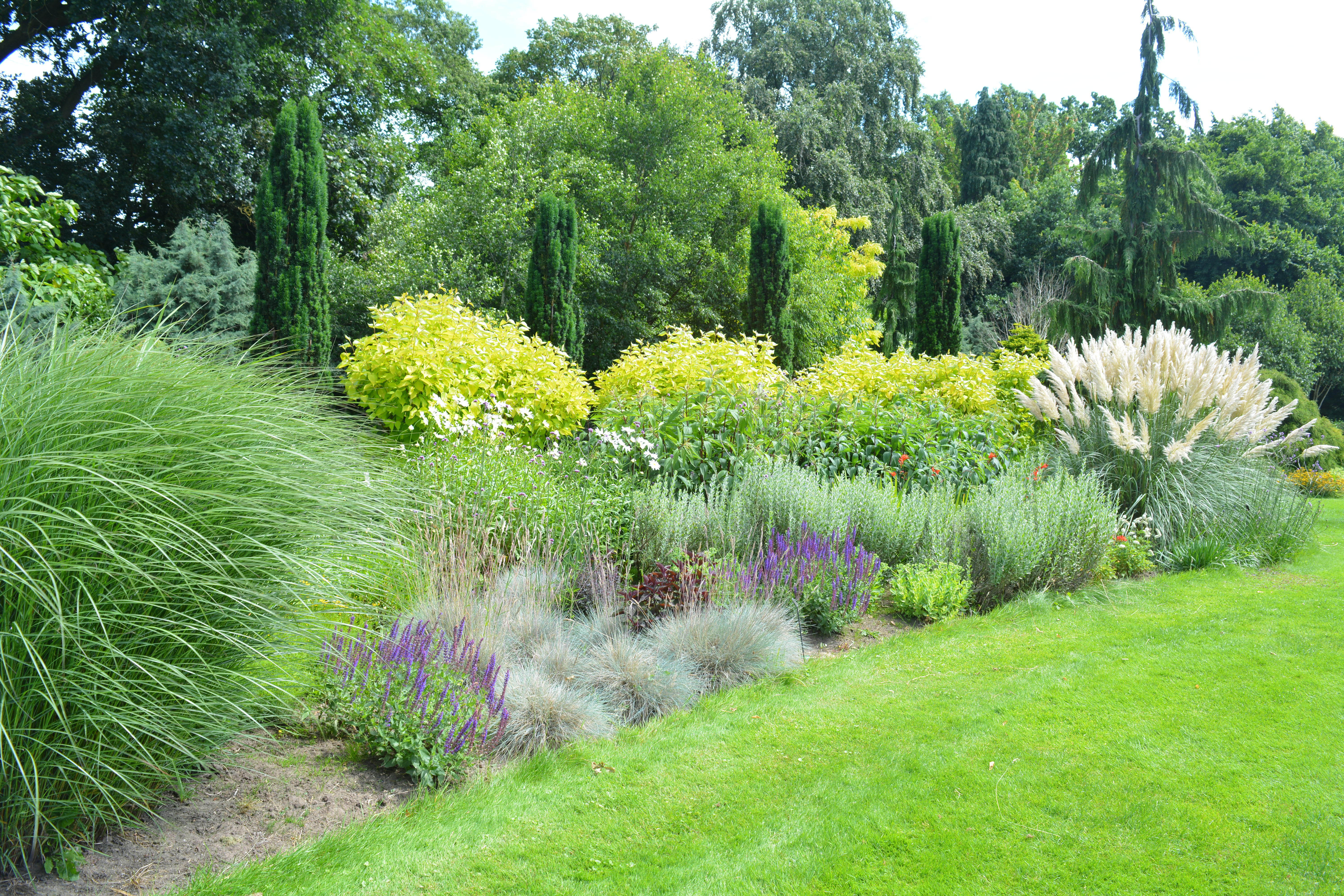
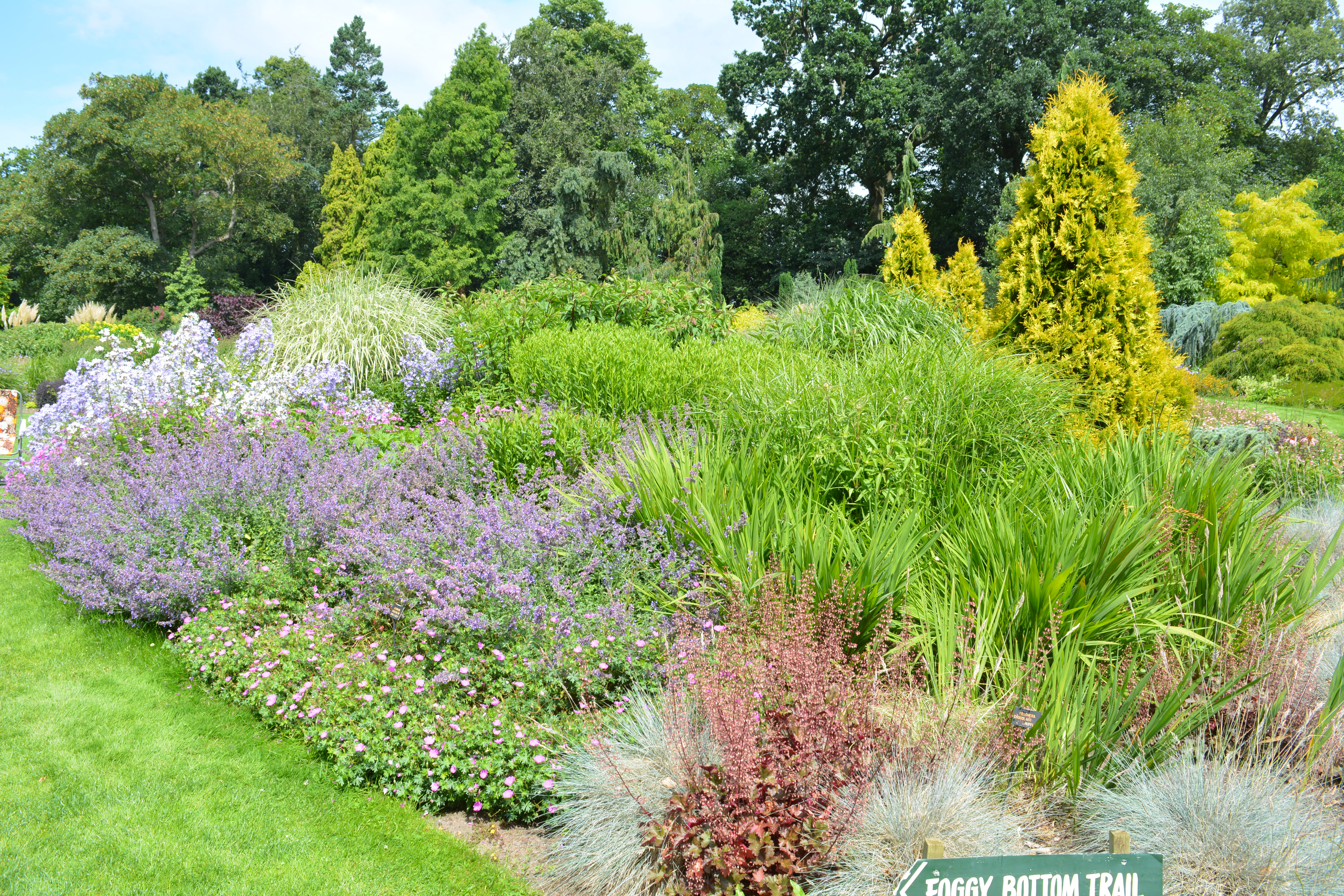
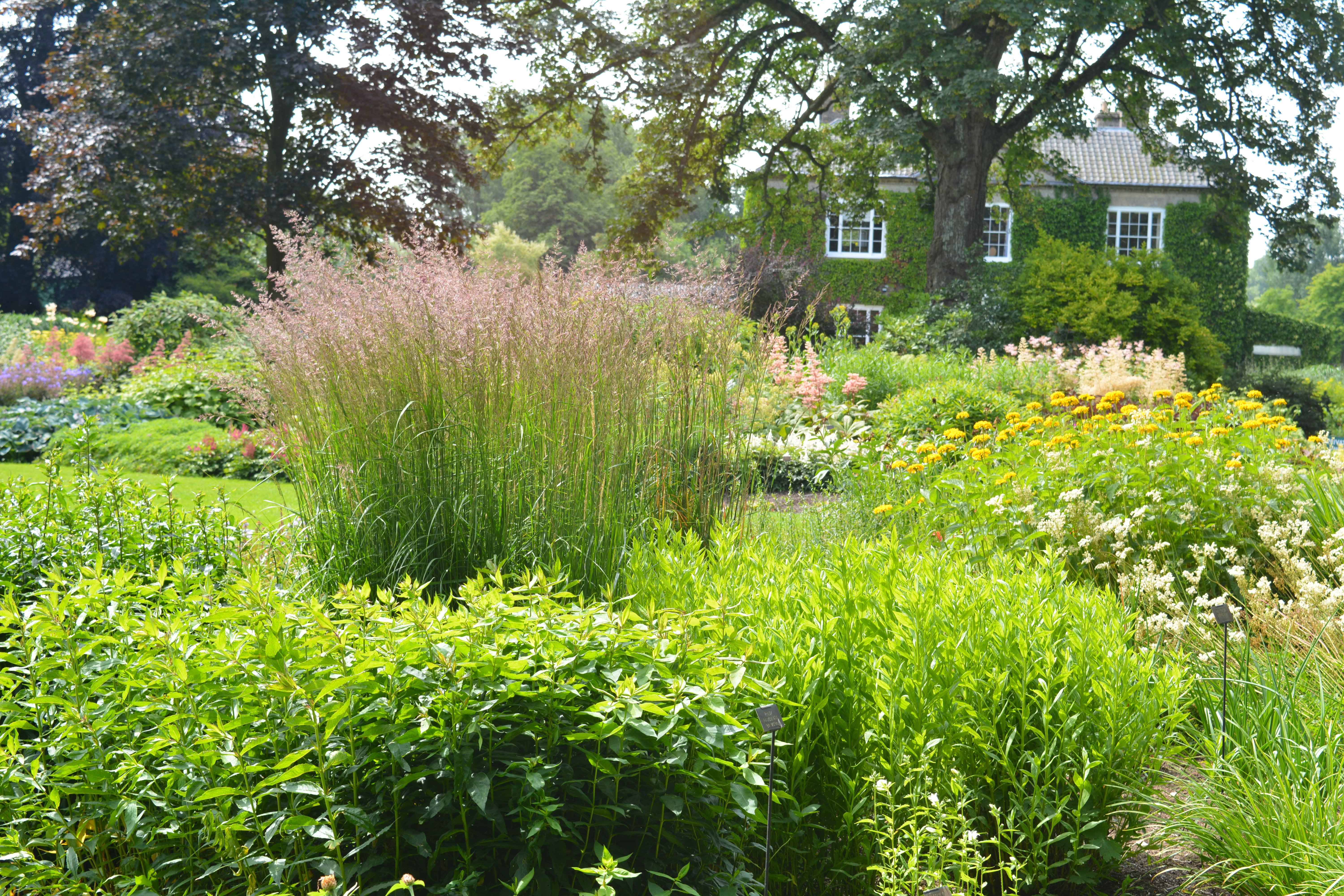
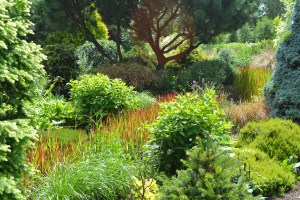
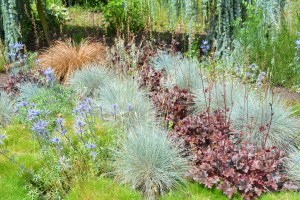
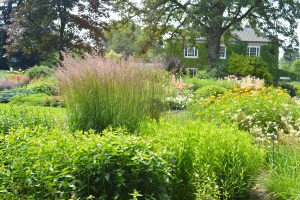
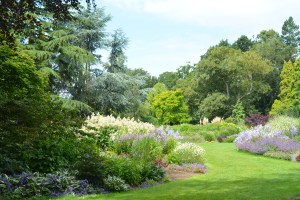
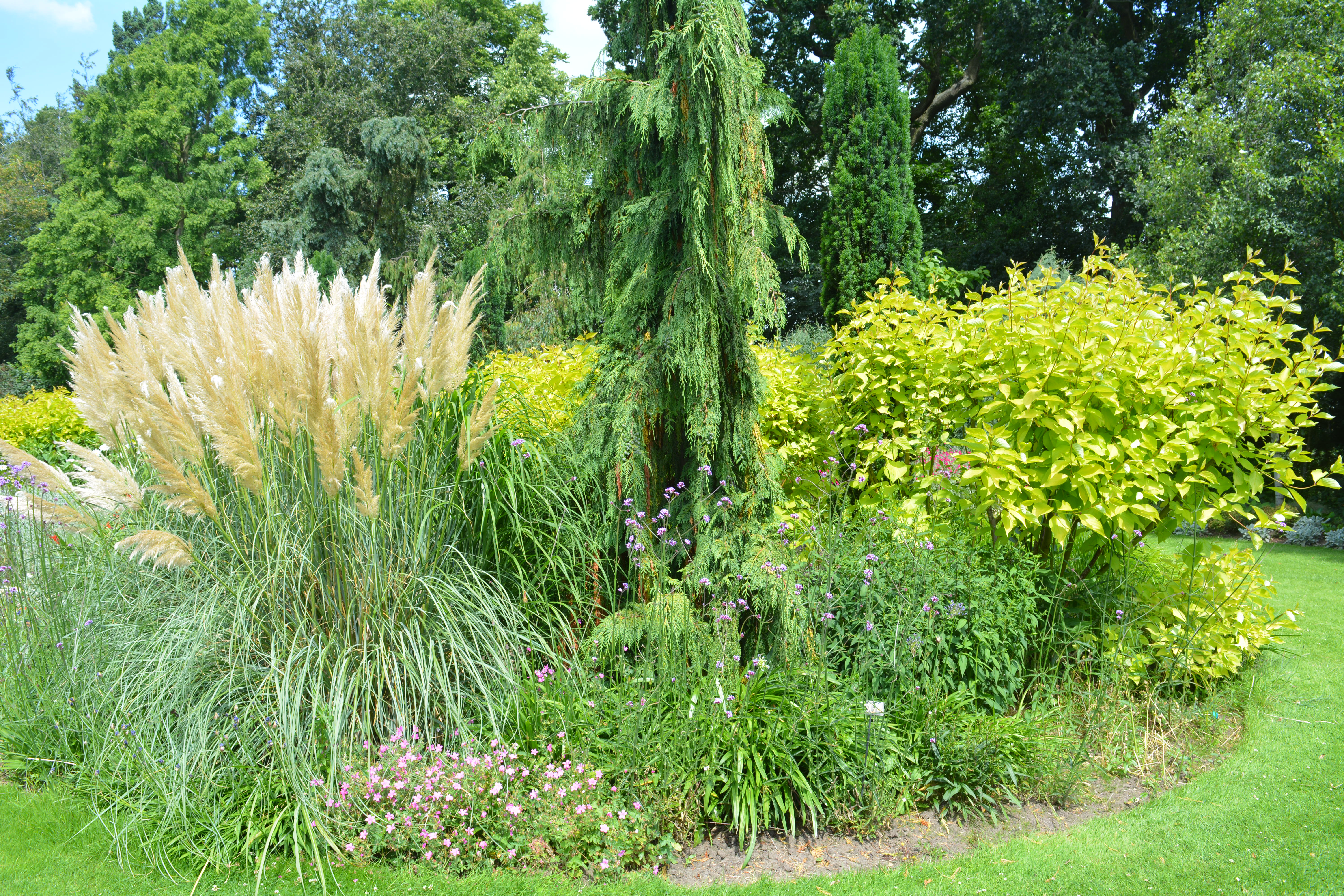
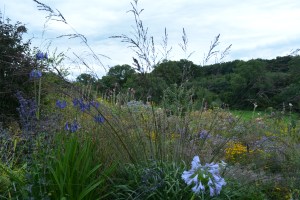
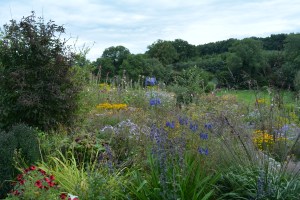
In this second report of our visit to the gardens at Bressingham I am going to look at the use of grasses throughout the gardens. As the batch of shots below illustrate, grasses here are beautifully integrated into the mixed borders and enhance their partners’ attributes. The grasses add movement, sound and an element of delicacy to the whole garden.

bg-01 bg-02 bg-03 bg-04 bg-05 bg-06 bg-07 bg-08 bg-09 bg-10

The Bloms family created the gardens here at Bressingham not only to show the use of perennials and grasses but also coniferous evergreens. It is here they display all the many new cultivars of grasses and perennial herbaceous plants that they have bred over the decades. They also pioneered the use of island beds in garden design where for the first time herbaceous borders were designed to be seen from all around and the island beds of plantings were designed to be islands within seas of lawn.

gb-01 gb-02 gb-03 gb-04   gb-07  gb1-02  gb1-08

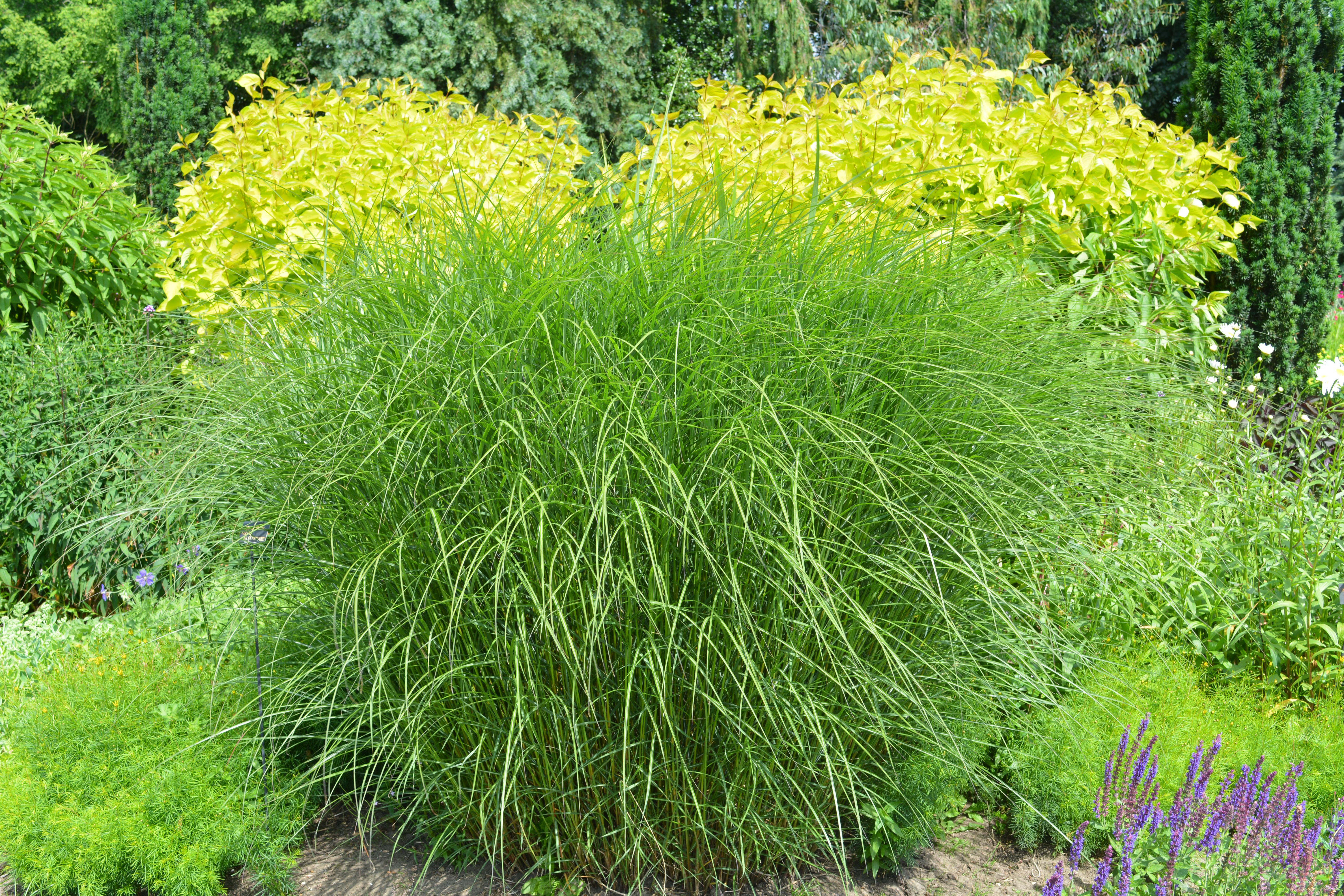
Grasses especially varieties and cultivars of Miscanthus are an integral part of the gardens here including the island beds. There is a large collection of Miscanthus which impressed and delighted me as it is a grass family that I love to see and love to use in our garden. It is a great multi-season group of plants.

Here are a few shots of the Miscanthus collection, but it was hard to do justice with the camera to illustrate the subtle variations in colour, height texture and growth habits of these grasses, the colours in all the different flowers and the leaf stripes and variegations.

gb-13 gb-11gb-15 gb-14 gb-12gb-09 gb-10

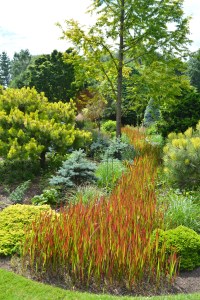
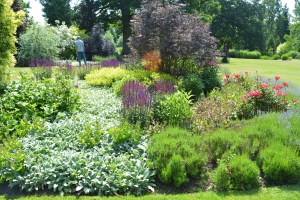
Using grasses in clumps, blocks, rivers and ribbons adds drama to the garden, but equally a single specimen partnered with a shrub, tree or herbaceous plant can increase the aesthetic value of both the grass and its partner.

Here are a couple of ideas seen at Bressingham using grasses in ribbons and rivers.

gb1-05 gb1-06gb1-09 gb1-01gb1-04 gb1-03 gb1-07

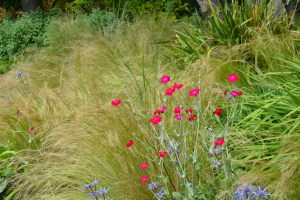
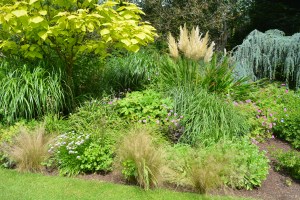
We enjoyed finding effective planting partnerships involving grasses with other classes of plant.

gb1-10 gb1-11 gb-05 gb-06

We came away full of new ideas and a list of Miscanthus we look forward to adding to our Avocet patch.


Categories
colours garden design garden photography gardening gardens gardens open to the public grasses hardy perennials light light quality ornamental grasses ornamental trees and shrubs trees

Bressingham Gardens – 1 – Colour Combinations and Conifers

Jude and I have a book in which we write and keep our bucket list, or really bucket lists. We keep lists of places to visit, gardens to visit and activities to try out. We add to them throughout each year and revamp and edit them at the beginning of each new year.

bc-01 bc-15

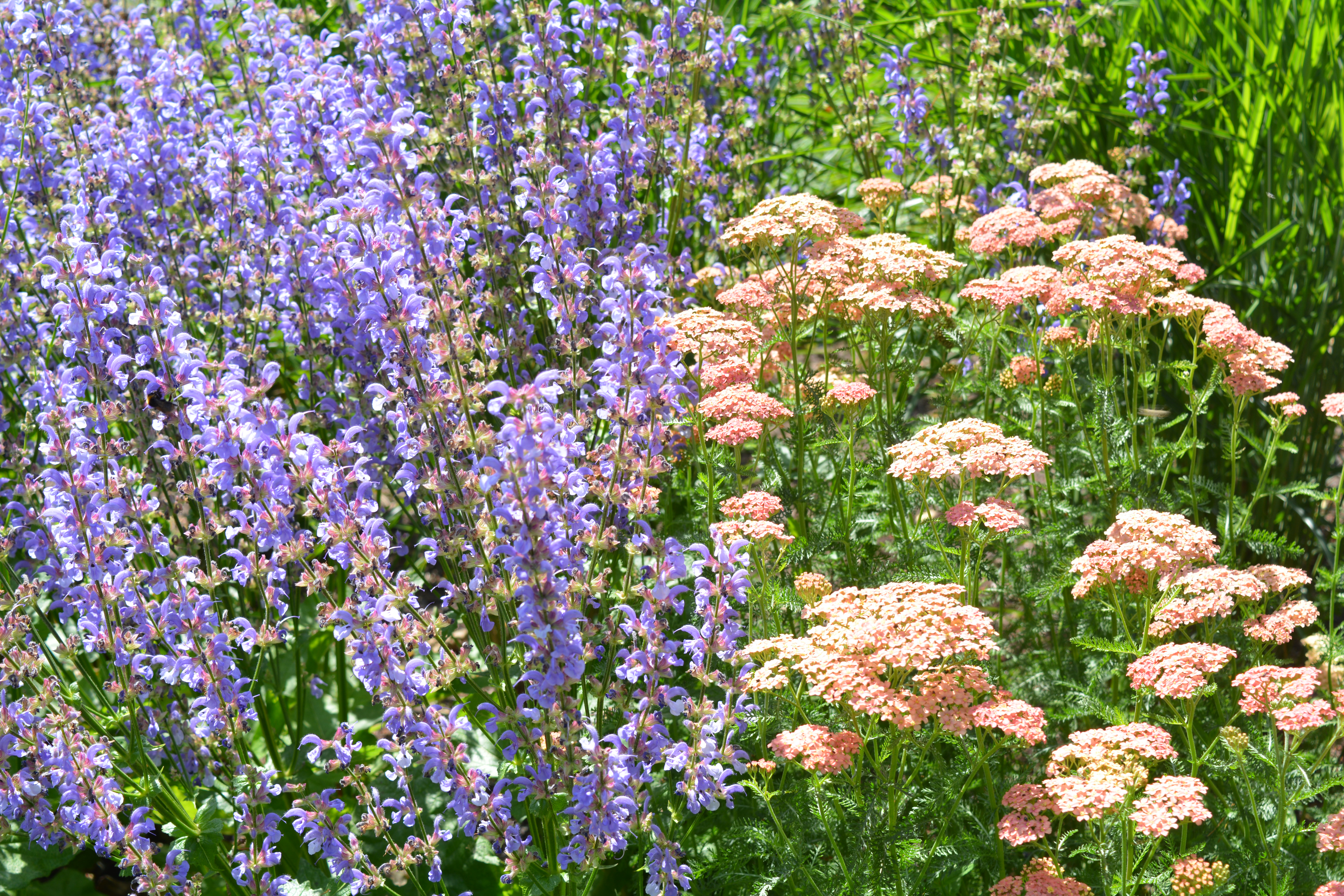
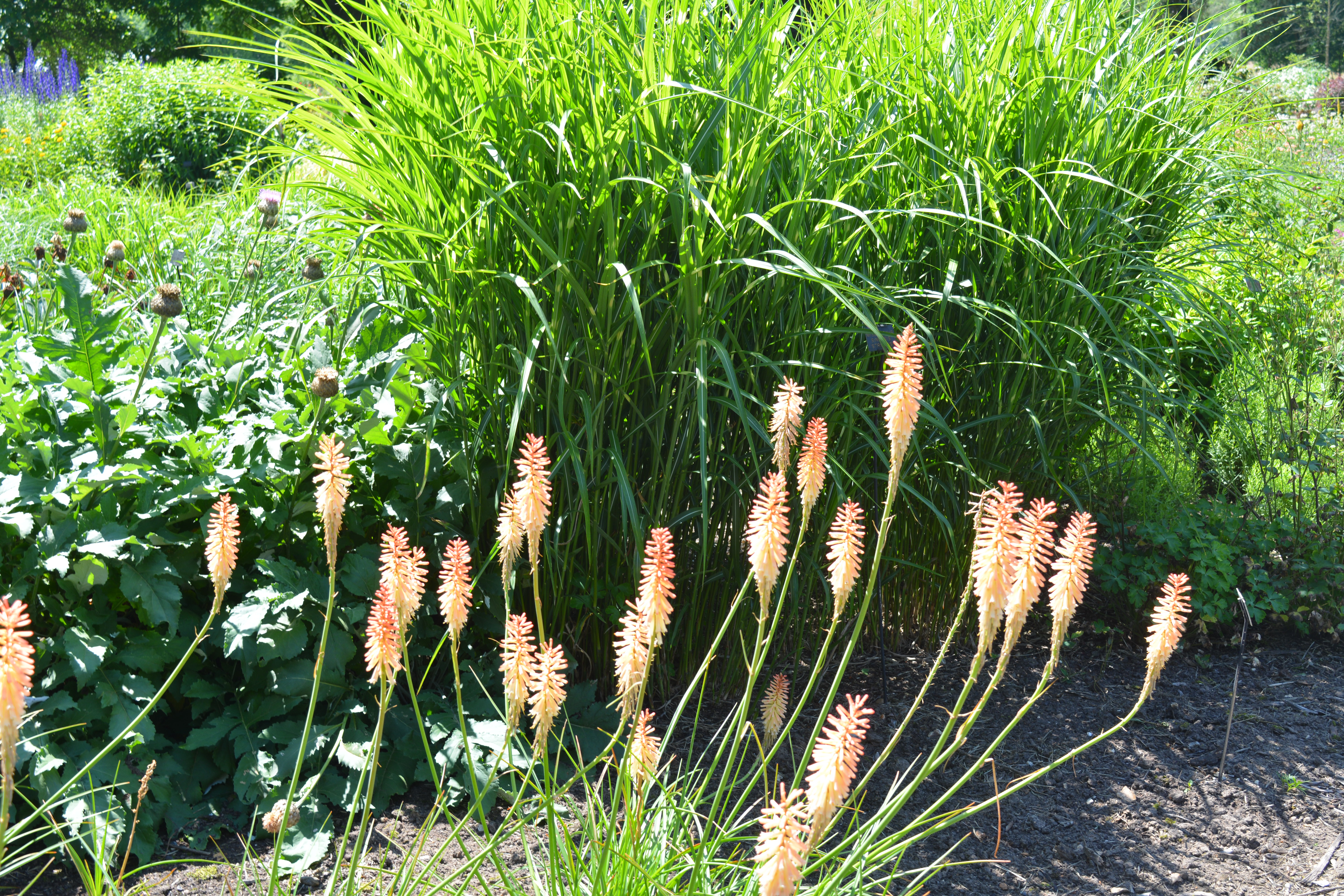
Our gardens to visit list has contained one particular garden we wished to visit for 3 or 4 years and it was in the summer of 2016 that we finally successfully got there, The Bressingham Gardens. We looked forward to seeing how they used grasses throughout the gardens and to experiencing enjoying so many beautiful herbaceous perennials. We also hoped that the on-site nursery would give us access to some unusual perennials bred at Bressingham and difficult to get elsewhere, and we particularly hoped to buy some Sea Hollies. Blooms are particularly well-known for their Achillea, Crocosmia and Kniphofia developments, such as C. Lucifer and K. Toffee Nose.

bc-10 bc-09bc-22 bc-21

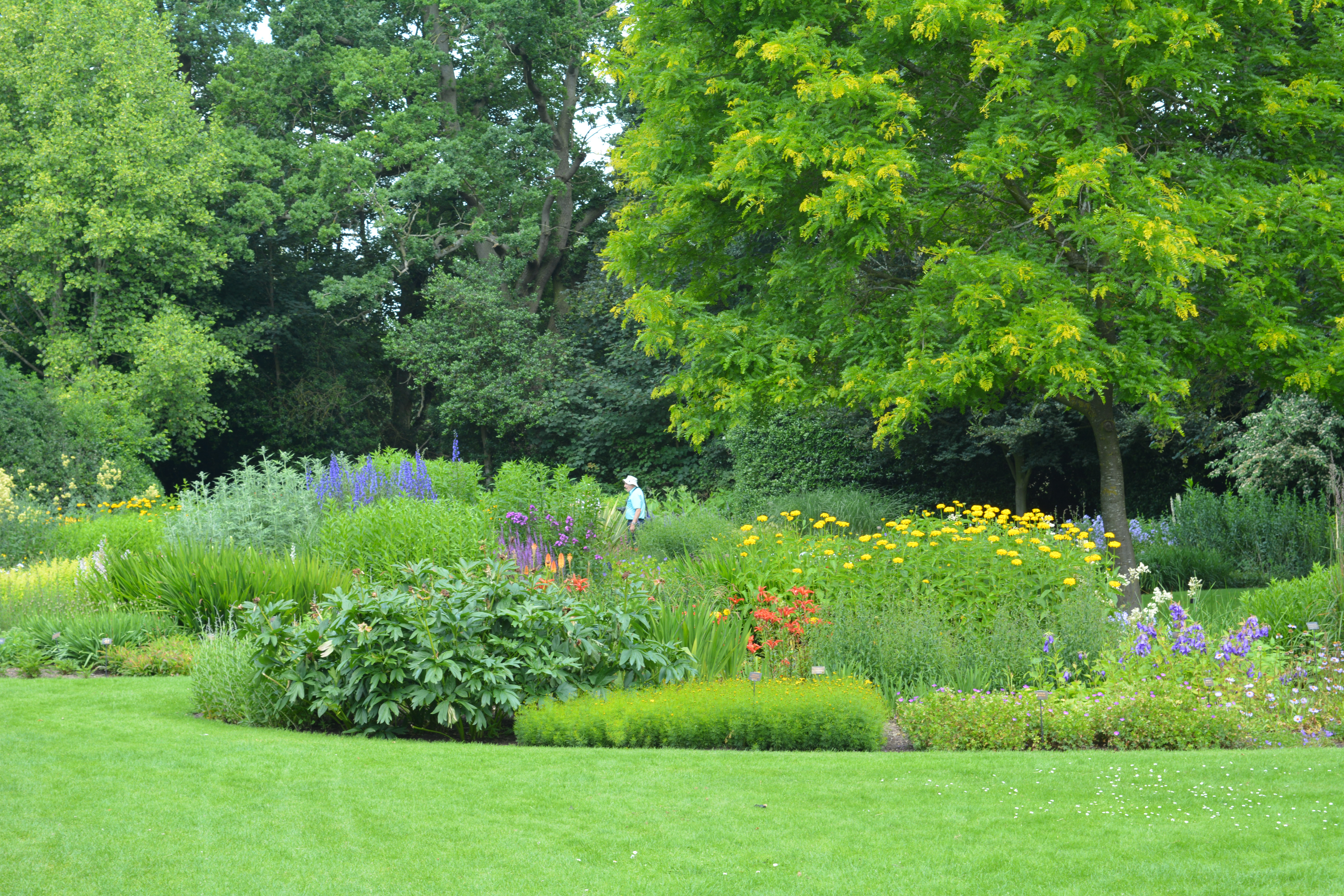
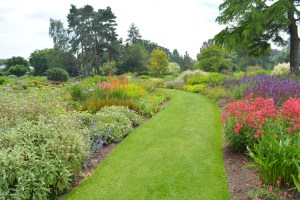
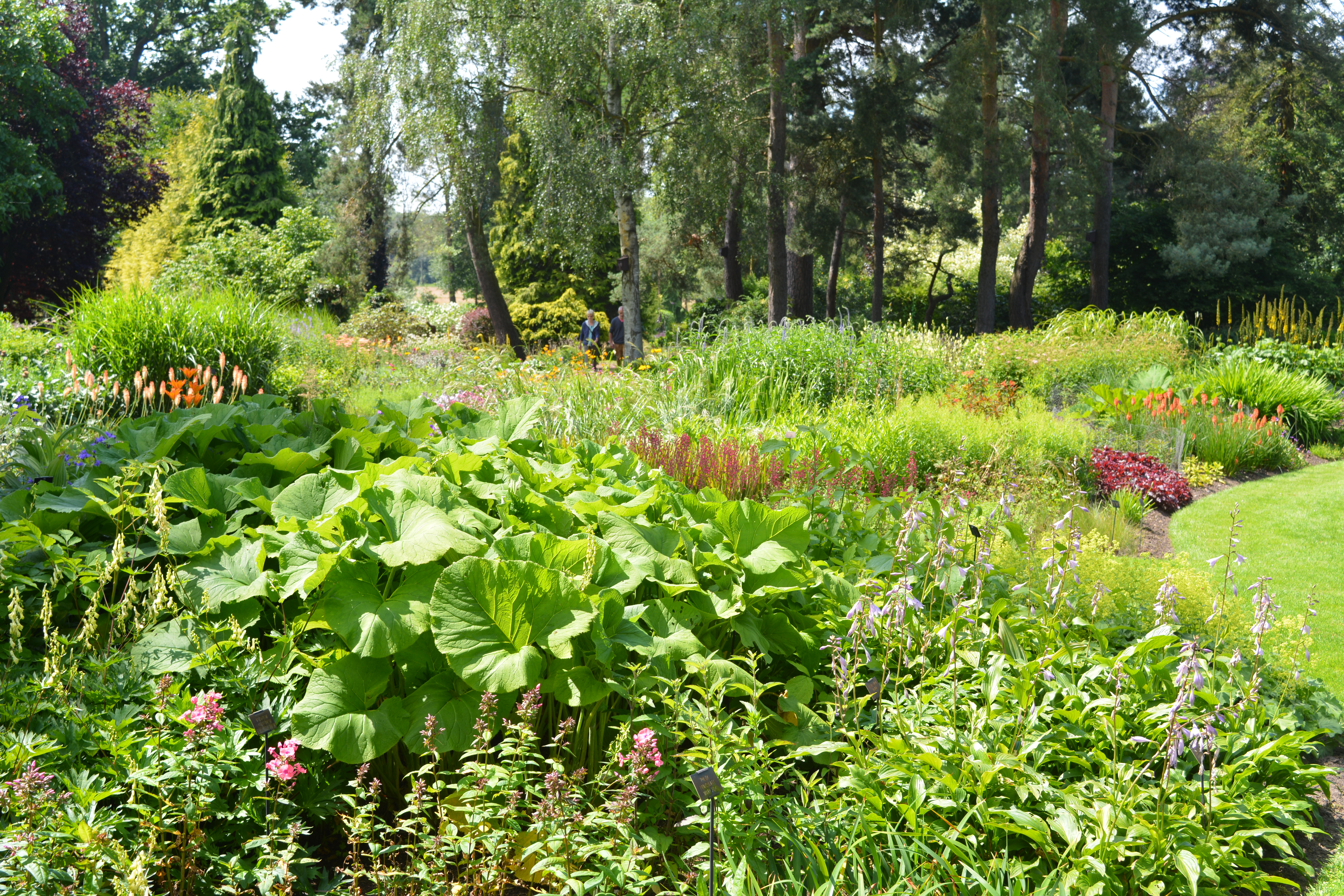
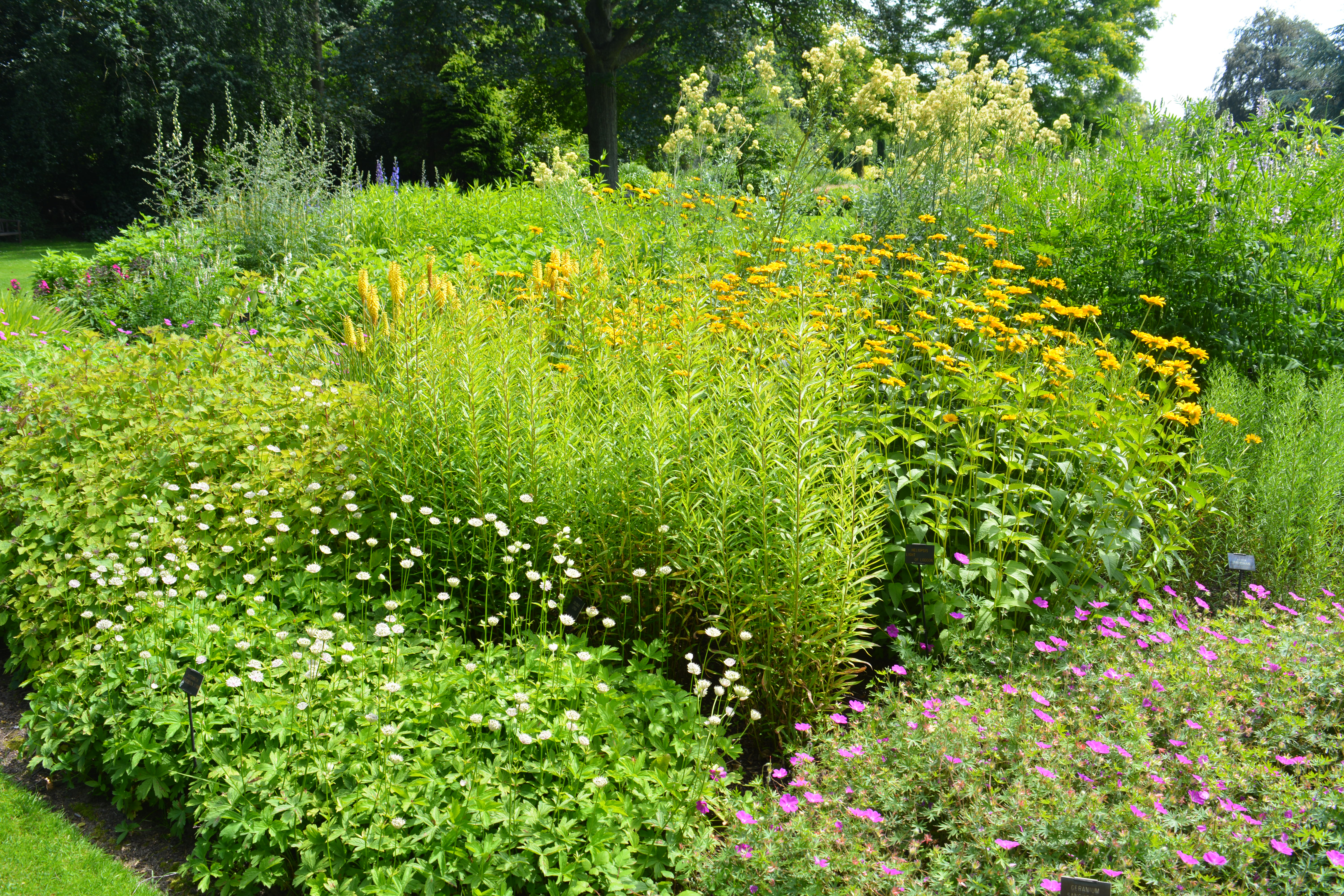
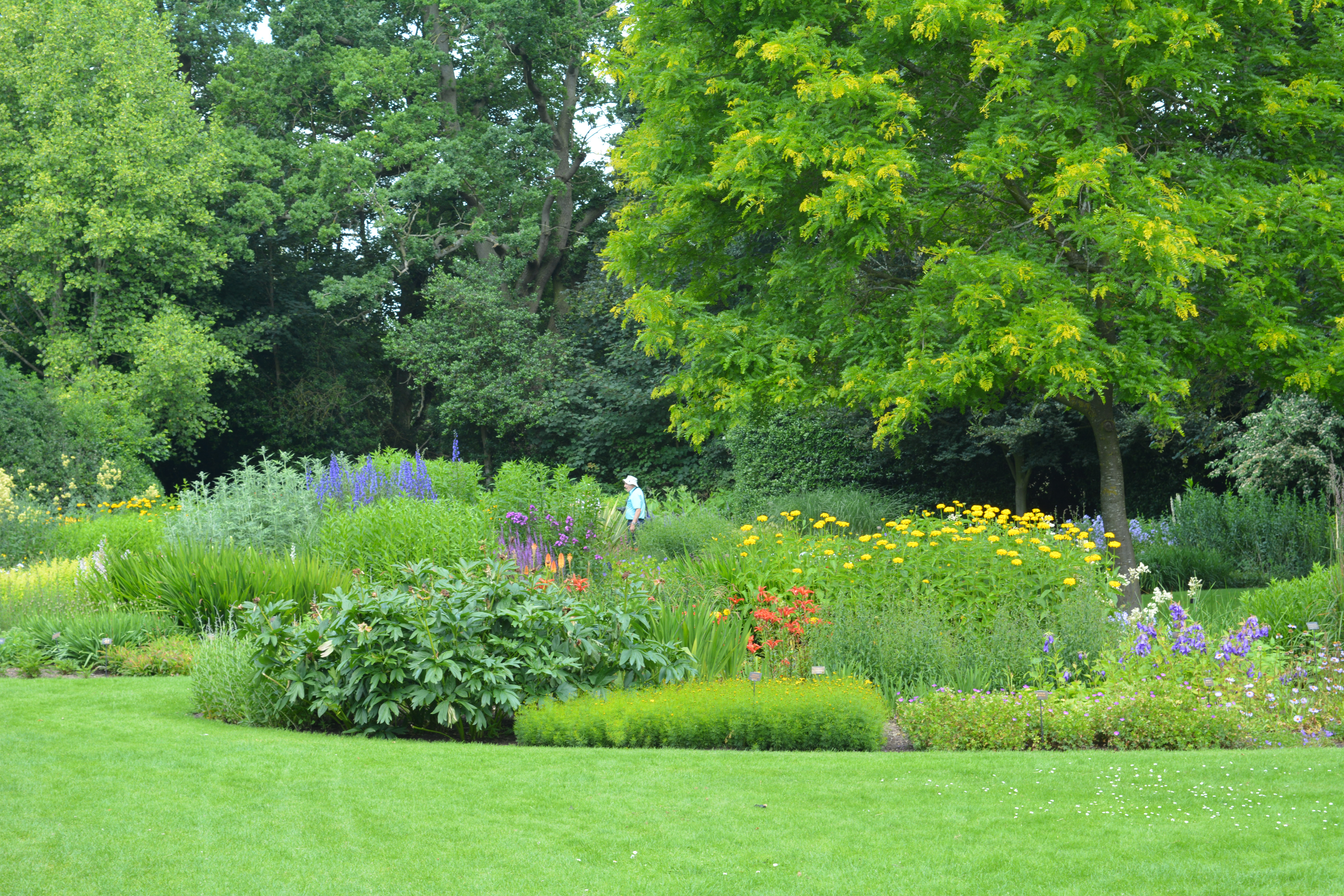
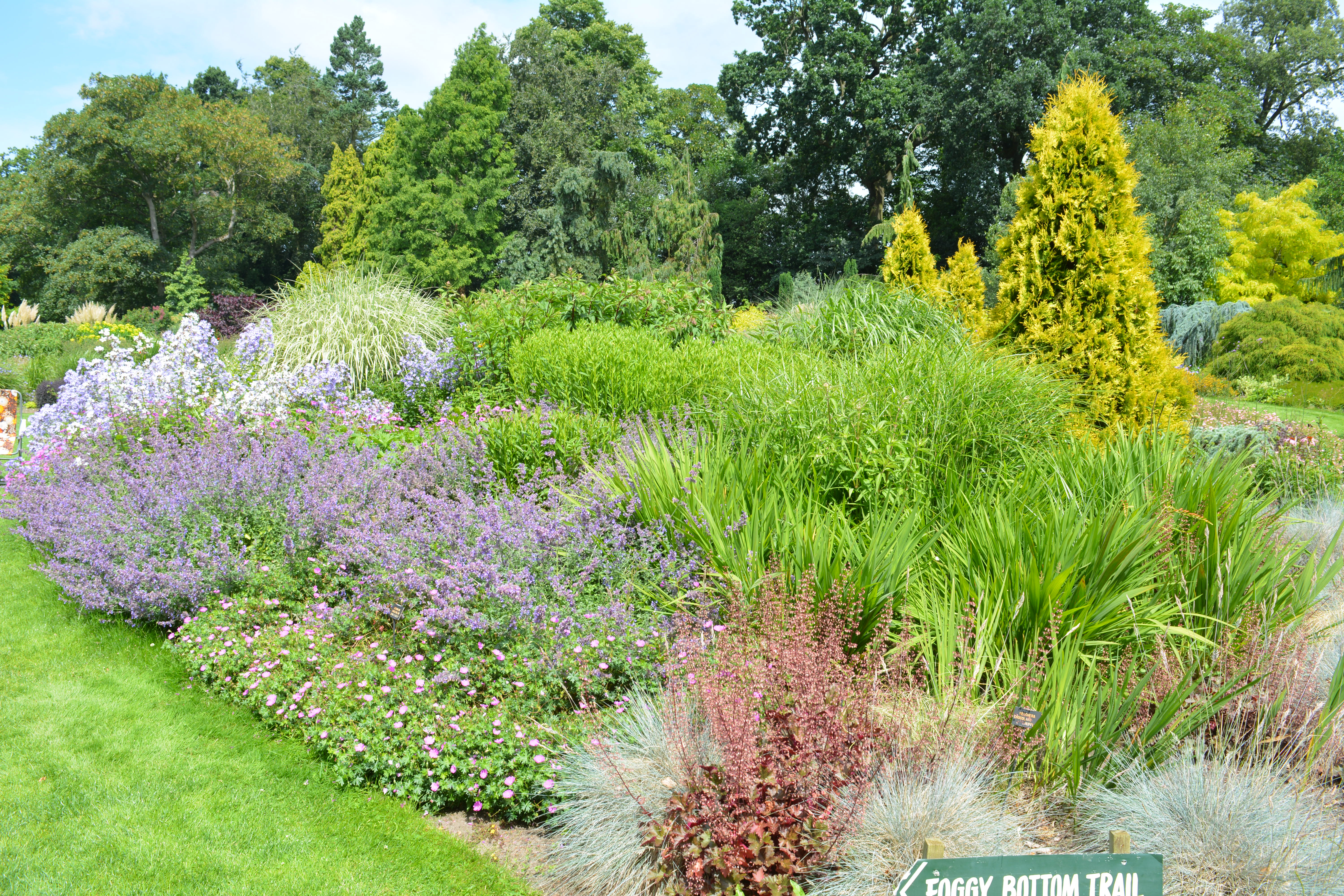
These expansive gardens are like a calm green sea of short cut grass broken up by island beds exploding with colourful mixed plantings.

bc-13 bc-02bc-35 bc-24 bc-31 bc-25bc-38 bc-32

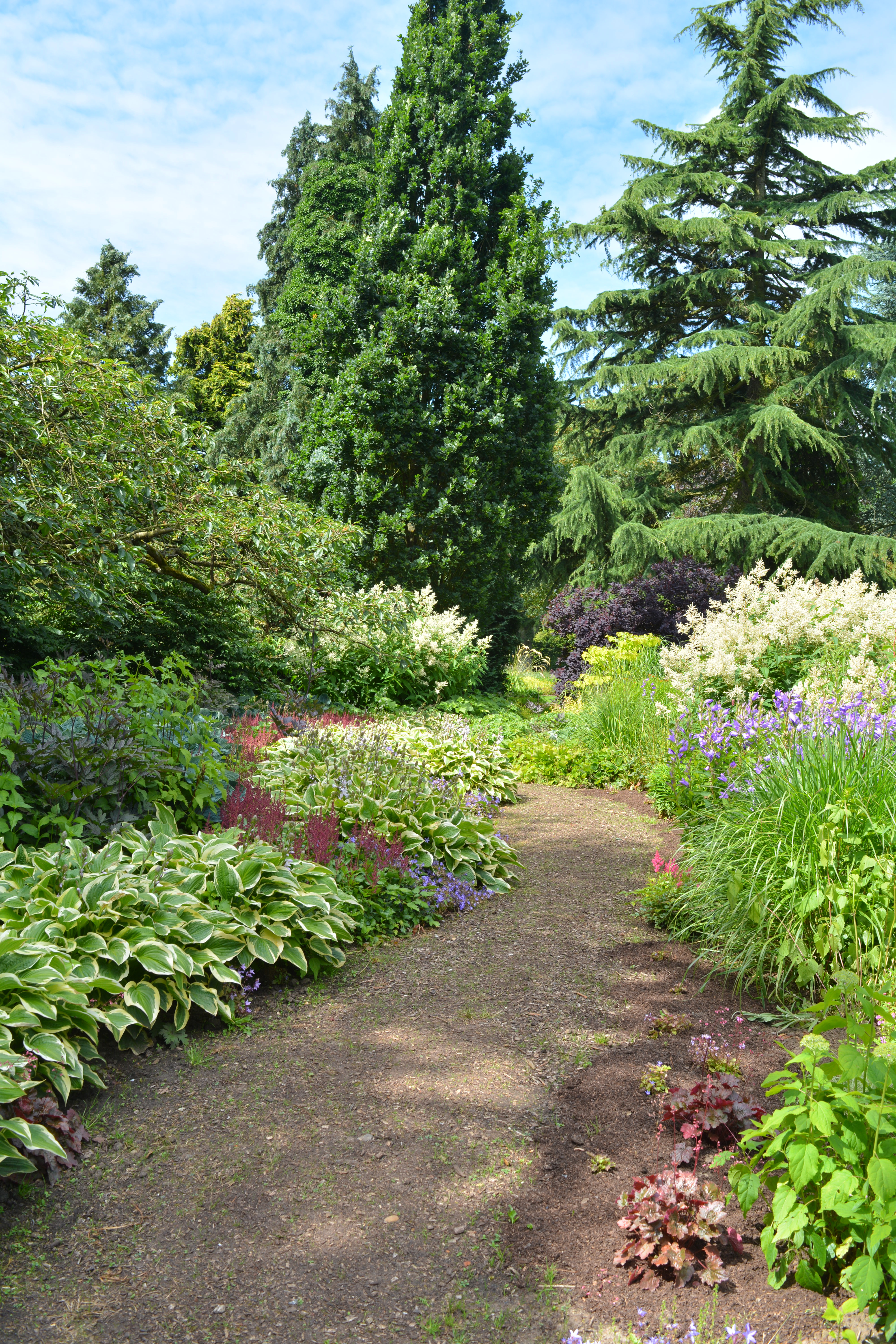
Areas of shade are essential in any open aspect garden, and here small deciduous trees are used throughout to add small patches of shade along pathways, and most of these trees have interesting coloured foliage to add another layer of interest.

bc-27 bc-26bc-29

We enjoyed the richness of warm colours working together beautifully when caught by the sunshine, and contrasting colours shining out in the borders.

bc-34 bc-36bc-39 bc-42bc-41 bc-20 bc-19 bc-18 bc-17  bc-14 bc-12 bc-11

Coniferous evergreens are a special feature of the gardens as they are a particular love of Adrian Bloom one of the family who designed, maintain and own the gardens at Bressingham. Here they appear in every shade of yellow, green and blue with shapes of all sorts some extreme shape, from narrow, upright sentinels to drooping waterfalls. They also feature within the tall windbreaks planted all around the site to protect the wide ranging plantings within the gardens.

bc-06 bc-05 bc-04 bc-37bc-33 bc-03 bc-30 bc-07

In my next blog we will return to the gardens at Bressingham and take a look at how grasses are used to good effects. A big disappointmetn at Bressingham is that the nursery there has been sold to a massive national chain of garden centres, so the plants were the same old same old! So sad!


Categories
colours garden design garden photography gardening gardens gardens open to the public grasses hardy perennials ornamental grasses outdoor sculpture sculpture

Sussex Prairie Garden – a prairie garden in Sussex

This is a garden I have been reading about and admiring in photographs for several years and I have enjoyed watching it develop. Imagine our surprise when we were on a mid-week break in September and discovered that we were staying in a hotel not too far from the Sussex Prairie Garden. We couldn’t miss this opportunity so it soon found a slot in our schedule. The big question was “Can it really be as good as we are expecting?” and this stayed in my mind as we drove out to visit it. Surely we wouldn’t be disappointed!

We weren’t and we knew immediately that we wouldn’t be by the welcoming entrance, an unusual, quirky and humorous way in, coupled with a distinctive and beautifully designed garden sign.

sus-5 sus-3  sus4-5 sus-6

We also loved the simple stylized plan of the garden and the welcome notes on the back.

sepj-01

The leaflet described the garden as an “extraordinary garden features huge borders of sumptuous planting combinations that inspire and immerse you in an ever changing wave of texture, colour and form.”

To get to the main garden and tea shop we diverted to follow a path through the cutting garden. This area was to prepare us for the wonderful main garden we would explore after our tea and cakes.

sus5-02 sus5-03 sus5-04 sus5-05 sus5-06 sus5-07 sus5-08 sus5-09

There are 8 acres of naturalistically planted prairie garden containing over 50 ooo plants of over 1000 varieties and these are a magnet for wildlife. The only way to share such an exciting garden with you is to create a gallery for you to follow. As usual please click on the first photo and then navigate with the arrows.

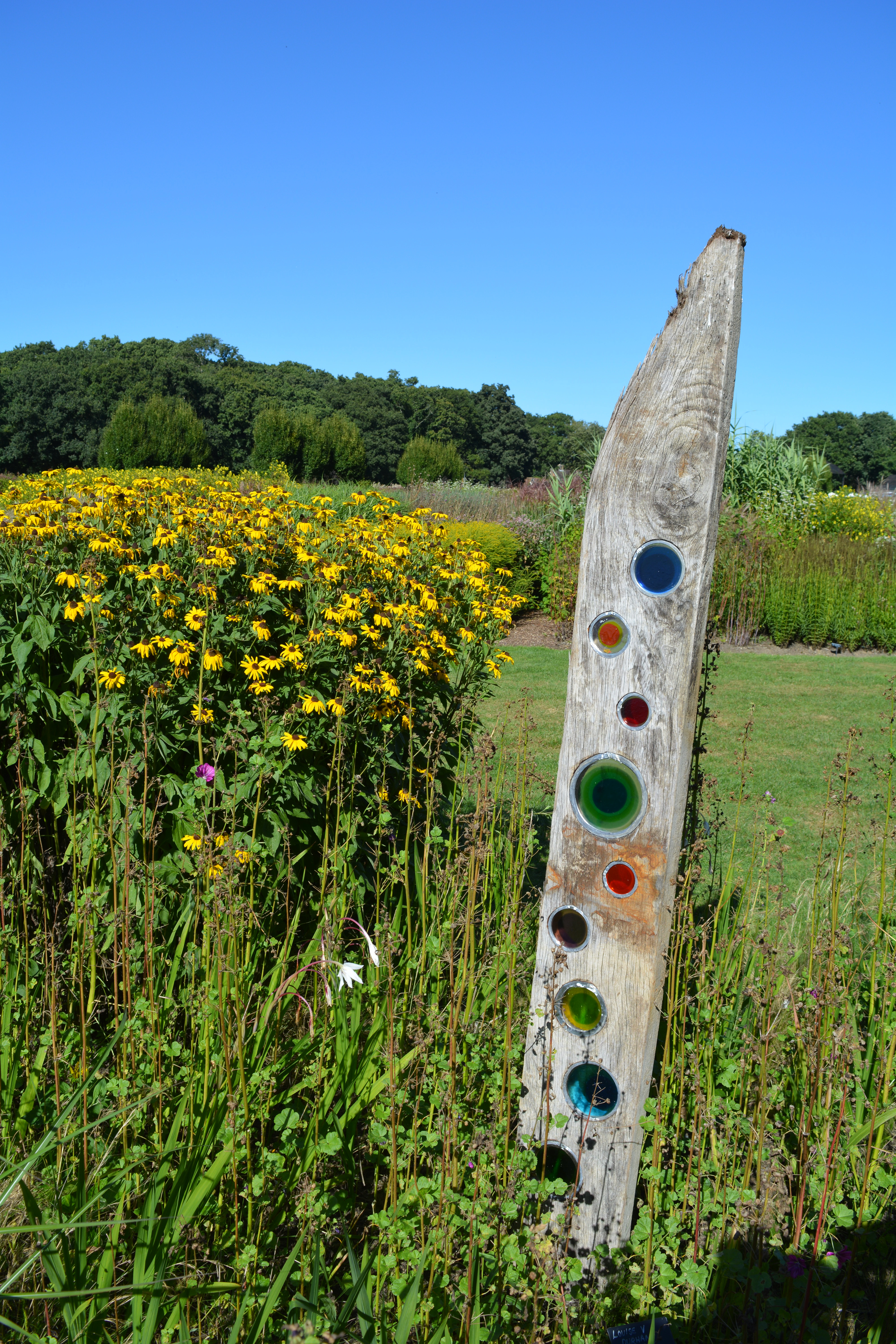
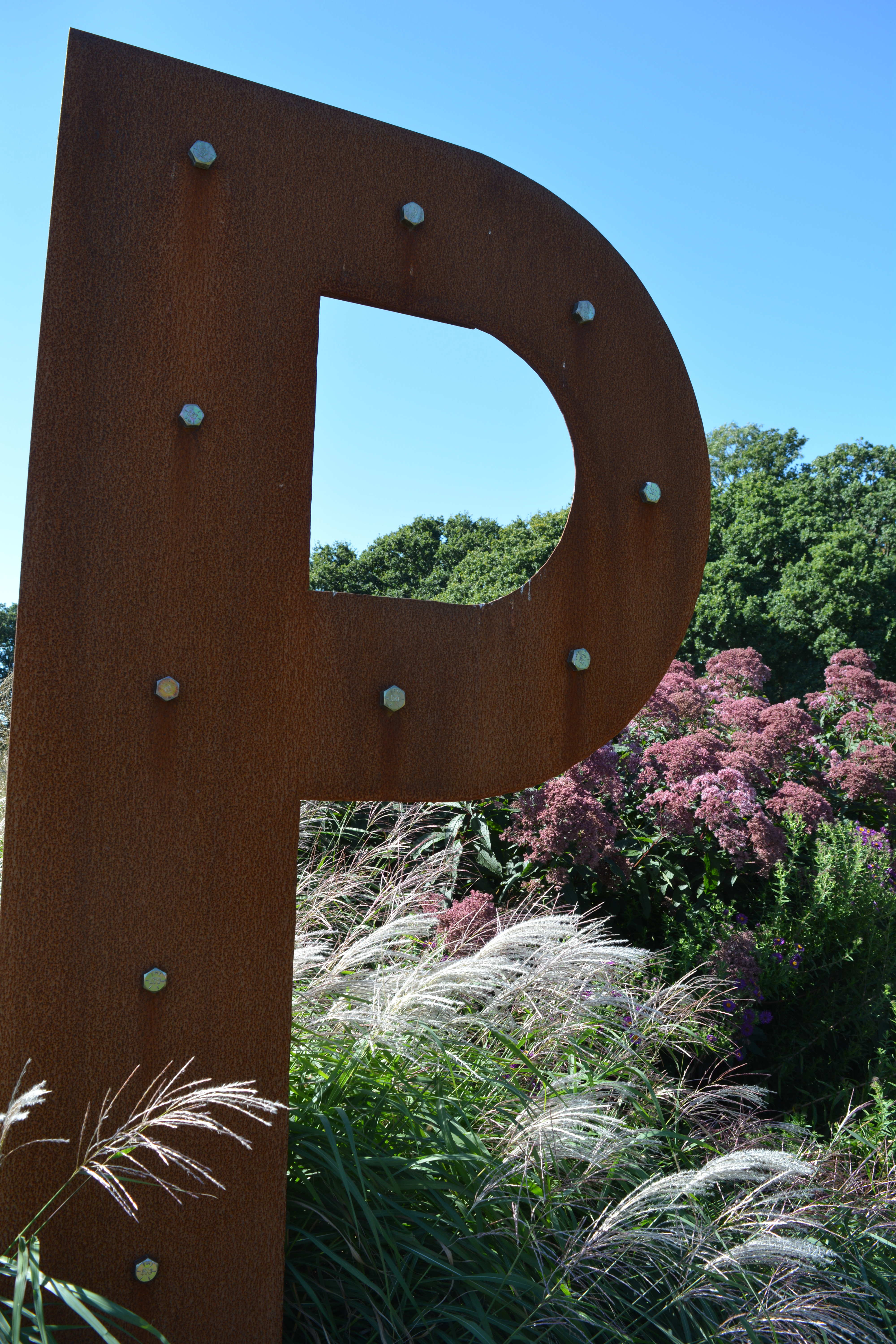
We love sculpture in the garden and here at the Sussex Prairie Garden it was used very well, integrated beautifully into the planting areas and on open areas of mown grass.

sus2-31 sus2-14 sus2-11sus2-13 sus2-10 sus2-09 sus2-23 sus2-08 sus2-07 sus2-25 sus2-06  sus2-18 sus2-20sus2-22 sus2-21 sus2-17 sus2-15 sus2-16 sus2-05  sus2-03

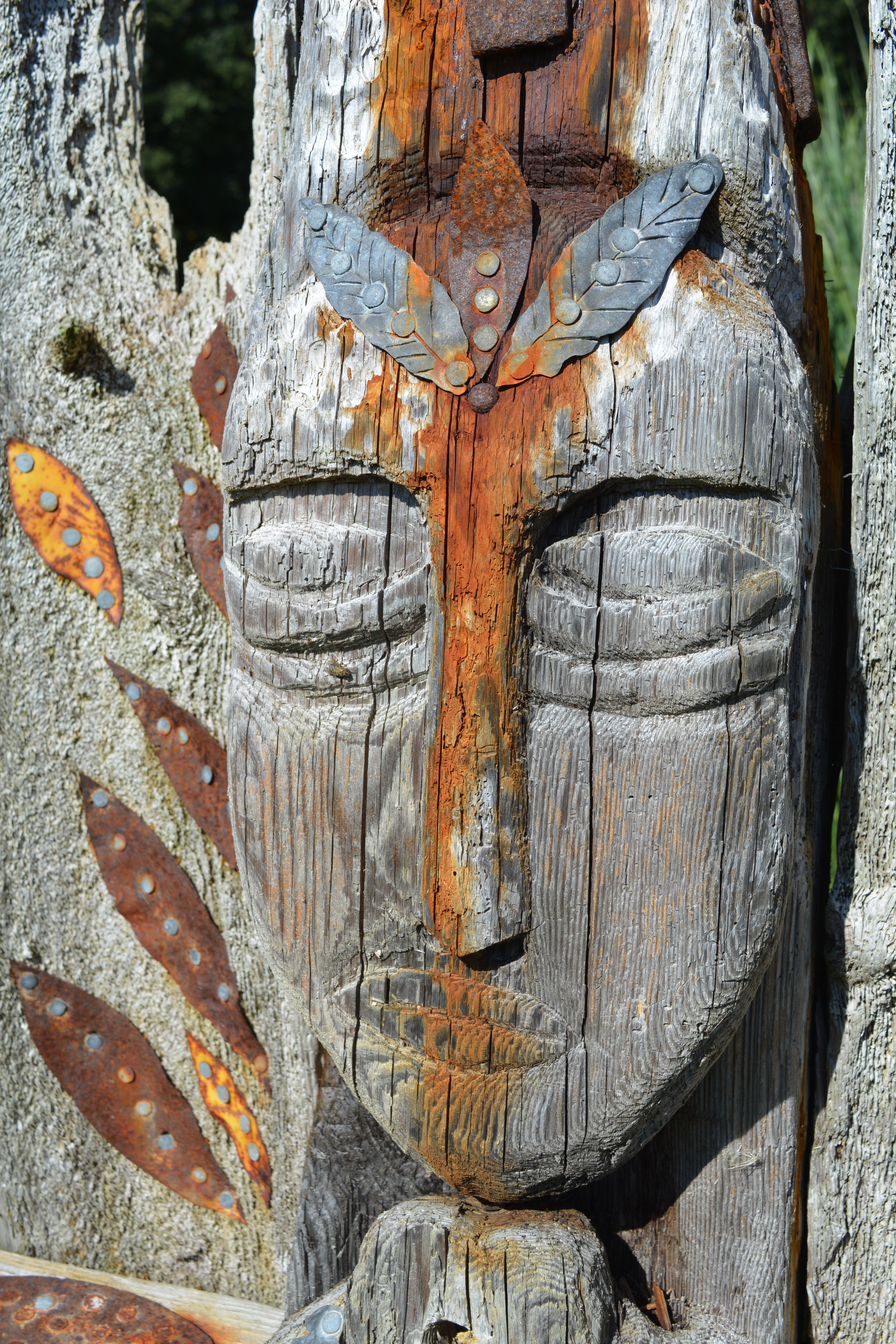
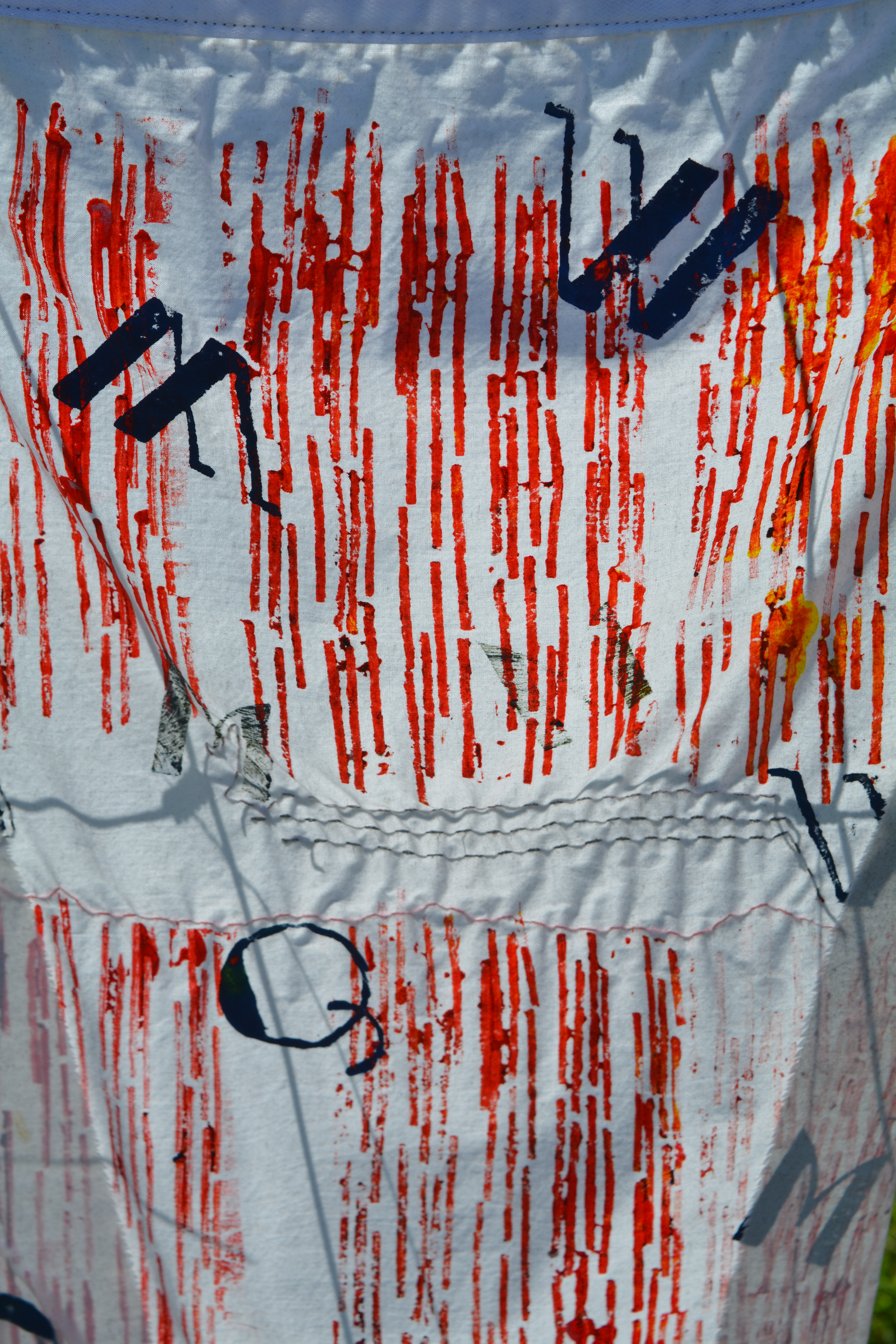
As we reached the furthest point in the garden from the entrance we were in for a colourful surprise before we continued on our wanderings, beautiful fabric hangings on the fence.

sus3-4 sus3-1 sus3-2 sus3-3

So the Sussex Prairie was as good as we had hoped, the planting and design was remarkable. We must return again perhaps in the autumn season.


Categories
buildings garden buildings garden furniture garden photography garden seating garden wildlife gardening gardens gardens open to the public hardy perennials nurseries Shropshire village gardens walled gardens Yellow Book Gardens

Mynd Hardy Plants – return to a favourite nursery.

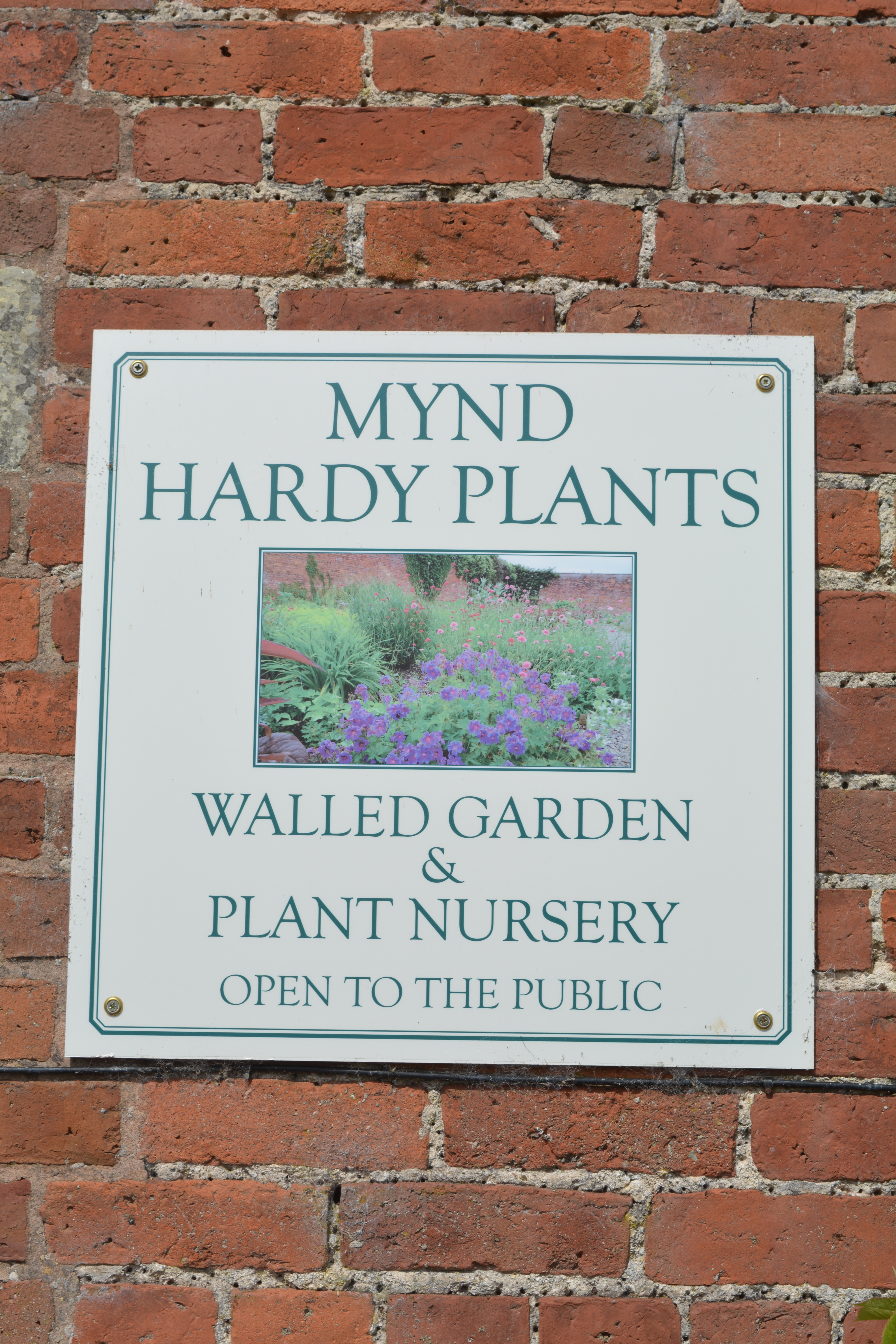
Jude the Undergardener, aka Mrs Greenbench, and I are not fans of garden centres where things horticultural are disappearing under an avalanche of gifts, fancy foods, pet foods etc etc but we do love our independently run plant nurseries and have a handful of local favourites we visit when we need plants to complete new plantings or just fancy a bit of compulsive plant buying. Mynd Hardy Plants situated in Shropshire’s Corvedale ranks as a top favourite, so we thought you may enjoy coming on a visit with us. The fact that it opens for the National Garden Scheme like we do is an extra bonus.

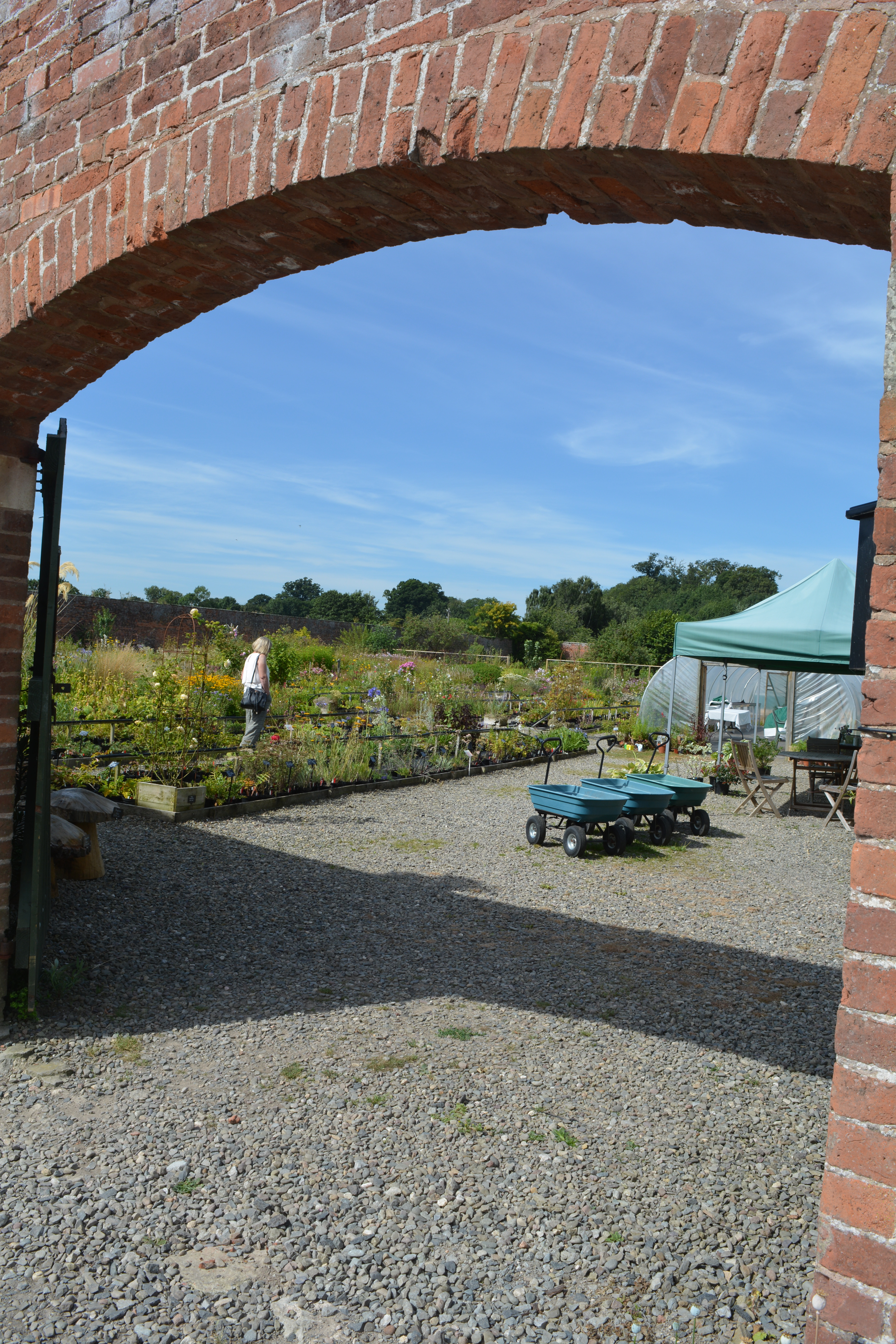
As soon as we pull up to park the car alongside the outer wall of the walled garden we feel warmly welcome and this warmth increases as we enter through the old doorway. When we take our first steps inside smiles appear.

mhp-01 mhp-02 mhp-03 mhp-04 mhp-05

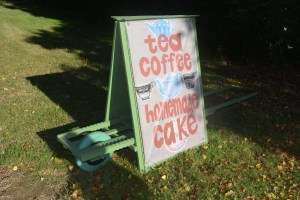
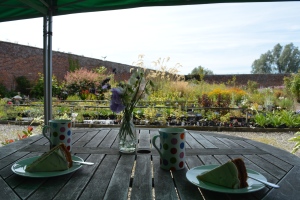
Mynd Hardy Plants is not simply a nursery it is also a garden, and both aspects are worthy of a visit in their own right. But of course a simple tea shop selling home made cakes and beverages with seats overlooking the nursery and gardens is a real bonus.

mhp-07 mhp-08  mhp-10 mhp-06mhp-12 mhp-14

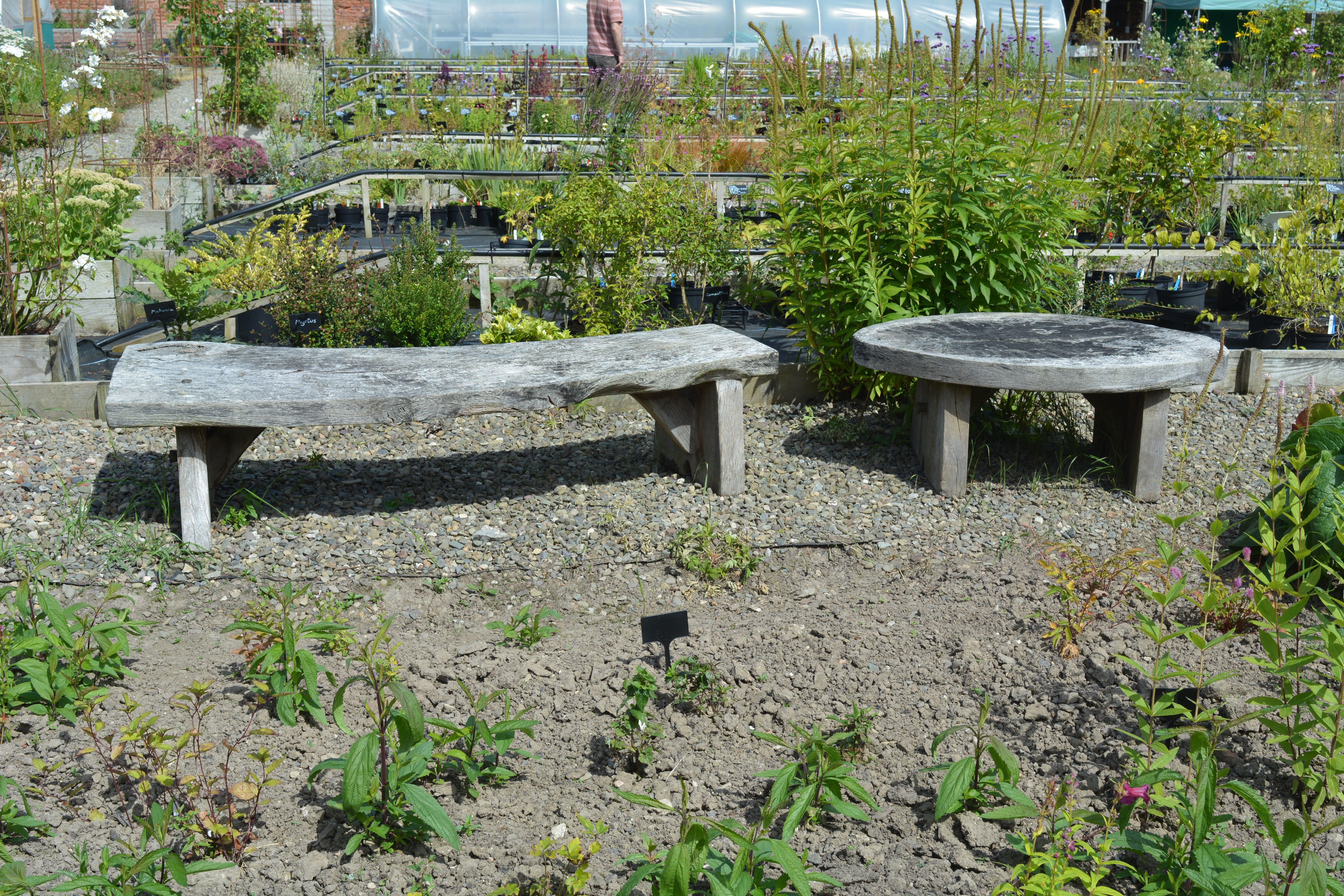
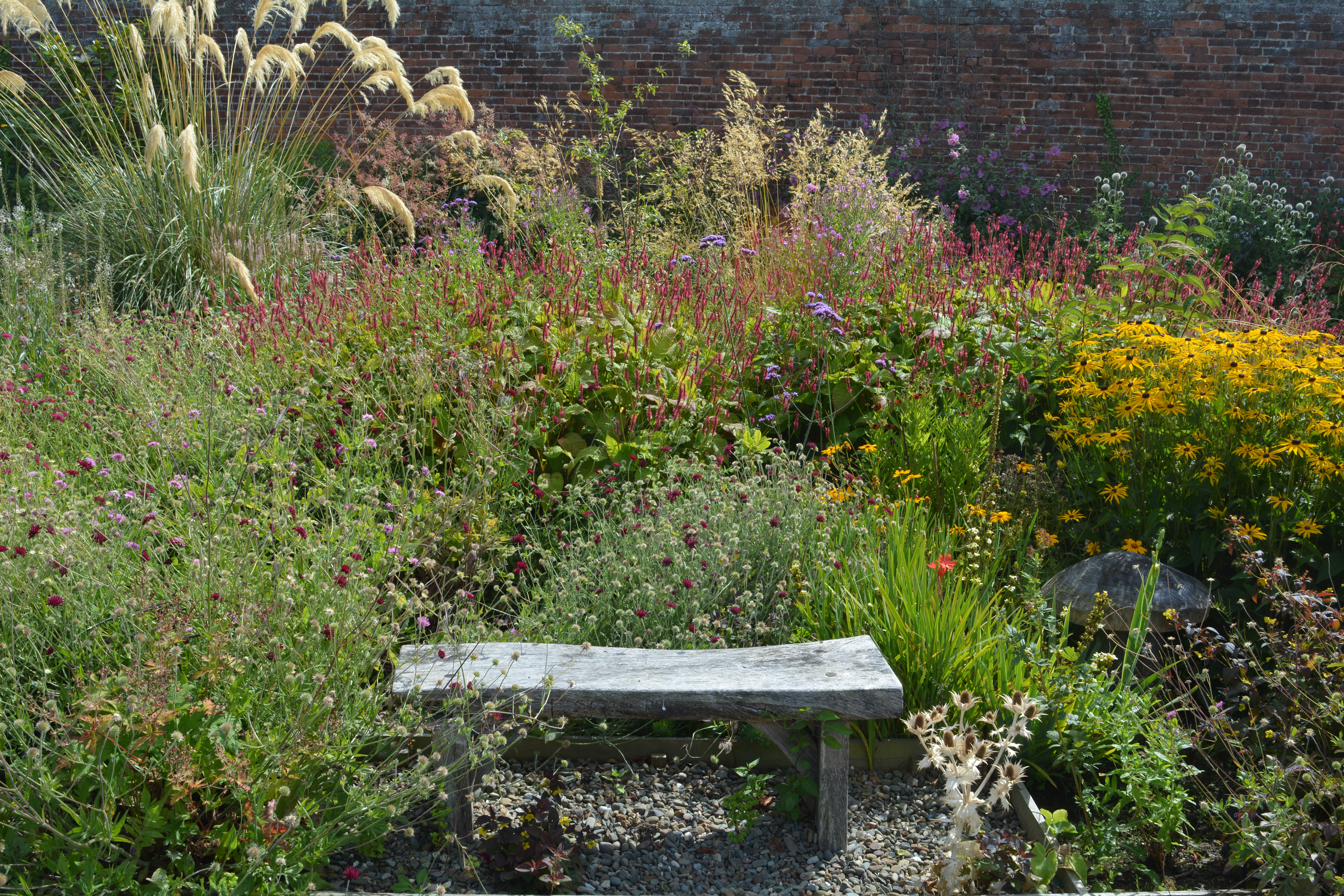
Comfy rustic seats invite us to sit and appreciate the atmosphere of the walled garden.

mhp-09 mhp-16mhp2-13

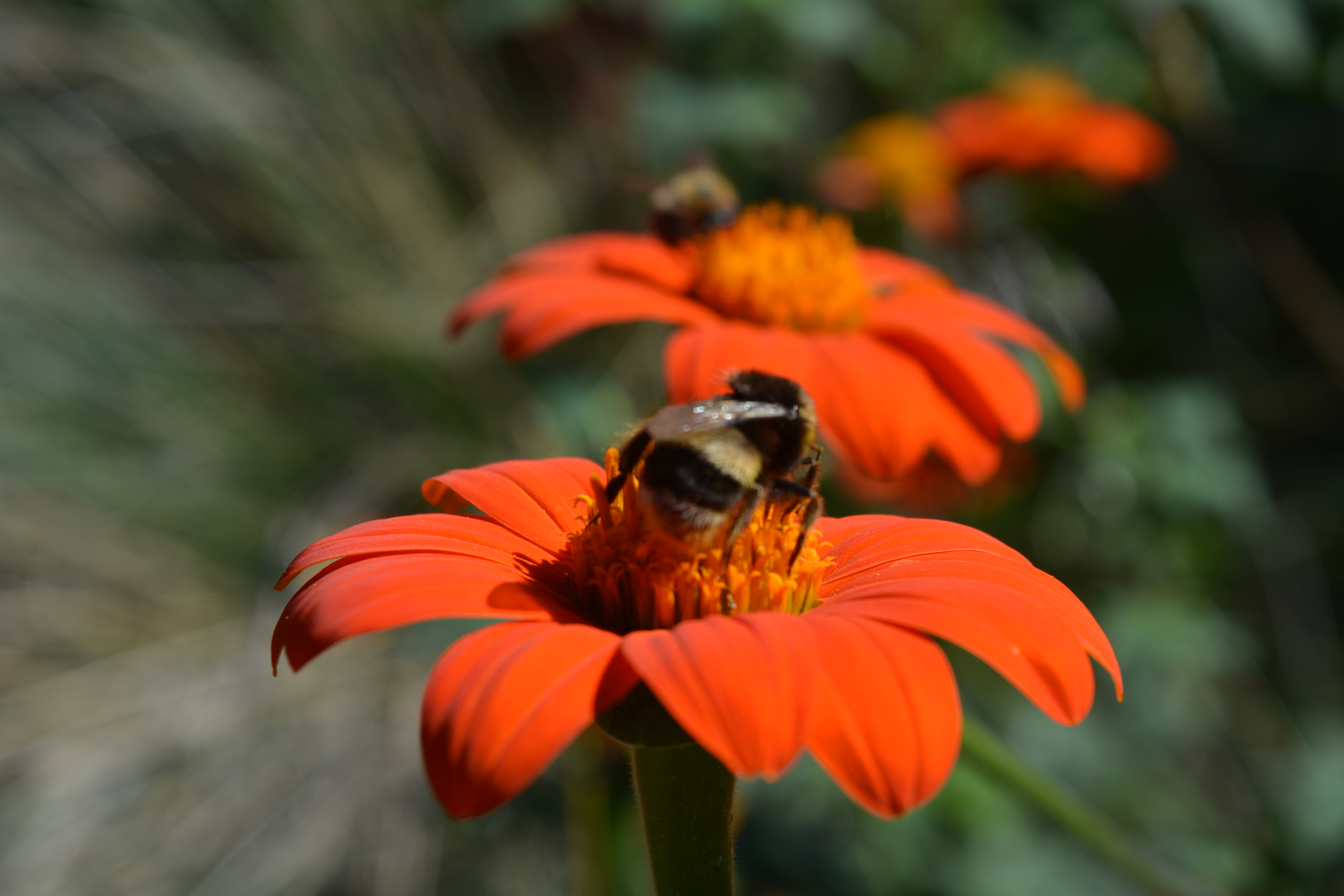
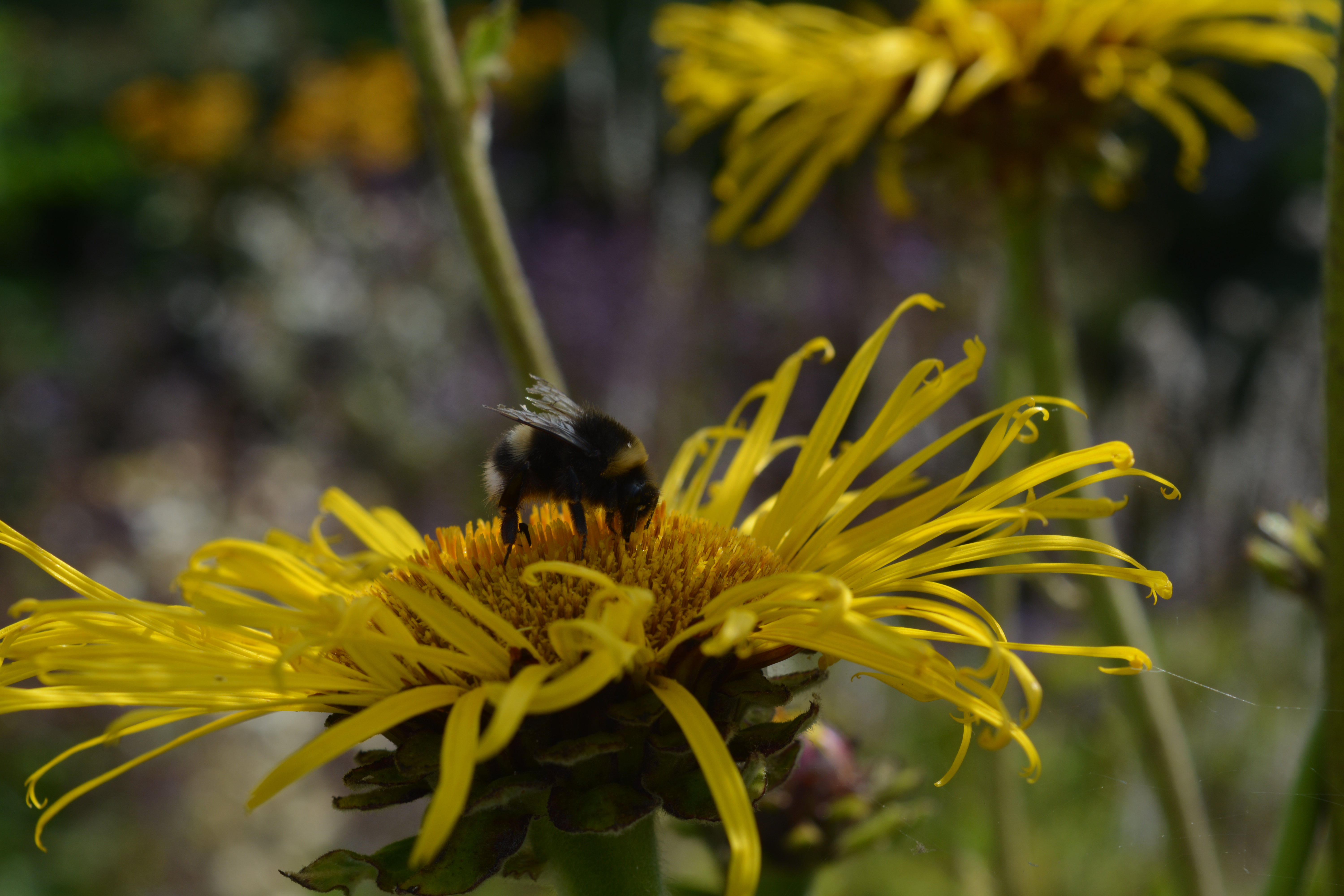
It wasn’t just us enjoying our visit, there was plenty of wildlife around. We could see movement throughout the areas of rich and colourful flowering. Bees, Hoverflies and Butterflies were busily feeding on the most simple flowers, the daisies and spires in particular.

mhp1-2 mhp-13

There are so many exciting plants and complementary plant combinations at every turn and around every corner at Long Mynd Hardy Plants that the only way to share so much with you is by creating a gallery for your enjoyment. As usual click on the first photo and then navigate using the arrows.

On our last visit we spent time talking with nursery-woman Jill over coffee and cake overlooking the nursery she outlined their ambitious plans and explained what her and her husband had achieved since we last saw them.We expect these plans will be achieved and we look forward to seeing more changes as we visit in the future.

mhp-11 mhp-15

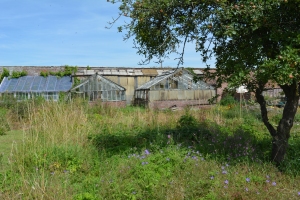
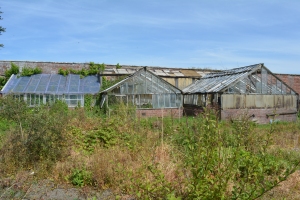
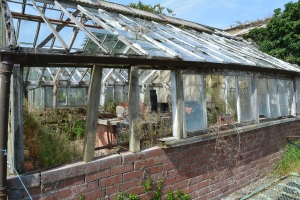
Jill explained that when they cleared the derelict half of the old walled garden they discovered a range of ancient glasshouses and a long run of cold frames. Eventually these will be restored and will be an amazing addition to the nursery and garden. An old orchard is under restoration too and there will soon be stock beds for visitors to study as well.

mhp-18 mhp-21mhp-23 mhp-29mhp-22 mhp-27mhp-20 mhp-19mhp-17 mhp-24

We hope you enjoyed this snapshot of a great little independent nursery and display garden as much as we enjoyed sharing it with you.


Categories
autumn autumn colours climbing plants colours garden photography gardening gardens hardy perennials light light quality ornamental trees and shrubs Shropshire shrubs

My Garden Journal in September

Back to my garden journal and we will look at my entries for September and see what our patch here at Avocet is up to.  According to the weather reporters and meteorologists we should now be in Autumn but the garden is showing few signs of the expected seasonal changes.
sepj-05

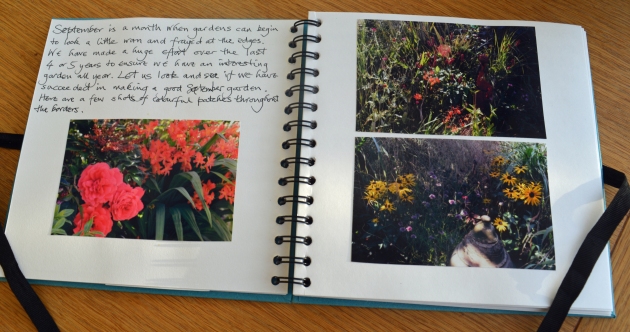
I started by finding patches of colourful plantings and wrote, “September is a month when gardens can begin to look a little worn and frayed at the edges. We have made a huge effort over the last 4 or 5 years to ensure we have an interesting garden all year. Let us look and see if we have succeeded in making a good September garden. Here are a few shots of colourful patches throughout the borders.”

Jude, Mrs Greenbench or The Undergardener, and I have created a talk entitled “The Year Round Garden” which we give to garden societies and other clubs such as WI groups and U3A groups. It is all about how we ensured our garden was good for every month of the year. Some of these groups also visit our garden at various times of year to have a look around. Giving these talks helps us focus on ensuring we continue to develop this ever evolving element of gardening and helps us appreciate every day and what our garden gives us on every individual day.

The three photos on these first September pages show very different patches of our garden.
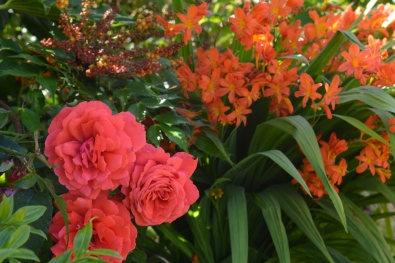
sepj3-1sepj3-2sepj3-3

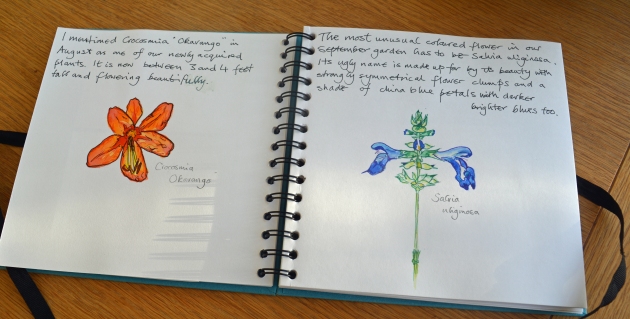
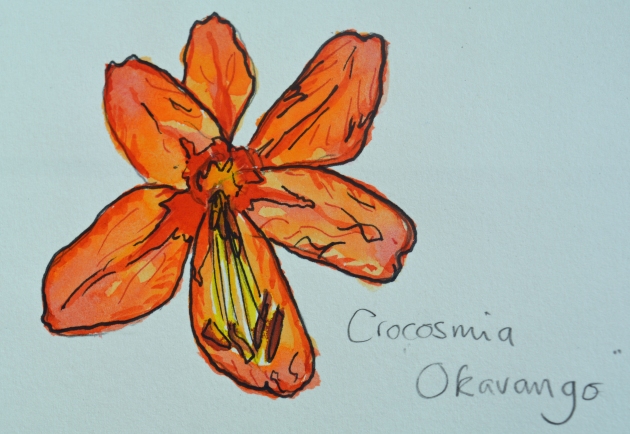
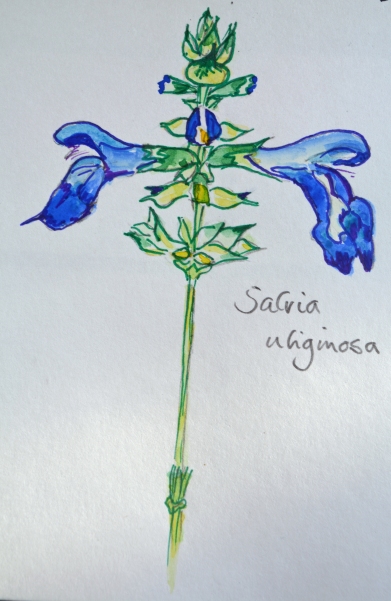
Turning over the page we find a couple of my watercolour paintings of two very differently coloured and differently structured flowers blooming in our September garden, a Crocosmia and a Salvia.
sepj-06

I wrote “I mentioned Crocosmia “Okavango” in my August journal entries as one of our newly acquired plants. It is now between 3 and 4 feet tall and flowering beautifully.”
sepj-07

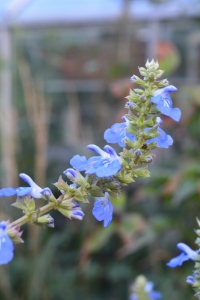
The most unusual coloured flower in our September garden has to be Salvia uliginosa. Its ugly name is made up for by its beauty with strongly symmetrical flower clumps and a shade of china blue petals with darker brighter blues too.”
sepj-08 sepj1-30sepj1-31 sepj1-29

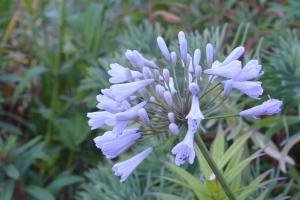
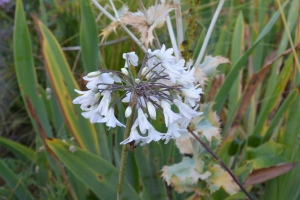
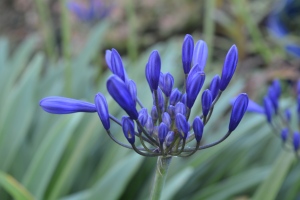
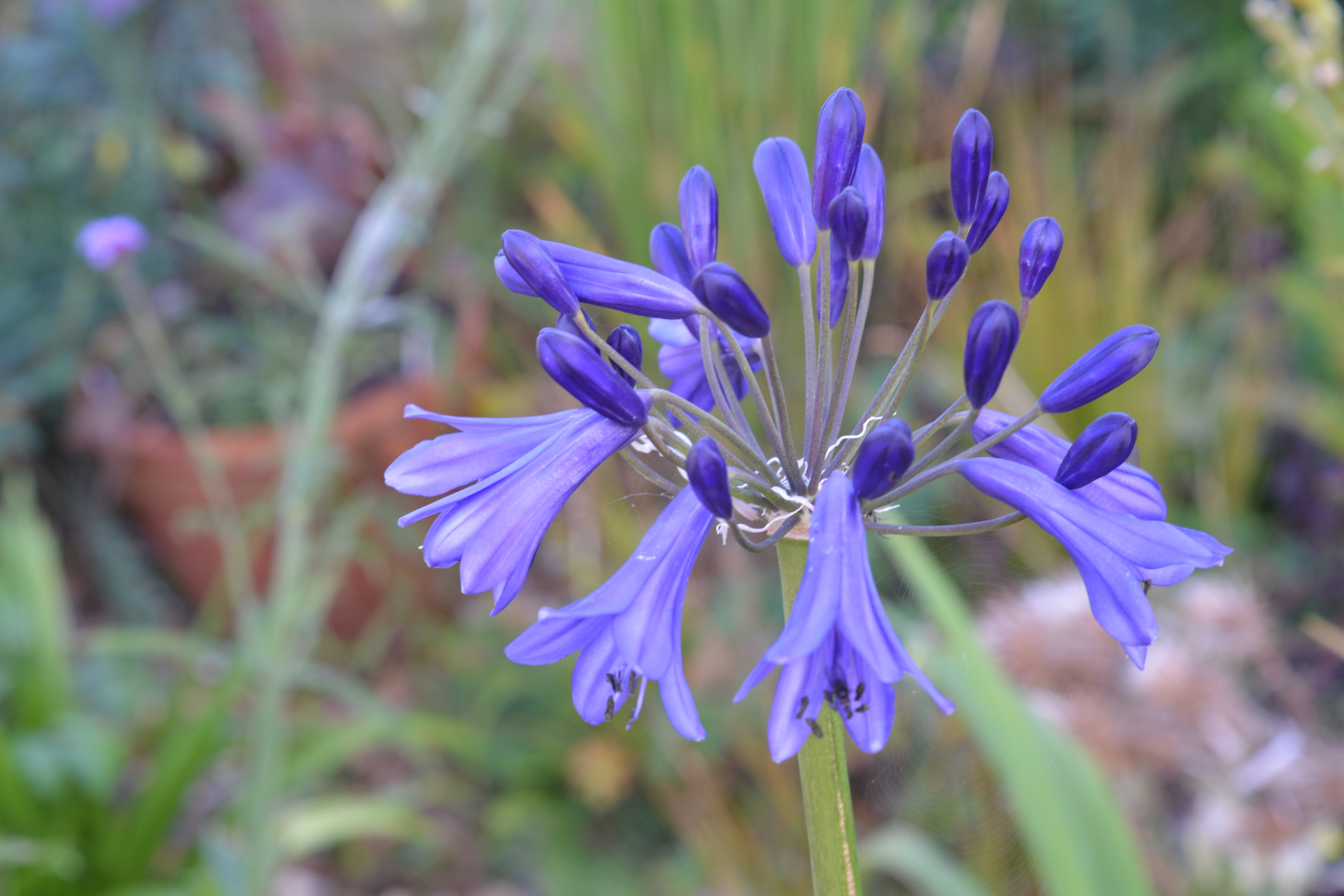
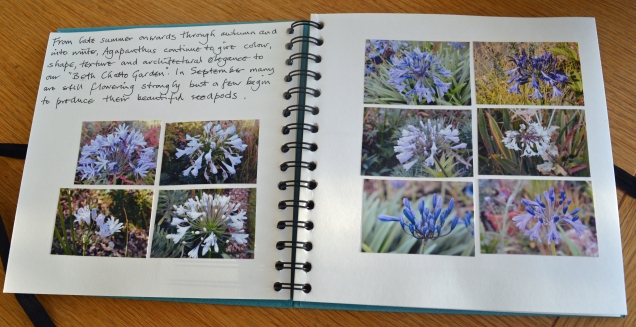
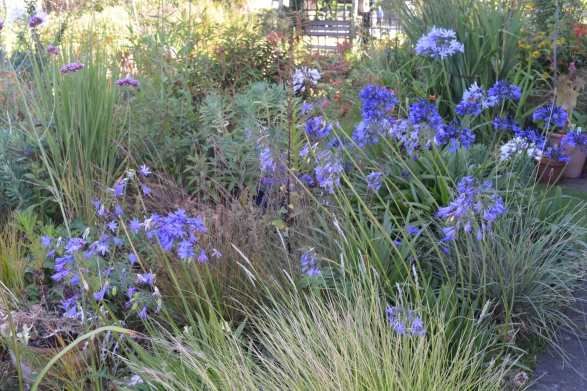
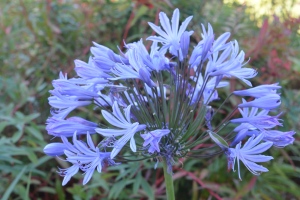
My next double page spread features those wonderful South African summer flowering bulbs, the Agapanthus. We have a large collection of these big blue or white spherical beauties.
sepj-09

“From late summer onwards through autumn and into winter,  Agapanthus continue to give colour, shape, texture and architectural elegance to our “Beth Chatto Garden”. In September many are still flowering strongly but a few begin to produce their beautiful seedpods.”
sepj4-01sepj4-06 sepj4-09sepj4-13 sepj4-07sepj4-04 sepj4-11sepj4-03 sepj4-10

sepj4-08 sepj4-02

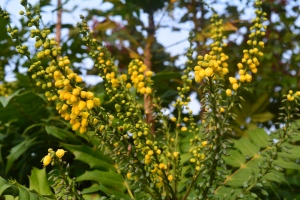
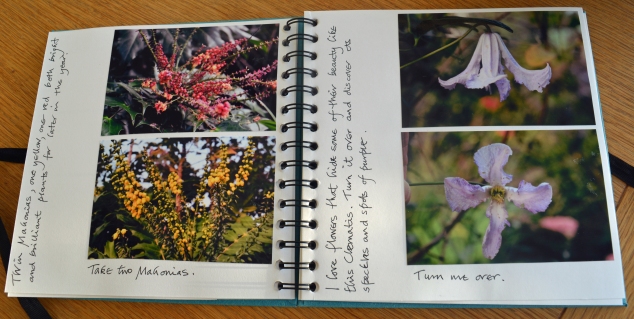
Turning over to the next double page I feature two very differently coloured Mahonias and a beautiful delicate Clematis.
sepj-10

I wrote, “Twin Mahonias, one yellow, one red both bright and brilliant plants for later in the year.”

“Take two Mahonias” 

sepj1-19 sepj1-20

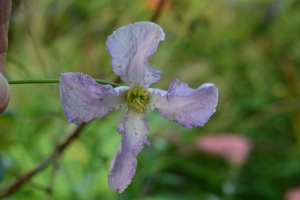
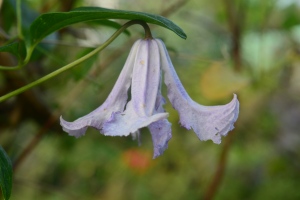
Concerning the Clematis I wrote “I love flowers that hide some of their beauty like this Clematis. Turn it over and discover its speckles and spots of purple.”

“Turn me over!”
sepj1-25 sepj1-26

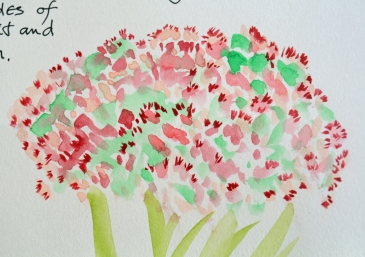
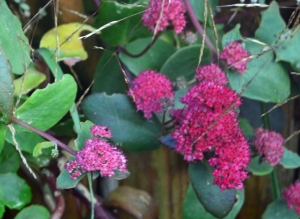
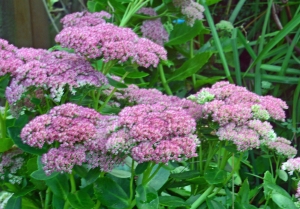
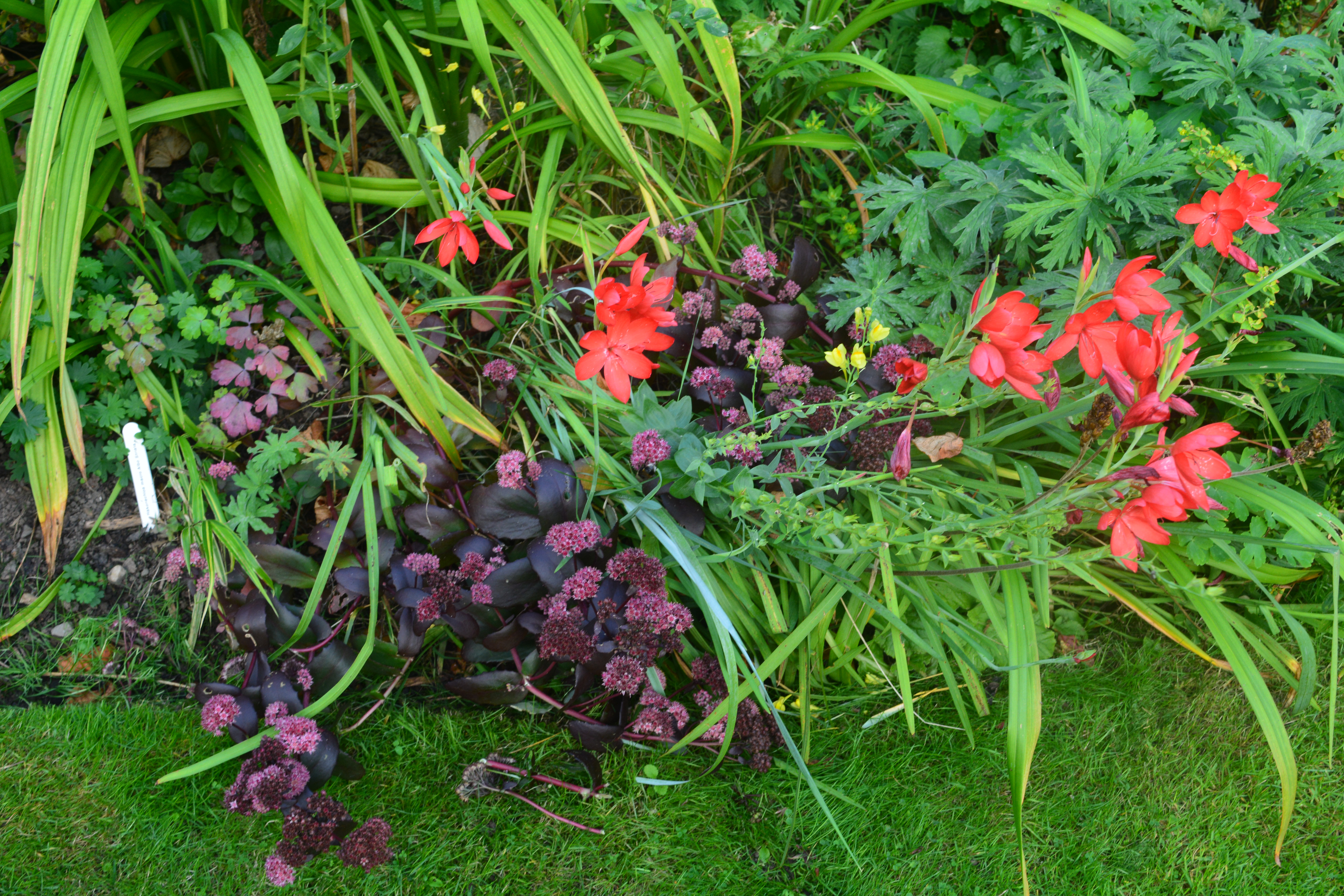
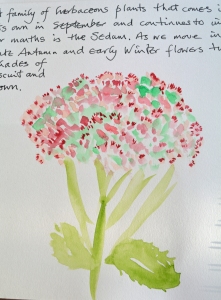
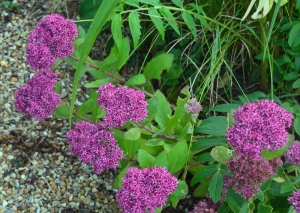
The next double page spread features one of my favourite hardy plant families, the Sedums. I included photos of some flowering in our garden now and a watercolour impression of our plants in flower.

sepj-11

sepj-12 sepj-13

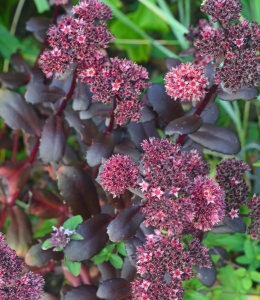
“There are so many variations in foliage colour and flower size and colour We have several. Here are a few from our patch.”
sepj2-1 sepj1-13sepj1-27 sepj1-24    sepj2-2 sepj1-22

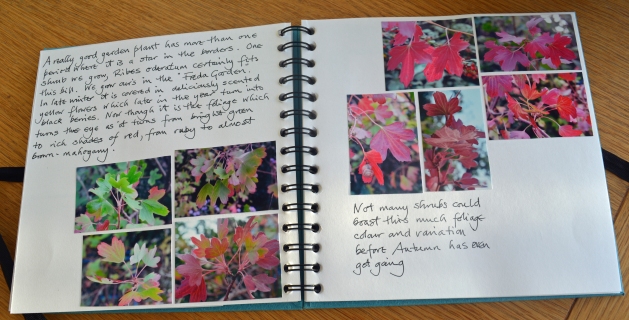
Over the page we discover the first signs of the changing foliage colours – the early signs of Autumn.
sepj-14

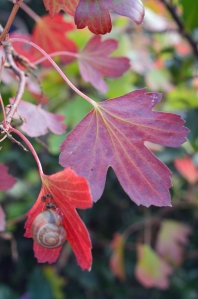
“A really good garden plant has more than one period where it is a star in the borders. One shrub we grow, Ribes oderatum certainly fits this bill. We grow ours in the “Freda Garden”. In late winter it is covered in deliciously scented yellow flowers which later in the year turn into black berries. Now though it is the foliage which turns the eye as it turns from bright green to rich shades of red, from ruby to almost brown-mahogany.

Not many shrubs could boast this much foliage colour and variation before Autumn has even got going.”
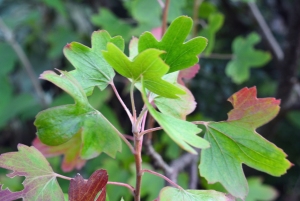
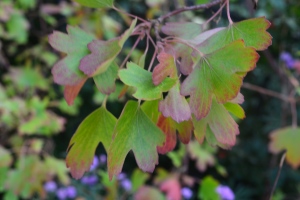
sepj1-12 sepj1-11sepj1-06 sepj1-10sepj1-05 sepj1-04sepj1-08 sepj1-09sepj1-07 Can you spot the colour co-ordinated banded snail on a leaf in the last picture of the Ribes leaf sequence?
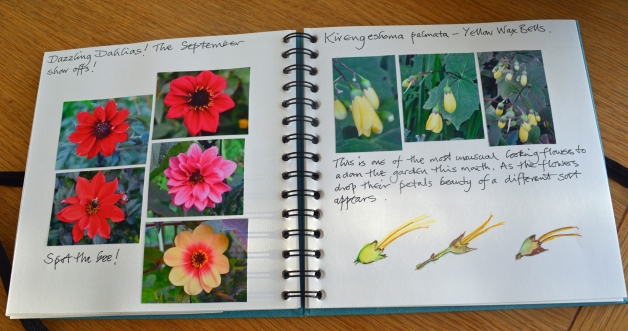
sepj-15

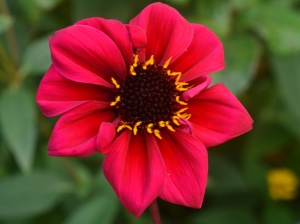
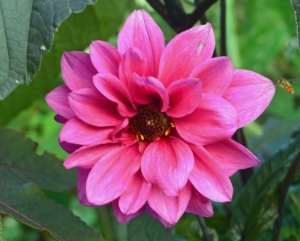
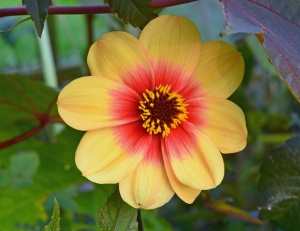
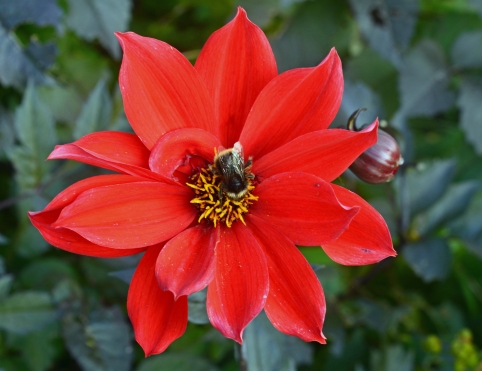
“Dazzling Dahlias! The September show offs!”
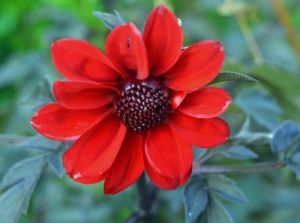
sepj1-14 sepj1-18sepj1-16 sepj1-15

“Spot the bee!”

sepj1-17

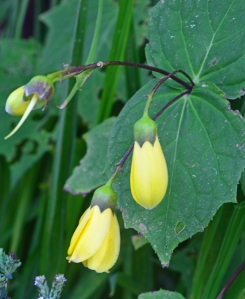
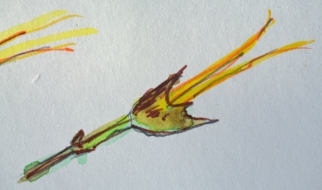
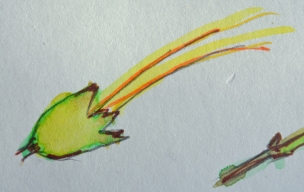
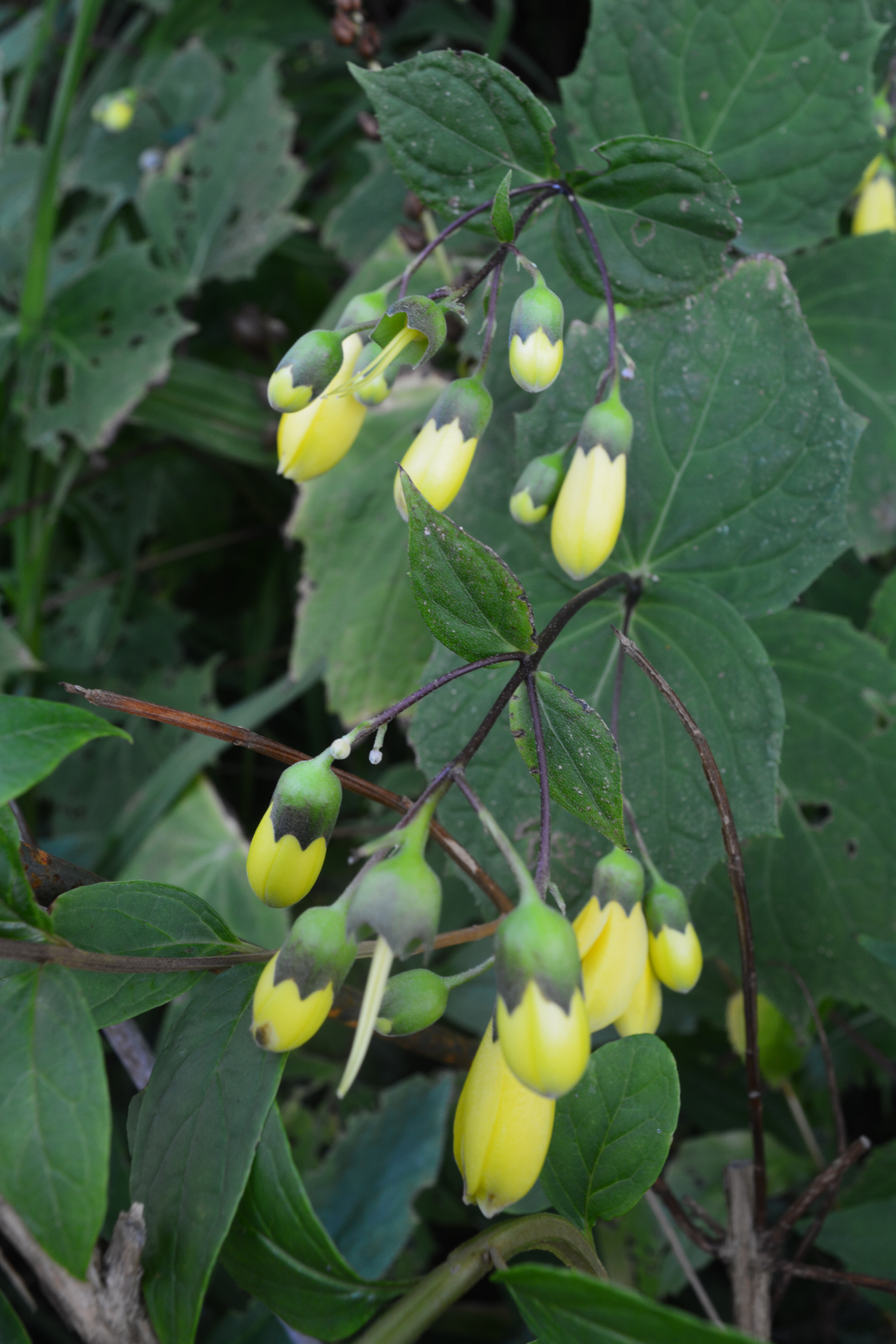
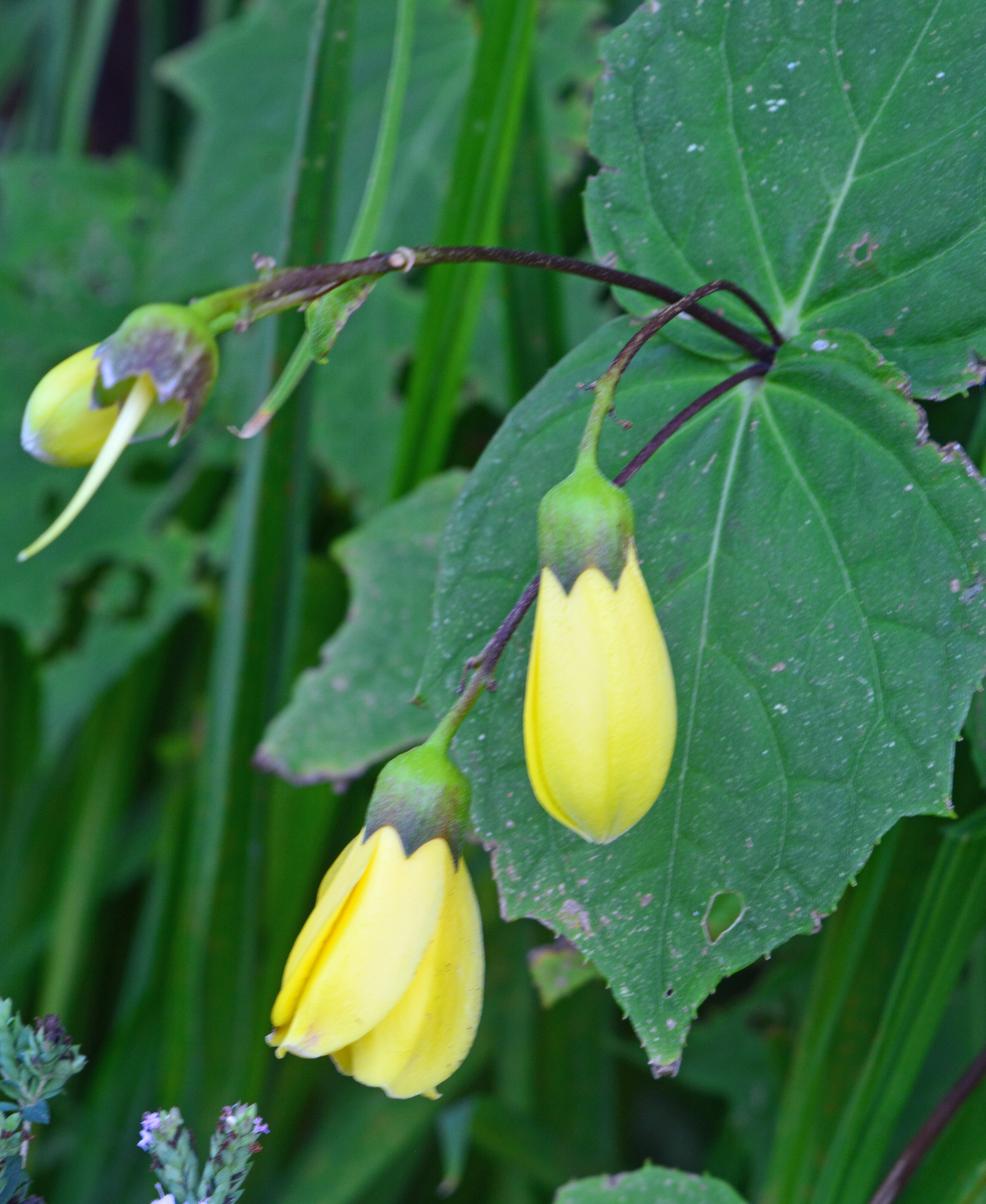
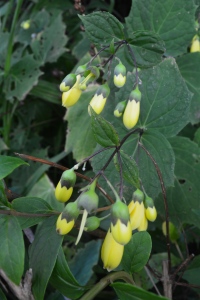
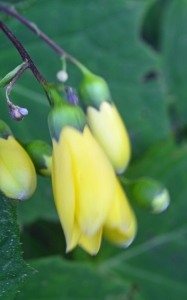
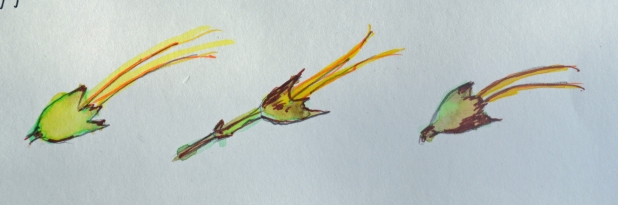
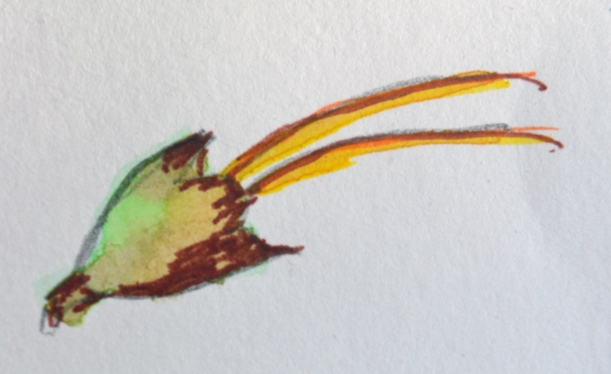
Opposite the Dahlias I look at a much more delicate flower, that of Kirengeshoma palmata, otherwise known as Yellow Wax Bells.
sepj1-01 sepj1-02 sepj1-03

“This is one of the most unusual looking flowers to adorn the garden this month. As the flowers drop their petals, beauty of a different sort appears.”
sepj-16 sepj-17sepj-18 sepj-19

And that sees the end of my journal entries for September. Next visit to my garden journal will see us moving into Autumn and the changes in weather and light it brings with it. Will I be reporting on the special light and colours, the colours of fire and Autumn?
Categories
garden design garden photography gardening hardy perennials July Shropshire

A Modest Gardener – celebrating a small garden

Our dear friend Jean is a talented gardener who sadly won’t recognise that she is. So I thought I would share a set of photographs with you that I took in her garden in late July so that you can enjoy her lovely garden too. Jean loves wildlife and enjoys sharing her garden with the birds, butterflies, bees and any other creatures that come for a visit or to stay. As with all gardeners slugs and snails may be one step too far.

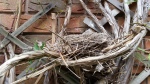
Come on a wander with me by following my gallery of photographs all taken on the same day. It is easy to appreciate this excellent example of what can be achieved in a small space. As you run through the photos  will see one showing an old blackbird’s nest in the stems of a clematis.


Categories
garden buildings garden design garden designers garden photography gardening gardens hardy perennials Herefordshire meadows outdoor sculpture sculpture Yellow Book Gardens

Montpelier Cottage – another Yellow Book garden

A warm bright day in early September was a great day to visit another National Garden Scheme, Yellow Book garden. Thus we drove once again into our neighbouring county of Herefordshire in search of Montpelier Cottage. The main roads turned into minor roads and the minor roads turned into lanes. The lanes got narrower and narrower until at last we found the yellow NGS sign on a gate into a field which for the day became a temporary car park.

The cottage in its primrose yellow livery felt so welcoming.

2015 09 13_5375 2015 09 13_5377

A sense of humour, important in any garden, soon became apparent at Montpelier Cottage.

2015 09 13_5376 2015 09 13_54552015 09 13_53822015 09 13_5456 2015 09 13_5454

The gardeners here are the garden writer Noel Kingsbury and his wife Jo Eliot and they have been developing the garden for ten years. The garden style and plant combinations are experimental looking to find “the border between the wild and the cultivated” being inspired by American prairies and the wildflower meadows of Europe. As we knew Noel Kingsbury had been working closely for many years with garden designers and nurserymen Piet Oudolf  and Henk Gerritsen, we were interested to see how this ten year old garden had developed.

As we followed the narrow path towards the back of the cottage the gardens came into view and we knew we were in for a colourful wander. The terrace of stone slabs overlooked the garden and sitting here enjoying a refreshing tea and tasty cake we could get views over most of the garden. Brightly coloured annuals and tender perennials grew vigorously in pots.

2015 09 13_5378 2015 09 13_53802015 09 13_5381 2015 09 13_5379

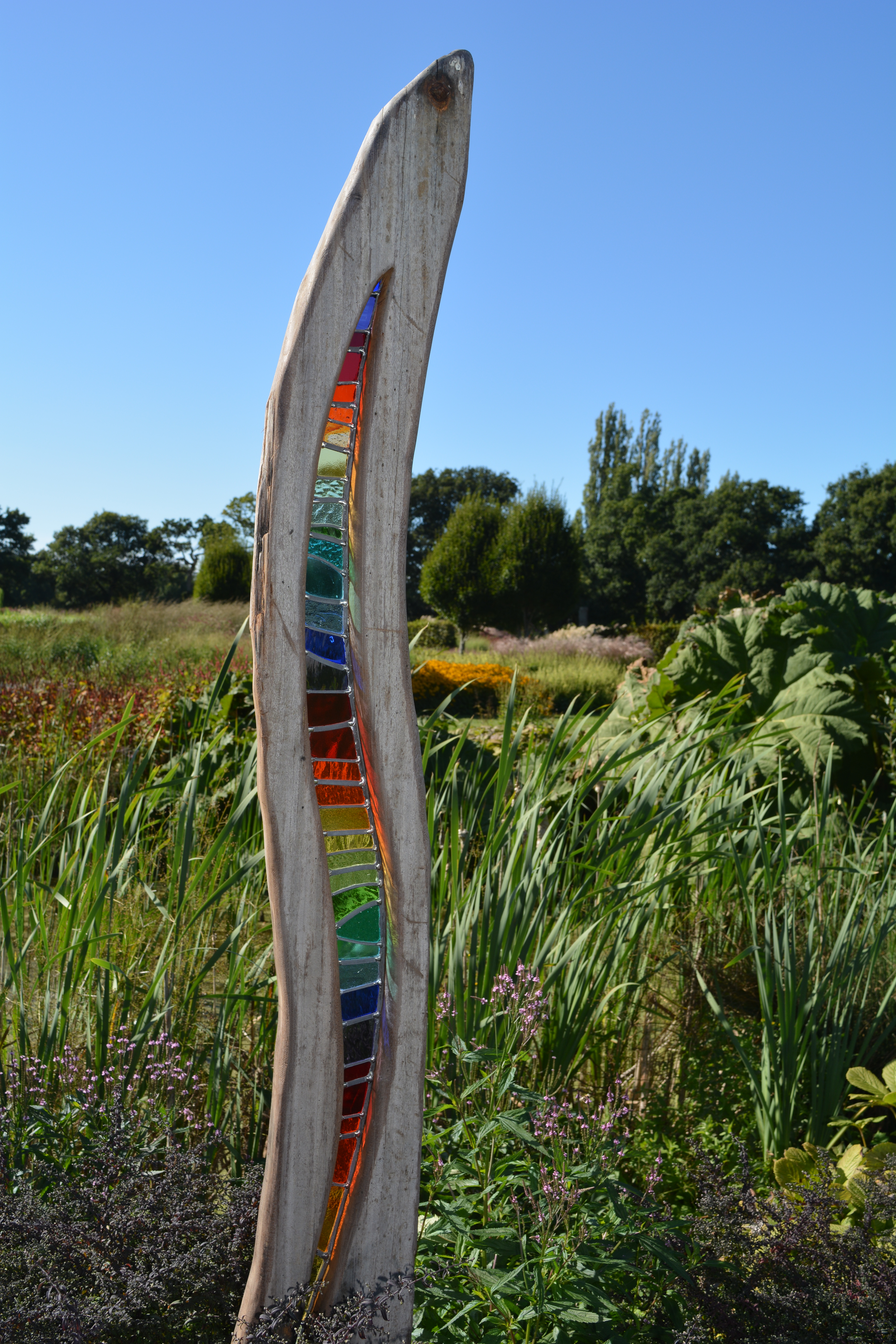
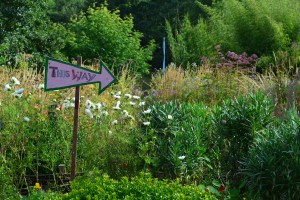
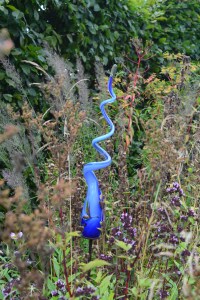
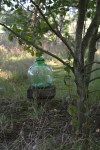
When we had finished our refreshments we soon found a sign which invited us through a gap in a hedge. Alongside the gap a piece of sculpture created from beautiful blue glass caught our attention.

2015 09 13_5452 2015 09 13_5446

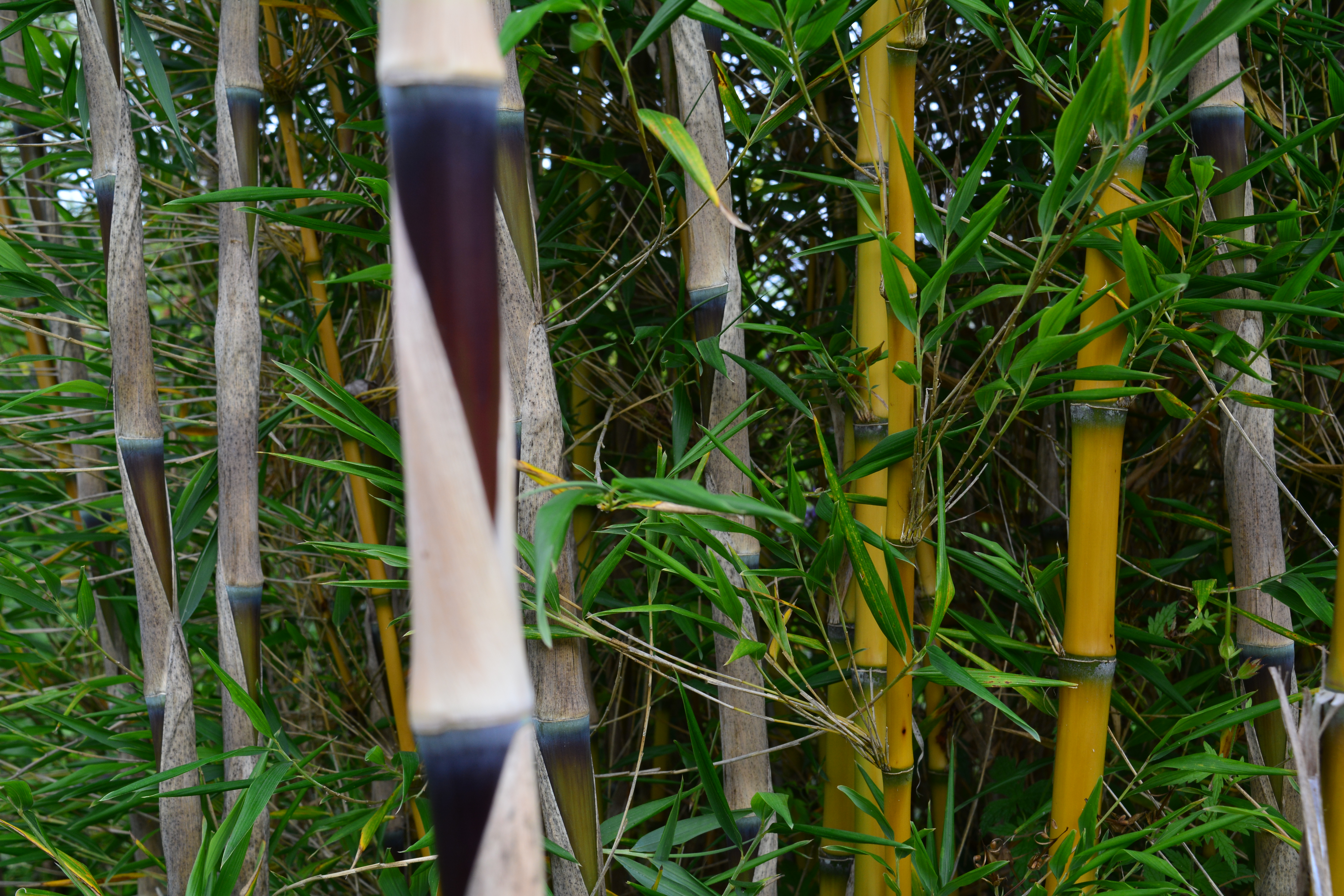
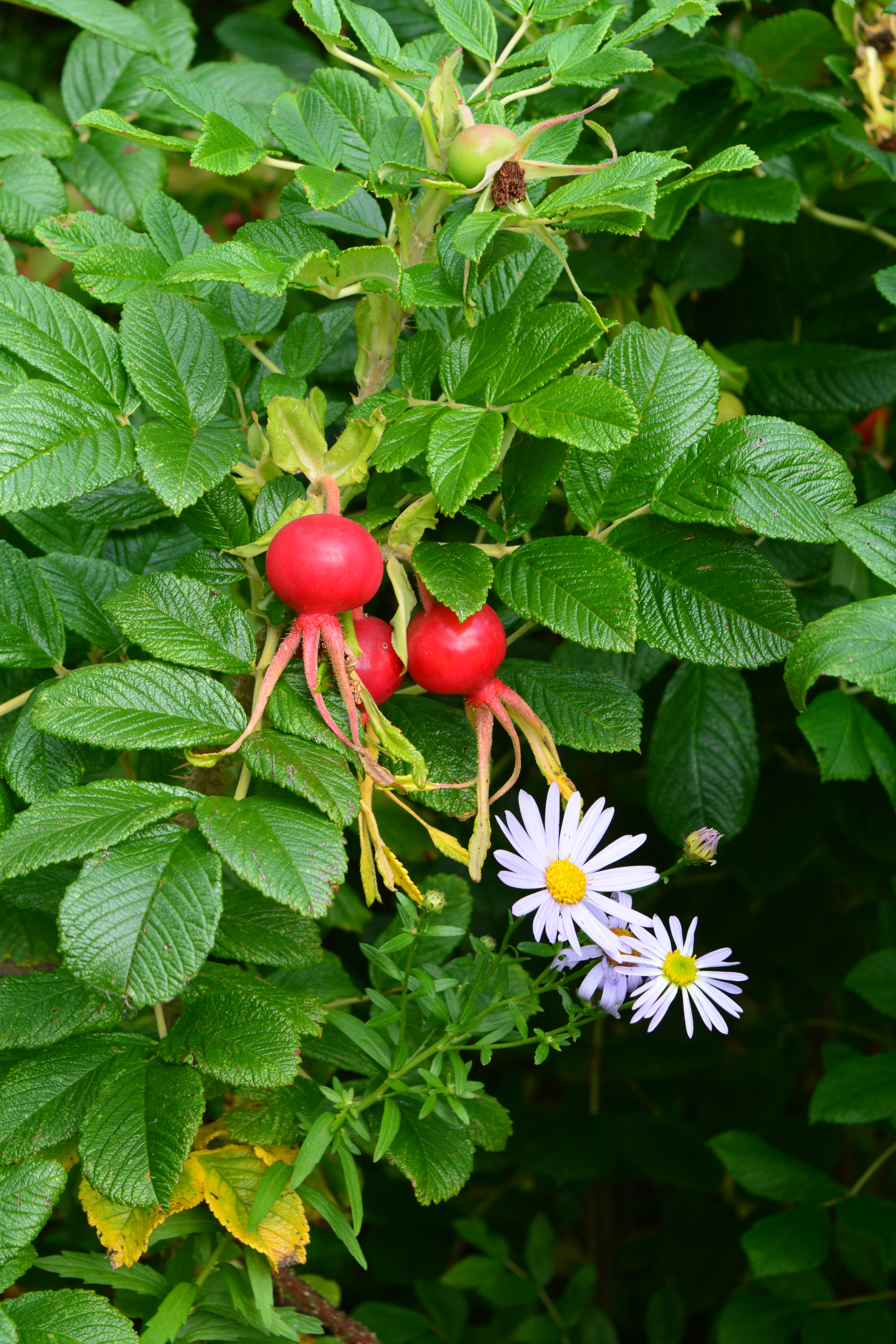
As in any garden there are certain individual plants that stand out and here at Montpelier Cottage they were this deciduous Euonymous sporting a cerise and orange colourway, the deep ruby flowered Sanguisorba “Red Buttons”, the monochrome bamboo, the Rosa rugosa with big hips and the incredibly tall growing Hollyhocks.

2015 09 13_5388 2015 09 13_5387 2015 09 13_5383 2015 09 13_5384 2015 09 13_5409 2015 09 13_5435 2015 09 13_5434

But as with any garden it is the big picture that gives it its own style and presence. At Montpelier Cottage the garden boasted large areas of perennial planting through which paths were cut.

2015 09 13_5410 2015 09 13_5411 2015 09 13_5412 2015 09 13_5414 2015 09 13_5415 2015 09 13_5416  2015 09 13_5419 2015 09 13_54202015 09 13_5421 2015 09 13_5422 2015 09 13_5424 2015 09 13_5425 2015 09 13_5426 2015 09 13_5427 2015 09 13_5428 2015 09 13_5429 2015 09 13_5445 2015 09 13_5442 2015 09 13_5441 2015 09 13_5440 2015 09 13_5439 2015 09 13_5438 2015 09 13_5437 2015 09 13_5436

It was too late in the year to see the wildflower meadows at their flowery best so we hope to visit earlier in the year in 2016, but the kitchen garden was looking very productive.

2015 09 13_53932015 09 13_5404  2015 09 13_54062015 09 13_5405

There are interesting rustic buildings which came into view as we wandered the paths through the garden.

2015 09 13_5430 2015 09 13_54022015 09 13_5417 2015 09 13_5448

2015 09 13_5450 2015 09 13_5449

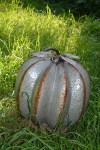
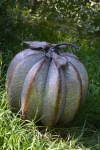
I shall finish my post about this unusual garden with a photo of a lovely slate sculpture and another piece of creativity by Mother Nature herself, weaving with Ivy stems. The final picture shows a beautiful use of shaped box.

2015 09 13_5390 2015 09 13_54072015 09 13_5453


Categories
autumn autumn colours colours flowering bulbs garden photography gardens gardens open to the public hardy perennials light light quality National Trust ornamental trees and shrubs roses The National Trust walled gardens

Croft Castle Month by Month – September

So here we are with the ninth post in my series about Croft Castle gardens throughout the year, where I shall report on our September visit to this Herefordshire National Trust property.

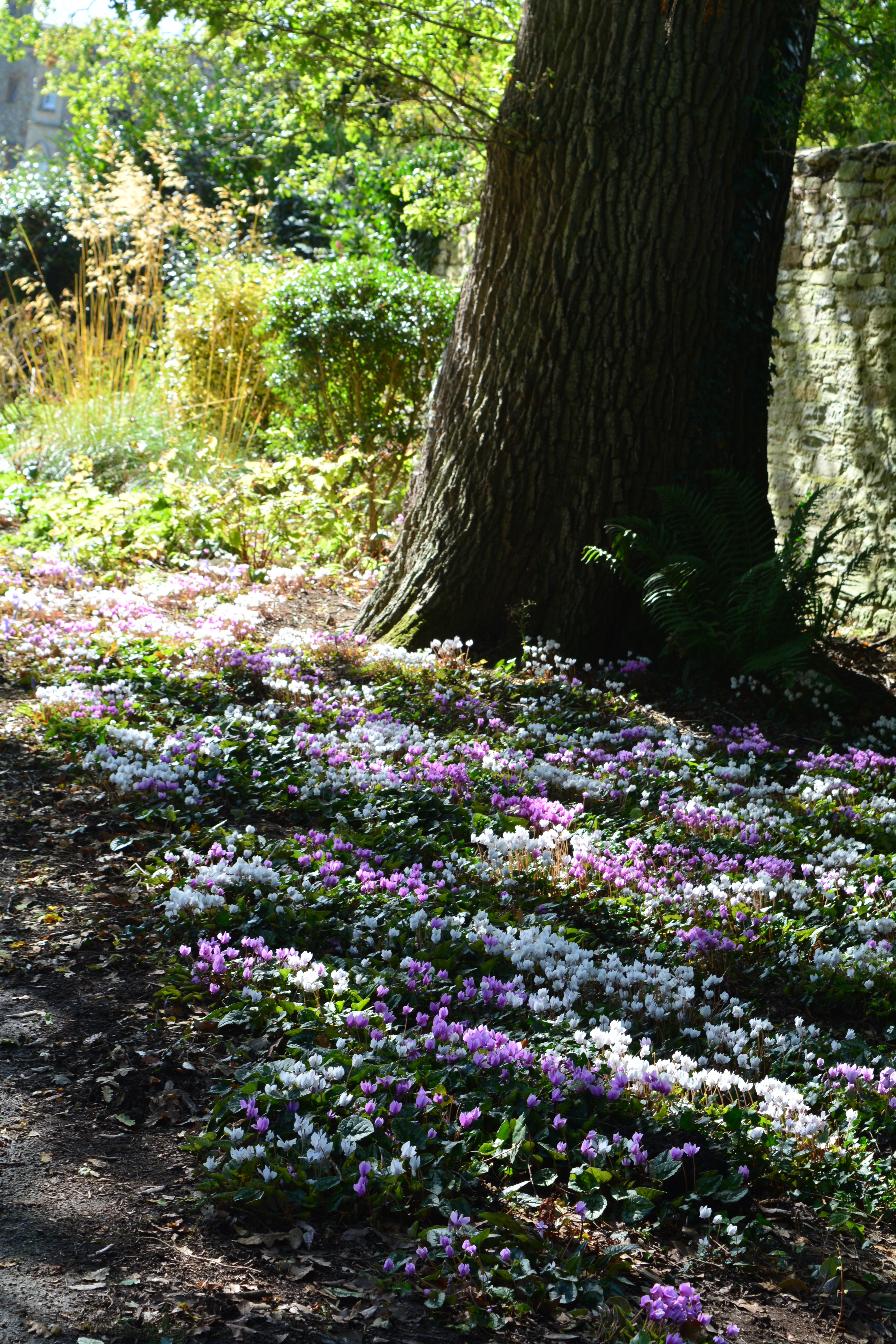
The long border was sparkling with colour in the sunlight. The sun was beginning to sit lower in the sky so whites looked as wonderful as bright colours. Cyclamen shone jewel-like in the shadow of the ancient trees. Grasses glistened!

2015 09 24_5772 2015 09 24_5773 2015 09 24_5774 2015 09 24_5775 2015 09 24_5776 2015 09 24_57772015 09 24_5913

Once inside the walled garden we immediately noticed how large areas of colour were absent but plant partnerships in twos and threes gave brightness throughout.

2015 09 24_5779  2015 09 24_5781 2015 09 24_5782  2015 09 24_5784 2015 09 24_5785 2015 09 24_57902015 09 24_5780 2015 09 24_5789 2015 09 24_5791

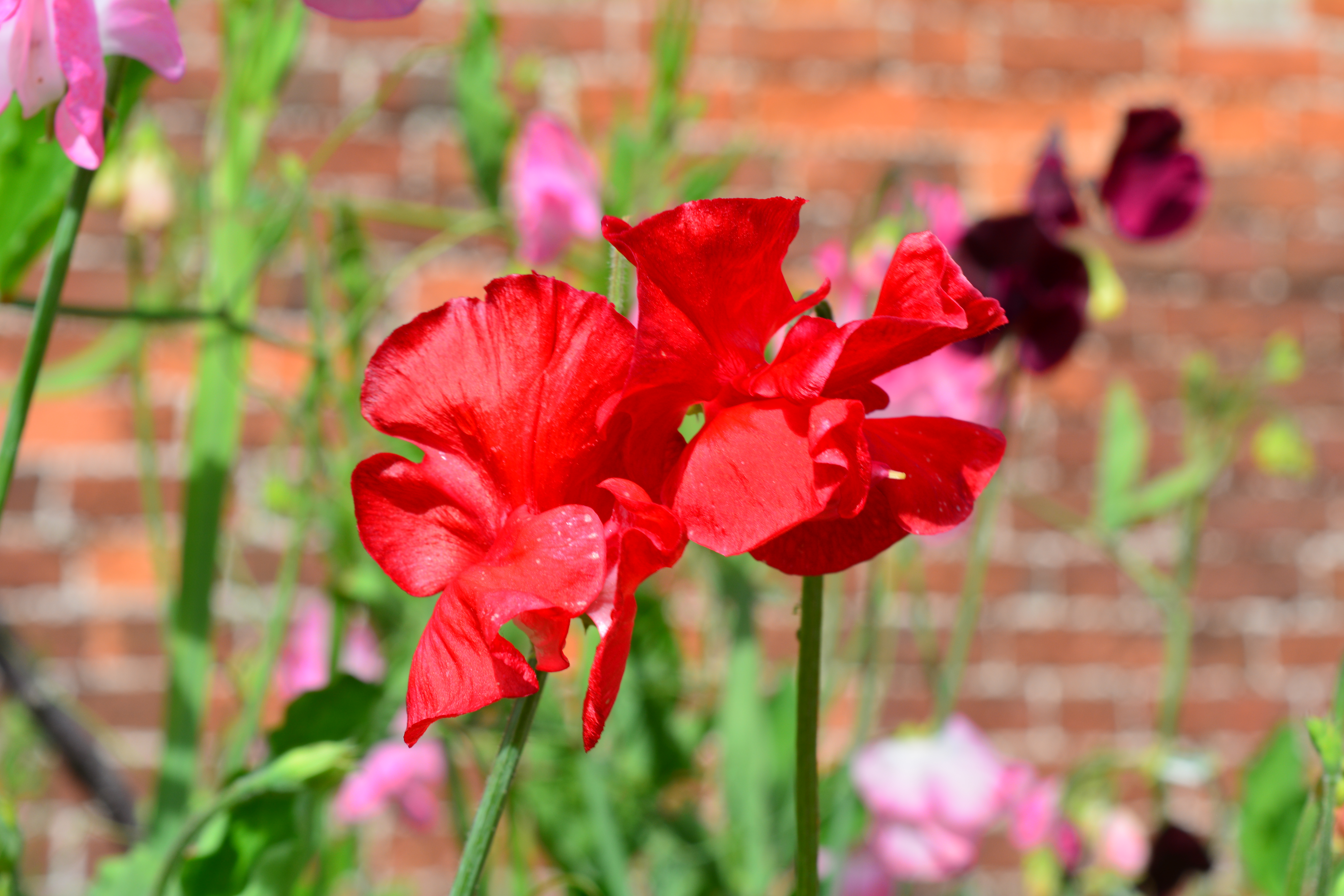
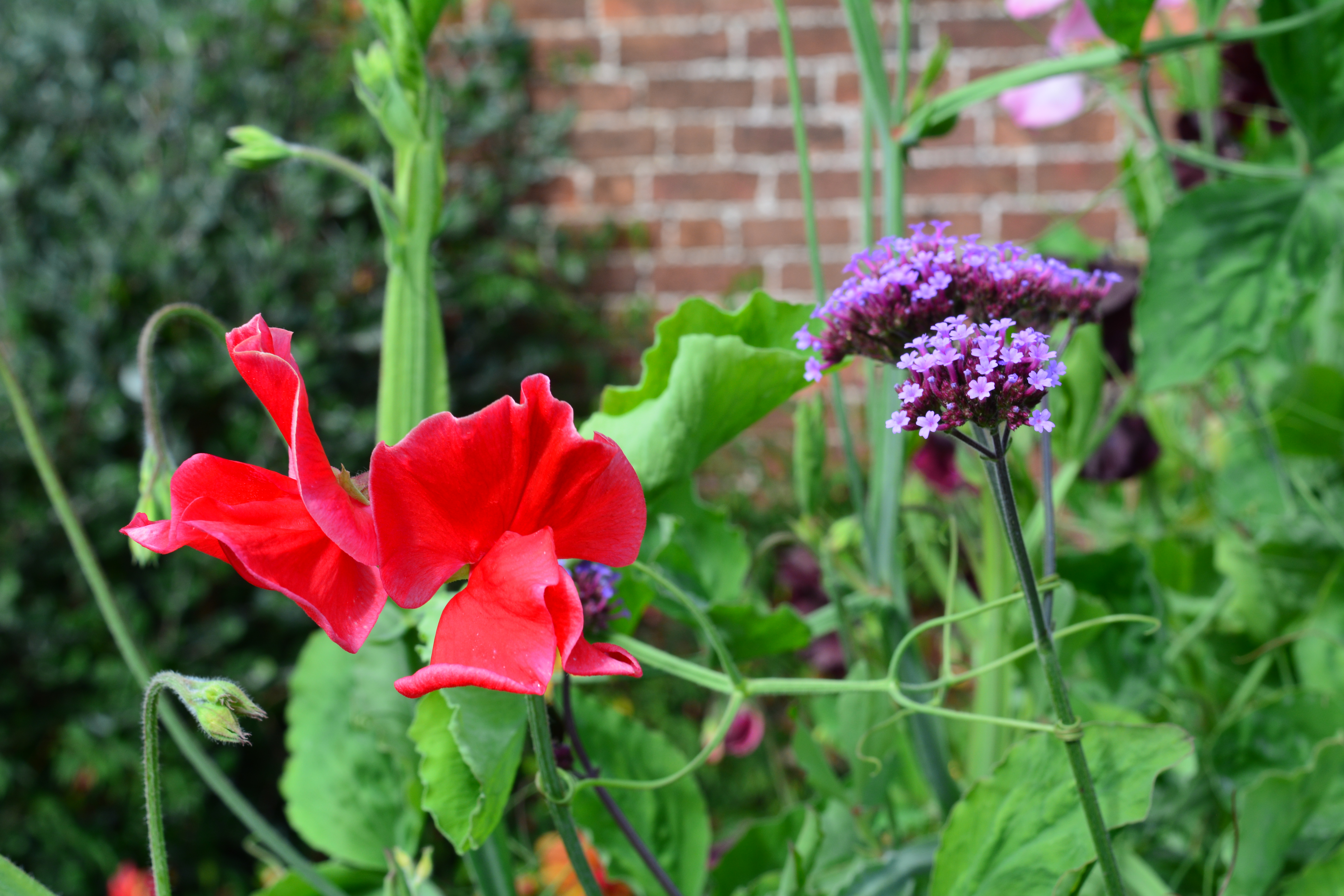
Sweetpeas are always a delight but to see these beauties this late in the season really pleased the eye. And of course the nose!

2015 09 24_5793 2015 09 24_5794 2015 09 24_5795 2015 09 24_5796

This rich blue colour surprised us when we had a close and realised these gems were not flowers at all but berries. This grass like plant with the blue berries is a Dianella, a plant we have been trying to get established on our gravel garden for a few seasons now. Seeing how special they can be made us more determined to get it right.

2015 09 24_5792

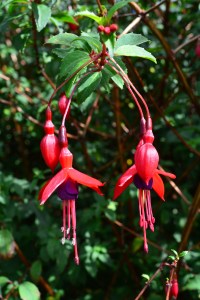
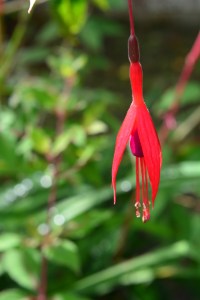
Fuschias are not a favourite of our’s but within these walls we enjoyed the simple small flowers of the more natural varieties.

2015 09 24_5783 2015 09 24_5815 2015 09 24_5816

The diminuitive flowers of this Fuschia had blooms less than a centimetre long but its beauty was in the detail.

2015 09 24_5803

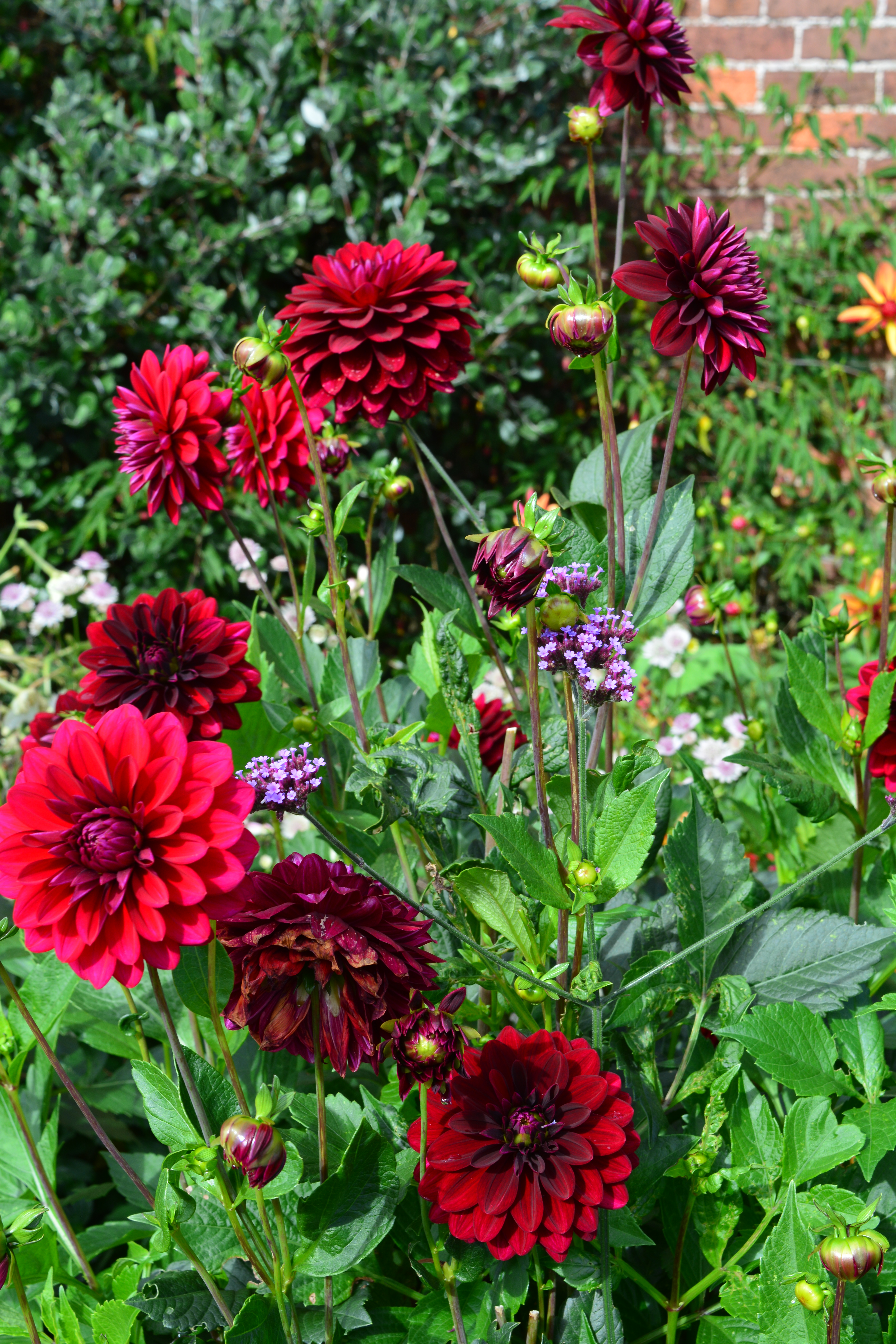
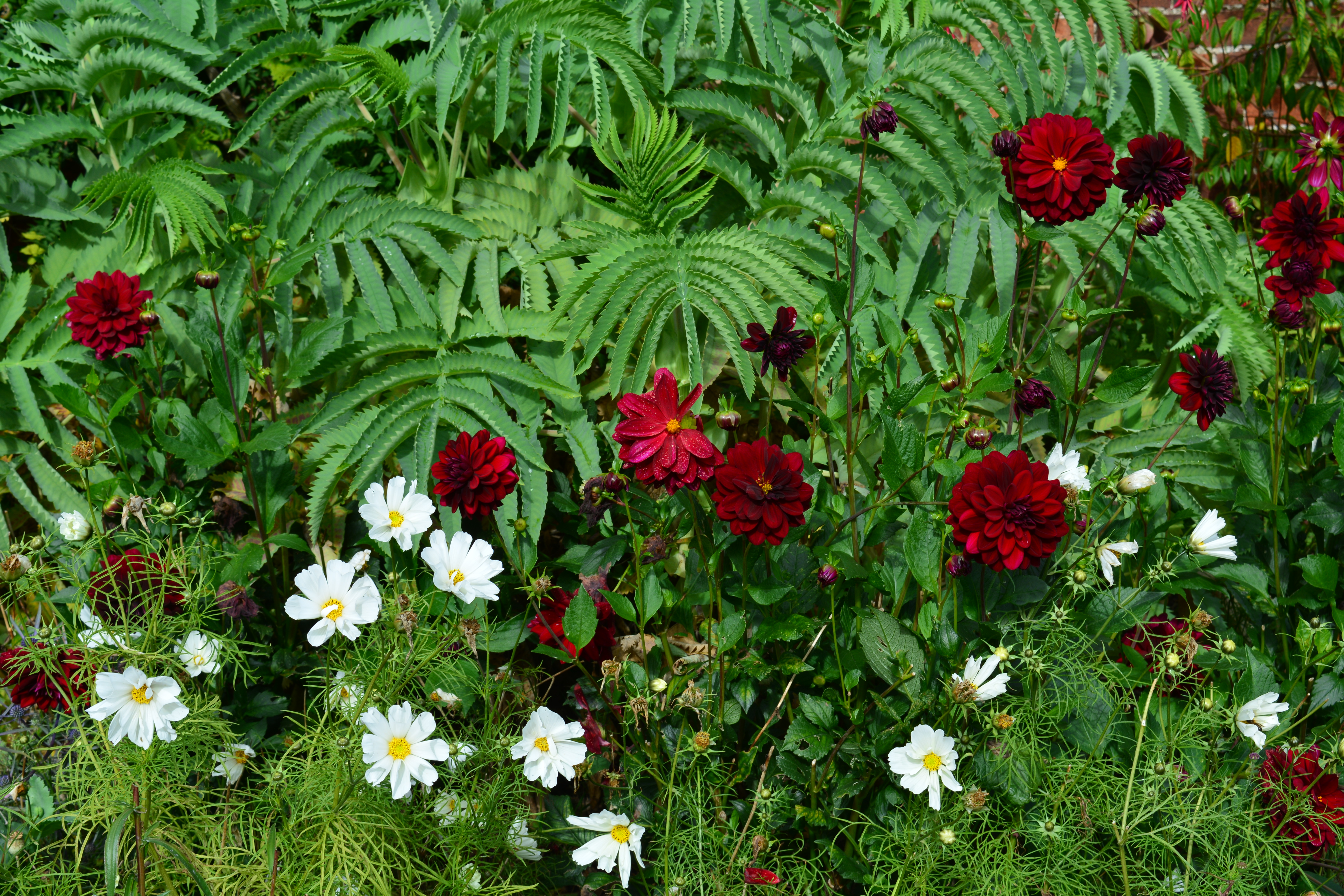
I love rich deep colours in the garden but they seem especially intense in the early autumn months, so I was attracted by these Dahlias and our favourite Verbena bonariensis.

2015 09 24_5797 2015 09 24_5798 2015 09 24_5799 2015 09 24_5800

In the entrance to the glasshouses the climbing Cobaea was in full bloom and the plant covered a huge area. Close-up we could appreciate its complexity and incredible beauty. The tomatoes growing in the glasshouse were looking as late to develop as our own, but their Chrysanths were already in flower whereas ours are just budding up.

2015 09 24_5801 2015 09 24_5802   2015 09 24_5805 2015 09 24_5806

The Secret Garden sparkled in the sunshine with every leaf and petal catching the light.

2015 09 24_5907

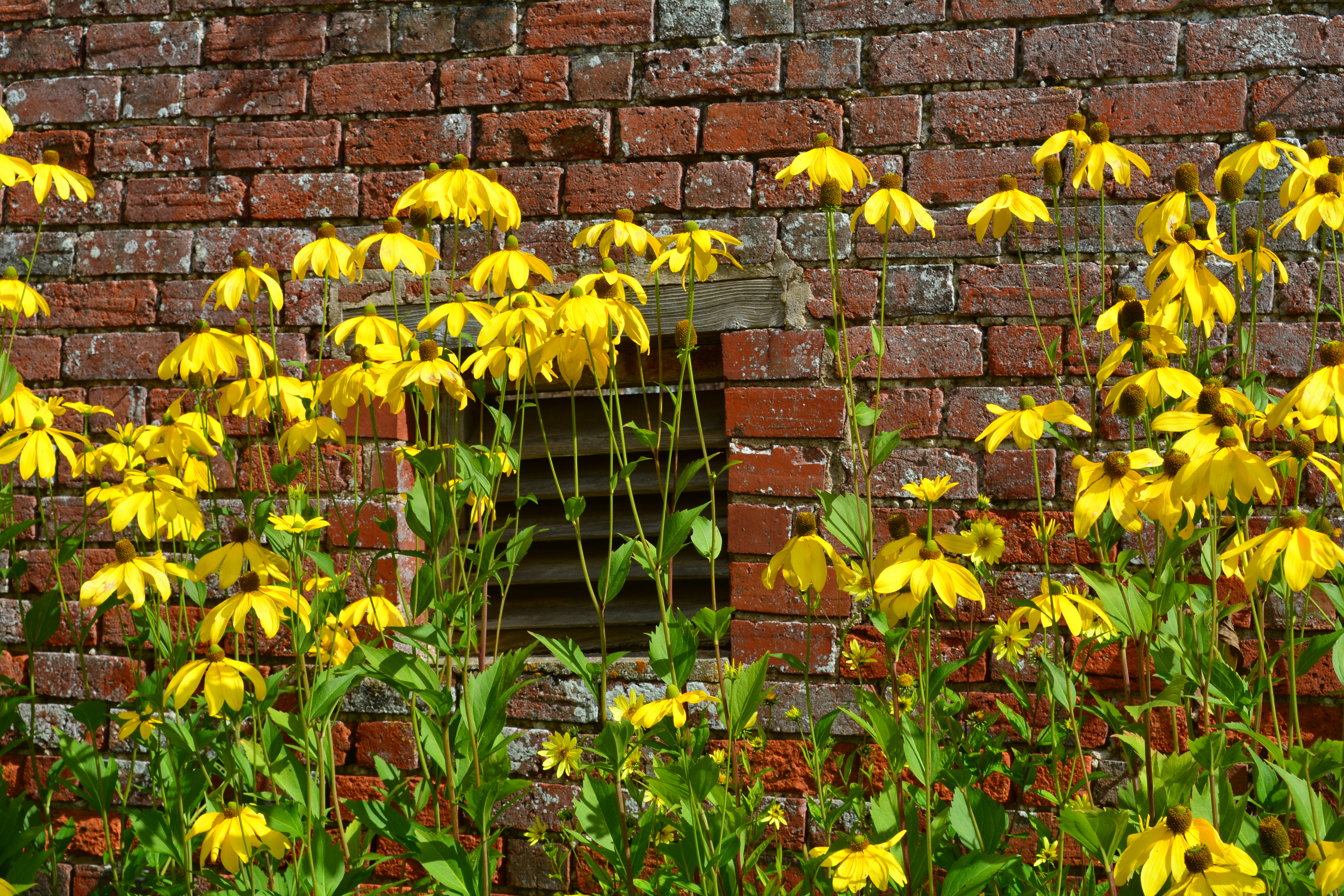
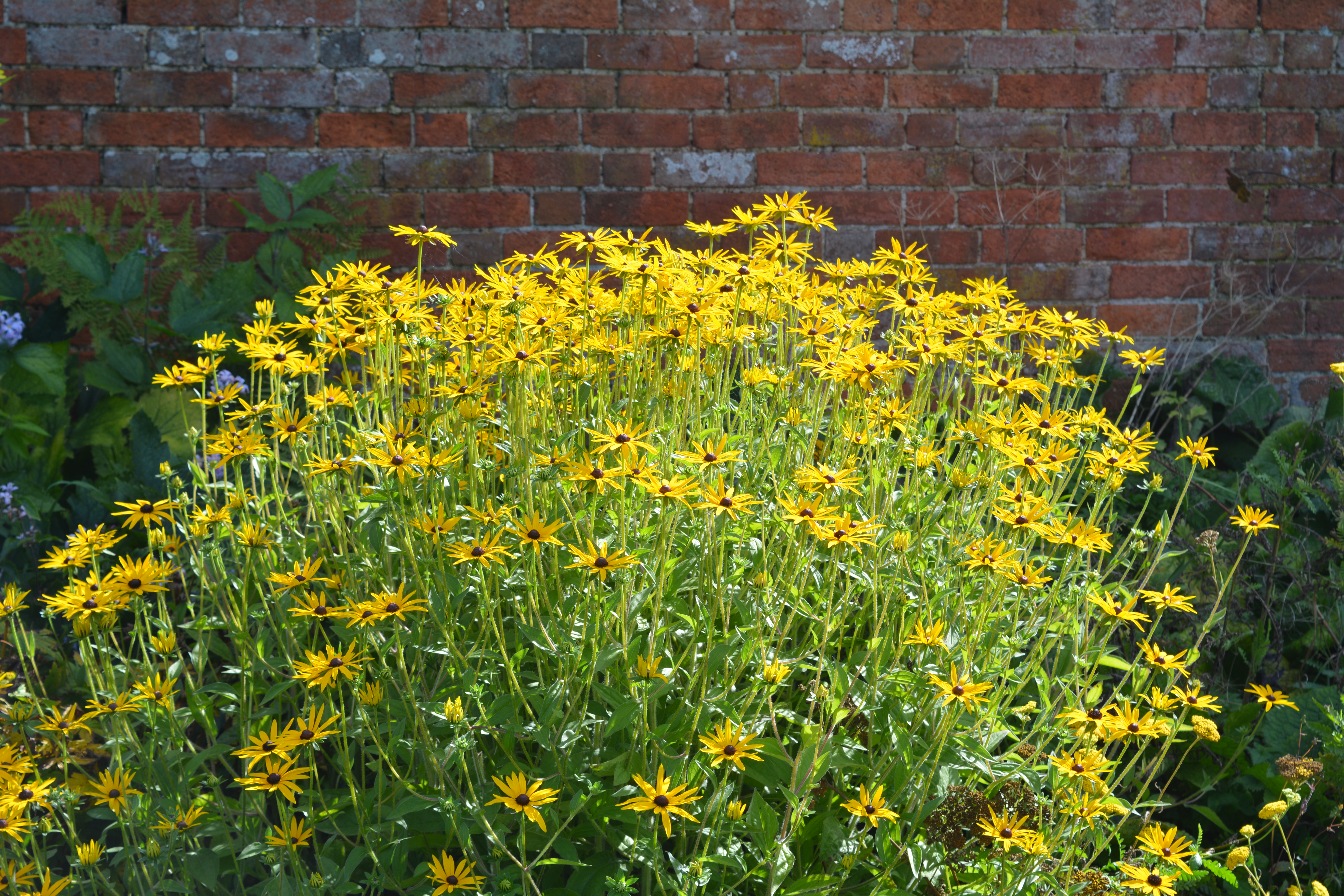
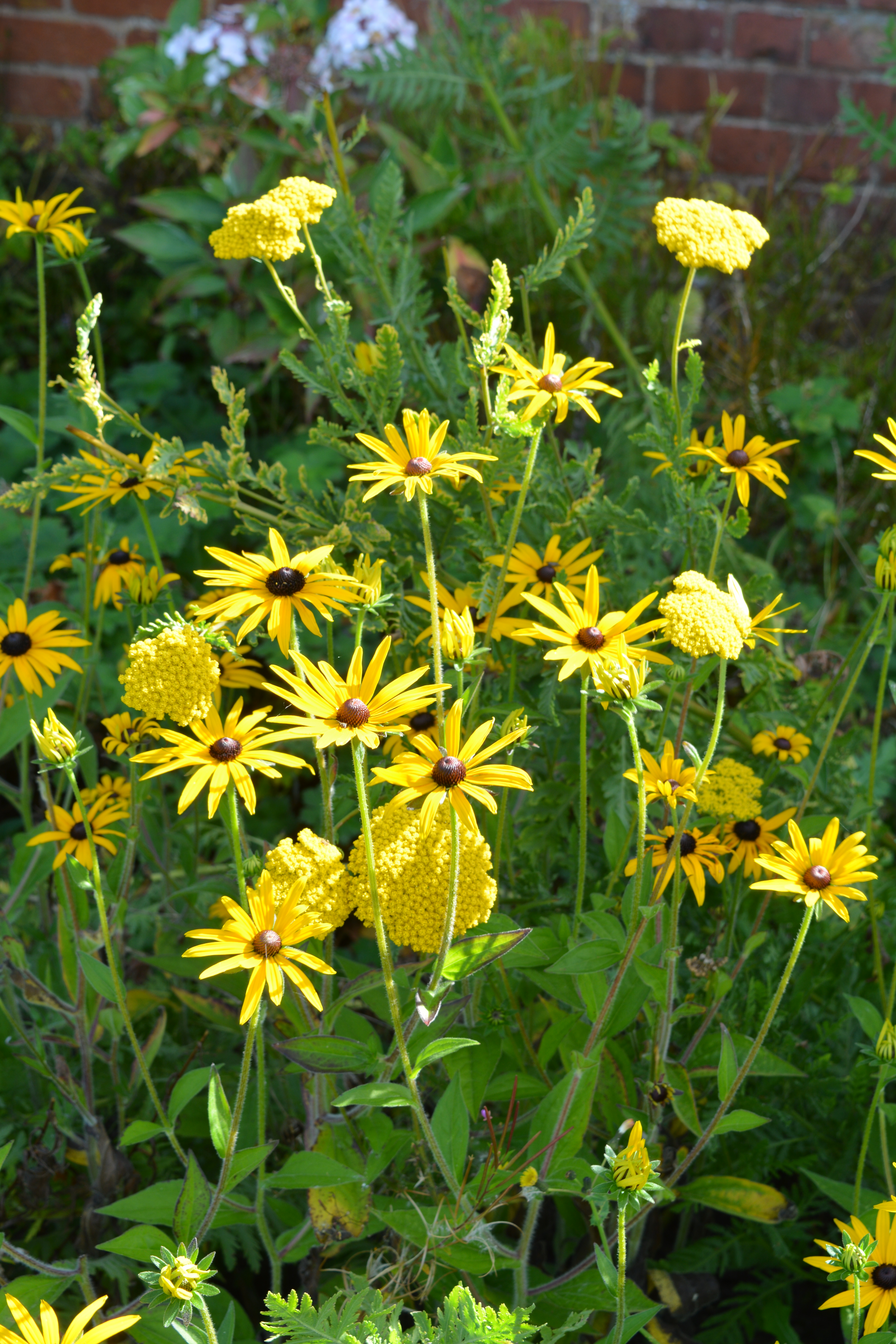
For bright cheerfulness in the autumn garden you can’t beat the Rudbeckias.

2015 09 24_5879 2015 09 24_5878  2015 09 24_5884 2015 09 24_58862015 09 24_5877

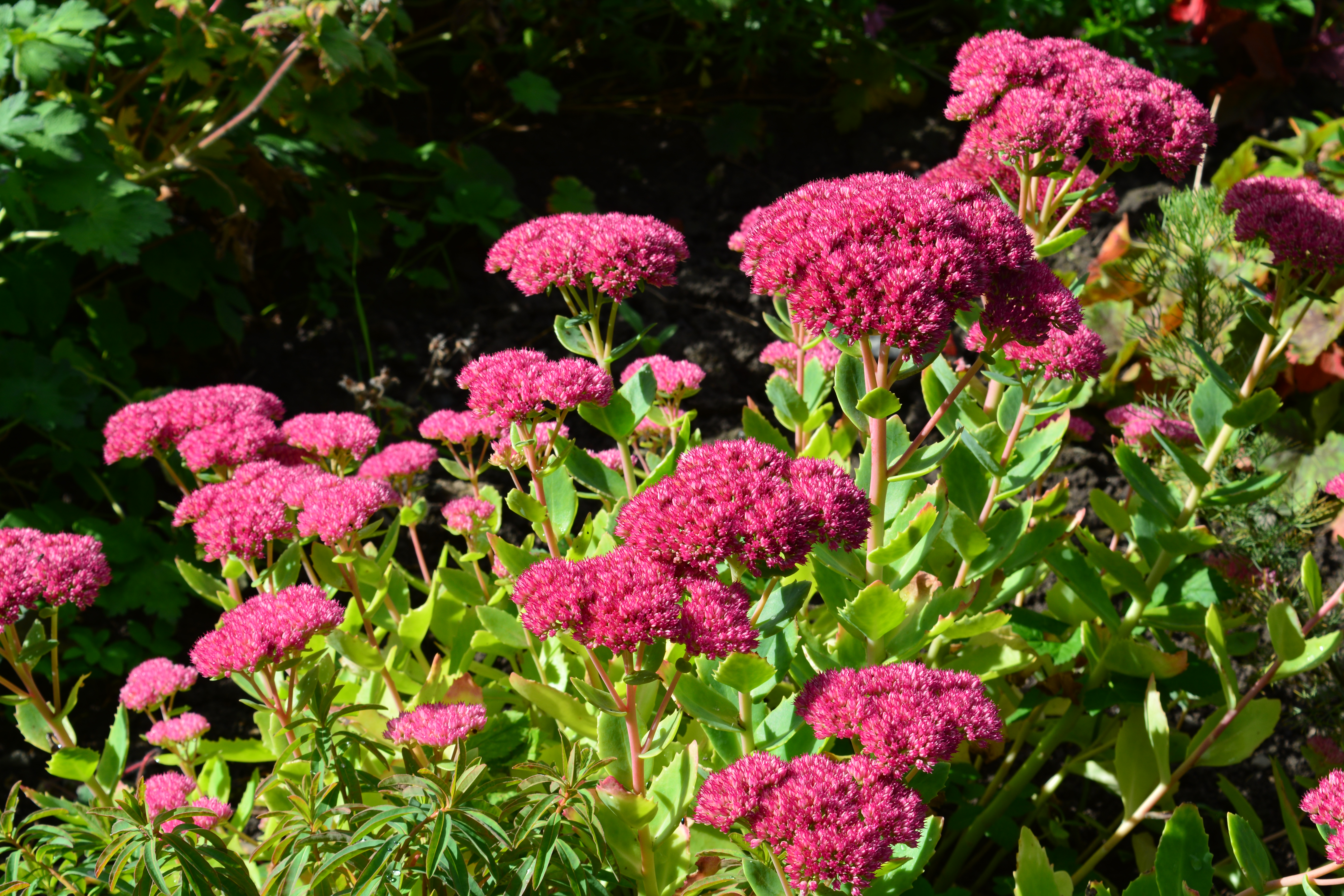
As we made our way back to the car after our most enjoyable garden wanderings two signs of autumn caught our eye, the deep pink of the Sedum flower heads and the colour appearing on the clump of mature trees close to the main gate out of the garden. Next visit will be sometime in October when we expect to see autumn taking over the borders and clumps of trees.

2015 09 24_5916 2015 09 24_5911

Categories
colours garden photography gardens gardens open to the public hardy perennials National Garden Scheme NGS photography sculpture Yellow Book Gardens

Aulden Farm Gardens – Part 2

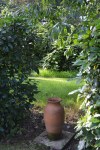
As promised I am back with more photographs from our visit to the gardens at Aulden Farm in Herefordshire. Firstly I would love to share a gallery of photos of the many pieces of garden sculpture we enjoyed discovering among the plants in this wonderful garden.

This atmospheric garden was full of interesting plants used in original ways, in great combinations, in creative partnerships and set to catch the light. Two families of plants which enjoyed having the sun put them in the spotlight were the Persicarias and the Rudbeckias. I hope you like this photo gallery featuring just them.

We hope to return to this garden, surely one of the most beautiful and atmospheric of any we have visited, in the autumn when the light will be playing on the yellows, russets, reds and browns of that season.

This Veggie Life

A Vegetarian | Nature Lifestyle Blog

Rambling in the Garden

.....and nurturing my soul

The Arch City Gardener

Journeys In St. Louis Gardening and Beyond

Garden Dreaming at Châtillon

Consult the genius of the place

Storyshucker

A blog full of humorous and poignant observations.

gardeninacity

Notes from a wildlife-friendly cottage garden

PlayGroundology

...an emerging social science

The Official Blog of British Wildlife

'The most important and informative publication on wildlife of our times' - The Independent. This blog is a member of The UK & Ireland Natural History Bloggers group: www.uknhb.blogspot.com

iGrowHort

Inspire - Cultivate - Grow Native Plants - Restore Landscapes

Bishops Meadow Trust

To create and protect a semi-natural wild space for the people of Farnham to enjoy and experience an array of British wildlife in our town

Gardening with Children

The www.gardeningwithchildren.co.uk Blog

UKbirdingtimeline

birding through the seasons, why birds matter and how to conserve them

NATURE WALKER

with a camera in hand

Jardin

Transform your outdoor space

Eva's space

My allotment, cooking and other interests

Old School Garden

my gardening life through the year

LEANNE COLE

Trying to live a creative life

fromacountrycottage

trying to live as lightly as possible on our beautiful planet

Good Life Gardening

Nature lovers from Leicester living the good life.

mybeautfulthings

Finding the beautiful in the everyday

mawsonmichelle

Michelle's Allotment

In and Out of My Garden

thoughts from and about my garden

Greenhousing

Big plans for a small garden

The Scottish Country Garden

A Walled Country Garden in South East Scotland

The Fruity Chicken

Life at the fruity chicken

willowarchway

Off grid living. Self sufficient. "PERMAGANICS RULE".

St Anns Allotments

Nottingham's Grade 2* Listed Allotments and Community Orchard

Manifest Joy Harvests

a journey in suburban vegetable gardening

Allotmental

The madness of growing your own

Penny's Garden: a harvest beyond my front door

A novel approach to vegetable gardening

arignagardener

Sustainable living in the Irish countryside.

NewEnglandGardenAndThread

Master Gardener, amateur photographer, quilter, NH native, and sometimes SC snowbird

dianajhale

Recent work and work in progress and anything else that interests me

planthoarder

a chaotic cottage gardener

Lens and Pens by Sally

a weekly blog that creates a personal philosophy through photographs and words

Dewdrops and Sunshine

Stories from a sassy and classy Southern farmbelle.

The Pyjama Gardener

Simple Organic Gardening & Seasonal Living

gettin' fresh!

turning dirt into dinner

JOY...

today the world is created anew

Garden Birds

Notes from a Devon garden

ShootAbout

Life Through The Lens

Adapting Pixels

A photography blog showcasing the best photography pictures and videos on the internet

Wildlifegardening's Blog

Just another WordPress.com site

naturestimeline

personal observations from the natural world as the search continues for a new approach to conservation.

LATEBLOOMERBUDS

The Wonders of Life through my Eyes, my Heart, my Soul