Driving around the countryside around our home in Shropshire we are struck at the difference between the worst and the best examples of hedgerow maintenance. Some are beautifully trimmed providing stock proof boundaries which benefit and encourage wildlife. The best examples of these are those that are “layered” as these remain dense in growth and provide homes, food, shelter and nest sites for all aspects of wildlife and often result in special habitats at the base of them full of wildflowers and accompanying wildlife. Insects, small mammals, birds, butterflies, bees and so much more of our wildlife can take advantage of this beautiful and skilful country craft. The trees of the hedgerow even those of reasonable girth can be trimmed and layered to create dense hedges. We found this beautiful length of hedge in a country lane a few miles from home.
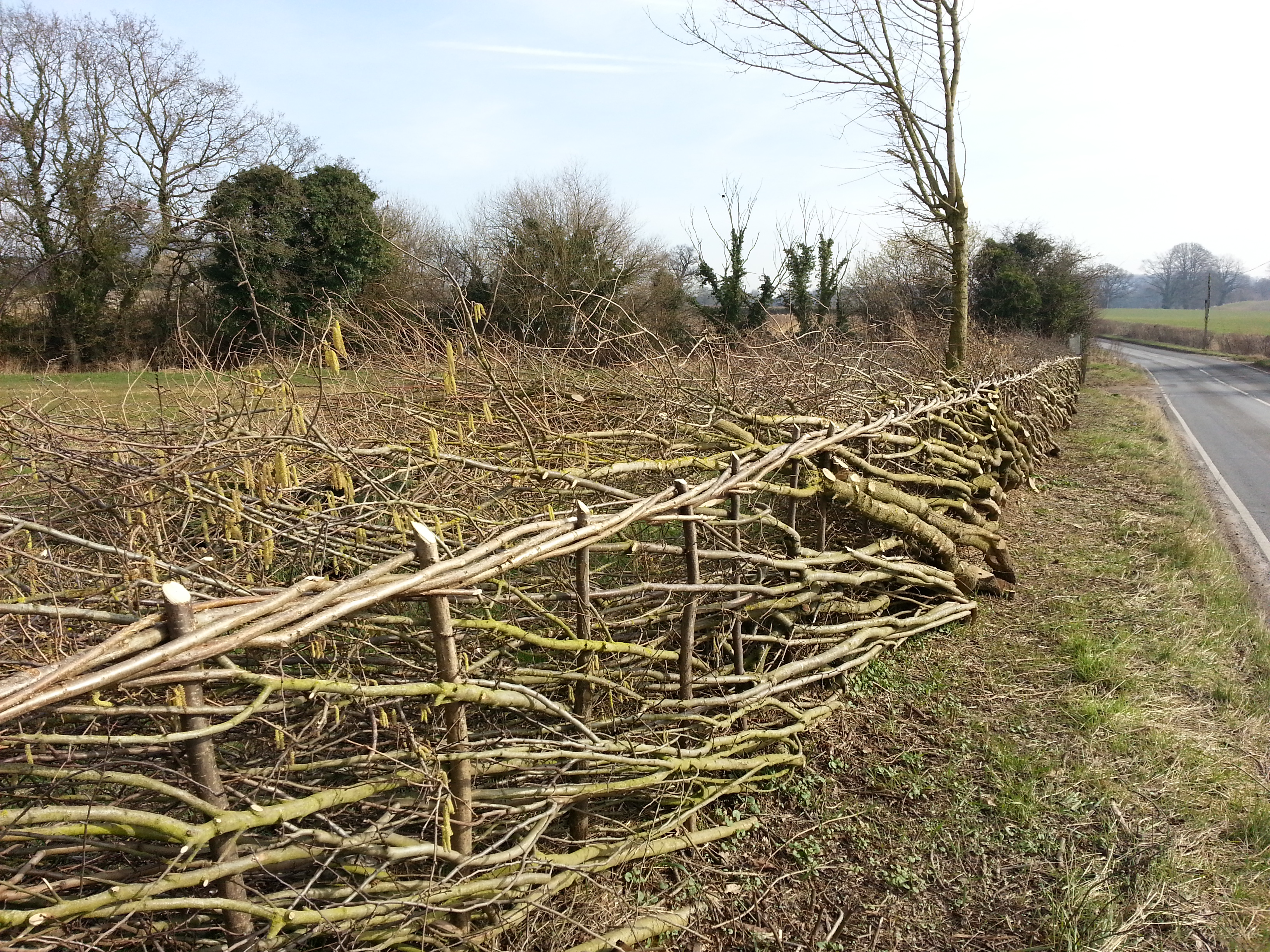
I particularly like the artful way it has been thoughtfully finished with a flourish of woven hazel. This may be some sort of “signature” – the craftsman leaving his mark. Although artistic this probably strengthens the structure further by binding the top of the hedge tightly together. This hedger is such a craftsman that the angle of cut on the top of every stake is exactly the same.

A mix of shrubs and trees have been beautifully entwined. Even trees with trunks up to 12 inches thick have been split and layered. It is easy to see how impenetrable to stock these layered hedges are.
We were lucky to find this other hedge in the process of being layered so took some pics. It would have been even luckier if the hedge layer was still around for me to photograph him at work but it must have been his day off!


So those are good examples which are few and far between. The bad and ugly are sadly much more common now, hedges cut by machine, slashed to create ugliness. Some of the cutting blades on these machines seem blunt or perhaps inappropriate for the job in hand. Thicker branches get torn and slowly after a few years these hedges get thinner so are poor as stock proof barriers and even poorer wildlife habitats. Whole sections disappear and tend to be replaced with fencing so the wildlife benefit is lessened further. When the hedge cutter in his tractor cab comes across trees, whatever their size they are cut just the same. The old oak in the photos below had its lower branches hacked off.
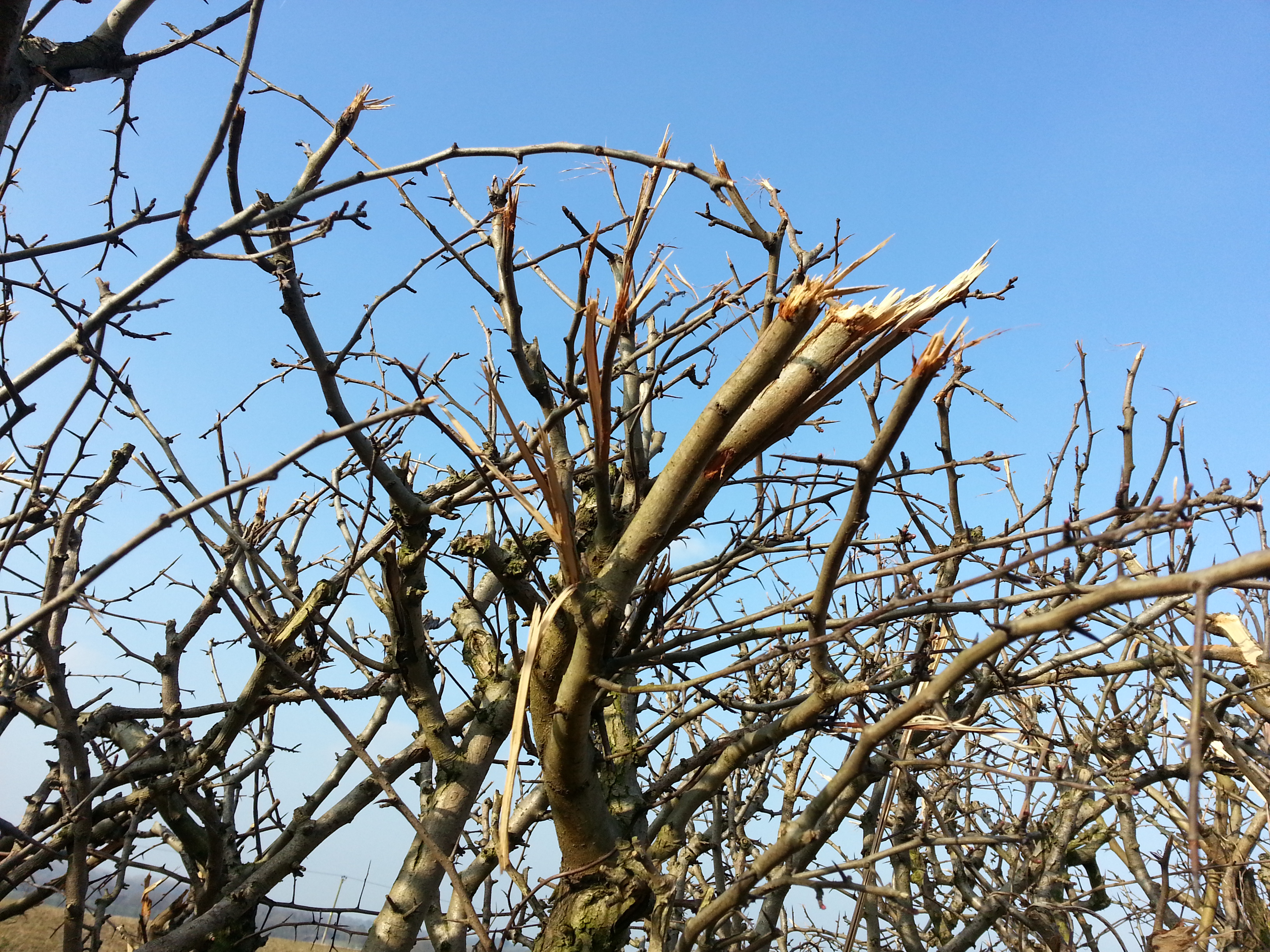
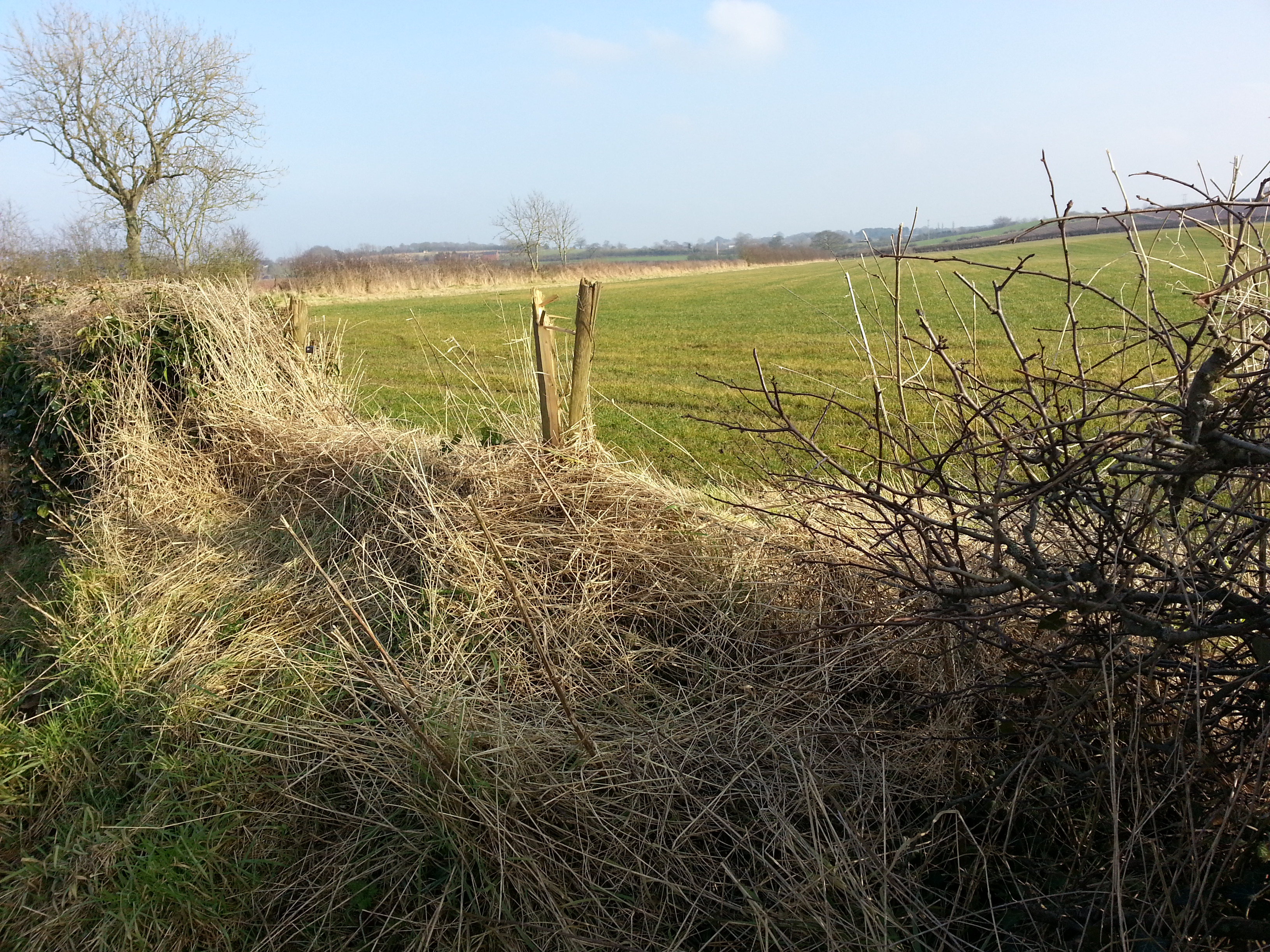


The messy hedges that are left are a waste of time, too thin to keep stock in and of little use to wildlife and too thin to allow the usual wildflowers associated with a hedge’s shelter and shade to thrive.
What the answer is to improving hedgerow management in a wildlife friendly manner is difficult to come up with. The agricultural industry in the UK needs to rethink, look again at the idea of countryside stewardship and responsibilities towards the land.
Here endeth my major rant for 2013!
 greenbenchramblings