If the light is right in the autumn and you are wandering around woodland stripes of light and shade will appear painting the woodland floor before you. Simply beautiful!
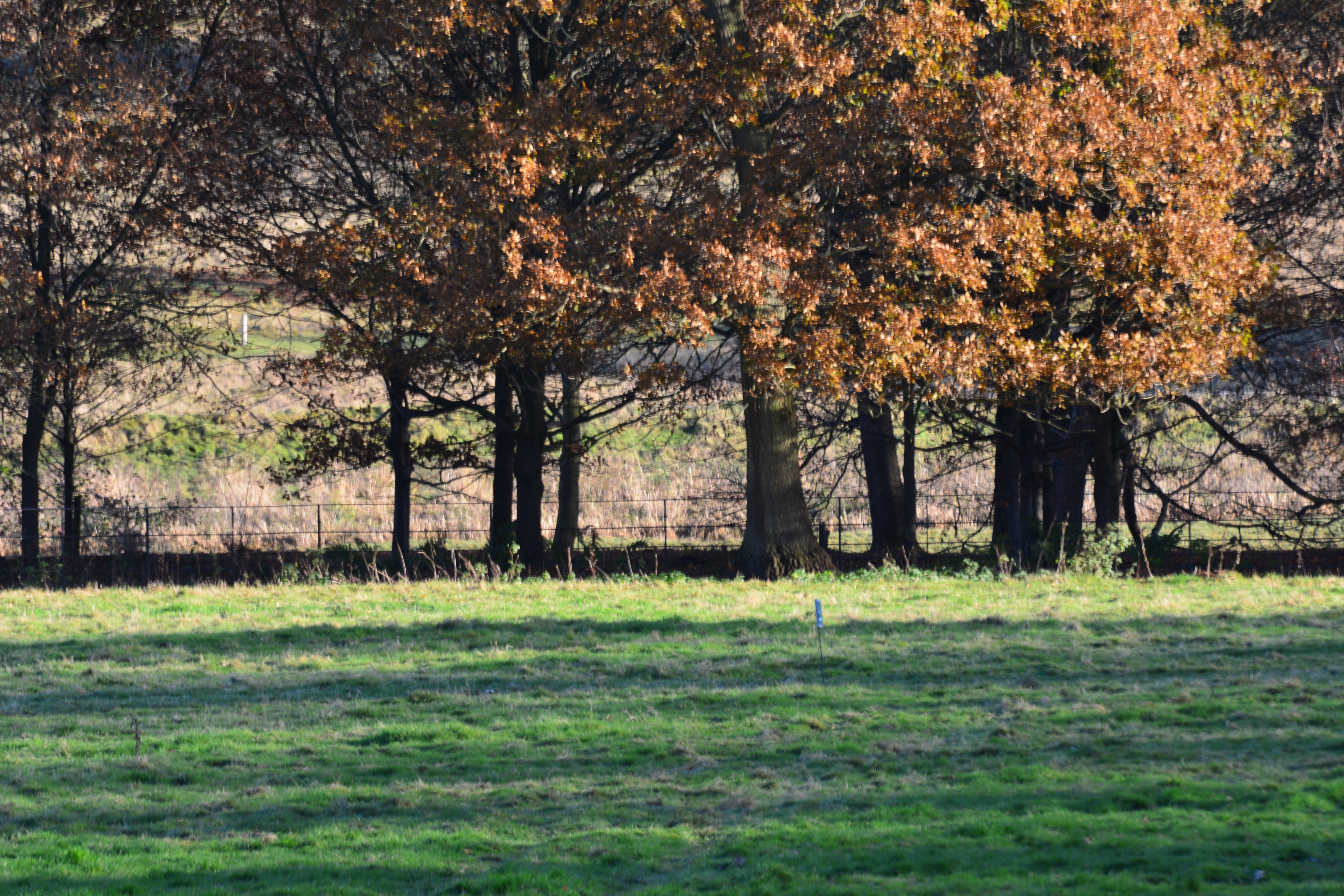

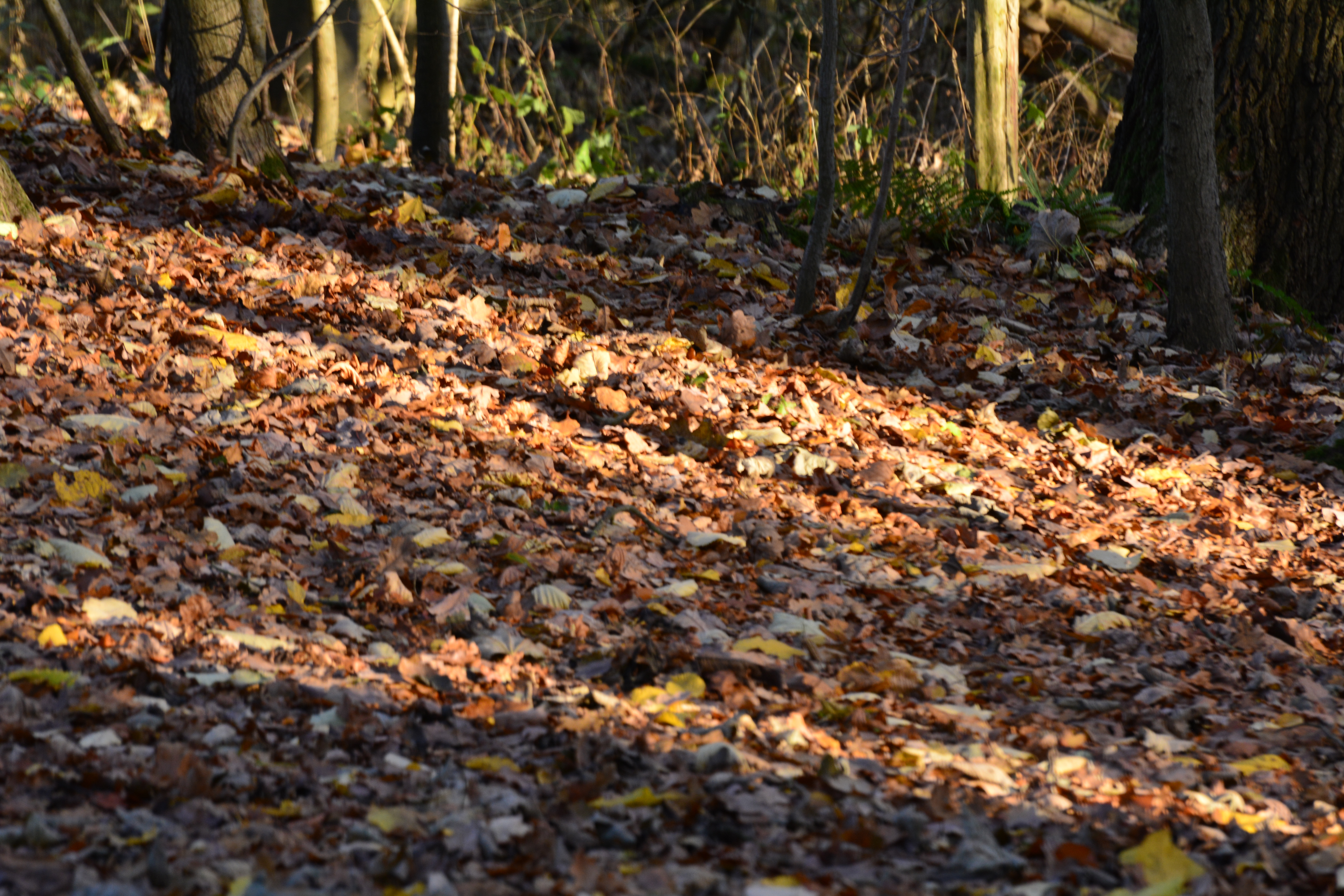
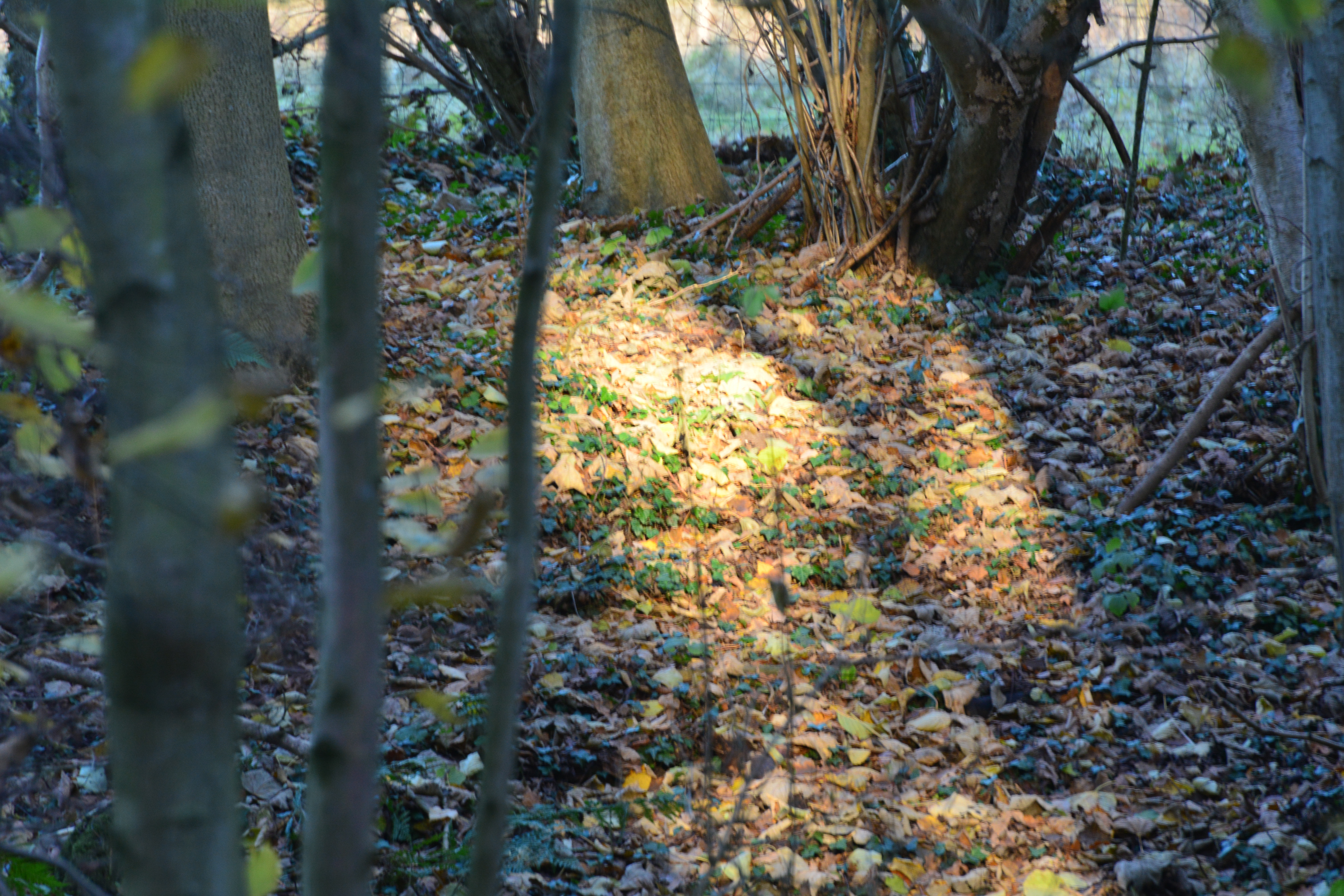


If the light is right in the autumn and you are wandering around woodland stripes of light and shade will appear painting the woodland floor before you. Simply beautiful!
Sometimes something happens that will remain with you for ever, a fleeting moment when Mother Nature shouts out, “Hey! Look at me! Check this out!”. She puts on a great show which disappears as quickly and silently as it appeared a short few moments previously.
While following one of our slow monthly ramblings around the Dorothy Clive Garden looking at what the garden had to offer especially for this month, we were, to say the least, waylaid by the weather.
As we walked slowly down the sloping path to the lower garden and the pool, we photographed the birches, trunks pale against the deep evergreen conifers behind them.
We looked over the hedge, the garden boundary, out and across to the countryside beyond. We saw that the light was changing rapidly and dramatically lighting up the countryside. A darkness crept over the approaching clouds which became the darkest blue-grey possible. Combined with the bright shafts of low November sunlight we were suddenly surrounded by the strangest weather we could ever remember.


The birches against their dark backgrounds lit up further. In a matter of seconds it was all magic surrounding us. The first two pics are the first pair prior to the light change, and the following three illustrate the changes those few moments in time produced.


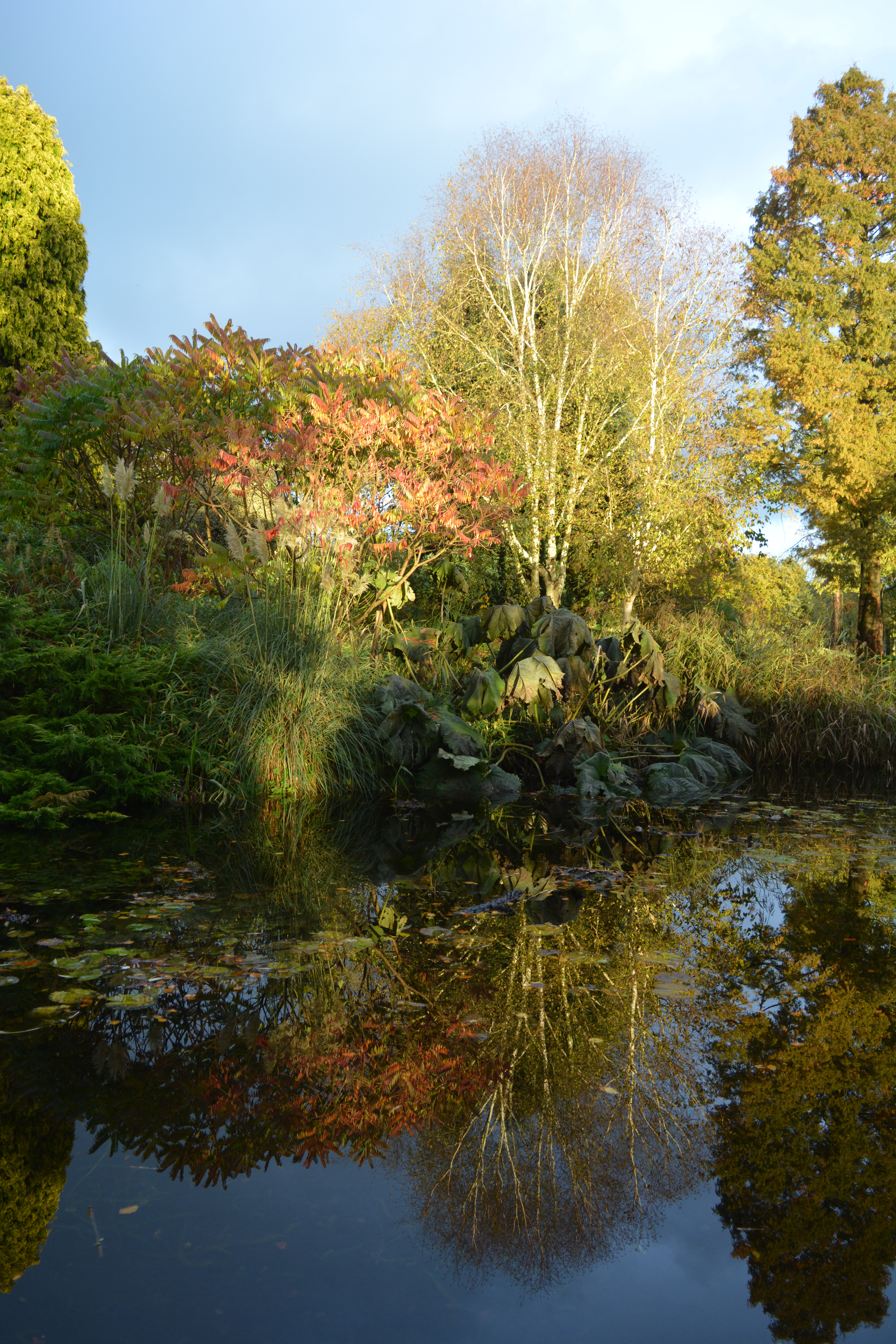
Just look at the subtle changes in these three photos below taken just seconds apart. Look at the light on each tree and the reflection!

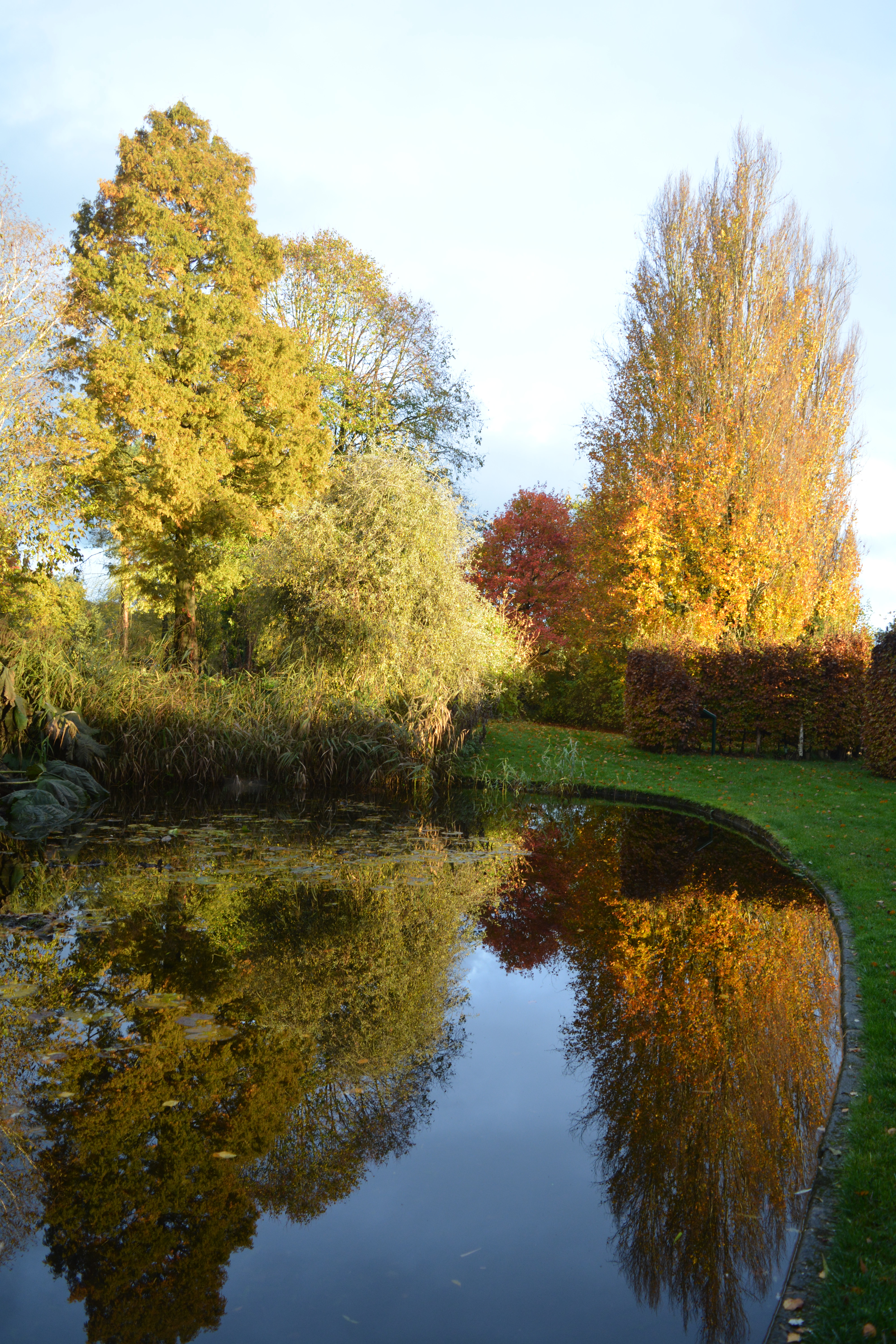
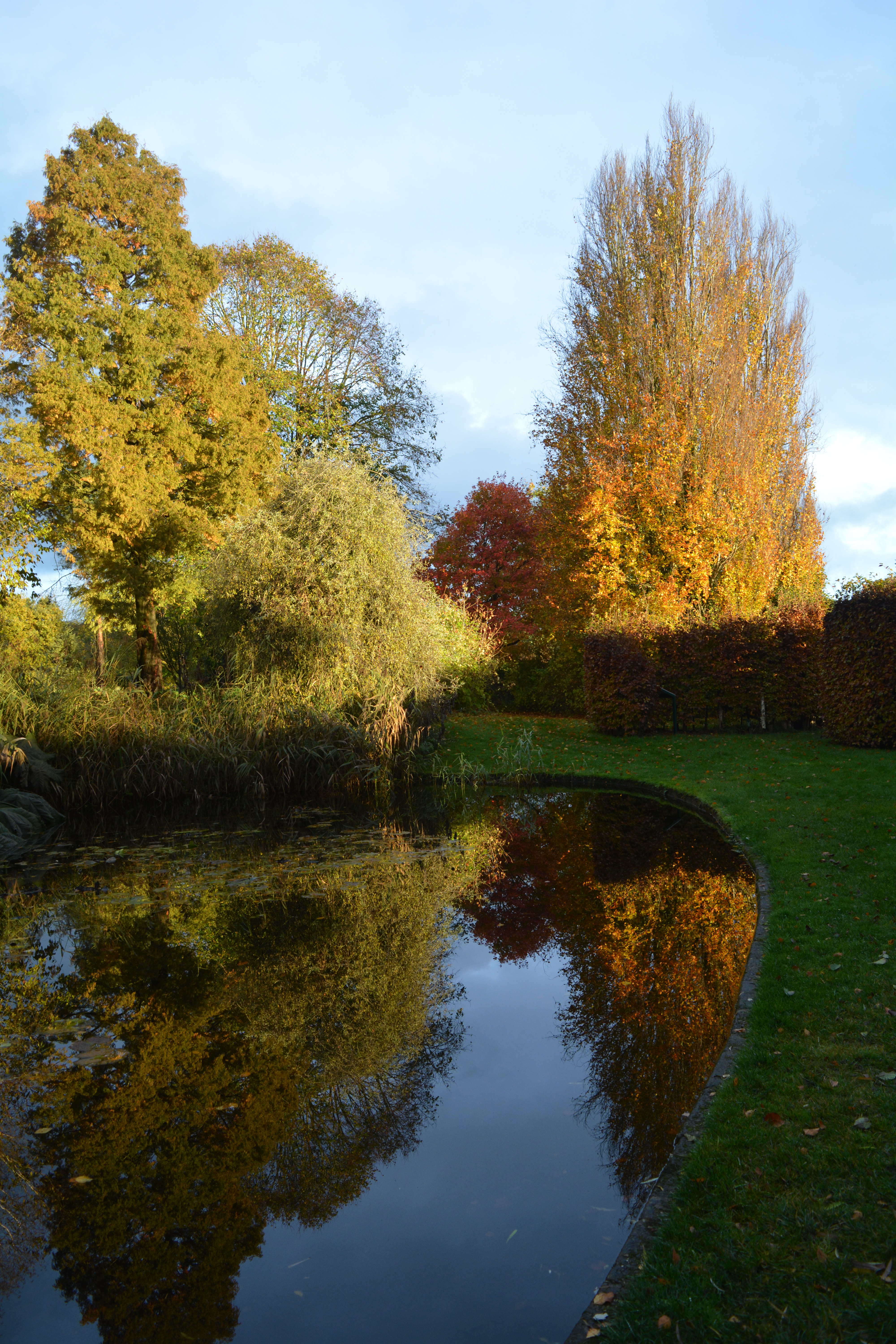
We will now share the changing scenes of a fleeting moment in time with you via a gallery of photos shown in the order I took them. Enjoy.
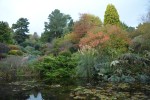

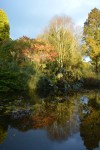

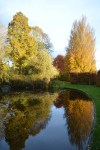




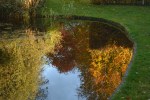


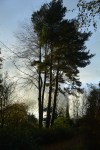
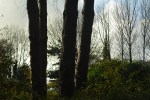

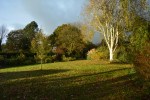


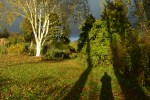
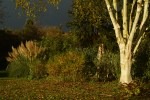
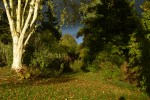

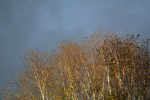

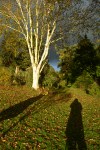
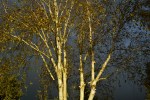

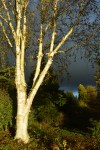

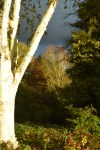


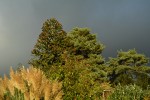

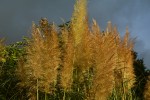

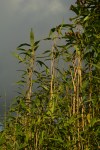
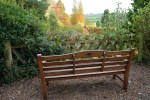
Things began to calm down as a dark cloud took over the sky once again and we enjoyed a final view from this lovely garden bench. It is strange to think that this this beautiful short passage of time which changed our view of trees and the garden in general will never be seen again. An unforgettable experience and an unrepeatable performance!

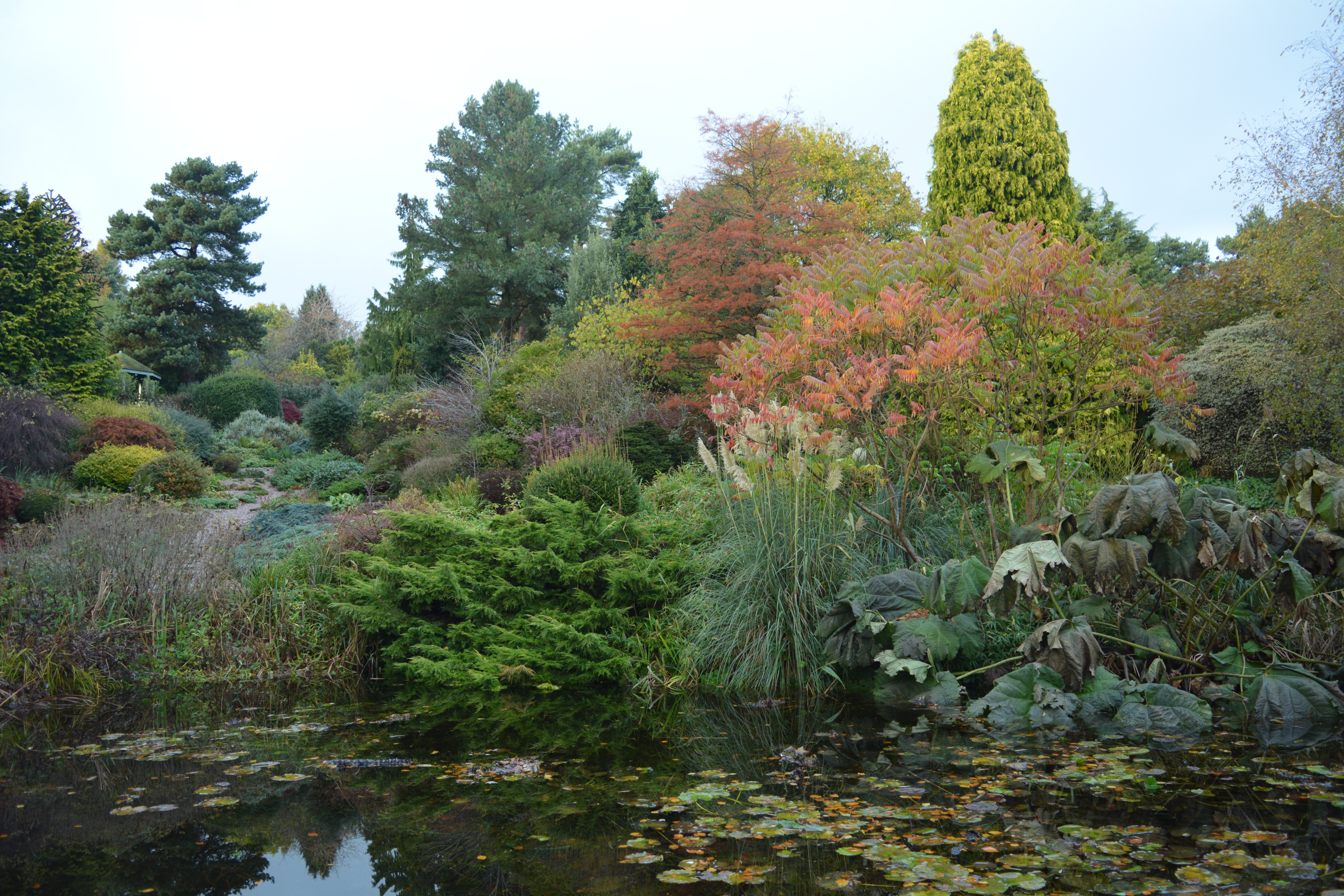

What a special moment, a moment we will never forget. In the short time this special lighting was putting on its special personalised show for us we were so excited and couldn’t stop pointing out special moments to share.
In my next post I will share the rest of our November visit to the Dorothy Clive Garden.
The September pages of my garden journal sees the first signs of autumn creeping in, colours changing, light creeping in at a lower level and our summer migrant birdlife disappearing. The skies are empty and quiet now that the Swallows and Martins have left us for warmer climes. We are missing the sight and sounds of Warblers flitting among the trees and shrubs but hopefully some Garden Warblers and Chiffchaffs will decide to stay with us. Climate change seems to be encouraging more migrants to remain in the UK all year through.
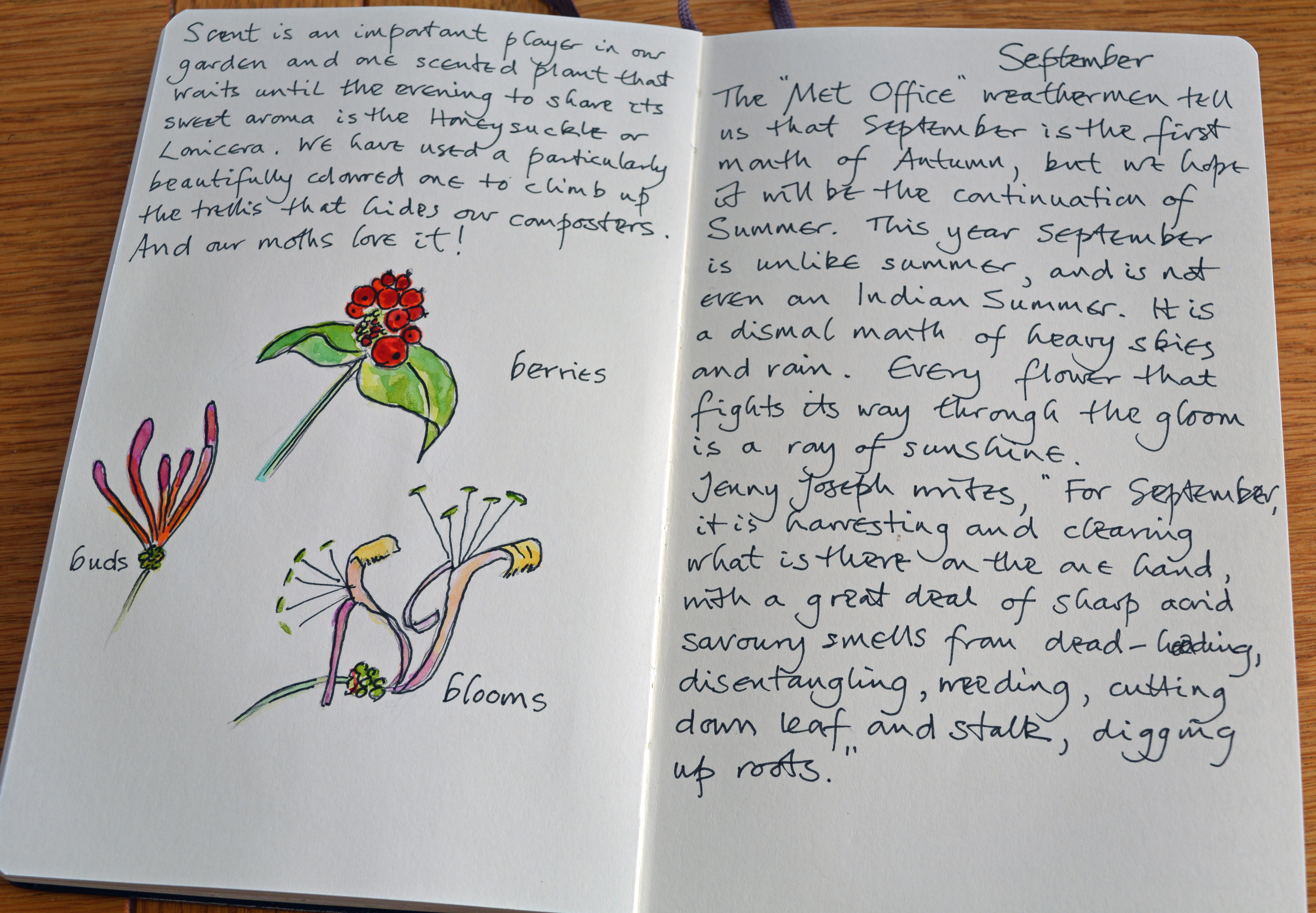
Being a British gardener I start by talking about the weather! “The “Met Office” weathermen tell us that September is the first month of Autumn, but we hope it will be the continuation of Summer. This year September is unlike Summer, and is not even an Indian Summer. It is a dismal month of heavy skies and rain. Every flower that fights its way through the gloom is a ray of sunshine.”
Next comes my usual piece of writing from Jenny Joseph’s little book, “Lead by the Nose”.
For September, it is harvesting and clearing what is there on the one hand, with a great deal of sharp acrid savoury smells from dead-heading, disentangling, weeding, cutting down leaf and stalk, digging up roots.”
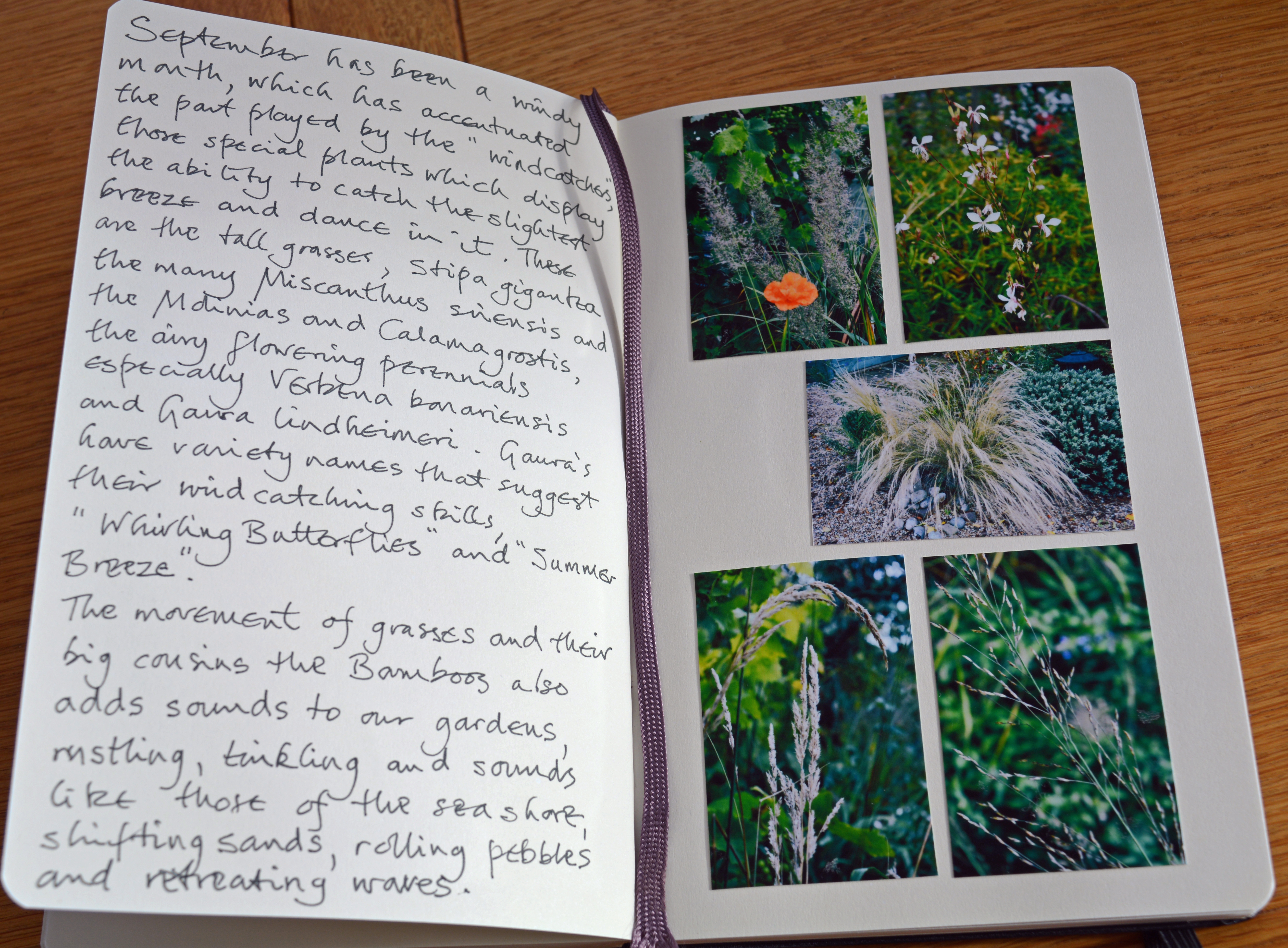
I move on to consider a special group of plants which Jude and I love in our garden, the airy, whispy plants that can’t help but move in the gentlest of breezes, the “Windcatchers”.
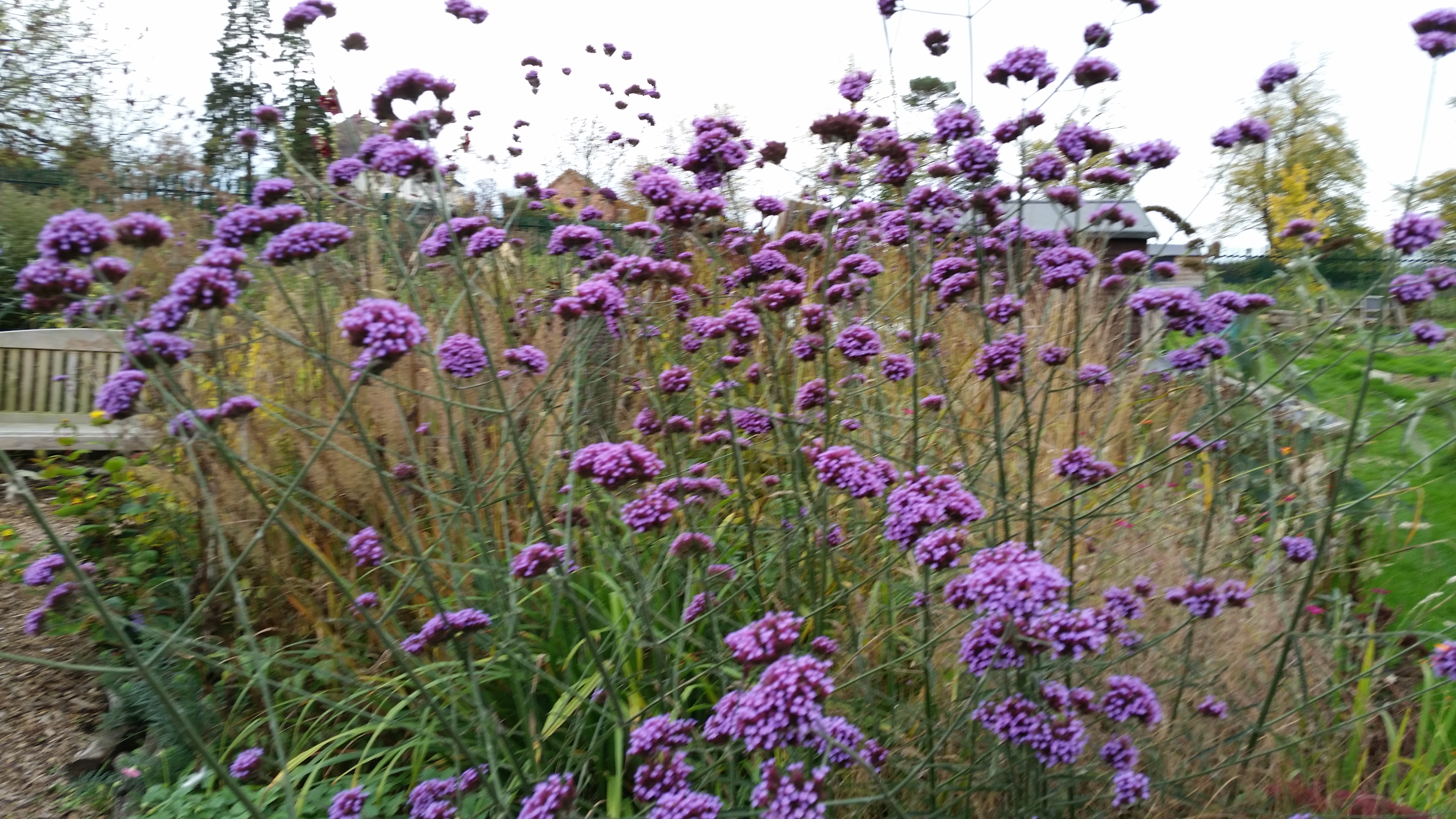
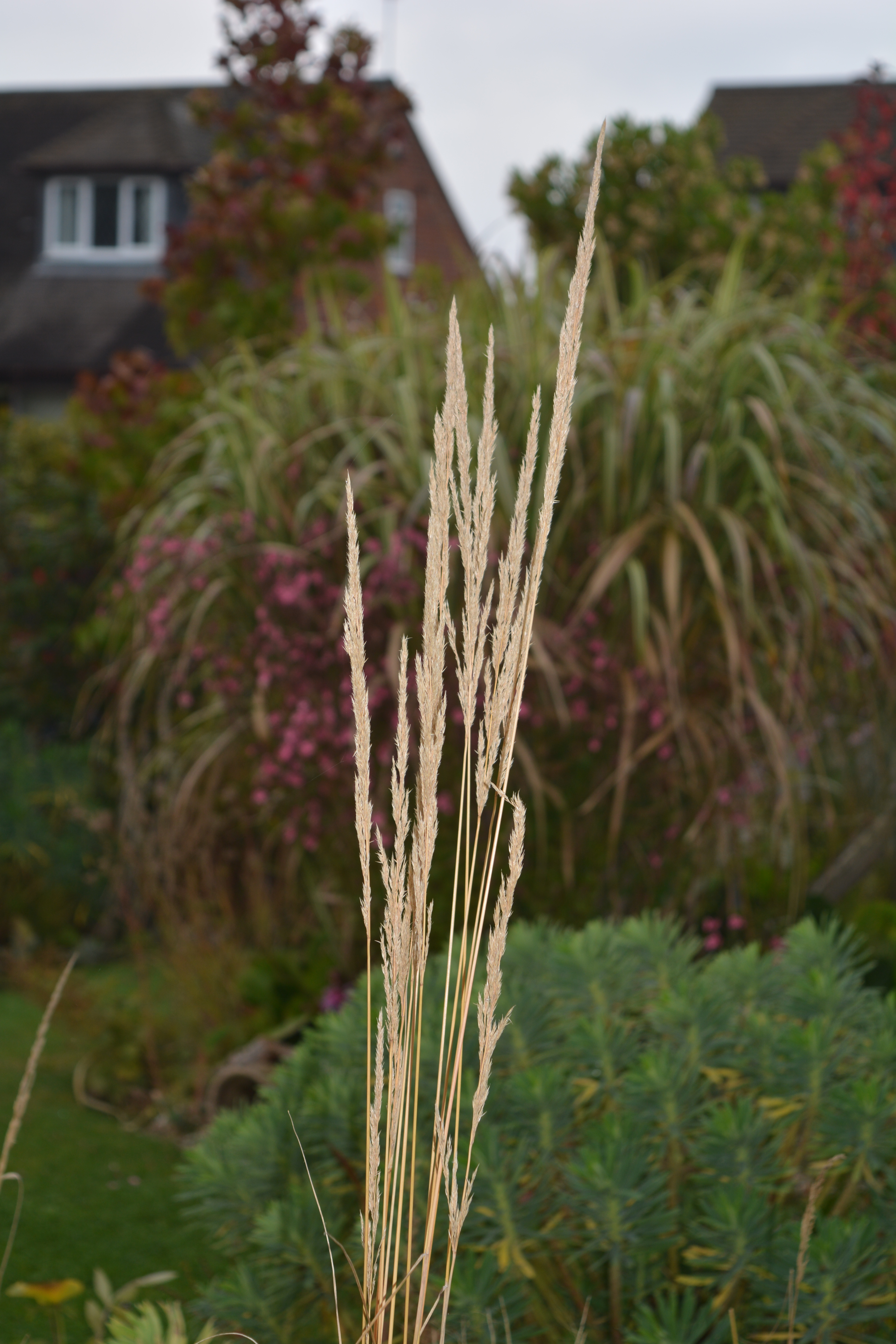
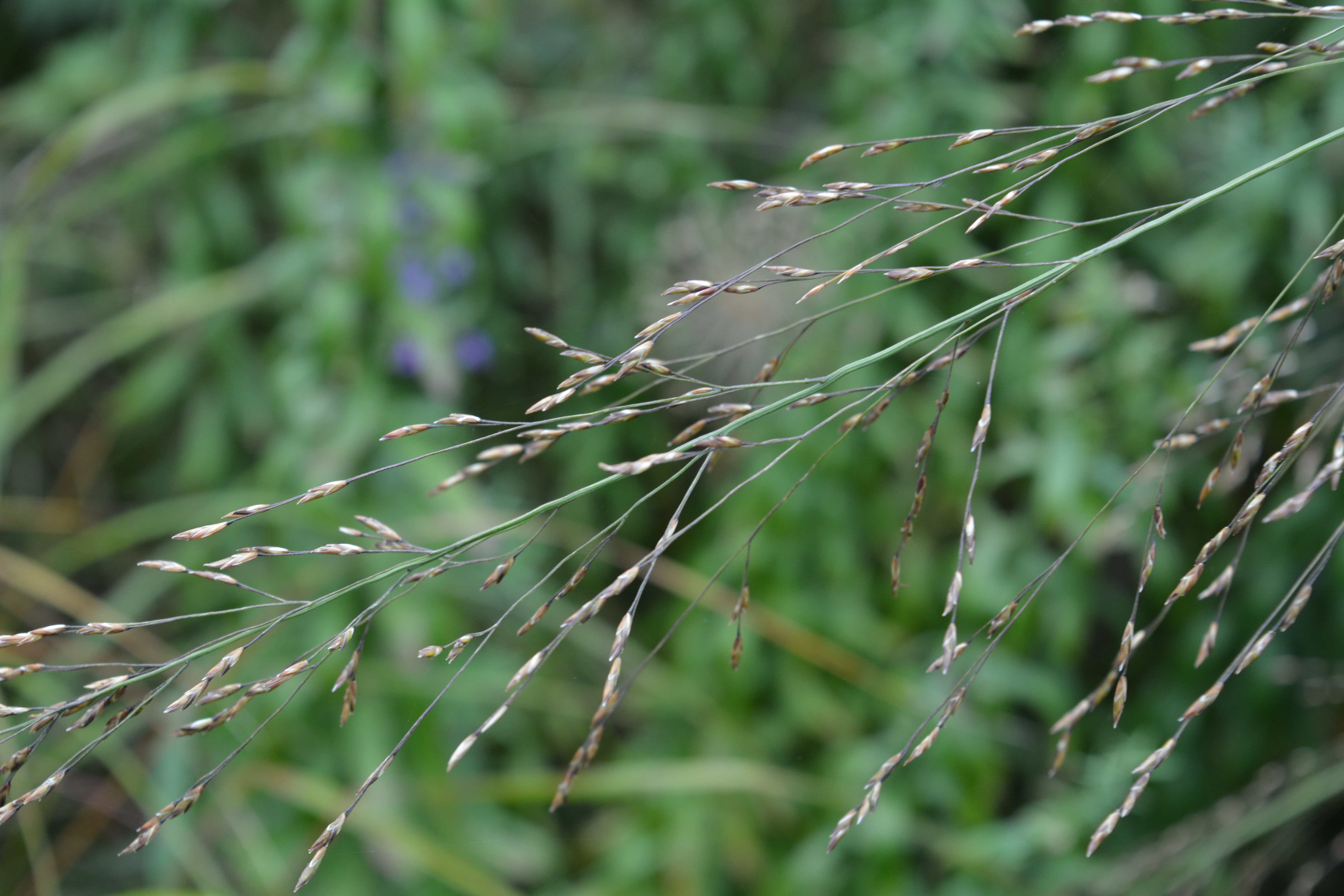
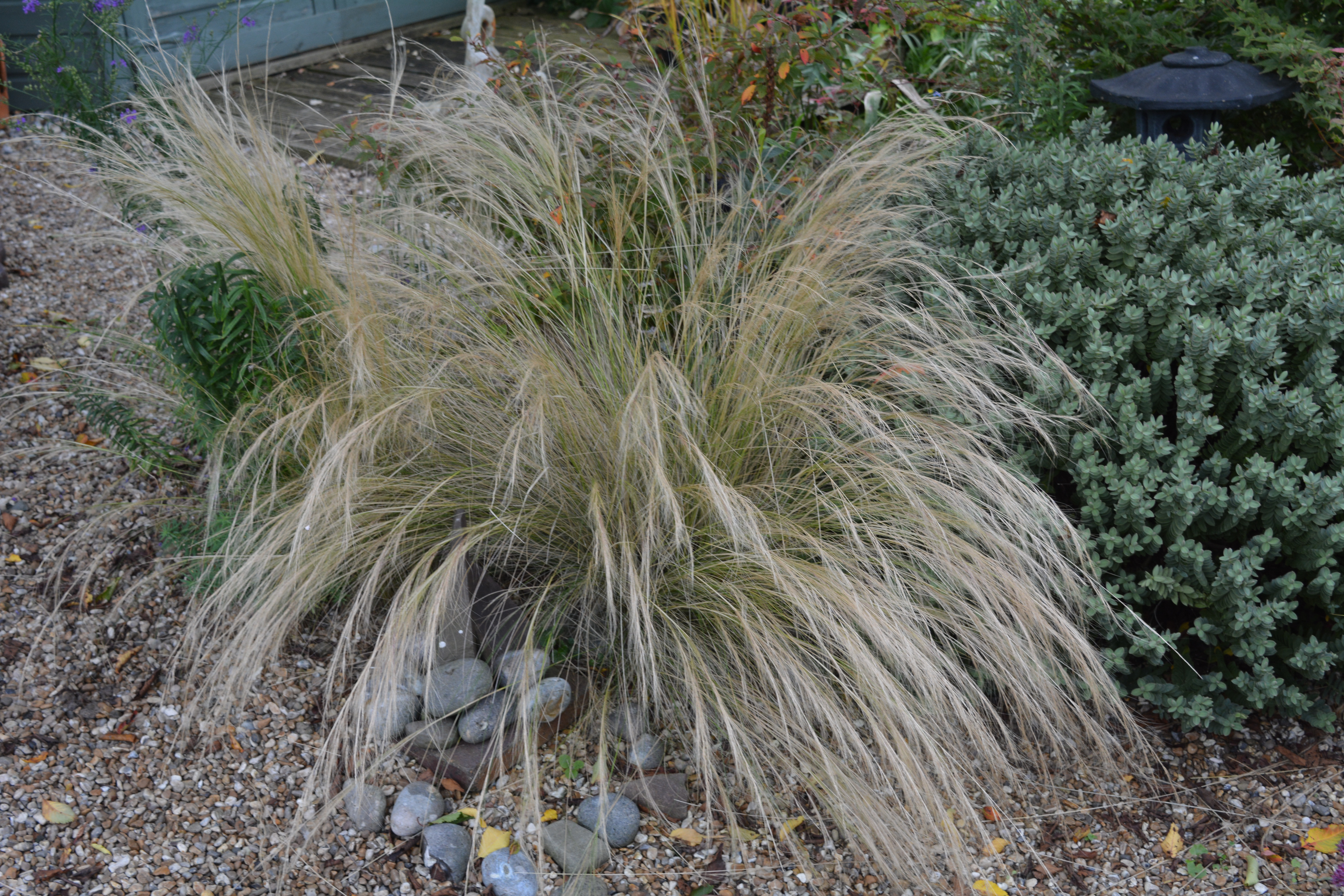
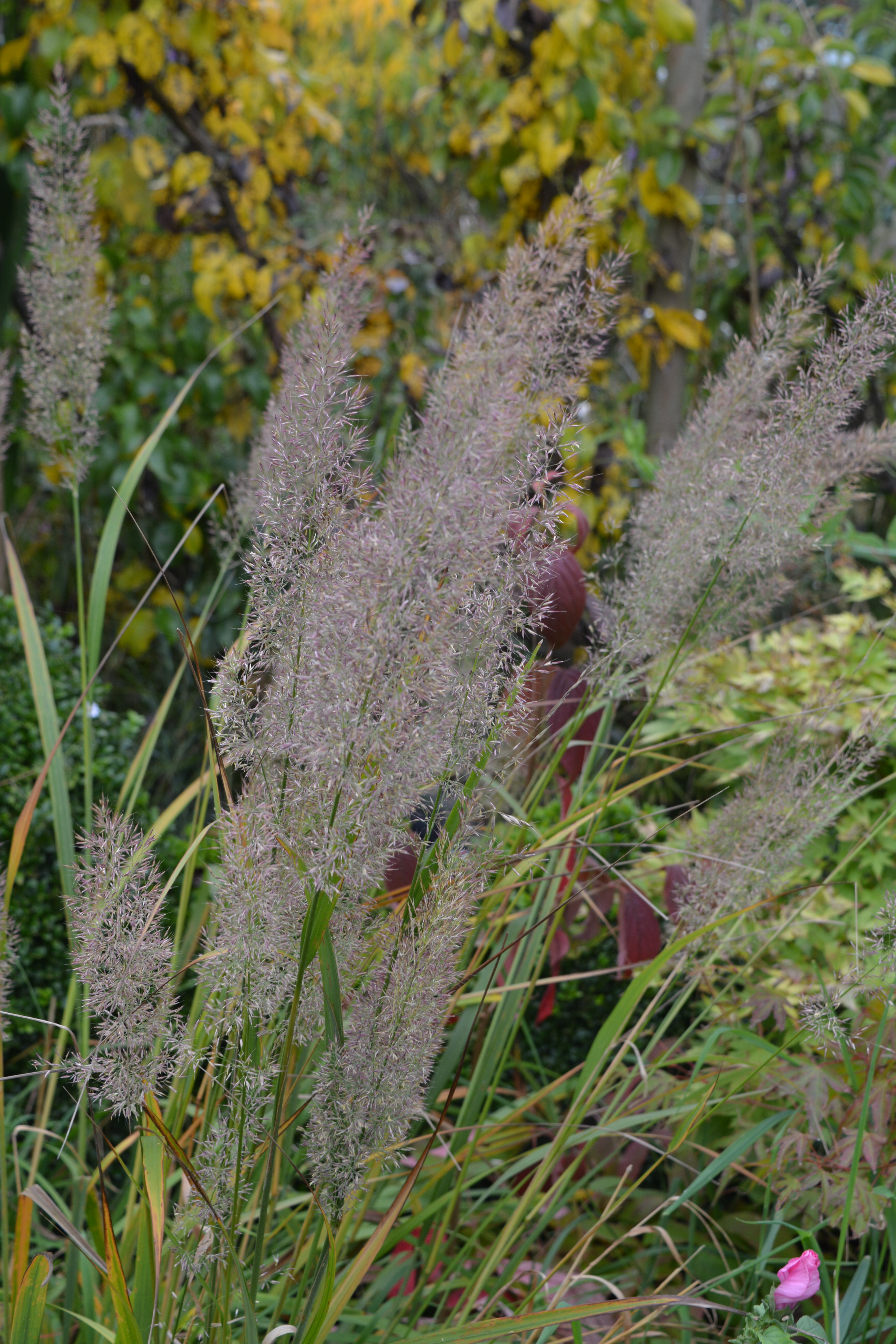
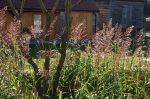
“September has been a windy month, which has accentuated the part played by the “Windcatchers”, those special plants which display the ability to catch the slightest breeze and dance in it. These are the tall grasses, Stipa gigantea, Miscanthus sinensis and the Molinias and Calamagrostis, the airy flowering perennials especially Verbena bonariensis and Gaura lindheimeri. Gauras have variety names that suggest their windcatching skills, “Whirling Butterflies” and “Summer Breeze”.
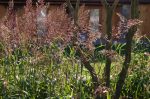
The photos below show what a beautiful plant Verbena bonariensis is with its bright purple flower heads nodding in the breeze atop its stiff thin stems. It is a true wildlife magnet too attracting Butterflies and Moths, Bees and Hoverflies and many other flying insects. As the light fades in the evening the flowers glow and their scent intensifies to attract night flying insects and a miriad of Moths.

The movement of grasses and their big cousins the Bamboos also adds sounds to our garden, rustling, tinkling and sounds like those of the seashore, shifting sands, rolling pebbles and retreating waves.”
Grasses are such an important element in our garden and help create an all year round garden. From their fresh green leaves emerging in the spring right through to their flowers and on to their seedheads which stand right through the winter.



Surprises are the subject of my next page.
“Surprises are always fun in the garden, those little things not planned for or expected. Here are two surprises for September in our garden.
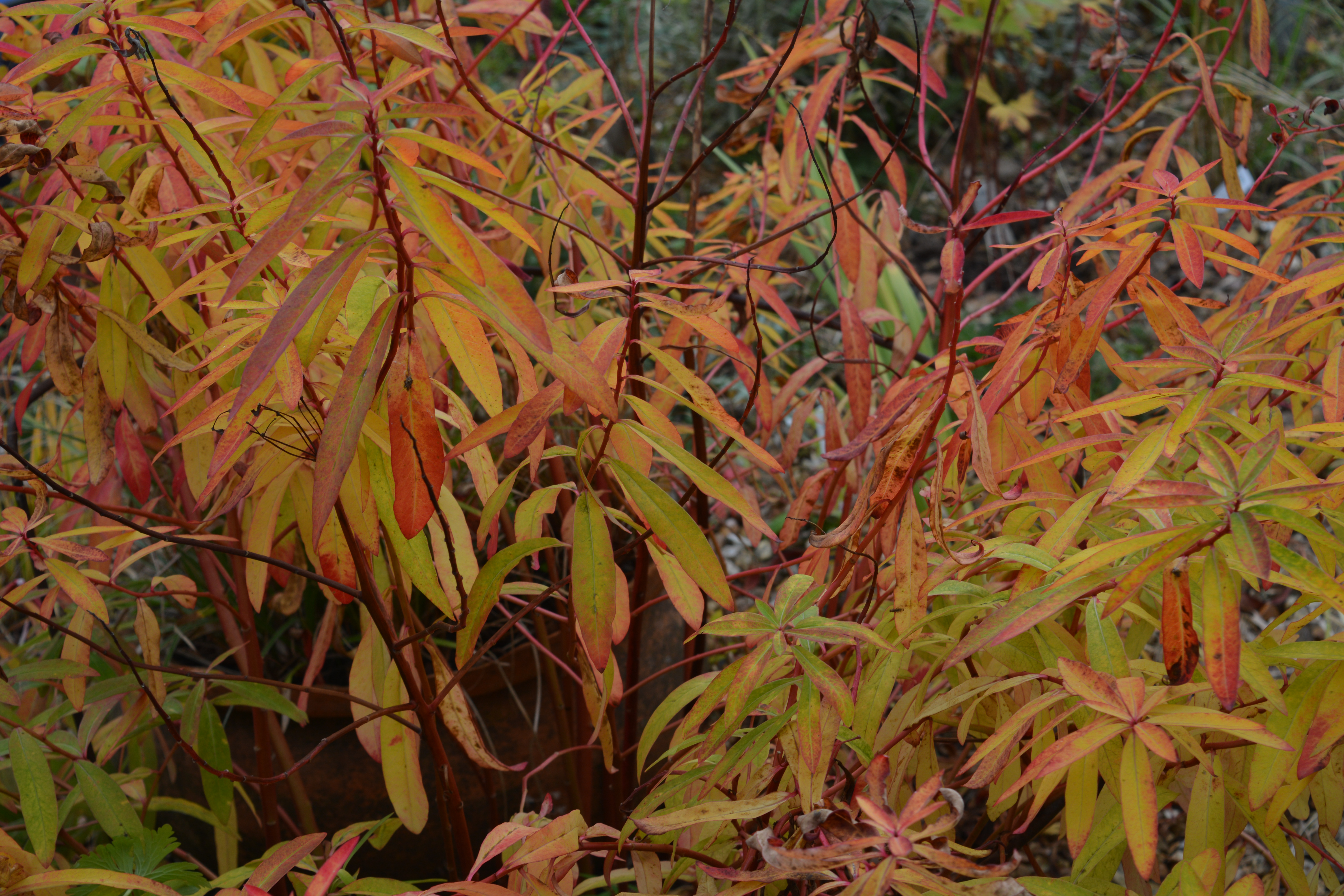
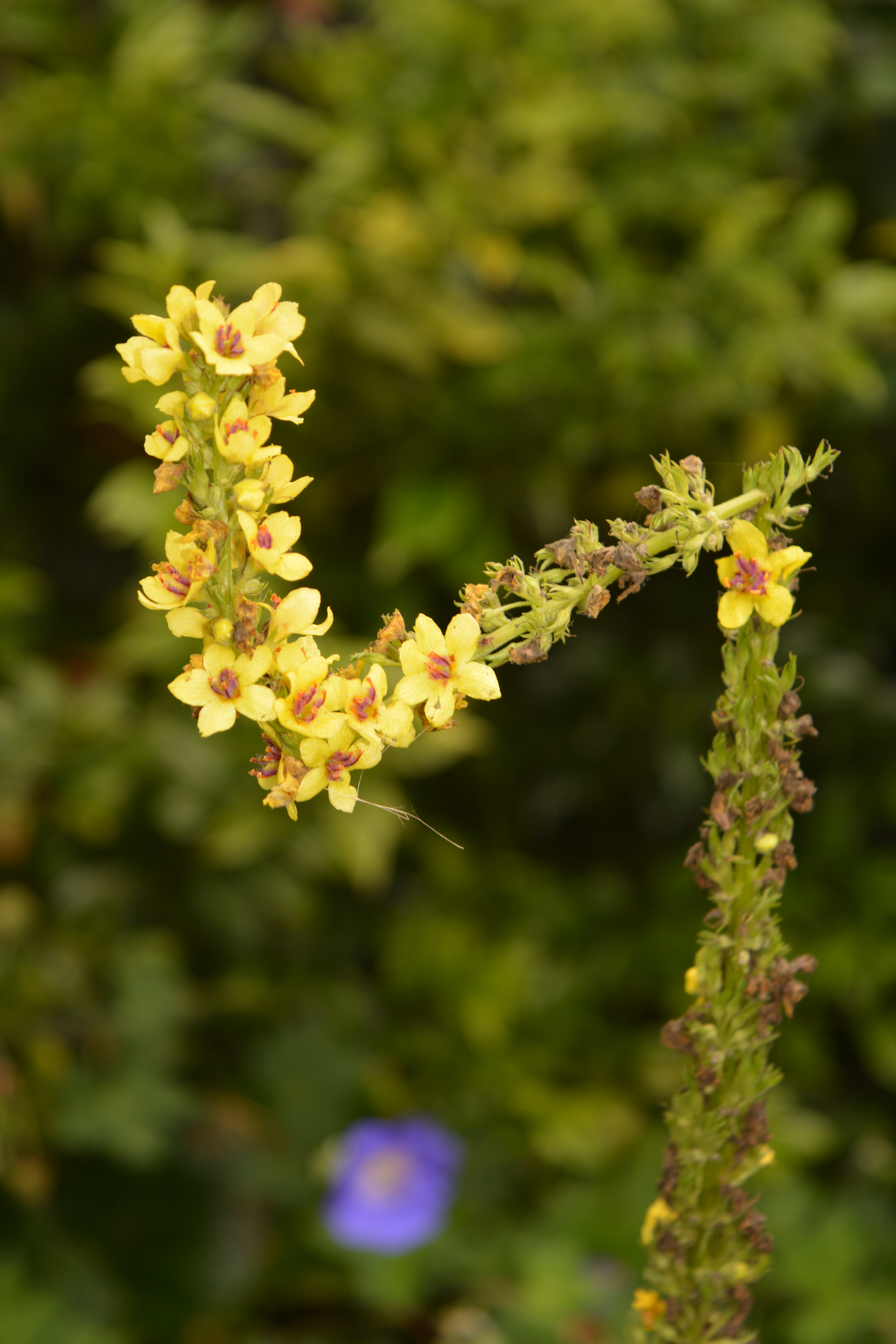
We were pleasantly surprised at the rich autumnal colours of our Euphorbia griffithii “Dixter” which grows in our Beth Chatto garden, and how this damaged Verbascum repaired itself.”
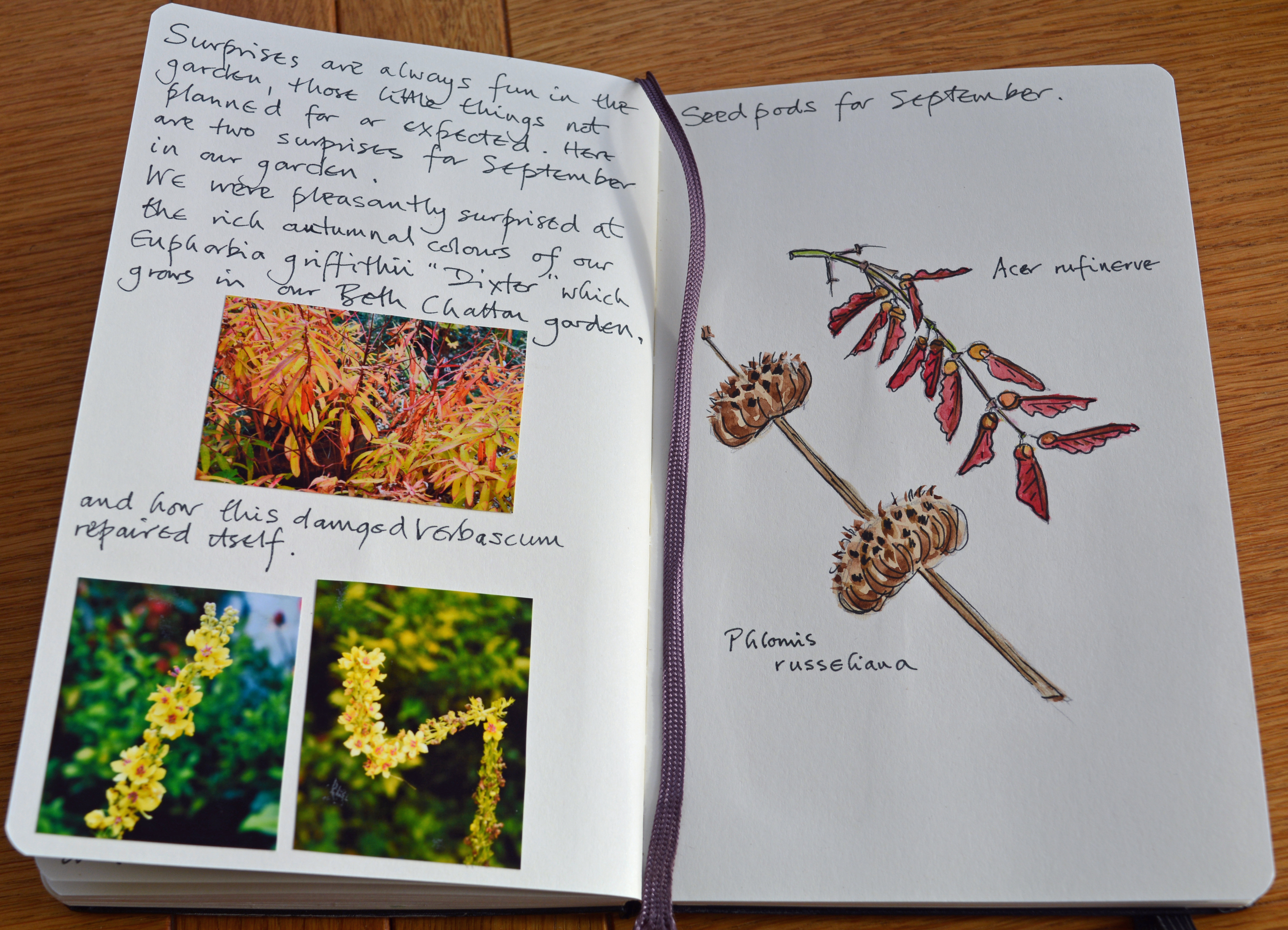

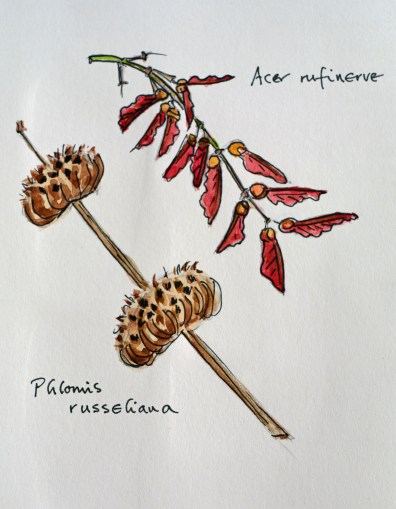
My watercolour paintings of Acer rufinerve and Phlomis russeliana feature on the next page titled “Seedpods for September”. These seeds are capsules of promise, time capsules. The wing-like Acer seeds are shaped and moulded to allow a gentle descent in the wind, each maple key parachuting down to find a place to germinate. The pompom seedheads of the Phlomis are tightly packed balls of rough textured seeds designed to stick to any passing creature who will wander off and drop it away from the parent plant where it can find space to become a herbaceous plant with hairy heart shaped leaves and yellow-orange balls of flowers.
We now move on to the end of the month when the weather surprised us as it changed for the better, change to good gardening weather and good weather for appreciating gardens.
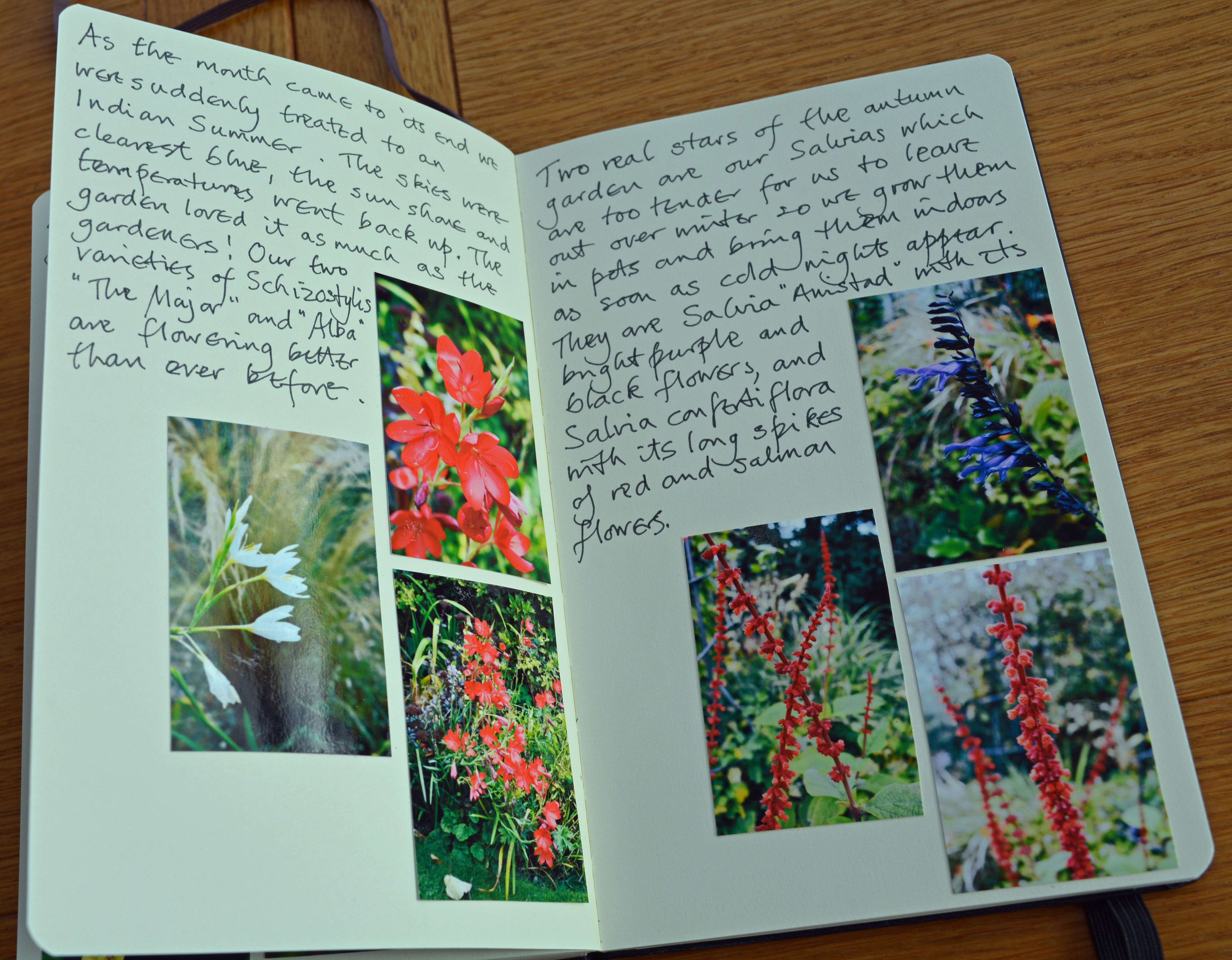
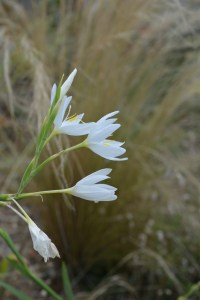
“As the month came to its end we were suddenly treated to an “Indian Summer”. The skies were clearest blue, the sun shone and temperatures went back up. The garden loved it as much as the gardeners! Our two varieties of Schizostylus, “The Major” and “Alba”are flowering better than ever before.”

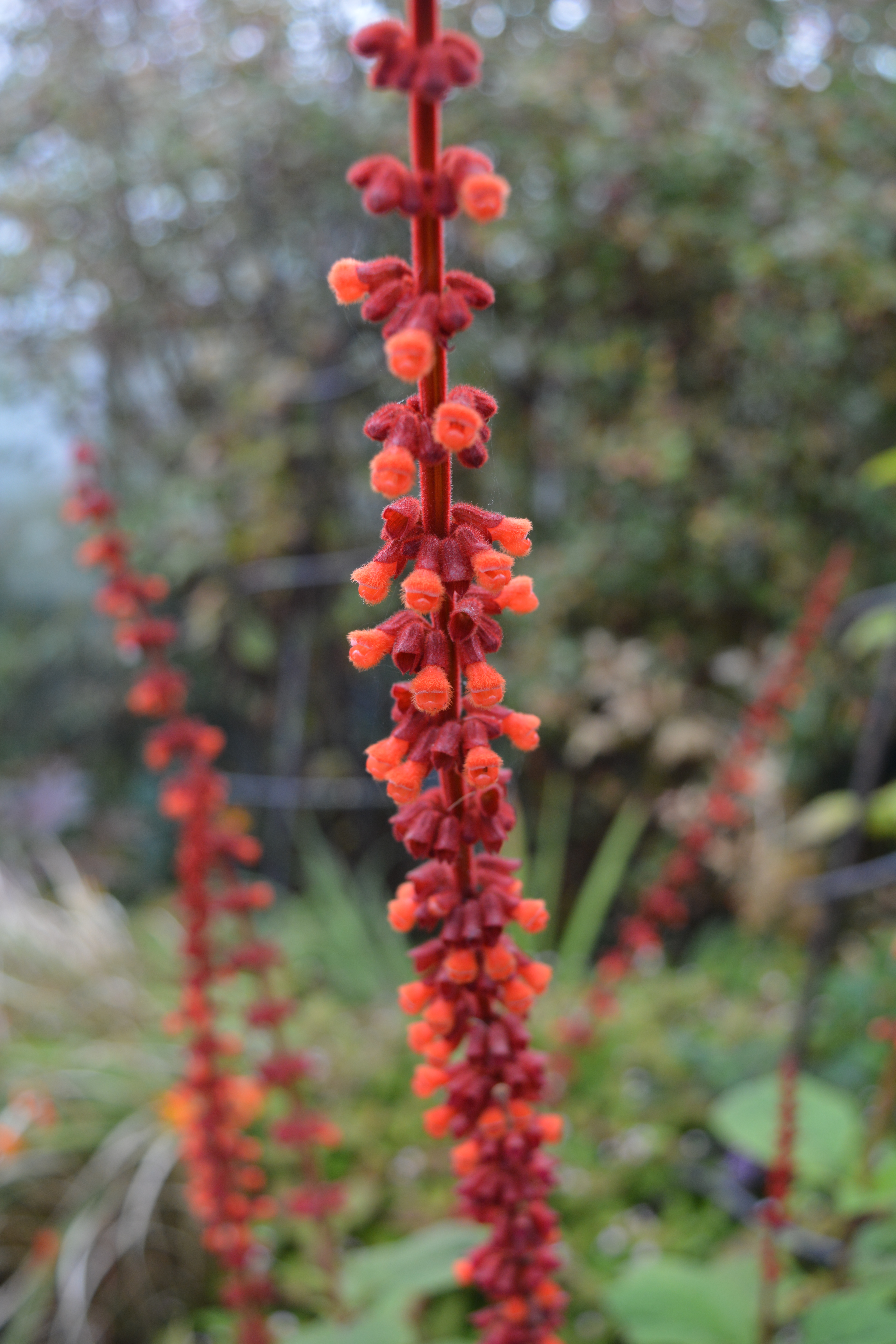
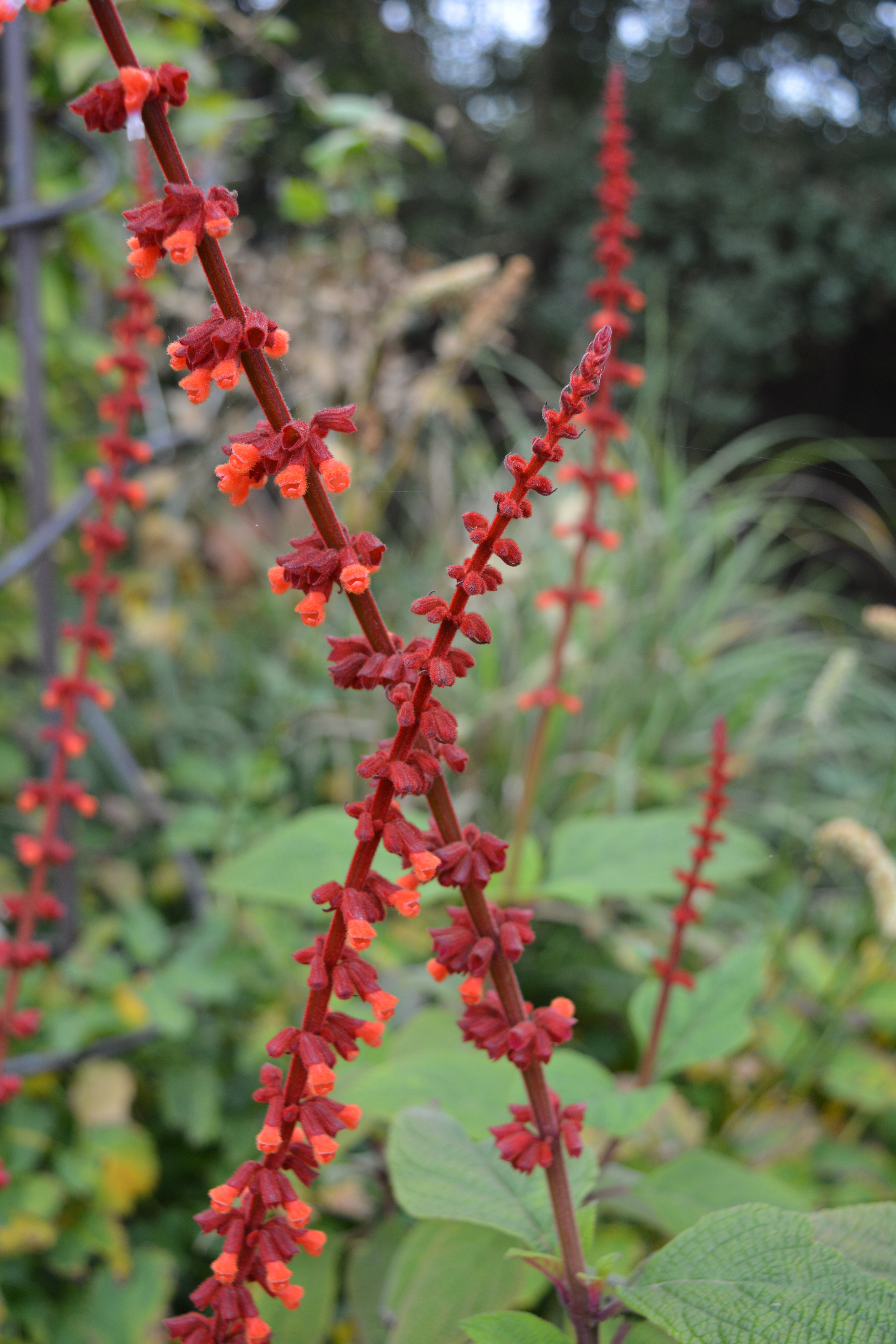
“Two real stars of the autumn garden are our two Salvias that are too tender for us to leave out over our winters, so we grow them in pots and bring them indoors as soon as the cold nights appear. They are Salvia “Amistad” with its bright purple and black flowers and Salvia confertiflora with its long spikes of red and salmon flowers.”

So that is my journal all about our garden in September. I am already writing and painting my entry for October so that will be the next episode of “My Garden Journal”.
The Bluebells in our Shropshire garden were flowering and sharing their rich scent with us early in May, so we were more than a little surprised to find them only just coming into flower when we visited the Lake District a month later. While driving the perimeter road around the lake called Thirlmere, we followed the road as it moved into woodlands of tall trees elongated as they fought to reach the light.
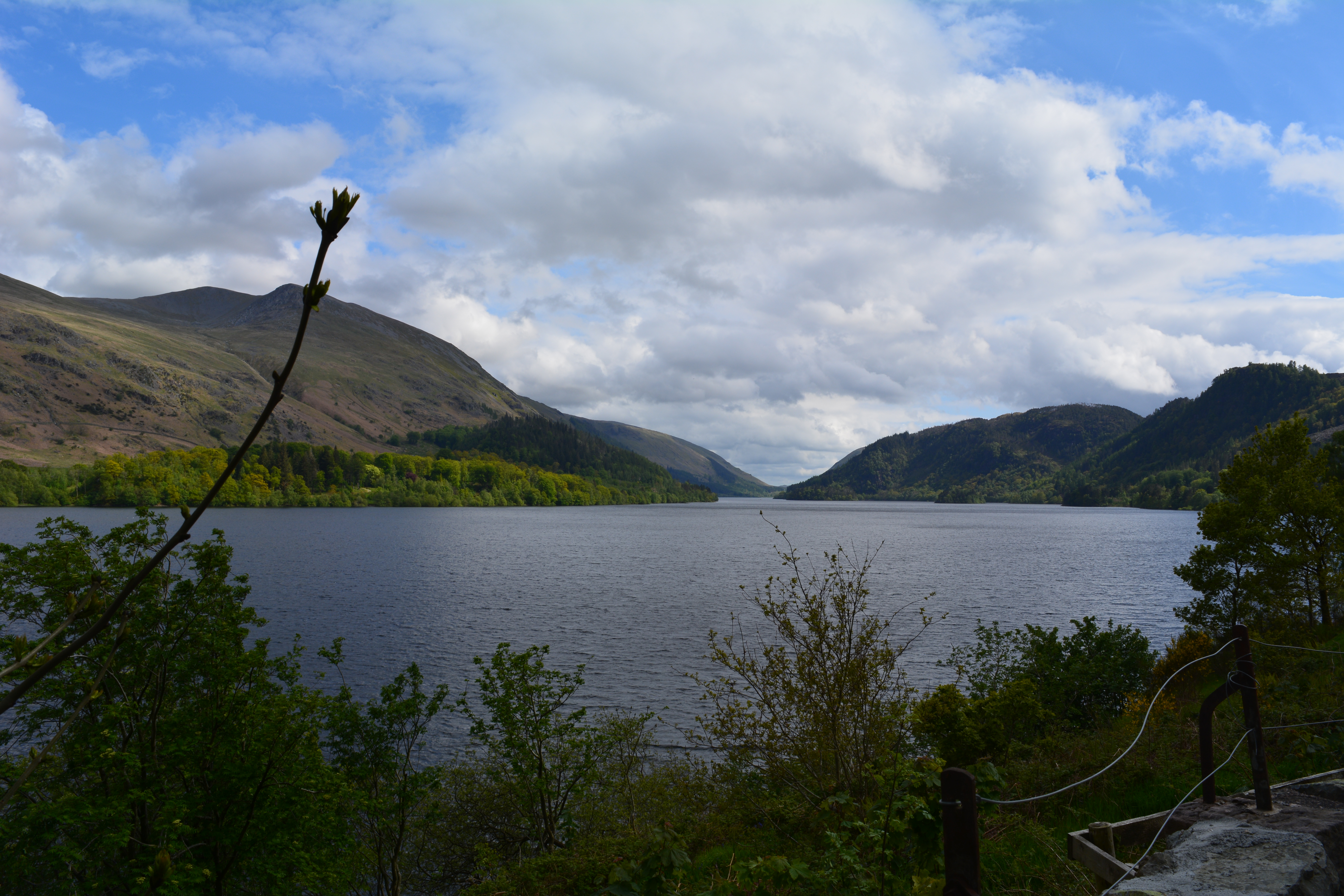

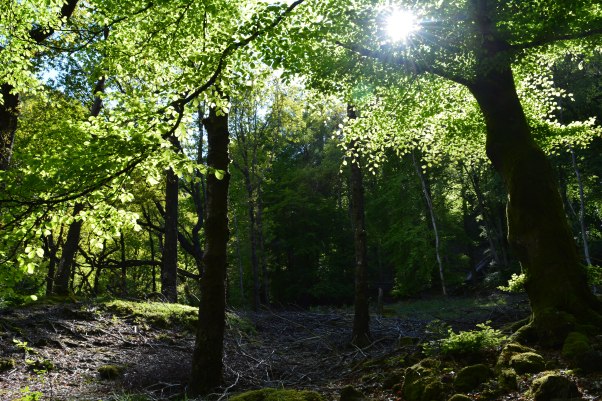
Beneath the canopy, the play of light and shade fascinated us as explored the woods.


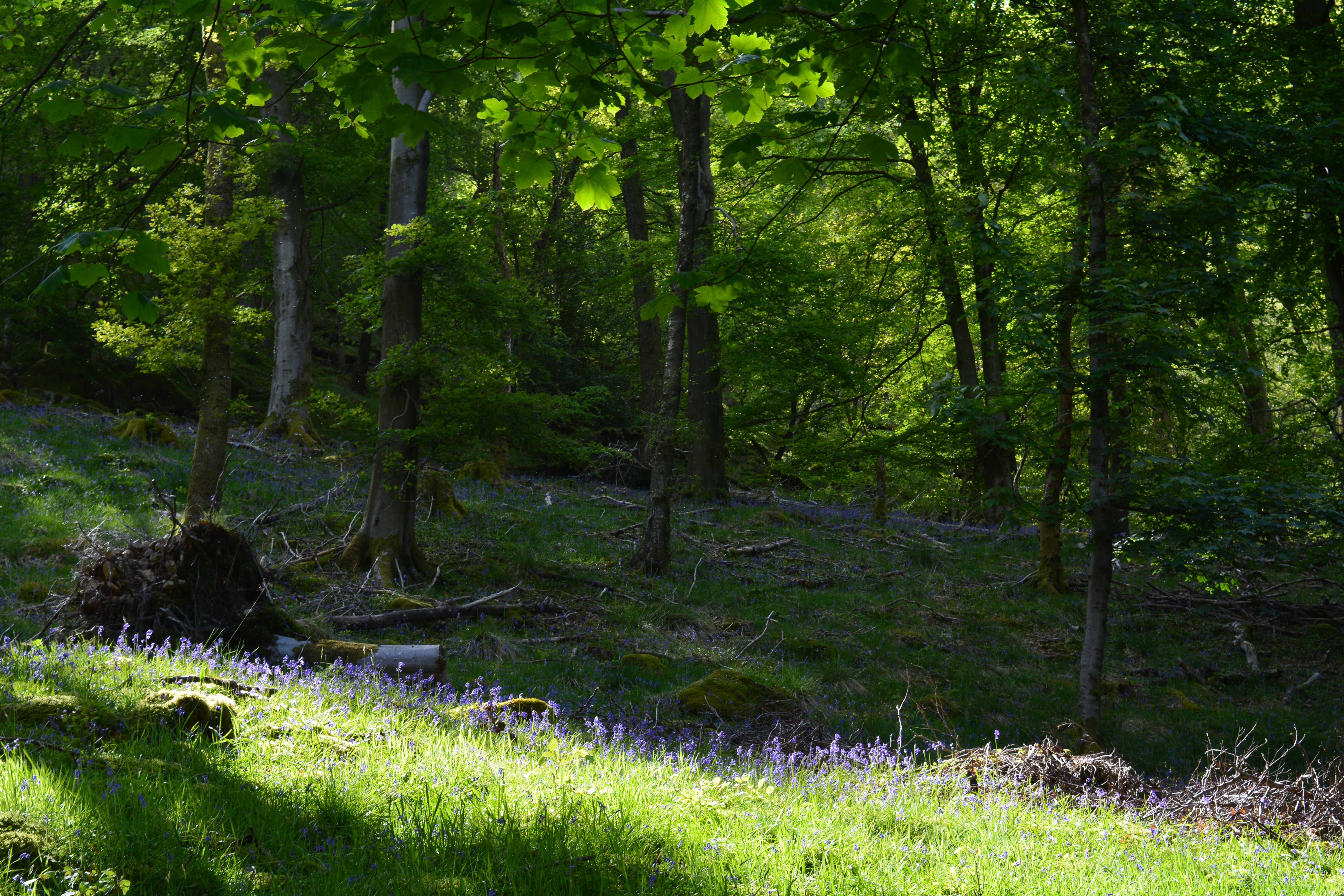
As we explored further we noticed a haze of blue appearing among the fine grasses of the woodland floor. On close inspection we realised they were Bluebells, the wildflower of spring.




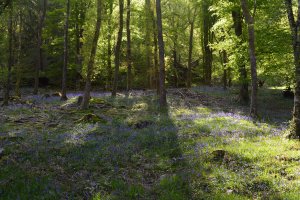
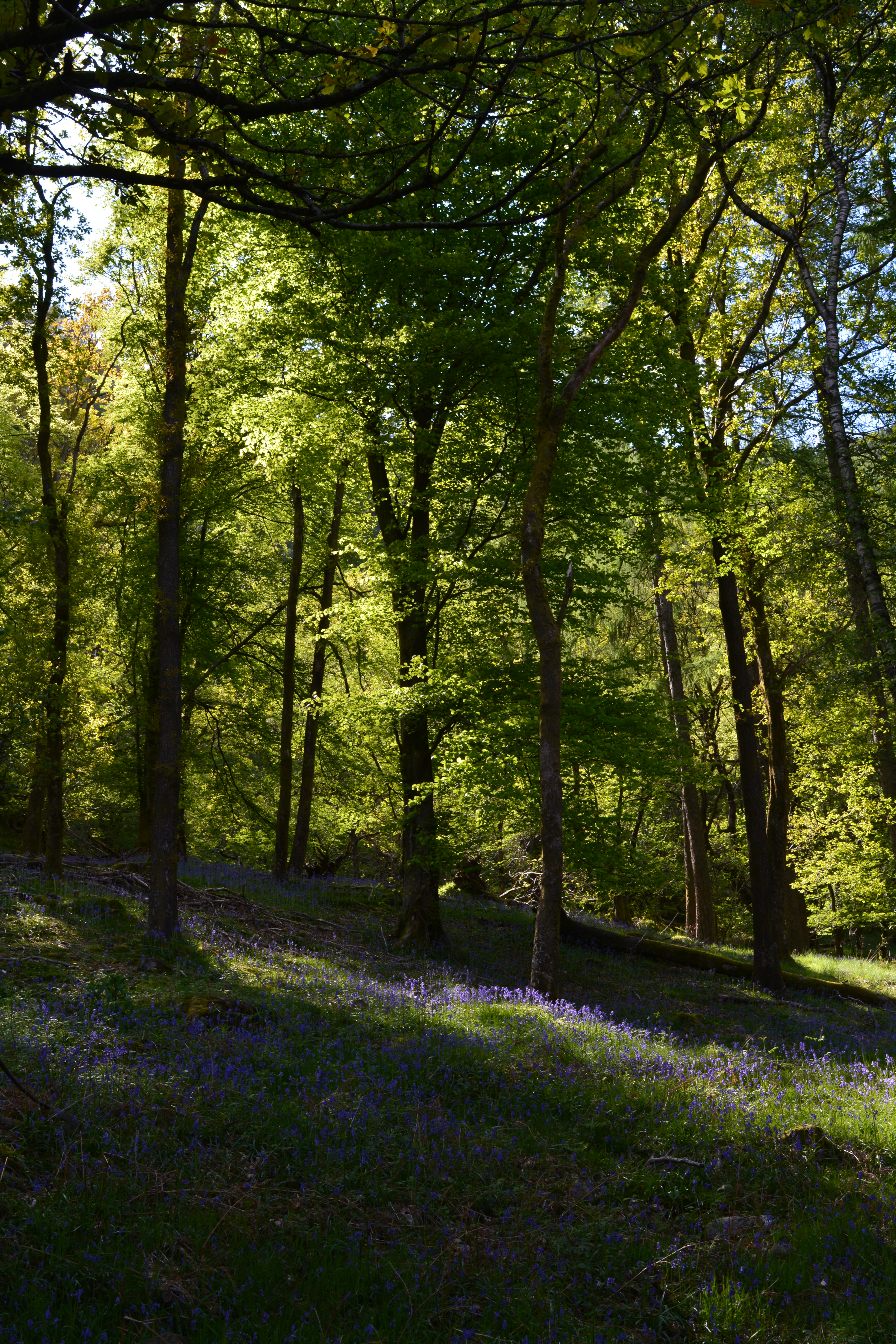


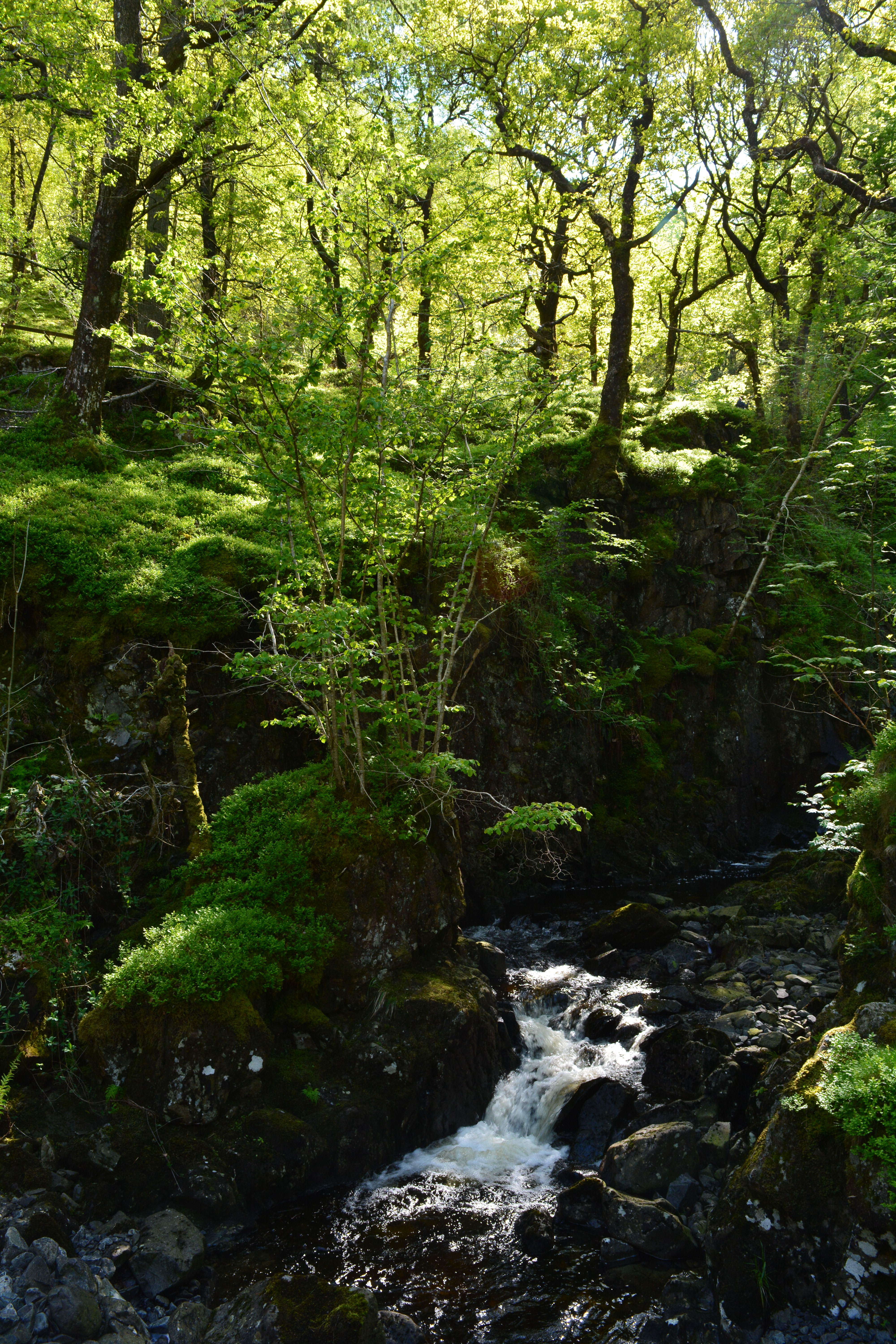
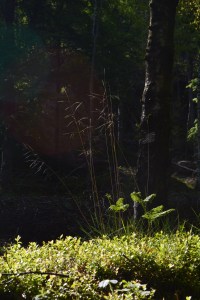
Please enjoy this final set of photographs showing the richness of light in the woods around Thirlmere, one of the many bubbling streams and some of the wild plants growing there.

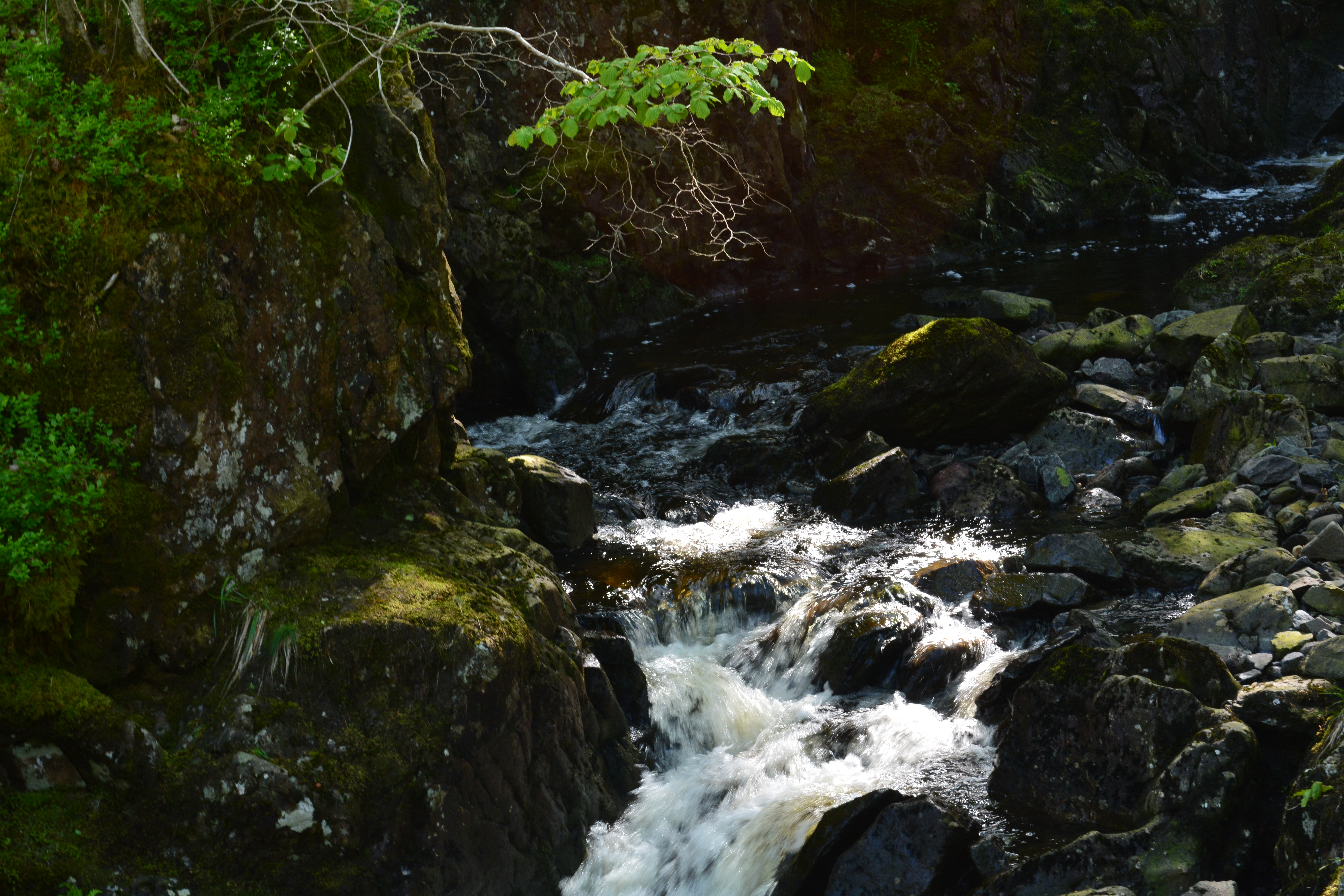


We often visit North Wales and the island of Anglesey. It is an area with beautiful countryside, long quiet beaches, tiny villages and seaside towns. When we stay for a mid-week break we sometimes use a hotel in the seaside town of Caernarvon, enjoying the walks along the sea front, the quay and the marina.
This post is a gallery of shots taken on a wander through the town and along the sea front as light fell. The temperature was slowly falling as the evening crept in. The atmosphere of the place reflected the changing temperature and light levels. Come and share our wander with us! Fresh evening air and the sounds of the sea lapping at the sea walls trying to drown out the harsh cries of the sea gulls.






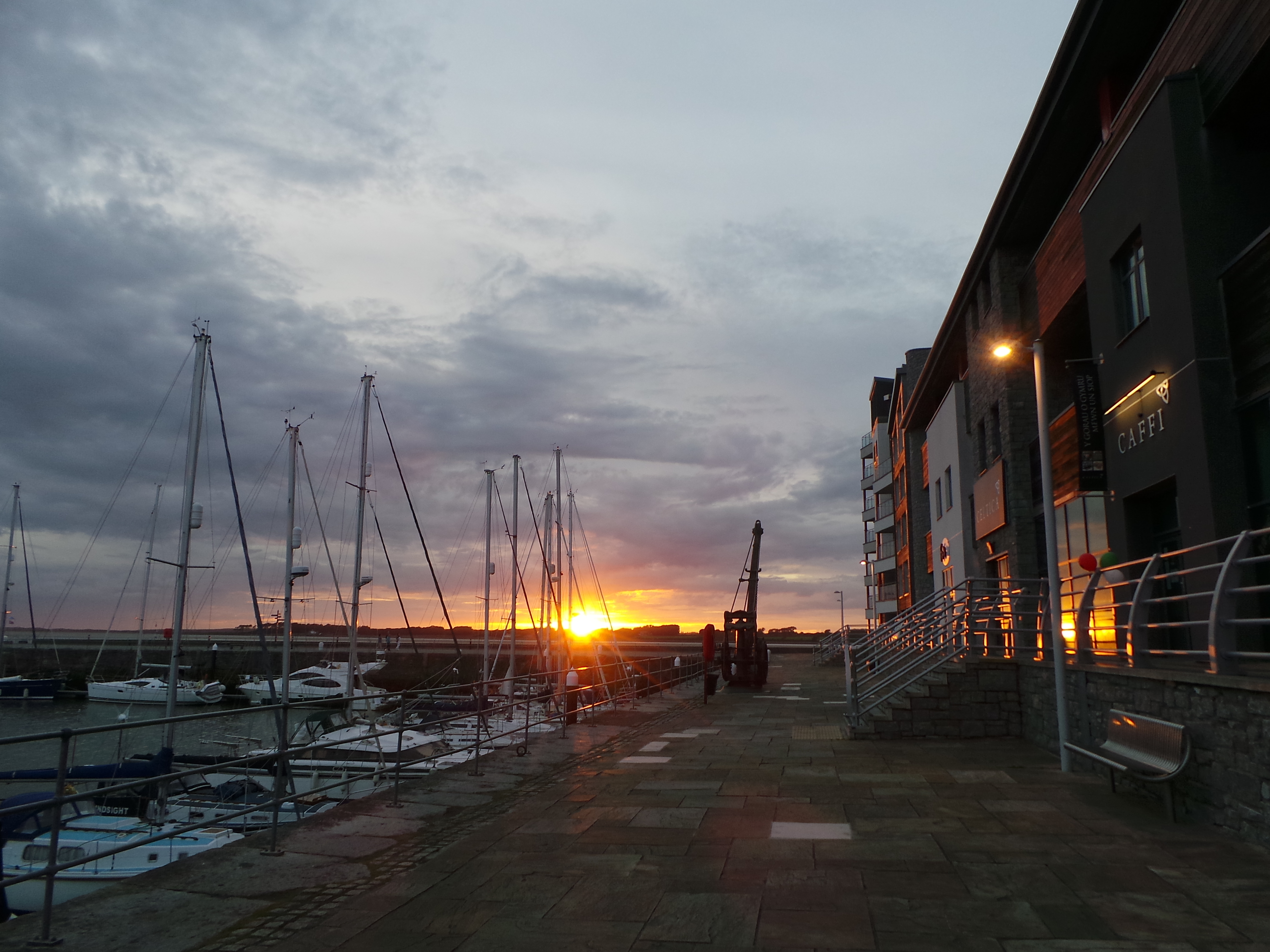


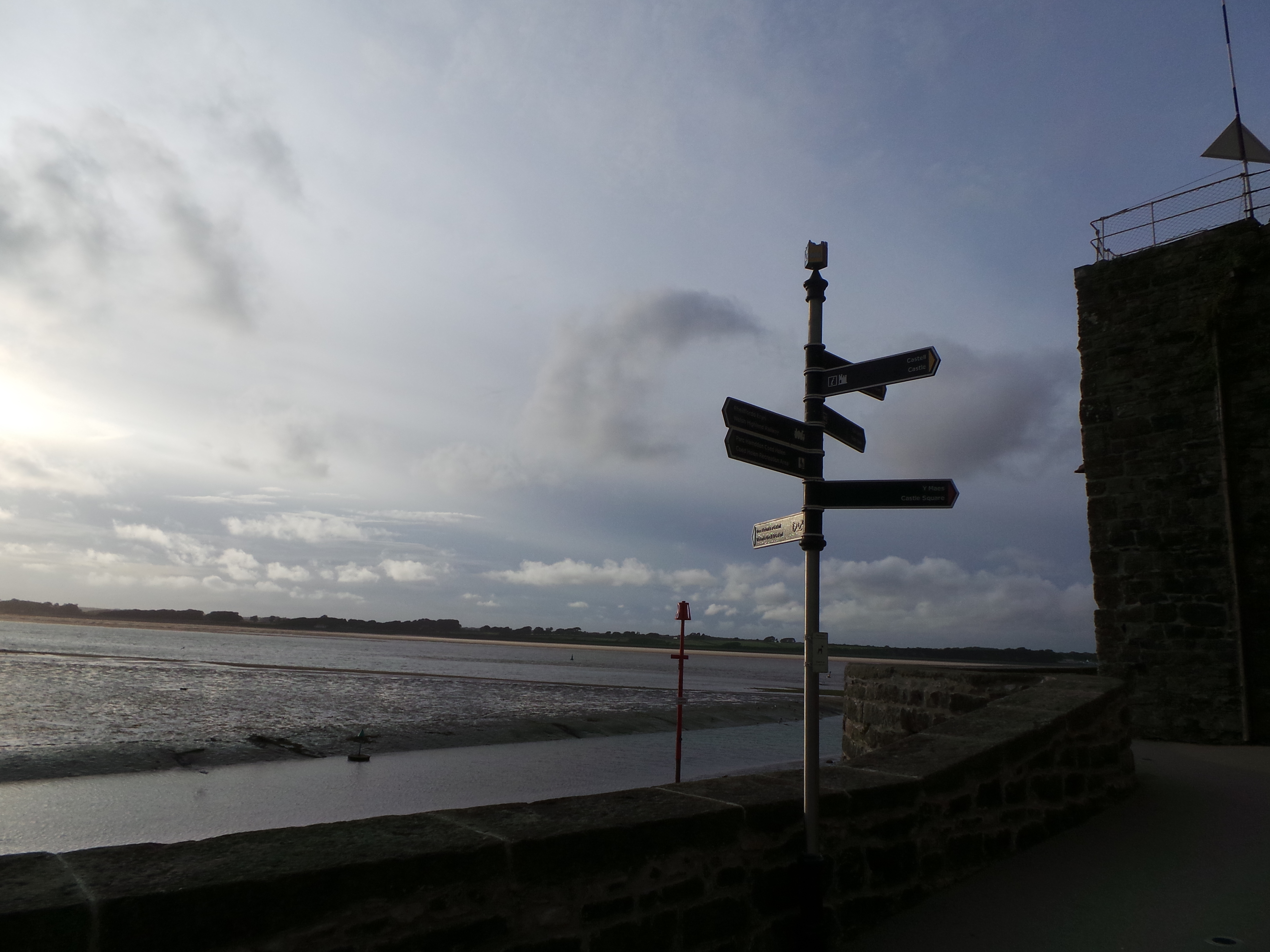
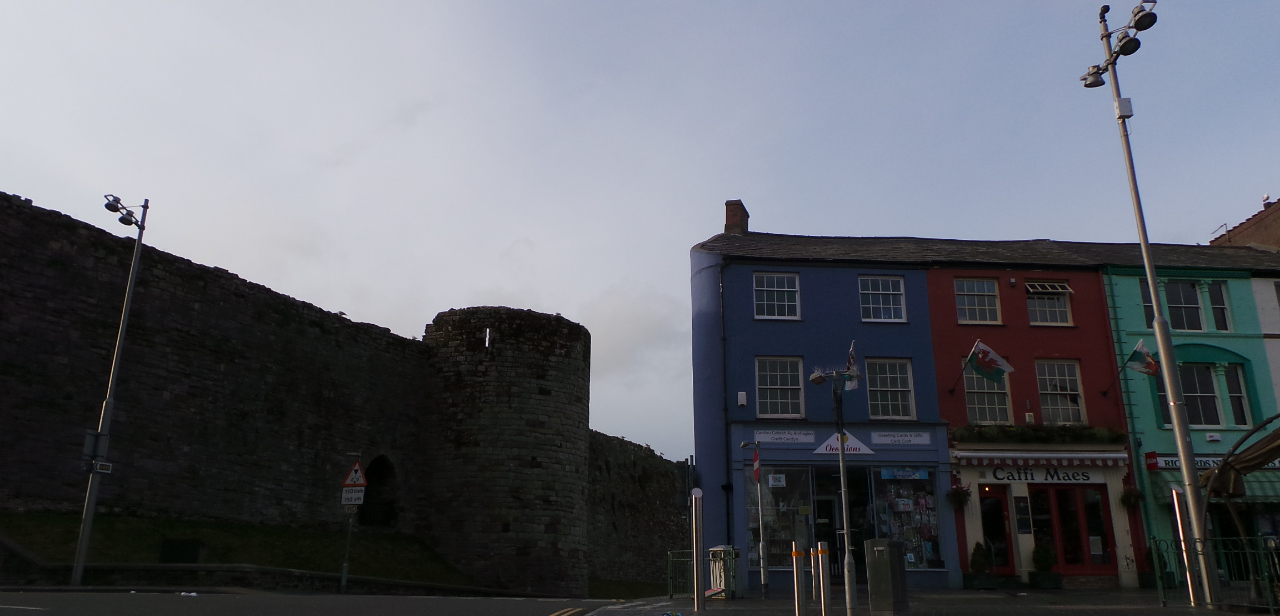
Great memories that make us yearn for a few more days by the sea!
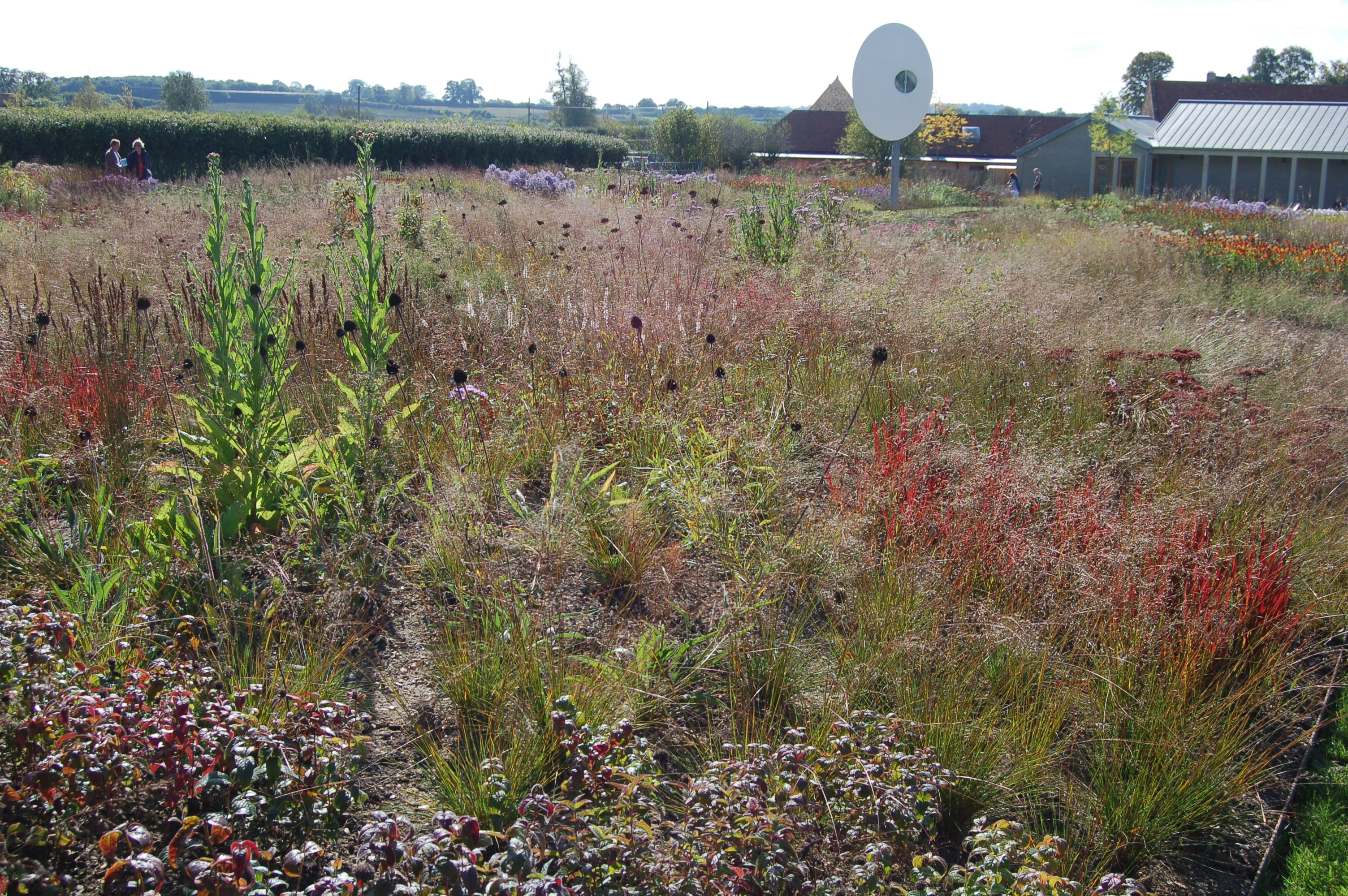
As promised I am returning to the beautiful county of Somerset where Jude and I spent a day exploring the exciting new “Oudolf Field” and the gallery buildings at the Hauser and Wirth’s Durslade Farm.
We left off as we were looking at the pool and giant clock. This is the first time we have seen any water designed into an Oudolf designed garden and indeed the first one to include a giant clock. The pool afforded clear reflections of the trees surrounding the site and was only planted around the margin closest to the buildings to give the maximum area of reflecting water.
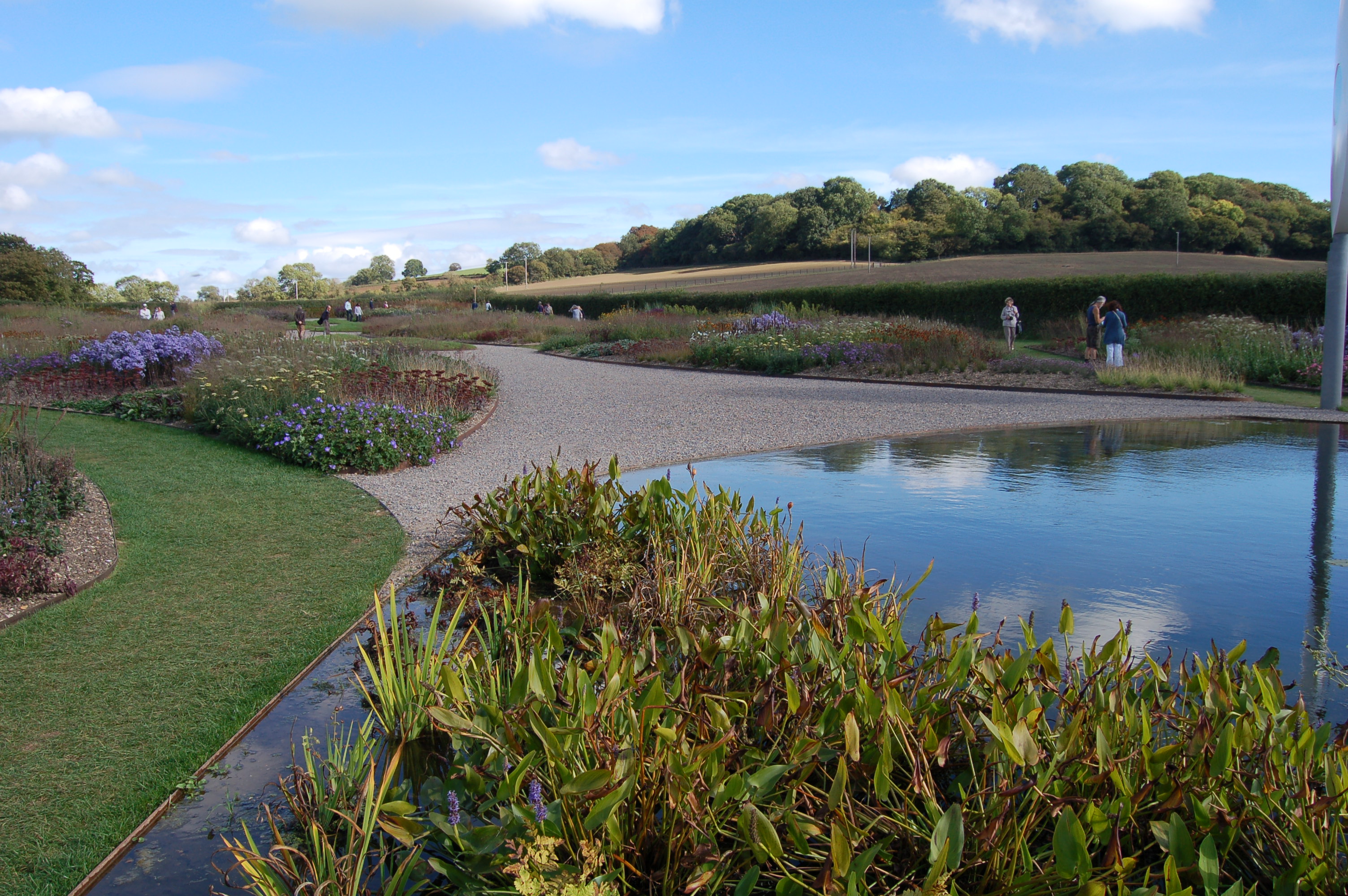

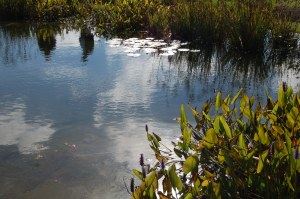
The tall clock towers over the pool and its white face stands out against the brightness of the blue sky. I would imagine it would look great against black clouds too! It casts a beautiful lollipop shadow across the golden gravel. Its face looks like a big circular disc but it is in reality asymmetric in design, which causes the minute hand to move out into clear air as it moves into the narrow side.

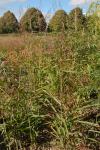
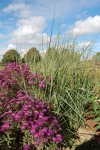
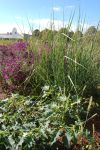
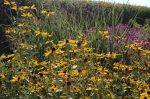
Although the planting is lower than in his previous gardens Piet Oudolf still uses many of his favourite plants such as Sanguisorbas, Echinaceas, Verbenas and Heleniums.


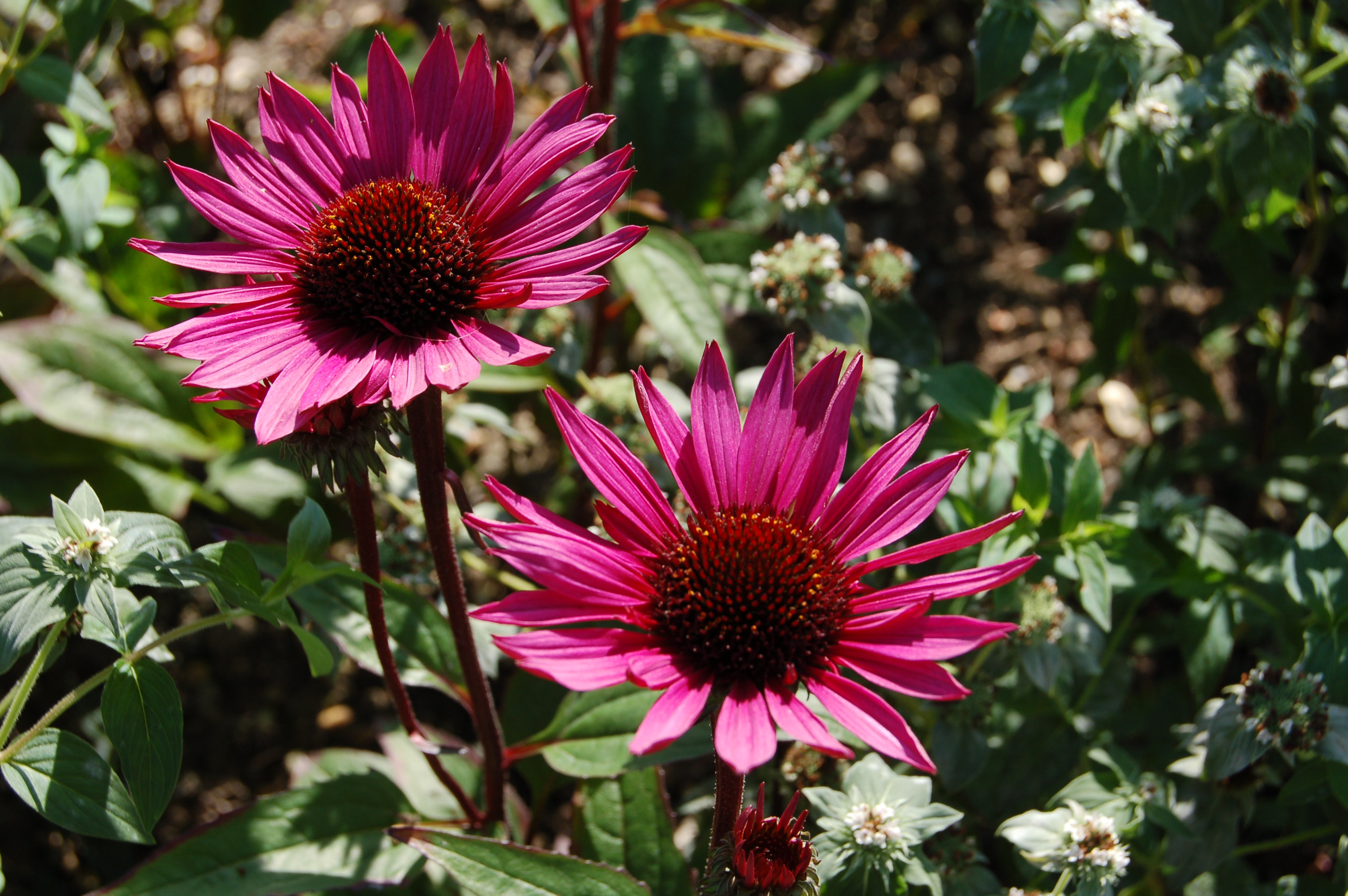

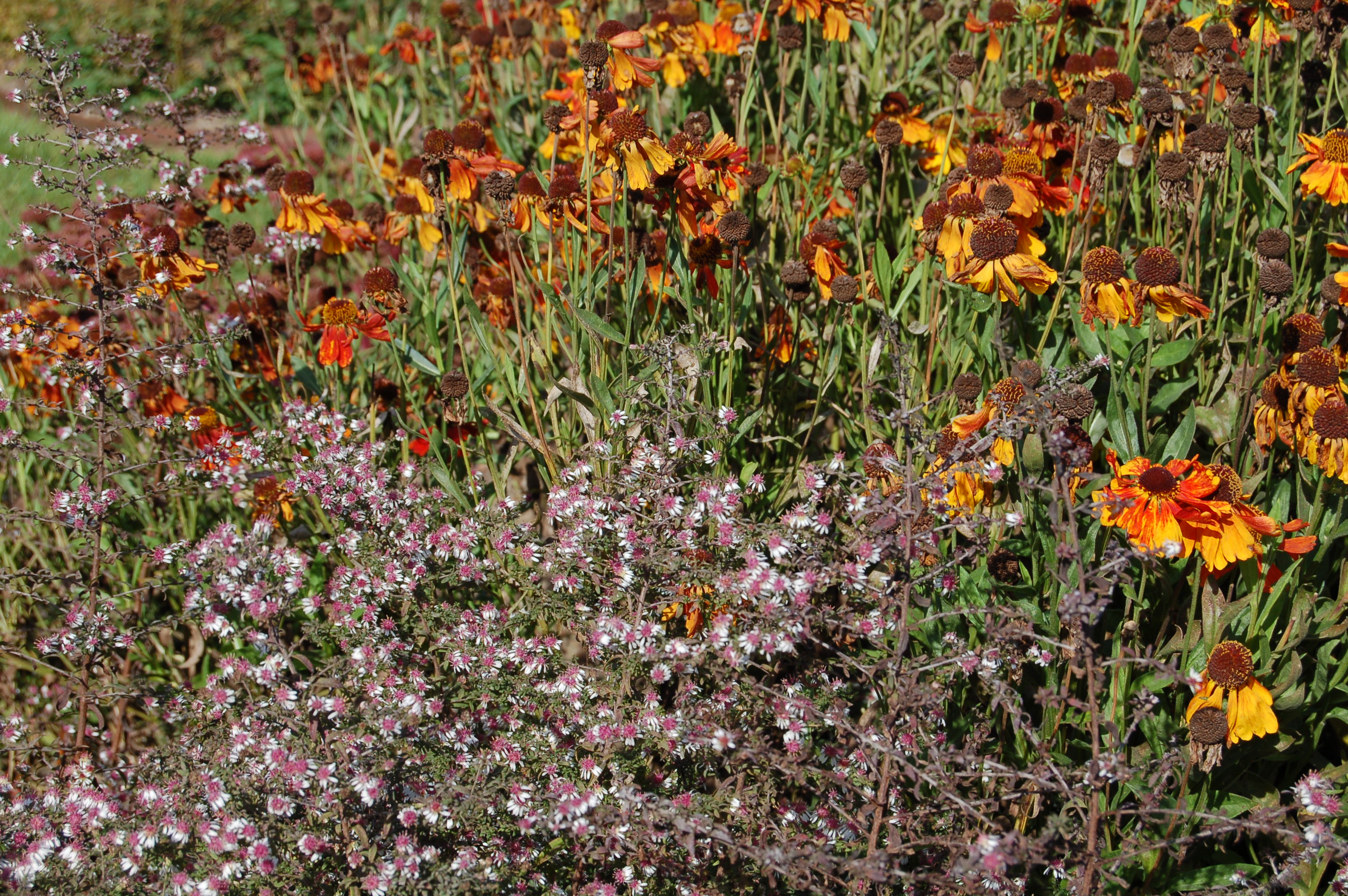
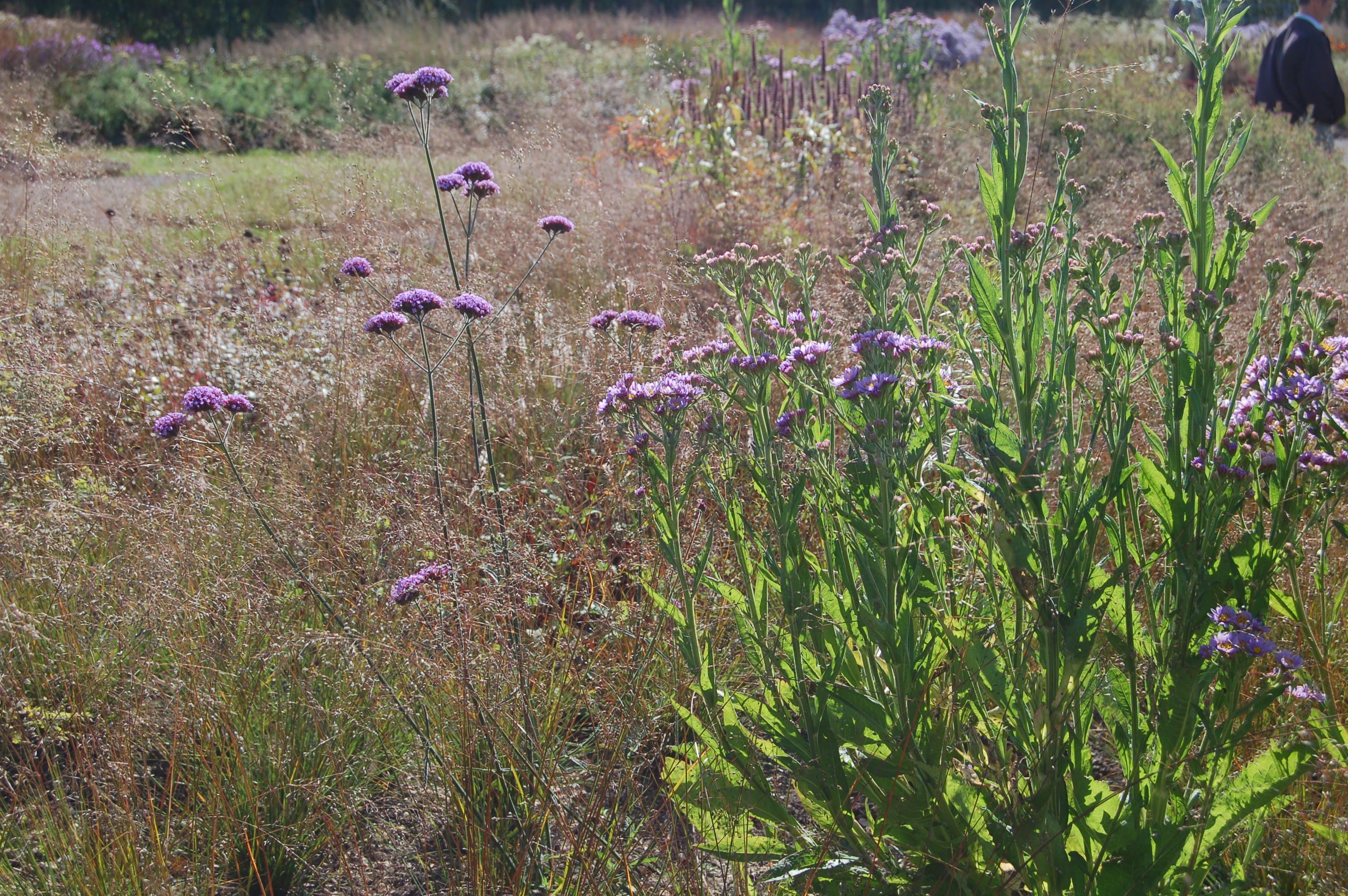
We had a break for coffee and to look around the galleries before wandering the gardens again as the sun dropped slowly in the sky and the light gave the meadows a fresh look.
We were enthralled by a gallery where a display of Oudolf’s garden designs helps reveal how this garden designer’s mind works. We loved the designs and working drawings and “idea jottings” of this garden here in Somerset as well as those from the New York High Line and the Wisley Garden.
Moving from gallery to gallery each courtyard space is softened by more of Oudolf’s plantings, featuring trees underplanted with grasses and perennials. The sculptural pieces sit comfortably among the old farm buildings with their richly textured surfaces.

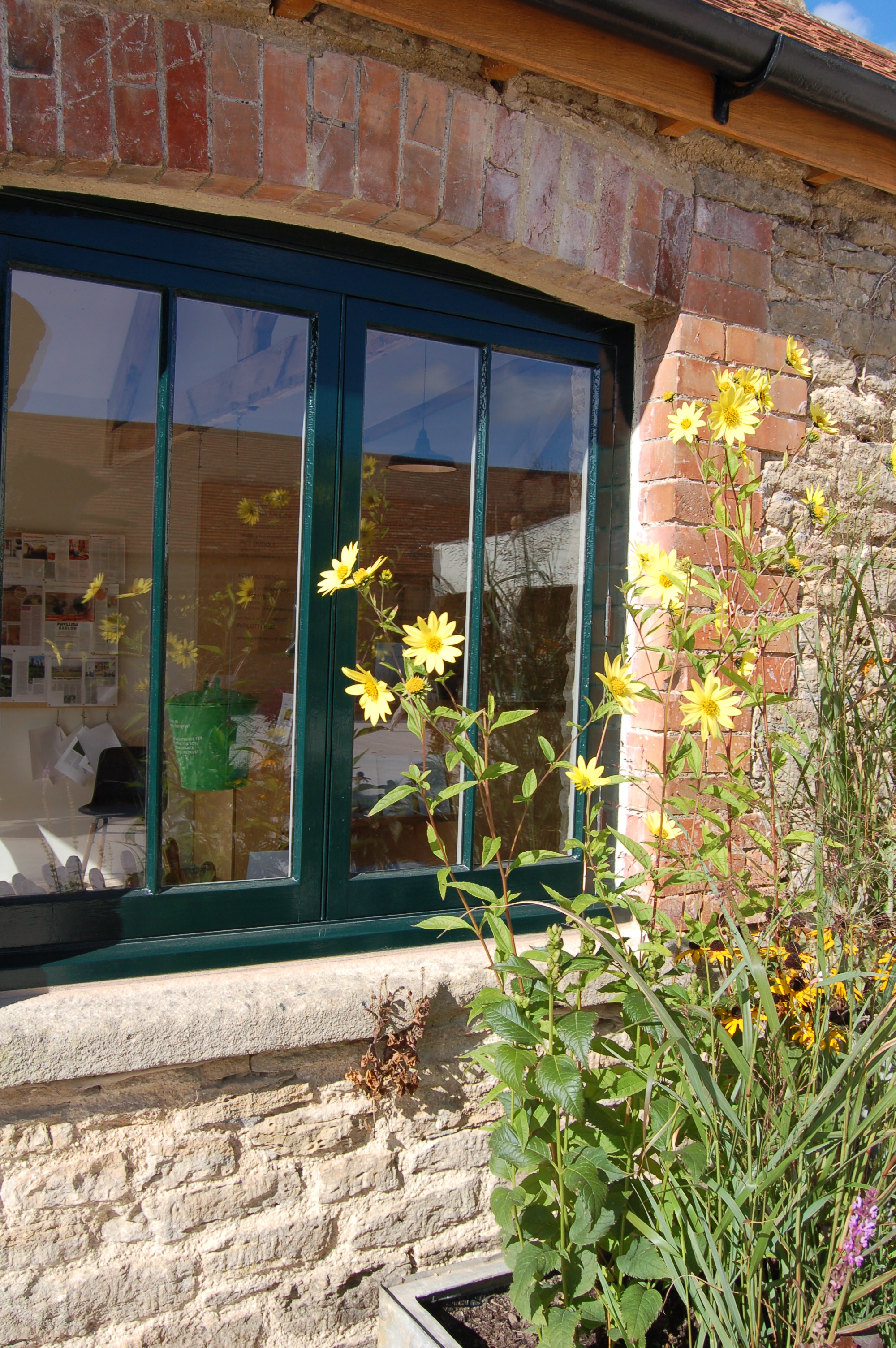

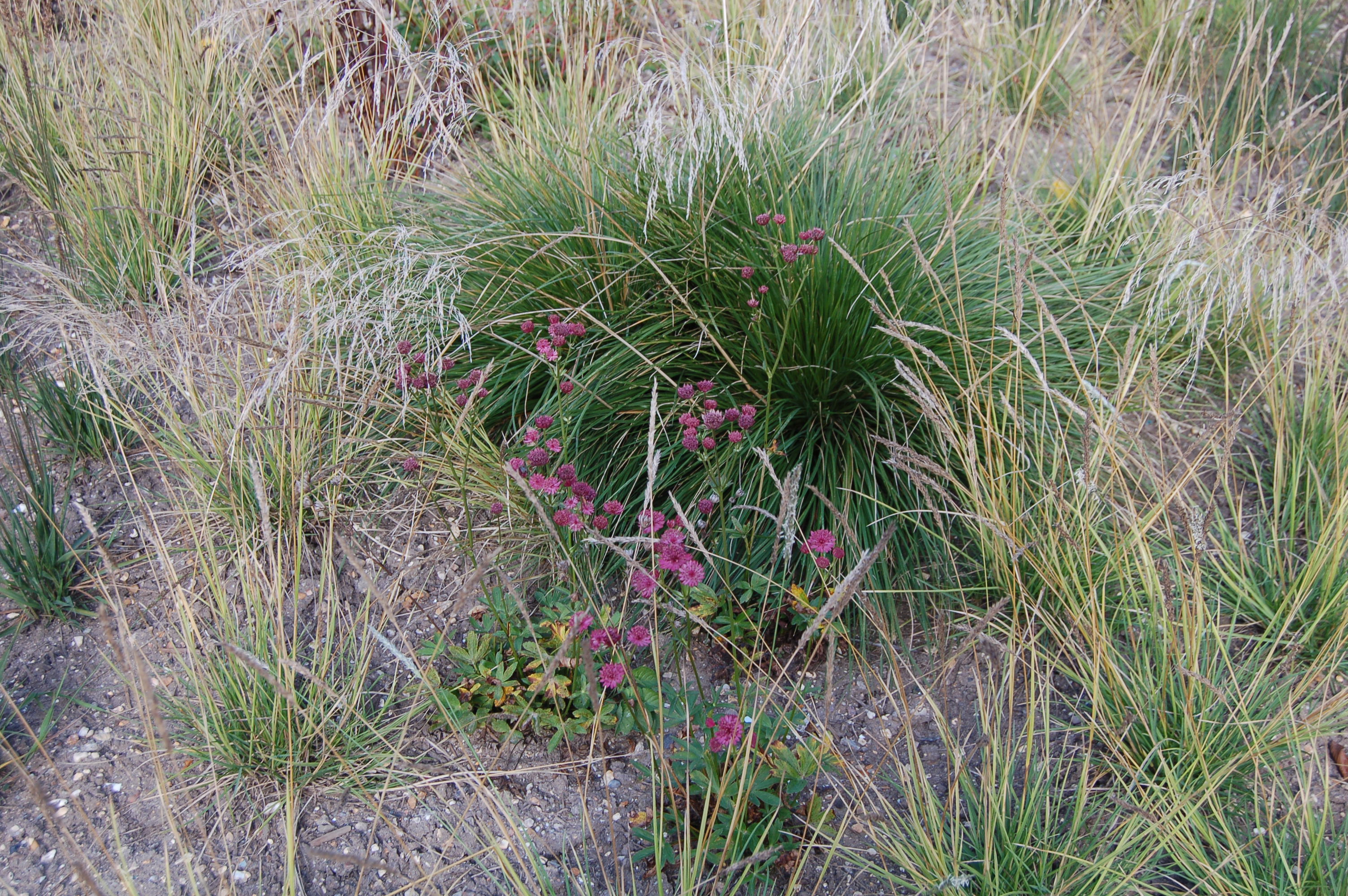

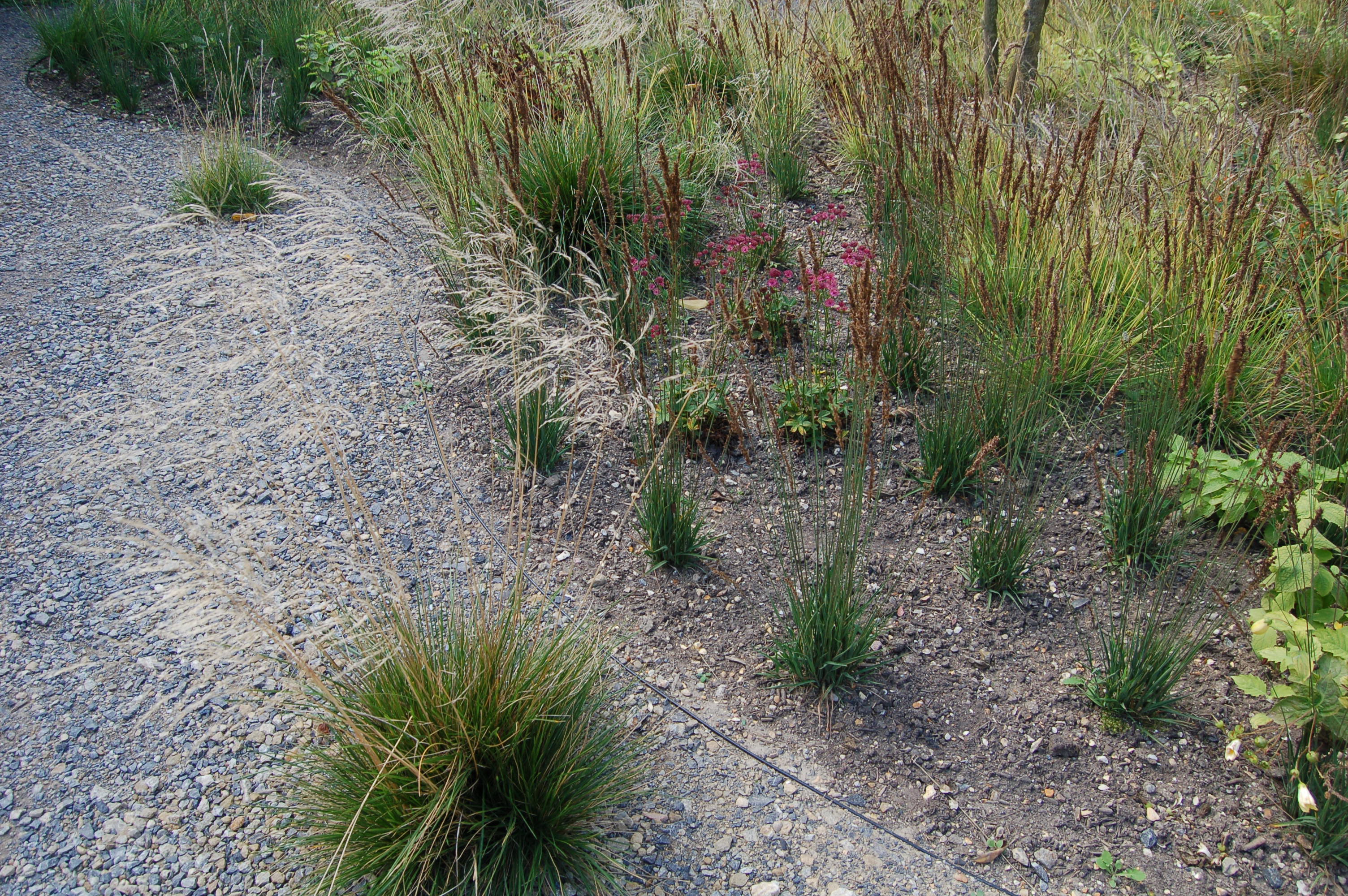

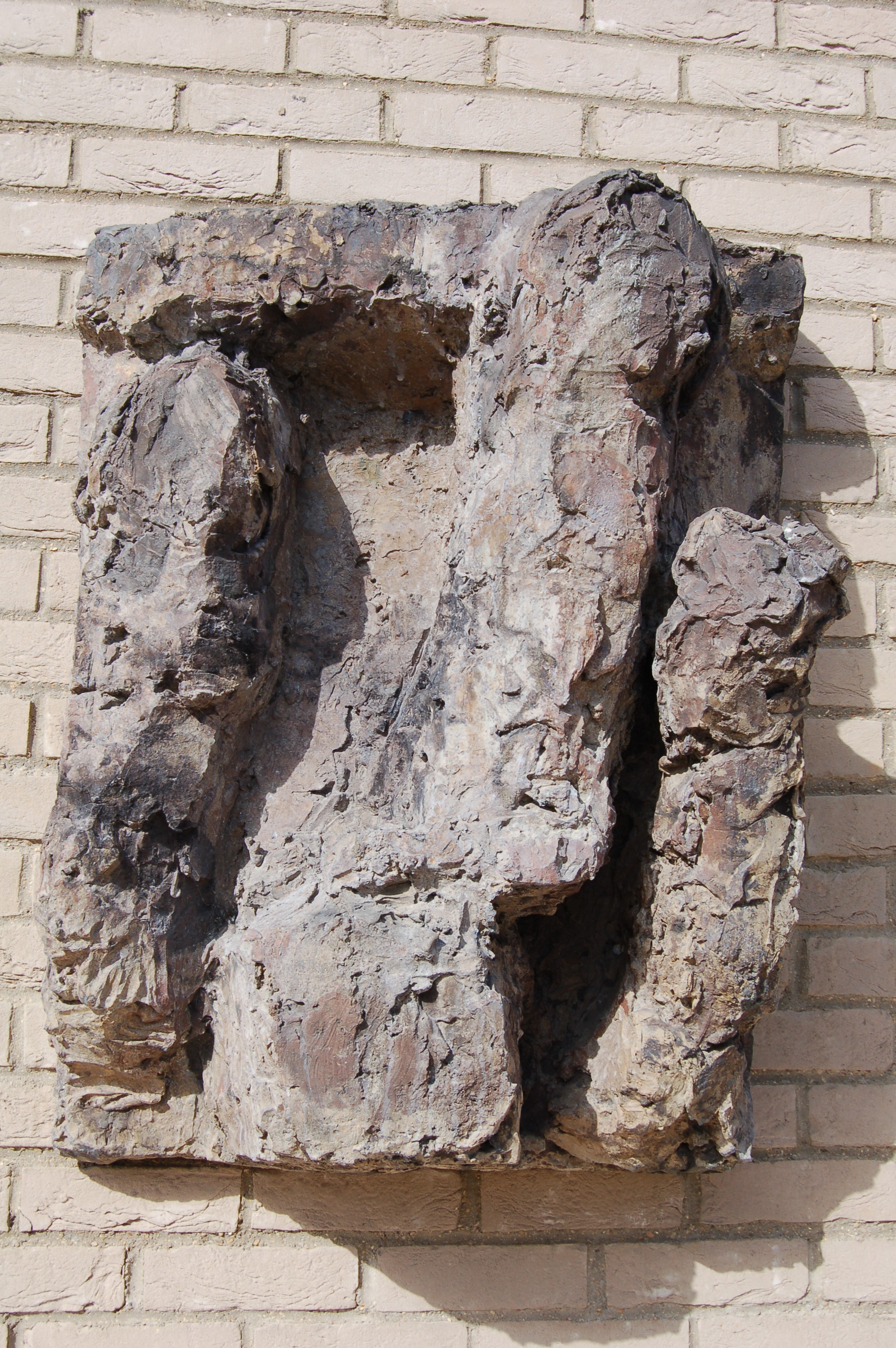
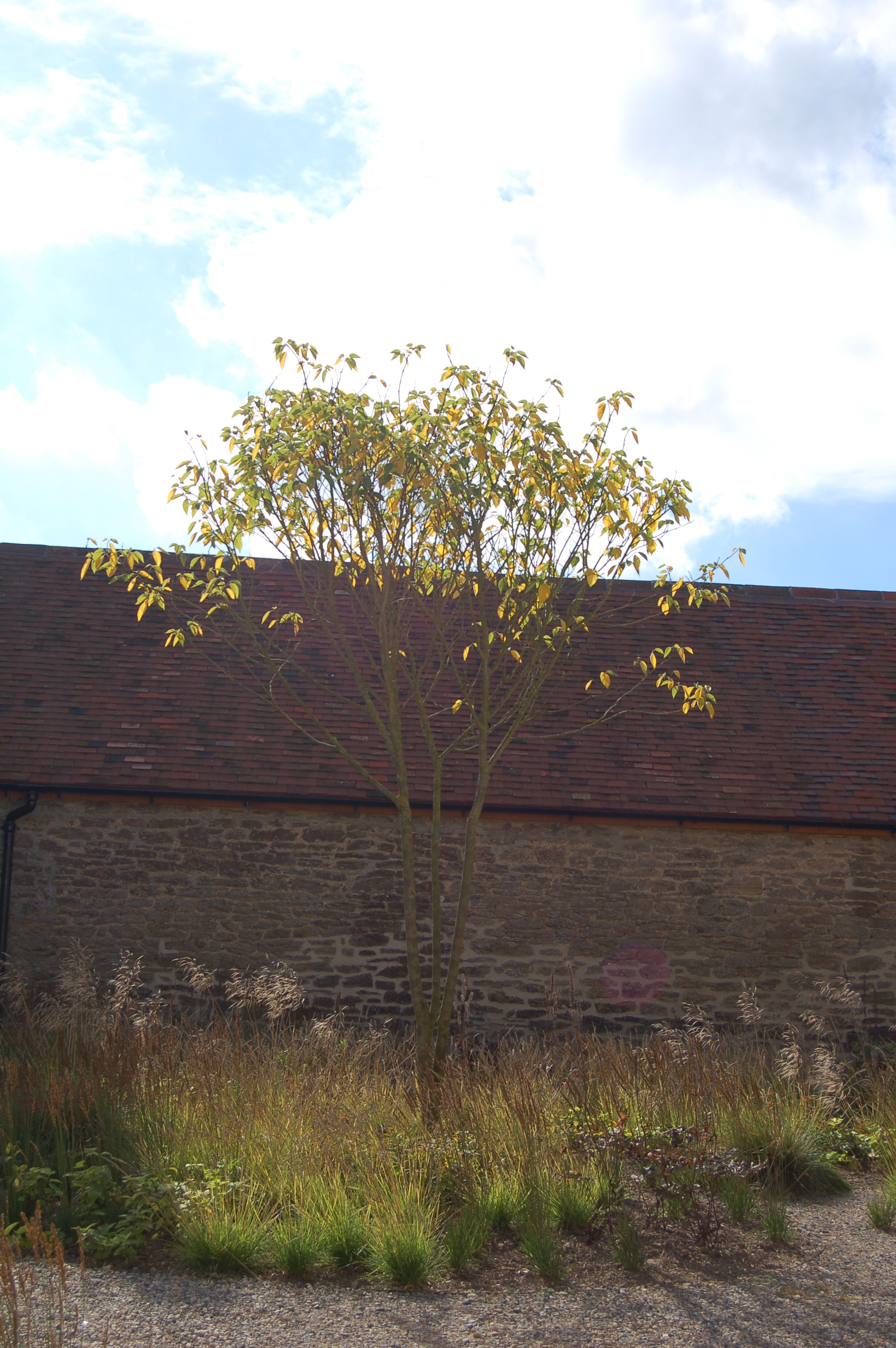

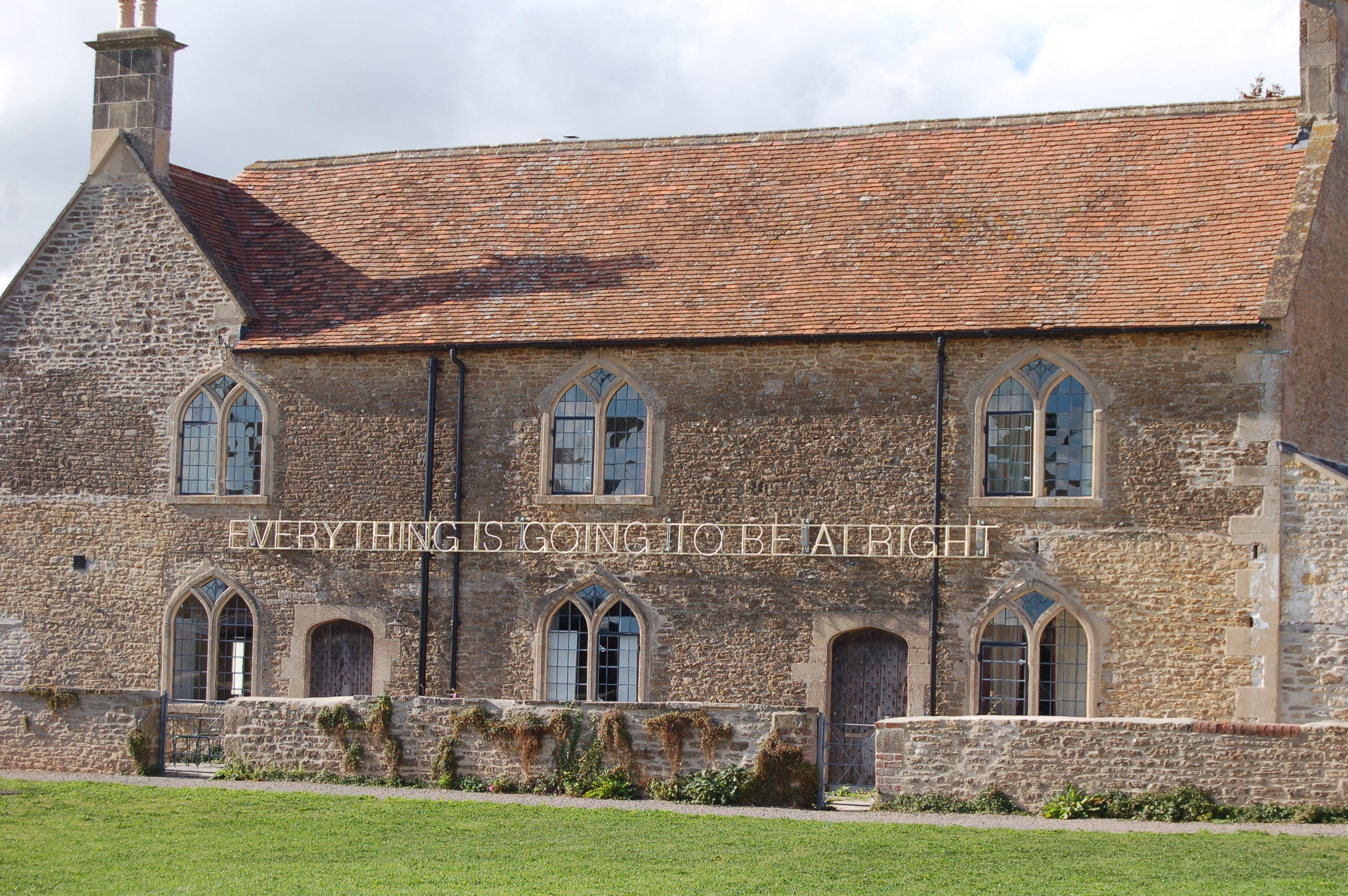
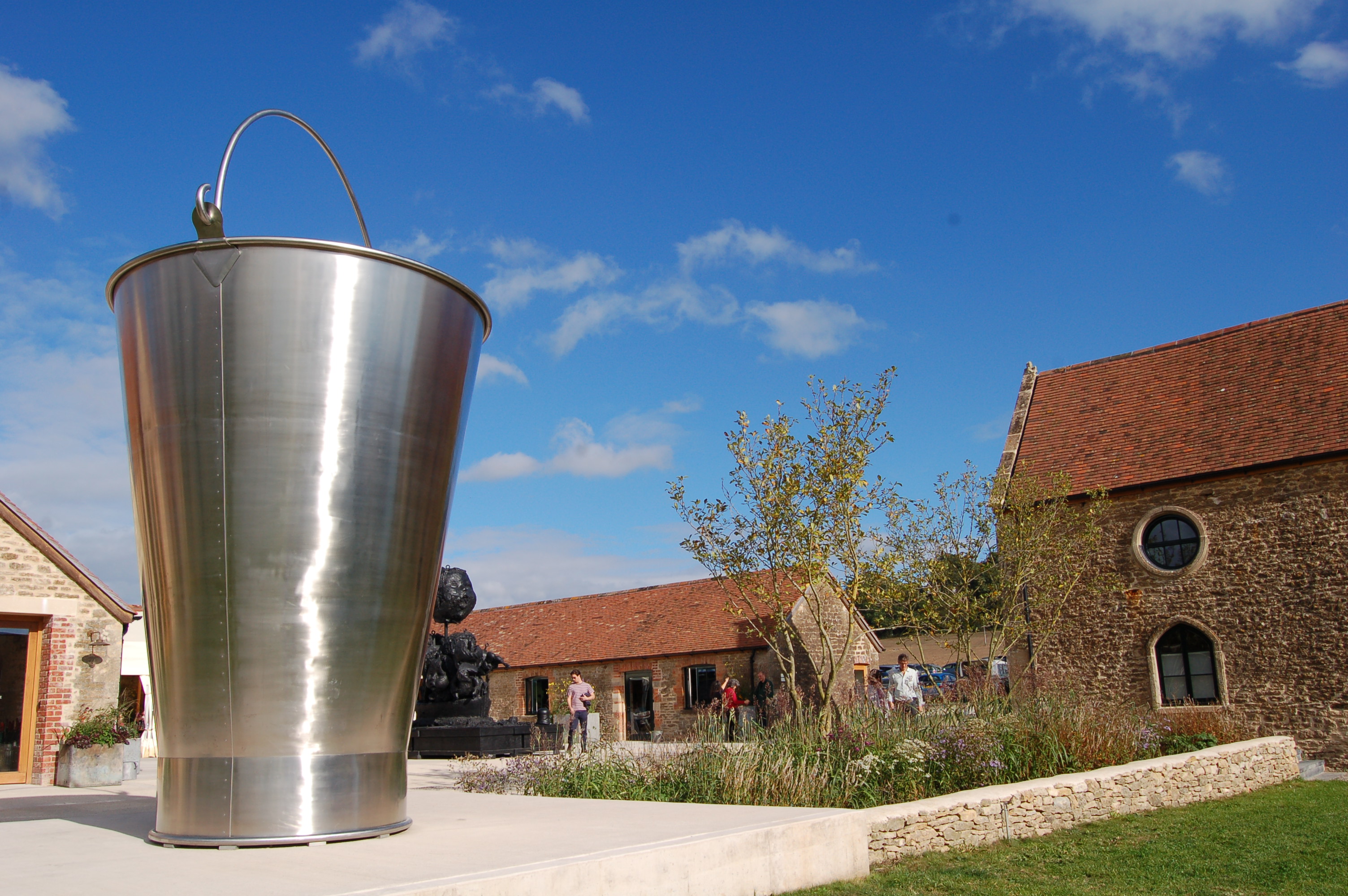
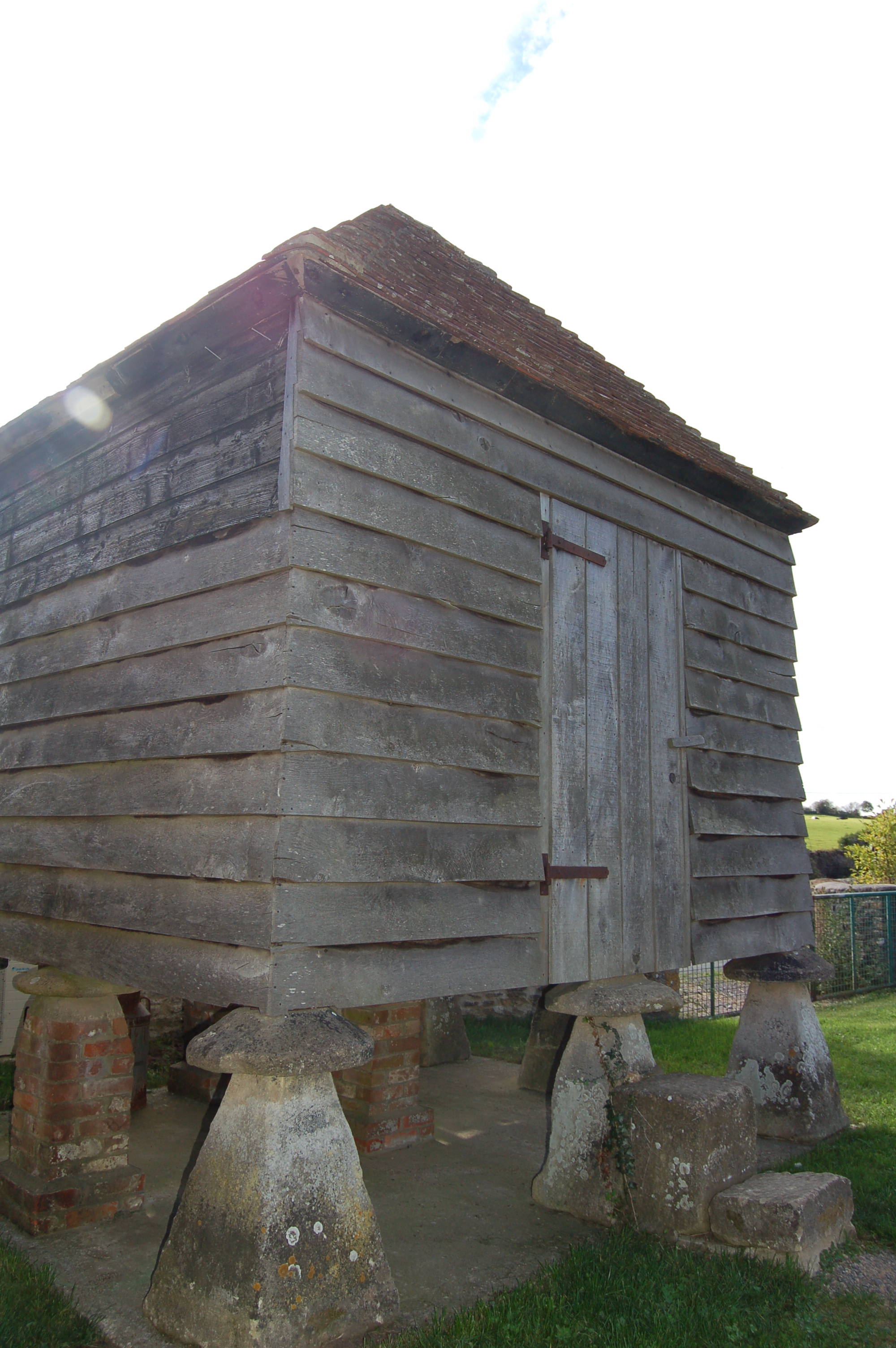
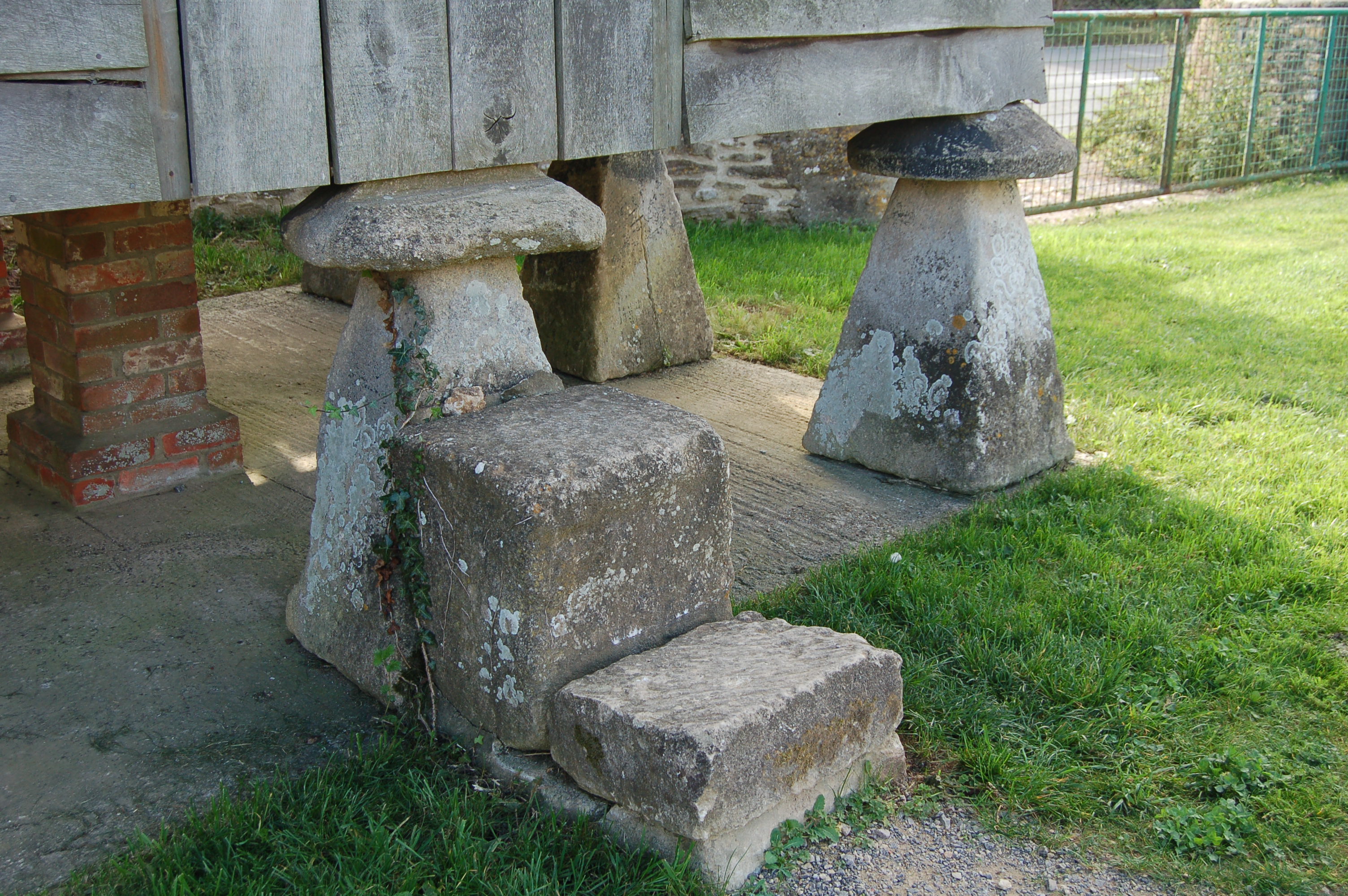
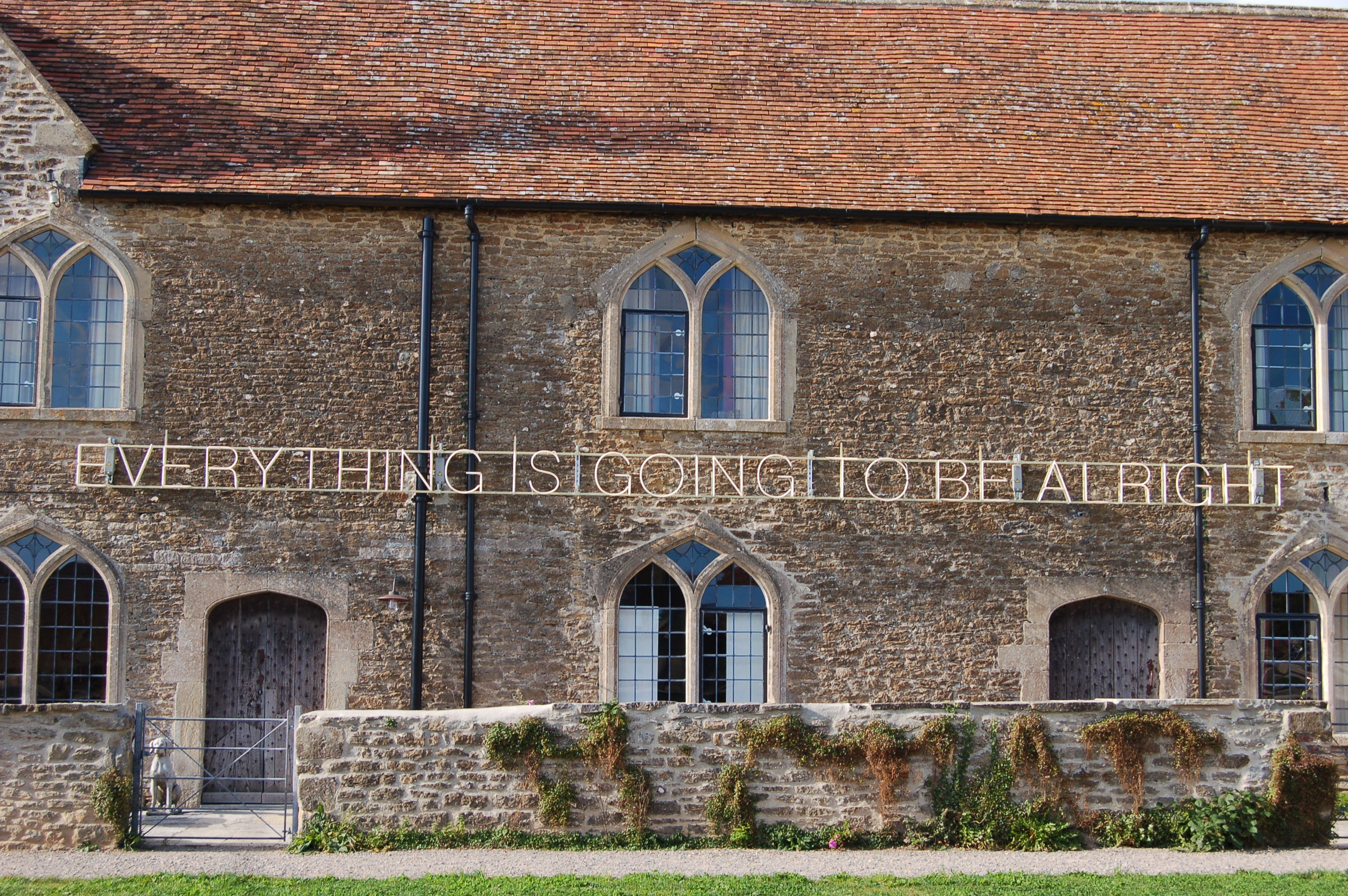
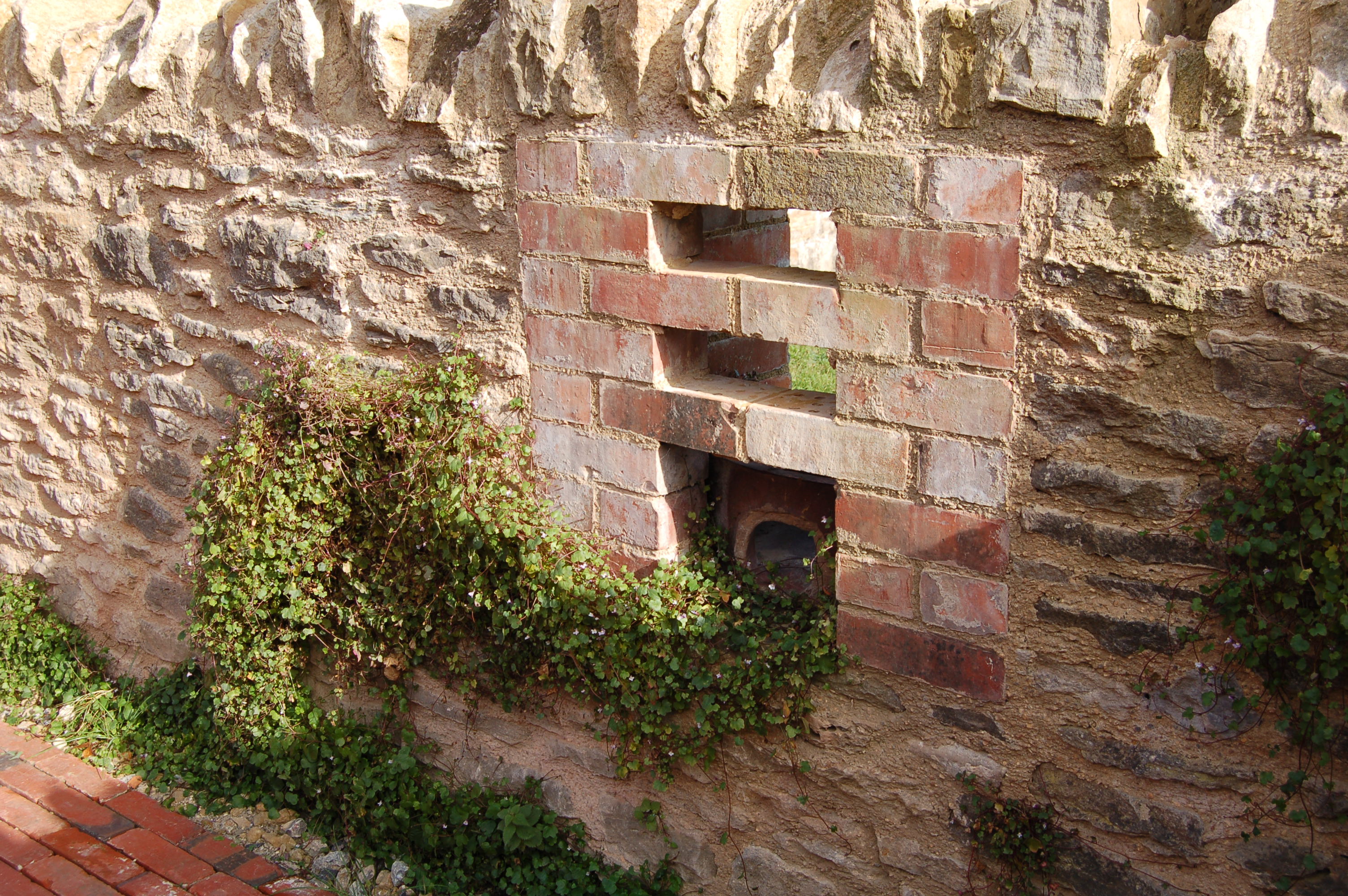
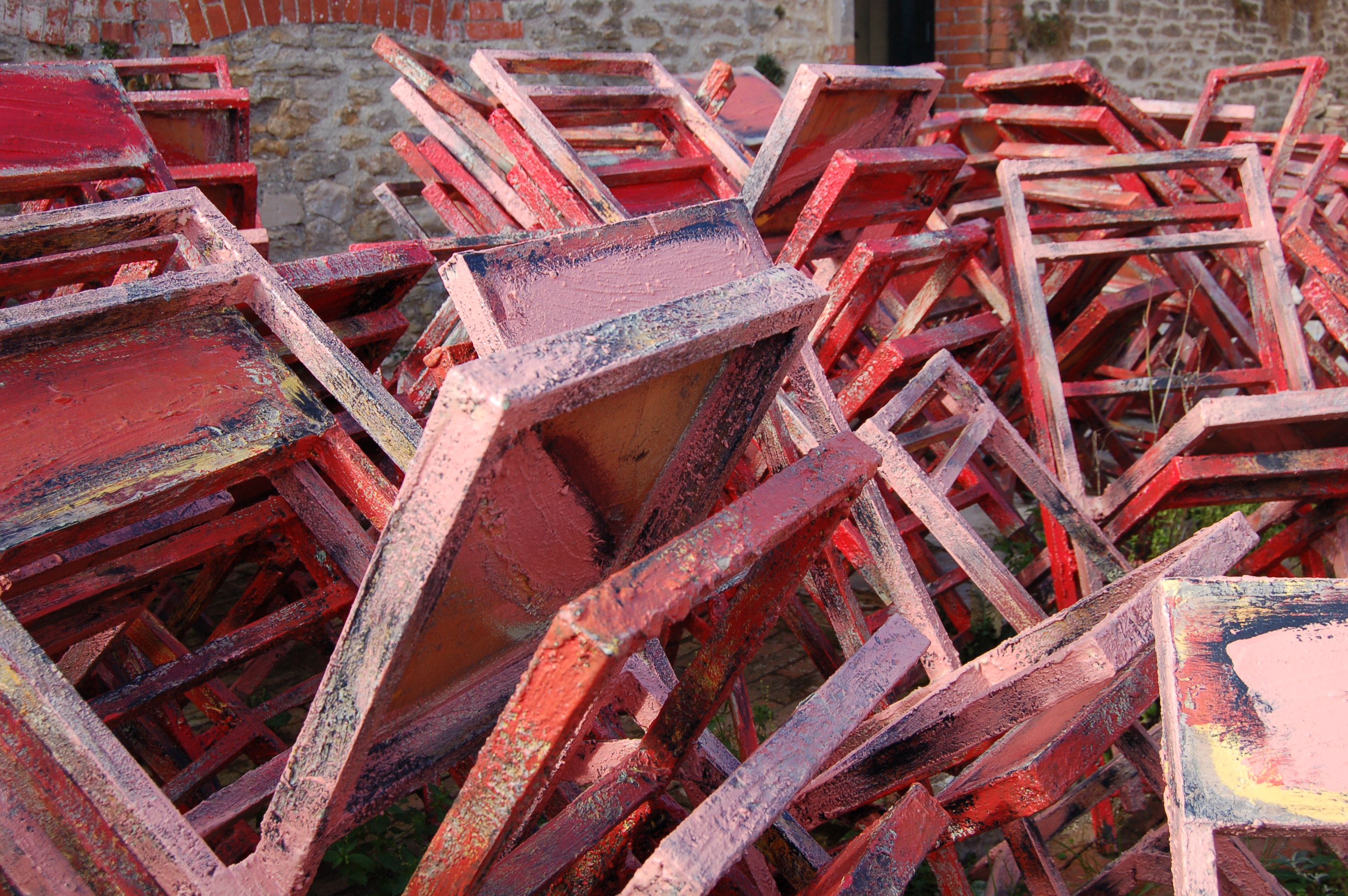
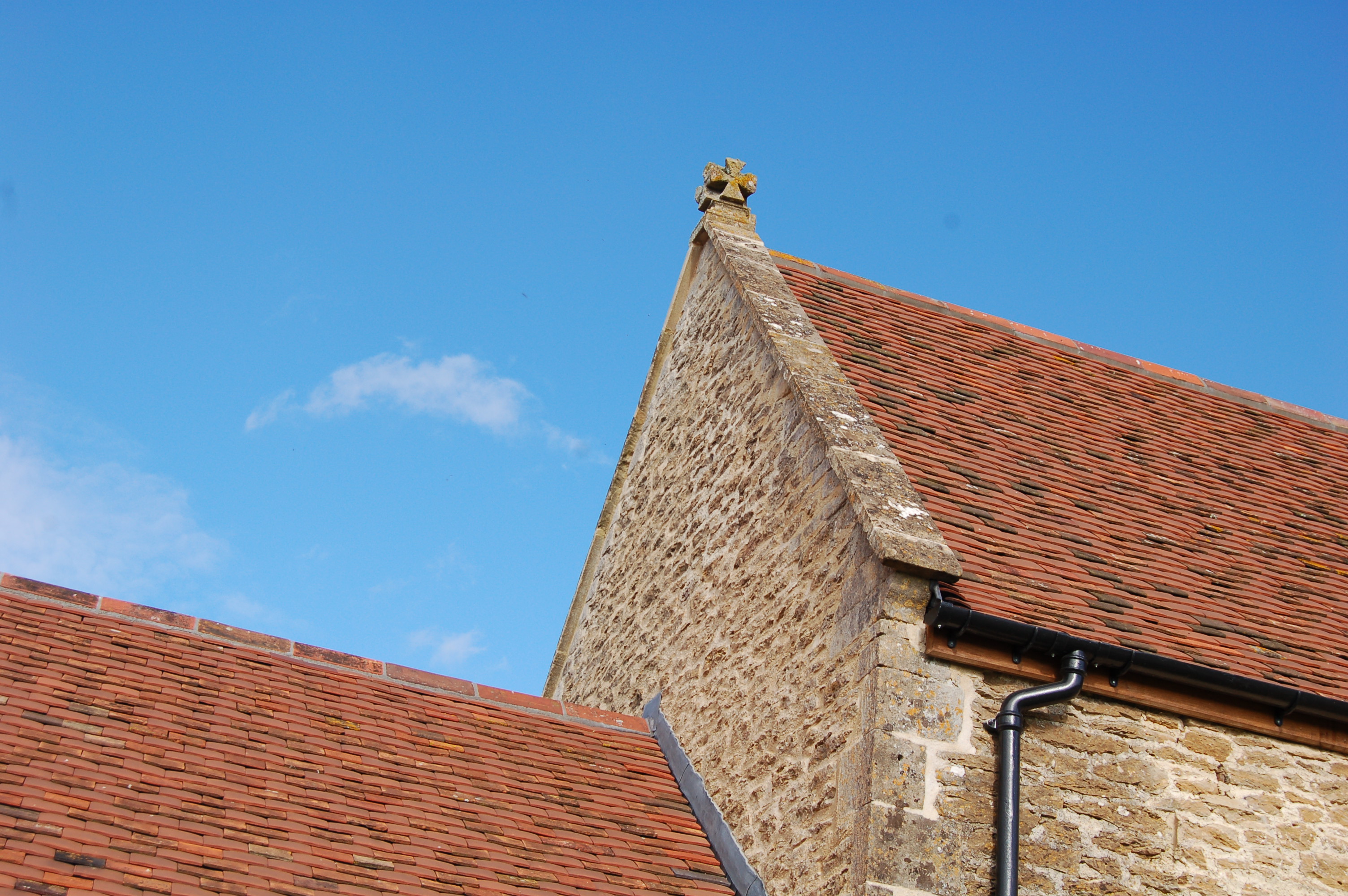


Enjoy the gallery of photos taken in the sparkling late afternoon light. It is amazing how different plantings can look as the light changes within just a few hours at this time of year.
The next post in my 500 Celebration series will find us over in Hertfordshire where Tom Stuart-Smith lives. We had the privilege of visiting his own garden and the one he designed for his sister.










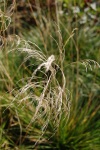
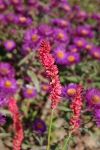


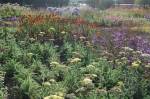
Continuing our journey from home across the Welsh mountains to the sea, we turned more to the north and climbed up steeply into far more rugged countryside. Each corner revealed new startling views of deeply cut glacial valleys and ridges eroded by the grinding action of glaciers in the last ice age. Few trees grow on these steep slopes with their shallow soils. We were now out of the county of Powys and travelling through Gwynedd.
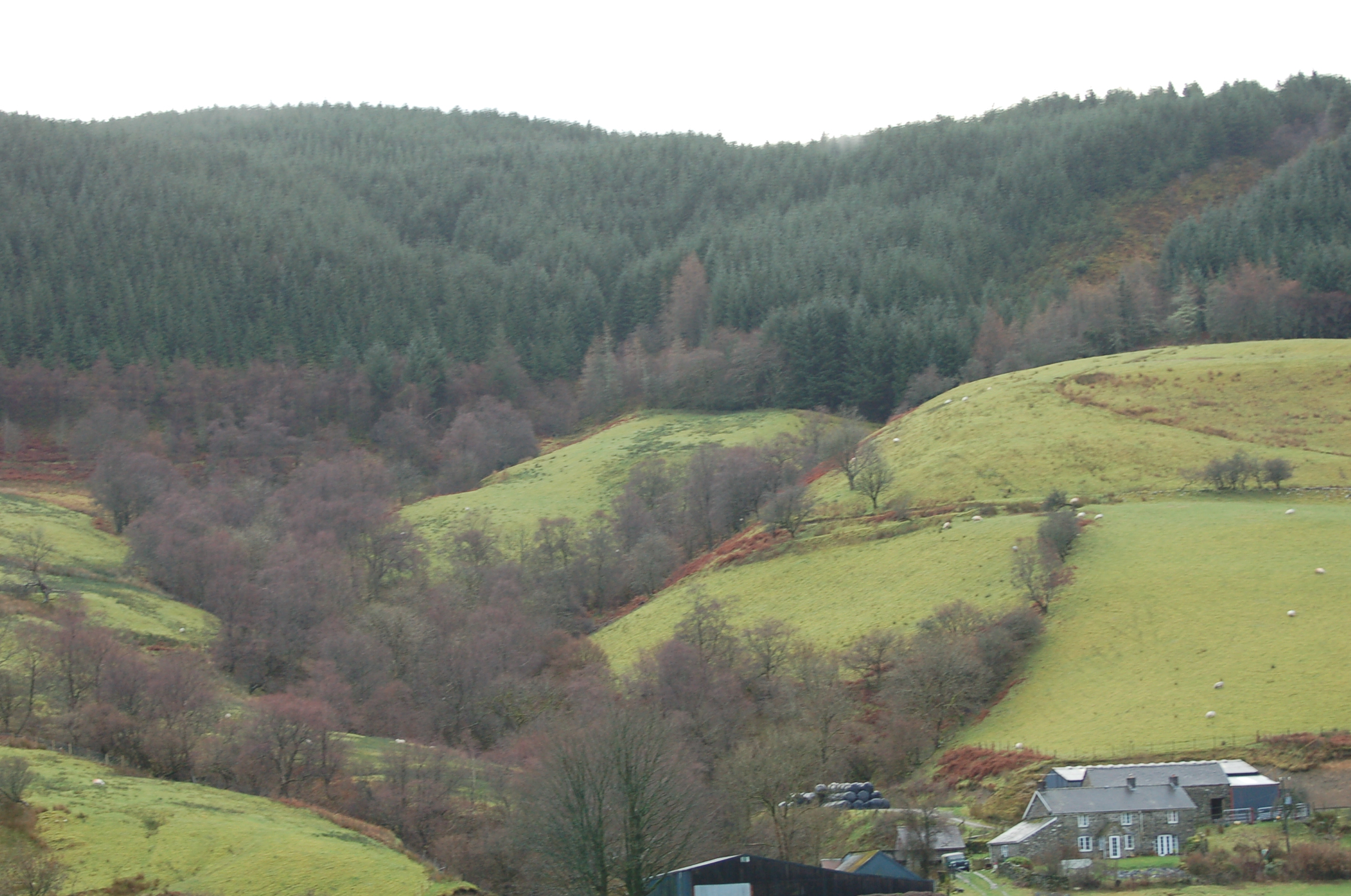
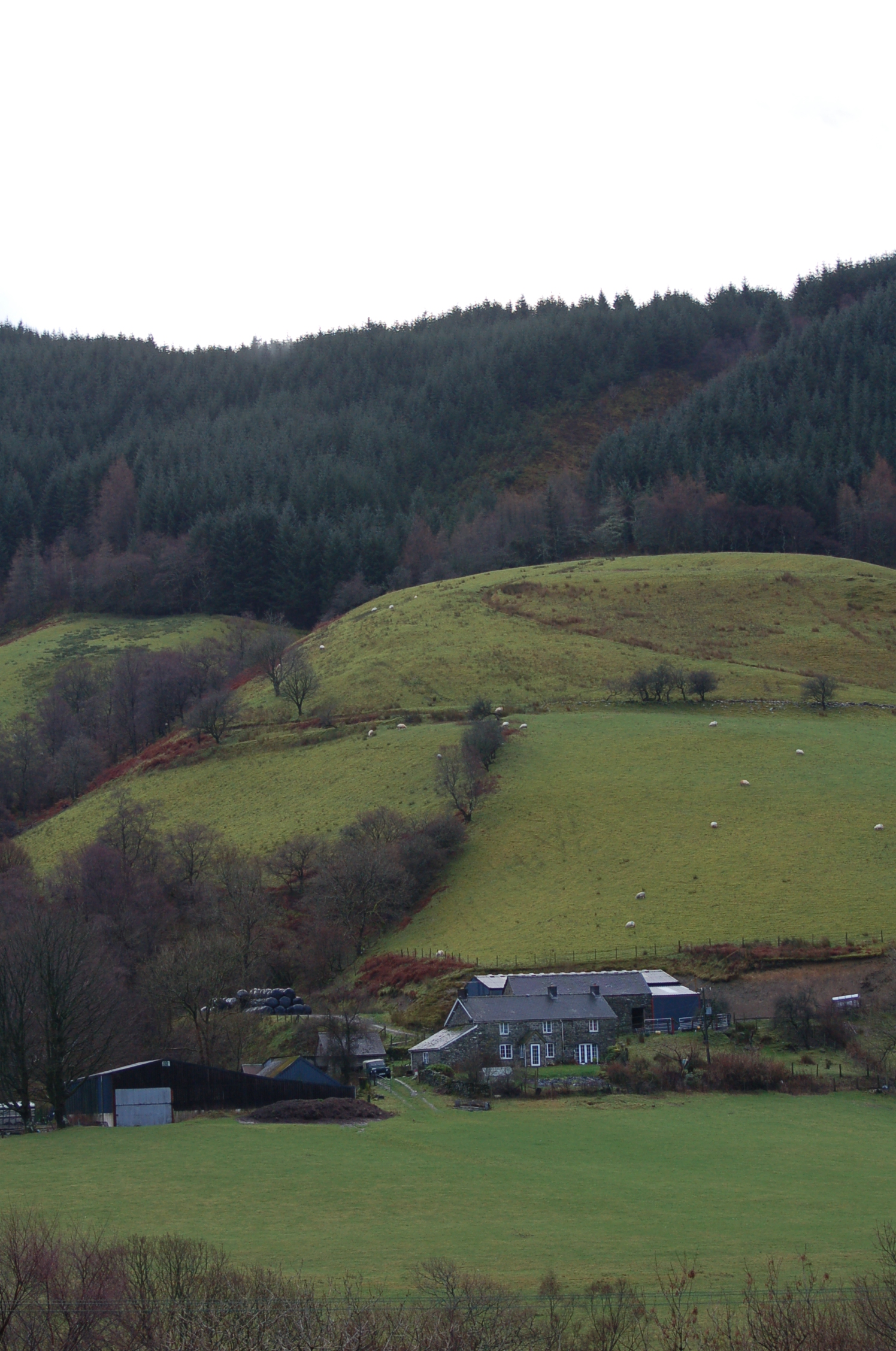


We drove into a pass that took us up Dinas Mawddry where steep rugged mountains rose up on either side. This is notoriously difficult stretch of road often made impassable by deep drifts of snow. Back in the seventies when we first drove through this pass when cars were less powerful than today cars were often beaten by the steepness and the sharp bends. At the bottom drivers took a deep breath, crossed their fingers and put their foot down. Today’s cars take it in their stride and drivers can instead appreciate the beauty of the place. Some of the following shots were taken through the car windows so are less clear, but it was at times impossible to stop safely.


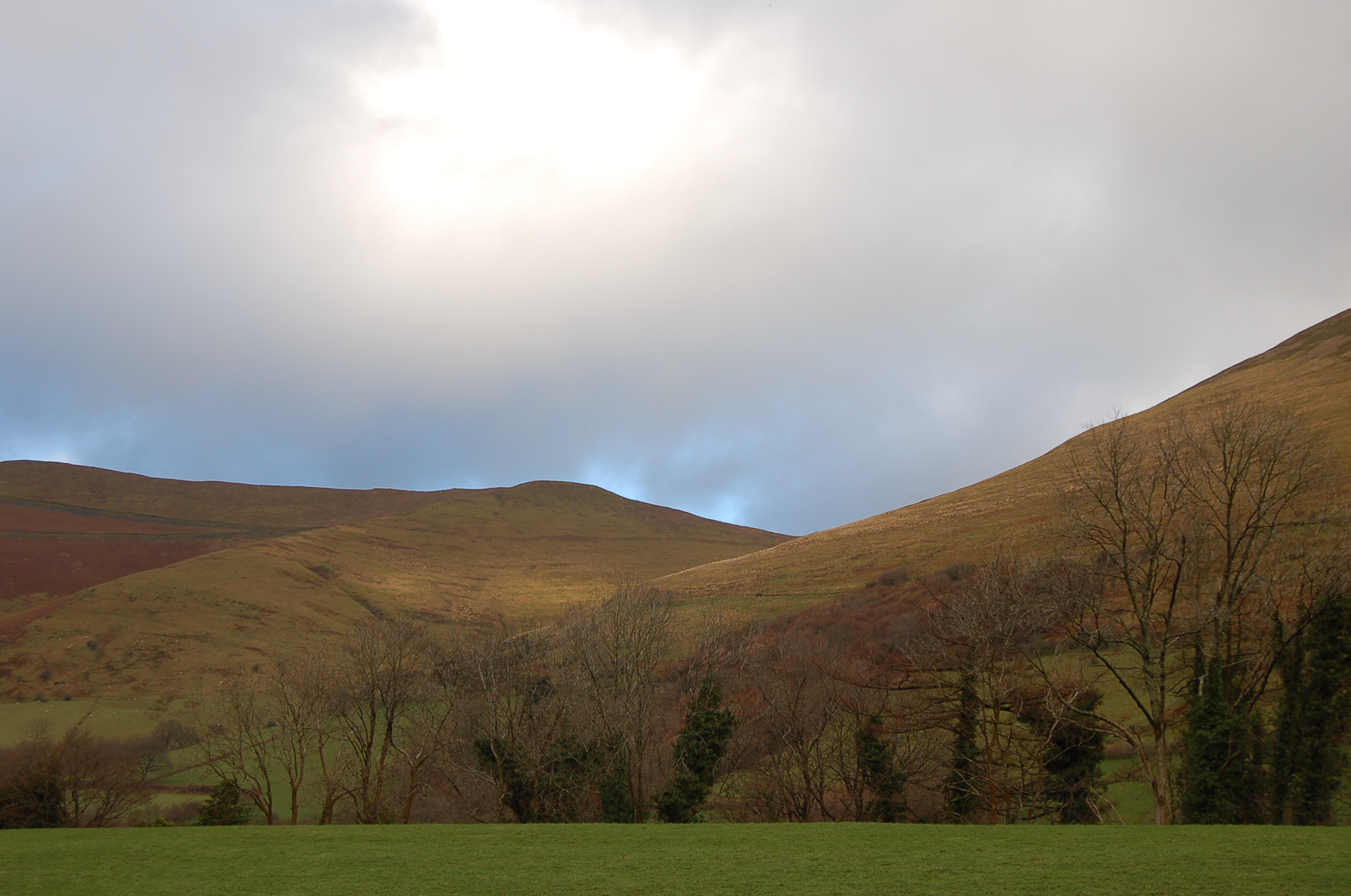

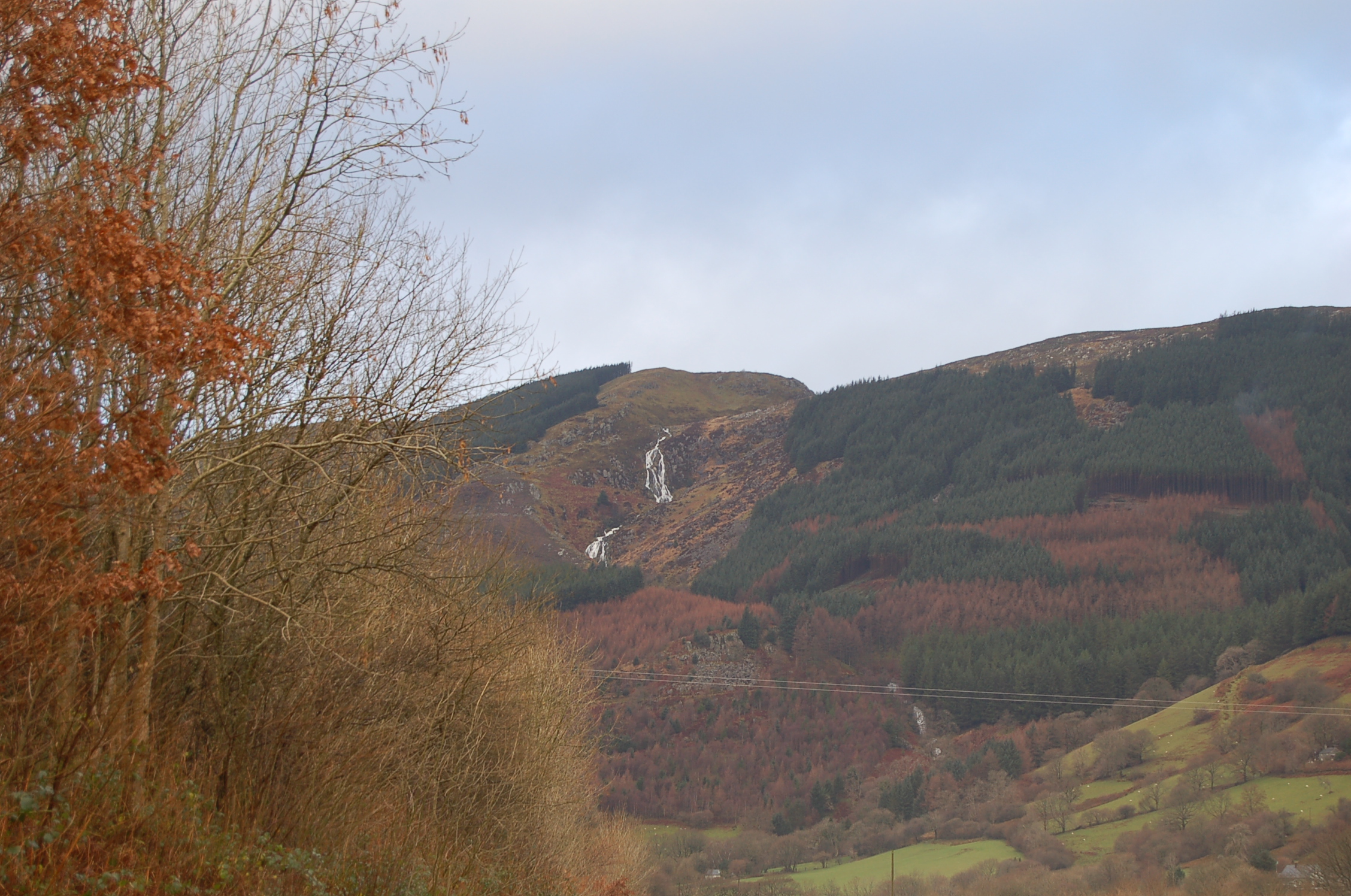


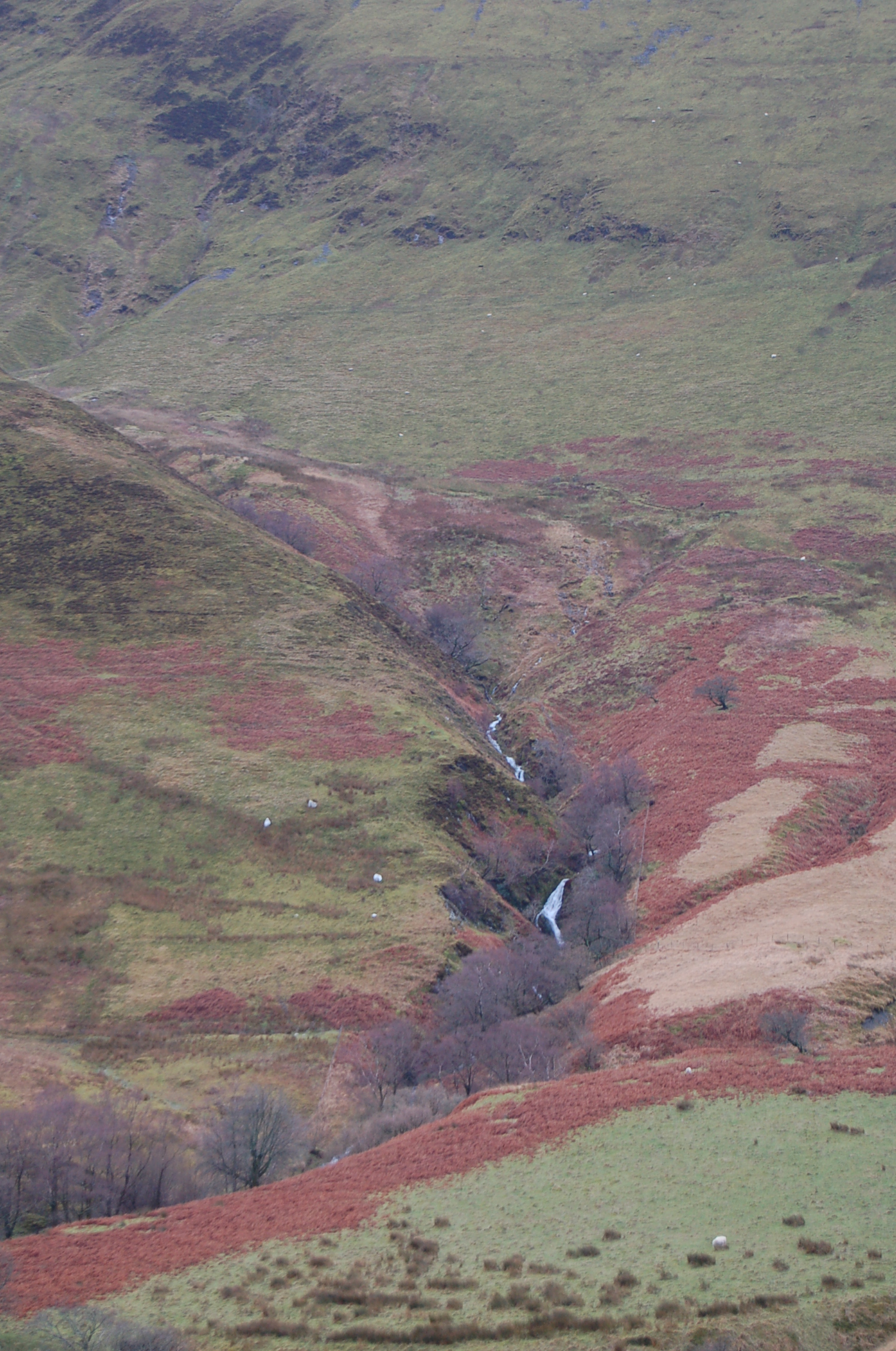

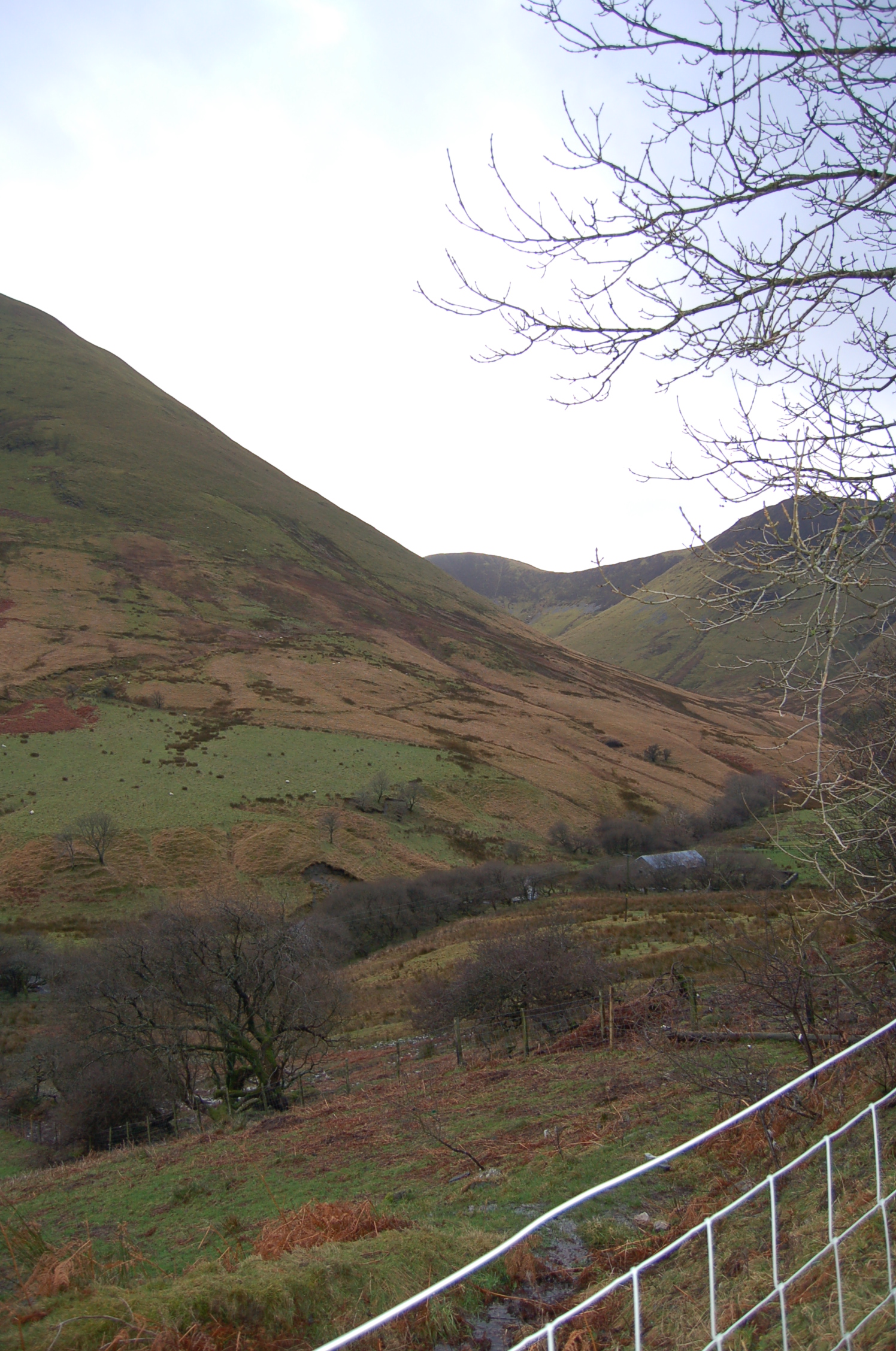


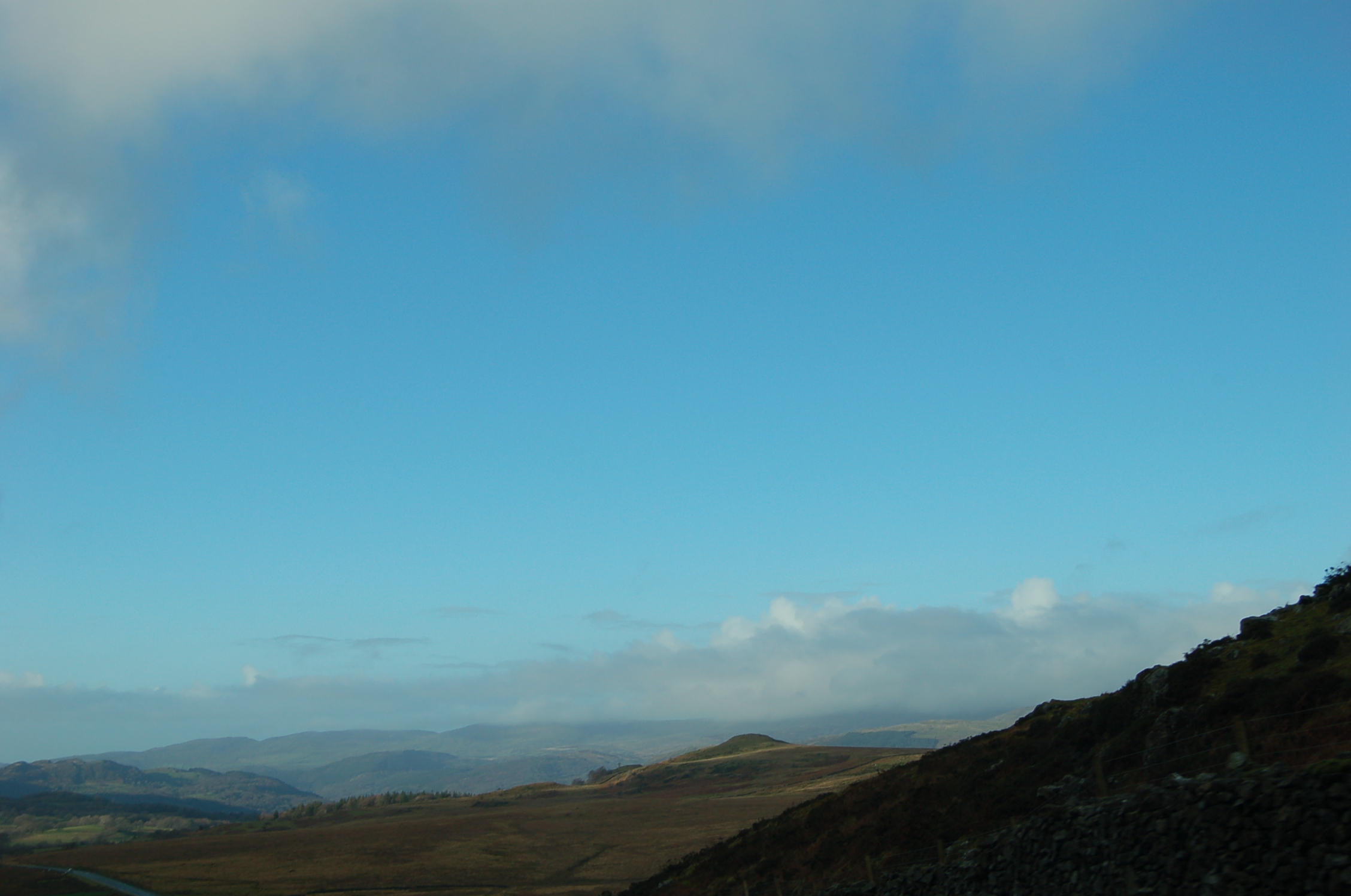

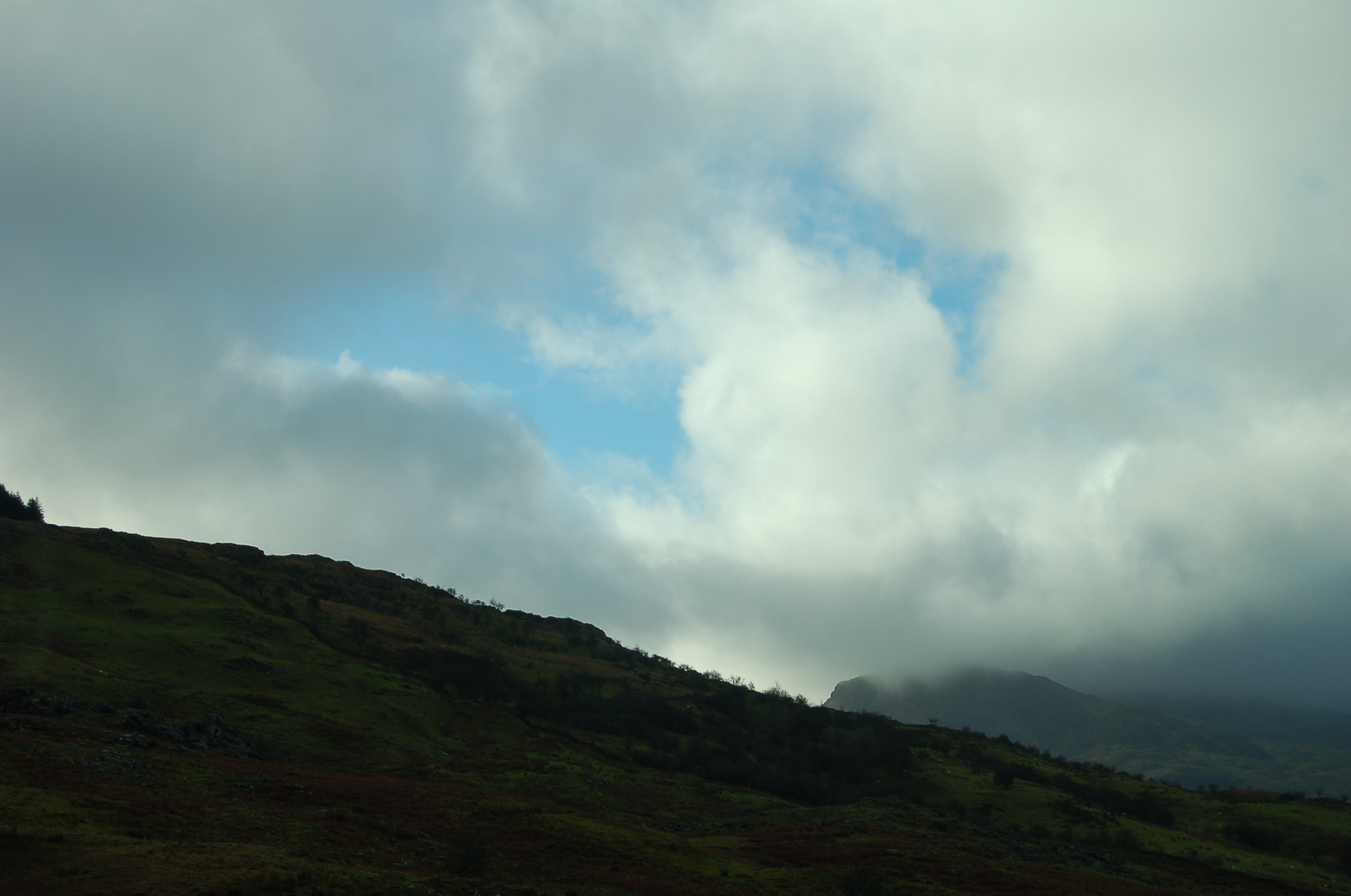


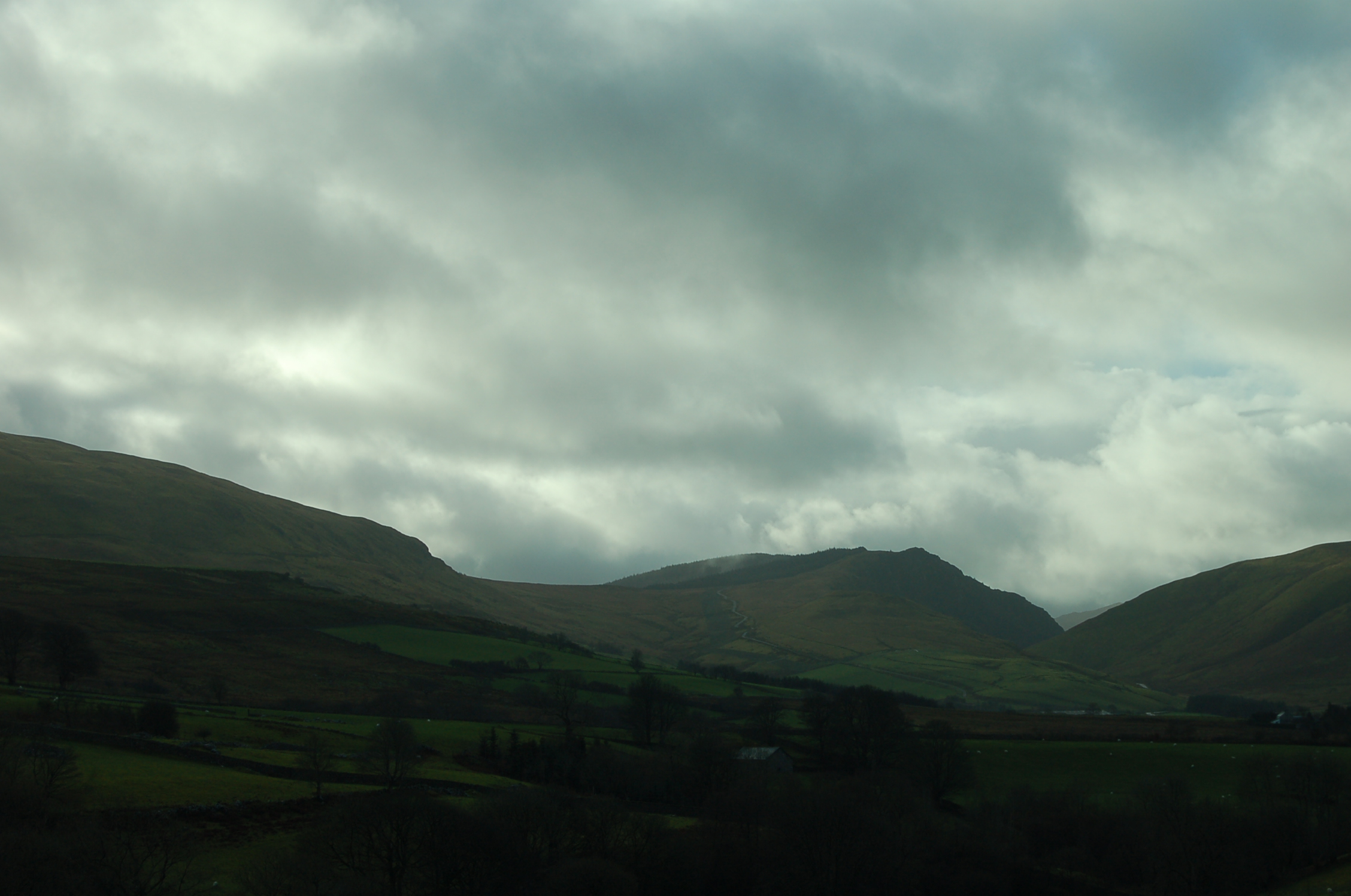
As we bypassed Dolgellau the valley widened out and in places rich pastureland spread out either side of the road.

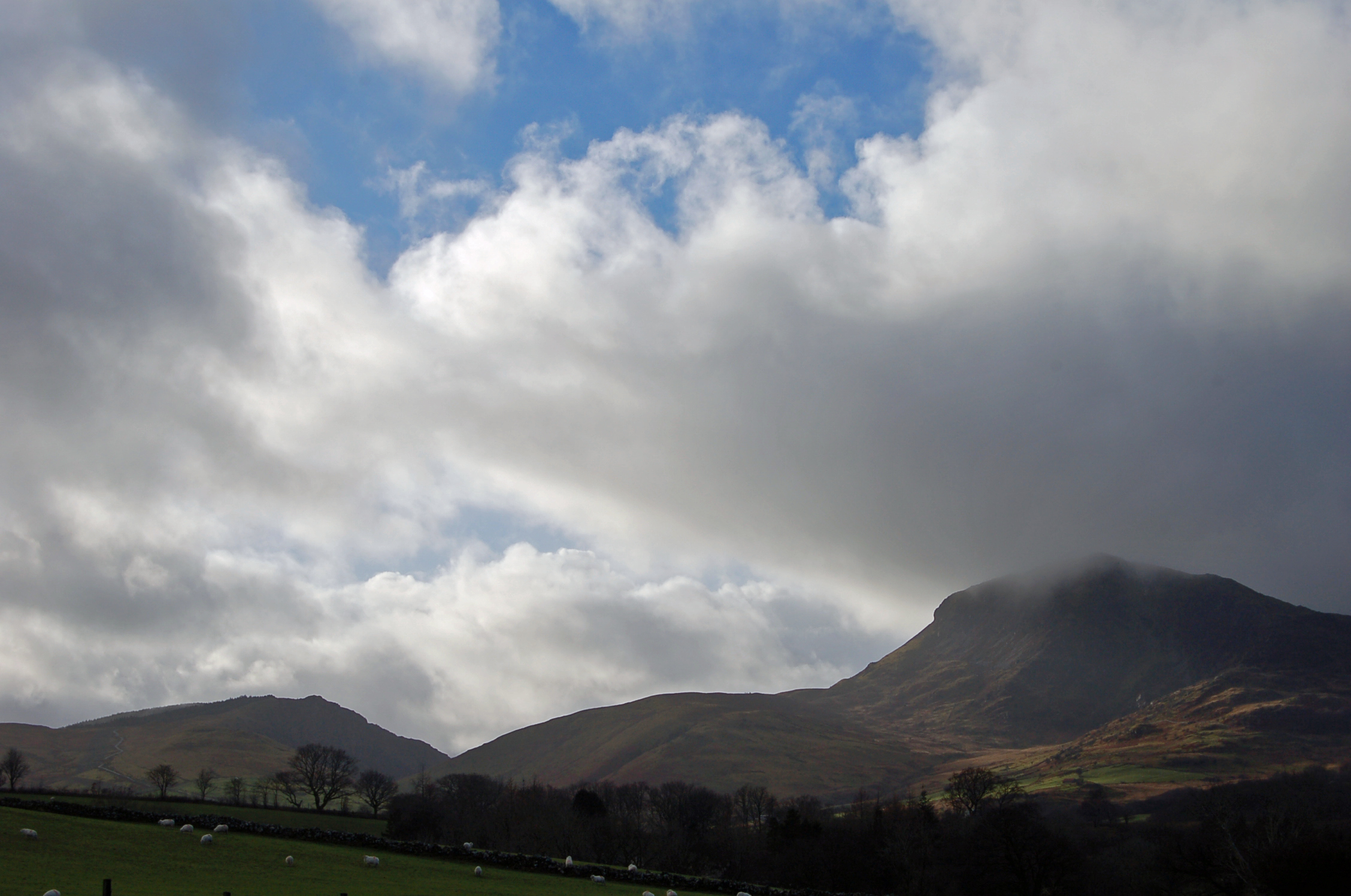

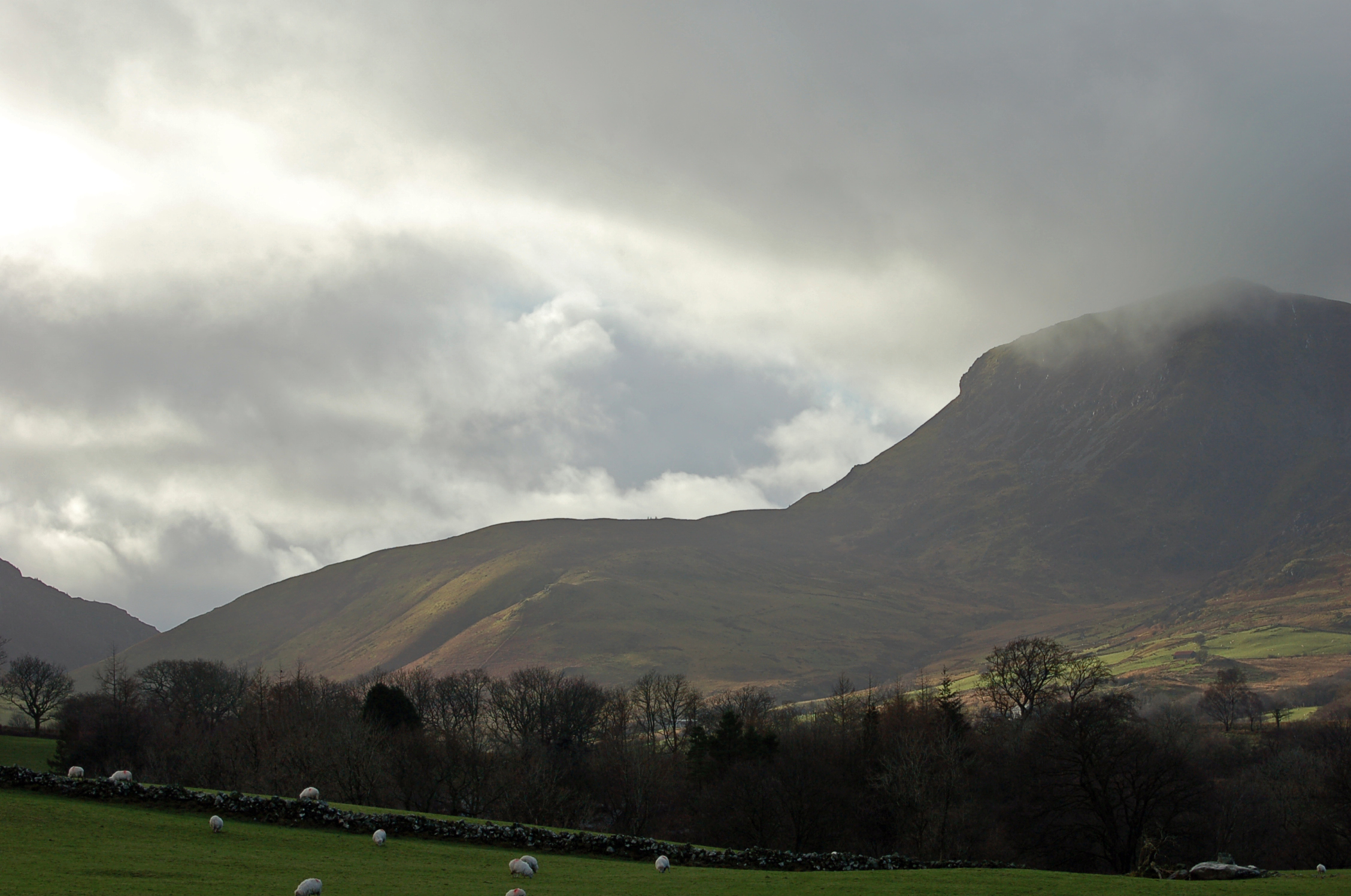
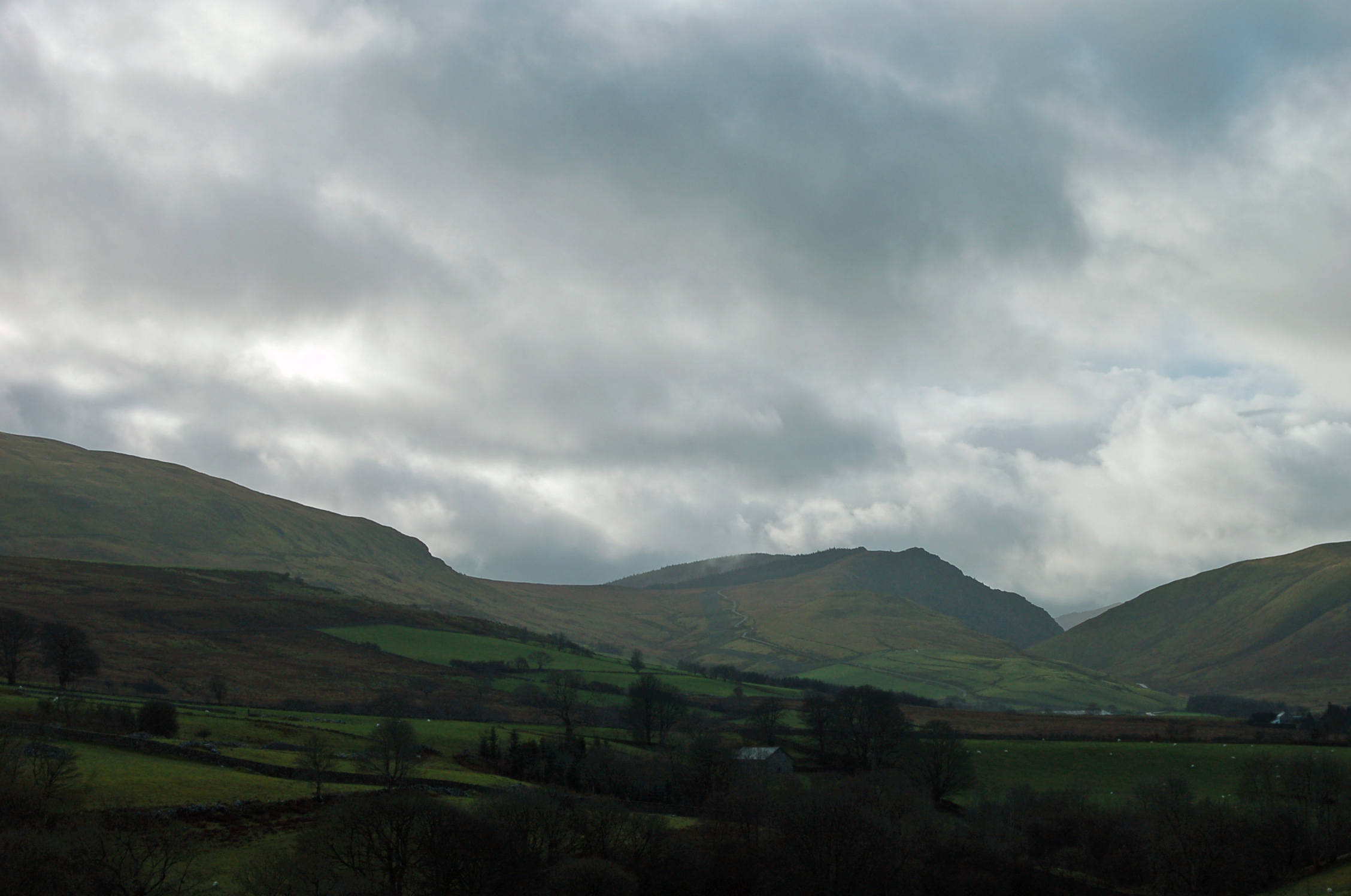


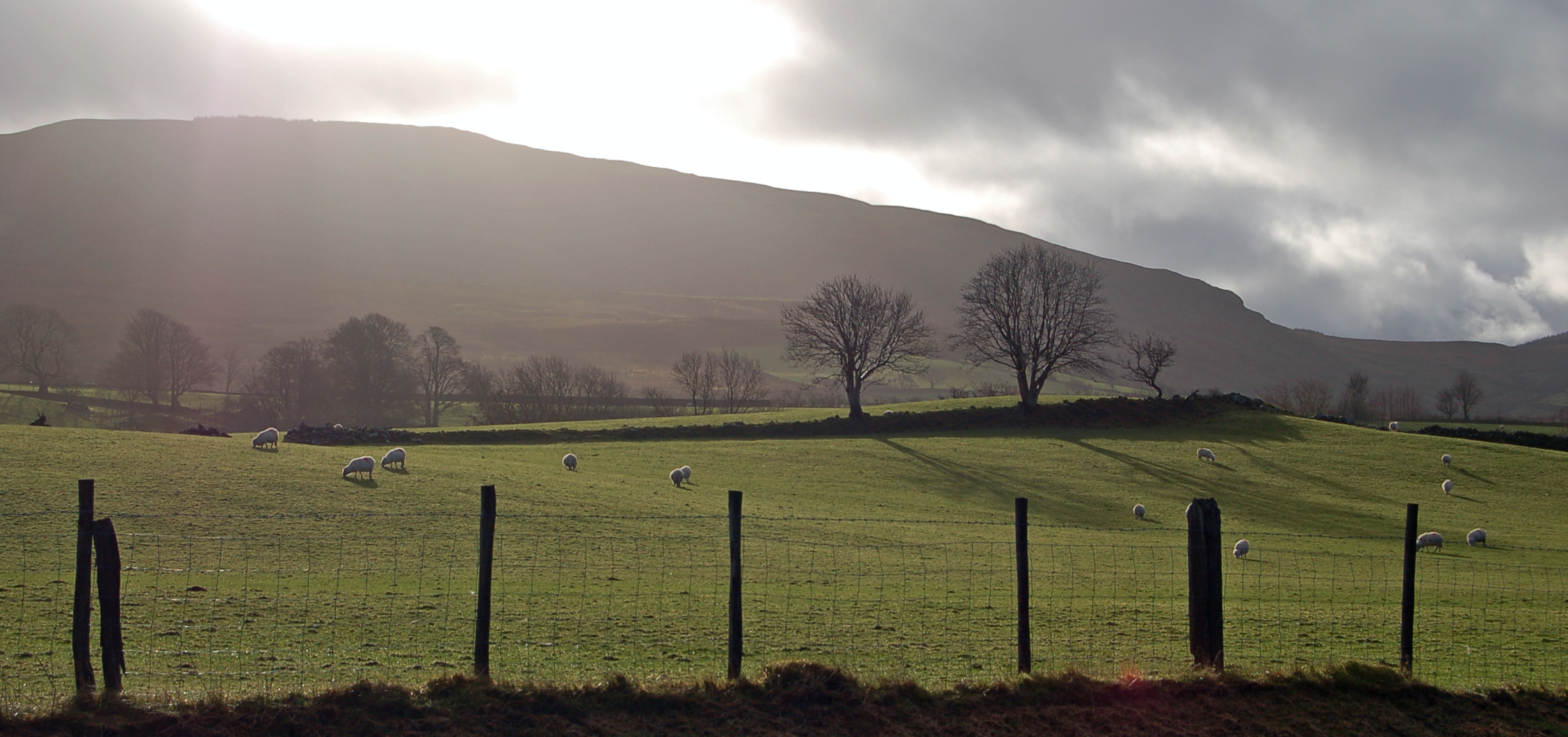
We turned into a wide valley and the road passed through marshland and muddy areas of the Mawdach estate. Clouds hung low here. The view became hidden and the hill tops disappeared in their mistiness. The road ran through stone walls and the bends slowed the traffic.
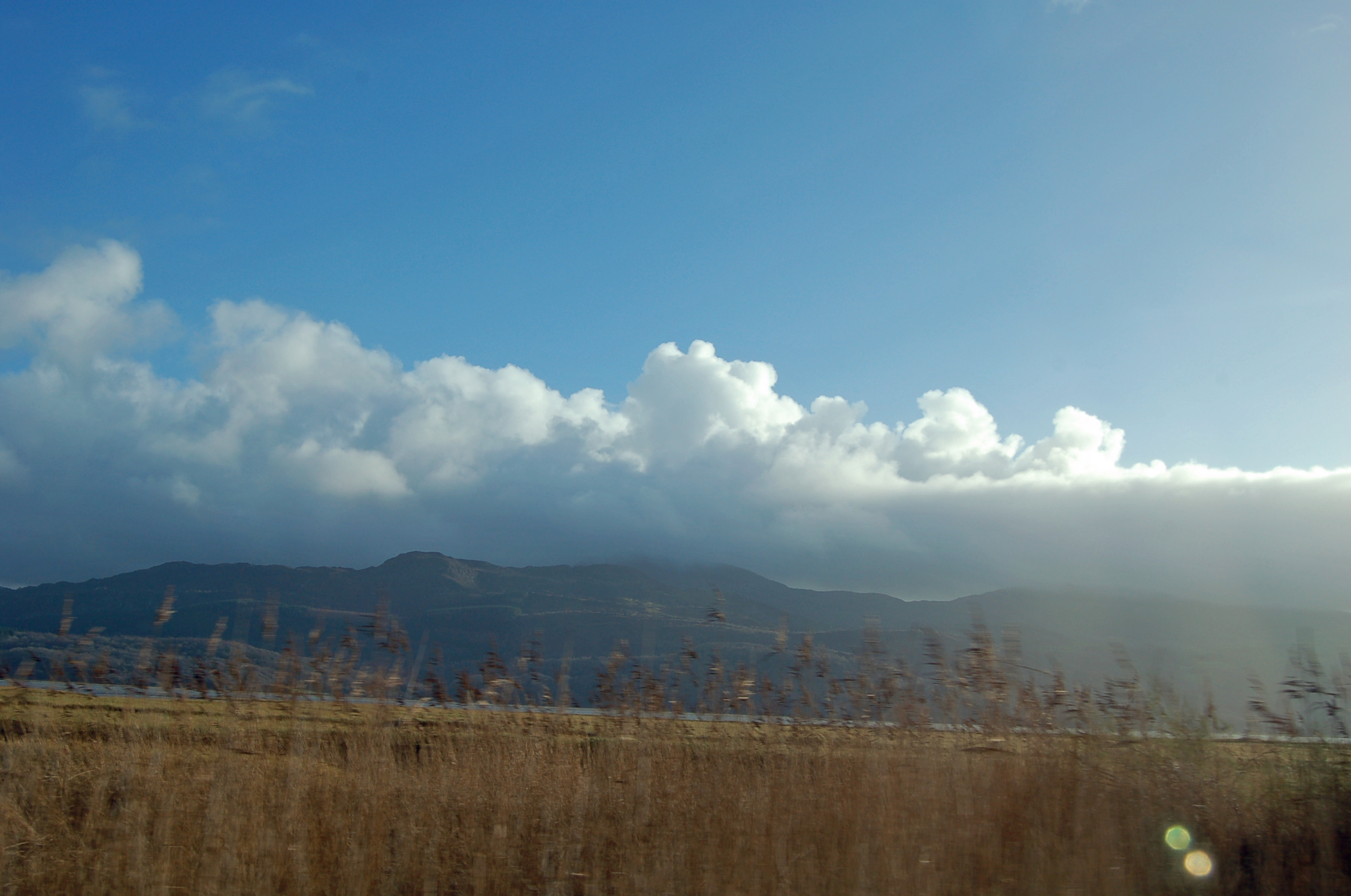
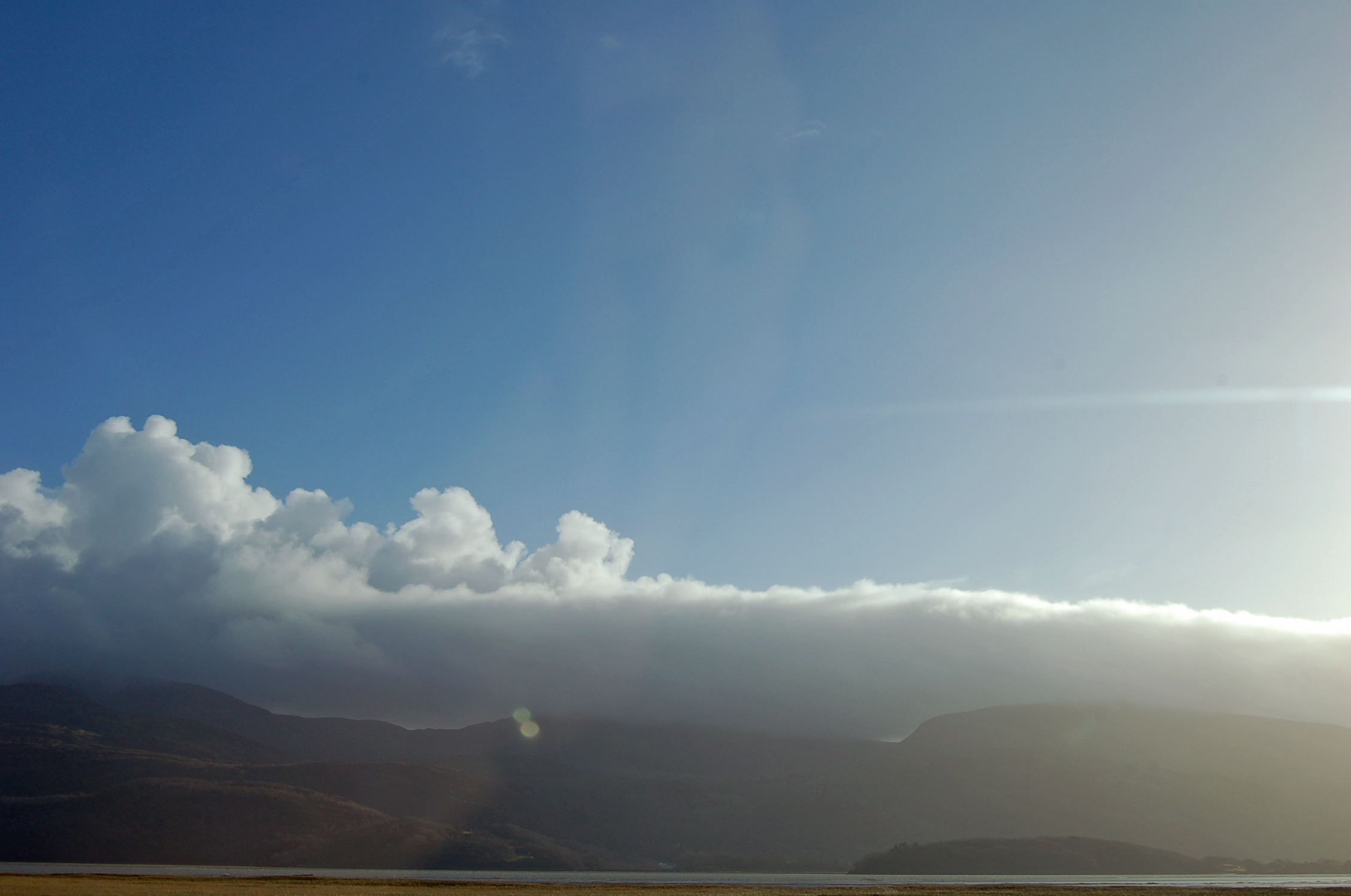
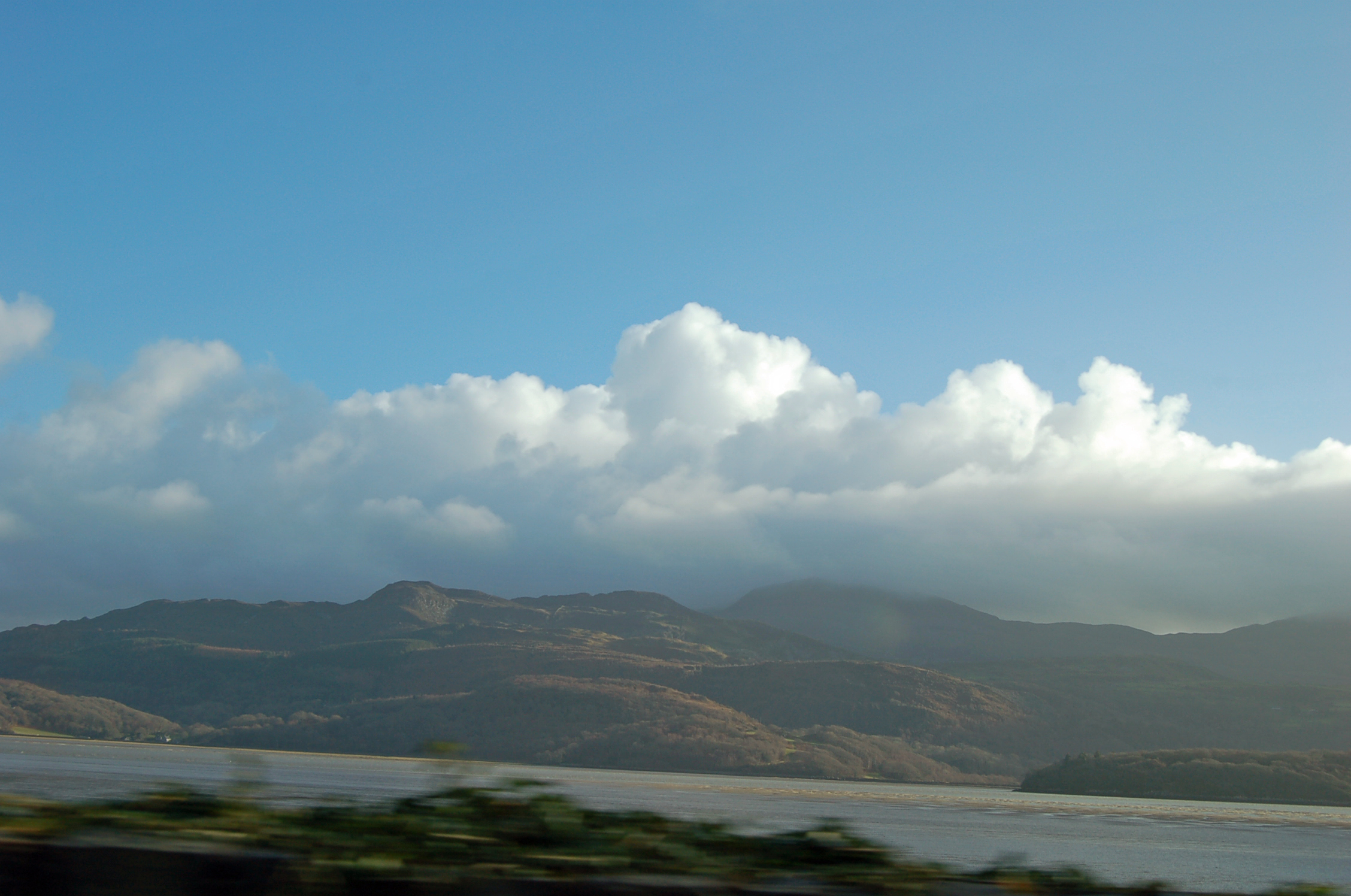

We were now close to our day’s destination the seaside at Barmouth. My next post will be all about our day there.
To see in the new year we intended to go to the sea simply to walk along the beach and enjoy the fresh sea air. But it was not to be, for 1st January 2014 was a day of storms and strong winds so we delayed for a day.
We woke on the 2nd to a far finer dawn. So we set off out of Shropshire and over the Welsh hills to the coast at the little old seaside town of Barmouth. A favourite place to visit, Barmouth is where we have spent so many days as our children grew up and indeed many on our own after they left home. When with the kids we collected pebbles and shells and built sand castles with occasional trips across the sands to paddle in the sea. These days we still collect pebbles and shells and Jude is still tempted to paddle a little.
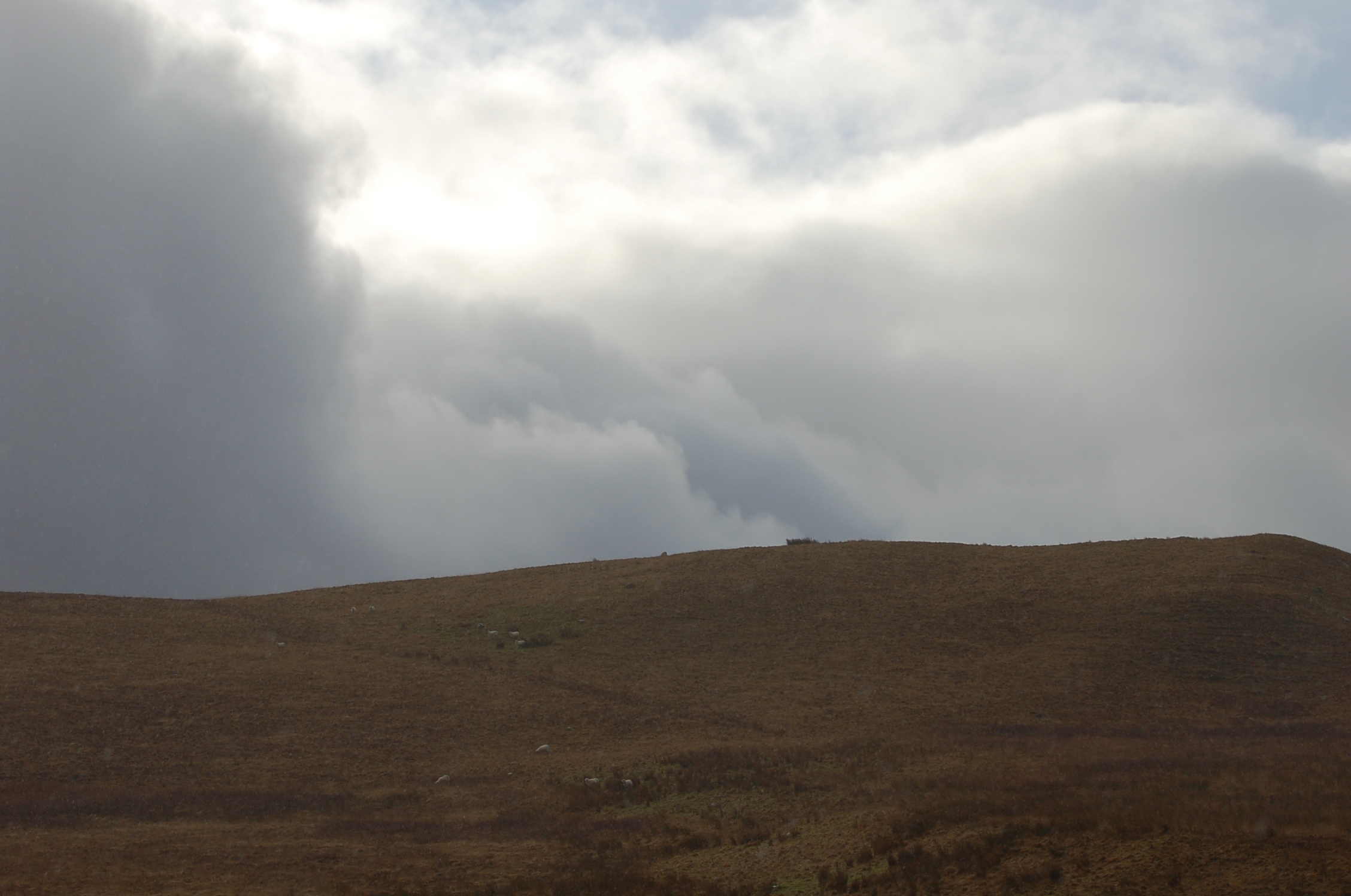
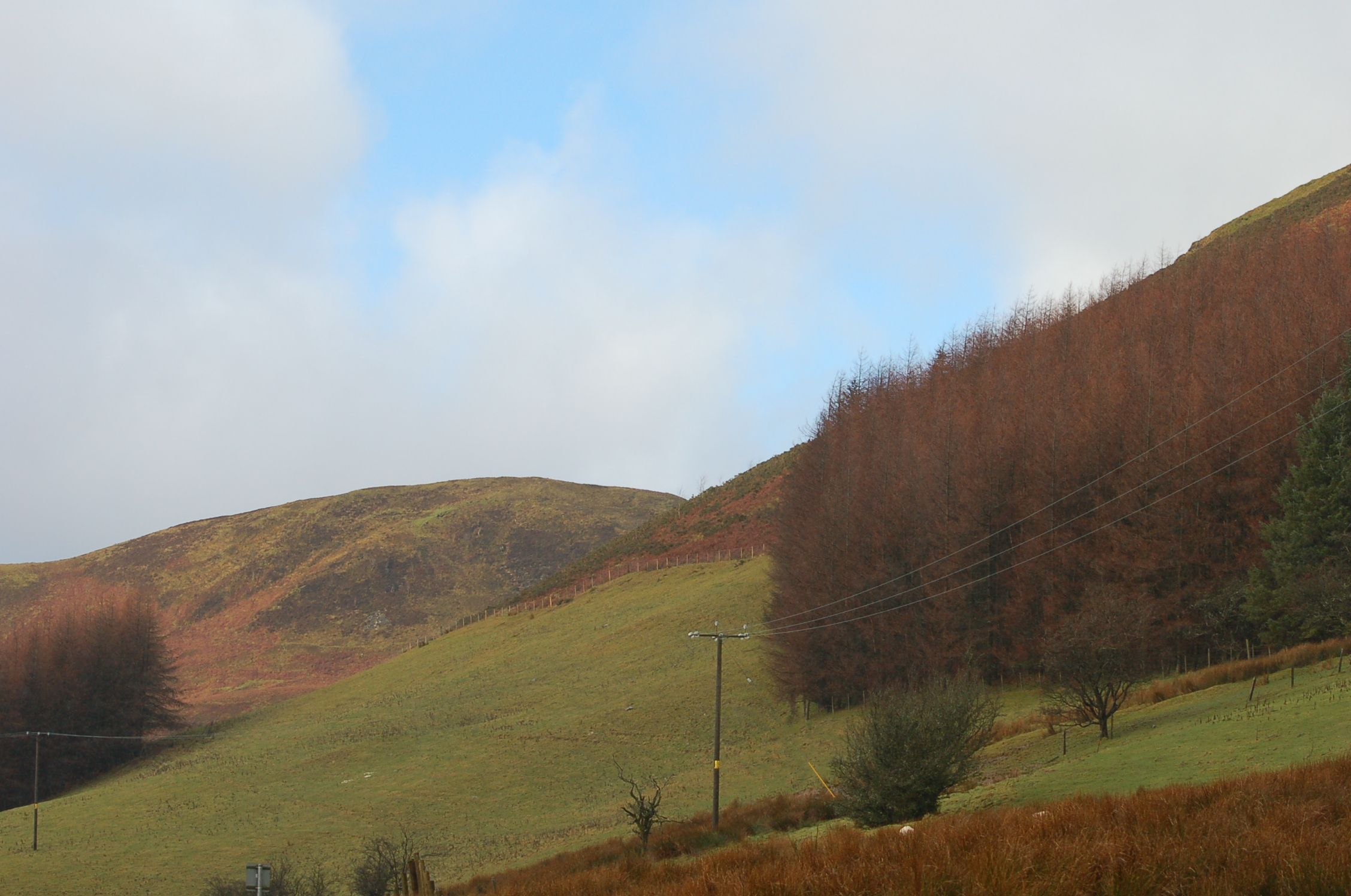
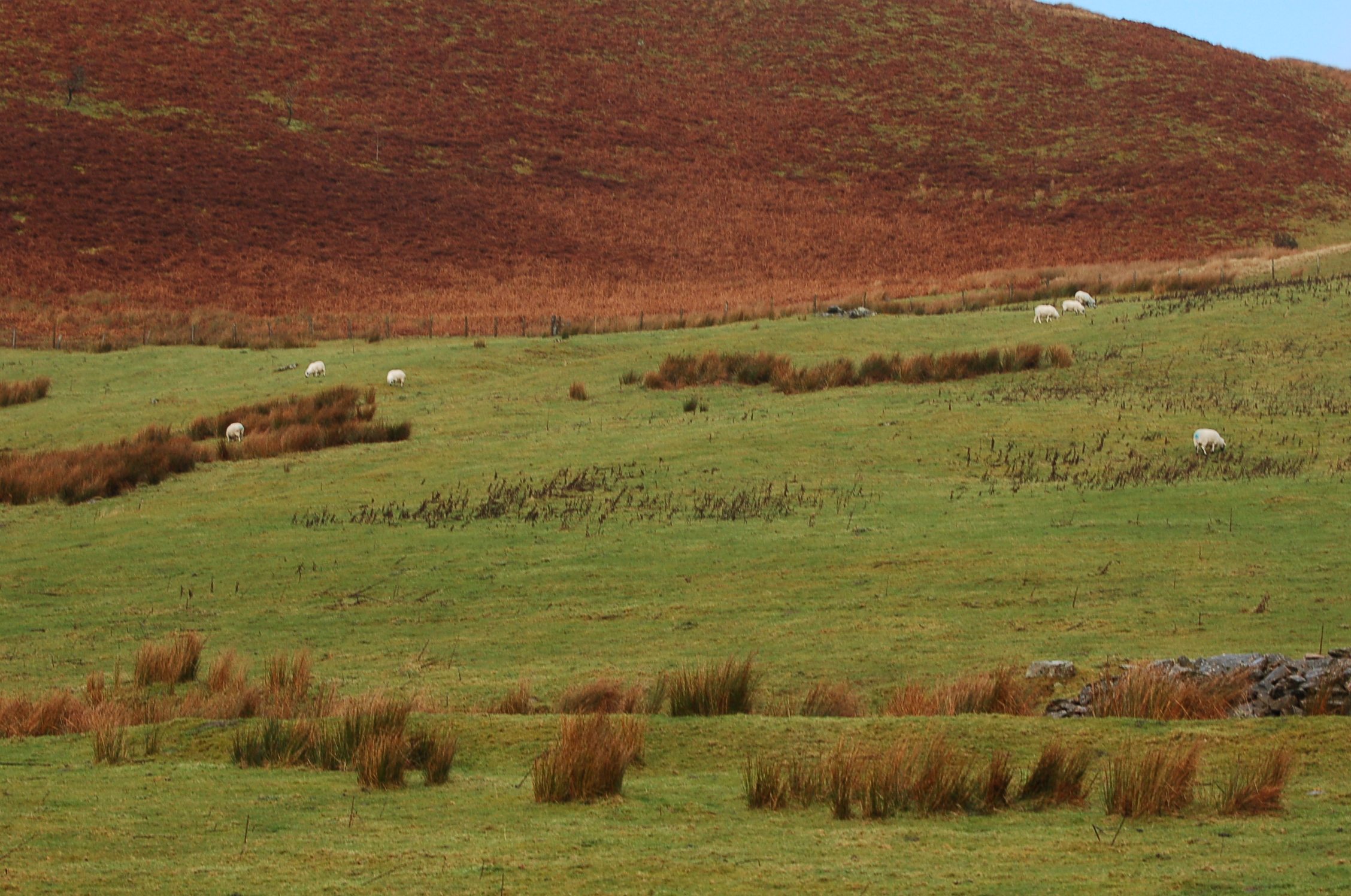
The journey involved following just two main “A” roads once we left the Shrewsbury bypass behind, the A458 and the A470. After leaving our home county of Shropshire behind we crossed into Wales and traveled east to west right across the counties of Powys and Gwynedd. Along the way we regularly stopped to take shots of the landscape. It is amazing how varied the landscape can be in such a short journey.
The A458 main road from Shrewsbury to Welshpool cuts through rich lowland dairy cattle farmland before reaching the hills called the Breiddens.


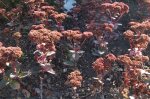
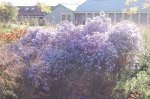
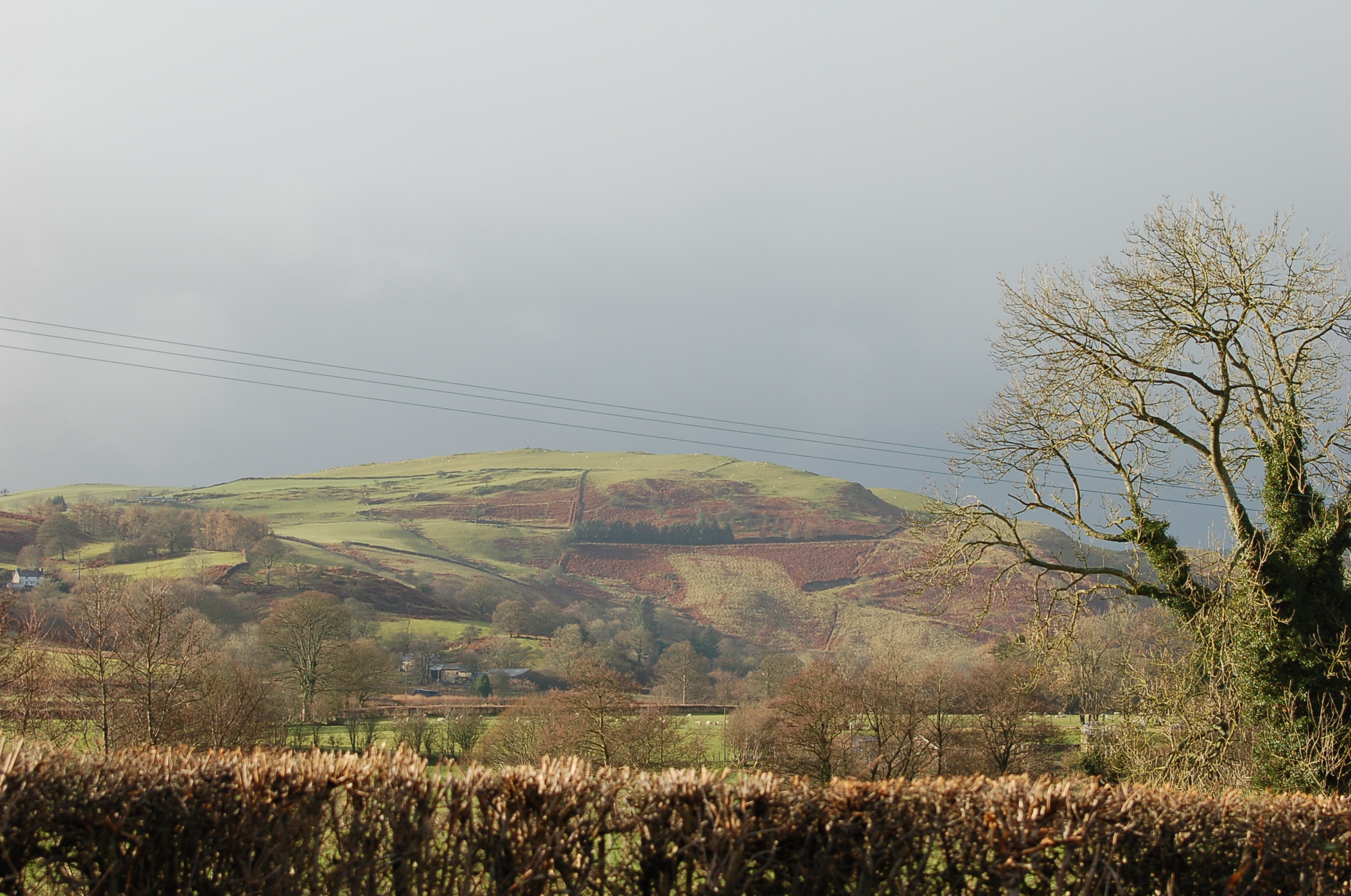
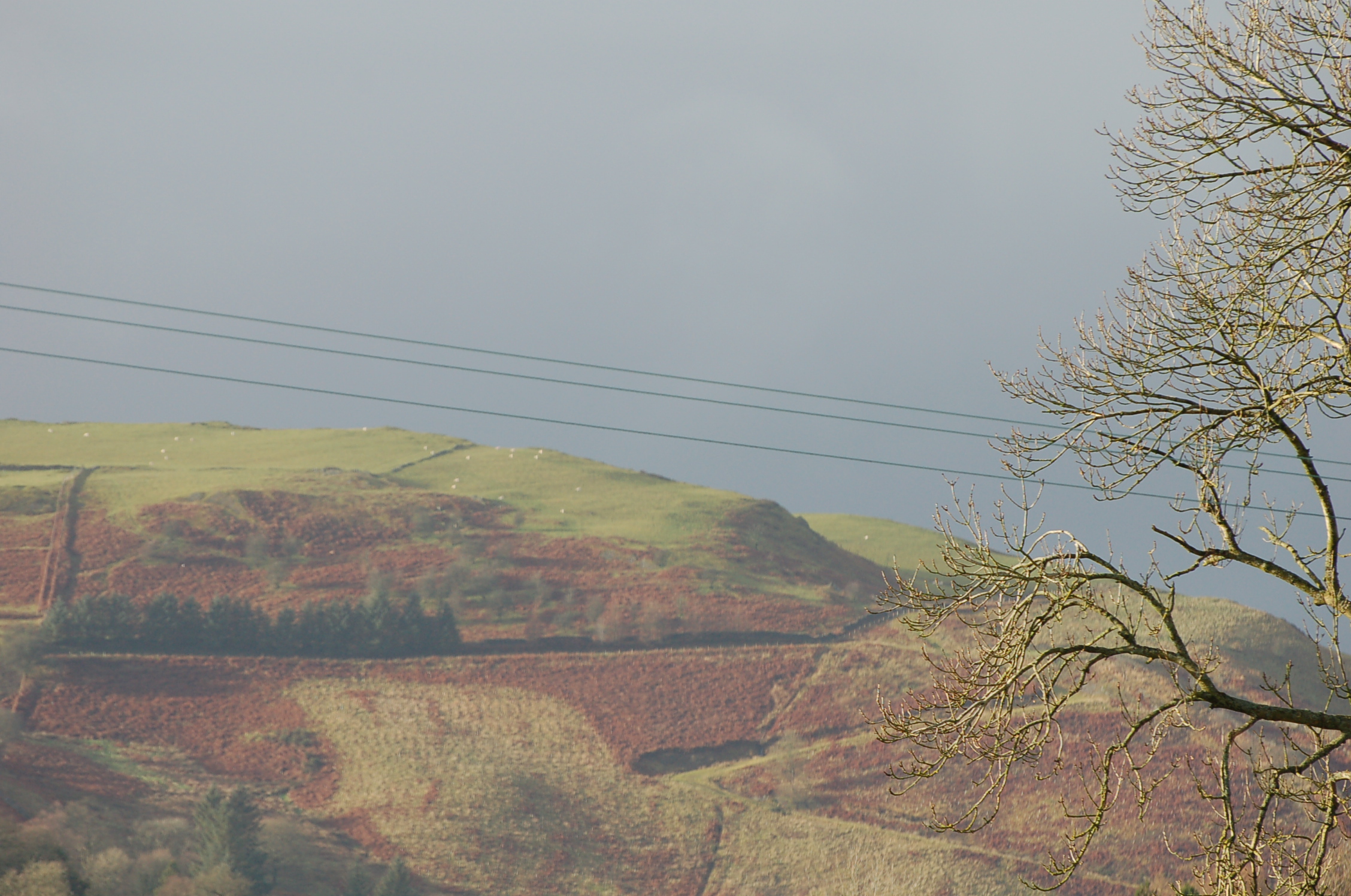
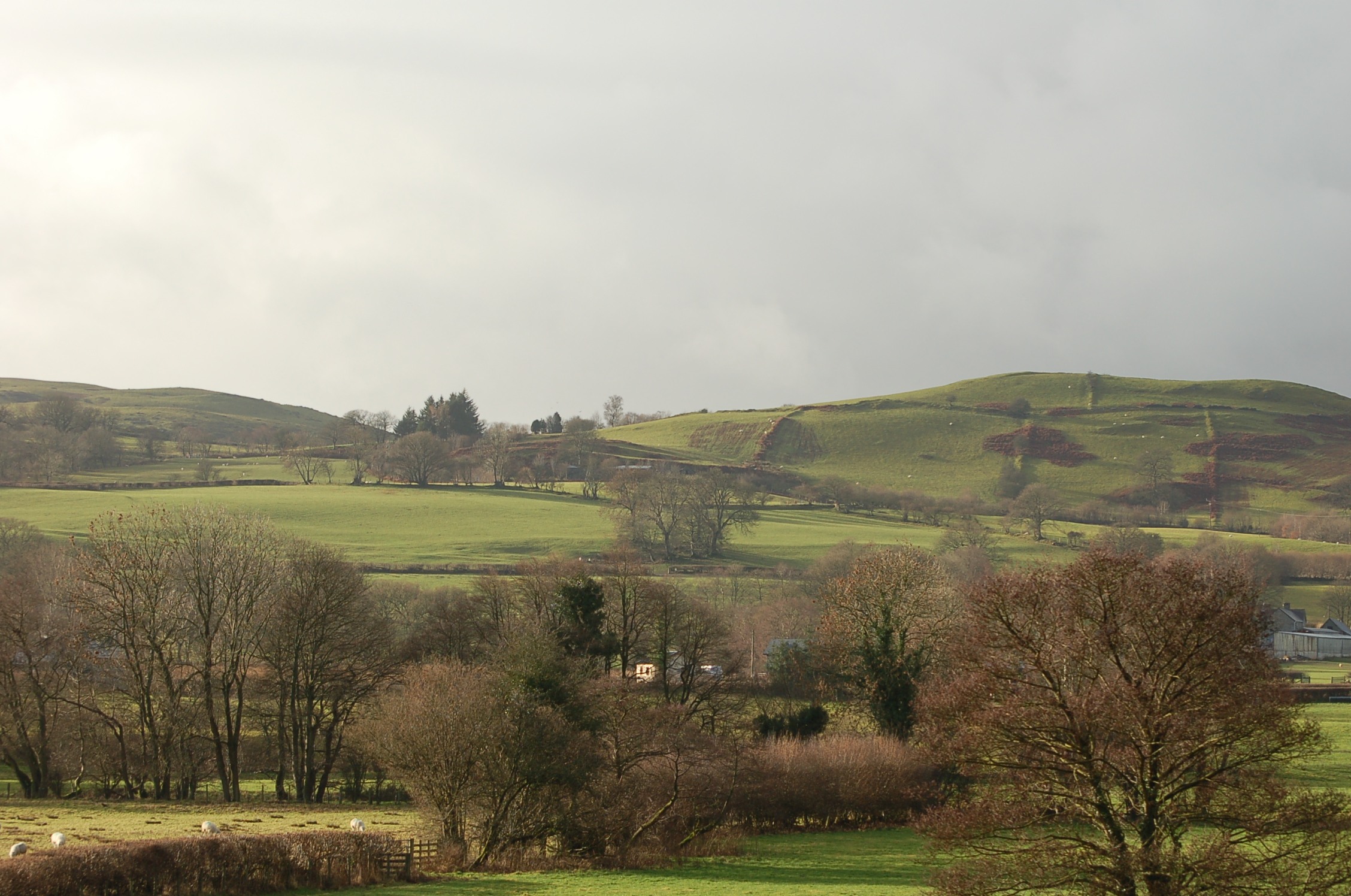
We passed through the market town of Welshpool and followed the road down a valley which the road shared with a narrow guage steam railway, a favourite of tourists. Farms appeared to snuggle into the valley bottoms where water lay in many fields after so much winter rain. High bare rounded mountains began to rear up each side of the valley. The mountains were dotted with clumps of woodland some of natural broadleaf trees while others were of the coniferous commercial forest plantings. The winter time leaves the broadleaf trees bare showing their skeletons. White branches like bones of many trees were broken up by the colourful branches of birches, which looked like soft hanging purple mist. In places along ancient hedgerows black skeletons of oak broke up the horizon. The conifer plantations just looked like unfriendly, unnatural solid black blocks, scars on the landscape.
Clouds moved quickly and rain came and went with them lit up on odd special occasions by a rainbow.
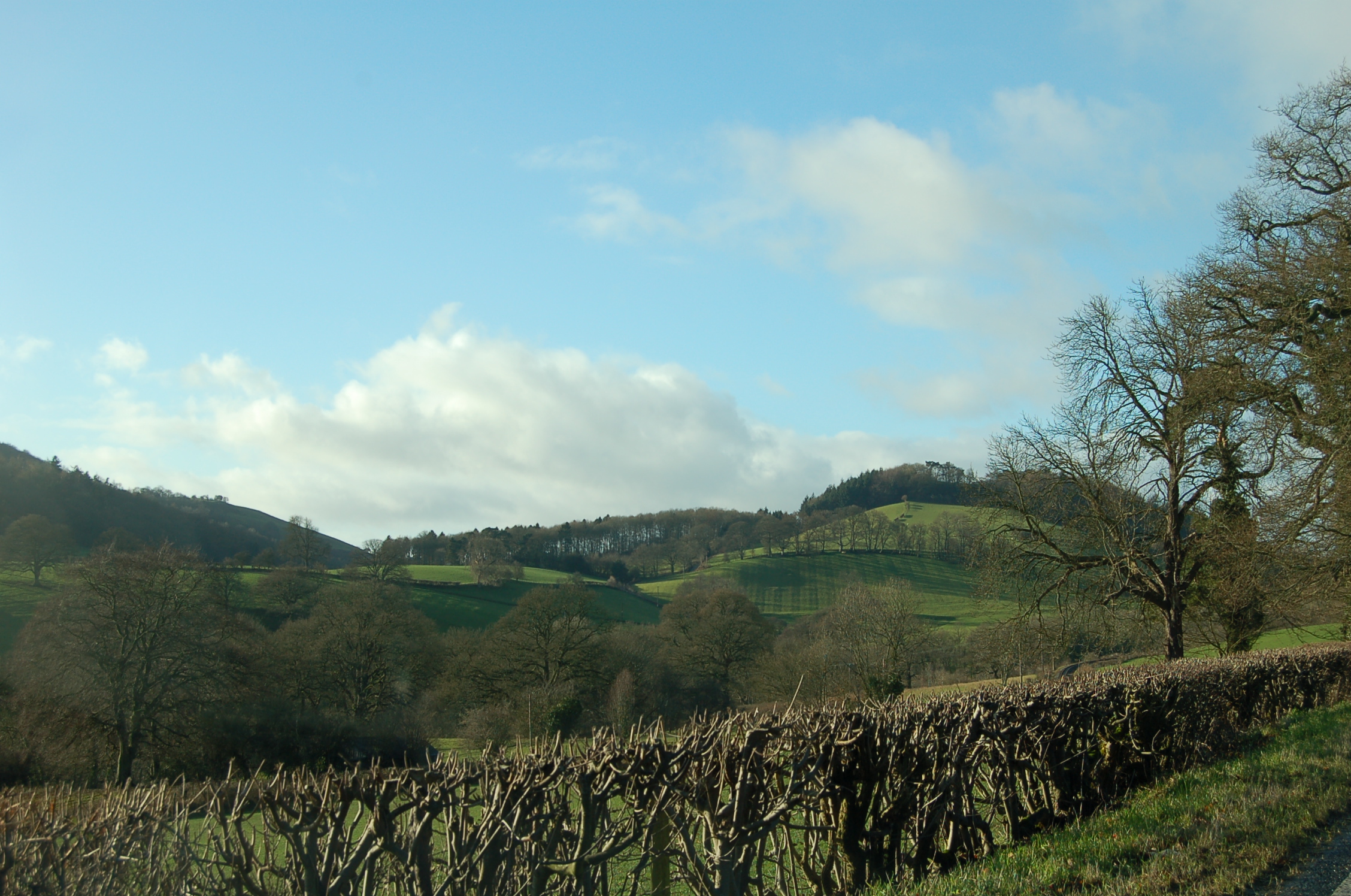
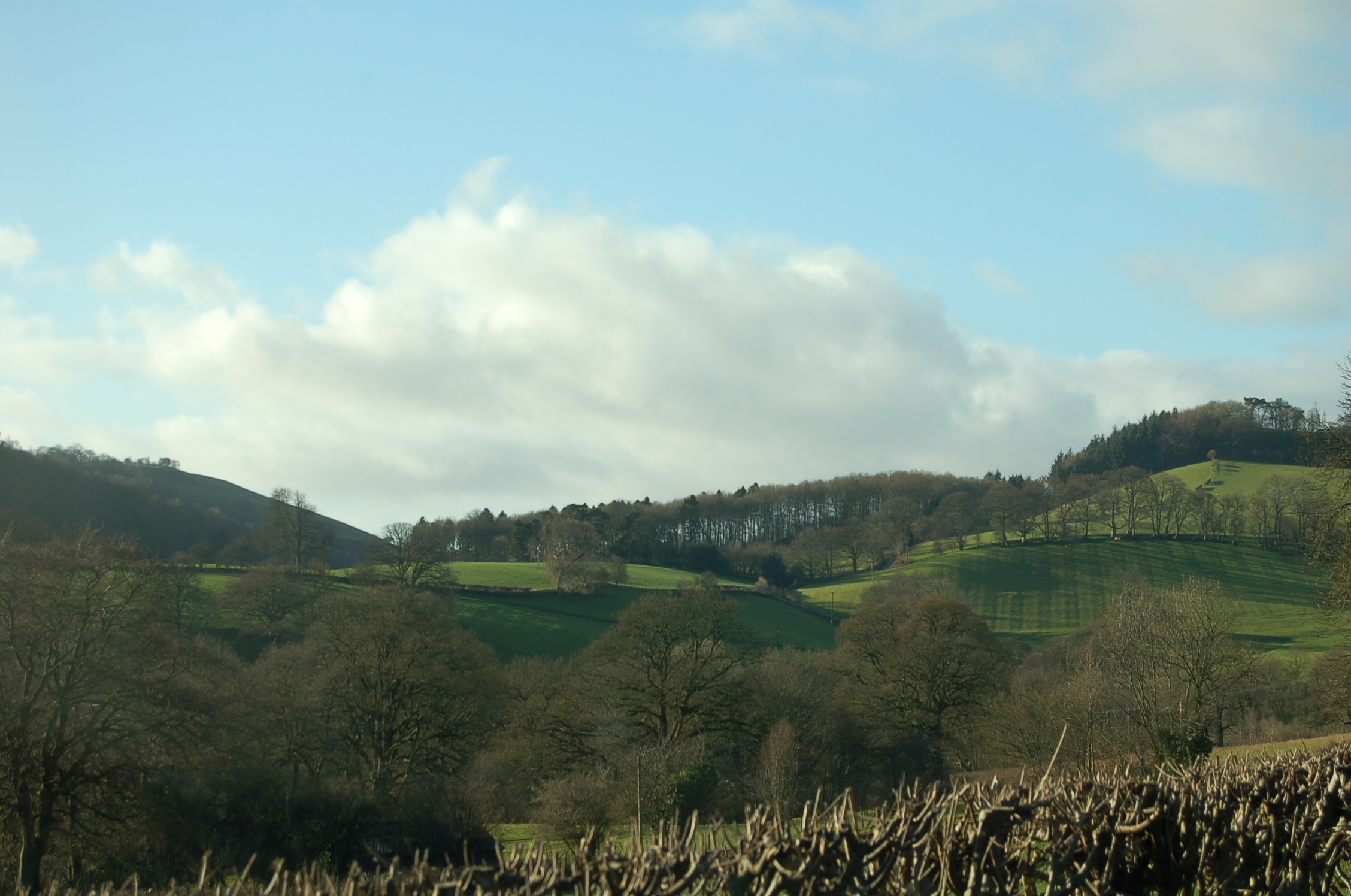
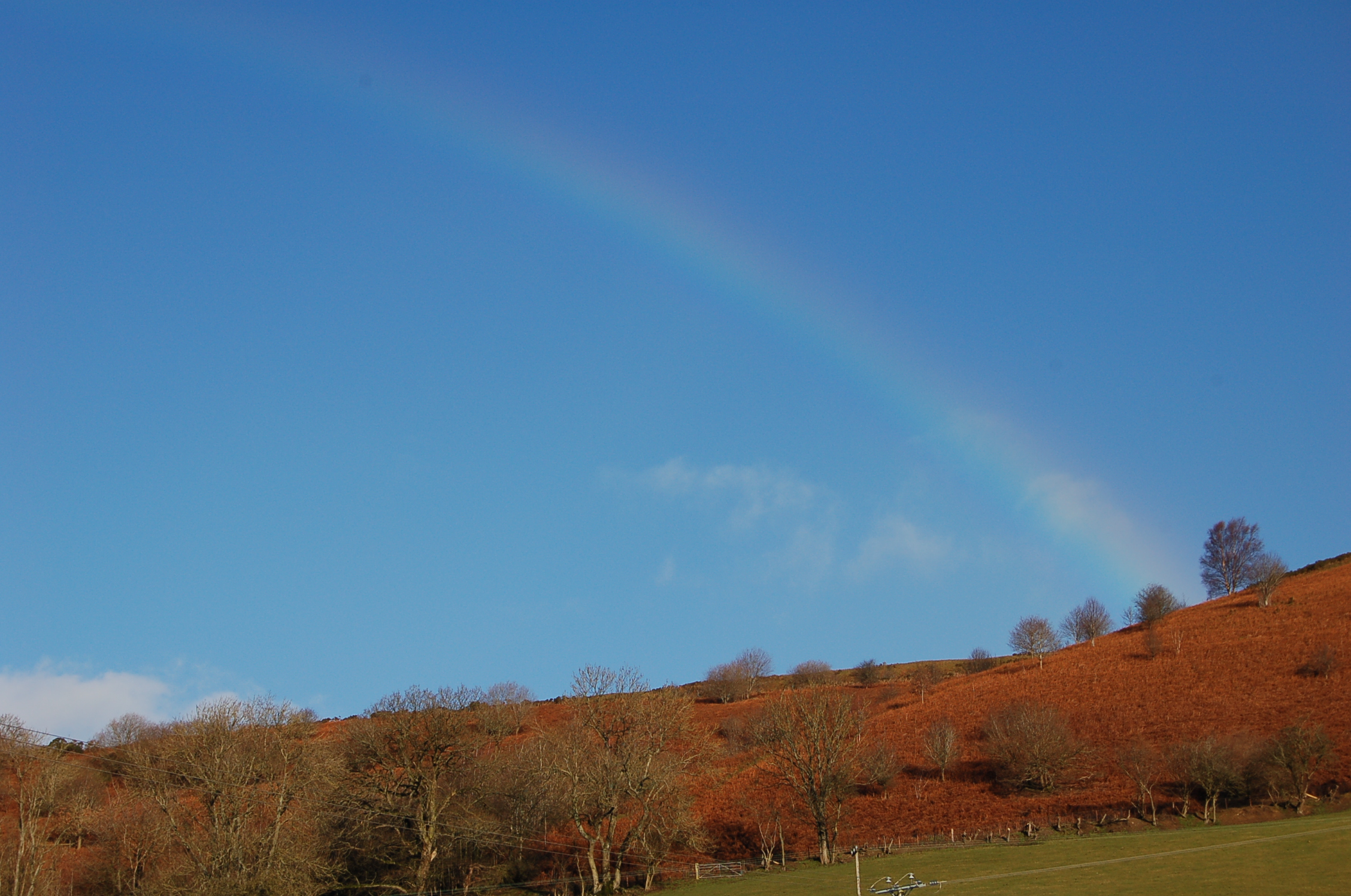
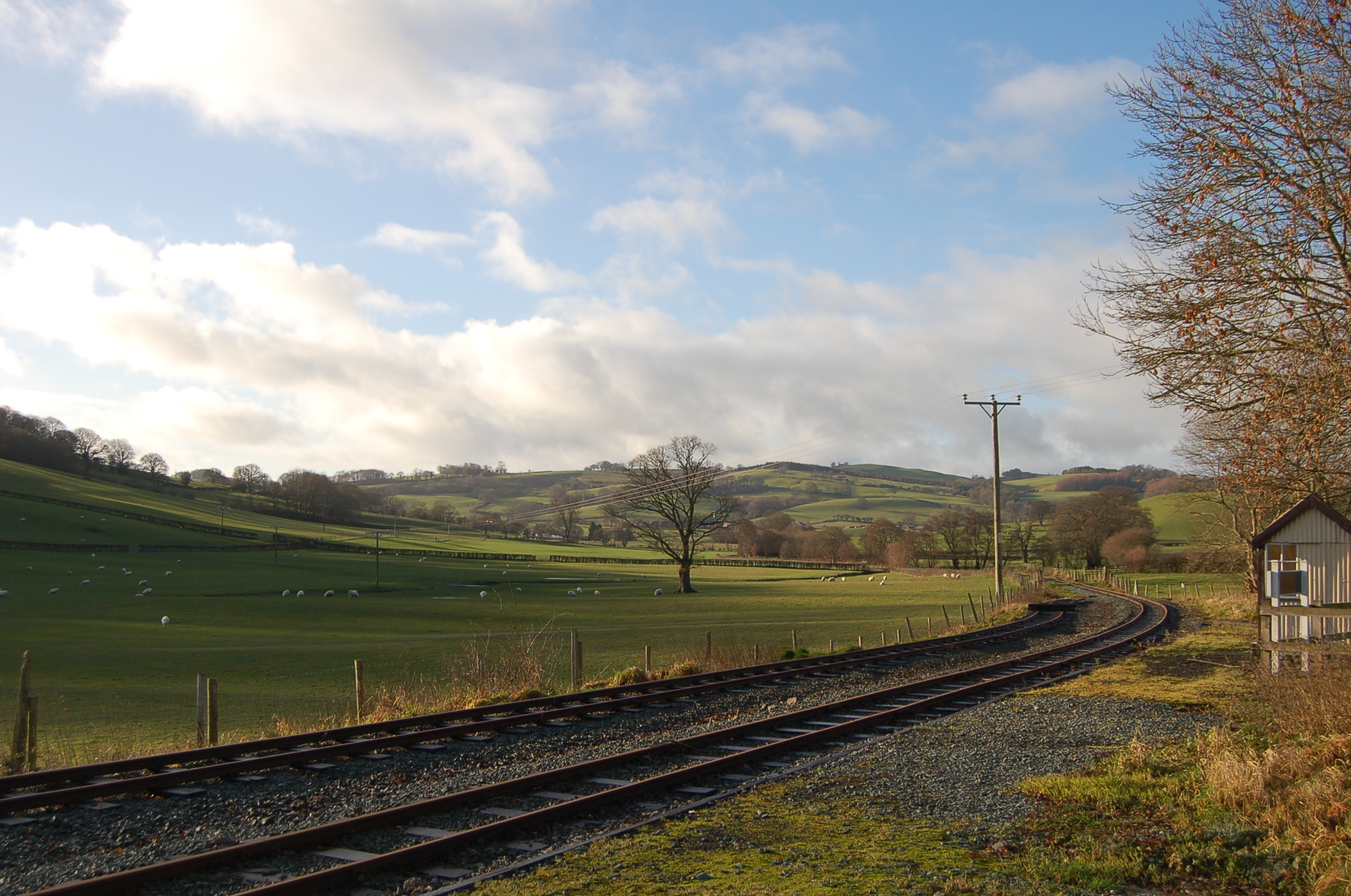


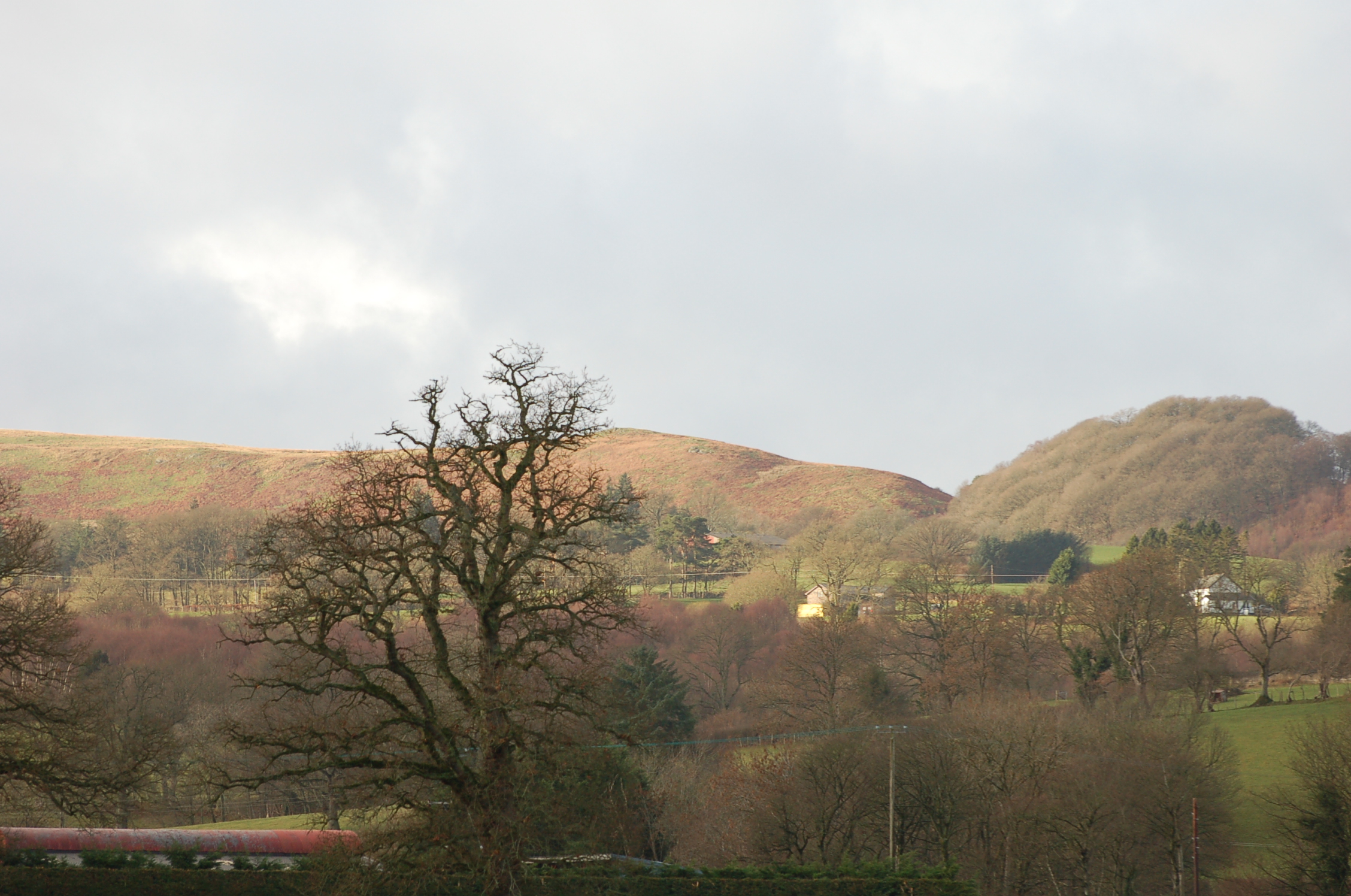
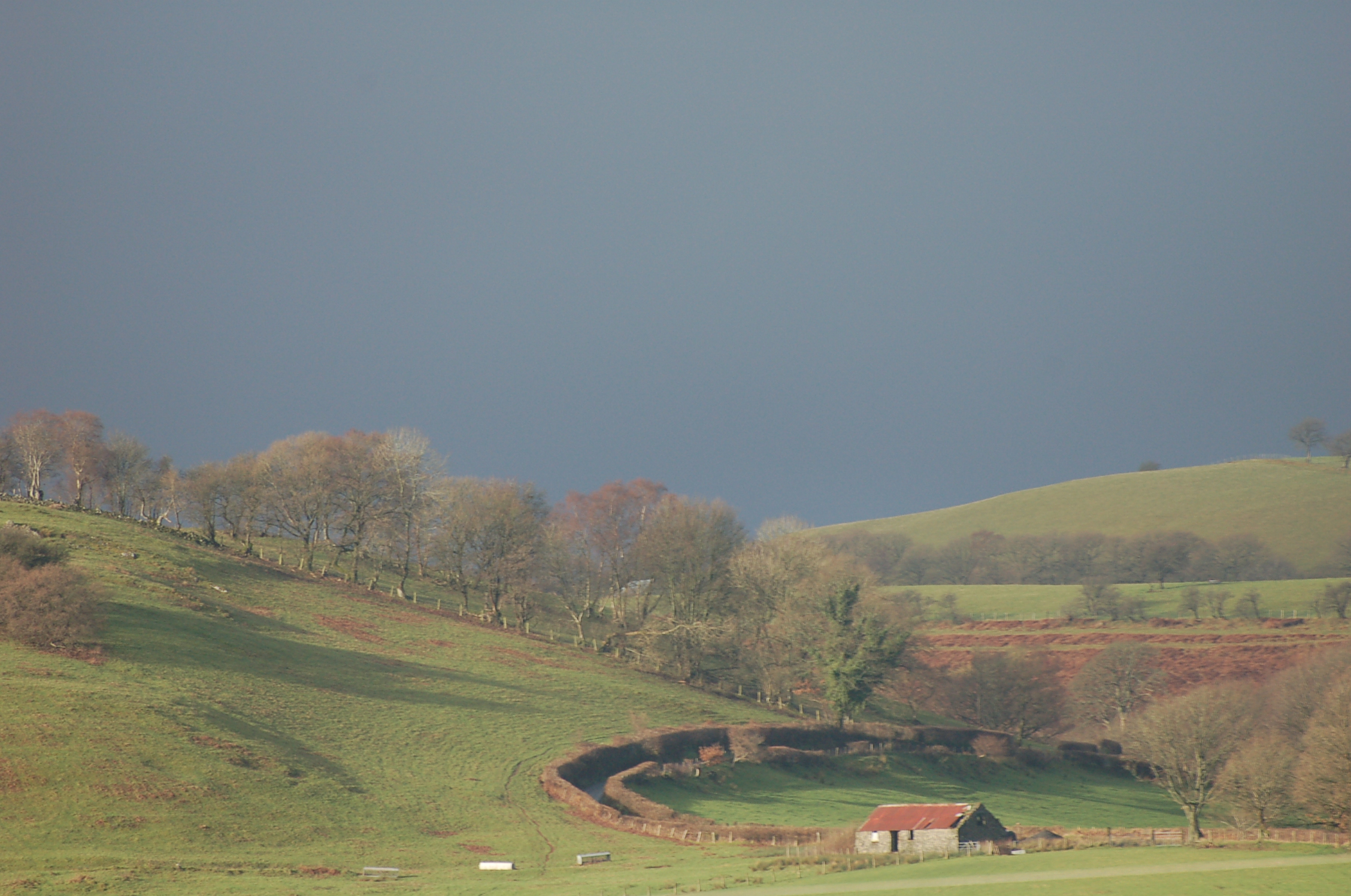
As we progressed further into the mountains of mid-Wales the sky turned a deep grey-blue but shafts of sunlight still penetrated to light up green fields and the occasional grey stone farmhouses.






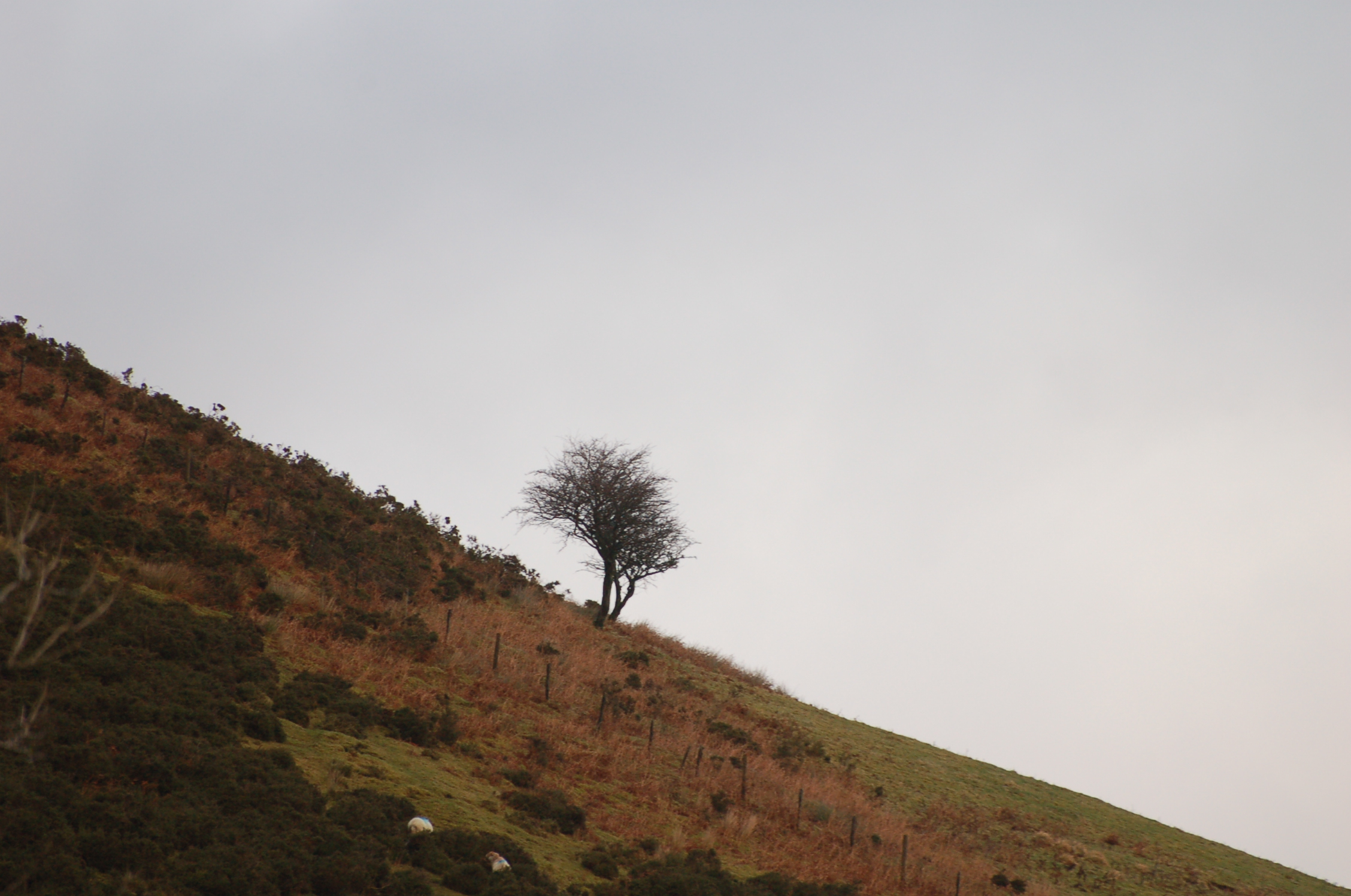
After crossing mid-Wales westward we neared the coast and our journey took us more in a northerly direction for the final section. See “Over the hills to the sea. Part Two” for the next stage of the journey.
A Vegetarian | Nature Lifestyle Blog
.....and nurturing my soul
Journeys In St. Louis Gardening and Beyond
Consult the genius of the place
A blog full of humorous and poignant observations.
Notes from a wildlife-friendly cottage garden
...an emerging social science
'The most important and informative publication on wildlife of our times' - The Independent. This blog is a member of The UK & Ireland Natural History Bloggers group: www.uknhb.blogspot.com
Inspire - Cultivate - Grow Native Plants - Restore Landscapes
To create and protect a semi-natural wild space for the people of Farnham to enjoy and experience an array of British wildlife in our town
The www.gardeningwithchildren.co.uk Blog
birding through the seasons, why birds matter and how to conserve them
with a camera in hand
Transform your outdoor space
My allotment, cooking and other interests
my gardening life through the year
Trying to live a creative life
trying to live as lightly as possible on our beautiful planet
Nature lovers from Leicester living the good life.
Finding the beautiful in the everyday
Michelle's Allotment
thoughts from and about my garden
Big plans for a small garden
A Walled Country Garden in South East Scotland
Life at the fruity chicken
Off grid living. Self sufficient. "PERMAGANICS RULE".
Nottingham's Grade 2* Listed Allotments and Community Orchard
a journey in suburban vegetable gardening
The madness of growing your own
A novel approach to vegetable gardening
Sustainable living in the Irish countryside.
Master Gardener, amateur photographer, quilter, NH native, and sometimes SC snowbird
Recent work and work in progress and anything else that interests me
a chaotic cottage gardener
a weekly blog that creates a personal philosophy through photographs and words
Stories from a sassy and classy Southern farmbelle.
Simple Organic Gardening & Seasonal Living
turning dirt into dinner
today the world is created anew
Notes from a Devon garden
Life Through The Lens
A photography blog showcasing the best photography pictures and videos on the internet
Just another WordPress.com site
personal observations from the natural world as the search continues for a new approach to conservation.
The Wonders of Life through my Eyes, my Heart, my Soul
 greenbenchramblings