Categories
arboreta birds fruit and veg garden design garden photography garden wildlife gardening grow your own hardy perennials Hardy Plant Society HPS meadows ornamental trees and shrubs Shropshire South Shropshire village gardens

Holly Cottage – another garden visit with the HPS

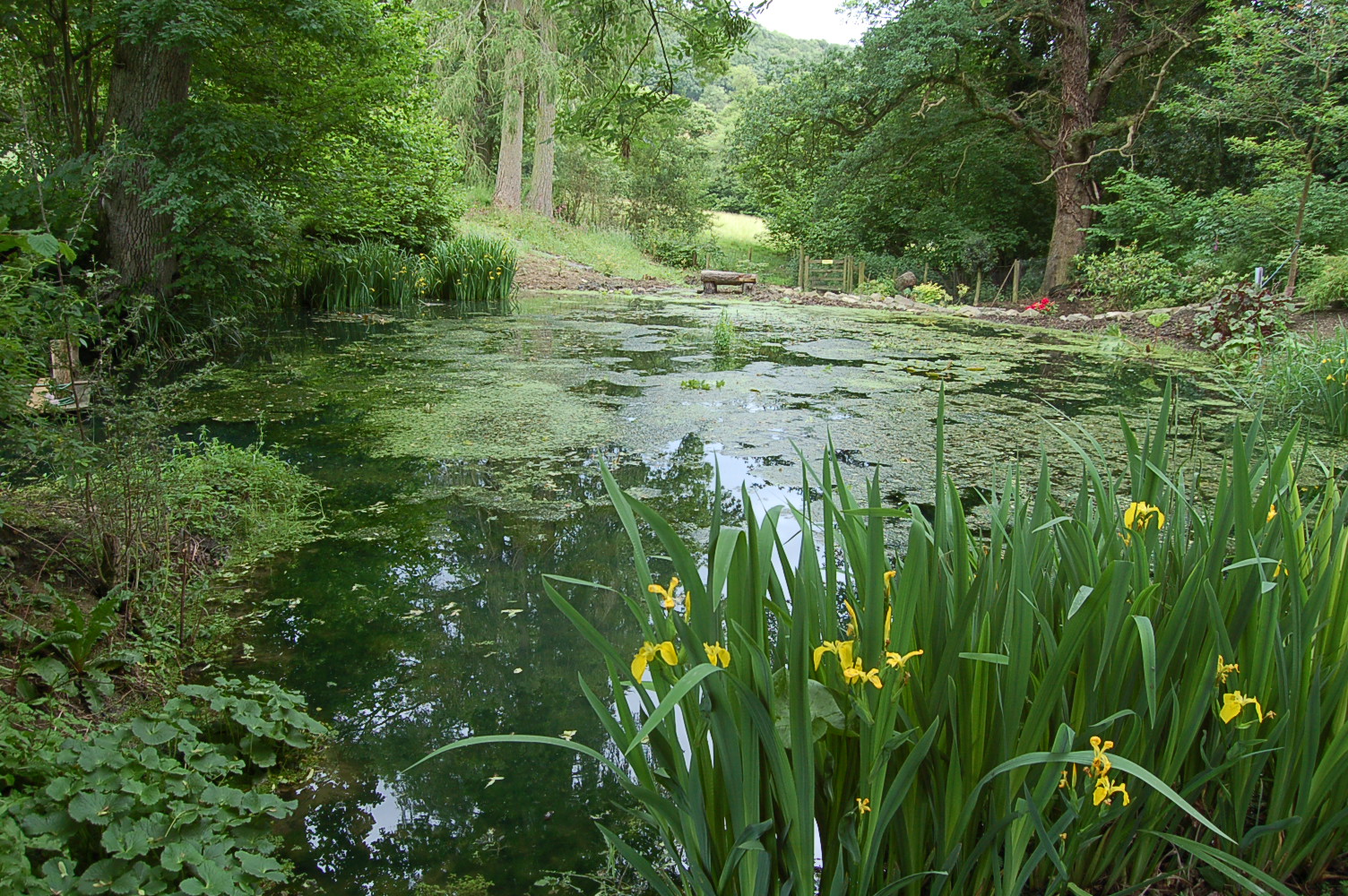
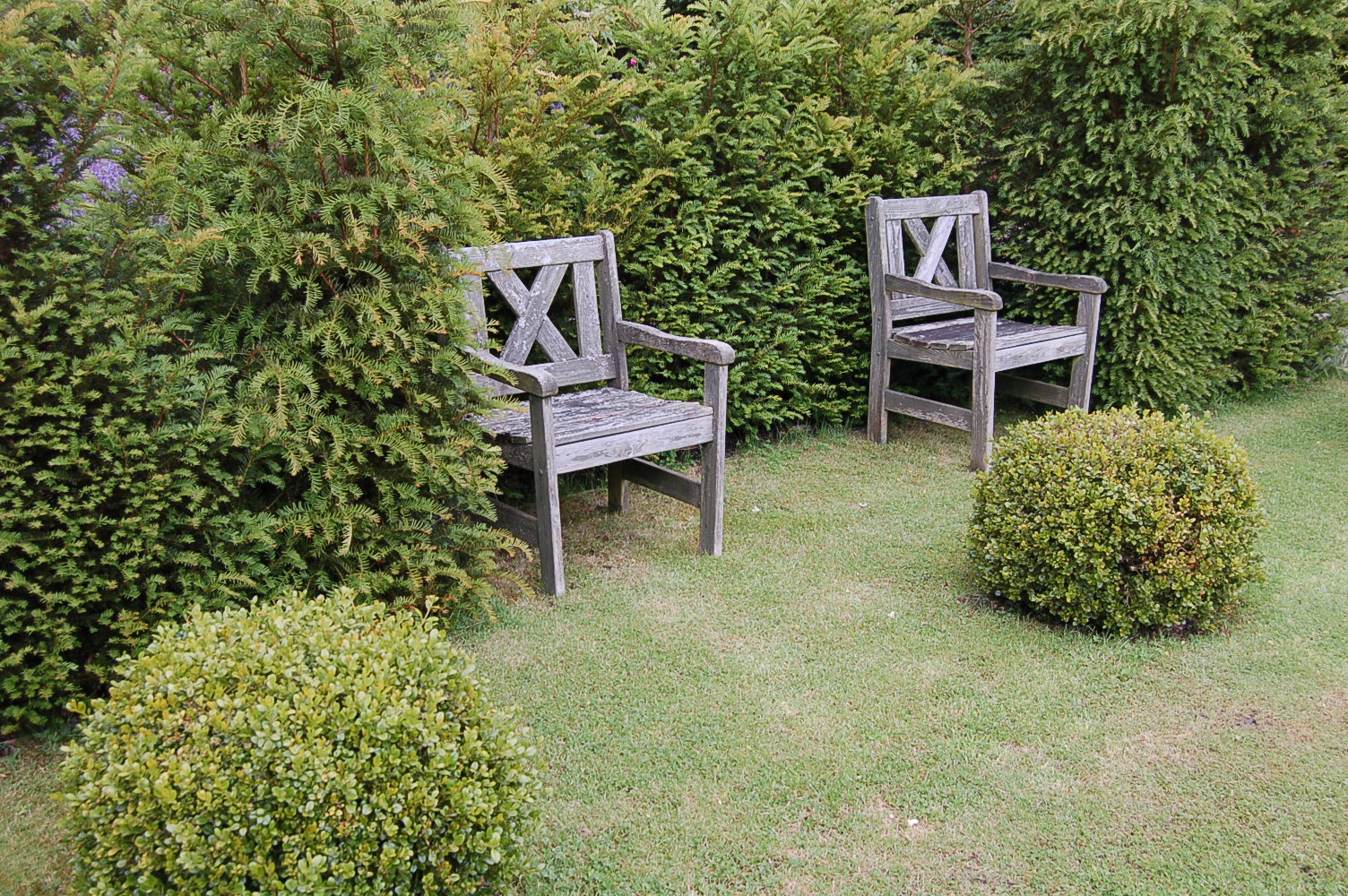
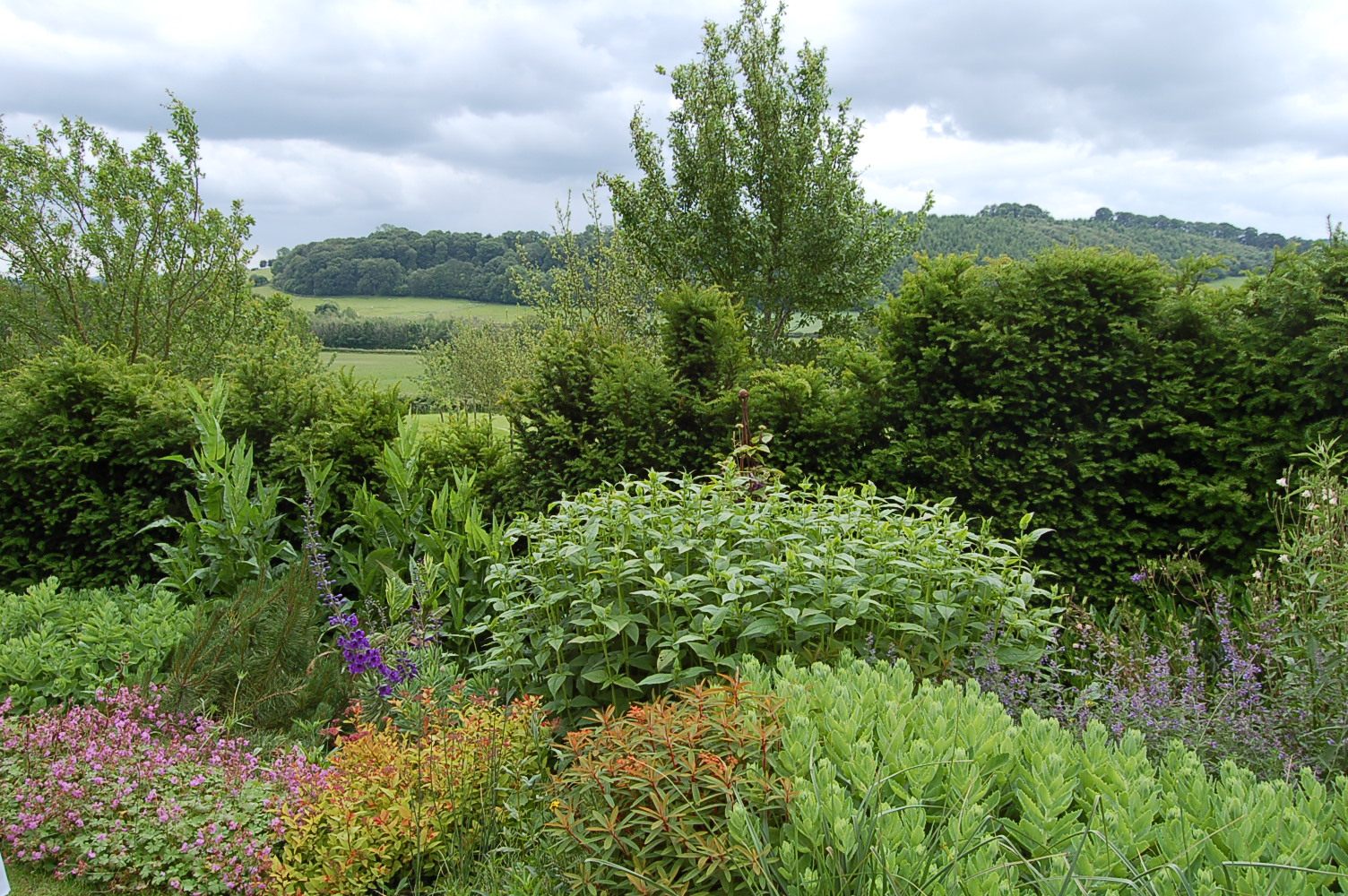
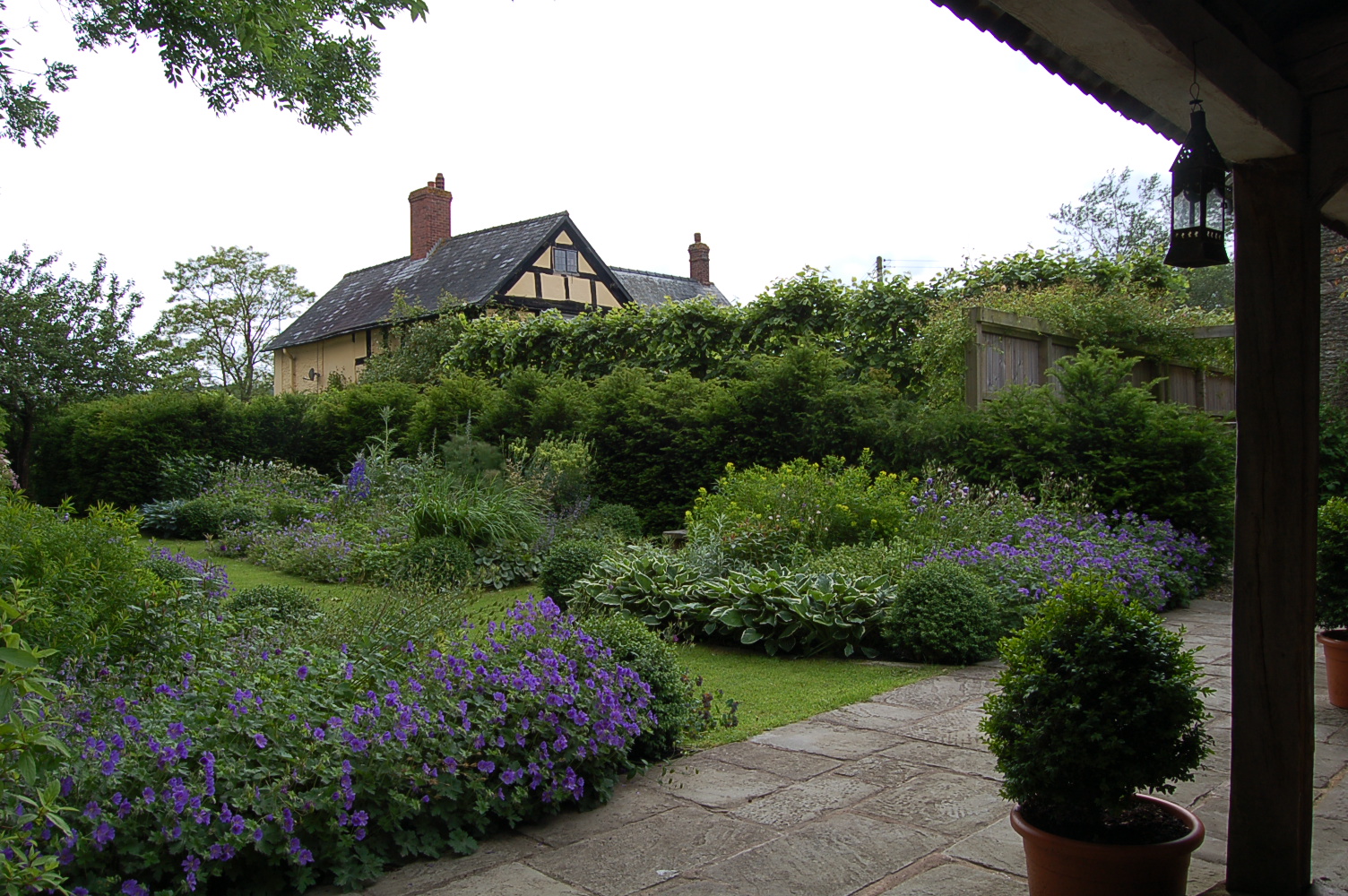
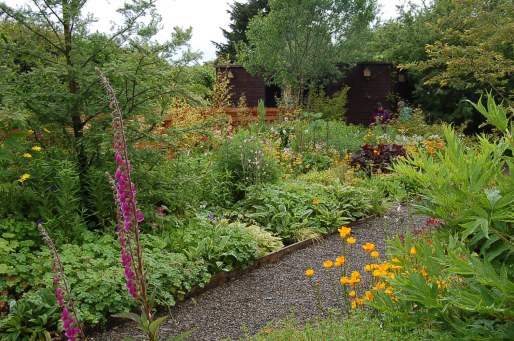
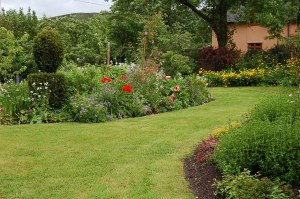
June 16th and we are visiting two gardens with fellow members of the Shropshire Hardy Plant Society. In my previous post I shared our morning visit to “Fairview” and now we move on to Holly Cottage just a few miles away for the afternoon. To get to the cottage we had to drive over a few fields dodging sheep and when we parked up the heavens opened and the temperature plummeted. Bravely we donned waterproofs – it was well worth it. The garden at Holly Cottage ran downhill from the cottage and within its two and a half acres formal and informal plantings of herbaceous plants mingled with mature trees, meadows, a pond and even a small stream.

DSC_0173

DSC_0179 DSC_0195 DSC_0178 DSC_0180

DSC_0168

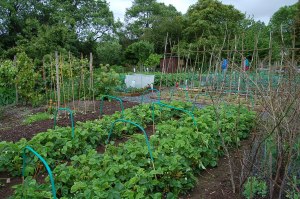
Just as we were impressed by the veggie patch at Fairview in the morning, the fruit and veg garden at Holly Cottage impressed too. This veggie patch practised organic principles to produce quality harvests.

DSC_0182  DSC_0181 DSC_0185 DSC_0183

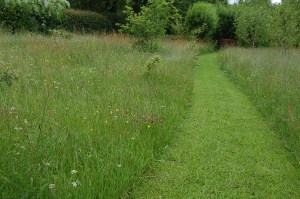
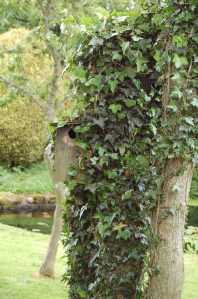
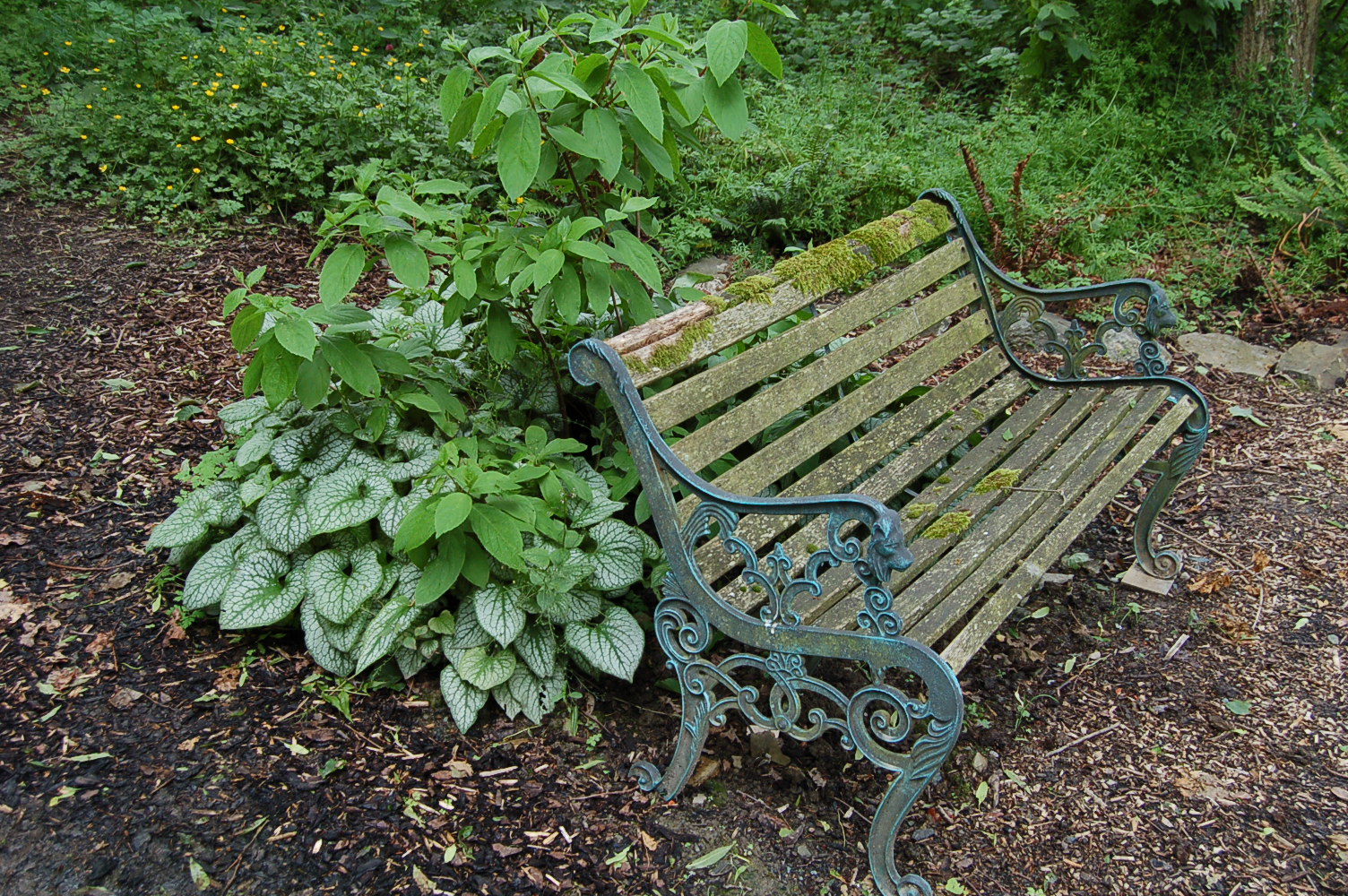
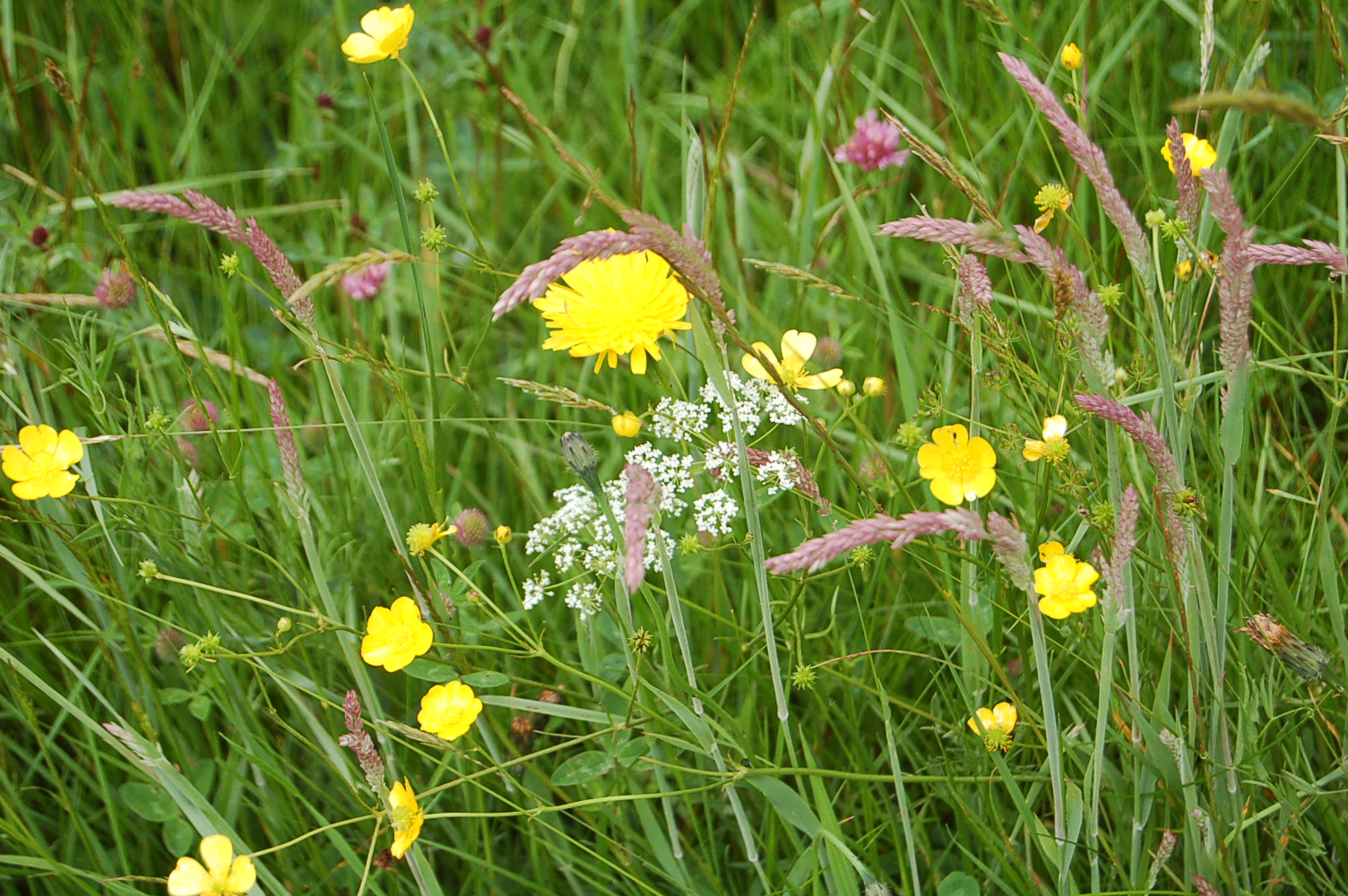
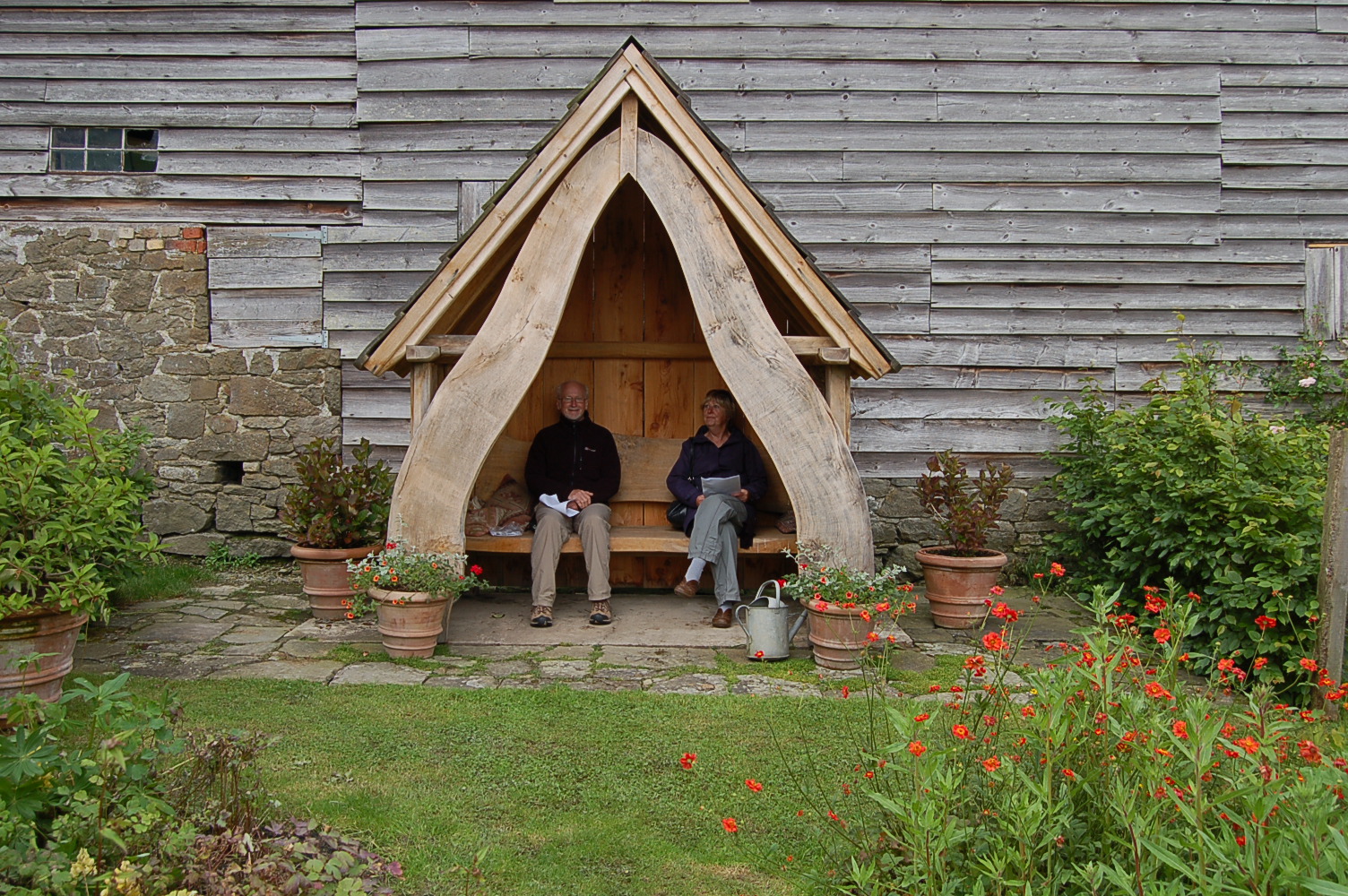
Part of following organic principles is to encourage wildlife to garden with you and here there were nest boxes and bird feeders in evidence as well as a meadow, a small arboretum featuring mostly native and wildlife attracting trees and shrubs. A comfy rustic bench was also positioned where we could appreciate it all.

DSC_0187 DSC_0189 DSC_0209 DSC_0207

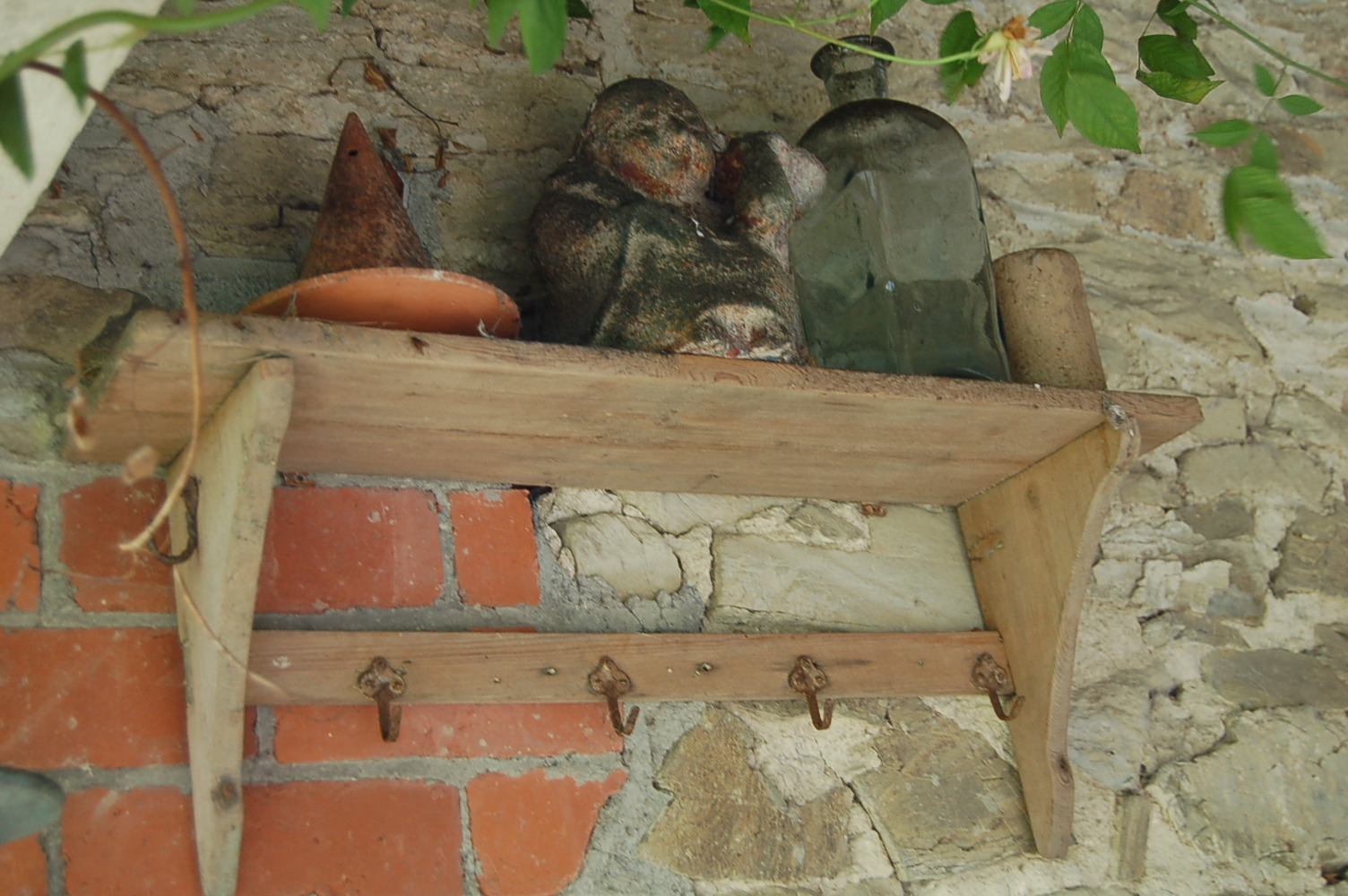
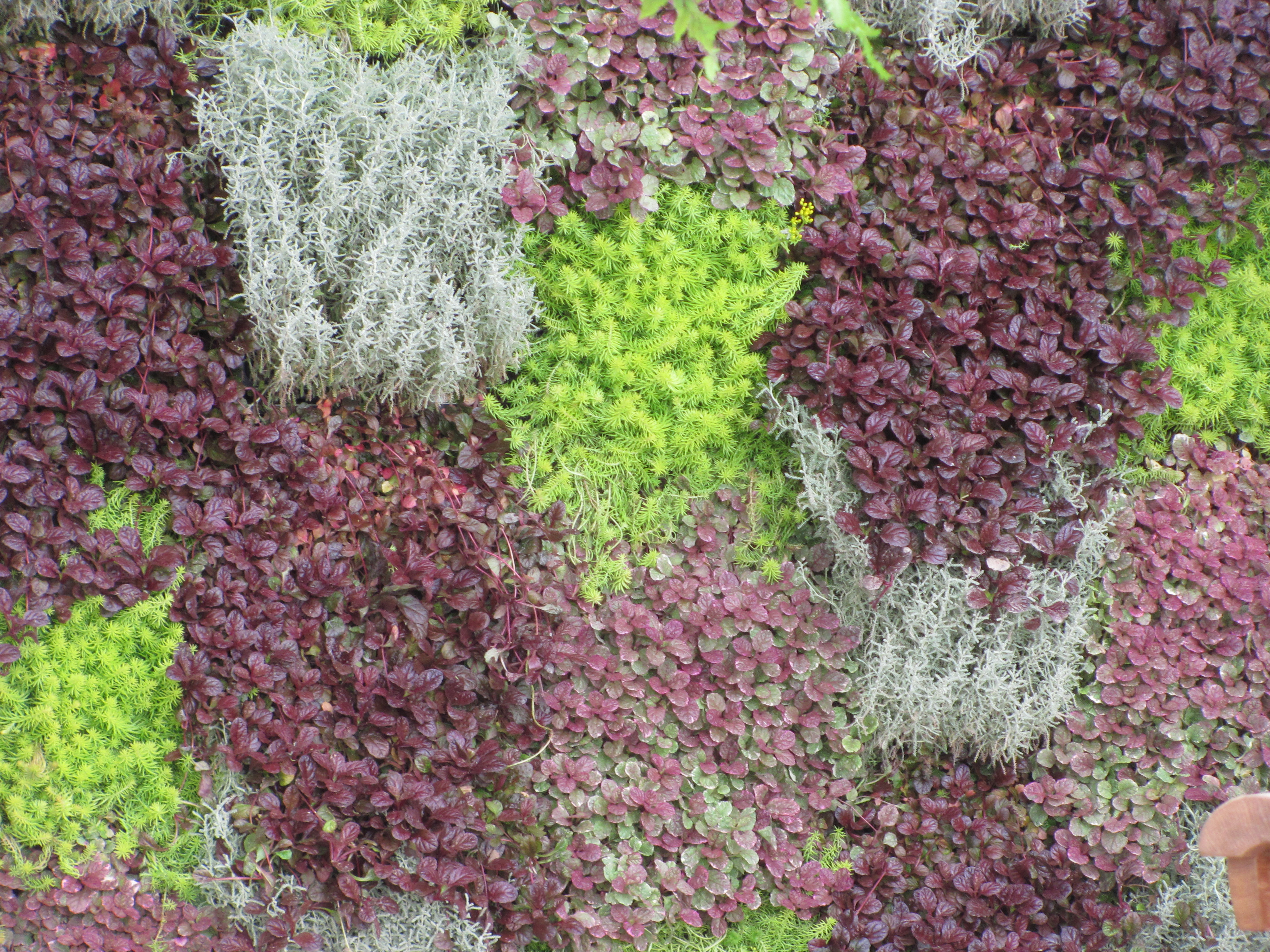
We like to find original new ideas or twists on old favourites during our garden visits. At Holly Cottage we came across this wonderful example of high-rise living for plants.

DSC_0214

As with any garden the plants are the stars and on a dull, wet cold day such as this these stars are needed even more. Holly Cottage’s plants did not let us down. They lifted our spirits out of the gloom.

DSC_0175DSC_0169DSC_0199

Categories
garden design garden photography gardening gardens open to the public grasses hardy perennials meadows ornamental grasses photography RHS

Wisley Part 4 – the Steppe-Prairie Meadows

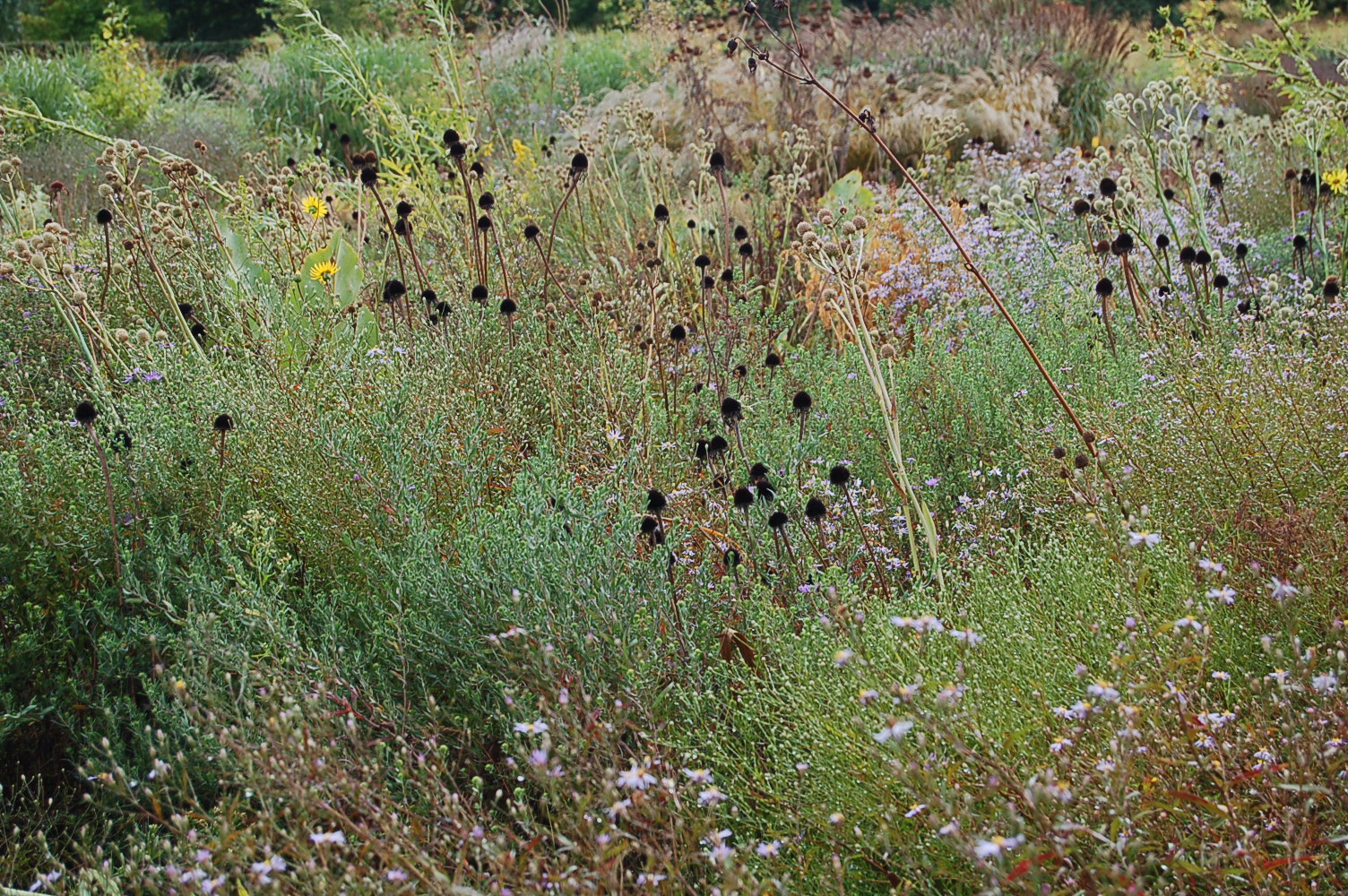
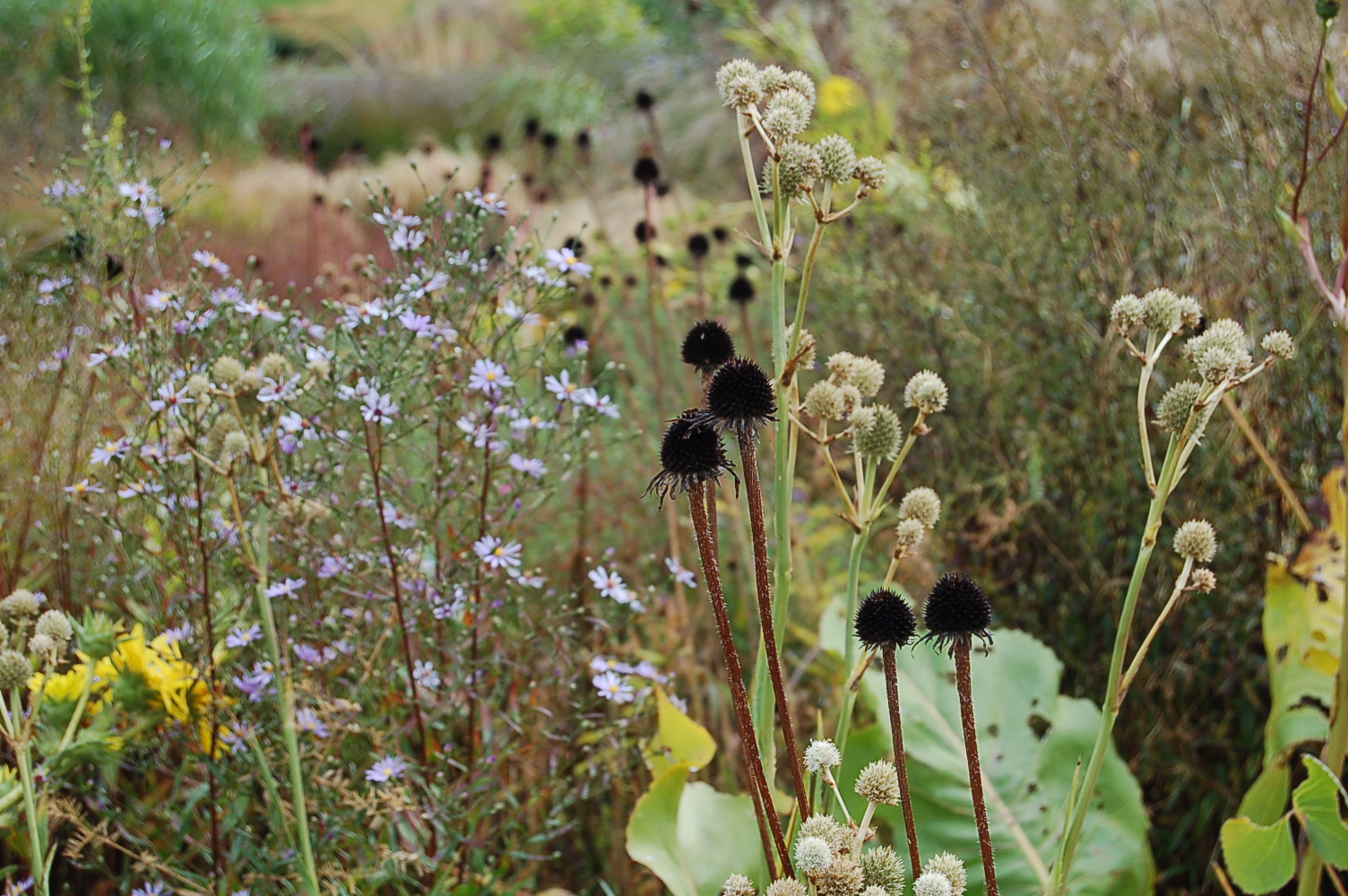
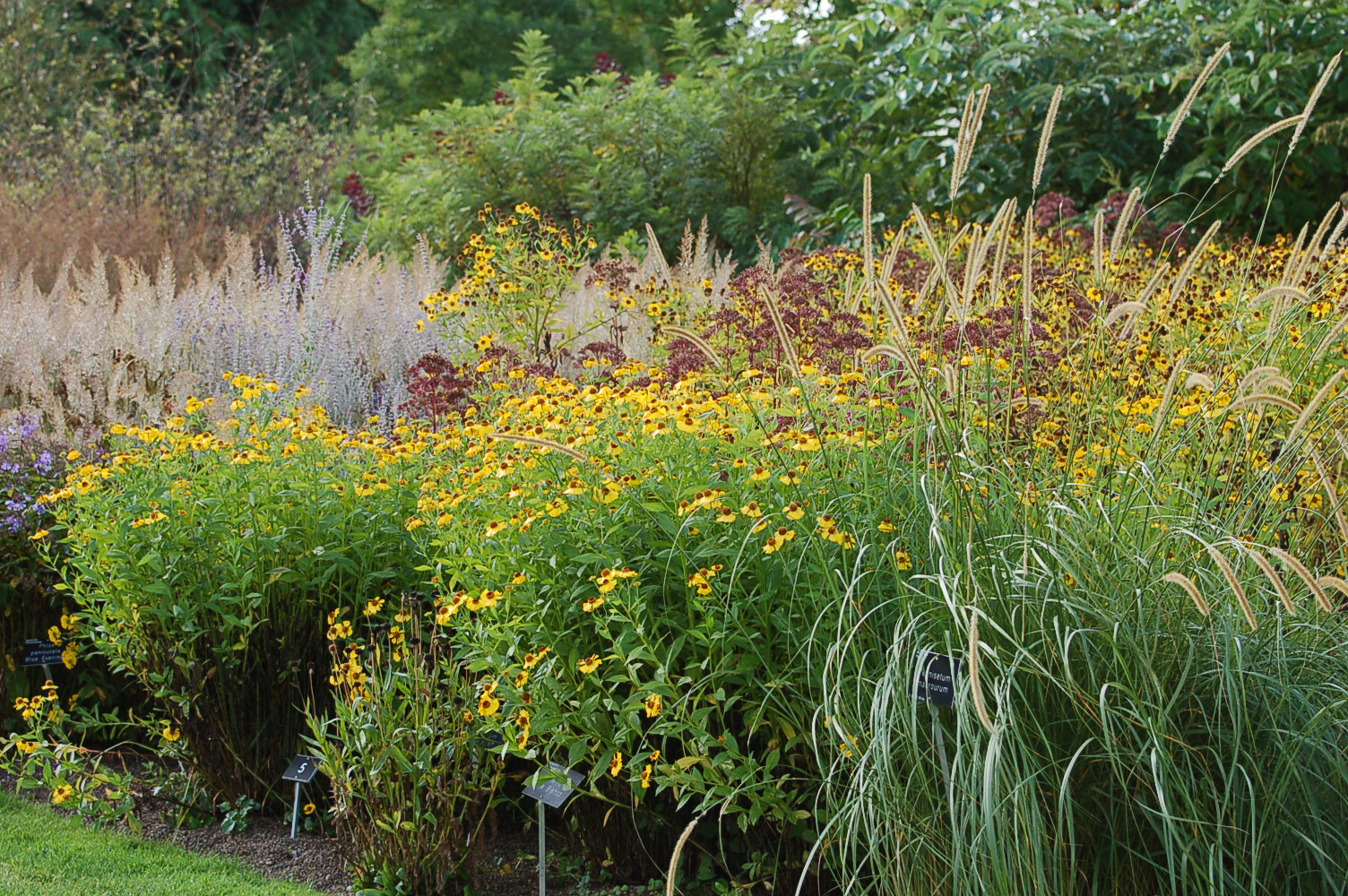
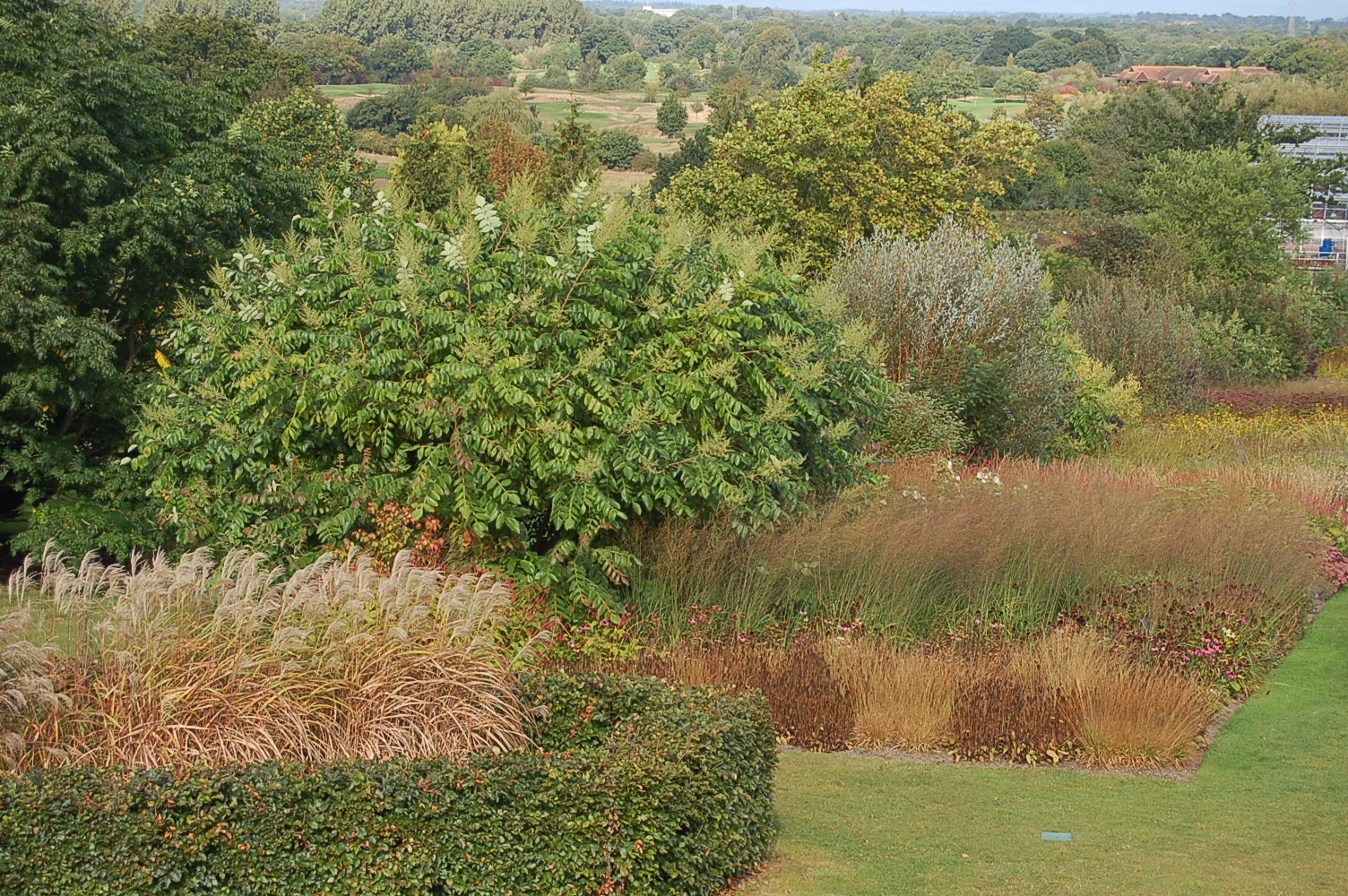
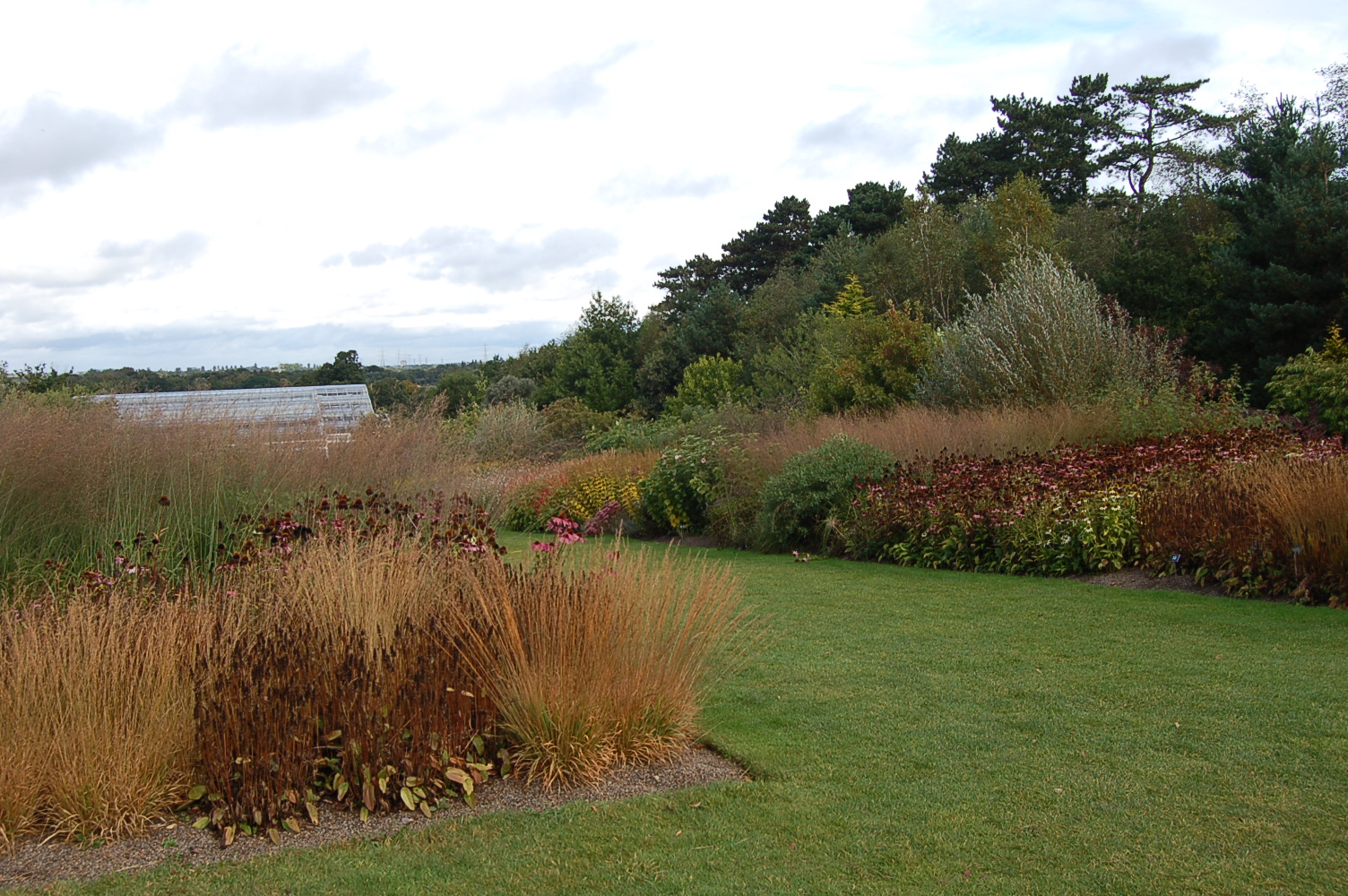
Alongside the Centenary Glasshouse at RHS’s Wisley is an area of meadow planting that has to be one of the best in England. We walked around it in the rain and our enthusiasm was not dampened one iota. The design and plant choice is the creation of Professor James Hitchmough, best known as the right hand man of Nigel Dunnet from Sheffield University.

DSC_0154 DSC_0158 DSC_0159 DSC_0160 DSC_0175 DSC_0176

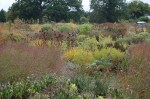
His garden at Wisley features  naturalistic, flowing plantings of hardy perennials and grasses which look and feel remarkably natural even though carefully and thoughtfully designed.

The word that springs to mind for this planting style is “gentle”. When walking through the gardens along its meandering narrow gravel paths we felt the atmosphere – peaceful, calm and relaxing.

Categories
garden design garden photography gardening gardens open to the public grasses hardy perennials meadows ornamental grasses photography RHS

The Gardens of the RHS Part 3 – Prairies and Meadows at Wisley.

DSC_0164DSC_0044DSC_0066

When we first visited Wisley a few decades ago the grass was cut short and neatly edged. There certainly were no wildflowers allowed to grow amongst the neat blades of grass, and there certainly were no meadows.

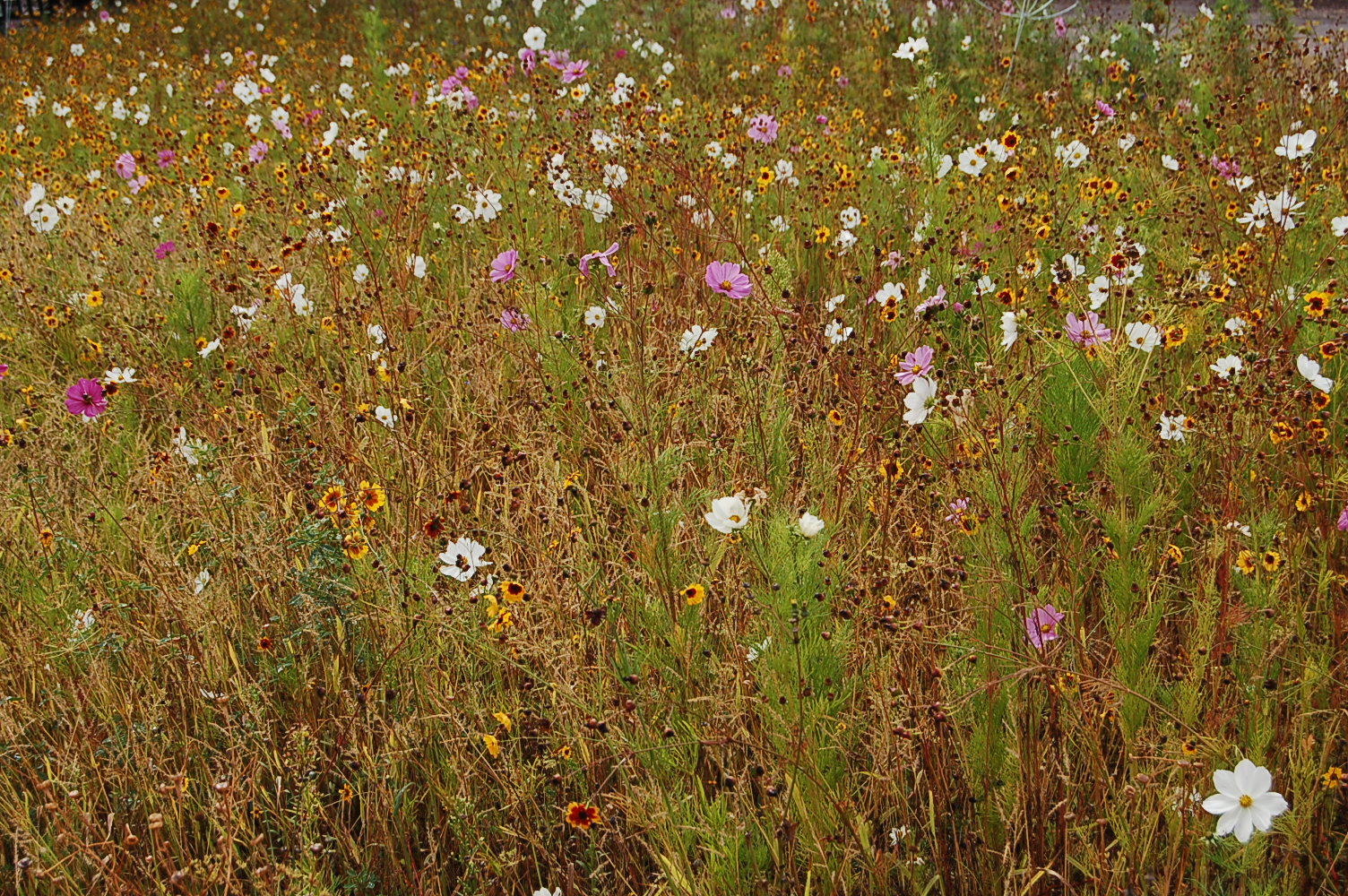
But now differential grass cutting is favoured with some areas cut short, others allowed to grow longer and wildflowers are establishing as they enjoy this new habitat of longer grasses. The trend towards planted meadows and prairie-style plantings are well represented, which is good for us because these styles are a real favourite with us both.

Piet Oudolf has designed and planted magnificent double borders – very different to traditional English double herbaceous borders such as those at Arley House.

DSC_0081 DSC_0082 DSC_0083

Carefully chosen herbaceous plants are planted in large groups to create swathes of colour and texture. In early autumn, when we looked at Piet Oudolf’s borders, grasses featured strongly alongside drying stalks and seed heads of herbaceous perennials. There were still flowers to be seen and they were enhanced by the background of stems.

DSC_0043 DSC_0045 DSC_0051 DSC_0052

To enjoy a look at the plants of Piet Oudolf’s Wisley Borders click a photo in the gallery below and follow the arrow.

But Oudolf is not the only garden designer to create meadows at Wisley, as a newer and equally beautiful planting area has been created by Professor James Hitchmough. It is described as a steppe-prairie meadow. See the next post ………..

Categories
allotments autumn colours birds community gardening conservation garden wildlife gardening grow your own hardy perennials meadows ornamental trees and shrubs trees wildlife

A Wander around the Allotments in December

December hasn’t afforded us many days suitable for lottie gardening, sending us too much rain and flooding the site again for a while early on in the month . In fact the first attempt at working on our plot this month resulted in that too well-known sinking feeling. Algae has turned the soil green again.

We arranged to meet council officers and contractors on site one morning to start sorting out the flooding issues. It was of course raining when we met! Four trucks full of machinery and fluorescent coated workers arrived soon after, champing at the bit to start. Sods law came into play. The floods reappeared and water began lapping at our feet and at the wheels of the vehicles. One tractor got stuck in the mud!

The weather won the first round as work was abandoned even before it started, but at least everyone knows what to do now. We were promised that work would commence as soon as the weather allowed.

Things had improved a little by the end of the first week of the month, enough to arrange a day for Jude and I to meet our friend Pete to get some site tasks done in the communal gardens. We planted trees that had been donated by members in the new coppice we are developing, plus two others in the Autumn Garden. These were purchased with the prize money we had received when we won an award as the Best Community Garden in Shropshire by the National Garden Scheme.
SAMSUNG

As Pete looks after the Autumn Garden he chose the trees. Two great specimens arrived in the back of his car, an Acer rubra and a Gleditsia Sungold.  In the photo above Pete is planting the Gleditsia and below is the Acer with its red stems. We can now look forward to the golden foliage of the Gleditsia and the red petioles of the Acer which contrast so well with the yellow autumn leaf colour.
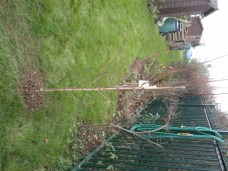
SAMSUNG

We also transplanted some wild flowers and wildlife friendly plants kindly donated by a member, Dee. They were on her plot and we transplanted them to the meadows and orchards. Wild Hypericum, Red and White Campion, Mallows, Plantain, Foxgloves and Teasles plus a selection of Verbascum. In the picture below Jude is busily planting verbascum in the orchard meadows. The insect homes look so much bigger when plants die down for the winter. We just hope they are full of our friends, the overwintering pest controllers.

SAMSUNG

In the first few days of December I completed constructing the Tawny Owl nesting box which I had started weeks ago. It is by far the biggest nest box I have ever attempted to make. Each year I ask members to donate their spare wood for nest box construction and plenty came in this year so I hope to make several boxes. My next challenge is to make a box for House Sparrows.

SAMSUNG

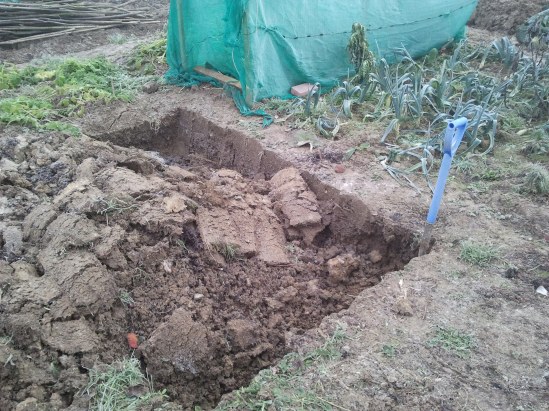
On our own plot we have dug over the plot and given it a deep duvet mulch of manure. Now we will let the worms and other little critters get to work on it. We have pruned our fruit bushes and brambles, and are mid-point through cutting down and digging up a blackberry which refuses to produce any fruit. We gave it our “three chance and out” treatment which we allow every failing plant in our gardens.

At the mid-point of December the weather turned cold with clear ” blue-skied” days and deep frosty nights. The workers came back to get started on the flood prevention work. They are getting on well. We met them early one morning to sort things out and I took advantage of the bright conditions to get some photos taken. Having just my Samsung Galaxy with me the rest of the pics in this post are taken with its camera – a great camera for a phone.

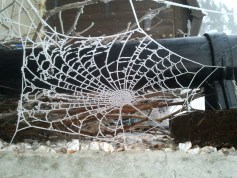
Spiders appeared to have been industrious all through the hours of darkness creating works of art for Jack Frost to add the finishing touches. In the first pic we can admire how they have decorated a shed’s gable end and the second and third show where they have added a feature to the Communal Hut.
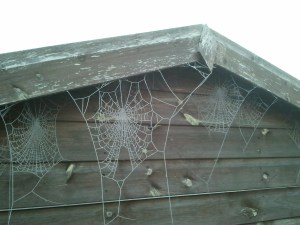
SAMSUNG

SAMSUNG

SAMSUNG

It looks as though the spider population of the lotties have taken to using the picnic benches when it is too cold on the rear end for us gardeners to enjoy our coffee breaks on them.
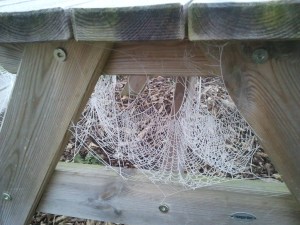
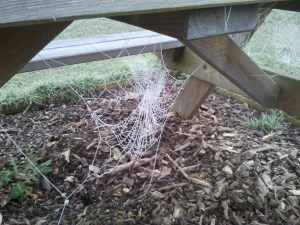
SAMSUNG

SAMSUNG

On Wendy’s plot Jack Frost had iced the rose hips.

SAMSUNG

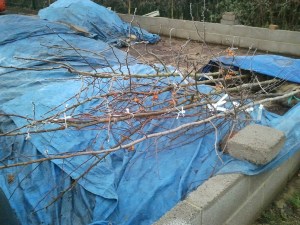
We have had some beautiful new trees delivered to the site ready for planting when the soil is not frozen. At the moment we would not get a spade in. We have been given a Weeping Silver Lime which we selected to celebrate the Queen’s Jubilee Year, plus two crab apples Malus “Evereste” and Malus “Golden Hornet” to plant, one in each orchard to improve fruit pollination, and two ornamental Hawthorns.
SAMSUNG

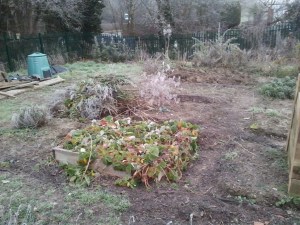
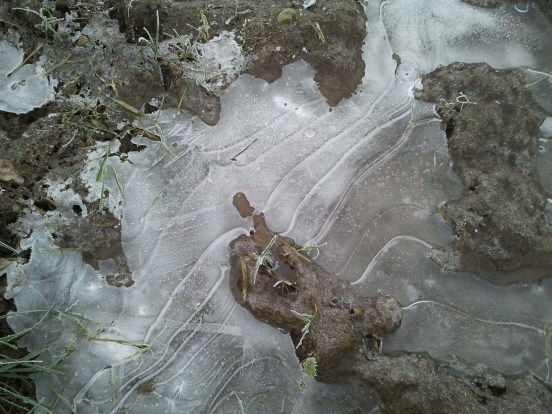
The individual plots are looking bare and forgotten. Some have been well dug for the winter, others await better weather. Where water sits in puddles it had frozen solid. On one plot a double digging session had been interrupted by the weather.
SAMSUNG

SAMSUNG

SAMSUNG

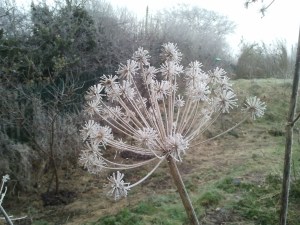
On one plot next to the new coppice area the seed heads of Angelica, left for the Goldfinches and Bullfinches to feast upon, were covered in frost.
SAMSUNG

SAMSUNG

In the coppice area itself, our newly planted Hollies had attracted spiders.

SAMSUNG

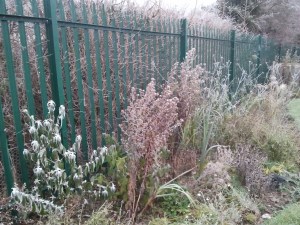
The communal gardens  looked monochrome  with frost covering the herbage.
SAMSUNG

SAMSUNG

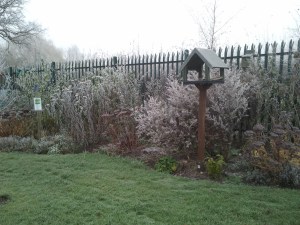
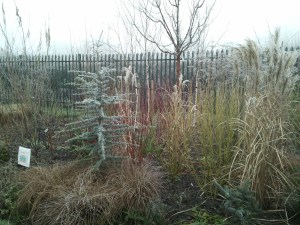
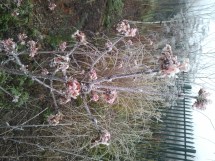
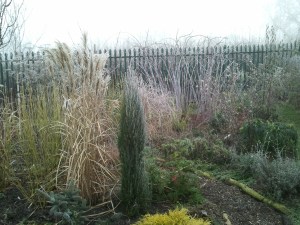
As befits the season, our Winter Garden is looking good! Pete was with me as I took these photos and he and I created this garden less than two years ago, so we keep admiring our handy work.
SAMSUNG

SAMSUNG

SAMSUNG

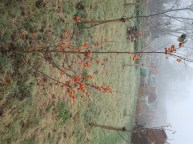
Splashes of colour sprang up to shine out in the gloom of the misty grey day, the fruit of the Malus “Evereste”, and the fire-coloured leaves of a Hawthorn in the hedge and a Raspberry on a plot.SAMSUNG
SAMSUNG

SAMSUNG

As we wandered taking these pictures we were followed around by the resident Robins who were waiting for us to start work turning soil over and exposing bugs for them to pounce upon. But no gardening was done, the soil being too solid with frost so no sod could be turned. We found time to top up the bird feeders in our feeding stations. These are busy with tits, finches, Nuthatches and Woodpeckers.
Categories
allotments autumn autumn colours bird watching colours community gardening fruit and veg garden photography garden wildlife gardening grasses grow your own meadows natural pest control ornamental trees and shrubs photography roses wildlife

A Wander Around our Allotments in November

The penultimate lottie wander post for 2012 and at last the weather is providing a few bright cold days. This is what we look forward to in this autumnal month, rather than the wet dark days we have been presented with in the first few days. The light is warm and gives a crisp edge to any photos taken as the blue haze of summer has disappeared.

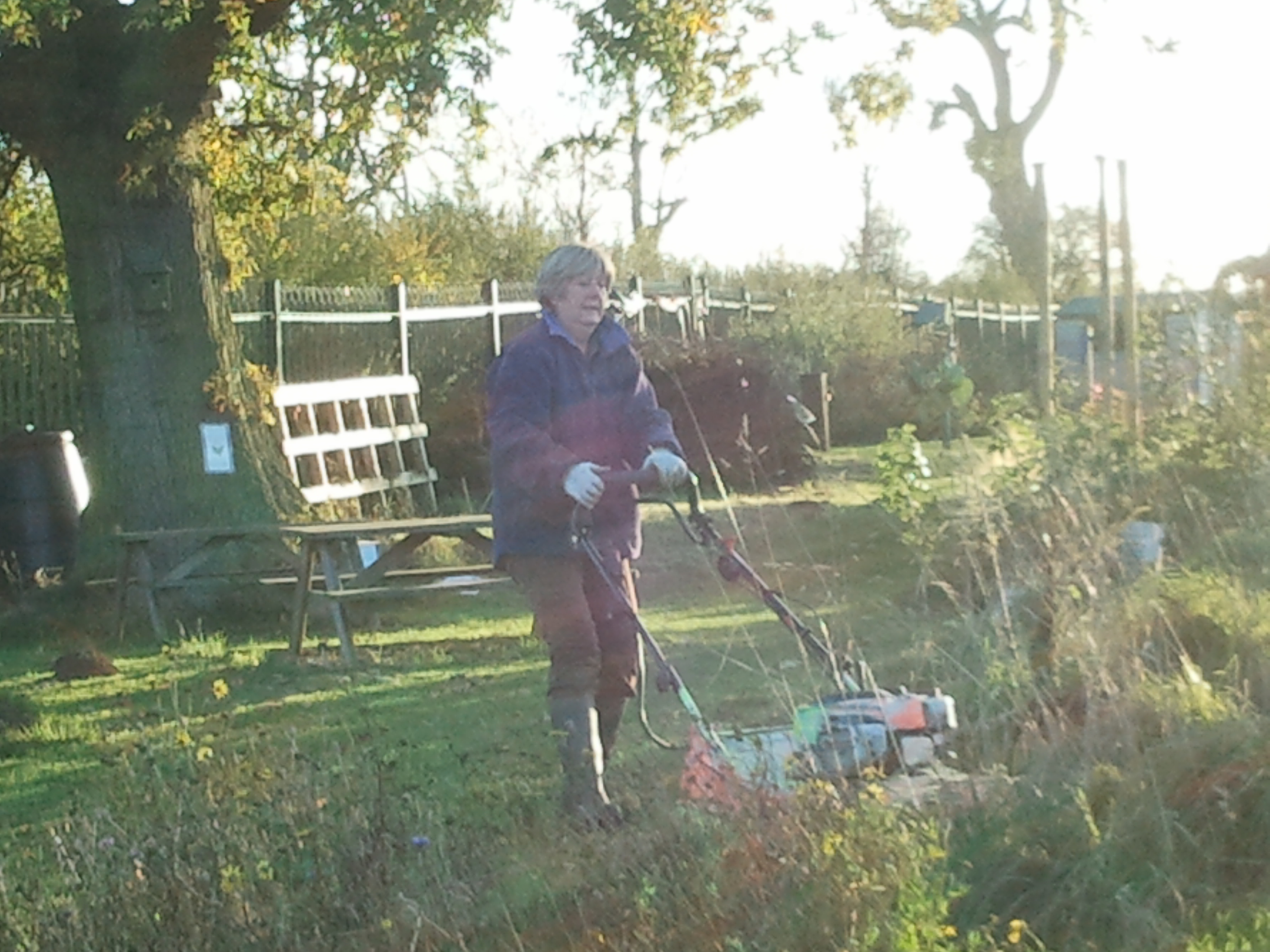
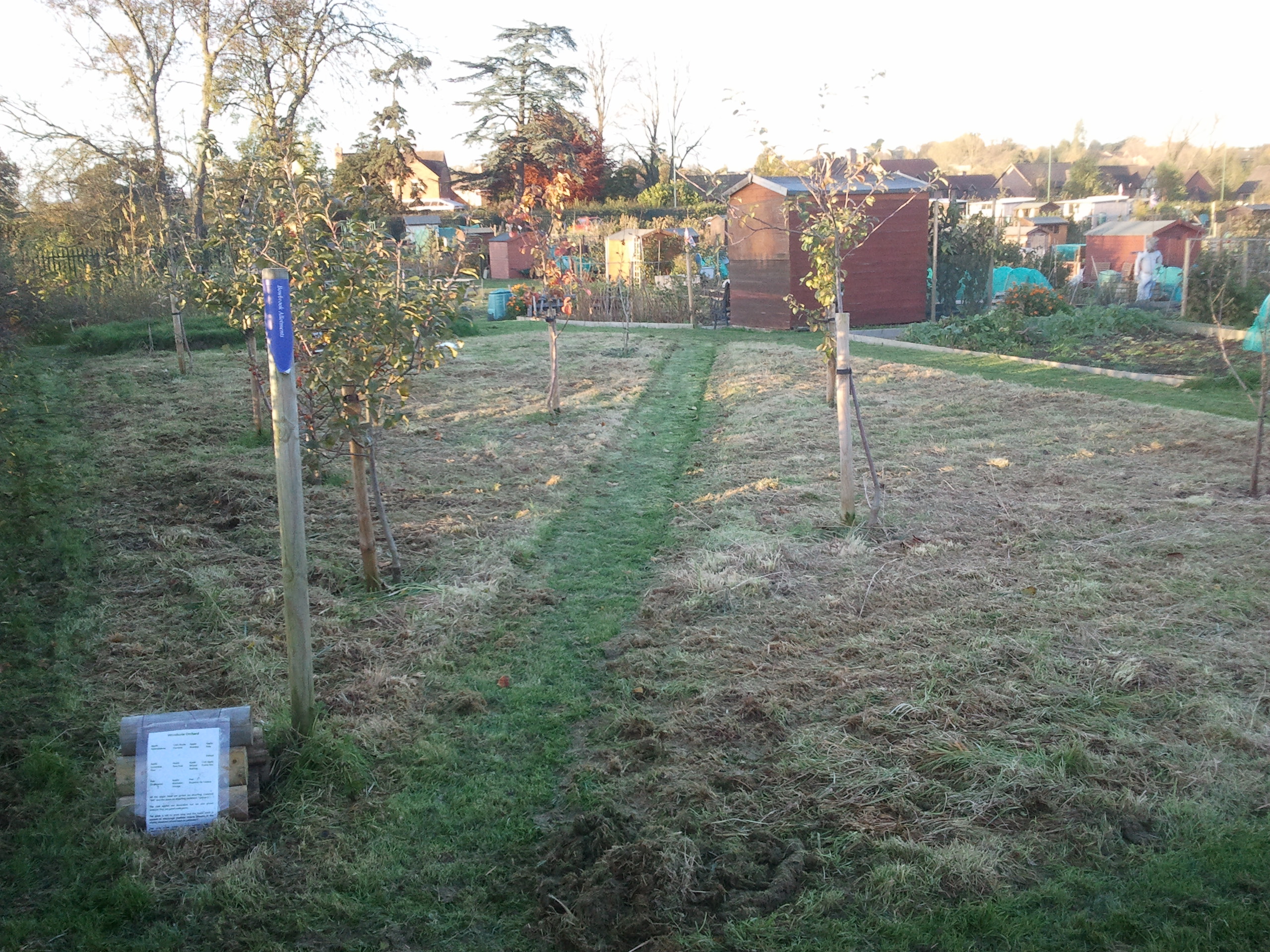
We went up the lottie yesterday to deliver some spare seeds for the Seed Swap basket and to collect some greens left by fellow plot holders for our chickens. They are spoilt by our friends from the site! It was mid-afternoon and we had not intended to stop to work, but we changed our minds. We got out the communal mowers and rakes and gave the final two meadows their annual “hair cuts”. Jude, The Undergardener did most of the work as it is a bit difficult with my spine and leg pains, so I wandered off taking advantage of the special quality of the day’s light and shot off a couple of dozen pics with my Galaxy.

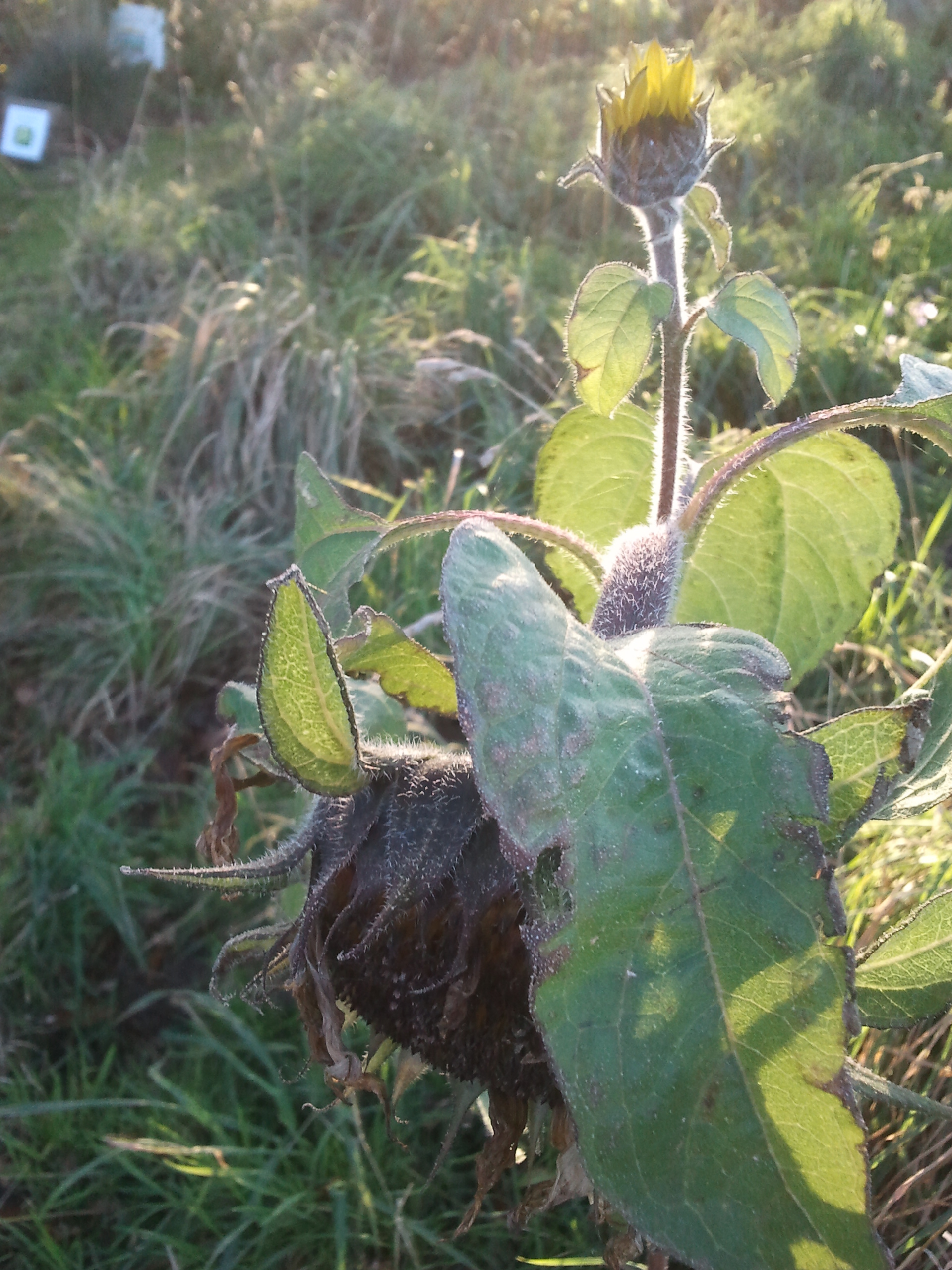
As we worked on the meadows the resident Field Voles scuttled off as they felt the mower’s vibrations and disappeared down their holes. We left a few clumps of wildflowers standing for everyone to enjoy before winter cuts them down. Field Scabious, Mallow and Sunflowers.

The meadows that are already trimmed look flat and brown, but the pathways mown through them look crisp and green.

The foliage in our Sensory Garden is given extra vitality in the November sunshine.

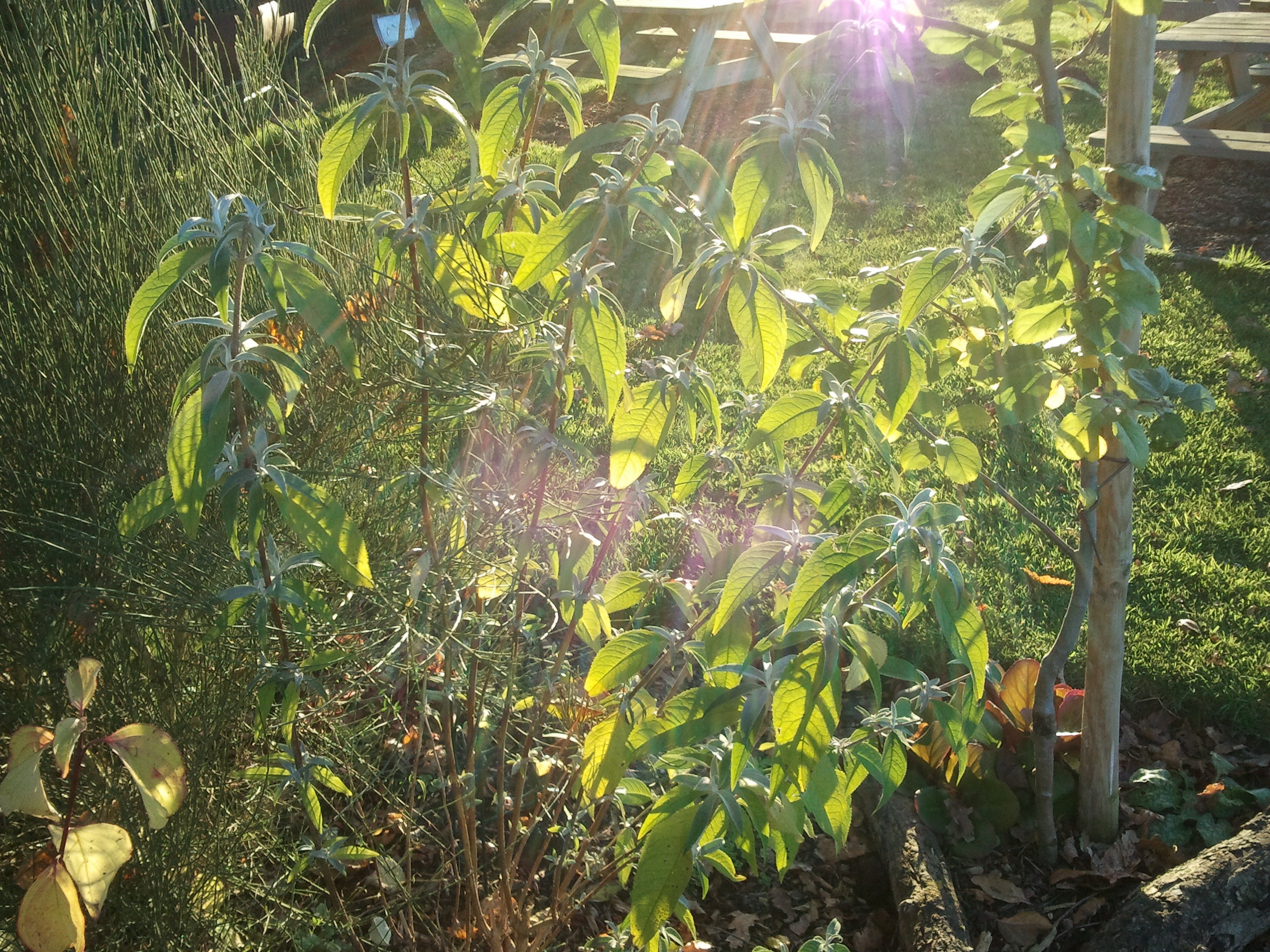
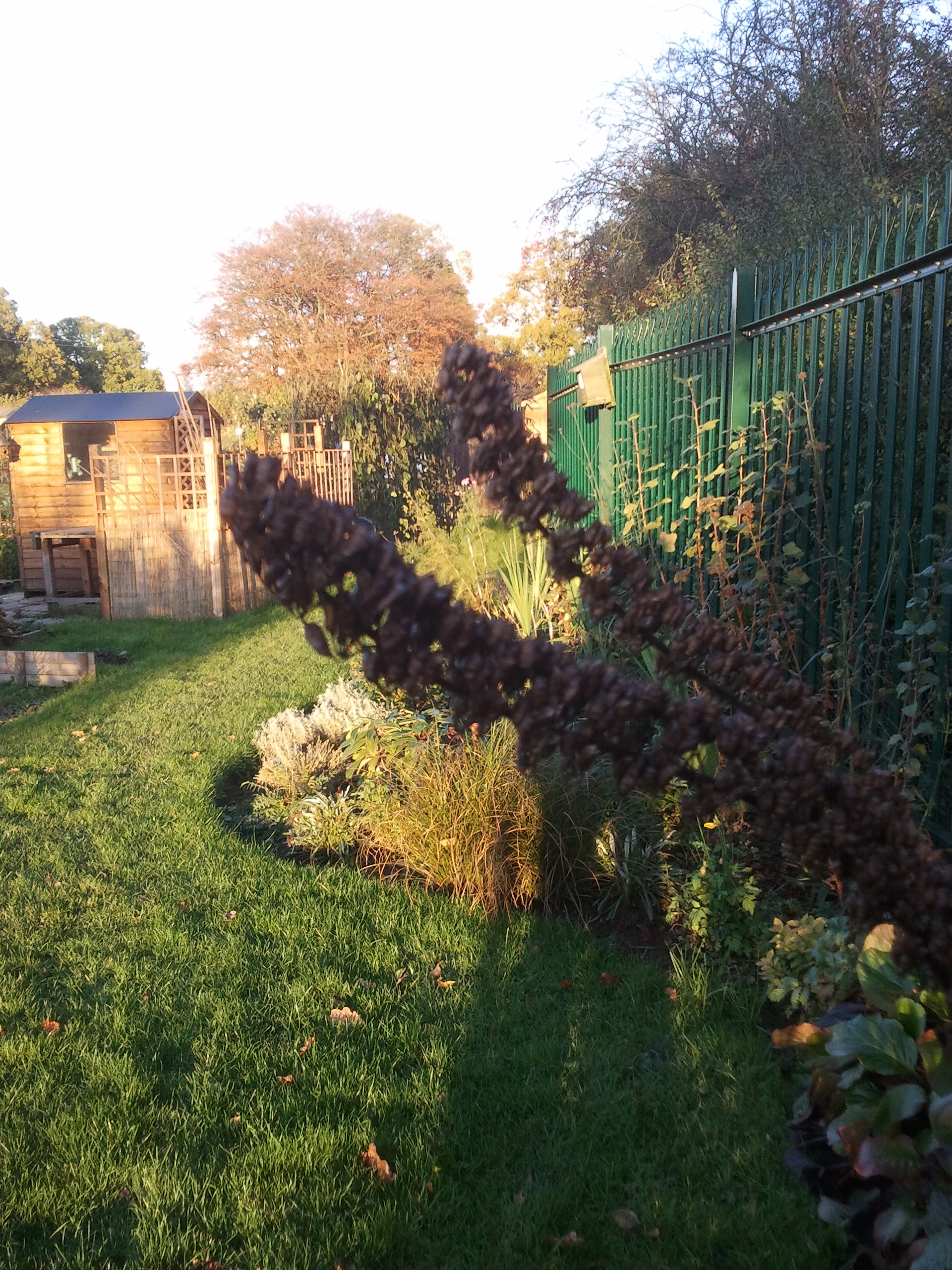
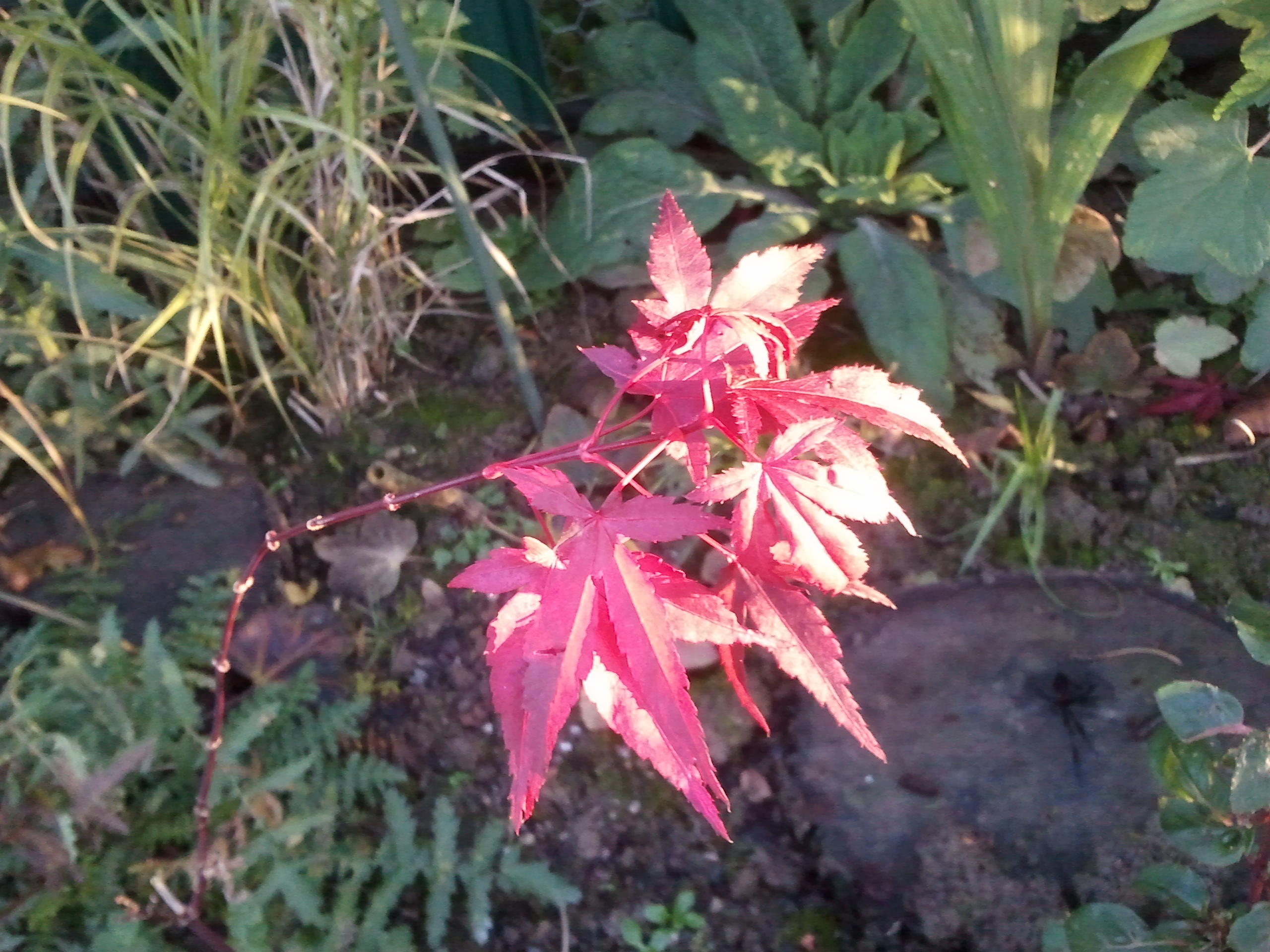
The next shot is a view of the site boundary through the seed heads of a white-flowered Actaea across the Spring Garden. In the Spring Garden a tiny Acer shows that you don’t have to be big to impress.

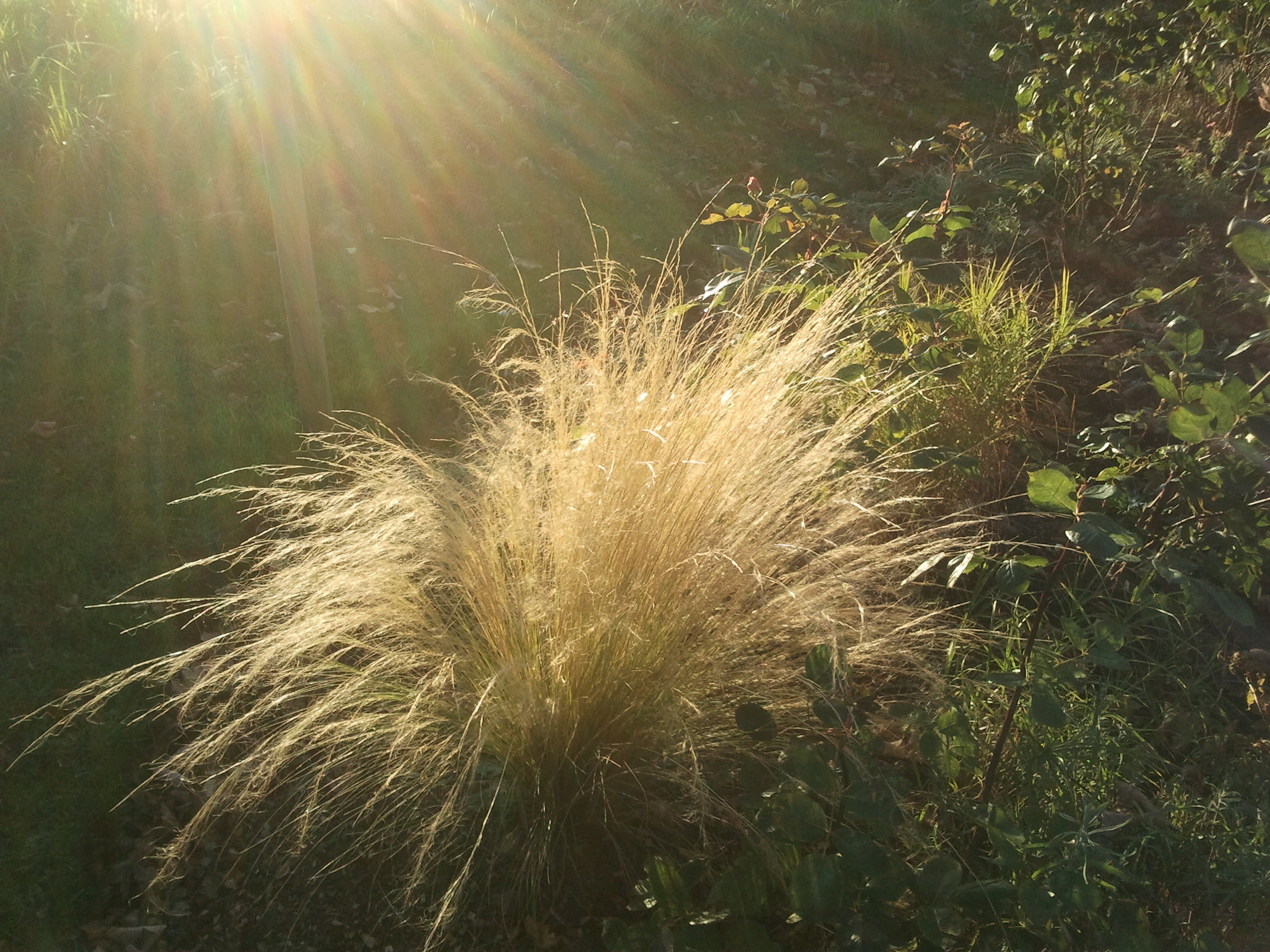
In the meadows the last of the grasses and sunflowers stand tall and proud.

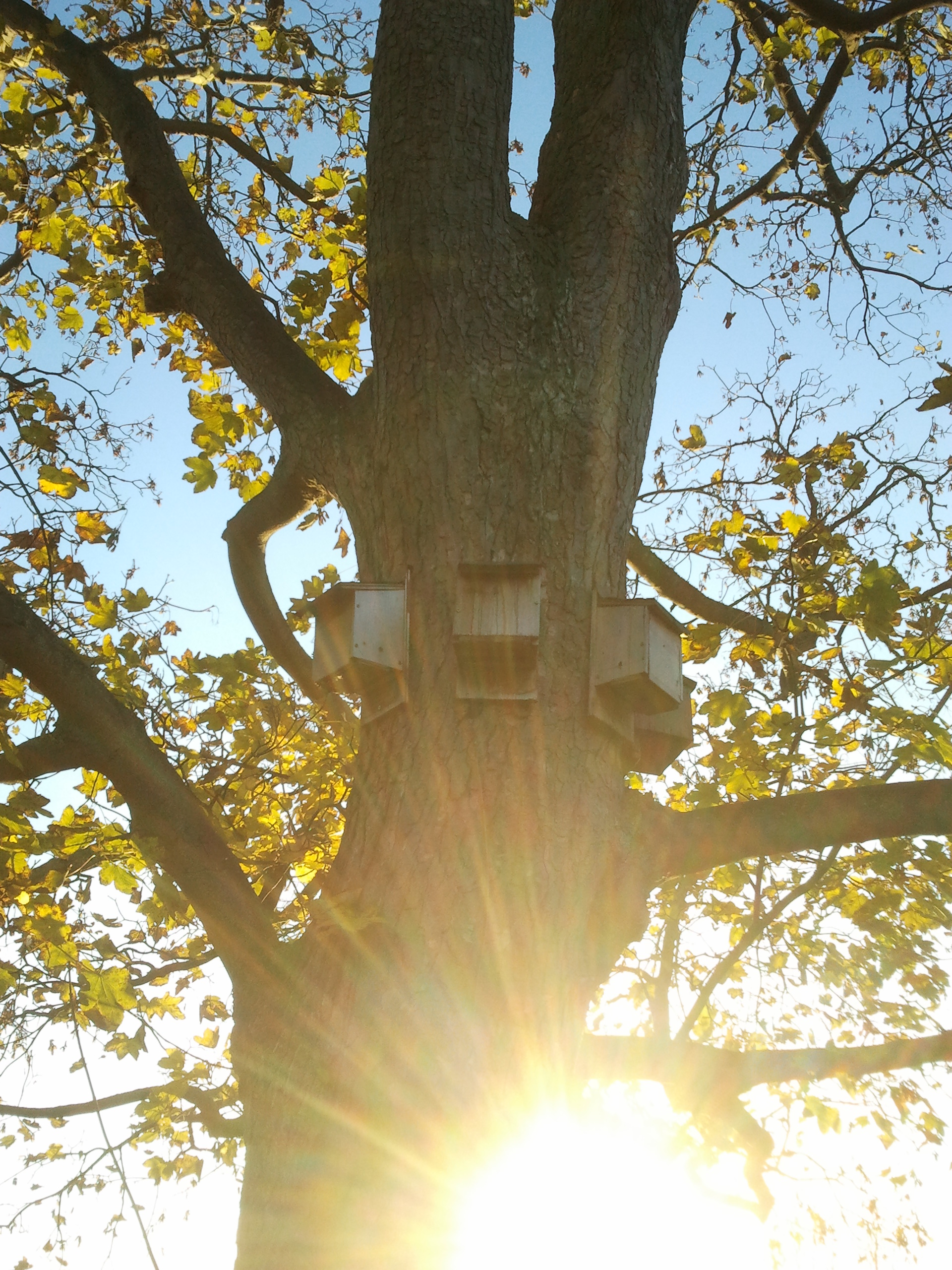
Up in the mature Sycamore and Oak the resident bats will be shuffling around and preening in readiness to leave their roosts in the boxes and go on the feed for moths and night-flying insects. Bats are our night-time pest control patrols. In the daylight hours we are being entertained by birds of prey often being mobbed by our flocks of Jackdaws and Rooks . Peregrines, Buzzard, Red Kite, Kestrel and Sparrow Hawk.

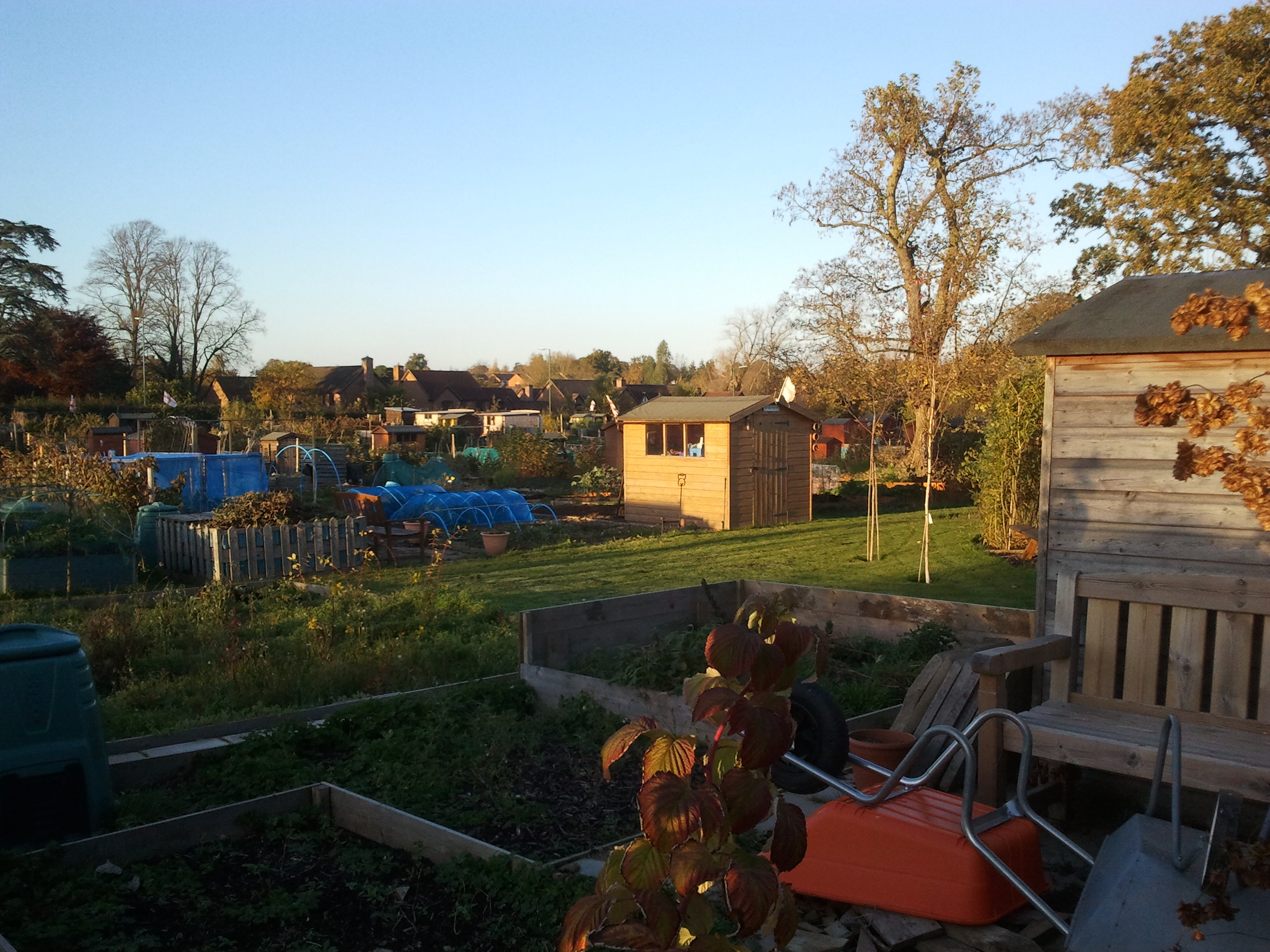
Around the plots the gardeners are preparing their plots for the winter, beds are cleared and manure piled up or spread over the surface.

A few crops remain for winter sustenance.The red stems and purple leaves of Ruby Chard add a burst of colour. Brassicas are covered to give protection from ravenous and greedy Wood Pigeons who love to eat the sweet centres of Brussels Sprouts and the tenderest, newest leaves of cabbages.

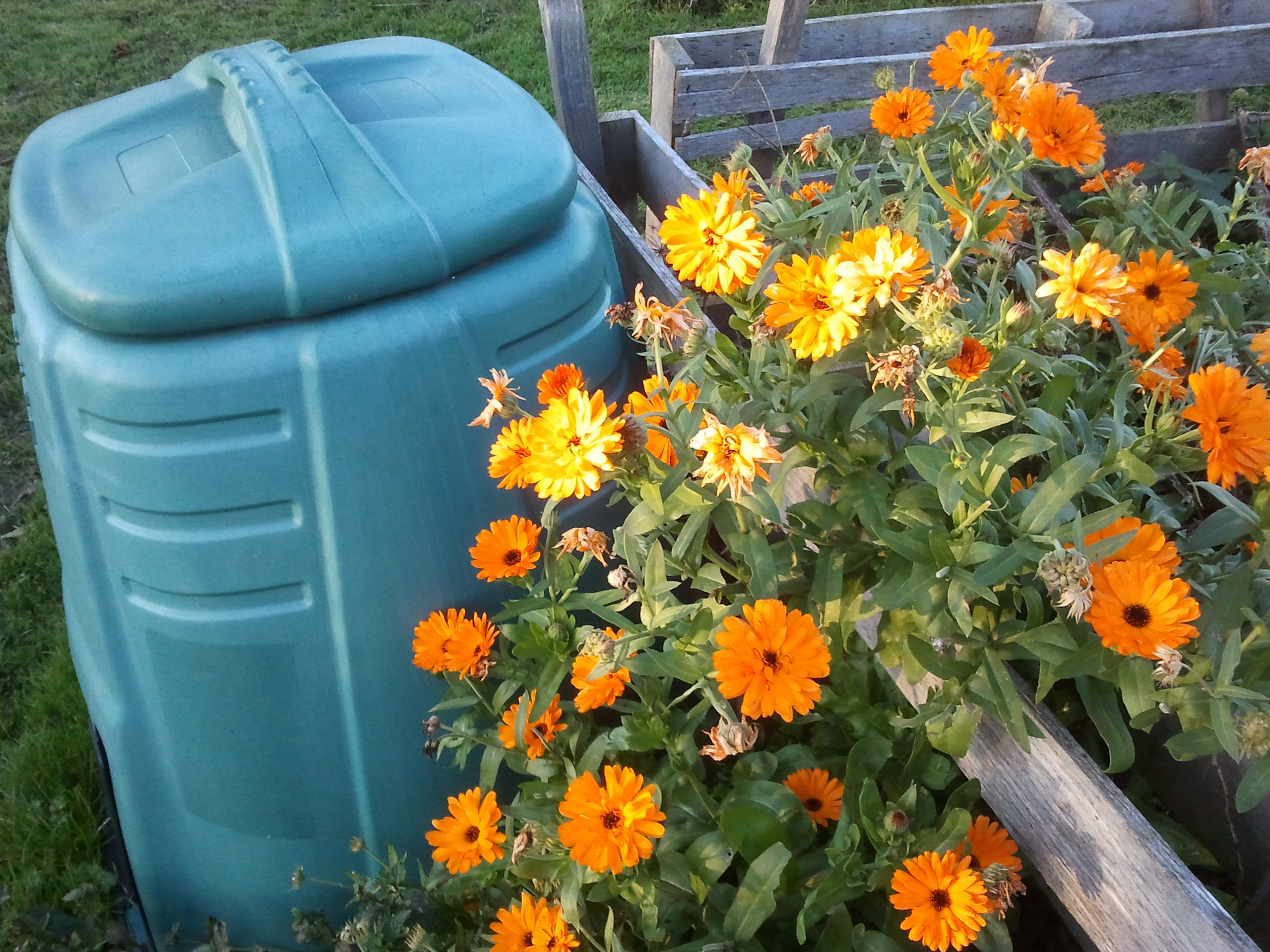
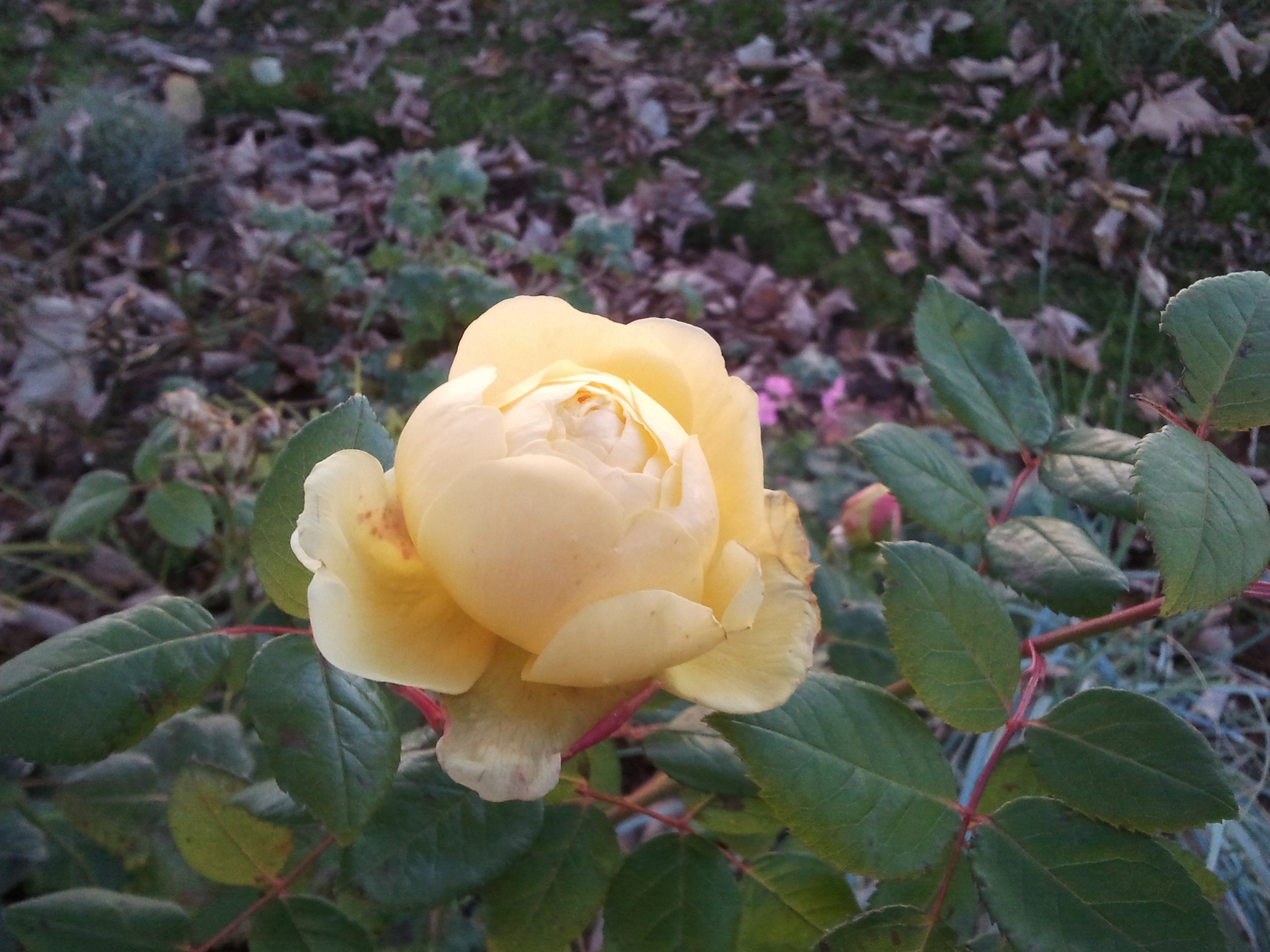
A few remaining flowers add extra brightness to the plots.Tthat most popular of companion plants, the Calendula brightens up compost areas and odd roses still perform in the Summer Garden. We can expect these David Austin roses to continue to treat us to flowers until the new year.

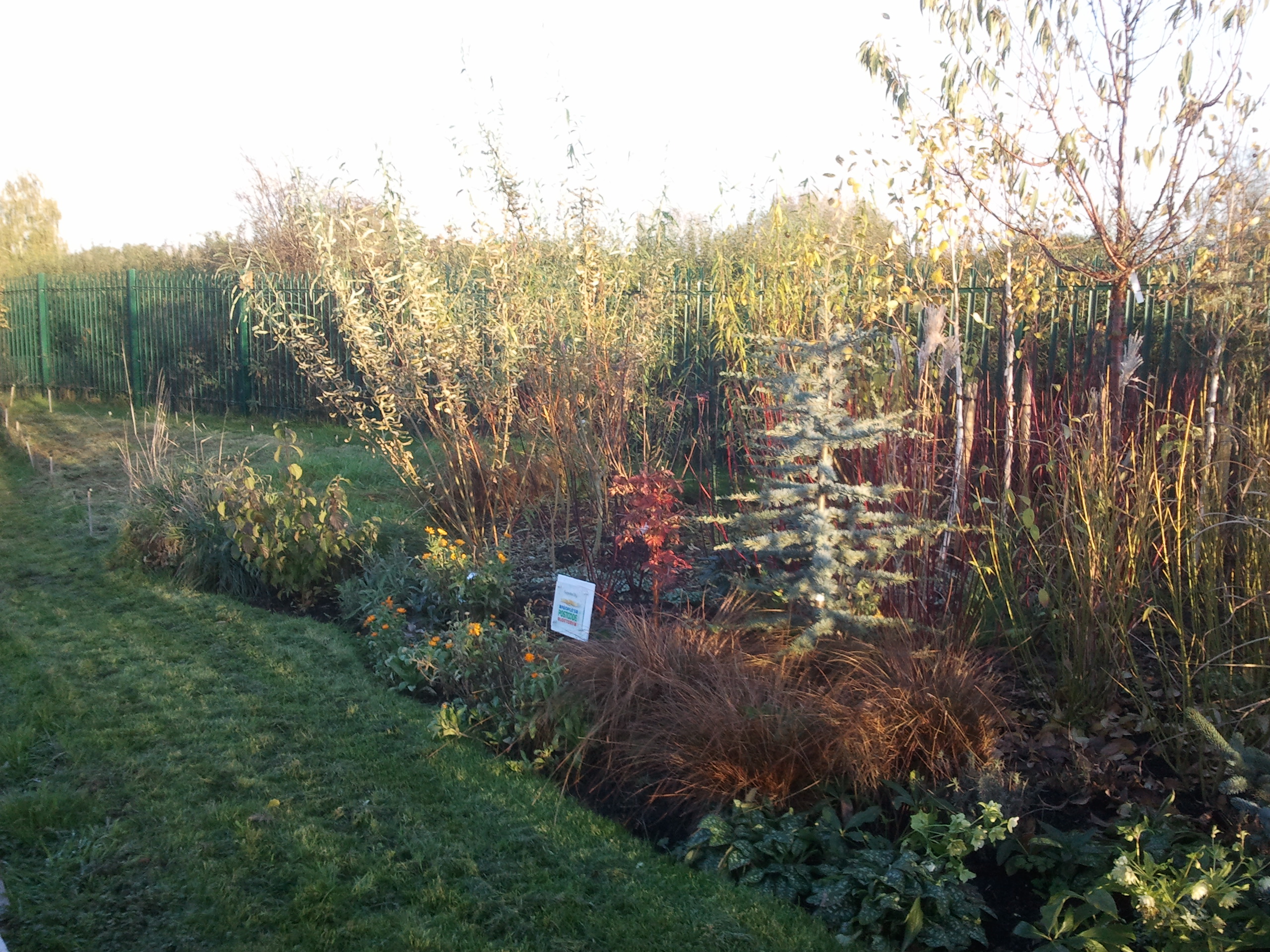
The star of the site for the next few months will be the Winter Garden and it is already showing promises and hints of what delights it has in store for us in times ahead. As leaves fall from trees and shrubs the colours and textures of the stems and trunks will come into their own.

We have endured a wet summer and autumn with each month breaking previous rainfall records. Crops have been poor and we have been flooded four times. Dave, the Scarecrow looks a bit worse for wear too!

Categories
allotments community gardening flower show fruit and veg garden design garden photography garden wildlife gardening grow your own hardy perennials meadows National Garden Scheme NGS photography roses wildlife

A Wander around the Allotments in August

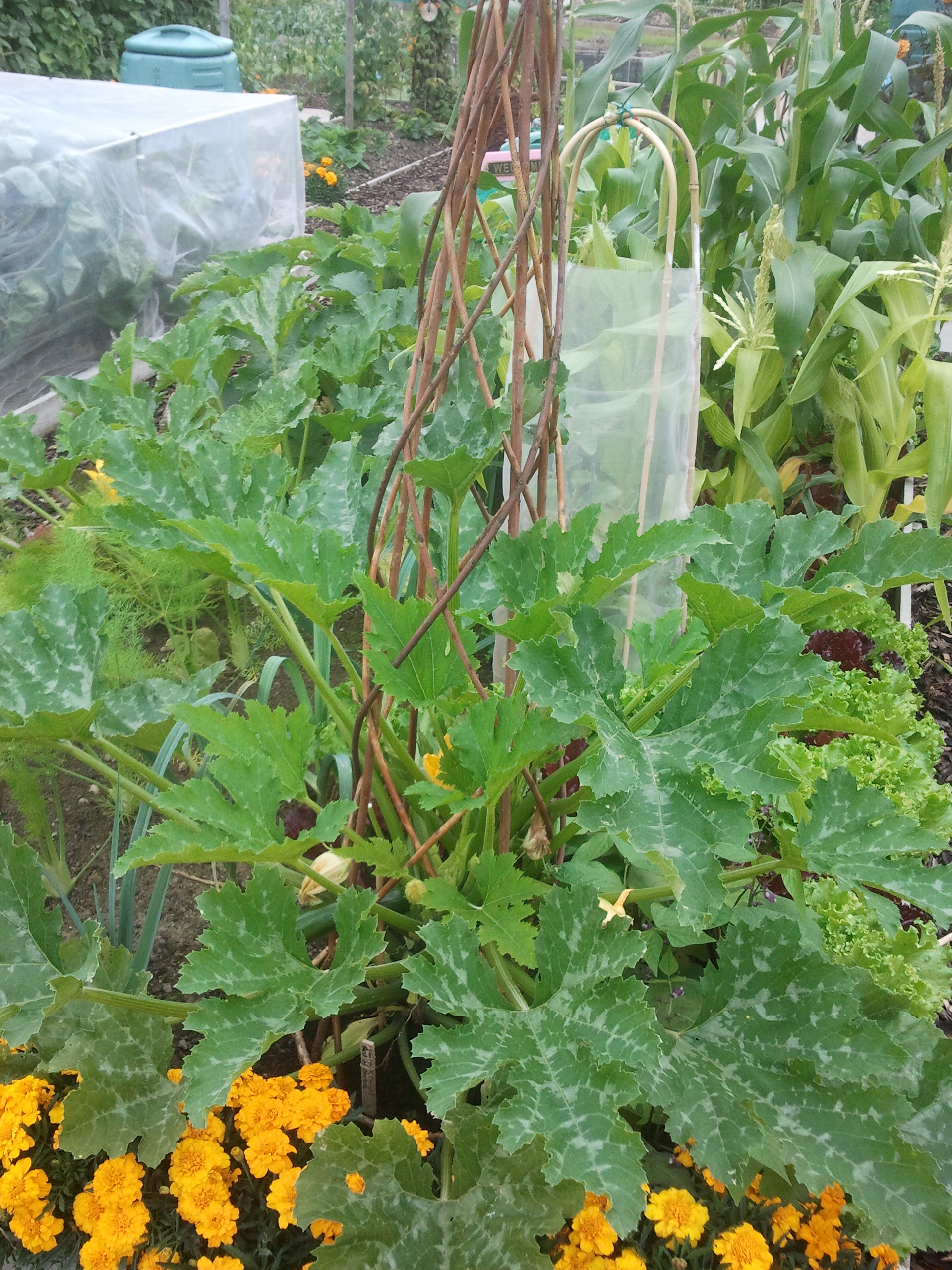
August is when the busy harvest period begins. As land is cleared green manures are sown and compost is spread across empty spaces. Plans for next year’s gardening are beginning to form.

Another amusing sign has appeared on a plot in recent weeks. Doreen and Phil have a corner plot and it has been christened “The Naughty Corner”. Next to their plot, Gill has hung some vibrant decorations in her fruit.

Wendy’s plot is always full of interest and at the moment the star of the show has to be the glitter ball hanging inside an obelisk up which is growing Morning Glory.

We have had a very successful month where awards are concerned, some for the whole site and others for individual allotment holders. Jude and I were invited to the Shrewsbury Flower Show to receive an award for the allotment site. Chris Beardshaw, author, broadcaster and TV gardener presented me, on behalf of our allotment site, with the award for “Shropshire’s Best Community Garden”.
Bowbrook Allotment Community members also provided plants for a show garden created by the Shrewsbury Residents Association – herbs, vegetables and companion plants. This garden won a medal.
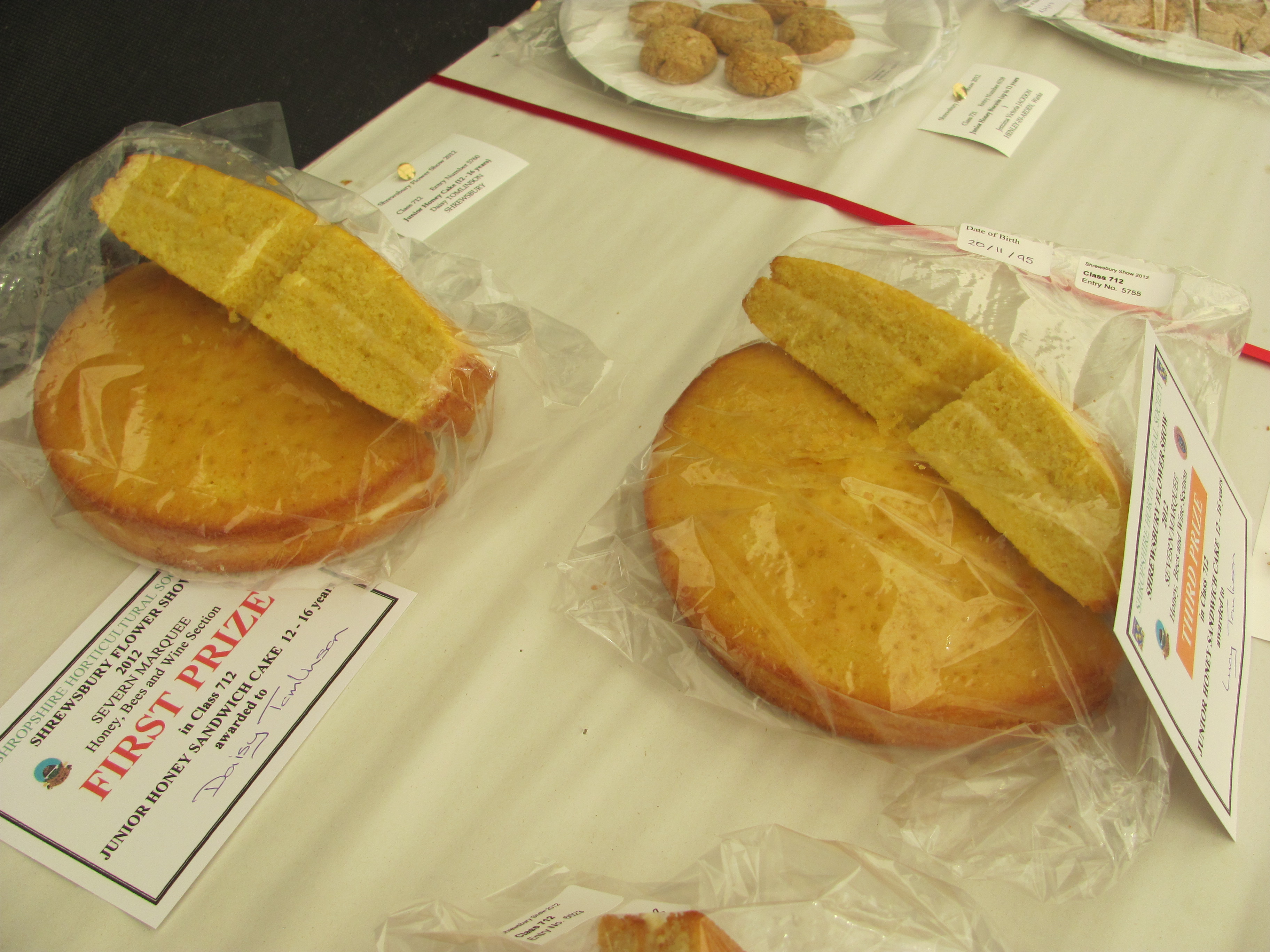
The two daughters of our Membership Secretary entered craft and art classes in the Honey Tent and won many certificates too. Their honey cakes and biscuits looked so tasty.

Jude and I also took part in the Shropshire Organic Gardeners Society stand at the show. Members were asked to provide photos of themselves with a pot plants and these took centre stage.

Dave Bagguley one of our plot holders was awarded Shrewsbury’s “Best Front Garden” award at the show.

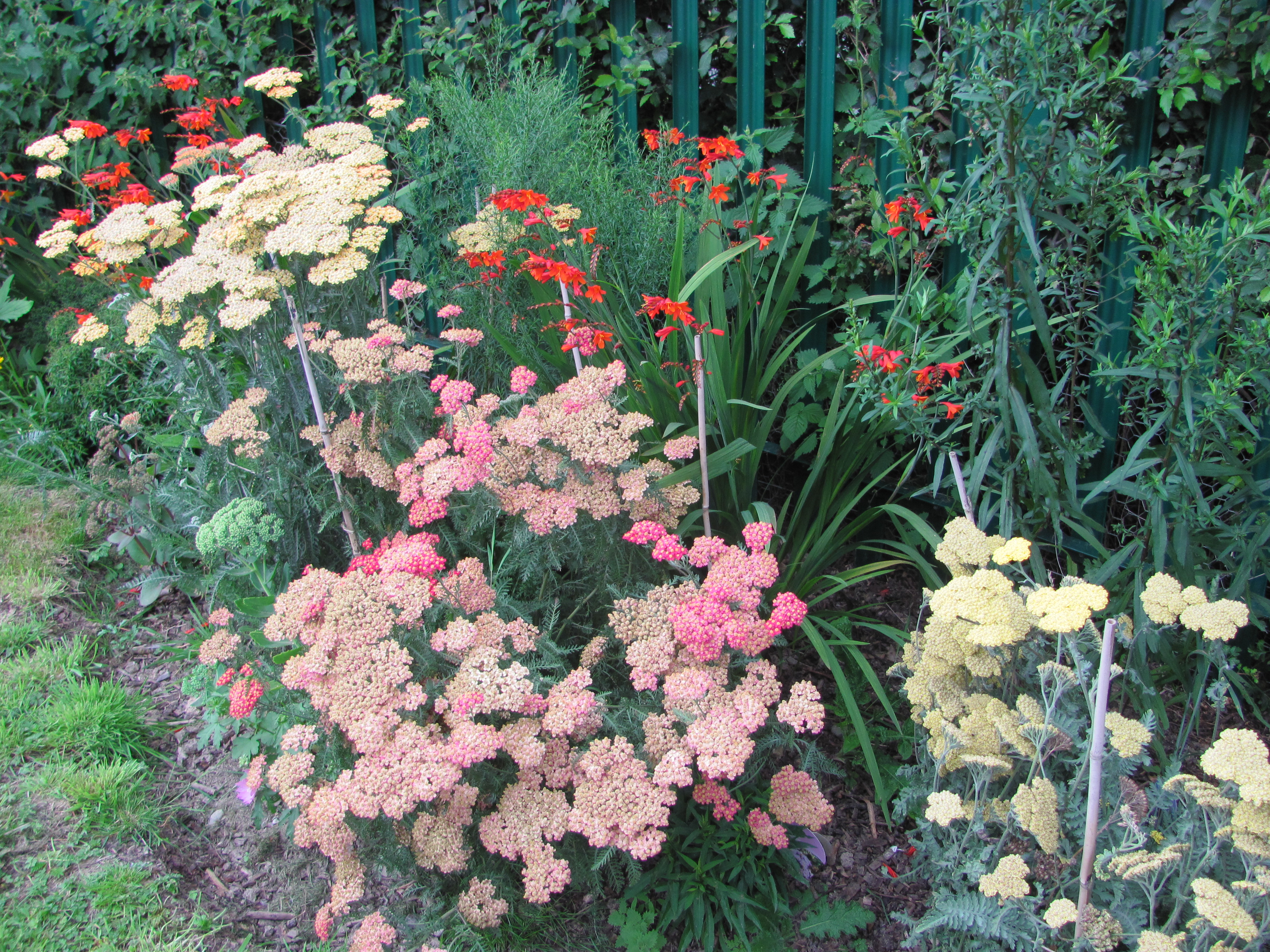
Back at the lotties the Autumn Garden, one of the site’s “Gardens of the Four Seasons” is beginning to look really good, with the late summer/early autumn perennials blooming in their hot colours.

The meadows around the site are incredibly colourful at the moment but the early flowering ones are well-past their best. They will soon be due their annual haircut.

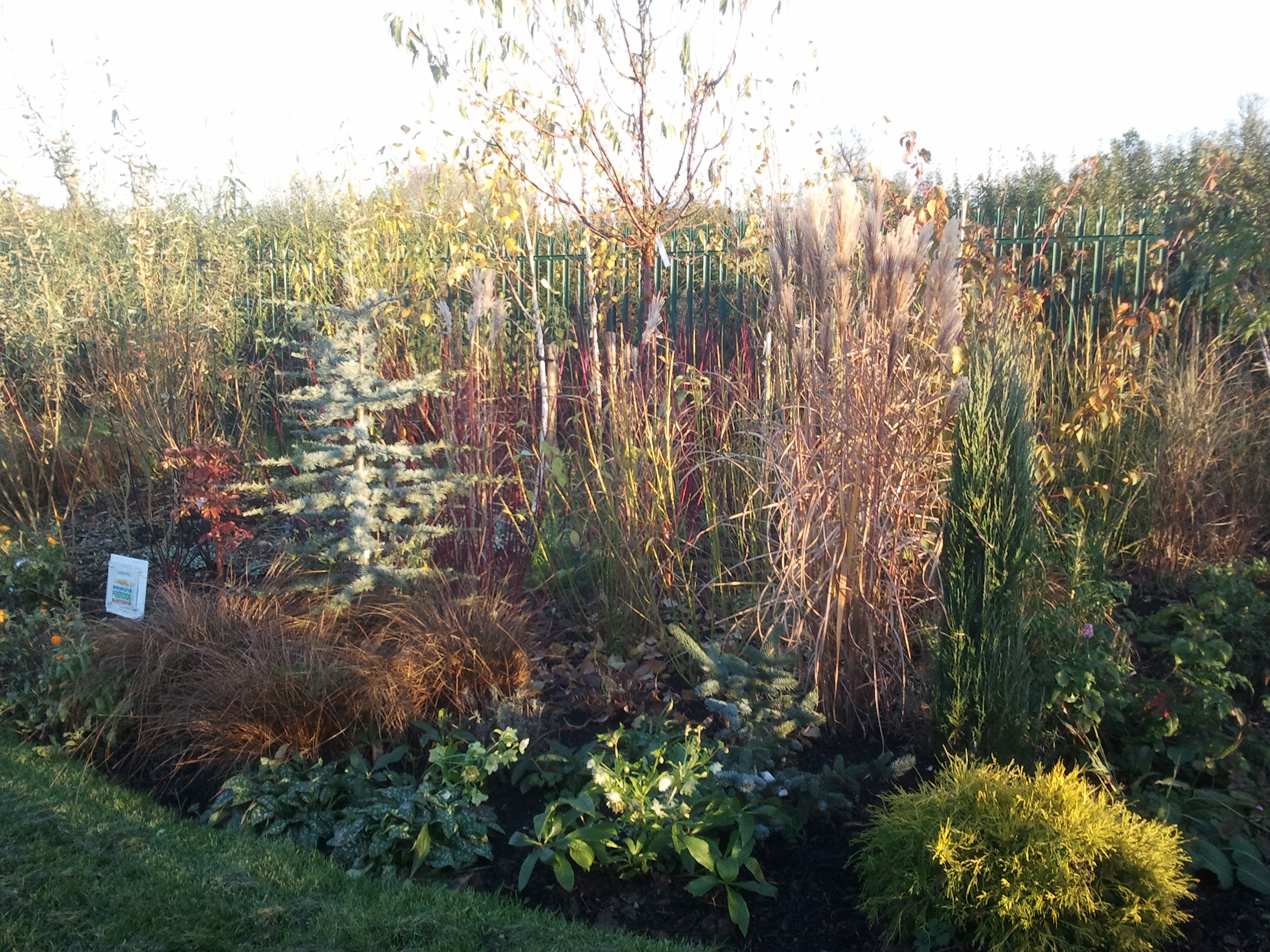
We like to leave the meadows’ annual haircuts as late as possible so delay them until seeds are well set and there is an obvious decrease in the amount of wildlife visitor activity. But in the Buddleja Borders the beautiful scented flowers are still bringing in so many butterflies, bees and hoverflies.

This year’s periods of extreme wet have taken their toll. Whole potato crops have rotted on plots and root crops badly split.

As I was finishing writing this post I heard that our site’s entry into the Shrewsbury Town Allotment Competition came out the winner, so well done to Sue and Paul from Plot 40. Here are a few shots of their plot to finish off this post.

Categories
garden design garden photography gardening grow your own meadows National Garden Scheme NGS ornamental trees and shrubs photography roses Shropshire The National Gardening Scheme"

The Garden at Ashley Farm – an NGS garden.

On a very wet weekend we decided we needed to get out whatever the weather so a quick check in the famous Yellow Book of gardens open under the auspices of the National Garden Scheme and we were off to visit a garden in the neighbouring county of Herefordshire.

Herefordshire is a county of great gardens mostly created on rich red clay soils. Ashley Farm Gardens was described in the Yellow Book as a 5 acre garden designed as a series of formal rooms with the rooms getting less formal as the visitors move further from the house. We were presented with a plan as we entered the garden which showed a very formal layout. As we moved into the garden through farm buildings we could appreciate the way the gardeners had planted imaginatively and boisterously within the formal structures.

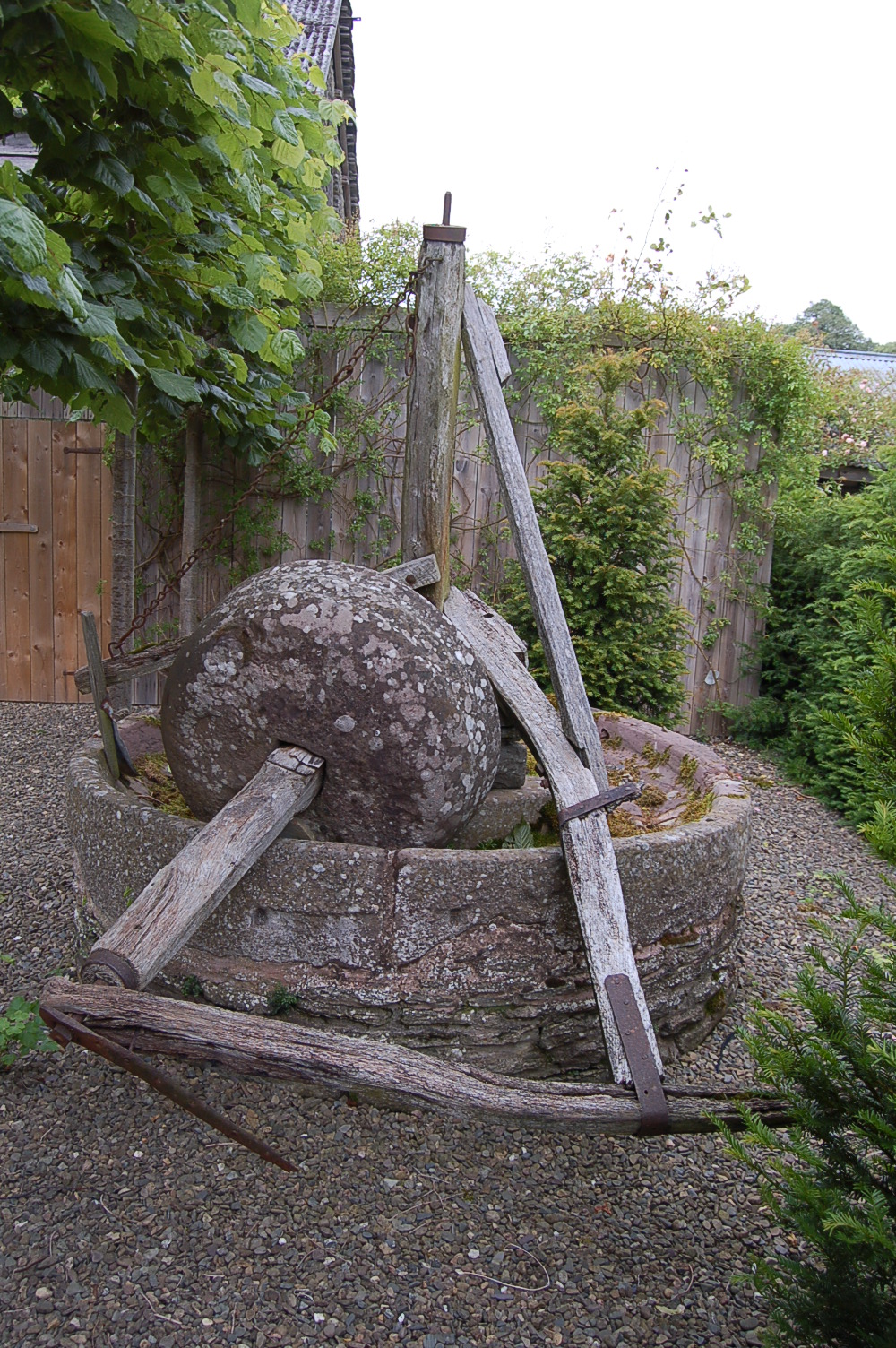
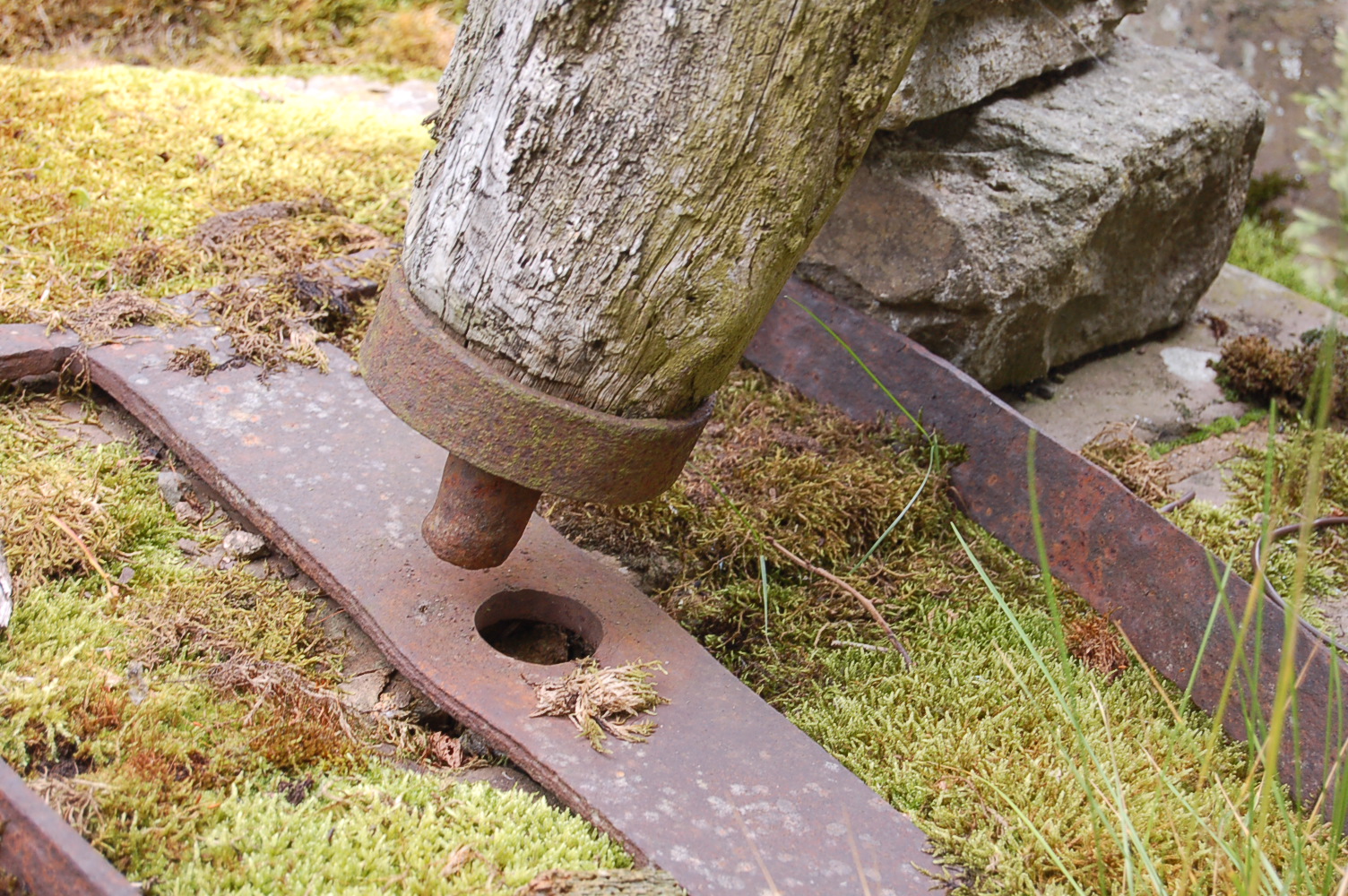
The old farm buildings were interesting and beautiful in themselves and featured some fascinating artifacts reminding us of the farm’s cider producing heritage. The buildings  are softened with plants and interesting collected and found objects.

We made our way past the formal pool through blue borders and made our way towards a wildlife pool in woodland.

Seating around the pool encouraged us to sit, look and listen, although on closer inspection they looked a bit algae-covered and far too rickety to risk.

Through the trees along the edge of the wood the neat and tidy kitchen garden came into view.

The next stage of our garden wander took us through an interesting and very varied assortment of garden rooms.

Beyond the formal garden rooms we encountered meadows growing within orchards, a nuttery and unexpectedly a rose garden linked the garden to the countryside.

We moved back into the main garden where more rooms awaited us and a wonderful arbor made by a local craftsman in local oak. It was so tempting to have a seat and look in detail at the wood working skills.

Tea was served in an outbuilding constructed of wooden beams and stone. Inside were artifacts aplenty. The chocolate cake was excellent!

We explored the old farm buildings after our tea break before calling it a day – a really good day.

Categories
birds climbing plants photography Shropshire trees wildlife woodland

Through the Garden Gate – part two – getting lost!

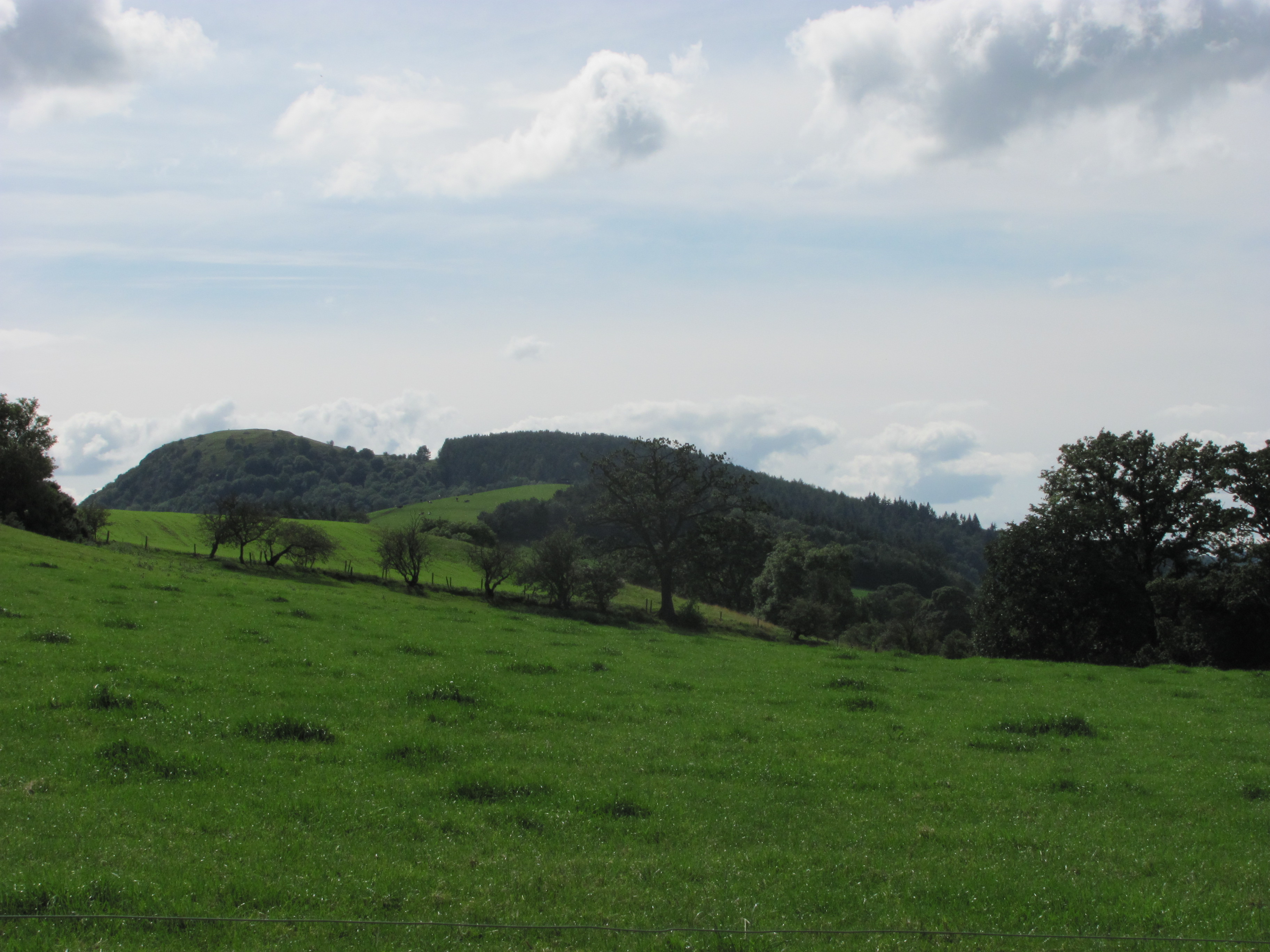
From the pool we could look back at the wood we had just left and enjoy a different view of the hill that we usually look at from our garden and over which we watch Buzzards riding the thermals created by its slopes.

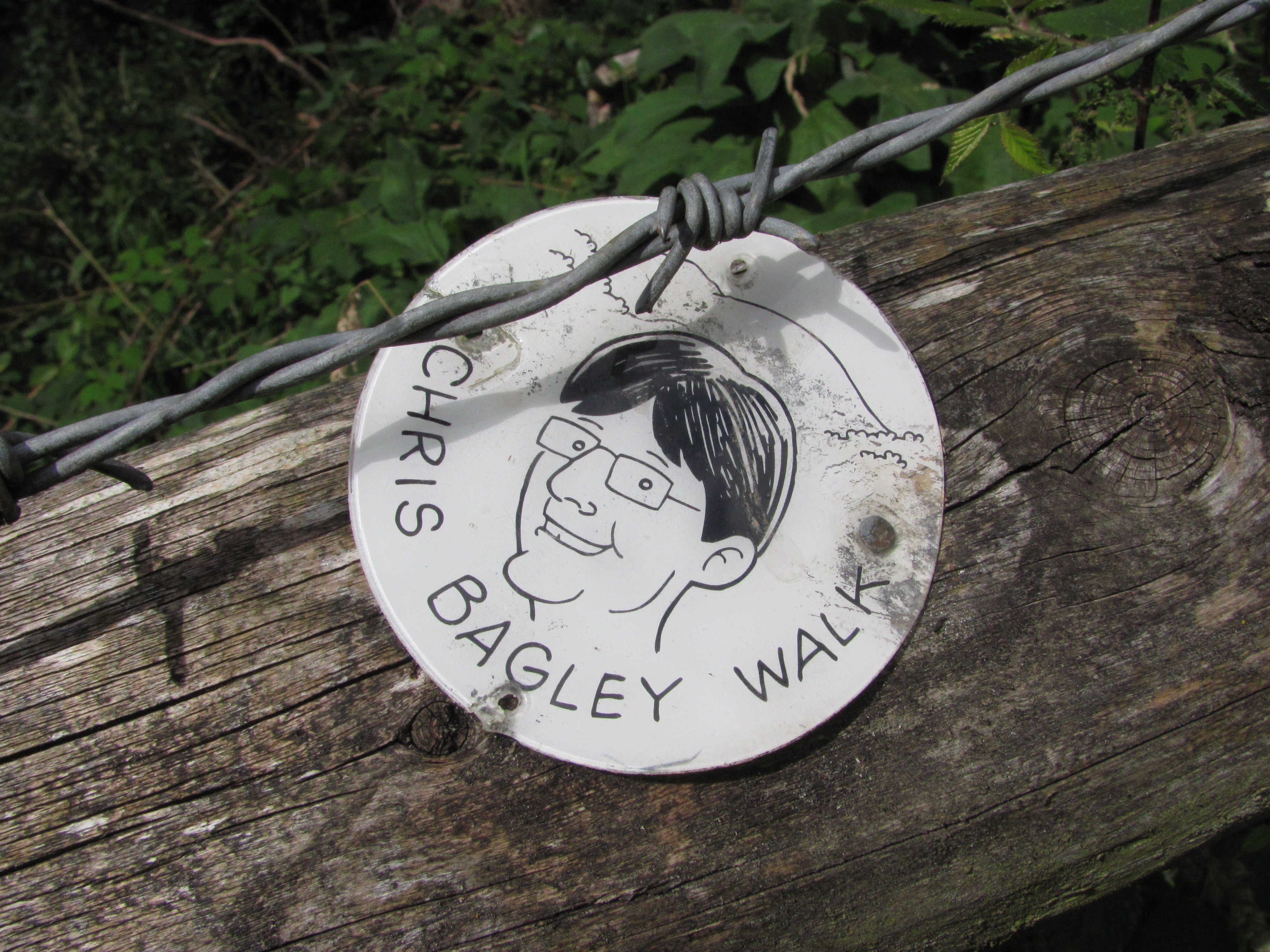
Well we may never have been more than a mile from home on this walk from our garden gate, but we did manage to get lost. The footpath signs kept disappearing, or that is our excuse. Our wander took us along sections of the long distance path, “The Shropshire Way” and on a local path “The Chris Bagley Walk”.

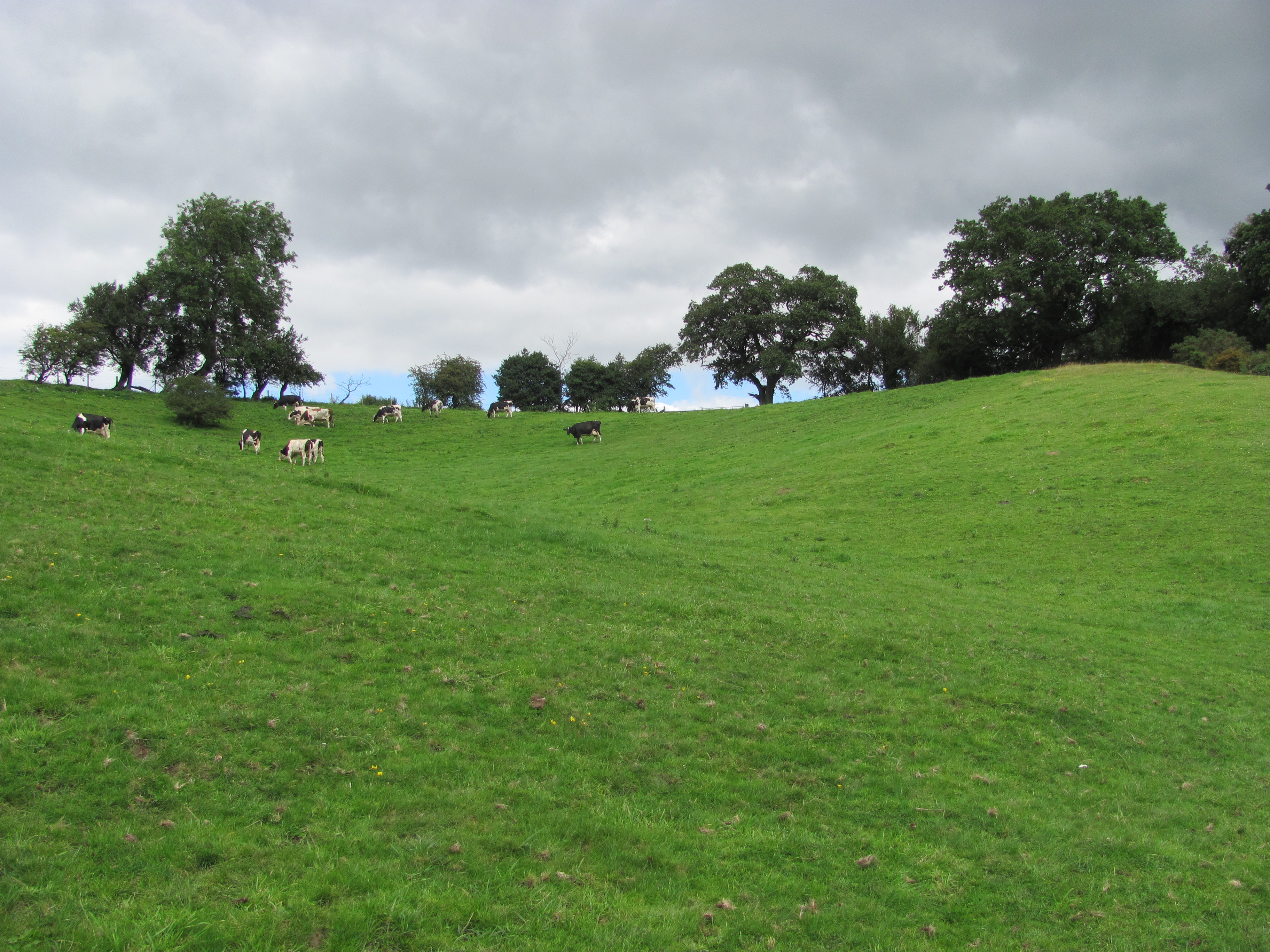
Leaving the fishing pool we followed the valley of the stream that fed it. The grassland here was rich and was being enjoyed by dairy calves, who watched our every move as we passed close to them.

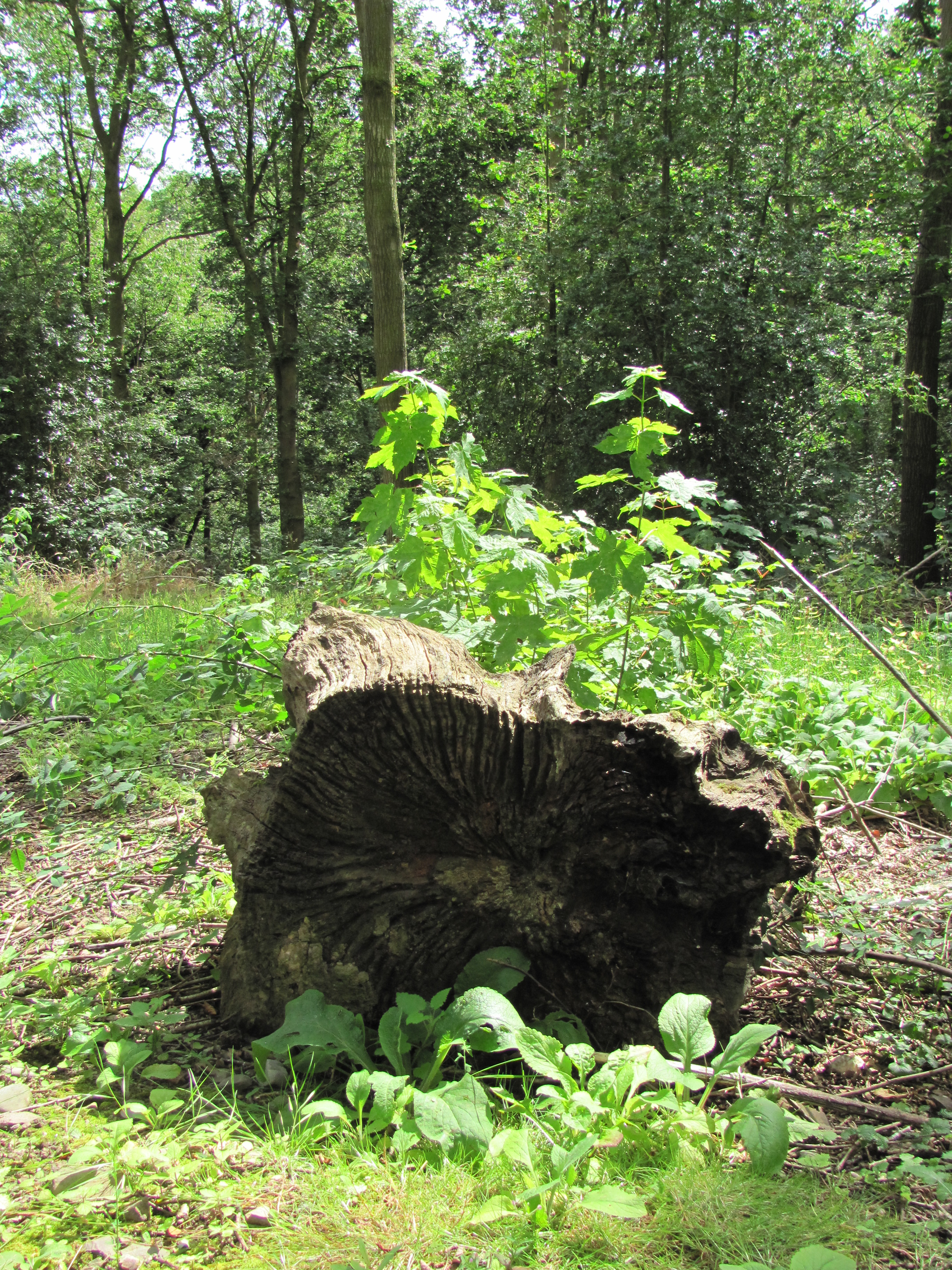
The valley widen out but the wooded slopes and tiny stream running through it kept it intimate. The fields of grass on which the calves fed was a lush green but was devoid of wild flowers, a sad sign of modern farming practices. we followed the path until it took us up a gentle slope away from the stream and up into a wood which was partly coppiced.

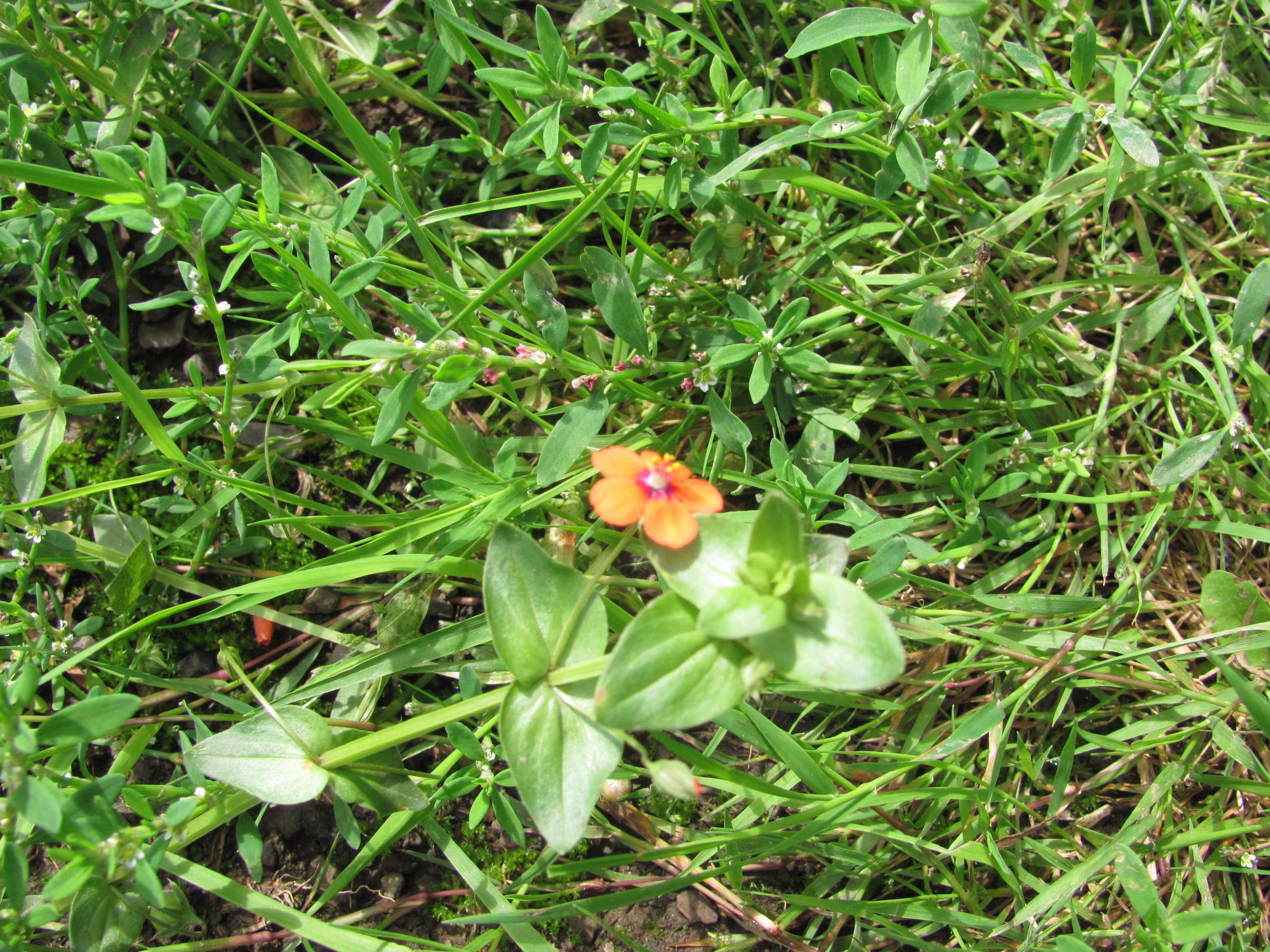
On the slope up to the wood we spotted this Scarlet Pimpernel in flower on the pathway beneath our feet. Although only a tiny flower its orange petals glow so it can be seen from a distance. We now lost the footpath and had to consult maps on the smart phone, which rescued us nicely.

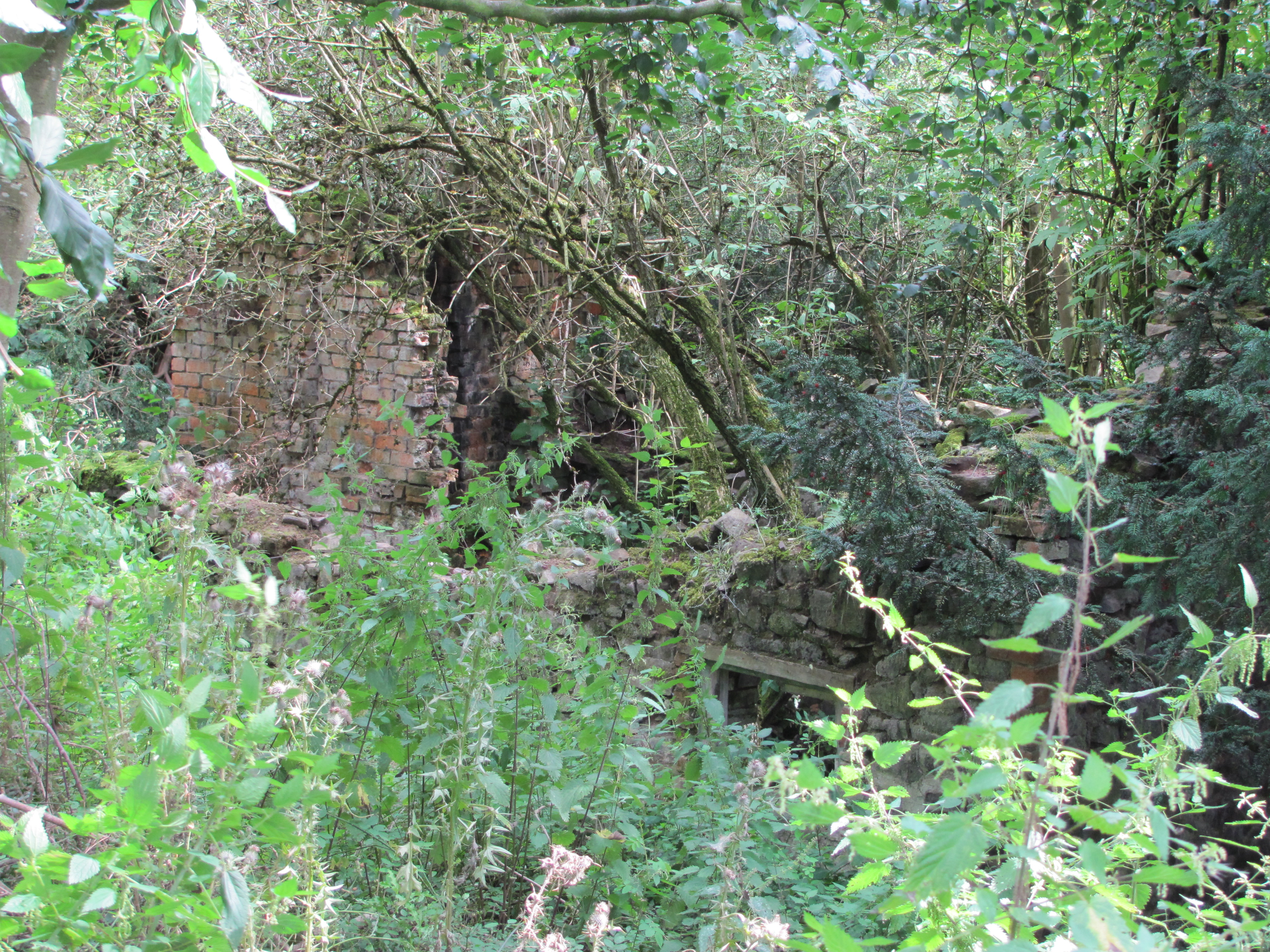
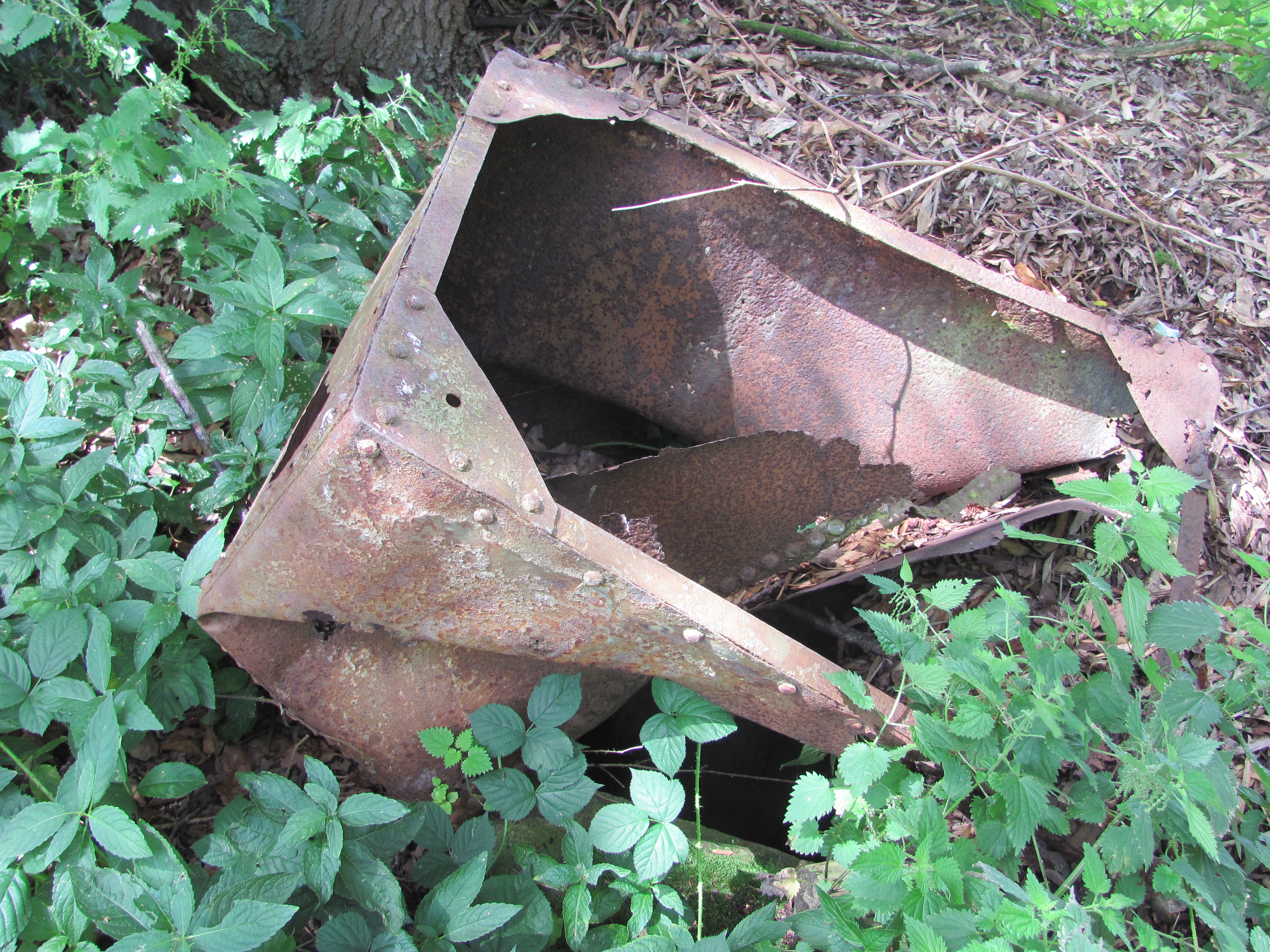
The wood gave away its past. Signs of the work of woodlanders abound. Their homes were now mere ruins covered in Ivy as Mother Nature reclaims her woodland. A clearing showed signs of coppicing.

The darkness of the wood and its cooler atmosphere was in stark contrast to the brightness and warmth that greeted us as we left it behind and returned to farmland. The path narrowed and took led us around a field edge where the sterility and silence of the arable farming on our left clashed with the natural exuberance of the hedge and the wildflower filled verges.

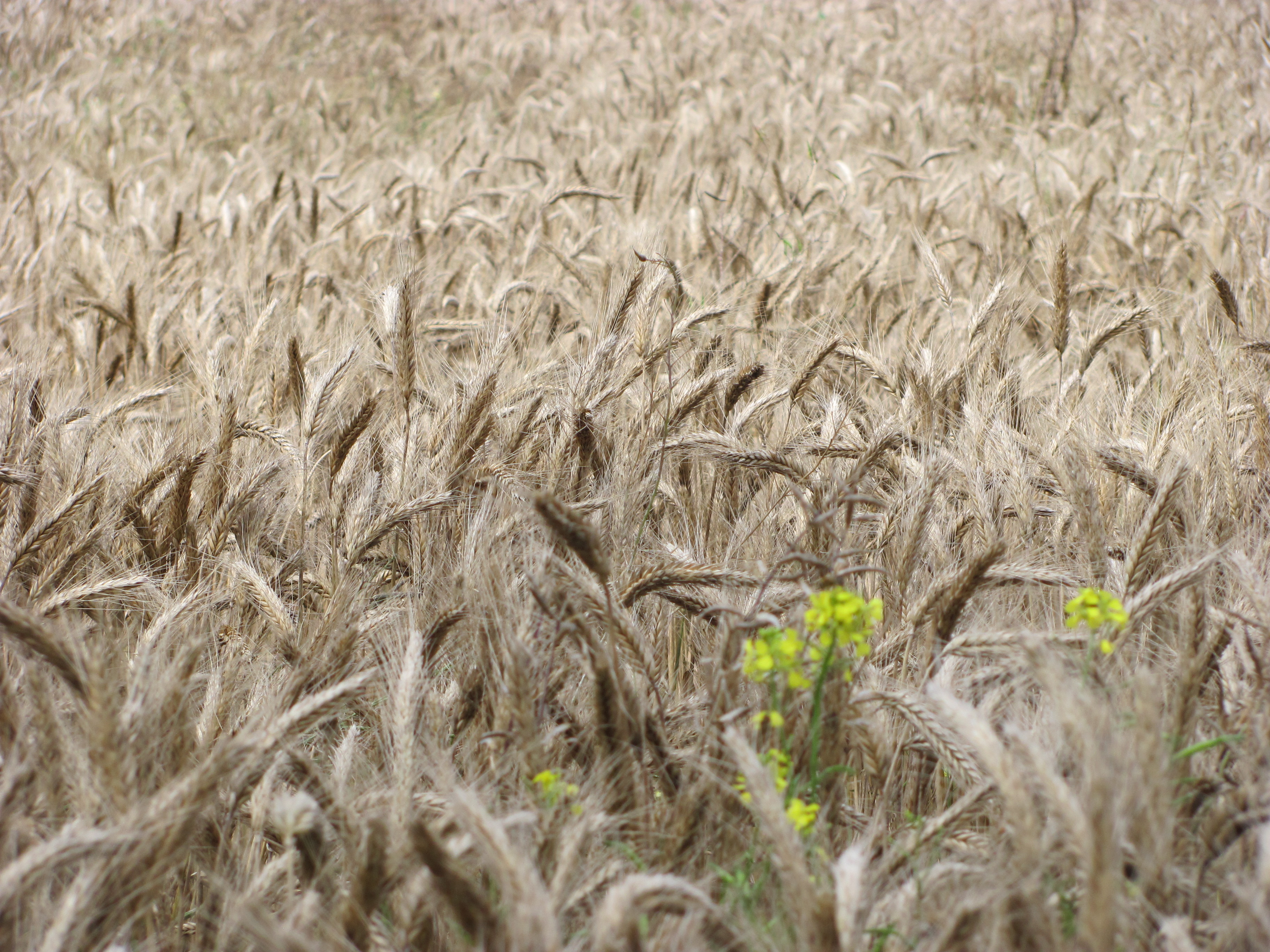
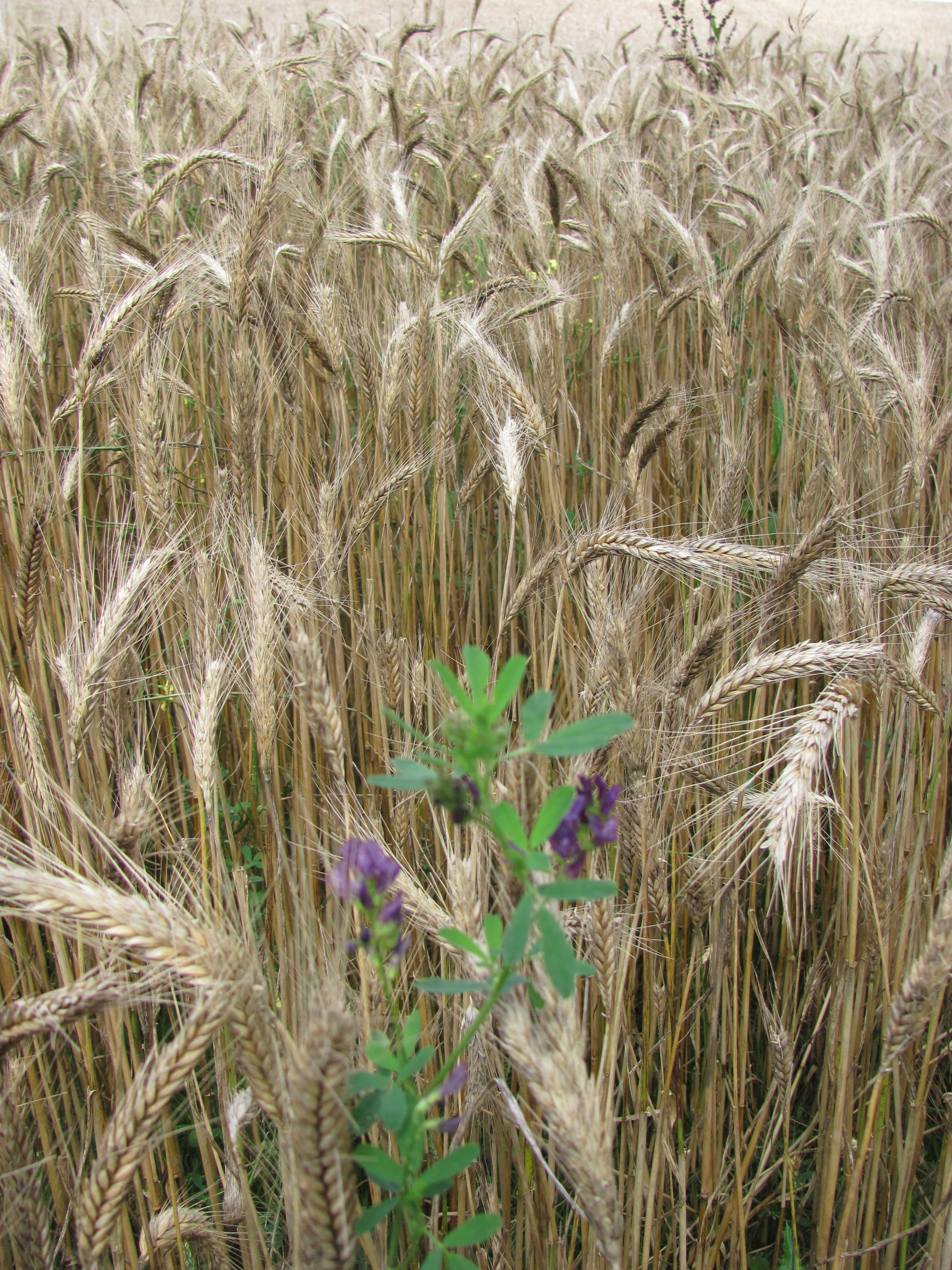
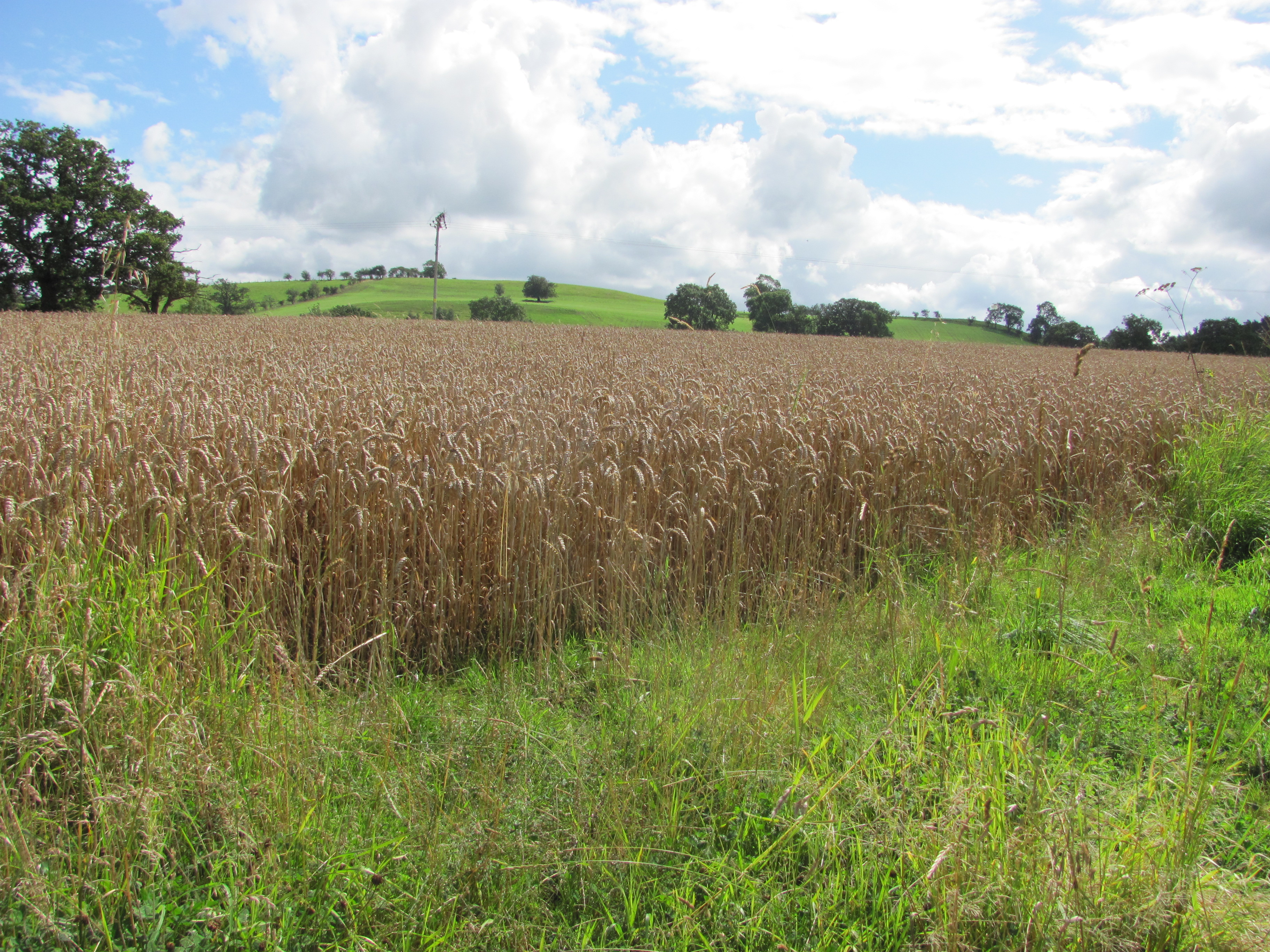
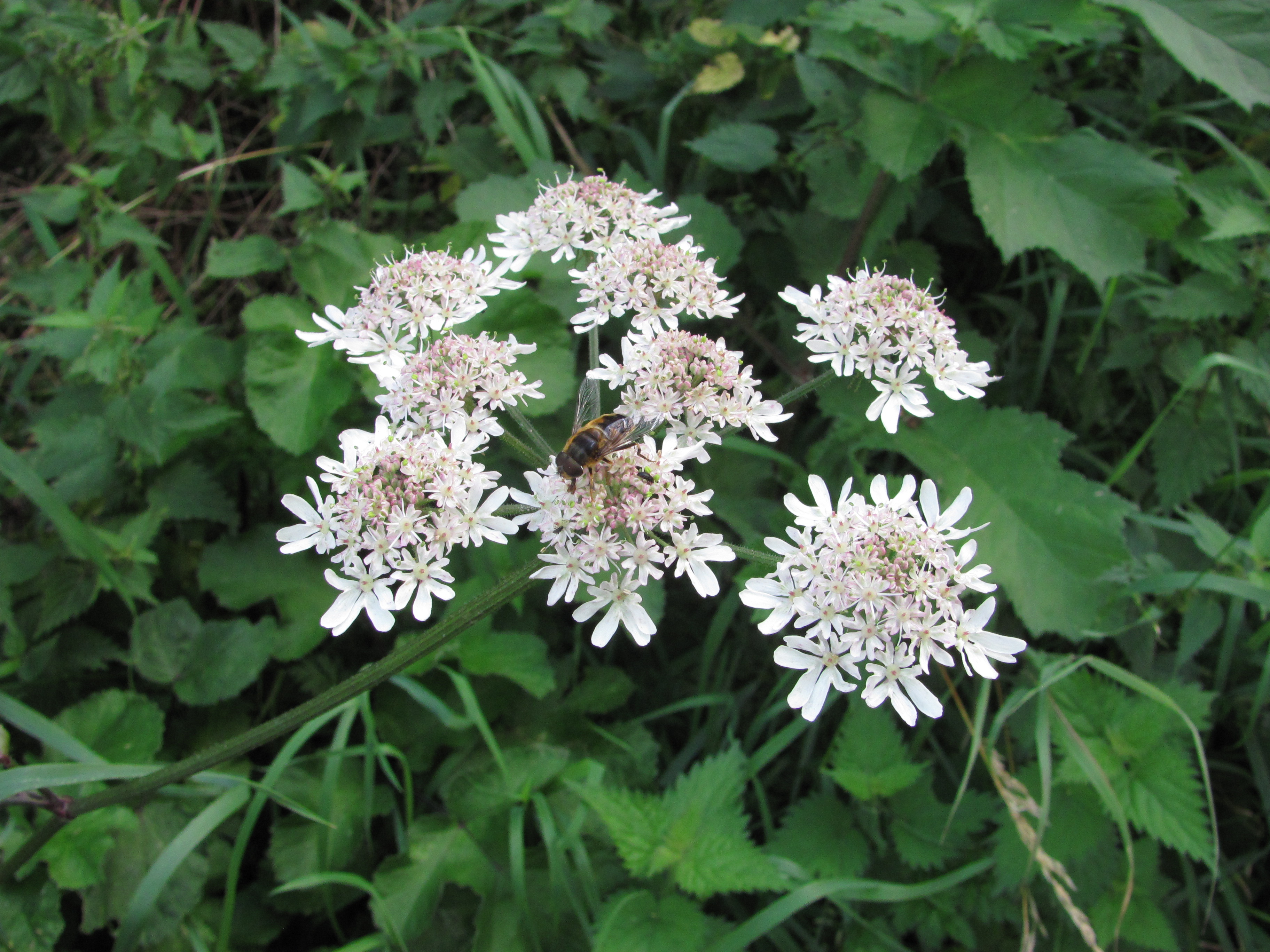
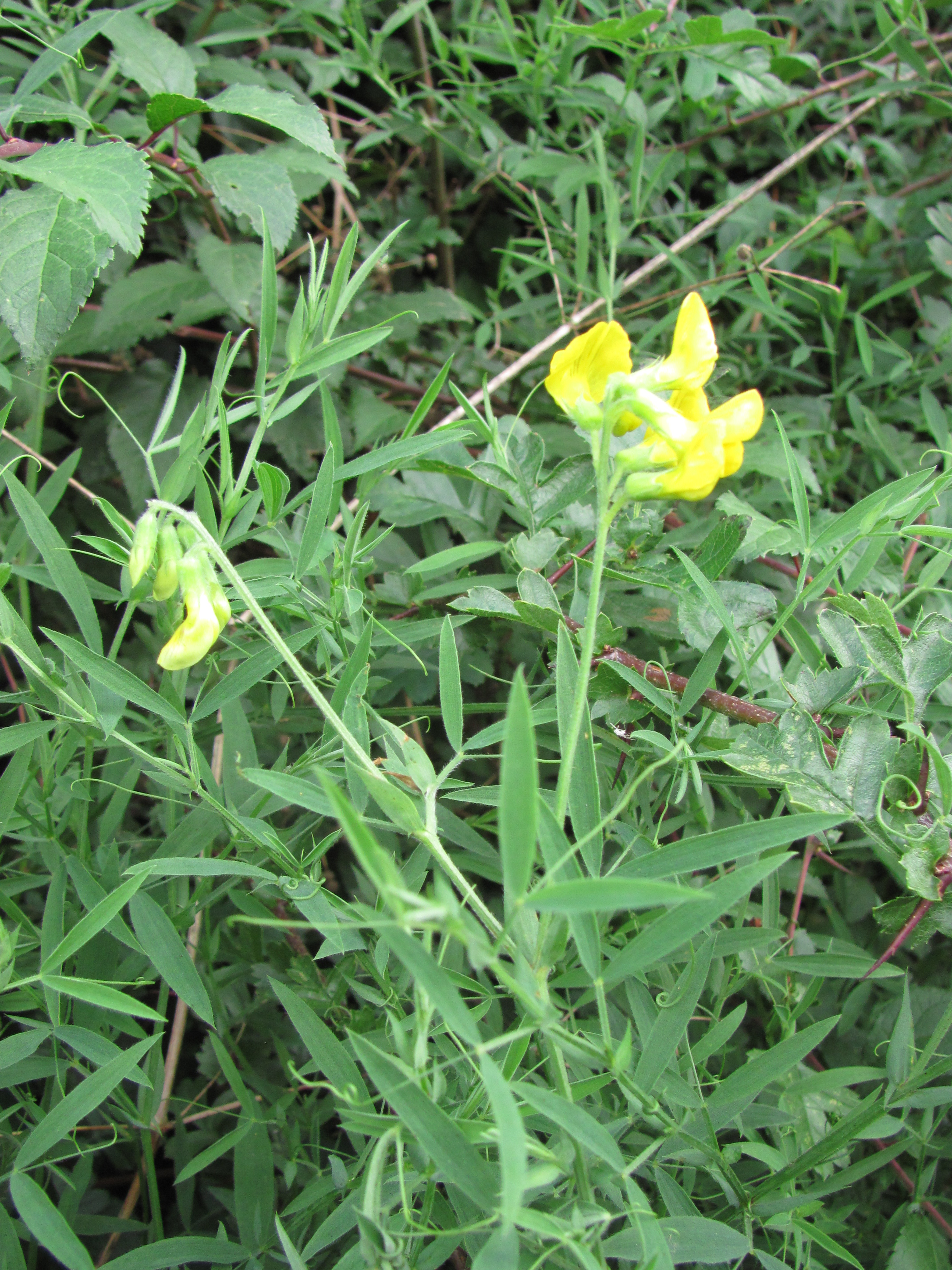
This was modern agricultural practice at its worse. We crossed over several of these fields and saw no signs of life apart from two Wood Pigeons flying overhead. The only flowers were a few yellow Rape plants from a previous crop and brave purple flowered Vetches attempting to clamber the Barley stalks close to the path. Years of pesticide and herbicide use coupled with monoculture has wiped out wildlife from these acres of land. To illustrate the point a small group of Swallows flew over the crop in search of insects, but it was in vain and they quickly moved on. At least until the footpath signs disappeared once more and we relied again on the smart phone maps to rescue us.

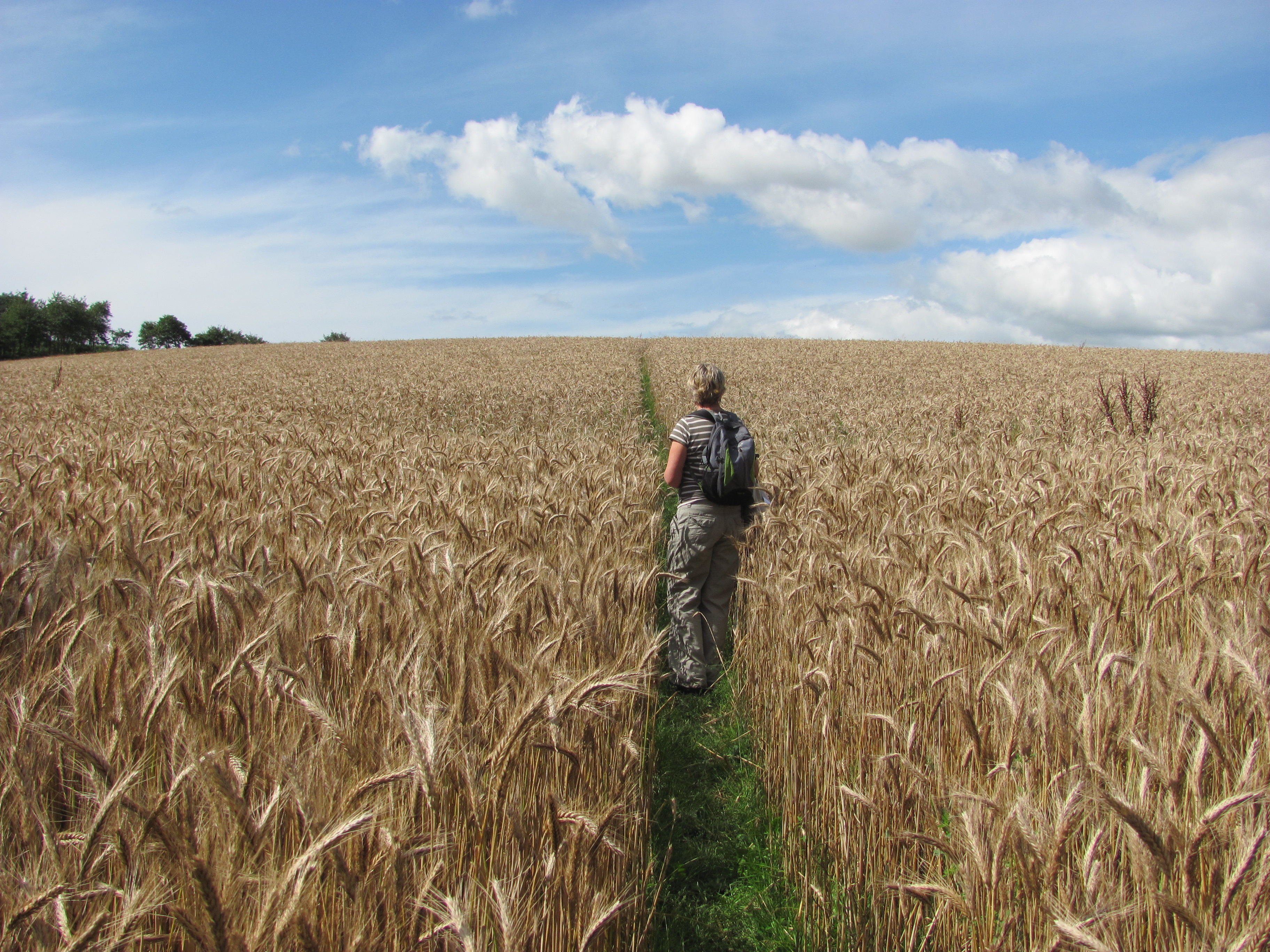
The path crossed one of these fields creating a narrow band of green which cut through the drab grey-yellow of the Barley. The only good part of crossing this desert was the rattling sound that the ears of Barley made as our elbows brushed past them.

Walking across the field we aimed for a style in the distant hedge. It seemed a long way across as there was little to look at or to listen to. The style in the hedge turned ou to be a double style, one each side of a thick, dense, tall hedge. there was a different world awaiting us on the other side. The grassland here was full of clovers and there were many different grasses, not just the ryegrass we had walked through earlier.

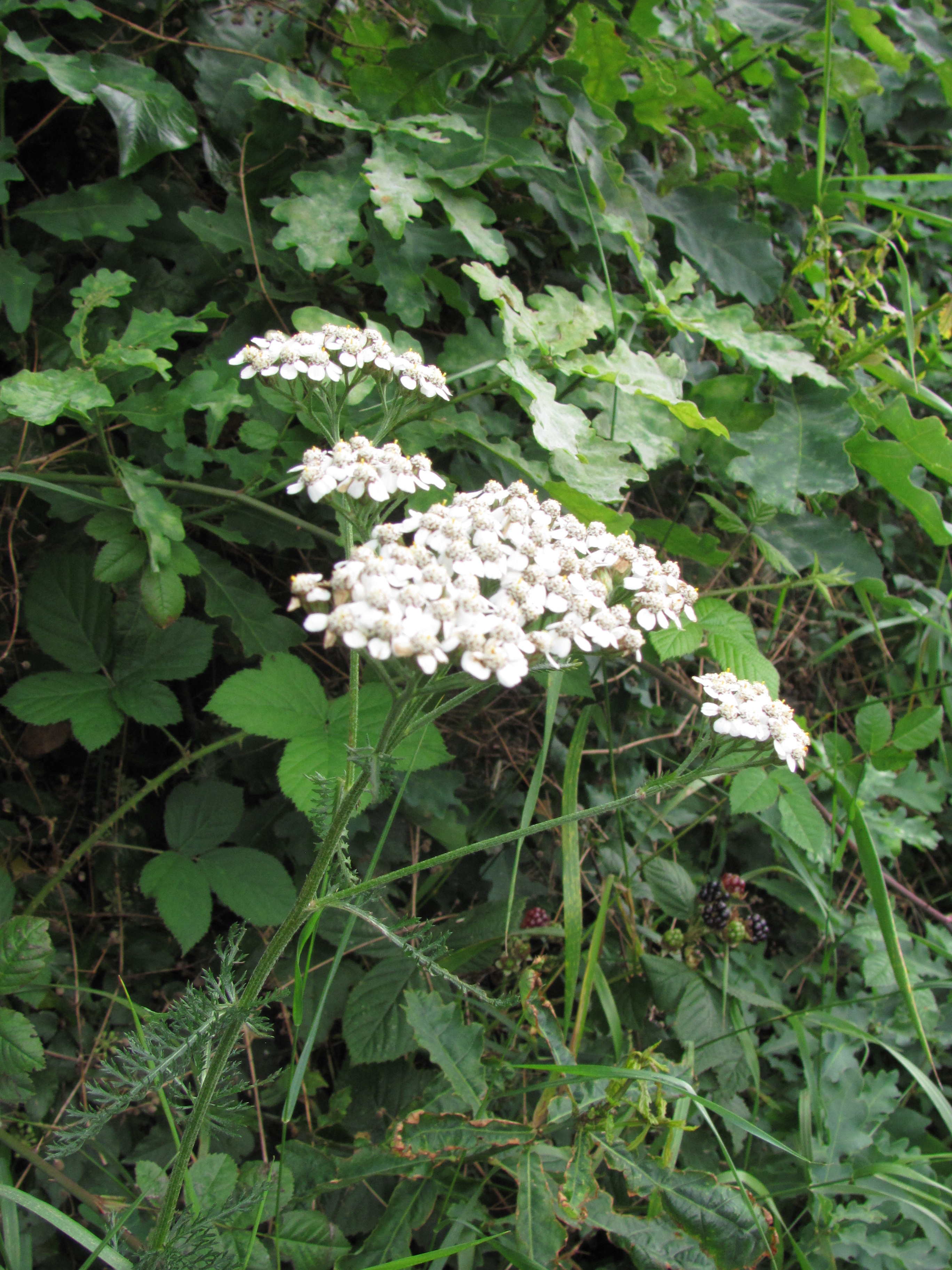
We were now within the land of our local organic dairy farmer. The hedgerows had deep verges full of wildlflowers, thistles, mallows and vetches. No hedges had been removed and the fields were much smaller.

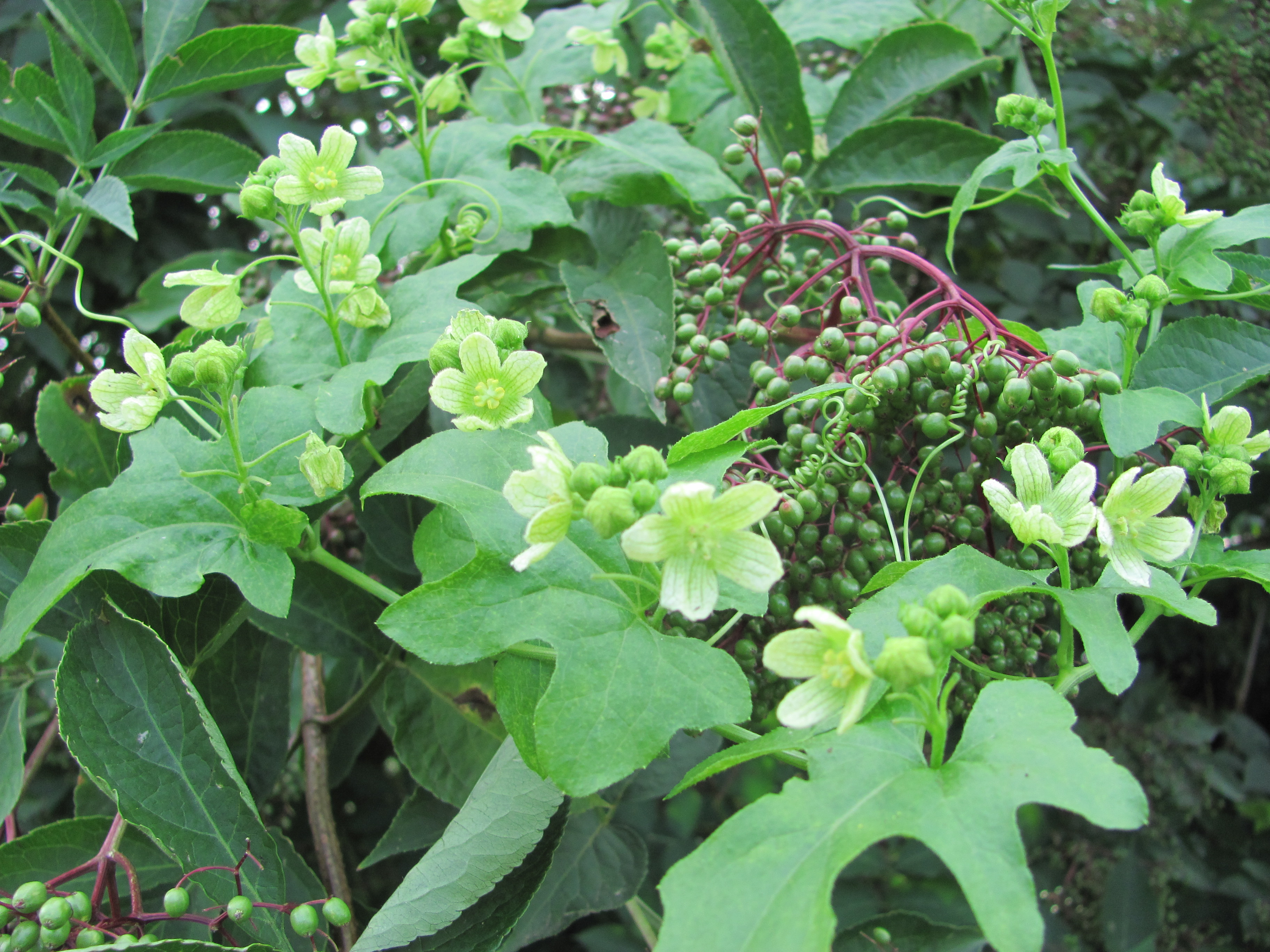
As we passed through to another field we were hit by a sweet. rich aroma from the hedge. It took us a while to find the source – a Sweet Bryony clambering over an Elder.

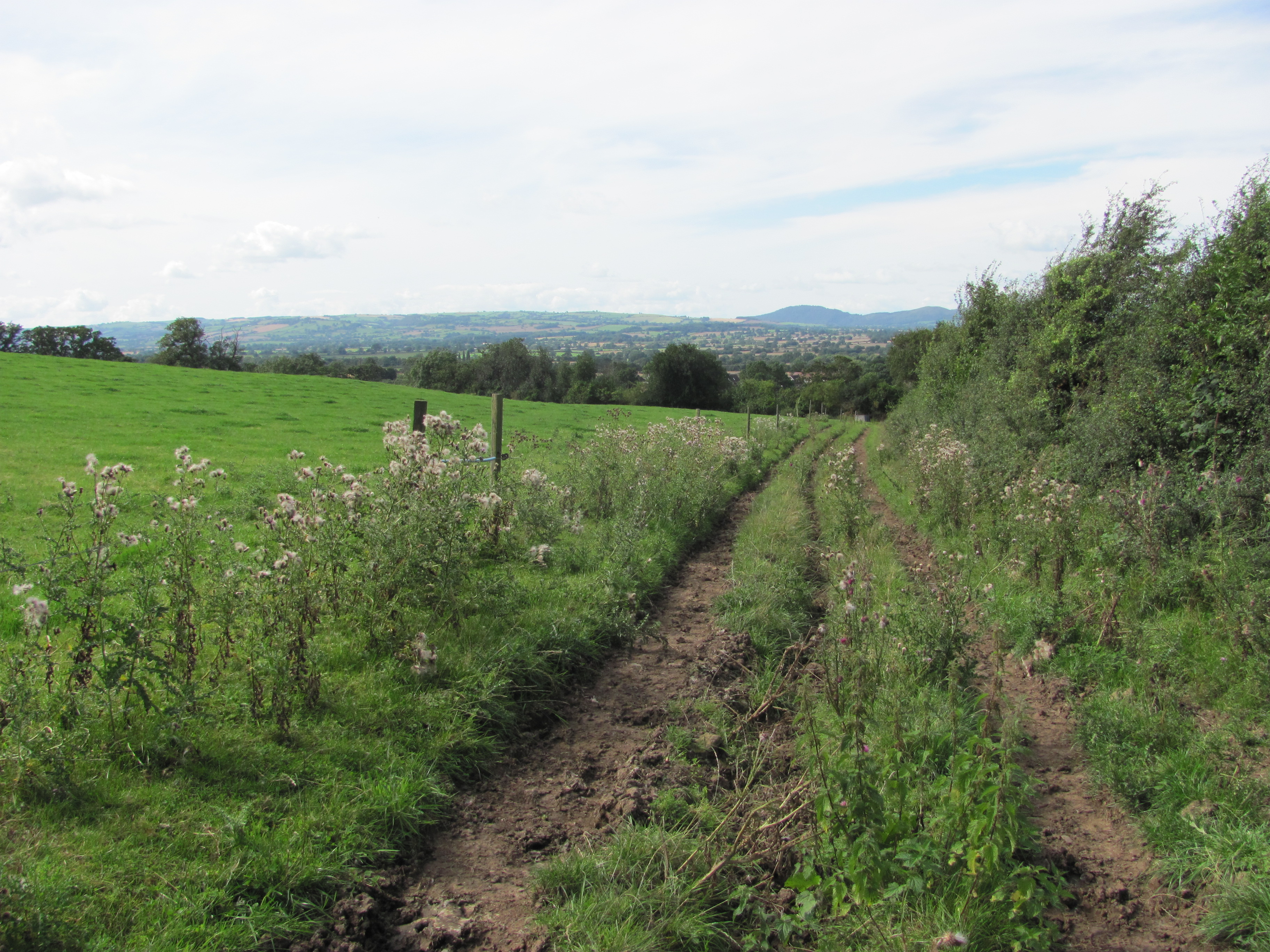
It was downhill now all the way home and we enjoyed lovely views through gaps in the tall hedges.

As we left the final field of pastureland we spied our house across the hayfield. We had to pass our big old oak tree which we admire from out back garden. As we walked along the fence to the garden gate we called out to the chickens. They looked totally confused – we were the wrong side of the fence.

Categories
birds meadows photography Shropshire trees wildlife woodland

Through the Garden Gate – part one – to the Pool.

This post features a wander in the countryside beyond our garden gate. We literally walk down to the bottom of the garden, past the chucks, go through the wooden gate and enter our borrowed landscape. We ambled for four hours spending much of the time standing, looking and listening or sitting and taking in the atmosphere. At no time were we more than a mile from our home.

An alternative title for the post could be “Why we live where we live and why we love where we live.” Join us as we wander around our local patch, our own personal bit of countryside.

We walked alongside the fence line along the paddock to join the public footpath which led us diagonally across a field of winter wheat. Reaching the far side of the field we looked back to get a view of our home snuggled within the short row of houses.

Looking back across the field we have just crossed gives us a different view of one of the hills we can see from the garden.

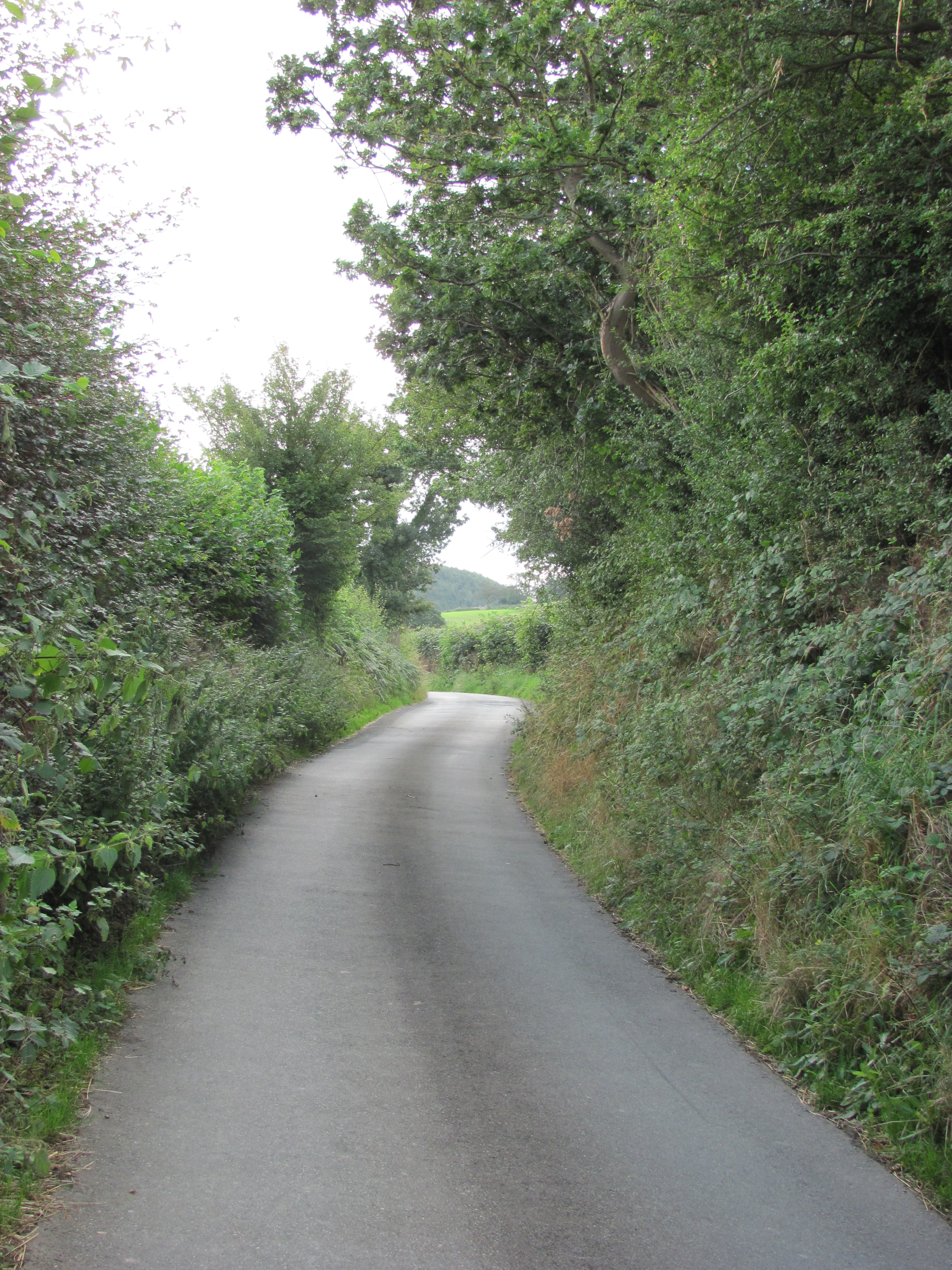
We needed now to walk along a lane for a while, a narrow lane with high hedges on each side and verges full of wildflowers. Climbers clambered over the hedging bushes.

A bonus was the appearance of the first ripe blackberries. We enjoyed them and thanked the blackbirds for sharing their larder with us.

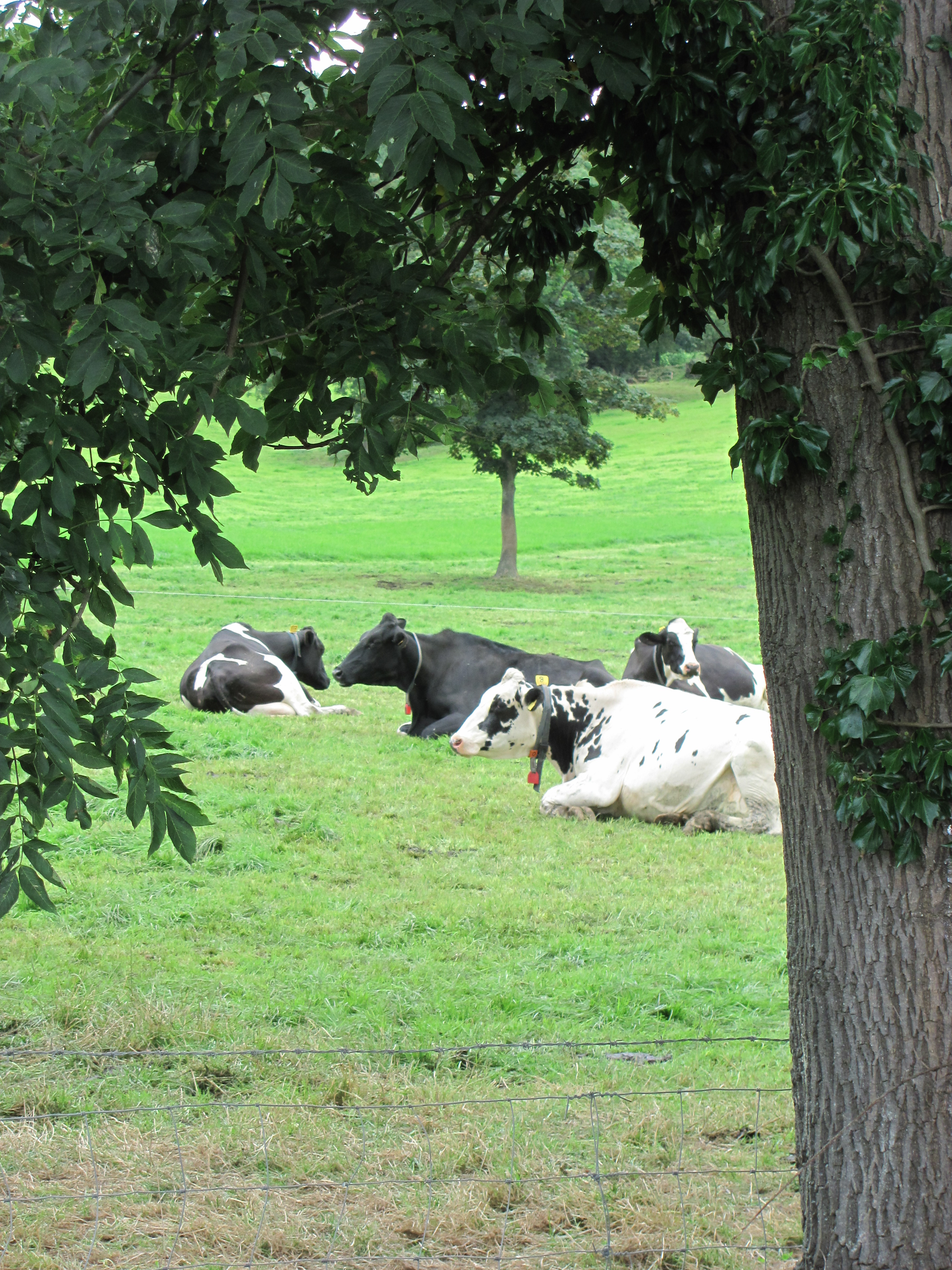
Luckily this gently uphill trek on tarmac was short-lived and we soon clambered over the hedge via a wooden style and revelled in walking with the feel of soft grass beneath our feet. Here the land is rich pastureland enjoyed by dairy cattle. The cows here were all lazily sitting down chewing their cud.

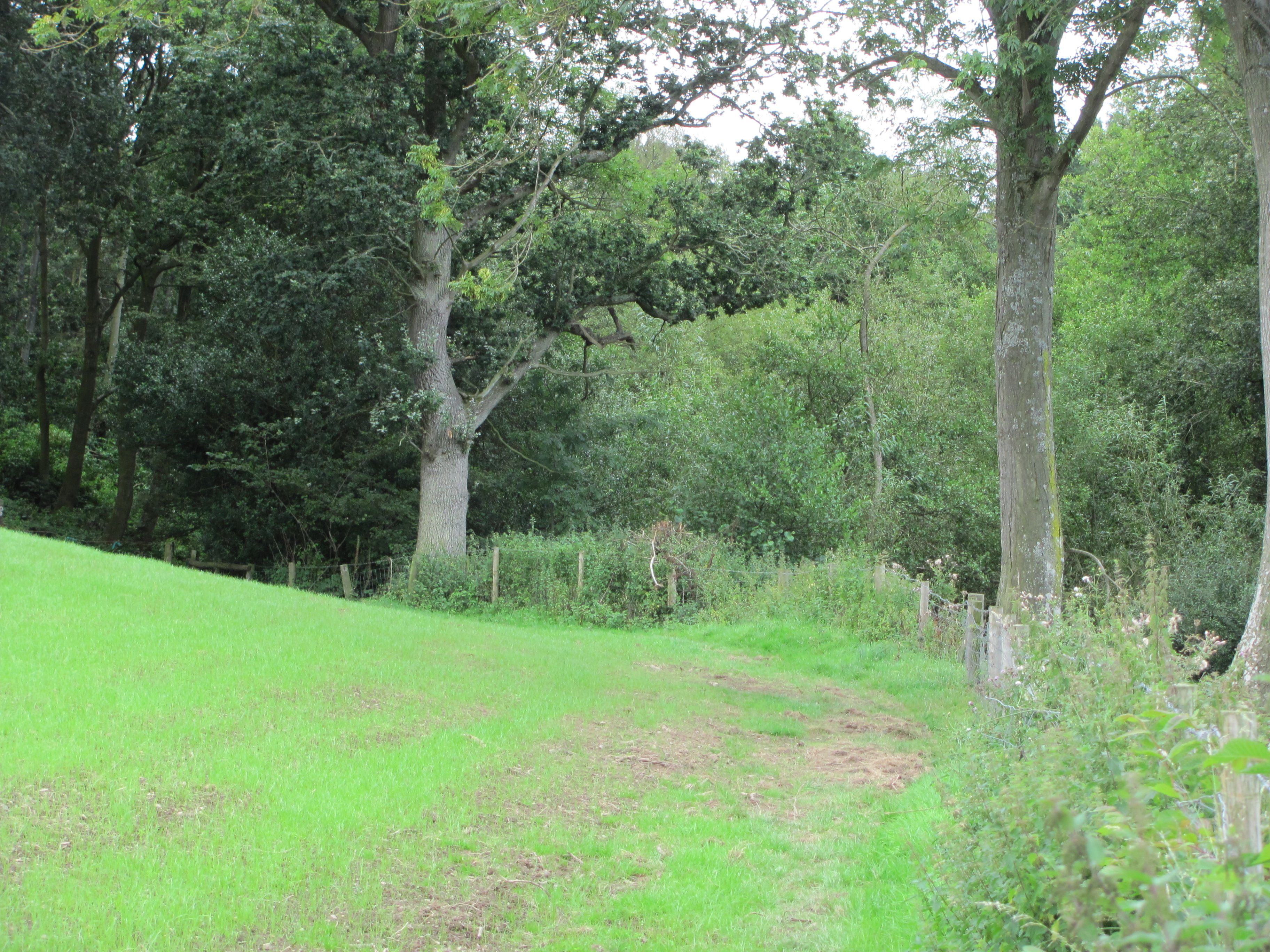
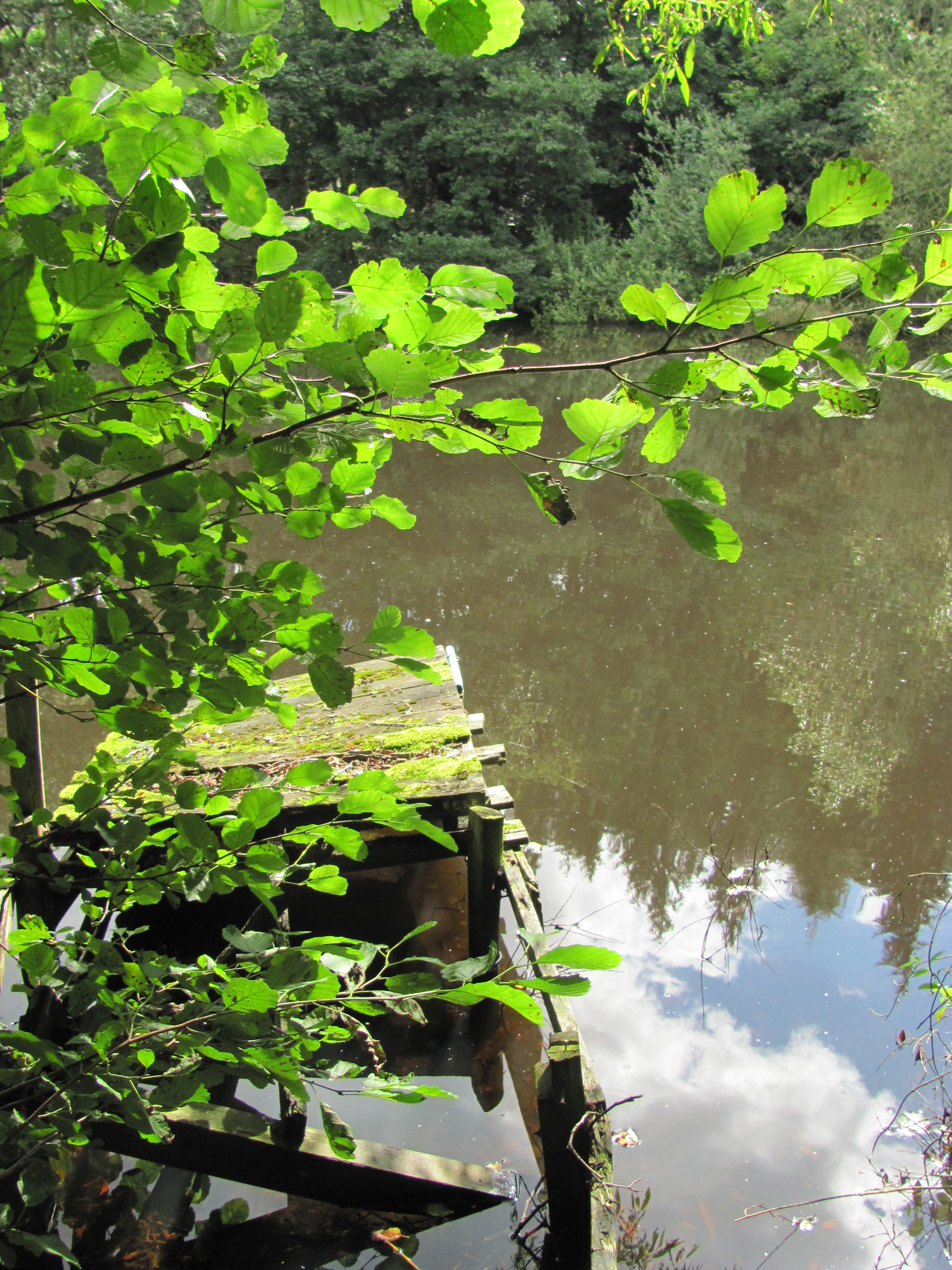
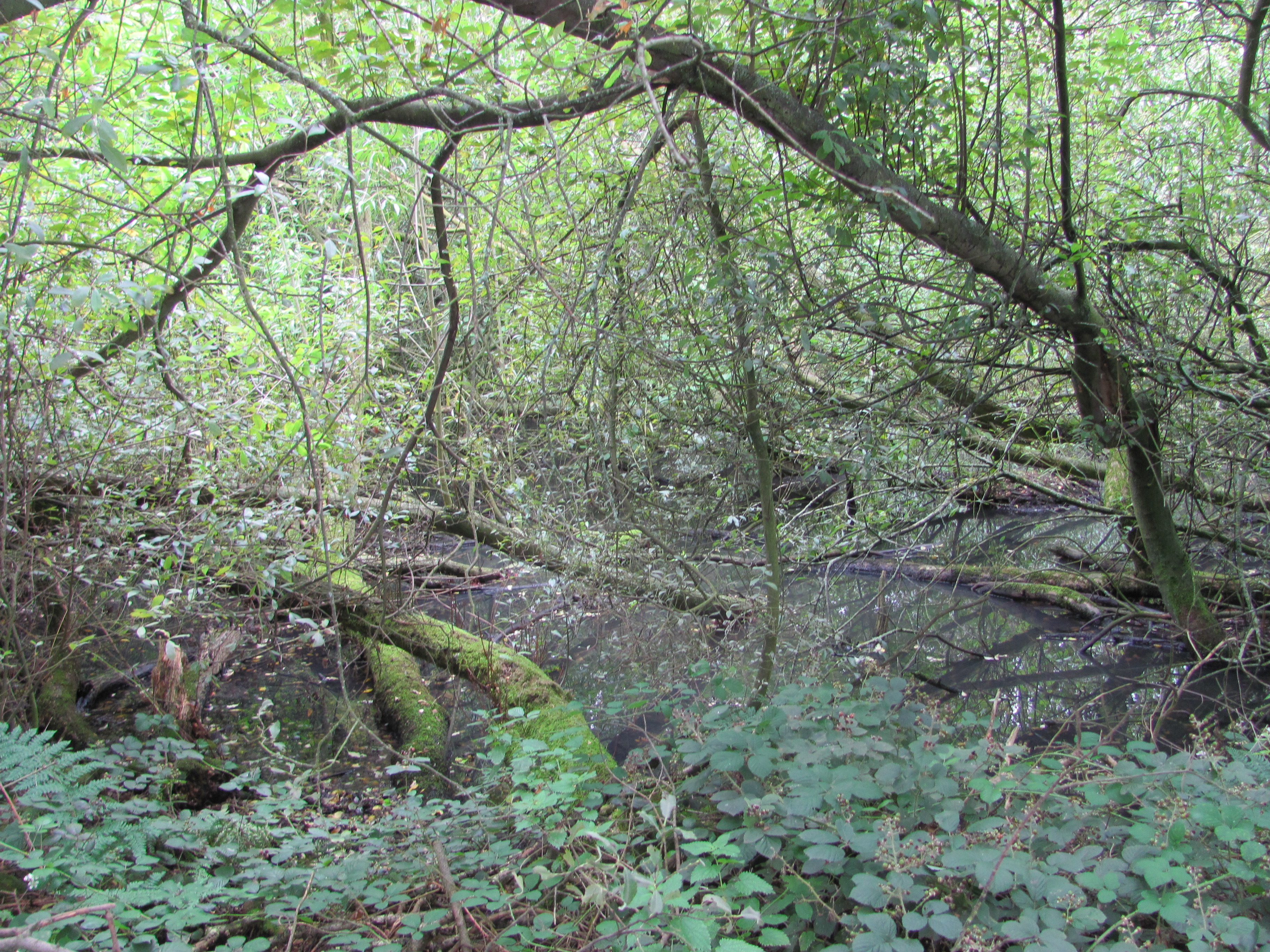
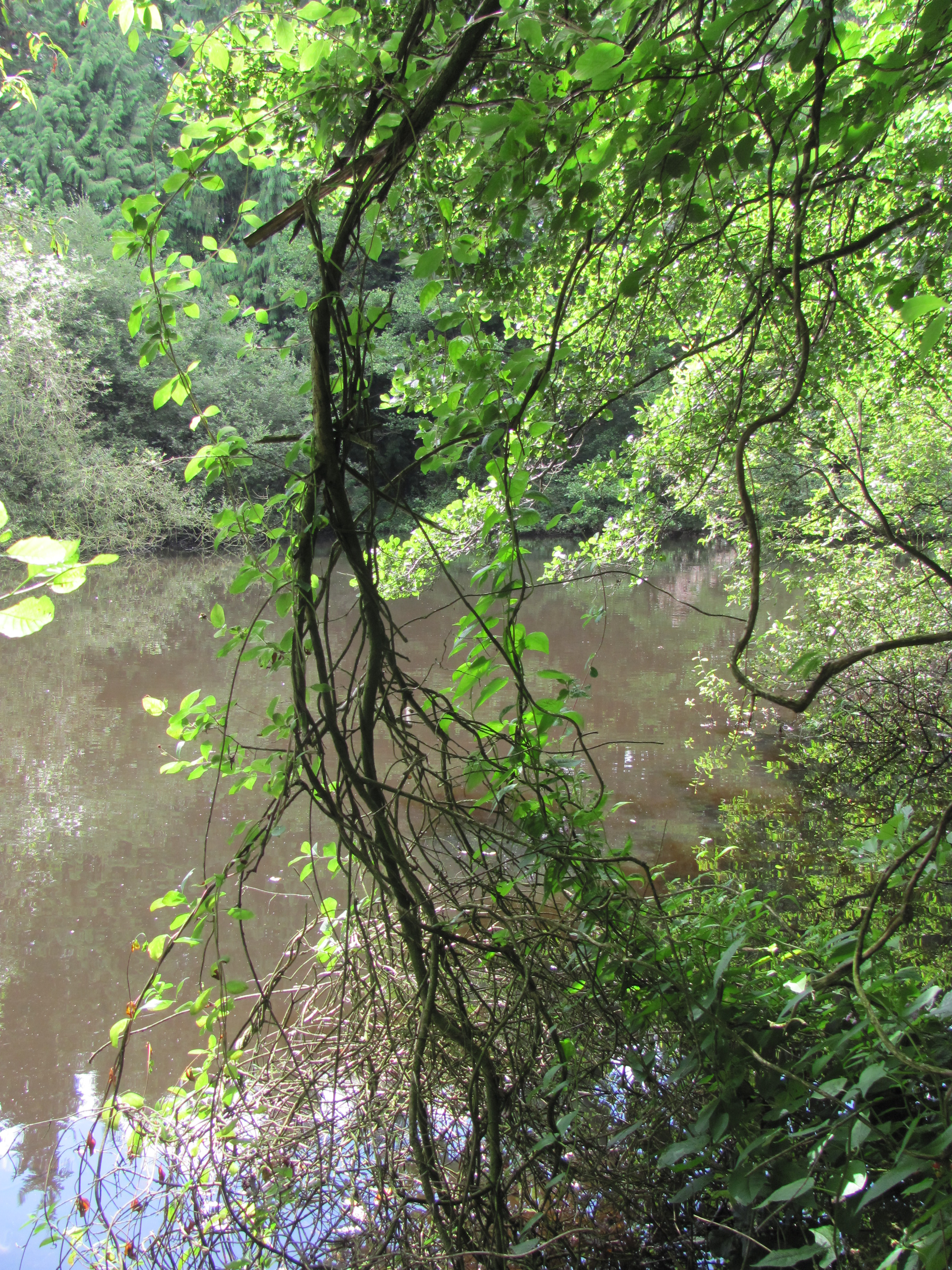
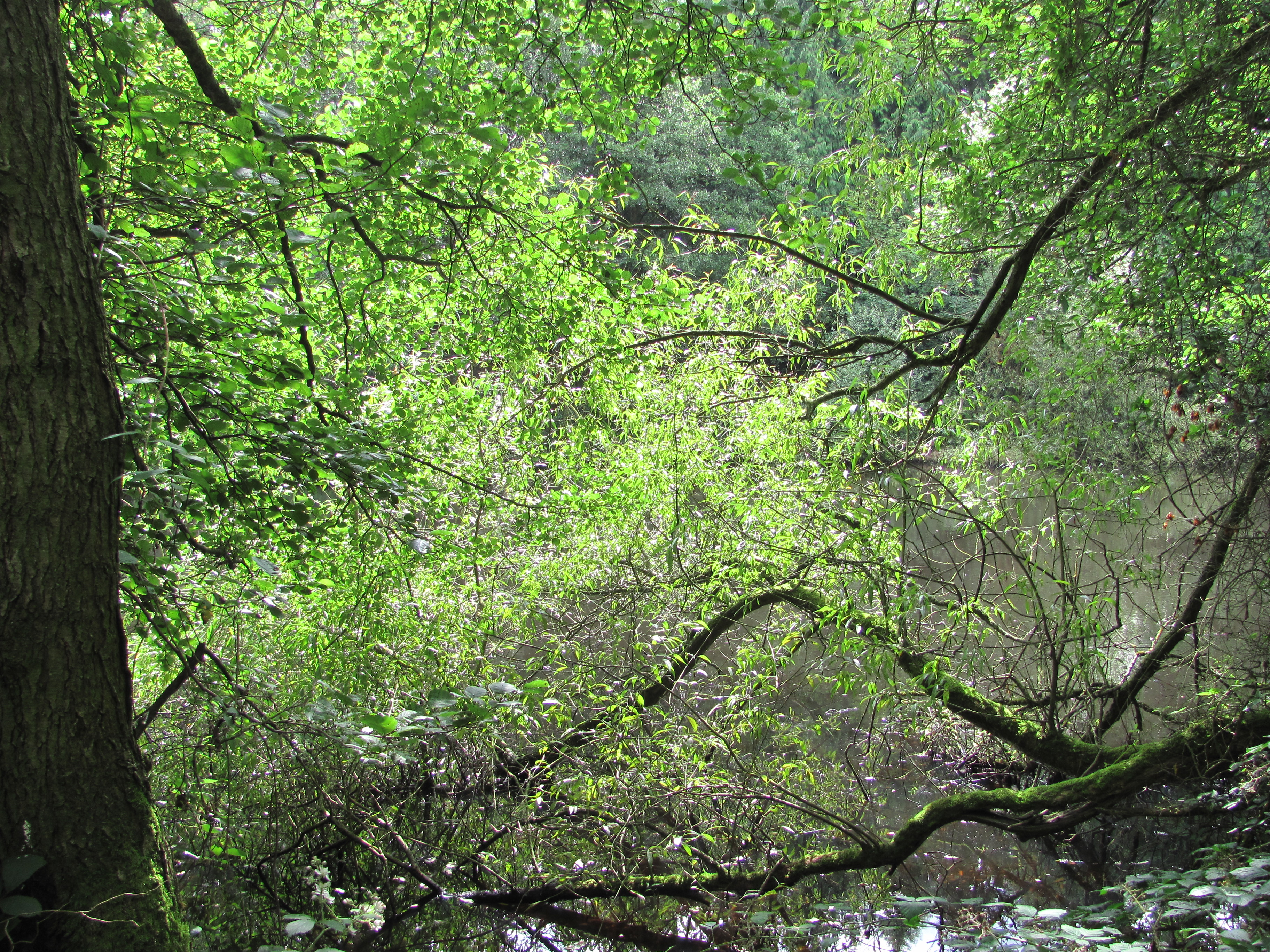
A tiny stream acted as our guide across the pasture and to the edge of our secret wood with abandoned fishing pools now overgrown and in places looking more like swamp land.

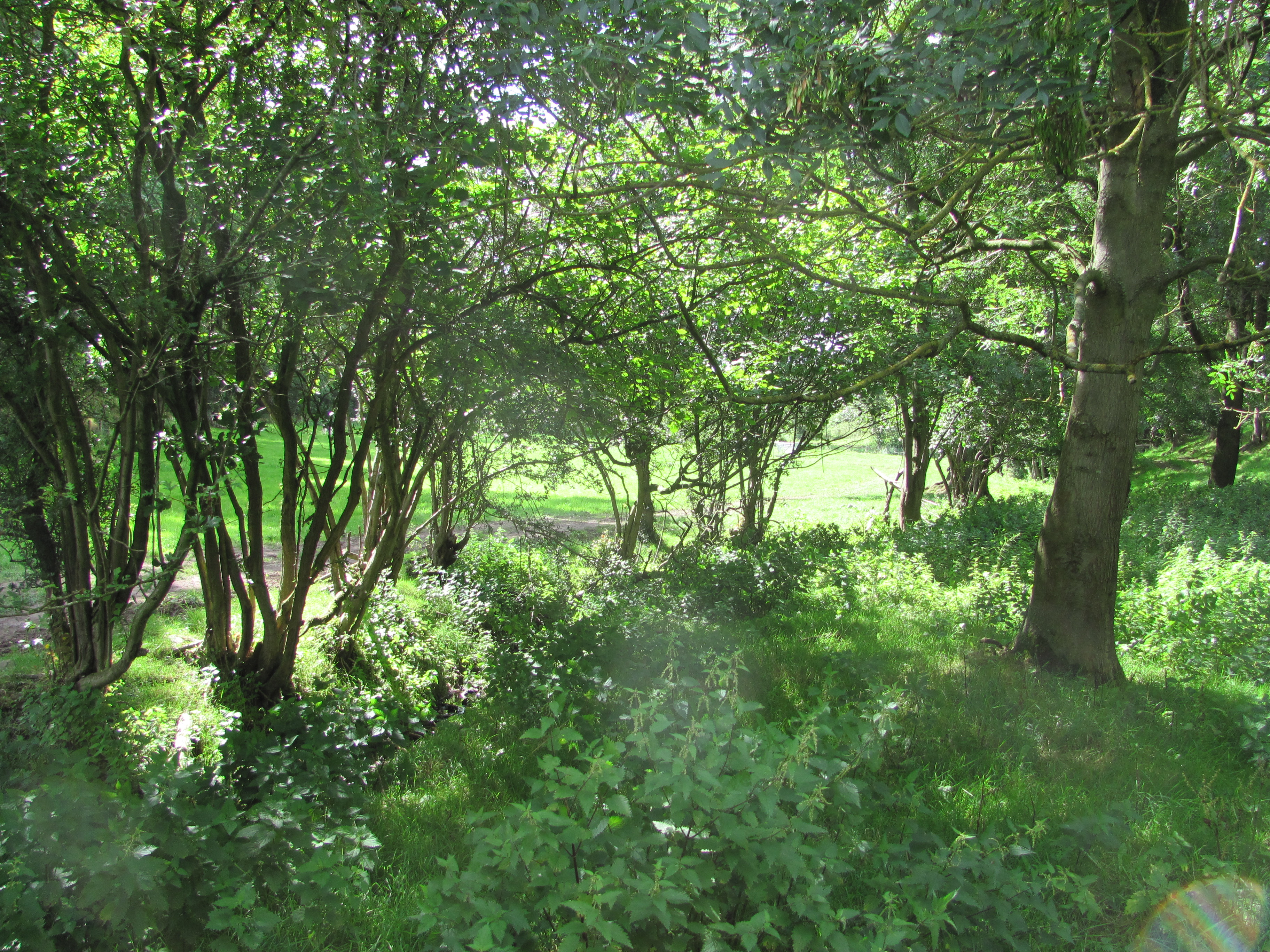
Whenever we walk this wood, whatever the time of year and whatever the weather, the light has a special quality which lights up the overgrown pools and turns trees and bushes into silhouettes.

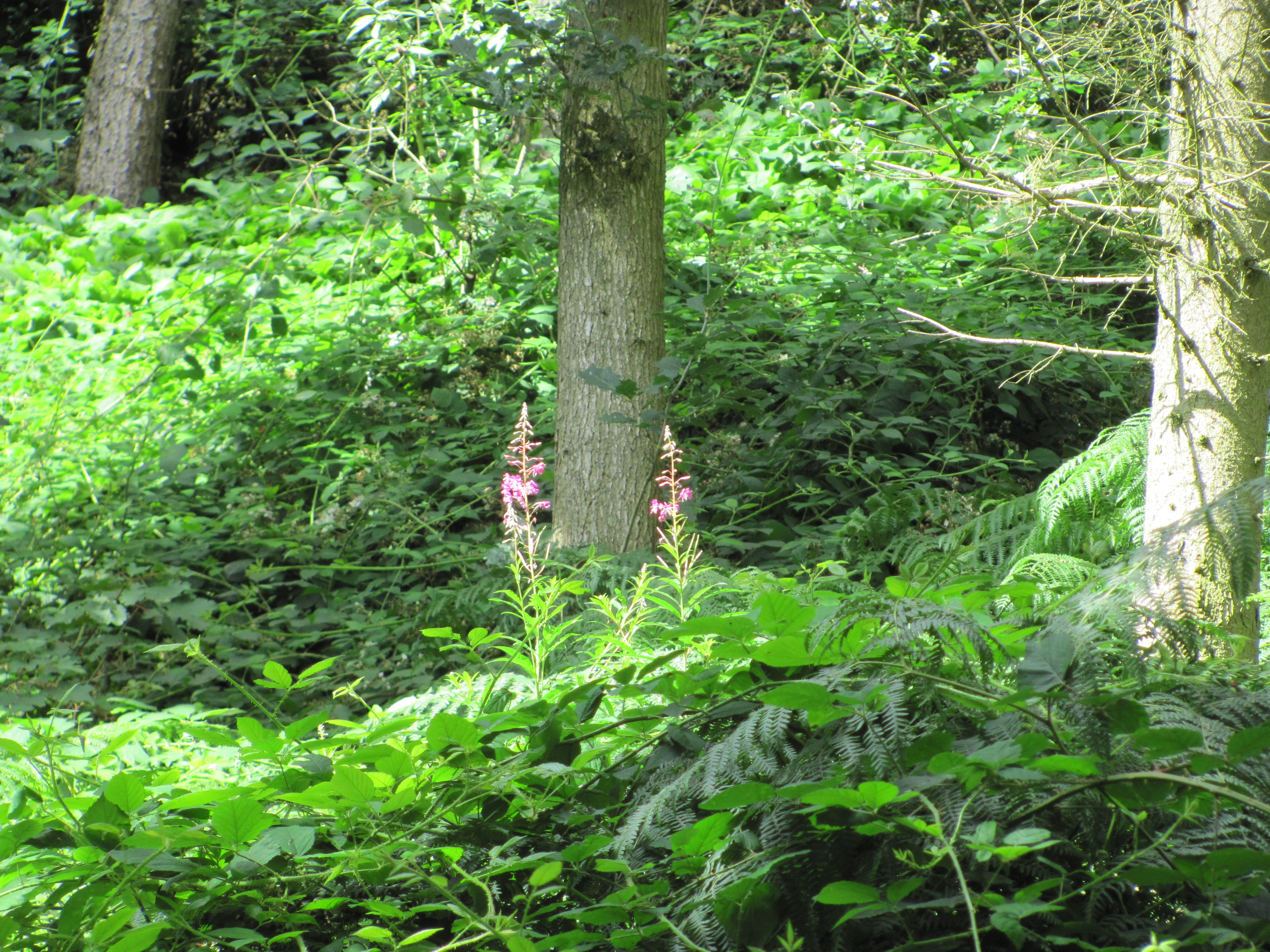
We can look up into the tree canopy of the steep valley sides as we walk along the water’s edge and appreciate just how tall some of the trees are. Below them is a thick carpet of brambles displaying their white flowers with hints of pink and their glossy, black fruits. Occasionally a tall rose-coloured flower spike of Rosebay pushes up through the bramble carpet. The trees are busy with mixed feeding flocks of Warblers and Titmice, the brambles resonating to the powerful song of Wrens and Dunnock.

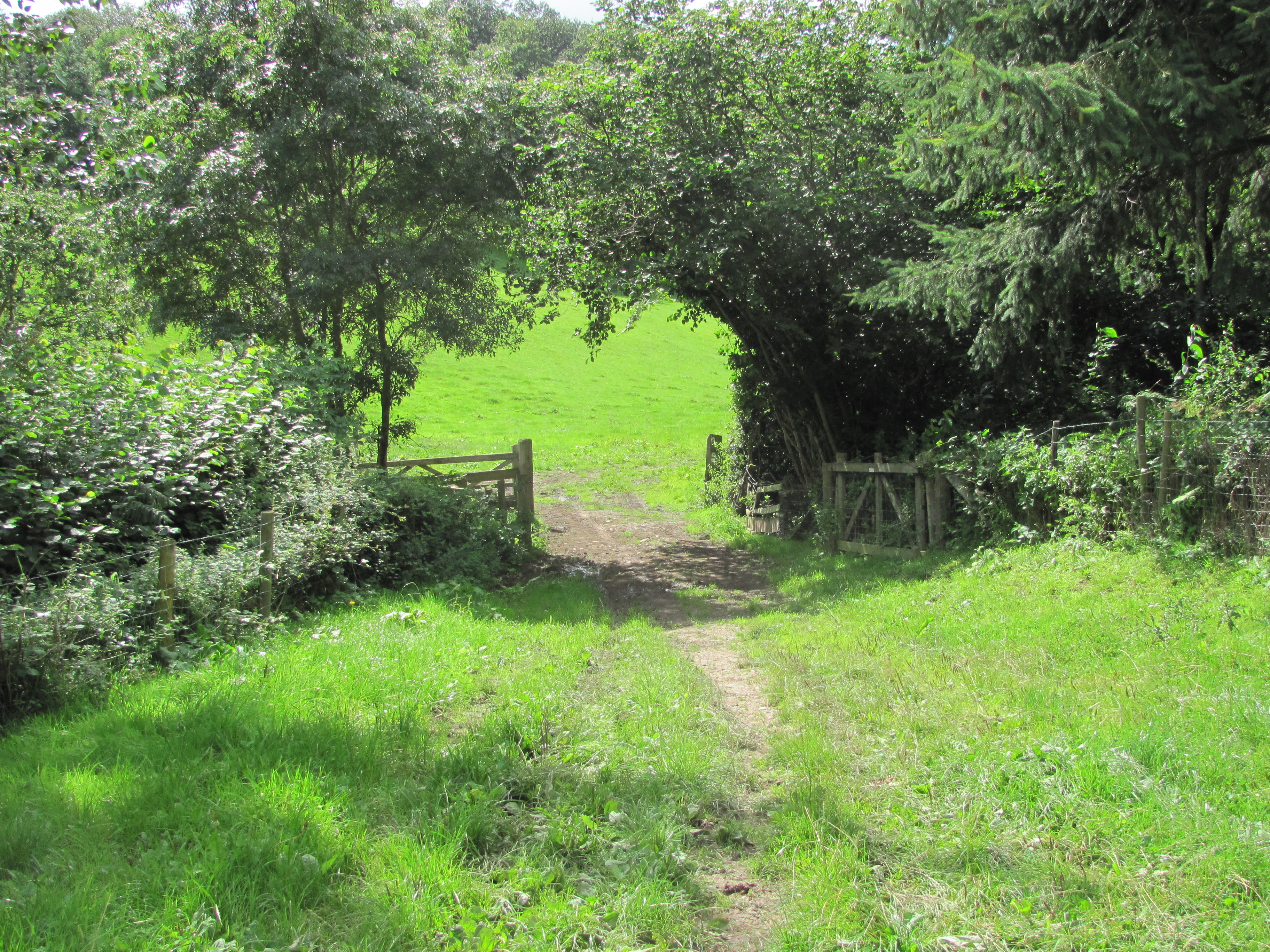
As we reached the end of the wood walk an old wooden gate invited us back into open countryside. Jude the Undergardener glimpses the next part of our walk leaning on the gate as she waits for me as I finish taking photos.

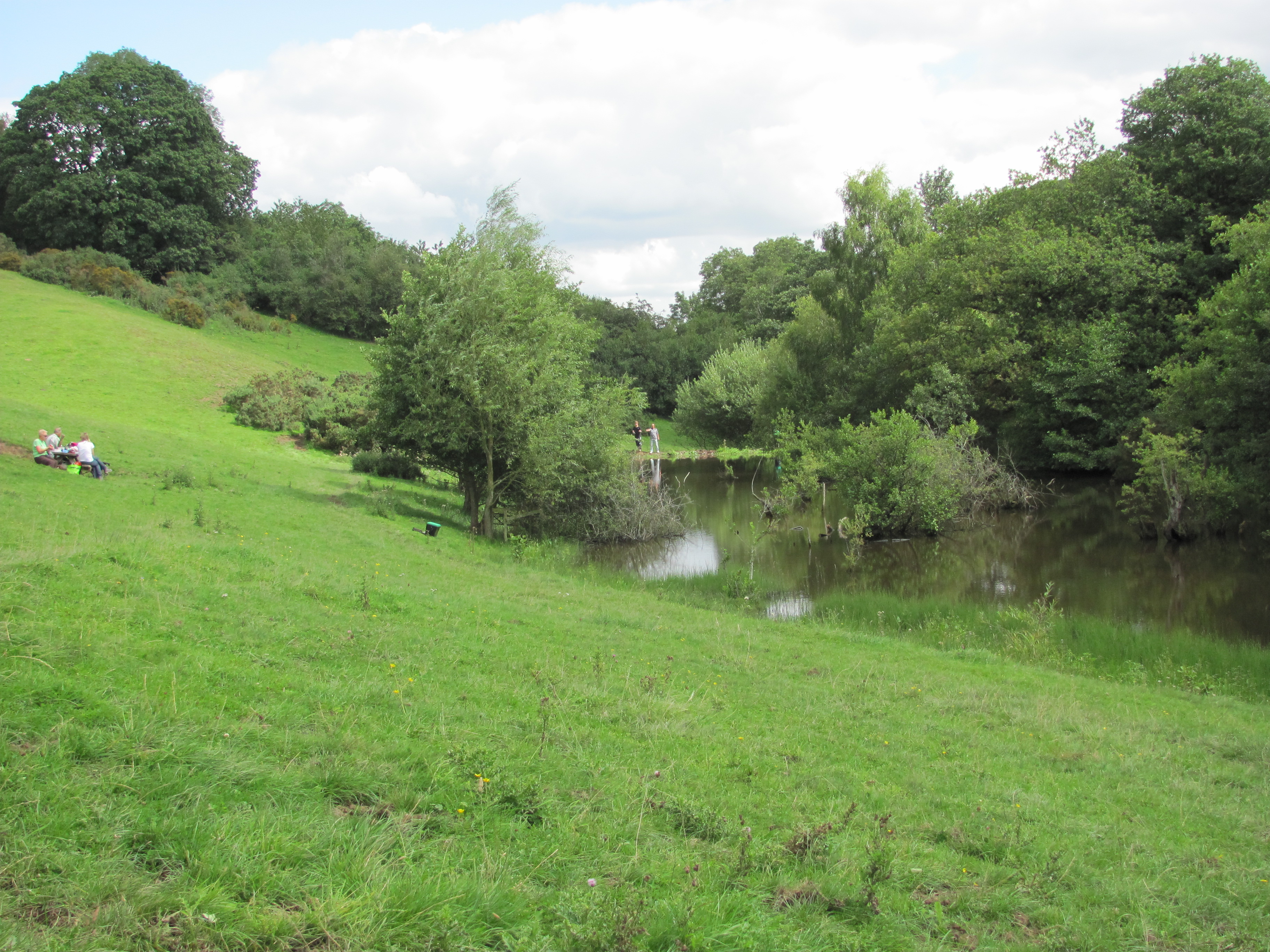
A walk across a sloping field on ground churned up by the feet of cattle takes us to the fishing pool, our halfway point and the perfect place to sit on the grass slope and enjoy our usual fruit and coffee. By the pool the farmer has provided a picnic bench and today a family are enjoying a picnic and three generations are doing a spot of fishing.

Categories
conservation flower show garden design garden photography garden wildlife gardening hardy perennials July meadows ornamental grasses ornamental trees and shrubs photography RHS The National Trust wildlife

A Day at the RHS Flower Show Tatton Park

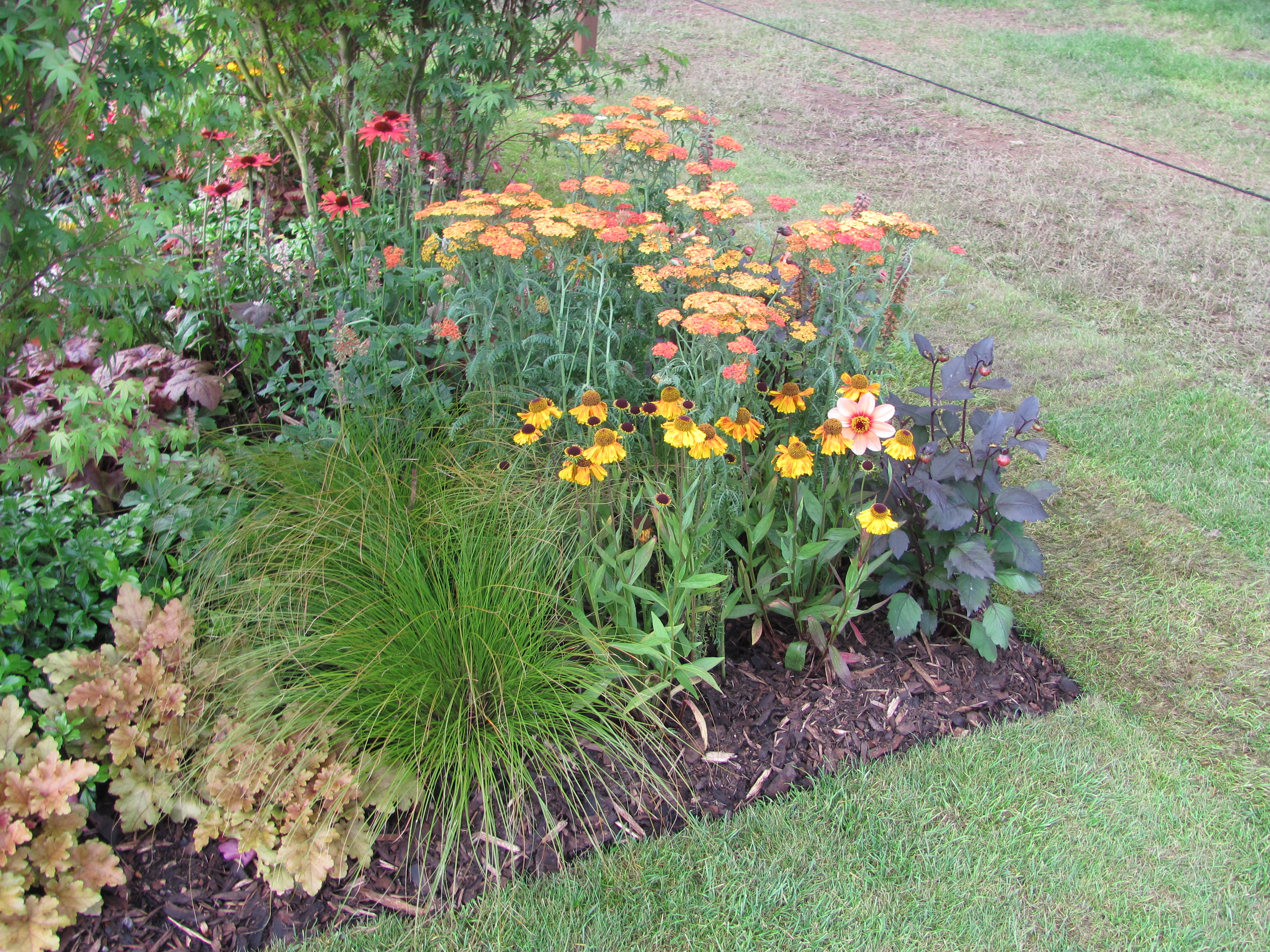
We have been to the Chelsea Flower Show, Harrogate Flower Shows and The Autumn and spring Malvern Flower Shows but the one we enjoy the most is always the one set in the grounds of Tatton Park. Luckily this is the RHS show closest to home. Although Chelsea is often called the greatest flower show, having visited once we have no desire to go again. But we frequently go to Tatton.

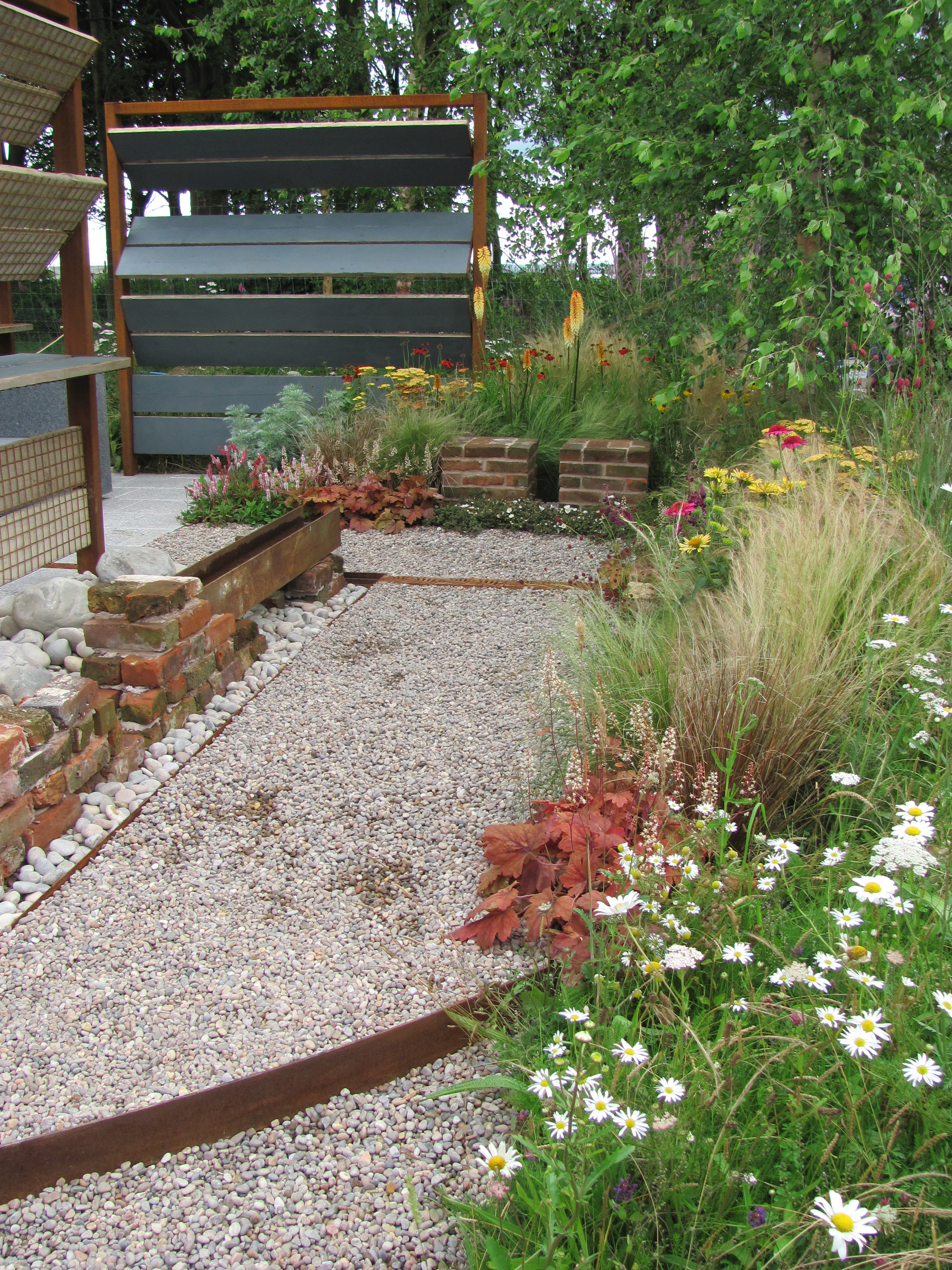
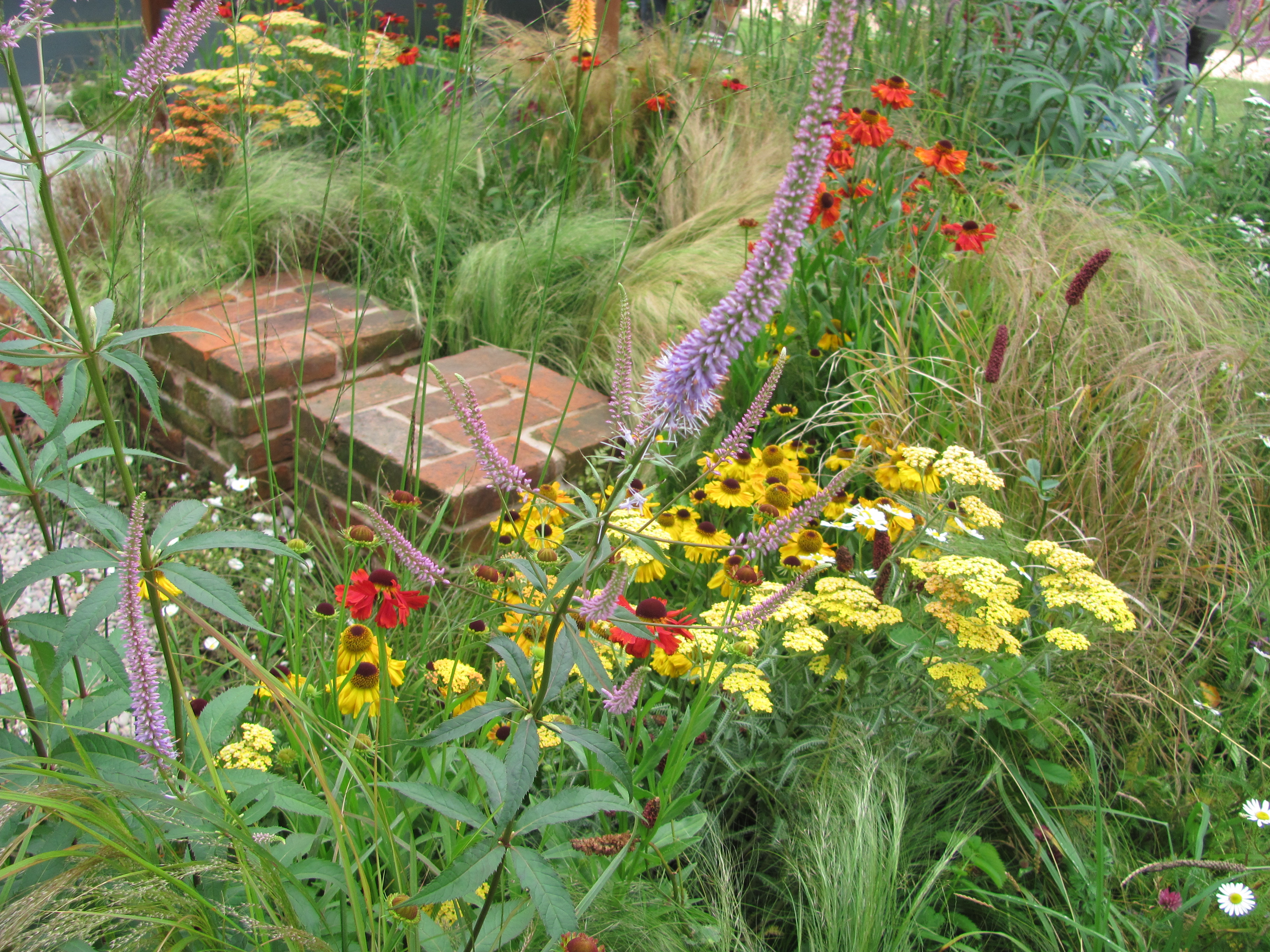
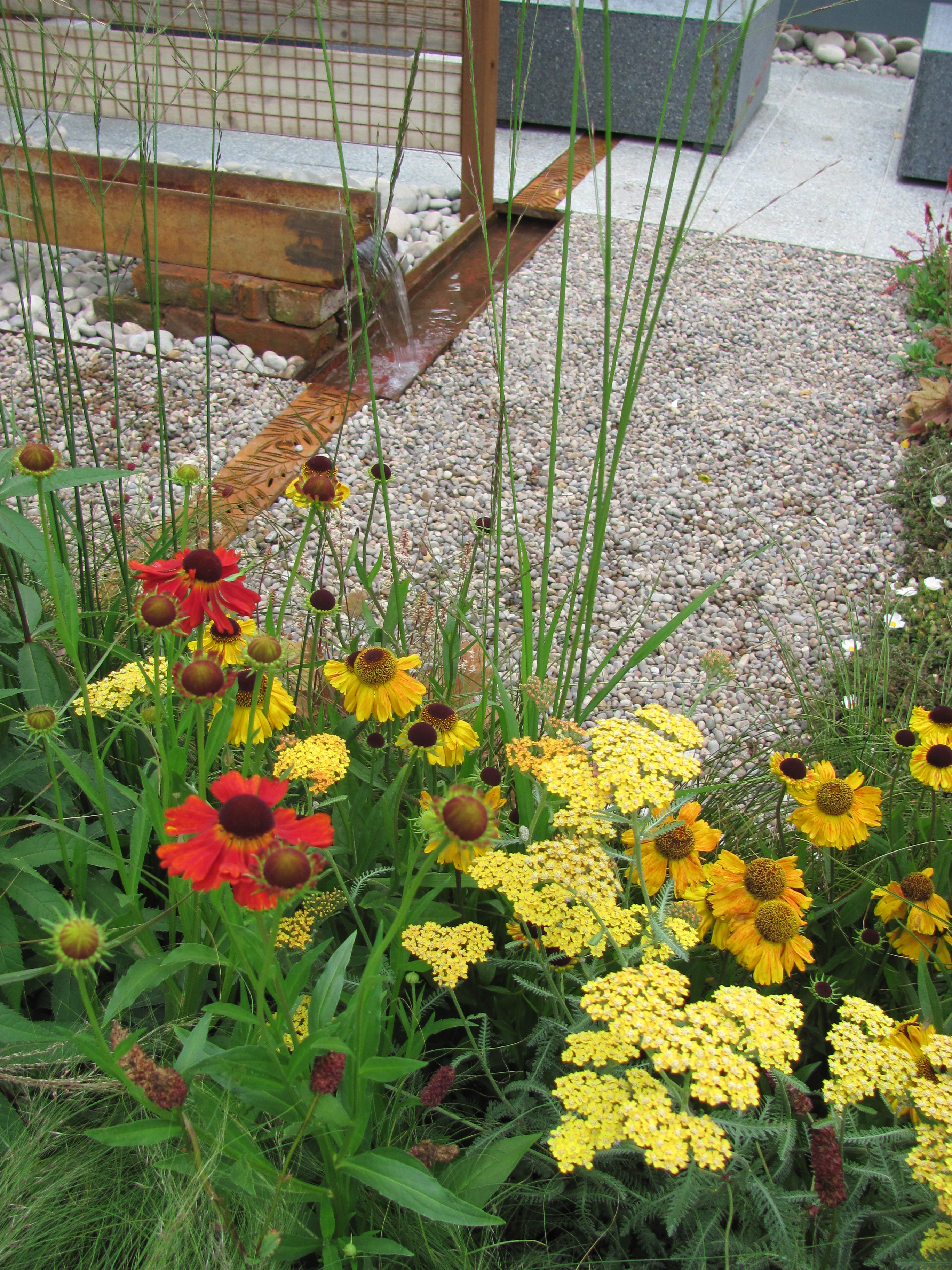
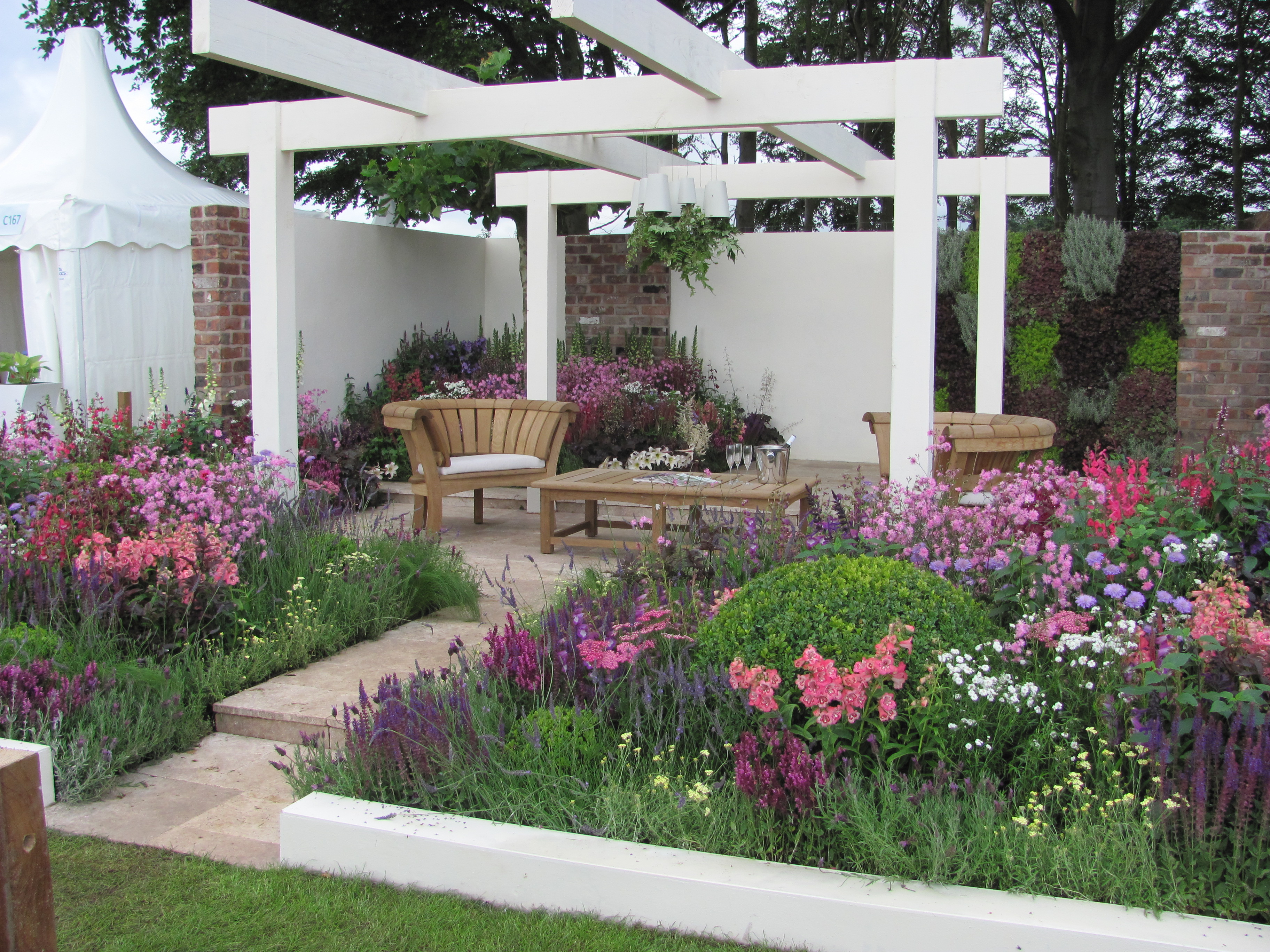
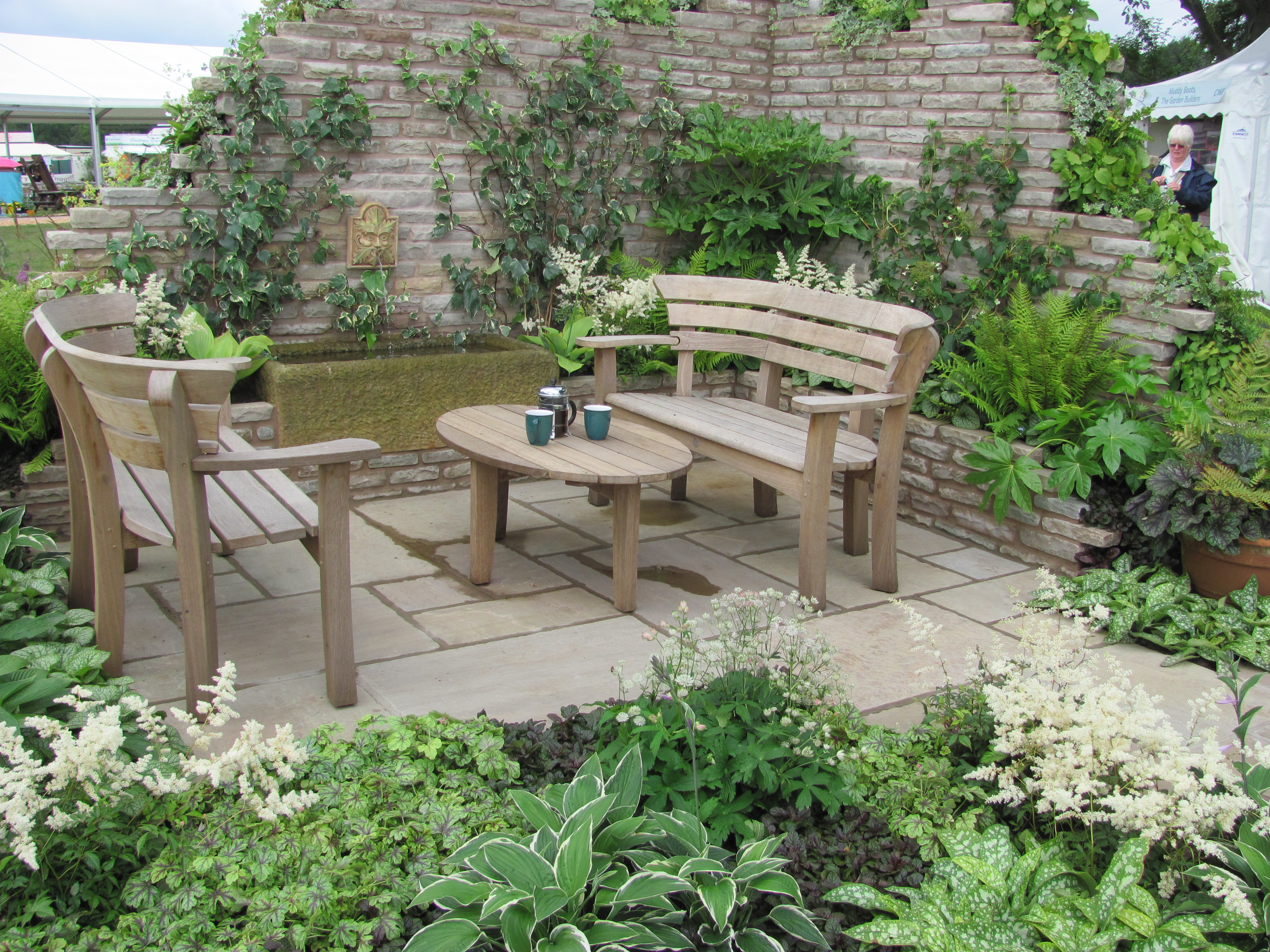
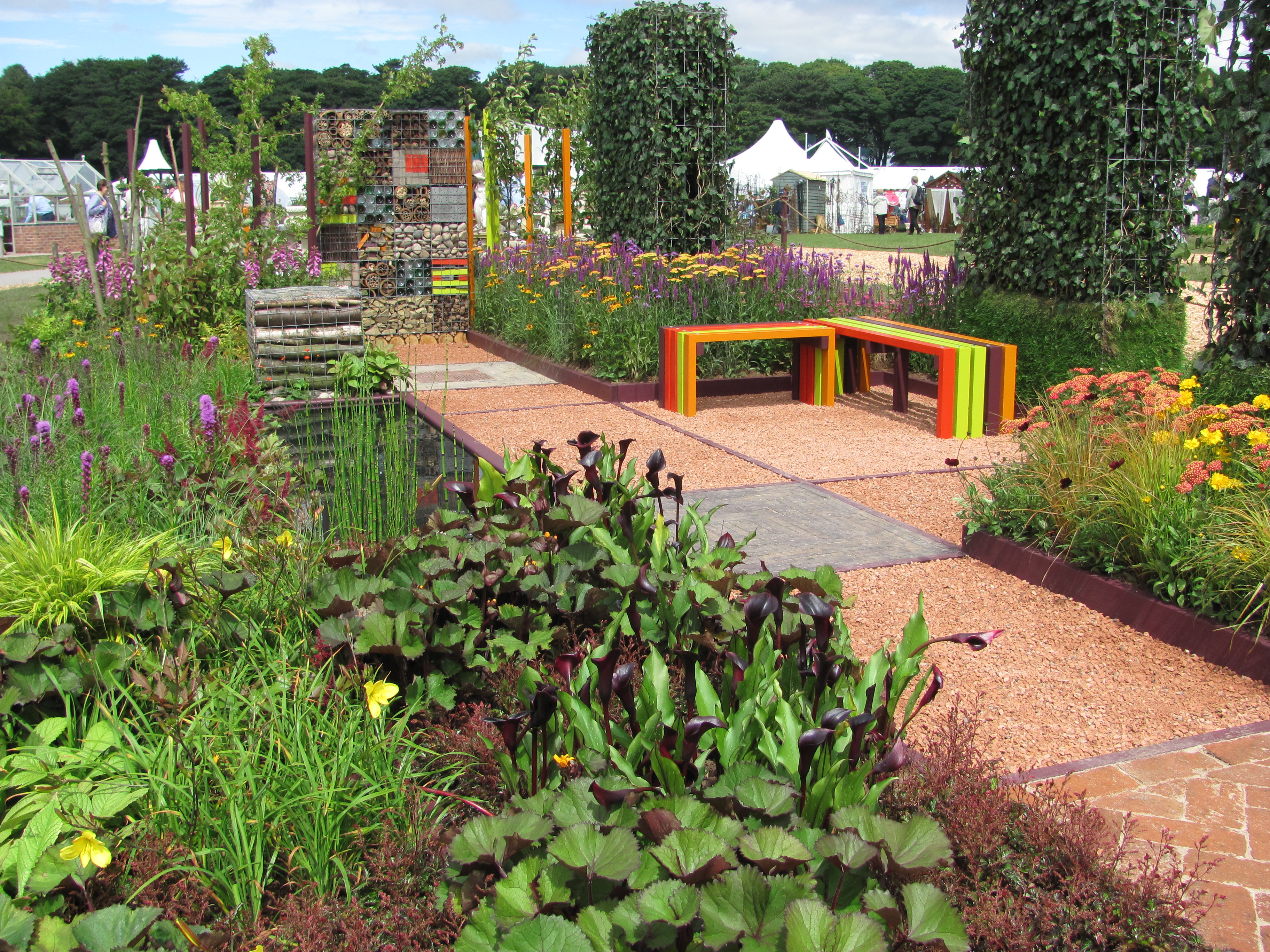
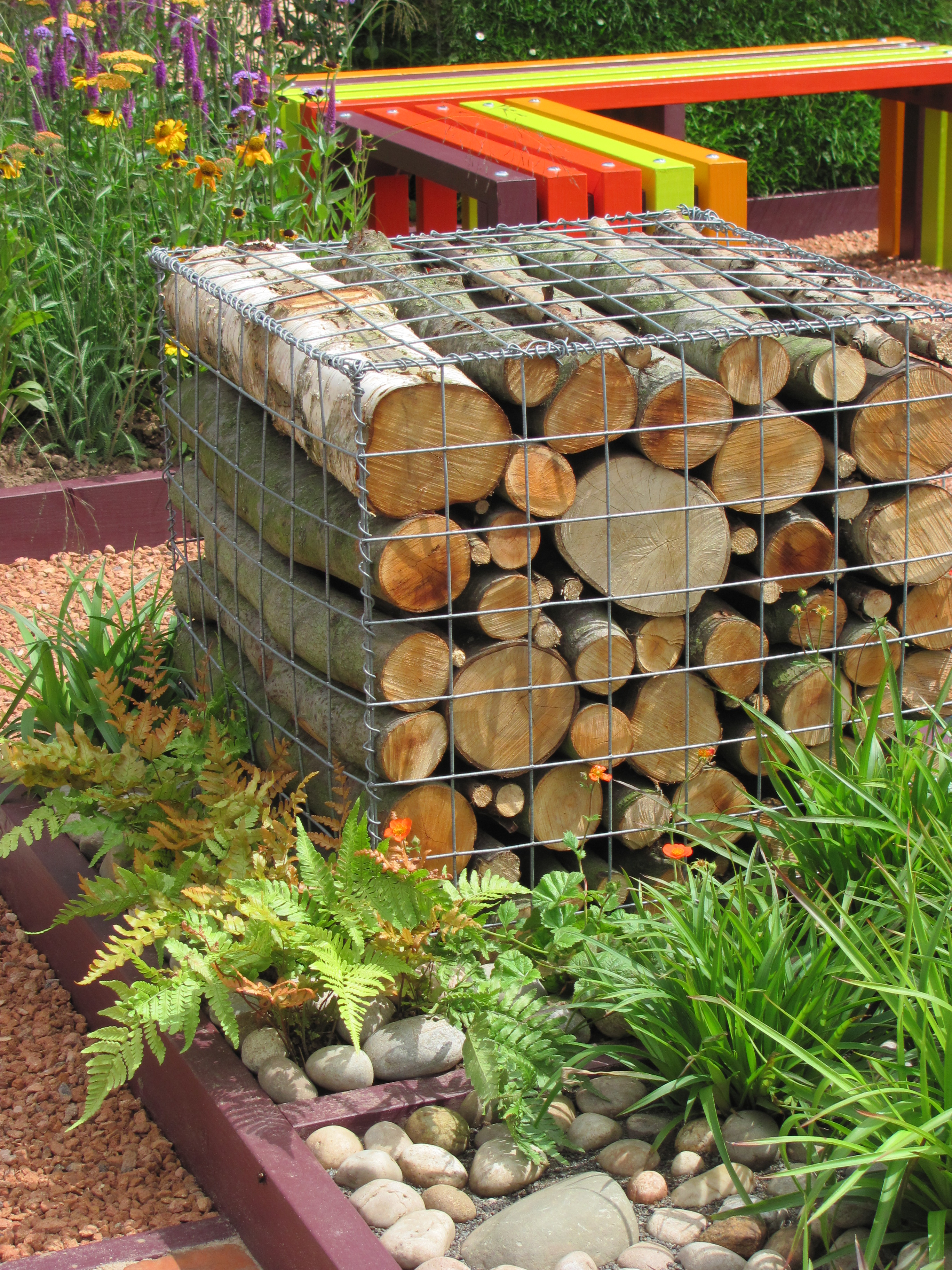
Tatton Park Show is described as “the North’s greatest garden party”. We enjoy its large show gardens, its “Back to Back” gardens and children’s gardens but most of all those designed by young garden designers. This is where the UK’s garden designs of the future lie and the standards are always so high. The designers have to be under 28 and this year their brief was to design a garden based on the theme of “colour”. We were so pleased when we learnt that the designer of our favourite one of these gardens had won the accolade of “RHS National Young Designer of the Year”. Tristen Knight designed this garden using recycled materials and it was full of interesting and original ideas and design feature. The colour of his planting of perennials and grasses was beautiful, all orange and biscuit. He studied for a BA in Industrial Design and Technology before training in garden design at Writtle College. He spoke with great enthusiasm and excitement about his garden and he told us about the materials he had chosen and how they were all items from building sites. For example the rill was formed from a an “H” beam and the flexible screening was created from scaffolding boards. I found it hard to take photographs that did justice to this brilliant young designer’s work. We enjoyed his garden and talking to him about it.
We moved on to the main large garden show gardens, some of which we liked whereas others we did not like at all. But that I suppose is what design is all about. If we all liked the same plants and designs wouldn’t gardens be boring?

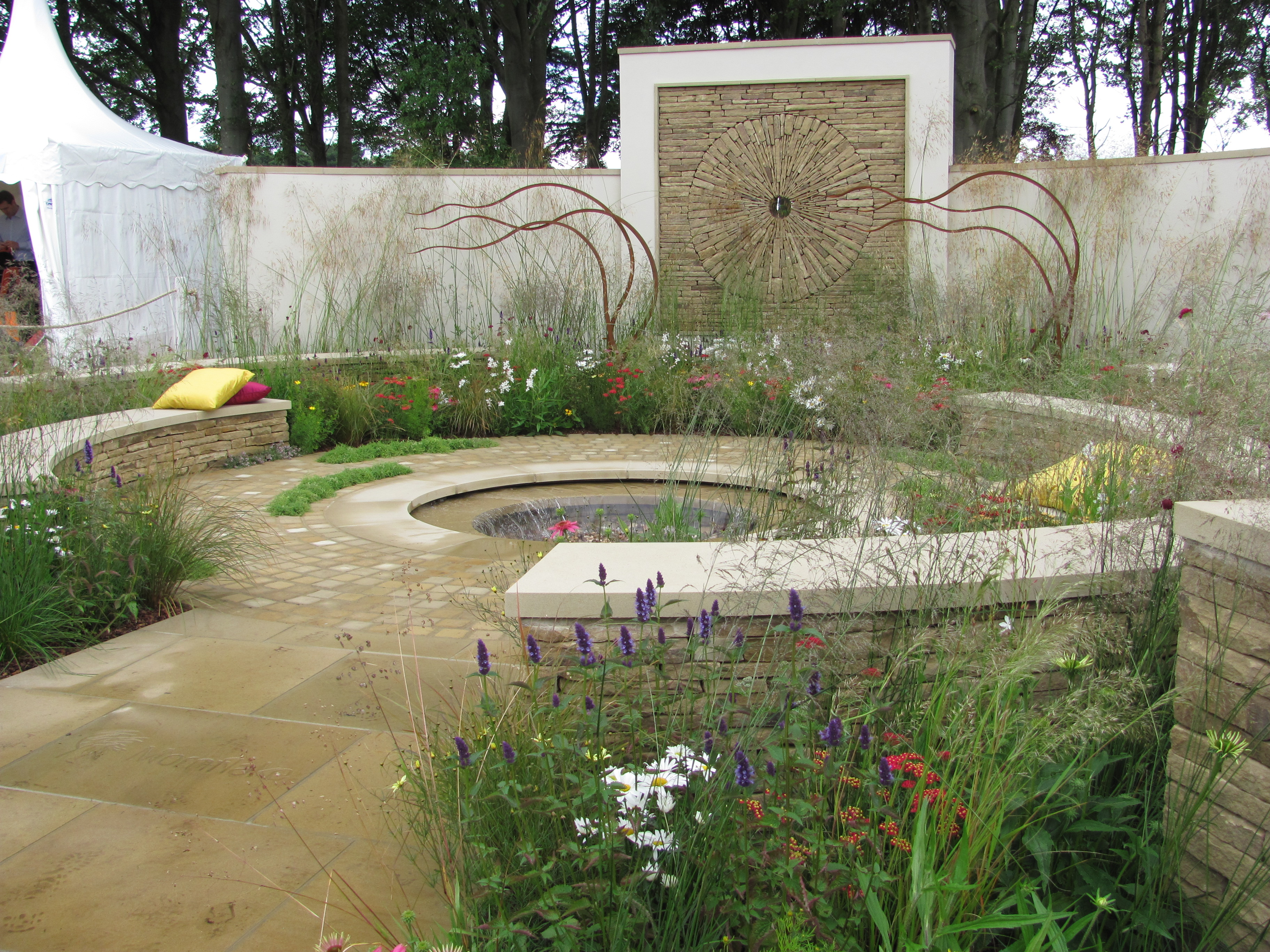
I begin looking at this set of gardens by featuring our favourite, a garden based on circles achieving a wonderful peaceful atmosphere through the planting which was light and wispy. It relied heavily on grasses to do so, with one planting area consisting of just grasses and one variety of allium.

It received the Best in Show award!

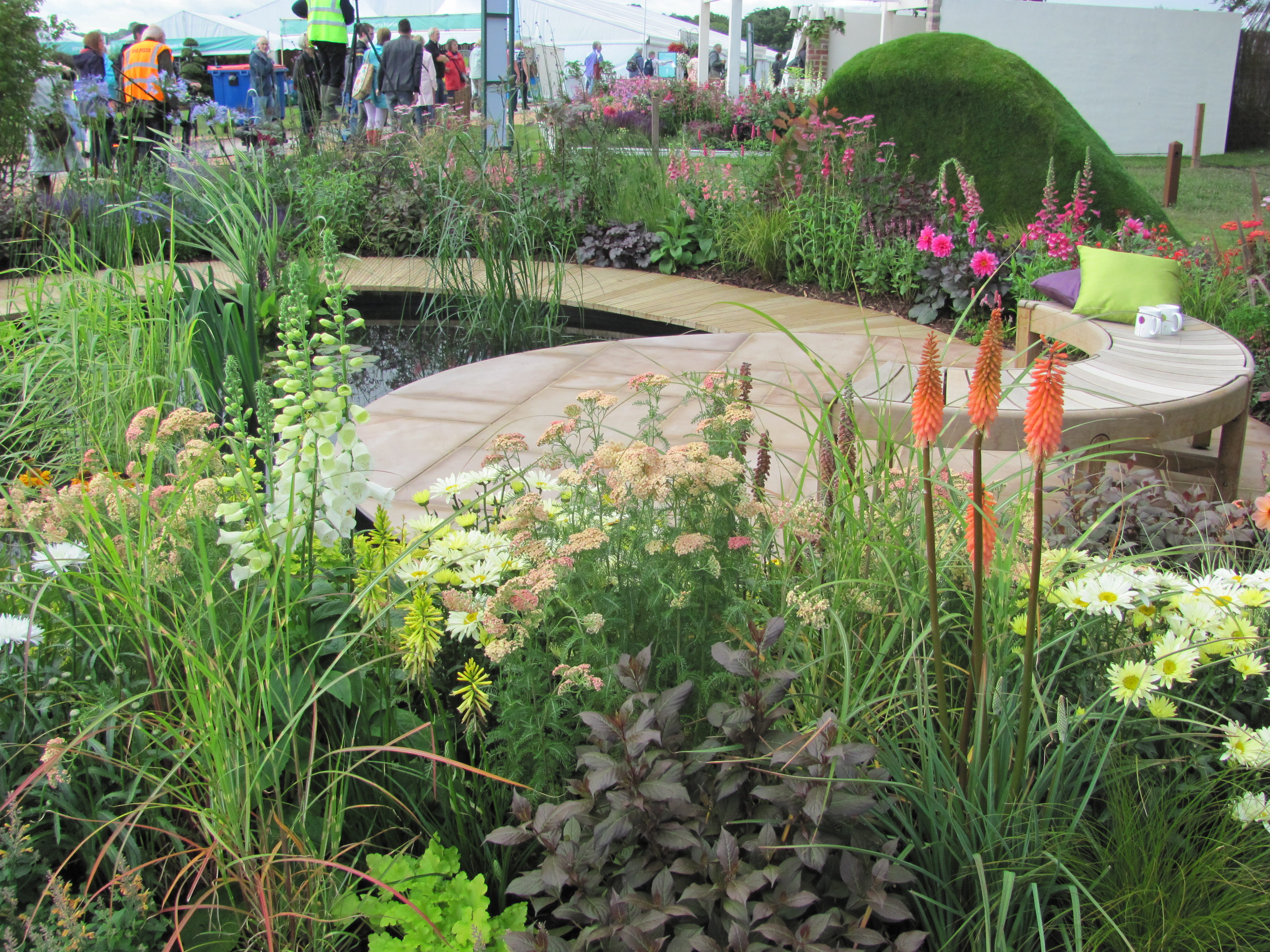
This show garden featured decking curves and colourful planting choice.

The next sequence of photos illustrates the wide variety of show gardens at Tatton. Enjoy the tour.

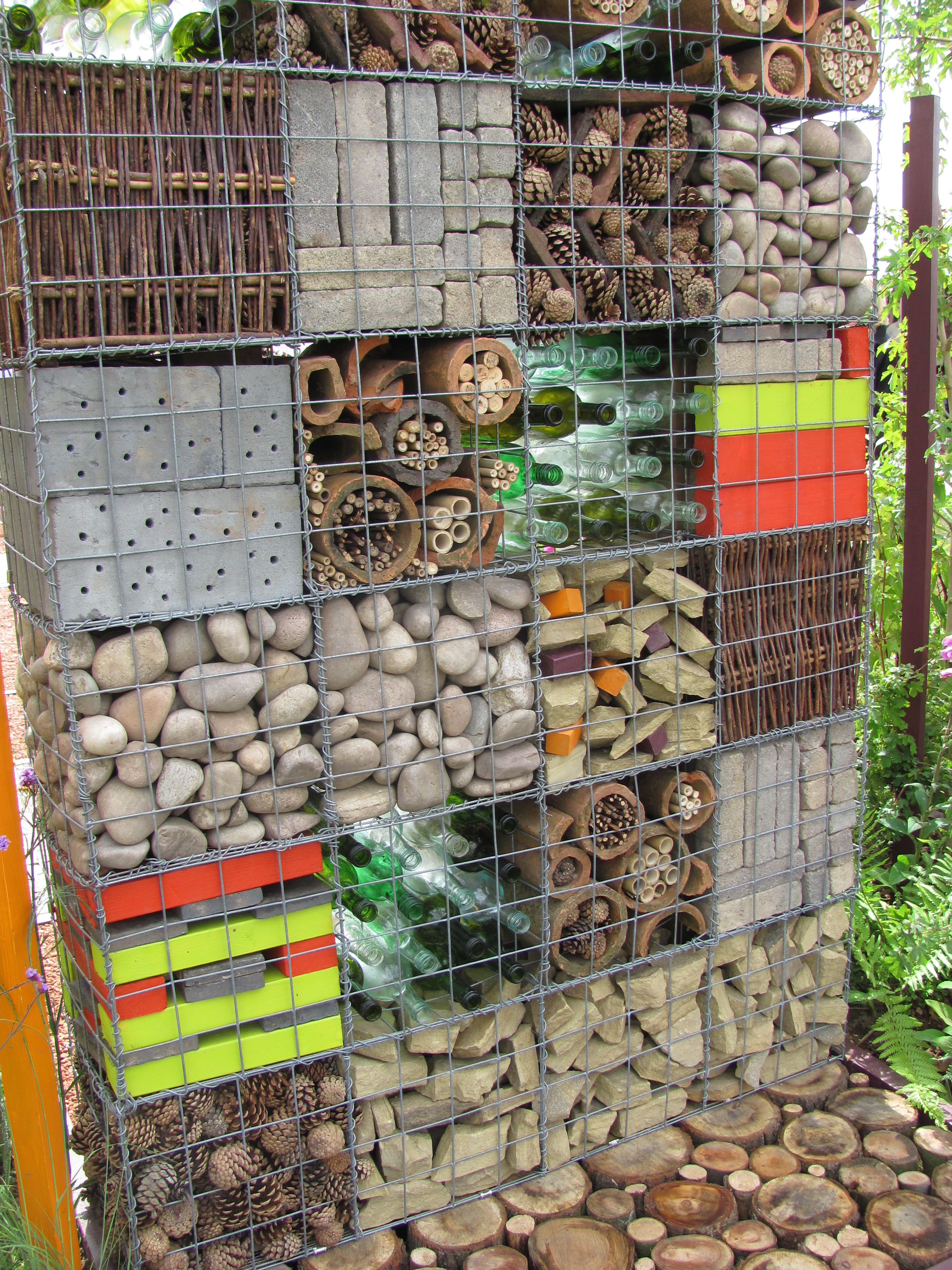
Once we had enjoyed the large show gardens we made a bee line for the garden designed by students and staff of Reaseheath College, partly because their garden is always so interesting with elements of attracting wildlife but also because this is the college where I followed some of my horticulture training several decades ago. This year their garden excelled, with such vibrancy in the planting and in its features. Again the design integrated beautiful features created to attract wildlife.

To finish my first post about the RHS Tatton Park Flower Show I want to share a couple of photos of children’s gardens celebrating the Queen’s Jubilee. In the next post we shall visit the Floral Marquee and the smaller show gardens.

This Veggie Life

A Vegetarian | Nature Lifestyle Blog

Rambling in the Garden

.....and nurturing my soul

The Arch City Gardener

Journeys In St. Louis Gardening and Beyond

Garden Dreaming at Châtillon

Consult the genius of the place

Storyshucker

A blog full of humorous and poignant observations.

gardeninacity

Notes from a wildlife-friendly cottage garden

PlayGroundology

...an emerging social science

The Official Blog of British Wildlife

'The most important and informative publication on wildlife of our times' - The Independent. This blog is a member of The UK & Ireland Natural History Bloggers group: www.uknhb.blogspot.com

iGrowHort

Inspire - Cultivate - Grow Native Plants - Restore Landscapes

Bishops Meadow Trust

To create and protect a semi-natural wild space for the people of Farnham to enjoy and experience an array of British wildlife in our town

Gardening with Children

The www.gardeningwithchildren.co.uk Blog

UKbirdingtimeline

birding through the seasons, why birds matter and how to conserve them

NATURE WALKER

with a camera in hand

Jardin

Transform your outdoor space

Eva's space

My allotment, cooking and other interests

Old School Garden

my gardening life through the year

LEANNE COLE

Trying to live a creative life

fromacountrycottage

trying to live as lightly as possible on our beautiful planet

Good Life Gardening

Nature lovers from Leicester living the good life.

mybeautfulthings

Finding the beautiful in the everyday

mawsonmichelle

Michelle's Allotment

In and Out of My Garden

thoughts from and about my garden

Greenhousing

Big plans for a small garden

The Scottish Country Garden

A Walled Country Garden in South East Scotland

The Fruity Chicken

Life at the fruity chicken

willowarchway

Off grid living. Self sufficient. "PERMAGANICS RULE".

St Anns Allotments

Nottingham's Grade 2* Listed Allotments and Community Orchard

Manifest Joy Harvests

a journey in suburban vegetable gardening

Allotmental

The madness of growing your own

Penny's Garden: a harvest beyond my front door

A novel approach to vegetable gardening

arignagardener

Sustainable living in the Irish countryside.

NewEnglandGardenAndThread

Master Gardener, amateur photographer, quilter, NH native, and sometimes SC snowbird

dianajhale

Recent work and work in progress and anything else that interests me

planthoarder

a chaotic cottage gardener

Lens and Pens by Sally

a weekly blog that creates a personal philosophy through photographs and words

Dewdrops and Sunshine

Stories from a sassy and classy Southern farmbelle.

The Pyjama Gardener

Simple Organic Gardening & Seasonal Living

gettin' fresh!

turning dirt into dinner

JOY...

today the world is created anew

Garden Birds

Notes from a Devon garden

ShootAbout

Life Through The Lens

Adapting Pixels

A photography blog showcasing the best photography pictures and videos on the internet

Wildlifegardening's Blog

Just another WordPress.com site

naturestimeline

personal observations from the natural world as the search continues for a new approach to conservation.

LATEBLOOMERBUDS

The Wonders of Life through my Eyes, my Heart, my Soul