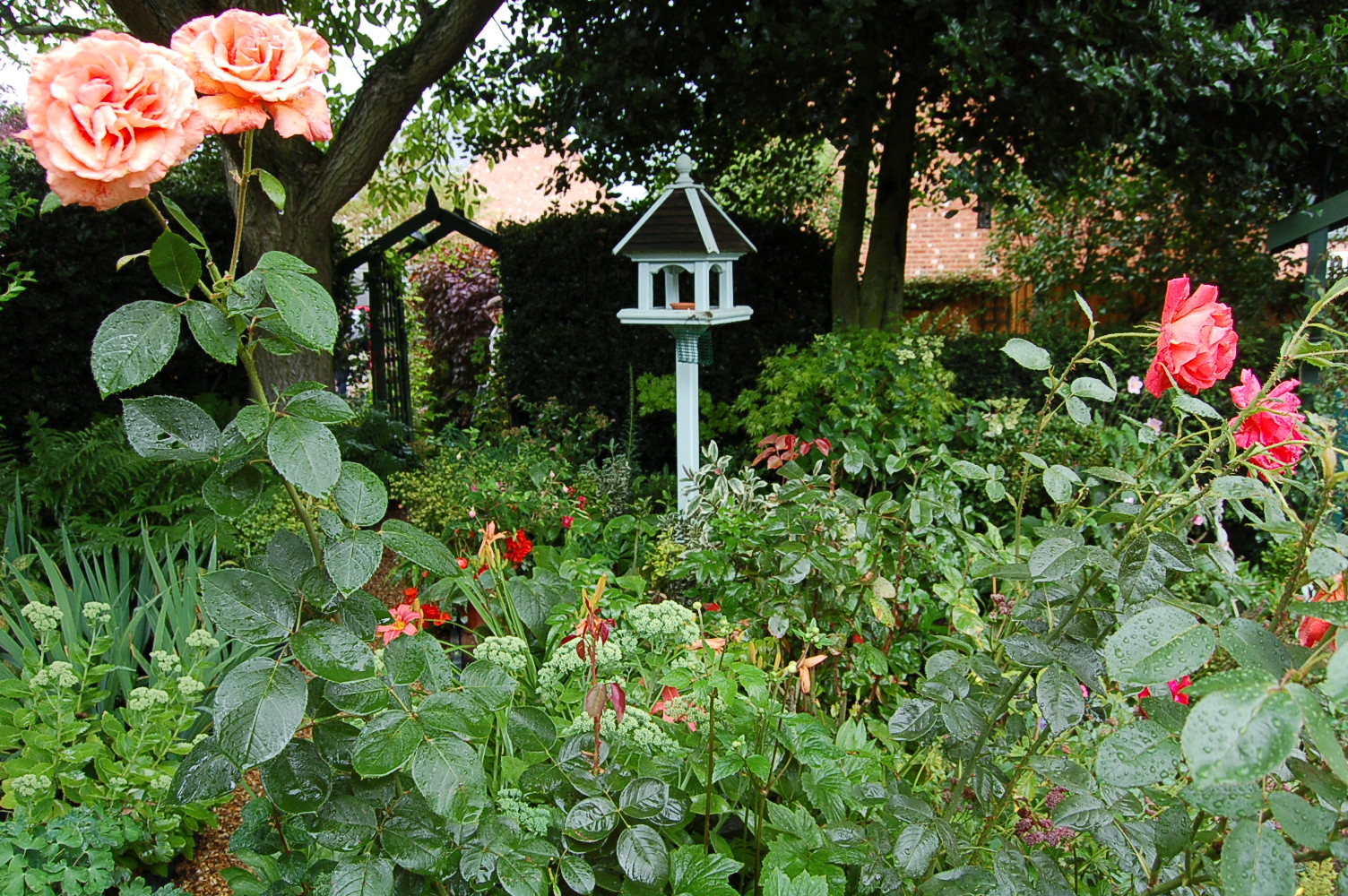
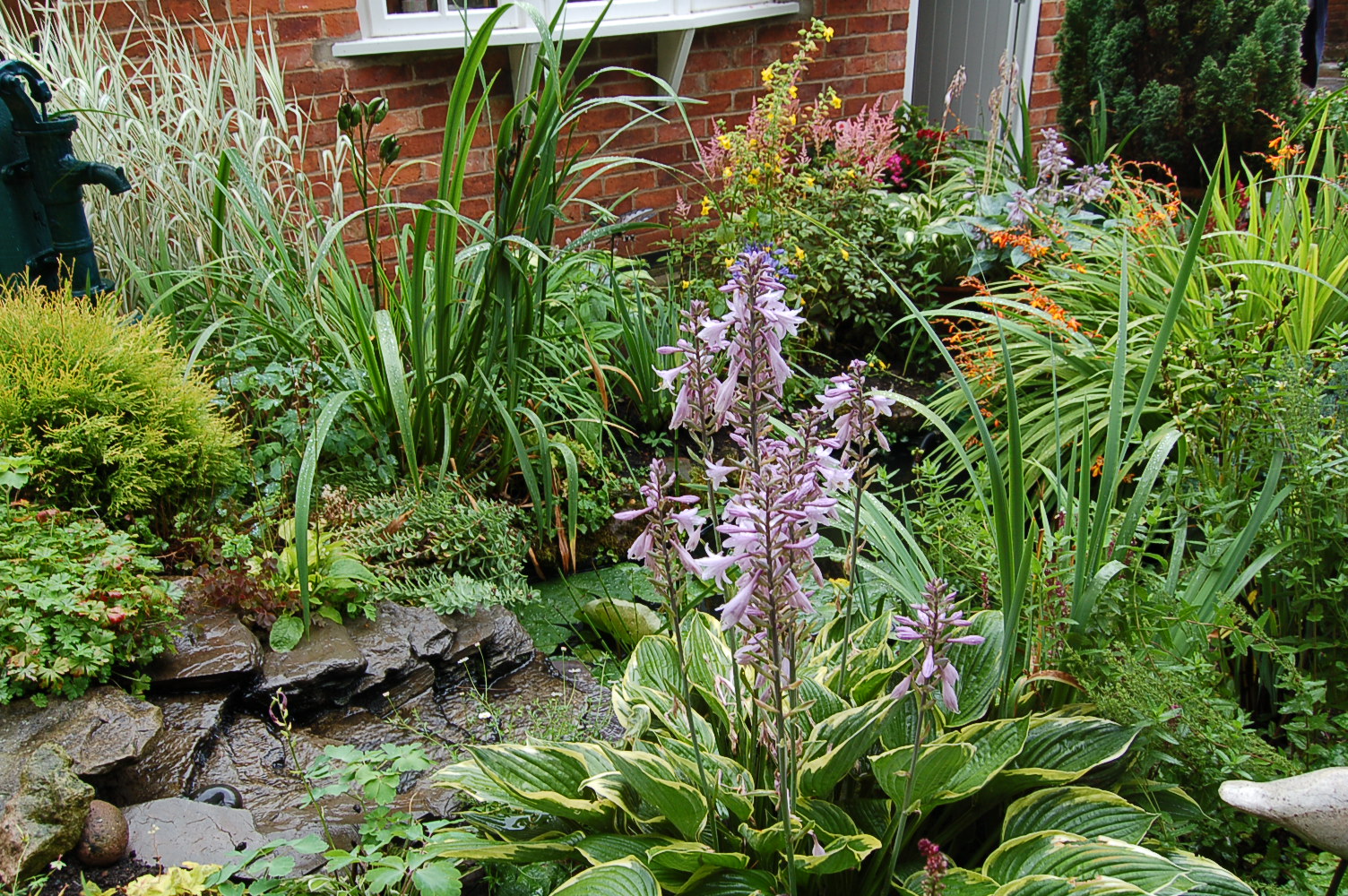
Orchard House was open for the second time in its first year as a Yellow Book garden, and is special because it fits so much into such a small space. It is an excellent example of fitting lots of interesting plants and features within an effective design. The design encourages you to wander, to make decisions and stop to admire views and cameos.
The day of our visit dawned wet – very wet. As we arrived at the garden it was pouring with rain, so we waited in the shelter of the car for some respite. However after ten minutes there was no sign of the downpour giving over so we donned waterproofs and defied it.
At the cottage off a narrow lane there was no sign that a garden awaited us. The houses fronted straight onto the lane, with no front garden at all. But we knew we were in for a treat as this little welcoming cameo greeted us alongside the entrance to a narrow pathway leading around the back of the cottages.
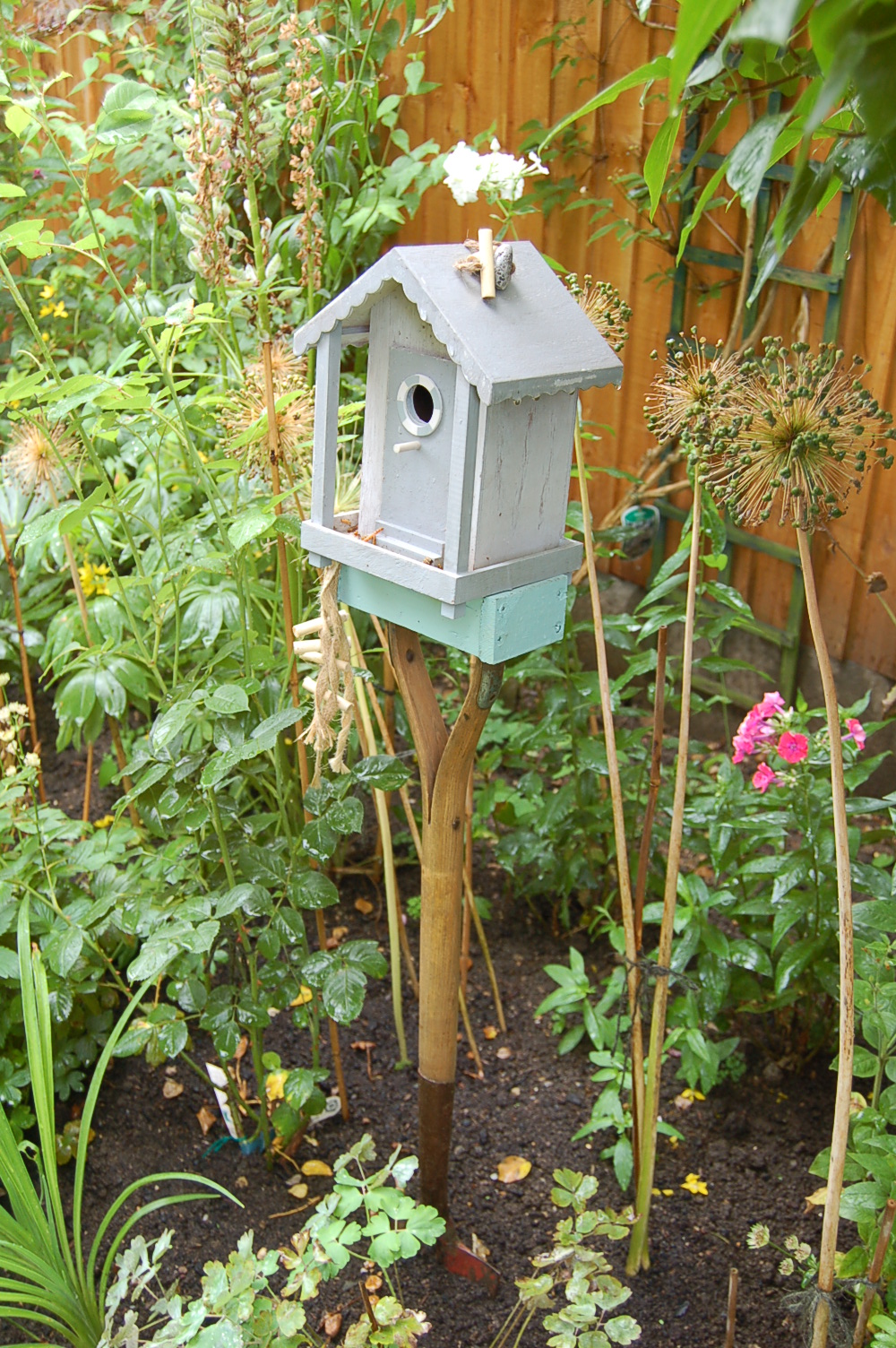
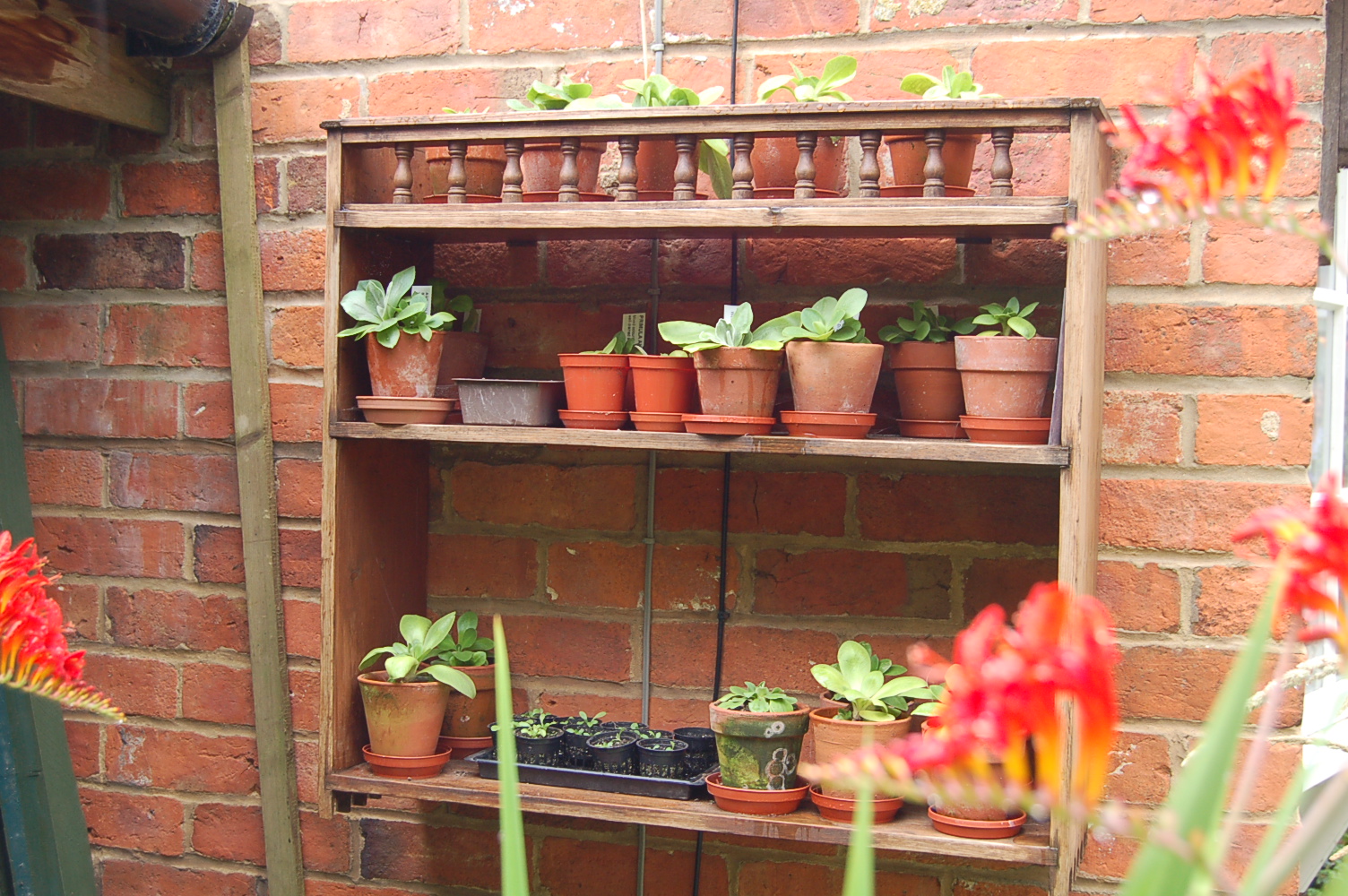
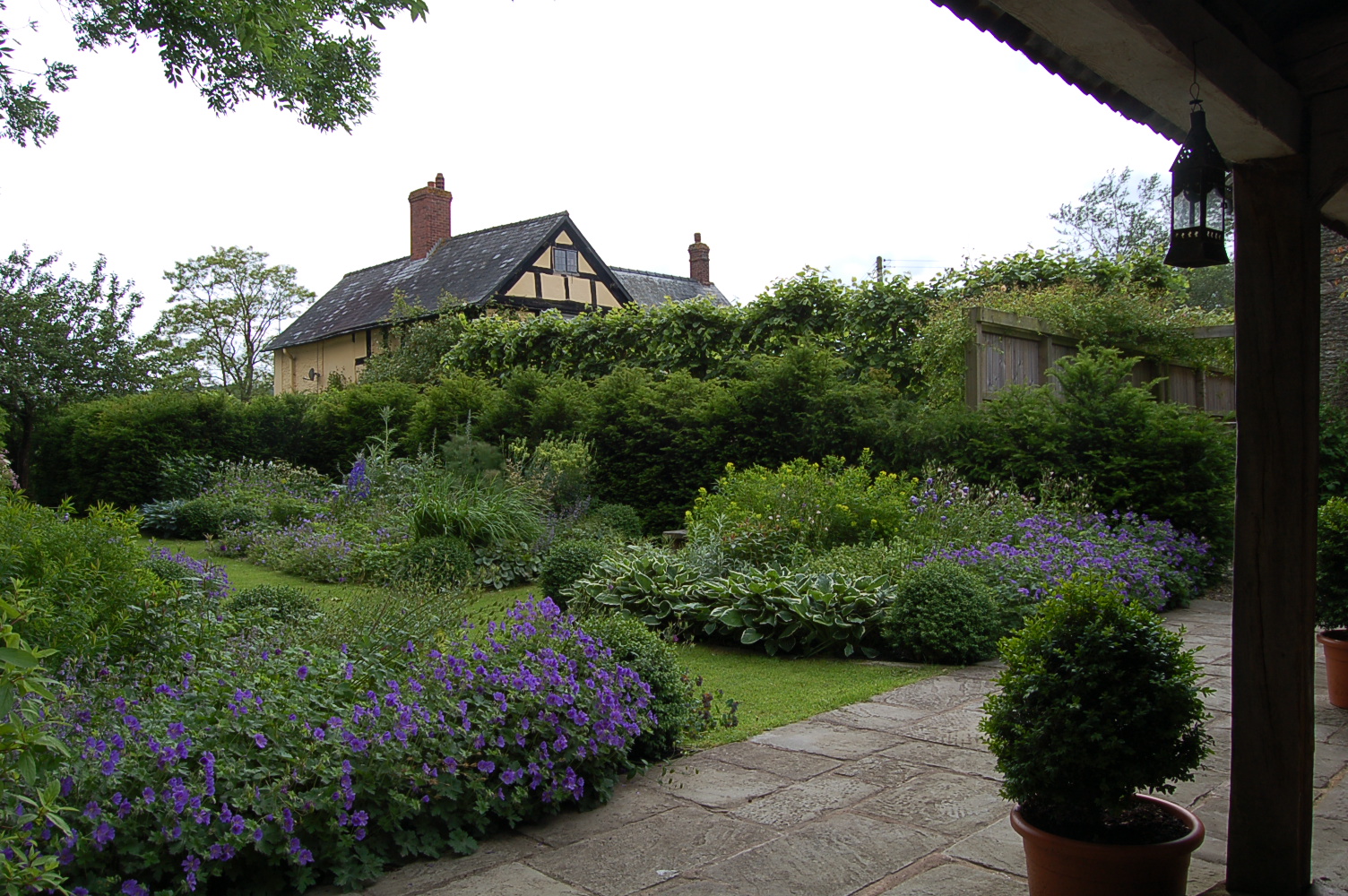
We were not to be disappointed for as we turned the corner we were greeted by colour and richness of planting, dotted with little features to draw the eye.
This little garden gem in a village in Leicestershire proves that it is not the size of the garden that matters. It is the size of the gardener’s heart and imagination. One aspect of this gardener’s character is his sense of humour shown by the sign on the gate to his composting area.
August is when the busy harvest period begins. As land is cleared green manures are sown and compost is spread across empty spaces. Plans for next year’s gardening are beginning to form.
Another amusing sign has appeared on a plot in recent weeks. Doreen and Phil have a corner plot and it has been christened “The Naughty Corner”. Next to their plot, Gill has hung some vibrant decorations in her fruit.
Wendy’s plot is always full of interest and at the moment the star of the show has to be the glitter ball hanging inside an obelisk up which is growing Morning Glory.
We have had a very successful month where awards are concerned, some for the whole site and others for individual allotment holders. Jude and I were invited to the Shrewsbury Flower Show to receive an award for the allotment site. Chris Beardshaw, author, broadcaster and TV gardener presented me, on behalf of our allotment site, with the award for “Shropshire’s Best Community Garden”.
Bowbrook Allotment Community members also provided plants for a show garden created by the Shrewsbury Residents Association – herbs, vegetables and companion plants. This garden won a medal.
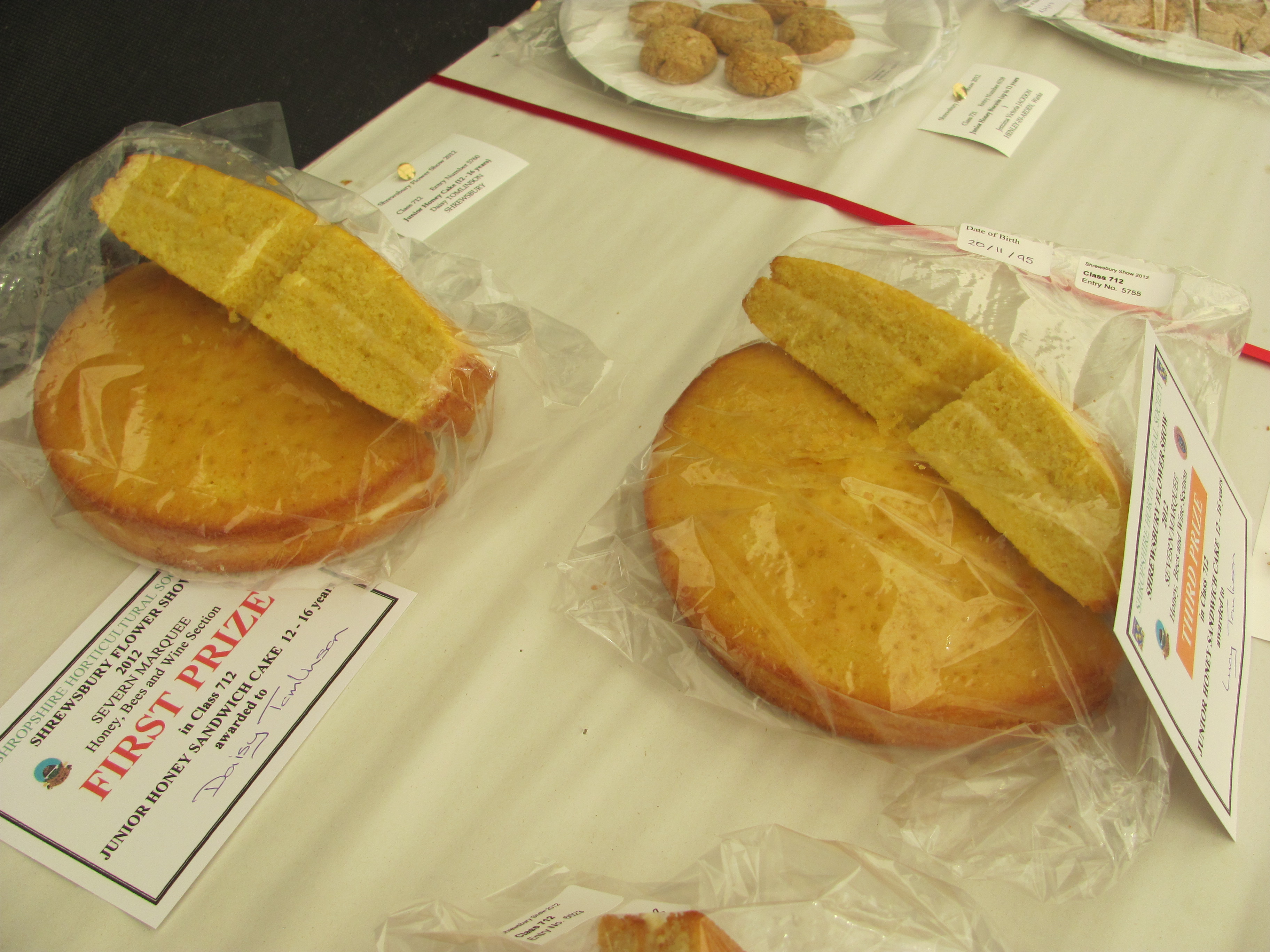
The two daughters of our Membership Secretary entered craft and art classes in the Honey Tent and won many certificates too. Their honey cakes and biscuits looked so tasty.
Jude and I also took part in the Shropshire Organic Gardeners Society stand at the show. Members were asked to provide photos of themselves with a pot plants and these took centre stage.
Dave Bagguley one of our plot holders was awarded Shrewsbury’s “Best Front Garden” award at the show.
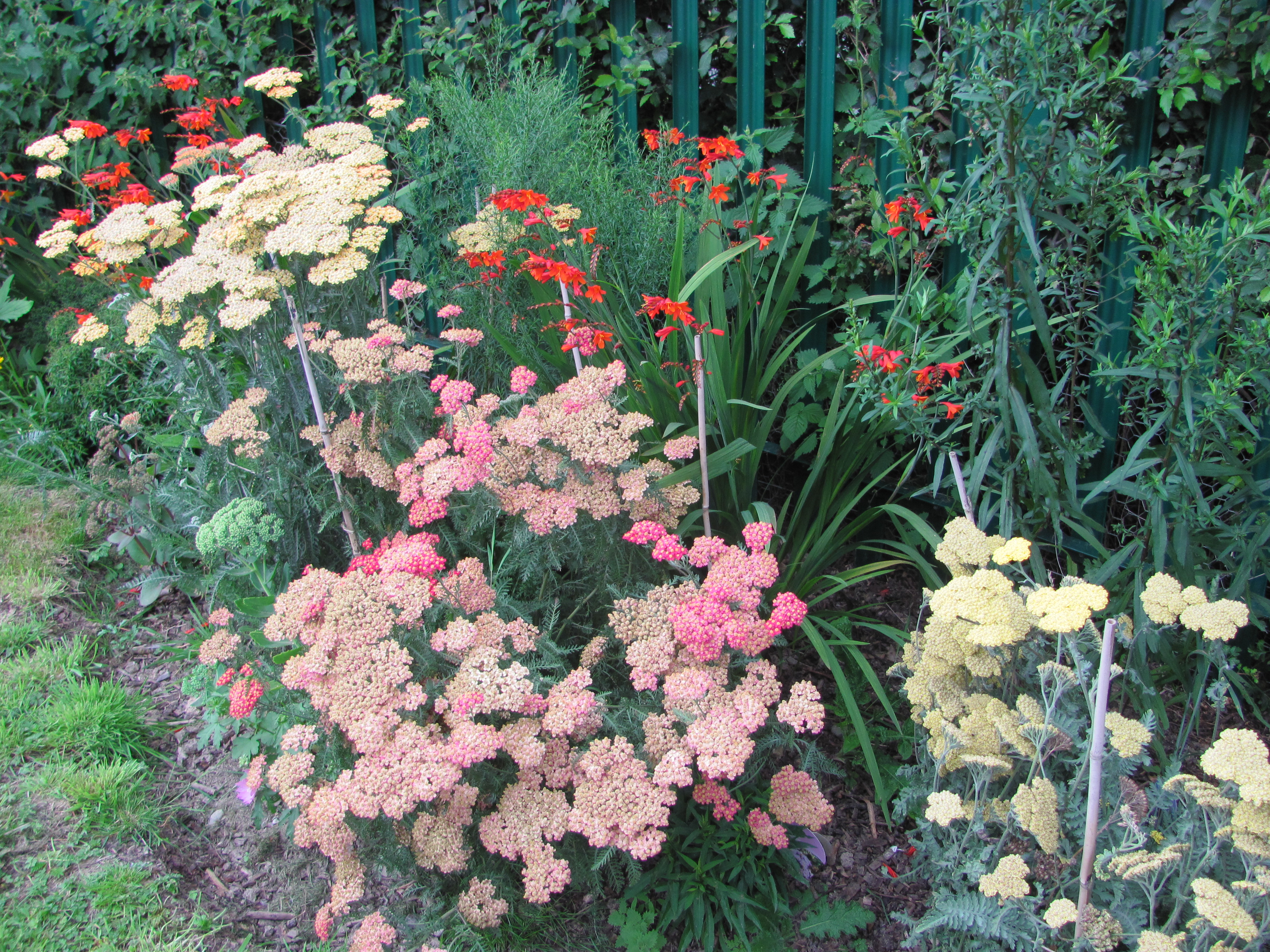
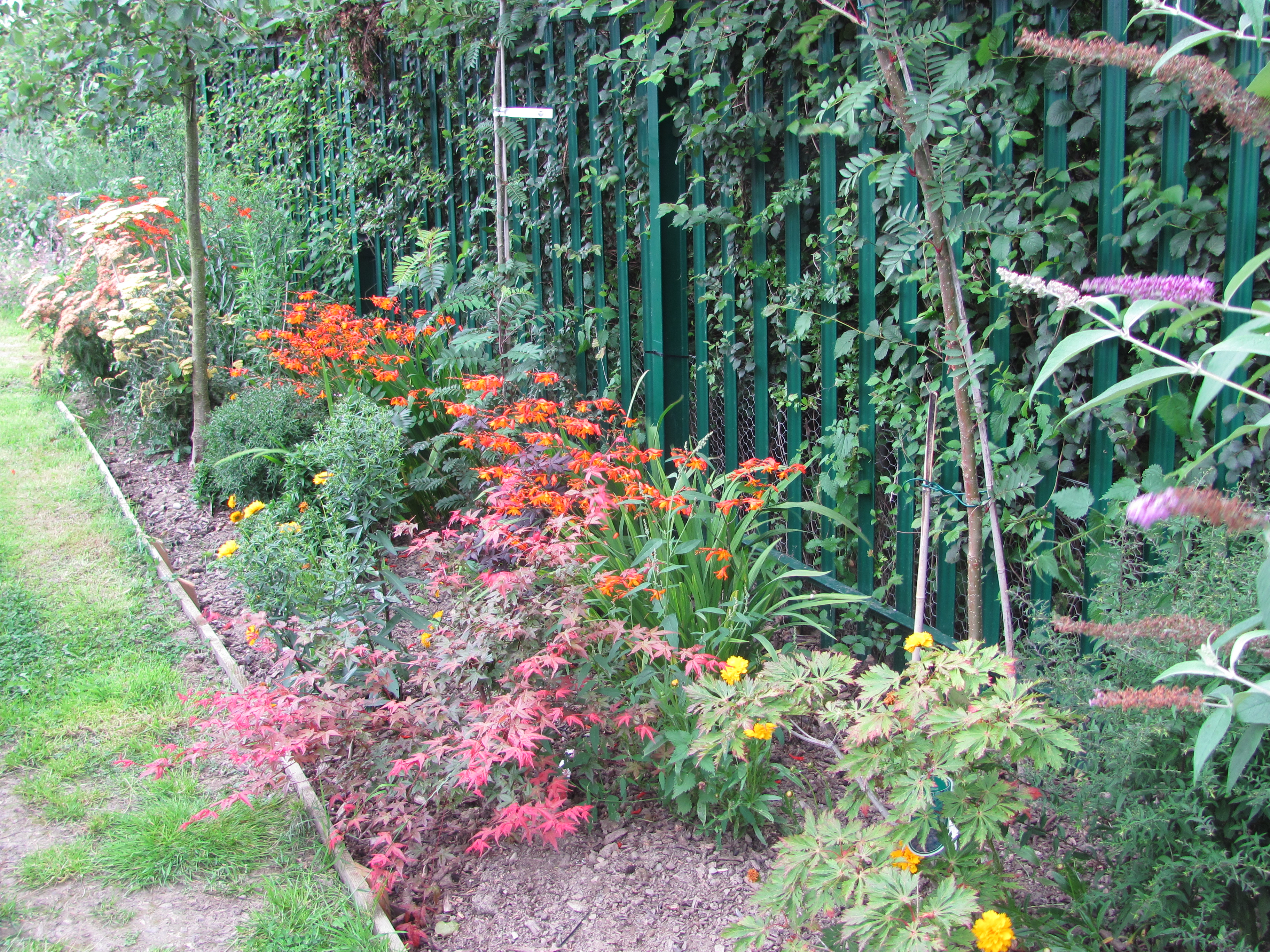
Back at the lotties the Autumn Garden, one of the site’s “Gardens of the Four Seasons” is beginning to look really good, with the late summer/early autumn perennials blooming in their hot colours.
The meadows around the site are incredibly colourful at the moment but the early flowering ones are well-past their best. They will soon be due their annual haircut.
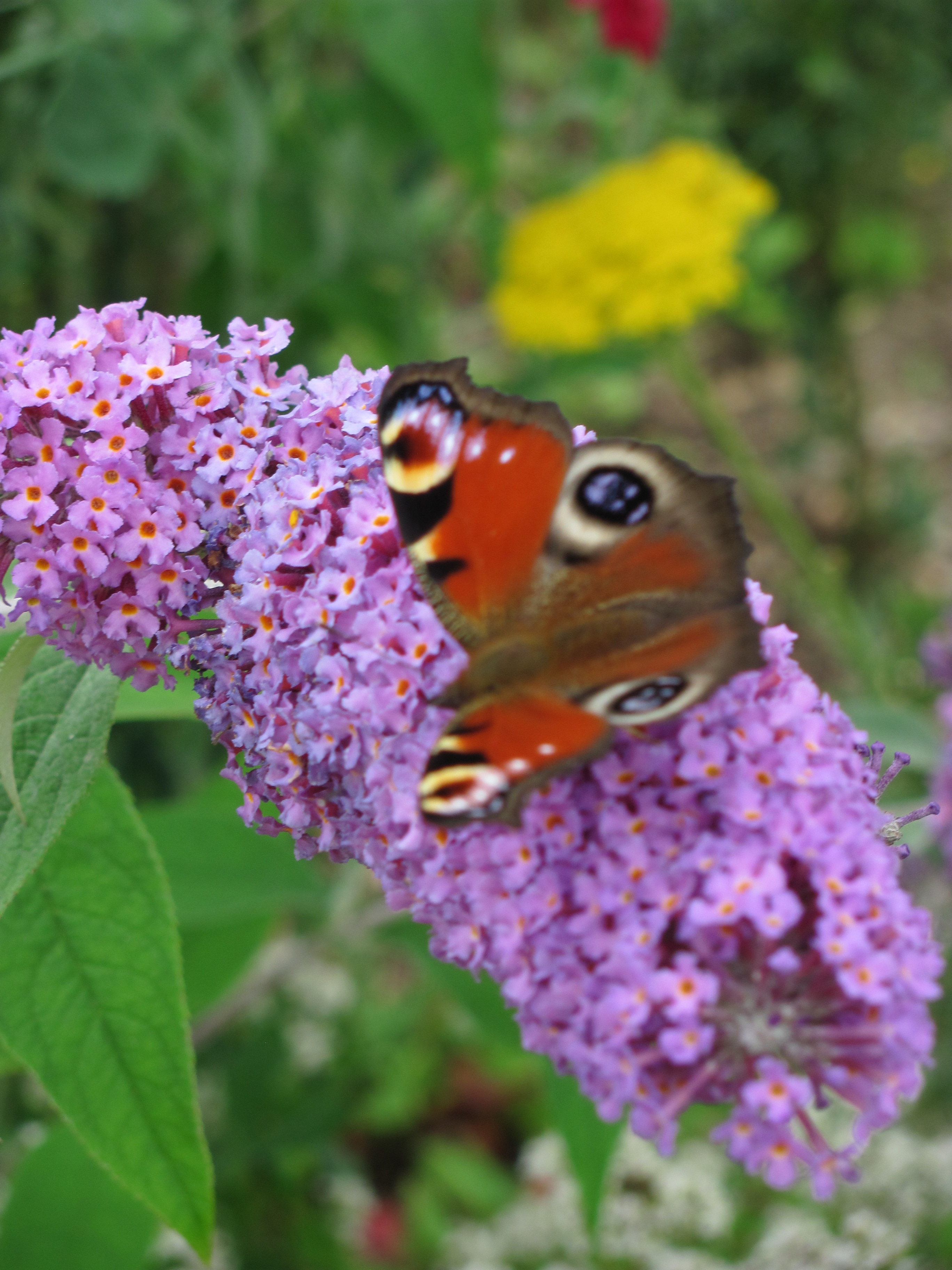
We like to leave the meadows’ annual haircuts as late as possible so delay them until seeds are well set and there is an obvious decrease in the amount of wildlife visitor activity. But in the Buddleja Borders the beautiful scented flowers are still bringing in so many butterflies, bees and hoverflies.
This year’s periods of extreme wet have taken their toll. Whole potato crops have rotted on plots and root crops badly split.
As I was finishing writing this post I heard that our site’s entry into the Shrewsbury Town Allotment Competition came out the winner, so well done to Sue and Paul from Plot 40. Here are a few shots of their plot to finish off this post.
On a very wet weekend we decided we needed to get out whatever the weather so a quick check in the famous Yellow Book of gardens open under the auspices of the National Garden Scheme and we were off to visit a garden in the neighbouring county of Herefordshire.
Herefordshire is a county of great gardens mostly created on rich red clay soils. Ashley Farm Gardens was described in the Yellow Book as a 5 acre garden designed as a series of formal rooms with the rooms getting less formal as the visitors move further from the house. We were presented with a plan as we entered the garden which showed a very formal layout. As we moved into the garden through farm buildings we could appreciate the way the gardeners had planted imaginatively and boisterously within the formal structures.
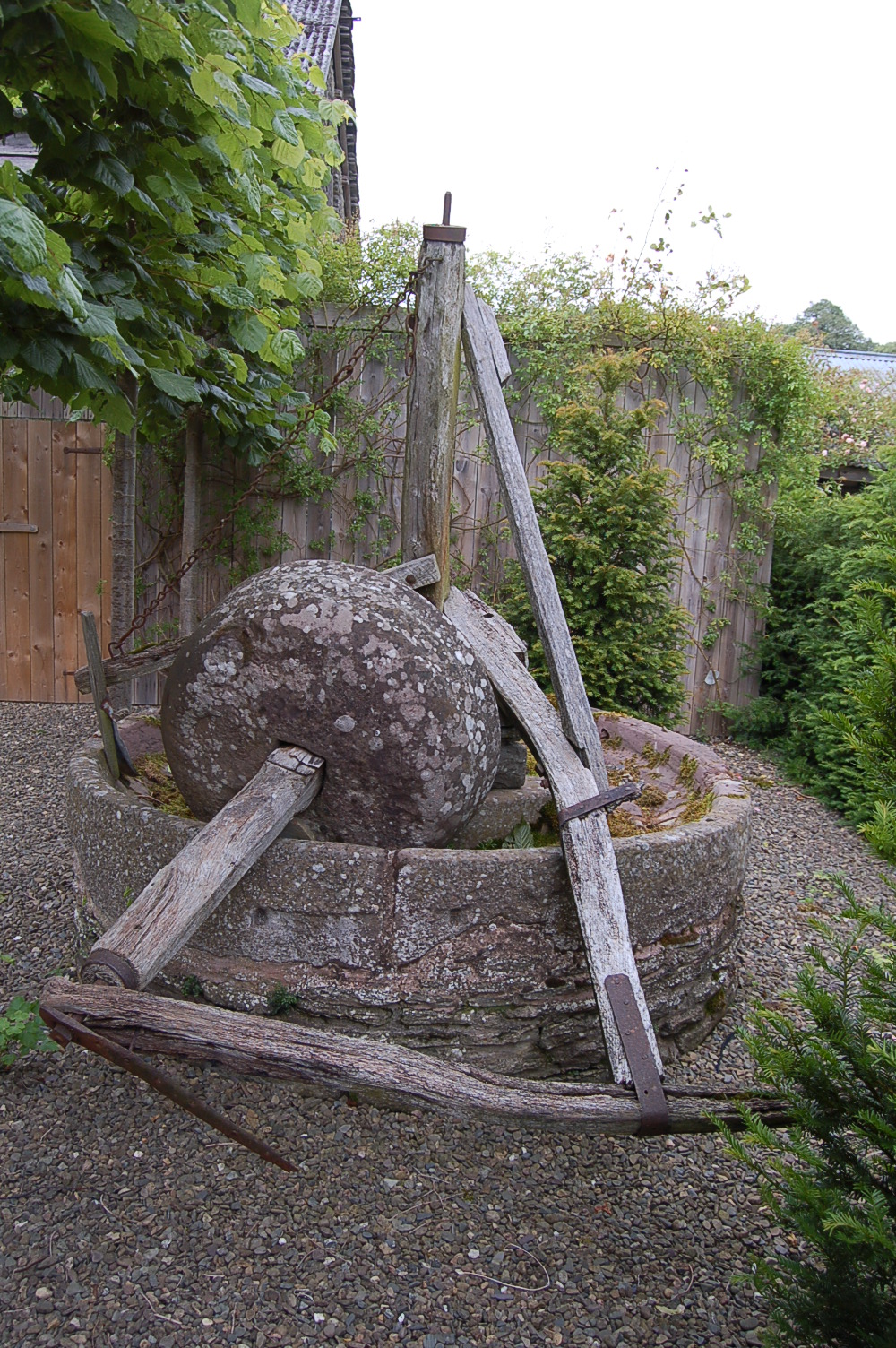
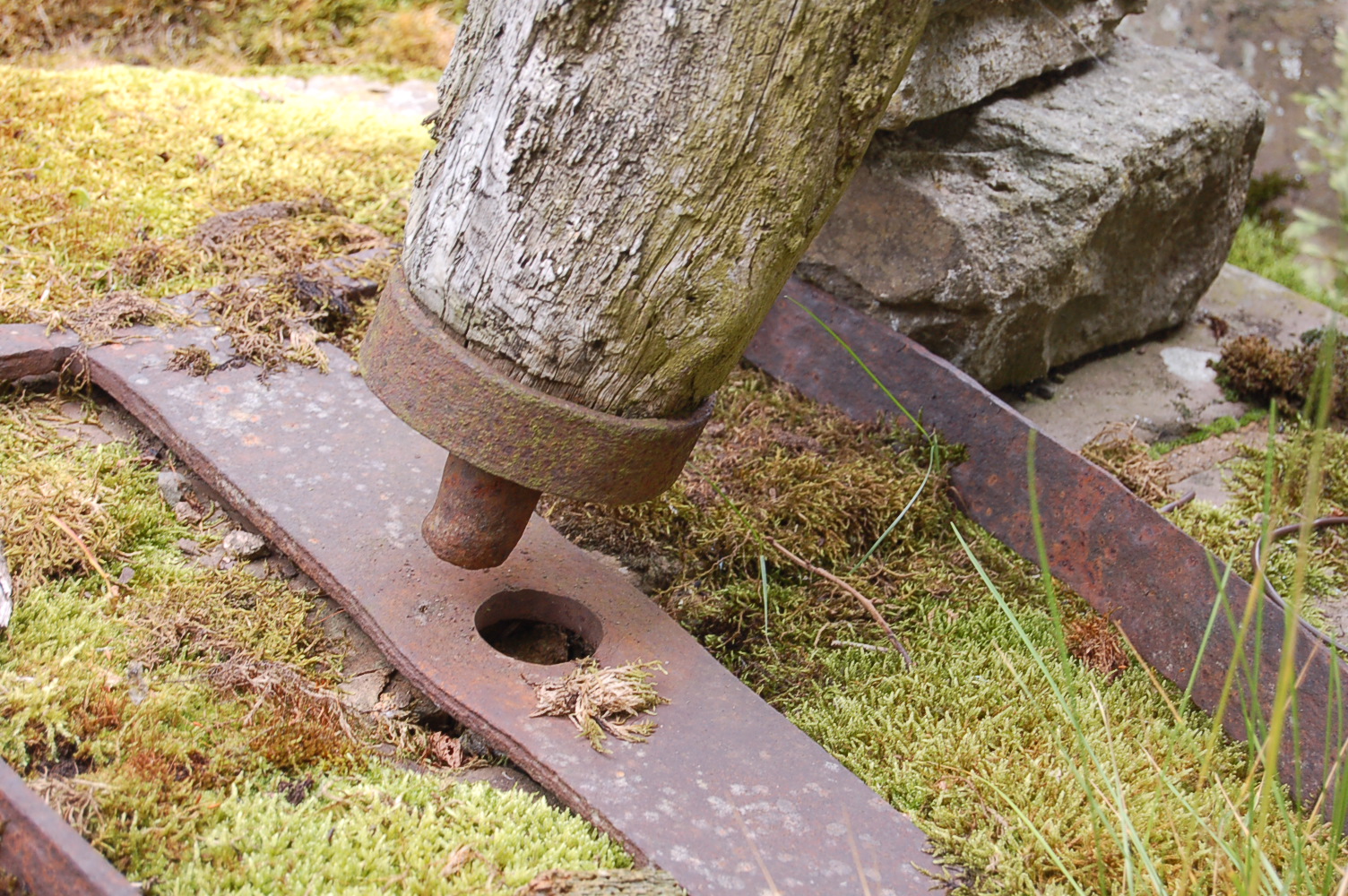
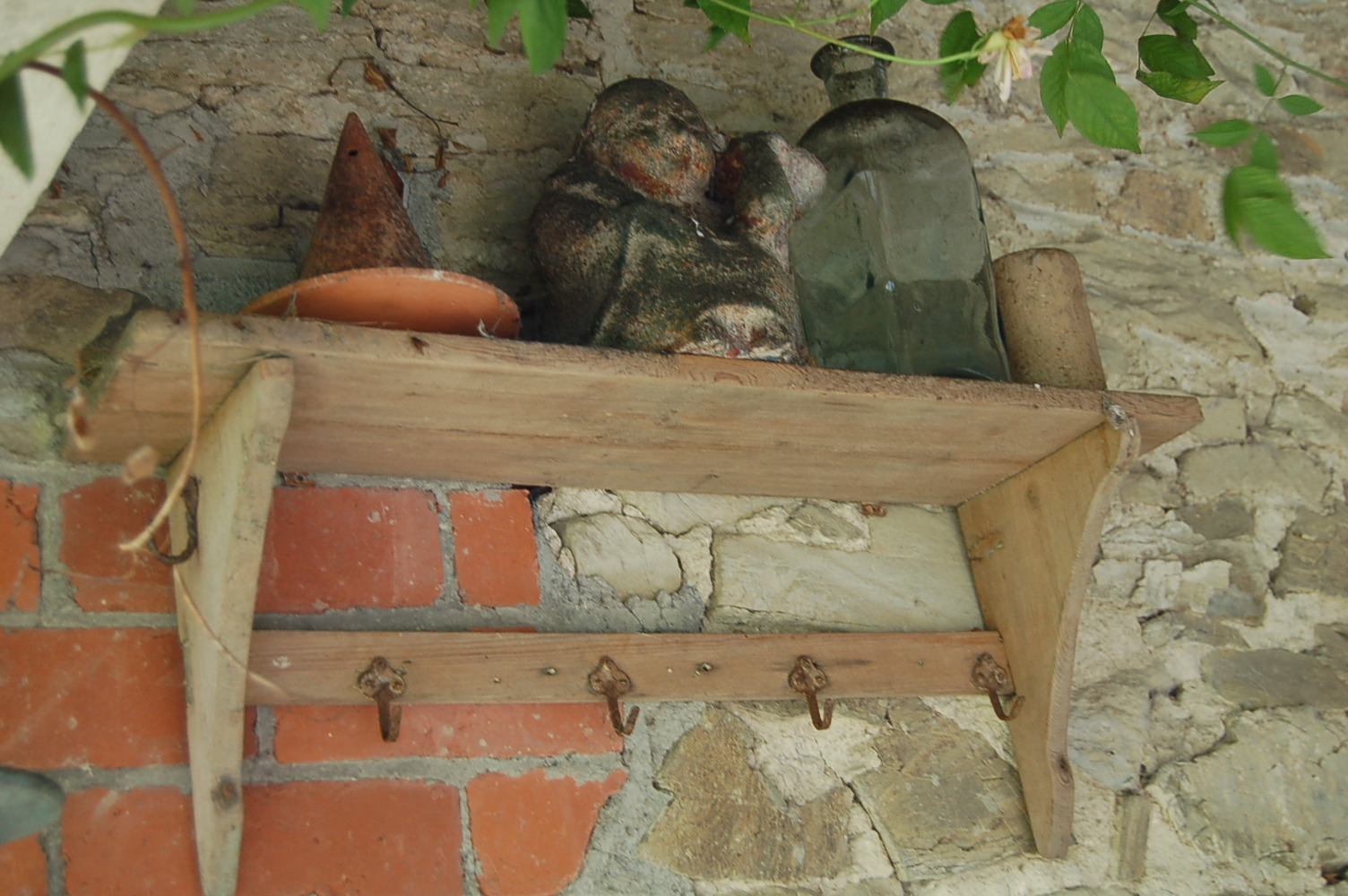
The old farm buildings were interesting and beautiful in themselves and featured some fascinating artifacts reminding us of the farm’s cider producing heritage. The buildings are softened with plants and interesting collected and found objects.
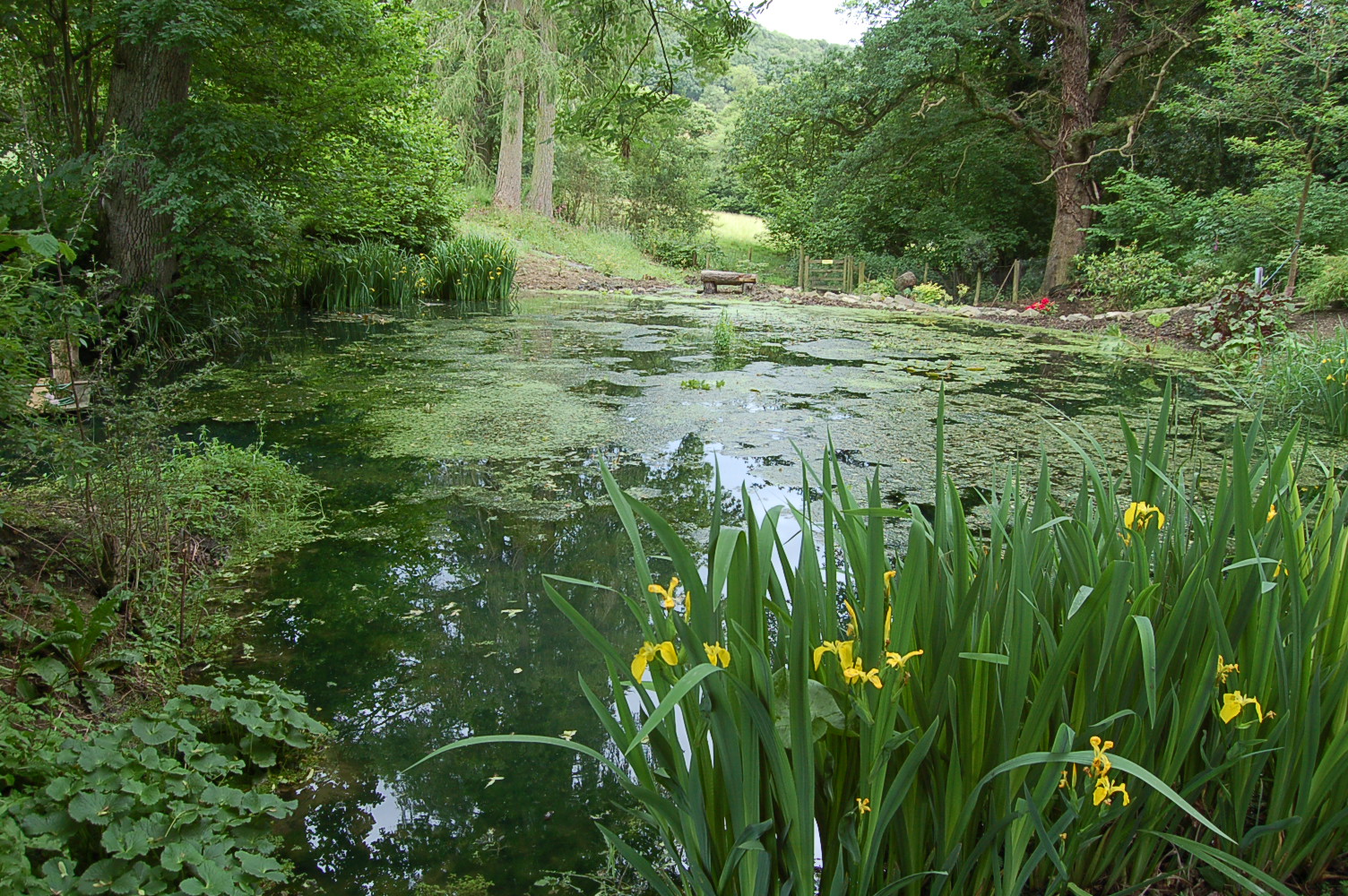
We made our way past the formal pool through blue borders and made our way towards a wildlife pool in woodland.
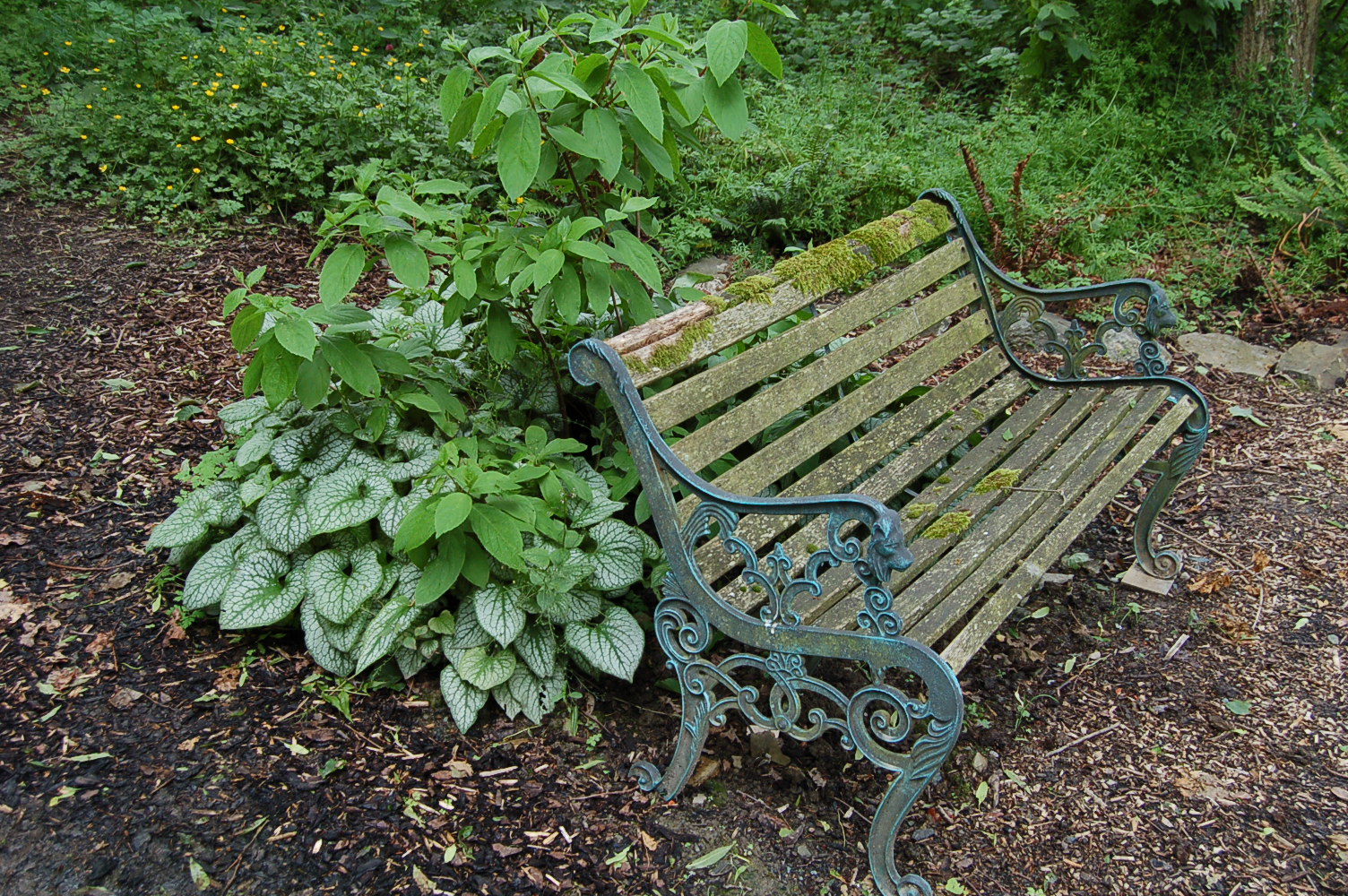
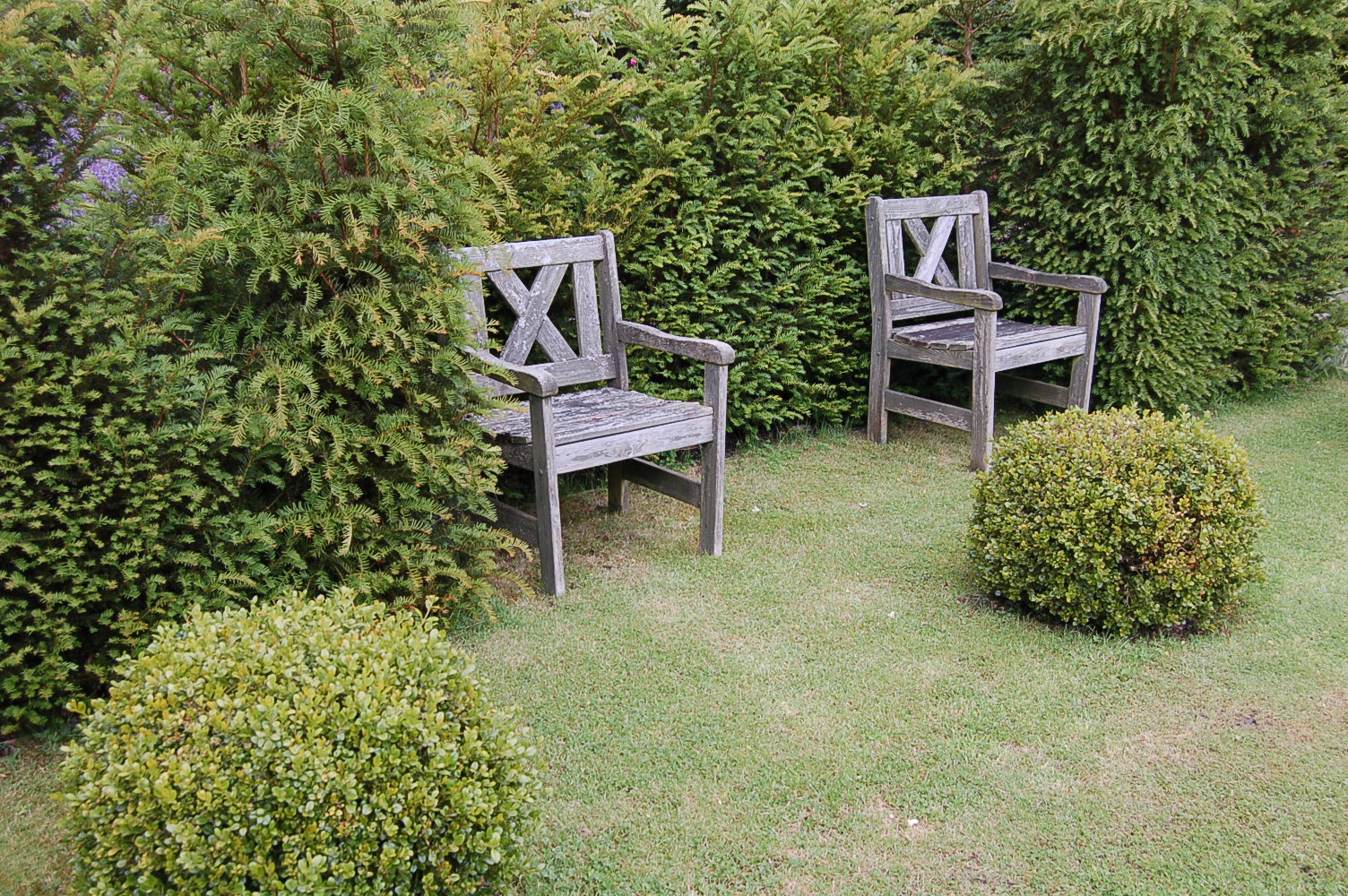
Seating around the pool encouraged us to sit, look and listen, although on closer inspection they looked a bit algae-covered and far too rickety to risk.
Through the trees along the edge of the wood the neat and tidy kitchen garden came into view.
The next stage of our garden wander took us through an interesting and very varied assortment of garden rooms.
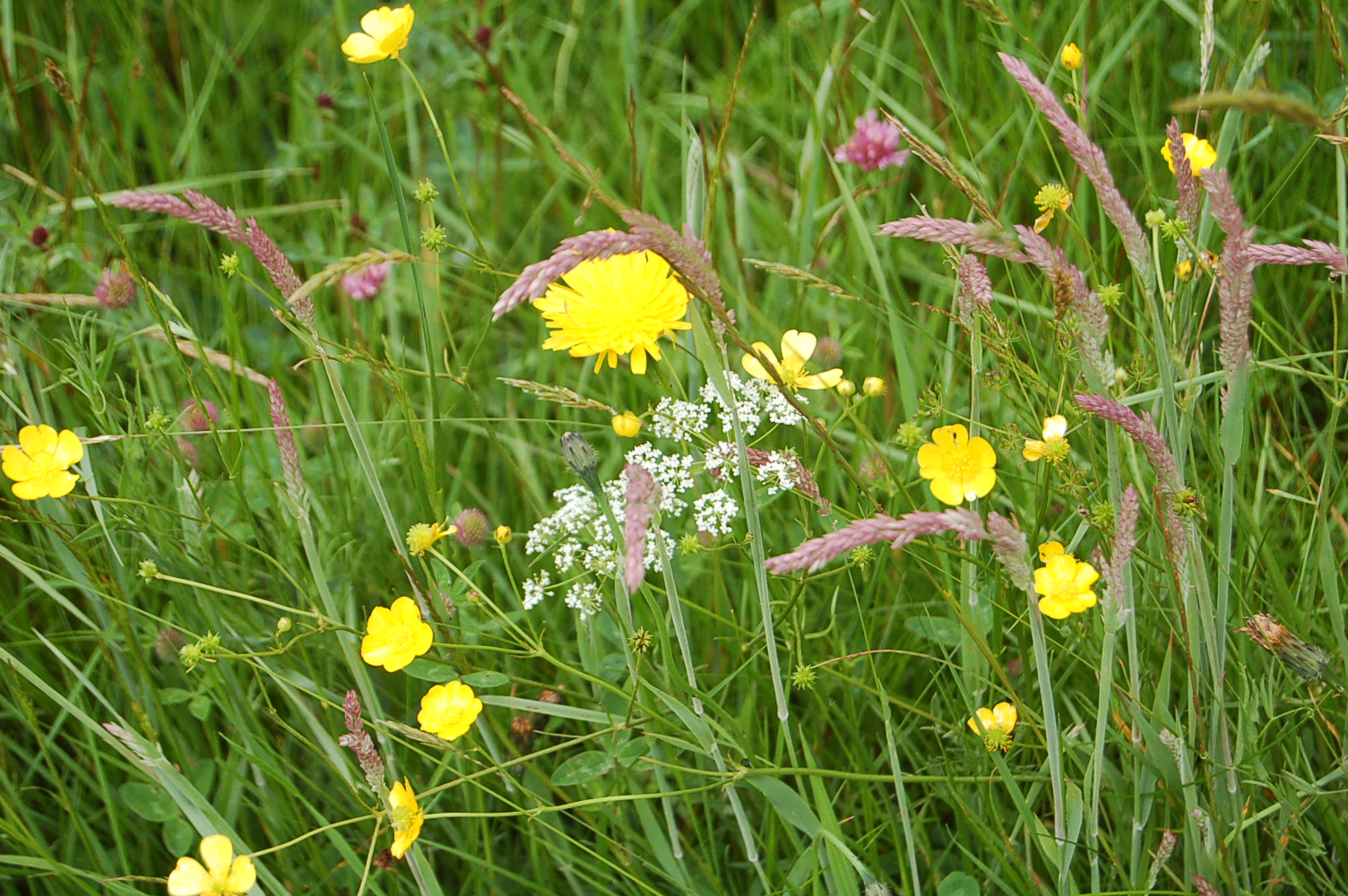
Beyond the formal garden rooms we encountered meadows growing within orchards, a nuttery and unexpectedly a rose garden linked the garden to the countryside.
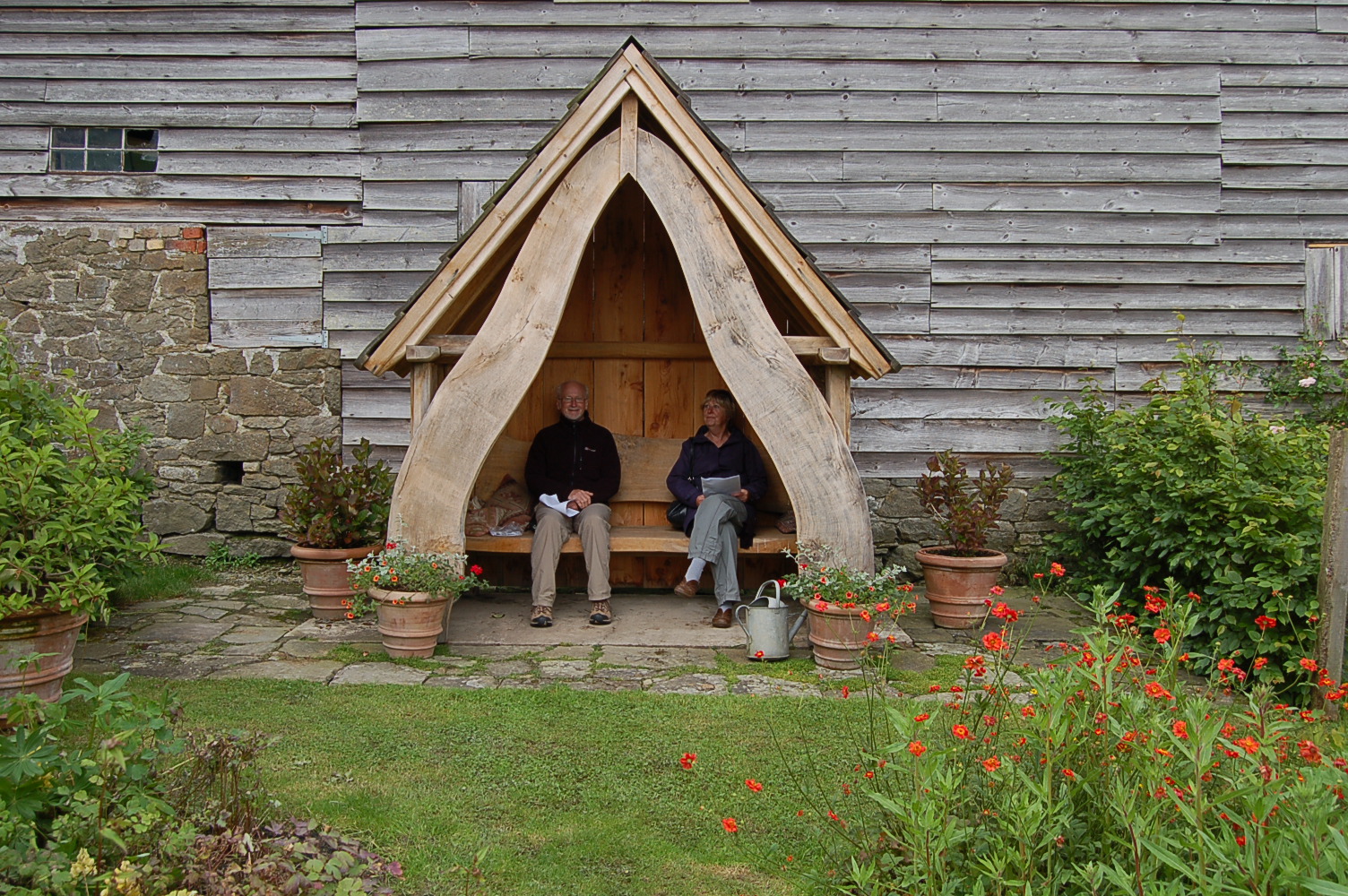
We moved back into the main garden where more rooms awaited us and a wonderful arbor made by a local craftsman in local oak. It was so tempting to have a seat and look in detail at the wood working skills.
Tea was served in an outbuilding constructed of wooden beams and stone. Inside were artifacts aplenty. The chocolate cake was excellent!
We explored the old farm buildings after our tea break before calling it a day – a really good day.
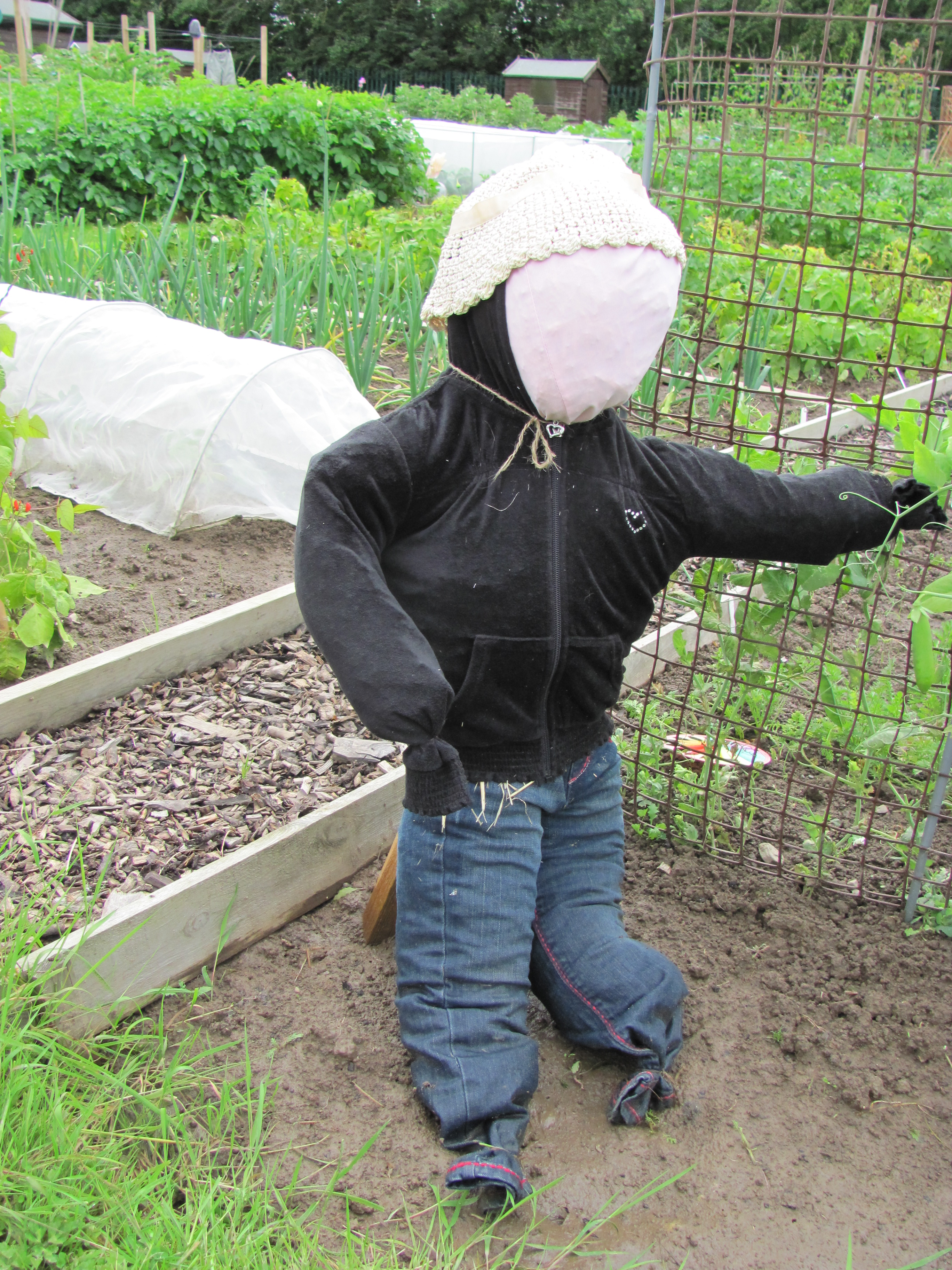
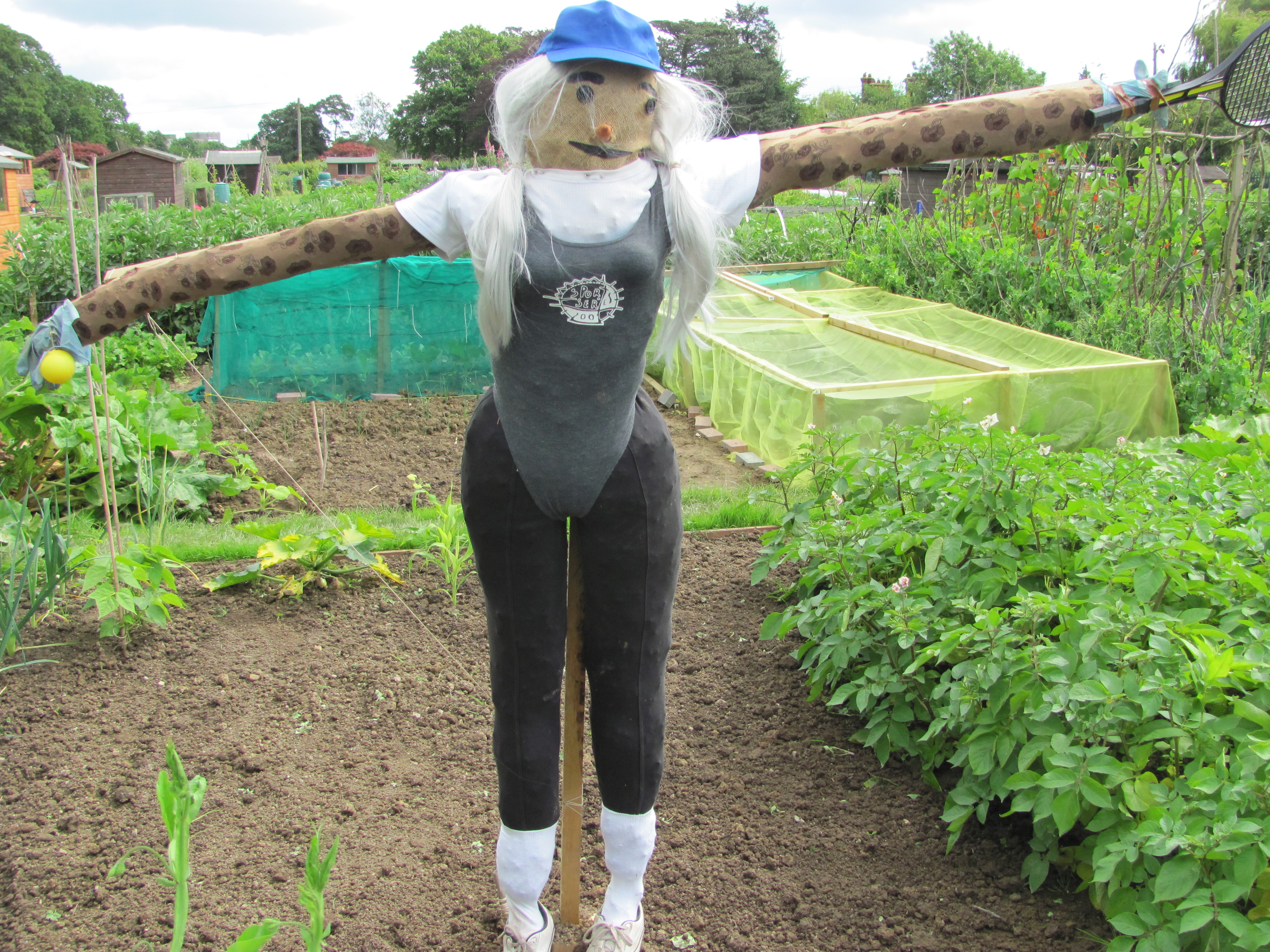
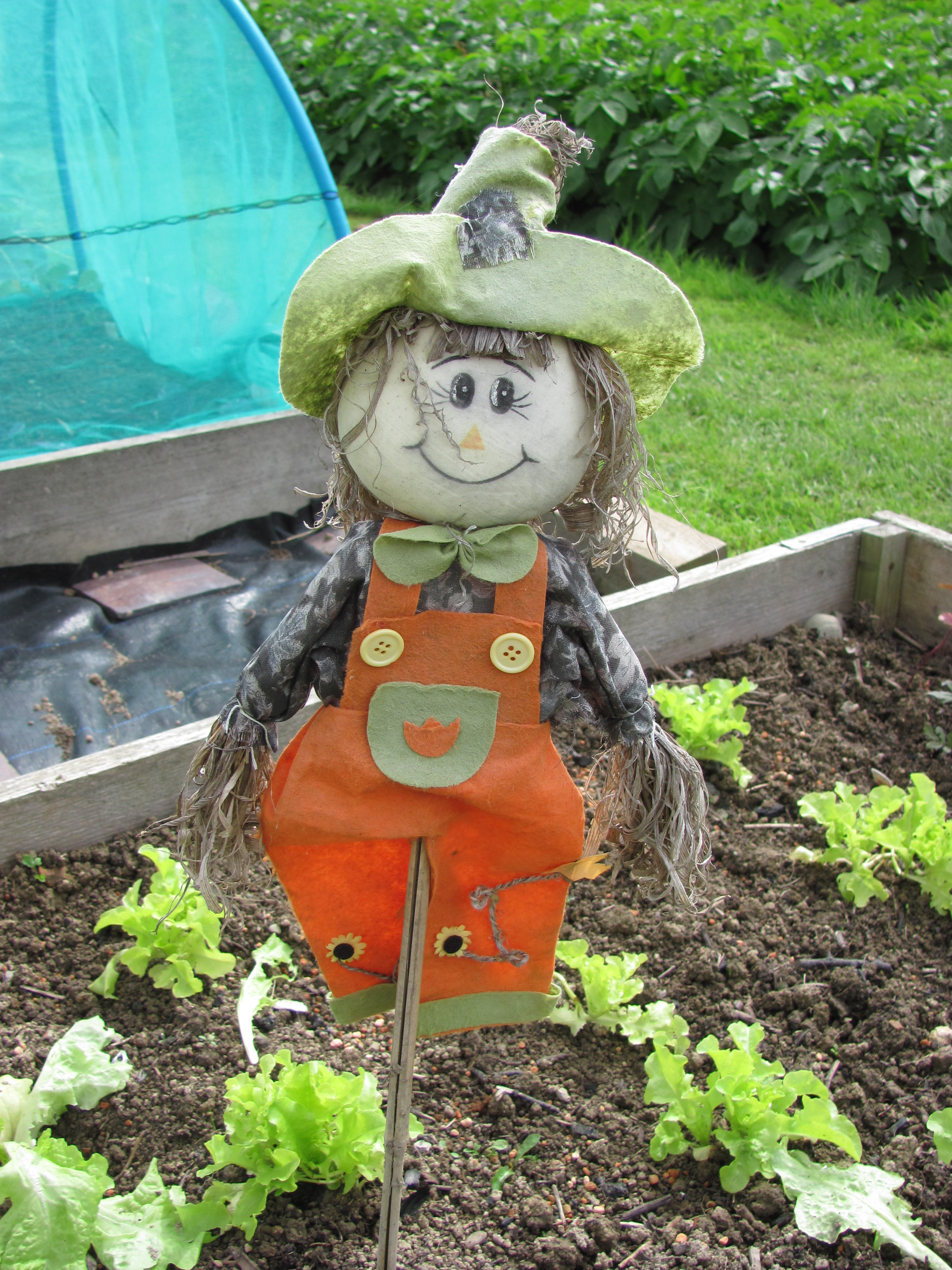
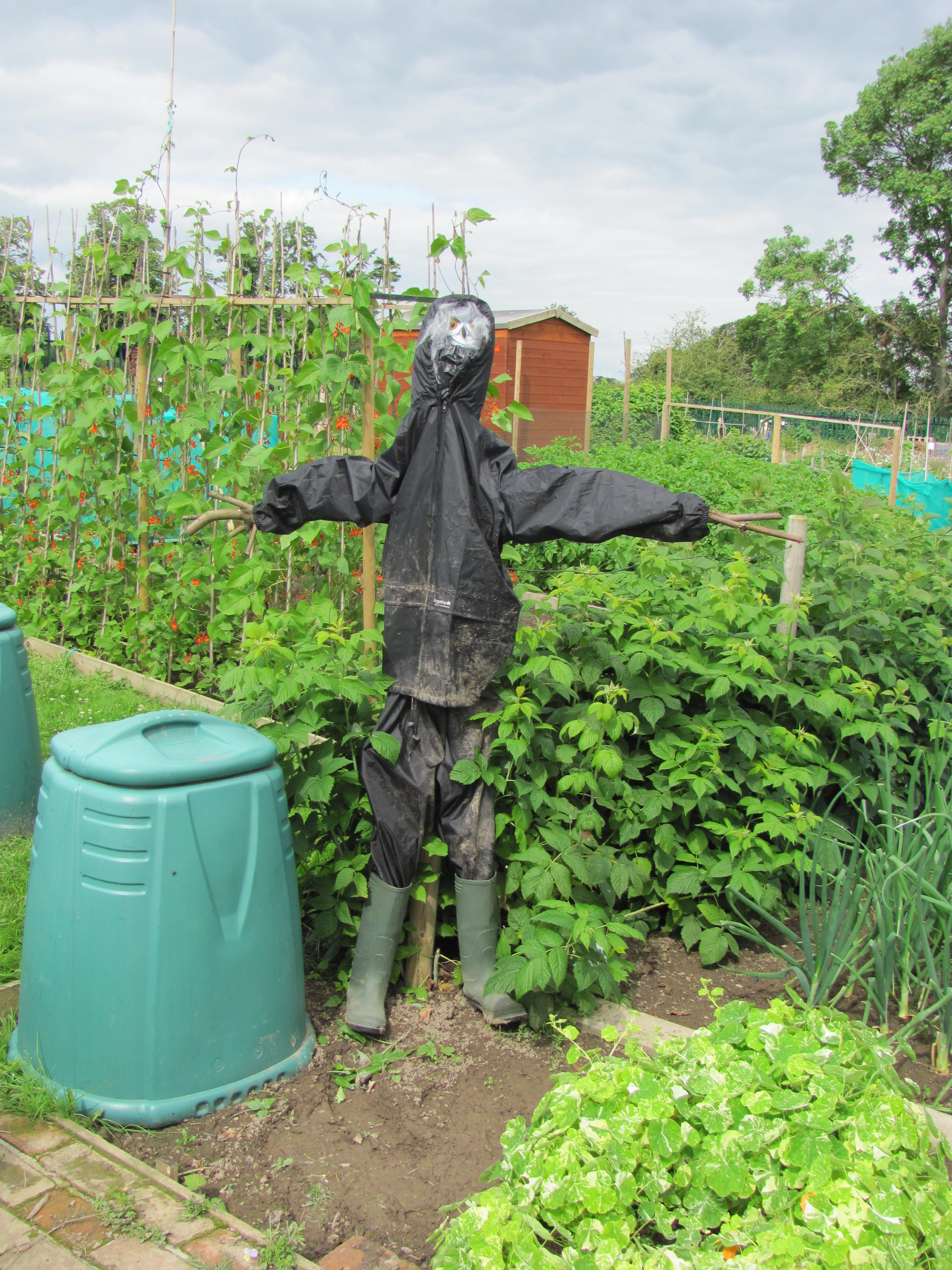
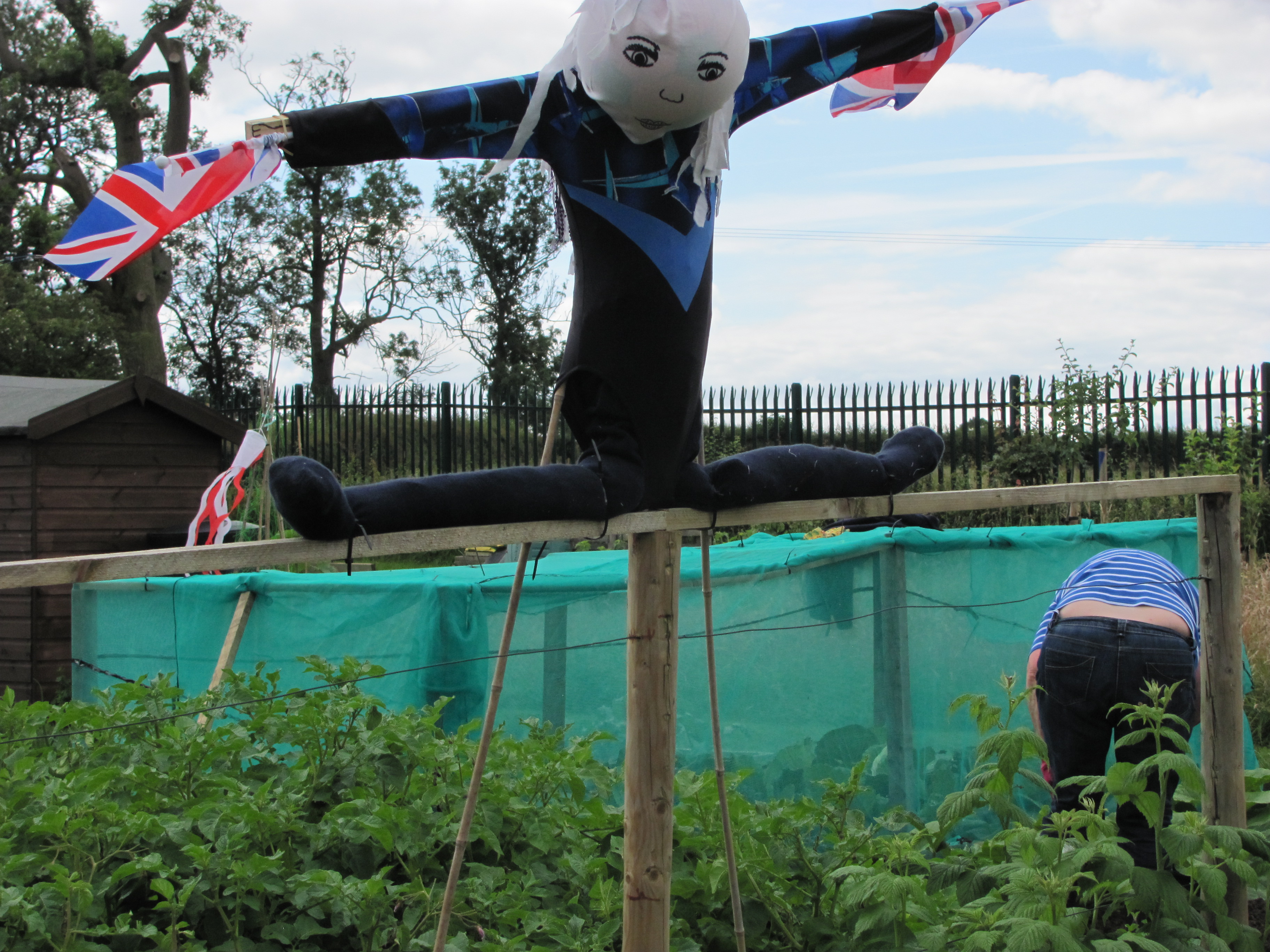
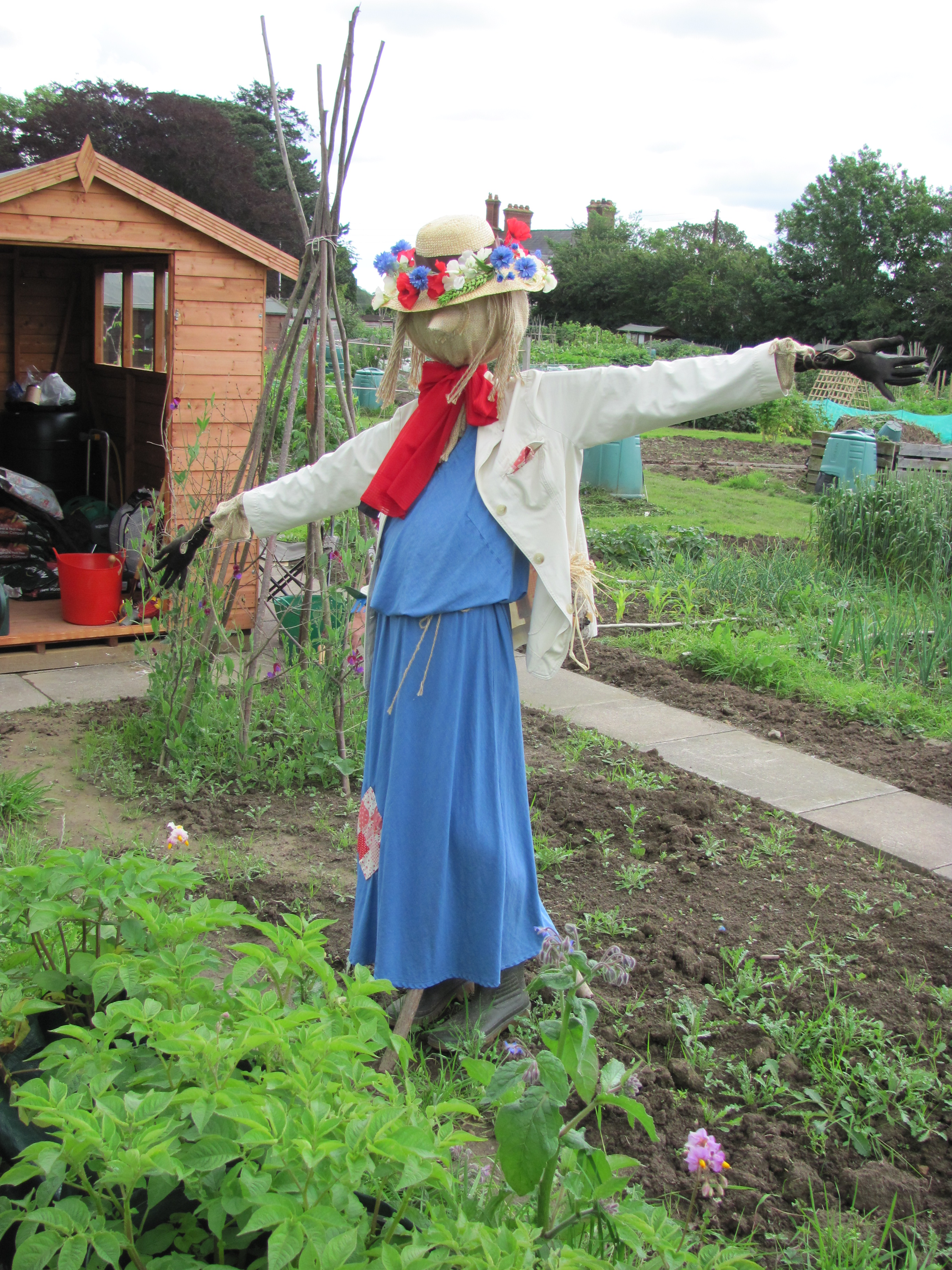
As promised in my recent post about our NGS Open Day this post will be a gallery of photos of some of the scarecrows made by our allotmenteers for our scarecrow competition. Our theme this year was the year’s celebrations, The Olympics and The Queen’s Jubilee. The first is the creation that won the competition. Enjoy the characters!
For one day each year, in the middle of July, we open our allotment site, Bowbrook Allotment Community, for charity. We open under the auspices of the National Garden Scheme so are proud to be in the famous Yellow Book. The choice was made to join the NGS because they raise money for caring charities, such as the Macmillan Nurses and Marie Curie. This is our second year of opening – in the first year in gale force winds and rain we raised £415 and this year on a dry day in the middle of the wettest of summers we raised £815 – so we feel a little proud! This means we have now sent the NGS £1230.
We chose July as the month to open as it seemed to be a month when we would be most guaranteed to have a spell of good weather to encourage visitors to come along. Last year we opened in heavy rain and gale force winds.
This year however after weeks of rain, we had two dry days coinciding with the day when we planned to spruce up and prepare the site and the open day itself. Although the whole area was very wet underfoot, plots themselves too wet to get on, some paths unusable and standing water in places, we felt the site looked as good as it could.
The day of the opening dawned bright and dry. The sun was shining and it felt warm. As we arrived early in the morning the car park was full and the site crawled with members working away. Soon the signs were in place, the gazebos up, the tea shop readied and the quiz pictures in place. We felt ready!
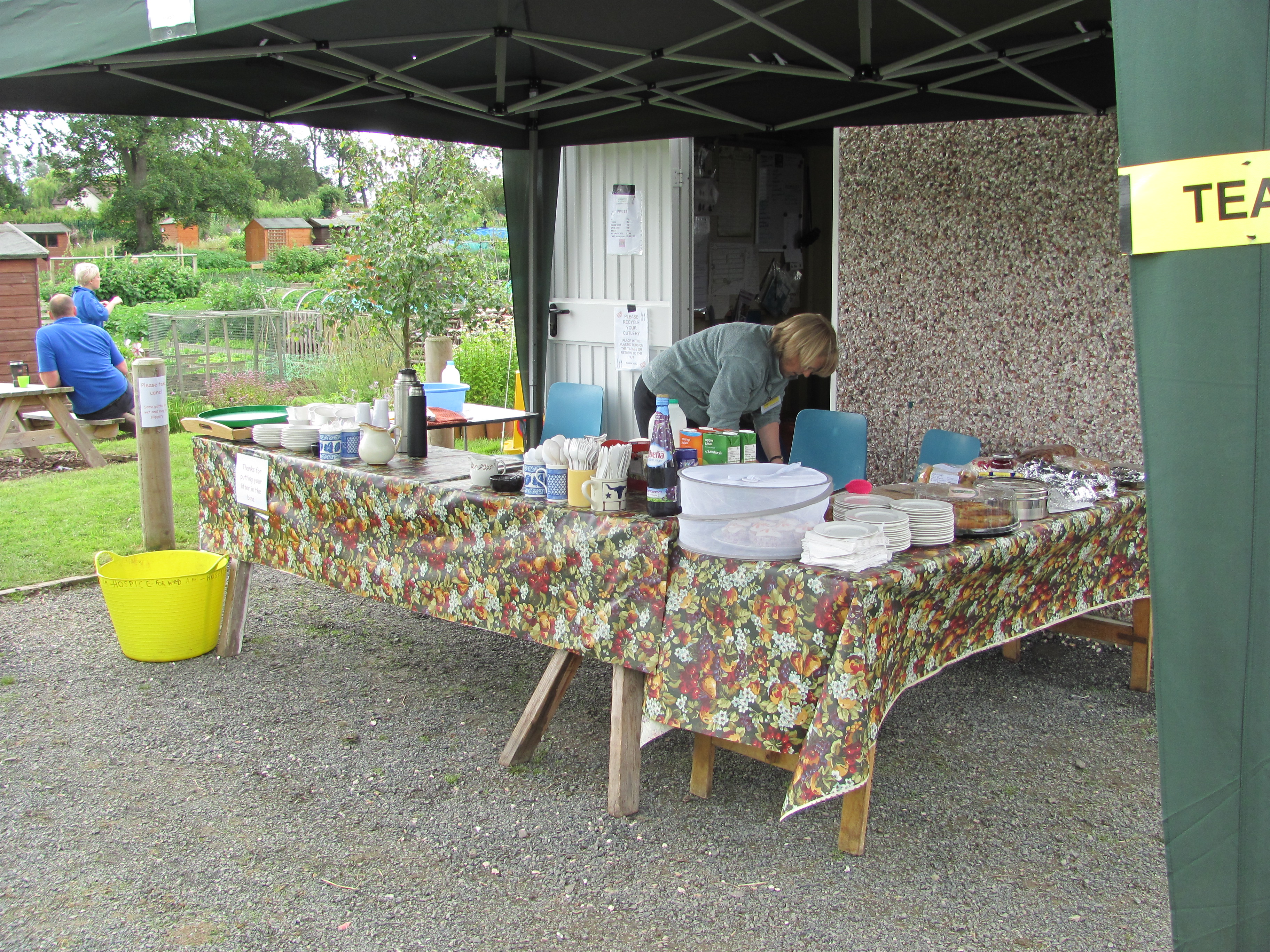
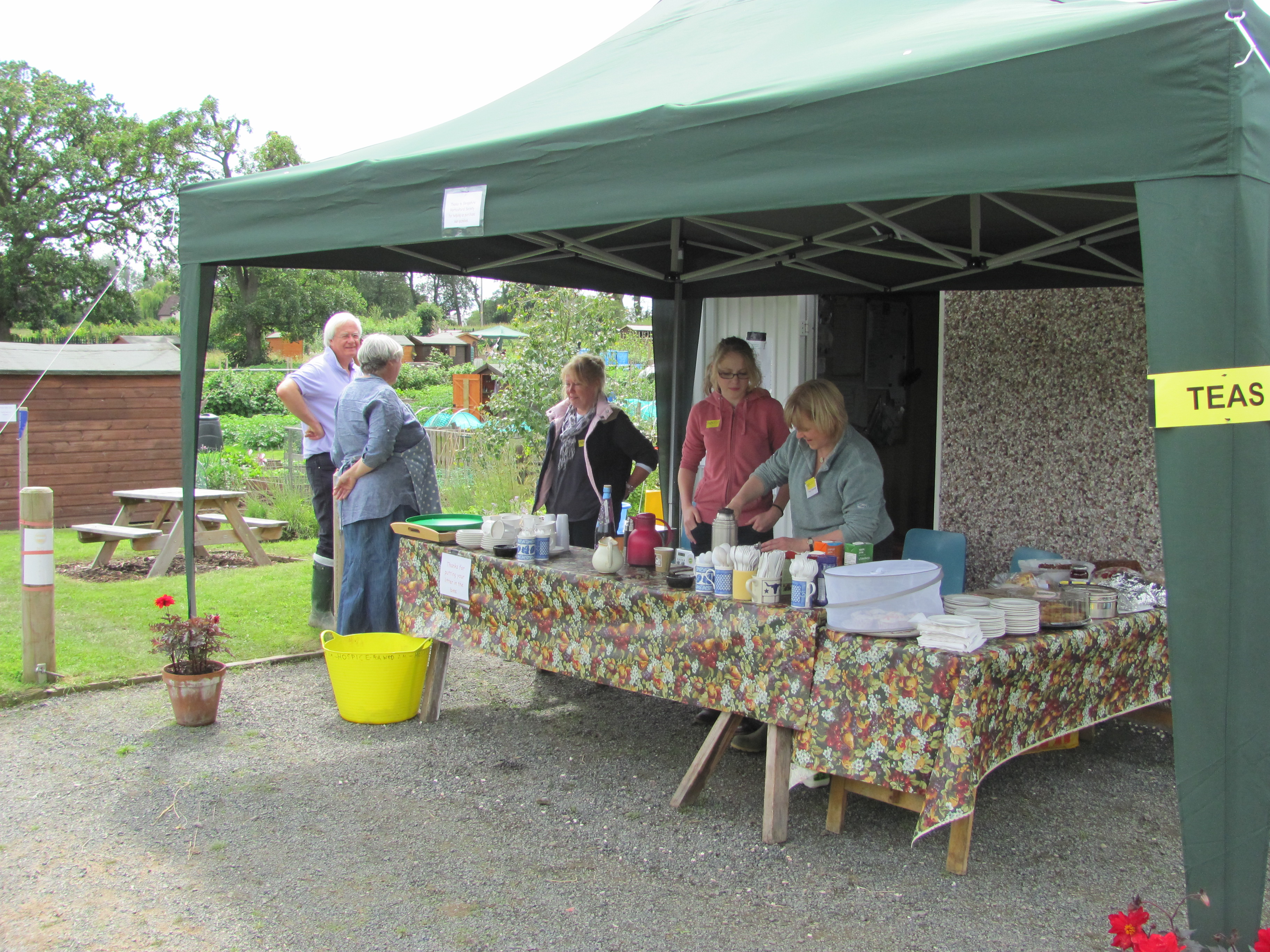
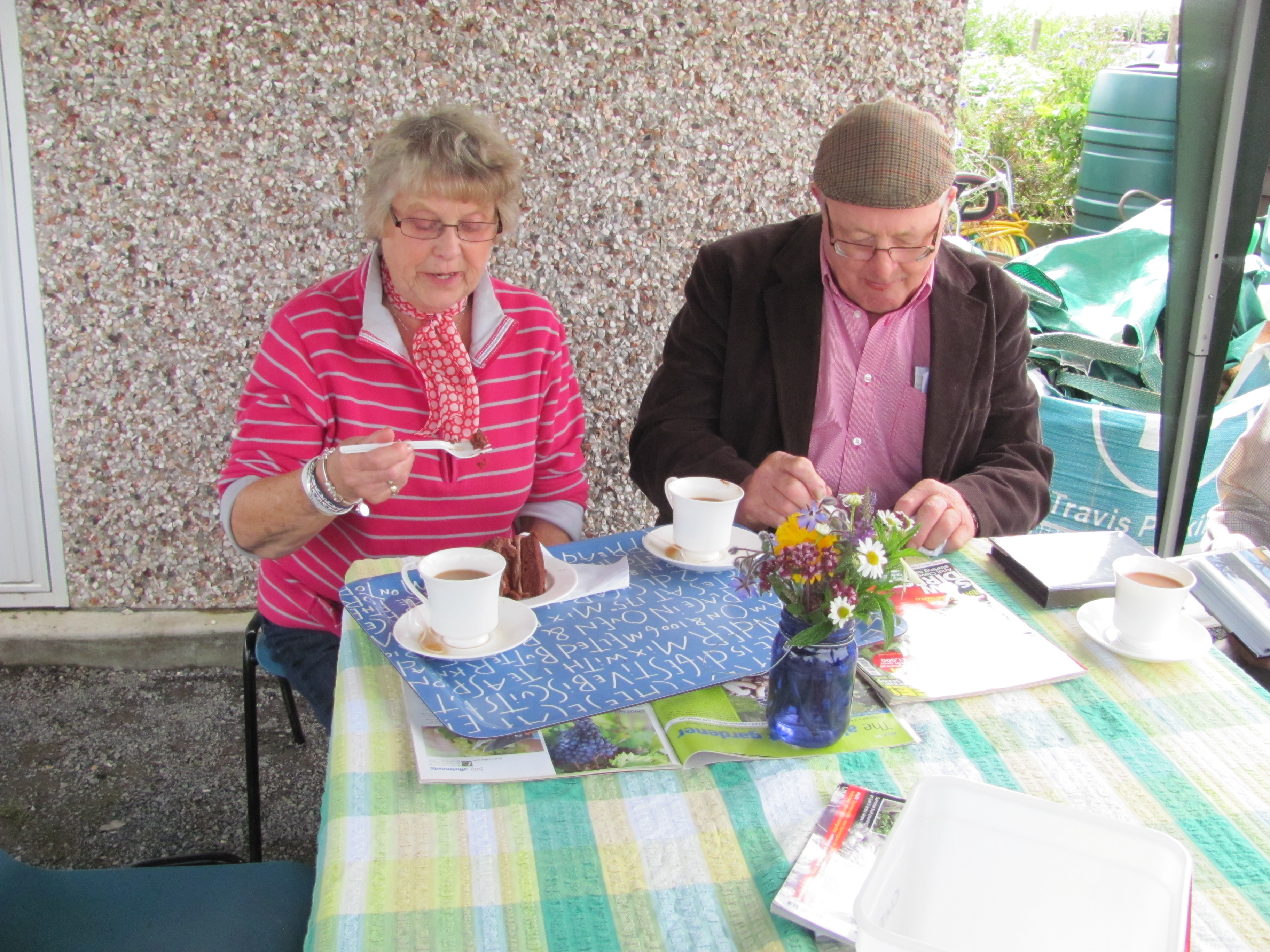
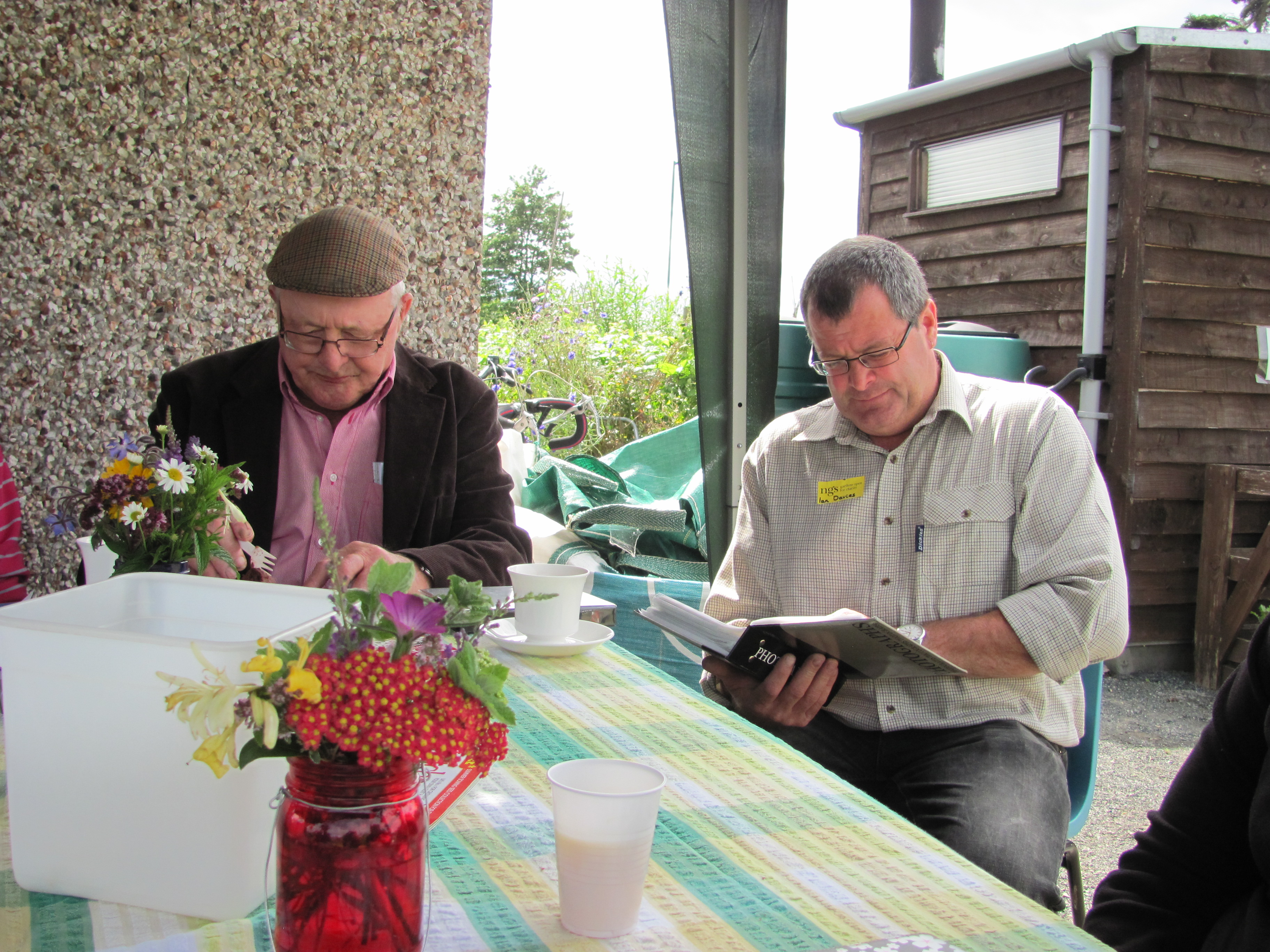
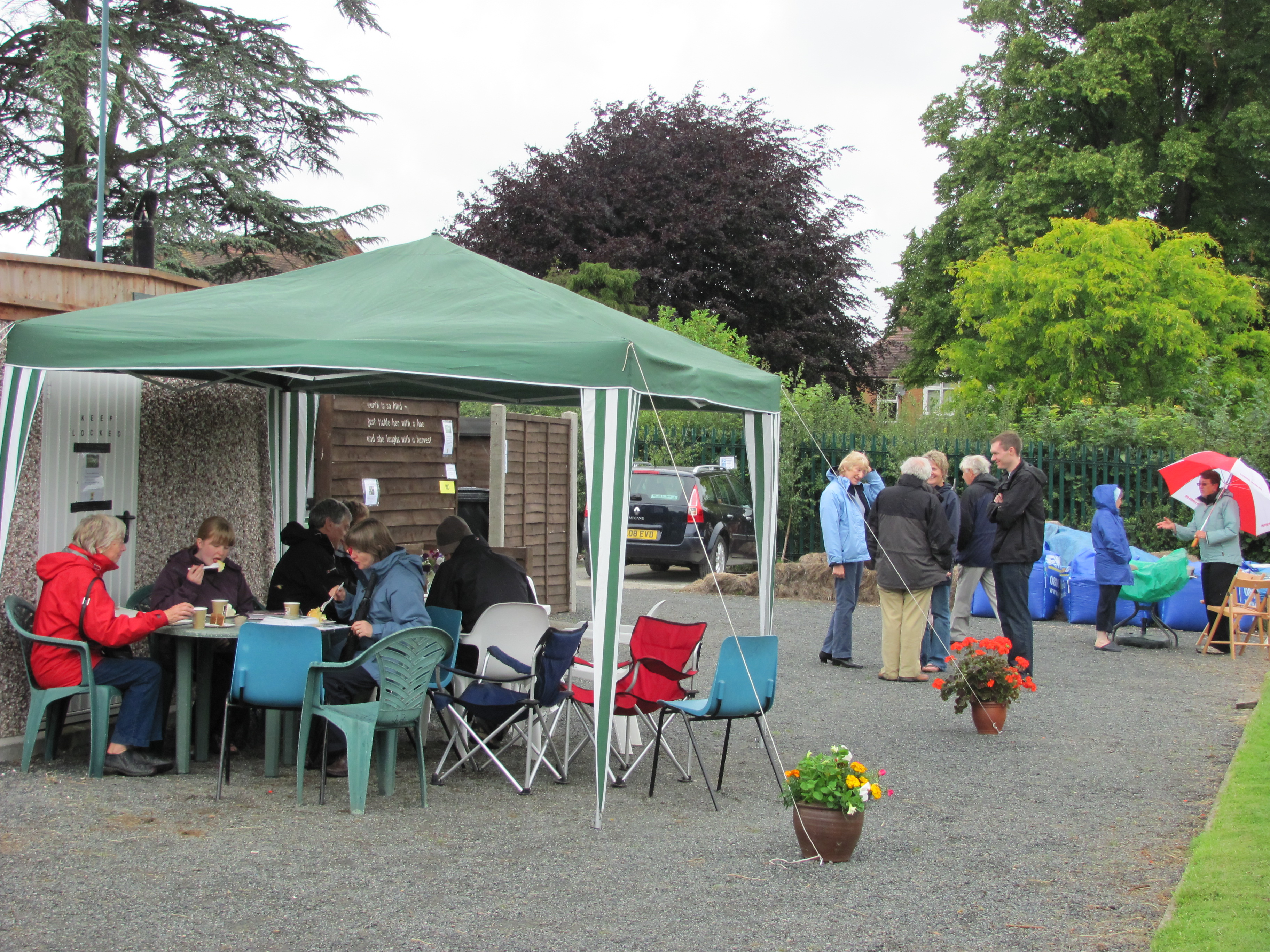
We were so pleased to see so many plot holders helping out in so many ways – true community spirit! The tea shop was stocked with dozens of cakes baked by members and the table under the gazebos were made attractive and welcoming after one member, Shirlie, created beautiful table centre posies, magazines were placed on them for visitors to read and our photo albums made available for their enjoyment.
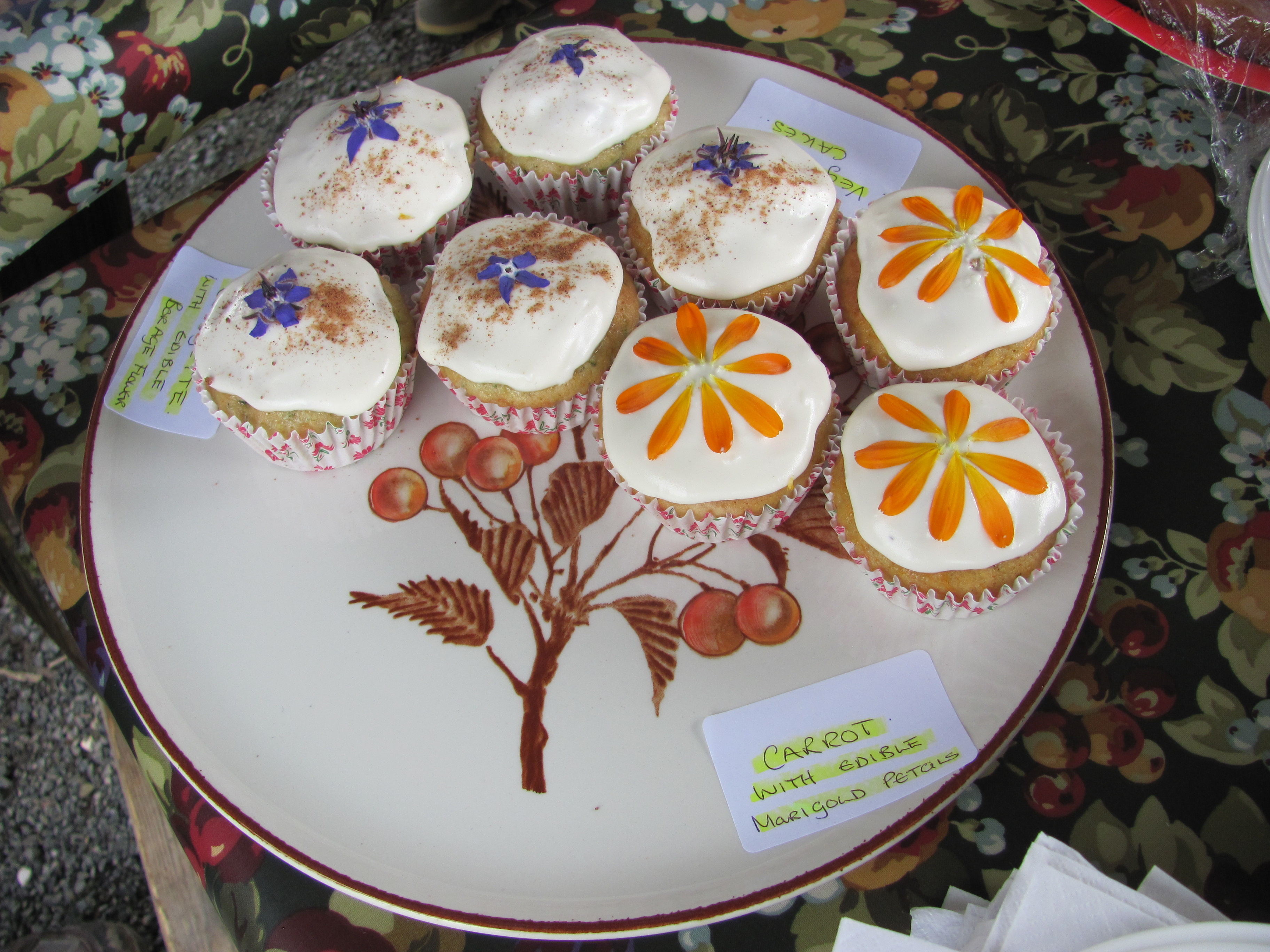
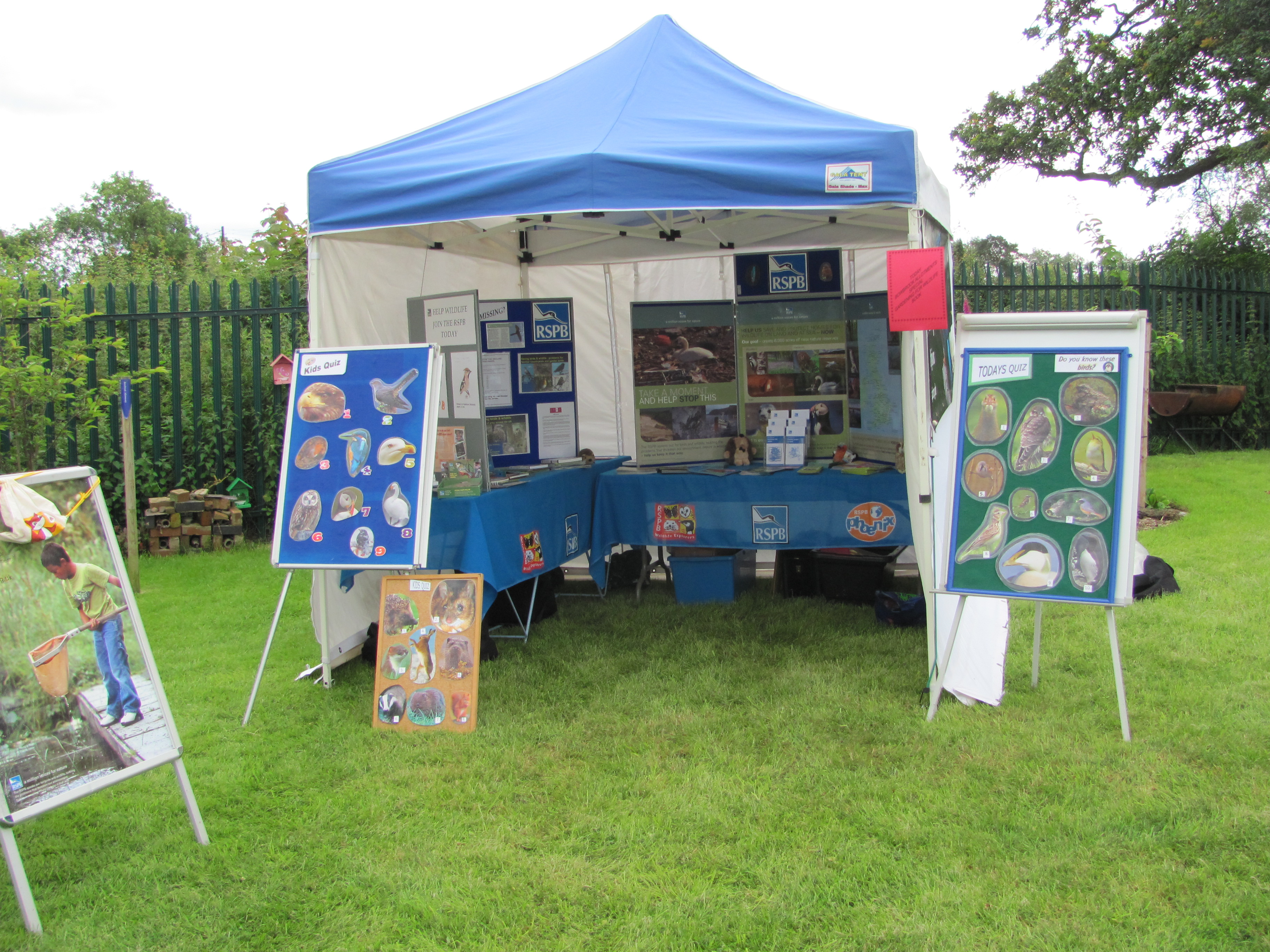
Tracy getting the tea shop sorted.Special “Allotment Cakes” carrot cakes decorated with petals of Calendula and Borage.Tea shop all ready for action and in plenty of time.Di and Jill prepare their “meet and greet” table.Warning signs in place.The volunteers from the RSPB (Royal Society for the Protection of Birds) take a break once their display is set up in readiness.Pete and Sherlie all ready and togged up in fluorescent safety to do car park control.
As soon as the clock showed 1:00 our visited started arriving – it is always a relief when the first one comes through the gate. Each visitor was handed a map and suggested route, competition details. Children were given a quiz sheet requesting they find pictures of some of our wildlife hidden around the site, matched to their favourite habitats.
We invited our visitors to judge two competitions for us during their amblings, The Best Scarecrow and The Favourite Plot. The two following pictures show the winning plot and the winning scarecrow.
The plots are all neat and ready for the perusal of our guests including Jill’s pink plot.Ken and Lesley’s very beautifully designed scarecrow.
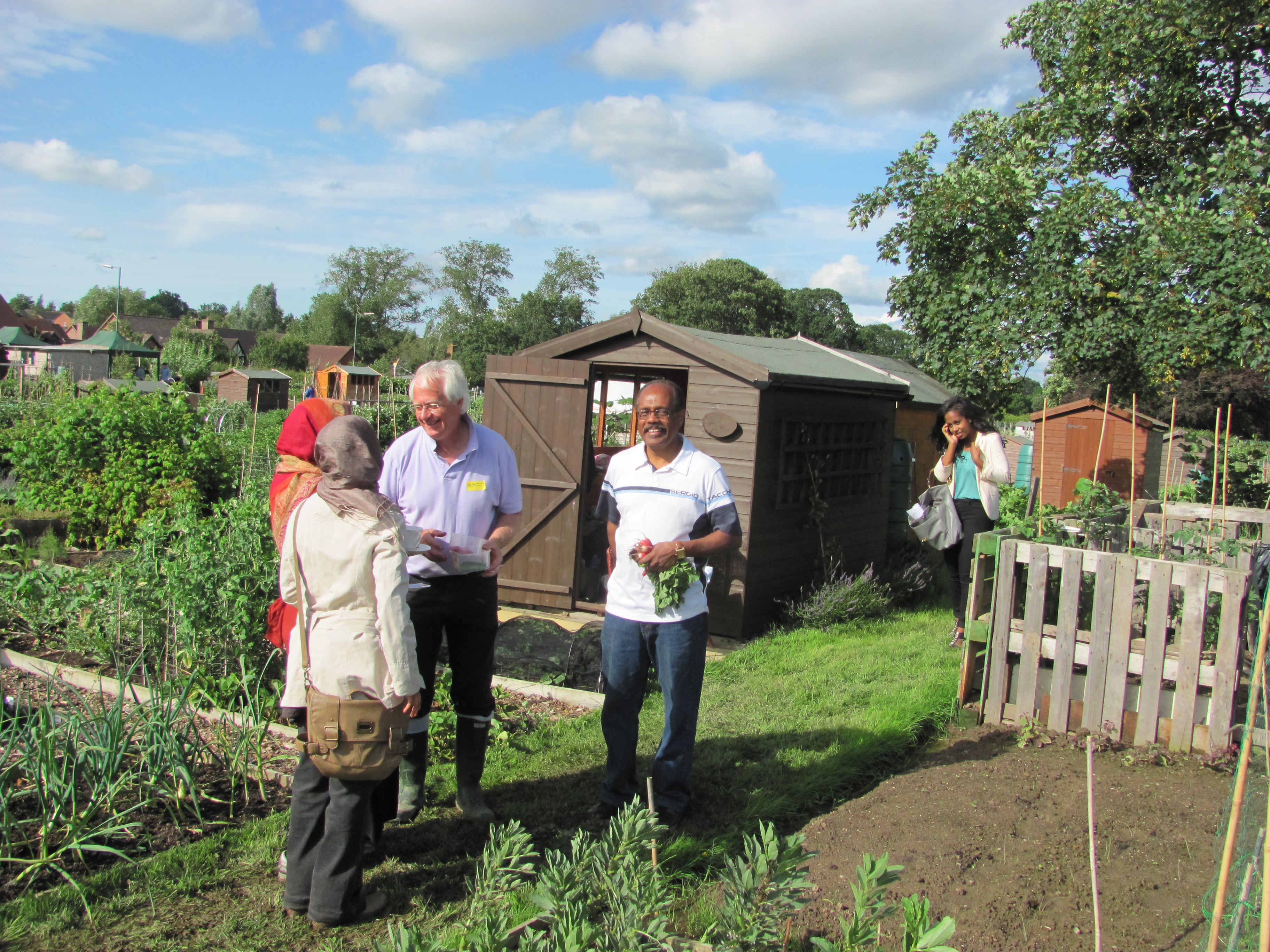
As we pride ourselves in designing our site and interest trail to be accessible to all we were pleased to see so many young families with toddlers or youngsters in push-chairs and people with mobility problems some using sticks or crutches, others wheelchairs or mobility scooters. We were delighted how easily they accessed the site and we received many compliments.
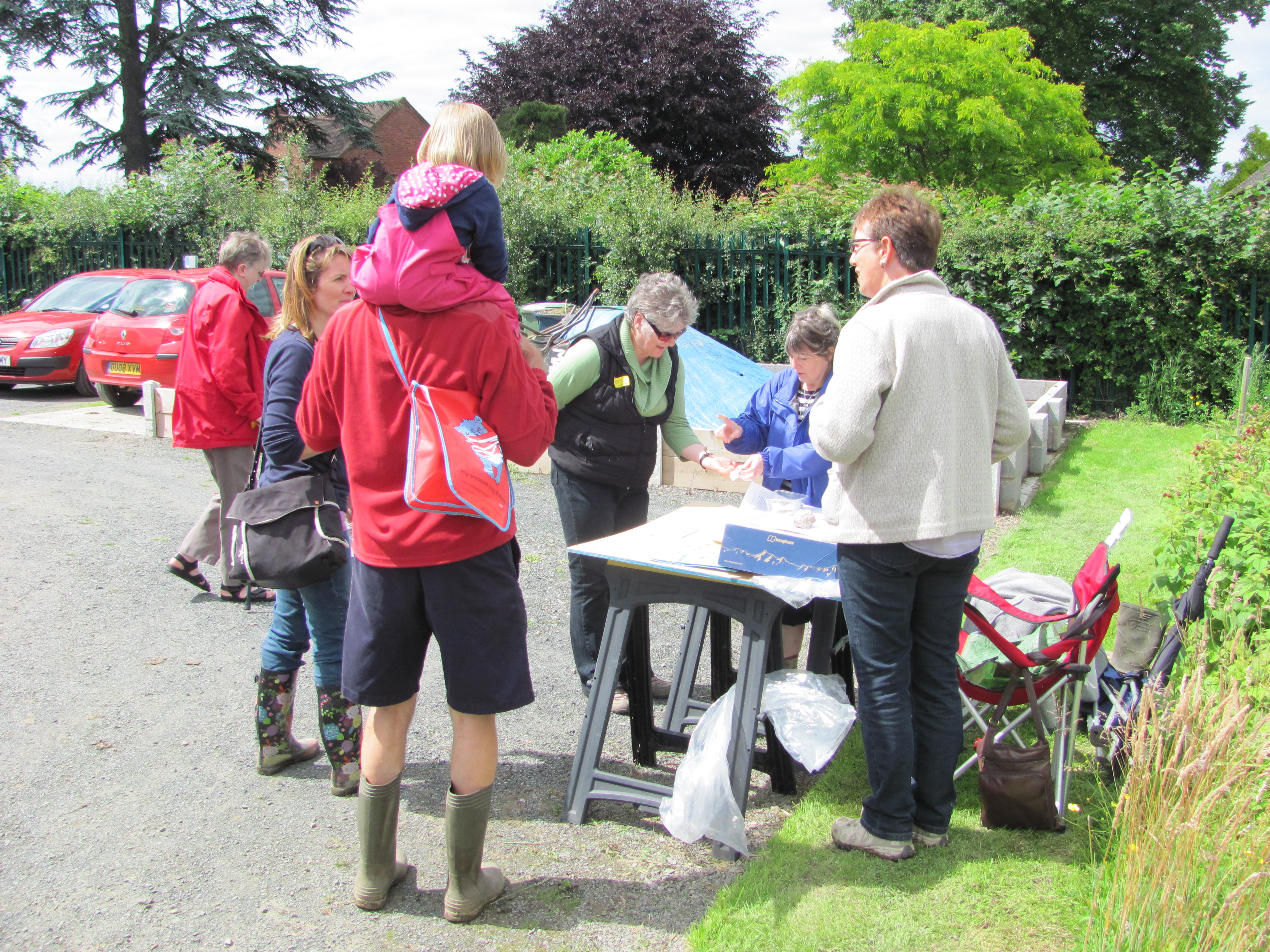
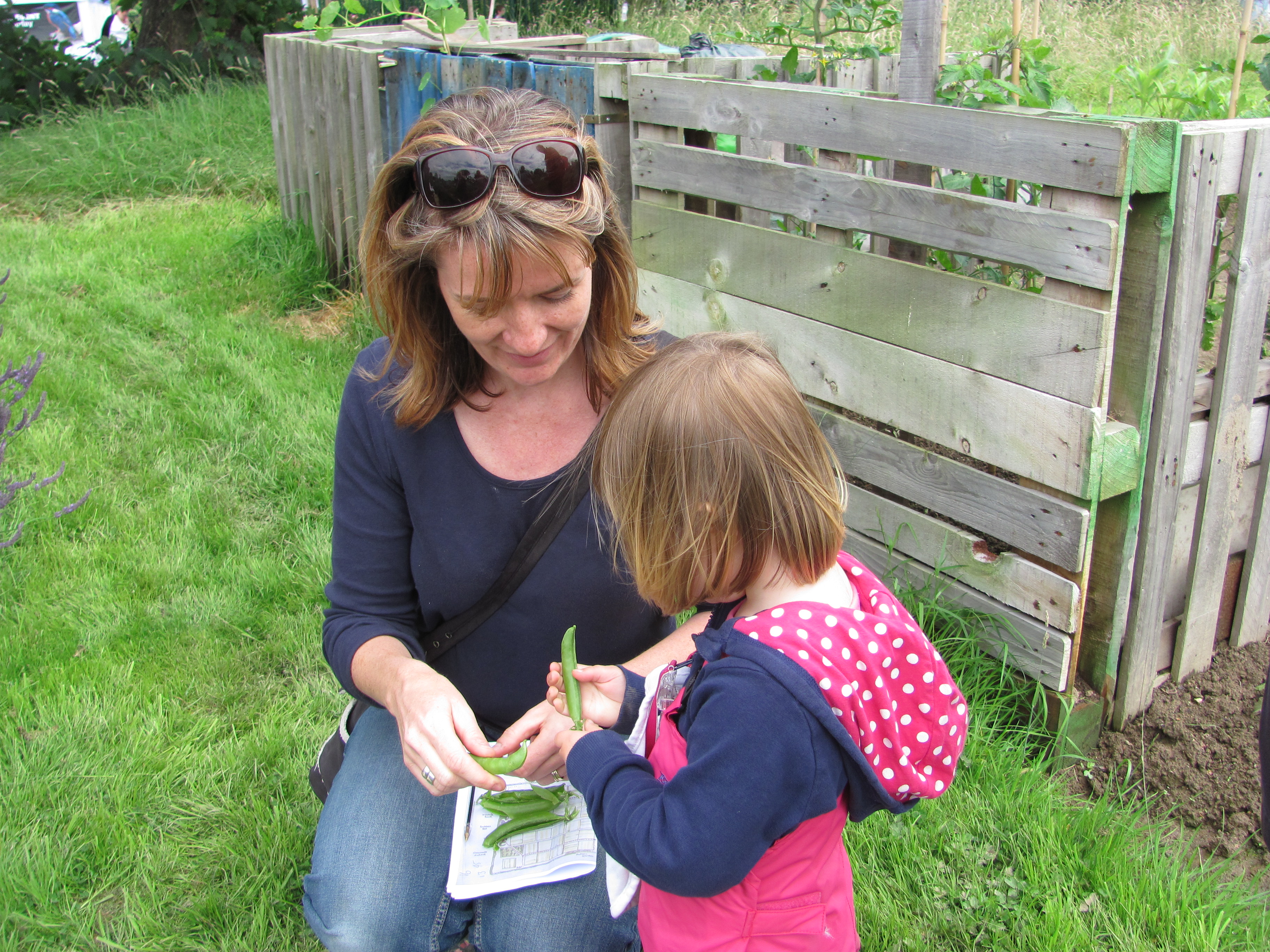
Our visitors enjoyed lots of free advice and even free strawberries and fresh peas straight off the plots. I spent most of my day as a mobile “Gardeners Question Time”, answering queries about pests, diseases and how to grow certain crops and identifying plants. I was handed a cabbage leaf with pests attached and a drawing of a “nasty, looking insect which looked like a dragon and was mostly black with bits of red”. I managed to identify the dragon insect as the larvae of a ladybird and the cabbage dwelling ones as whitefly. I suggested that the ladybirds should be encouraged to stay and informed the gardeners that they were very lucky to have them, but had to tell the cabbage growers that they were not lucky and advised them to get rid of their pests quickly.
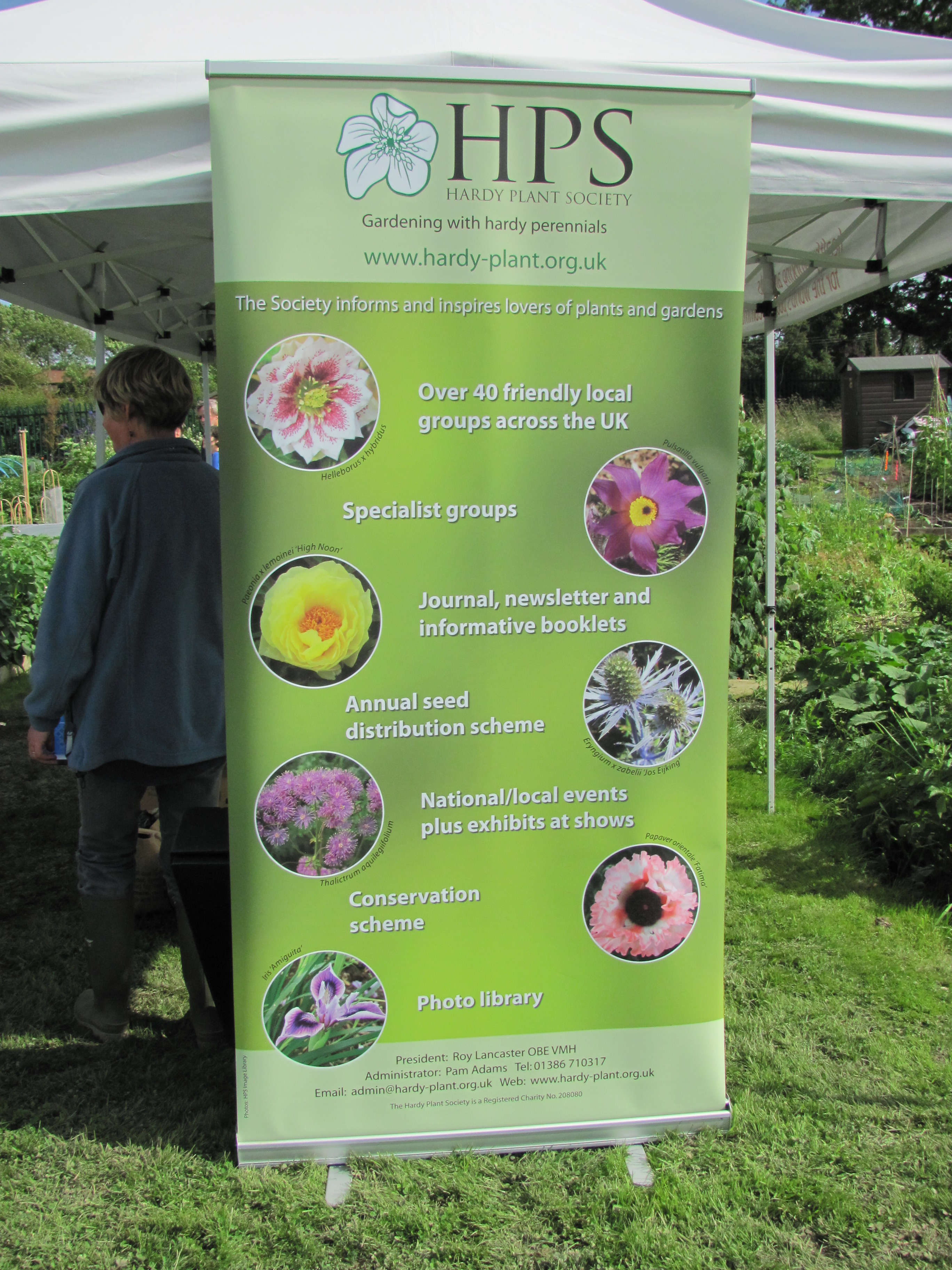
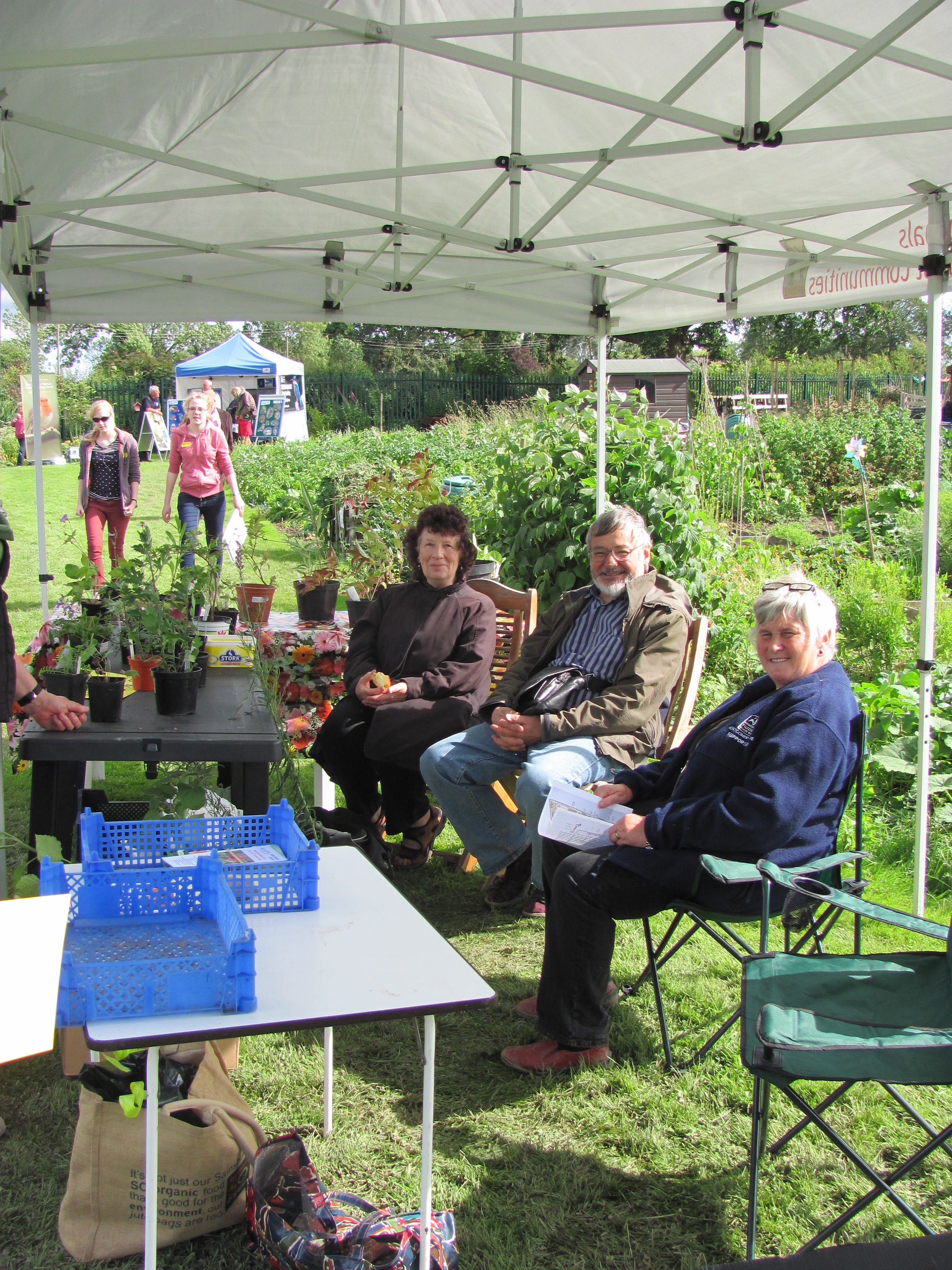
Some of our friends from the Shropshire Hardy Plant Society organised a plant sale and many guests left happy with their bags or boxes of unusual plants.
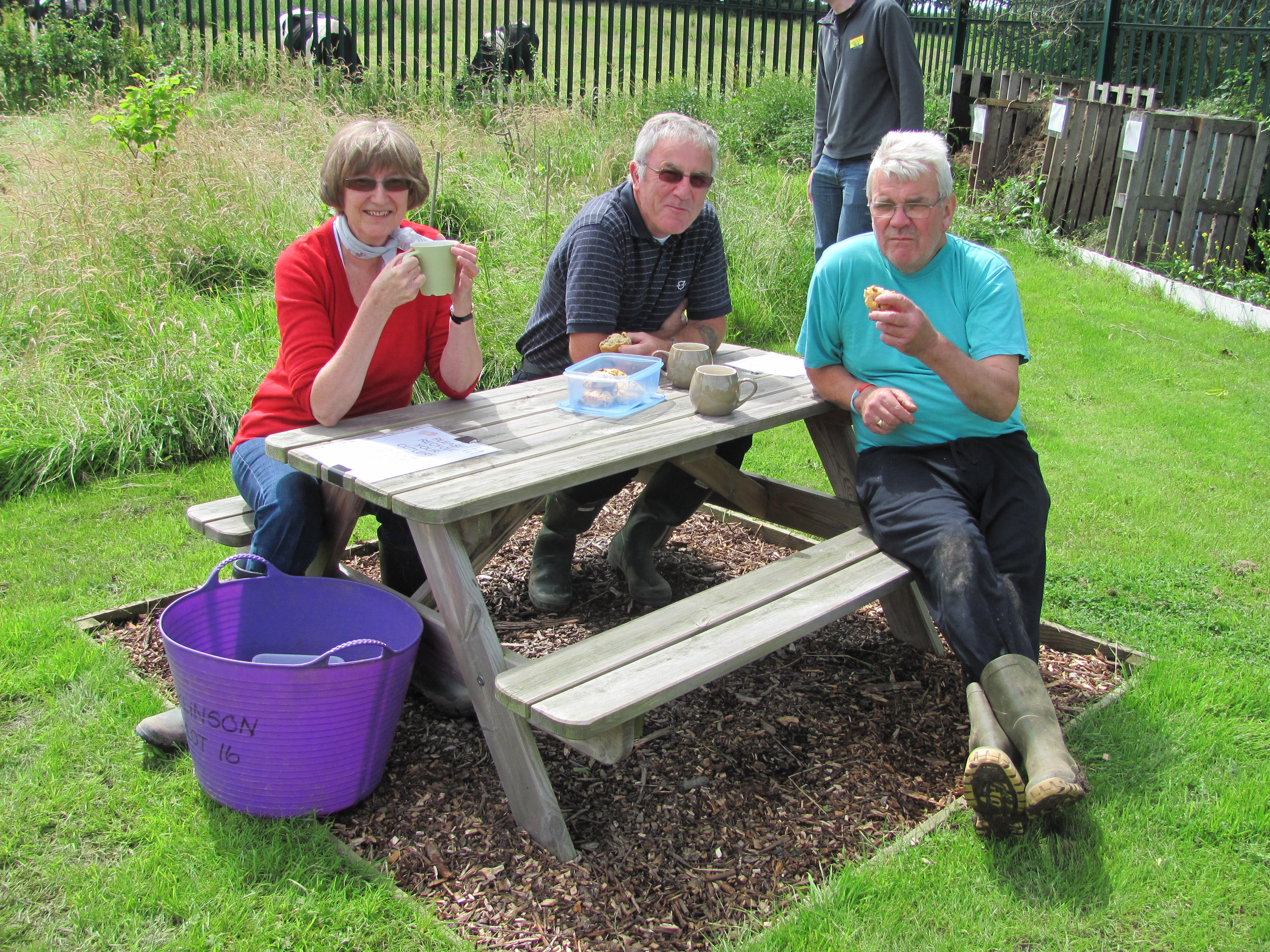
Most visitors who came spent several hours looking around with occasional breaks for a sit while enjoying a tea and cake, with some staying for the whole four hours we were open.
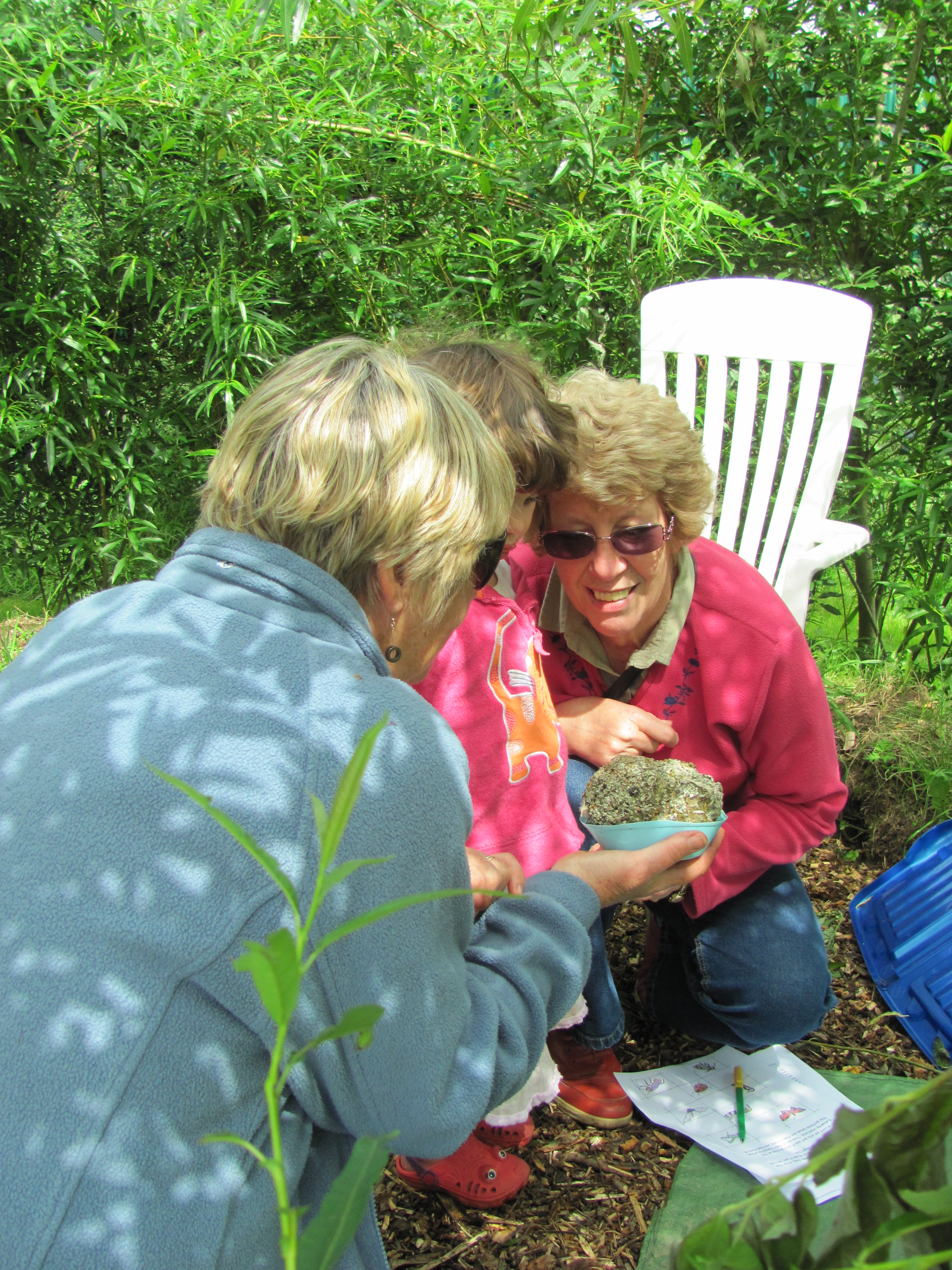
“The Undergardener”, Jude used her teaching experience to good purpose showing young visitors interesting artifacts found by plot holders such as an old Wren’s nest and an aborted Wasp nest.
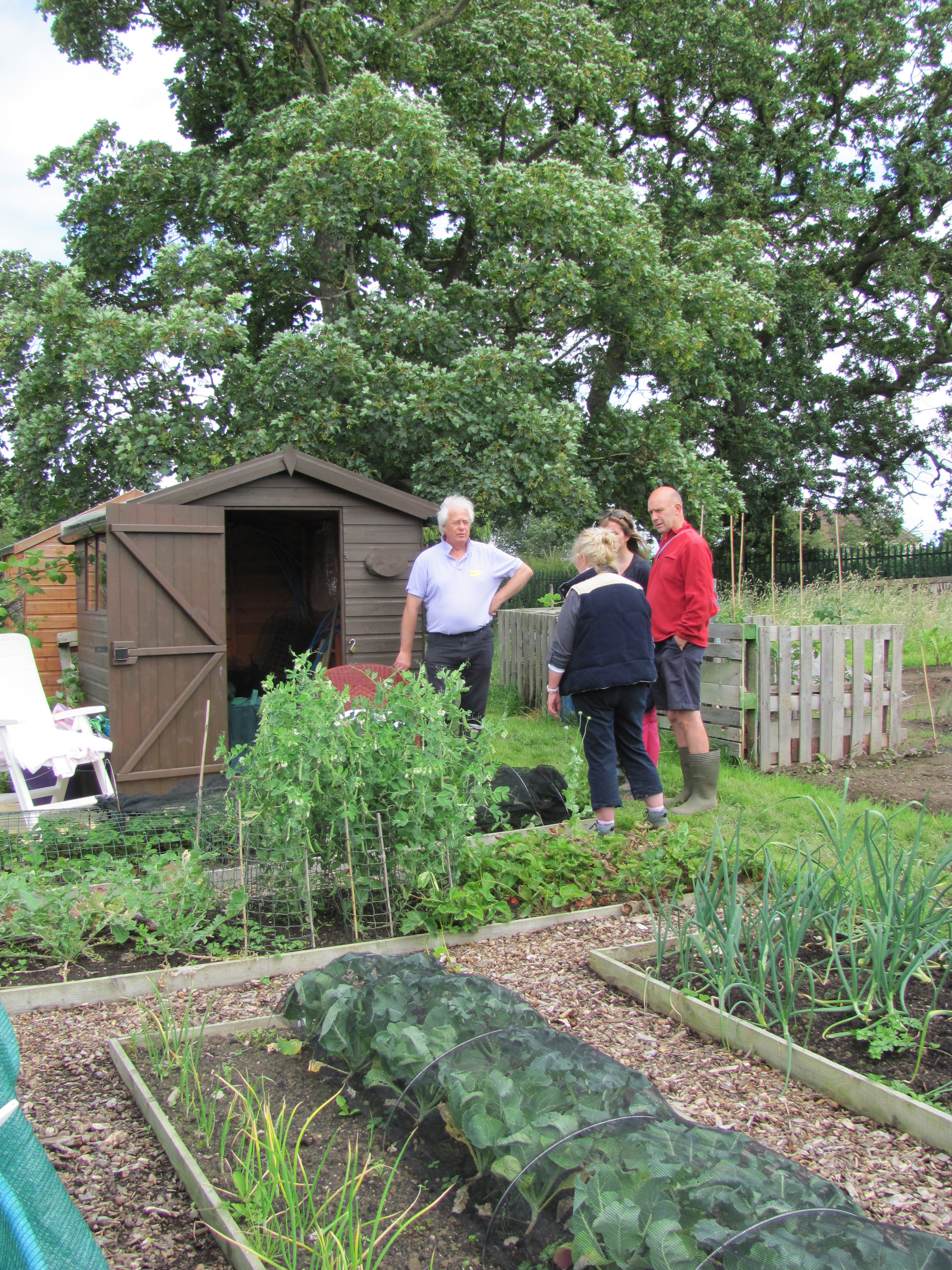
Several plot holders worked on their plots so that our visitors could ask them questions, others sat on picnic benches around the site to greet visitors and make them welcome.
When we closed and the last of our guests had left members rallied around and returned the site back to its former state. The tea shop returned to its function as a community hut, the gazebos were taken down and returned to their boxes, signs along the local roads were pulled up and put back into store. The RSPB and HPS volunteers packed up their goods and gazebos and said their goodbyes, and said they looked forward to our open day in 2013.
The last visitors to leave were these two characters who had spent the day sat comfortably in their thrones under the trees and greeted their subjects.
It had been a great day! Our visitors book contained some complimentary comments. We enjoyed reading them as they help show that we are achieving our aims. Here are some to examples to share.
“Fantastic, so much to see, great kids trail, thank you.”
“Completely lost in the interesting ideas. What a wonderful time I’ve had!”
“A truly inspiring place, wonderful for wildlife and kids.”
“Beautiful plots and welcoming tea and cake.”
“Inspirational model for all allotments.”
“Friendly, knowledgable gardeners.”
“Inspiring and clever ideas to encourage wildlife whilst giving plenty of space for produce. So much done in three years.”
In mid-July each year we open our allotment community site for charity, which we do under the auspices of the National Garden Scheme. So we appear in the famous “Yellow Book” of gardens open throughout England and Wales. Our first opening was in July 2011.
The weather was exactly what you would choose not to have on an open day particularly in mid-July. Strong winds and heavy rain! But we had to go ahead and lots of volunteers spent the morning preparing for the afternoon, creating a tea shop out of Hut 2, putting up gazebos and putting up direction signs, car park signs. toilet signs, tea shop signs – lots of signs! Throughout the previous week members had been tidying up their plots and cutting the communal grass areas. A working party the previous weekend made the green spaces look spick and span.
As the time drew near Jude the Undergardener and Di, a fellow plotter, set themselves up to sell the tickets.
We nervously awaited the time to open and the weather just kept getting worse so we were worried that no visitors would turn up. But at the time of opening our visitors started to arrive. It was too windy to use umbrellas so they wandered around braving the wind and rain, stopping for frequent cups of tea and home-made cakes.
We judge the site’s scarecrow competition on the day and the entries give extra interest for the visitors. The fine couple in the photo were modelled on one of the plot holder’s parents! For 2012 our scarecrows will be based on the Olympics and/or The Queens Jubilee.
In the end we sent about £460 to the National Garden Scheme treasurers, so we were quite pleased. We hope for better weather this year when we open on Sunday 15th July.
In the Spring each year all the gardeners who open their gardens meet to launch the new season of openings, and the Shropshire gardeners meet at the home of the County Organiser Chris Neil at Edge Villa, close to where we live. We all meet up again to chat, find out about how successful the county’s gardens were the previous year and have a glass of bubbly and nibbles (extremely tasty ones they are too!). This year Chris announced that 2011 had been a record year with over £60 000 being raised.
At the end of the formality Chris and her husband, Neil invite us to wander around their own garden. So come with me and share in some highlights.
To find out more about the famous Yellow Book and the National Garden Scheme look up http://www.ngs.org.uk. And to find our entry in it look up Bowbrook Allotment Community in the Shropshire section.
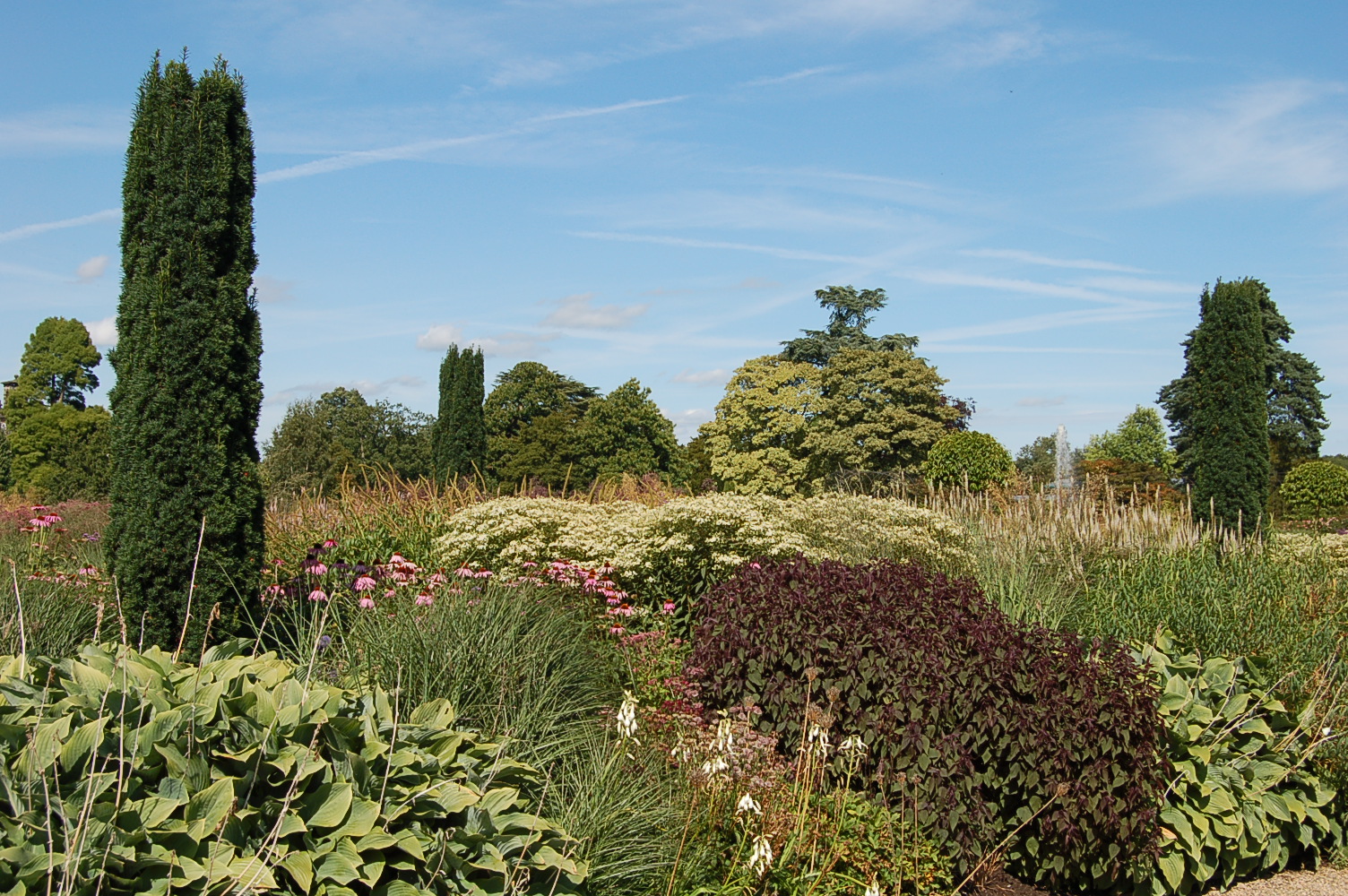
Tom Stuart-Smith is one of the best of the current crop of garden designers working in the UK at this time. We have had the privilege of visiting two very different gardens designed by him, one a private garden in Herefordshire and the Italian Garden at Trentham, a Staffordshire garden open to the public.
In his own words “Making a garden for yourself is very different from doing it for someone else. So much of the pleasure is to do with the coaxing and tending, the daily observance of small details and the accumulation of change over the years.”
We visited this wonderful garden in Herefordshire after spotting it in the Yellow Book of the National Garden Scheme. We were firstly tempted to visit as this county has some excellent, interesting gardens and many well-known gardener writers and garden designers have made gardens within its boundaries. But seeing the name Tom Stuart-Smith in the “blurb” made it a must.
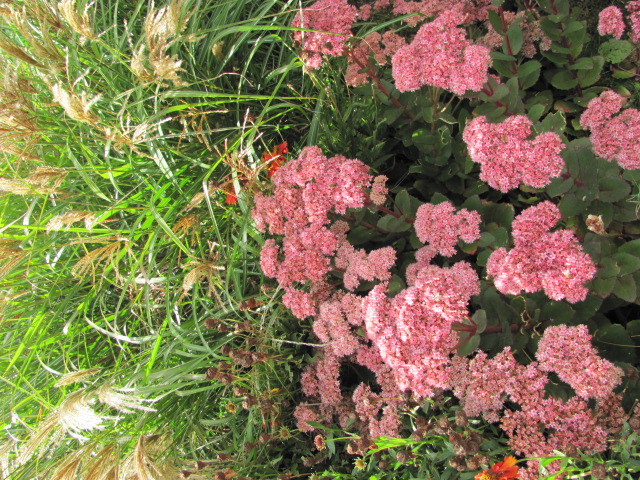
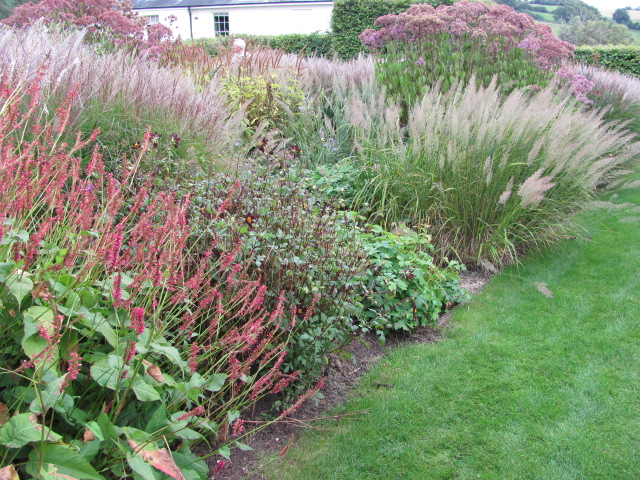
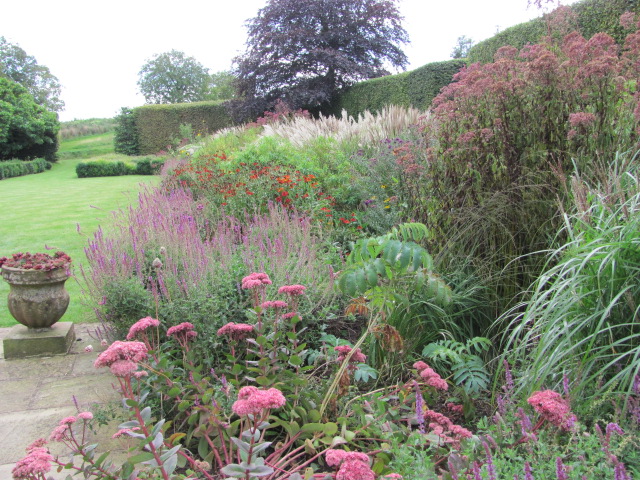
It is a garden that is so well designed and planted. It makes you want to wander along its paths, to look around each corner and to study individual plants grown in blocks or plant combinations.
The following photos show the subtle planting combinations and the inviting paths through the garden.
An amusing diversion on our wanderings was this family of shining metal birds striding alongside a border.
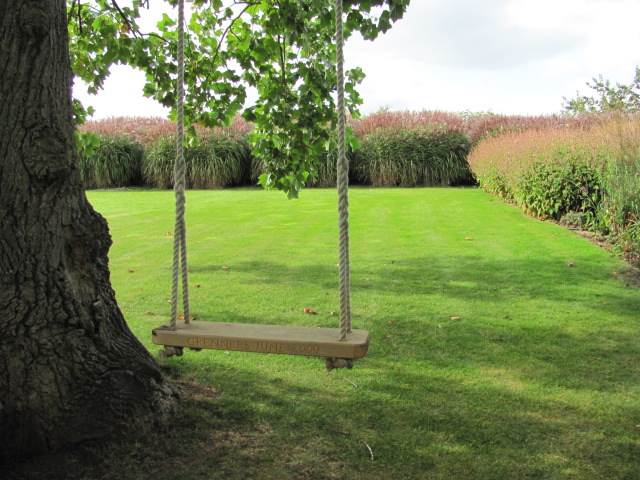
What a place to sit, swing and rest while anticipating the pathway into the sea of grasses.
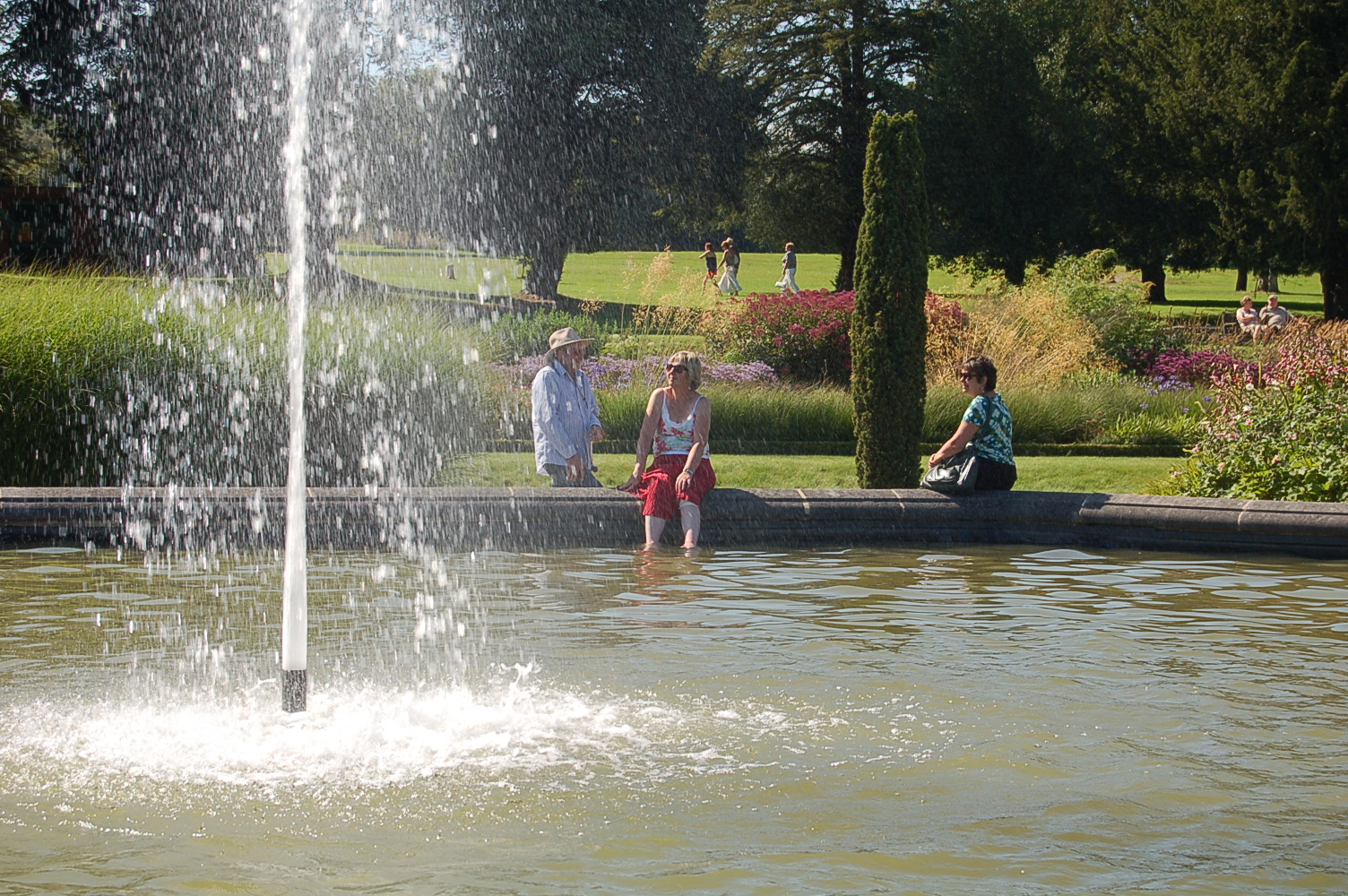
Later in the year we visited Trentham Gardens where Tom Stuart-Smith has redesigned the Italian Gardens, sensitively placing his modern perennial plantings amongst the old structure. So this is the other side of the coin, designing for a large public space.
These borders look equally good in the middle of the winter. But the water is then a bit cold for dabbling ones feet in, even for “The Undergardener” seen in the photo above appreciating the pool and fountain, with the author in the dapper hat and Vicky our Sister-in-Law on the right.
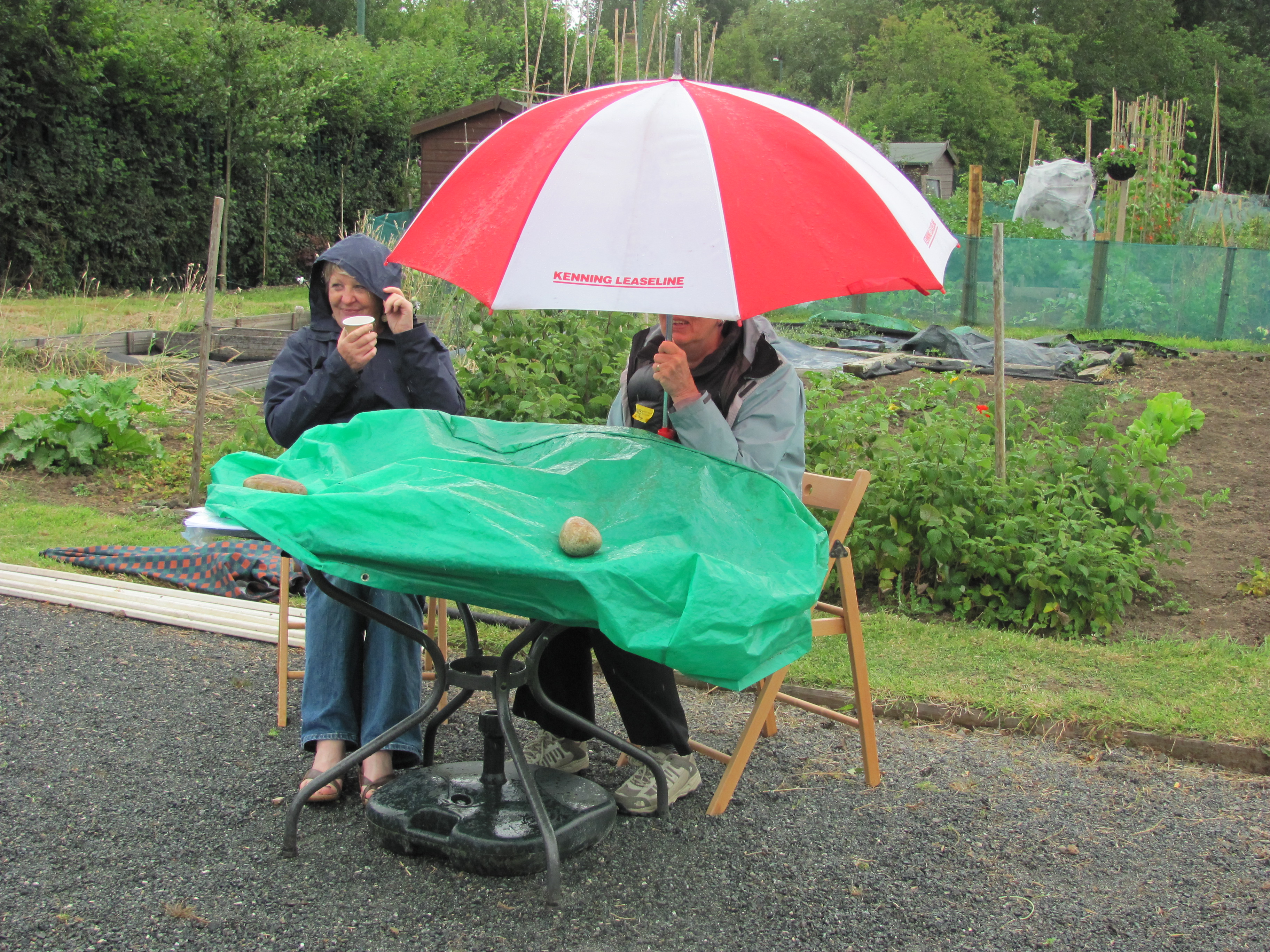
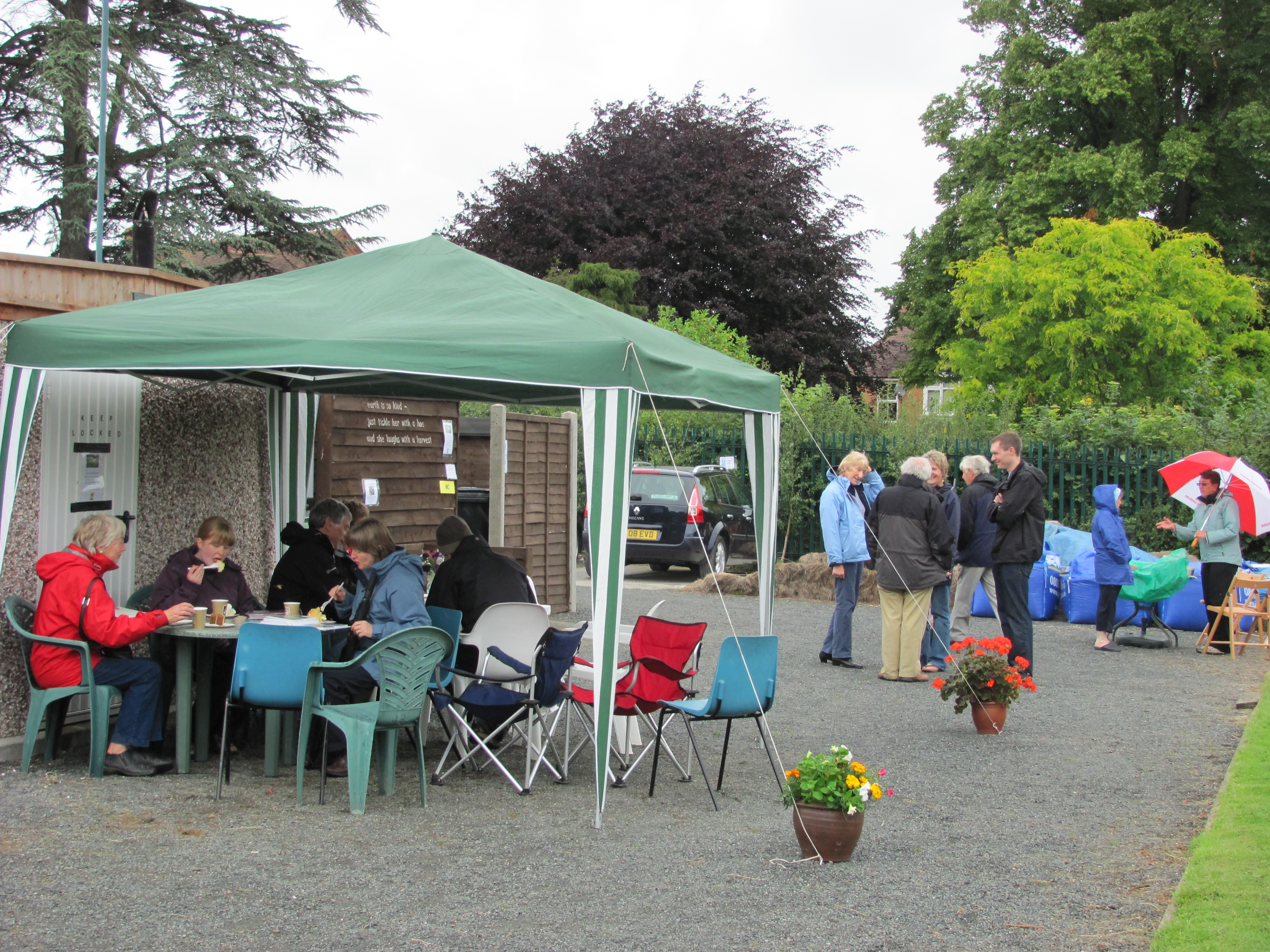
On Sunday 17th July we opened our site for the National Garden Scheme, the famous Yellow Book. Allotment holders had worked hard during the previous week cutting grass, tidying borders in the green spaces and sprucing up plots. The site looked wonderful – even in Sunday’s rain! And rain it certainly did! We were pleased though when over 100 visitors came along with brollies braving or perhaps defying the weather. I believe that gardeners get good at defying weather – others merely brave it out. Many of our visitors stayed for several hours, leaving only when they had drunk gallons of tea and consumed masses of cake, and promising to return next year. I had hoped to show how good the site looked with photos of glowing flowers and shining veggies but that will have to wait until the weather improves. These photos though depict the reality of the day.
'The most important and informative publication on wildlife of our times' - The Independent. This blog is a member of The UK & Ireland Natural History Bloggers group: www.uknhb.blogspot.com



























































 greenbenchramblings