Categories
bird watching birds conservation garden wildlife natural pest control photography Wildfowl and Wetlands Trust wildlife winter gardens

A Day at the Original Wildfowl and Wetland Trust Centre – Slimbridge

Our recent visit to Barnes, the WWT centre in London, reminded us that we hadn’t visited Slimbridge for a good few years. Bitterns were being spotted regularly so a relatively mild day in January seemed a good day to visit. A long and very slow drive down in the drizzle failed to dampen our enthusiasm. So having arrived an hour after we had planned a welcome cup of coffee was gulped down before we headed for the hides. Trouble is we had to begin by walking passed the flamingo enclosure – an assault on the eyes and ears. Not our favourite birds – the Dame Edna Everidges of the wildfowl world.

The walk to the first hide took us through wildfowl enclosures. We don’t stop here much but it was a favourite when our children were young, and is still a  favourite for young families today. it is a great way to introduce youngsters to the joys of the bird world. It is safe to say that many children who marvel at the beautiful fowl from every corner of the world become birdwatchers – their interest is sparked here at Slimbridge.

In this area pollarded willows with wands the colours of fire glow against the storm-laden sky. Some newly pollarded trees look like they are sporting designer stubble, others throw their stems rigidly into the air.
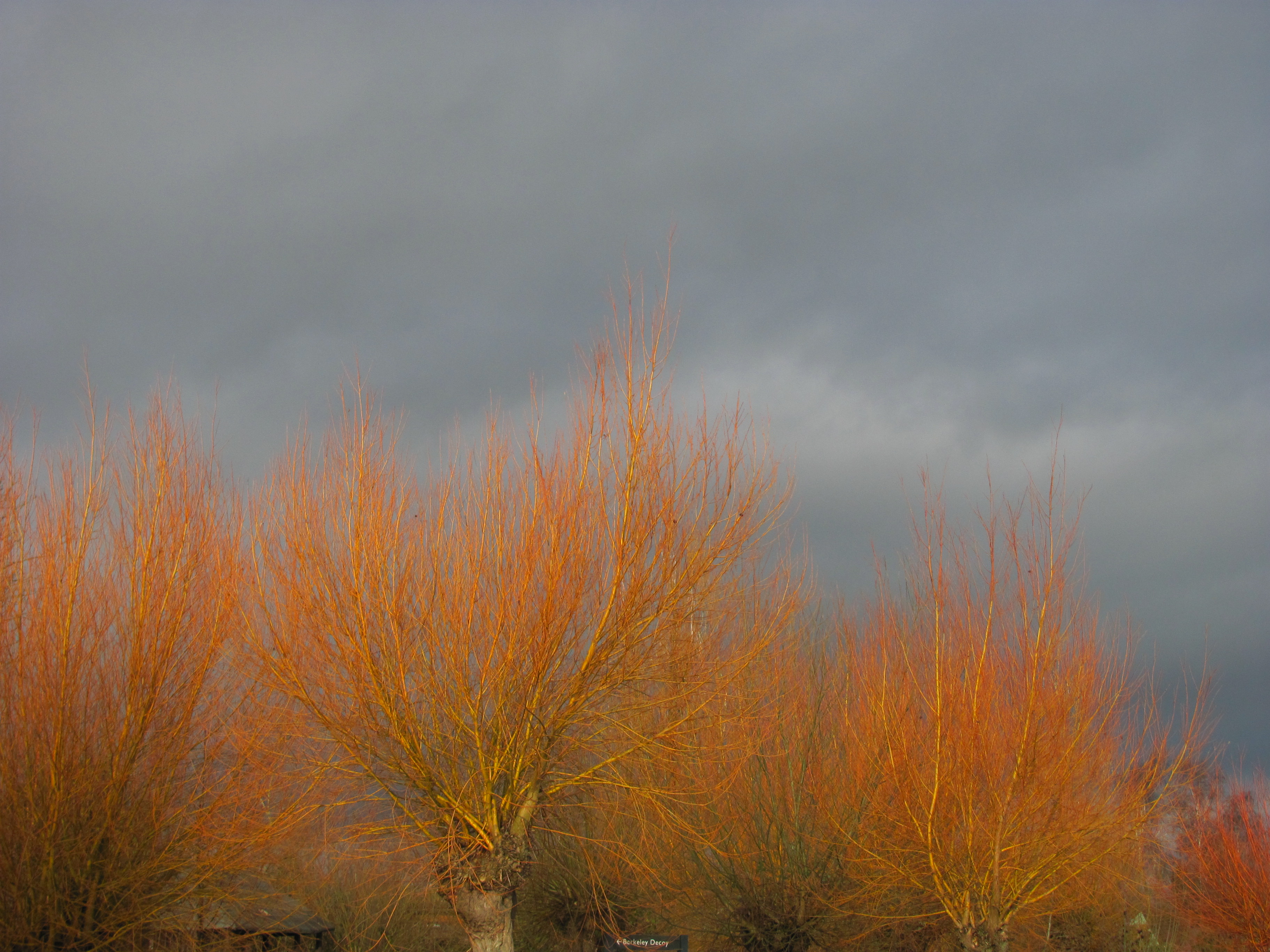
Flames of willow lapping the airforce blue sky.
Winter light gives so much colour to a dull day.

We arrived at the first hide after a twenty-minute walk through the wildfowl pens regularly distracted by the low winter sun and its magical effect on stems and stalks. The view from the hide was one of flat landscape of reedbed, river and shallow pools. Shelduck were relaxing on the grassy bank of a patch of cold looking water while mallard and teal flirted in the edge of the reed fringed pools. This was a quiet place with just the wind rustling the reeds, the whistling calls of the teal disrupted by the quarreling mallard. A small bird flitted from one reed seed head to another never settling, a brown backed warbler with rounded end to its tail – a cettis warbler. This is a sight worth the long journey to see. But Jude quietly whispered to me “I can see a bittern”. There it was, so hard to find and so easy to lose, skulking in the fringes of the reeds a few metres from the hide. Stripes of brown on warm beige, provided the perfect camouflage, the bittern moved so slowly like a clump of dried reeds. Jude saw it with head and neck stretched up – lucky lady!
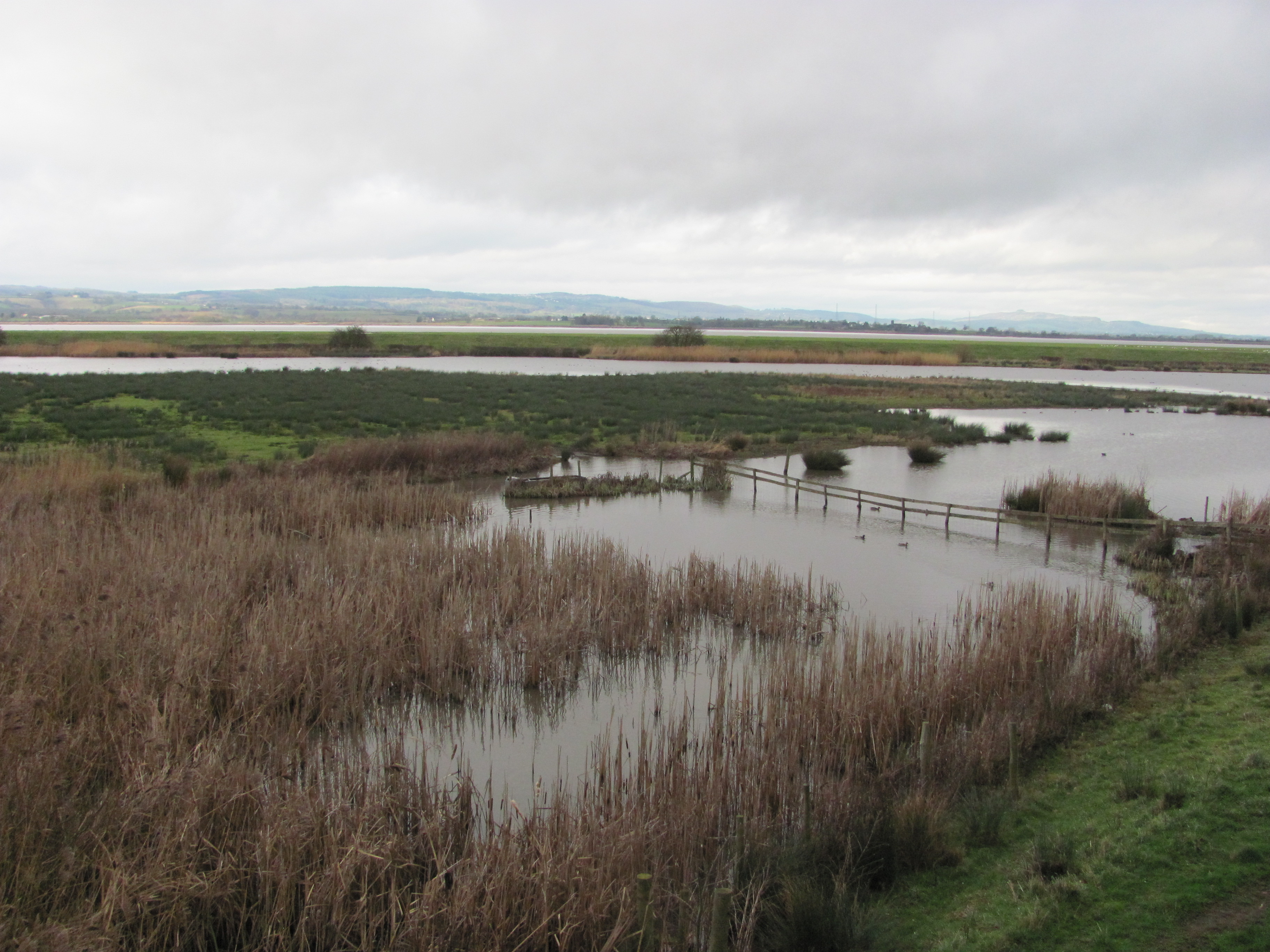
Our view from the Zeiss Hide

We remained in this hide long enough to get cold and stiff after perching on the hard wooden seating, revived somewhat by regular coffees. Eyes soon become tired staring over such huge areas of wetland, so blinking and rubbing them was a necessity. But our tired eyes did see many delights, Pintails, Shovellers, Water Rail among multitudes of Pochard, Wigeon, mute swan mixed with Bewicks and the occasional heron flying in and landing on fenceposts. The only birds of prey we spotted were several buzzards all lined up on fence post on the edge of the river. Our eyes needed a rest and luckily the nearby Kingfisher Hide provides just this as the views are smaller, the birds more intimate. Here bird feeders hang in a tree just outside one of the hide’s windows. A half hour of close-up views of finches and tits while eating lunch is an enjoyable interlude.

Goldfinch enjoying nyger seed.

As Jude read an information board about kingfishers she informed me that they moved elsewhere during the winter but returned in March, but as she told me this one flew across the water low and purposefully. You can’t mis-identify a kingfisher, there is nothing else like it. Then it flew back across the water to prove he really was there. Beneath the feeders opportunist pigeons, blackbirds, moorhen and jackdaws joined by a squirrel picked up the seeds and peanut crumbs dropped by the messy small birds above. We enjoyed watching the antics of a Little Grebe as he swam around just feet from the hide, a delightful ball of feathers.
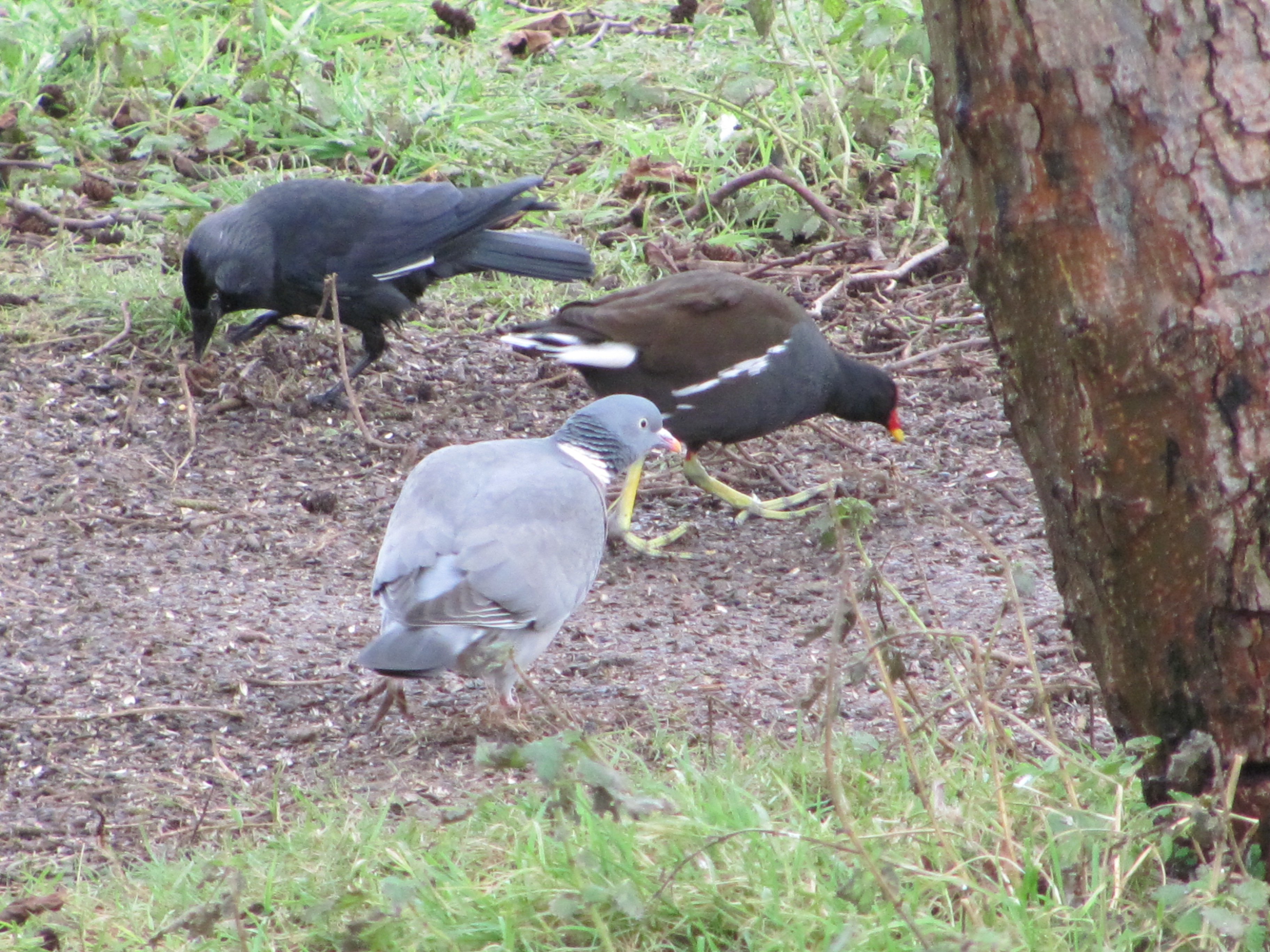
Greedy opportunists find easy pickings.

Picnic eaten and eyes rested we continued our tour of the site visiting smaller hides and enjoying the walkways in between. We passed the Rain Garden with the most wonderful, sculptural insect shelters.

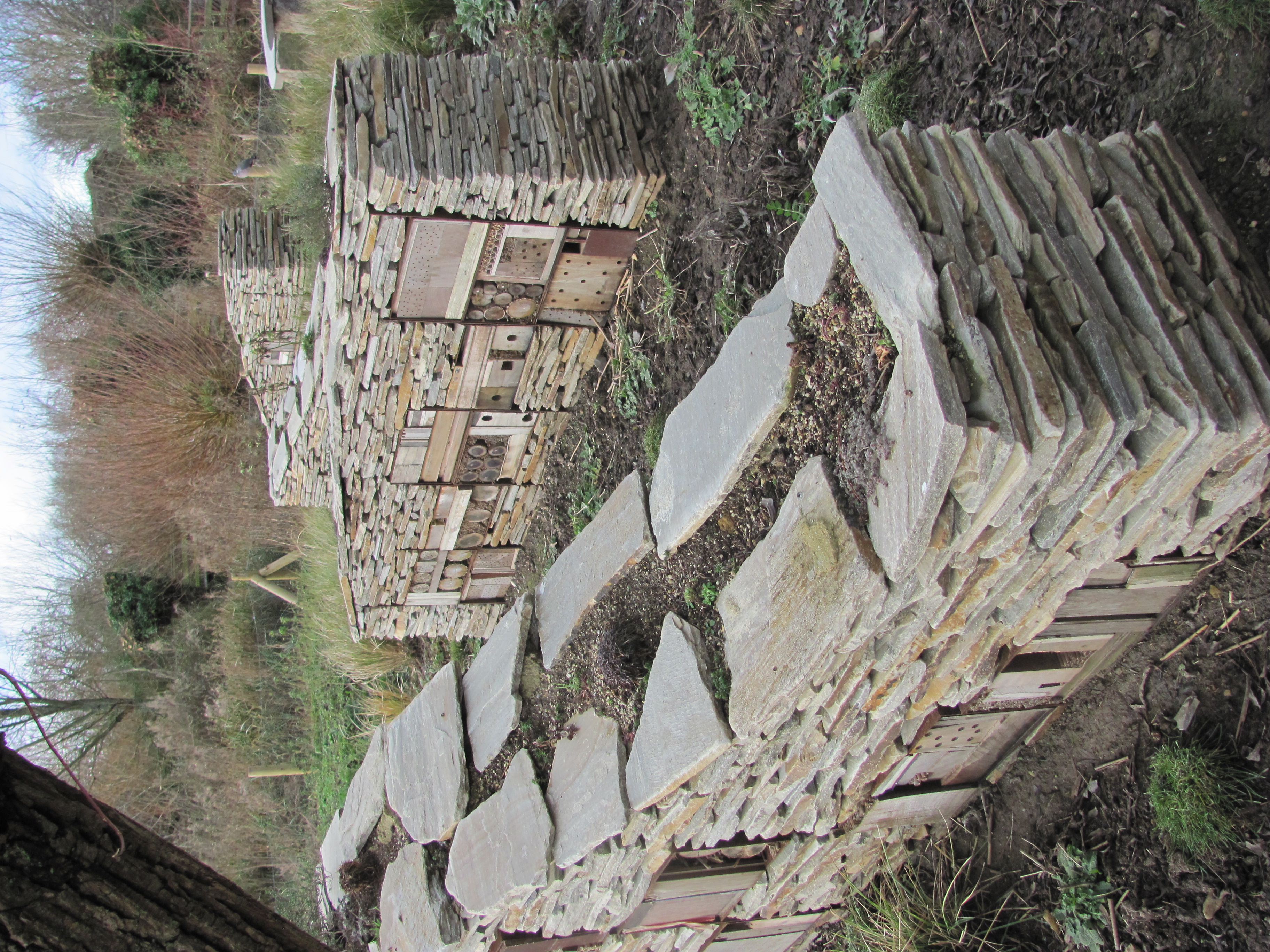
The art of the dry-stone wall-builder provides shelter for wildlife.

Many of the birds have become so used to human visitors that they let you take photos without huge telescopic lenses, just compact digital cameras like the one I carry in my pocket.
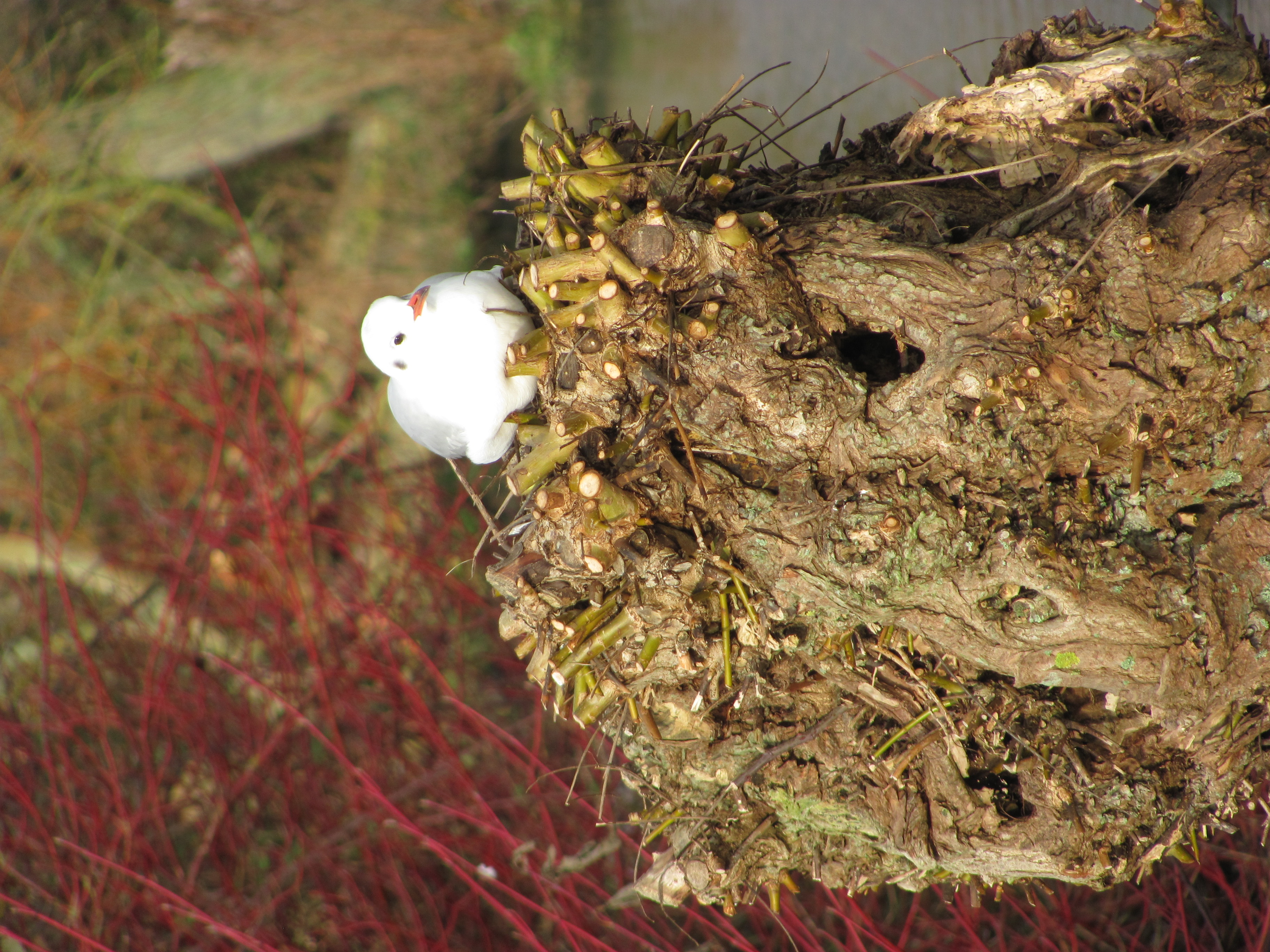
It's not just me that appreciates pollarded willow.
The moorhen, common but beautifully marked and subtly coloured.
The coot creating his own patterns in the water.

It was between some of the smaller hides that we spotted the first good-sized clump of snowdrops of the winter so far bursting from the leaves that had dropped in the autumn to give the ground a warming duvet. Nearby gnarled old bracket fungi clung to equally gnarled old willow bark.

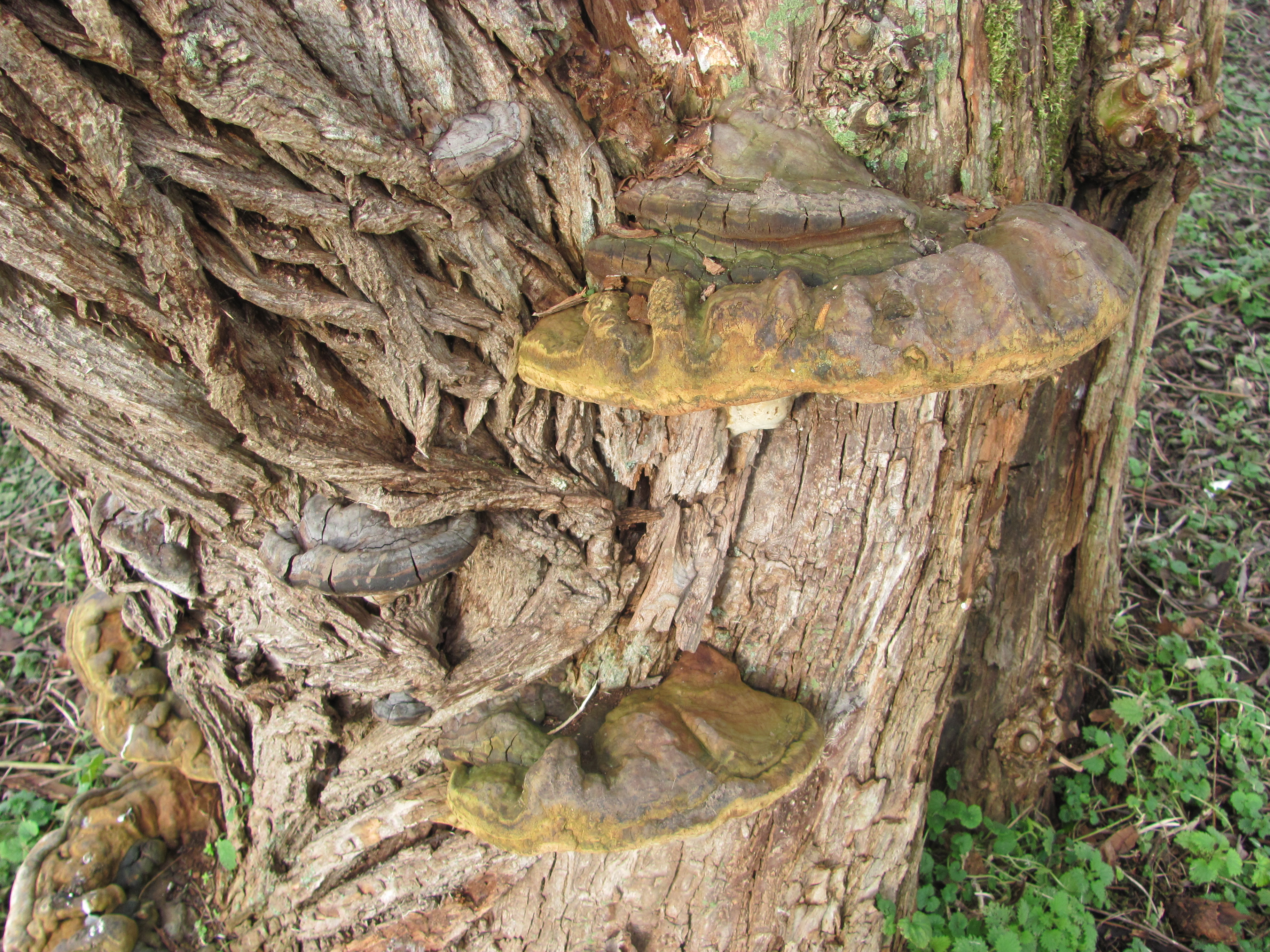
Bright lights in the gloom under the bare stemmed trees.
Such varied texture and so many shades of brown.

We reached the Holden tower as the poor light was fading further. The multitude of waders, geese and ducks were almost in silhouette now. A flock of Tufted Ducks had taken over one small pond exclusively, but the other pool was busy with Lapwing by the hundred interspersed by a scattering of their cousins the Golden Plover. Out on the far estuary Pintails could be seen feeding in the margins and Curley in the muddy banks. A real treat was spotting a female Reed bunting close to the hide atop a twiggy bush. She was a bird of subtle beauty. Completely unlike the black hooded male, she sported black and cream streaks all over.

Our view from the Holden Tower

The fading light that makes the afternoons in January too short, made us hurry to the South Lakes for a final half-hour bird spotting. Gulls, waders and ducks galore greeted us, unaware that they were being watched by a Buzzard in one tree and a Peregrine in its neighbour. We were entertained by a group of Black Tailed Godwit feeding in the shallows close to us and Lapwing moving across the shallower water feeding incessantly. Scanning the Lapwing flock with the telescope, I spied a small gang of Redshank, easily identified by their red legs. But amongst them was a different character, a slightly longer and down-turned beak and marked eye stripe and more marked plumage identified it as a Spotted Redshank. What an end to the day! Our time watching and appreciating the waders on the South Lake was  forshortened when the Peregrine launched itself from its tree top perch. The waders disappeared.

But it is not just the rarities that it is possible to see at Slimbridge, and we certainly revelled in seeing our Water Rail, Spotted Redshank, Bittern and Cettis Warbler, that makes this such a wonderful place to visit but is the enjoyment of seeing the commonest of birds in such a varied range of habitats. Journeying home we looked back on a day when we spotted over 50 species of birds some of them in their hundreds and satisfied with a short glimpse of the ubiquitous Bittern.
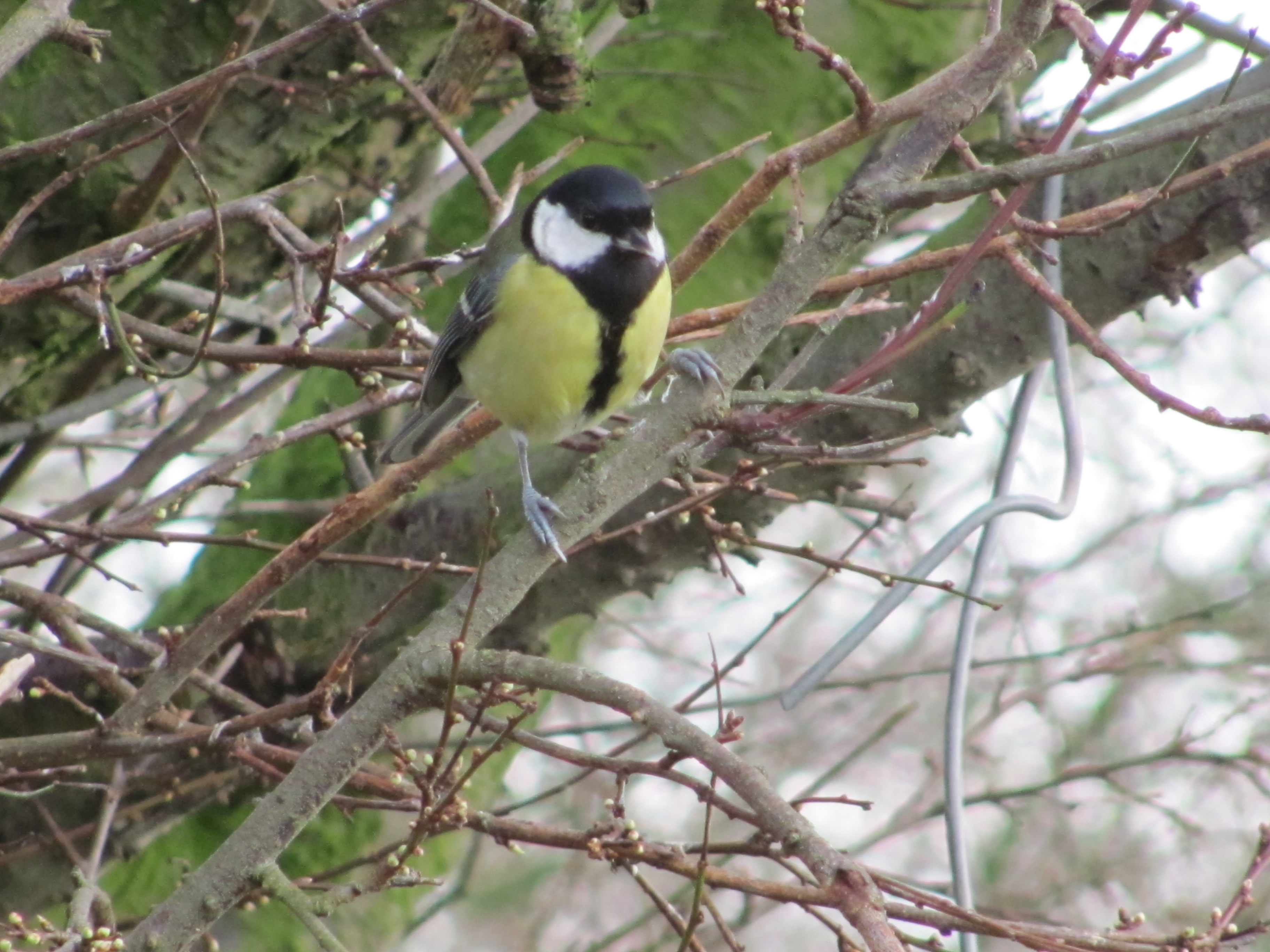
The common but oh so special Great Tit.
Categories
allotments birds community gardening conservation fruit and veg garden photography garden wildlife gardening grow your own meadows natural pest control ornamental trees and shrubs photography trees winter gardens

A Wander Around the Allotments in January

As I decided to create a blog at the beginning of each month illustrating what is going on in our garden, so I have also decided to publish a blog in the middle of each month to show what is happening on our allotment site.

So today we braved the cold and went for a wander. The weather although cold, at five below, was bright sunshine in a clear blue sky. the air felt freezing as it entered my lungs but the sight of the lotties cheered me. As we stepped from the car a kestrel was hunting low between the sheds in search of the abundant field voles. A day never goes by without seeing at least one kestrel quartering the site. A buzzard soared overhead in the thermals created by the warmer air above the cultivated plots.

First job was to fill the bird feeders at the two feeding stations. They were busy with blue tits, coal tits and great tits feeding from the hanging feeders and blackbirds, dunnocks and robins beneath picking up the feed dropped by the clumsy birds above them. All the while we could hear the call of nuthatches in the site’s mature oak and sycamore trees.

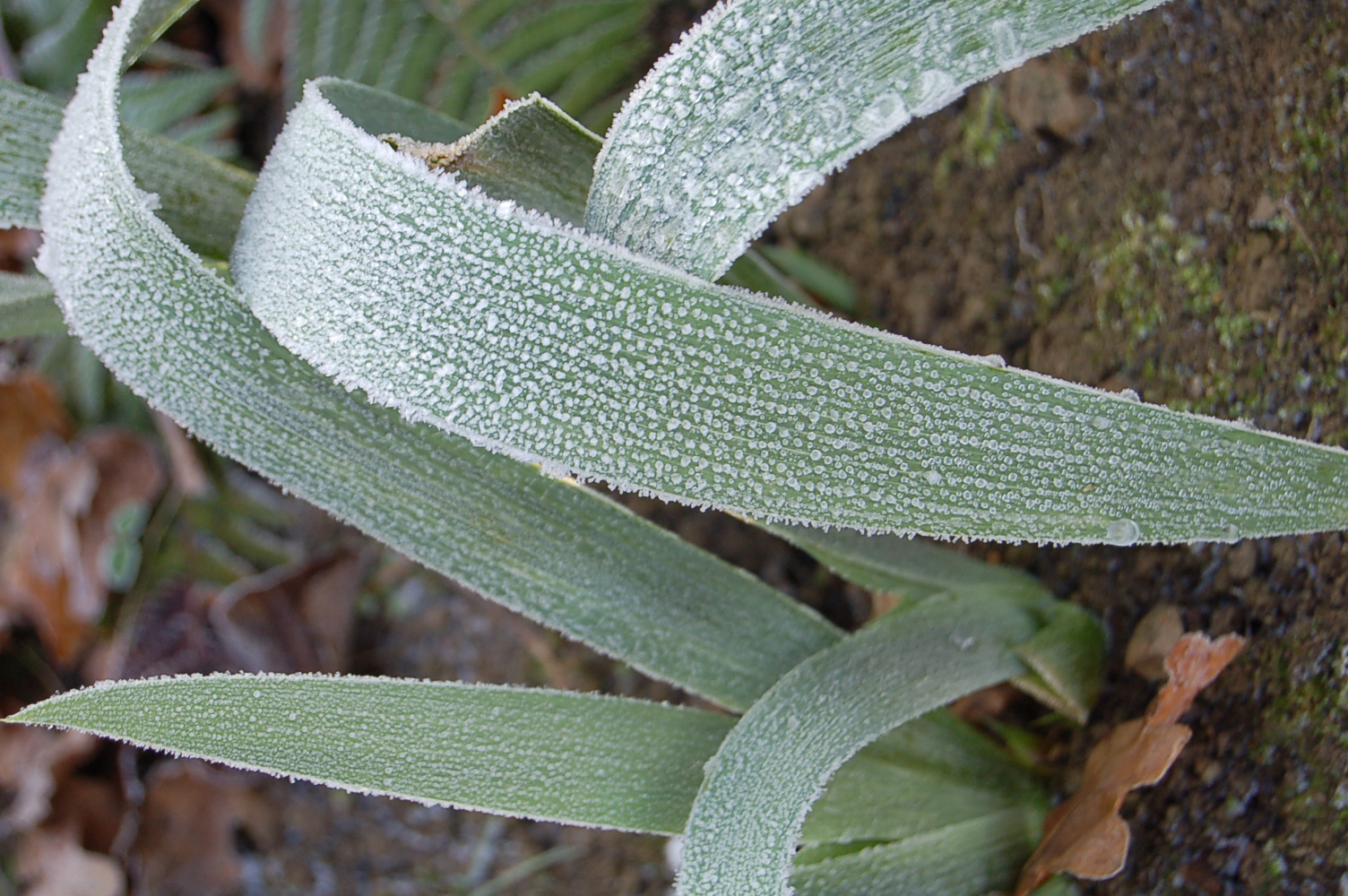
Frost sits on the bare ground and helps the gardeners by breaking it down and improving the texture in readiness for a final preparatory rake over. The fine tilth can then be home to seeds.

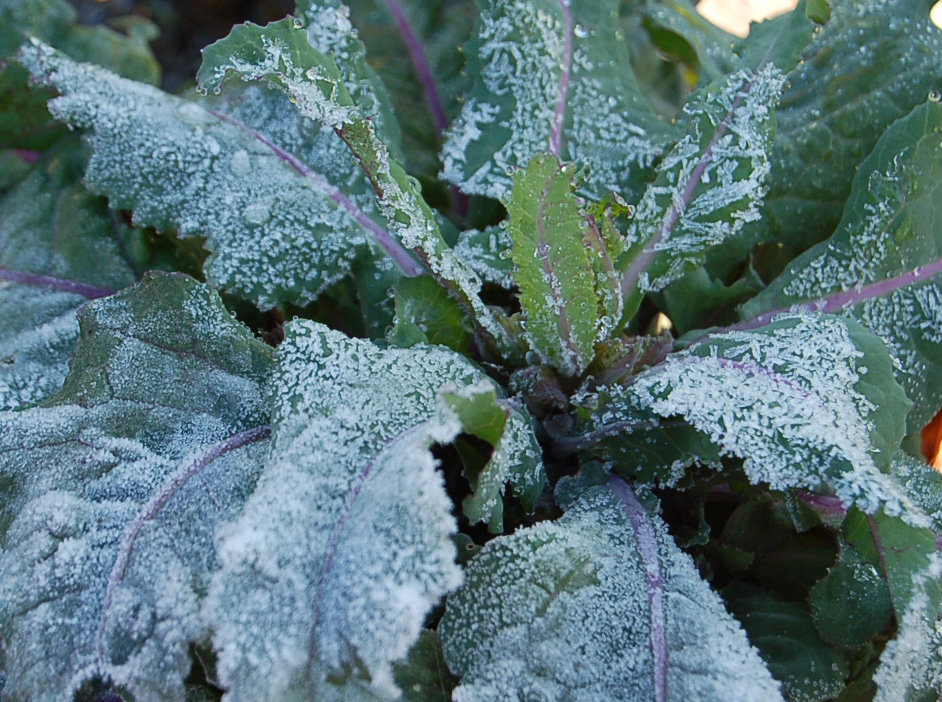
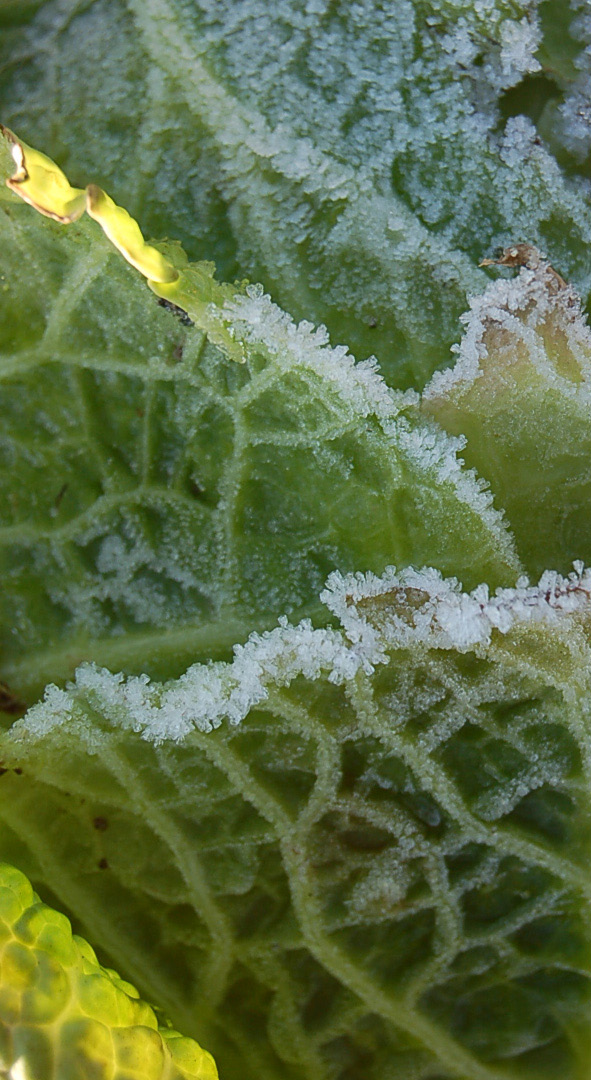
The plots themselves look very sad at this time of the year, drooping brassicas, frosted leeks and steaming muck heaps and compost bins, the warmest spots of all. The scarecrows have fallen in the recent strong winds, their clothes wet and bedraggled and their structures weakened. Frost emphasises leaf structures, settling deepest along the veins.

The strongly veined wrinkled leaves of the Savoy Cabbages withstand the cold wrapped into tight balls.

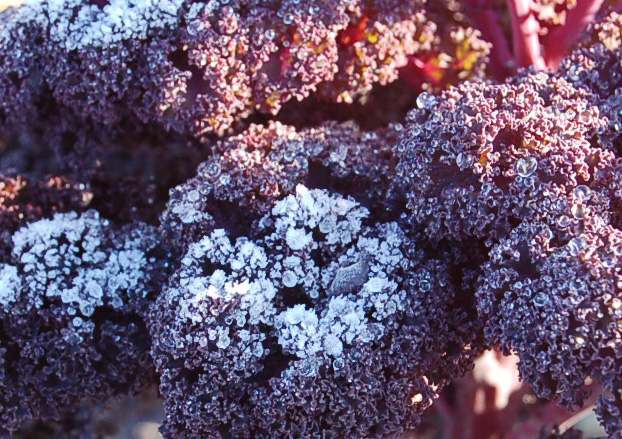
Kale defies the cold and stands upright and proud  even with ice droplets and frost splattered on their tightly curled leaves.

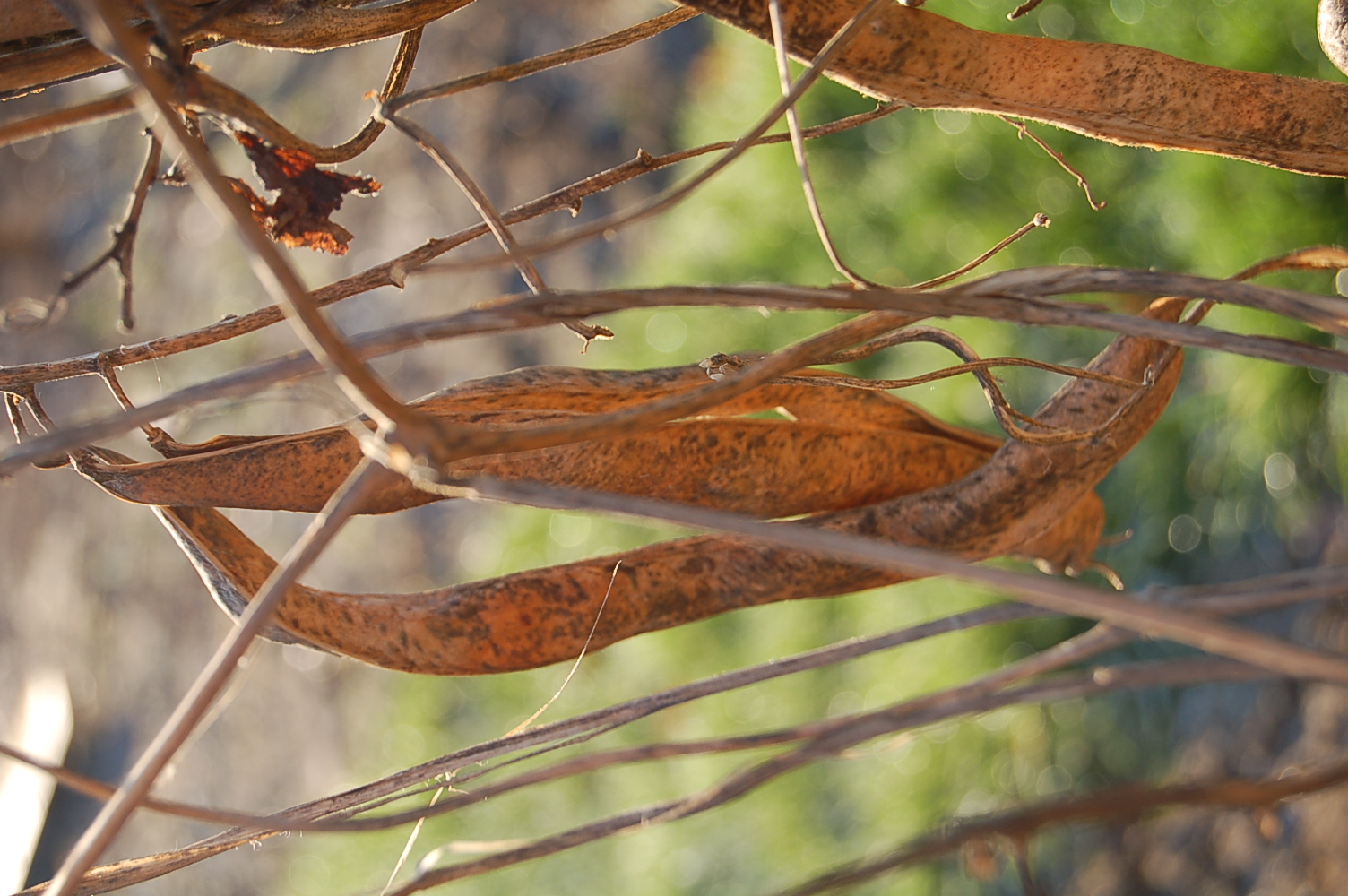
Sunlight makes the old runner bean pods translucent as they hang on the dead remnants of last year’s plants.

On our own plot the rows of Mooli, Broad Beans and Leeks look delicate in the frozen soil but will sit until spring arrives when they will have growth spurts and give us early crops.

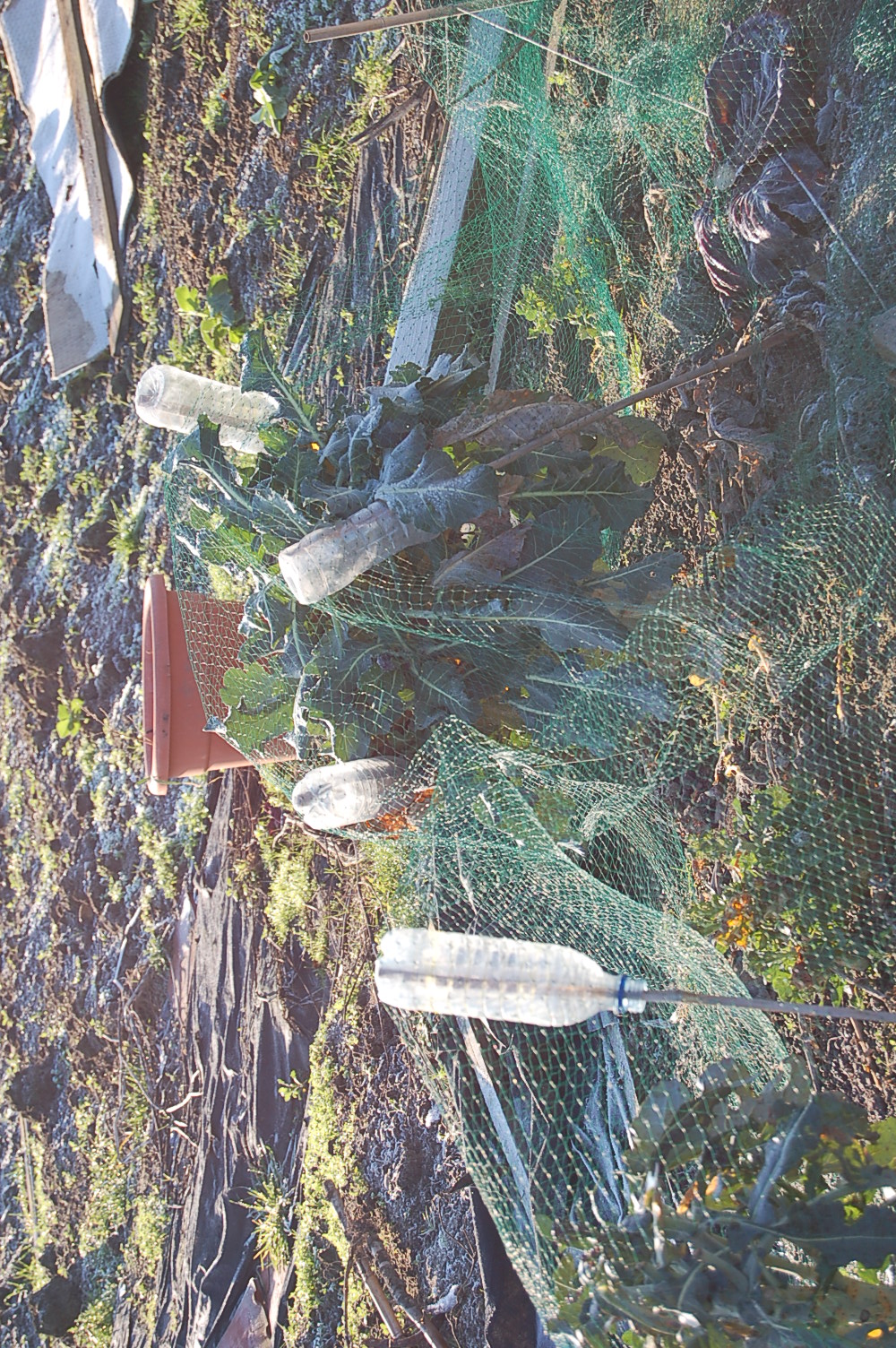
Plastic bottles on canes support last year’s netting and still protect any overwintering crops from hungry Wood Pigeons.

Blackbirds move low across the lotties settling onto any sun-warmed soil and dig for grubs, but this one sat looking sad.

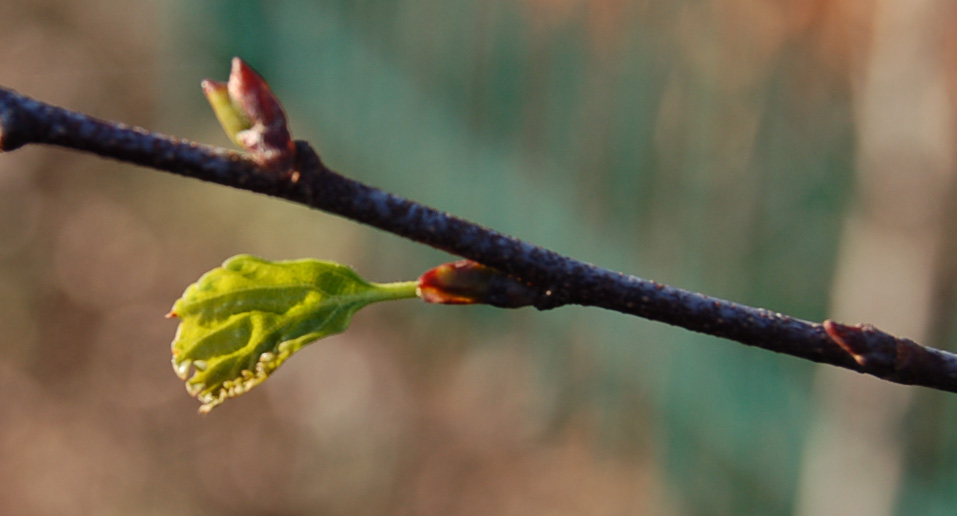
We took a leisurely walk around the “Interest Trail” which took us through or close to most of the community gardens – the orchards, wildlife borders, seasonal gardens and meadows. Near the car park the first green bursts of new life have appeared, the leaves and catkins forming on the birches. The young catkins stand bolt upright at this stage but will soften in colour and structure when they dangle down in the spring.

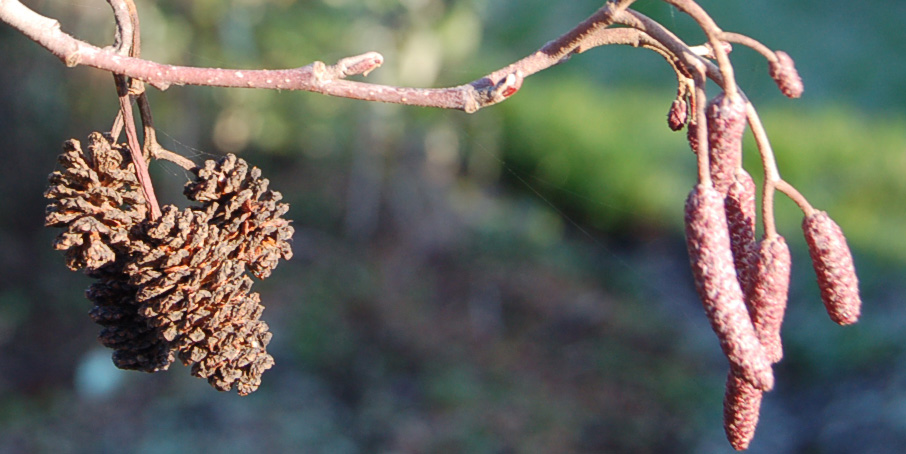
The purple catkins of the alder sit on the branches with the darker cones.

In the Autumn Garden seed heads of Asters remain long after the flowers of autumn, like tiny dandelion “clocks”.

In the first orchard th frost still lingered strongly on the logpile especially on this old chunk of bark.

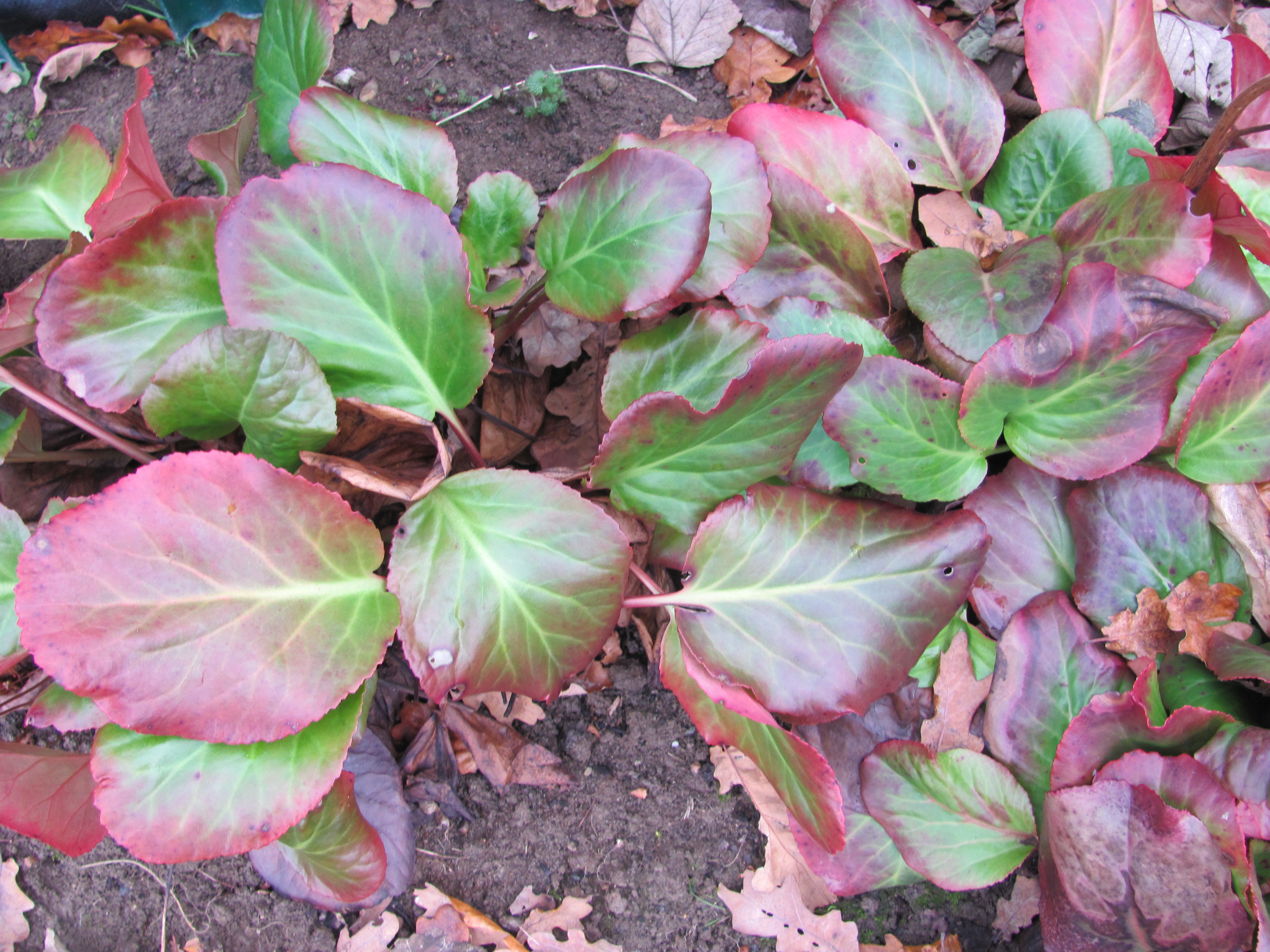
When we reached the Spring Garden we were struck by the contrasting leaf texture, shapes and structures.

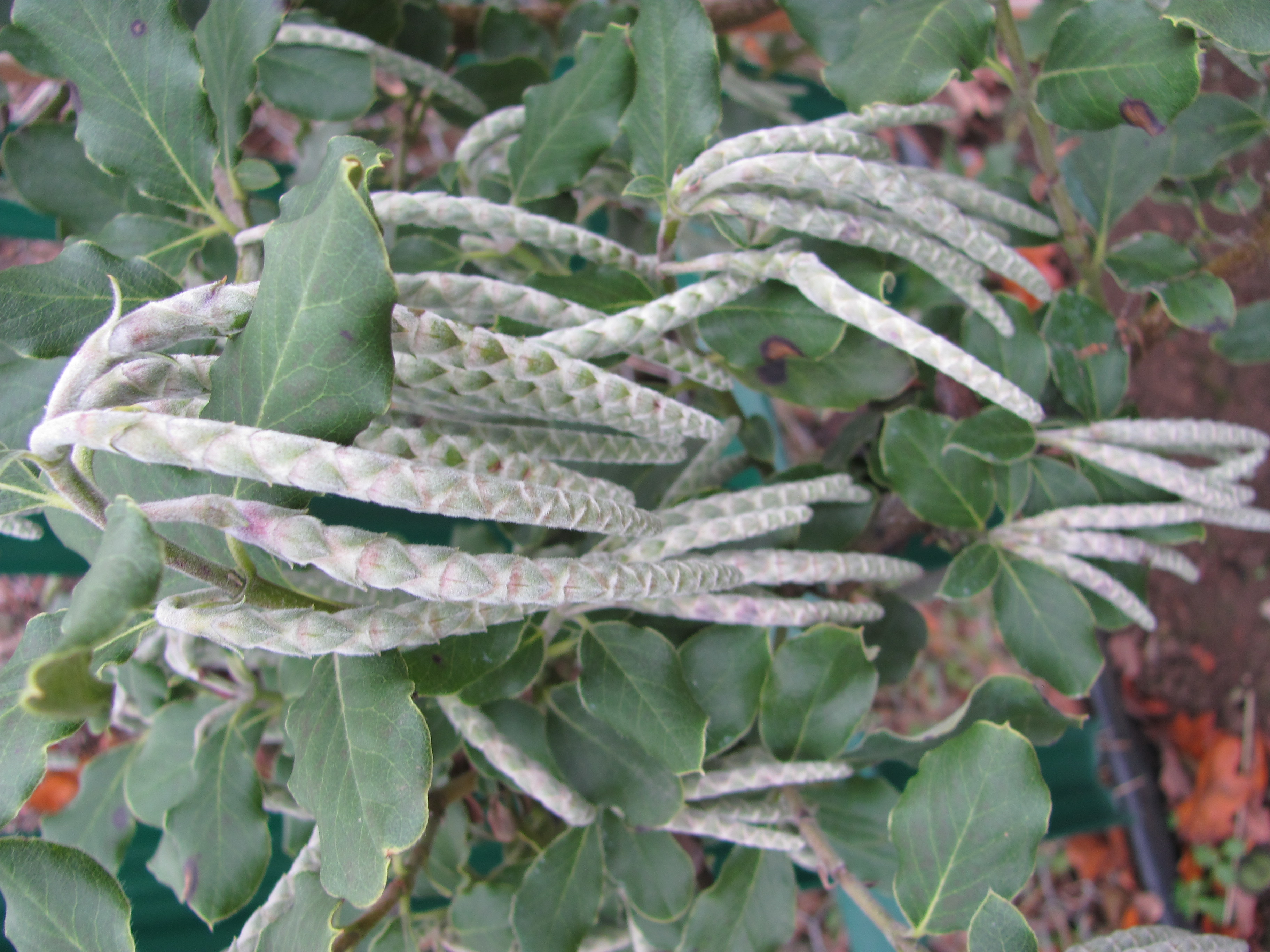
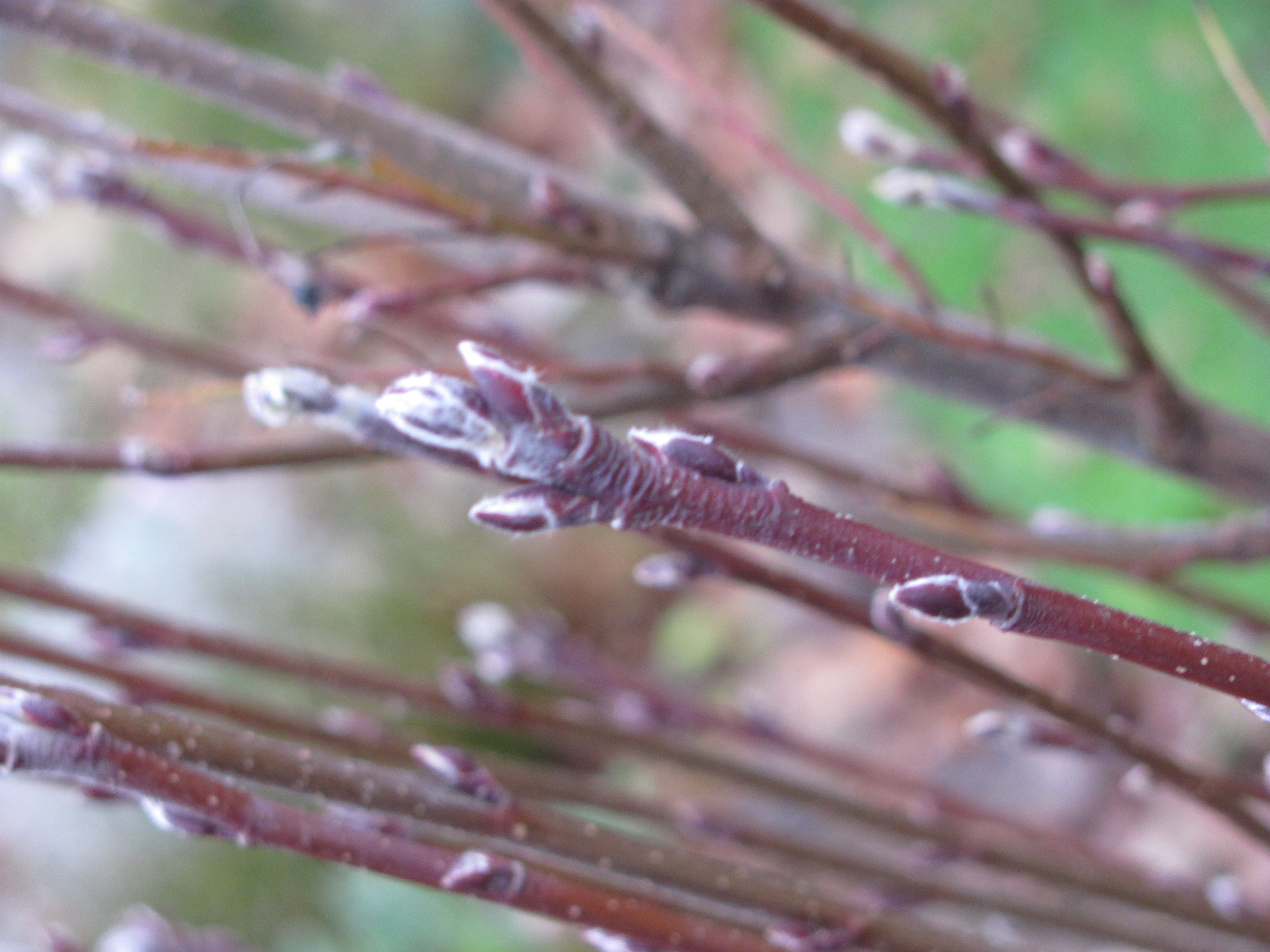
At the back of this garden the silver tassels of the Garrya hung in profusion and the new buds of the Amelanchier promised early flowers and foliage.

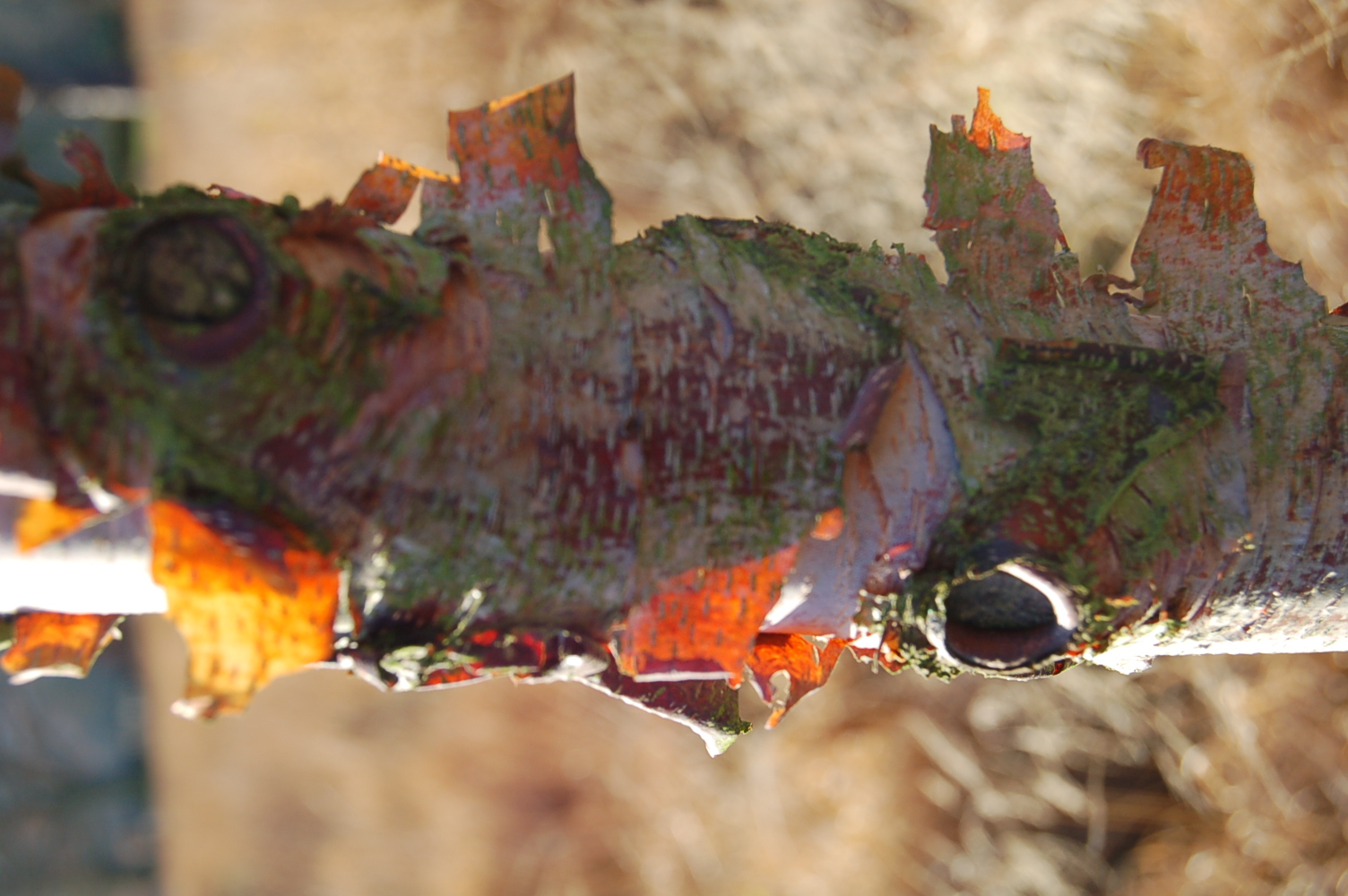
Further round the trail we arrived at the “Winter Garden” where the low rays of the sun sent long shadow lines of the fence right across the border between the coloured stems of the Betulas and the Dogwoods. It also illuminated this peeling bark, giving it the impression of slithers of orange brittle toffee.

The blue spruce looked bluer than ever with the whiteness of the frost laying on its needles.

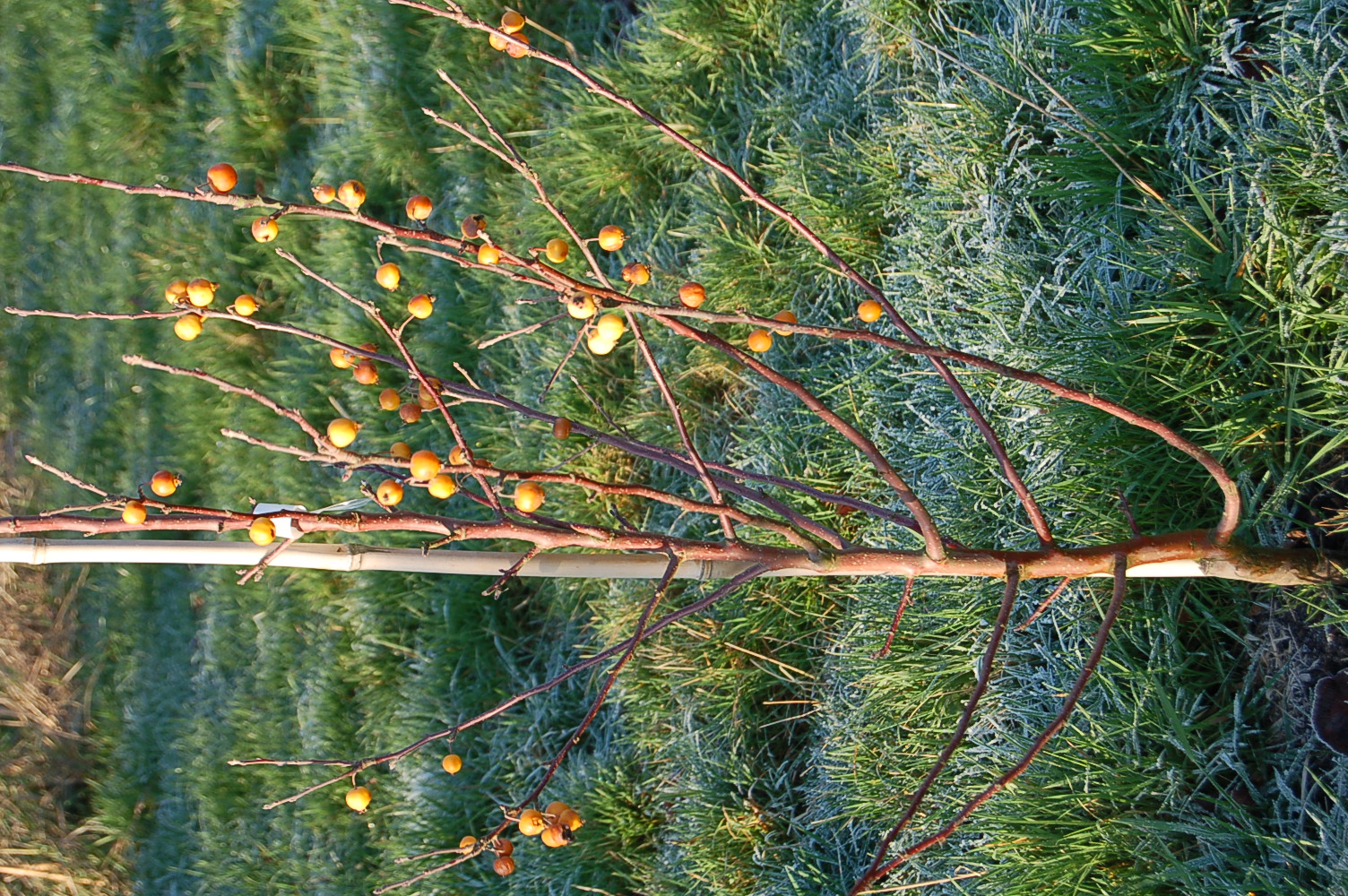
Our Winter Garden has so much of interest that I shall publish a blog just featuring it within the next few days, so for now we shall move on to the second orchard where the golden fruits of Malus “Evereste” have escaped the attentions of the winter visiting thrushes but I suspect they will soon be discovered and devoured. The insect stack in the orchard is there to attract beneficial insects who provide our very wildlife-friendly pesticide. The stack should give them some shelter to help them survive the winter cold and wet.

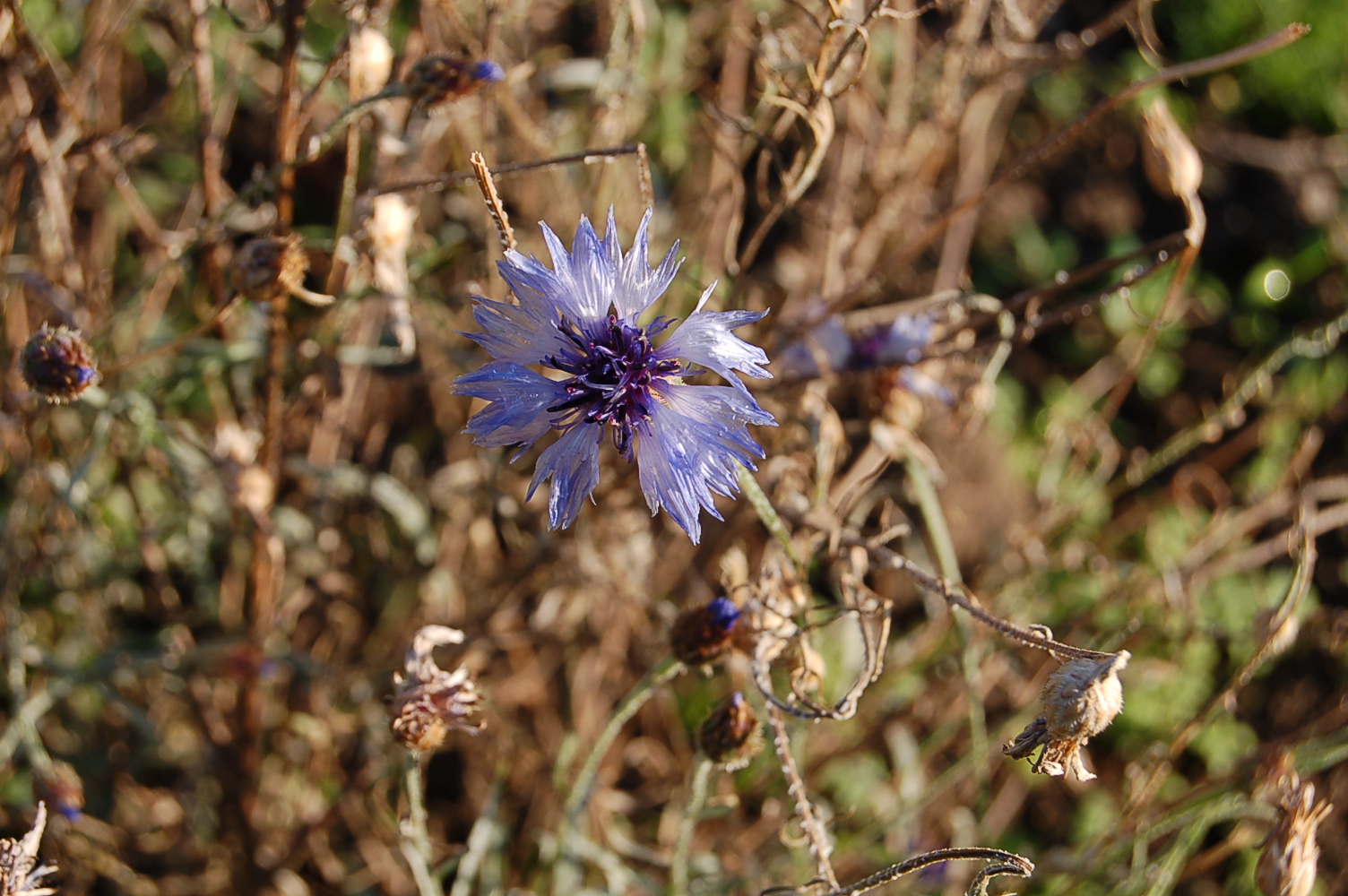
As we wandered back towards the car park we passed through the wildflowers meadows long since cut to the ground, but showing promise for next summer in its tiny seedlings. One lone flower braved the cold – a pale blue cornflower. Leaving the lotties we noticed promises of flowers from the bulbs in the car park border and in the half-barrels in the gateway.

Categories
garden wildlife natural pest control

Summerhouse Winter Lodgers

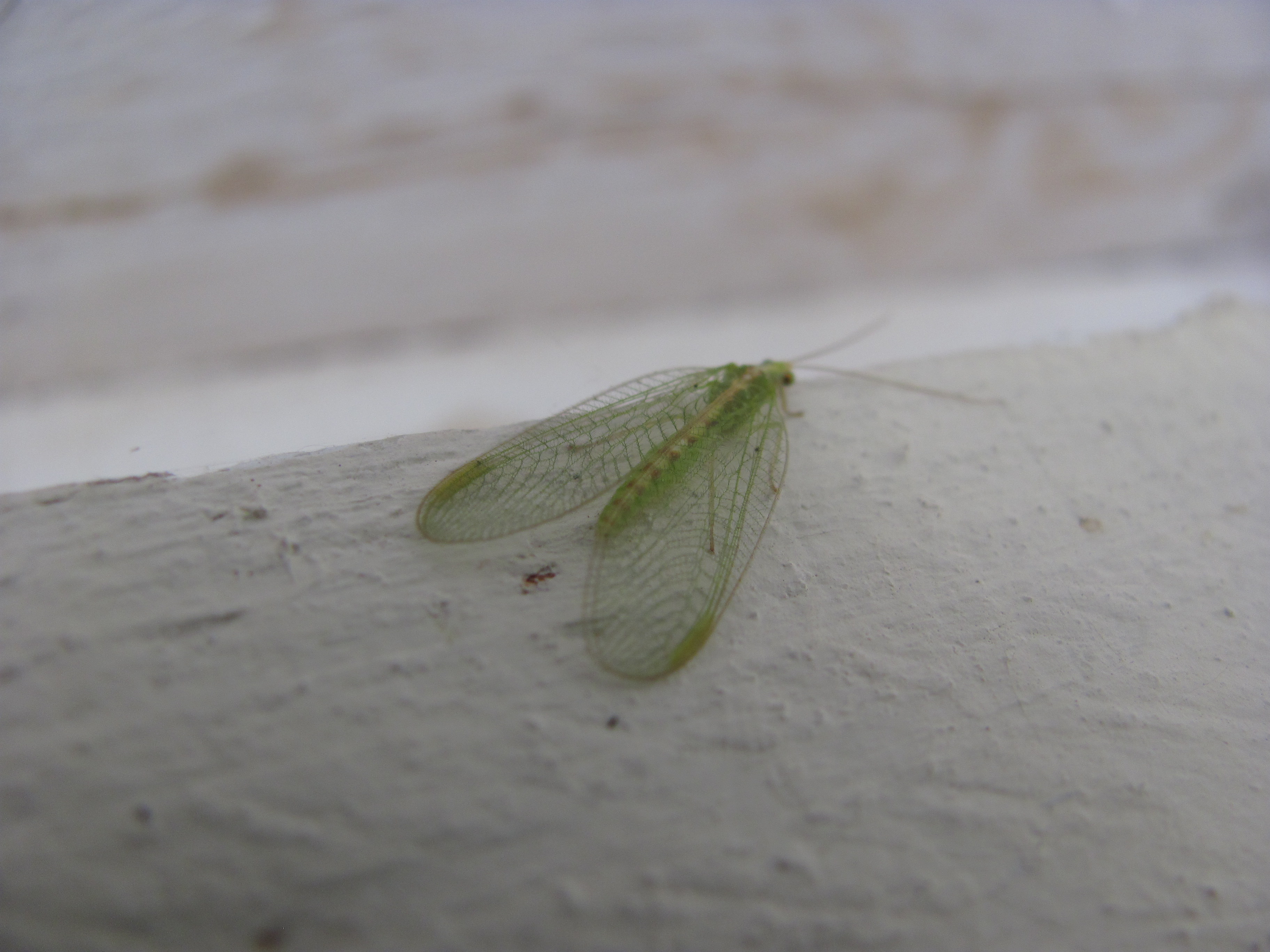
As we spent the day clearing out the pond we opened up the summerhouse alongside it so that we could periodically collapse into its comfy seats and enjoy our tea breaks. While sat there our eyes were drawn to the lacewings already hibernating on the wooden framework. They were almost invisible with their delicate green bodies and translucent wings set against the cream painted woodwork. It is good to see them as they are central to our natural pest control, their larvae being voracious aphid eaters.

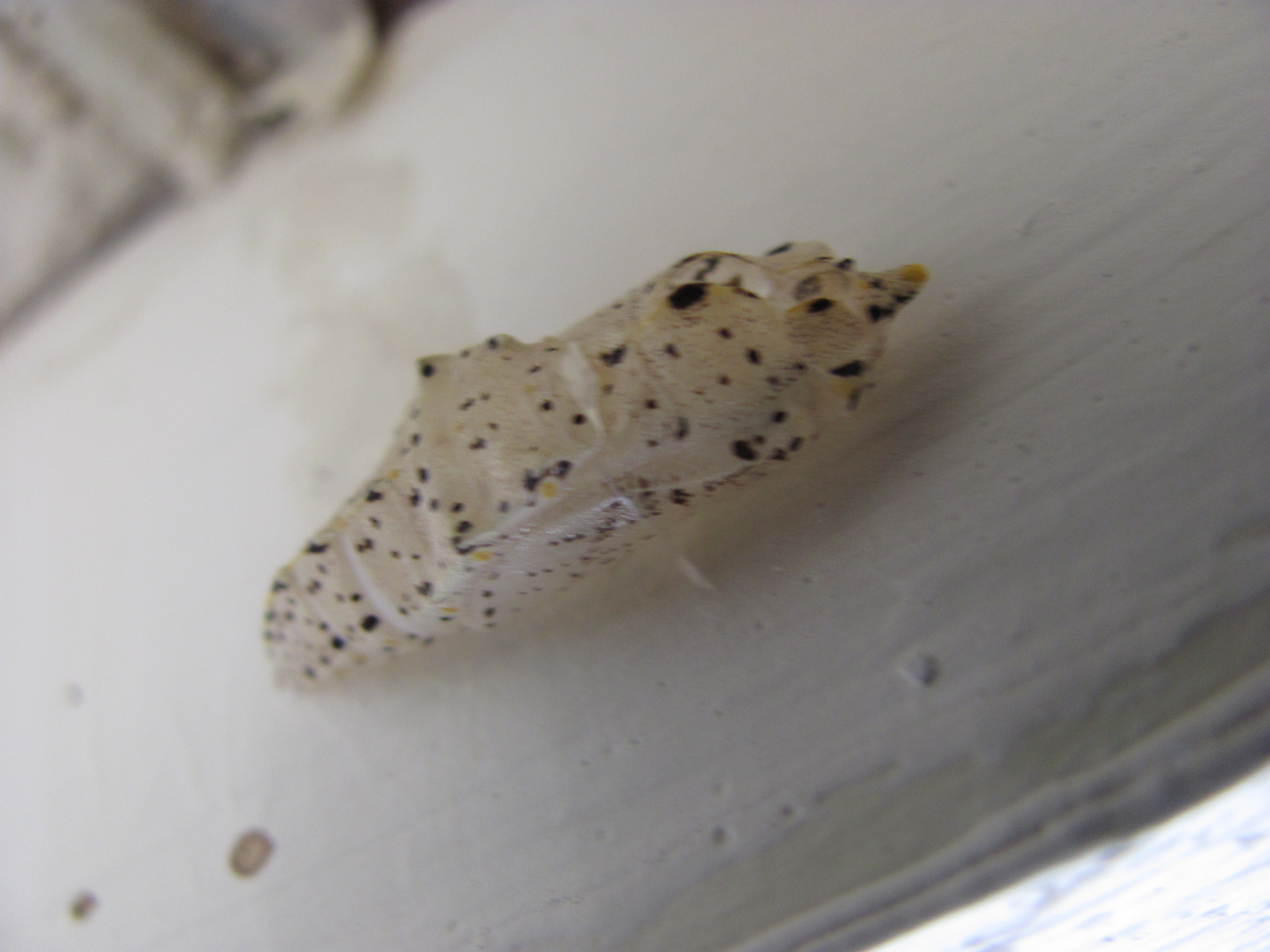
Similarly camouflaged against the cream woodwork a pupa of a butterfly hung vertically – gentle yellow but almost white with small black dots. I don’t know what butterfly it will turn into in the spring but it is usually Small Tortoiseshells that emerge from our garden buildings. I just hope I am not looking forwards to a Cabbage White!!

On the roof the third of our hibernating shed lodgers hang stuck fast to the ceiling. A clump of spider’s eggs has been stuck to the woodwork with a sticky version of webbing. Spiders of course we like in the garden as predators and as master builders of webs. As we await the first frosts of this autumn we anticipate the beauty of the spiders’ spinnings when they are highlighted by frost under the spotlights of the early morning sunlight.

Categories
garden wildlife gardening grow your own

Greenhouse Pest Control

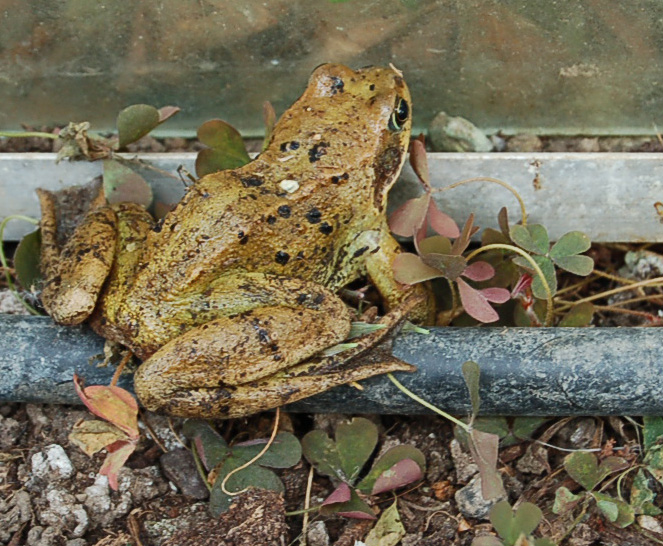
This has to be the greenest method of pest control any gardener can have in the greenhouse. He is one big frog! We are so lucky to have not just frogs but also toads and newts to help rid the greenhouse of slugs and bugs.

Categories
allotments community gardening fruit and veg garden wildlife gardening grow your own meadows natural pest control

October Working Party

Today we held our October working party at Bowbrook Allotment Community. We took advantage of a bonus day of sunshine and warmth. Lots of hard work and lots of laughter – a typical lottie working party day.

Soon the smell of cut hay permeated the lotties as we cut the meadow under the orchard trees. It was a warm herby smell as well as nostalgic. A true sense of the feel good factor.

Above, Dee and Wendy rake up the mown hay in the orchard and below Pete and Jude tidy the long grass from around the logpile. The logpile is there to attract beneficial insects as part of our organic, natural approach to pest control. We welcome ladybirds and their larvae, beetles and lacewing larvae as pest controllers and bees as pollinators.

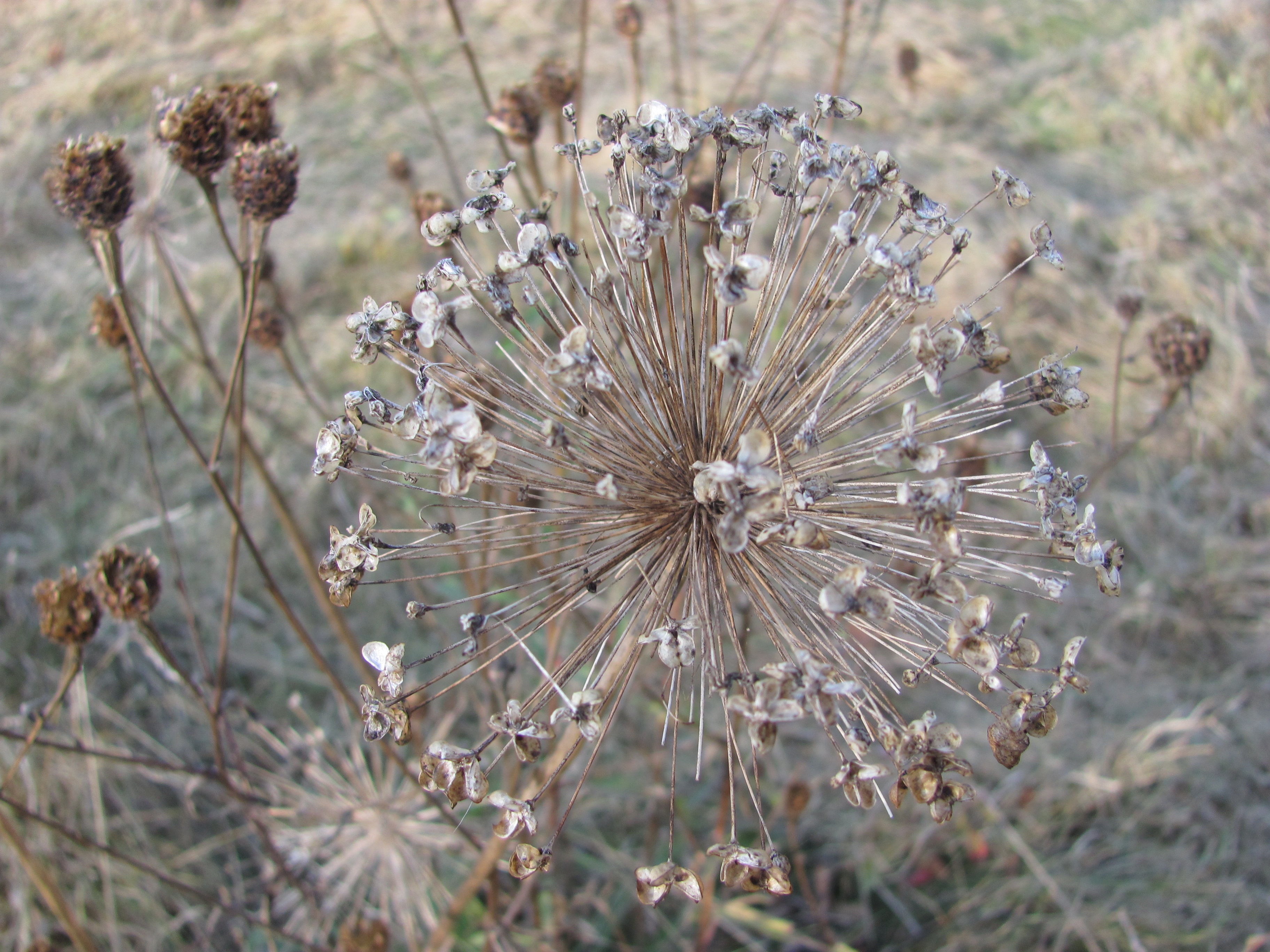
Before cutting the grass I spotted this group of seedheads – alliums and knapweed. They had shed their seeds ready for next year but I felt I had to record this particularly beautiful and delicate clump in a photo before we cut them down.

Bulbs donated by plotholders were planted around the entrance and the car park, with daffodils going in the car park border and muscari in the gateway borders. The Spring Garden was extended and the Winter Garden path was topped up with chipped wood donated by a local tree surgeon. The final task was to trim the long grass and wildflower stems growing on the wildlife banks.

Categories
fruit and veg gardening grow your own permaculture

Permaculture Garden

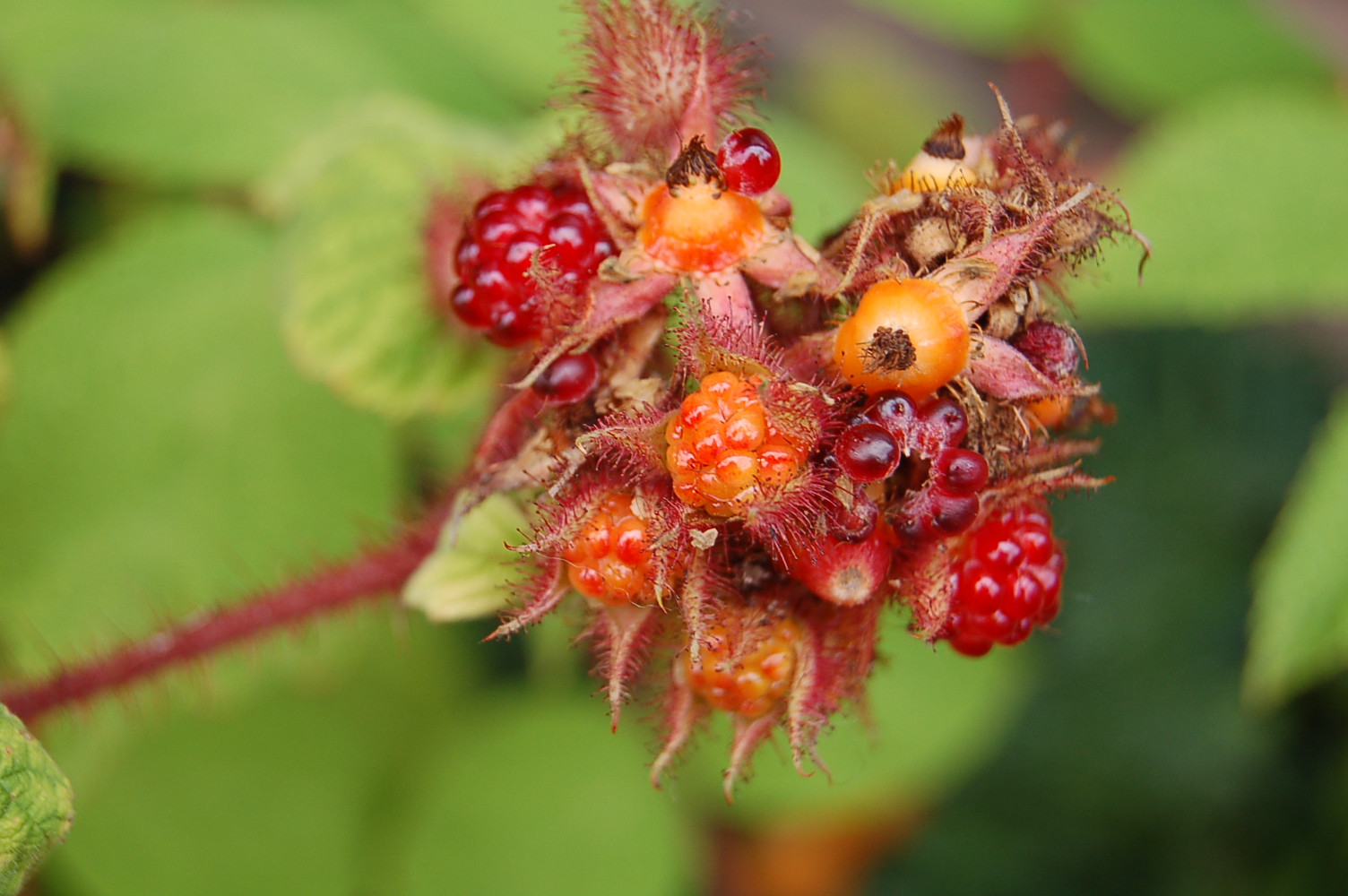
We recently visited the permaculture garden of Wade Muggleton and his family in South Shropshire and what a wonderful garden it is, full of interest, attractive and so productive. Every inch of space is used and productive on several layers – tree, shrub and ground. The front garden is home to fruit from strawberries at ground level, through gooseberries, including a deep red fruited bush with intense sweet taste, and on up through cordon apples and finally up to apples grown on trees. The star of the front garden though was the Japanese Wineberry with its bright orange and red colouring and textured stems – and they had a sweet, rich taste.

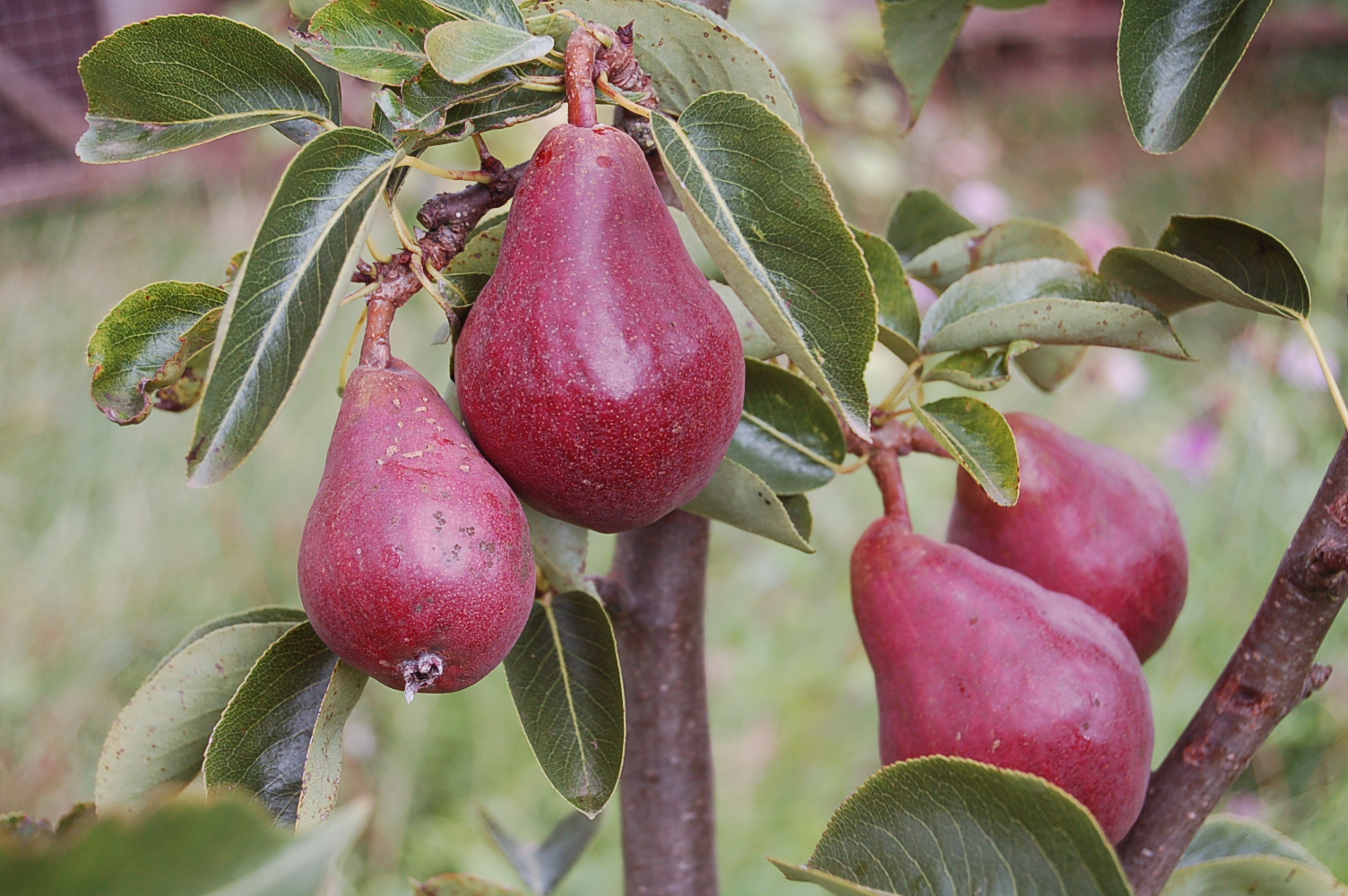
The back garden of this ex-council house overlooks beautiful rambling Shropshire countryside, which can be appreciated from a well-placed bench. Chickens roam freely and contentedly under fruit trees amongst a wildflower meadow. The most striking tree was a pear which bore deep red fruit which Wade was unable to name as it was bought cheaply without a label, but he could tell us that it tasted as good as it looked.

The back garden contained everything a good organic garden should – water butts, comfrey plants, small wildlife pool, compost systems, and a small greenhouse. Examples of original ideas in recycling could be found everywhere, such as a shower cubicle as a coldframe and a plastic container that housed a mini-square foot garden.

Wade talked to us about permaculture, about optimising your productive space by prioritising which crops you grow, choosing crops for richness of flavour and encouraged us to play the percentage game by realising that we could not be totally self-sufficient but every bit we do builds up to reduce pressure on the wider environment.

This Veggie Life

A Vegetarian | Nature Lifestyle Blog

Rambling in the Garden

.....and nurturing my soul

The Arch City Gardener

Journeys In St. Louis Gardening and Beyond

Garden Dreaming at Châtillon

Consult the genius of the place

Storyshucker

A blog full of humorous and poignant observations.

gardeninacity

Notes from a wildlife-friendly cottage garden

PlayGroundology

...an emerging social science

The Official Blog of British Wildlife

'The most important and informative publication on wildlife of our times' - The Independent. This blog is a member of The UK & Ireland Natural History Bloggers group: www.uknhb.blogspot.com

iGrowHort

Inspire - Cultivate - Grow Native Plants - Restore Landscapes

Bishops Meadow Trust

To create and protect a semi-natural wild space for the people of Farnham to enjoy and experience an array of British wildlife in our town

Gardening with Children

The www.gardeningwithchildren.co.uk Blog

UKbirdingtimeline

birding through the seasons, why birds matter and how to conserve them

NATURE WALKER

with a camera in hand

Jardin

Transform your outdoor space

Eva's space

My allotment, cooking and other interests

Old School Garden

my gardening life through the year

LEANNE COLE

Trying to live a creative life

fromacountrycottage

trying to live as lightly as possible on our beautiful planet

Good Life Gardening

Nature lovers from Leicester living the good life.

mybeautfulthings

Finding the beautiful in the everyday

mawsonmichelle

Michelle's Allotment

In and Out of My Garden

thoughts from and about my garden

Greenhousing

Big plans for a small garden

The Scottish Country Garden

A Walled Country Garden in South East Scotland

The Fruity Chicken

Life at the fruity chicken

willowarchway

Off grid living. Self sufficient. "PERMAGANICS RULE".

St Anns Allotments

Nottingham's Grade 2* Listed Allotments and Community Orchard

Manifest Joy Harvests

a journey in suburban vegetable gardening

Allotmental

The madness of growing your own

Penny's Garden: a harvest beyond my front door

A novel approach to vegetable gardening

arignagardener

Sustainable living in the Irish countryside.

NewEnglandGardenAndThread

Master Gardener, amateur photographer, quilter, NH native, and sometimes SC snowbird

dianajhale

Recent work and work in progress and anything else that interests me

planthoarder

a chaotic cottage gardener

Lens and Pens by Sally

a weekly blog that creates a personal philosophy through photographs and words

Dewdrops and Sunshine

Stories from a sassy and classy Southern farmbelle.

The Pyjama Gardener

Simple Organic Gardening & Seasonal Living

gettin' fresh!

turning dirt into dinner

JOY...

today the world is created anew

Garden Birds

Notes from a Devon garden

ShootAbout

Life Through The Lens

Adapting Pixels

A photography blog showcasing the best photography pictures and videos on the internet

Wildlifegardening's Blog

Just another WordPress.com site

naturestimeline

personal observations from the natural world as the search continues for a new approach to conservation.

LATEBLOOMERBUDS

The Wonders of Life through my Eyes, my Heart, my Soul