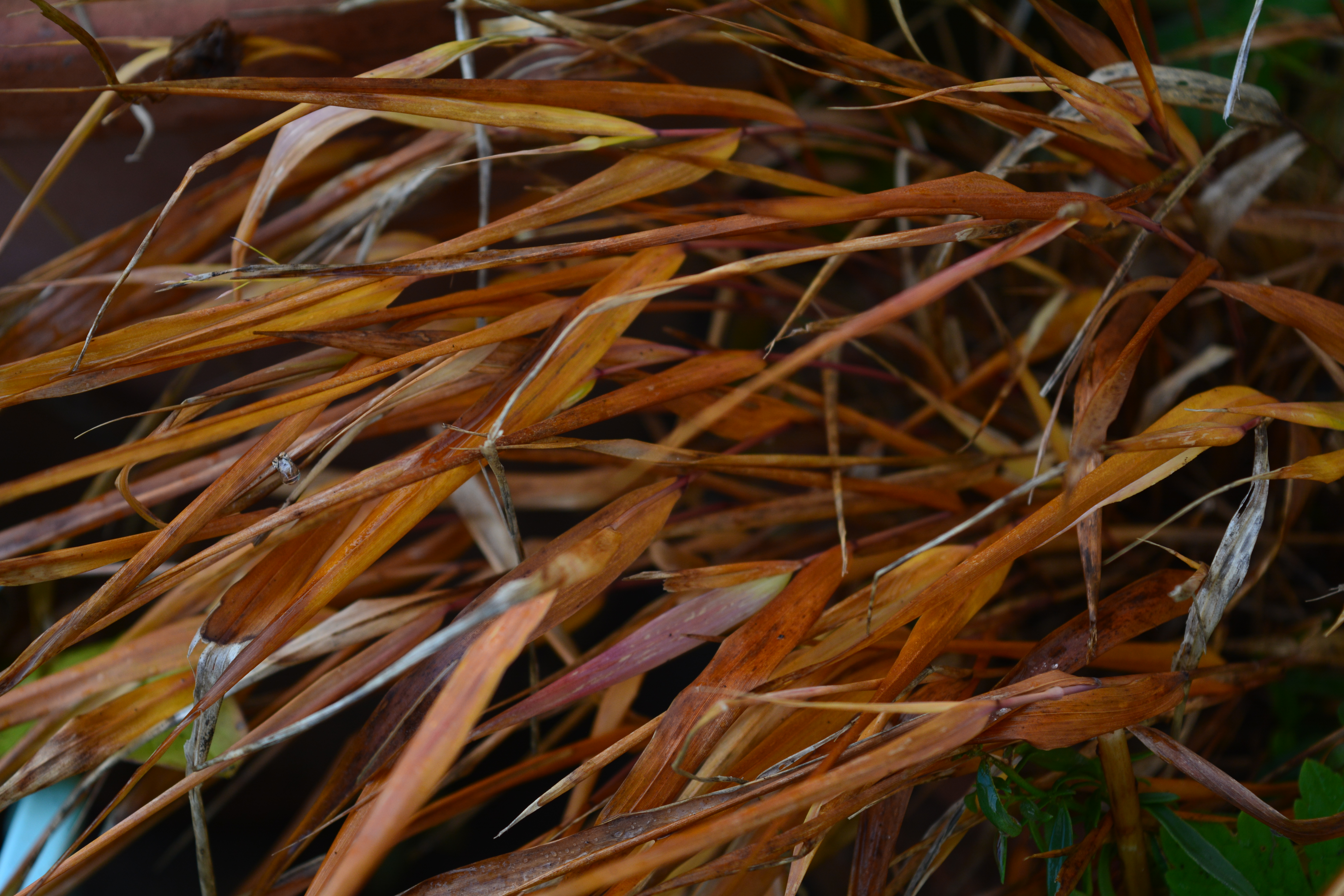
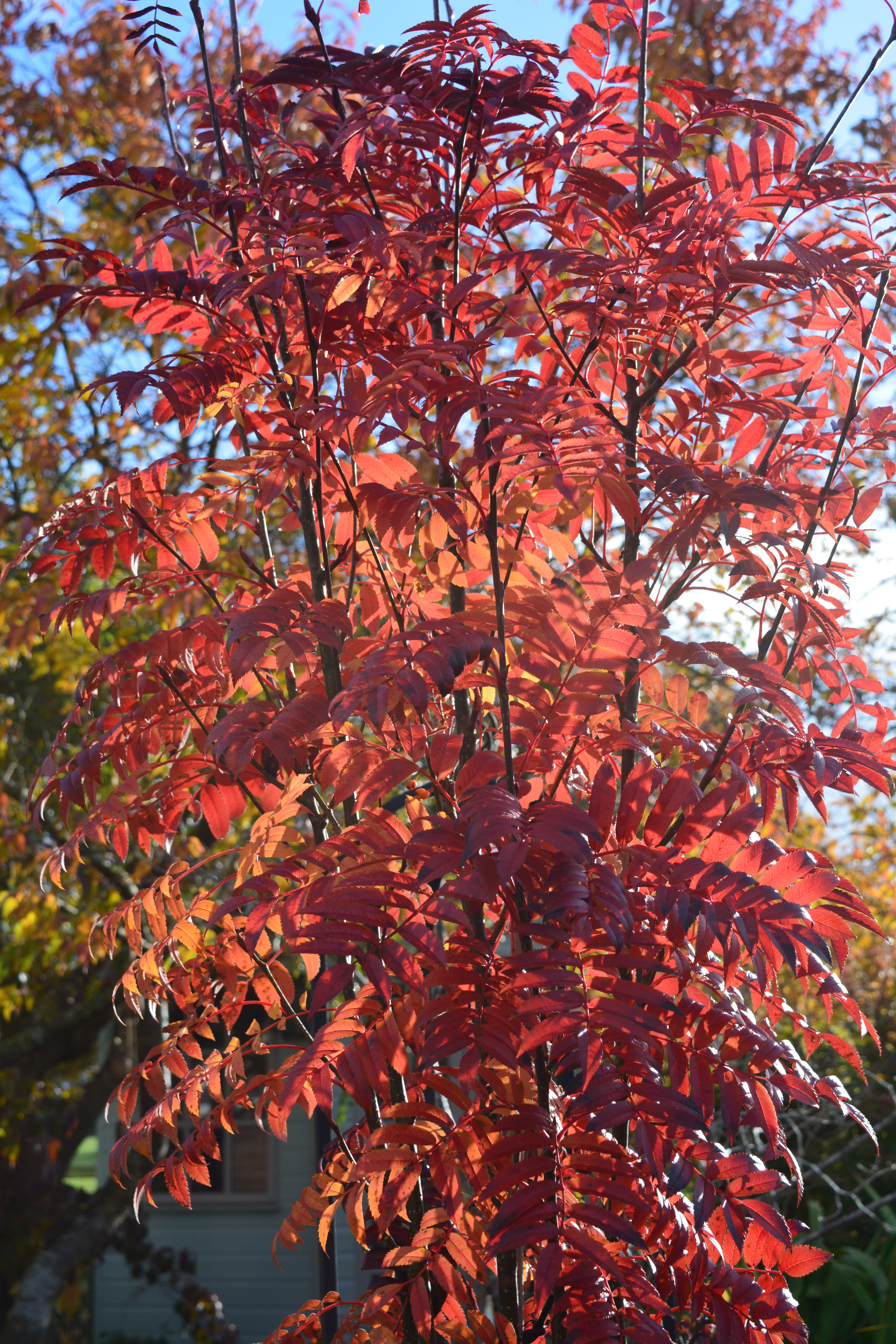
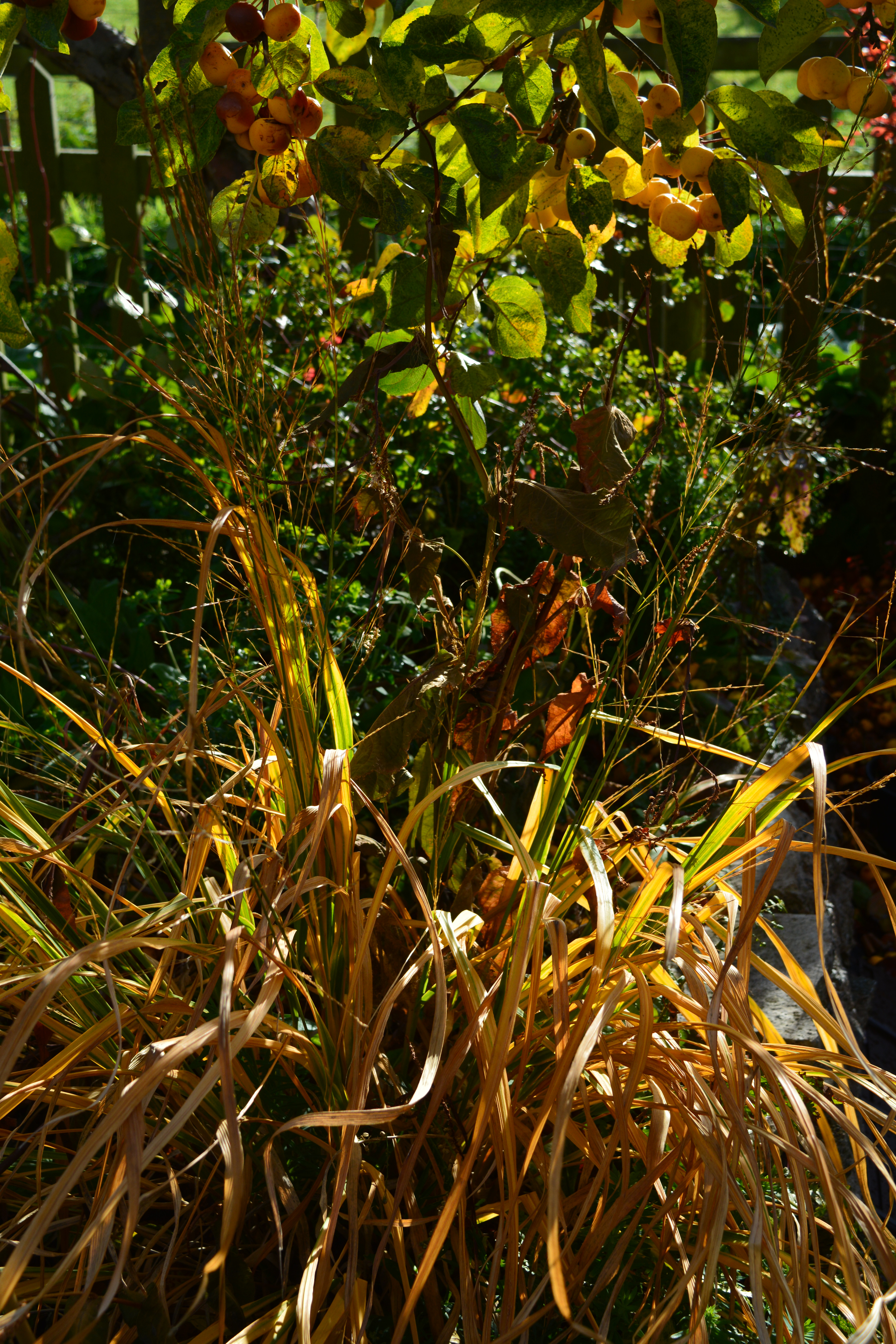
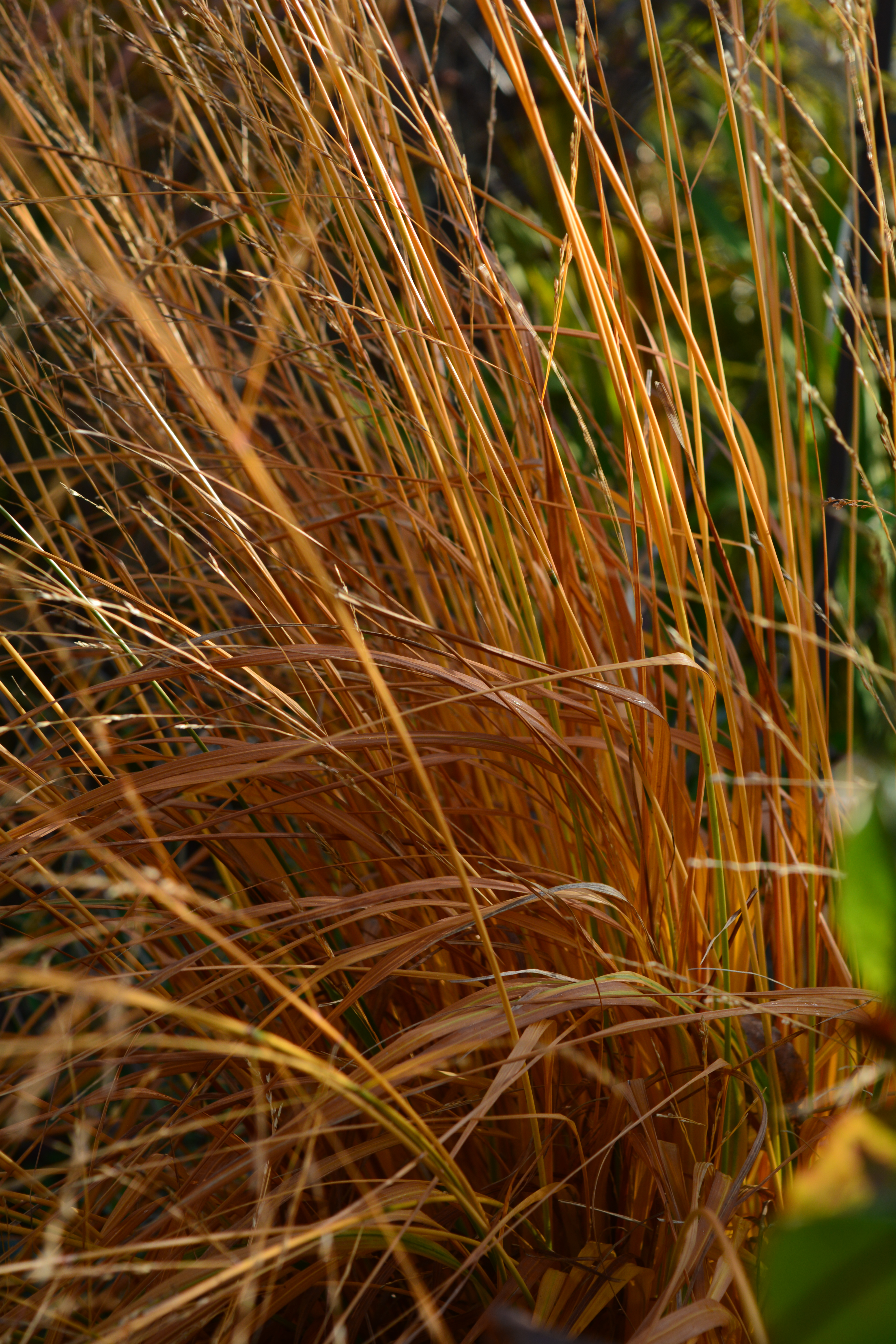
Categories
arboreta autumn autumn colours colours garden design garden photography gardening gardens gardens open to the public ornamental trees and shrubs outdoor sculpture sculpture trees

Autumn in an Arboretum and Afternoon Tea

We were lucky to receive a voucher for an afternoon tea from our son Jamie and daughter-in-law Sam, and of course little Arabella and decided to redeem it at a hotel down in the Cotswolds, near the village of Moreton-in-the-Marsh.

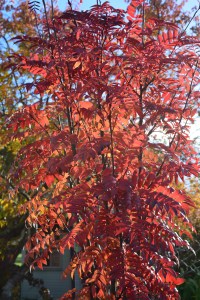
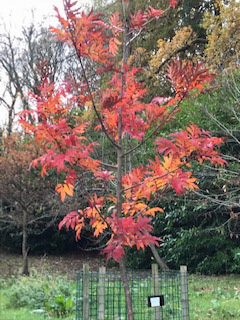
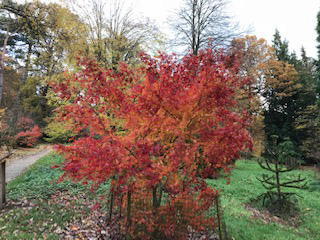
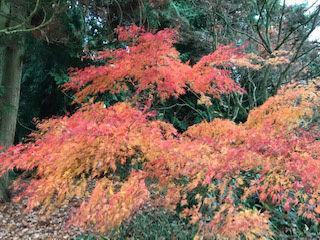
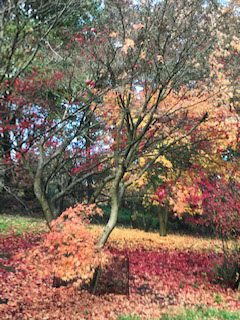
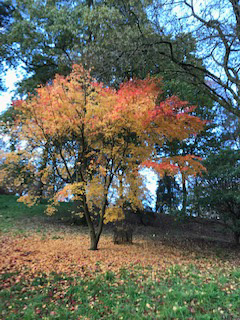
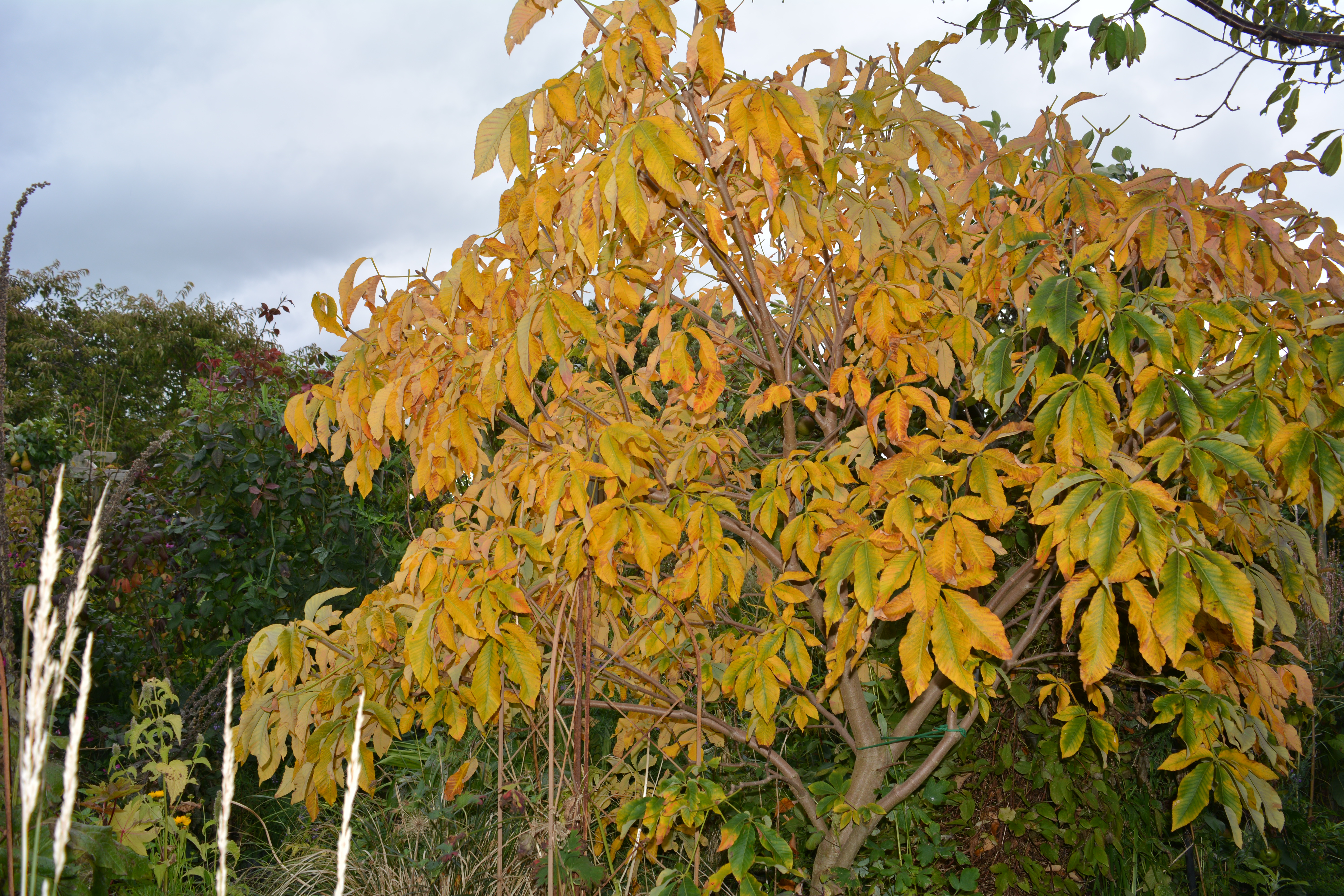
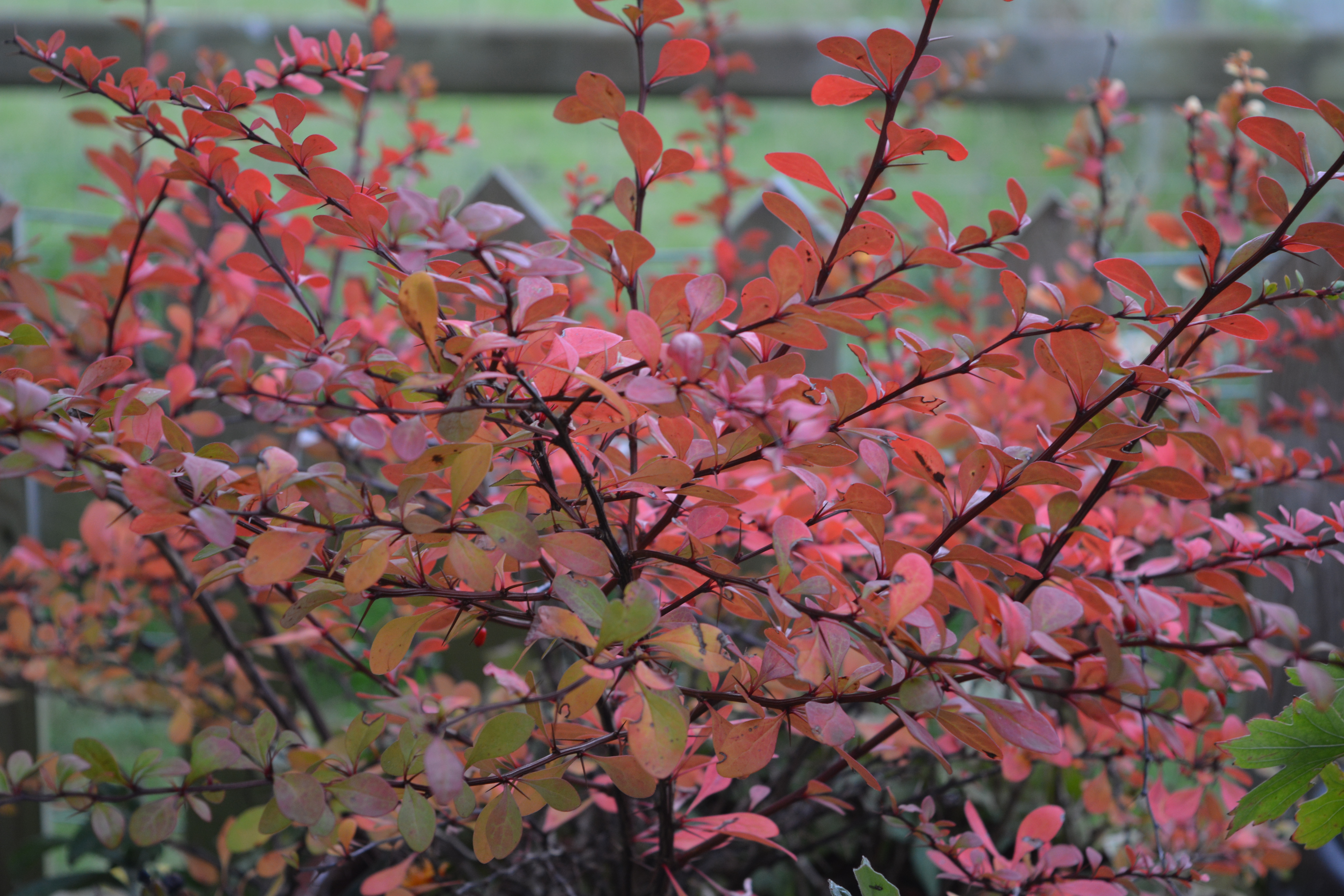
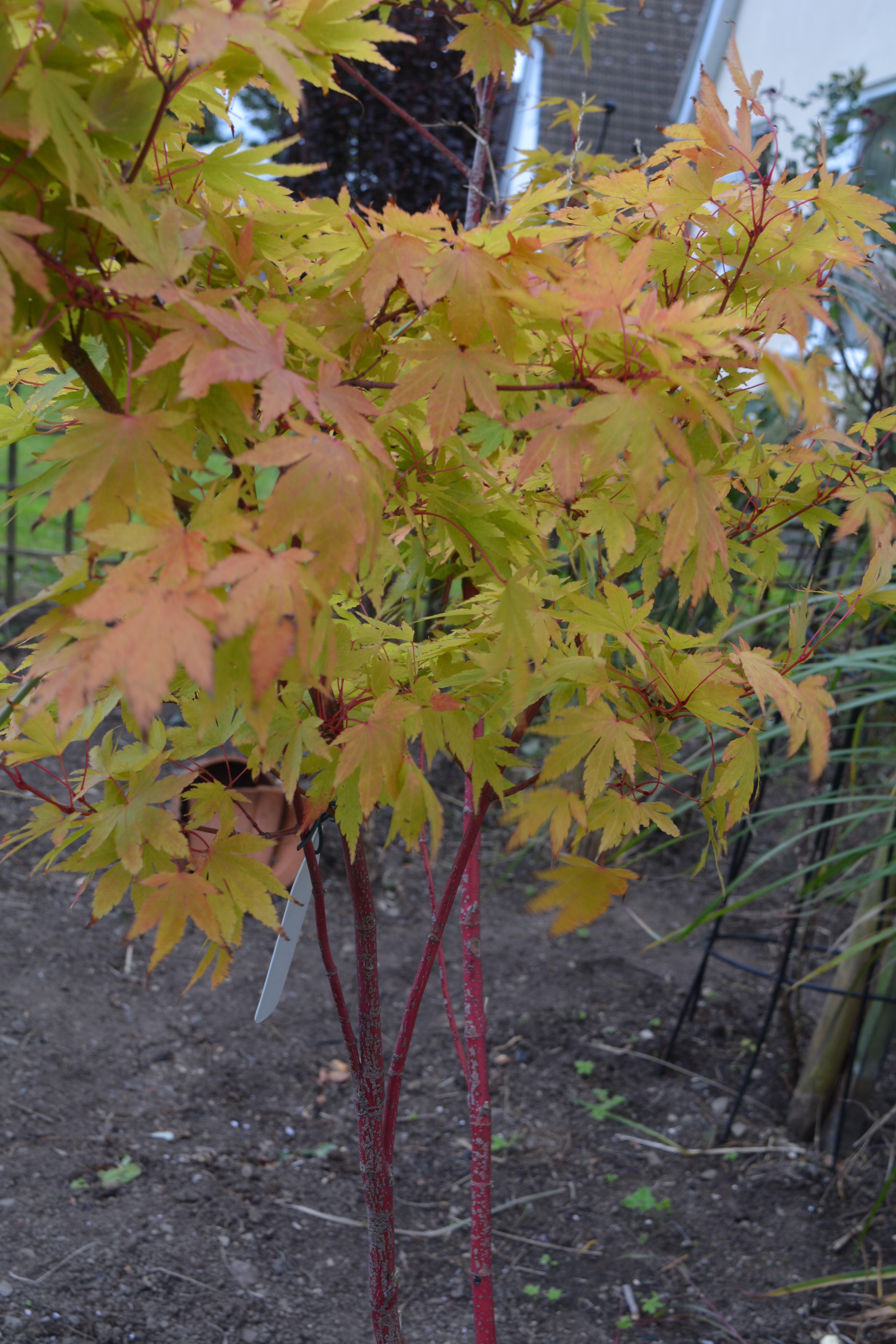
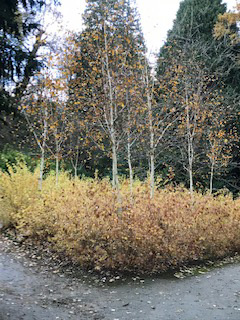
We drove down early and spent time wandering Batsford Arboretum, enjoying the colours of autumn leaves before the winds blew them from the branches. It was a dull day but the foliage glowed through the gloom. Most colour came from Acers and Liquidamber of many varieties of each. The wind had already whipped many leaves from their branches.


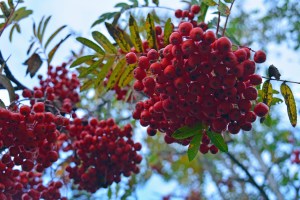
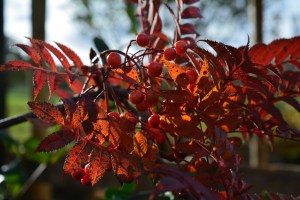
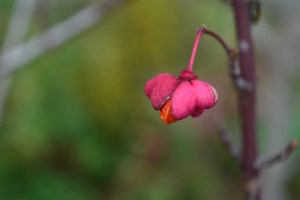
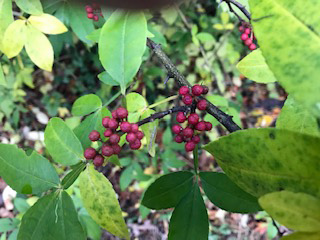
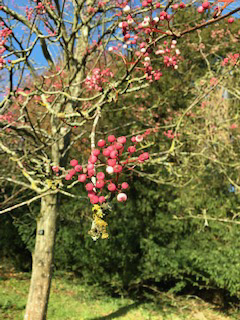
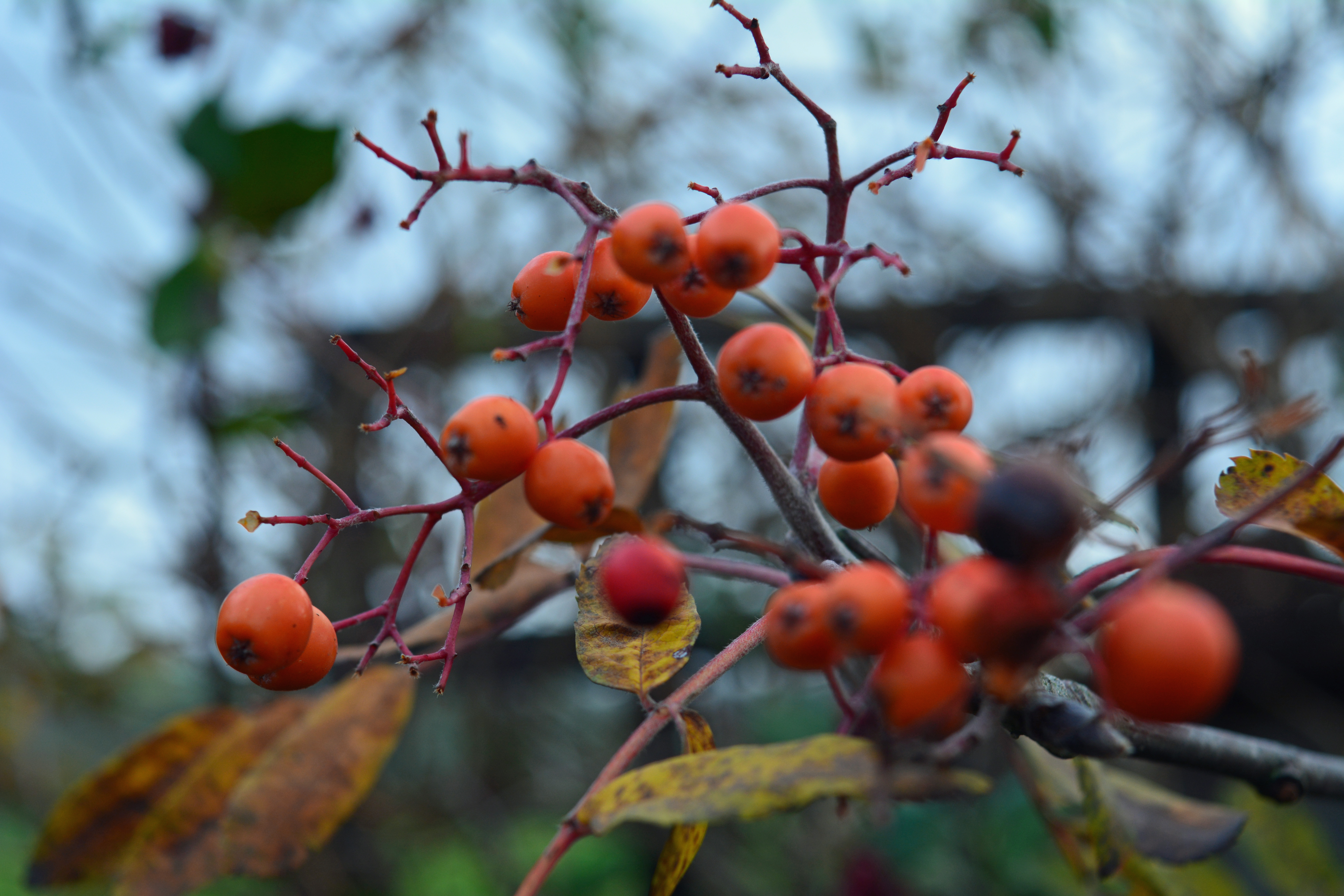
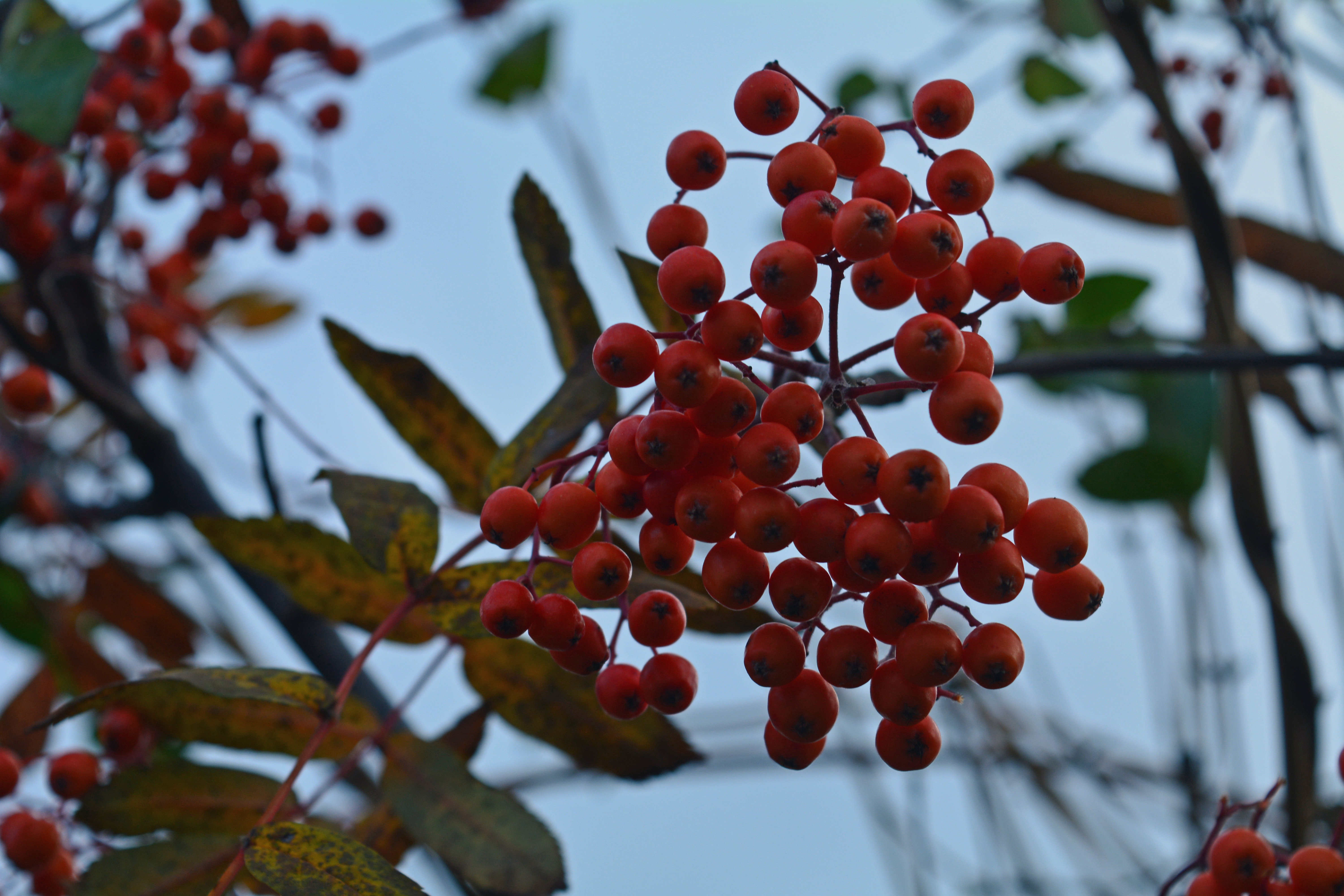
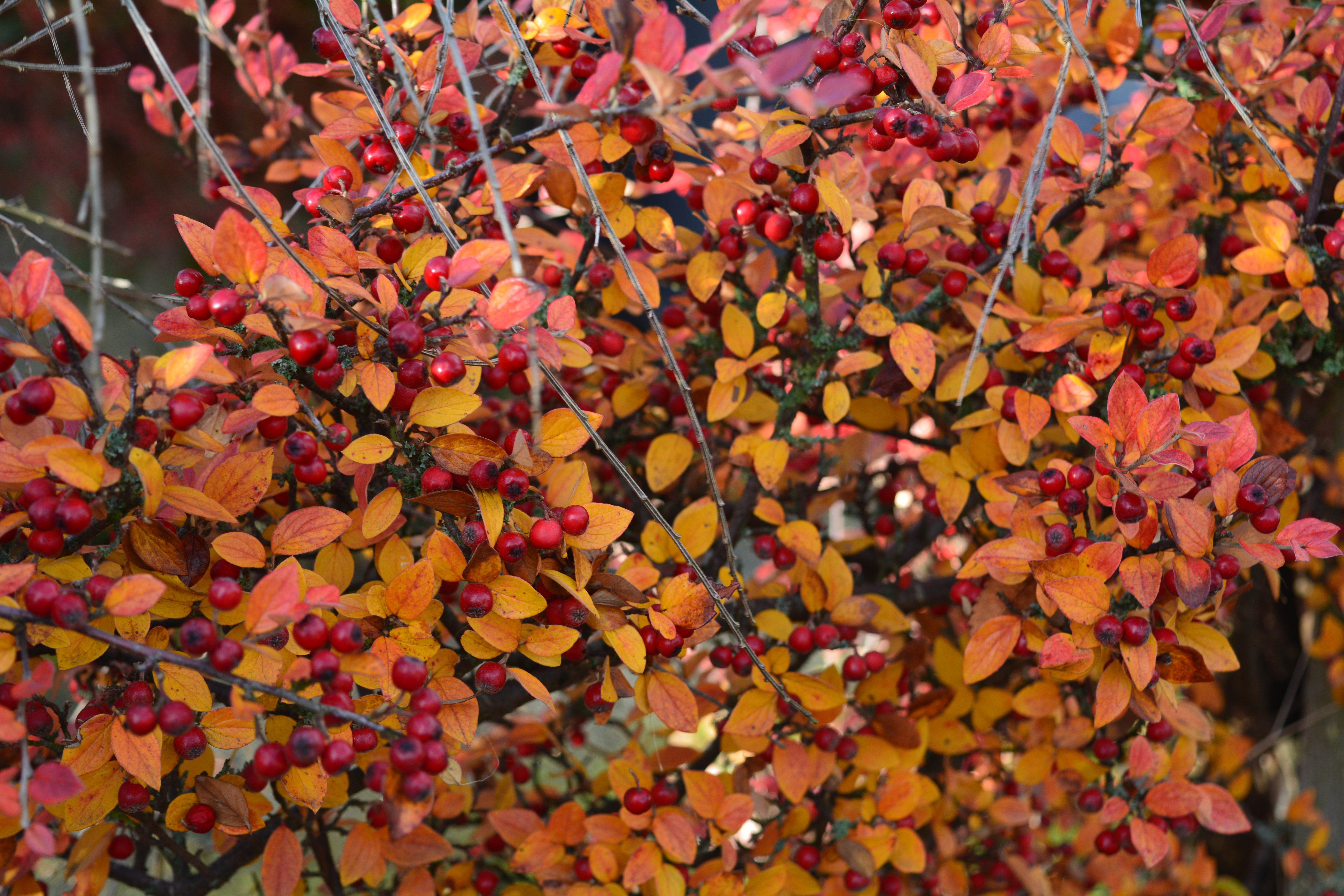
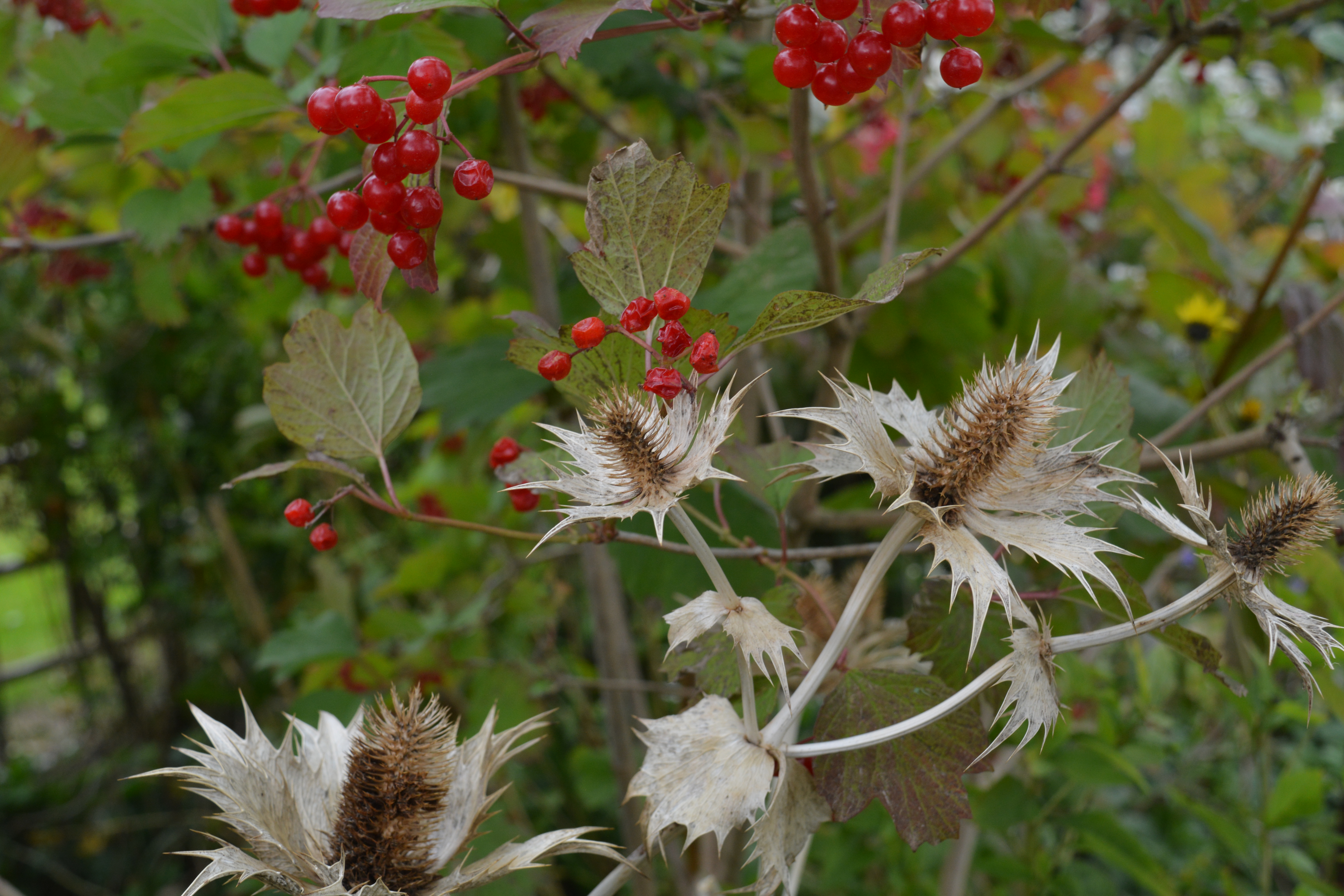
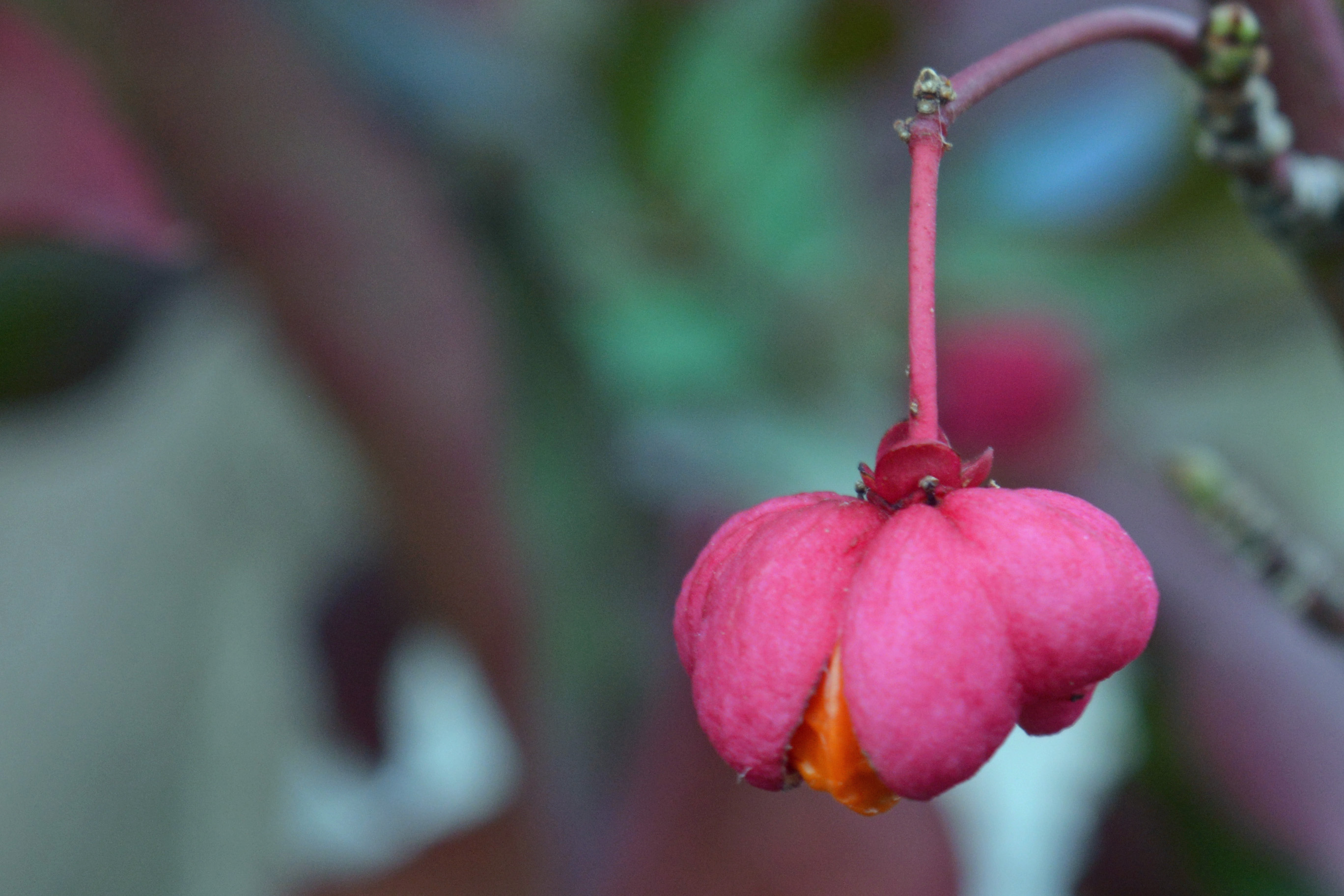
Of course autumn isn’t complete without the red, pinks, oranges and reds of berries, provided by Sorbus, Malus and here at Batsford by the unusual tree called Zanthoxylum planispinum (photo below left).


One area of the arboretum was strongly influenced by Japanese garden styles, complete with red painted wooden bridges.


While looking at this statue of Buddha we had to suddenly take refuge  in the Japanese tea house nearby from a quick but heavy shower in.


We only just allowed ourselves enough time to reach Charingworth Manor for our afternnon tea booked for three in the afternoon. On the journey there it began to rain slightly and the temperature dropped so we were glad to get inside this beautiful Cotswold manor house to the warm and dry. We sat to enjoy our tea close to a huge log fireplace of golden Cotswold stone.

What a great day we had with autumn foliage, an amble around an arboretum finished off in style with afternoon tea.


Categories
autumn autumn colours colours garden photography gardening gardens hardy perennials ornamental grasses ornamental trees and shrubs trees

My Garden Journal 2018 – November

This is the penultimate post in this 12 part series about my 2018 Garden Journal so here is what was happening in our patch in November.

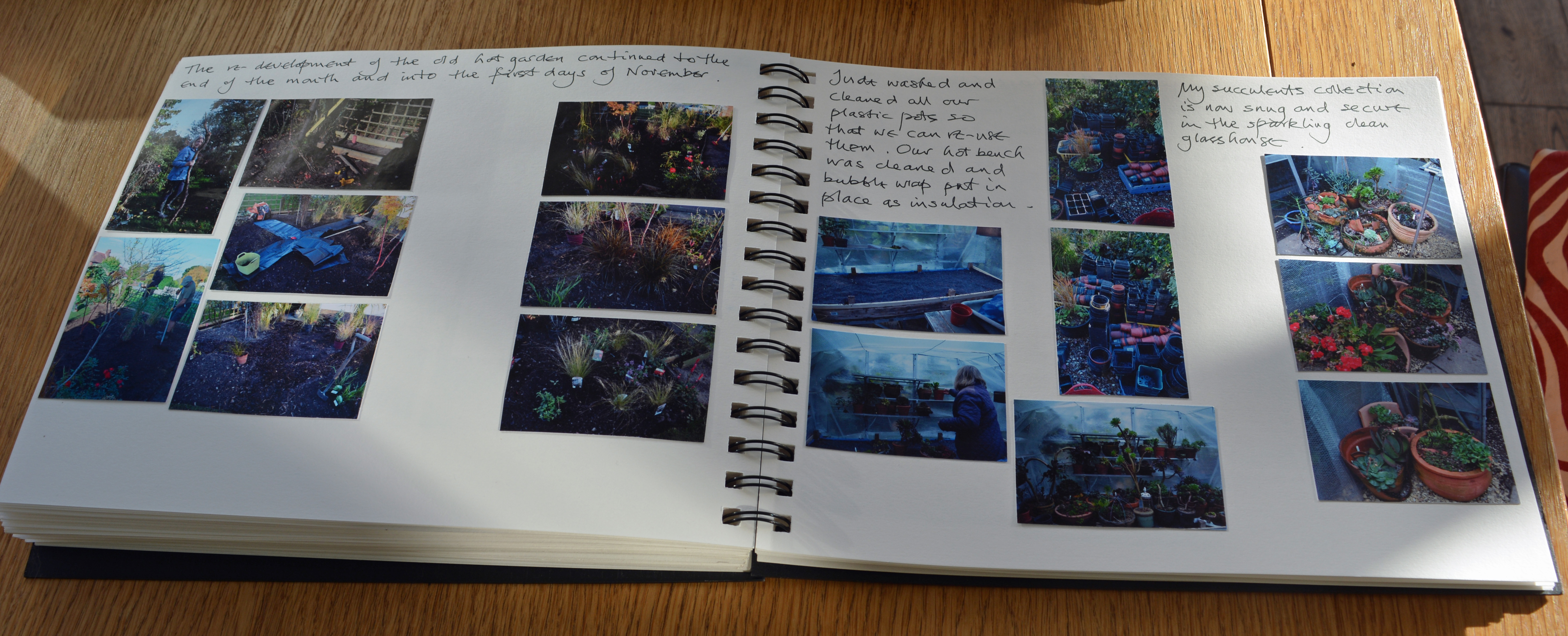
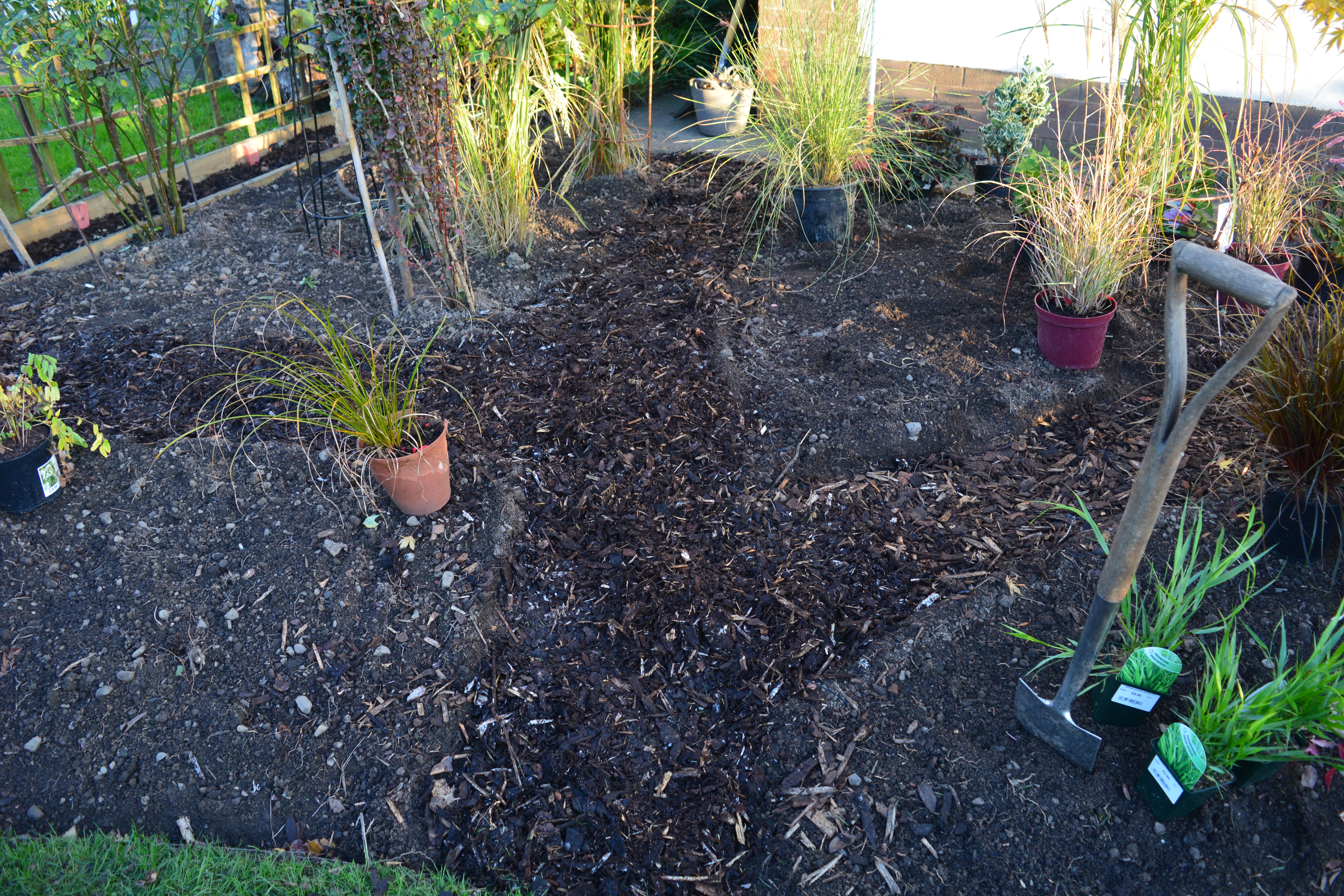
The first couple of pages dealt with the continued redevelopment of our old hot garden. We intended to give it a completely new look including bark access paths through it.

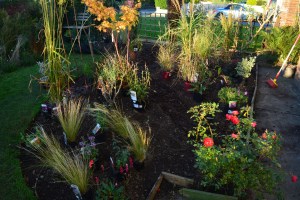
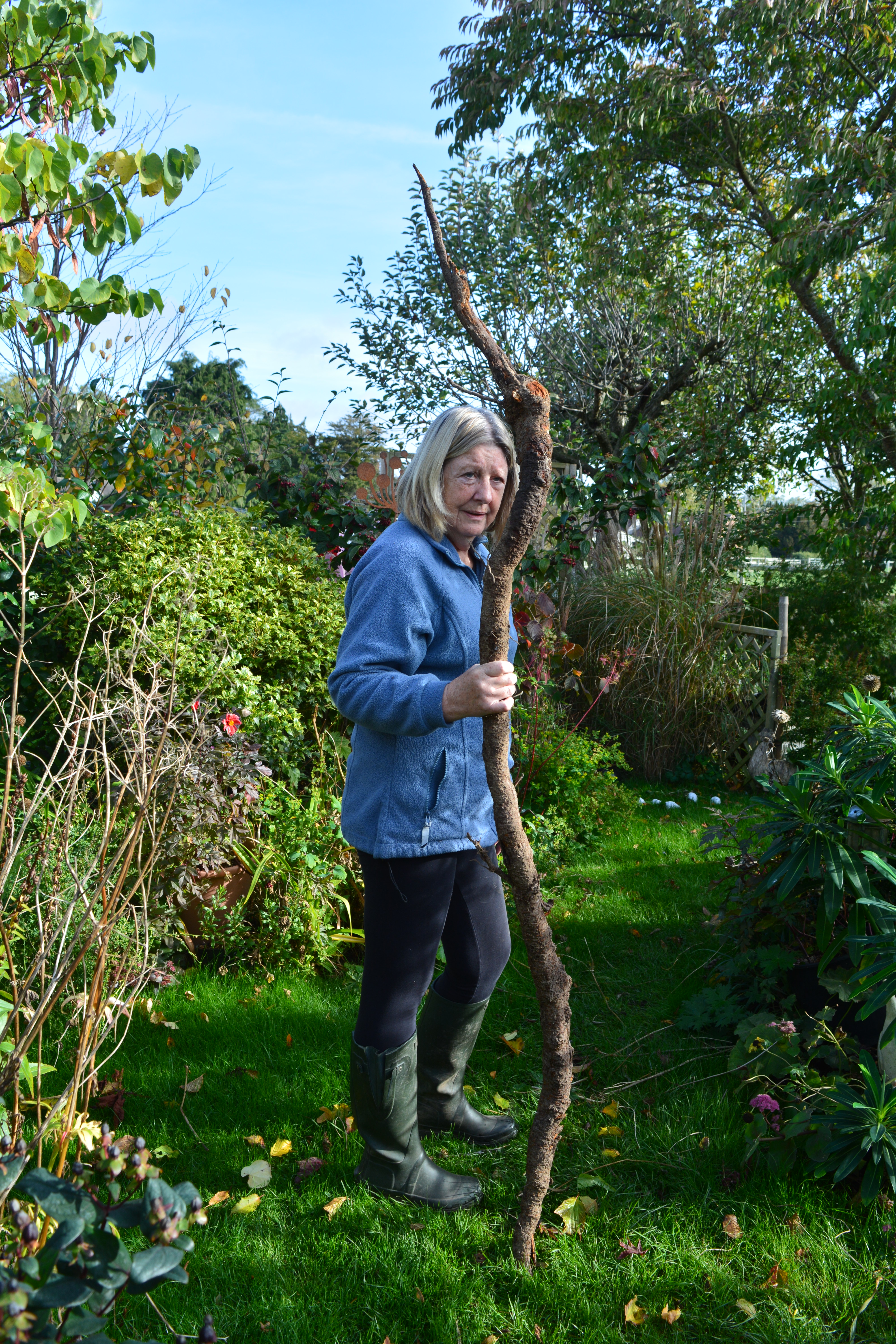
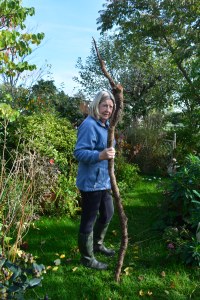
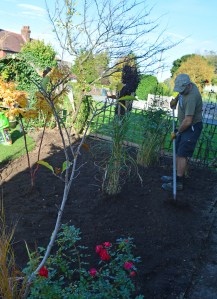
I wrote, “The re-development of the old hot garden continued to the end of the month and into the first days of November.” The first picture shows Jude the Undergardener holding up a huge root which Ian managed to dig out of the bed. He had to cut it off at both ends as it was extending beneath the lawn in one direction and out of our garden in another. It sat horizontally in the soil just above the boulder clay layer. We have no idea what plant it belonged to originally. One of our gardening mysteries! The second photo shows Ian our garden helper raking over the soil which he had meticulously double dug after adding lots of organic compost. This first addition of compost was dug in before a second batch was added as a thick mulch.
 

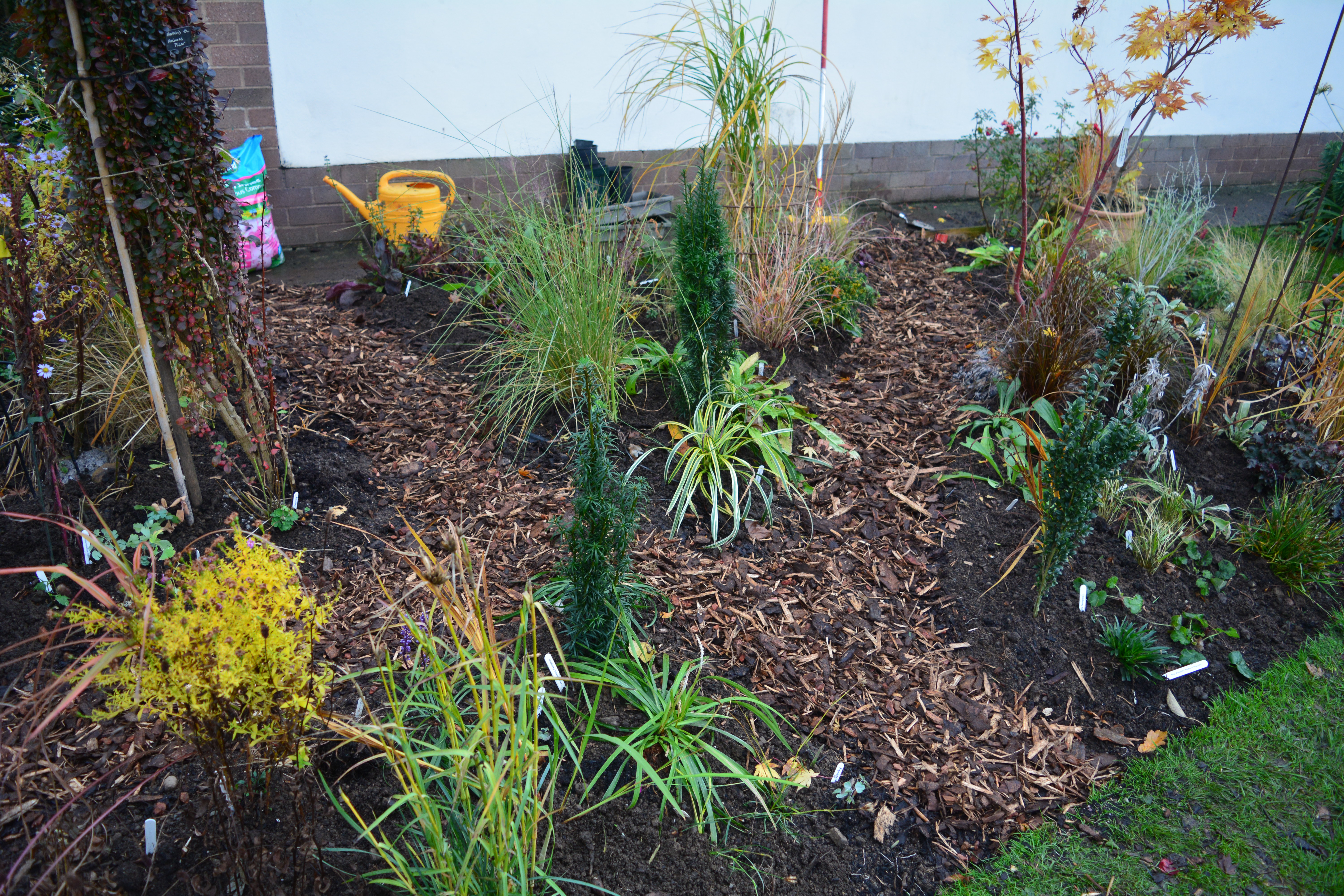
We then laid a path of bark over membrane before  getting ready to enjoy planting both our new and saved plants.


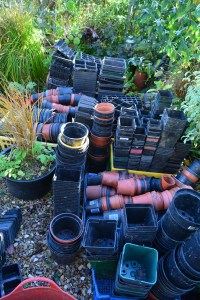
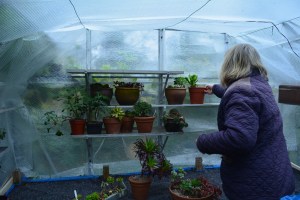
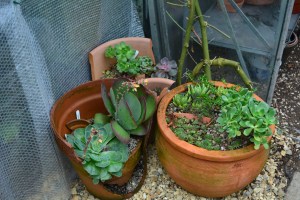
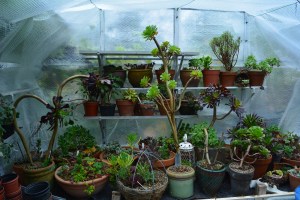
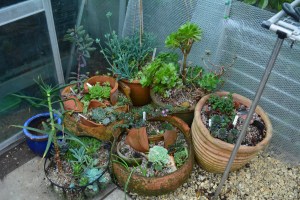
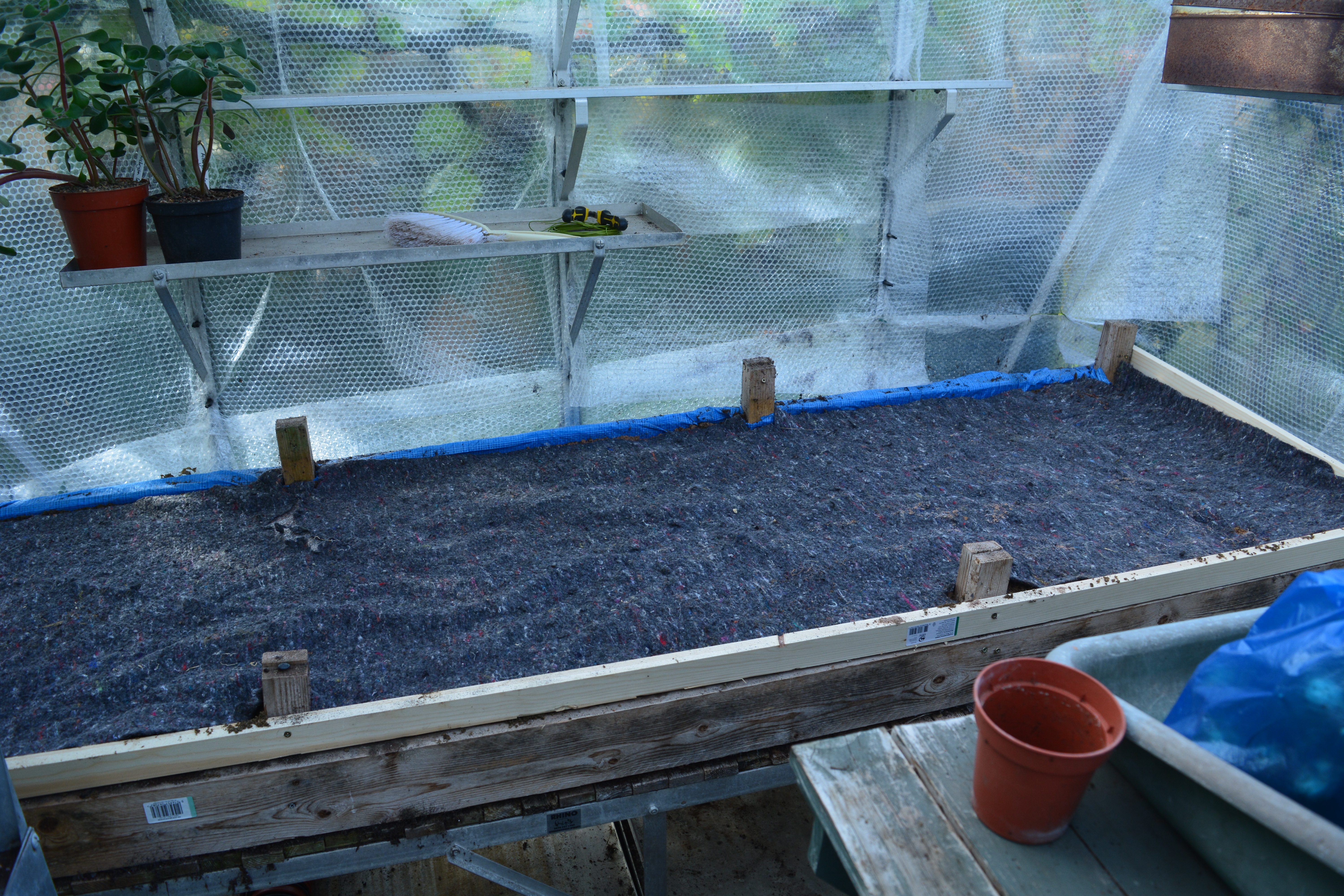
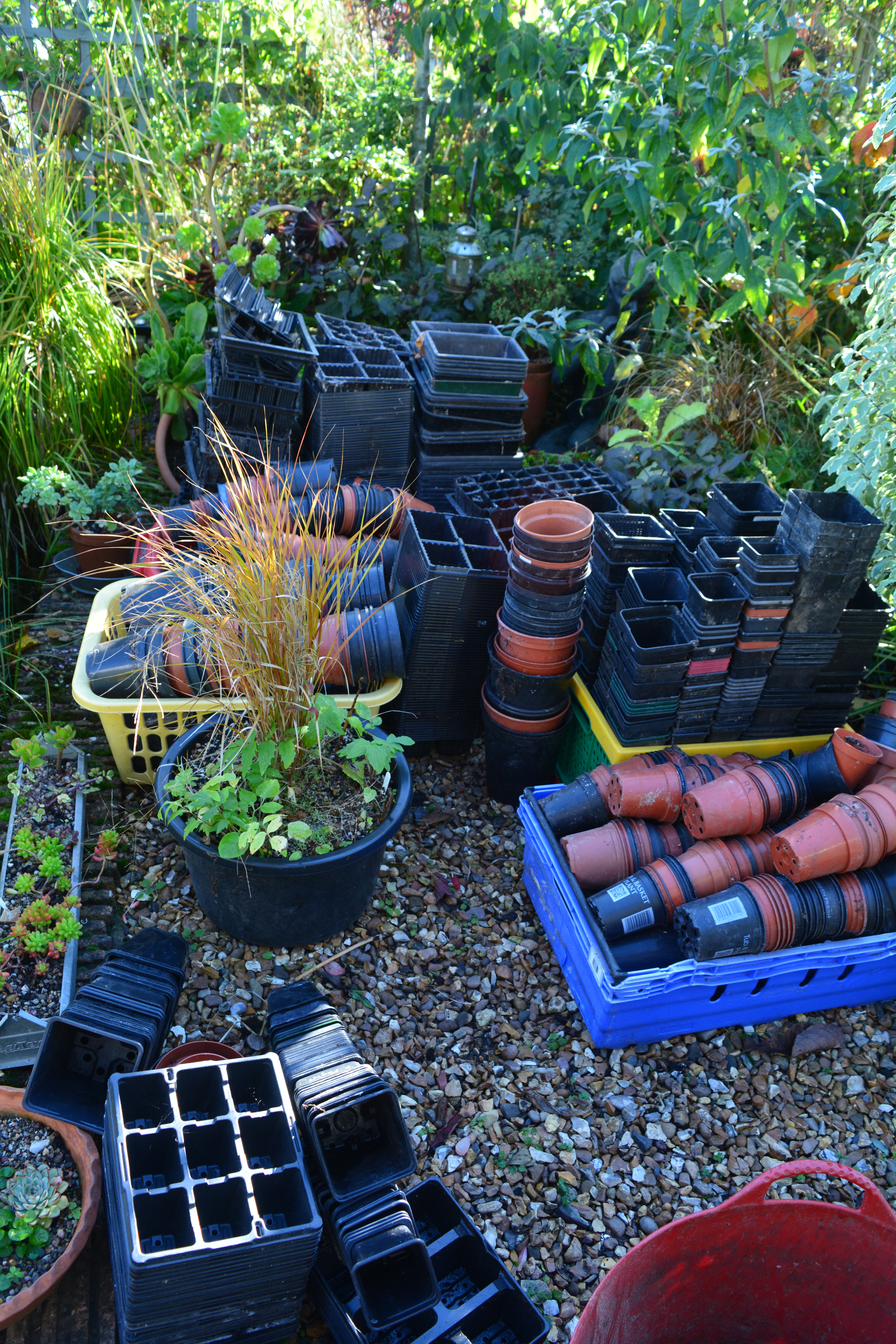
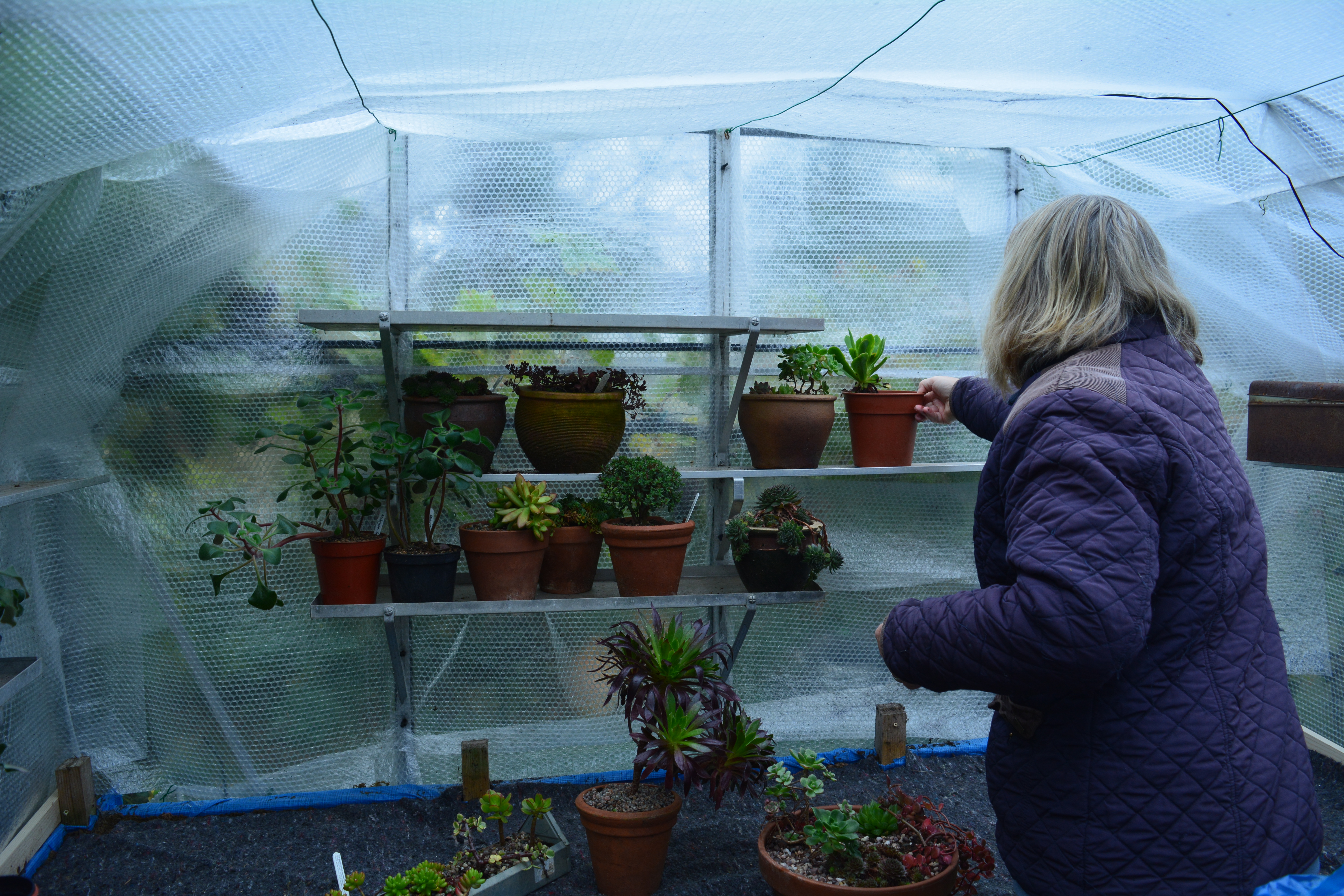
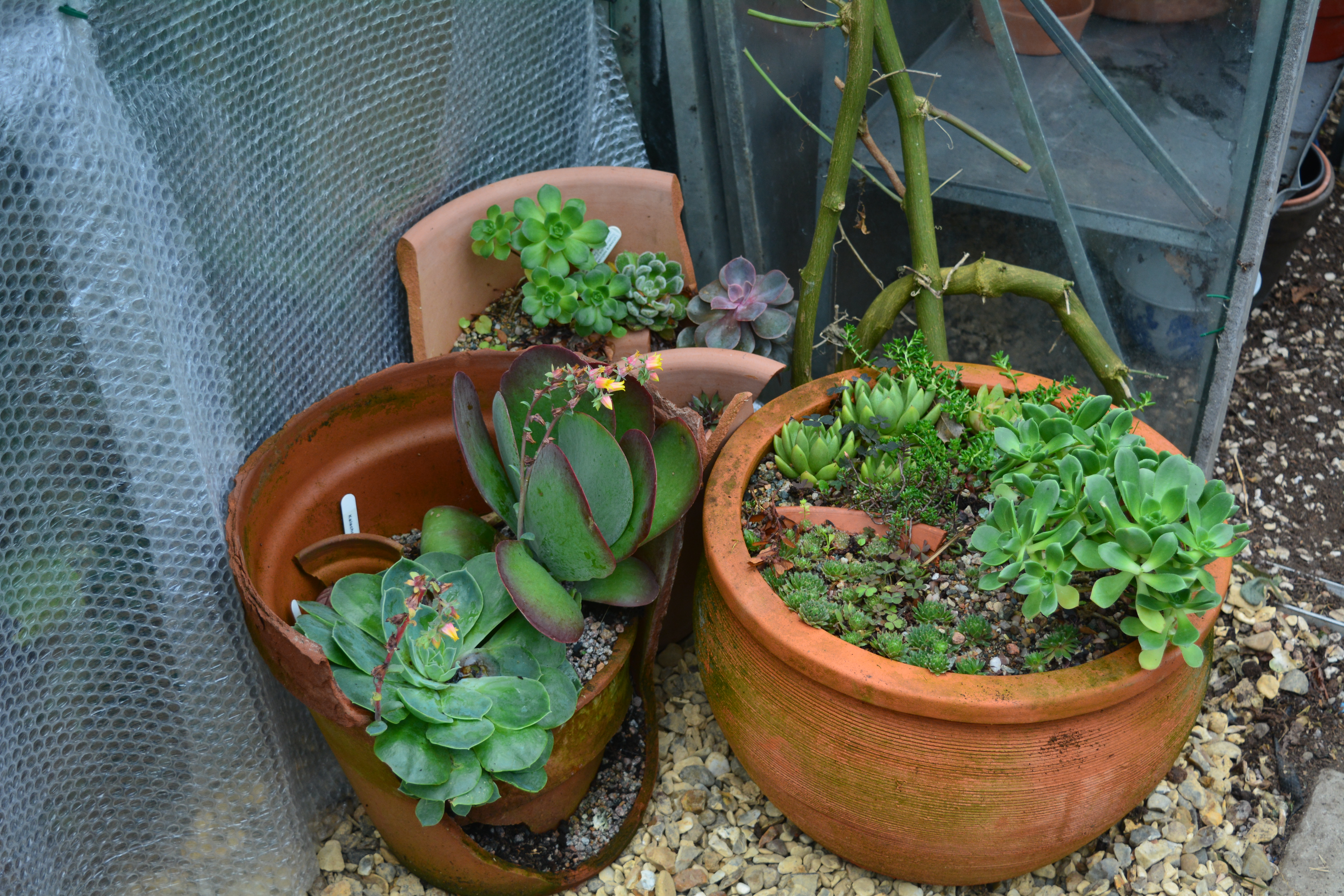
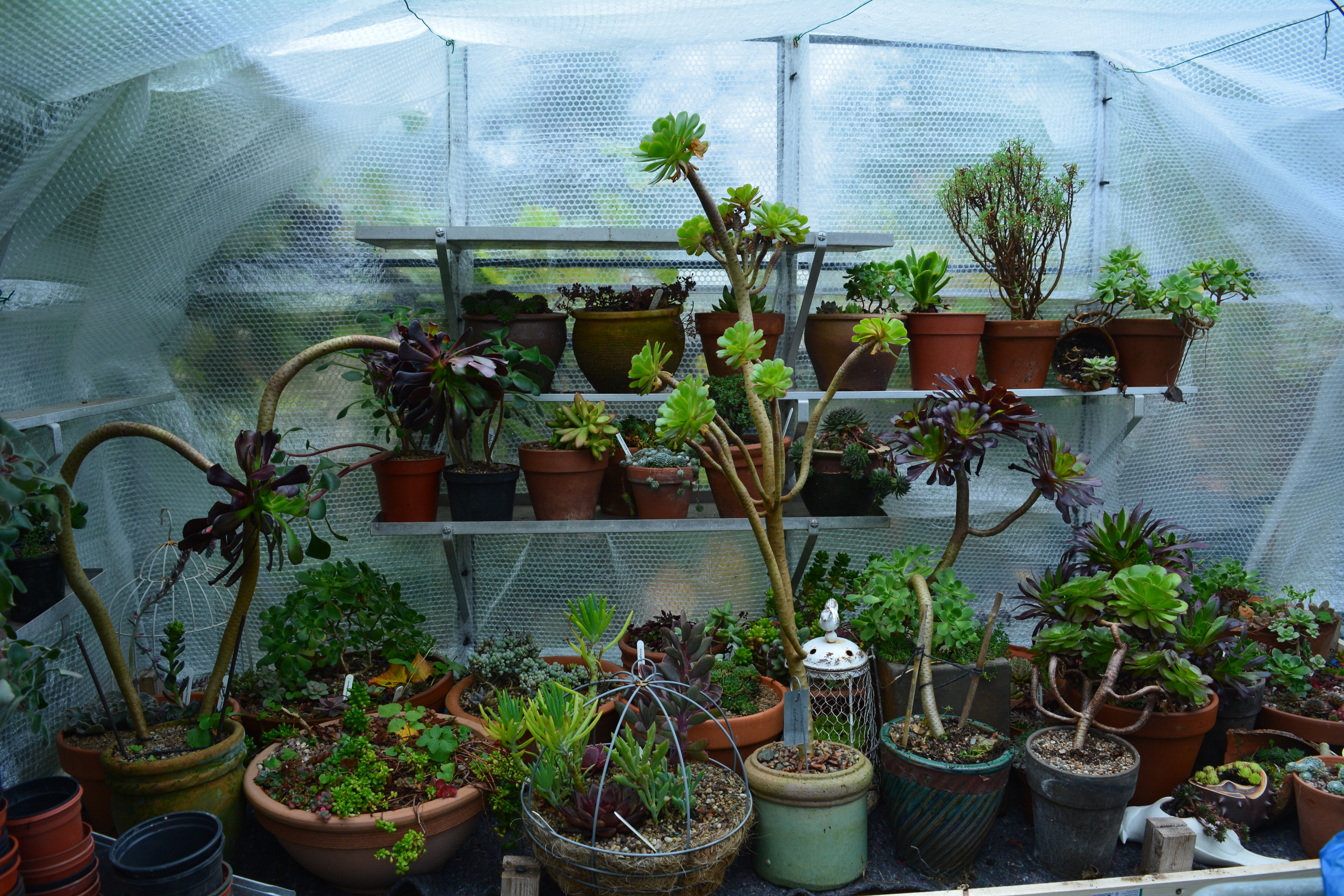
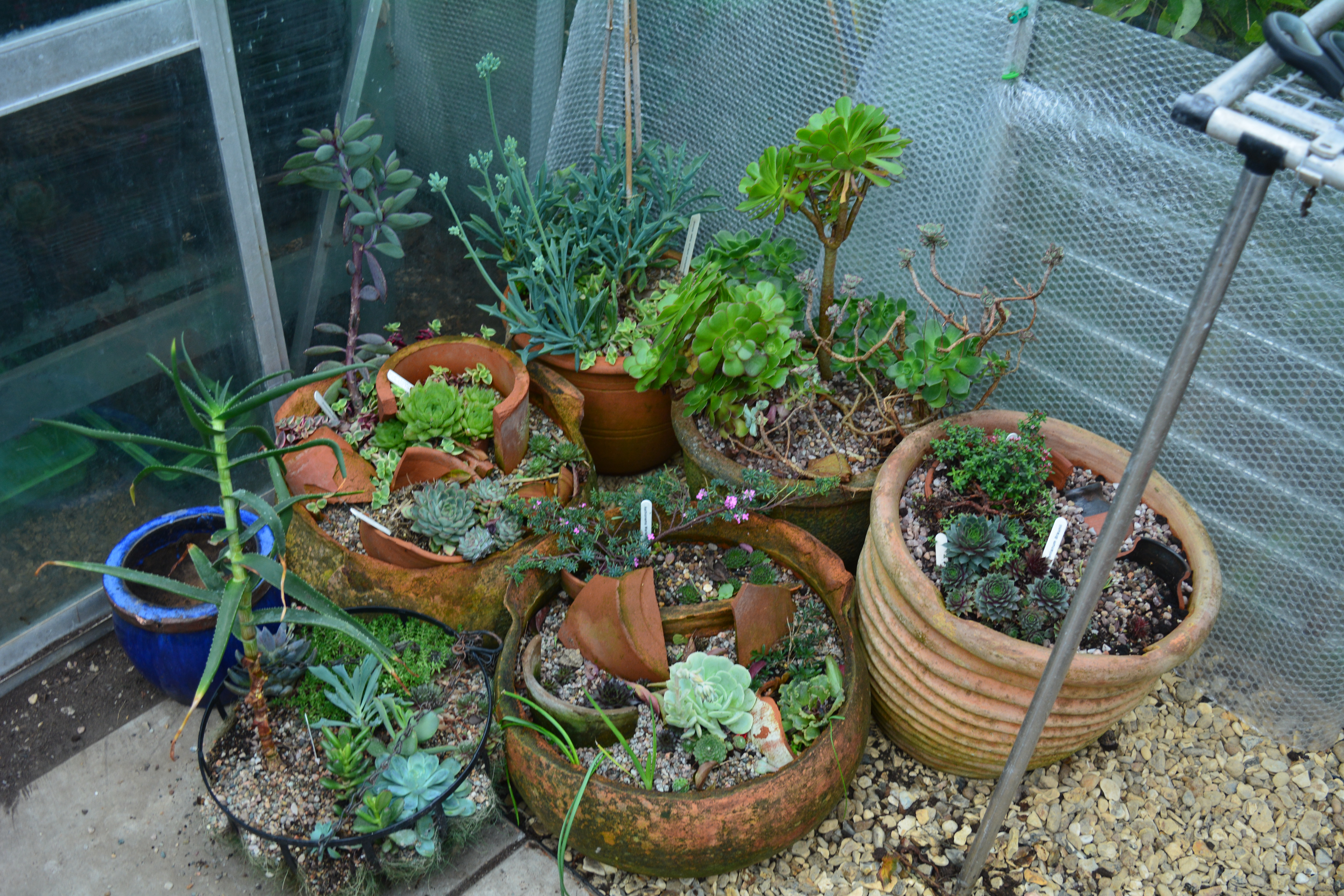
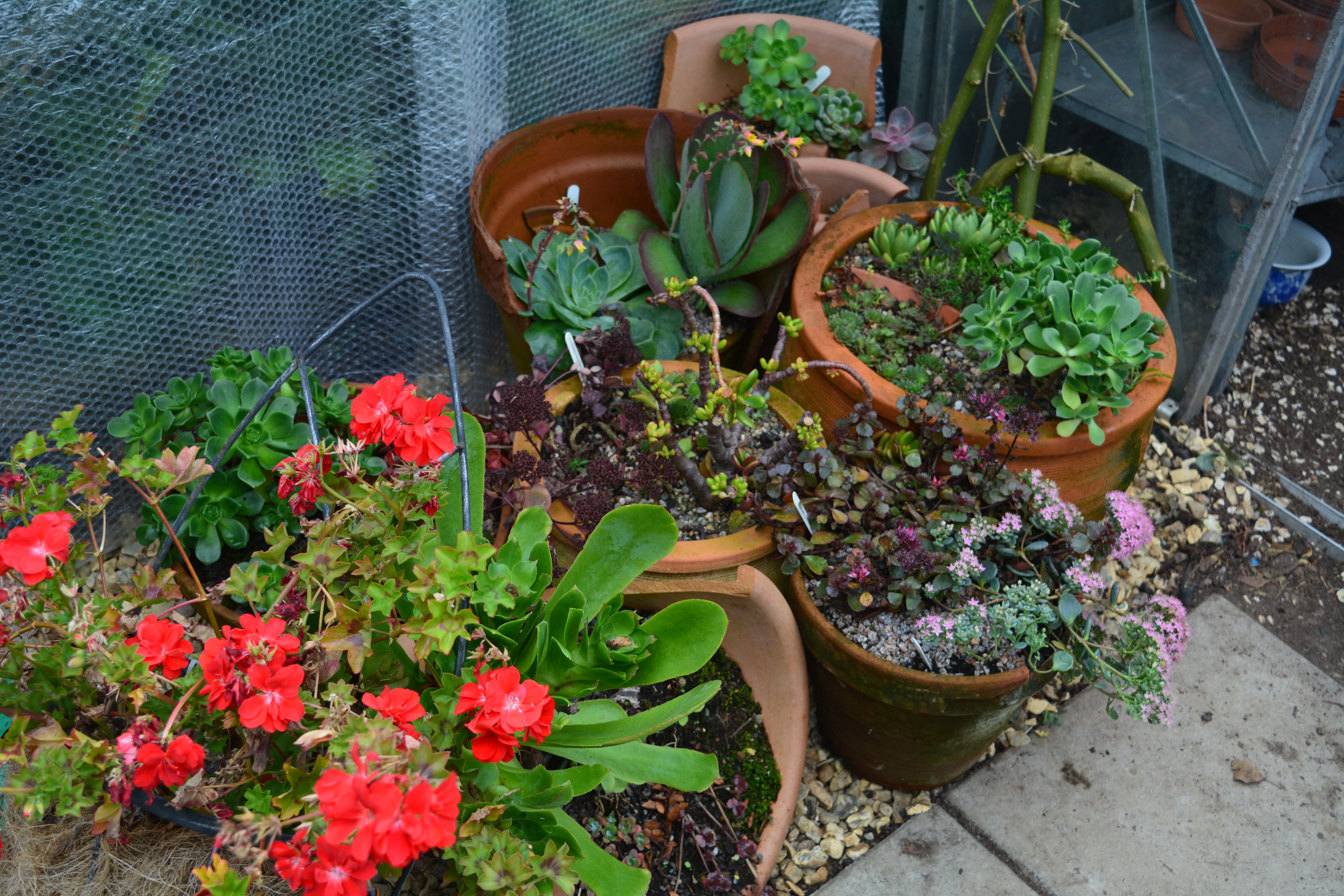
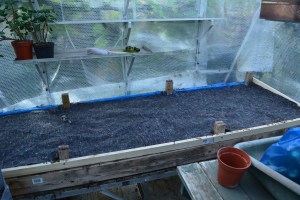
On the right hand page I looked at how Jude spent time early in the month cleaning pots, cleaning the glass in the greenhouse and putting up bubblewrap insulation. Once done this allowed us to move my succulent collection into the winter safety to be found under glass. “Jude washed and cleaned all our plastic pots so that we can reuse them. Our hot bench was cleaned up and bubblewrap put up in place as insulation. My succulent collection is now snug and secure in the sparkling clean greenhouse.”
  

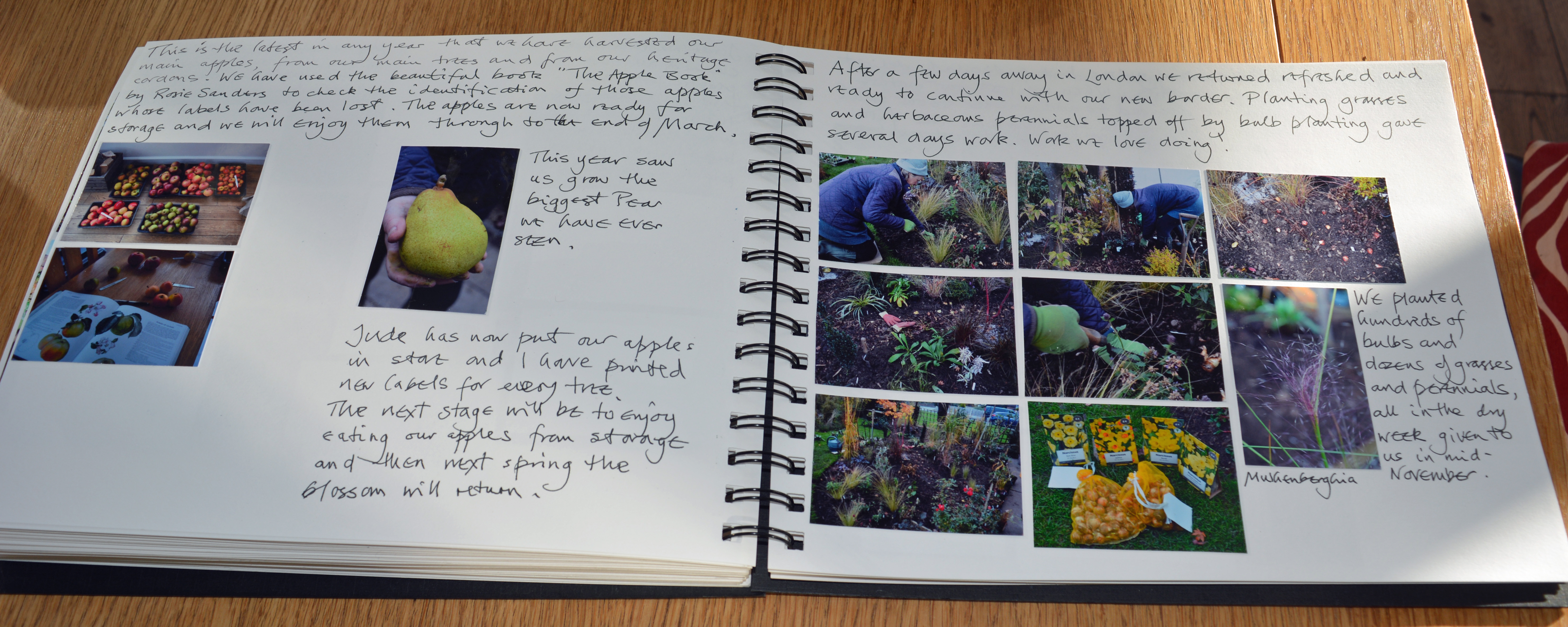
Turning over to my next double page spread I looked at our fruit and the continuation of planting up the new border.
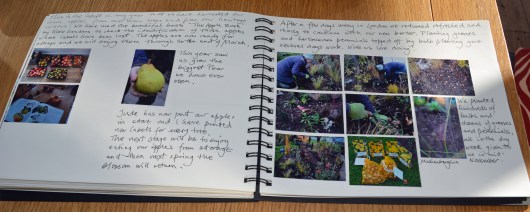
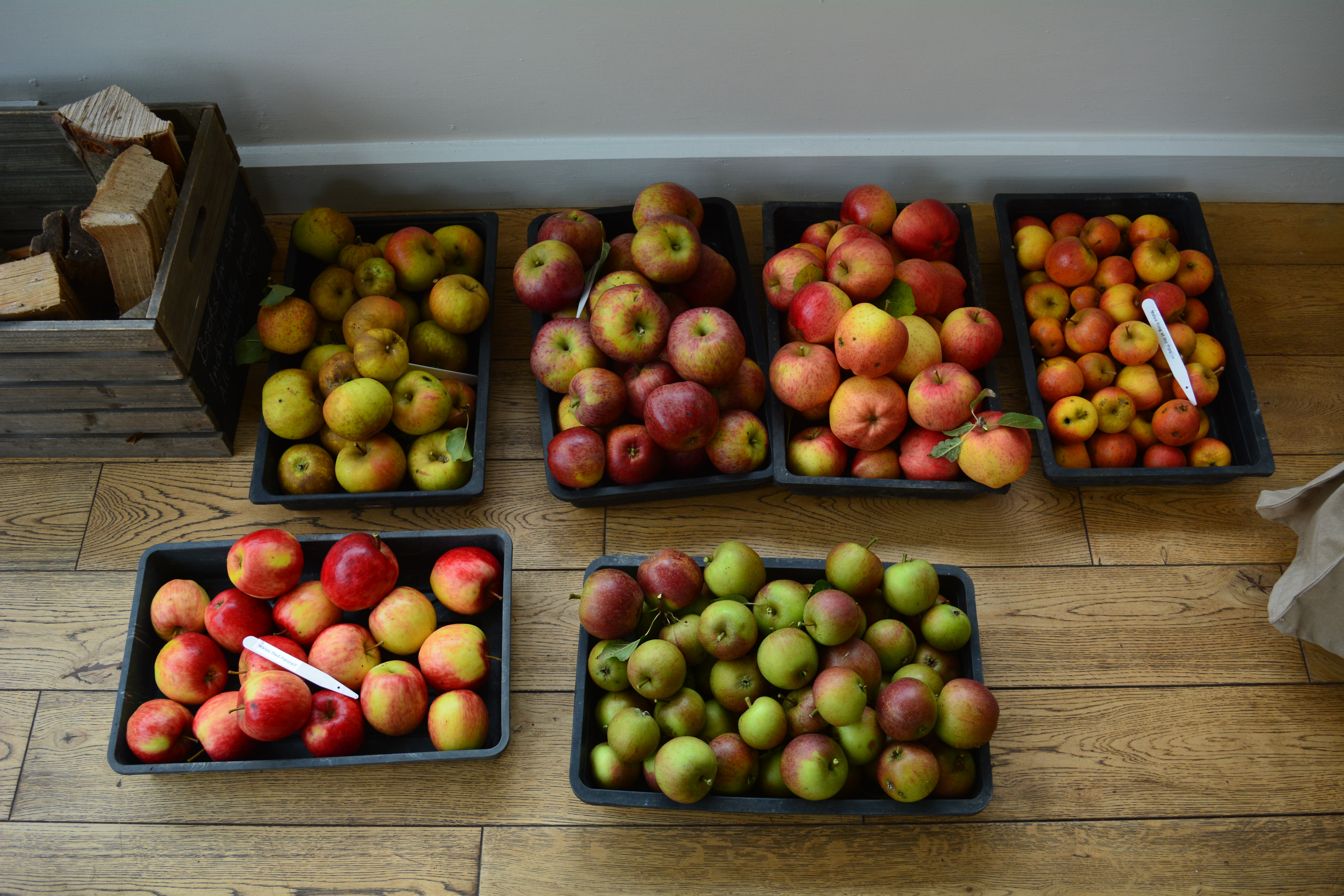
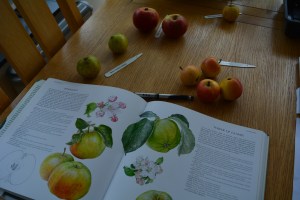
I wrote, “This is the latest in any year that we have harvested our crop of apples from our main trees and heritage cordons. We have used the beautiful book “The Apple Book” by Rosie Sanders to check the indentification of those apples whose labels have been lost. The apples are now ready for storage and we will hopefully enjoy them through to the end of March.”
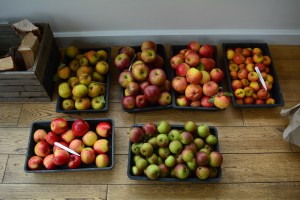
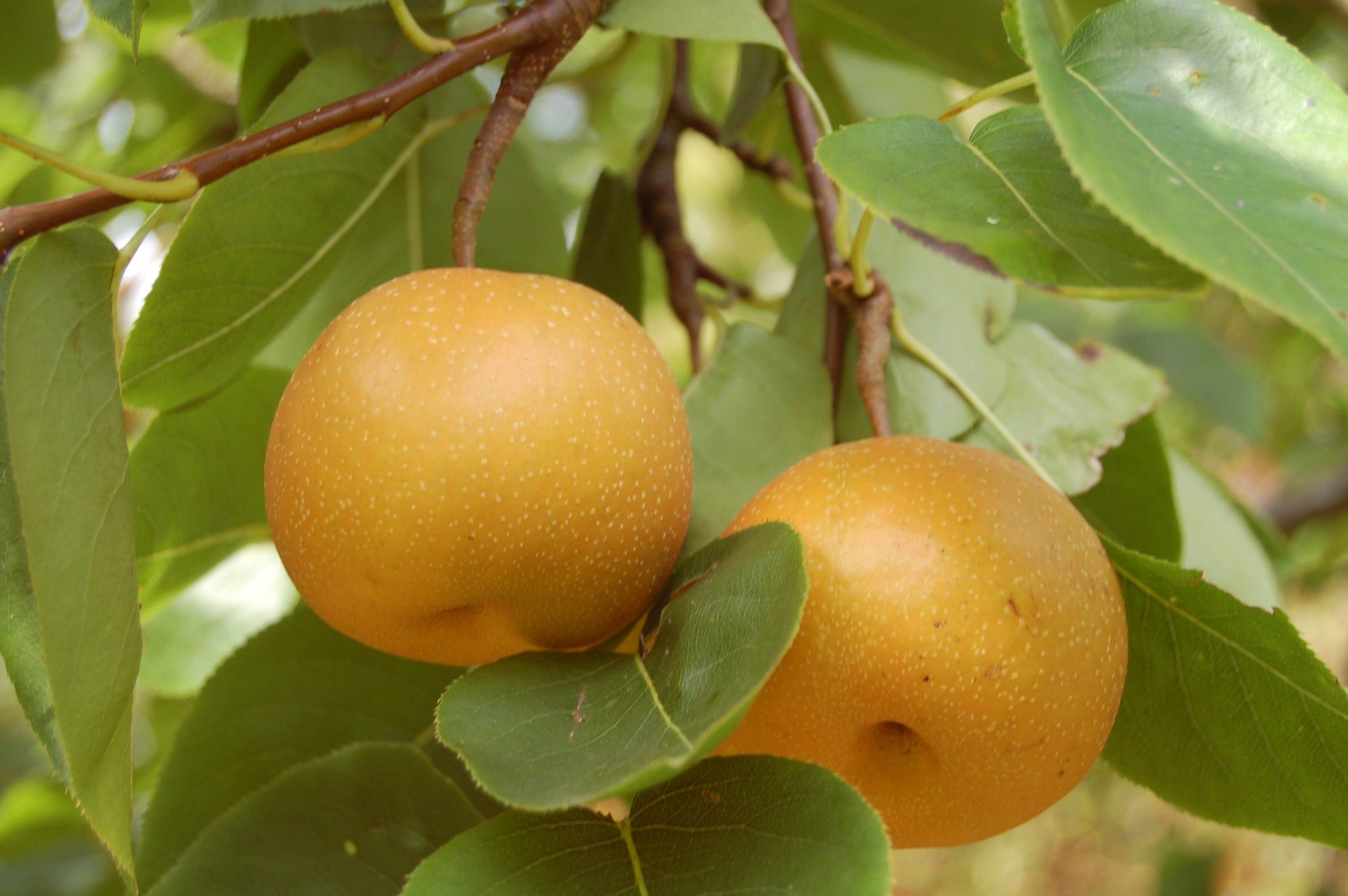
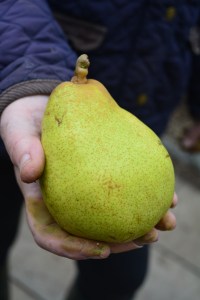
Sometimes fruit can surprise us. “This year saw us grow the biggest pear we have ever seen. Jude has now put our apples in store and I have printed new labels for every apple tree. The next stage will be to enjoy eating our apples from storage and then next spring the blossom will return.”
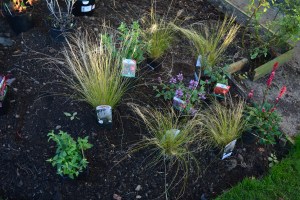
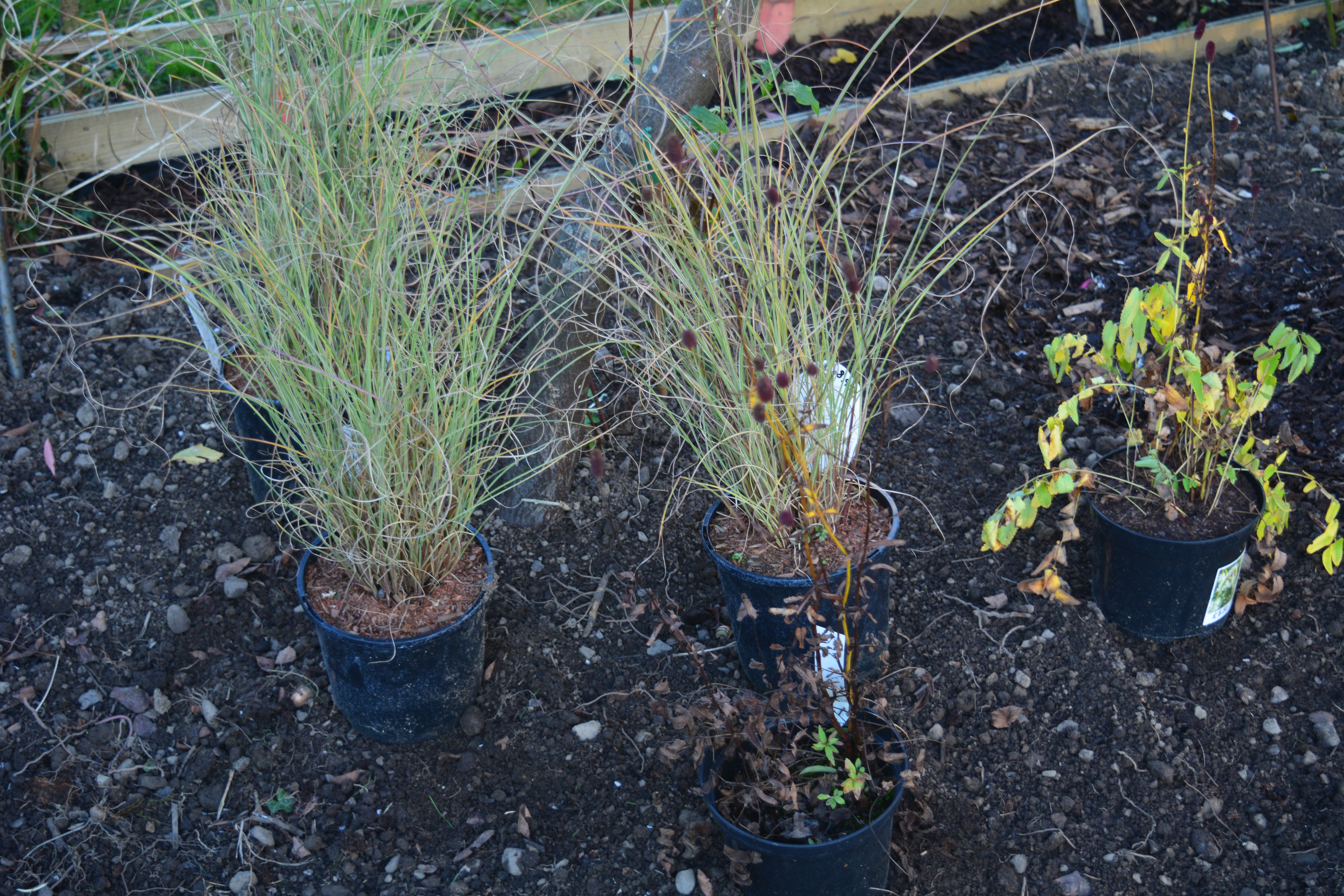
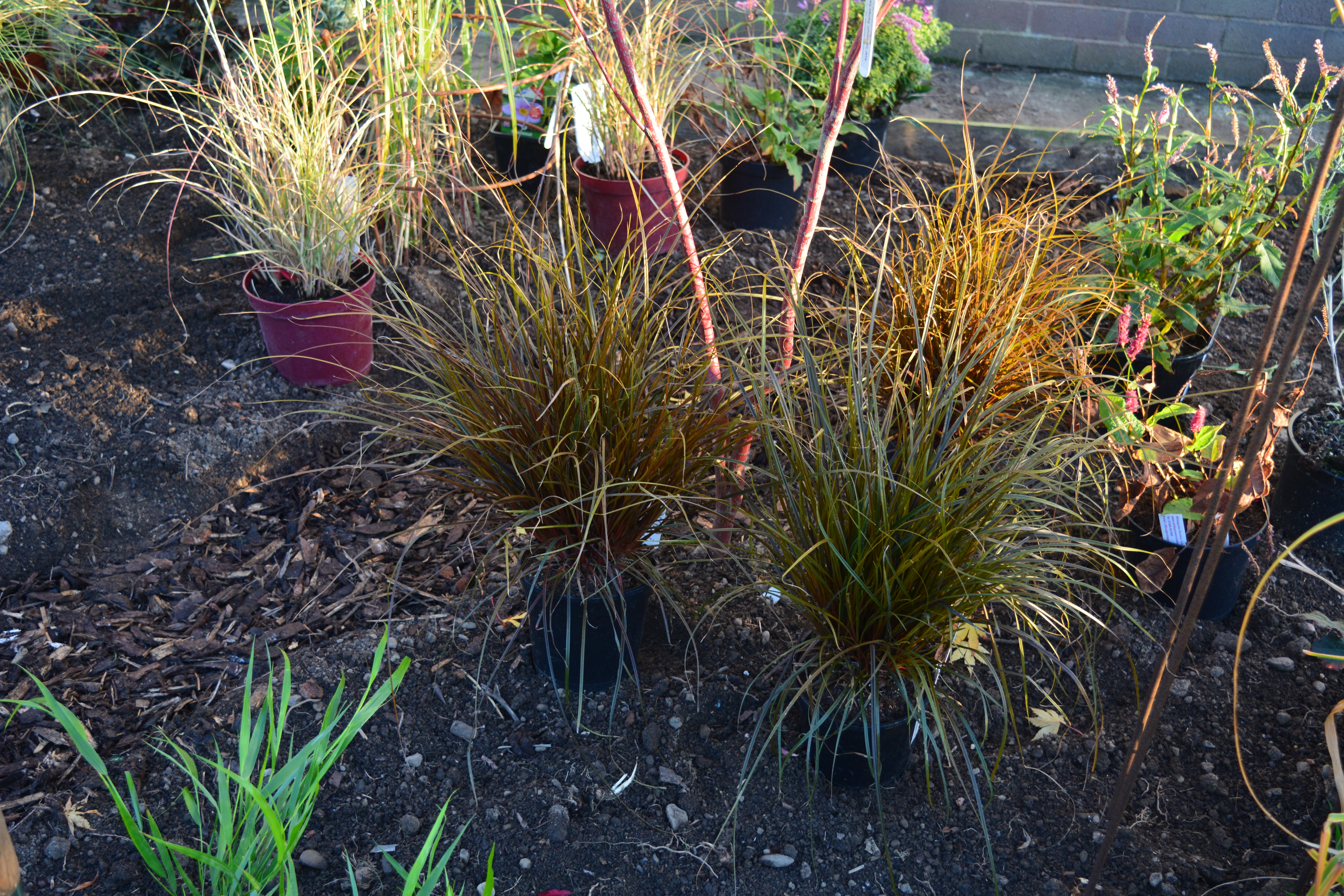
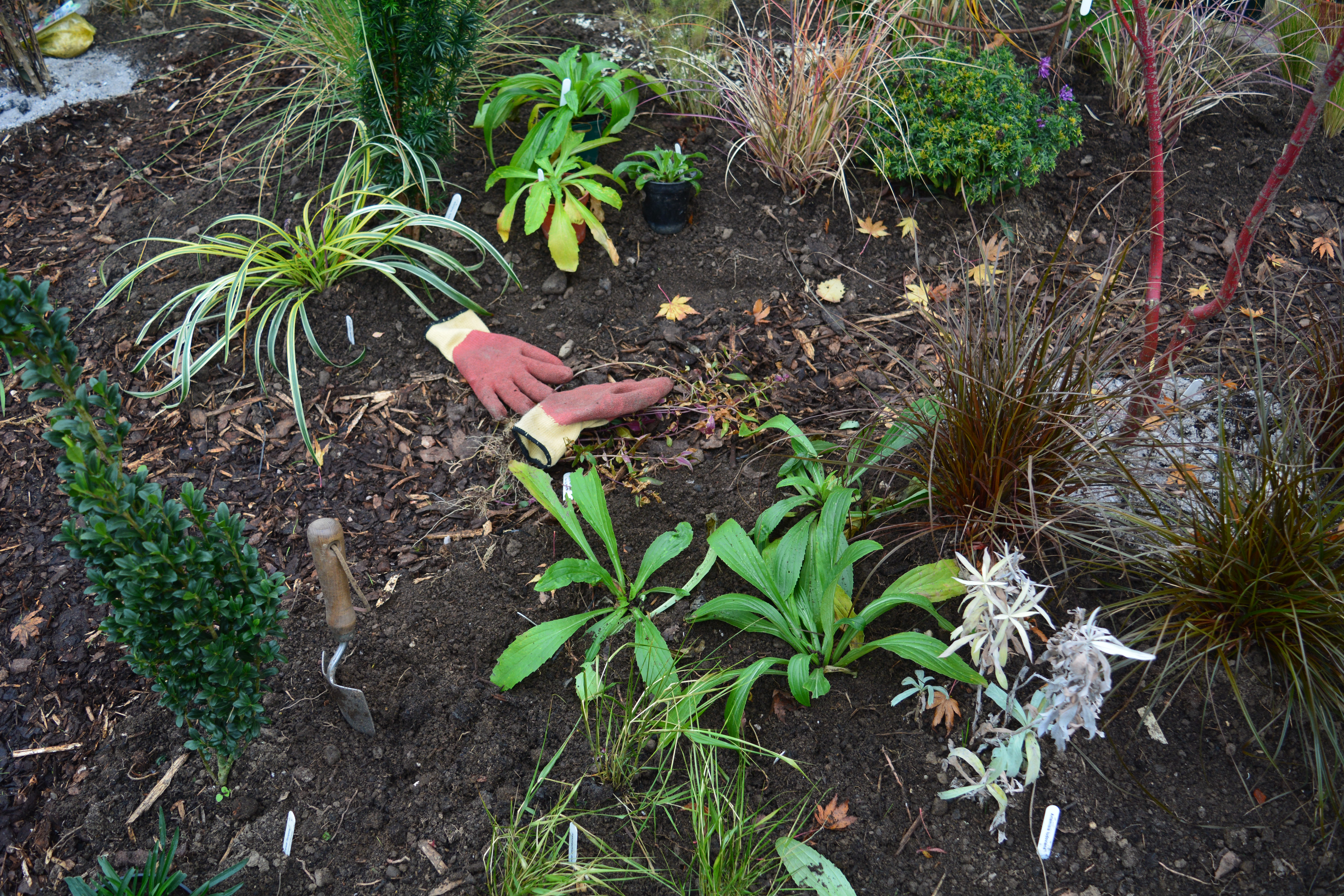
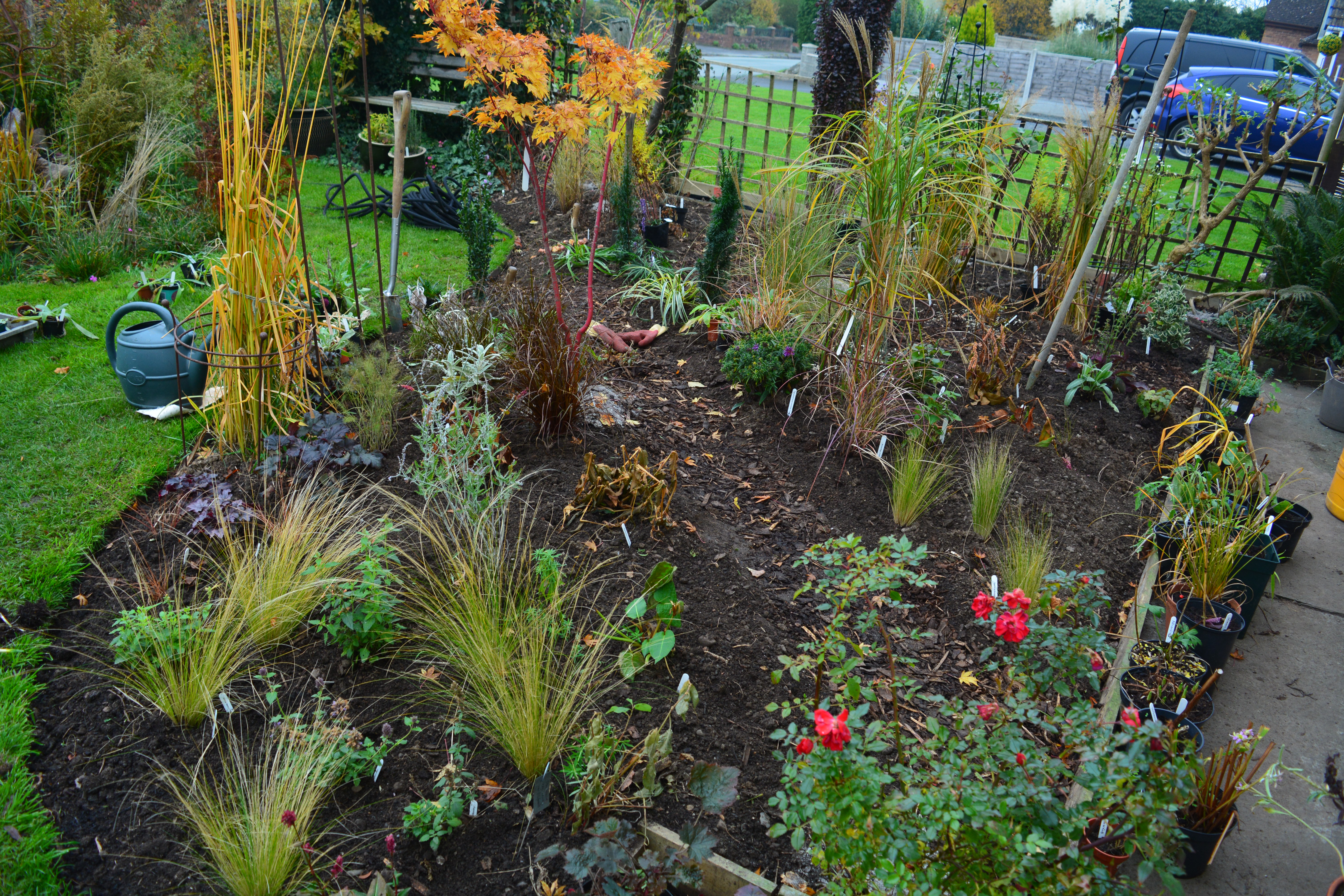
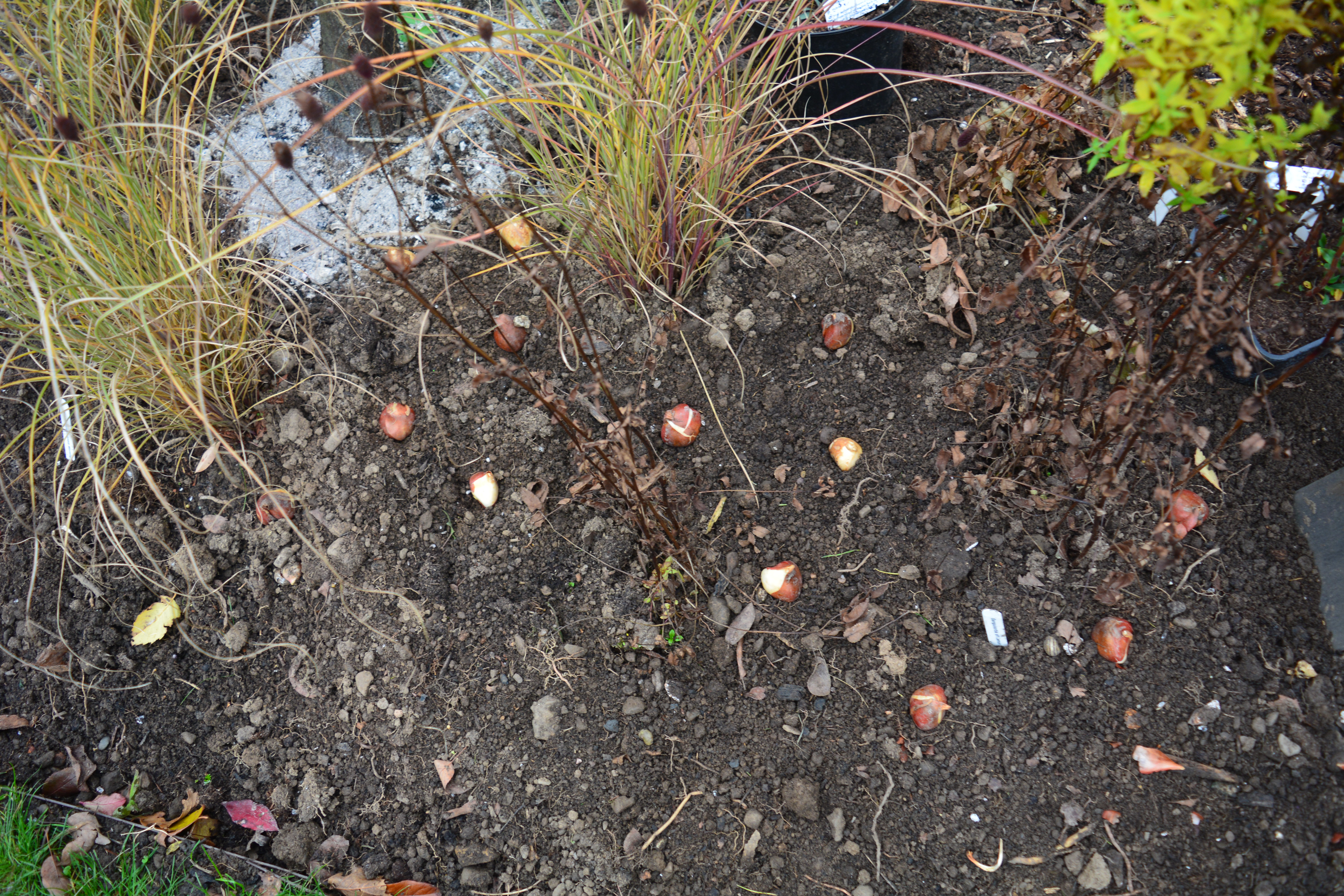
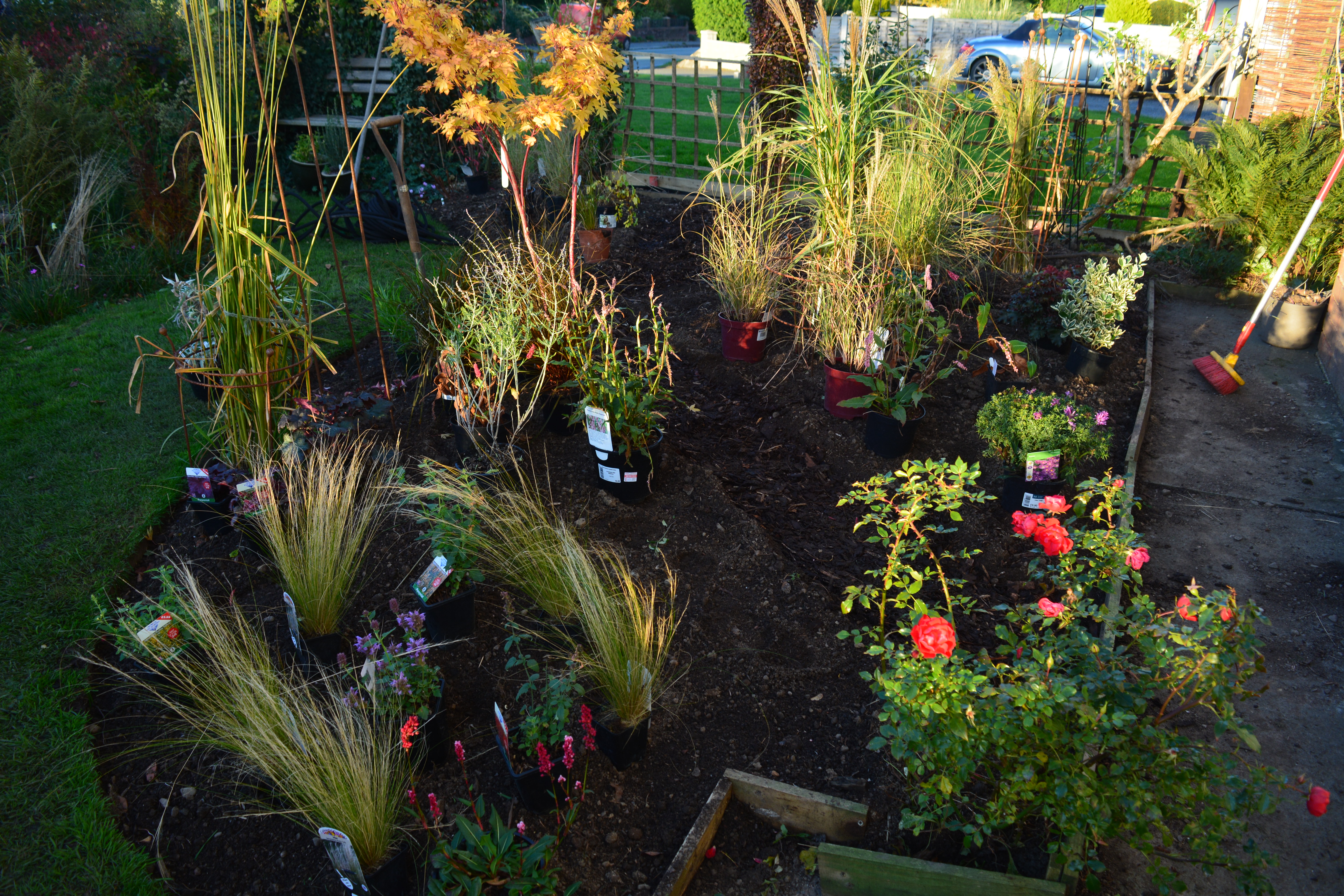
My diary moved on to look at us planting up the newly created border which used to be our Hot Border, “After a few days away in London we returned refreshed and ready to continue with our new border. Planting grasses and herbaceous perennials topped off by bulb planting gave us several days work. Work we love doing!”

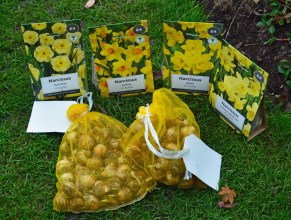
“We planted hundreds of  bulbs and dozens of grasses and perennials, all in the dry week given to us in mid-November.”


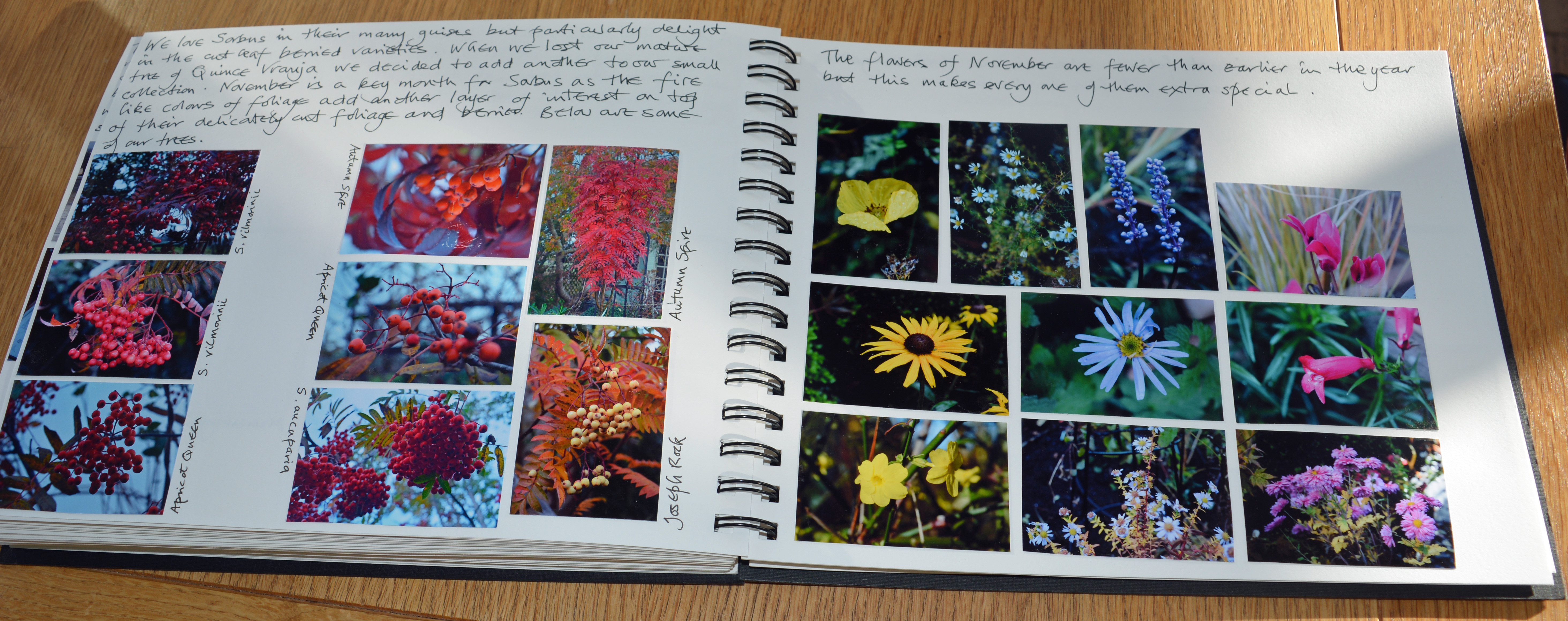
Next I moved on to consider one of our favourite tree families the Sorbus and on the opposite page I sought out flowers choosing to brighten us up in gloomy November.

“We love Sorbus in their many guises but particularly delight in the cut leaf berrying varieties. When we lost our mature tree of Quince vranja we decided to replace it with another Sorbus to add to our small collection. November is the key month for Sorbus as the fire like colours of foliage adds another layer of interest on top of their delicately cut foliage and their colourful berries. Below are some of our Sorbus trees.

Sorbus Joseph Rock                 Sorbus Autumn Spire
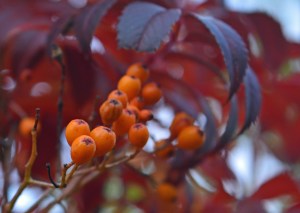
Sorbus Autumn Spire                                          Sorbus aucuparia
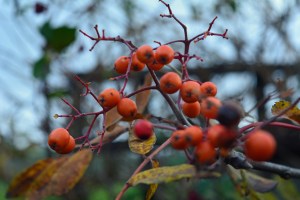
Sorbus Apricot Queen                                       Sorbus Apricot Queen

Sorbus vilmorinii                                                 Sorbus vilmorinii

On the page opposite the Sorbus I share the flowers that cheer up the November garden.

“The flowers of November are fewer than earlier in the year but this makes every one of them extra special.”


The colour orange features on the left hand side of my next double page spread, where I look at the variety of orange featuring in our November garden.
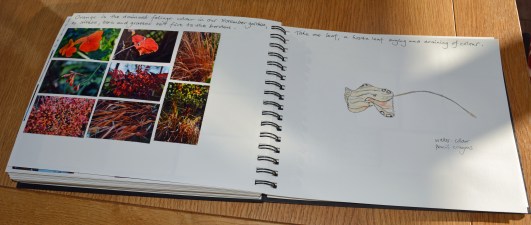
“Orange is the dominant foliage colour in our November garden, as shrubs, trees and grasses set fire to the borders.”


      

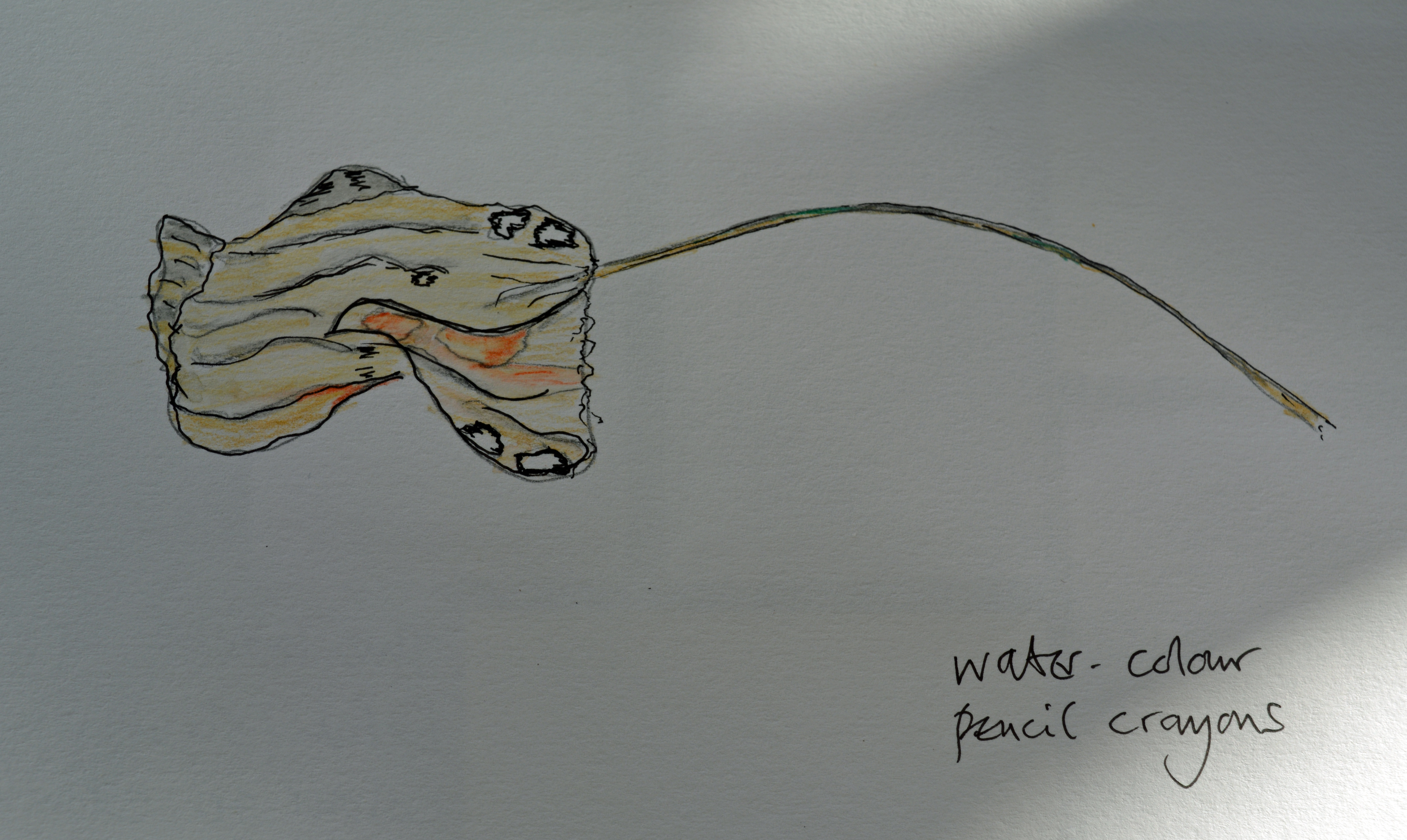
Opposite the oranges was a delicate watercolour pencil sketch of a hosta leaf, about which I wrote, “Take one leaf, a hosta leaf drying out and draining of colour.”

The final page for November considers colours once again. November was a very colourful month overall.

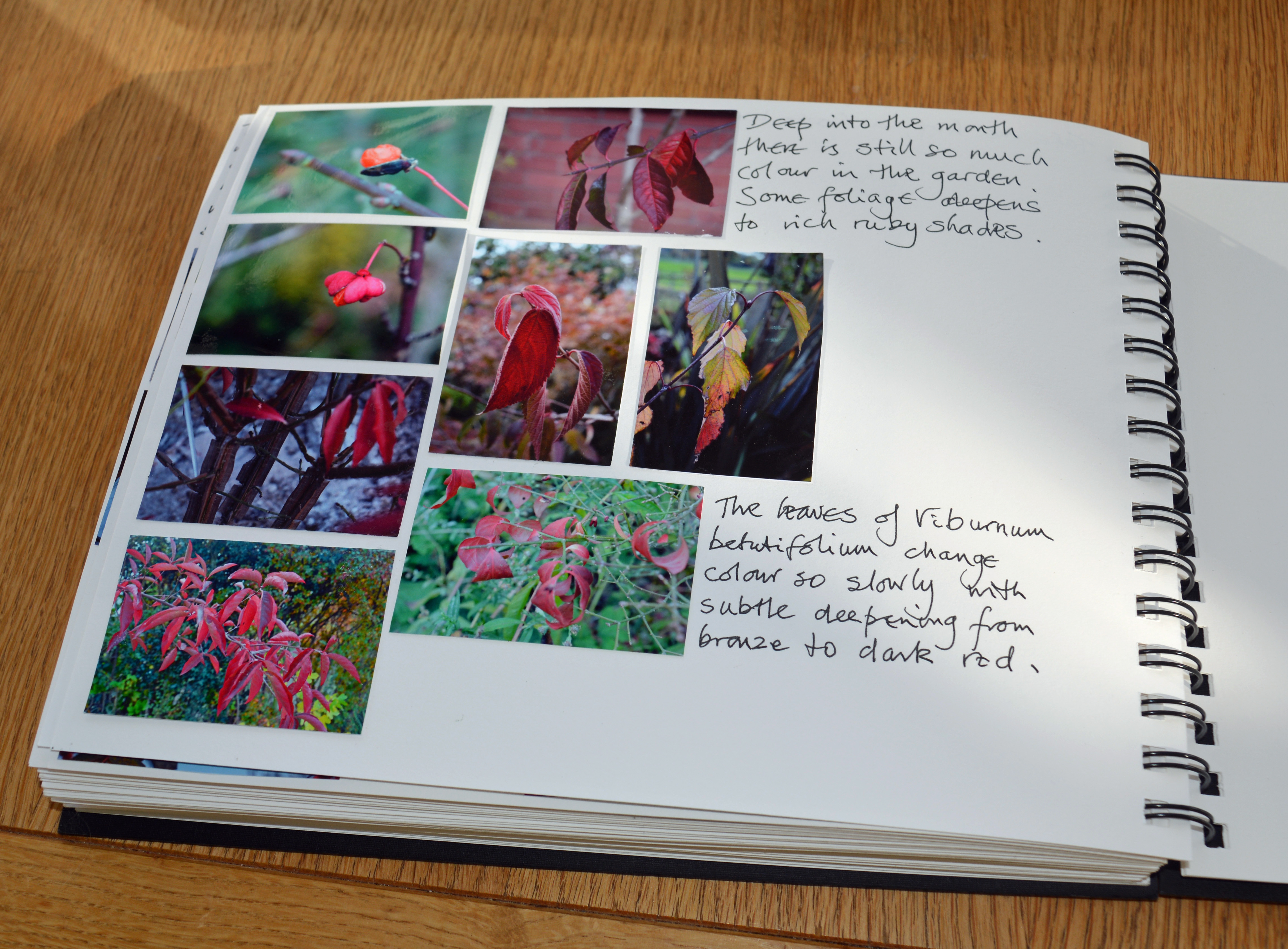
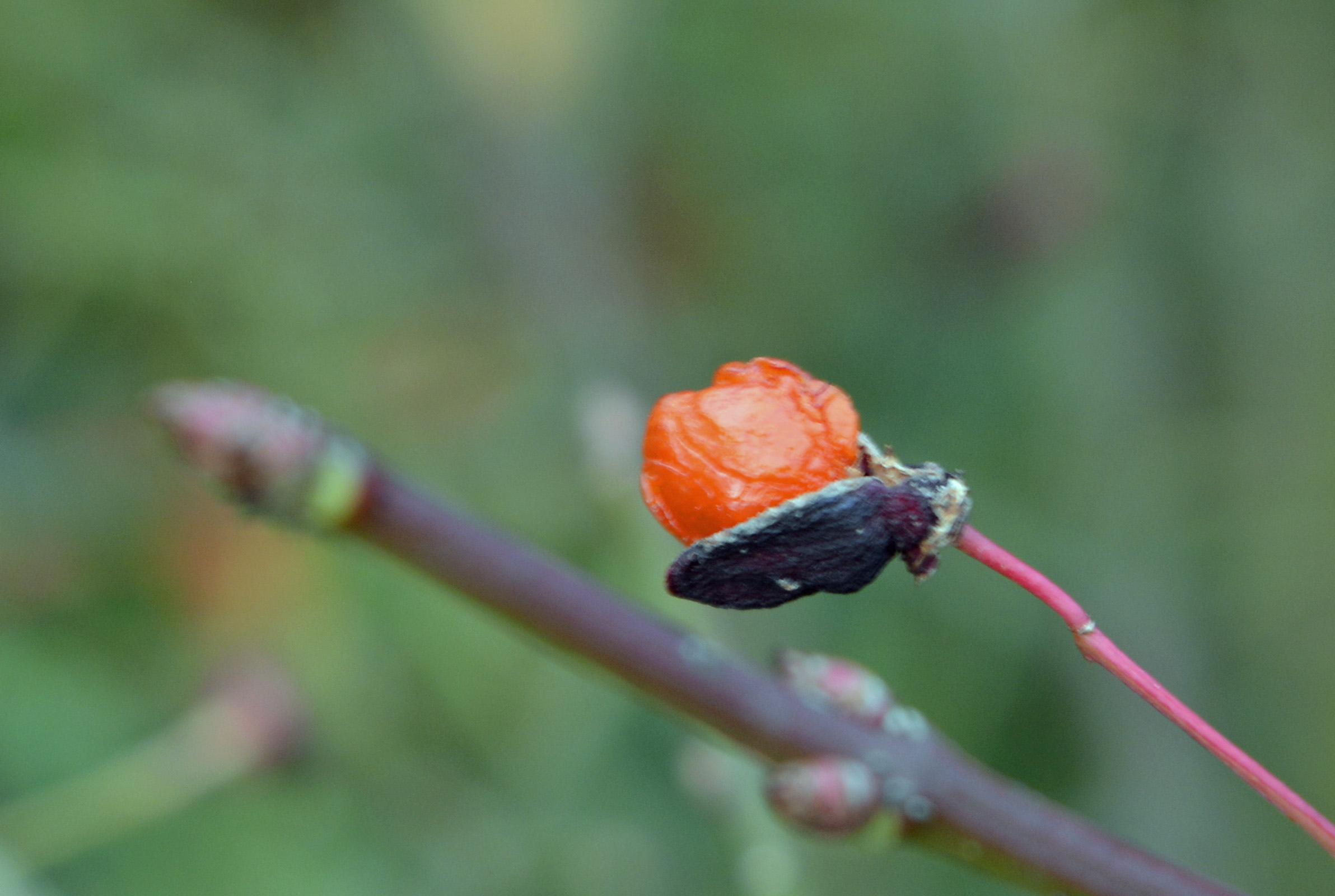
A set of eight photos display colours from our shrubs, and alongside I wrote, “Deep into the month there is still so much colour in the garden. Some foliage deepens to  rich ruby shades.”

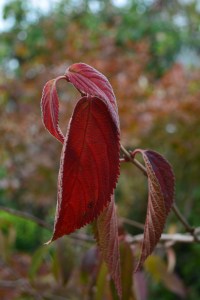
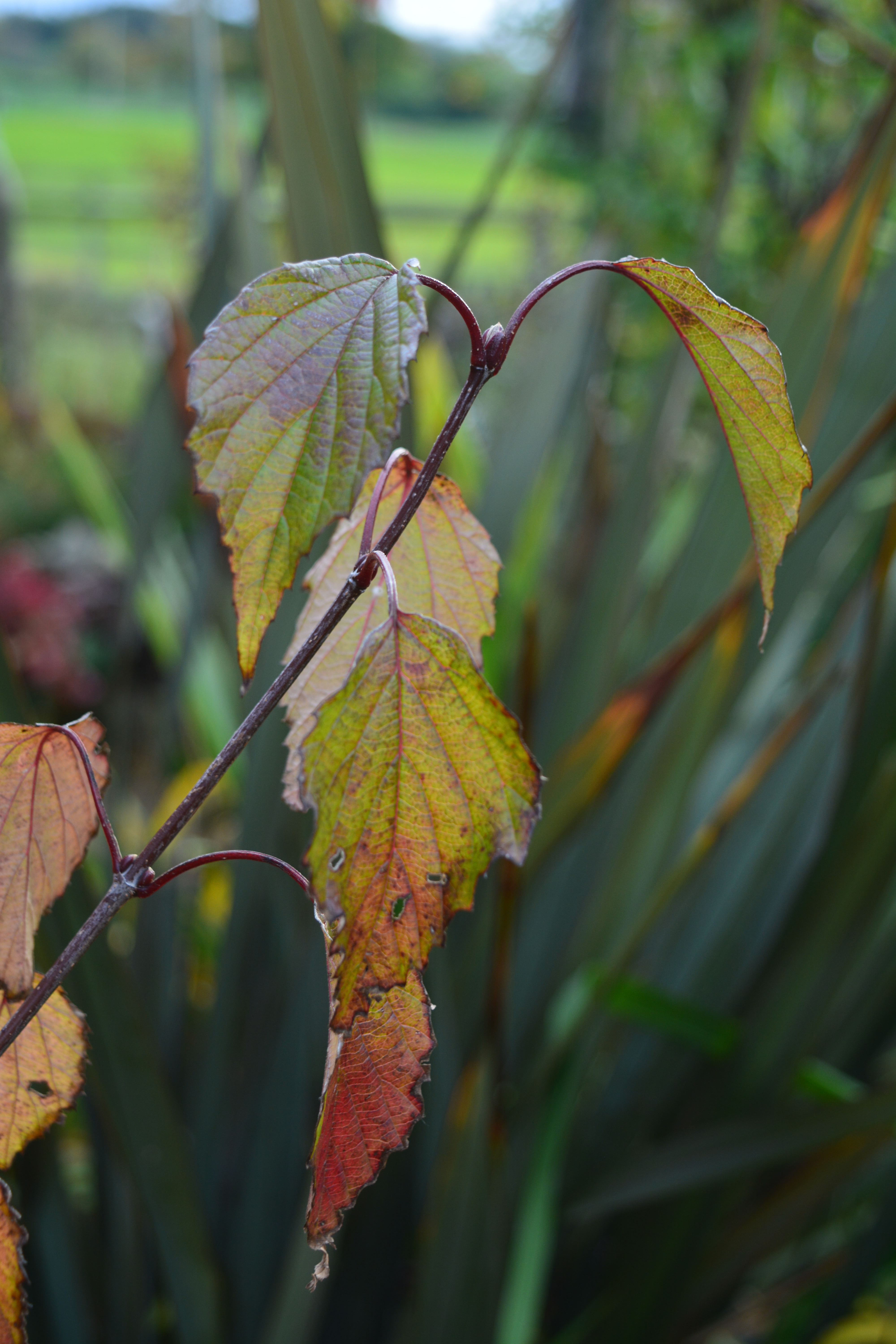
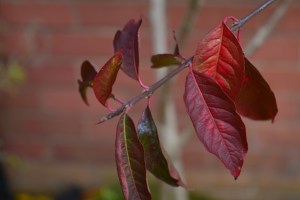
The final photo is of the foliage of a special small tree, a viburnum with leaves which make you think it is a betula at first sight. “The leaves of Viburnum betulifolium change colour so slowly with subtle deepening from bronze to dark red.”

   

So there is just one monthly report left to write in my Garden Journal for 2018, December, which will be my next post in this series.

Categories
autumn autumn colours climbing plants colours garden design garden photography gardening gardens grasses hardy perennials light light quality ornamental grasses ornamental trees and shrubs pelargoniums Shropshire shrubs South Shropshire

My Garden Journal 2018 – October

Here we are in October, my 10th visit to my garden journal this year. I love October, with its special rich light and the fire and flame colours of foliage on trees, shrubs and perennial plants alike.

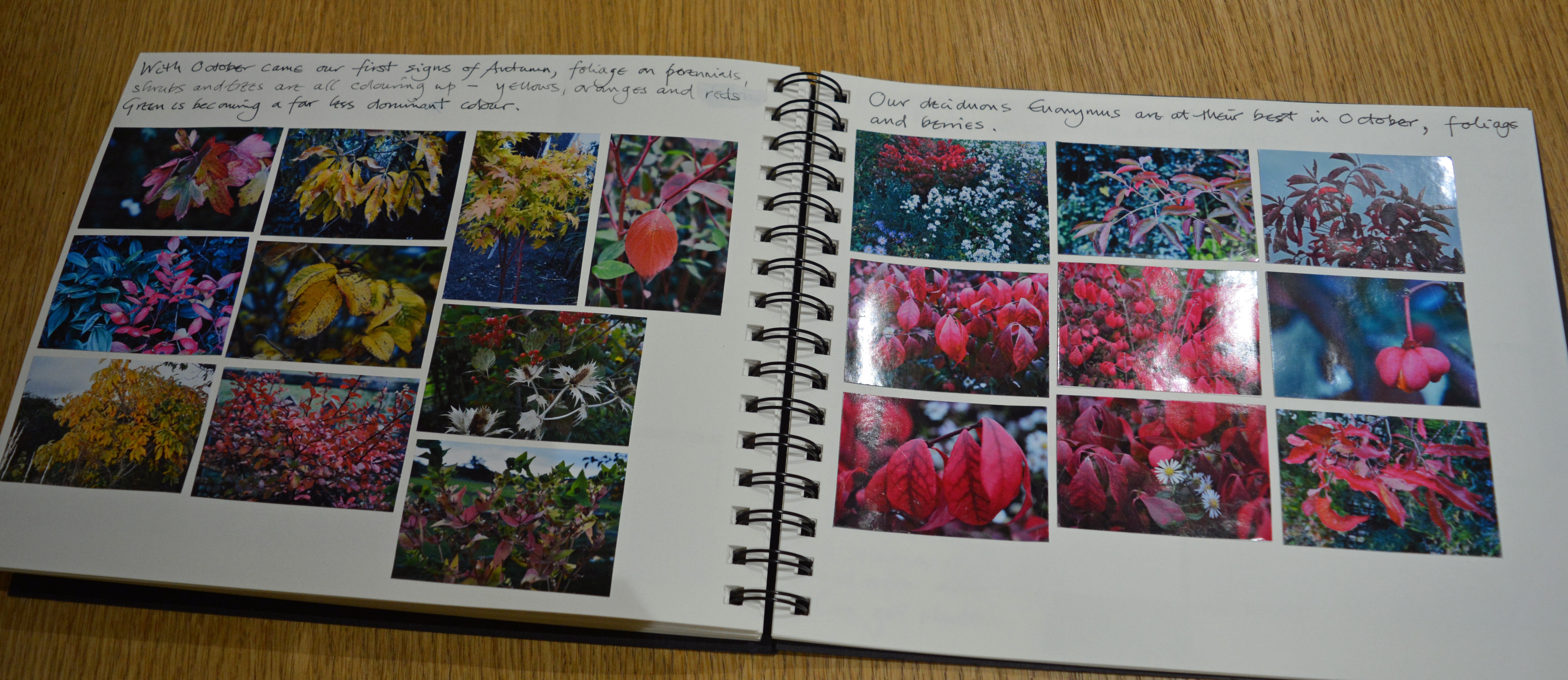
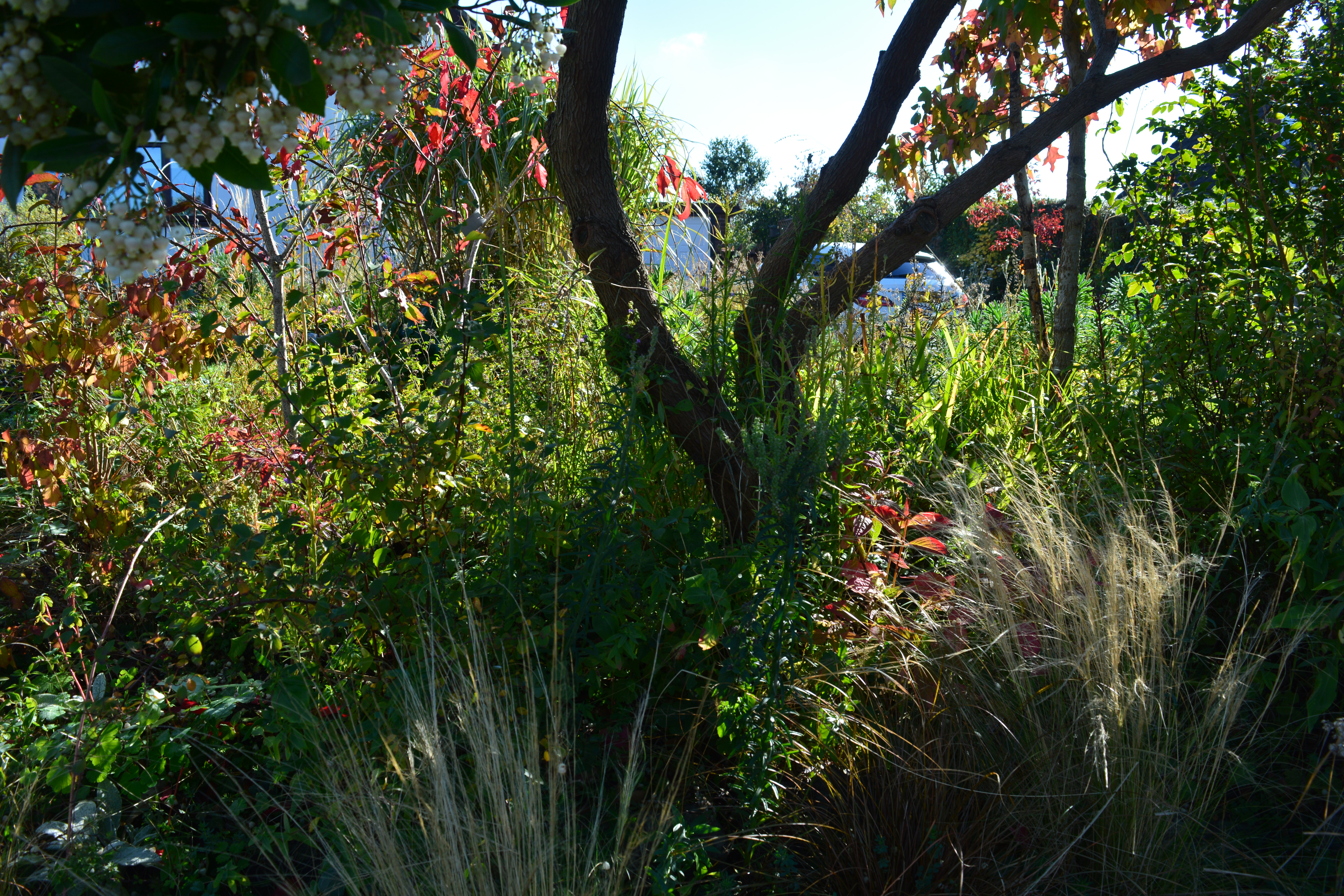
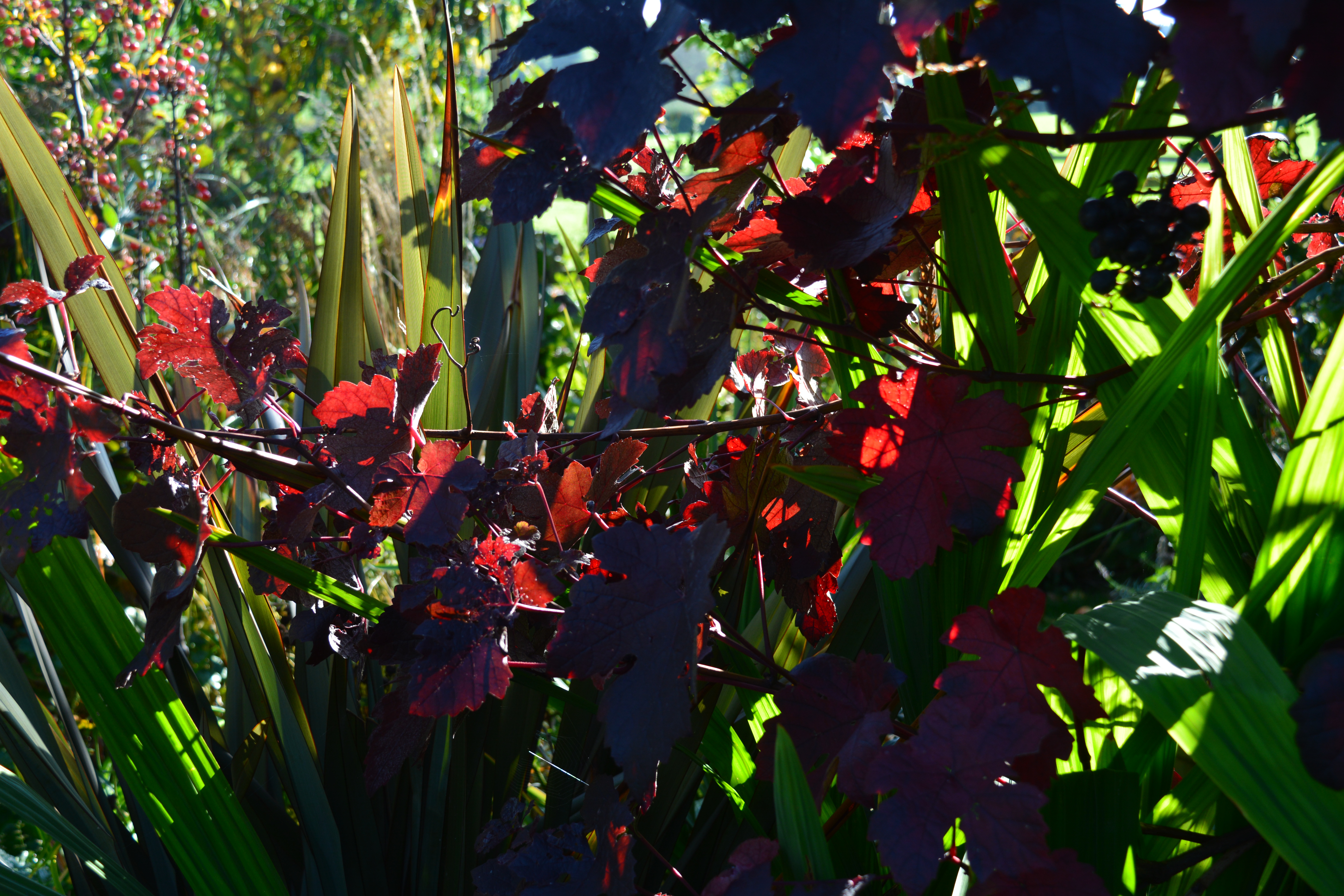
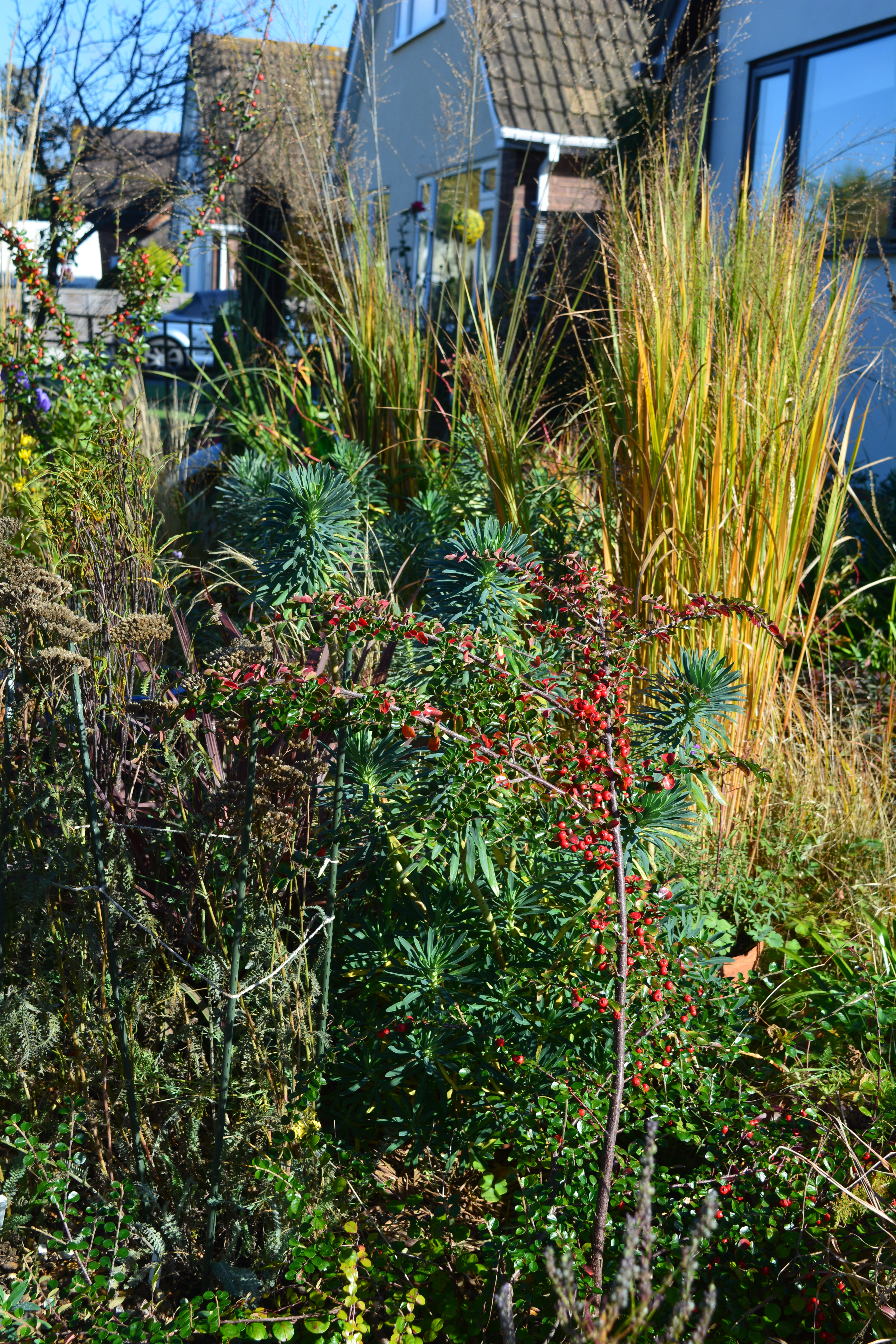
The first words in my October journal were, “With October came our first signs of Autumn, foliage on perennials, shrubs and trees are all colouring up – yellows, oranges and reds. Green is becoming a far less dominant colour.” I have taken lots of colourful photos to share what we can see each time we wander out into our garden.


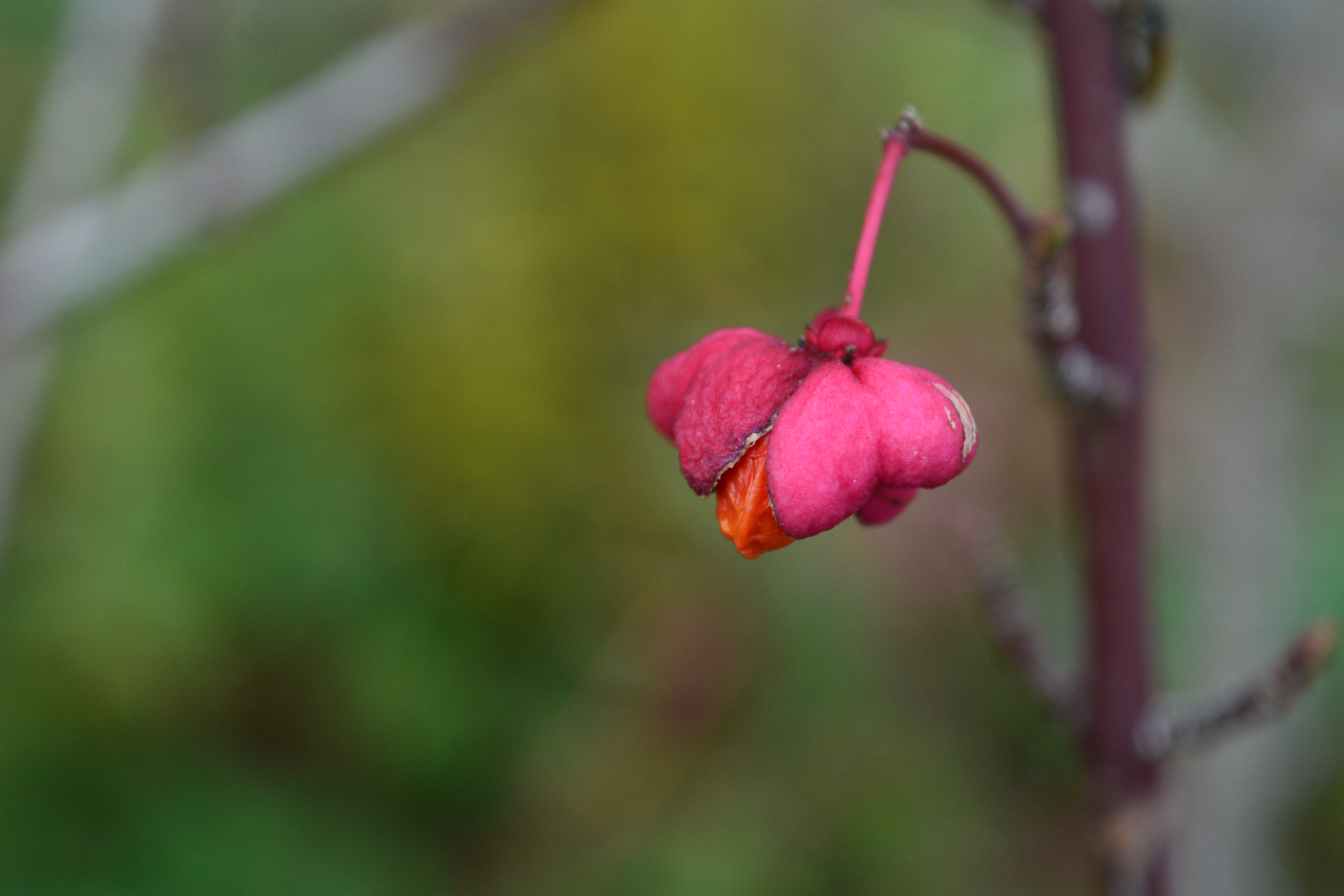
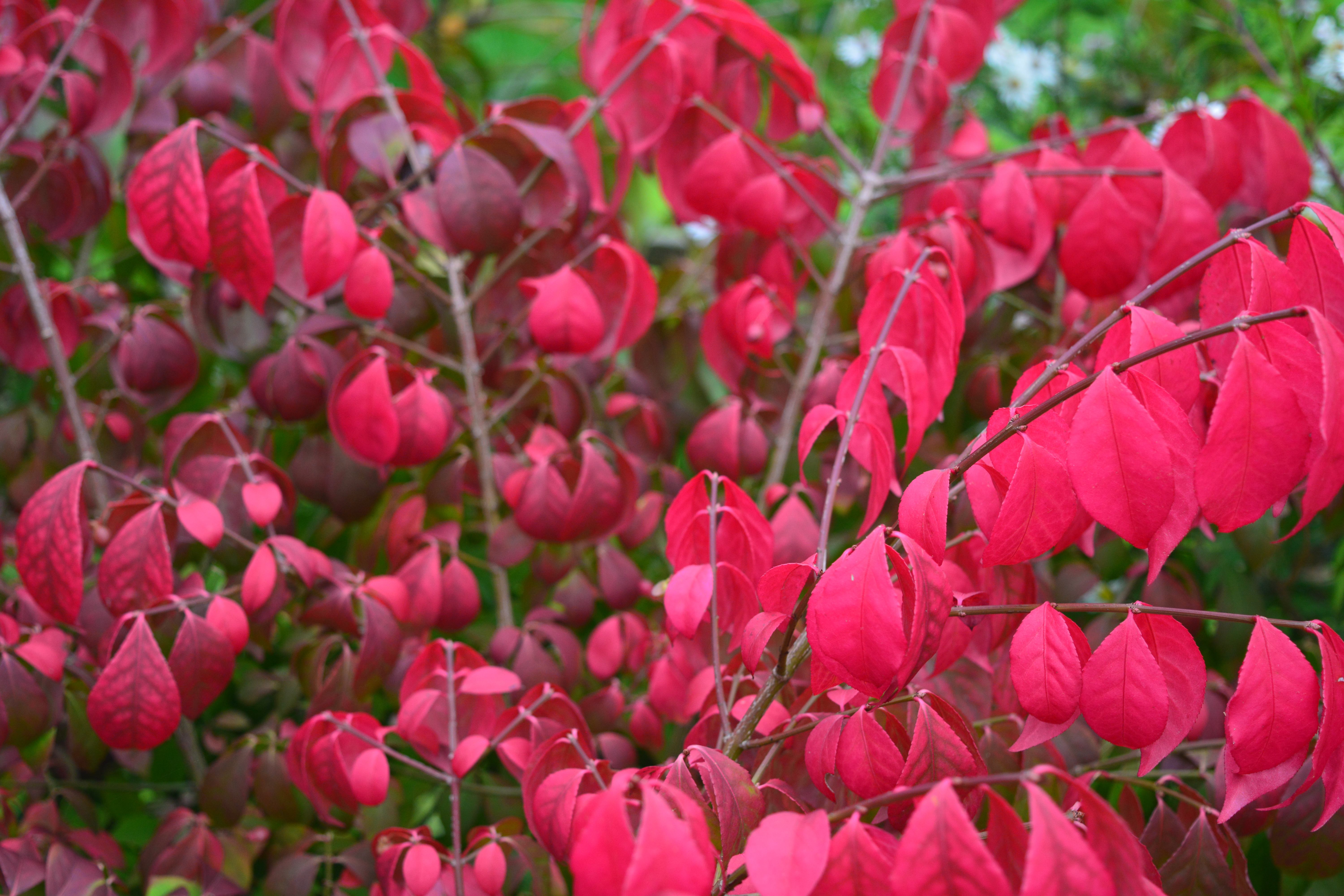
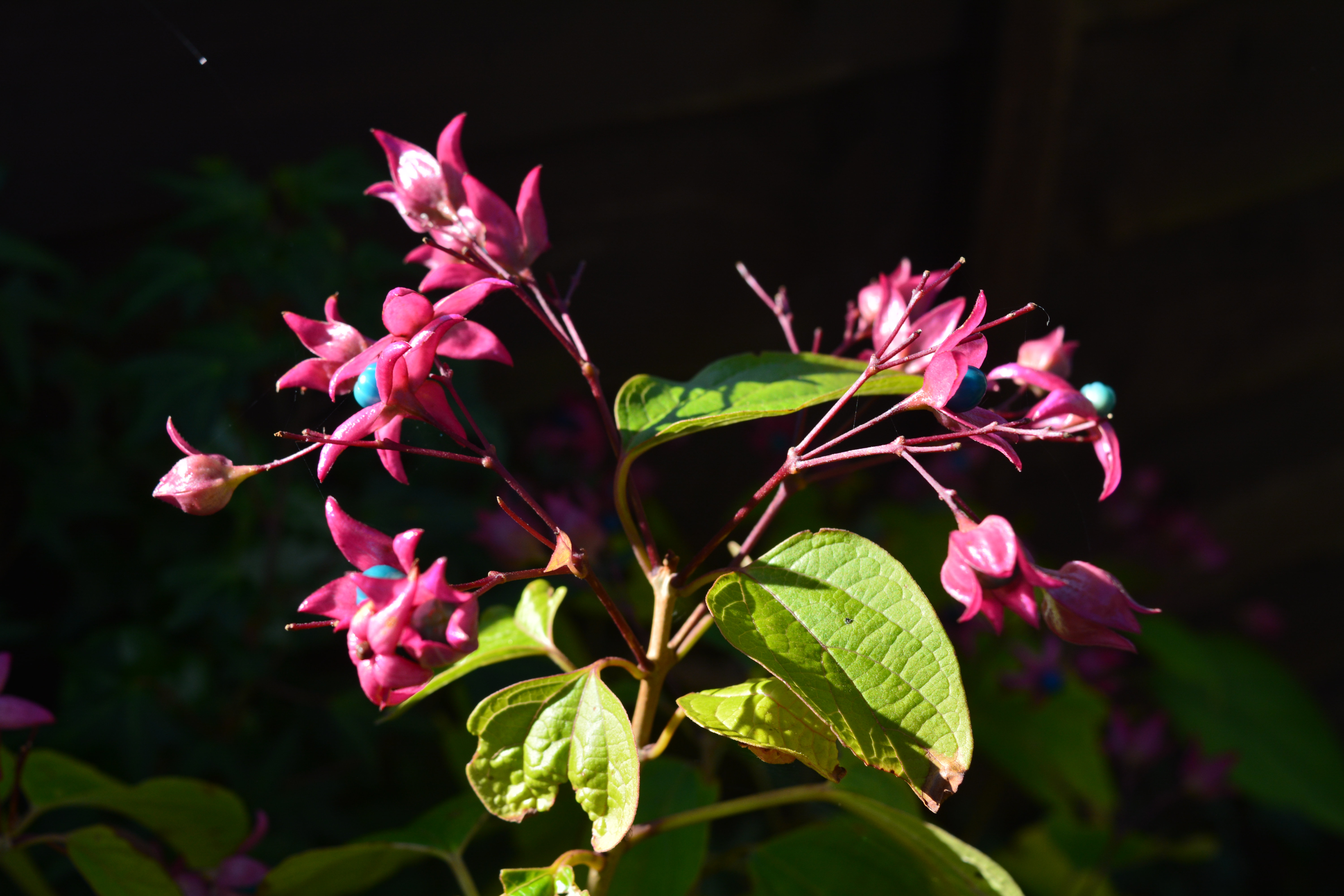
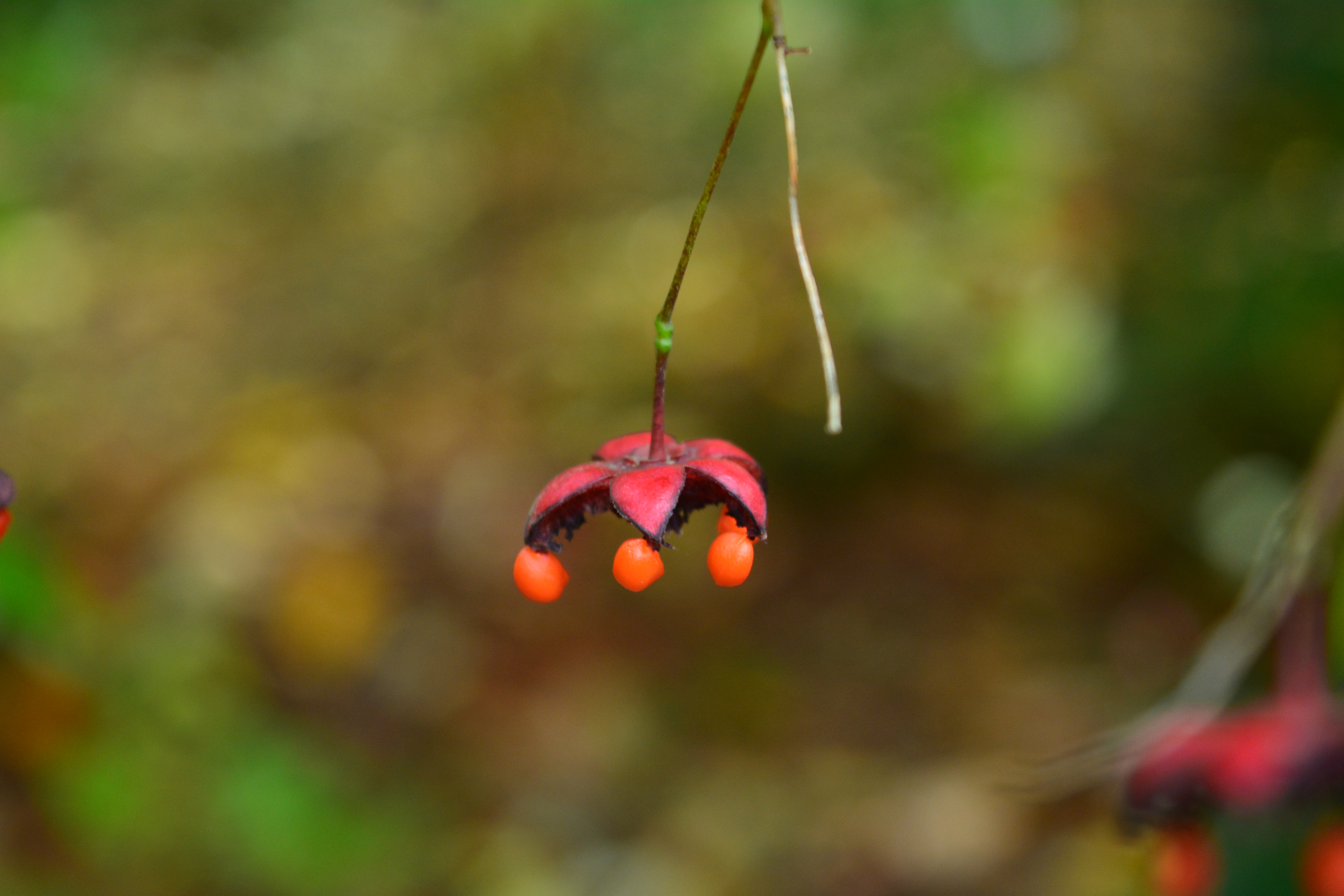
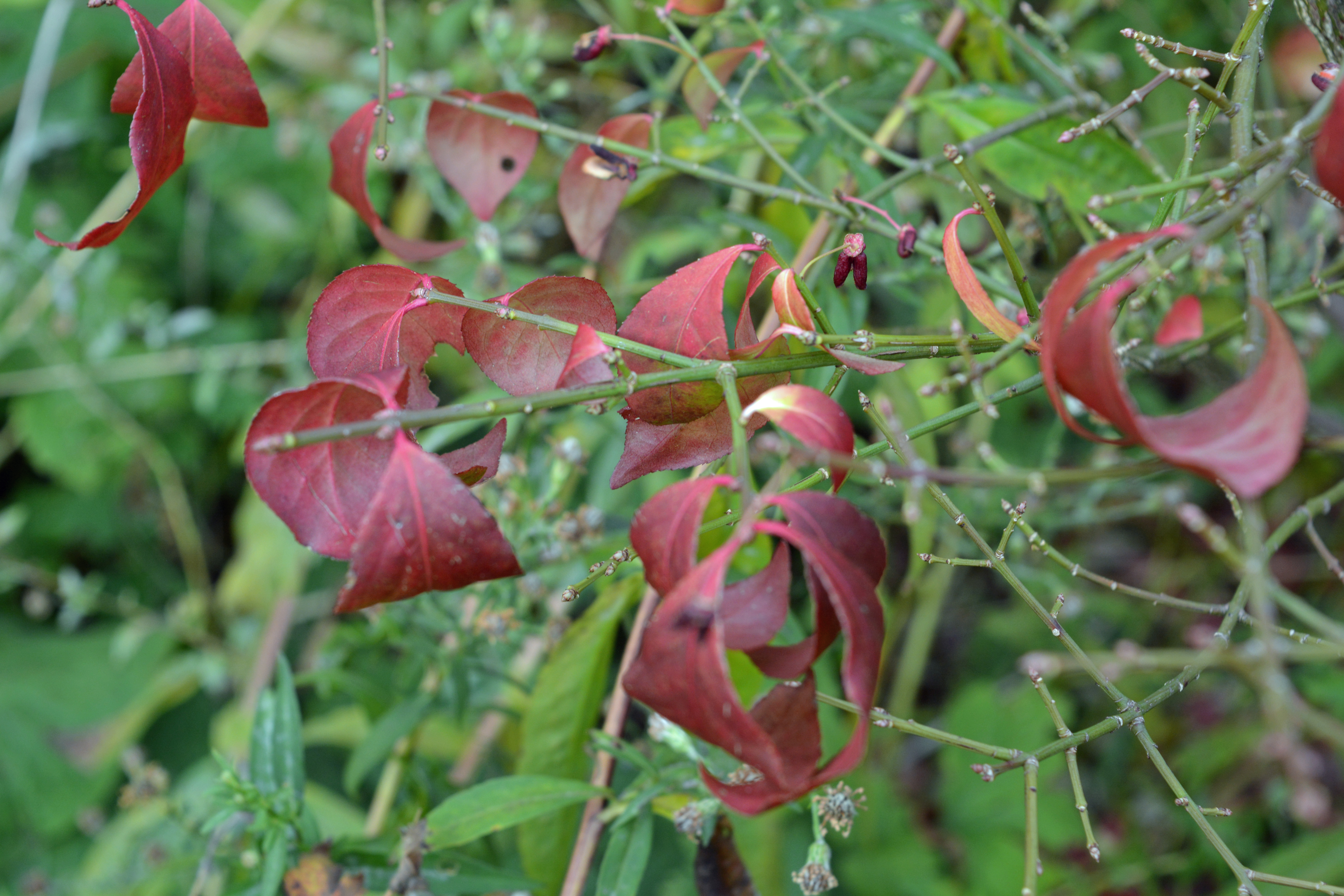
On the next page my photos one of the most colourful of all autumnal shrubs, the deciduous Euonymus, and I wrote, Our deciduous Euonymus are at their best in October, foliage and berries.”


Over on the next double page spread and on the following page too, I continued to look at our current projects.

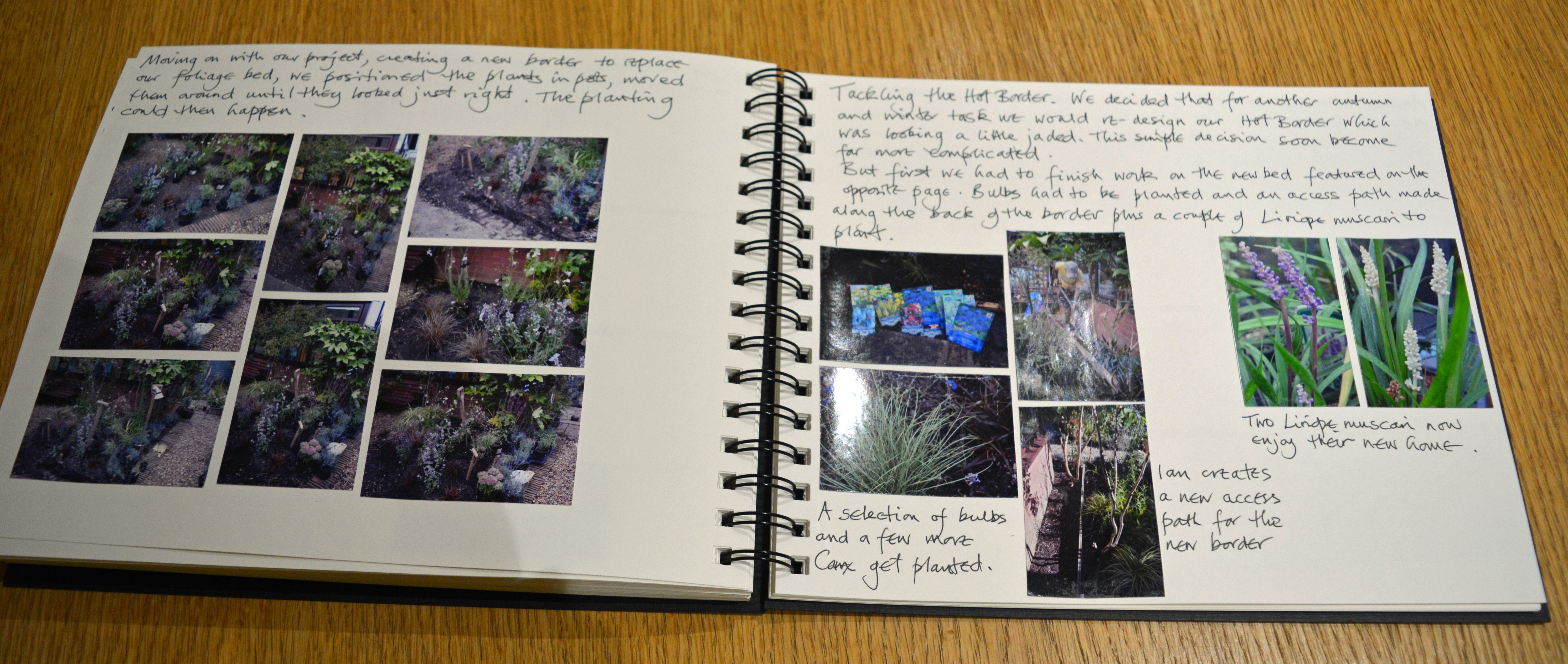
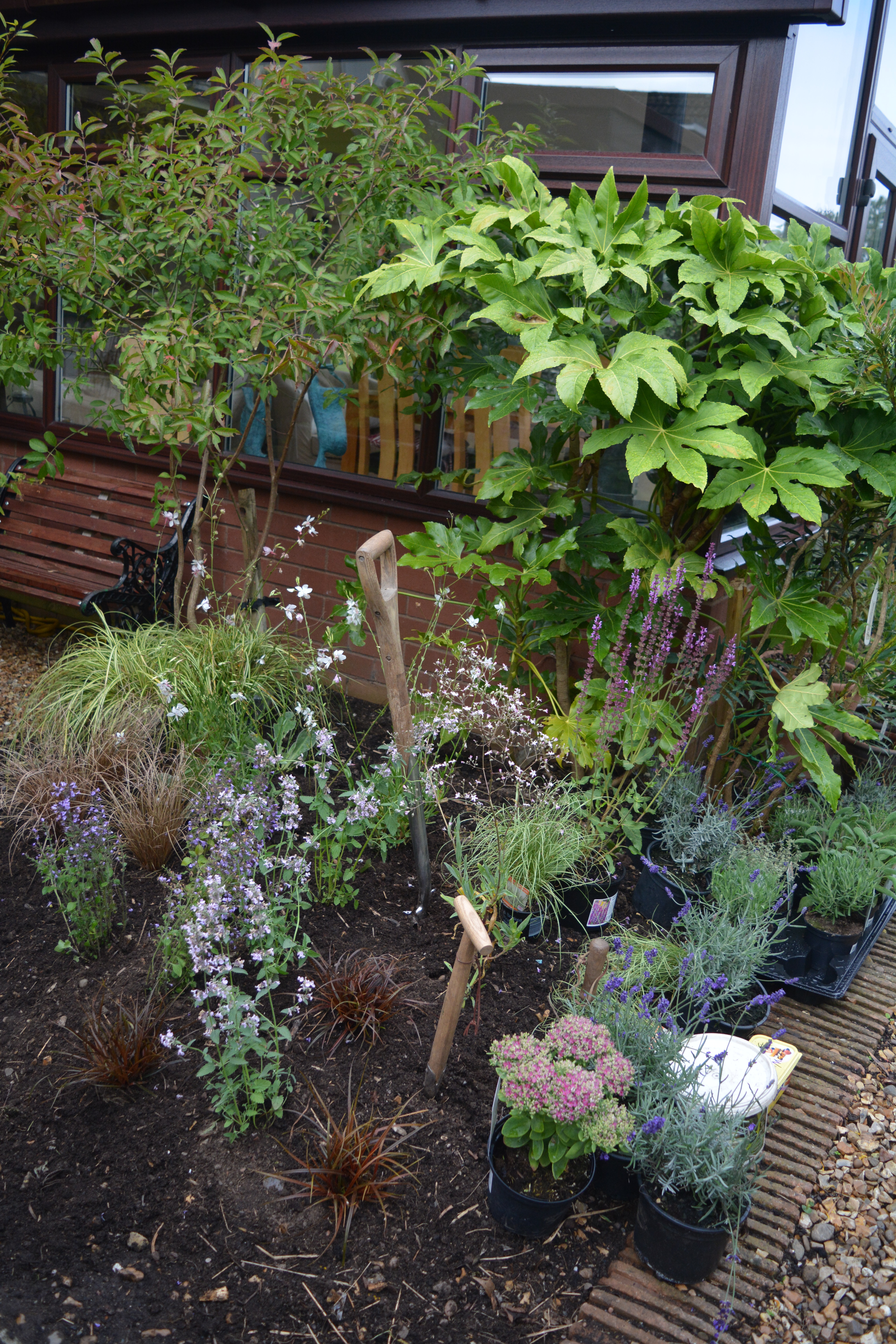
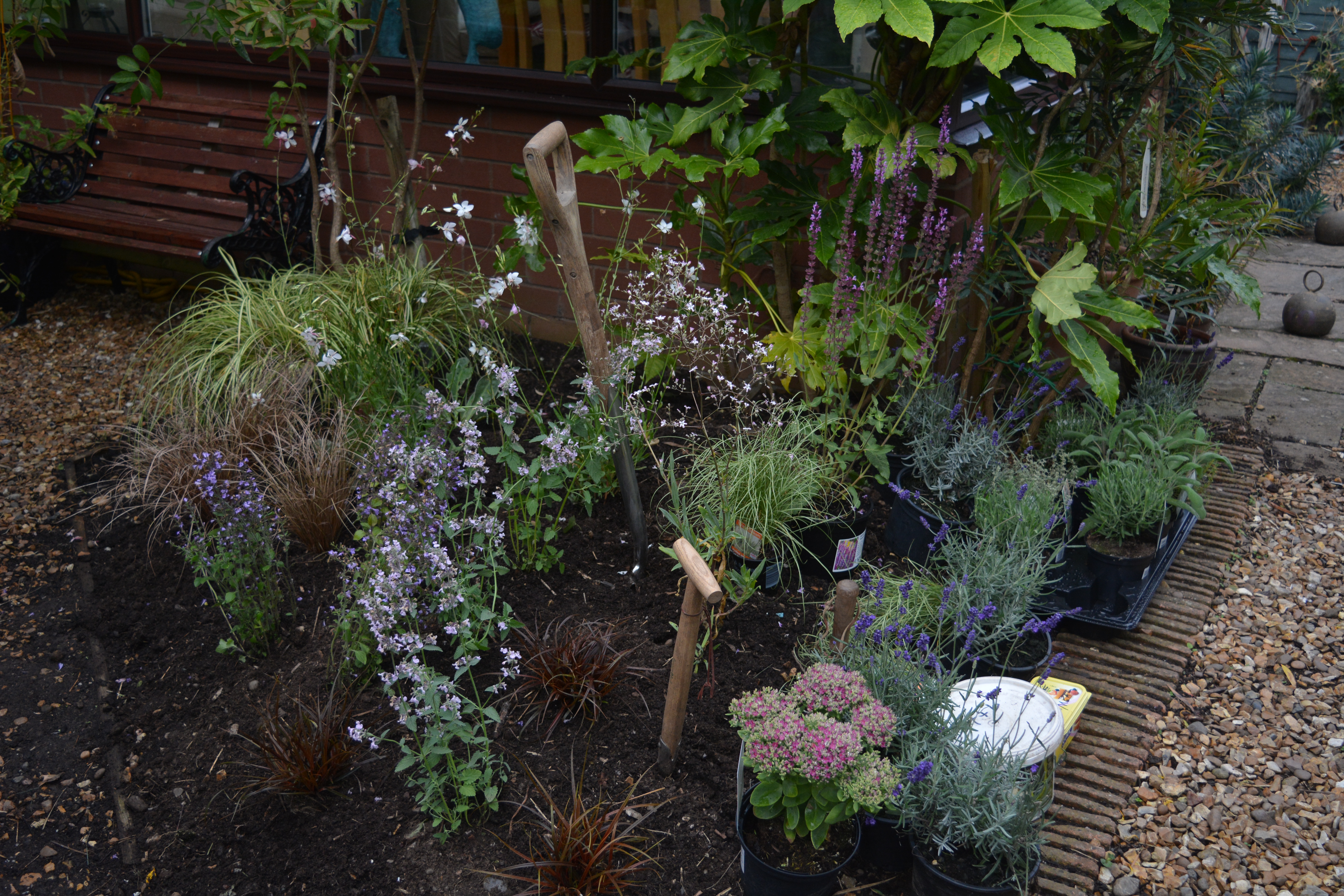
I wrote, Moving on with our project, creating a new border to replace our rather jaded foliage bed, we positioned the plants in pots, moved them around until they looked just right. The planting could then get underway.”

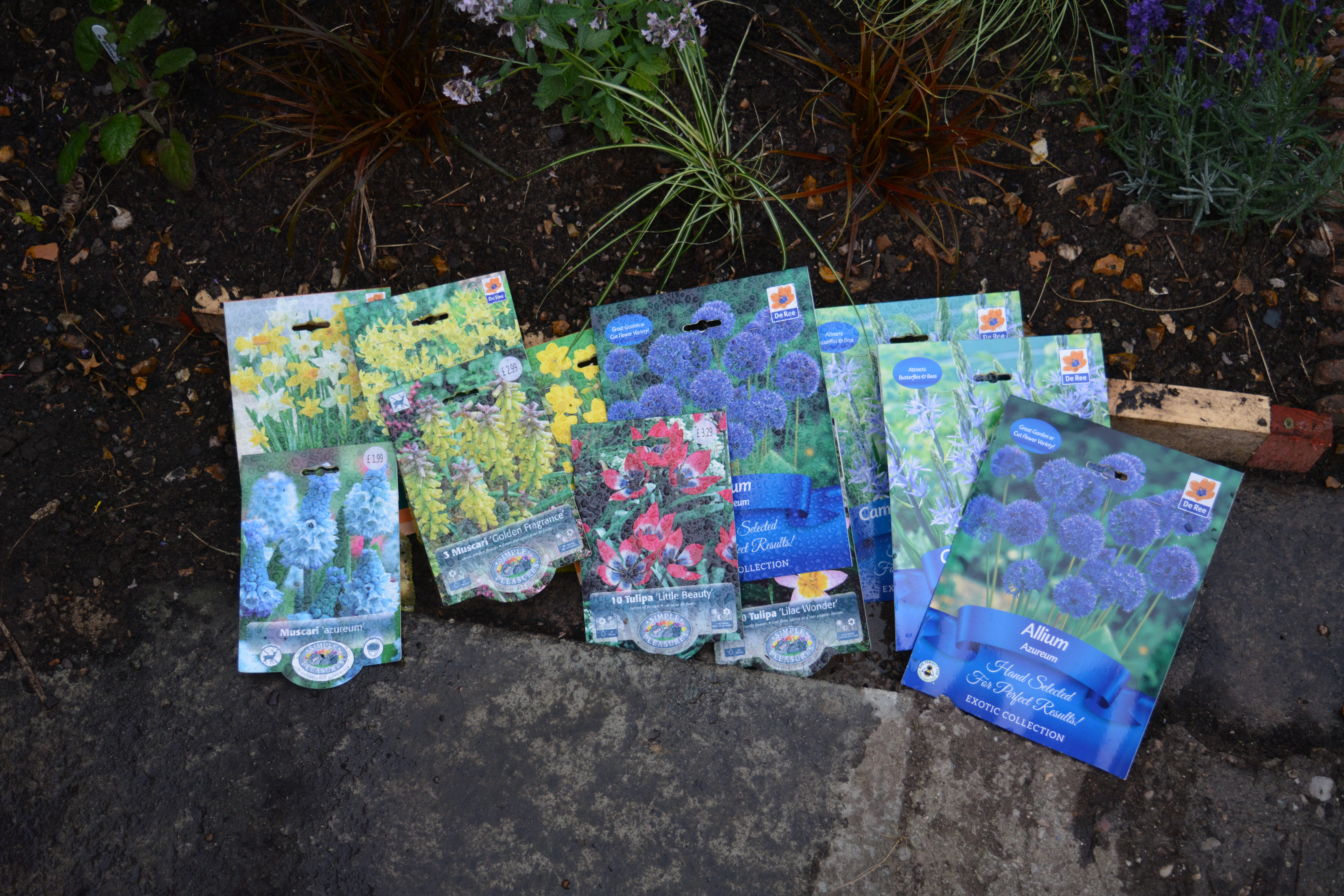
“We decided that for another autumn and winter task we would re-design our Hot Border which was looking a little jaded. This simple decision soon became far more complicated.  We ended up making the bold decision to move the new Hot Garden to a completely different part of our patch. But first we had to finish work on the new bed featured on the opposite page. Bulbs had to be planted and an access path made along the backof the border plus a couple of Liriope muscari needed planting.”

“A selection of bulbs and a few more Carex get planted.”


“Ian, our gardener, creates a new acess path for the back of the new border.”


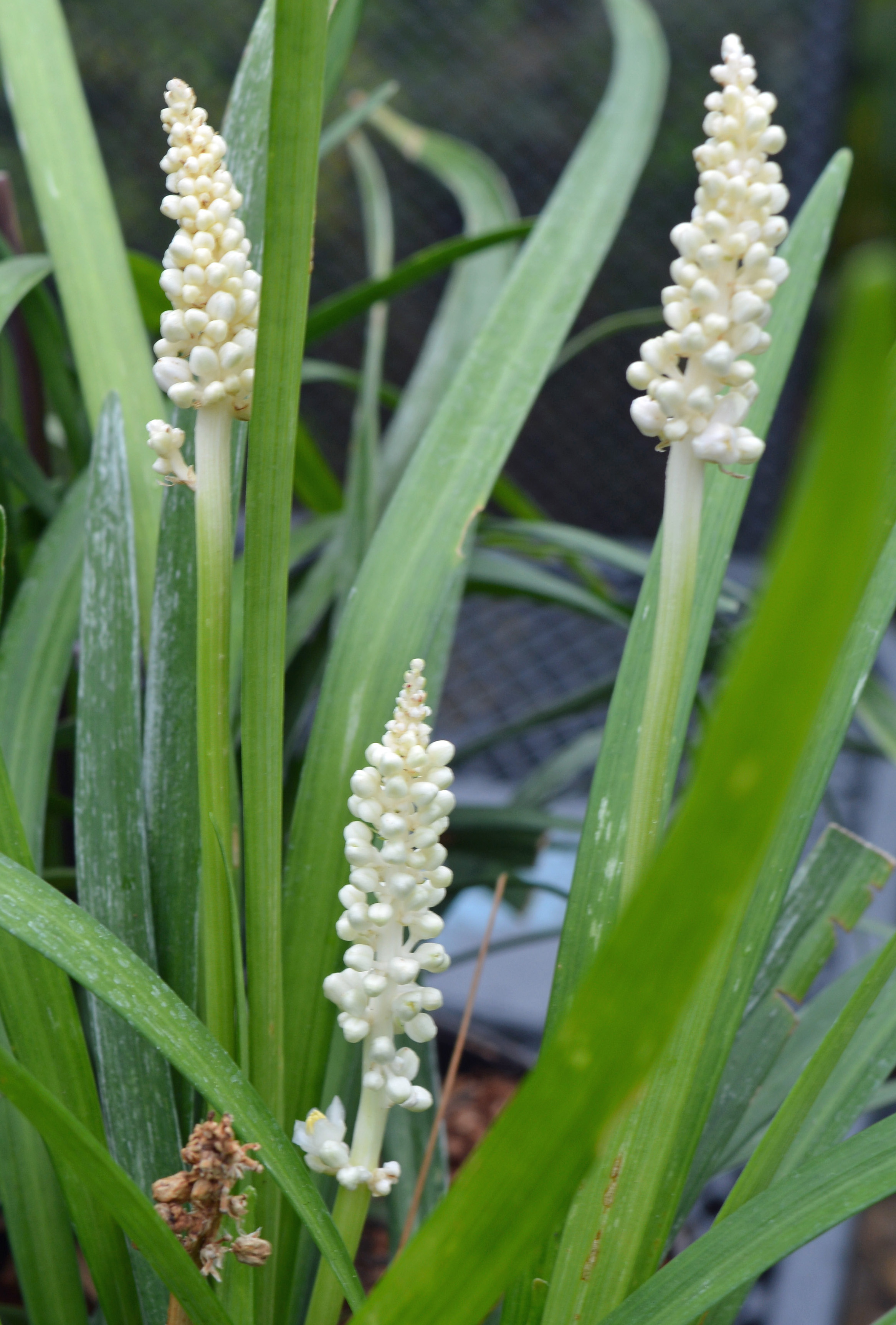
“Two Liriope muscari now enjoy their new home.”

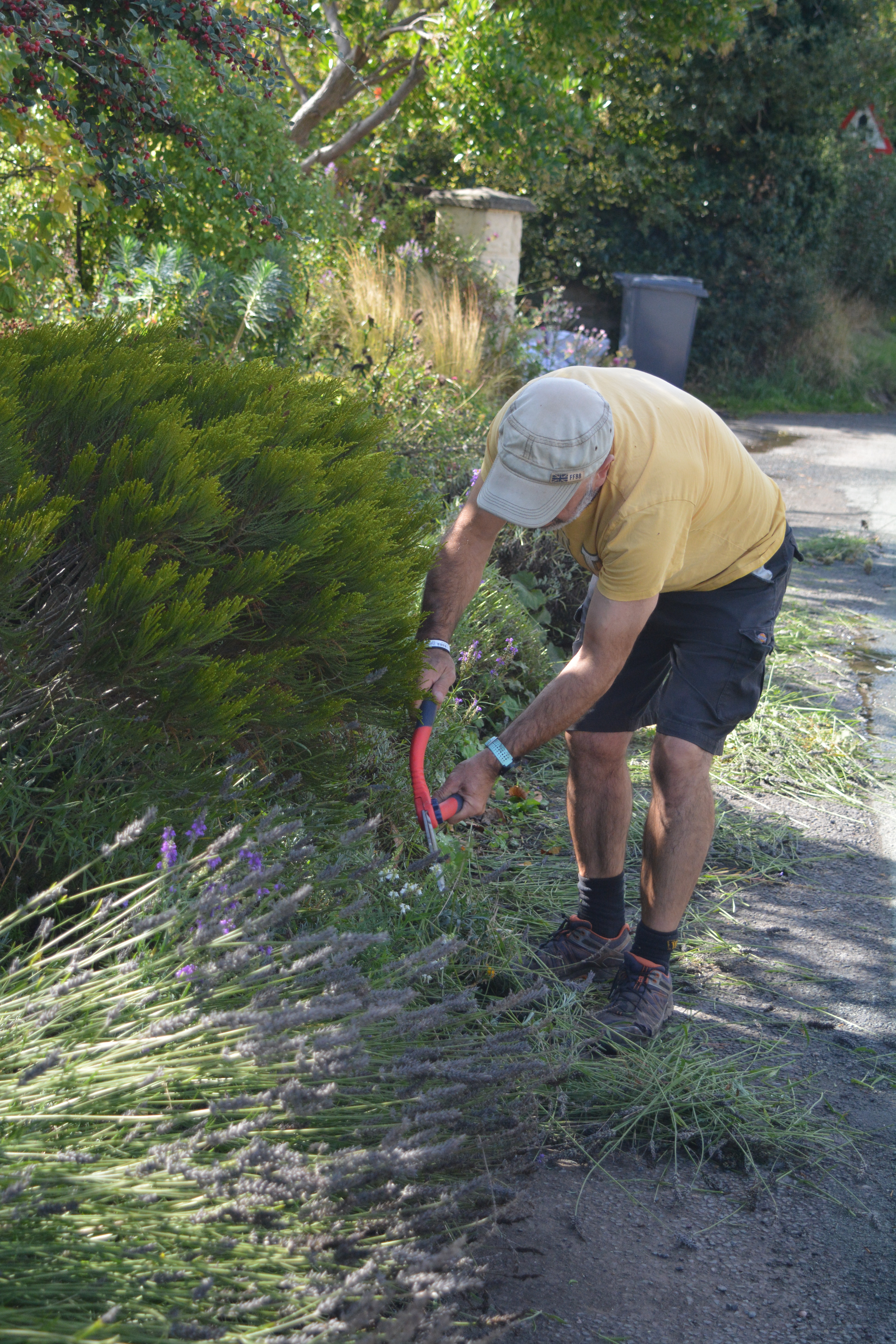
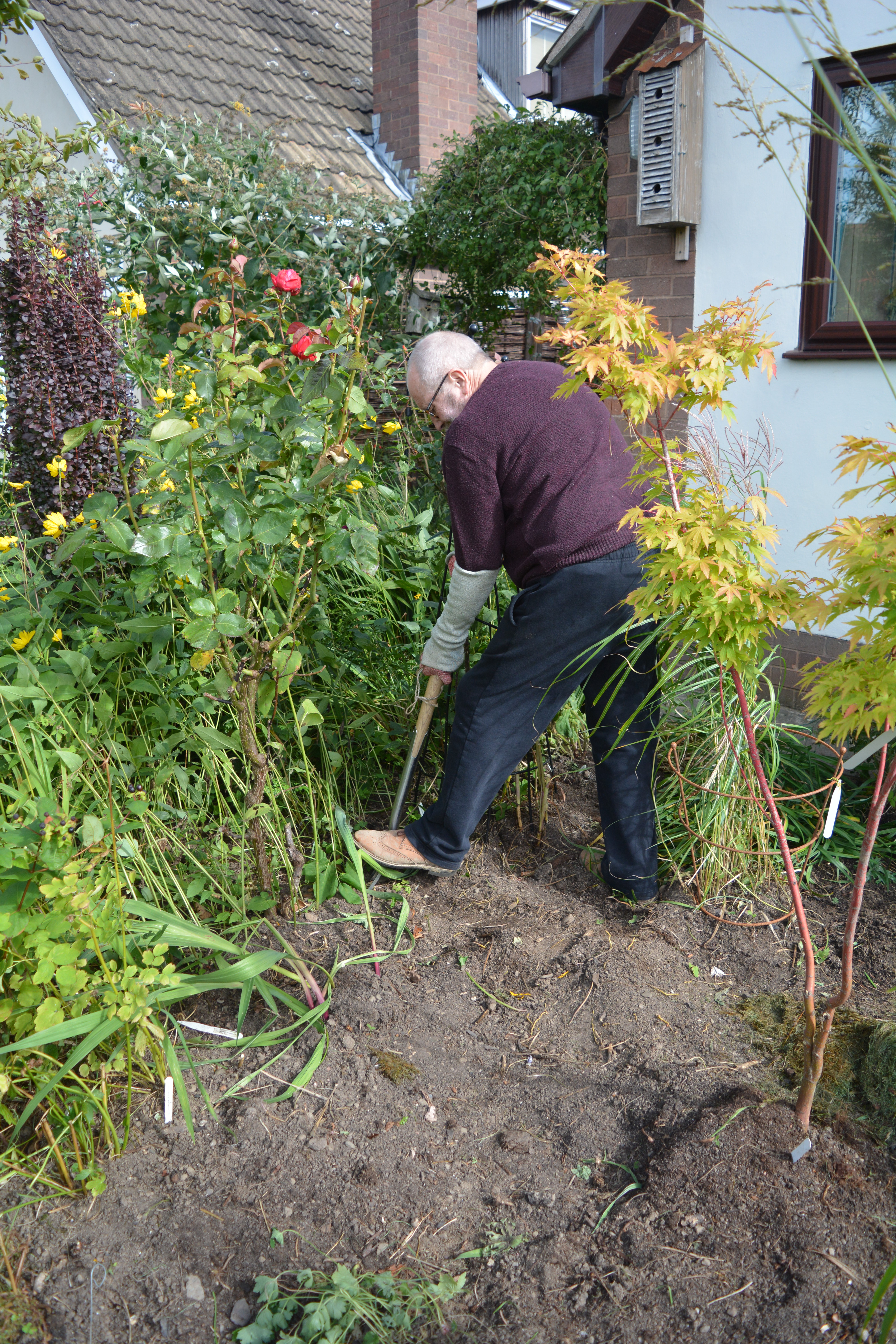
Moving on to the next double page spread I share the beginnings of developing the new front border to replace the original Hot Garden. I wrote,“As Ian trimmed our Lavender Hedge, I began stripping out the original Hot Border. As I dug plants up, Jude repotted any we wished to keep, if necessary splitting them up too.”


The front border soon looked empty and Ian improved the soil by double digging and and incorporating organic compost and forking it all through. It is now easily workable and feels a perfect texture.

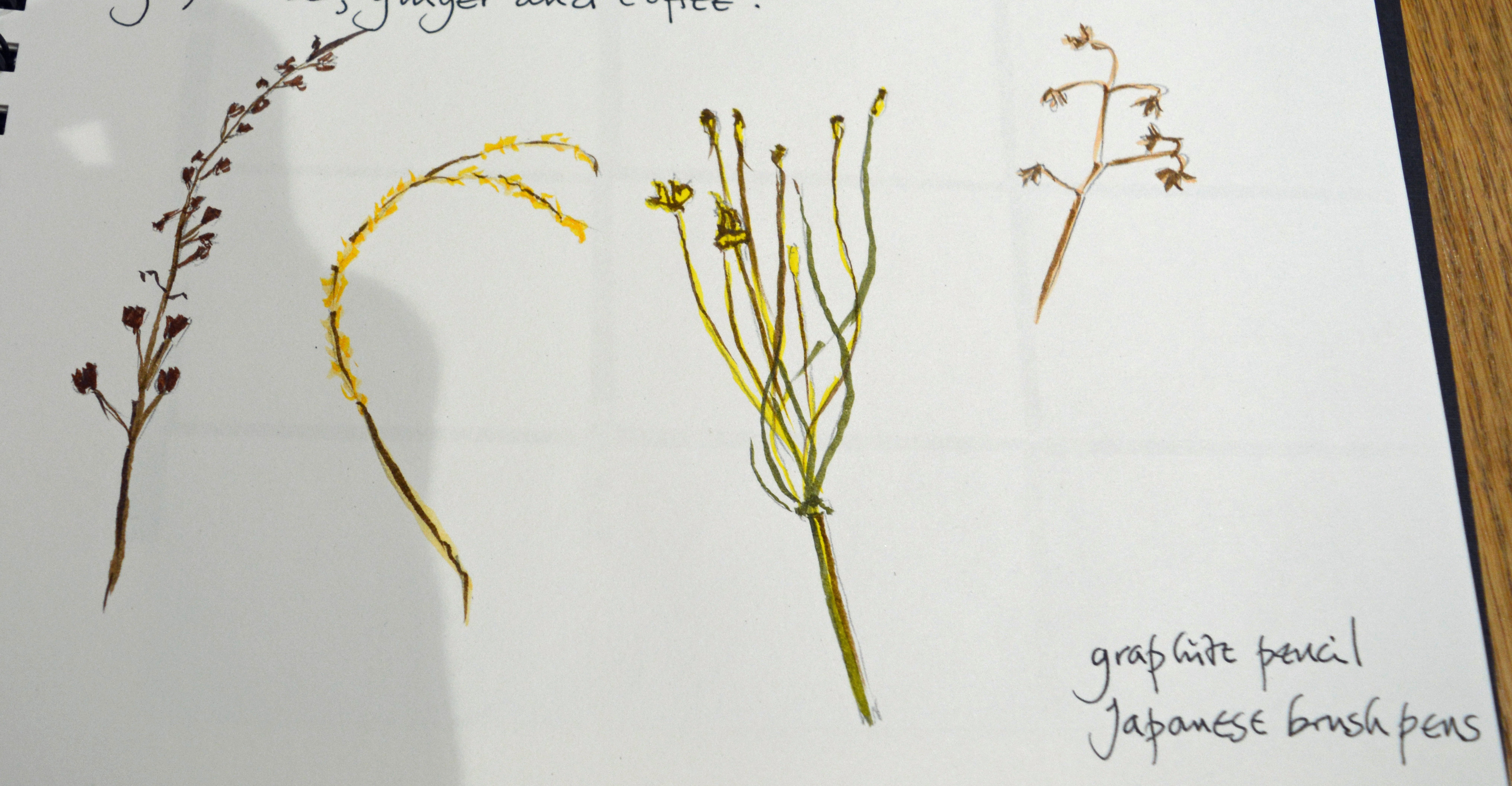
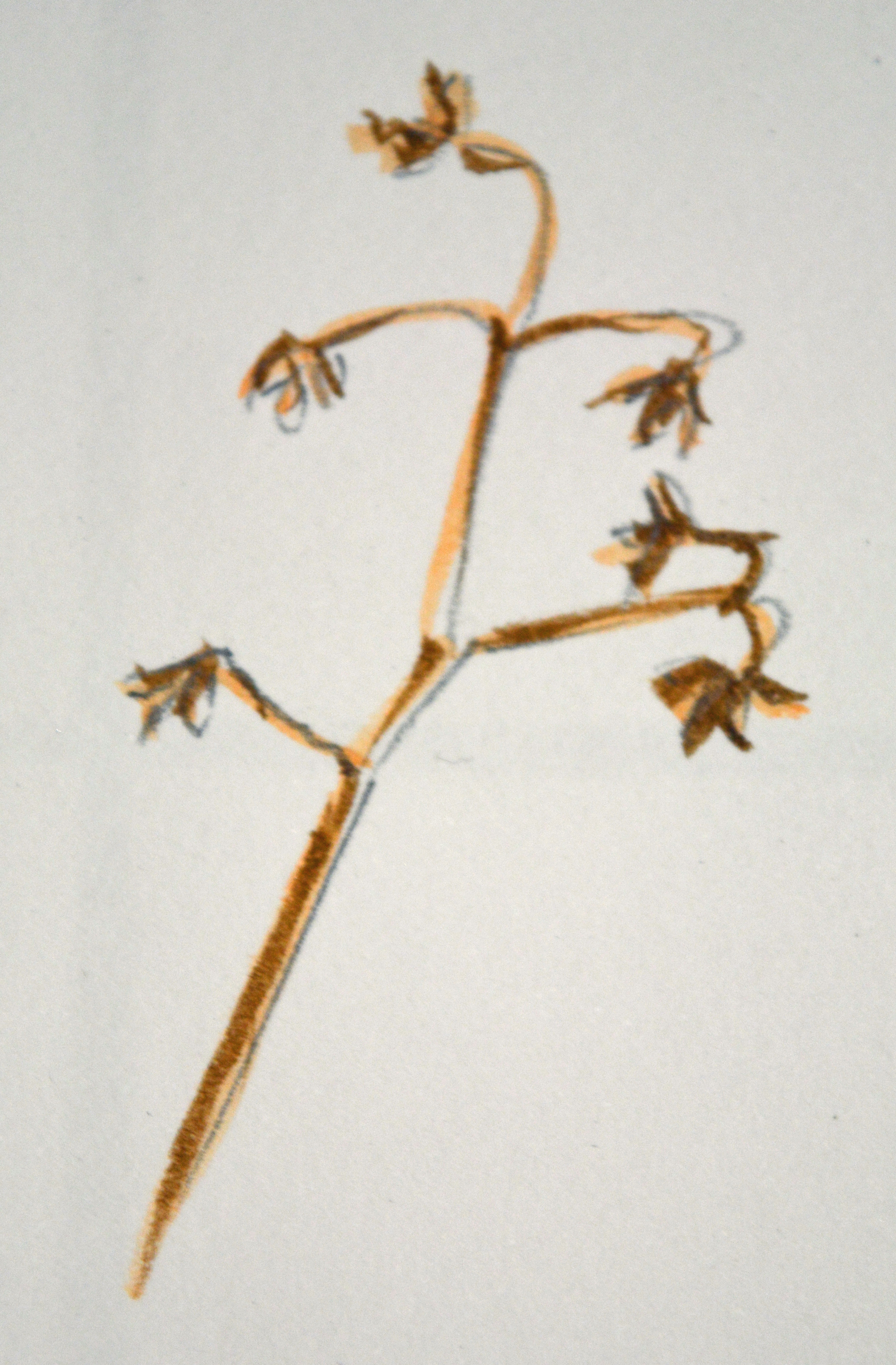
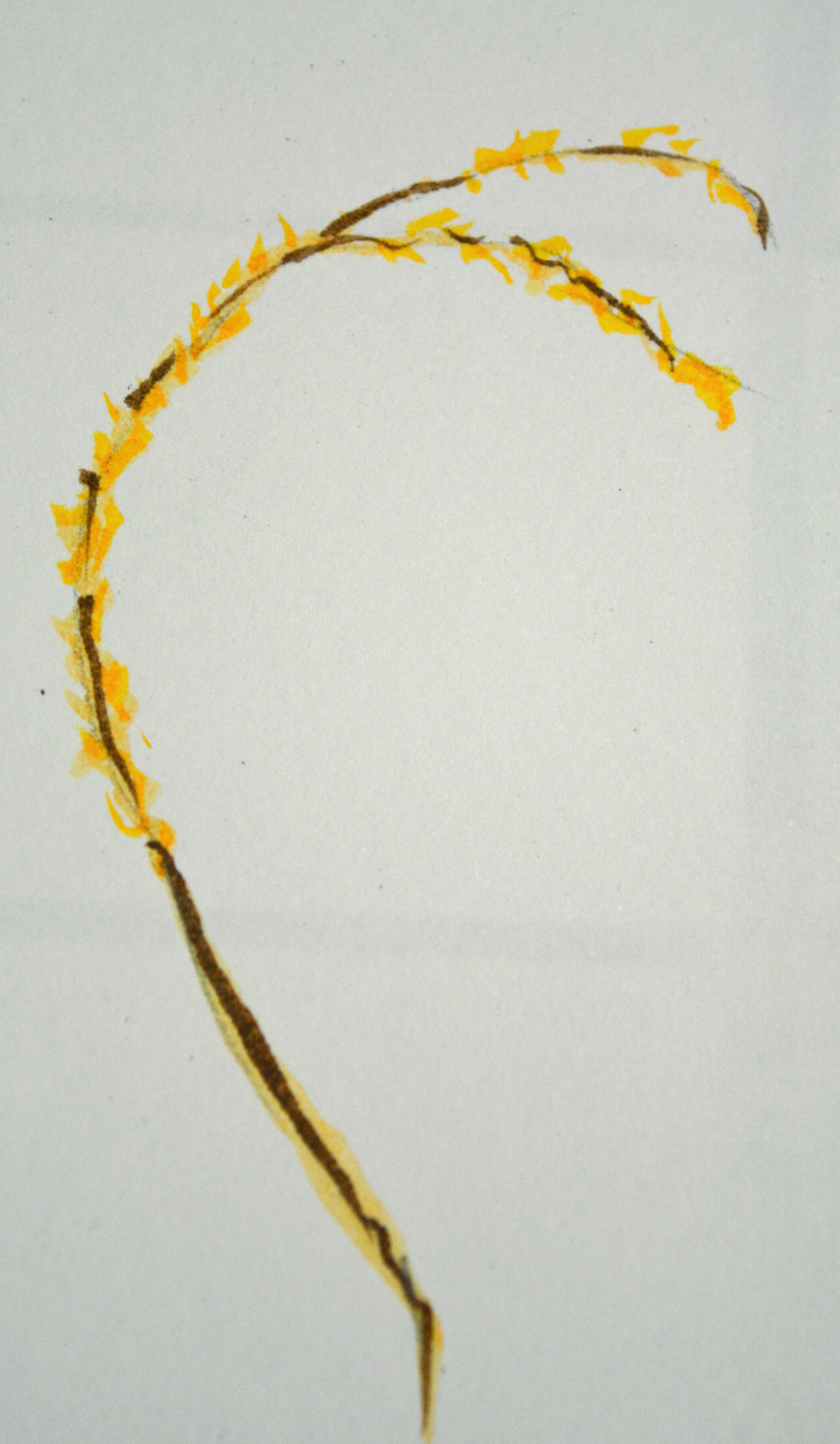
On the opposite page to our front border adventures I shared some of my paintings of October seedheads, created using graphite pencil and Japanese water colour brush pens.

I wrote, “When the sun shines bright on a dry October day, its rays catch each delicate seedhead atop the fine stems of perennials. The slightest breeze invite these lightweight beige, bronze, ginger and coffee seedheads to dance.”

The final double page spread brings colour back as we look at what is in flower during the last few days of the month. I wrote, “In contrast to the subtle colours of dried grasses and seed heads our late flowering climbers, shrubs and perennials are so bright!”


“Sharp contrasts give the garden added depth as the autumn sum dips lower in the sky.”


So we see the end of October with reasonable temperatures holding up and plenty of dry days to get out into the garden and get busy.


Categories
autumn autumn colours colours garden paths garden photography gardens gardens open to the public hardy perennials light light quality ornamental trees and shrubs Powis Powys shrubs Wales woodland woodlands

The Dingle Garden in October

October to my mind is the first month of the Autumn, whatever the metereological office says about September taking that role. We shall see what aspects of this new season we  found and experienced when we took our October wander around the sloping woodland gardens of The Dingle near Welshpool.

The light was beautiful as we started  to wander around the garden and it was the sort of light that lit up the colours of the foliage, emphasising that autumn had certainly arrived.


It certainly wasn’t just autumn foliage that was there to fascinate us, flowering perennials and shrubs were performing well too.


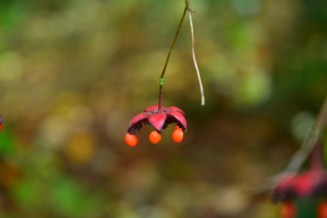
Several members of the Eunymus family both deciduous and evergreen grow happily in the woodland garden. They display such unusual berries usually orange with pink highlights.


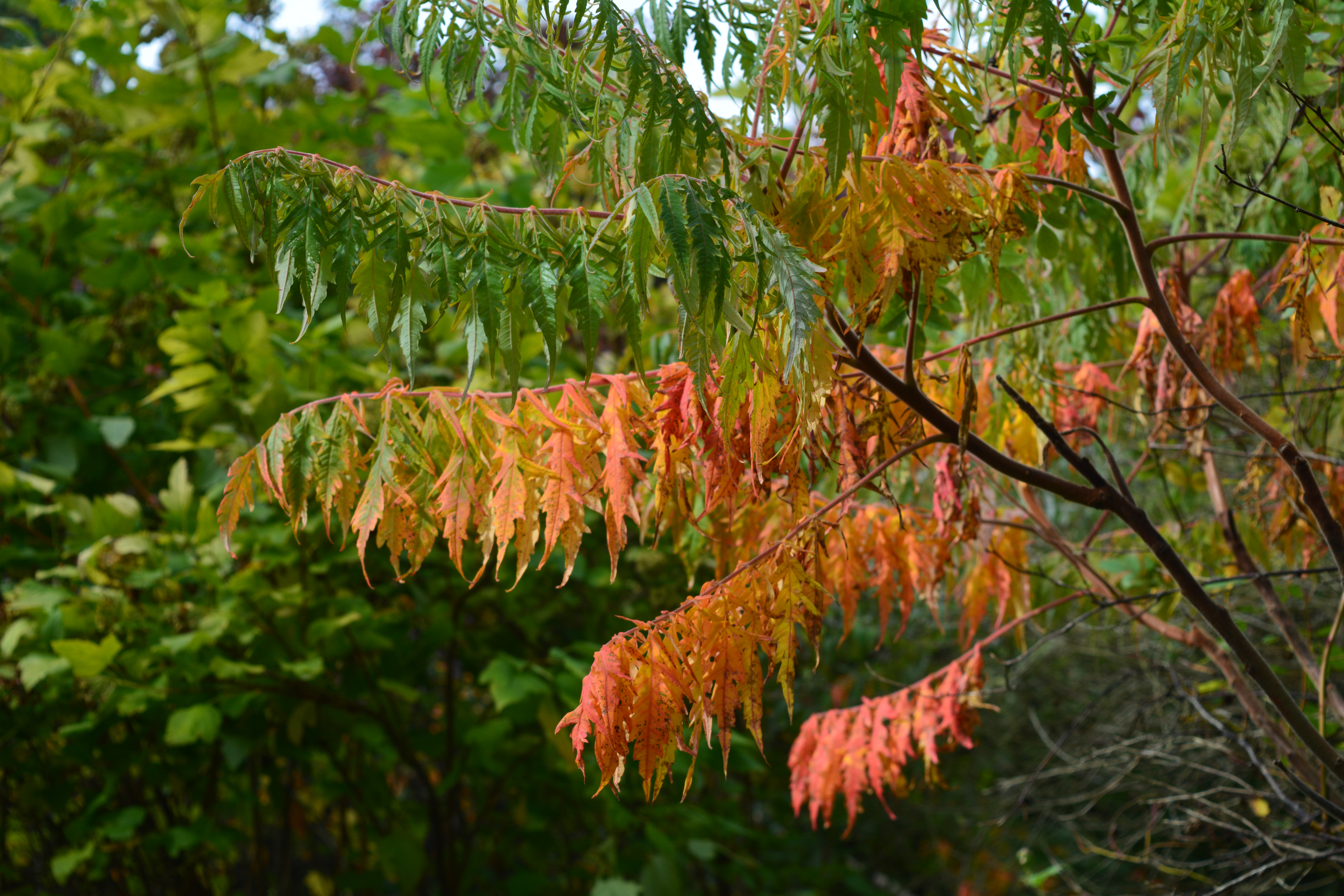
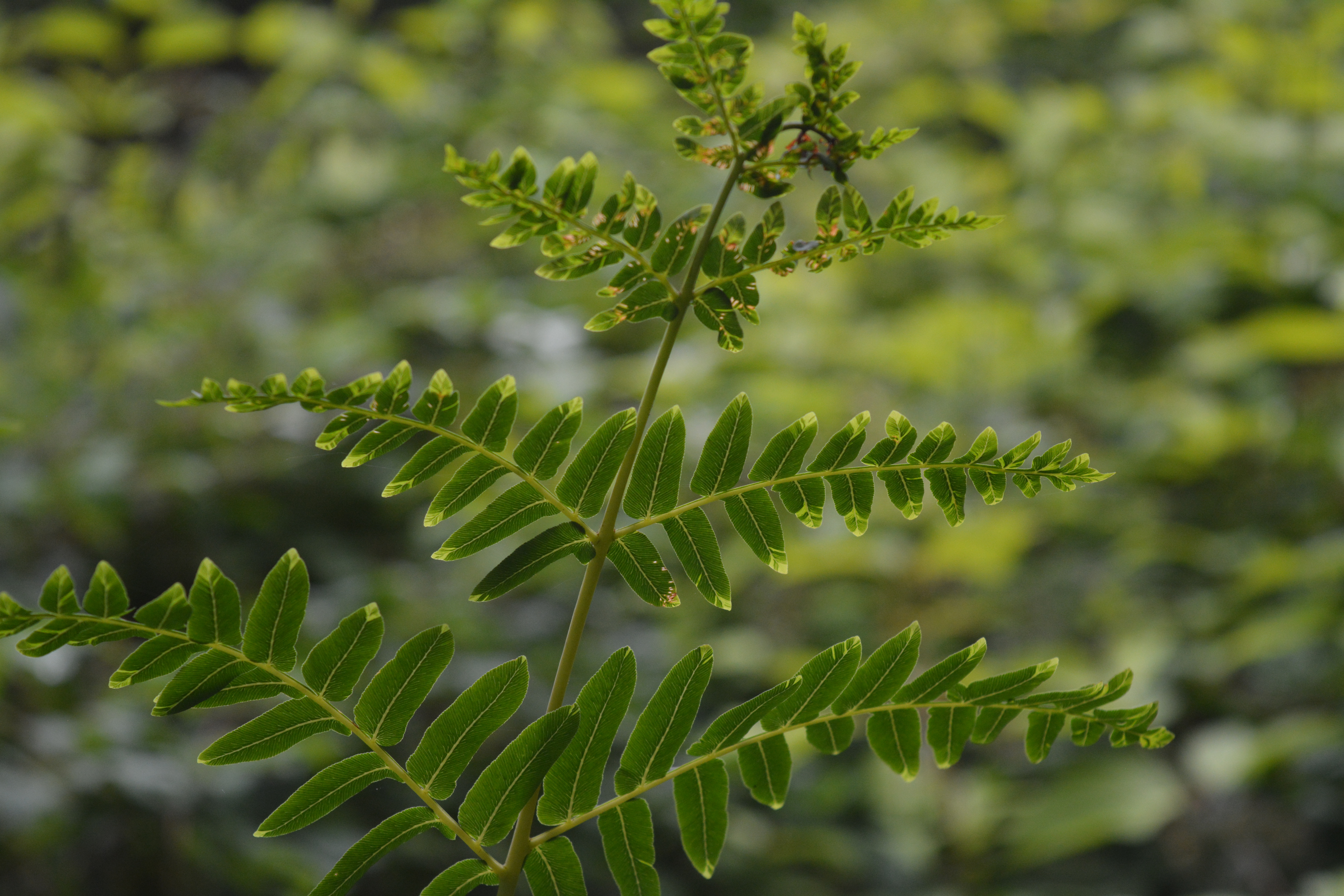
The leaves of this fern reflected the shape of the Rhus foliage, a special variety with lovely cut leaves, Rhus typhina lancianata.


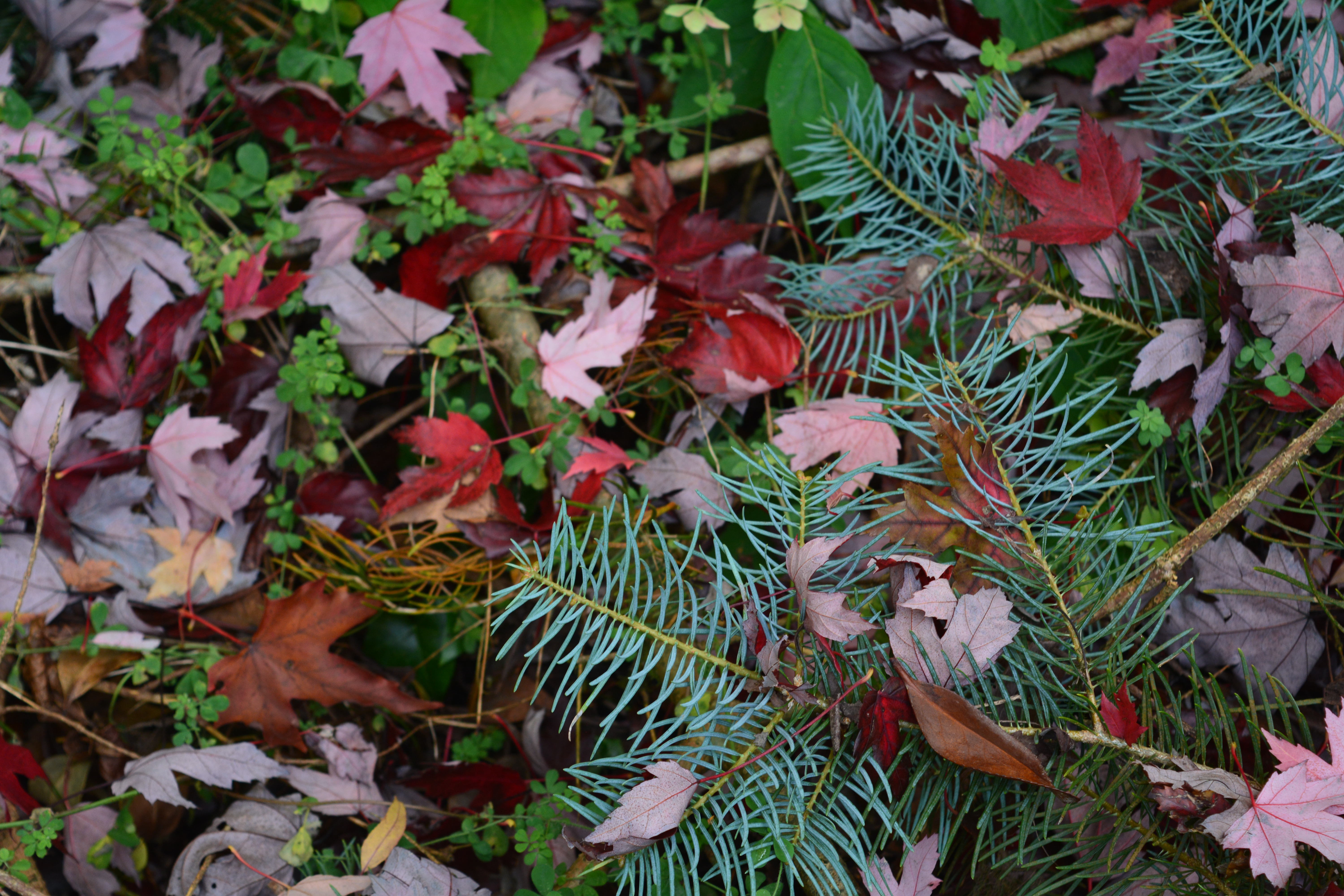
Fallen foliage beneath our feet looked like a Persian rug of many colours.

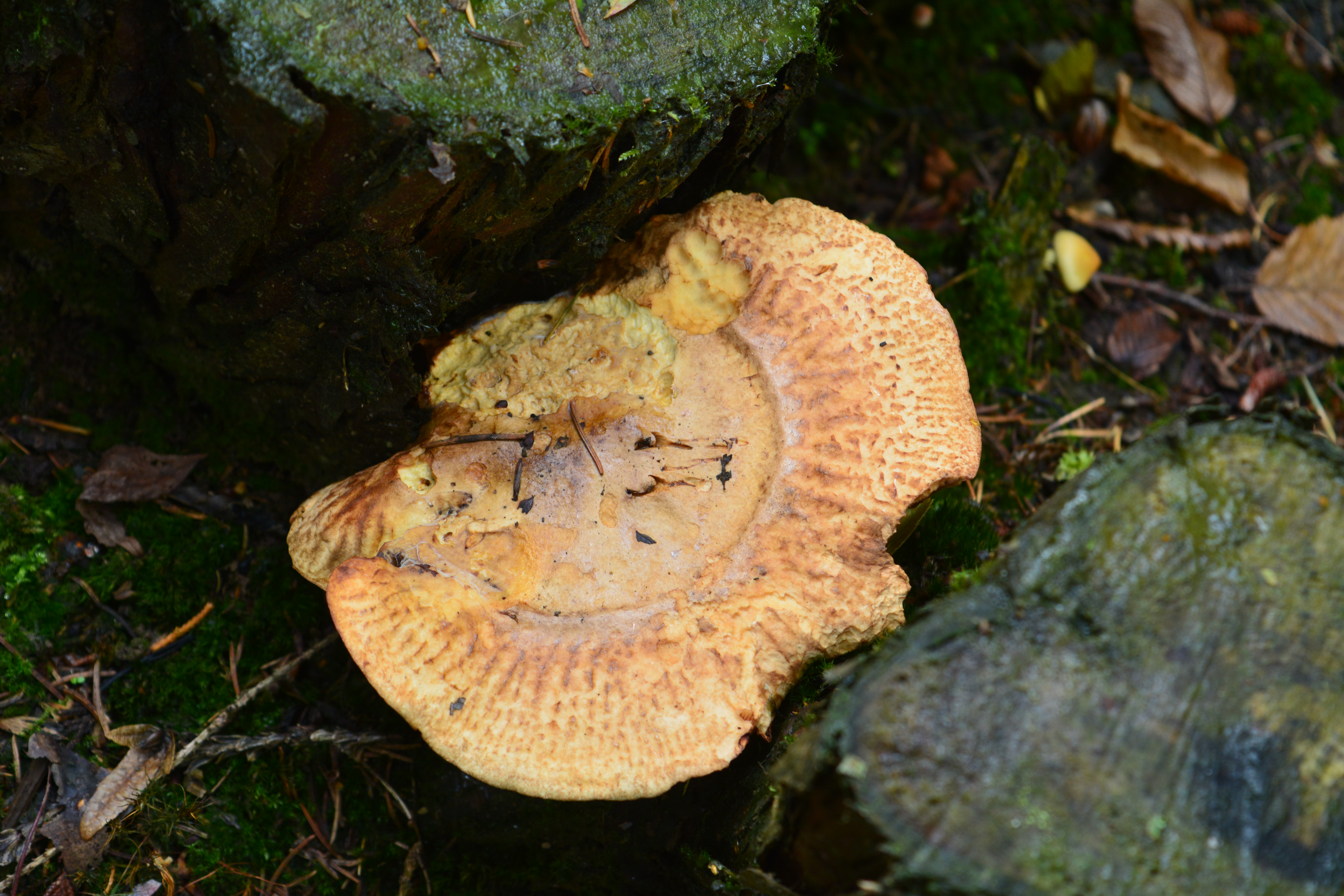
Autumn is also the season for fungi!

So there we have our look at The Dingle gardens for October, a colourful time of the year. Next month perhaps many leaves will be down leaving trees as skeletons.

Categories
colours garden design garden paths garden photography gardening gardens gardens open to the public hardy perennials light light quality ornamental trees and shrubs Powis Powys shrubs trees Wales woodland woodlands

The Dingle Garden in July

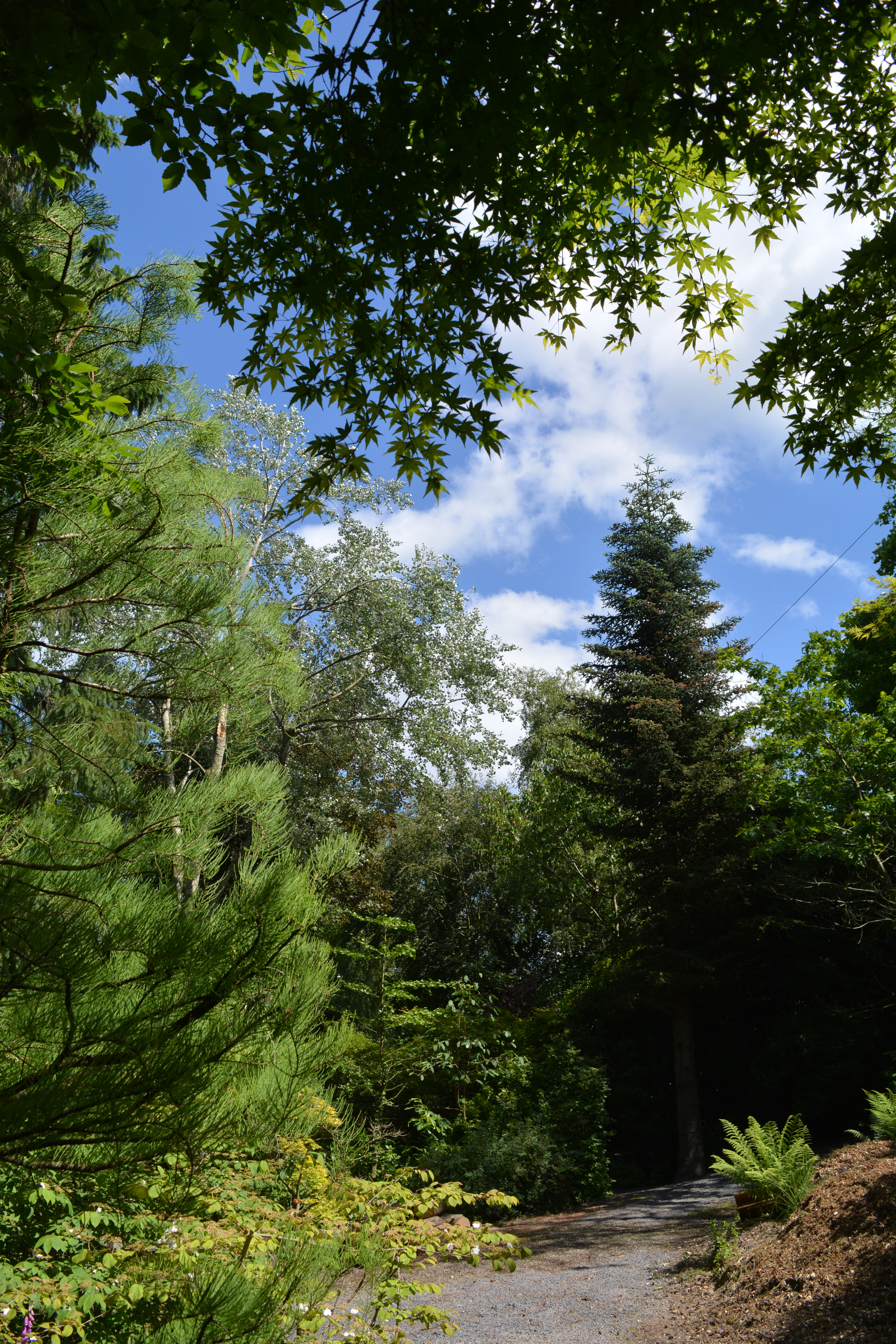
Moving into the second half of the year, we wandered around the gravel paths of the Dingle Garden in late July. The day was dry with mixed clear skies with occasional cloud, but no rain came from them.

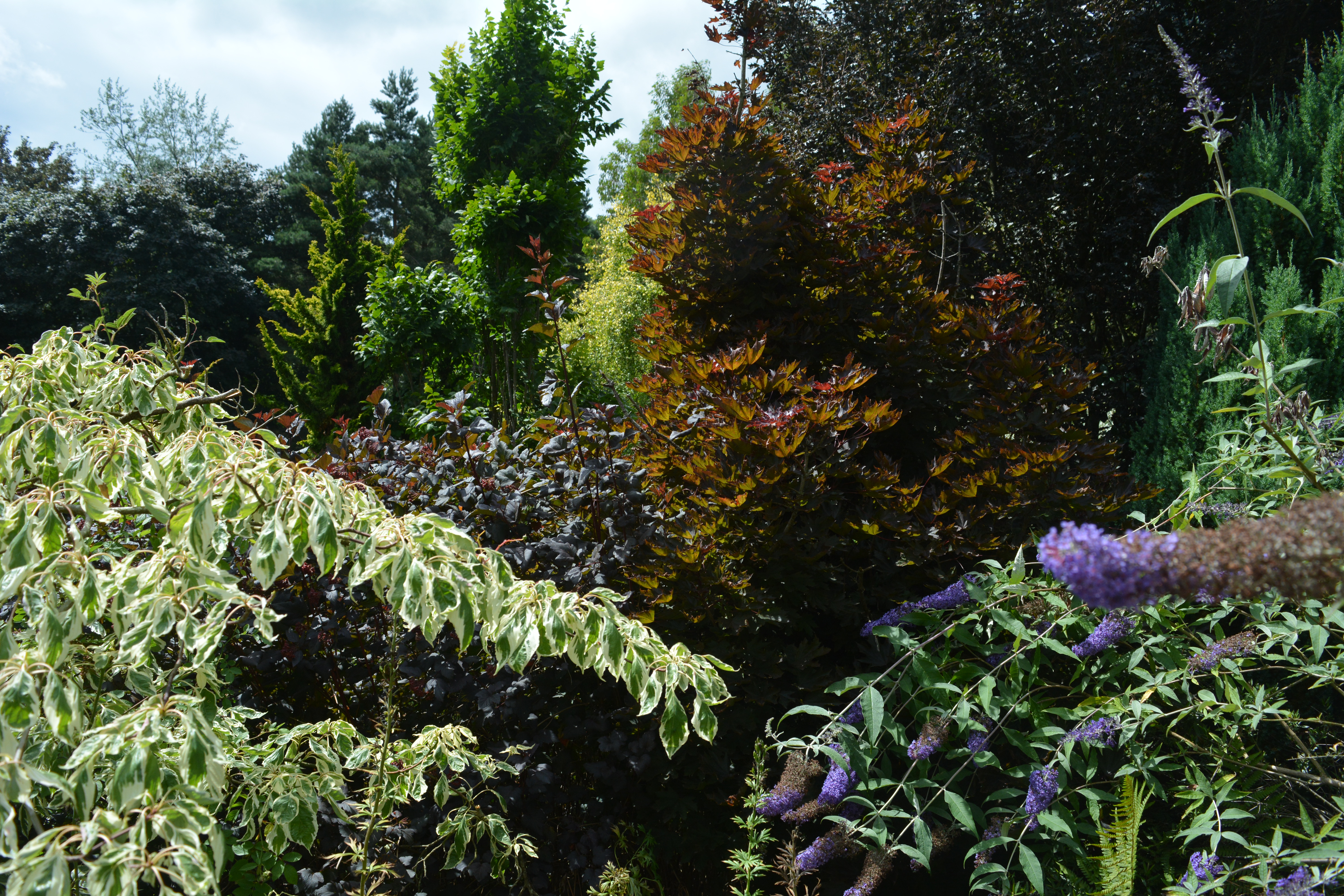
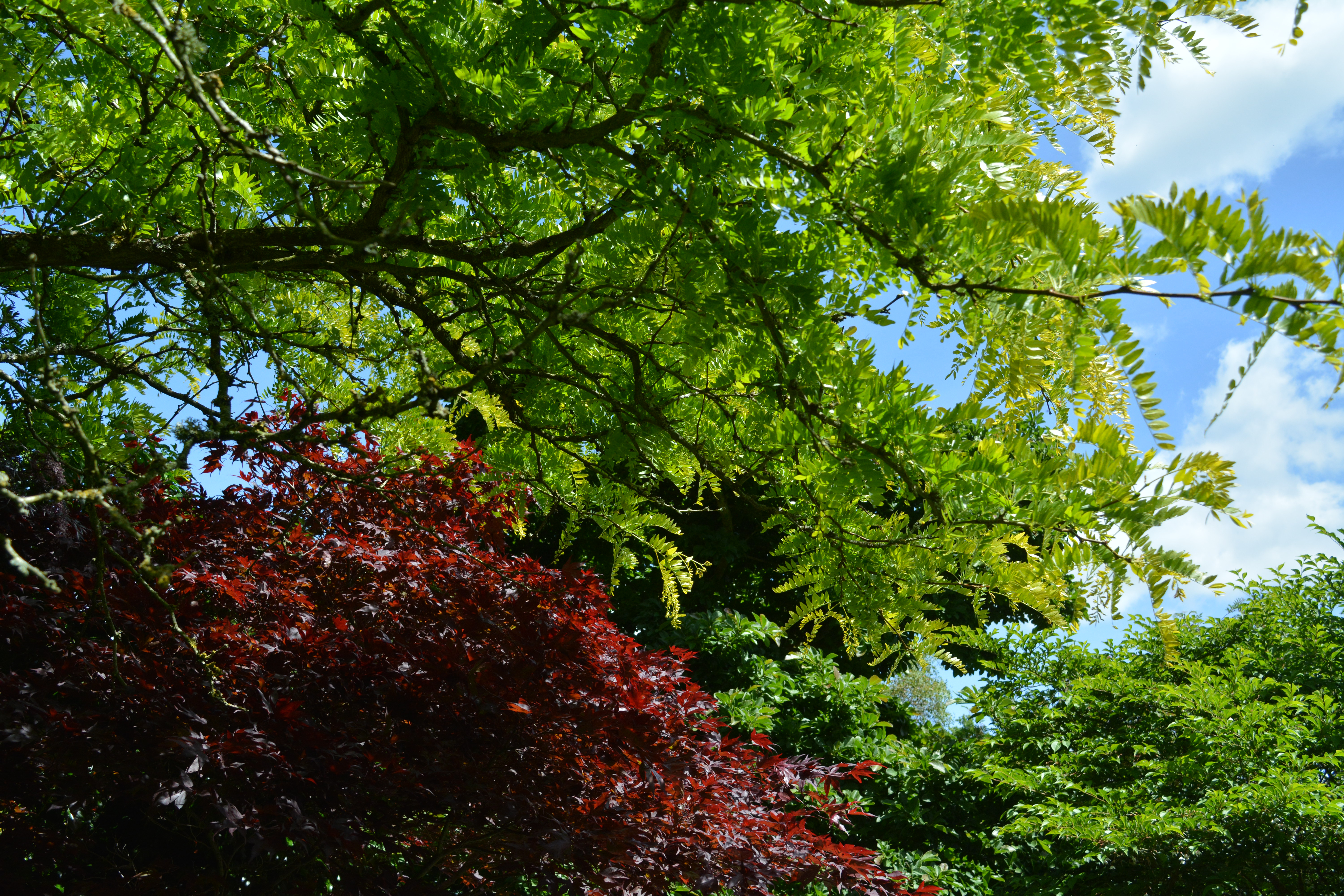
We immediately discovered the severe effects of this summer’s dry and hot temperatures. A mature conifer was turning shades of purple and brown as it was suffering from lack of water. Although colourful this was devastating for the tree. Elsewhere on the sloping parts of the garden the shrubs looked perfectly healthy and we enjoyed some great foliage contrasts and combinations.


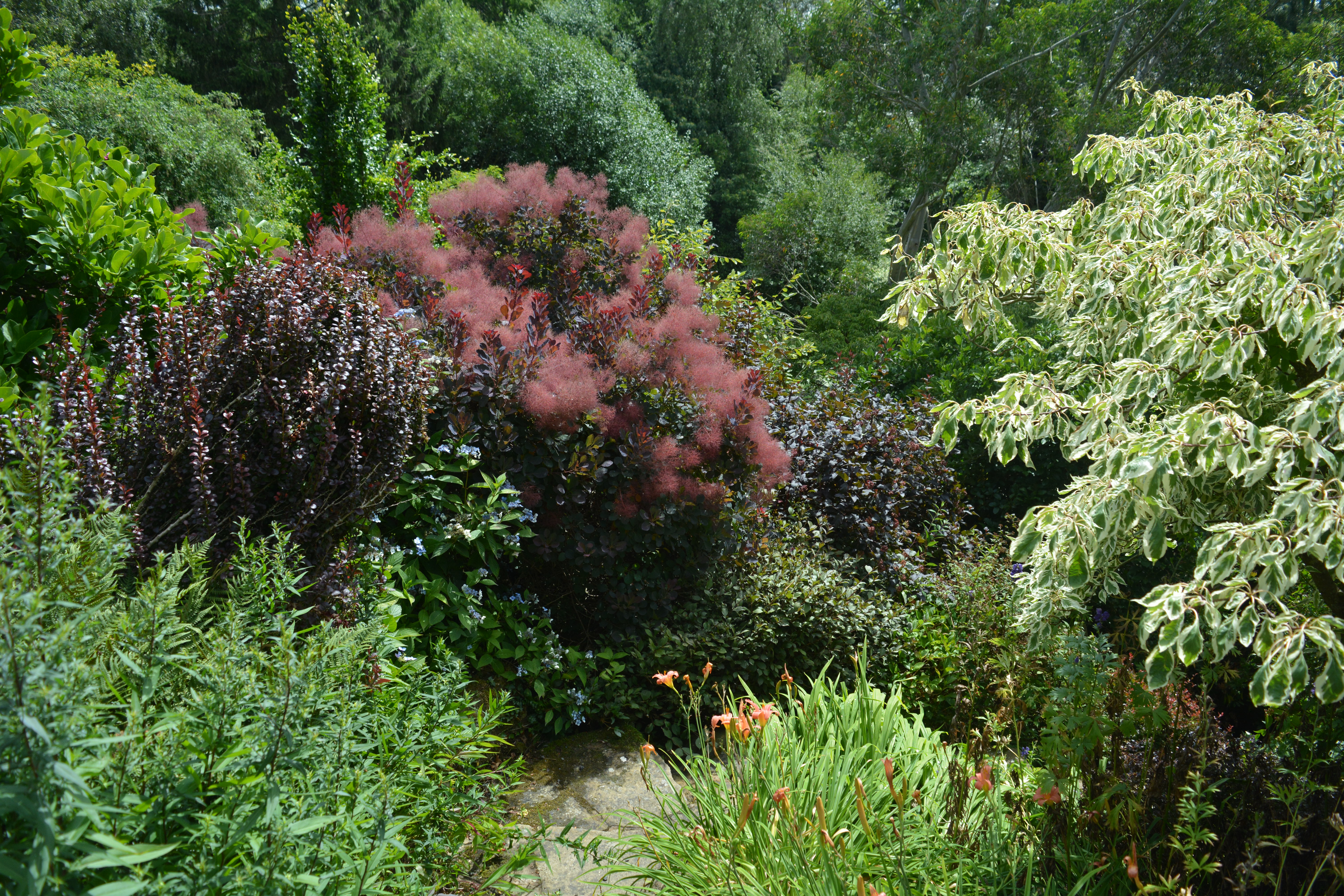
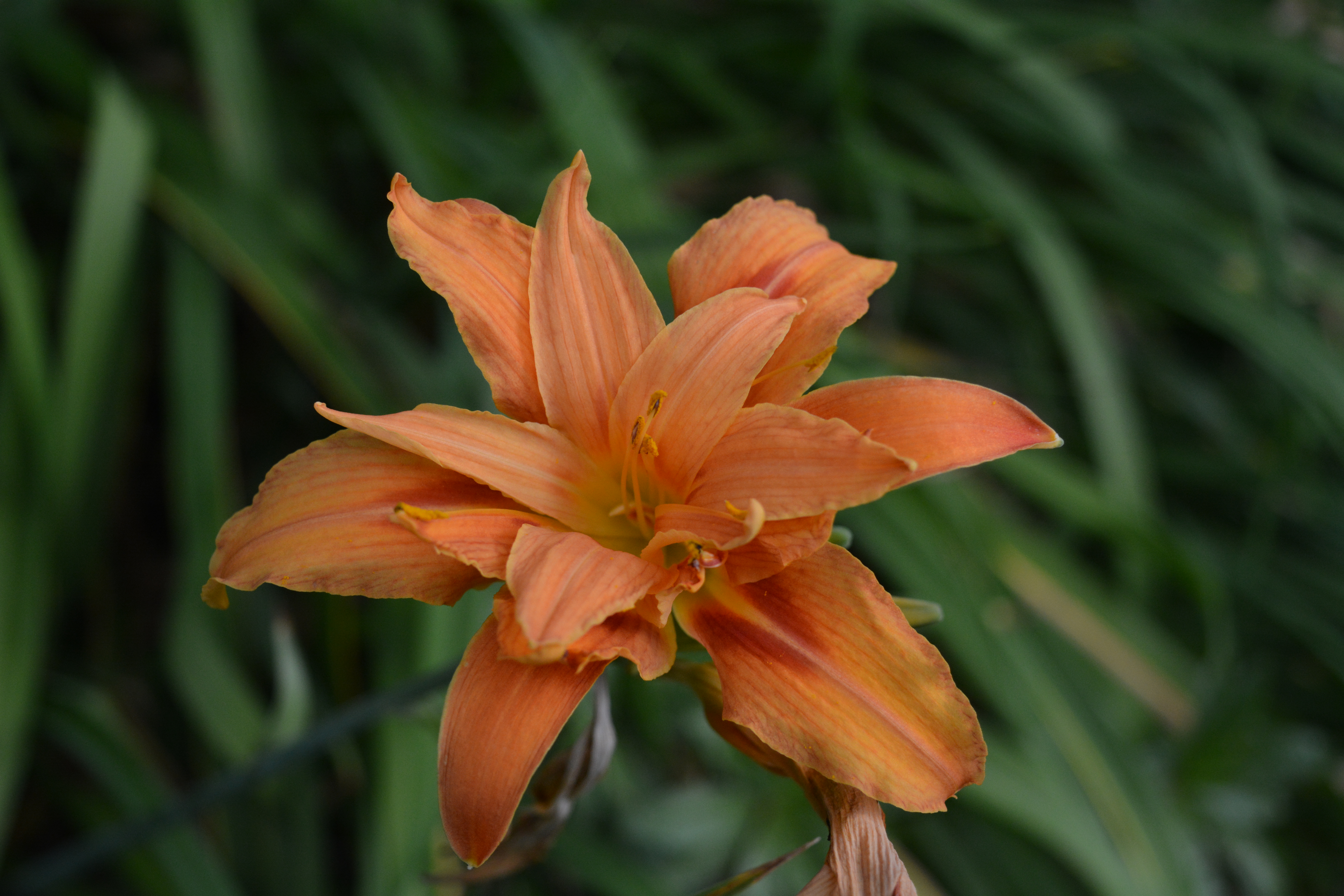
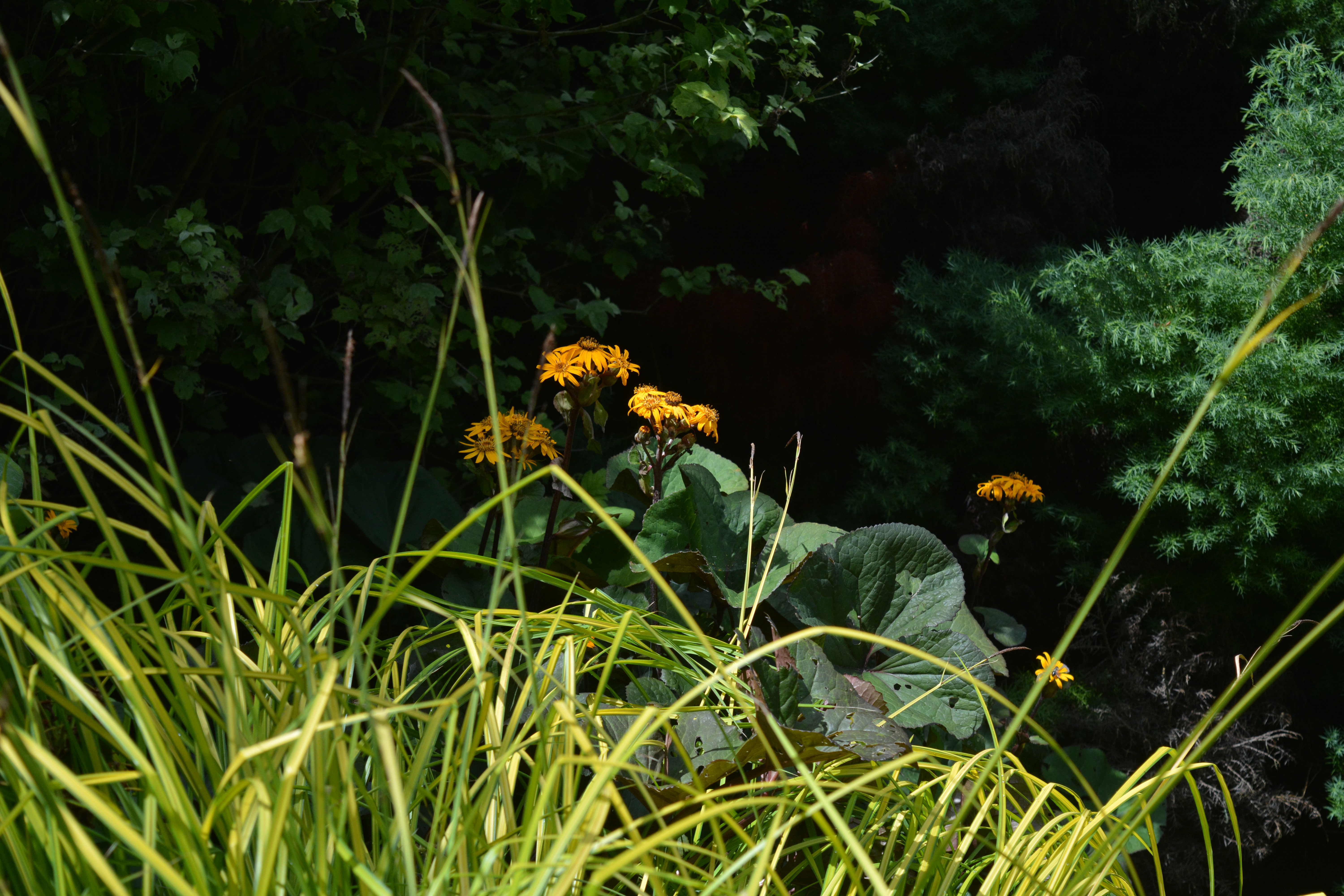
Orange is a wonderfully effective colour for woodland planting, as flowers in this colour glow in the deepest shade and are caught by the sun. Yellow comes a close second!
  

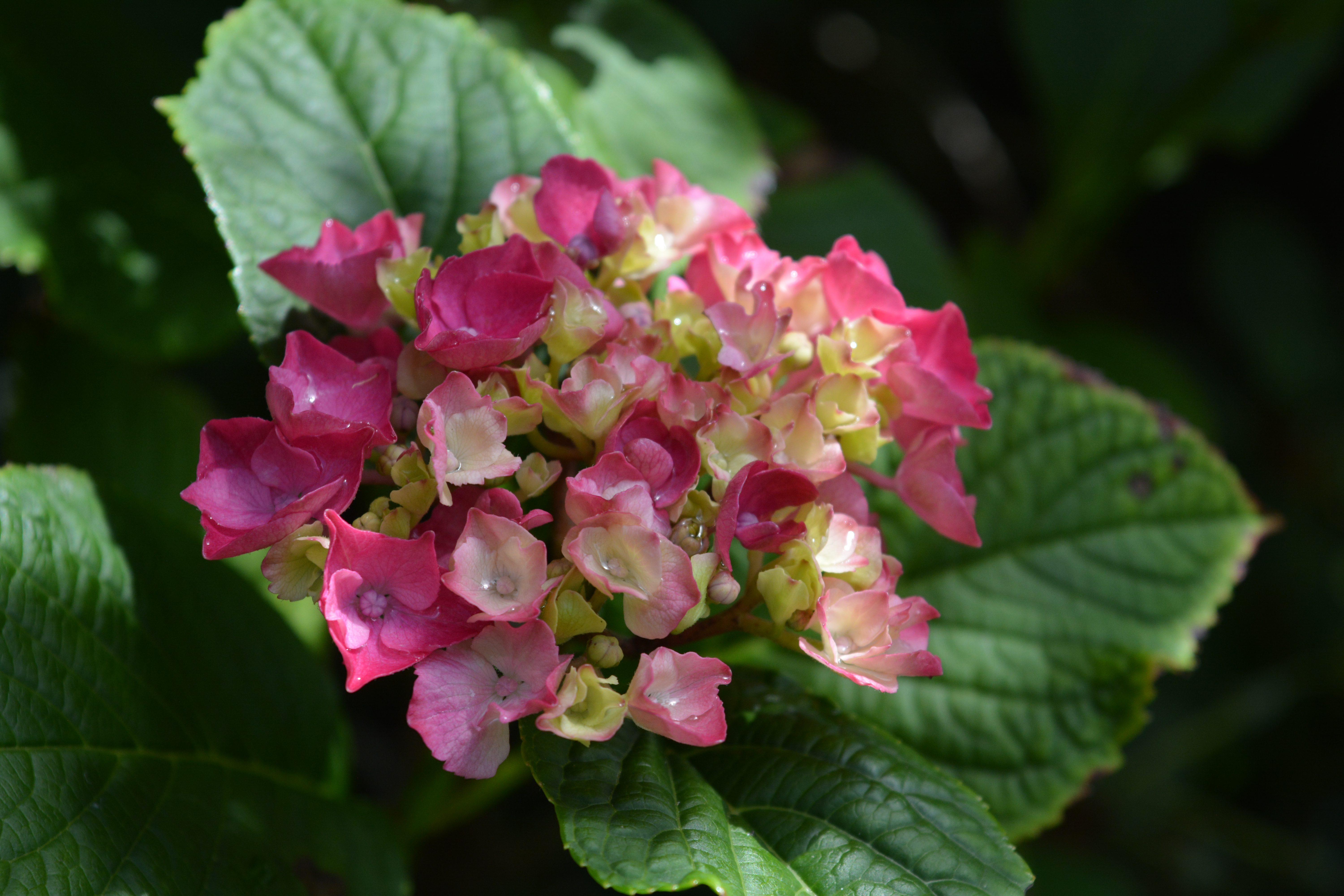
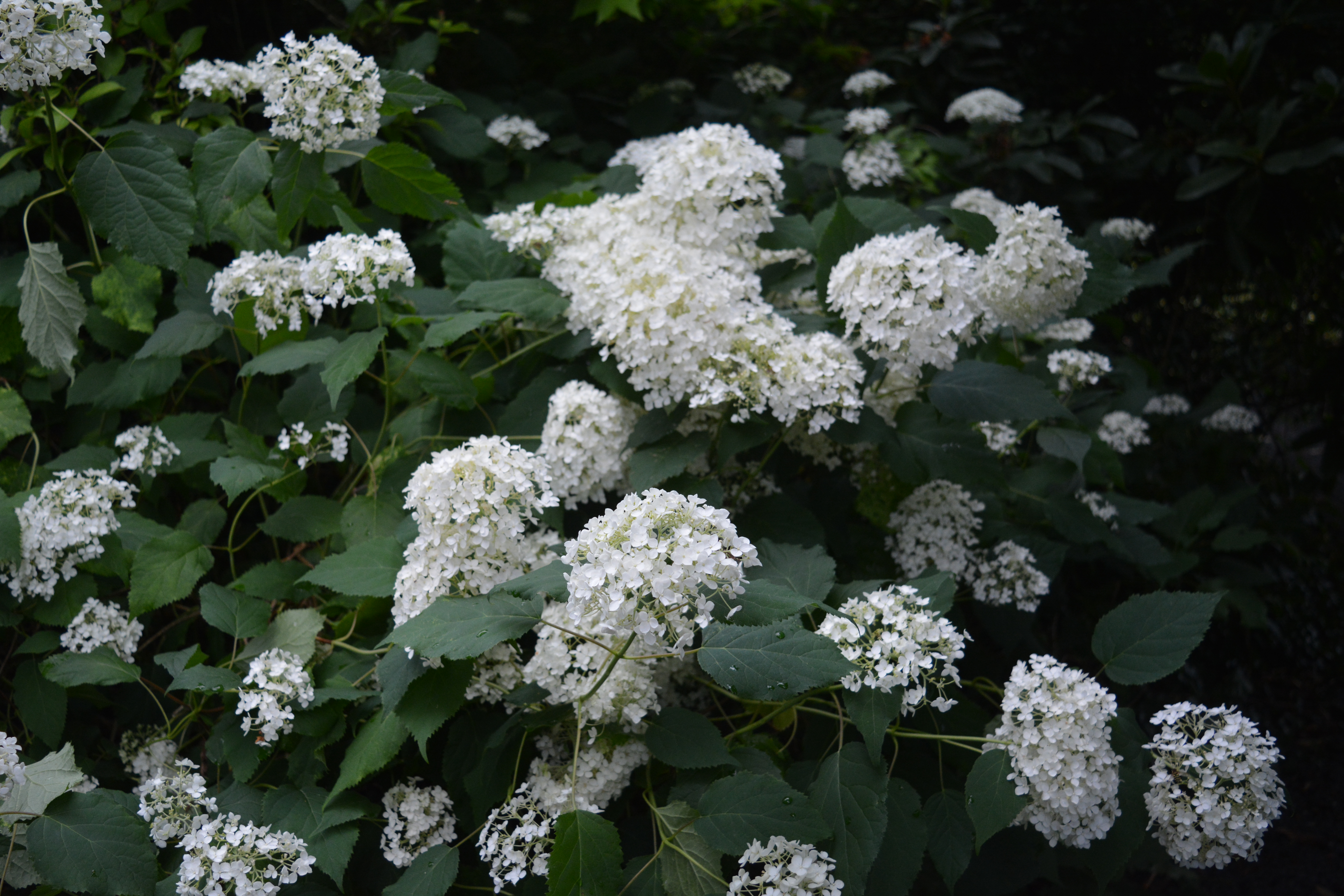
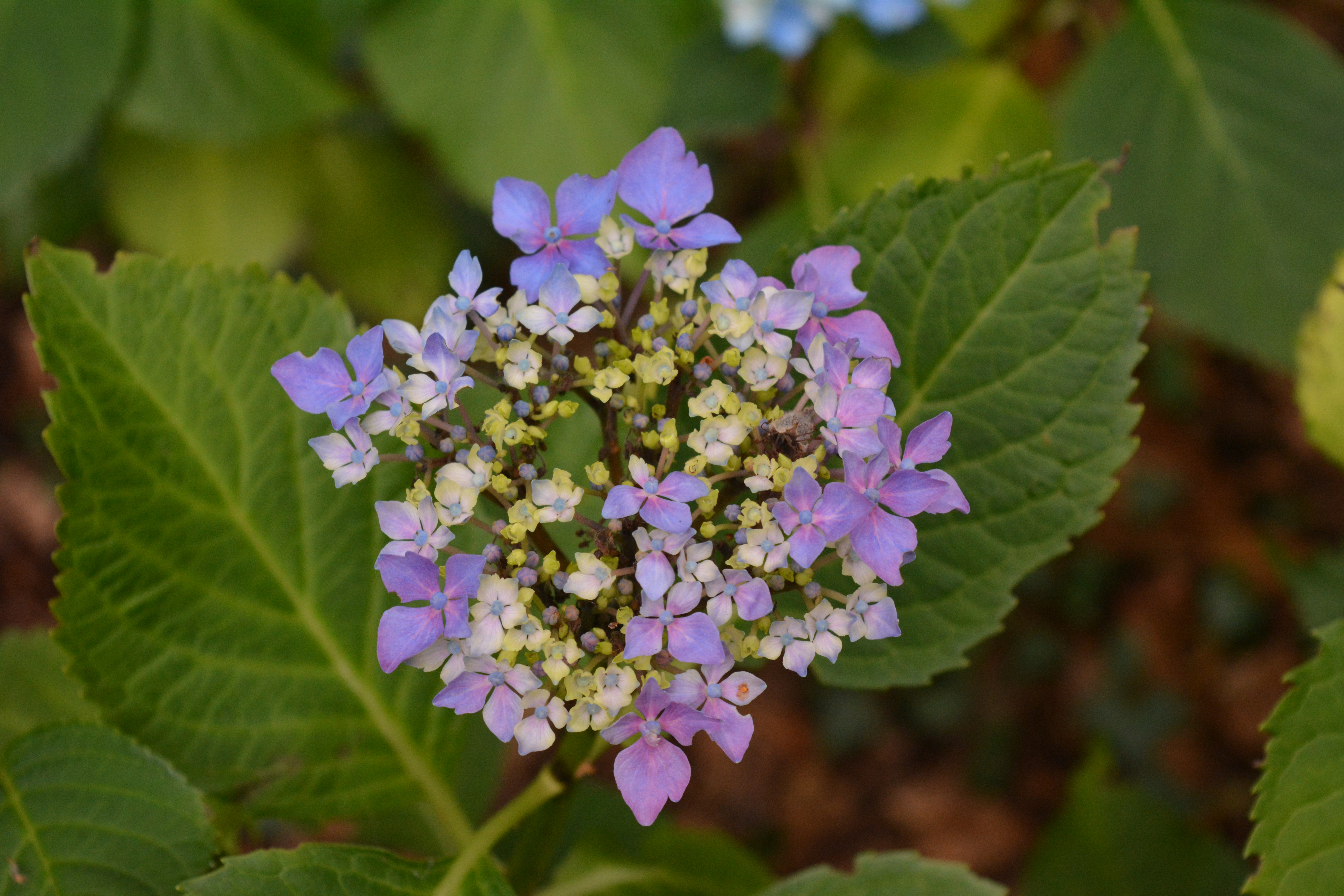
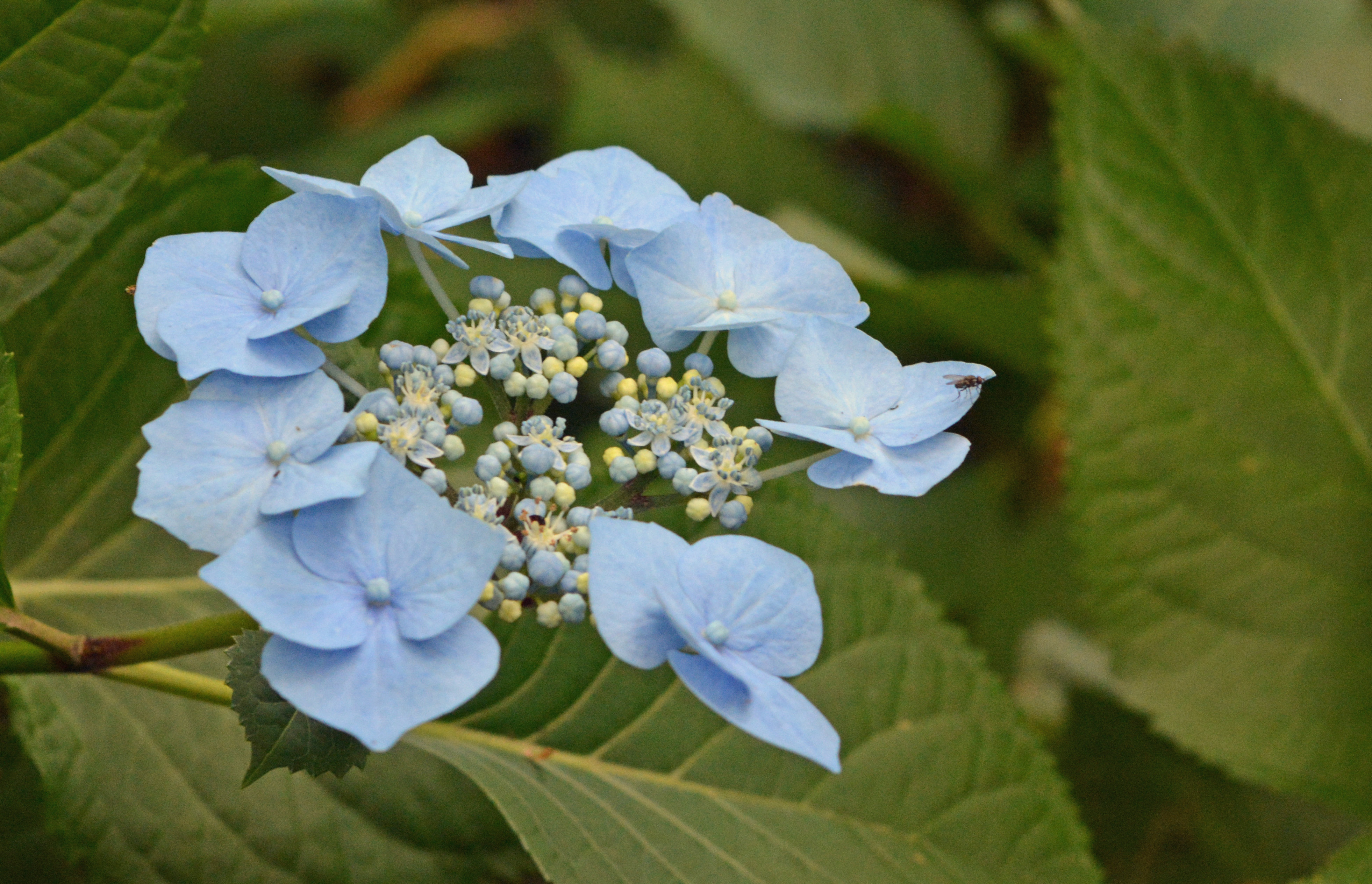
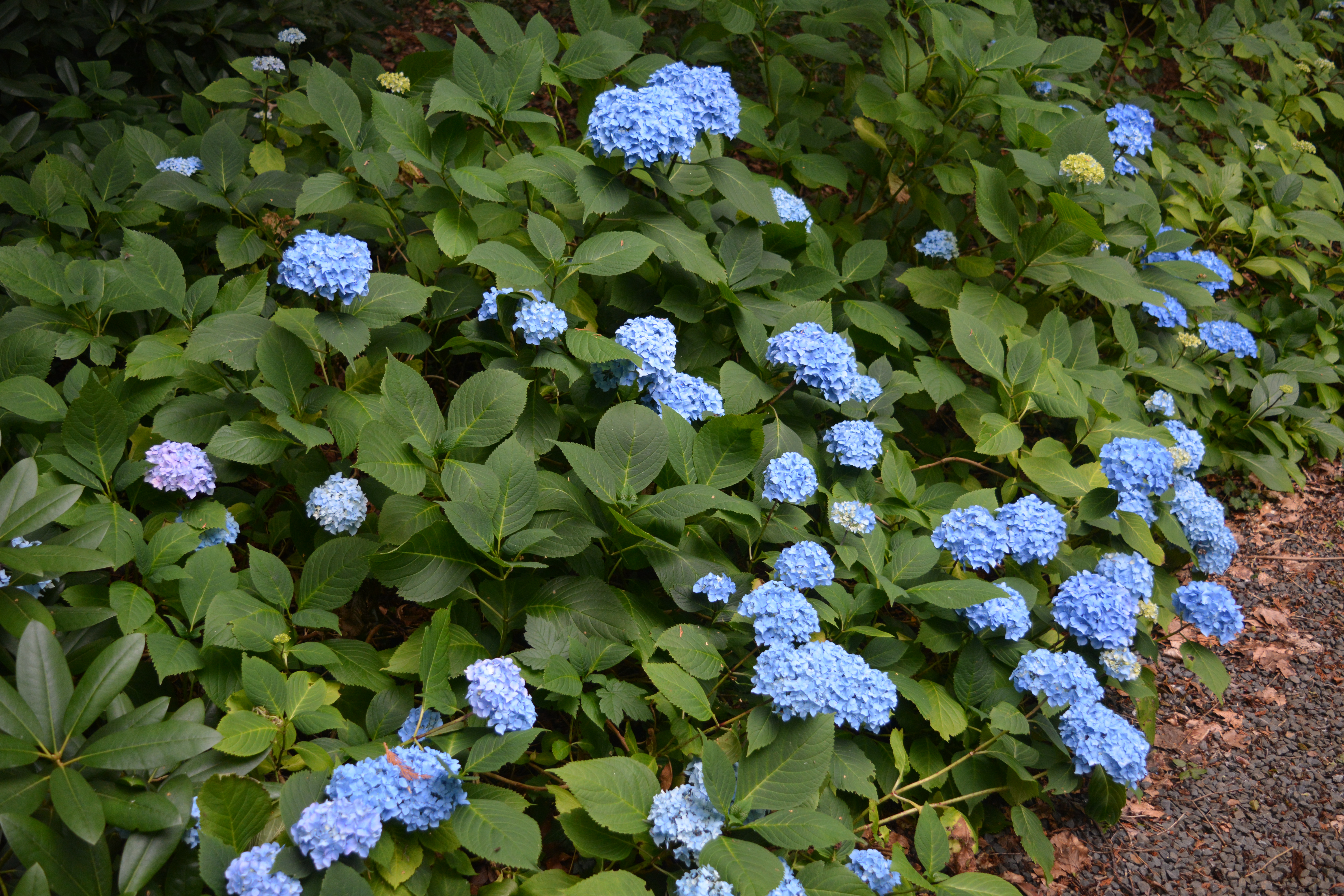
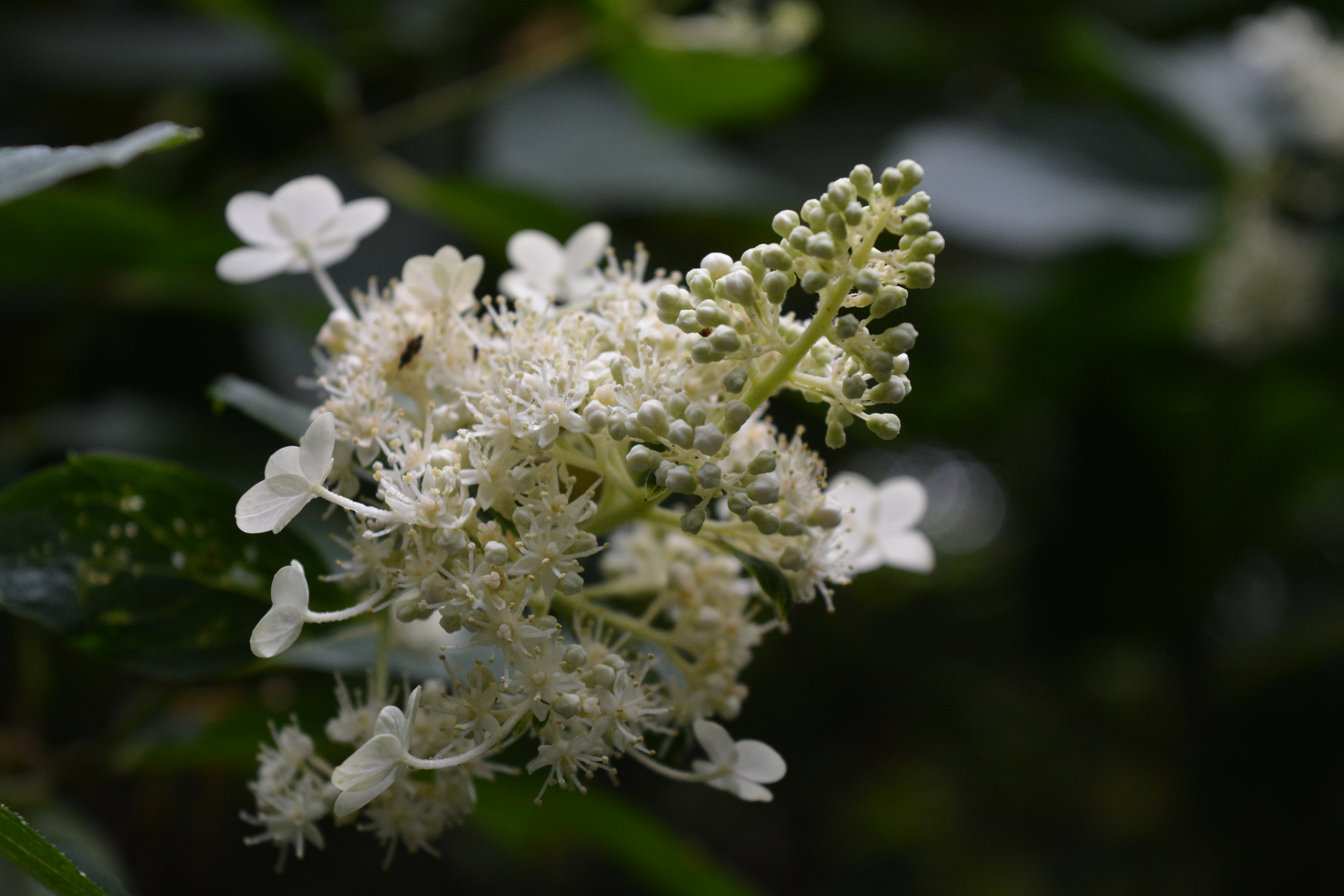
Flowering shrubs are now coming into their own in the Dingle Garden, with Hydrangeas taking centre stage.


This is just a selection of the Hydrangeas putting on their show of blues, whites and pinks beneath the trees. We loved the variations in colour on individual flower heads.
    

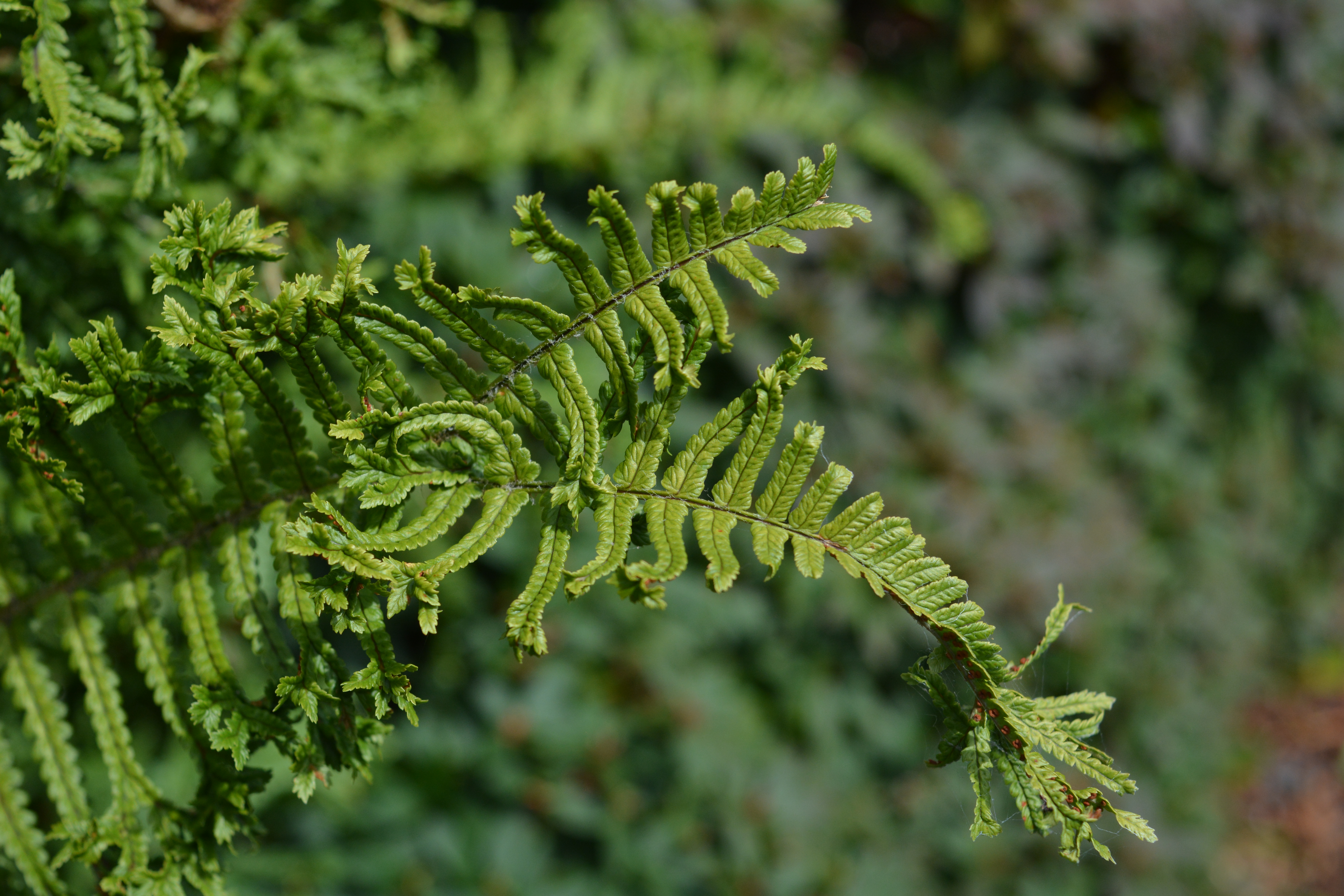
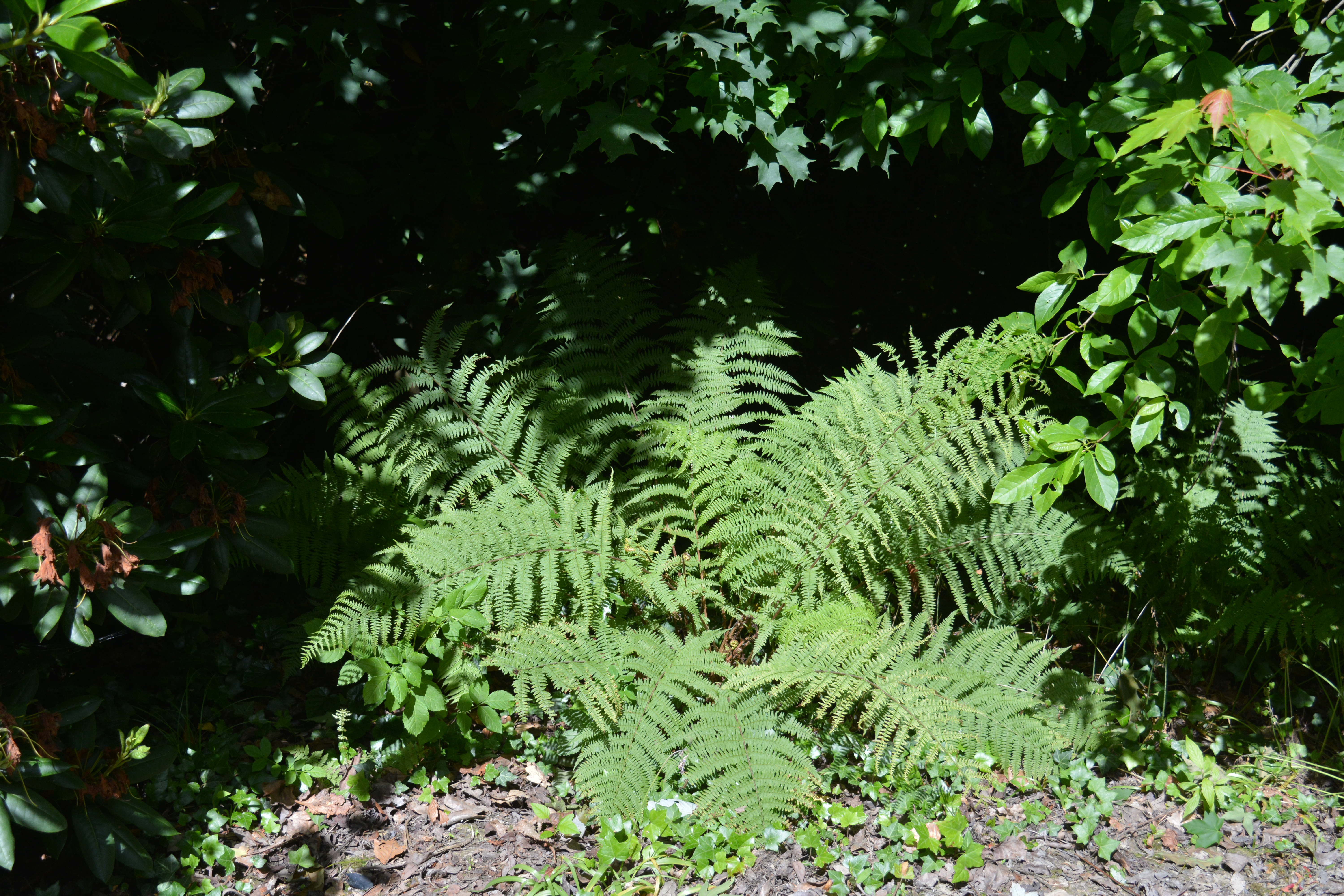
Ferns look good almost the year through, but in the damp woodland atmosphere here at the Dingle they shone with health.


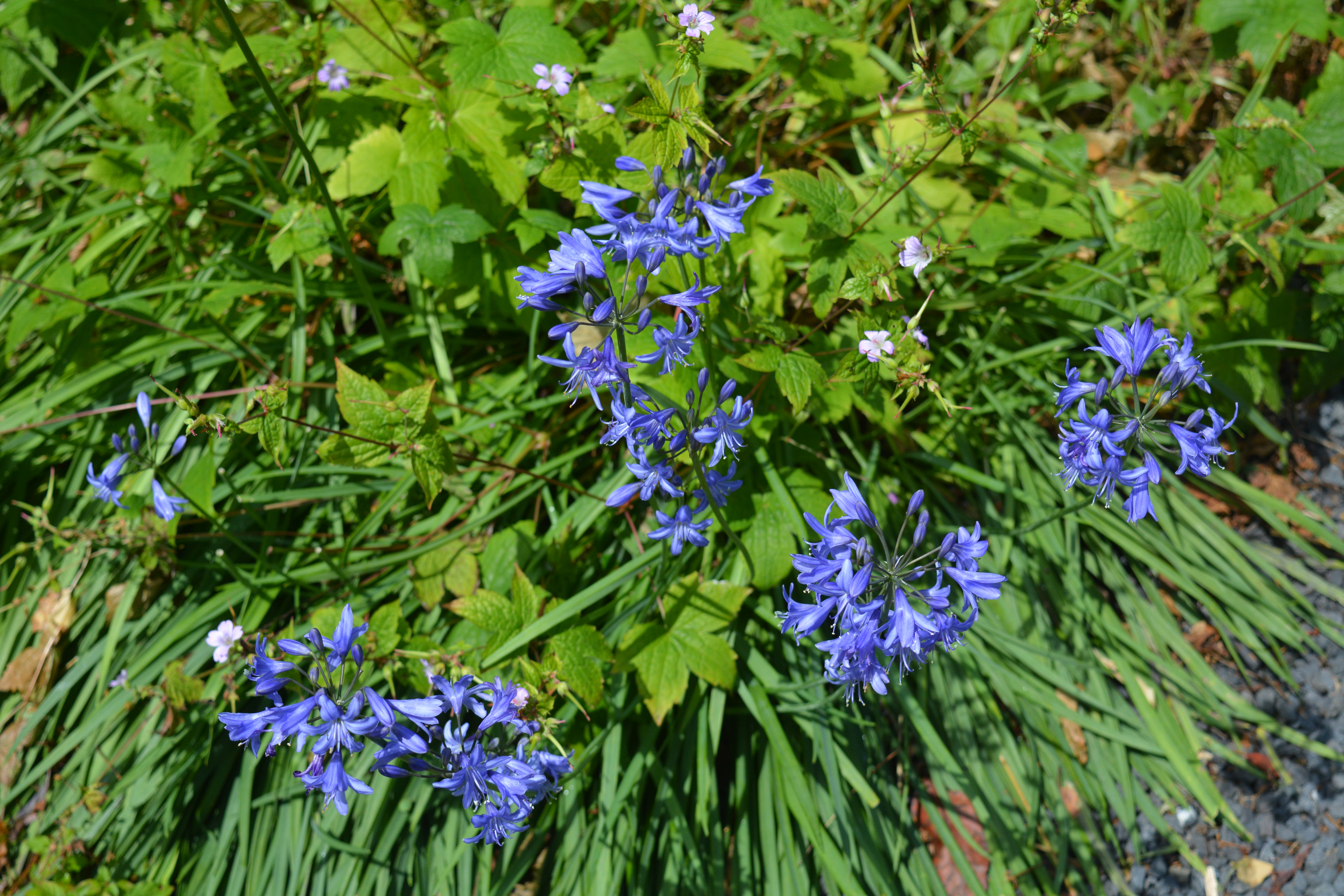
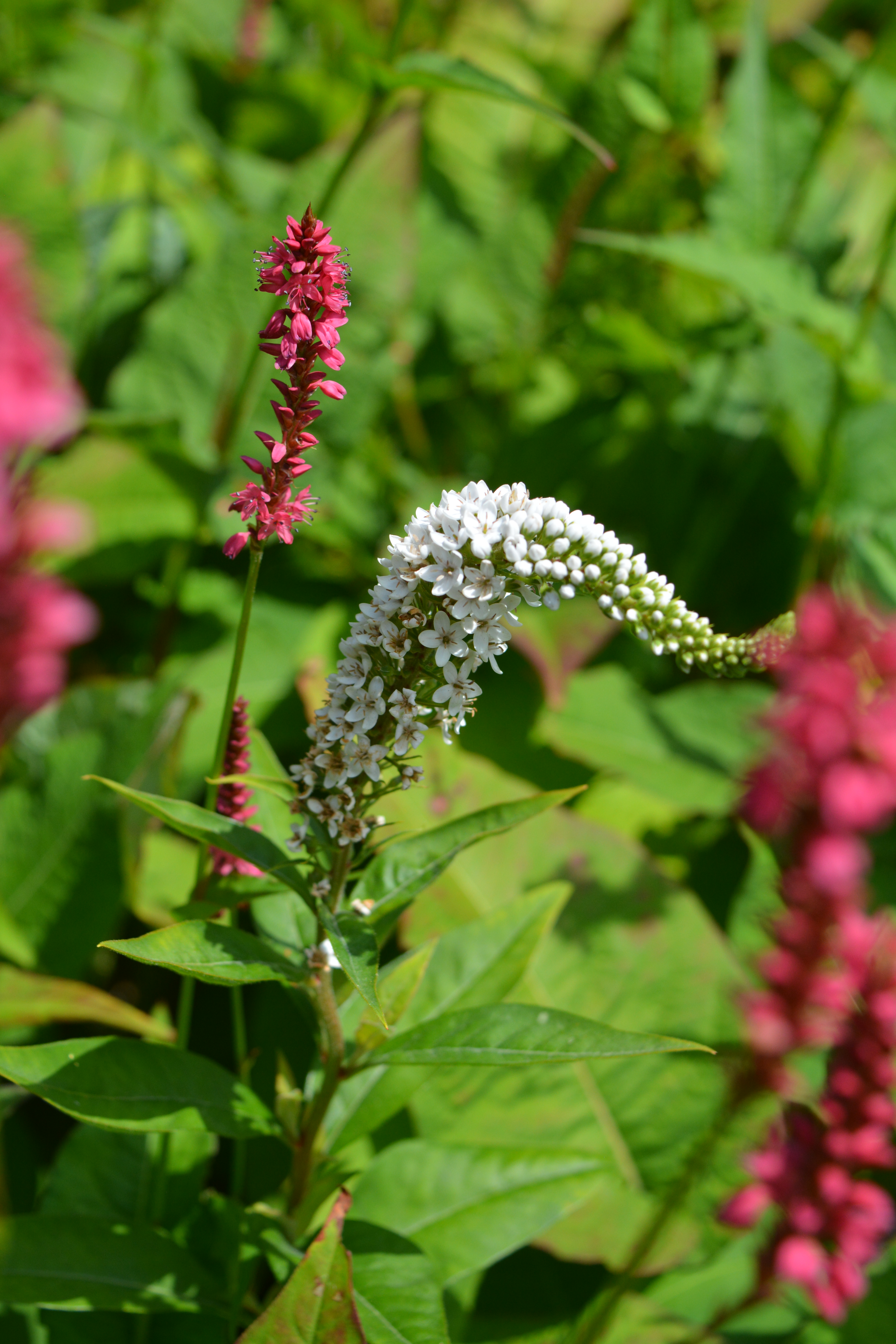
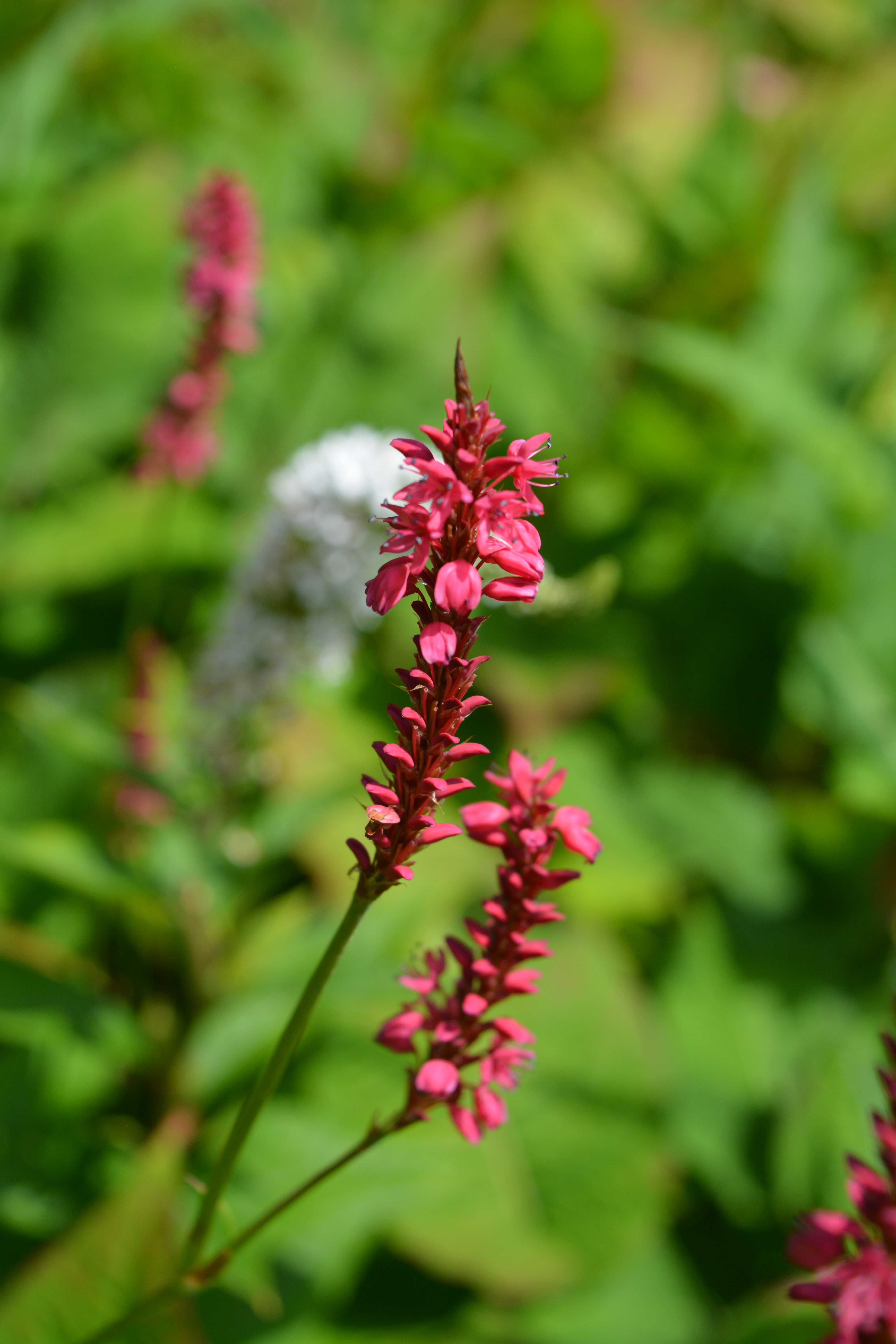
Herbaceous perennials appear in a few places beneath the trees and shrubs with Geraniums, Hemerocallis, Persicarias and Lysimachias showing well in the July garden.


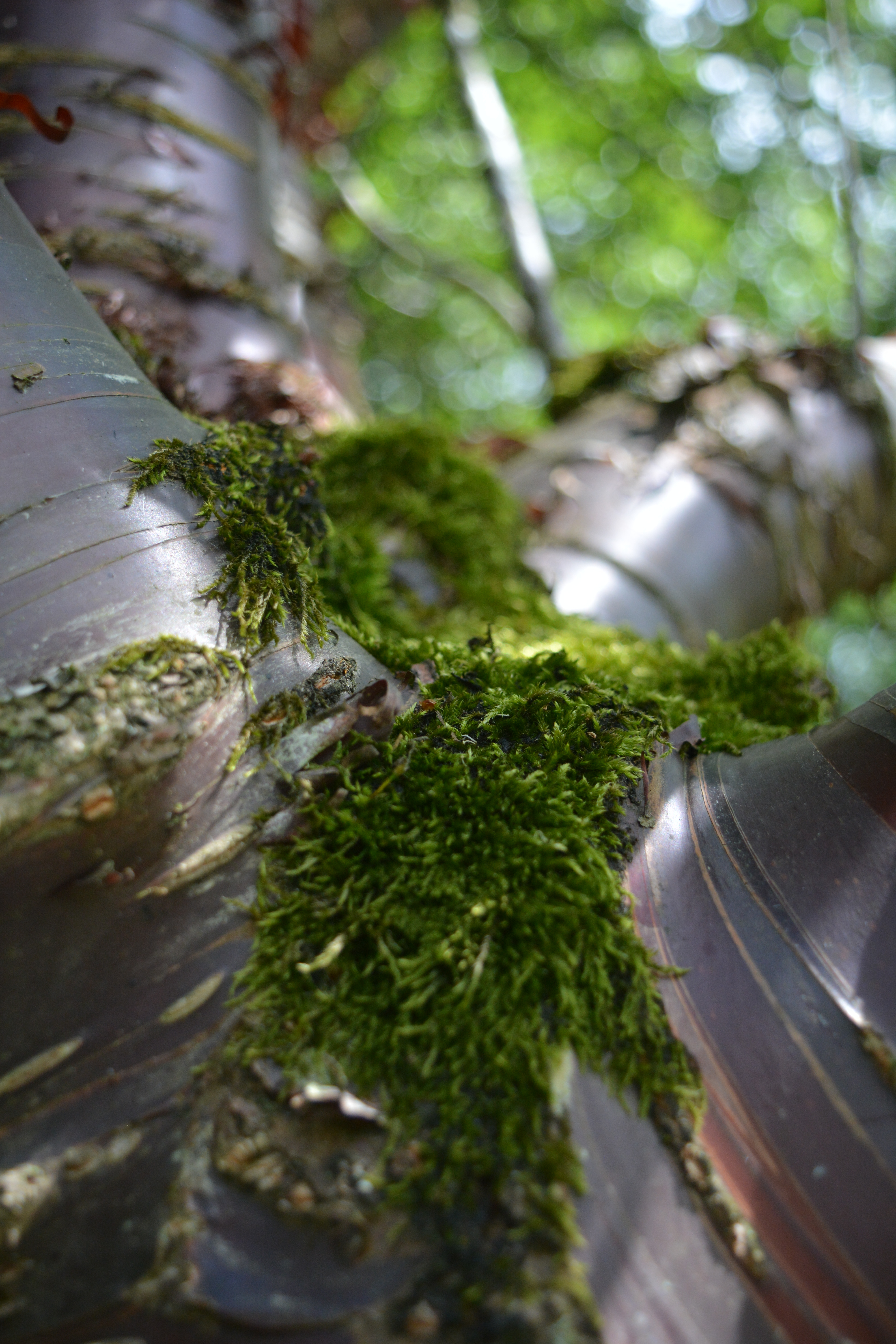
Sometimes it is the little details that catch the eye when we explore gardens. On this visit to the Dingle Garden Jude was attracted to the moss hitching a lift in the fork of a Prunus. The purple spires of the Acanthus looked just right next to the sculpture of the Red Kite.


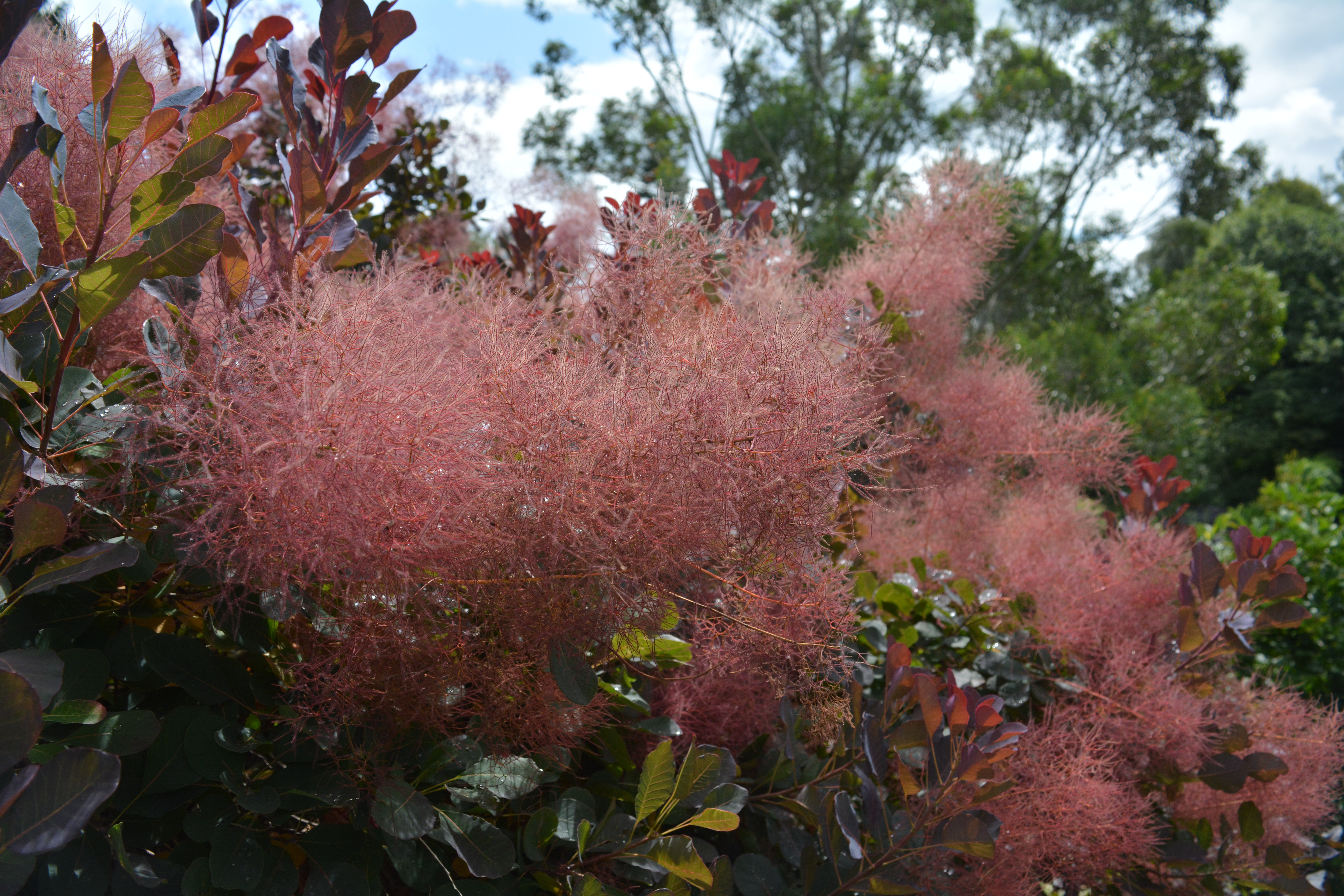
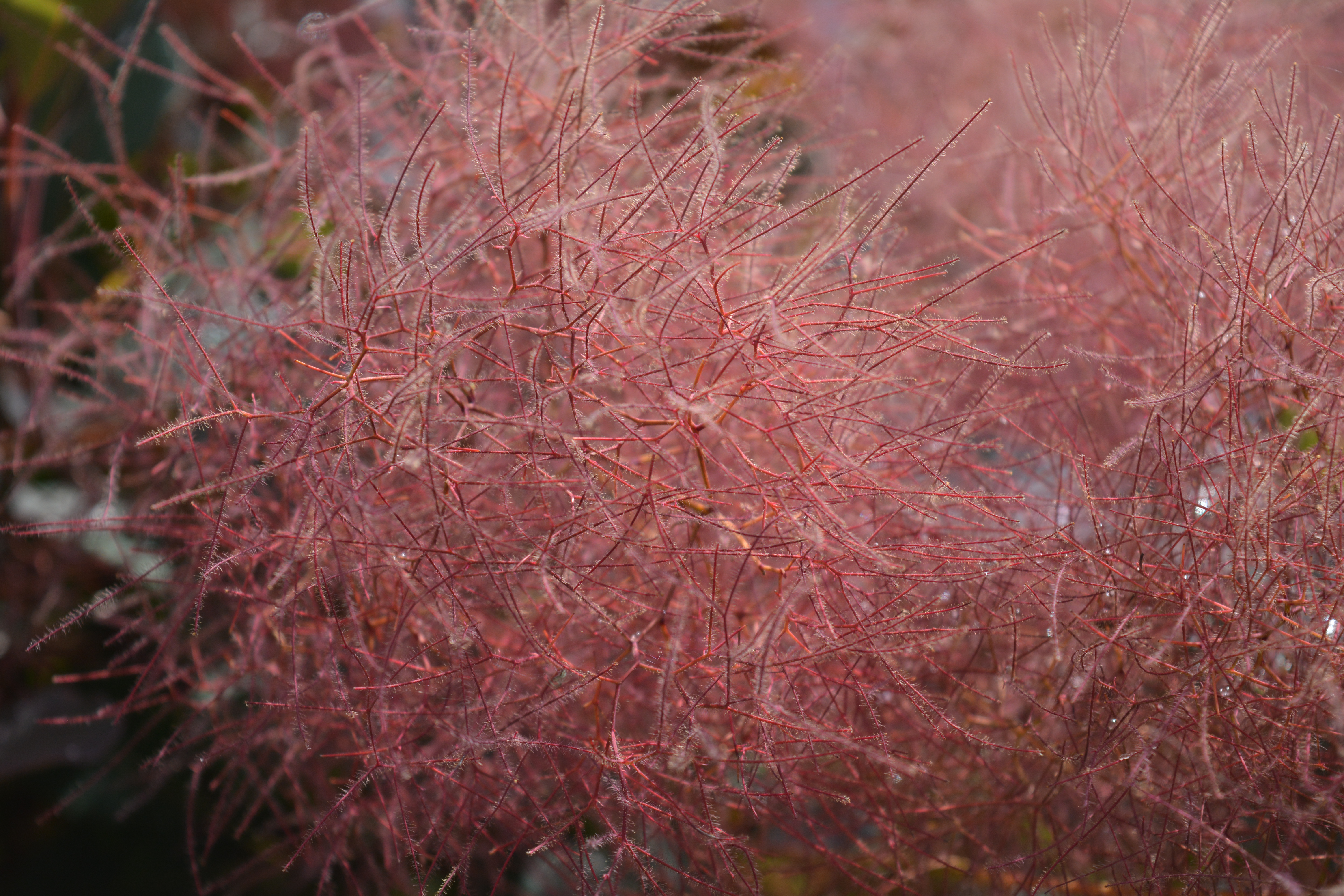
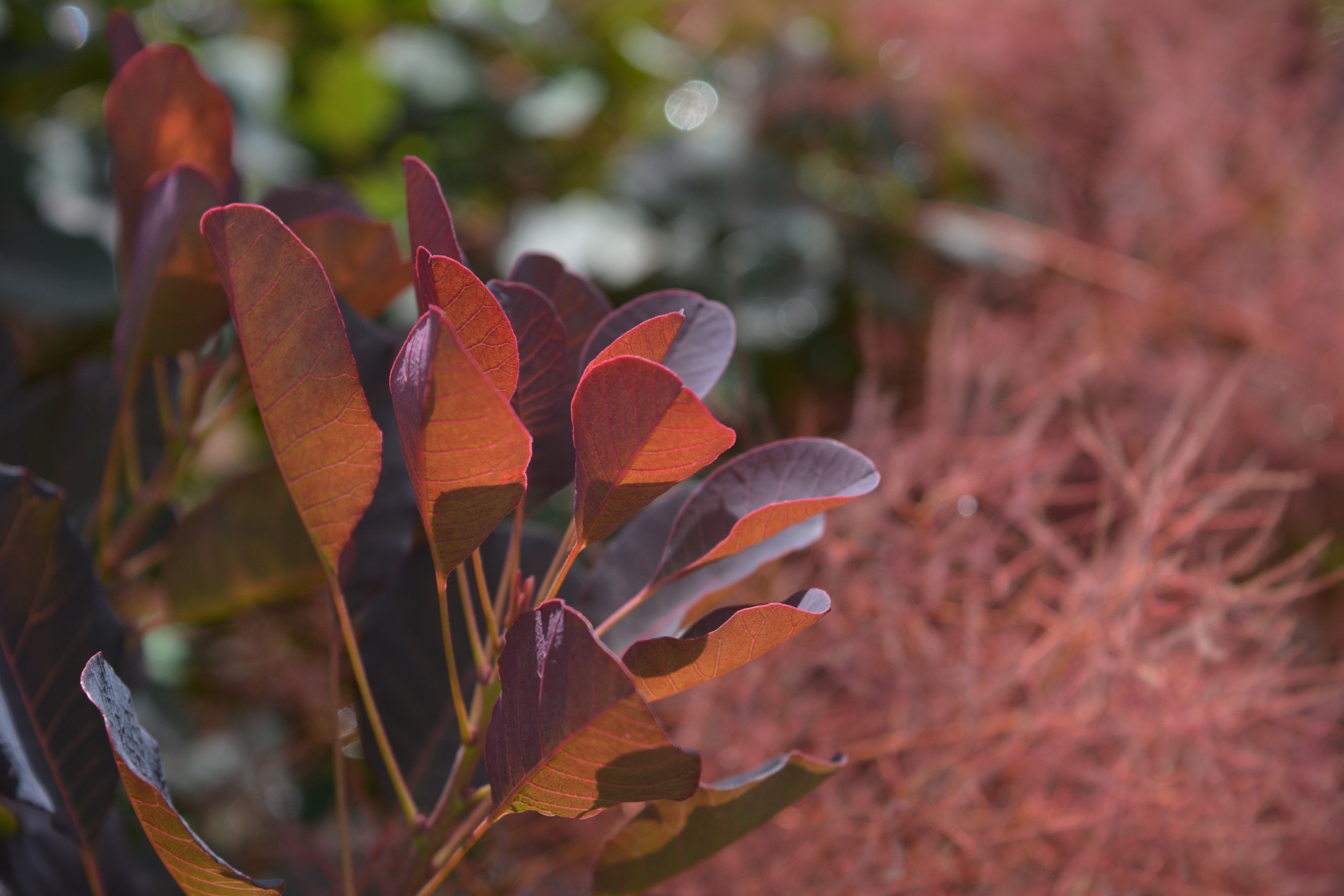
The real star of the July show was Cotinus coggygria with its deep red foliage with hints of glaucous blue and the smokey flower clouds.

So we will return next in August and see what late summer brings to the Dingle.

Categories
colours garden design garden photography gardening gardens gardens open to the public hardy perennials light light quality ornamental trees and shrubs Powis Powys roses shrubs trees Uncategorized Wales woodland woodlands

The Dingle Garden in June

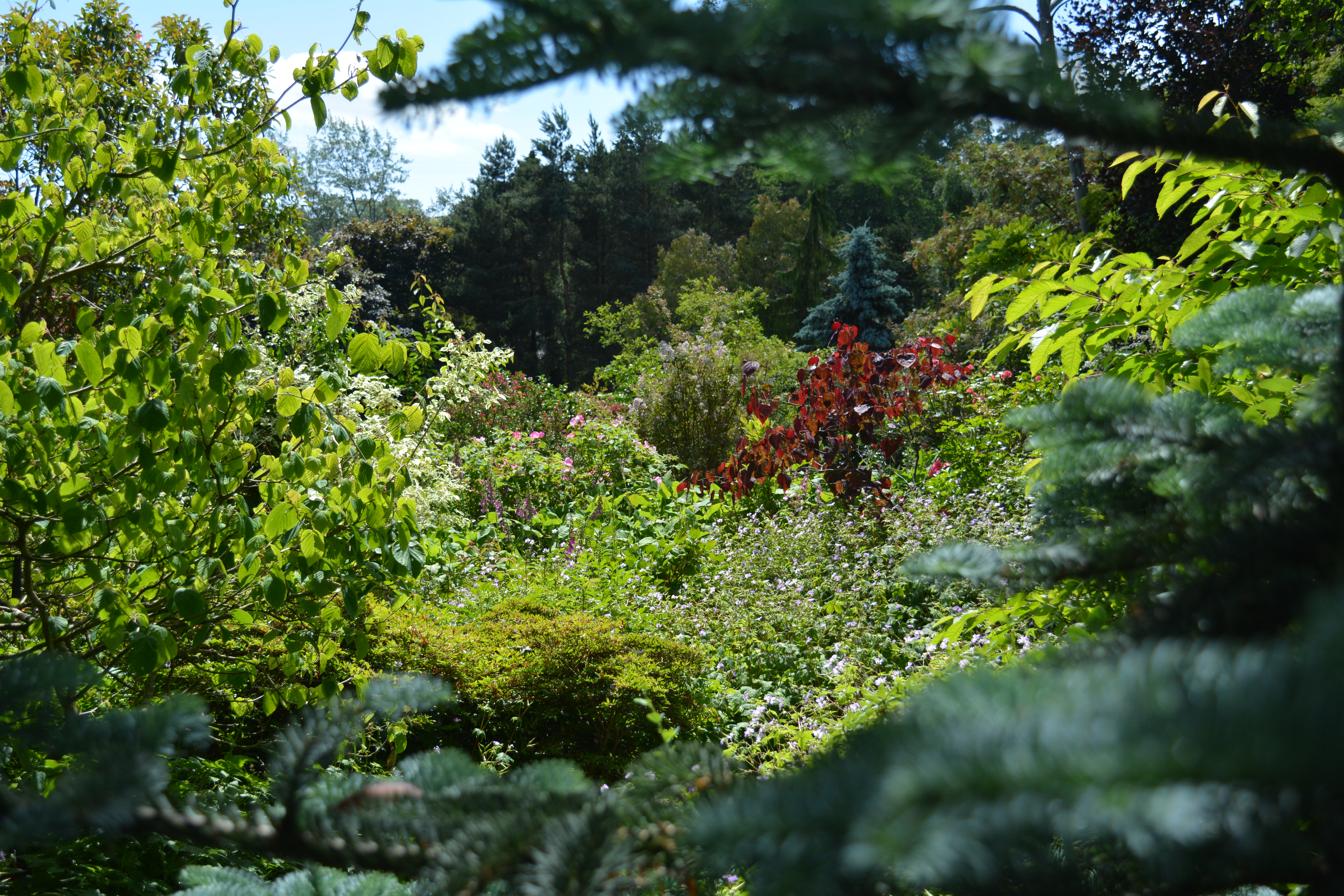
As we reach the middle of the year we made our monthly visit to the Dingle Gardens, and for once the weather looked set fair. This meant that we had strong contrast between light and shade and any colour was brightly lit when the sun hit it, leaf colour or flower colour.

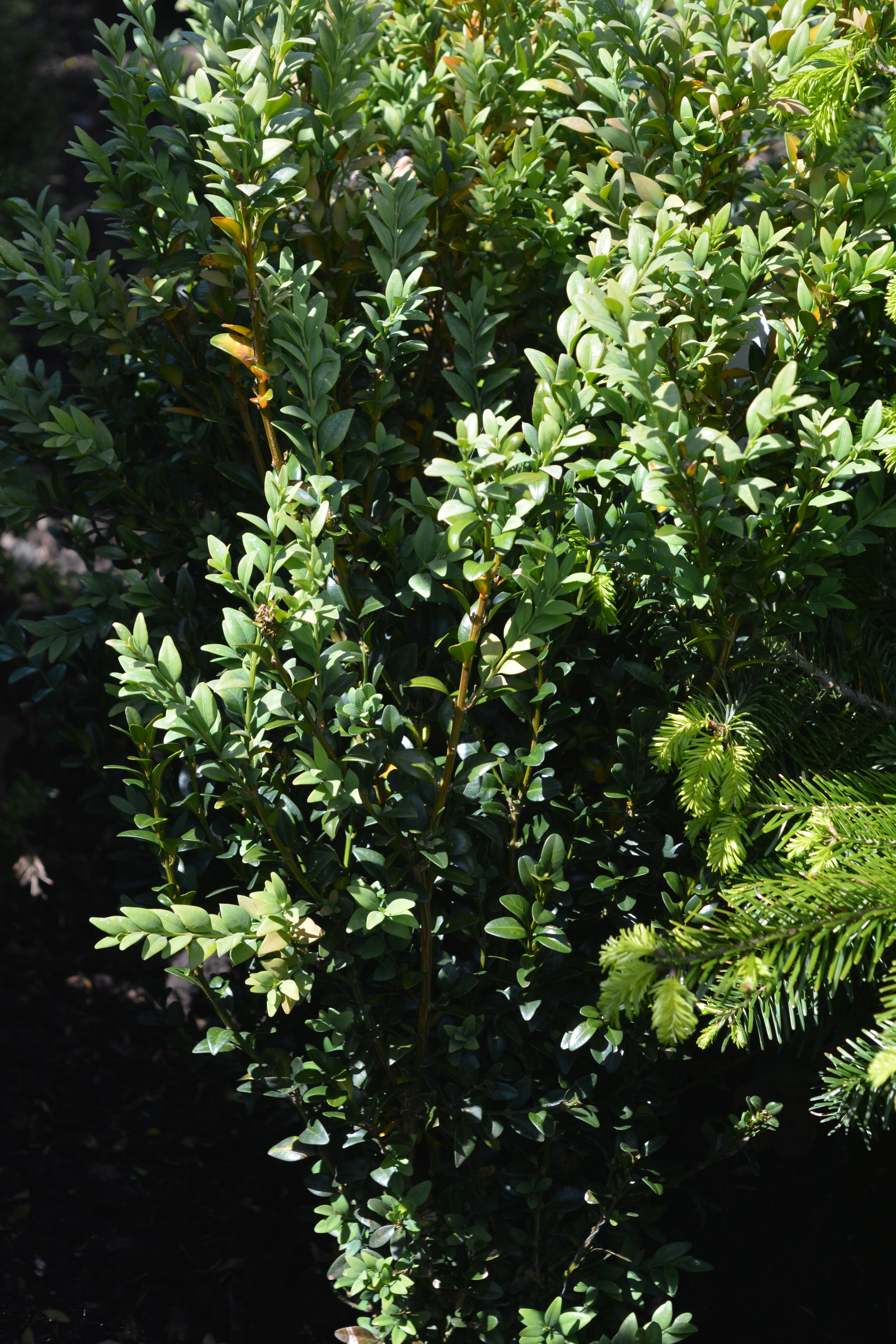
A Cornus kousa on the lawned area loked at its best, with creamy white bracts covering it from head to toe. The light emphasised the shapes and textures of quite ordinary trees ans shrubs lifting them above their normal character, including this tall conifer and the little Box shrub.


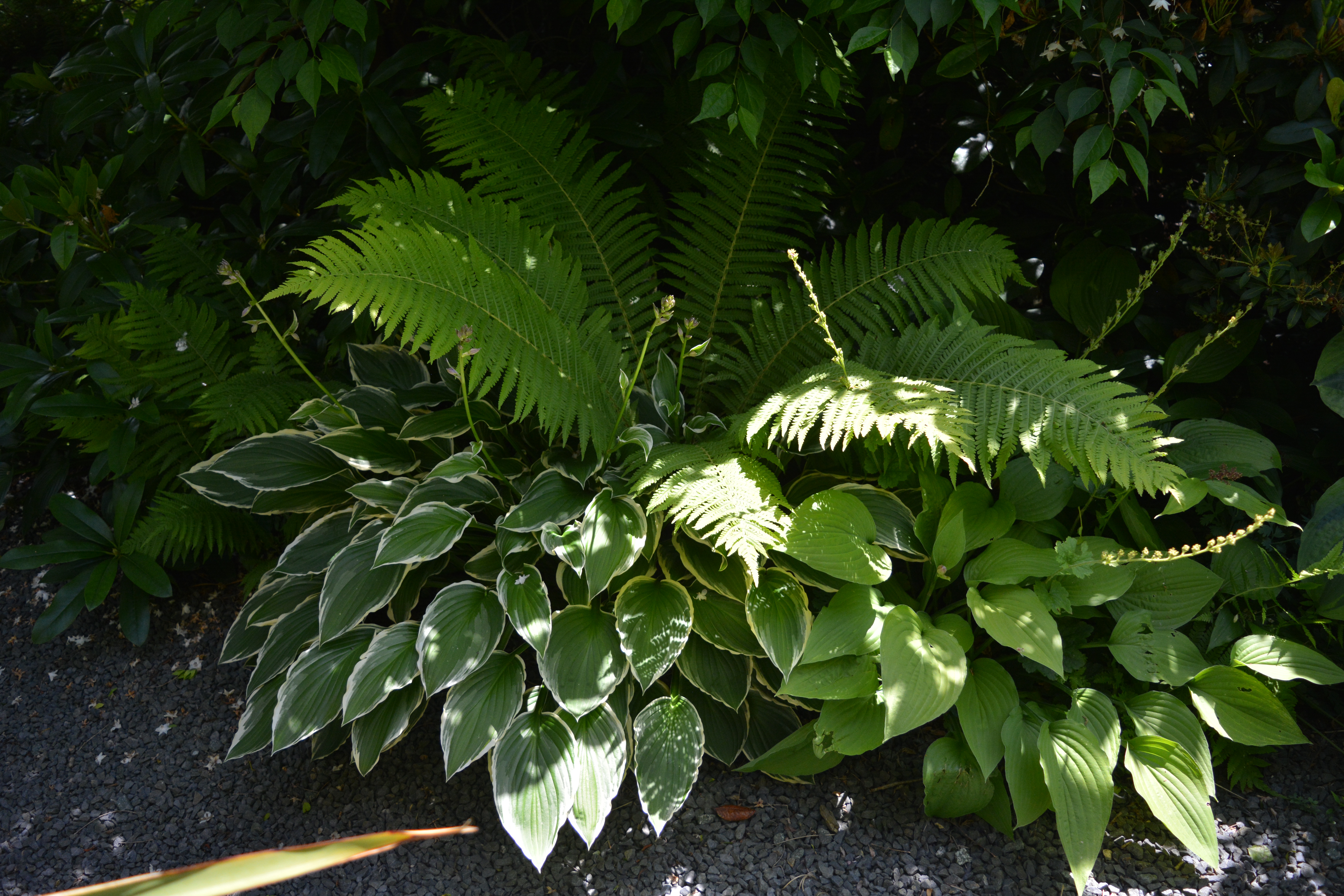
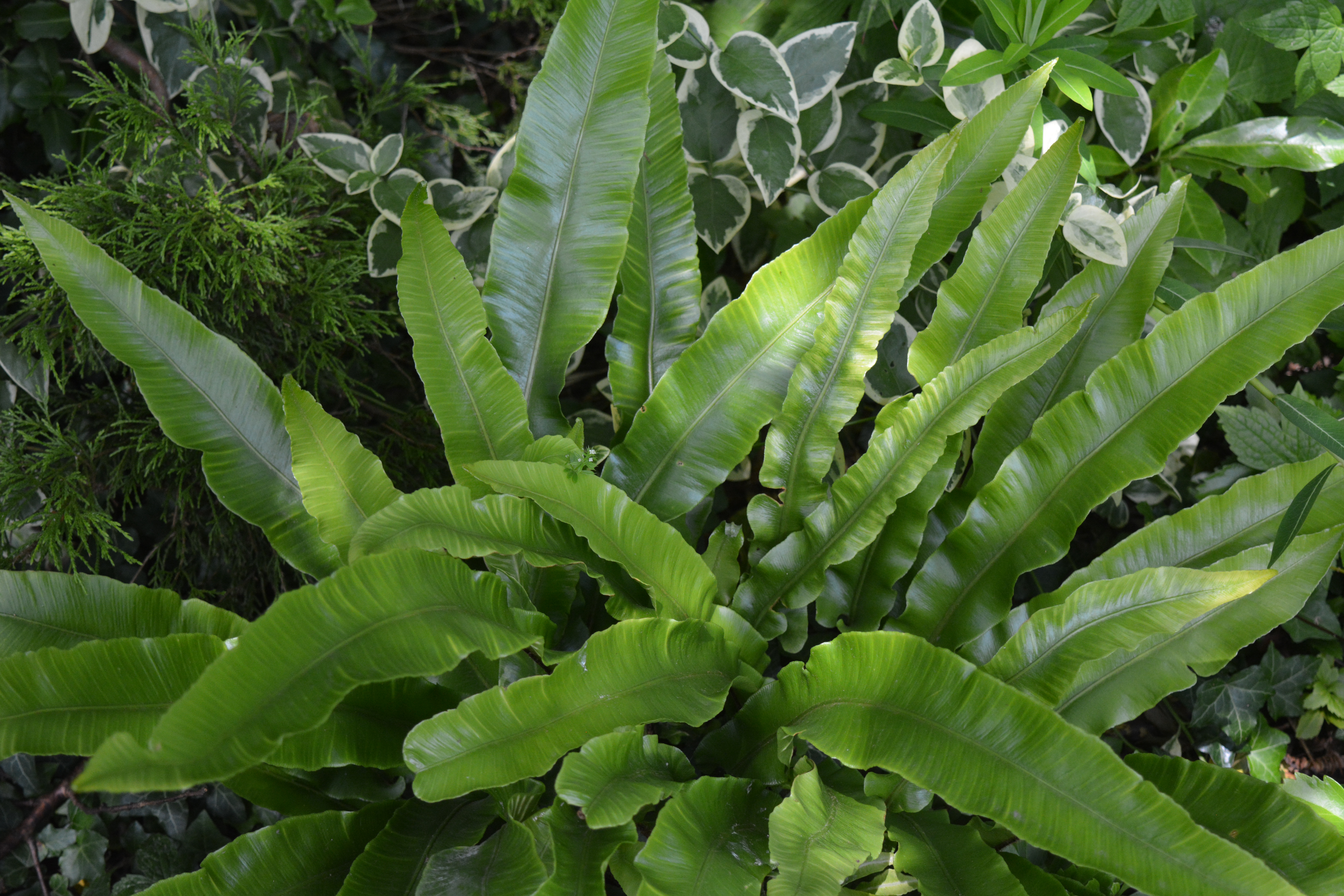
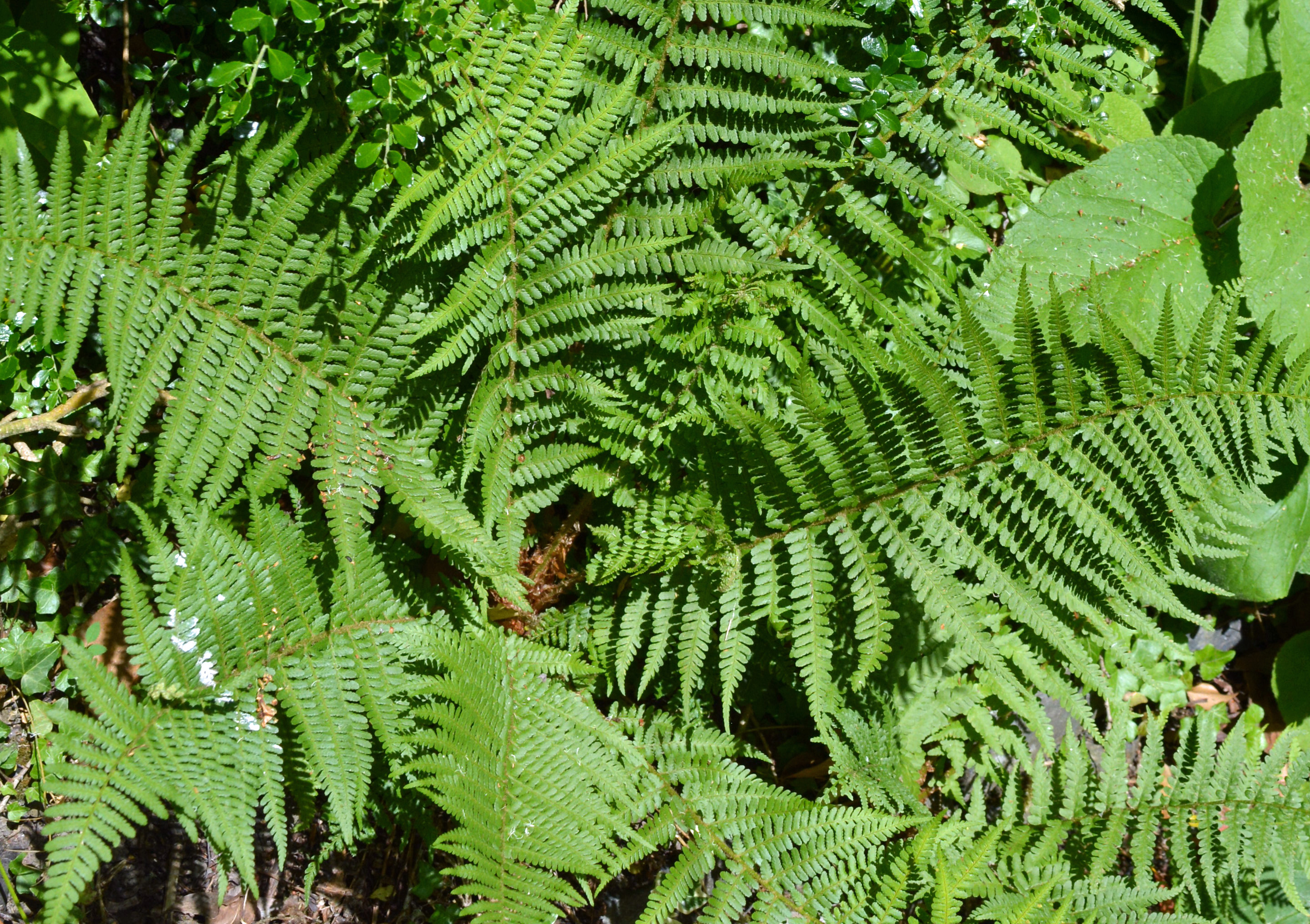
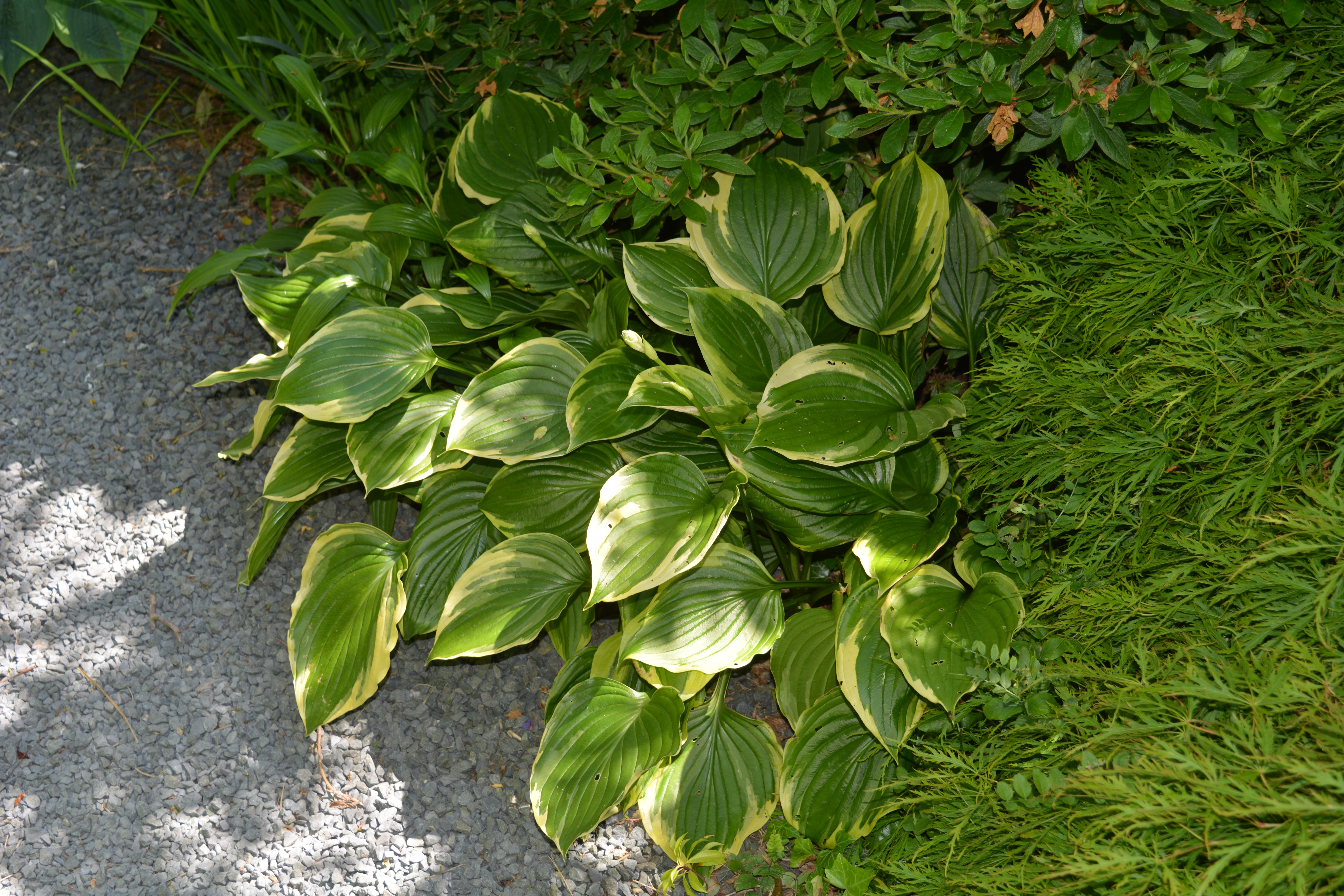
Hosta leaves and fern fronds looked lush and fresh and appeared in every shade of green, some glaucous and some almost yellow. Their textures were emphasised also by the light, every curl and ripple of leaf and each curl and twist of fern fronds.


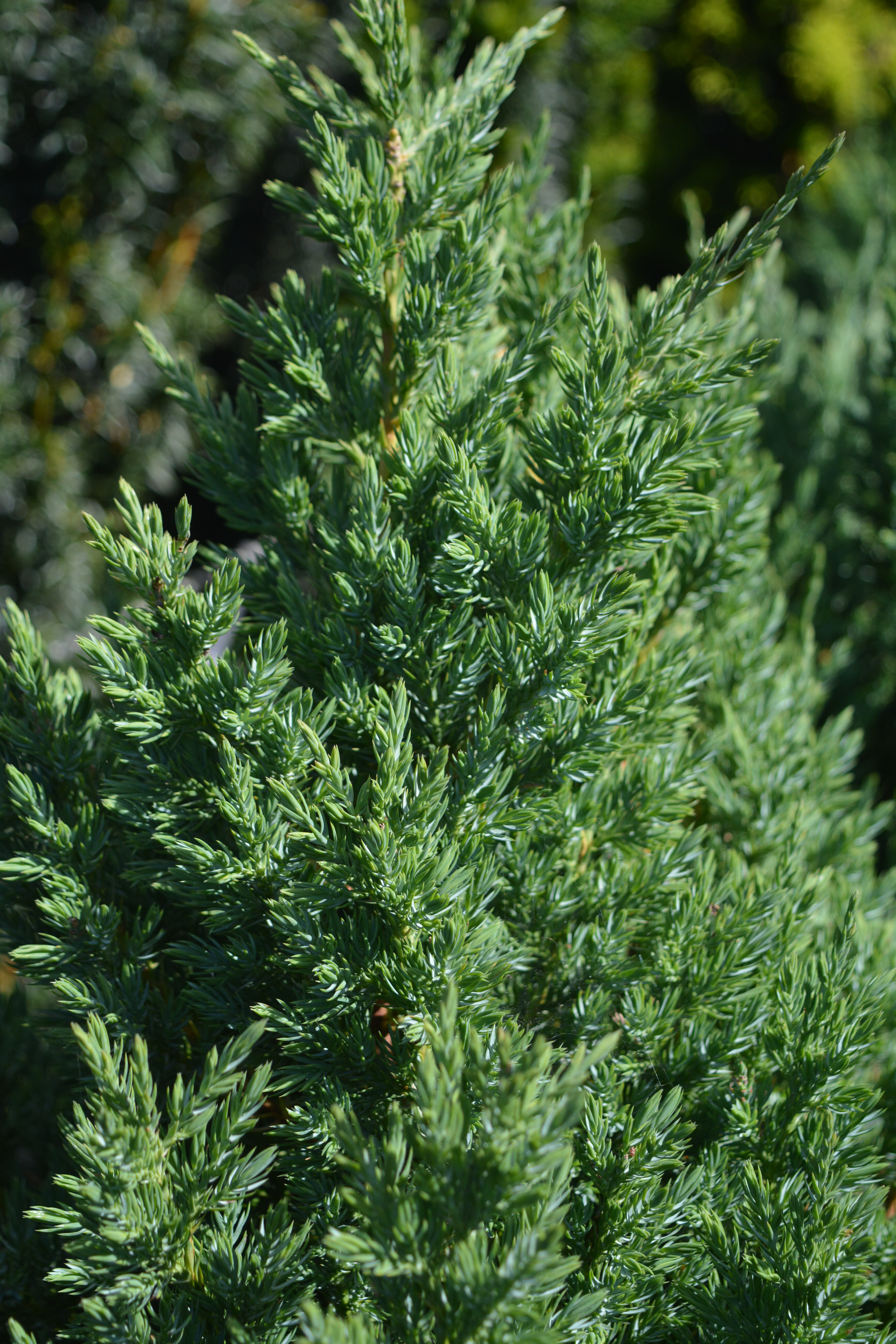
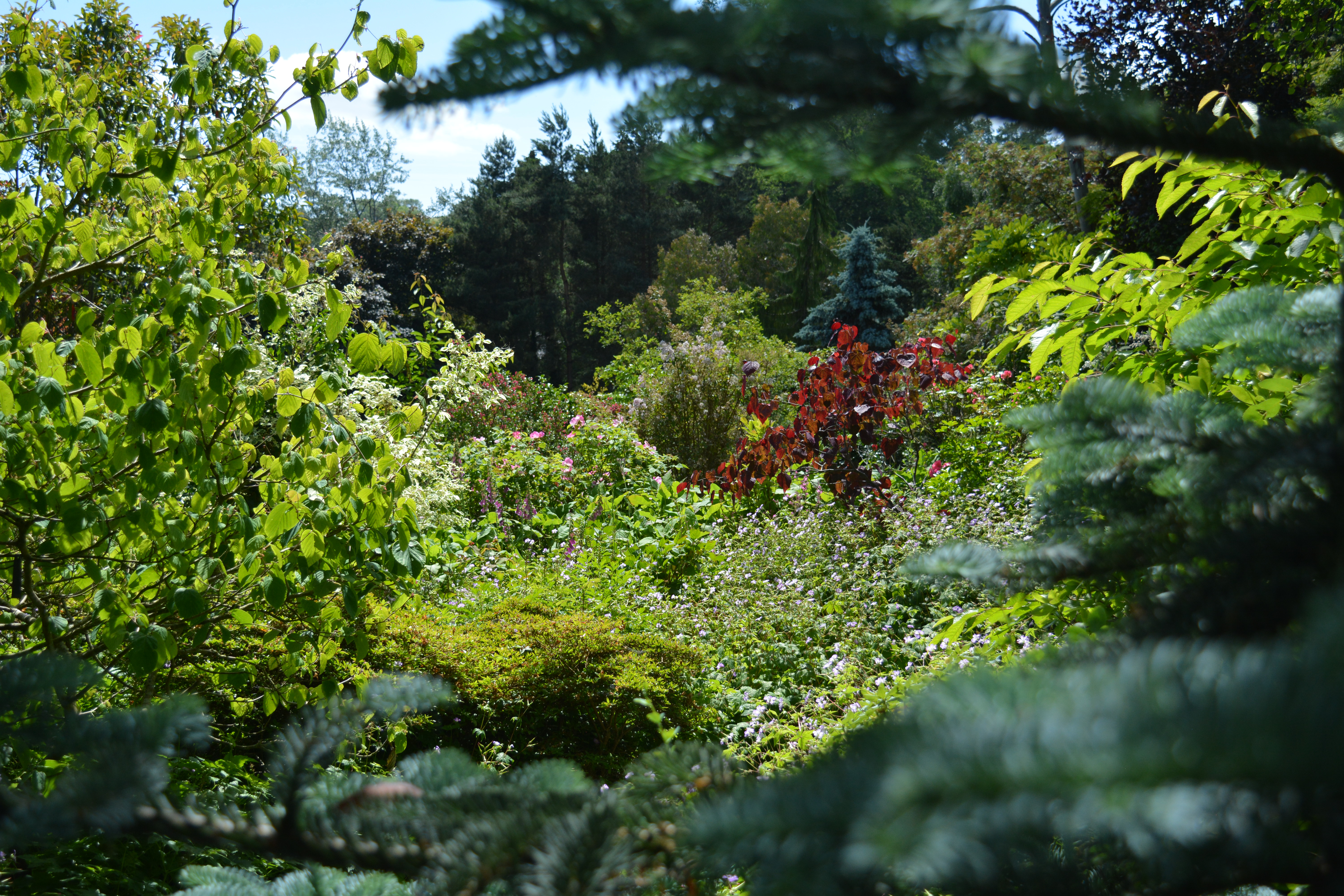
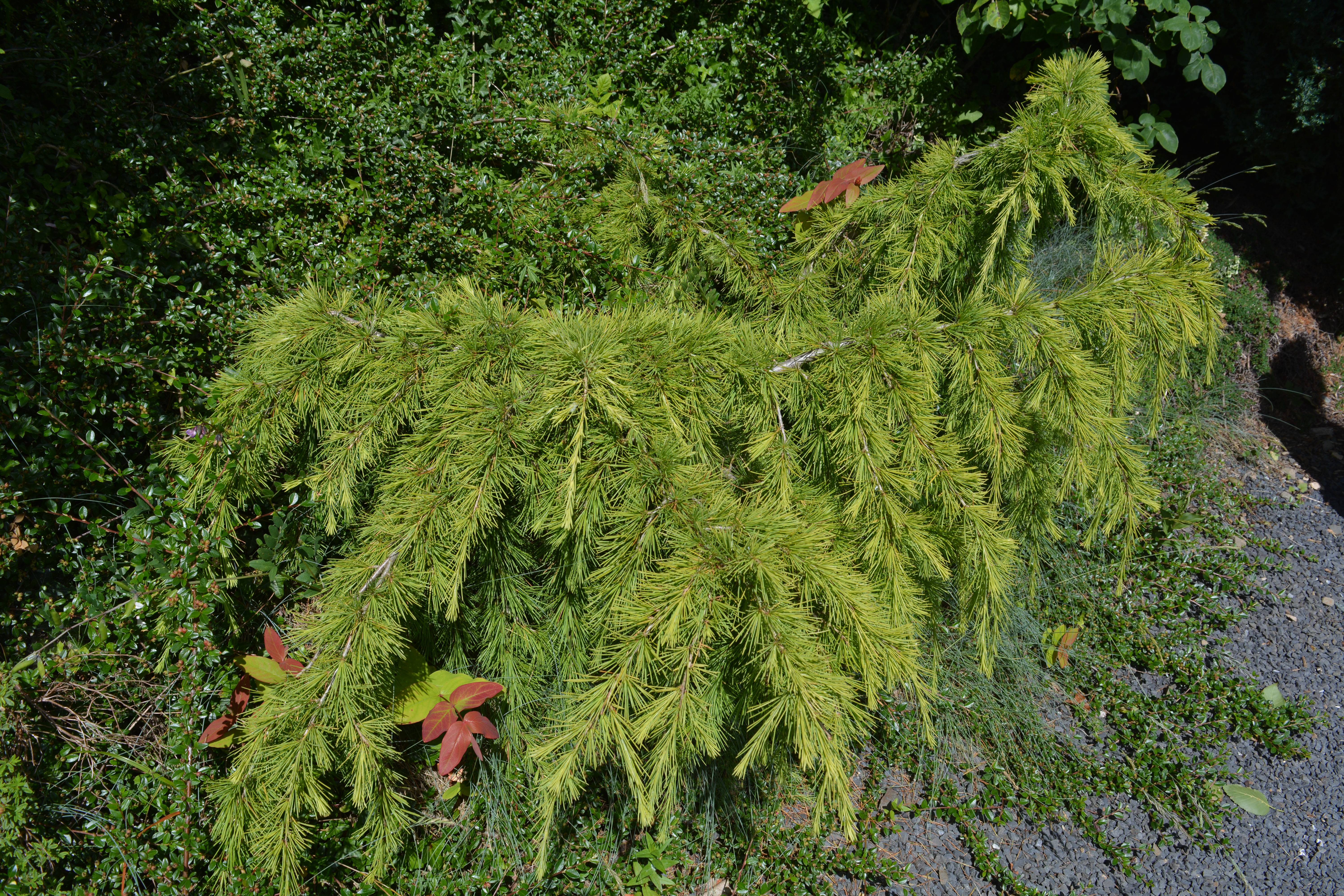
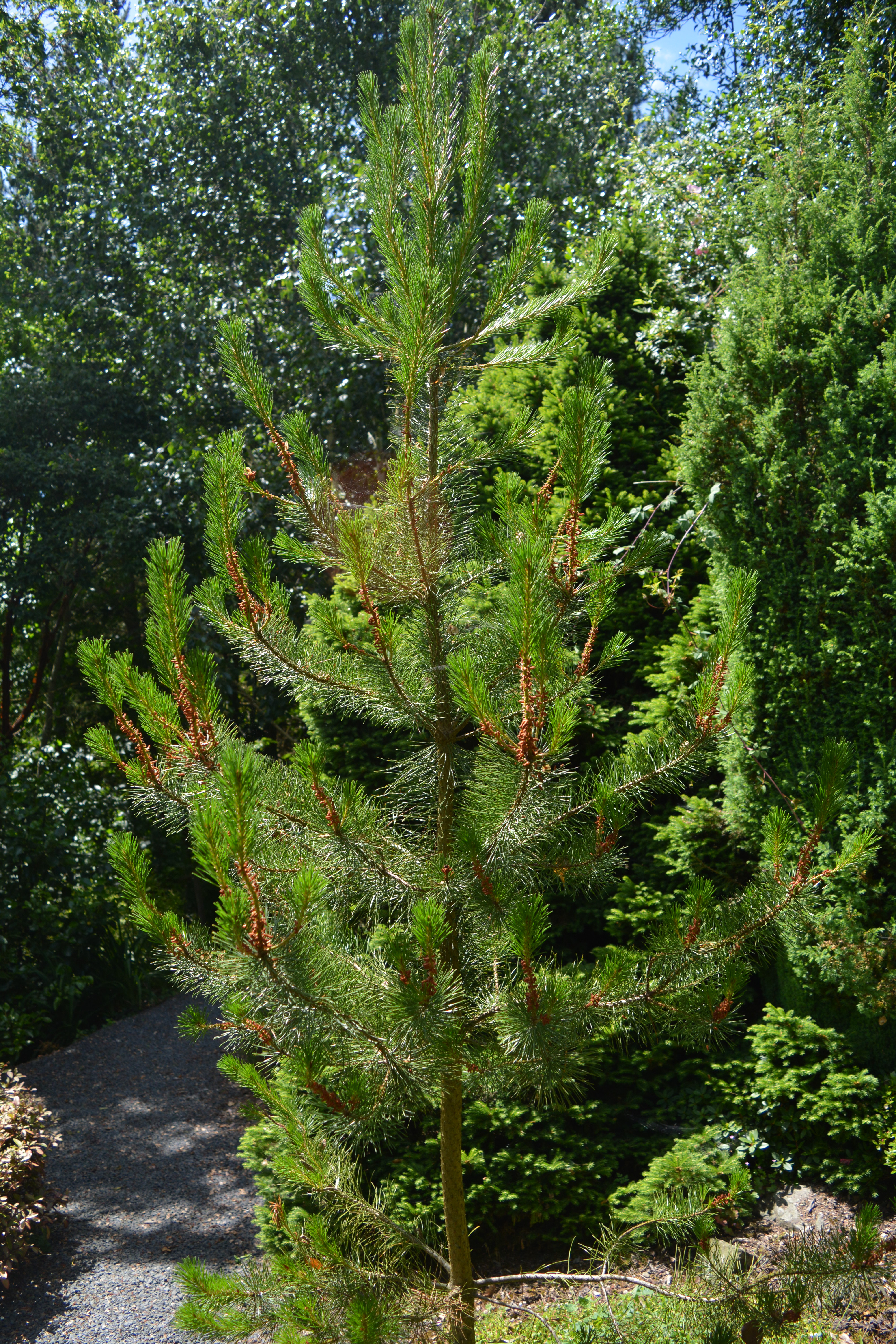
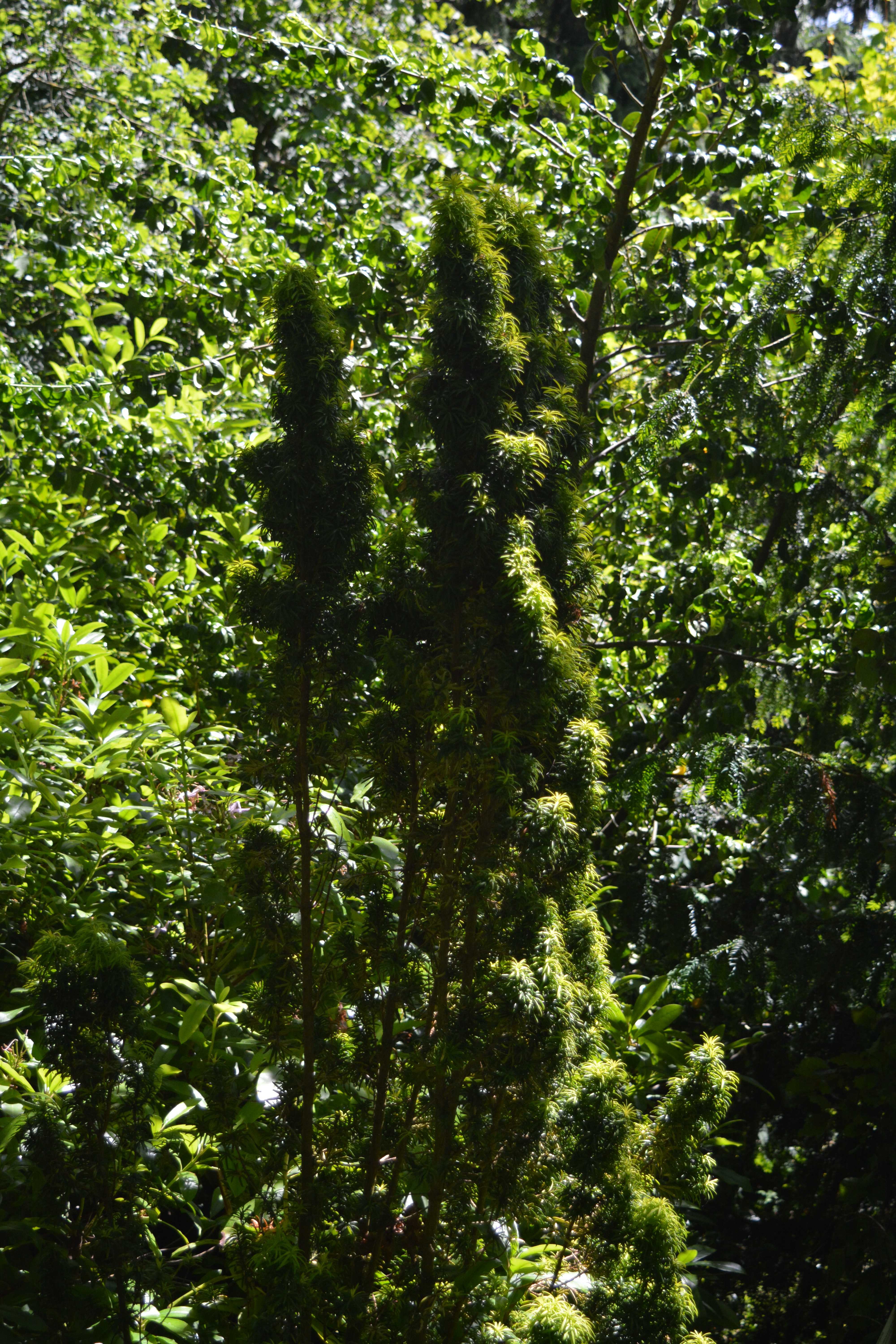
Conifers are difficult to appreciate in such a heavily planted hillside garden but on this day they seemed extra interesting with extra interest in their needle shapes and colours.


Conifer foliage appeared far more textured and more varied in colour than on the dull days of our earlier visits as the bright sunlight emphasised both the colours and textures.


The shubs were flowering well on this visit and some petals became almost translucent and a few perennial plants had cme into bloom too. These flower colours had an extra element of richness to them as they presented strong contrast to the multitude of greens and greys of foliage.

Roses seemed to have appeared from nowhere. In a garden full od trees and shrubs with interesting foliage, bark and stems rose bushes out of flower really do disappear. But in June suddenly the subshine finds heir beautiful scented flowers. Most here are simple blooms including our native roses.

To finish off my post on our June visit to the Dingle Garden I shall sign off with a gallery of flowering shrub photos, which I hope you enjoy. We will be back in July for our next monthly visit to see what is going on.


Categories
climbing plants colours fruit and veg garden buildings garden design garden photography garden ponds garden pools gardening gardens gardens open to the public grow your own half-hardy perennials hardy perennials Herefordshire kitchen gardens ornamental trees and shrubs water in the garden

Garden Revisiting Part One – The Garden in a Cider Orchard

We are so lucky to have so many great gardens that we can visit in a day from home. I thought a week of posts all about revisiting gardens would prepare us well for the warmer weather and get our creative gardening juices flowing again.

There are many in our home county Shropshire itself and we have easy access to Herefordshire and Powys where there are even more. Several of our favourite gardens we like to visit every year or so, so that we can see how they develop over time and change with the seasons. In this occasional series we shall do just that. I shall be featuring those gardens that we like to keep going back to.

For the first of these we travel down the trunk road southwards, the A49 which will take us through South Shropshire and into the Herefordshire border. It is just a few hundren yards from this road that we find the gardens of Stockton Bury which are described as the “Gardens in the Orchard”. The garden was born in 1900 and has never stopped developing. The present gardener, Raymond Treasure has developed it into rich tapestry of unusual trees, perennials and even a few follies, all wrapped around the old farm buildings.

2014 09 20_50882014 09 20_5068 2014 09 20_5069 2014 09 20_5070 2014 09 20_5071 2014 09 20_5073 2014 09 20_5074 2014 09 20_5075 2014 09 20_5076 2014 09 20_5077 2014 09 20_5078 2014 09 20_5079 2014 09 20_5080

It is a garden with a surprise around every corner, and however many times you visit this still happens. A living garden!

2014 09 20_5081

The mixed borders are rich in perennial plants that the wildlife enjoy.

2014 09 20_5082 2014 09 20_5084 2014 09 20_5085 2014 09 20_5086 2014 09 20_5087  2014 09 20_5089 2014 09 20_5090 2014 09 20_5091

At any turn in the path you can find a surprise, brightly coloured planting, secret rooms, unusual plants you can’t name,

2014 09 20_5094 2014 09 20_5095 2014 09 20_5098 2014 09 20_5099 2014 09 20_5101 2014 09 20_5103 2014 09 20_5104 2014 09 20_5106 2014 09 20_5108 2014 09 20_5109 2014 09 20_5110 2014 09 20_5111

Please enjoy this special place by browsing through my gallery of photos. There are probably too many but Stockton Bury is such a photogenic location it becomes hard to edit your shots.

2014 09 20_5113 2014 09 20_5114 2014 09 20_5115 2014 09 20_5116 2014 09 20_5117 2014 09 20_5118 2014 09 20_5119 2014 09 20_5120 2014 09 20_5121 2014 09 20_5122 2014 09 20_5123 2014 09 20_5124 2014 09 20_5125 2014 09 20_5126 2014 09 20_5127 2014 09 20_5128 2014 09 20_5129 2014 09 20_5130 2014 09 20_51312014 09 20_5133 2014 09 20_5135 2014 09 20_5136 2014 09 20_5137 2014 09 20_5138 2014 09 20_5139 2014 09 20_5140 2014 09 20_5143 2014 09 20_5144 2014 09 20_5145 2014 09 20_5146 2014 09 20_5147 2014 09 20_5148 2014 09 20_5153

Our return visit to Stockton Bury was as special as the first we ever made, full of special plants, secrets and surprises and touches of humour.

2014 09 20_5154 2014 09 20_5156


Categories
garden photography gardening gardens gardens open to the public landscapes light light quality National Garden Scheme NGS ornamental trees and shrubs trees water in the garden Winter Gardening winter gardens woodland woodlands Yellow Book Gardens

Early Spring Light in a Woodland Garden

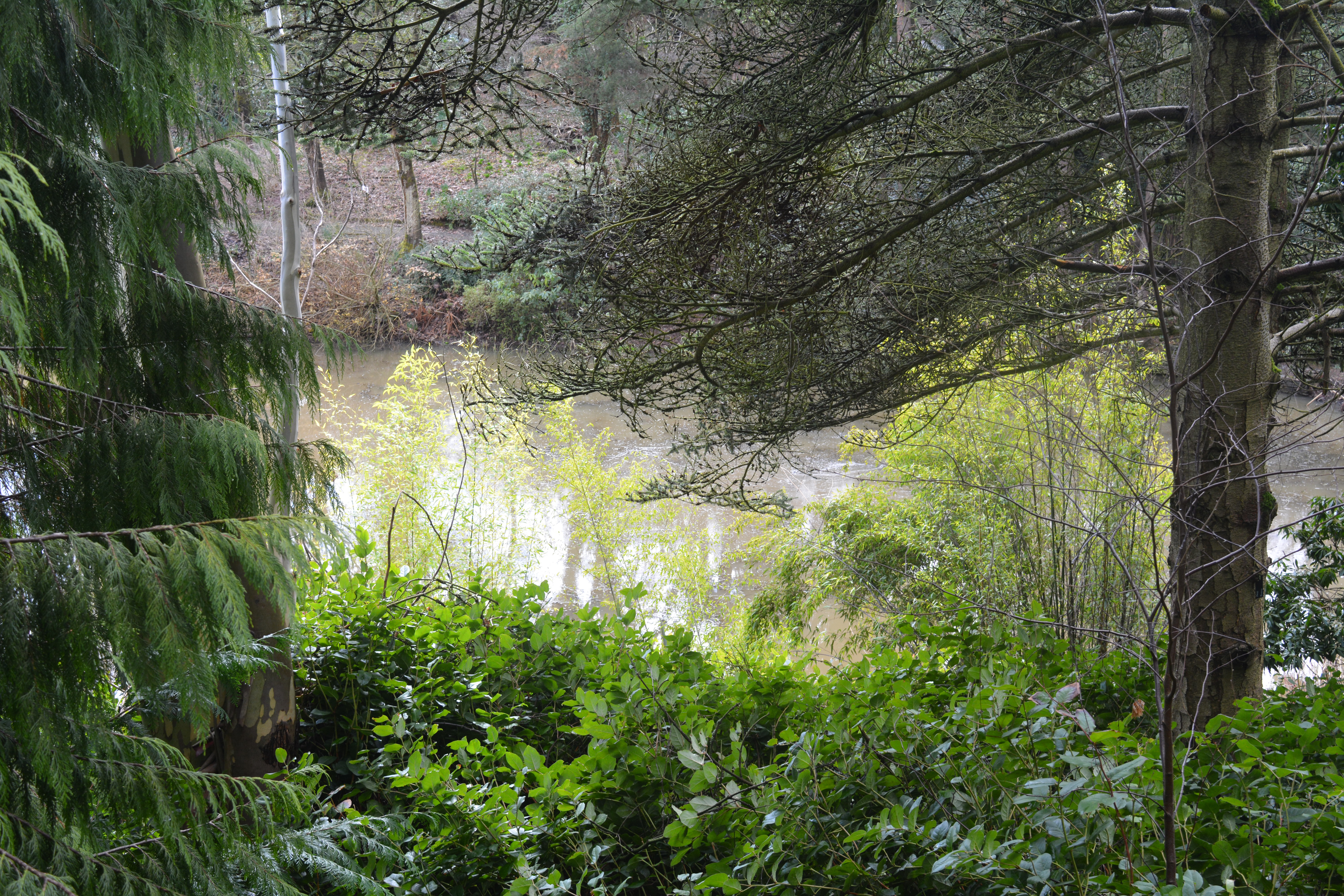
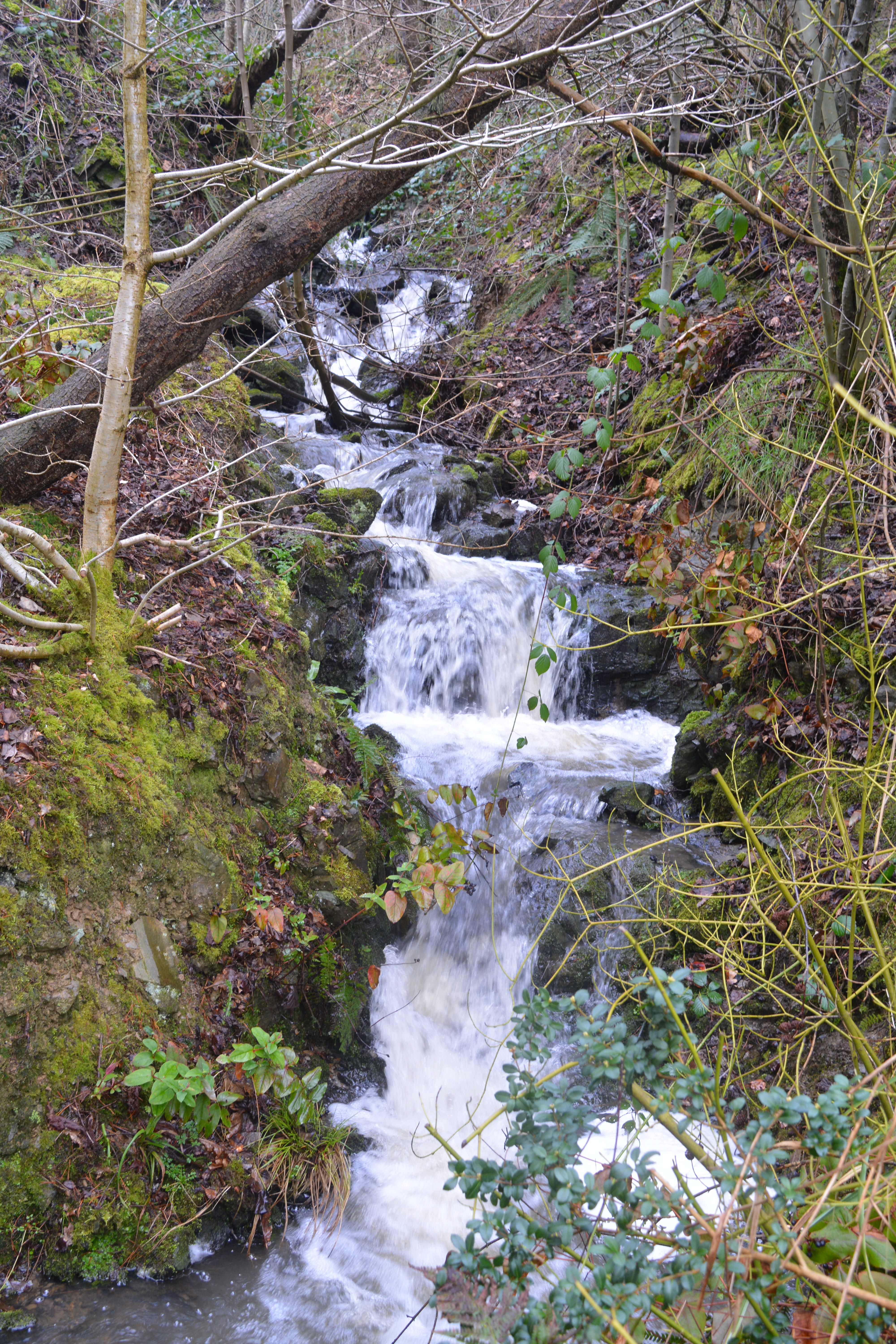
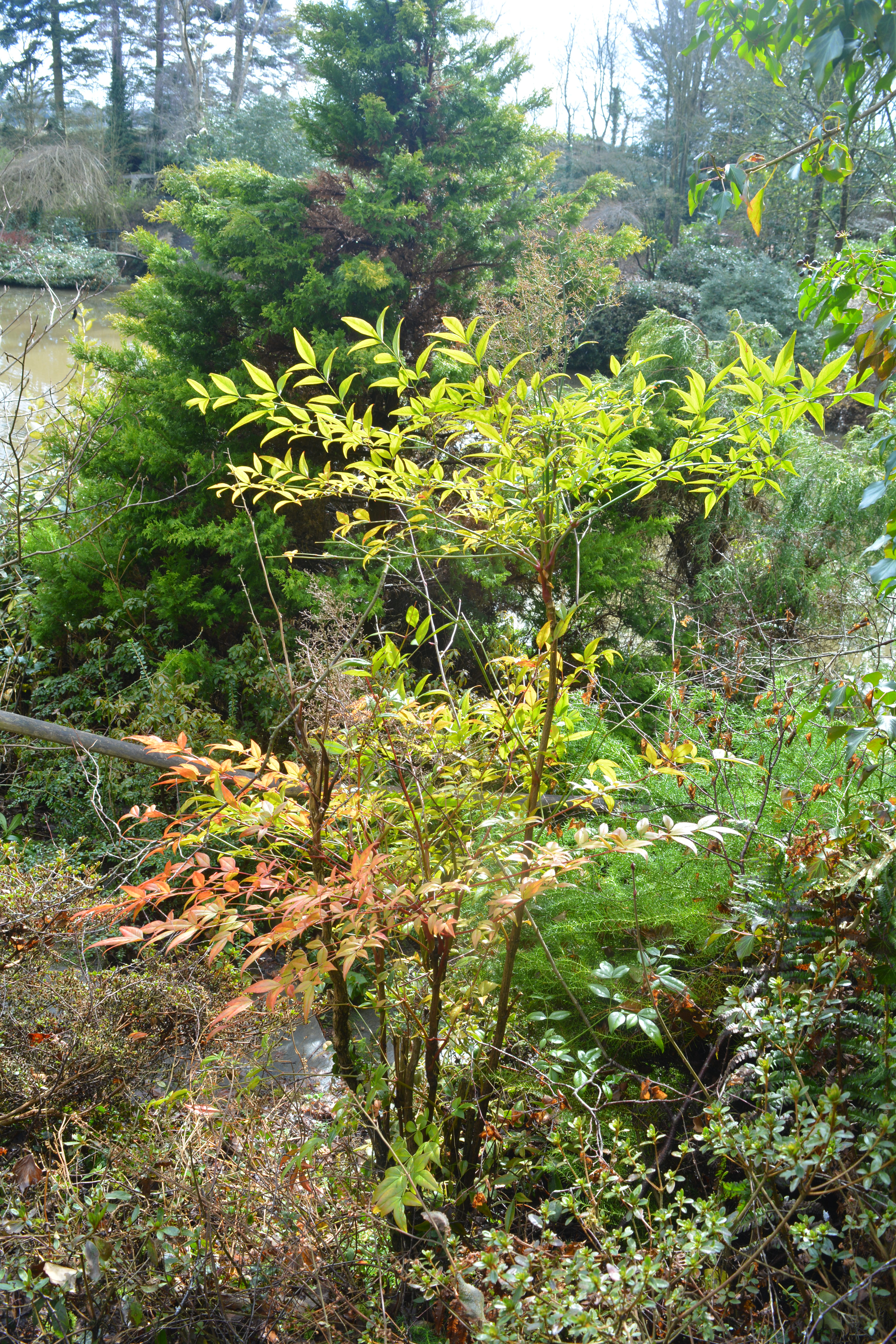
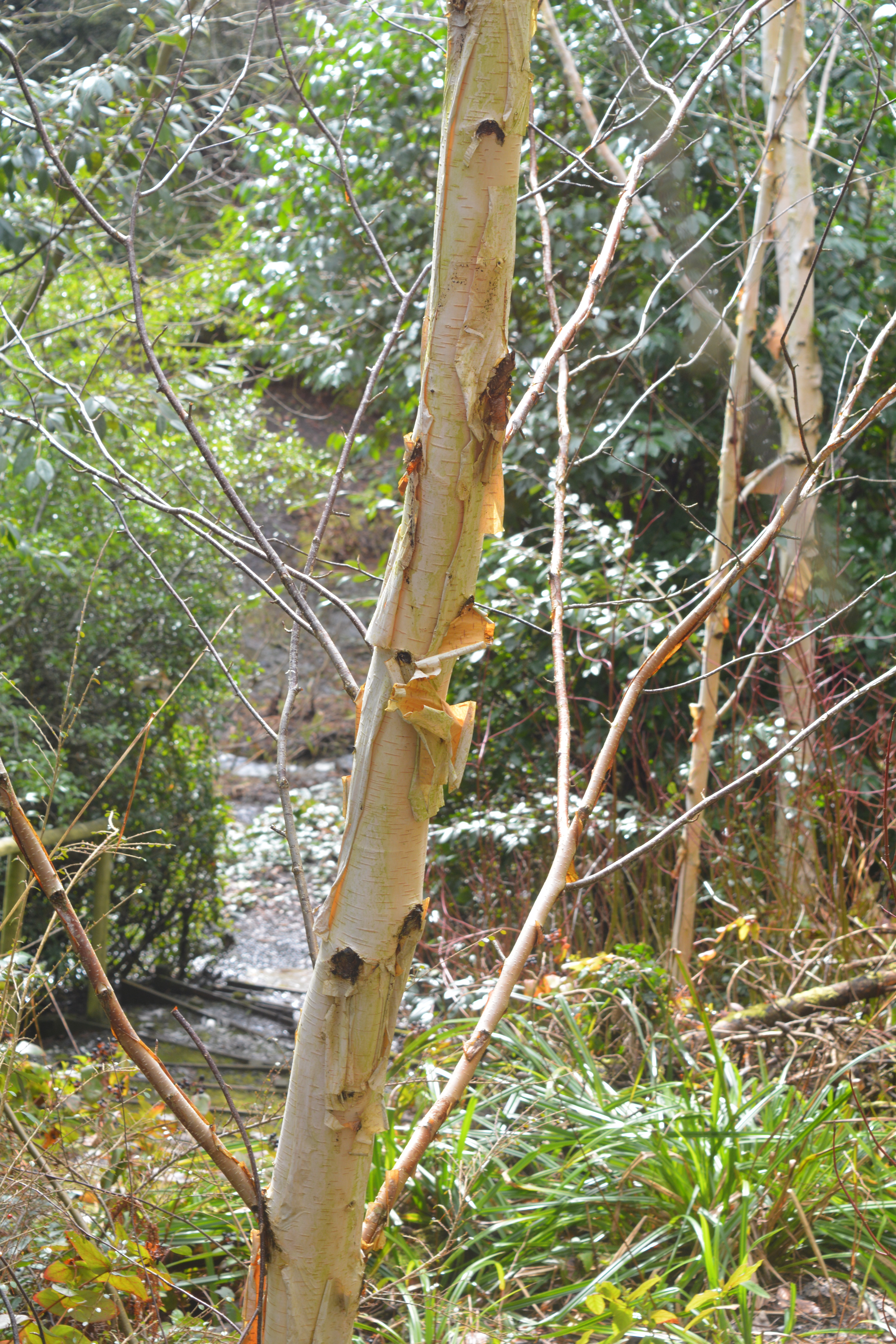
March at the Dingle woodland garden at The Dingle and Nursery near Welshpool proved to be a time with special light when the sun appeared for odd periods. I am sharing some of my photos taken of the landscape and the light playing with it. I hope you enjoy them!


Categories
flowering bulbs garden arches garden design garden paths garden photography gardening gardens gardens open to the public grasses hardy perennials National Trust ornamental grasses ornamental trees and shrubs pathways pergolas spring bulbs The National Trust trees Wales Winter Gardening winter gardens

The Winter Garden at Bodnant Hall

We left home for a journey up towards Chester and then West along the North Wales coast after listening to the local weather forecast for our destination. It predicted a heavy snow storm passing through early morning and warnings were announced for closed roads and dangerous conditions. The weather was set to travel eastward and weaken, so we hoped we would meet it as it had weakened and arrive at our destination as it cleared.

We got it spot on as a couple of hours later we arrived at the northern tip of Snowdownia, at Bodnant Hall where we wanted the see the Winter Garden. We had explored it before in the summer and it looked good then. We vowed to return in its prime season to see if it lived up to its summer promises.

We were not to be disappointed in the slightest as it surpassed all expectations. It was simply breathtaking. Come with us as we explore along its winding paths.

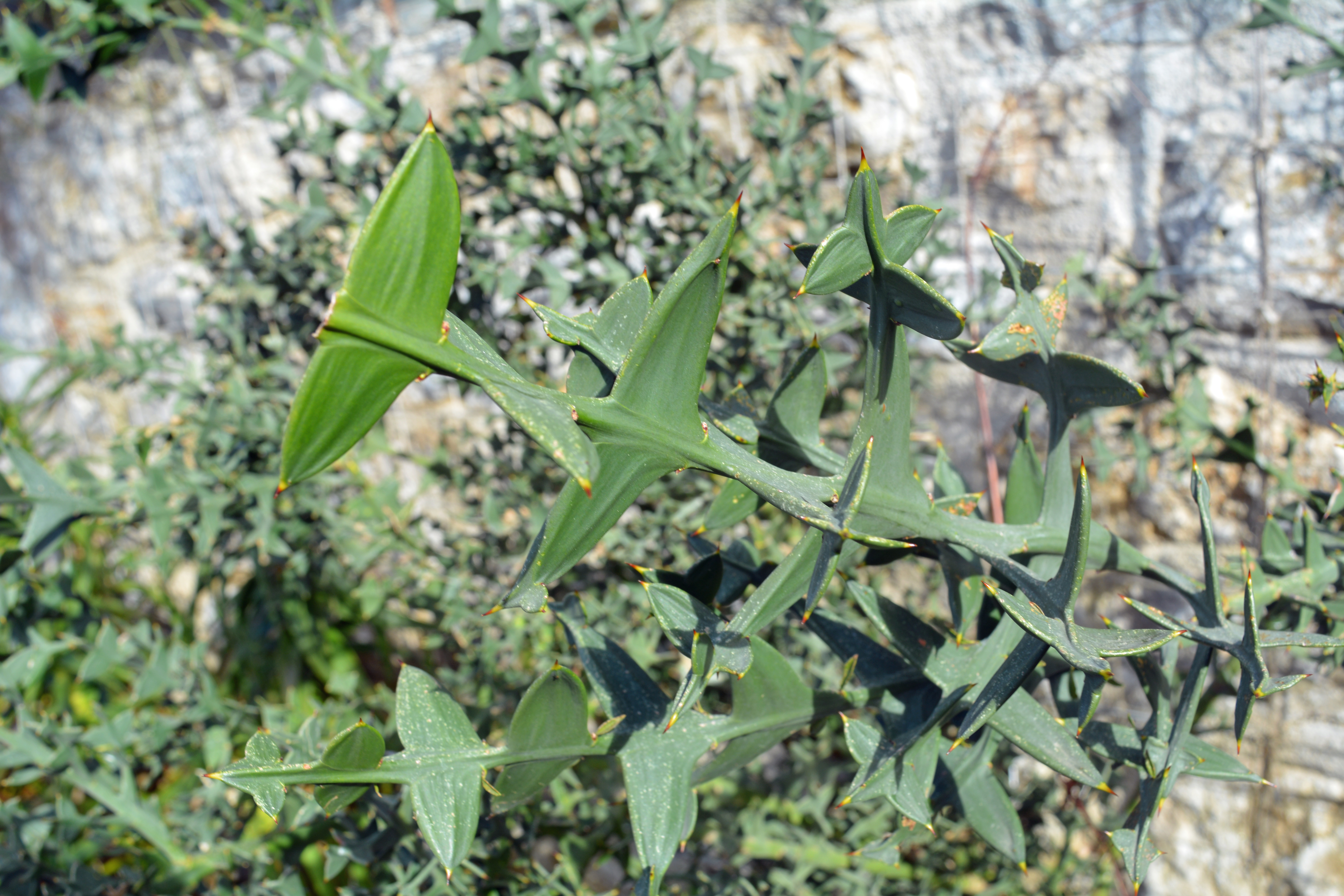
We entered the garden by following a path cut into the hillside and then down a ramp where we discovered a raised wall with the sort of planting we expected to see in the Winter Garden itself. We also passed two plants with not so friendly foliage, a Colletia paradoxa and a Yucca, both well endowed with points and sharp edges.


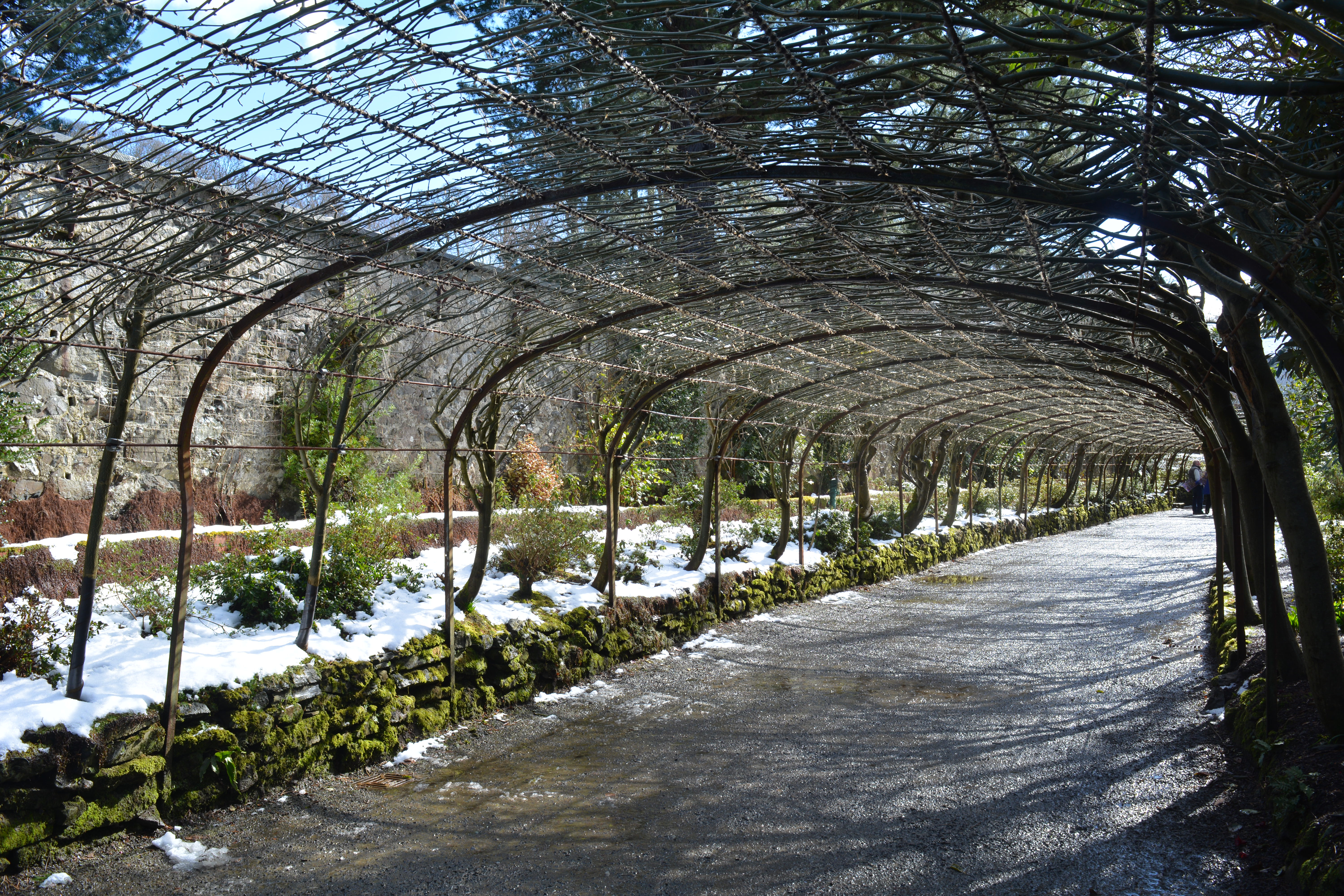
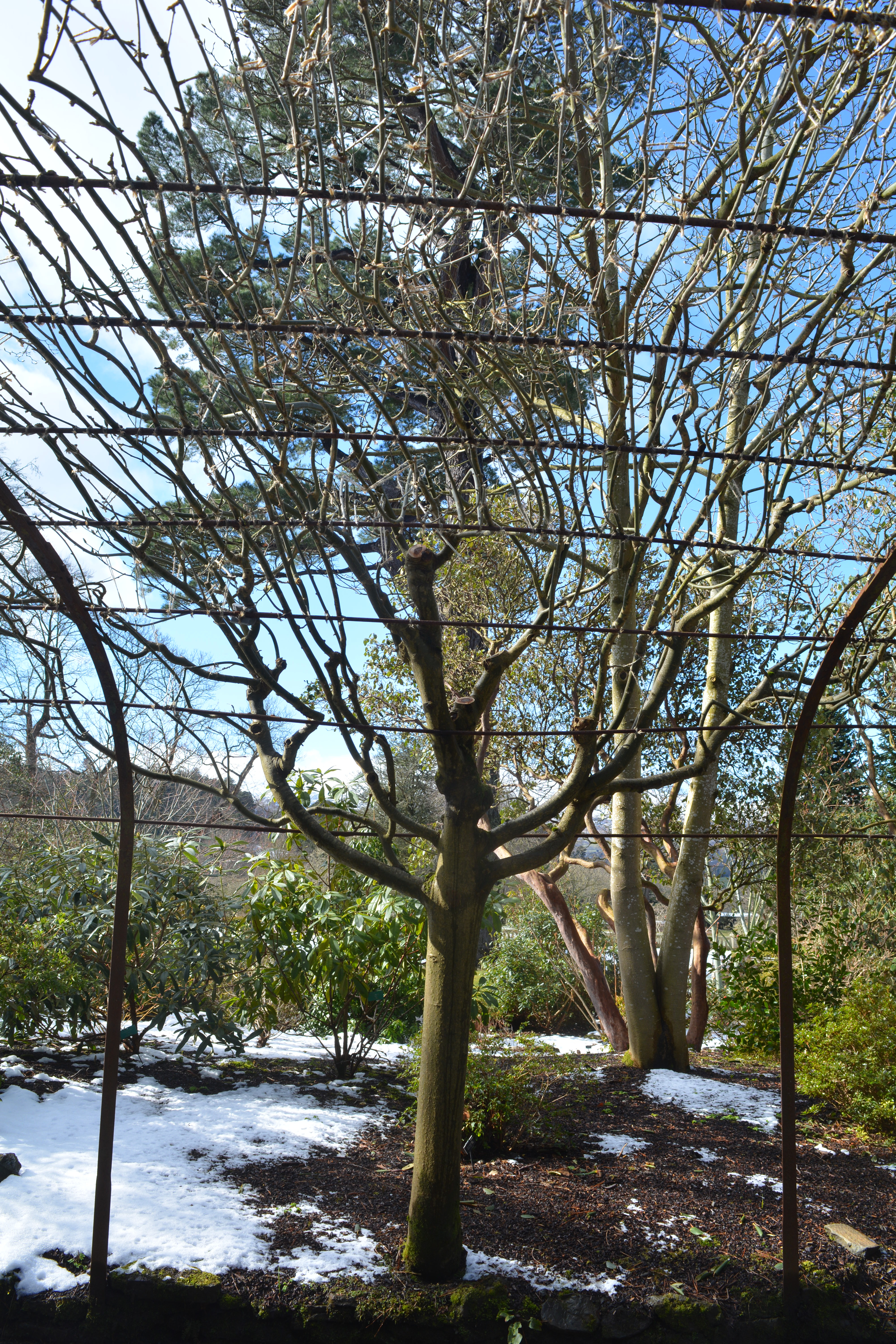
The world-famous laburnum arch looked so different at this time of year, exposing its strong structure and the shapes of each trained Laburnum tree.


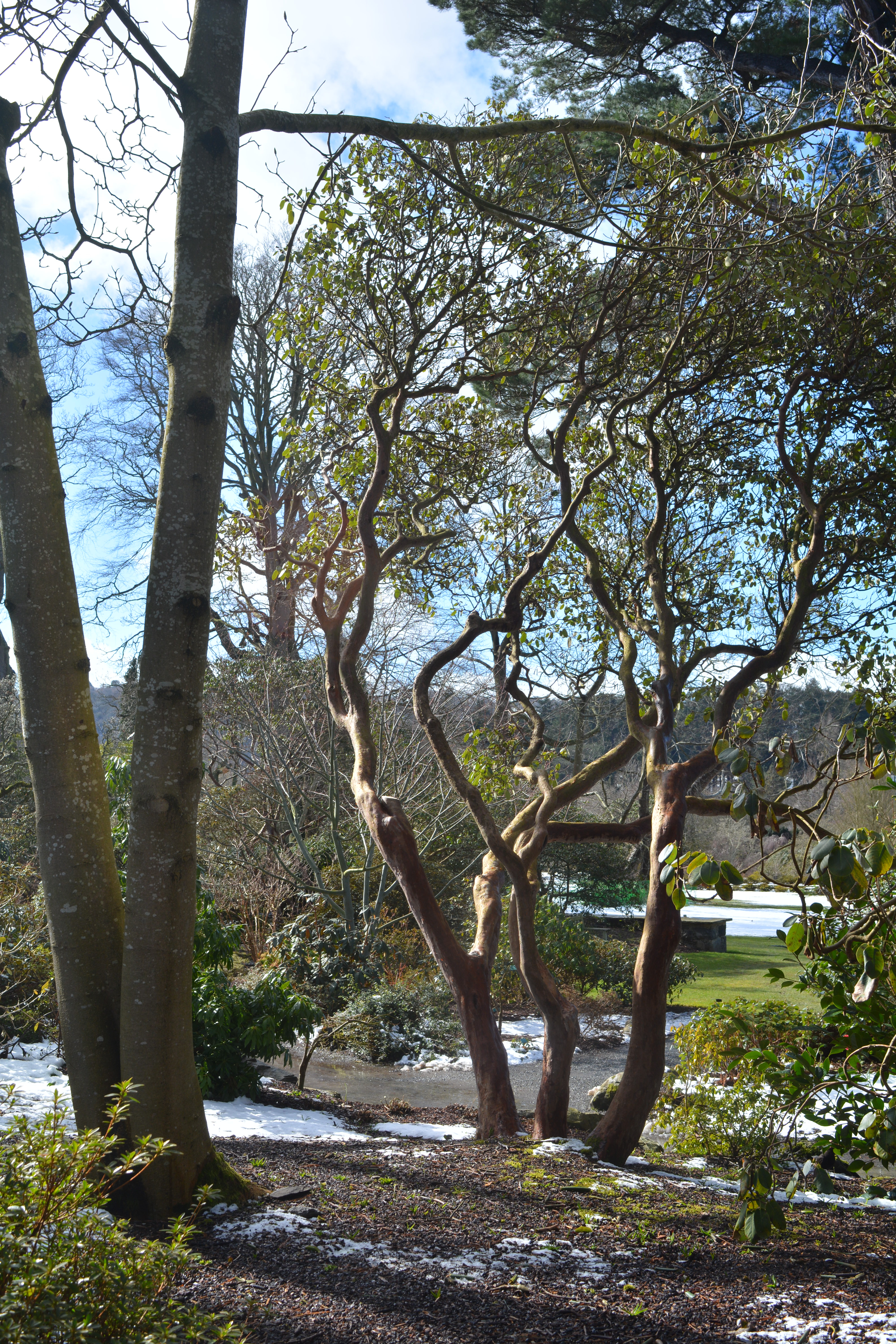
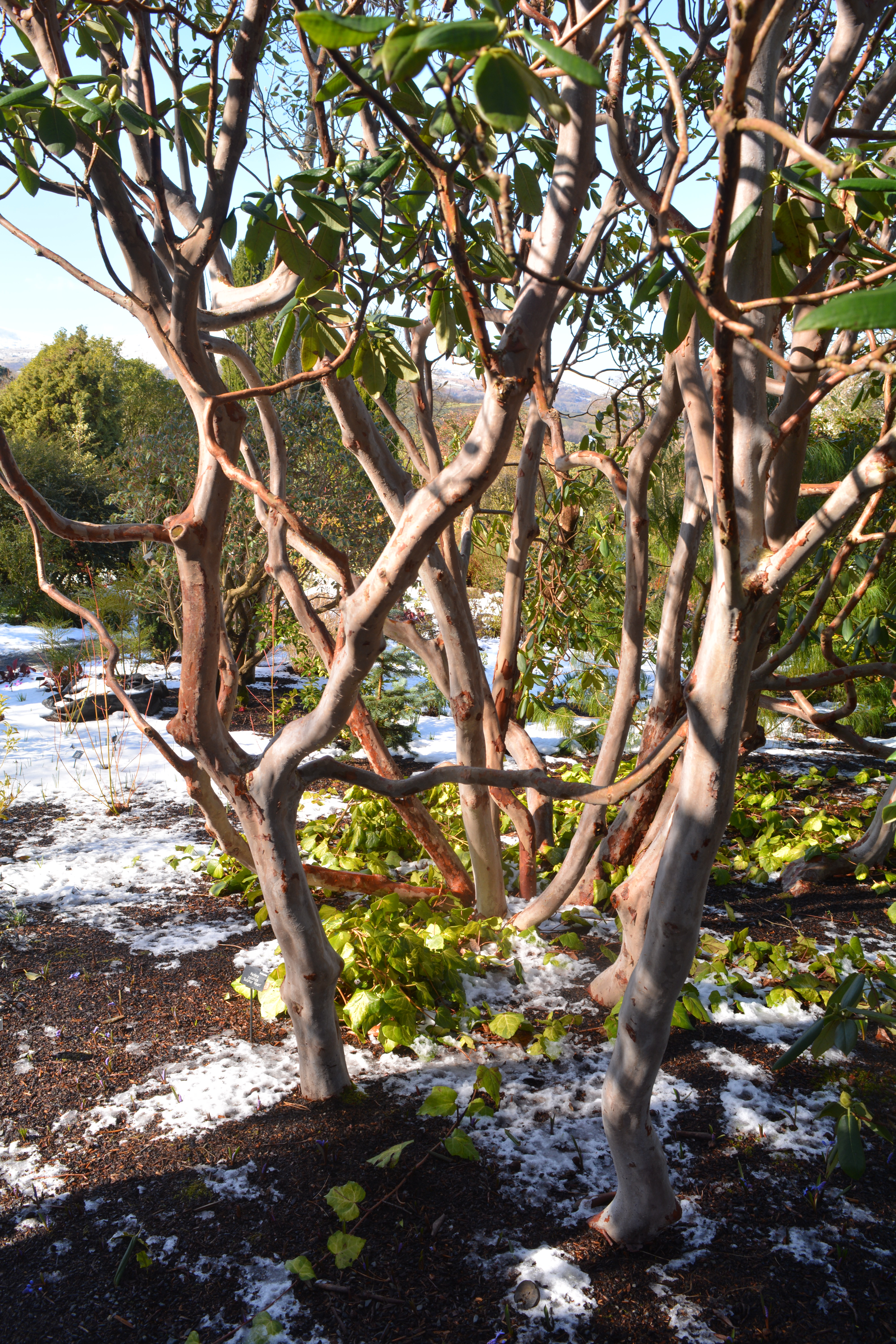
As we began to follow the meandering paths which implored us to explore every part of the garden, we spotted some beautifully shaped trees and shrubs pruned to expose their lower trunks and branches, sharing their special shapes with us. Conifers sometimes create amazing shapes without the need for the gardeners’ secateurs and loppers.


The paths at Bodnant have been designed and set out to let the visitor appreciate every bit of planting from close up and from a distance to get a variety of views to appreciate. They are beautifully positioned.


Snow isolates flowers in such a strange way. It means we see them without foliage just their colours emerging from whiteness. We are so used to viewing flowers against a predominantly green background.


The beauty of the Winter Garden at Bodnant that is unique where such gardens are concerned is the way it is designed to have overall strength as a whole design but each pairing of plants and each grouping is applicable to most home gardens. Around each corner the visitor can discover an idea easily transferable to their own patch. The design is best described as accessible. Pathways ensure visitors see as much as possible and each feature planting from at least two different viewpoints. Here is a selection of pics showing these paths.


Next time we visit Bodnant Gardens will probably be in the spring when it looks very different again.


Categories
Flintshire fruit and veg garden design garden photography gardening gardens gardens open to the public National Trust ornamental trees and shrubs The National Trust Wales Winter Gardening winter gardens

A Wonderful Welsh Winter Walk – Erddig Hall

We took a short one hour drive out into Wales today to visit a National Trust property, Erddig which we hoped would afford us the opportunity of exploring a garden with winter interest, interest found in its formal structure, its topiary and imaginative pruning as well as planting. We knew that it holds the National Collection of Hedera (Ivies), so we had something specific and extra to look for too.

After too many wet weeks the day dawned bright and we were to be treated to a day of bright winter sunshine, which would play with shadows and light throughout our walk. We were surprised to discover that the whole place, buildings and gardens were in a state of disrepair bordering on dereliction in the 1960’s when a new owner decided to rescue it and awaken a real jewel of a property.

Two welcome signs greeted us as we entered, a rustic overhead design and another with a beautiful quote which read, “Where fragrance, peace and beauty reign ….”. We would soon see if this were true.


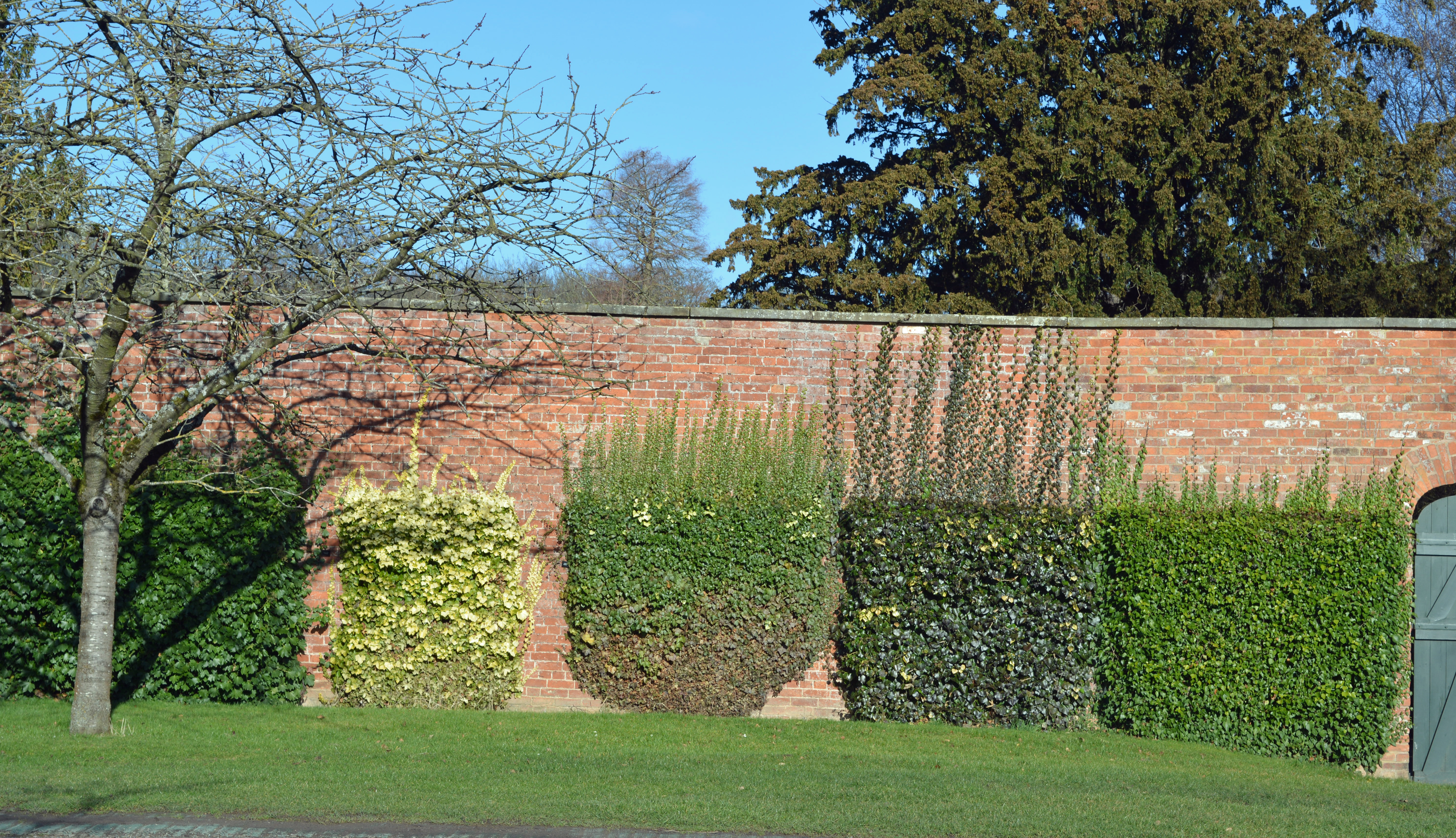
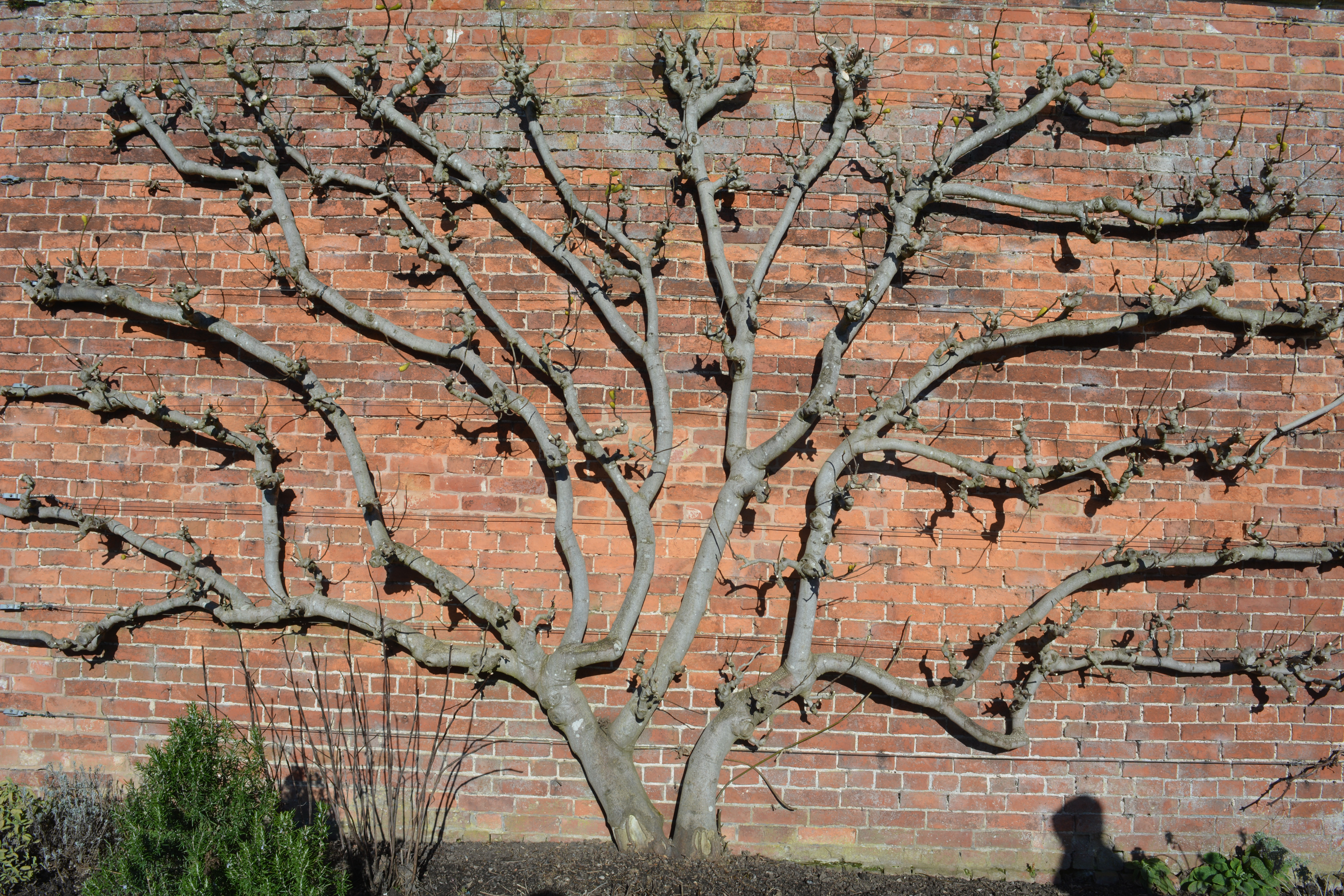
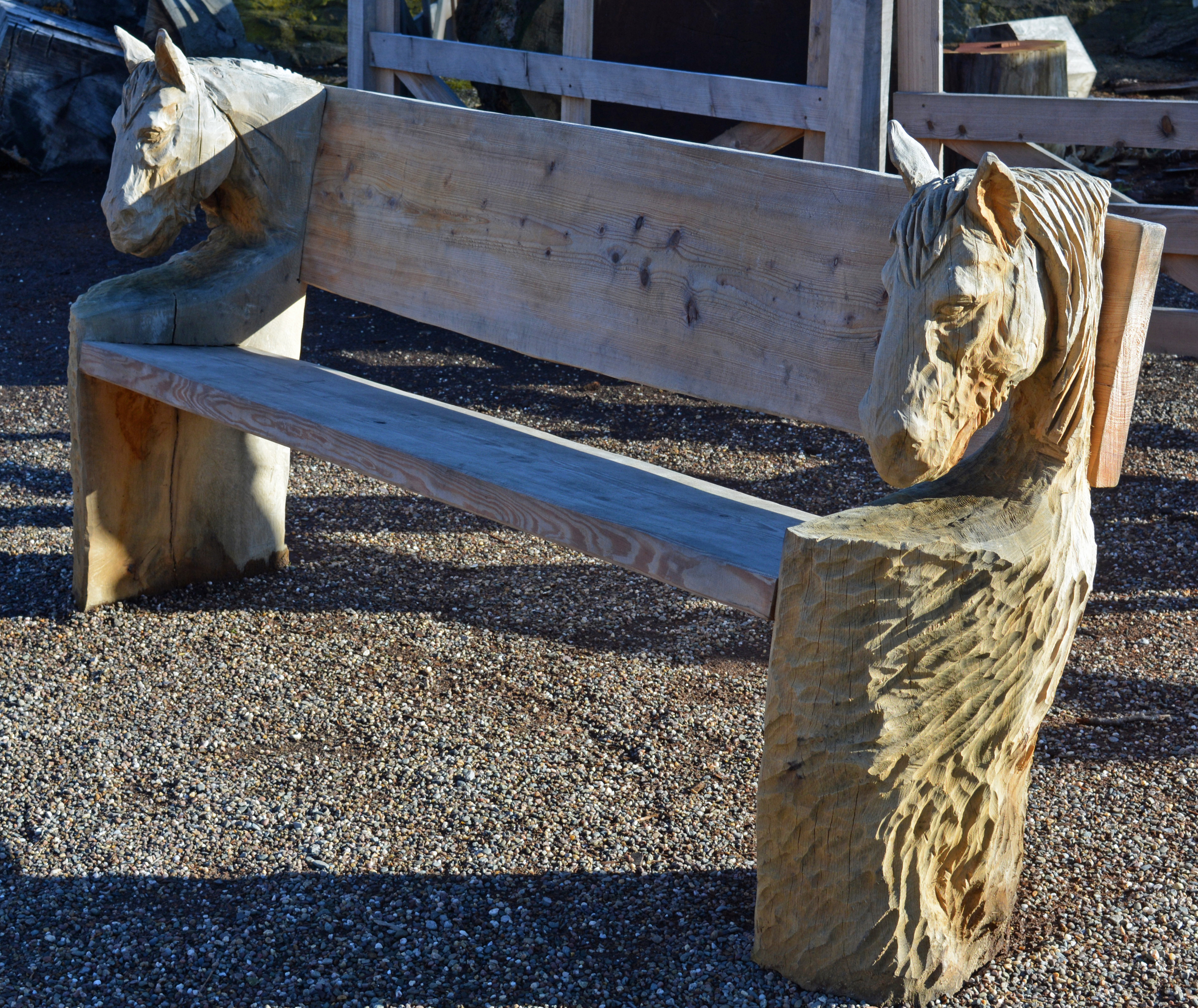
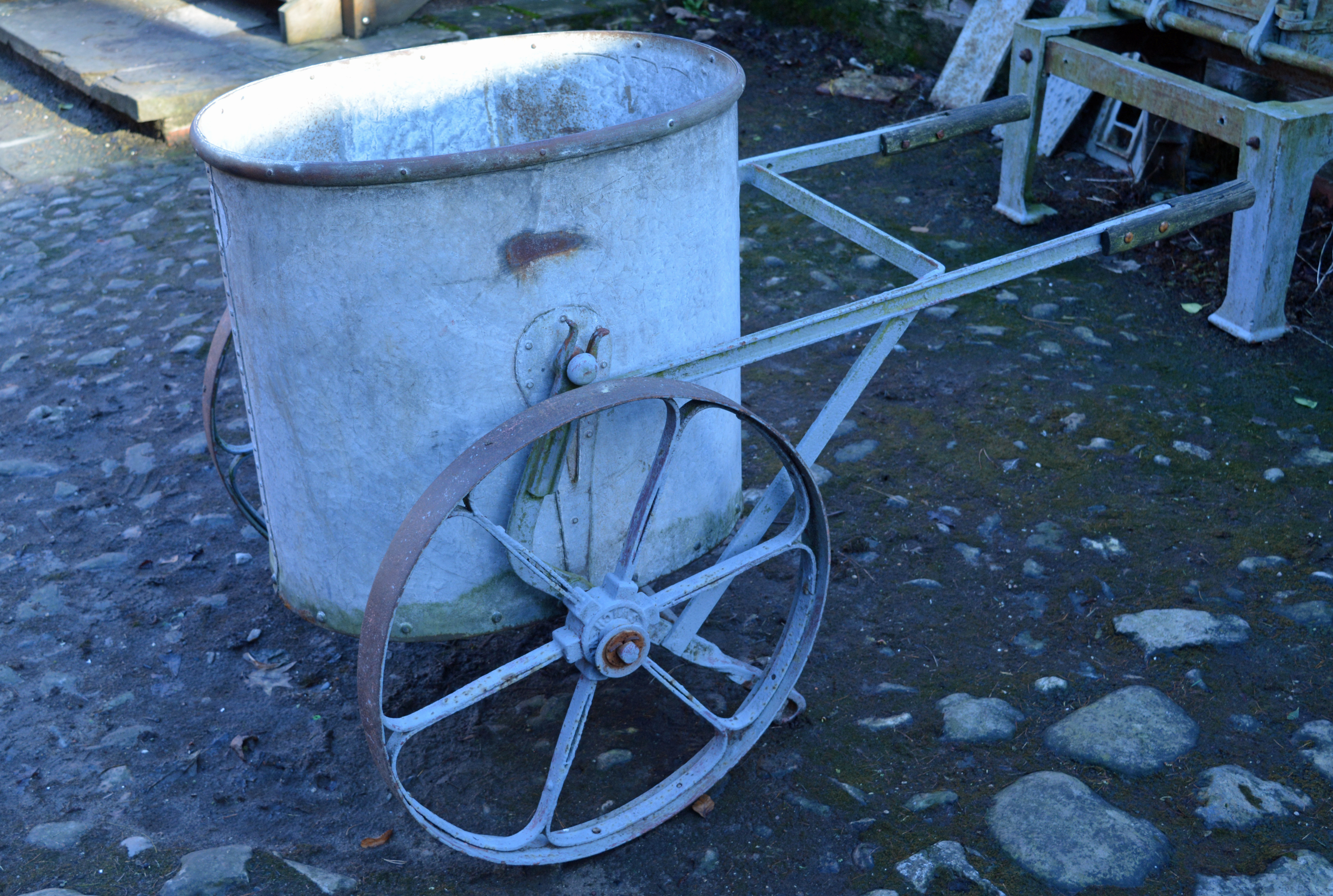
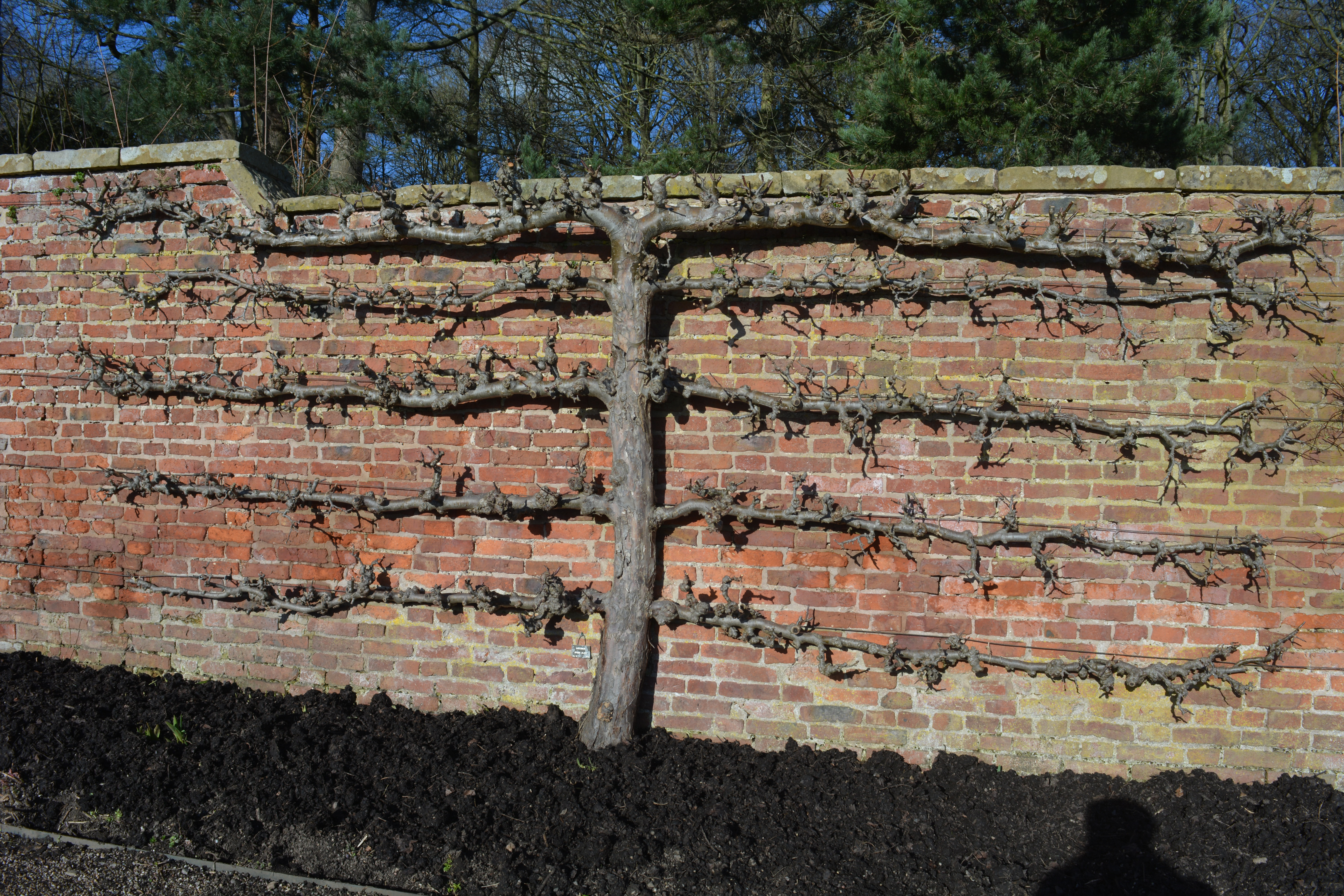
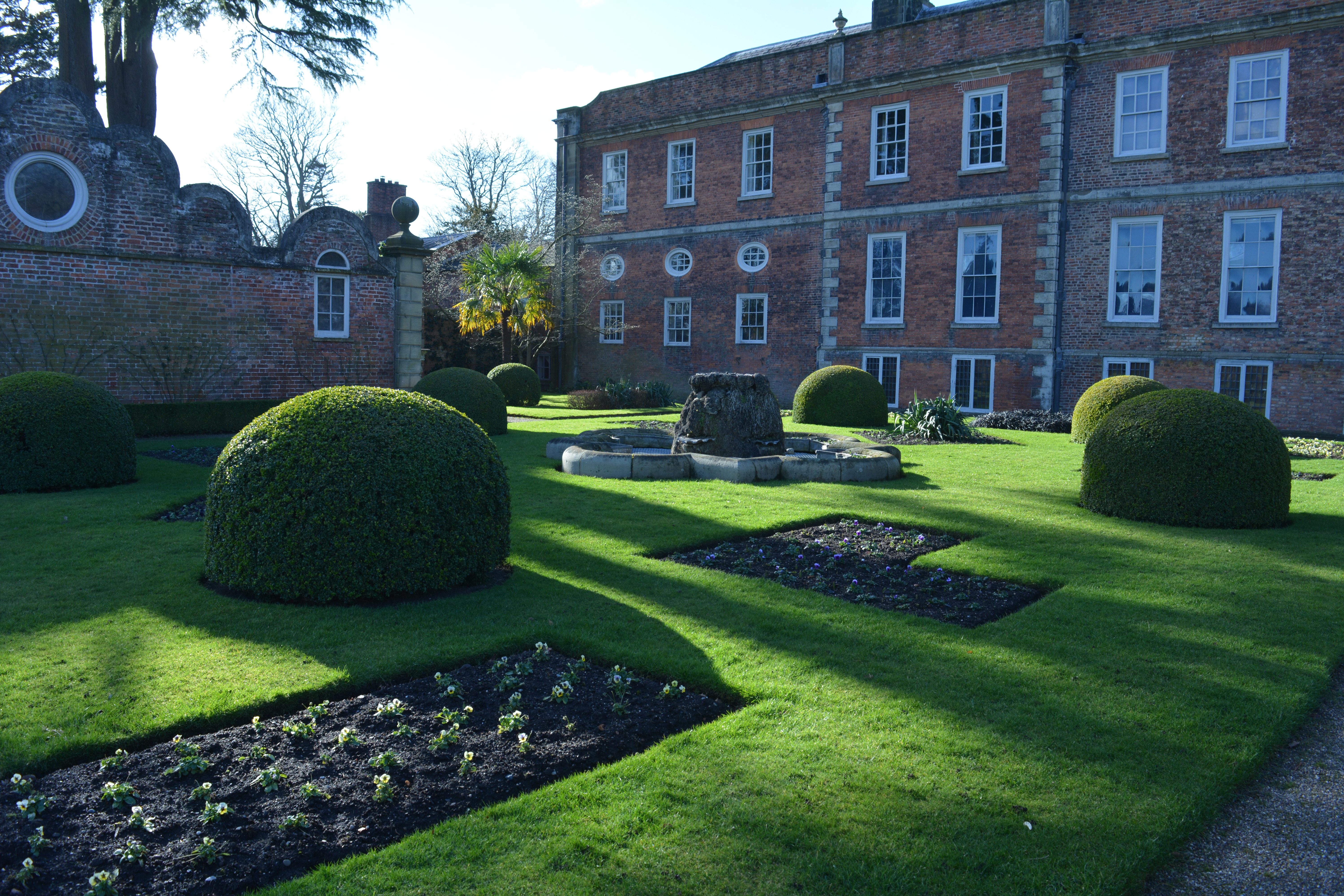
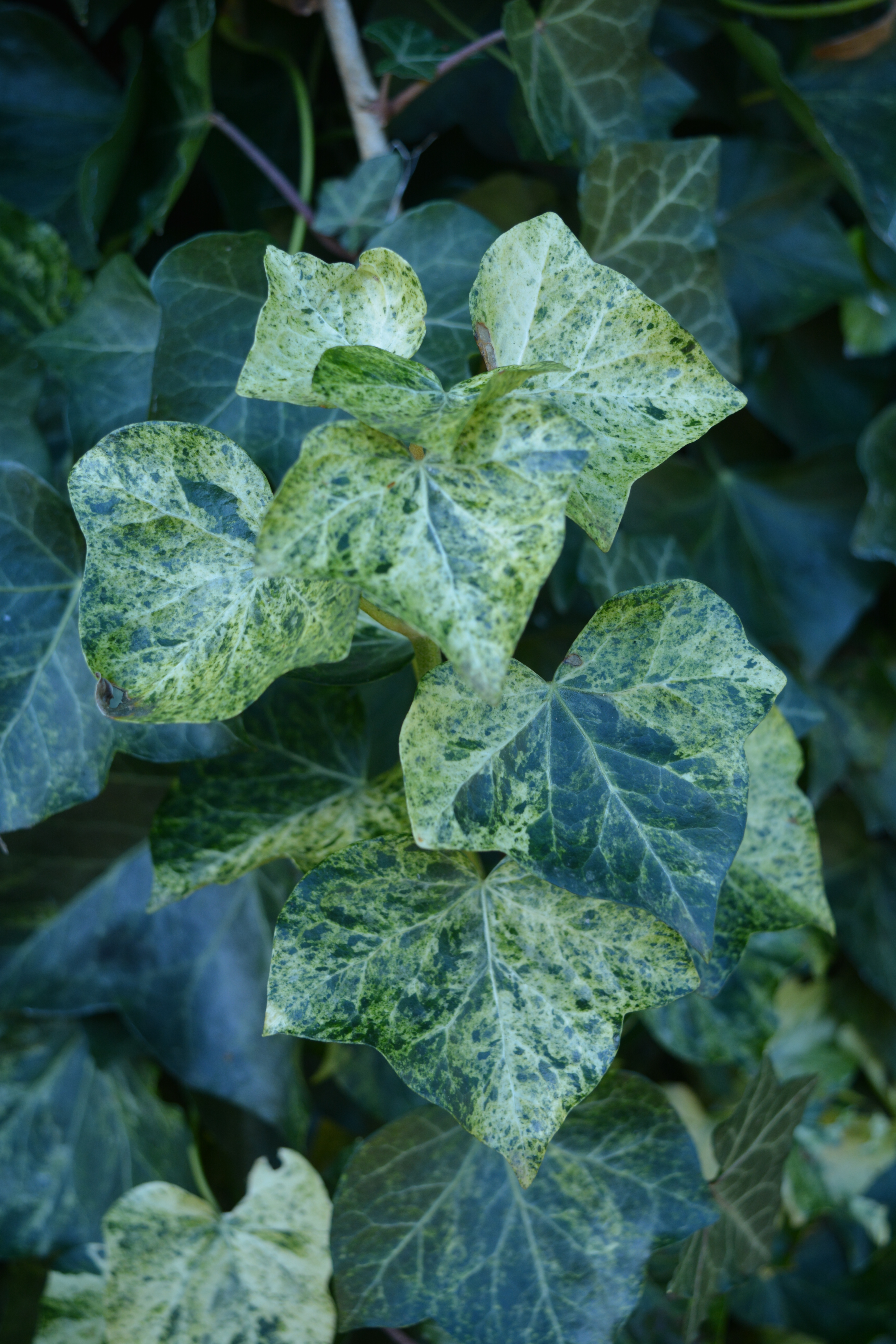
The garden is Grade 1 listed and is based around the 18th Century design. Amazingly it works well today! Even the car park and courtyards on the way in had points of interest to us gardeners, some of the Ivy cultivars, ancient wall-trained fruit, a beautifully carved wooden seat featuring carved horse heads and a vintage garden watering cart. We soon met our first Hederas (Ivy) in the collection, an unlabelled specimen which grew to frame a window, and one with beautiful foliage, Hedera hiburnicum variegata.


A feature we were looking forward to at Erddig was the huge variety of creatively pruned trees, both fruit trees and conifers. Some of these fruit trees must be decades old but are still skillfully pruned. Really well pruned and trained fruit trees are really beautiful. It felt good to see these age old gardening skills carrying on so professionally.


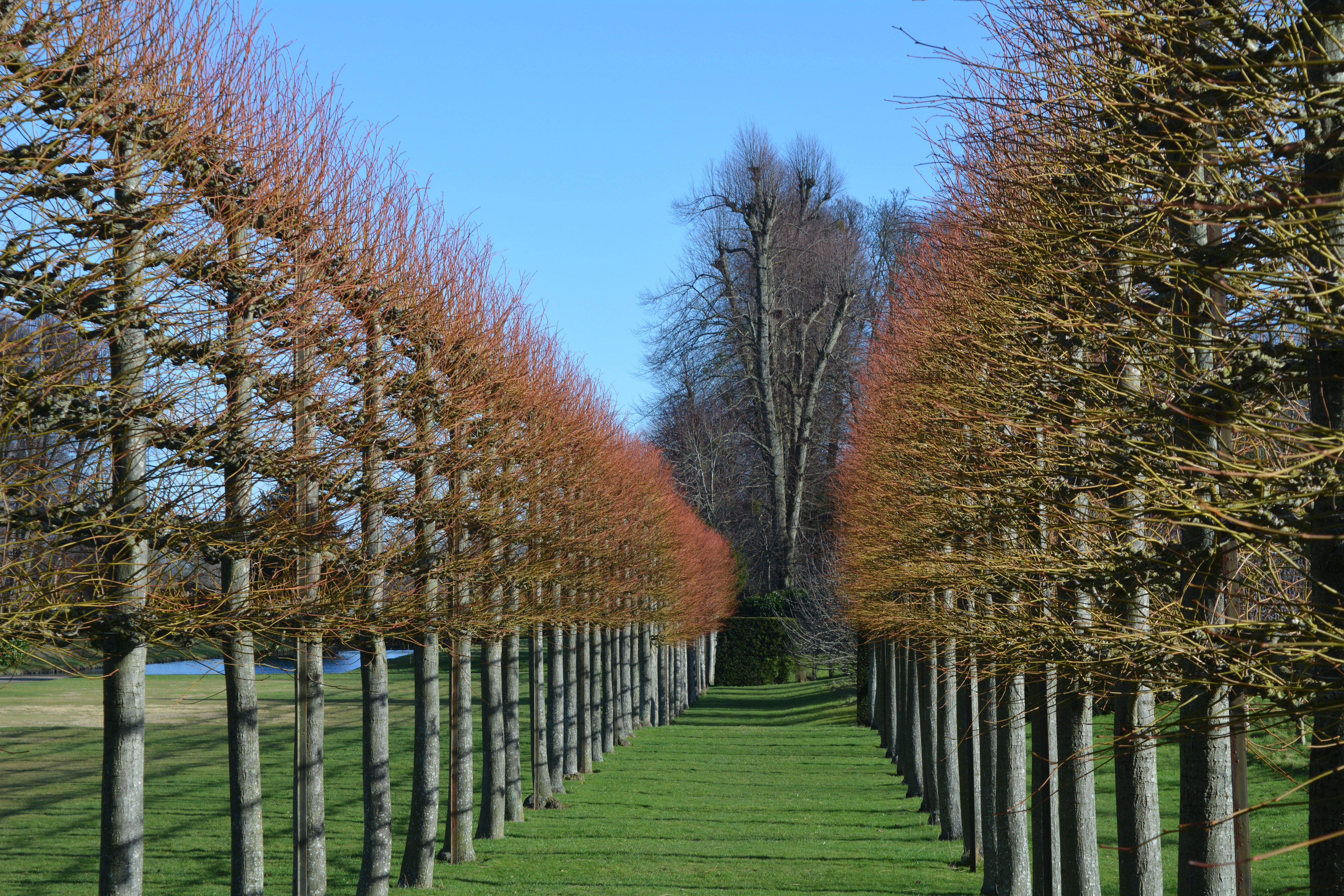
We discovered this double row of pleached limes after spotting an orange glow as the winter sun caught the new twigs and buds.


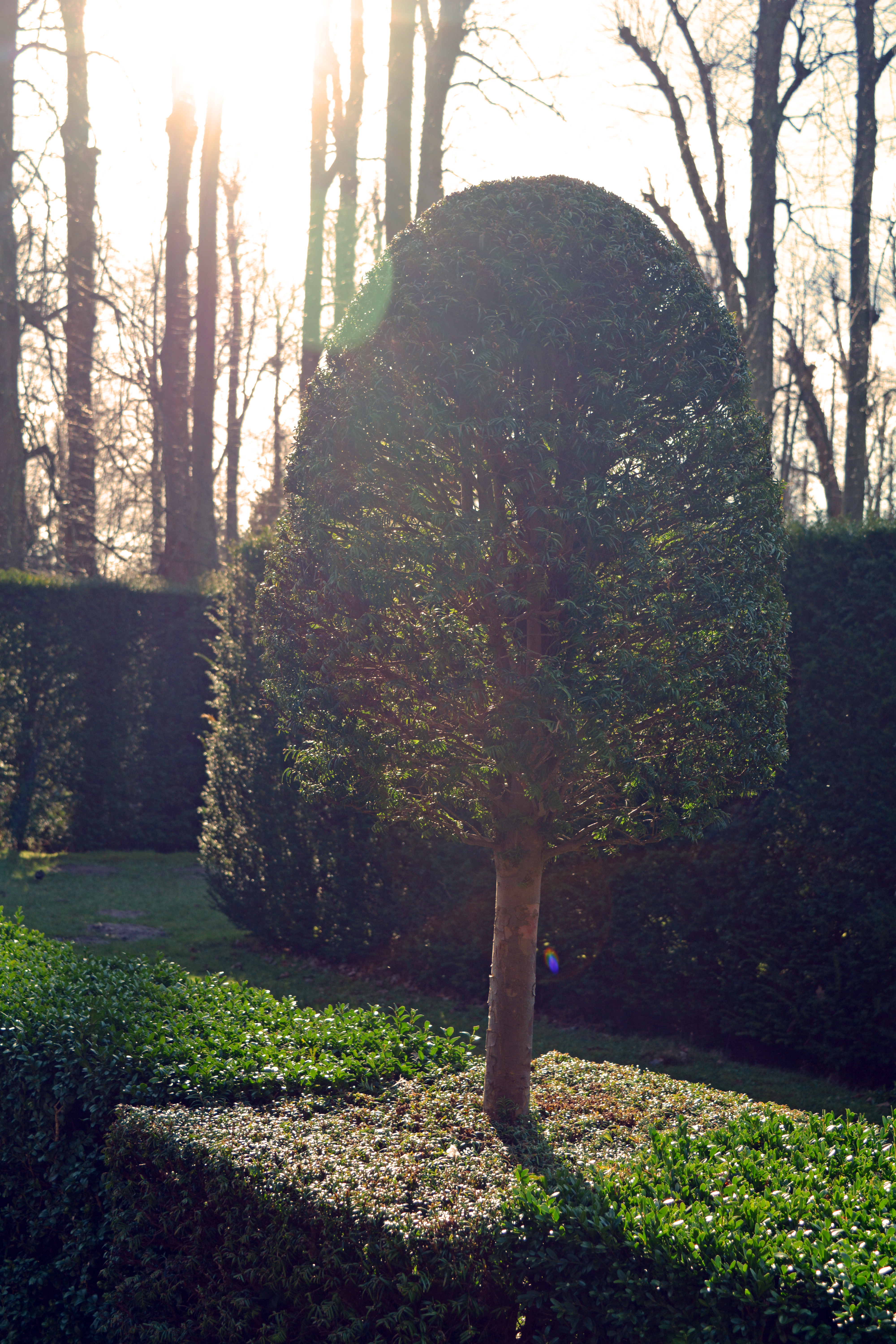
Beautifully topiarised conifers were presented in neat rows and as hedges throughout the formal garden area.


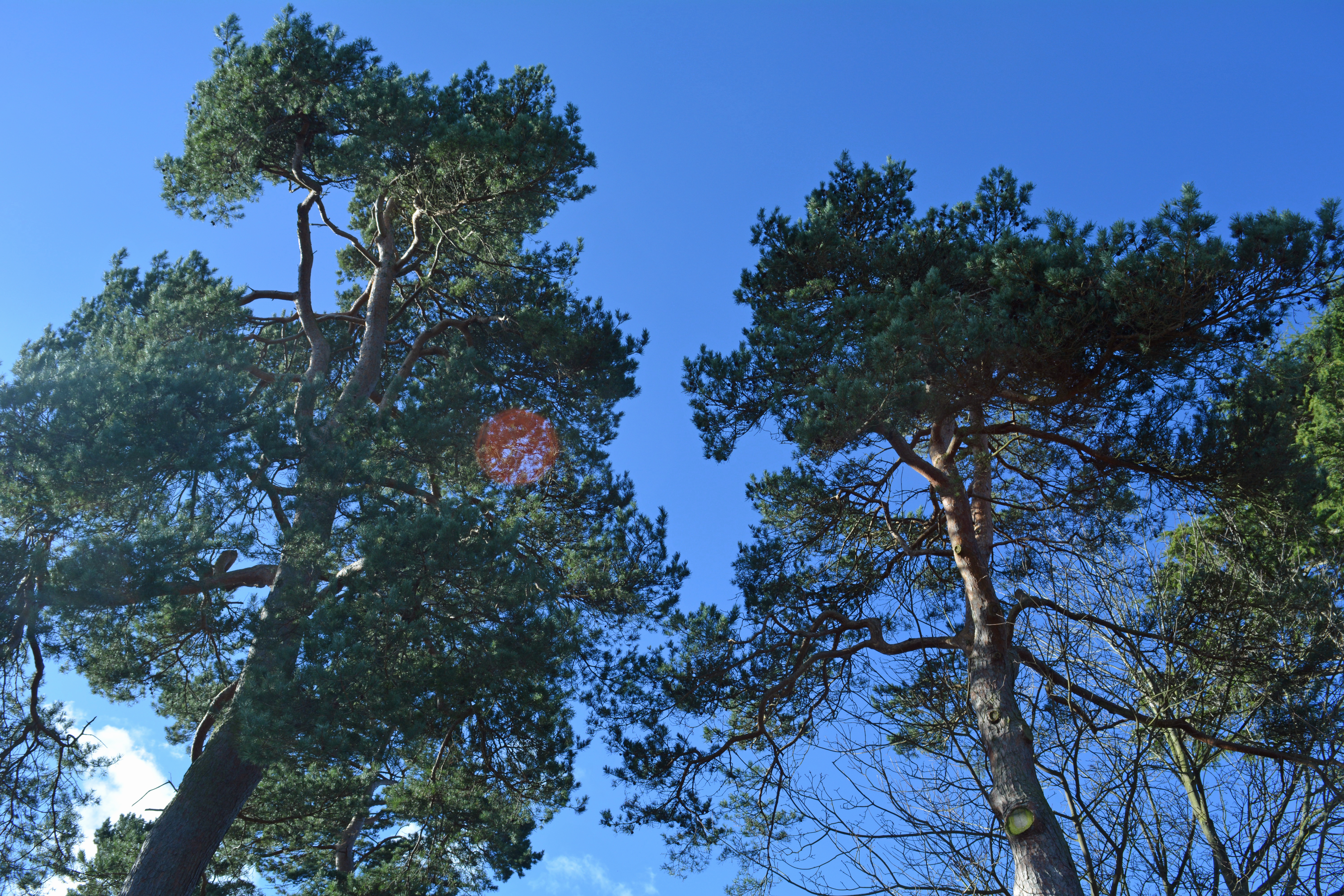
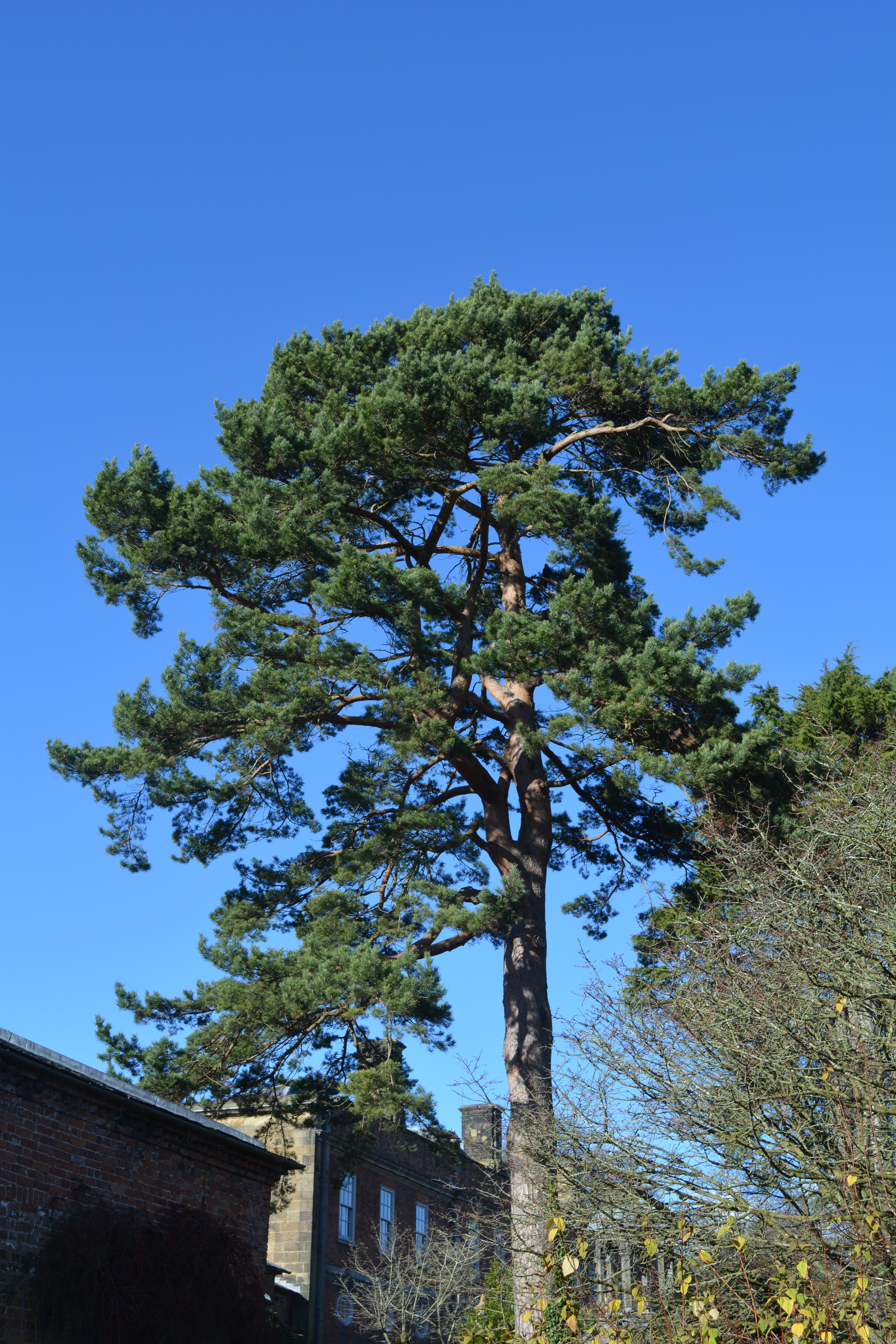
Not all the conifers were trimmed and controlled though, some were left to mature and become tall proud specimens.


We loved this tall double row of pollarded Poplar trees towering above our path, their network of silhouettes highlighted against the blue sky. This added to the strong structure of the garden.


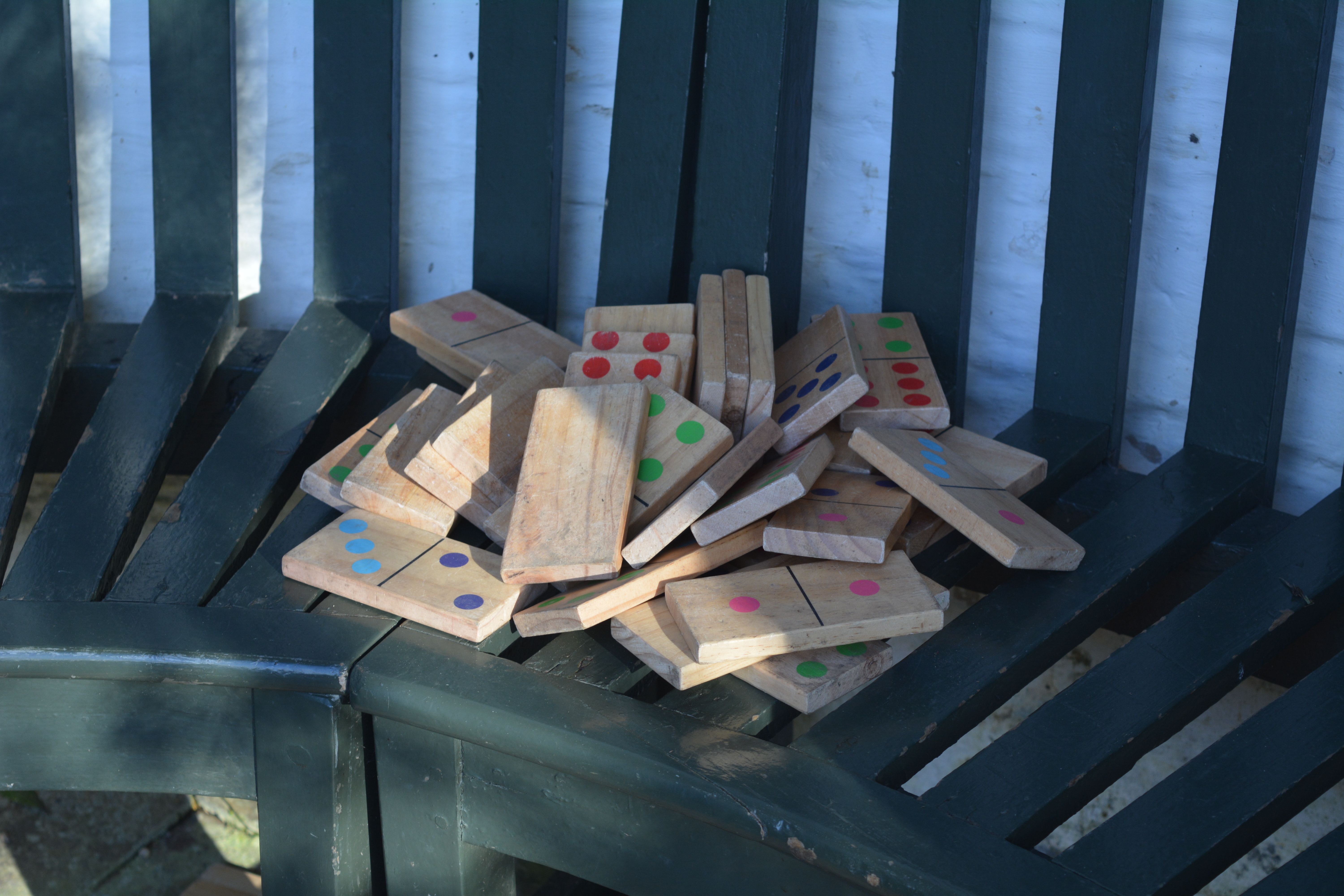
We love to see a touch of humour in gardens and points of interest for children and we enjoyed a few here as we wandered around Erddig.


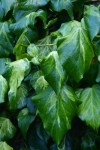
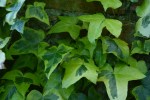
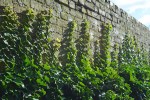
Erddig holds the National collection of Ivies, growing a huge selection of Hedera, but it took us along time to find the organised and well-labelled display of them growing along an old brick-built wall. We were amazed by the sheer variety, from plants with plain green typical leaves to those with the most beautiful and subtle variegation.


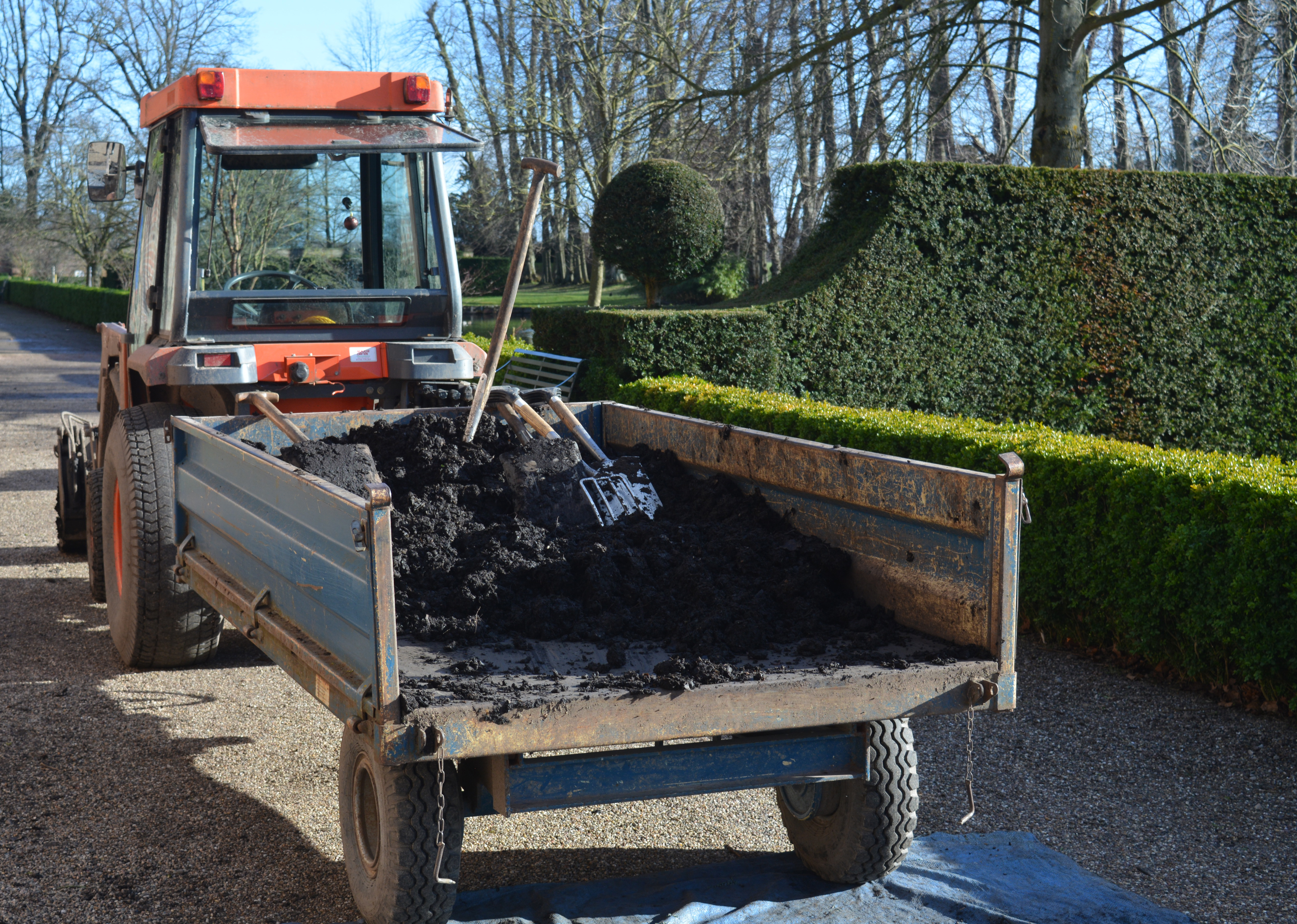
Don’t you just love to see what gardeners are up to when you visit a garden? Here hedge cutting and mulching borders with rich well-matured farmyard manure were keeping the gardeners on their toes. We were very impressed with the quality of their work and the evidence of a sense of pride in everything they did.

From the front of the house itself we found some wide views over the surrounding countryside.


I have only briefly mentioned the Ivy collection at Erddig so far but I will change all that by sharing a collection of my pics of the Ivies as a gallery. Please enjoy by clicking on the first photo and using the arrows to navigate.

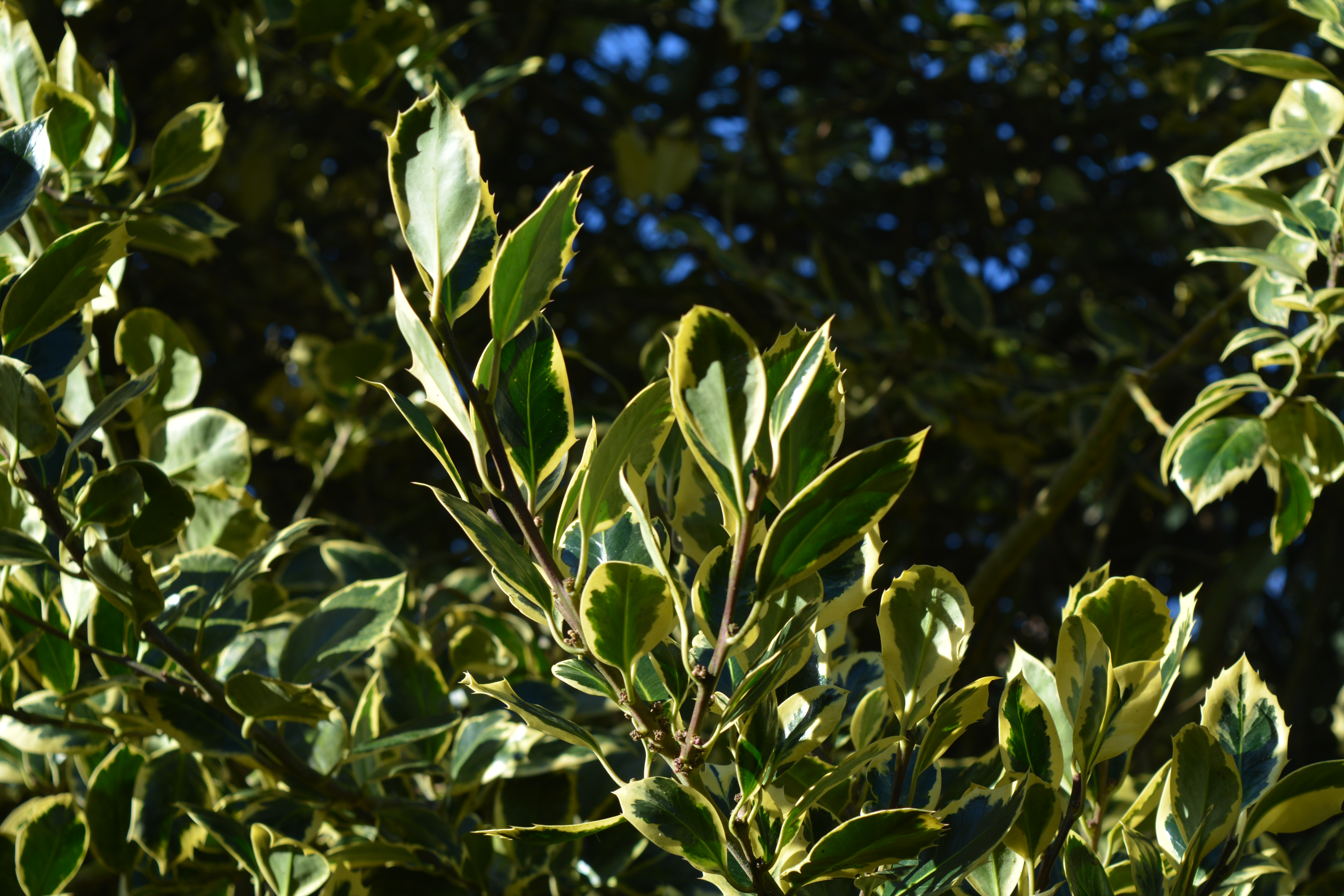
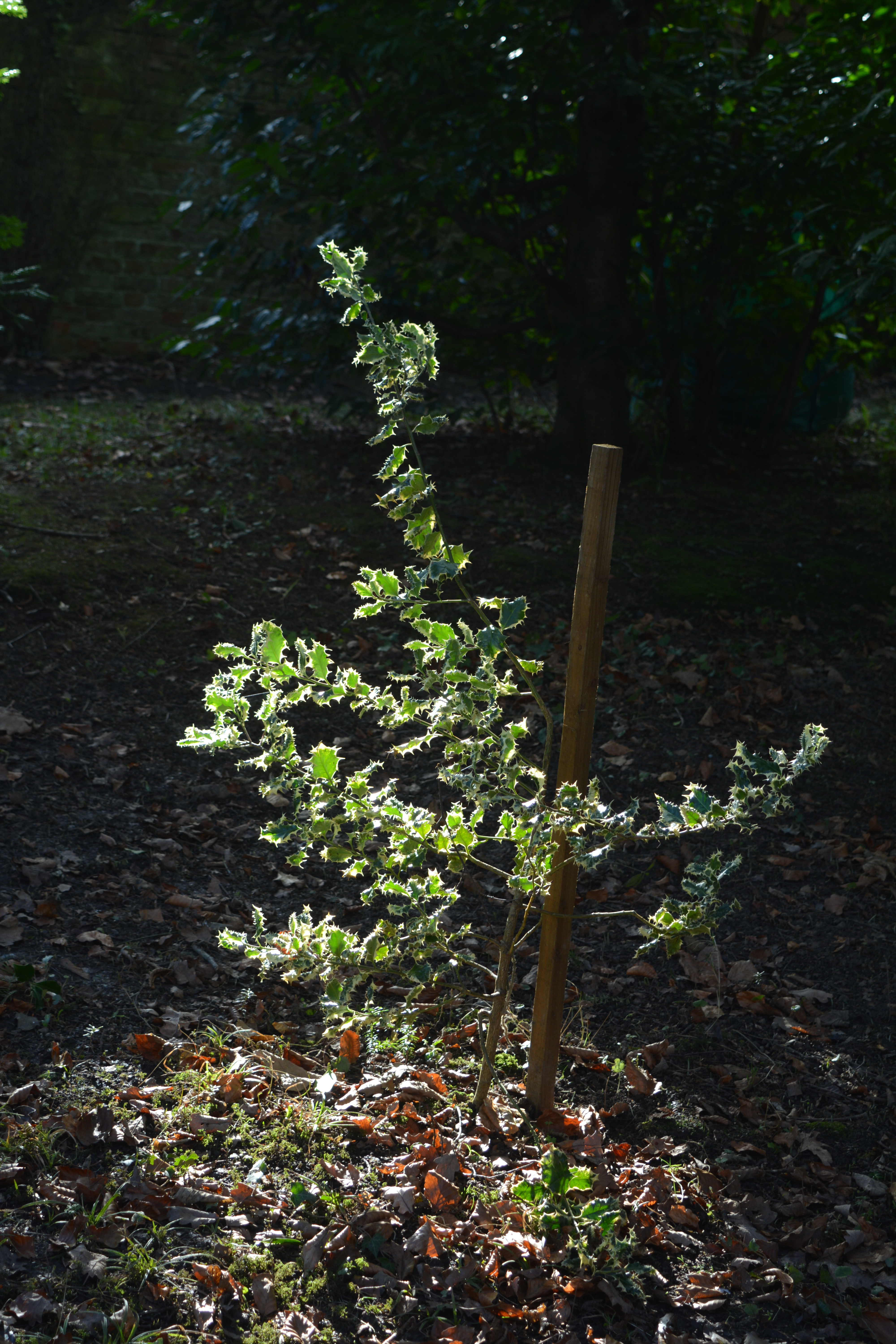
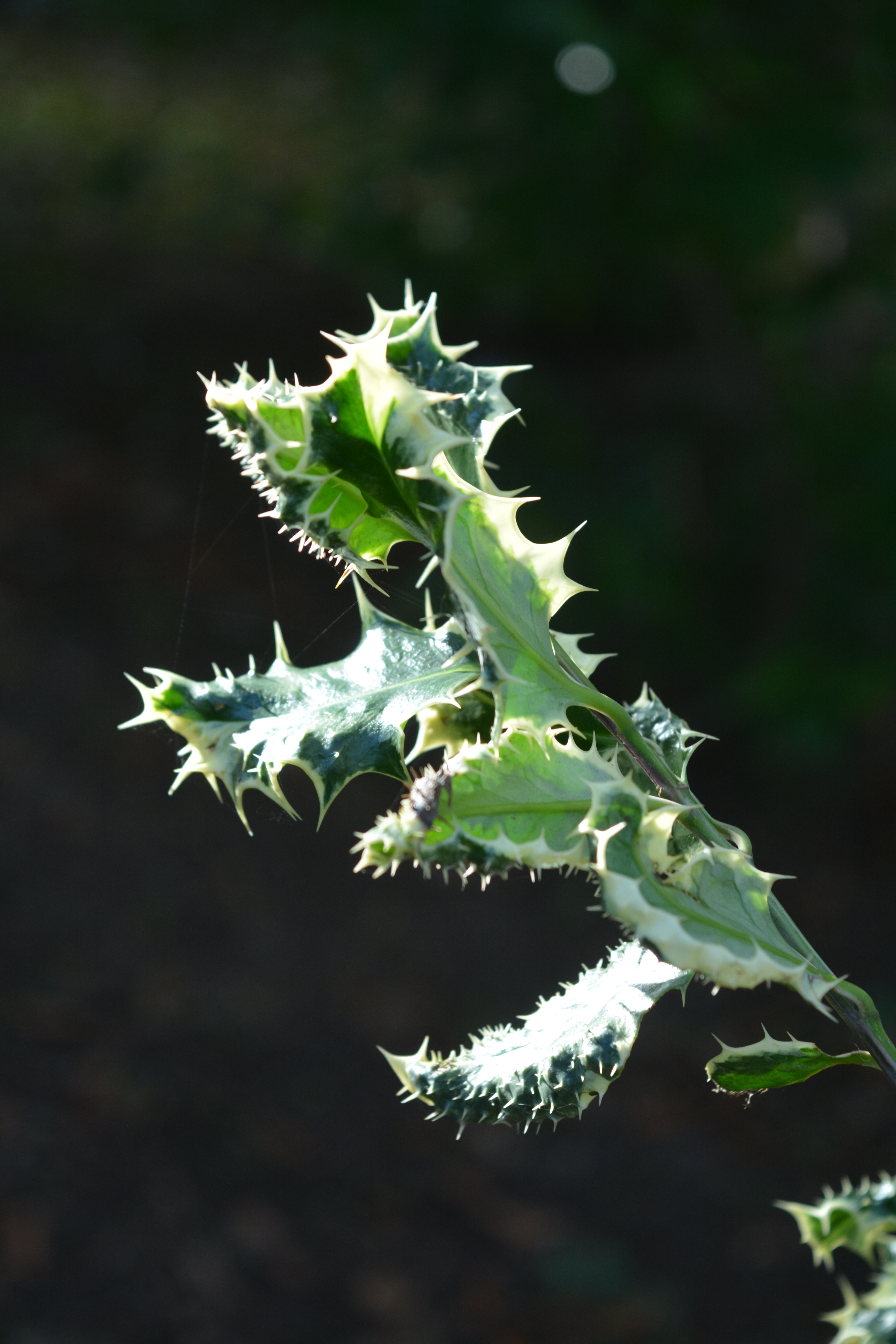
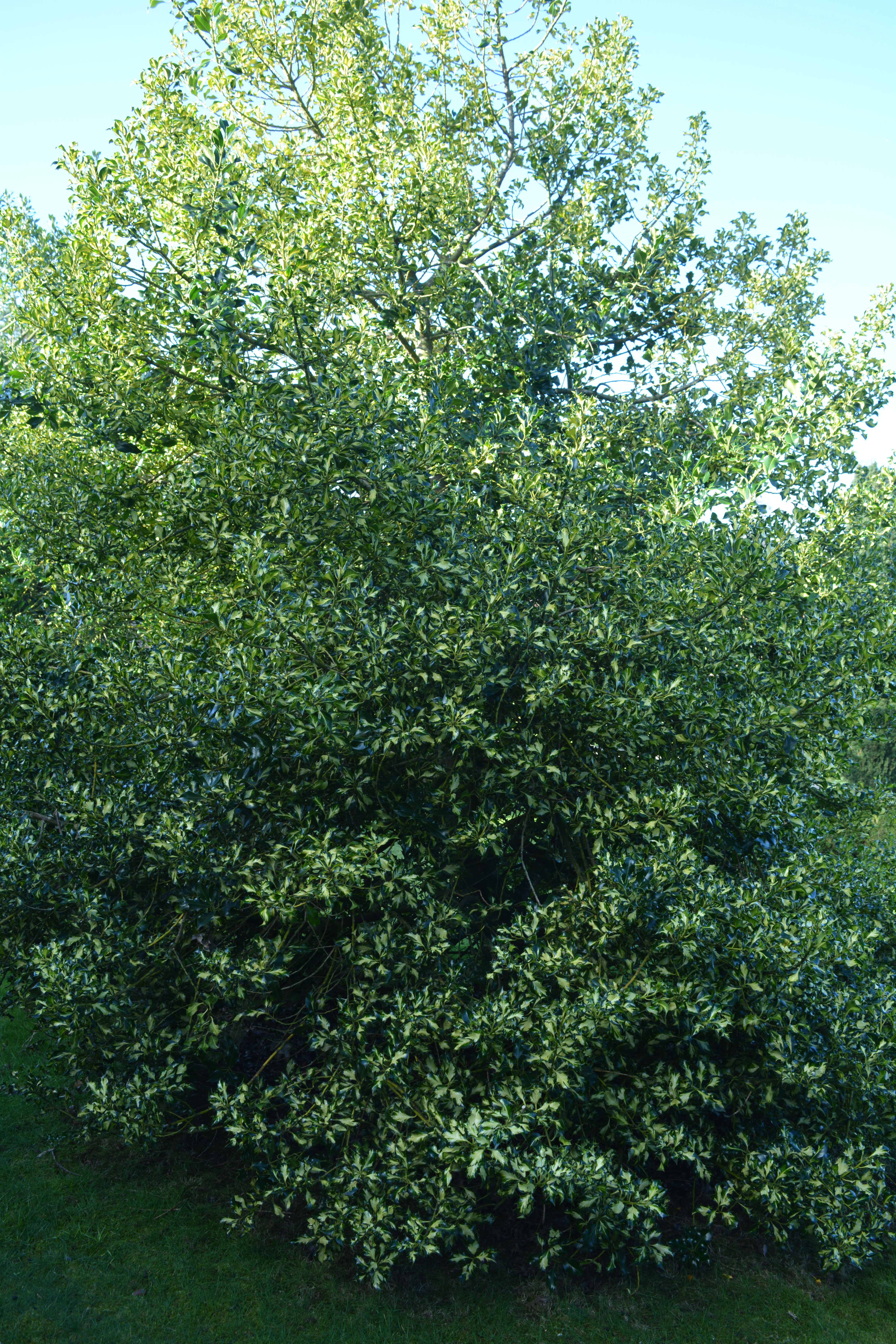
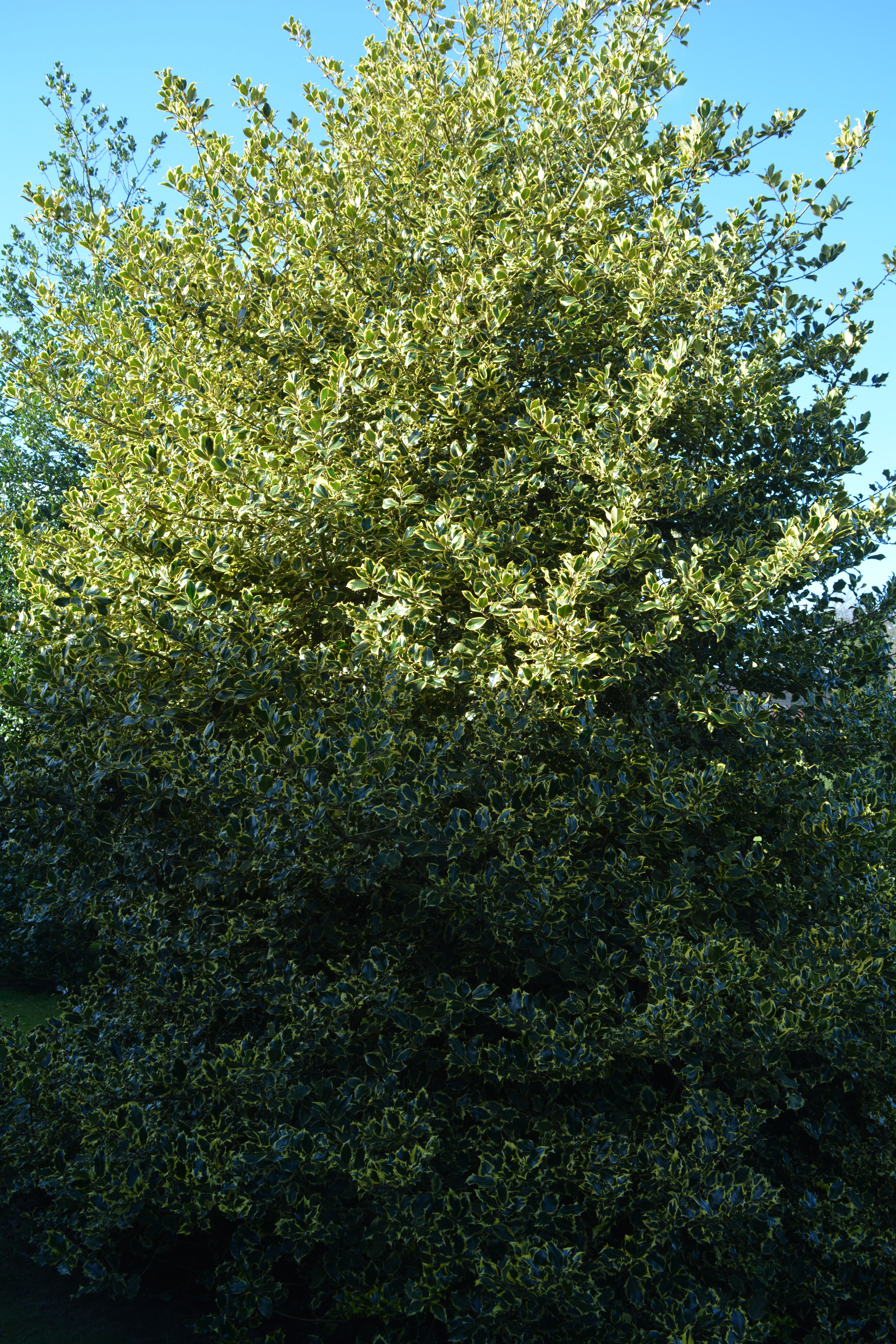
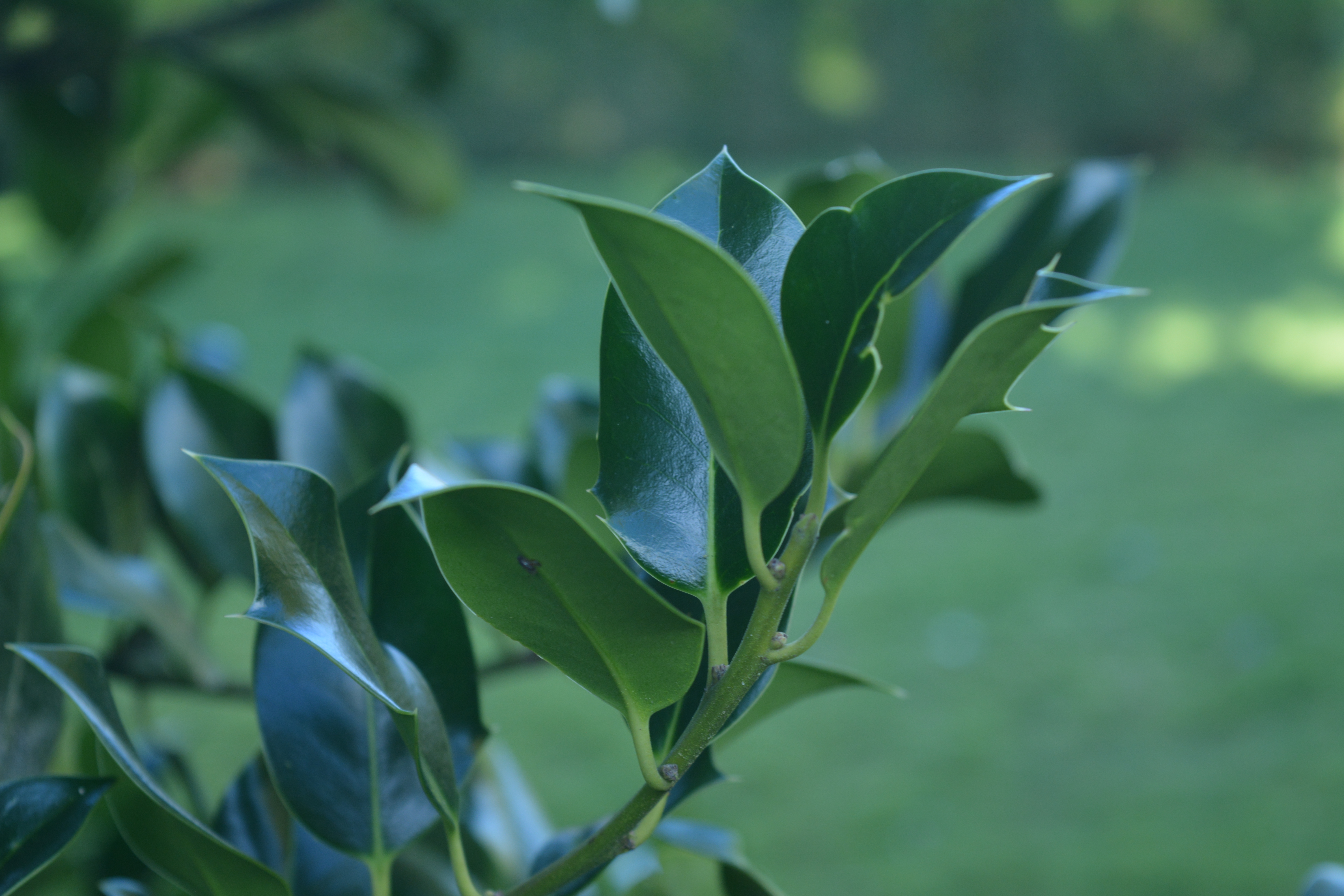
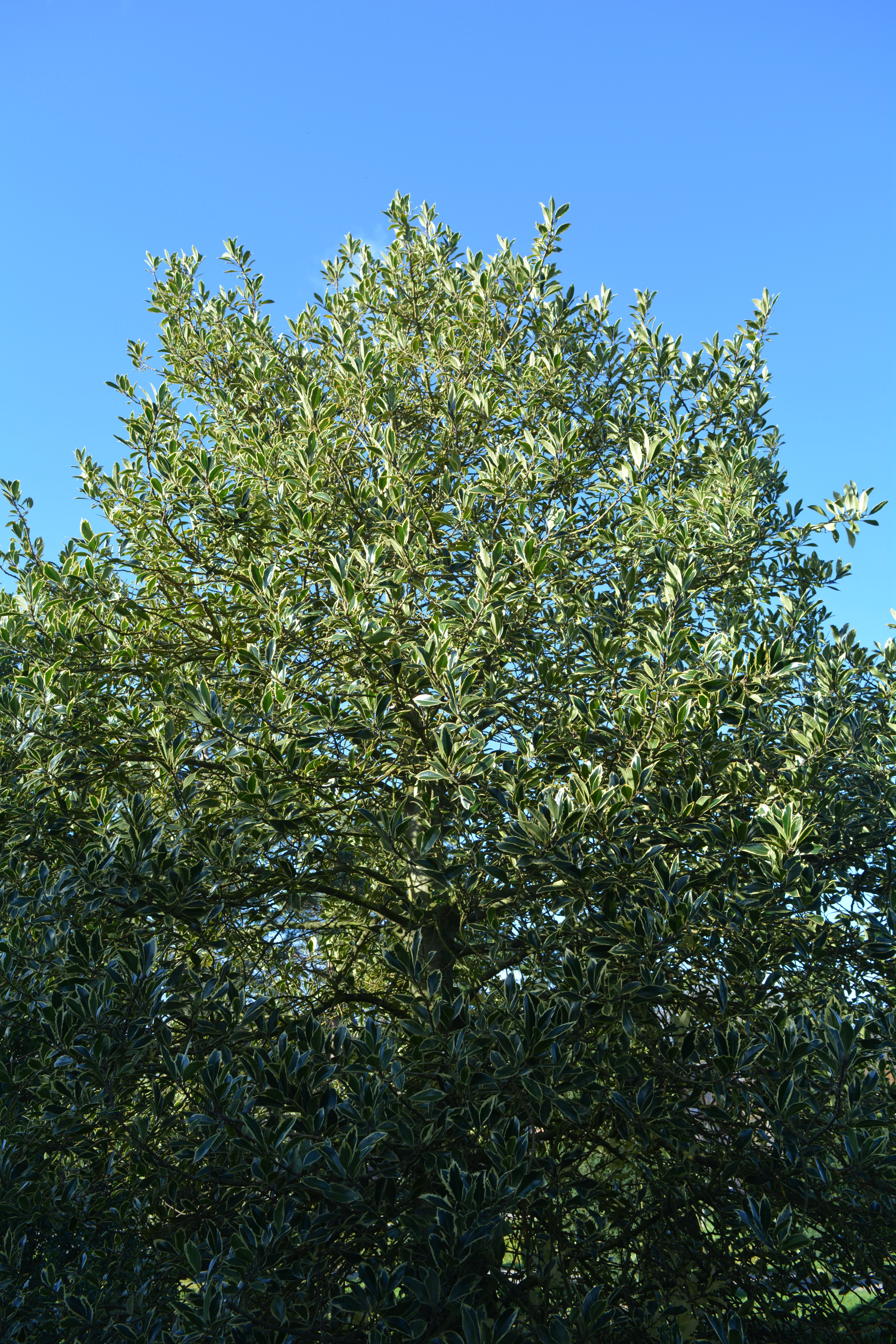
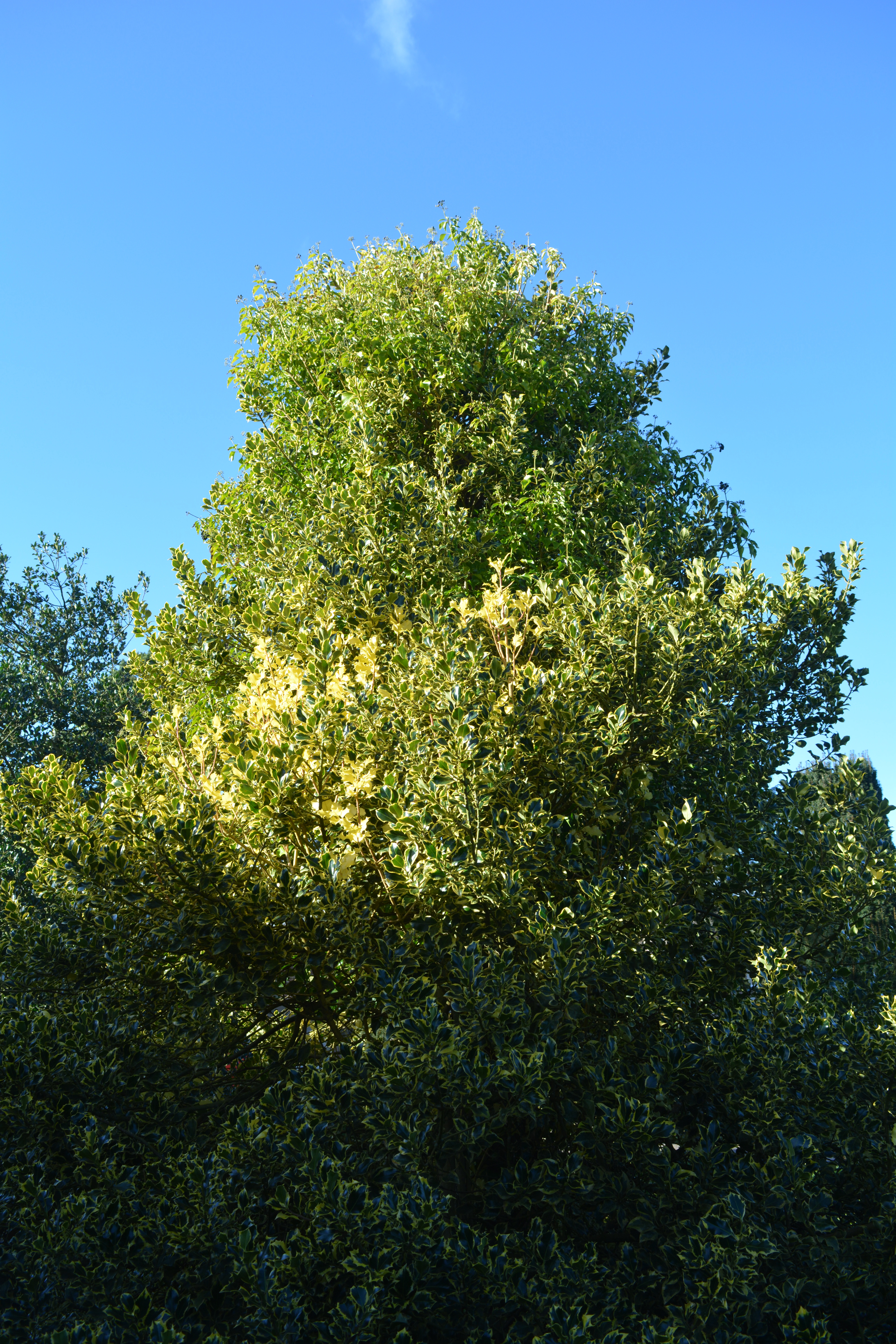
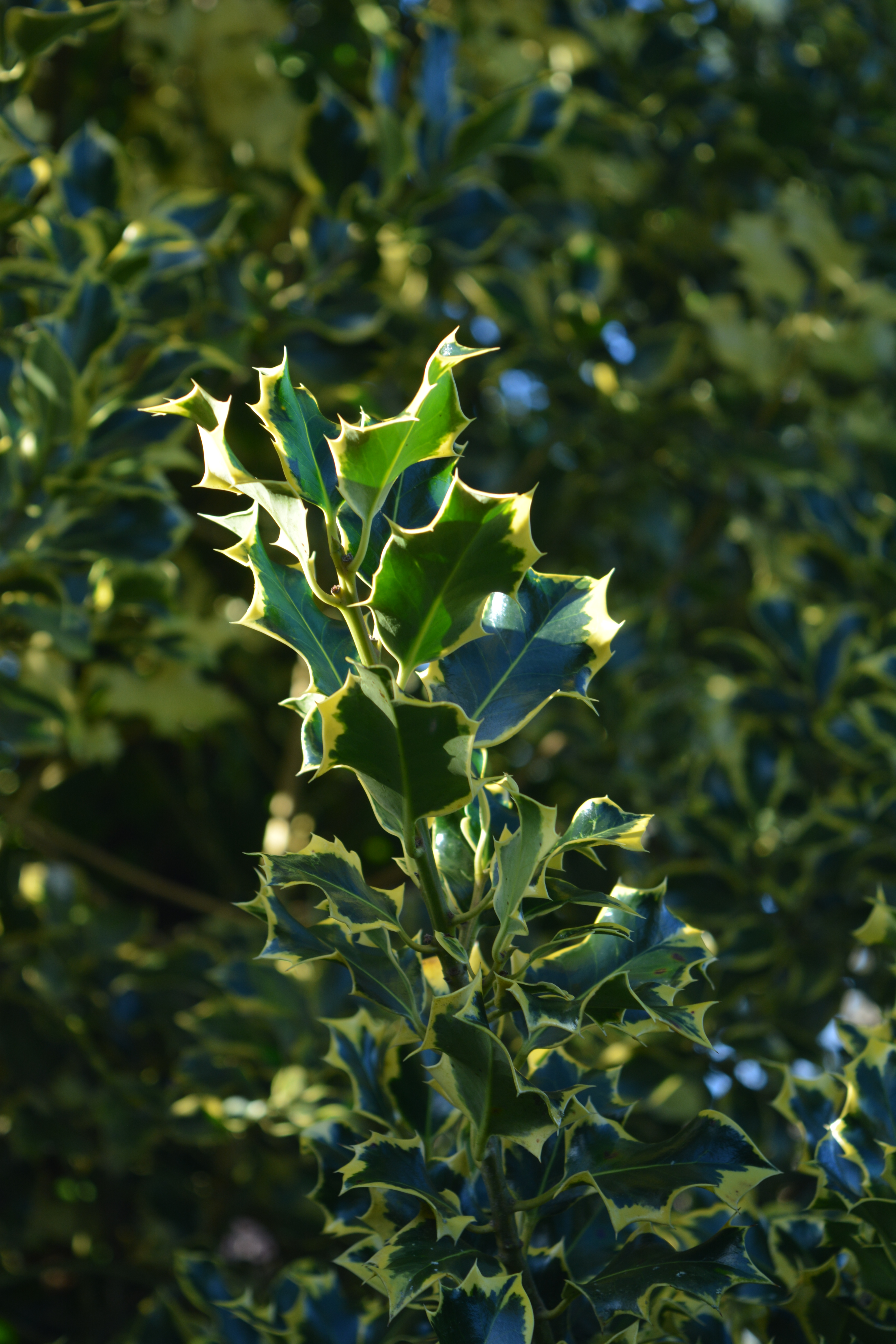
Hollies feature too with a lovely varied collection sadly with no labels but here are some to enjoy anyway.

Each photo of an Ilex tree is matched with a close up of its foliage.

So you can appreciate just how impressed we were with the gardens at Erddig on our return visit after many years. We will be returning more often in the future!

This Veggie Life

A Vegetarian | Nature Lifestyle Blog

Rambling in the Garden

.....and nurturing my soul

The Arch City Gardener

Journeys In St. Louis Gardening and Beyond

Garden Dreaming at Châtillon

Consult the genius of the place

Storyshucker

A blog full of humorous and poignant observations.

gardeninacity

Notes from a wildlife-friendly cottage garden

PlayGroundology

...an emerging social science

The Official Blog of British Wildlife

'The most important and informative publication on wildlife of our times' - The Independent. This blog is a member of The UK & Ireland Natural History Bloggers group: www.uknhb.blogspot.com

iGrowHort

Inspire - Cultivate - Grow Native Plants - Restore Landscapes

Bishops Meadow Trust

To create and protect a semi-natural wild space for the people of Farnham to enjoy and experience an array of British wildlife in our town

Gardening with Children

The www.gardeningwithchildren.co.uk Blog

UKbirdingtimeline

birding through the seasons, why birds matter and how to conserve them

NATURE WALKER

with a camera in hand

Jardin

Transform your outdoor space

Eva's space

My allotment, cooking and other interests

Old School Garden

my gardening life through the year

LEANNE COLE

Trying to live a creative life

fromacountrycottage

trying to live as lightly as possible on our beautiful planet

Good Life Gardening

Nature lovers from Leicester living the good life.

mybeautfulthings

Finding the beautiful in the everyday

mawsonmichelle

Michelle's Allotment

In and Out of My Garden

thoughts from and about my garden

Greenhousing

Big plans for a small garden

The Scottish Country Garden

A Walled Country Garden in South East Scotland

The Fruity Chicken

Life at the fruity chicken

willowarchway

Off grid living. Self sufficient. "PERMAGANICS RULE".

St Anns Allotments

Nottingham's Grade 2* Listed Allotments and Community Orchard

Manifest Joy Harvests

a journey in suburban vegetable gardening

Allotmental

The madness of growing your own

Penny's Garden: a harvest beyond my front door

A novel approach to vegetable gardening

arignagardener

Sustainable living in the Irish countryside.

NewEnglandGardenAndThread

Master Gardener, amateur photographer, quilter, NH native, and sometimes SC snowbird

dianajhale

Recent work and work in progress and anything else that interests me

planthoarder

a chaotic cottage gardener

Lens and Pens by Sally

a weekly blog that creates a personal philosophy through photographs and words

Dewdrops and Sunshine

Stories from a sassy and classy Southern farmbelle.

The Pyjama Gardener

Simple Organic Gardening & Seasonal Living

gettin' fresh!

turning dirt into dinner

JOY...

today the world is created anew

Garden Birds

Notes from a Devon garden

ShootAbout

Life Through The Lens

Adapting Pixels

A photography blog showcasing the best photography pictures and videos on the internet

Wildlifegardening's Blog

Just another WordPress.com site

naturestimeline

personal observations from the natural world as the search continues for a new approach to conservation.

LATEBLOOMERBUDS

The Wonders of Life through my Eyes, my Heart, my Soul