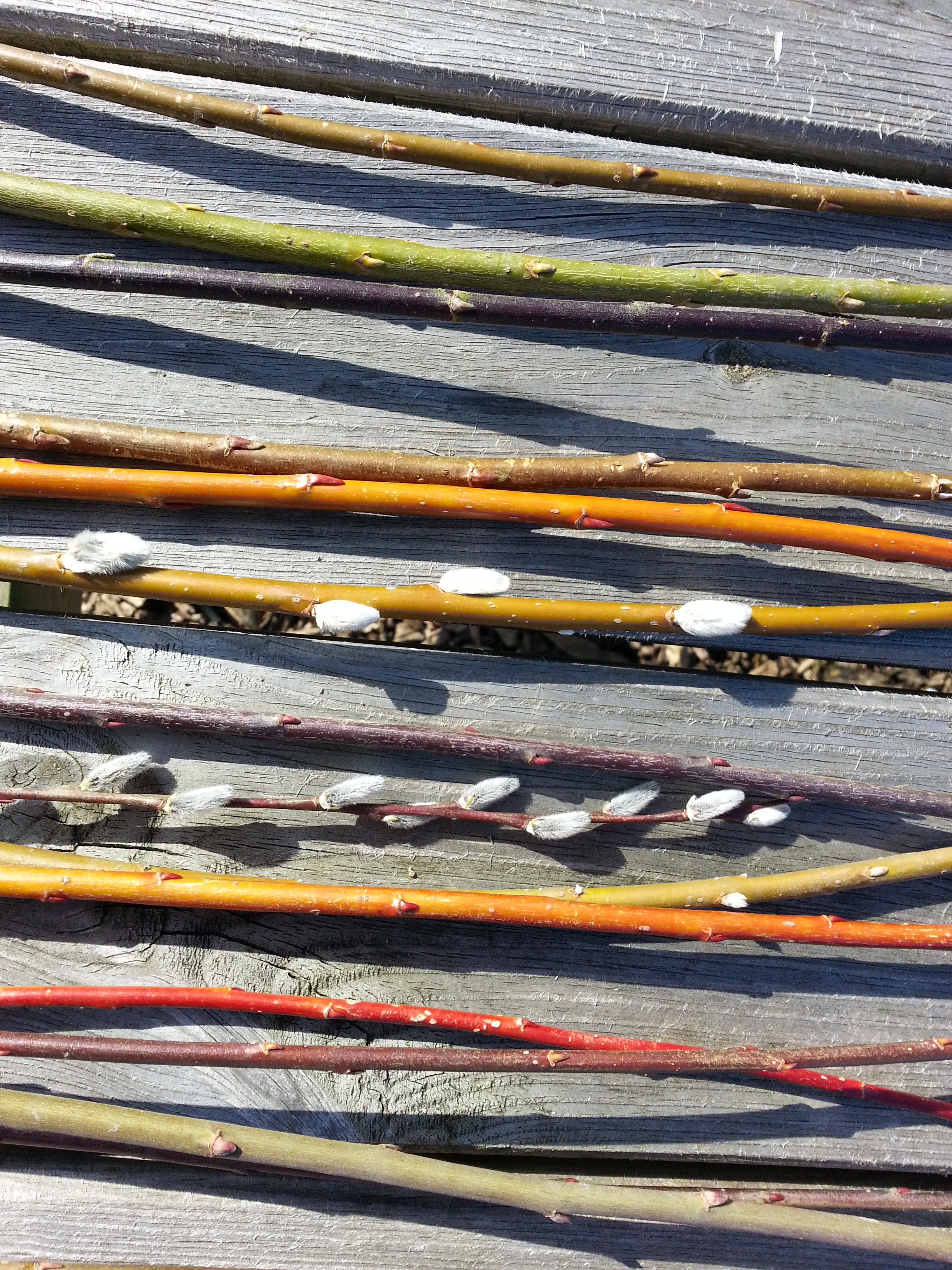
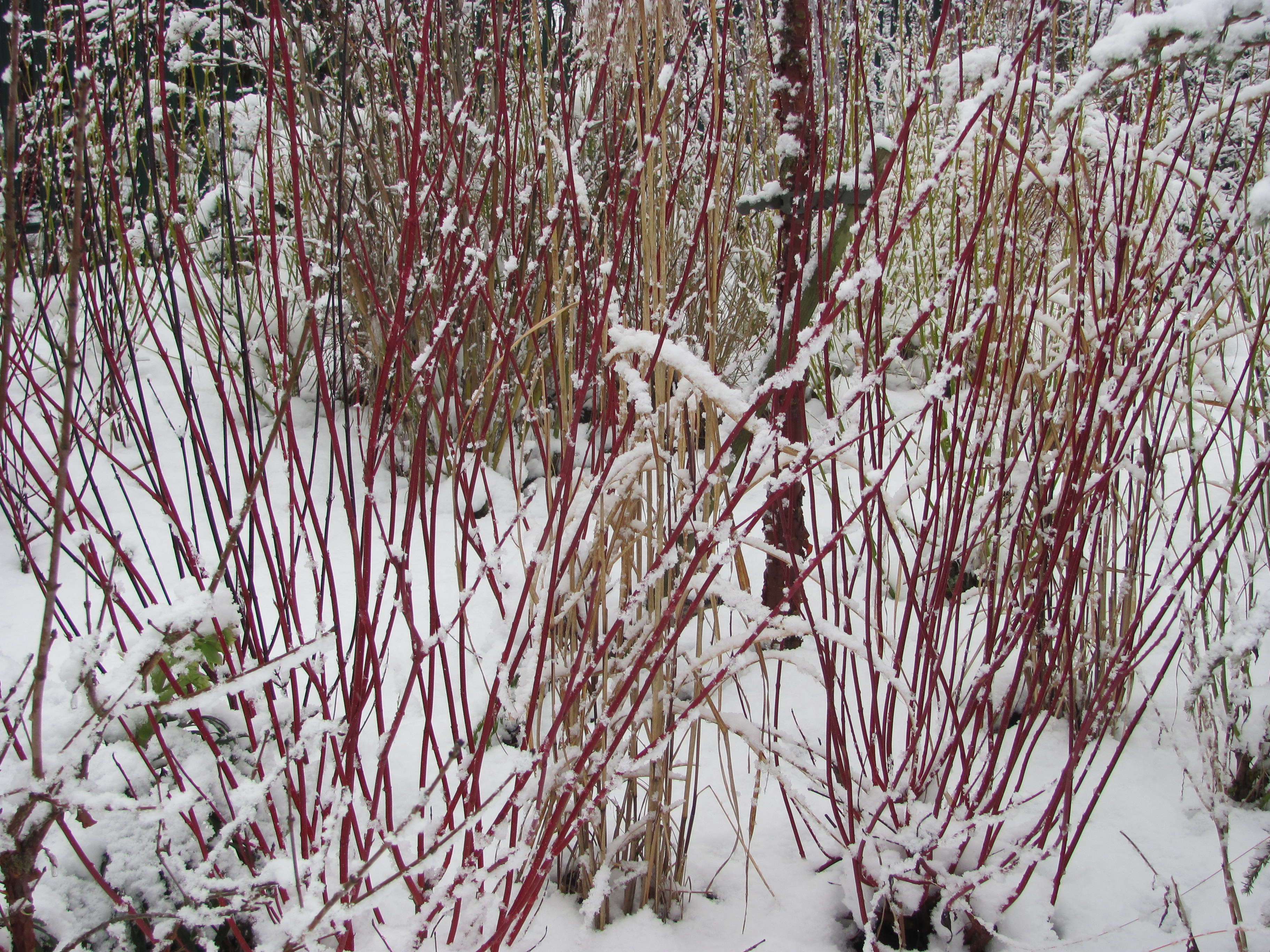
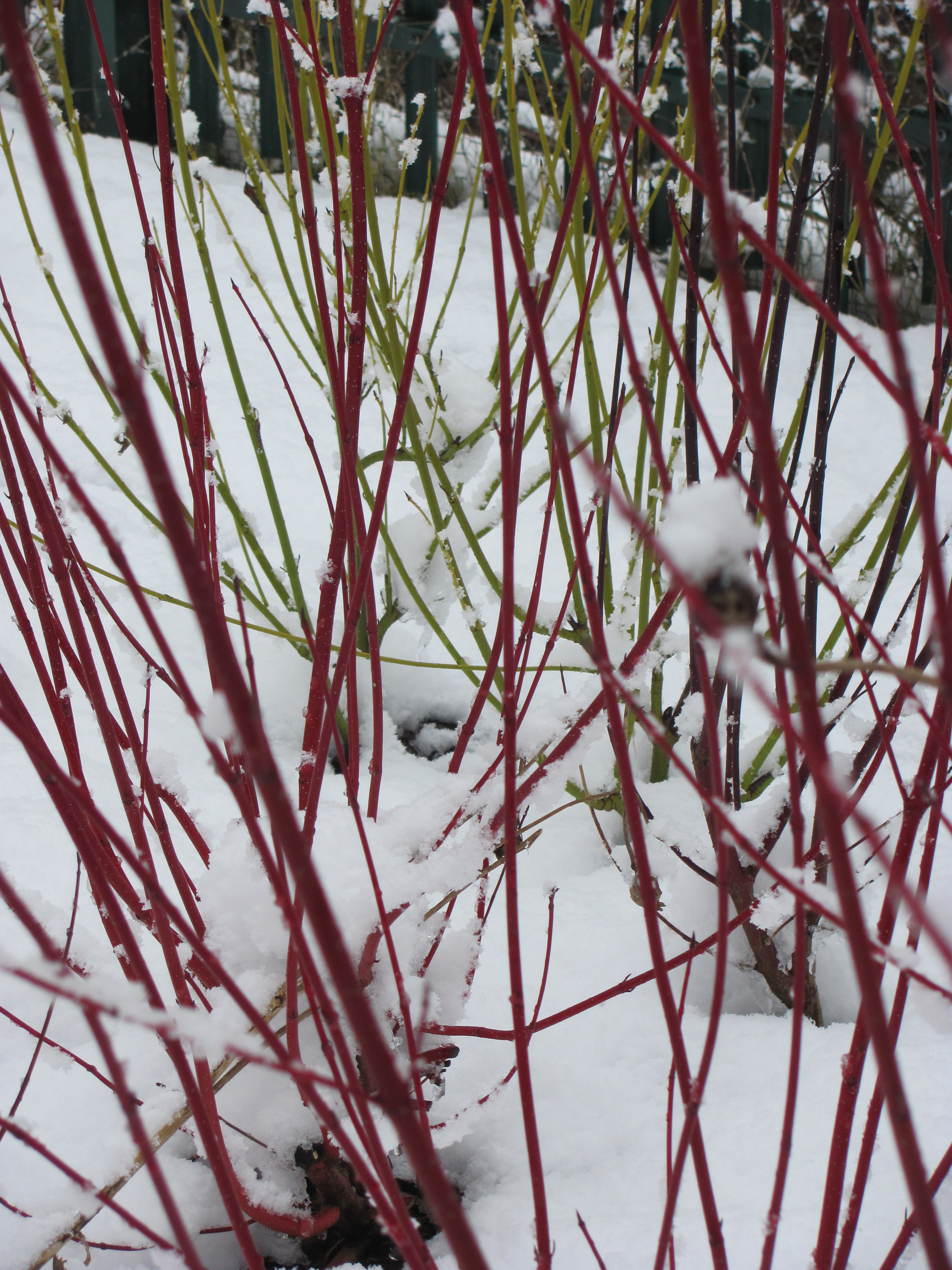
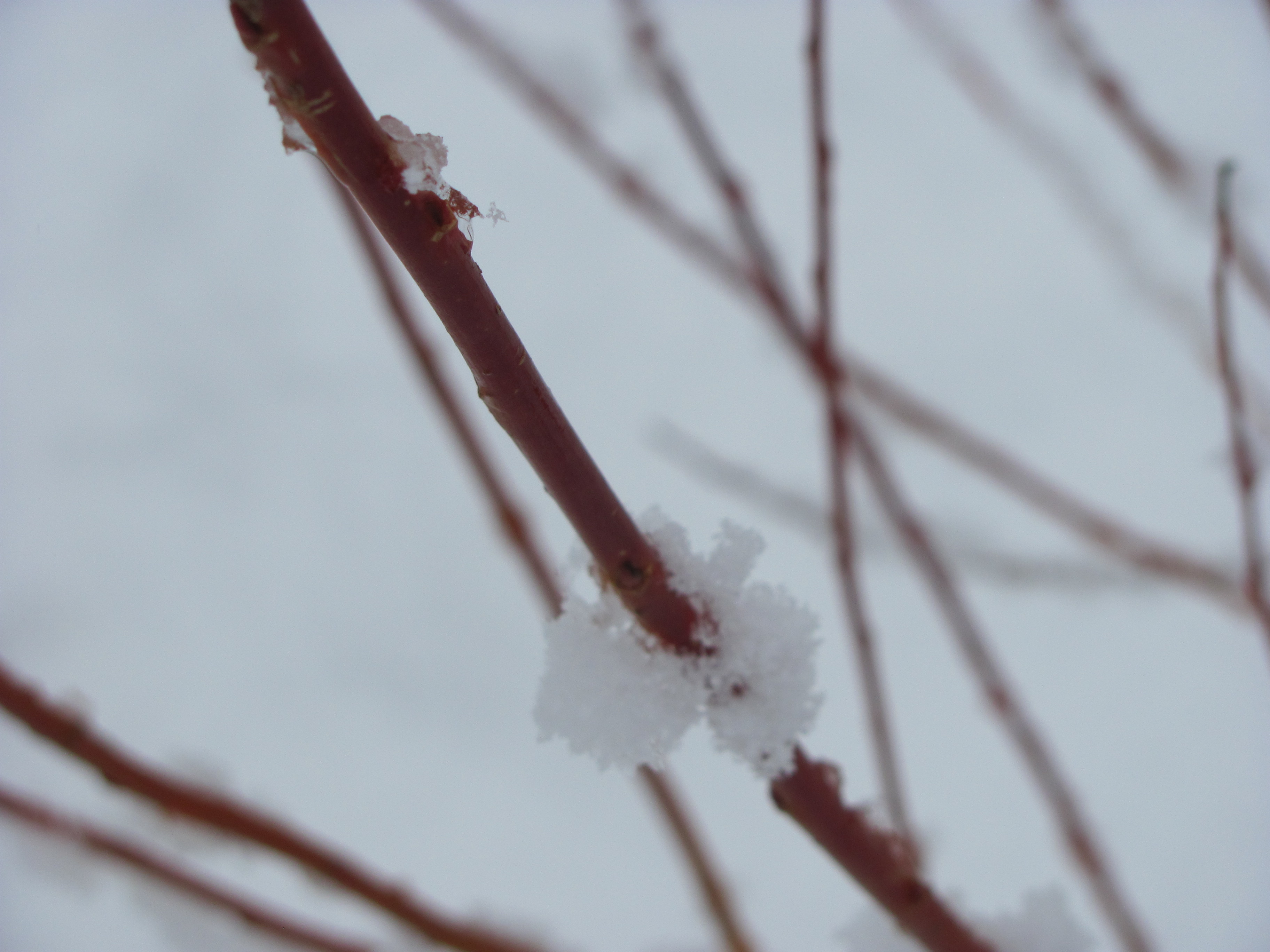
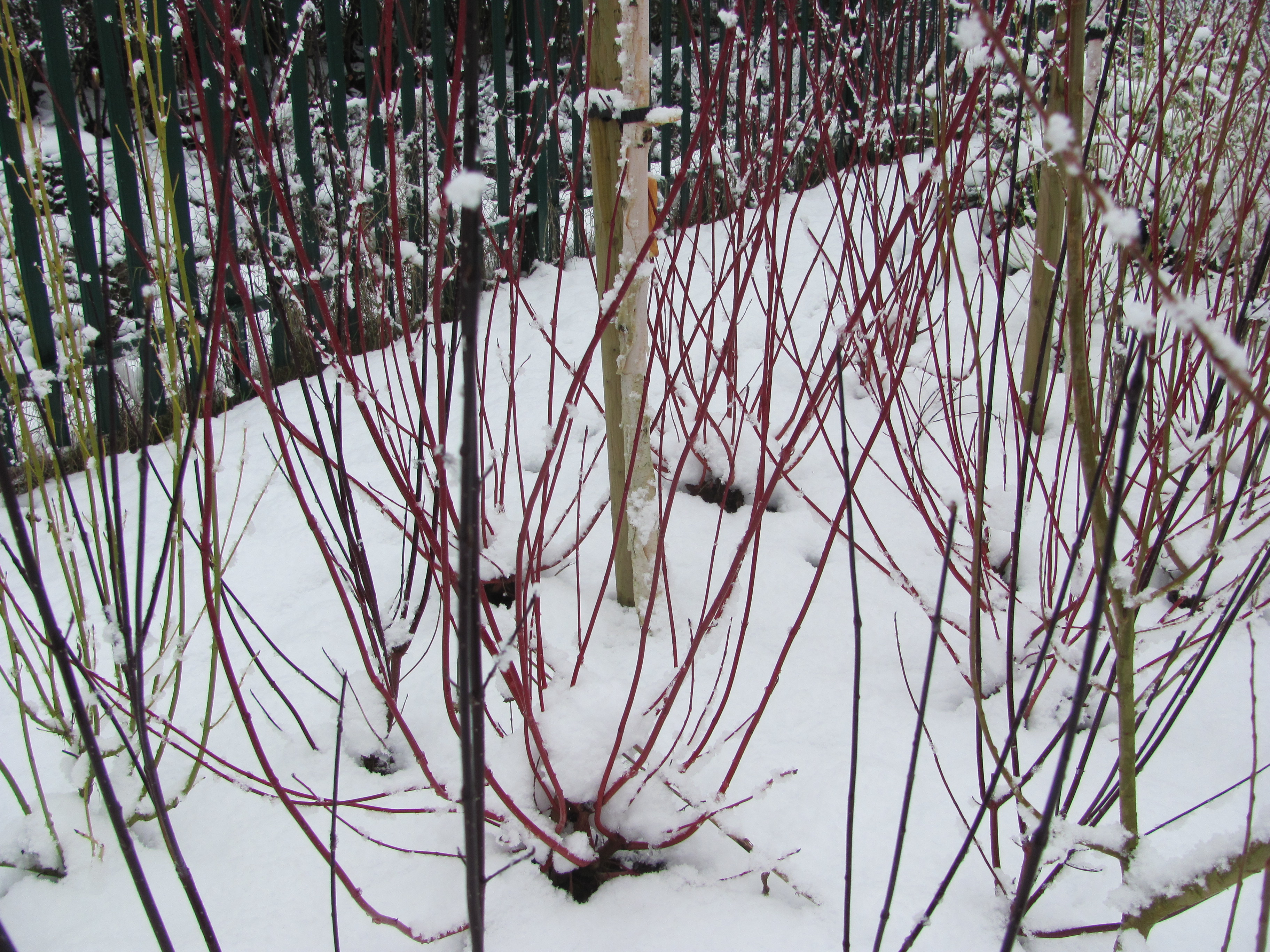
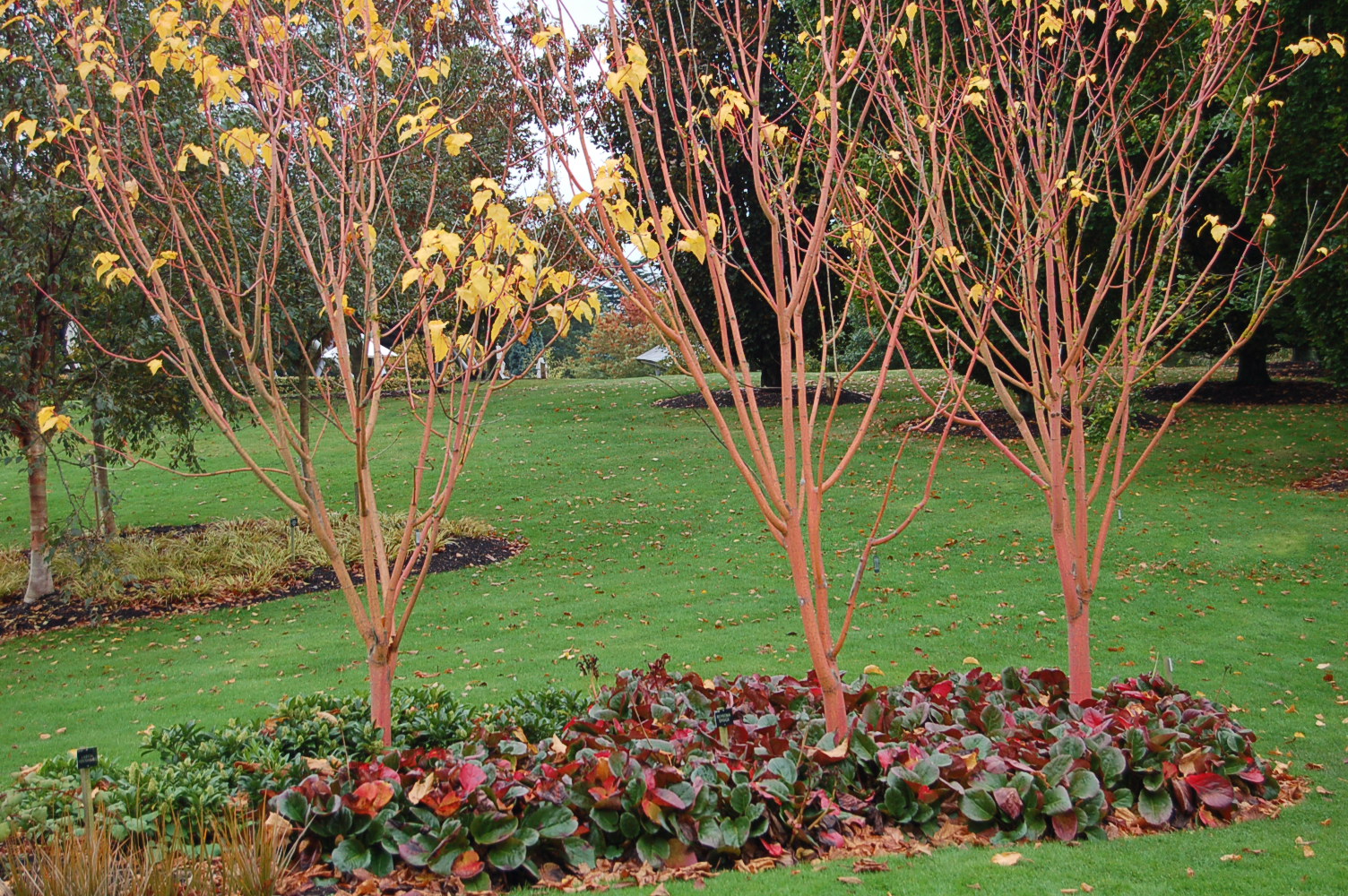
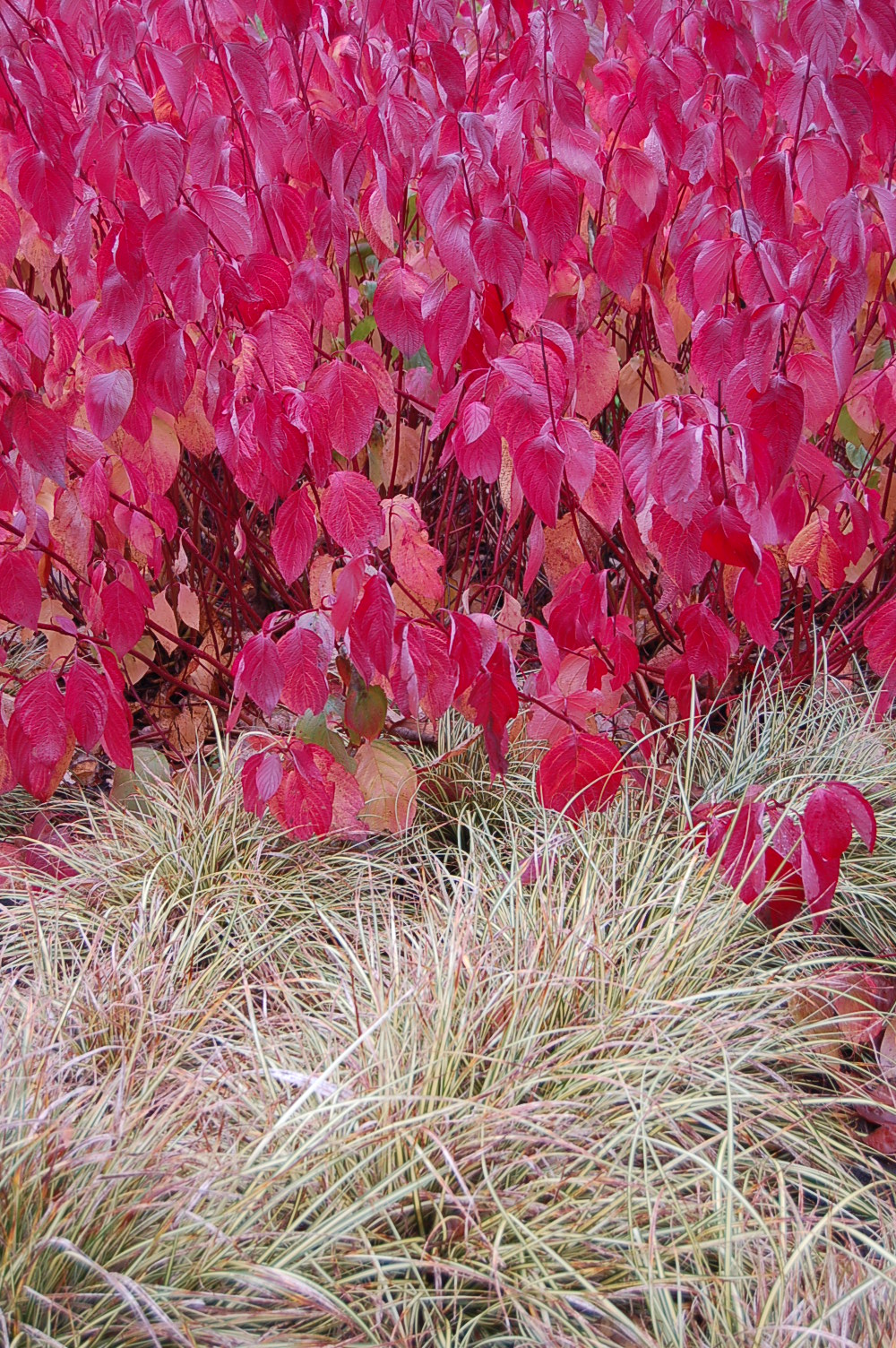
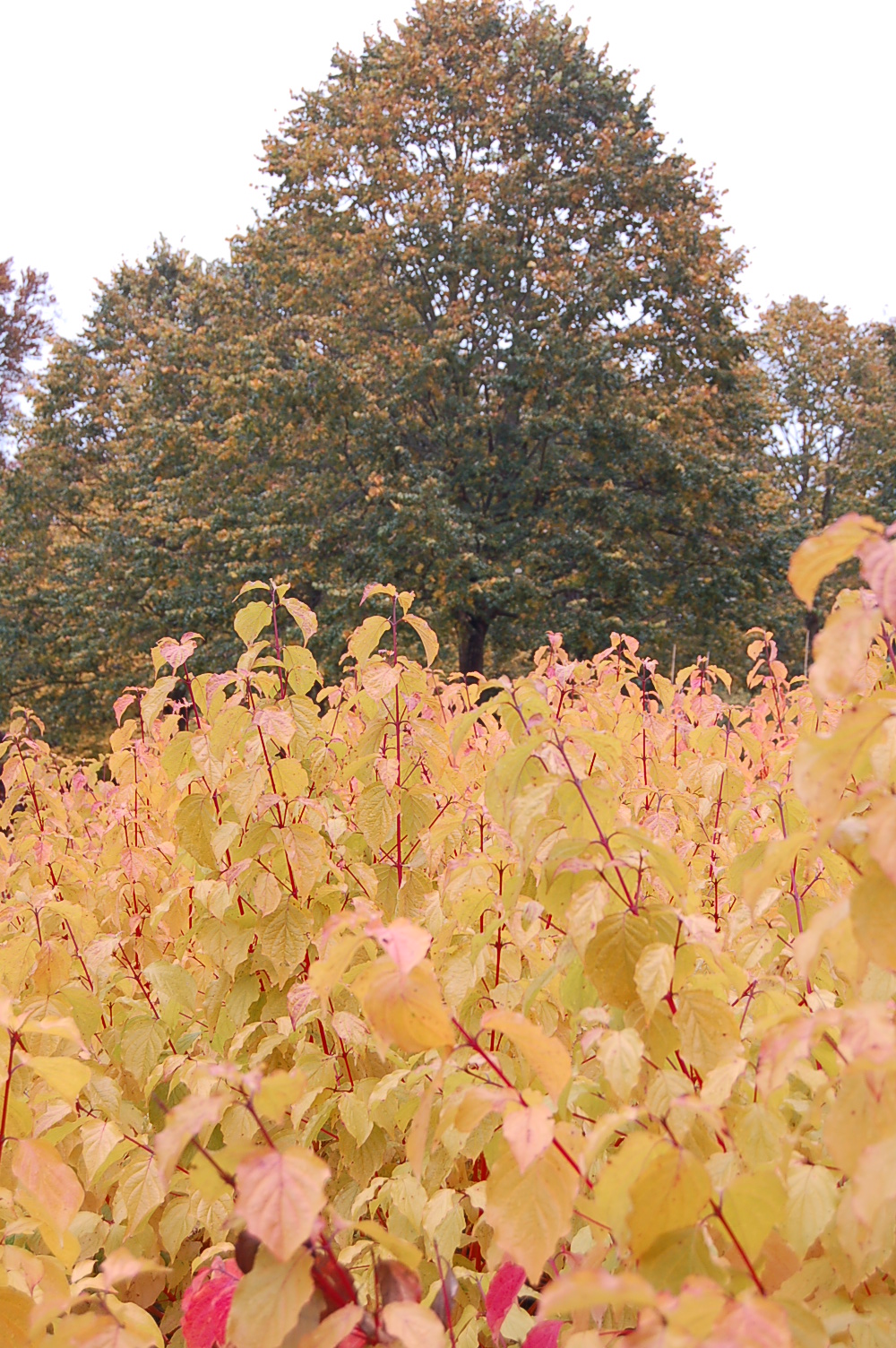
Earlier in the winter I posted a blog about the value of coloured stems in our garden. We have lots more up in the community gardens on our allotment site, Bowbrook Allotment Community. Now we have a little sunshine brightening our days I thought it would be interesting to see the colours in Cornus (Dogwoods) and Salix (Willows) that we have accumulated in our 4 year development.
First though a look into my sketchpad.
We put together a collection of stems of all the different Cornus and Salix that we grow in the communal gardens and photographed them on a rare sunny day.
June 16th and we are visiting two gardens with fellow members of the Shropshire Hardy Plant Society. In my previous post I shared our morning visit to “Fairview” and now we move on to Holly Cottage just a few miles away for the afternoon. To get to the cottage we had to drive over a few fields dodging sheep and when we parked up the heavens opened and the temperature plummeted. Bravely we donned waterproofs – it was well worth it. The garden at Holly Cottage ran downhill from the cottage and within its two and a half acres formal and informal plantings of herbaceous plants mingled with mature trees, meadows, a pond and even a small stream.
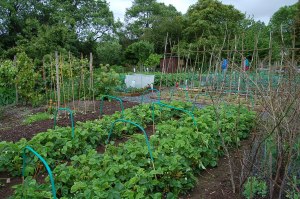
Just as we were impressed by the veggie patch at Fairview in the morning, the fruit and veg garden at Holly Cottage impressed too. This veggie patch practised organic principles to produce quality harvests.
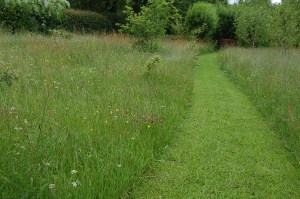
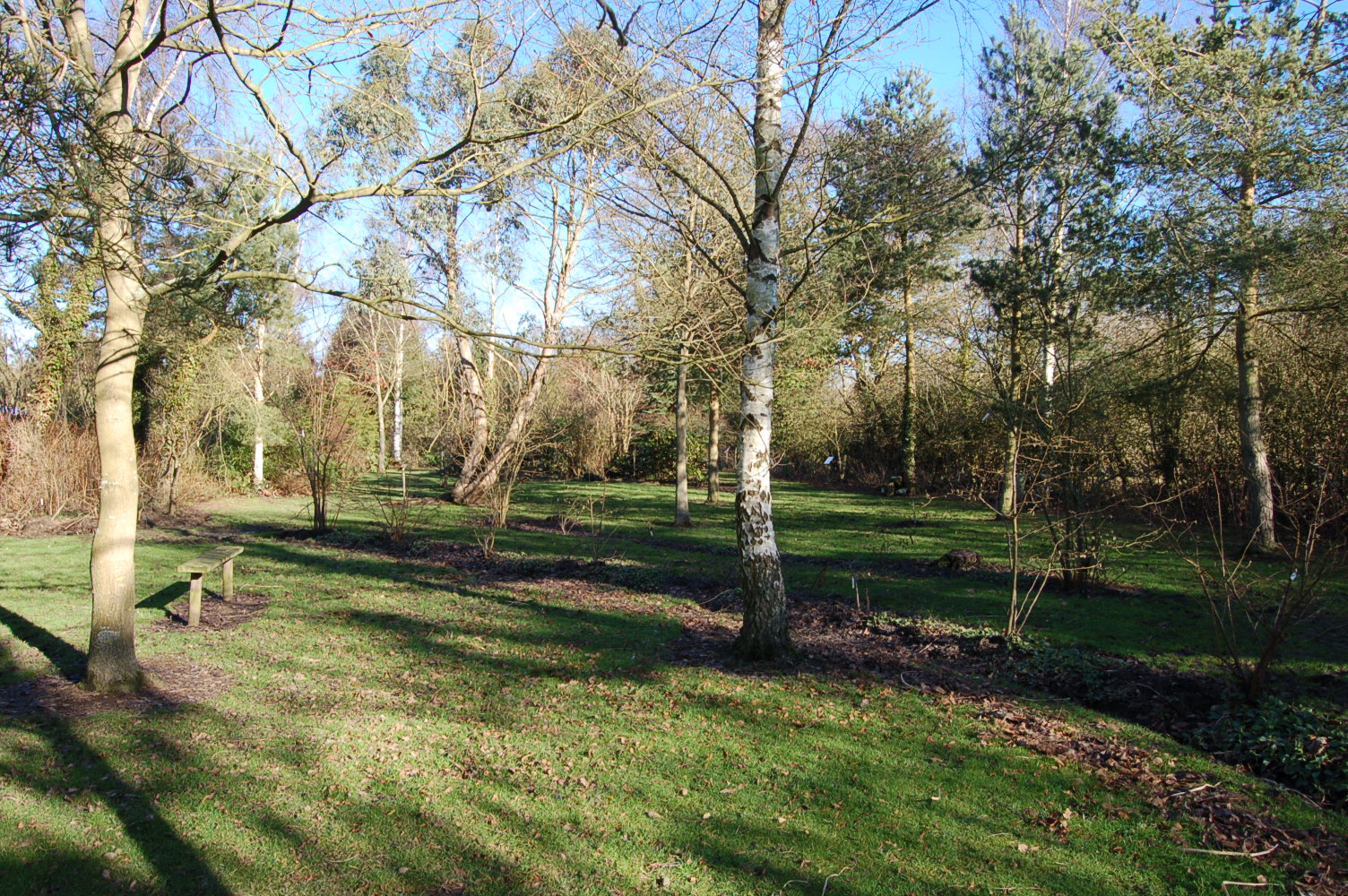
Part of following organic principles is to encourage wildlife to garden with you and here there were nest boxes and bird feeders in evidence as well as a meadow, a small arboretum featuring mostly native and wildlife attracting trees and shrubs. A comfy rustic bench was also positioned where we could appreciate it all.
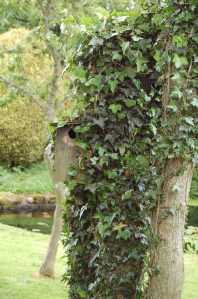
We like to find original new ideas or twists on old favourites during our garden visits. At Holly Cottage we came across this wonderful example of high-rise living for plants.
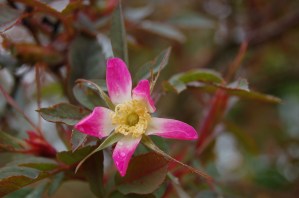
As with any garden the plants are the stars and on a dull, wet cold day such as this these stars are needed even more. Holly Cottage’s plants did not let us down. They lifted our spirits out of the gloom.
Back to Bluebell Arboretum for a look at their collection of my favourite trees, the Birches. Browse the photos below and you will see why.
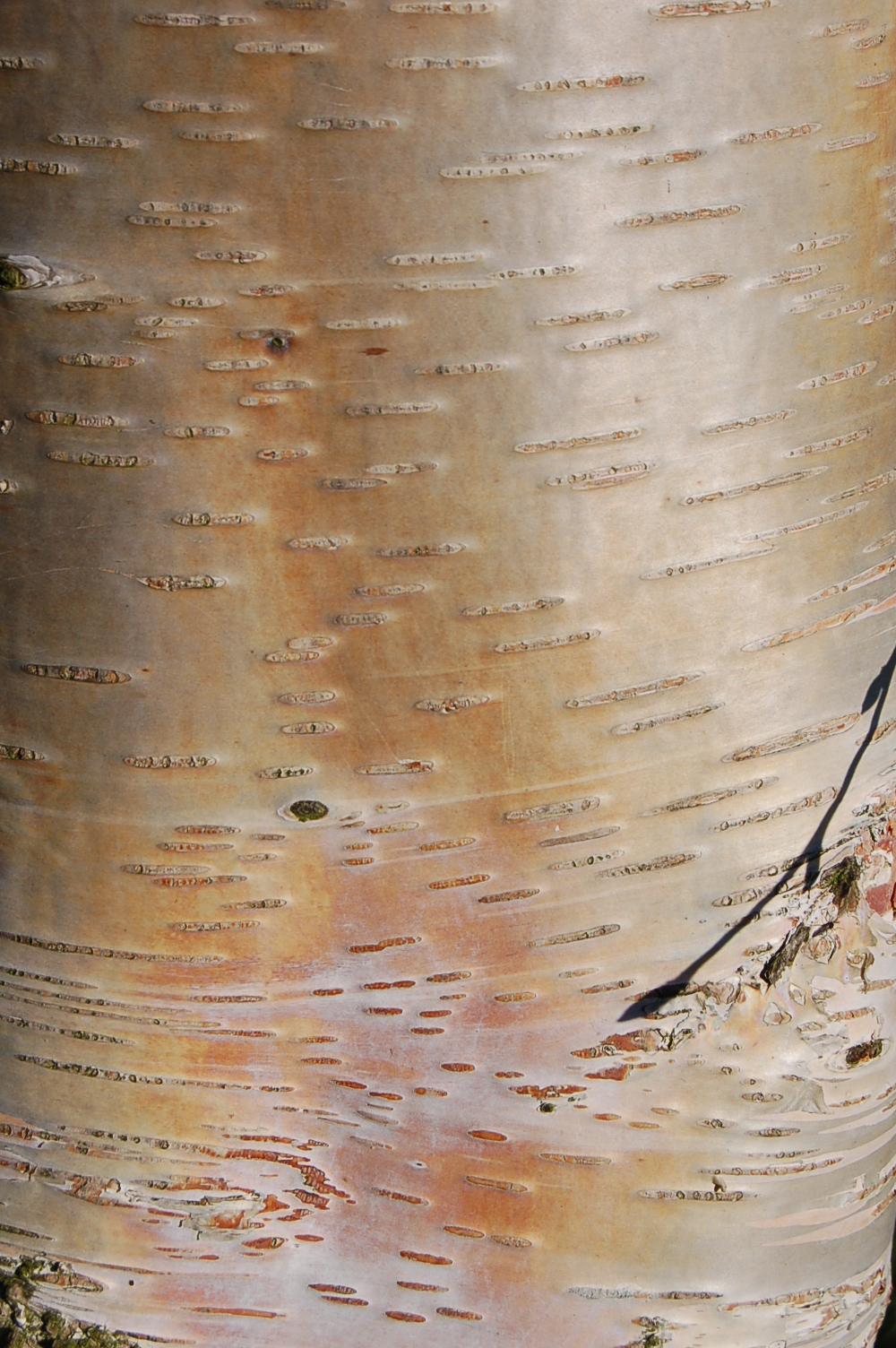
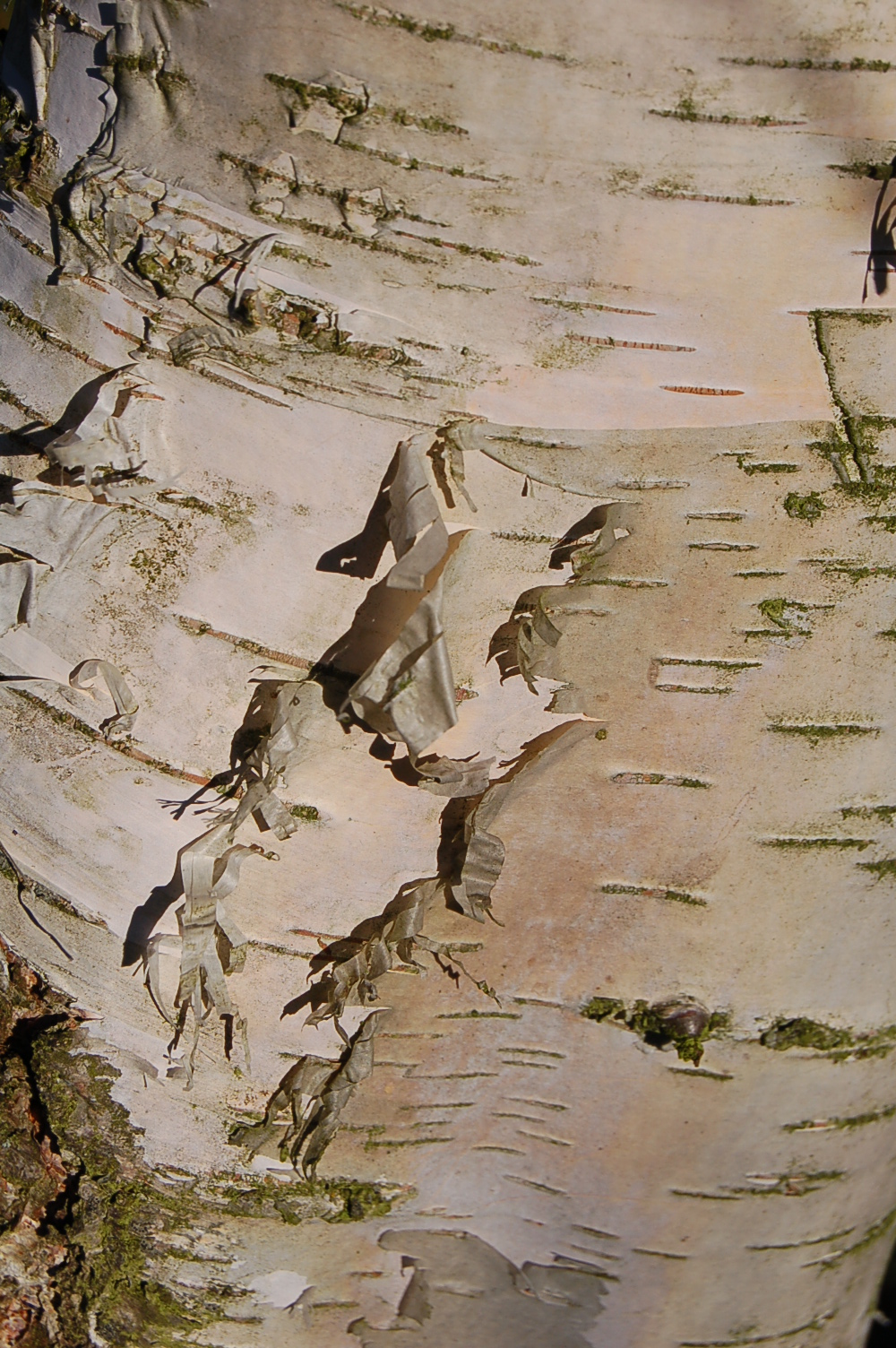
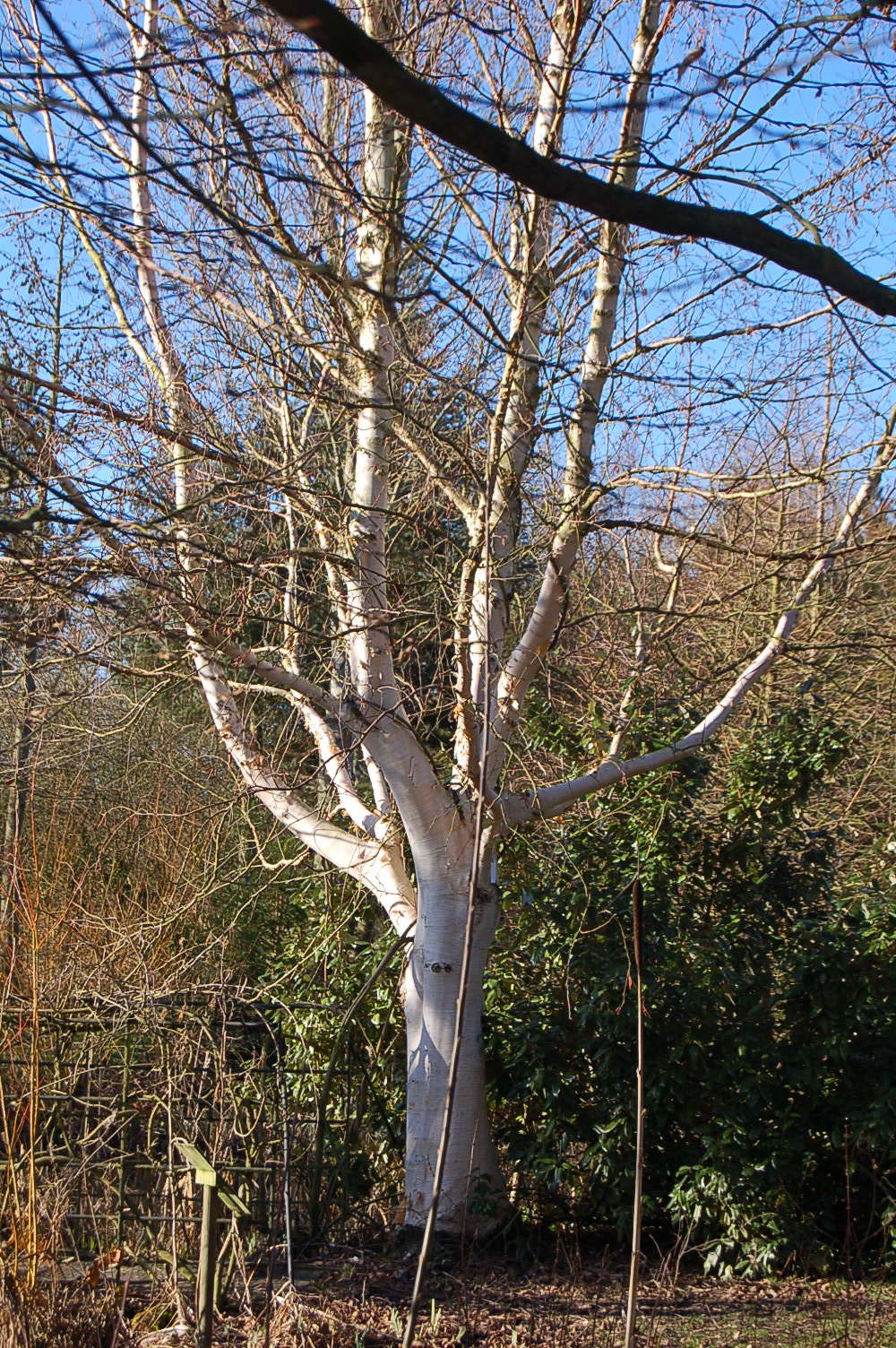
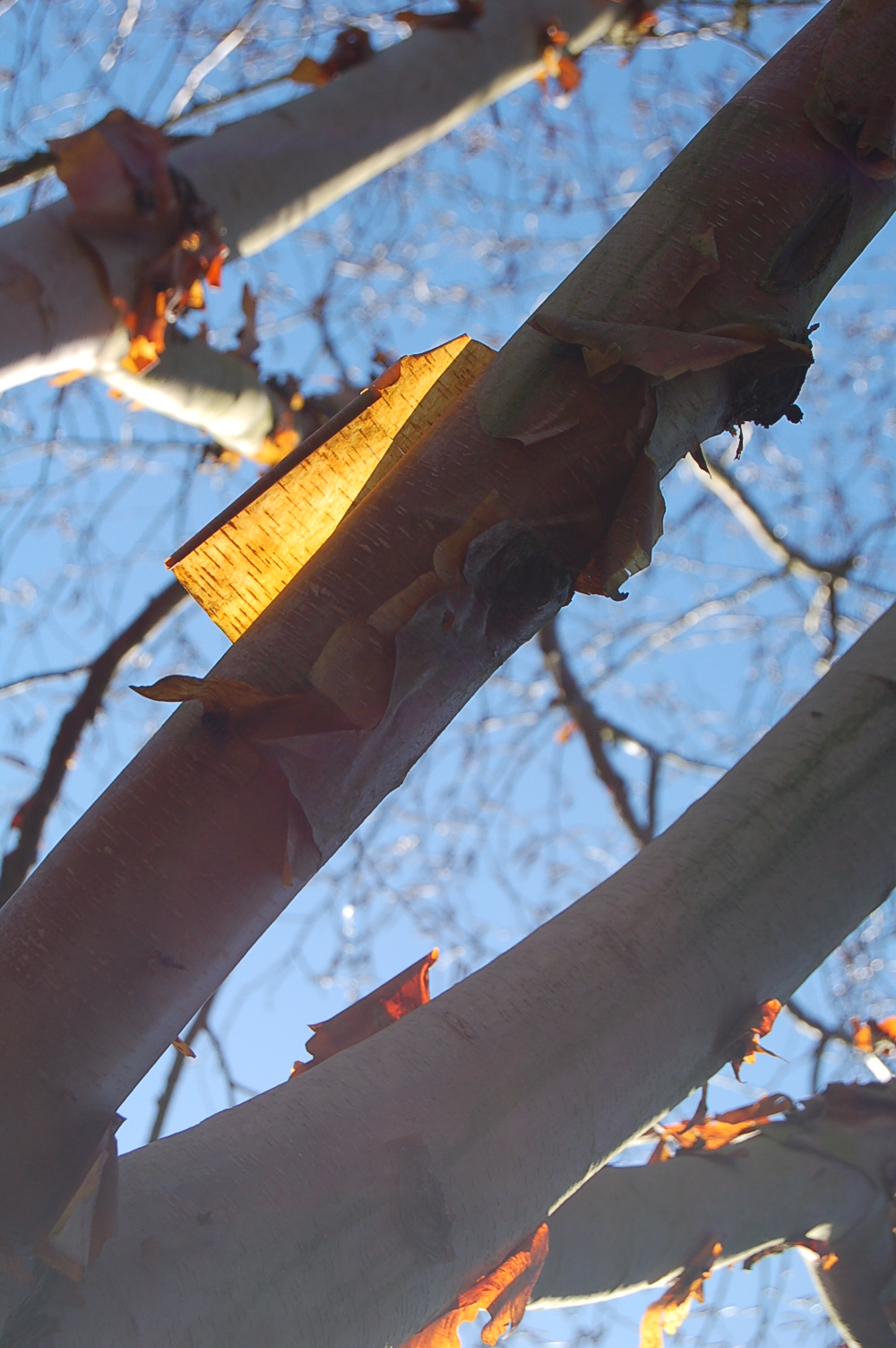
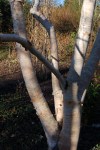
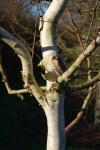
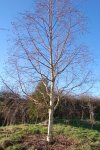
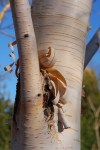
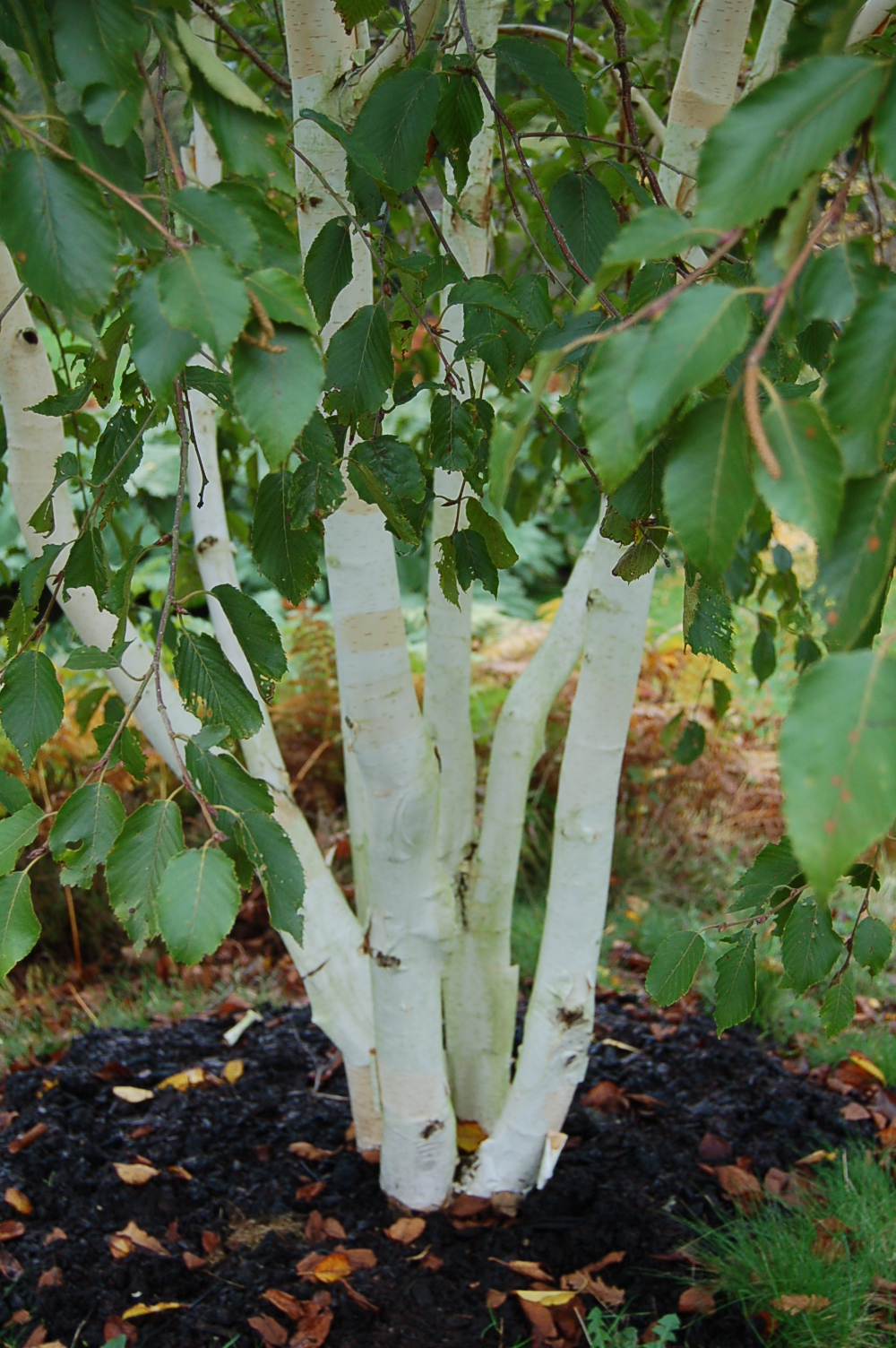
Betulas are particularly popular at the moment because of an interest in coloured and textured bark. This is coupled with a surge of interest in the creation of winter gardens within major gardens open to the public, an interest influencing plantings in smaller private gardens. I thought a gallery of our favourites at Bluebell would show the amazing variations.
We recently spent a morning at Bluebell Arboretum in Leicestershire, a return visit in fact as we visited it many years ago. It is a young arboretum and small as arboreta go which gives it an intimate, manageable feel.
As we approached the wooden cabin that acts as reception, the door creaked open, “I see you have your walking boots on! I wouldn’t recommend you go around if you hadn’t.” Apparently we had arrived the day after a foot of snow had melted onto already water-logged ground. It was wet so we splashed and slid with great care around boggy pathways, but the trees that greeted us made it all worthwhile.
We are great fans of Betulas (birches) and Acers (maples) and here we found many to admire. We admired them for their profile, their bark texture and colour.
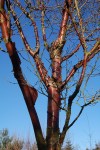
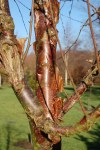
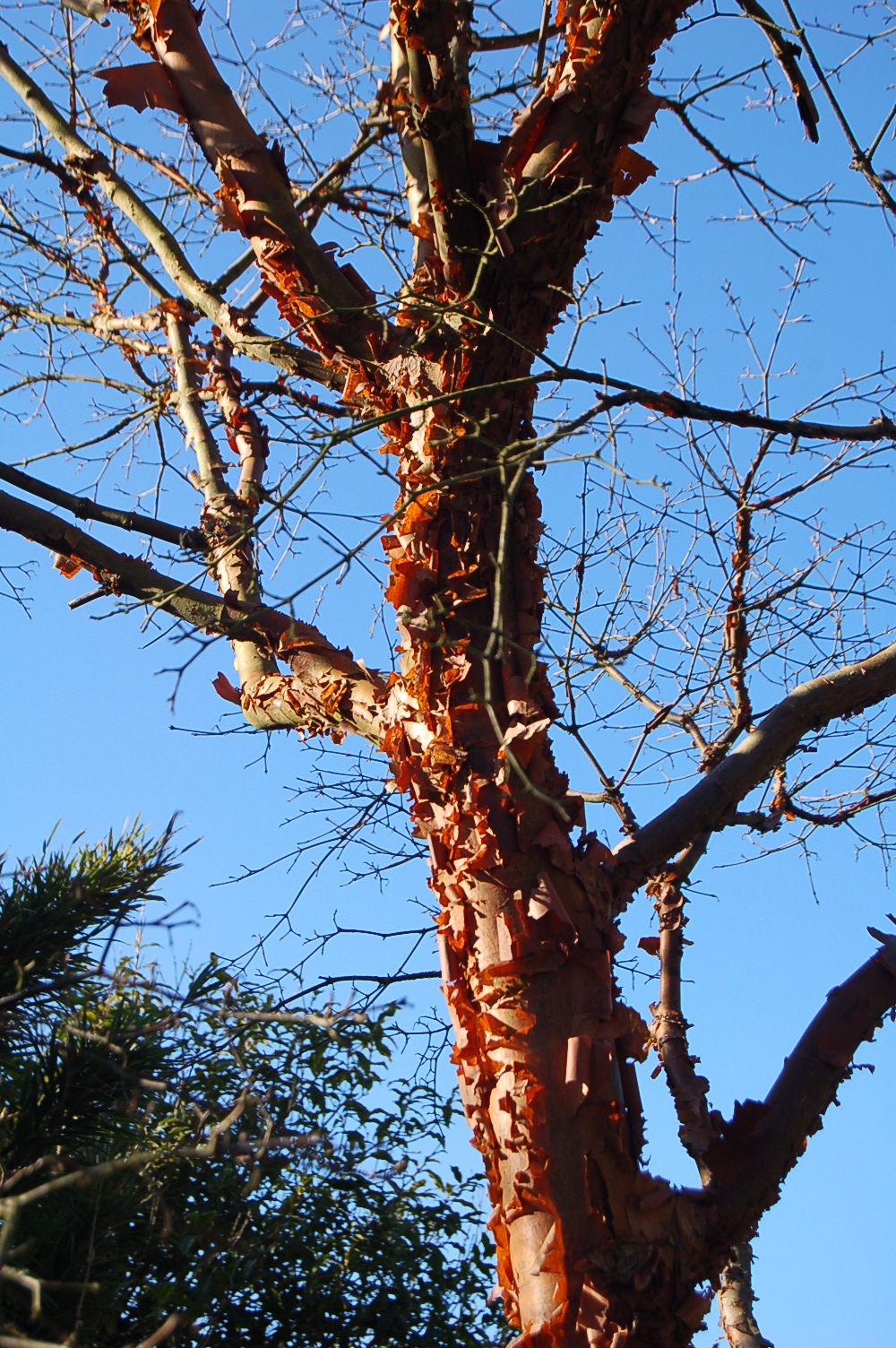
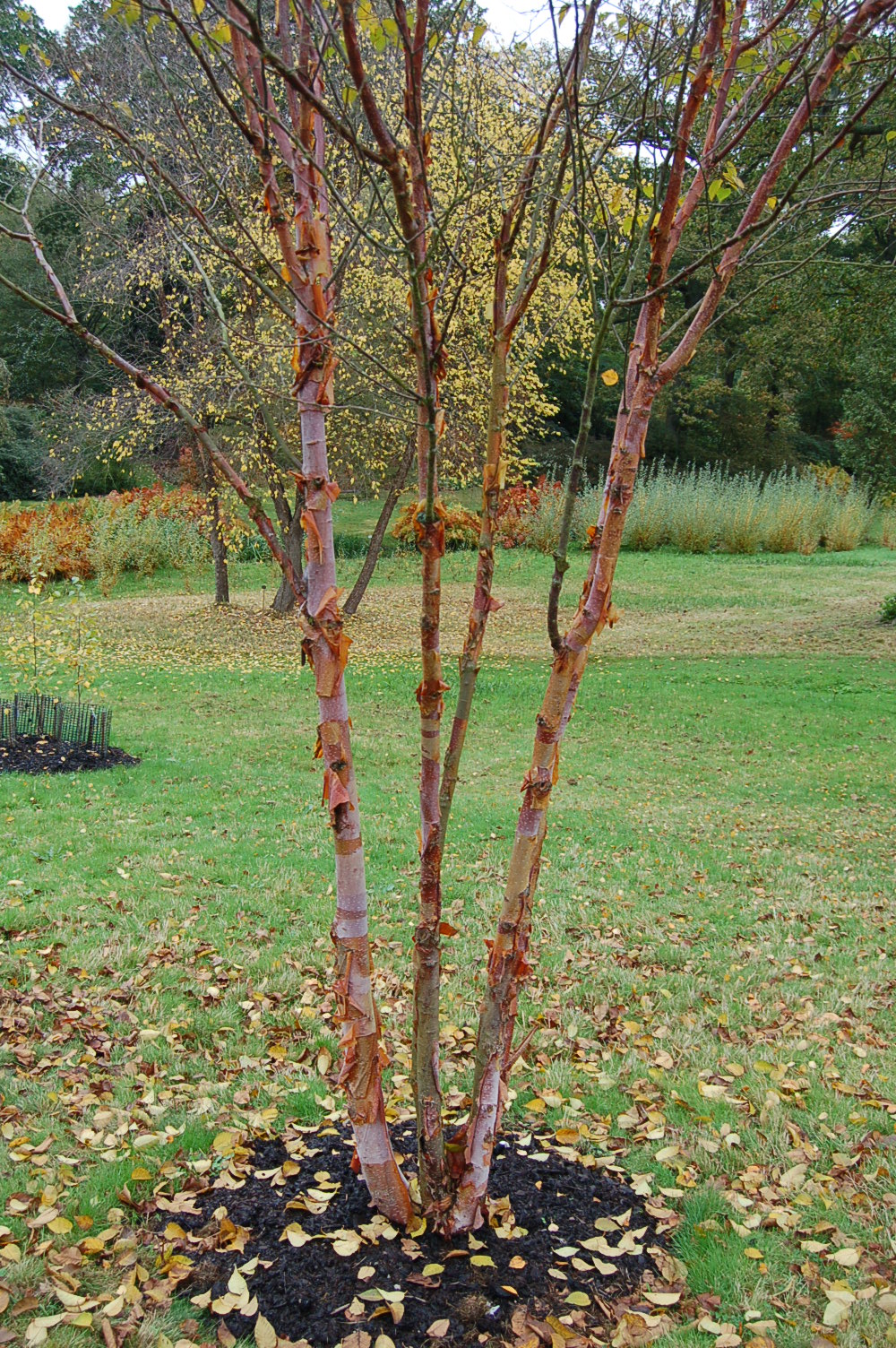
Acer griseum is a classic winter garden tree, with its silky-smooth, shiny mahogany bark. the thinnest of slithers peel off, curl and catch the low winter sun. It has a perfect common name, the Paper Bark Maple. It appears to be wrapped in sparkling, shining and very fancy wrapping paper
Acer griseum
Another Acer that caught our eye, similarly had beautifully coloured bark, was Acer x conspicuum “Phoenix”. The bark on this Acer though was silky smooth.
Acer x conspicuum “Phoenix”
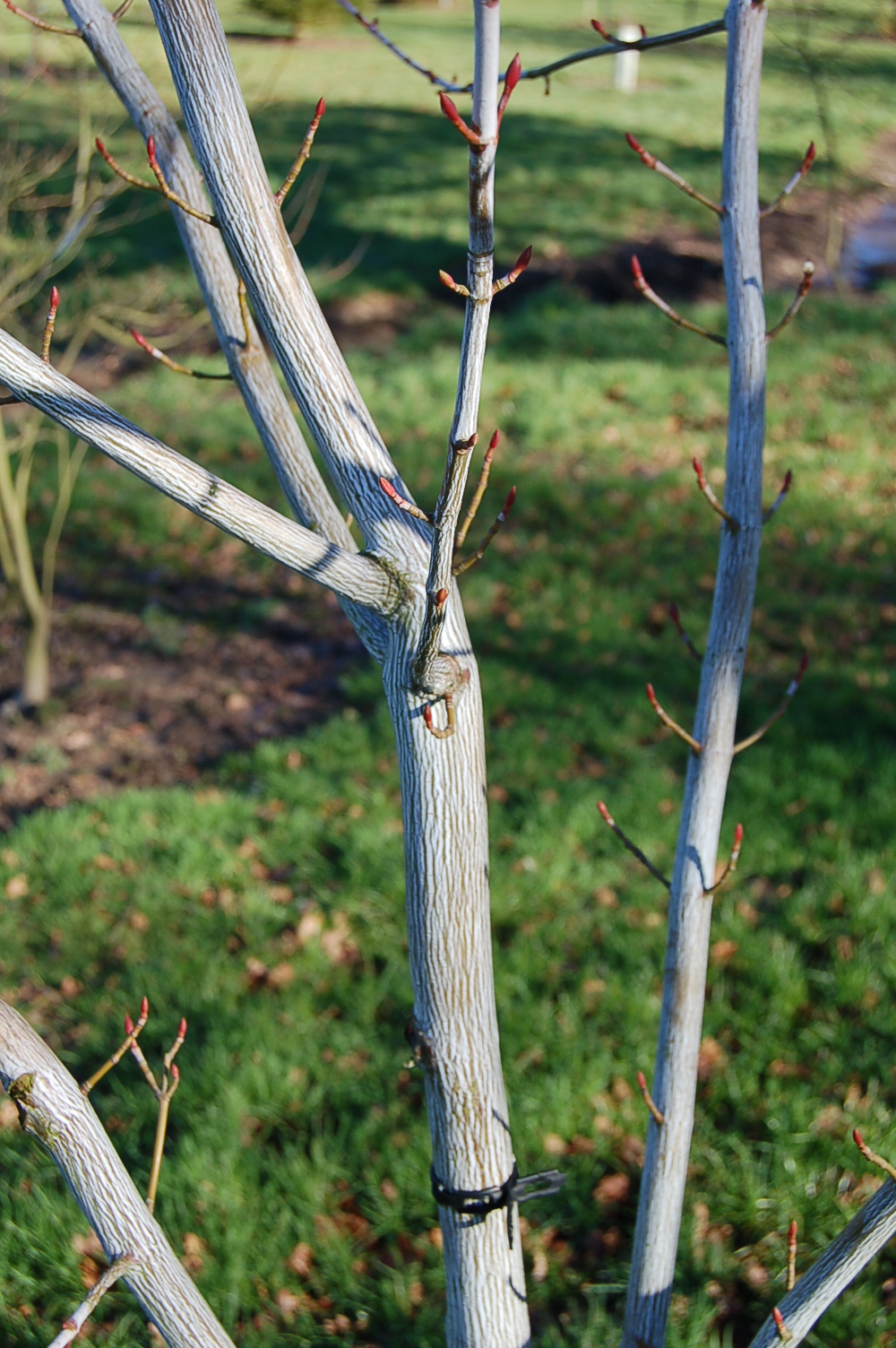
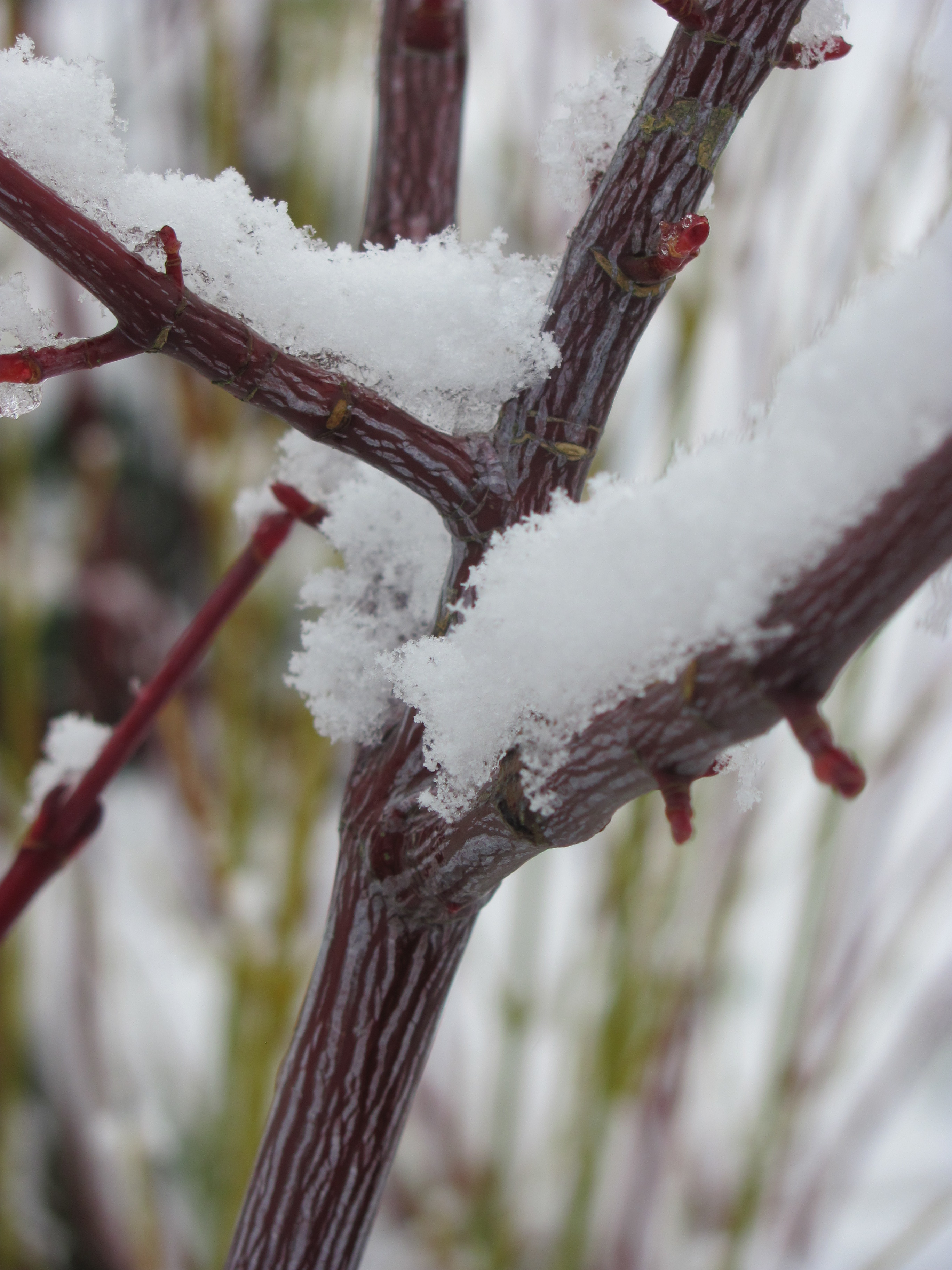
The celebrated Snakebark Maples need to be studied close up where the delicately textured and multi-coloured bark can be fully appreciated.
Acer tegmentosum – The Amur Maple.Acer davidii
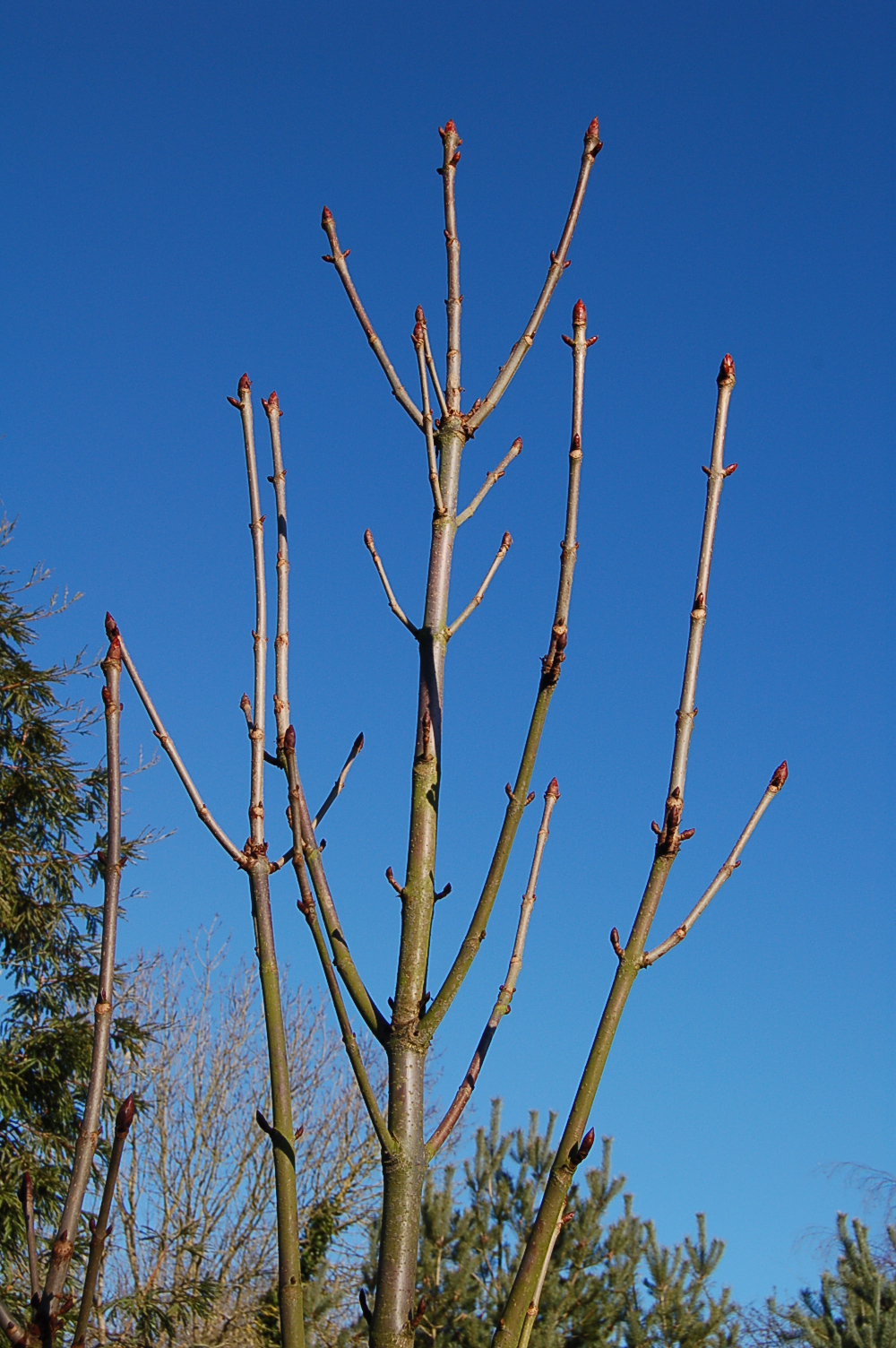
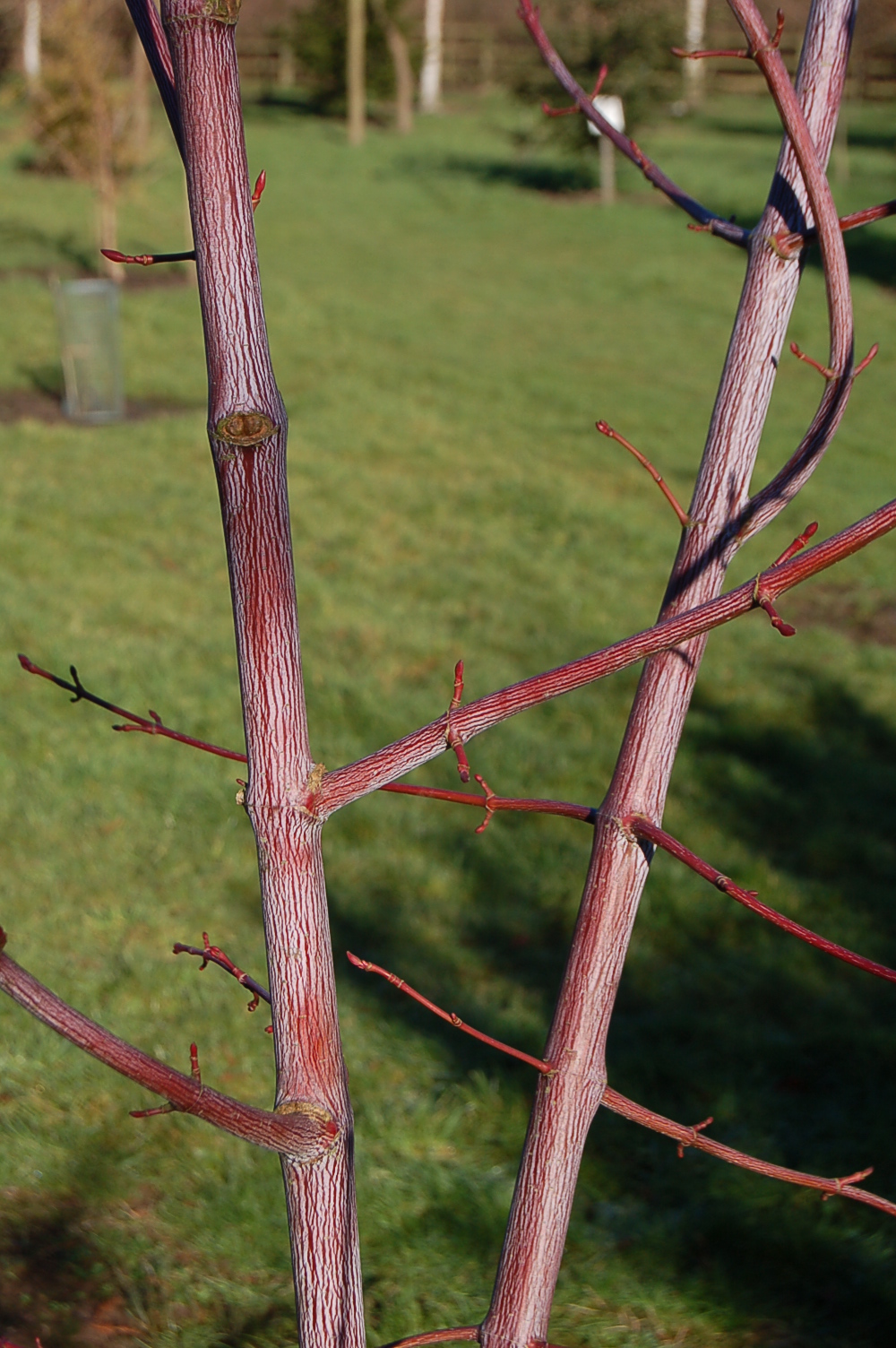
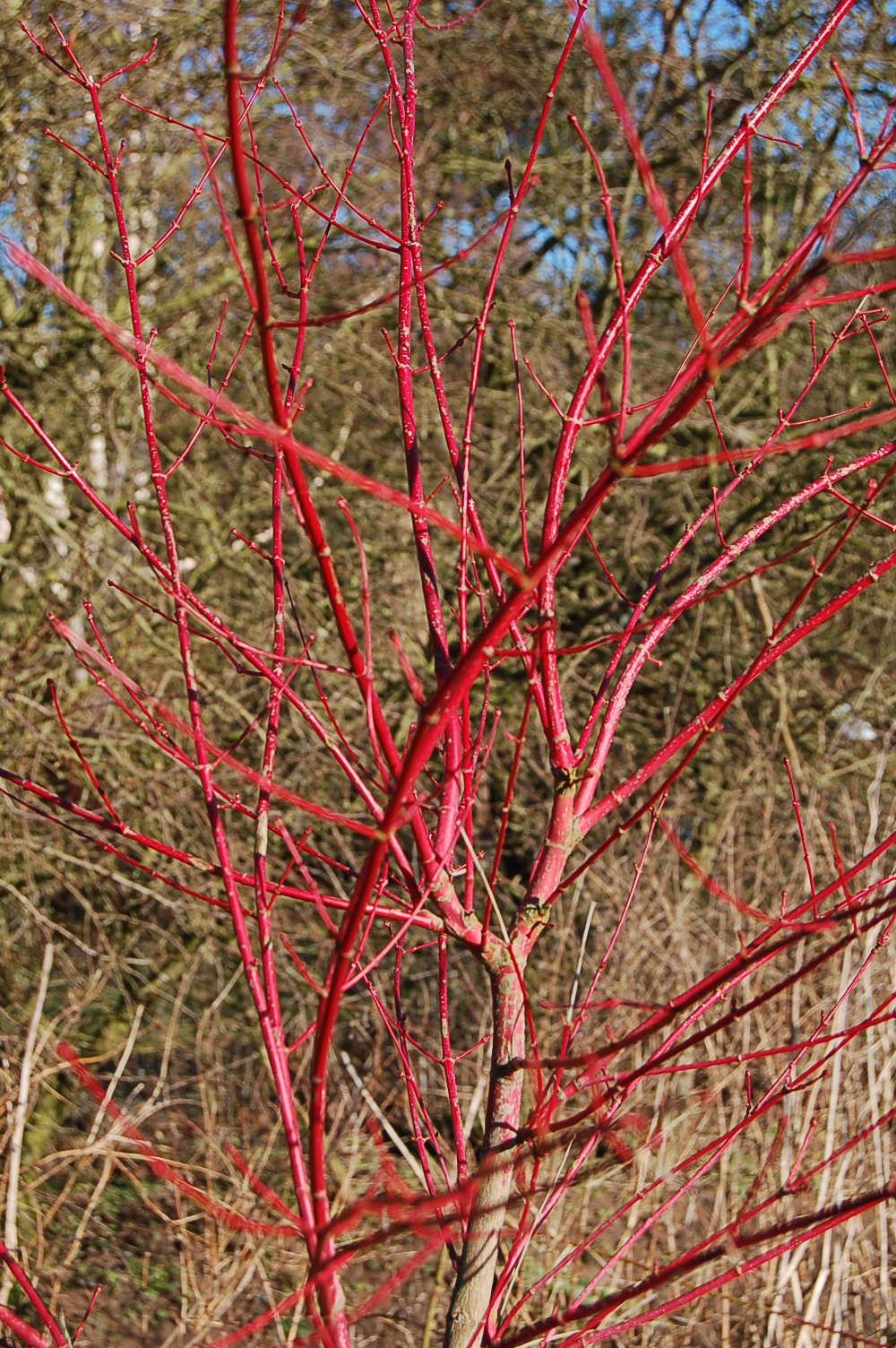
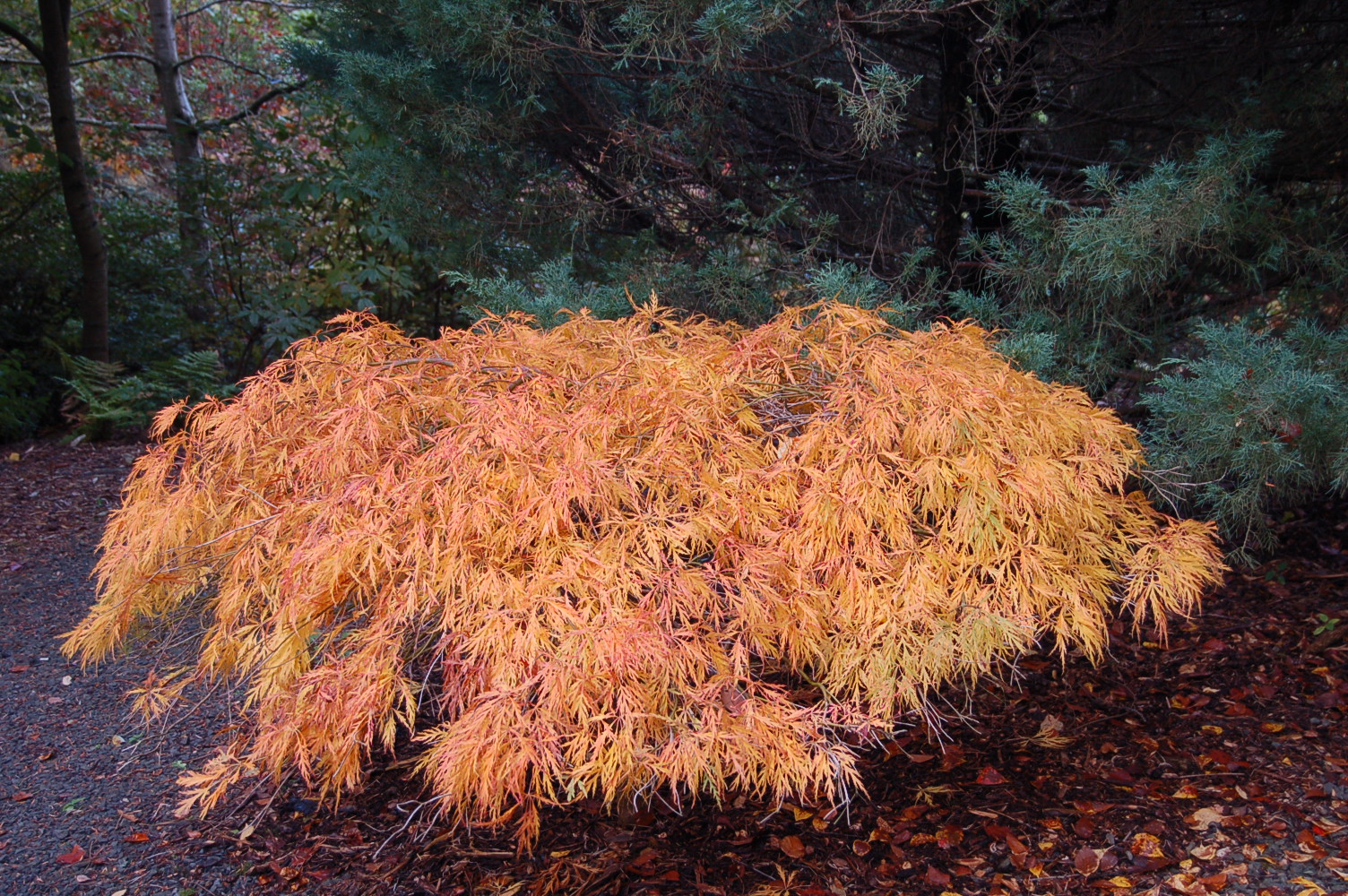
The type of Acers most frequently grown in smaller gardens and arboreta alike is Acer dissectum, grown for its leaf colours, the fresh young growth in spring, the rich summer colour and perhaps most of all for the extravagent autumn colours. But at Bluebell Arboretum we discovered this variety, “Eddisbury” which had another layer of interest and an extra reason for growing it, the beauty of its stems.
Acer dissectum “Eddisbury”
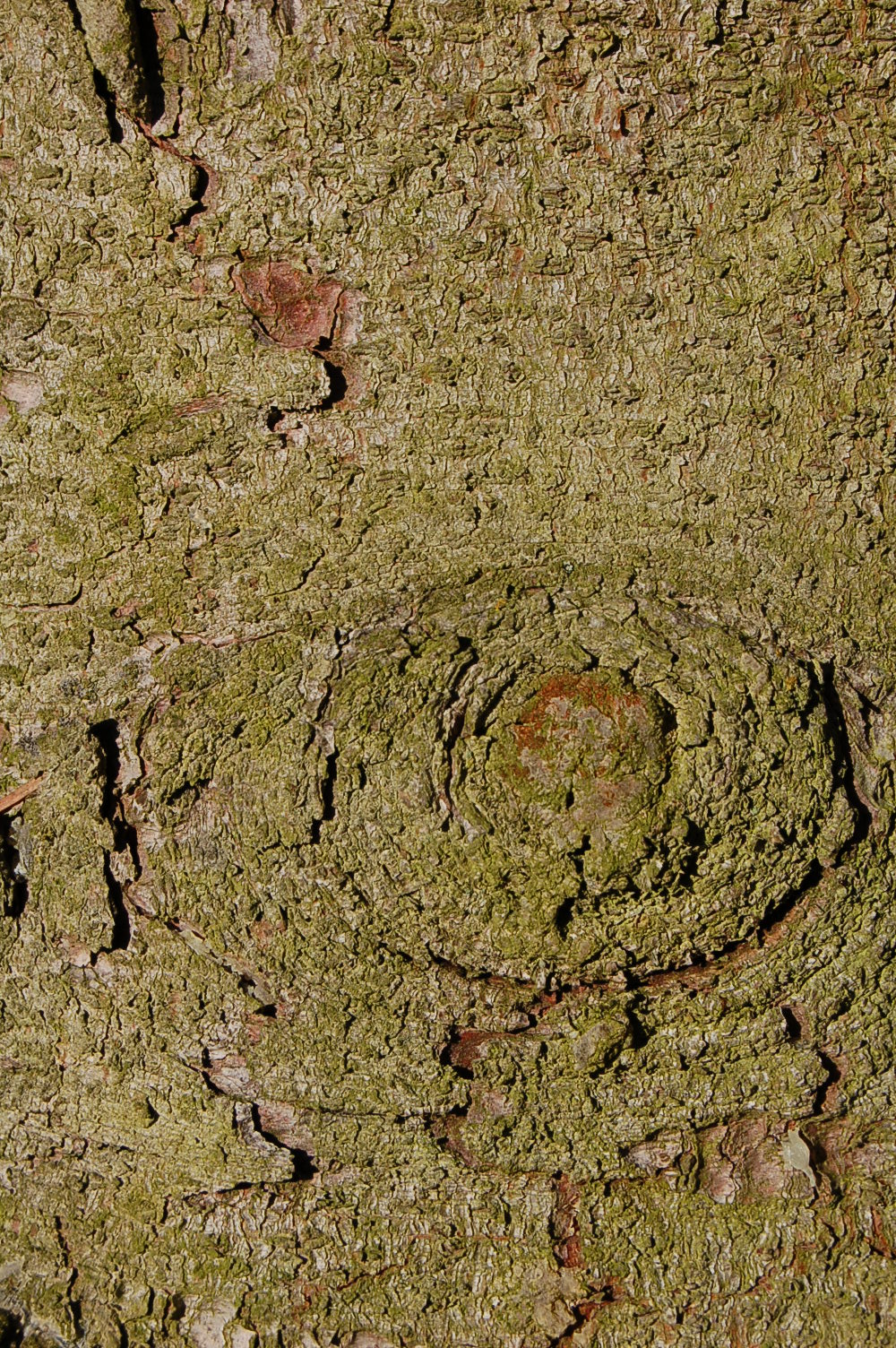
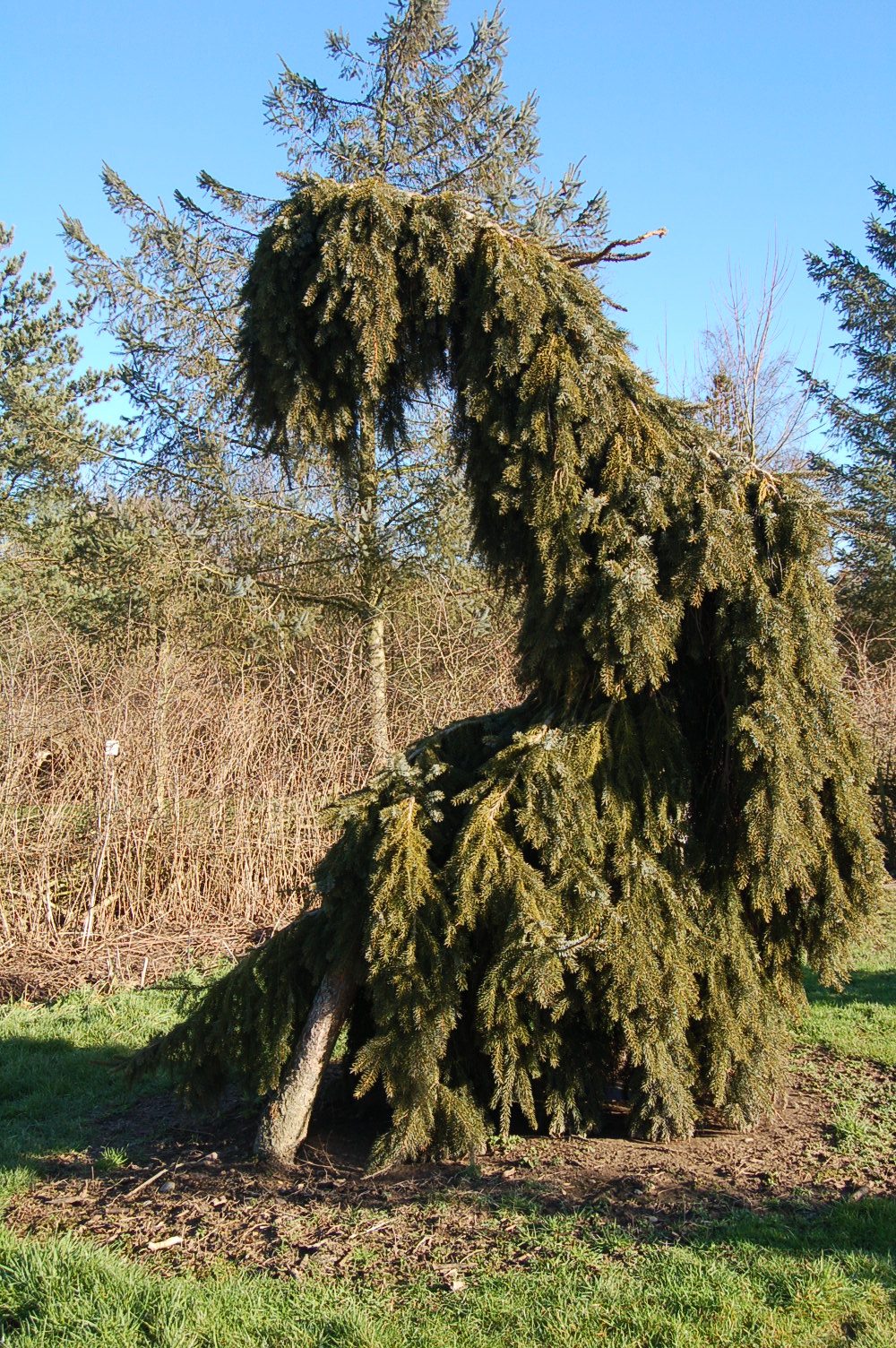
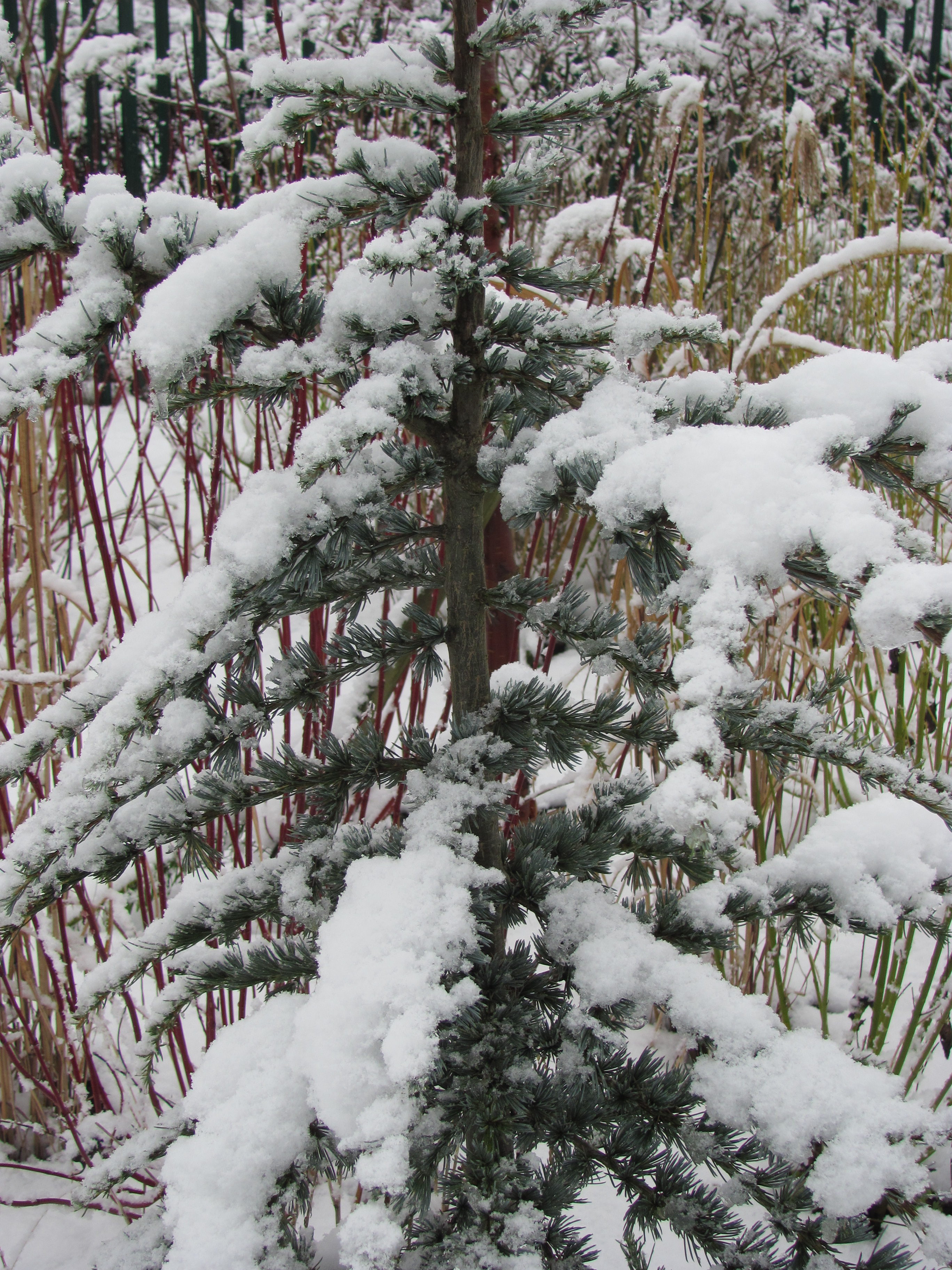
I am not a great fan of conifers but two caught my eye, both Piceas. One had bark with eye shapes and the other an amazing profile.
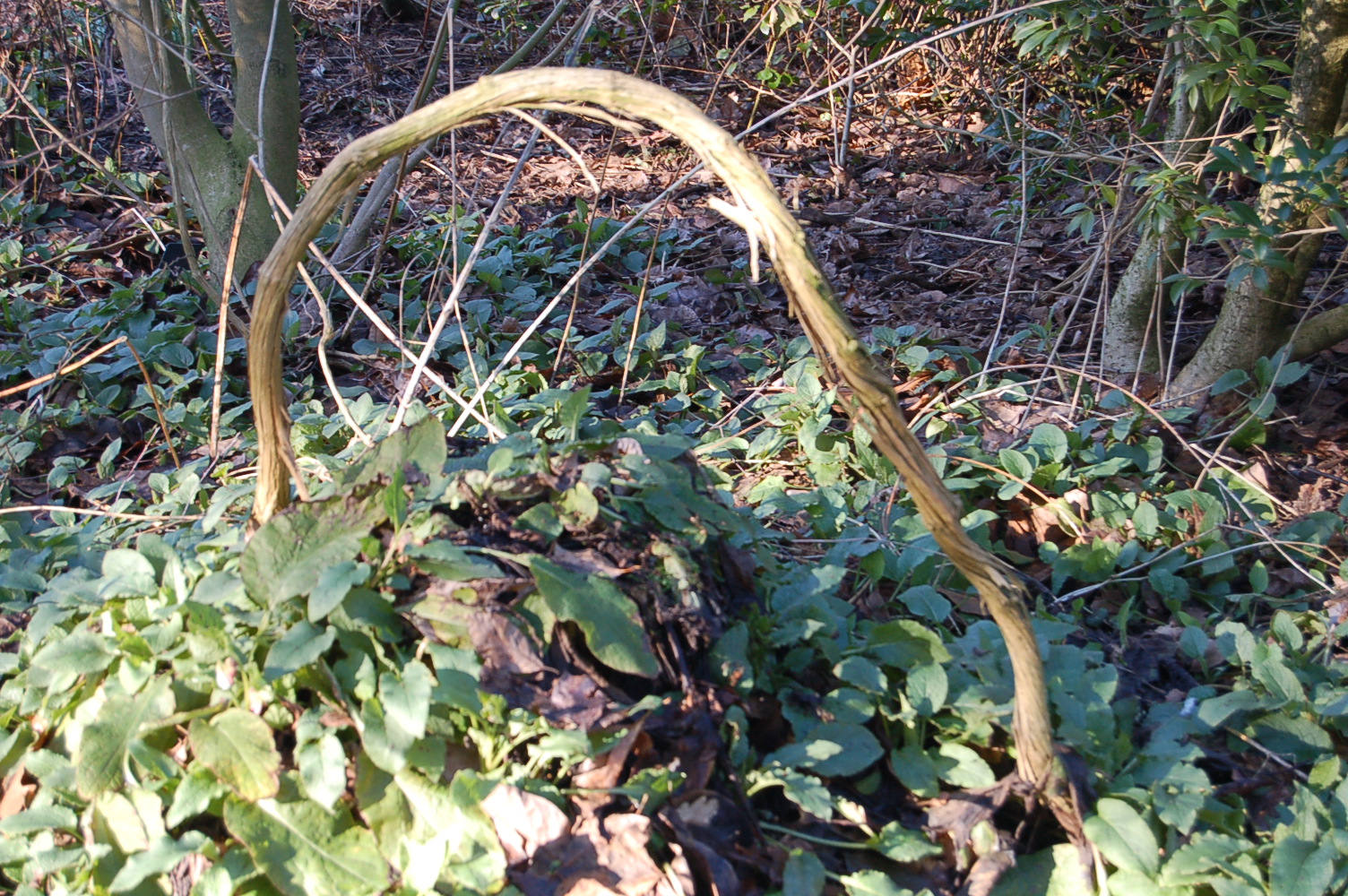
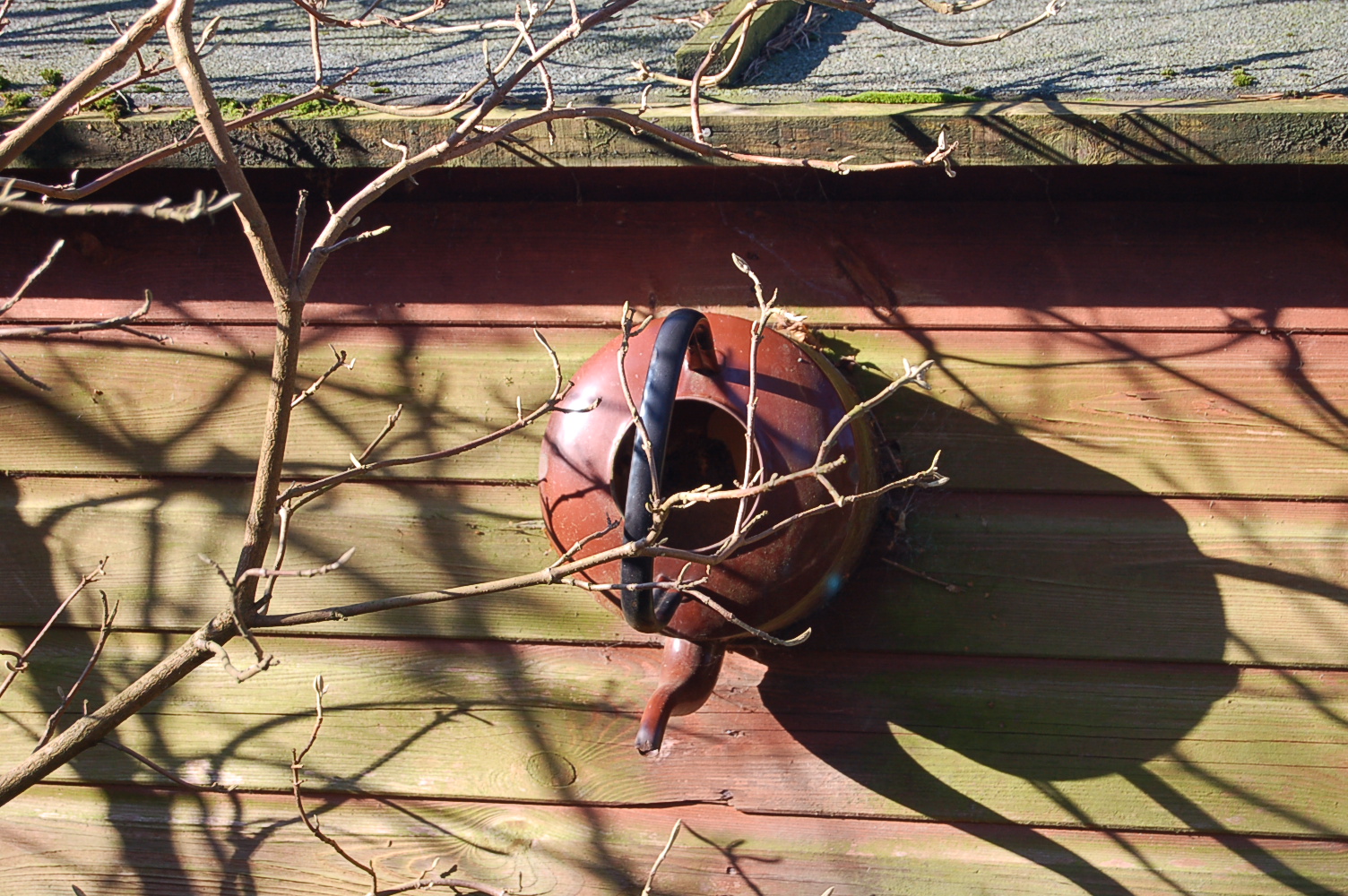
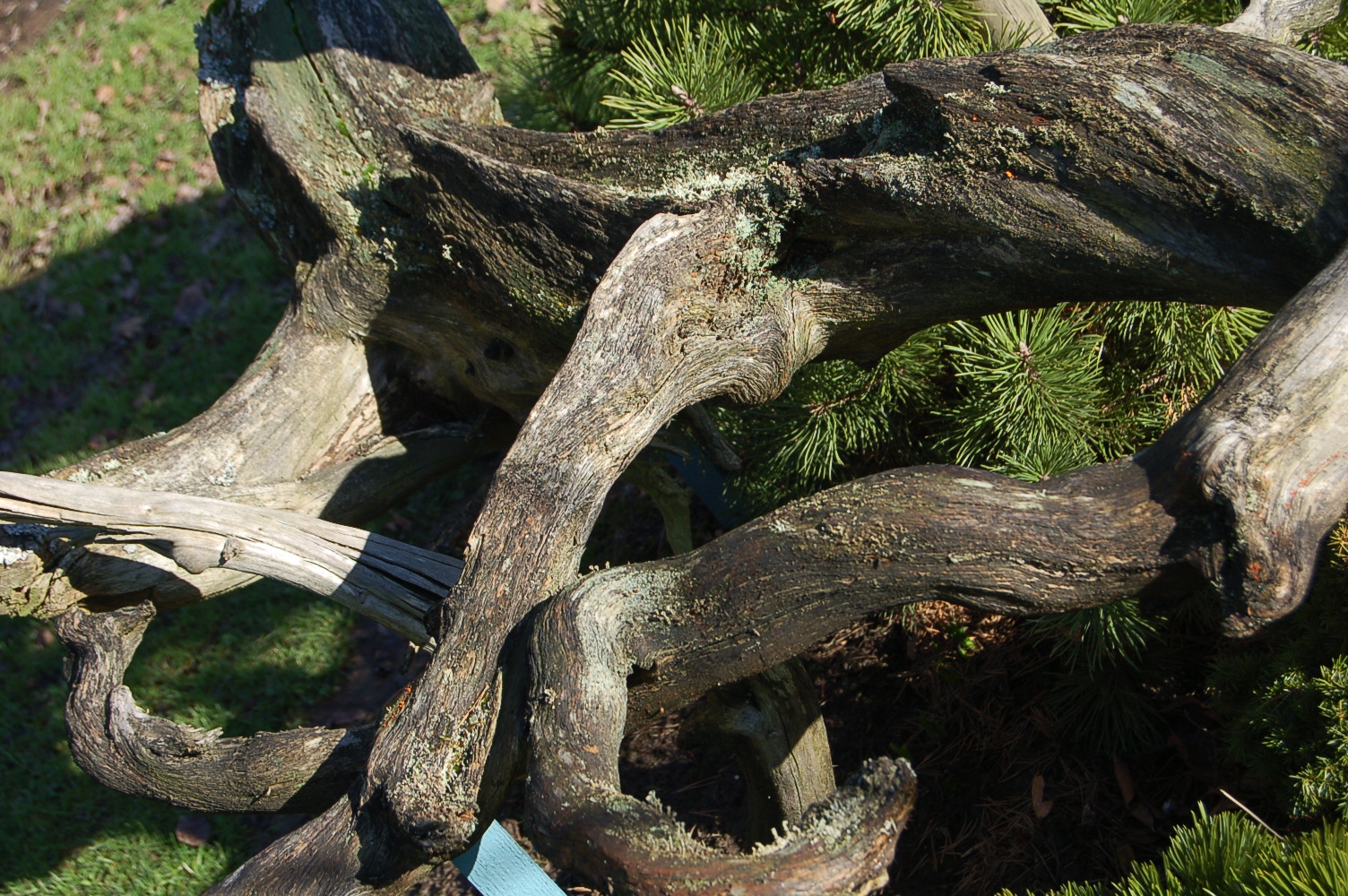
If the amazing trees of Bluebell weren’t enough for the gardener to delight in, other points of interest are there to catch the eye. An archway of clematis, a petrified tree stump, a kettle Robin nestbox, a logpile for beetles, an interesting old stump and another stump with rings making a picture reminiscent of an ammonite fossil.
There were too many examples of my favourite family of trees, the Betulas, so they deserve a post of their own. One to look forward to!
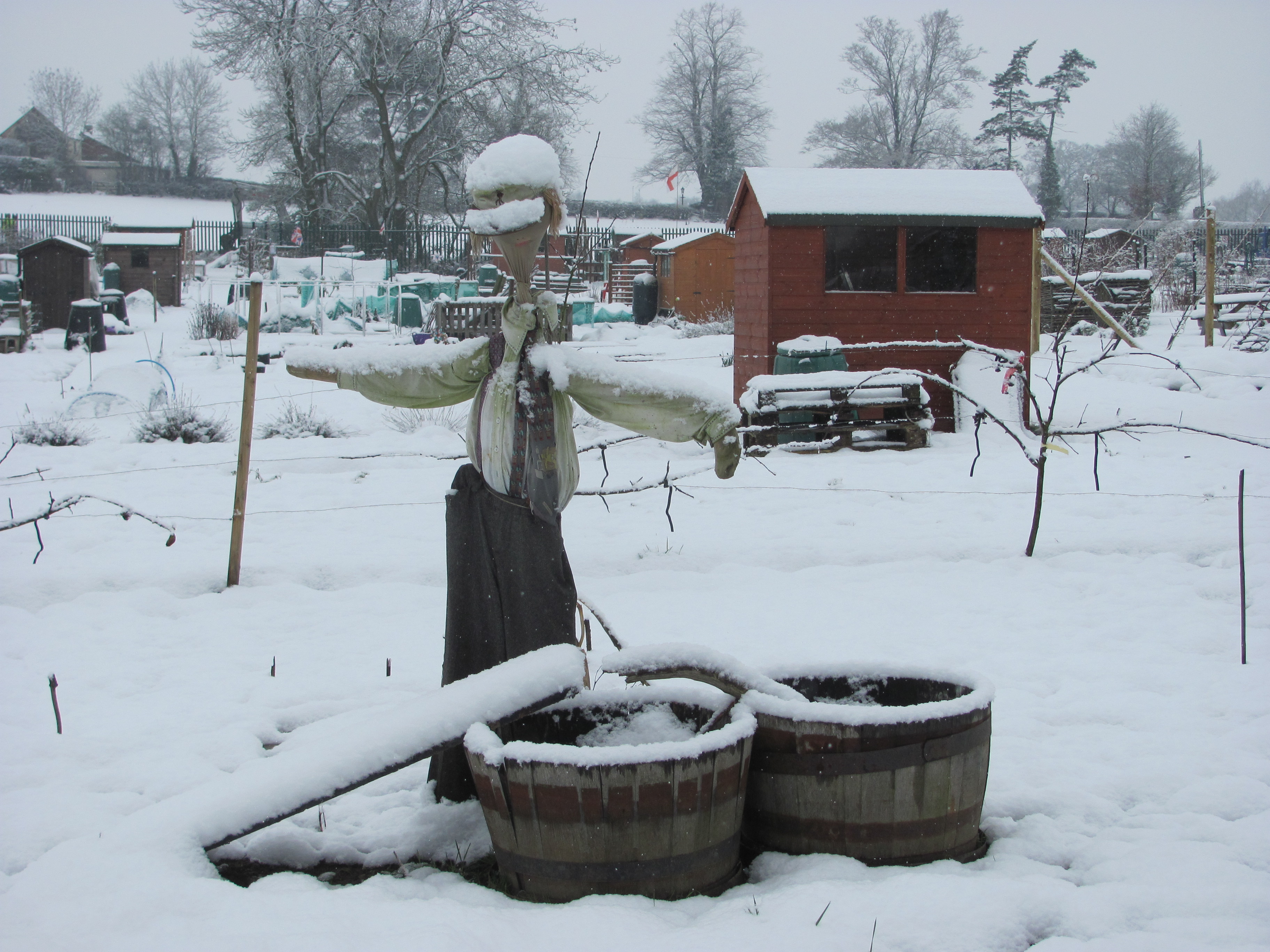
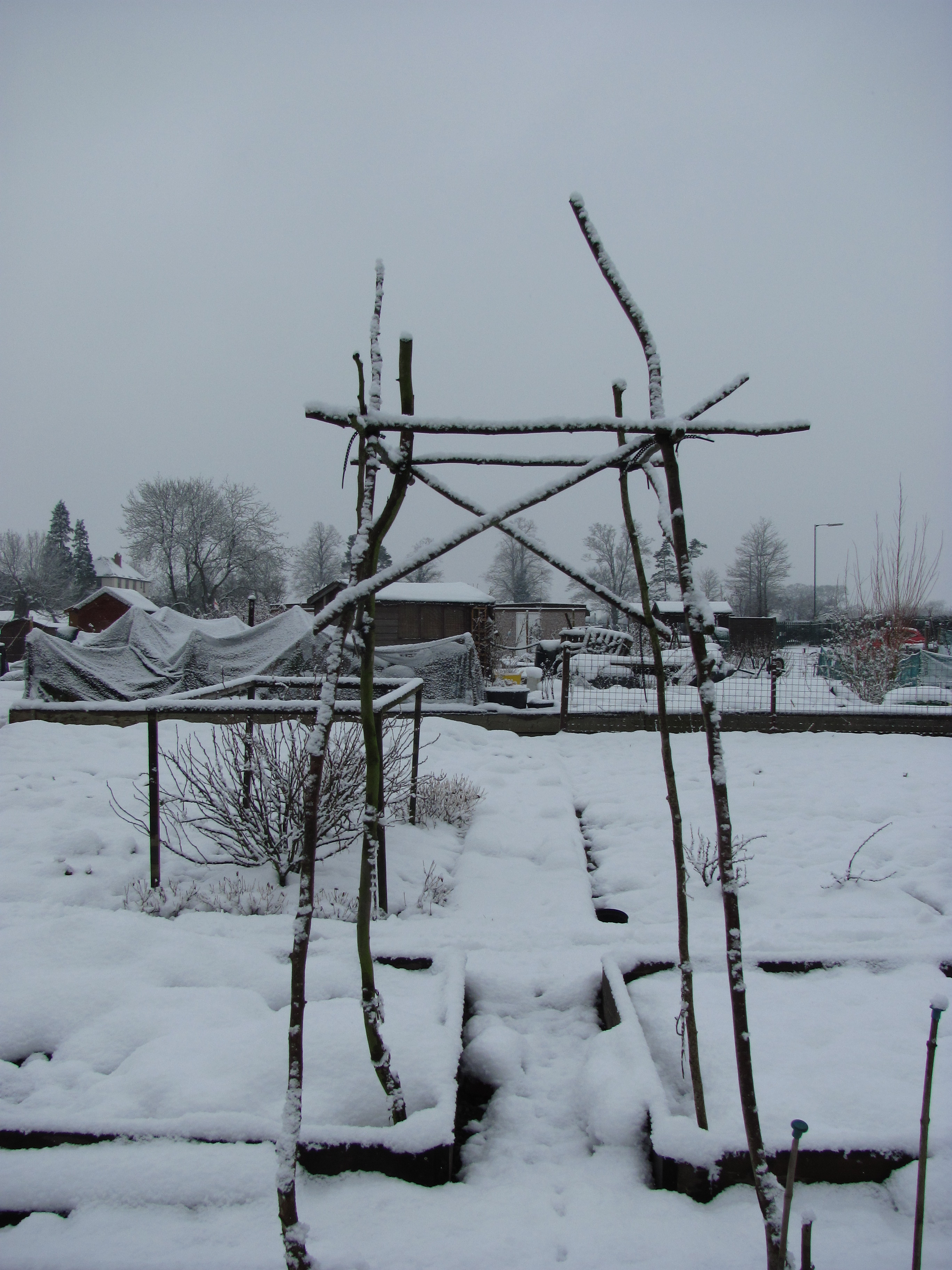
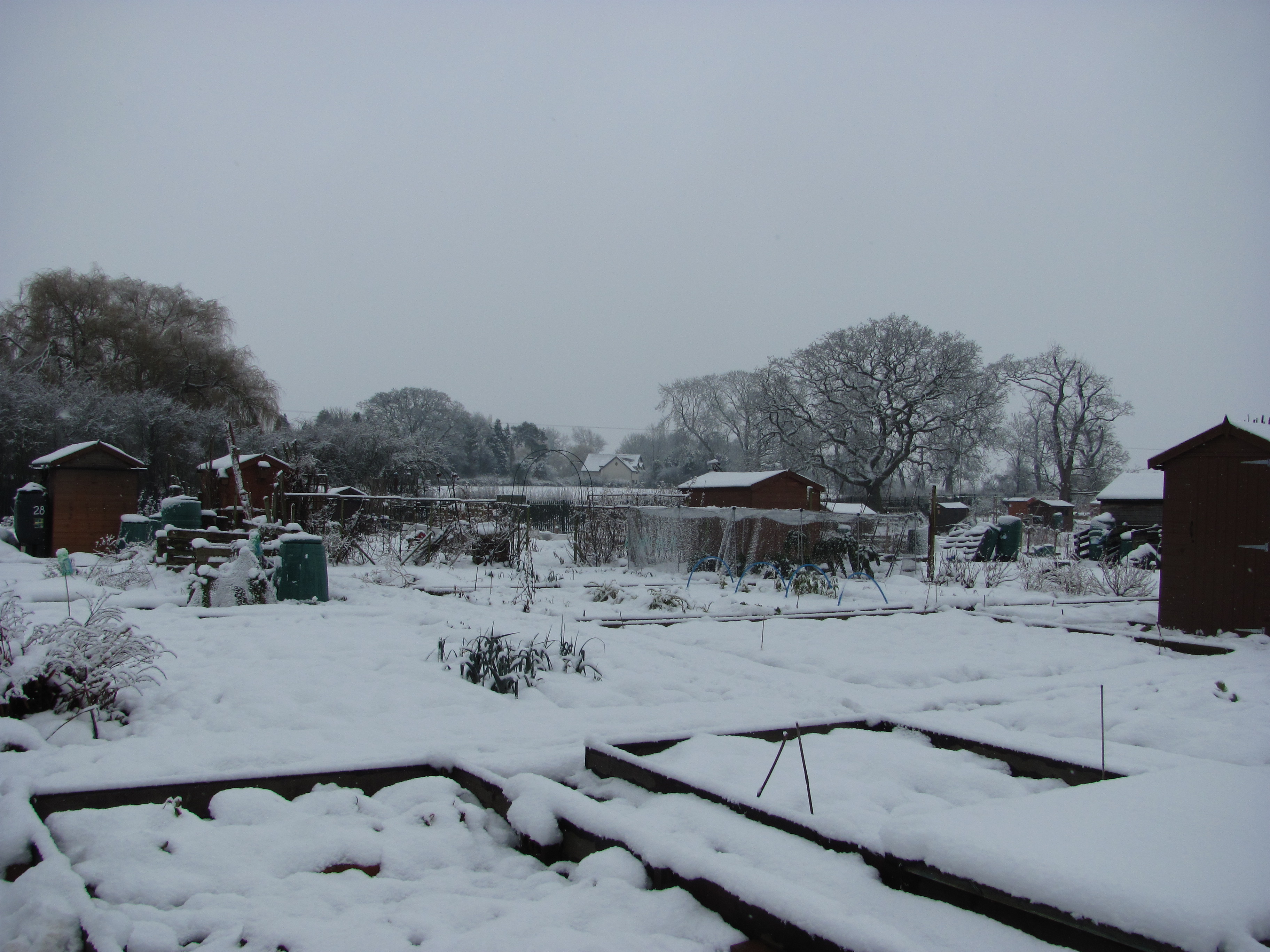
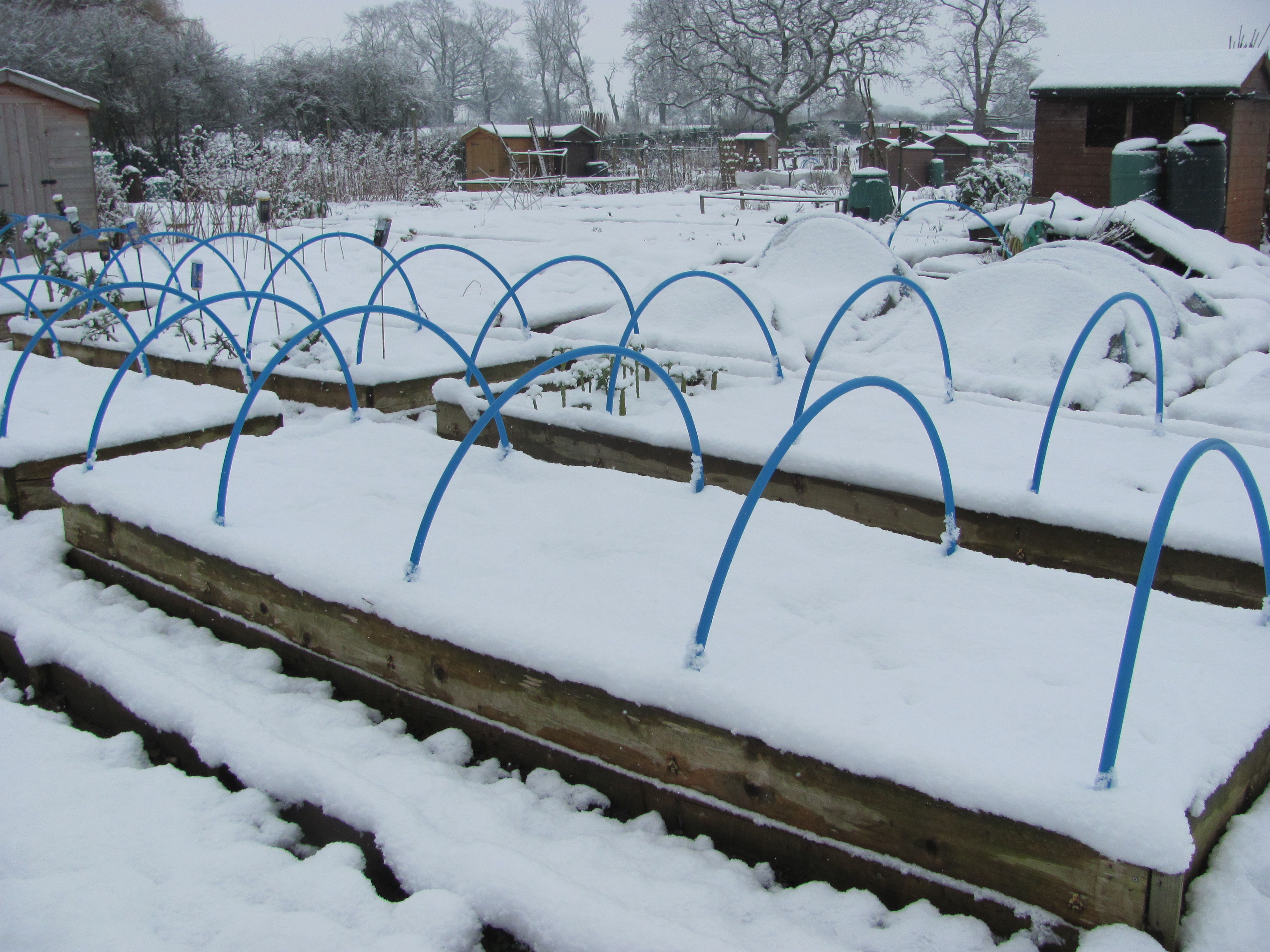
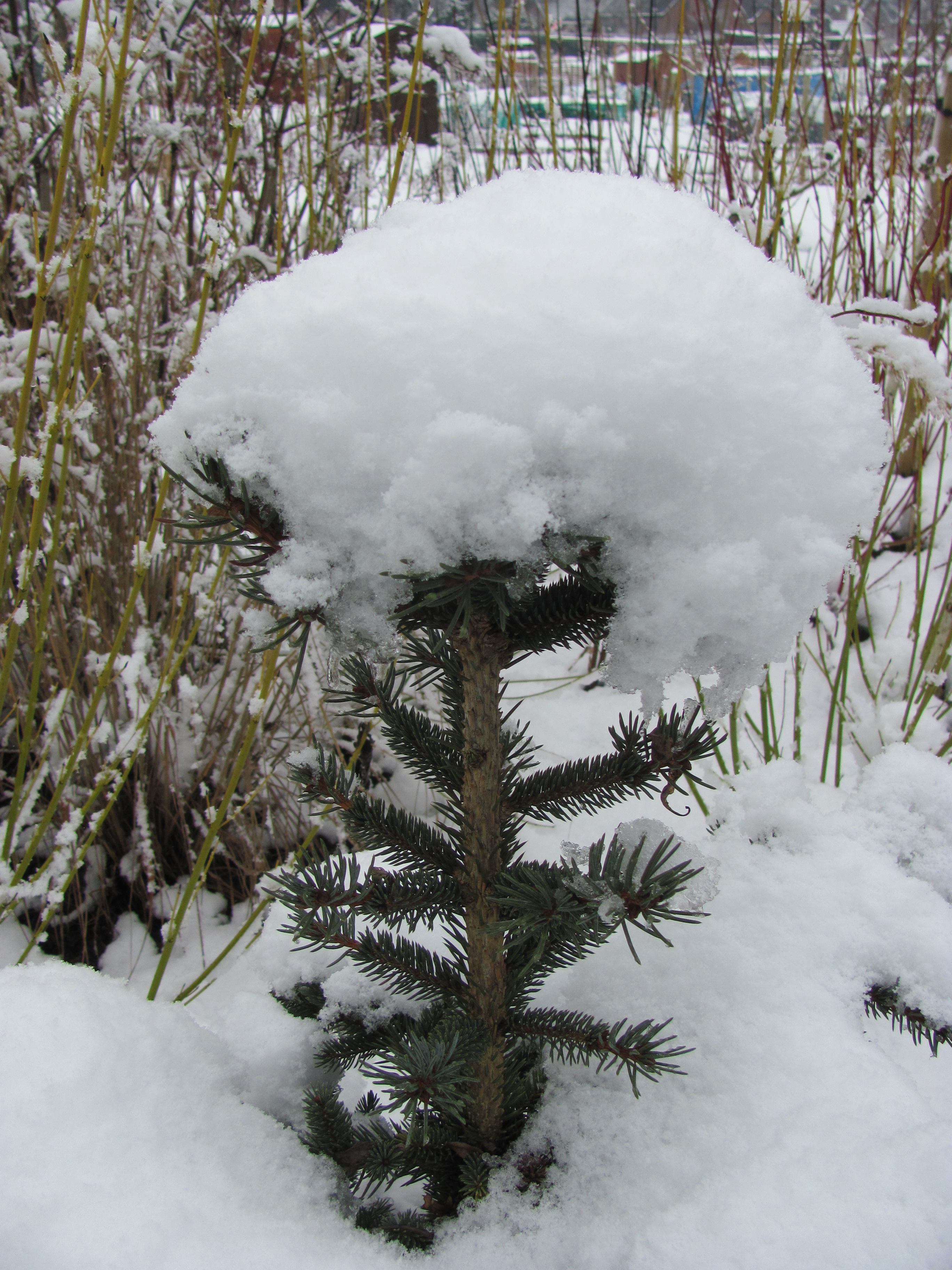
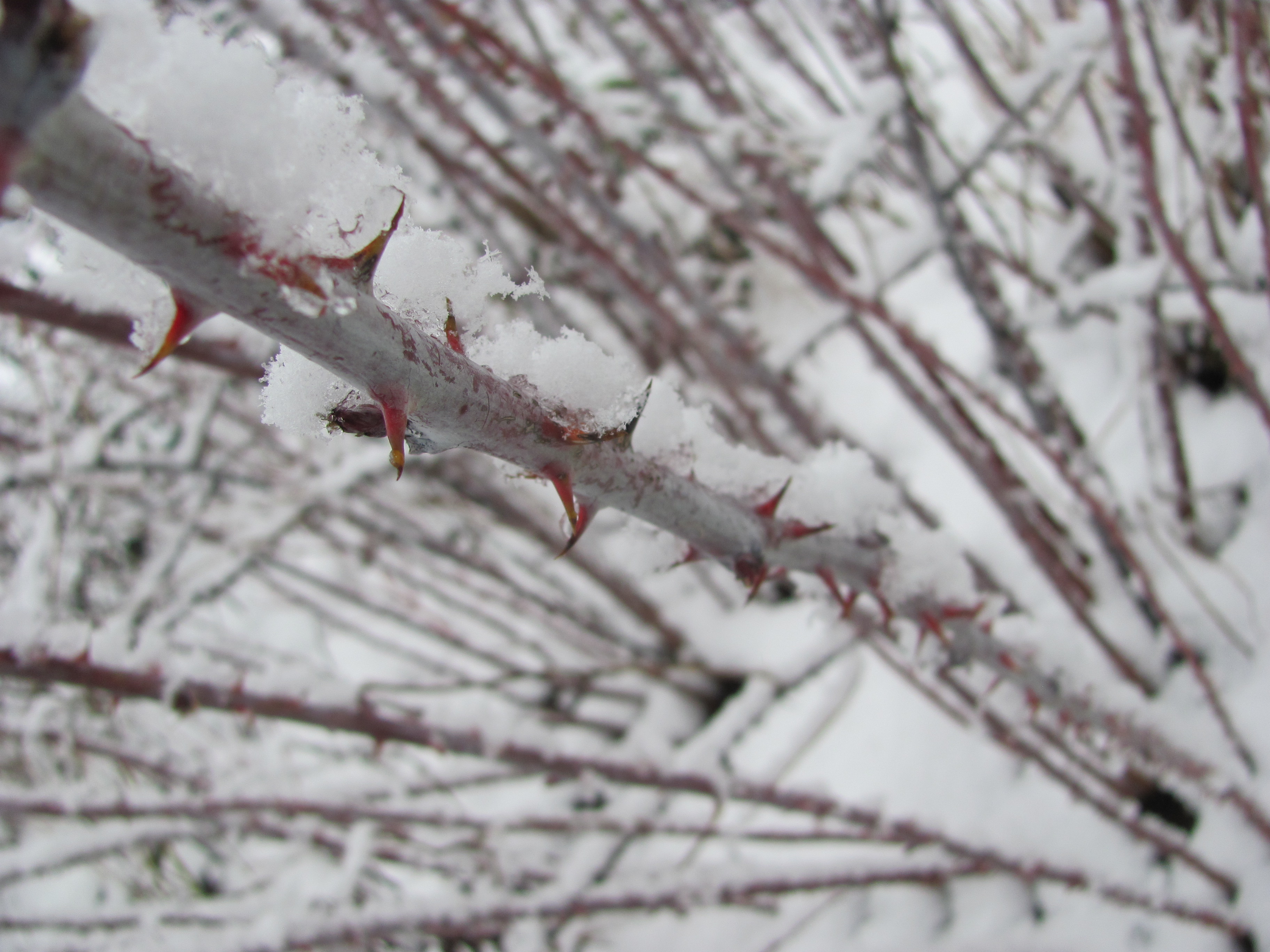
Today we braved the snow and floods up at our allotment site and went for a walk around to look at what turned out to be a very different world to the one we usually see. The pictures illustrate just how long it may be before we can get any gardening done up there. We still have root crops in the ground – in December it was too wet to get on the soil and now it is all under the white stuff.
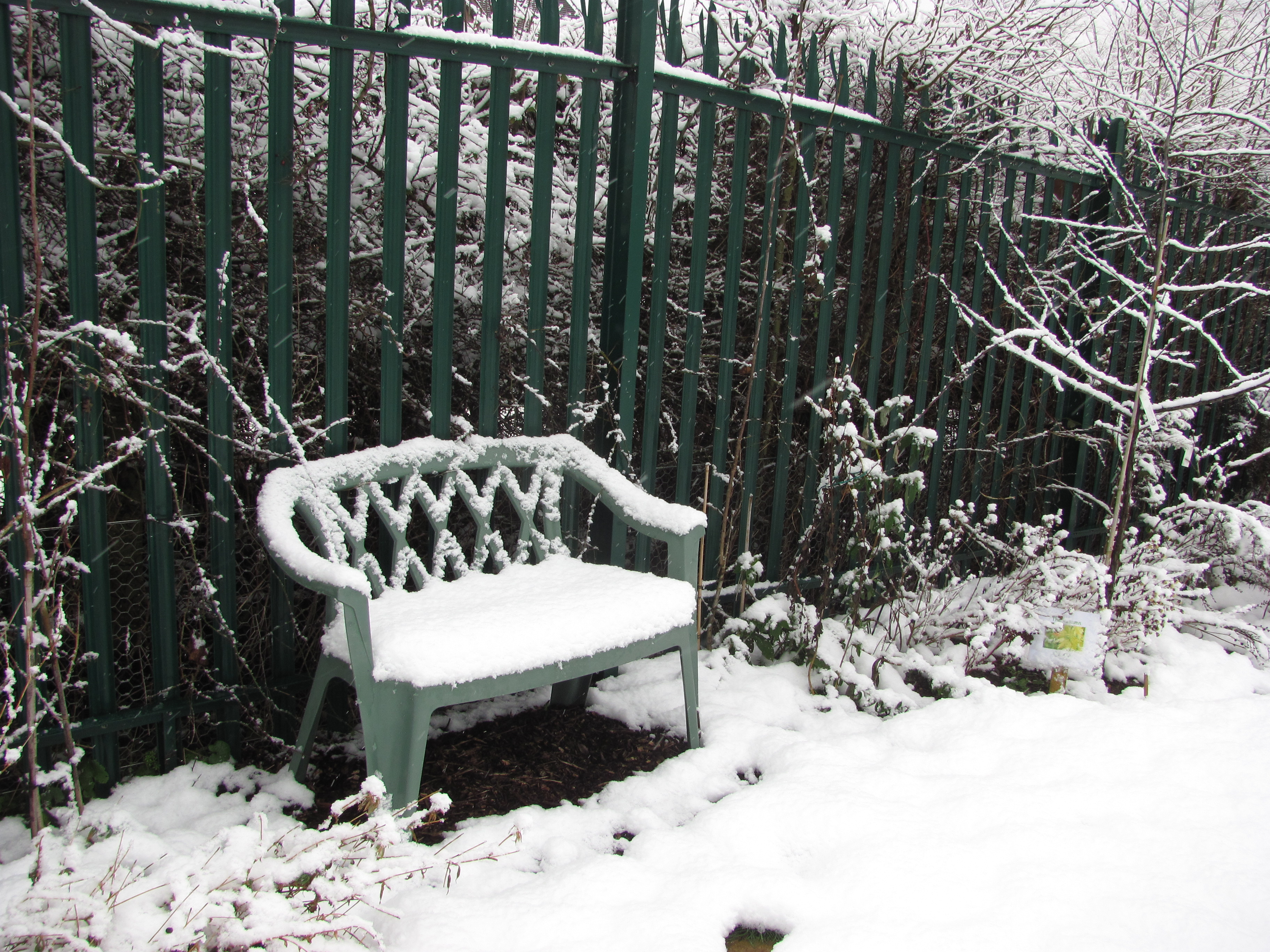
Here is the actual green bench that inspires the name of my blog.
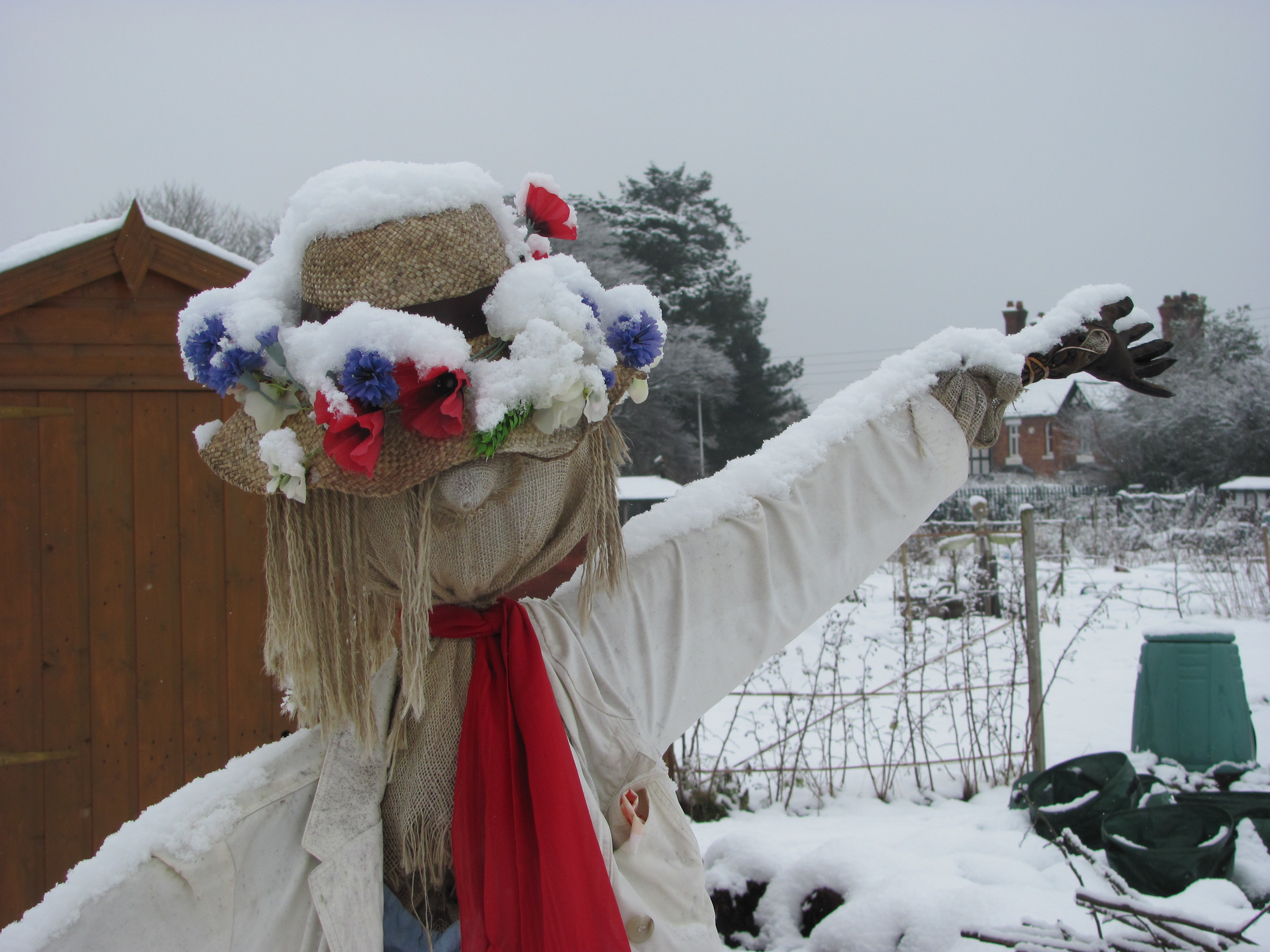
The scarecrows remain on duty whatever the weather and shrug off the snow and ice.
Wheelbarrows wait patiently.
The plots have a forlorn look but beneath the ice and snow the soil is waiting – waiting for a little more light, more heat from the sun and plenty of evaporation to lessen the moisture content.
The Winter Garden is full of interest.
The contractors preparing our site extension in the adjoining field were toiling away in the snow, ice and waterlogged soil. They are putting in drainage and clearing out an old pond to create a wildlife pond for us all to enjoy. The ground they overturn presented birds with a rich feeding ground. Blackbirds, Redwings, Fieldfares, Jays, and Thrushes both Song and Thrush revelled in a fresh supply of worms and ground creatures.
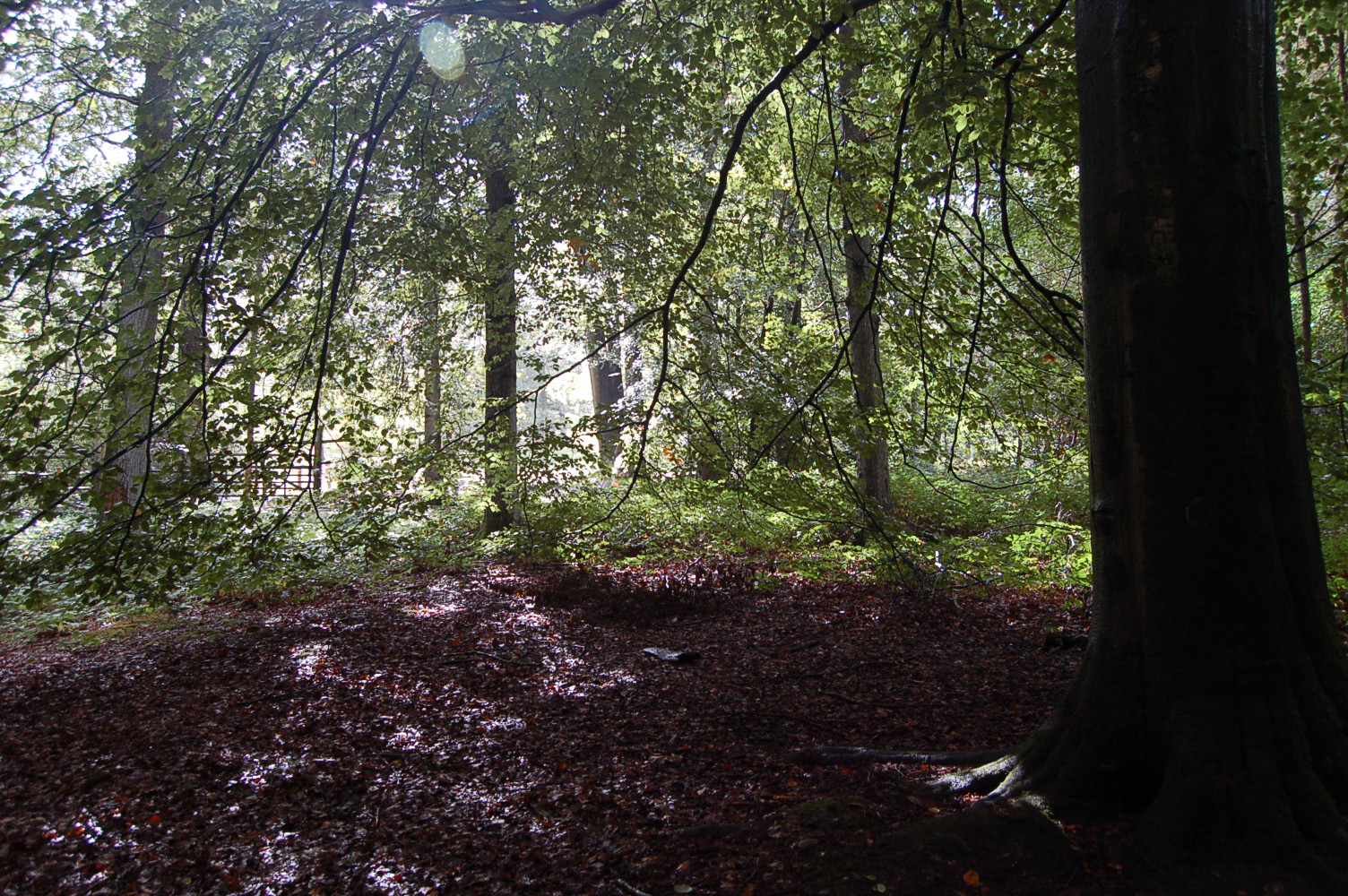
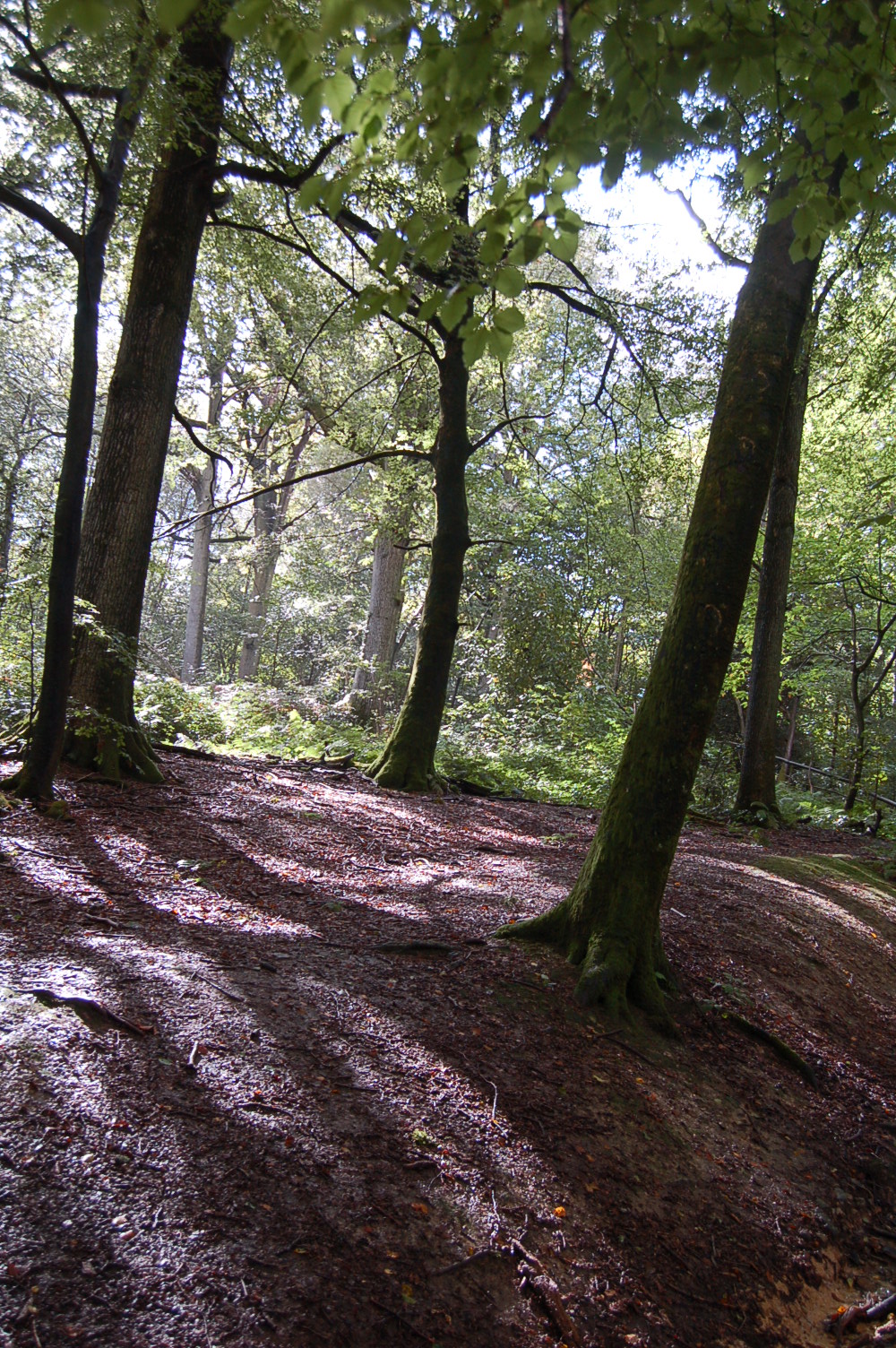
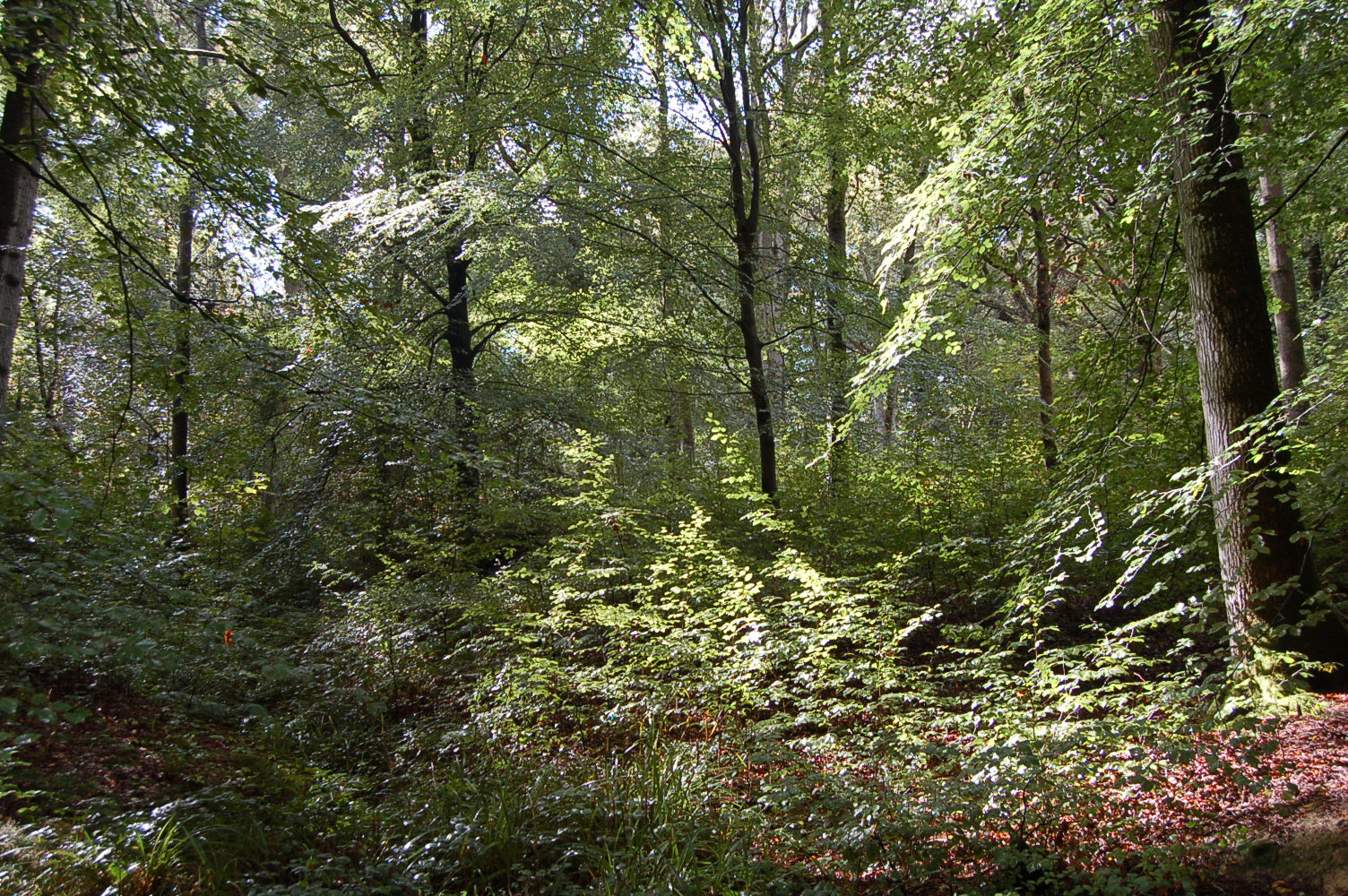
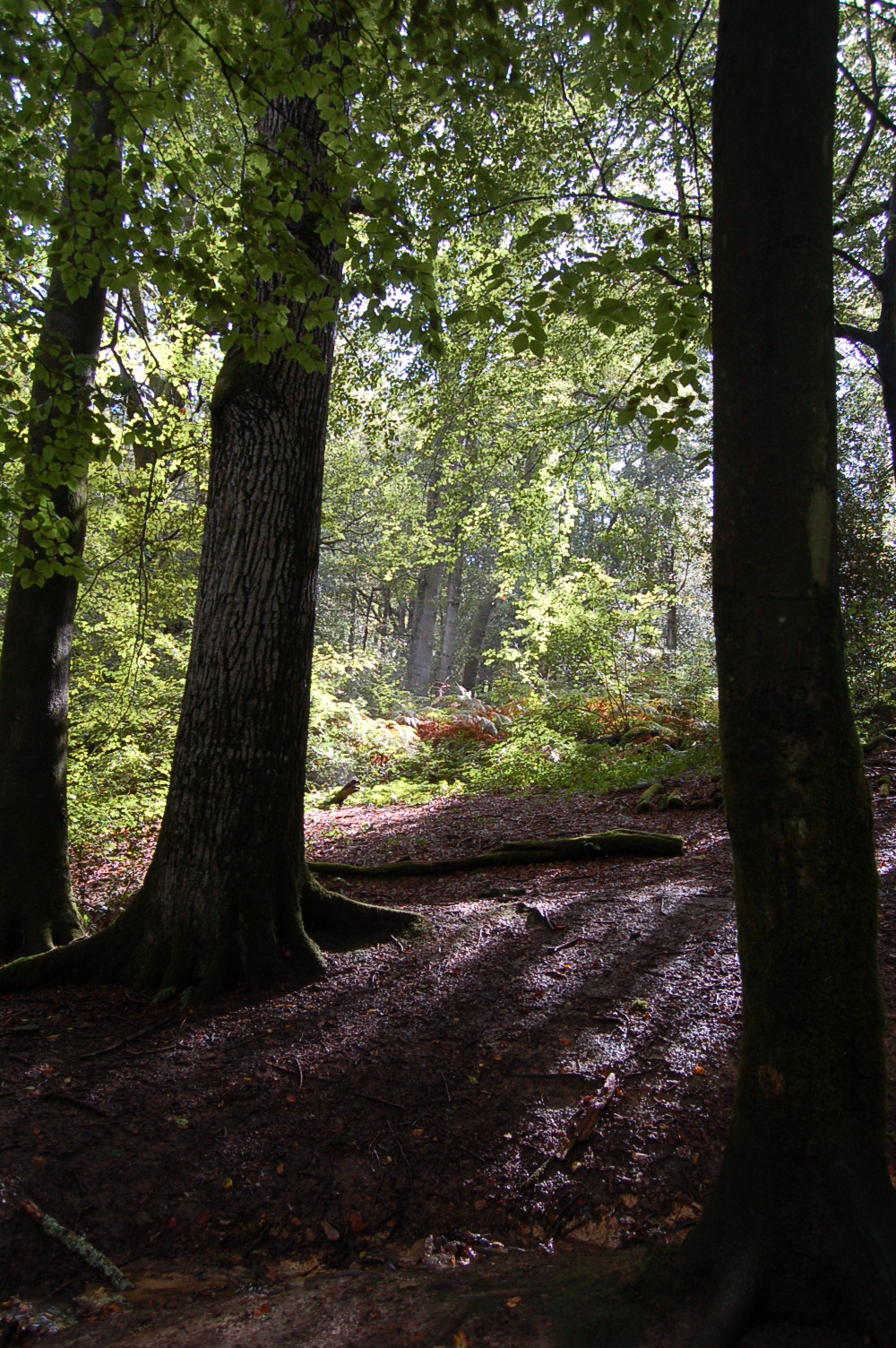
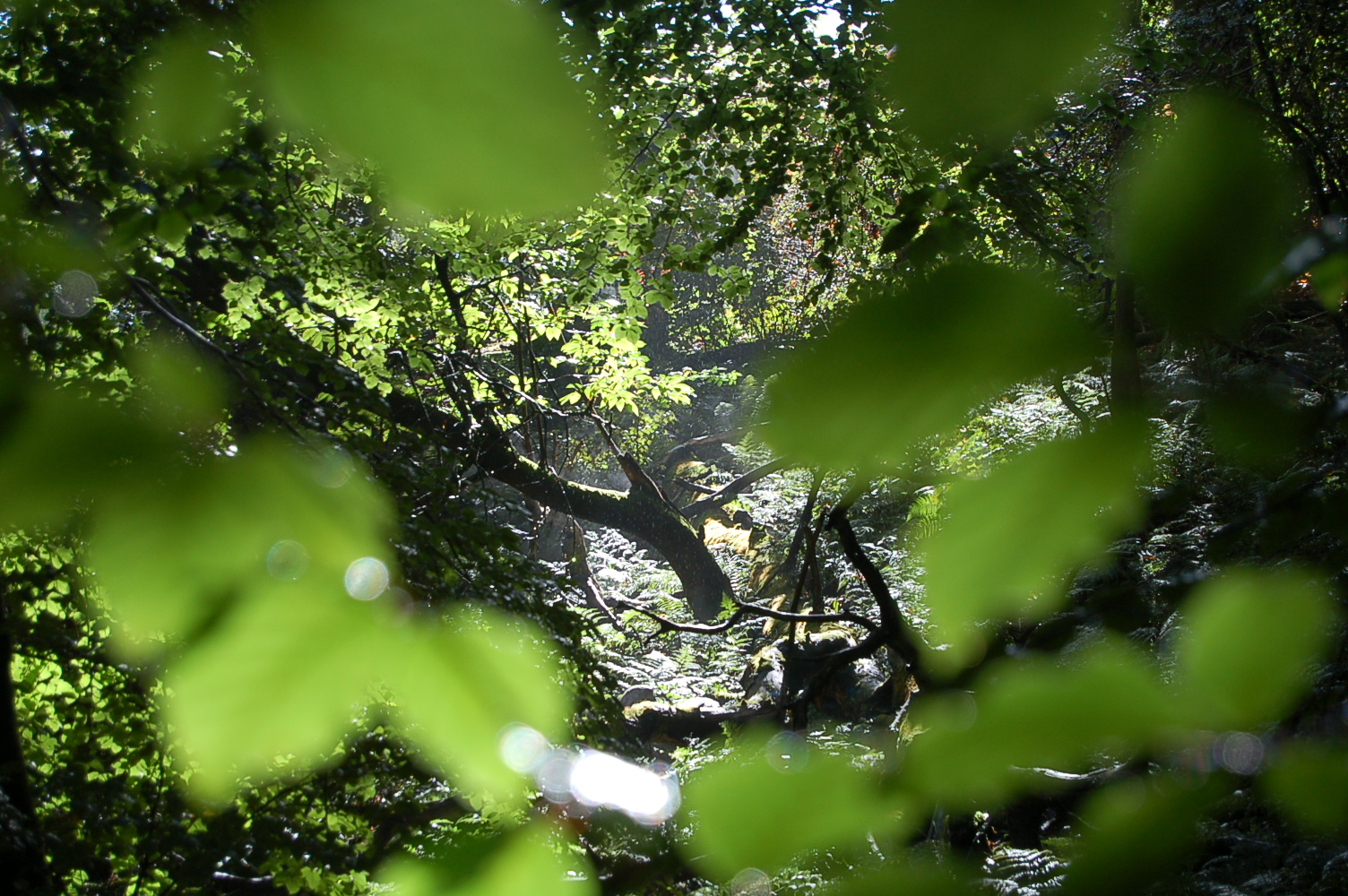
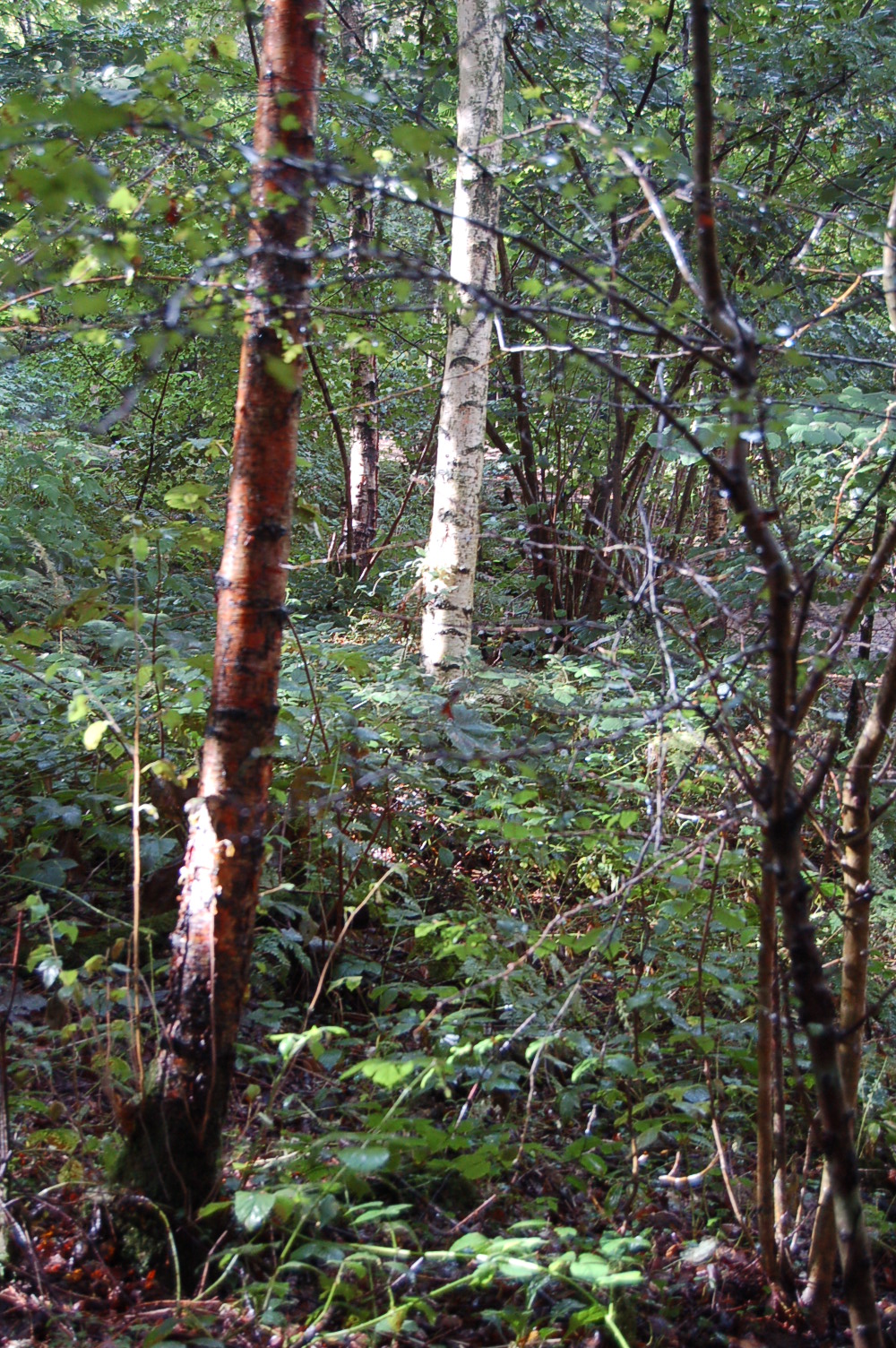
In my last post I followed a winter exploration in our own local patch of woodland As a contrast I can now transport you back into the summer and into another woodland.
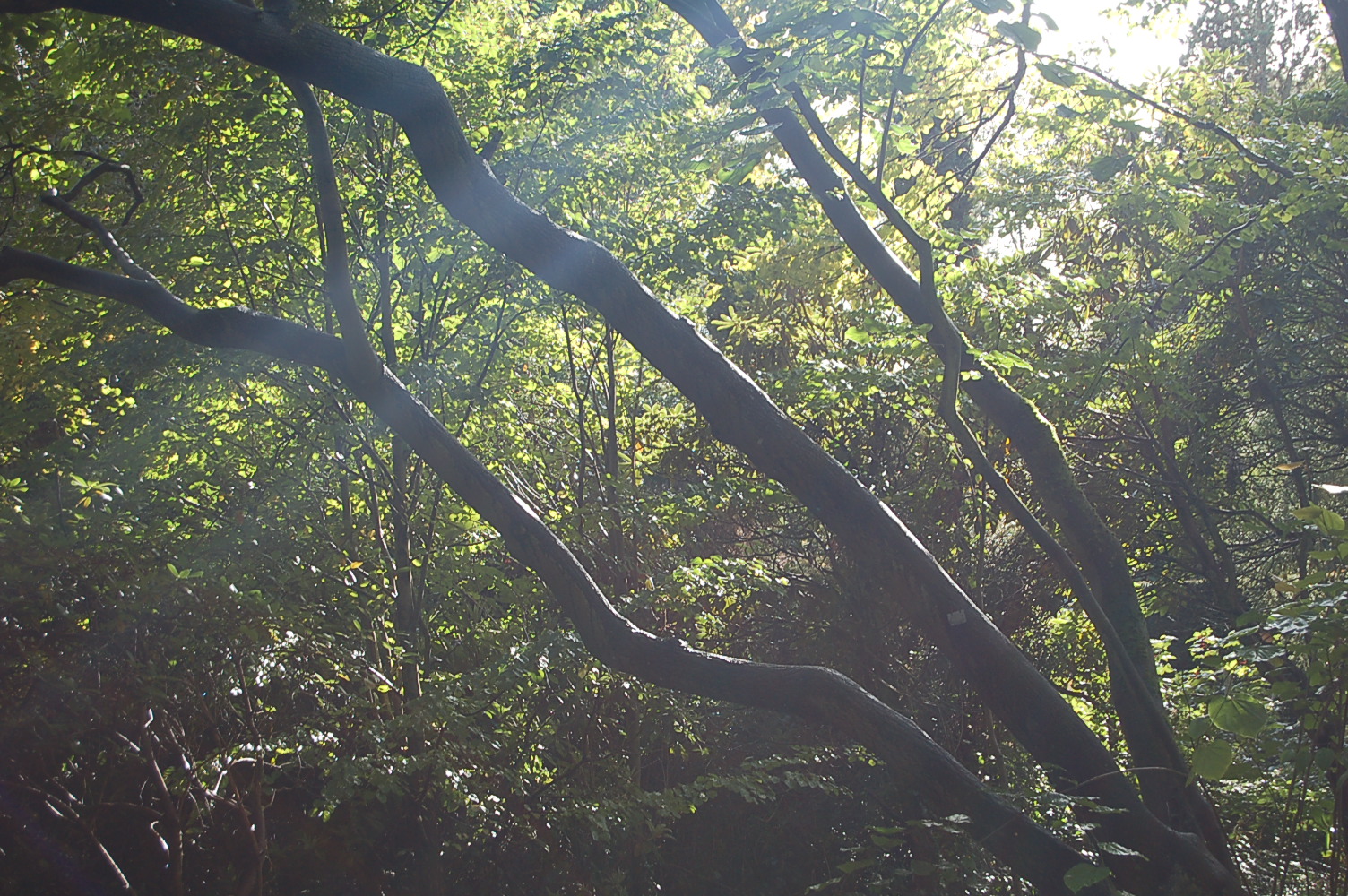
As we were exploring a Sussex garden on a day when the weather gave mixed fortunes, we took to the woods to give us some protection from the showers and storms that interrupted the periods of sunshine. We thought the tree canopies would act in place of our umbrella which we had left in the car. The lighting in the wood struck us as really special as the sun and showers mixed so we explored the little wood further.
For our second post about the Savill Gardens we shall discover the colours, shapes and textures of the Winter Garden. Although planted with winter interest in mind when we explored in the autumn it was full of interest.
The third and final visit to the Savill Gardens will feature a selection of images from around the gentle walk we took through these stunning gardens. We had looked forward to visiting these gardens for years and when we finally did we were not disappointed in any way.
At last we have got around to visiting the Savill Garden. It was worth waiting for! The new visitor reception is an amazing building, a single storey space under a long, sinuous roof shaped like the tail of a Whale.
Looking up at the wonderful reception building.Looking down into the garden from the reception building.
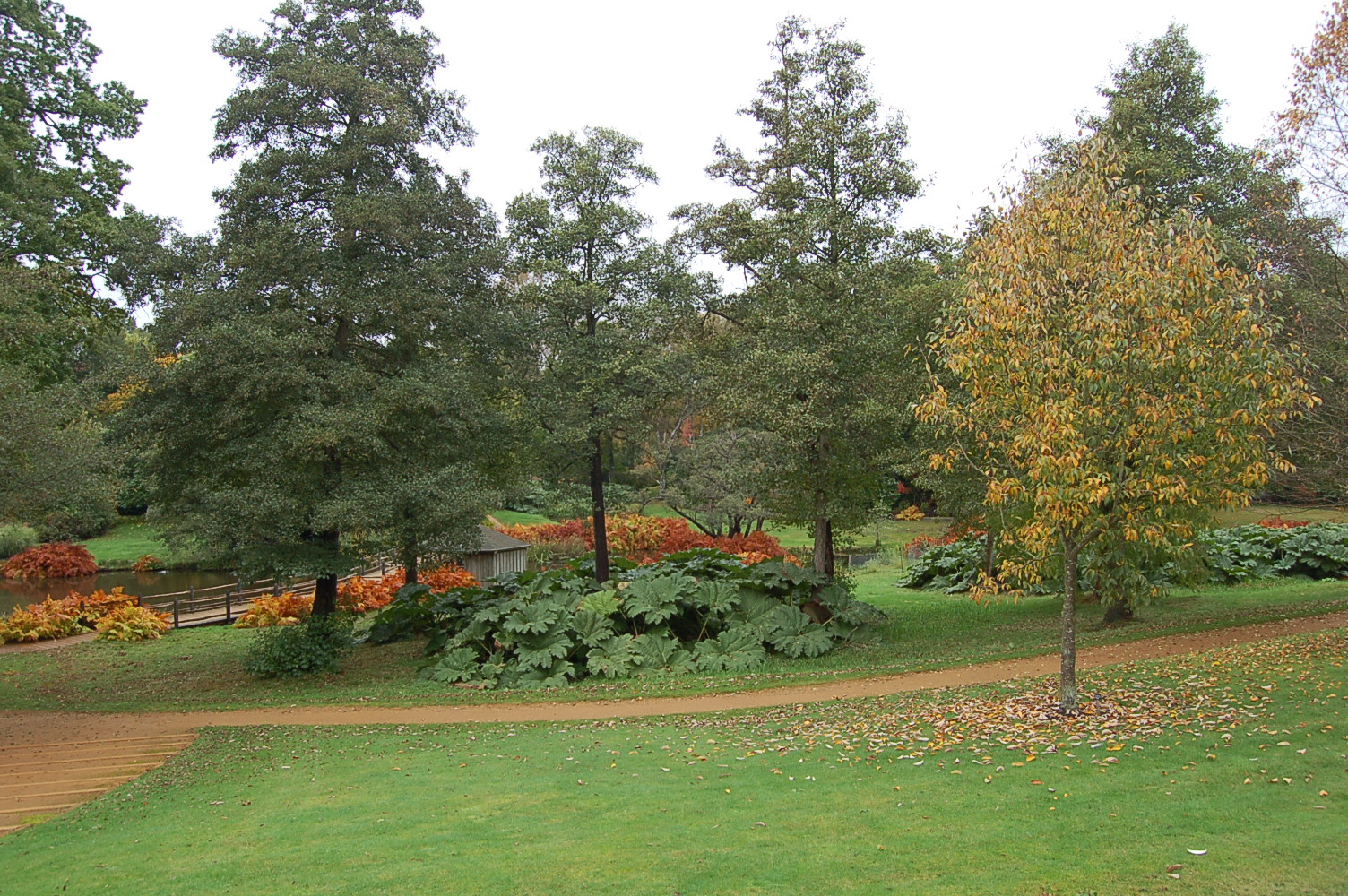
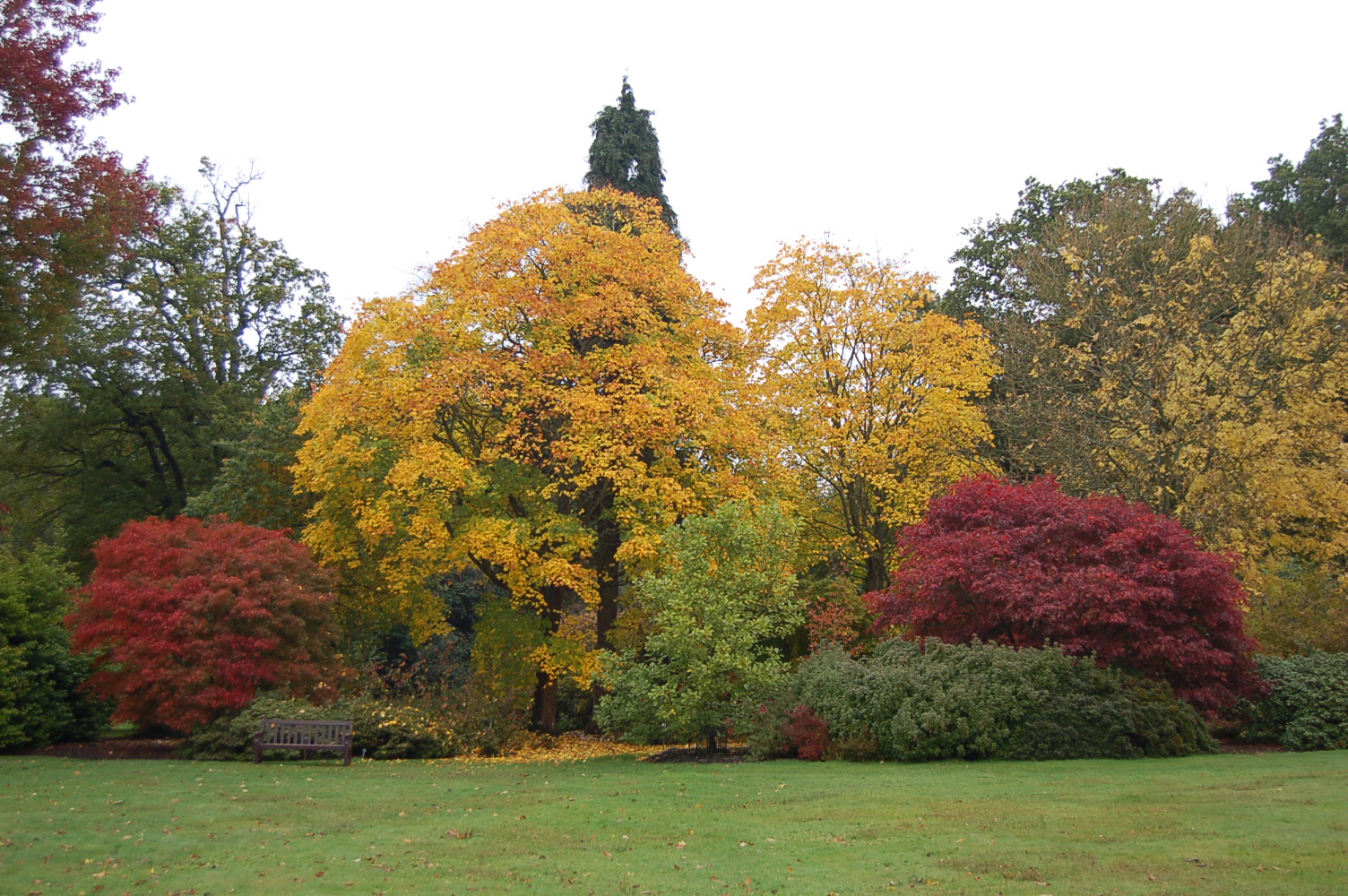
The Savill Garden is situated on the edge of Great Windsor Park and is just a small part of the Royal Landscape. We followed the recommended path around the garden so that we could see the effects of Autumn throughout.
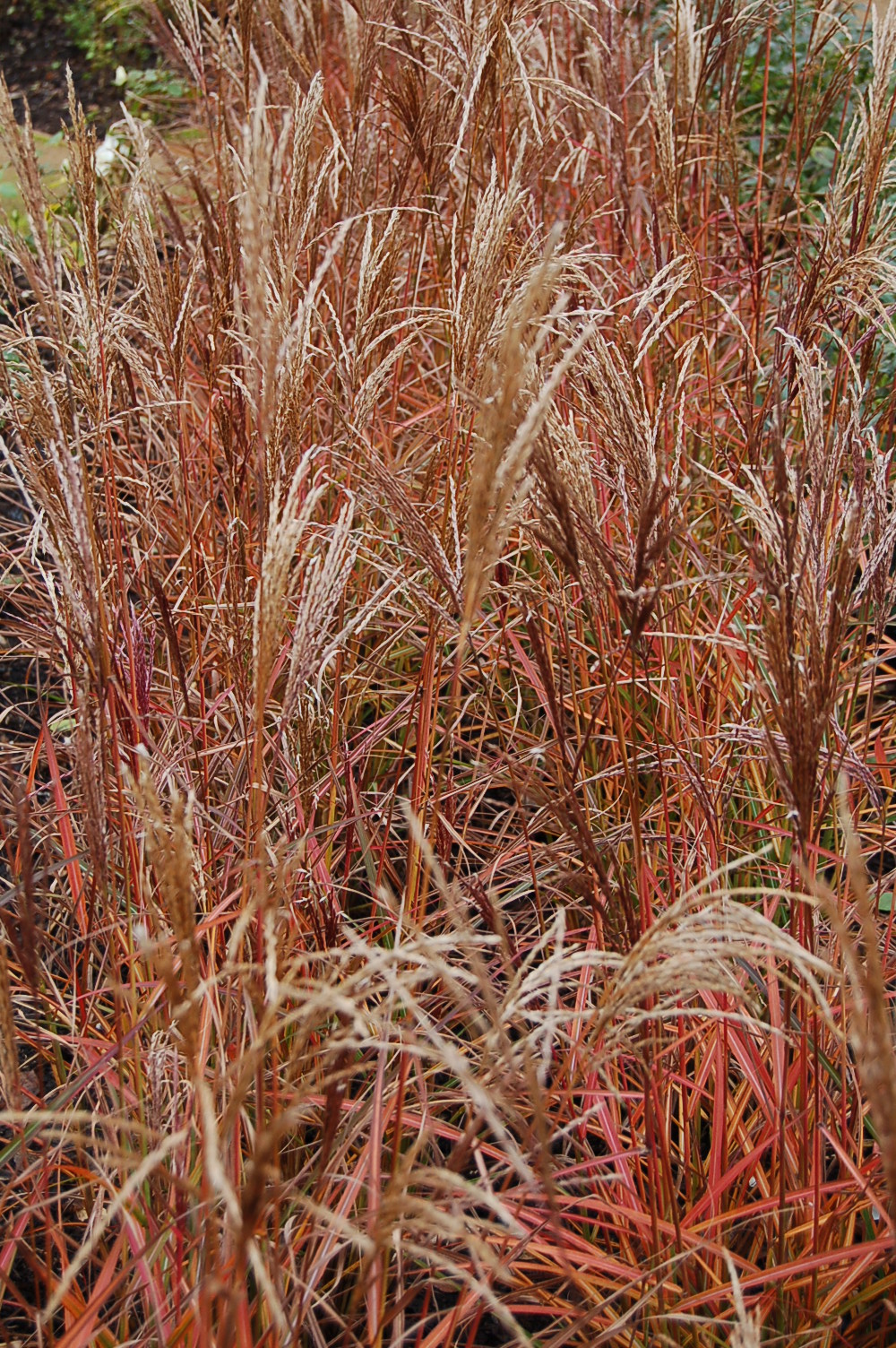
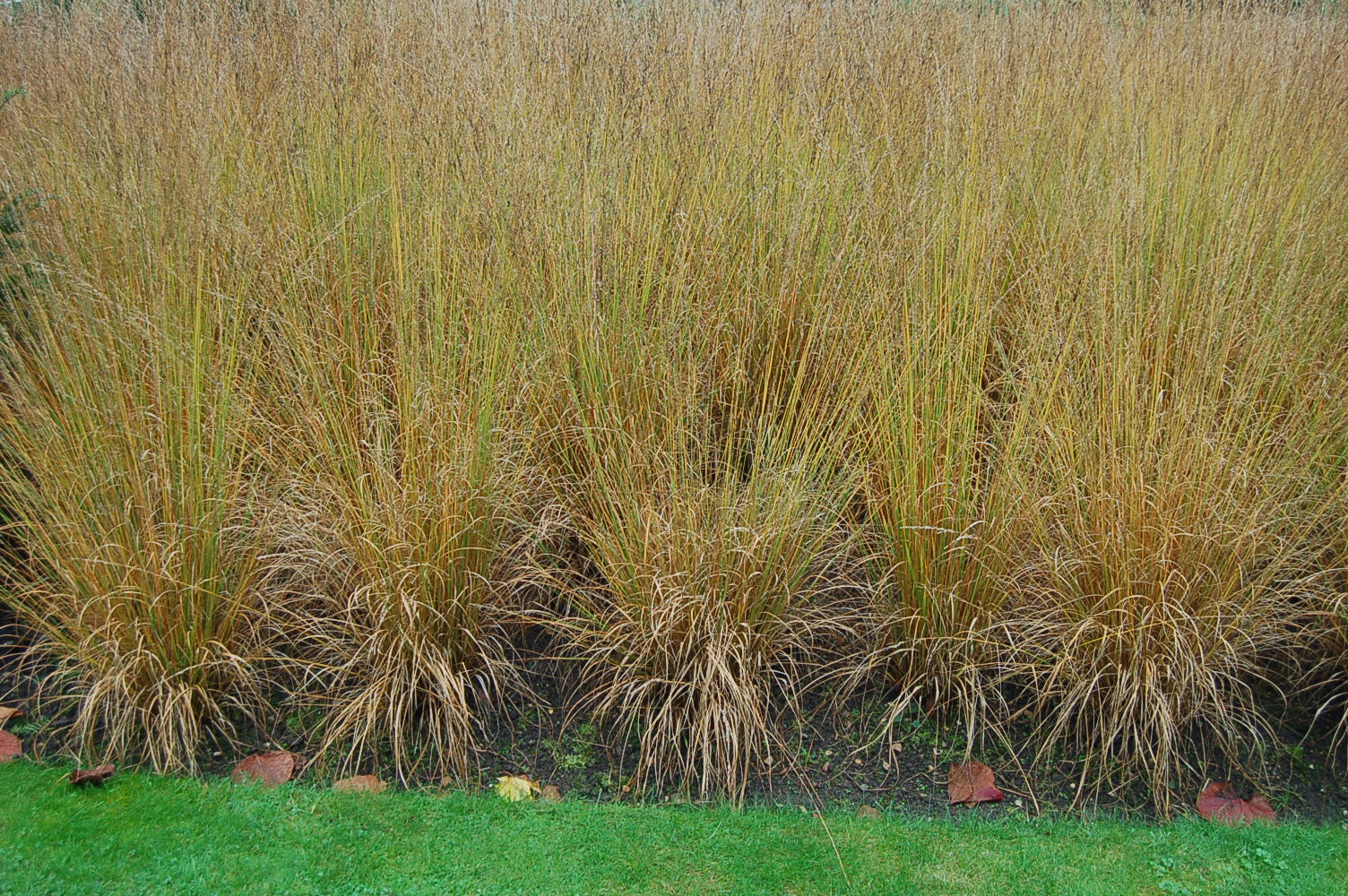
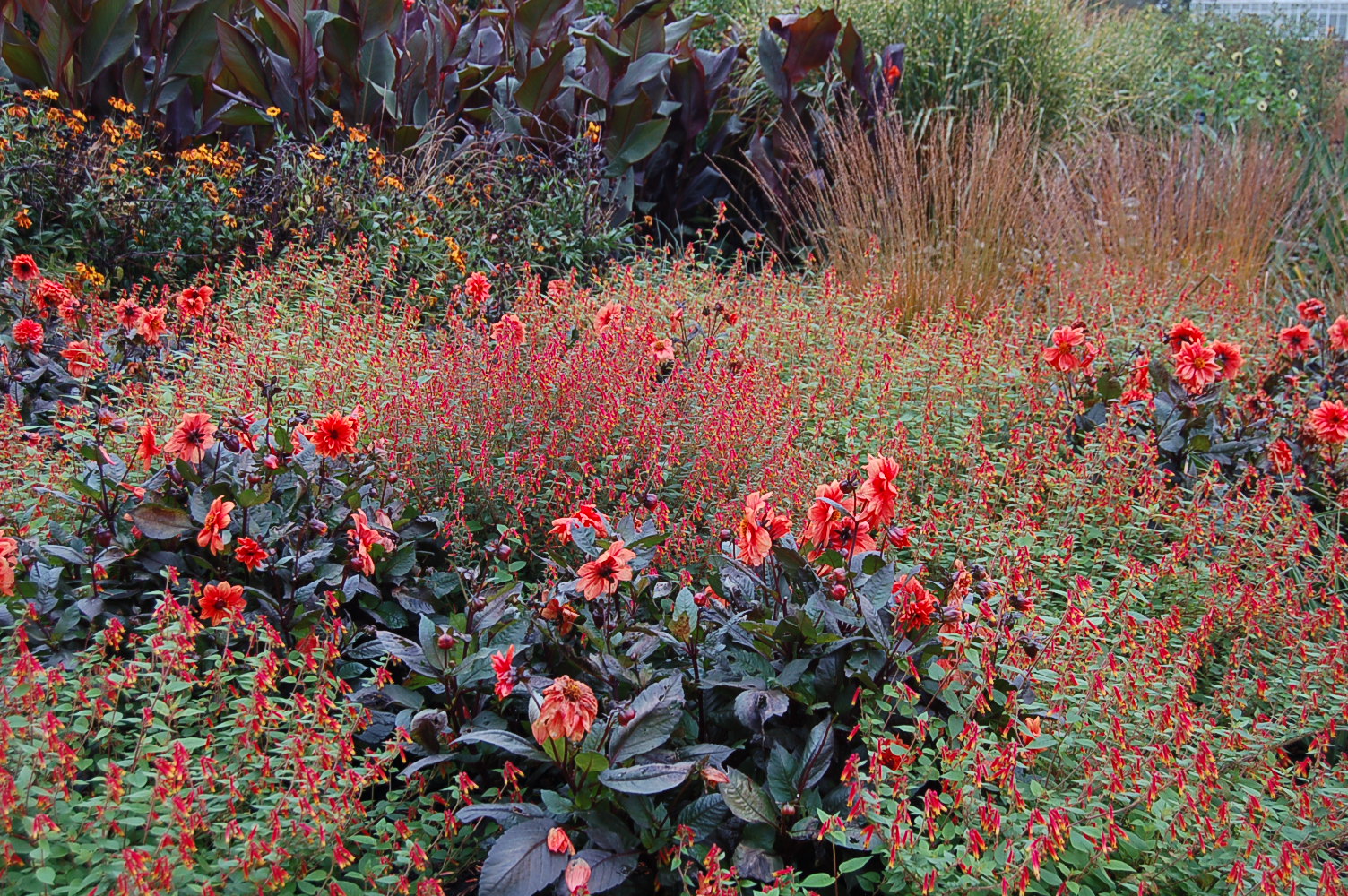
In most areas of the garden, Savill had the typical look and feel of a stately home garden, both in plants grown, choice of design features and border arrangements, but hints of newer thinking were showing through, such as the use of grasses and new perennial plantings.
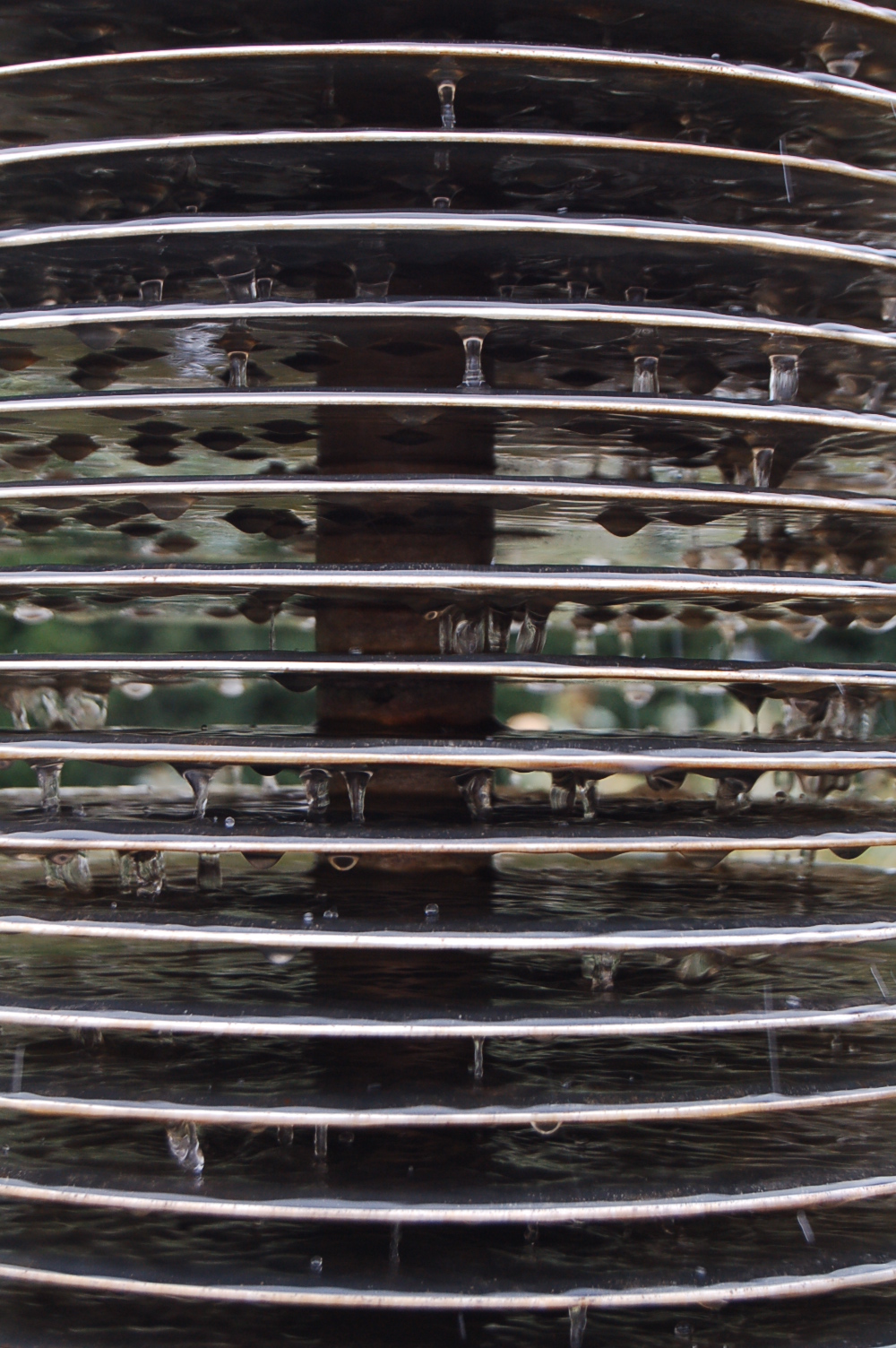
A true highlight of our visit to the Savill Gardens was the surprise at coming across this modern water feature. It looked good and it sounded good.
Although we visited the gardens at Savill in the Autumn one of the most colourful areas was the Winter Garden, already showing many interesting features. So the next post will be about the winter Garden in Autumn.
This is the last of my “Go South” posts and as promised it features a garden. Well after all those coastal posts in this series it was only a matter of time before we visited a garden. And boy what a garden it was!
Nymans was created by one of the great supporters of the English plant collectors and it shows in the variety of plants and in the difficulty in identifying some of them.
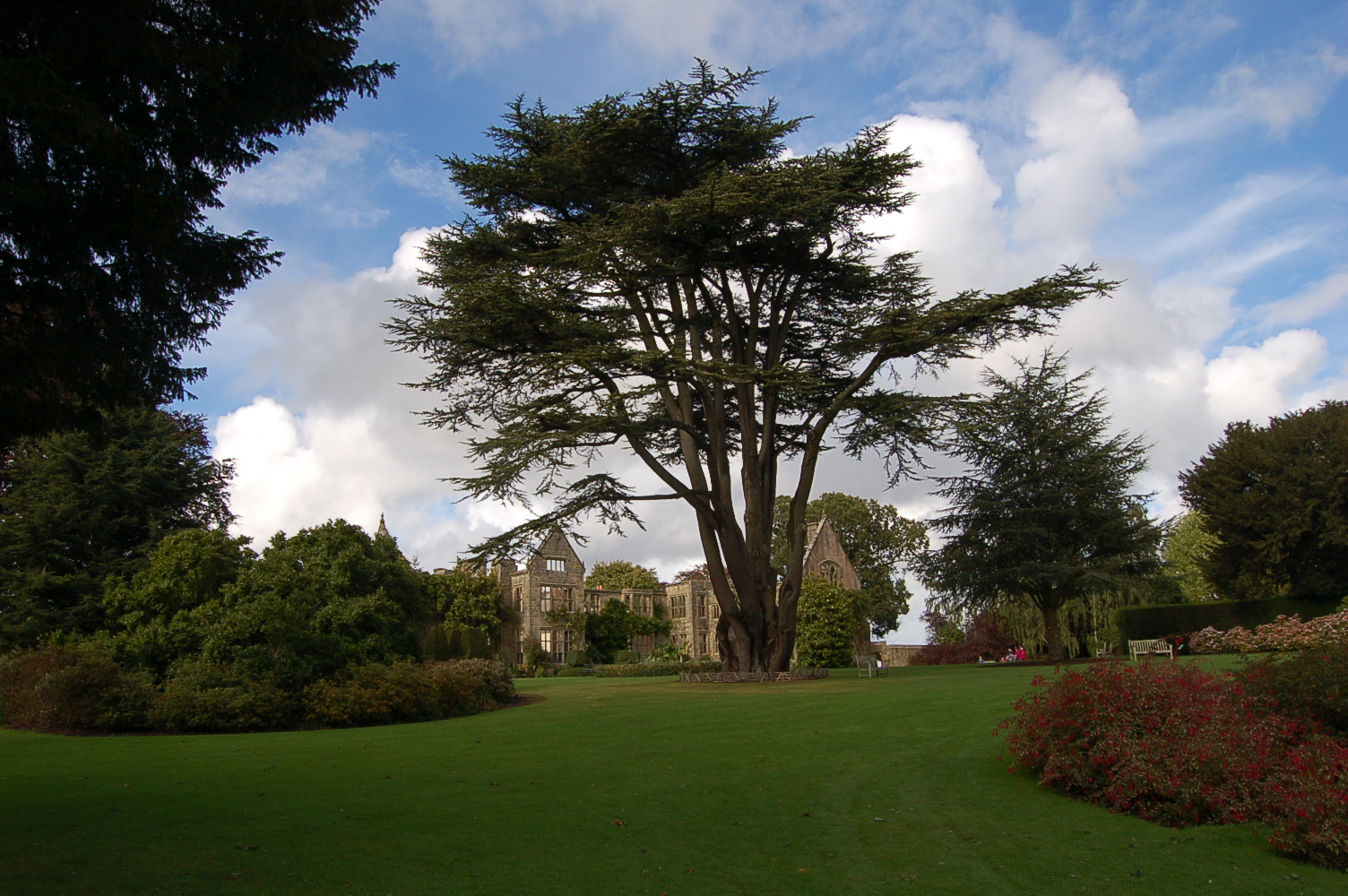
Nymans is a garden to delight any plantsman who will leave with a list of must-haves. It will also make any good gardener desire his very own areboretum just to plant the rare and special trees spotted at Nymans.
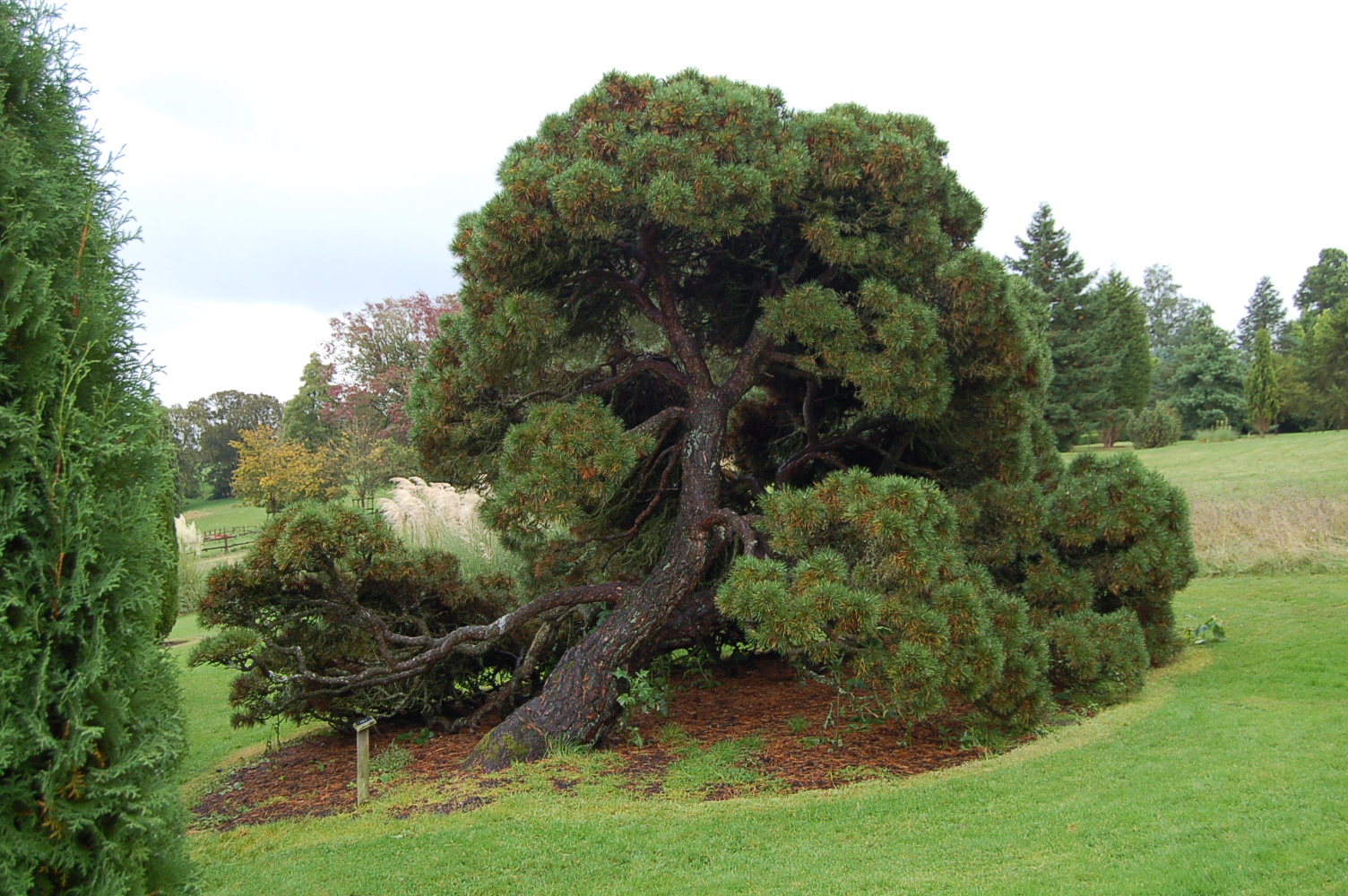
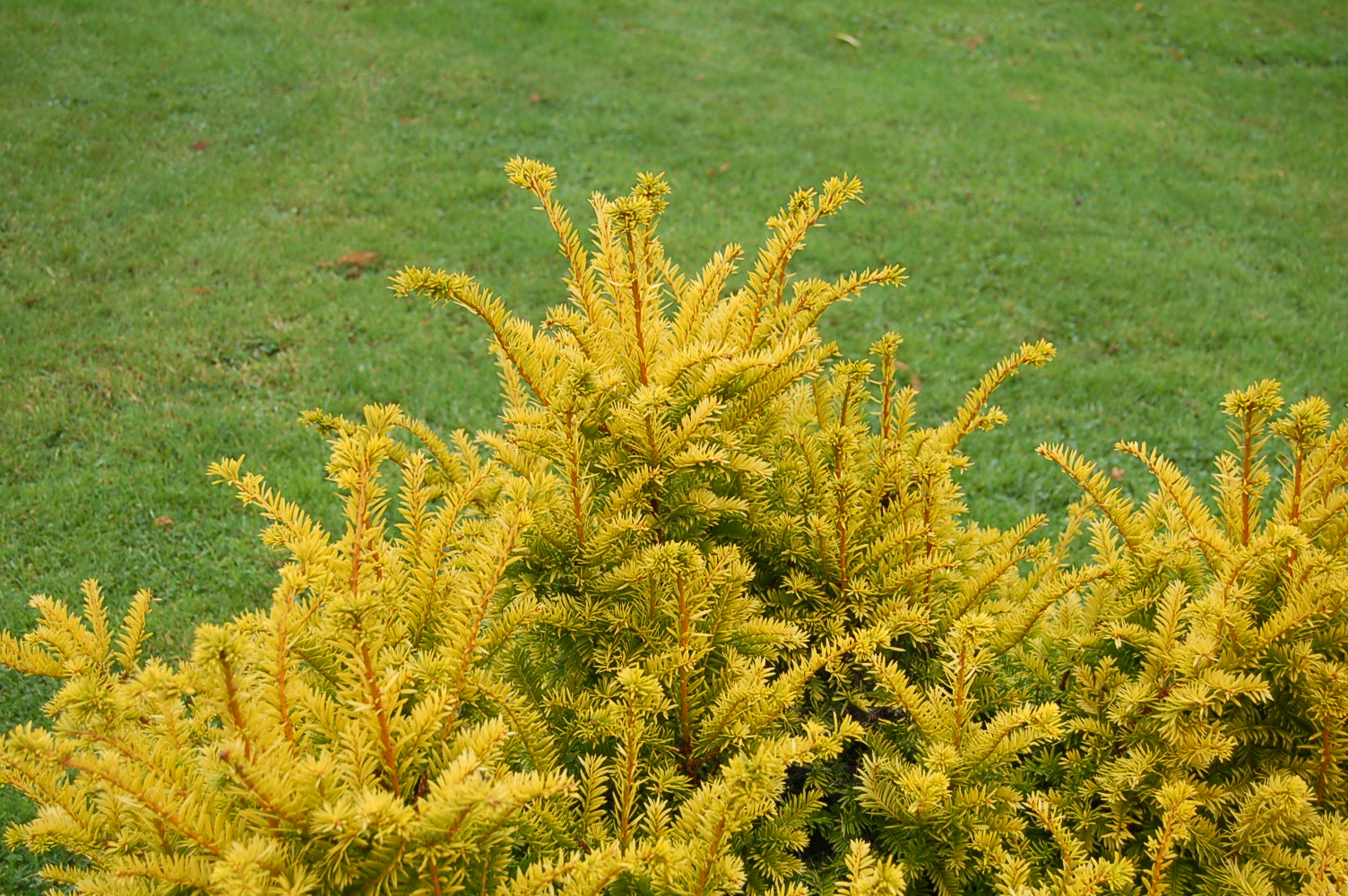
I am not a great fan of coniferous evergreens but these three display diversity in their foliage colour and in their structure and shape.
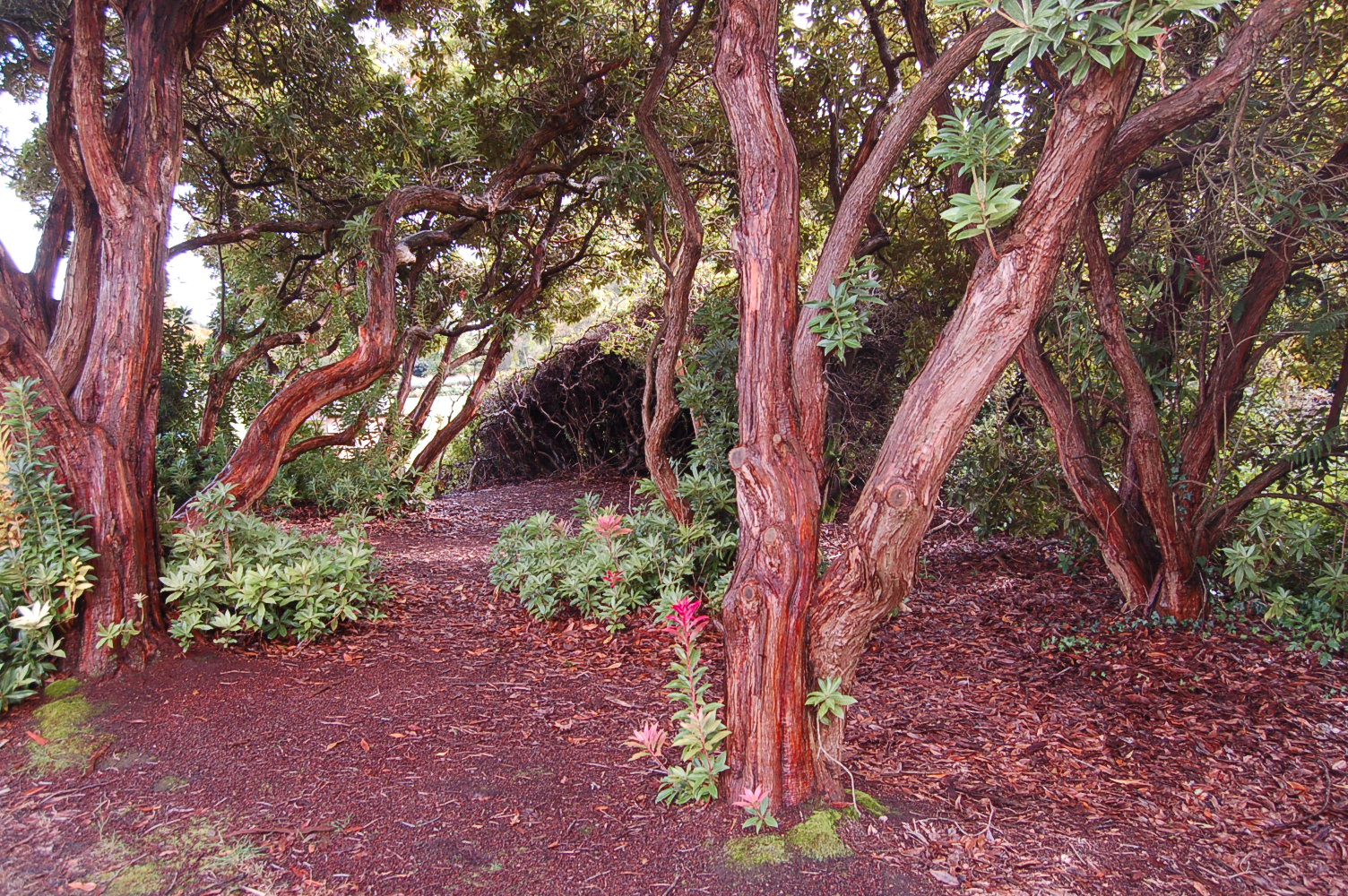
In the shade of deciduous trees the shapes of their trunks are revealed.
Walking around this varied and surprising garden is like walking through the pages of a good book on garden design. Here you can find every principle of design shown in all its glory. Any gardener, whatever the size of their garden could adapt ideas to be found on a walk about at Nymans.
Framing a view …..
Using a structure to invite you onwards ….
Planting in trios ………………..
Drawing the eye …………
Using structures as an invitation and to support plants to provide shade from the sun ……………
Much of the house belonging to the gardens at Nymans is now in ruins, but they somehow suit the garden. They provide a good foil for planting.
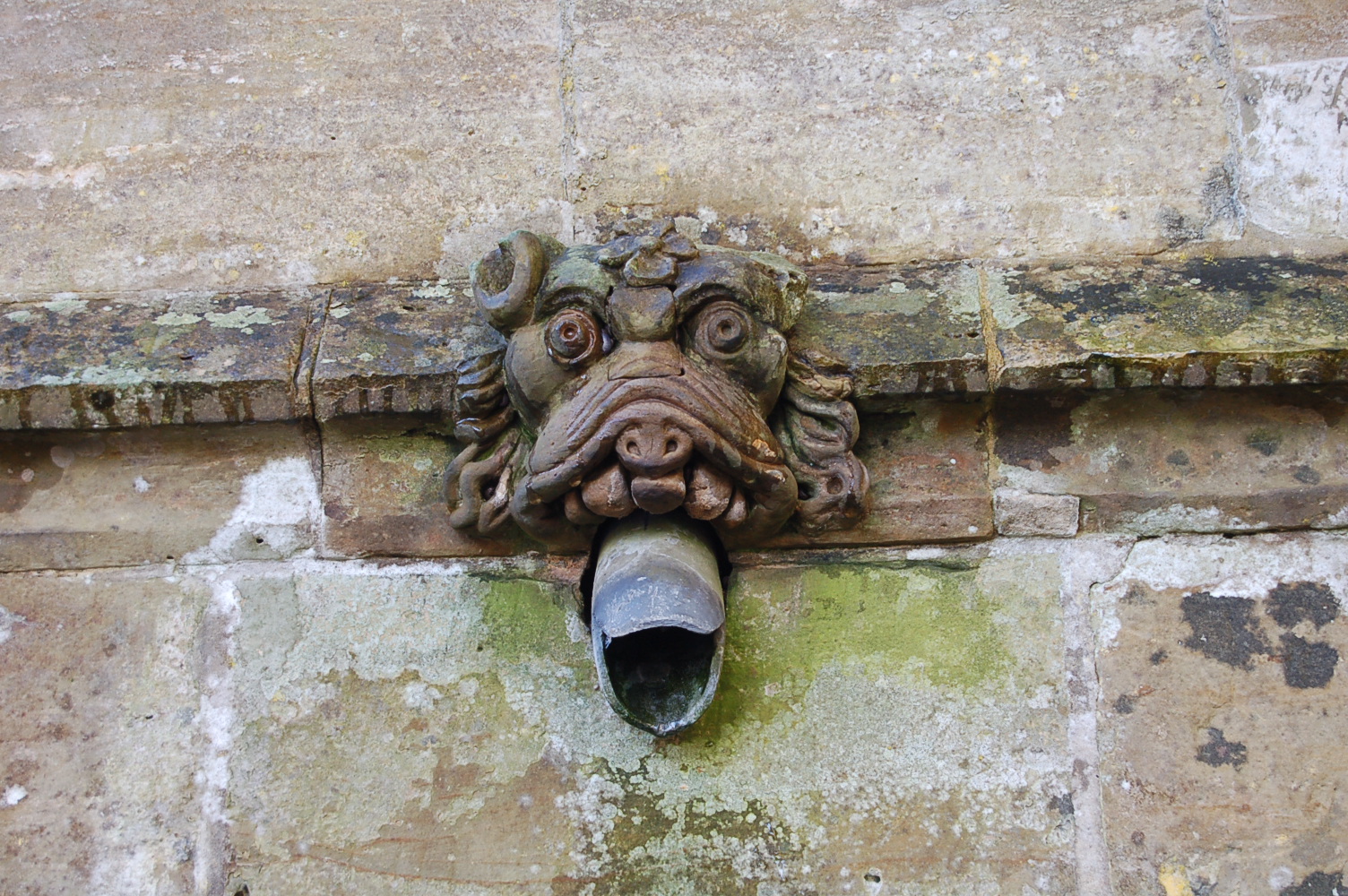
The ruins provided some oportunities to photograph little details and patterns.
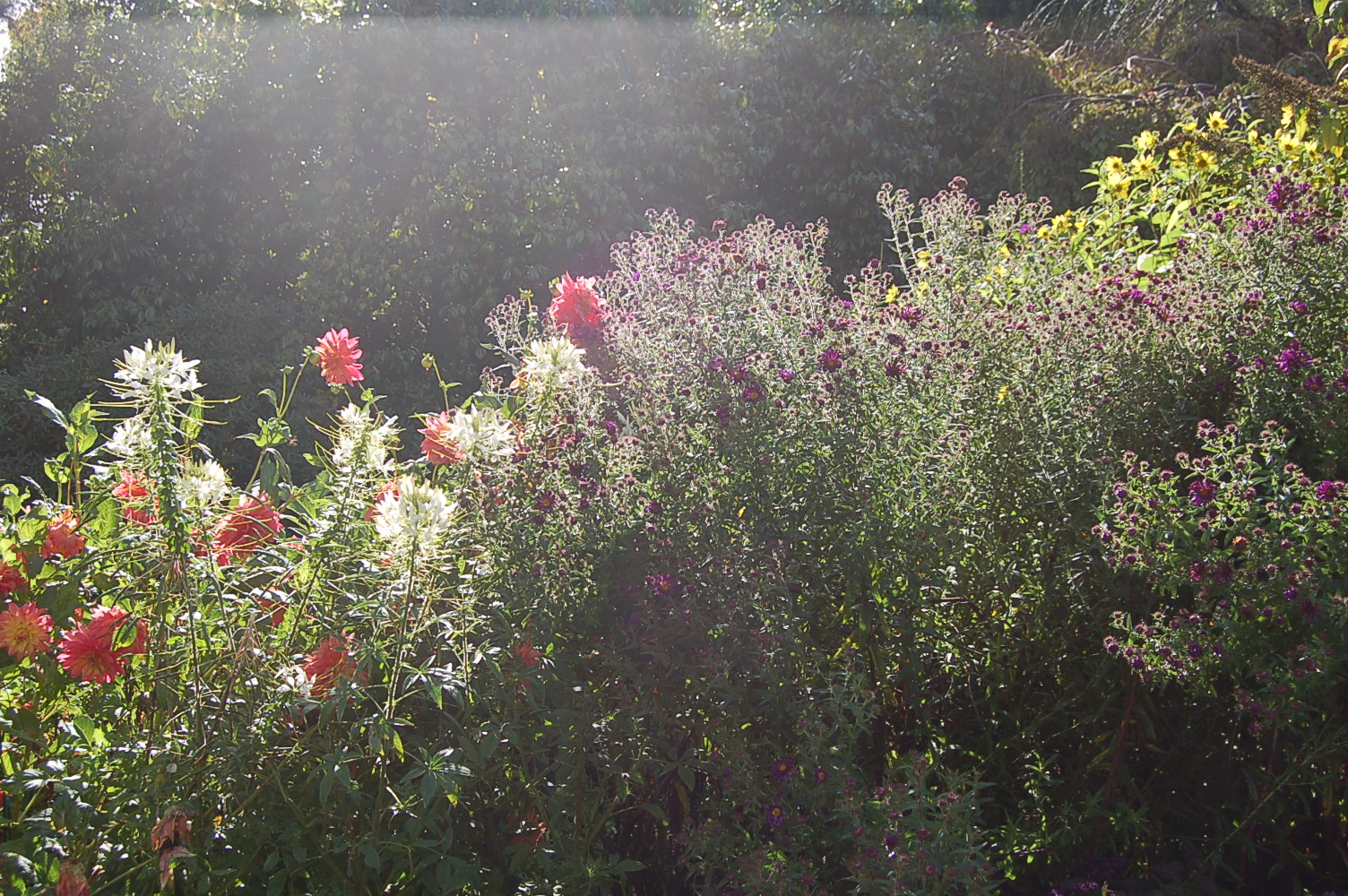
But the gardens of Nymans aren’t all about big views and big trees. Richly coloured traditionally proportioned double herbaceous borders excite the eye of the visitor.
There was so much to see at Nymans that another post will appear soon.
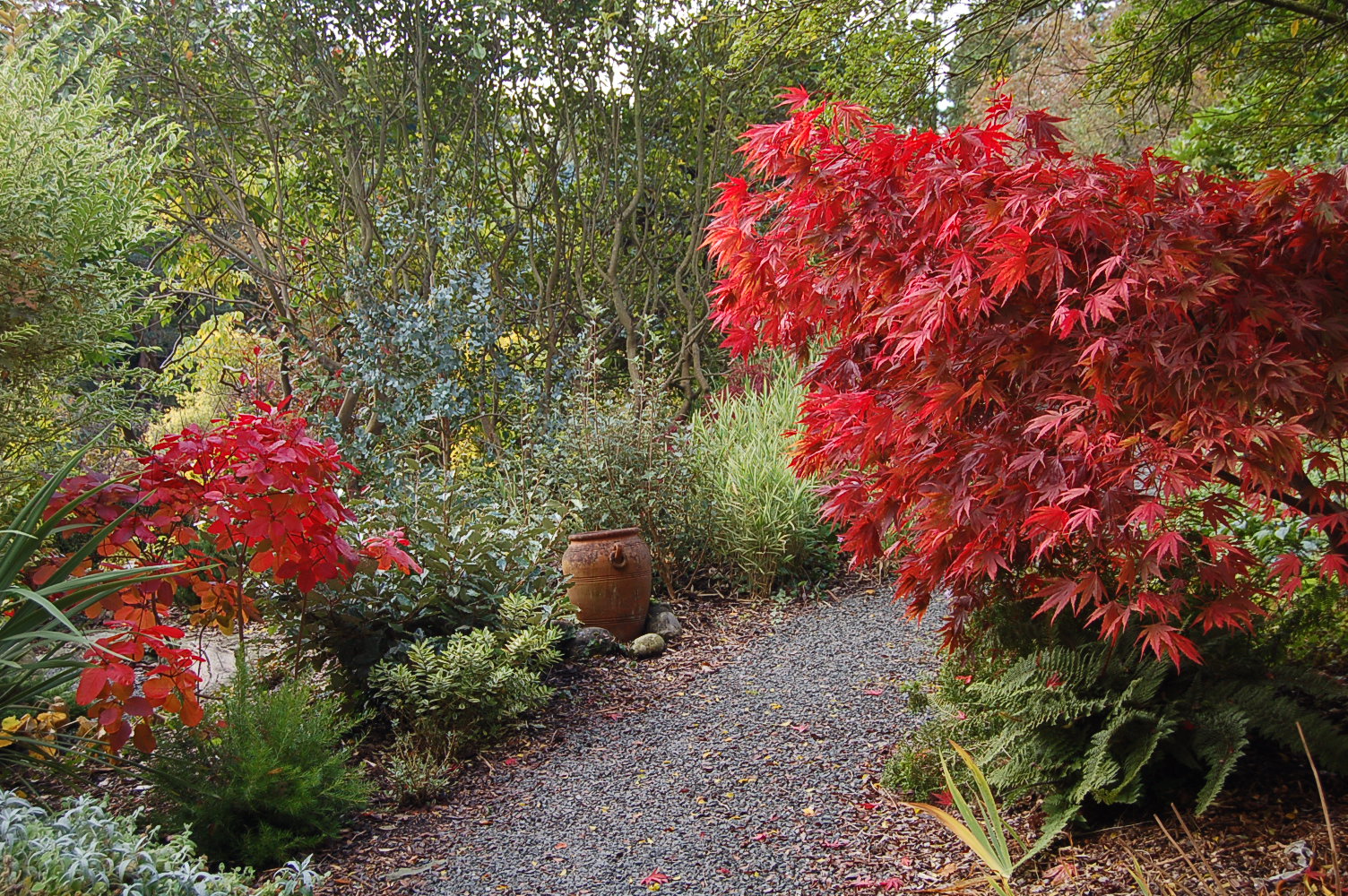
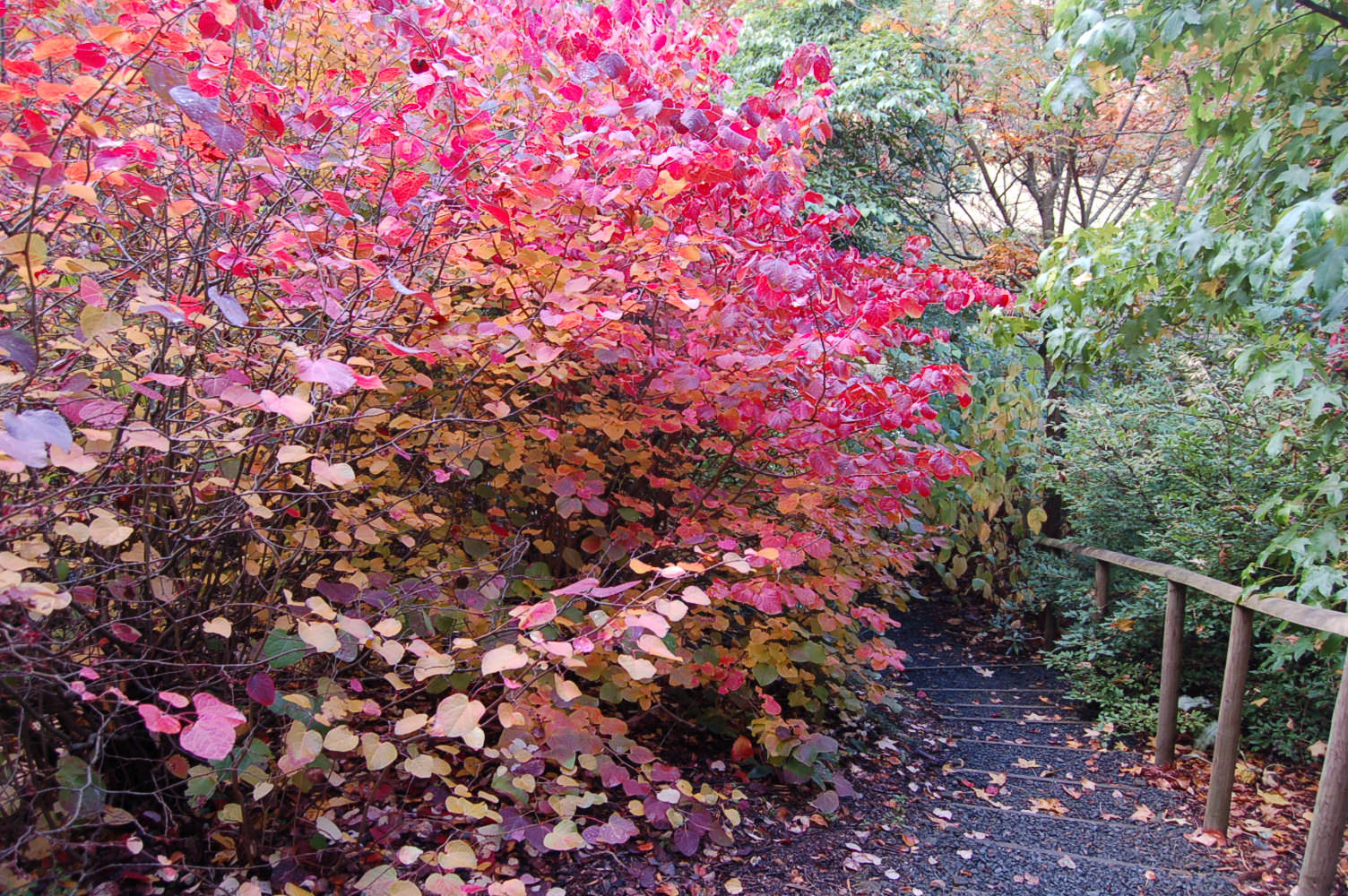
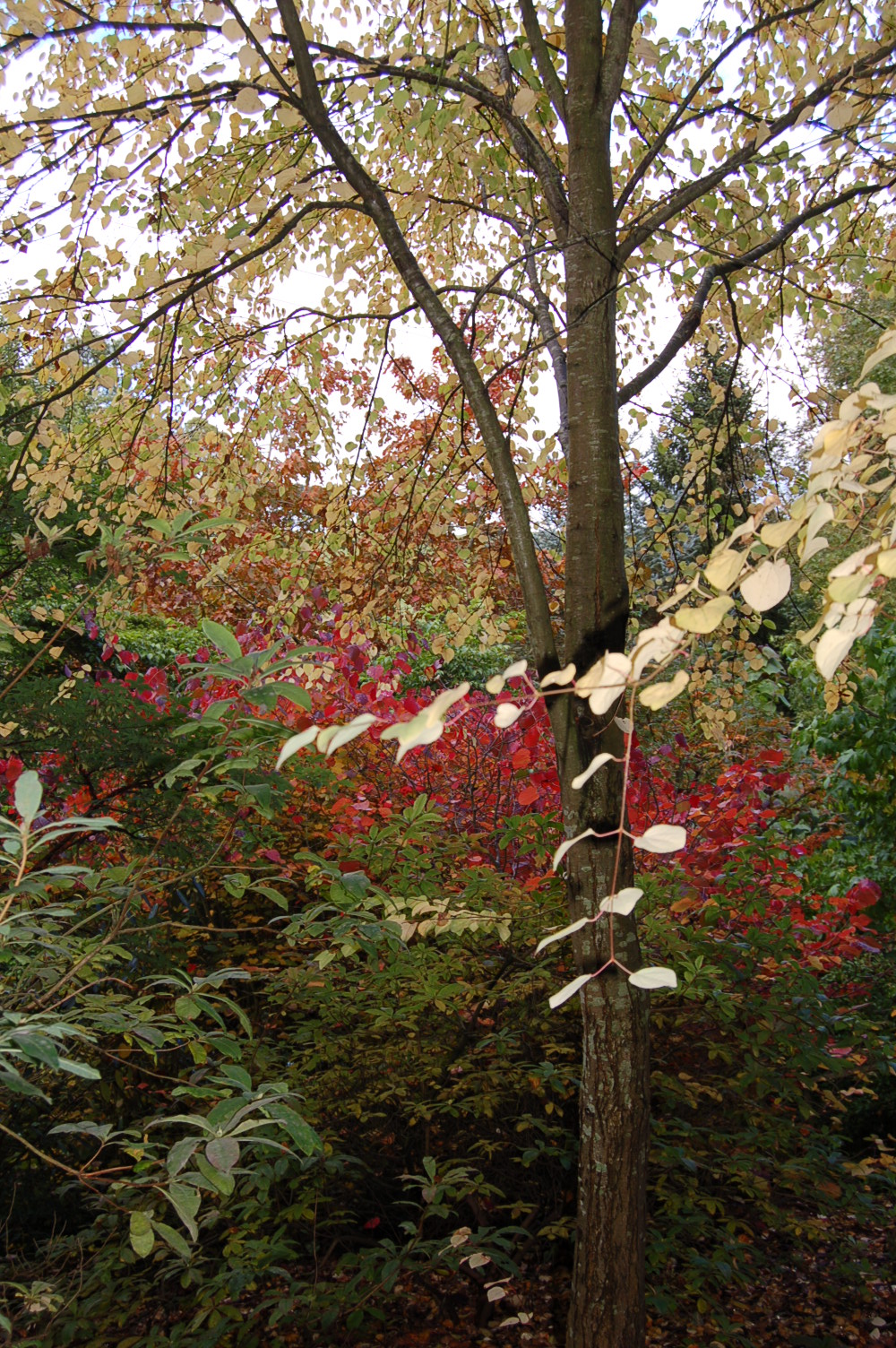
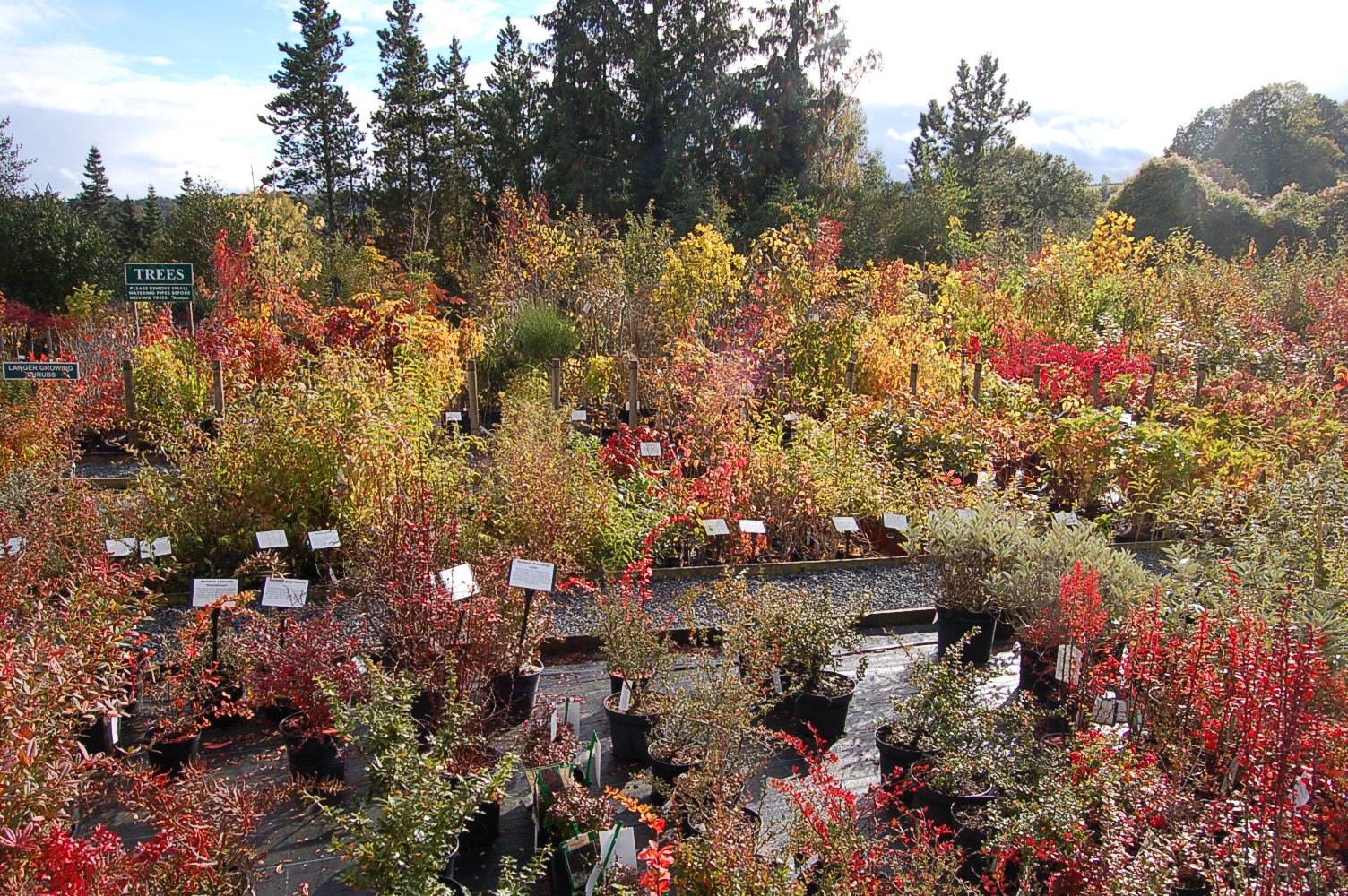
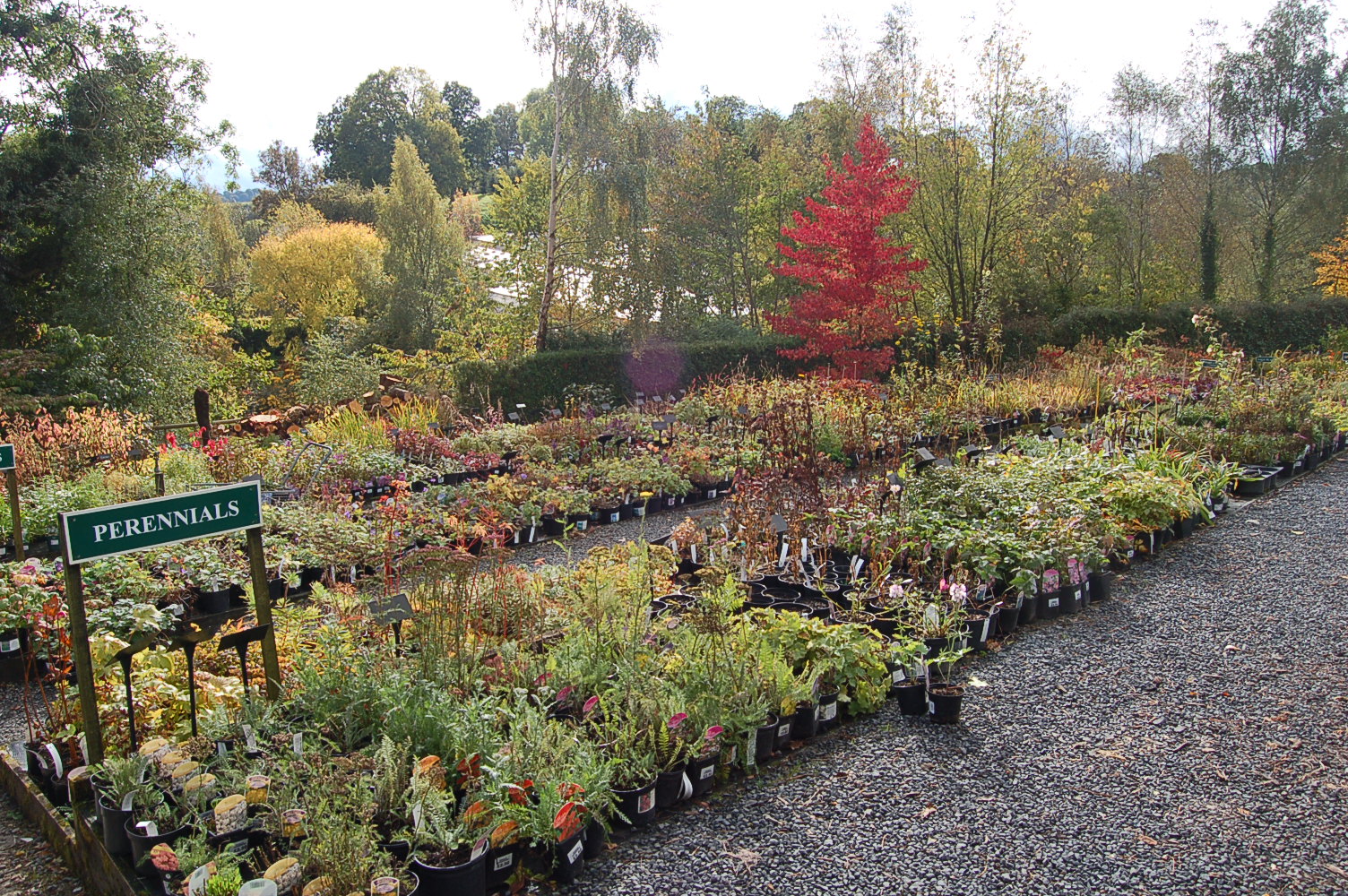
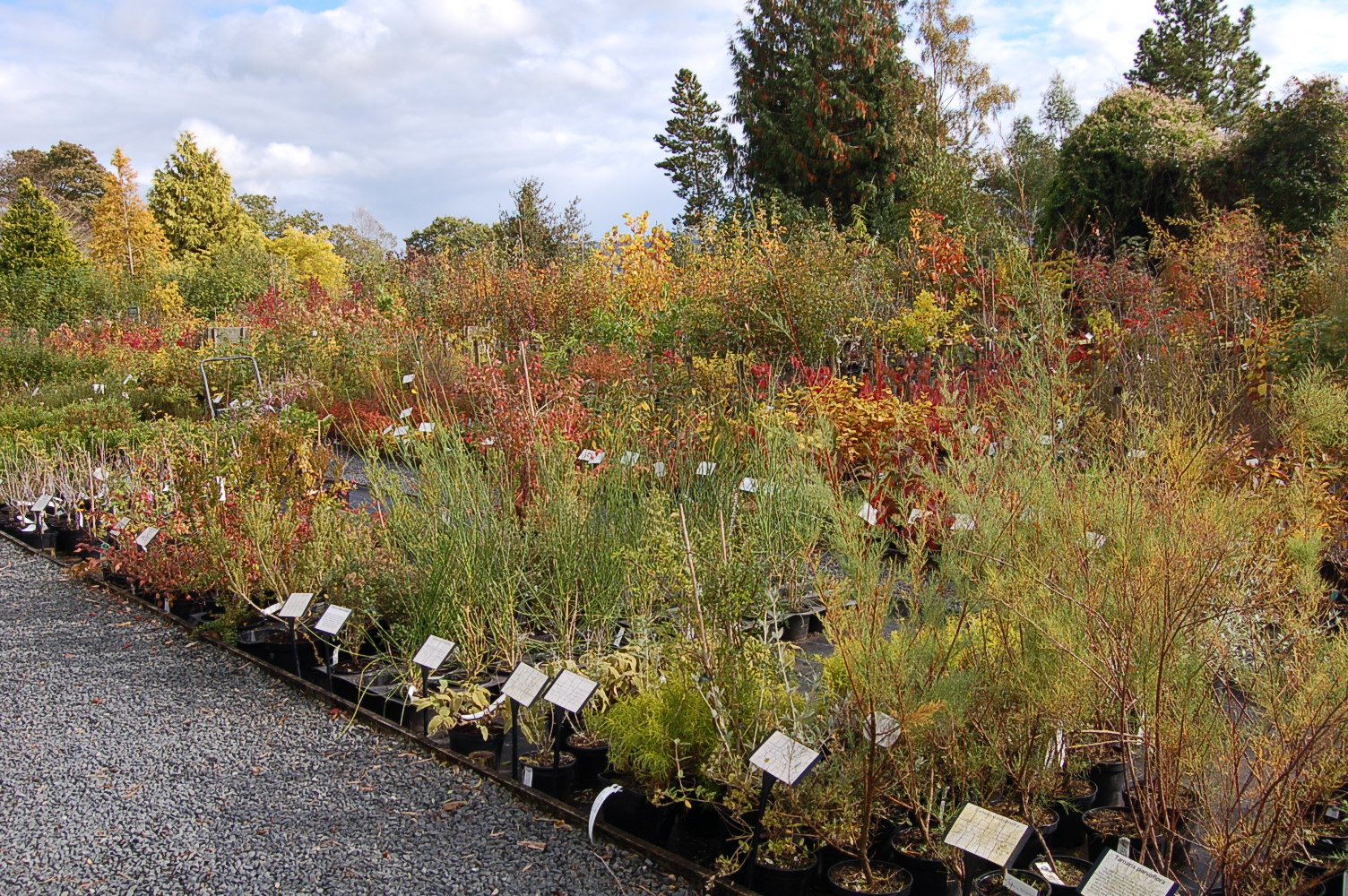
Close to Welshpool, just a half hour from home across the Welsh border, are our favourite nursery and garden centre, The Dingle and The Derwen, part of the same family. They sell unusual trees and shrubs and many good-value perennials all locally grown. But hidden away in the Dingle nursery, through a little wooden gate is a wonderful sloping garden. The garden is mostly a wonderful collection of unusual trees and shrubs on a gentle slope down to a lake, so a visit in the autumn is an assault on the senses.
The nursery which is now over 40 years old, grows thousands of plants on its 150 acres of Welsh countryside. We rarely come away without a gem – and they give free coffee away too!
The garden itself extends to just four acres, but those four acres feel much larger than expected with a complex network of paths which give occasional views which are wide and stunning. This is good garden design.
As the paths take us around corners they feature interesting, colourful shrubs and trees to delight the eye before enticing us to find out what is around the next corner.
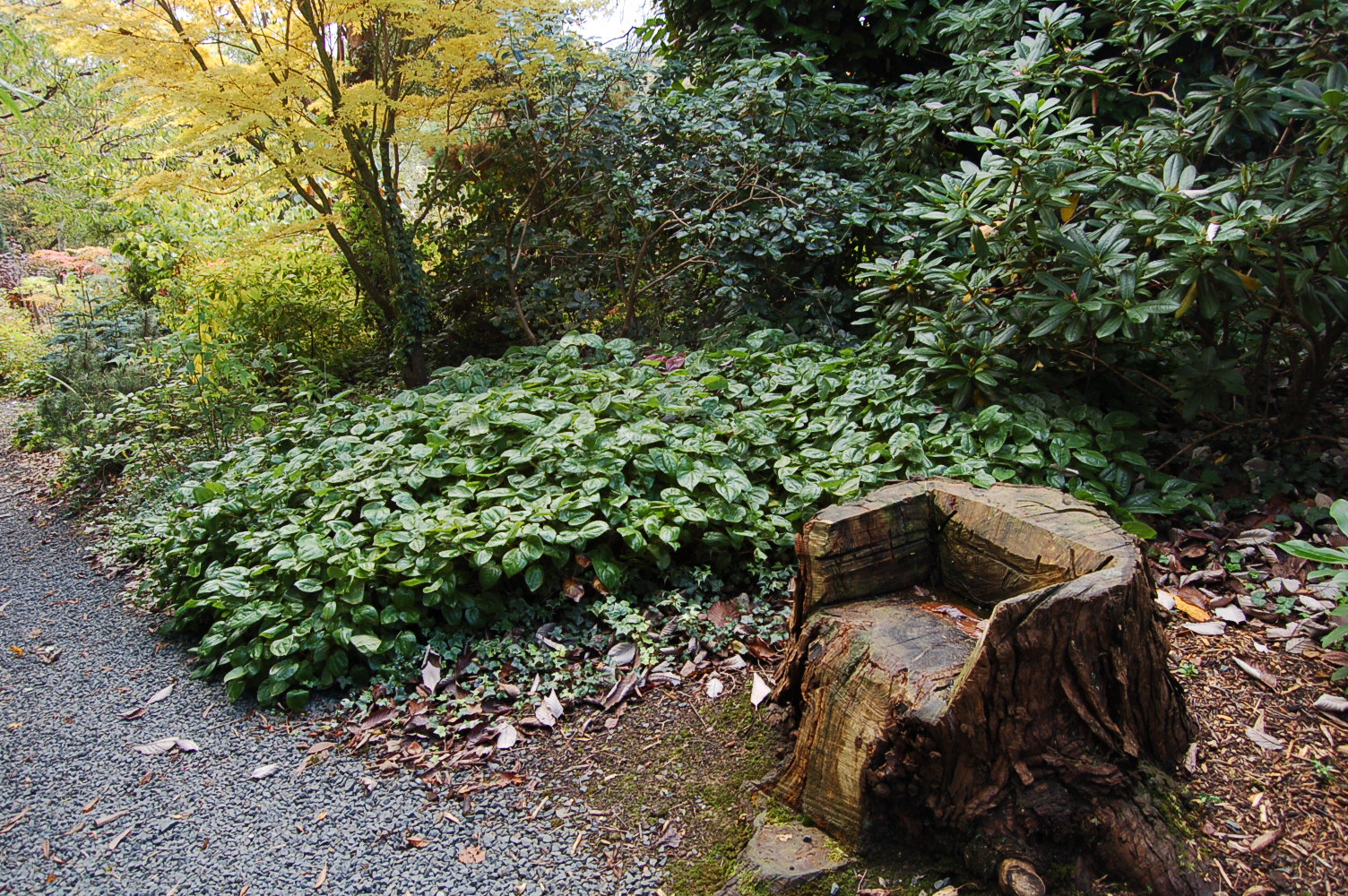
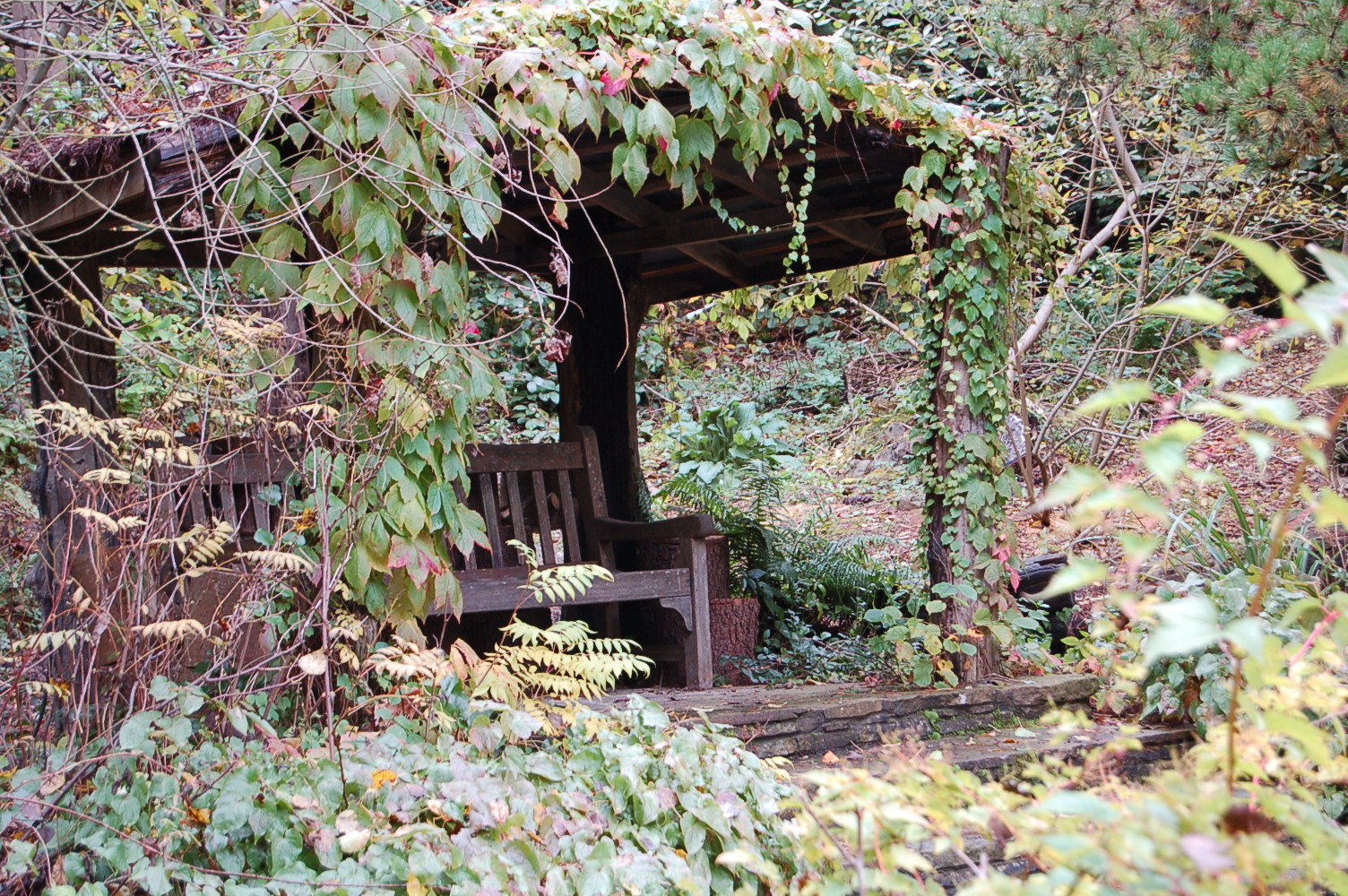
Being on a slope, the garden’s many seats are most warmly welcomed by aching legs.
Some of the seating provides cover which proved useful a few times as showers burst from the dark sky just visible through gaps in the trees.
Coloured, textured foliage and bark keep the interest of the plant lover in us going strong and enticing us around each corner.
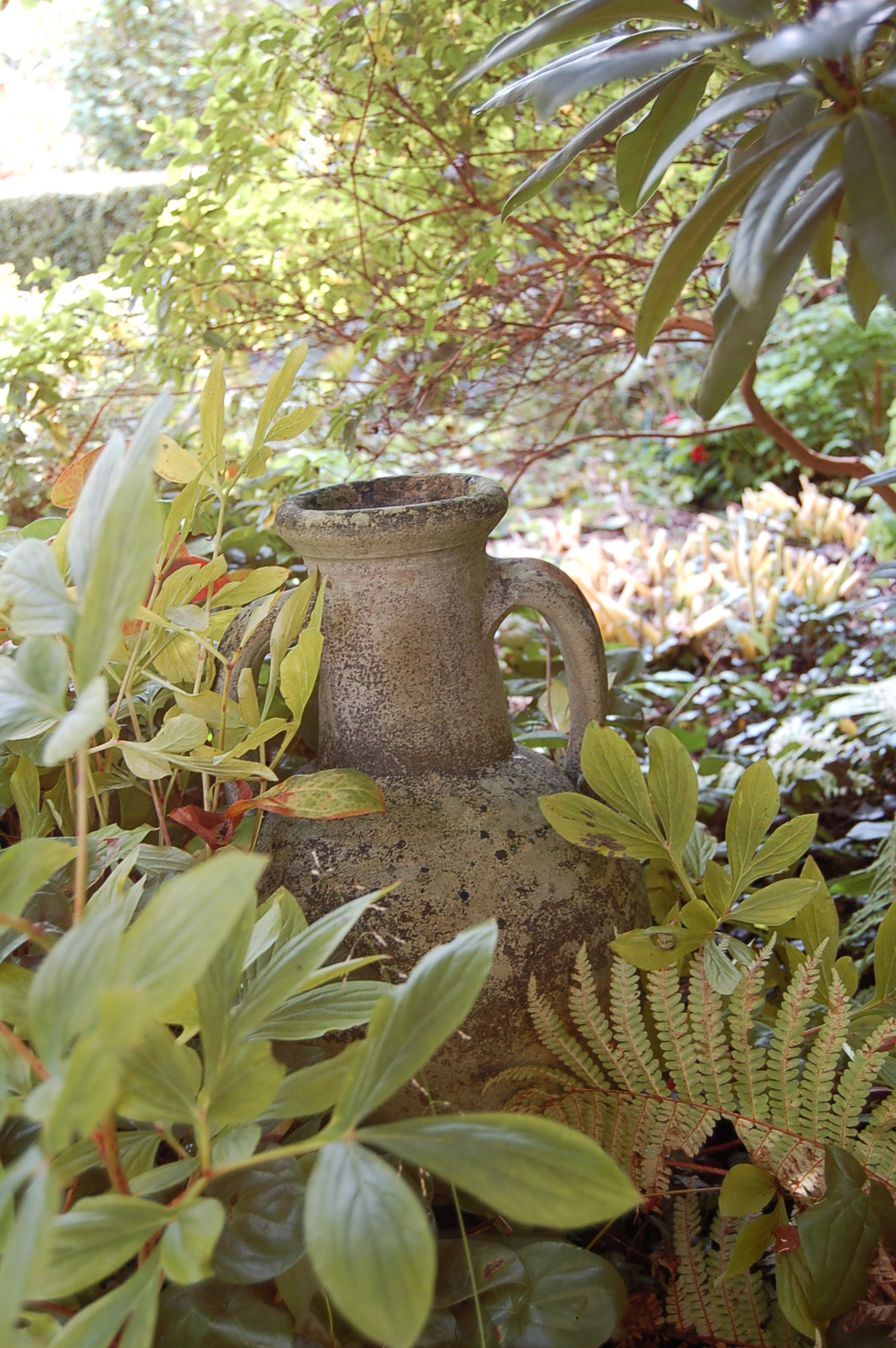
As in any good garden little cameos stop us in our tracks and catch the eye.
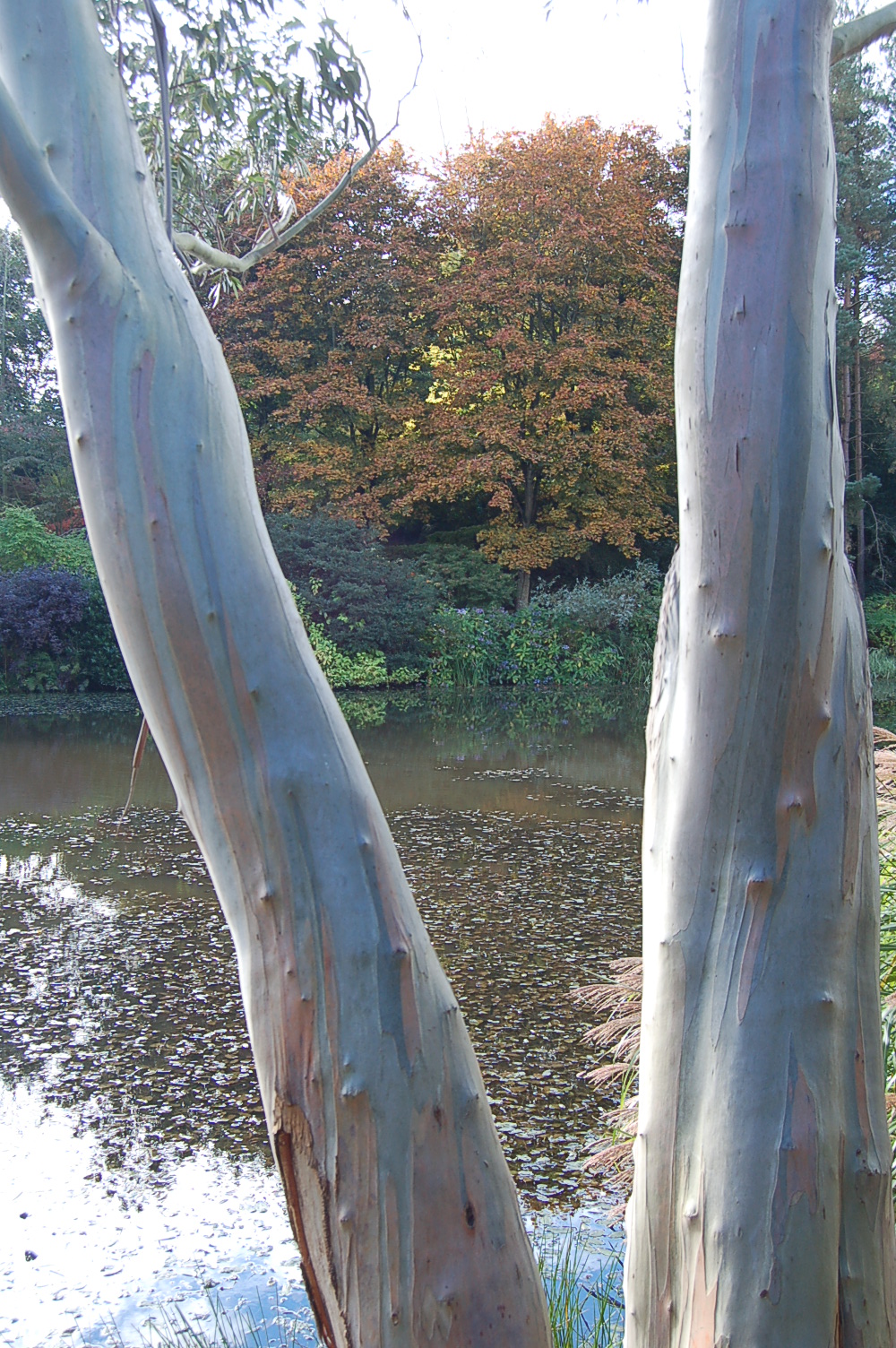
The lake at the lowest point of the garden, provides a restful place – restful to the eye and restful to the legs.
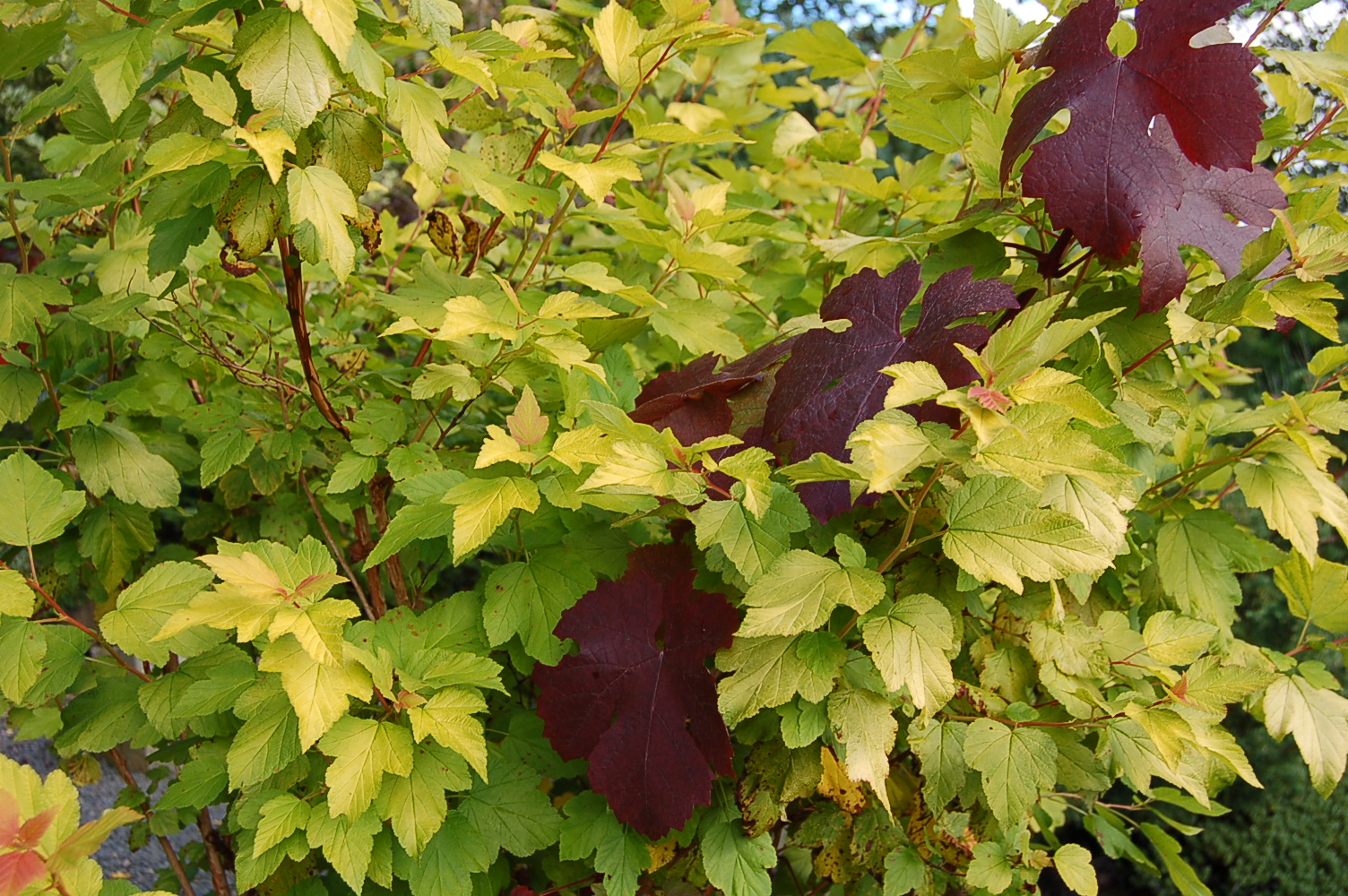
Strong contrasts in foliage colour show up in the brighter weather as we work our way back up the paths to the gate.
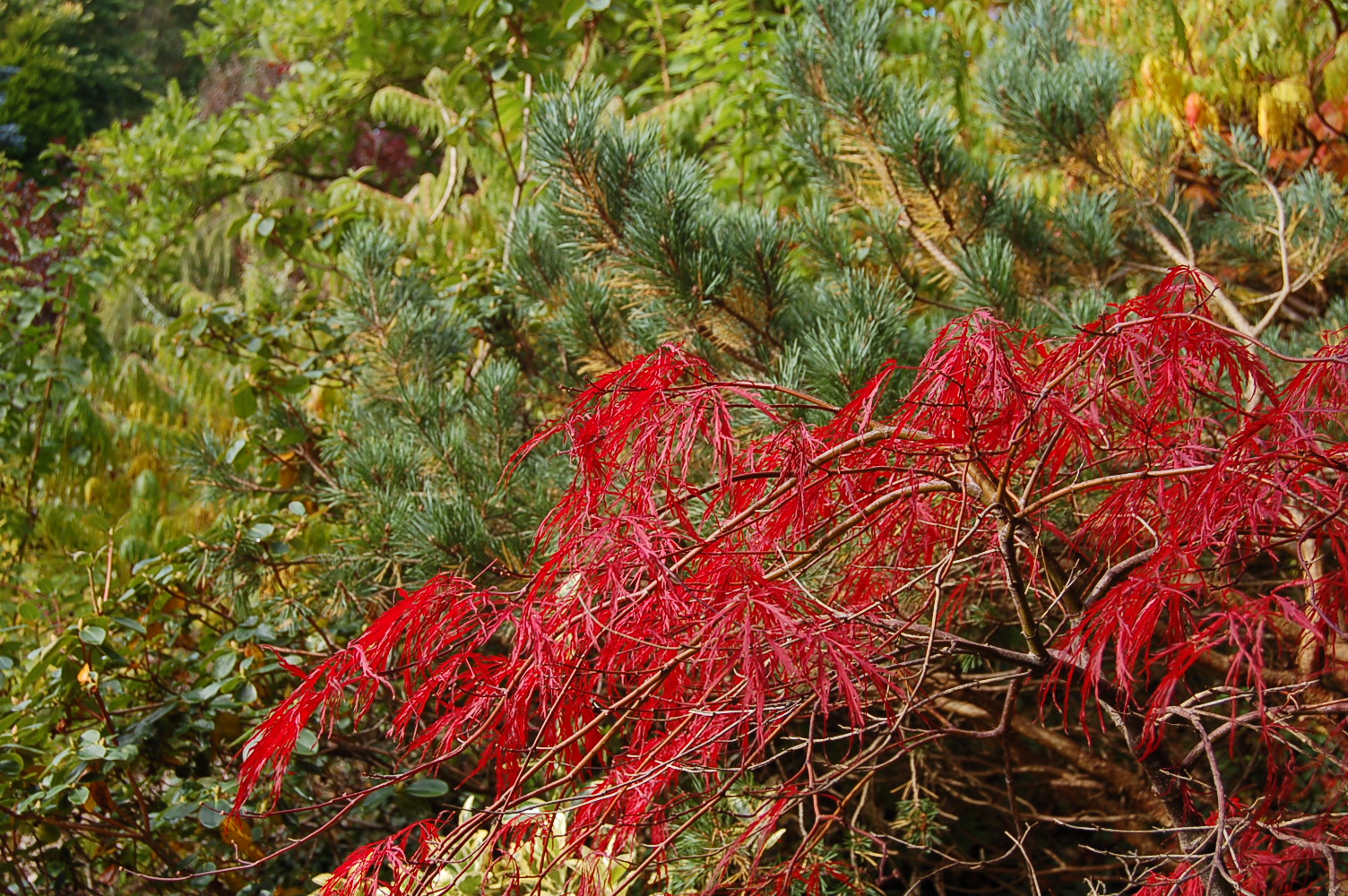
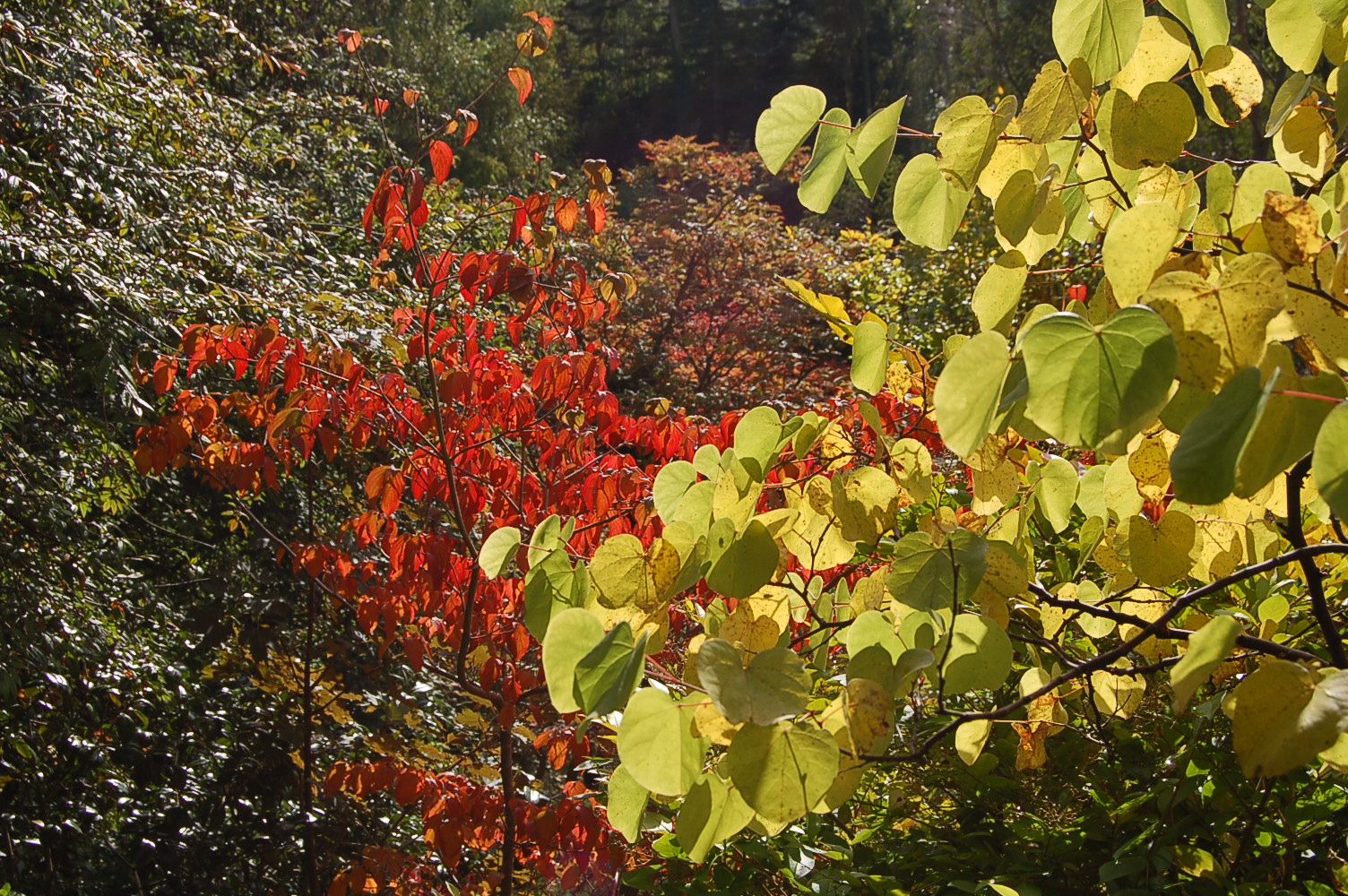
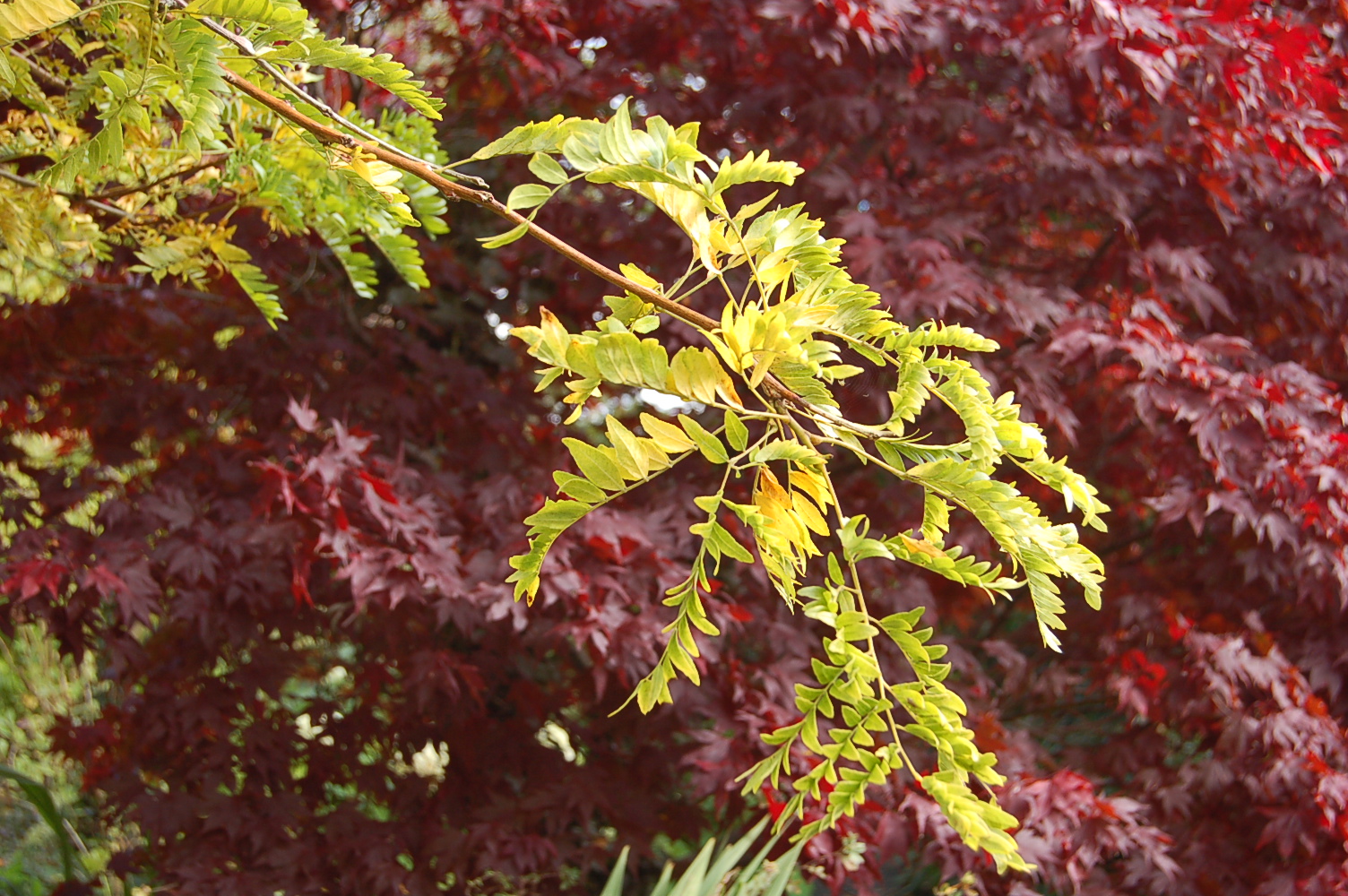
As in any garden specialising in trees and shrubs the stars of the autumn are the Acers.
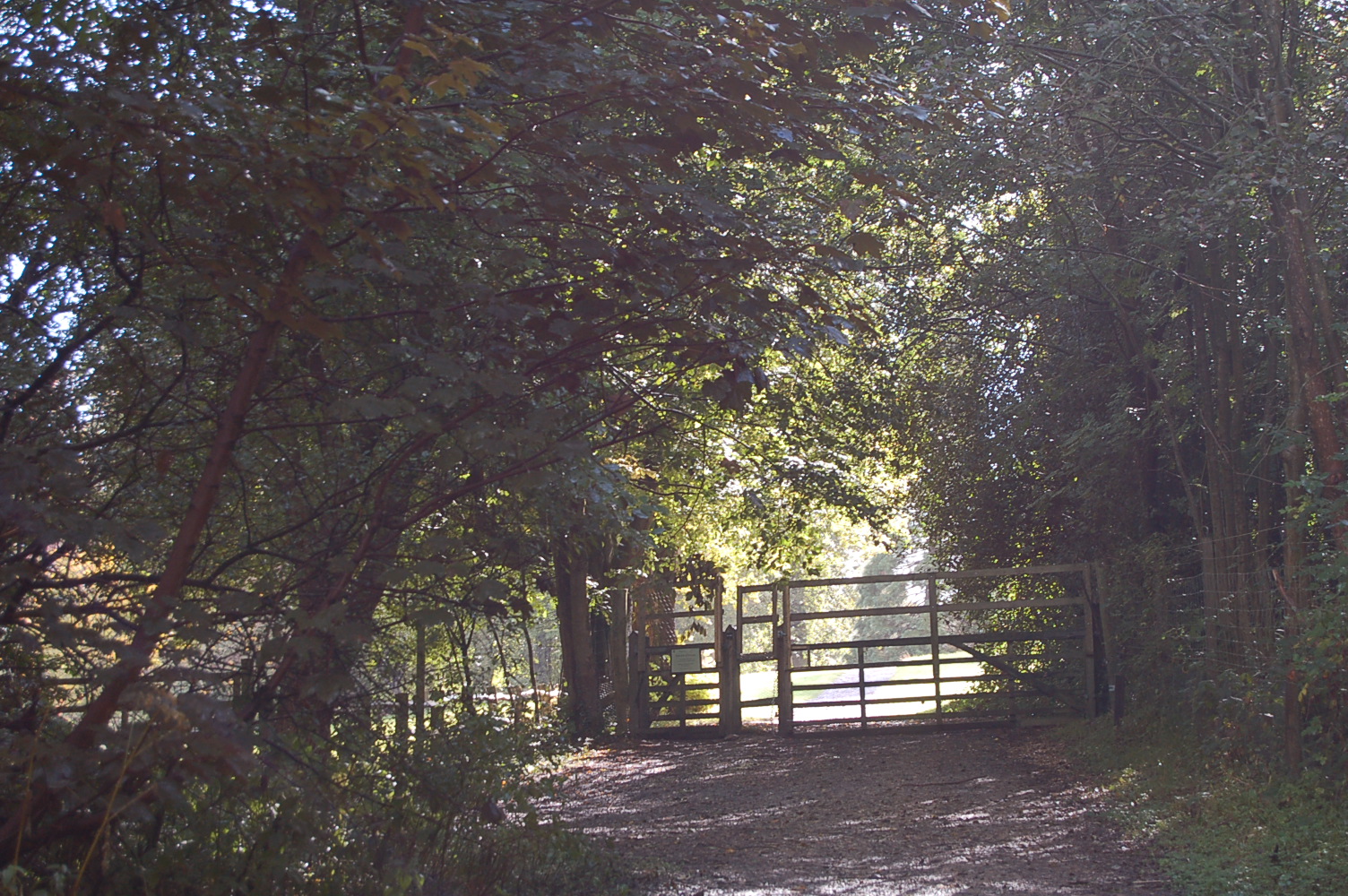
Back up the top of the garden we pass through the little wooden gate and are tempted for a perusal of the colourful nursery beds.
'The most important and informative publication on wildlife of our times' - The Independent. This blog is a member of The UK & Ireland Natural History Bloggers group: www.uknhb.blogspot.com















































































 greenbenchramblings