Categories
bird watching birds nature reserves Norfolk the sea the seaside wildlife

A Wader Spectacular

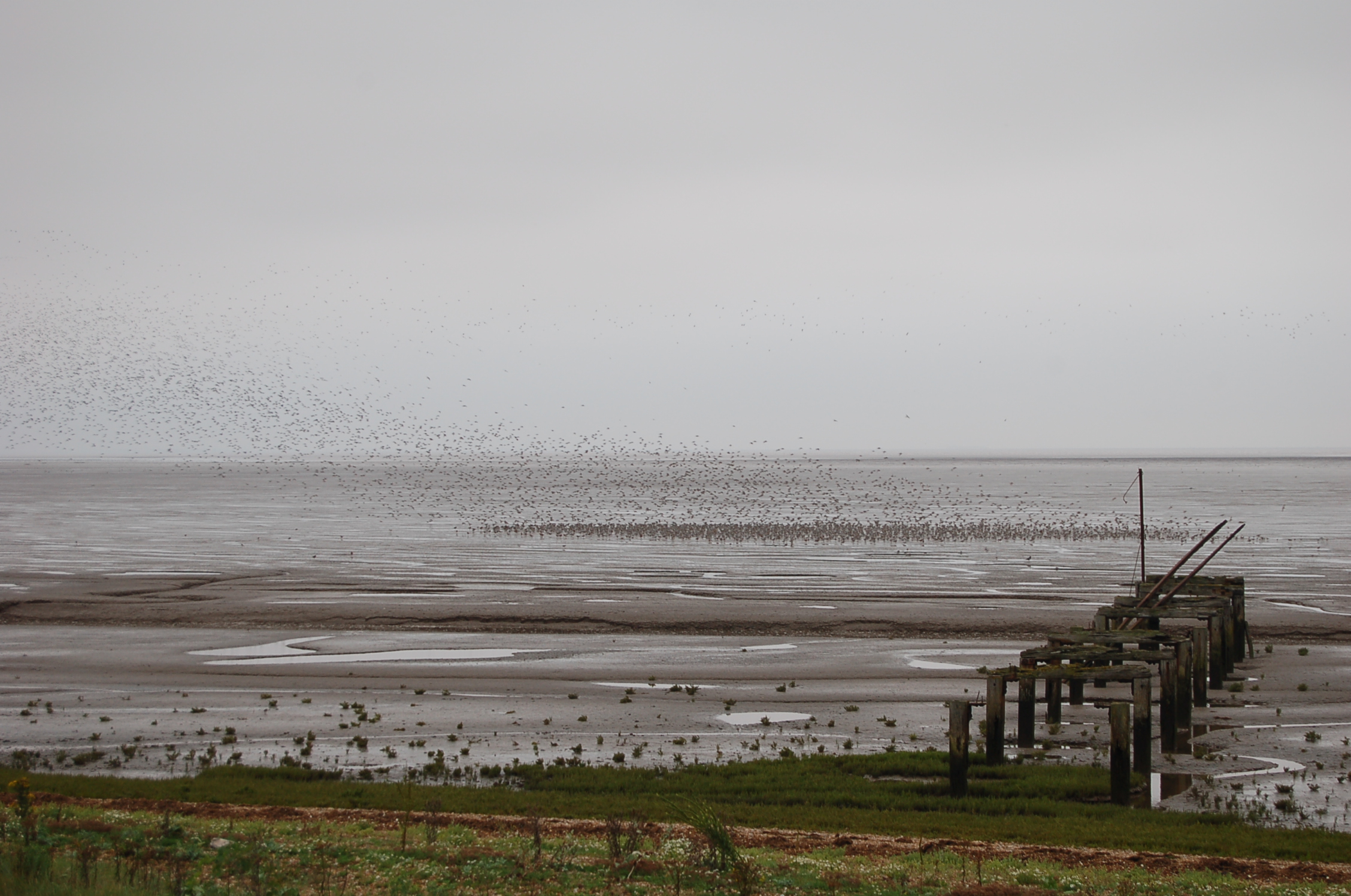
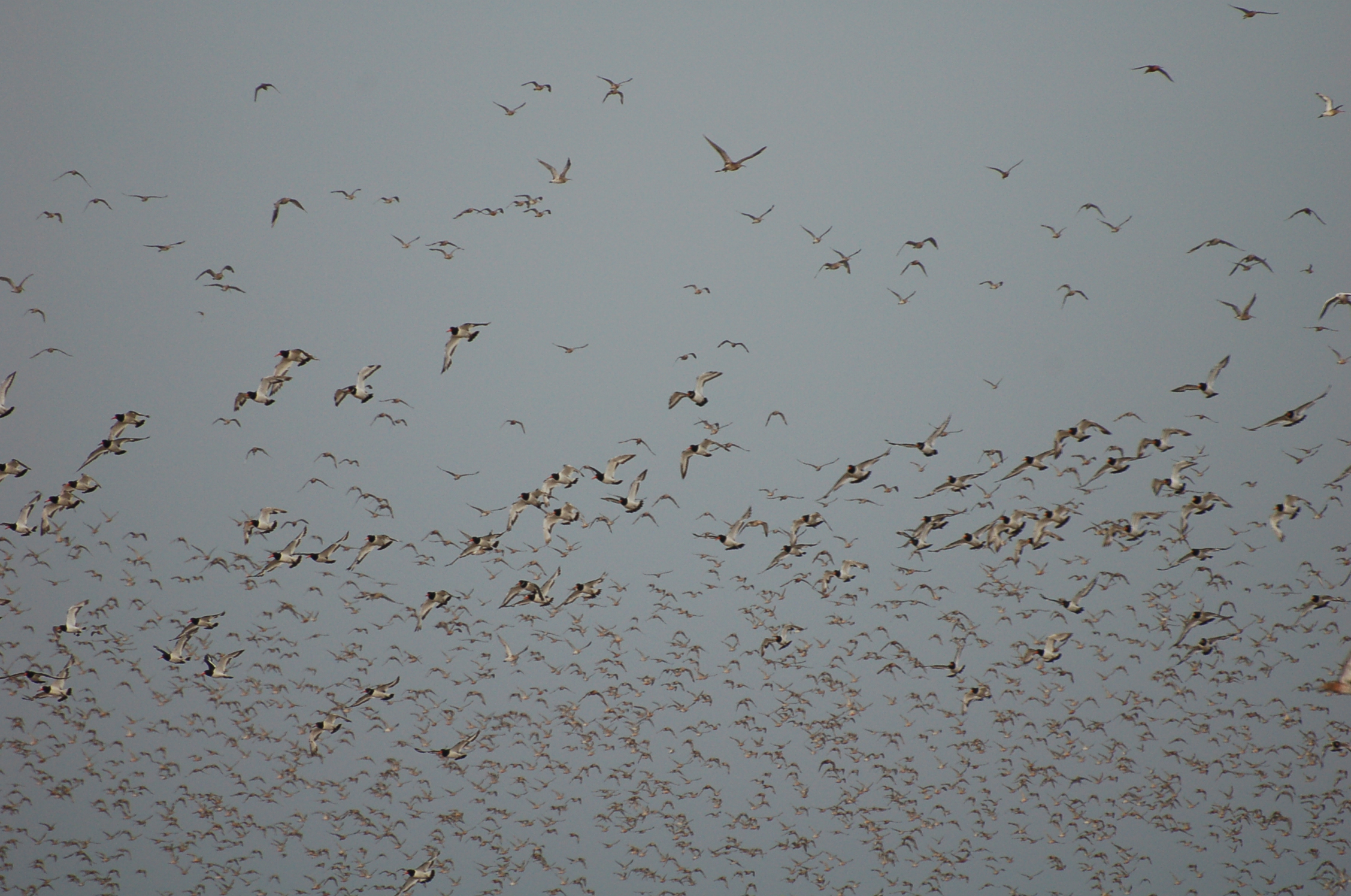
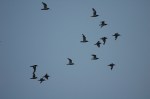
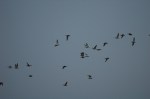
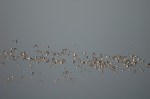
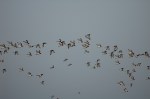
This was a special day. A spectacular day full of waders, which could only be billed as “A Wader Spectacular”. The action takes place at the RSPB reserve, Snettisham in Norfolk. The RSPB keep members informed of when the spectacular is at its best so we knew we could expect something special.

We made an early start as the success of our day was reliant on firstly the tides and secondly the weather. Tide tables told us we had the day right where the behaviour of the sea was concerned and as the darkness of night gave way to day we realised we were going to be in luck with the weather. But we were well prepared with flasks of hot coffee, for the coast of north Norfolk is always a cold place.

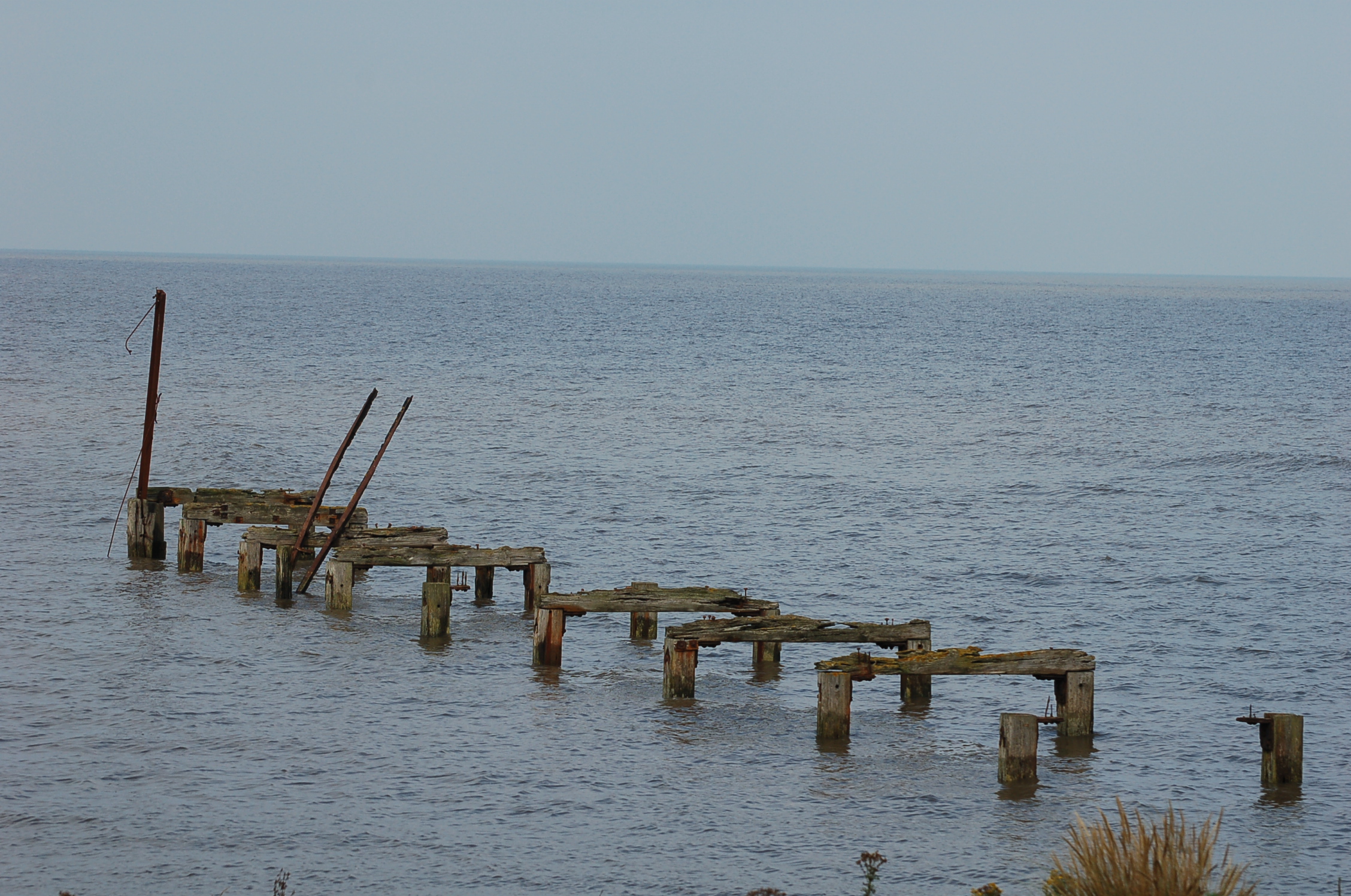
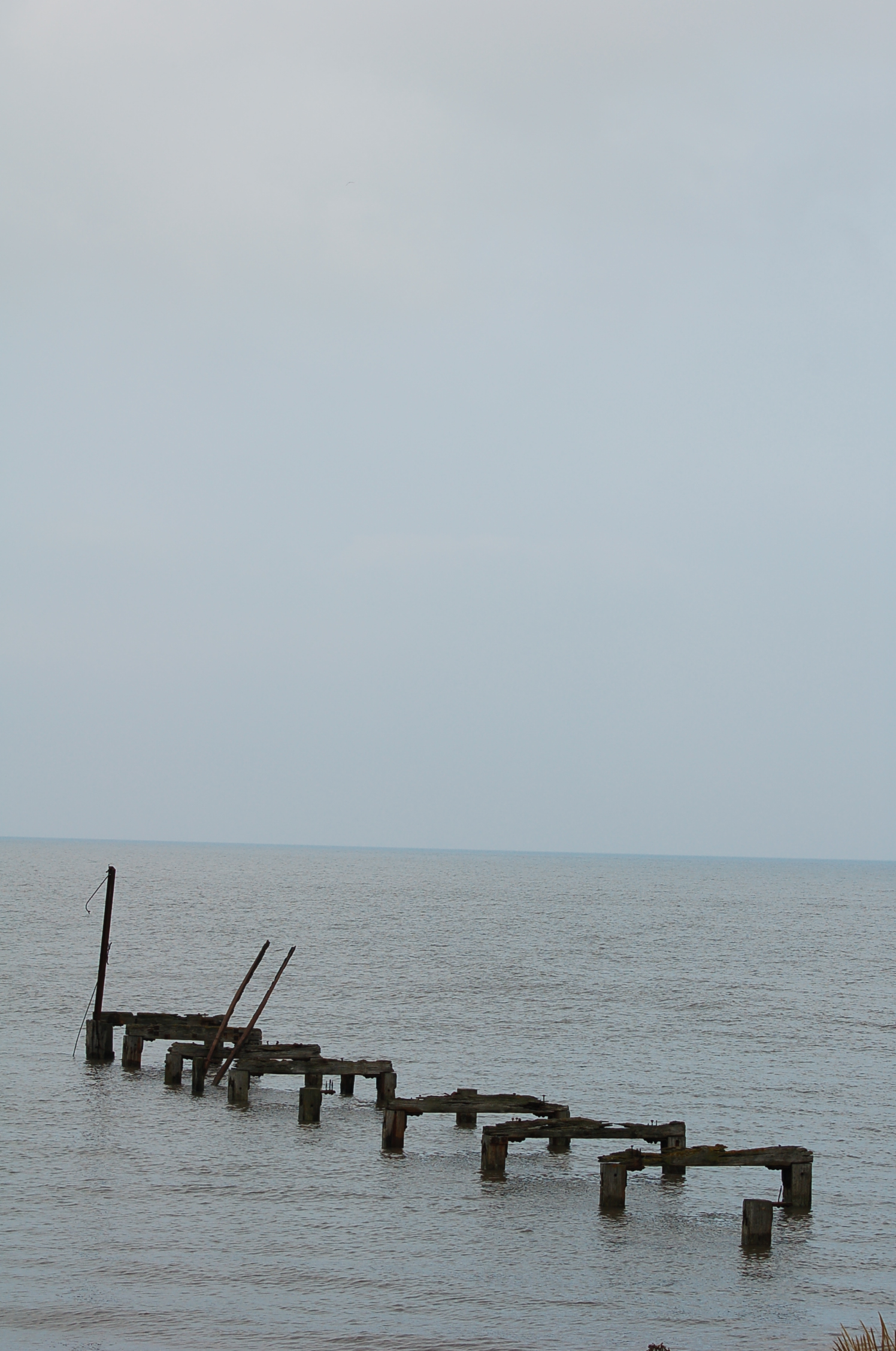
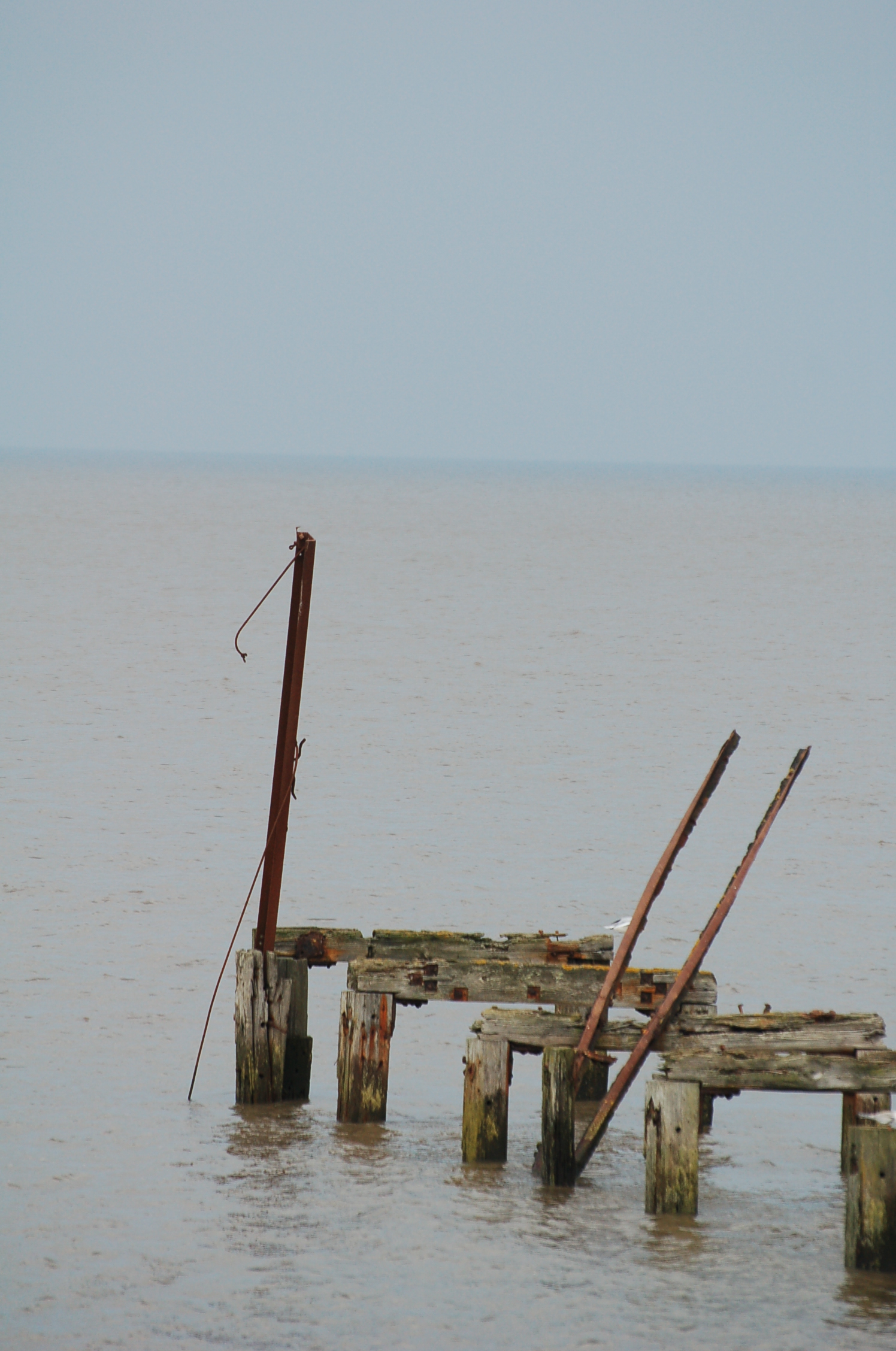
We walked along the shoreline past this old landing stage and found a comfortable place to settle down to wait with fold away chairs and flasks of warm coffee. As we waited for the tide to start to come in and the sandbanks to become engulfed in salty water we readied our binoculars and fixed the telescopes on their tripods. We didn’t have long to wait before the first flocks of waders surged over our heads making for the lagoons behind the sand dunes.

2013 08 26_3107  2013 08 26_3109 2013 08 26_3110

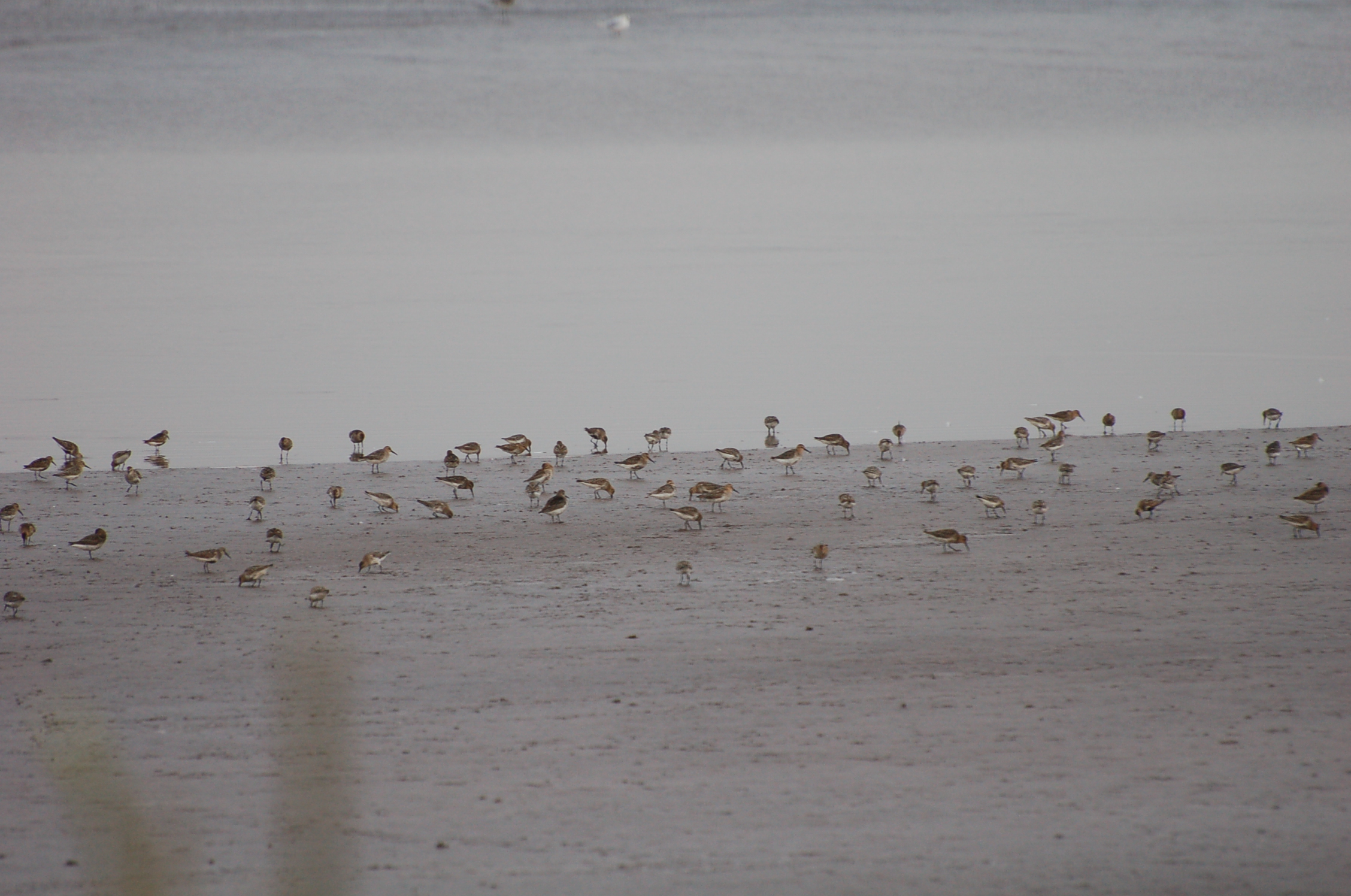
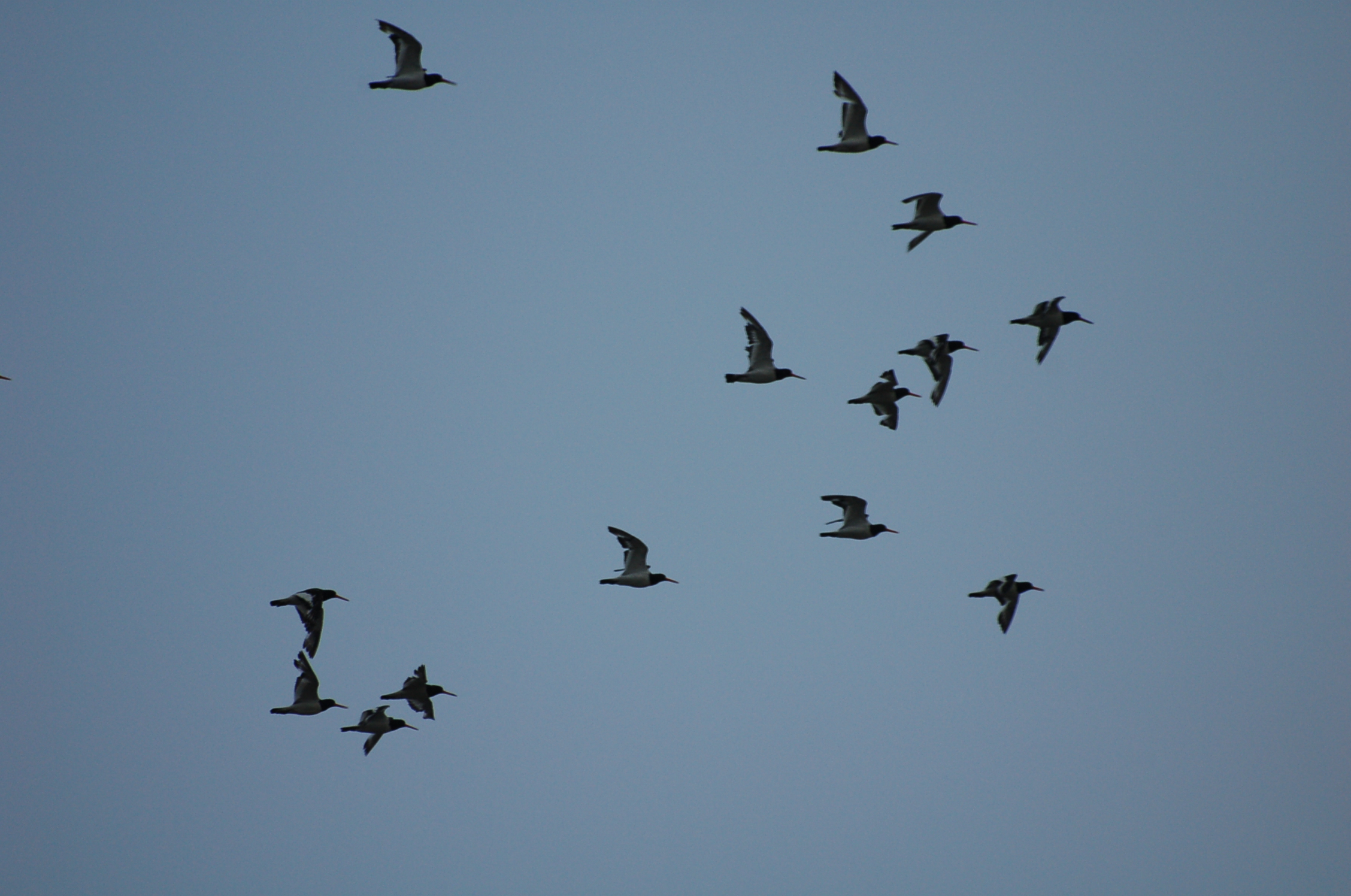
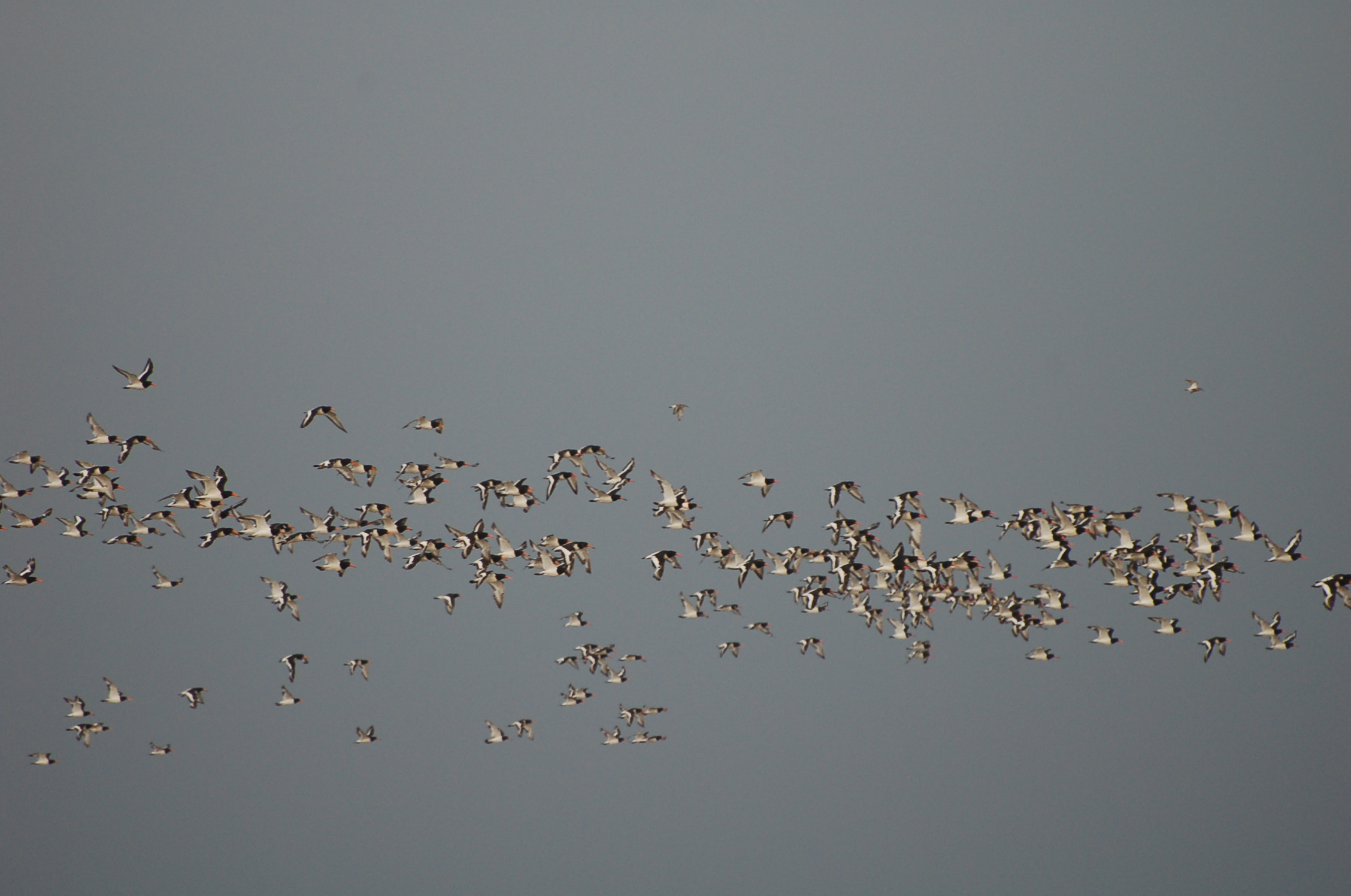
The vast flocks mostly continued to feed greedily on the bugs and invertebrates hiding in the sand. Every second counts when your feeding is controlled by the turning of the tides. The waders were mainly Knots and Oyster Catchers but surprises appeared amongst them such as small groups of Avocet and the lone flock of just half a dozen Common Scoter which passed low over our heads like black overweight ducks.

2013 08 26_3112 2013 08 26_3111

2013 08 26_3115 2013 08 26_3116

2013 08 26_3117 2013 08 26_3119

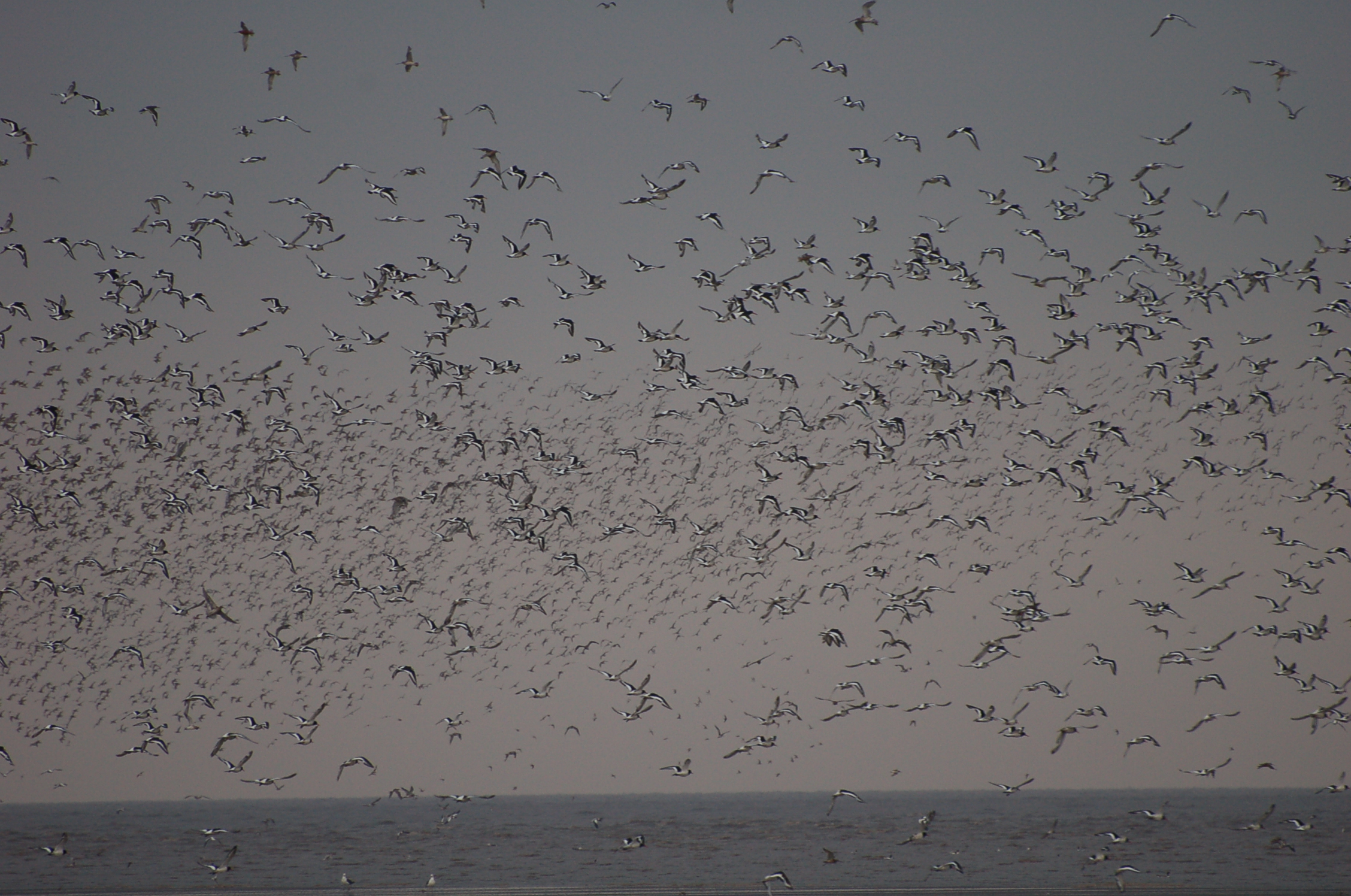
As each minute ticked away, the flocks fleeing the tides flew more frequently over our heads and each flock appeared to be larger than the last. We could feel and hear the air moving above us, stirred by the combined power of thousands of beating wings.

2013 08 26_3108 2013 08 26_3118  2013 08 26_3120 2013 08 26_3125 2013 08 26_3124 2013 08 26_3130

As the flocks flew behind us they settled quickly into the reeds surrounding the lagoons, dropping from the sky as one. As the tide sped in covering their feeding grounds the sand banks at sea become emptied as the lagoons filled up.

2013 08 26_3113 2013 08 26_3150

Enjoy the spectacle by following the photos in the gallery and watch the drama unfold.

When the flocks had moved from sea to lagoon, everything felt and sounded calm around us and we were engulfed by a strangely hollow feeling. We had been surrounded by hundreds of thousands of waders in flight and then suddenly it stopped as the last stragglers made their move.

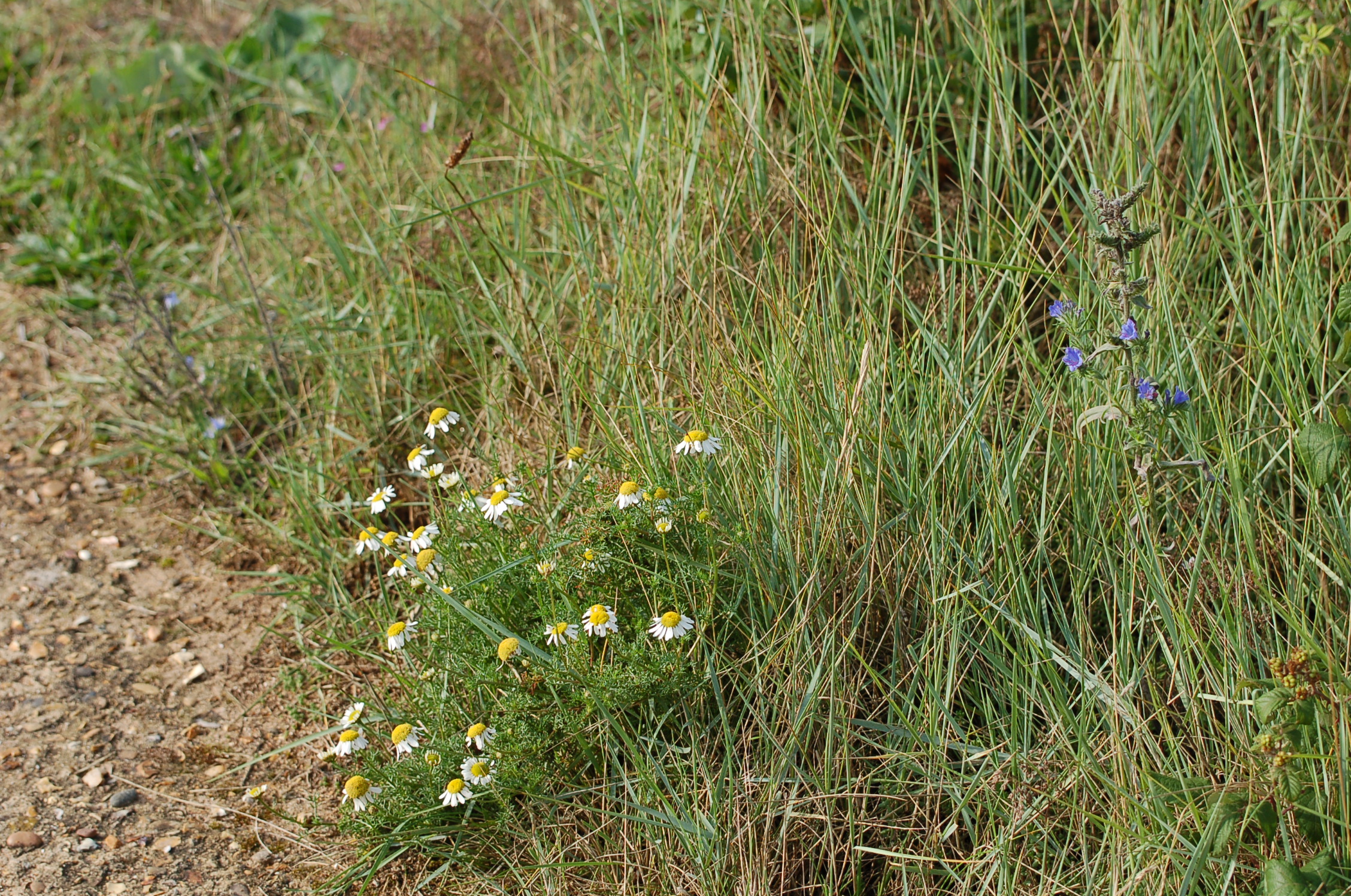
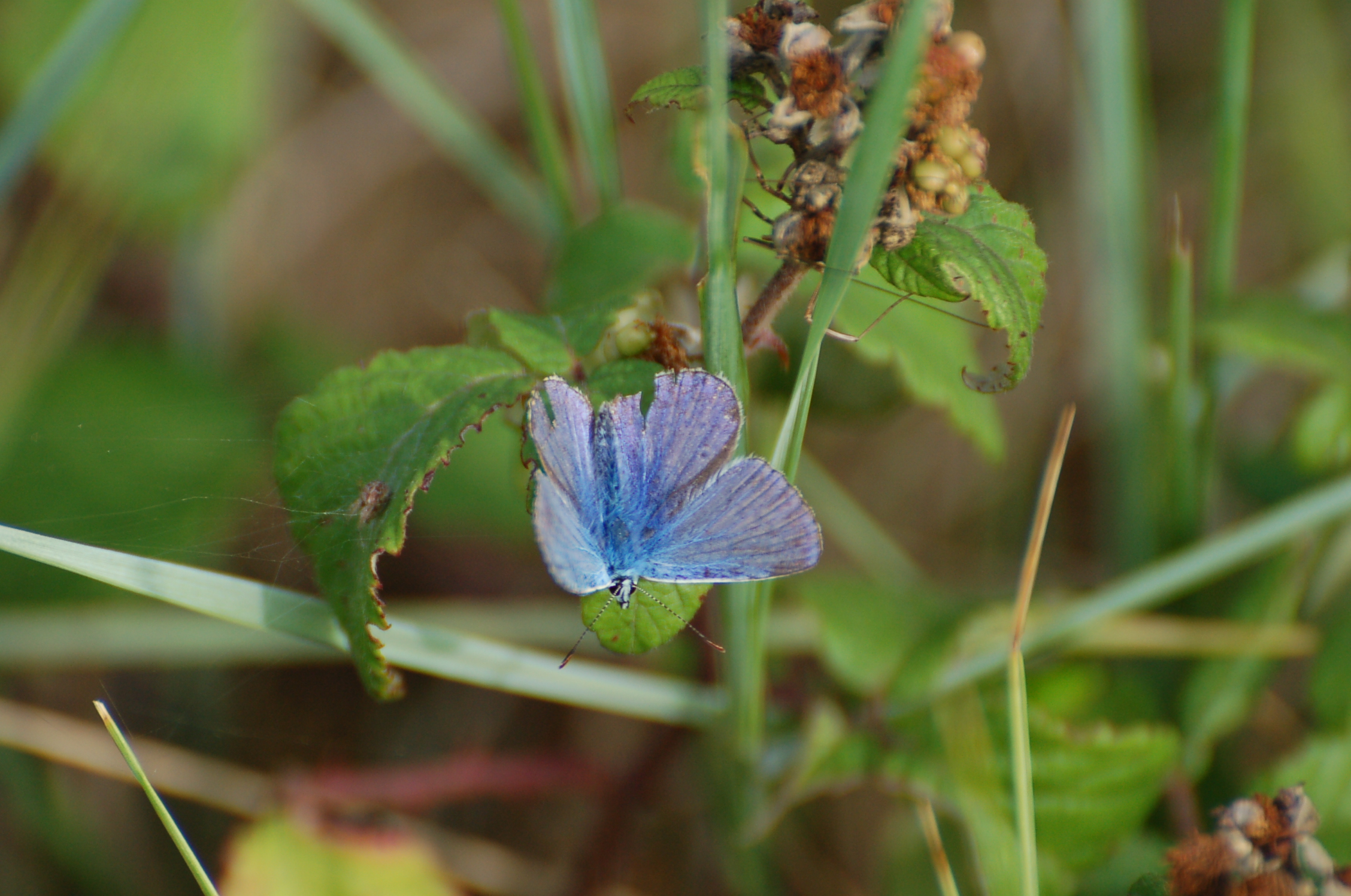
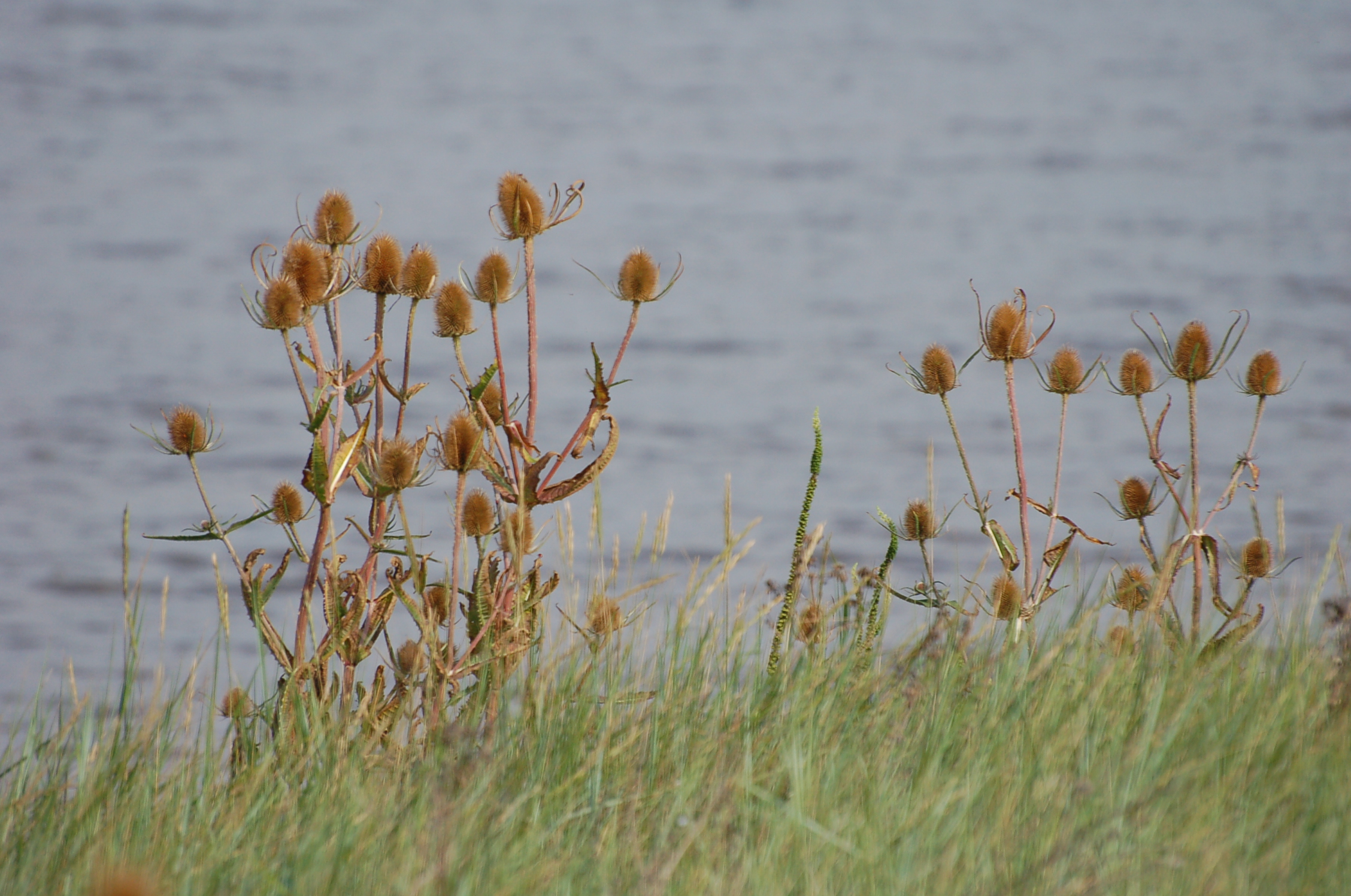
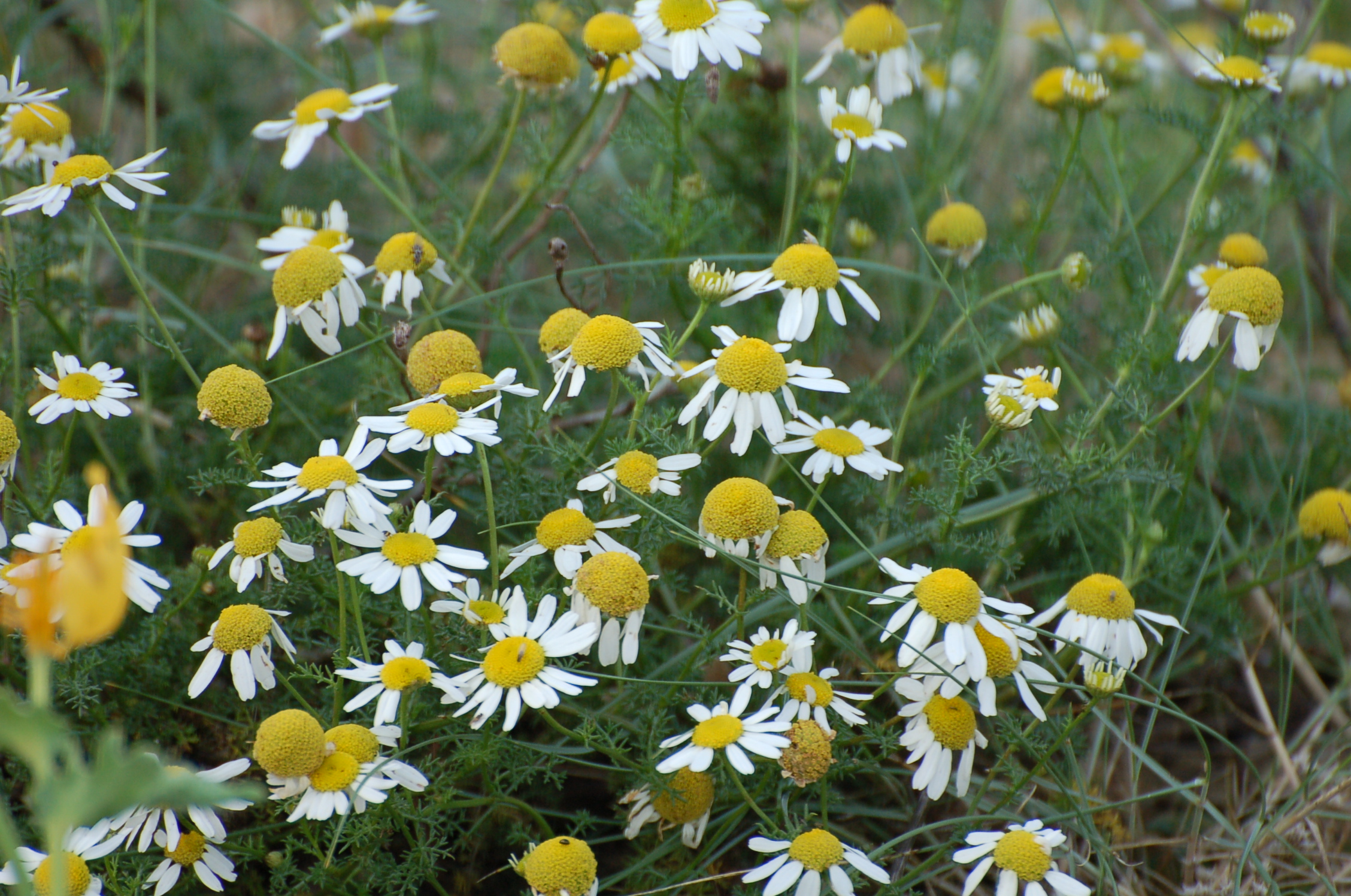
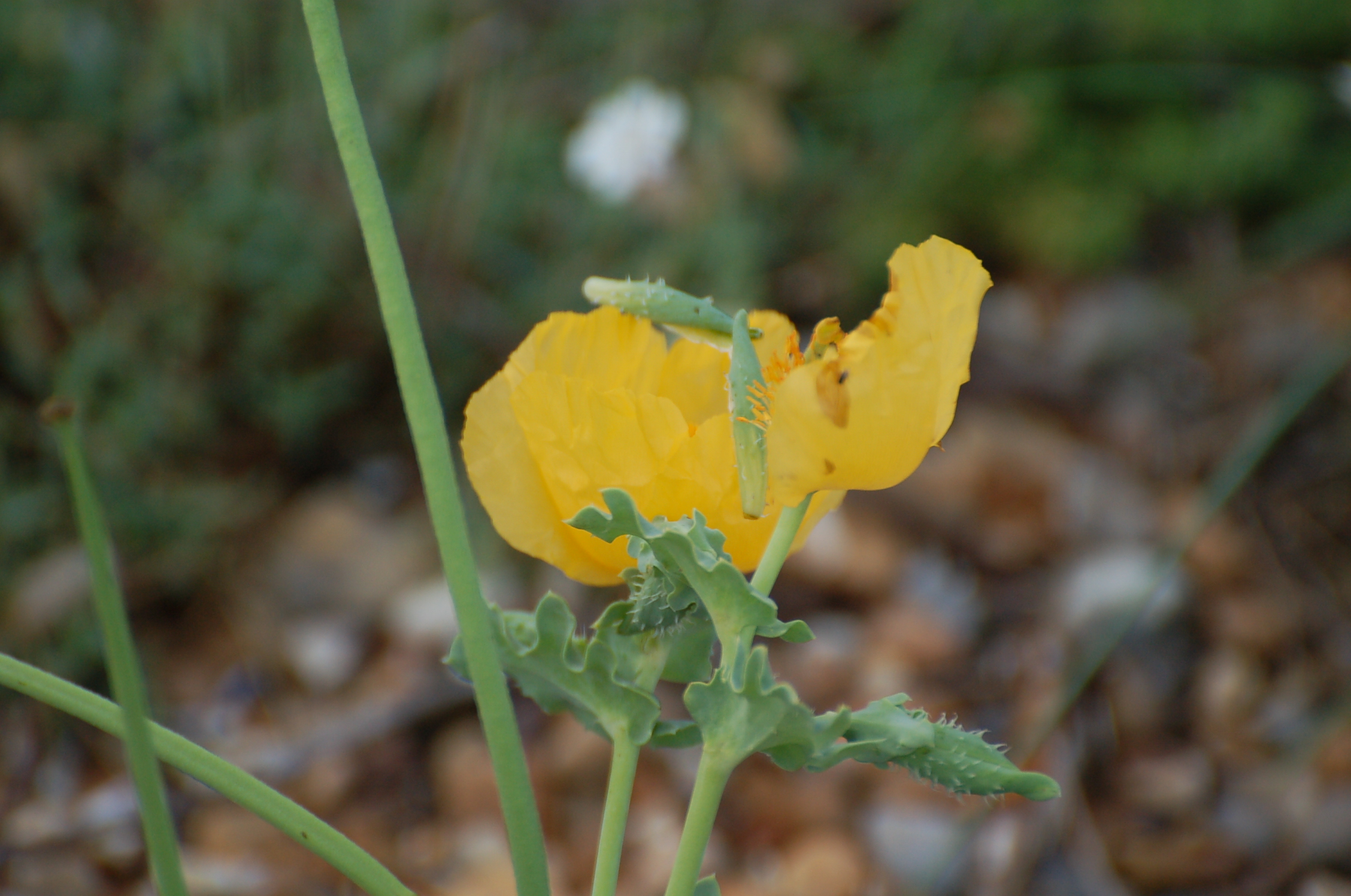
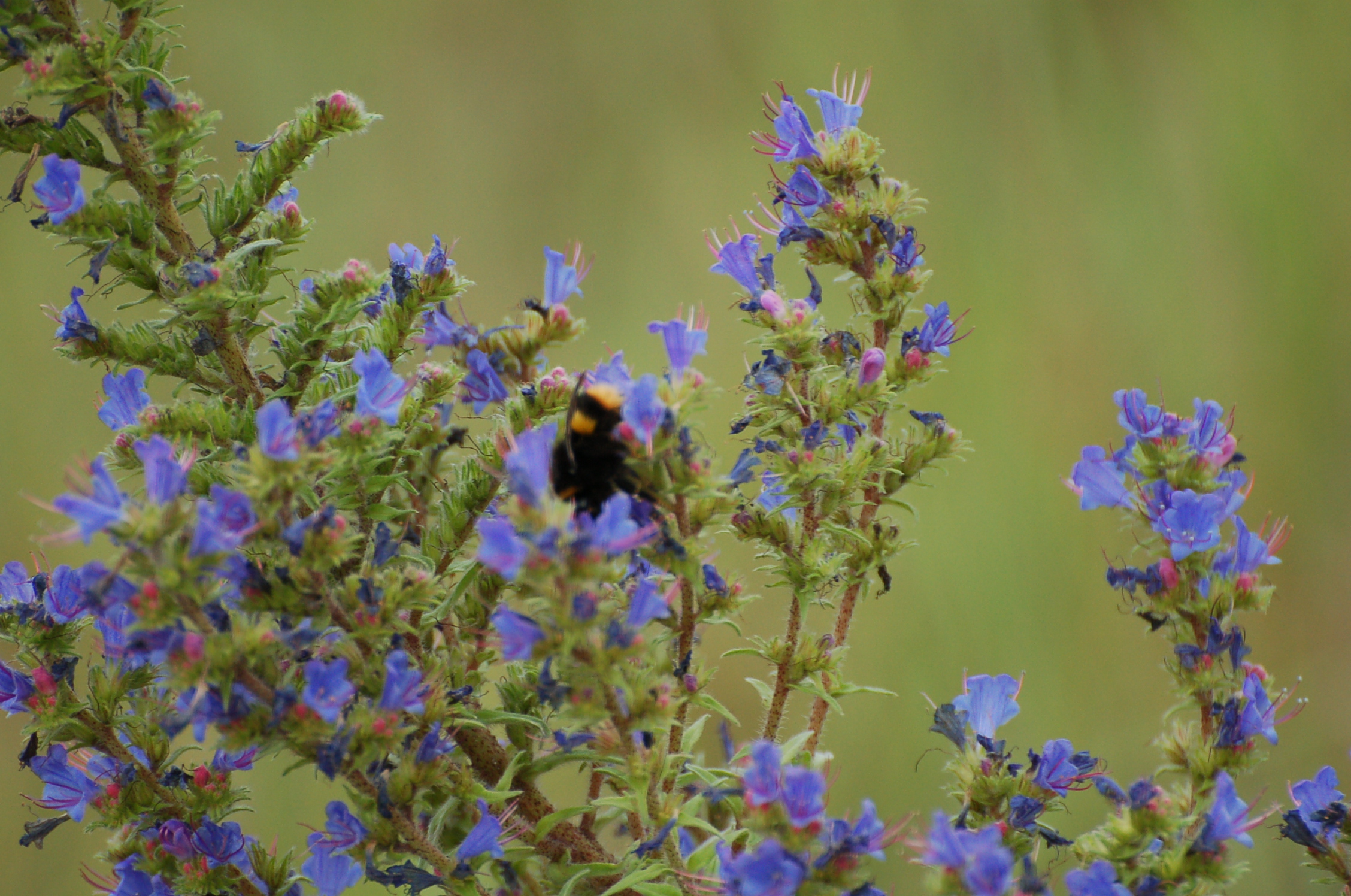
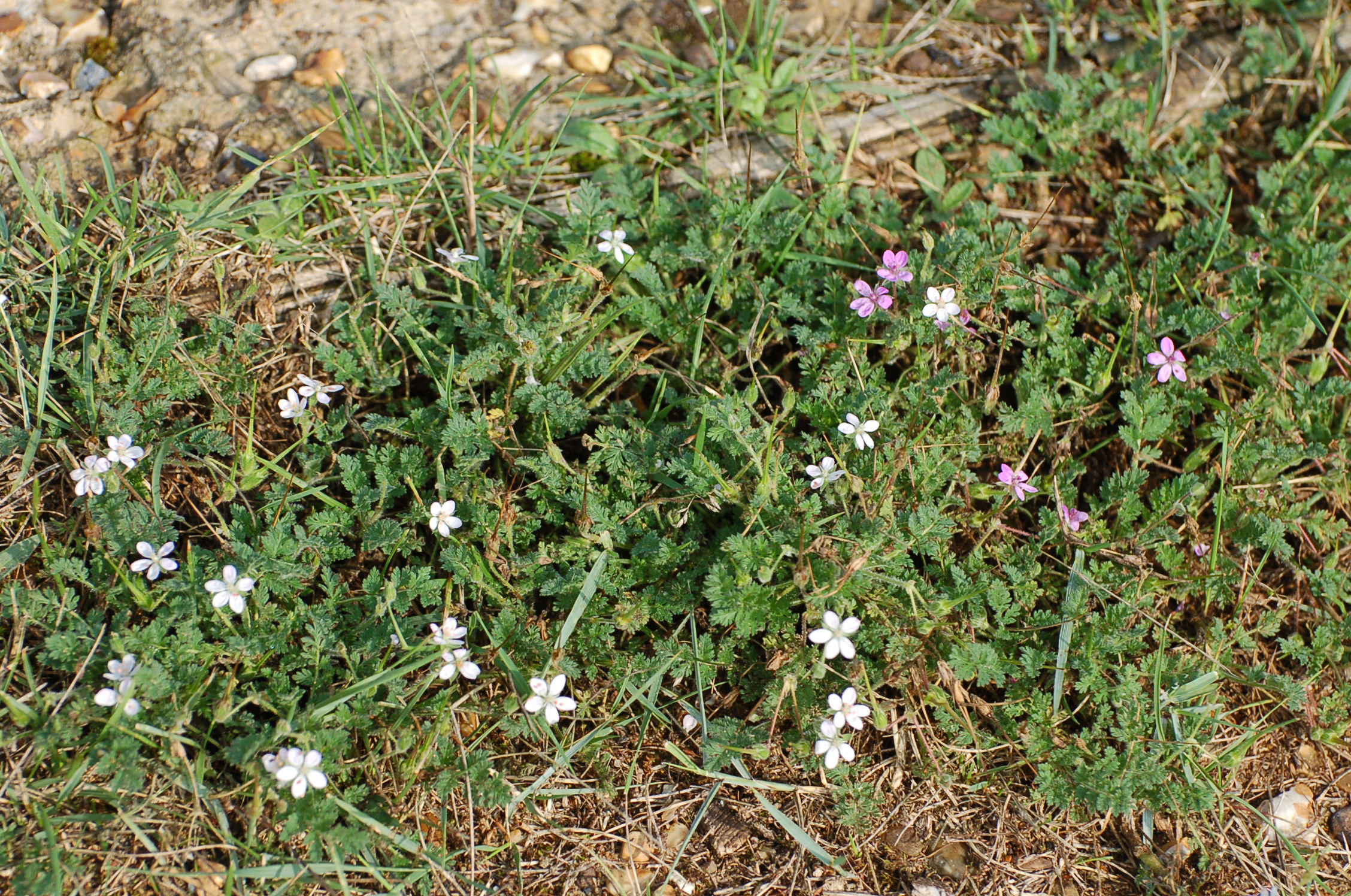
We then found time to appreciate the beauty of nature on the beach. When finding our spot to watch the wader show the light was still too poor to see what was at our feet. Wild flowers, butterflies, moths and small birds were all there for us to enjoy.
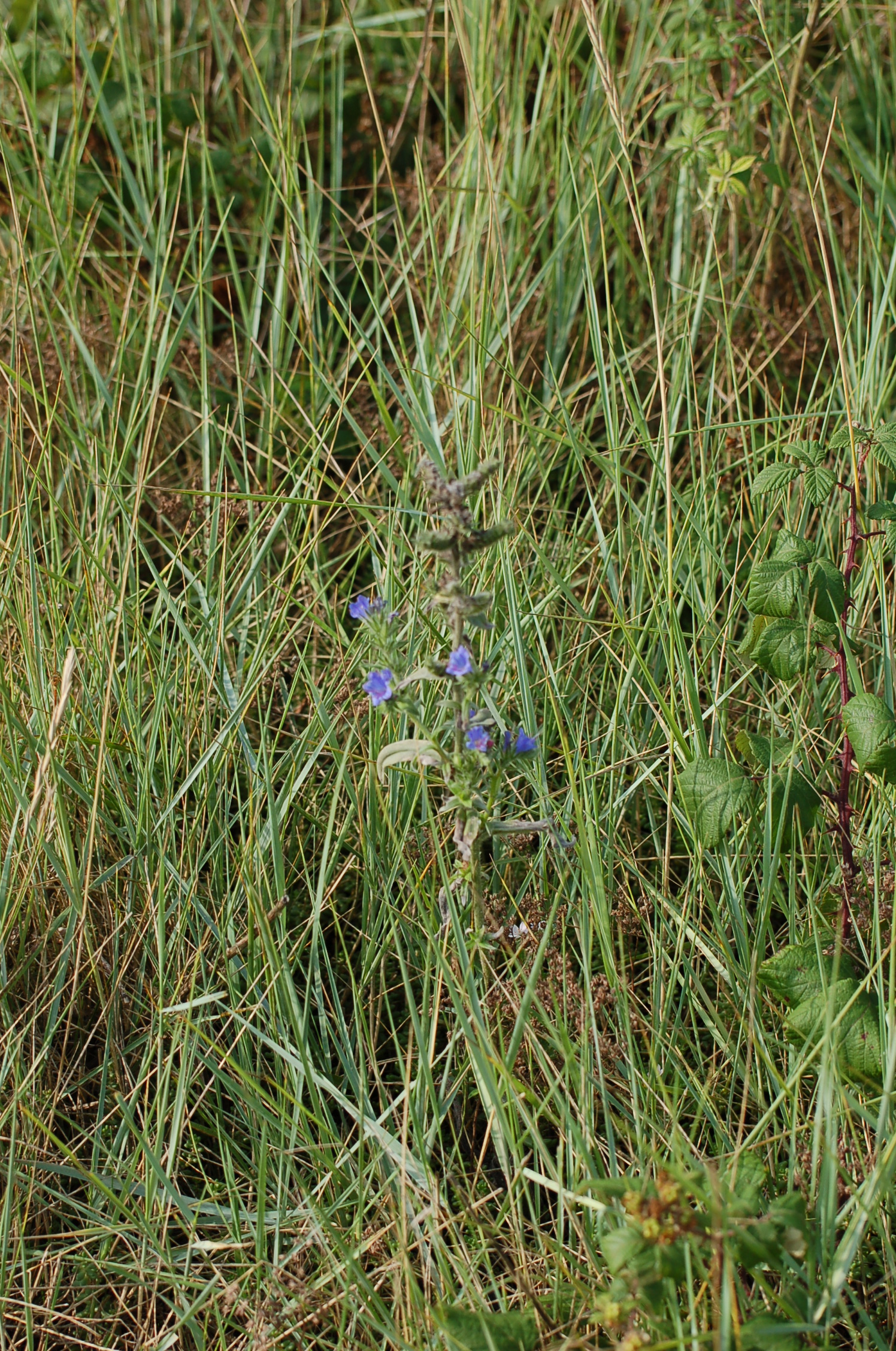
2013 08 26_3155 2013 08 26_3154 2013 08 26_3153 2013 08 26_3152 2013 08 26_3151 2013 08 26_3156 2013 08 26_3157 2013 08 26_3158 2013 08 26_3159 2013 08 26_3160 2013 08 26_3163 2013 08 26_3164 2013 08 26_3165 2013 08 26_3166 2013 08 26_3167

After enjoying the life of the shoreline we returned to the car via a hide that overlooked one end of one of the lagoons to see if we could spot any of the birds who had entertained us with their spectacular fly past. As you can see from the two photos they were pretty well hidden. I suppose once away from the safety of the sand banks and the surrounding sea they are more vulnerable to predator attack.

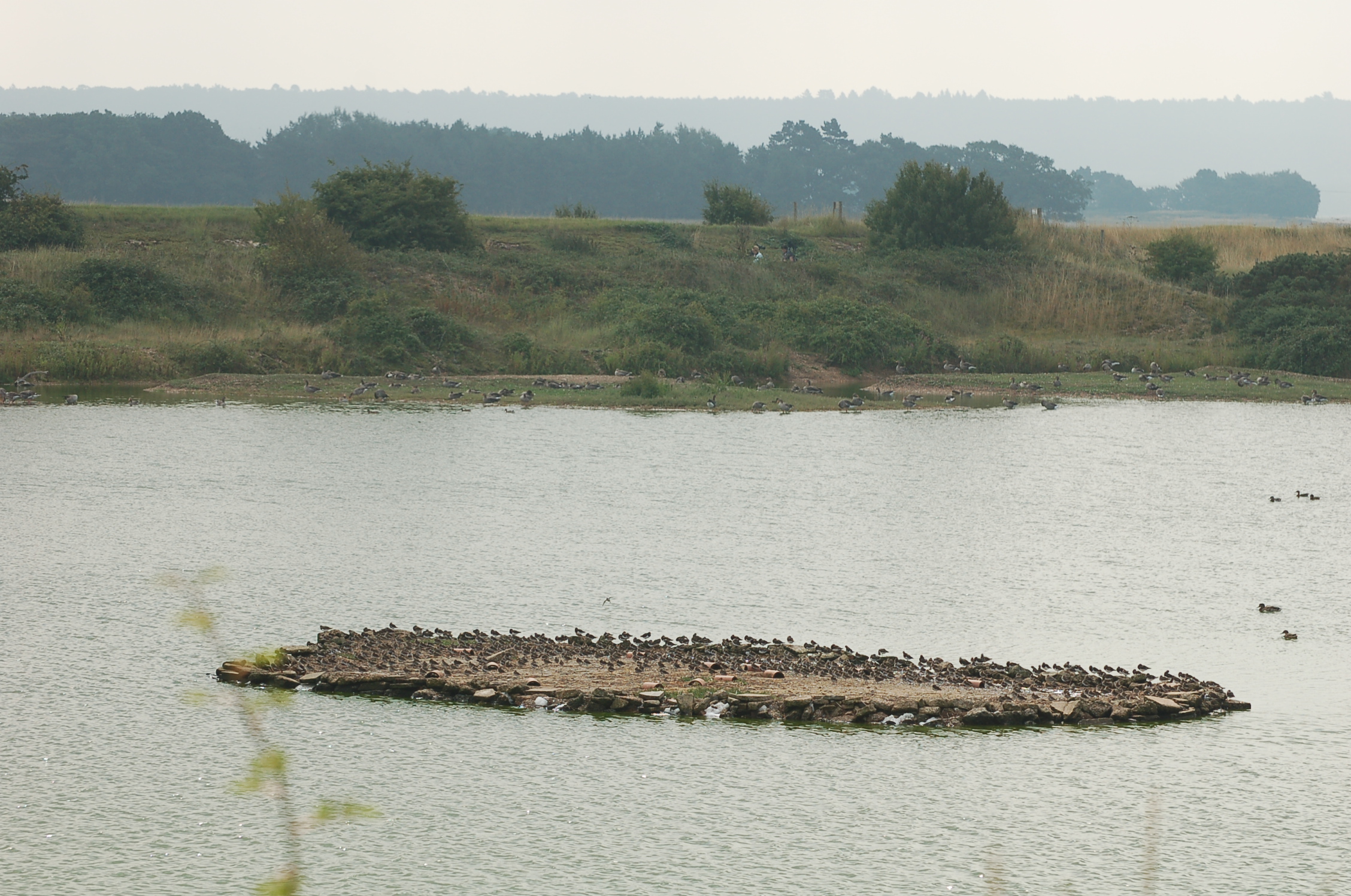
2013 08 26_3176 2013 08 26_3175

As we left the hide my camera was attracted to this old landing stage once again.
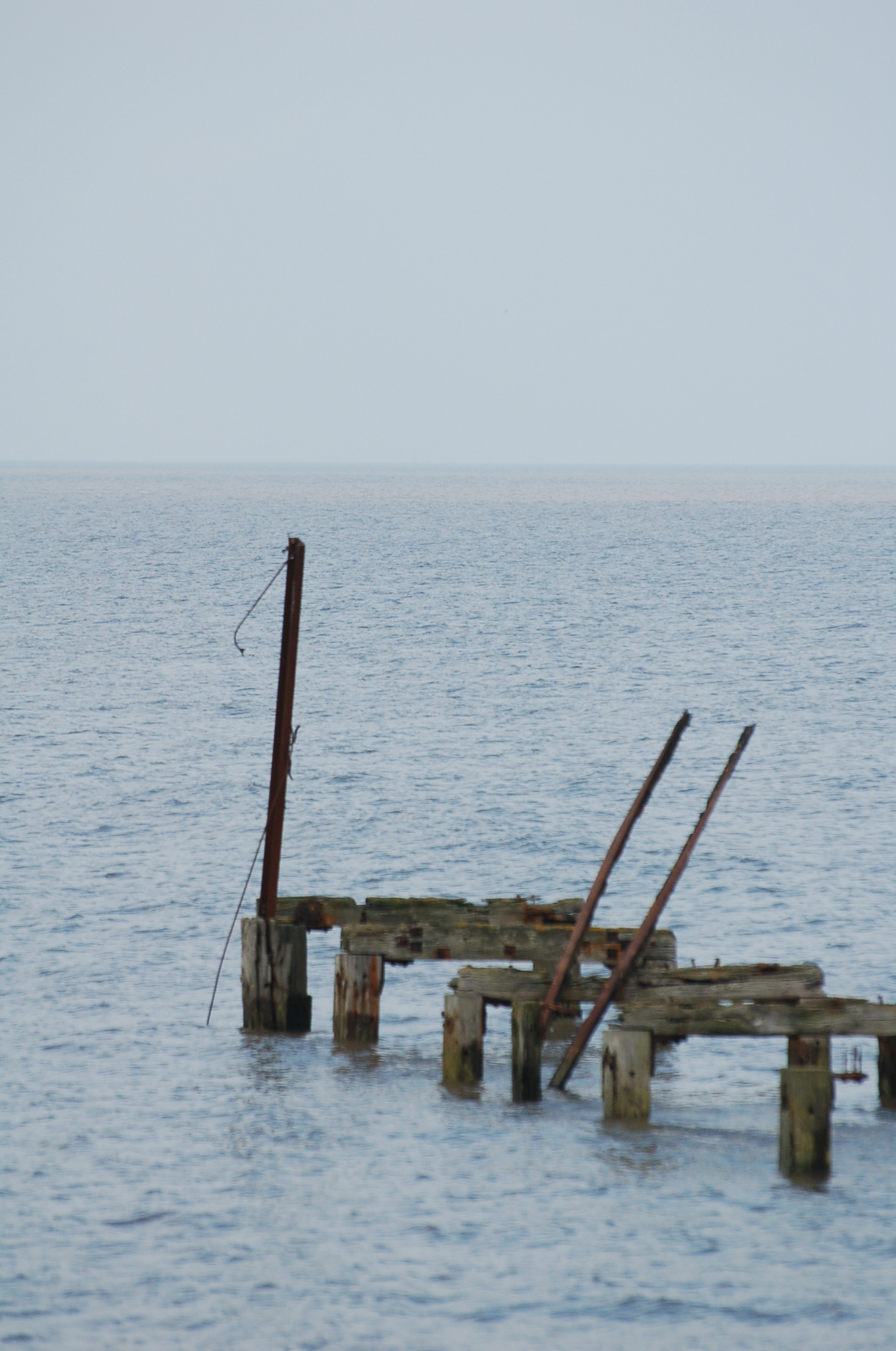
2013 08 26_3174 2013 08 26_3171 2013 08 26_3170 2013 08 26_3169 2013 08 26_3168 2013 08 26_3183 2013 08 26_3184 2013 08 26_3185

If you ever get a chance to experience a wader spectacular take it – it is an amazing natural phenomenon. To see more of my wader spectacular photos just click on the first photo and then follow the arrows.

Categories
bird watching birds conservation Shropshire trees wildlife Wildlife Trusts

A Canalside Ramble, There and Back. Part One: There.

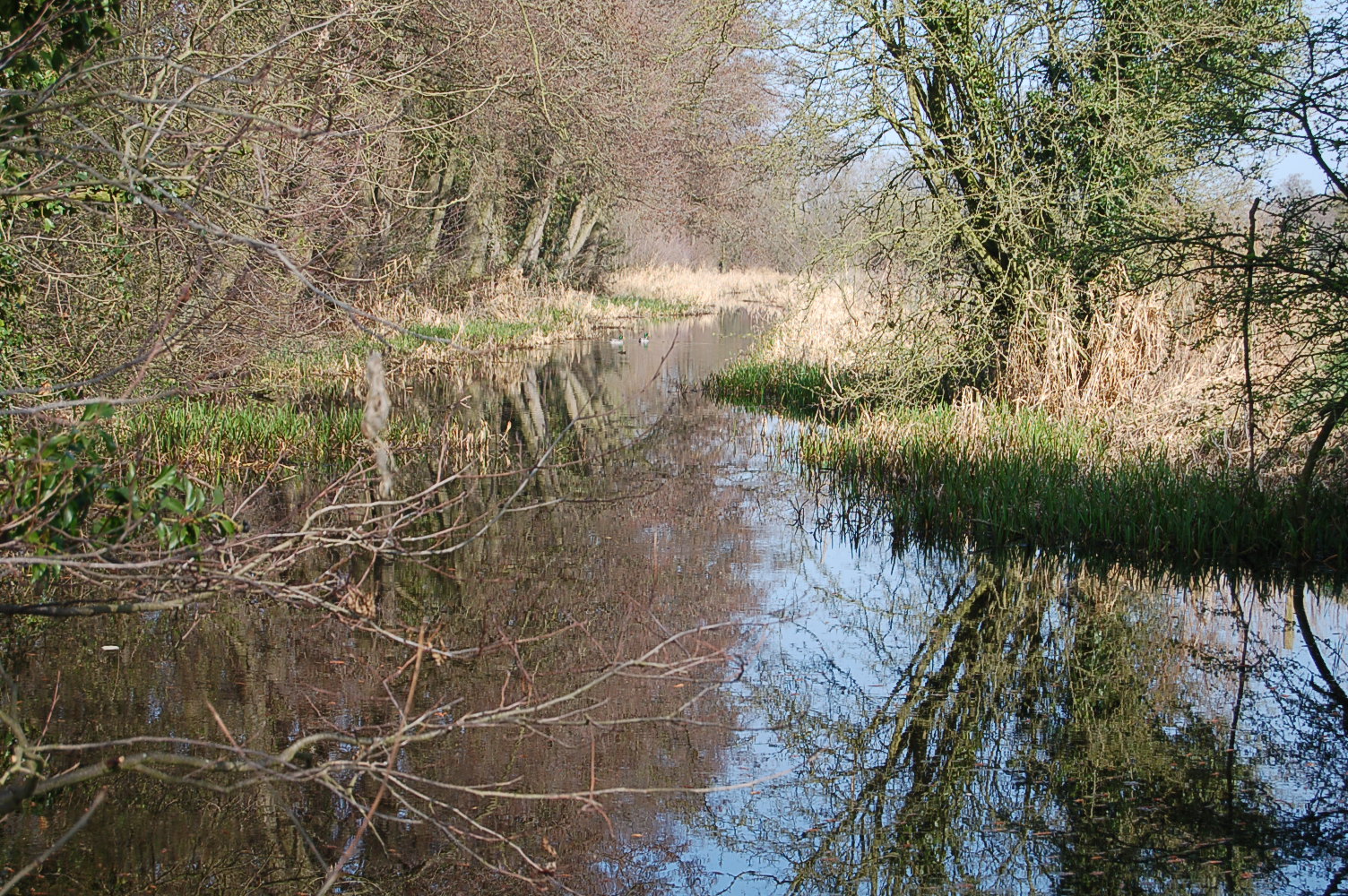
Bright sunshine, the purest blue sky and warm, summer temperatures in March! What could be better than a walk near water? So we decided to visit a Shropshire Wildlife Trust reserve with its track taking us along the towpath of one of Shropshire’s many stretches of canal. An easy flat walk on soft grass – so kind to the legs and feet after busy days on the allotment.

We have been members of our county’s Wildlife Trust for about 40 years now and visited their reserves regularly when our children were with us but now they have left home and we have both retired we are enjoying visiting them anew. The walk we chose today was the Prees Branch Canal Reserve, described as a “2 mile long pond”. A Site of Special Scientific Interest because of the rare underwater plants, it is also home to one of Britain’s rarest mammals, the Water Vole. Thus it was with great anticipation that Jude, also known as Mrs Greenbenchrambler, also known as “The Undergardener”, and I climbed the stile into the reserve. The first sound to reach our ears was the loud call of a chicken who had just laid its daily egg.

The Prees Branch Canal was started in the early 1800’s and was intended to be a branch of the Llangollen Canal, but finances ran out so it was never completed. The trail we chose to follow runs alongside the 2 miles that were built and runs to its junction with the Shropshire Union Canal.

Just a few steps into woodland alongside a short dried up section of canal and birdsong filled the air. The most persistent songster was the diminutive warbler, the Chiffchaff. Throughout our day’s walk of almost four miles there was a calling Chiffchaff every 30 metres or so, and these early arrivals sing with such gusto to announce themselves to any females in calling distance. It’s call, the simple repetitive “Chiffchaff” call that gives it its name, was interrupted by the much more tuneful song of its near relative, the Willow Warbler. We saw so many flying from tree to tree or searching out insects in undergrowth.

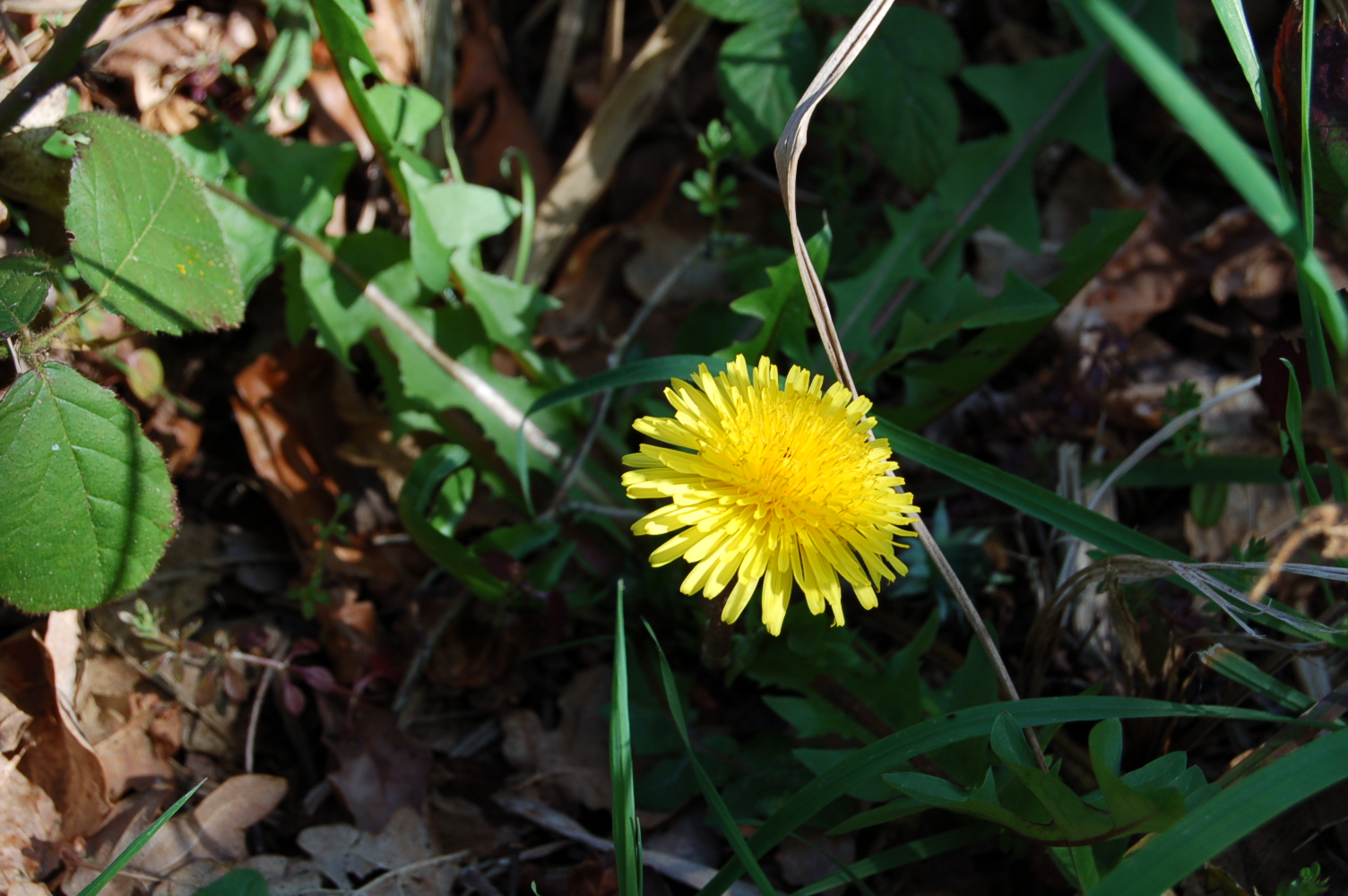
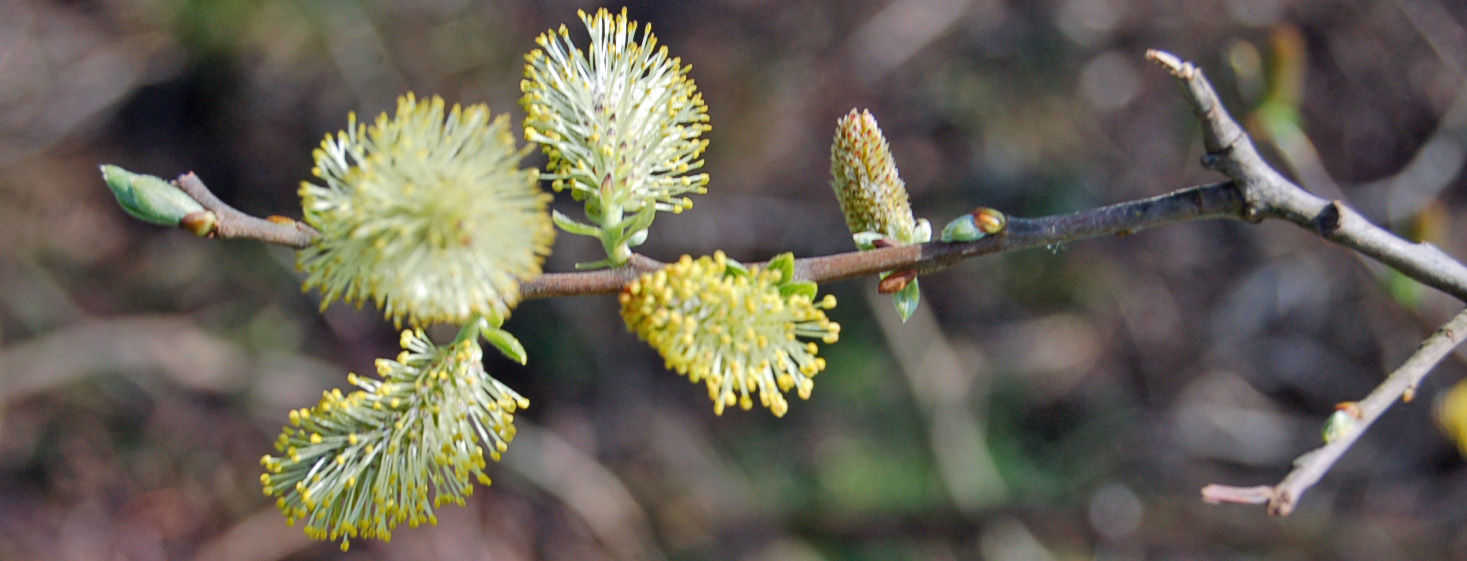
The habitat in this tree-lined section looked absolutely perfect for the Water Vole but the closest we got to one was hearing the characteristic “plop” as one entered the water from the dried reeds followed by the every increasing circles of ripples. In this area, beneath the bare stems of trees in their dappled shade yellow flowers abounded – Celandine, Dandelion, Marsh Marigold and Pussy Willow. Later a snout popped up through the surface film of the water, and Jude stopped me suddenly and pointed. as it moved towards it we realised that the snout was attached to a frog and not a Water Vole. But we enjoyed admiring the frog’s swimming skills – perfect breast stroke clearly seen in the sparkling clean water.

Leaving the tree-lined section, we entered a much more open stretch where the water was crystal clear. Beneath the surface the green of new Yellow Waterlilies glowed.

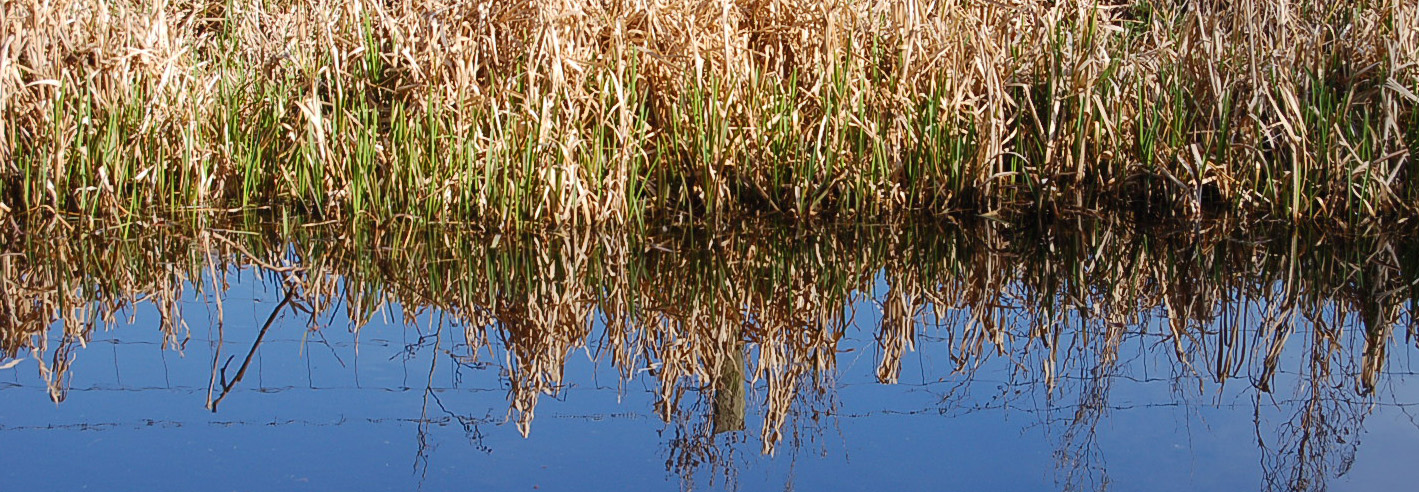
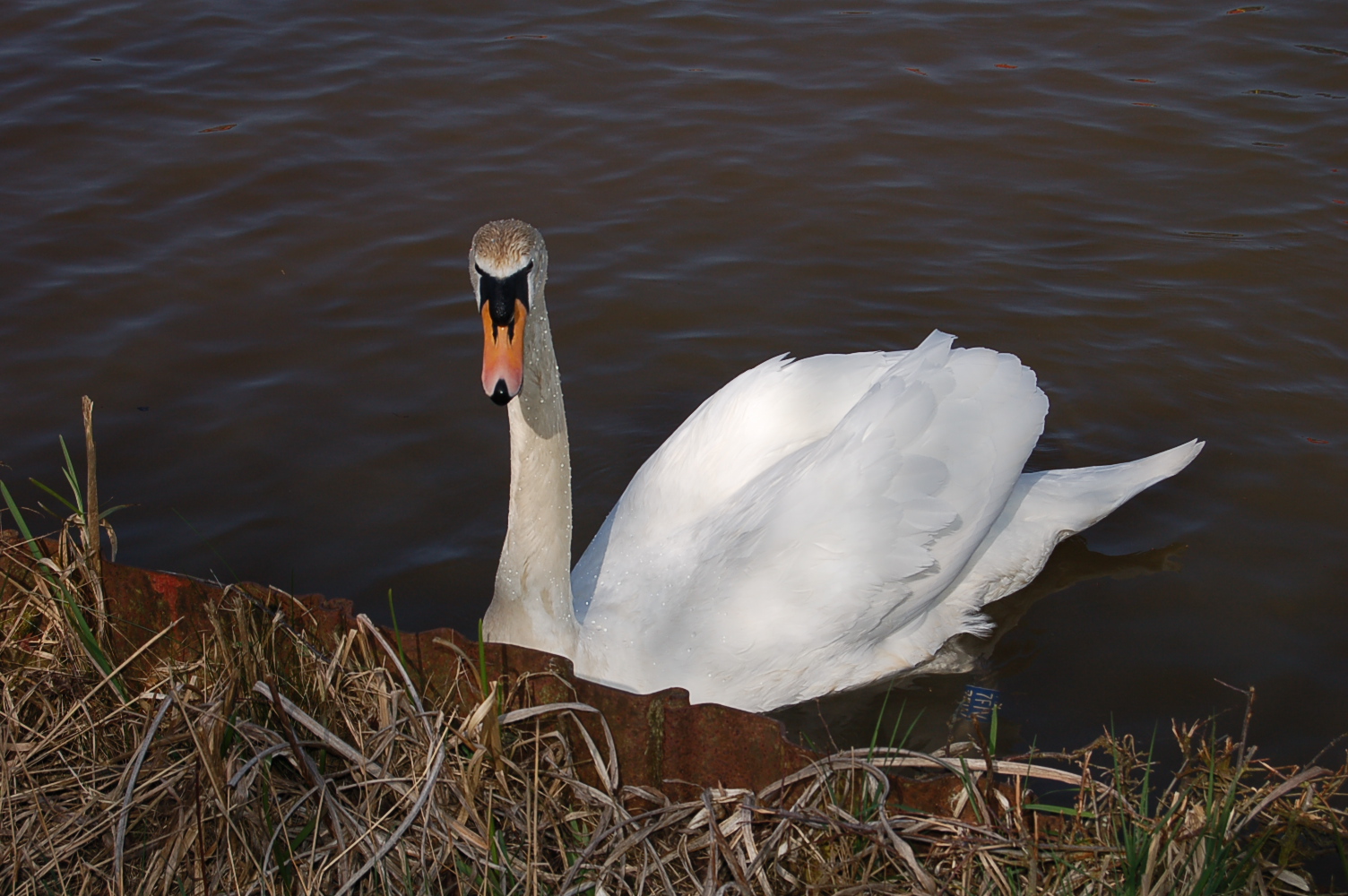
Two male Mallards, their green iridescent heads glowing against the sky reflecting blue, paraded up the canal ahead of us. A single Mute Swan bustled from the dried reeds, a blue ring on its leg showing in the clear water. Clean white feathers, orange beak and blue leg ring.

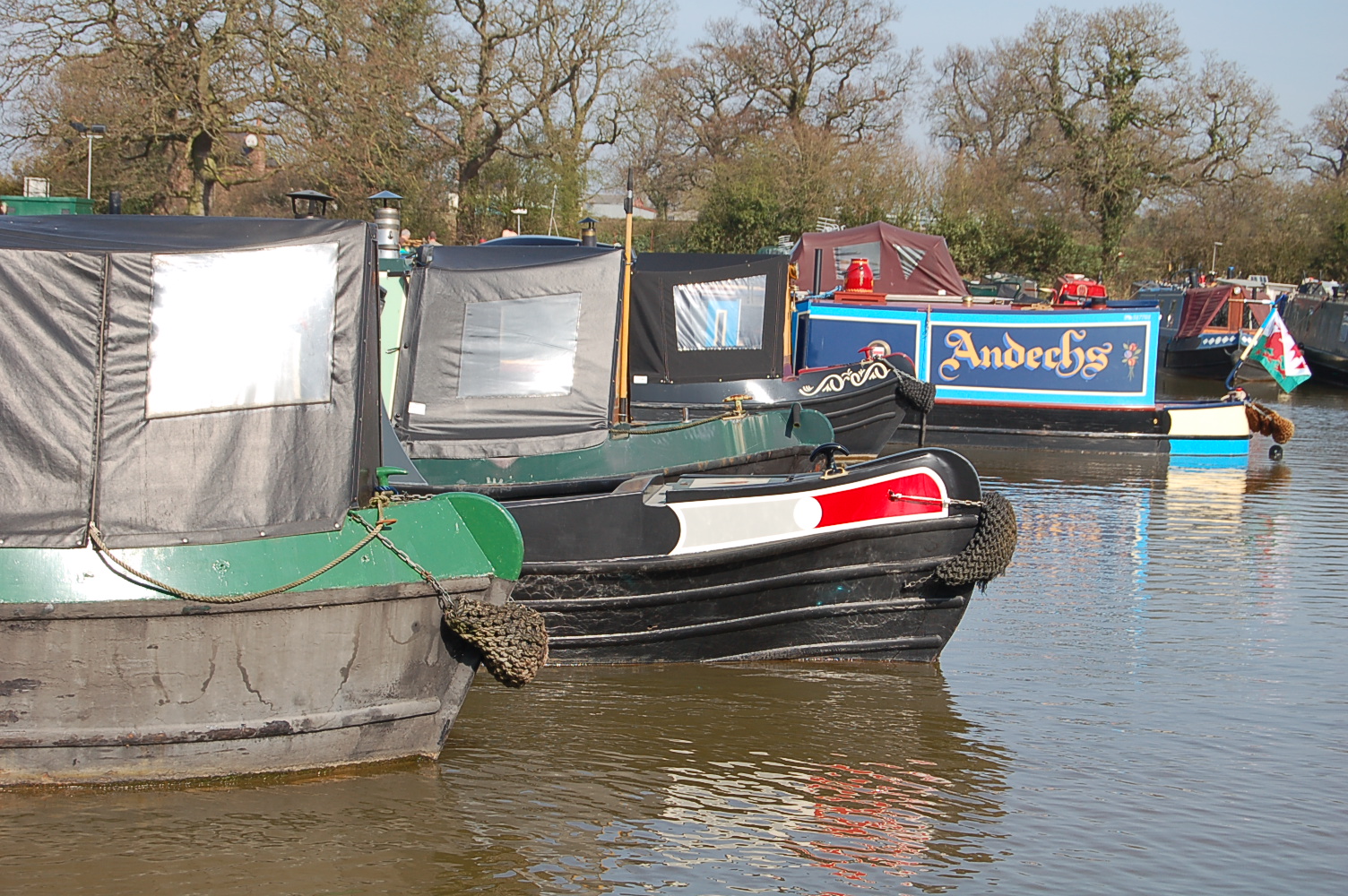
We crossed this open stretch and after passing through an Alder coppice, we reached a busy marina and navigable waters. Narrow boats in all colours, all sizes and from all destinations clustered around moorings. From here on these boats chugged passed us regularly stirring up the silty bed of the canal. They sported a miscellany of names all saying something about their owners, their humour and their interests. Tadpole, Otter, Mouse, Earwig and Maple Leaf, Grace, Ondine, Montgomery, Jubilee Bridge and my favourite Django. That boat owner must be a fellow jazz fan.

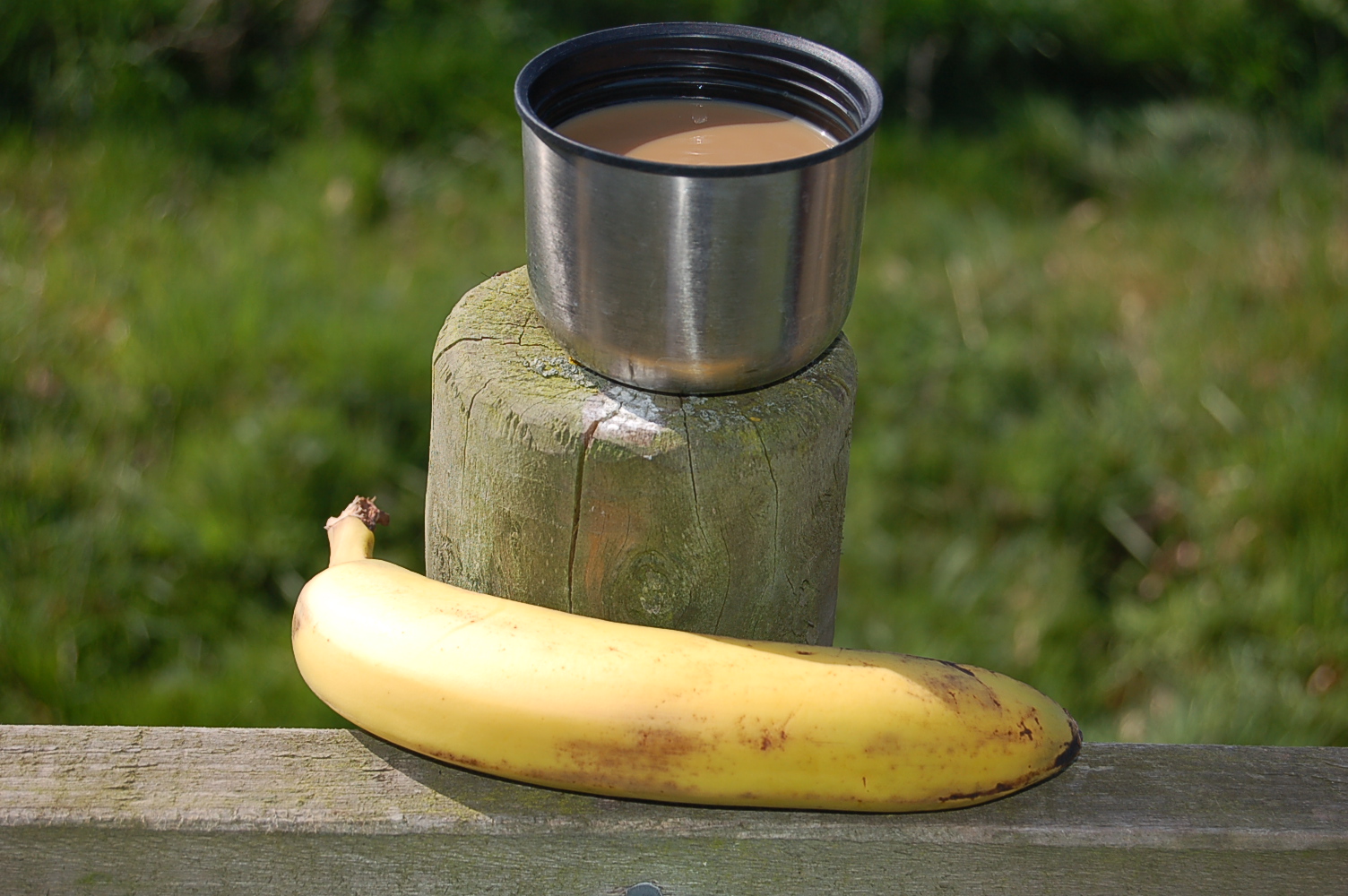
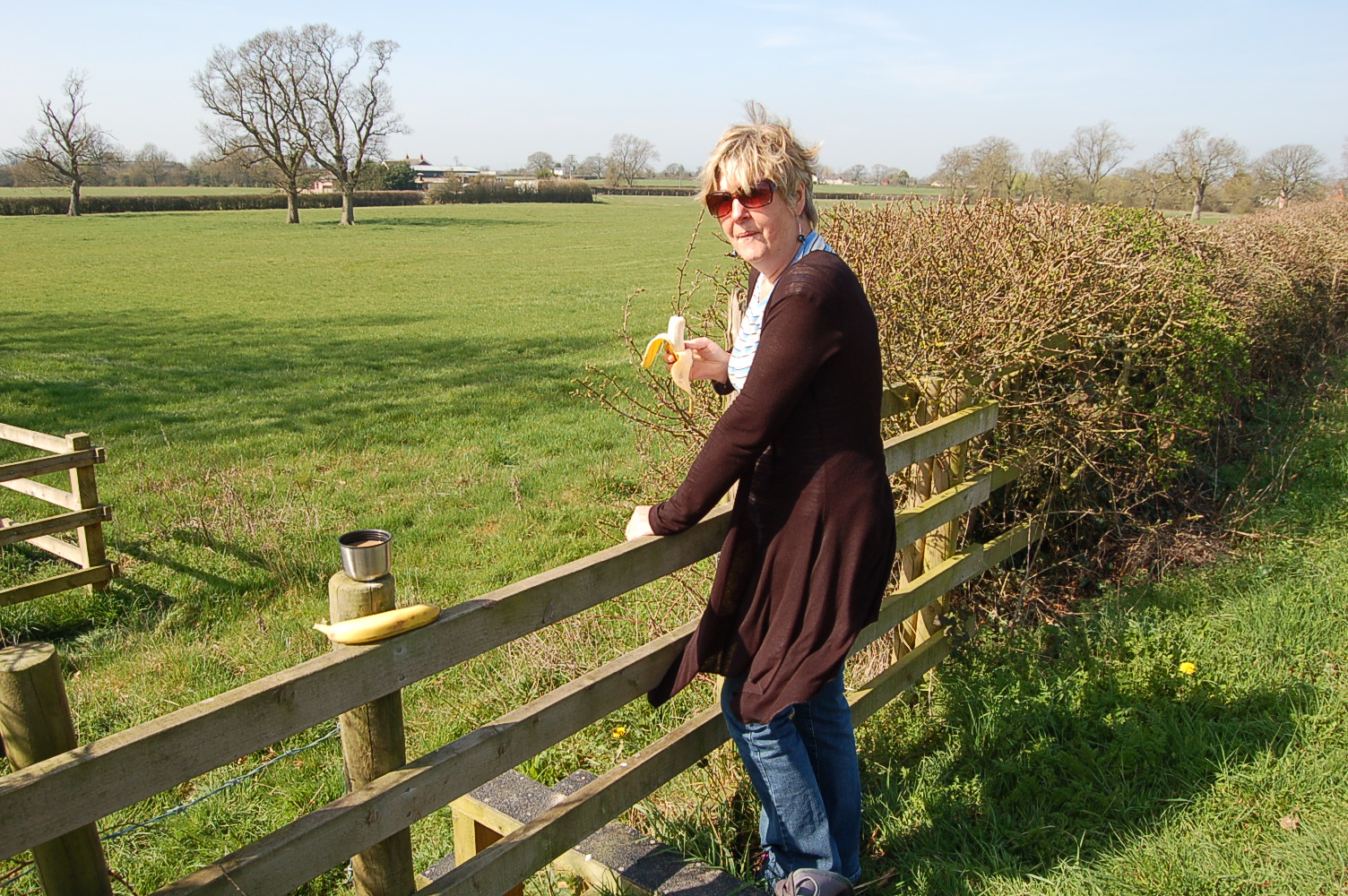
Just beyond the marina we found a stile conveniently placed to lean upon, eat bananas and drink coffee and of course rest weary legs.

We passed under bridges which gave us a moment of shade from the sun which was gaining strength by the hour. Each bridge has a name, Waterloo Bridge, Boodles Bridge, Dobson’s Bridge, Starks Bridge, Allimans Bridge or a number. These hump-backed bridges carried narrow country lanes over the canal or tracks that took cattle or sheep from field to field. Under Boodles we were mesmerised by the sight of a Great Diving Beetle swimming powerfully to the water’s surface to collect its bubble of air. This is Britain’s largest beetle and swims with strong legs. It is large and powerful enough to catch and eat small fish called Sticklebacks.

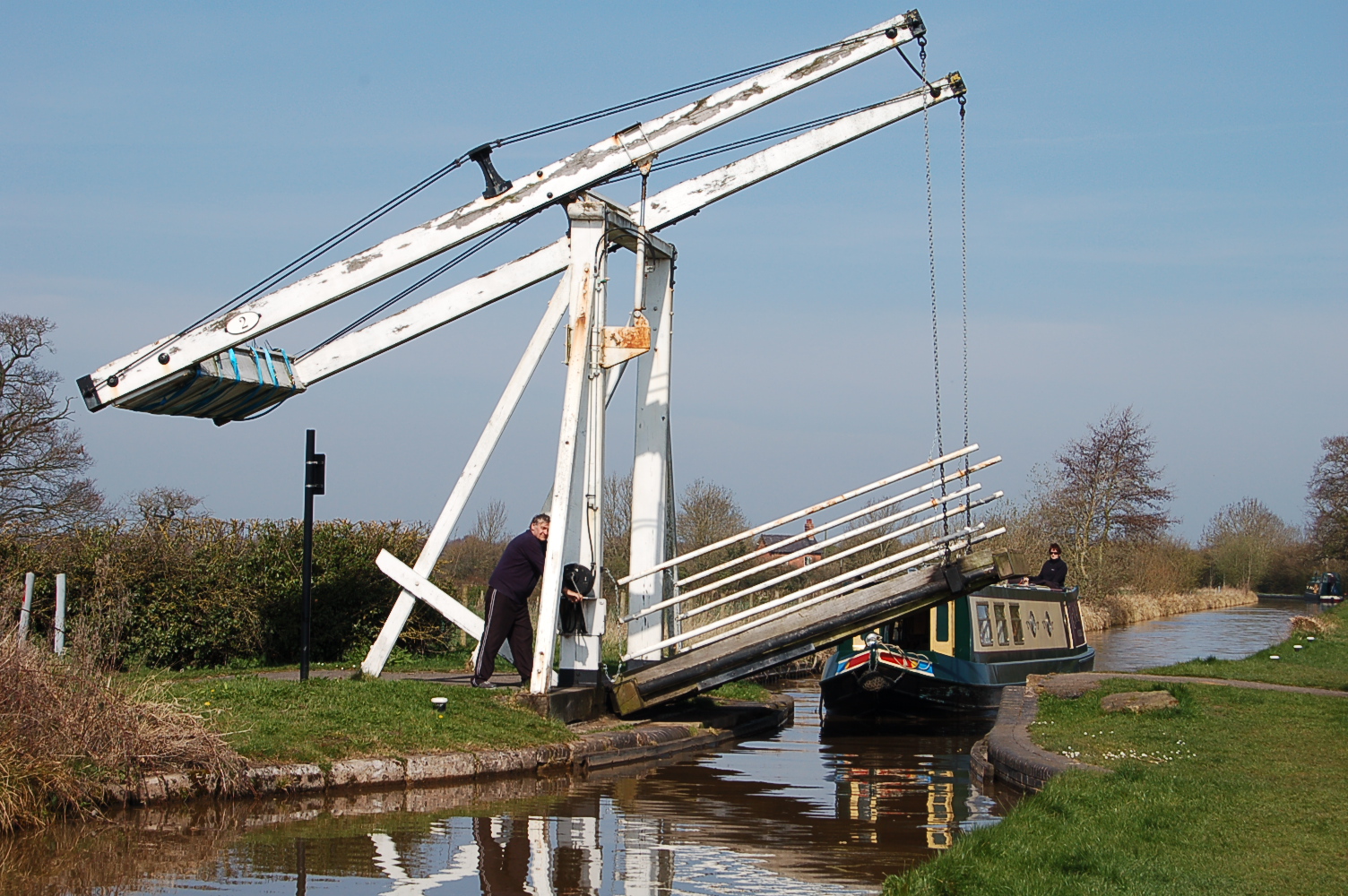
Starks and Allimans were most unusual bridges – Lift Bridges. The trackways were carried over the canals by these low wooden bridges which boatman raise by manually turning a handle. As we approached Starks we watched a barge passing under, a skillful manoeuvre.

We stood on Allimans lift bridge and looked along the canal trying to decide whether we had enough energy in reserve to walk the last straight quarter-mile stretch to the T-junction where our Prees Branch Canal met with the Shropshire Union. It looked too tempting!

So we moved on slowly and here the canal cut straight through marshy land with scrapes and pools. From the towpath we spotted wading birds such as Lapwing and Curlew, and water birds such as Moorhens, Canada Geese and Wigeon Ducks. Squealing and wheeling above them were the ubiquitous Black-headed Gull.

Reaching the T-junction felt great and after crossing Roving Bridge next to Roving Farm, we found a seat! Just reward indeed! There were two benches placed in memory of people who had loved the canal in their lifetimes. We made ourselves comfortable with a coffee and a couple of apples on the bench dedicated to Edith. Thanks Edith we enjoyed your seat. Here we stayed a while enjoying the sounds of birdsong and watching the occasional barge passing along the Shropshire Union. Most cruised slowly and quietly in front of us and their occupants waved or called greetings. But one approached us noisily. We heard the engine and the “sailors” a long way off. The engine was so noisy that the sailors just had to shout to hear each other giving commands and advice. They needed advice as three men in orange fluorescent safety jackets stood on board a tiny tug barge pushing a barge along in front and pulling two behind. The barge snake zigzagged from bankside to bankside and progressed slowly, but provided amusing entertainment.

Quiet returned as they disappeared into the distance and we could appreciate the “yaffling” calls of Green Woodpeckers and the chattering of pairs of Wagtails, both Pied and Grey. Goldfinches and Greenfinches passed over head in pairs and a lone Buzzard wheeled high above.

(Part Two to follow)

Categories
birds conservation RSPB wildlife

Wildlife Oasis

Whilst gardening today I was aware of so much wildlife around us even this late in the year. The bird feeding stations were unusually busy and birds moved though the borders searching for insects and seeds. Nuthatches have returned this year after a three-year absence and the blackcaps have arrived for the winter. The mixed titmice flocks lead by the Long Tails visit regularly and bring the garden to life. There are still insects around and the occasional bee and wasp. The Field Voles and Shrews make forays into the borders in search of their meals. It has not taken a great deal of effort to encourage our wildlife but certainly benefit from seeing and hearing it all around us whenever we are in the garden, so why are there not nature reserves on every spare patch of land in town and country? Look out for a future blog about our wildlife gardening efforts.

When on holiday in Dorset in the early autumn we were amazed by the RSPB reserve in Weymouth,  Radipole, which is a true wildlife oasis in this busy seaside town. It is a wonderful place! So much nature just where you expect to see very little. We were treated to sightings of kingfisher, hobby, marsh harrier, little egret, snipe, reed bunting and warblers aplenty.

We found the walks around the reserve easy as they were flat and comfortable and refreshments were at hand via the bountiful blackberry bushes alongside the tracks. One section of the track is bordered with buddlejas specially planted for butterflies and wildflowers abound.

The reserve is home to rarities such as bittern, bearded tit and cettis warbler as well as many species of wader, duck and warblers such as sedge and grasshopper. As well as the birds otter are regularly spotted. The huge variety of species here is due to the variety of habitat which include lagoon and reedbed.

And all this is found alongside busy town roads, bustling junctions and retail parks. We thought we were lost when we found ourselves in a town car park until we spotted the thatched roof of the little visitors’ centre right at the far end. The welcome is so warm – all RSPB centres give a warm welcome to their visitors but the welcome here is warmer than the norm. The volunteers are full of useful information and will talk you through recent sightings and the best places to get good views. We arrived in a heavy downpour but enjoyed a good cup of coffee a chat with a volunteer and a view over the lagoon from the centre’s huge viewing window. We had a brilliant day and can recommend it to anyone visiting the South West.


This Veggie Life

A Vegetarian | Nature Lifestyle Blog

Rambling in the Garden

.....and nurturing my soul

The Arch City Gardener

Journeys In St. Louis Gardening and Beyond

Garden Dreaming at Châtillon

Consult the genius of the place

Storyshucker

A blog full of humorous and poignant observations.
gardeninacity

Notes from a wildlife-friendly cottage garden

PlayGroundology

...an emerging social science

The Official Blog of British Wildlife

'The most important and informative publication on wildlife of our times' - The Independent. This blog is a member of The UK & Ireland Natural History Bloggers group: www.uknhb.blogspot.com

iGrowHort

Inspire - Cultivate - Grow Native Plants - Restore Landscapes

Bishops Meadow Trust

To create and protect a semi-natural wild space for the people of Farnham to enjoy and experience an array of British wildlife in our town

Gardening with Children

The www.gardeningwithchildren.co.uk Blog

UKbirdingtimeline

birding through the seasons, why birds matter and how to conserve them

NATURE WALKER

with a camera in hand

Jardin

Transform your outdoor space

Eva's space

My allotment, cooking and other interests

Old School Garden

my gardening life through the year

LEANNE COLE

Trying to live a creative life

fromacountrycottage

trying to live as lightly as possible on our beautiful planet

Good Life Gardening

Nature lovers from Leicester living the good life.

mybeautfulthings

Finding the beautiful in the everyday

mawsonmichelle

Michelle's Allotment

In and Out of My Garden

thoughts from and about my garden

Greenhousing

Big plans for a small garden

The Scottish Country Garden

A Walled Country Garden in South East Scotland

The Fruity Chicken

Life at the fruity chicken

willowarchway

Off grid living. Self sufficient. "PERMAGANICS RULE".

St Anns Allotments

Nottingham's Grade 2* Listed Allotments and Community Orchard

Manifest Joy Harvests

a journey in suburban vegetable gardening

Allotmental

The madness of growing your own

Penny's Garden: a harvest beyond my front door

A novel approach to vegetable gardening

arignagardener

Sustainable living in the Irish countryside.

NewEnglandGardenAndThread

Master Gardener, amateur photographer, quilter, NH native, and sometimes SC snowbird

dianajhale

Recent work and work in progress and anything else that interests me

planthoarder

a chaotic cottage gardener

Lens and Pens by Sally

a weekly blog that creates a personal philosophy through photographs and words

Dewdrops and Sunshine

Stories from a sassy and classy Southern farmbelle.

The Pyjama Gardener

Simple Organic Gardening & Seasonal Living

gettin' fresh!

turning dirt into dinner

JOY...

today the world is created anew

Garden Birds

Notes from a Devon garden

ShootAbout

Life Through The Lens

Adapting Pixels

A photography blog showcasing the best photography pictures and videos on the internet

Wildlifegardening's Blog

Just another WordPress.com site

naturestimeline

personal observations from the natural world as the search continues for a new approach to conservation.

LATEBLOOMERBUDS

The Wonders of Life through my Eyes, my Heart, my Soul