As part of the development of the shared community spaces at Bowbrook Allotment Community we have created “Gardens of the Four Seasons”. We did this with the support of “The Peoples Postcode Trust” who awarded us a generous grant for the purchase of plants. In early 2011 we began work on the Winter Garden and now we are beginning to see some results of our labours. The work was carried out by allotment holders who attend regular working parties (look out for future blog about our working parties) and the gardens are maintained by members. Much work is also done outside working parties by individuals or small groups.
I designed the garden and presented the plan to the management committee and informed other members by e-mail, asking for comments, further suggestions and ideas. The basic idea was to create a garden full of trees, shrubs, grasses, bulbs and perennials that looked good in the winter, for their stem colour, bark colour and texture, their flowers, their scents. Movement and sound was also considered so we included many grasses and some trees with rustling stems.
It is now a year since we began the groundwork. The preparation was completed by the end of February 2011 and the main framework of planting by the end of March.
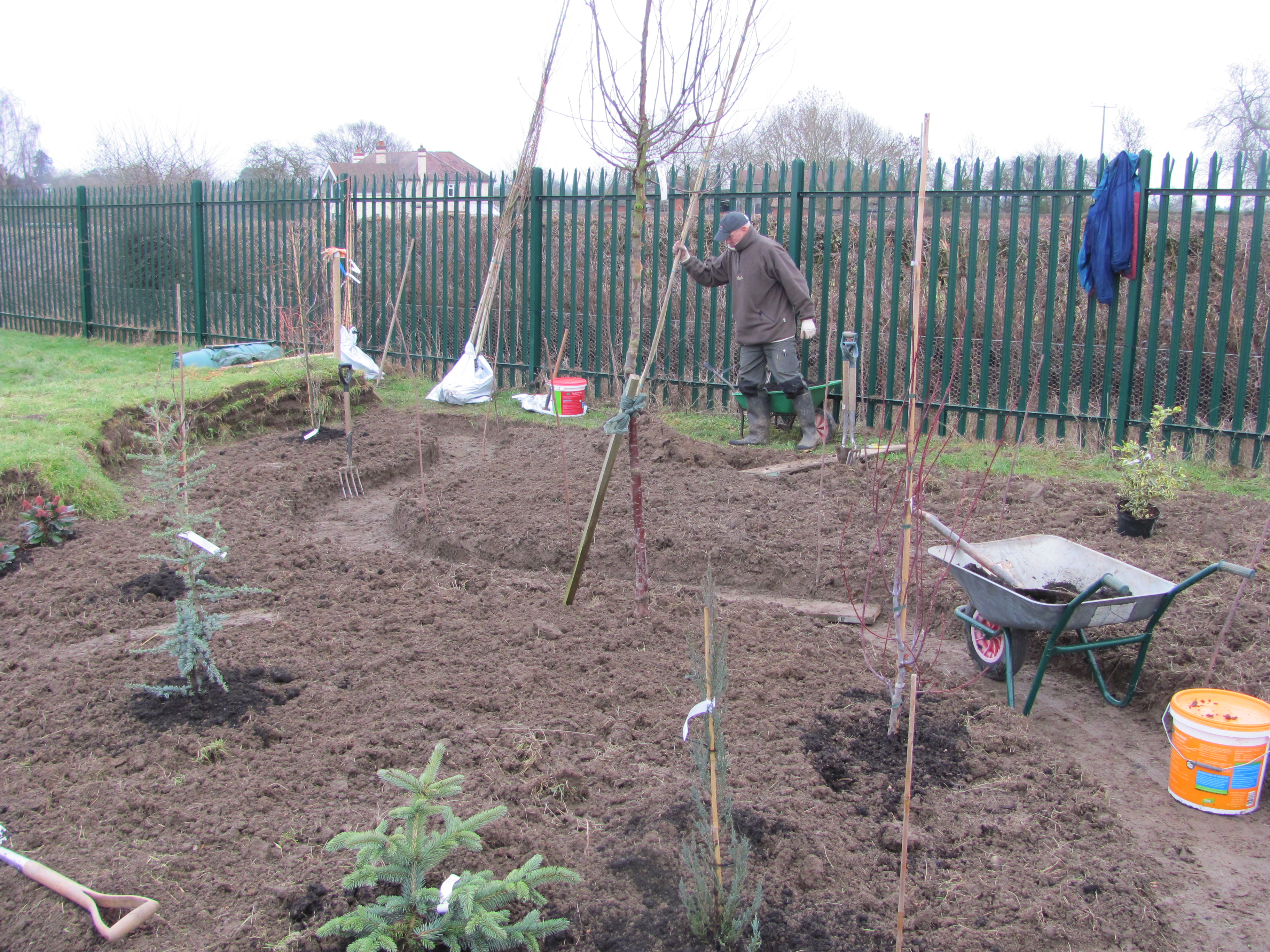
The first step was to rotovate the land, almost triangular in shape, in the corner of the site furthest from the huts, about 10 x 20 metres. We then added manure and rotovated once more. We dug out a path shaped as a serpentine curve, which cut the border in two, edged it with logs and gave it a deep layer of bark. It proved soft and comfortable to walk on. A thick layer of compost was added to the planting areas and raked level and we were prepared for planting.

Trees and shrubs were delivered by The Dingle Nursery from Welshpool, who had proved so helpful in helping us to select the best when we visited them to place our order. Unloading the truck and unpacking the plants was an exciting time, full of anticipation. Transporting them across the site took longer than expected involving three plot-holders with wheelbarrows. Some of the trees were just too long to stay put. After an hour of laughter and regular rescuing of dropped goods, we finally began planting. It was to take a few days.

Bulbs and herbaceous plants arrived by post and were added to our structural planting of trees and shrubs. a selection of grasses was added later. We now had trees with coloured bark, shrubs with coloured stems and a winter flowering time, perennials such as Hellebores and Pulmonaria and grasses to give movement and beautiful seed heads.
In pride of place are our three silver-barked Birches, Betula utilis “Jacquemontii” planted as 3 metre tall specimens, along with similarly sized Prunus serrula with its shining gingery-bronze bark. Smaller specimens of Acer davidii (a snake bark maple), Acer griseum appreciated for its peeling red bark and a selection of variegated Hollies completed the structural planting.
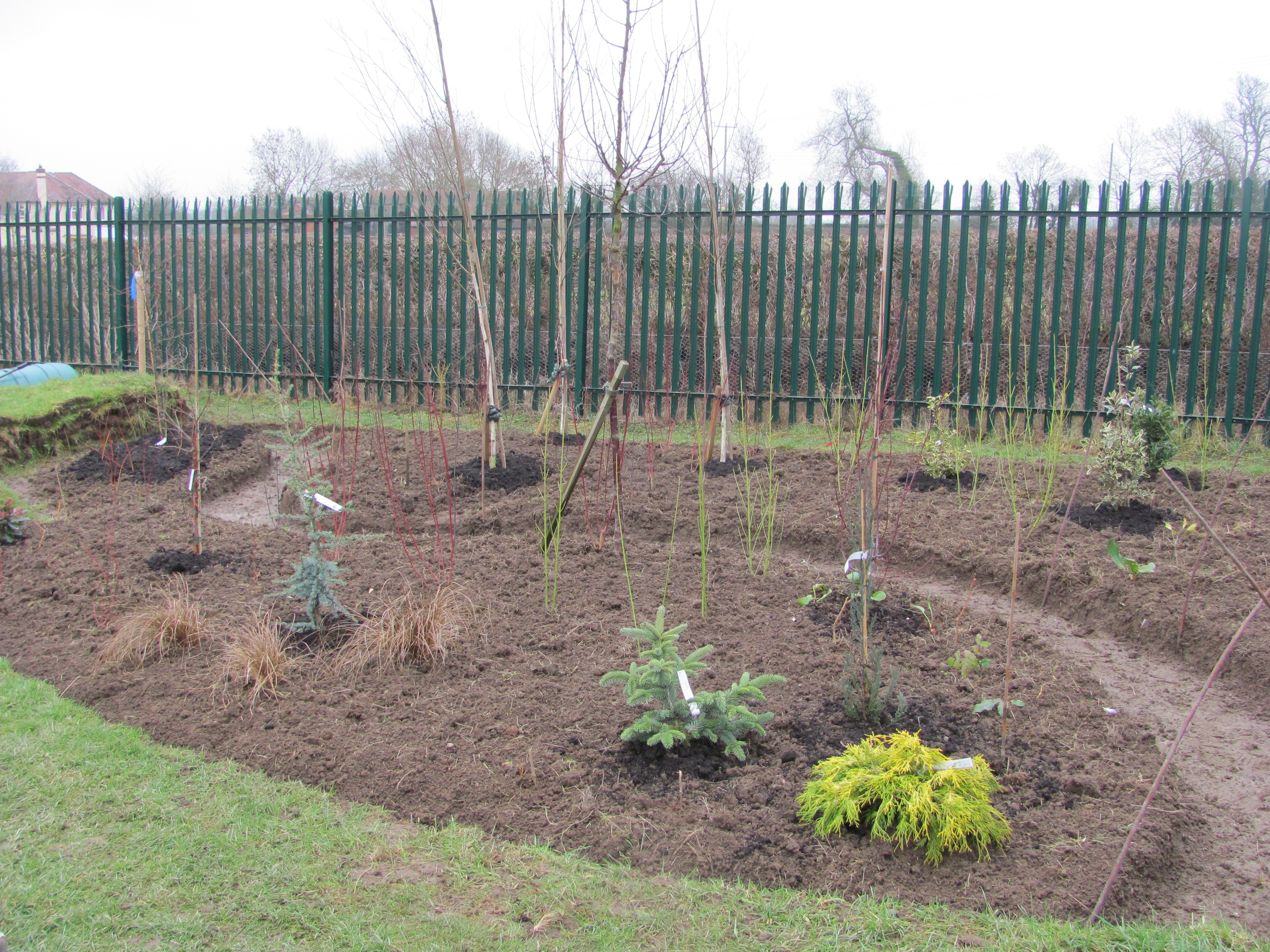
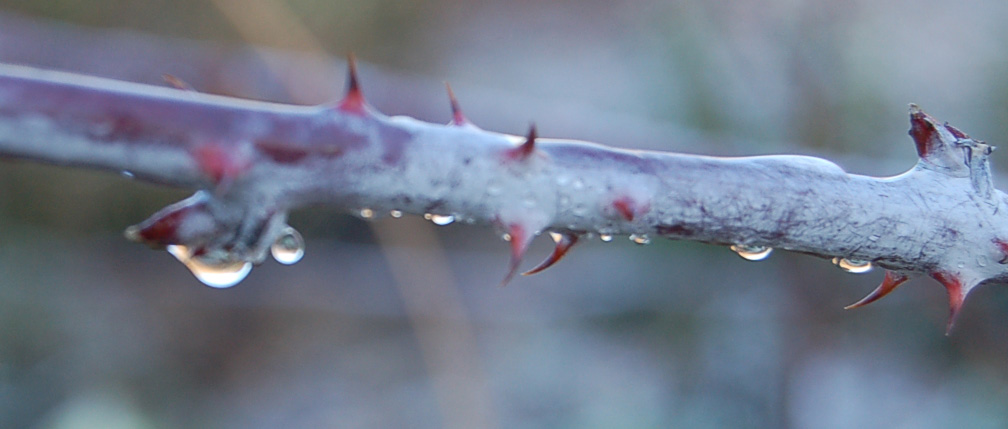
For bark colour we planted dozens of Cornus, Salix and Rubus tibeticanus to give an airy network of colour all winter and early spring. We interplanted these with patches of Lavender to give some summer interest, to attract butterflies, bees and hoverflies and to provide gentle bluish foliage colour all year. For winter flowering interest and scent we planted Cornus mas and Viburnum bodnantense “Dawn”.
In order to maintain all year interest with greatest emphasis of interest we added evergreens. As well as the Hollies we included Viburnum tinus and several conifers chosen for the variety of foliage colour, texture and habit of growth – Picea pungens Procumbens, Pinus sylvestris, Chamaecyparis “Boulevard” and to top it off John, our committee’s chairman donated a lovely specimen of Cedrus atlantica glauca. As a contrast we also planted a Larix decidua a conifer that is deciduous.
When we planted the trees and shrubs, following the allotment site’s organic policy, we gave them a sprinkling of bonemeal in the planting holes and top-dressed with blood fish and bone fertiliser before mulching with manure. We plan to give the bed regular mulching of compost and manure to give a slow-release nutrient regime.
Working parties and individual volunteers worked throughout the year to keep weeds at bay.

By late summer the garden was showing lots of healthy growth and we could see much promise for the future.
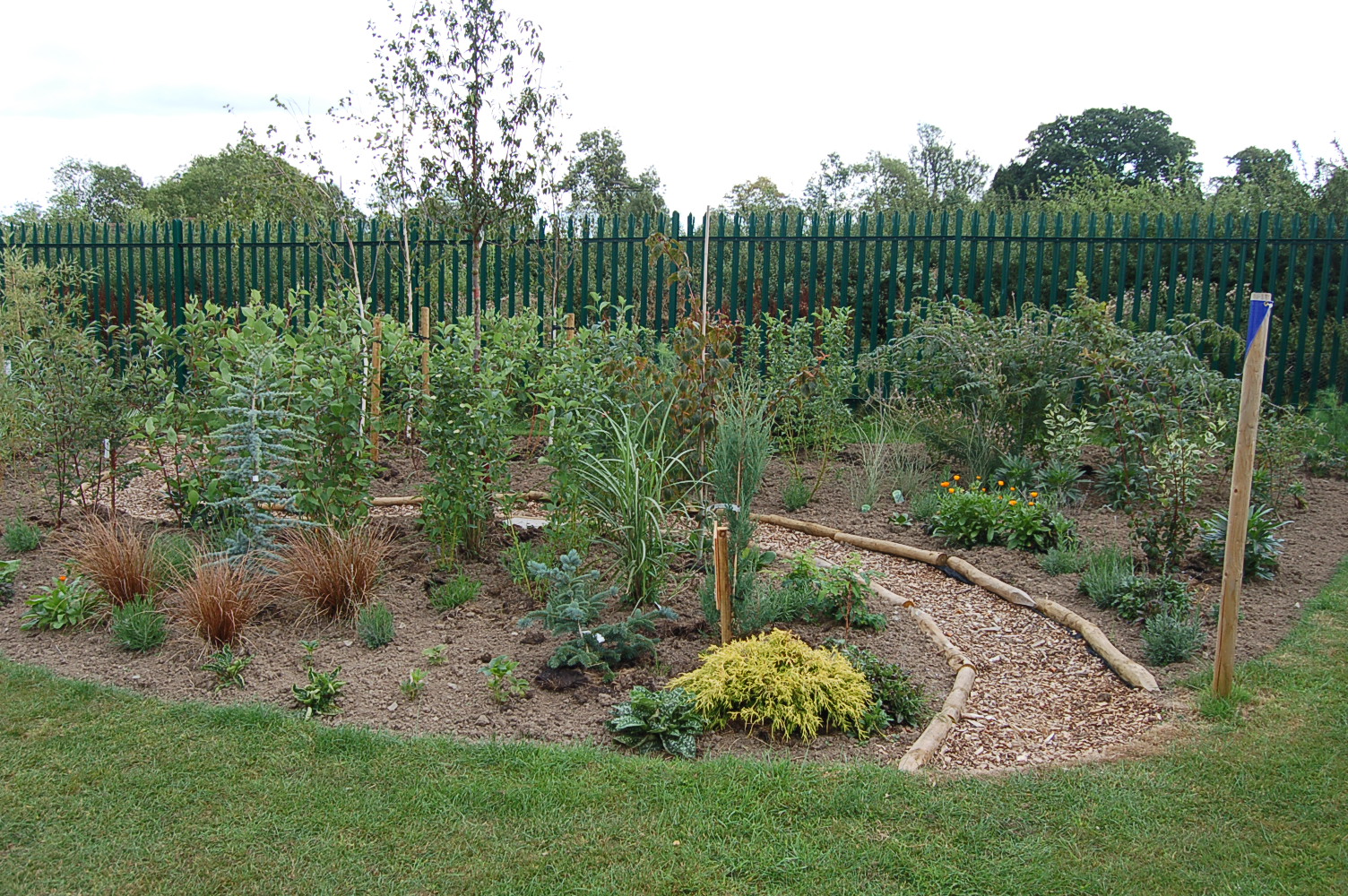
In the autumn we gave the garden a mulch of chipped bark to protect it from the ravages of winter and to slowly break down releasing nutrients and improving humus levels ans soil texture.
This week three of us weeded the bed over, tidied, pruned and loosened up the soil. It was amazing to look at progress and realise how the garden had developed in less than a year. Bulbs were flowering, the trees and shrubs have made good growth and in particular the willows and dogwoods are showing strongly coloured stems.
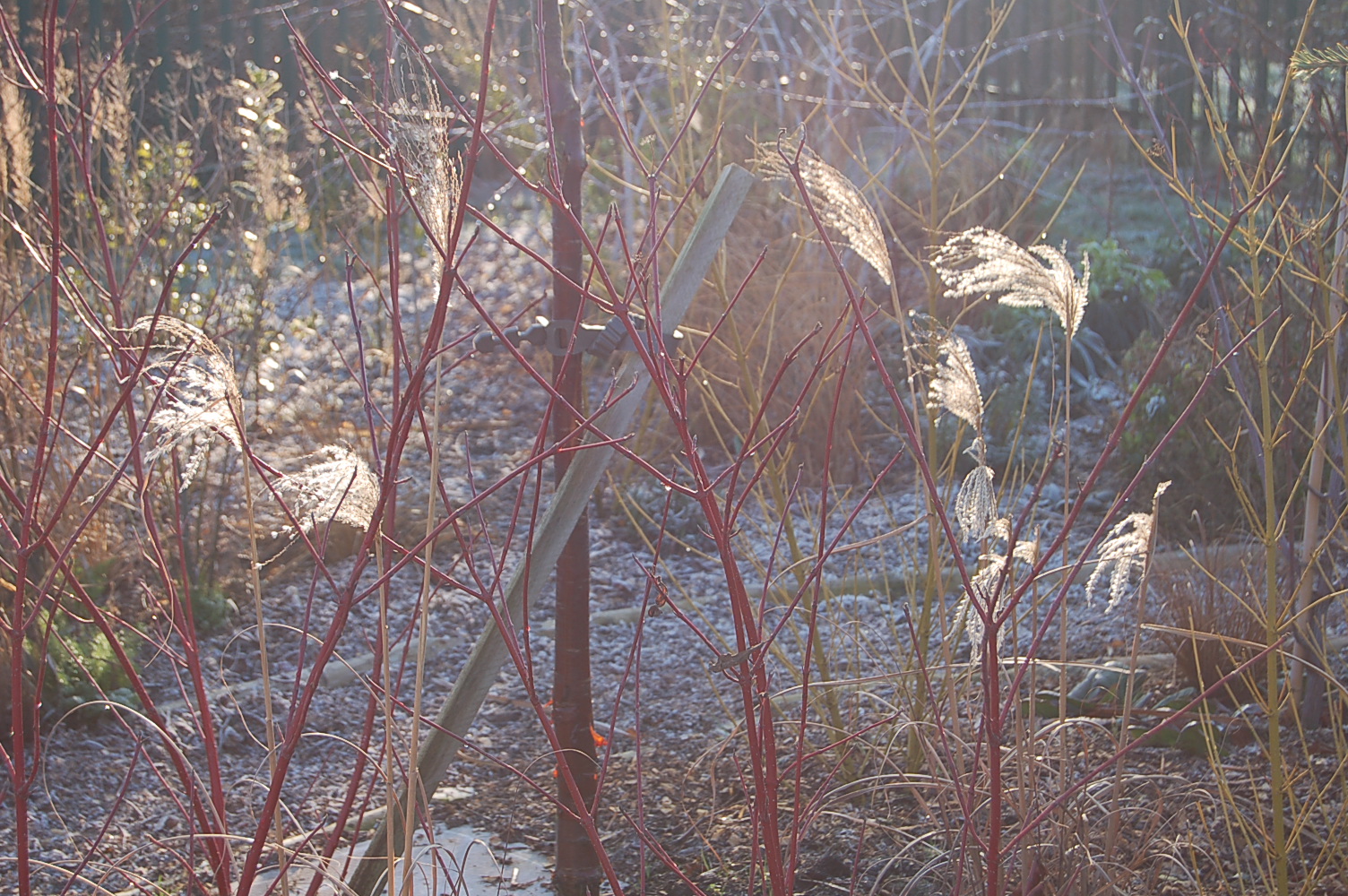
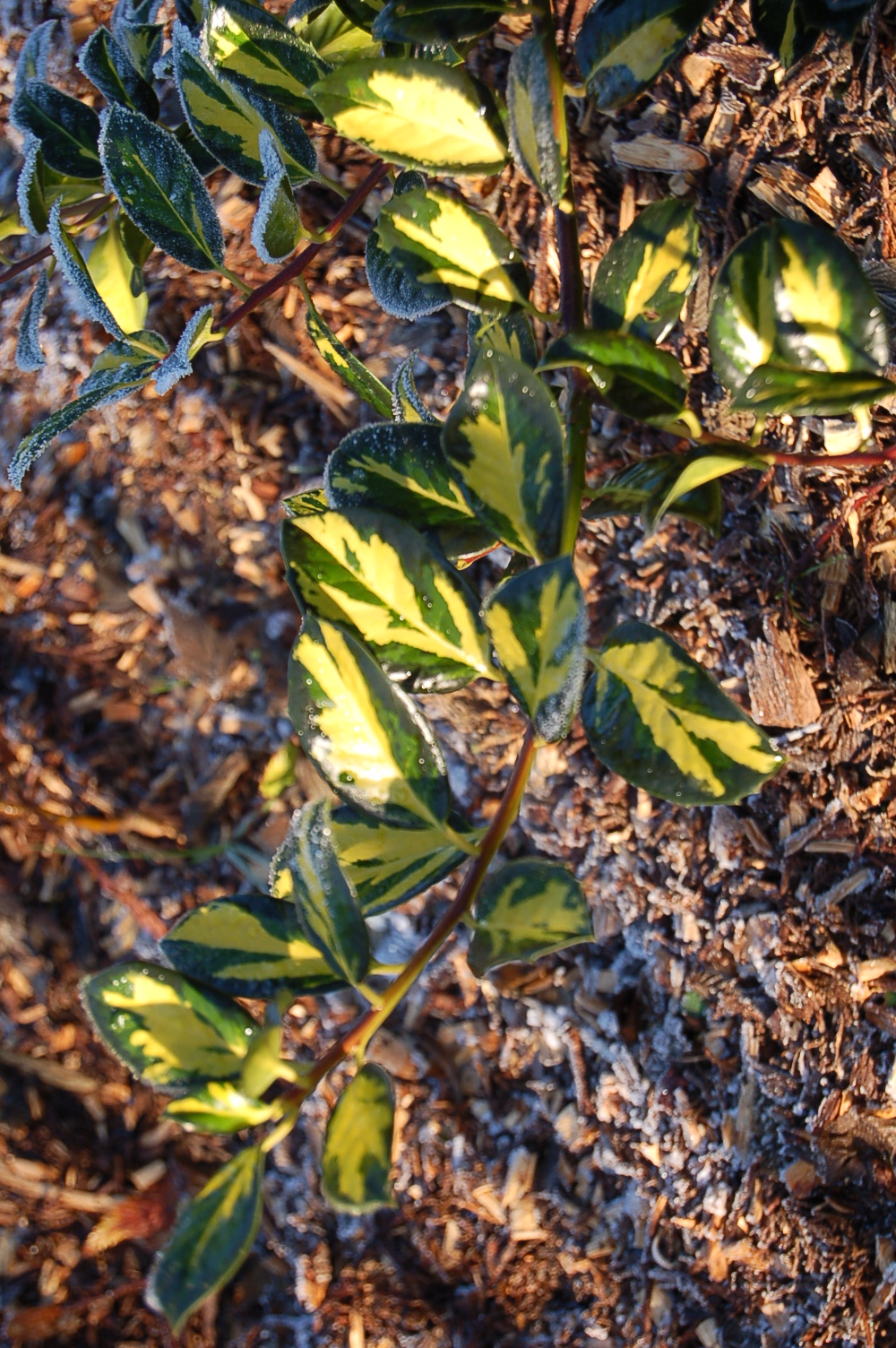


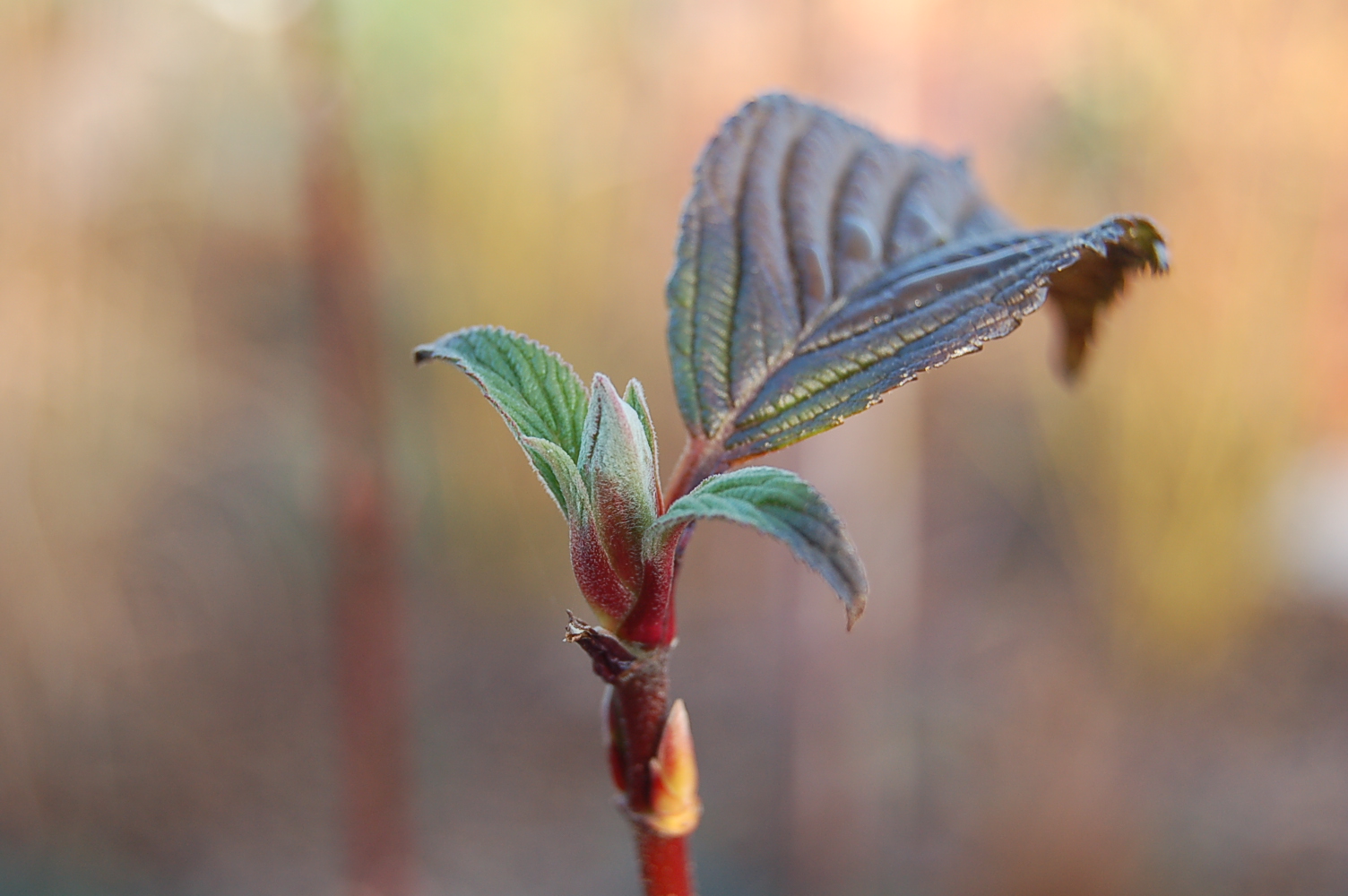

With so much to see after such a short time, we can but wonder at what our Winter Garden will bring us in the future. It was great fun creating it and judging from comments from plot holders it is already bringing much joy!

 greenbenchramblings
6 replies on “The Winter Garden at Bowbrook Allotments Community”
It’s looking good… and a great idea!
Thanks!
I’m so glad I’ve found your blog – I’m always on the lookout for new ideas to attract wildlife and your photos are so lovely!
I have plans for three blogs about wildlife gardening in the pipeline – our own garden, our allotment and our allotment community site. Think you may enjoy them. Thanks for finding my blog. It means I have now found yours too!
It’s wonderful to learn about this garden and community.
The images you have of this garden are fantastic! So clear! and what a great idea with bring members of the community together 🙂