July was to be month dominated by the weather, specifically the lack of rain. We had no precipitation until mid-month and the garden was suffering, lawns went brown, shrubs and trees had browning leaves and the whole garden looked lacklustre. It was so disheartening.
At the beginning of the month we set up our live moth trap to see what was around hoping for a better result than we had in June. Above the photos of some of the moths that turned up attracted by the mercury lamp, I noted that, “We experienced the Summer Solstice about about a week ago so our days and nights are of similar lengths. Early July was a time of high daytime and nighttime temperatures, sometimes of over 30 degrees C.
Midweek of the first week in July we put out our live moth trap and it attracted a reasonable number of moths including a colourful beetle, never seen here before.”


Swallow Tailed Moth. Elephant Hawk-moth
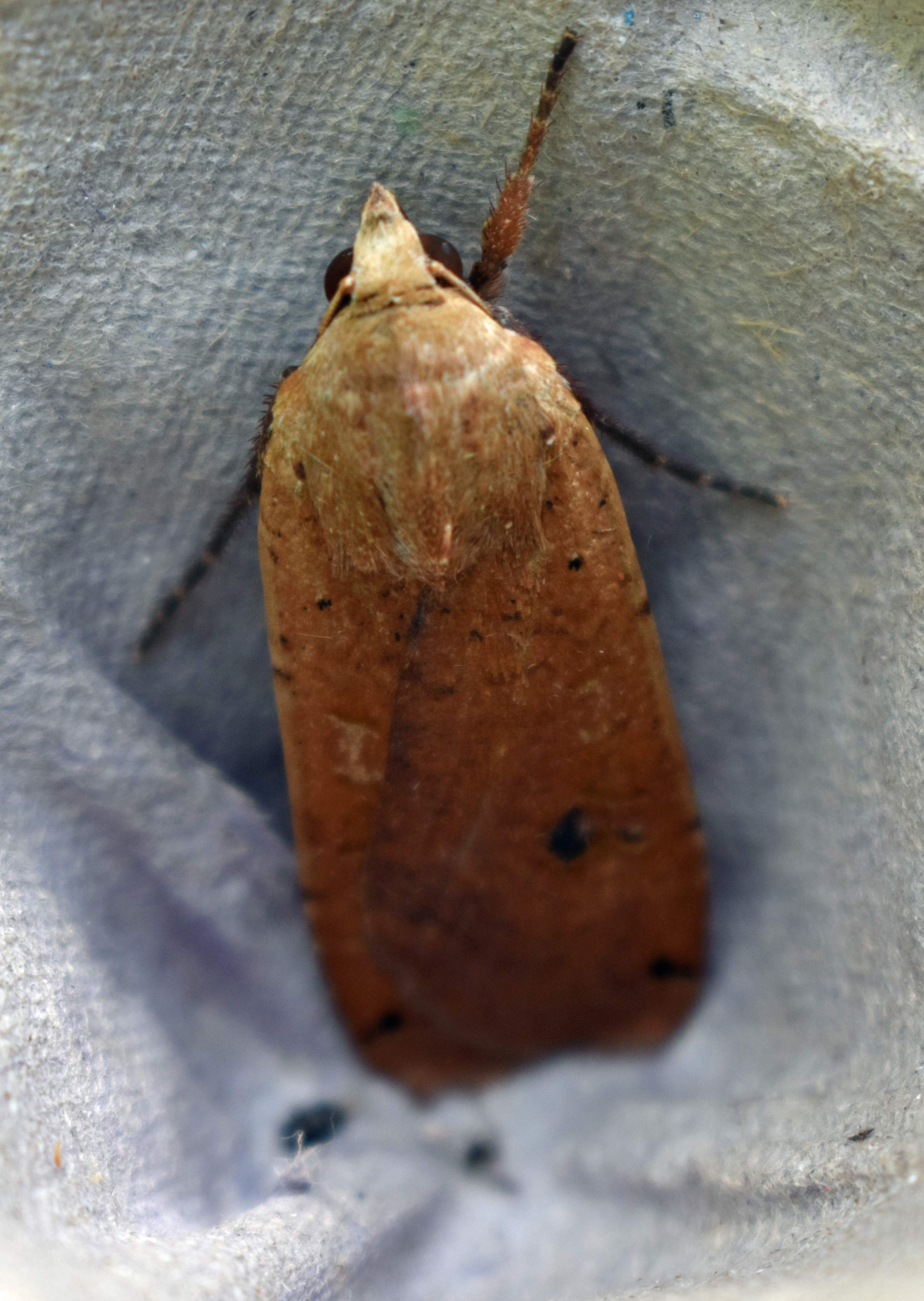
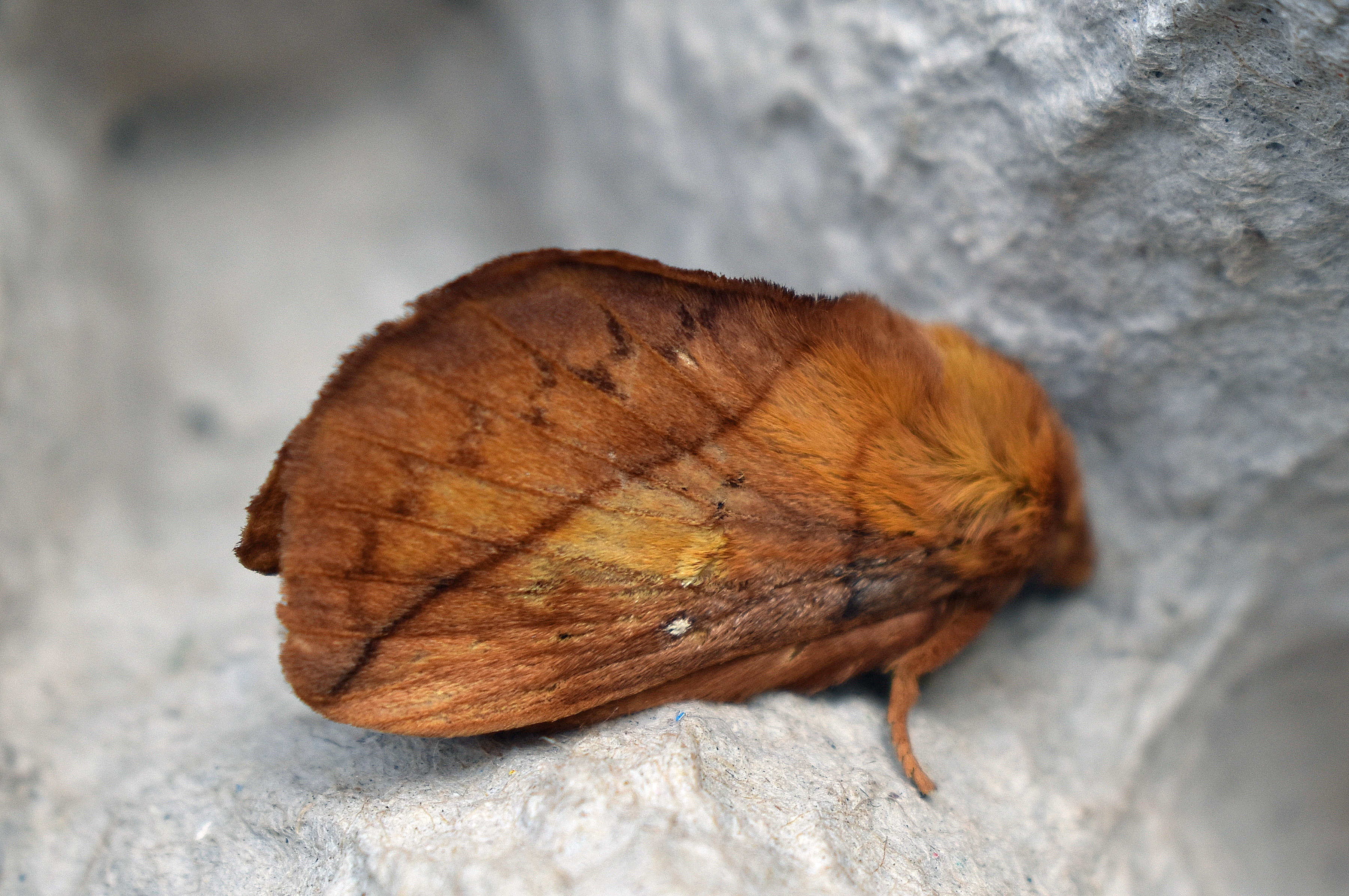
Large Yellow Underwing Drinker Moth

Burying Beetle
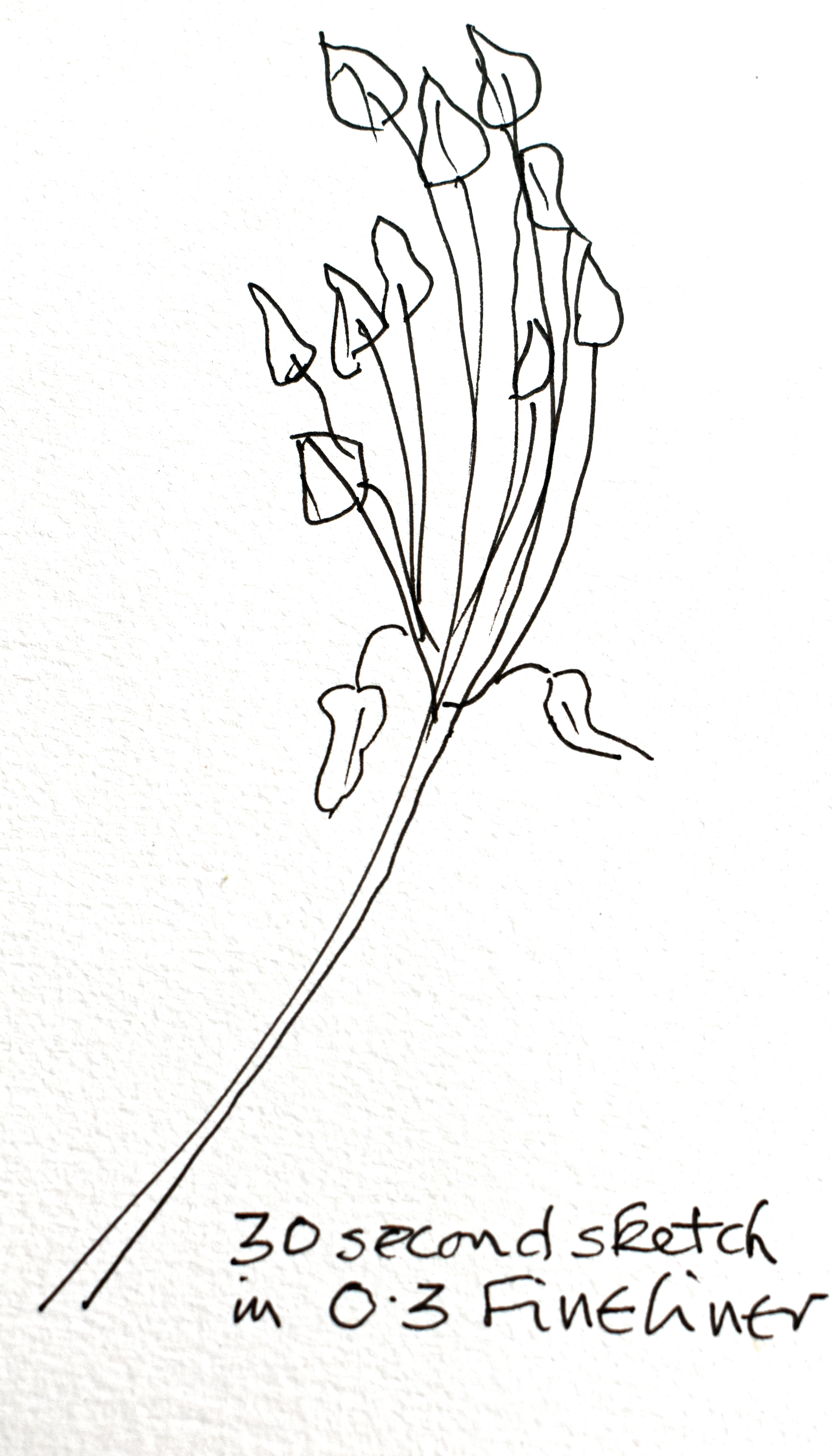
Over the page I shared another of my “30 second sketches.” I wrote “Another of my 30 second sketches drawn using a 0.3 Fineliner. In such a short time I couldn’t draw all of the seed heads.”
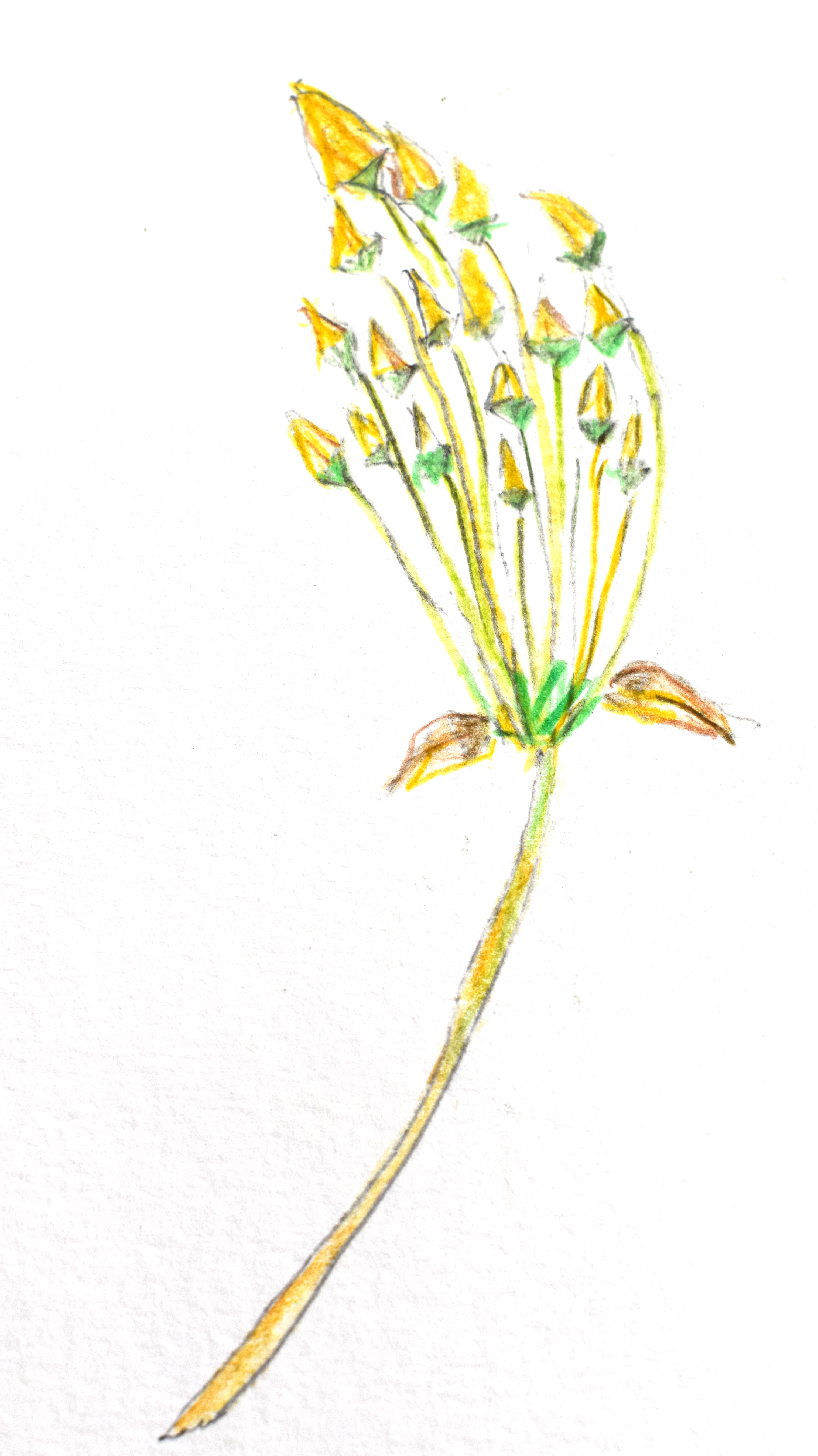
Alongside you can see my coloured sketch of our Nectaroscordum, and about this onion I wrote, “Nectaroscordum, the onion with an identity crisis, was first discovered almost 200 years ago.
It was known as ‘Allium siculum’ from its discovery until it had a name change and became ‘Nectaroscordum siculum’.
Recently botanist using DNA studies decided it was an allium after all, so currently we know it as Allium siculum just as it was in the beginning. The name Nectaroscordum is now considered a ‘subsection’.
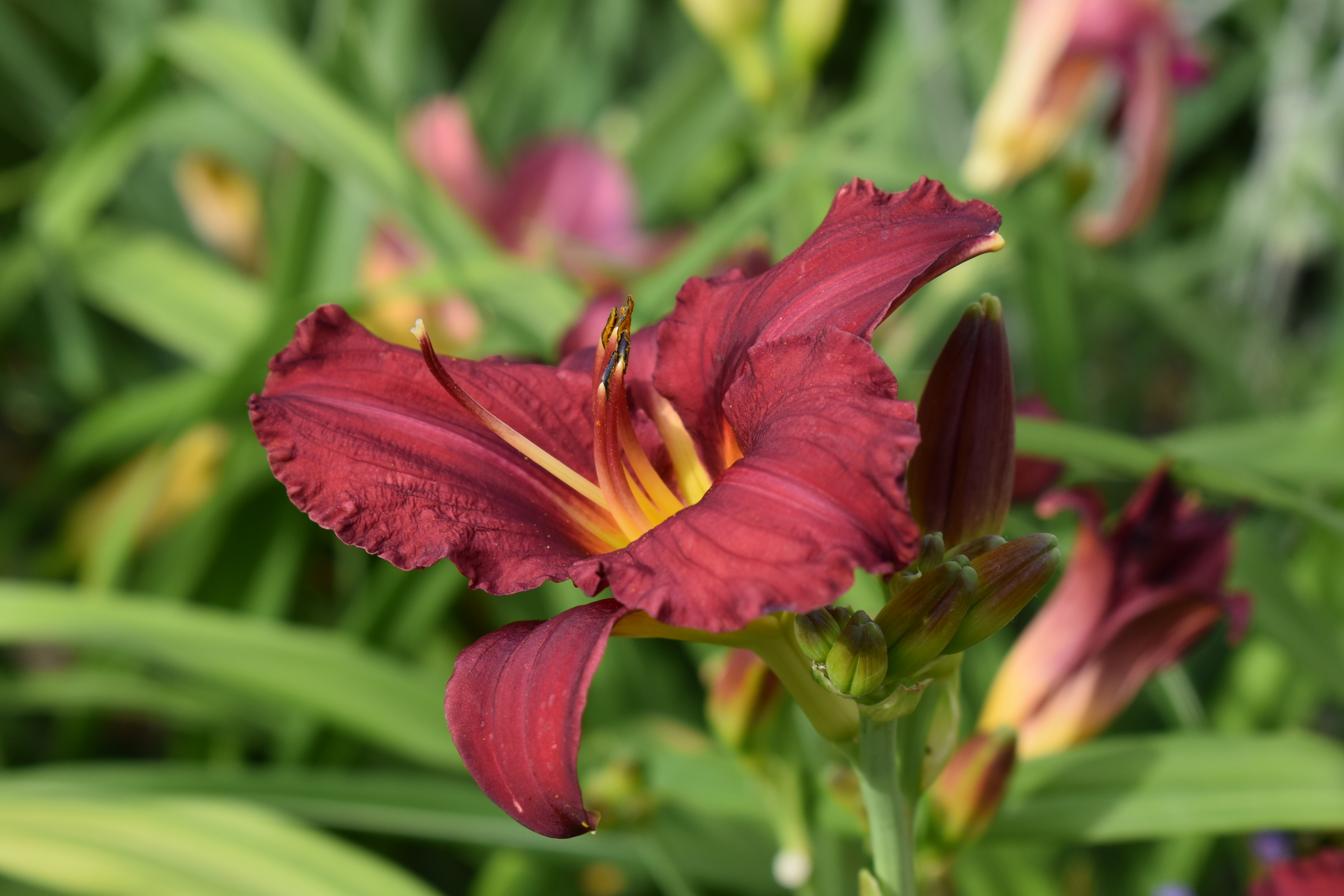
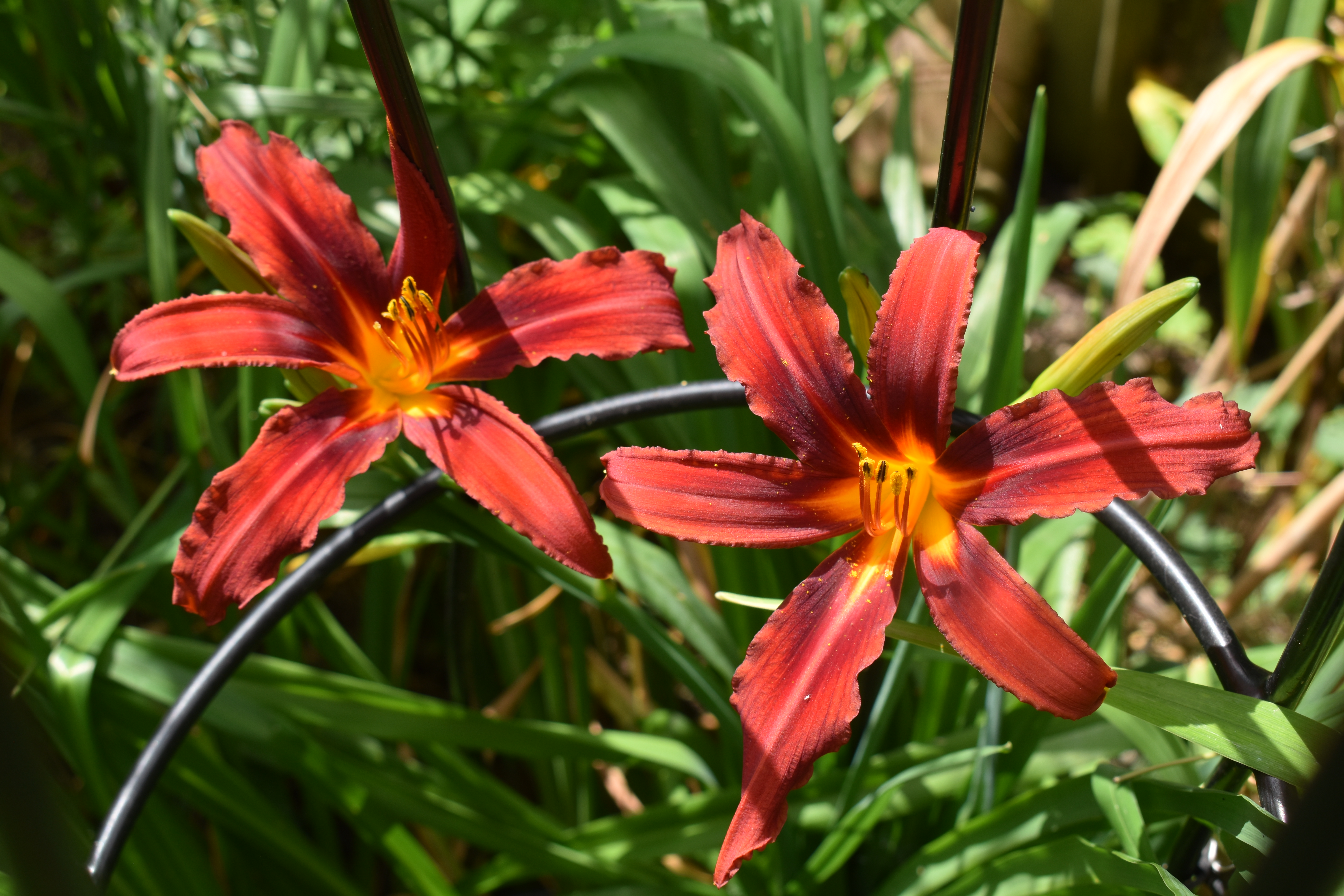
The next page features one of our most colourful and reliable perennials in our garden, where I wrote, “Throughout the garden, both front and back in almost every border, the plants giving us so much colour is the family of Day Lilies or Hemerocallis. Below the photographs show just a few of our collection.”
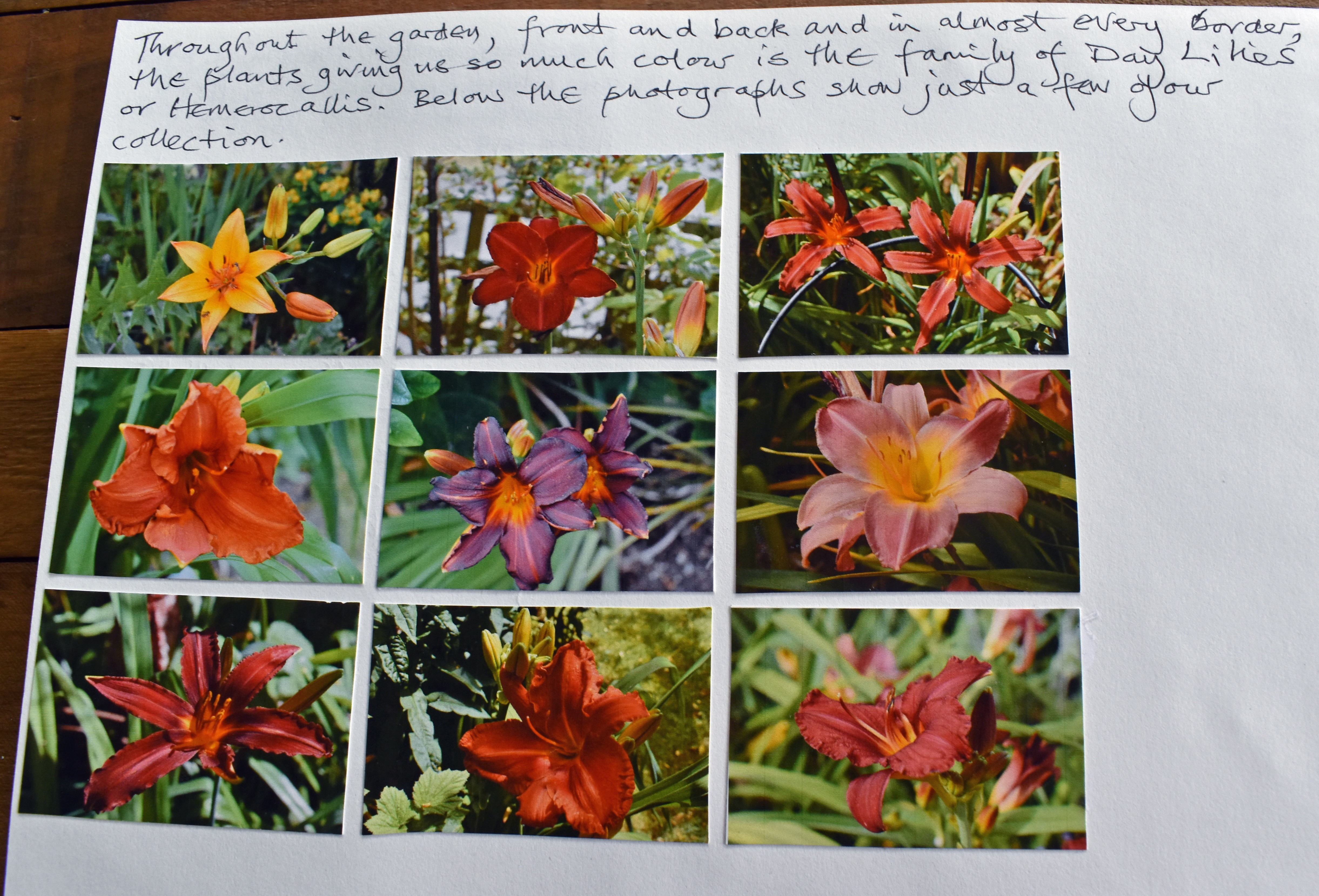
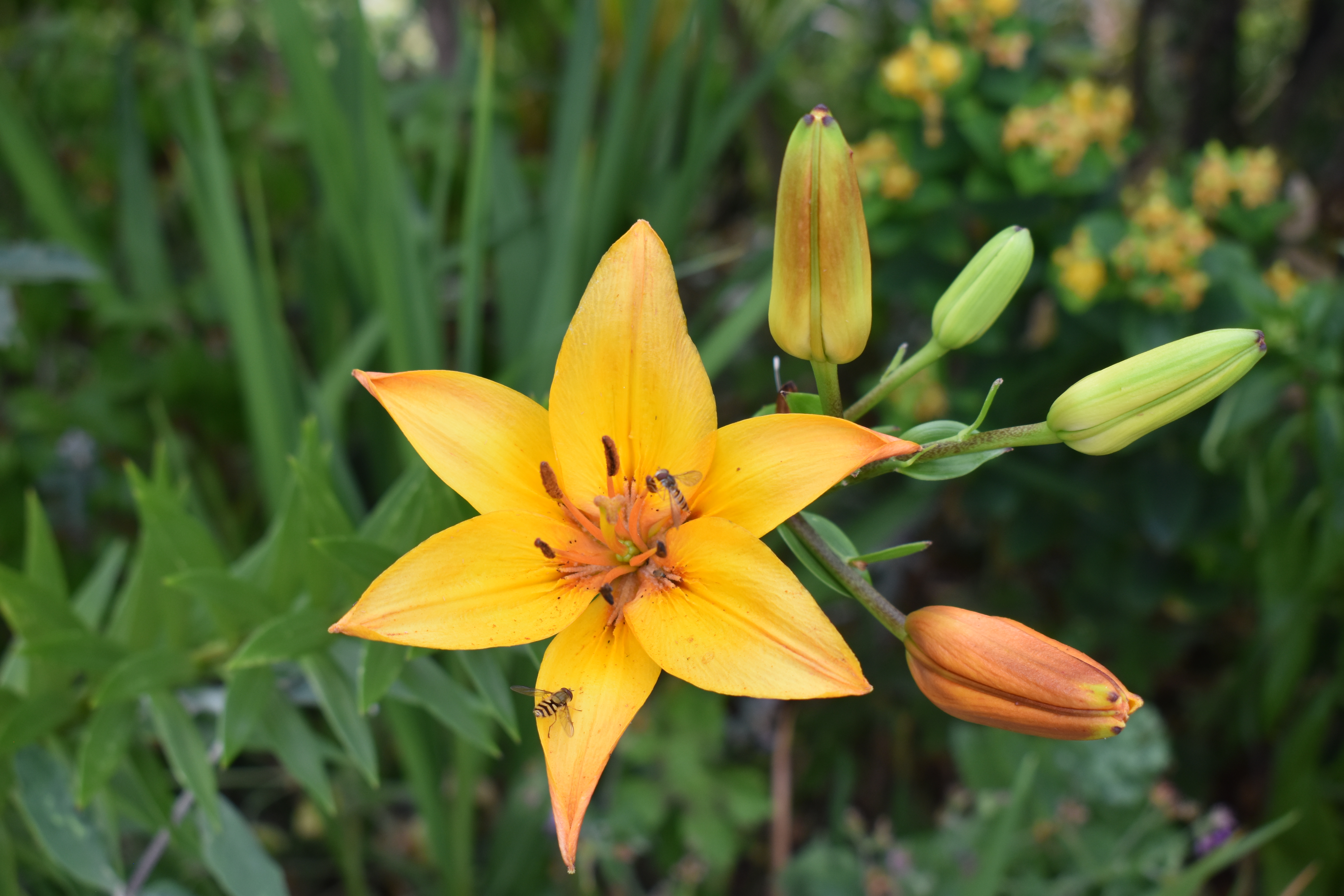

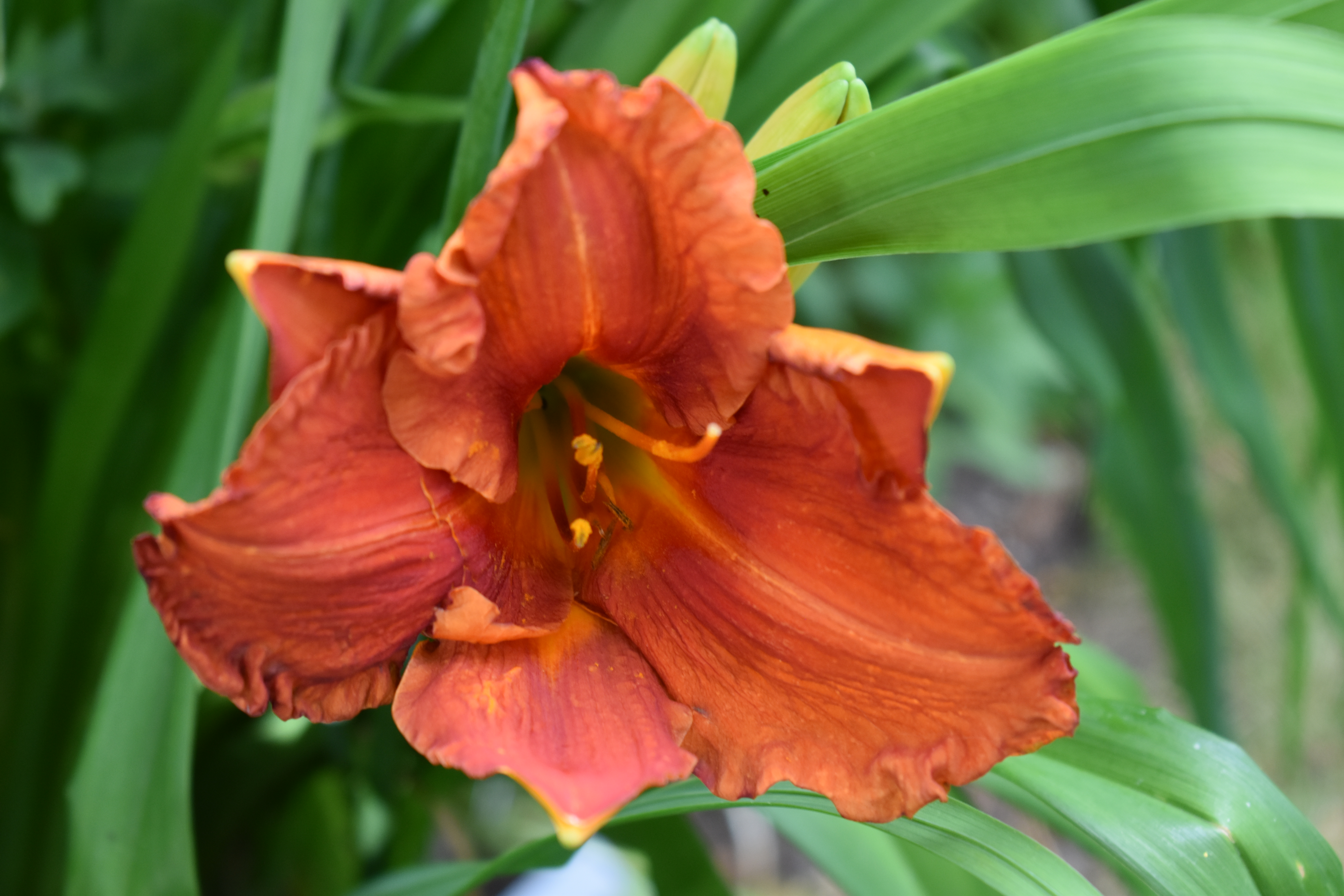
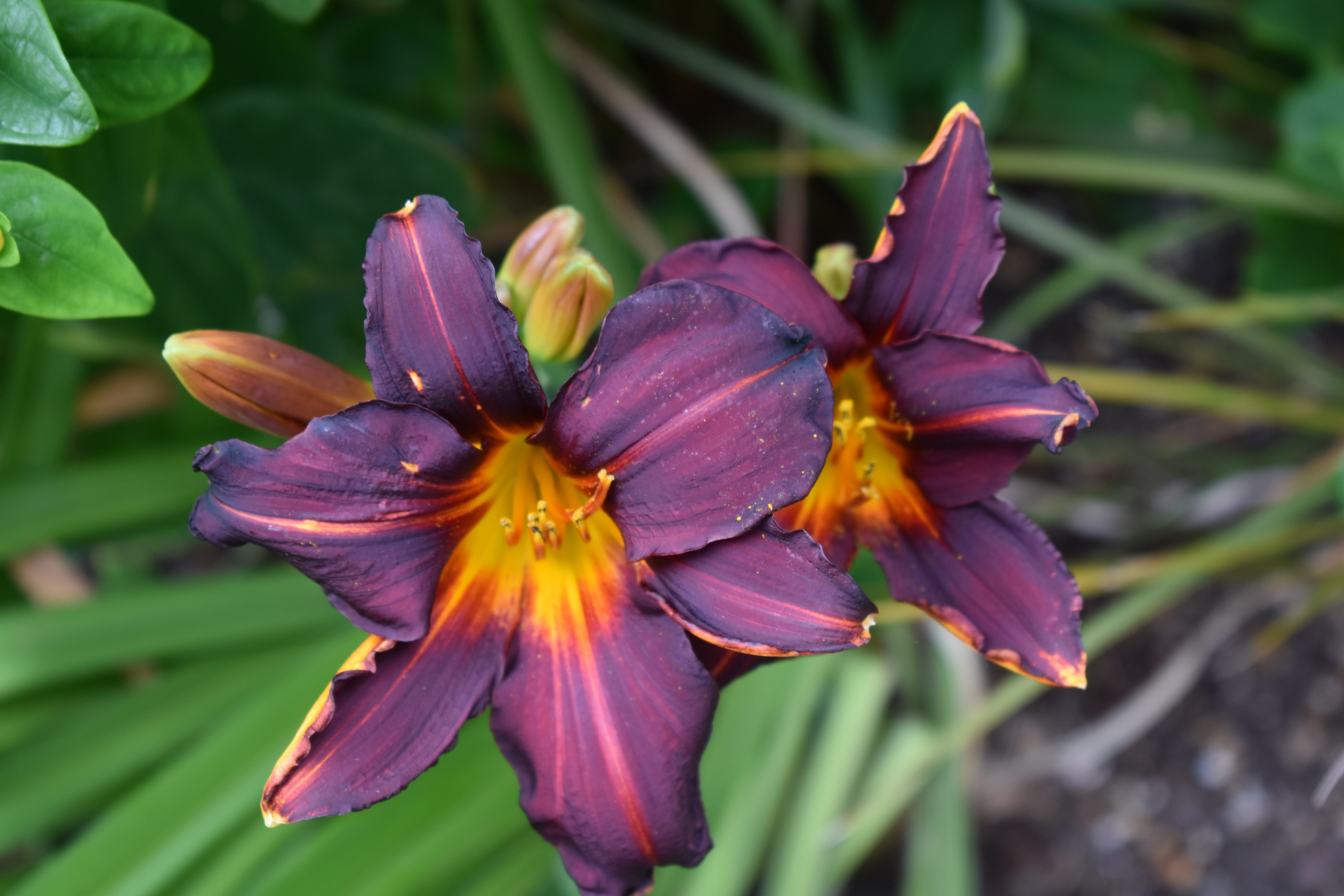


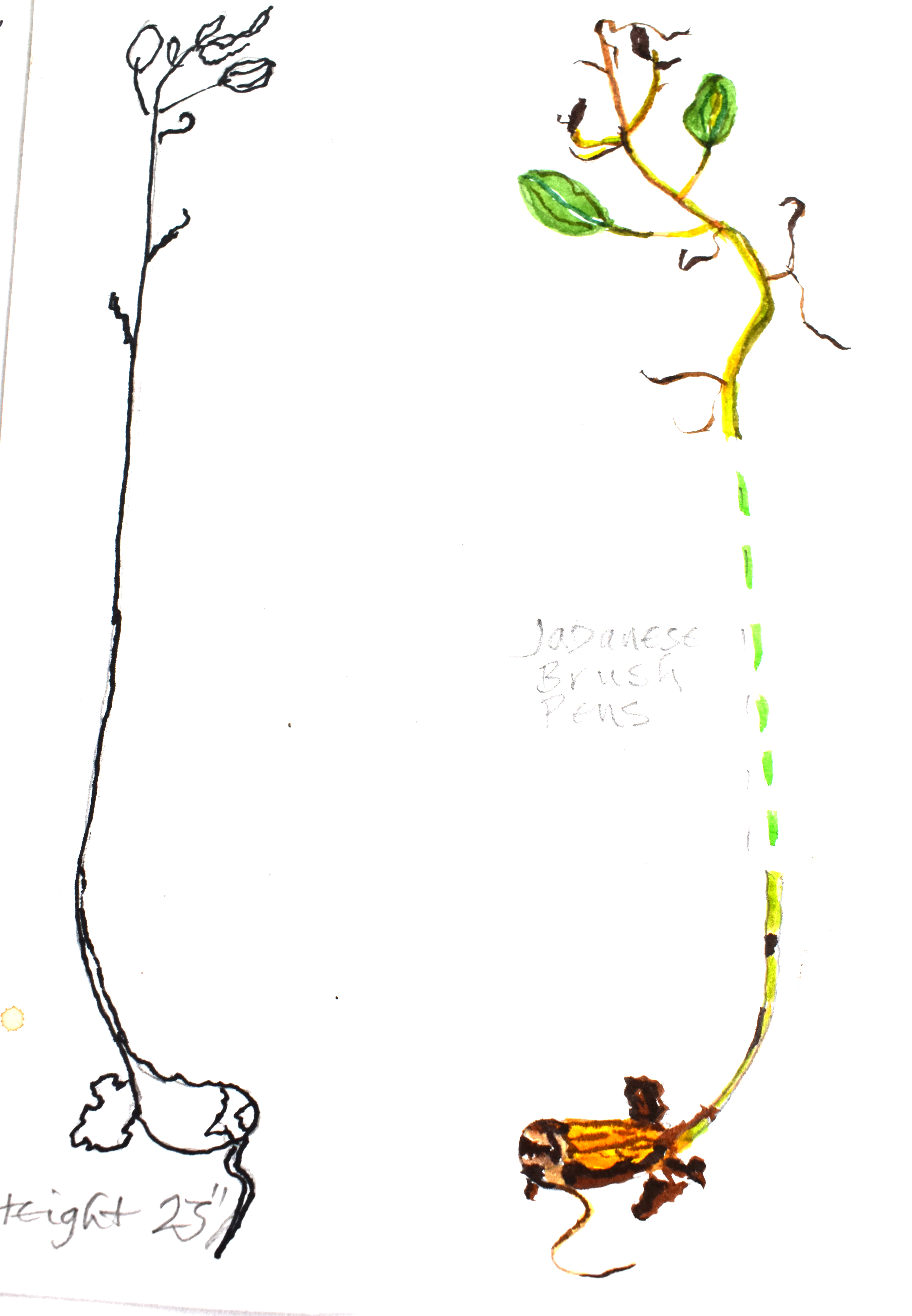
We return to a bulb for the next page, a Cammassia. I wrote, “While pulling up some dried stems in the Prairie Garden I accidentally pulled out a two foot stem of a Cammassia complete with bulb, so taking advantage of seeing the whole plant I decided to draw it.
The bulb was just a just a youngster which must have become separated from the mother bulb. It was a rich orange colour from which grew a single root curled like a pig’s tail. Two seed pods still in their green colouring held onto the top of the stem.”

The drawings below show on the left the whole stem which measured 25 inches in height and to its right a coloured sketch showing more detail of the top of the stem down to the bulb together with its root and dried skin with the middle marked by a broken line. The coloured sketched was drawn using Japanese brush pens.
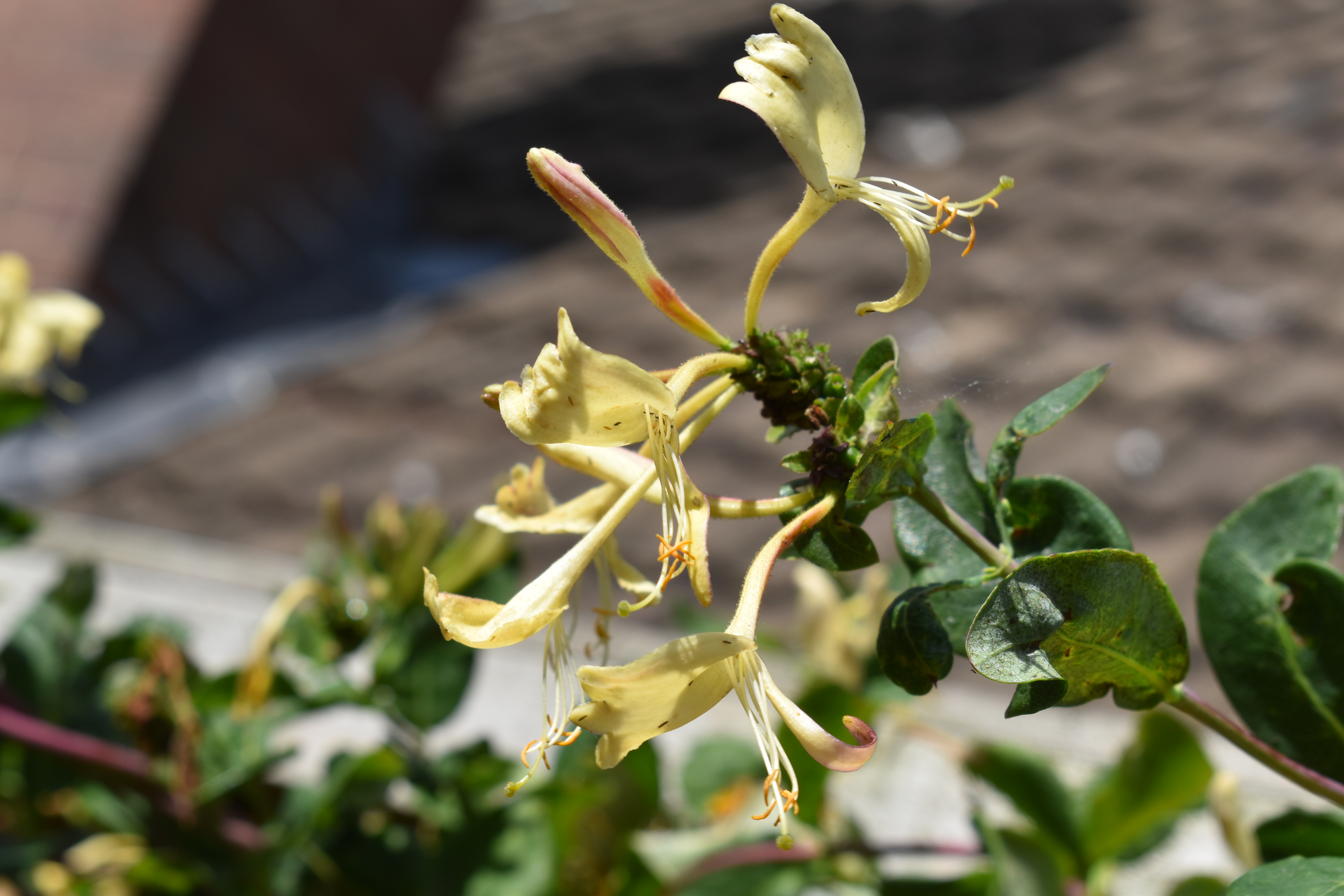
The following page is about some of our climbers currently looking good in the garden. I noted that, “I was wandering around the garden taking photos of climbing plants, in particular our honeysuckles, clematis and ivies featuring only those climbing on one section of fence in the Shade Garden. The one photo though is a more unusual climber, delicate, variegated with deep pink stems, Ampelopsis elegans.”

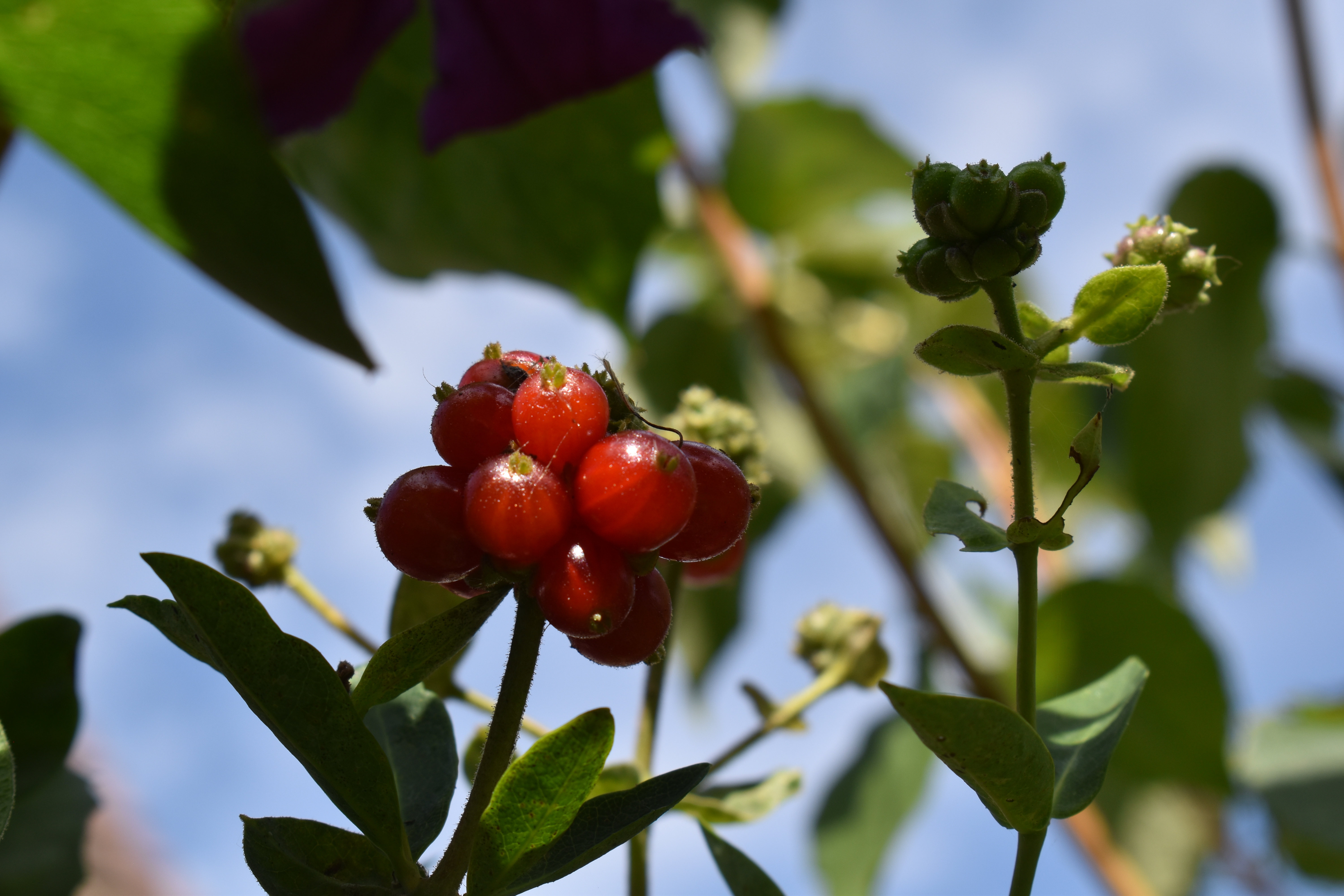
Below the first four photos are of a lemon coloured honeysuckle, flowers and berries.


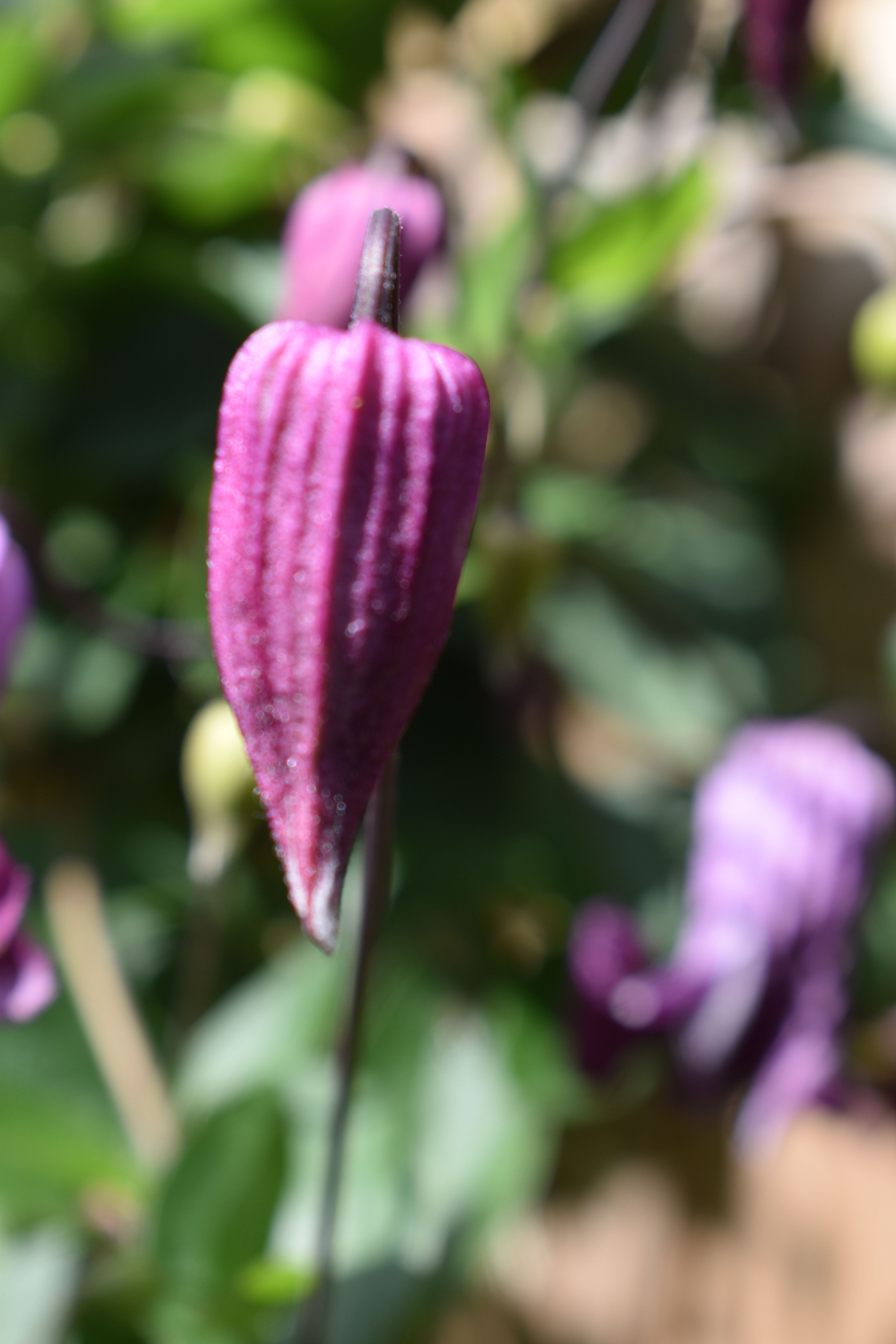
The three photos below are of Clematis ‘Queen Mother’ which flowers reliably and prolifically, with beautiful purple bell flowers.



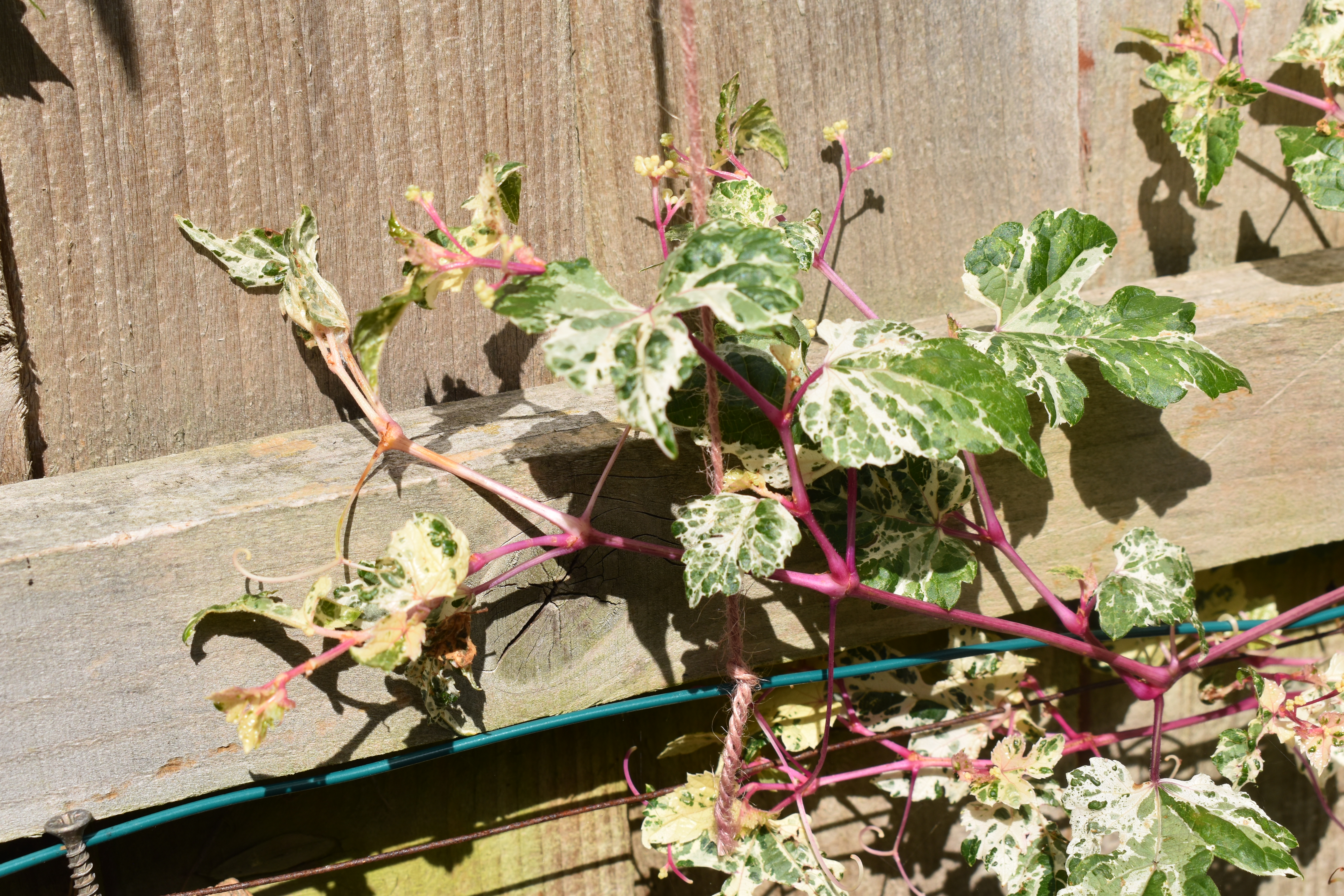
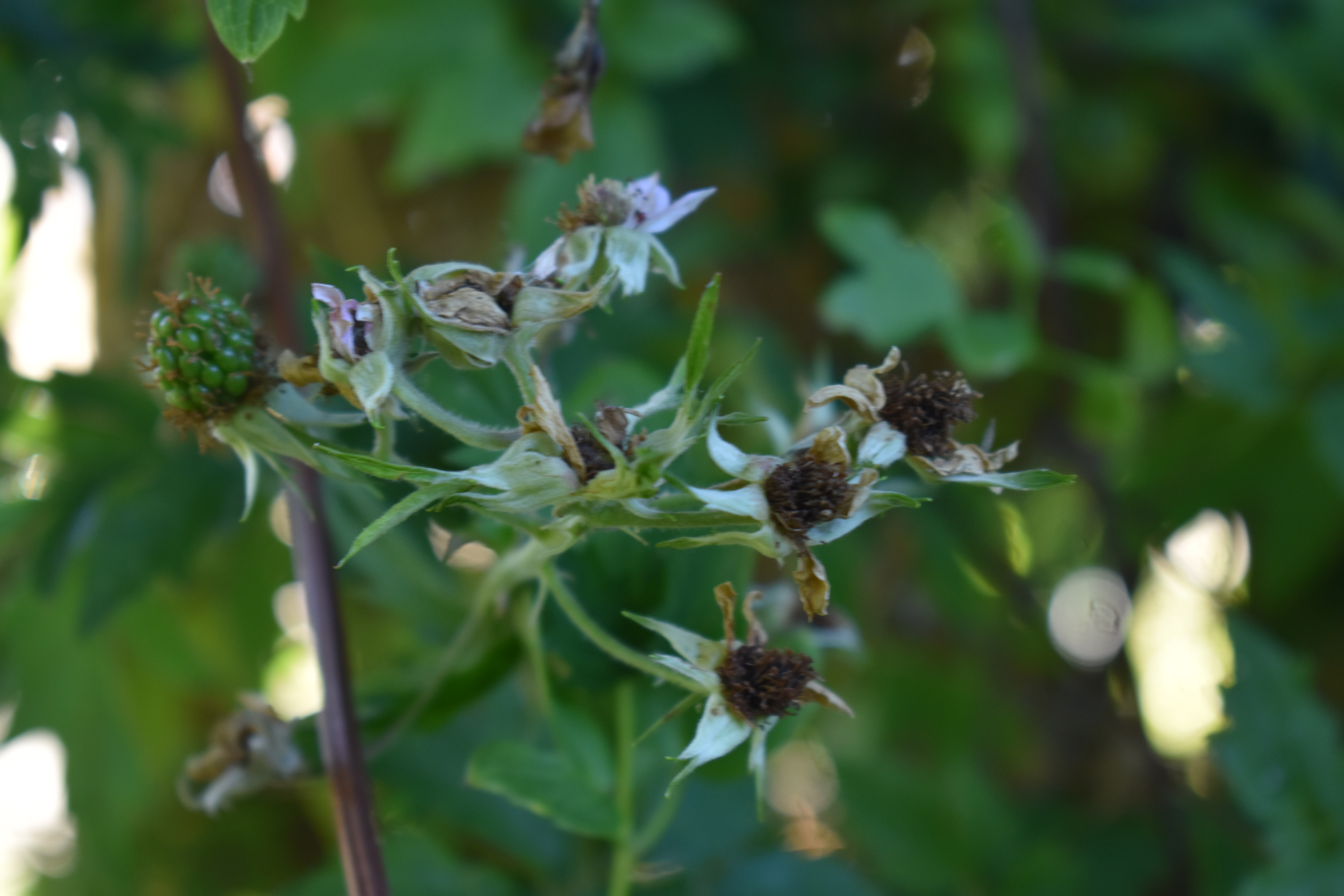
The three photos above show two different ivies and the delicate climber ‘Ampelopsis elegans’. The final two photos related to this journal show a thornless blackberry called Oregon Thornless and a jasmine called Jasminum officinale ‘Clotted Cream’.

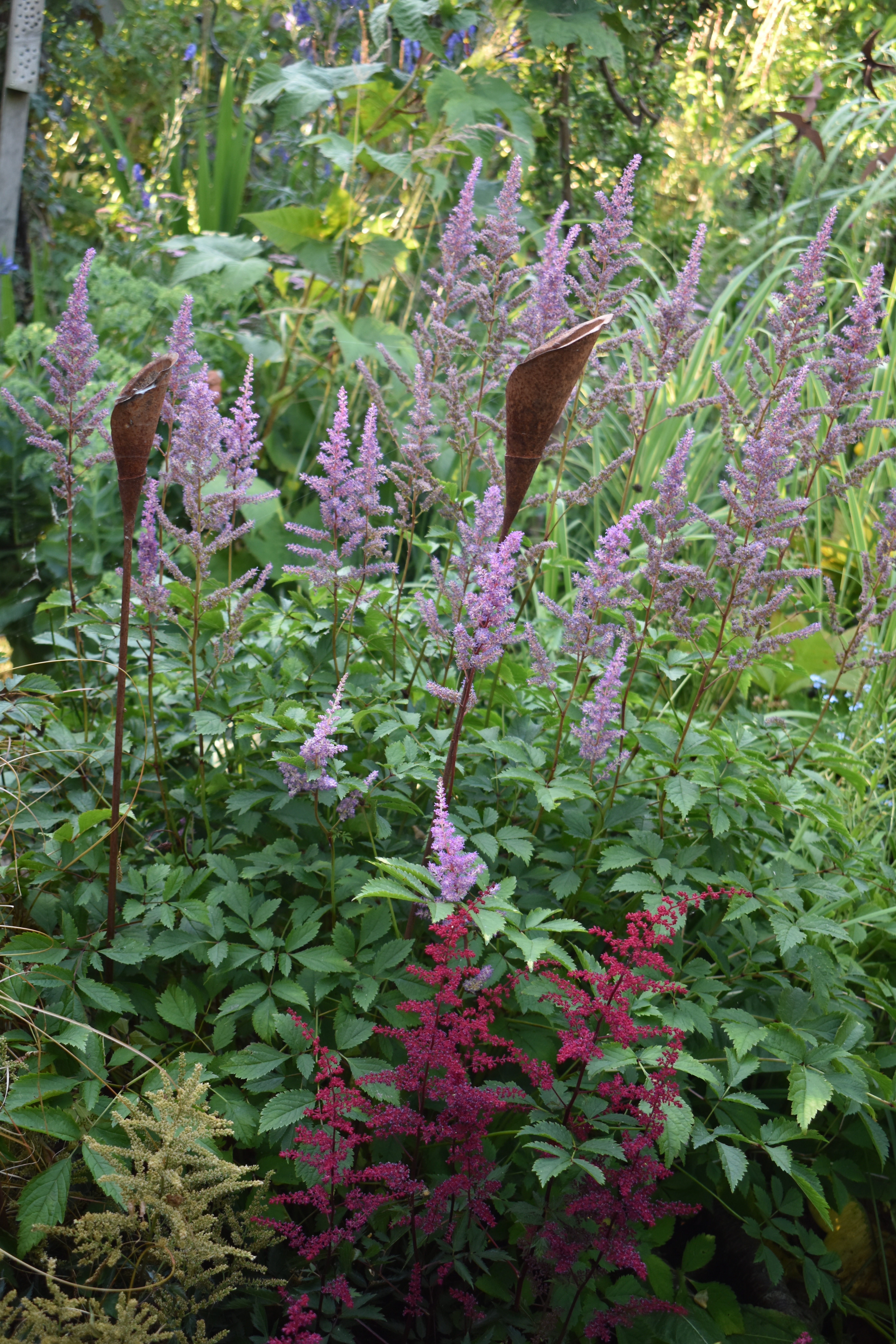
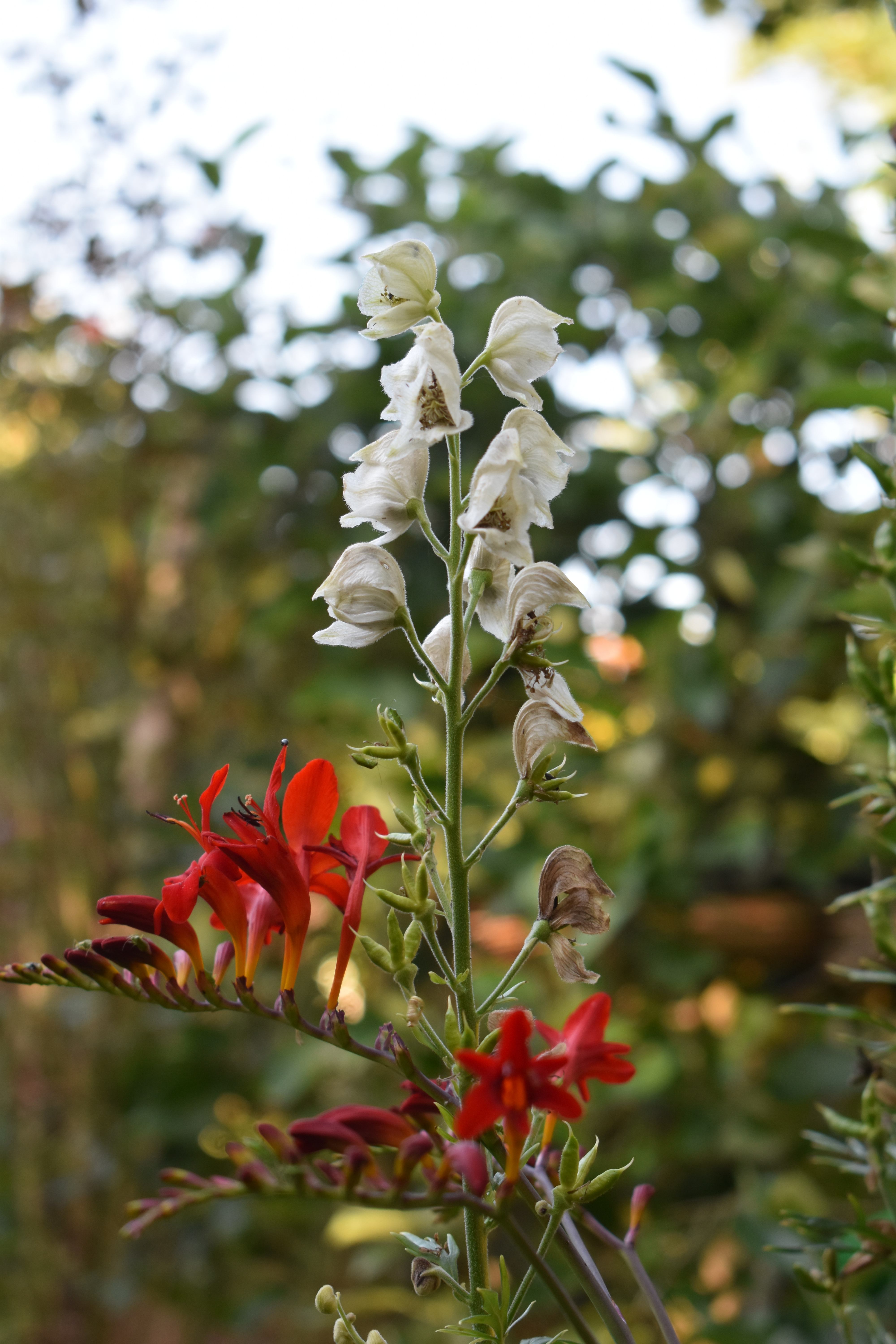
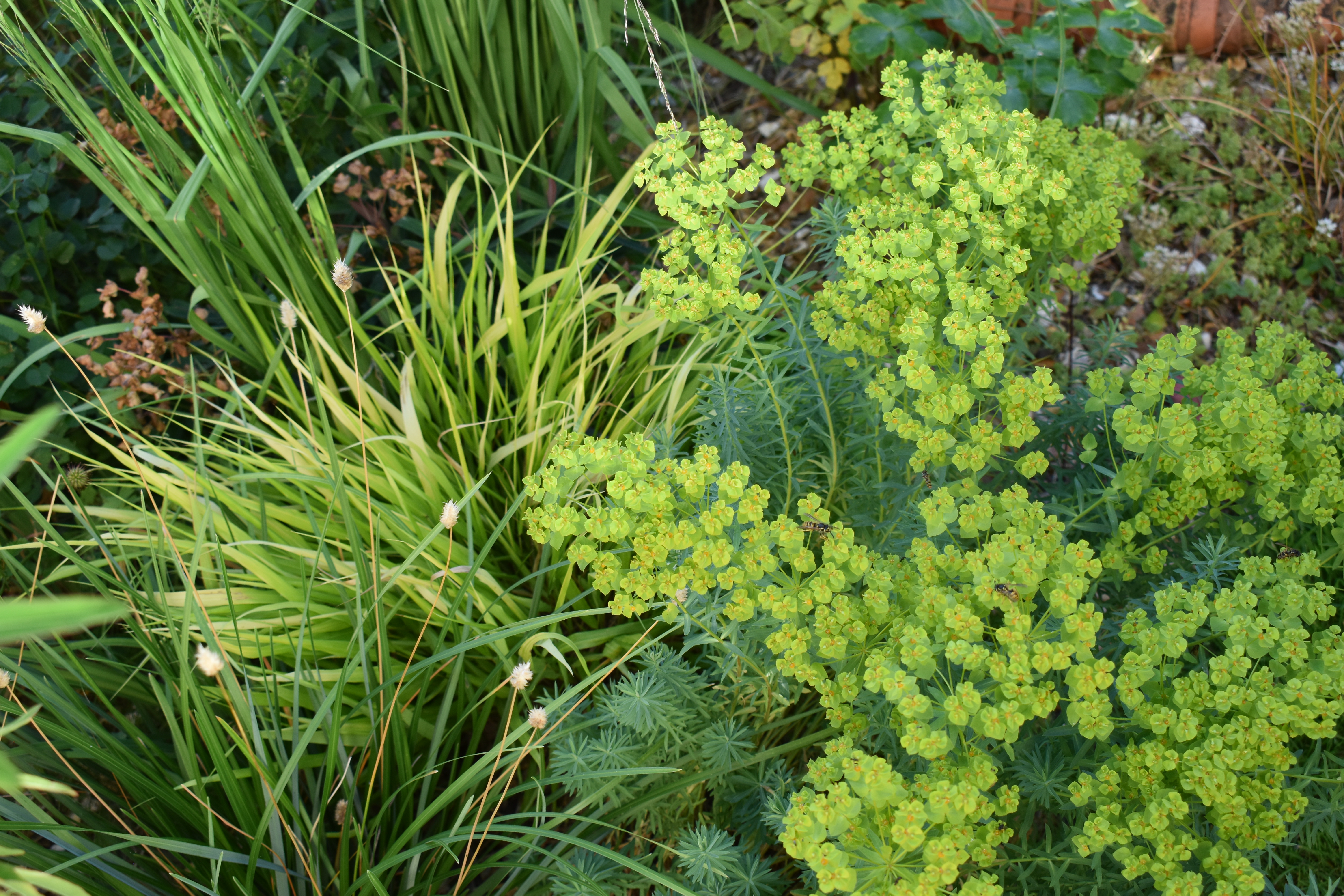
The page opposite the climbers page is concerned with colour in our garden. I noted that, “By mid-July there is colour wherever you look, mostly flowers but some shrubs, climbers and trees are showing colourful berries. Out with my camera I looked for interesting patches of colour, or longer views. The three blue poppies are ceramic. We saw these in the ‘Himalayan. Sculpture Garden’ near Rippon in Yorkshire, and bought some to position in the Shade Garden, just where we had failed to grow them in the past.”
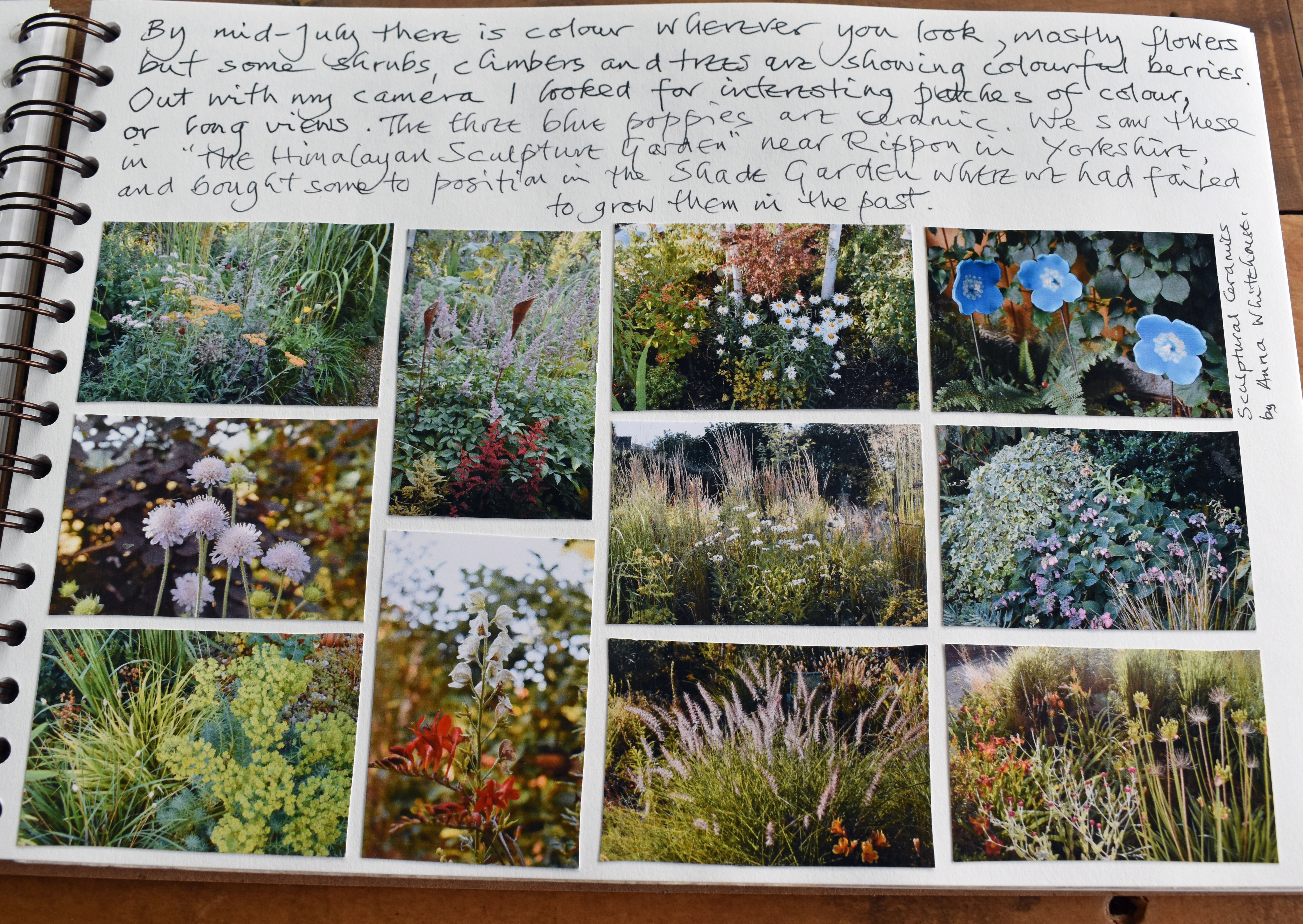
Below are some of the photos I took from around the garden.



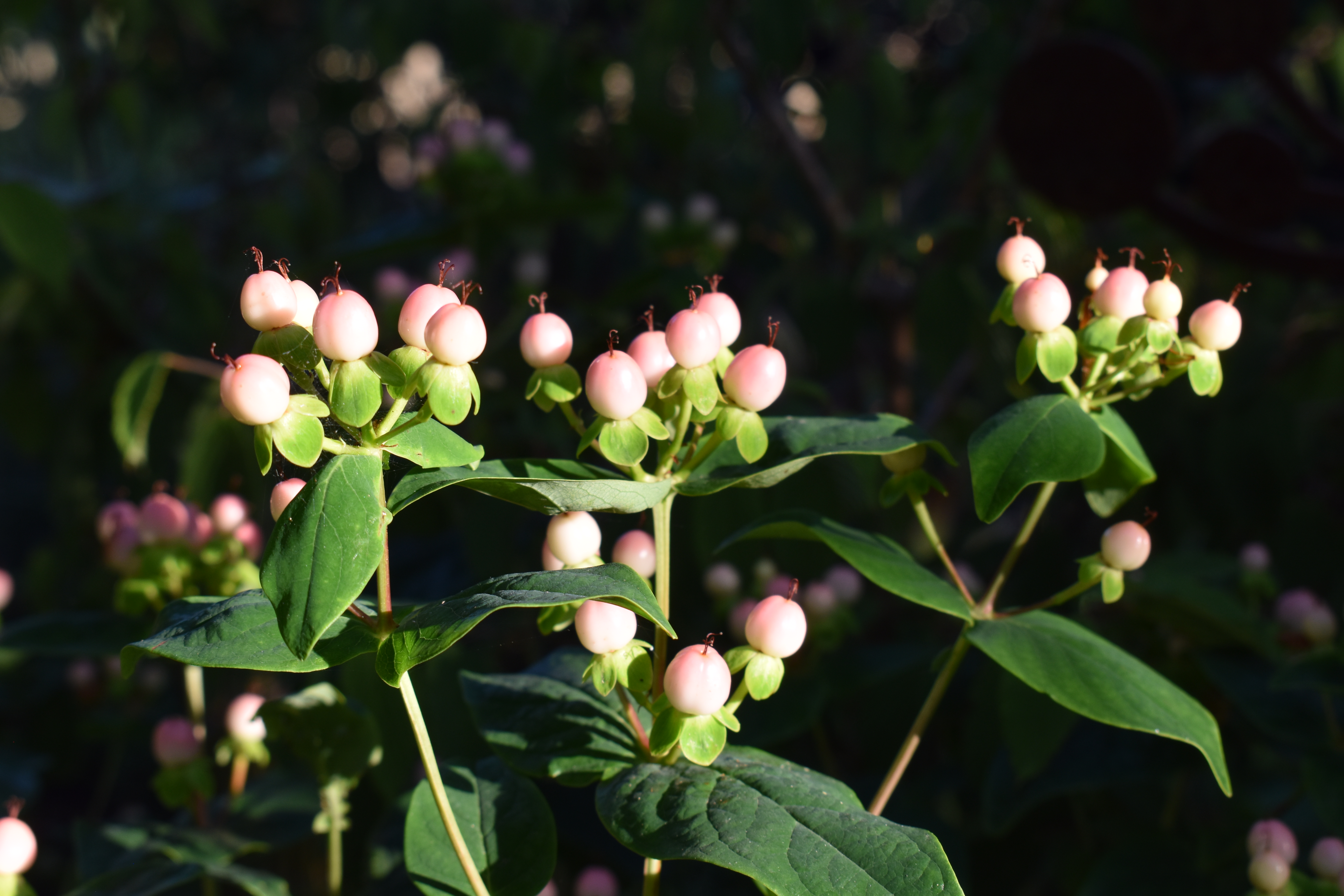
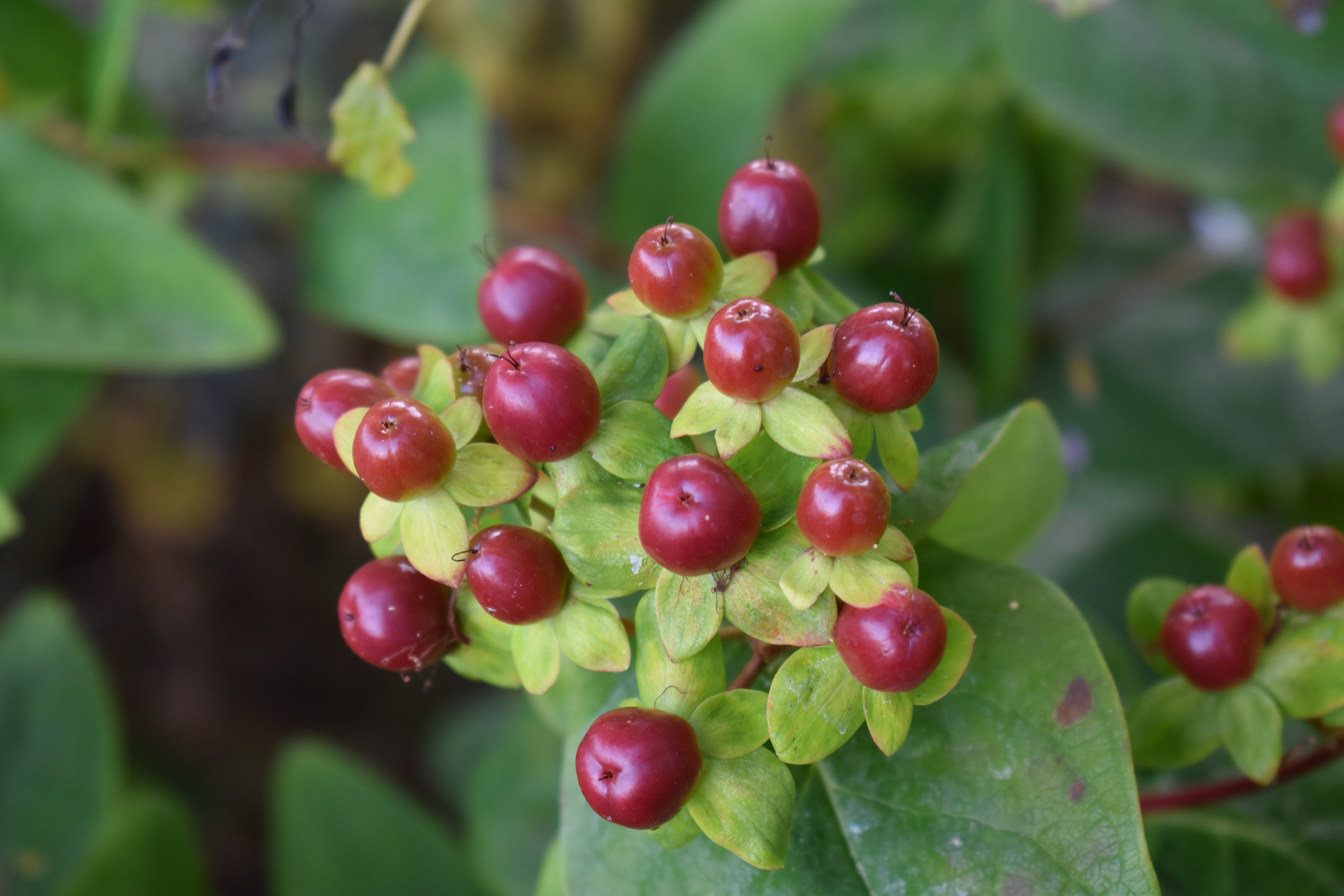
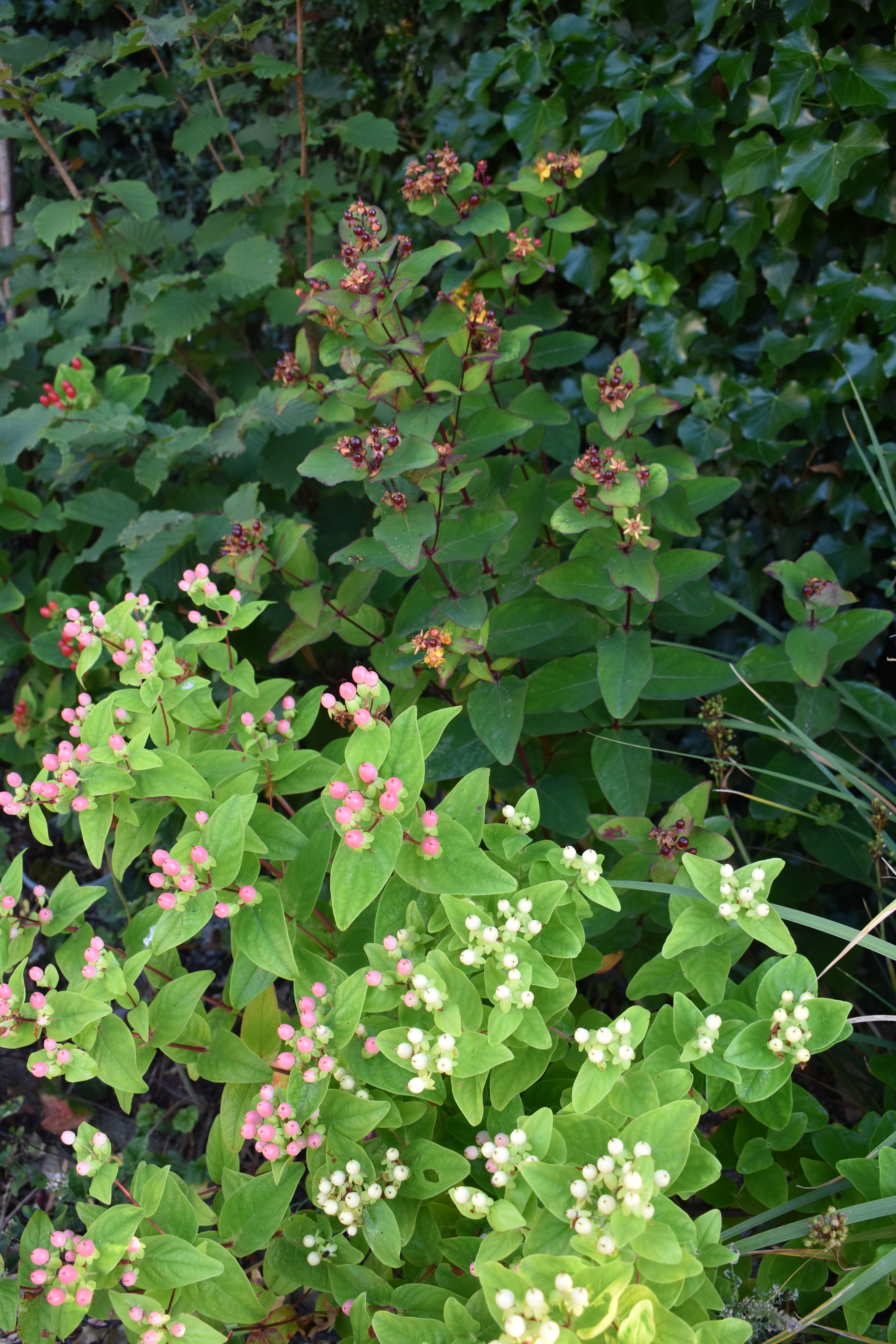
“When considering colour in the summer garden we often just think of flowering plants, but in July one shrub adds lots of colour through its berries. Hypericum inodorum come with berries in a variety of colours and there are often beautiful golden flowers among the berries. Below are some of our varieties in many of our borders.”





That is it for July. My Garden Journal will return in August.

 greenbenchramblings
One reply on “My Garden Journal 2025 for July”
Yes – so dry. I enjoyed your 30 sec. drawings – practice is sharpening them up. We have enjoyed the Jersey Tiger Moth in our garden as have some other locals. The most orange of Tiger Moths it seems to be spreading from the South. Also a lovely soft orange Mint Moth which are it seems quite common.