Categories
autumn autumn colours bird watching birds landscapes nature reserves photography wildlife

Walking on the Beacons – The Brecons

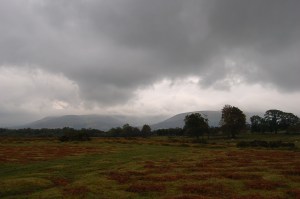
We always seem to walk over hill and moor country on cold days. Even back in the Autumn we found ourselves choosing a cold day to journey down to the Brecon Beacons in Carmthenshire for a moorland amble. The Brecons are an upland area of Wales that we tend to drive through but rarely visit so this was our chance to discover its landscape and wildlife.

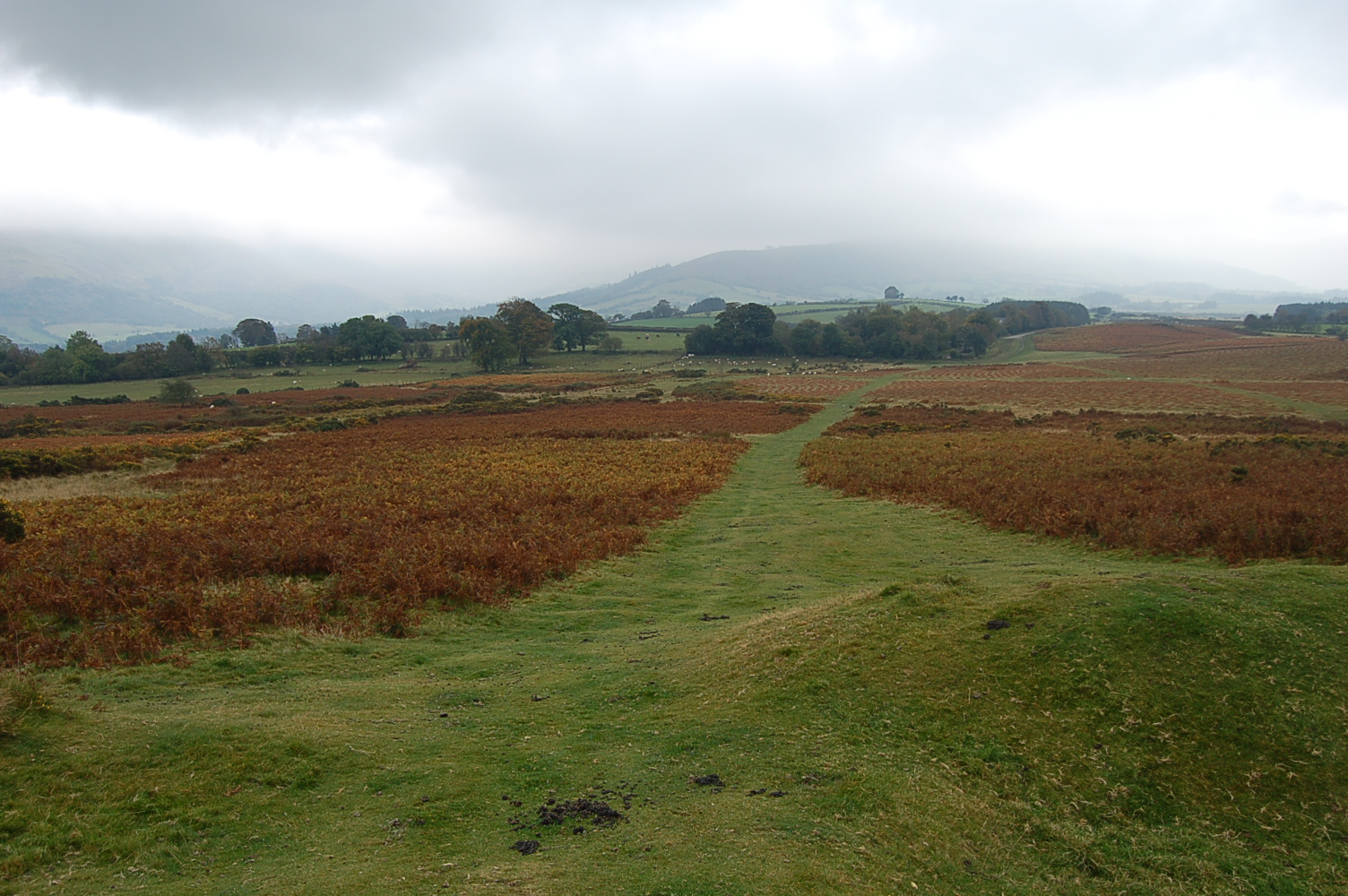
As we set out on our walk the sky looked threatening.
DSC_0001

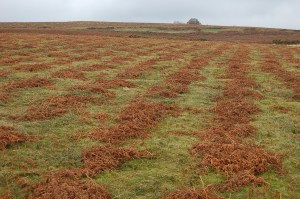
With each step we took up the gently slopes the temperature dropped and the wind got stronger. Around us the bracken had been cut, perhaps to reduce its dominance on the landscape and let other species come through. It seems that wherever there are too many sheep grazing such areas as this the bracken takes over as sheep do not eat it. An excess of bracken reduces biodiversity. Half way across this trimmed area of bracken we came across a flock of waders nervously feeding on the soft soil in the green grassed areas between the rust-coloured stripes. We moved slowly forward, binoculars in hands, desperately trying to work out what they were. Our first thought was Curlews but as we got closer we realised they were too small. Next idea that sprang to mind was Grey Plover which proved correct. they were obviously on the move to somewhere on the coast and had dropped in for shelter from the wind as it got stronger, for a rest and for nutrition. The soft soil would give easy access to creatures below the surface, for which they were probing with their long, strong bills.
DSC_0003

DSC_0016

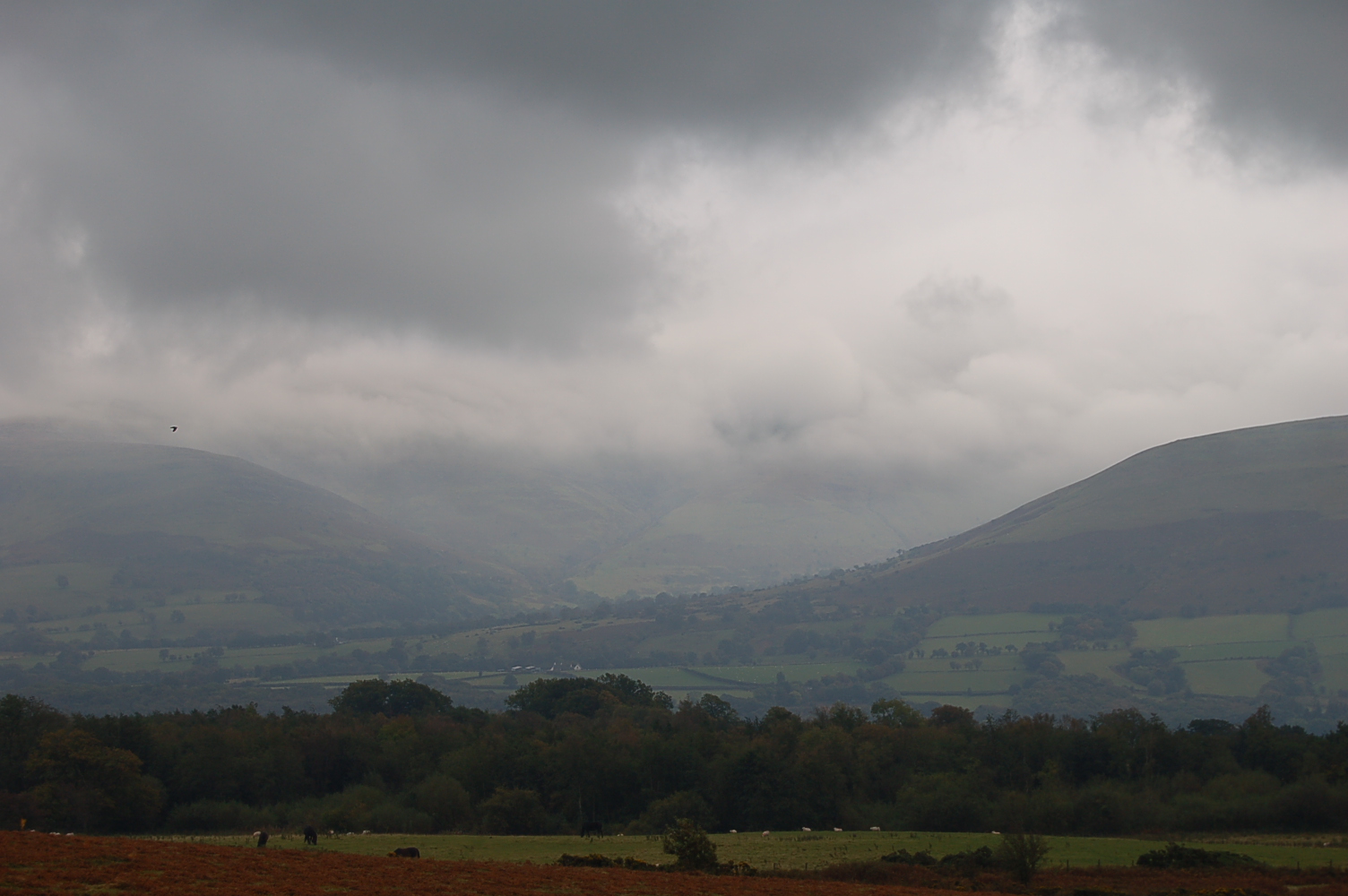
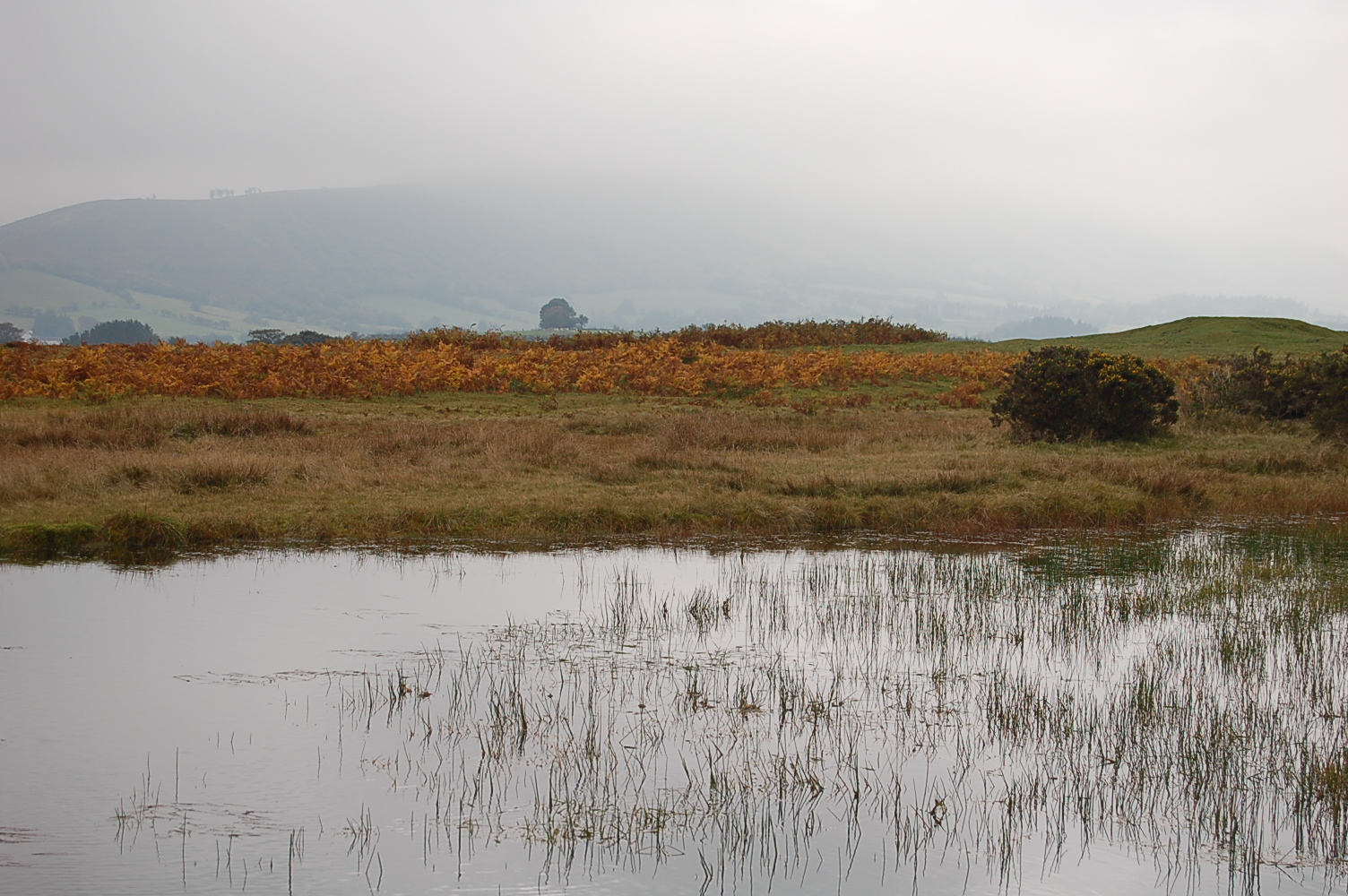
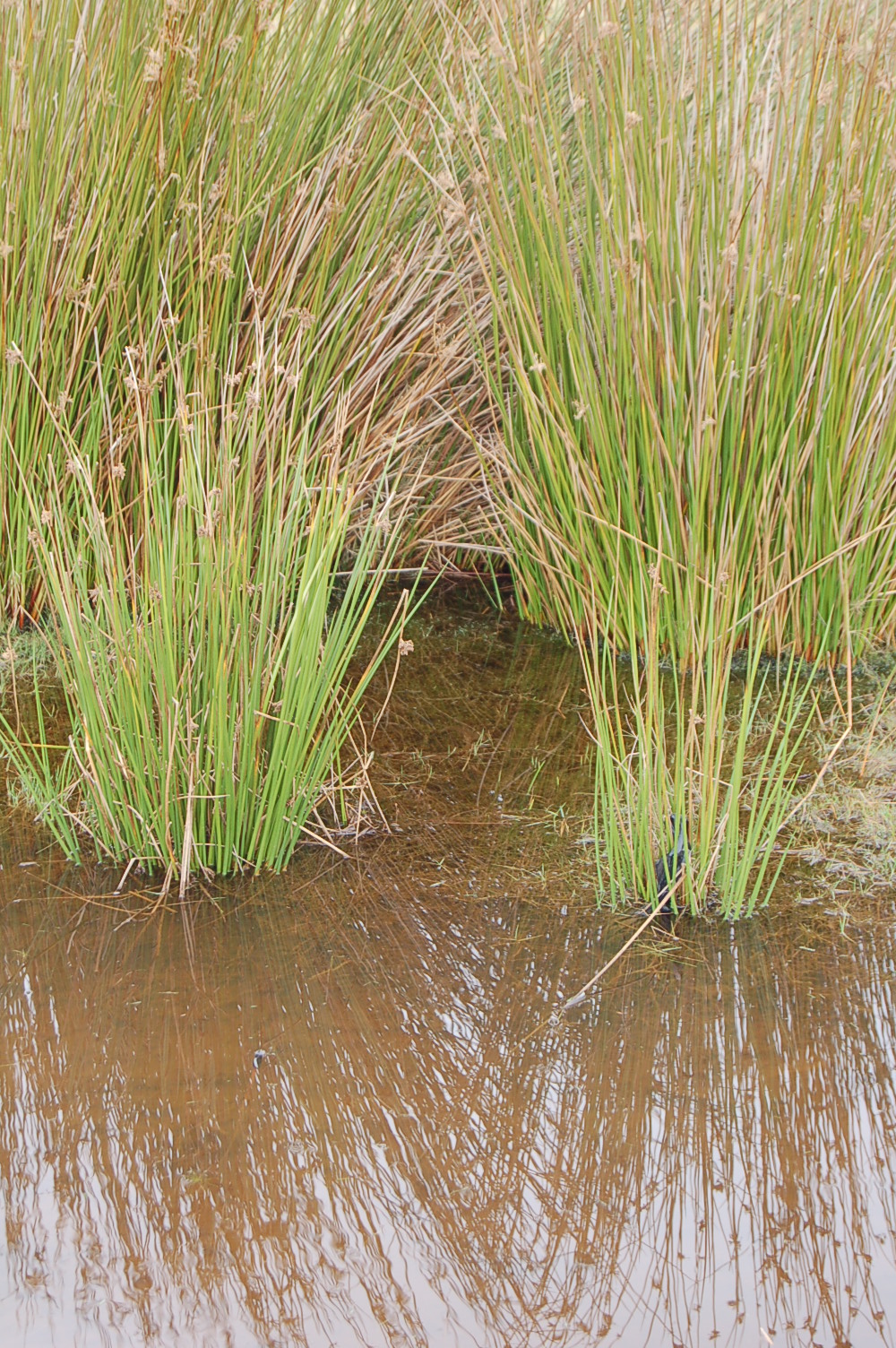
The slow walk up the slope took us through wet areas and gave us varied views.
DSC_0005 DSC_0006 DSC_0007 DSC_0008 DSC_0010 DSC_0012 DSC_0013

When we reached the highest point we stopped for a coffee break and froze! The biting wind stung our eyes and made them run, making tears run down our cheeks, and blew my hat away.

SAMSUNG

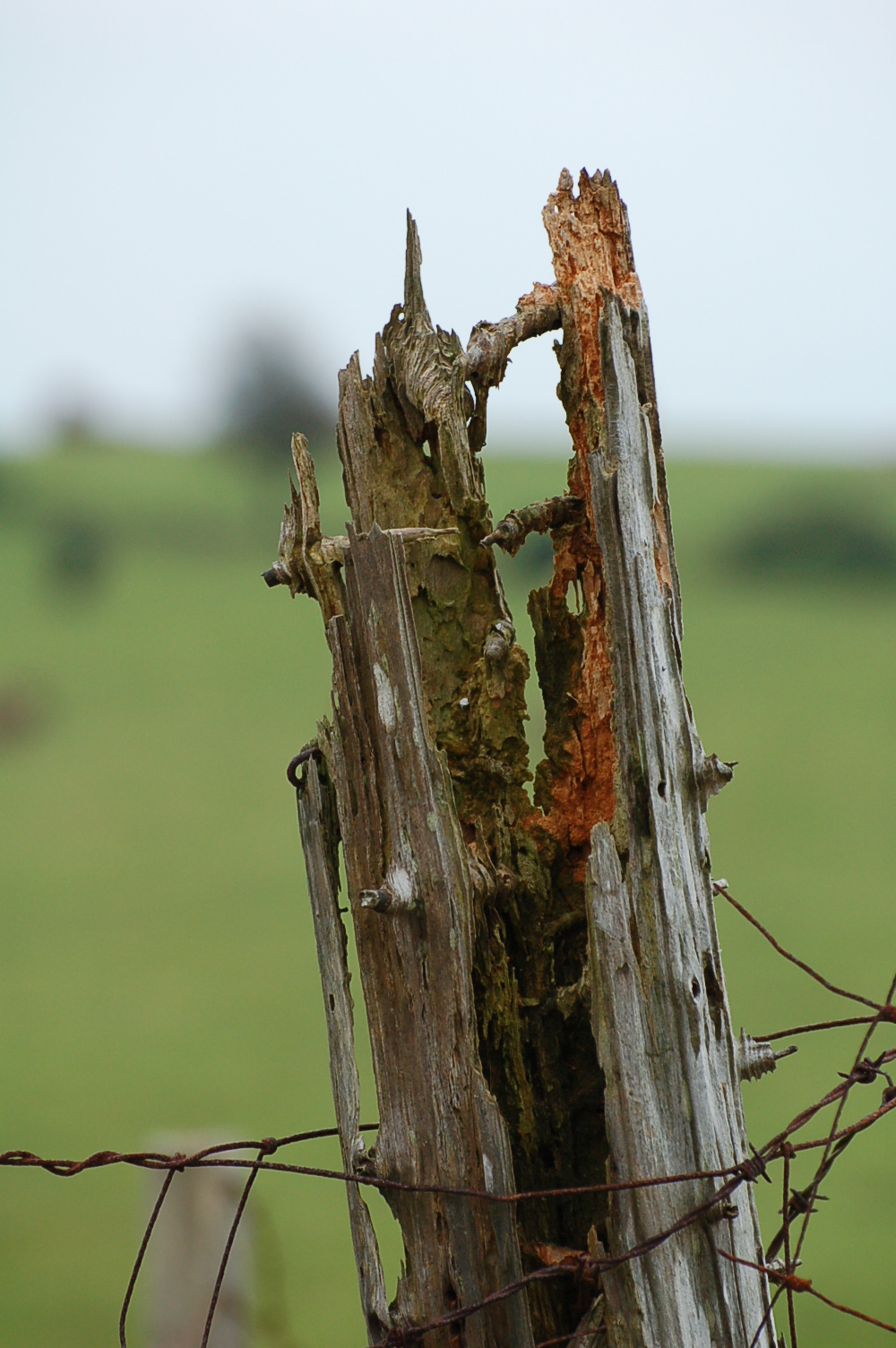
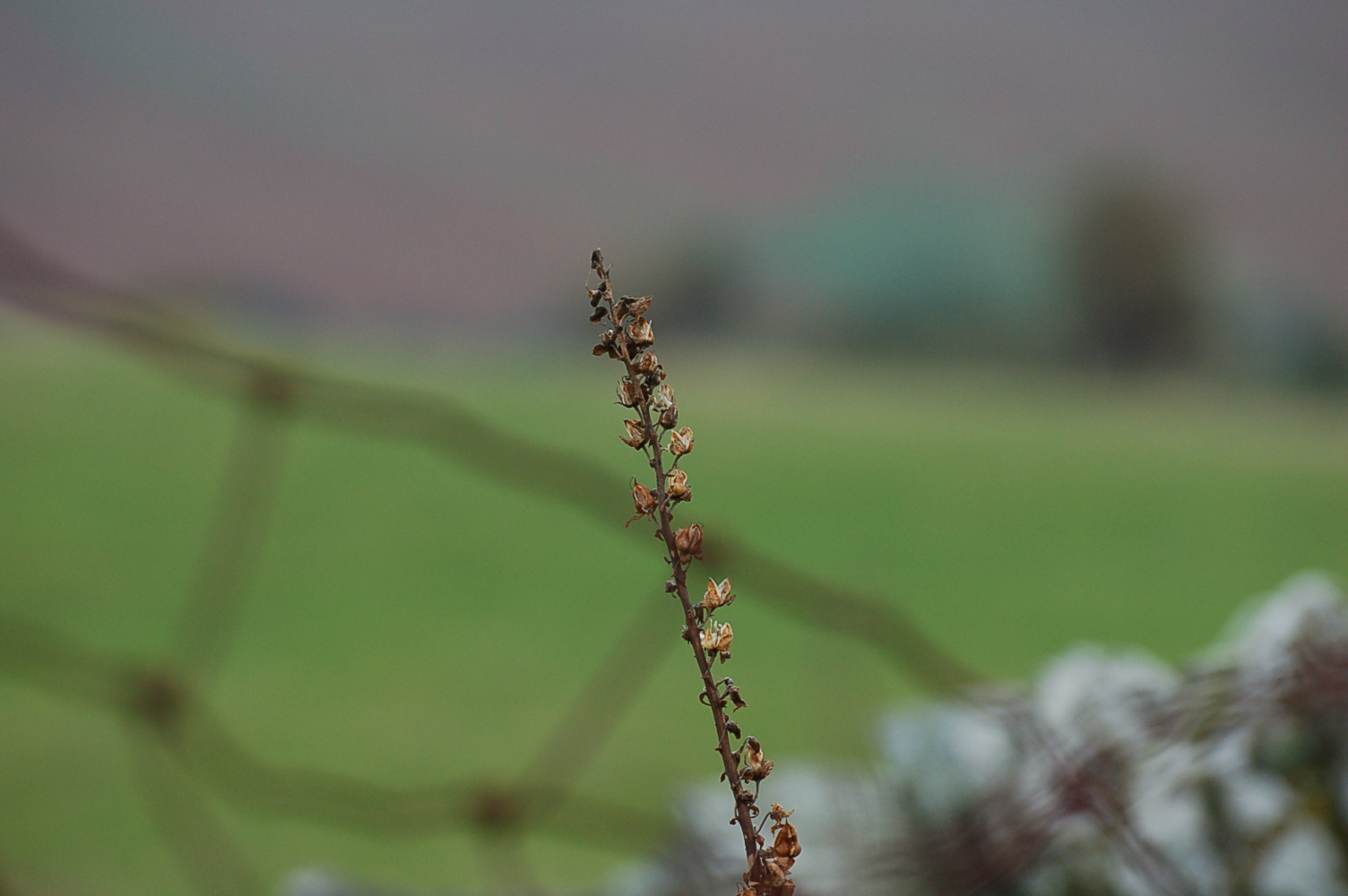
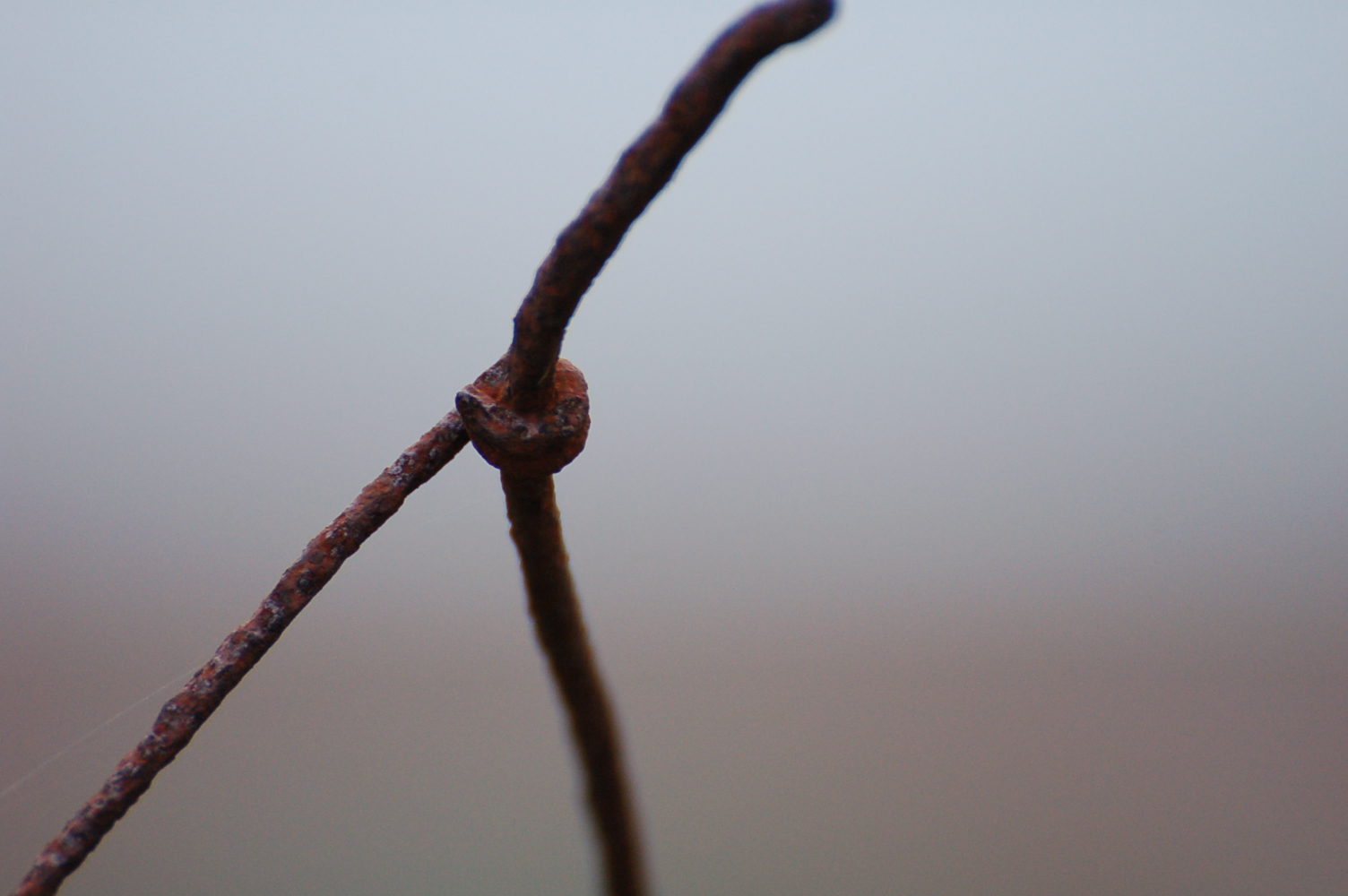
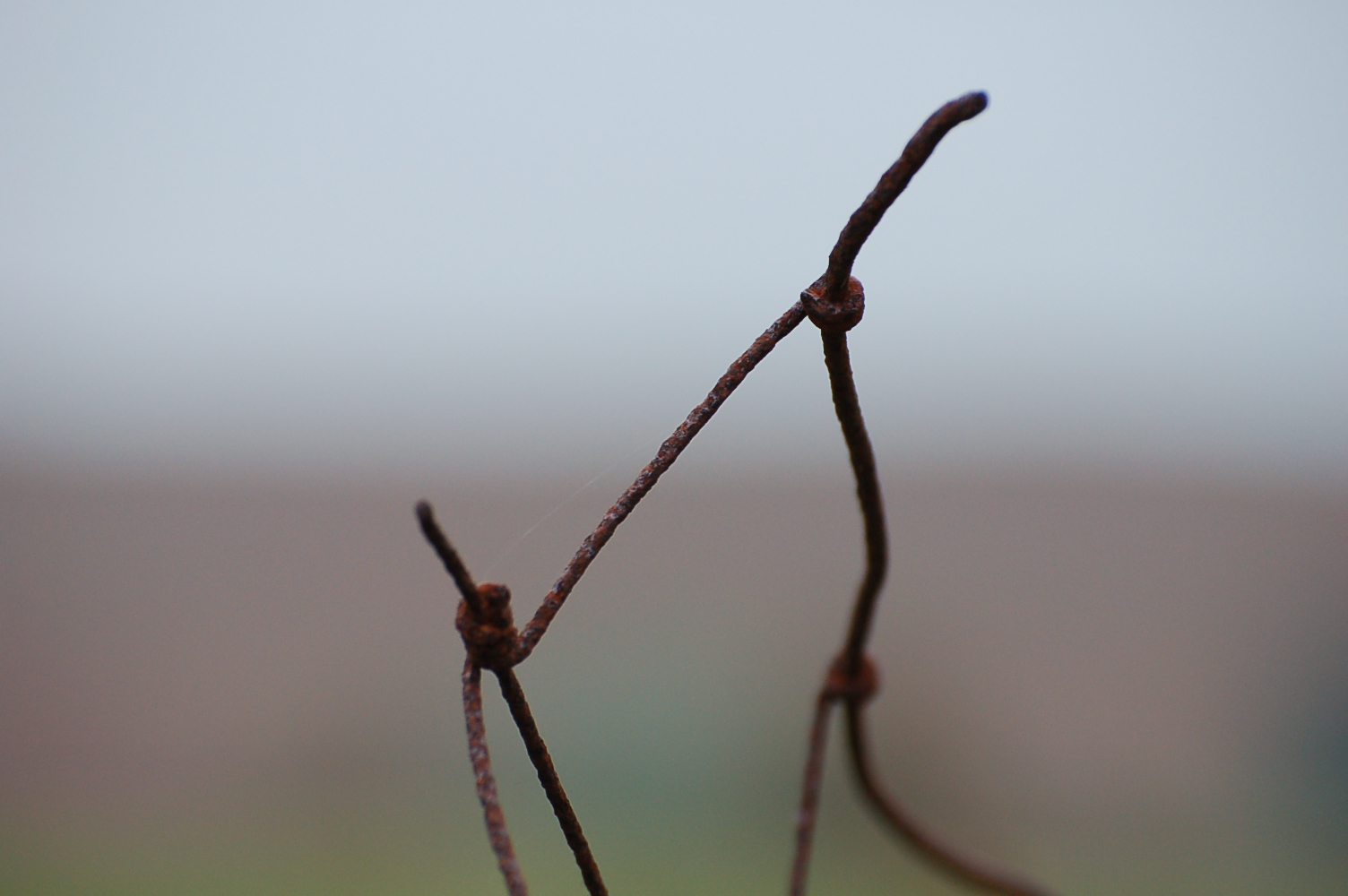
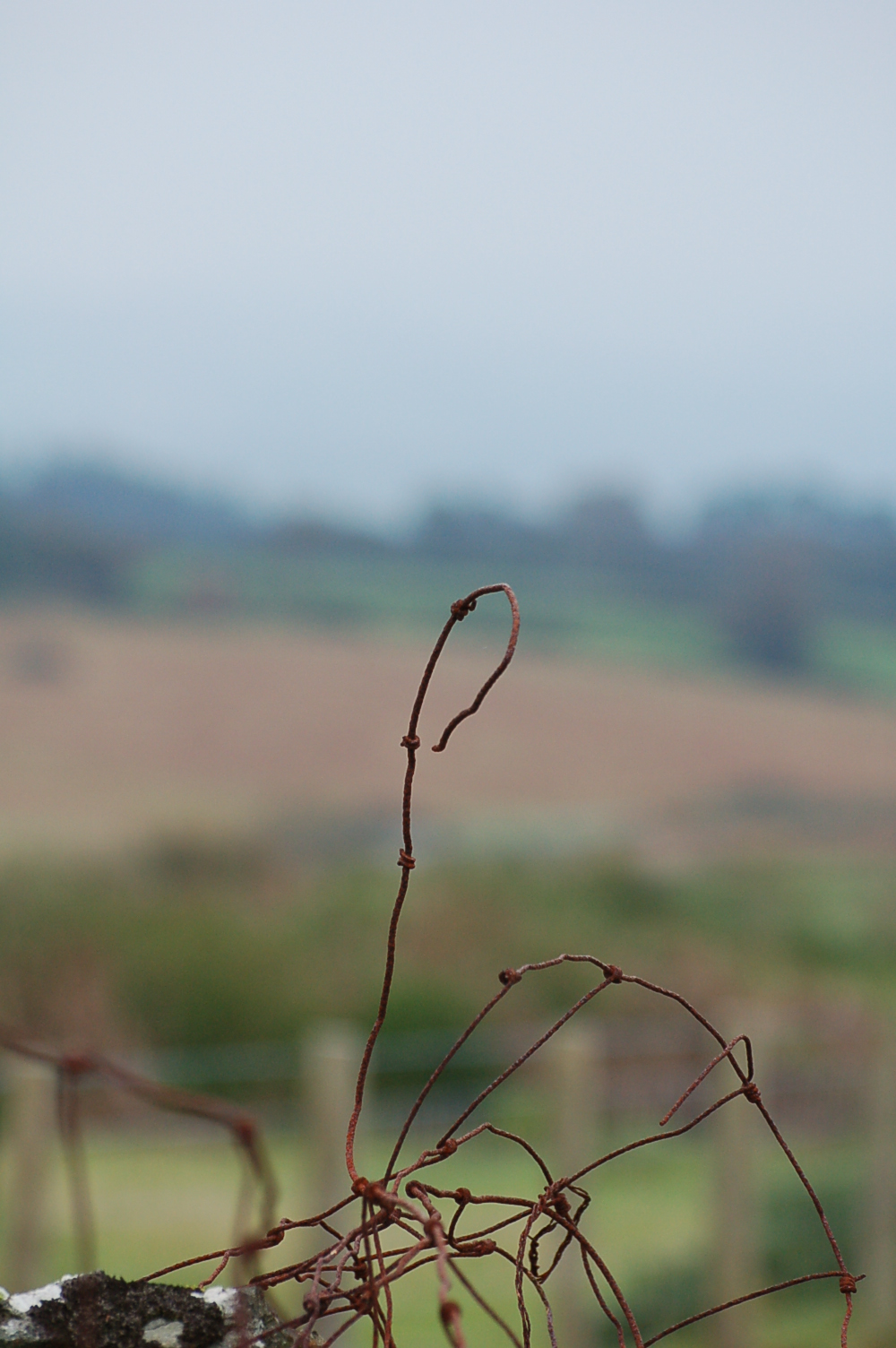
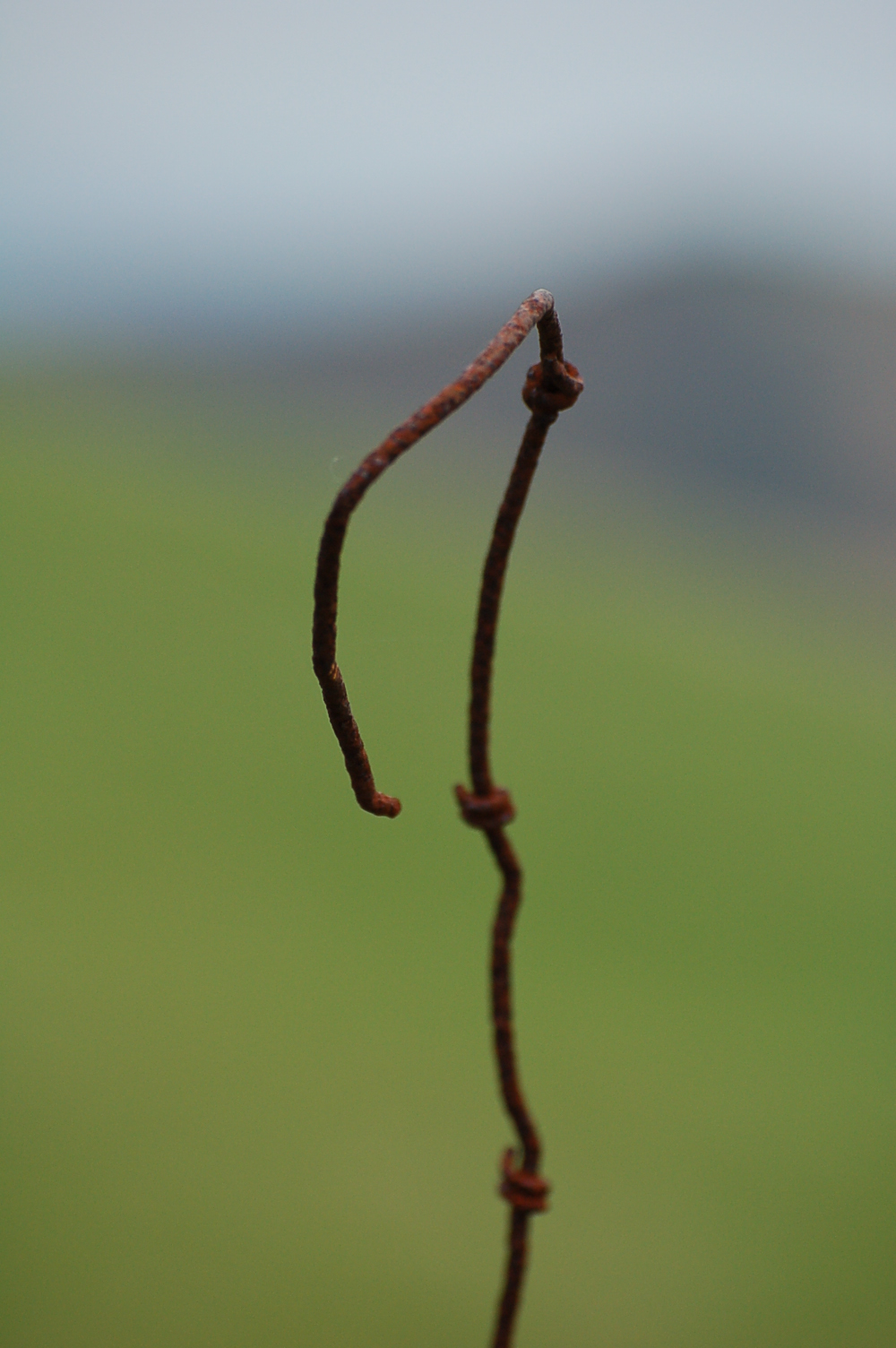
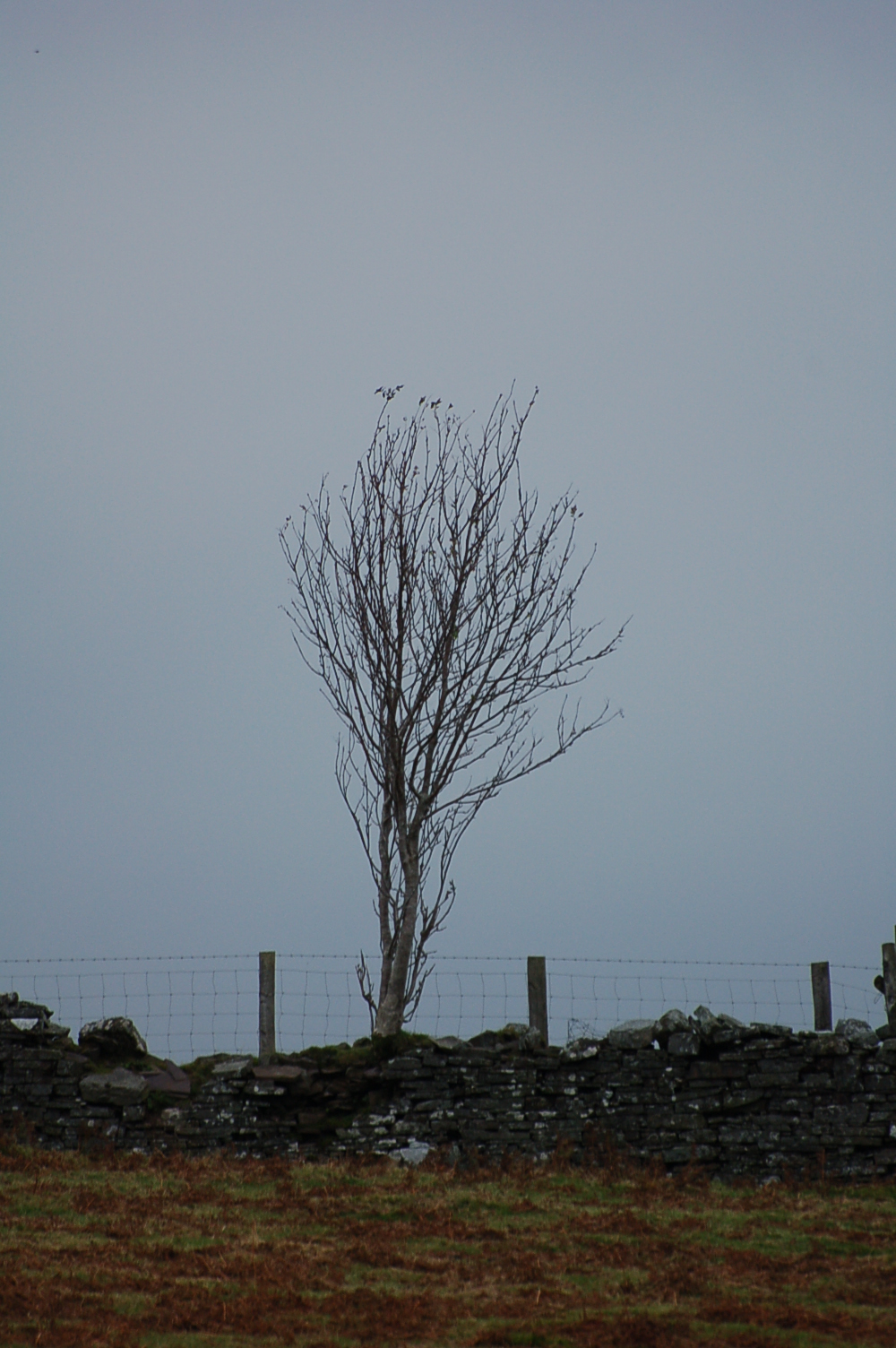
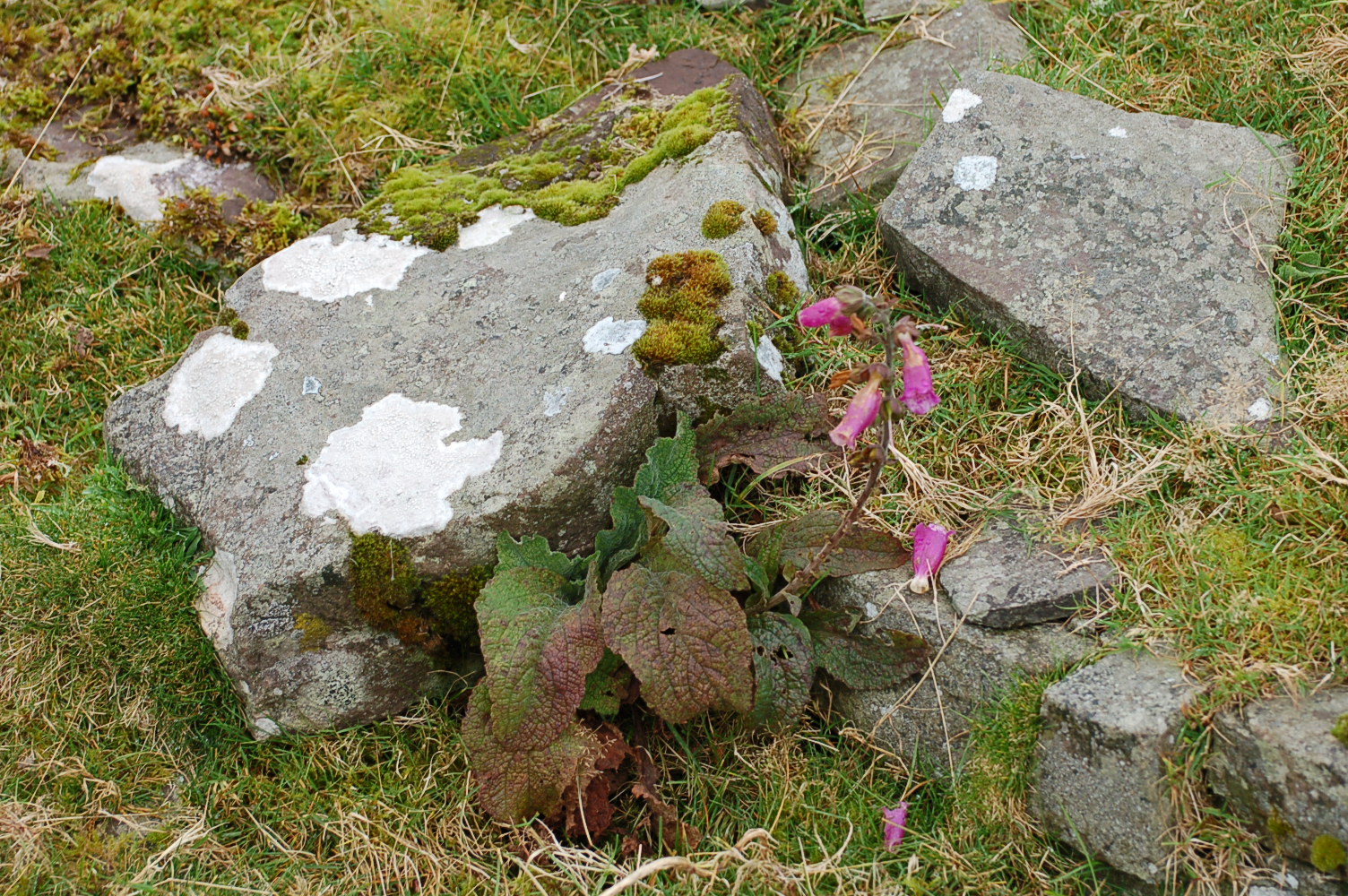
We were hoping the dry-stone wall would afford some shelter, but most of it had long fallen exposing a rough old fence of pig-wire and gnarled posts. After replenishing our spirits we followed the fence-line along the ridge. It is amazing how photogenic a tumbledown, weather-beaten fence can prove to be.
DSC_0017 DSC_0018 DSC_0019 DSC_0020 DSC_0026 DSC_0030 DSC_0031 DSC_0032 DSC_0033

While having our break we watched Red Kite gracefully soaring overhead in search of carrion.

DSC_0006

DSC_0035

DSC_0043

As we dropped back down the slope at the end of the old wall we were sheltered slightly and the wind was on our backs – much better!

On the lower slopes just above the car park we came across two interesting fungi, very different in habit but both deep yellow in colour.

DSC_0040

DSC_0047

So an exhilarating walk in exhilarating weather! We must return in more clement weather!
Categories
garden photography gardening photography winter gardens

Melting Frost

DSC_0004fr

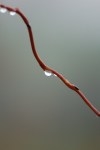
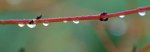
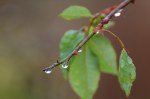
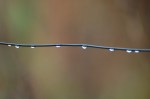
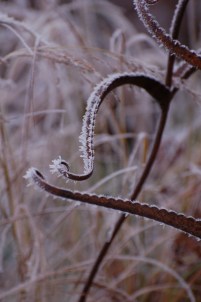
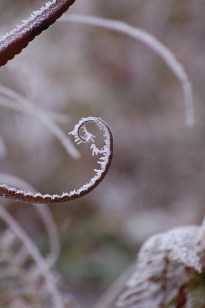
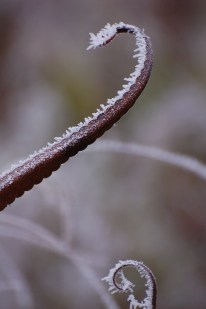
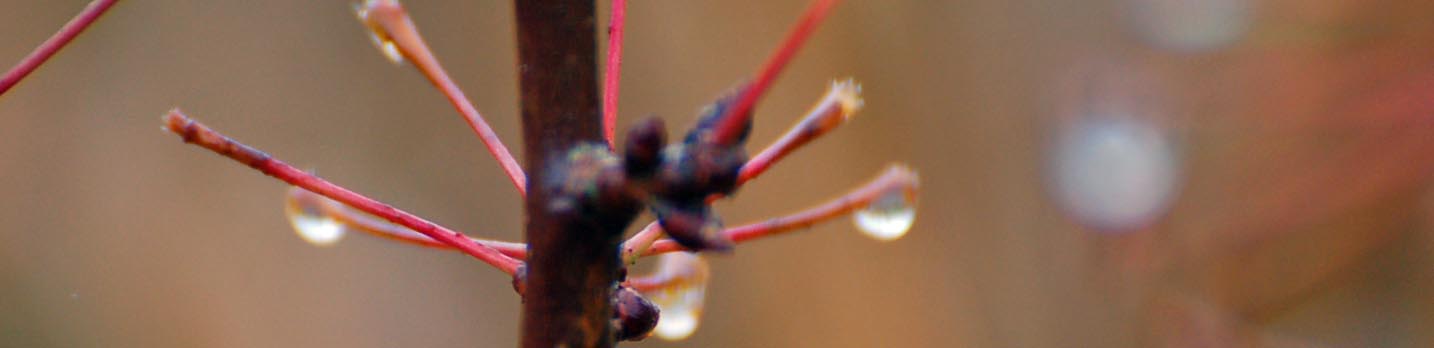
We awake each morning this week to frost which gives way to mist. As the day light increases, the drops of melted frost hang from plants like miniatures lanterns.

DSC_0014bgt

Please click on the first image in the gallery below and click the right arrow. The technical details are with each photograph.

Categories
gardening

Oops!!

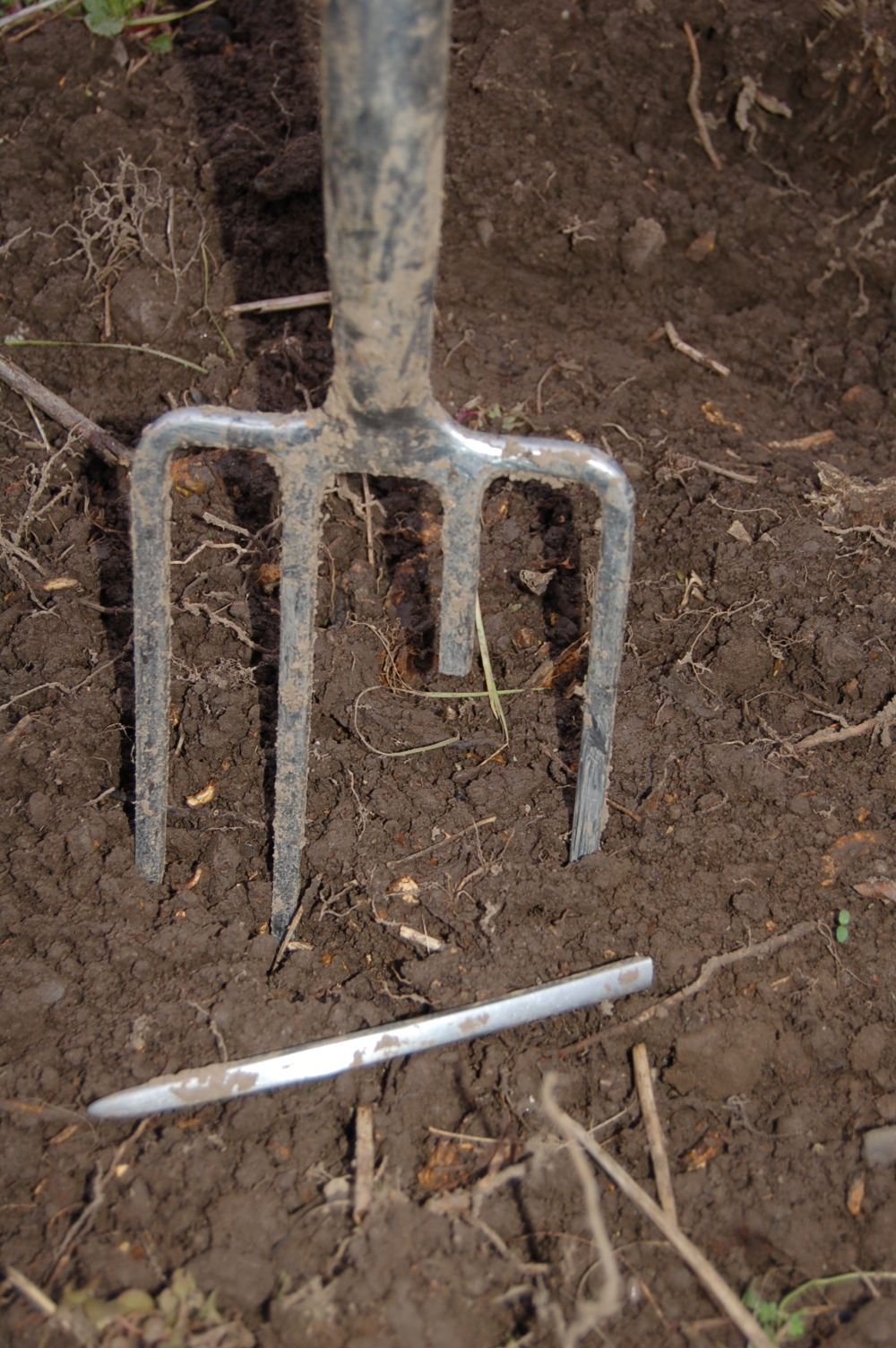
What a loud noise a tine makes when it snaps off your fork! Yesterday I dug up the root of an old Rubus – it was tougher than I thought and certainly tougher than my fork wanted it to be.

DSC_0001

Categories
garden design garden photography gardening outdoor sculpture winter gardens

The Frosted Garden – Part Two

Artefacts, ornaments, sculpture and collected objects all come to life with a coating of frost. When the garden takes on its bare look of winter these items gain extra significance . Some are completely hidden during the growing months and we can appreciate them anew as leaves fall and greenery dies down.

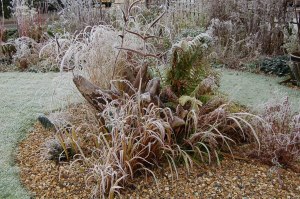
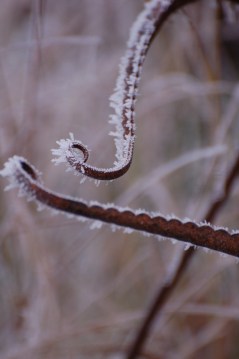
In “The Stumpery” in our front garden, which could well be the world’s smallest stumpery featuring only one stump, a rusted iron sculpture based on ferns is given new life when rimmed with frost.

DSC_0054

DSC_0055   DSC_0092 DSC_0093 DSC_0094 DSC_0095

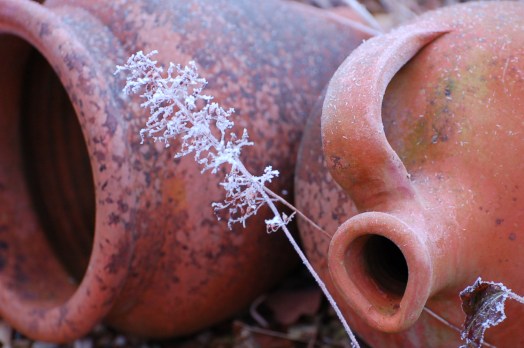
In “The Beth Chatto Border” our sundial and terracotta oil jars are given extra texture detail with a cold white coating.

DSC_0098

DSC_0088

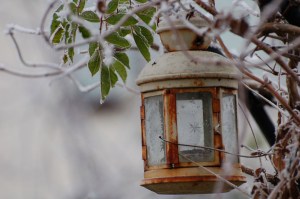
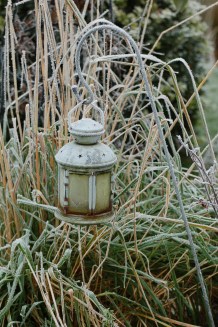
Lanterns hang throughout the garden some from arches and some on their own stands like shepherds’ crooks.DSC_0122 DSC_0125

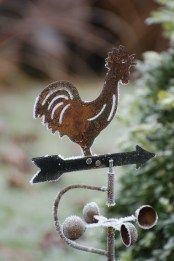
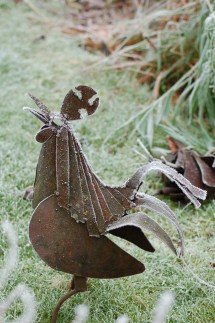
Chicken sculptures abound as you might expect!

DSC_0126 DSC_0127

And finally a look at a piece made in hammered sheet copper by our daughter, Jo. The frost hides its shine, intensifies its texture and calms its colours.

DSC_0132

Categories
garden design garden photography gardening grasses ornamental grasses photography Wildlife Trusts

The Frosted Garden – Part One

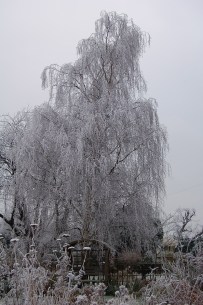
As a gardener I dislike the frost because it prevents me getting any tasks done but I love the way frost adds completely new character to the plants. The simplest bare stem or branch can come to life when the low sun catches a rim of frost.

As a photographer I dislike the frost as it makes my fingers hurt with cold deep down into the joints but I love the way light and frost adds a magical element not present at any other time. I find my fingerless thermal gloves a great help.

DSC_0048

DSC_0049

DSC_0050

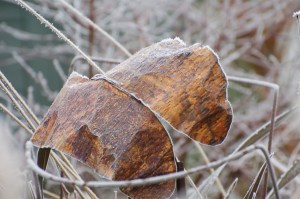
Grasses, when frosted create line drawings. My eye and camera lens are drawn to them on every frosty day.

DSC_0047

DSC_0059

DSC_0071

DSC_0102

DSC_0118

Looking out into the garden on bright frosted days, the low morning light creates special moments as it catches the seed heads of perennials.
DSC_0002

DSC_0001

DSC_0004

DSC_0005

DSC_0073

DSC_0076

DSC_0077

DSC_0078

DSC_0079

DSC_0081

DSC_0084

DSC_0085

In our frosted garden artefacts, ornaments and objects take on a new life. The copper obelisk looks black against the whiteness and it sports a delicate white coating. My next post will be about others.

DSC_0066

Categories
allotments fruit and veg gardening grow your own

Big Parsnips etc.

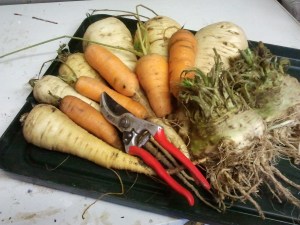
We are never very good at growing parsnips, but we have been getting better in recent years. With our allotment getting flooded six times this year we were not hopeful of success with our root crops. When the seedling carrots, beetroots and parsnips were just a centimetre or so tall and very delicate they found themselves underwater. When the water drained away the little seedlings just shrugged the experience off and carried on growing. The season carried on with the crops periodically under water. Imagine our surprise when we began harvesting healthy young roots of carrot and beetroot. Once frost had sweetened the parsnips and celeriac we began harvesting them too. By Christmas they were most impressive! I included my secateurs in the pictures to give an idea of scale.

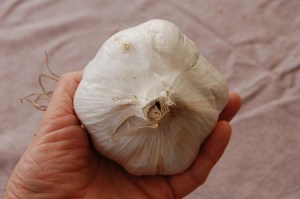
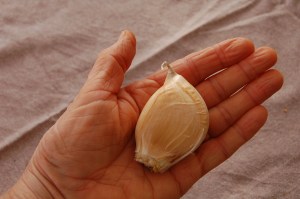
SAMSUNG SAMSUNG We haven’t used excessive amounts of fertiliser to get them to this size just simple organic gardening techniques. Lots of manure dug into the ground, deep mulches of garden compost and feeding with comfrey feed made from our own comfrey plants. Not root crops these but they did delight and surprise us with their size and flavour. Elephant Garlic is not garlic at all but more closely related to leeks. We eat them roasted when they taste of sweet, delicate garlic.

DSC_0001-16

DSC_0002

Now we definitely have something to live up to next year. Perhaps the weather will be nearer normal next year and we might even avoid the floods. Mind you of course, the crops above might have excelled because of the floods rather than in spite of them.

Categories
garden photography garden wildlife gardening grasses hardy perennials ornamental grasses ornamental trees and shrubs photography

Looking back at 12 months of garden wanderings.

As 2012 ends and 2013 begins it seems appropriate to look back at the twelve posts I made based on monthly wanders around our garden. So please enjoy my selection of 12 shots. Just click on a photo to see a larger image and slide show.

Hope 2012 has been kind to you. Wishing you all a Happy, Healthy and Peaceful New Year.

Categories
allotments fruit and veg gardening grow your own

Old Garden Tools

I just love old garden tools. I like using them and I like collecting them. They feel good in the hand, smooth and worn and I know I am holding a piece of gardening history. Every tool has a story to tell, a story I shall never know. But you can always imagine!

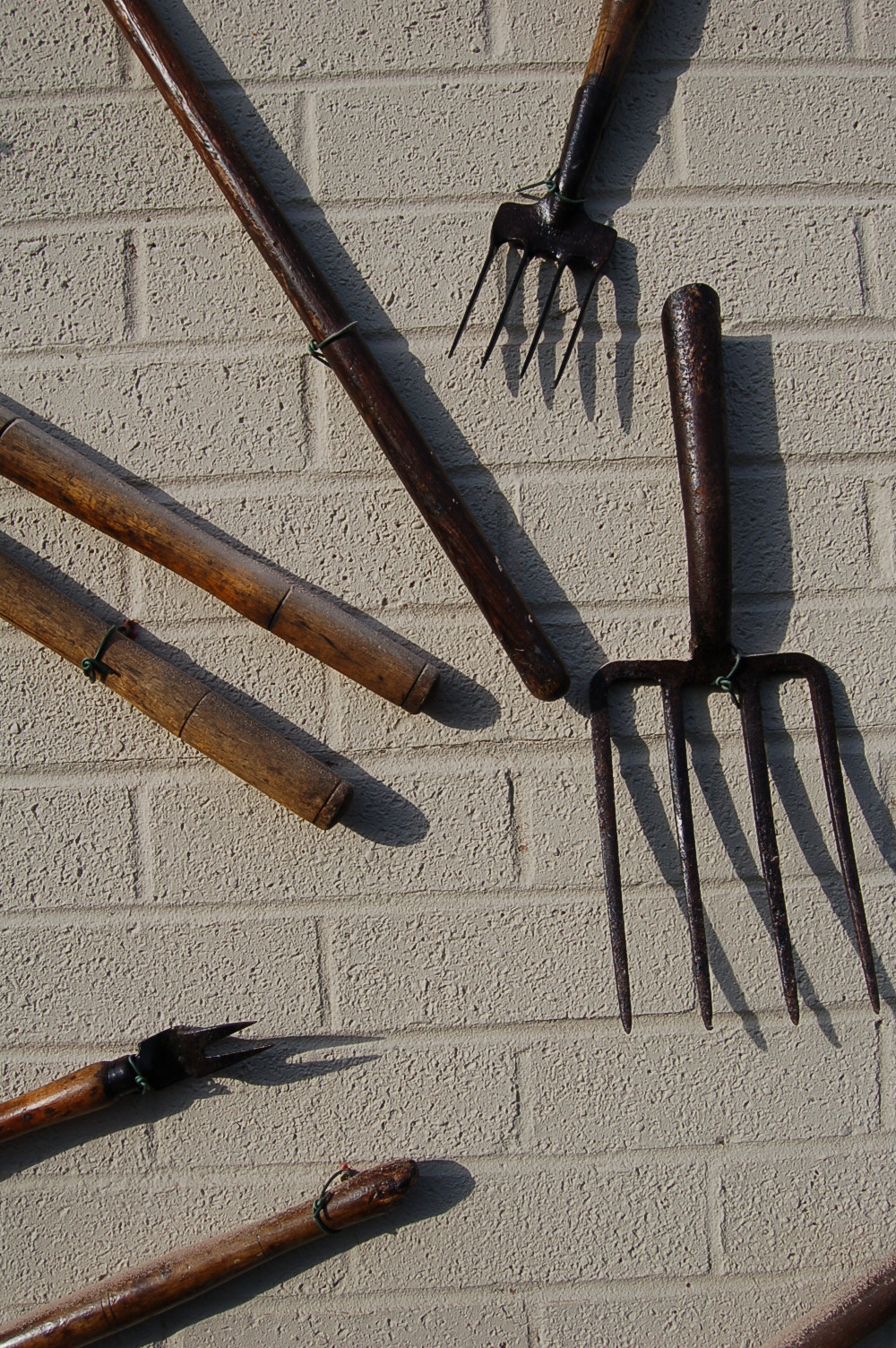
When you find old tools in antique centres, on market stalls or at garden or smallholder shows they seem dry and dull and lifeless. It is when I do them up that I feel in touch with the old gardeners who have used them for decades.

I have been amazed to find that for almost every old tool there is a modern equivalent and that today’s versions are often virtually identical. I enjoy trying out tools from my collection and find them just as easy to use. So it seems there are no new ideas in garden implements just new versions of the oldies.

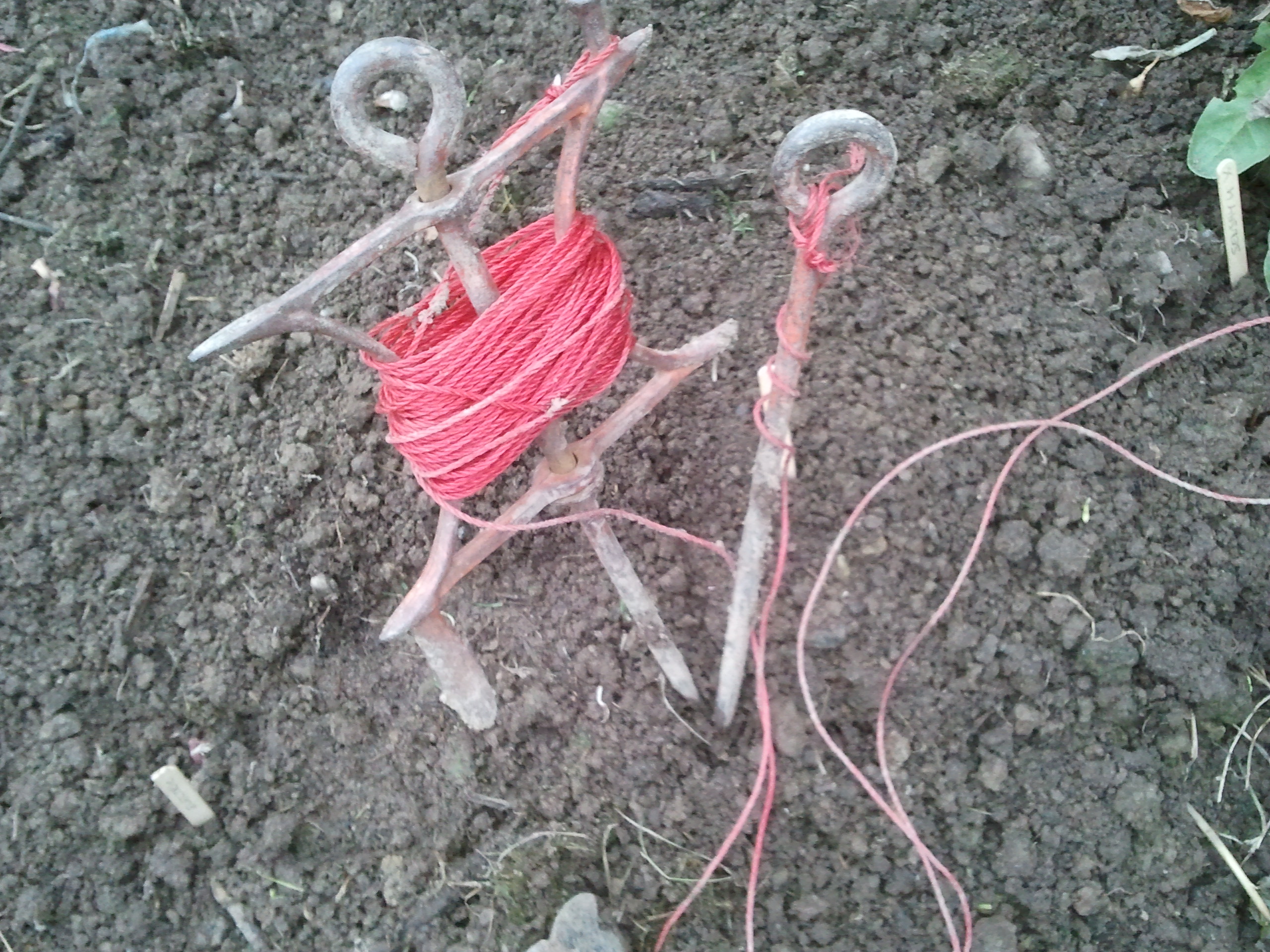
The garden line below was used by Jude, The Undergardener’s Grandfather back in the early years of the twentieth century when he worked a market garden. We use it all the time on our allotment as it is far superior to any available today. It is a design that just could not be improved upon.

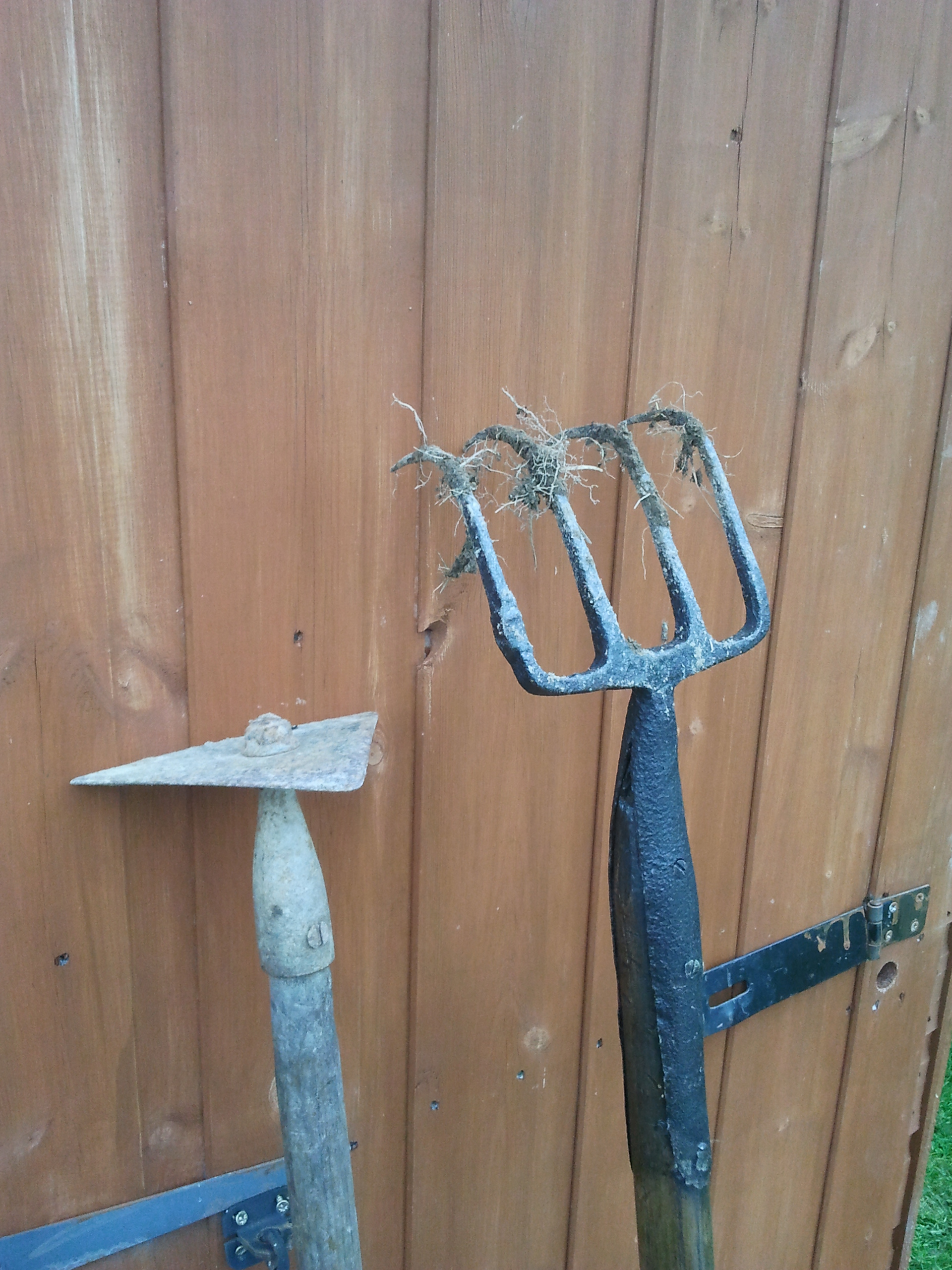
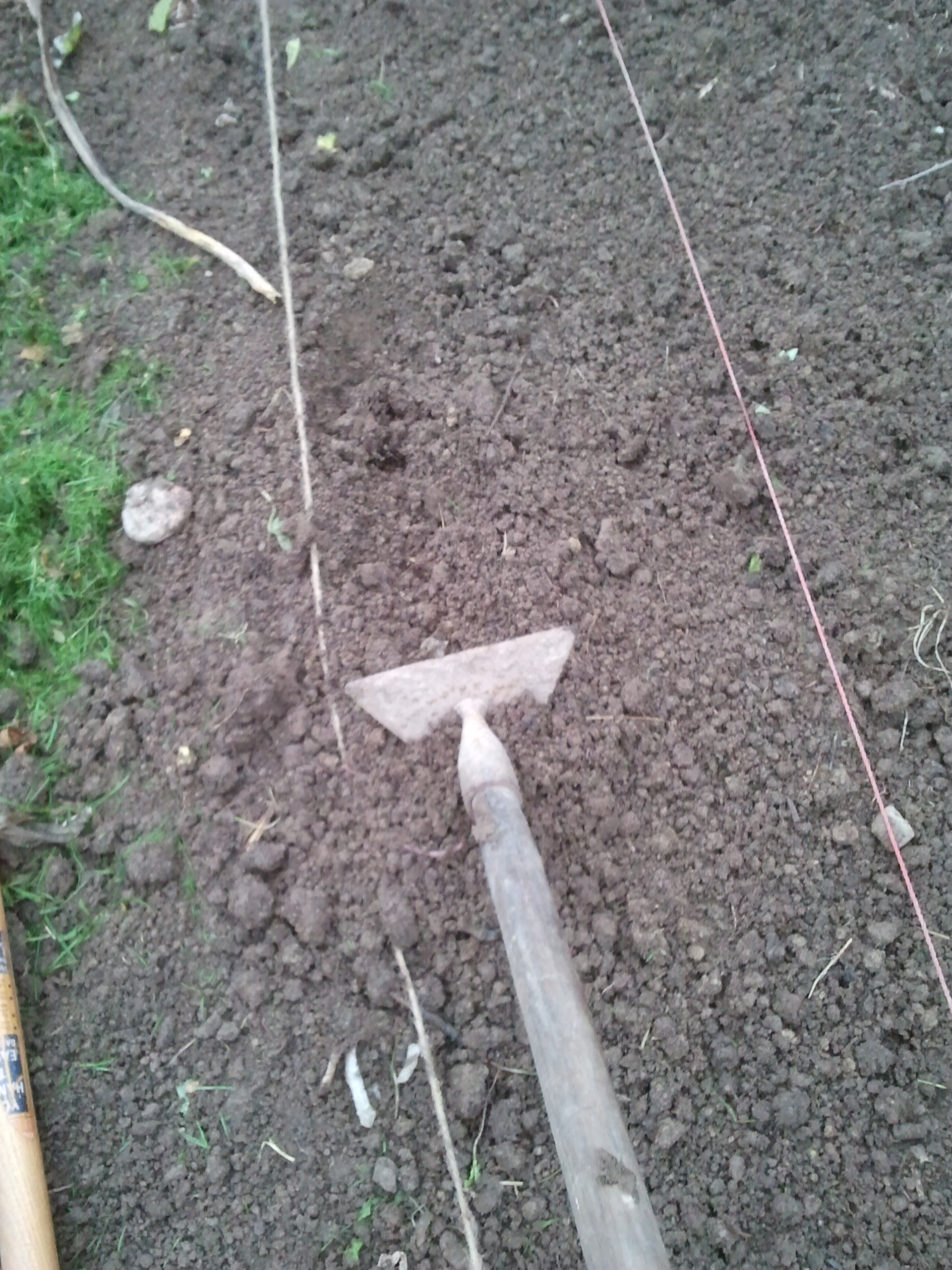
On a recent lottie visit we had hoeing and raking to do so I decided to take up my old triangular headed hoe and my “crome”. They worked really well, the sharp tines of the crome breaking down the soil to a fine tilth and with the hoe we could manouvre between winter onions and leeks a treat.

I enjoy trying out these oldies from my collection and I find them easy to use and often more comfortable than their new cousins. Perhaps it is the materials they are crafted from, the hardwood handles honed from local trees and the iron blades and tines. Today’s plastics and stainless steel give less and feel harder and colder. Of course the main difference is that old tools were individually made by craftsmen.

The art of repairing them and bringing them back to life is moat satisfying. I clean up the metal to prevent them getting any rustier and treat the wooden bits to a few coats of linseed oil well rubbed in. The smell brought back memories of my cricketing youth when I used to treat my bat handle in the same way.

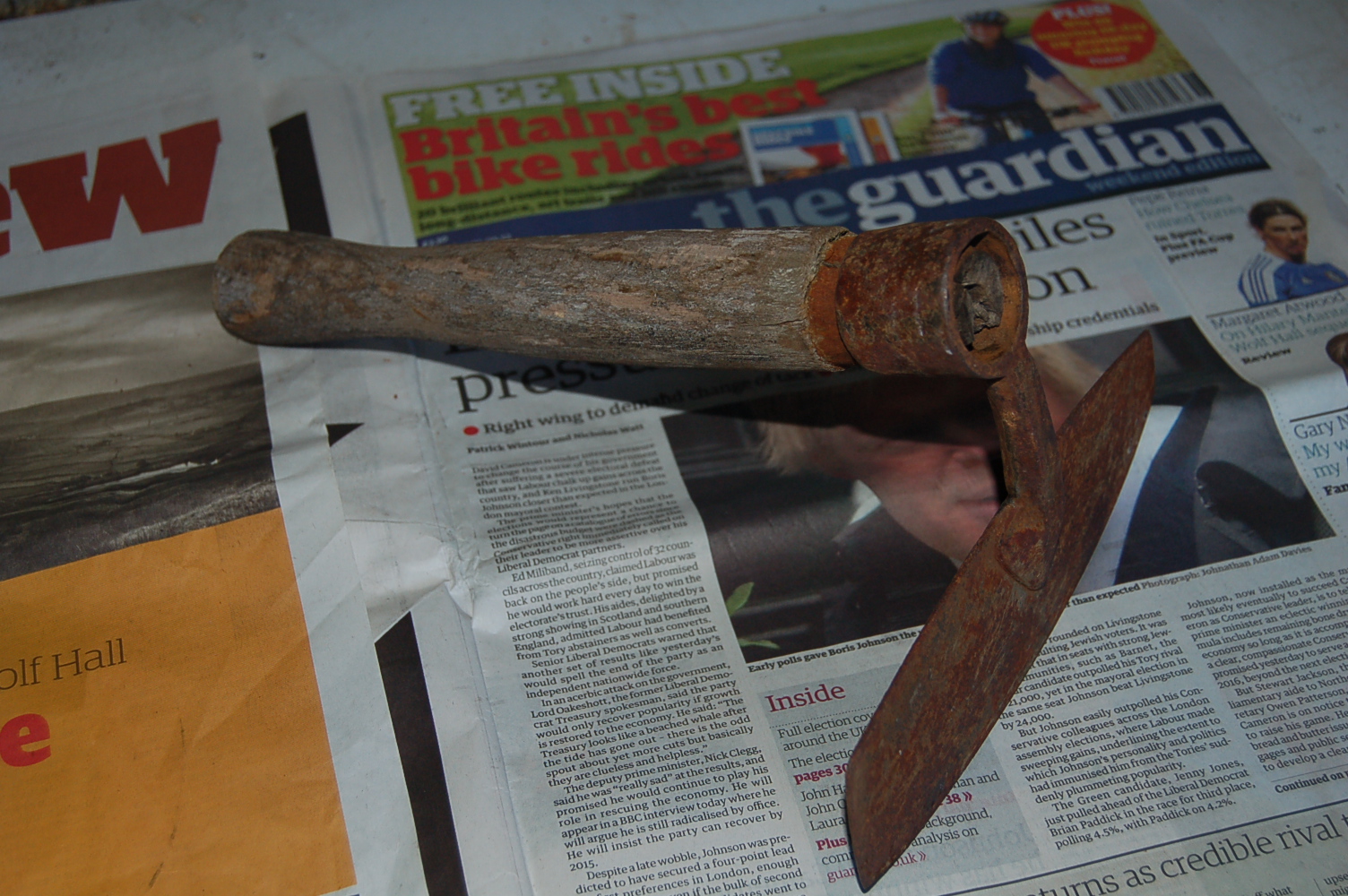
Below is one of my pieces in need of some tender loving care, its handle dry and its blade rusted.

And here he is all spick and span!

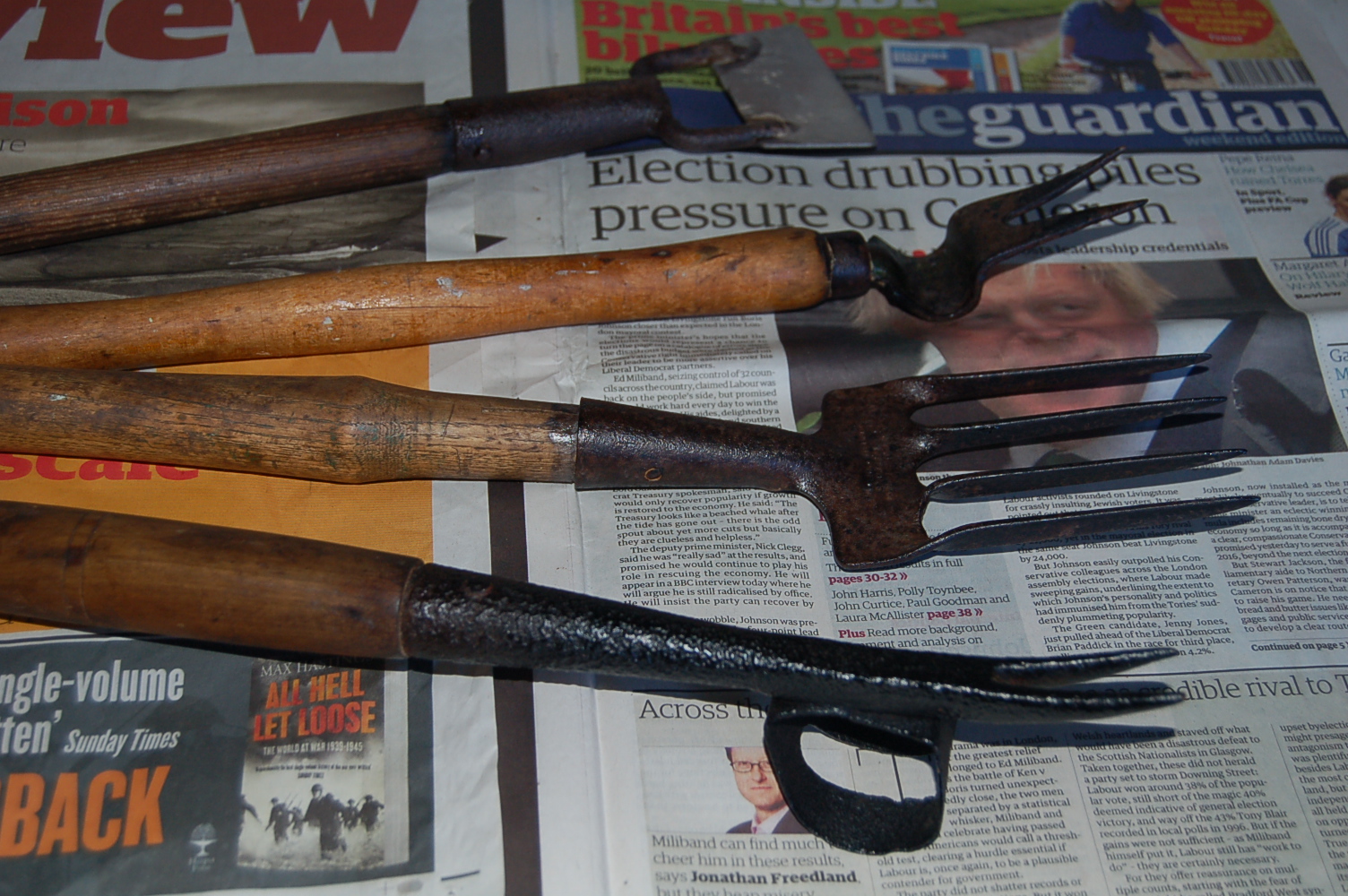
This batch has been rust-treated, linseeded and given the first of two coats of satin finish varnish.

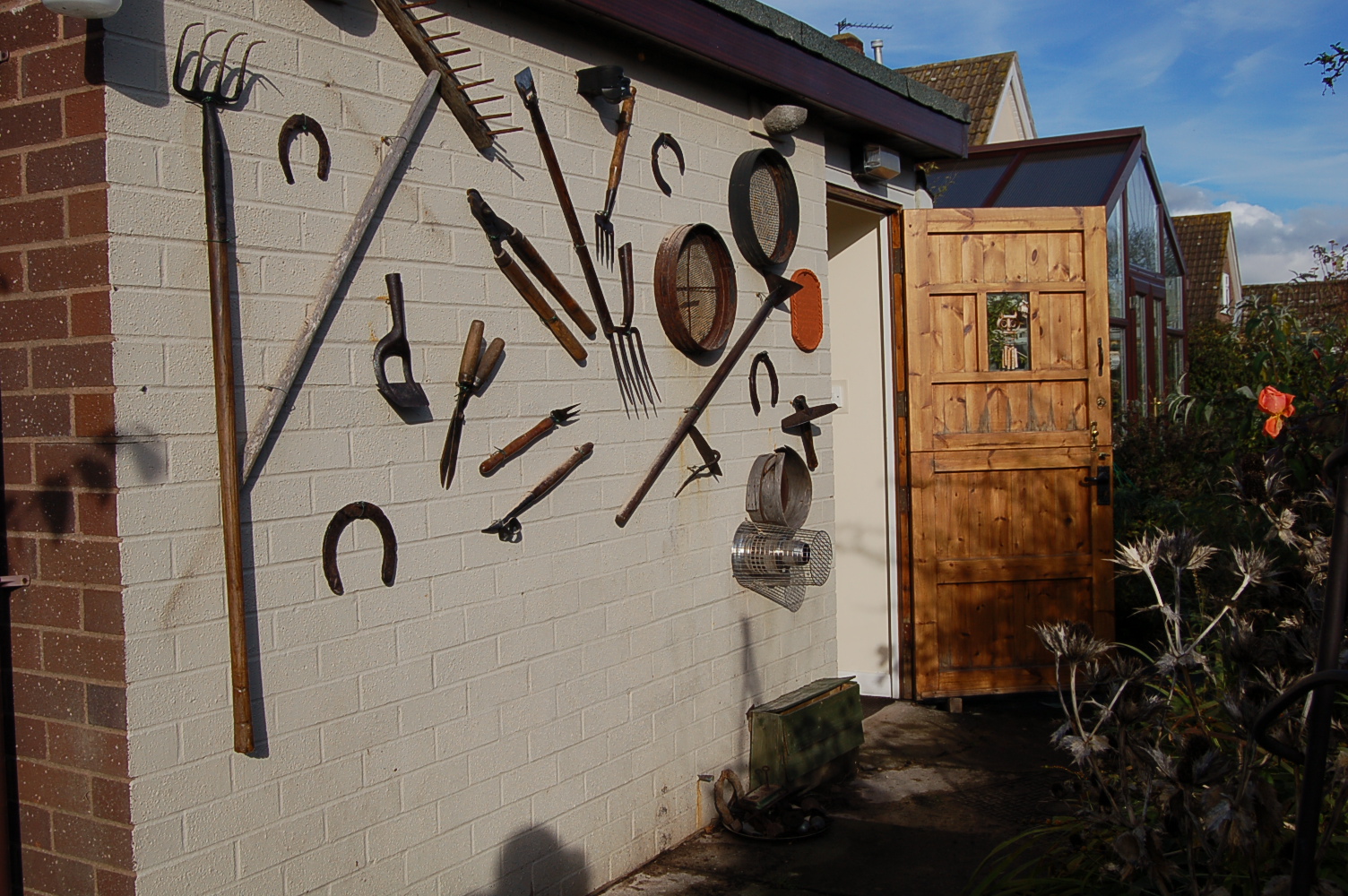
And here they all are in all their glory, decorating the back wall of our garage.

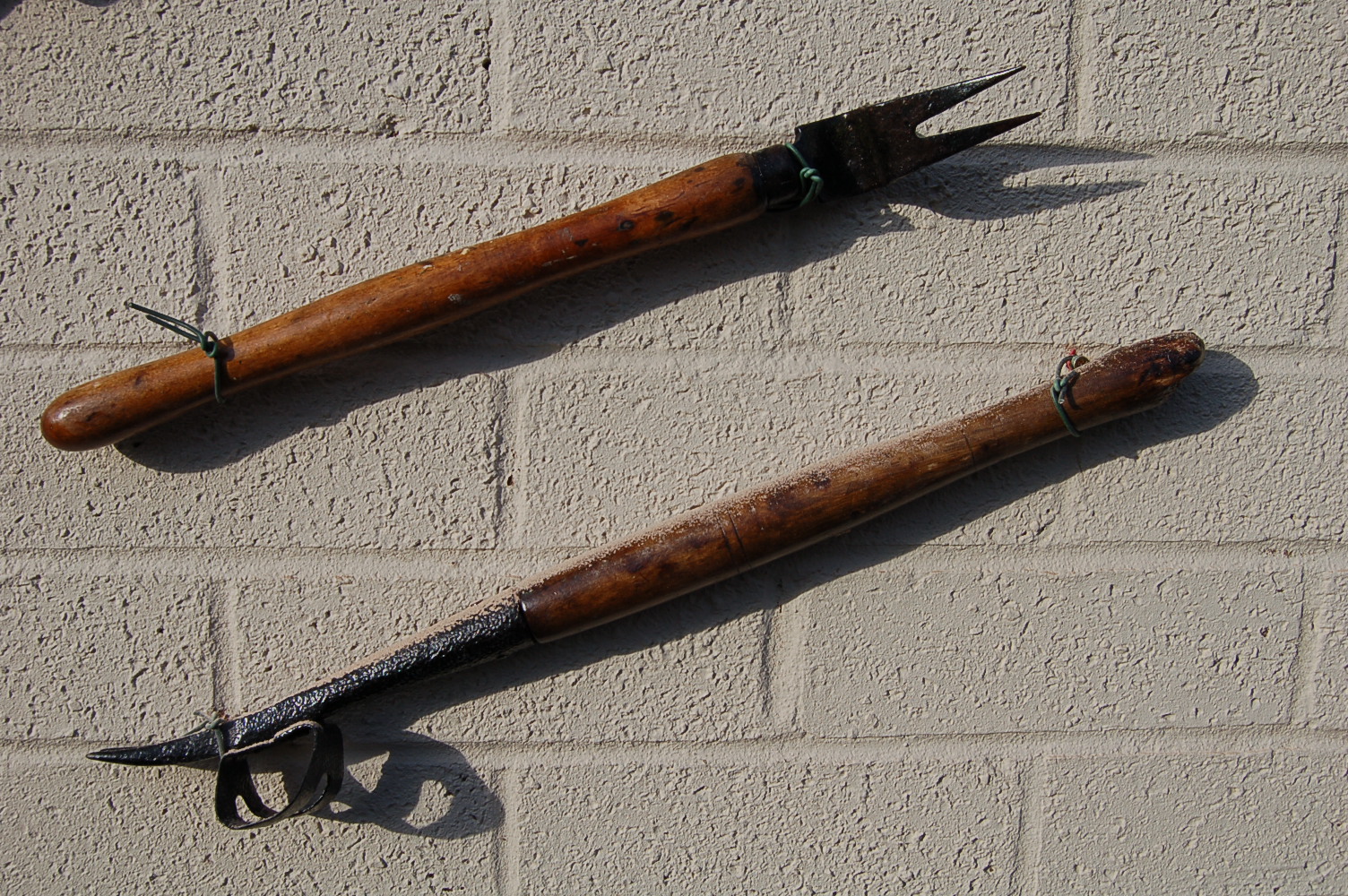
These two little hand tools are weeders better known as “daisy grubbers”. They seem so well designed with sharp forked tongues, a fulcrum point and beautifully shaped wooden handles, hand turned by a craftsman.

Categories
architecture buildings conservation Shropshire South Shropshire

Rural Shropshire – Architecture Old and New

 DSC_0122nb

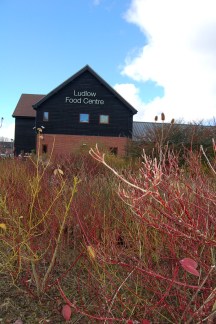
Visitors come to Shropshire for its wonderful countryside, beautiful old market towns and for the peaceful atmosphere. Rural areas of Shropshire are dotted with old farms with ramshackle buildings, barns, cattle biers, cottages and farm houses, but there are isolated examples of good modern architecture. The Ludlow Food Centre provides a good example of this based around old farm buildings and a row of cottages but given a new use and so a new lease of life.

I have always liked their sign seen in the photo above, with the simple representation of fields in natural colours. Sadly recently it has changed to just lettering which is nowhere near as interesting.

There is now just the row of cottages left which have been renovated recently and  are lived in once again. The walls show an attractive combination of brick and wood and the chimneys are most impressive.

DSC_0116


DSC_0118

DSC_0119

DSC_0120

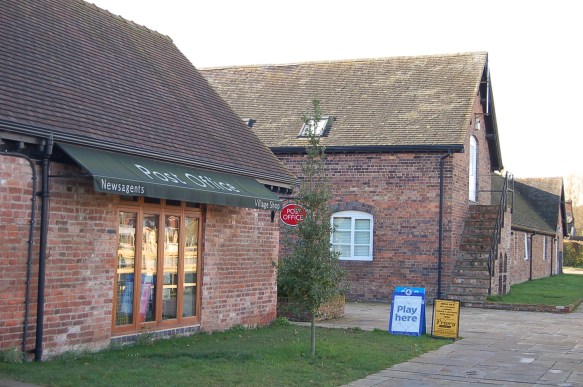
Behind the cottages is the new Food Centre and Garden Centre and these sit alongside a coffee shop and post office in old farm buildings. They have certainly been given a new lease of life. Needless to say we visit the coffee shop whenever we are close by.

DSC_0115

  DSC_0130

SAMSUNG

SAMSUNG

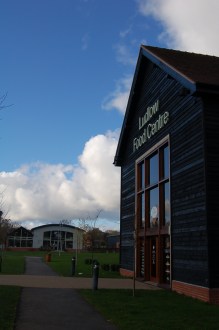
The Food Centre itself is housed in a building that reflects the property’s farming past, with a huge entrance reminiscent of the old barn doorways that allowed loaded carts through and it is clad in darkly painted wood a popular finish for old farm buildings especially barns. Inside local food producers, a baker, a butcher, cheese maker etc, sell their wares and glass walls allow visitors to see food being made and packed before they decide to purchase.

DSC_0123

At the side of the food centre a naturally planted wildlife pool with colourful shrubs enhances the peaceful atmosphere here.

DSC_0127

DSC_0128

DSC_0129

The new plant centre is housed in a new building built just as you would imagine a new upmarket barn would be built. Modern materials are used in a traditional building style. Beautiful local products such as metal sculpture are displayed inside alongside organic gardening fertilisers, bird feeding equipment, books and a rich mixture of gardening sundries. All very tempting! Out back can be found a plant nursery.

DSC_0114

Categories
bird watching birds garden wildlife gardening wildlife

Winter Birds in our Garden

(Hope you like the new look! Please let me know what you think.)

In recent years we have seen the numbers of most birds visiting our garden, even the commonest, dropping most drastically. Goldfinches, House Sparrows, House Martins, Swallows and Starlings seem particularly badly affected. We try to help by providing food, shelter and nest boxes but our actions must be a drop in the ocean. What would make a real difference would be for some serious research to find the root causes of this sad decline, and then putting it to rights.

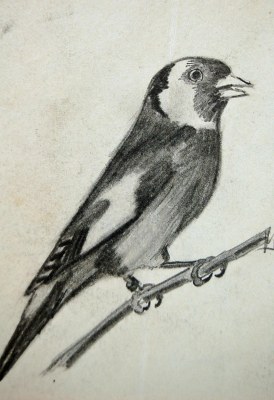
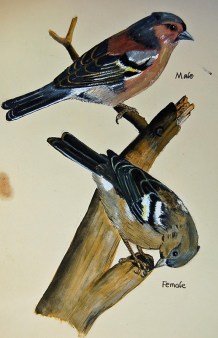
For a change I thought I would add some of my drawings and paintings to the usual photos I include in my postings. The pencil sketch below is of the multi-coloured Goldfinch.

DSC_0005bnm

This year the flocks of Goldfinches are showing signs of improvement, the sparrows are back cheerily entertaining us with their constant chatterings and the tit family seem more numerous. We notice these changes just by observing activity on and around our three feeding stations.

Some birds though still seem to be suffering especially Chaffinches and Greenfinches which until a few years ago were two of our garden’s commonest species.

DSC_0002dfg  DSC_0006nm

Happily the Great Tit population here appears stable and their cousins the Coal Tits seem more numerous. These related birds display very different characters when visiting the feeders. The larger Great Tits are confident and stay feeding for long periods often chasing away other birds with wing-flaring and threatening shouting, while the Coal Tit comes quickly and quietly, selects its nourishment and disappears into nearby vegetation.

DSC_0007bnm

DSC_0004bnm

Many birds come into the garden to feed even when we are around, confidently feeding and foraging as we go about our business.

DSC_0108bn

DSC_0109nm

Winter brings into our garden for our enjoyment birds that we rarely see for the rest of the year. Winter visitors like the continental thrushes are the most obvious as they arrive in great numbers noisily and feed voraciously on berries and bits and pieces dropped from the bird table by the residents. Smaller less obvious visitors are Blackcaps and Siskins and these are welcomed with open arms. They are lovely to watch in the shrubs and trees. Goldcrests move in from the local woodlands and add wonderful bright splashes of colour.

DSC_0009bnm

A strange happening that we have observed this winter for the first time kept us amused for while. Our Nuthatches have started hiding peanuts away under the edges of the roofing felt of the garage and sheds. They ram them in a long way and very firmly. We wonder if they will recall where they left them when they need them in the future. It seems more likely that the Bluetits will discover them as they search all nooks and crannies in search of bugs.

Feeding the birds in our gardens may be drops in the ocean, but lots of drops may make a big wave!

This Veggie Life

A Vegetarian | Nature Lifestyle Blog

Rambling in the Garden

.....and nurturing my soul

The Arch City Gardener

Journeys In St. Louis Gardening and Beyond

Garden Dreaming at Châtillon

Consult the genius of the place

Storyshucker

A blog full of humorous and poignant observations.

gardeninacity

Notes from a wildlife-friendly cottage garden

PlayGroundology

...an emerging social science

The Official Blog of British Wildlife

'The most important and informative publication on wildlife of our times' - The Independent. This blog is a member of The UK & Ireland Natural History Bloggers group: www.uknhb.blogspot.com

iGrowHort

Inspire - Cultivate - Grow Native Plants - Restore Landscapes

Bishops Meadow Trust

To create and protect a semi-natural wild space for the people of Farnham to enjoy and experience an array of British wildlife in our town

Gardening with Children

The www.gardeningwithchildren.co.uk Blog

UKbirdingtimeline

birding through the seasons, why birds matter and how to conserve them

NATURE WALKER

with a camera in hand

Jardin

Transform your outdoor space

Eva's space

My allotment, cooking and other interests

Old School Garden

my gardening life through the year

LEANNE COLE

Trying to live a creative life

fromacountrycottage

trying to live as lightly as possible on our beautiful planet

Good Life Gardening

Nature lovers from Leicester living the good life.

mybeautfulthings

Finding the beautiful in the everyday

mawsonmichelle

Michelle's Allotment

In and Out of My Garden

thoughts from and about my garden

Greenhousing

Big plans for a small garden

The Scottish Country Garden

A Walled Country Garden in South East Scotland

The Fruity Chicken

Life at the fruity chicken

willowarchway

Off grid living. Self sufficient. "PERMAGANICS RULE".

St Anns Allotments

Nottingham's Grade 2* Listed Allotments and Community Orchard

Manifest Joy Harvests

a journey in suburban vegetable gardening

Allotmental

The madness of growing your own

Penny's Garden: a harvest beyond my front door

A novel approach to vegetable gardening

arignagardener

Sustainable living in the Irish countryside.

NewEnglandGardenAndThread

Master Gardener, amateur photographer, quilter, NH native, and sometimes SC snowbird

dianajhale

Recent work and work in progress and anything else that interests me

planthoarder

a chaotic cottage gardener

Lens and Pens by Sally

a weekly blog that creates a personal philosophy through photographs and words

Dewdrops and Sunshine

Stories from a sassy and classy Southern farmbelle.

The Pyjama Gardener

Simple Organic Gardening & Seasonal Living

gettin' fresh!

turning dirt into dinner

JOY...

today the world is created anew

Garden Birds

Notes from a Devon garden

ShootAbout

Life Through The Lens

Adapting Pixels

A photography blog showcasing the best photography pictures and videos on the internet

Wildlifegardening's Blog

Just another WordPress.com site

naturestimeline

personal observations from the natural world as the search continues for a new approach to conservation.

LATEBLOOMERBUDS

The Wonders of Life through my Eyes, my Heart, my Soul