Categories
gardening grow your own outdoor sculpture

Meet The Chickens

I often mention feeding the chucks in my blogs, so I think it is about time they were introduced. I decided to take a portrait of each one but they just do not stay still long enough to take a photo. So I gave them a new bale of straw to play with and took shots of them distributing it all over their run.They are a right mixed bunch, my two remaining bantams from my original bantam flock and all sorts of hybrids. the banties lay just an occasional egg in the summer months now as they are old age pensioner hens, but the hybrids keep us, and friends, family and neighbours, in eggs all year.

We had better begin with the leader of the flock, the hen at the top of the pecking order, who is aptly called “Jude” named after my wife, usually referred to as “The Undergardener” in my blogs. Jude the hen is a New Hampshire Red bantam.

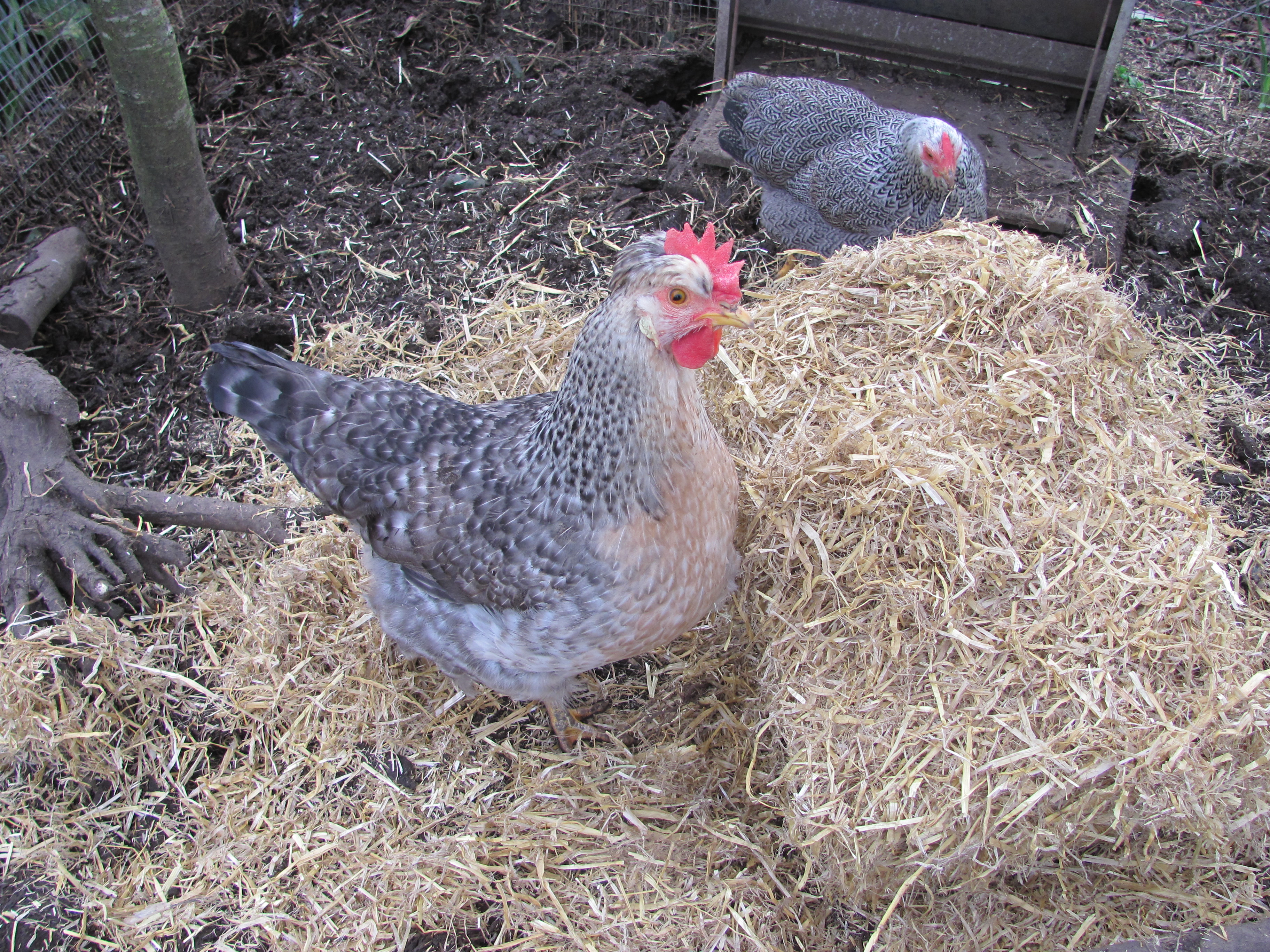
The next shot shows “Swampy” in the foreground with “Royella” behind. Swampy is one of our two hybrids called Fenton Blues, so called because they lay blue-shelled eggs. She is called Swampy as she spends a lot of time up in the trees – you might have to think about that for a moment! The Fentons have small crests of feathers which stick out all over the place on windy days making them look like they are experiencing a “bad hair day”.

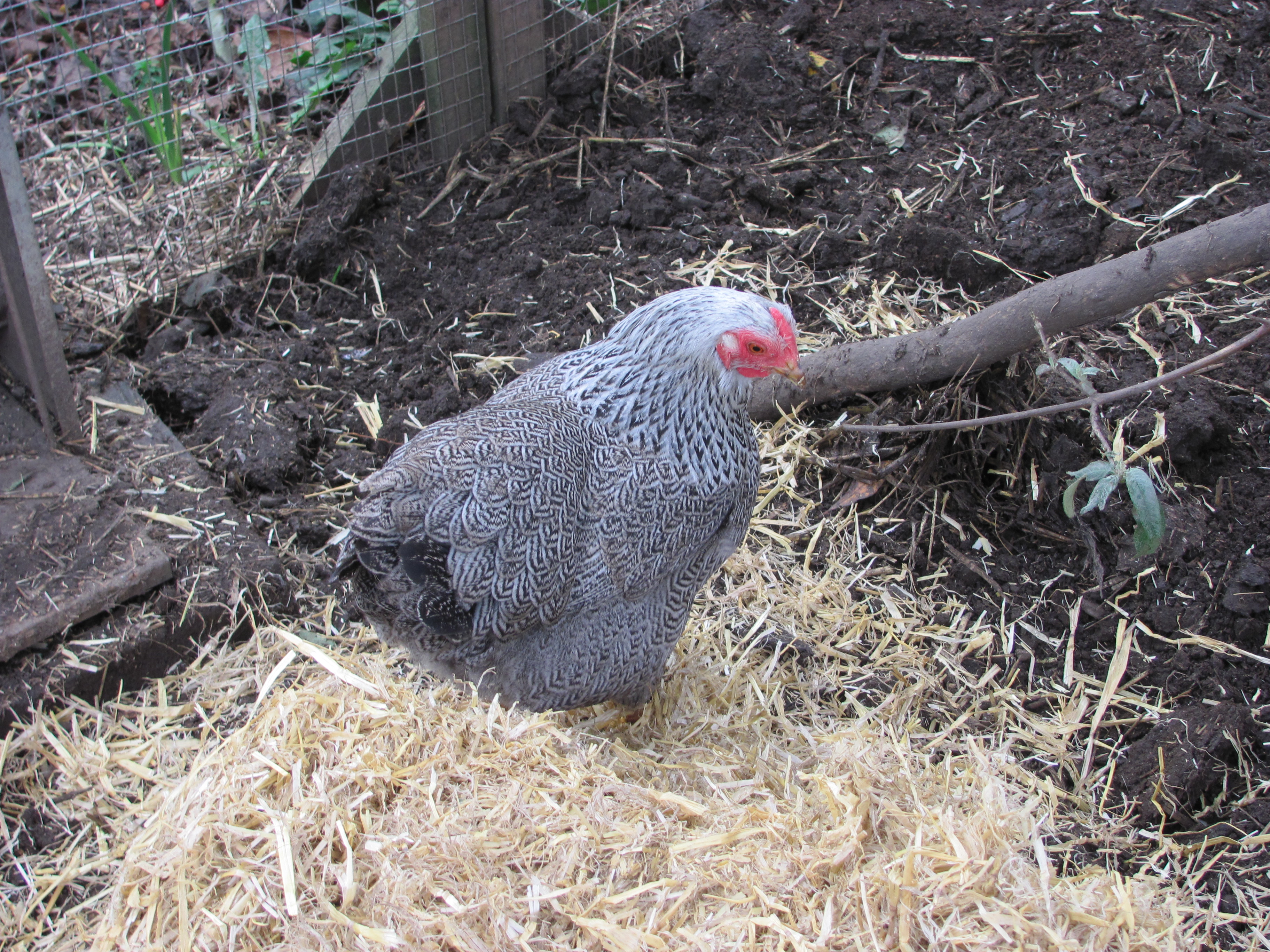
The next photo is of “Royella” our remaining Silver Laced Wyandotte Bantam from our original pair, who were named Val and Royella after our next door neighbours, Roy and Valerie because their foliage was the same colour as our neighbours hair!

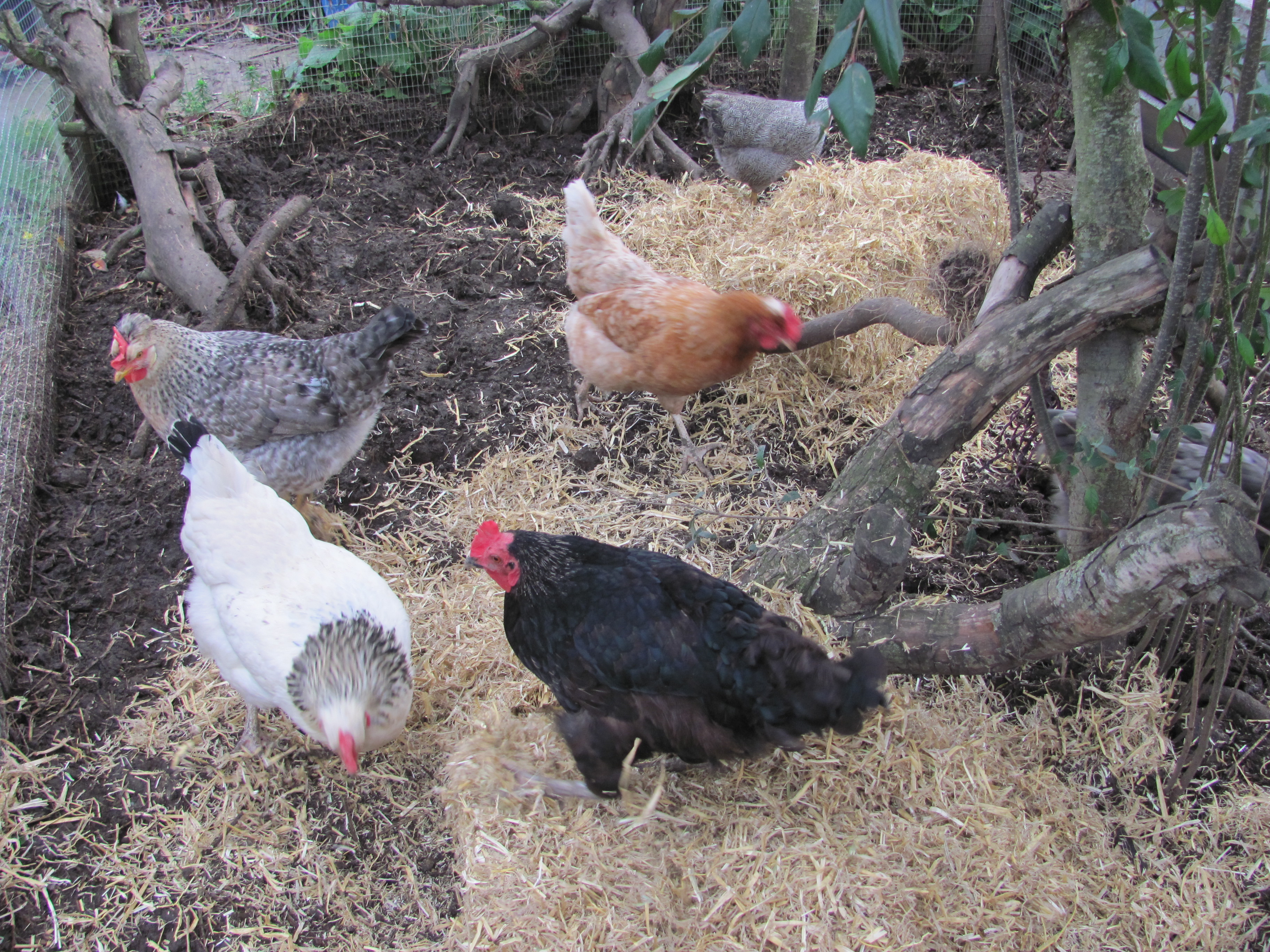
Next we have a group with two more hybrids in the foreground, “Em” the black chuck on the right and “V”, the Sussex Hybrid on the left. The two Fenton blues are behind them with Swampy on the left and “Jo” on the right. Jo is named after our daughter as she has the same coloured hair as the hen’s feathers.

This scraggy bird is “Bluebell”, a Bluebelle Hybrid, who has rather unwisely decided that January is the right time to moult! She is usually a stunning looking hen with lots of shades of bluish grey feathers with a contrasting ginger-bronze breast.

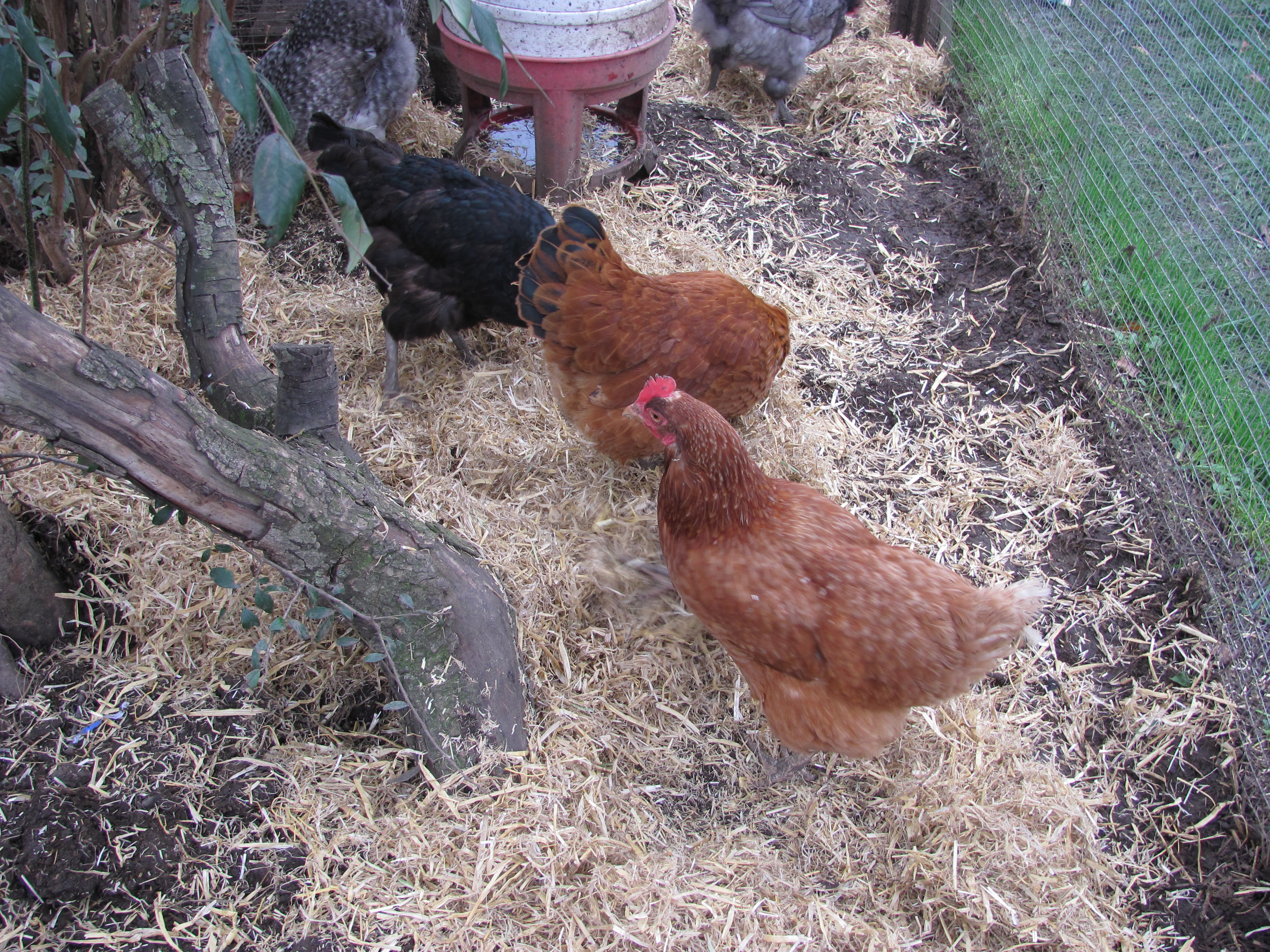
In the foreground of this pic is our original brown hybrid, the friendliest of the bunch, insisting on being picked up every time anyone enters their run.

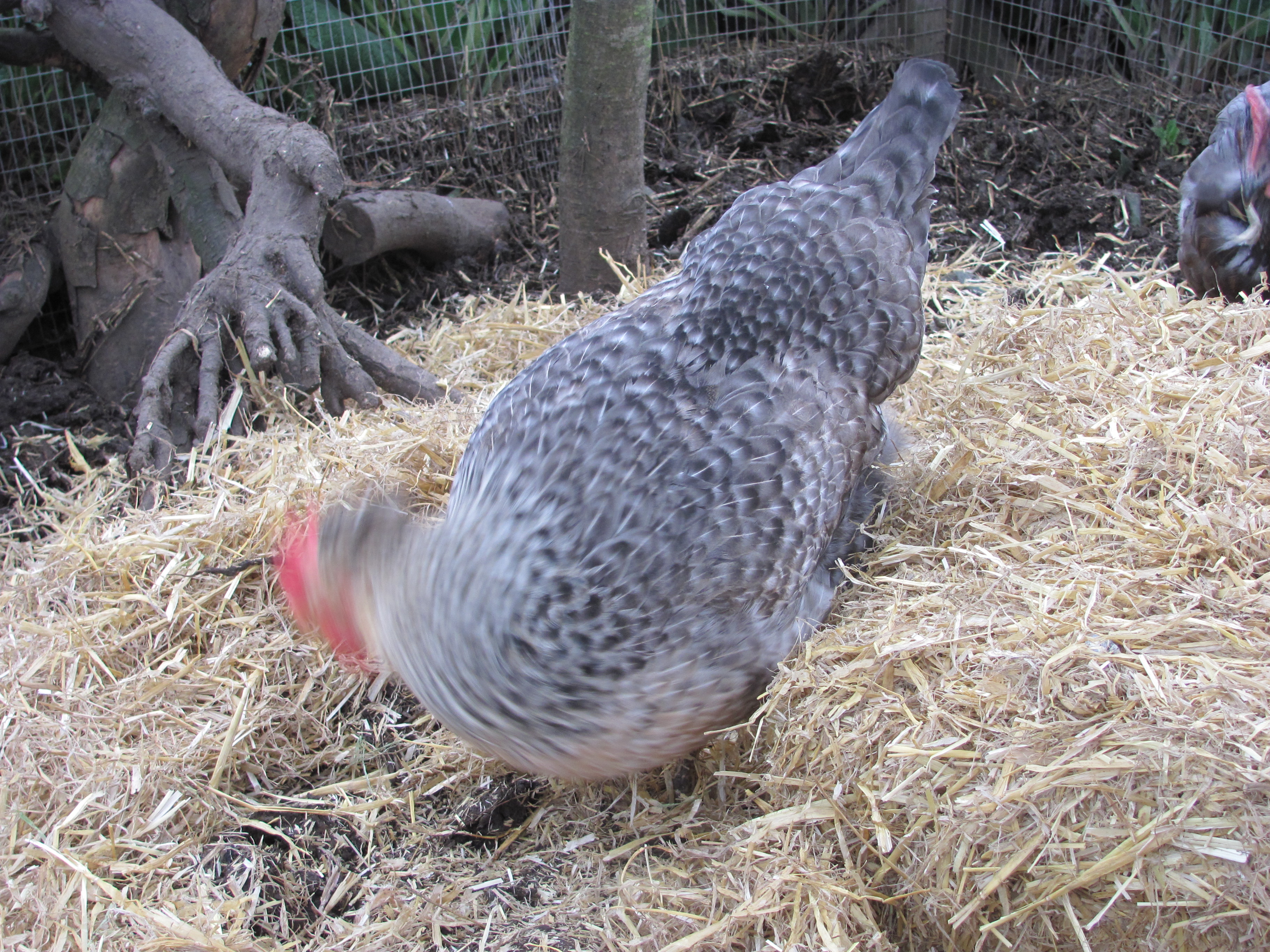
These next two photos prove that taking portraits of chickens is not an easy task, certainly much harder than I imagined it would be. Firstly here is Swampy with her head a high-speed blur as she attacks the straw,

…. and here is the one that got away!

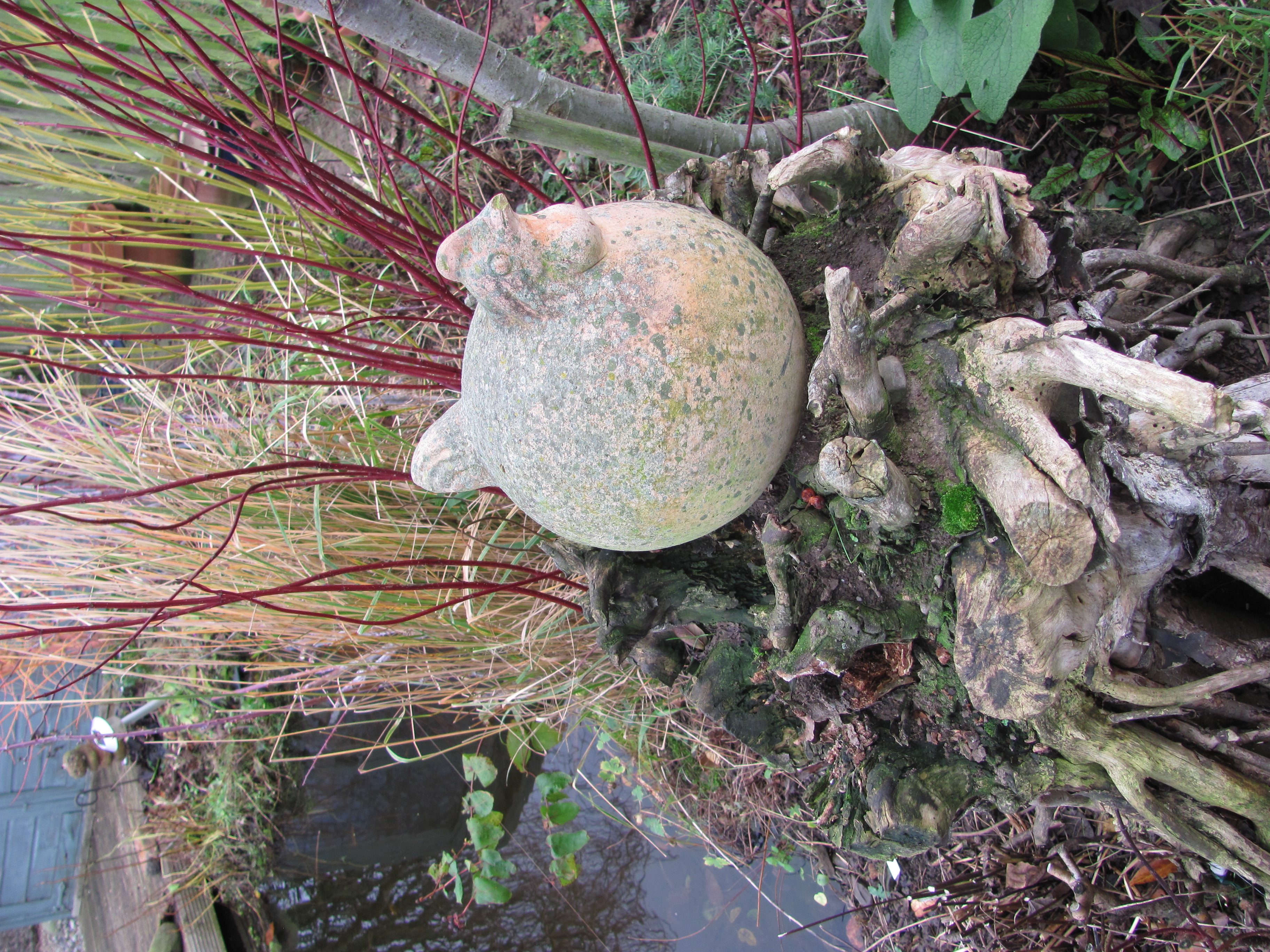
The easiest hens to photograph are the ornaments in the garden, such as this very round terra-cotta version sat on an old hazel stump on the poolside with a backdrop of grasses and dogwoods ………

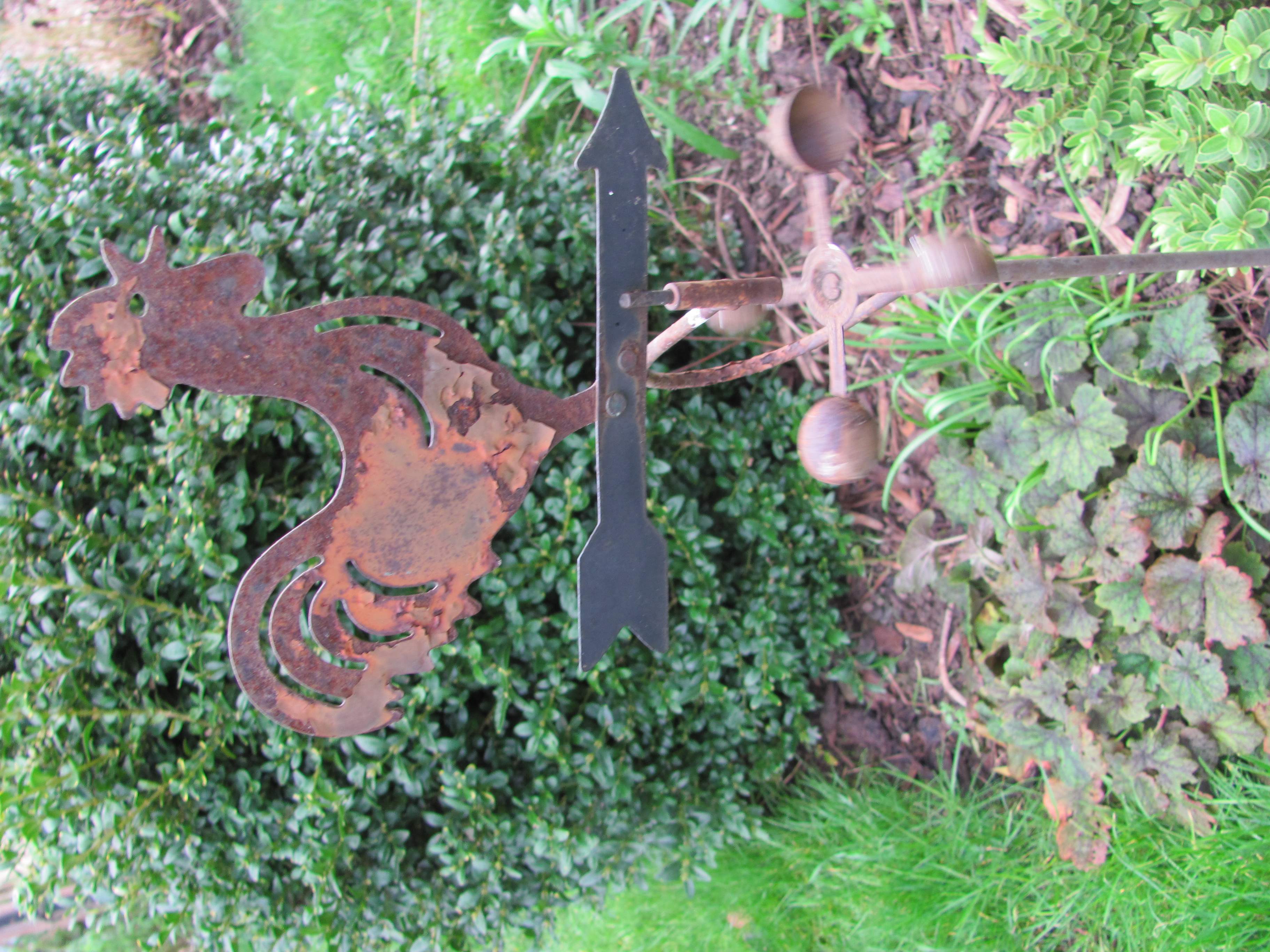
…… and this cockerel weather forecaster.

Categories
garden design garden photography gardening hardy perennials ornamental grasses

Some of the gardens of Tom Stuart-Smith

Tom Stuart-Smith is one of the best of the current crop of garden designers working in the UK at this time. We have had the privilege of visiting two very different gardens designed by him, one a private garden in Herefordshire and the Italian Garden at Trentham, a Staffordshire garden open to the public.

In his own words “Making a garden for yourself is very different from doing it for someone else. So much of the pleasure is to do with the coaxing and tending, the daily observance of small details and the accumulation of change over the years.”

We visited this wonderful garden in Herefordshire after spotting it in the Yellow Book of the National Garden Scheme. We were firstly tempted to visit as this county has some excellent, interesting gardens and many well-known gardener writers and garden designers have made gardens within its boundaries. But seeing the name Tom Stuart-Smith in the “blurb” made it a must.

It is a garden that is so well designed and planted. It makes you want to wander along its paths, to look around each corner and to study individual plants grown in blocks or plant combinations.

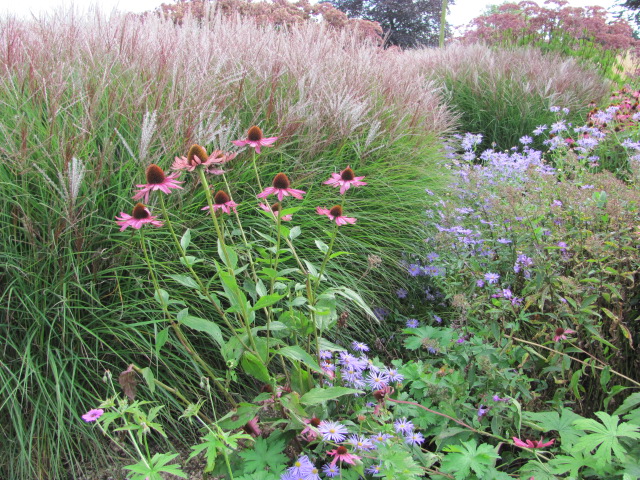
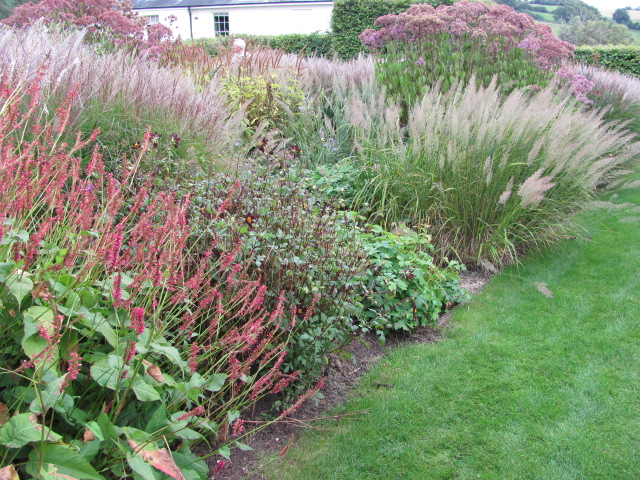
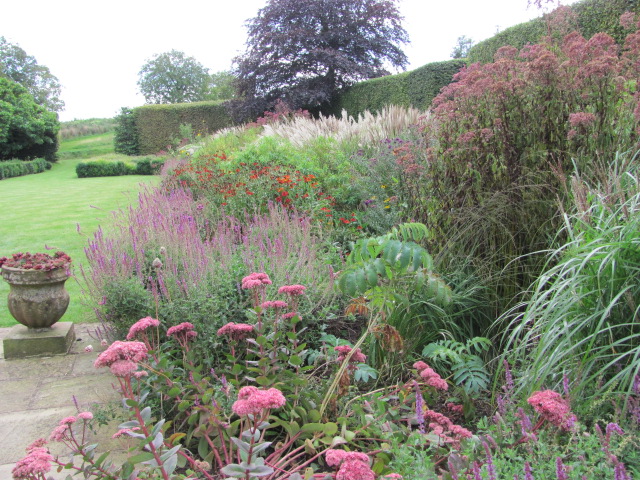
The following photos show the subtle planting combinations and the inviting paths through the garden.

An amusing diversion on our wanderings was this family of shining metal birds striding alongside a border.

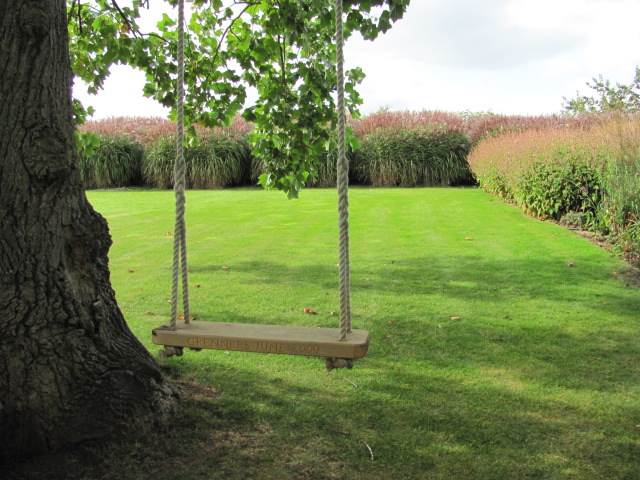
What a place to sit, swing and rest while anticipating the pathway into the sea of grasses.

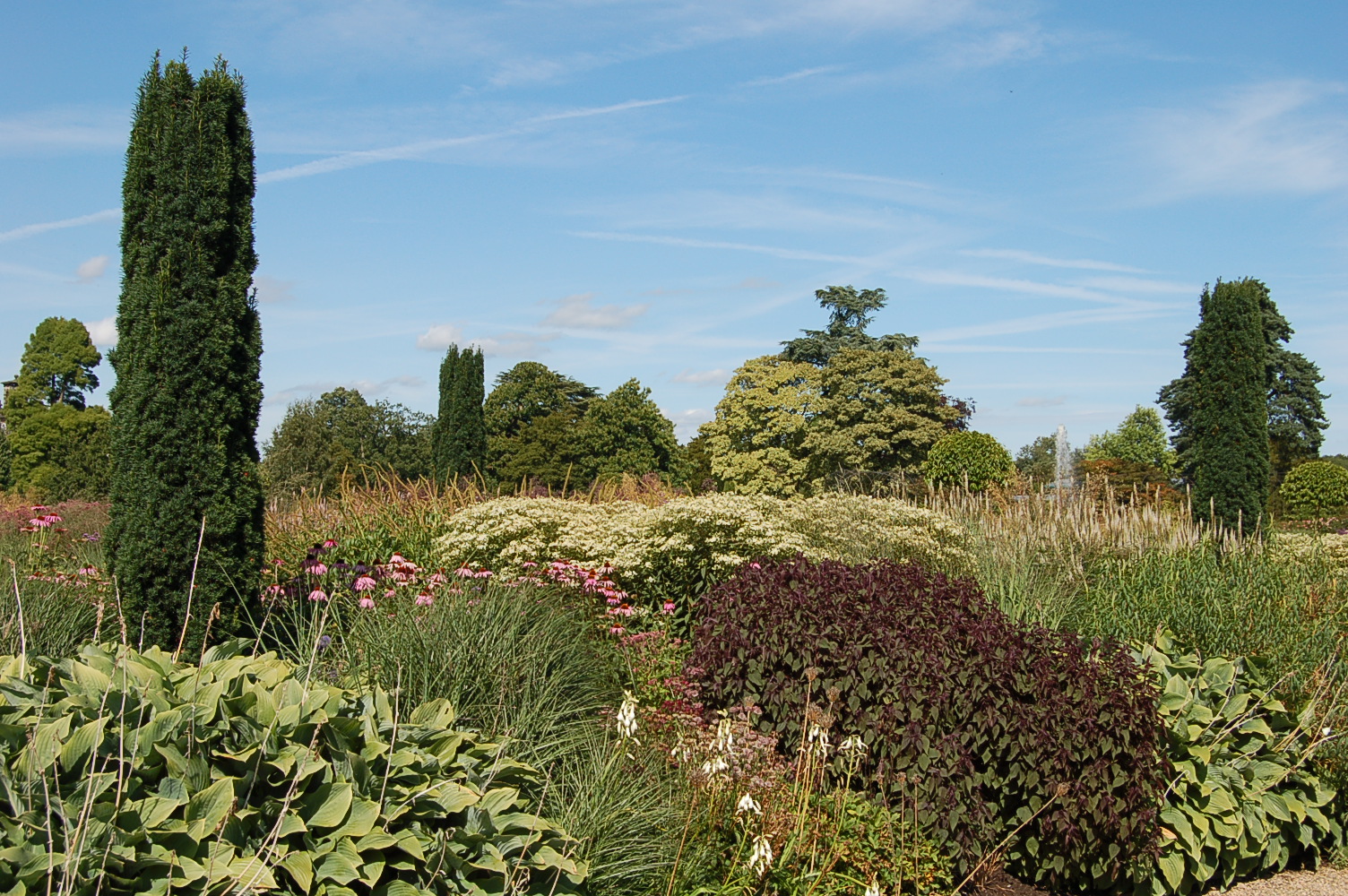
Later in the year we visited Trentham Gardens where Tom Stuart-Smith has redesigned the Italian Gardens, sensitively placing his modern perennial plantings amongst the old structure. So this is the other side of the coin, designing for a large public space.

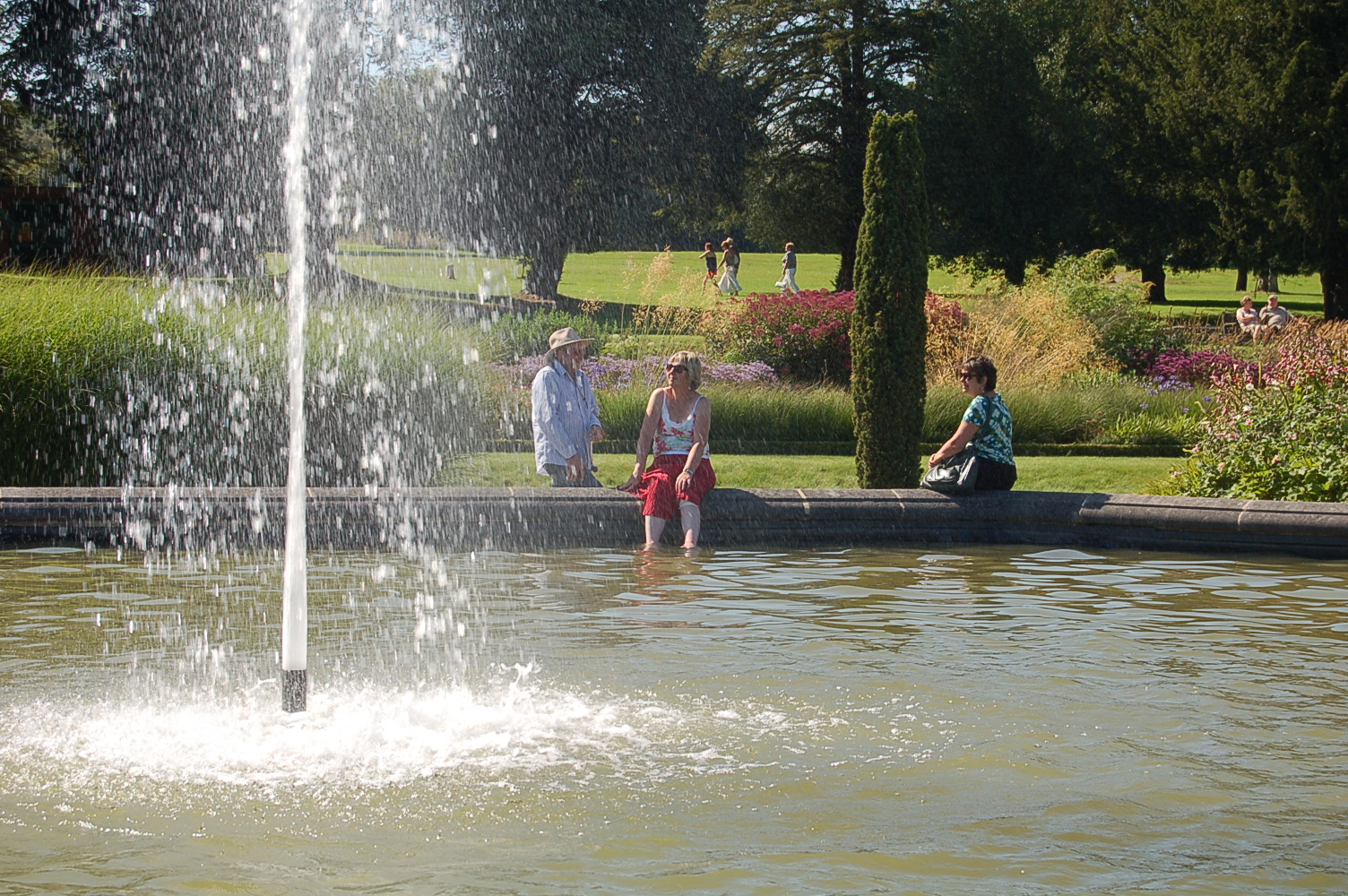
These borders look equally good in the middle of the winter. But the water is then a bit cold for dabbling ones feet in, even for “The Undergardener” seen in the photo above appreciating the pool and fountain, with the author in the dapper hat and Vicky our Sister-in-Law on the right.

Categories
garden photography gardening half-hardy perennials hardy perennials

Fantastic Foliage – Leaf Patterns

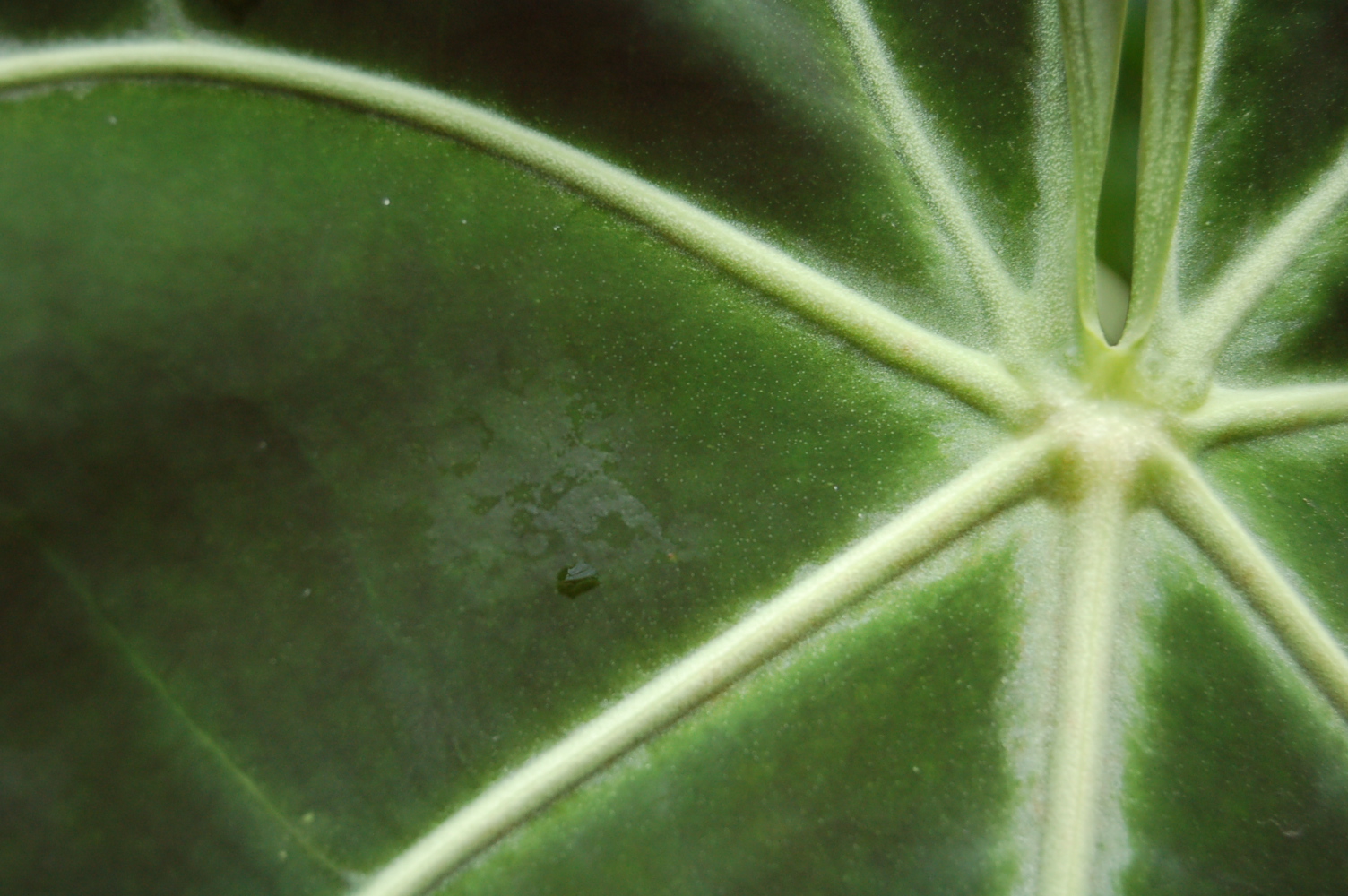
On bright days I am always drawn in for a close up look at leaves. The sun displays their underlying structure, their network of veins, the things that give them shape, texture and strength. Zoom in for a closer look or move in close for a wide angled view and the results can be so pleasing. Isn’t Mother Nature wonderful!!! And aren’t plants simply amazing!!!

Categories
garden photography gardening hardy perennials

Phlomis – a winter highlight.

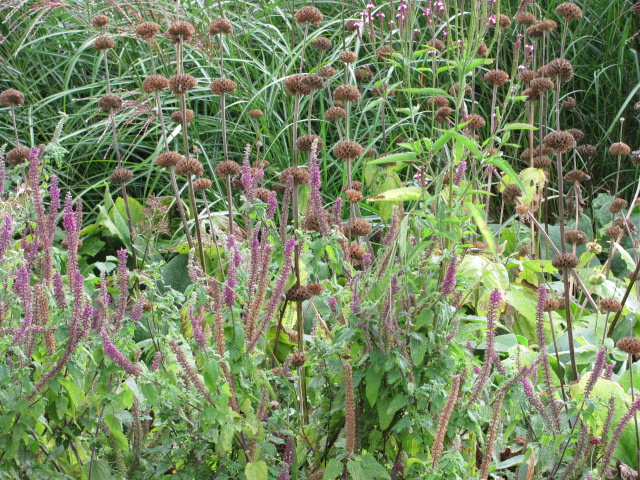
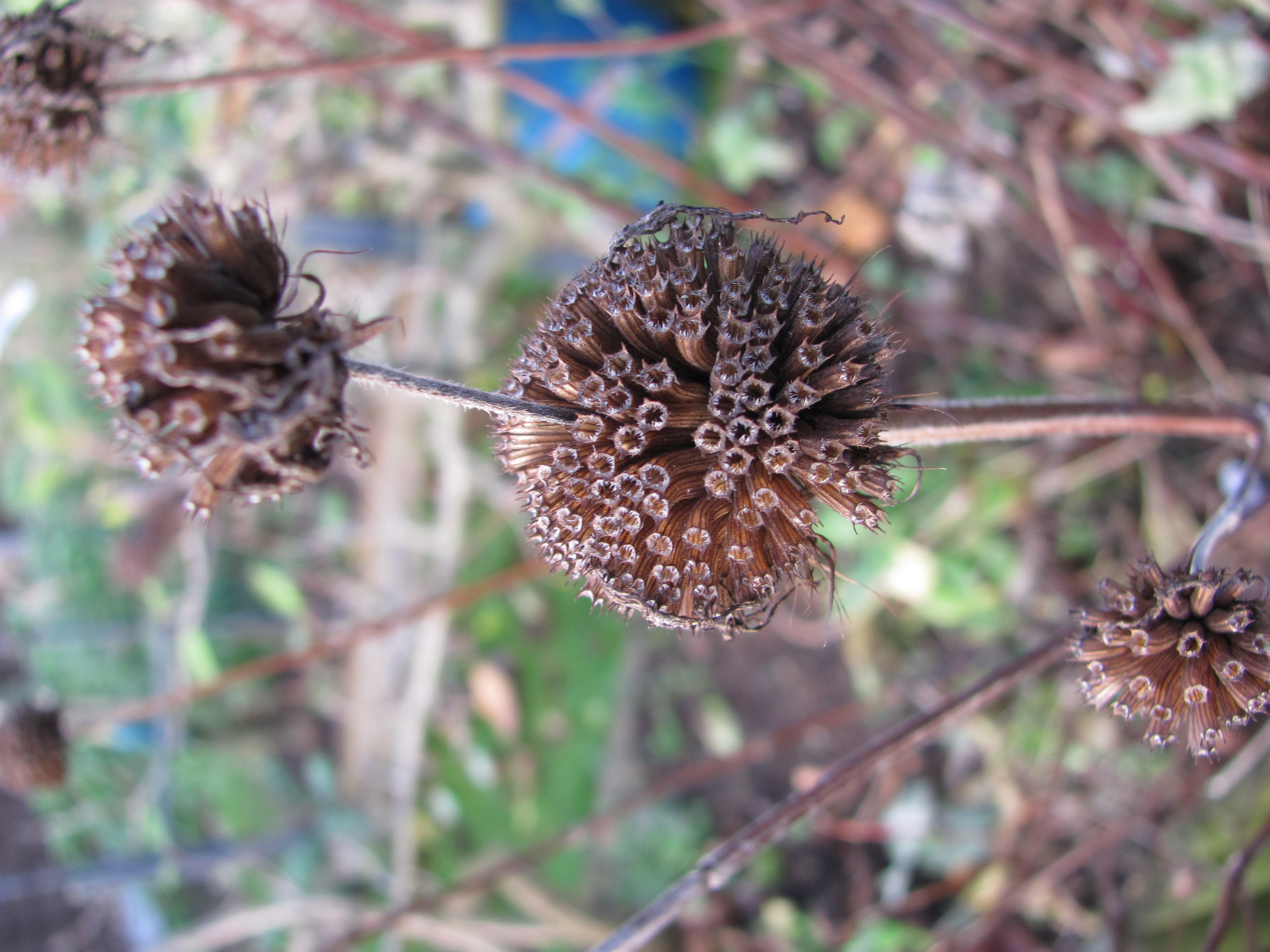
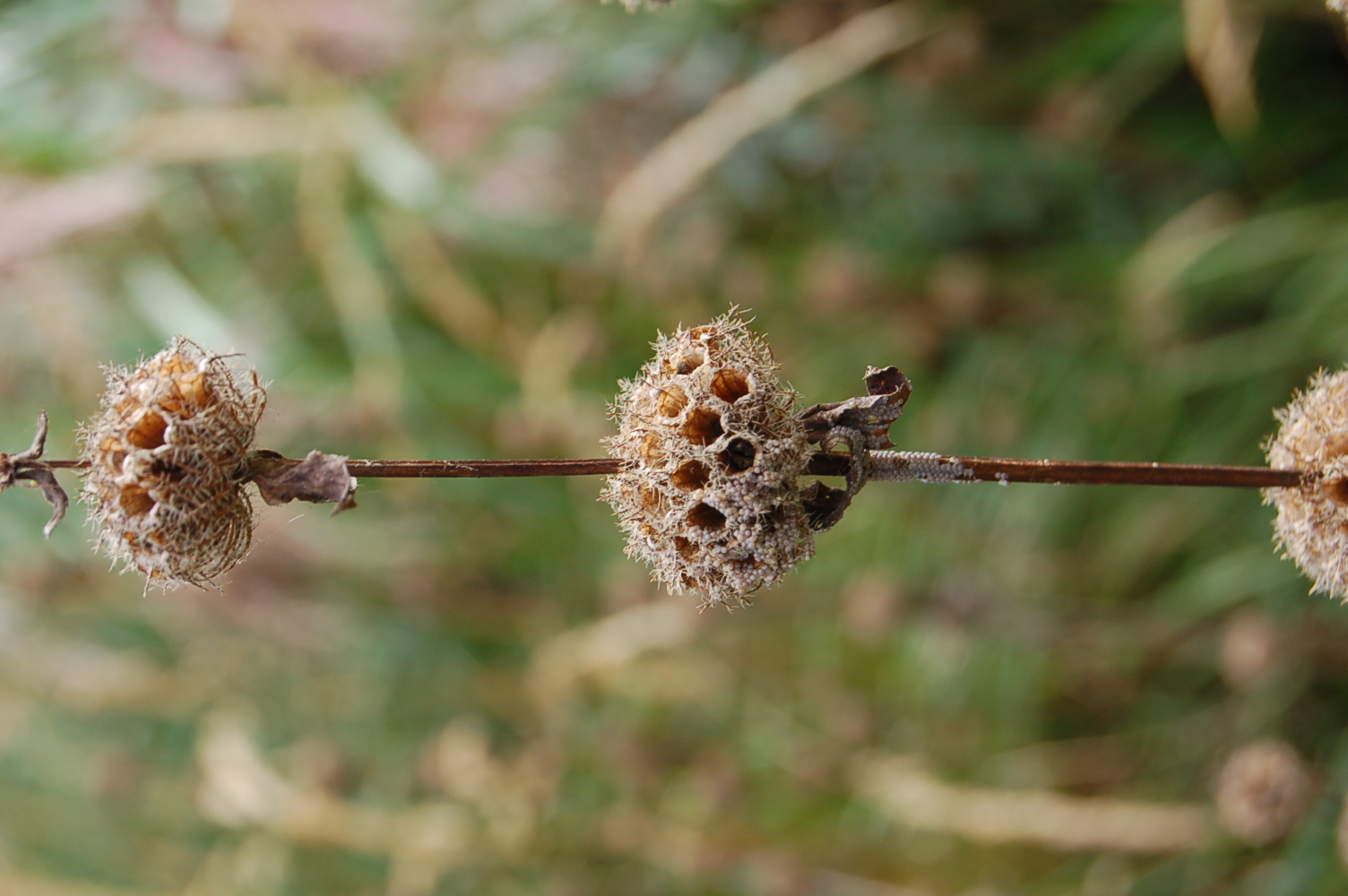
I love all Phlomis. I love the way the stem soar up from the big hairy, bluish-green heart-shaped foliage and I love the way the flowers arrange themselves so neatly on the stems. The dark yellow flowers of the Phlomis russeliana add so much to a hot border and each bloom looks like the hooked beak of a parrot. They arrange themselves in regular clumps up the stem encircling it so neatly. The Phlomis is in the Lamiacea family – the mints – and hails from the Mediterranean, china and central Asia.

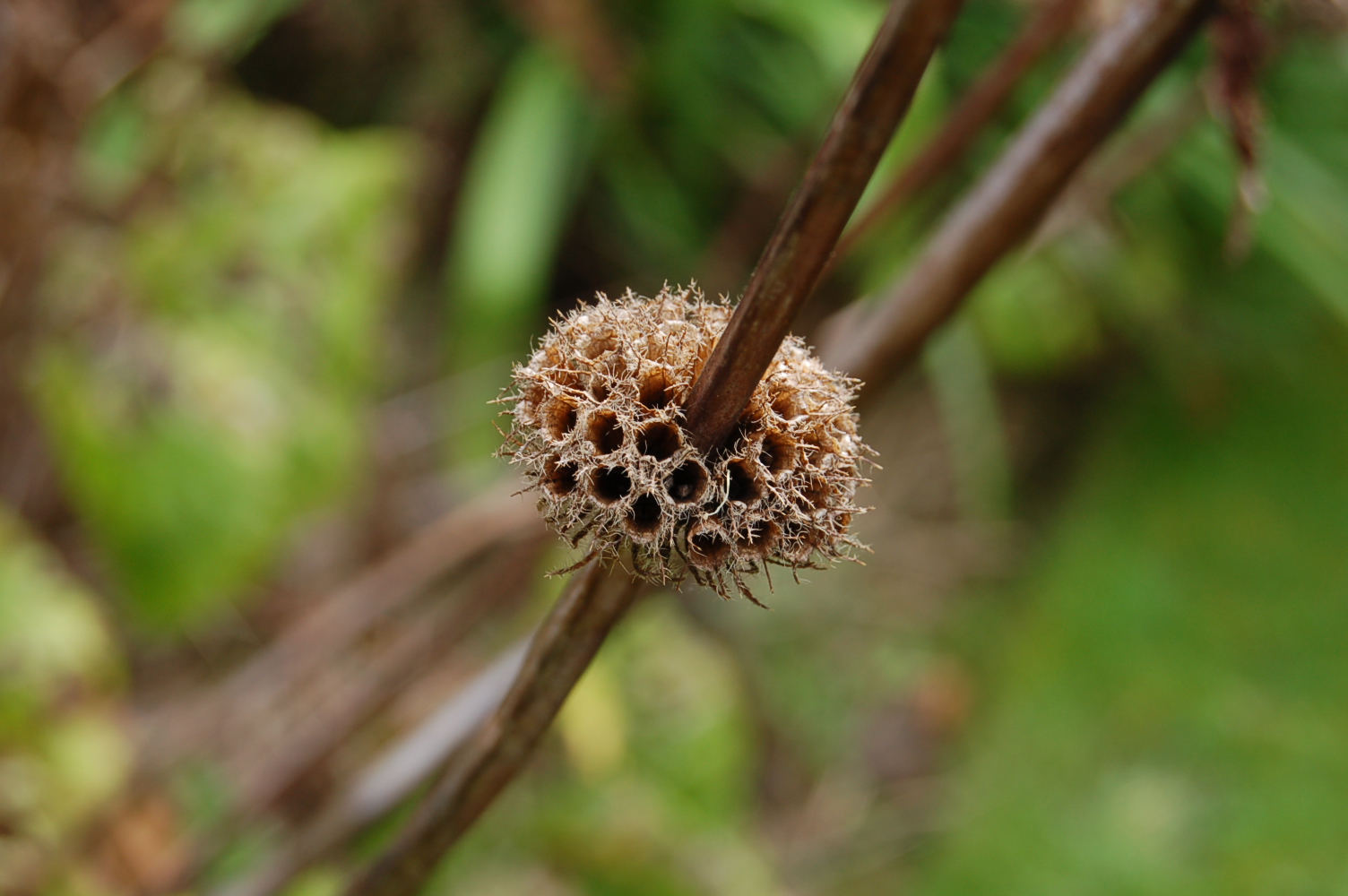
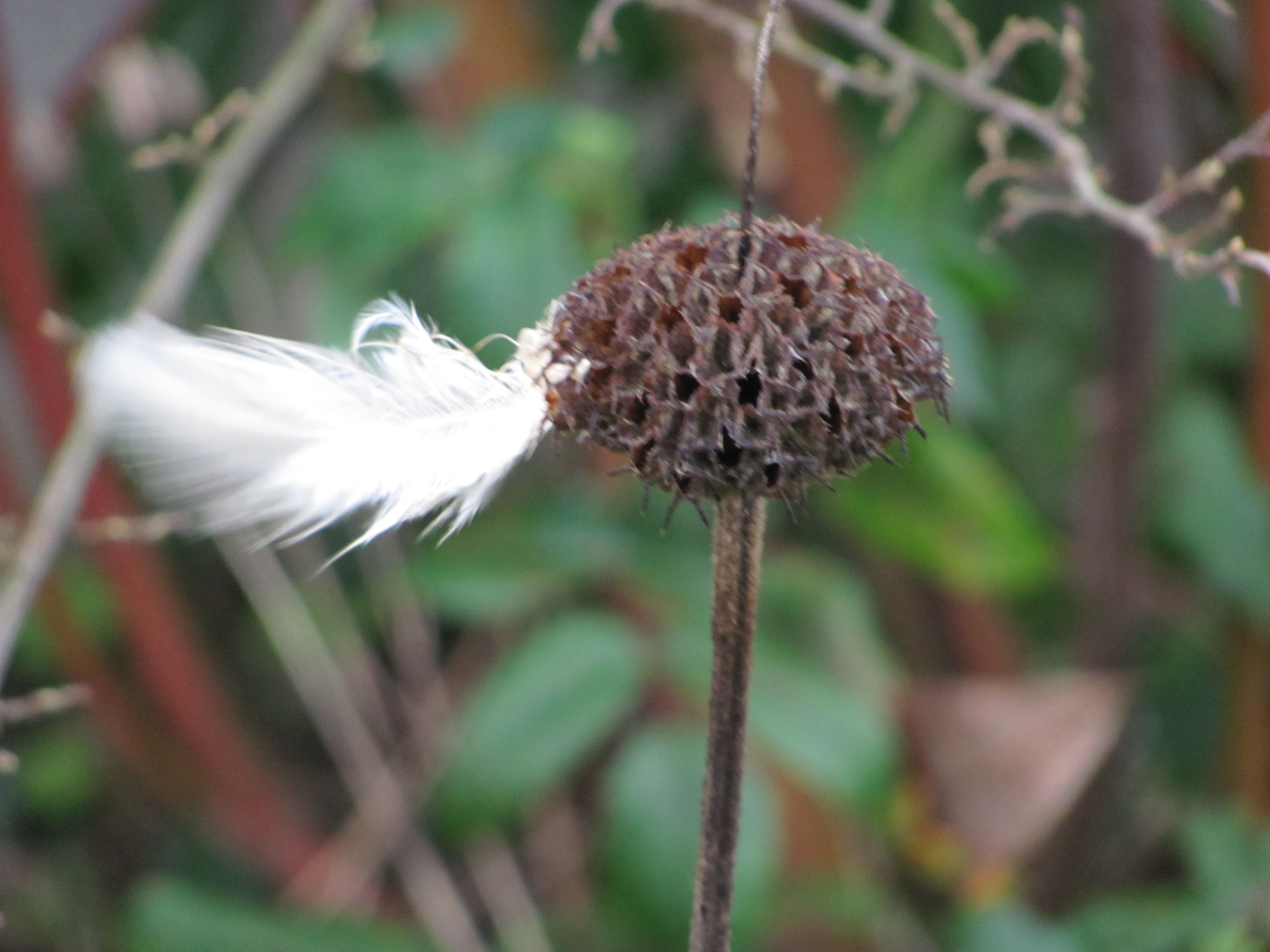
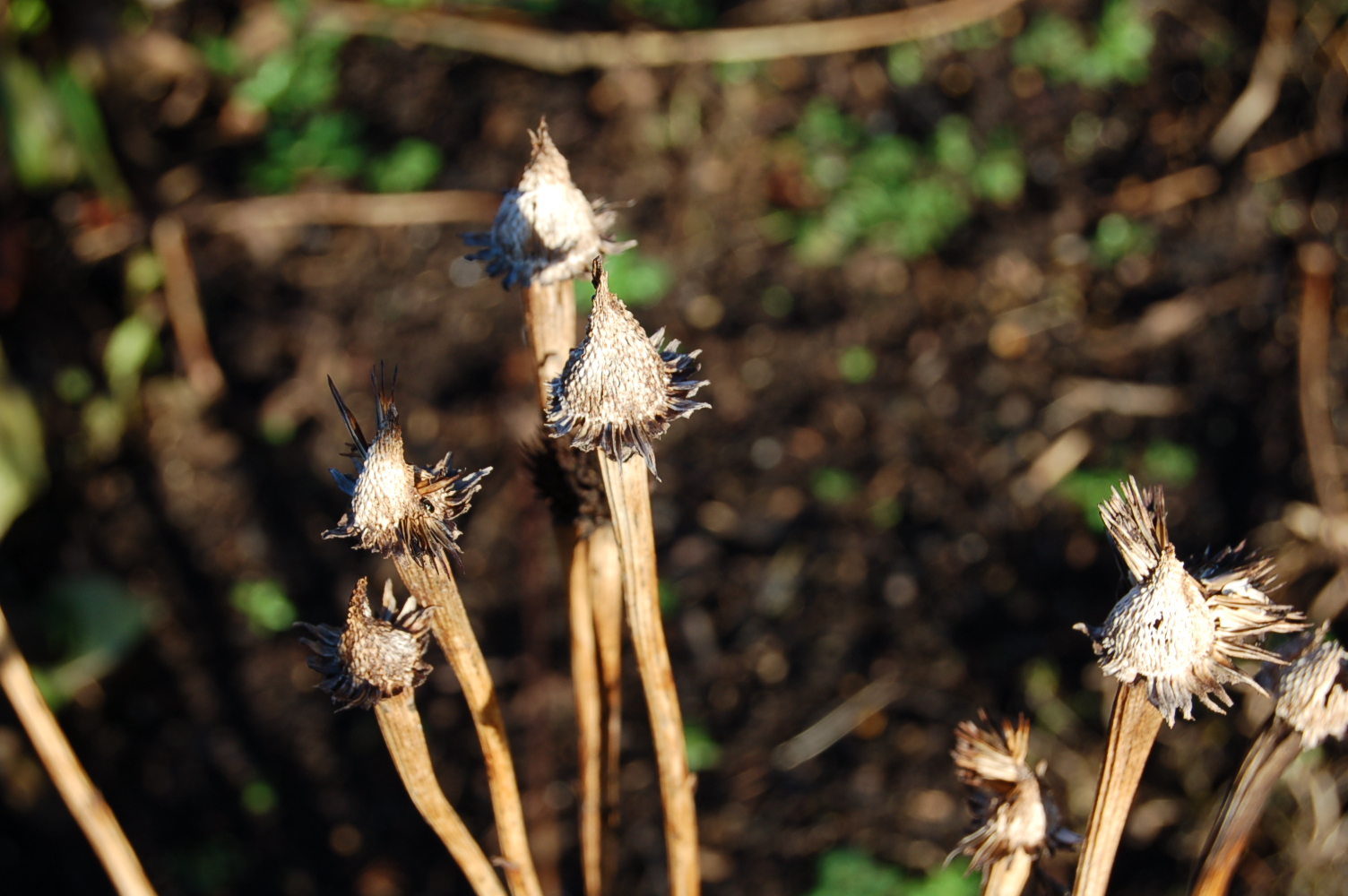
But best of all I love the dried stems with their dried seed heads still neatly arranged and standing strongly through the wild winds of autumn and into the deep cold of winter. They are the epitome of architectural plants. I am limited to how many Phlomis plants I can have though as the “Under Gardener” doesn’t like them at all.

In the autumn we planted two different varieties, tuberosa and cashmireana, so we look forward to them to see if they perform as well as russeliana. Their flowers although similarly structured to russeliana differ in colour as they are both pale mauve.

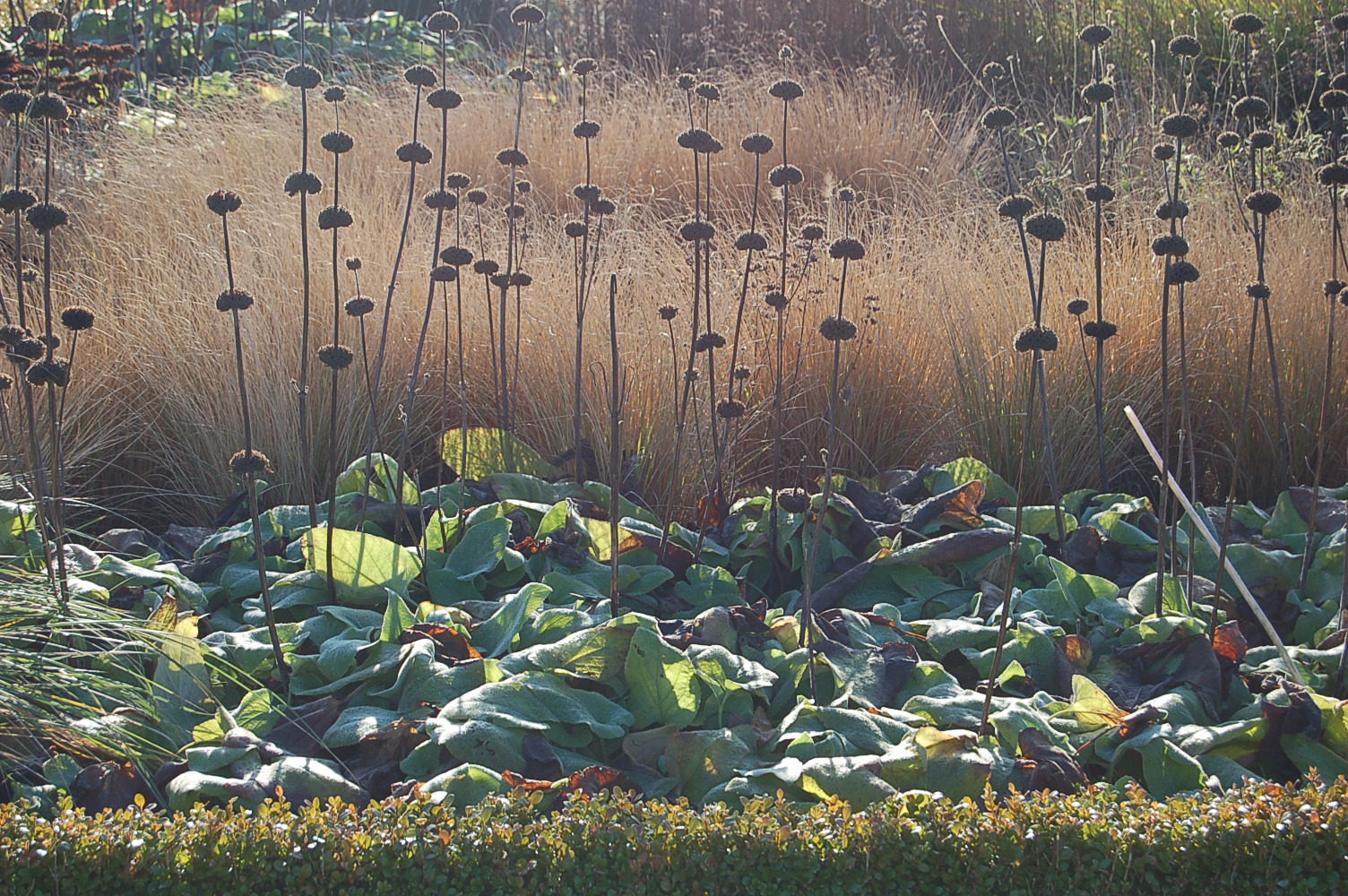
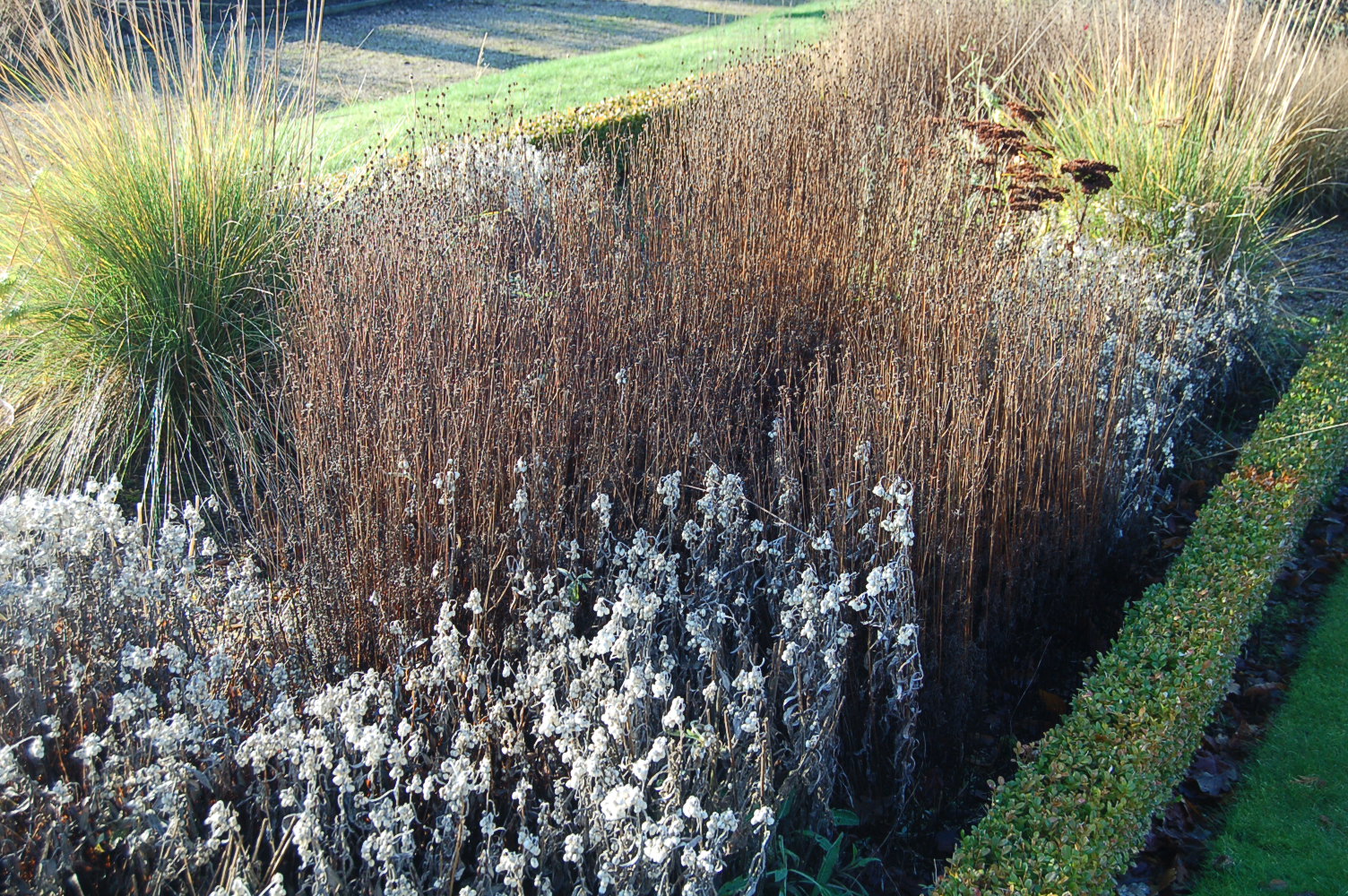
At Trentham the groups of Phlomis planted in the borders of Tom Stuart-Smith’s Italian Garden, give vertical accents in the mixed seedheads still standing in the winter.

All of the following photos have been taken in our own Shropshire garden in Plealey.

Categories
birds climbing plants garden design garden photography garden wildlife gardening hardy perennials ornamental grasses ornamental trees and shrubs outdoor sculpture shrubs trees

A Wander around the Garden in January

This is the first in a series of blogs which I will write at the beginning of each month through 2012, and will show what is going on in our garden at that time – a sort of record of garden highlights.

So the new year has arrived. January 1st was a dull overcast day, with unbroken deep grey cloud and regular periods of drizzle. But at least it was warm with temperature holding up in low double figures all day. But not a day to perform a photographic wander.

So here I am on the 2nd January with camera in hand to record what’s going on appreciating a blue sky, but well wrapped against a freezing wind. Buzzards are sharing my joy of seeing a big blue sky as they are soaring silently above the garden with none of their usual sad cries. The garden is noticeably quiet, the bird feeders far less busy than they usually are in January. There is just the constant quiet, barely perceptible winter song of the Robin who follows me around and the equally gentle twittering of Goldfinches, Blue Tits and their long-tailed cousins.

Enjoy a walk around with me and my camera, as we take a tour …………

The newest addition to the garden, just planted today, is the dark foliaged Euphorbia "Redwing", spotted with fresh rain drops following a shower.
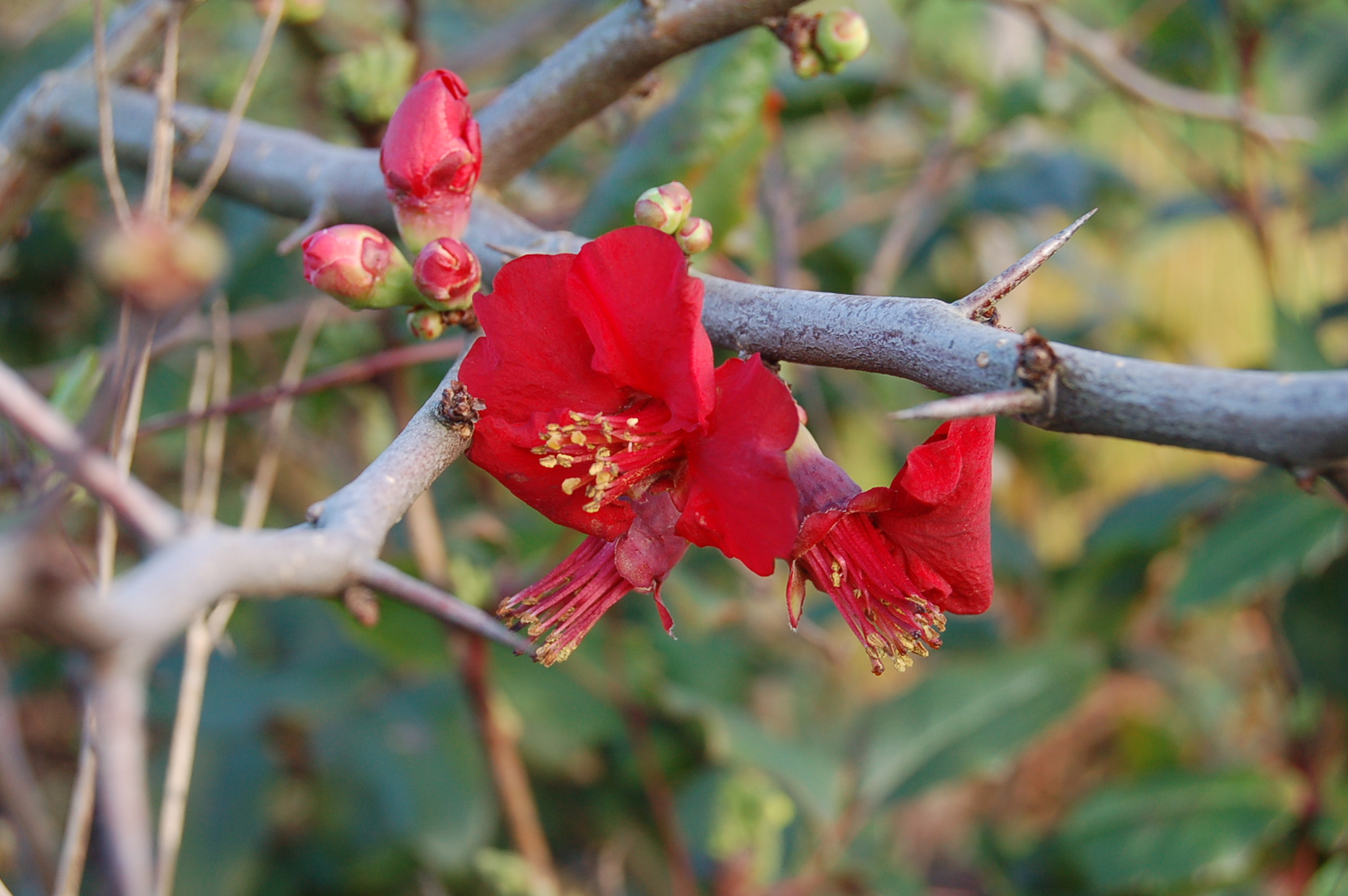
This brightly flowered quince, Chaenomeles "Fire Dance", glows at the drive entrance, providing a cheerful welcome.


This clump of bell-shaped flowers of Arbutus unedo, the Strawberry Tree, overhangs the roadside verge. We are so grateful for its performance as it only just survived the onslaught of the last two winters. We rescued it with heavy pruning.
Orange stems of Cornus "Cardinal" with the white stems of young Betula utilis in the newly planted Shrub Garden.
Sea shore find amongst Euphorbias.
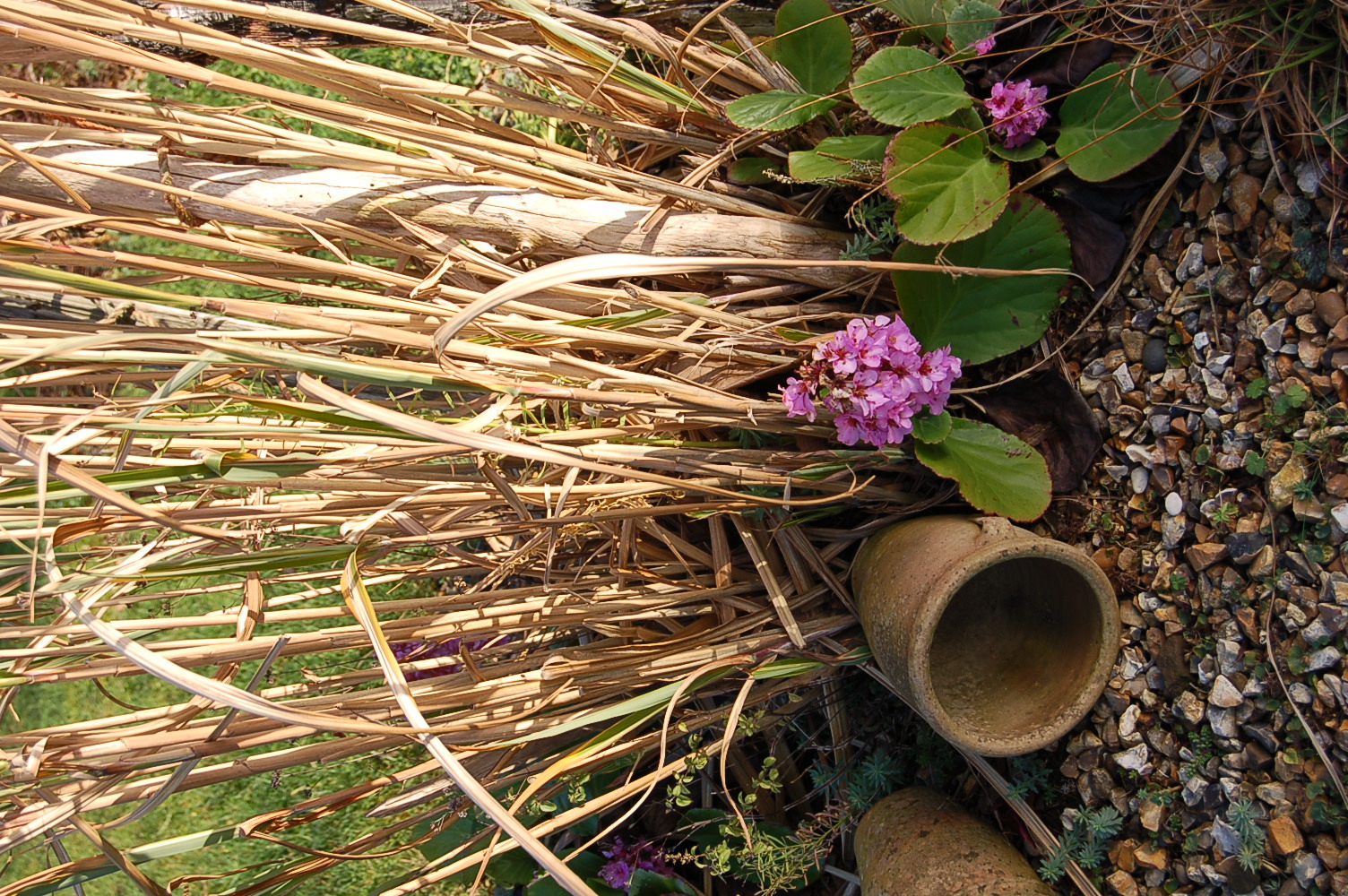
Terra-cotta pots and the pink flowers of Bergenia sit at the feet of Miscanthus and driftwood.
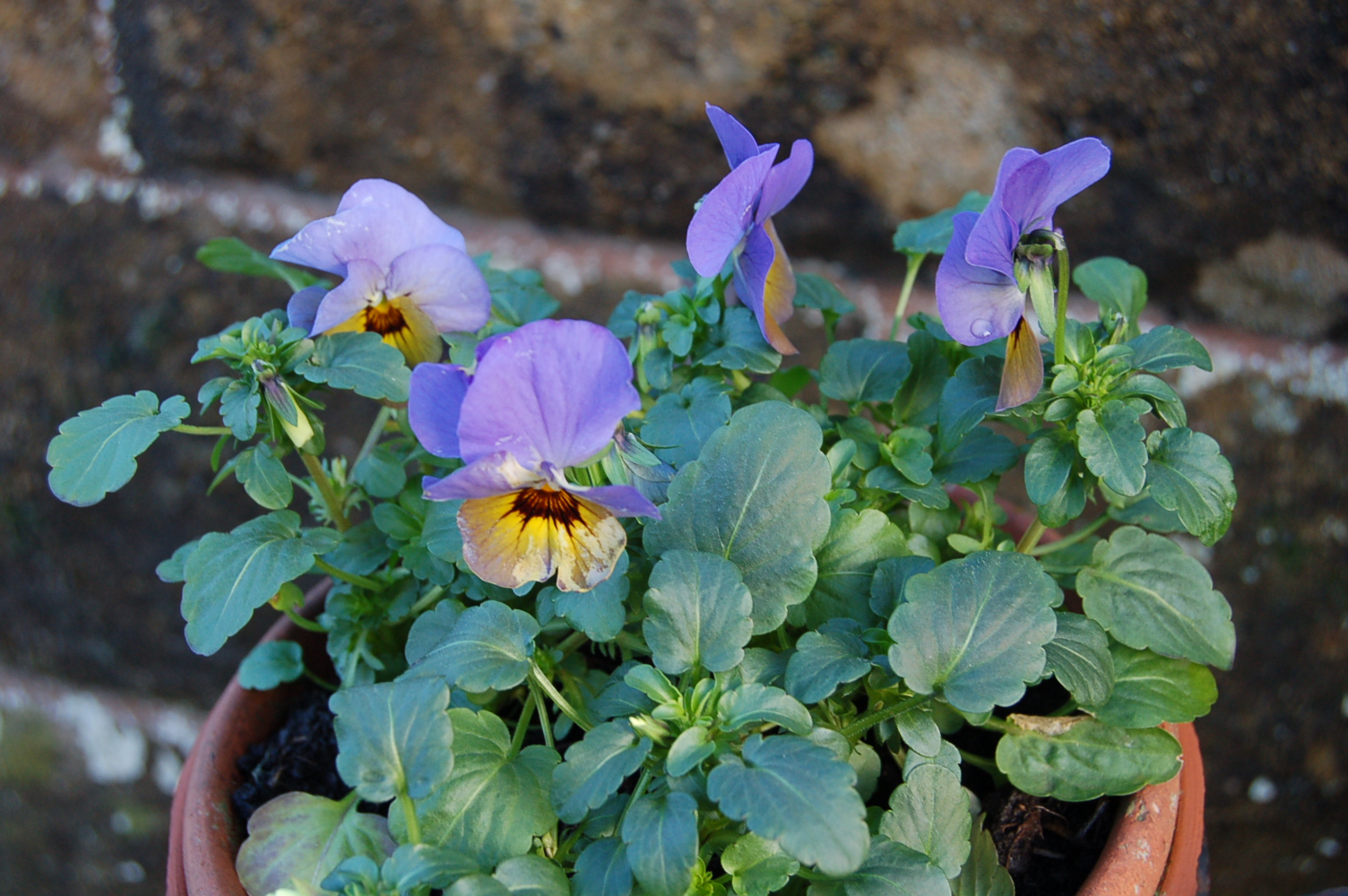
The yellow-faced blue Violas flower in pots by the front door.
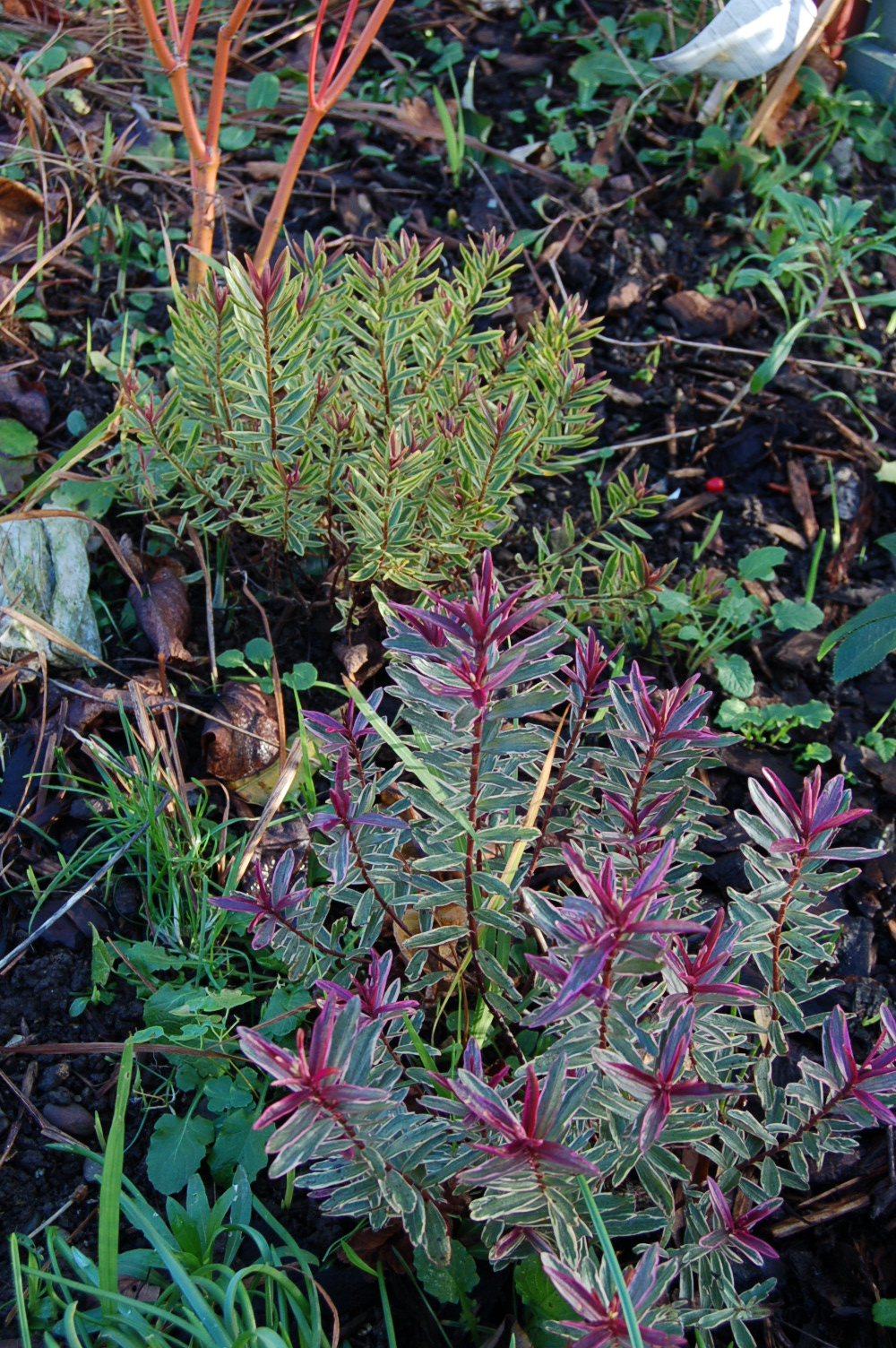
In the Rill Garden two very different Hebes with colourful foliage sit in front of an orange-stemmed dogwood.
The low light of winter turns the cut foliage of the purple-leaved vine blood-red.
The creamy-yellow berries of the Cotoneaster rothschildianus hang in clusters covering this small tree.
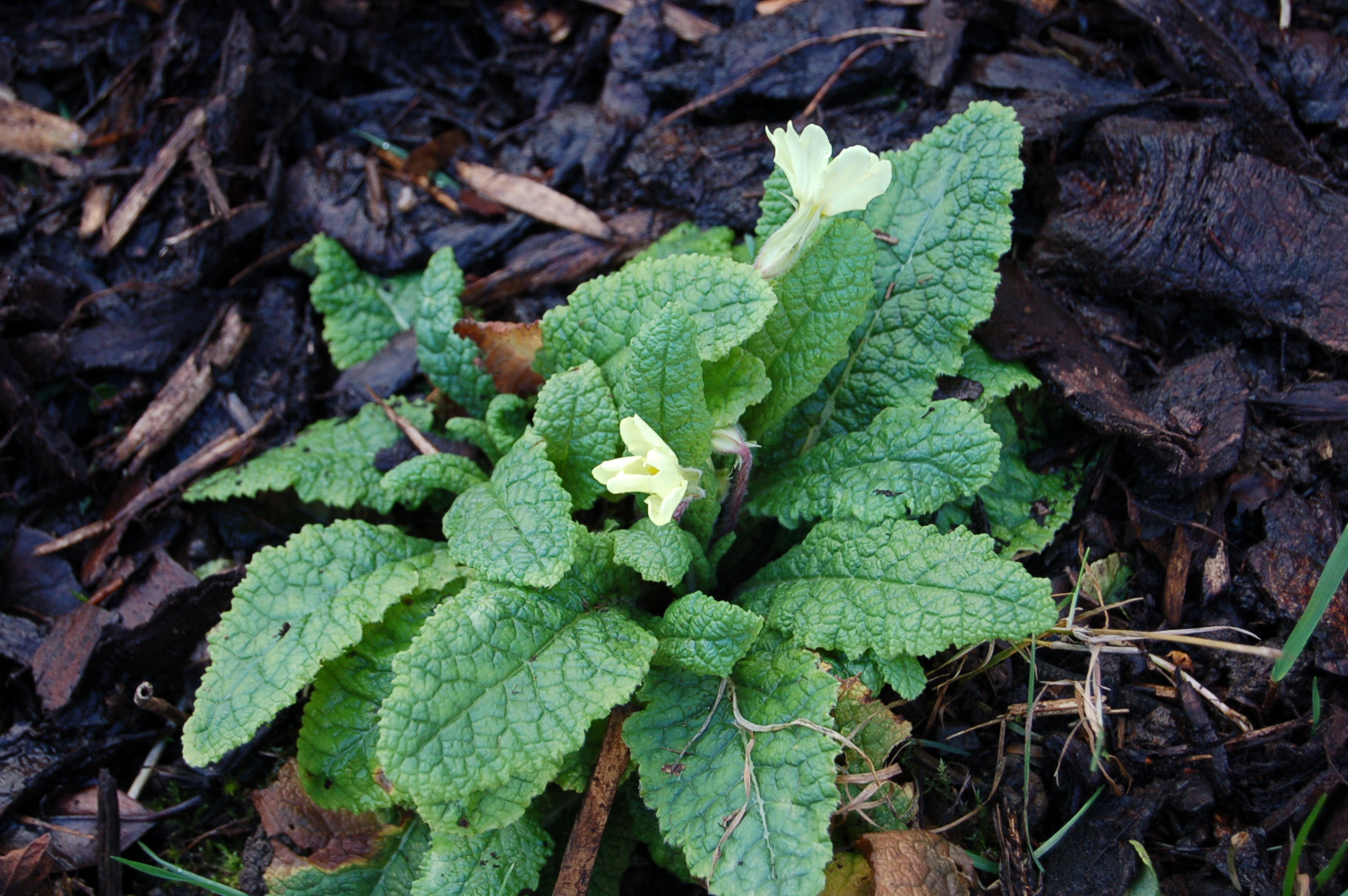
The flowers of this pioneering Primrose appear too delicate to survive the cold of January.
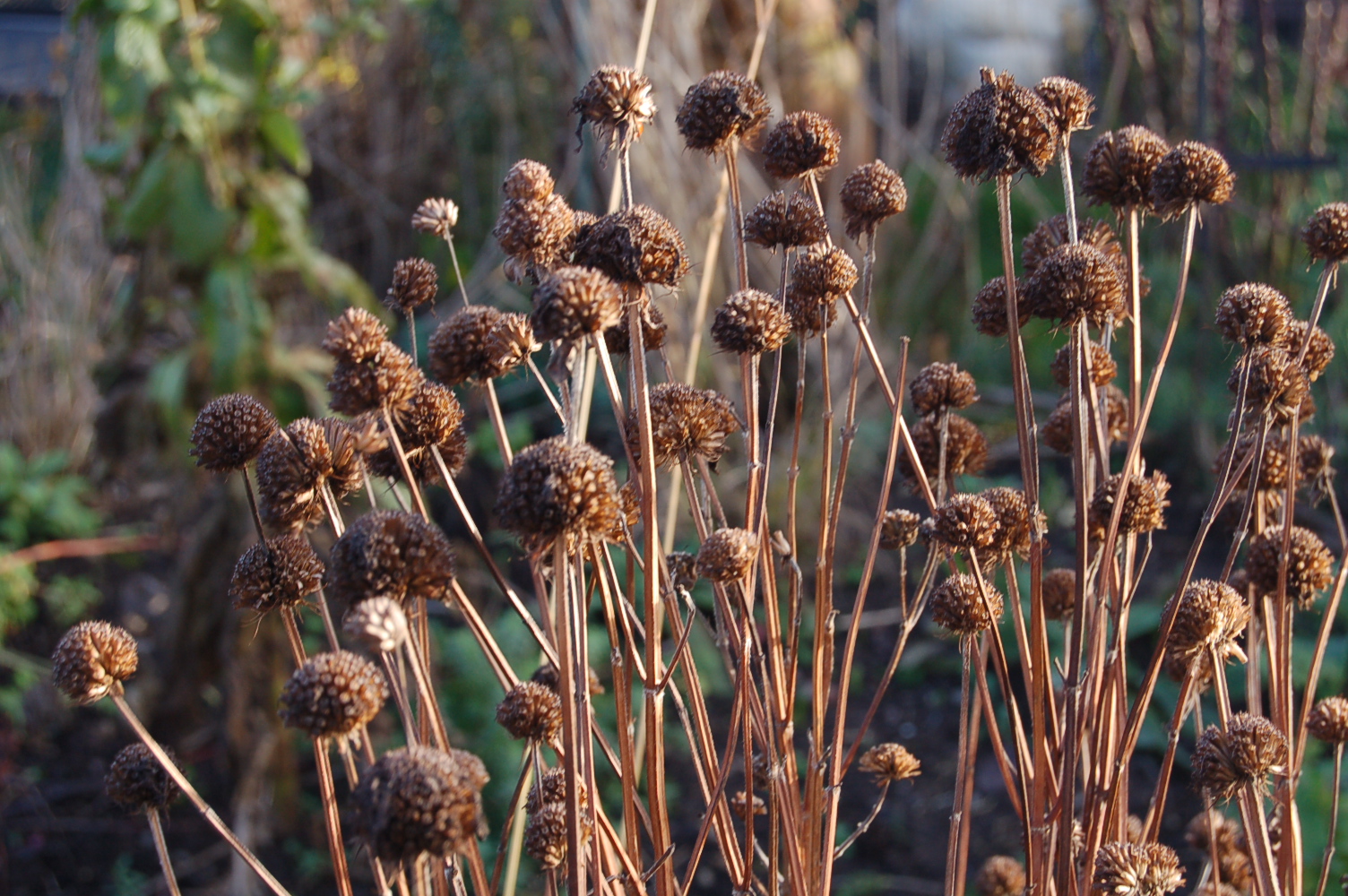
Warm brown seed heads give so much to the Chicken Garden in winter.
The grasses throughout the garden catch both the winter light and the gentlest breeze. The curly seed heads of this Miscanthus napalensis are soft to the touch.
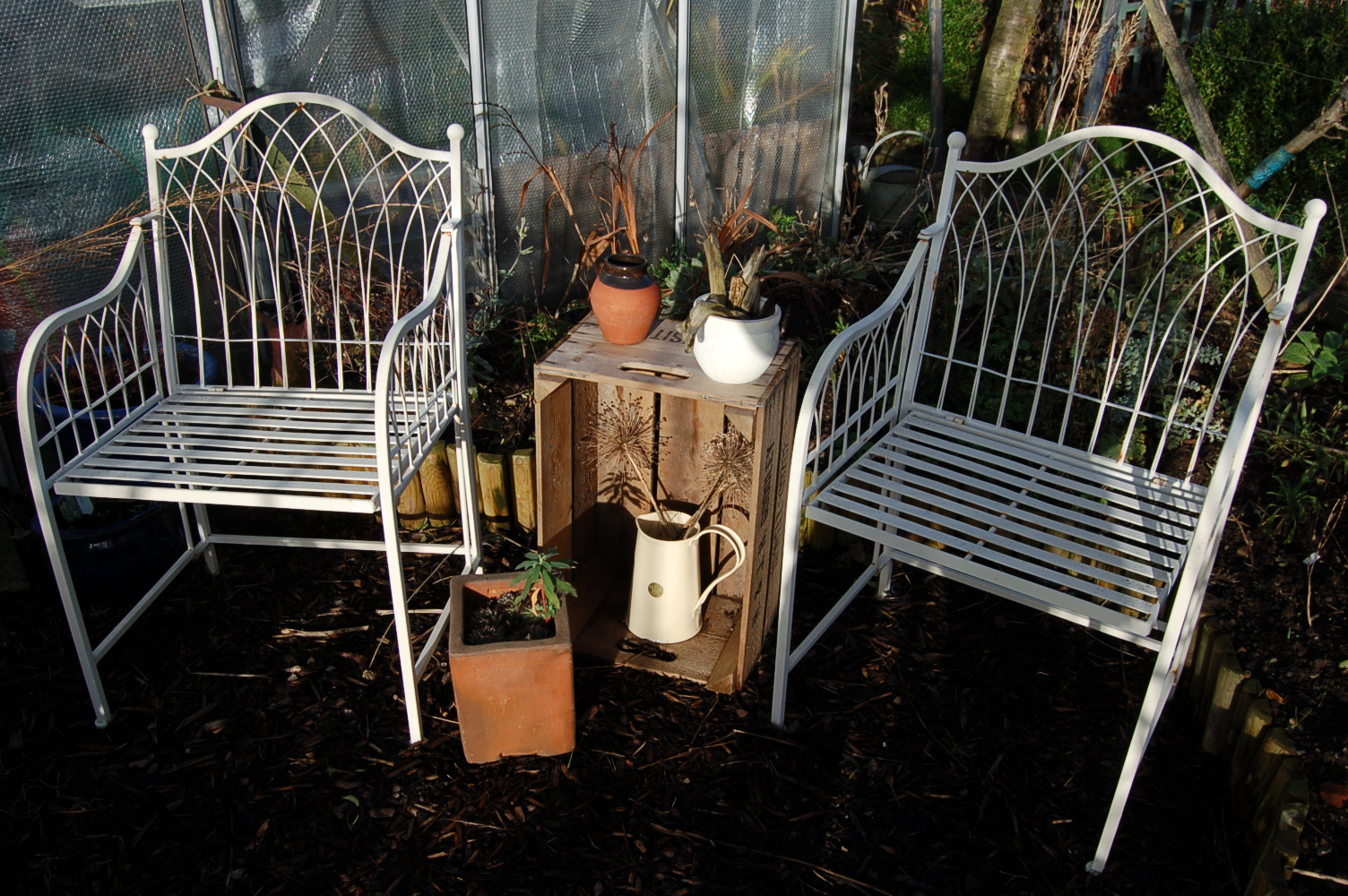
In the Secret Garden the cream metal seats become more dominant just when they are too cold to sit on.
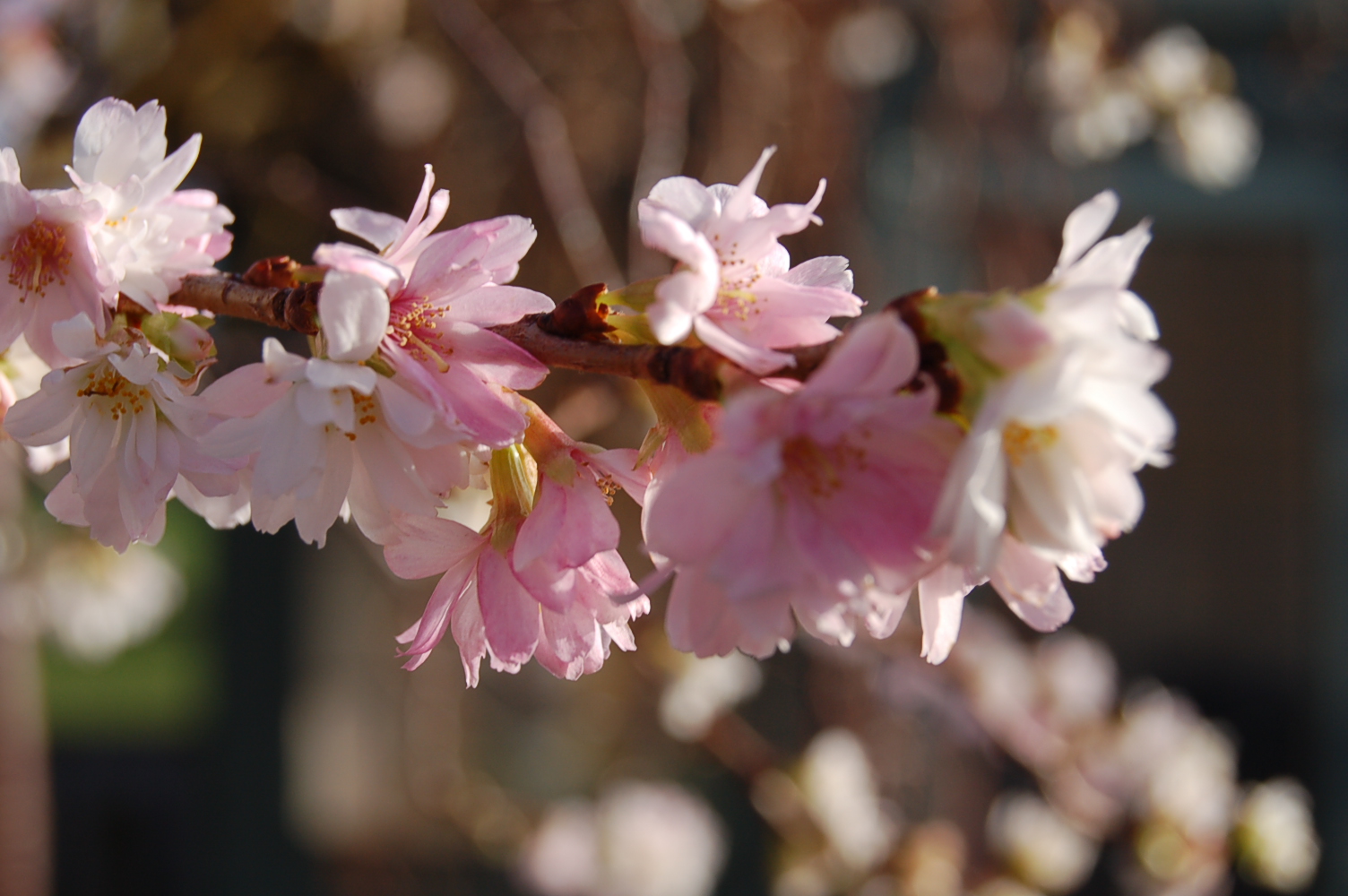
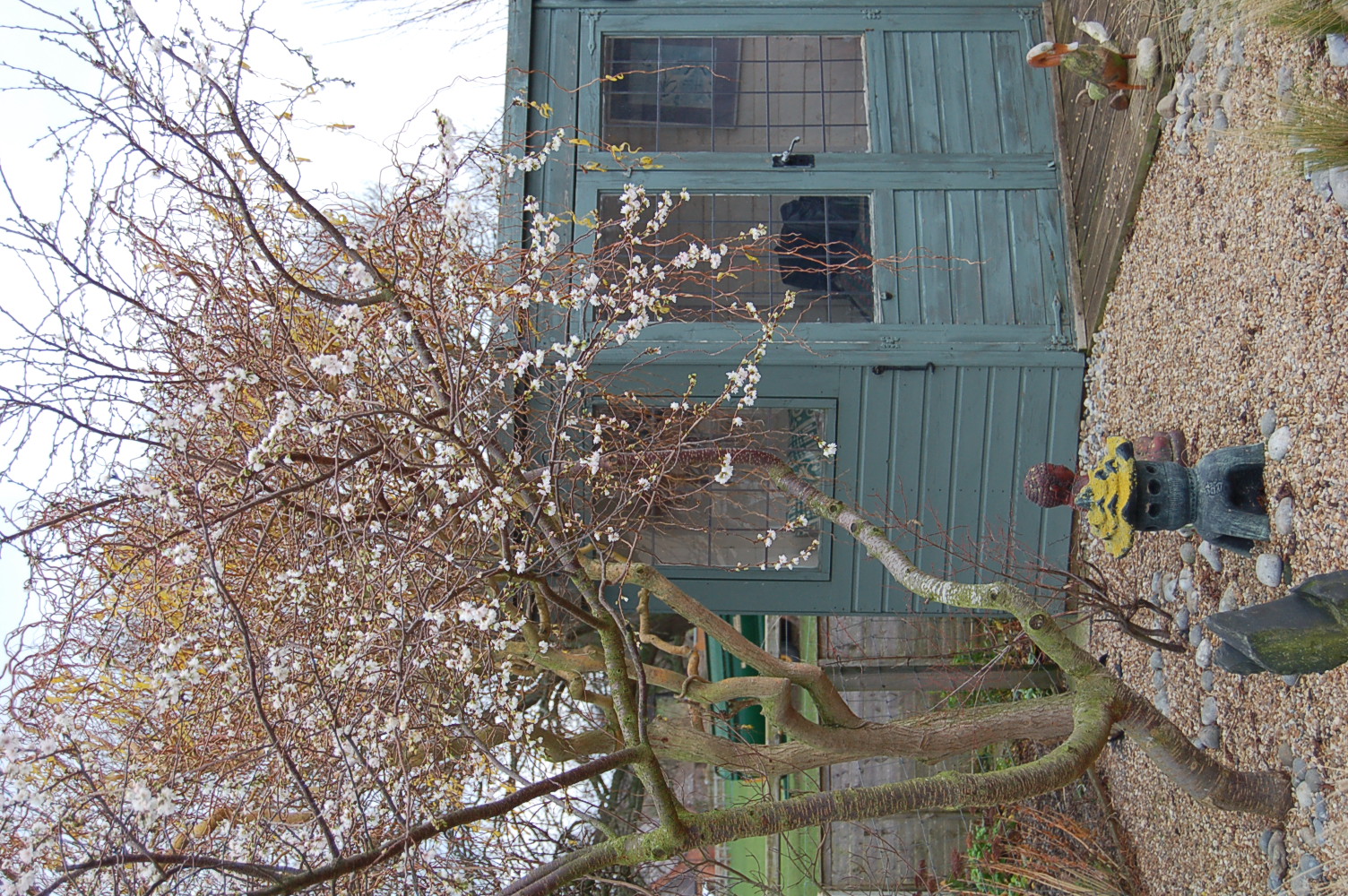
In the Japanese Garden the blooms of our pink version of Prunus autumnalis subhirtella are a joy to look at.
Move in close and appreciate the pink glow.
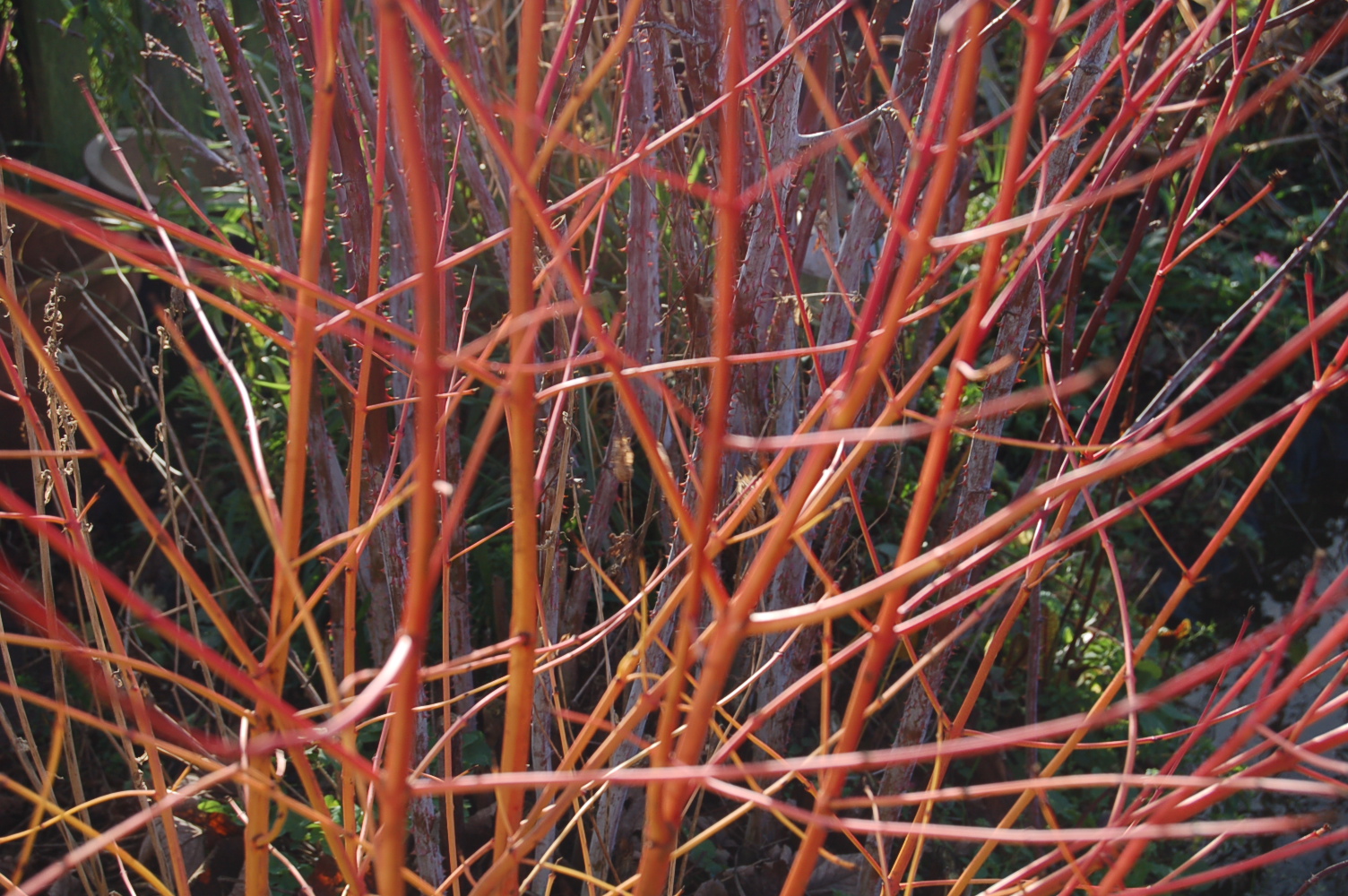
The hottest of the coloured stemmed dogwoods must be Midwinter Fire - ours grows on the bank bordering the wildlife pond.
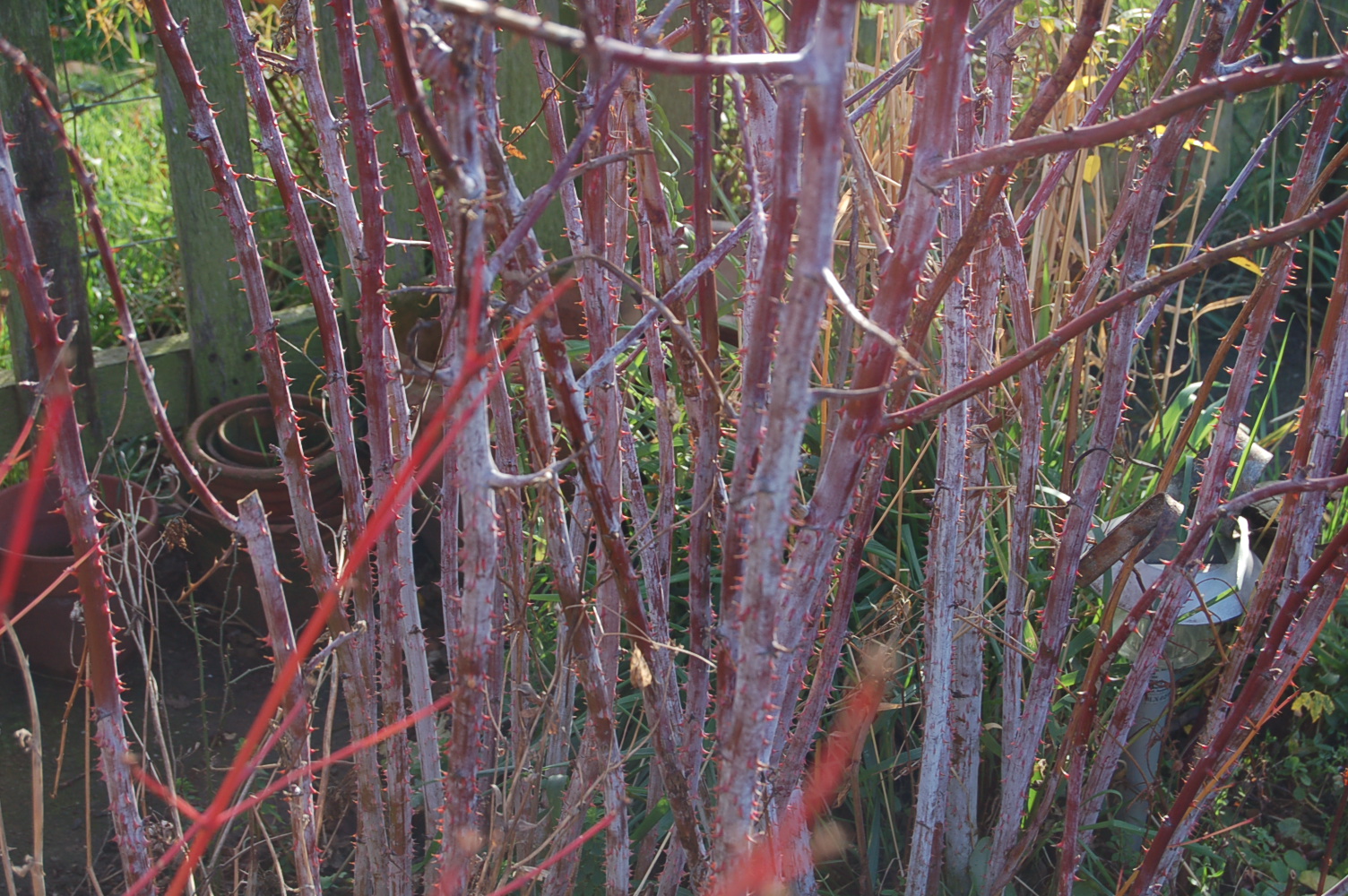
The white-stemmed Rubus sits alongside Midwinter Fire on the pond bank.
The fruit of our apple "Pixie" remained too tiny to pick so we have left them for the birds, who so far have ignored them.


Jasminum nudiflorum has been flowering by the chicken's run now for four months and is still going strong. What a star!


The mad seed heads of the orange-peel clematis, which I grew from seed, never cease to amaze me even though I see it each morning as I collect the chucks' eggs.


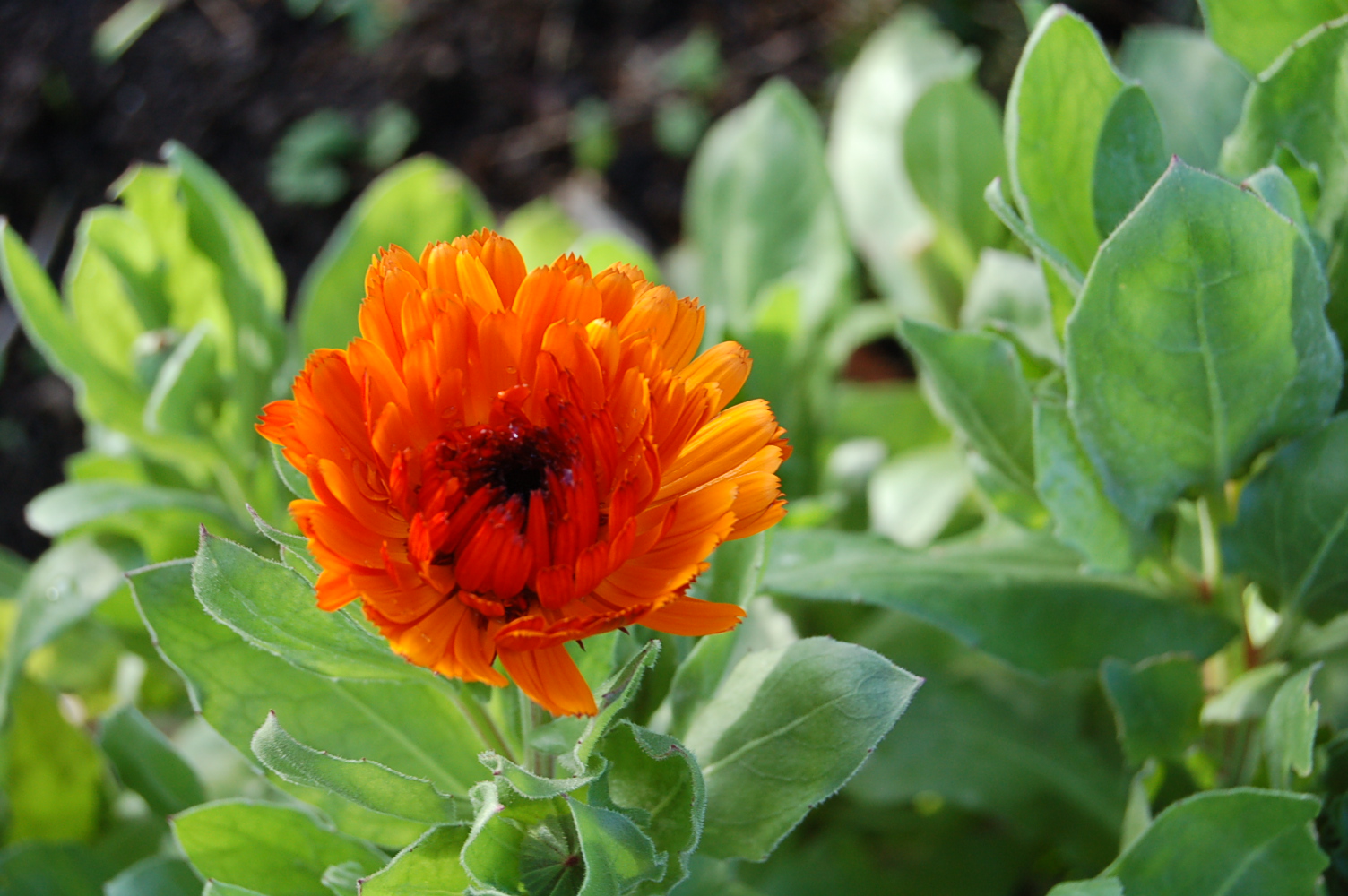
We seem to have calendula flowers somewhere in the garden every day of the year.


One of five Achillea still flowering away in January, this variety "Biscuit" is in the Secret Garden.


Categories
bird watching birds conservation garden wildlife ornamental trees and shrubs trees Wildfowl and Wetlands Trust wildlife

Wildlife in the City – Barnes

We went down to London for the day, not to see a show or visit a museum or shop in Harrods, but to go birdwatching. Not something I could have said a few years ago, but luckily for us and the residents of the capital city the Wildfowl and Wetlands Trust have created a haven for wildlife right in the heart of the city. We hate cities and definitely hate driving in them, so we hoped our visit would be worthwhile. We were accompanied by our daughter Jo and son-in-law Rob who had recommended the place to us, so the pressure was on them! They are good navigators in cities which was most useful. Last year they visited and were amazed at 5 Bittern sightings.

The day dawned cold and wet with a bitter wind so we wrapped up in thermals and layer upon layer of clothing suitable for Polar Bear spotting. First impressions were favourable – the centre was attractively built, we were “meeted and greeted” by a friendly WWT person who told us where to go starting with the cafe. it turned out to be a good cafe which served tasty lattes and even tastier bacon butties. We reluctantly left the cafe’s warmth and shelter expecting to have to tackle the weather to reach the first hide. Wrong! It was in the same building as the cafe and a most comfy place to view the large expanse of water.

Watching the numerous species of duck against an urban background seemed somewhat incongruous. And watching a Peregrine spook the ducks in a diagonal stoop over the cold grey water  added to this feeling. We saw over 40 species of bird including Snipe, both Common and Jack, wildfowl such as pochard, teal and shoveller, but fewer small birds but we were treated to a close up view of a Stonechat, that dapper little alert chap dressed in russet and wearing a black cap. The Jack Snipe, Pintail and Water Rail were probably the star spots of the day. It has been 30 odd years since we last saw this diminutive Jack Snipe, the little wader with the  long beak that is surprisingly shorter and less ridiculous than the one sported by  its larger cousin the Common Snipe. We had a fine view allowing us to appreciate its wonderful striped head and russet wing markings.

Walking between the hides we were impressed by the wildlife gardens planted along the walkways. The dried stems of perennials and the stark outlines of dogwoods, willows and birches gave a taster of how attractive they must be in warmer months. There were examples of methods of attracting wildlife such as this magnificent “insect tower block”.

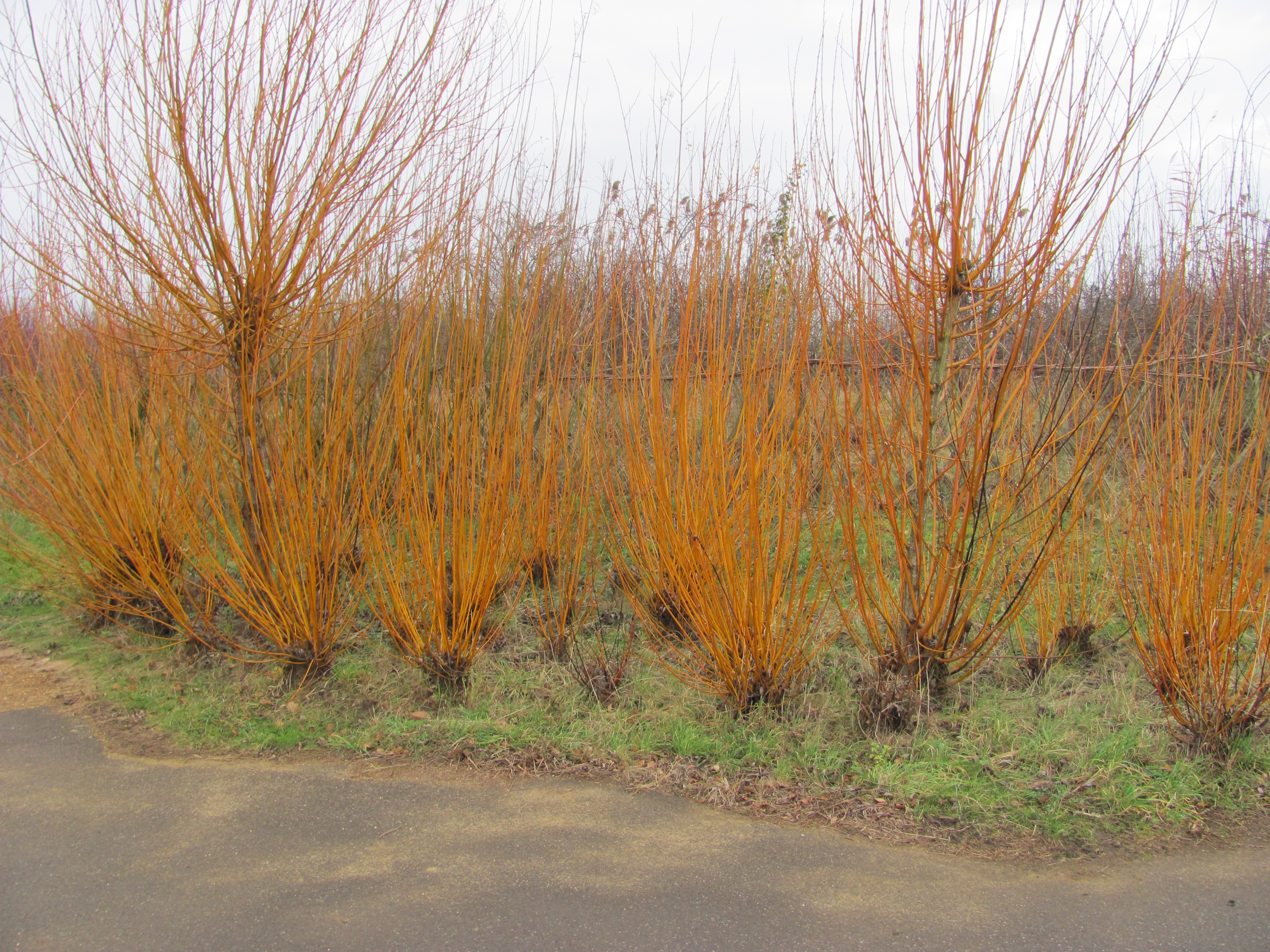
Coloured stemmed willows feature strongly as pollarded trees, hedges, structures such as arches and living fences. These yellow stemmed pollarded and coppiced specimens lit up the dull grey day.

Barnes certainly lived up to expectation even though the visitors’ favourite failed to put in an appearance, the weather being too inclement for the Bitterns, a bird that dislikes the wind. But it gives a reason to return. We plan to visit next in the summer when it will be interesting to see what summer migrants are in evidence in this wildlife oasis in the city. I know how corny the phrase “wildlife oasis” is, but how else can you describe this little gem.

Categories
birds garden wildlife gardening hardy perennials trees wildlife

Agapanthus – a plant for winter?

On my early morning wander down to feed the chucks today I was accompanied by the usual Robin who followed me, flying from post to post down the fence line stopping off to treat me to a burst of his gentle transparent winter song. He does this every day except when the rain is torrential when he never shows. If I take the grass path past the slate bed, the Secret Garden and the Chicken bed he takes the fence route, but if I take the concrete central path he flies along the cordon pears and plums stopping to sing on each tree. Today was different for I had the added benefit of the first song this winter from the Song Thrush. The first signs of true territorial song mapping out his patch and letting others know. Sadly recently he just sings for us for there seem few rival males to want his territory. Here in Plealey we seem to have far more Mistle Thrushes than Song Thrushes.

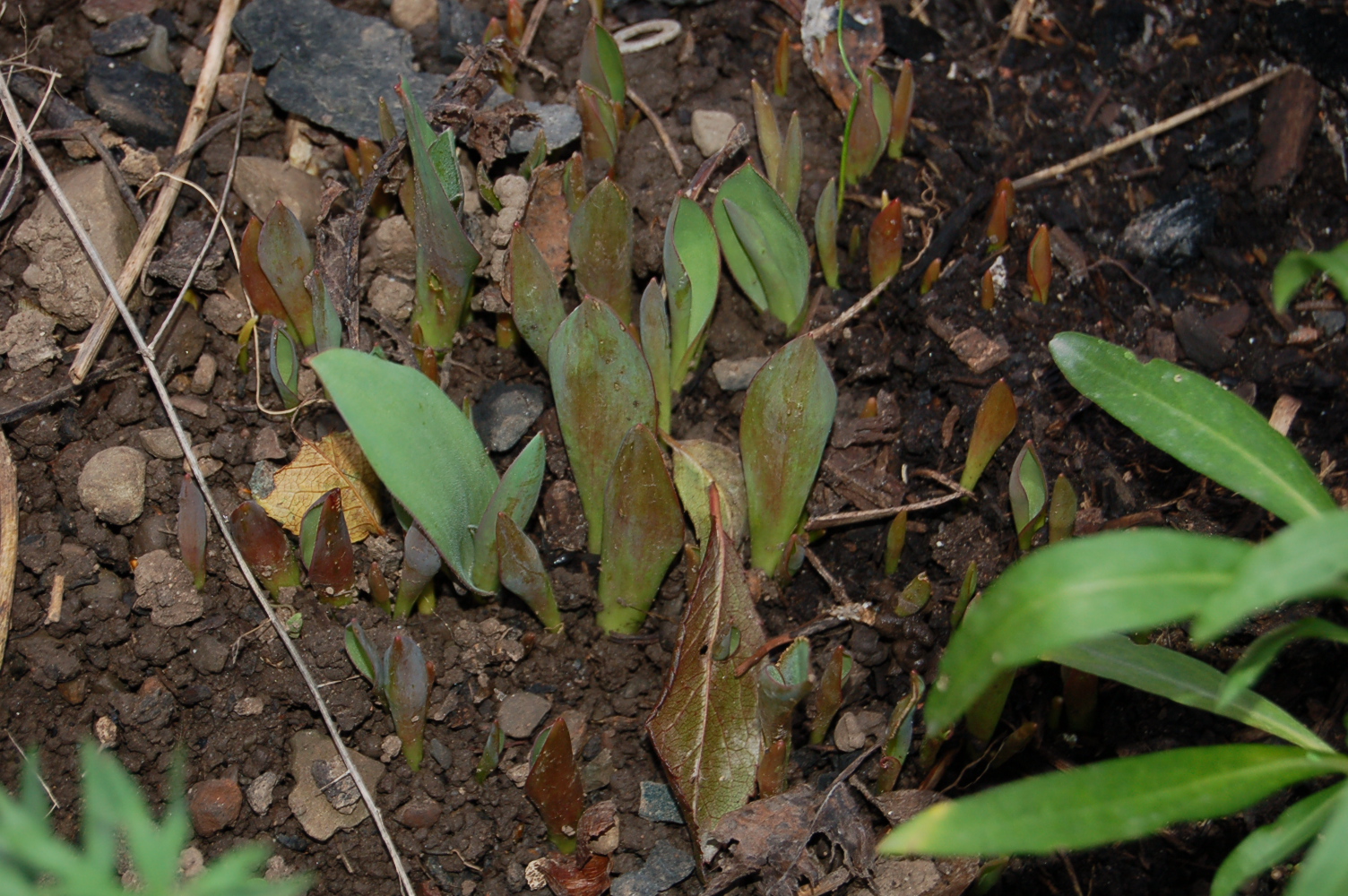
As usual I wandered around the garden to see what was happening and today felt warmer so a slow aimless wander was on the cards. I was impressed by the Prunus subhirtella autumnalis, the centre piece of our little Japanese Garden, which is littered with its delicate white blooms. And at last new spears of bulb leaves have made their way to the surface to show us their intent. But a plant that struck me as an unusual “winter interest” plant was the Agapanthus.

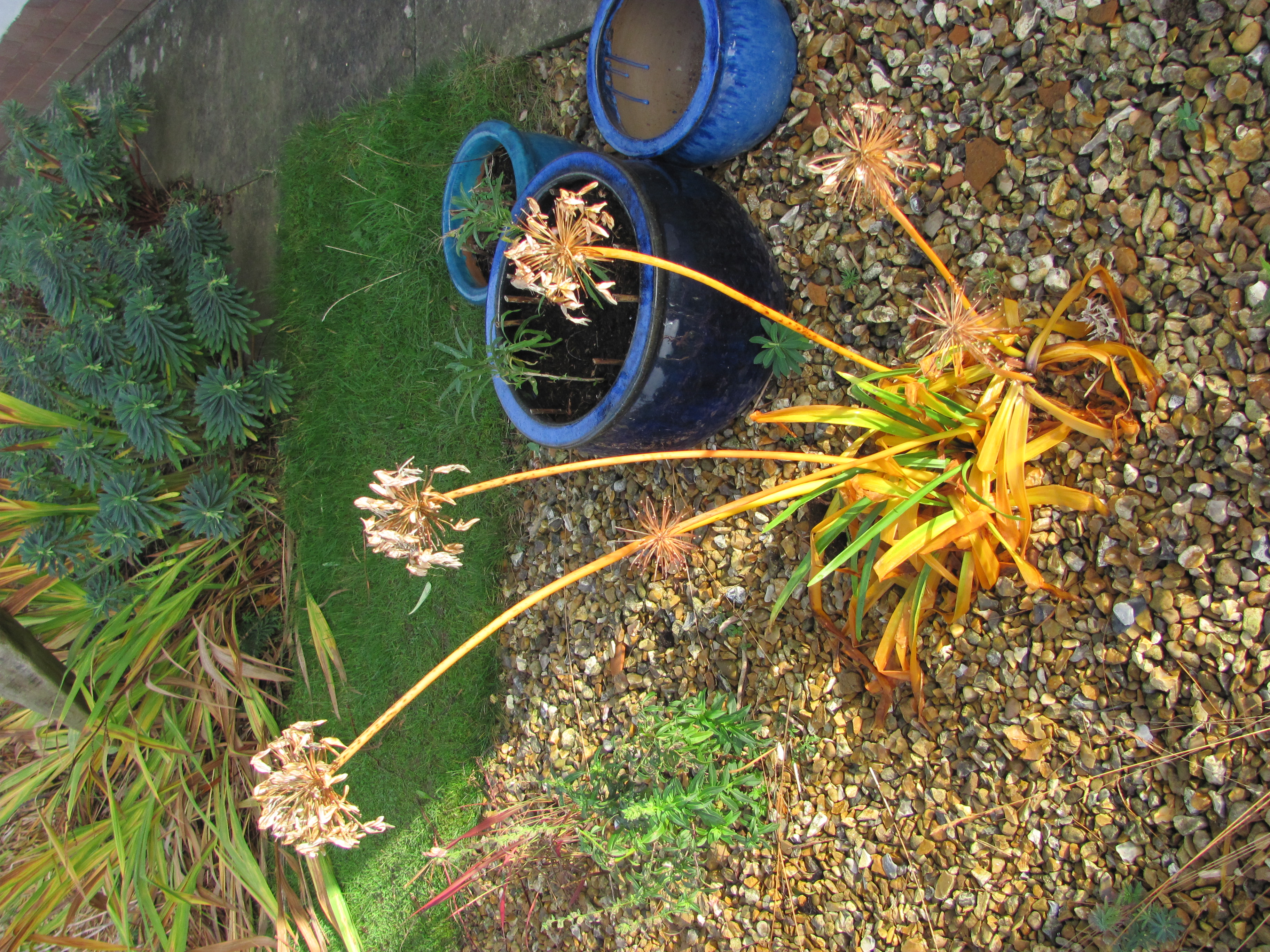
Agapanthus, a striking summer flowering plant, is growing in our “Chatto Garden”, a gravel bed we made after visiting Beth Chatto’s wonderful garden and being struck by her gravel garden created on her old car park. When there we bought a few agapanthus and on our gravel bed we grew a deep dark blue flowering variety. I wrote two earlier blogs about the amazing buds and how they open. ( see “Bud Burst” published in July 2011 and “Bud Burst Part 2” published in August 2011.)

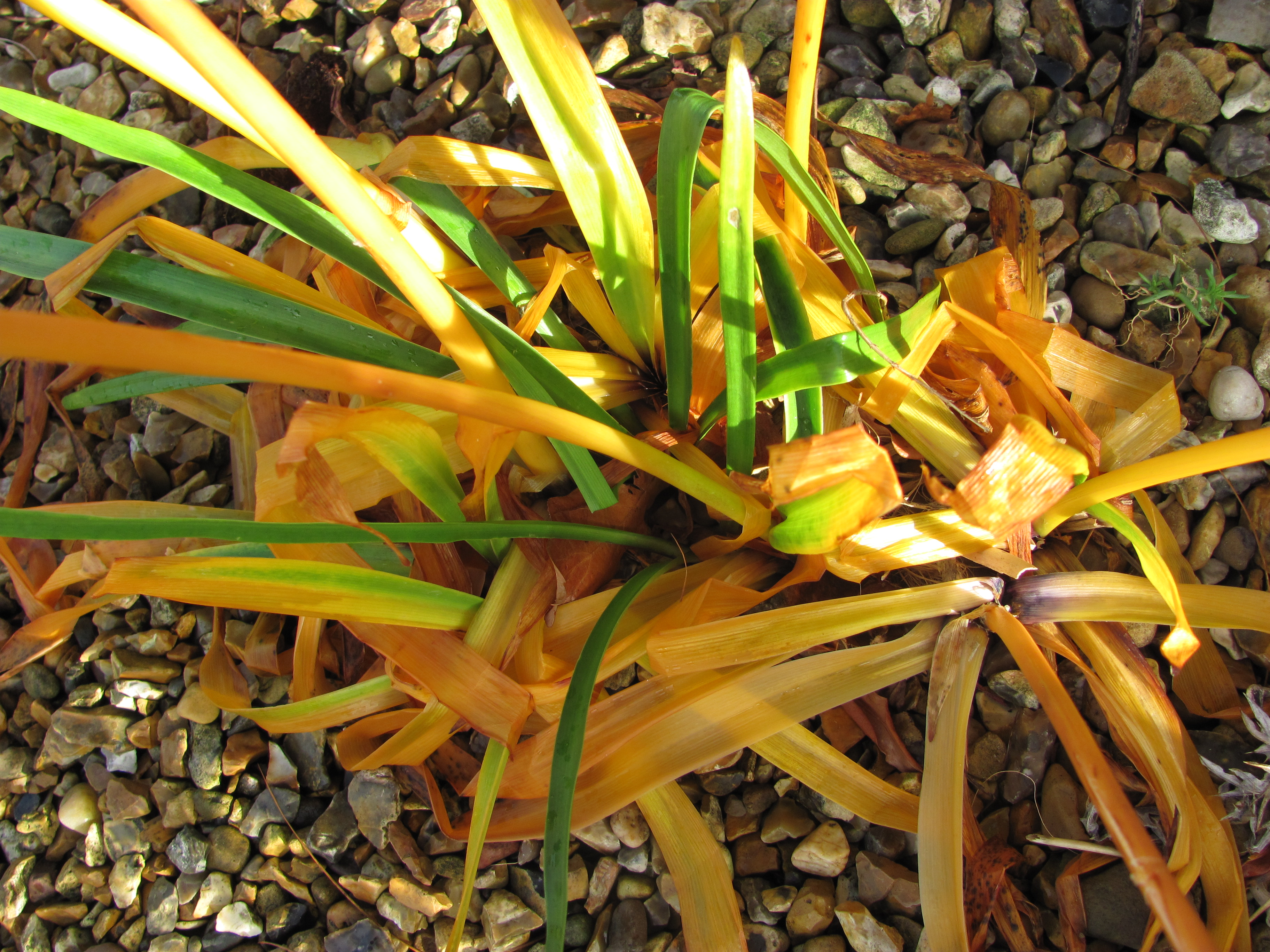
Now in December it is still giving interest on our “Chatto Garden”, but not blue this time but the absolute opposite – a rich yellow. The foliage and stems are yellow and the seed heads are like delicate sculptures.

Until now I had not considered the Agapanthus to be a plant for winter interest. They always say that a good gardener is one who never stops learning!

Categories
climbing plants garden photography gardening hardy perennials ornamental trees and shrubs roses

Christmas Rose

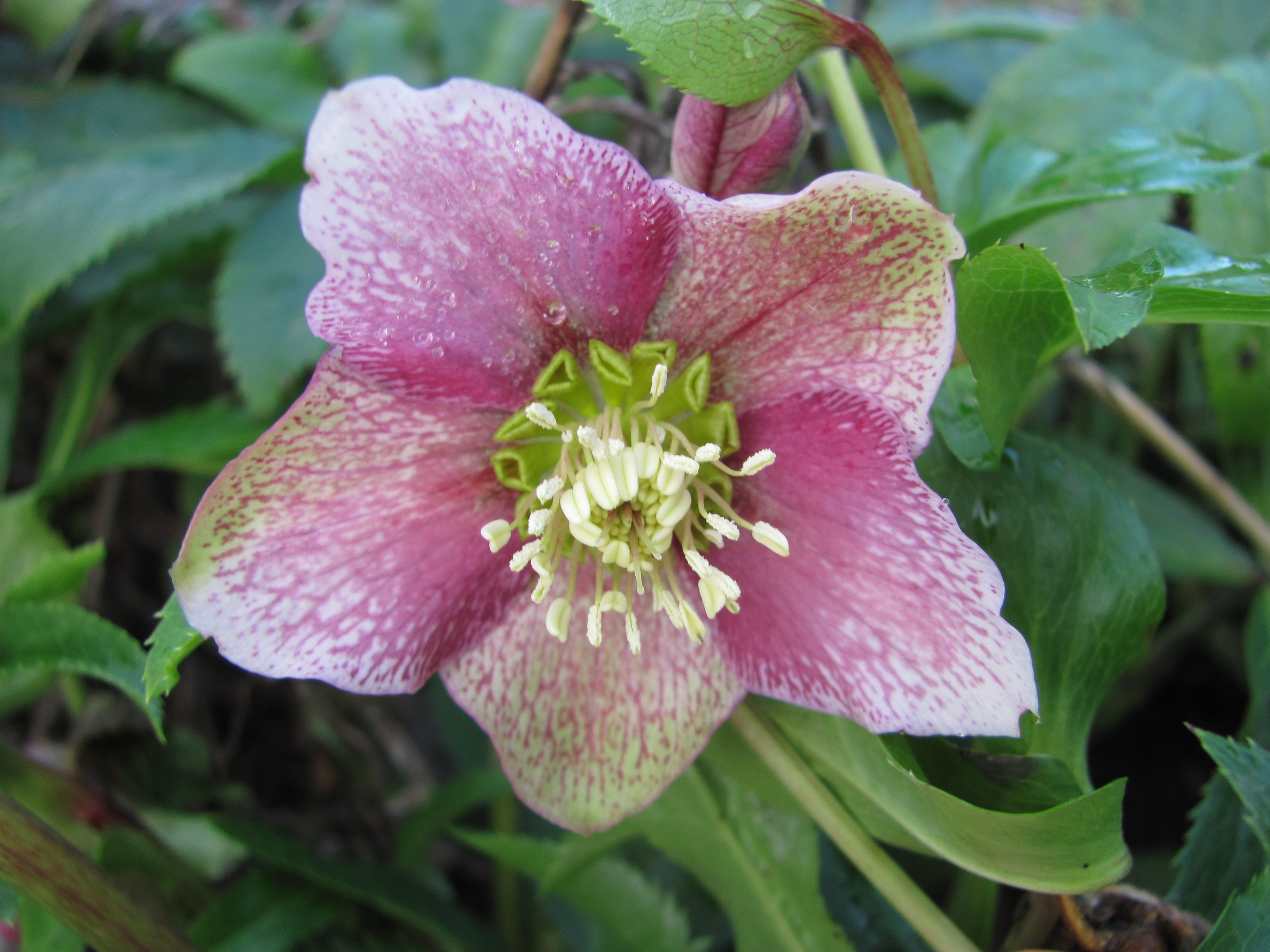
No, this is not going to be primarily about hellebore, sometimes known as Christmas Roses. They do not always flower at Christmas time, although in recent years the tendency to flower in December has increased here in our Shropshire garden.

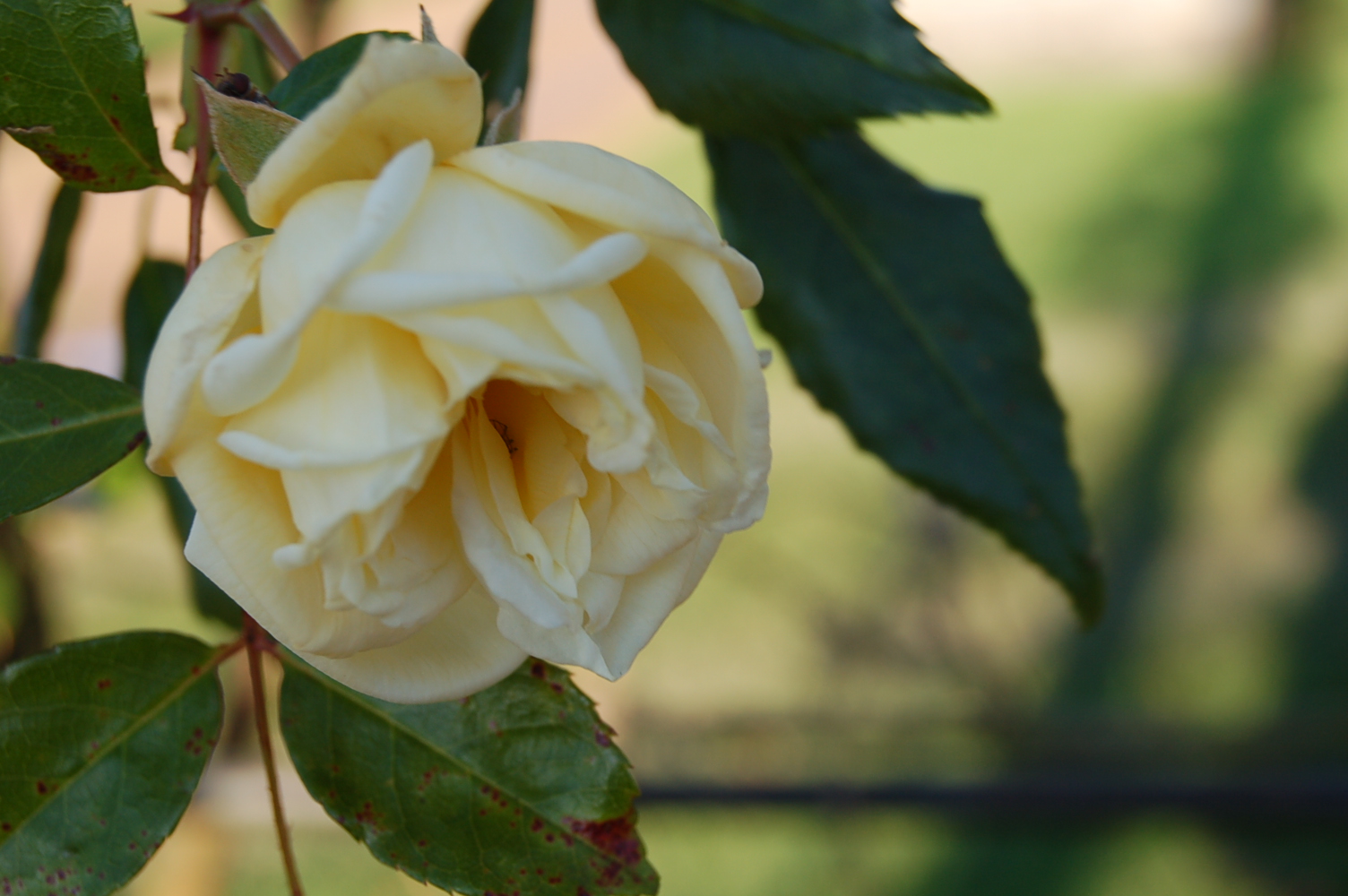
I am talking here about the climbing version of Rosa Graham Thomas, a David Austin rose which we grow clambering over one of our garden sheds. We try to train some branches along the nearby fence but it likes to be on the shed roof best of all. It has been voted “The World’s Favourite Rose”. This seems particularly apt as Graham Thomas himself was one of the world’s favourite garden writers, having written 17 books in all. He was also an excellent artist working in both water colours and pencil, though he was best known perhaps for his role as the National Trust’s “head gardener”.

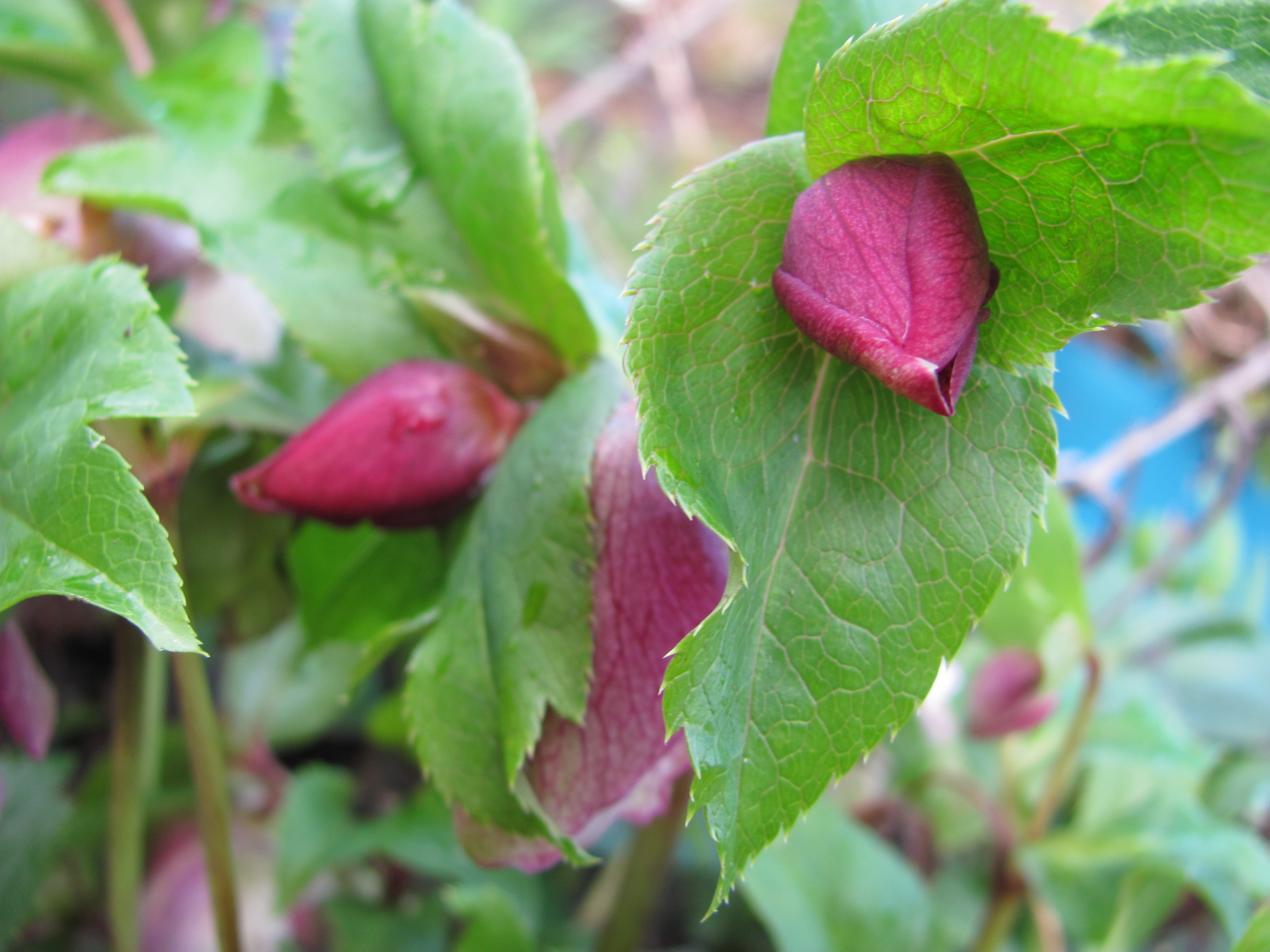
A second slow cold walk around the garden revealed that this year the hellebore are in fact performing in tune with their nick name, so perhaps I had better feature them too!

Here in winter its deep yellow blooms help to emphasise the depth of clear December skies. This rose manages to flourish all year, flowering almost every month of the year except straight after its annual pruning in spring. In winter it also displays large hips of orange and later red. Sadly it lacks the scent which pervades the garden in the humid warmer months. The David Austin catalogue describes this scent as typical “fresh tea rose fragrance” although “The under gardener”, otherwise known as my wife Jude, thinks it reminiscent of school dinners!

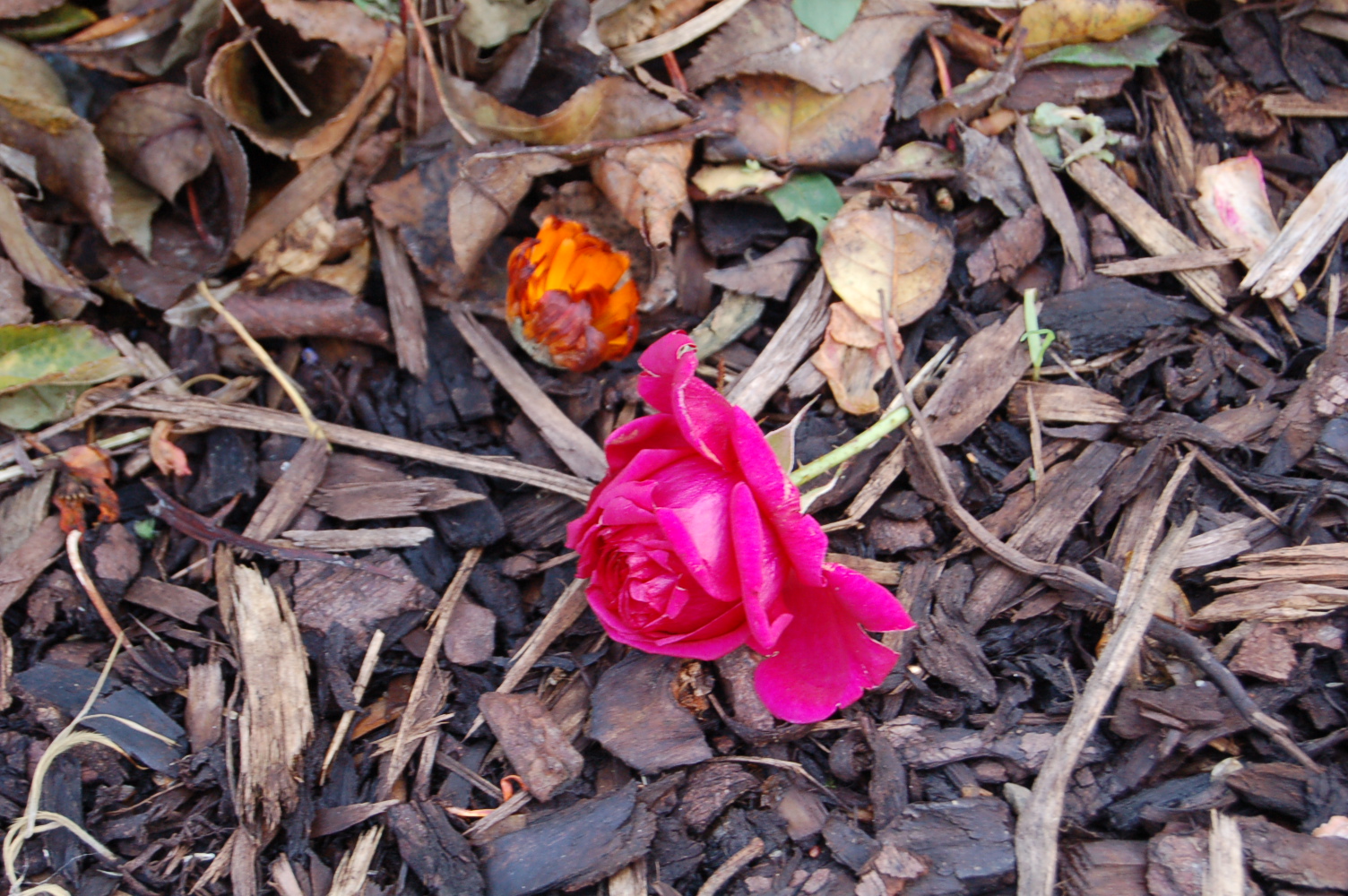
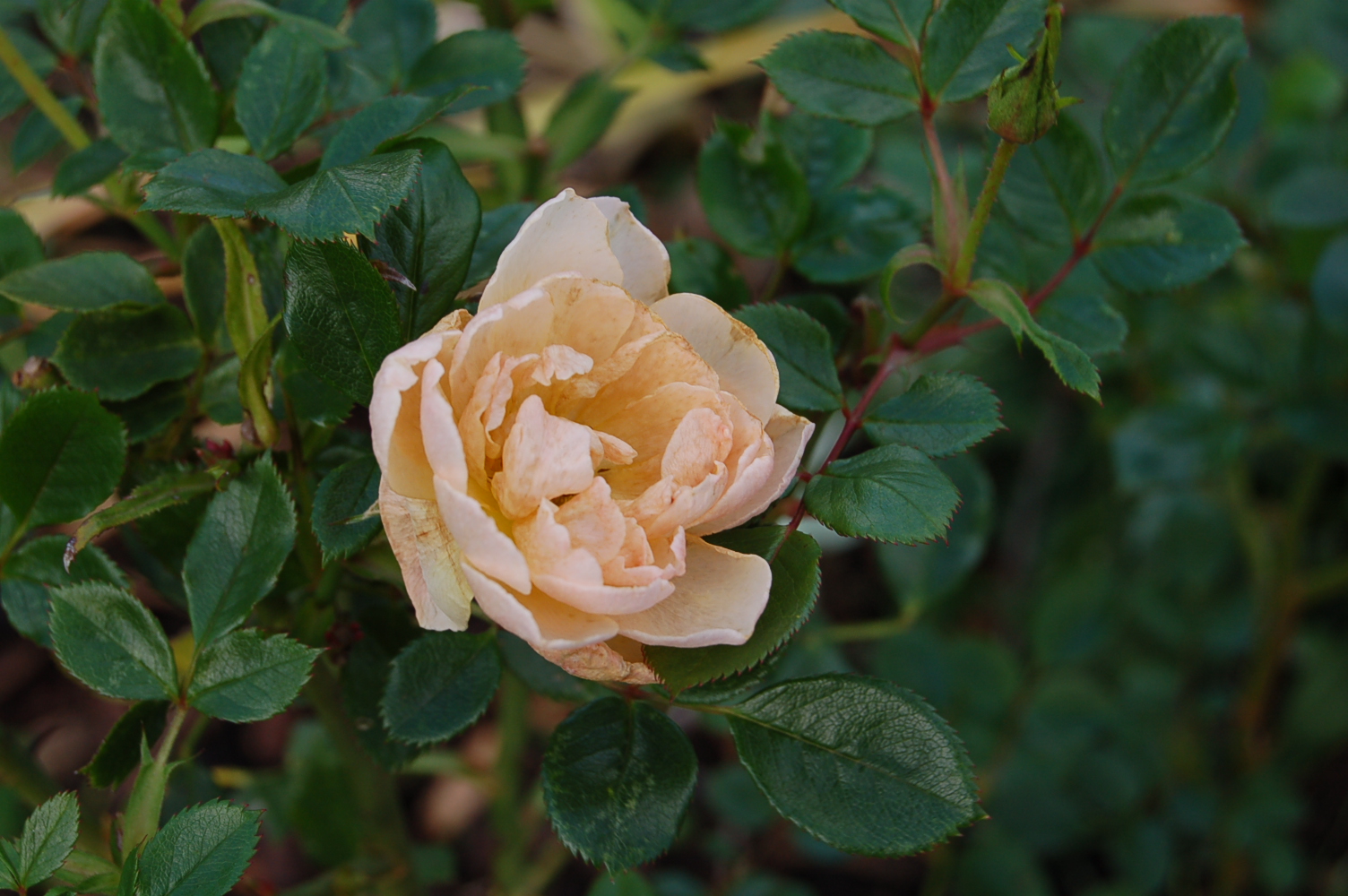
Several other roses have odd flowers on at the moment as a quick wander around with camera in hand illustrated. This sad rose bud didn’t quite make it to full bloom before being cut by the wind. The orange is the flower of a Calendula. They landed side by side on the bark surface of the new “Secret Garden”

Categories
garden design garden photography gardening hardy perennials meadows ornamental grasses ornamental trees and shrubs roses

A Garden for all Seasons – Trentham

The phrase, “a garden for all seasons” is over-used and too often banded about in the gardening media. Rarely is a garden good in all seasons but it is something that we aspire to here in our garden in Plealey. We haven’t achieved it yet but feel we get closer in some borders each year. We do a lot of garden visiting and the garden we visit most often is Trentham Gardens in Stoke-on-Trent. This has to be the closest you can get to “a garden for all seasons”. We visited yesterday, 22nd December, to see how good it was at this rather dull austere time of year.

The day dawned bright with blue sky decorated only with vapour trails and a whisp of a moon, which looked like a simple delicate curve drawn with a piece of fine blackboard chalk. Over our garden and the fields beyond buzzards wheeled in this clean, clear morning atmosphere. As I fed the chucks and had my morning chat with them the buzzards were never silent, gently “mewing” in time with their soaring in search of the first thermals of the day. A perfect day to visit one of our favourite gardens but were we asking too much of it? We drive off with high expectations.

Any garden that had involved Tom Stuart-Smith and Piet Oudolf in its re-design had to impress. We had visited in all seasons before but never in the winter. From our first glimpse of the vast expanse of gardens from the bridge over the River Trent, busy with mallards, we knew we were not to be disappointed.

It is truly a mix of the old and the new, as the new plantings are in the context of the original Capability Brown parkland and formal bedding gardens and Italian Garden. The garden signposts invite you to “The Italian Garden” but it is so much more than that.

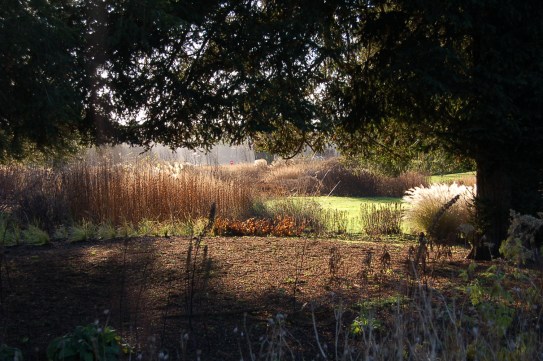
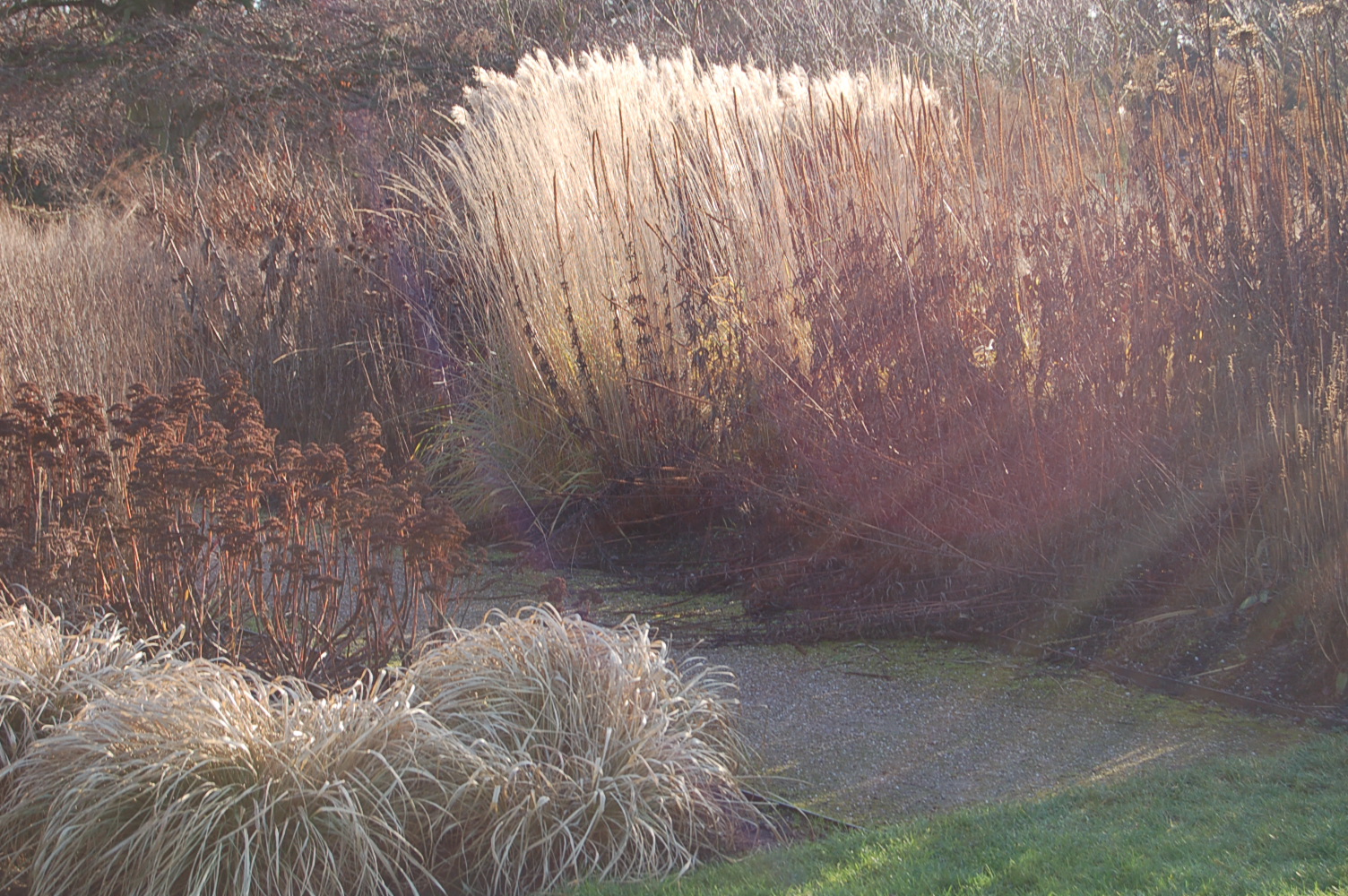
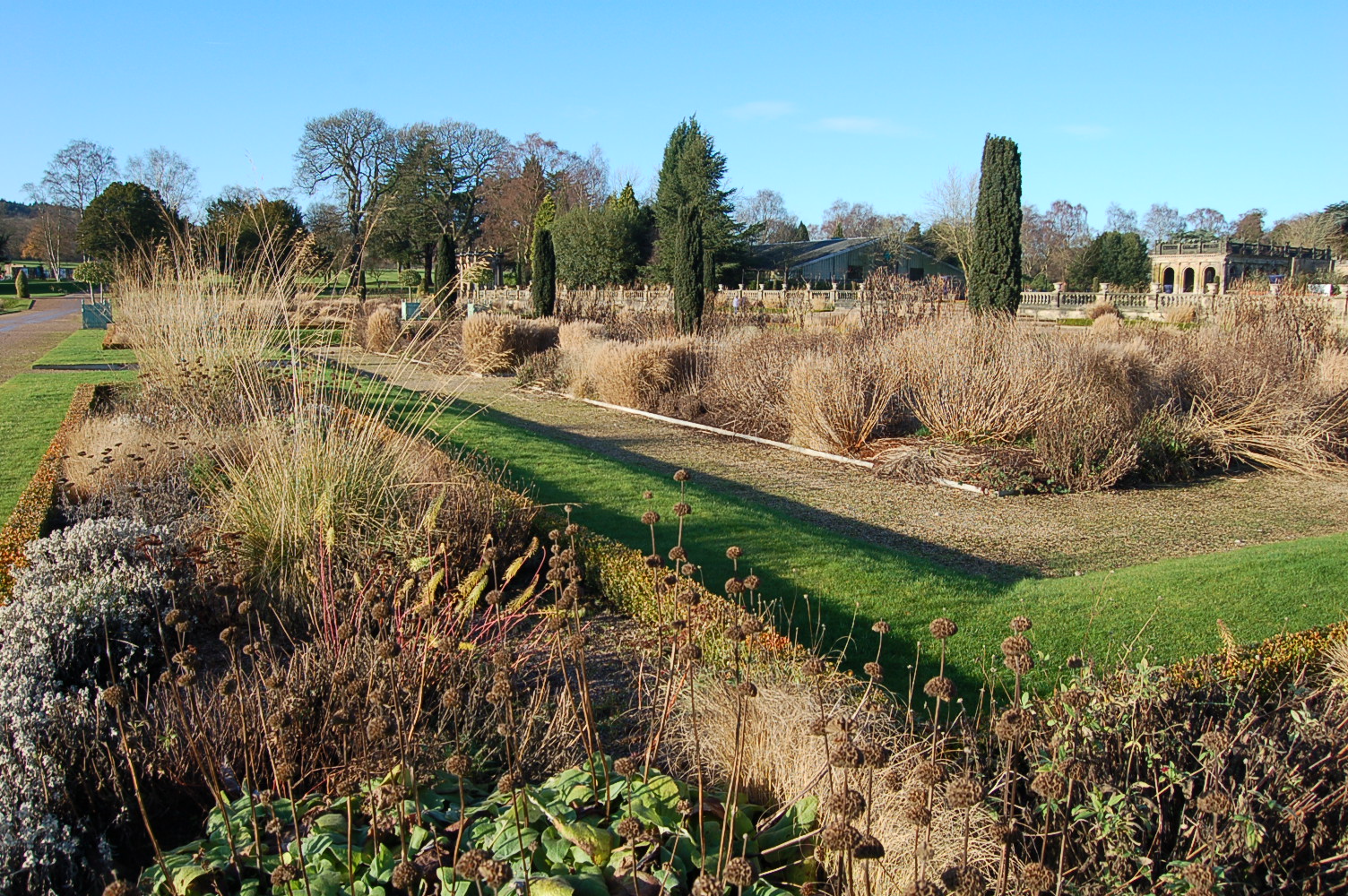
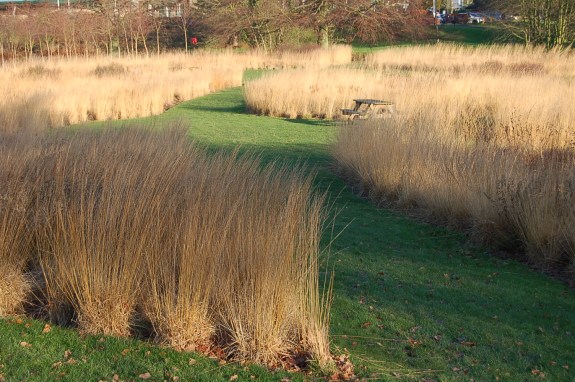
First up is Piet Oudolf’s River of Grasses which in the low light of this December morning glowed. The gentle breeze imposed gentle swaying and rustlings of the biscuit tinted dried stems and seed heads. These were dotted with ginger and brown seed heads of perennials such as sedum and astilbe. The wide green cut paths we followed through the sea of grasses emphasised the clever design and simple planting.
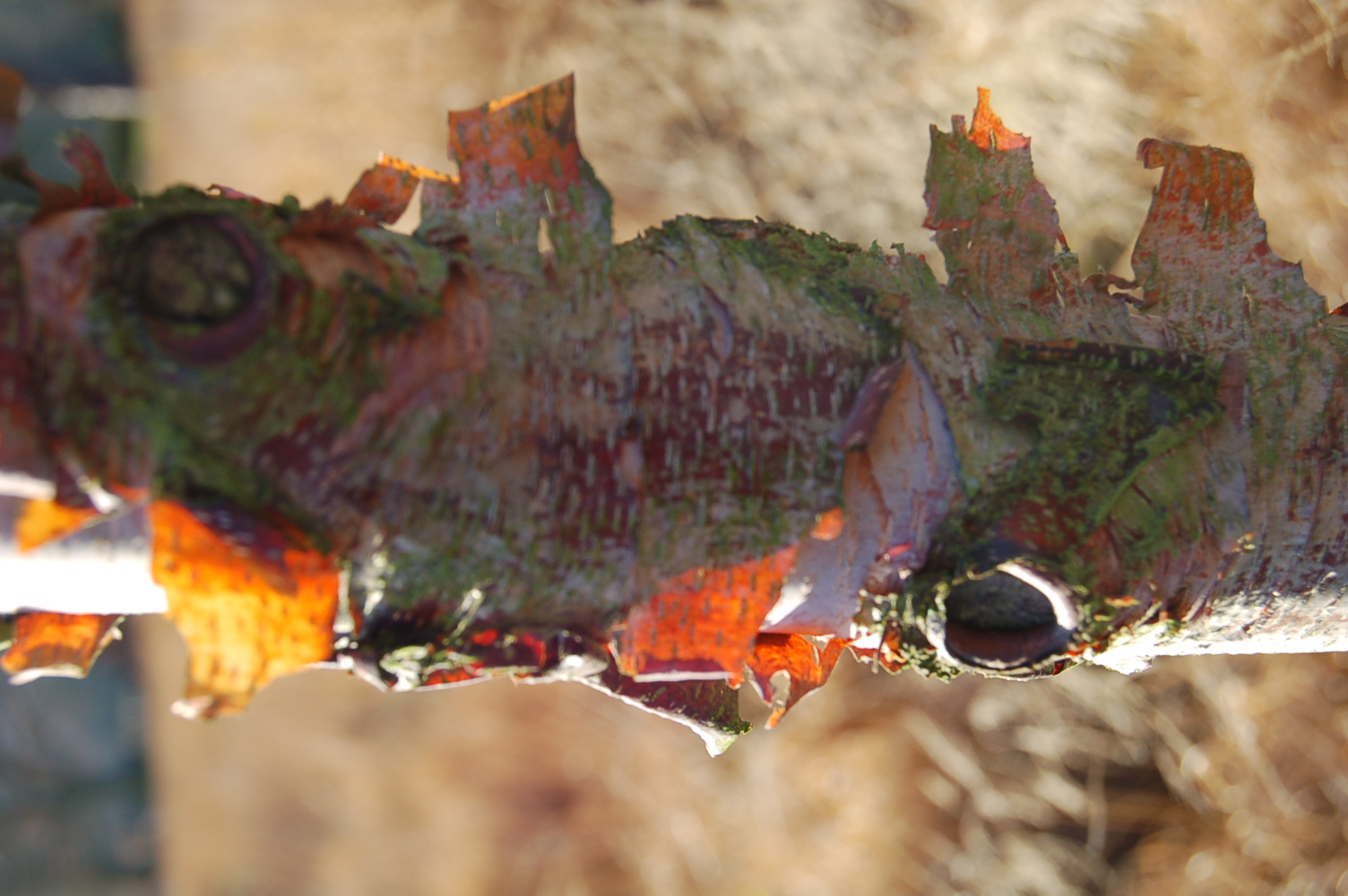
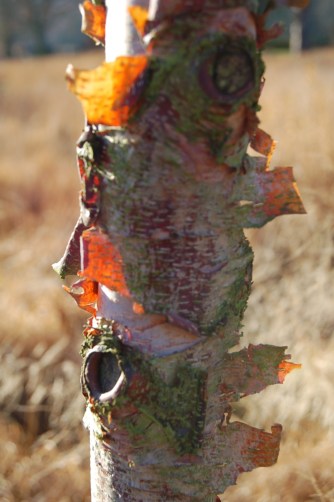
Just before leaving the River of Grasses an avenue of birches with wonderful orange peeling bark cuts across our path. There is no way to walk through this double row of betulas so technically speaking  it probably shouldn’t be called an avenue. With the light behind the peeling bark it lit up like thin slithers of brittle toffee.
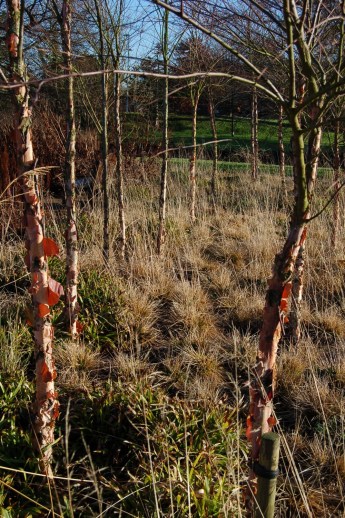
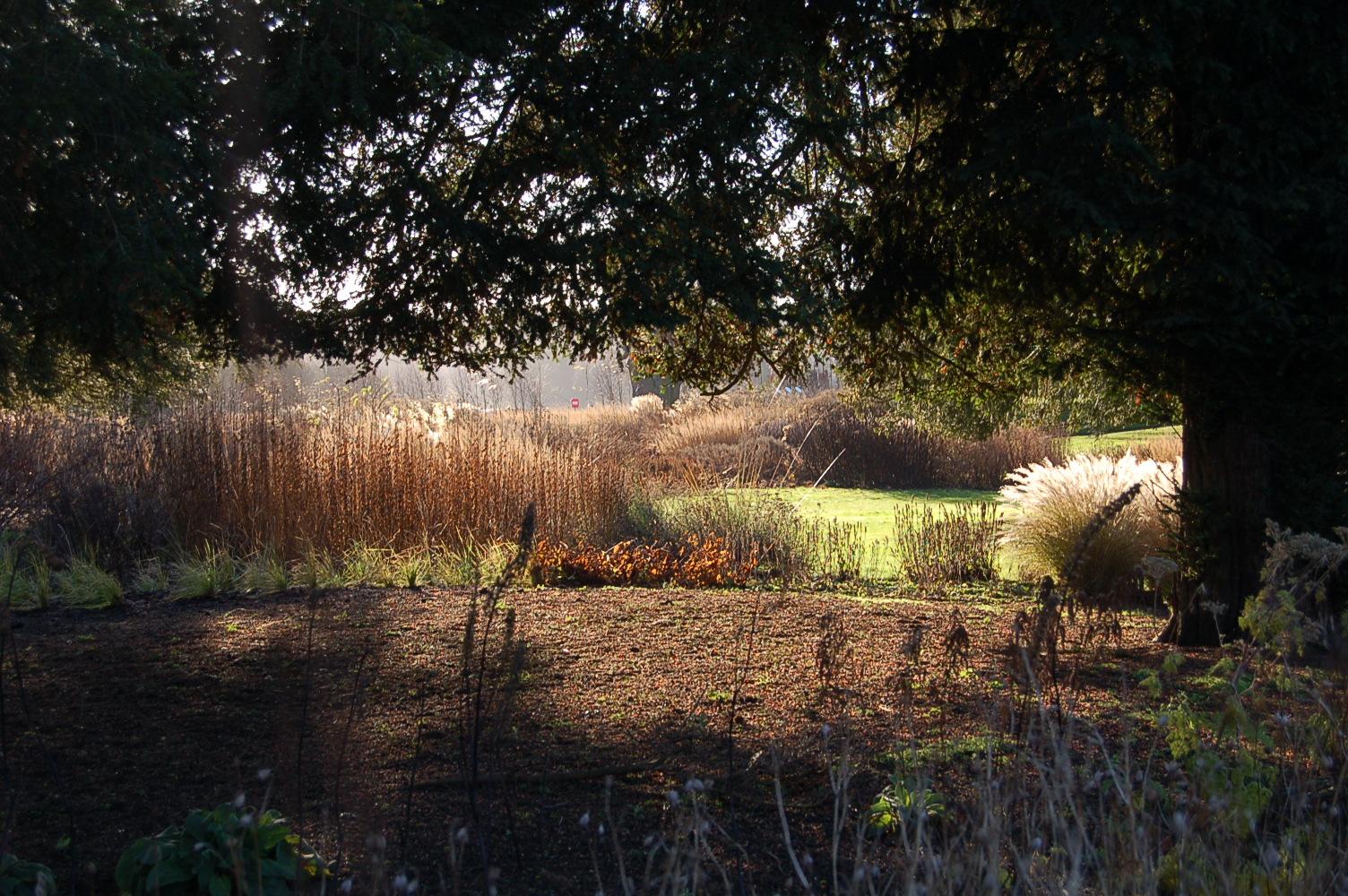
From the River of Grasses we moved into the Floral Labyrinth another Piet Oudolf creation. Here there were swathes and blocks of dried stems and seed heads of tall perennials. Blackbirds and Song Thrushes enjoyed searching for their brunch and regularly scuttled across the path. There were more grasses here and they were rimmed with the bright low sunlight.
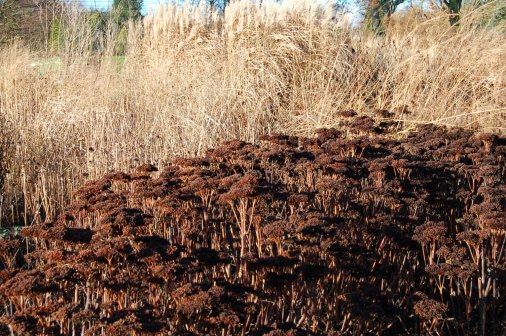
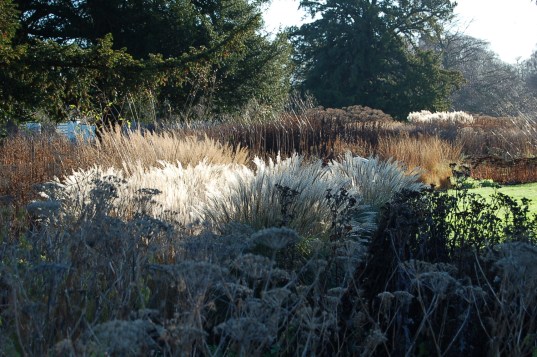
Leaving the labyrinth meant leaving Piet Oudolf’s contribution to Trentham behind and experiencing a culture shock was on the cards as we entered features of the older more formal garden. Look out for a blog I have planned for the near future on the work of Piet Oudolf.

After passing through a long archway of trained Hornbeam we found the very formal garden with its tightly clipped swirling patterns of box hedges. In the summer this area is just too gaudy for me, being styled on Victorian bedding. Not my favourite!! I like it in the winter when instead of bright red geraniums etc the gaps between the box are the gentle green of wallflower and primula foliage. The first photo shows an area with gravel infill and tall thin cypresses.

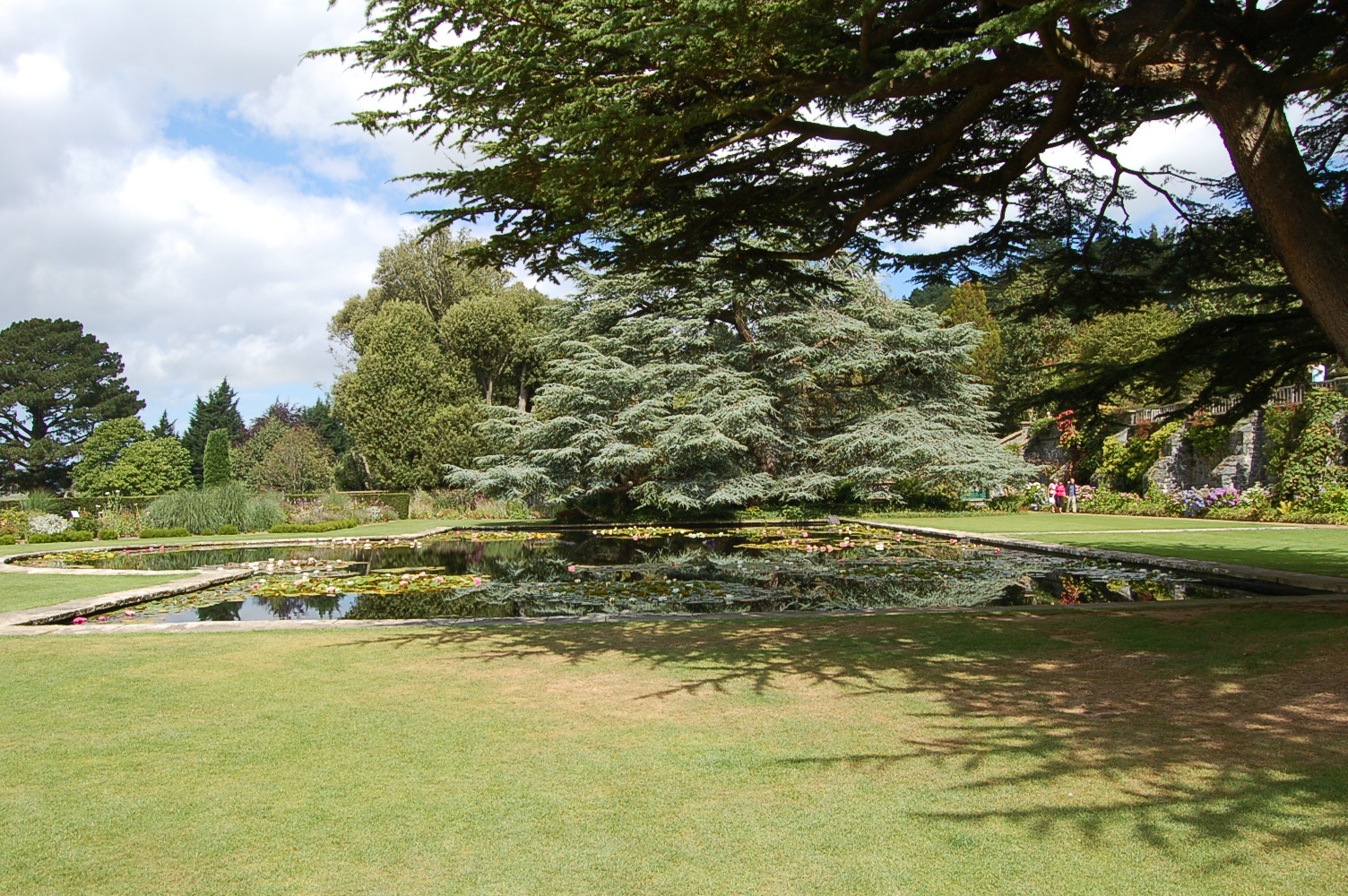
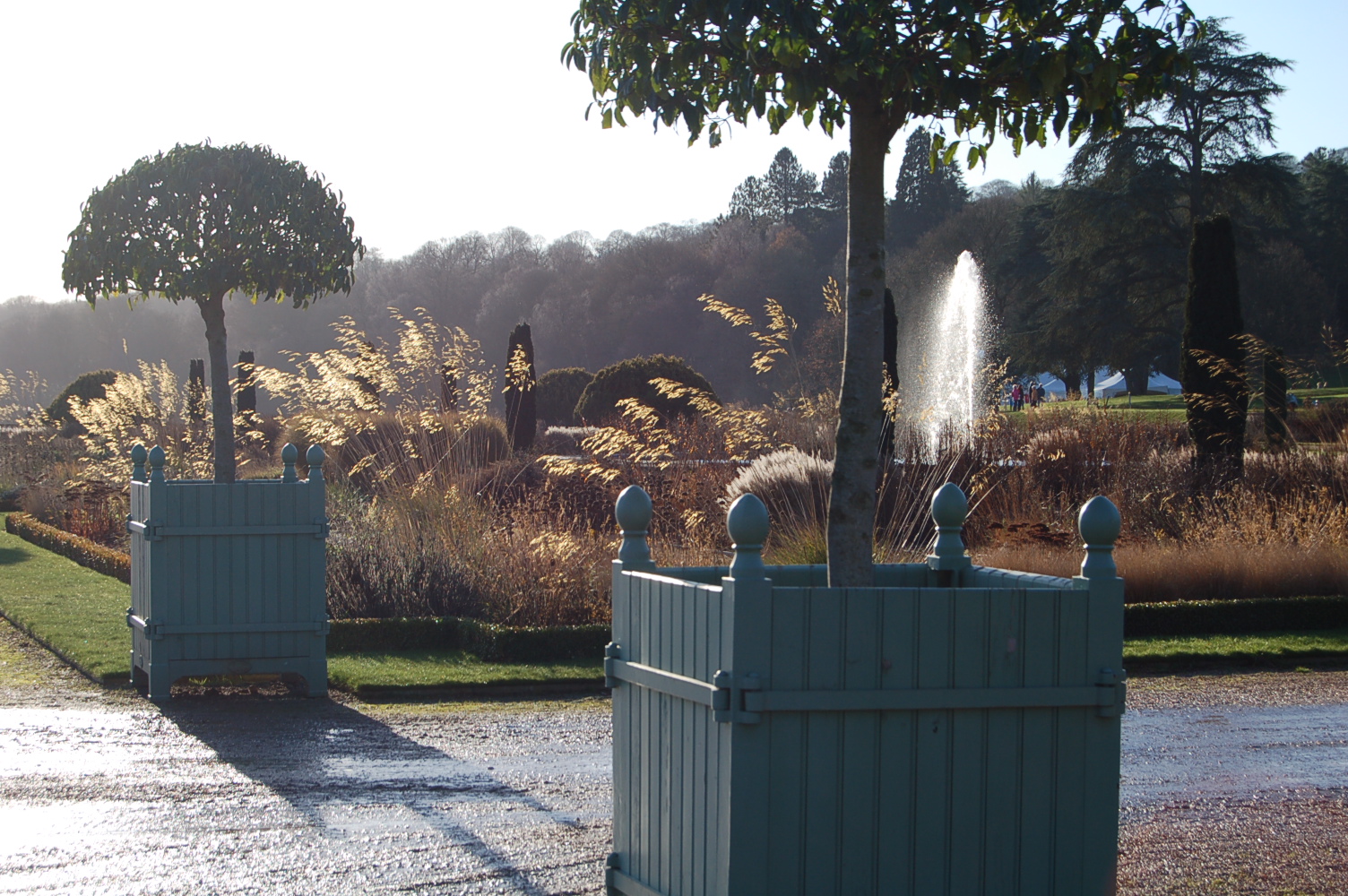
From the raised terrace of box patterns we looked over the old Italian Garden redesigned by Tom Stuart-Smith, where the original framework of paths encloses soft but dramatic plantings of grasses and perennials. Bursts of water from pools surge upwards and are caught by the light and the wind. They look white and frothy with sprays of fine mist blowing from them. The horizontal patches of grass seed heads are rimmed with light and create strong horizontal lines contrasting with the rigid upright cypresses and the dumpy domes of golden yew.
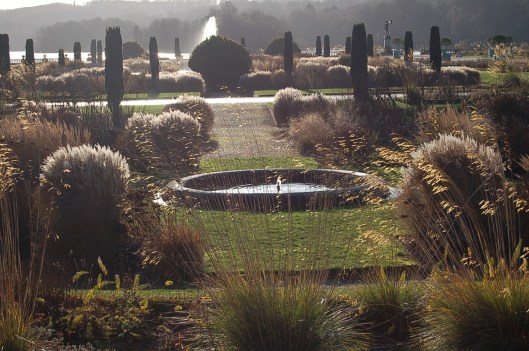
As we appreciated the quiet of this area our attention was drawn by a pair of Grey Wagtails playful and flirting low over the grasses. High overhead loose flocks of gulls wheeled and squealed.

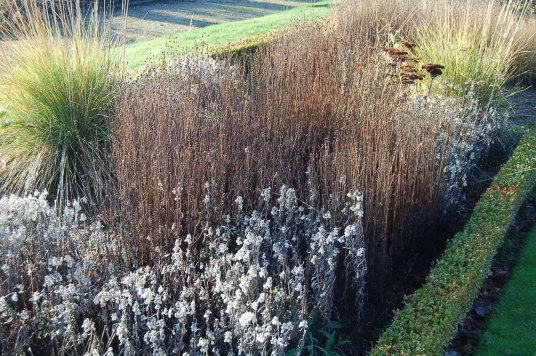
We wandered around the paths stunned by the beauty of T. S-S’s planting ideas, every clump of  seed heads complimented its neighbours, making each bed look good when viewed as a whole but nothing short of brilliant when studied in close-up. Marjoram, sedum, rudbeckia, lillies and phlomis. So many shades of biscuit, browns, russets and reds.

One of the beauties of a visit to Trentham is the coffee drinking opportunities provided, in the garden centre before you enter the actual garden, in the shopping village, at the garden entrance and in the beautiful rounded glass cafe just beyond the Tom S-S borders. We sat and enjoyed a latte and warm minced pie and talked about the garden so far. No we didn’t just talk about it – we raved about it! We just couldn’t believe how good it was on this day in December. Nearby music and squeals of delight emanated from a marquee that housed a skating rink. More joyful noise and children’s cries of sheer enjoyment poured from the play area. We couldn’t believe how warm we got sat in the window with the sun on our backs. We mused over this garden of contrasts, enjoyed from every visitor from 2 to 82 years of age. The Oudolf and Stuart-Smith gardens has a magical calming effect on everyone. Children don’t run in that part of the garden but they do once they move into the park areas and woodland. Calm appreciation!

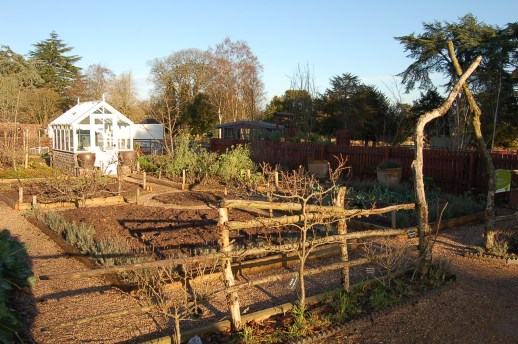
Behind the cafe is a series of display gardens, the number increasing with every visit we make. There was a potager, a wildlife garden a contempoary garden, a garden of sound and many more.
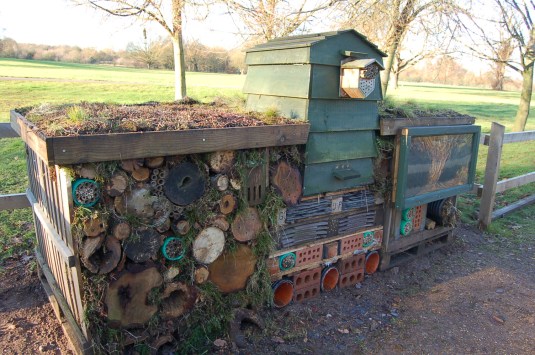
The wildlife garden feature this huge insect hotel complete with bee hive and wormery built-in.
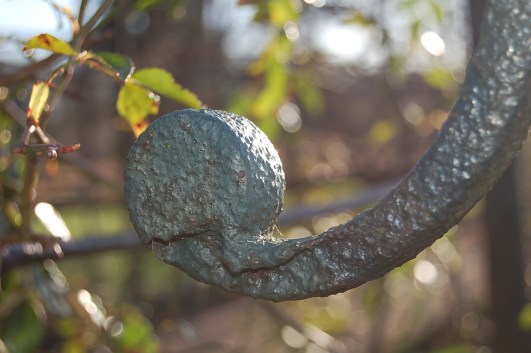
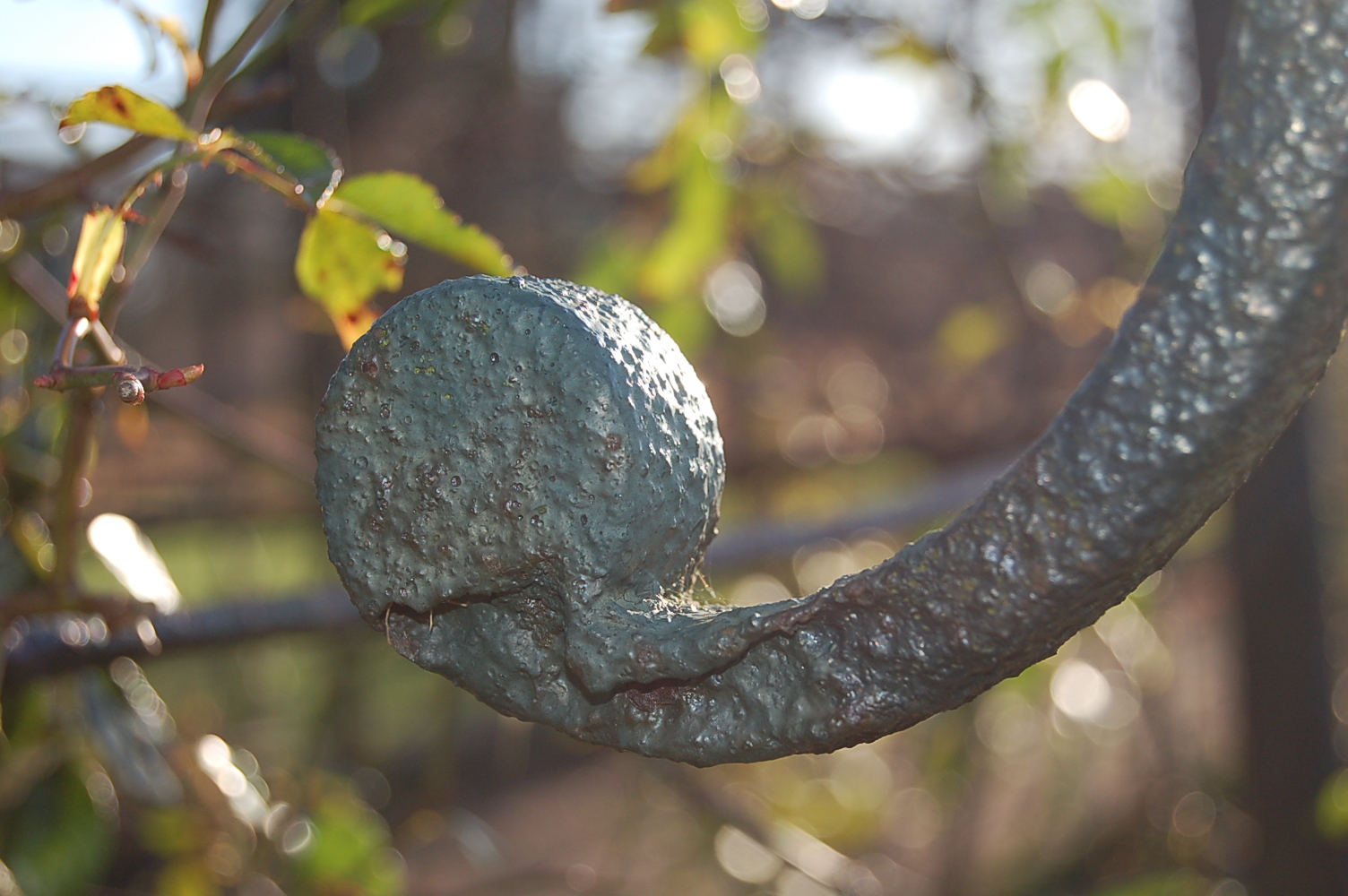
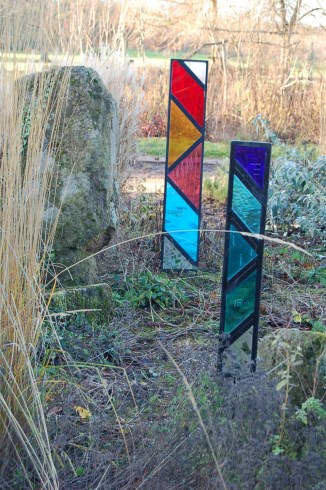
As we wandered back to the garden’s exit we took a look over the Capability Brown lake, ambled through the rose arch with a David Austin border and couldn’t resist a final gentle stroll through Piet Oudolf’s grasses. The rose garden featured some gently curving metal scrolling.

Another coffee before the return journey home when we decided to return in May when the alliums should be at their best alongside the fresh growth of the grasses and perennials. The “Undergardener ” on the way home pronounced “That must be a near perfect winter’s day!”

Tom Stuart-Smith wrote “Trentham is unique, a garden made on a grand scale which pays respect to the historic context, but is nevertheless of our time.”

For more information about Trentham see their website www.trentham.co.uk. Look out for my planned blogs on the gardens of Piet Oudolf and Tom Stuart-Smith and I am tempted to look back at my photo library and seek out my summer photos of Trentham to illustrate a “Summer Memories of Trentham” blog.

Categories
allotments fruit and veg grow your own

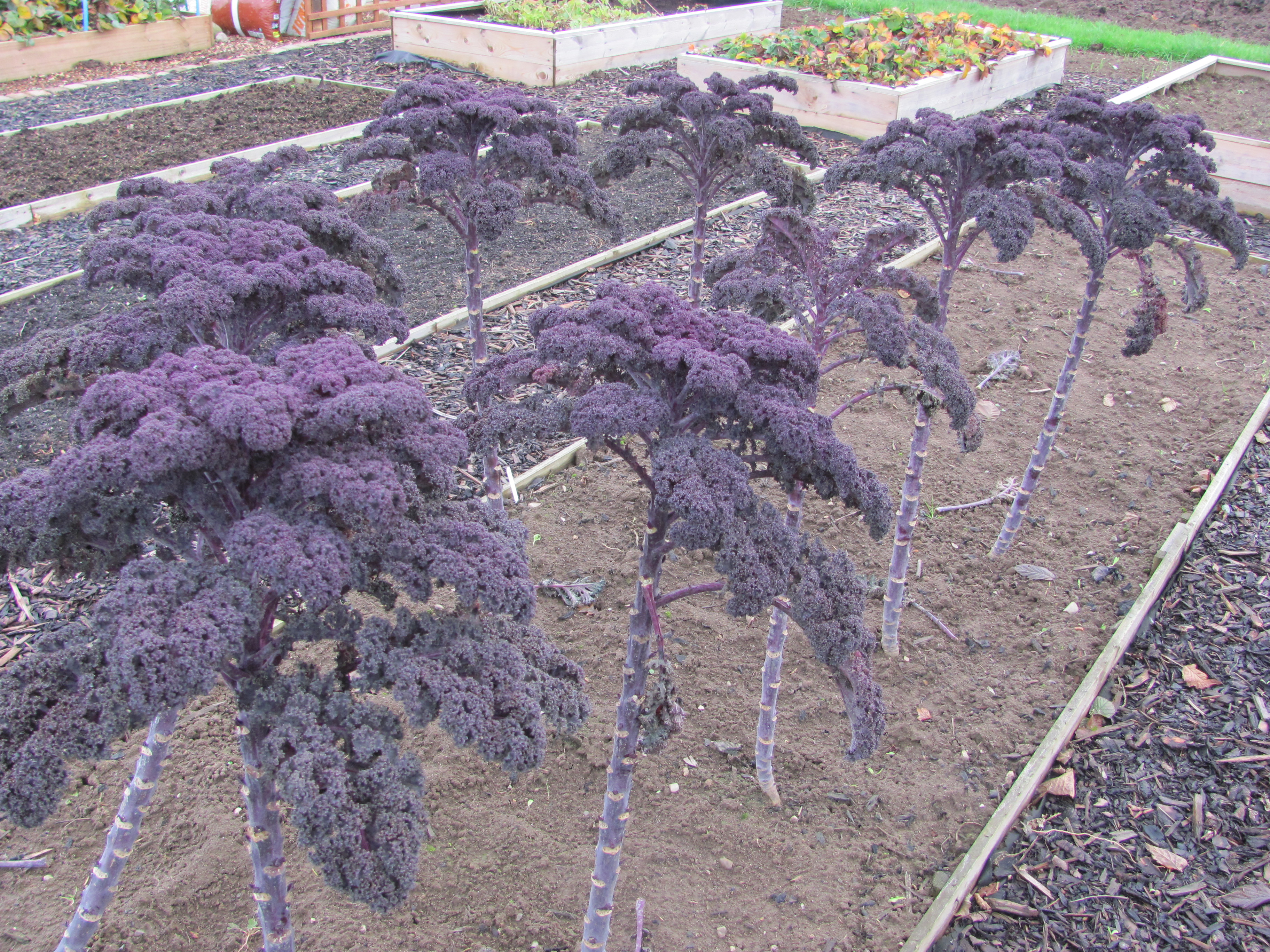
Kale on Parade

While wandering around the lottie site and having a nose at other gardeners’ plots, I spotted these kales which immediately reminded me of soldiers on parade. Standing tall at three feet, straight as can be and in neat rows they were on parade. Kales standing to attention!

Although now when I look at the photos, I am more inclined to think of Dad’s Army and the kale on the left of the back row is Corporal Jones!

This Veggie Life

A Vegetarian | Nature Lifestyle Blog

Rambling in the Garden

.....and nurturing my soul

The Arch City Gardener

Journeys In St. Louis Gardening and Beyond

Garden Dreaming at Châtillon

Consult the genius of the place

Storyshucker

A blog full of humorous and poignant observations.

gardeninacity

Notes from a wildlife-friendly cottage garden

PlayGroundology

...an emerging social science

The Official Blog of British Wildlife

'The most important and informative publication on wildlife of our times' - The Independent. This blog is a member of The UK & Ireland Natural History Bloggers group: www.uknhb.blogspot.com

iGrowHort

Inspire - Cultivate - Grow Native Plants - Restore Landscapes

Bishops Meadow Trust

To create and protect a semi-natural wild space for the people of Farnham to enjoy and experience an array of British wildlife in our town

Gardening with Children

The www.gardeningwithchildren.co.uk Blog

UKbirdingtimeline

birding through the seasons, why birds matter and how to conserve them

NATURE WALKER

with a camera in hand

Jardin

Transform your outdoor space

Eva's space

My allotment, cooking and other interests

Old School Garden

my gardening life through the year

LEANNE COLE

Trying to live a creative life

fromacountrycottage

trying to live as lightly as possible on our beautiful planet

Good Life Gardening

Nature lovers from Leicester living the good life.

mybeautfulthings

Finding the beautiful in the everyday

mawsonmichelle

Michelle's Allotment

In and Out of My Garden

thoughts from and about my garden

Greenhousing

Big plans for a small garden

The Scottish Country Garden

A Walled Country Garden in South East Scotland

The Fruity Chicken

Life at the fruity chicken

willowarchway

Off grid living. Self sufficient. "PERMAGANICS RULE".
St Anns Allotments

Nottingham's Grade 2* Listed Allotments and Community Orchard

Manifest Joy Harvests

a journey in suburban vegetable gardening

Allotmental

The madness of growing your own

Penny's Garden: a harvest beyond my front door

A novel approach to vegetable gardening

arignagardener

Sustainable living in the Irish countryside.

NewEnglandGardenAndThread

Master Gardener, amateur photographer, quilter, NH native, and sometimes SC snowbird

dianajhale

Recent work and work in progress and anything else that interests me

planthoarder

a chaotic cottage gardener

Lens and Pens by Sally

a weekly blog that creates a personal philosophy through photographs and words

Dewdrops and Sunshine

Stories from a sassy and classy Southern farmbelle.

The Pyjama Gardener

Simple Organic Gardening & Seasonal Living

gettin' fresh!

turning dirt into dinner

JOY...

today the world is created anew

Garden Birds

Notes from a Devon garden

ShootAbout

Life Through The Lens

Adapting Pixels

A photography blog showcasing the best photography pictures and videos on the internet

Wildlifegardening's Blog

Just another WordPress.com site

naturestimeline

personal observations from the natural world as the search continues for a new approach to conservation.

LATEBLOOMERBUDS

The Wonders of Life through my Eyes, my Heart, my Soul