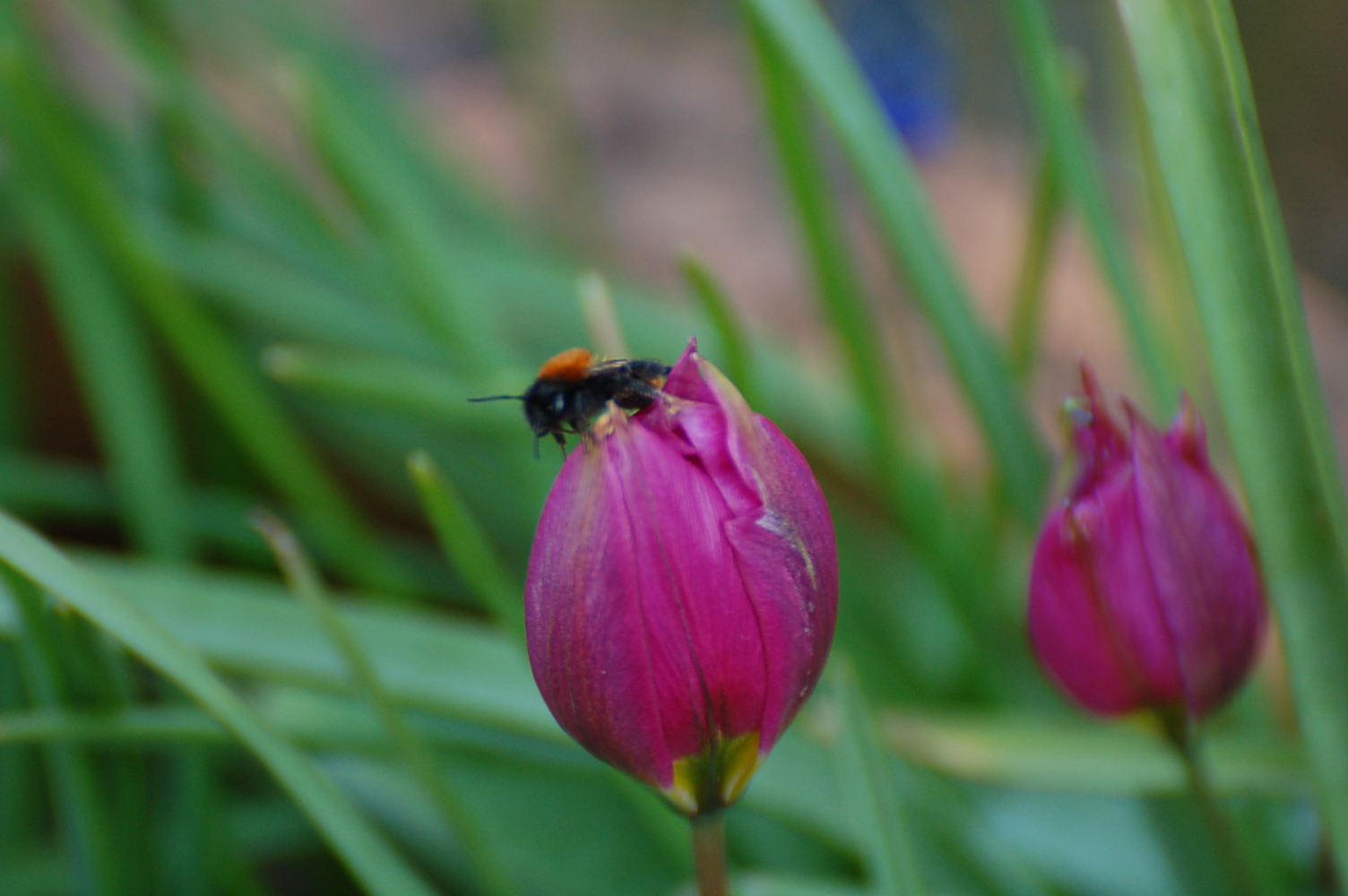
We have created a new feature on our allotment this week – a green roof. We thought we would try to make up for the area of ground taken up by the footprint of our shed by making a garden on its roof. We have spent months at the planning stage, working out how to strengthen the roof, how to make sure we could still collect rain water run-off to fill our butts and choosing plants that would look good and support wildlife. We would like the roof to entice more beneficial insects , pollinators and natural pest controllers to visit our plot. Spiders, beetles, hoverflies will also be welcomed as our little garden helpers and of course we want to attract butterflies too just to delight in watching them.
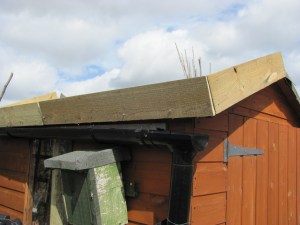
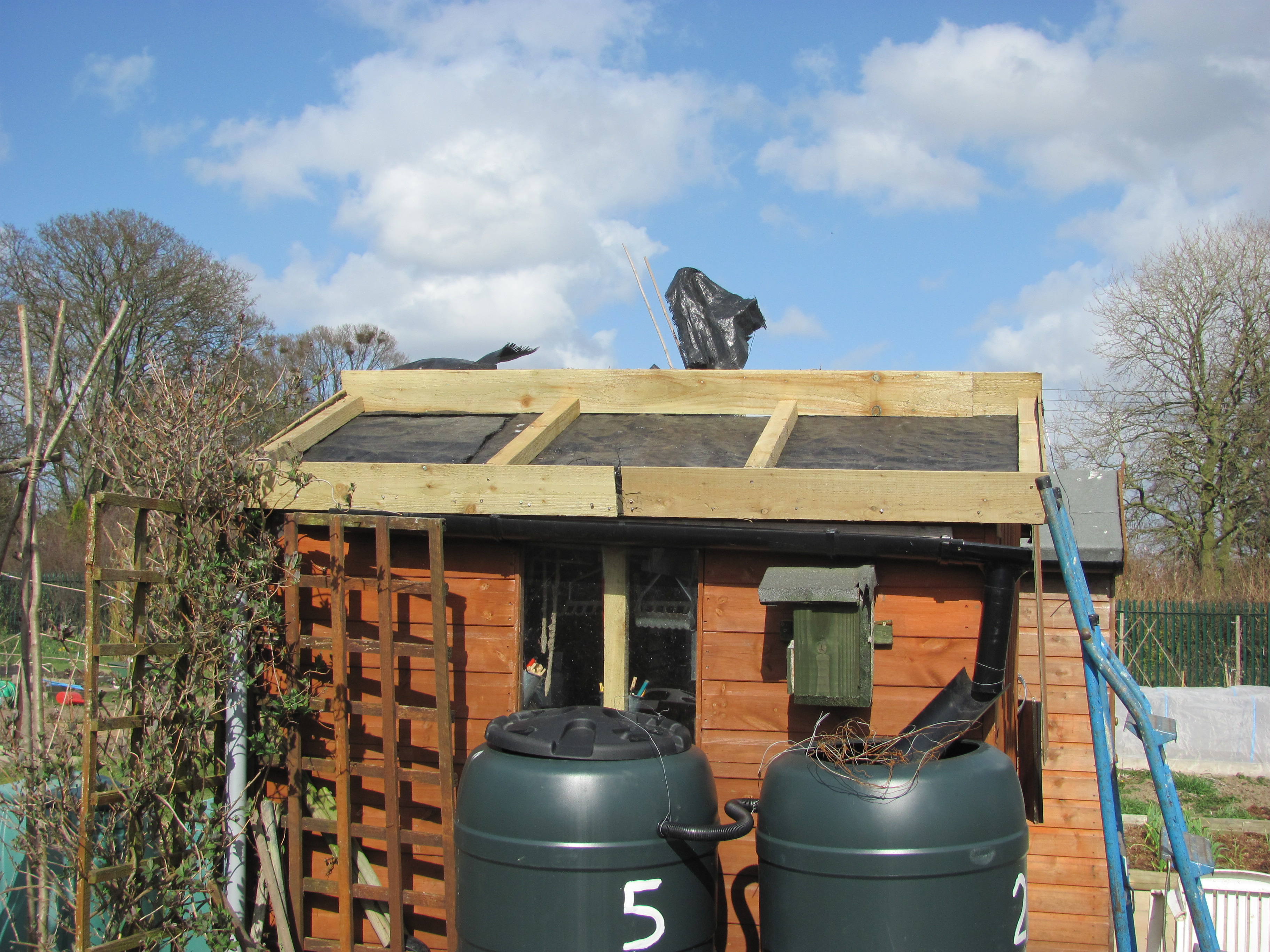
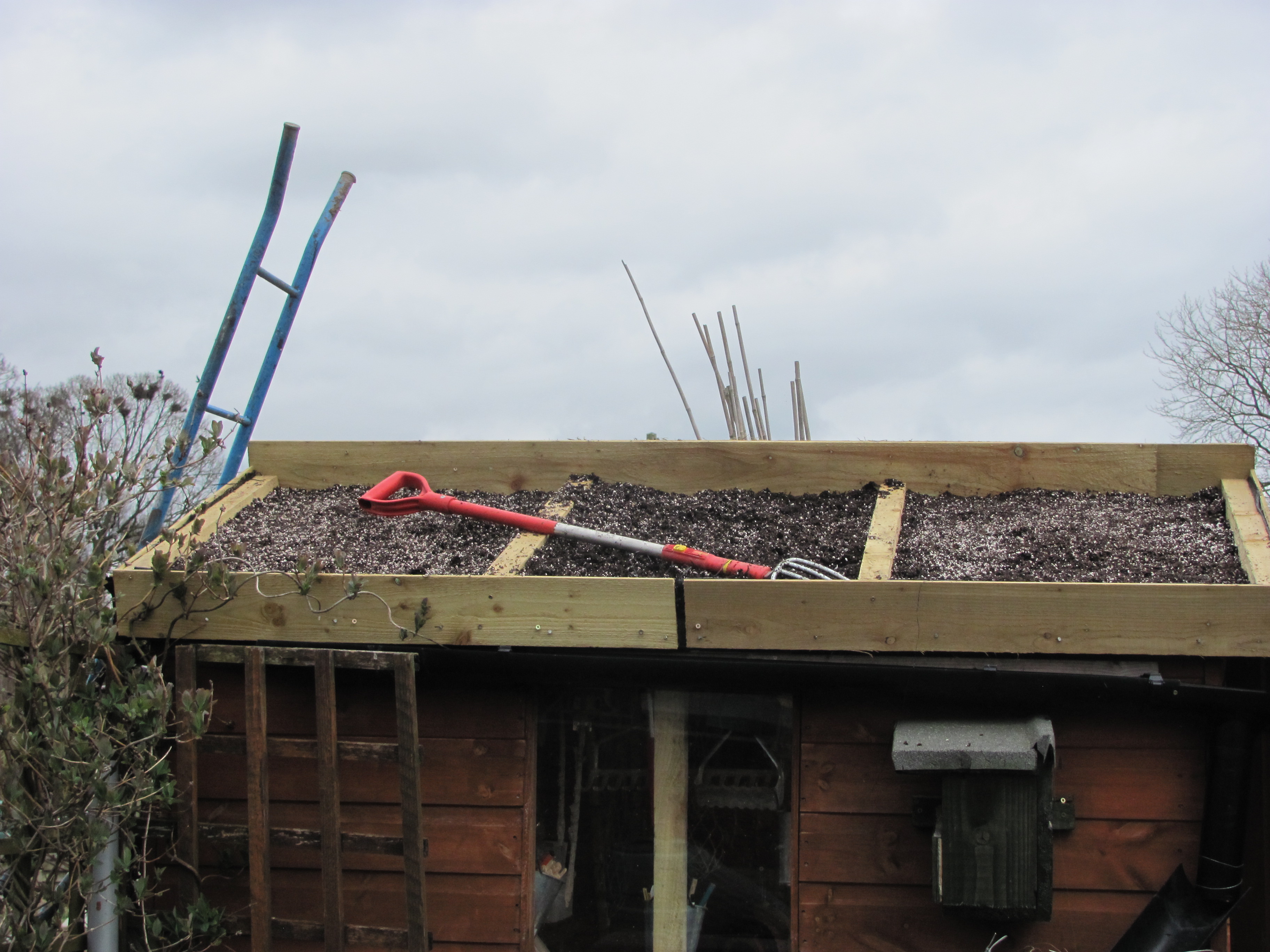
After strengthening the structure of the shed by building an internal framework of 2 x 2 inch lengths of wood, we added a second layer of roofing felt. Next we fitted the outside frame out of 6 inch deep feather edge and inside this stapled down a double layer of geo-textile membrane. We hope the membrane will allow rainwater to pass through it after permeating through the compost. The rainwater will then be caught in the guttering and can run into the butts.
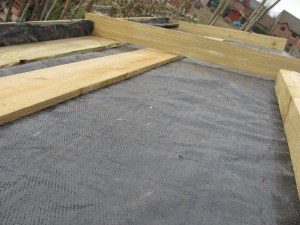
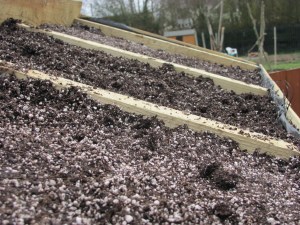
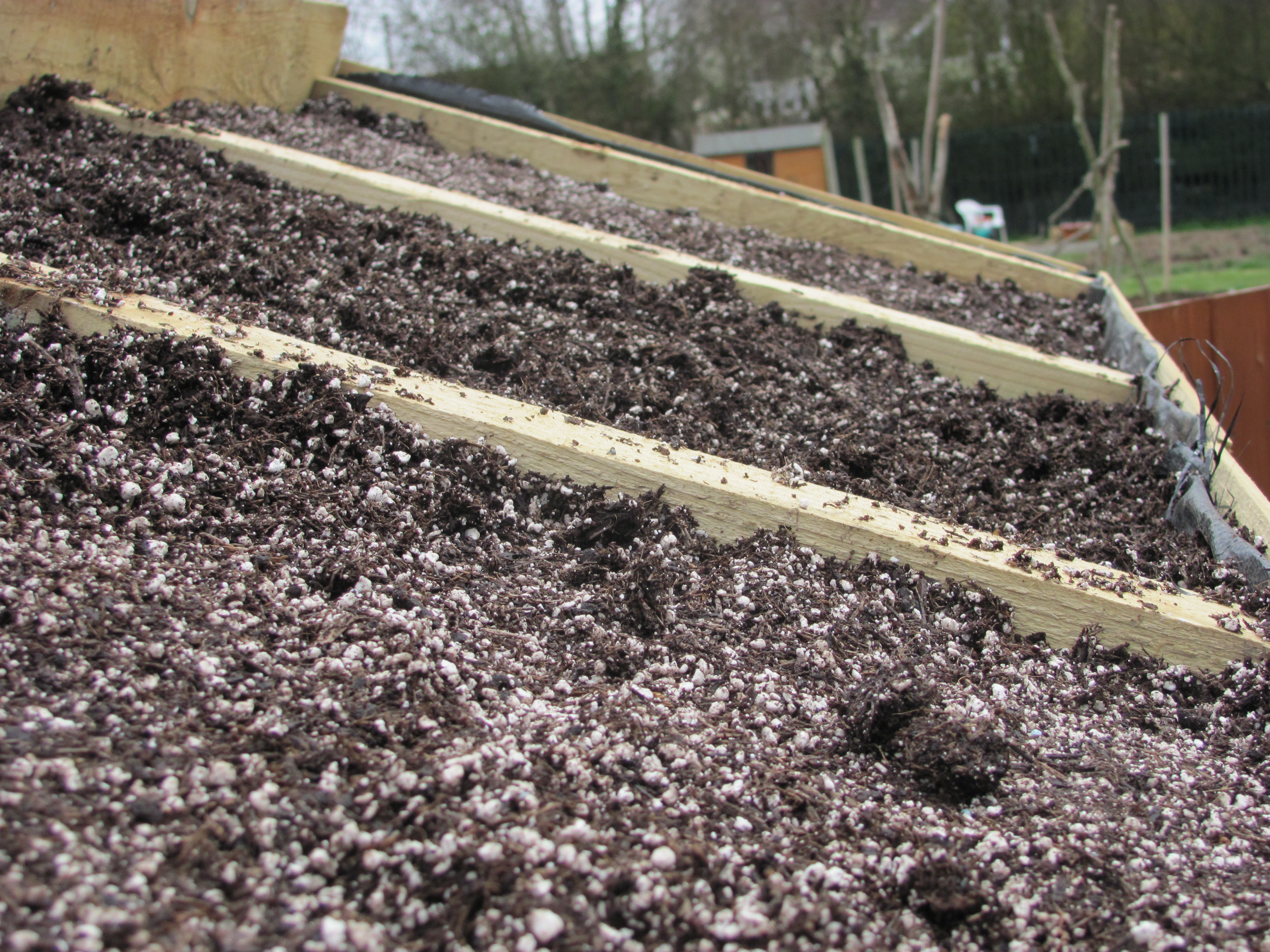
A structure of 2 x 2 inch lengths of wood was used to divide up the surface.
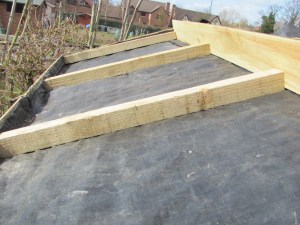
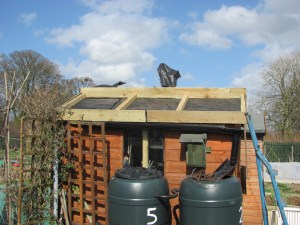
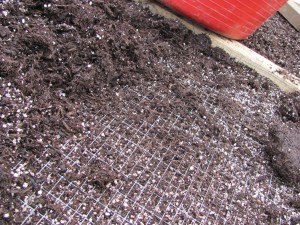
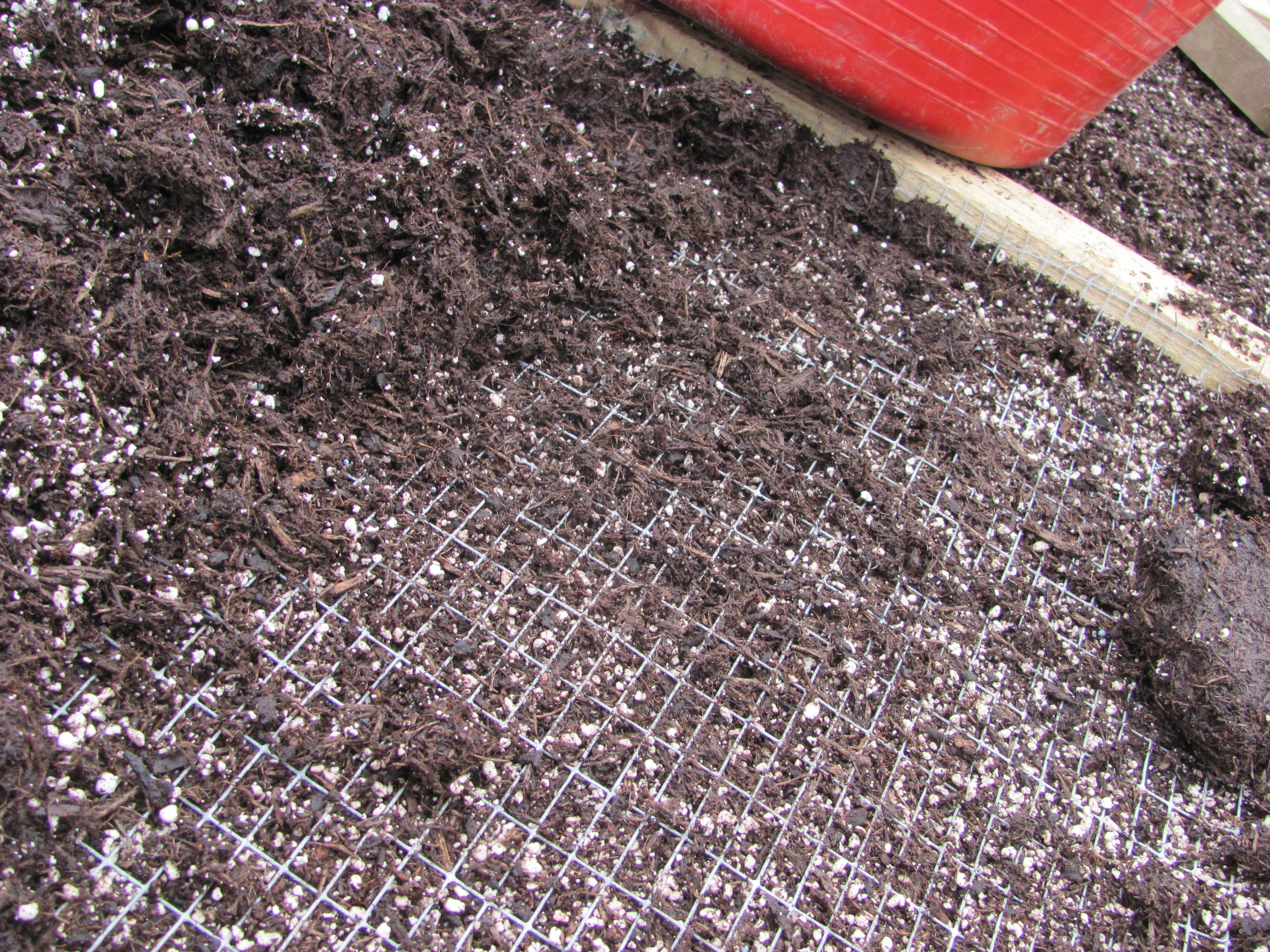
We next added the first layer of special compost to a depth of about an inch. This is a lightweight compost to which we added perlite to a ratio of 1 to 3 perlite to compost. Chicken wire was then laid over this first layer of compost and then a second one inch layer of our compost/perlite mixture was added. The wire should help hold the compost in place in times of heavy rain and we hope it will also give something for the roots to grow through and grip onto.


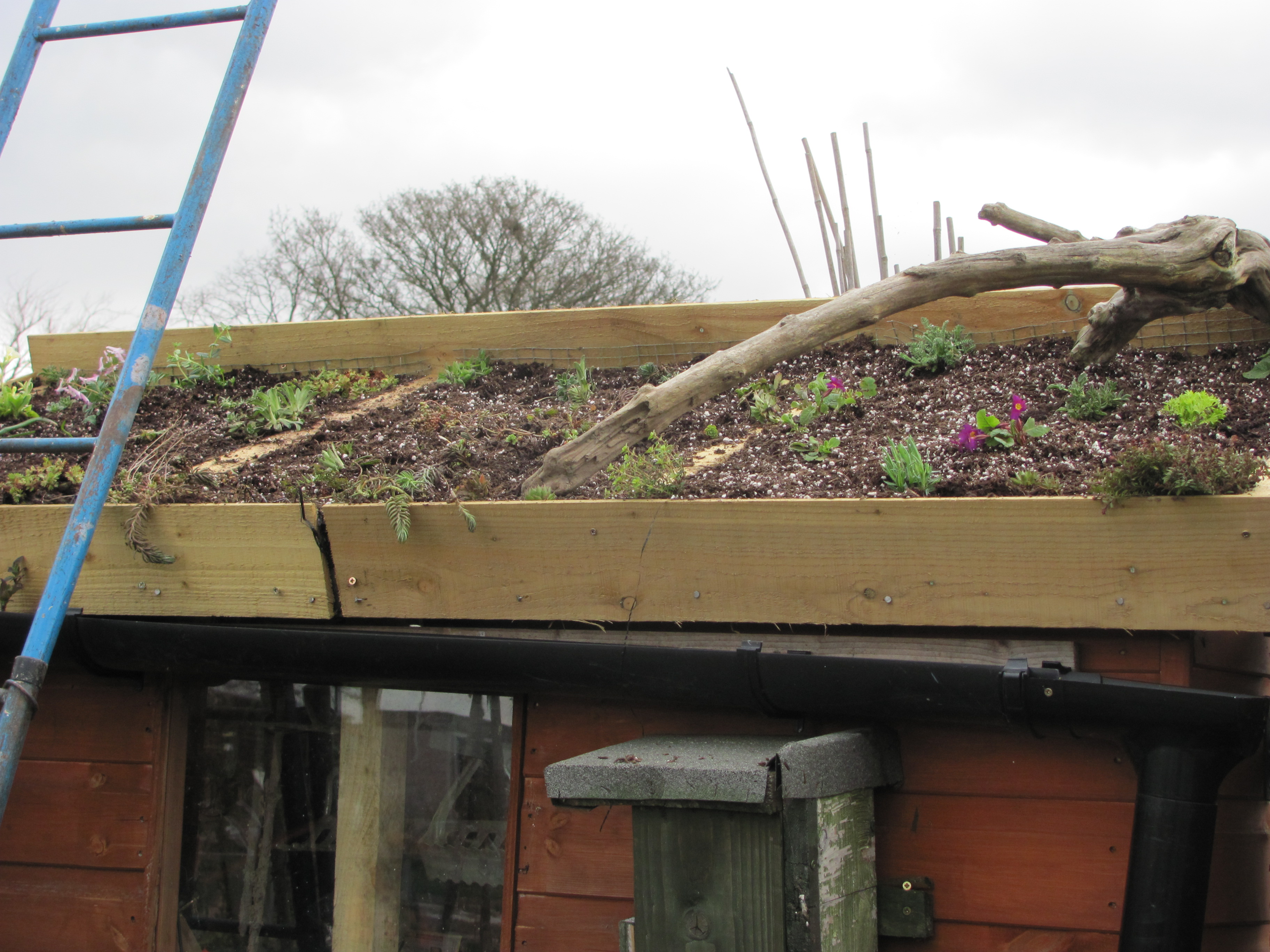
Finally the planting. Delicate alpines in some sections and mixed sedum and sempervivum in others. We added a driftwood feature for interest.


What we hope we have created is a little meadow in the air, a miniature garden that takes up no growing space that could otherwise be used for crop production. We will have the added benefit of an increase in insulation, giving us a cooler shed in the summer and a warmer space in the winter.
So now we are keeping our fingers crossed, hoping that we do not have any heavy downpours before the plants get their roots down, and hoping that Blackbirds do not find a way in. They have a habit of uprooting young plants in the hope of finding a tasty morsel.

I shall keep you informed of progress.




































































 greenbenchramblings