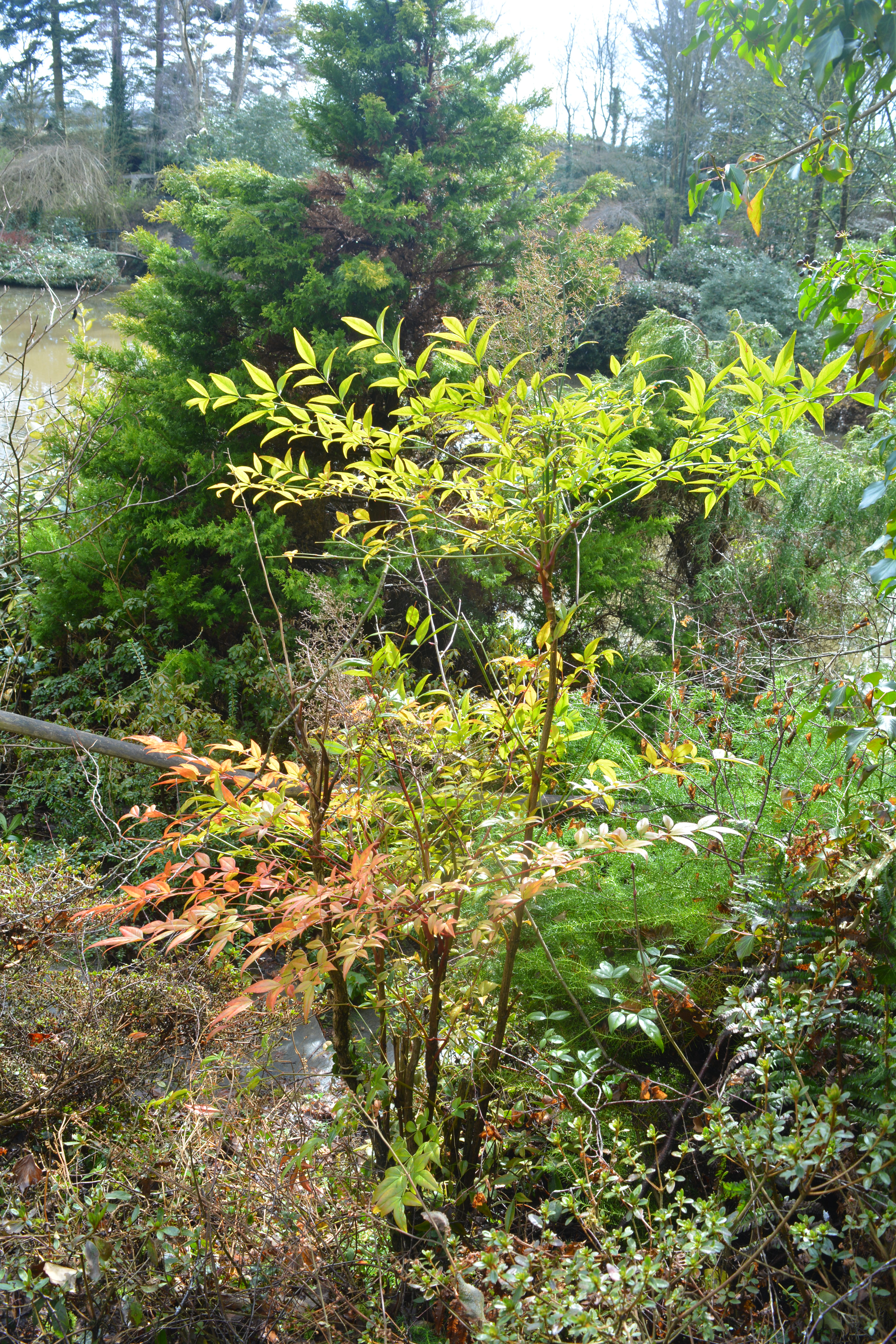
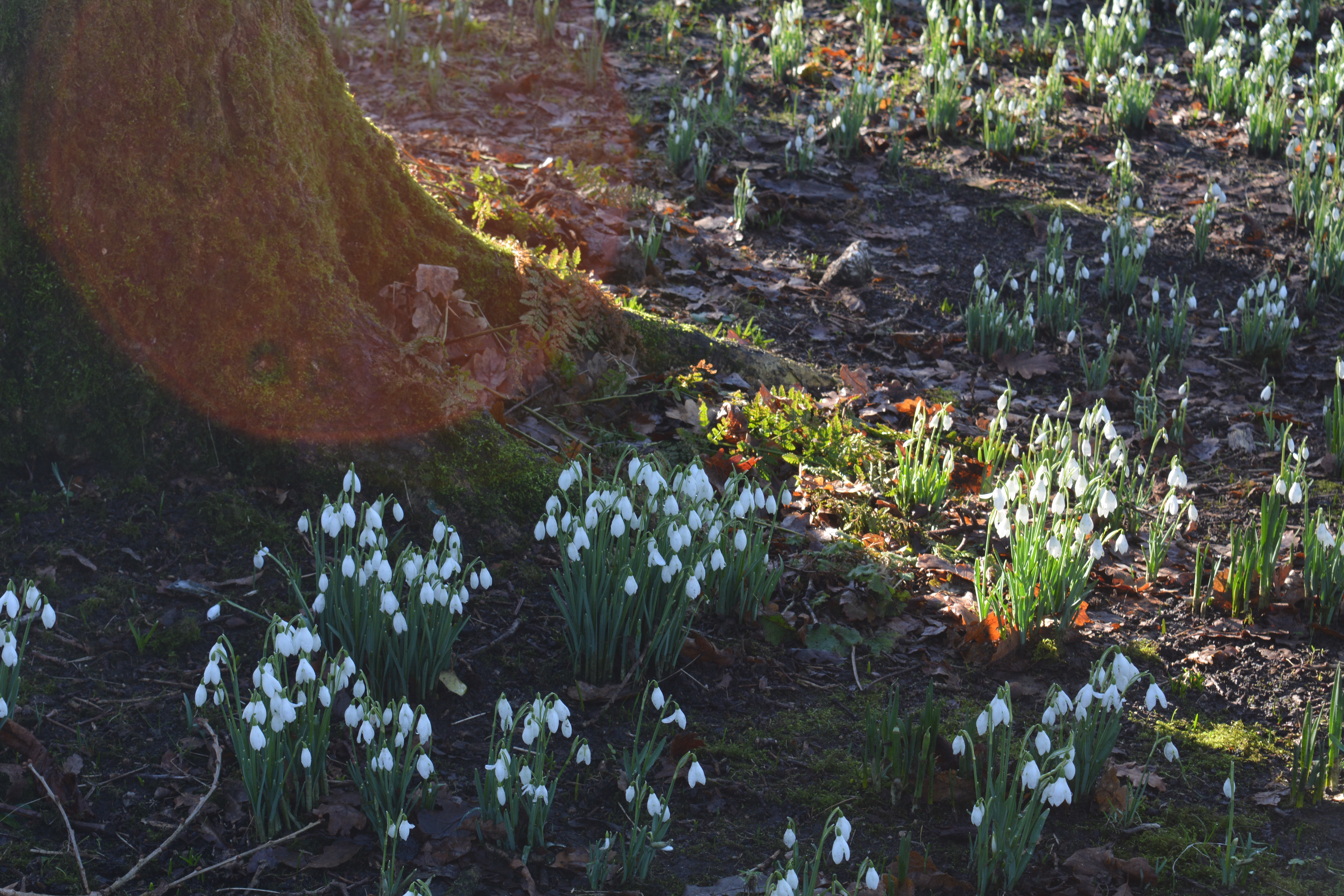
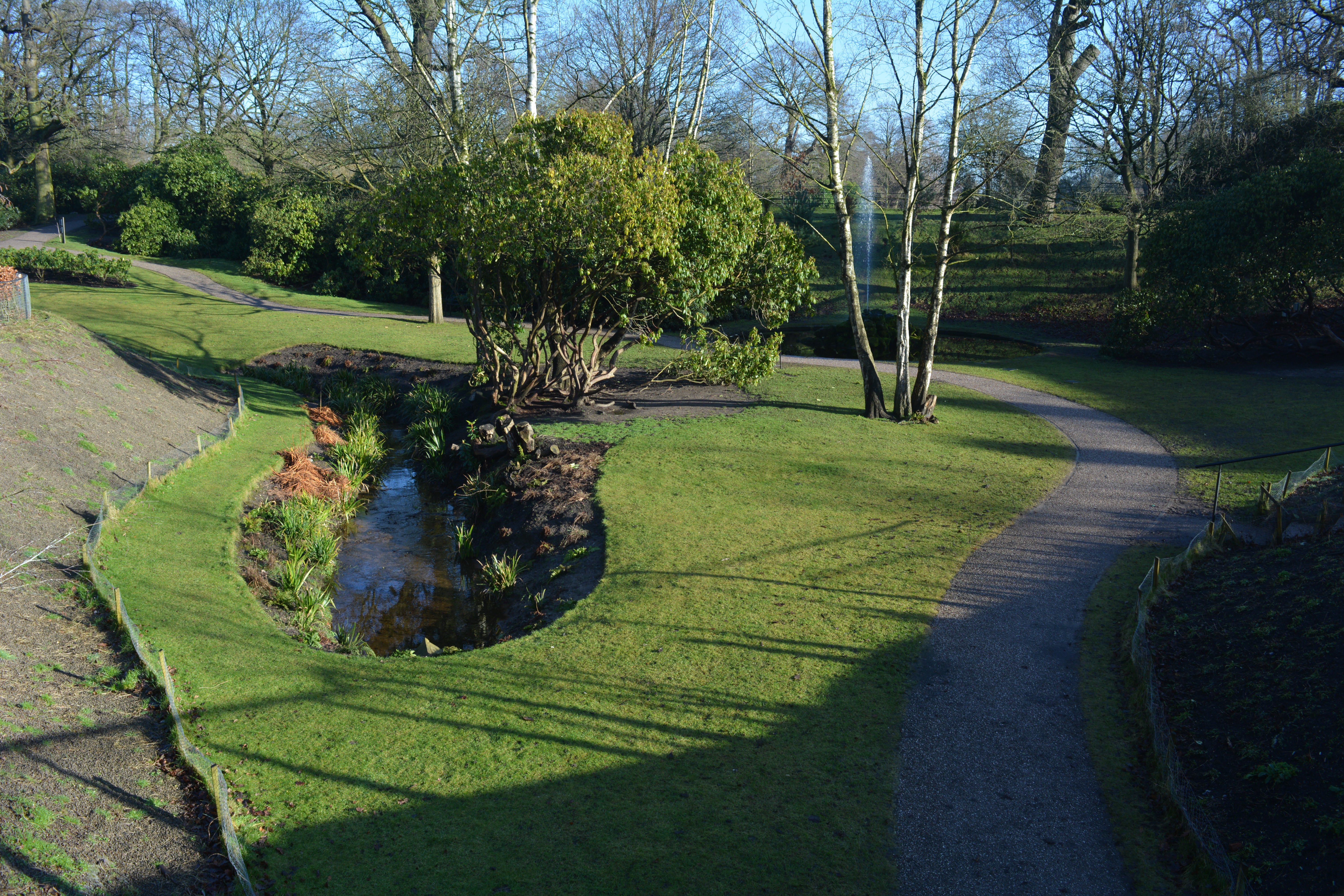
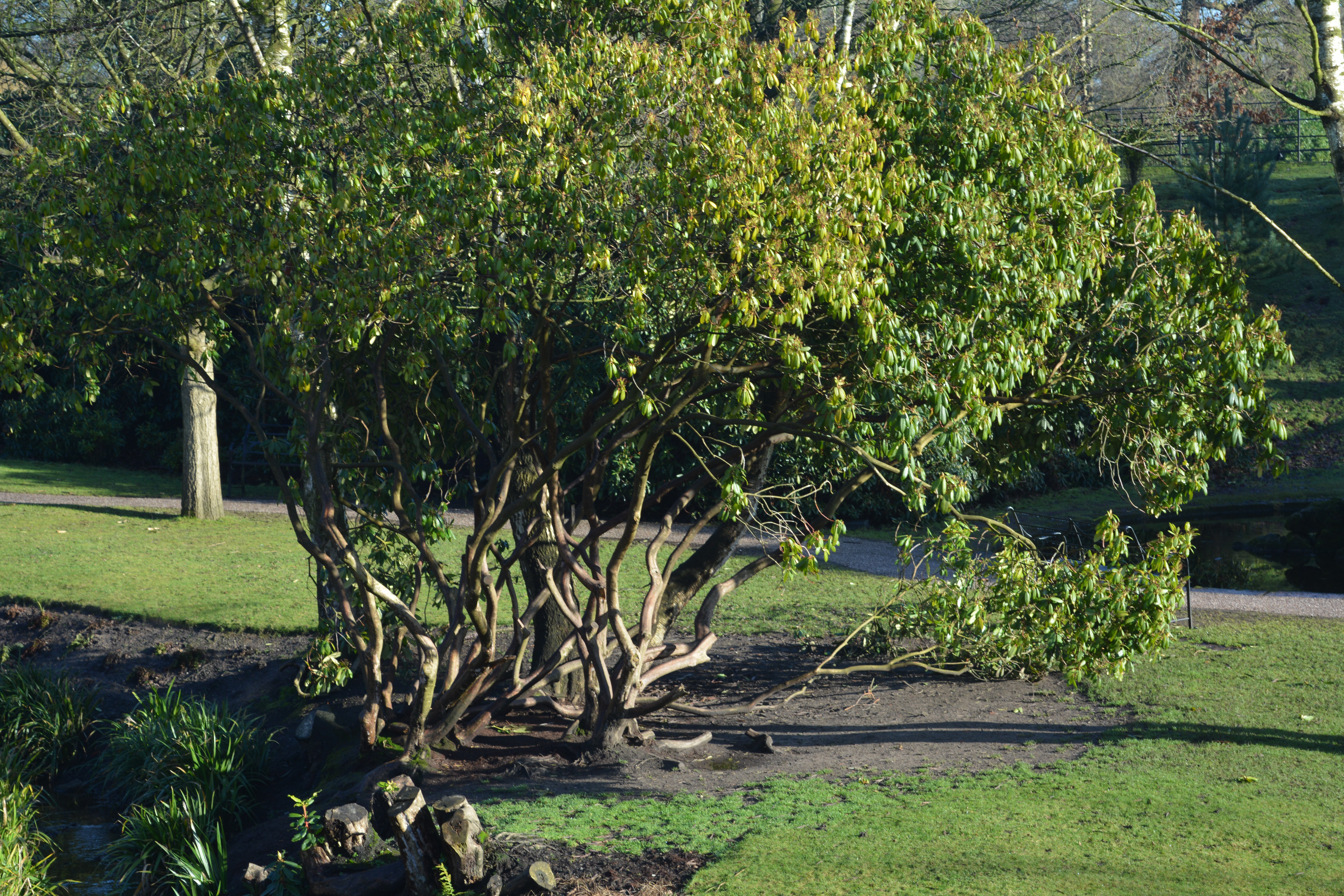
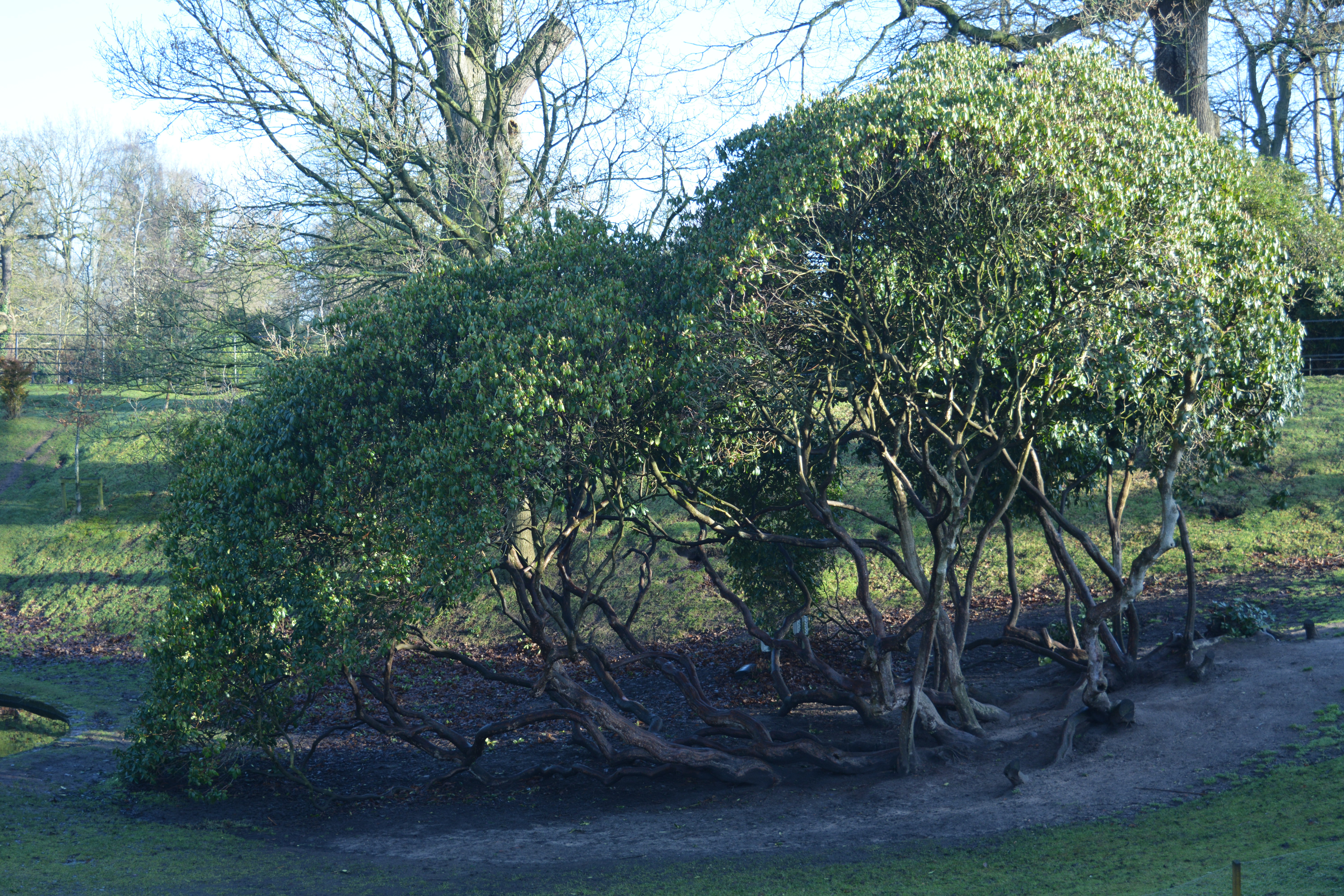
March at the Dingle woodland garden at The Dingle and Nursery near Welshpool proved to be a time with special light when the sun appeared for odd periods. I am sharing some of my photos taken of the landscape and the light playing with it. I hope you enjoy them!
We left home for a journey up towards Chester and then West along the North Wales coast after listening to the local weather forecast for our destination. It predicted a heavy snow storm passing through early morning and warnings were announced for closed roads and dangerous conditions. The weather was set to travel eastward and weaken, so we hoped we would meet it as it had weakened and arrive at our destination as it cleared.
We got it spot on as a couple of hours later we arrived at the northern tip of Snowdownia, at Bodnant Hall where we wanted the see the Winter Garden. We had explored it before in the summer and it looked good then. We vowed to return in its prime season to see if it lived up to its summer promises.
We were not to be disappointed in the slightest as it surpassed all expectations. It was simply breathtaking. Come with us as we explore along its winding paths.
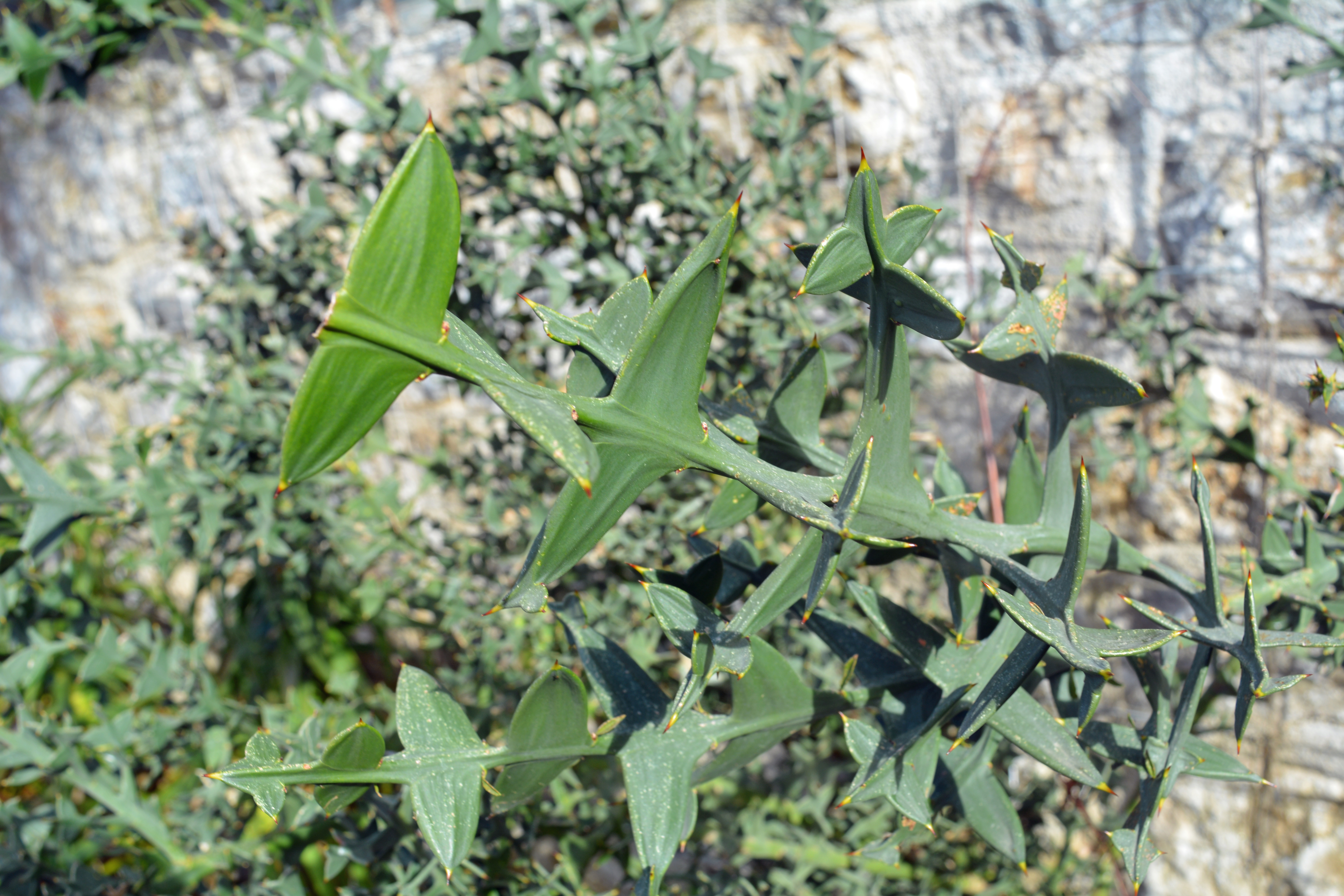
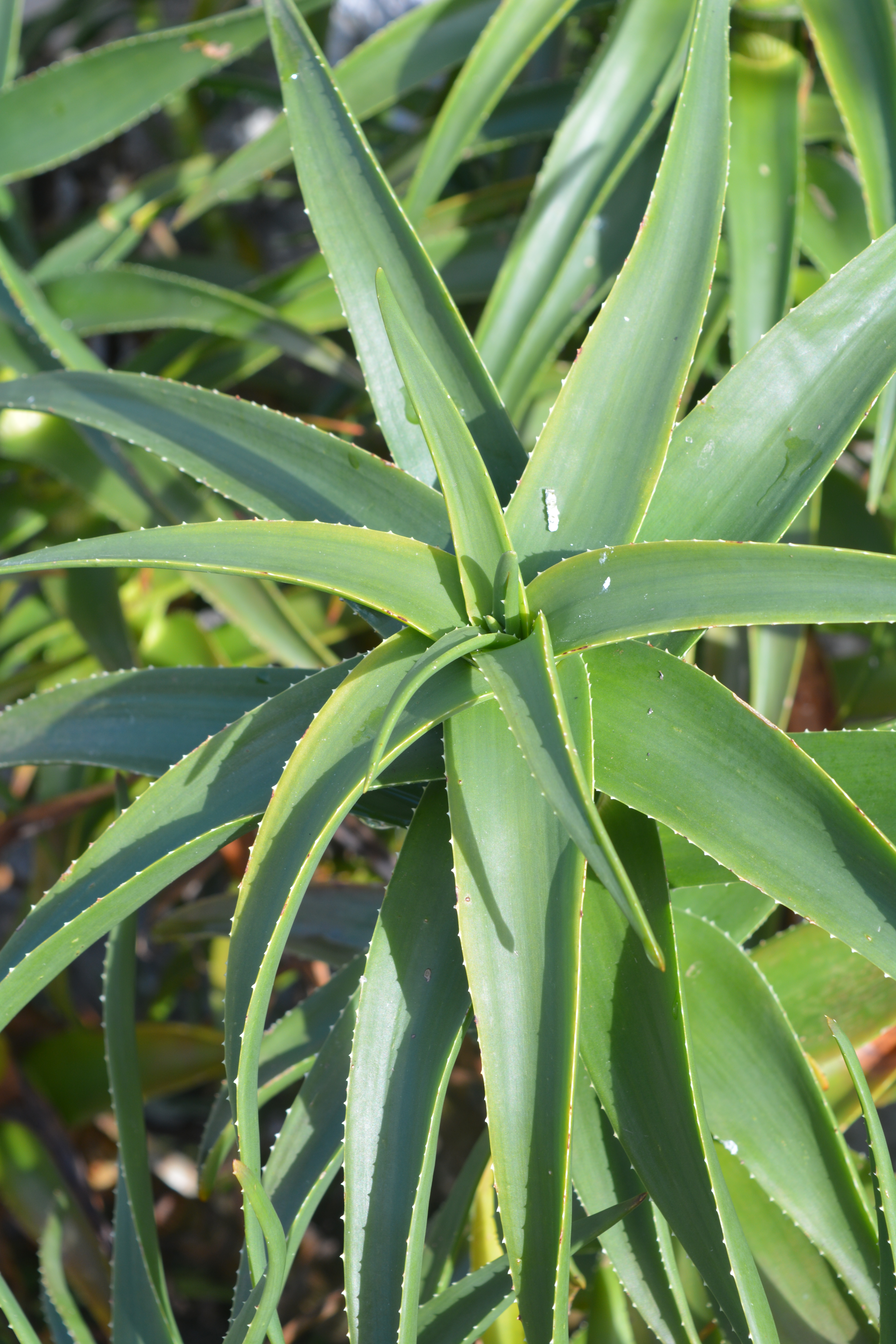
We entered the garden by following a path cut into the hillside and then down a ramp where we discovered a raised wall with the sort of planting we expected to see in the Winter Garden itself. We also passed two plants with not so friendly foliage, a Colletia paradoxa and a Yucca, both well endowed with points and sharp edges.
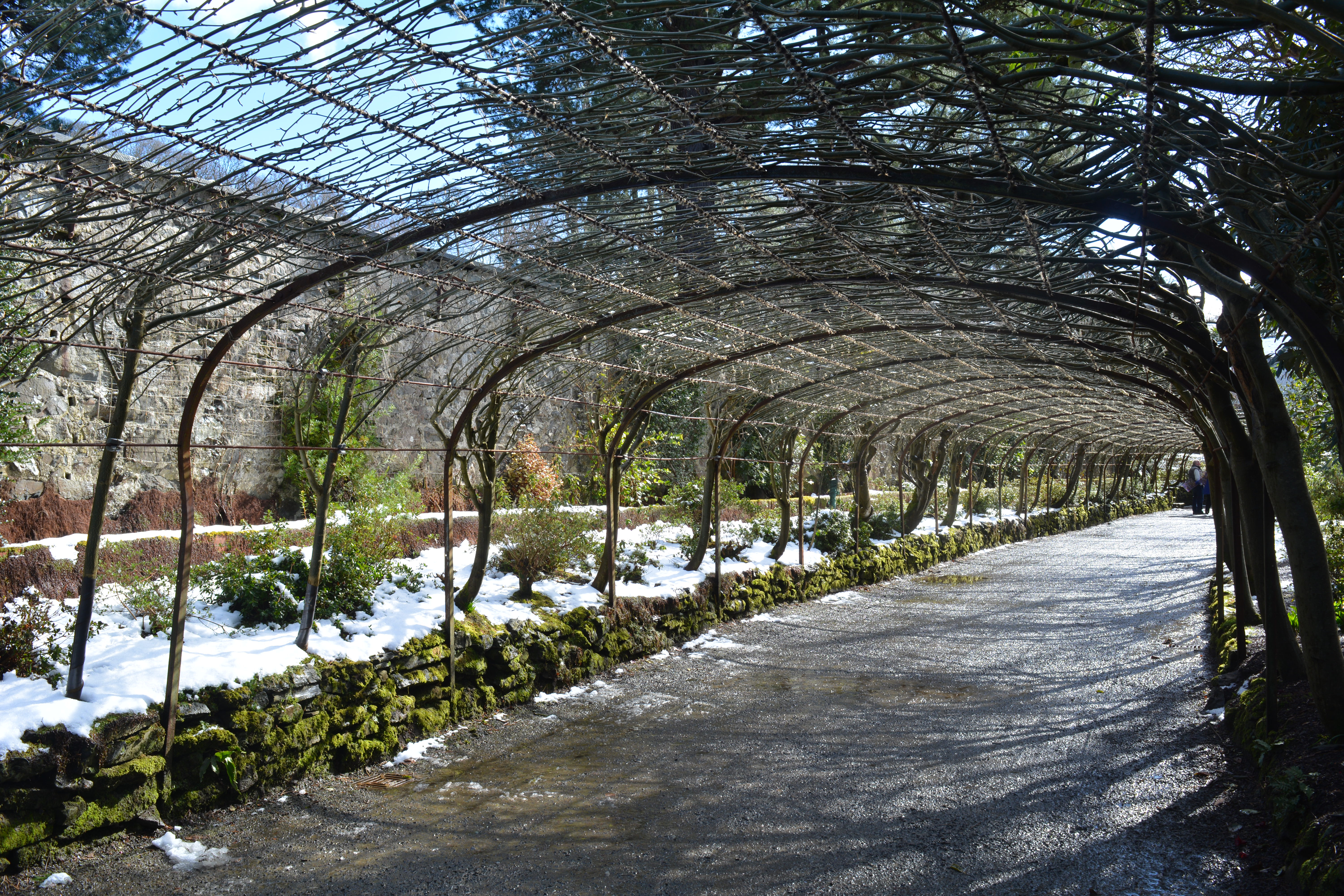
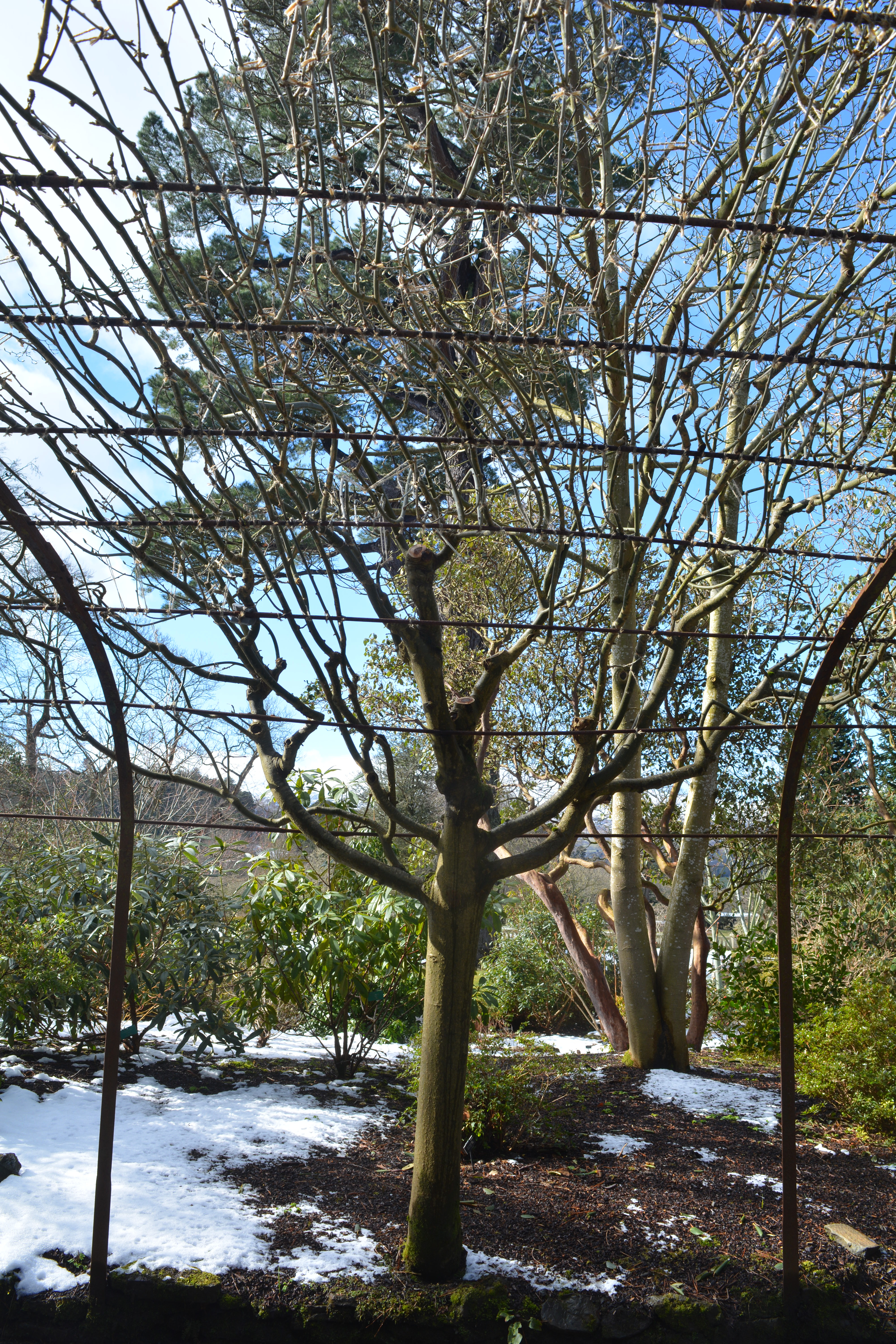
The world-famous laburnum arch looked so different at this time of year, exposing its strong structure and the shapes of each trained Laburnum tree.
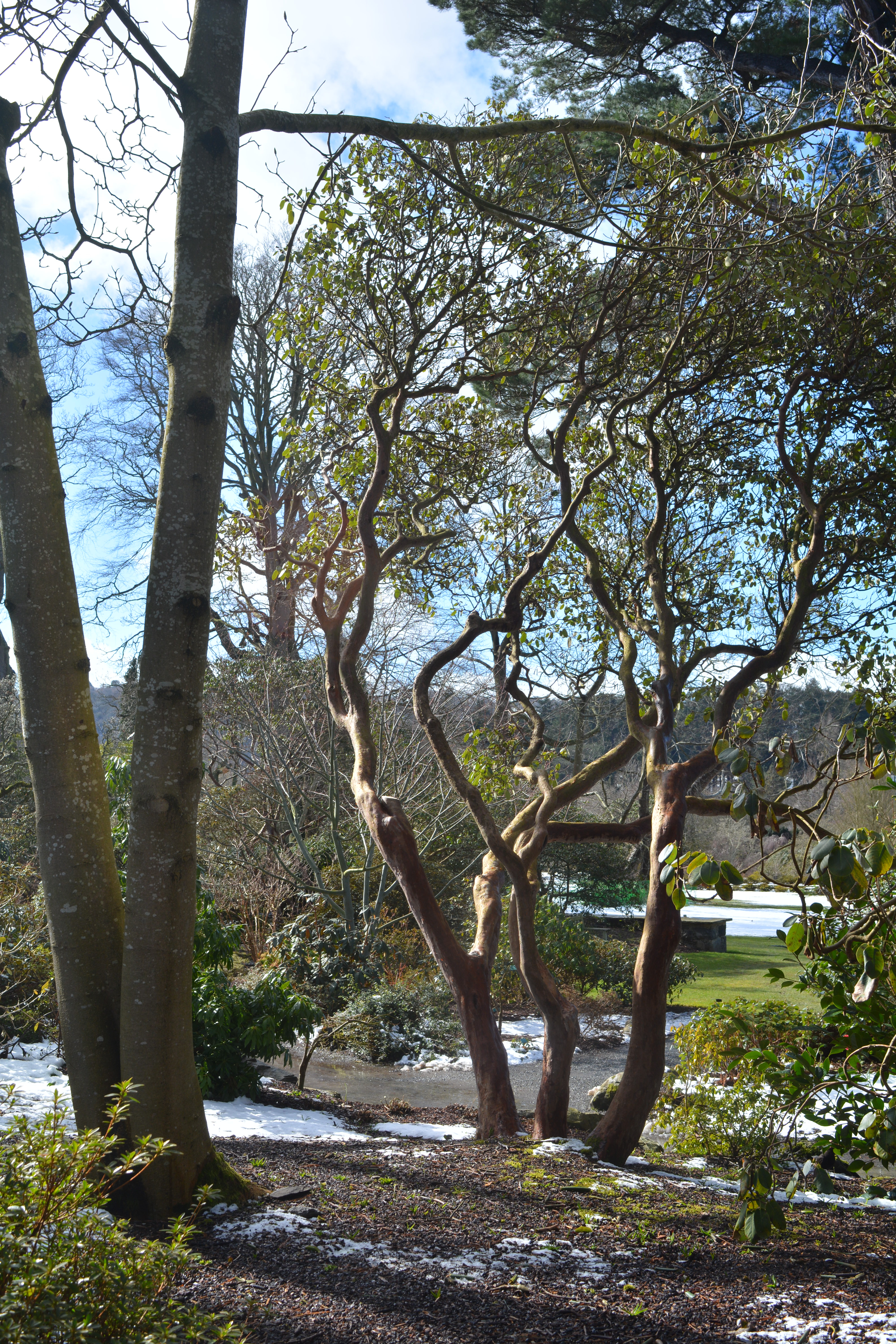
As we began to follow the meandering paths which implored us to explore every part of the garden, we spotted some beautifully shaped trees and shrubs pruned to expose their lower trunks and branches, sharing their special shapes with us. Conifers sometimes create amazing shapes without the need for the gardeners’ secateurs and loppers.
The paths at Bodnant have been designed and set out to let the visitor appreciate every bit of planting from close up and from a distance to get a variety of views to appreciate. They are beautifully positioned.
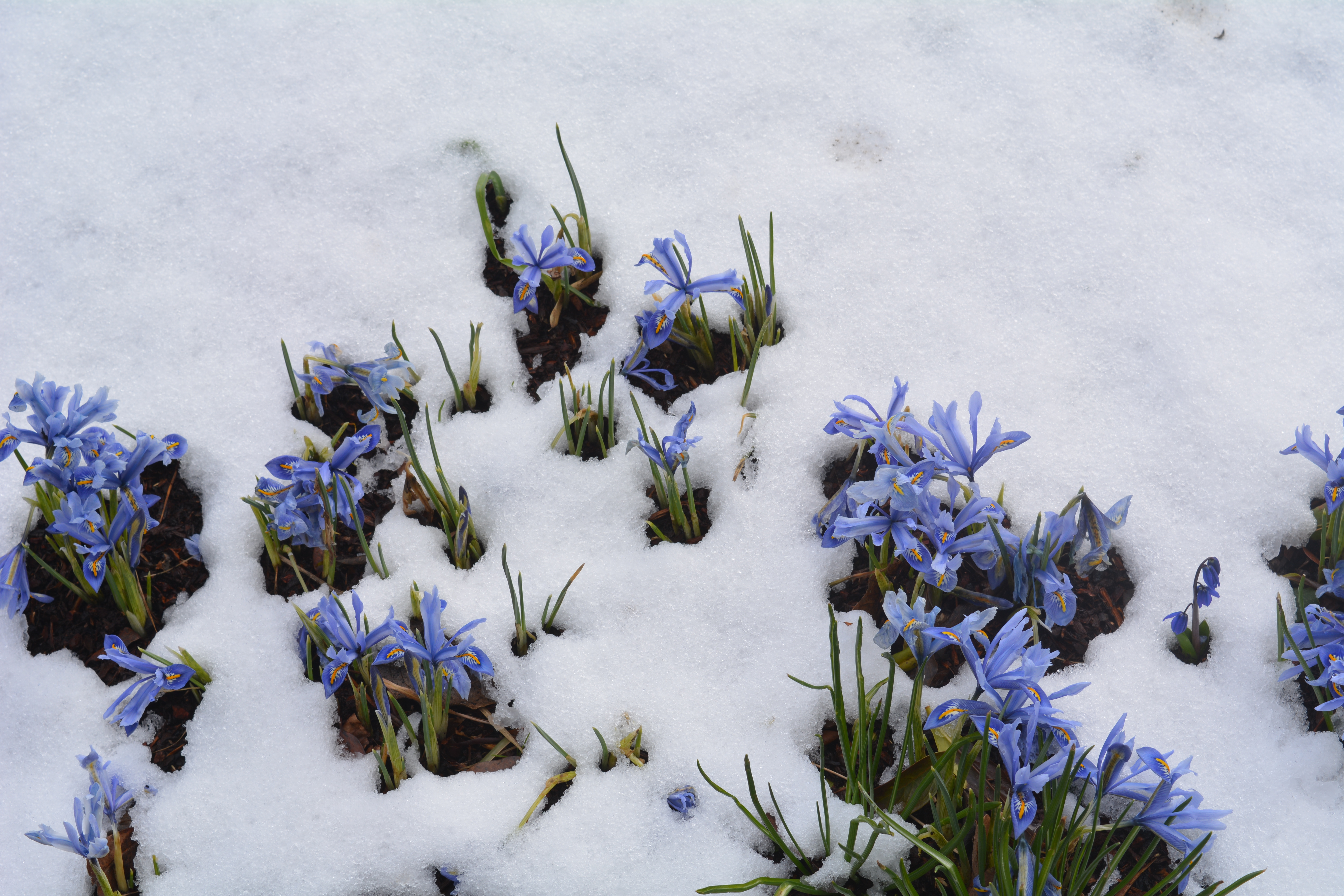
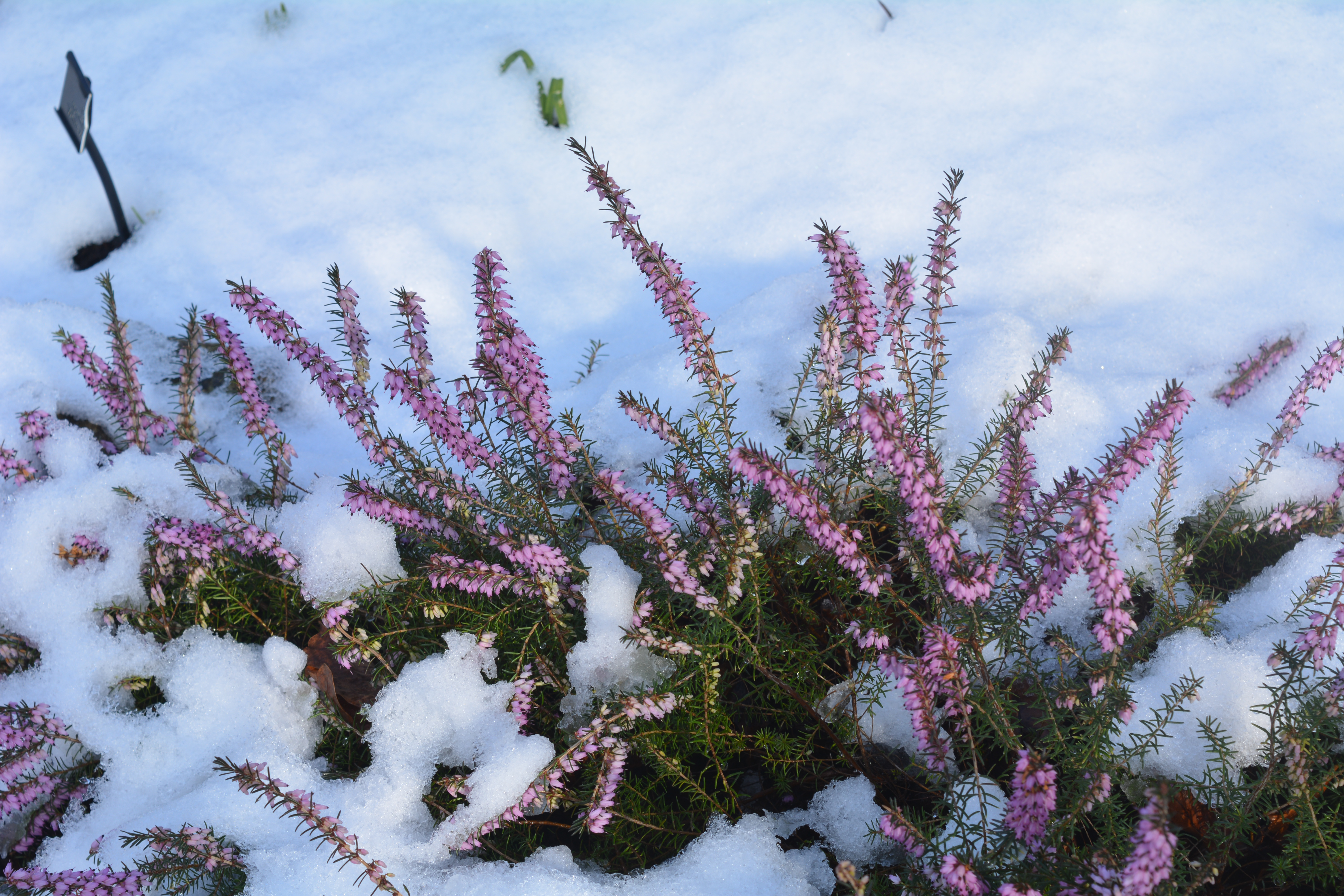
Snow isolates flowers in such a strange way. It means we see them without foliage just their colours emerging from whiteness. We are so used to viewing flowers against a predominantly green background.
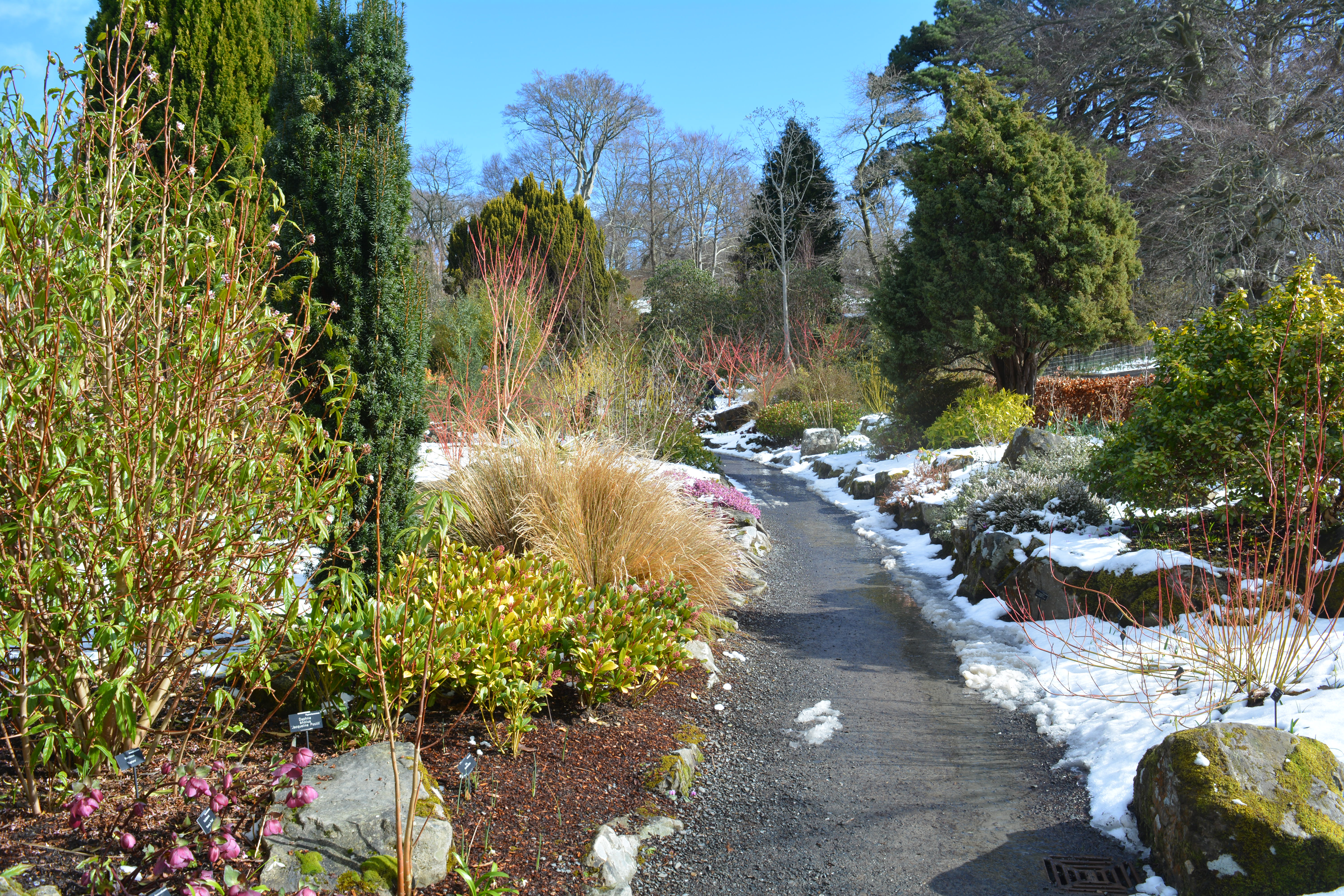
The beauty of the Winter Garden at Bodnant that is unique where such gardens are concerned is the way it is designed to have overall strength as a whole design but each pairing of plants and each grouping is applicable to most home gardens. Around each corner the visitor can discover an idea easily transferable to their own patch. The design is best described as accessible. Pathways ensure visitors see as much as possible and each feature planting from at least two different viewpoints. Here is a selection of pics showing these paths.
Next time we visit Bodnant Gardens will probably be in the spring when it looks very different again.
We returned to the Dingle Garden and Nurseries for the third time this year, hoping for signs of spring but having experienced such bad weather recently we were expecting few changes at all. We always enjoy a wander around the nursery anyway so that would make up for any disappointments. In particular we enjoy their collections of trees and shrubs.
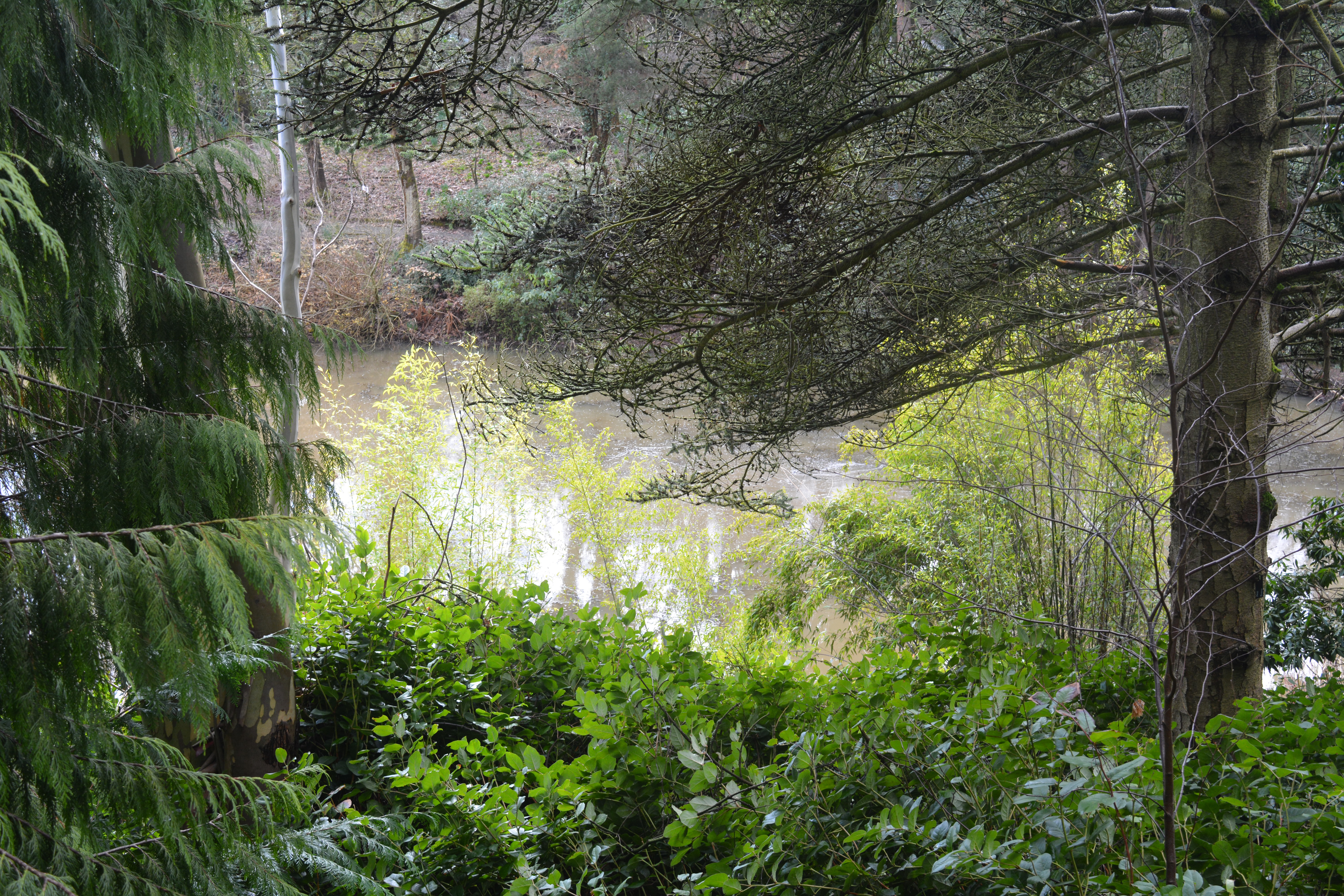
We soon spotted shrubs we had looked at in detail on our last visit when buds were fattening but not displaying signs of opening. On this our March visit things had not developed at all. However some shrubs further down the slope towards the lake where there was more shelter were in fact in the first stages of bursting into leaf.
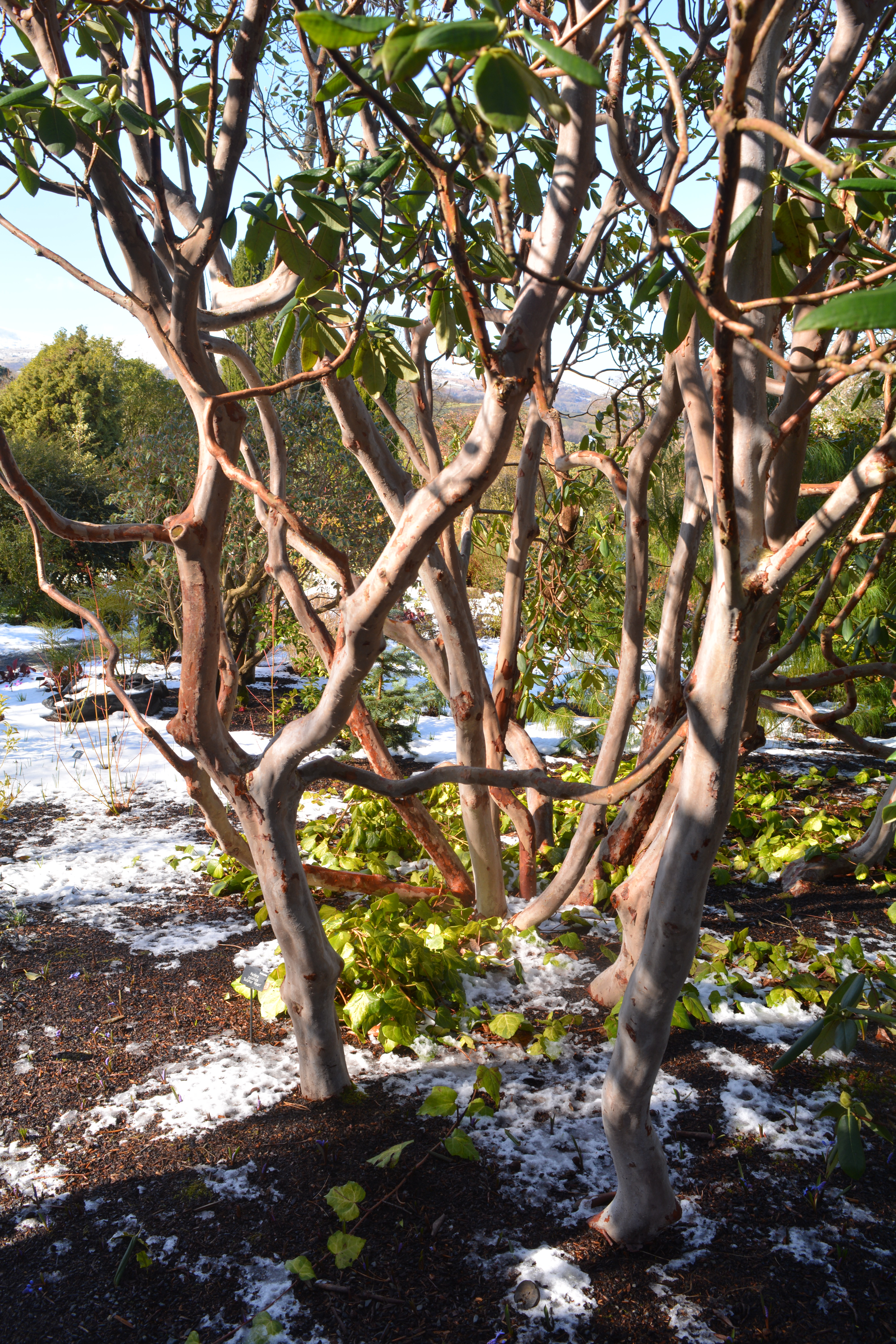
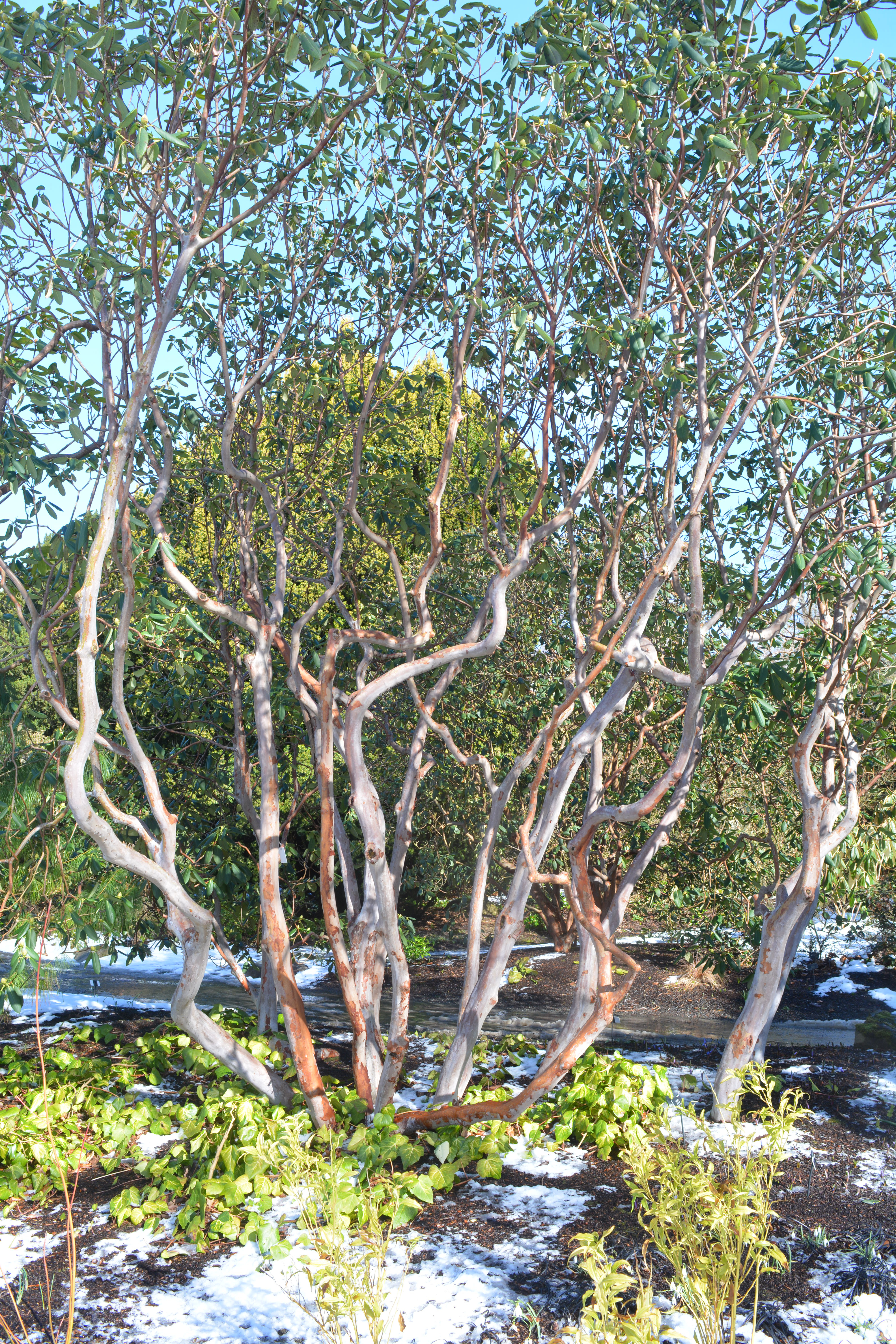
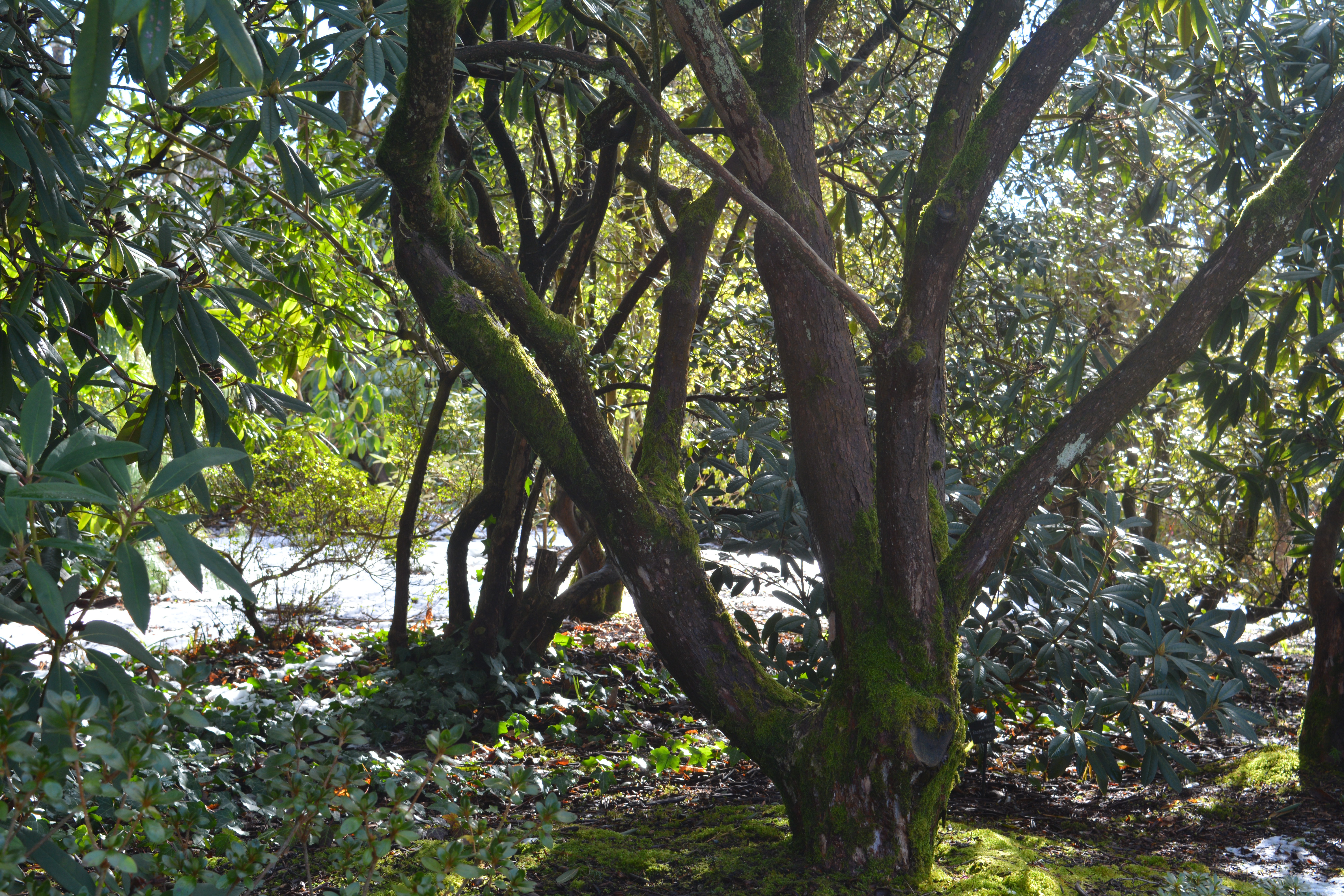
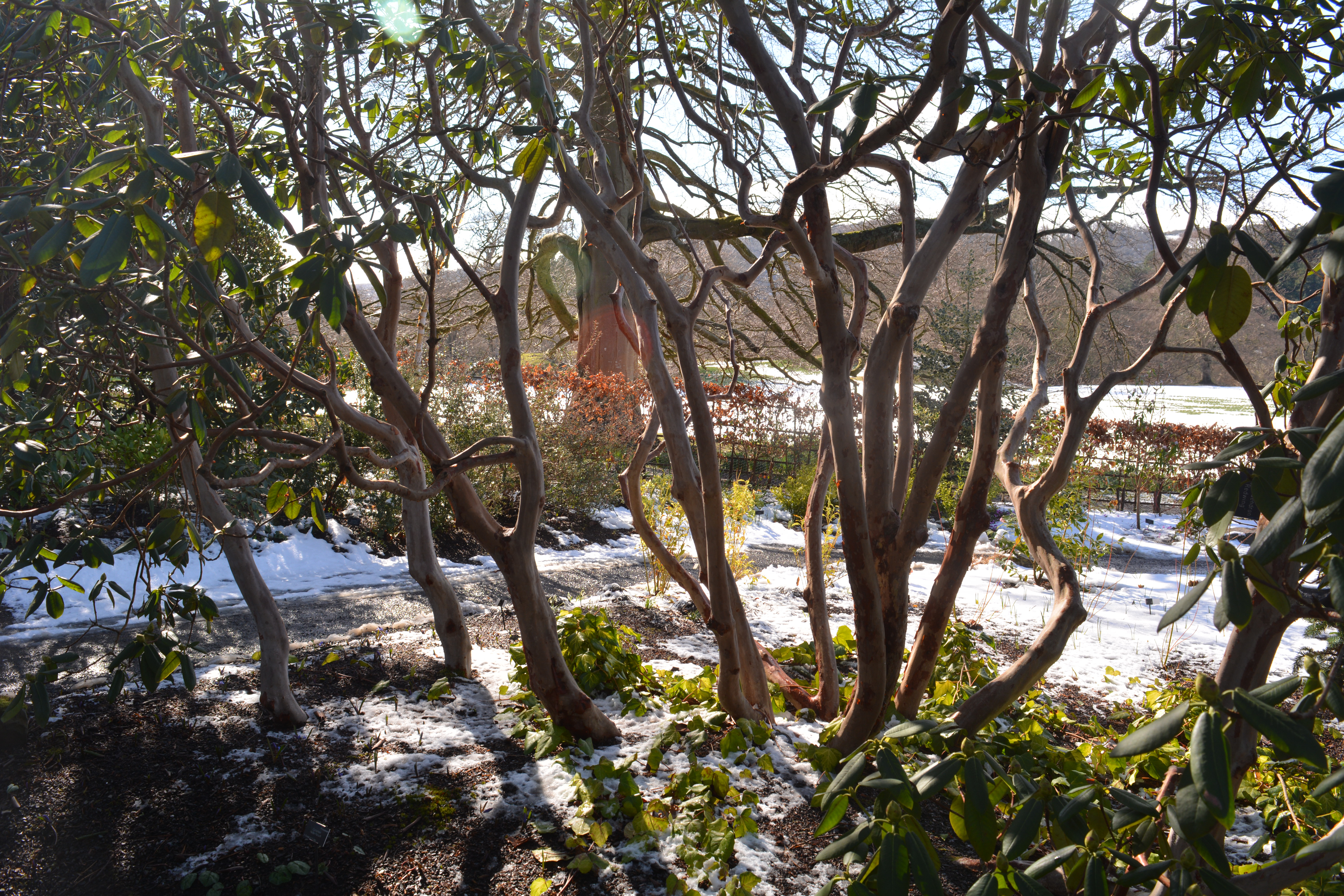
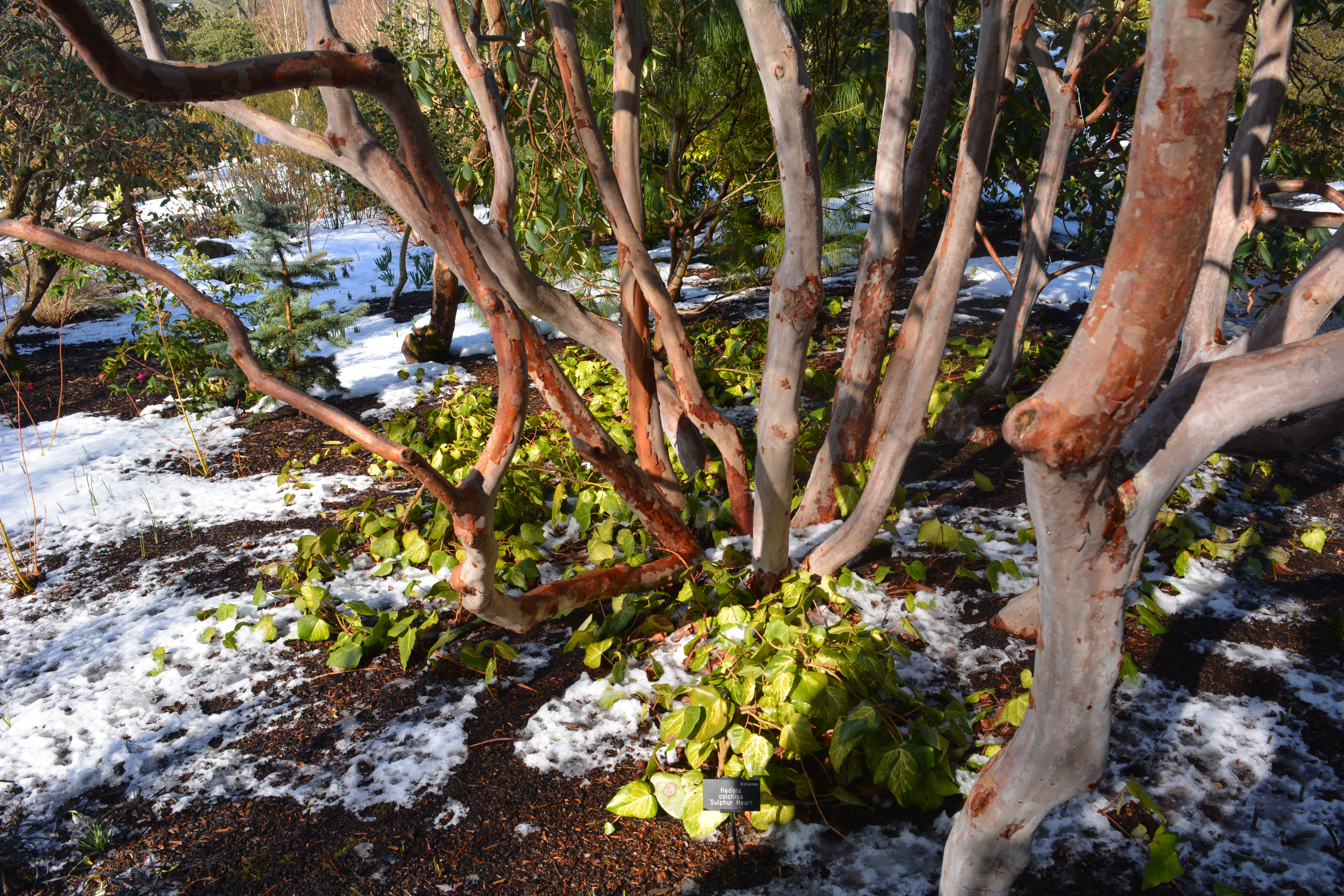
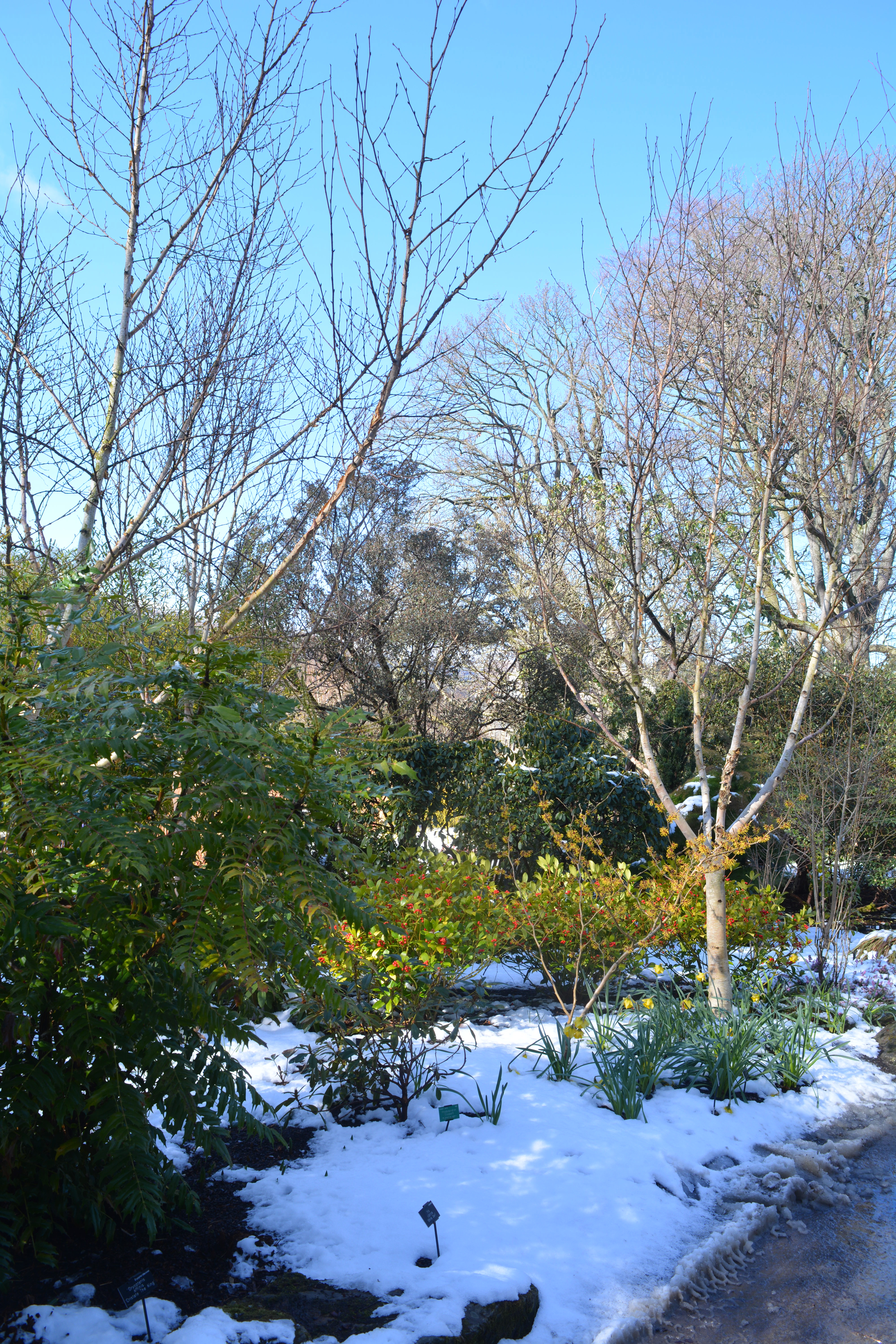
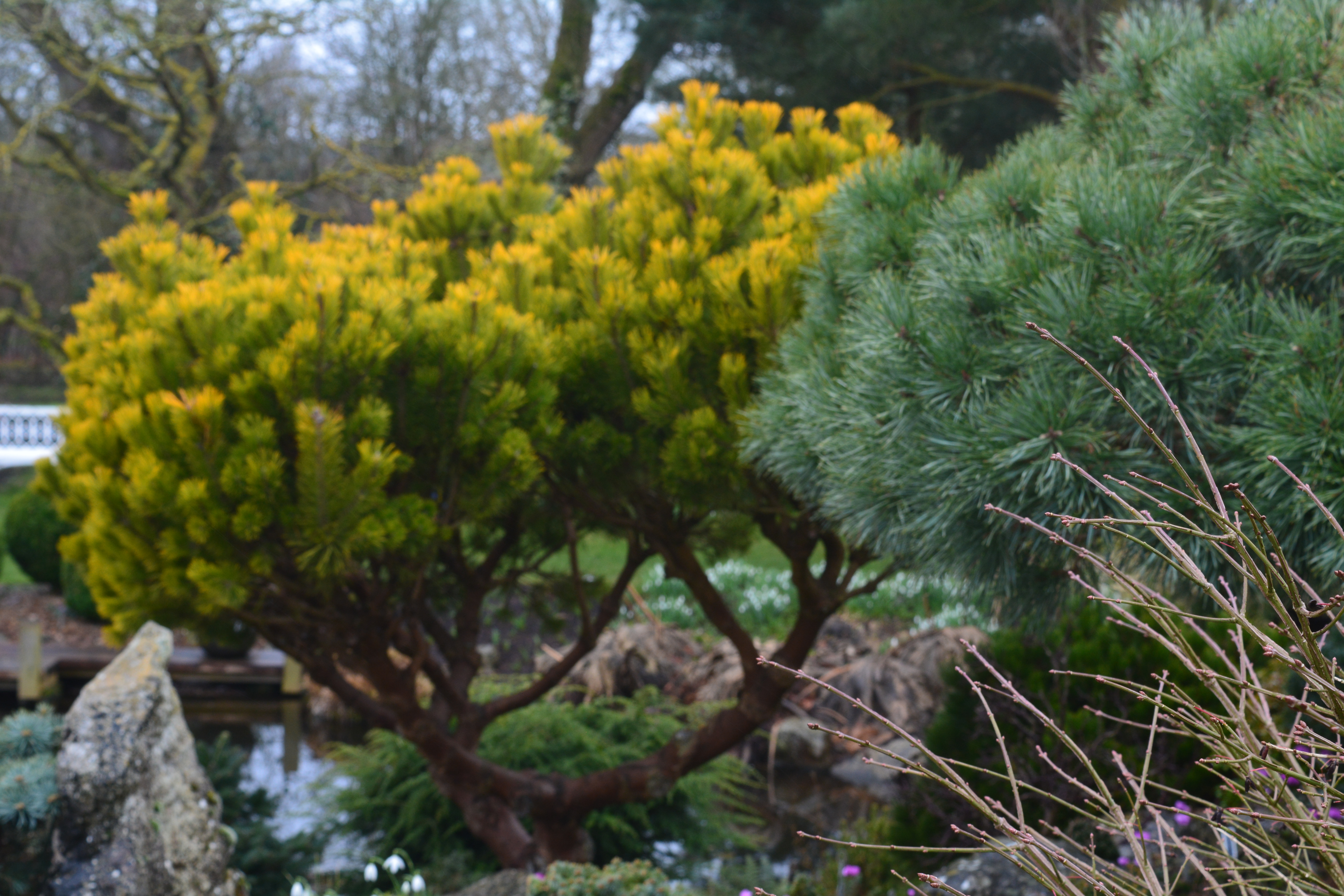
The light on this visit allowed the colour and texture of the bark on trees show up far better than in February.
Deciduous Euonymus such as our native Euonymus europaeus, display their heavily textured bark when they are bare of foliage, and Euonymus alatus is a particular star with its winged stems.
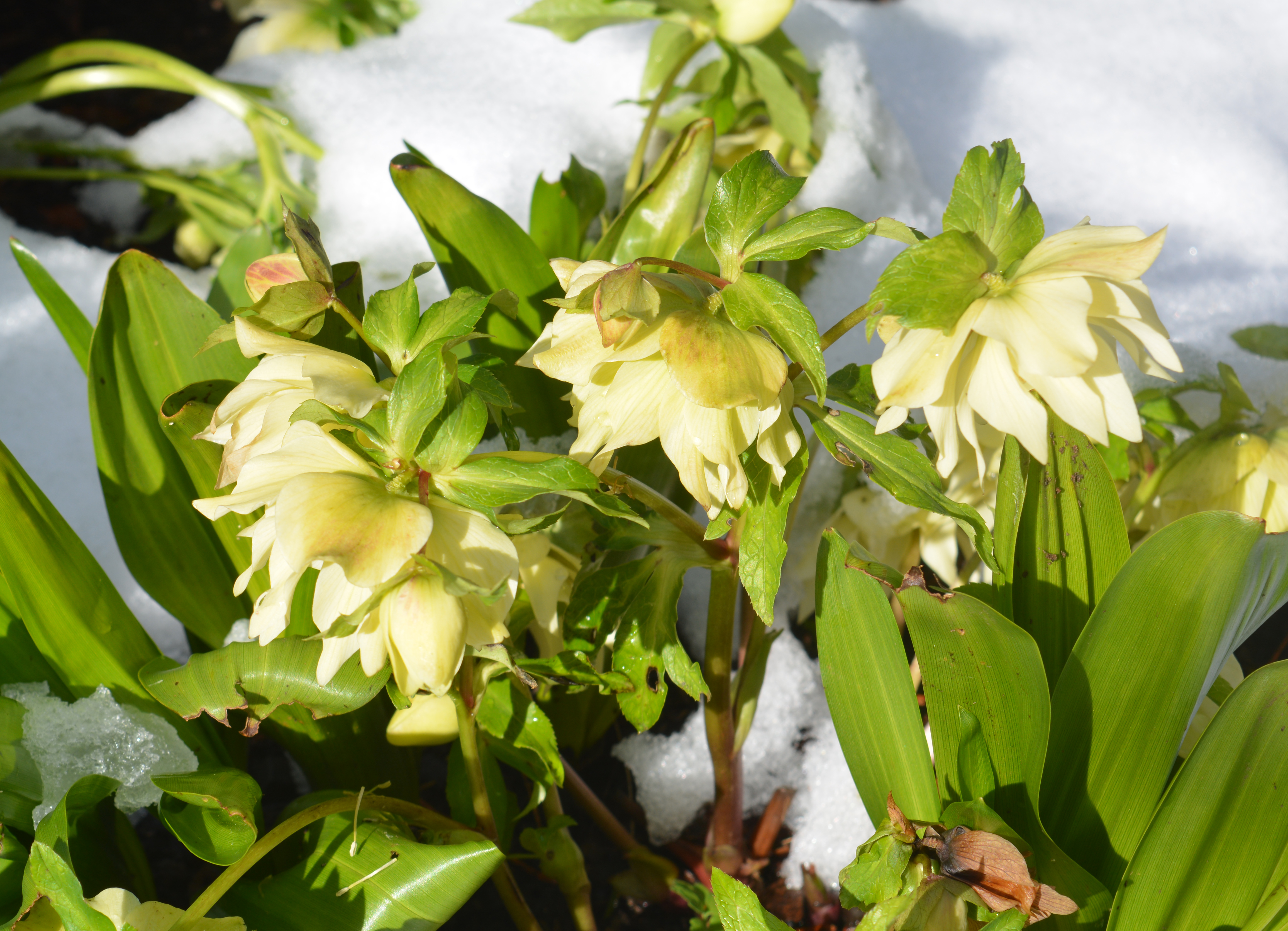
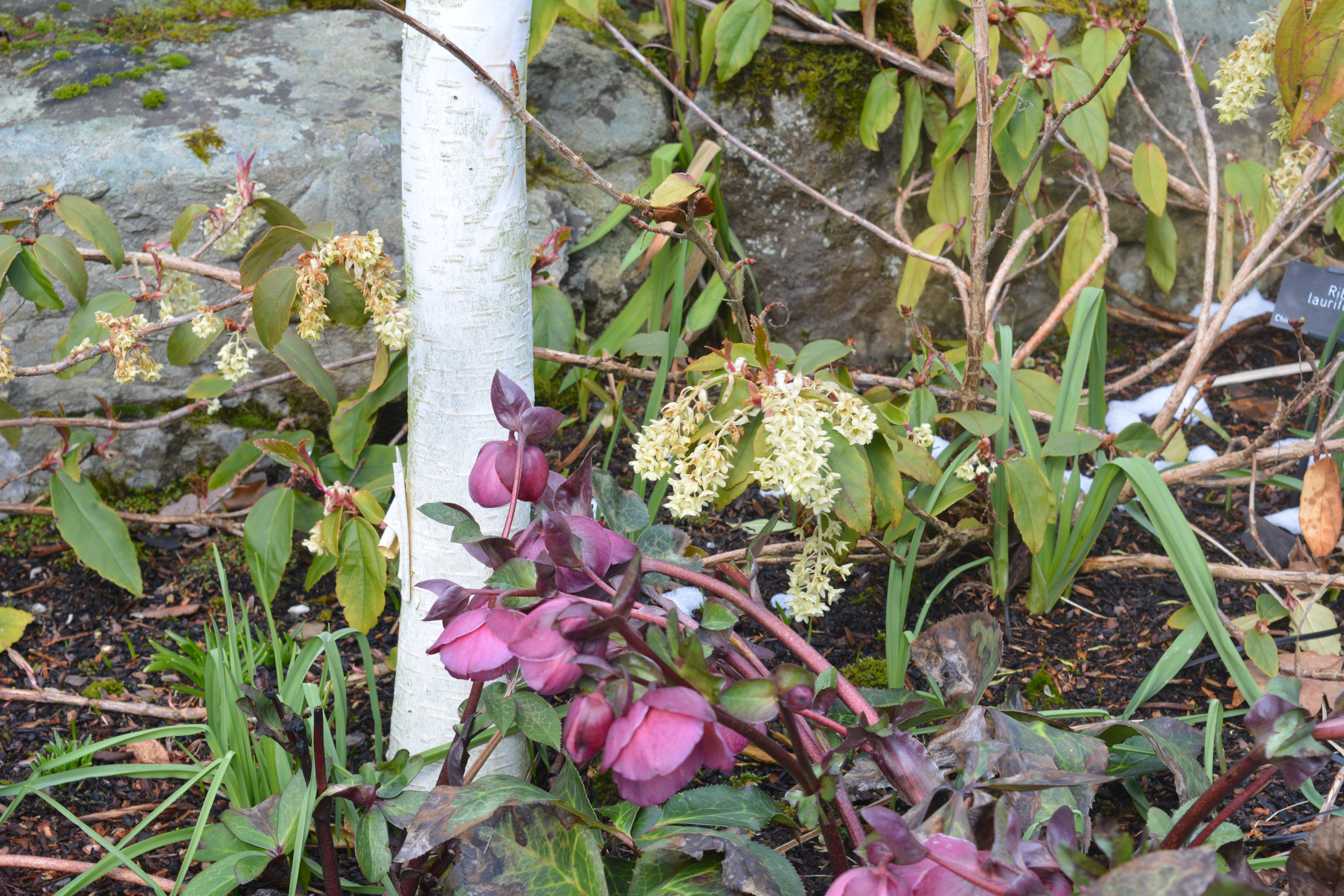
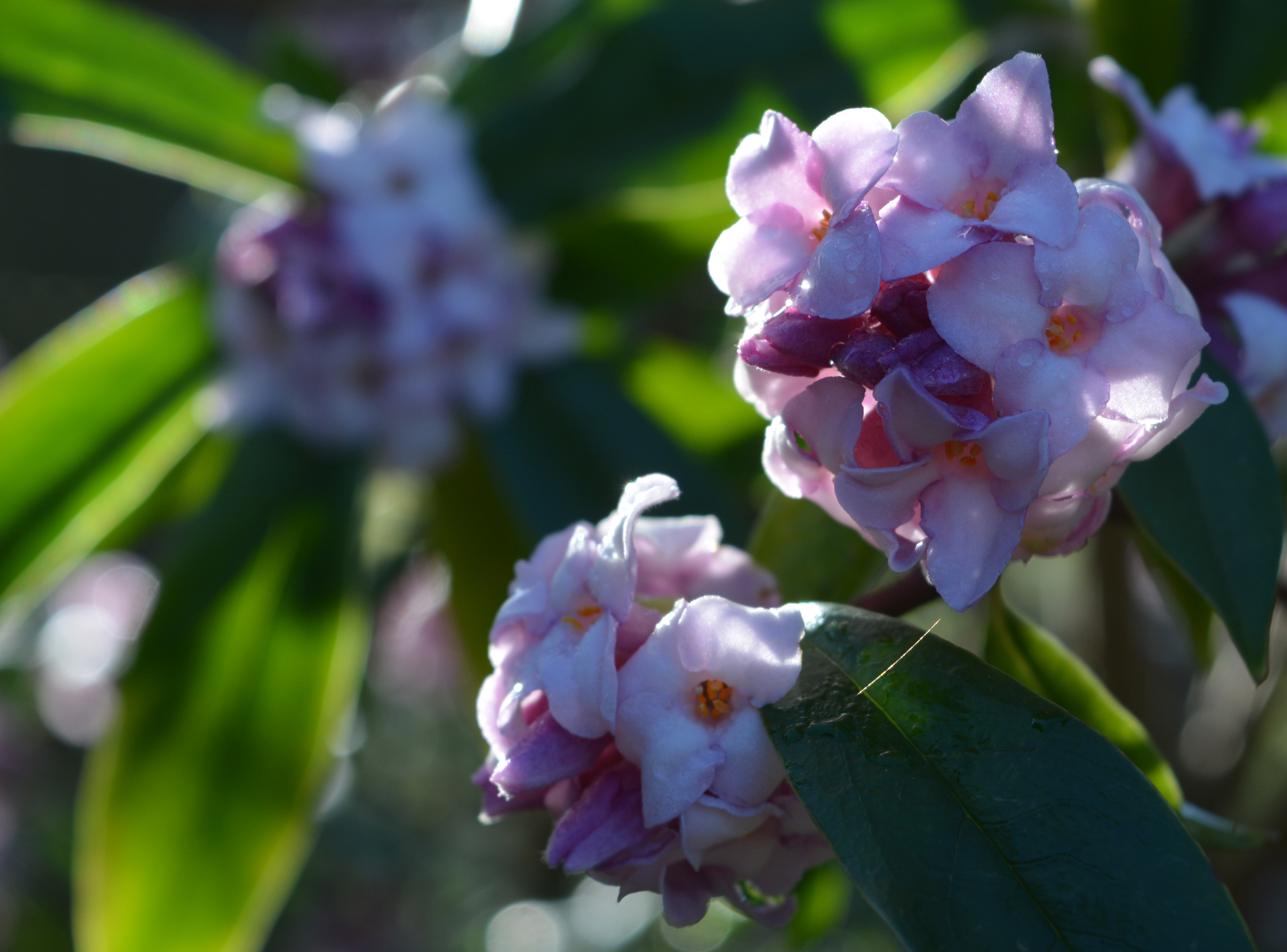
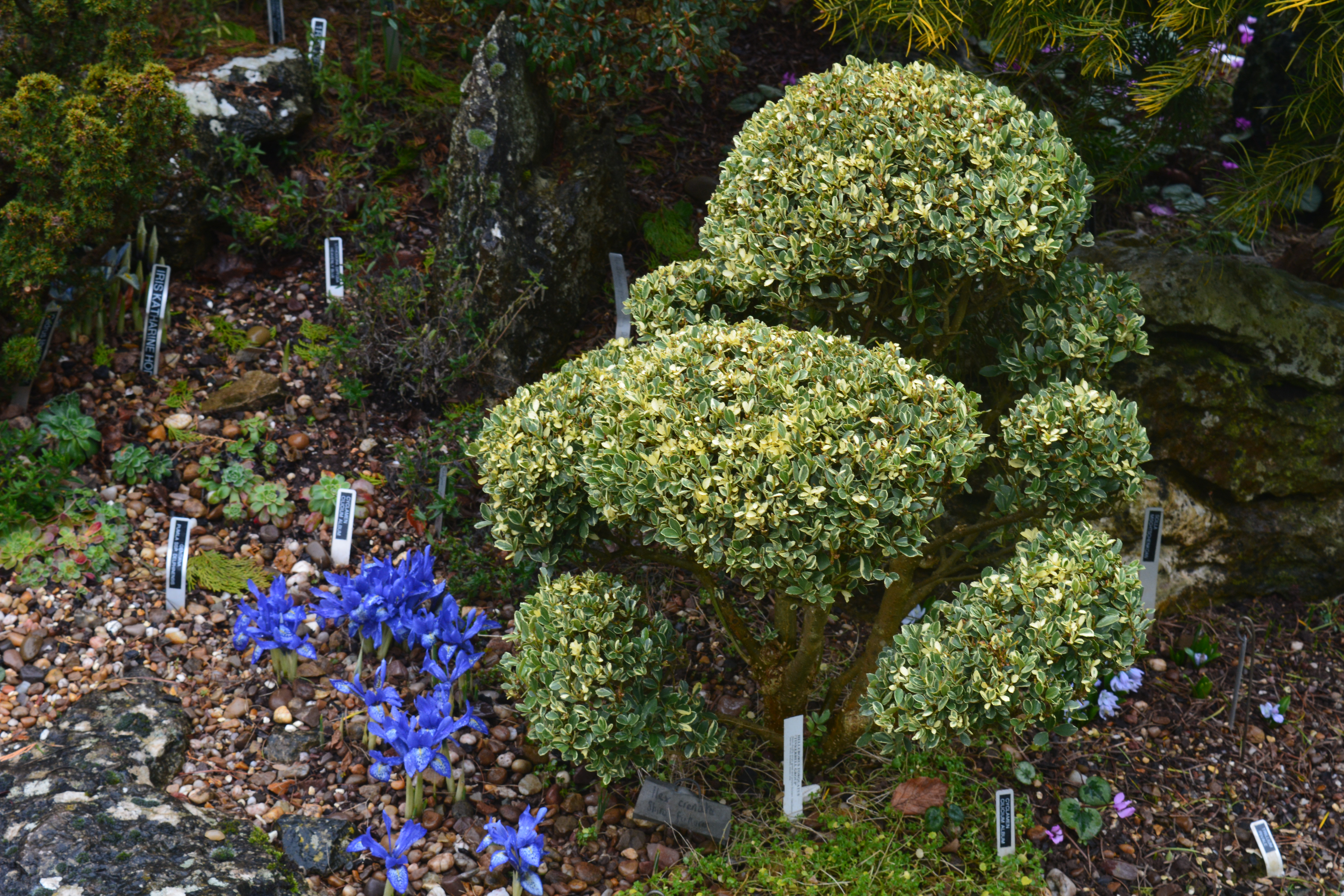
A few shrubs had open flowers and looked very special, like gems, among so much deep green of the many evergreens growing on the slopes. Hellebores and flowering bulbs added splashes of colour amongst the undergrowth. The tiny insignificant flowers of Euphorbias sat snuggled into the bright green bracts.
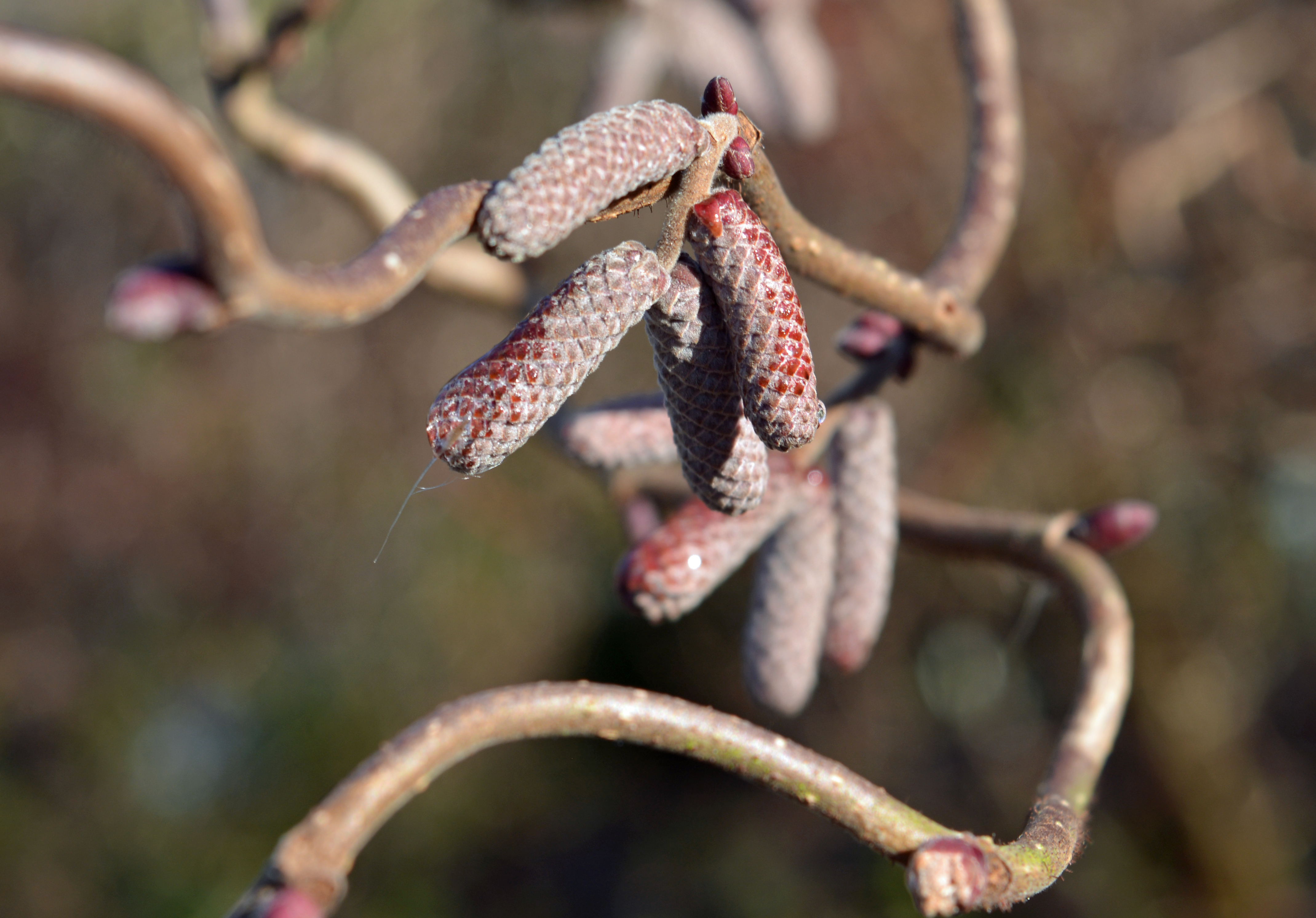
The common native Hazel, Corylus avellena, is far from ordinary. It is an exceptional plant as it gives so much to our gardens. If you plant a contorted variety then you get the strangest of winter skeletons, but with others you get sturdy upright growth and this growth provides us with our bean poles for the allotment. In the first months of each year they delight us with their catkins which look like little lime-green lambs’ tales. These are the male flowers producing mists of pollen on breezy warm days but if you look very closely you may be lucky enough to find a female flower which is a minute deep red flower like a miniature sea anemone.
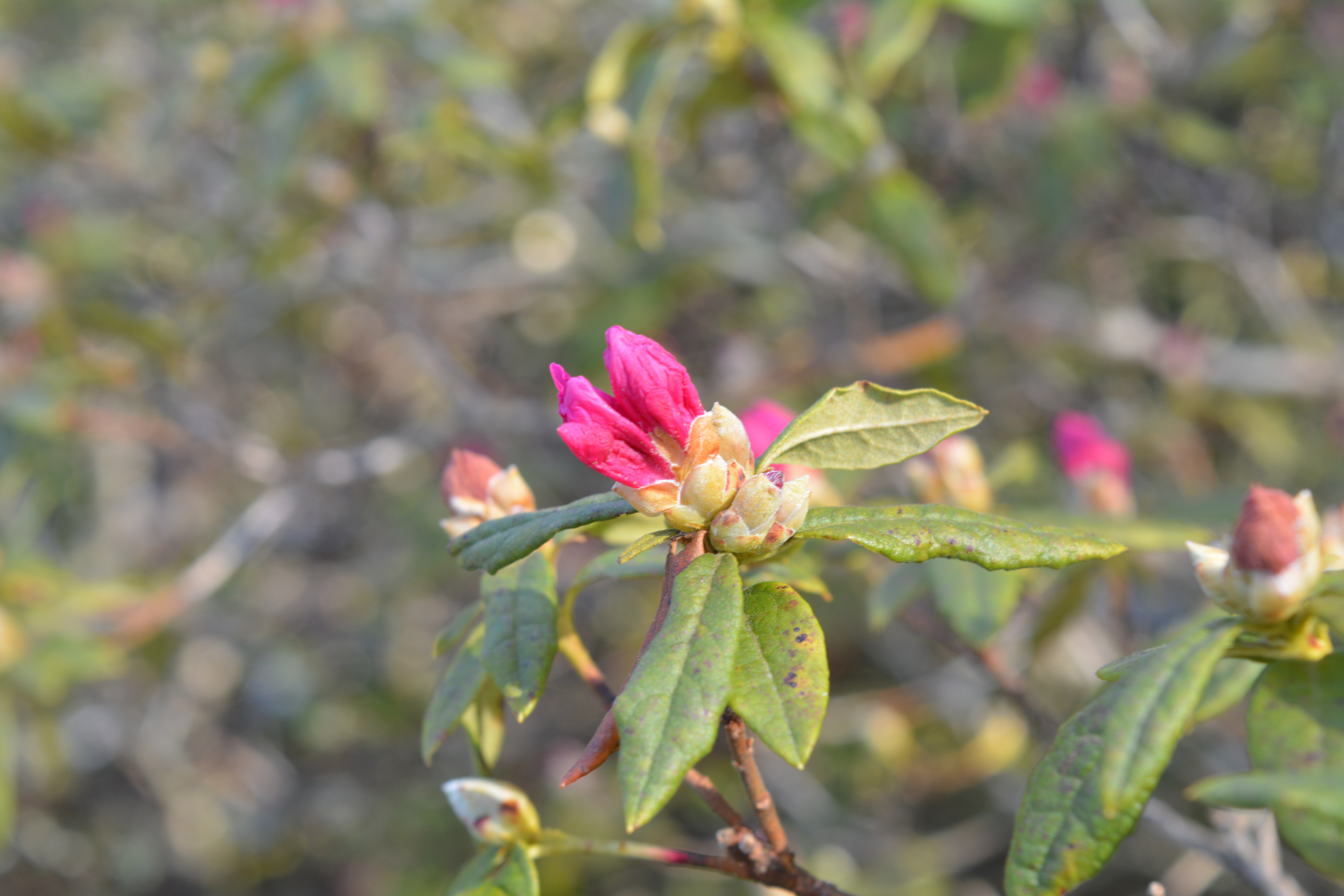
Buds were just beginning to show the early signs of fattening up when we made our visit in February so we were so pleased to find some fresh brightly coloured leaves beginning to burst forth from them this month.
Fresh growth had appeared from clumps of perennials, with Hemerocallis way ahead of others with the brightest and most advanced growth of all.
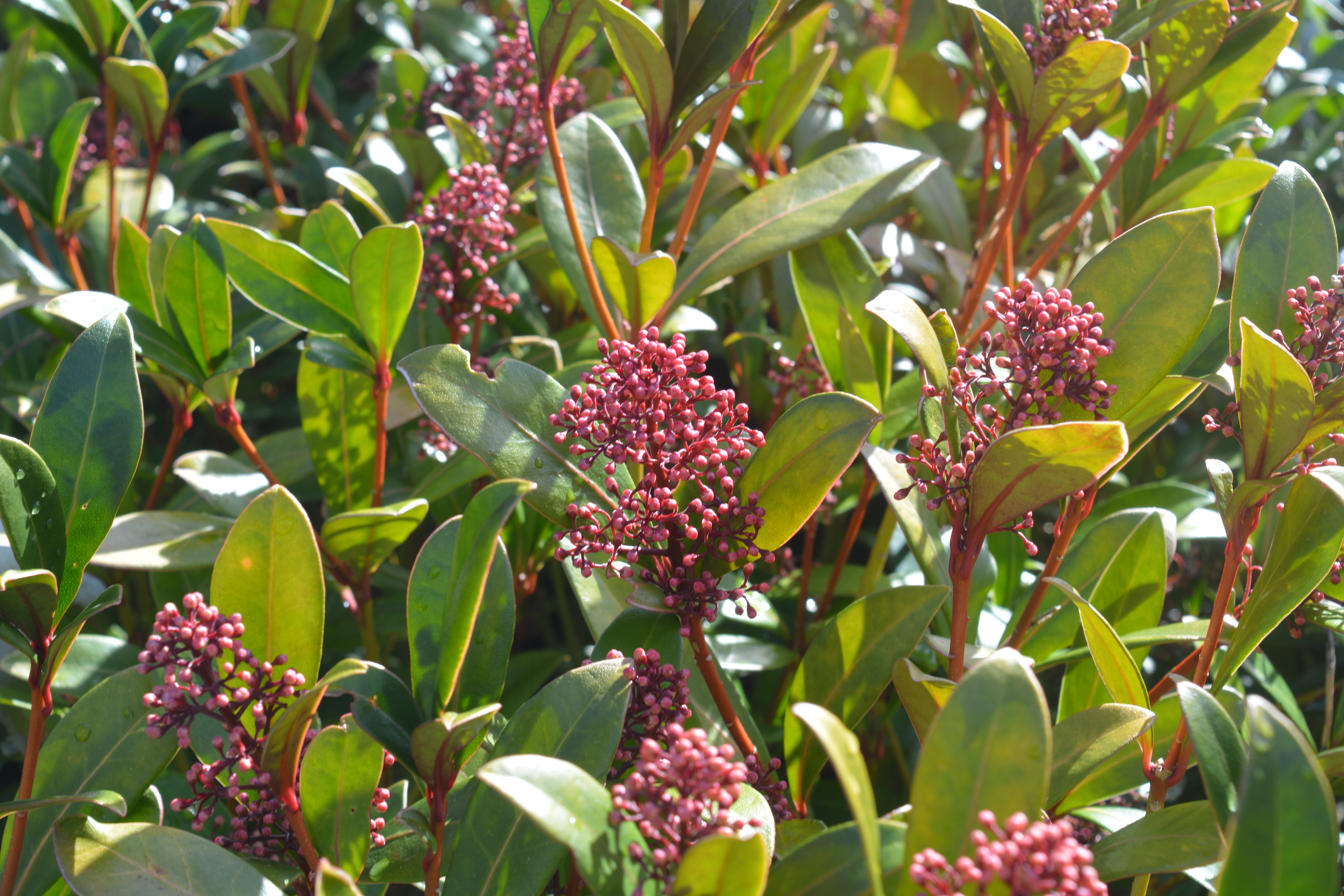
Evergreen shrubs have produced new foliage which looks so young with glossy surfaces and extra bright colours.
As we wandered the pathways enjoying the freshness of new growth and bursting buds, we were distracted by surprises and unexpected features, such as this old tumbled-down summer house and a deep fissure in the path where rushing floodwater had flowed beneath the path removing materials.
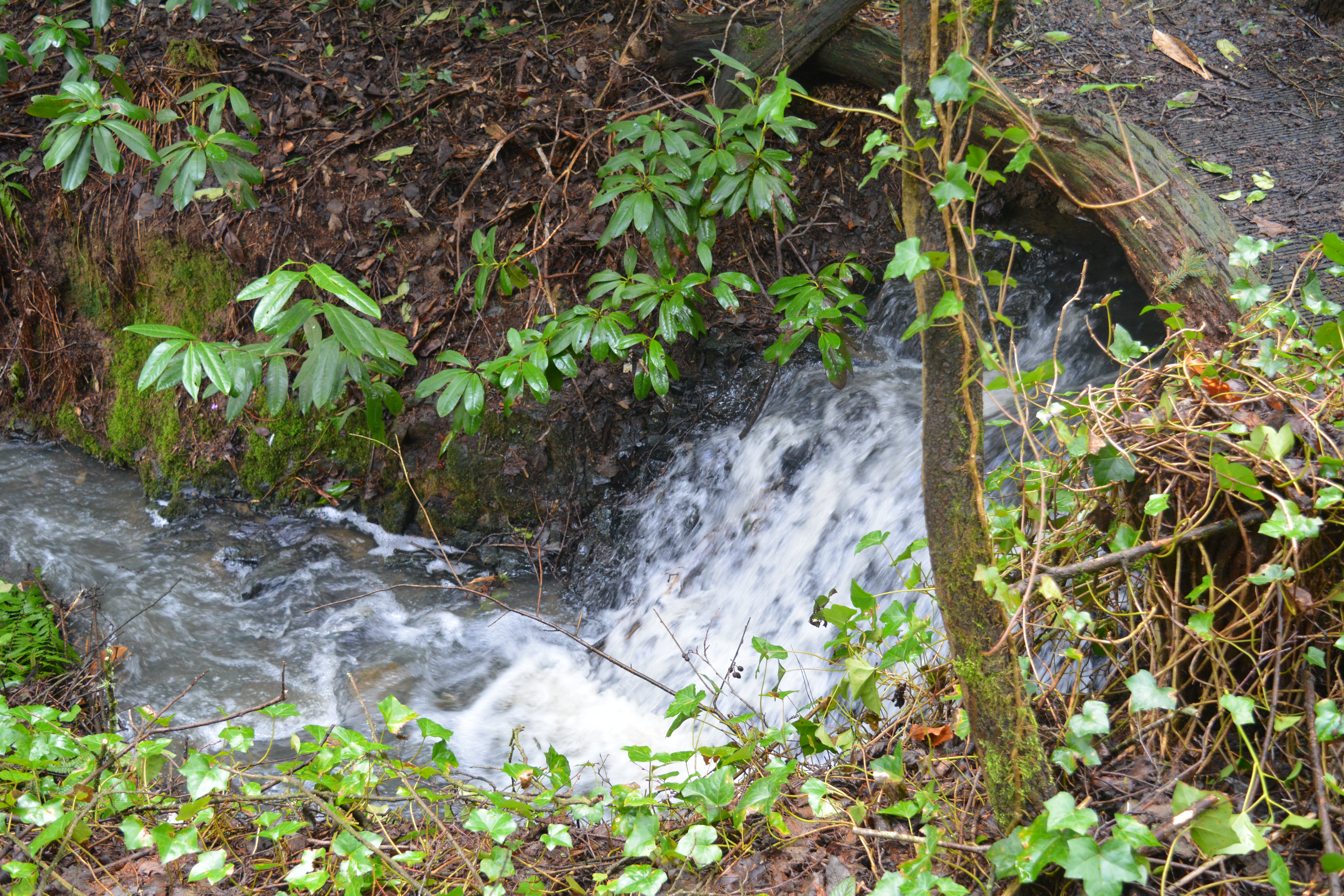
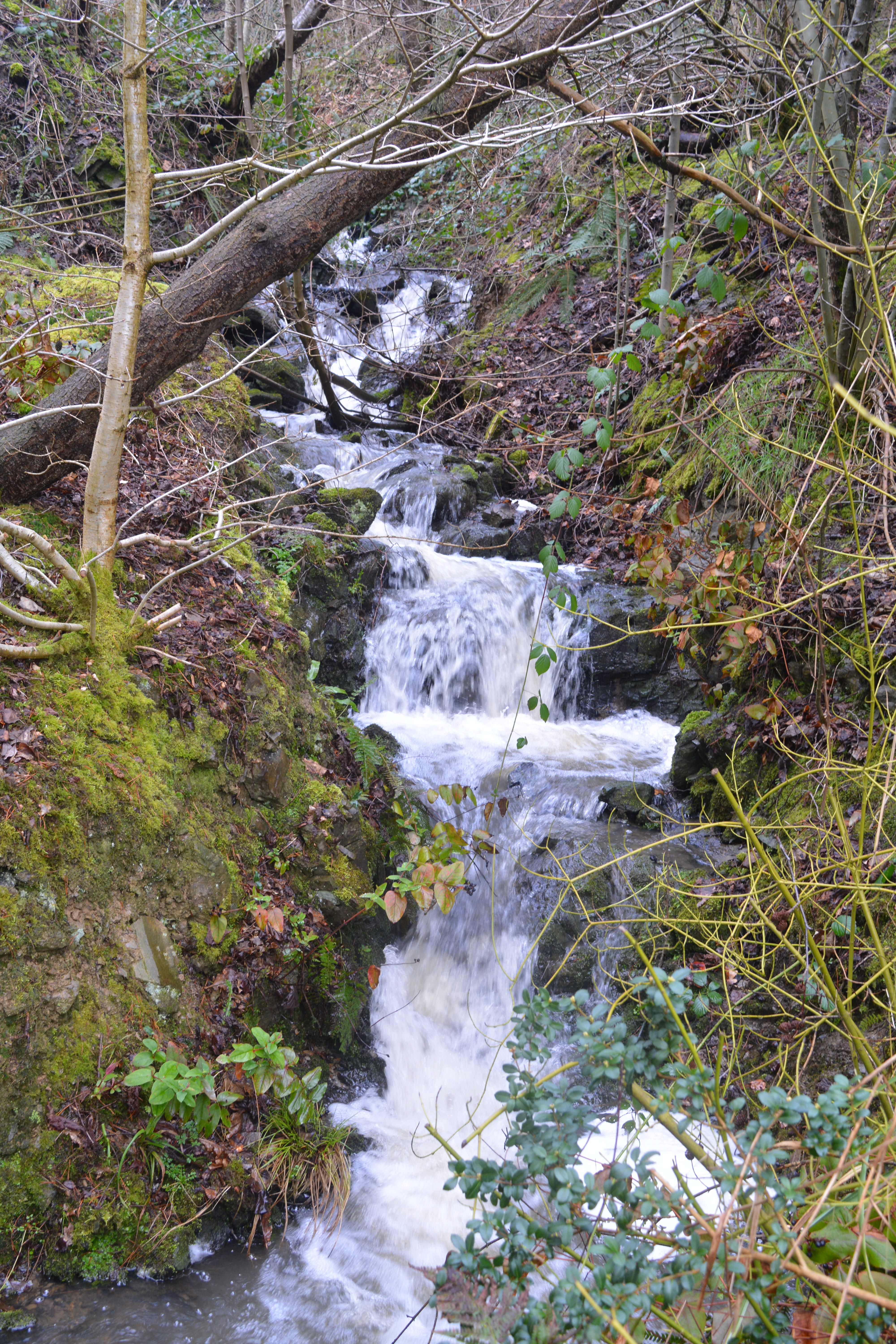
The stream which we enjoyed watching last month tumbling beneath the wooden footbridge had turned into an angry torrent of water, so noisy that we could hear it from far off. Wherever we were inside the woodland garden we could hear running water rushing down slopes, along tiny streams and over pathways.
Let us hope that by the time of our next visit the garden will be much dryer and the water passing down the site will be back within its banks.
This will be our third visit to the relatively new winter garden at Dunham Massey, a National Trust property in Cheshire, our neighbouring county to the north of our home county, Shropshire. The leaflets concerning the garden refer to it as a “Curiosity Garden”, while inside is written, “Forget hibernating until spring, Dunham Massey’s Winter Garden is wide awake with colour.”
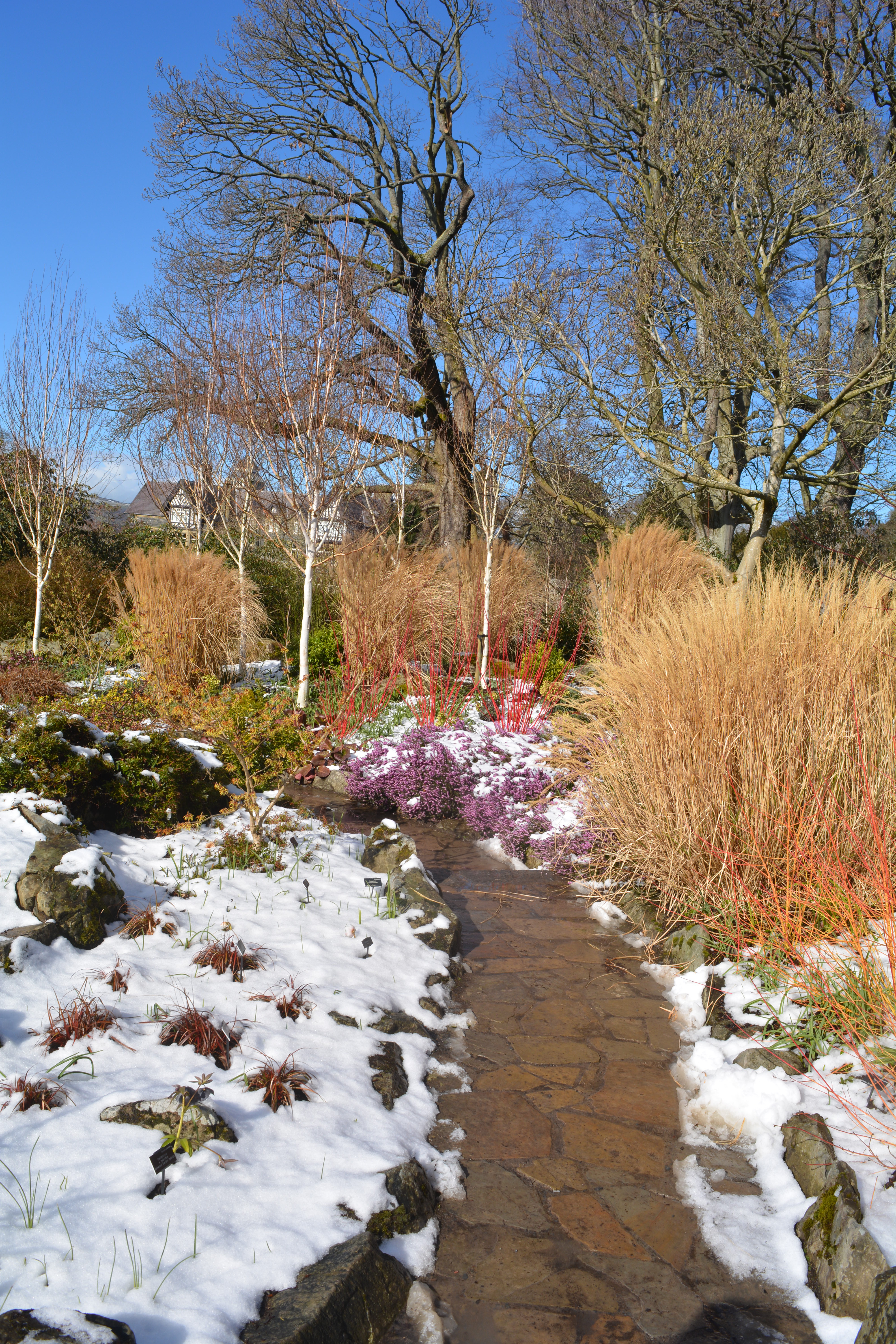
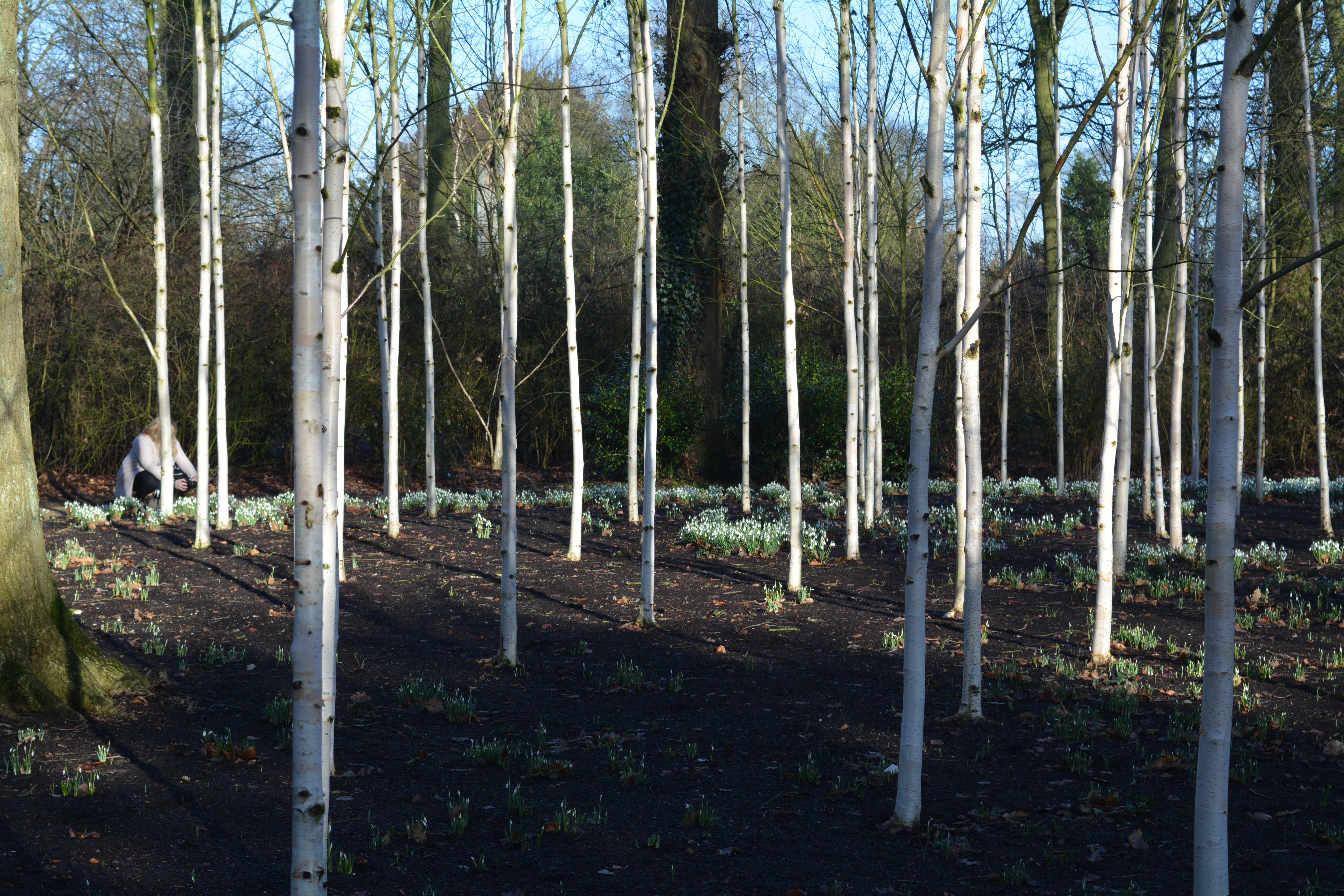
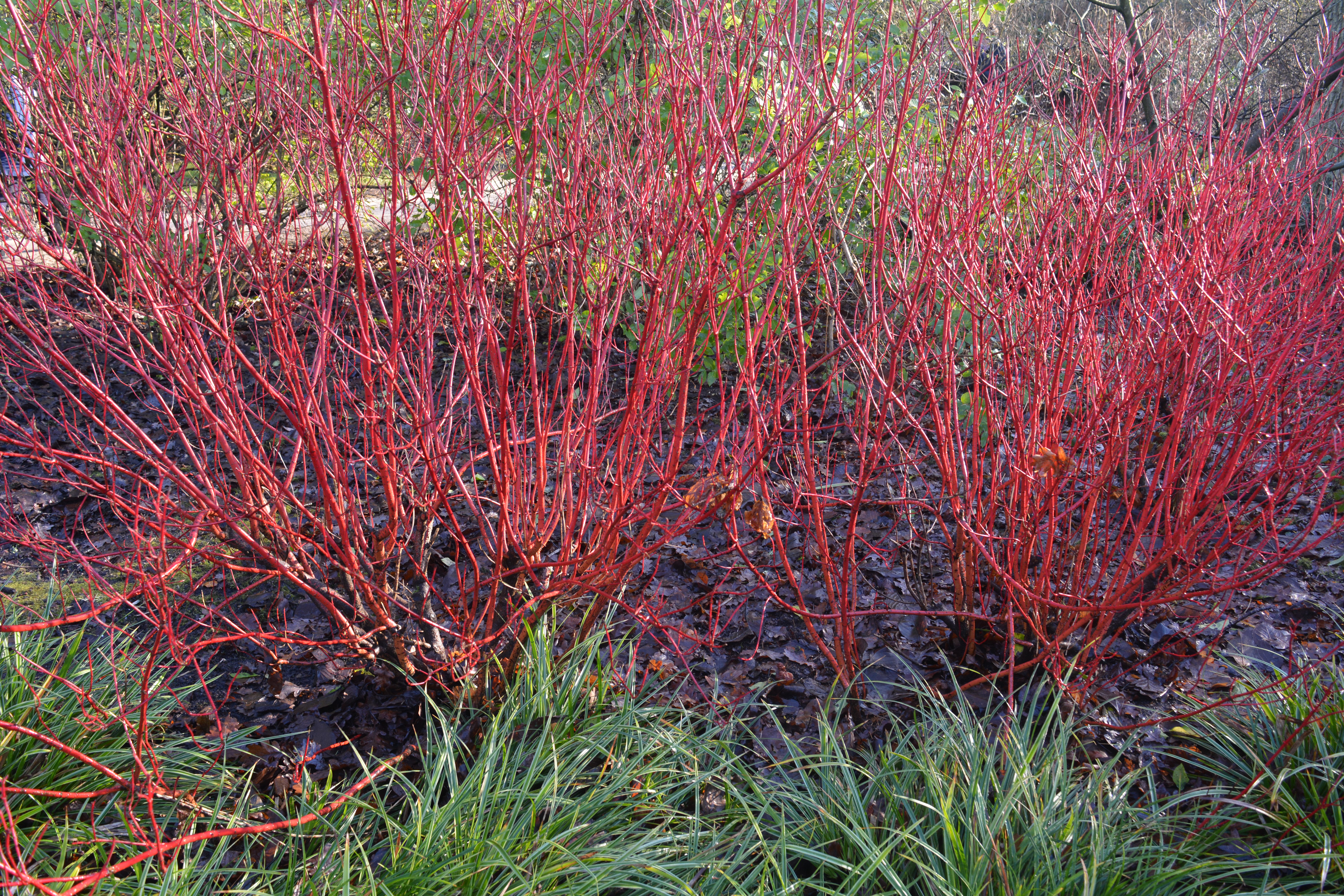
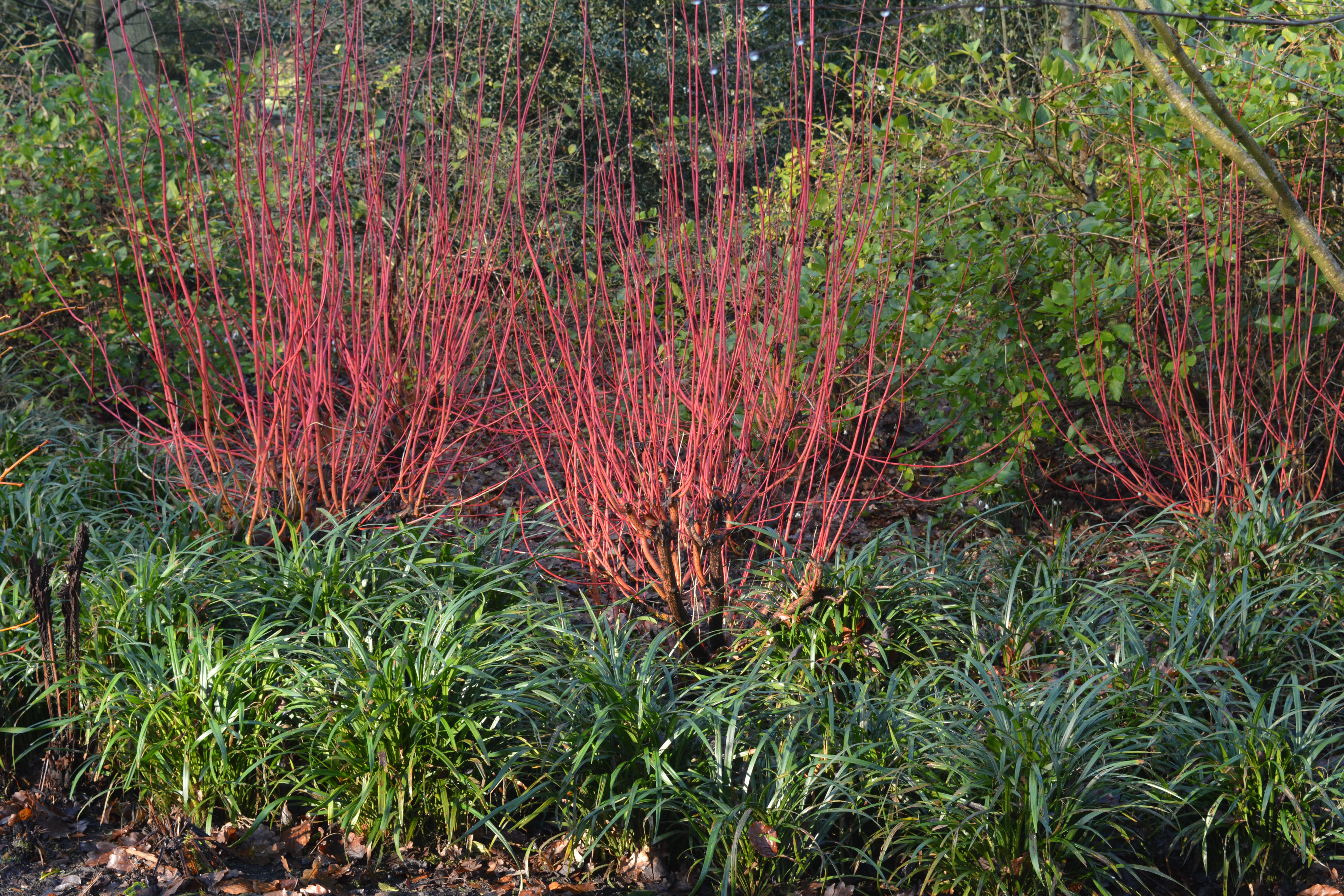
The leaflet then invites us to “Take a refreshing walk in the Winter Garden along meandering paths with shocking red cornus and brilliant white birch trees trees glittering in the winter sun. Discover bright winter berries, late flowering scented shrubs and thousands of snowdrops and iris in the new year.”
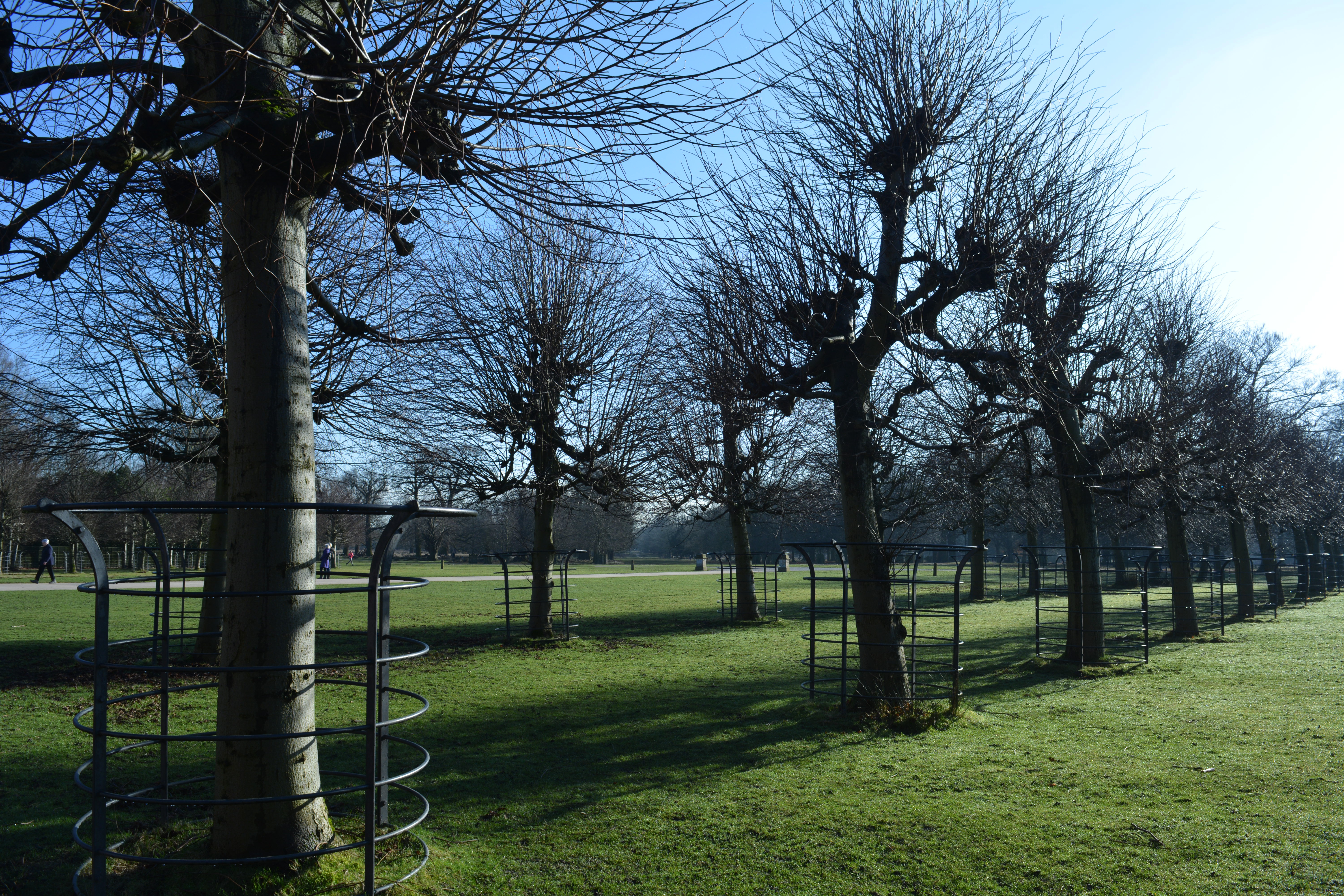
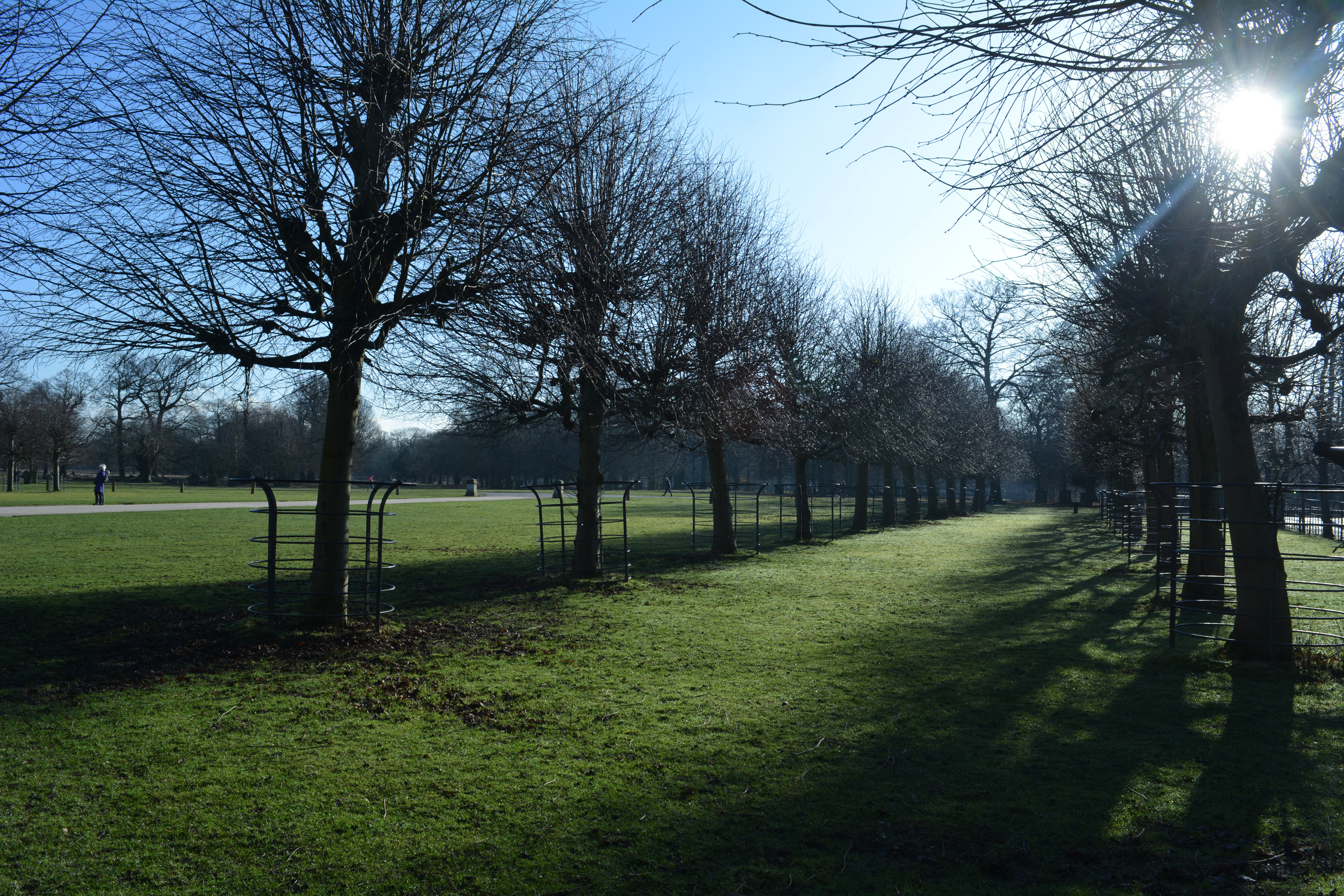
We approached the winter garden by meandering along gravel paths across a shallow valley, when upon passing through the first red-bricked outbuildings we discovered some of the best pleaching we had ever seen. It stops us in our tracks on every visit.
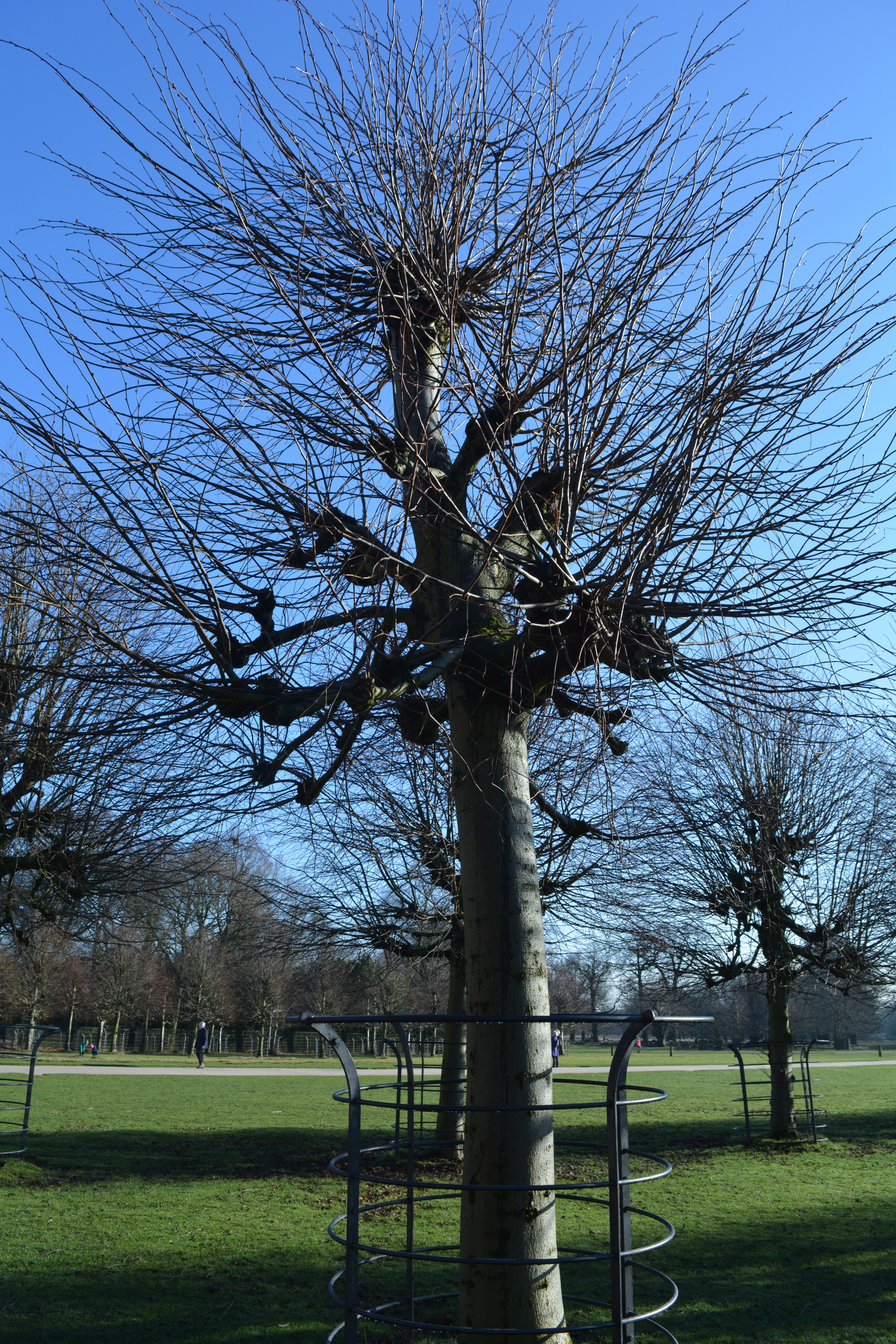
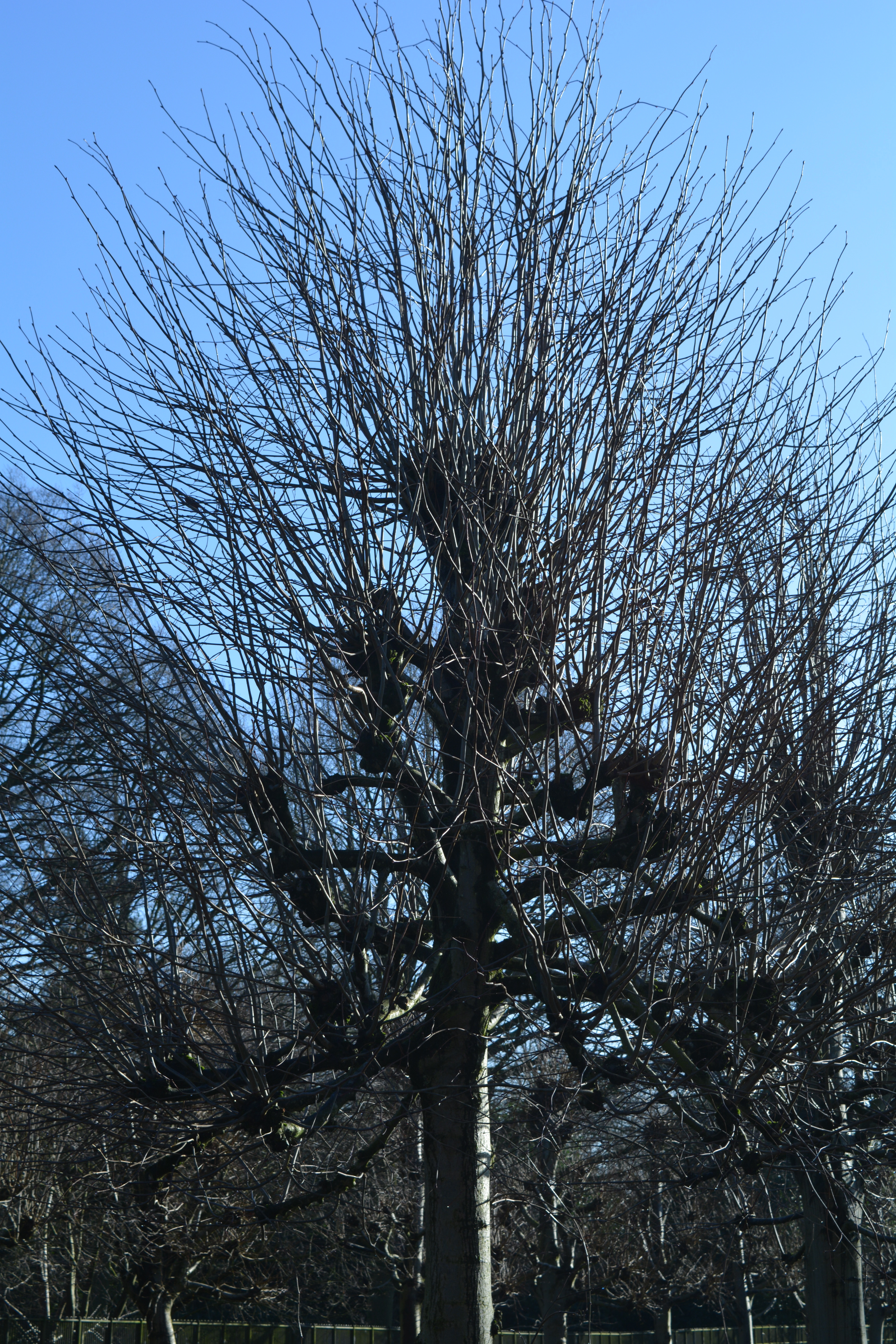
The pleached limes look a few decades old and possess the ubiquitous knobbles from where the new wands of growth spurt in the spring after their annual pollarding.
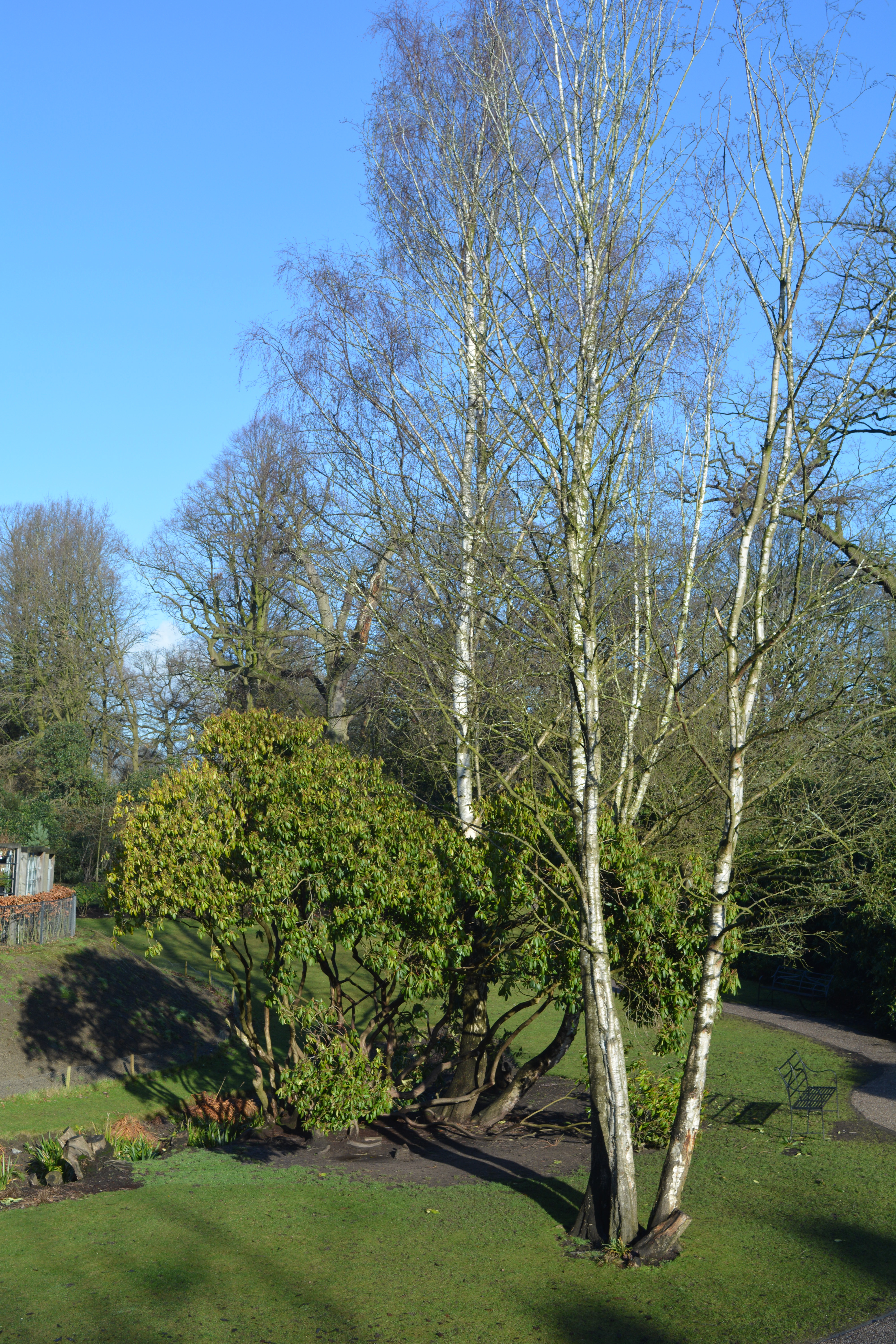
Shrubs come into their own in the winter season with their coloured stems, their scent and beautiful hanging flower clusters.
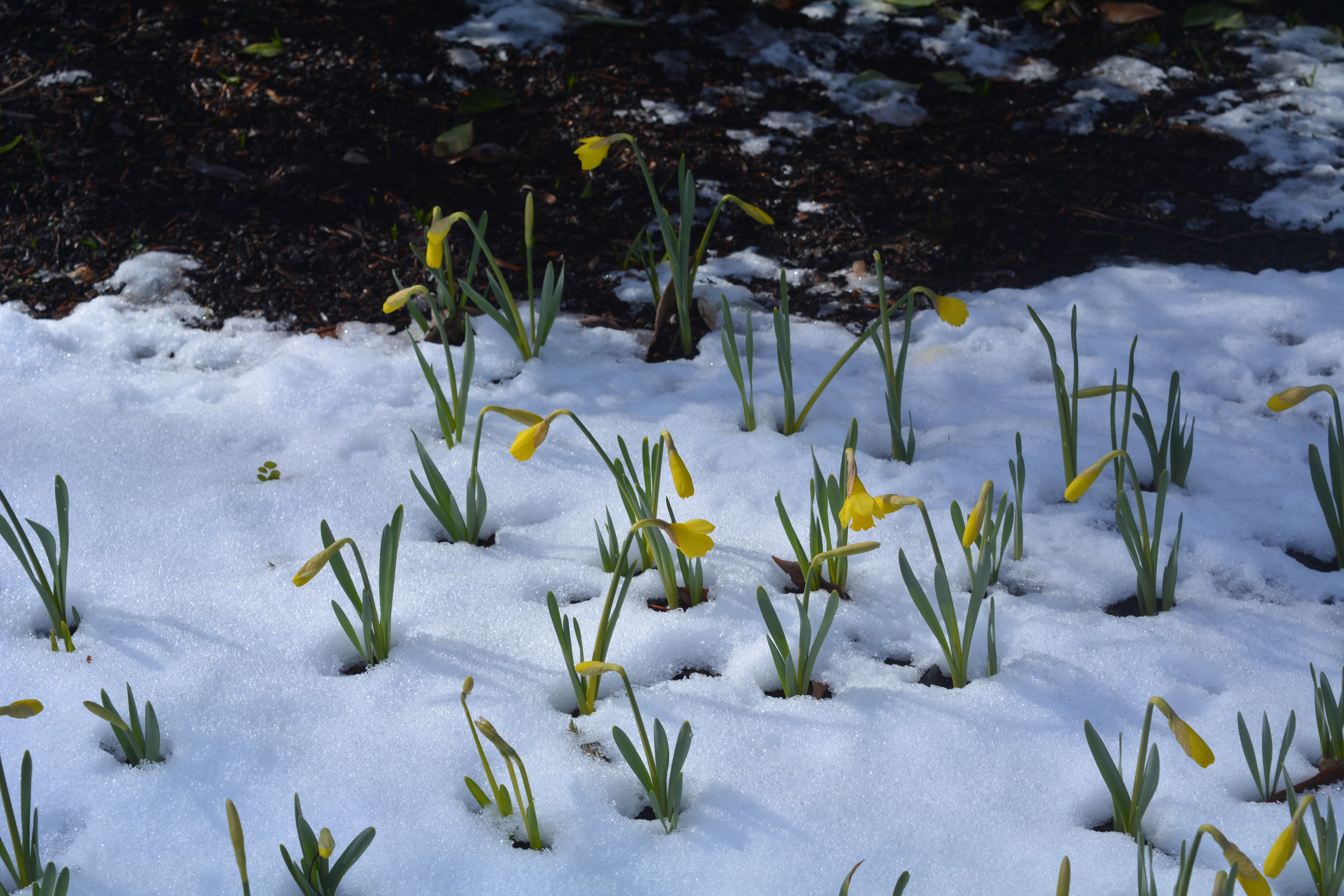
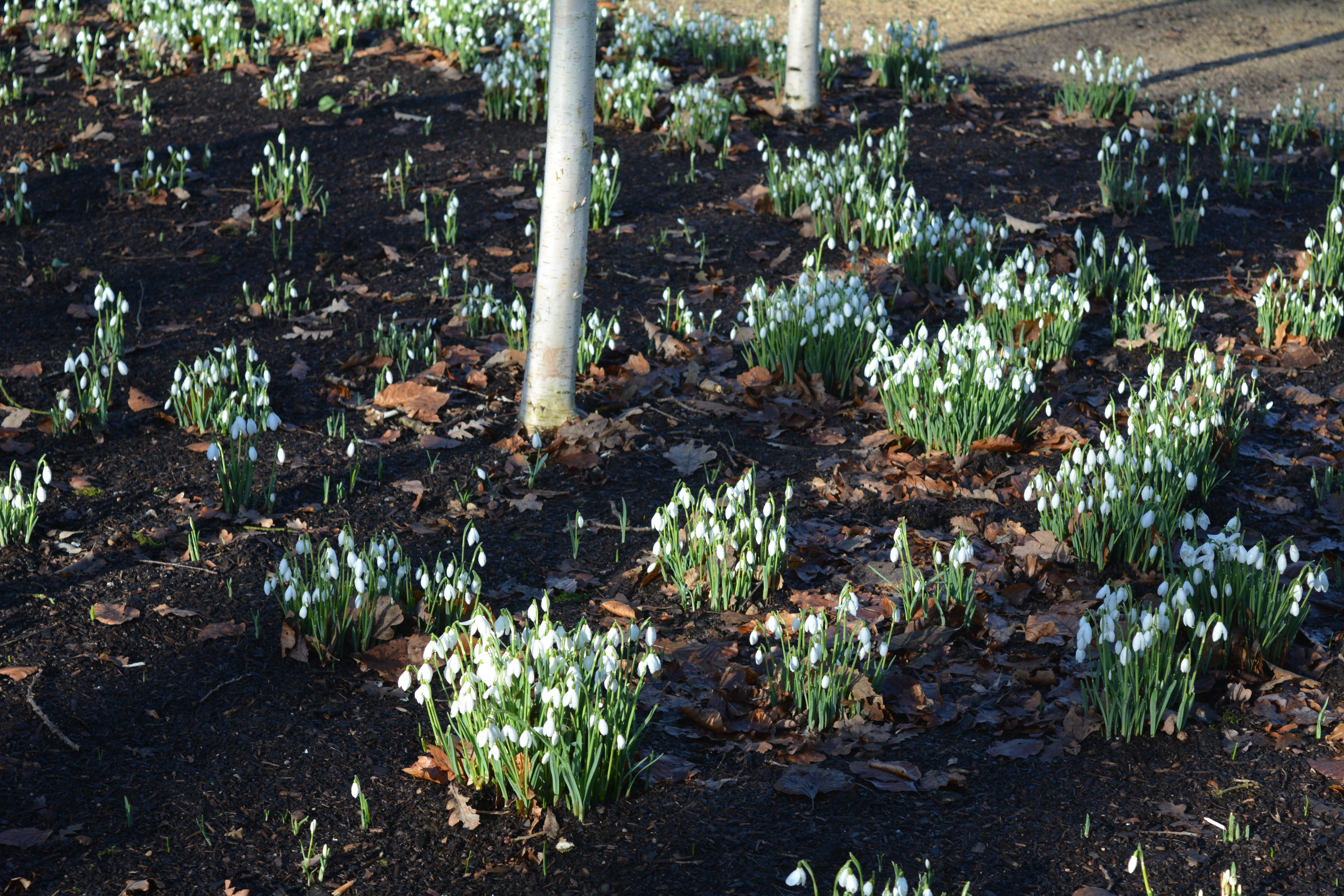
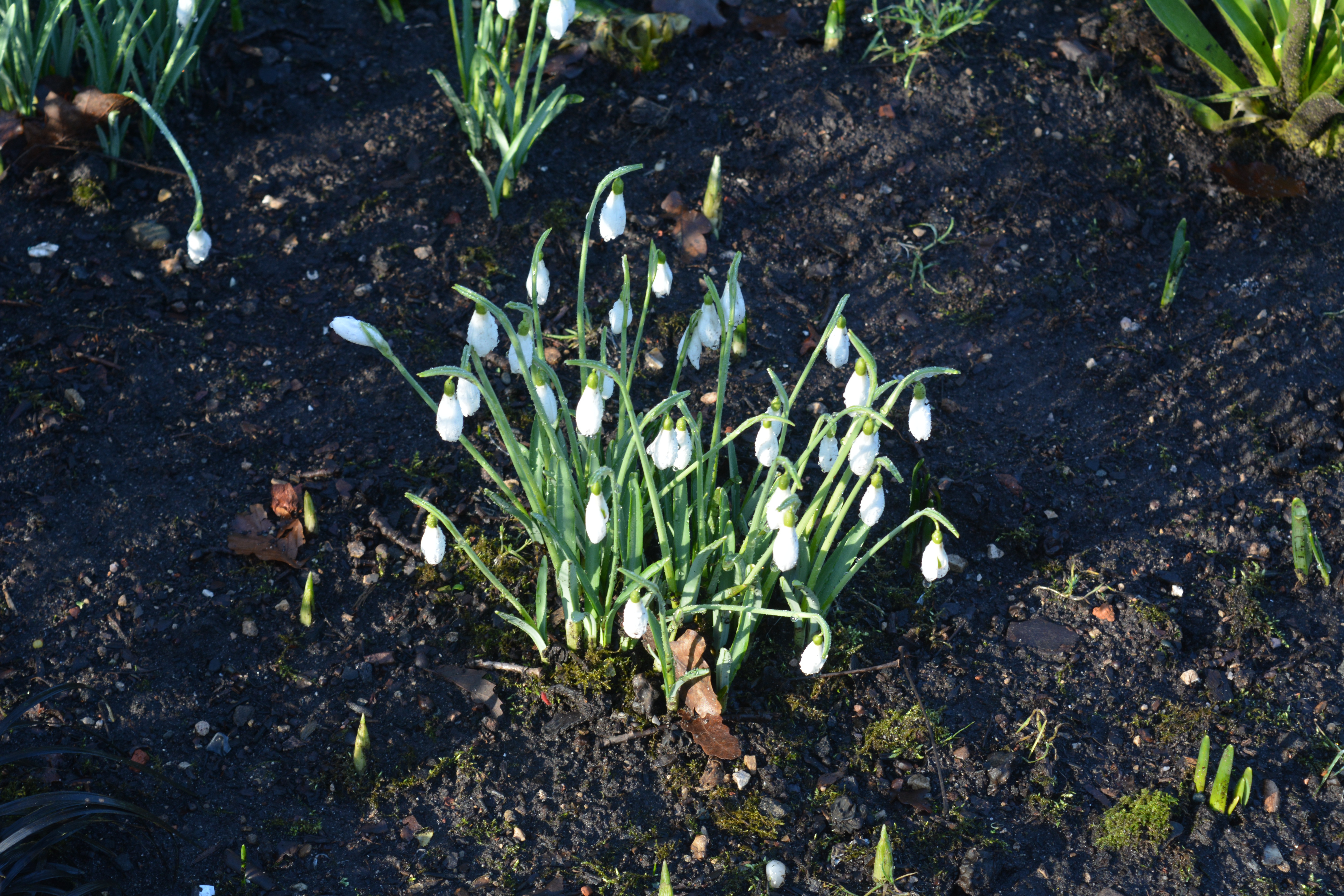
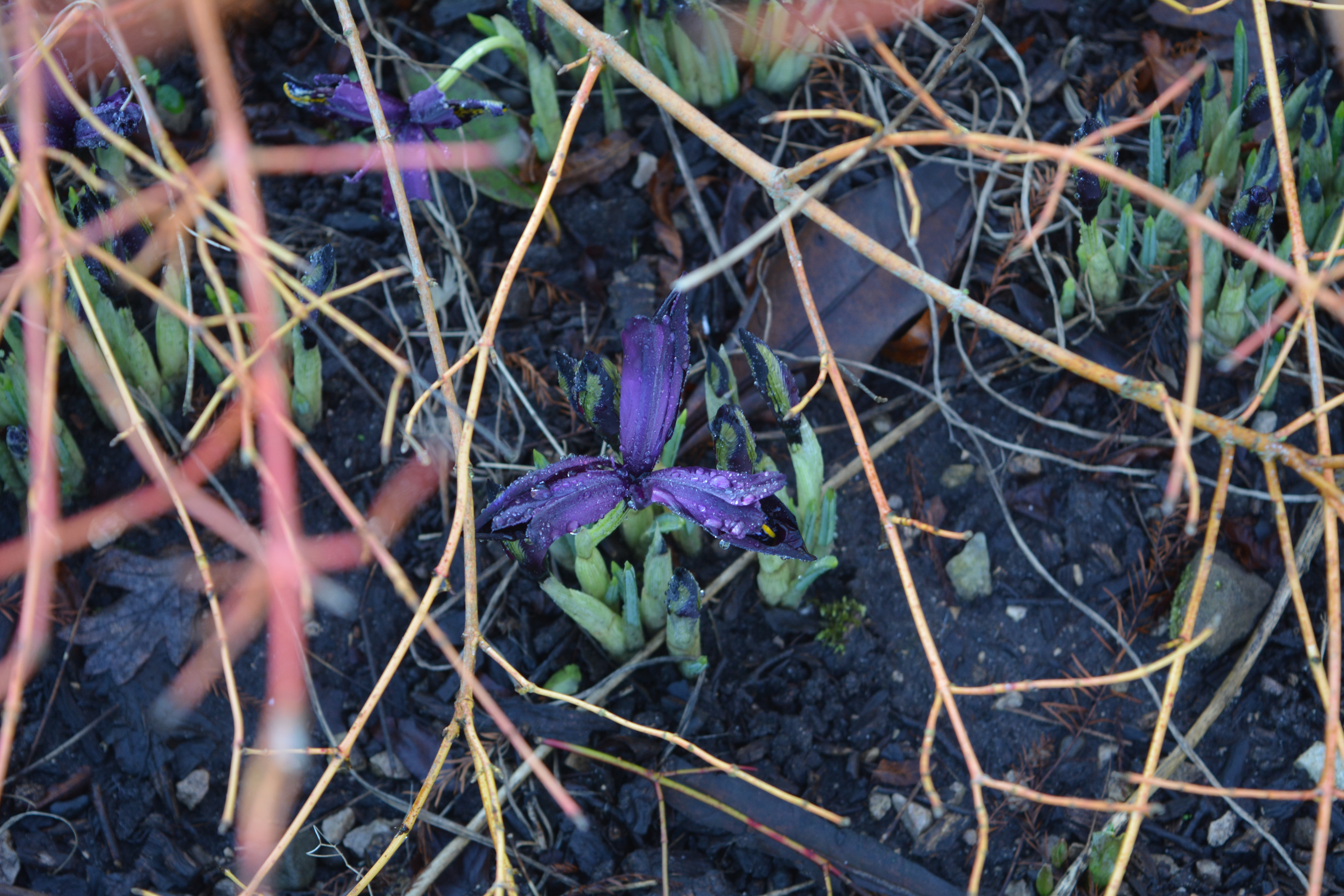
Early flowering bulbs add much of the colour in the garden in February. Sunlight catches them and highlights their bright colours.
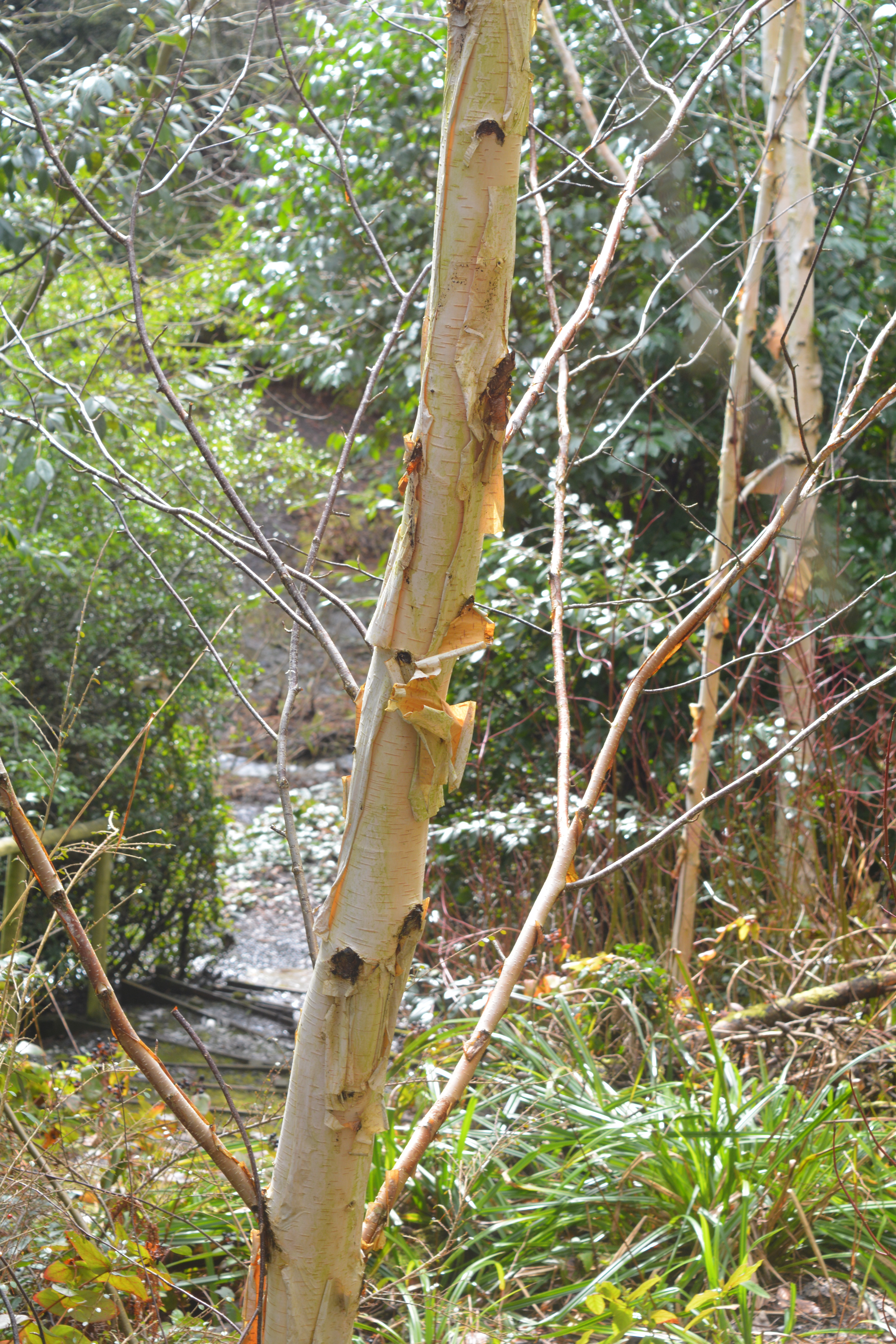
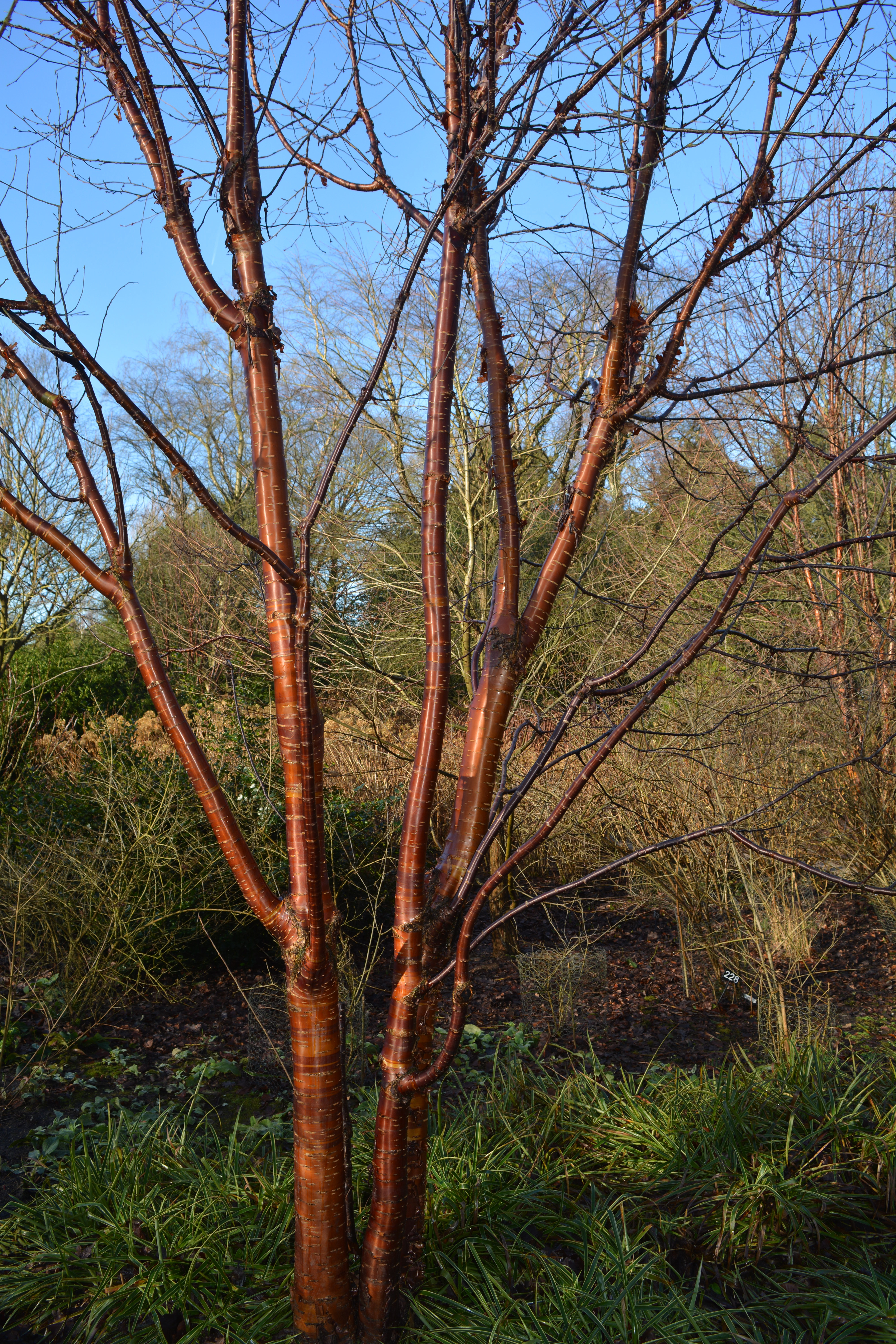
All winter gardens open to the public make strong features of trees with coloured, textured bark, Betulas, Acers and Prunus.
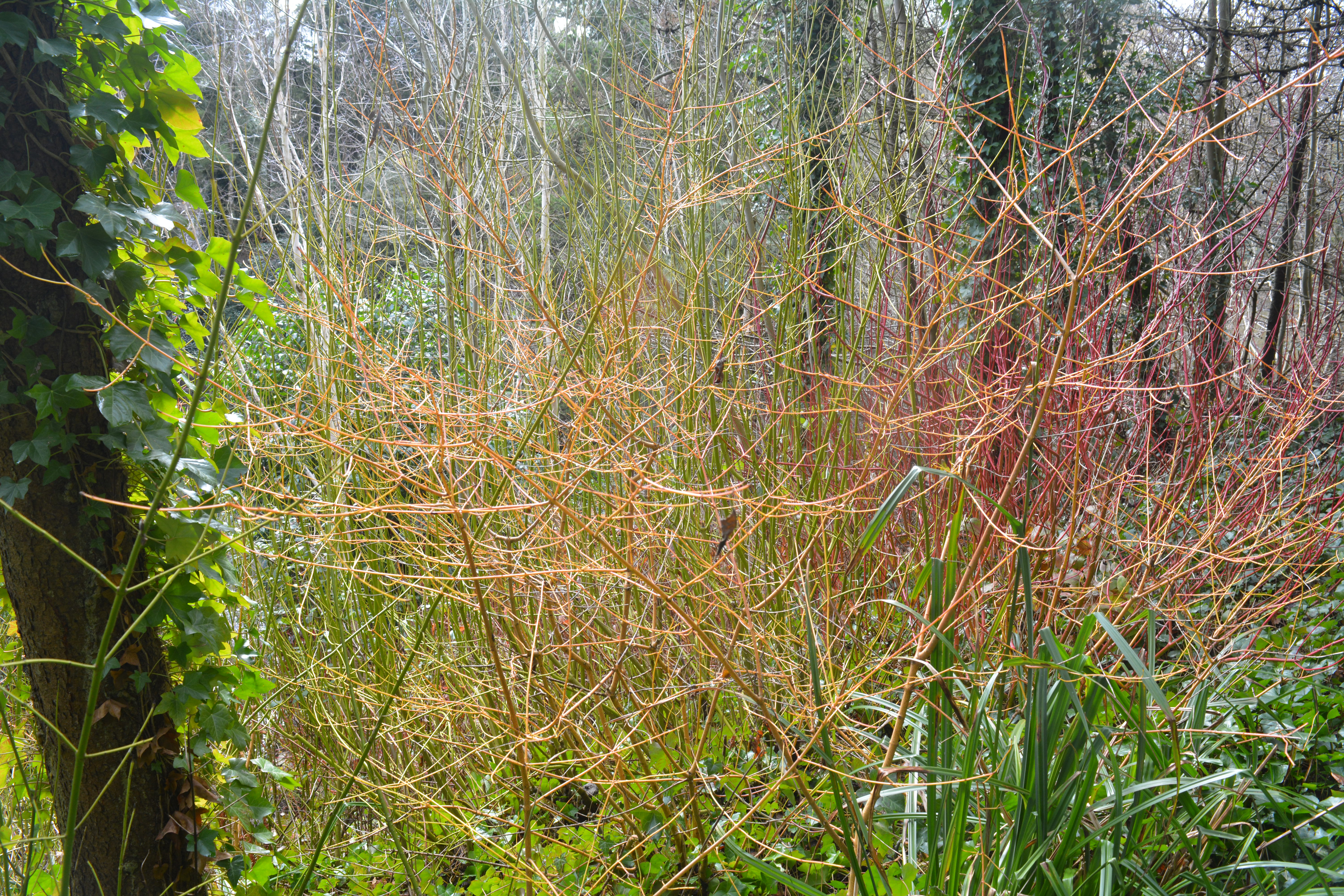
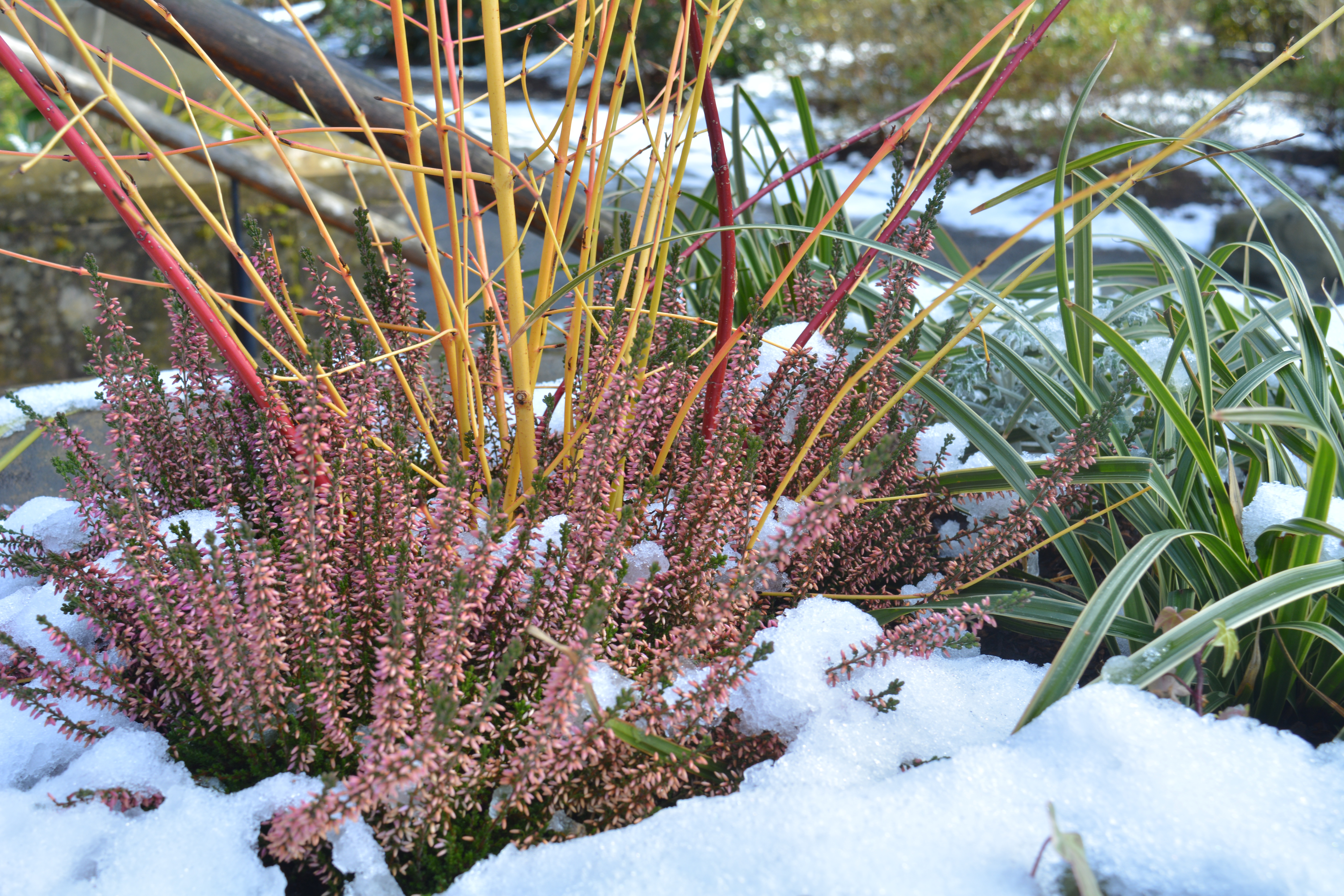
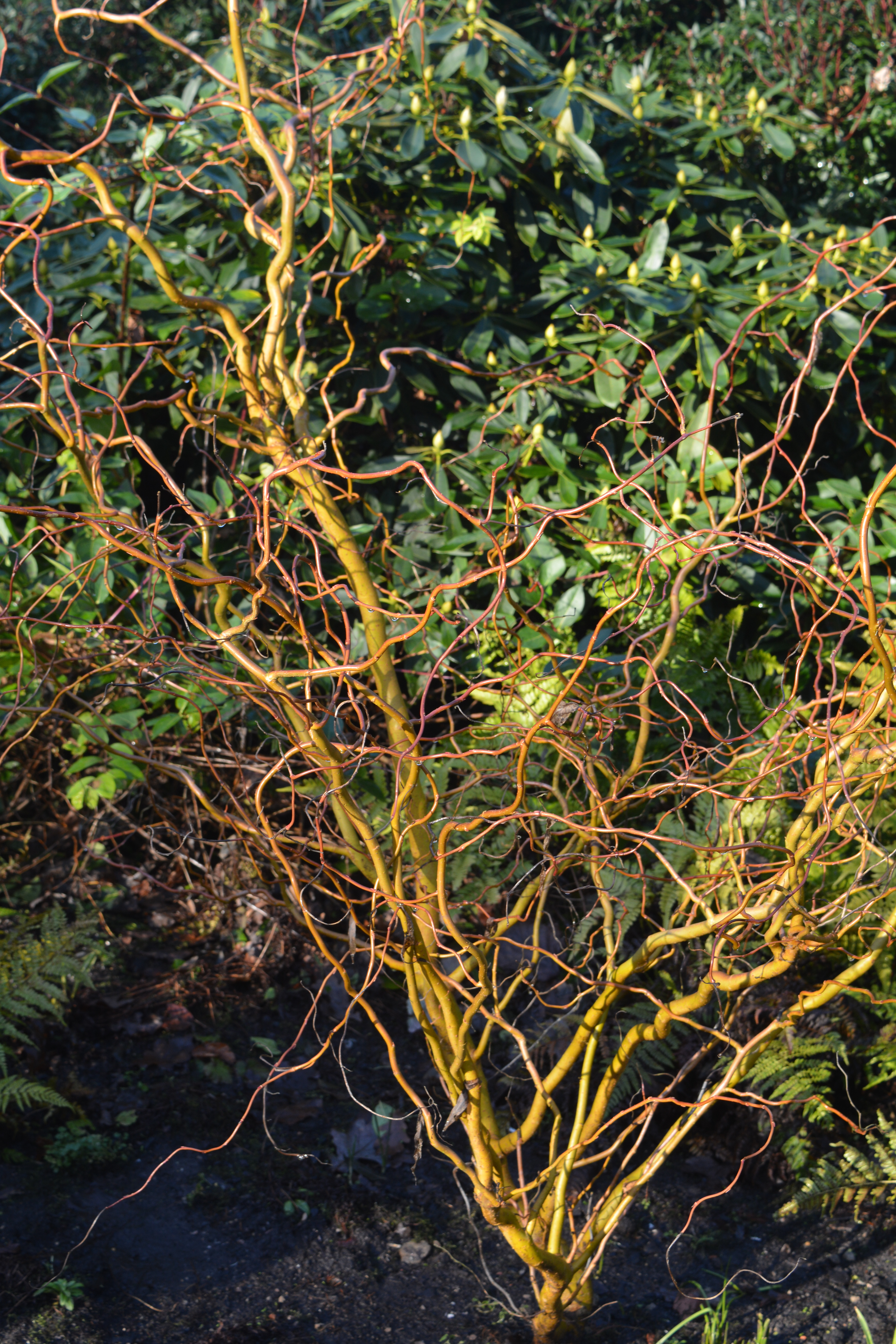
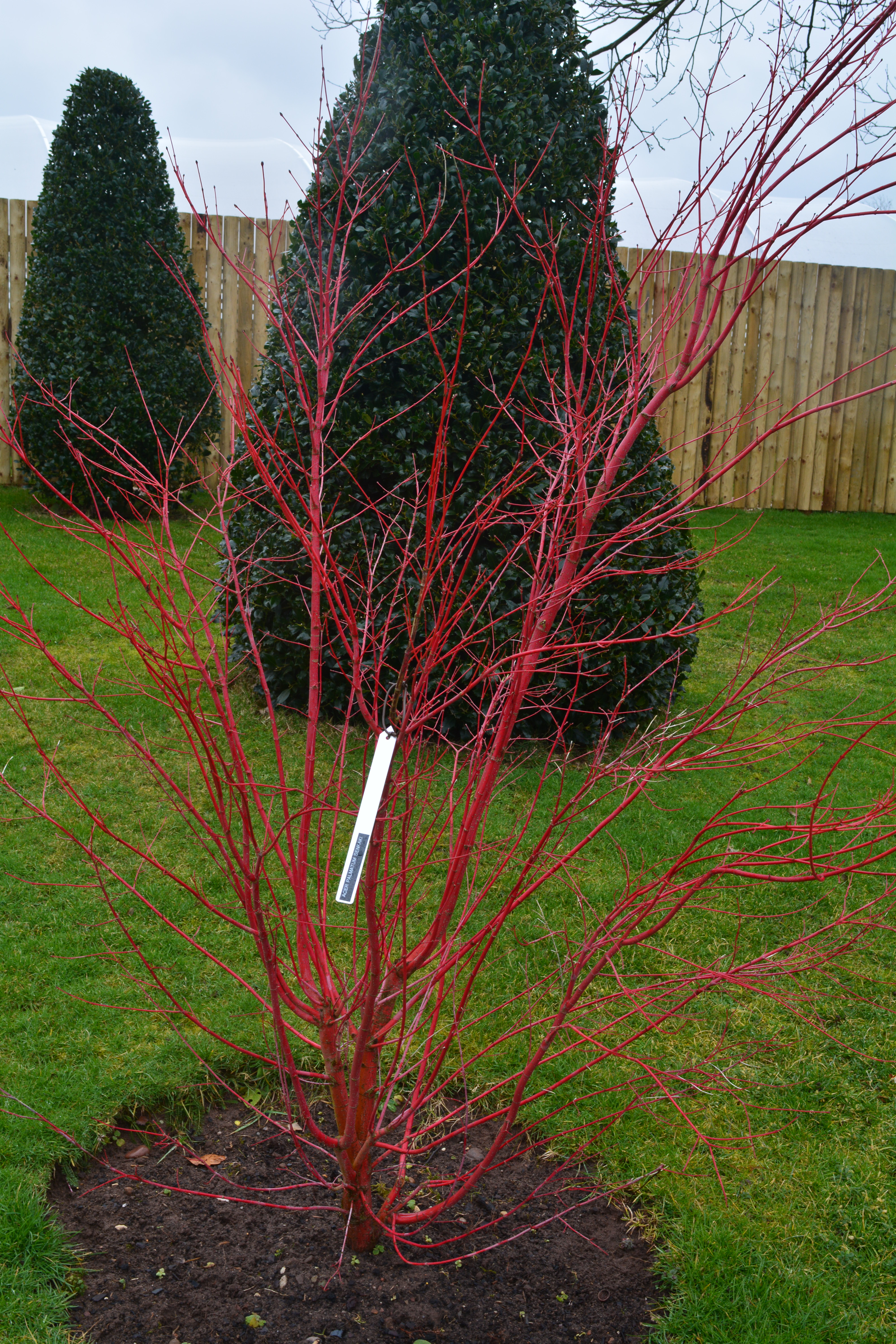
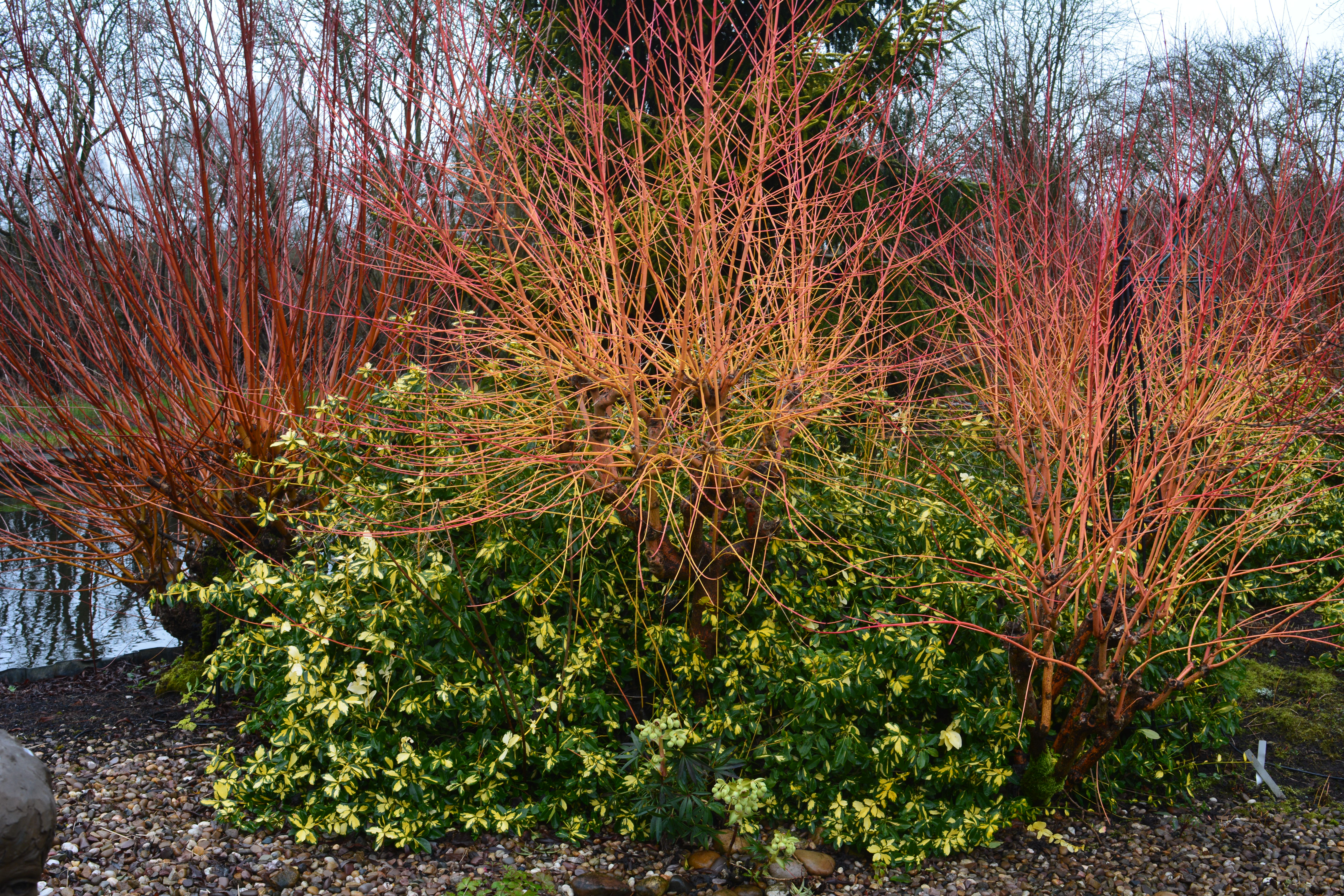
Shrubs with coloured stems provide effective partner planting for these trees, especially Cornus and Salix varieties. The gardeners at Dunham Massey are adept at transparency pruning, effectively lifting the akirts of shrubs and small trees to expose their trunks and lower branches.
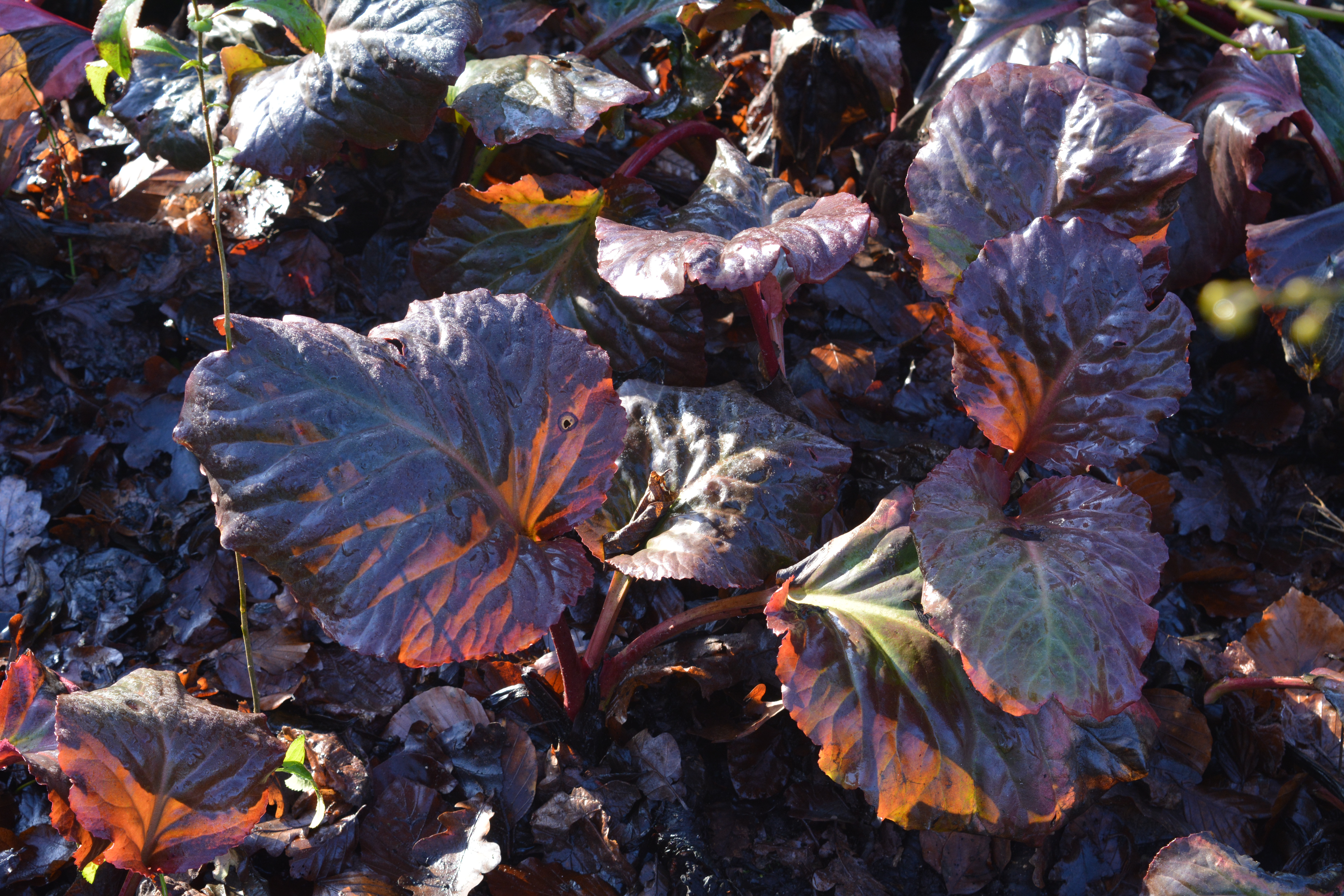
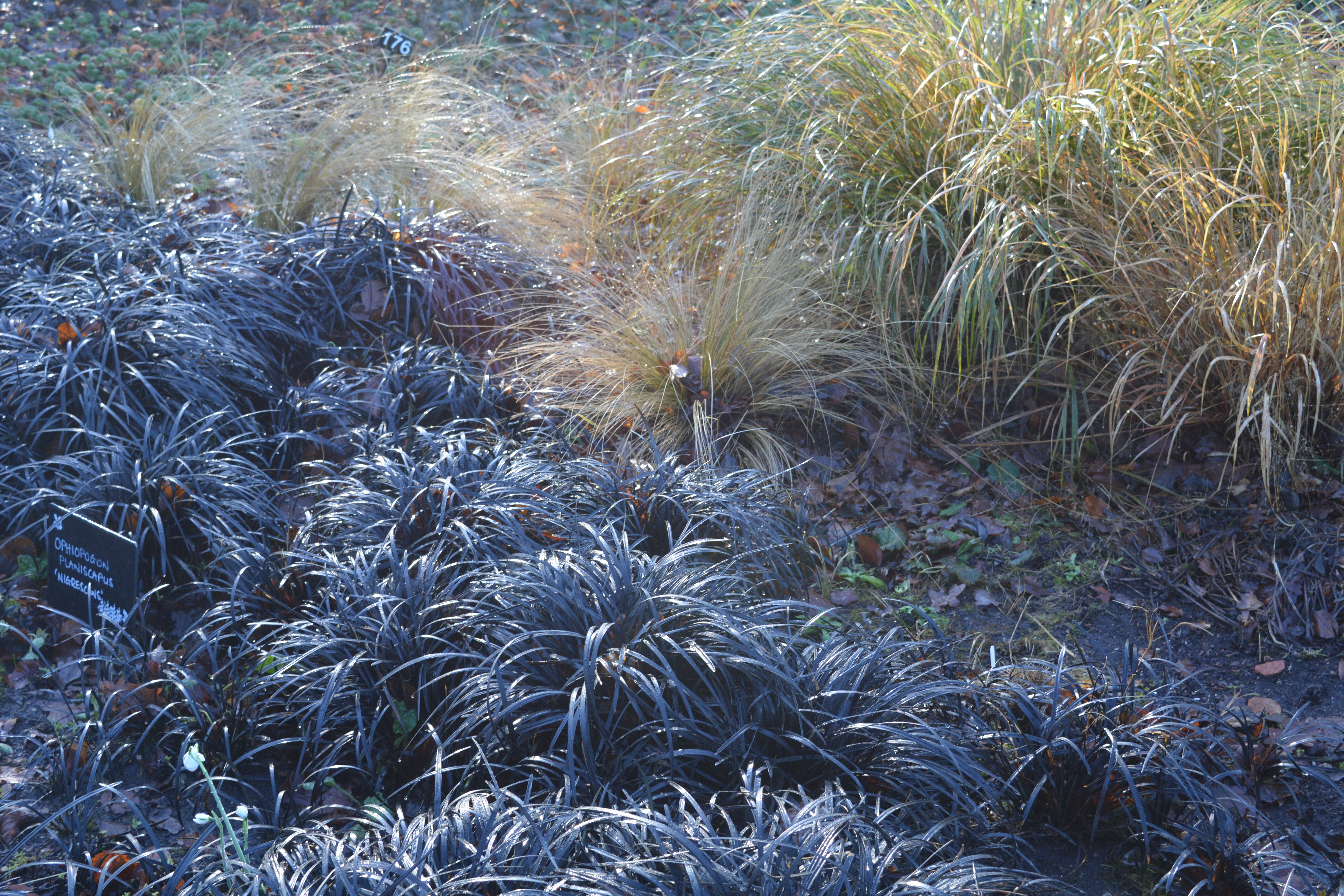
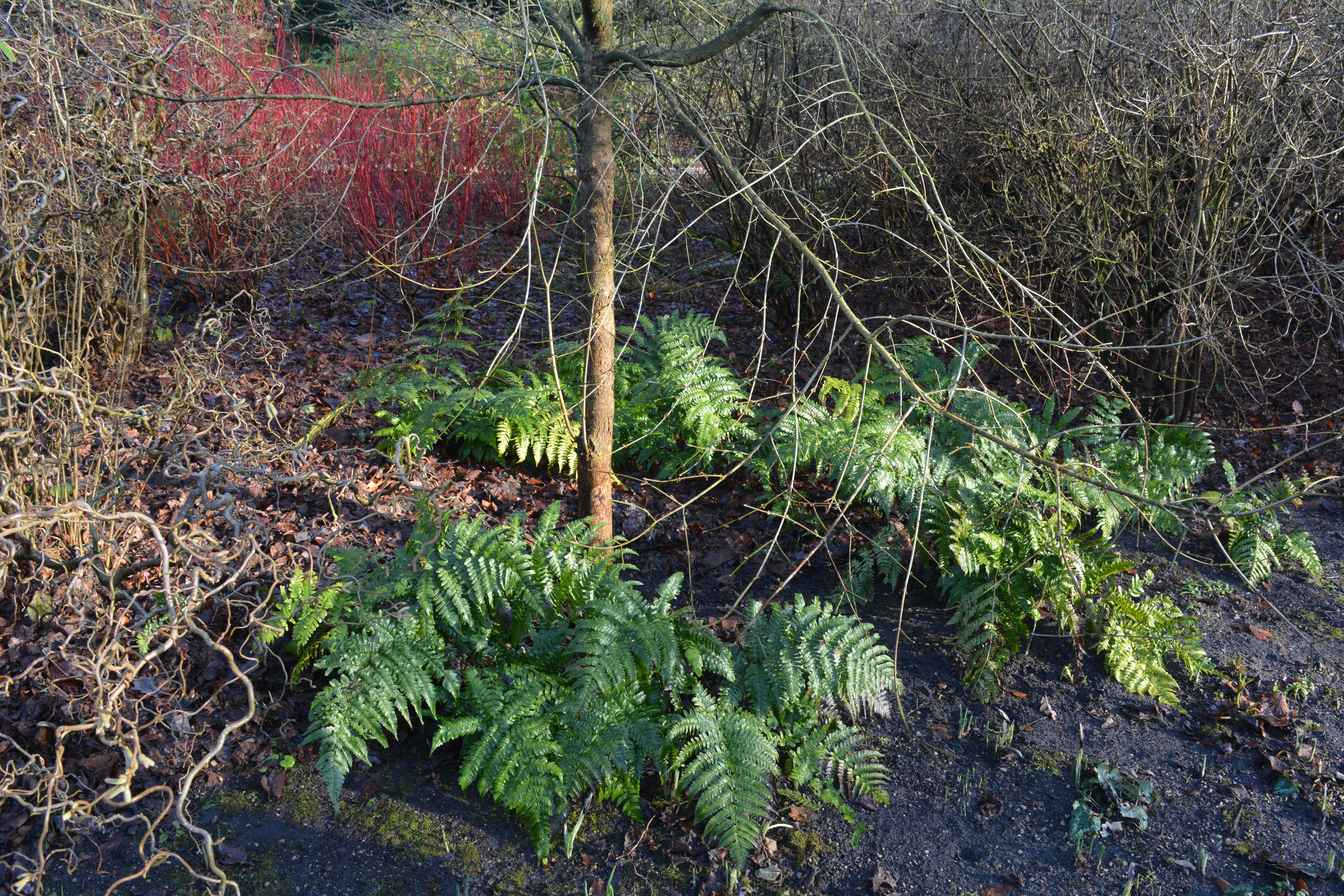
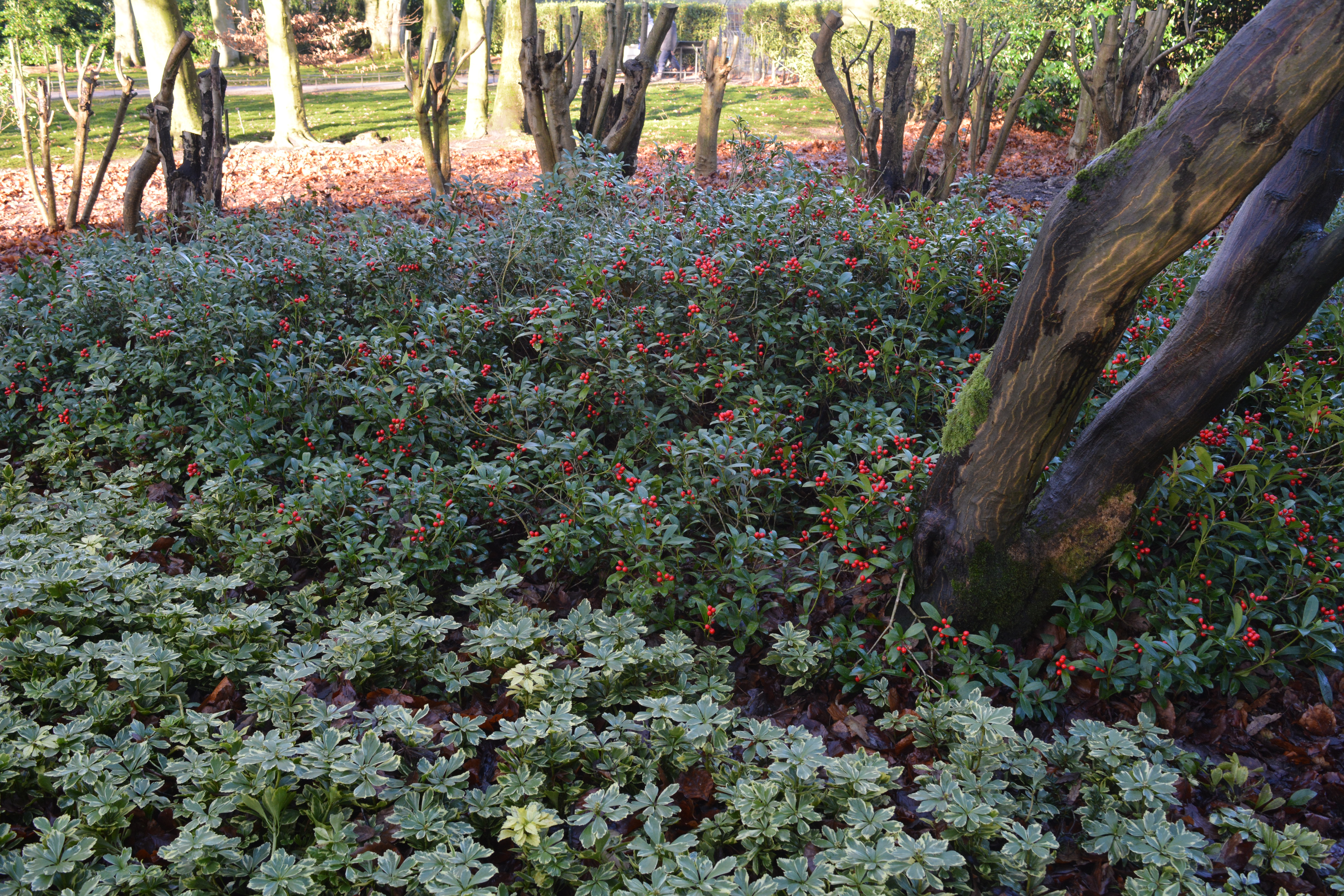
The one plantingcategory that sorts out the best winter gardens from the average is the good creative use of ground cover. It is all too easy to use bark mulch but there are good interesting plants that can cover the ground and add new dimensions to planting schemes. Dunham Massey is on the way to sorting this well, using Carex, Bergenia, Ophiopogon, ferns and Pachysandra.
So there we have it, a thoroughly inspiring visit to one of our favourite winter gardens.
We have visited “John’s Garden” before in the height of summer and really enjoyed it, so much so that we were determined to re-visit at different times of the year. We imagined it would be an effective all-year garden. Mid-February and John opened his garden on a cold and wet winters day, so we went along with garden-loving friends Pete and Sherlie.
We started with a hot mug of coffee in the nursery coffee shop to warm us up, so with added warmth and lots of excitement and anticipation we wandered down the drive from Ashwood Nurseries to his own 3 acre-garden.
The garden has the advantage of boasting a canal, the Staffordshire and Worcestershire Canal, running along its length – not many gardeners could say that about their patch!
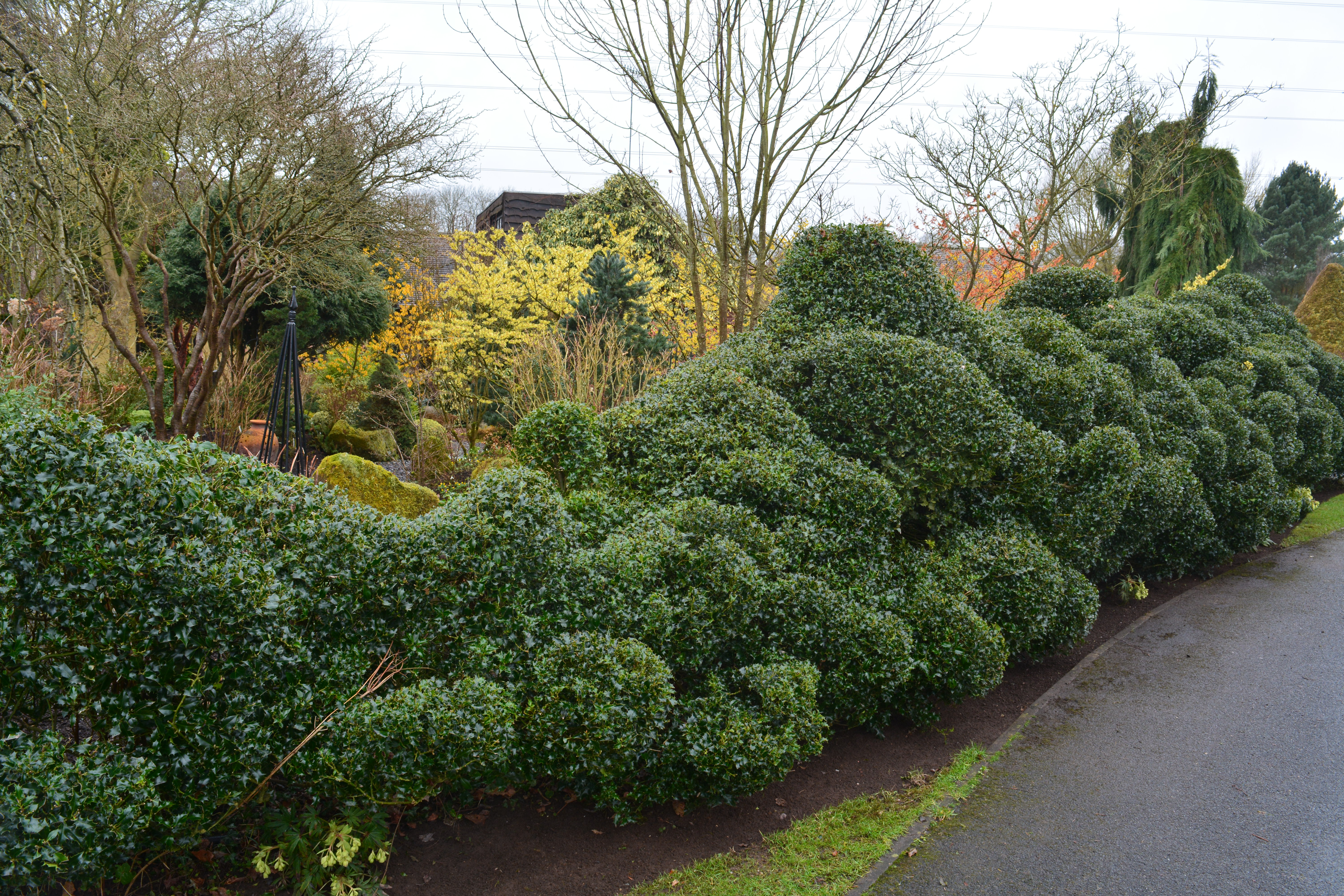
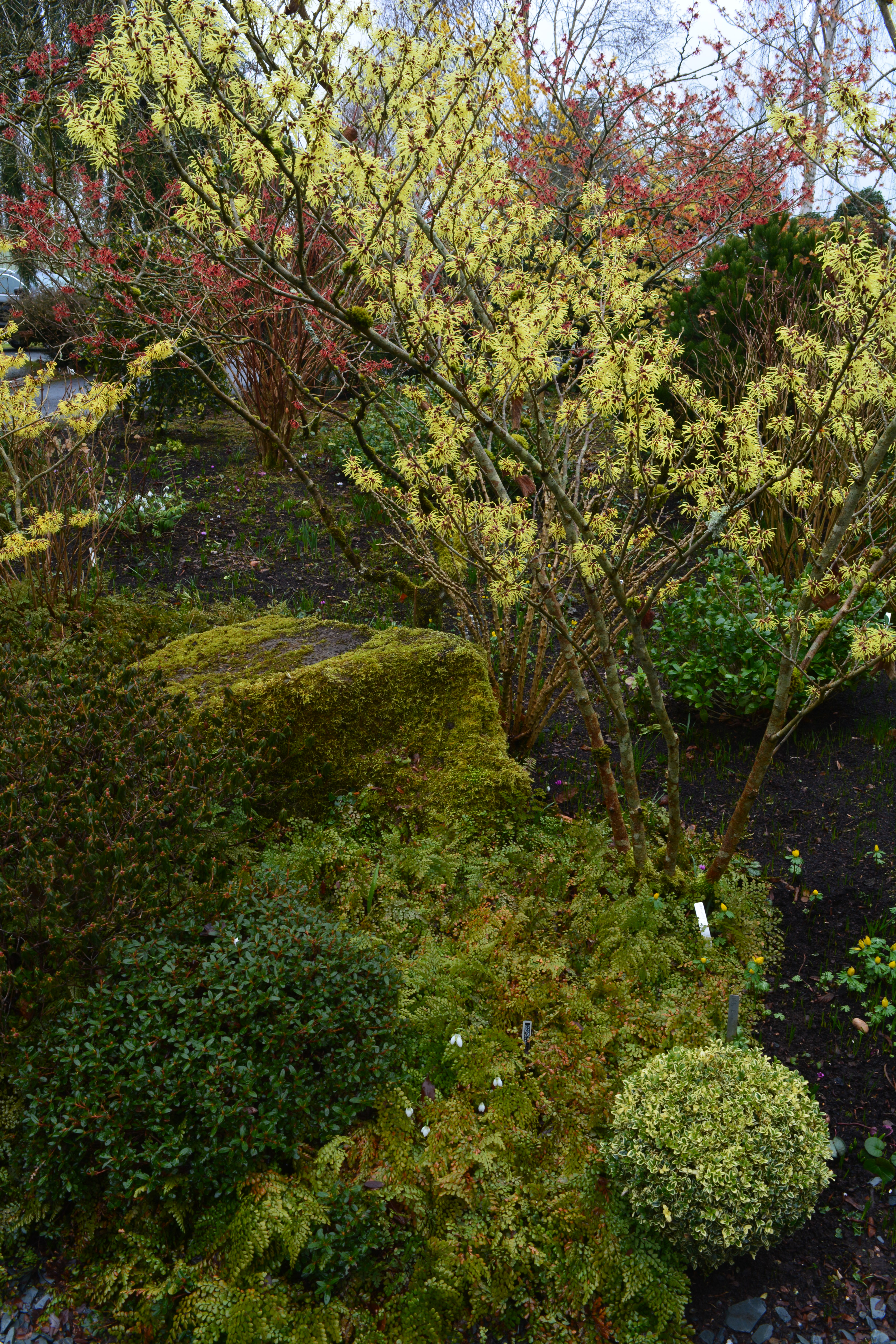
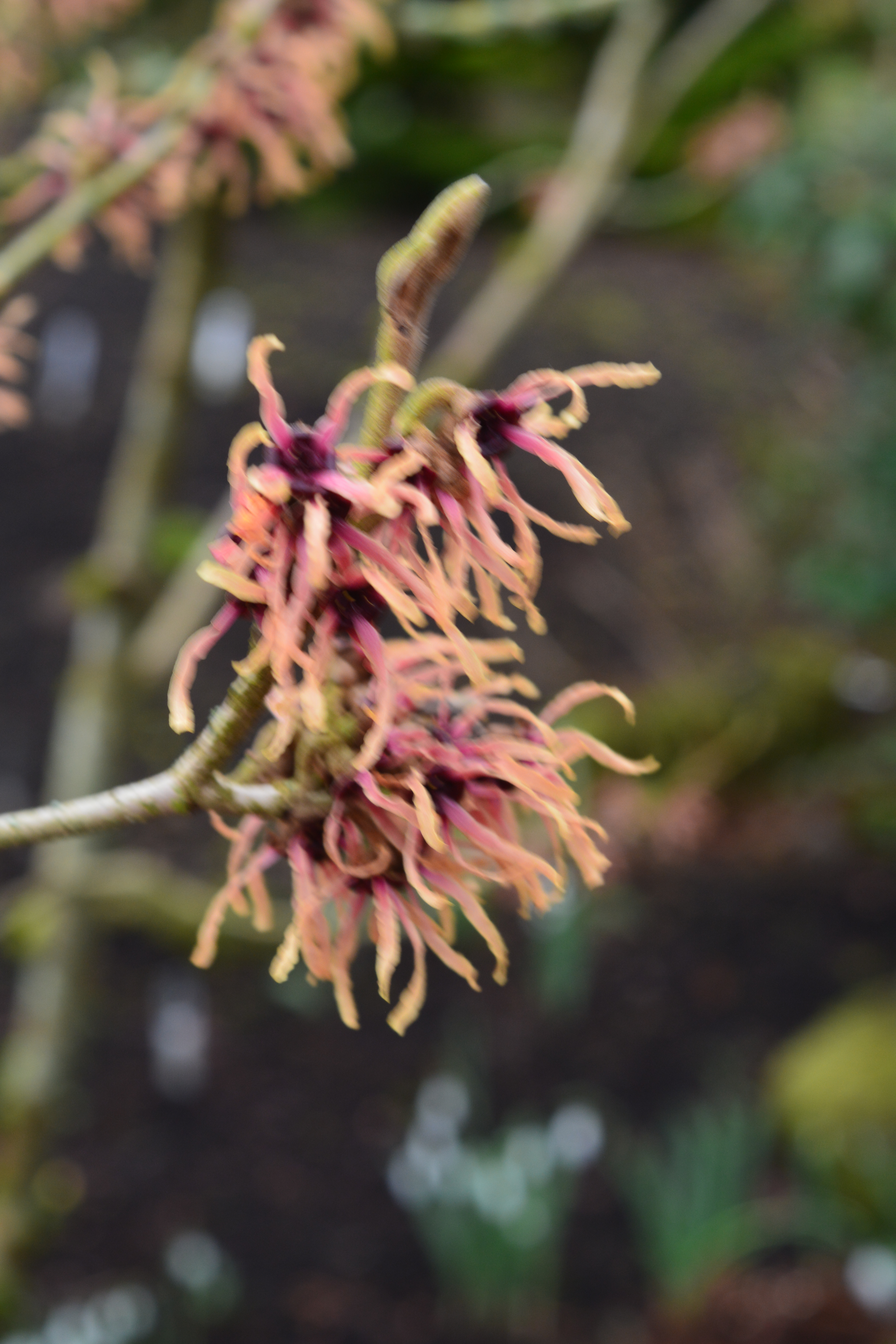
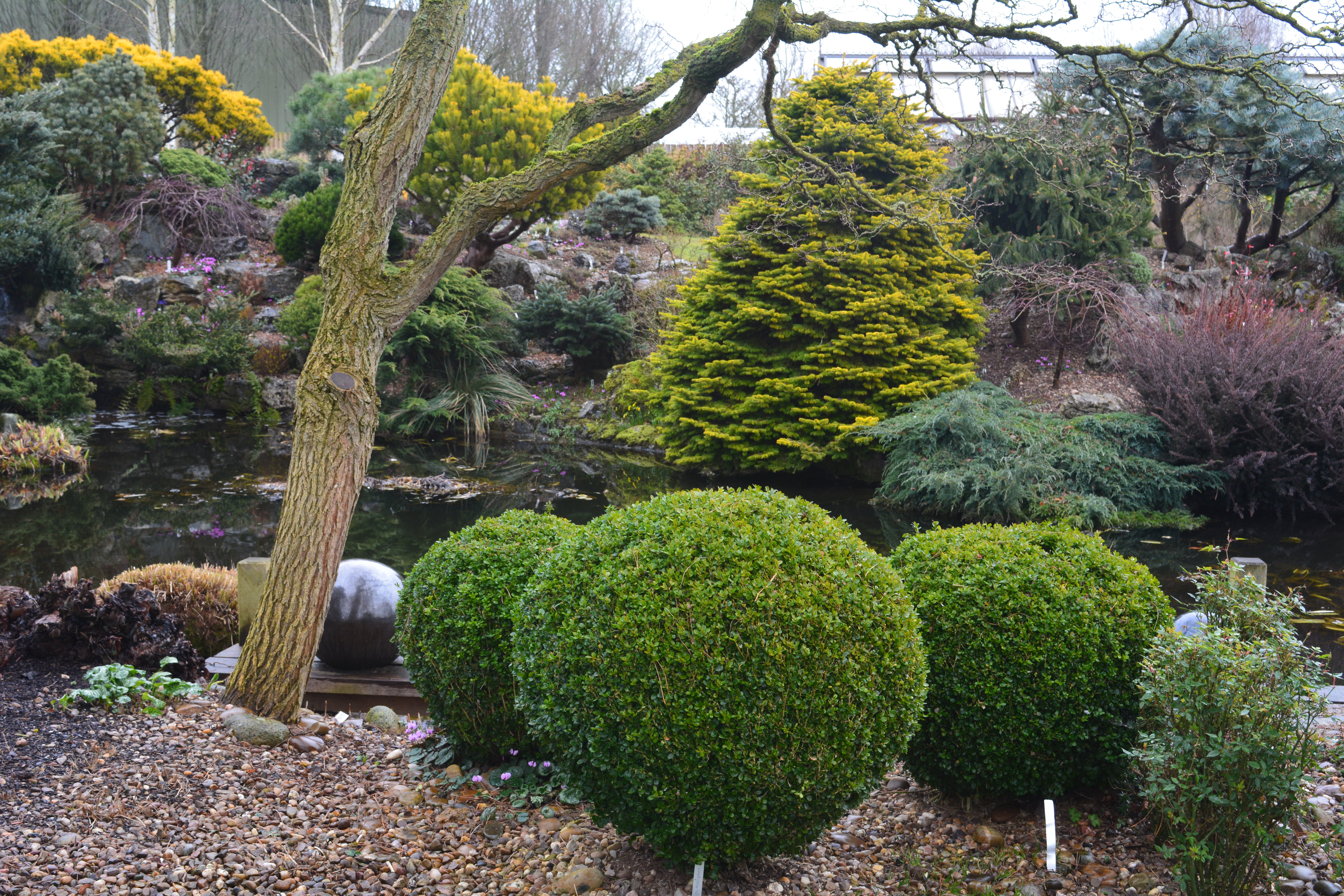
An unusual hedge greeted us as we entered the garden, a long cloud pruned hedge, beautifully sculpted. A slate pathway at its end took us into a colourful area full of winter interest. Hamamelis and small deciduous trees were the stars, supported ably by ferns, bergenias, snowdrops and a variety of small-leaved shrubs trained as spheres.
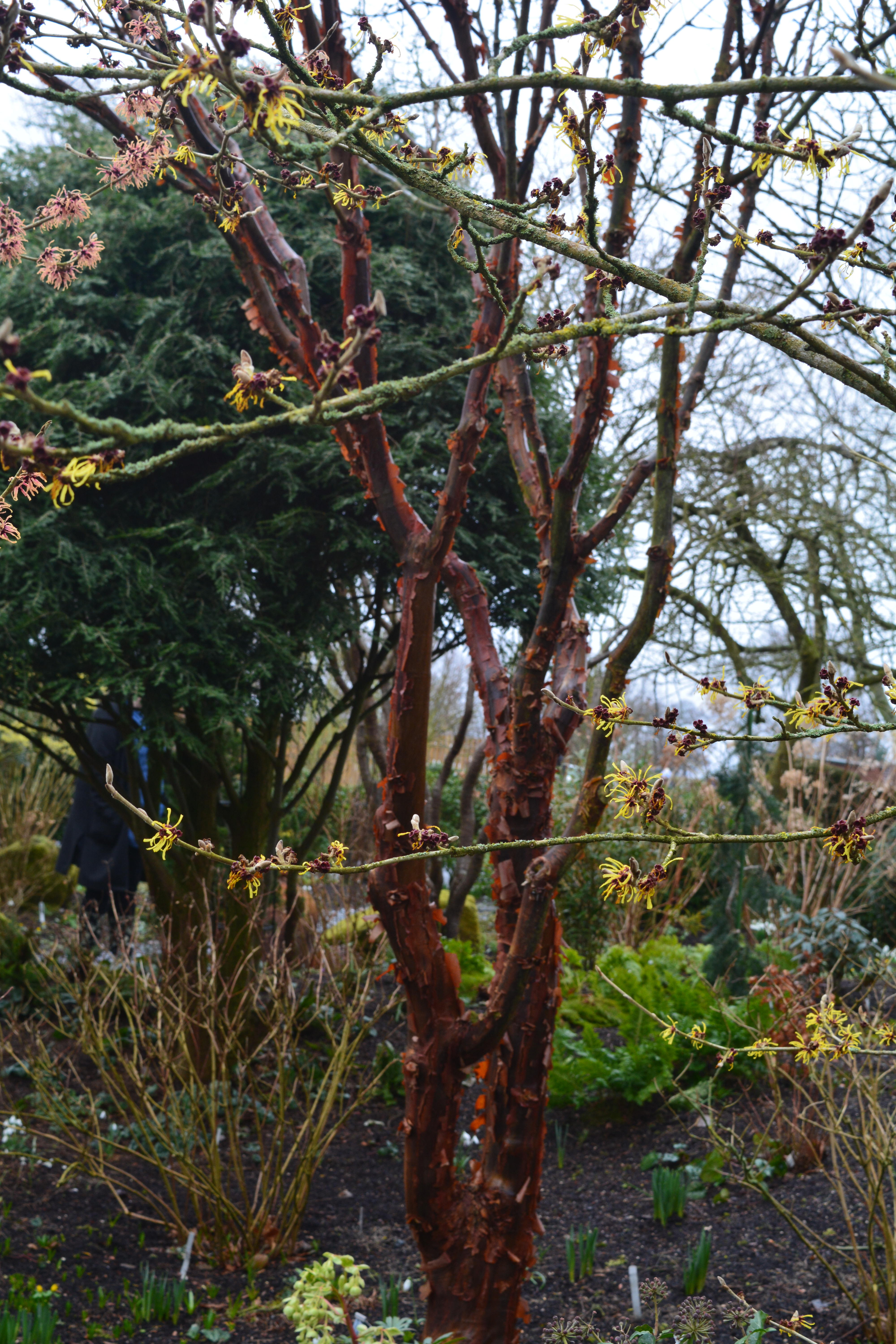
We left this little garden behind and crossed an open lawned area dotted with topiary specimens and trees with interesting bark, coloured, textured or peeling. We joined up with the gardens bordering the canal, the sort of background gardeners can only dream of.
After a close up look at these trees and touching their bark, we followed the canal-side borders into the main gardens. Here grasses mingled with dogwoods and Willows, both pollarded and coppiced to enhanced their stem colours. Conifers of all sorts of shapes, colours and sizes began to appear here becoming strong features of this garden during the winter months. John is a master at transparency pruning which brings out the trees attributes. Interestingly he prunes both deciduous trees and shrubs and coniferous specimens too, which makes them look so much more interesting and they add so much to borders.
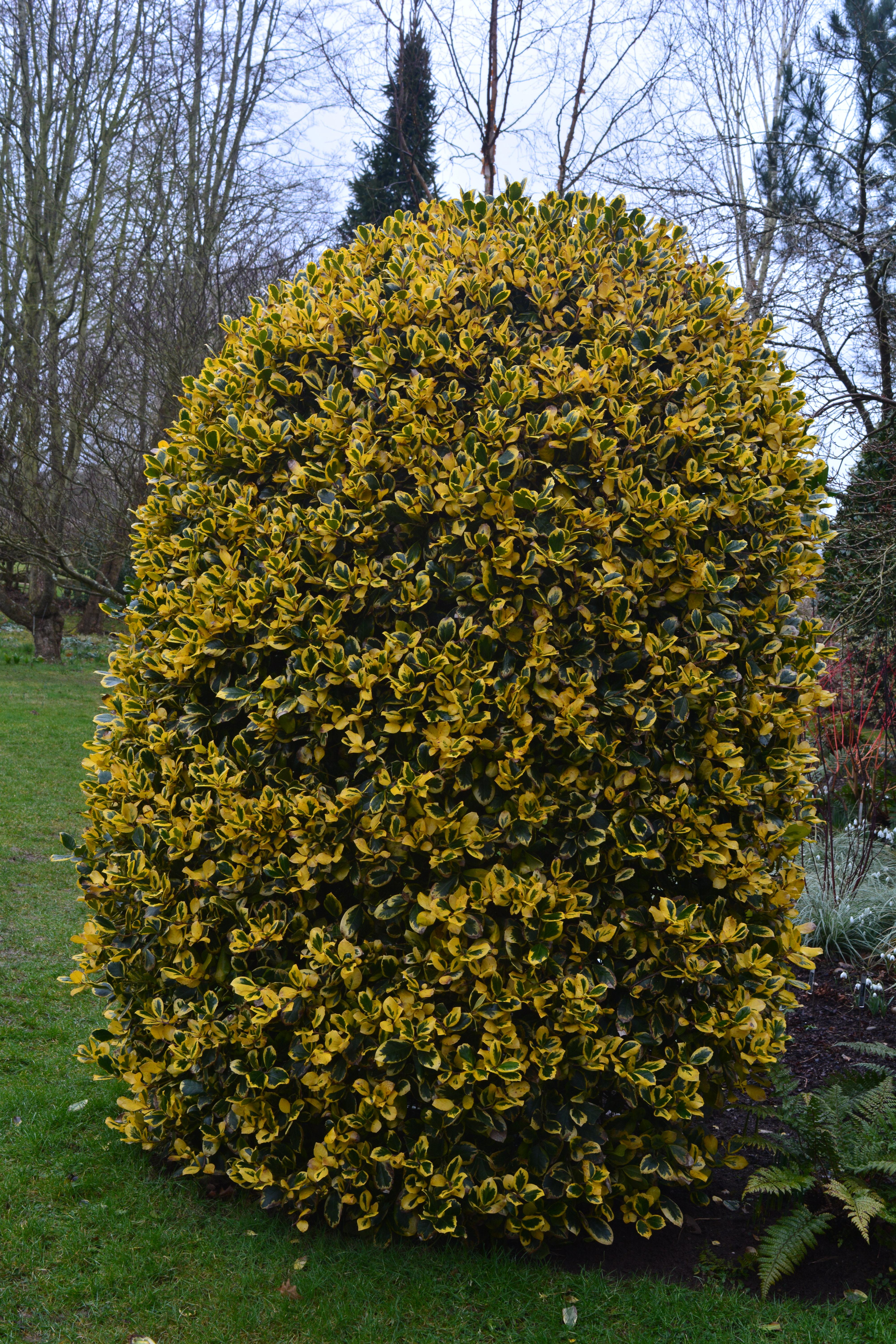
John is also a master of topiarising shrubs to emphasise their beauty and give structural elements throughout the garden. All sorts of conifers and evergreen shrubs have been given this treatment.
In part two of my post all about our winter visit to John’s Garden, we will move along the canal borders before returning along the opposite side of the patch, while along the way discovering a pool, sculpture and a terrace and lots more exciting plants and plant pairings.
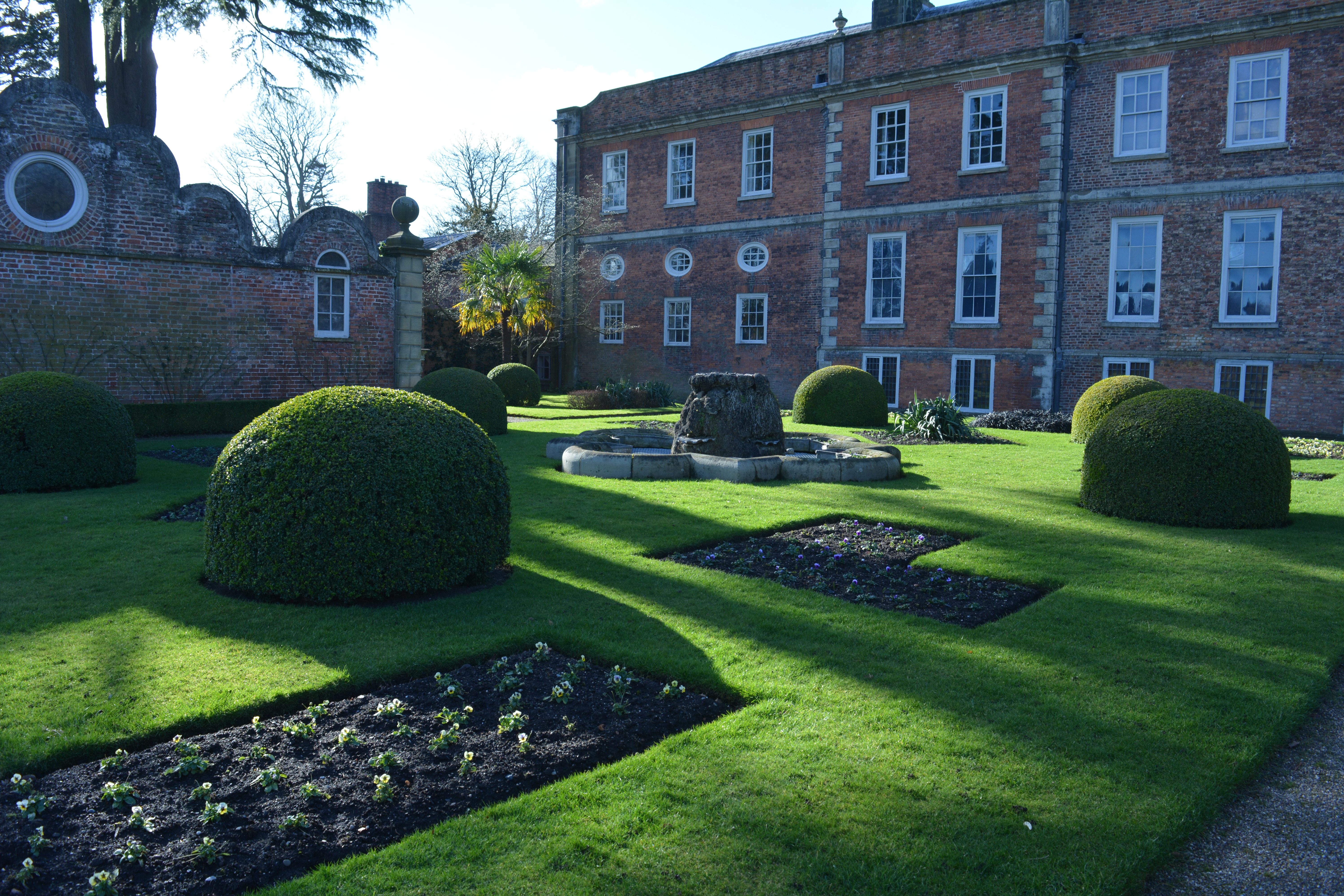
We took a short one hour drive out into Wales today to visit a National Trust property, Erddig which we hoped would afford us the opportunity of exploring a garden with winter interest, interest found in its formal structure, its topiary and imaginative pruning as well as planting. We knew that it holds the National Collection of Hedera (Ivies), so we had something specific and extra to look for too.
After too many wet weeks the day dawned bright and we were to be treated to a day of bright winter sunshine, which would play with shadows and light throughout our walk. We were surprised to discover that the whole place, buildings and gardens were in a state of disrepair bordering on dereliction in the 1960’s when a new owner decided to rescue it and awaken a real jewel of a property.
Two welcome signs greeted us as we entered, a rustic overhead design and another with a beautiful quote which read, “Where fragrance, peace and beauty reign ….”. We would soon see if this were true.
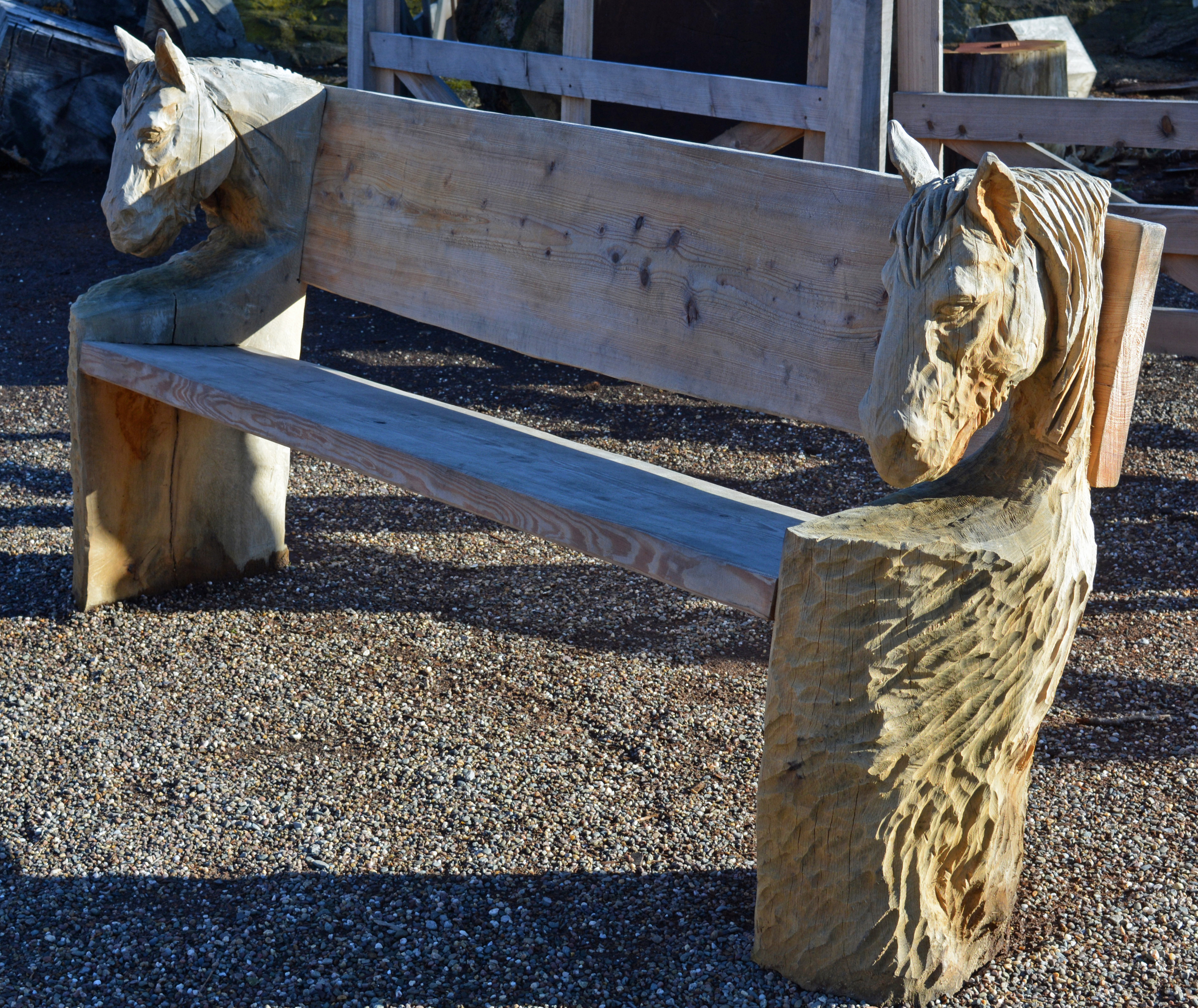
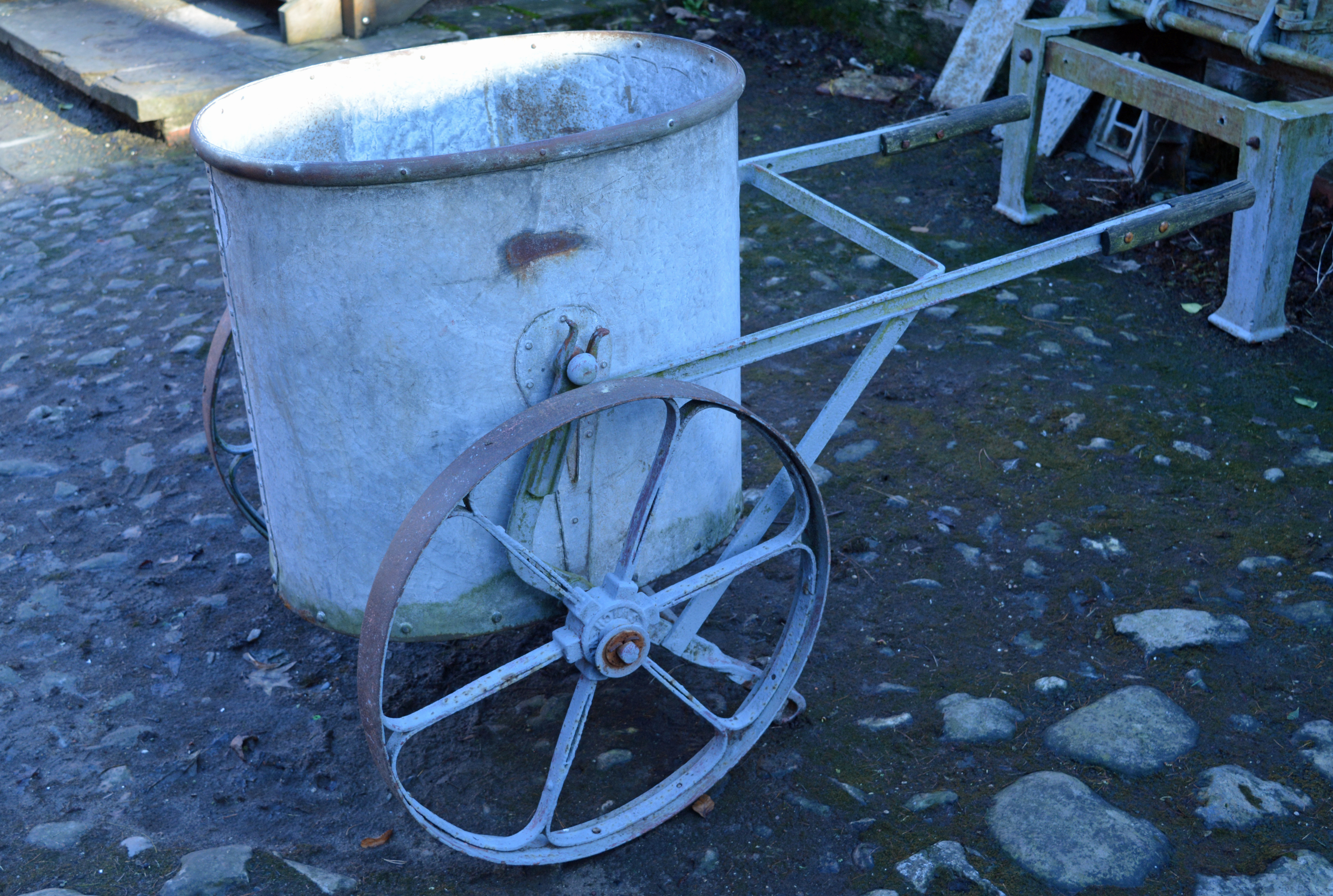
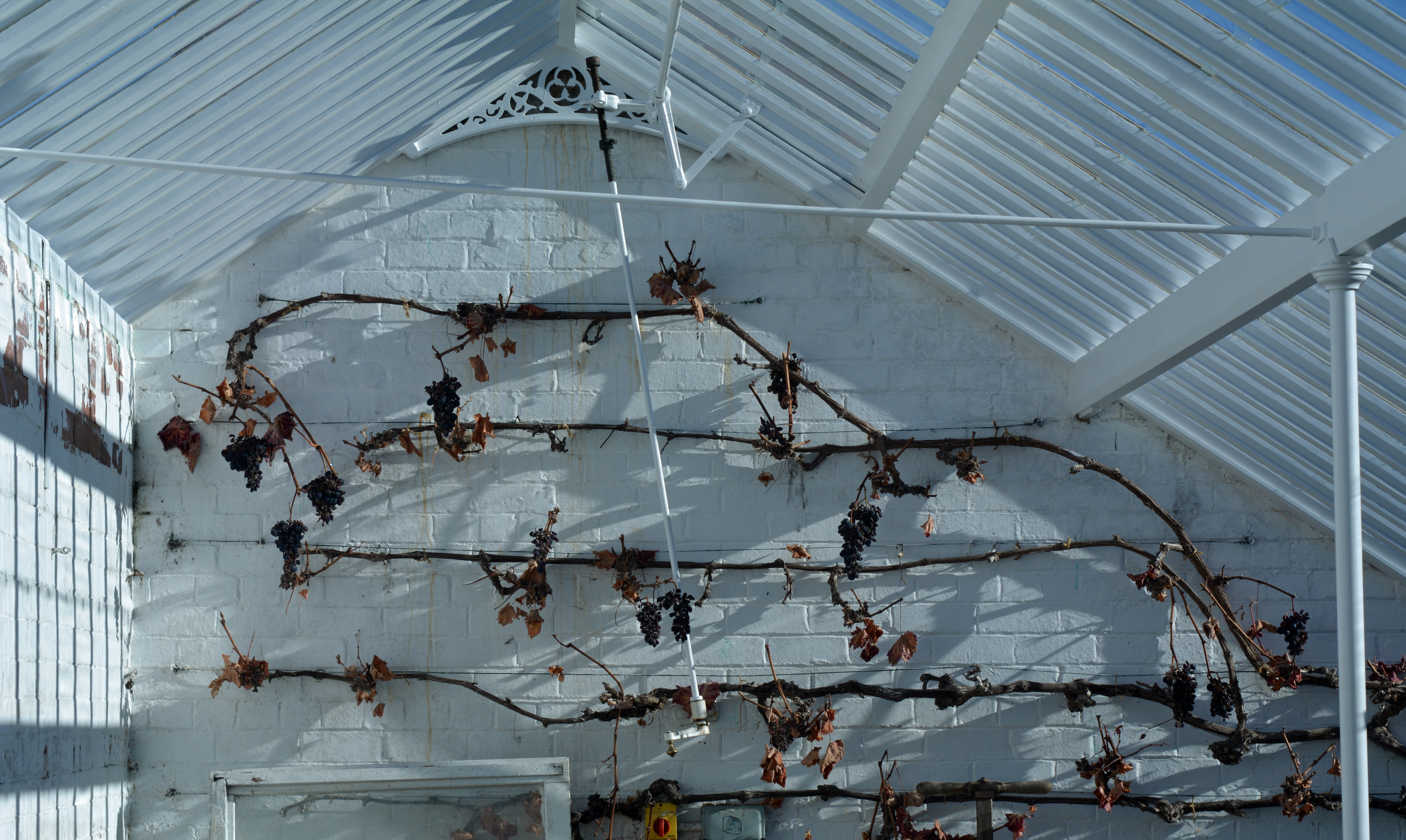
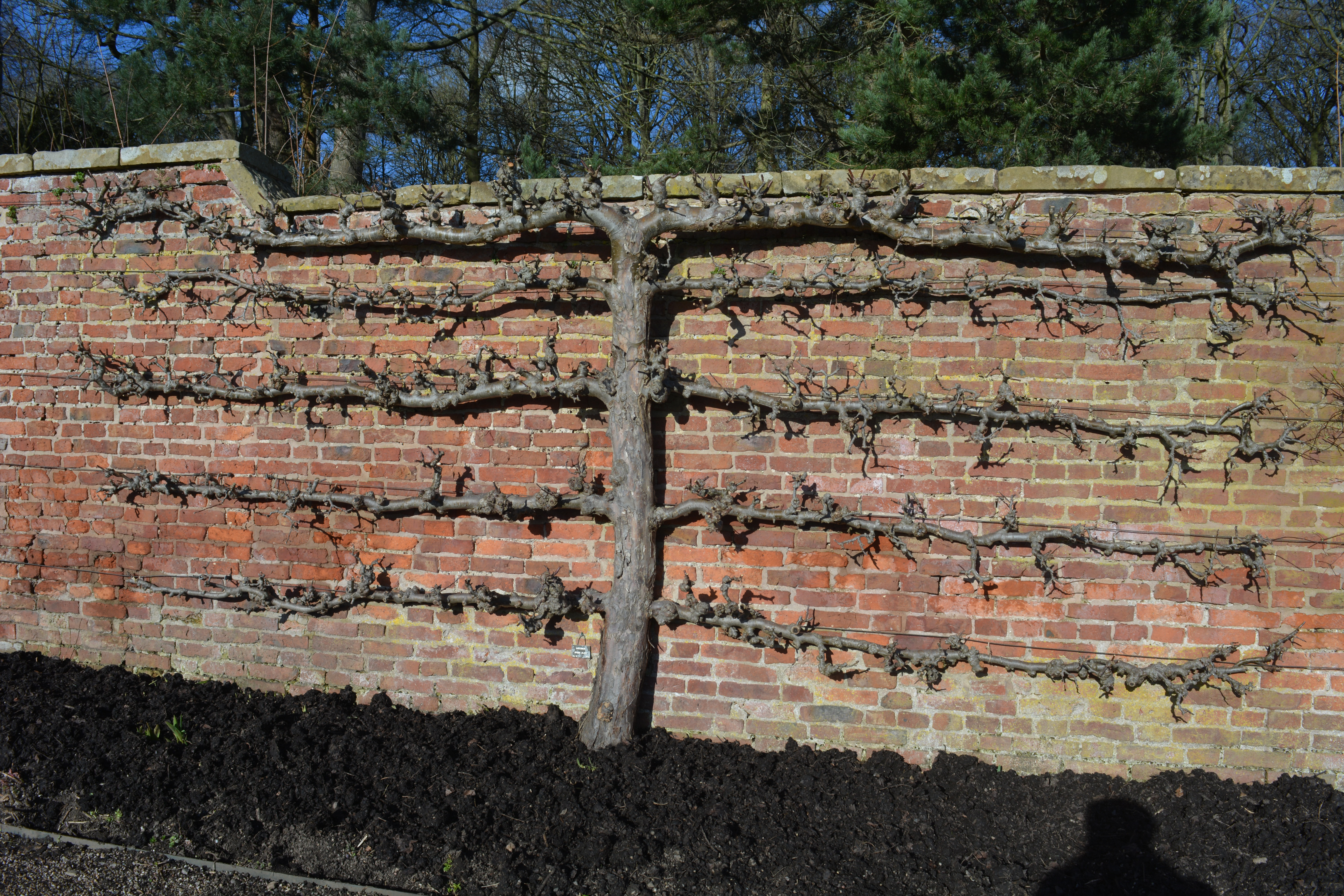
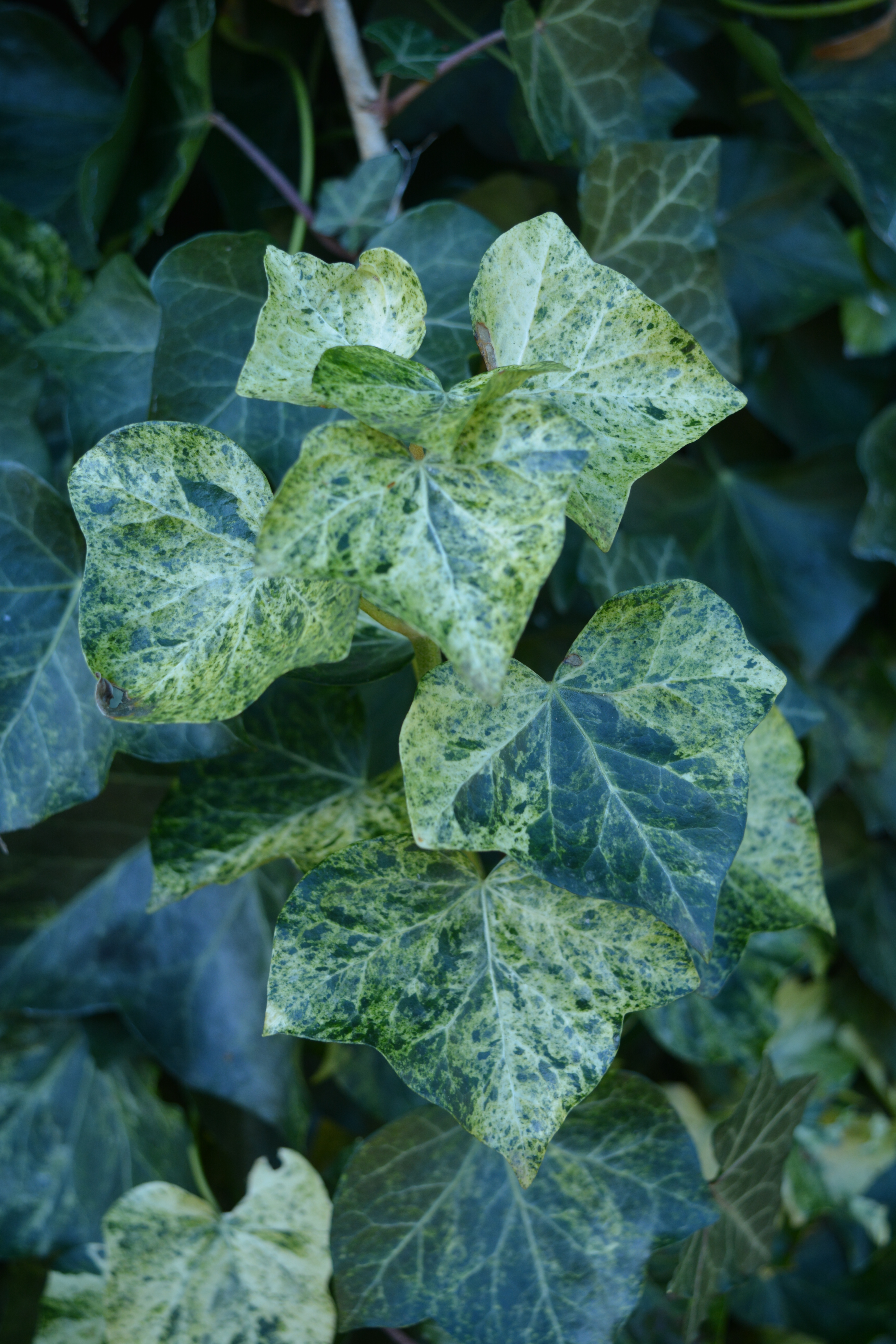
The garden is Grade 1 listed and is based around the 18th Century design. Amazingly it works well today! Even the car park and courtyards on the way in had points of interest to us gardeners, some of the Ivy cultivars, ancient wall-trained fruit, a beautifully carved wooden seat featuring carved horse heads and a vintage garden watering cart. We soon met our first Hederas (Ivy) in the collection, an unlabelled specimen which grew to frame a window, and one with beautiful foliage, Hedera hiburnicum variegata.
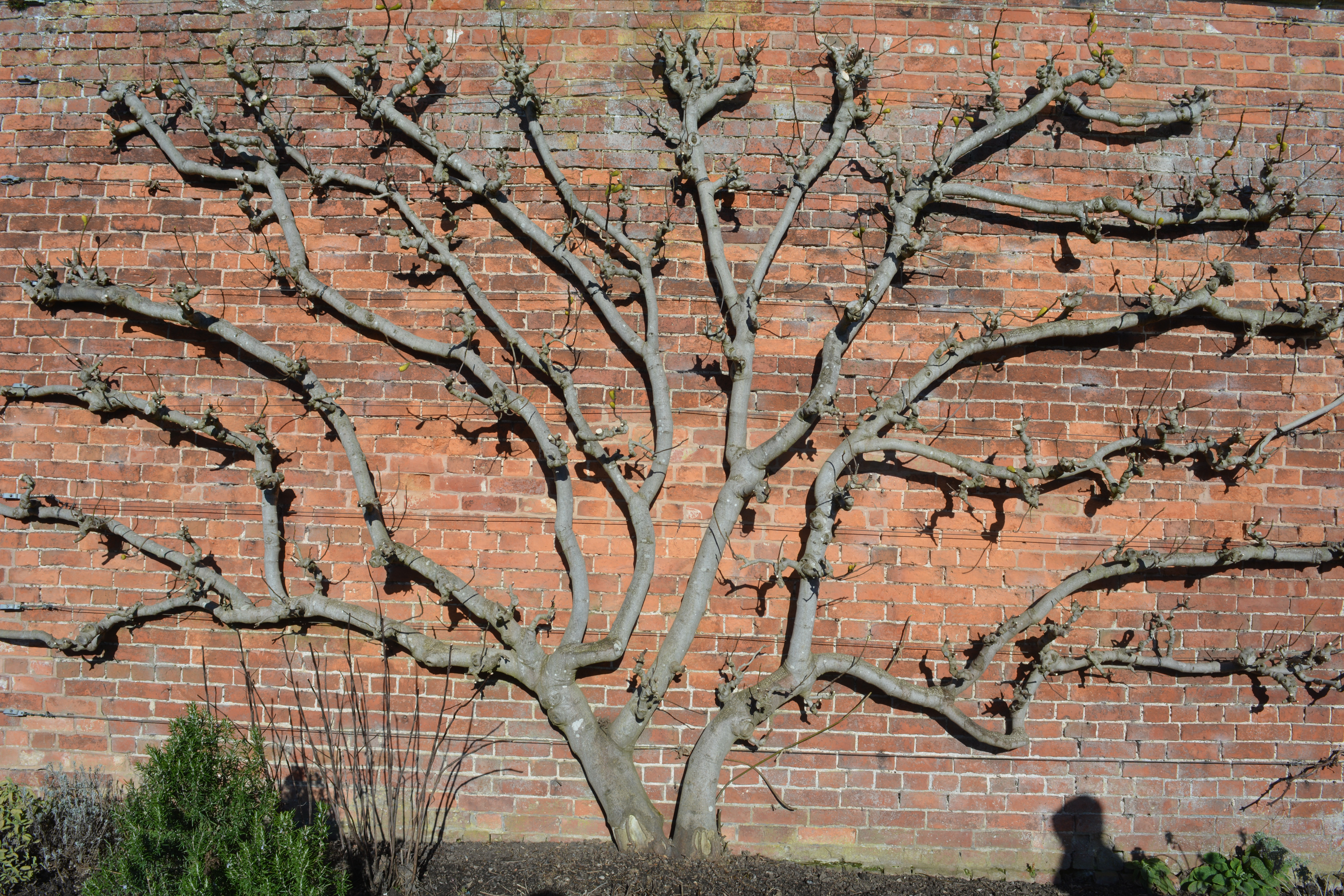
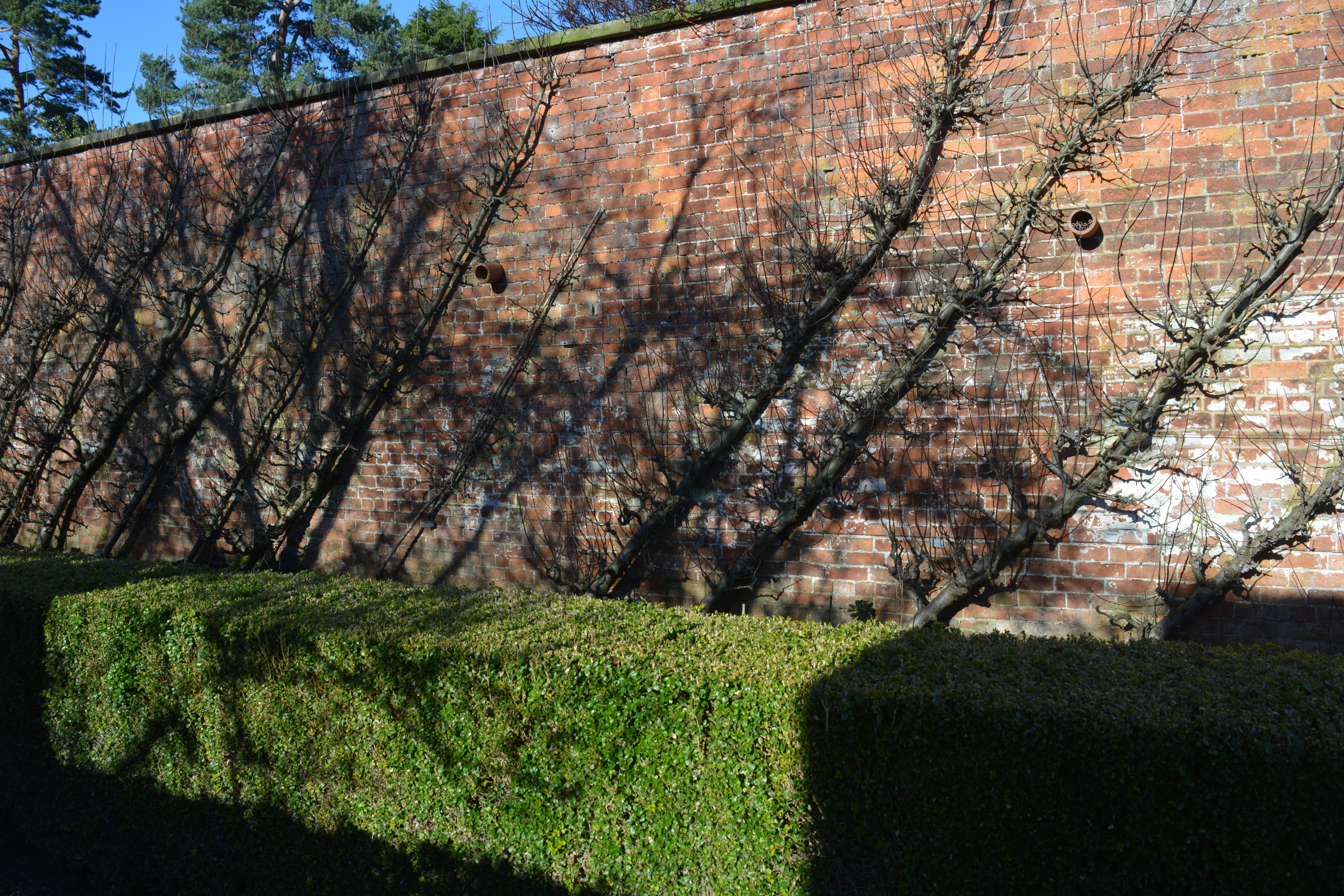
A feature we were looking forward to at Erddig was the huge variety of creatively pruned trees, both fruit trees and conifers. Some of these fruit trees must be decades old but are still skillfully pruned. Really well pruned and trained fruit trees are really beautiful. It felt good to see these age old gardening skills carrying on so professionally.
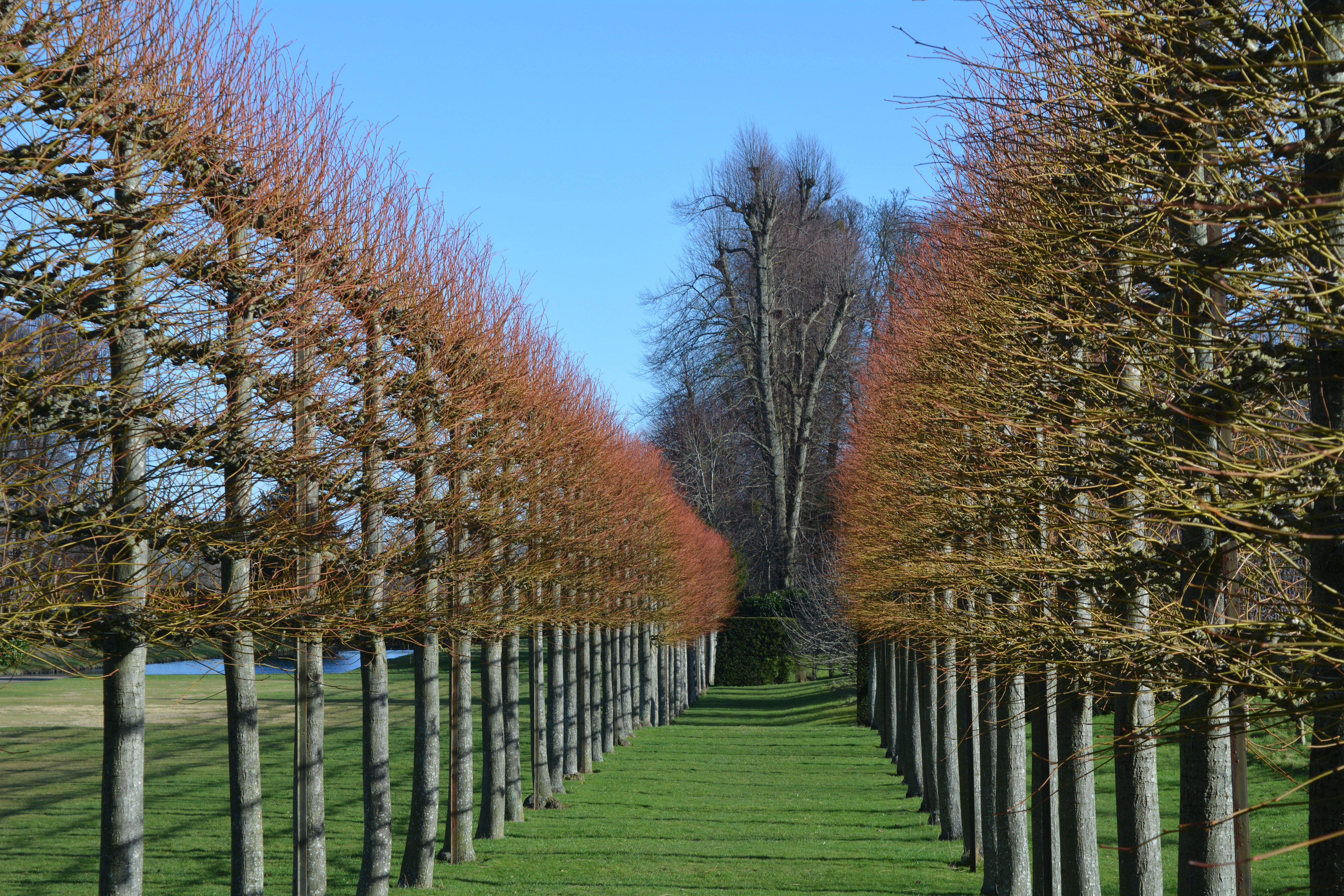
We discovered this double row of pleached limes after spotting an orange glow as the winter sun caught the new twigs and buds.
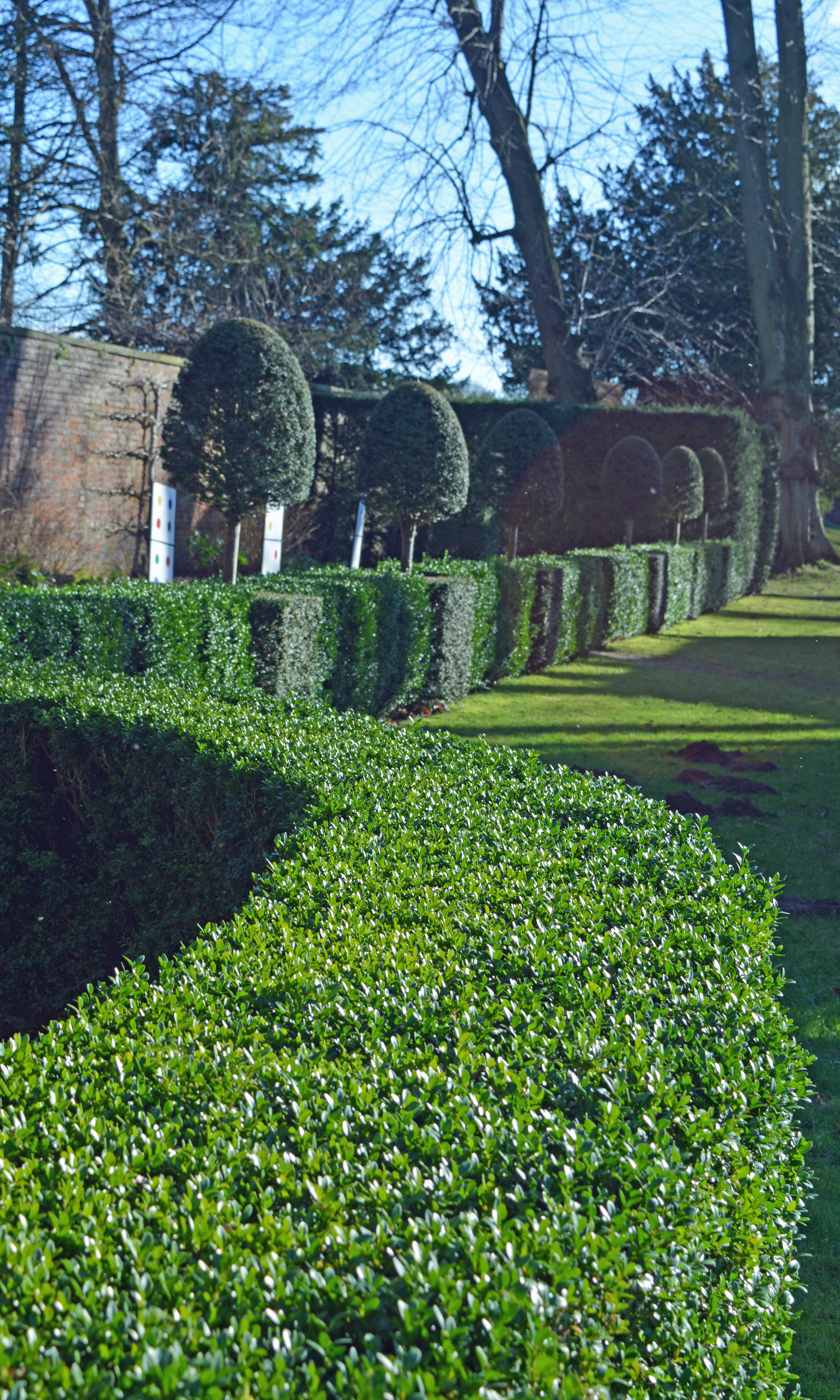
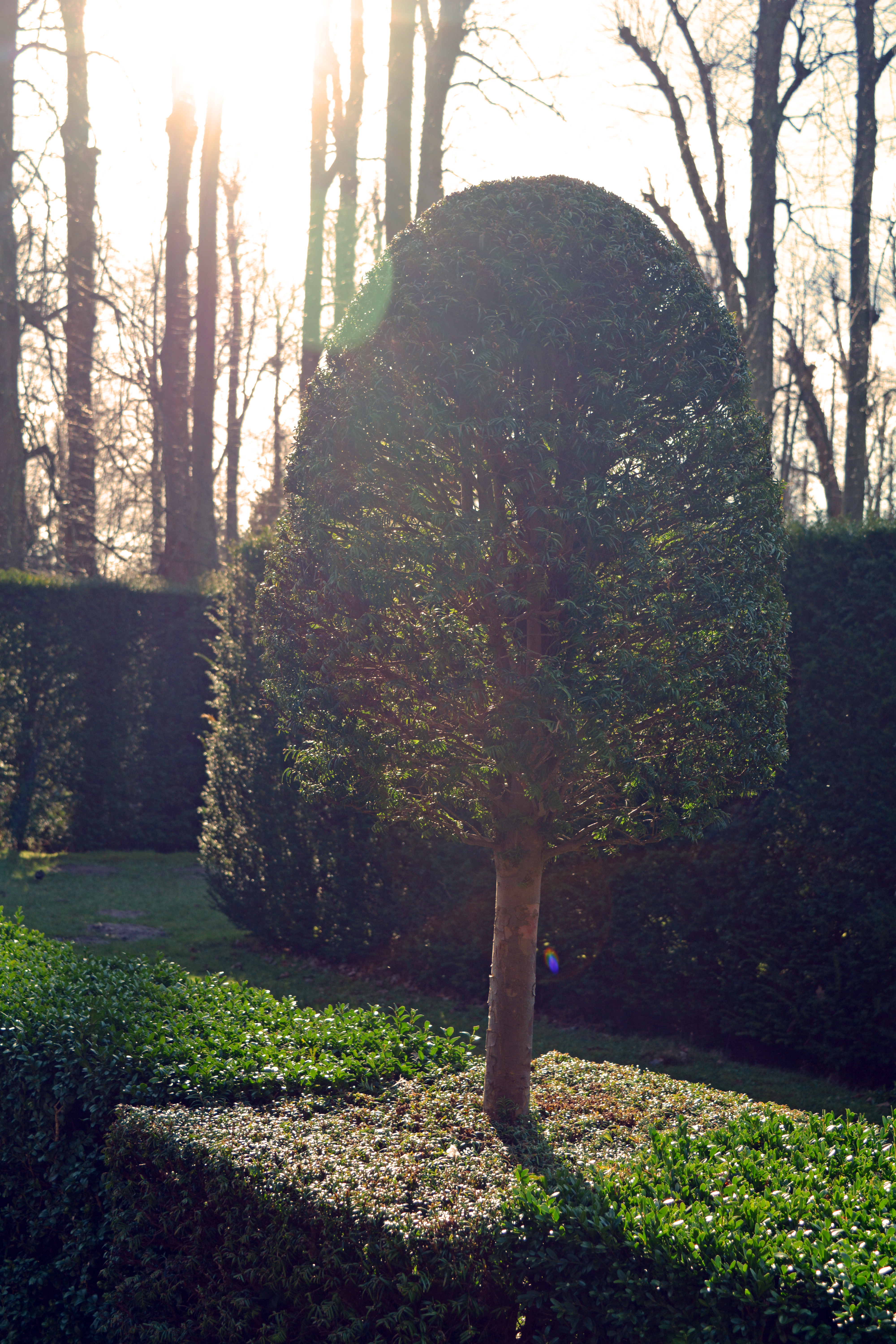
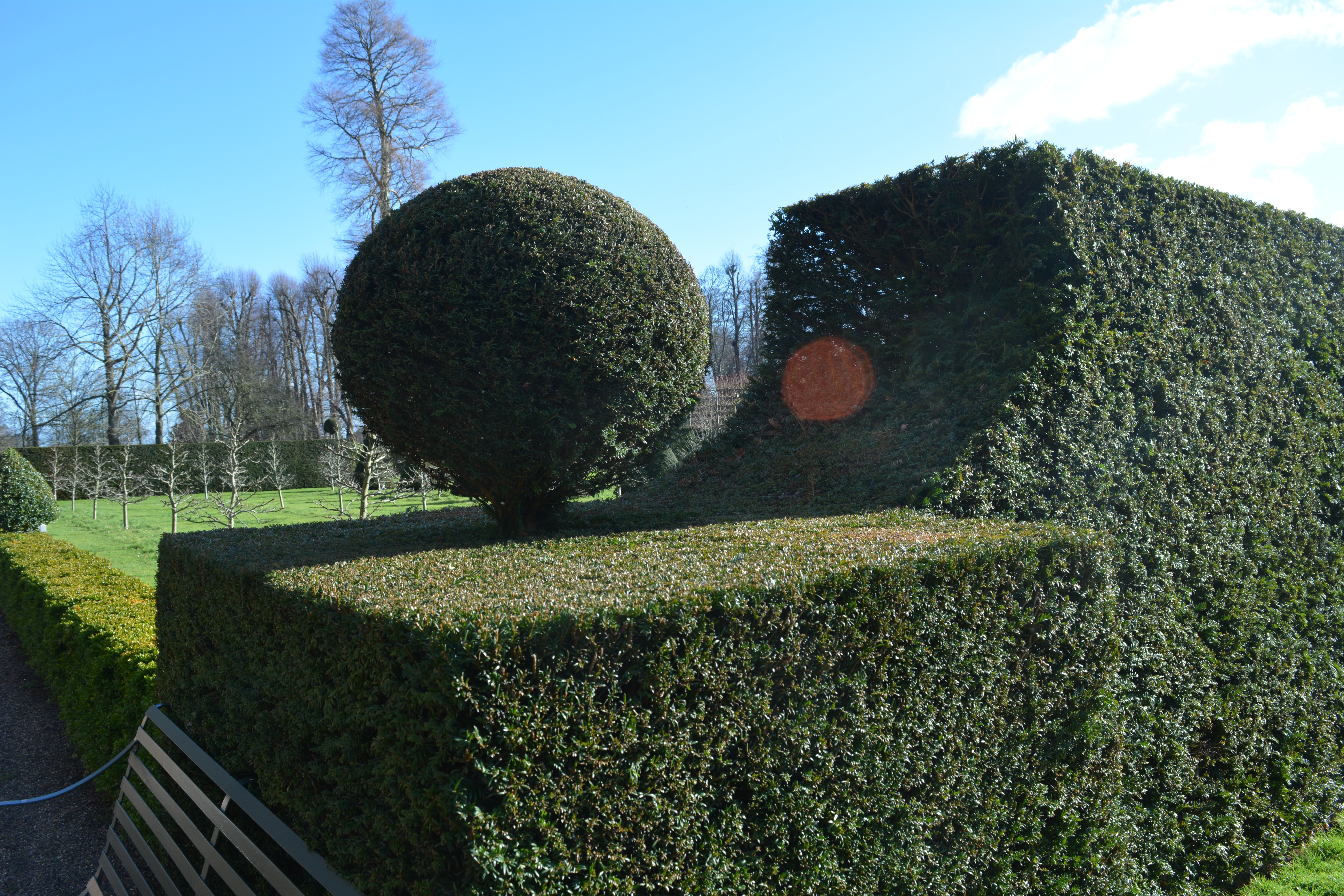
Beautifully topiarised conifers were presented in neat rows and as hedges throughout the formal garden area.
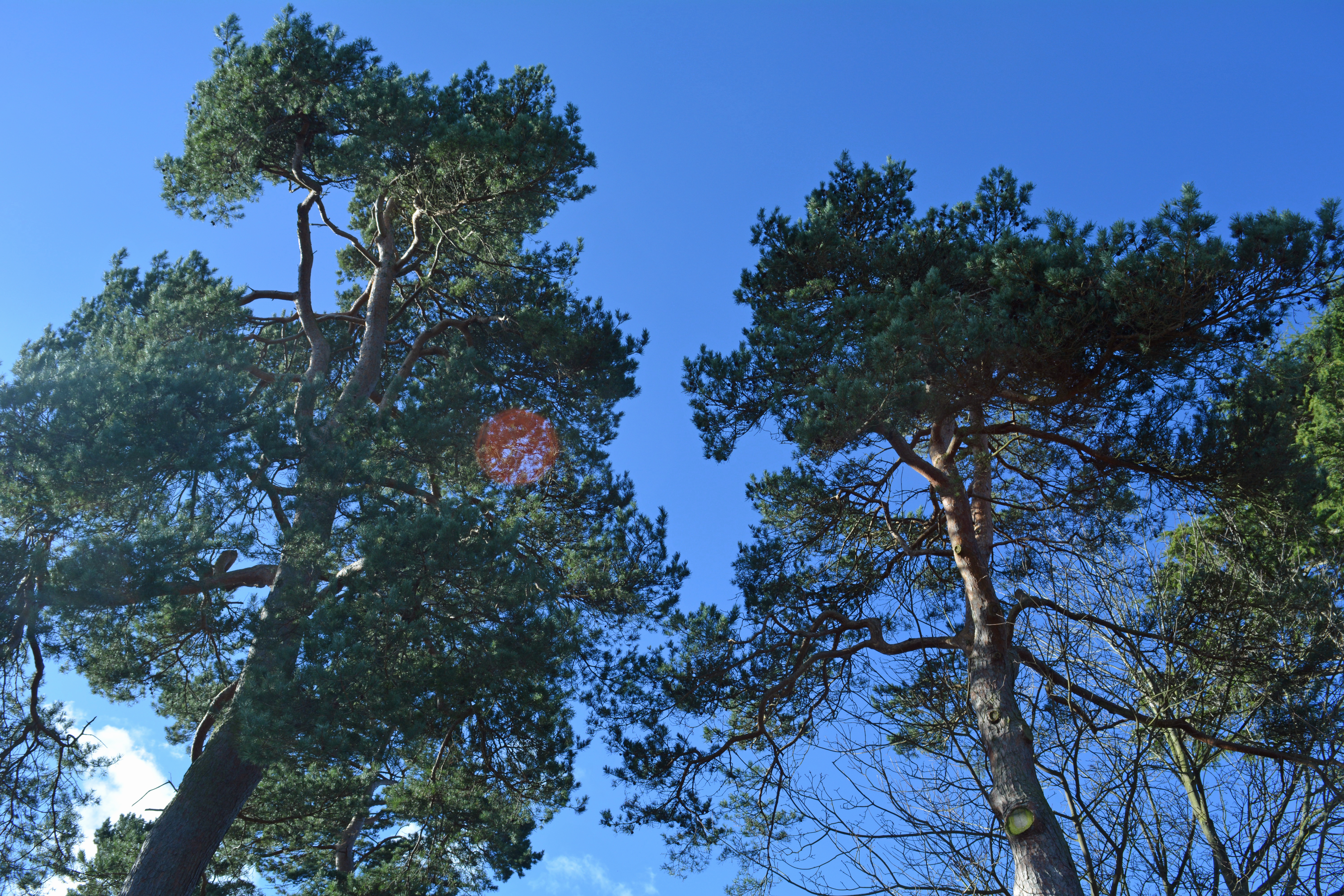
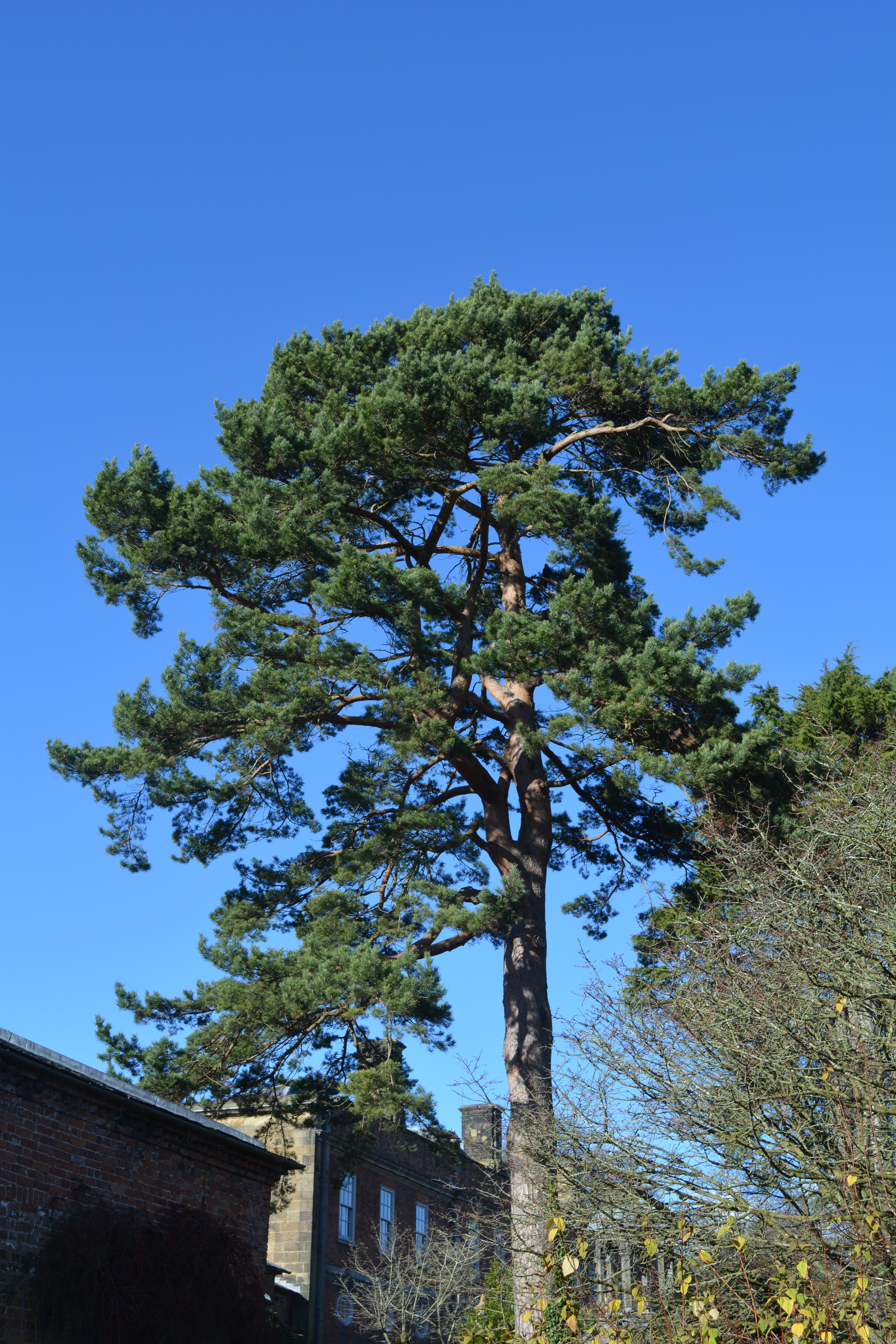
Not all the conifers were trimmed and controlled though, some were left to mature and become tall proud specimens.
We loved this tall double row of pollarded Poplar trees towering above our path, their network of silhouettes highlighted against the blue sky. This added to the strong structure of the garden.
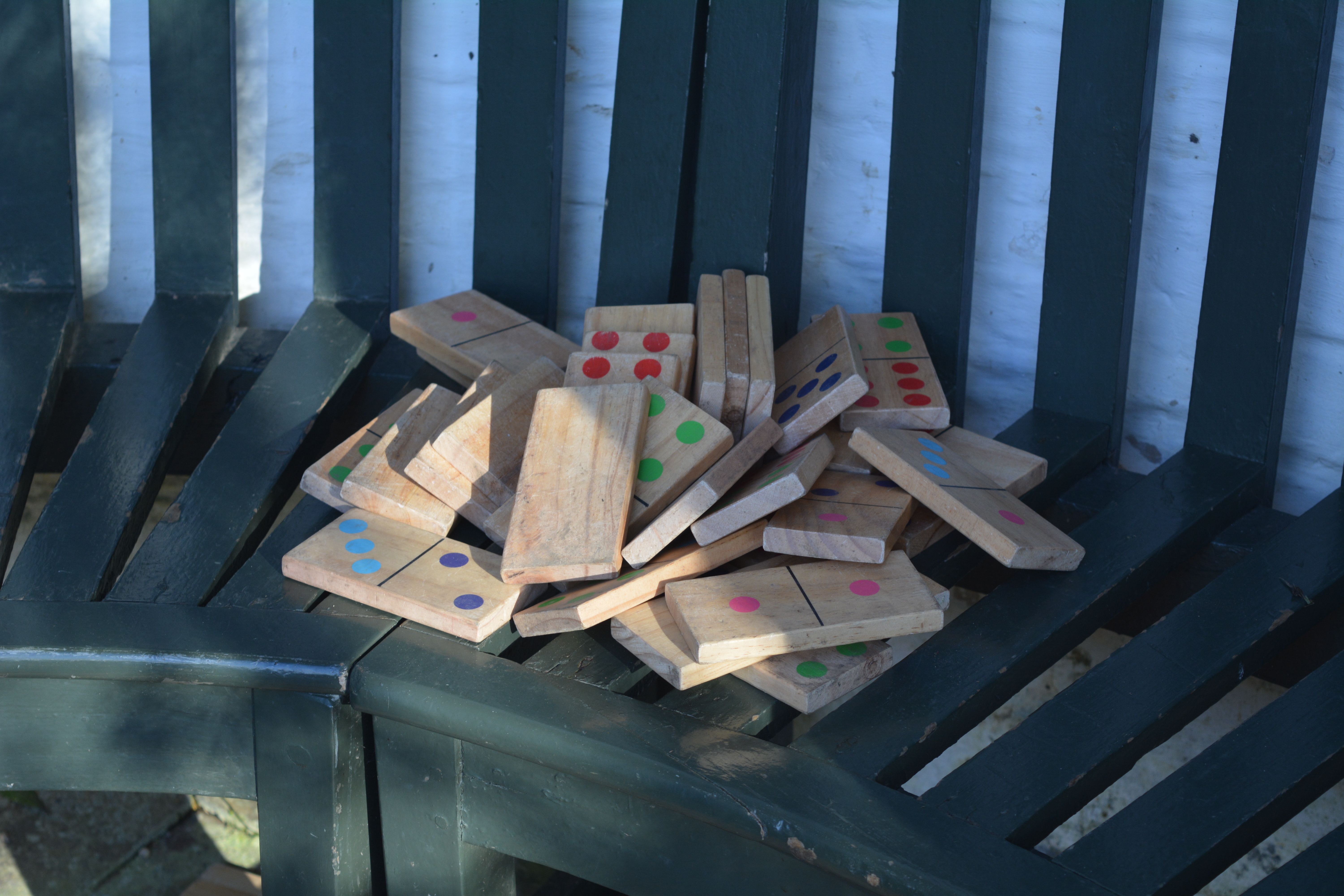
We love to see a touch of humour in gardens and points of interest for children and we enjoyed a few here as we wandered around Erddig.
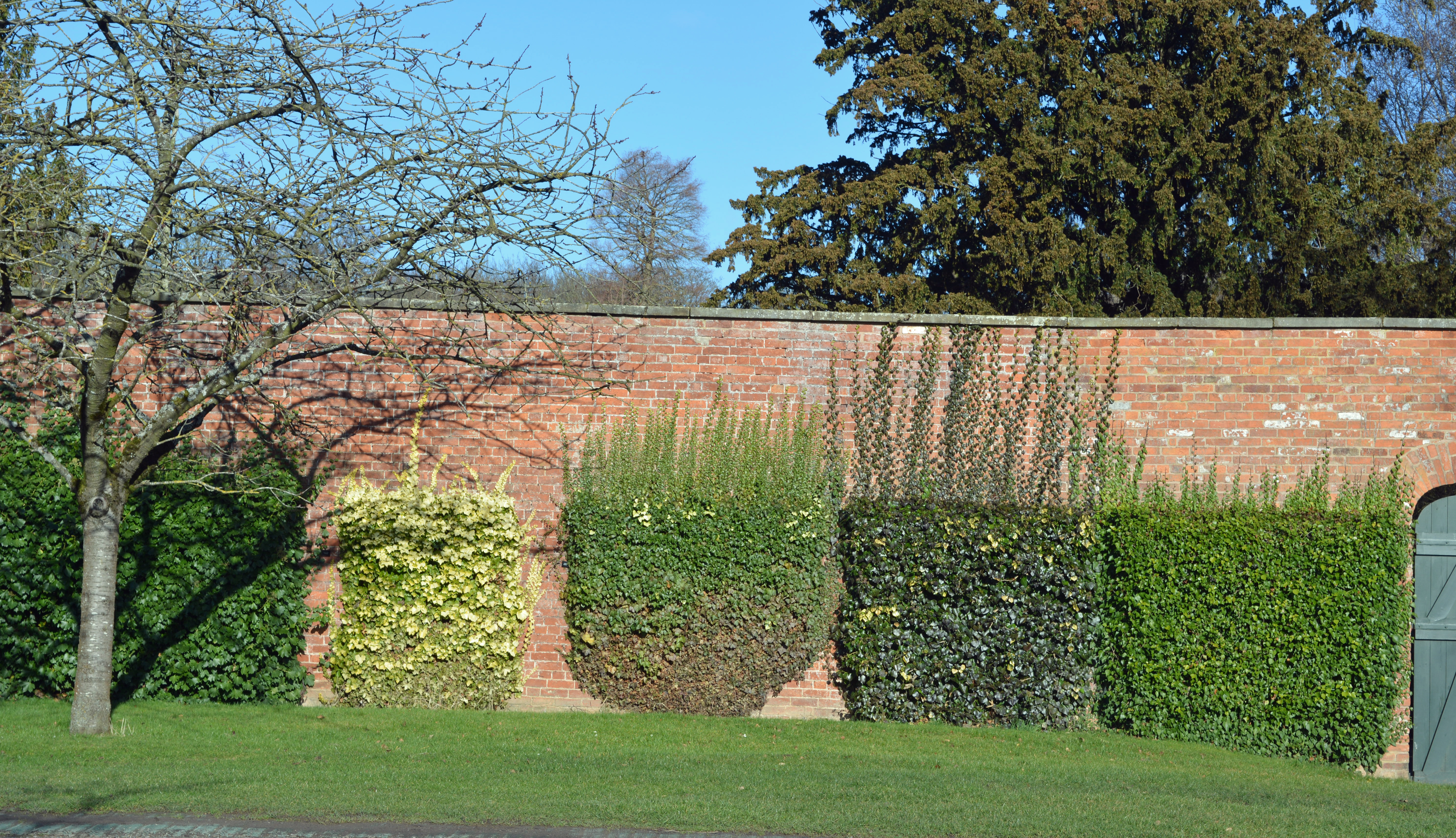
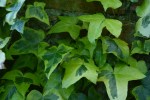
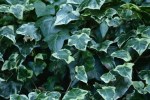
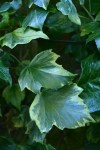
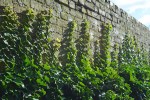
Erddig holds the National collection of Ivies, growing a huge selection of Hedera, but it took us along time to find the organised and well-labelled display of them growing along an old brick-built wall. We were amazed by the sheer variety, from plants with plain green typical leaves to those with the most beautiful and subtle variegation.
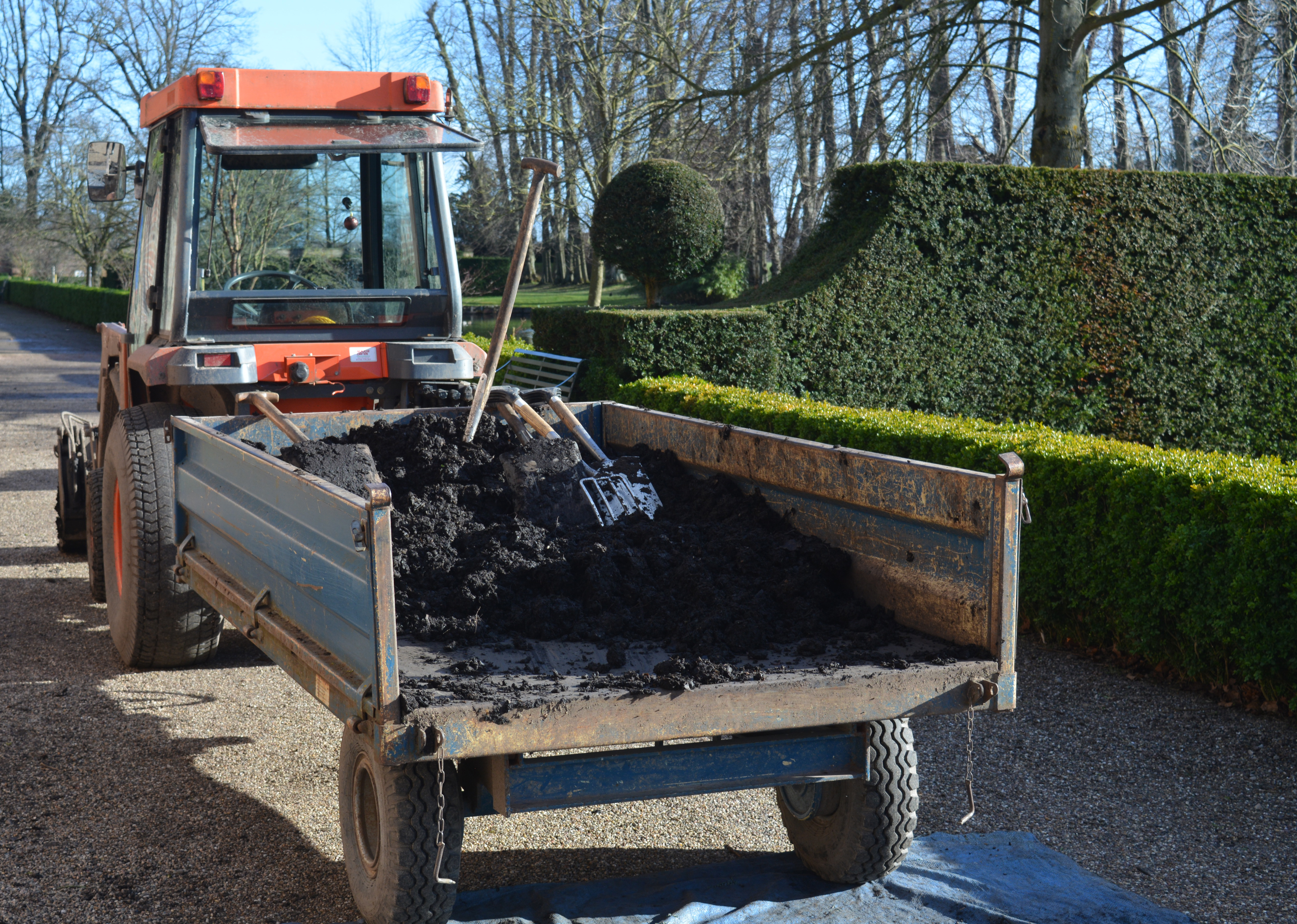
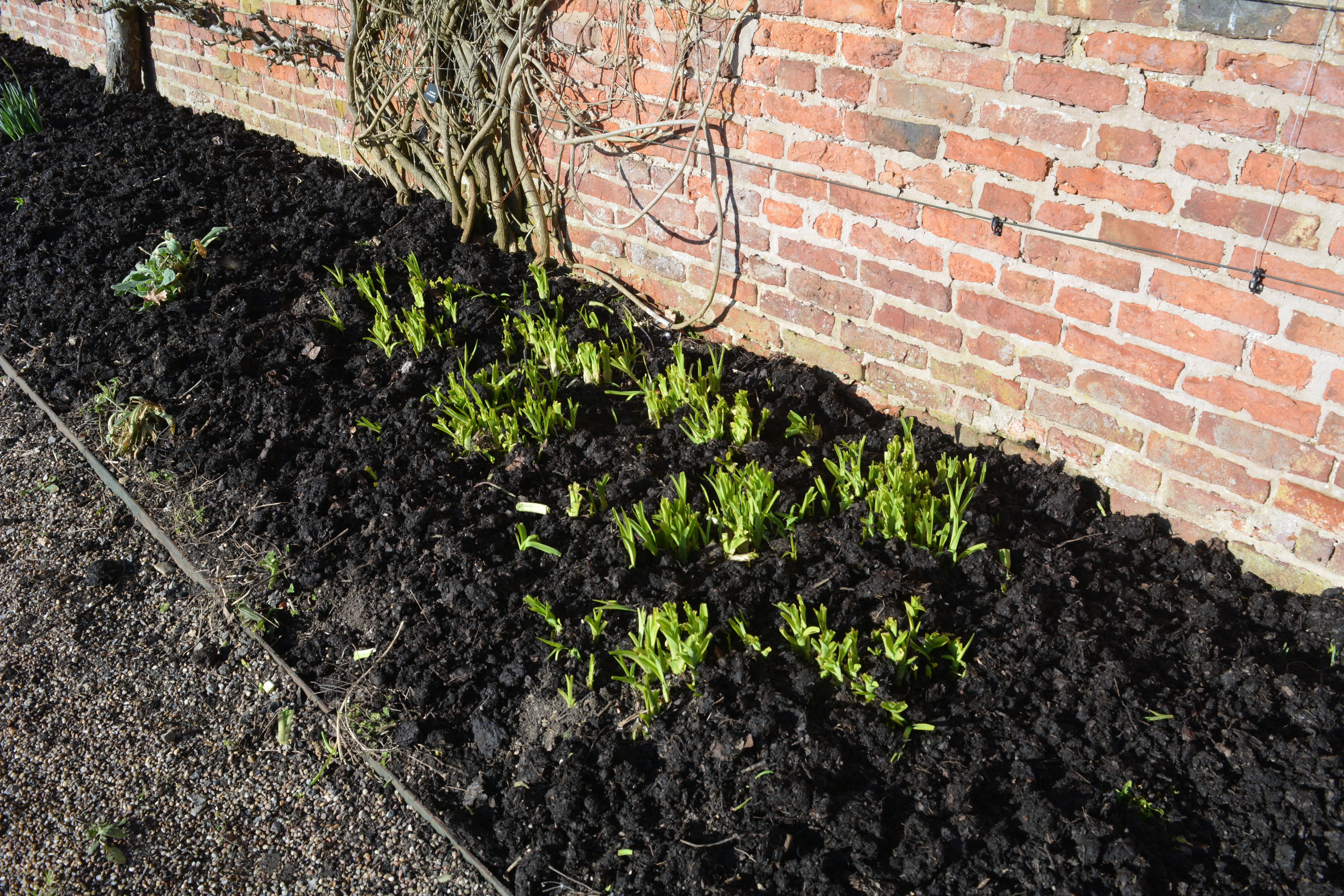
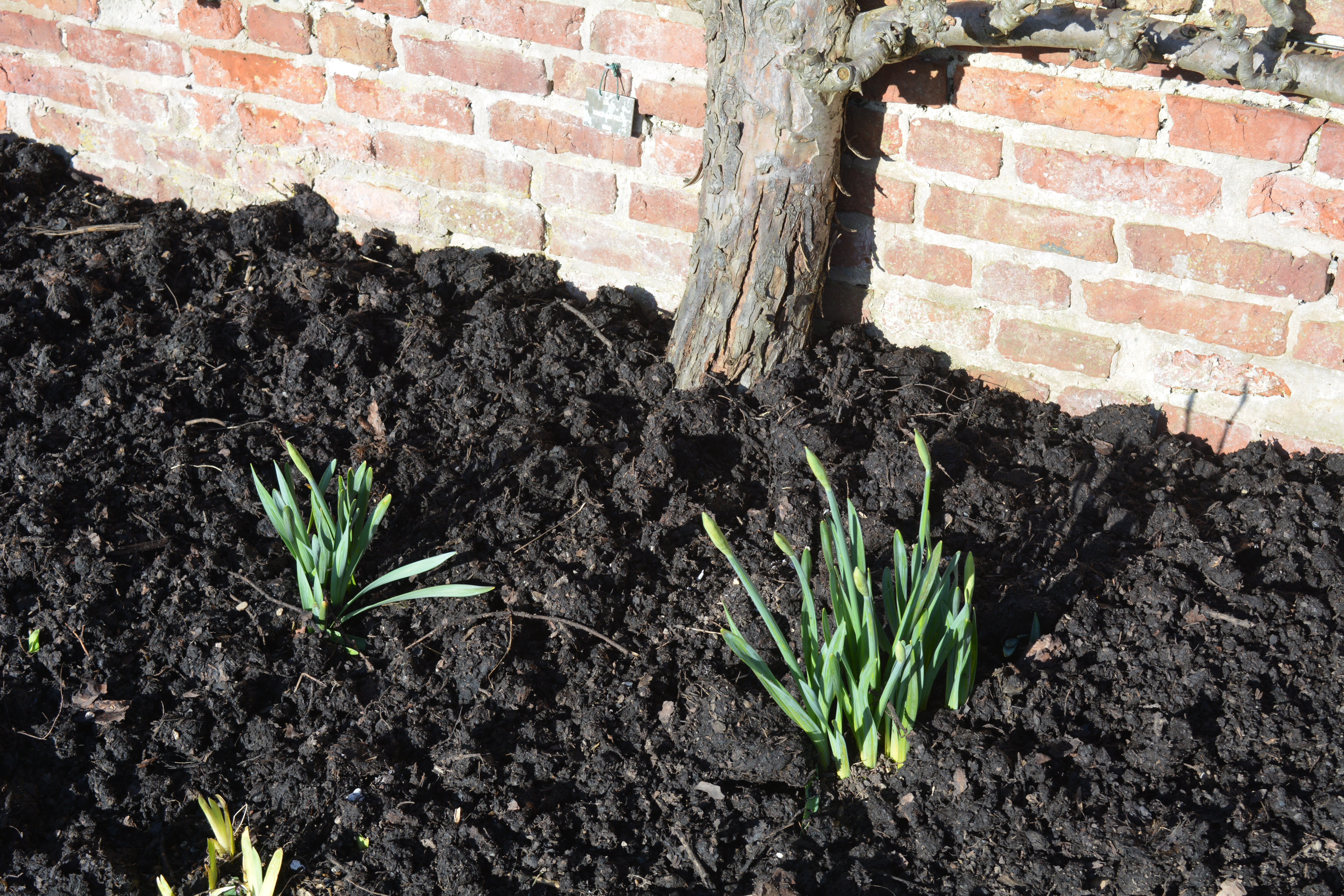
Don’t you just love to see what gardeners are up to when you visit a garden? Here hedge cutting and mulching borders with rich well-matured farmyard manure were keeping the gardeners on their toes. We were very impressed with the quality of their work and the evidence of a sense of pride in everything they did.
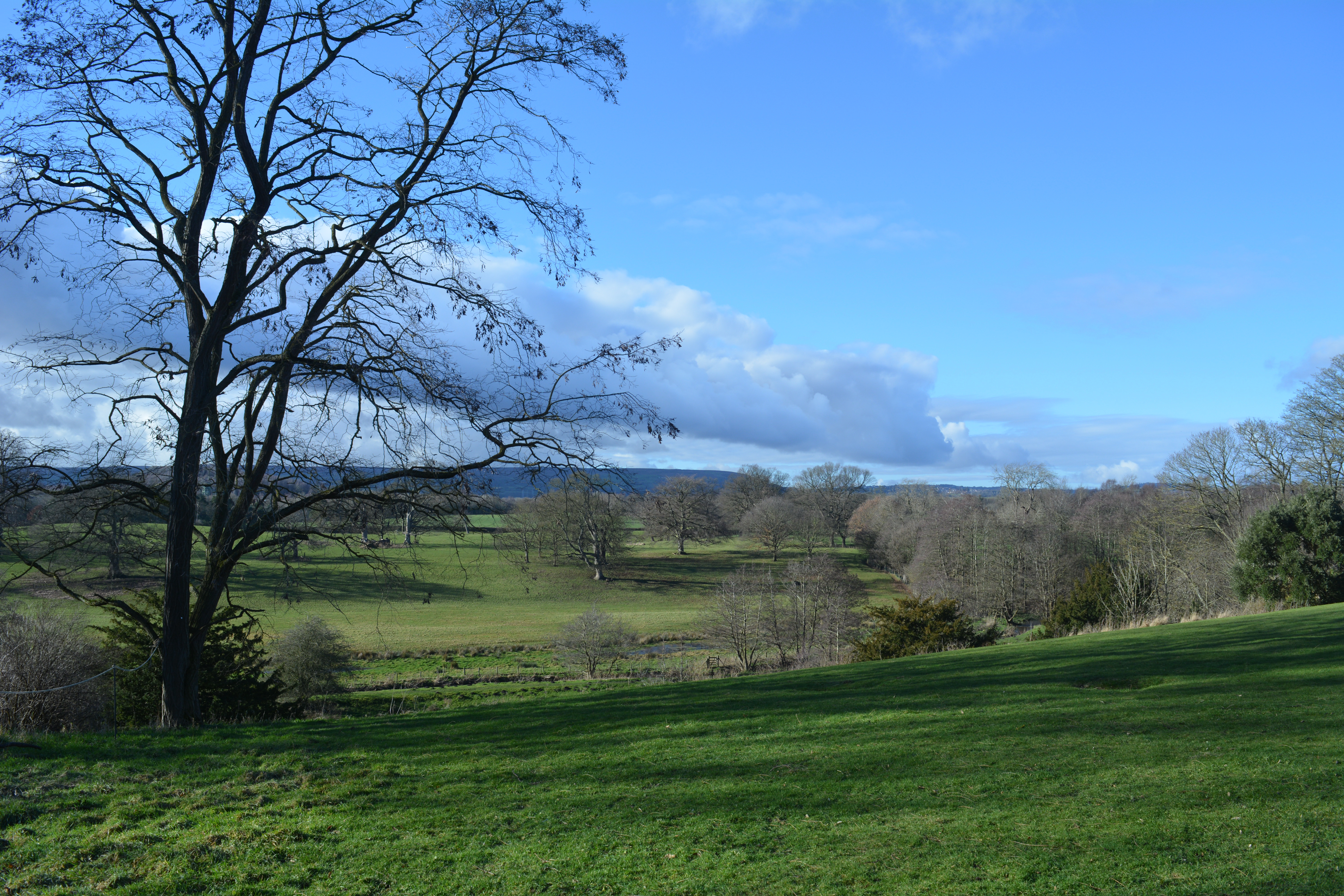
From the front of the house itself we found some wide views over the surrounding countryside.
I have only briefly mentioned the Ivy collection at Erddig so far but I will change all that by sharing a collection of my pics of the Ivies as a gallery. Please enjoy by clicking on the first photo and using the arrows to navigate.
Hedera h. Romanze
Hedera h. Spetchley
Hedera h. Goldstern
Hedera c. Sulphur Light
Hedera h. Goldchild
Hedera h. marginata grandis
Hedera c. Dendroides
Hedera h. Blodwen
Hedera h. Chester
Hedera h. Tussie Mussie
Hedera h Parsley Crested
Hedera h. Zebra
Hedera h. Amber Waves
Hedera h. Galaxy
Hedera h. Galaxy
Hedera h. Rona
Hedera h. Ardingley
Hedera h. Tres-Coupe
Hedera h. Ardingley
Hedera h. Spectre
Hedera h. Silver Queen
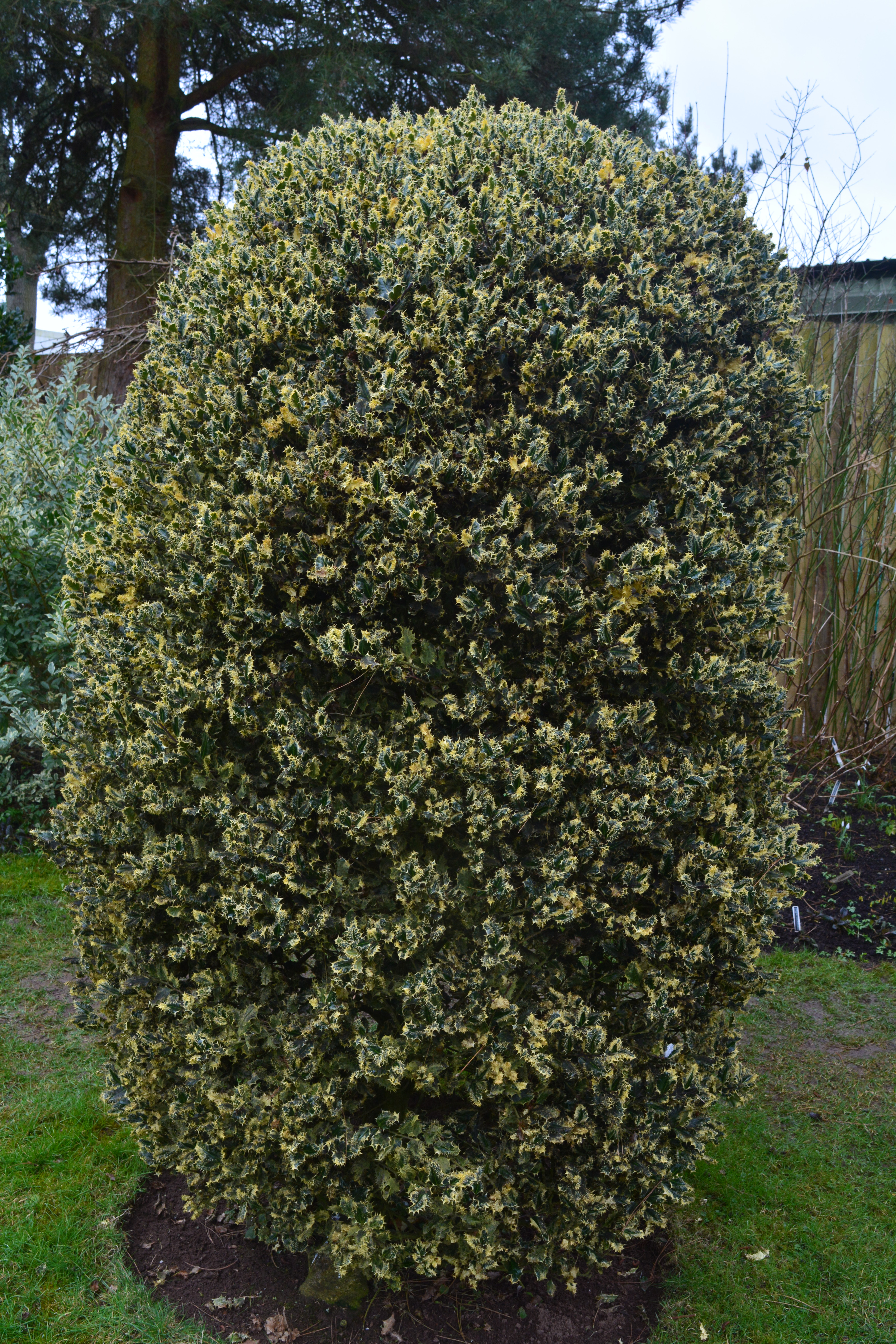
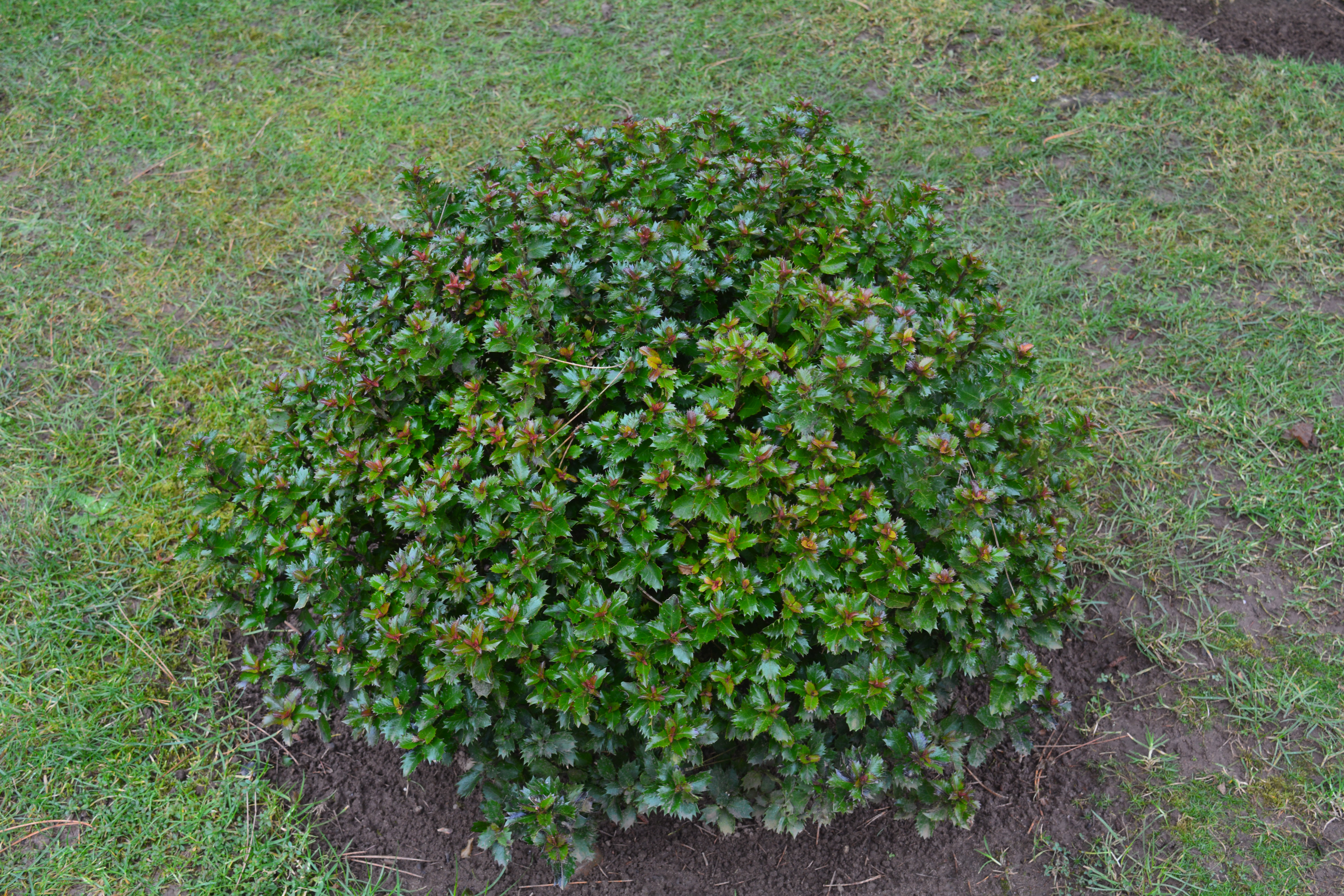
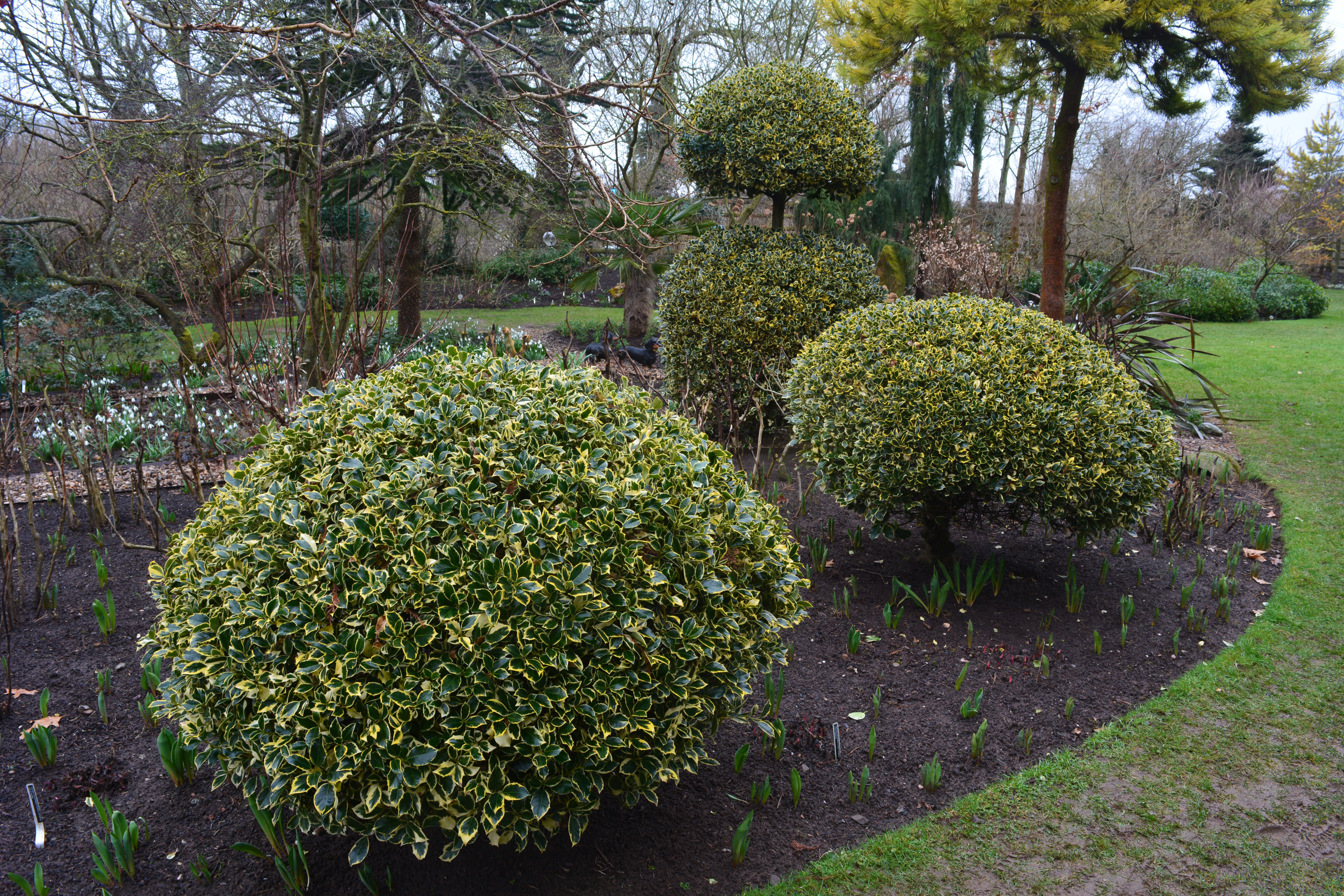
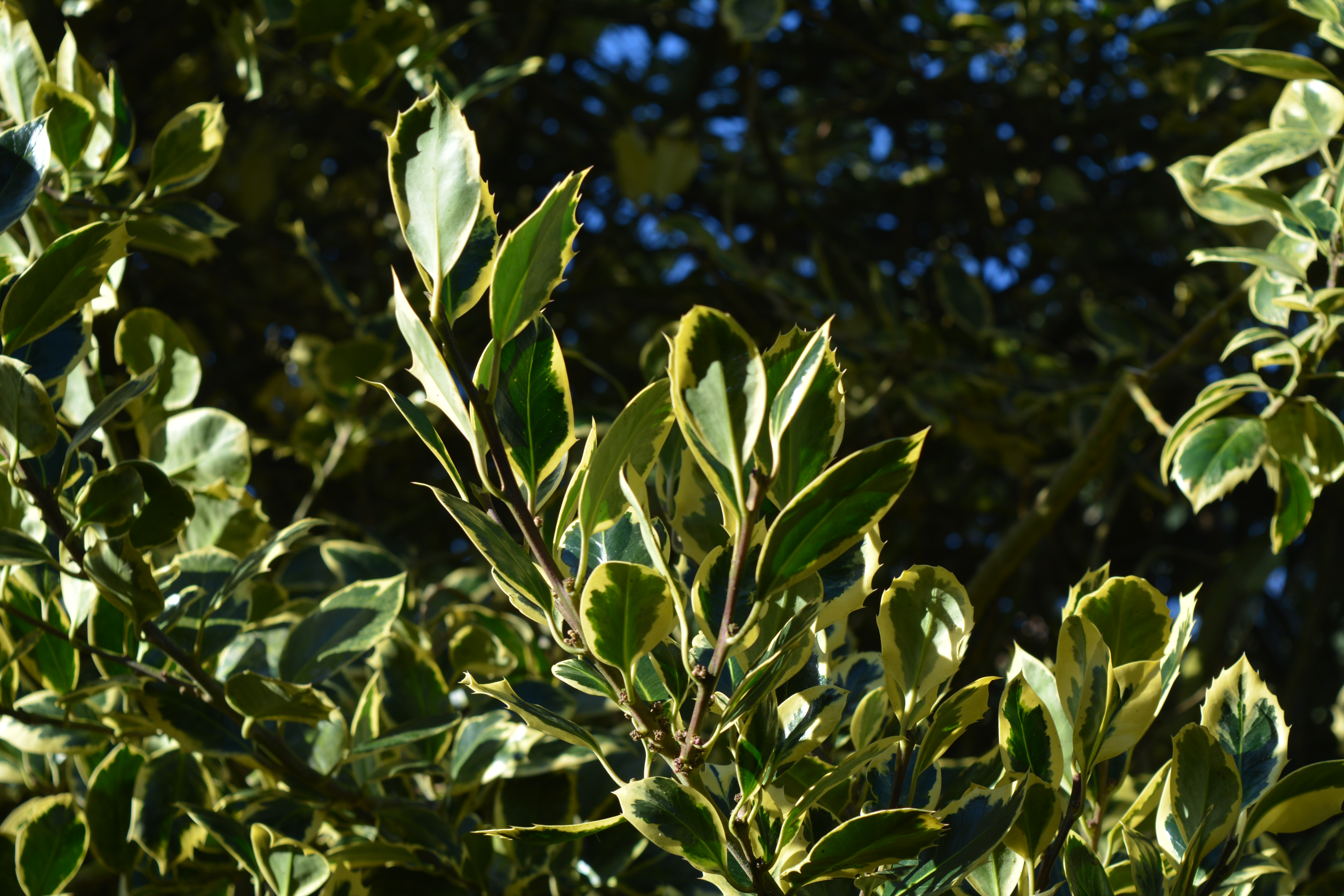
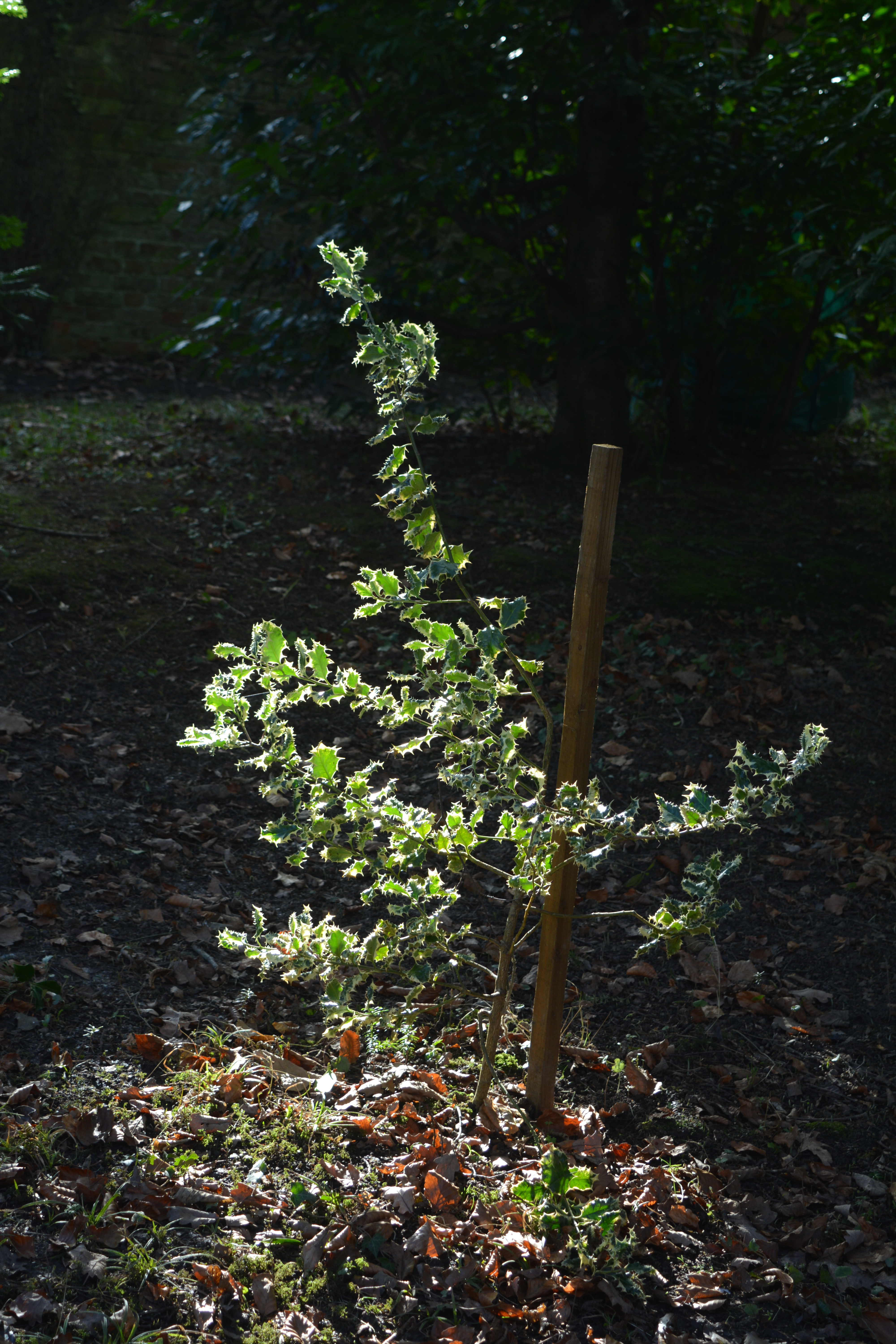
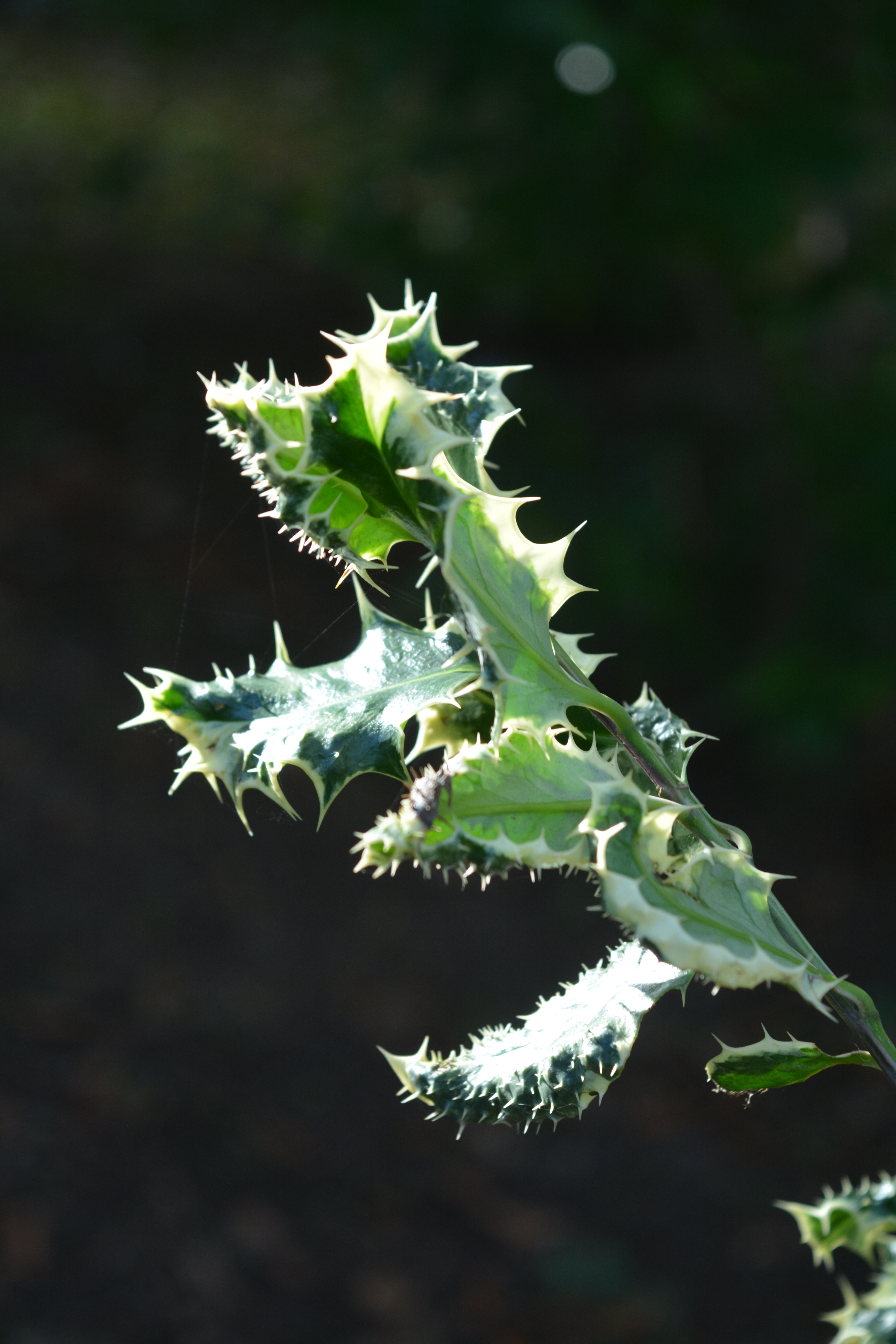
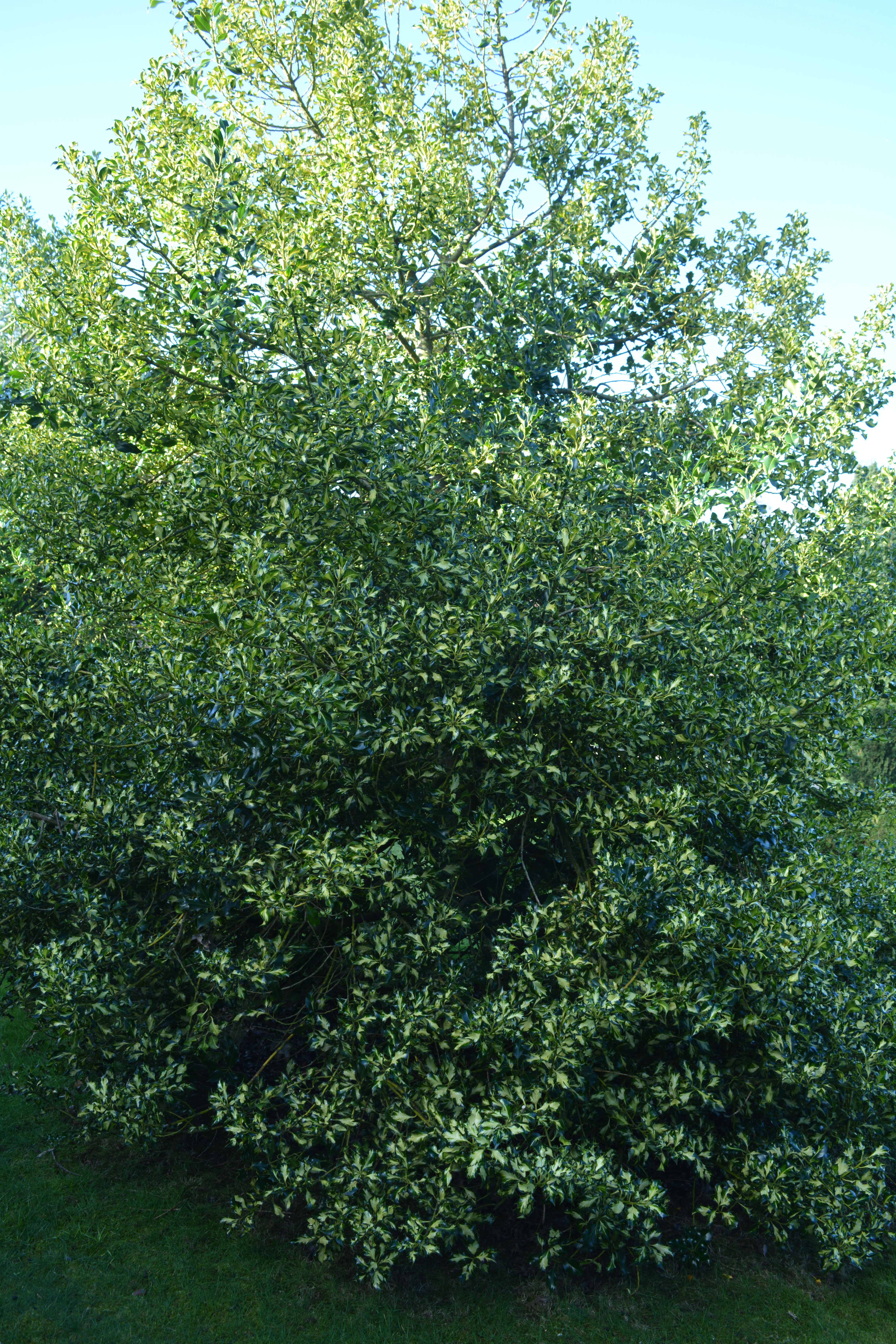
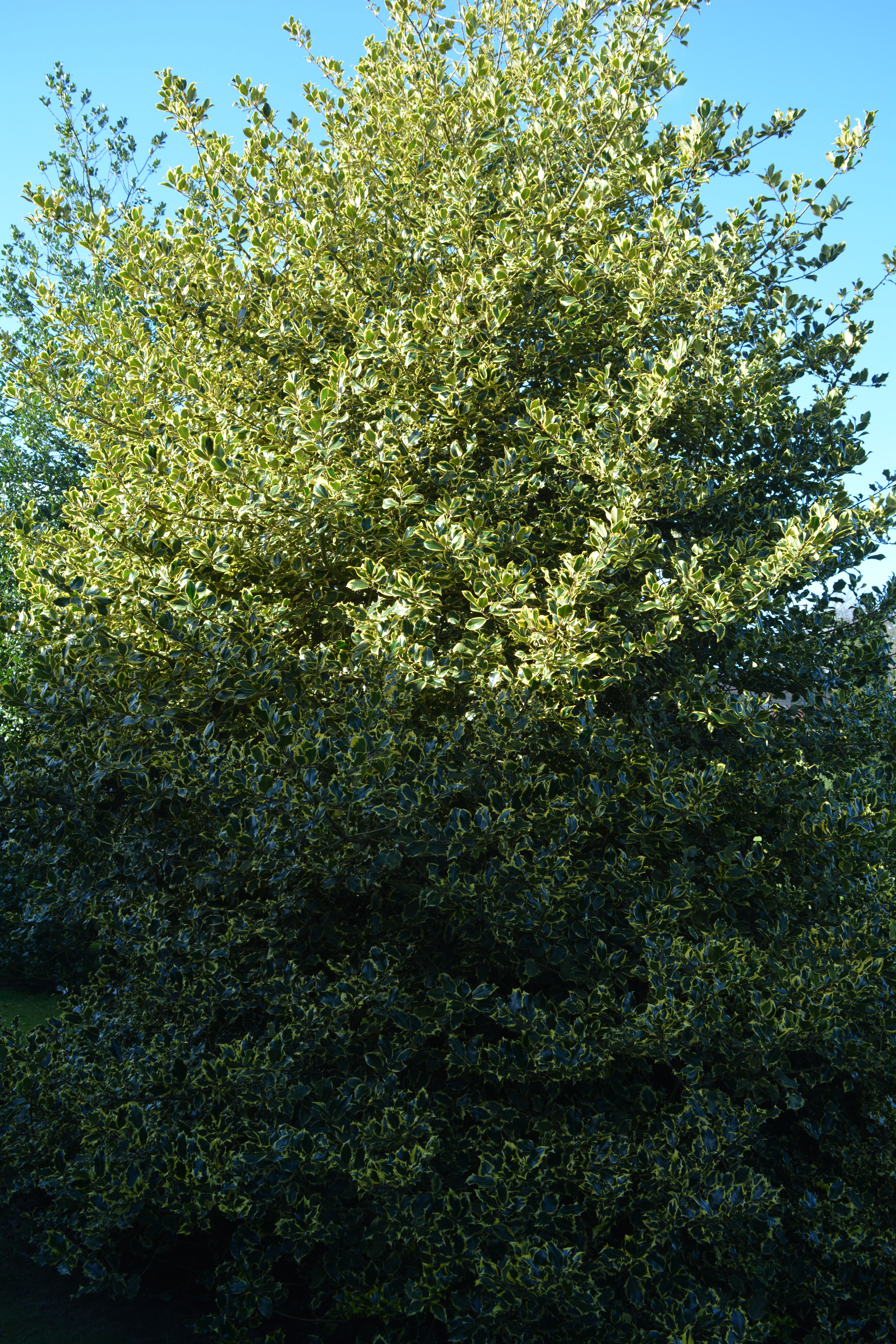
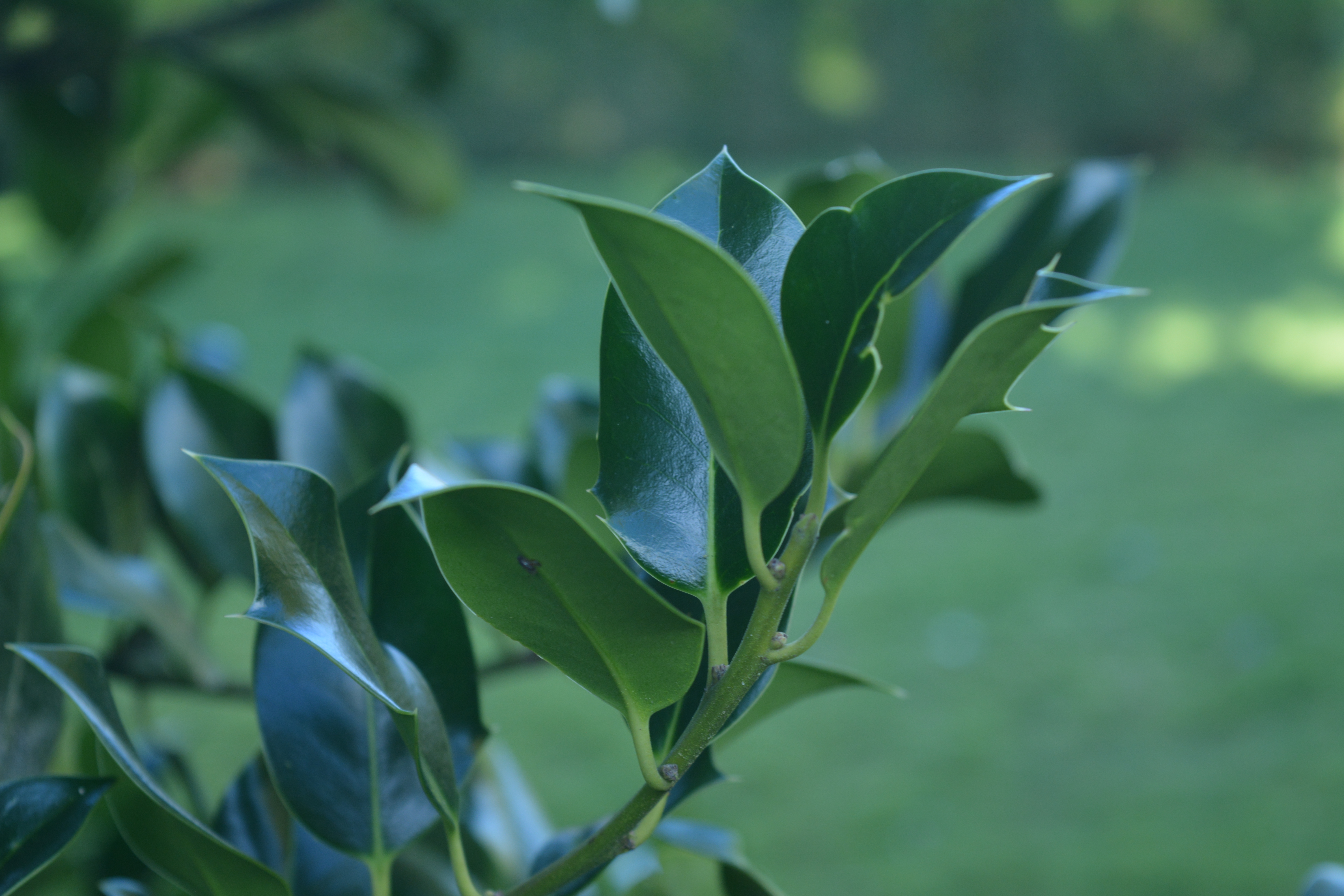
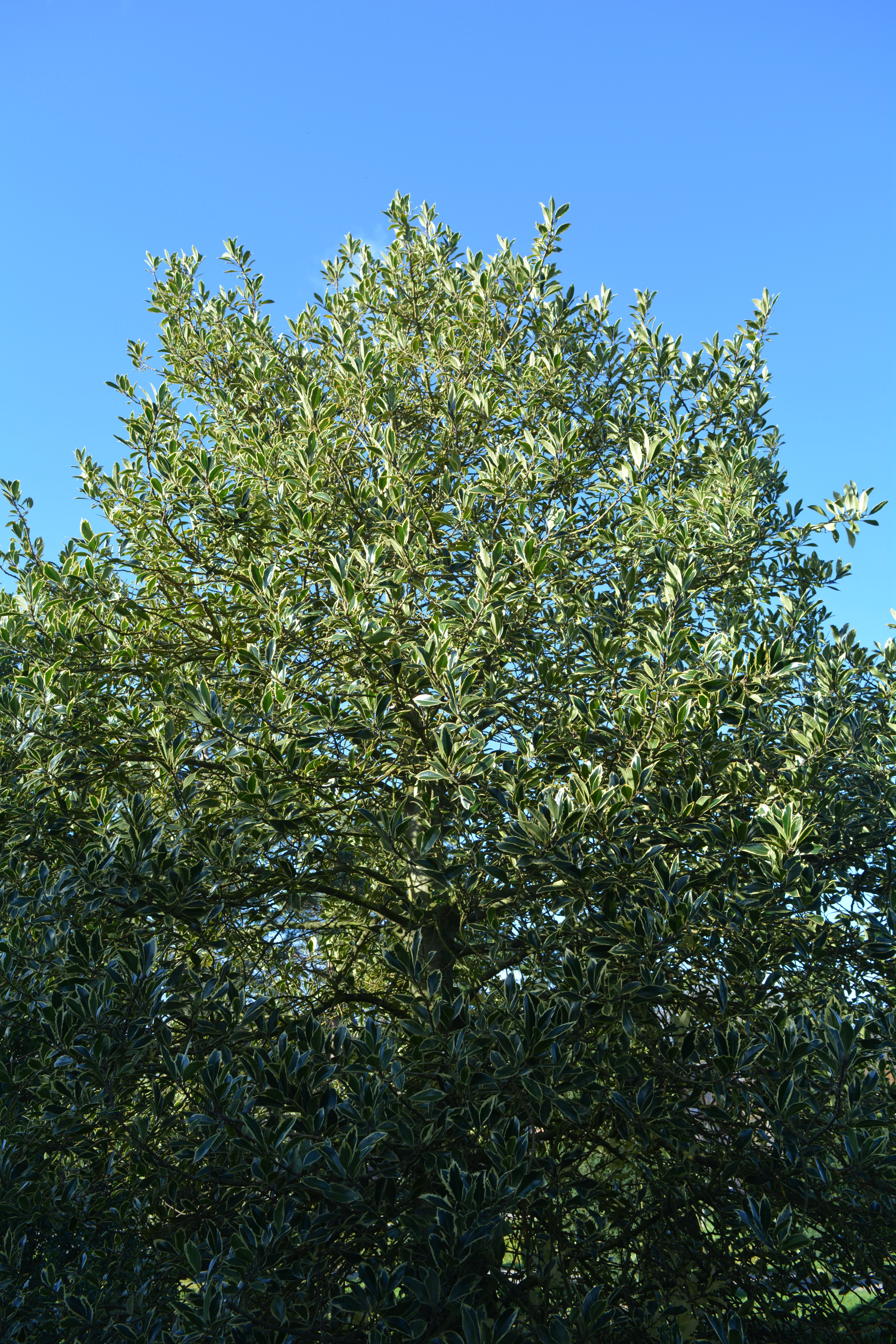
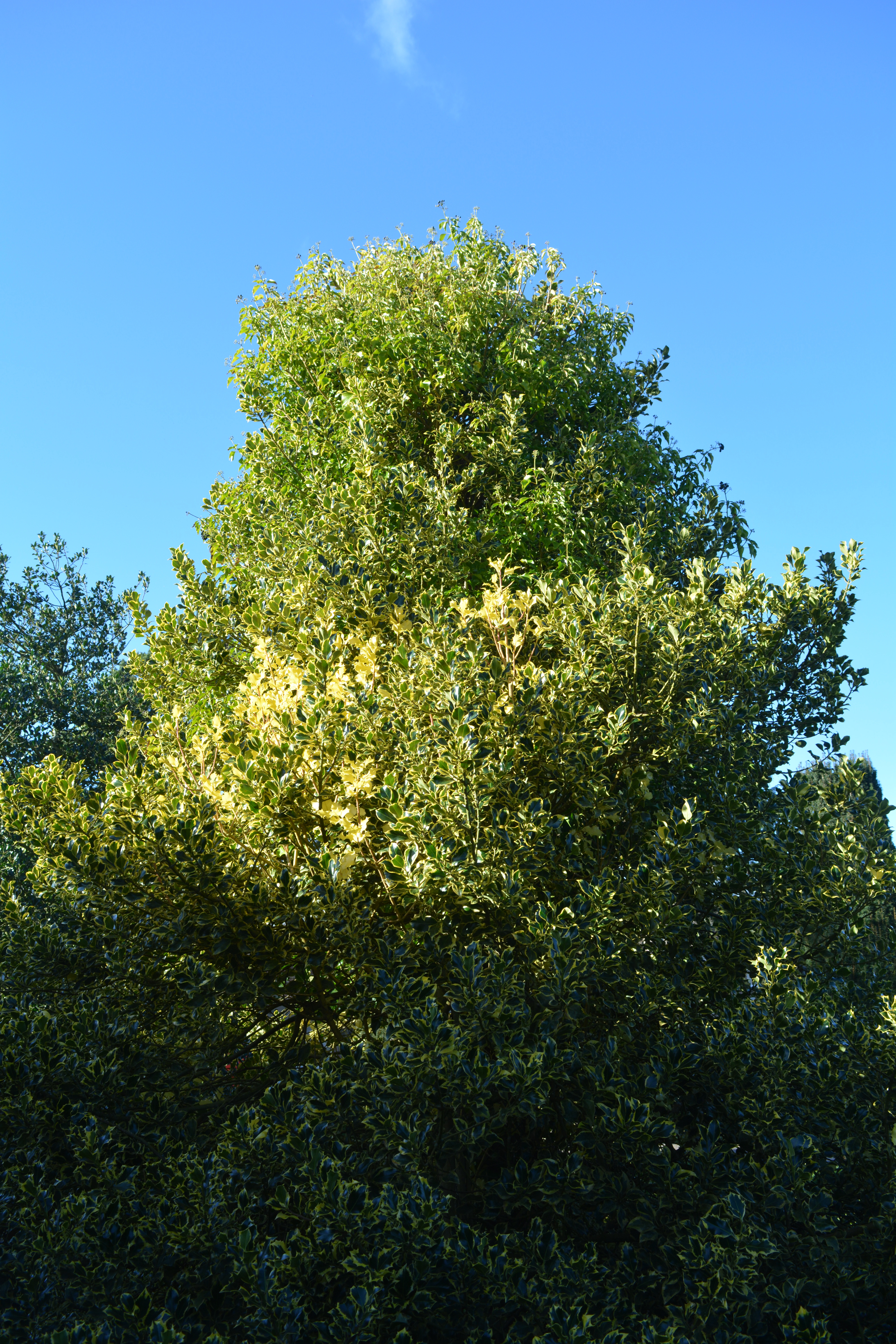
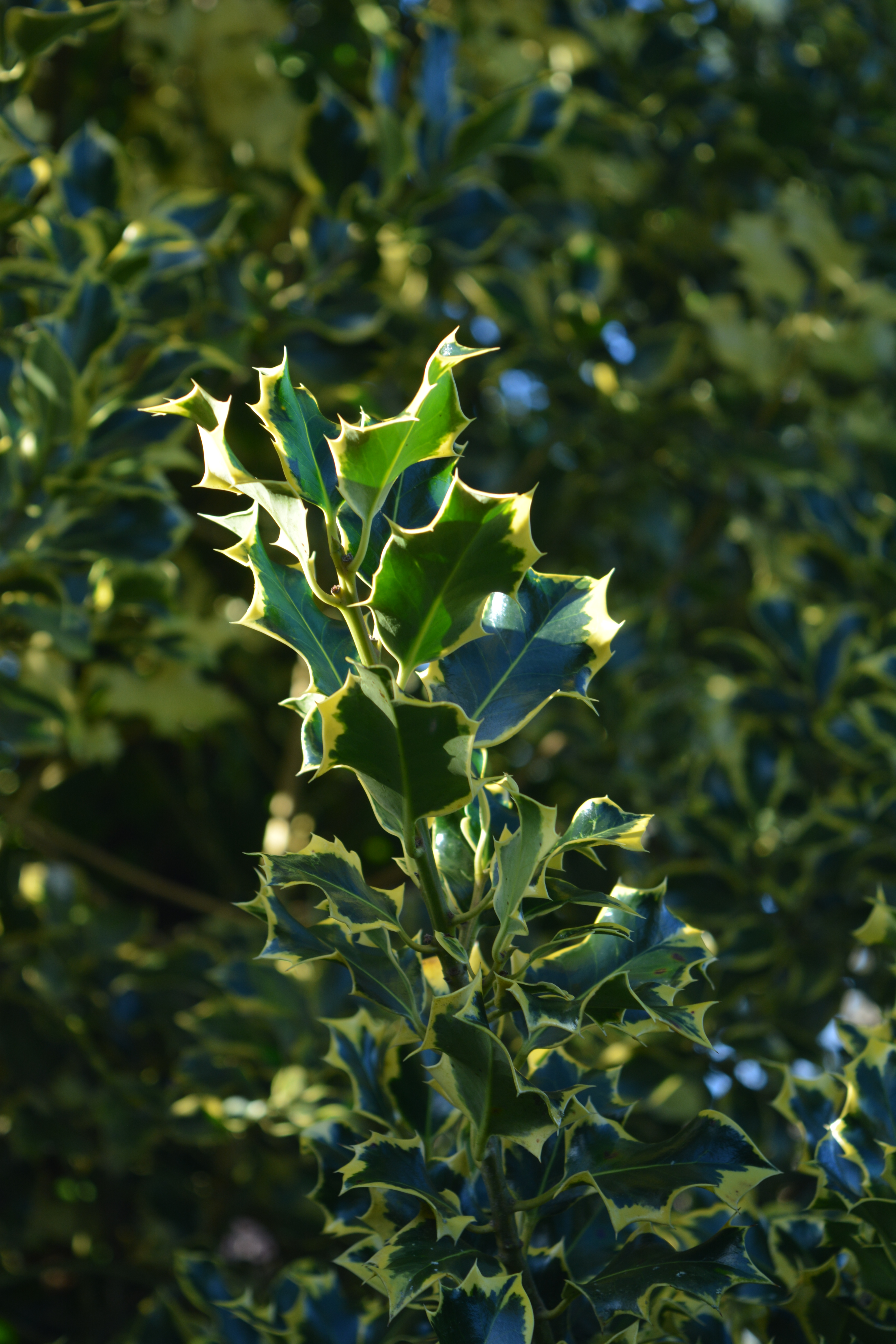
Hollies feature too with a lovely varied collection sadly with no labels but here are some to enjoy anyway.
Each photo of an Ilex tree is matched with a close up of its foliage.
So you can appreciate just how impressed we were with the gardens at Erddig on our return visit after many years. We will be returning more often in the future!
To visit the second of the RHS gardens we visited during 2017 we had to travel north up to Yorkshire and we stayed near Harrogate, a beautiful spa town. This is the RHS garden we probably visit the most as it is our favourite and we love the area it is situated in. We chose to go up in late summer. We particularly enjoy the Winter Garden and the new perennial gardens and as we had already visited to see the Winter Garden so we needed to see the perennials borders too.
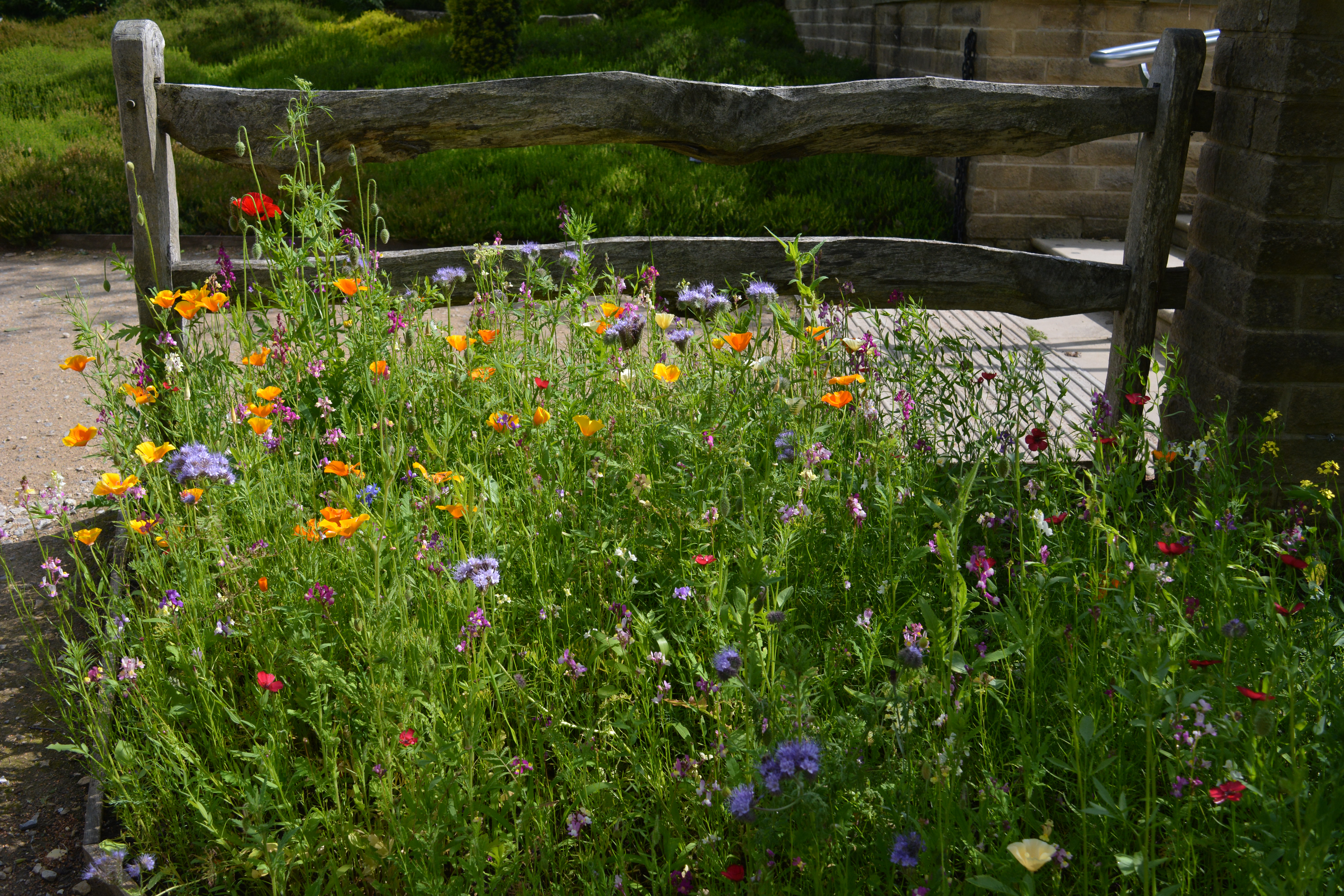
The RHS are excellent at giving a warm welcome to its visitors and we certainly felt that at their most northerly garden, beautiful planters, great breakfast at the famous “Betty’s Tearooms” and cheerful plants as we entered the main gardens, including bright, cheerful meadow planting.
A recent children’s competition involving creating miniature gardens in old boots provided some entertainment at the bottom of the main steps into the garden.
Next we will share moments we enjoyed as we made our way towards the educational centre with its new buildings, glasshouse and plantings.
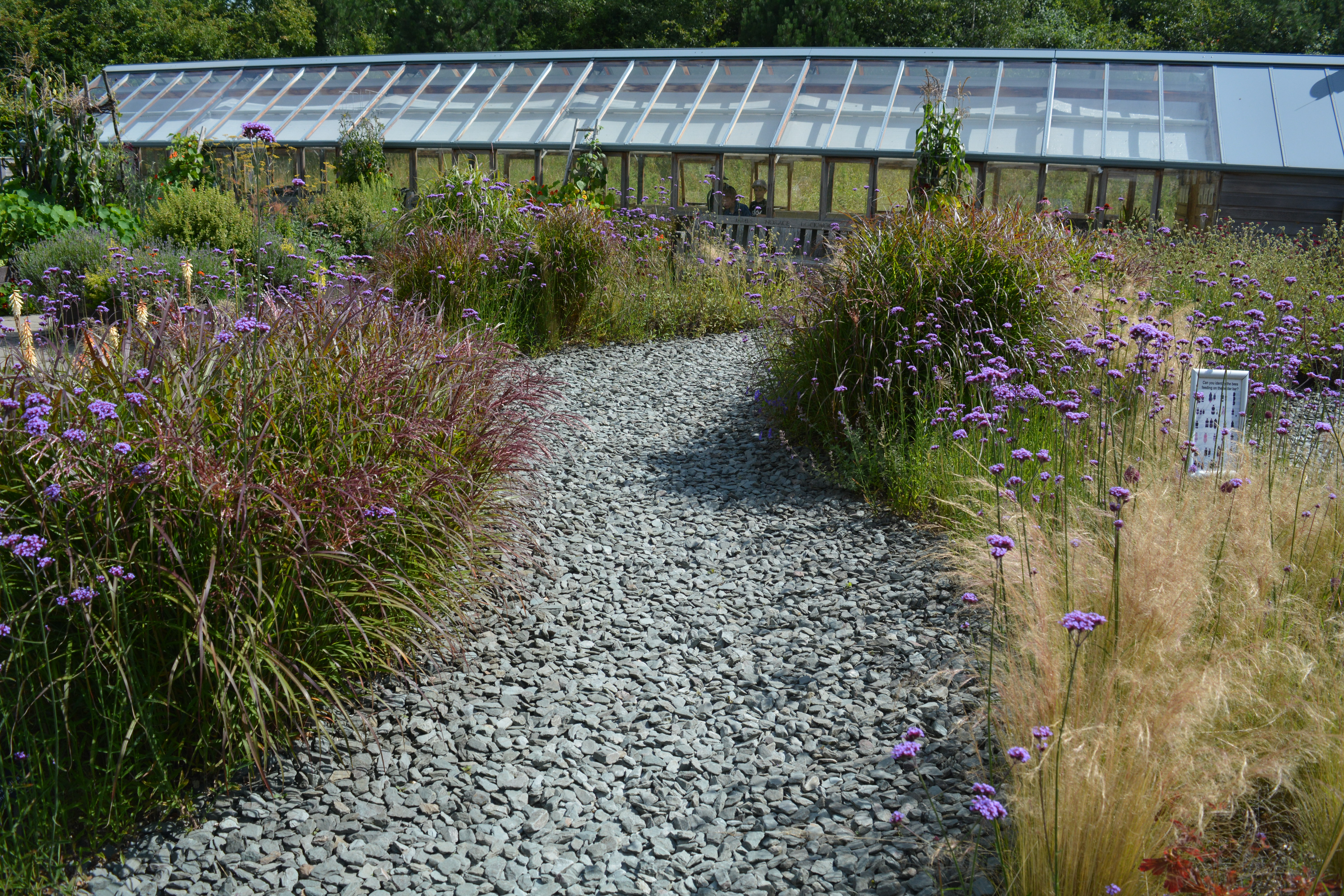
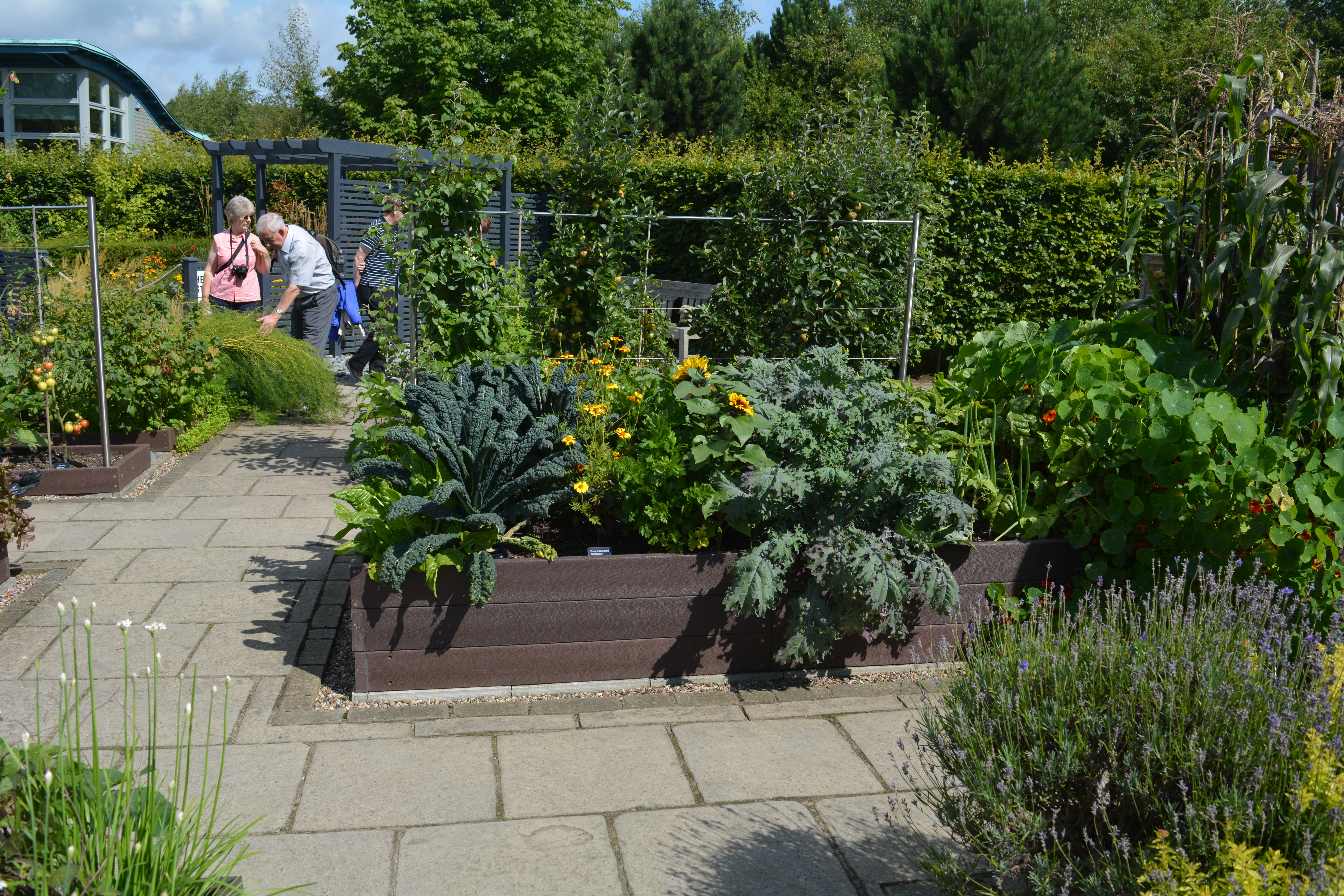
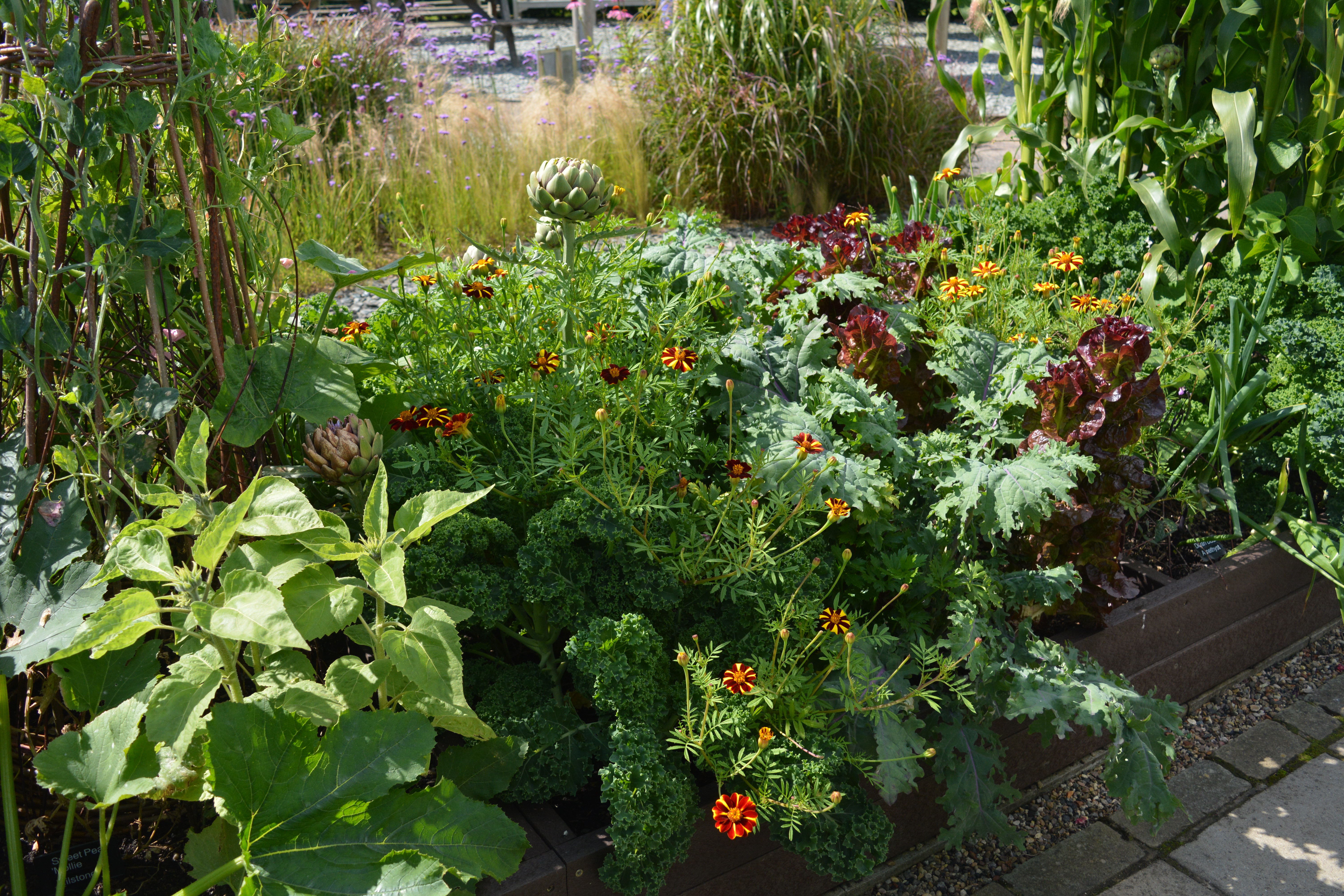
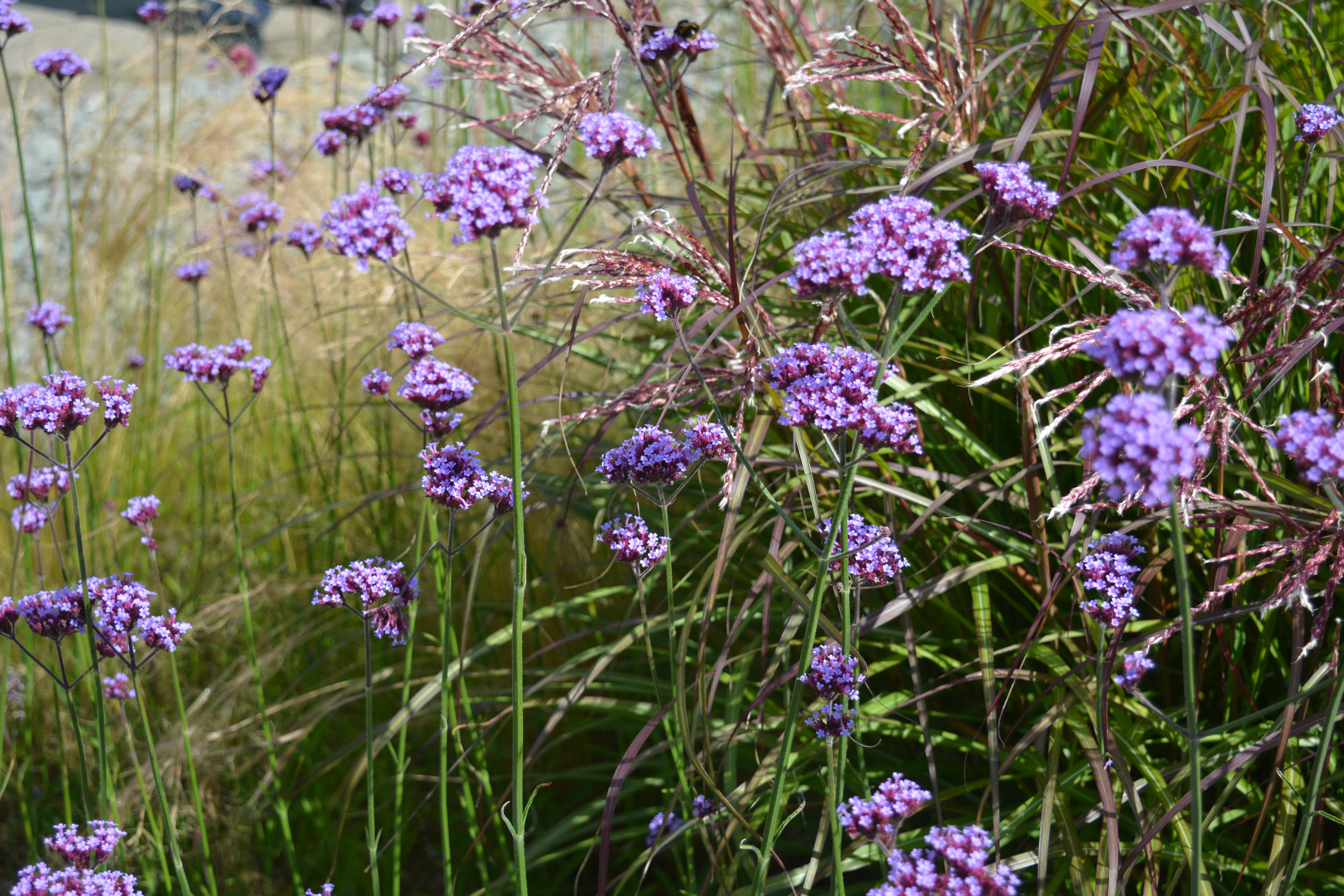
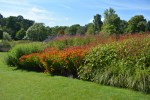
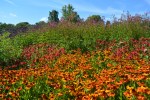
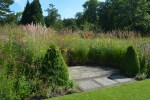
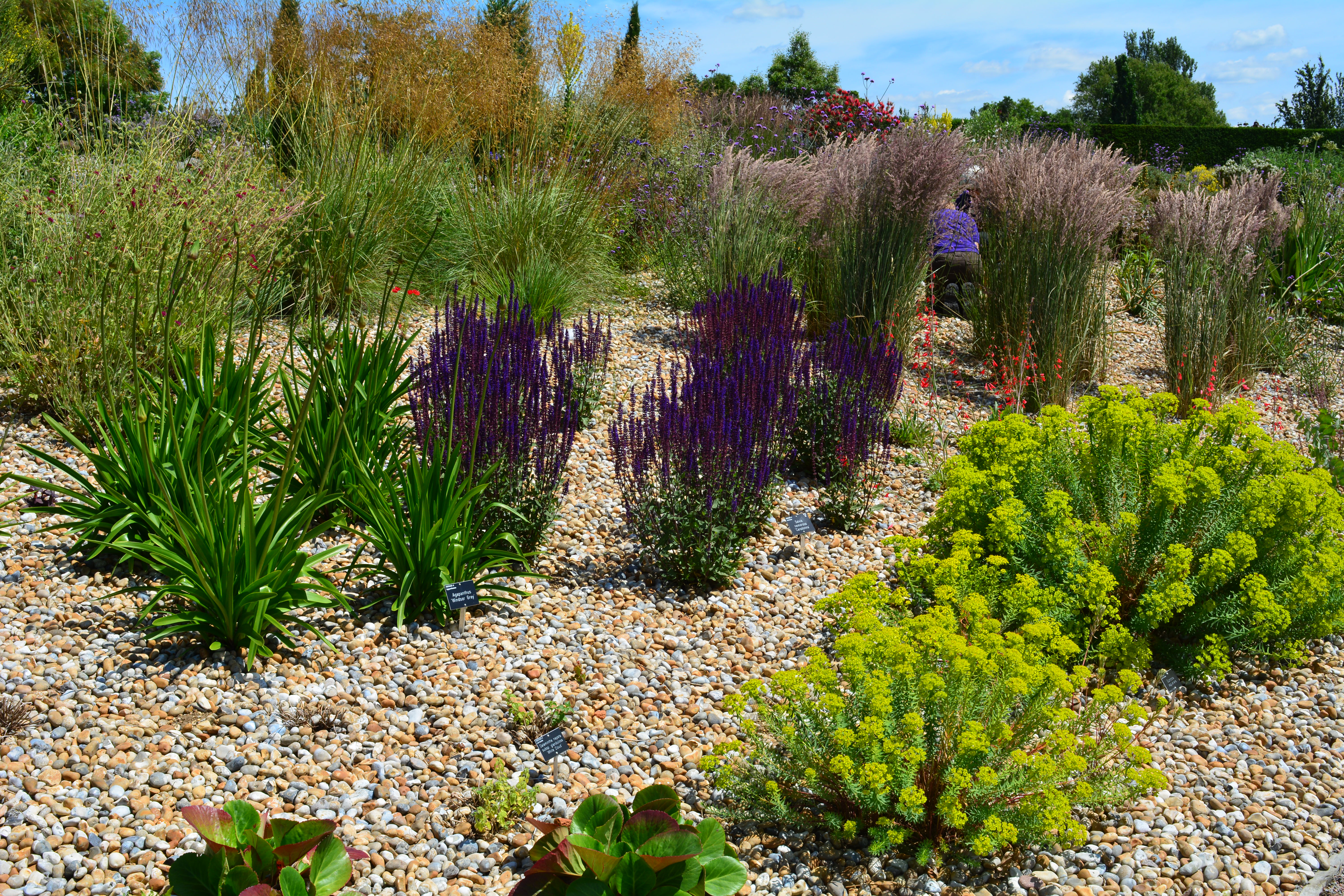
The gardens around the education centre provide a fine example of contemporary plant choice and plant combinations, starring grasses and tall airy perennials, growing beautifully among gravel, a wildlife pond and a contemporary styled vegetable garden alongside. Even the seating has been carefully chosen to look just right. Nothing has been left to chance!
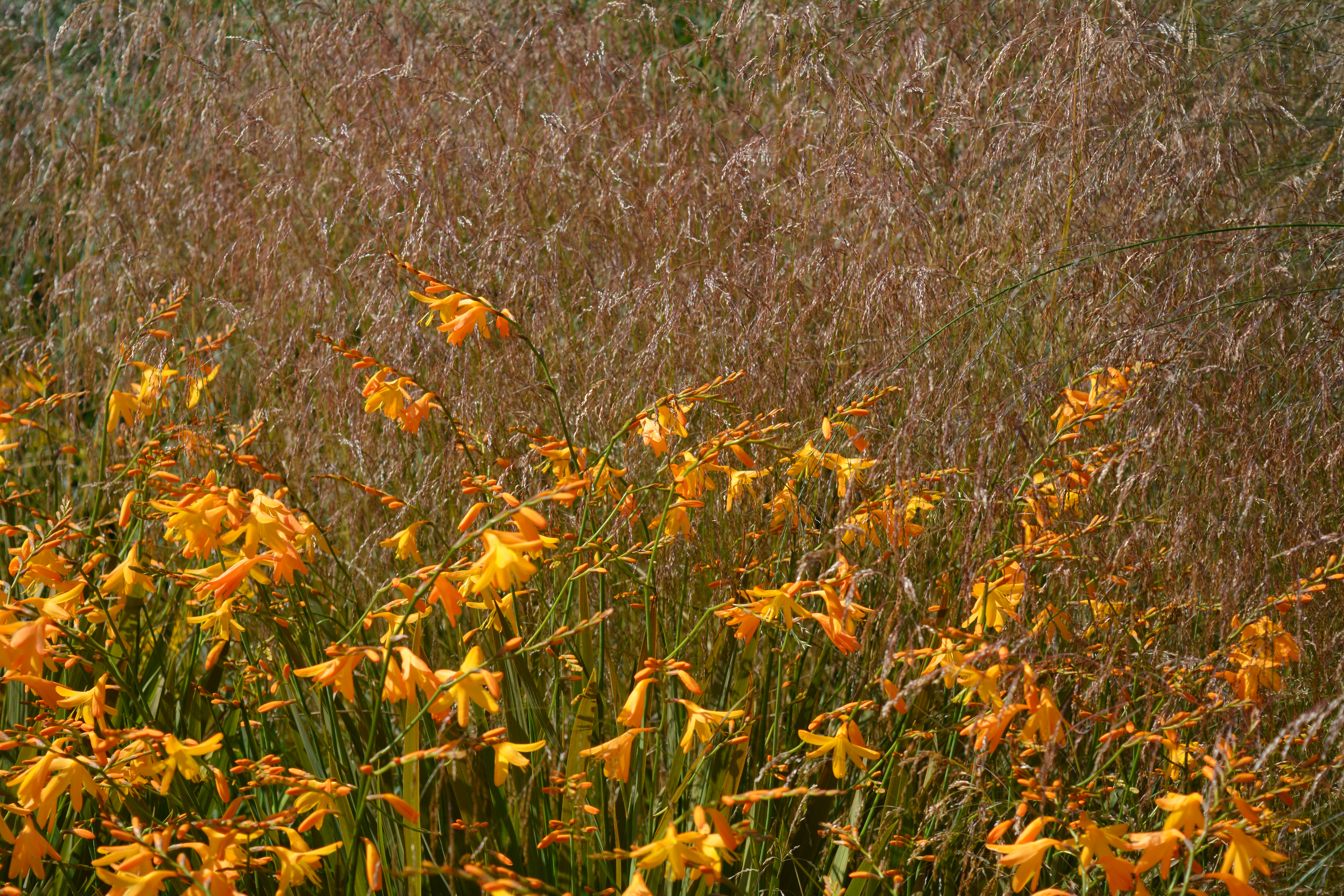
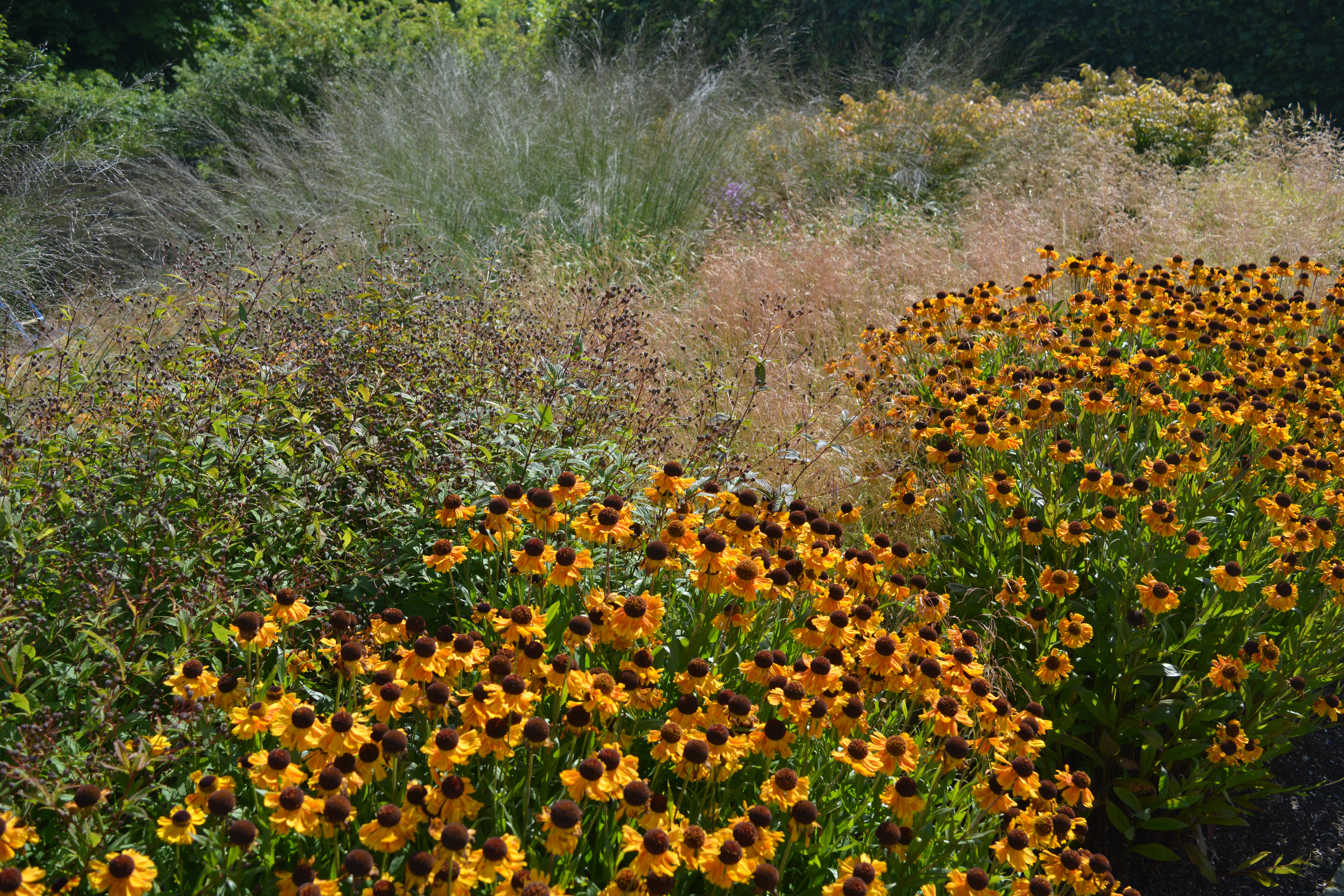
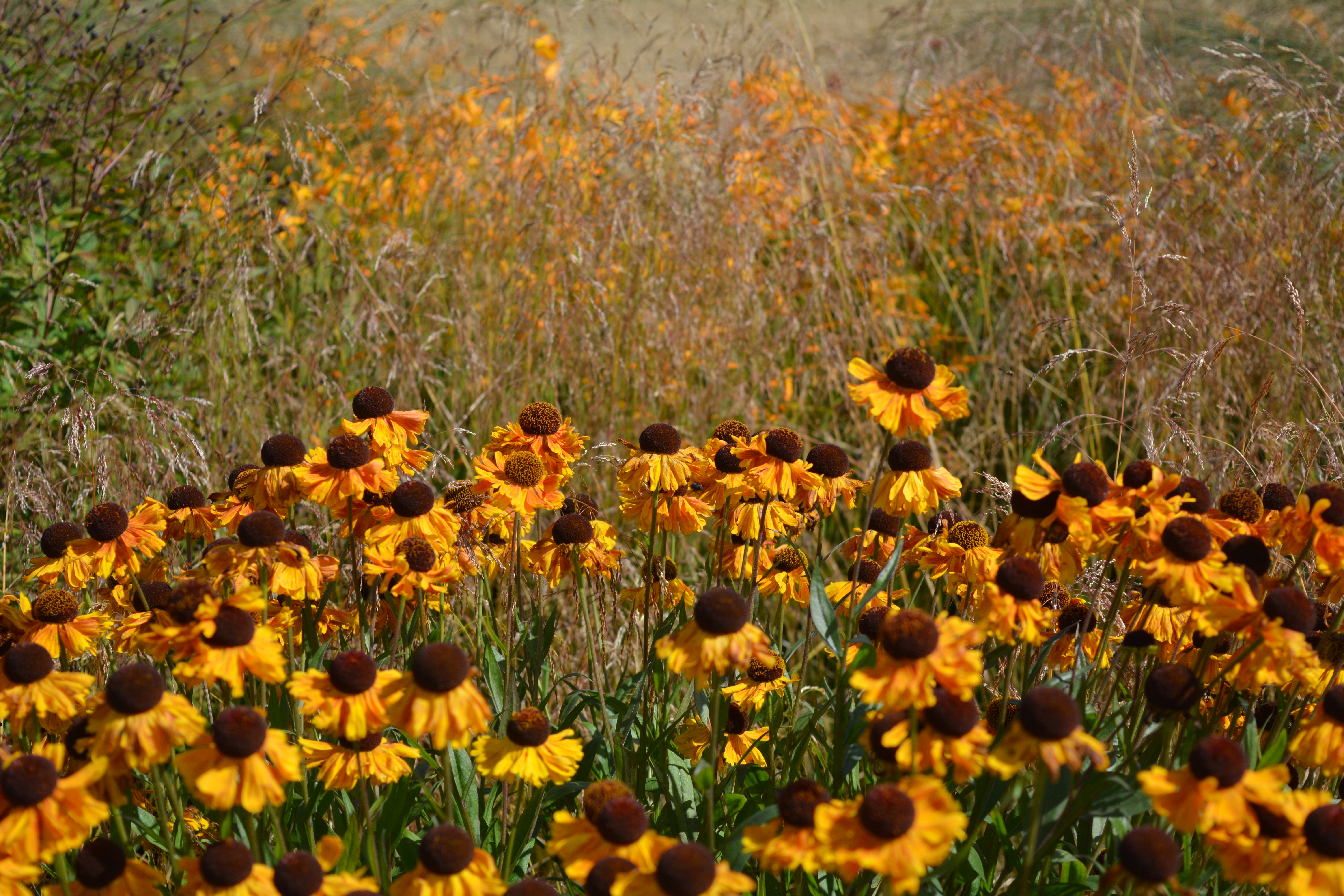
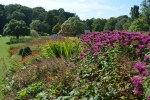
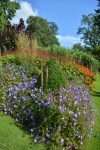
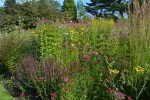
As mentioned at the beginning of this post we were looking forward in particular to wandering around the borders of “new perennial planting” especially as we were visiting when it should be its prime time. So please enjoy this wander with us by following the gallery. Click on the first picture then navigate with the arrows.
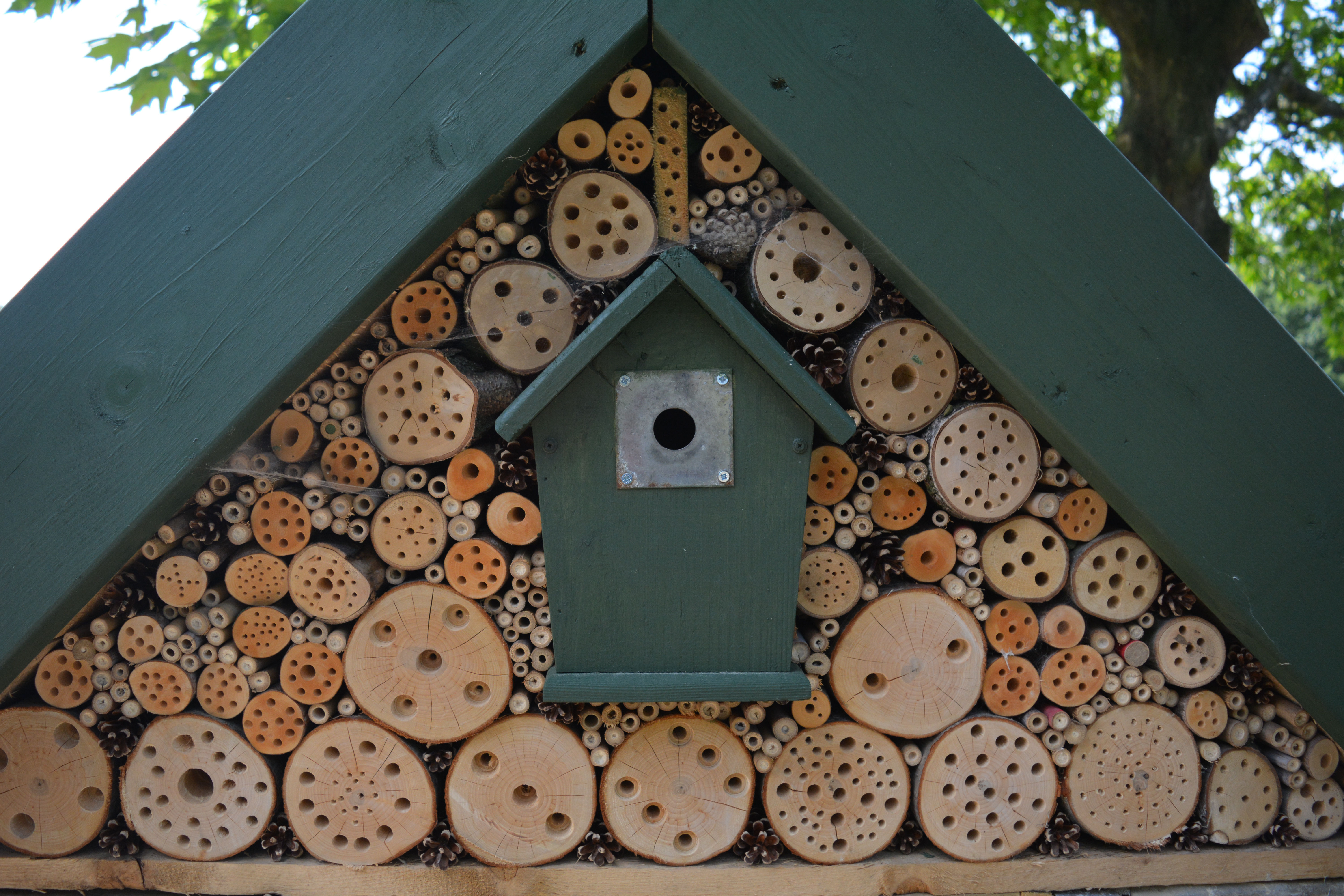
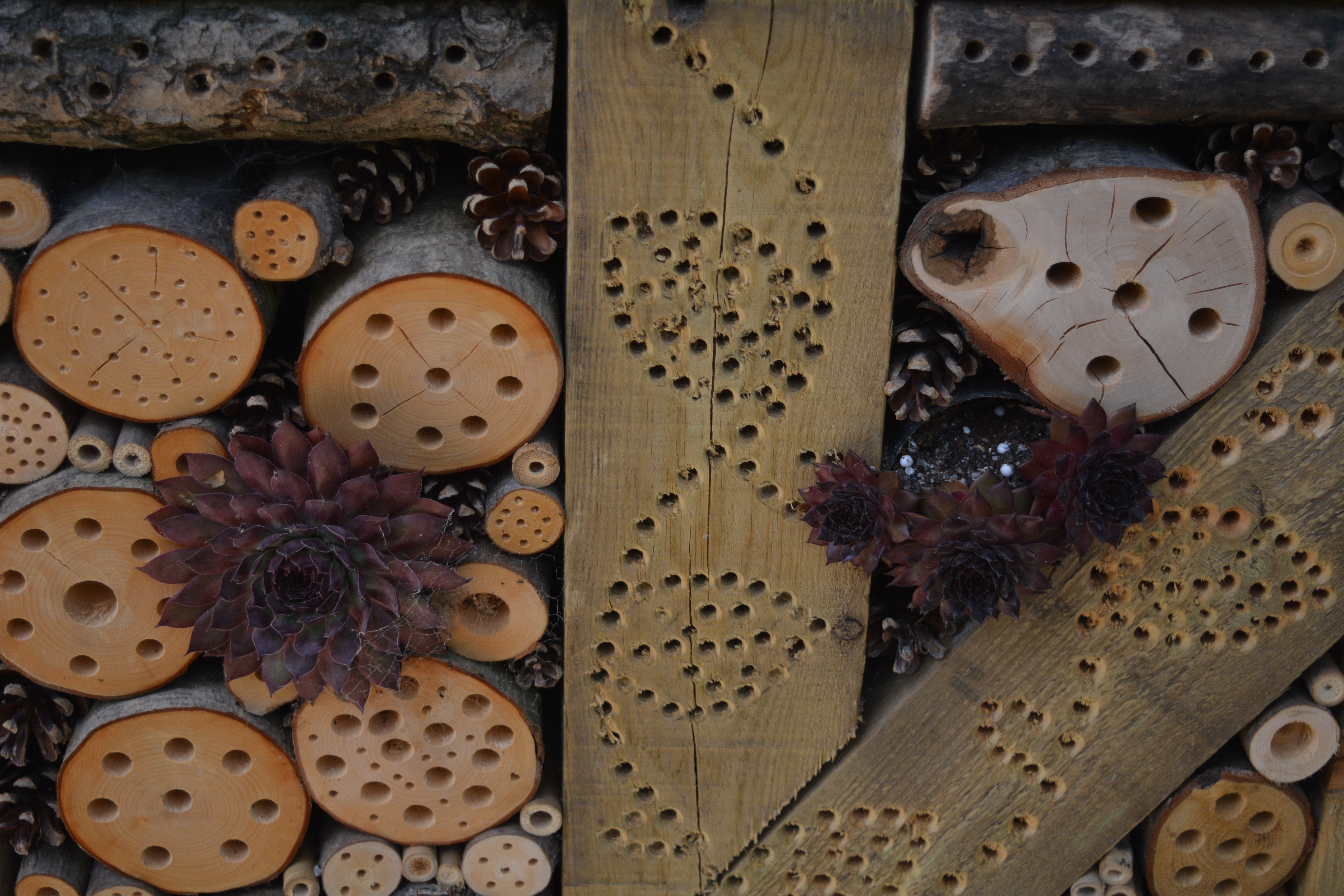
When we were finishing our visit to this wonderful RHS garden we made our way back for a final coffee before finding our car and returning to our hotel, and noticed a large and very beautiful insect hotel alongside the path. It was an heartening end to our exploration.
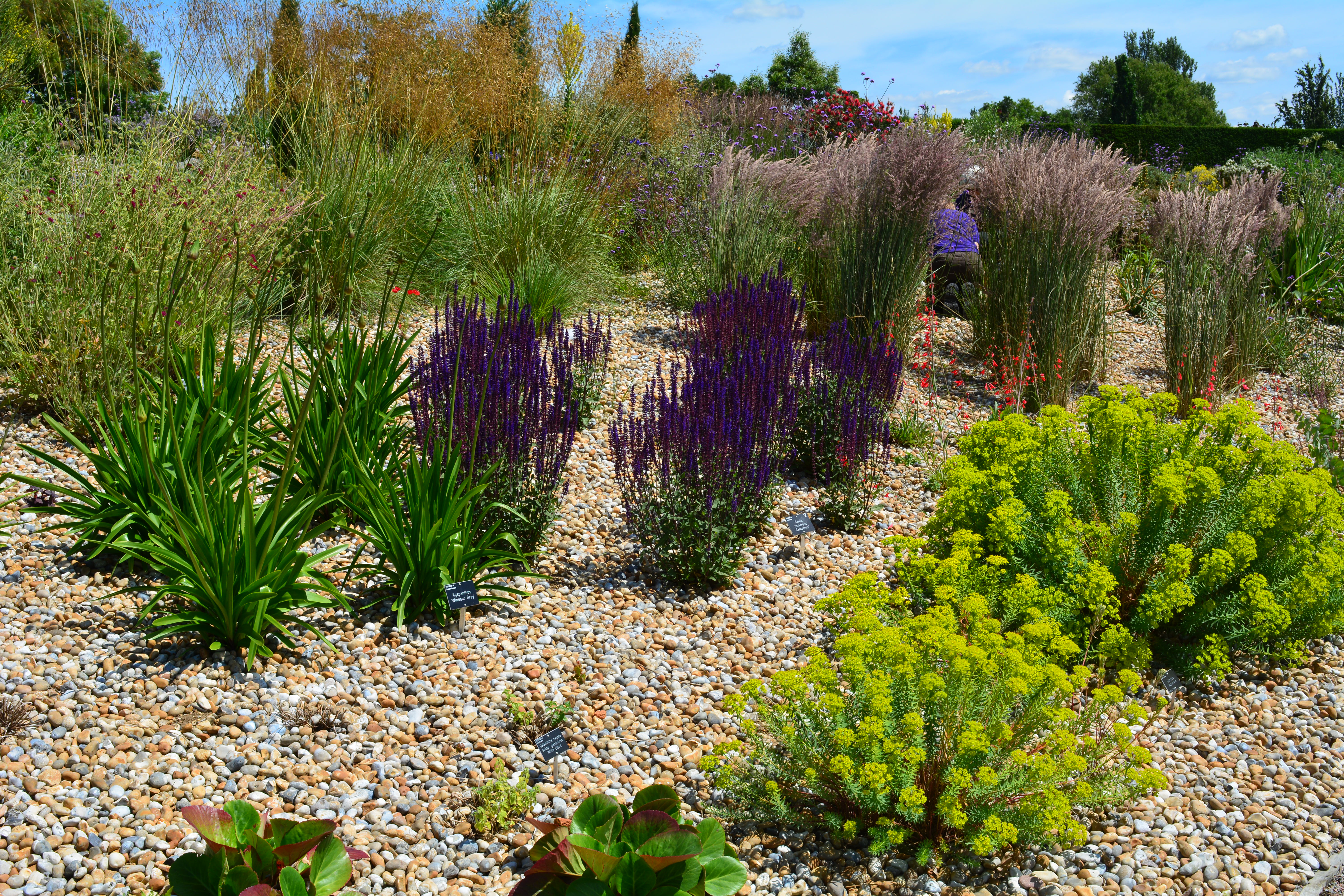
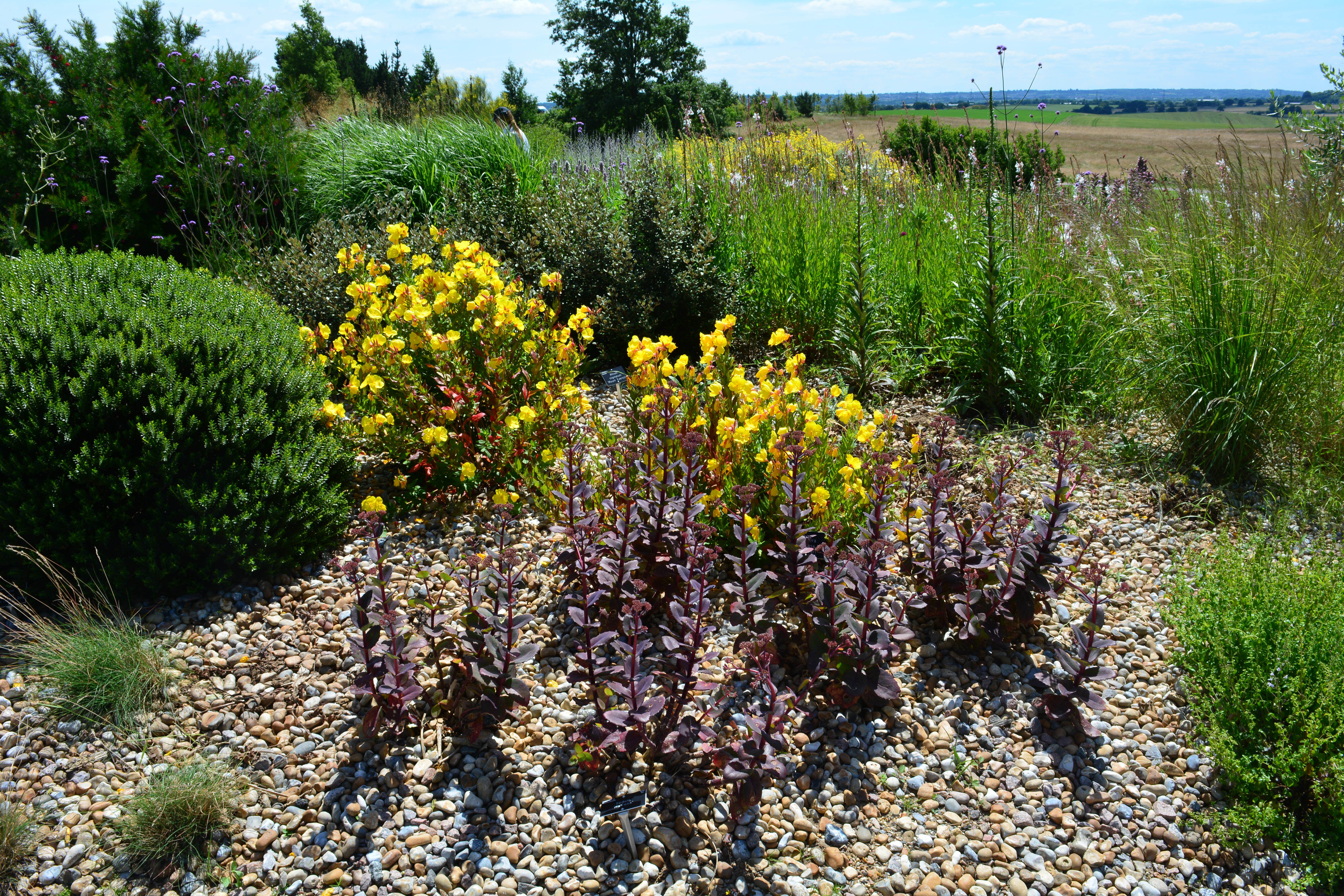
As promised we now return once again to share our experience and enjoyment of our visit to RHS garden Hyde Hall and in particular to celebrate the famous Dry Garden. This was a small patch when we first saw it but a recent revamp has seen it develop greatly in scale but more importantly the addition of new plants has enhanced the original scheme. This patch of planting is on a gentle knoll of land and the plants in it have never been fed or watered since they were first planted. We were interested in this as we treat areas of our Avocet patch in exactly the same way. To us it seems a very natural way to garden, being much as Mother Nature intended for some wild areas.
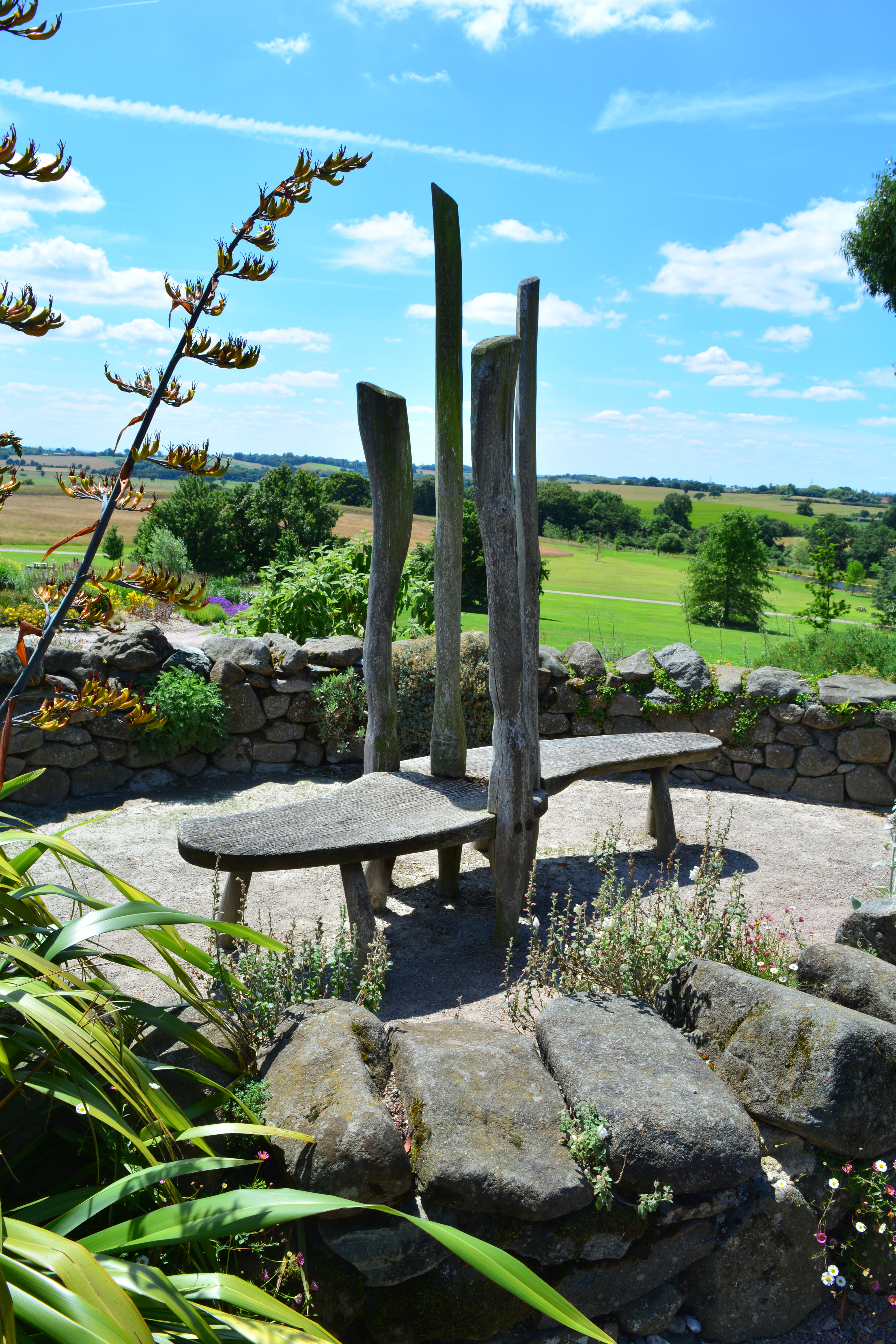
Gravel is the mulch surface through which plants are planted and clear gravel patches become paths and ways to explore the plantings. Right on the very top is a stunning wooden seat, which is a splendid place to sit and look all around every degree of the full 360 view!
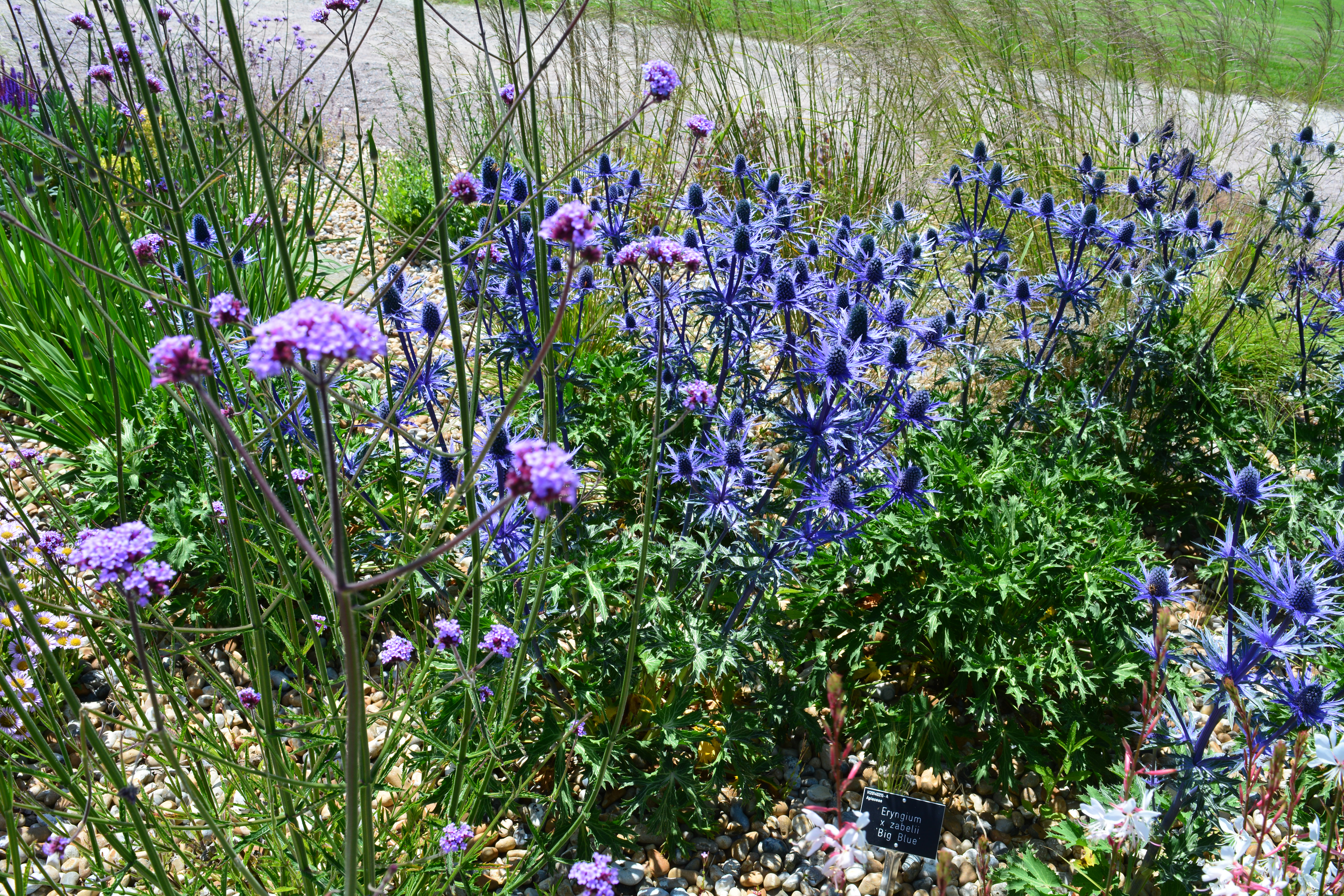
I shall now share a selection of photos I took of the dry garden to give you an impression of the style and character of the planting.
There is another phase of development underway at Hyde Hall so we need to visit again soon to see what is going on – can’t wait!
As members of the RHS we often visit their gardens and their partner gardens. Sadly it is a long journey to get to any of their main gardens so we do not visit as often as we would like. We make an effort to visit at least two each year.
In 2017 the two we selected were Hyde Hall in Essex and Harlow Carr in Yorkshire, two very different gardens, one in the south and one in the north. The first we visited was Hyde Hall which is the furthest away of all their gardens so we have only ever explored it once before. We made this journey in the middle of the summer and were looking forward in particular to seeing how the Dry Garden had developed as this was a new venture when we originally visited this garden. When we journey down to Essex we usually pay a visit to the garden of the great lady of British gardening, Beth Chatto, but this time we did not have time. But we will go to her garden soon when I will post about her incredible garden when we do. For now though we will concentrate on the gardens of Hyde Hall.
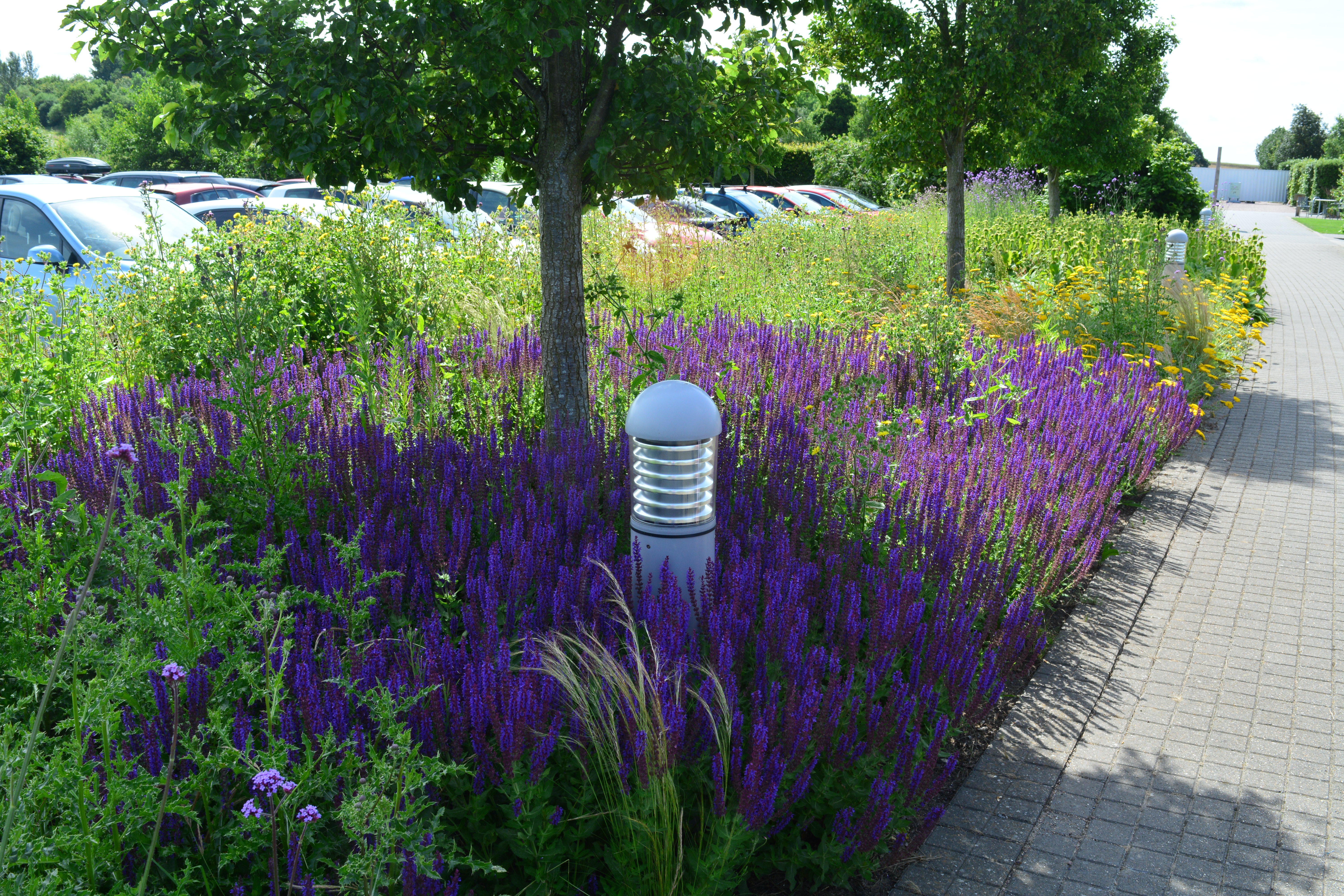
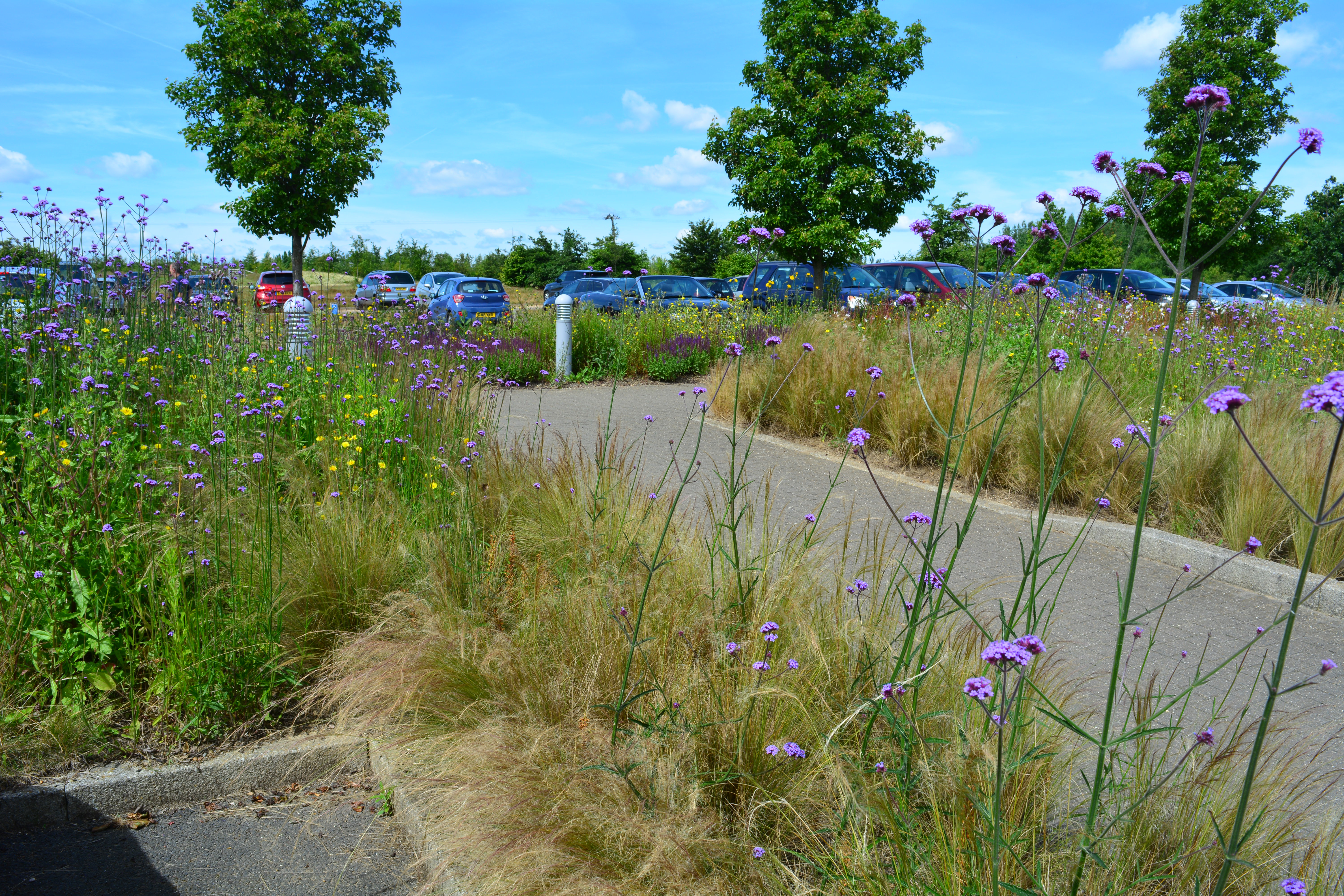
It is rarely possible to admire the planting within a car park, but at Hyde Hall the planting was worth looking at and photographing. It was based on new style perennial planting which had such a gentle calming effect on us as we walked from the car to the garden. Grasses and airy perennials were the mainstay of the plantings.
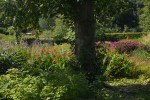
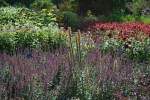
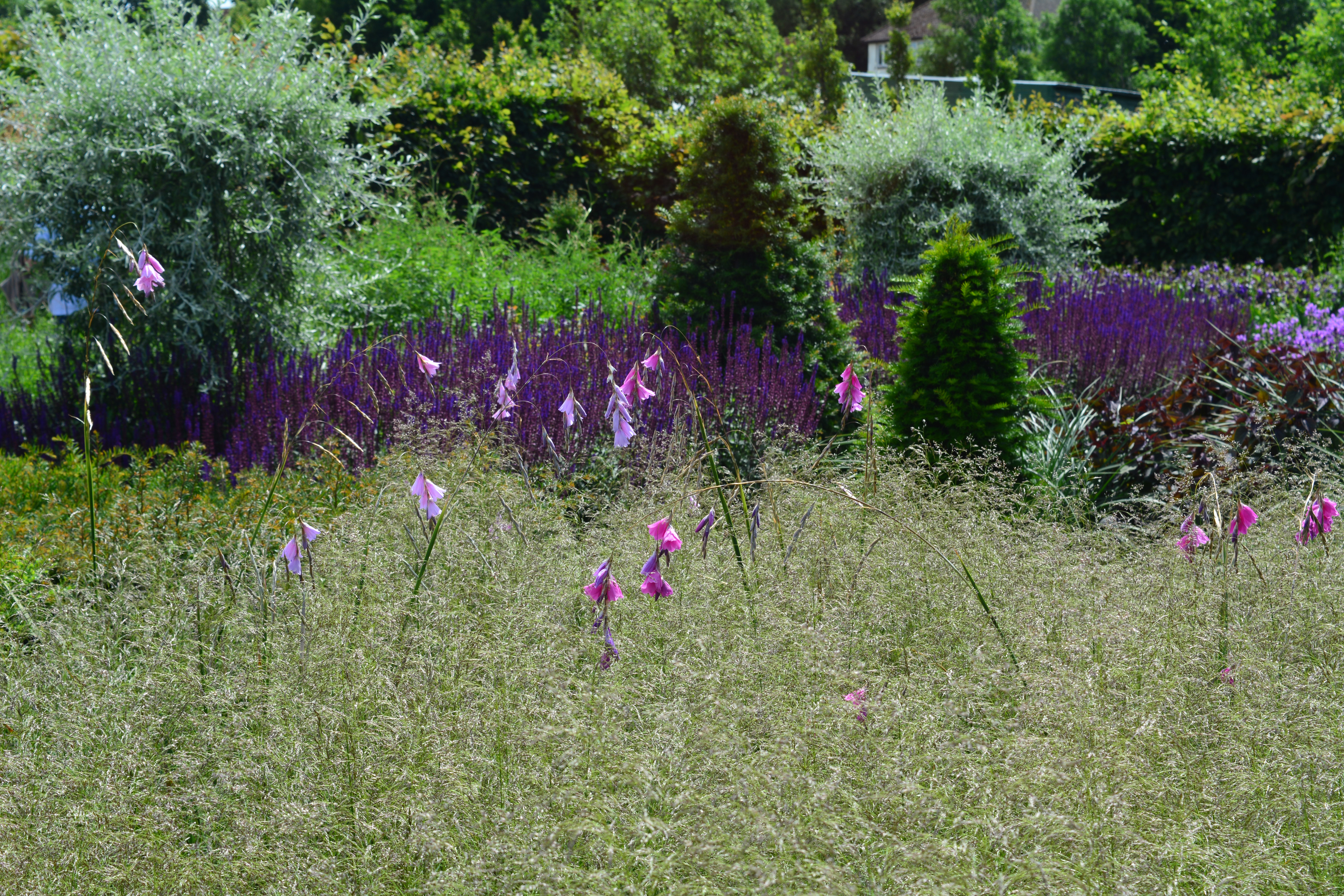
Once inside the gardens themselves, the quality of planting and the brilliant way in which plant partners were grouped were of the highest quality.
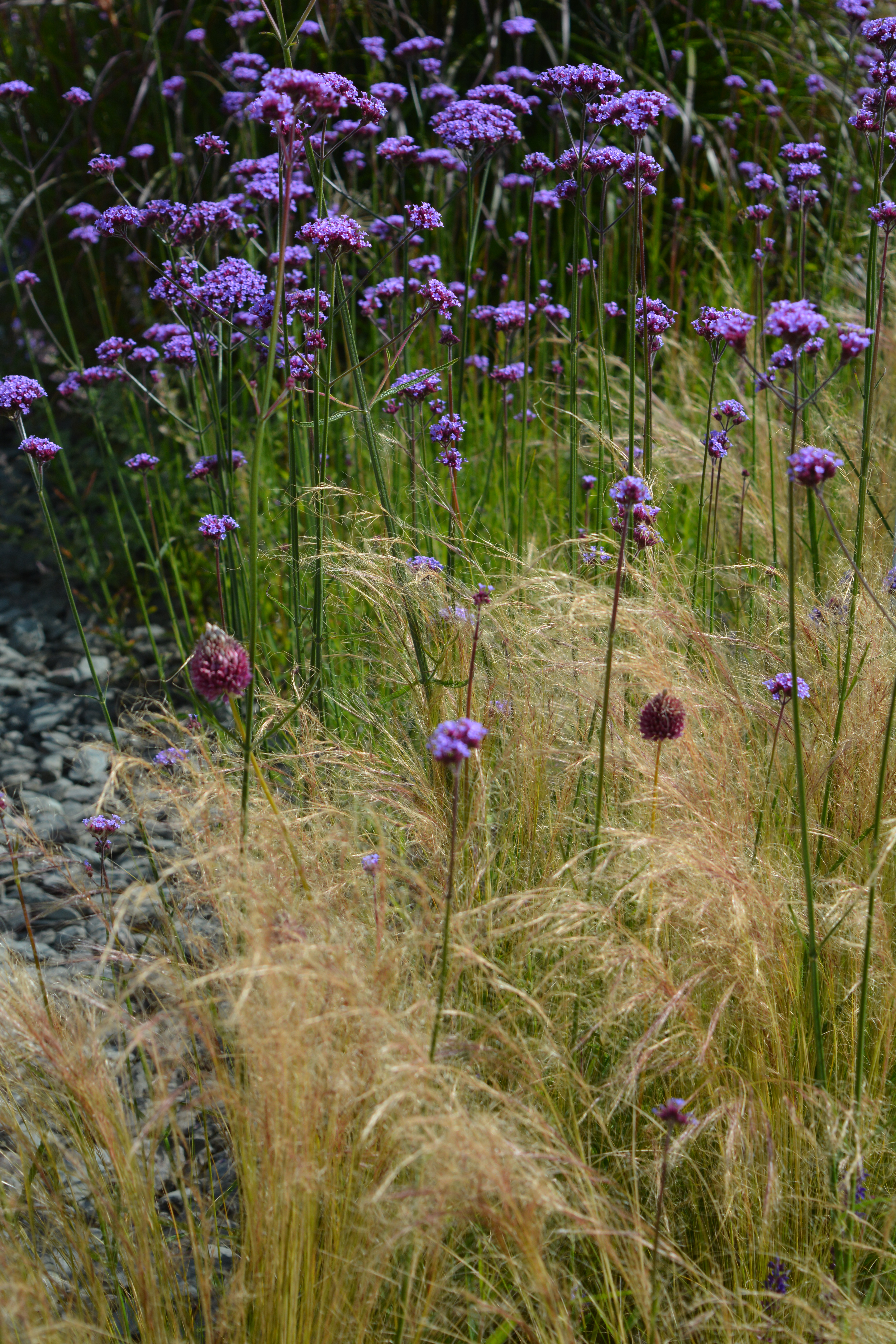
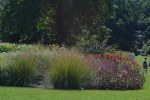
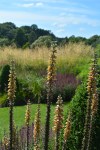
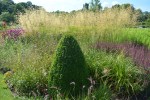
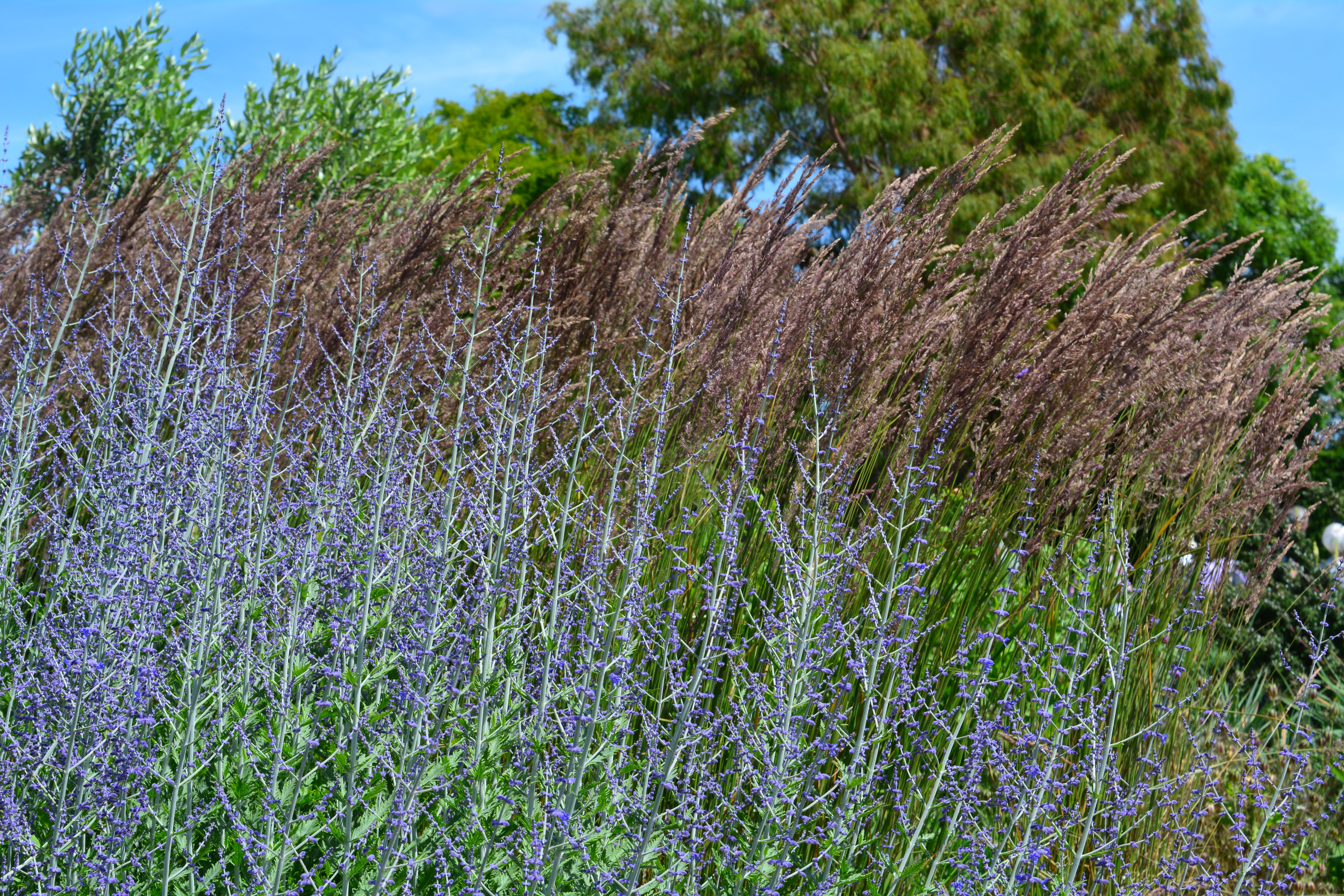
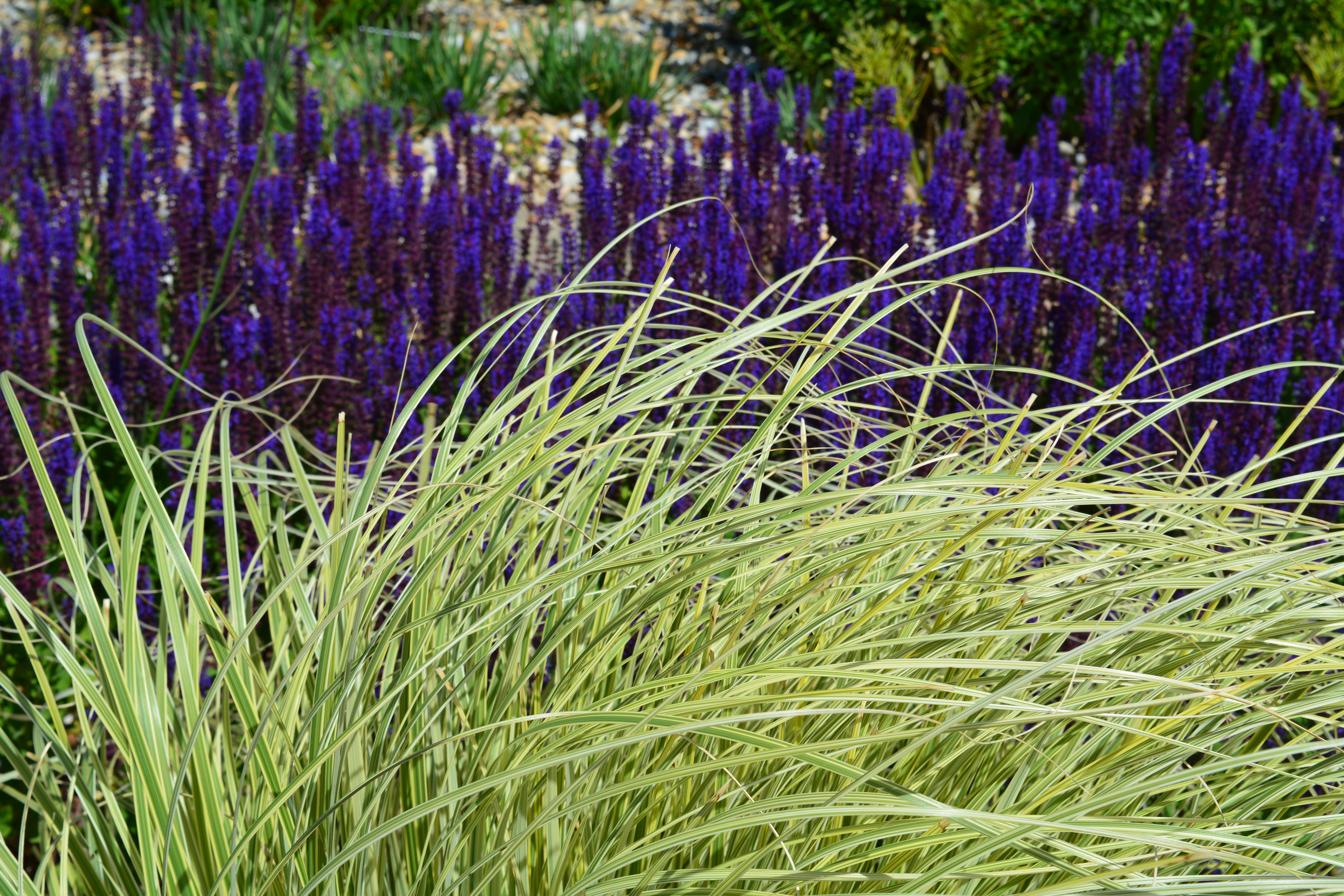
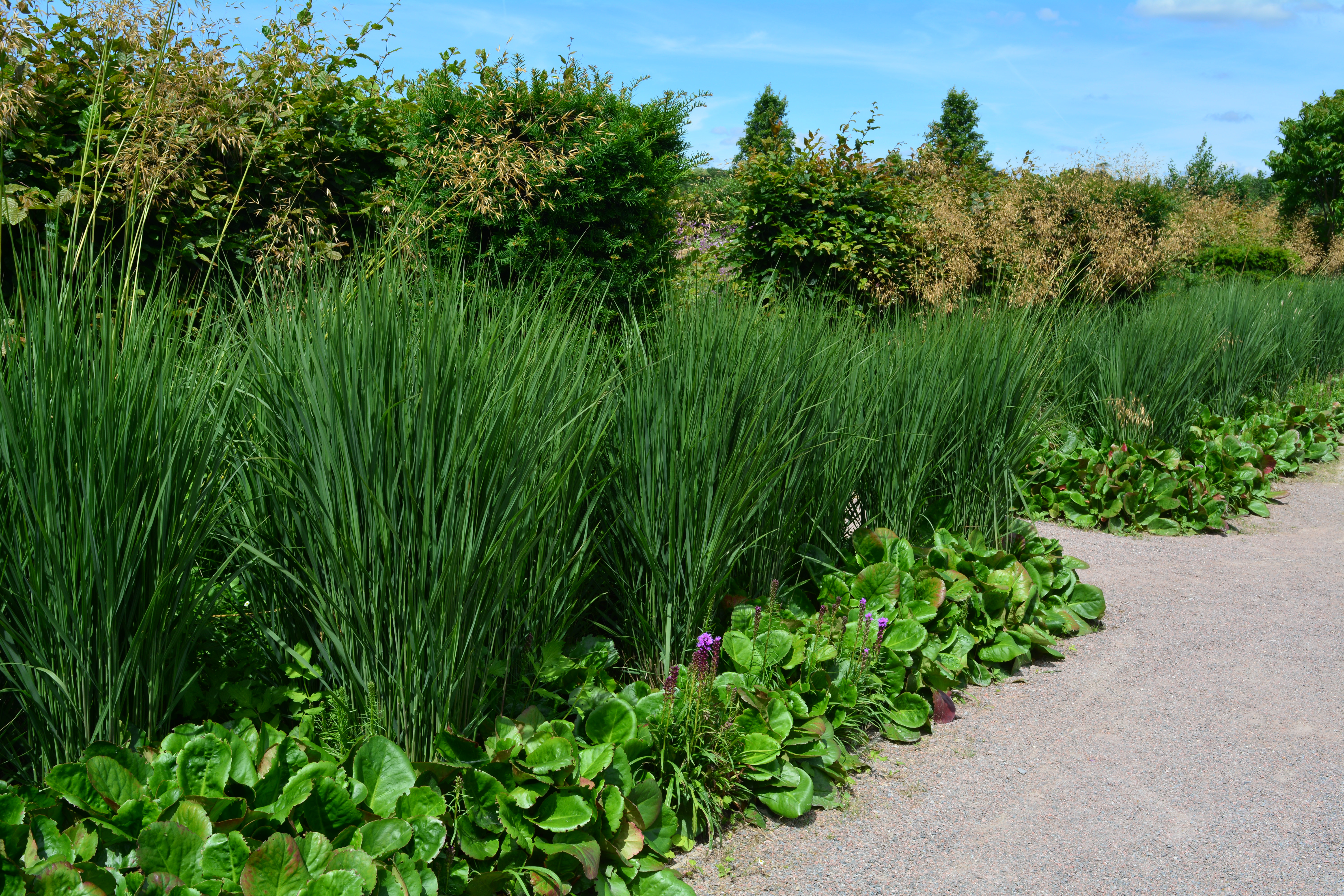
Grasses feature strongly at Hyde Hall adding texture to the landscape where grass is cut selectively, but different ornamental cultivars are used for structure and their architectural presence, and in mixed plantings for contrast, movement and for visitors to touch and stroke.
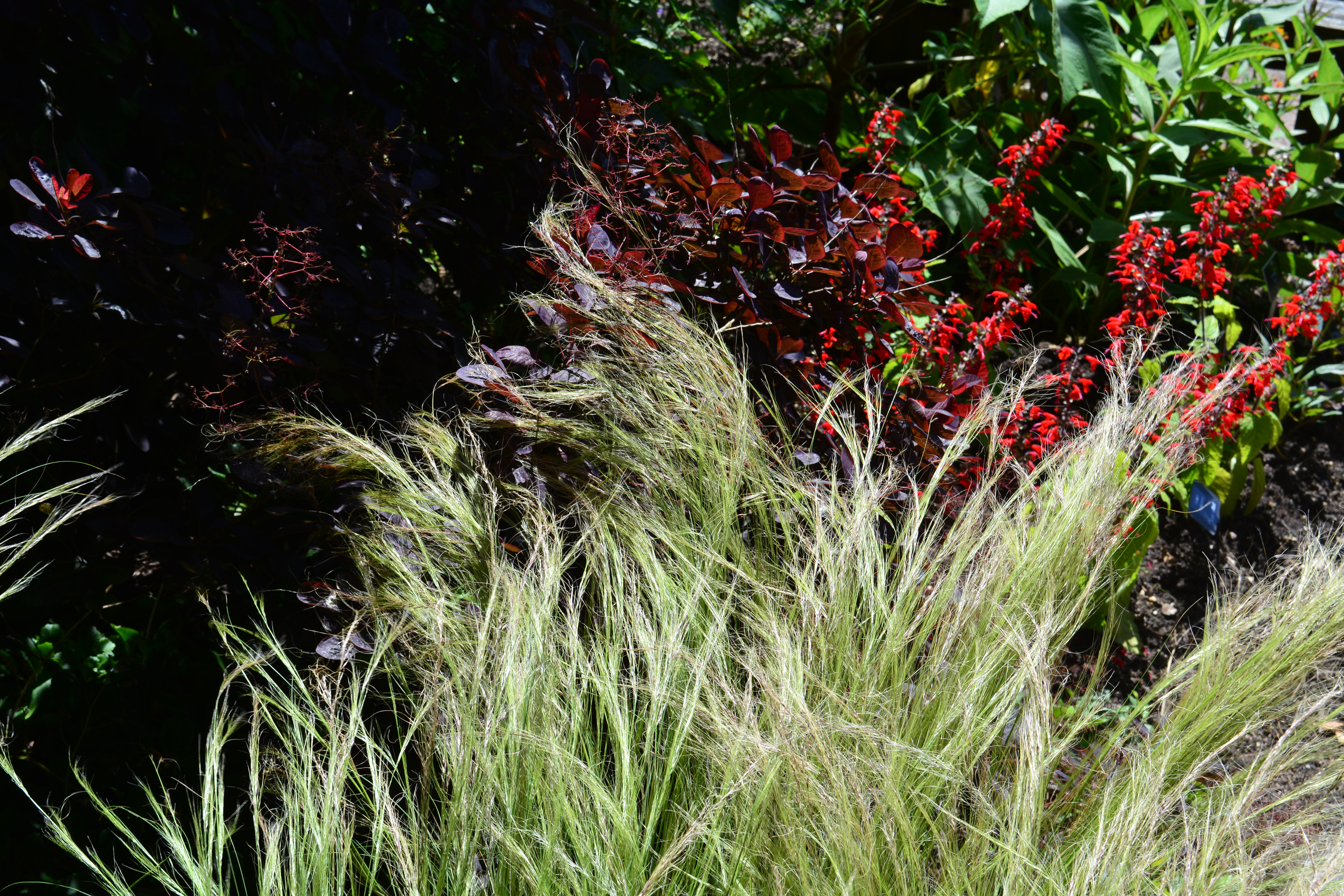
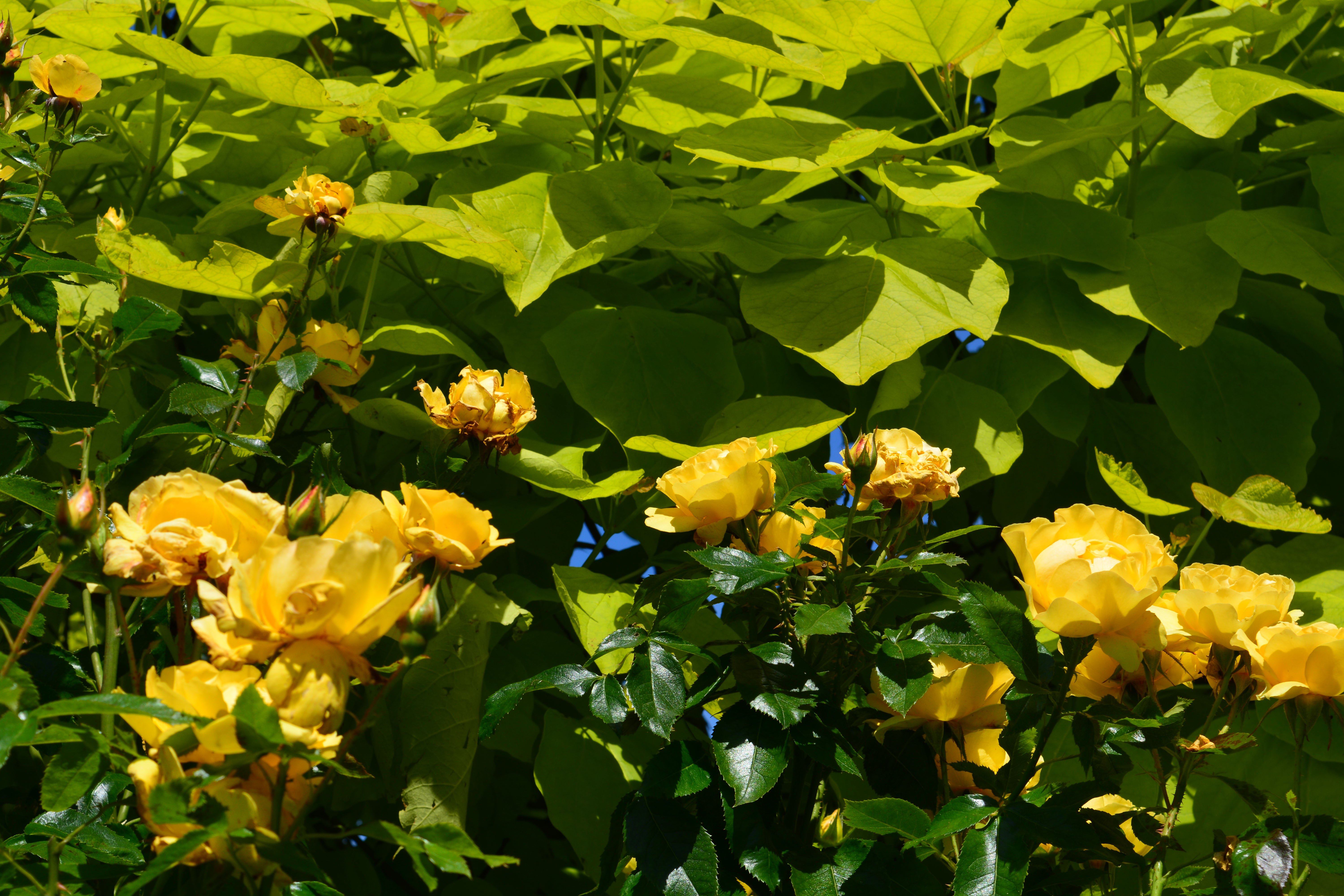
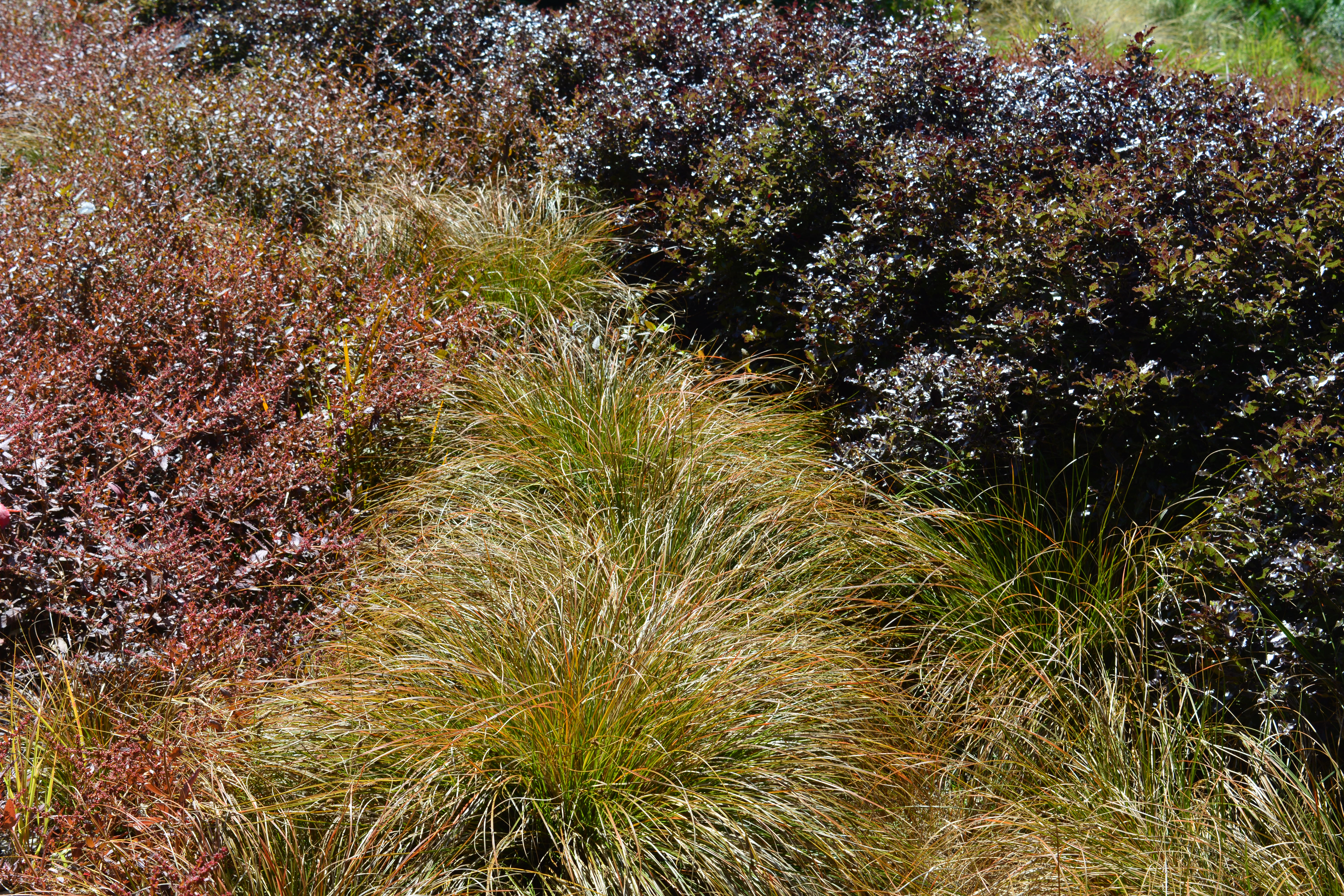
In places we could identify where plants had been chosen to take advantage of the light from the sun, using its brightness to encourage us to see reflection, shimmering light, glossy textures and contrasting patterns. Essex is dry and sunny particularly compared to our Shropshire climate. Using the brightness of the sun and the dryness of the climate to enhance gardens is so clever and not often done well. Hyde Hall is the star in this department.
In my second post about this wonderful RHS garden I shall focus on their famous Dry Garden, but for now I want to explore the way light is used so effectively in some areas. Light can emphasise glossiness of foliage, it can emphasise the interplay of light and shade and it can emphasise texture.
Anglesey Abbey gardens are best known for their brilliant Winter Gardens, which were the first well-known gardens designed to be at their best and visited at this season. But there is far more to these premises than this seasonal garden, such as beautiful gentle herbaceous borders and lots of plants that attract wildlife.
The famous Winter Garden is still worth wandering through though!
We set off beyond the Winter Garden to see what we could discover of interest in the rest of the garden. We felt sure we were in for a few surprises! Turning a corner and rounding a hedge of glossy leaved Laurel we found a mystery. A piece of sculpture? A clock? We explored it for a while before we realised its true identity.
The oak structures are designed to support visitors as they lean back to enjoy the wide Fenland skyscapes.
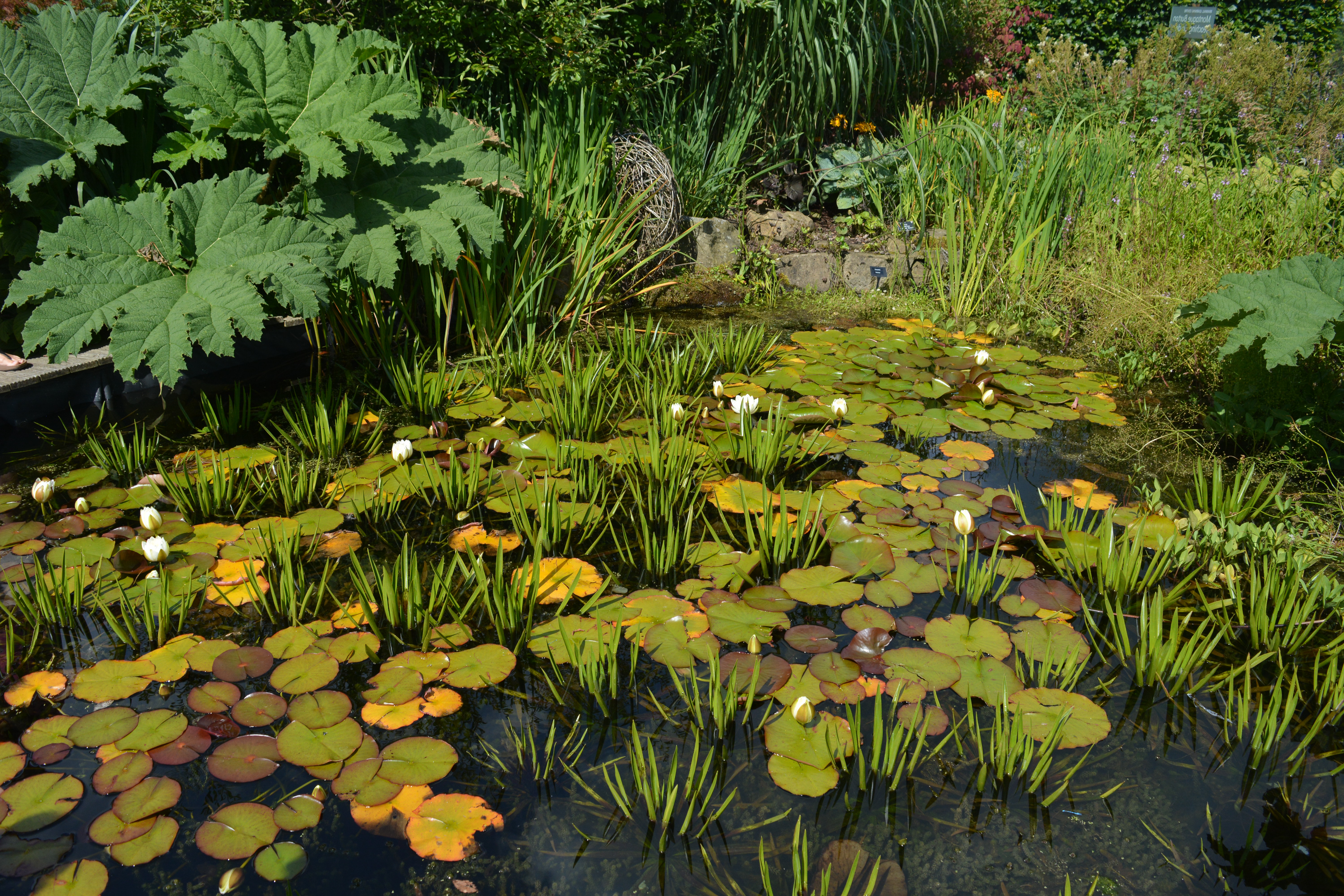
To return to the entrance we followed a tow path alongside a very overgrown canal, its surface carpeted with our native yellow waterlily.
Looking upwards we noticed an open structured sculptural piece hanging from a bough of a mature tree. It presented a strong contrast to the stone griffin close by.
In the end though what makes a good garden great is the quality of its plants and how they are put together. The photos below prove just how great the gardens at Anglesey Abbey truly are whatever time of year you visit.
'The most important and informative publication on wildlife of our times' - The Independent. This blog is a member of The UK & Ireland Natural History Bloggers group: www.uknhb.blogspot.com
























 ,
,



















































































































 greenbenchramblings