Categories
countryside landscapes light light quality National Trust photography The National Trust the sea the seaside the shore Wales wildlife

A Stroll along the Pembrokeshire Coastal Path – Part Two

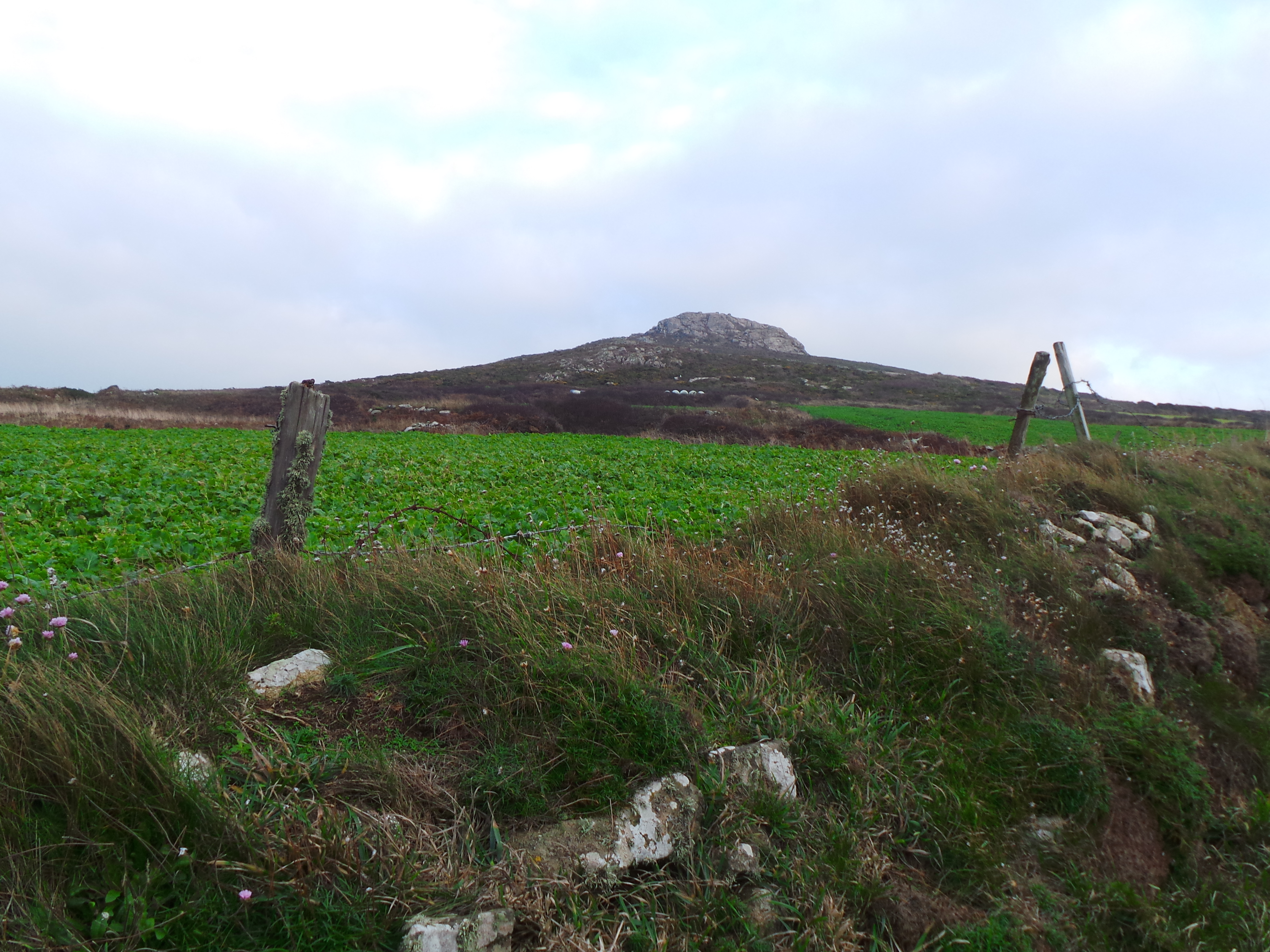
Welcome back after a bit of a rest and we continue along the beautiful coastal footpath towards the headland at St David’s Head. You left us with our goal in sight as we began our way across rougher moorland.

We were walking a stretch of the coastal path in Penbrokeshire which was my challenge for 2014. We set out intending to walk a mile, far more than I should be walking. We found ourselves going further than intended and still had not turned back. I set myself a new extended challenge. To walk the mile to the headland of St David’s Head and back again. I knew I would suffer for days after but I am a stubborn chap.

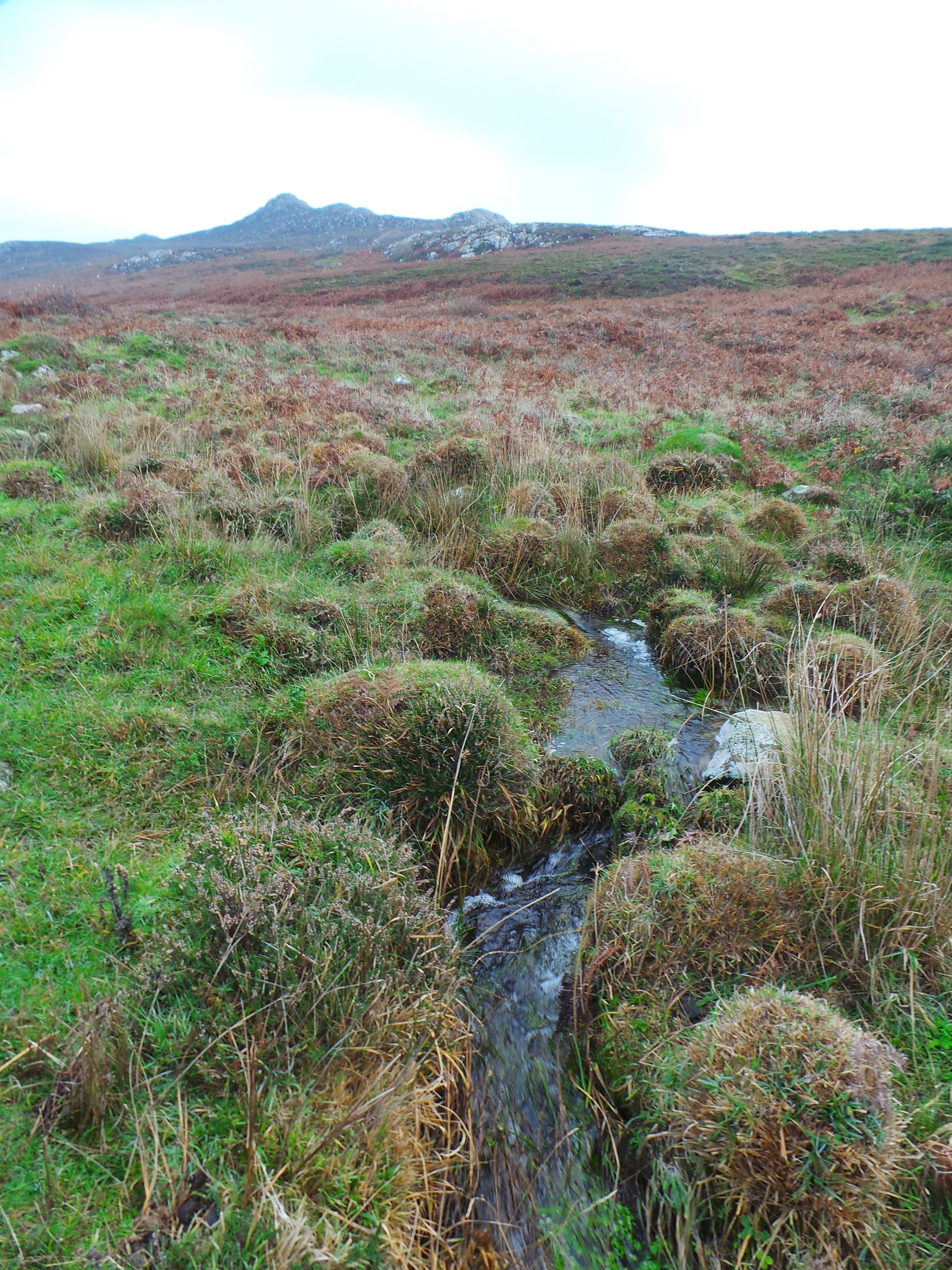
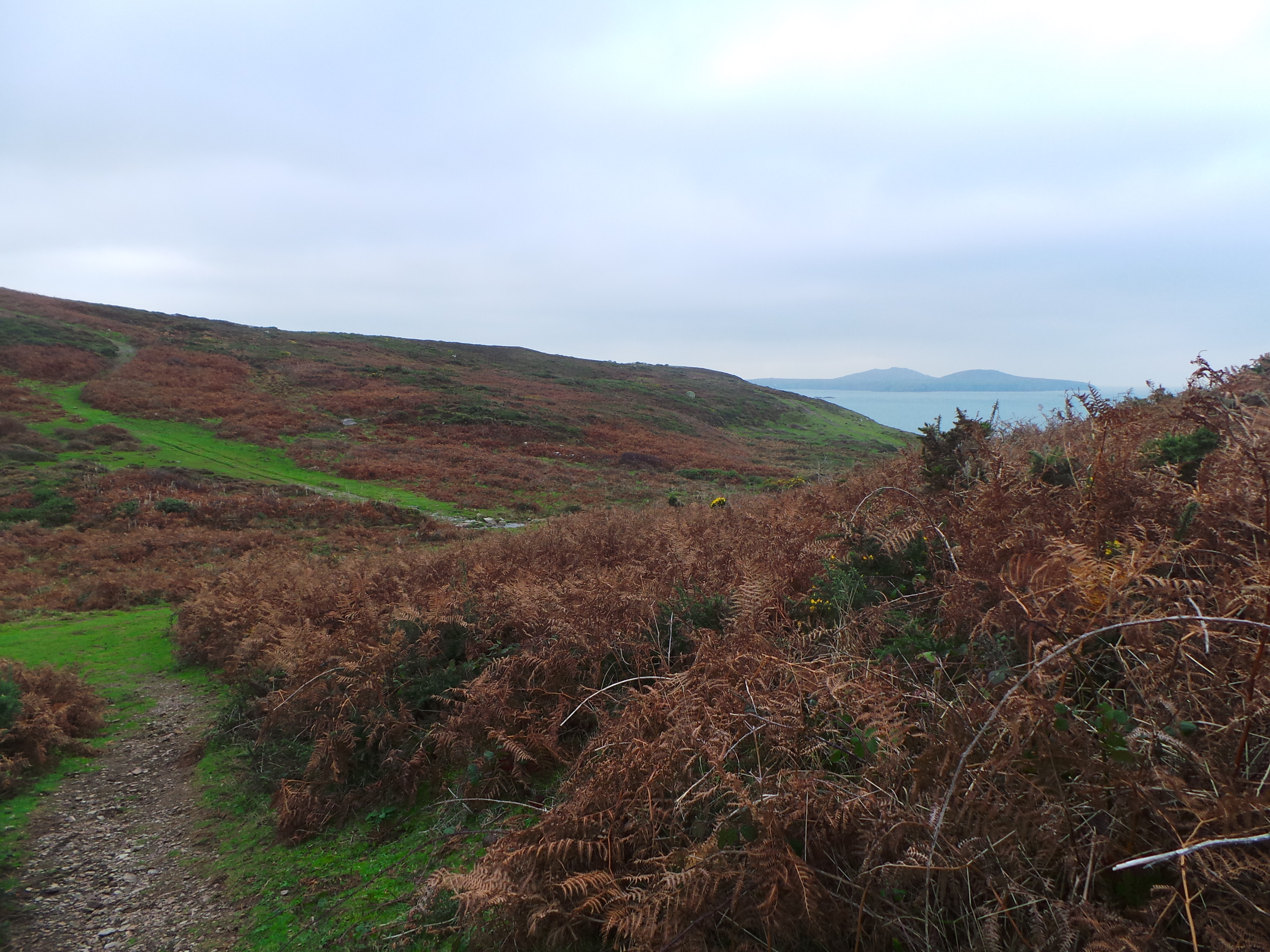
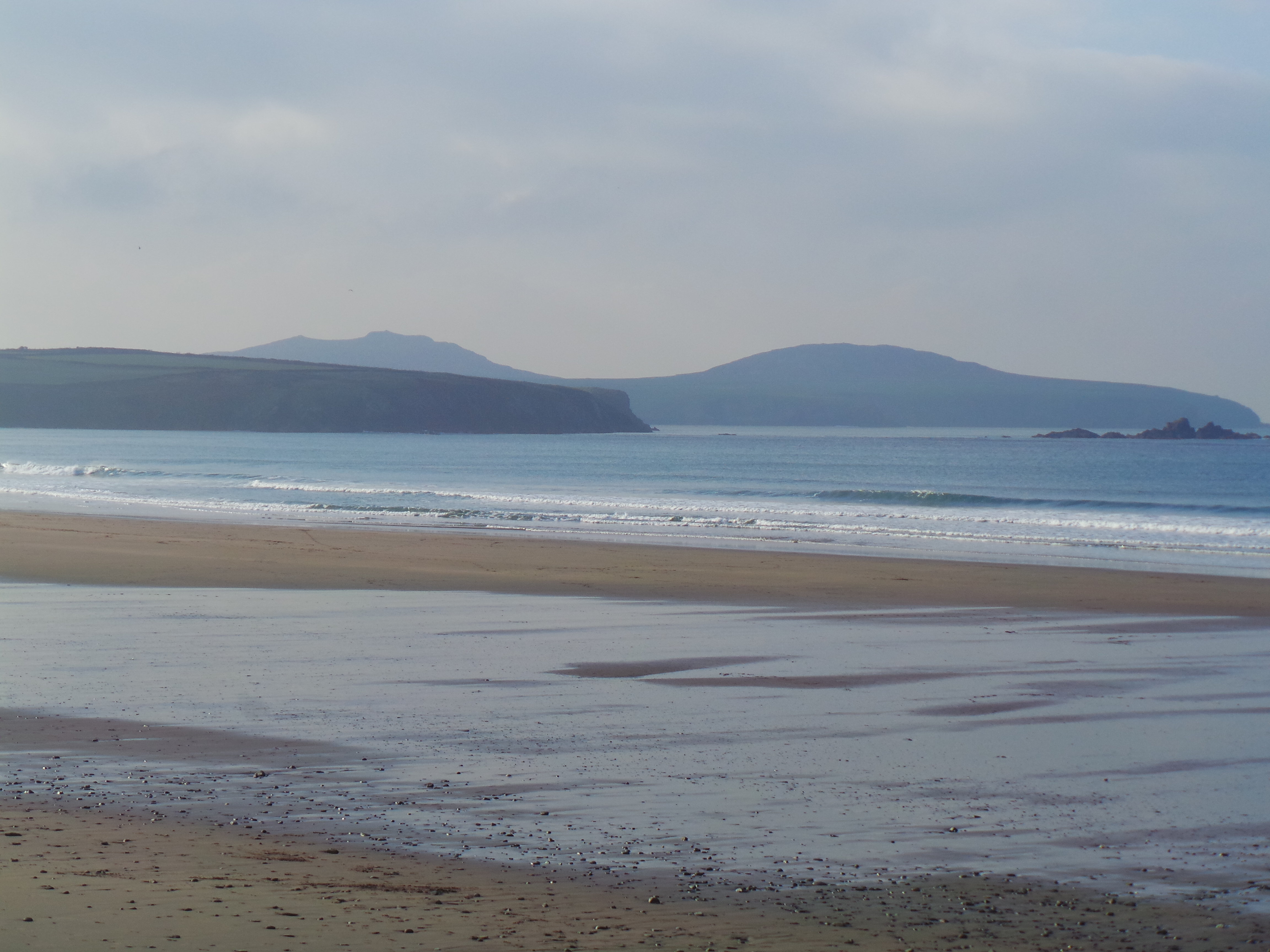
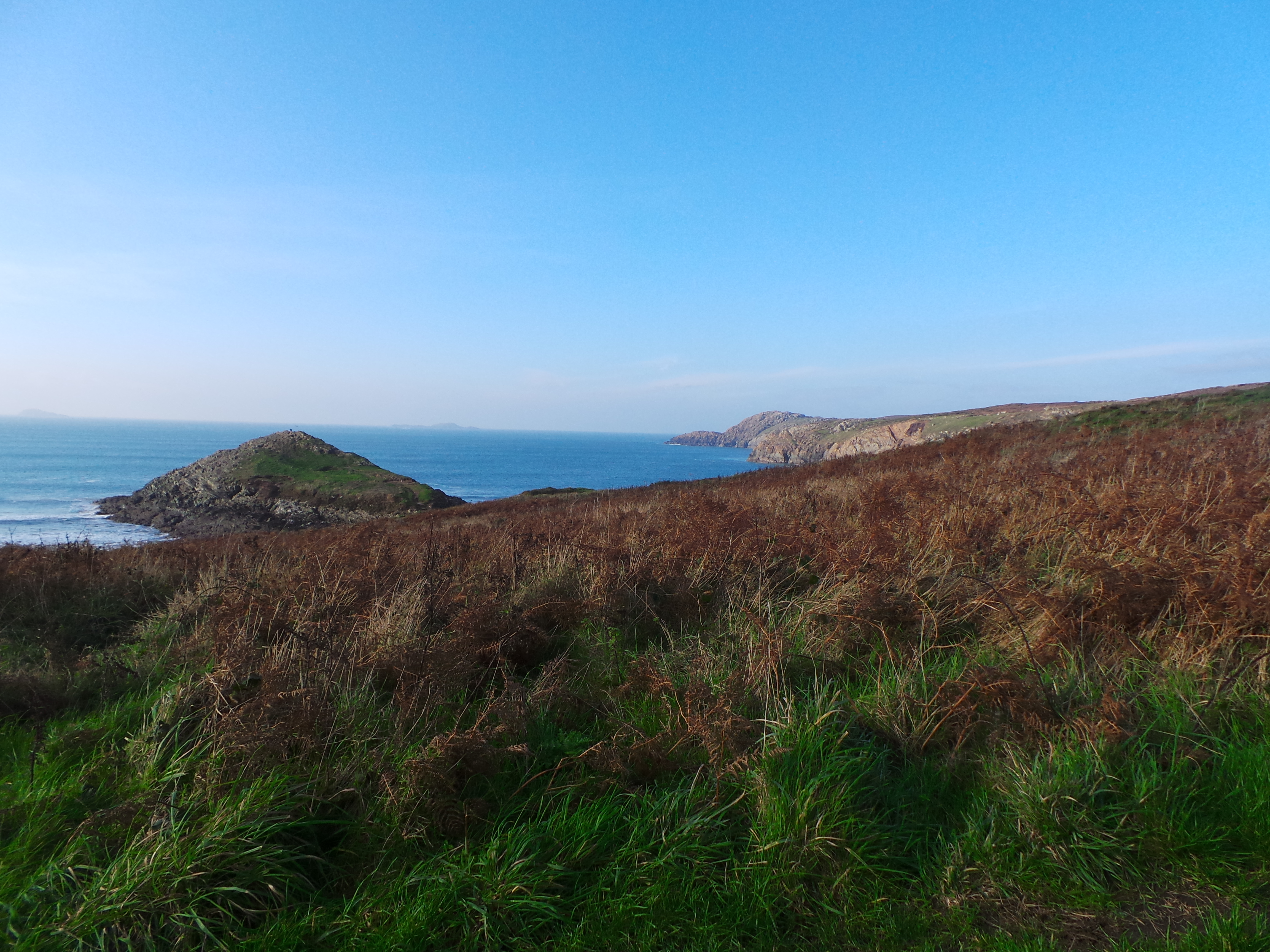
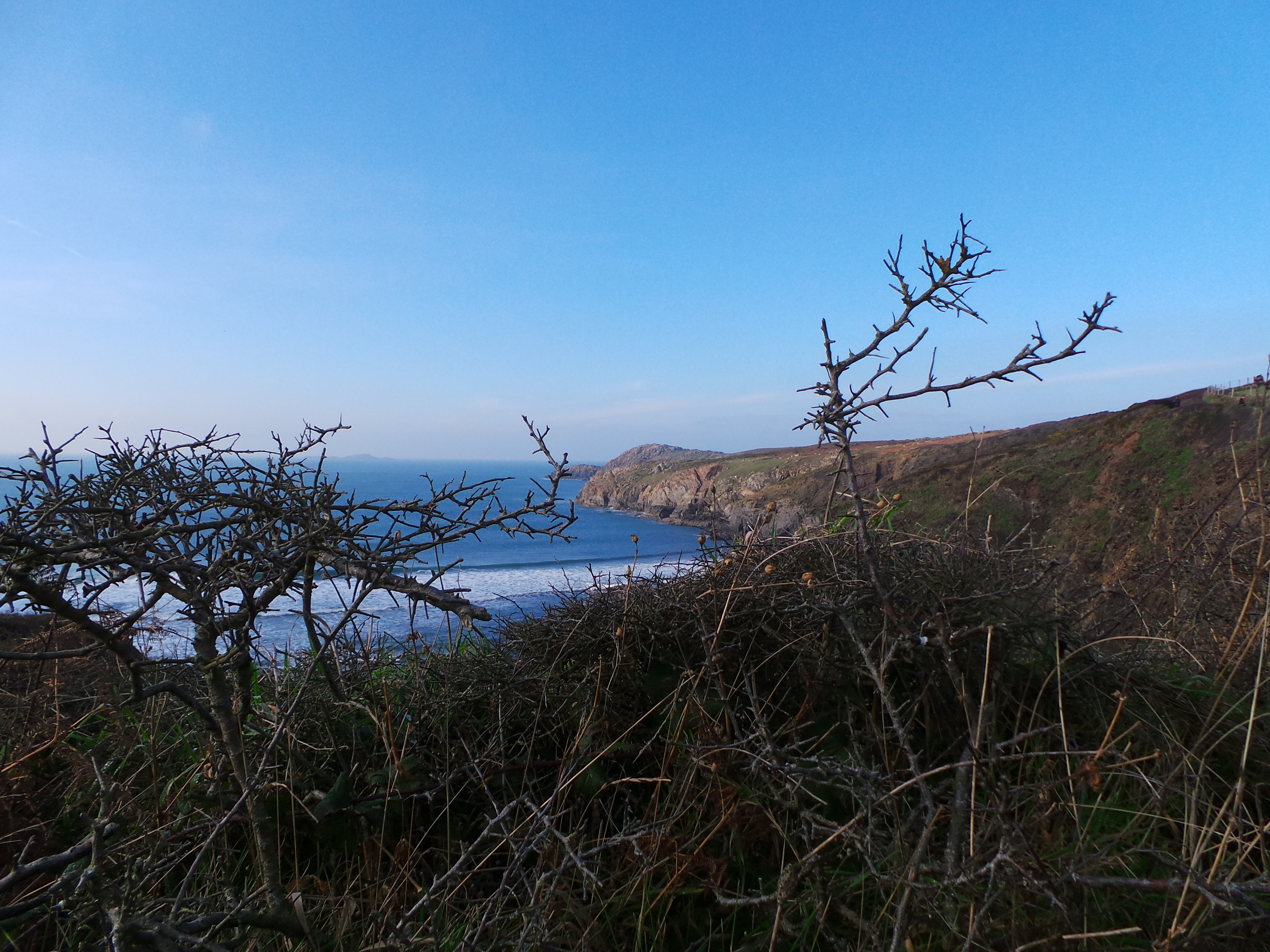
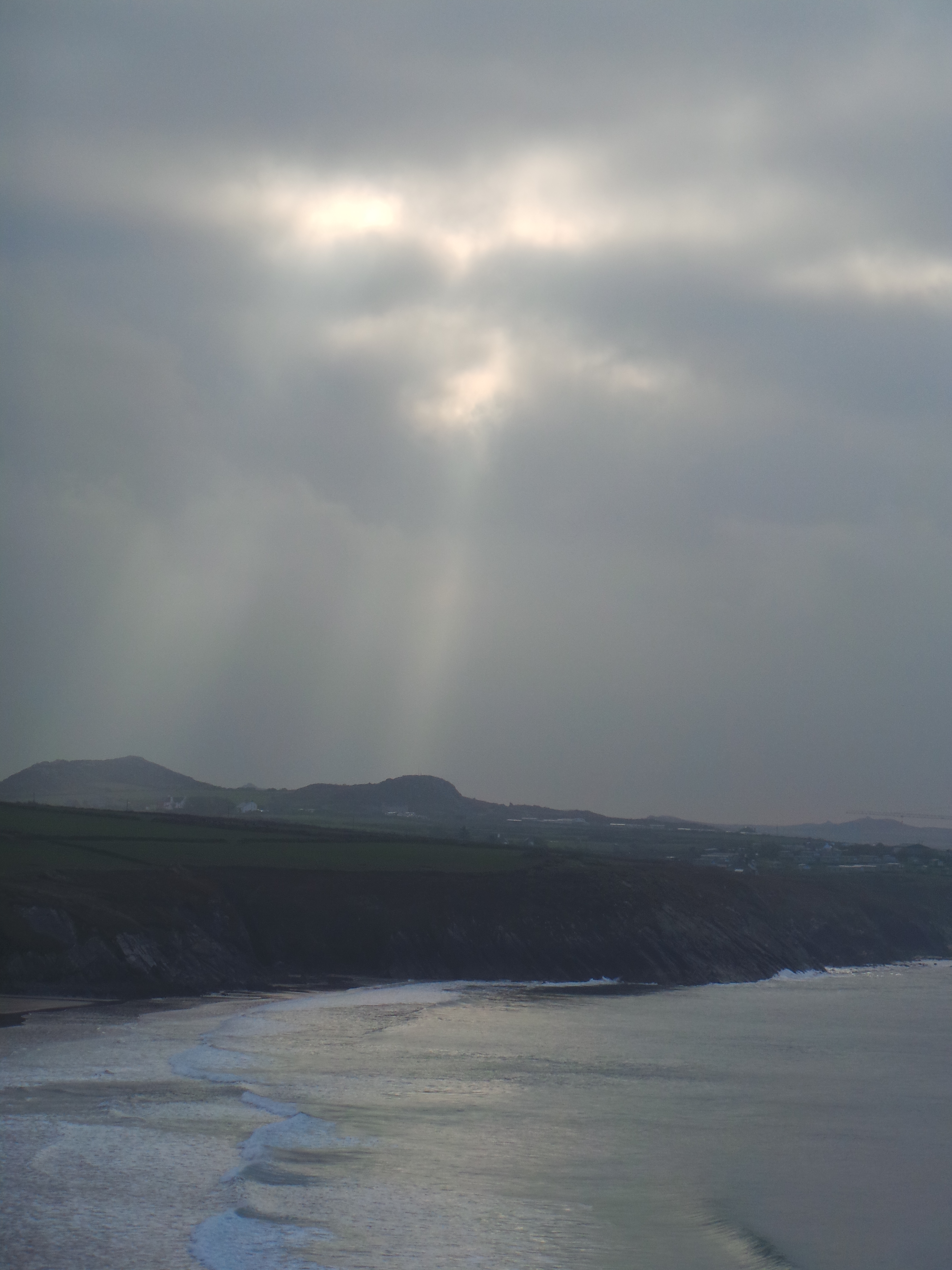
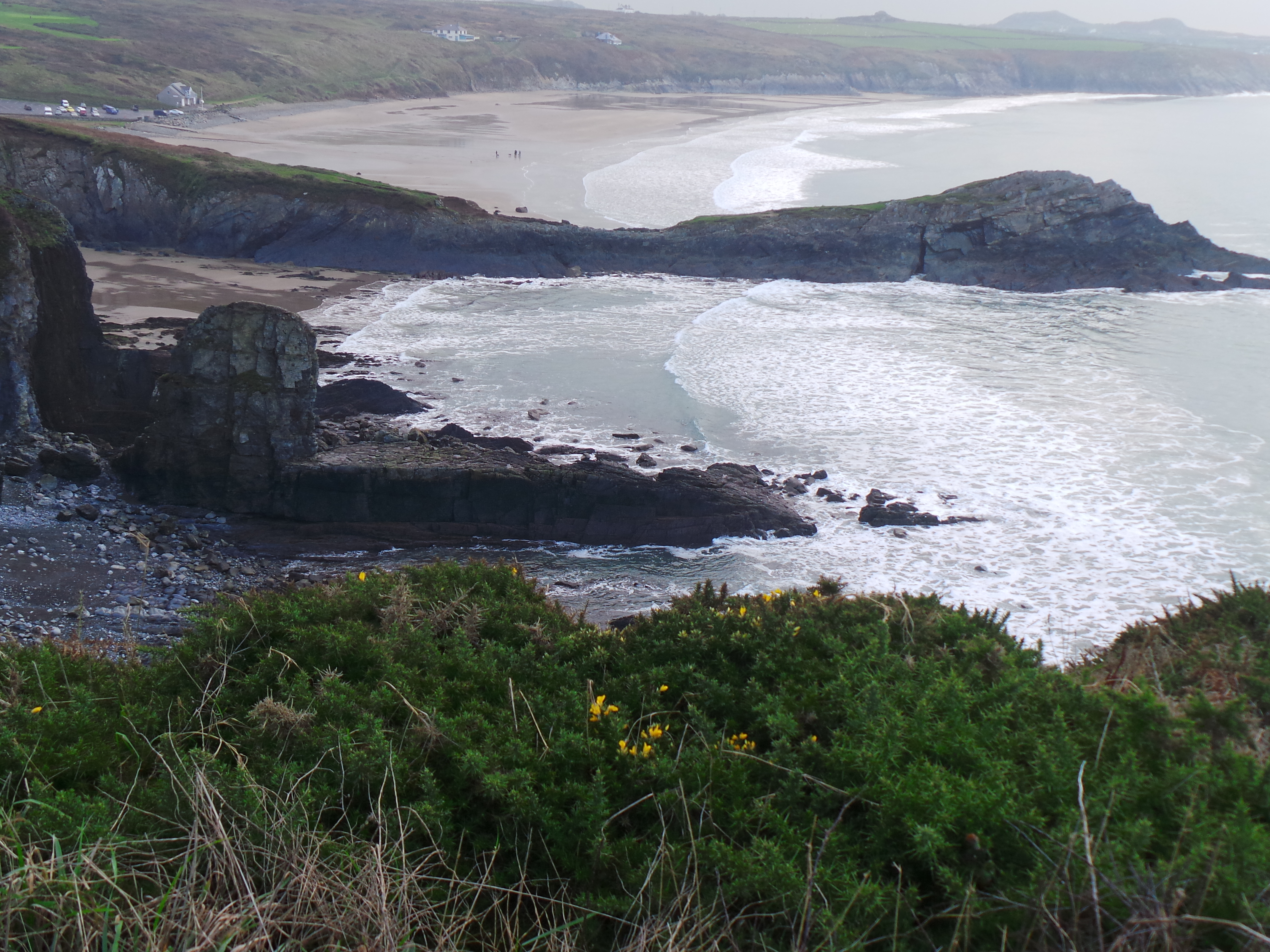
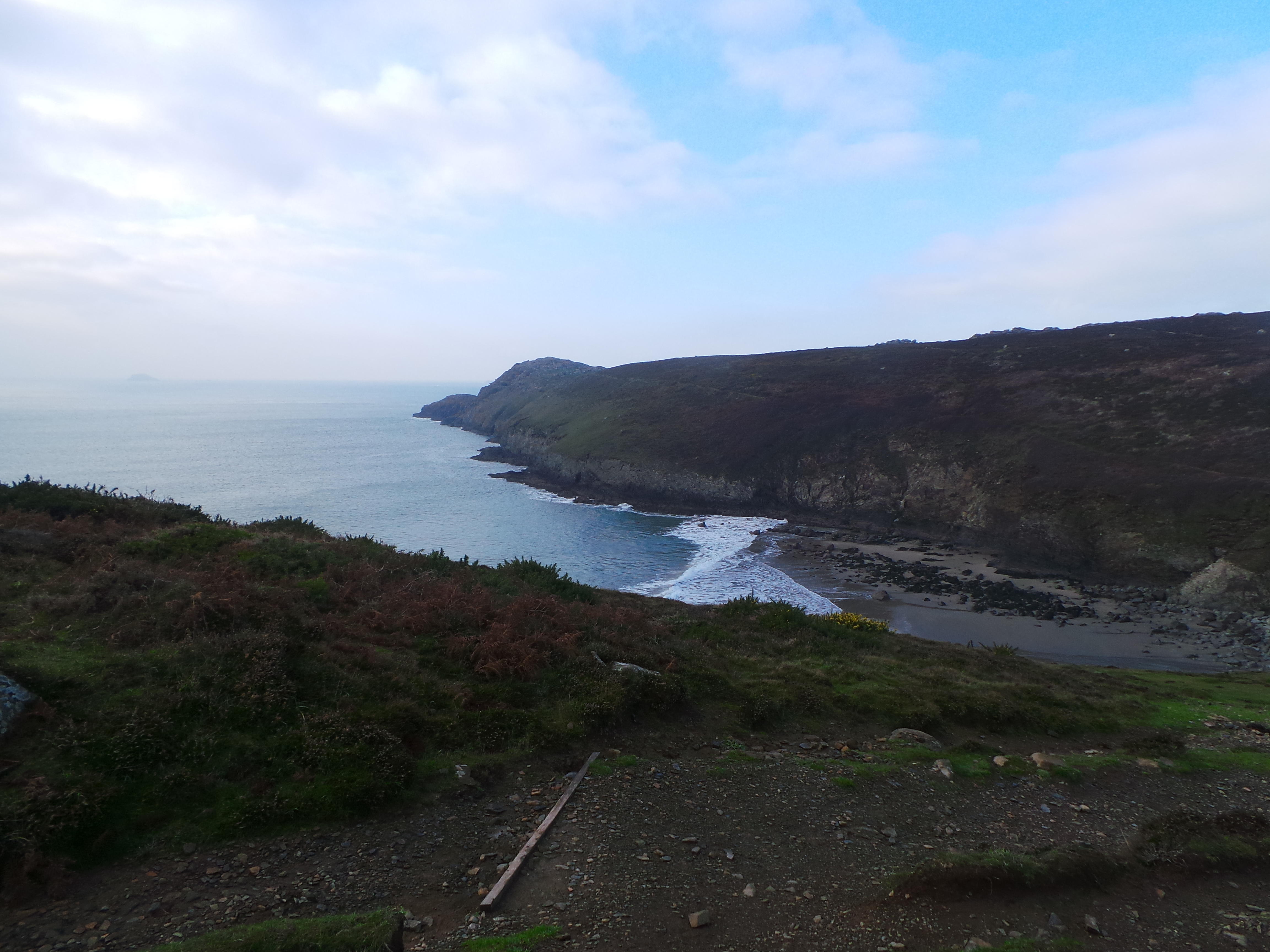
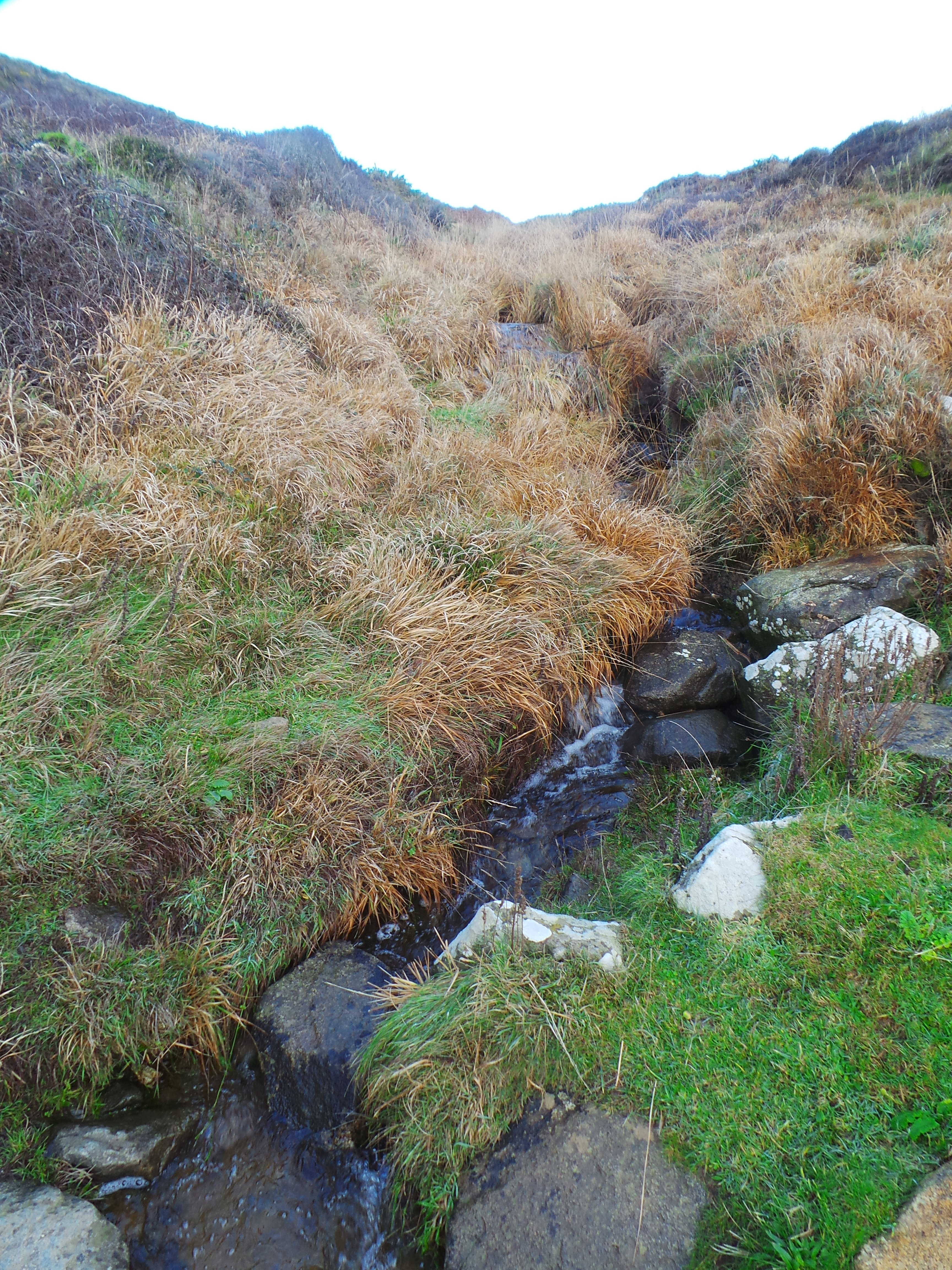
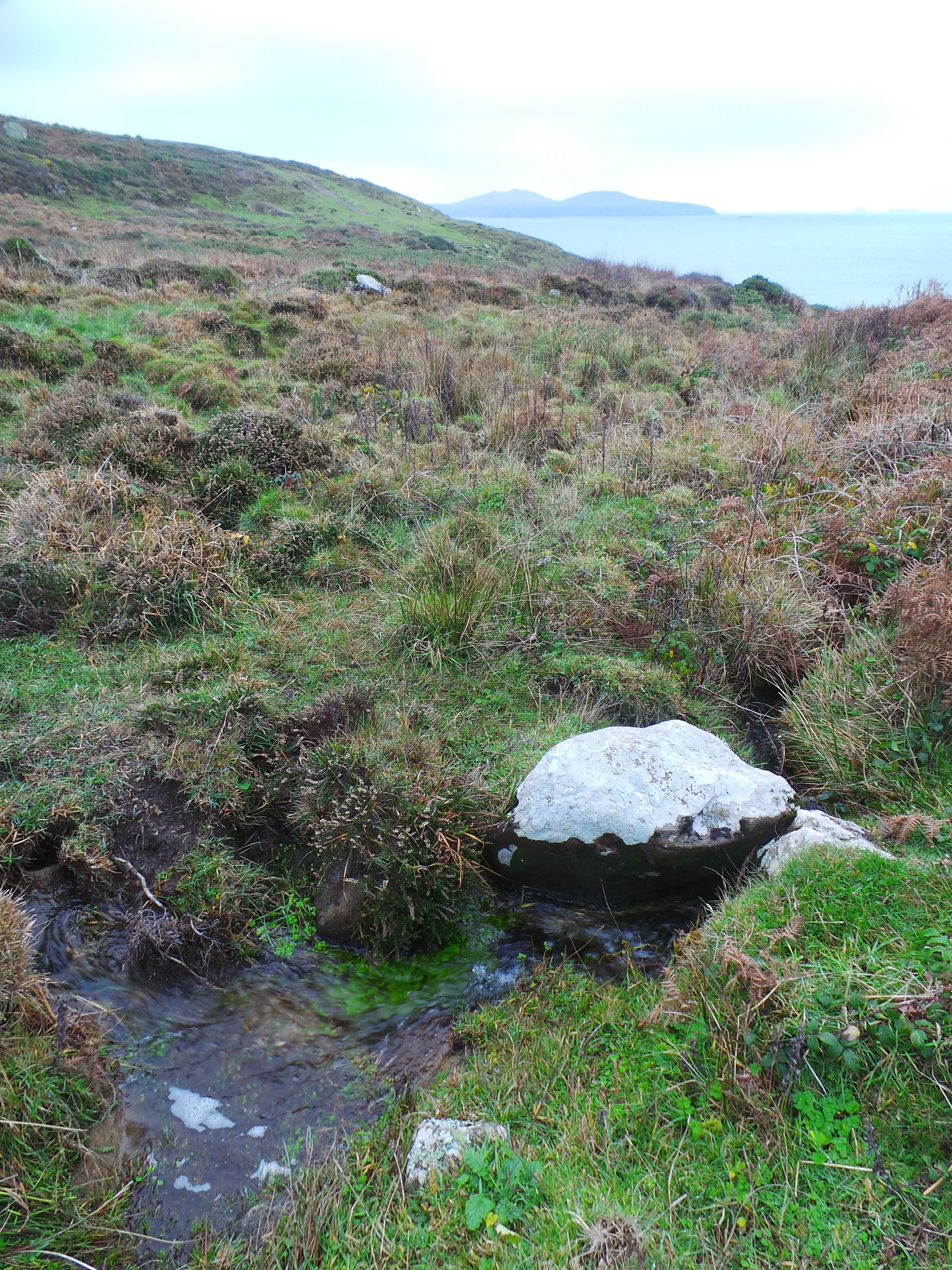
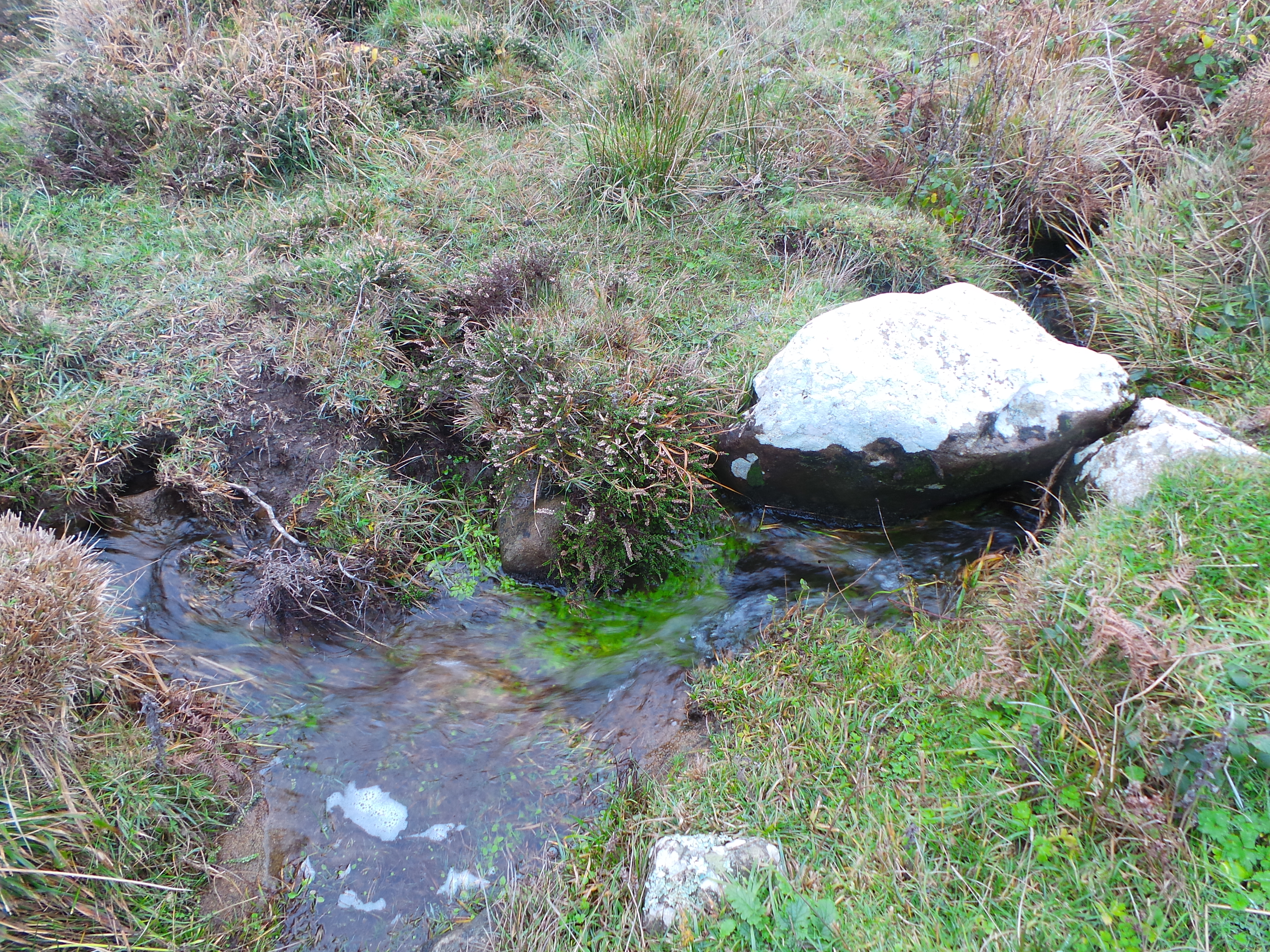
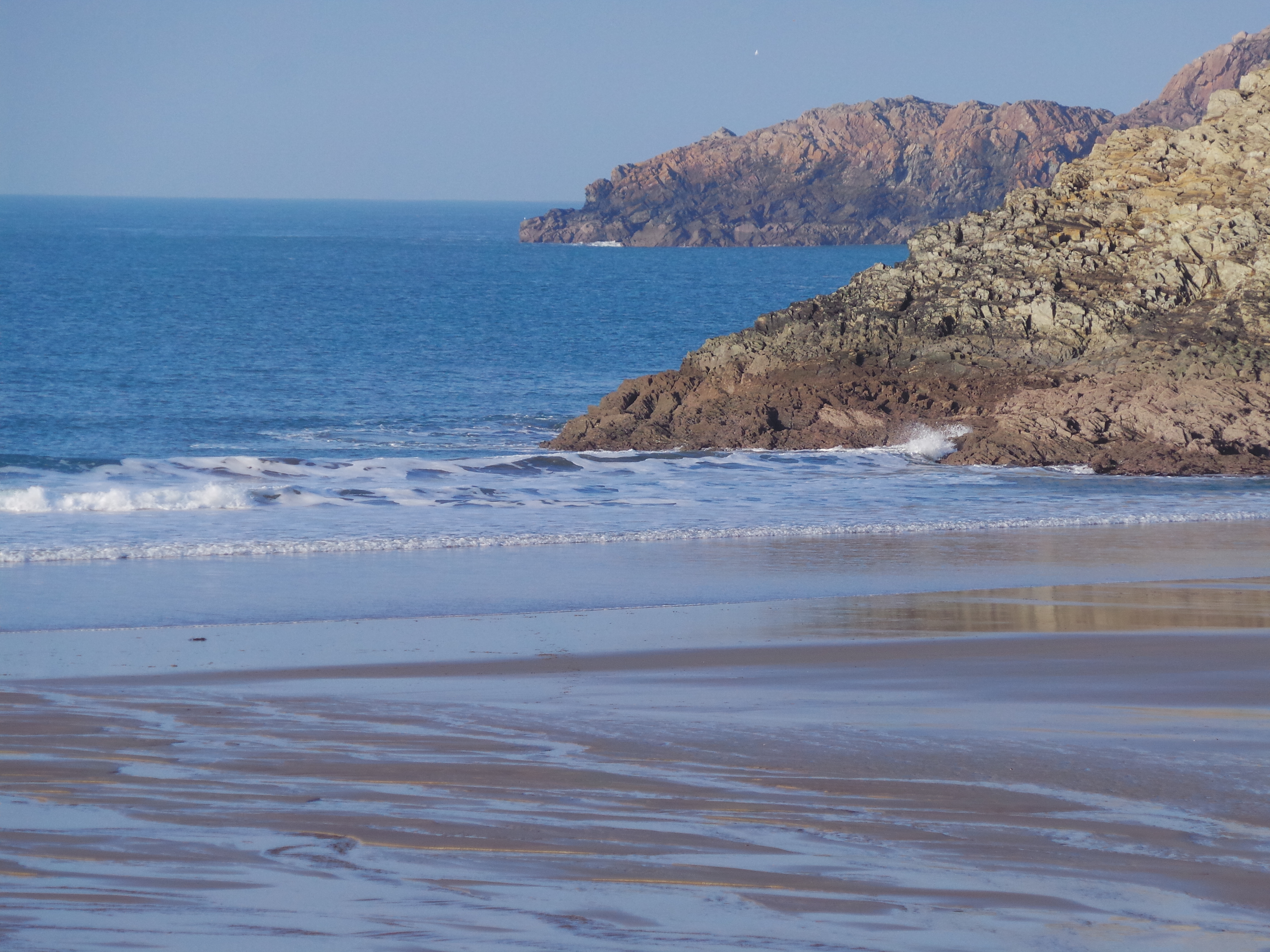
We carried on, crossing over a crystal clear waters of a tiny mountain stream. We stopped a while to enjoy the sounds of water rippling over rock, a sound that always makes us feel good! Letting our eyes follow the stream’s track to the sea showed light over the water more akin to late afternoon, almost the sort of light that comes shortly before a sunset, but it was still early afternoon.
2014 11 21_7652 2014 11 21_7653 2014 11 21_7654 2014 11 21_7655 2014 11 21_7656 2014 11 21_7657

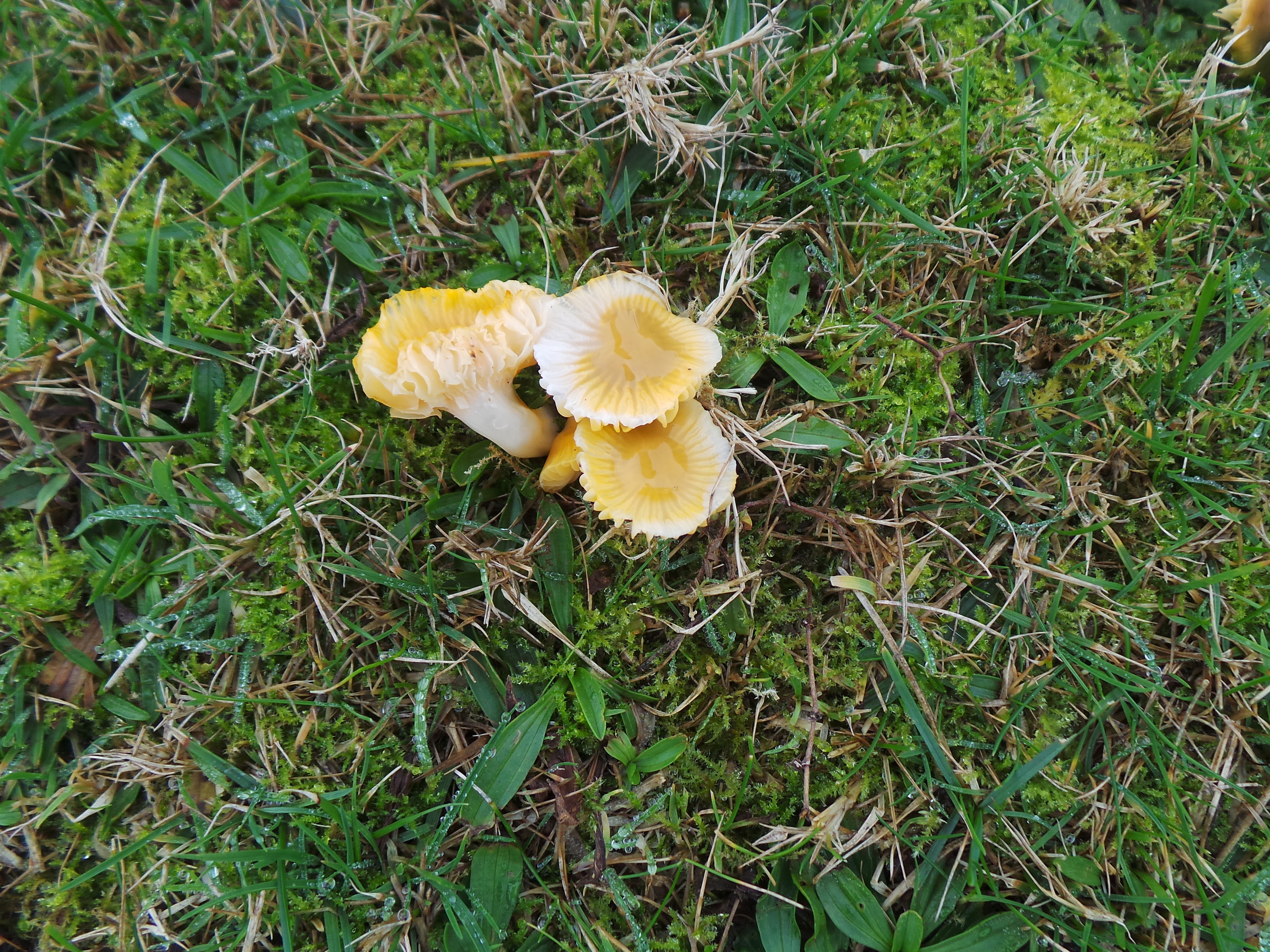
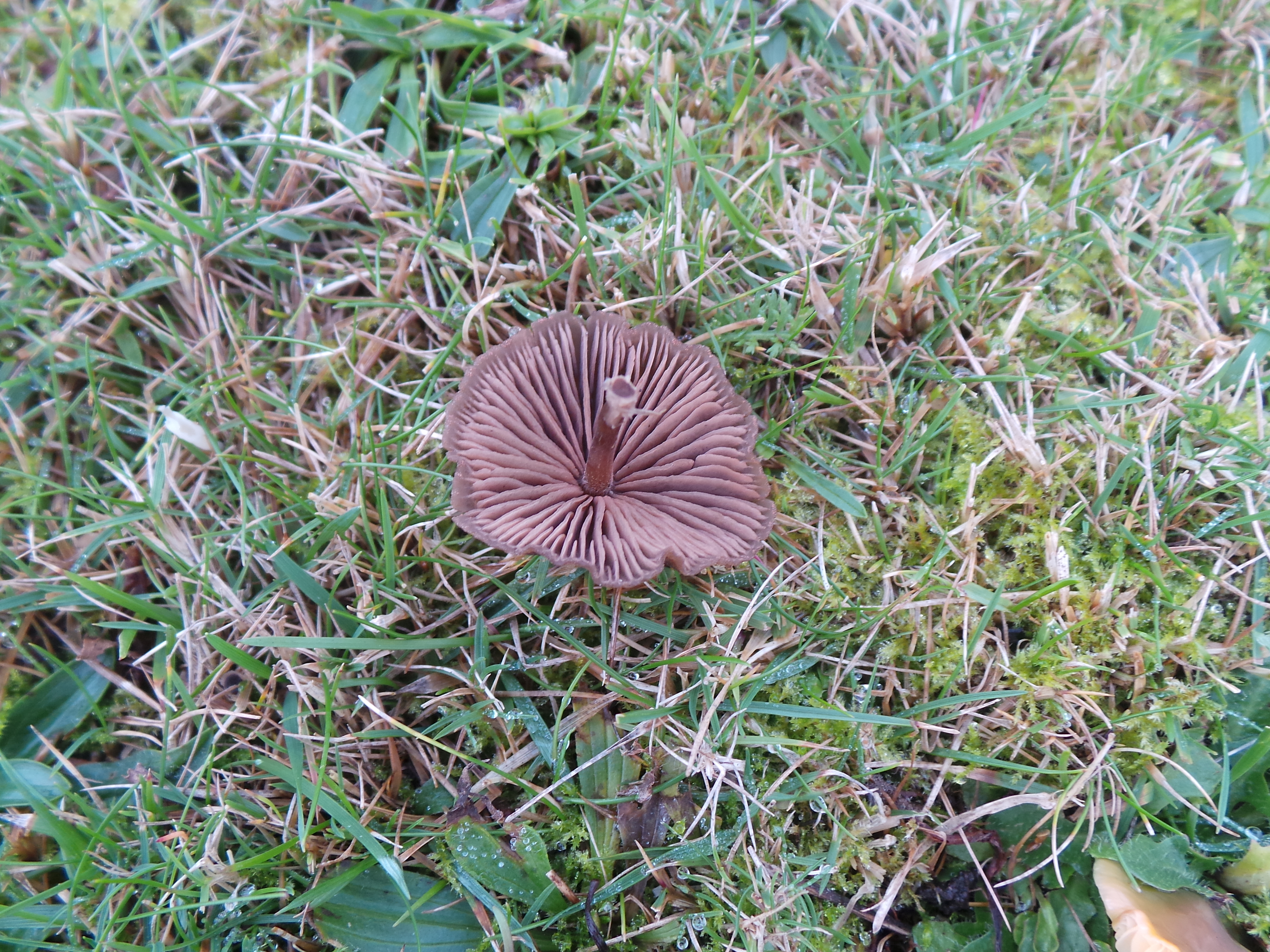
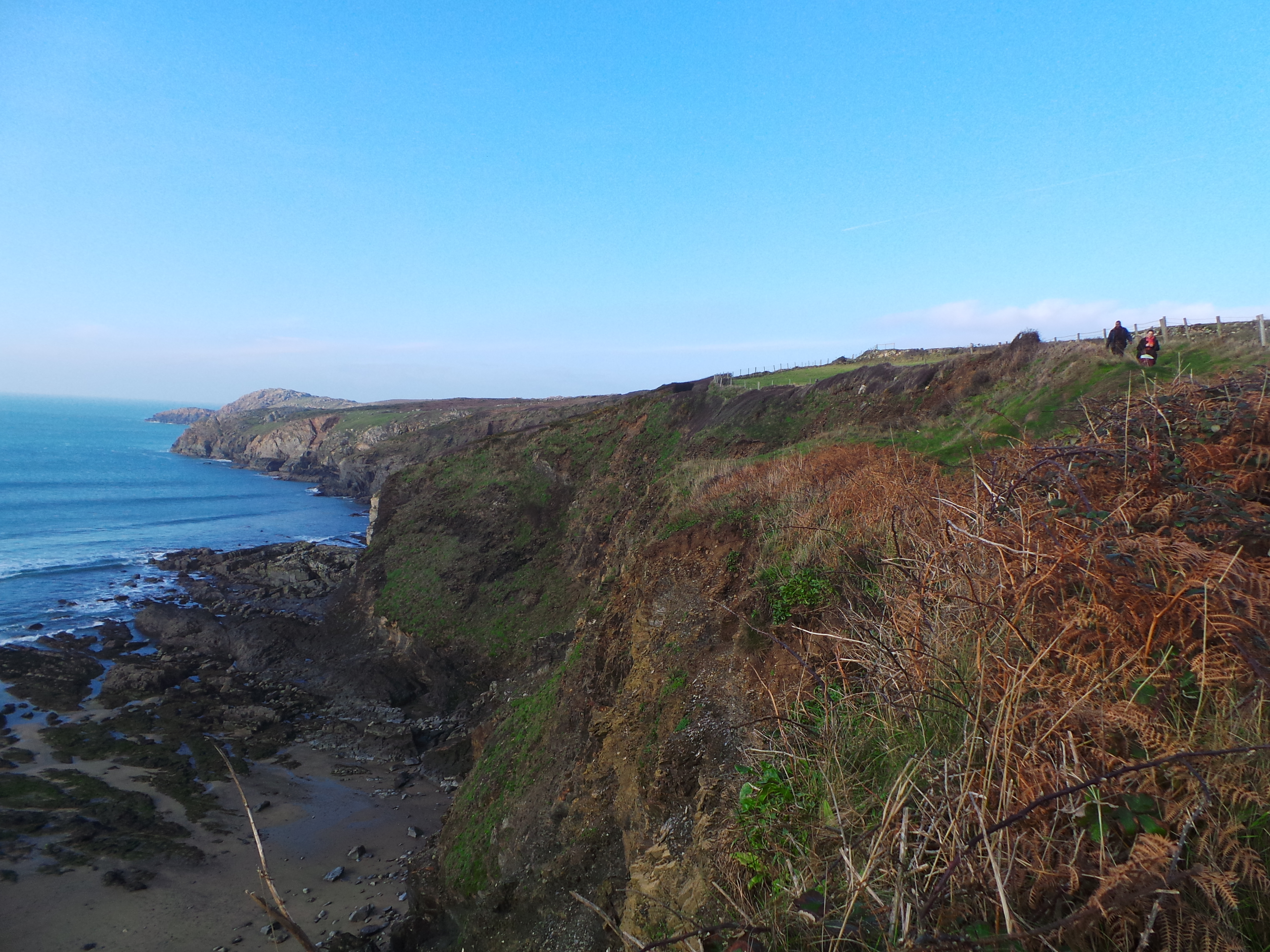
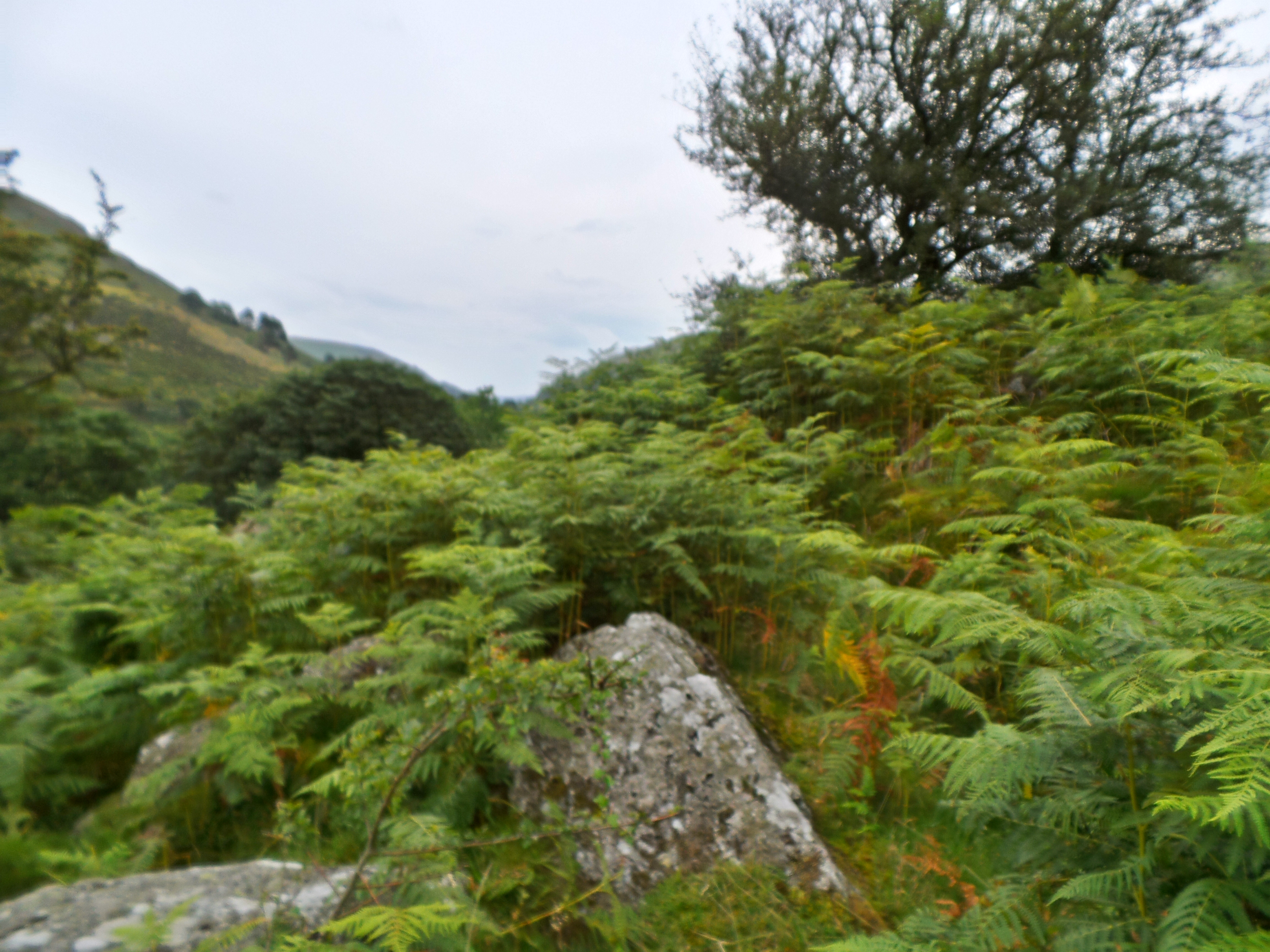
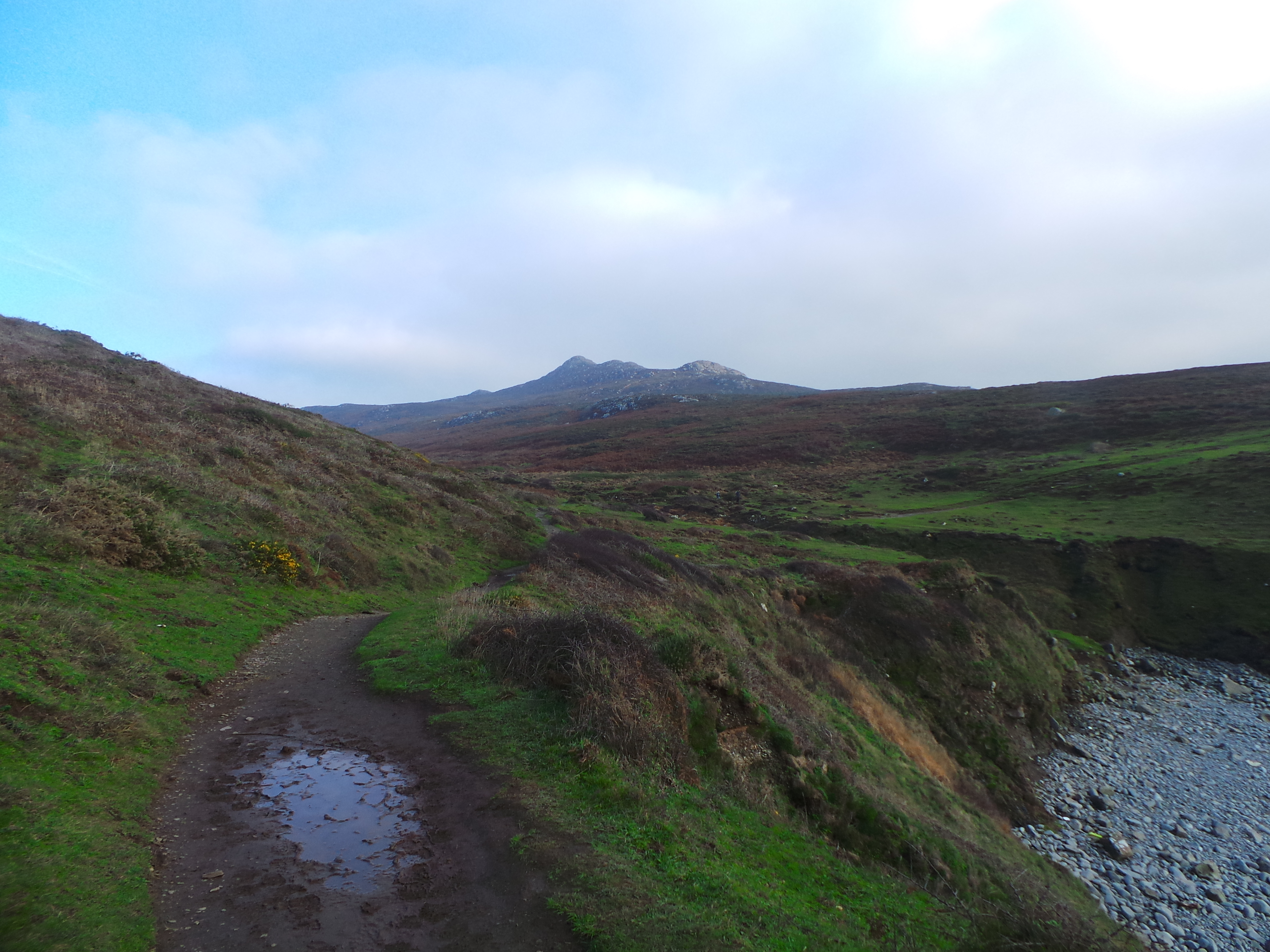
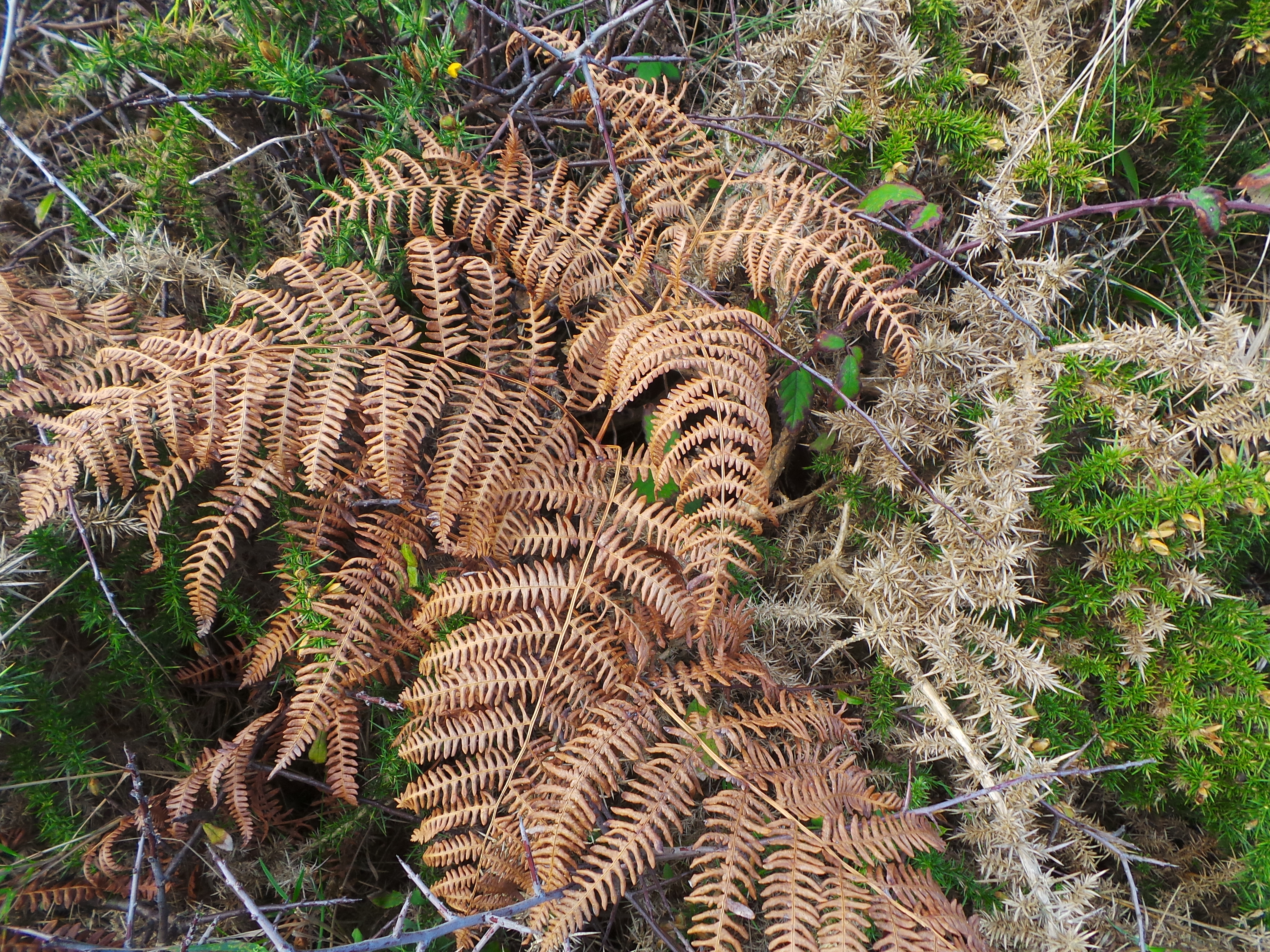
We followed the narrow and at times wet track along the cliff top, all the time keeping our eye on the headland we were aiming for, but at times it disappeared from view. Bracken and fungi grew in the short grass, close cropped by sheep.
 

2014 11 21_7658 2014 11 21_7659 2014 11 21_7660 2014 11 21_7661 2014 11 21_7662 2014 11 21_76632014 11 21_7664 2014 11 21_7665

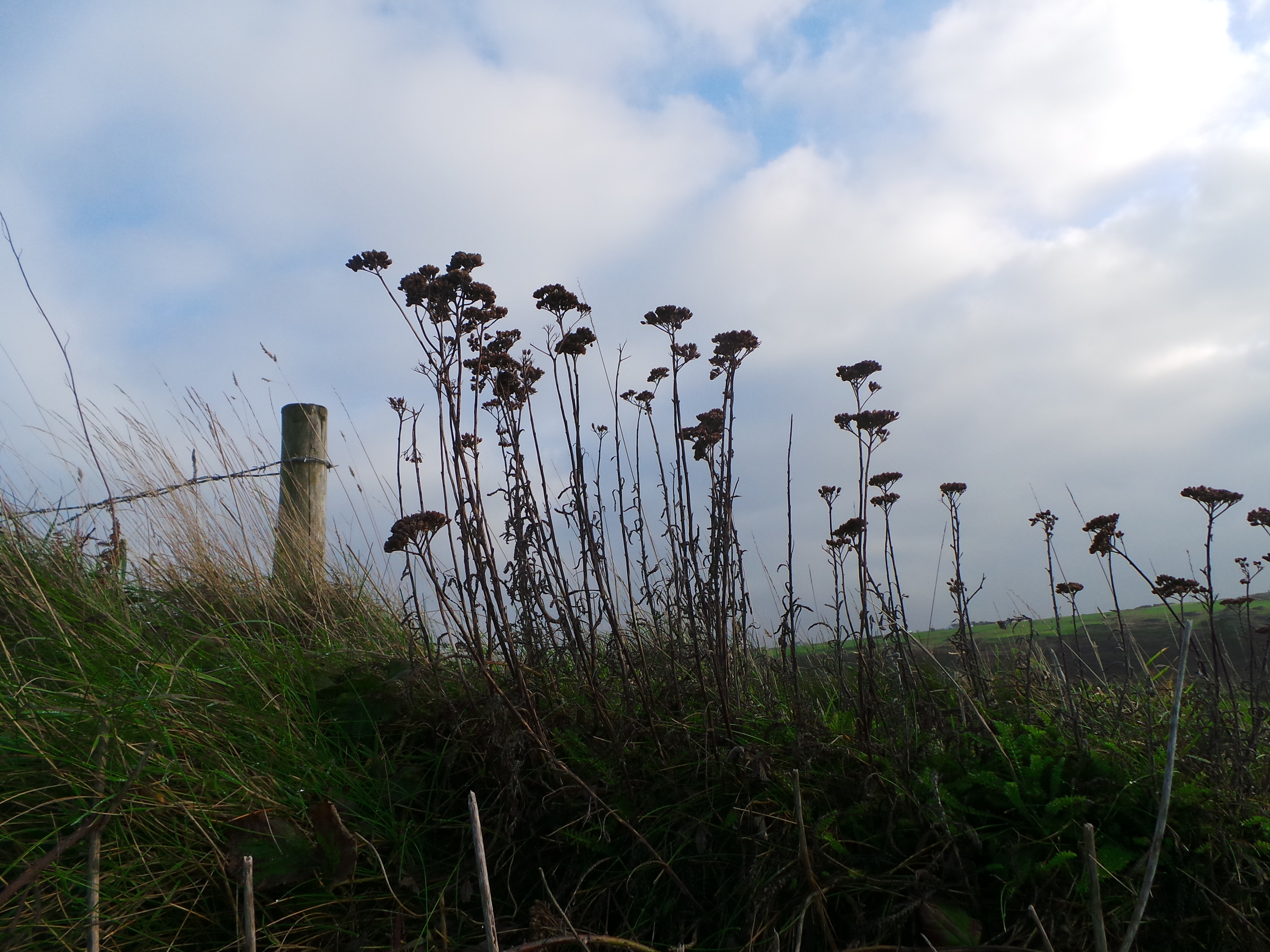
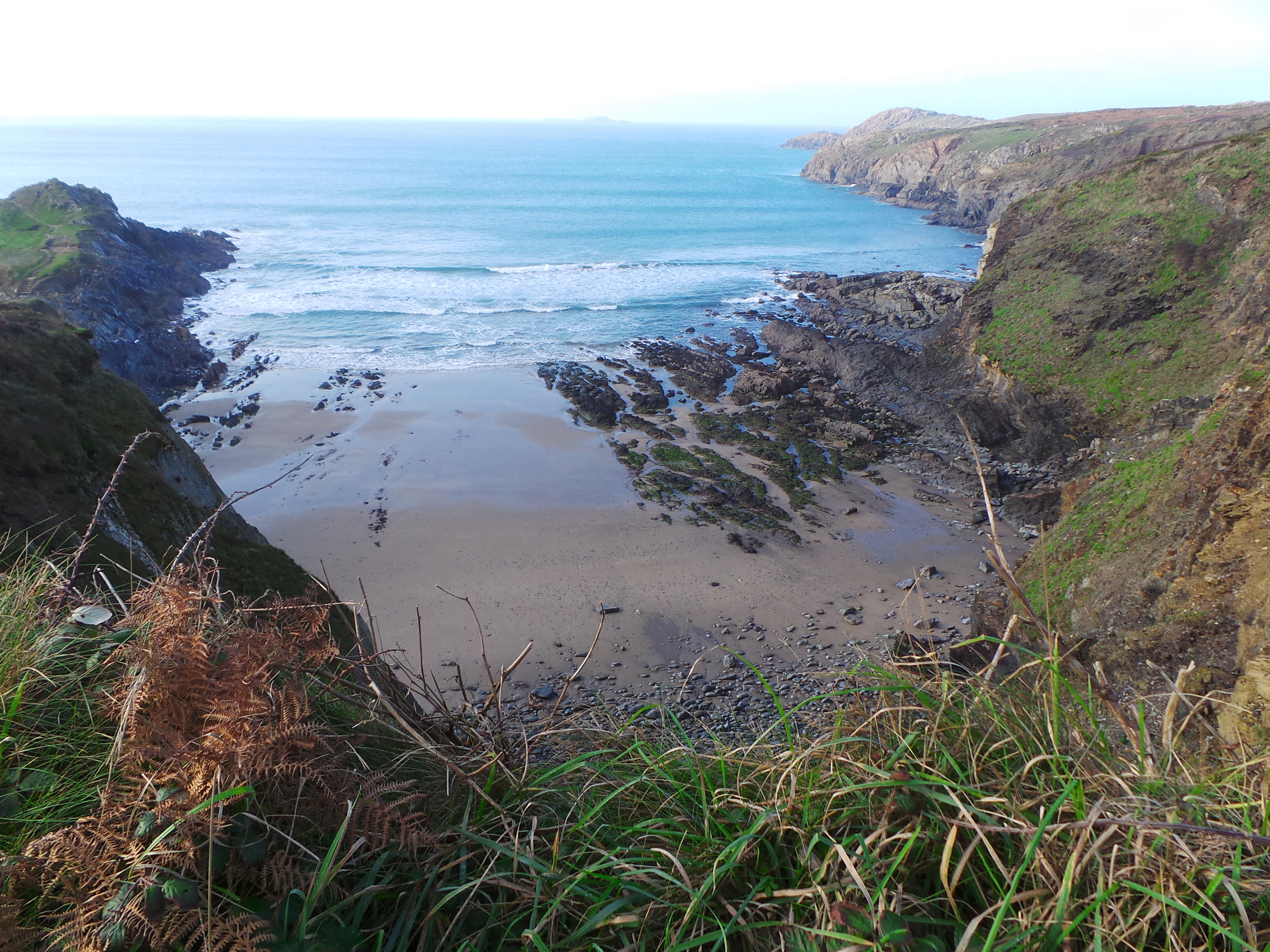
We followed a stream against the downhill direction of its journey, gradually climbing all the time. We were constantly stopped in our tracks by the beauty of the landscapes. Enjoy my photos!
 

2014 11 21_7666 2014 11 21_7667 2014 11 21_7668 2014 11 21_7669 2014 11 21_7670 2014 11 21_7671 2014 11 21_7672 2014 11 21_7673 2014 11 21_7674 2014 11 21_7675 2014 11 21_7676 2014 11 21_7677 2014 11 21_7678 2014 11 21_7679 2014 11 21_7680 2014 11 21_7681 2014 11 21_7682 2014 11 21_7683

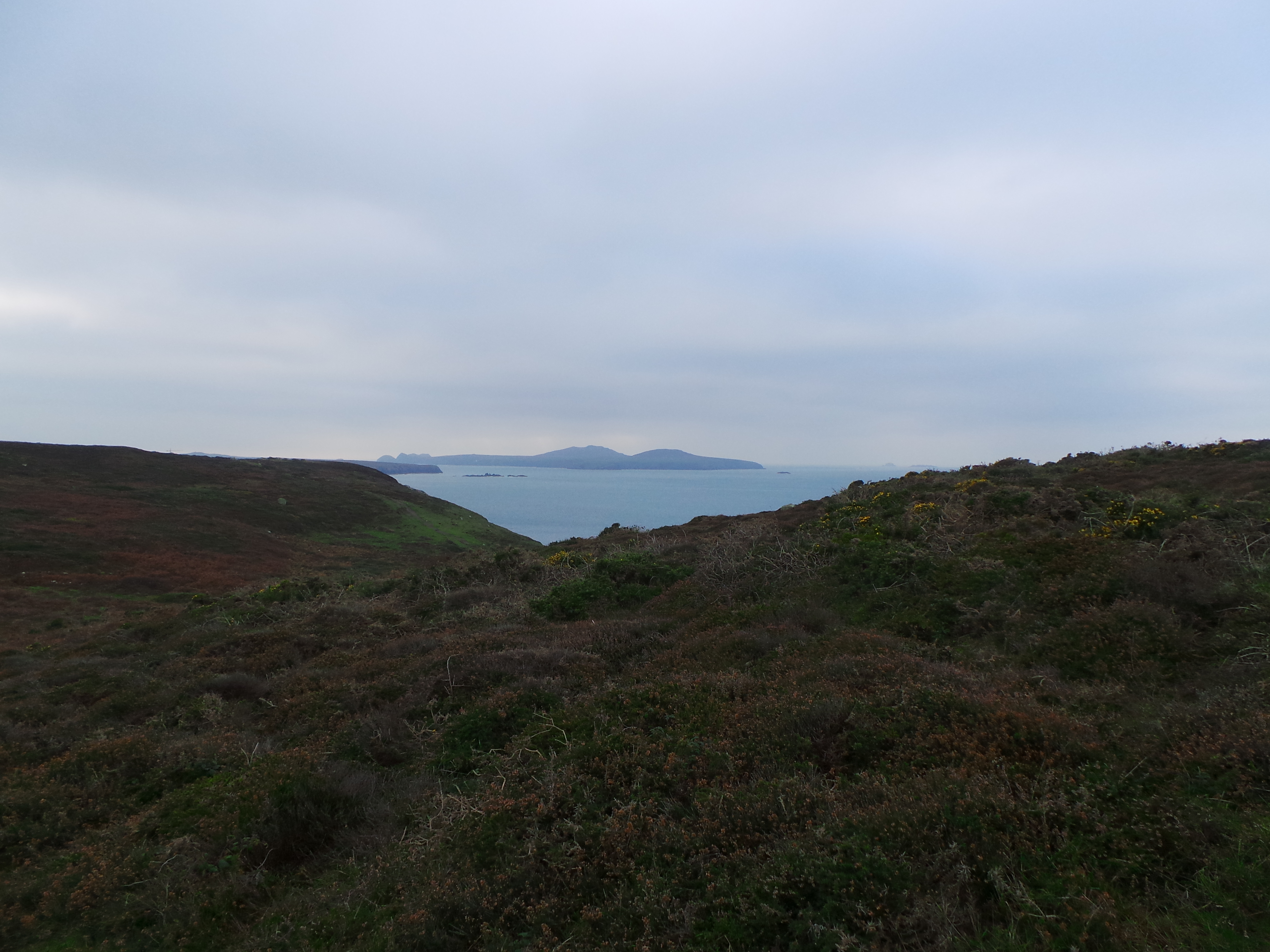
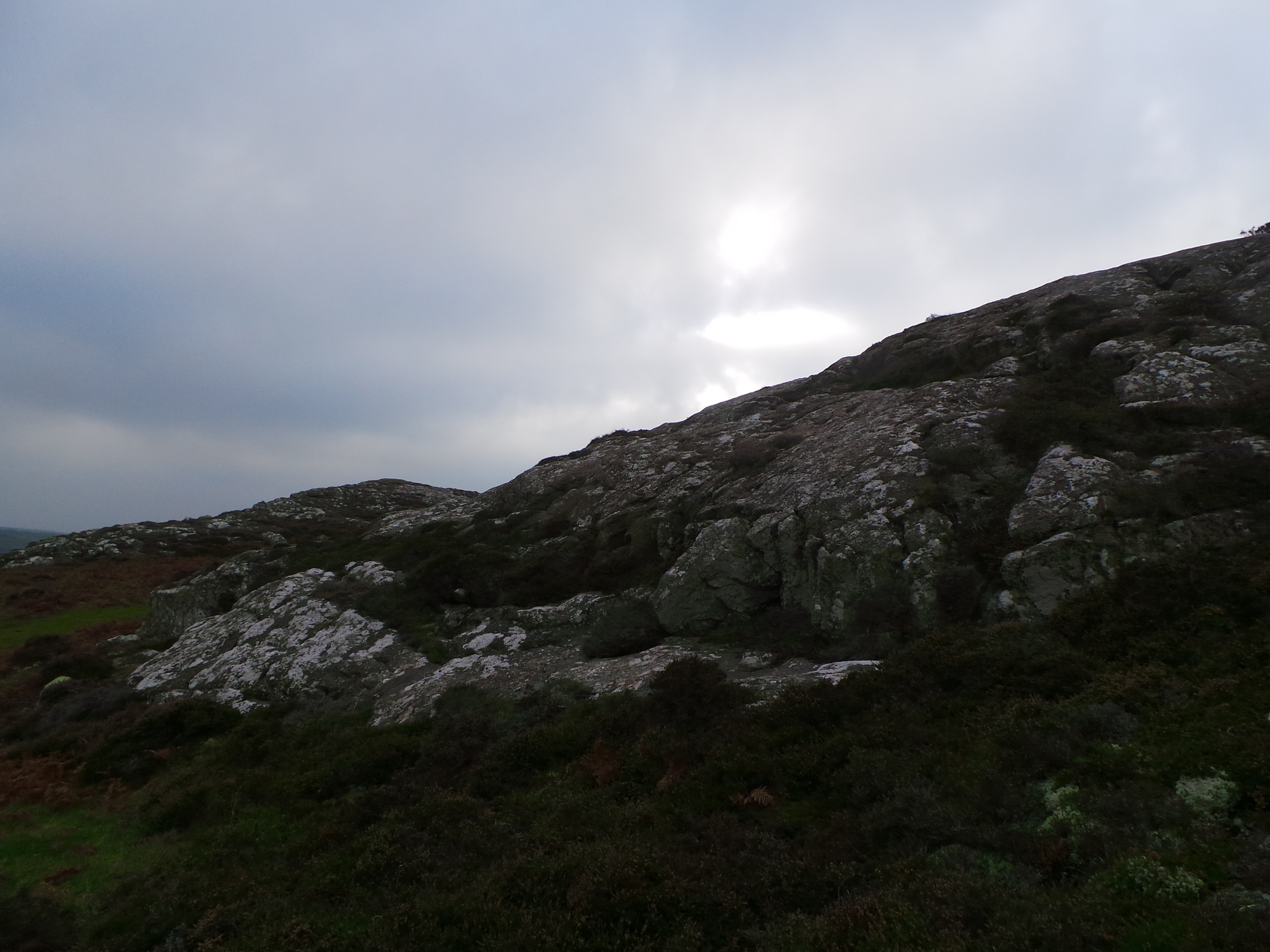
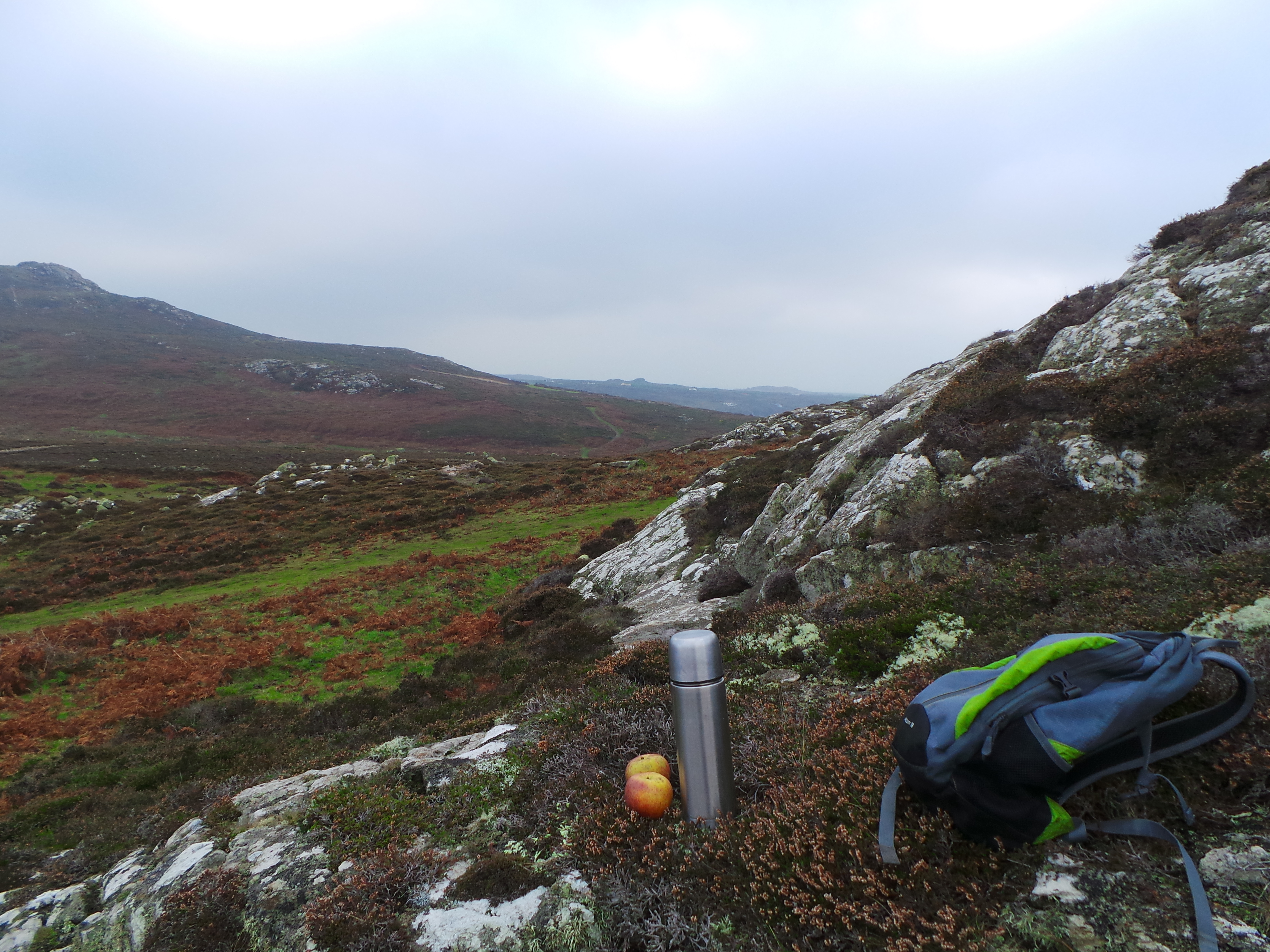
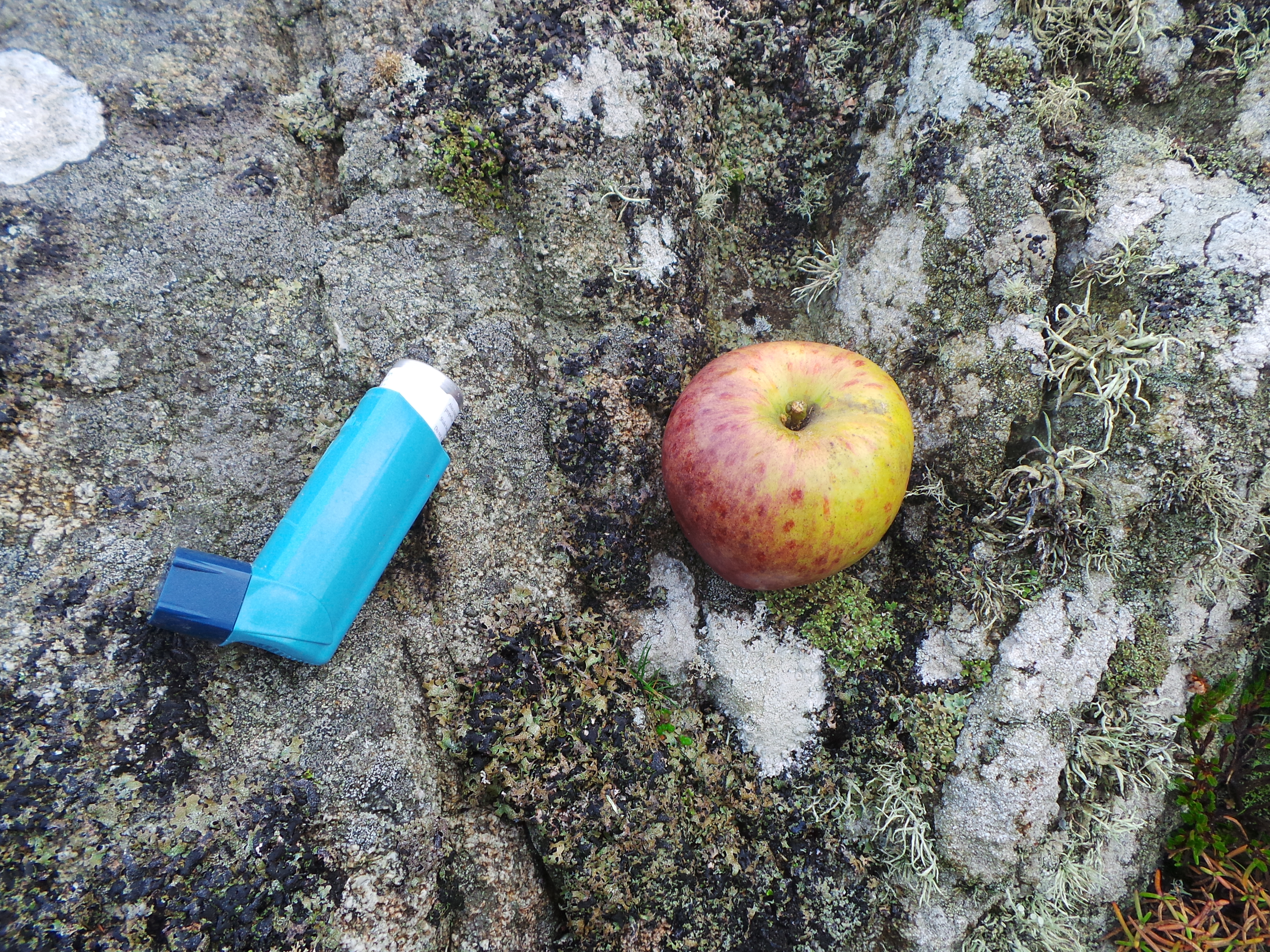
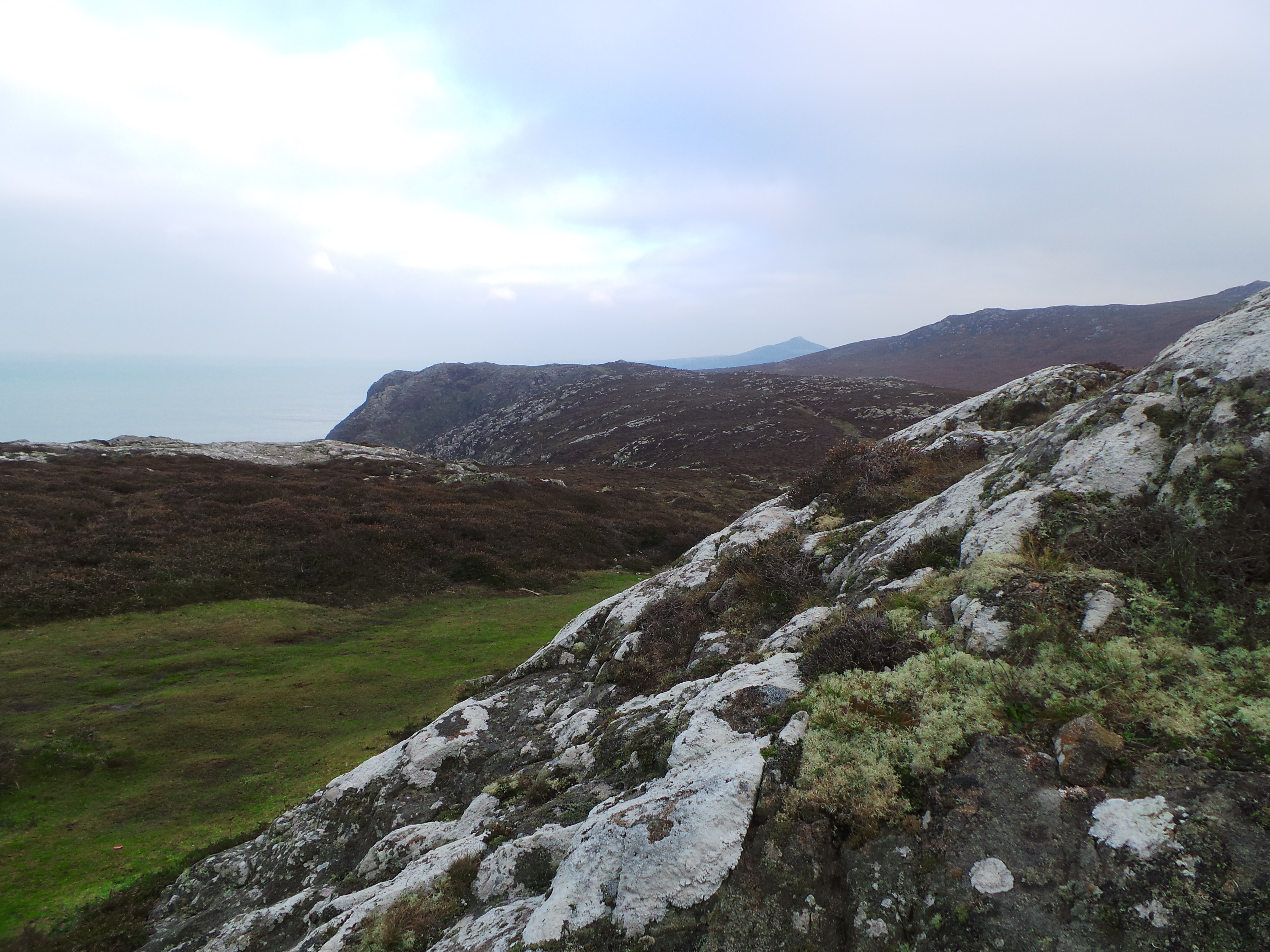
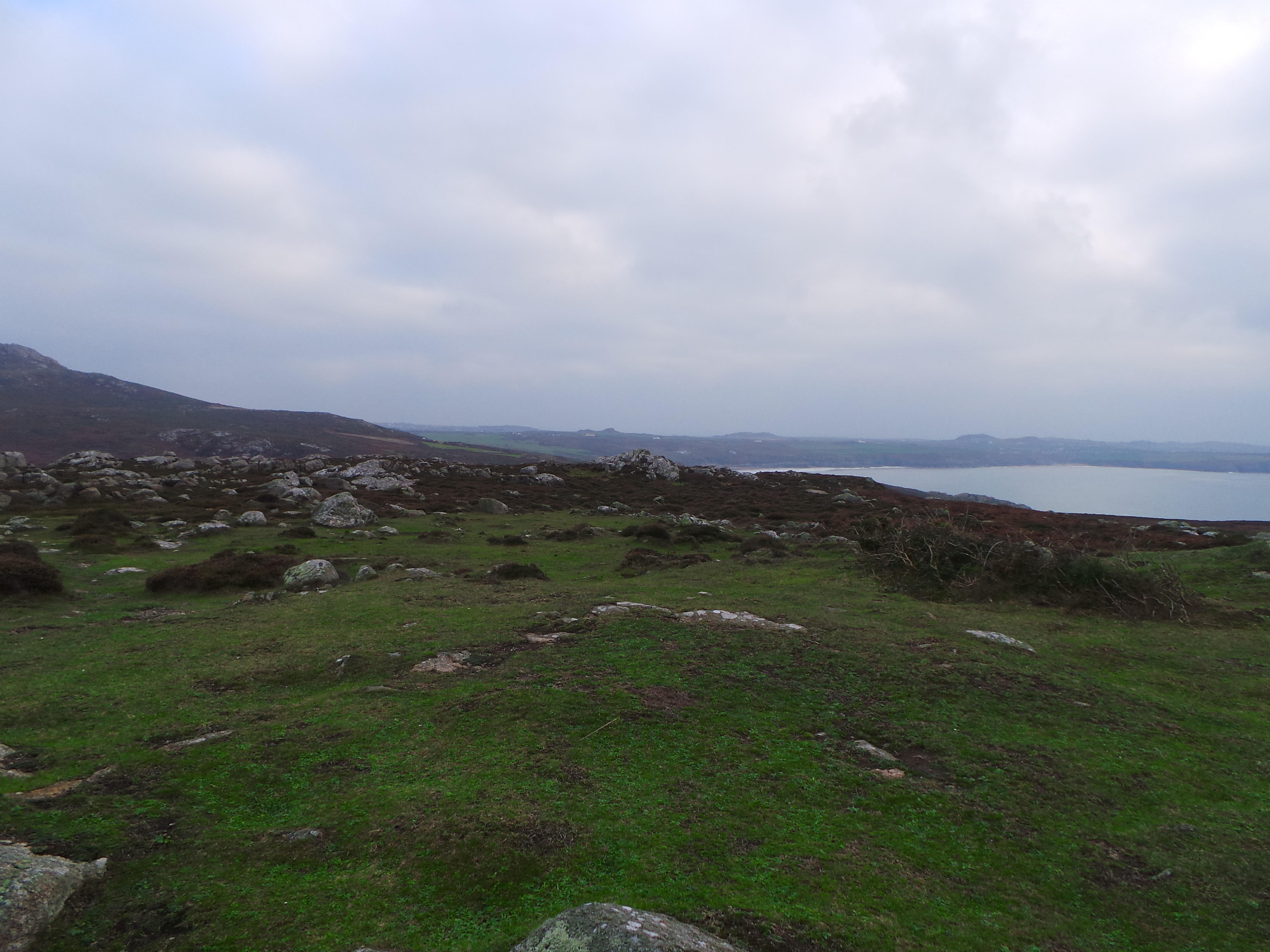
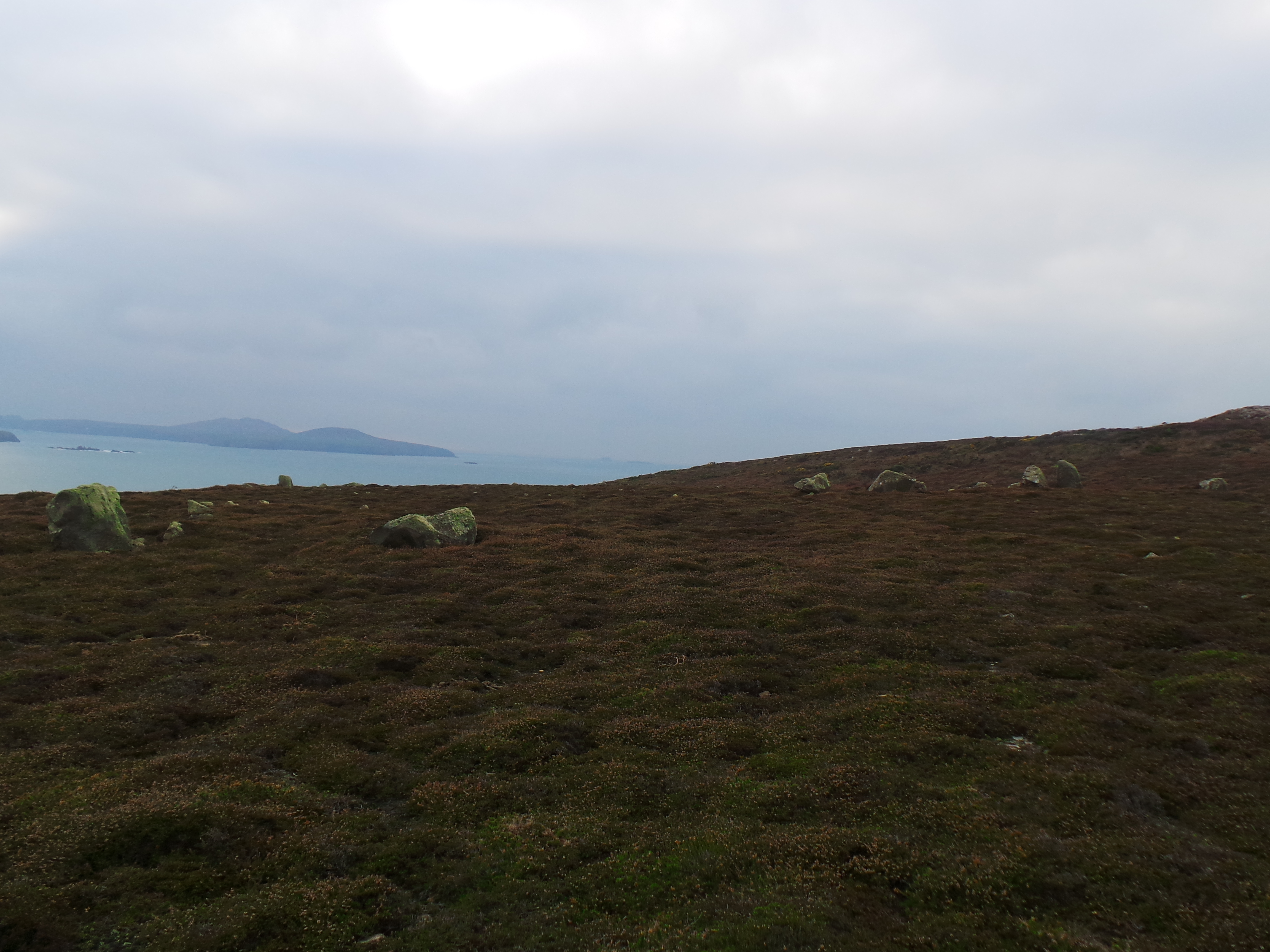
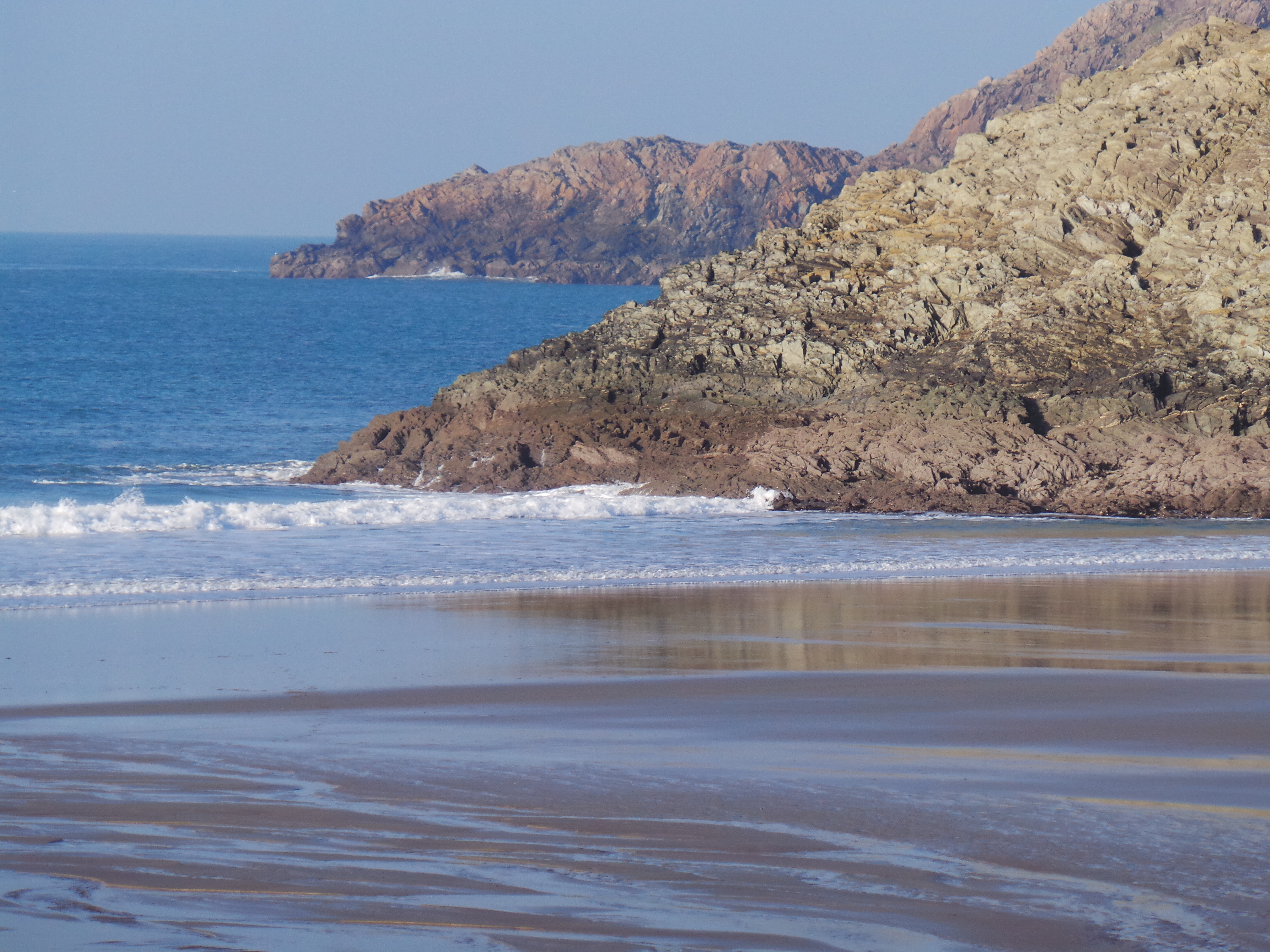
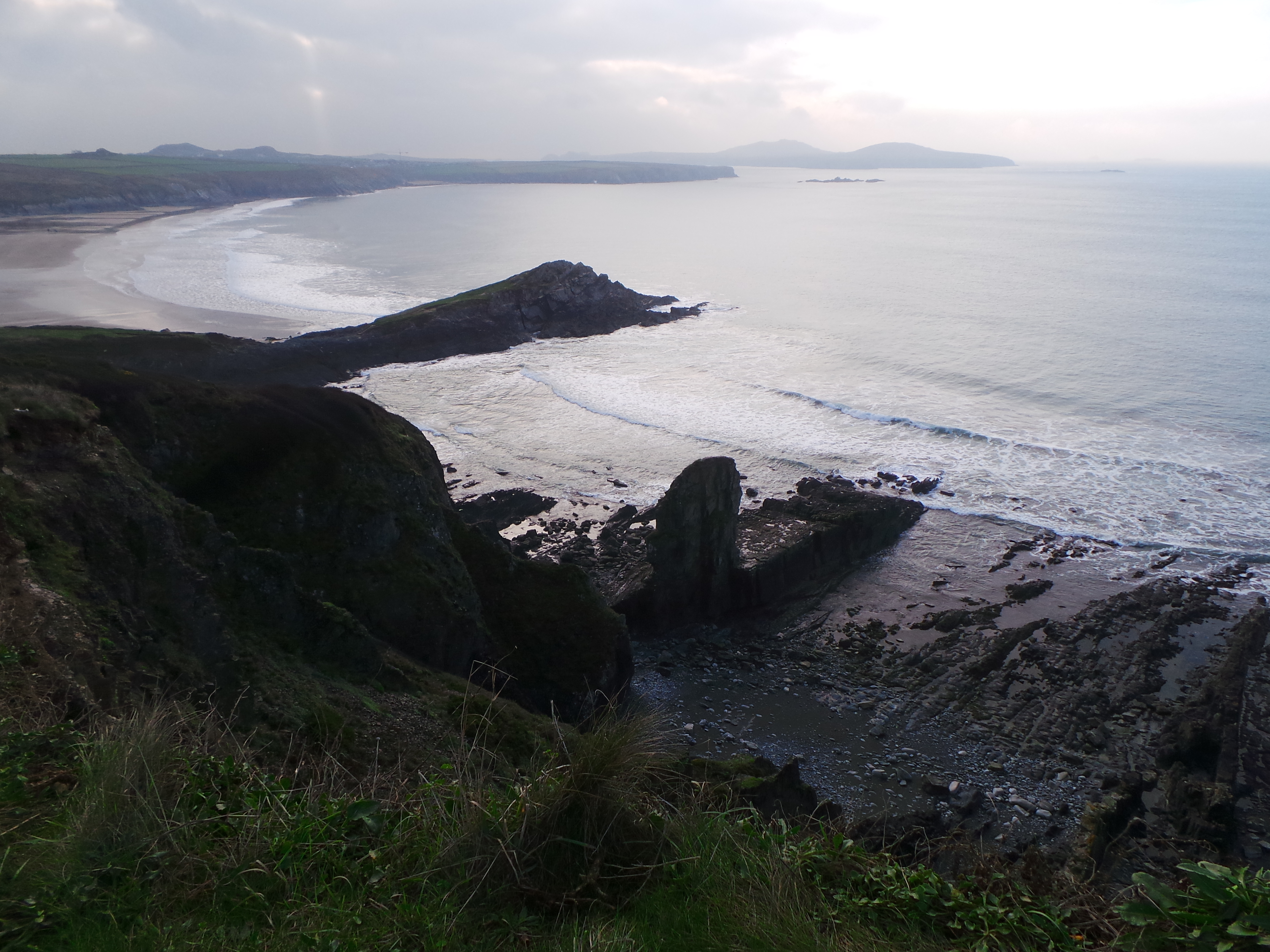
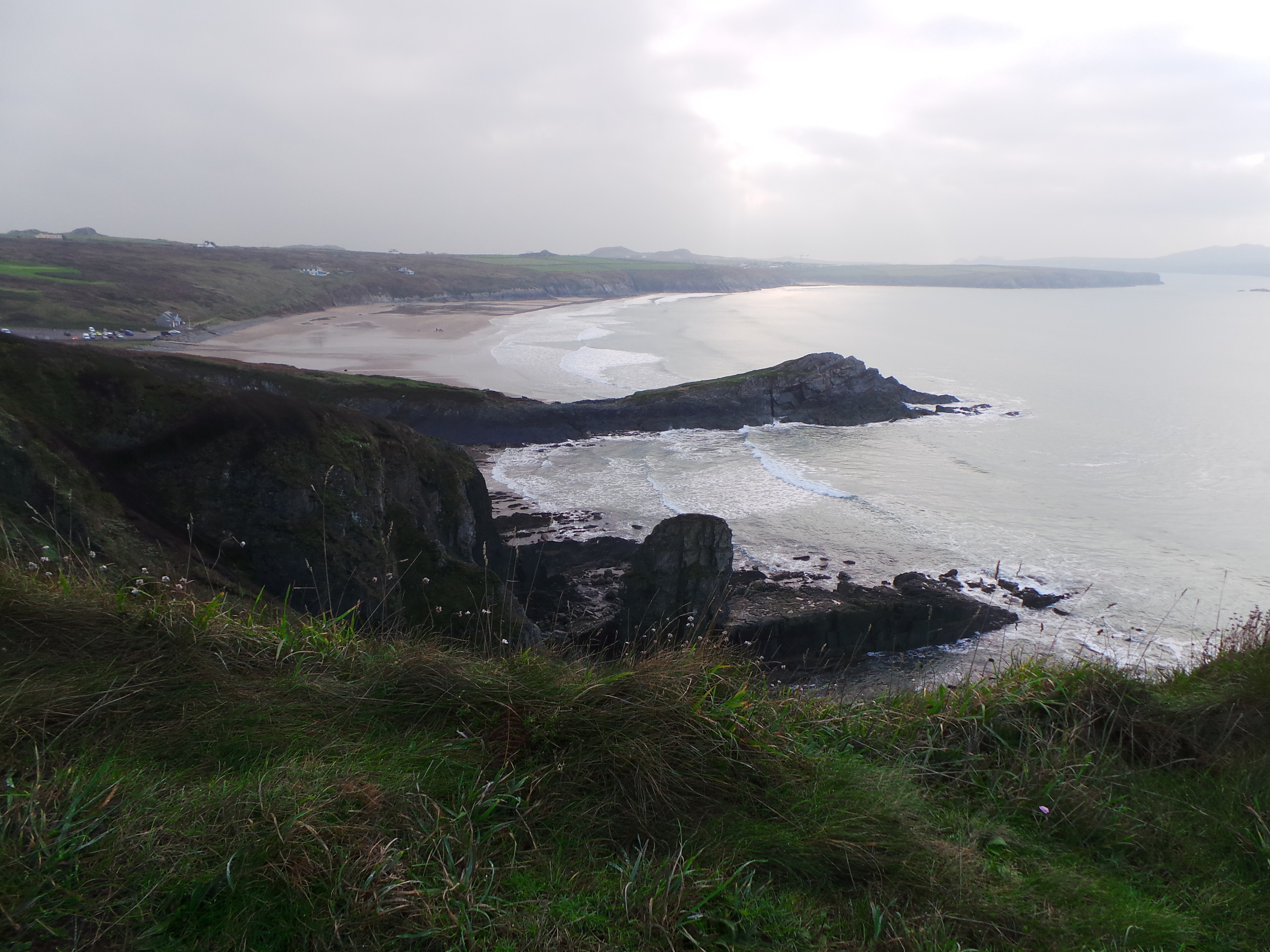
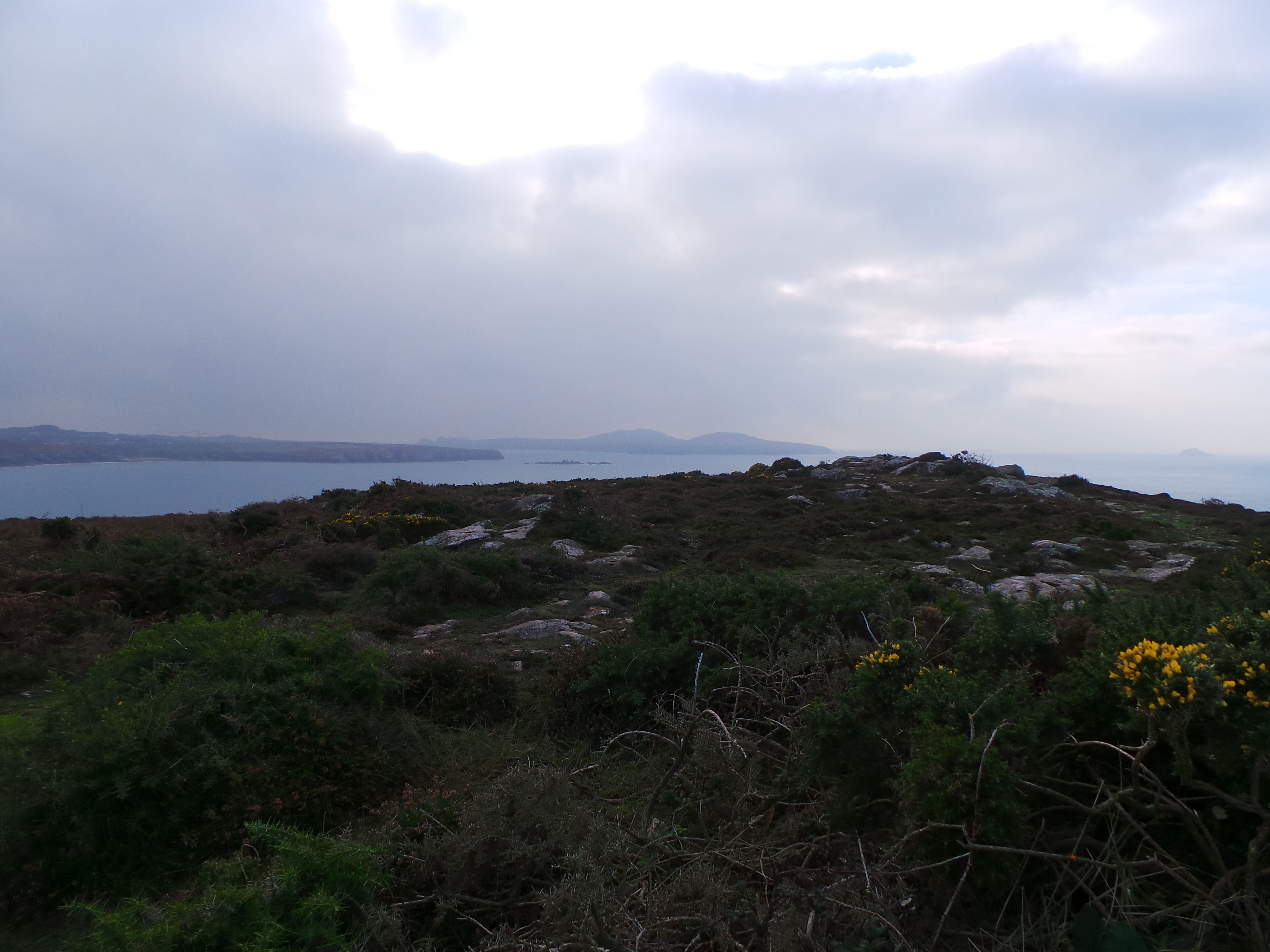
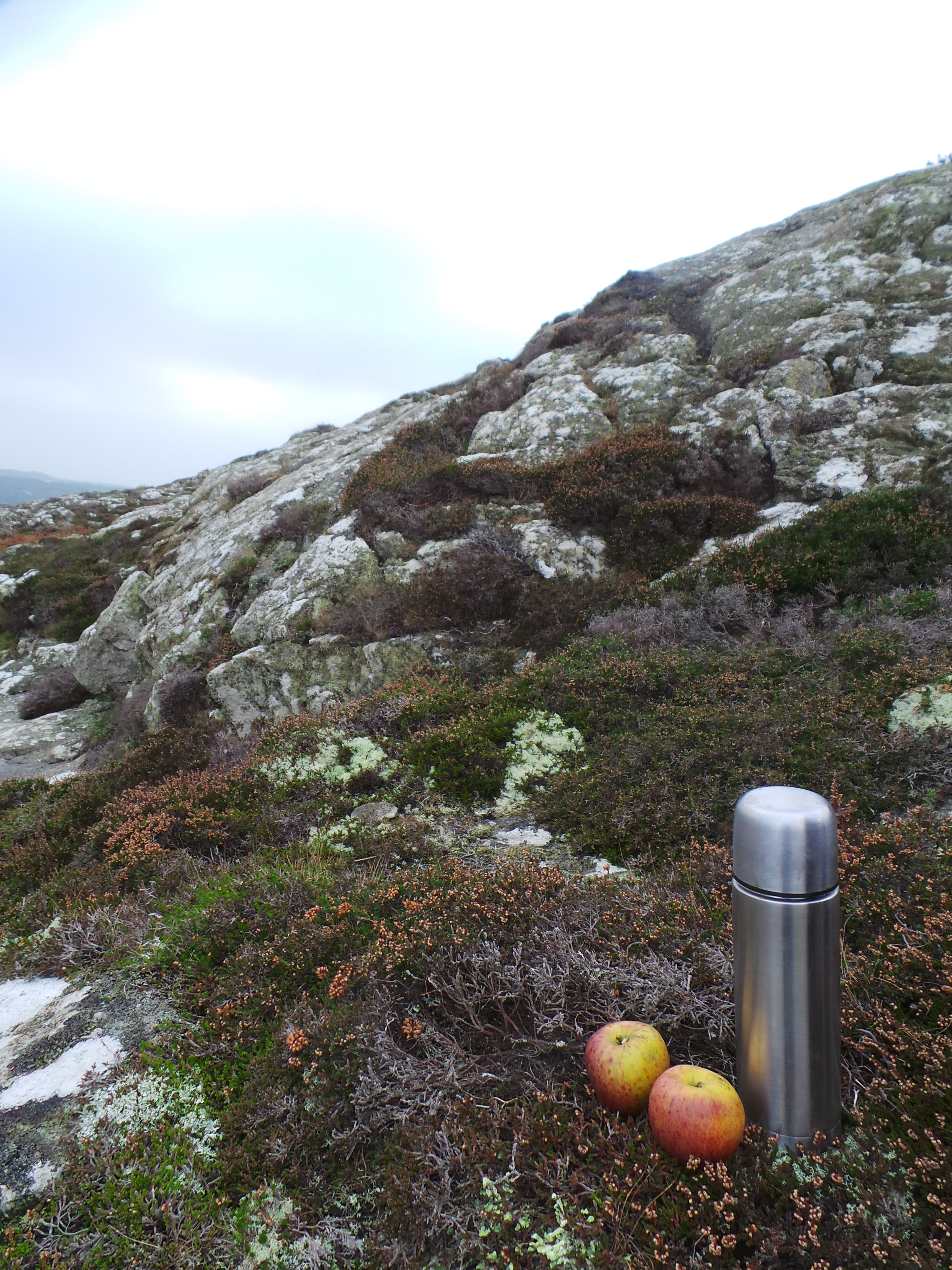
When we reached our destination we enjoyed a good rest, sitting on comfortable and convenient rock outcrops. Coffee, fruit and in my case a good dose of Ventolin helped refresh us. We felt so pleased, so satisfied. We enjoyed the views from this vantage point, where we could appreciate a vast panorama.

2014 11 21_7696

2014 11 21_7684 2014 11 21_76852014 11 21_7690 2014 11 21_7687


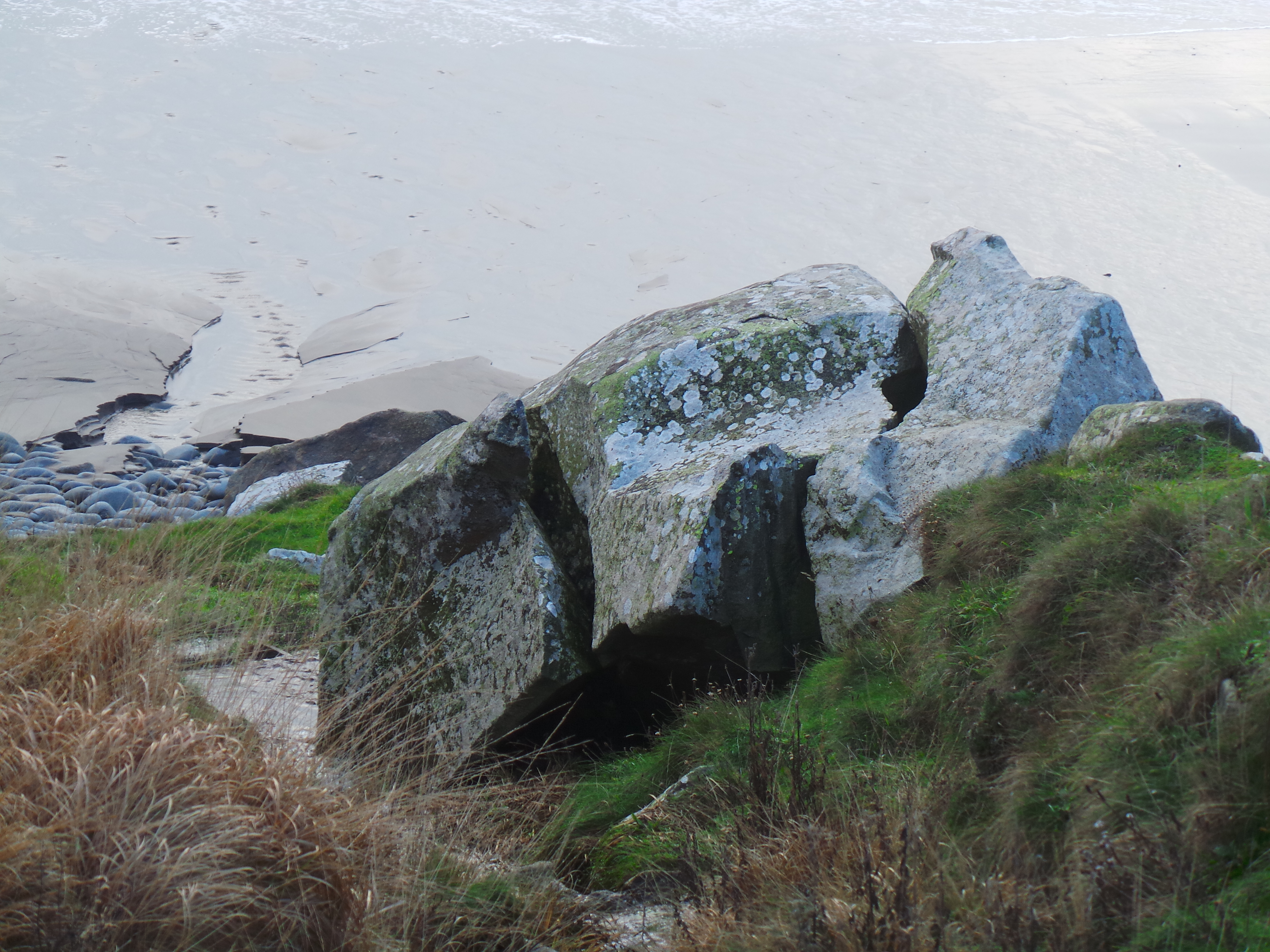
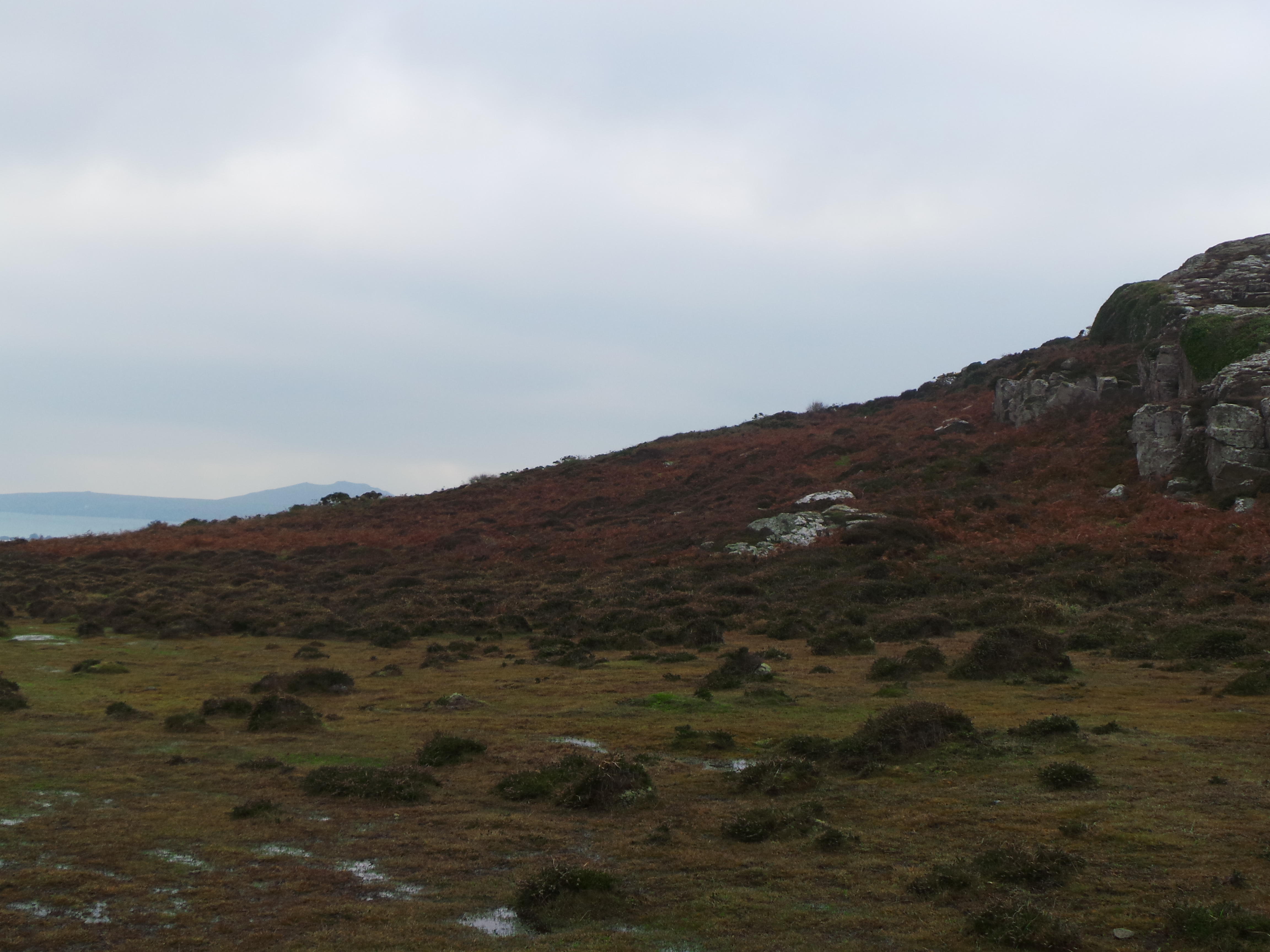
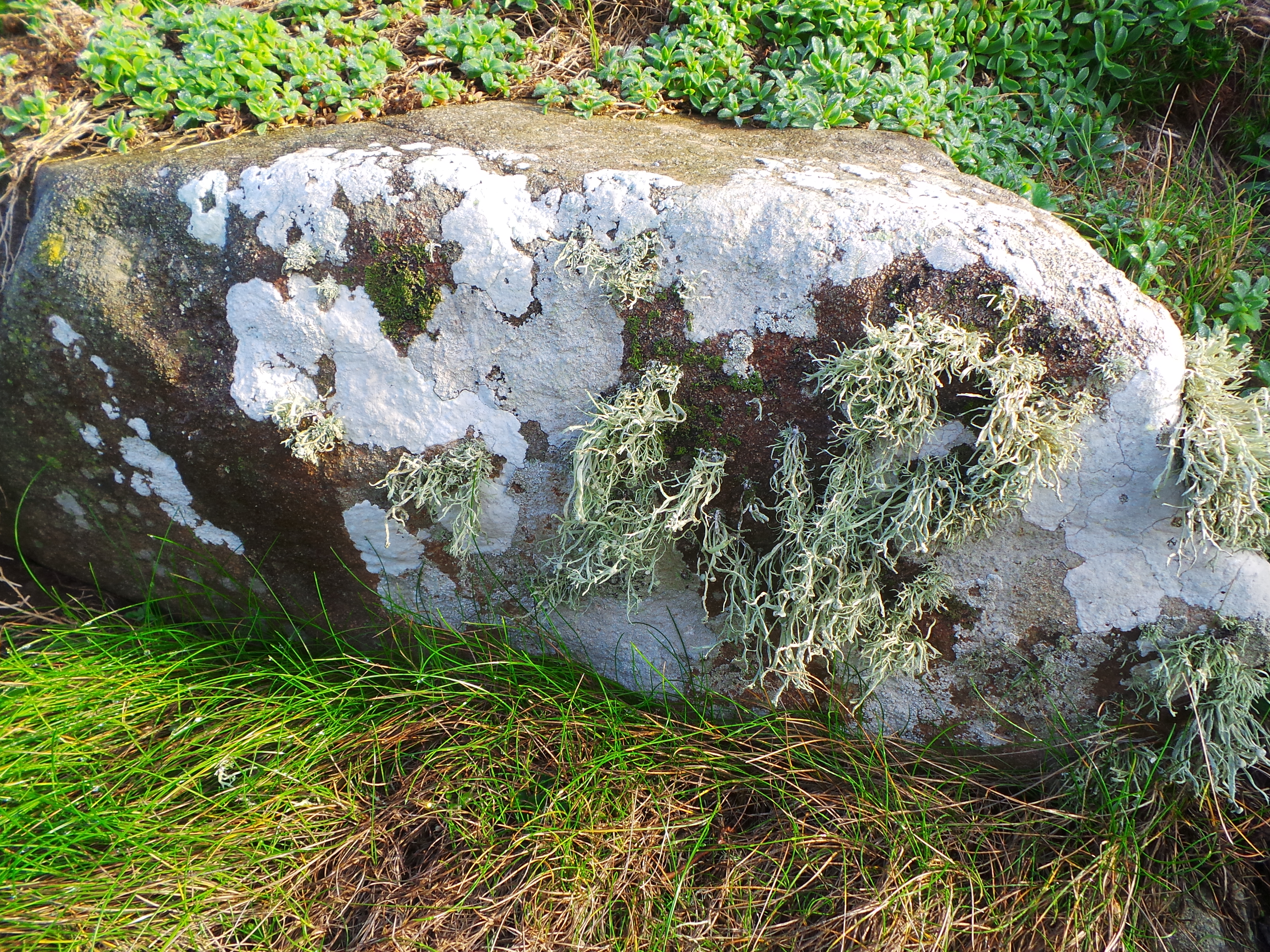
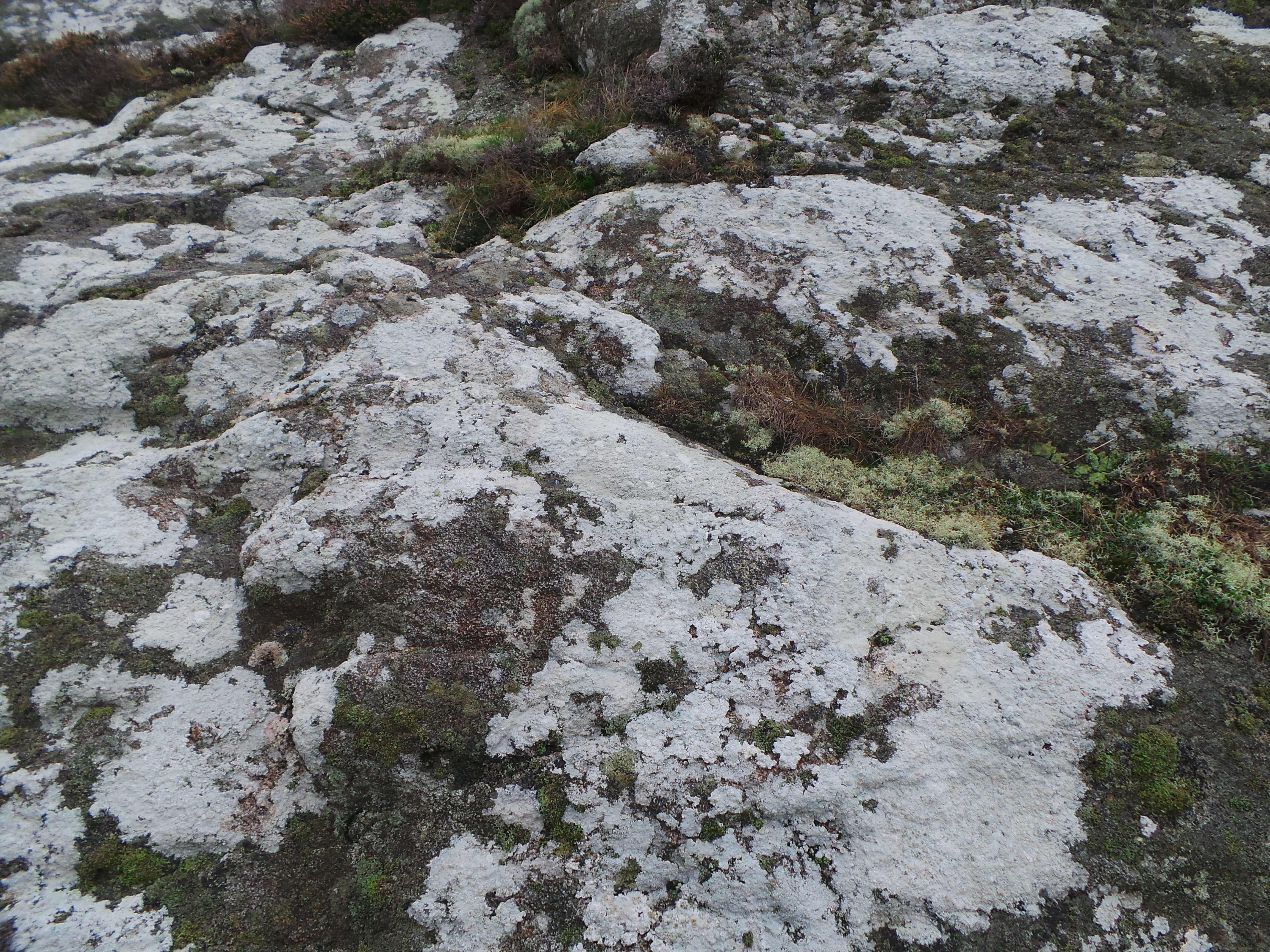
The rock faces were painted in lichen and the grass dotted with fungi even in this bleak place.
 

2014 11 21_7686  2014 11 21_7688 2014 11 21_7689 2014 11 21_7693  2014 11 21_7694 2014 11 21_76952014 11 21_7692

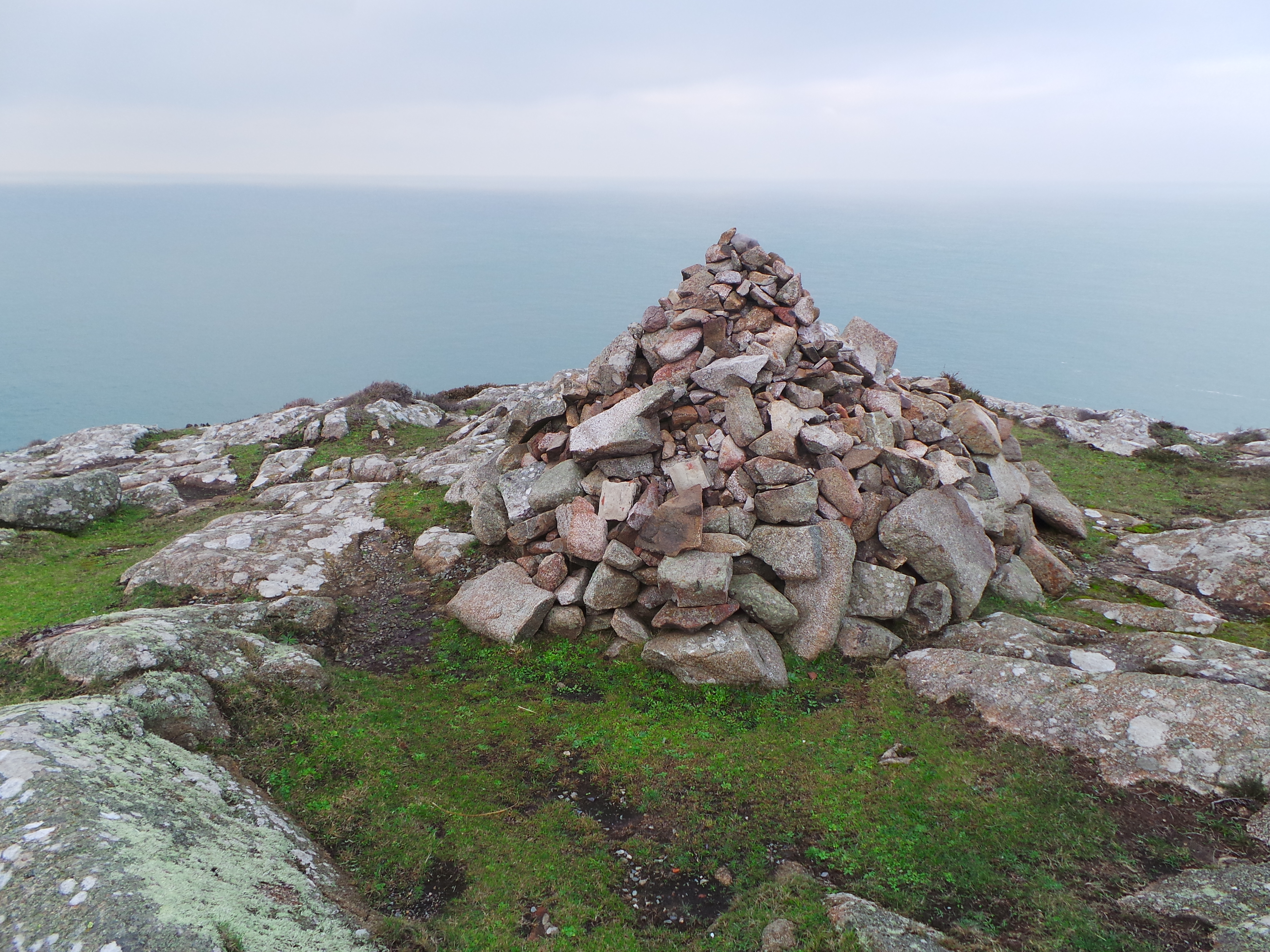
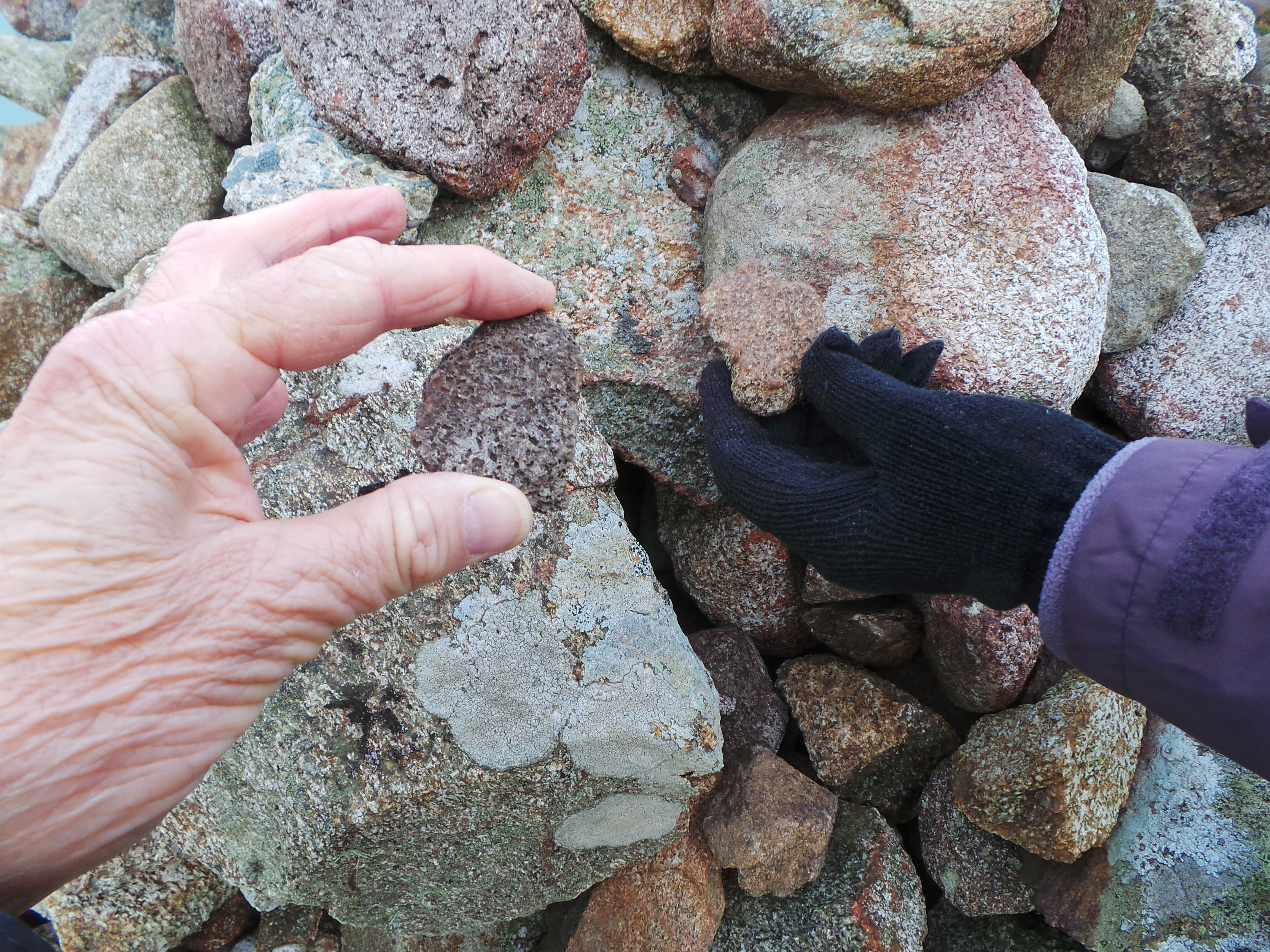
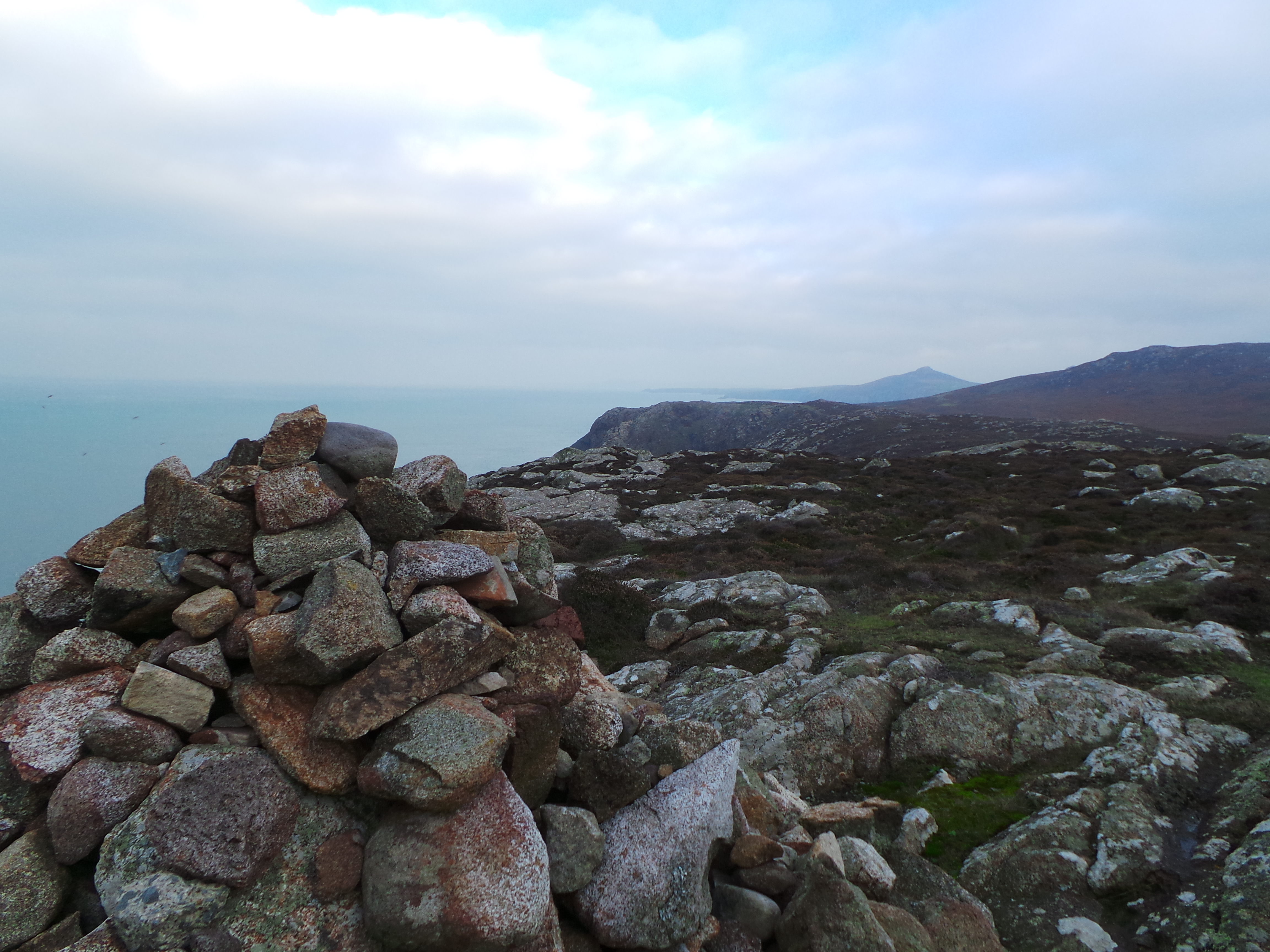
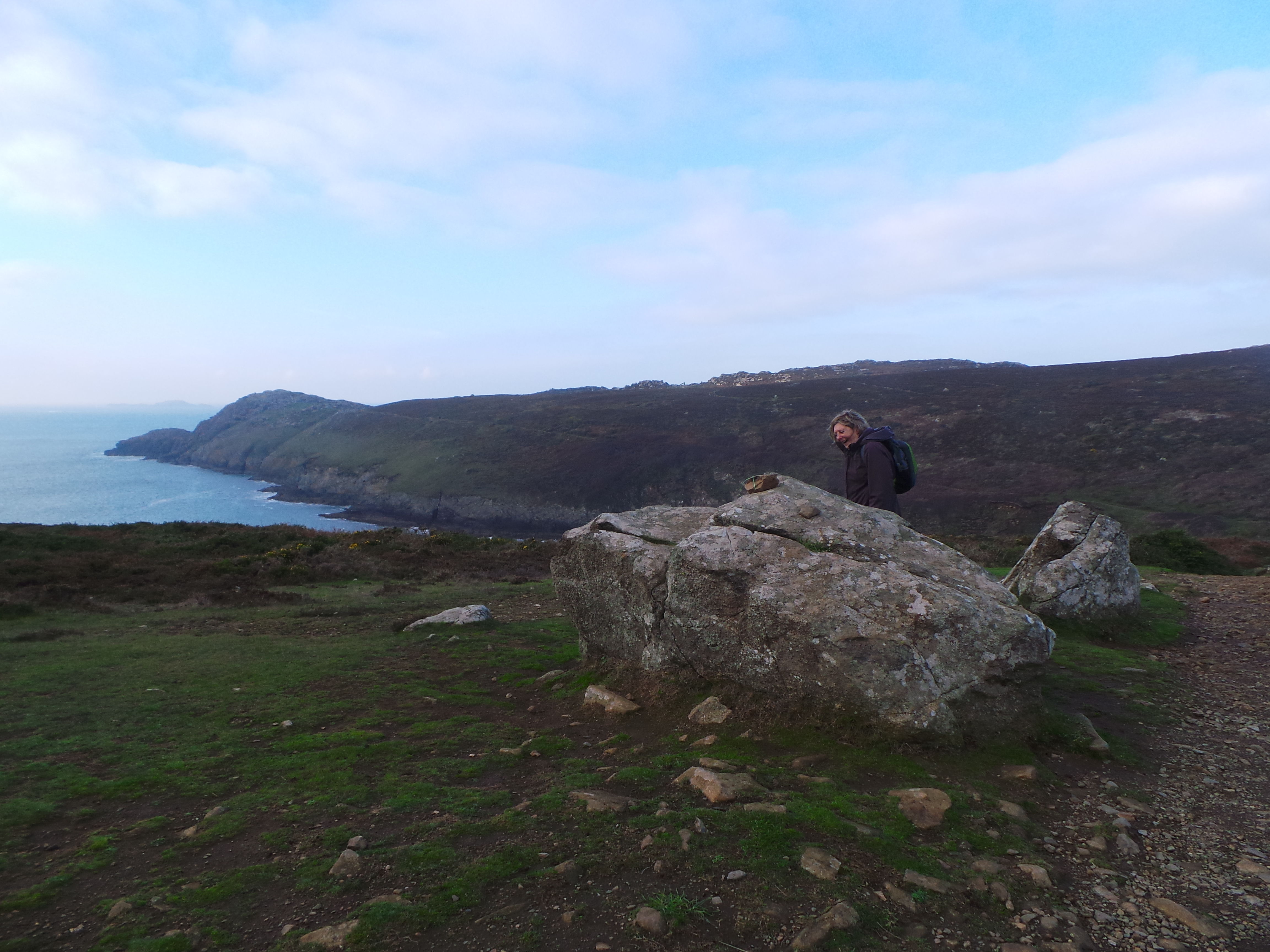
From where we sat we spotted a cairn marking the highest point on the headland. We just had to walk a few hundred yards more. Of course along the way we searched for a stone each to allow ourselves to follow our tradition of placing it on the cairn.

2014 11 21_7698 2014 11 21_7699 2014 11 21_7700 2014 11 21_7701 2014 11 21_7702 2014 11 21_7703


We found returning to our starting point a lot easier following a steady downhill track.

2014 11 21_7706 2014 11 21_7707 2014 11 21_7708 2014 11 21_7709 2014 11 21_7710 2014 11 21_7711

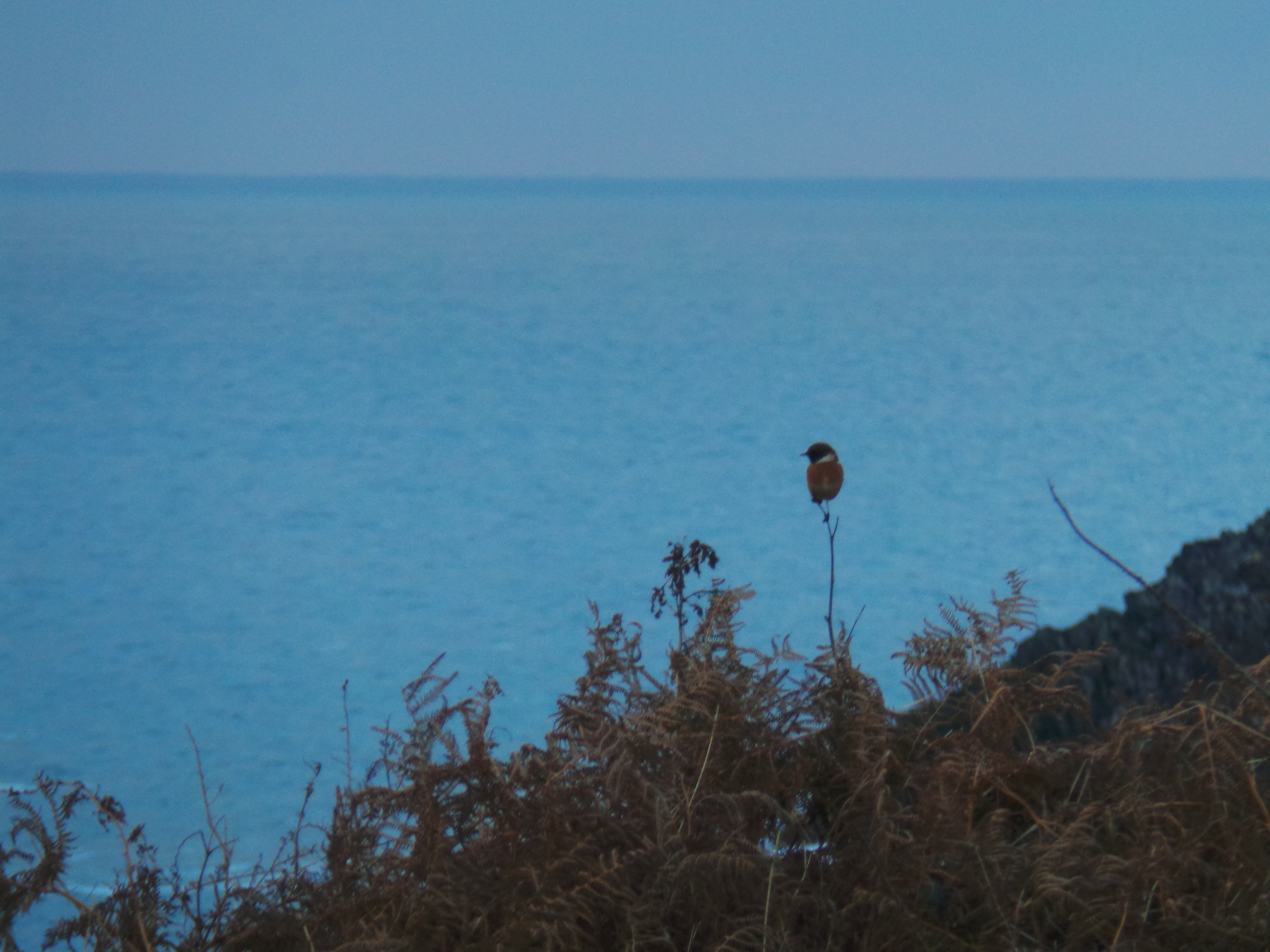
Stonechats followed alongside us as we neared the end of our walk. I managed this one poor photo of one of them.
 

2014 11 21_7712

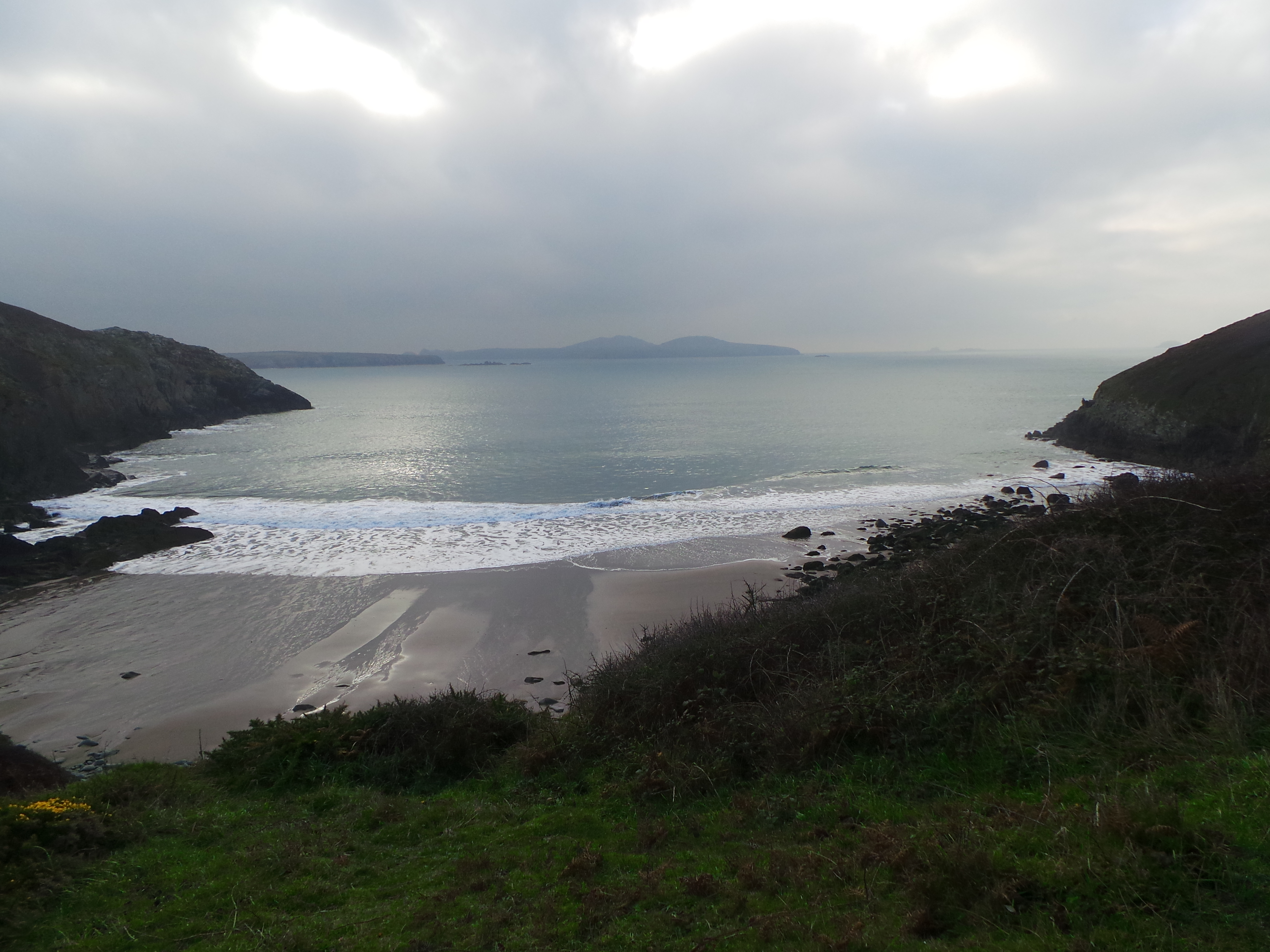
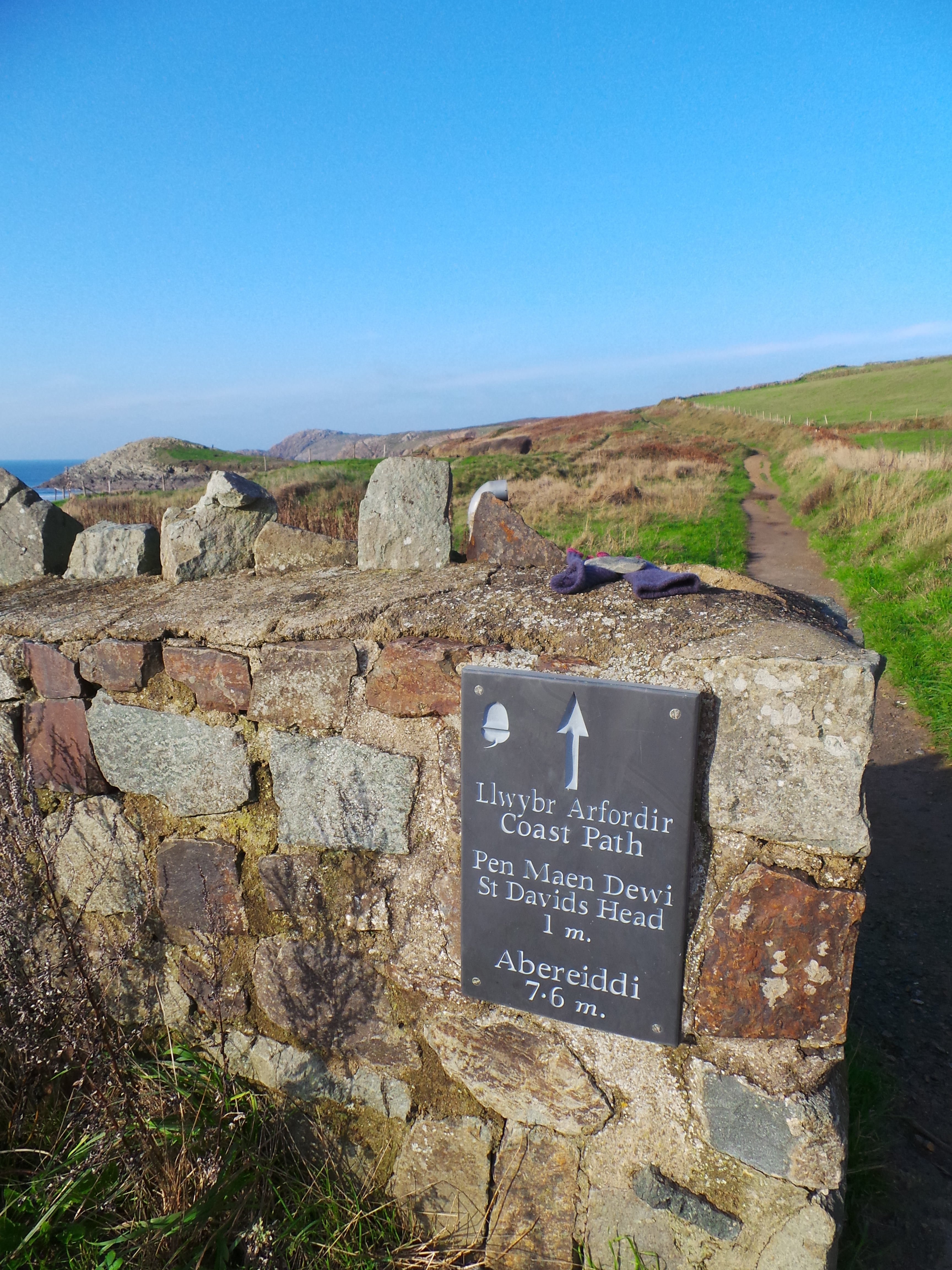
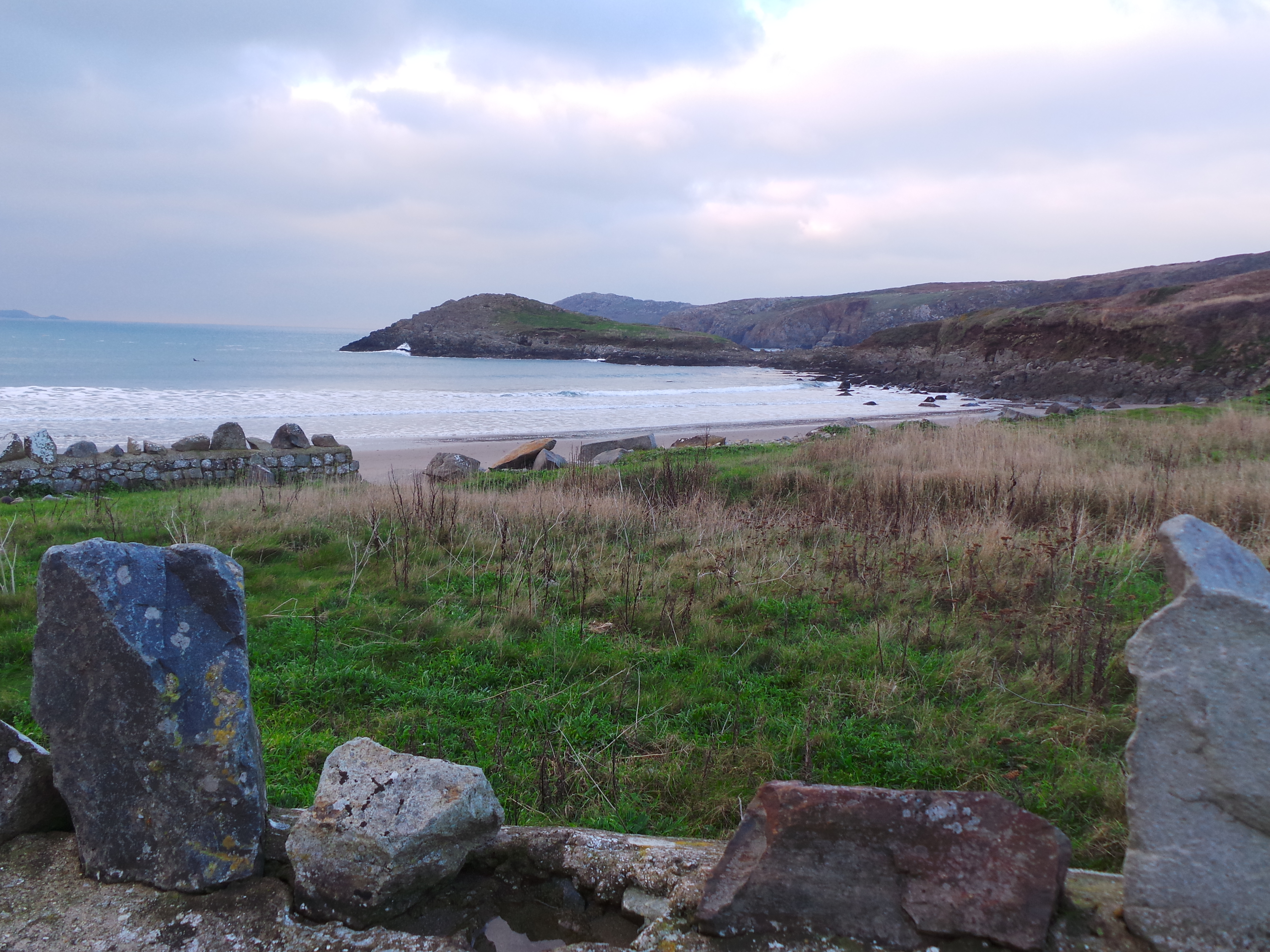
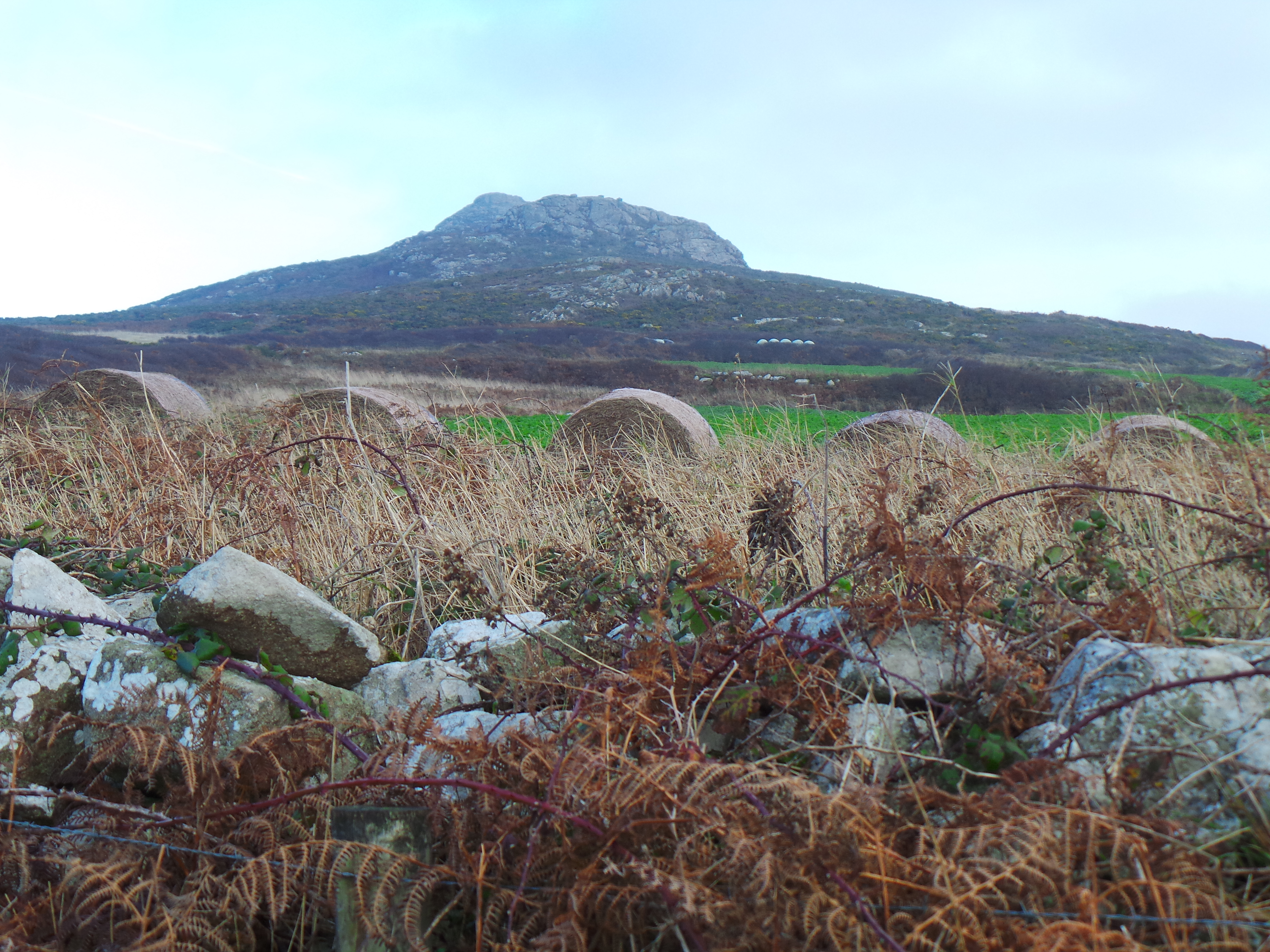
Back where we started off from we can look back over the same wall and appreciate just how far we have been. We could see the headland we had aimed for and reached in the misty distance. We felt exhausted but very satisfied.
 

2014 11 21_7713

Categories
countryside landscapes light light quality National Trust photography The National Trust the sea the seaside the shore Wales

A Stroll along the Pembrokeshire Coastal Path – Part One

Every year I set myself a challenge that defies my disability. Something totally silly if I take my health into consideration! Something I definitely should not be doing! But these challenges are great fun! I love them! Jude accepts my need to do them but worries when we are following these strange desires. Sometimes I have a need to go a bit further than my actual abilities!

For 2014 my challenge was to walk a mile along a stretch of the Pembrokeshire Coastal Path, probably the most beautiful of Britain’s long distance paths. For me a single mile is a long distance walk! I did it in late November and survived! Okay I suffered for a good few days after but boy did it feel good! I had such a feeling of elation when I finished the walk. Anyone else would have to climb Everest to get the same thrill! My consultant was proud of me. He likes my crazy ideas.

2014 11 21_7605 2014 11 21_7606

So come with us on our trek along the windswept coast near St Davids. As we dressed in suitable gear for a walk in the cold and most likely wet weather we noticed these two using the beautiful backdrop to take photos of their stained glass window. No doubt some great shots will appear in their promotional materials.

2014 11 21_7601 2014 11 21_76022014 11 21_7603 2014 11 21_7604


We made our way onto the path by passing through a beautiful stone wall. A sign with wording engraved on slate informed us that the walk to St David’s Head was 1 mile. I hoped to make half way to give us a round trip of 1 mile.

2014 11 21_7609 2014 11 21_7607


2014 11 21_7608


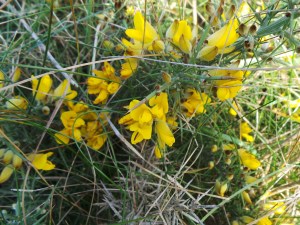
Jude looked ahead and could see just how far away the headland was that I was aiming to reach. She thought I was mad! We soon started finding colour in the tough grasses – wildflowers of coastal habitats. The first was this Armeria, the Sea Thrift. Close by the much brighter coloured Gorse added a bit of sunshine colour.

2014 11 21_7613 2014 11 21_7612  2014 11 21_7617 2014 11 21_7614

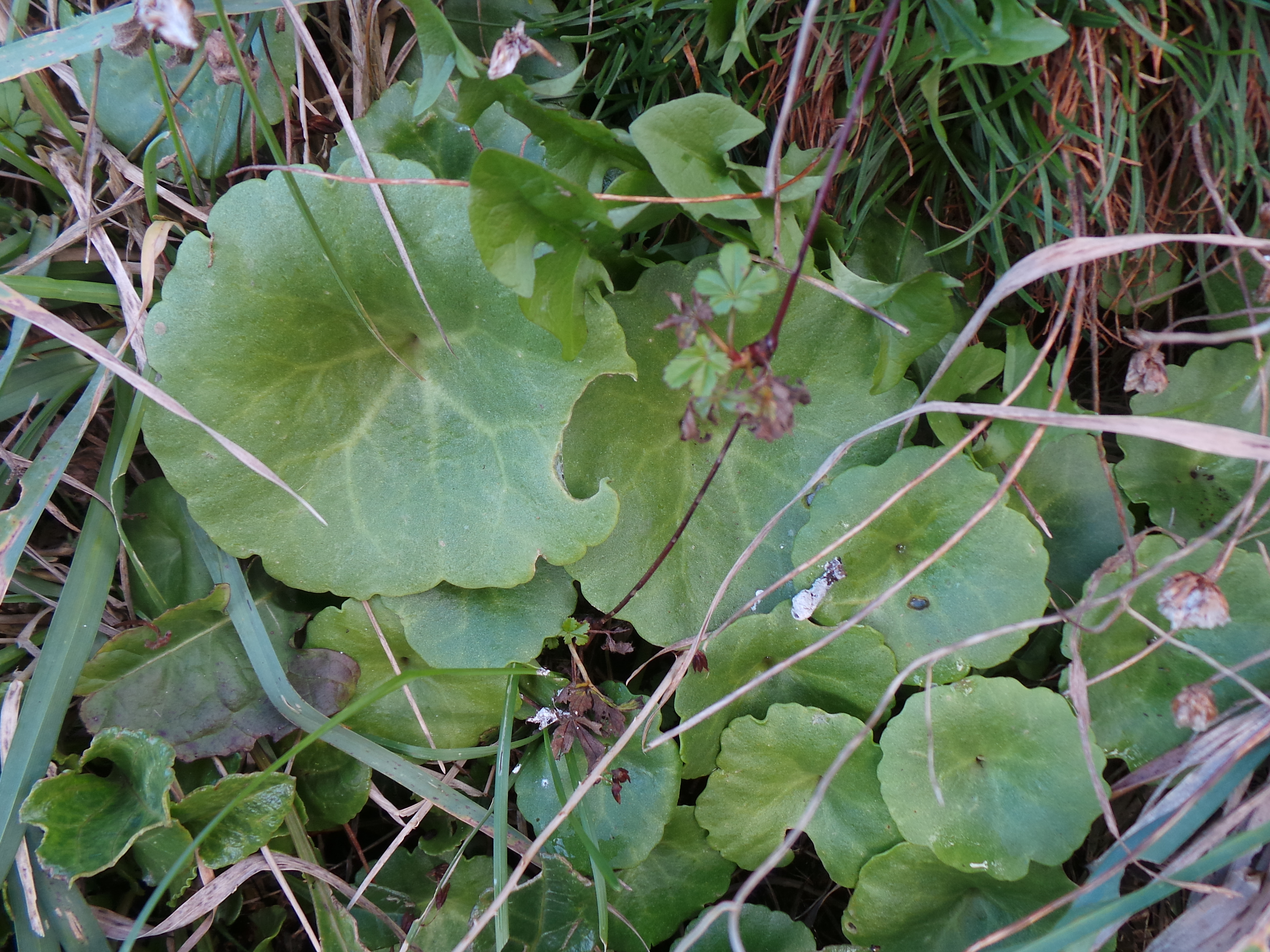
This little delicate plant foiled us completely – neither of us could remember what it was.

2014 11 21_7632 2014 11 21_7635

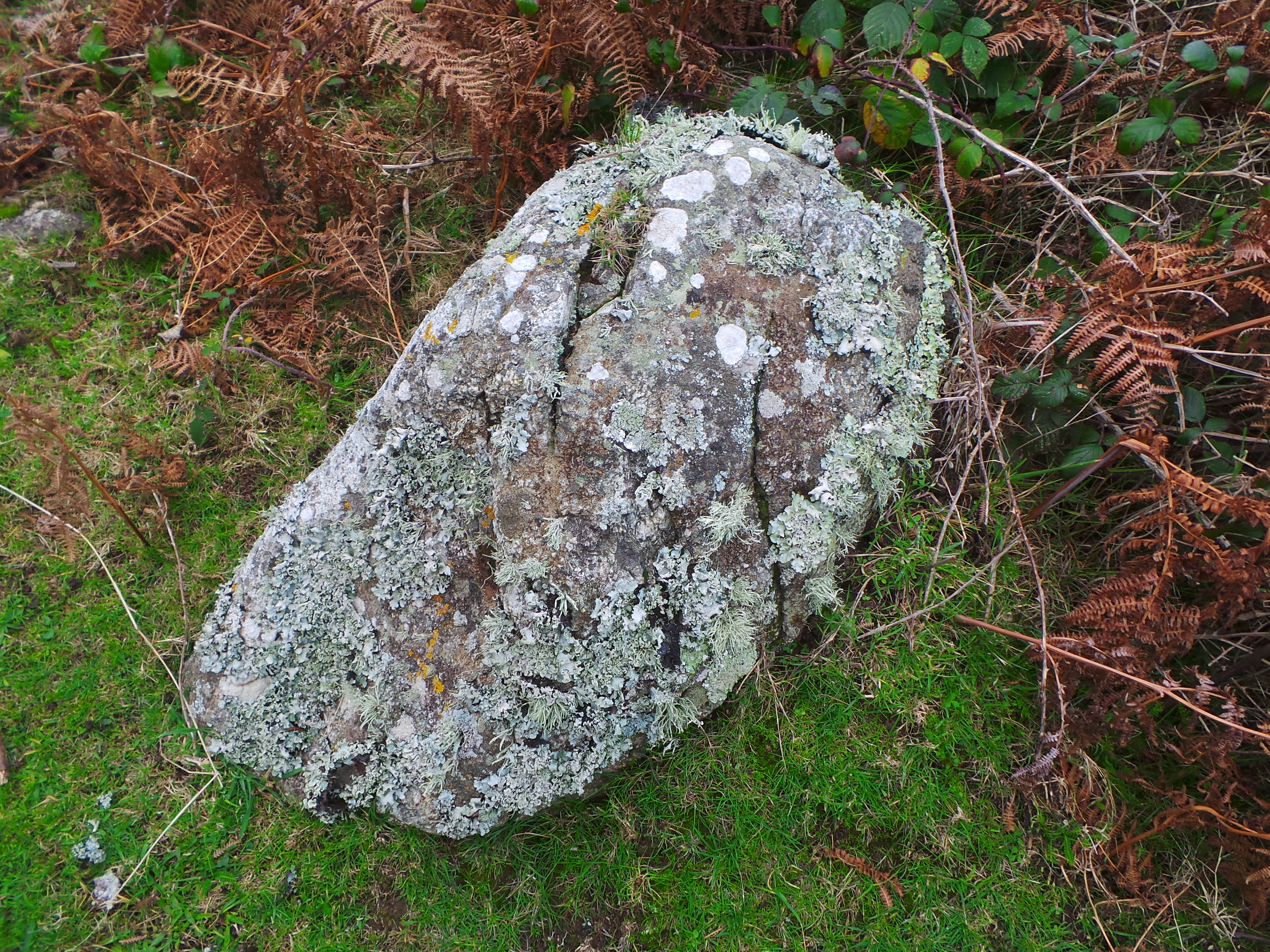
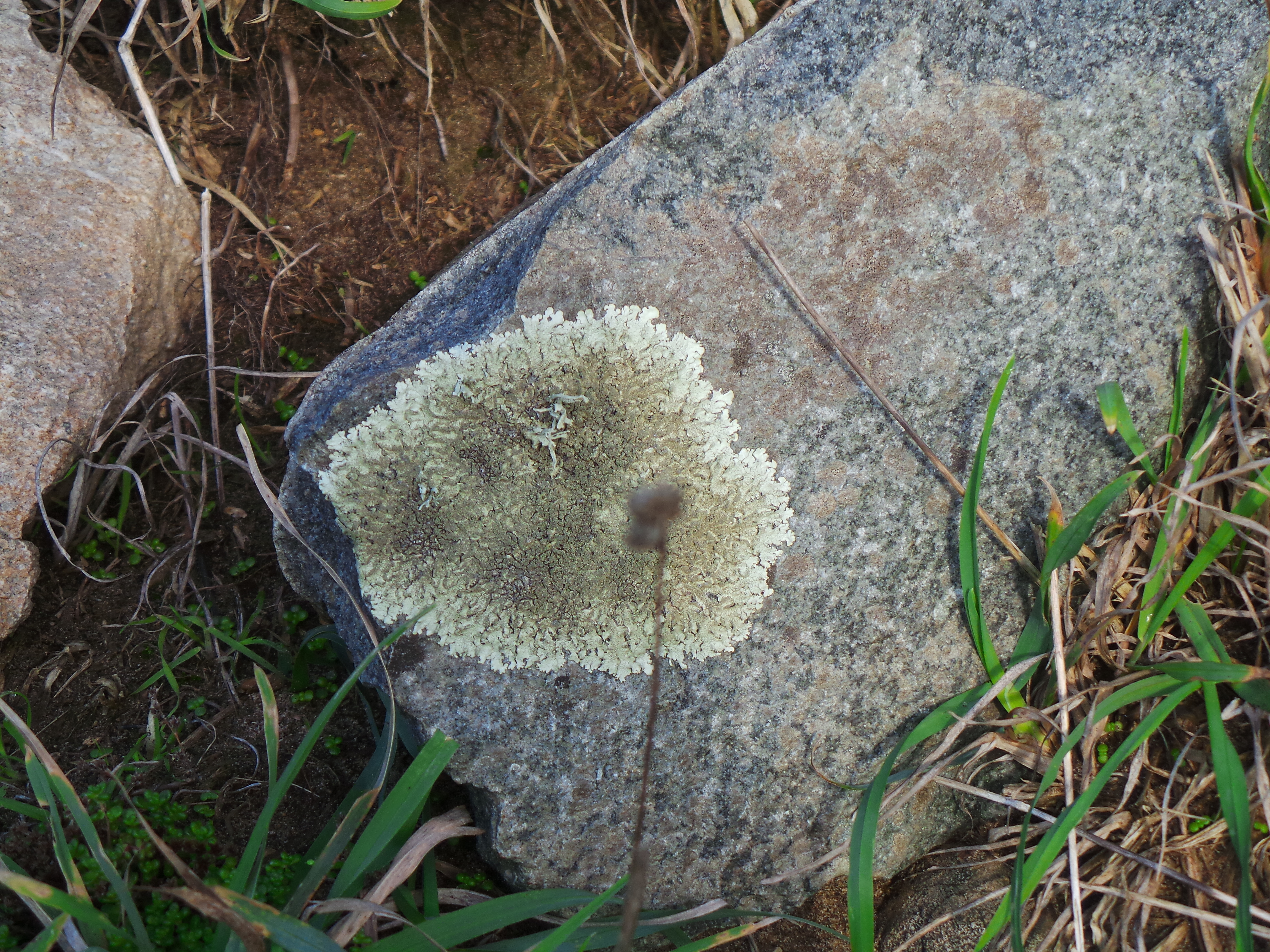
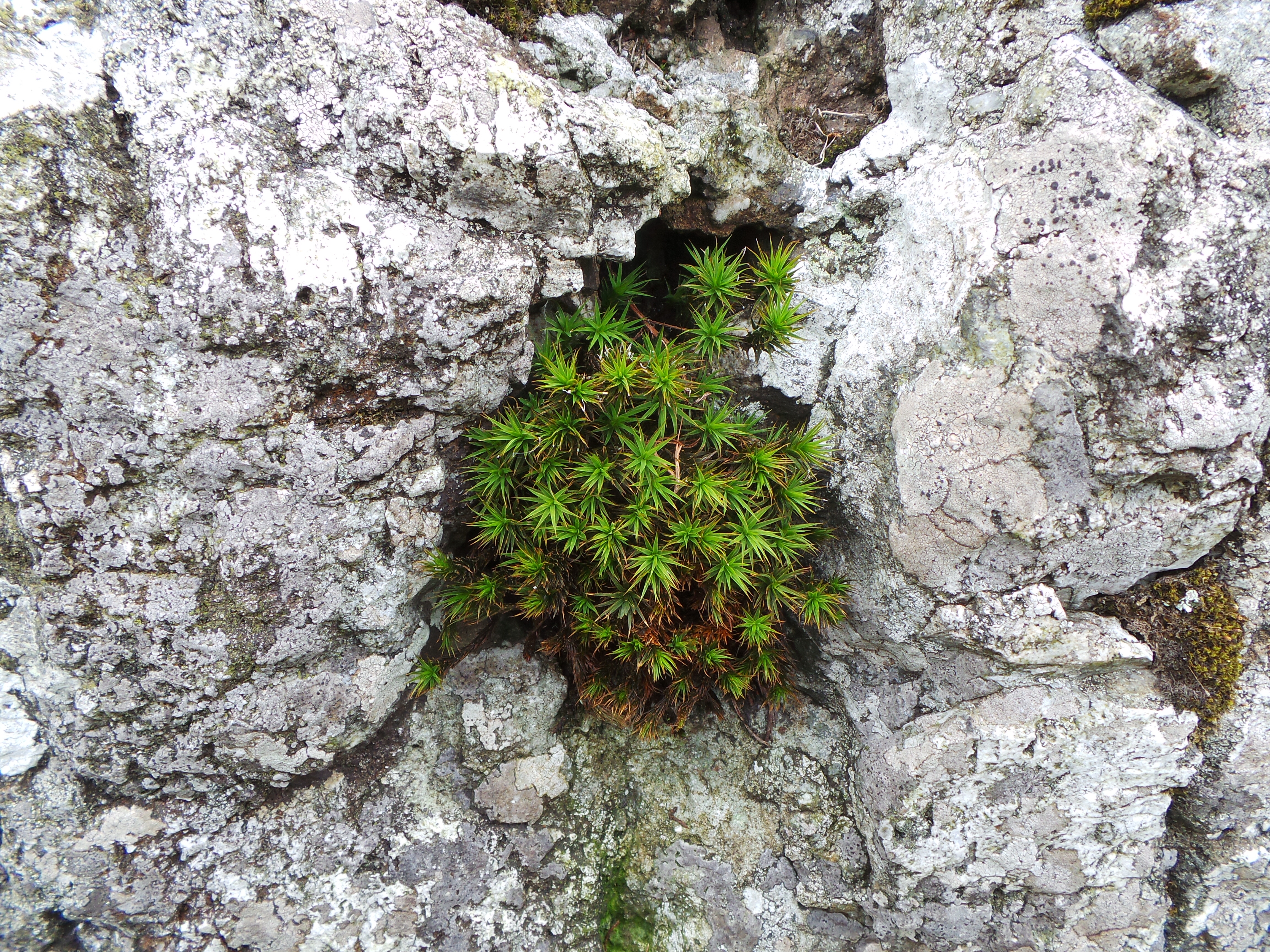
Every rock was painted with Lichen and Mosses. They look just like they have been daubed by an artist. These rocks had fallen from the field boundaries that are specific to this area – stones with soil in the gaps and on top. The soil provides homes for the local flora.

2014 11 21_7620 2014 11 21_7615

2014 11 21_7616 2014 11 21_7621

The light was changing by the minute. We could be in sunshine one minute and then under heavy storm clouds the next. Just see the extremes in the photos below taken within minutes of each other. The temperature varied in the same way – hats and gloves were on and off all the time.

2014 11 21_7618 2014 11 21_7619

What made this walk extra special was that it gave double value. We had views over the inlets and headlands over one shoulder and views of the countryside inland over the other.

2014 11 21_7622 2014 11 21_7623 2014 11 21_7624 2014 11 21_7625 2014 11 21_7626 2014 11 21_7627  2014 11 21_7629 2014 11 21_7630

2014 11 21_7631 2014 11 21_7633 2014 11 21_7634 2014 11 21_7636 2014 11 21_7637 2014 11 21_7638

2014 11 21_7639 2014 11 21_7640

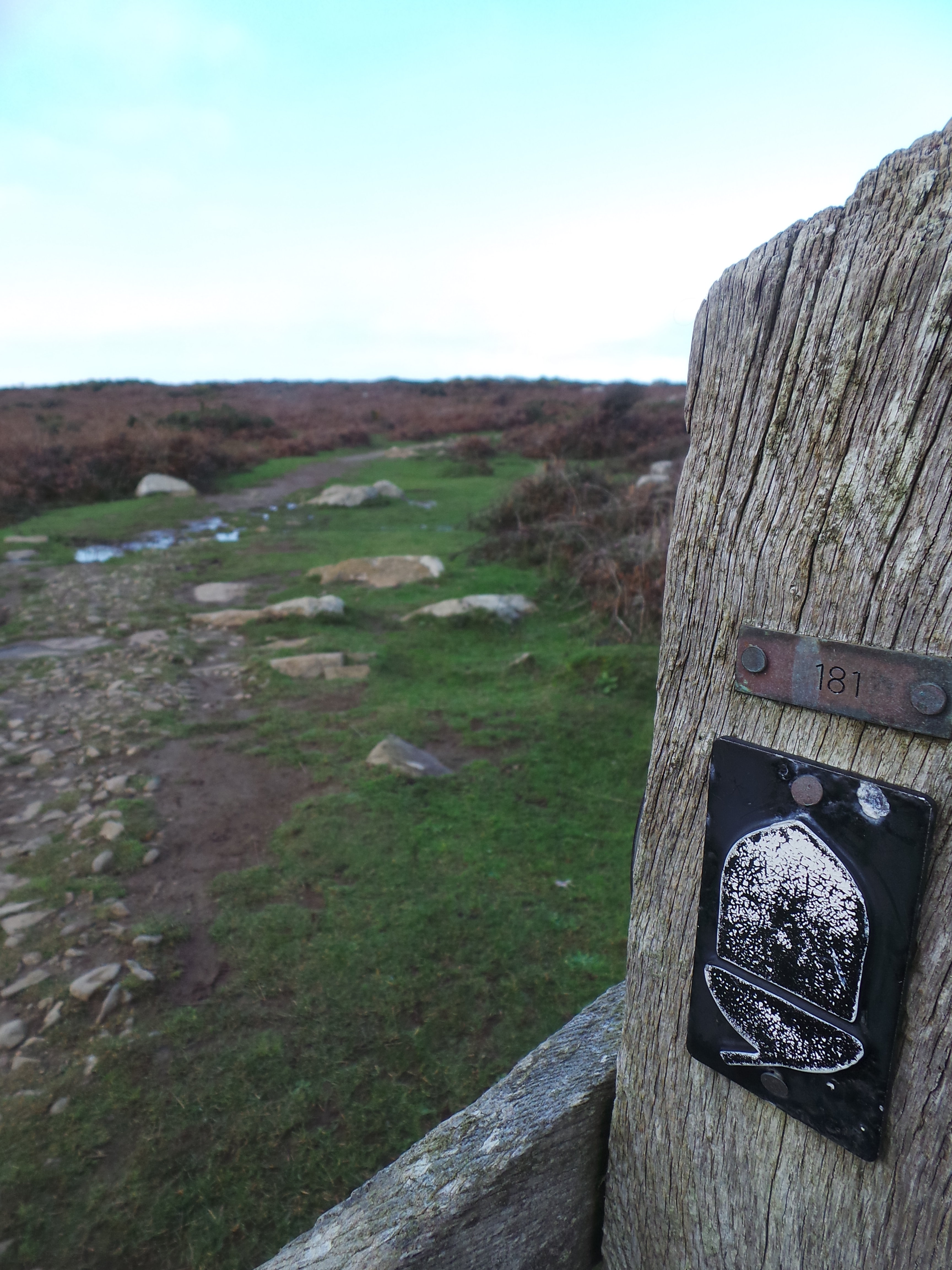
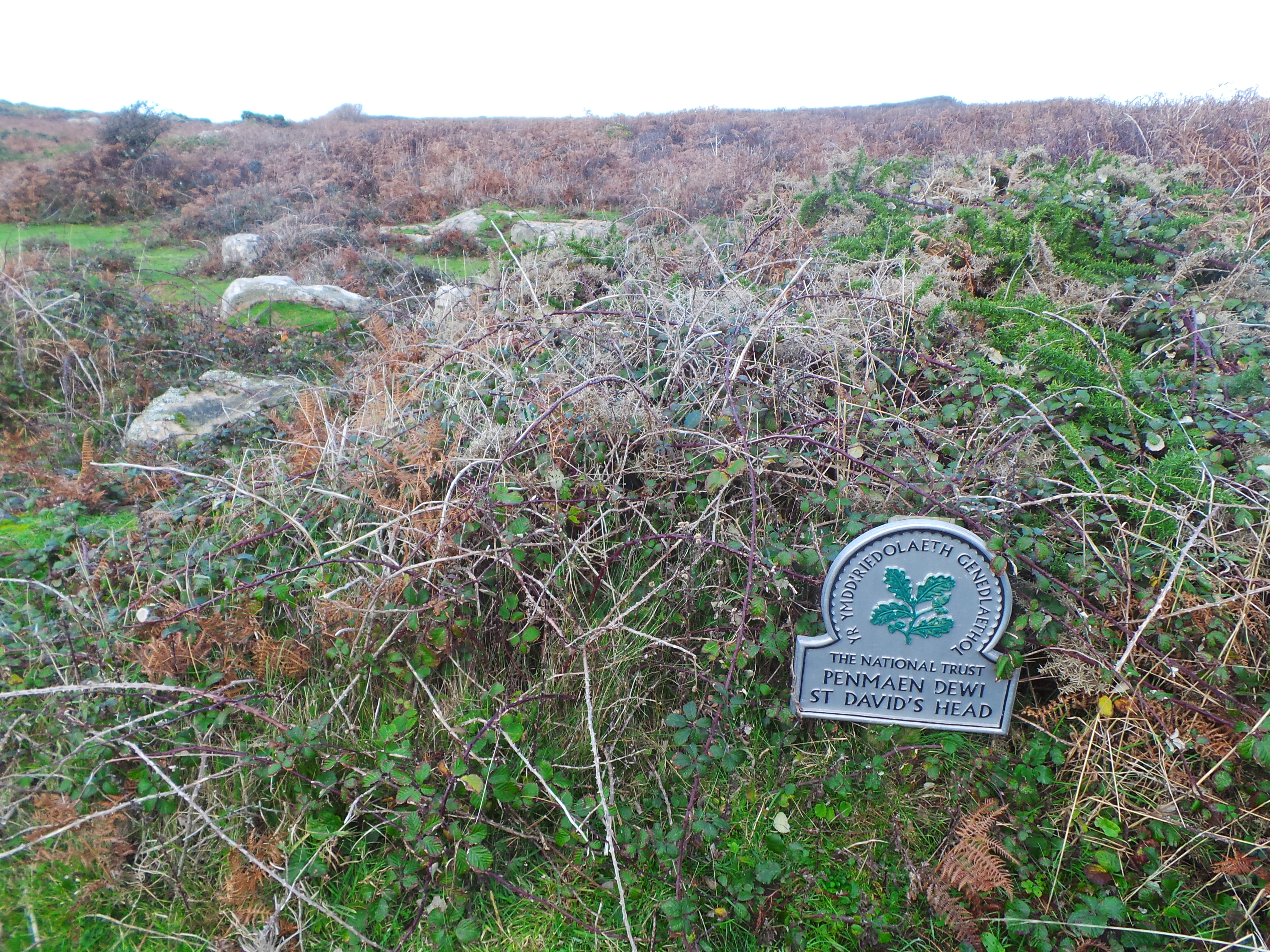
As we passed through a wooden gate the landscape changed and the views opened up. The signs on the gatepost invited us to carry on with our walk but be careful not to fall off the cliffs! We hadn’t been planning to! The National Trust sign informed us that we were on St David’s Head. We realised then that we had already walked further than we had intended. We should have turned back and made our way back but my stubborn nature won over and we decided to carry on perhaps making it to the headland in the far distance. This would give us a total walk of two miles. Far more than I should have been contemplating! We had rugged open moorland to cross to reach the headland itself.
 

2014 11 21_7643 2014 11 21_7644 2014 11 21_7645 2014 11 21_7646 2014 11 21_7647 2014 11 21_7648


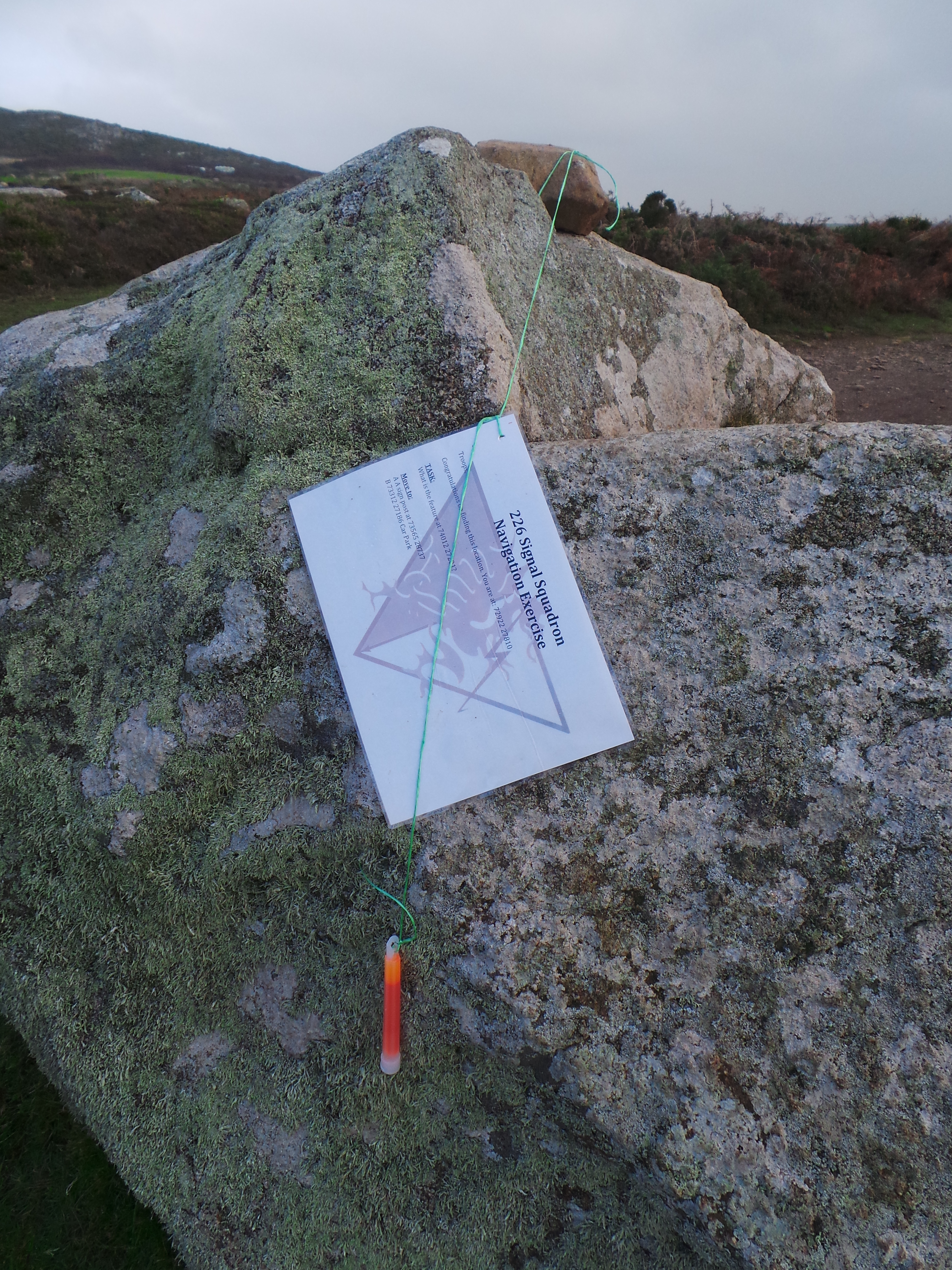
Jude was fascinated by a label hanging over a rock and just had to have a close look. We found it was a marker point on a trail laid out as part of an army training session. We were tempted – just for a moment – to pick it up and take it back to the local barracks to tell them we had found this label. Common sense prevailed however and we resisted the temptation.

2014 11 21_7649 2014 11 21_7650

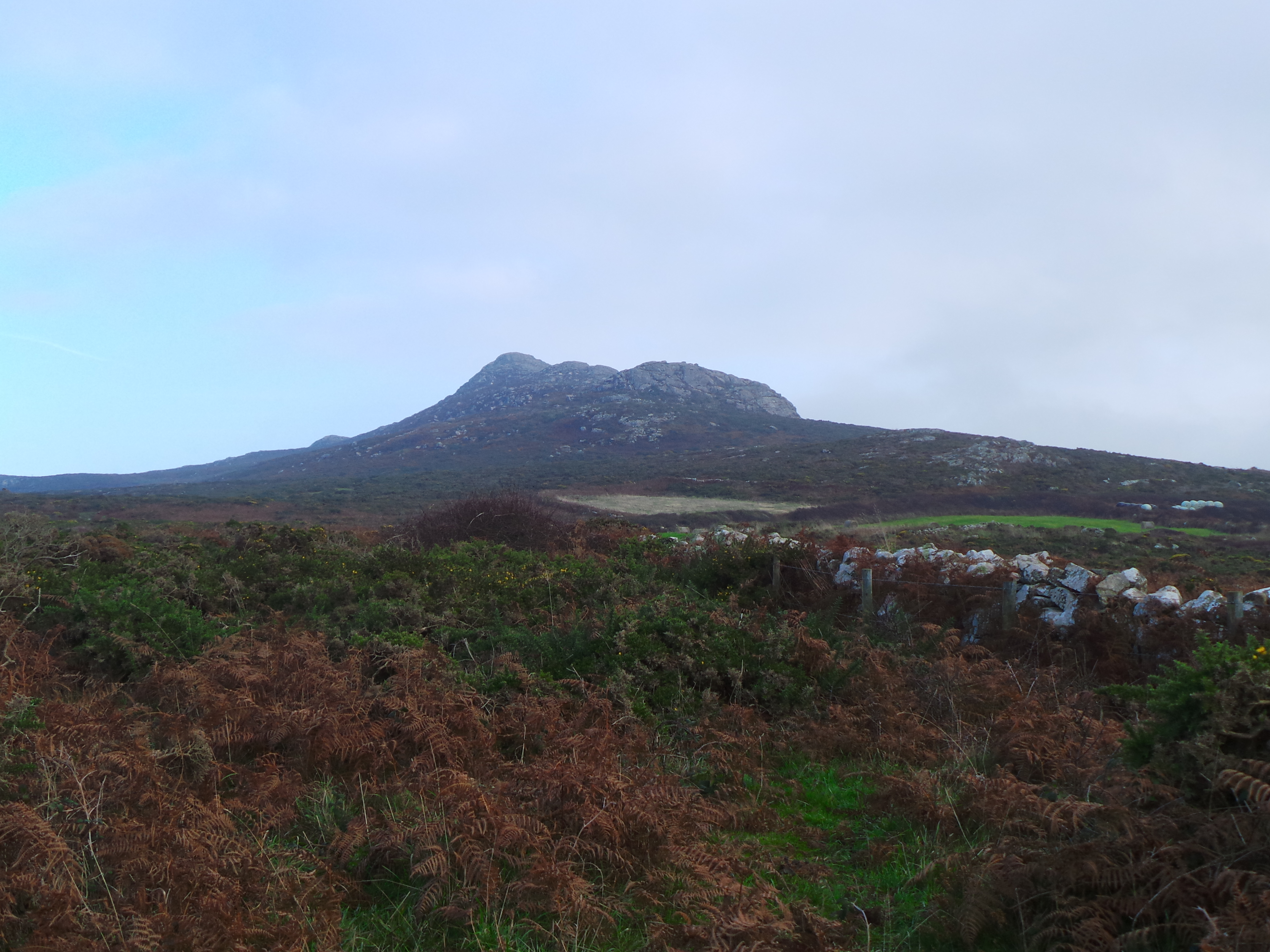
In the photo below we can see the headland for which we were aiming right on the horizon.


2014 11 21_7651

My legs are aching and pain is creeping up my spine just writing this post and loading the photos so we shall take a break for now and return in Part Two.


Categories
countryside landscapes migration Powis Powys trees Wales wildlife woodland woodlands

Waterfall Walkabout

We made a quick visit to the waterfall at Llanrhaeadr-ym-Mochnant, in Powys  last year and vowed to return. So in late august we did just that not thinking that being still in the holiday period it would be so much busier than our previous spring visit. But many people were walking off into the hills so our wander was still quite quiet.

After our usual coffee and cakes which we enjoyed in the cafe at the base of the falls we set off up a narrow path and quickly found the stream that flowed rapidly from the falls themselves. The cafe is part of an interesting and unusual endeavour, a business which involves a campsite and retreat as well as the cafe, a little empire to nourish the body, the soul and the mind. It is a place to find peace and get close to nature.
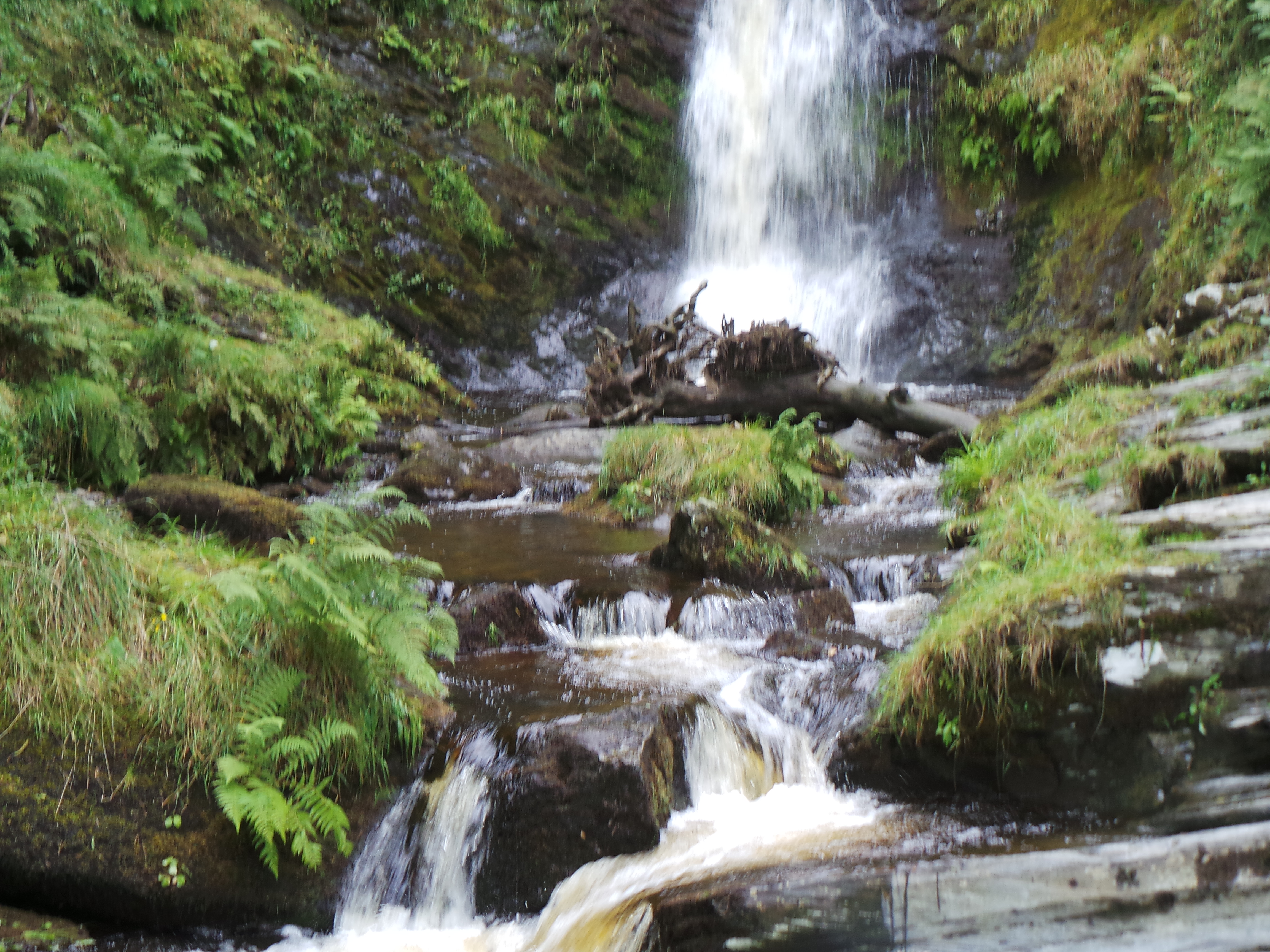
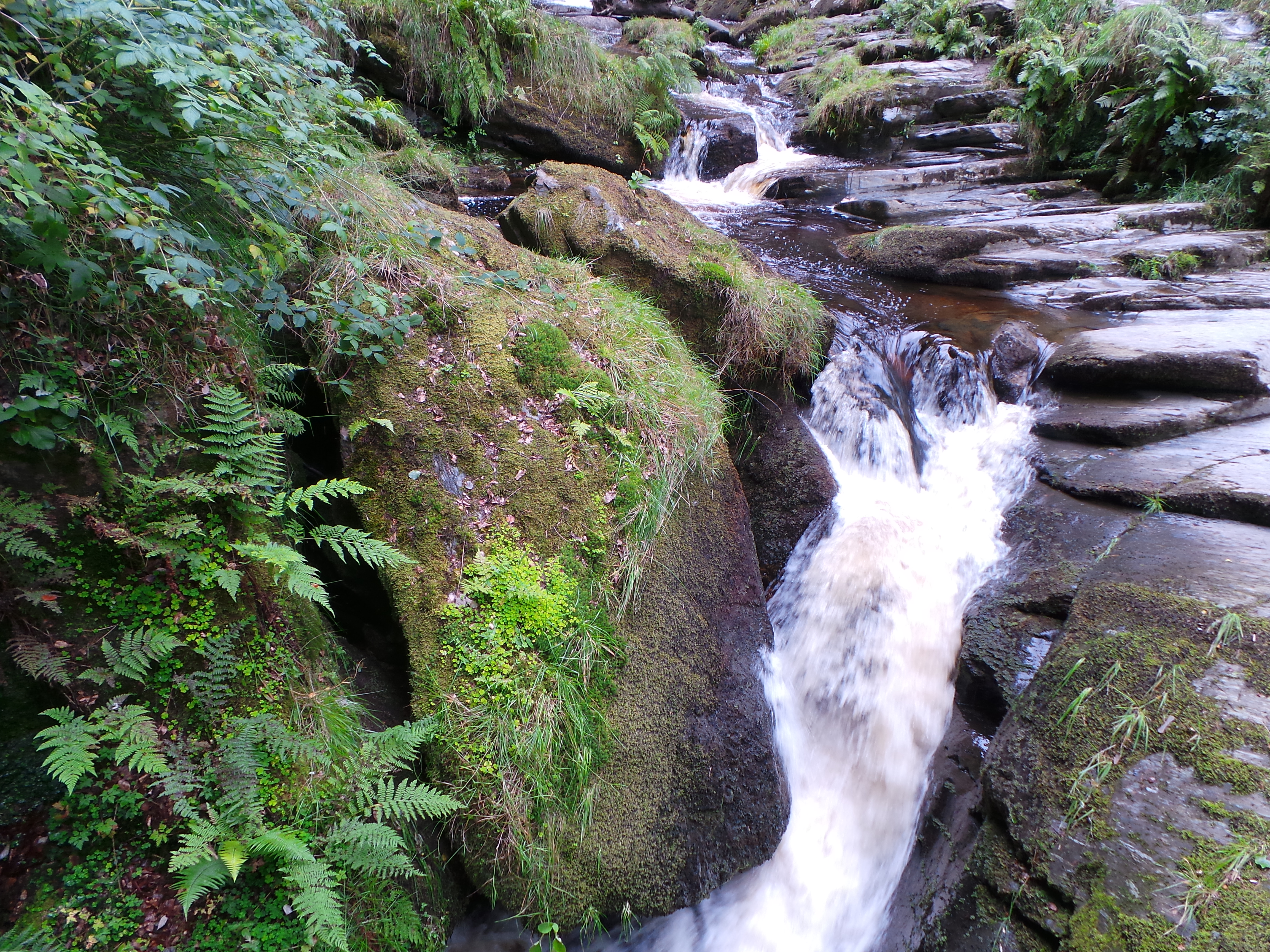
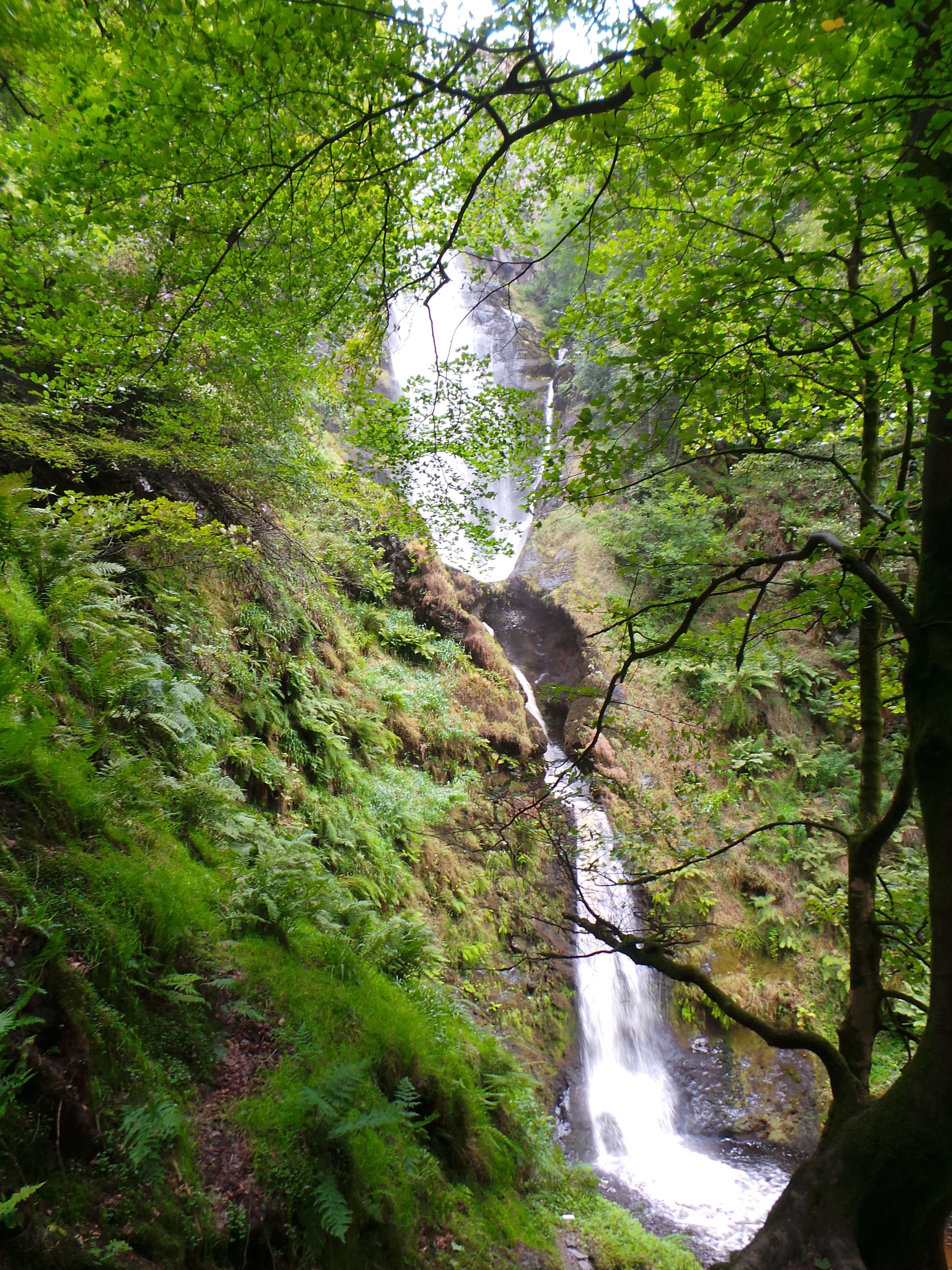
We heard the falls well before we saw them, the roaring and rushing  of water dropping over 100 feet splashing on rock outcrops as it falls. When the falls come into view we are always forced to stop just to stare and take in the scene. It is simply beautiful, a place where the gentle beauty of nature is disturbed by the sheer power of water. A mist of spray drifts among the trees. All around is green, bright almost fluorescent green. Ferns, mosses and lichen reveling in an atmosphere full of droplets of water, very pure clean water, not yet subjected to man’s pollution. It won’t be long before this stream, crystal clear but for a hint of the coffee brown stain from peat, will be subject to agricultural run-off. Nitrates, herbicides and sheep dip chemicals. But for now its purity adds to the delight of the place.

2014 08 28_4250 2014 08 28_4251 2014 08 28_4252 2014 08 28_4254 2014 08 28_4256 2014 08 28_4257

2014 08 28_4258 2014 08 28_4255

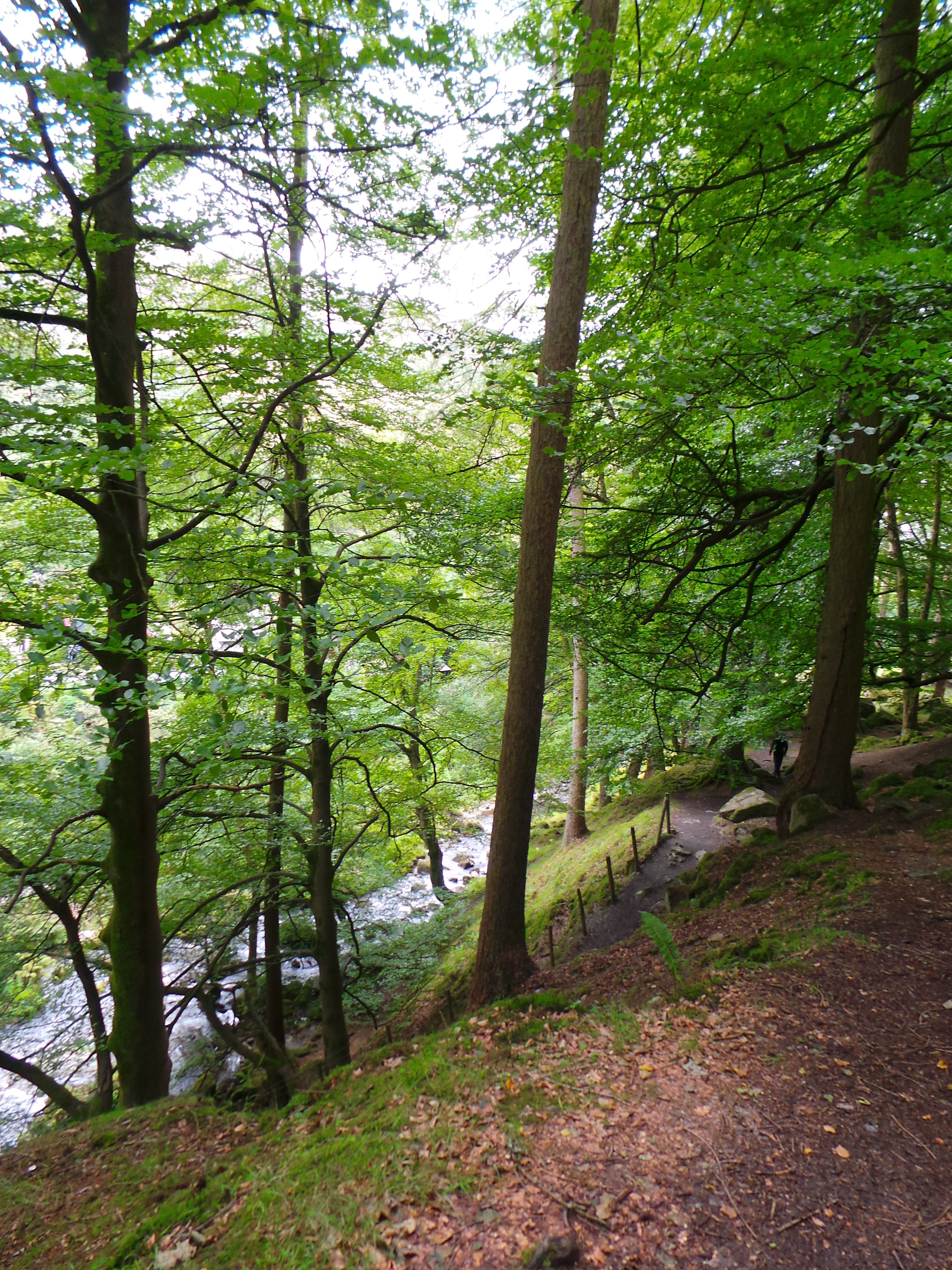
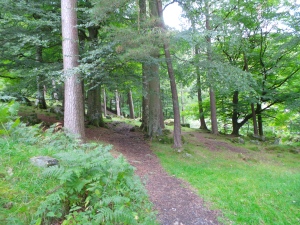
After enjoying being close to the roar and rumble of the waterfall we took a narrow track into the valley. Our feet made no sound on the pine needles that covered the path so we could hear the sound of the falling water getting quieter as we moved deeper into the heavily wooded slopes of the valley side. The trees grew close together so had grown tall in their search for light.

2014 08 28_4261 2014 08 28_4264 2014 08 28_4298 2014 08 28_4296

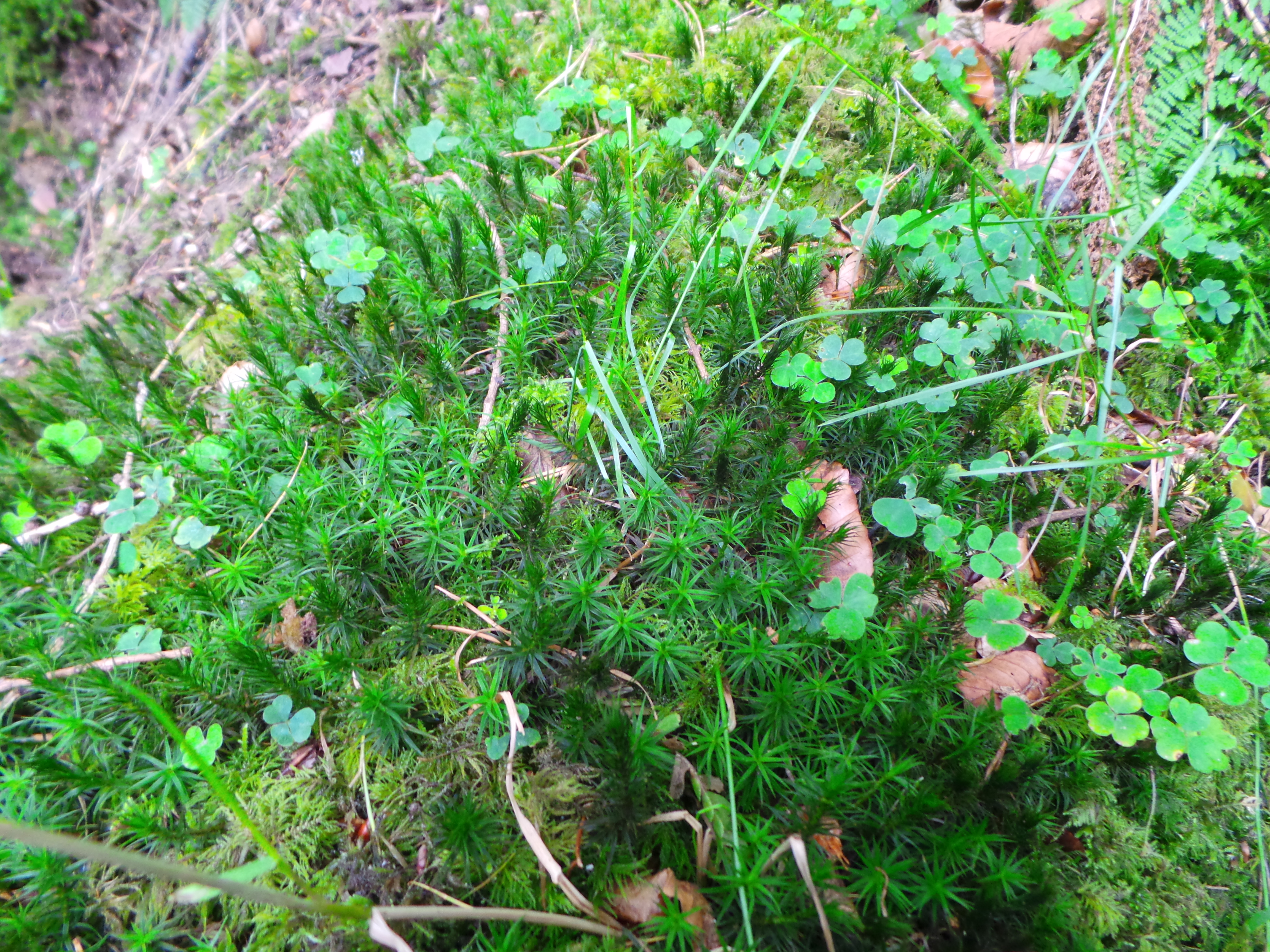
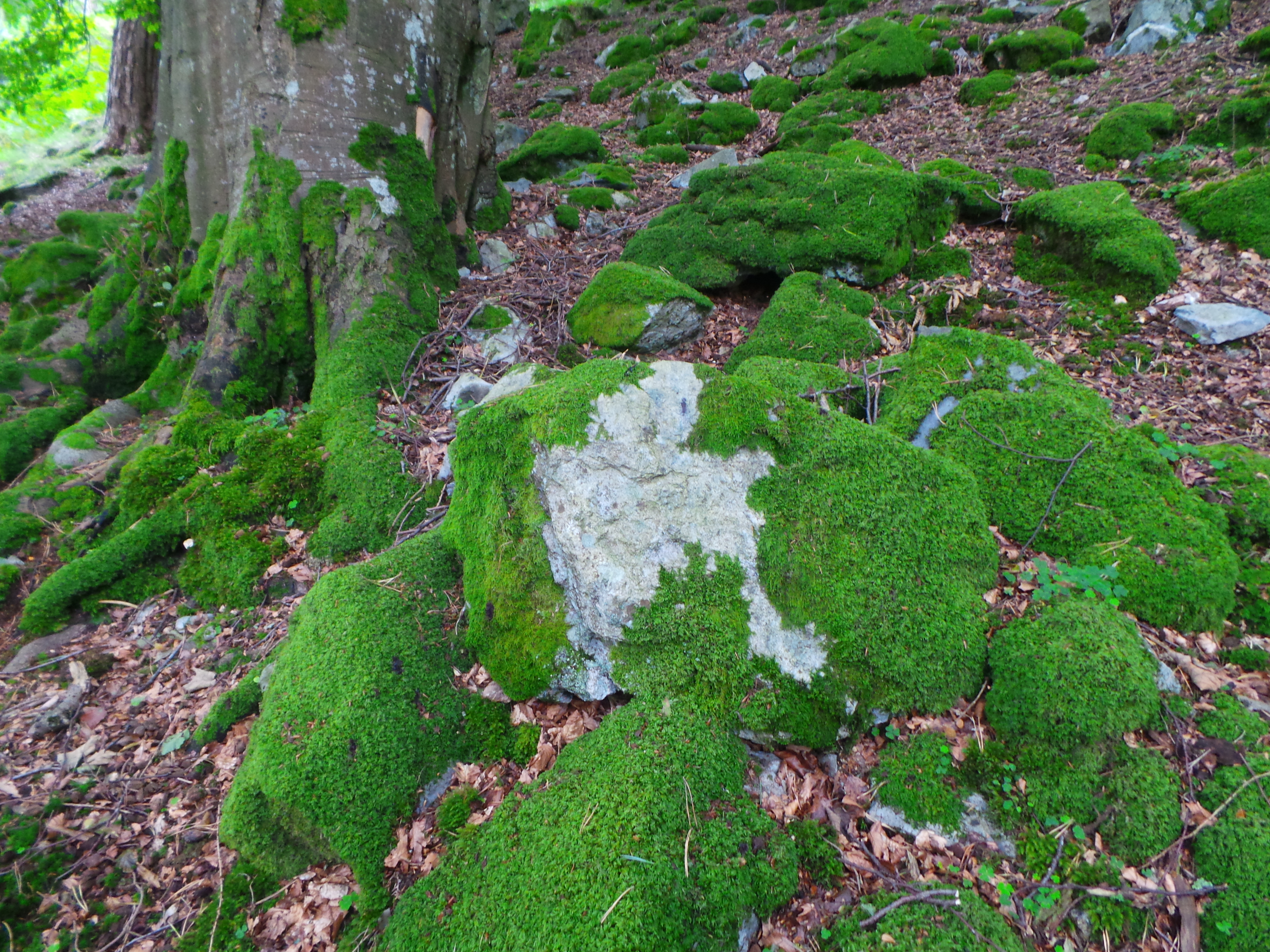
Every boulder and the bases of every tree trunk were carpeted in mosses and lichens, soft and silky to the touch.

 2014 08 28_4265 2014 08 28_4294

2014 08 28_4262

The boulders had been rolled down the slope by the forces of gravity after the equally powerful force of erosion had separated them from the rock faces of the vertical outcrops towering above the tree line. Erosion had also removed the soil and scree that once anchored this tree and its roots to the ground. Today it somehow remains upright by holding on with only half of its giant roots still in the ground.

2014 08 28_4266 2014 08 28_4277

The openness at the end of the woodland afforded us vast views of the mountain range underneath which we had driven to find the waterfalls.

2014 08 28_4267 2014 08 28_4268 2014 08 28_4269 2014 08 28_4270

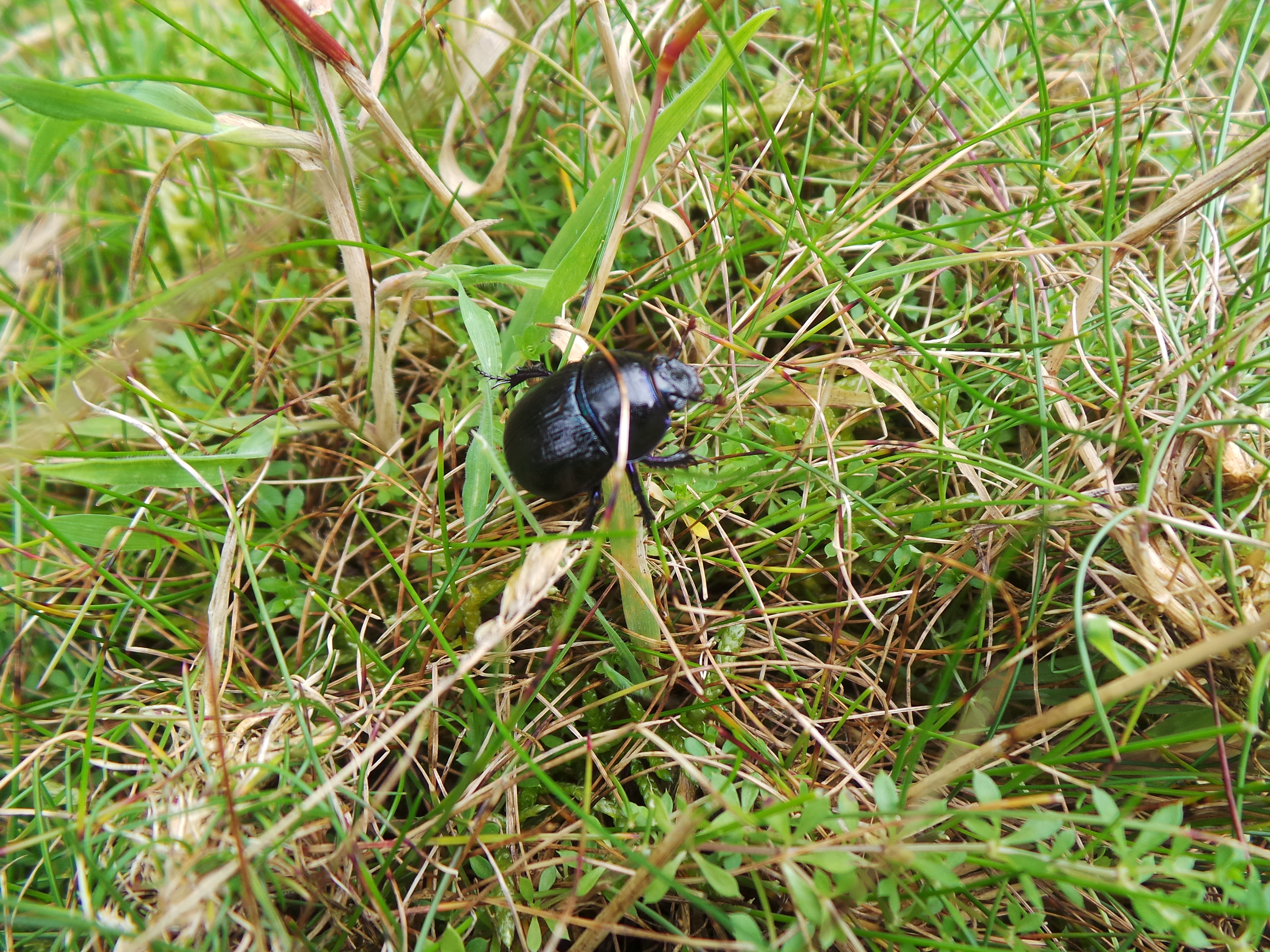
In a place dominated by huge trees, massive mountains and rugged rock faces it is good to study tiny delicate things as a contrast. There can be no more delicate flower then the Harebell and no smaller plants than mosses, lichens and algae (algae and lichen are not strictly speaking plants). Although the beetles we came across were small at only a centimetre or so long they certainly did not look delicate. They looked tough as they moved through the grass with purpose. Theses little chaps are powerful predators in the mini-beast world.

2014 08 28_4271 2014 08 28_4272 2014 08 28_4274 2014 08 28_42802014 08 28_4288 2014 08 28_42892014 08 28_4301 2014 08 28_4295

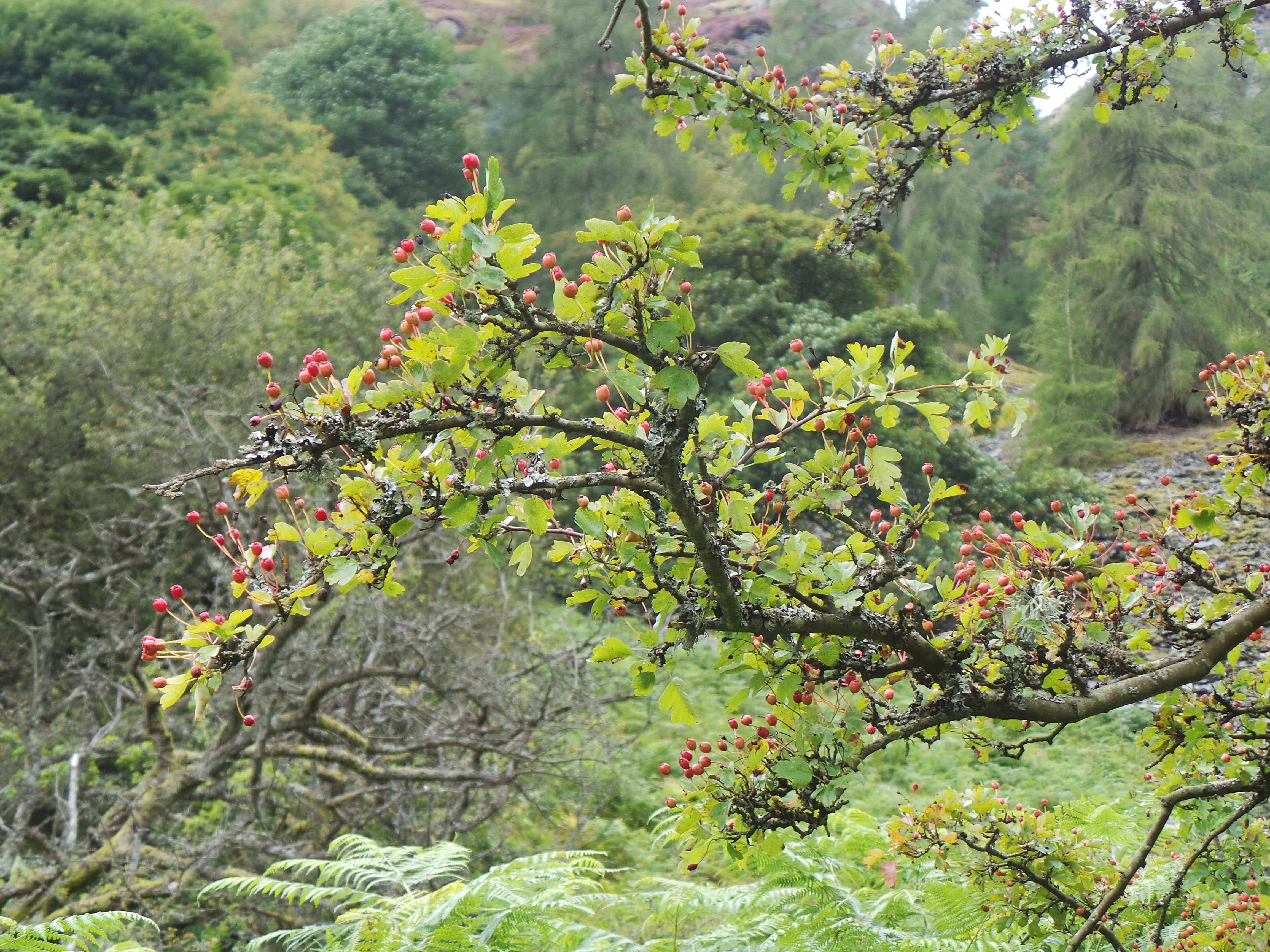
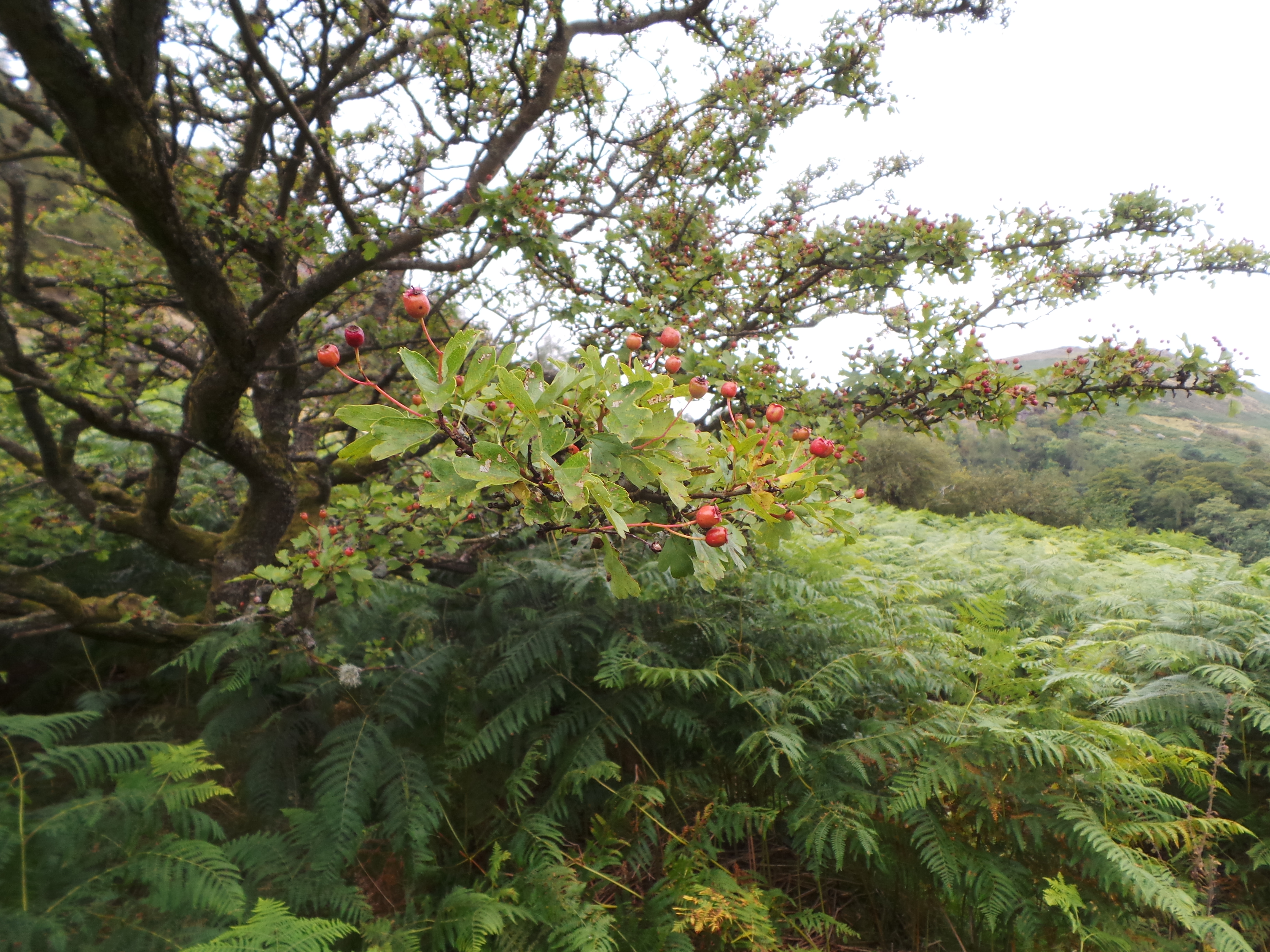
Fruit was colouring up on Hawthorns, Rowans and wild Crab Apples. We imagined that once the migrant thrushes passed through Wales they would home in on this valley side and gorge themselves on this fruit bounty.

2014 08 28_4278 2014 08 28_42792014 08 28_4287

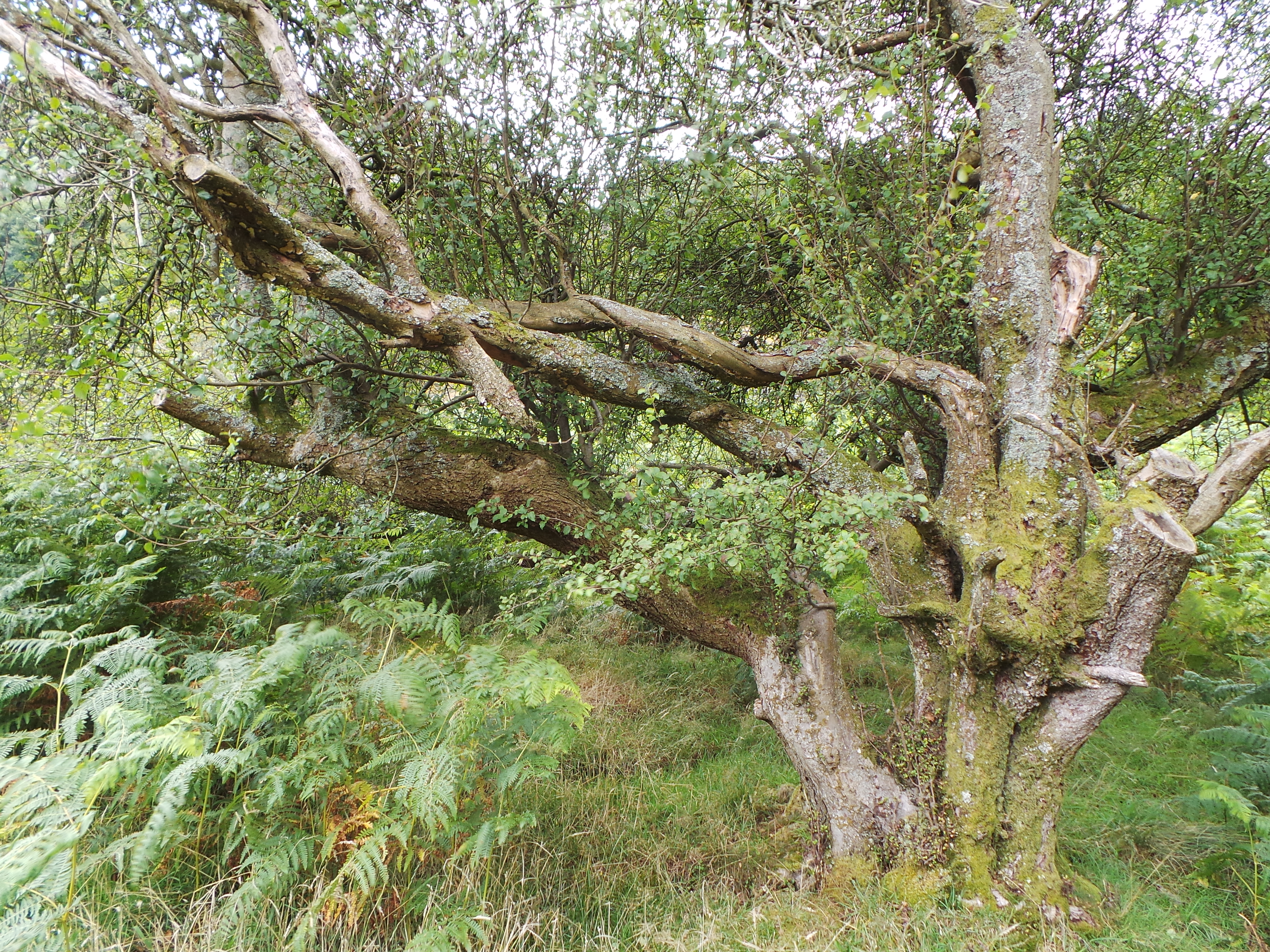
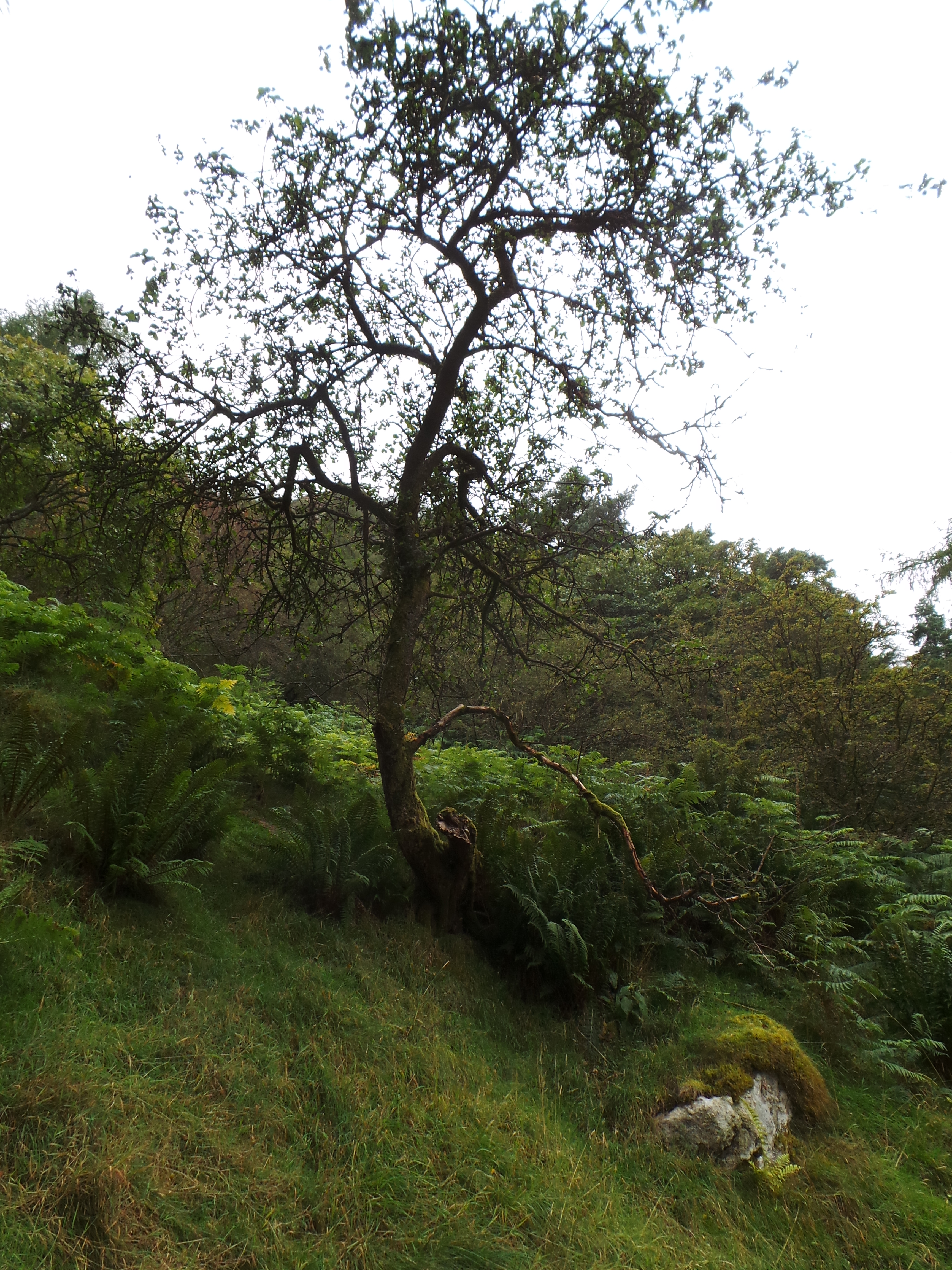
On the more exposed slopes of the valley trees live short lives and they grow stunted by the harsh winds and cold winters. This does though give them beautiful shapes, their branches and trunks taking on bonsai like twists and turns. The clean air here meant they wear coats of lichen, moss and algae. The first three pictures below are of a dead tree, partly felled but still giving a home to these tiny members of the plant world.

2014 08 28_4281 2014 08 28_4282  2014 08 28_4283 2014 08 28_4285 2014 08 28_4290 2014 08 28_4292

On our return back along the track we took a detour to see if we could get a closer look at the falls by going upwards. The path rose steeply and we found ourselves on a ledge almost halfway up the falls so we did get different views but not as dramatic as we had hoped for.

2014 08 28_4259 2014 08 28_4293

2014 08 28_4297 2014 08 28_4299 2014 08 28_4300 2014 08 28_4263

What a great place this is, possibly as close to wilderness as we can find in this part of Wales. The walk isn’t easy or indeed sensible for either of us – me walking with a crutch and one leg without any feeling and Jude being scared of heights and hating walking with a gap alongside. But we did it and we enjoyed! And we will probably do it again! No – we will definitely do it again!


Categories
countryside garden design garden furniture garden photography garden ponds garden pools garden seating gardening gardens hardy perennials hedgerows irises landscapes log piles meadows ornamental trees and shrubs outdoor sculpture Powis Powys sculpture Wales water in the garden Yellow Book Gardens

Three Welsh Gardens – Part Two – A Garden on Top of the World – Bryn Llidiart

Of course the garden we visited wasn’t really on top of the world, but it certainly felt that way as once more we made our way into the hills of Powys the other side of Welshpool, travelling along narrow single track lanes up steep hills and around sharp bend after sharp bend. It seemed to take ages to get nowhere and the journey did actually take twice as long as we had anticipated. We had to go in Jude’s little car as I had been in hospital the day before having a minor op on my hand so I couldn’t drive. We should have known better and Jude could have driven mine as its more powerful motor wouldn’t have minded the hills so much.

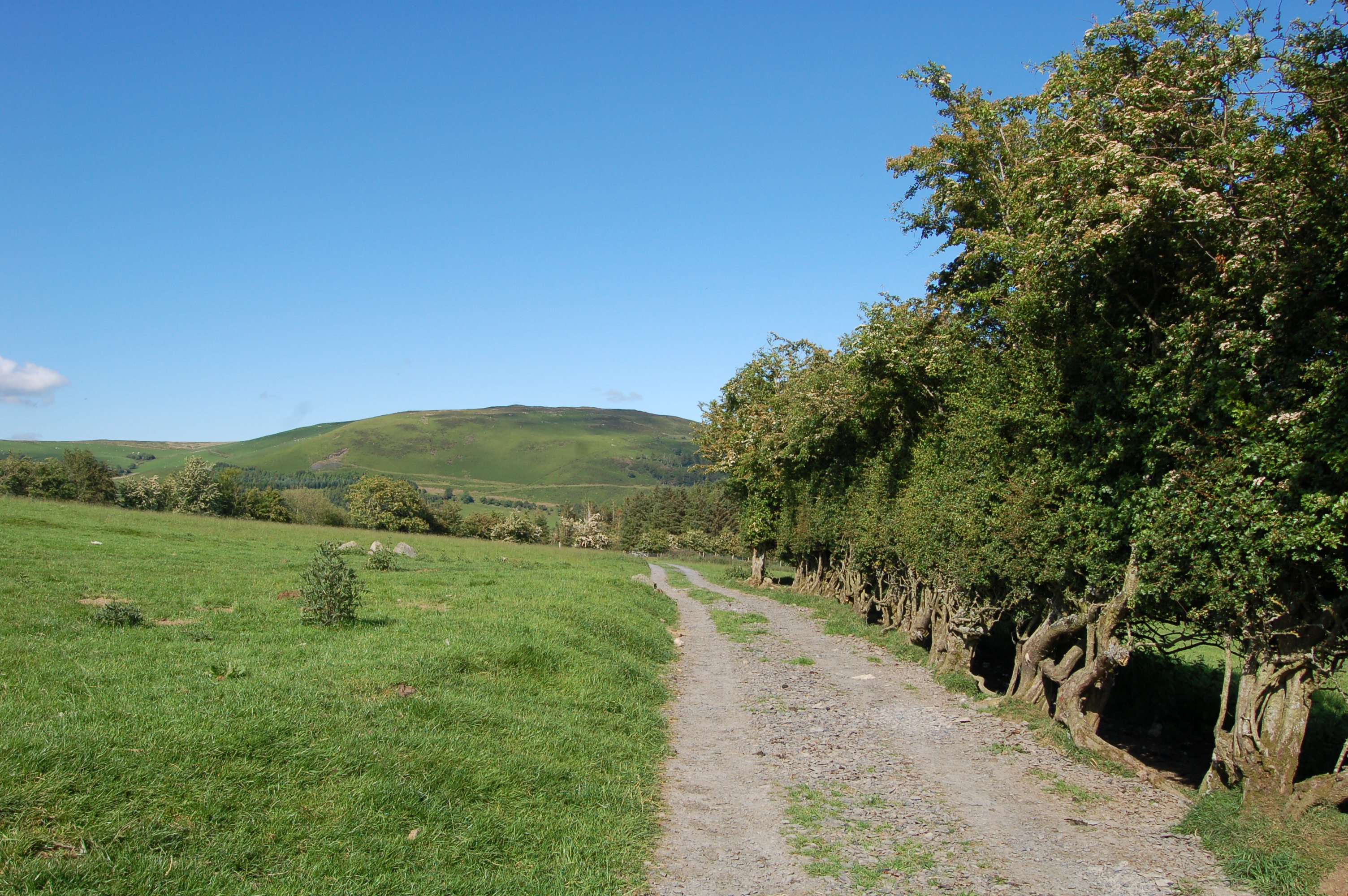
Once we got there however we knew we were in for a treat. Anyone brave enough to tackle the making of a garden in these harsh condition must be a very determined gardener indeed. As we neared our destination we turned up a very narrow lane where the hedges virtually touched the side of the car and we climbed steeply until the lane came to a halt. A gate in the stone wall was open on our right and a sign indicated that this was where we had to park up. On the left another track of rugged slate took us through fields grazed by sheep towards the garden.The gnarled old hedgerow Hawthorns were bowed over and twisted from years of being wind battered on this exposed hillside.
2014 06 14_0299 2014 06 14_0298 2014 06 14_0297 2014 06 14_0296


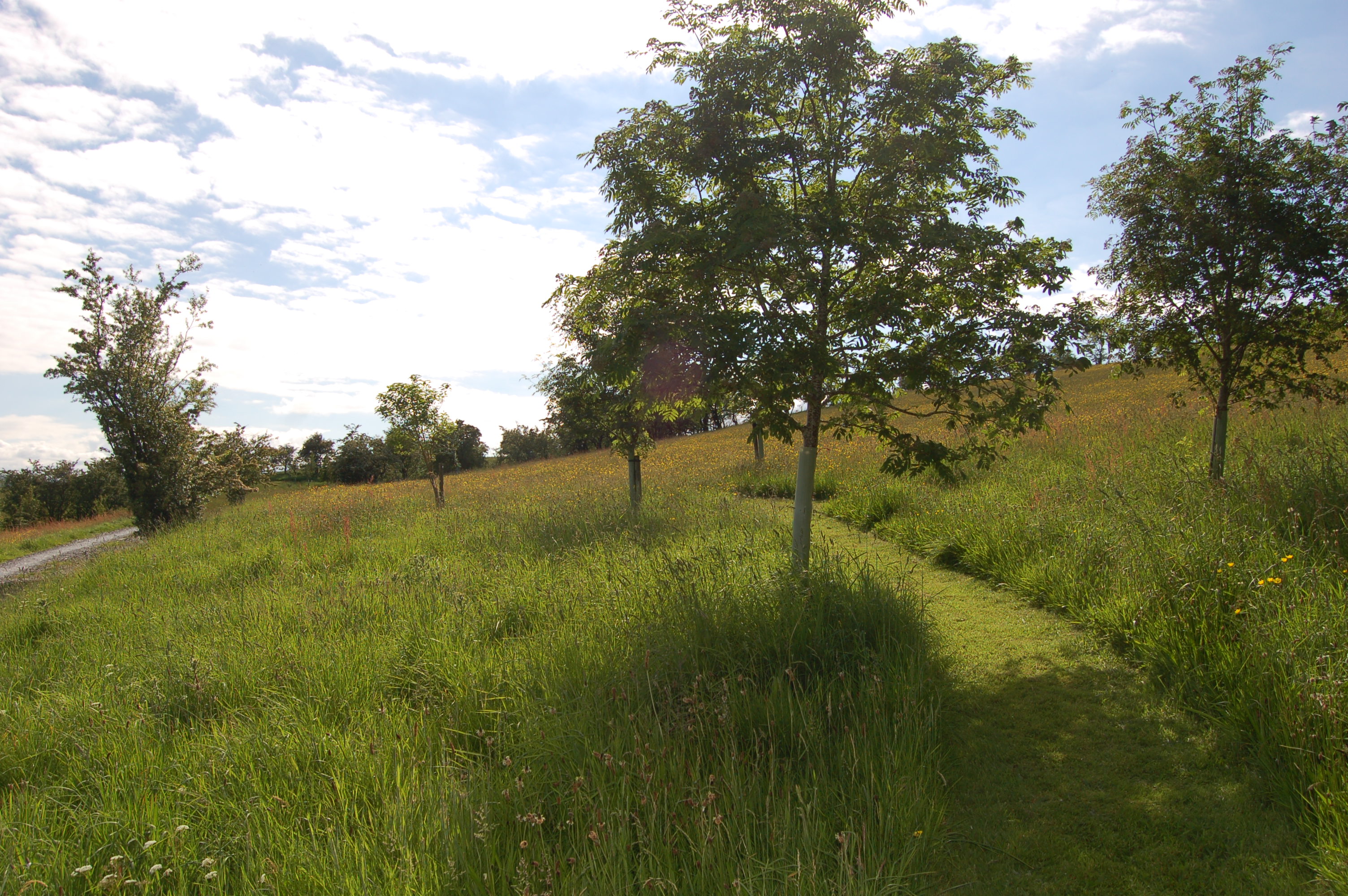
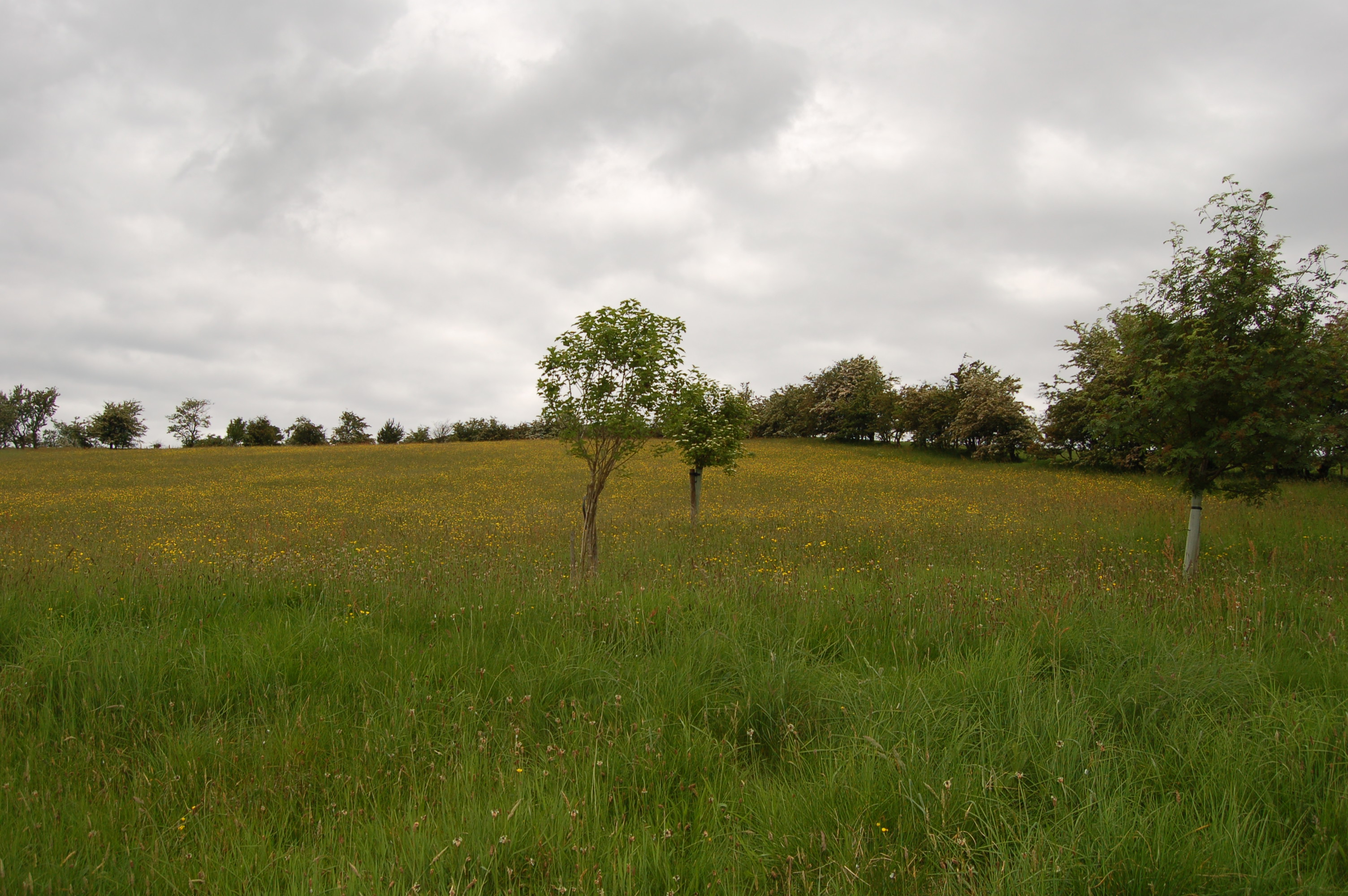
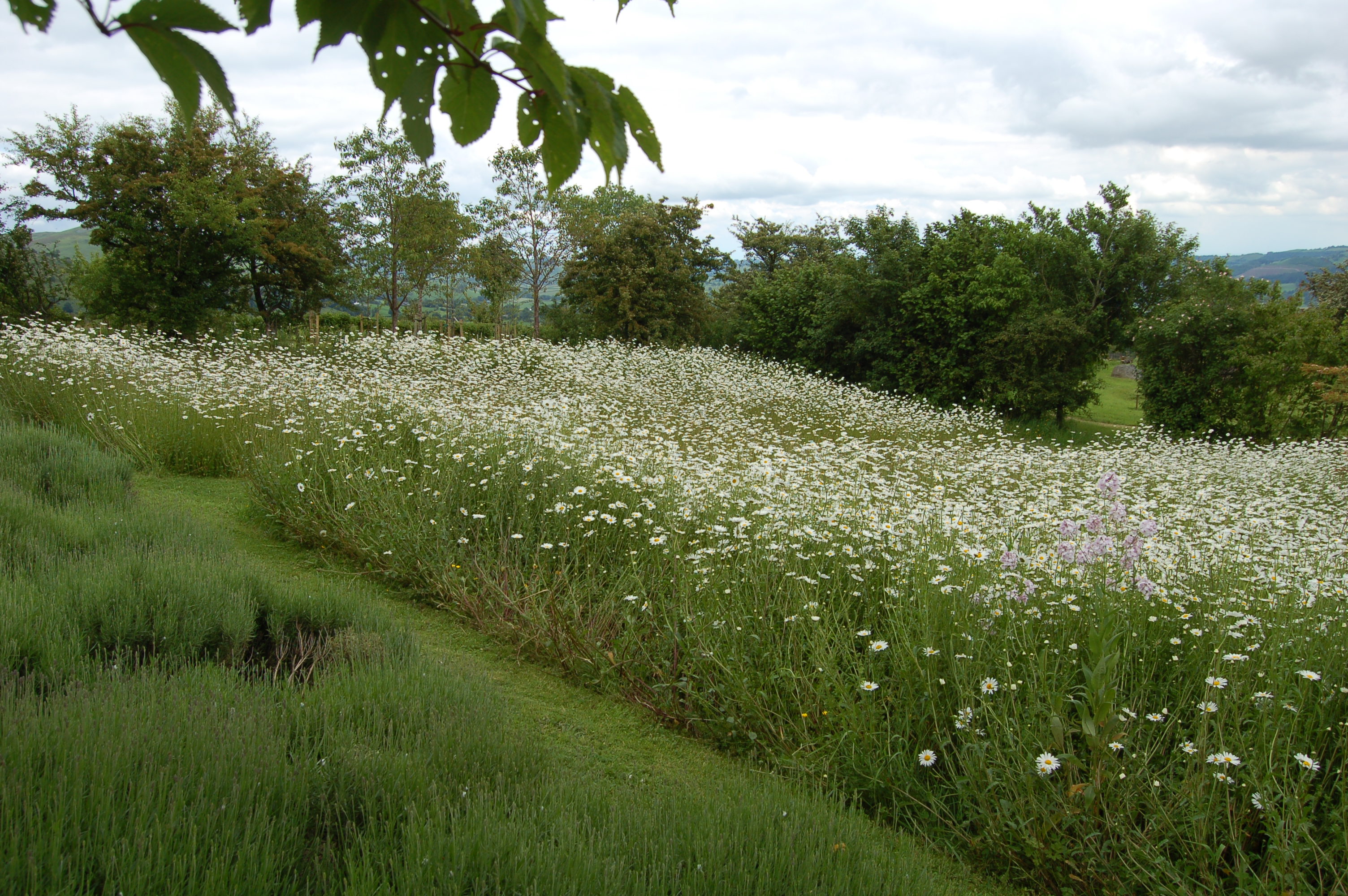
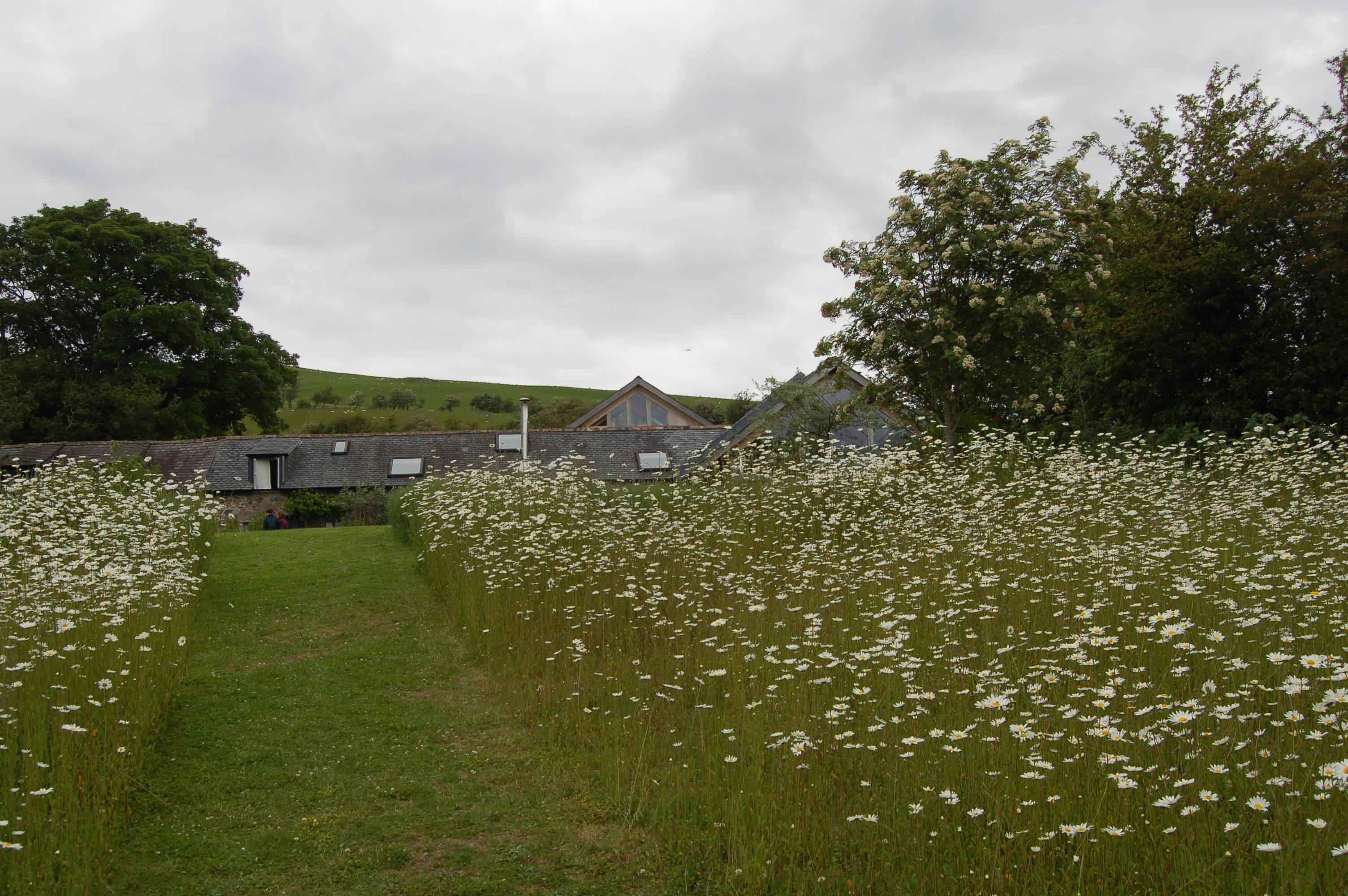
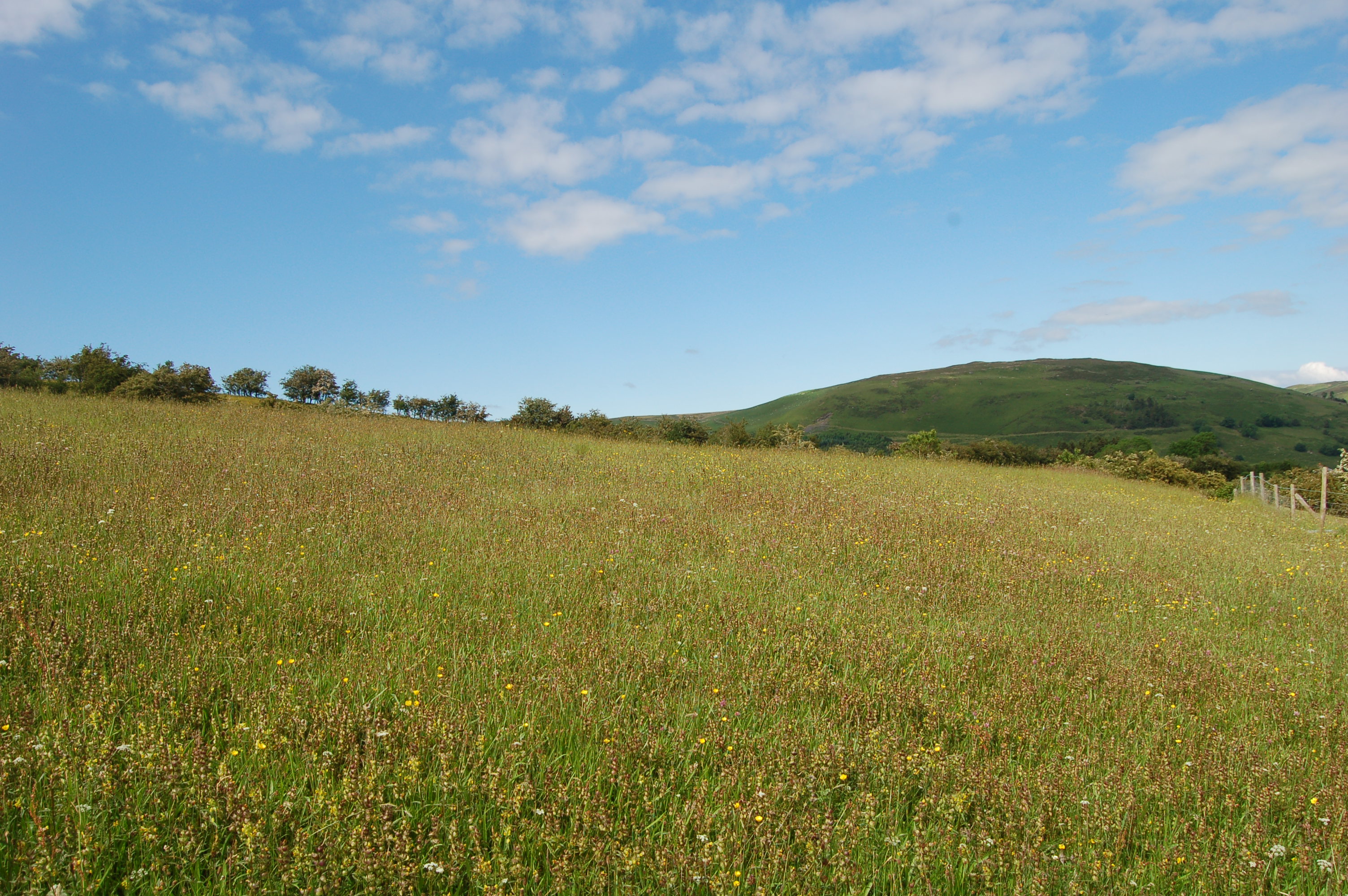
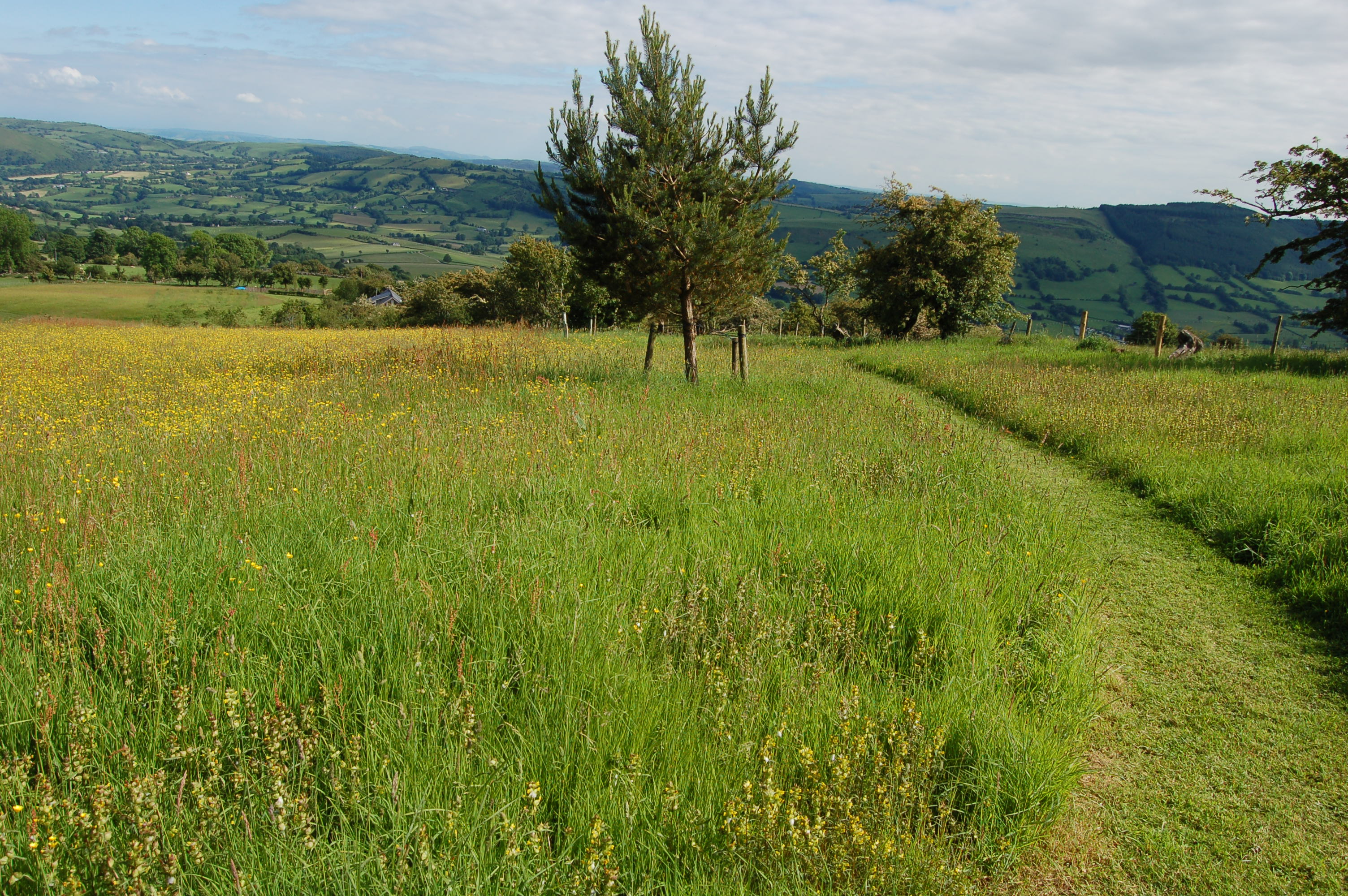
After a steep knee-aching walk across fields we realised we were getting close as the close cropped sheep pastures were replaced by recently planted flower meadows with neatly cut gently winding paths.

2014 06 14_0295 2014 06 14_0294 2014 06 14_0225 2014 06 14_0226

After walking the meadow edges we glimpsed the house ahead of us. From this distance it already looked tantalising.

2014 06 14_0227 2014 06 14_0228

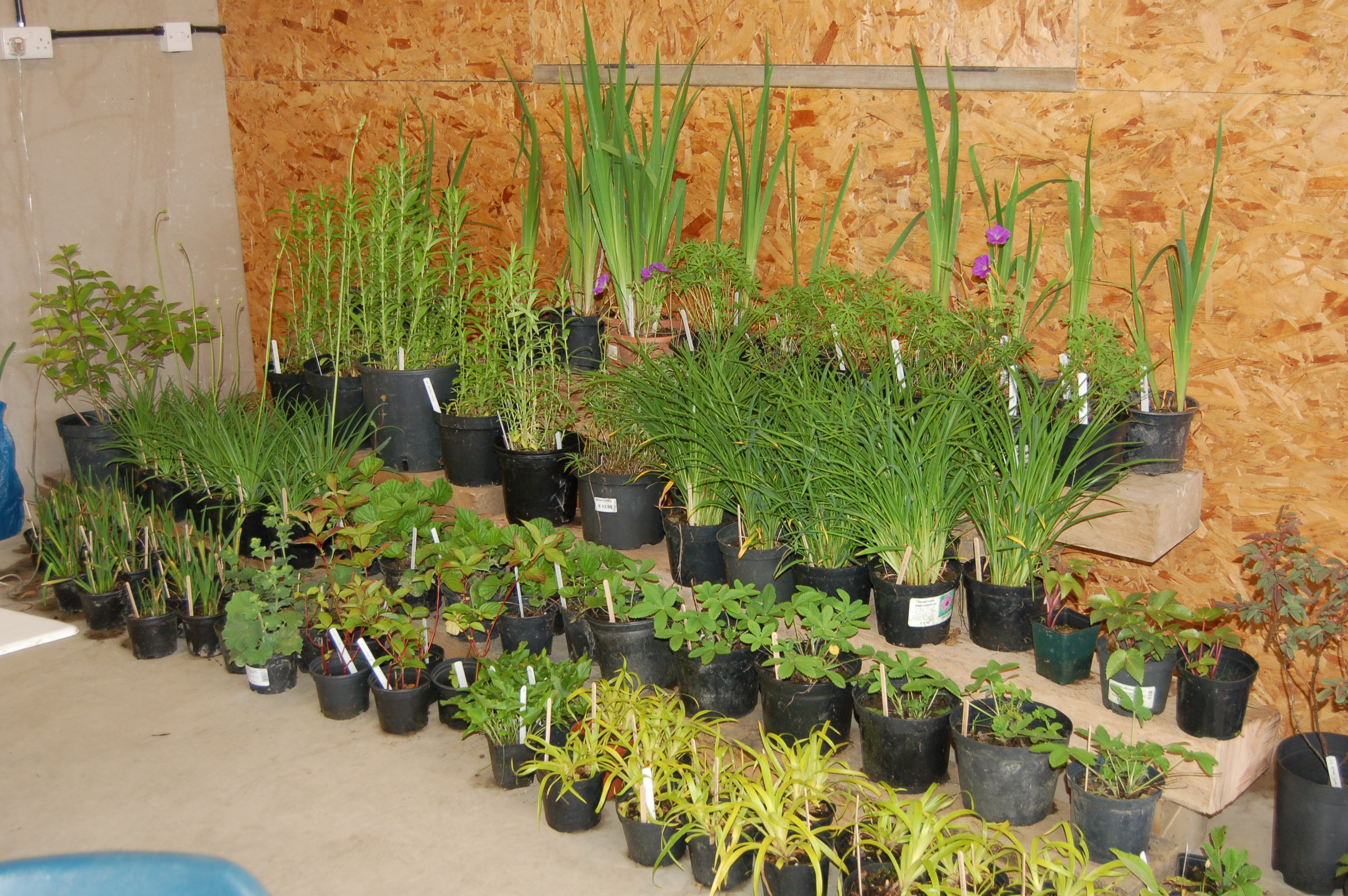
We found it to be a modernised and extended Welsh longhouse with its garden wrapped around it and just as well designed. Coffee and cake were enjoyed in an out building where plants from the garden were for sale. Only a few different plants but very well grown.

2014 06 14_0229 2014 06 14_0231 2014 06 14_0230

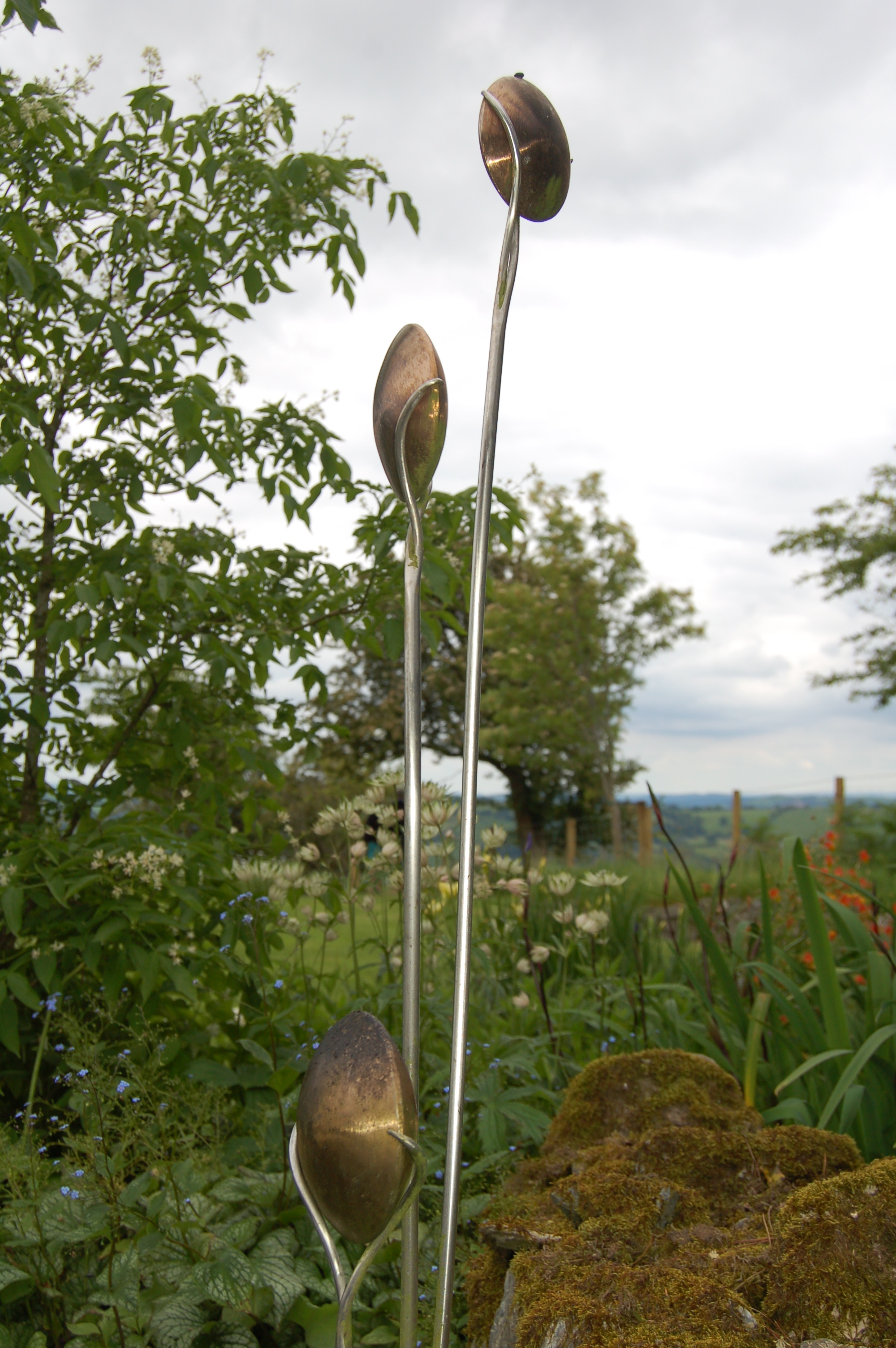
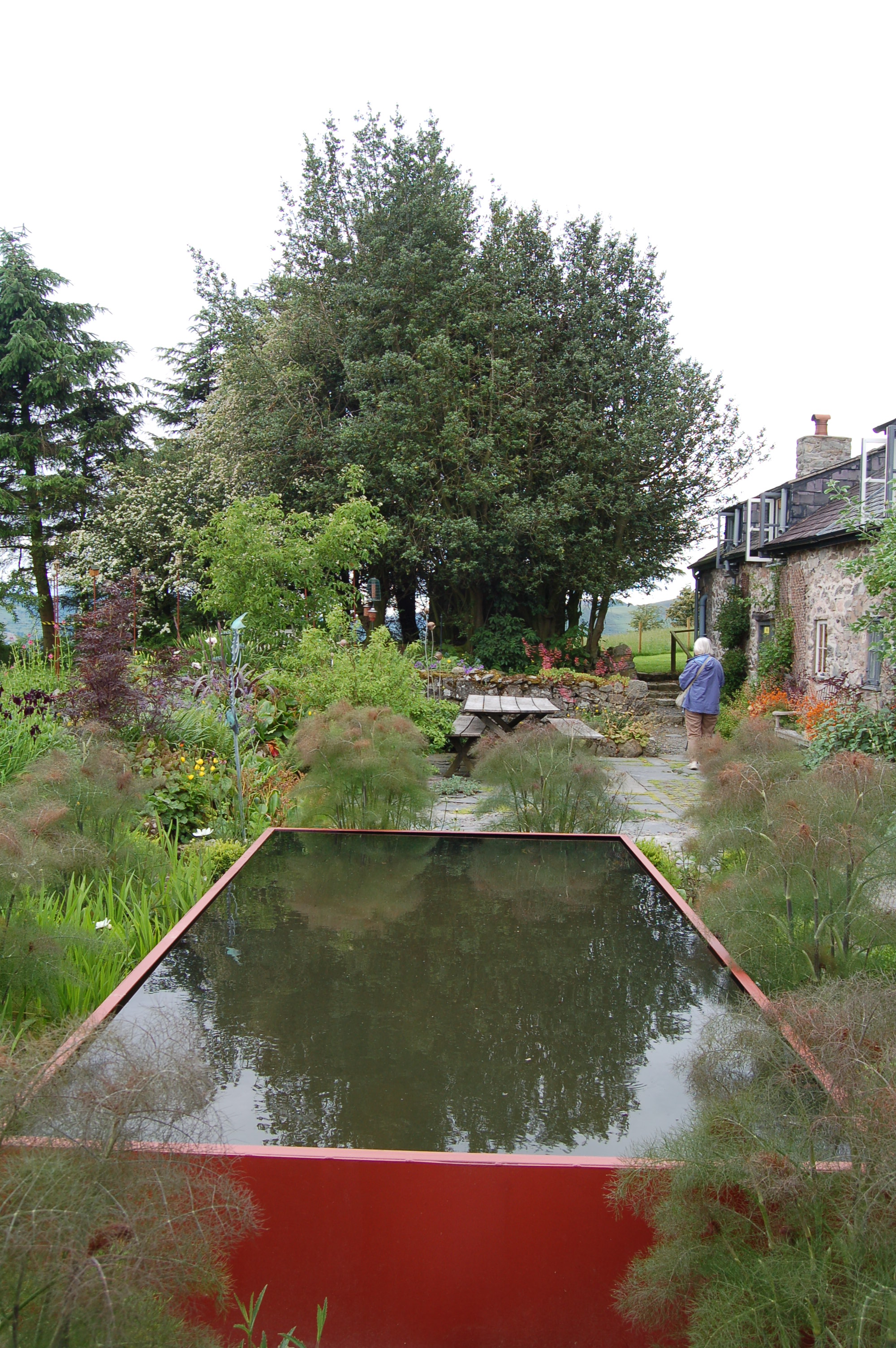
As we started to explore the garden it immediately became obvious that an artist was at work here. The planting with carefully selected combinations of texture and colour and scattered artifacts had the feel and look of the artist’s hand and eye at work.

2014 06 14_0235 2014 06 14_0236 2014 06 14_0237 2014 06 14_0238 2014 06 14_0239

2014 06 14_0240 2014 06 14_0241 2014 06 14_0242 2014 06 14_0243 2014 06 14_0244 2014 06 14_0245 2014 06 14_0246 2014 06 14_0247 2014 06 14_0248 2014 06 14_0249


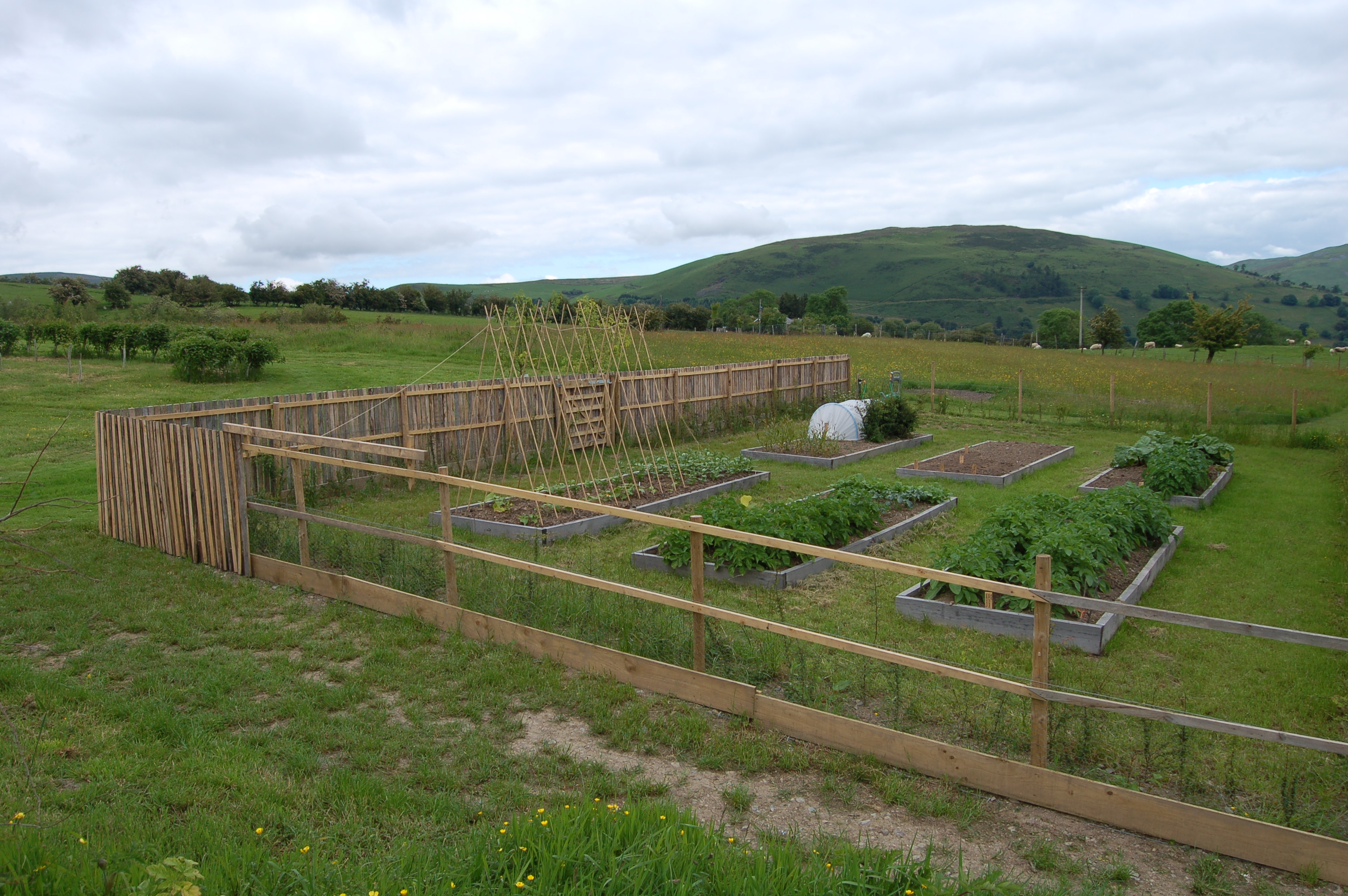
Moving further from the house, closely mown paths enticed us through meadows of white daisies to a curving bench of slate encircling a fire pit and on further to a small but neat productive patch.

2014 06 14_0250 2014 06 14_0251 2014 06 14_0252 2014 06 14_0253 2014 06 14_0254 2014 06 14_0256 2014 06 14_0257 2014 06 14_0258

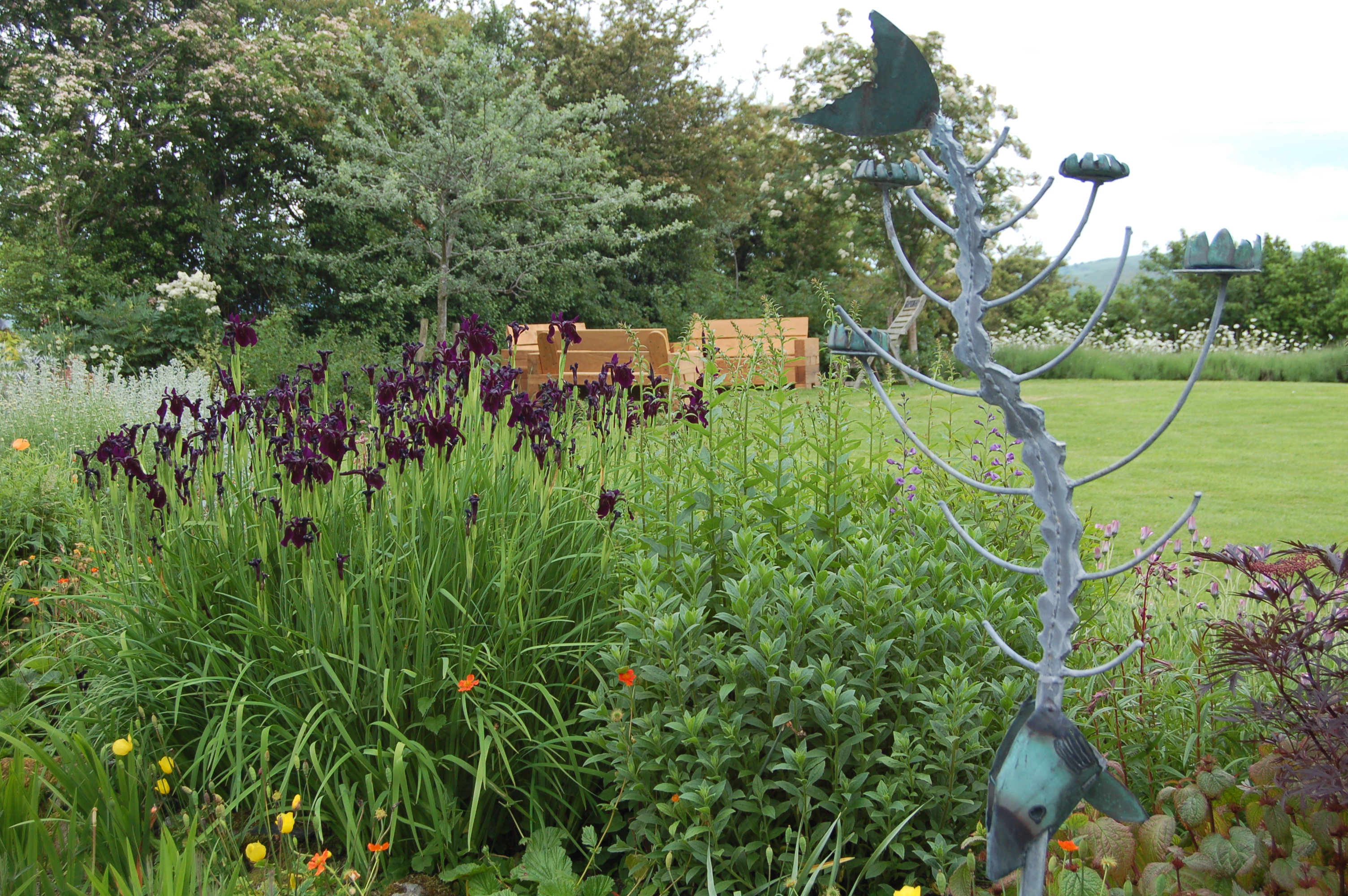
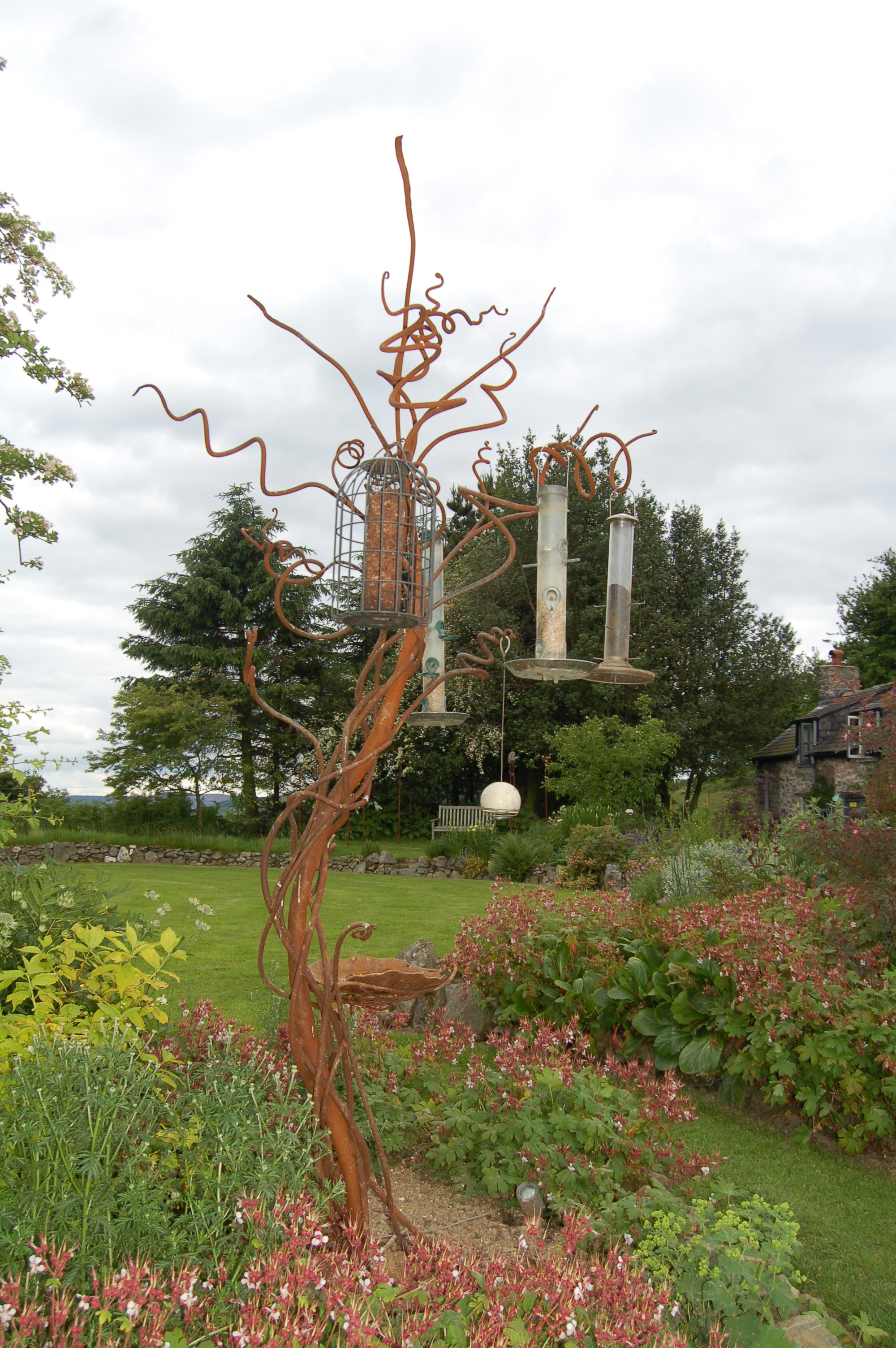
Moving back around winding paths towards a pool in the lower part of the garden we found more borders and this metal sculptural bird feeding station. Beyond every border were distant views of hillsides.

2014 06 14_0259 2014 06 14_0260 2014 06 14_0261 2014 06 14_0262 2014 06 14_0263 2014 06 14_0264

2014 06 14_0265 2014 06 14_0266

2014 06 14_0232 2014 06 14_0233

2014 06 14_0234

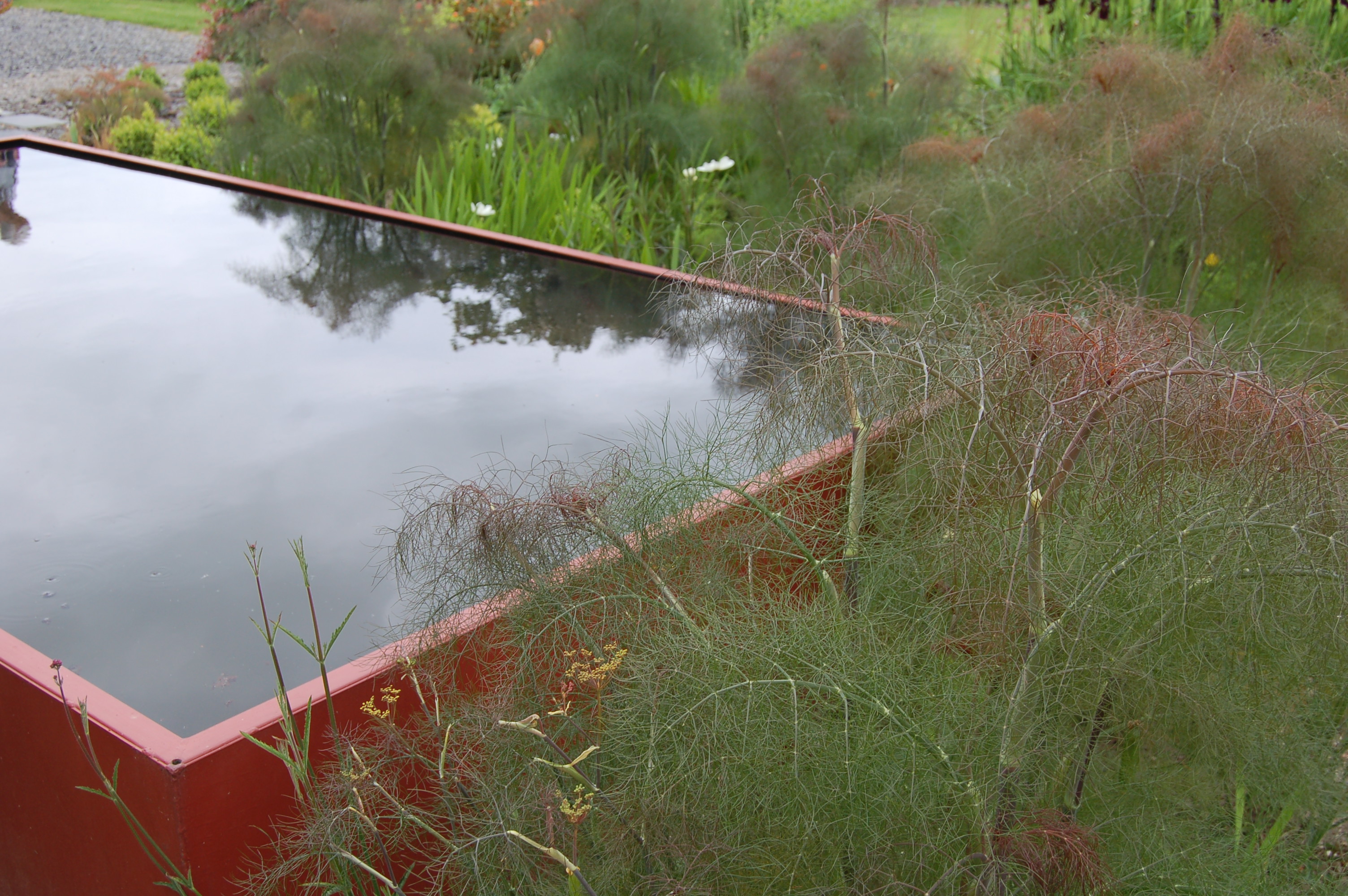
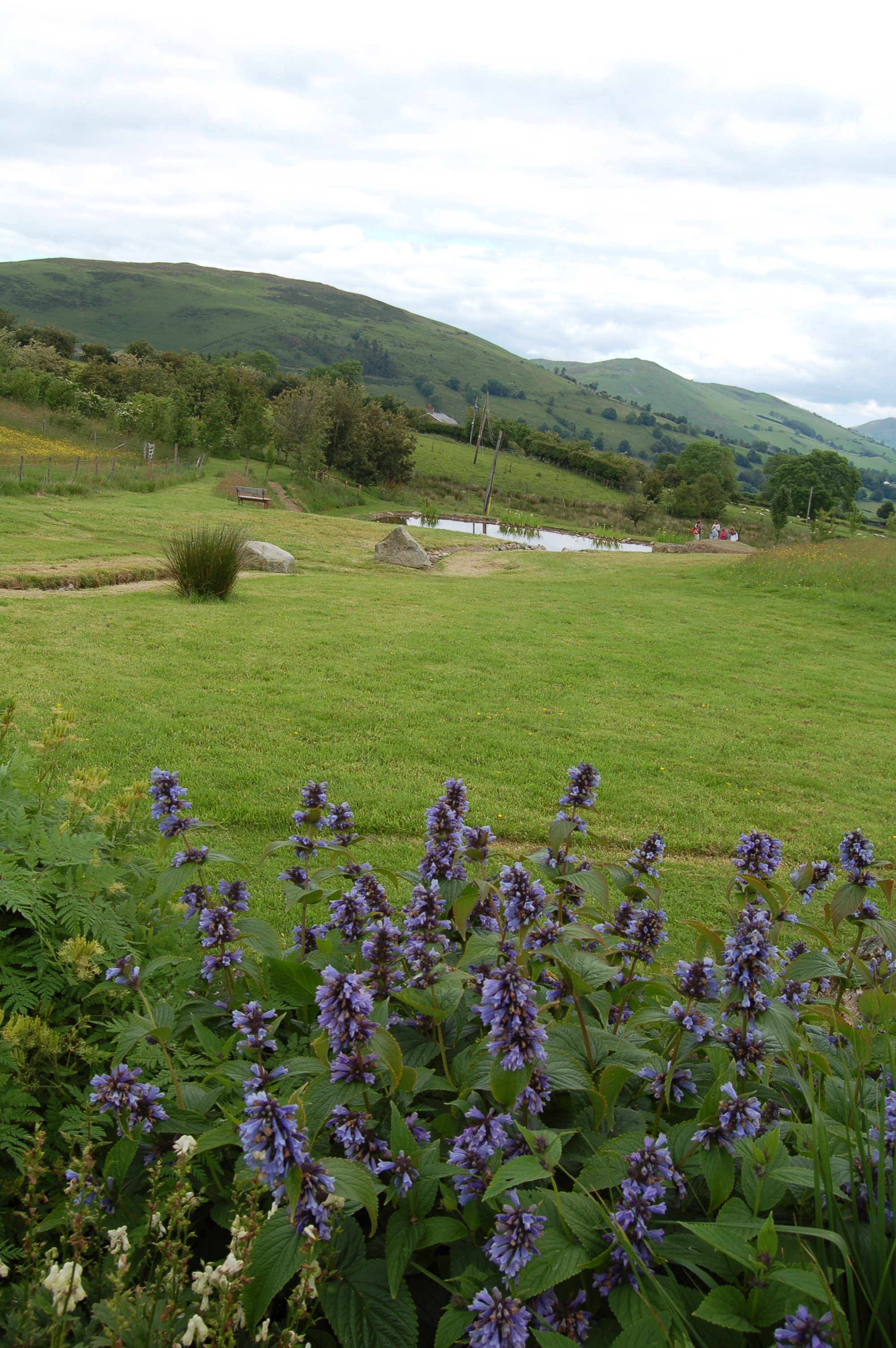
The pool and the stream garden running into it was a new venture and still in the early stages of development. We could see such possibility and vowed to return to see developments.

2014 06 14_0267 2014 06 14_0268

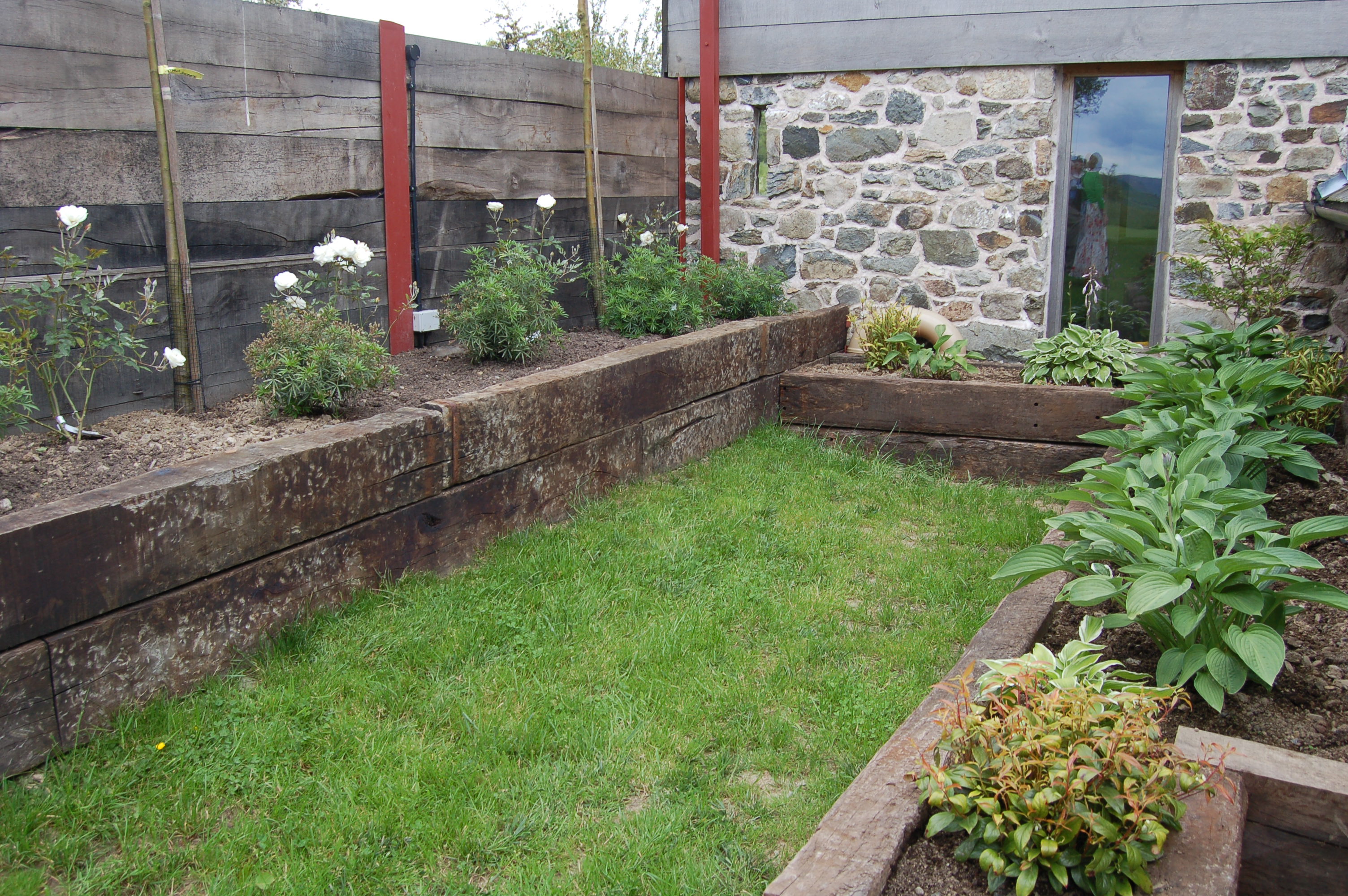
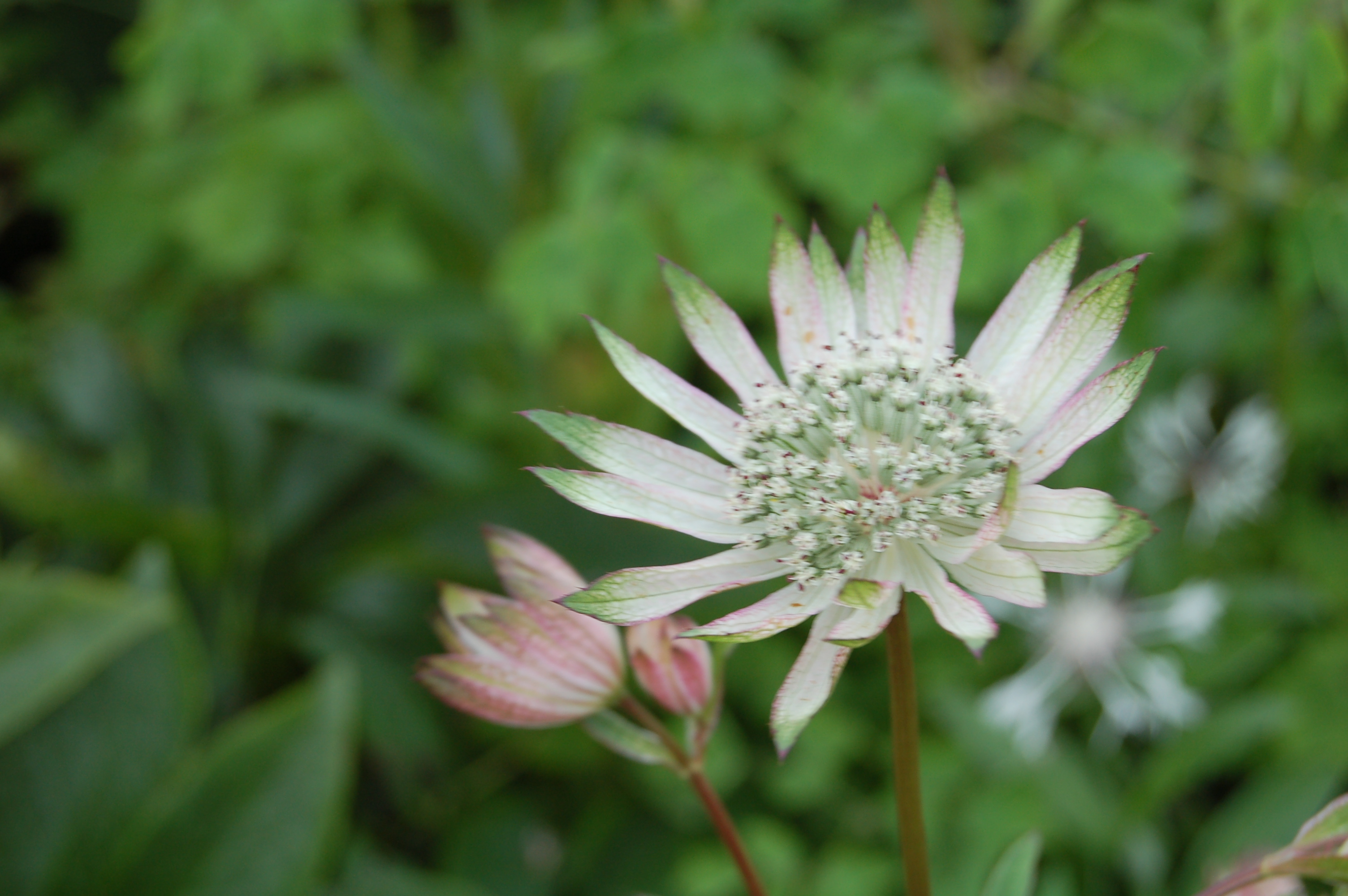
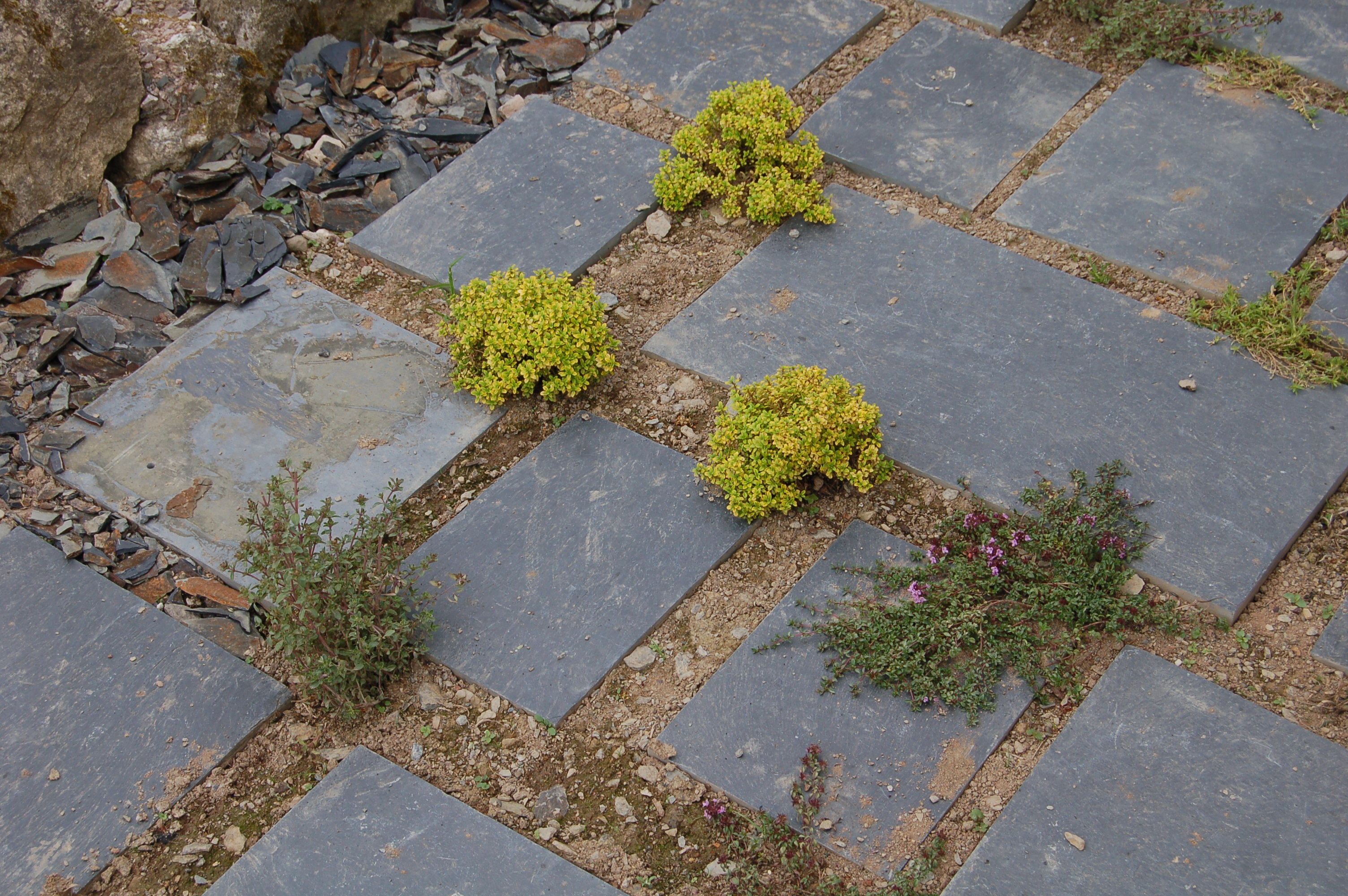
Slate paths through raised beds let us discover further interesting plant combinations. We were impressed in particular by the different Astrantias.

2014 06 14_0271 2014 06 14_0272 2014 06 14_0273 2014 06 14_0274

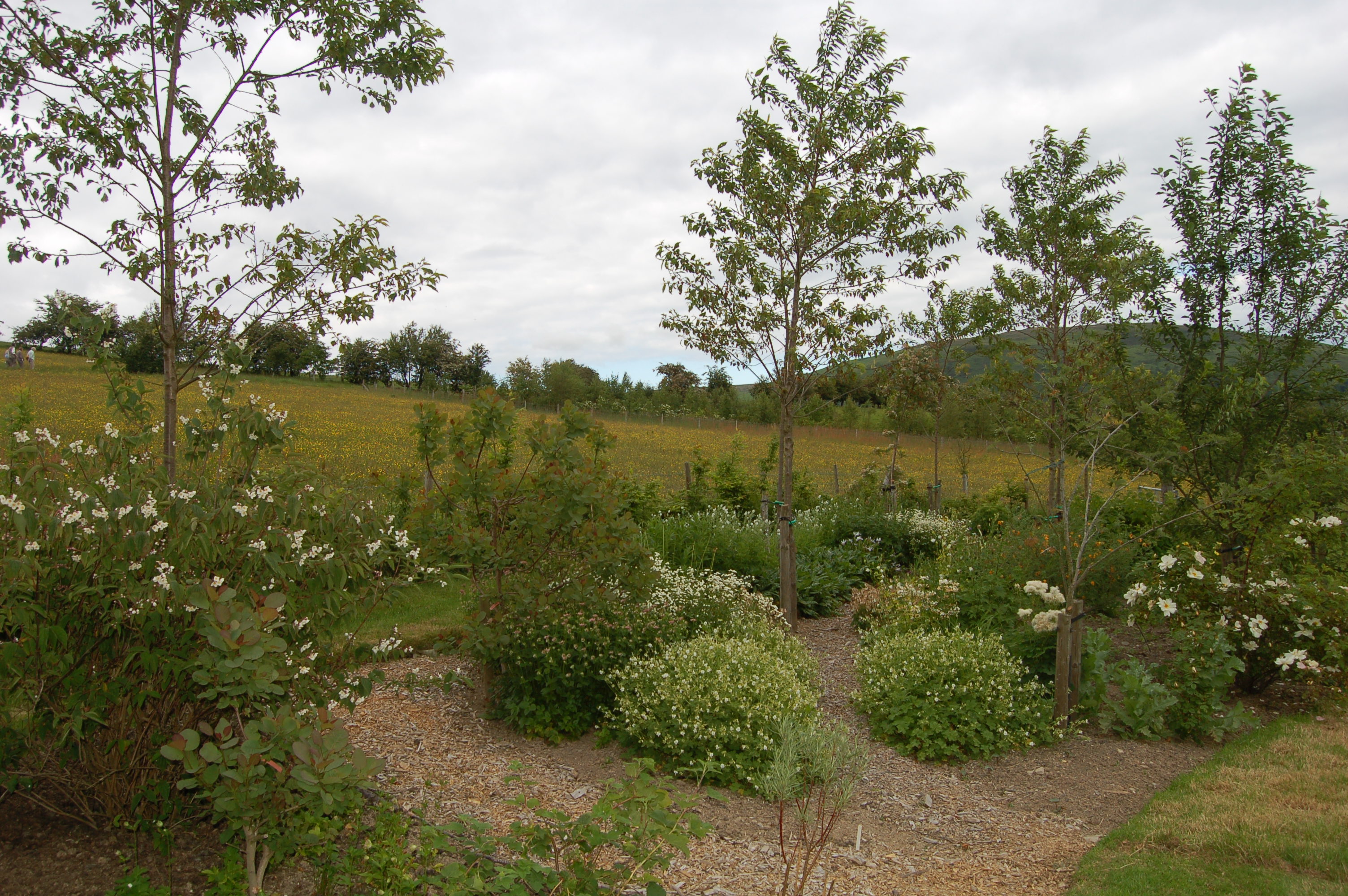
Gardens wrapped around the complex perimeter of the buildings and here more gentle plantings helped root the new building extensions into the land.

2014 06 14_0275 2014 06 14_0276 2014 06 14_0277 2014 06 14_0278 2014 06 14_0279 2014 06 14_0280

As we left the garden behind and anticipated the beauty of the meadows we noticed a green roof under which we must have been seated while enjoying our coffee and cakes. Wandering the close cut grass paths through the meadows was a very gentle way to finish off our visit to this developing garden. We looked forward to returning in the future.

2014 06 14_0281 2014 06 14_0283 2014 06 14_0284 2014 06 14_0285 2014 06 14_0286 2014 06 14_0288 2014 06 14_0289 2014 06 14_0290 2014 06 14_0291 2014 06 14_0292 2014 06 14_0293 2014 06 14_0295


Categories
architecture birds gardens gardens open to the public grasses hardy perennials lakes landscapes meadows National Trust ornamental trees and shrubs outdoor sculpture renovation shrubs The National Trust trees water in the garden

A Walk in the Park – Croome

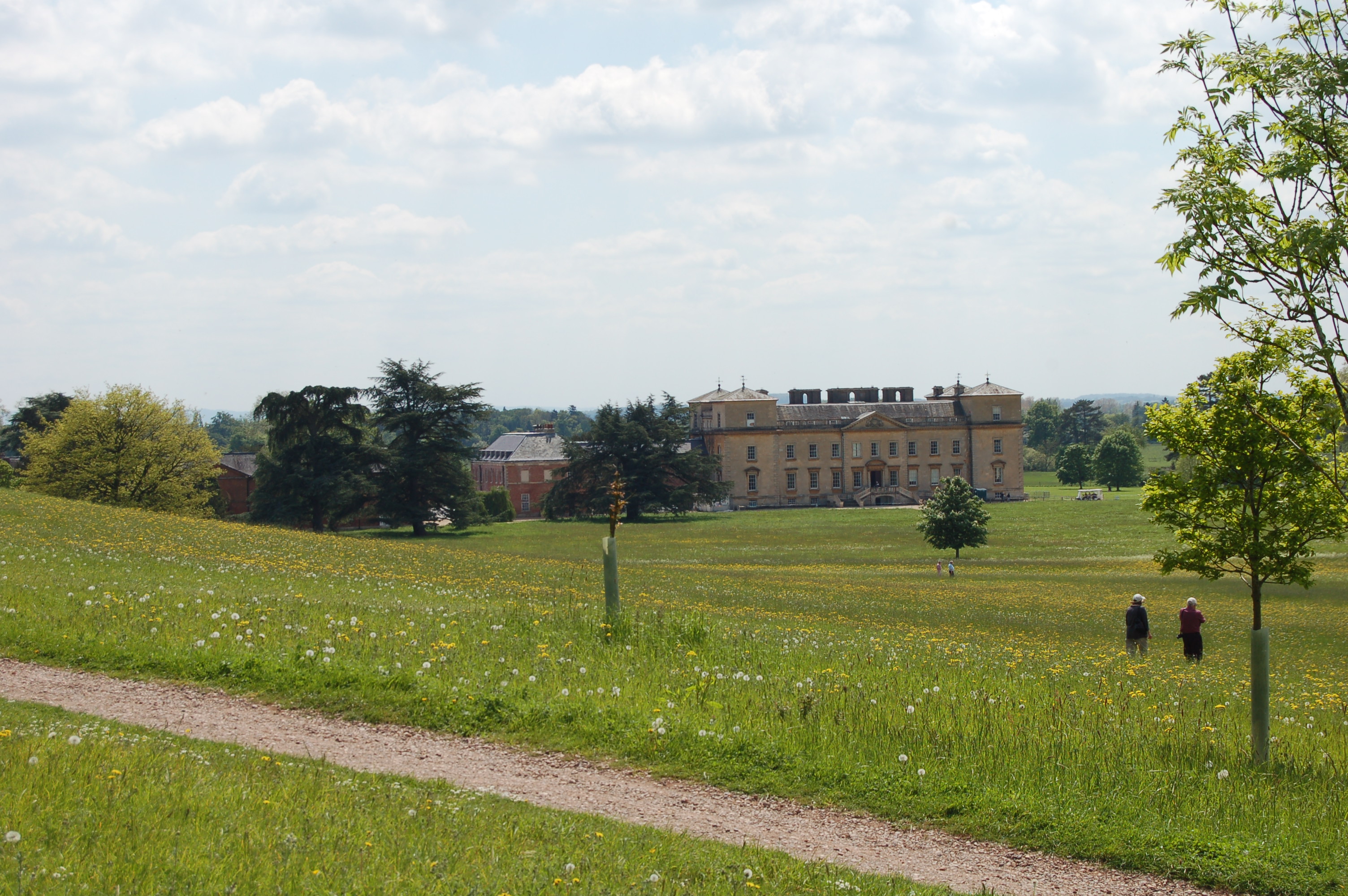
A a rare warm day in May we met my sister, Penny and husband Tony, for a walk in the park near their home. But this is no ordinary park – it was Croome a National Trust property near the village of Pershore in Worcestershire. The park and house are undergoing a huge long-term restoration programme. We were pleased to get a chance to enjoy it part way through its rebirth.

2014 05 16_9307 2014 05 16_9308

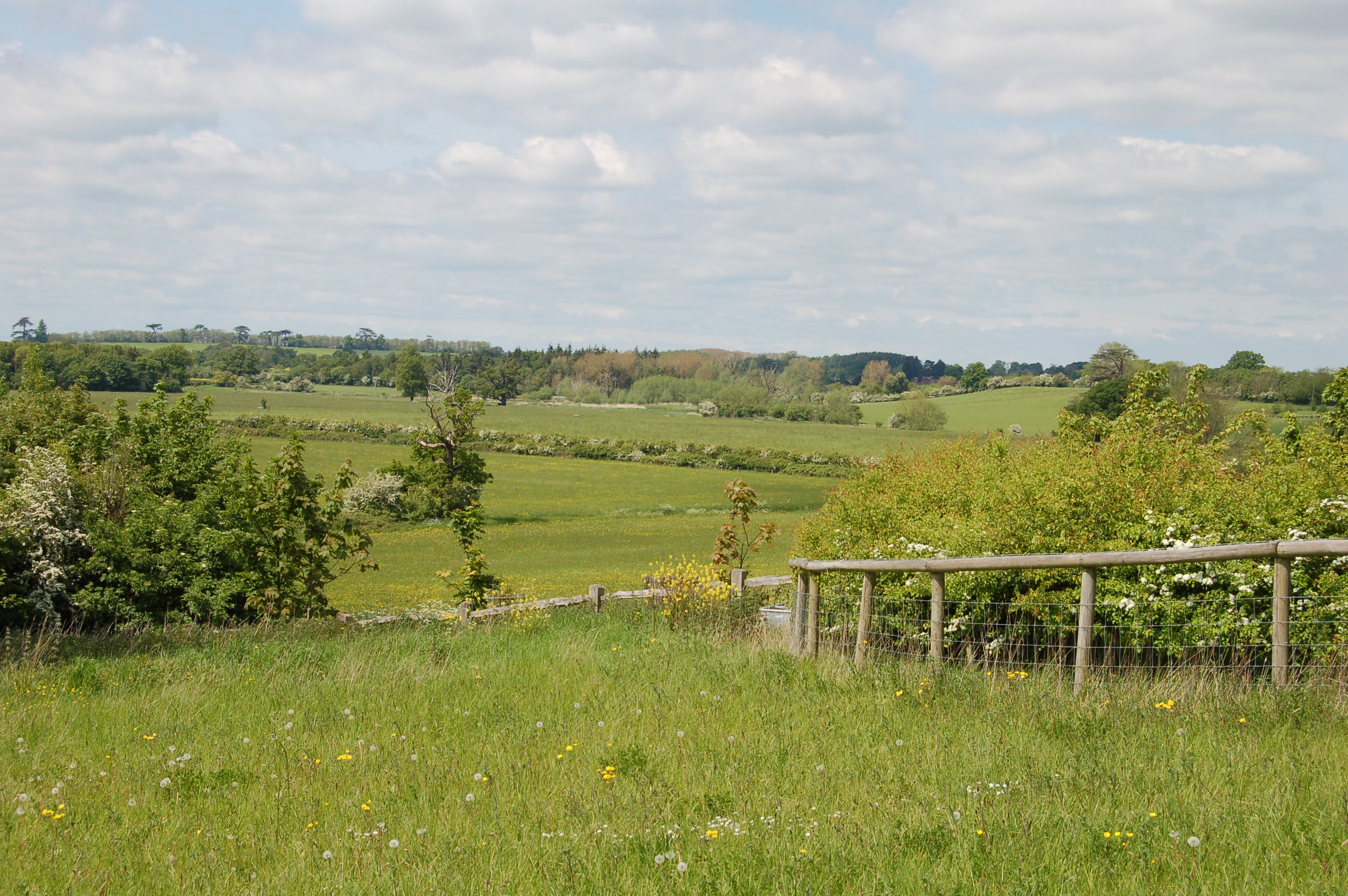
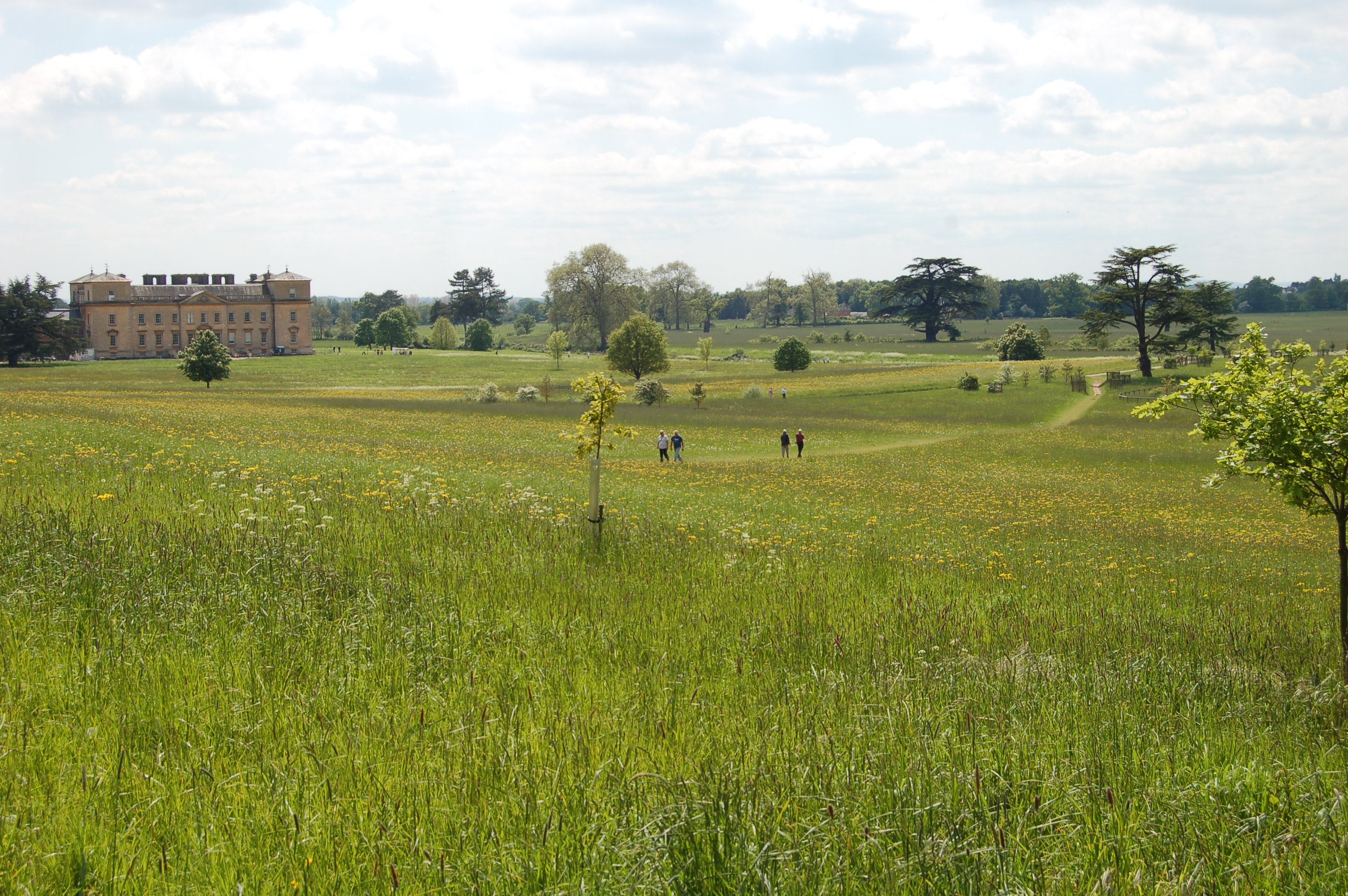
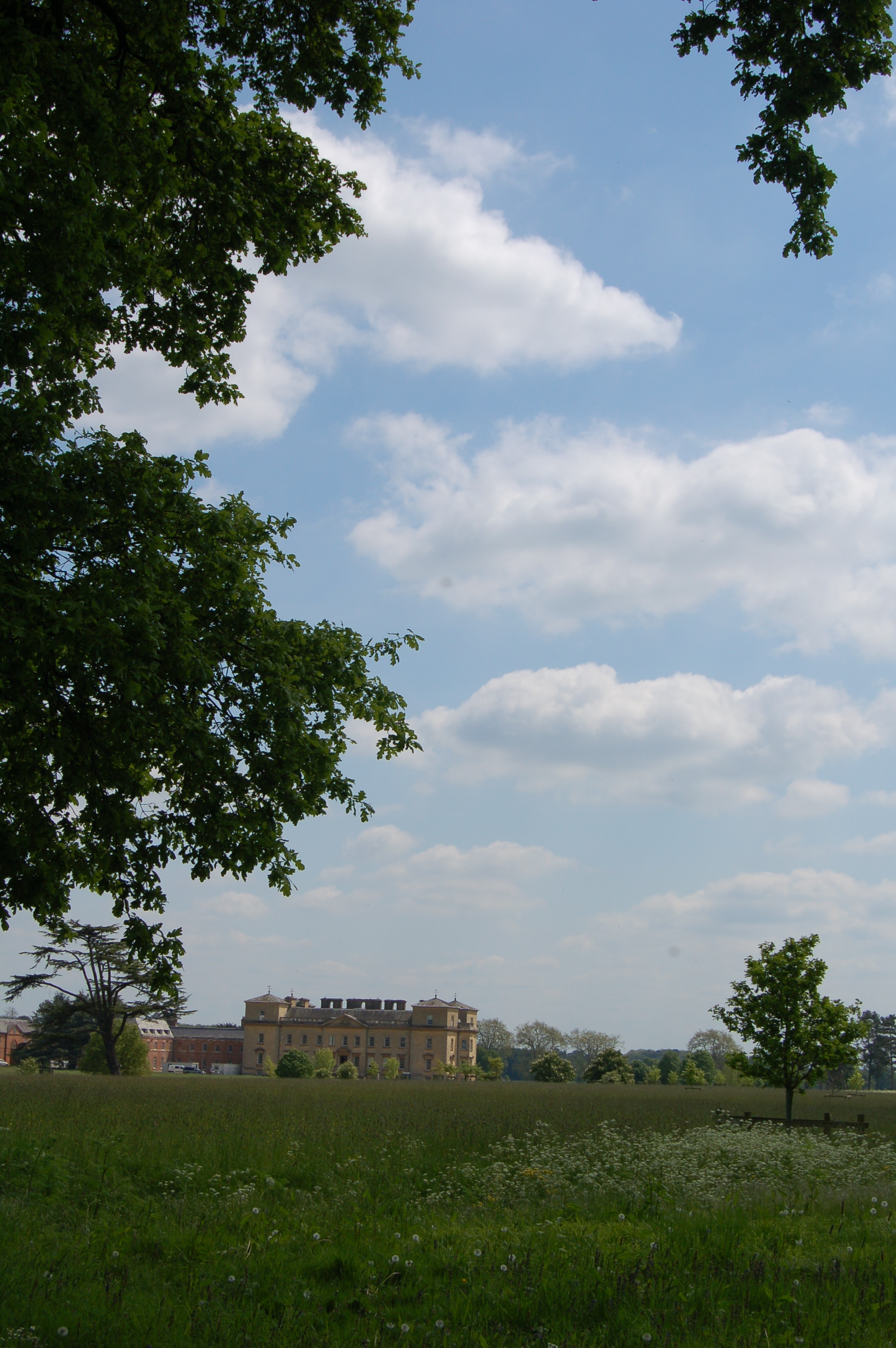
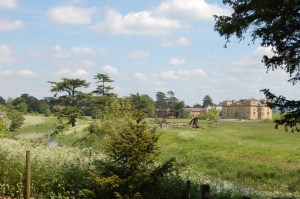
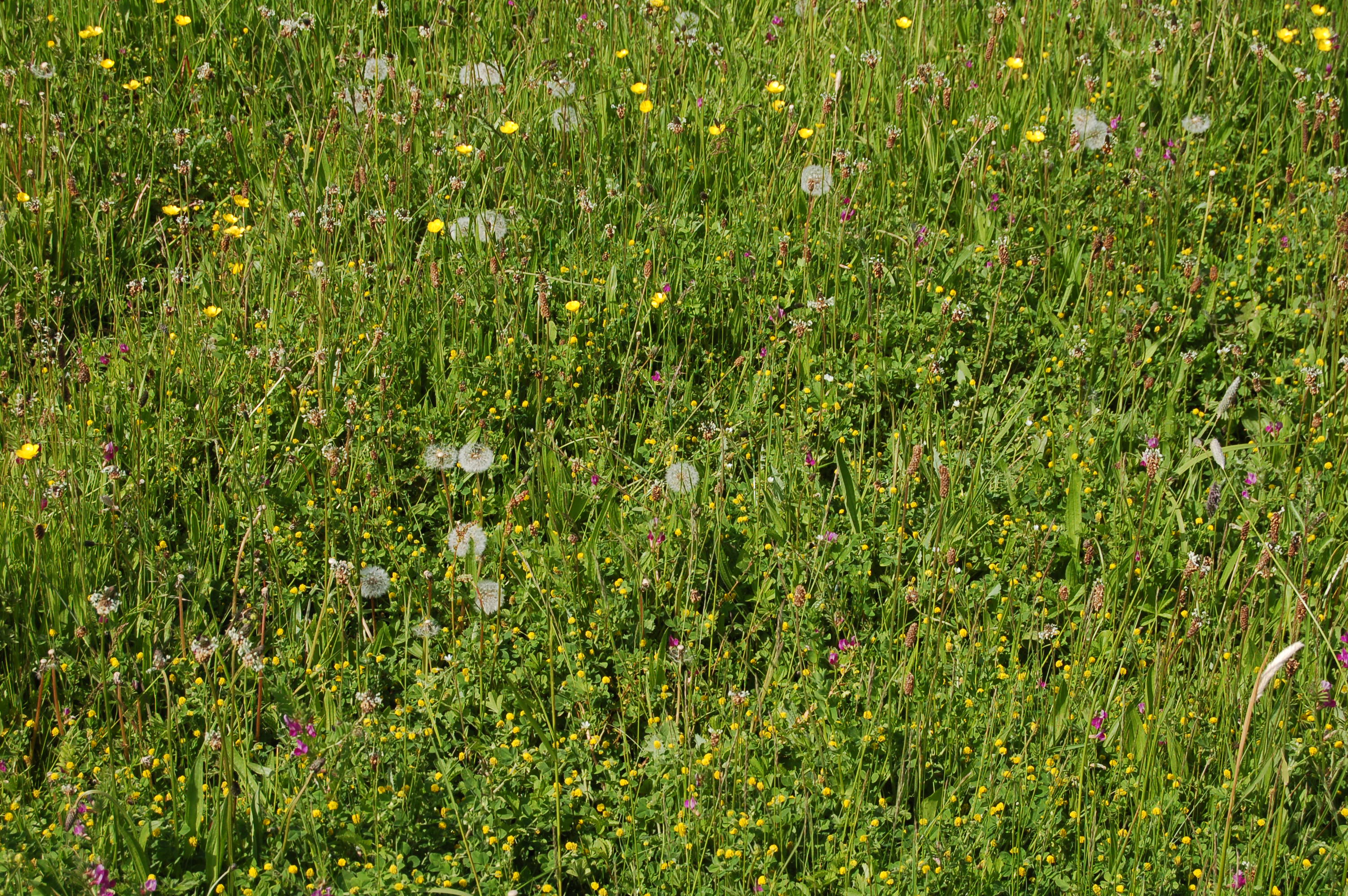
The parkland was originally designed by Capability Brown and it is beginning to come back to life after decades of neglect. Sweeping wildflower meadows were punctuated with newly planted trees. From the slightly elevated parts of the park we enjoyed distant views of the Worcestershire countryside.

2014 05 16_9309 2014 05 16_9310 2014 05 16_9311

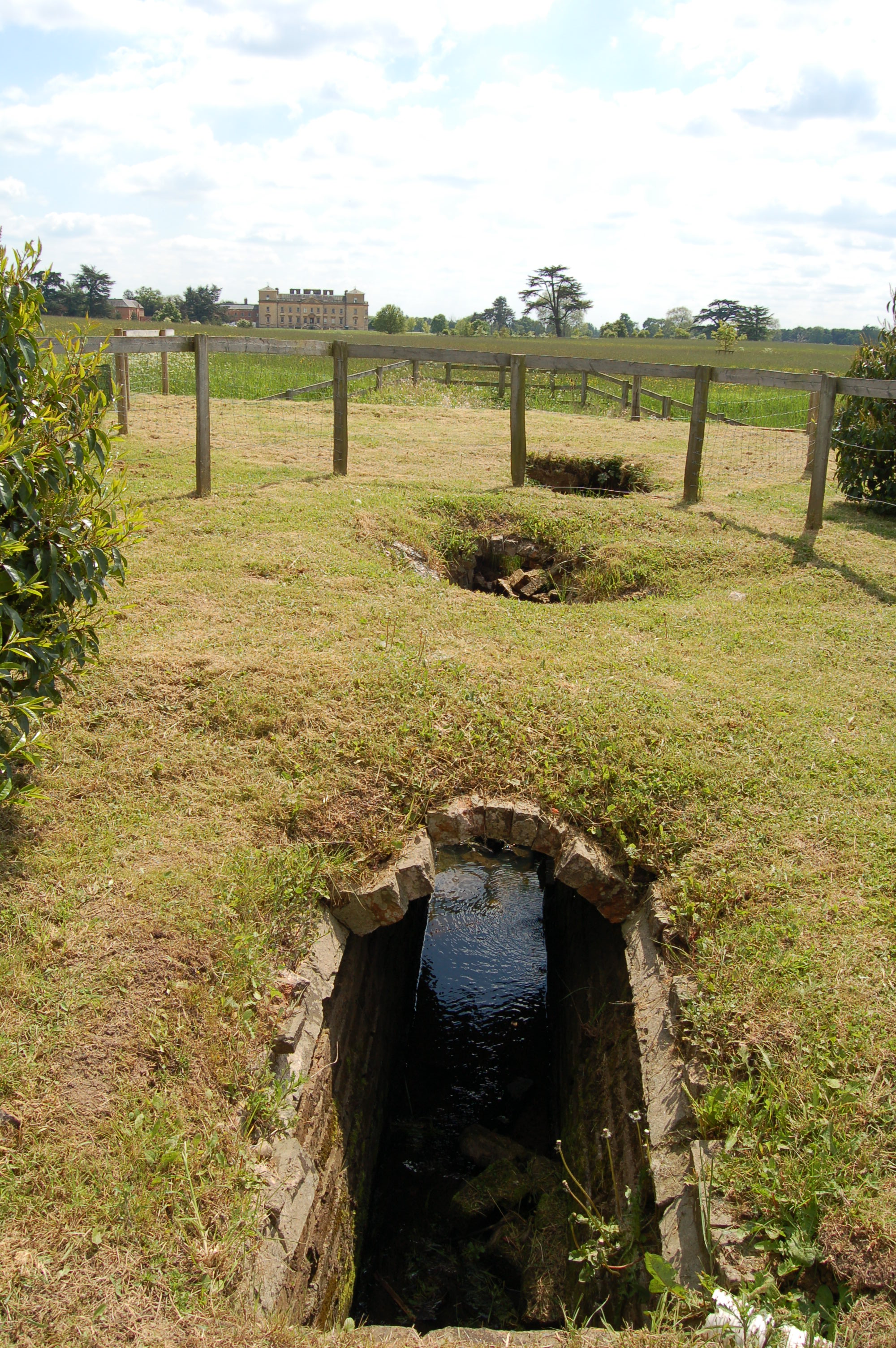
As we walked along the highest ridge in the park through newly planted shrubs and trees we were amazed to see that one section of the original underground water system had been exposed by a landslip. A glimpse into the genius of those water feature engineers. In places small areas of herbaceous planting had been established. It was refreshing to look at colour close to and in detail as the parkland here is mostly about large-scale views.

2014 05 16_9312 2014 05 16_9313 2014 05 16_9314 2014 05 16_9316

2014 05 16_9317 2014 05 16_9318

2014 05 16_9324 2014 05 16_9325

A few old specimen trees have survived and their gnarled twisted trunks were a stark contrast to the newly planted shrubs and trees. Beyond them glimpses of the house and church were revealed.

2014 05 16_9320 2014 05 16_9321 2014 05 16_9322 2014 05 16_9323  2014 05 16_9329 2014 05 16_93512014 05 16_9333 2014 05 16_9328

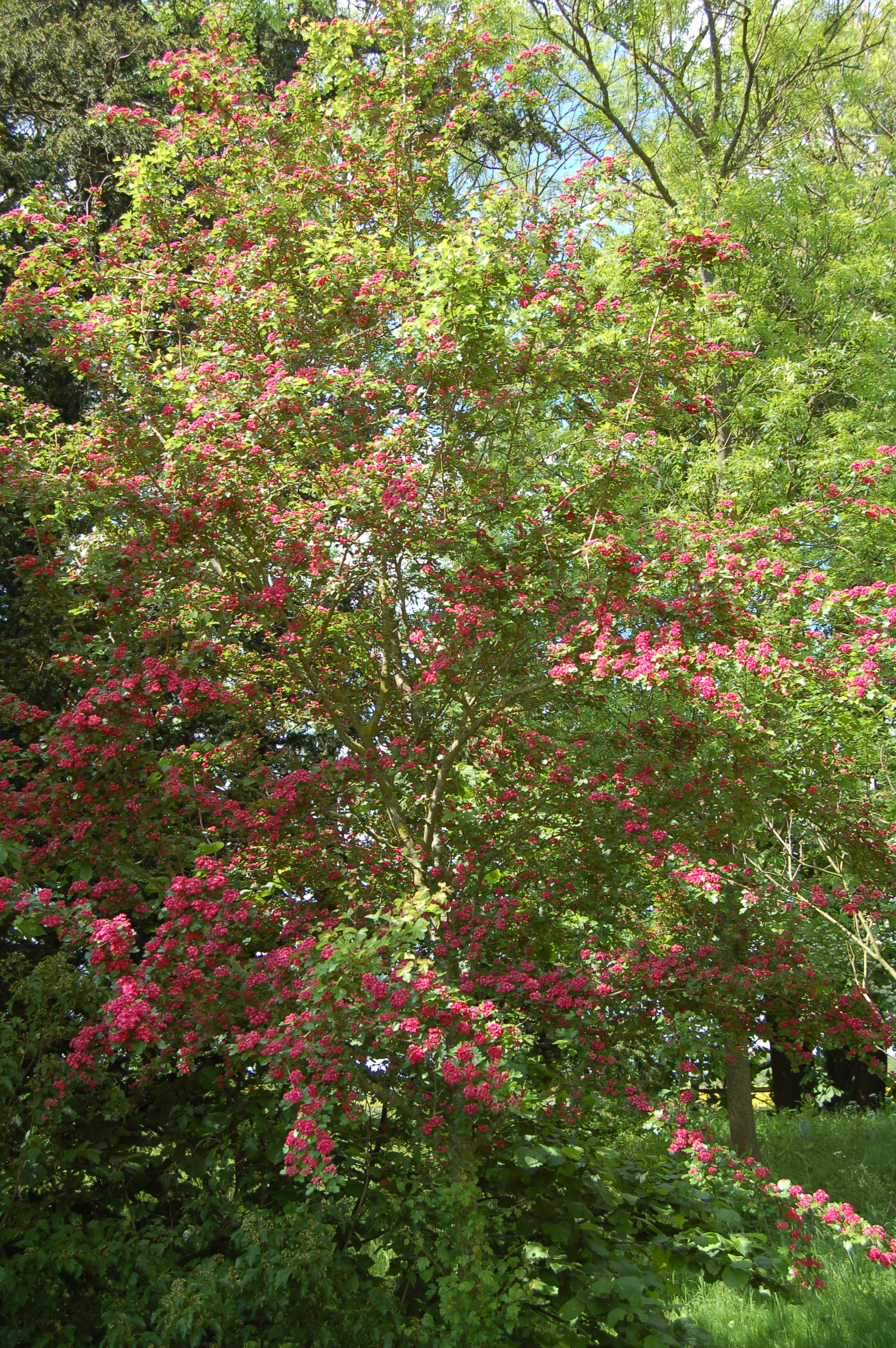
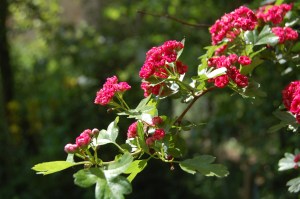
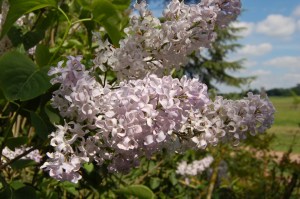
Flowering shrubs seemed particularly happy here with fine examples of sweetly scented Lilac and Hawthorn with their rather unpleasant aroma.

2014 05 16_9326  2014 05 16_9327 2014 05 16_9330 2014 05 16_9319

As we left the shrubberies we moved back out into the open passing over an old stone-built bridge over the River Croome where it had been widened out to form a lake. This was typical of the way Capability Brown manipulated the landscape. The fence on the bridge was constructed from the wood of chestnut. This wood makes unusual looking fencing which lasts for centuries without maintenance. (see another post, coming soon, concerning Chestnut trees and fences constructed from their wood)

2014 05 16_9340 2014 05 16_9341

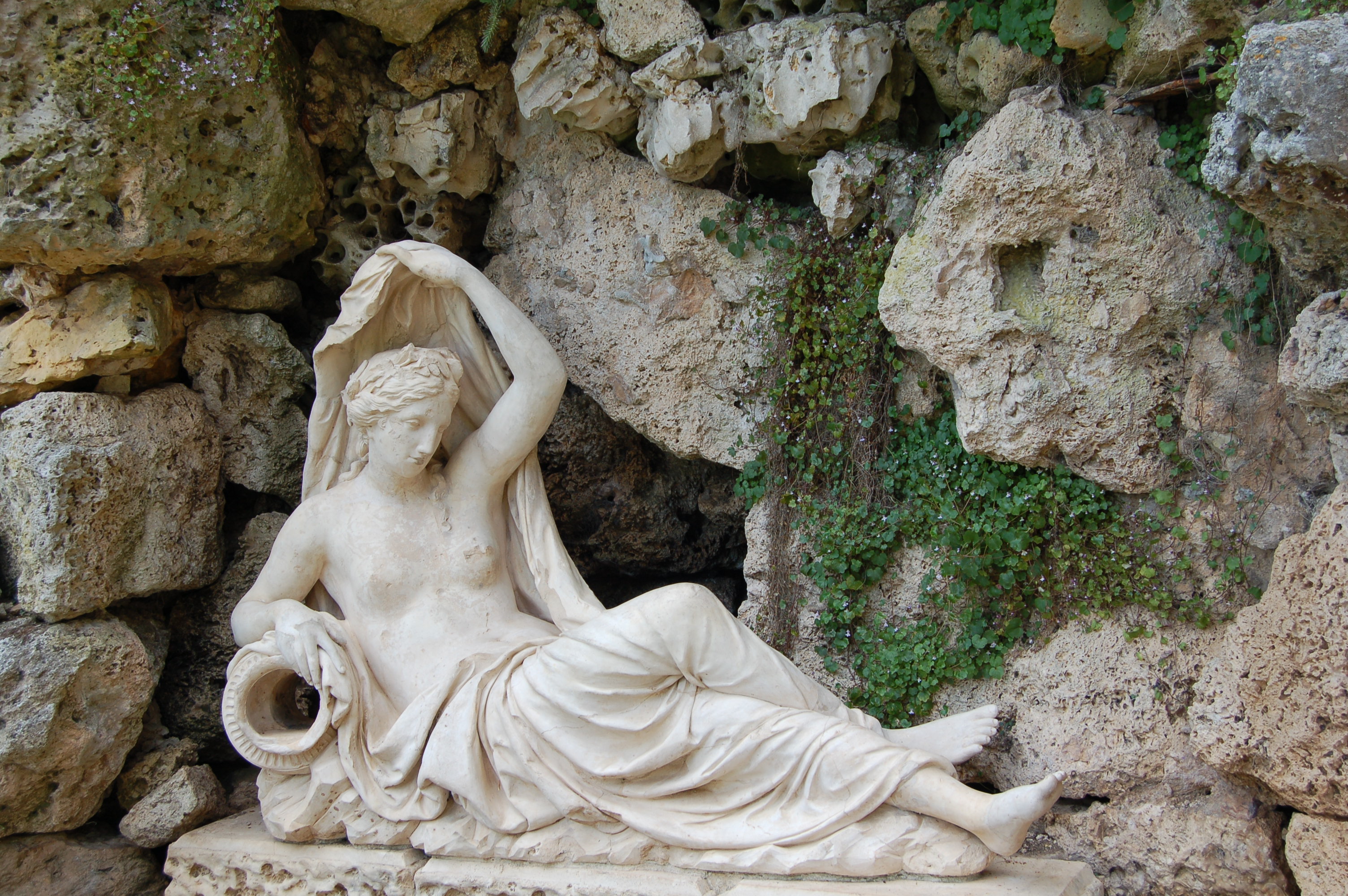
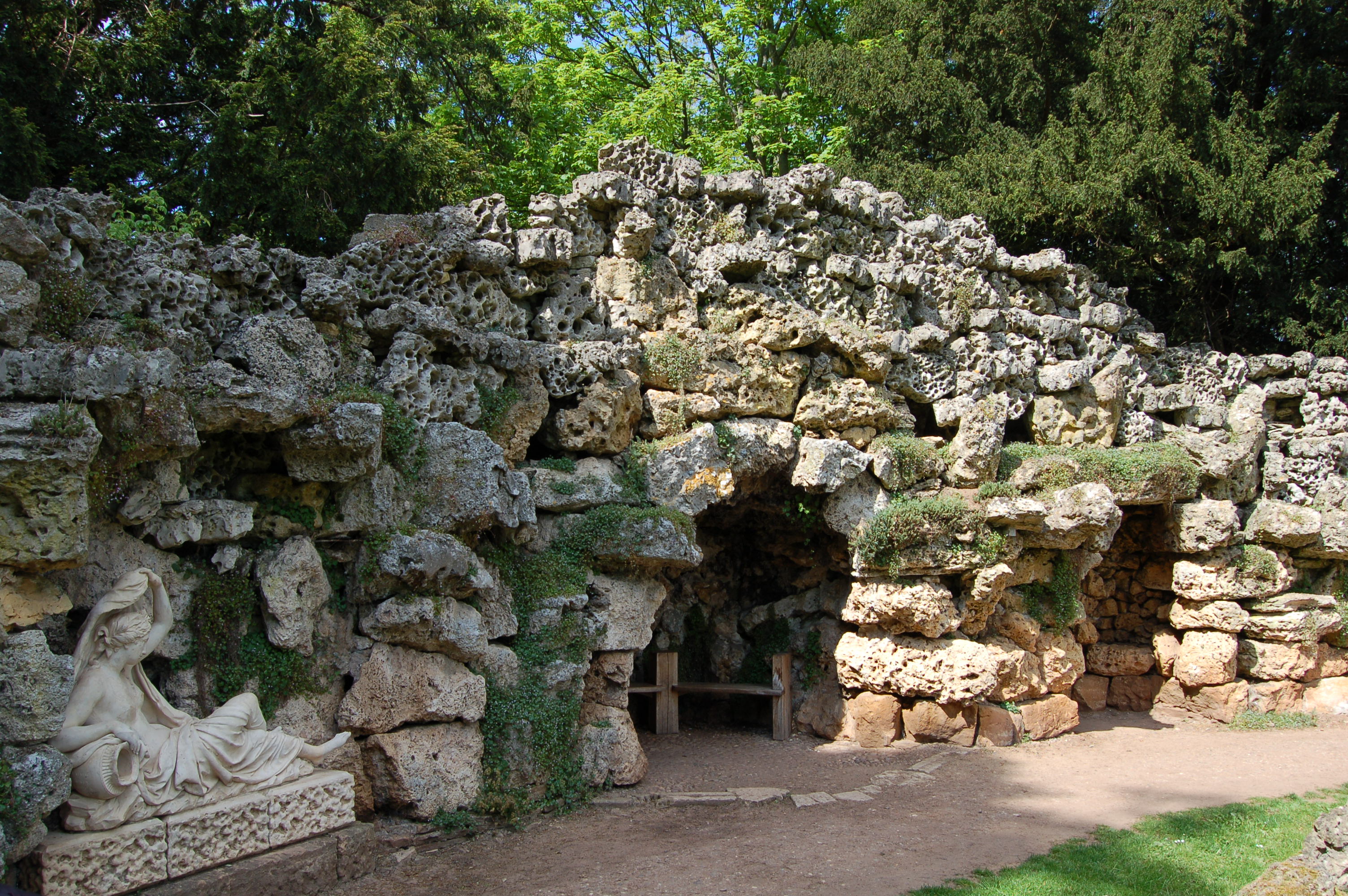
Overlooking the lake was a grotto which had been lovingly restored and on this extremely hot and humid day it provided some much appreciated shade and cool air. The fissures and cracks within it afforded the local small birds with safe, secret nesting sites. We spotted Wrens, Blue Tits and Coal Tits while we sat and rested a short while. A statue here was dedicated to Sabrina the Goddess of the River Severn. Sabrina is well known to us as our home town, Shrewsbury, huddles within a loop of the River Severn. The goddess lends her name to many a boat and building in the town.

2014 05 16_9342 2014 05 16_9343 2014 05 16_9344 2014 05 16_9345

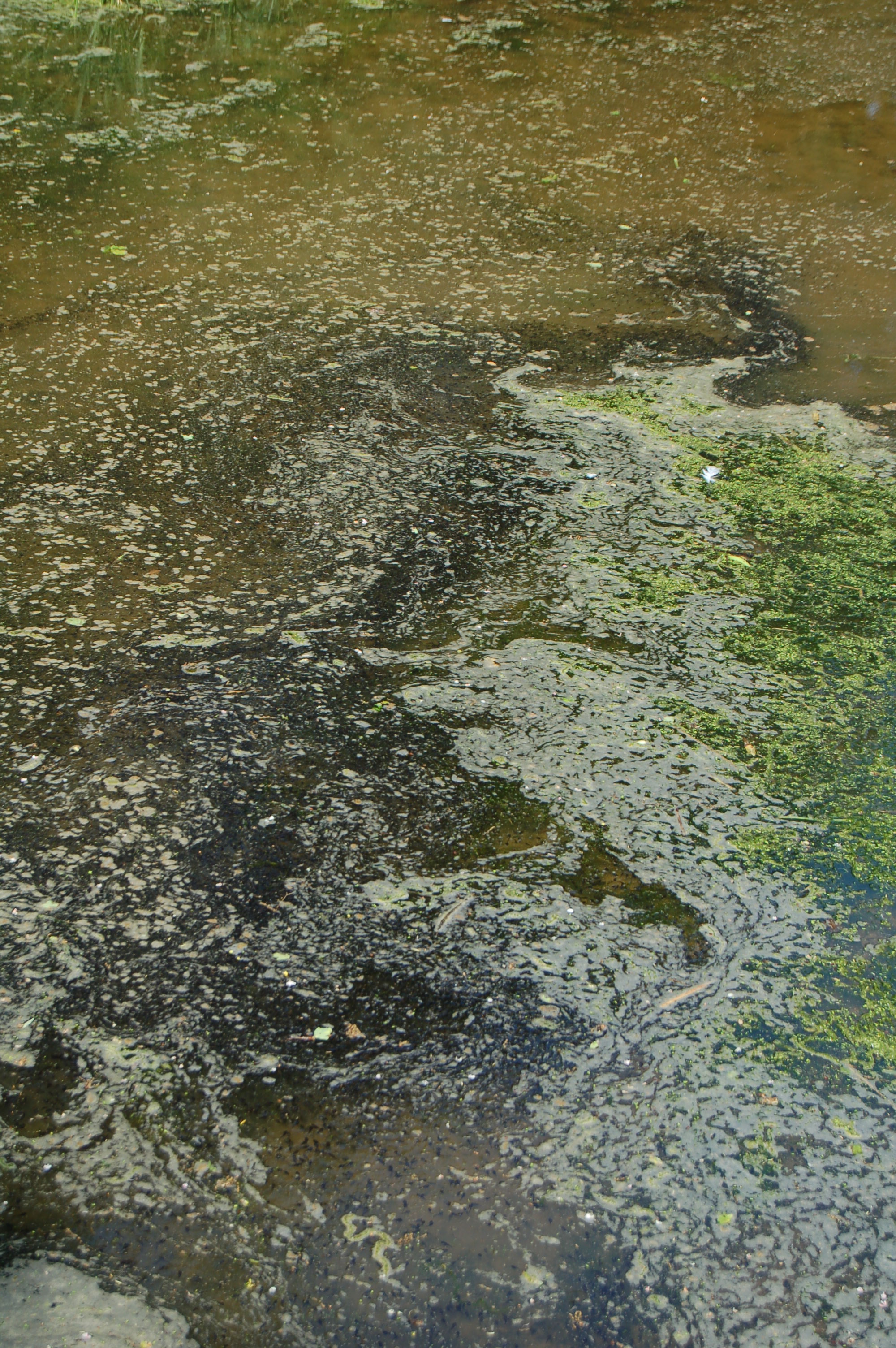
In places the lake’s surface bubbled and frothed with a seething black mass of tadpoles. Amazing!

2014 05 16_9346


Our wanderings back to the car park took us along the banks of the River Croome where we were entertained by Sedge Warblers in full song atop waterside plants, through more flower rich meadows.

2014 05 16_9347 2014 05 16_9348 2014 05 16_9349 2014 05 16_9350


Categories
conservation countryside flowering bulbs hedgerows landscapes light meadows nature reserves spring bulbs Wildlife Trusts

A Fritillary Meadow – North Meadow, Cricklade

We have a book at home where we list places we must go to, gardens we must visit and things we must do. A visit to the Fritillary Meadows in Wiltshire has been on our “Places to Visit” list for a few years now but we have been thwarted by the weather and the effect this has on these lovely flowering bulbs. This year we made it.

We drove down to Cricklade in Wiltshire and with great difficulty due to heavy downpours of rain making it hard to see, we found the first signs of where we were aiming for, The Fritillary Tearooms. The tearooms open each year when the Fritallaries are in full bloom and the proceeds go towards boosting the “Cricklade in Bloom” funds. Naturally we had to support them and so enjoyed a warming cup of coffee and a splendid cake before we embarked on our wet walk around the wet meadow. Apologies for the sloping photo of the tea shop but having one leg shorter than the other does sometimes result in strange sloping pics!

2014 04 21_8340 2014 04 21_8229

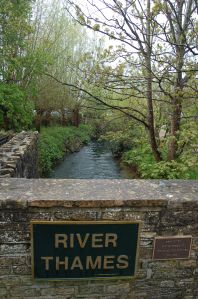
We entered the reserve, called North Meadow, run jointly by English Nature and the Wiltshire Wildlife Trust, via a bridge over the River Churn, one of the two rivers that skirt the wet meadow, the other being the Thames. In front of us lay an old, flower-rich hay meadow situated within the glacial flood plains of the two rivers. The meadow covers a vast area of 108 acres. It is designated a Special Area of Conservation and a Site of Scientific Interest and is an internationally important reserve.

2014 04 21_8314 2014 04 21_8316

2014 04 21_8315 2014 04 21_8230

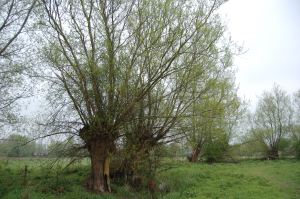
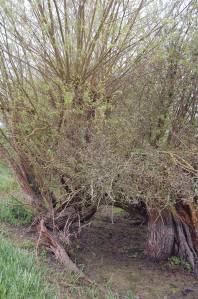
We were never far from one or other river as we walked the reserve margins. It was good to see beautiful ancient pollarded willows much in evidence aligning the banks of both. Seeing these brings back memories of my childhood fishing my local brook “The Carrant” whose banks were lined with them. We hid inside them as many were hollow and loved looking up inside them spotting wildlife mostly spiders and beetles but on special occasions a roosting Tawny Owl. The willows were pollarded which involved pruning them hard back to their main trunks every few years to harvest the stems for basket making and hurdle manufacture.

2014 04 21_8311 2014 04 21_8308

2014 04 21_8414 2014 04 21_8417

2014 04 21_8418 2014 04 21_8379

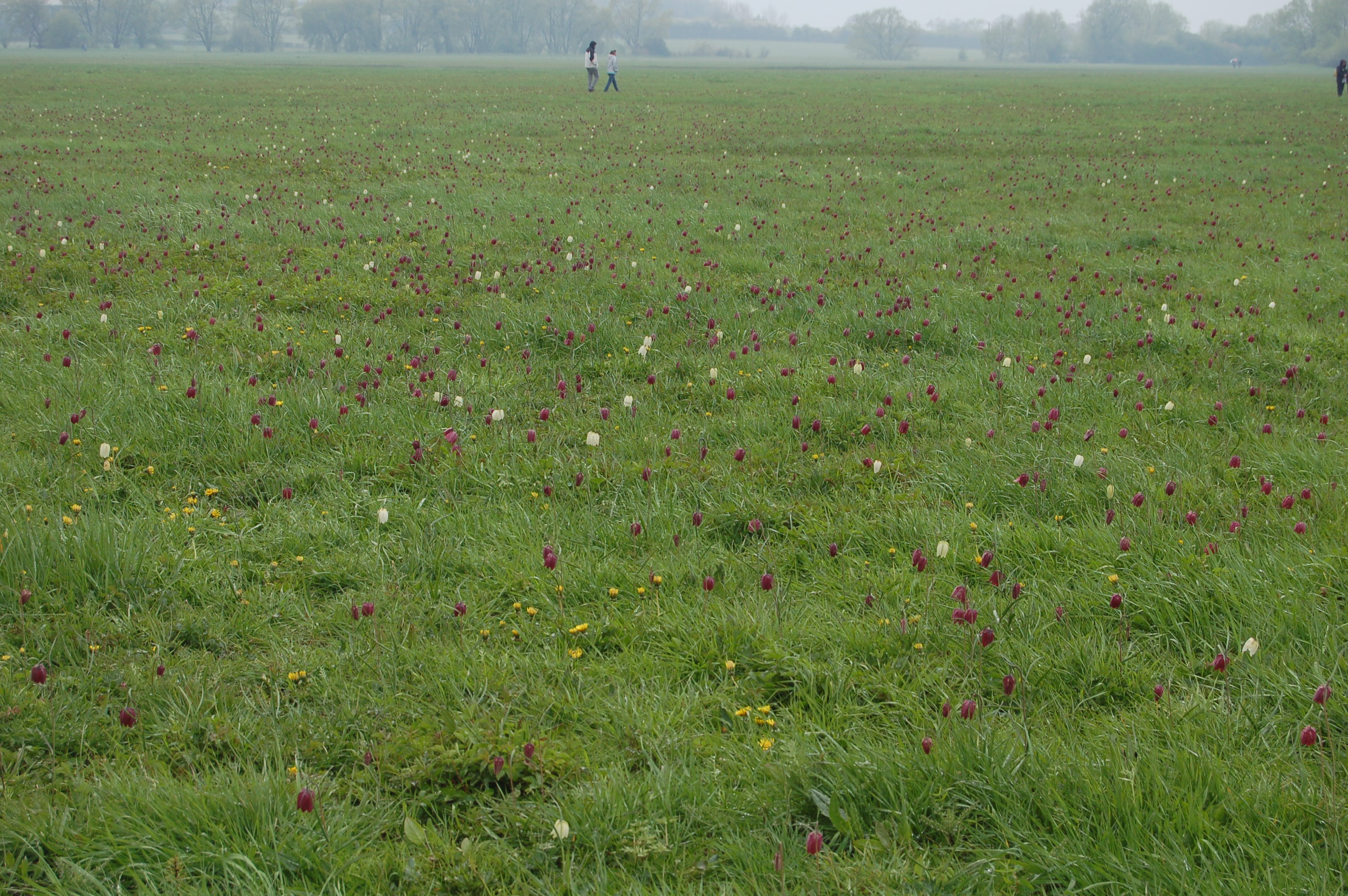
The reserve was one grand immense flat meadow which is flooded for a few months each year creating an unusual habitat for plants and all sorts of wildlife. At first glance we were amazed at the expanse of the meadow but somewhat disappointed at the relatively few numbers of Fritillaries visible. Seeing just one Fritillary is a treat though as it is such an unusual and beautiful flower. It is now sadly a “nationally scarce” plant.

2014 04 21_8232 2014 04 21_8234

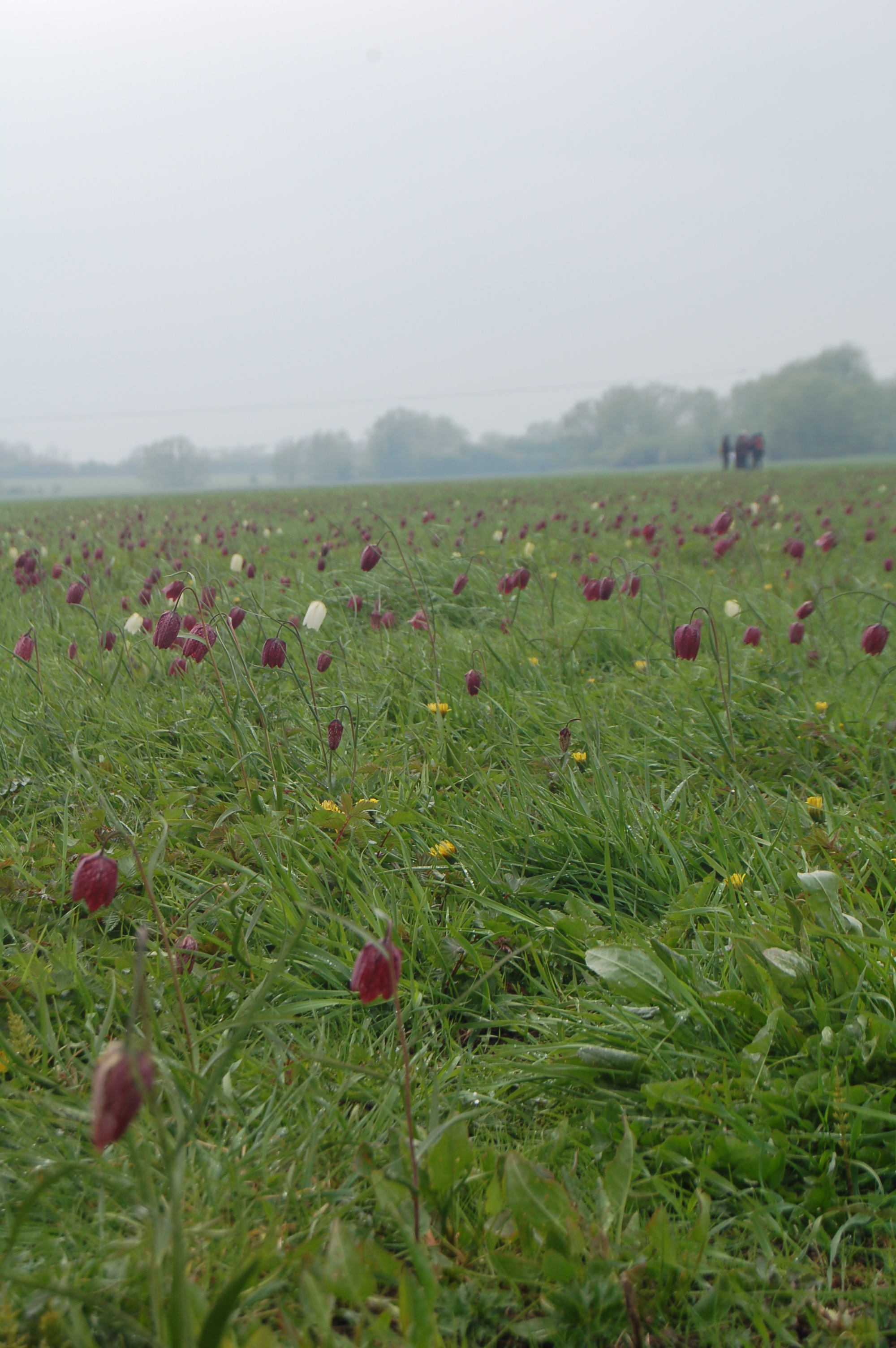
Even though the light was very dull we soon spotted more of the little beauties we had waited so long to see and realised that there were far more than we had first thought. We grow Fritillaria meleagris in our spring border at home and in the orchard meadows on the allotment communal gardens but we had never seen them growing in their true wild habitat, the wetland meadows. We wondered just how amazing they must look on a bright day. To begin with we found them in small clumps including the odd white flowers which although lacking the checkerboard patterning have a delicate beauty of their own.

2014 04 21_8231 2014 04 21_8235

2014 04 21_8424

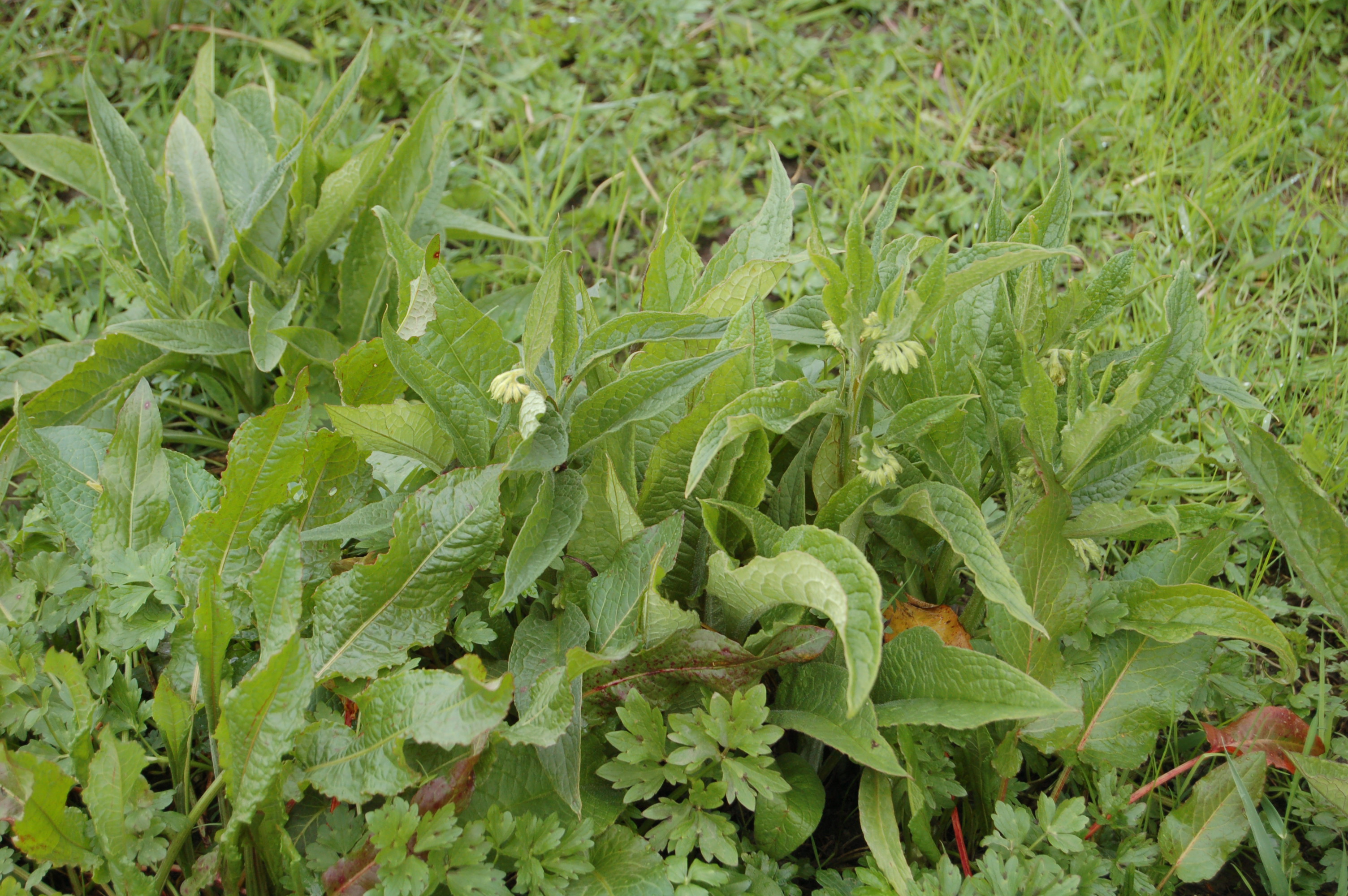
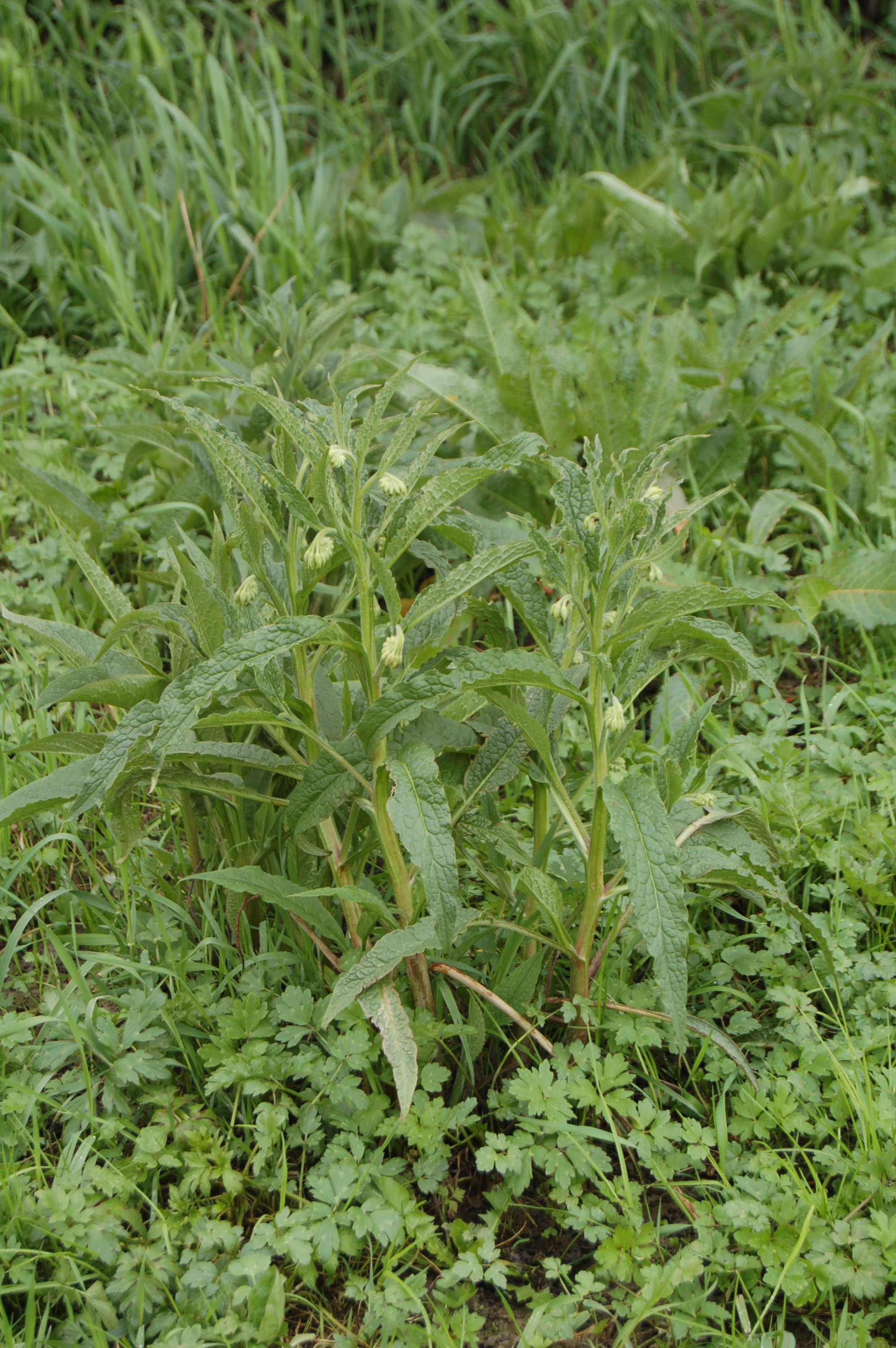
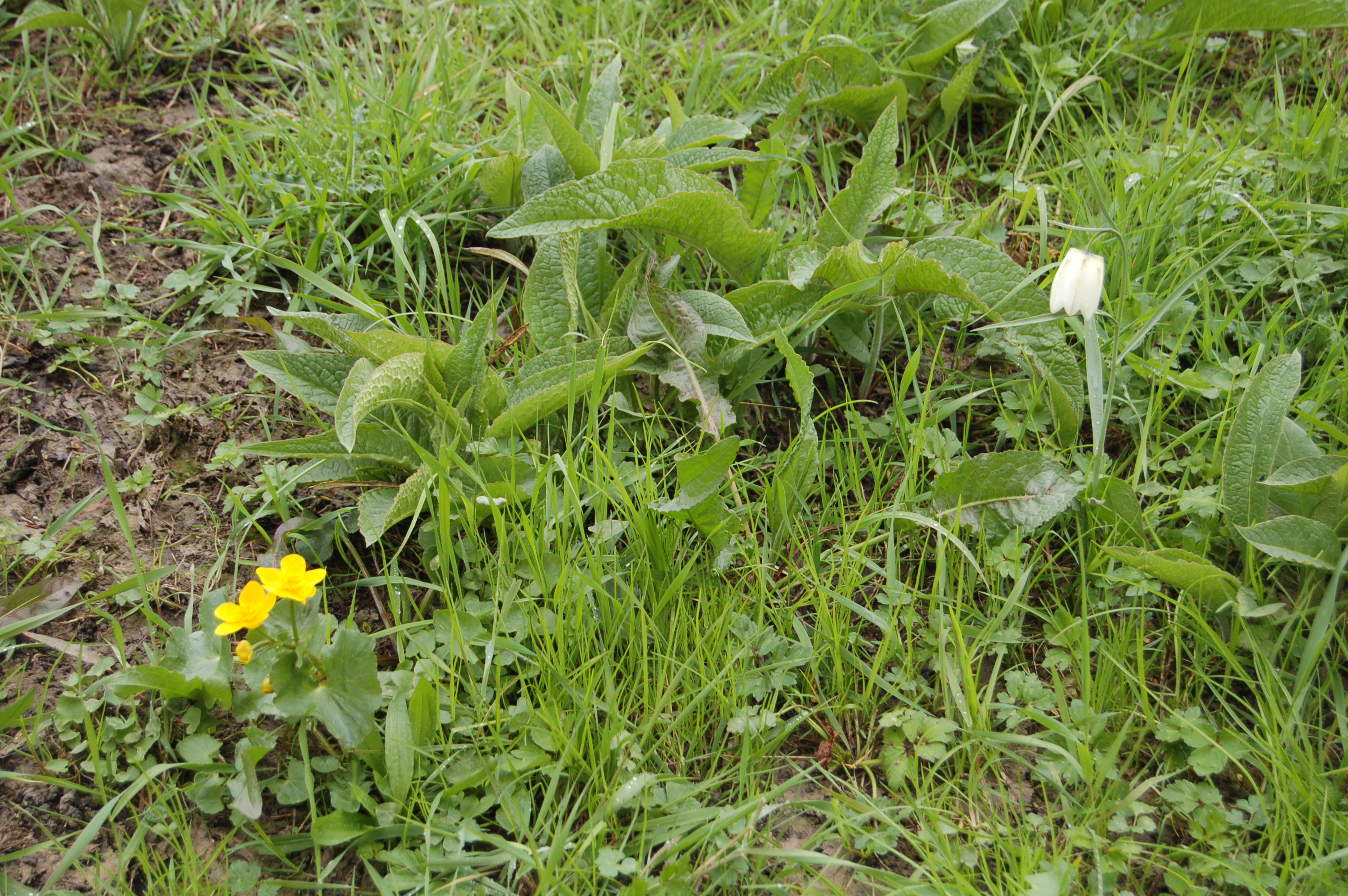
This wetland meadow habitat was home to other site specific species such as Comfrey and Kingcups, Lady’s Smock and Ragged Robin. Lovely old fashioned names for our native wildflowers. To maintain the special requirements of this collection of damp loving plants it is essential that the meadow is managed properly. It has to be grazed, used for hay and flooded for set periods.

2014 04 21_8415 2014 04 21_8416   2014 04 21_8419 2014 04 21_8420  2014 04 21_8422 2014 04 21_8309

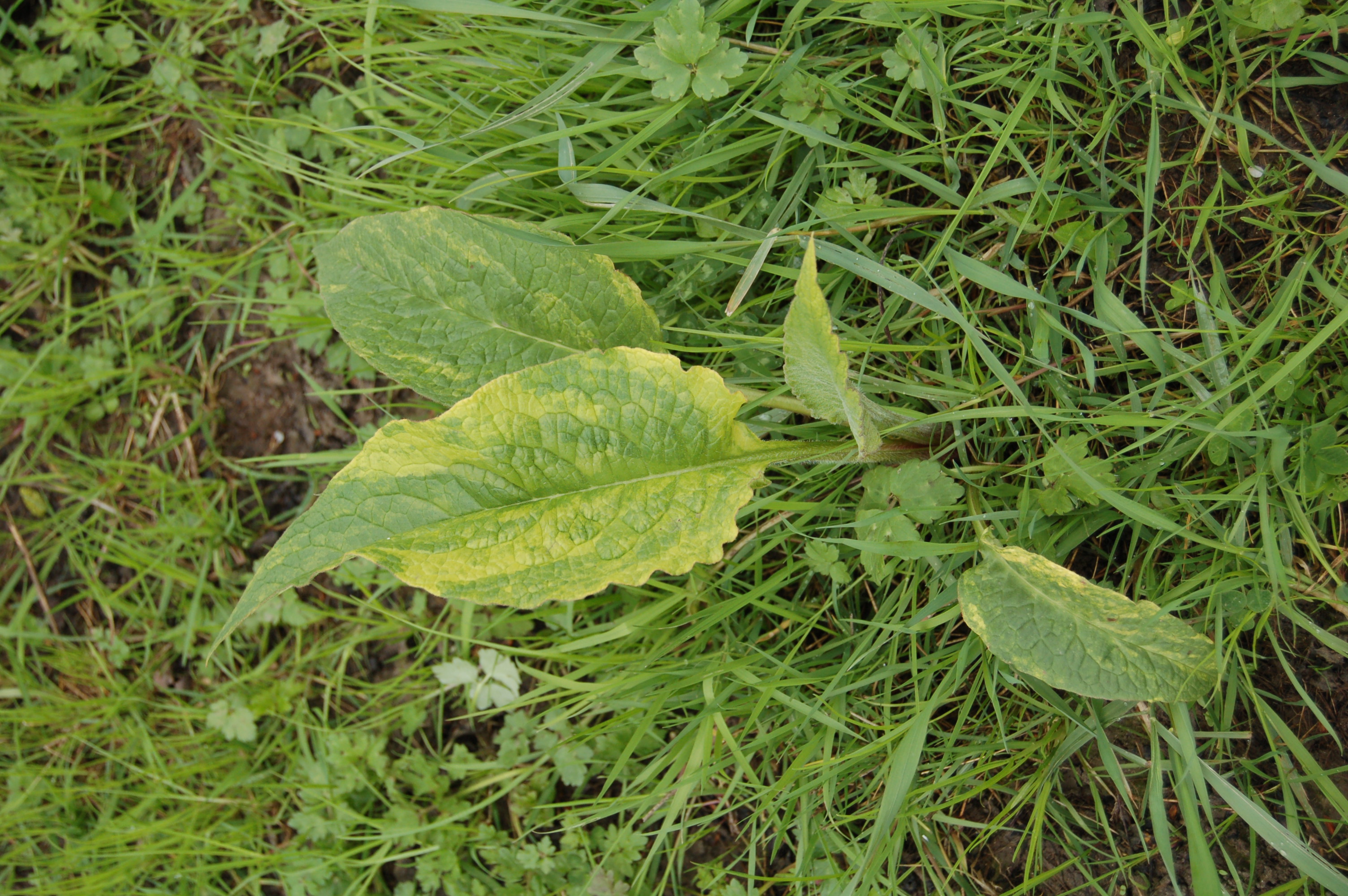
We were surprised to find one comfrey with yellow and green variegated foliage.

2014 04 21_8423

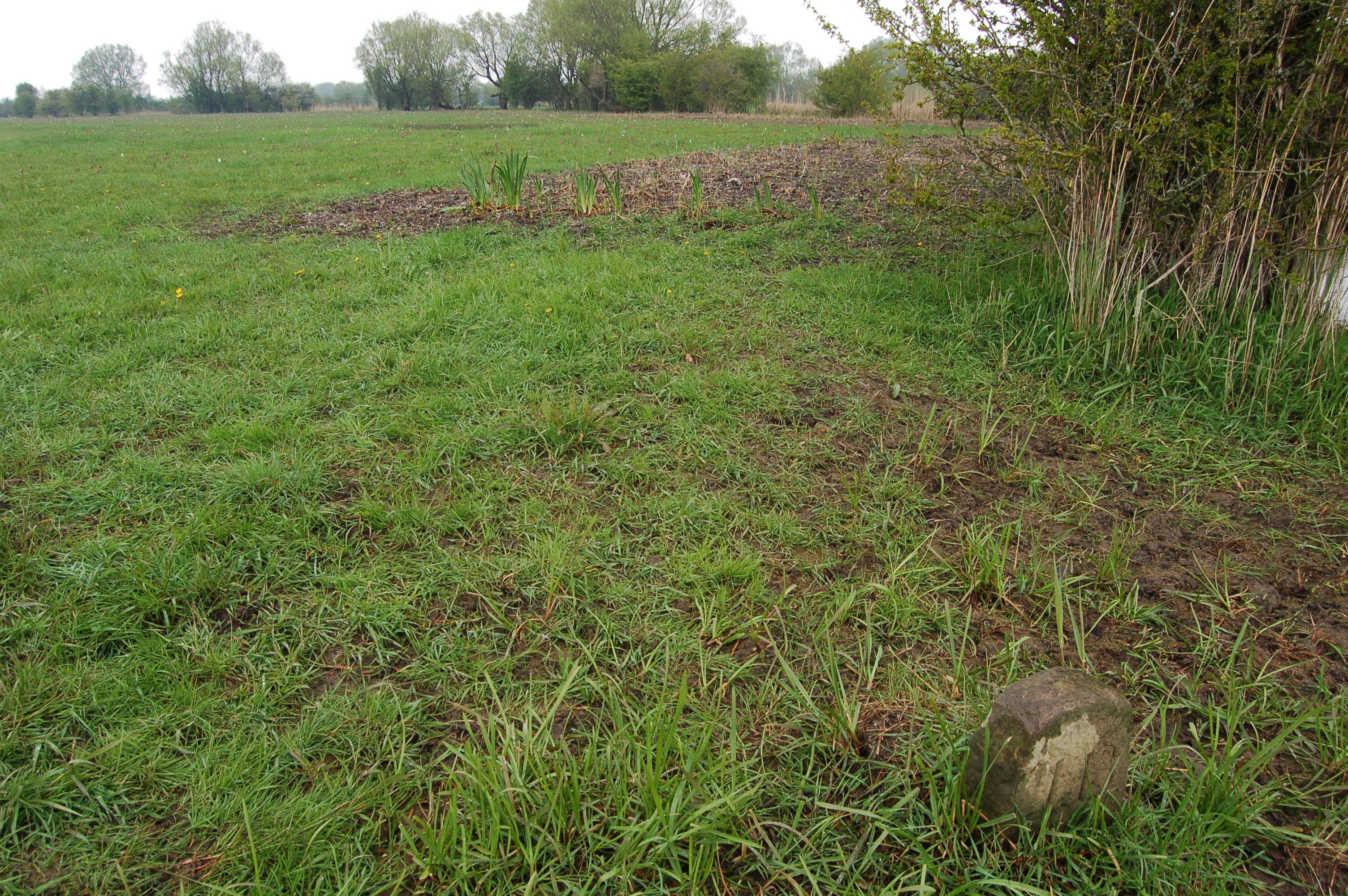
Along the margins of the meadow we stumbled upon these little carved stones, looking like miniature milestones. We later found out that they marked the plots allotted to individual “commoners” for haymaking.

2014 04 21_8313 2014 04 21_8312

As we reached about two-thirds of the way around the meadow the density of the fritillaries increased markedly and tall reeds grew on its margins.

2014 04 21_8310   2014 04 21_8306

2014 04 21_8396 2014 04 21_8394 2014 04 21_8304 2014 04 21_8303 2014 04 21_8302 2014 04 21_8301 2014 04 21_8389 2014 04 21_8299

2014 04 21_8294 2014 04 21_8293


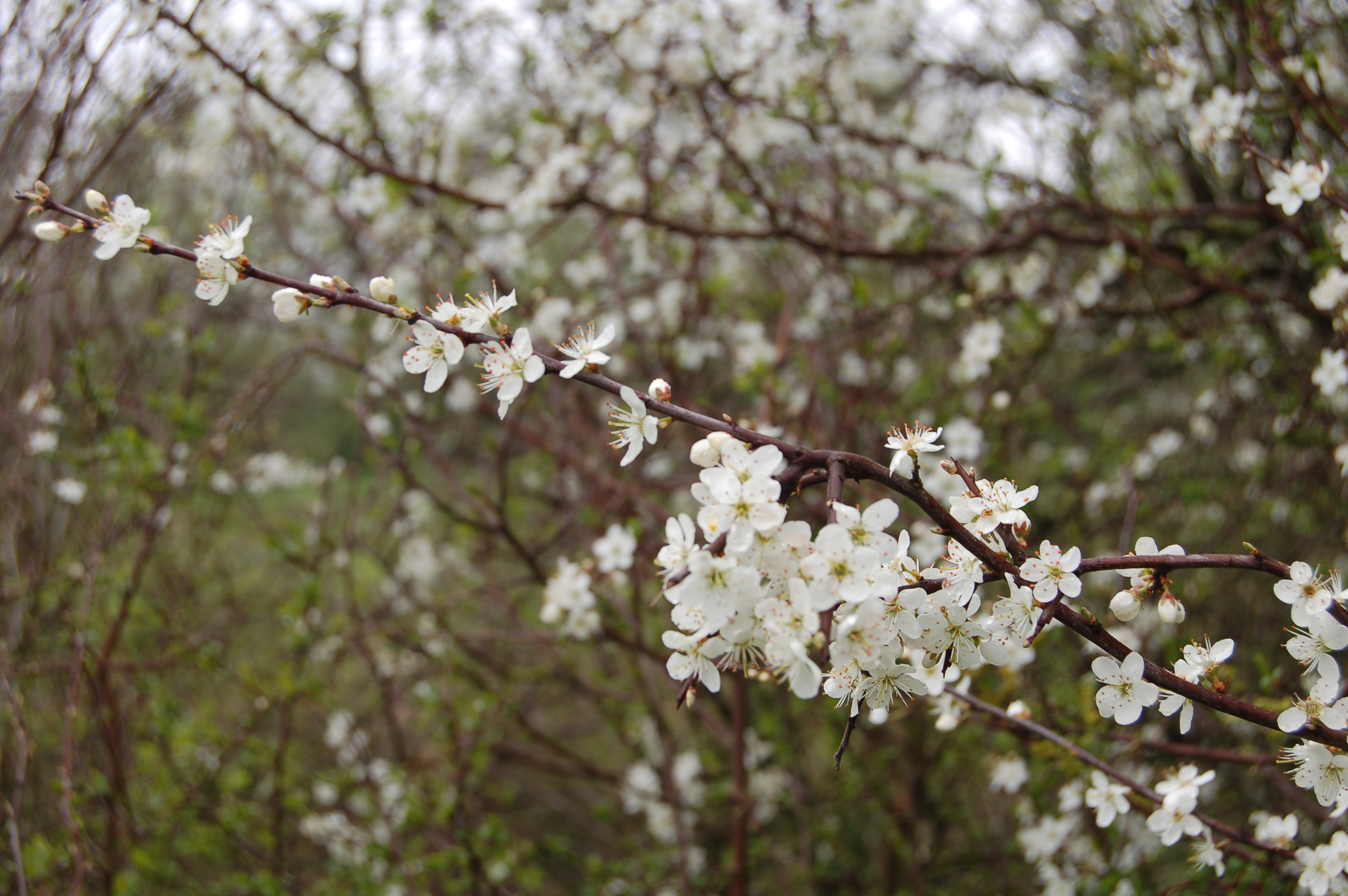
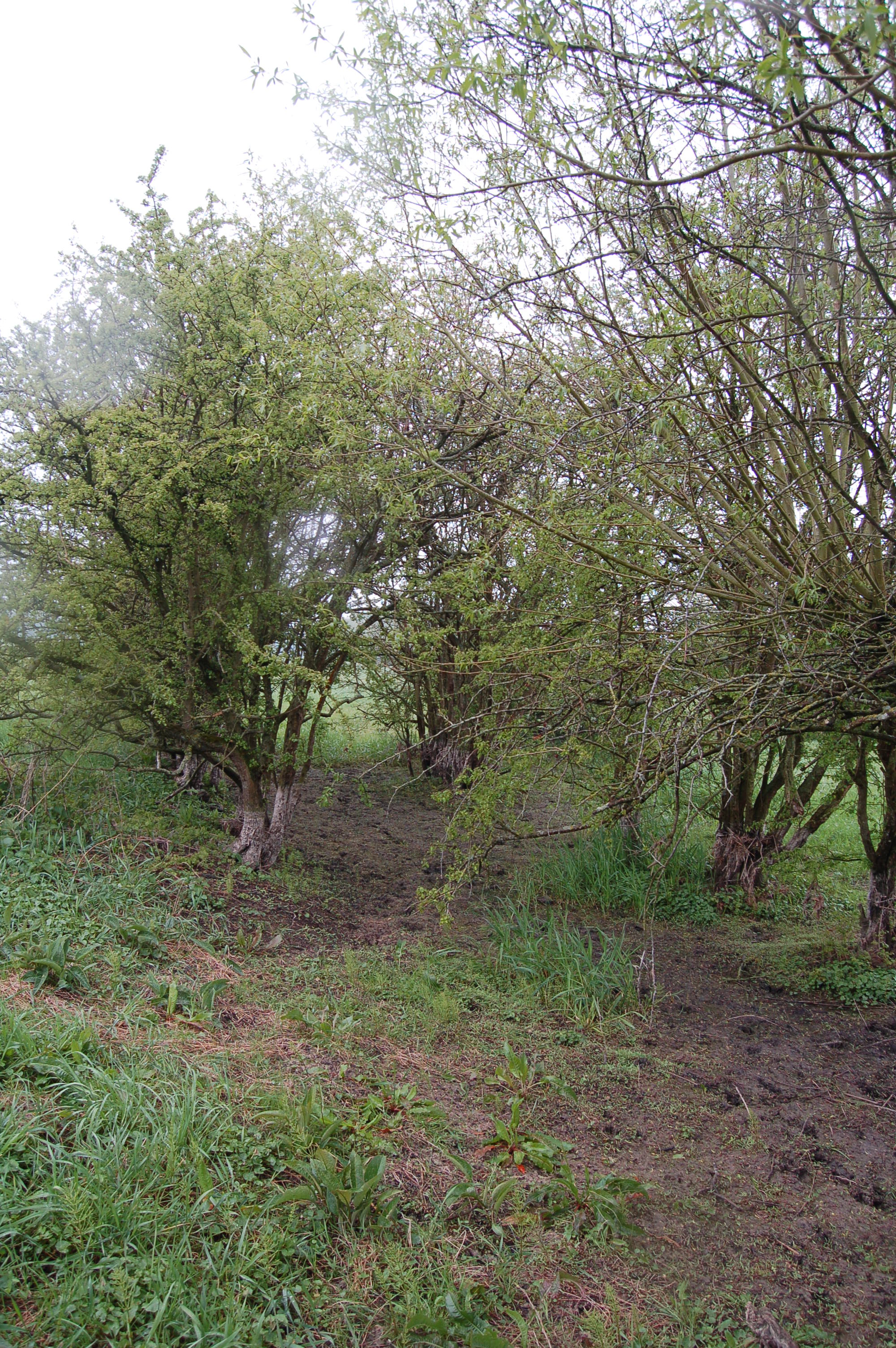
The last part of our wander around this wet meadow was alongside the river once again where Willow and Blackthorn trees grew happily in the damp soils.

2014 04 21_8298 2014 04 21_8297 2014 04 21_8296 2014 04 21_8421

2014 04 21_8295   2014 04 21_8292   2014 04 21_8288 2014 04 21_8465

2014 04 21_8278

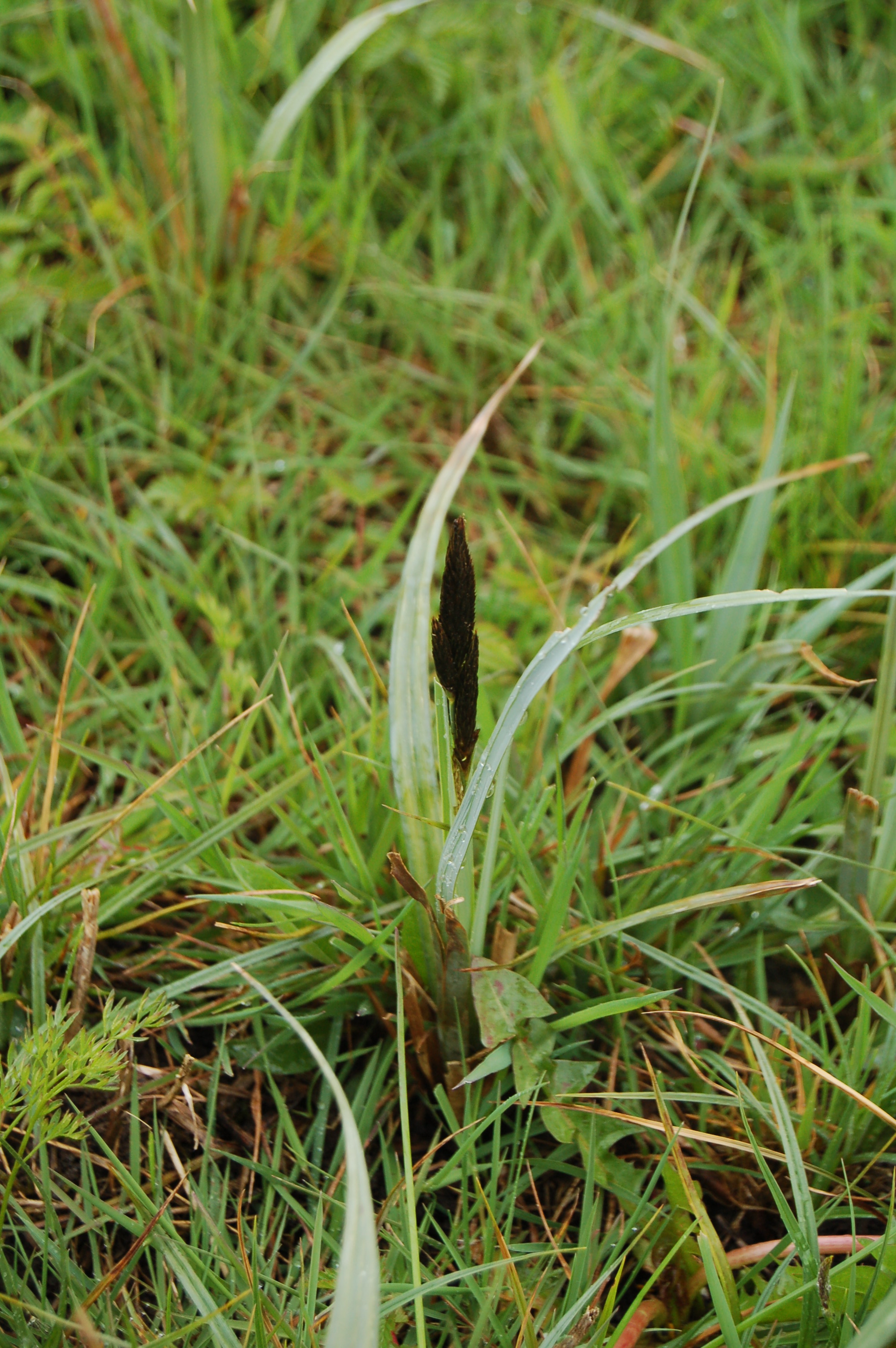
In a very damp patch we came across a clump of this very unusual looking sedge with its jet black flowers thus finishing off our visit to the field of Fritillaries with a mystery as we had no idea what it was.

2014 04 21_8286 2014 04 21_8285

As we left the reserve we just had to stop and admire this old and very unusual toll cottage.

2014 04 21_8495

Categories
birds countryside hedgerows landscapes nature reserves swallows trees wildlife woodland woodlands

Up on the Downs – a wander on chalk uplands.

We have wanted to take a walk on the “Downs” for a while now and we have it written in our “to do” book. However whilst visiting my brother, Graham and his wife Vicky in Farnham  we took the opportunity to make a half hour drive  which led us to the car park at the start of a gentle walk along Old Winchester Hill. The panoramic views gave an added incentive to get going despite a cold, biting wind.

2014 04 22_85542014 04 22_85552014 04 22_8556

Although it is still relatively early in the year we had expectations of seeing site specific plants and birds. We were not to be disappointed.

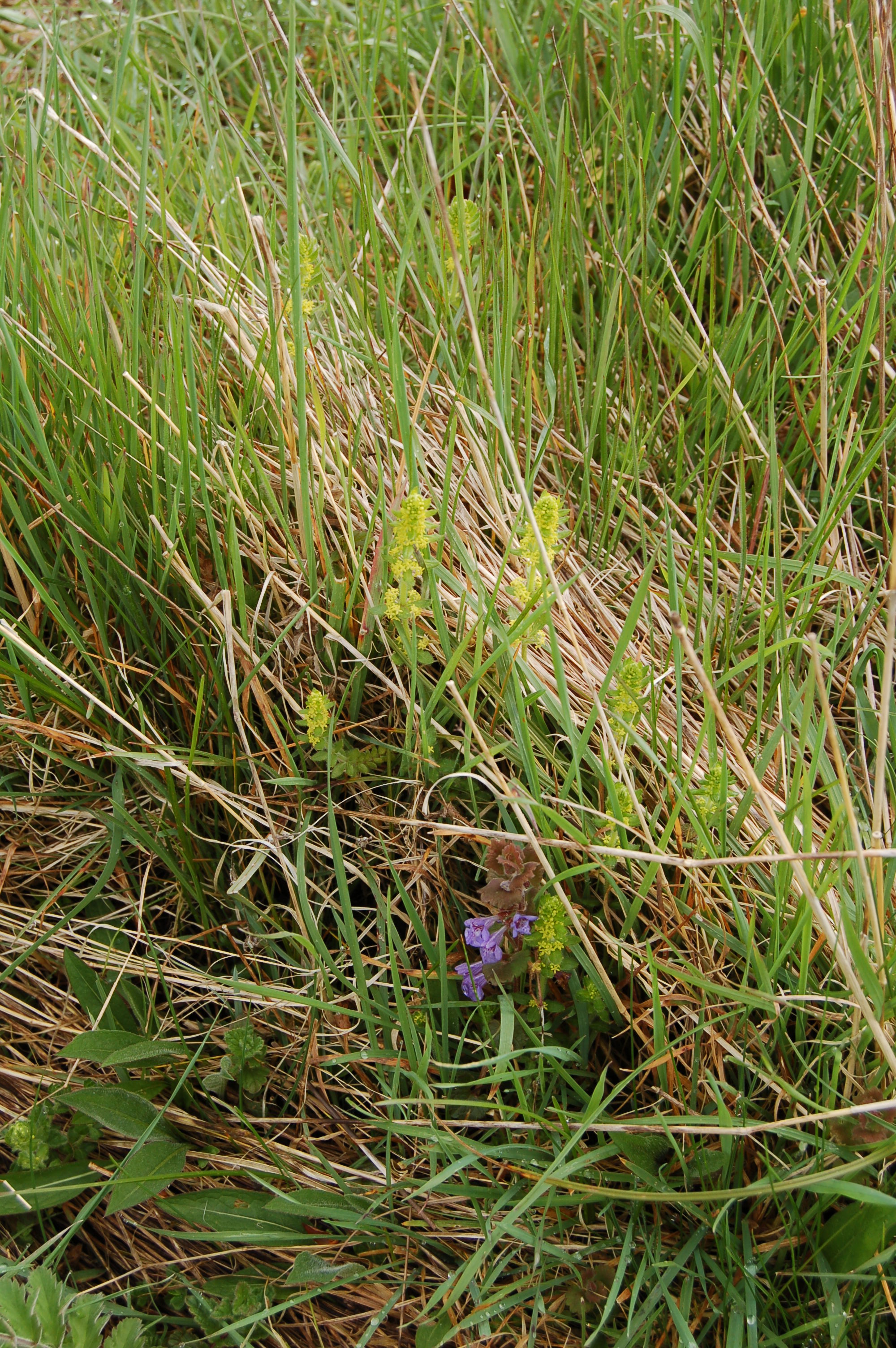
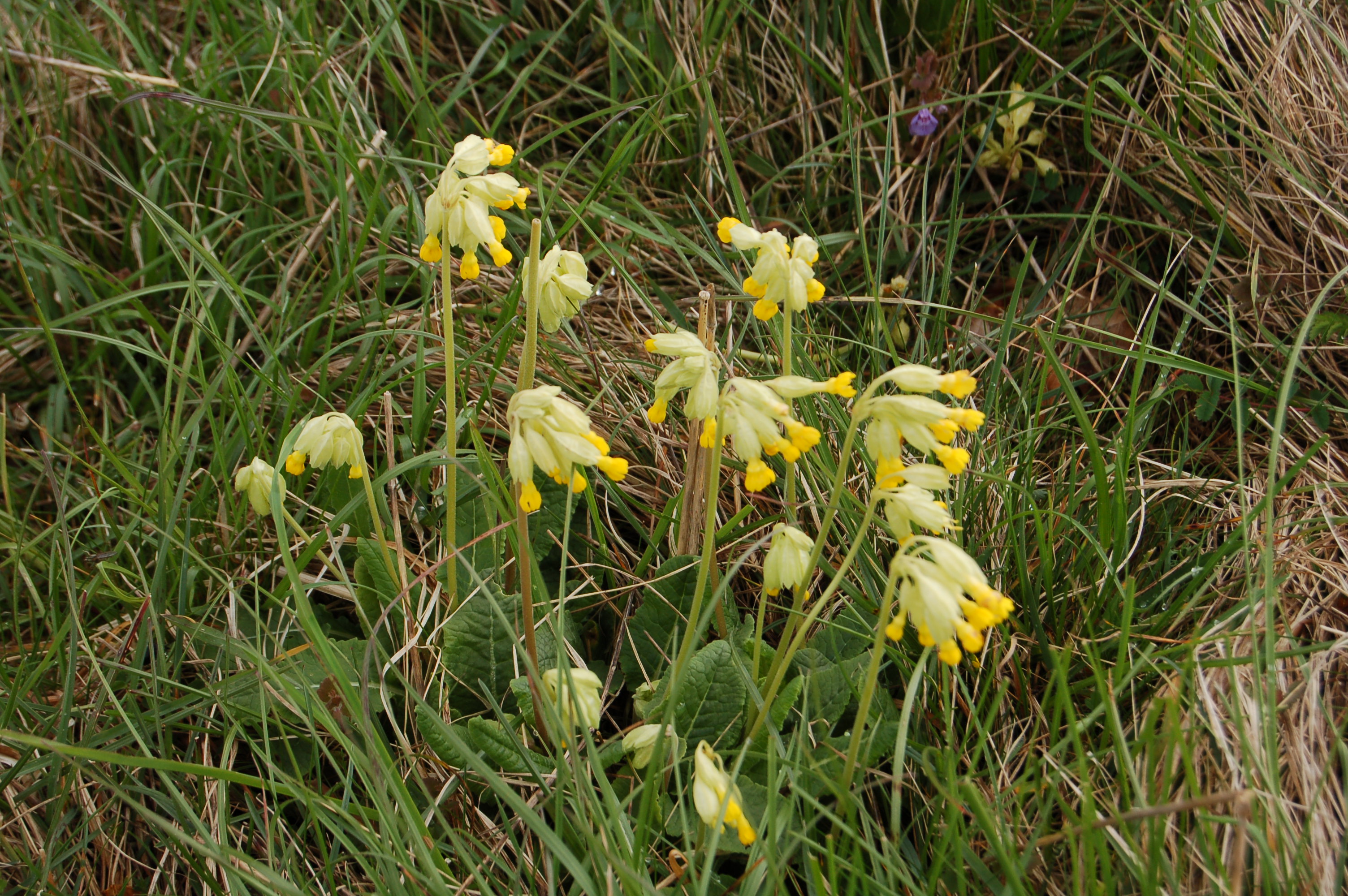
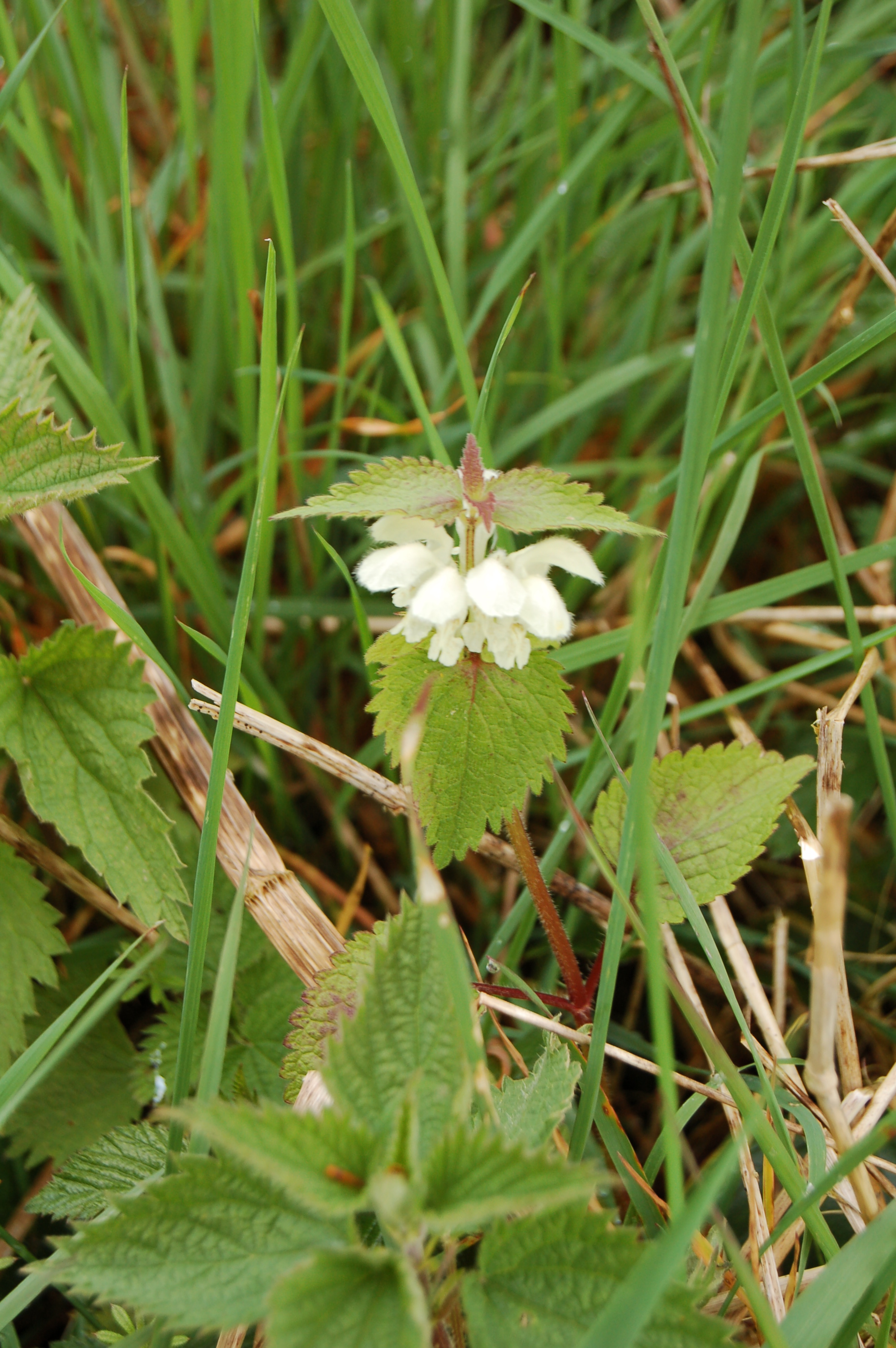
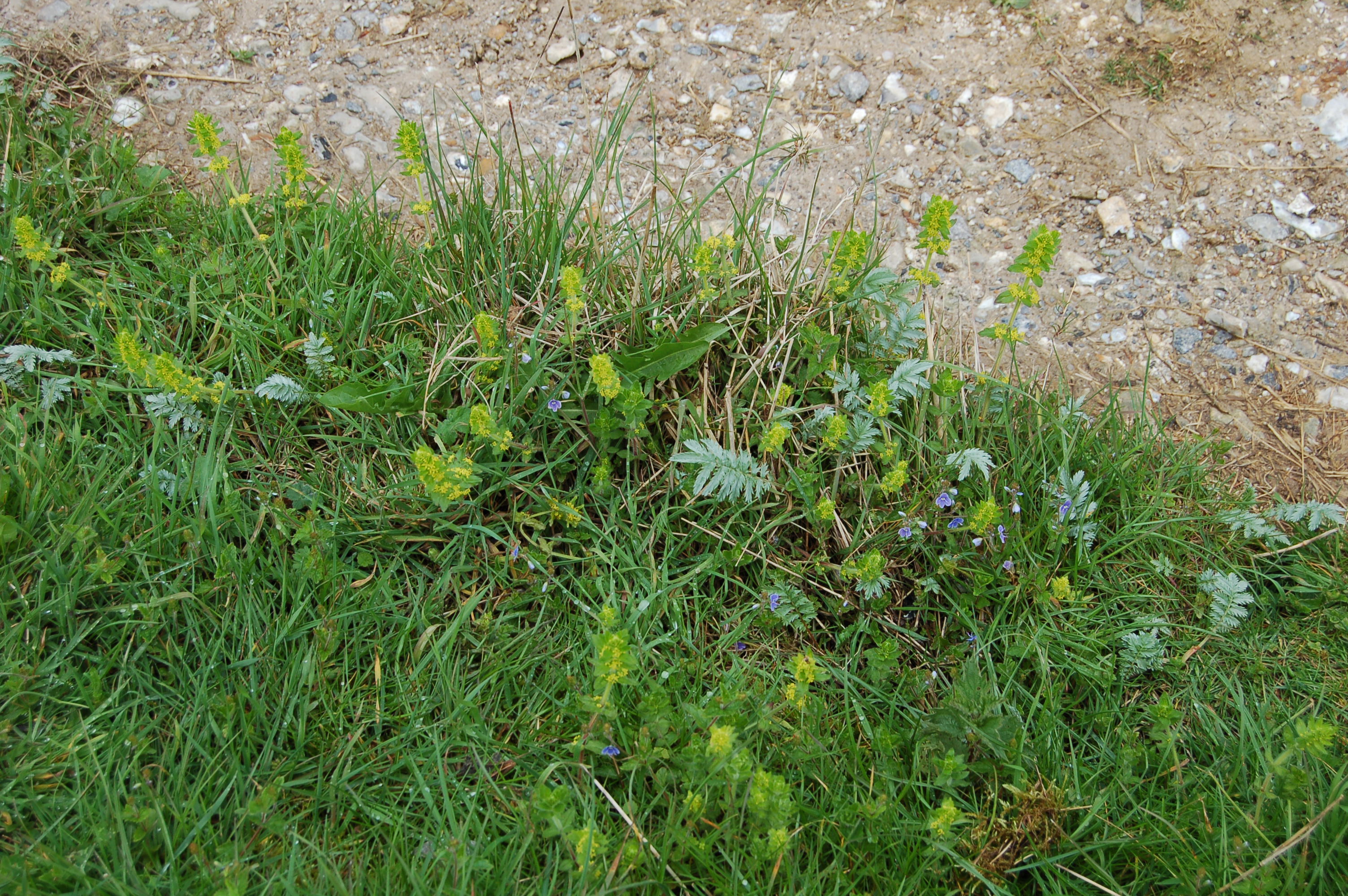
Lady’s Bedstraw, White Deadnettle and Cowslip were probably the most frequently occurring flowering plants.

2014 04 22_8557 2014 04 22_8558 2014 04 22_8559 2014 04 22_8560

2014 04 22_8562

It was good to see one of our native Euphorbias growing along the woodland margins. This Wood Spurge looked so similar to some we grow in our Plealey garden.

2014 04 22_8561 2014 04 22_8564

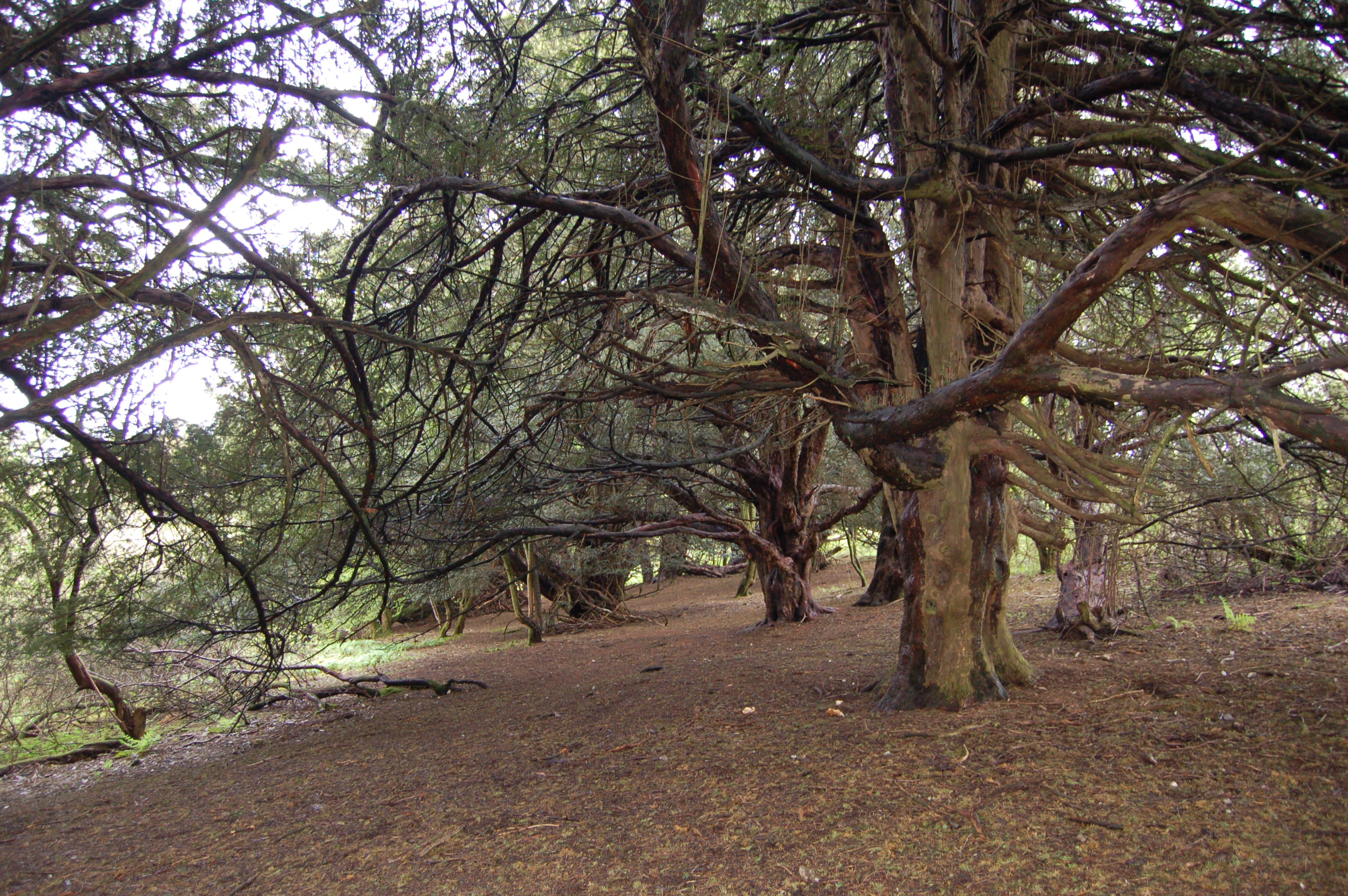
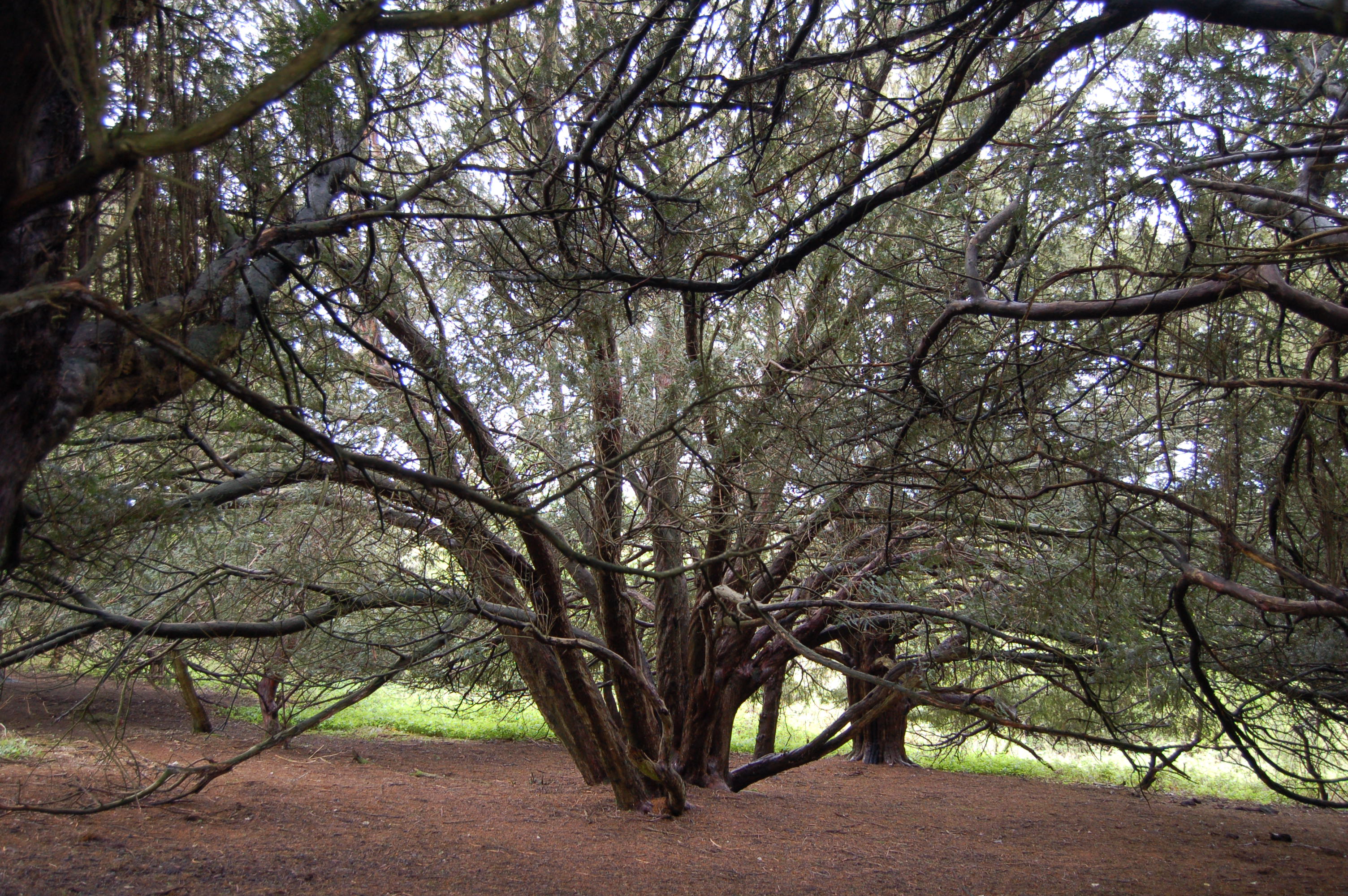
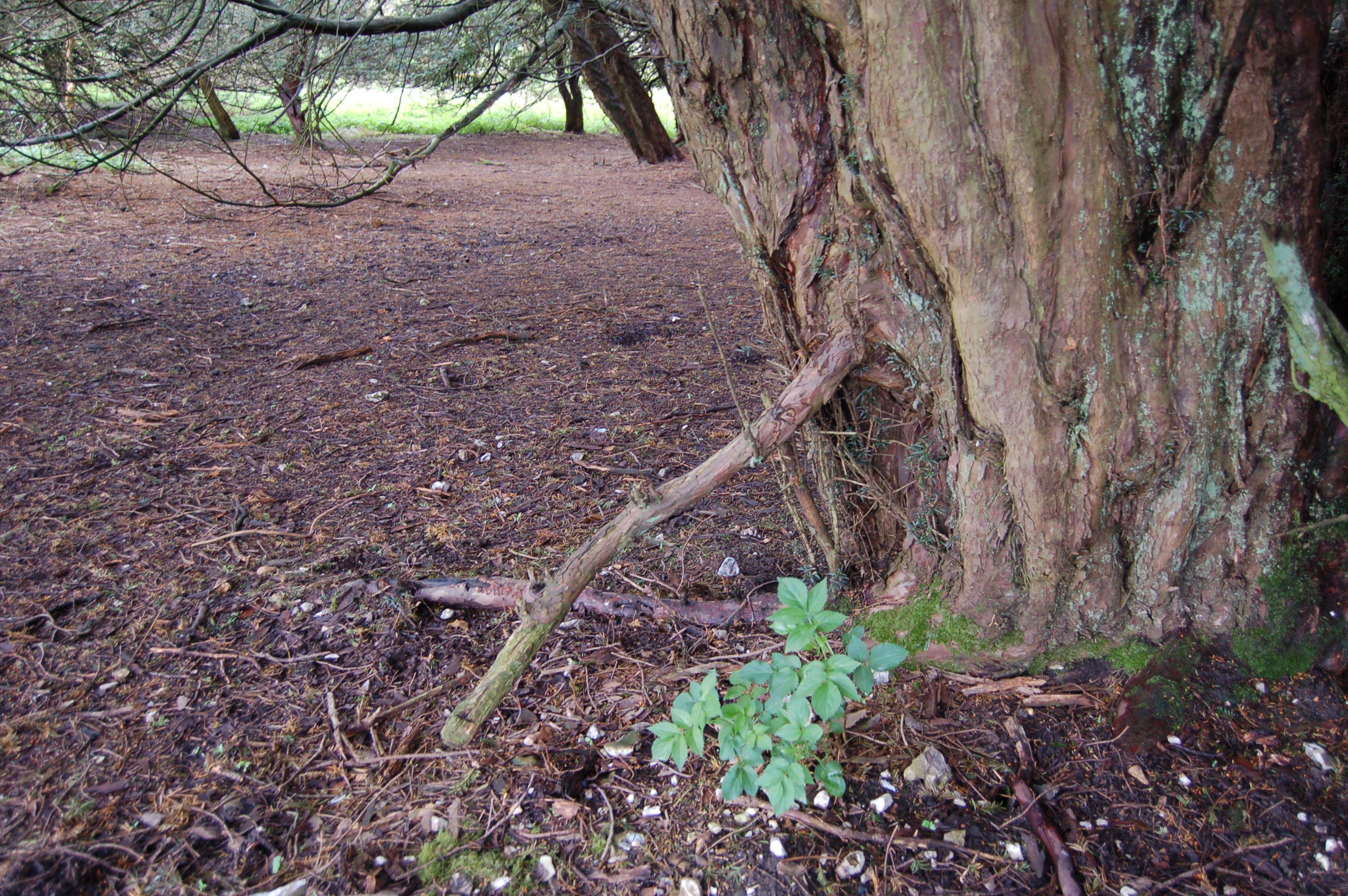
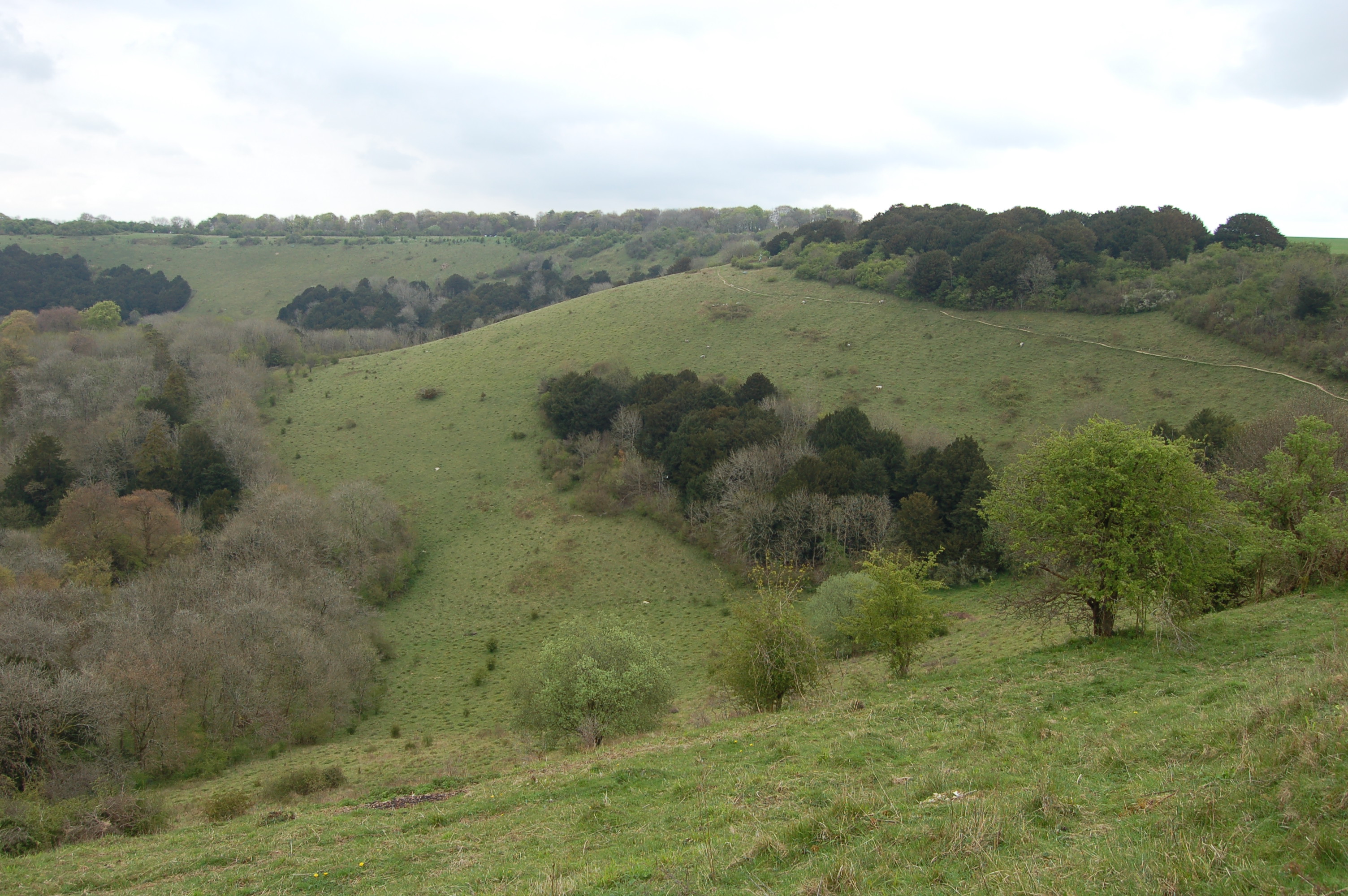
As we reached the end of the ridge the path changed direction and we walked along a track between woodland and open fields. The woodland birdlife was in full song with summer migrant Warblers joining the resident Robins and Dunnocks. Above our heads Swallows called constantly. Over the farmland the song of Skylarks and the calls of Lapwing, two of our ground nesting birds, was carried on the wind for us to enjoy. We were really surprised to see large areas of very mature yew trees growing within areas of the usual deciduous trees, as we do not see them growing like this at home in Shropshire. They formed dark patches on the hillsides. We ventured underneath them and all of us found them decidedly spooky as they cut out all sound and much of the light leaving us in gloom. Beneath them nothing ventured to grow, apart from one lone, brave Elder seedling.It is no wonder that they feature strongly in ancient myths and folklore.

2014 04 22_8566 2014 04 22_8567


2014 04 22_8568 2014 04 22_8569

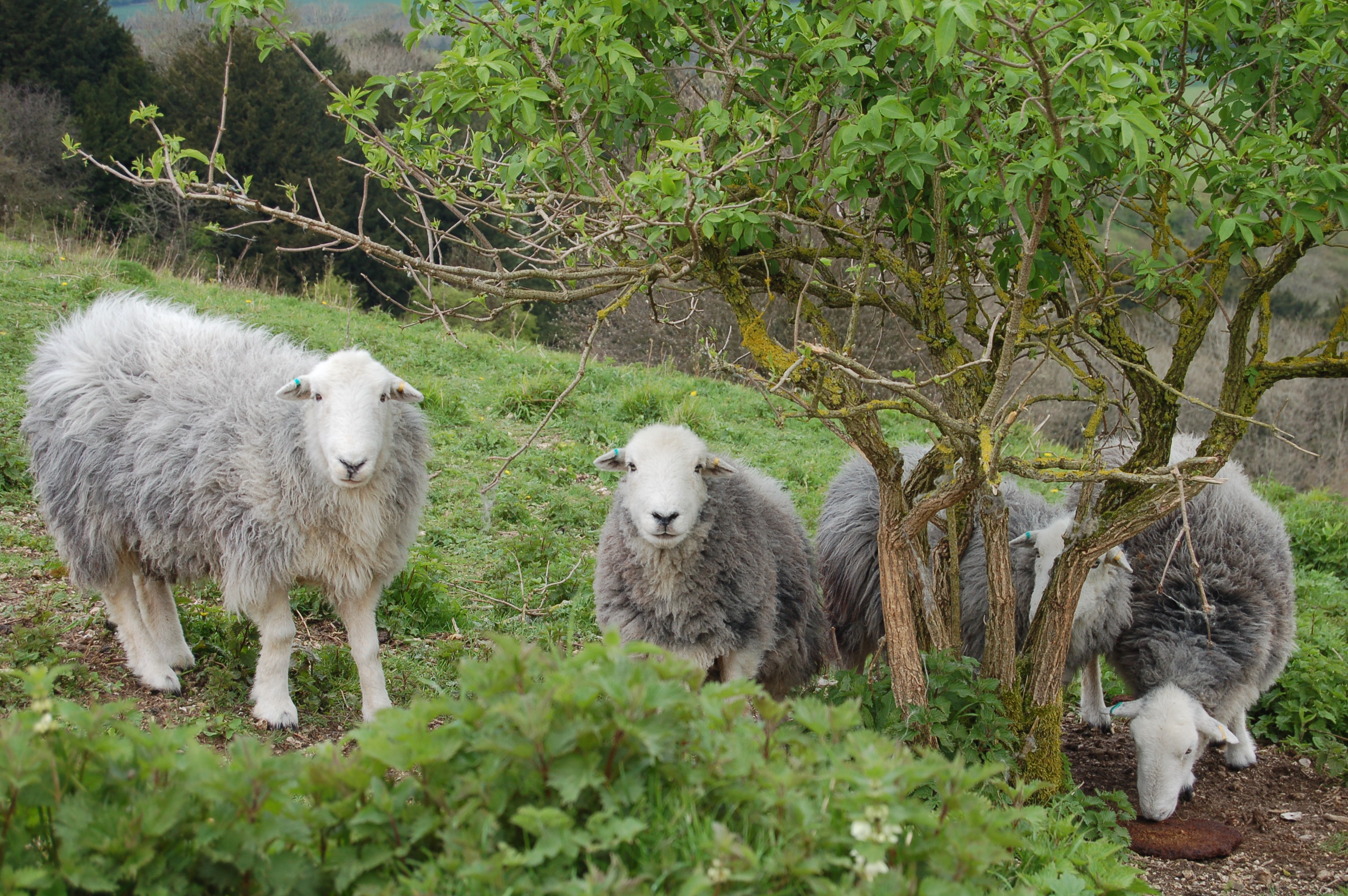
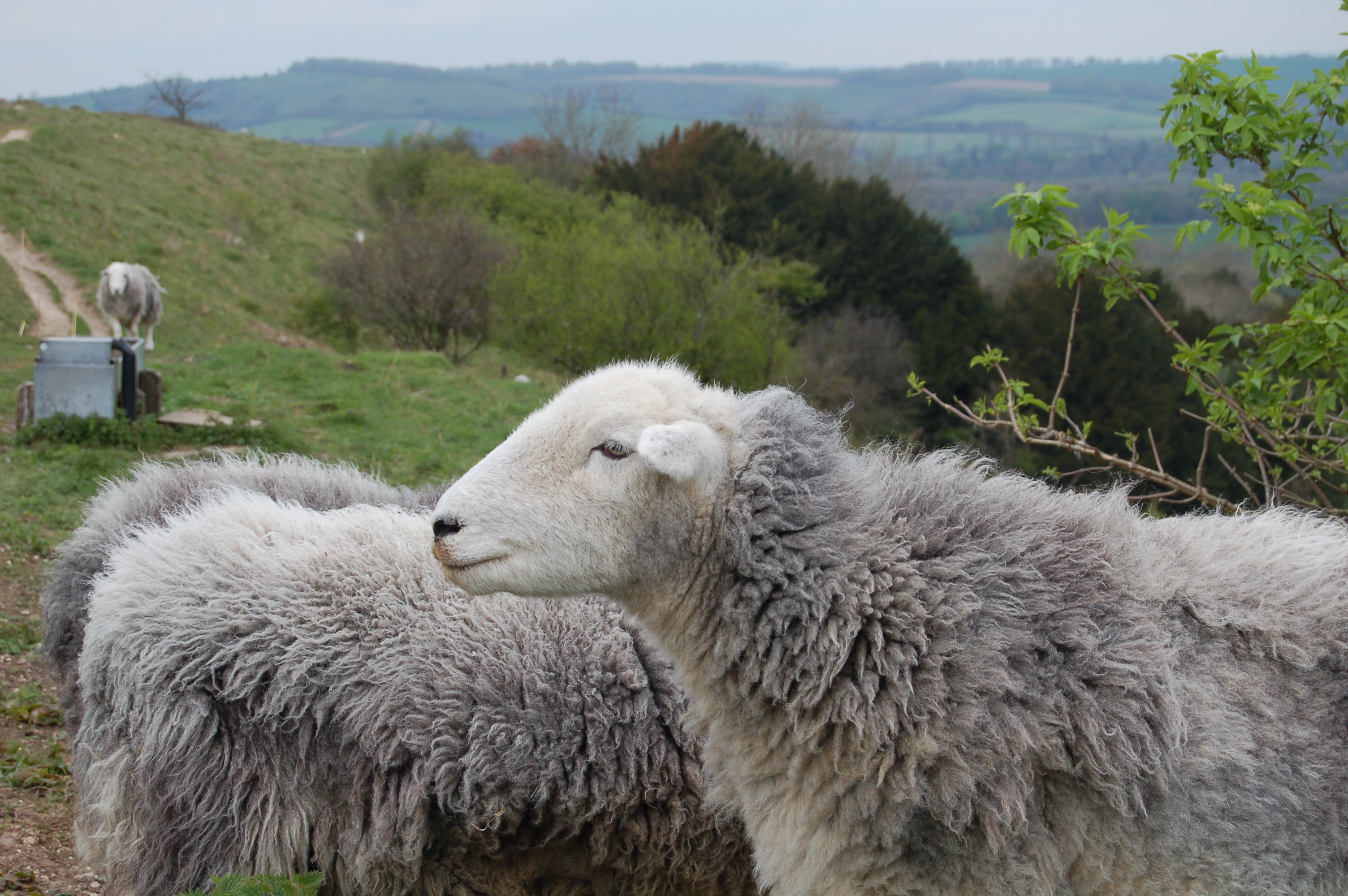
When we stopped for our coffee break on the only bench on the walk we were soon joined by a small flock of very inquisitive rare breed Herdwick Sheep, the sort I think that Beatrix Potter helped to save from extinction up on her Lake District farm.

2014 04 22_8575 2014 04 22_8576

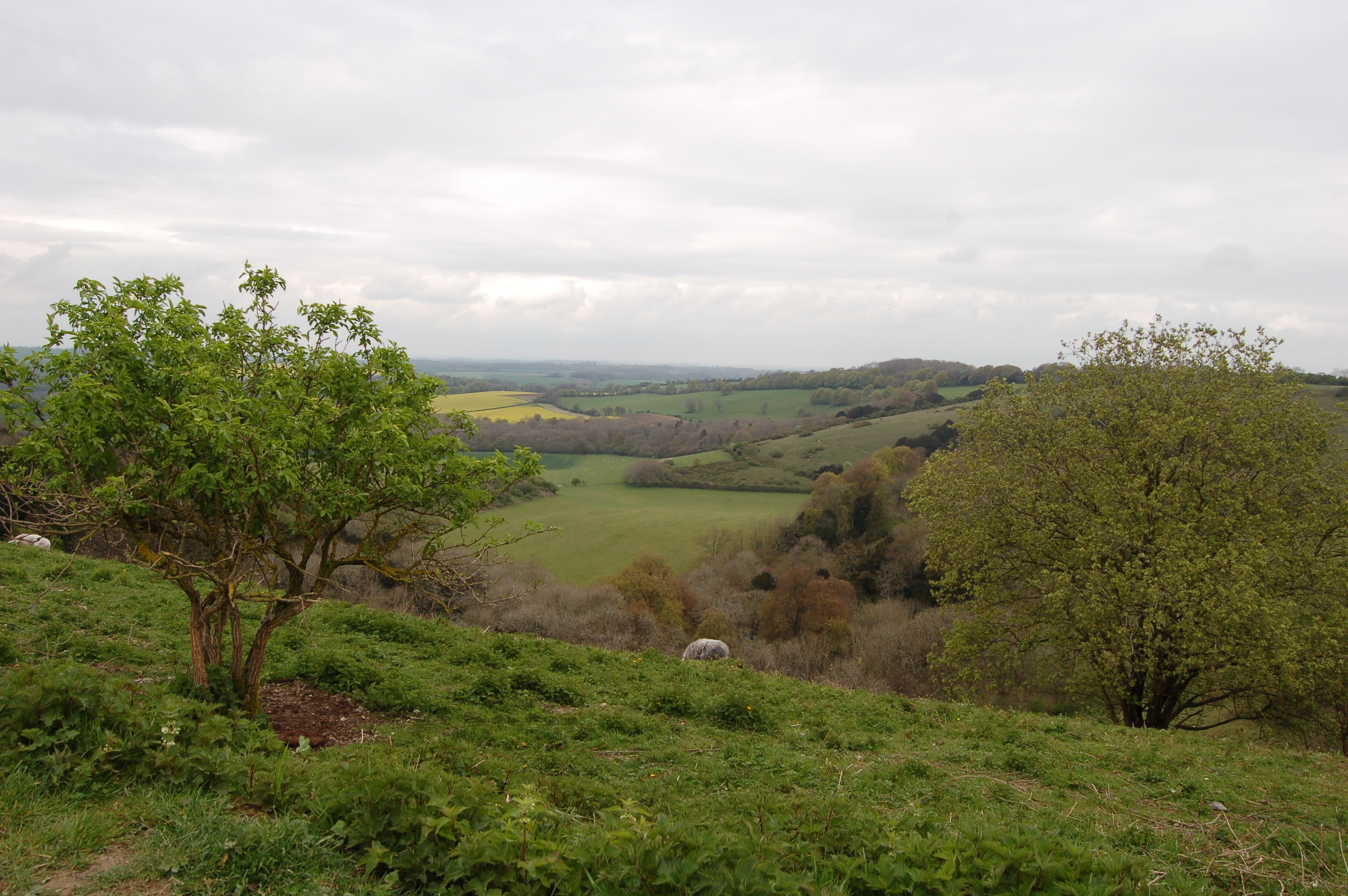
Beyond the sheep the views were stunning and far-reaching.

2014 04 22_8577 2014 04 22_8573

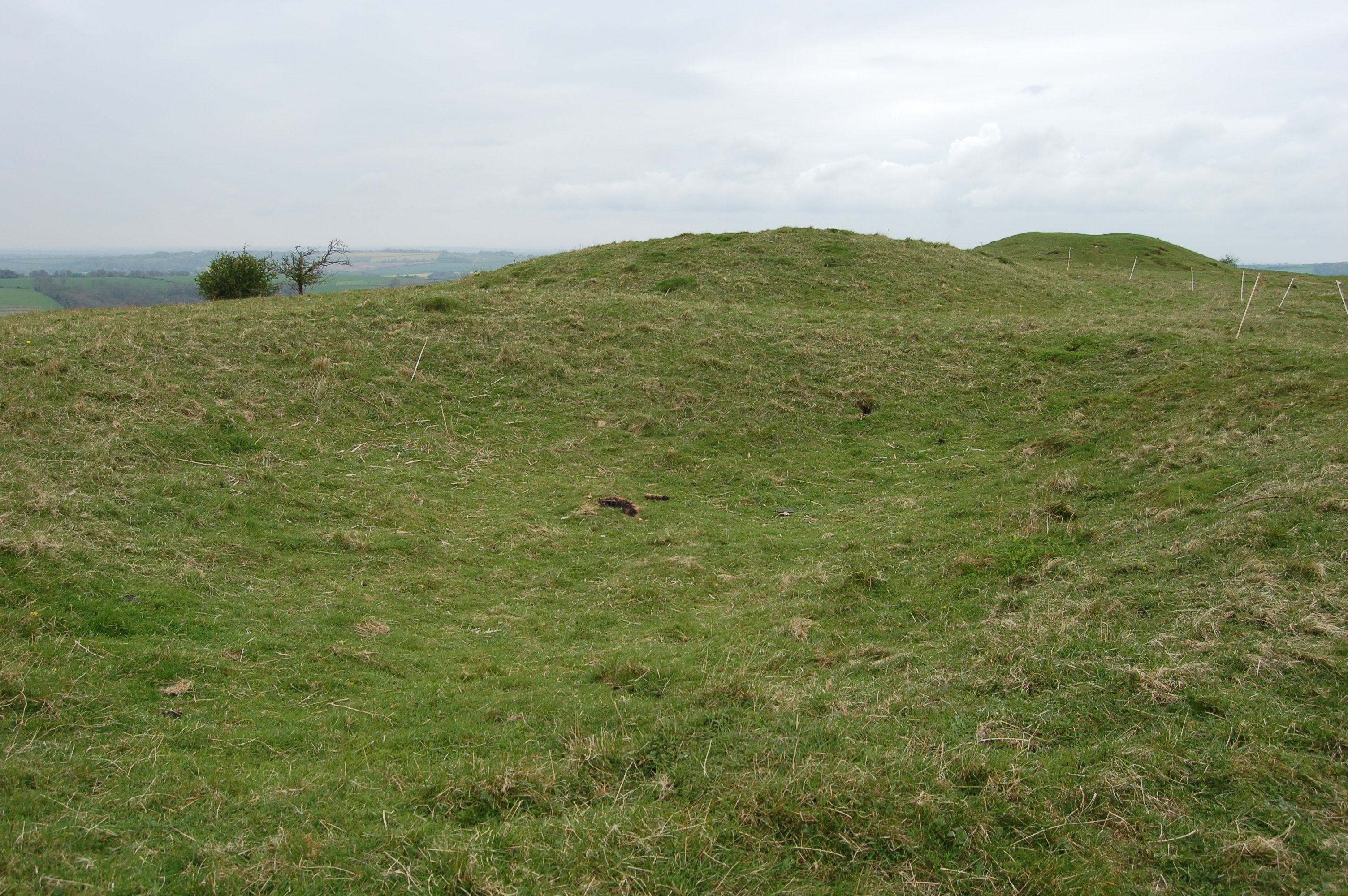
After our coffee break, with a slice of cake as well of course for added energy, we walked through the ancient hill fort with its Bronze Age burial mounds. It is amazing how interesting mounds of earth can be!

2014 04 22_8578 2014 04 22_8579 2014 04 22_8580

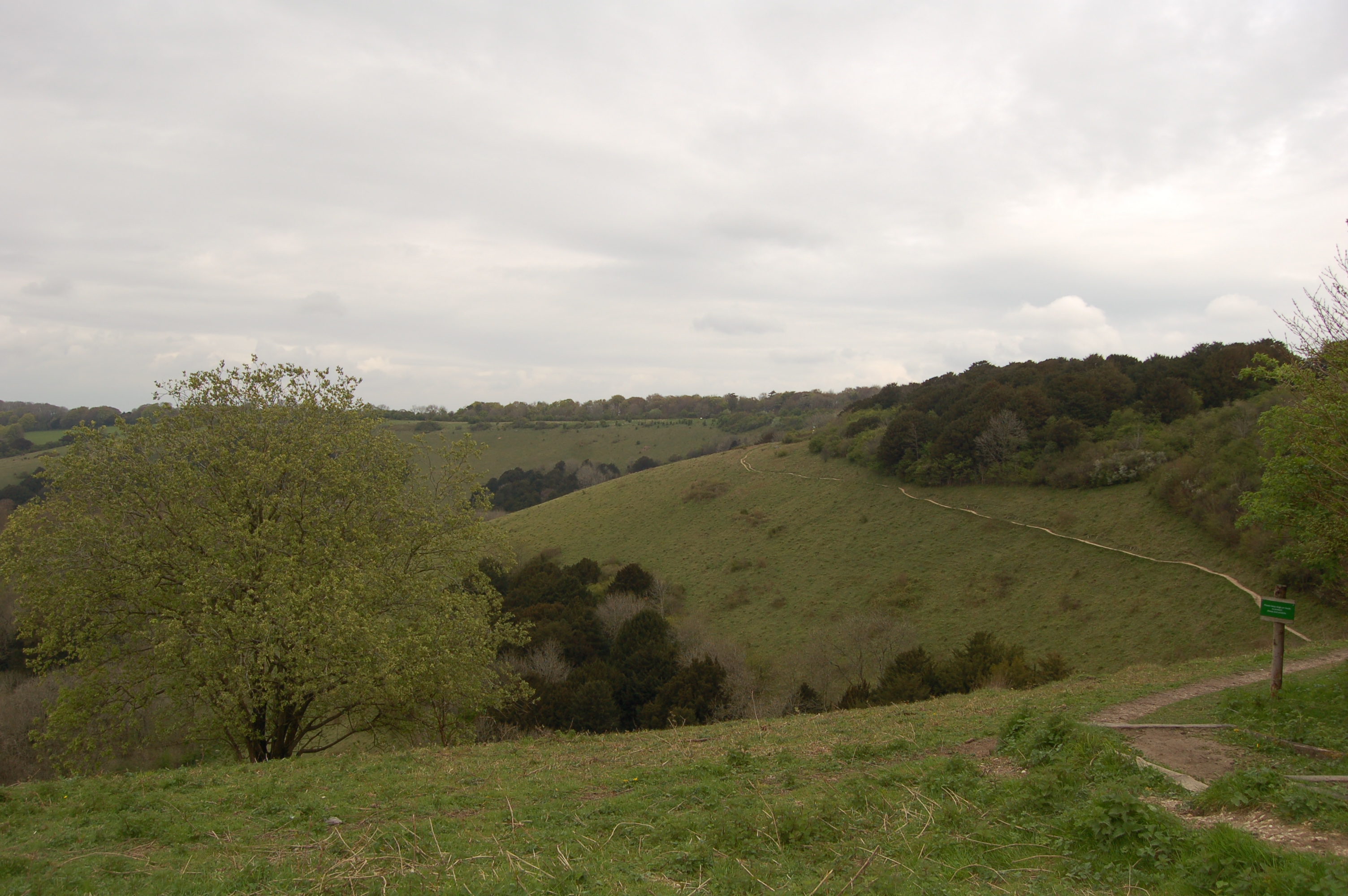
I shall finish off with one last view of this unique downland landscape and one of the wildflowers growing right alongside the track. We have waited a long time for our first walk on the Downs. It was worth the wait.

2014 04 22_8581 2014 04 22_8582

Categories
landscapes light quality log piles logs

Take Two

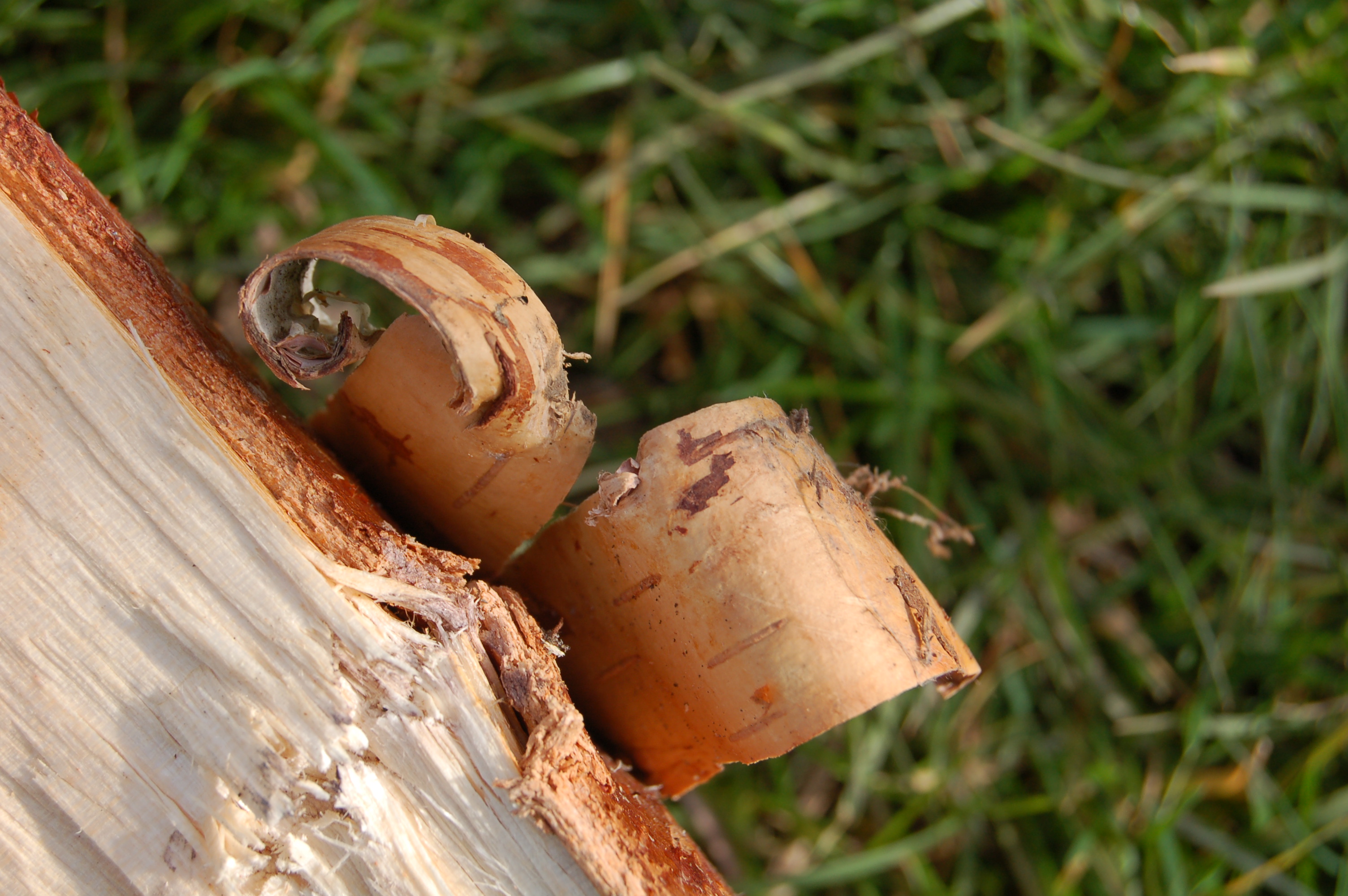
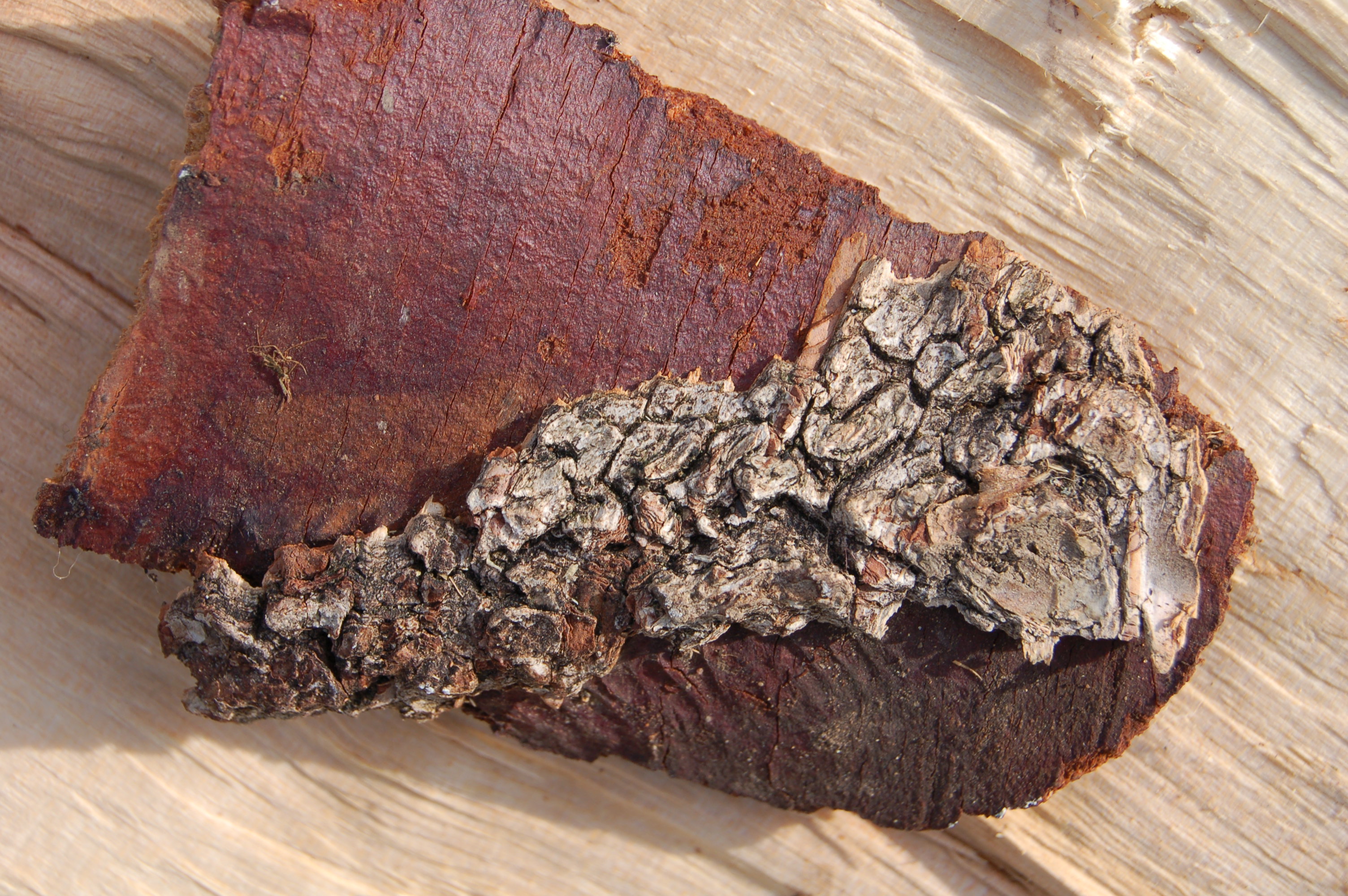
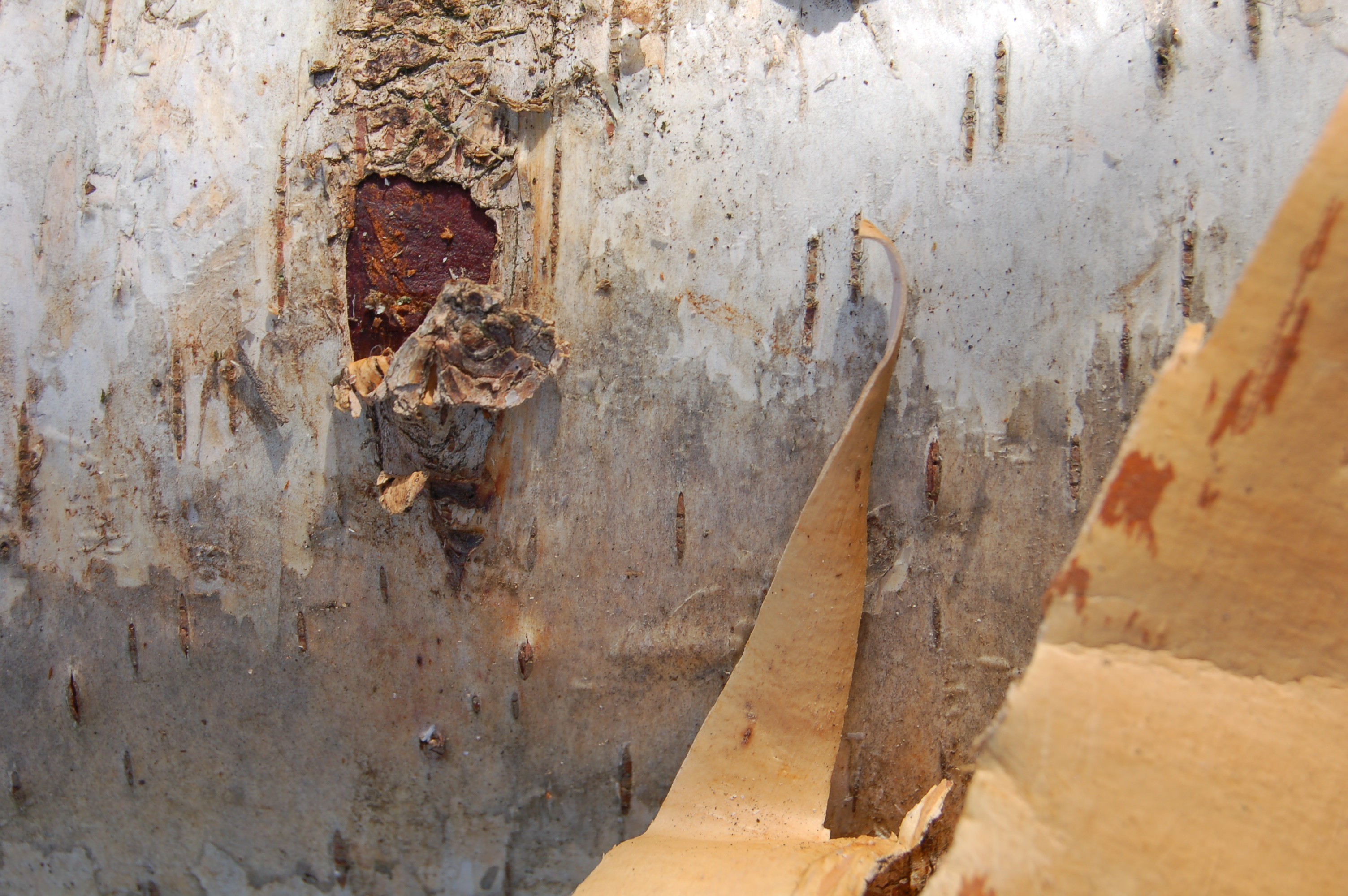
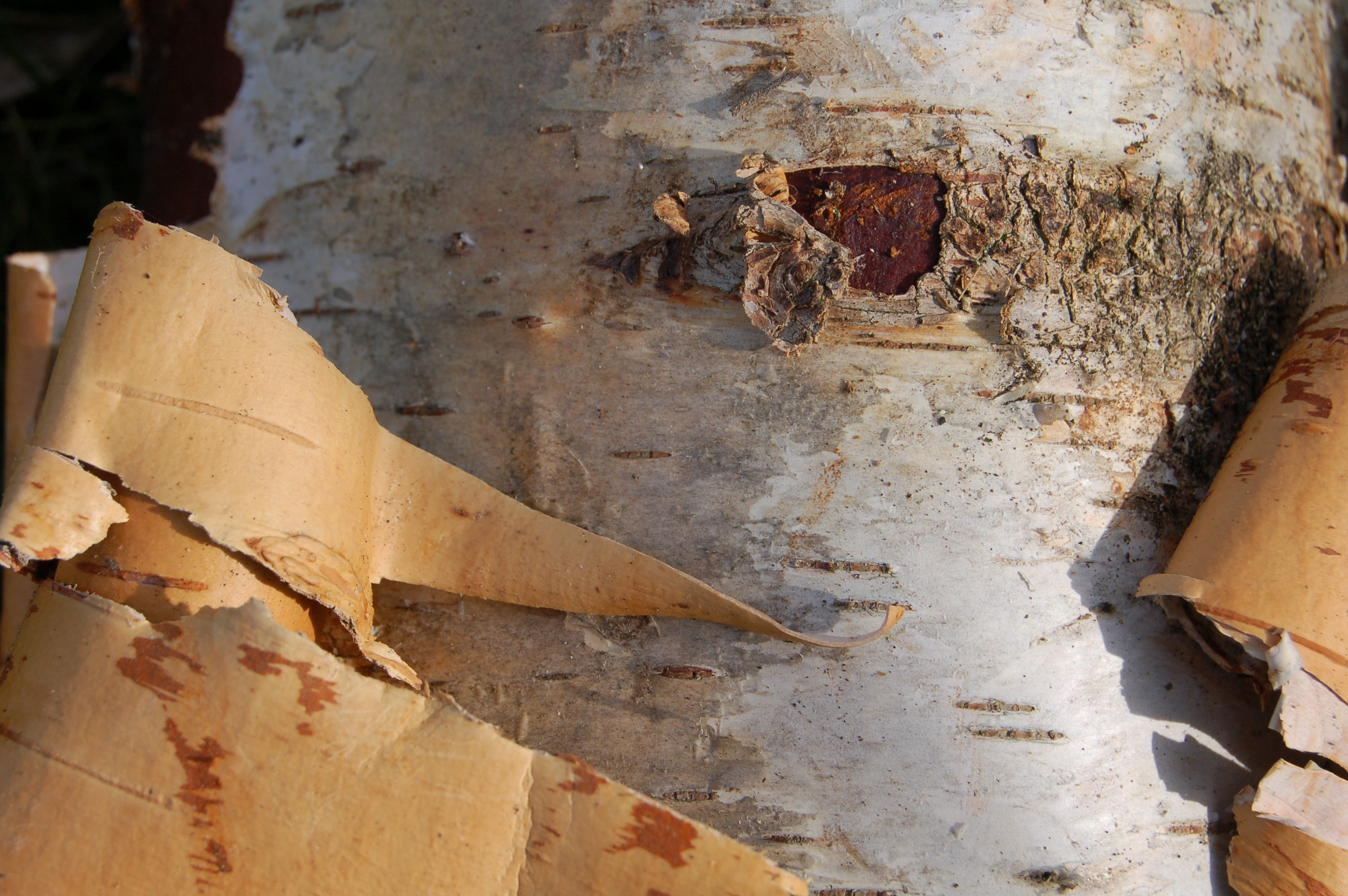
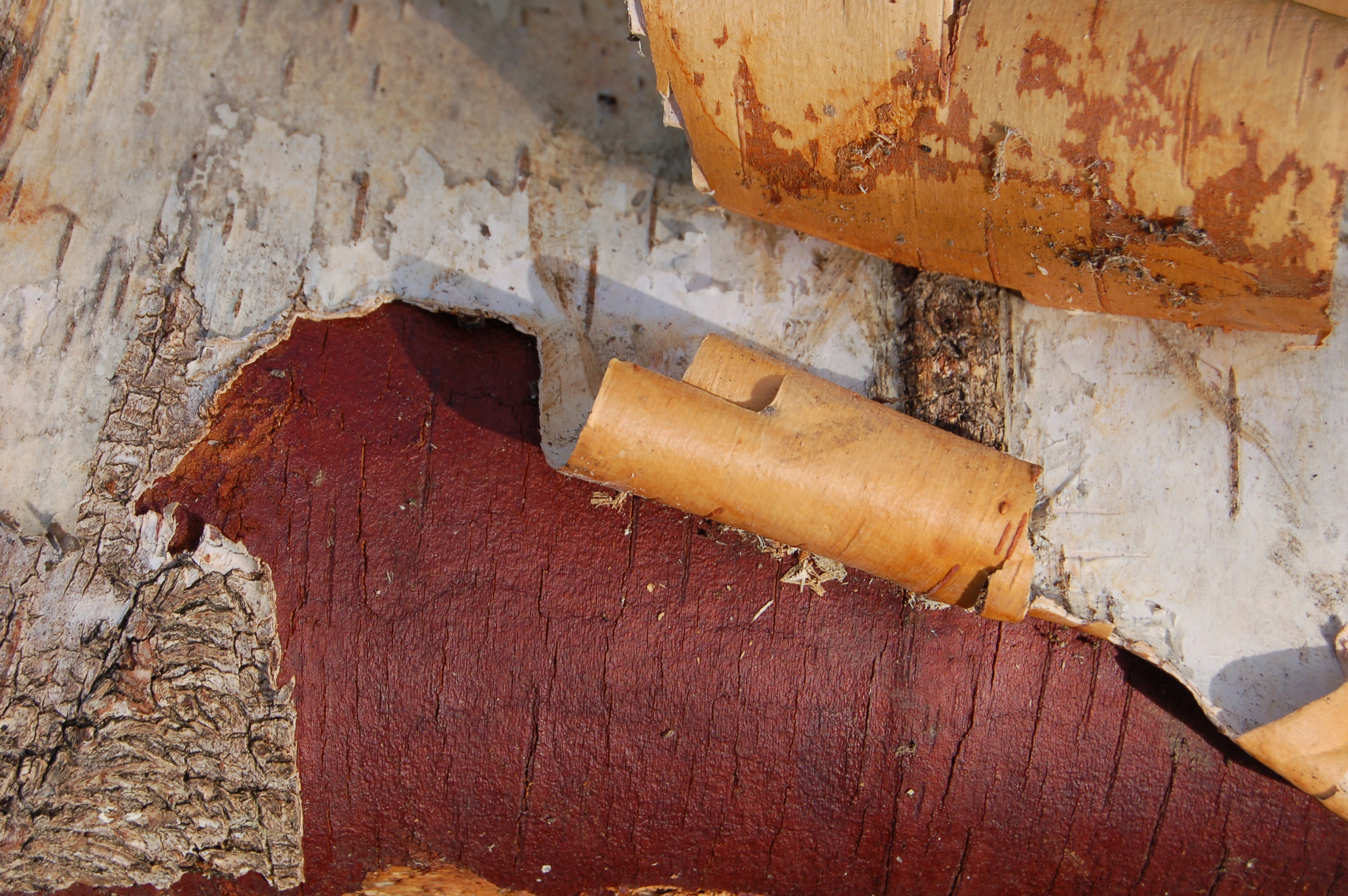
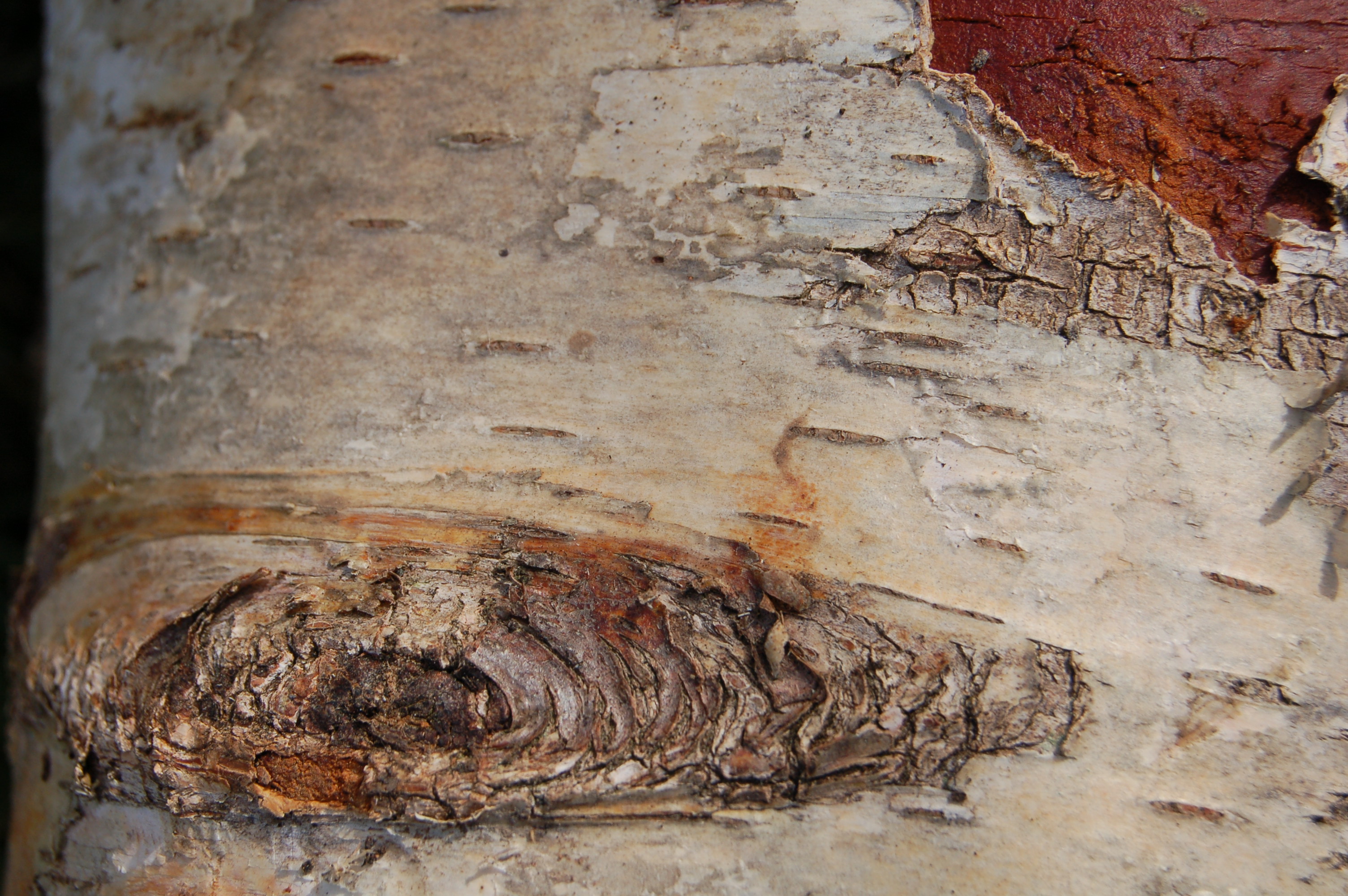
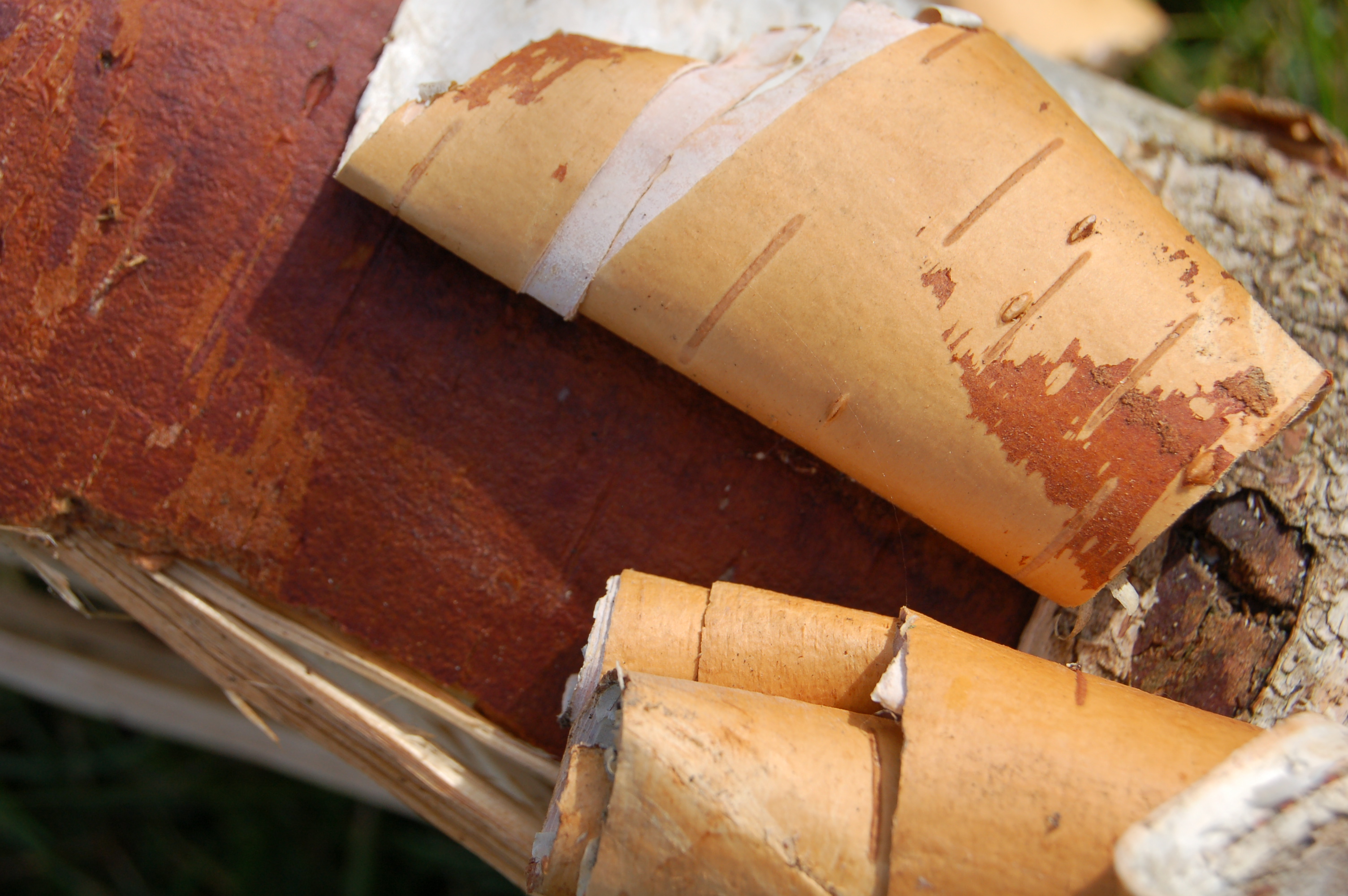
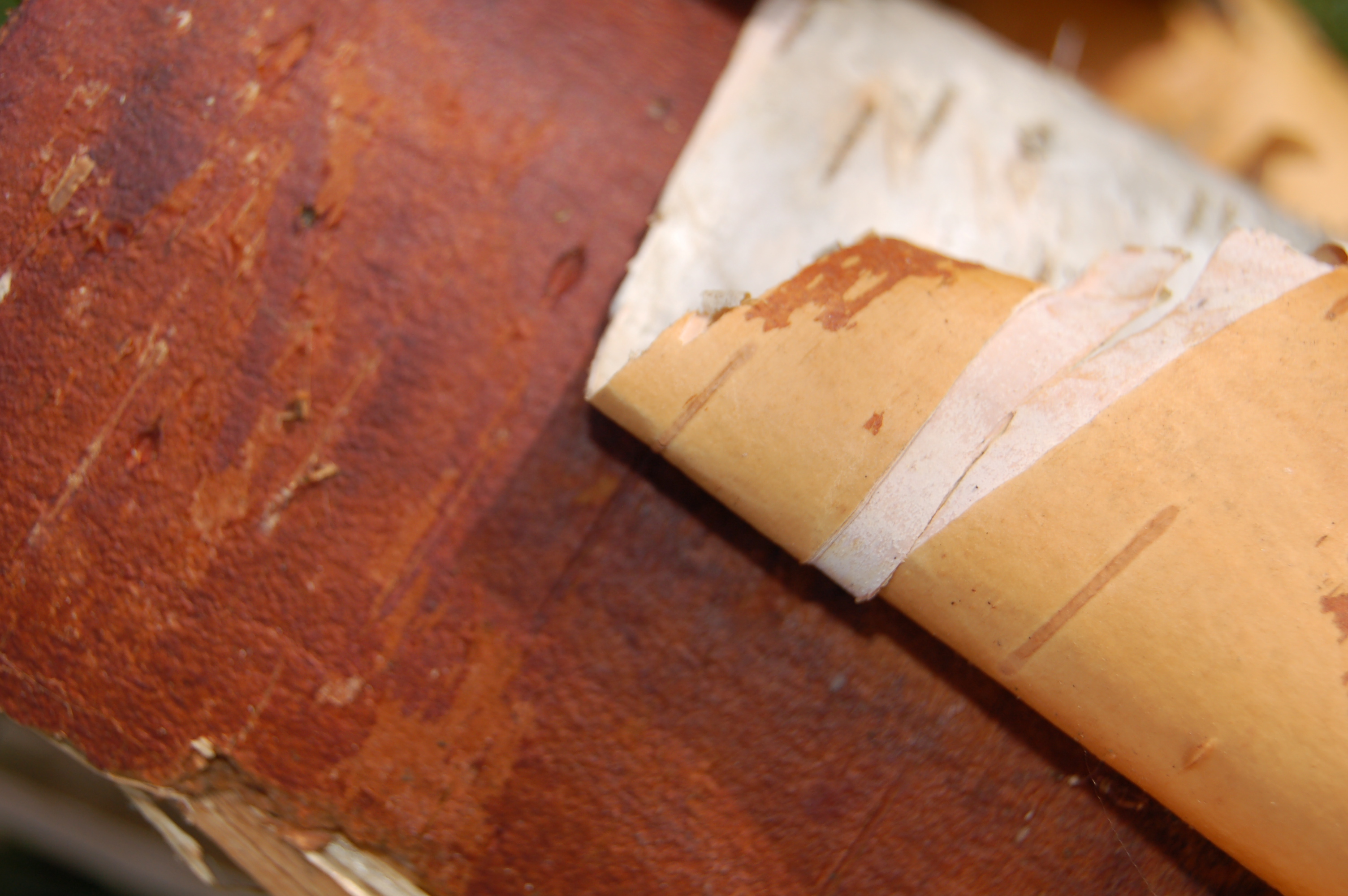
Recently I published a post about one tree, today I follow up with a post about two logs. Of course they are from Silver Birch trees, my favourite trees. When we have our log supply for the winter delivered the birch logs always look so colourful and full of textures. These two started getting more colourful and as the bark dried and peeled the textures got more interesting.

So I popped them down on the back lawn and took these shots. Please enjoy! You just have to like the curly bits! Look closely and you will find landscapes in miniature brought out by the bright sunlight.

2014 03 14_7104 2014 03 14_7105 2014 03 14_7106 2014 03 14_7107 2014 03 14_7108 2014 03 14_7109 2014 03 14_7110 2014 03 14_7112 2014 03 14_7113 2014 03 14_7111 2014 03 14_7114 2014 03 14_7115 2014 03 14_7116 2014 03 14_7117 2014 03 14_7118 2014 03 14_7119 2014 03 14_7120 2014 03 14_7121

Categories
landscapes outdoor sculpture Yorkshire

A Week of Culture – Part Three – My Favourites at the YSP

For this third post in the Week of culture I promised to share with you some of my favourite  scultptors who have created pieces to display outdoors. Yorkshire Sculpture Park is the ideal setting with its acres of grounds which was an area of parkland associated with a grand house. The sloping hillsides, the lake and woodland areas provide ideal settings for pieces of outdoor sculpture for both pure sculptors and land artists.

On our visit this winter the favourites we enjoyed were Barbara Hepworth, Henry Moore, David Nash and Richard Long.

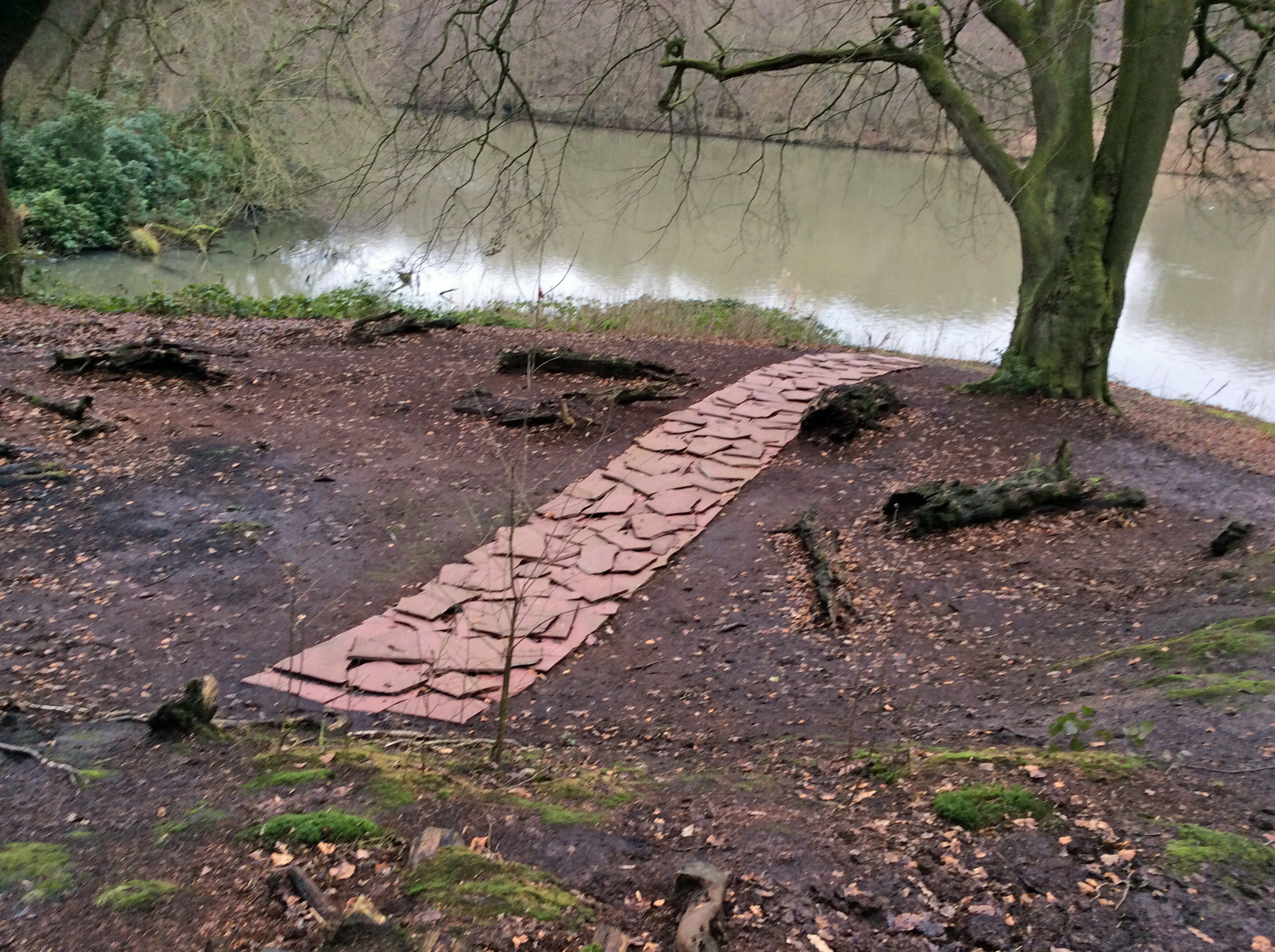
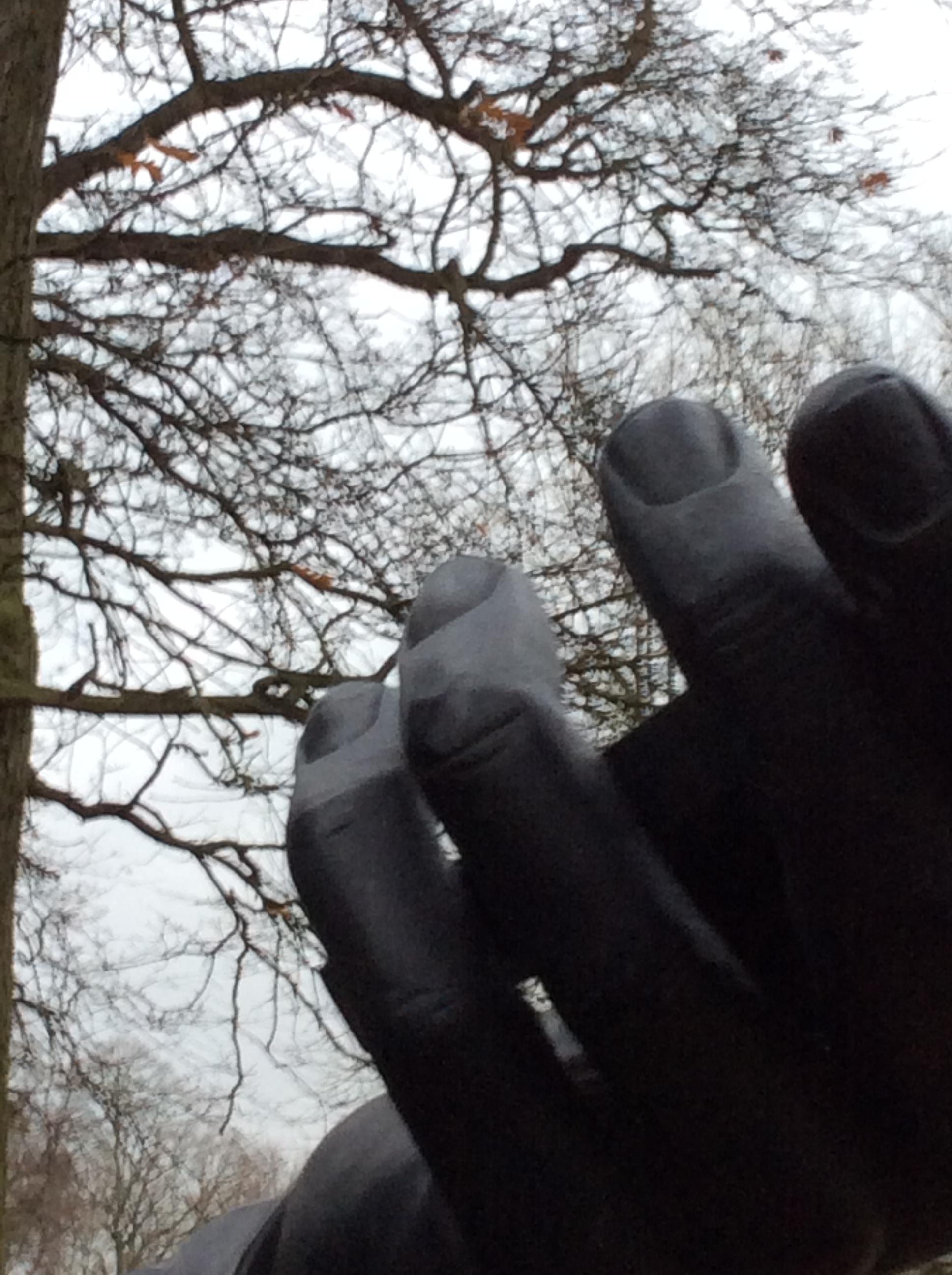
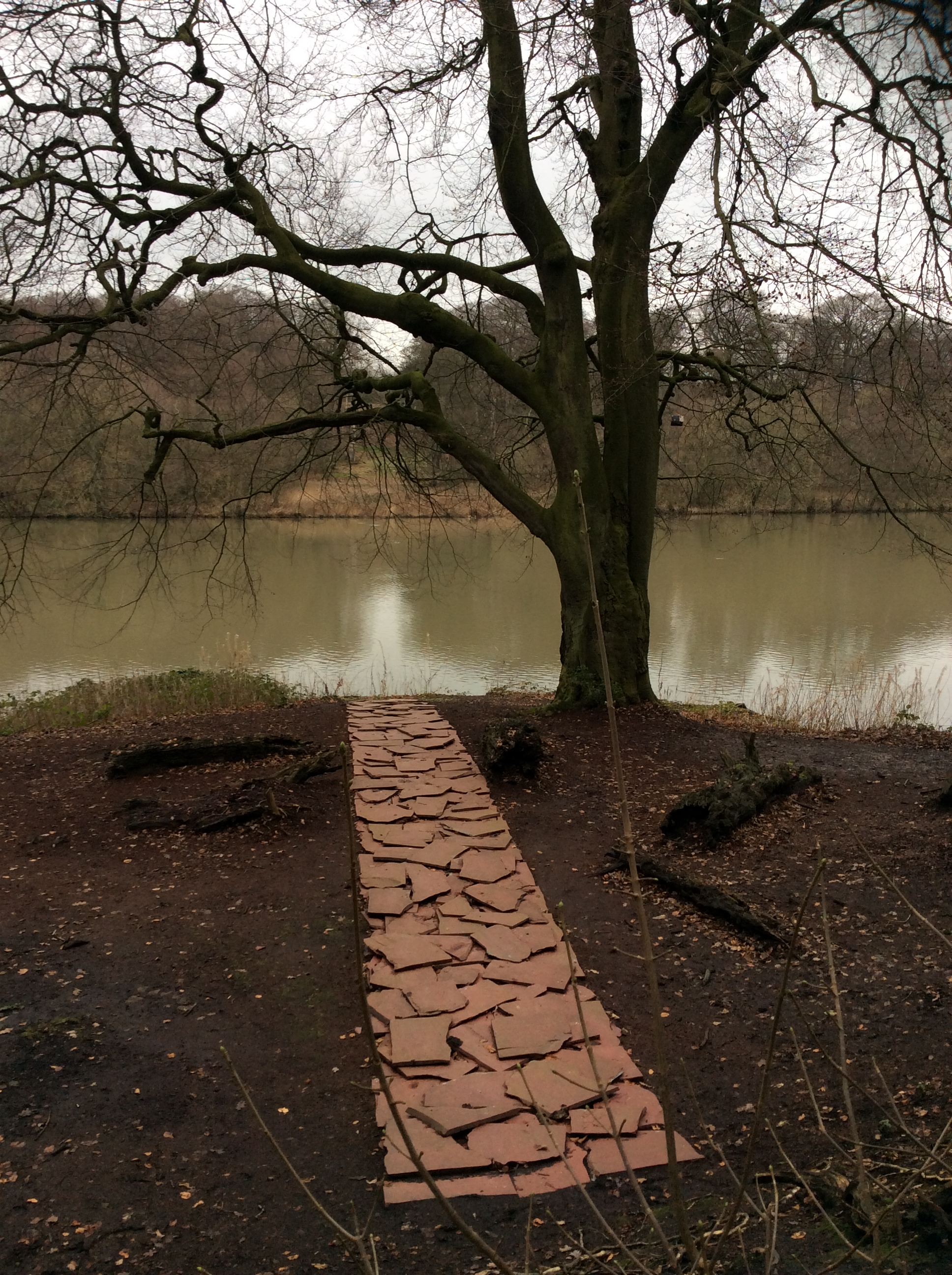
I shall begin with a piece by Richard Long simply because this is the first time we have ever seen any of his work. Much of his work is based on a line, a walk or circles. He is the best known British land artist famous for his work made while walking. He has been honoured with a CBE for his art, the land art, sculpture, photography and paintings and in 1989 received the Turner Prize. At the sculpture park we had to walk along the shores of the lake through woodlands before we found this piece. The photo was taken on my i Pad so do not do the piece justice. The stone pieces were of red sandstone.

2014 01 26_6358_edited-1 2014 01 26_6356_edited-1 2014 01 26_6355_edited-1 2014 01 26_6354_edited-1 2014 01 26_6353_edited-1

My second artist to feature is David Nash who has a few pieces permanently at Yorkshire Sculpture Park but we have also seen  a massive exhibition of hs work here a few year ago after his year as artist in residence there. Both pieces we saw on this visit are in the woodland with one on the banks of the lake on the shore between the wood and the water.

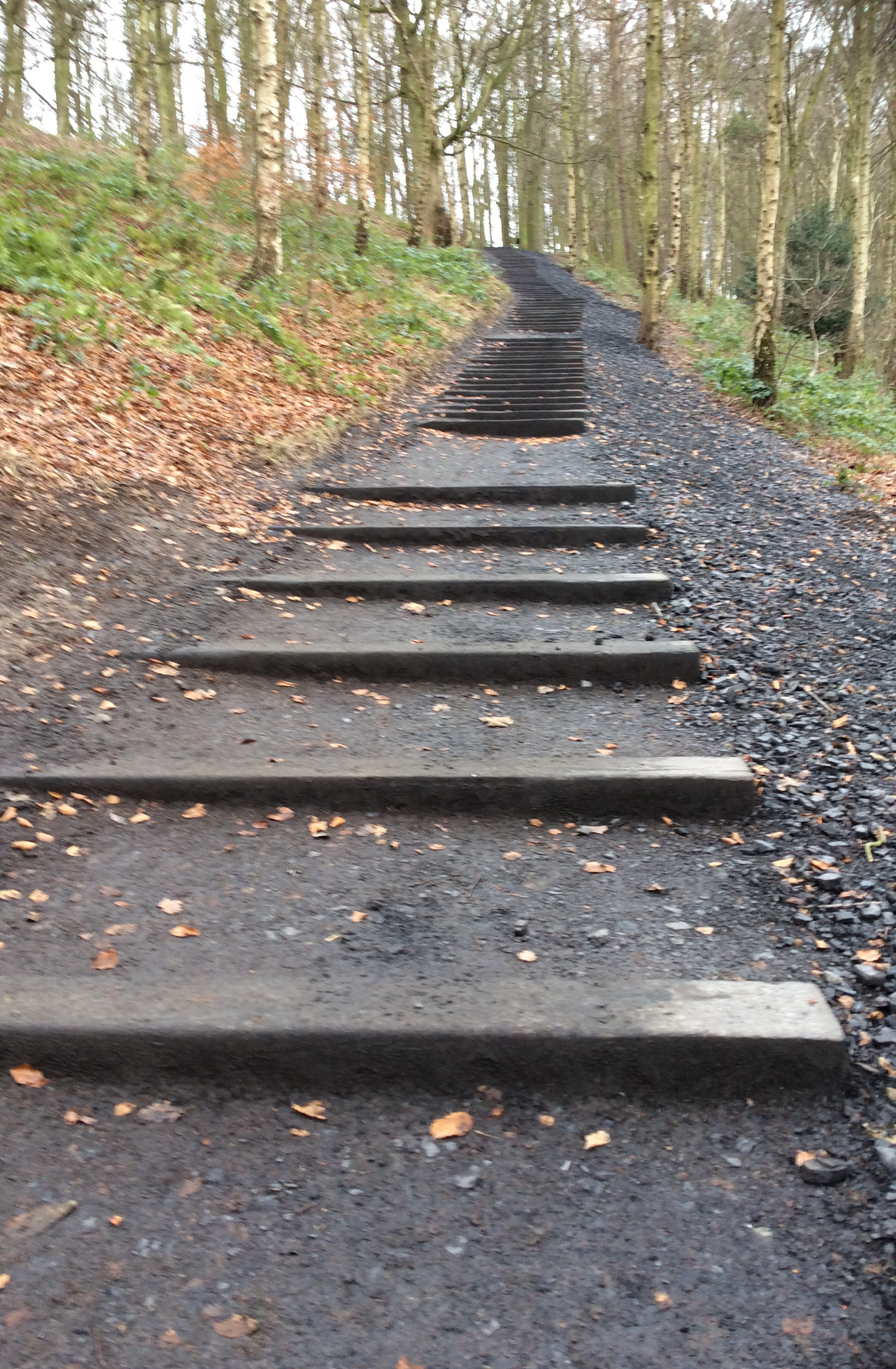
The first of his works we found was entitled “71 Steps” and it climbed a hillside up through the wooded slope. The first few photos are to set the scene.

2014 01 26_6349_edited-1 2014 01 26_6348_edited-1

2014 01 26_6345_edited-1 2014 01 26_6346_edited-1  2014 01 26_6344_edited-1

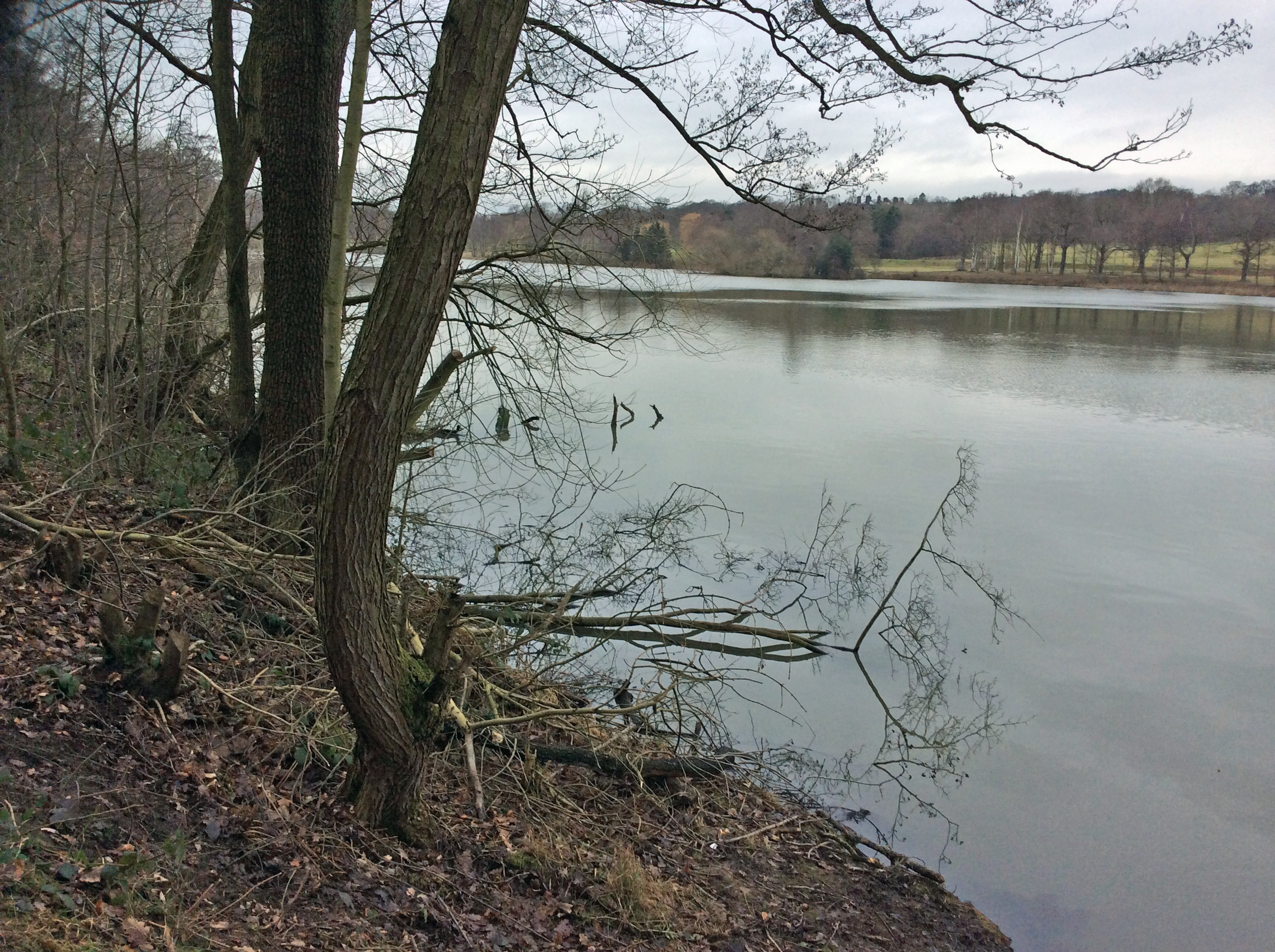
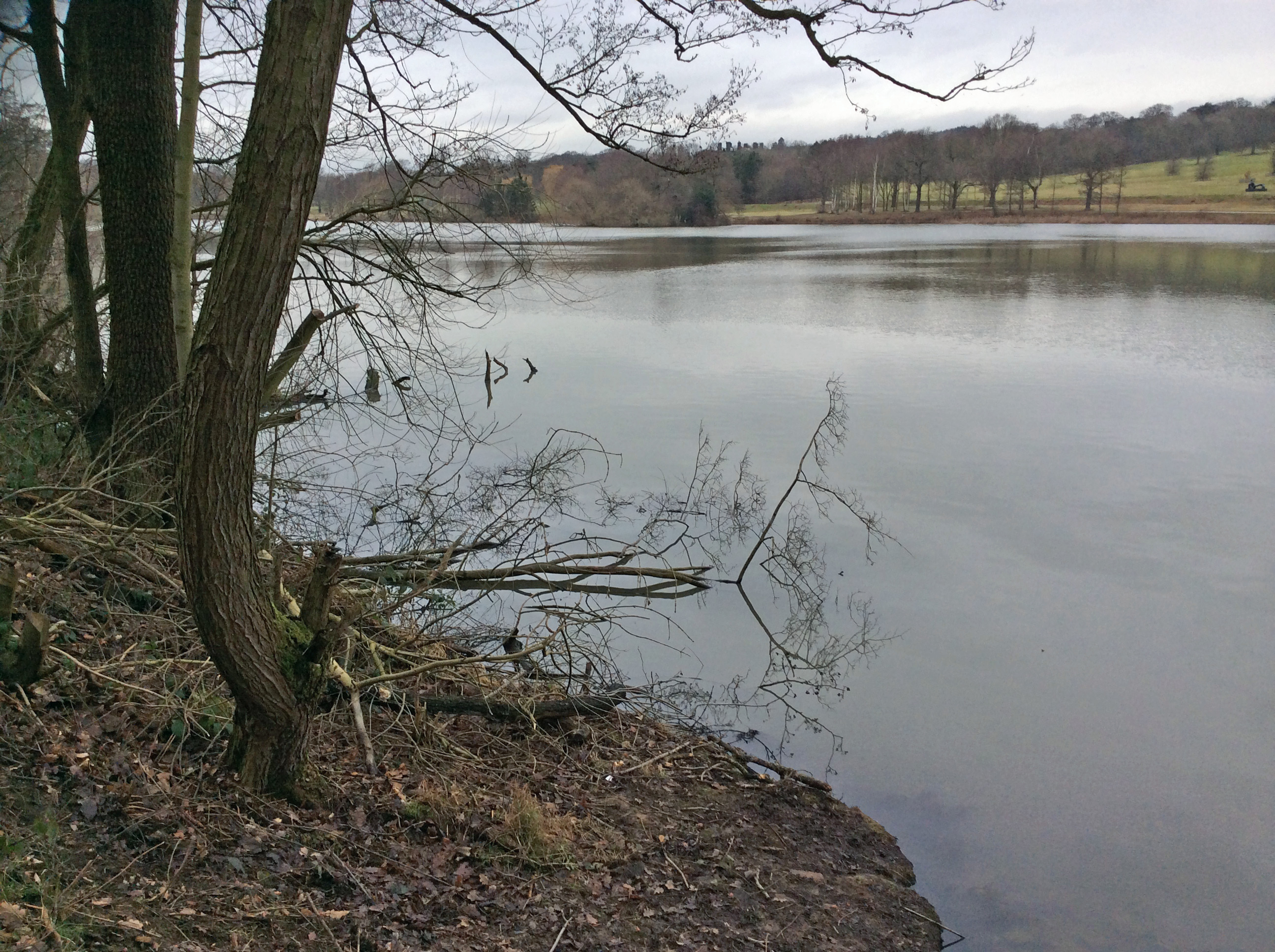
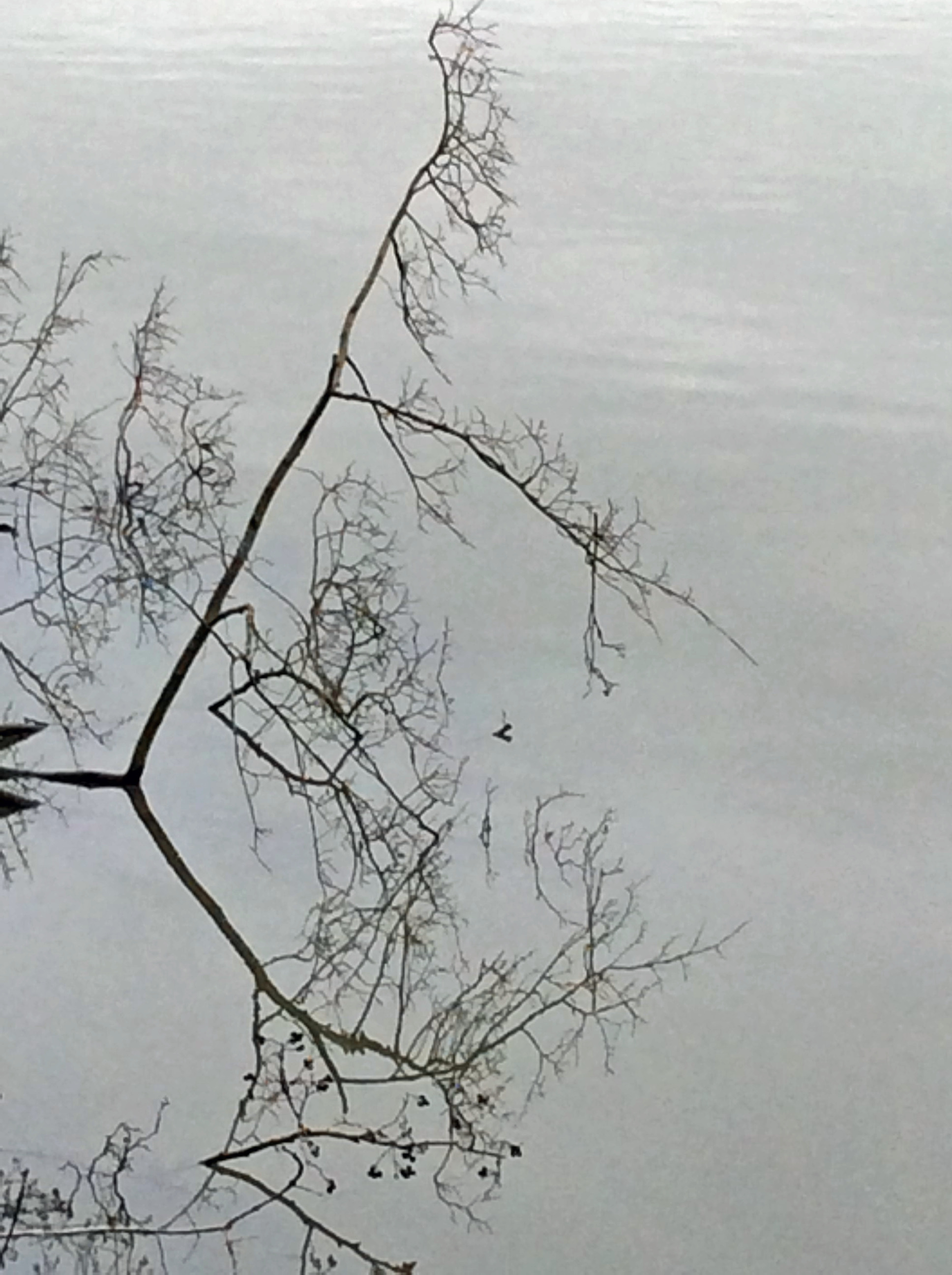
Close by we spotted these beautiful pieces of wood and tree sculpted by Mother Nature and reflected in the water. They were flowing out into the lake.

2014 01 26_6350_edited-1 2014 01 26_6351_edited-1

2014 01 26_6352_edited-1

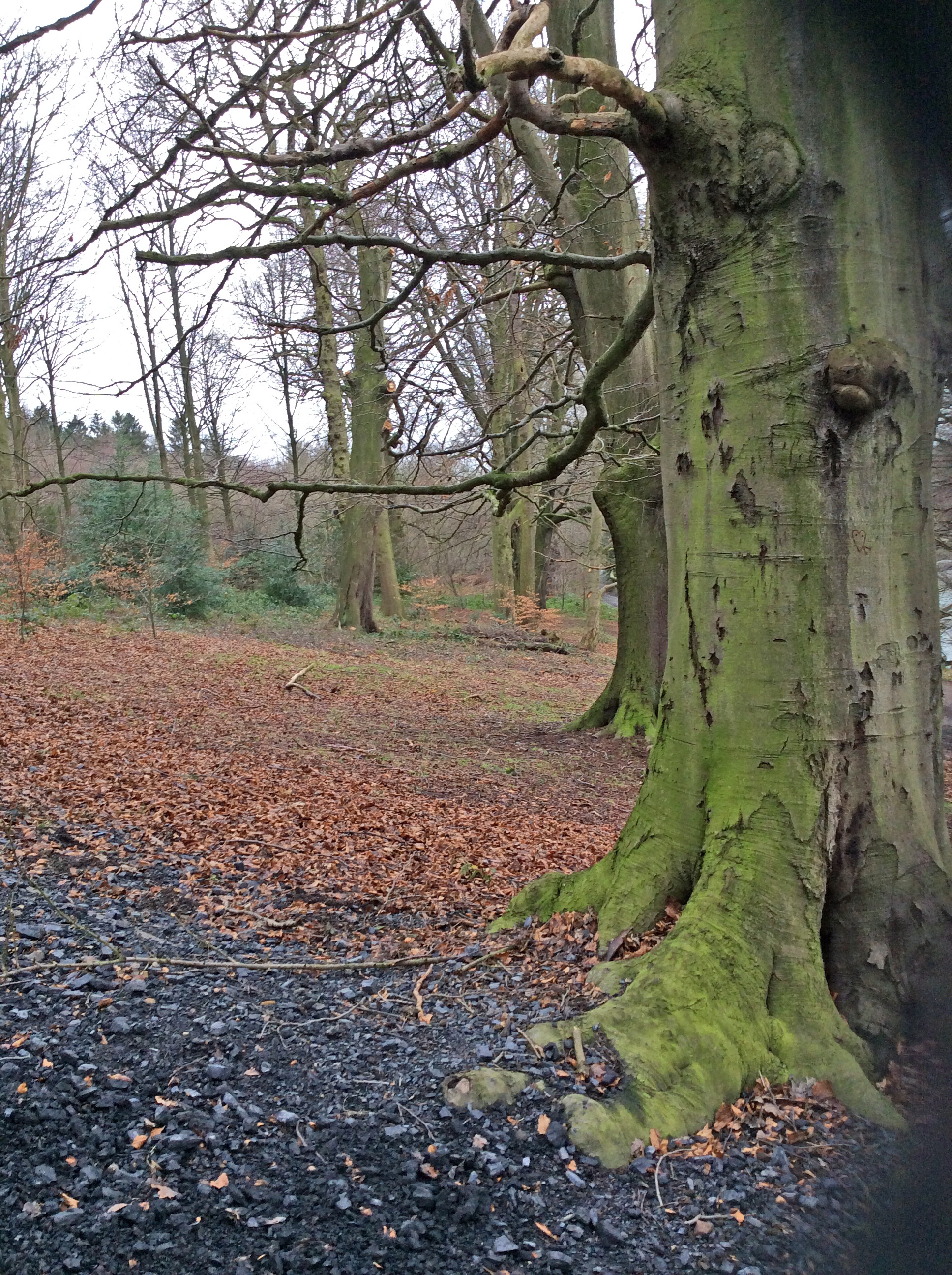
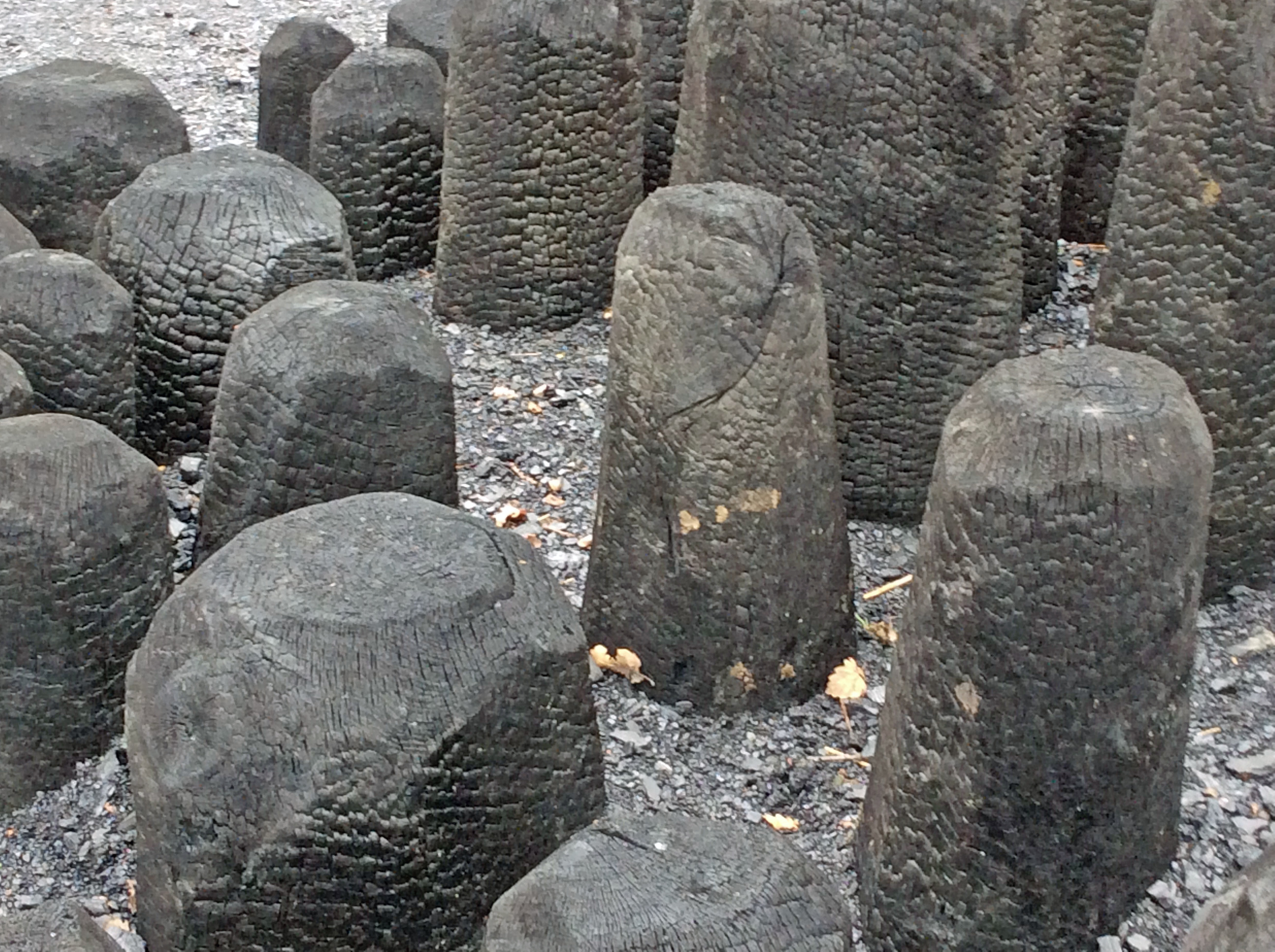
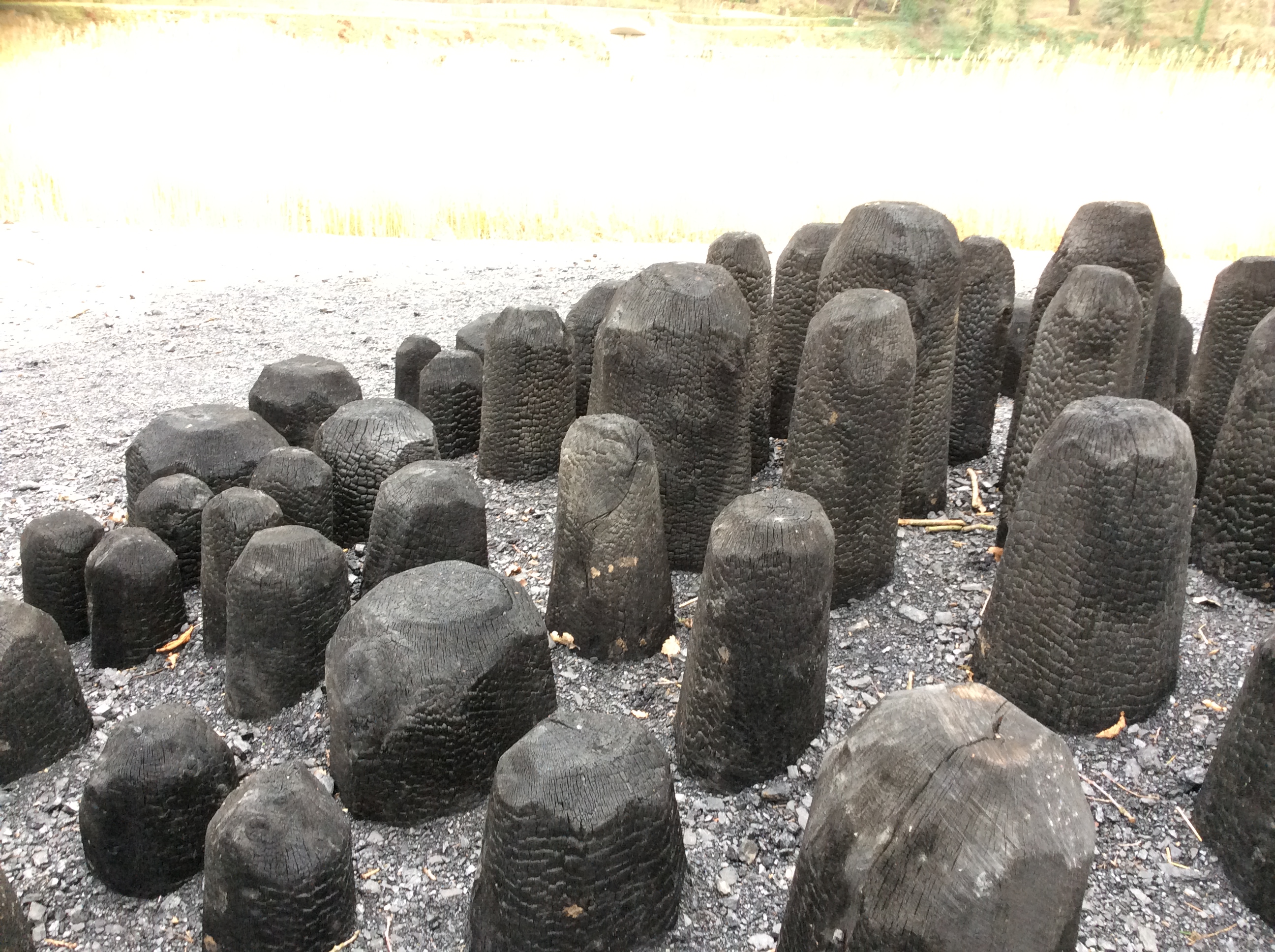
The second of the David Nash pieces was closer to the water’s edge between the trees and the biscuit coloured leaves. Just like the steps the wood had been scorched by burning. Sadly the camera on my i Pad couldn’t cope with the contrasts so the beautiful colour of the dried reeds has burnt out.

2014 01 26_6337_edited-1 2014 01 26_6338_edited-1 2014 01 26_6339_edited-1 2014 01 26_6341_edited-1 2014 01 26_6342_edited-1 2014 01 26_6343_edited-1

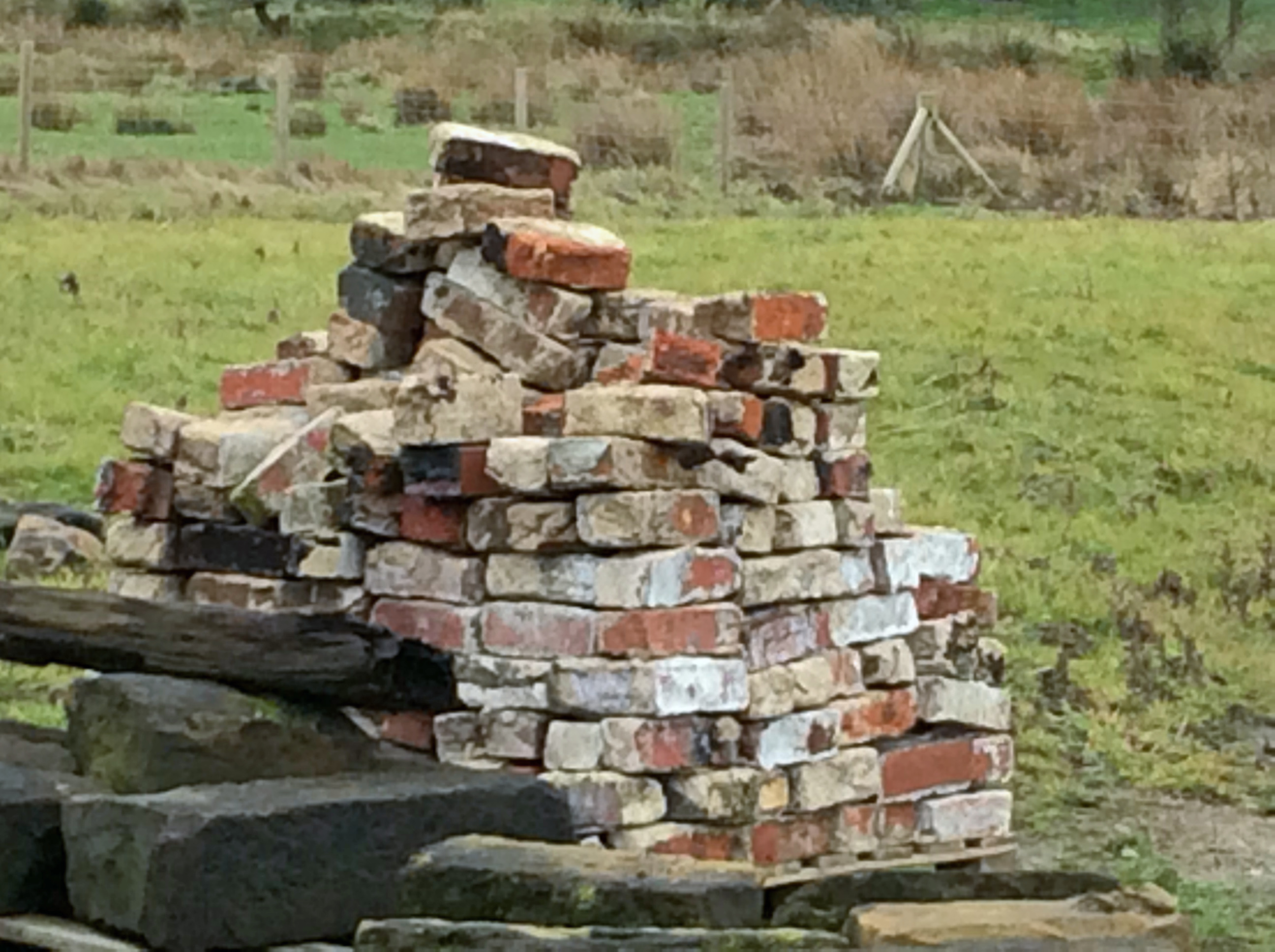
On a piece of rough ground close to the lake we came across a builder’s store where old bricks and building stones were being kept whilst work was being completed on an old chapel in the grounds. We couldn’t help but wonder what a good land artist would have created using these pieces! Close by mother Nature had created a piece of her own land art based on a fallen tree.

2014 01 26_6335_edited-1 2014 01 26_6336_edited-1

2014 01 26_6334_edited-1

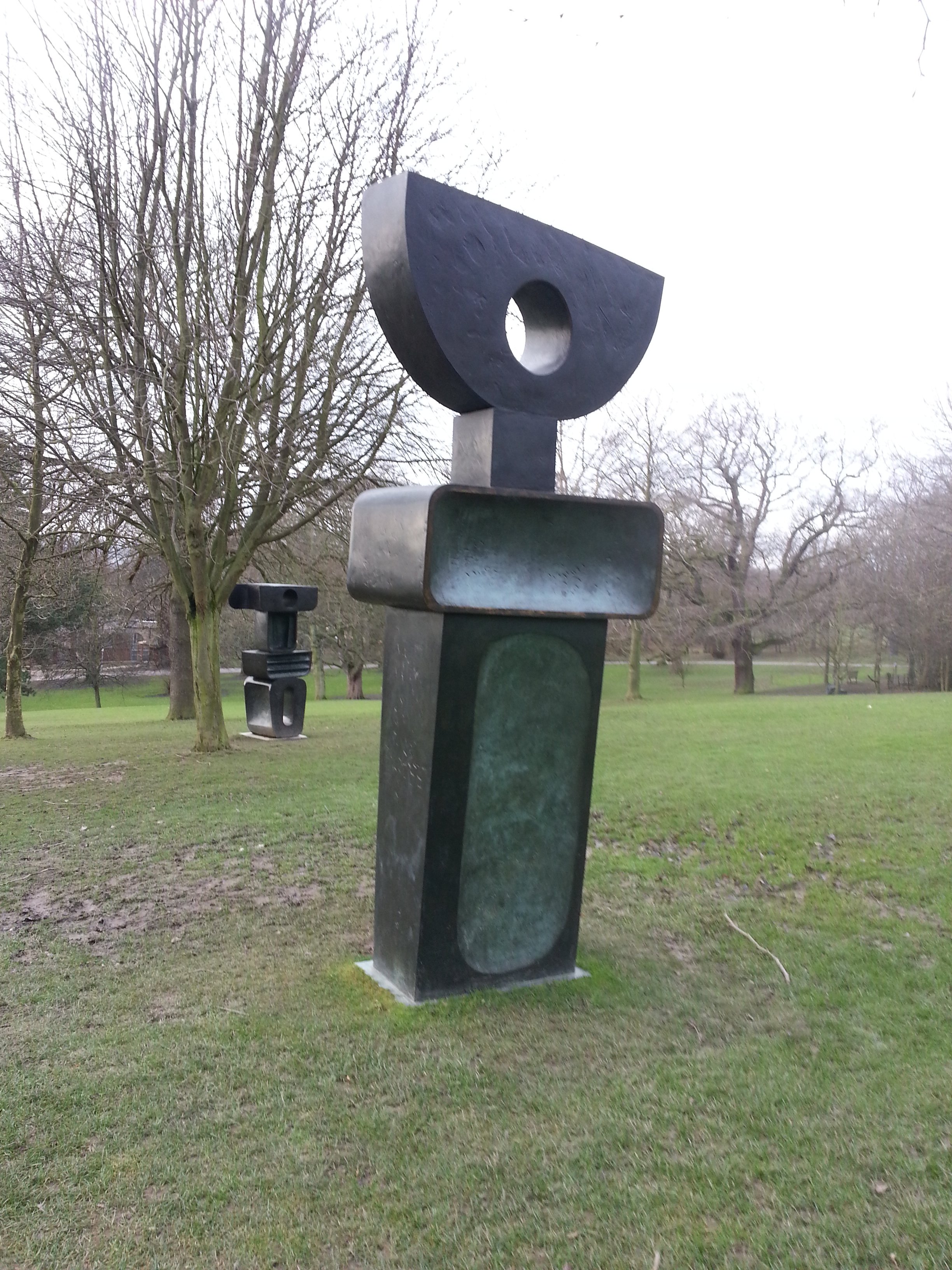
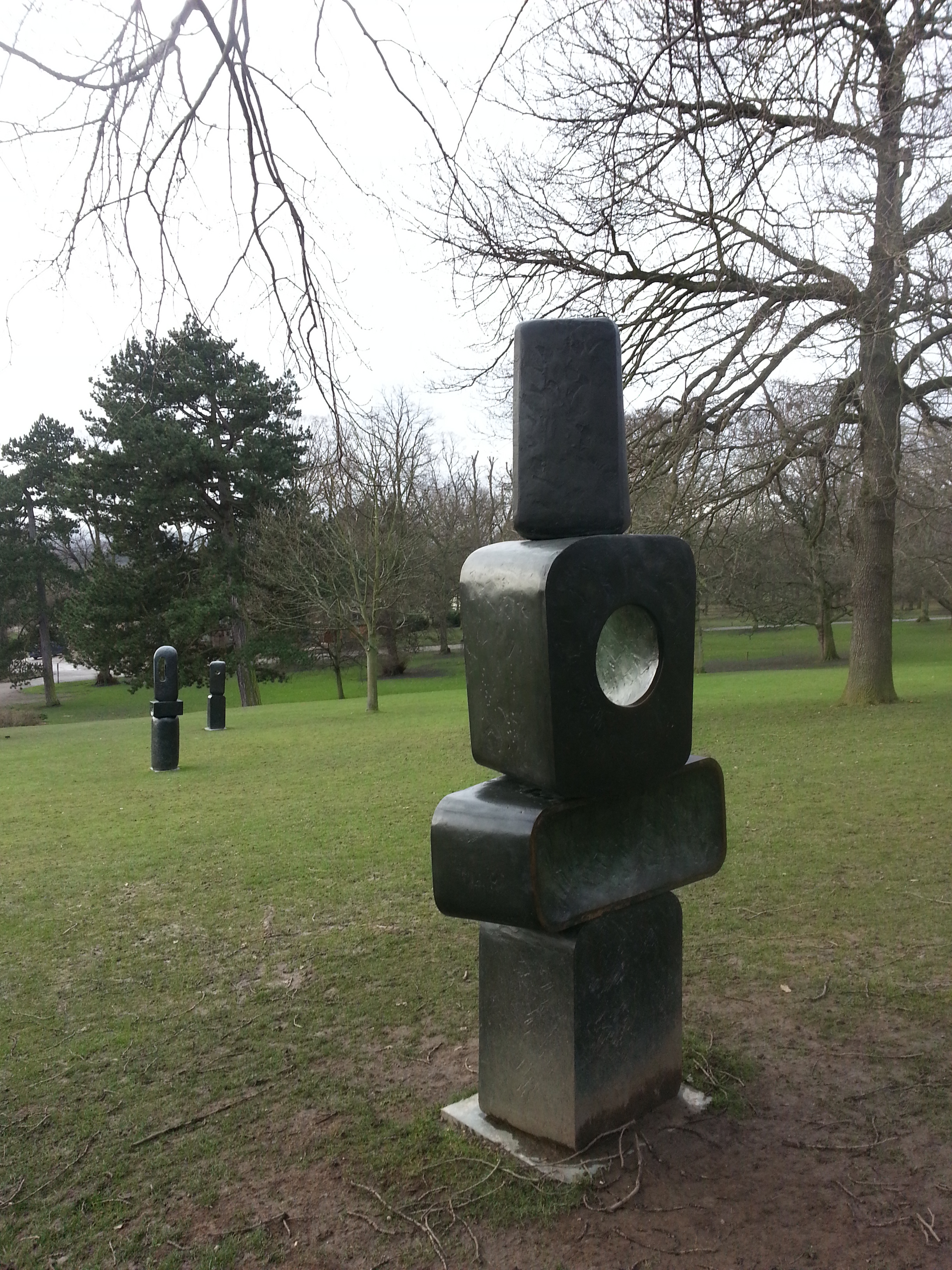
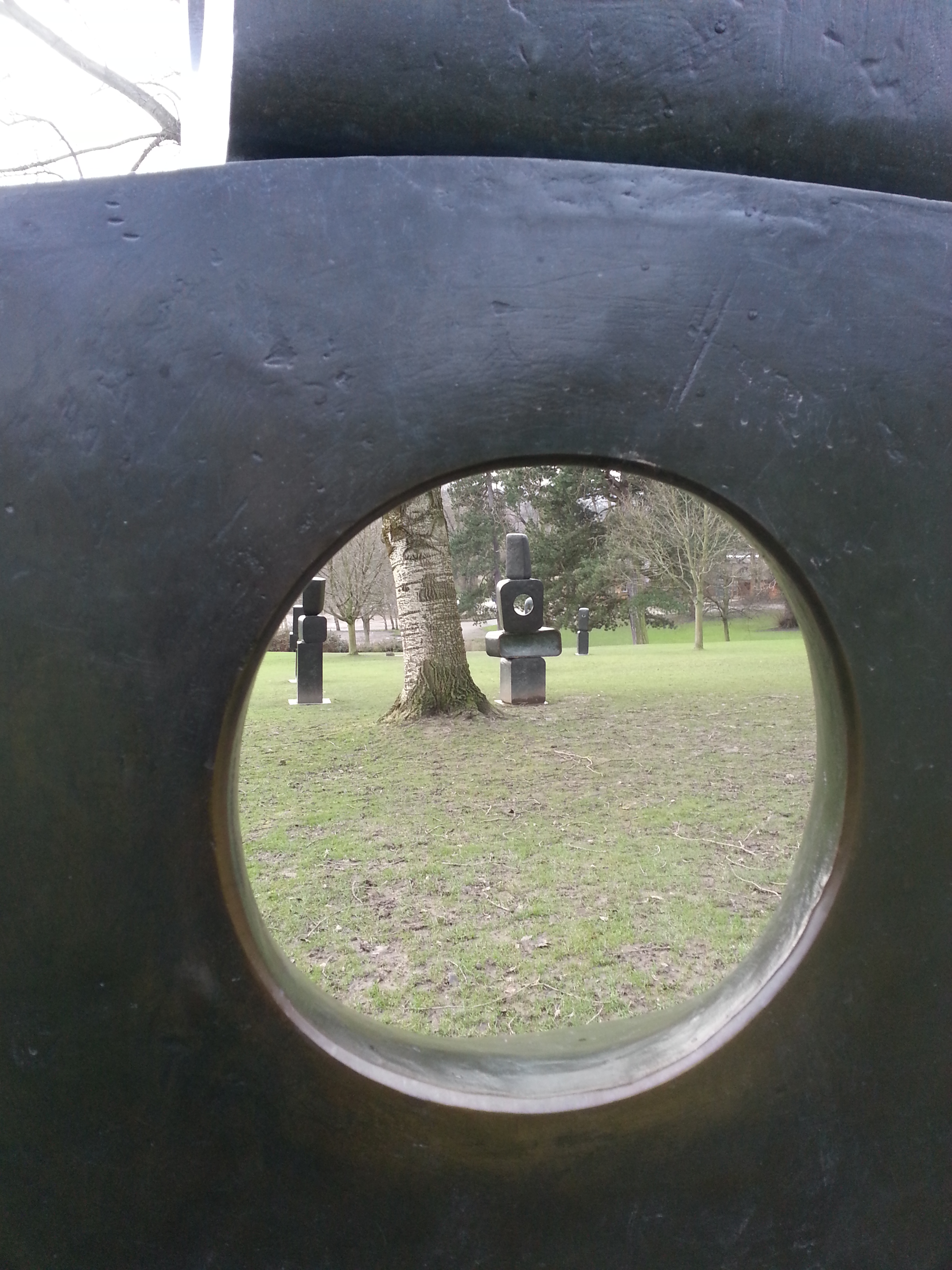
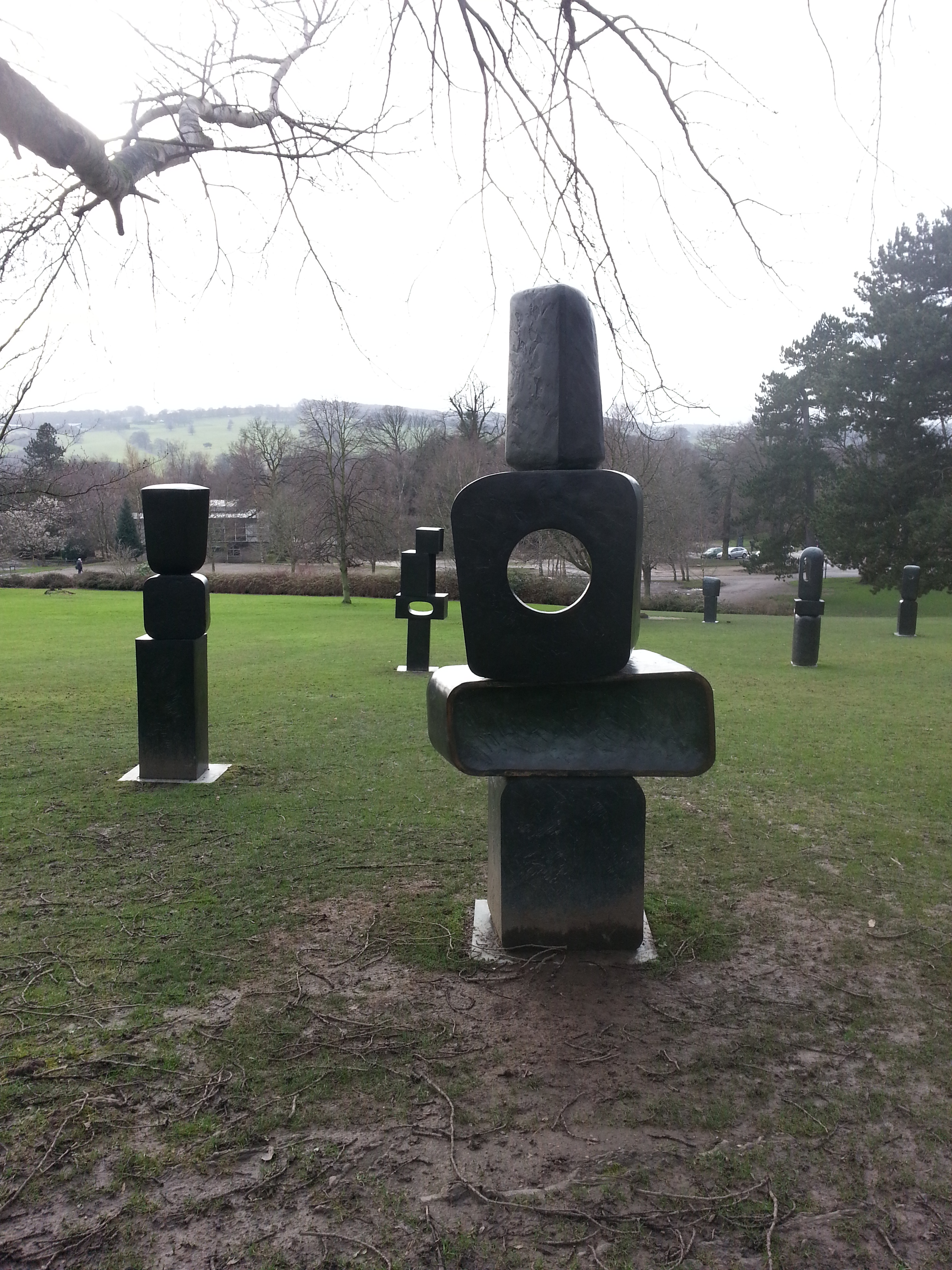
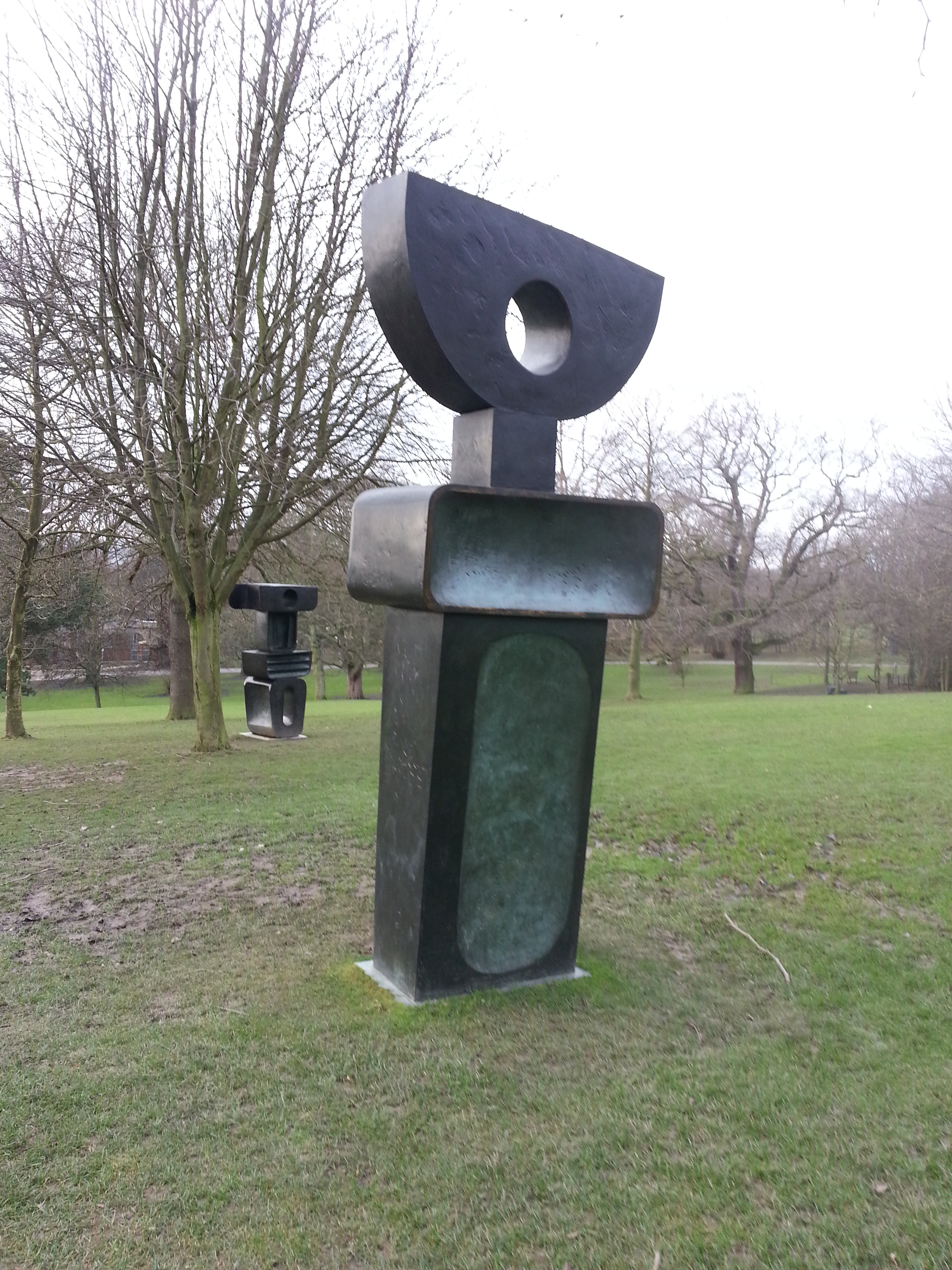
Barbara Hepworth’s work is well represented here at the sculpture park as her pieces called the “Family of Man” are displayed most sympathetically on a sloping piece of sparcely planted woodland. On the way to find these pieces we passed this interesting sign where the face of our Labour Party leader had been added. Similar photos of faces had been pasted to trees but the weather had got the better of these.

2014 01 26_6234

I have included some close up photos of a few of the pieces by Barbara Hepworth to show where the hand of the artist has left her marks. I enjoy studying the texture of any piece of sculpture as it can be as important as the overall shape of the work.

2014 01 26_6237 2014 01 26_6241 2014 01 26_6240 2014 01 26_6239 2014 01 26_6238   2014 01 26_6245 2014 01 26_6246 2014 01 26_6247

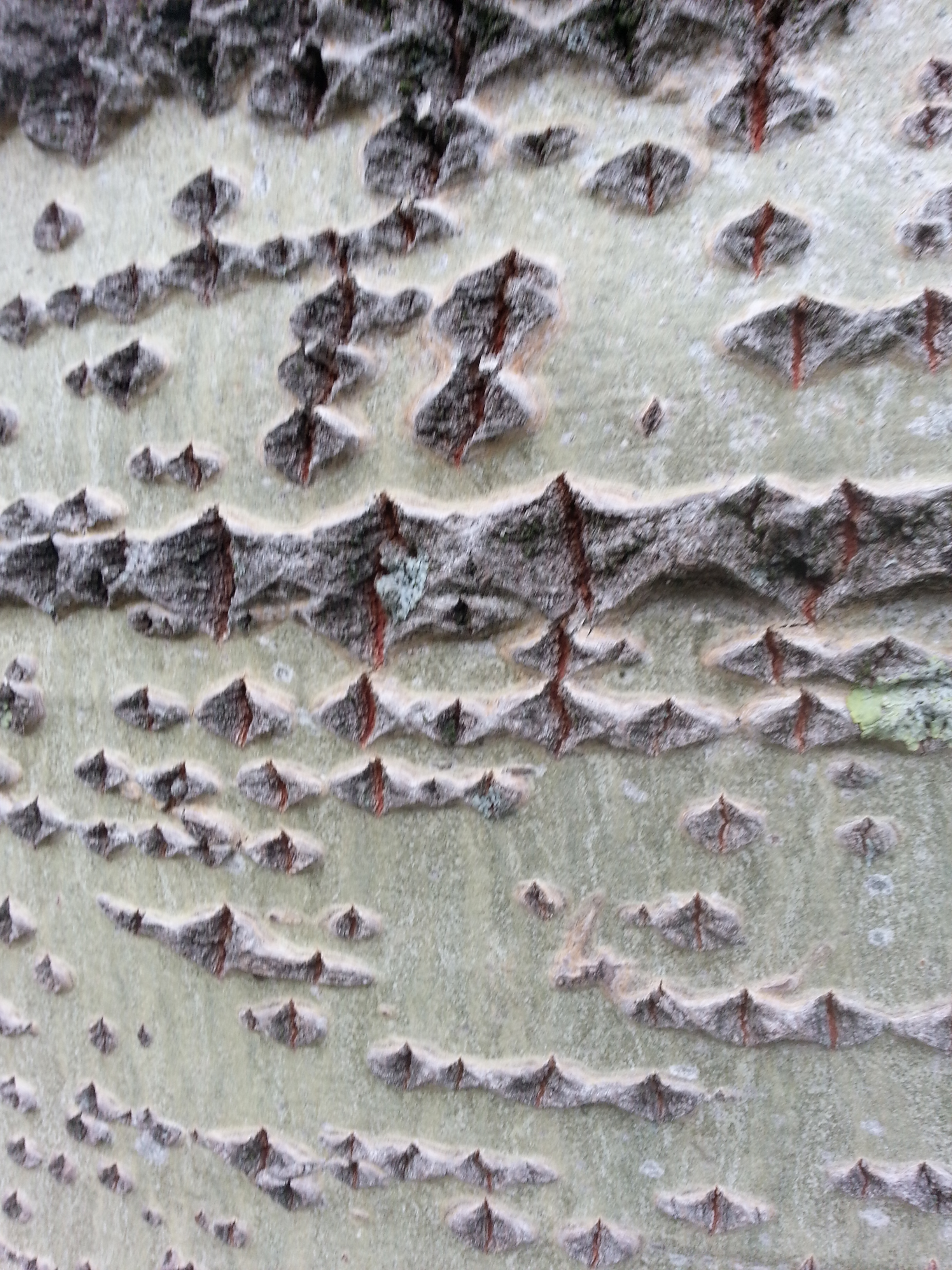
The bark of this tree caught my eye as we moved between the Barbara Hepworth pieces. It was the texture that attracted me and the pattern of diamonds sculpted into the bark. Even the carved graffiti seemed to add to the character of the tree, telling a part of its story.

2014 01 26_6243 2014 01 26_6244

2014 01 26_6242

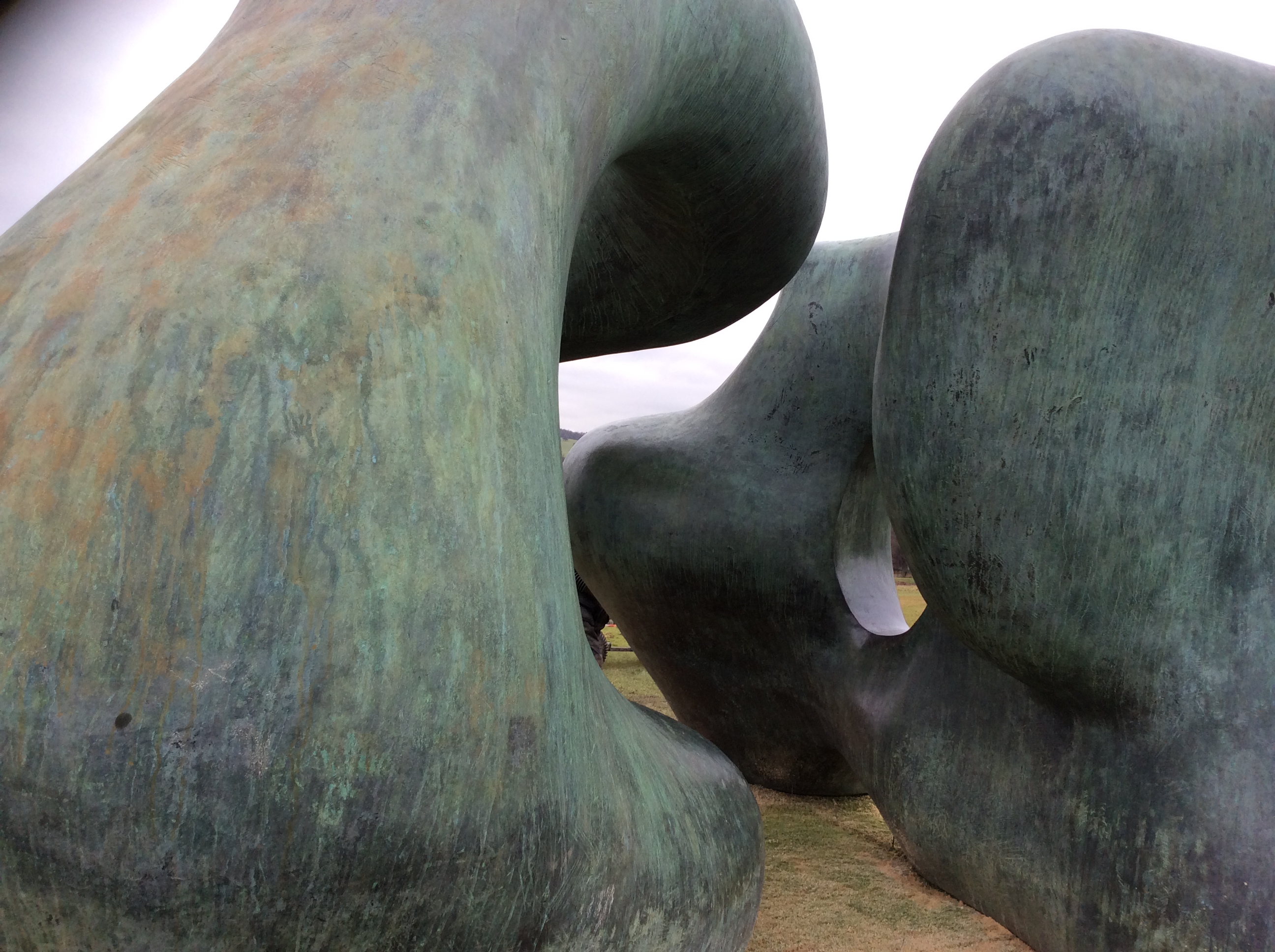
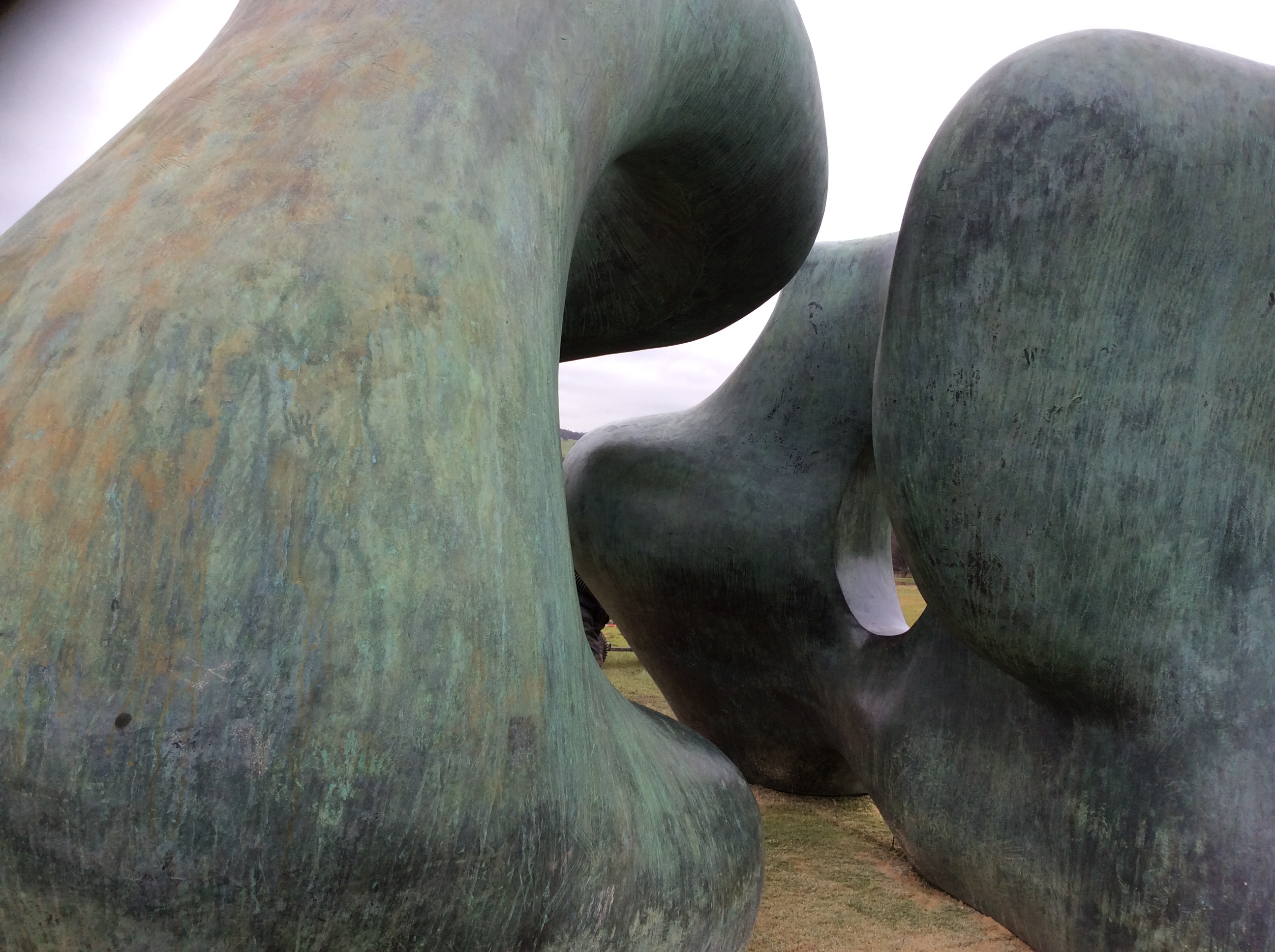
You can see from the photo of Jude below that the weather was not making wandering around the site too easy. The ground beneath our feet was very slippery. This meant that when we came to seek out the work of Henry Moore we found it difficult to get to them as the ground was impossible to walk on due to the steep sloping land where they were situated.

But we can enjoy this one piece.

2014 01 26_6235

2014 01 26_6333 2014 01 26_6332

For part 4 of this week of culture we move on to the Hepworth Wakefield Gallery in the city of Wakefield itself.

Categories
gardens open to the public landscapes outdoor sculpture photography Yorkshire

A Week of Culture – Part 2 – Yorkshire Sculpture Park

At least once a year we go to the Yorkshire Sculpture Park so it was bound to be one of the venues on our cultural holiday. It is always a cold place and often wet and windy. We were bound to have rough weather as we were visiting in January during a particularly wet, windy winter. Thank goodness for the coffee shop which provided us several opportunities to warm back up. We arrived before it opened and became so absorbed in the special nature of this place that we left as the grounds were closing.

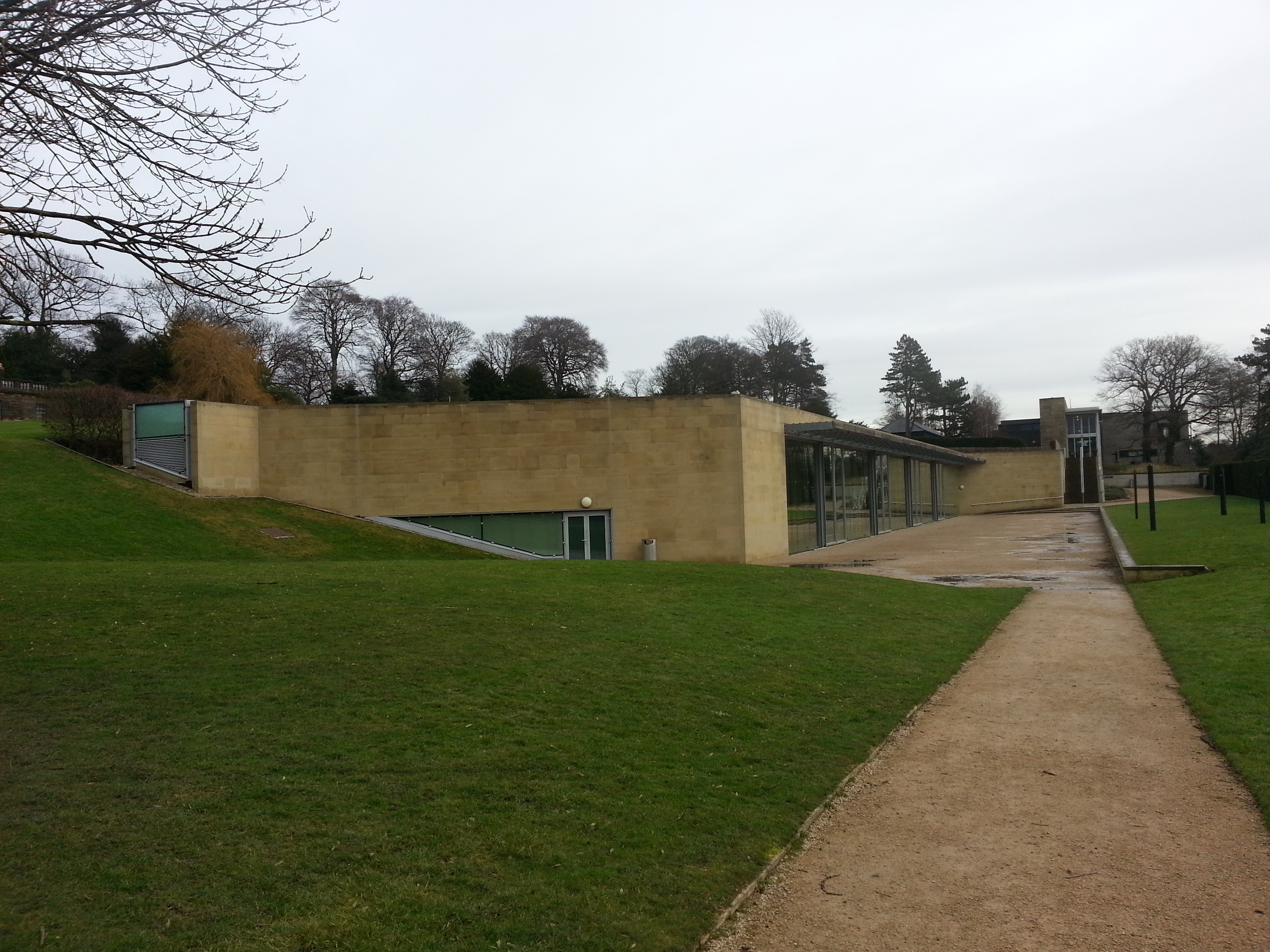
The four featured artists in early 2014 are Angie Lewin, Tom Price, Dennis Oppenheim and Awar Kanwatr, but as always there are resident pieces all around. Most of the pieces are sympathetically displayed around the grounds in the open grassland, under trees, alongside the lake and on grassed slopes. There is also a gallery where work can be displayed. It is a stunning building with galleries that provide beautiful display spaces. The first of the photos below show the building from the front whereas the second shows how it fits into the slope of the garden hidden by its green roof. All the lawn here is in fact the roof of the galleries.

2014 01 26_6205 2014 01 26_6206

The original red-bricked wall of the walled garden and its bothy are still here providing unusual display spaces. Alongside the wall we found these “sound benches” part of an exhibition of work by Amar Kanwar, a combination of film and installation.

2014 01 26_6207

2014 01 26_6209 2014 01 26_6208

The Bothy Gallery itself featured some of the work of sculpture Tom Price. Small bronzes are here to enjoy close up and a huge 9 feet tall figure entitled “Network” was to be searched for in the grounds. I found his work fascinating so it was a wonderful experience being so close to his pieces and his subjects are contemporary people worked in the traditional medium of bronze.

2014 01 26_6380 2014 01 26_6382 2014 01 26_6383 2014 01 26_6385 2014 01 26_6386 2014 01 26_6388

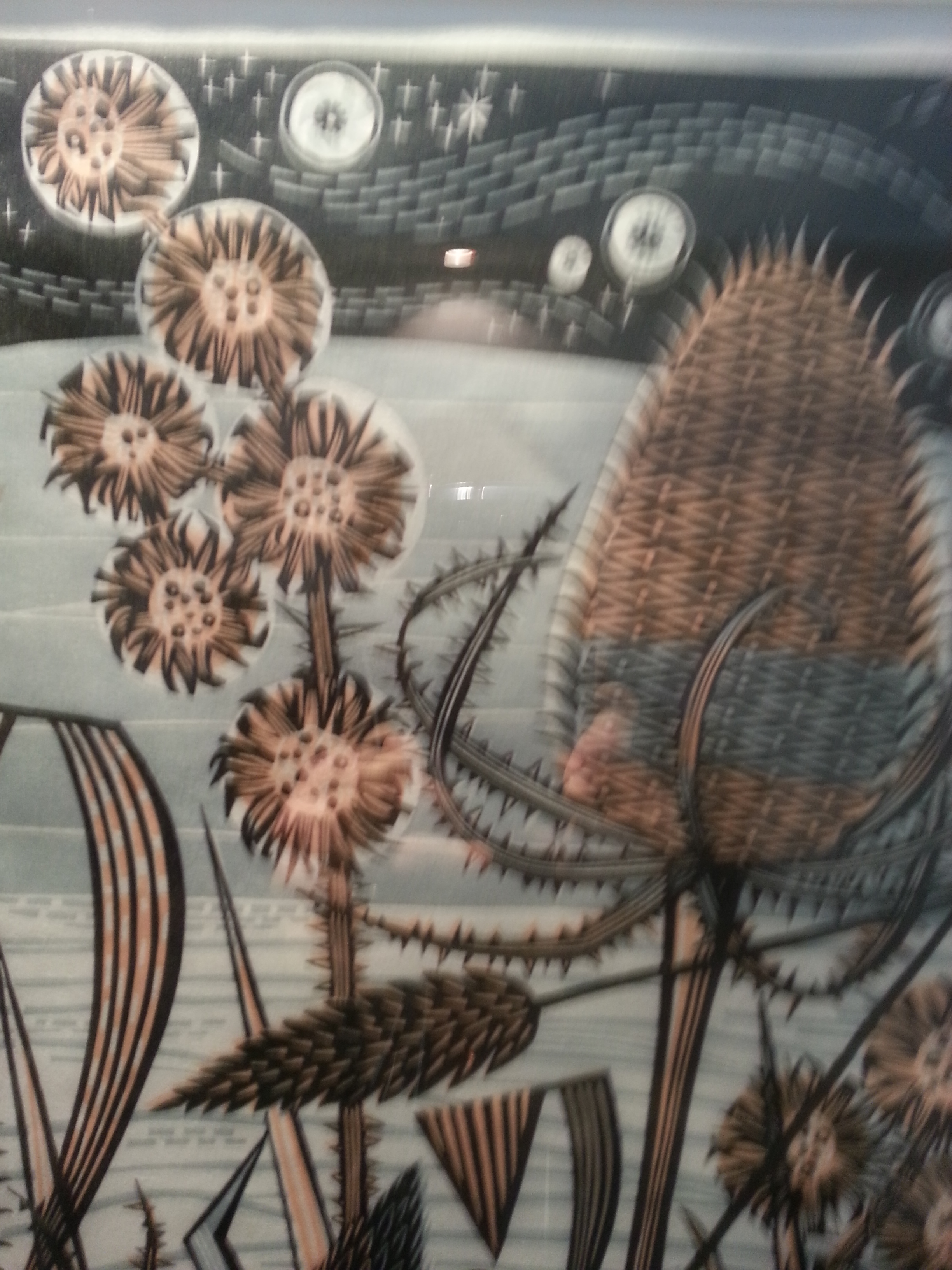
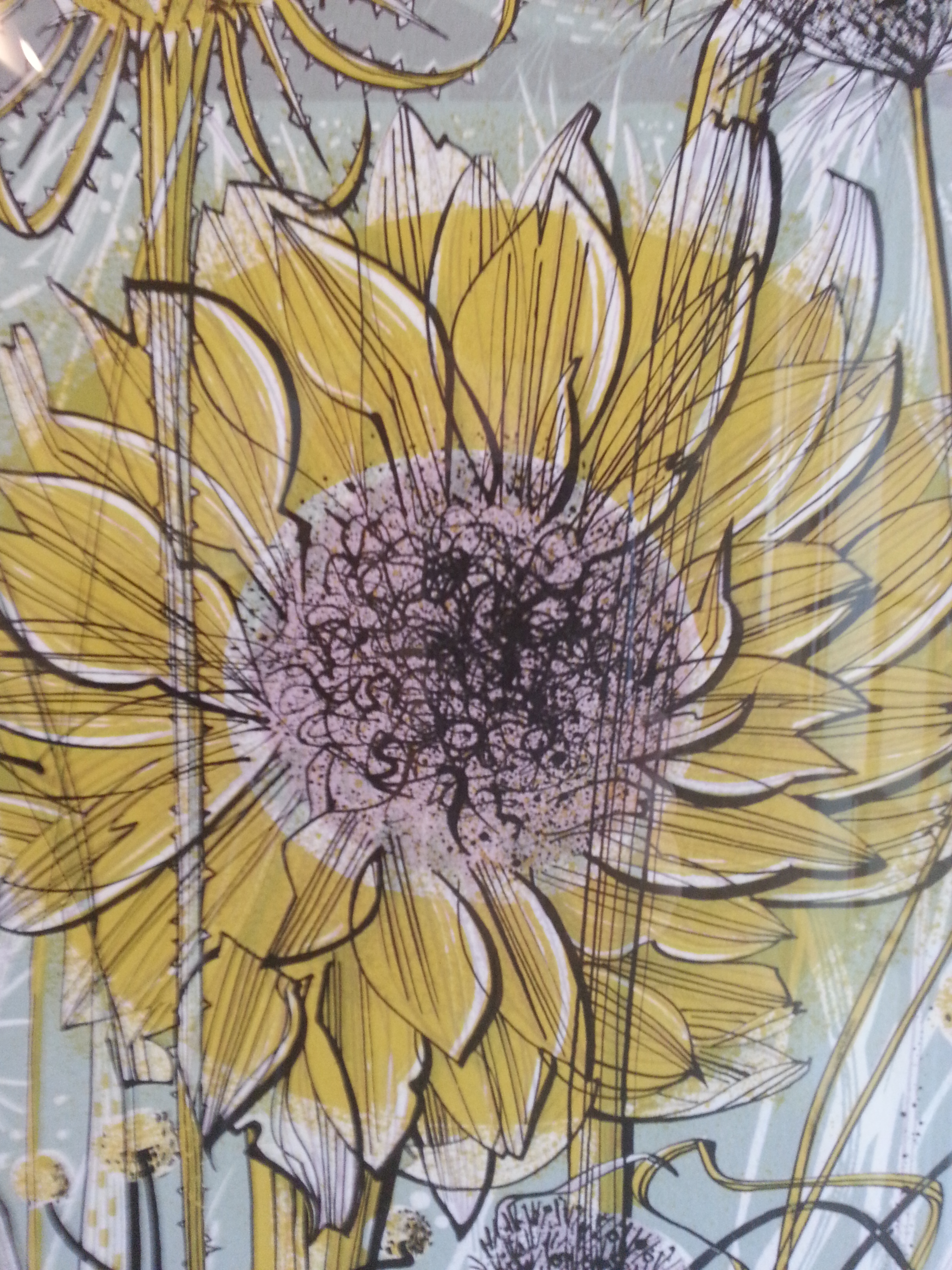
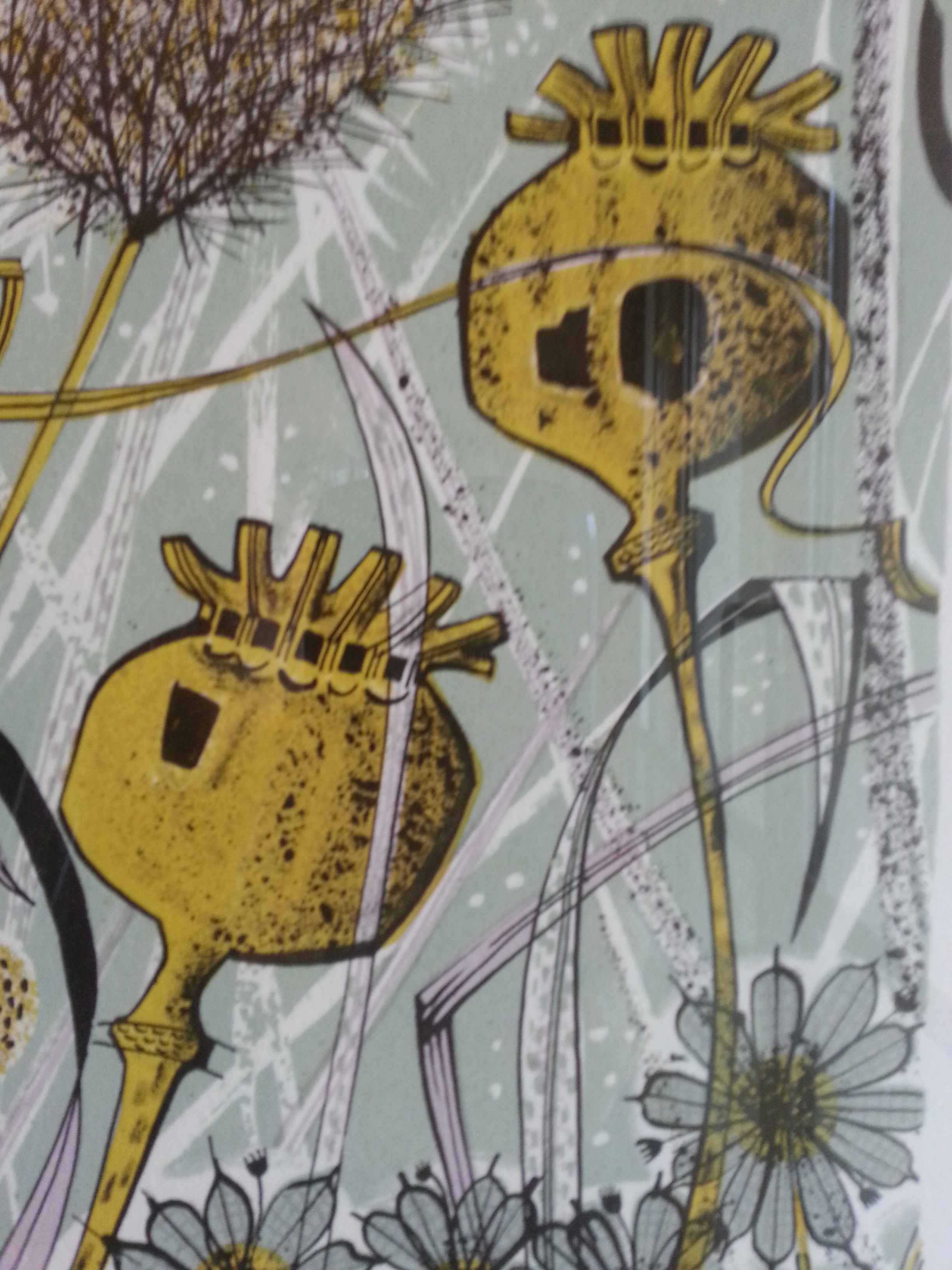
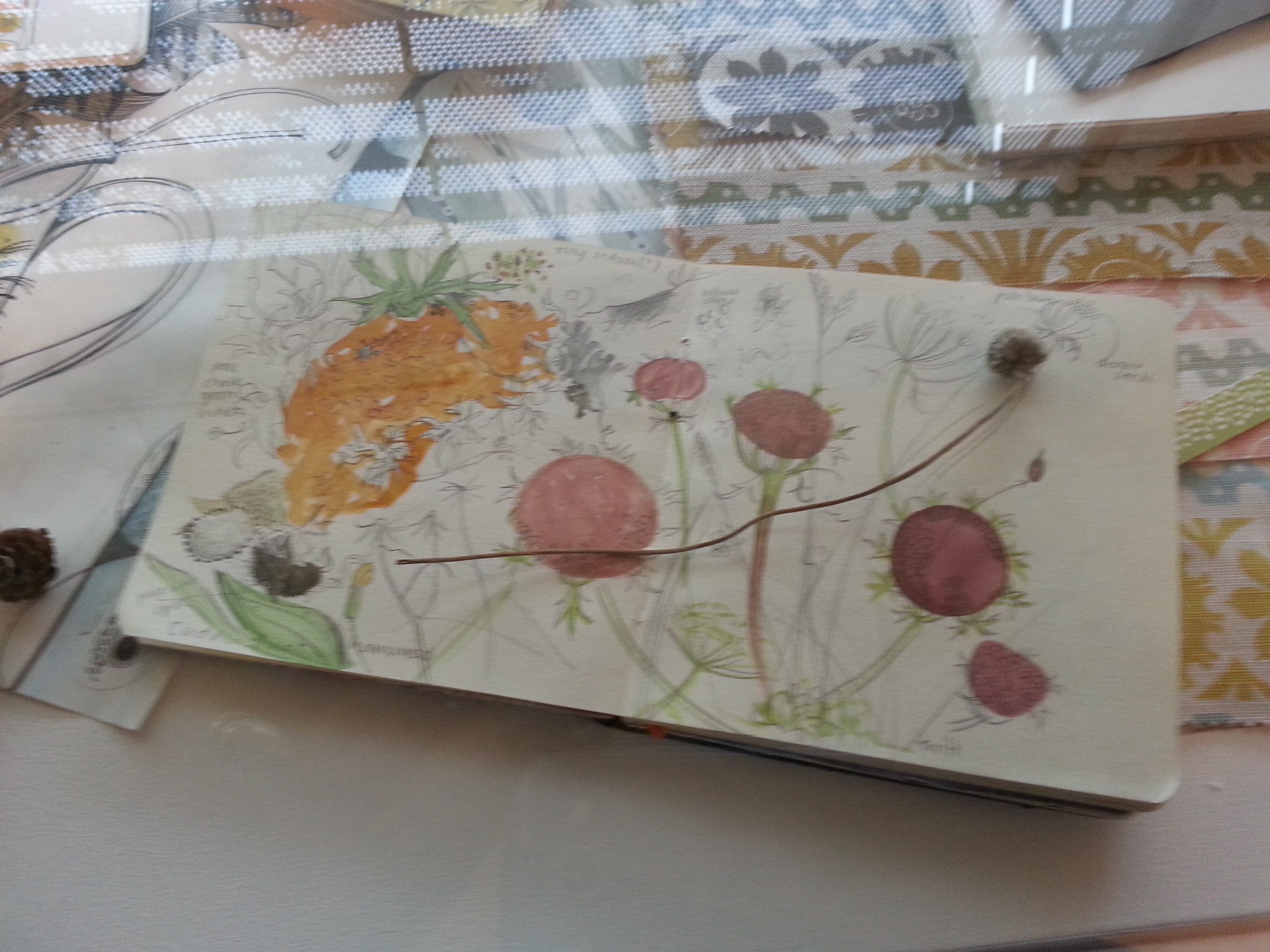
We have enjoyed the work of some great artists here in the past, David Nash, Andy Goldsworthy etc and the artist we were primarily focusing on during this visit was Angie Lewin. We usually come here to look at the work of sculptors or land artists but Angie Lewin is an artist and designer who works in watercolours as well as prints using the techniques of a woodcut, lino cut, screen prints and lithography with much of her work being used as book or magazine illustrations. The natural world is her main stimulus especially skeletal seed heads against the sky. I love her work finding it fresh and lively as well as original.  Enjoy this little montage of her work.

2014 01 26_61942014 01 26_61952014 01 26_61992014 01 26_6197

To be given the opportunity to view her sketchbooks was a delight and I was tempted to purchase a book of her work after seeing so many beautiful pieces.

2014 01 26_6196

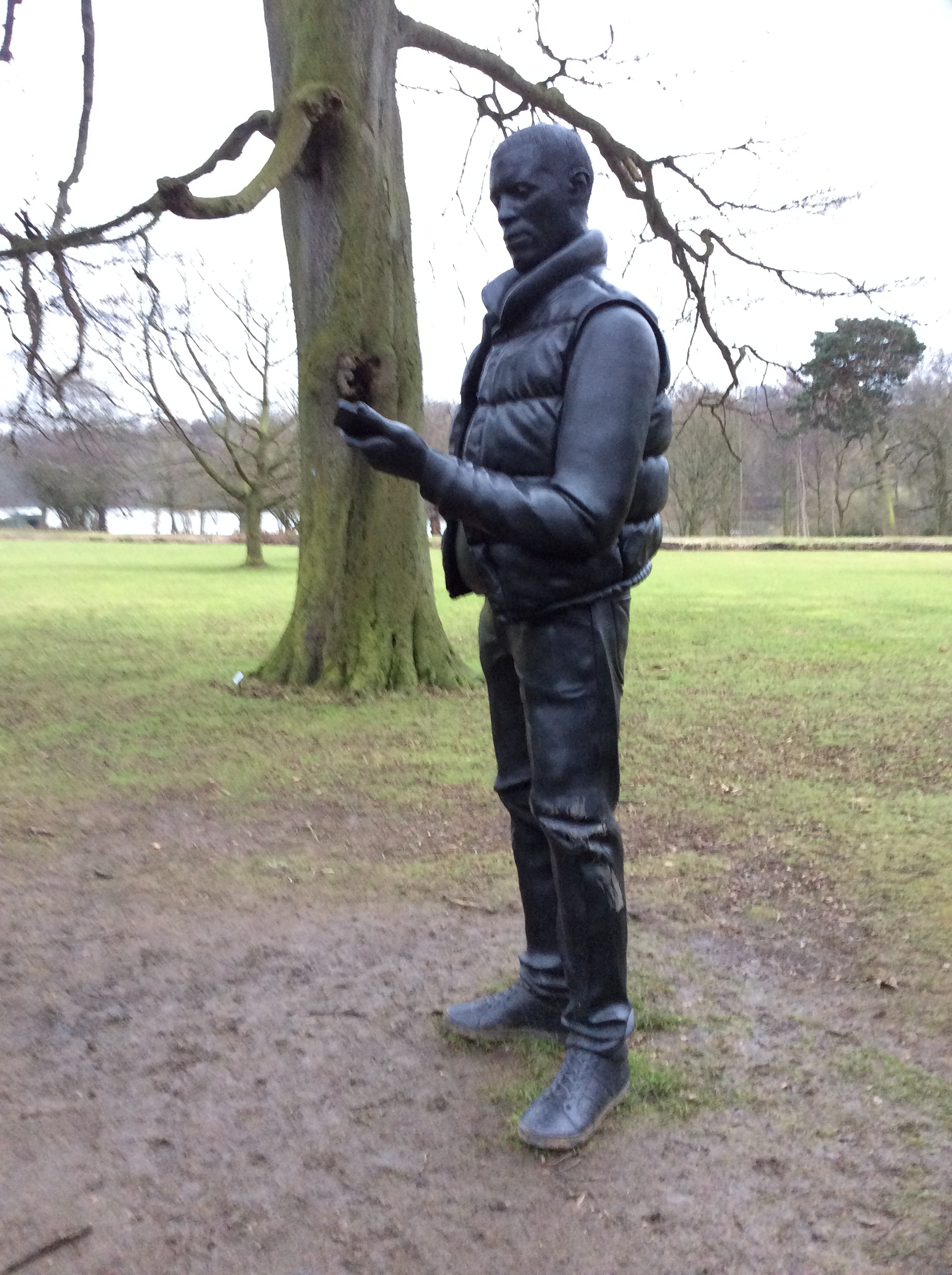
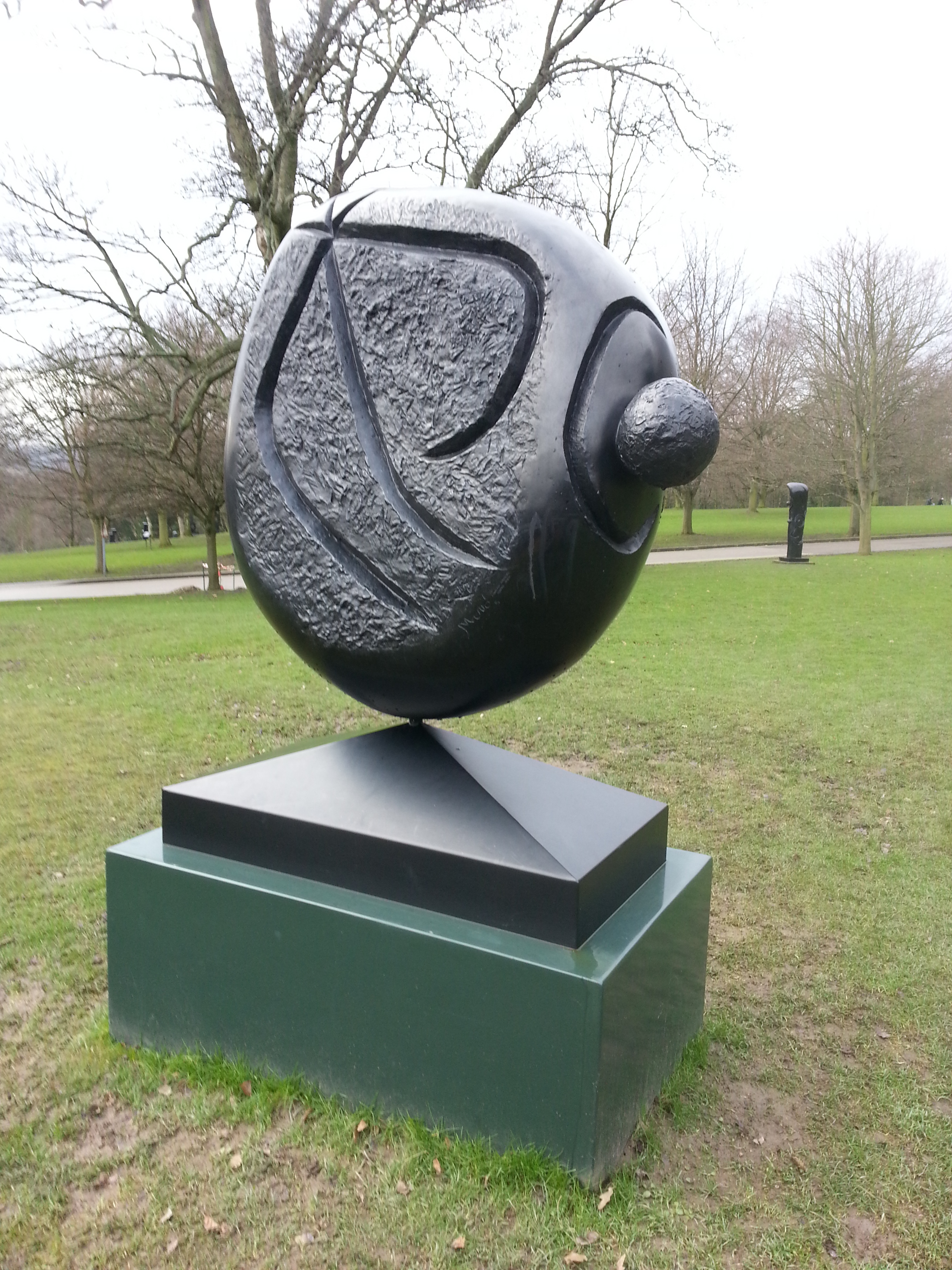
But of course there was lots more to see, including a few pieces we seek out in the grounds on every visit. Works by Henry Moore, Barbara Hepworth, James Turrell and Antony Gormley.

2014 01 26_6217 2014 01 26_6221 2014 01 26_6237 2014 01 26_6251 2014 01 26_6332 2014 01 26_6338 2014 01 26_6355 2014 01 26_6393 2014 01 26_6374

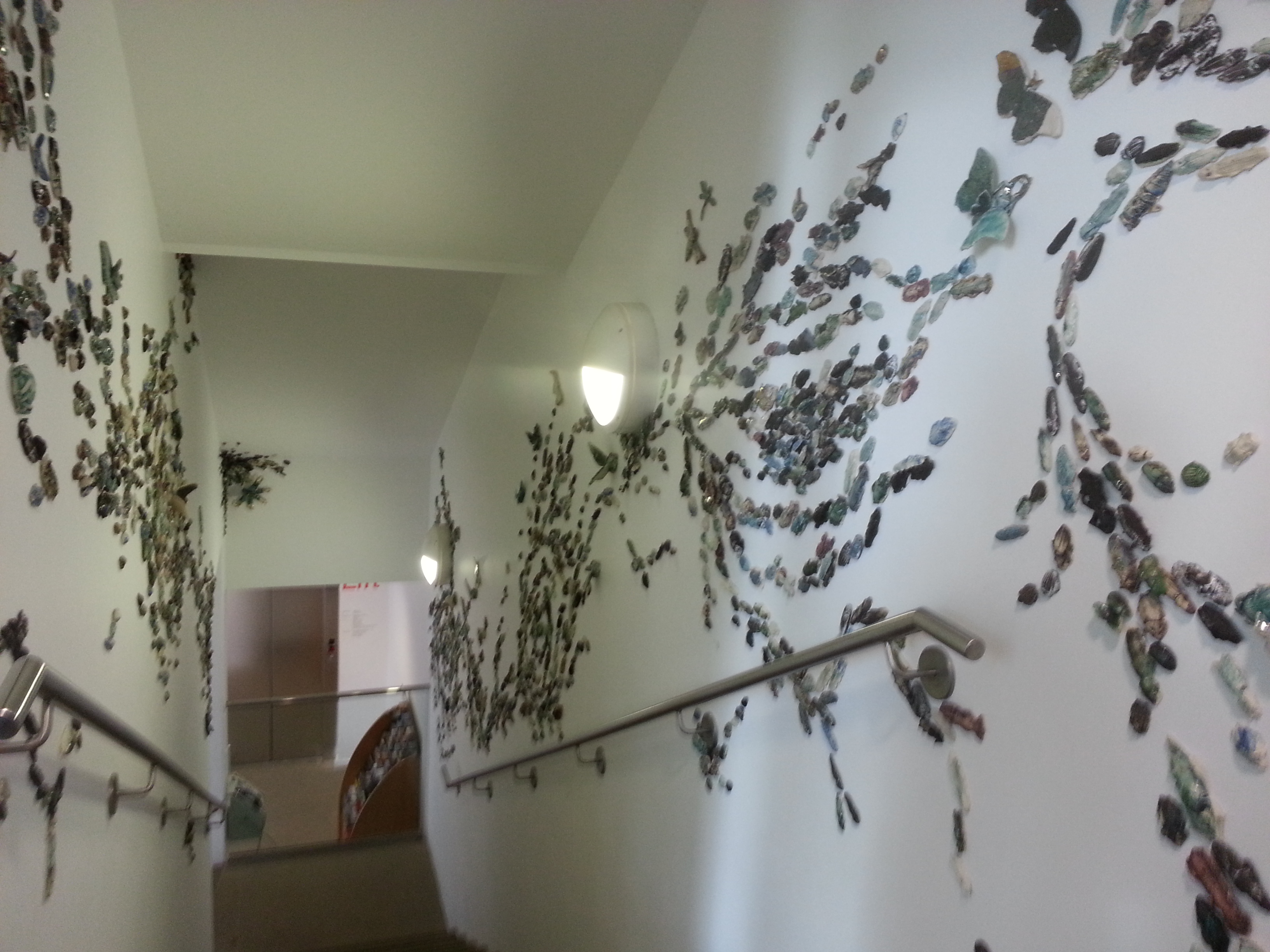
As we returned to the centre after enjoying our wander around the grounds we discovered another interesting and unexpected piece of work. Every space available is used to provide original and effective display galleries, in this case even a stairway. These little ceramic creatures in a piece called “Infestation” are the work of Anna Collette Hunt and provide great entertainment as you climb the stairs.

2014 01 26_6201 2014 01 26_6204

This day’s cultural visit was to be the first of two days at Wakefield. The following day we went in search of the Hepworth Wakefield Gallery within the city itself. These two venues are two out of the three that make up the “Yorkshire Sculpture Triangle”. After this cultural holiday we will just have the one of the three corners of the triangles left to see, the city of Leeds. This comprises the Leeds Art Gallery and the Henry Moore Institute. We will soon be planning a few more days away to discover what that venue has to offer. To find out more about the triangle of galleries visit ysculpture.co.uk.

To re-visit the Yorkshire Sculpture Park when I share my favourite sculptors with you see my next blog in the “Week of Culture” series of posts.

This Veggie Life

A Vegetarian | Nature Lifestyle Blog

Rambling in the Garden

.....and nurturing my soul

The Arch City Gardener

Journeys In St. Louis Gardening and Beyond

Garden Dreaming at Châtillon

Consult the genius of the place

Storyshucker

A blog full of humorous and poignant observations.

gardeninacity

Notes from a wildlife-friendly cottage garden

PlayGroundology

...an emerging social science

The Official Blog of British Wildlife

'The most important and informative publication on wildlife of our times' - The Independent. This blog is a member of The UK & Ireland Natural History Bloggers group: www.uknhb.blogspot.com

iGrowHort

Inspire - Cultivate - Grow Native Plants - Restore Landscapes

Bishops Meadow Trust

To create and protect a semi-natural wild space for the people of Farnham to enjoy and experience an array of British wildlife in our town

Gardening with Children

The www.gardeningwithchildren.co.uk Blog

UKbirdingtimeline

birding through the seasons, why birds matter and how to conserve them

NATURE WALKER

with a camera in hand

Jardin

Transform your outdoor space

Eva's space

My allotment, cooking and other interests

Old School Garden

my gardening life through the year

LEANNE COLE

Trying to live a creative life

fromacountrycottage

trying to live as lightly as possible on our beautiful planet

Good Life Gardening

Nature lovers from Leicester living the good life.

mybeautfulthings

Finding the beautiful in the everyday

mawsonmichelle

Michelle's Allotment

In and Out of My Garden

thoughts from and about my garden

Greenhousing

Big plans for a small garden

The Scottish Country Garden

A Walled Country Garden in South East Scotland

The Fruity Chicken

Life at the fruity chicken

willowarchway

Off grid living. Self sufficient. "PERMAGANICS RULE".

St Anns Allotments

Nottingham's Grade 2* Listed Allotments and Community Orchard

Manifest Joy Harvests

a journey in suburban vegetable gardening

Allotmental

The madness of growing your own

Penny's Garden: a harvest beyond my front door

A novel approach to vegetable gardening

arignagardener

Sustainable living in the Irish countryside.

NewEnglandGardenAndThread

Master Gardener, amateur photographer, quilter, NH native, and sometimes SC snowbird

dianajhale

Recent work and work in progress and anything else that interests me

planthoarder

a chaotic cottage gardener

Lens and Pens by Sally

a weekly blog that creates a personal philosophy through photographs and words

Dewdrops and Sunshine

Stories from a sassy and classy Southern farmbelle.

The Pyjama Gardener

Simple Organic Gardening & Seasonal Living

gettin' fresh!

turning dirt into dinner

JOY...

today the world is created anew

Garden Birds

Notes from a Devon garden

ShootAbout

Life Through The Lens

Adapting Pixels

A photography blog showcasing the best photography pictures and videos on the internet

Wildlifegardening's Blog

Just another WordPress.com site

naturestimeline

personal observations from the natural world as the search continues for a new approach to conservation.

LATEBLOOMERBUDS

The Wonders of Life through my Eyes, my Heart, my Soul