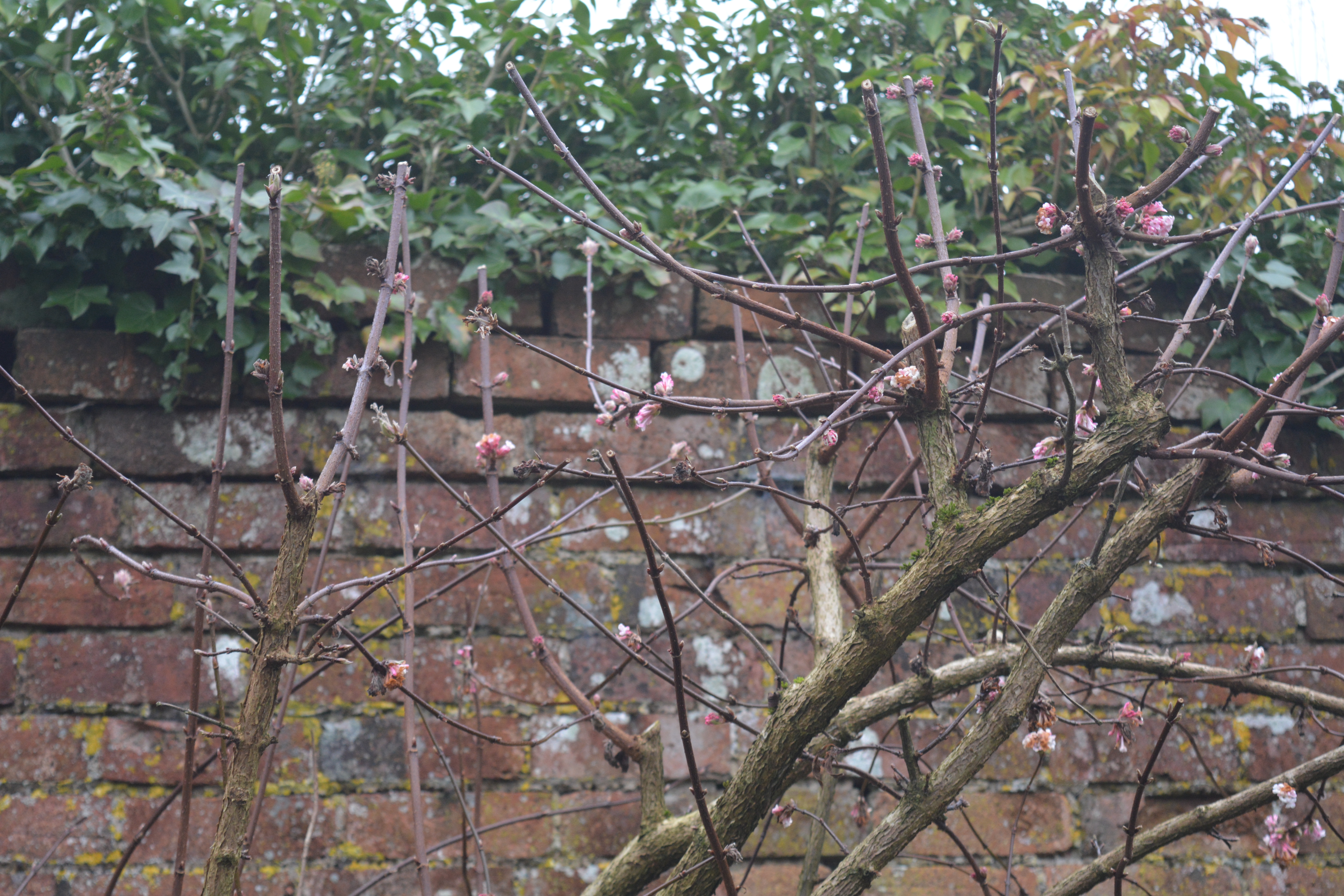
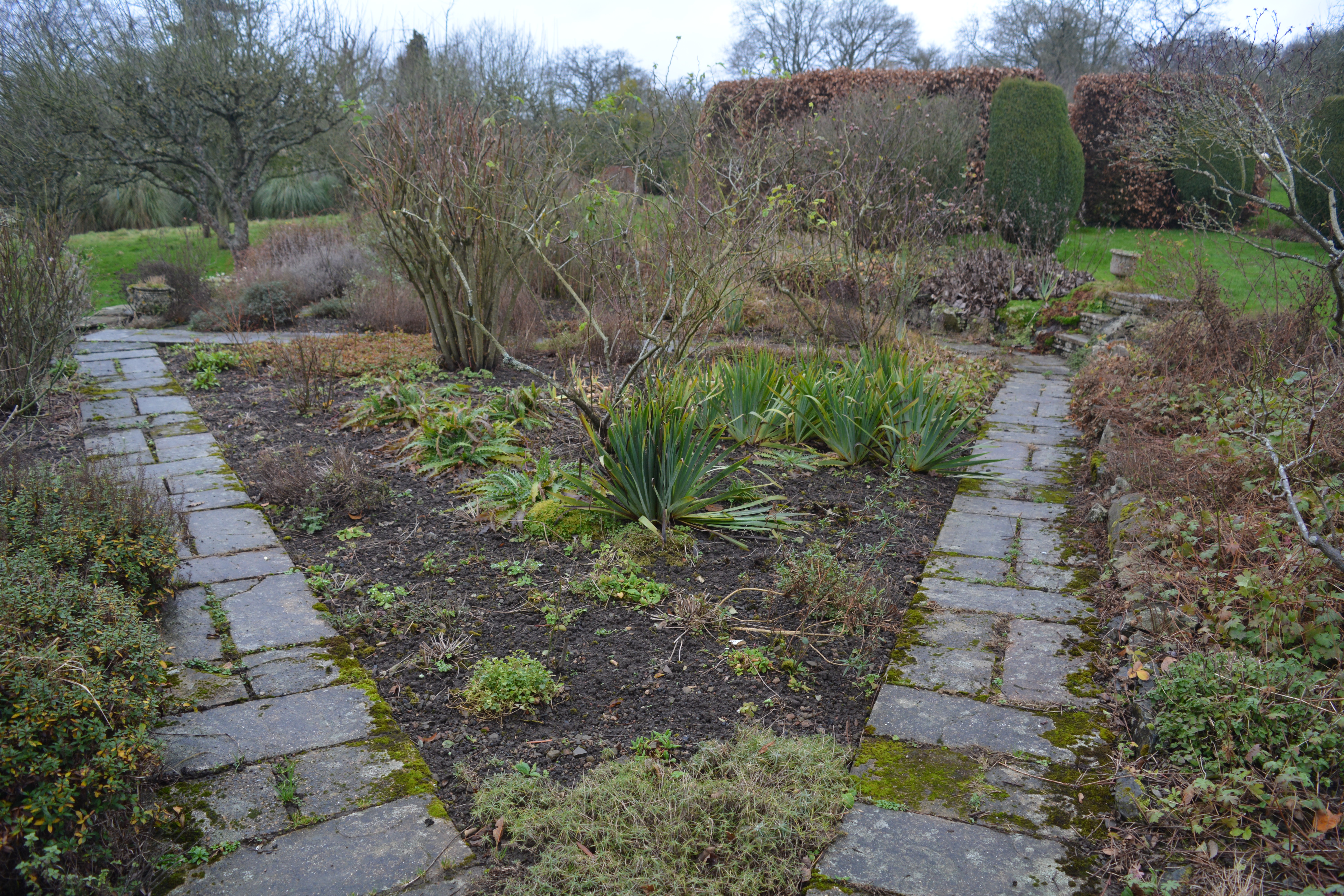
Categories
countryside landscapes light light quality National Trust photography The National Trust the sea the seaside the shore Wales

A Stroll along the Pembrokeshire Coastal Path – Part One

Every year I set myself a challenge that defies my disability. Something totally silly if I take my health into consideration! Something I definitely should not be doing! But these challenges are great fun! I love them! Jude accepts my need to do them but worries when we are following these strange desires. Sometimes I have a need to go a bit further than my actual abilities!

For 2014 my challenge was to walk a mile along a stretch of the Pembrokeshire Coastal Path, probably the most beautiful of Britain’s long distance paths. For me a single mile is a long distance walk! I did it in late November and survived! Okay I suffered for a good few days after but boy did it feel good! I had such a feeling of elation when I finished the walk. Anyone else would have to climb Everest to get the same thrill! My consultant was proud of me. He likes my crazy ideas.

2014 11 21_7605 2014 11 21_7606

So come with us on our trek along the windswept coast near St Davids. As we dressed in suitable gear for a walk in the cold and most likely wet weather we noticed these two using the beautiful backdrop to take photos of their stained glass window. No doubt some great shots will appear in their promotional materials.

2014 11 21_7601 2014 11 21_76022014 11 21_7603 2014 11 21_7604


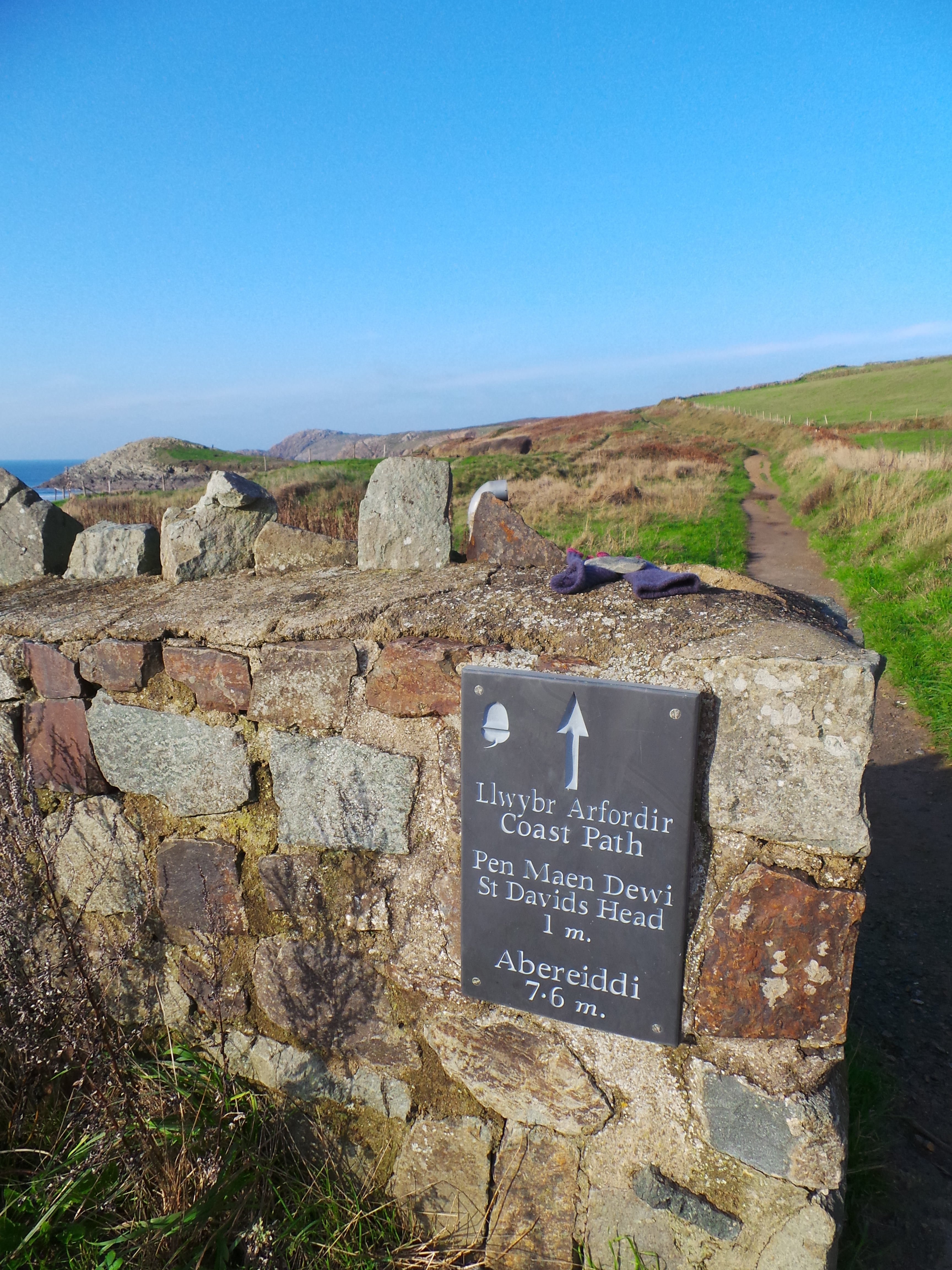
We made our way onto the path by passing through a beautiful stone wall. A sign with wording engraved on slate informed us that the walk to St David’s Head was 1 mile. I hoped to make half way to give us a round trip of 1 mile.
2014 11 21_7609 2014 11 21_7607


2014 11 21_7608


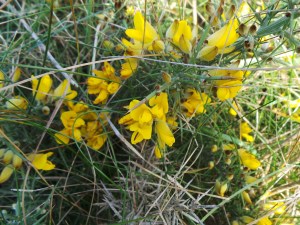
Jude looked ahead and could see just how far away the headland was that I was aiming to reach. She thought I was mad! We soon started finding colour in the tough grasses – wildflowers of coastal habitats. The first was this Armeria, the Sea Thrift. Close by the much brighter coloured Gorse added a bit of sunshine colour.

2014 11 21_7613 2014 11 21_7612  2014 11 21_7617 2014 11 21_7614

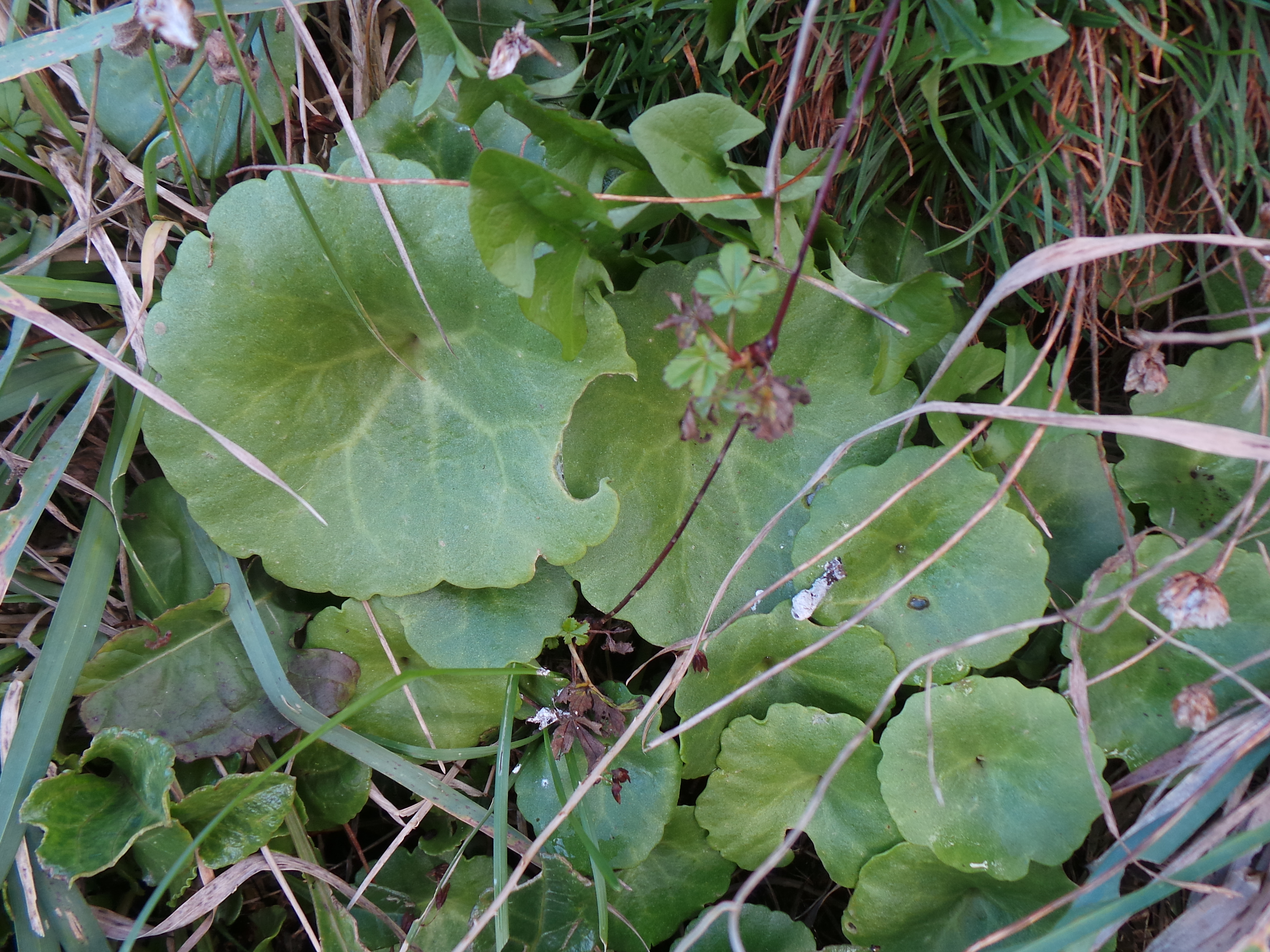
This little delicate plant foiled us completely – neither of us could remember what it was.

2014 11 21_7632 2014 11 21_7635

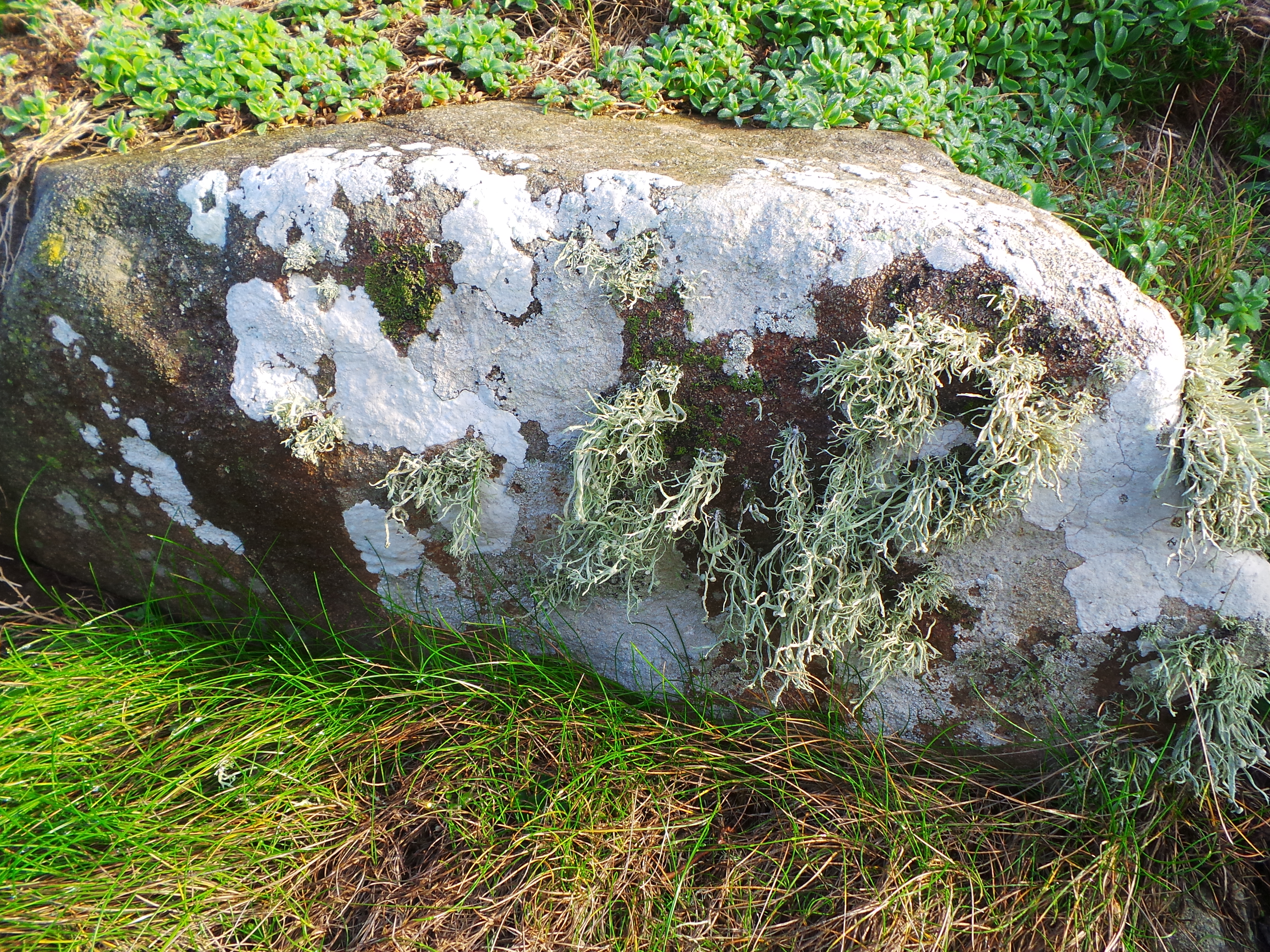
Every rock was painted with Lichen and Mosses. They look just like they have been daubed by an artist. These rocks had fallen from the field boundaries that are specific to this area – stones with soil in the gaps and on top. The soil provides homes for the local flora.

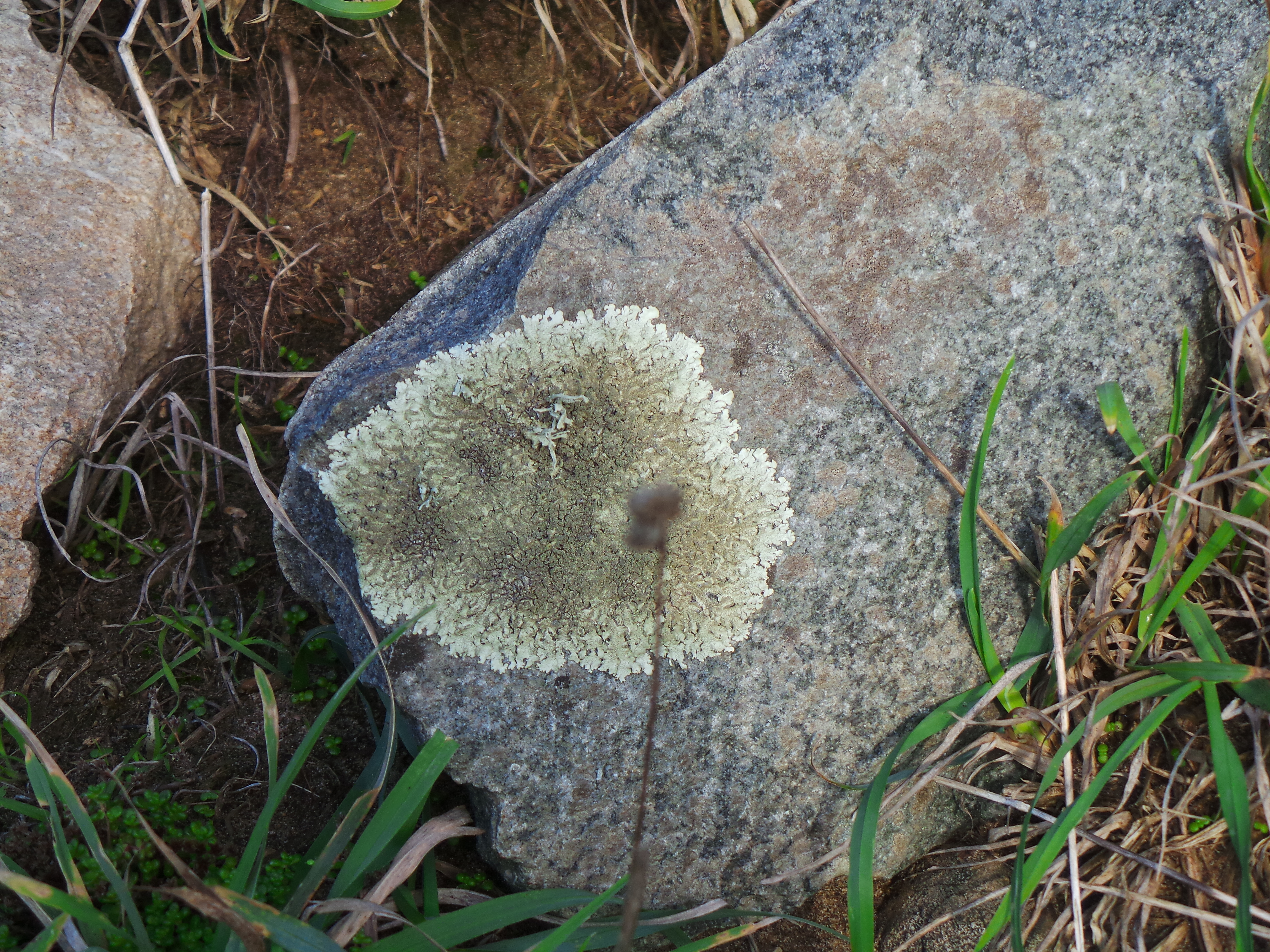
2014 11 21_7620 2014 11 21_7615

2014 11 21_7616 2014 11 21_7621

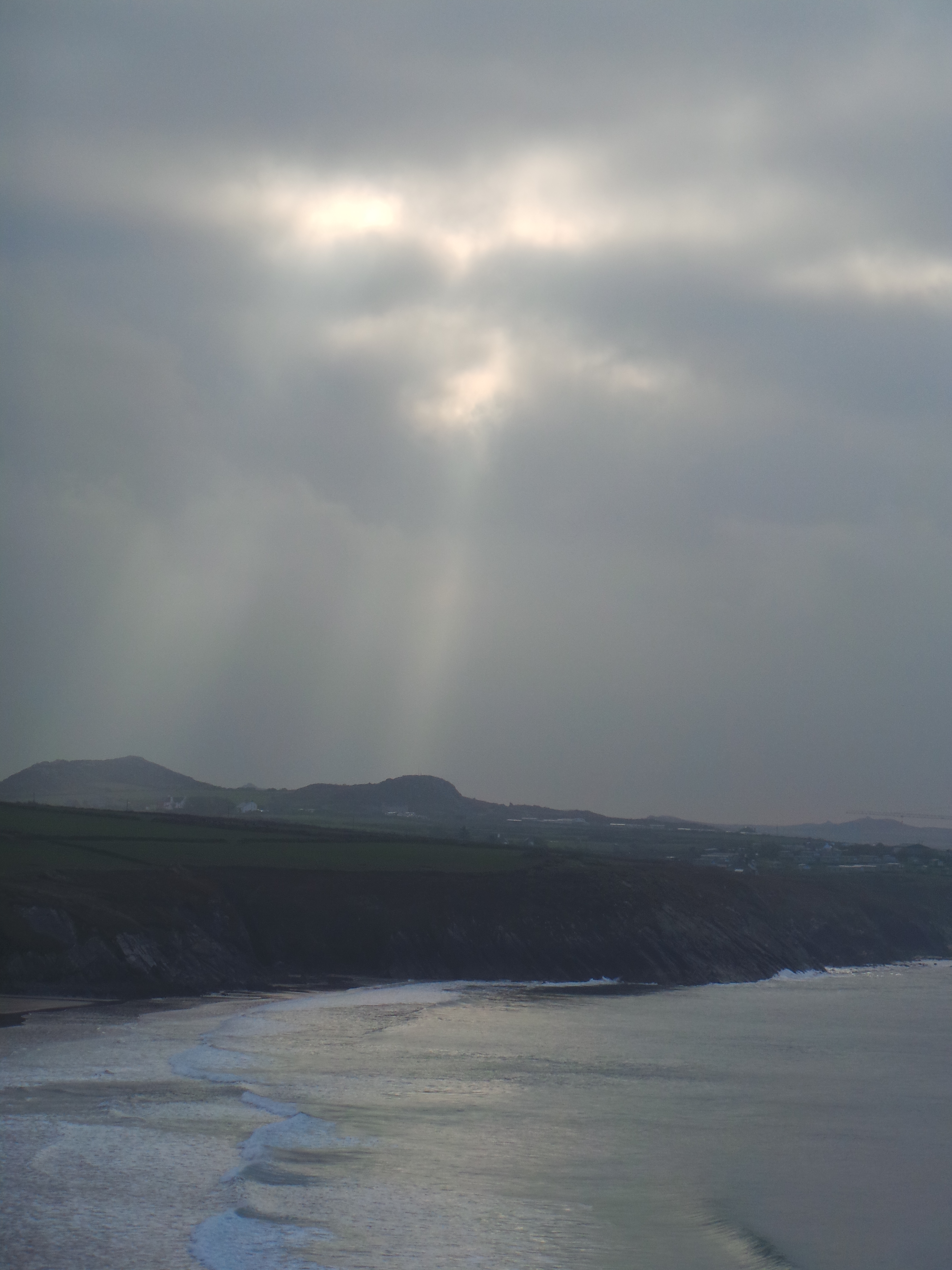
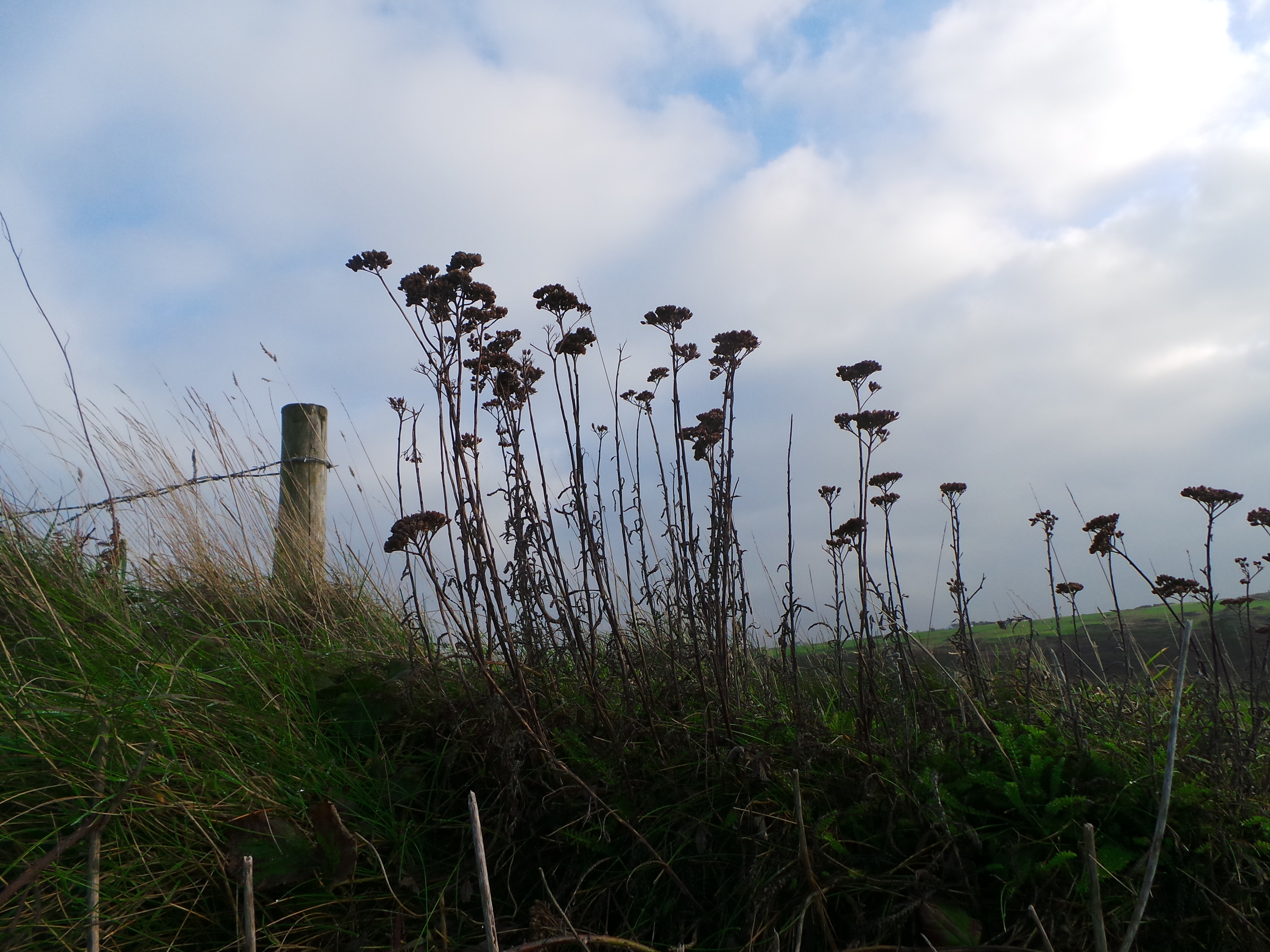
The light was changing by the minute. We could be in sunshine one minute and then under heavy storm clouds the next. Just see the extremes in the photos below taken within minutes of each other. The temperature varied in the same way – hats and gloves were on and off all the time.
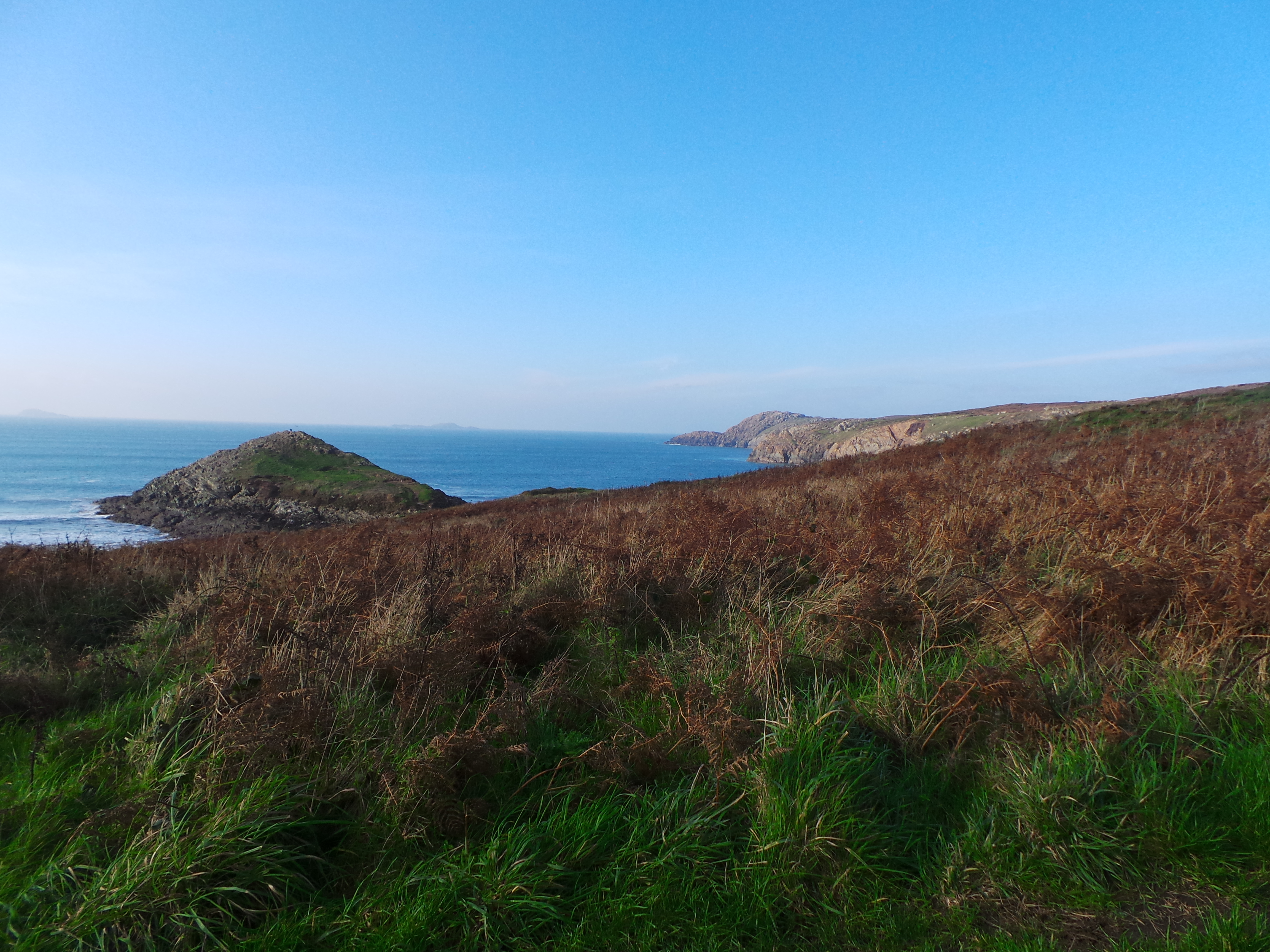
2014 11 21_7618 2014 11 21_7619

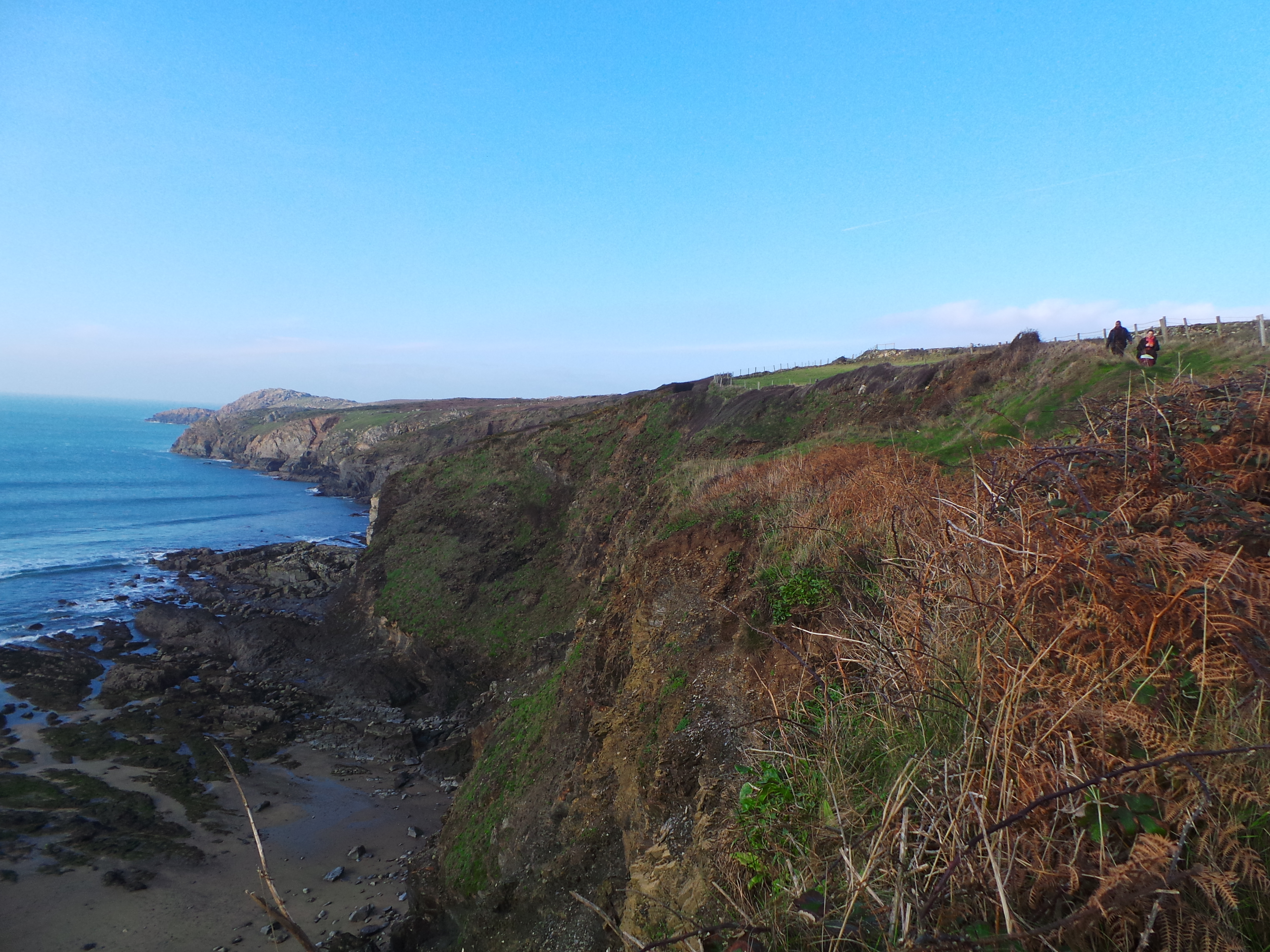
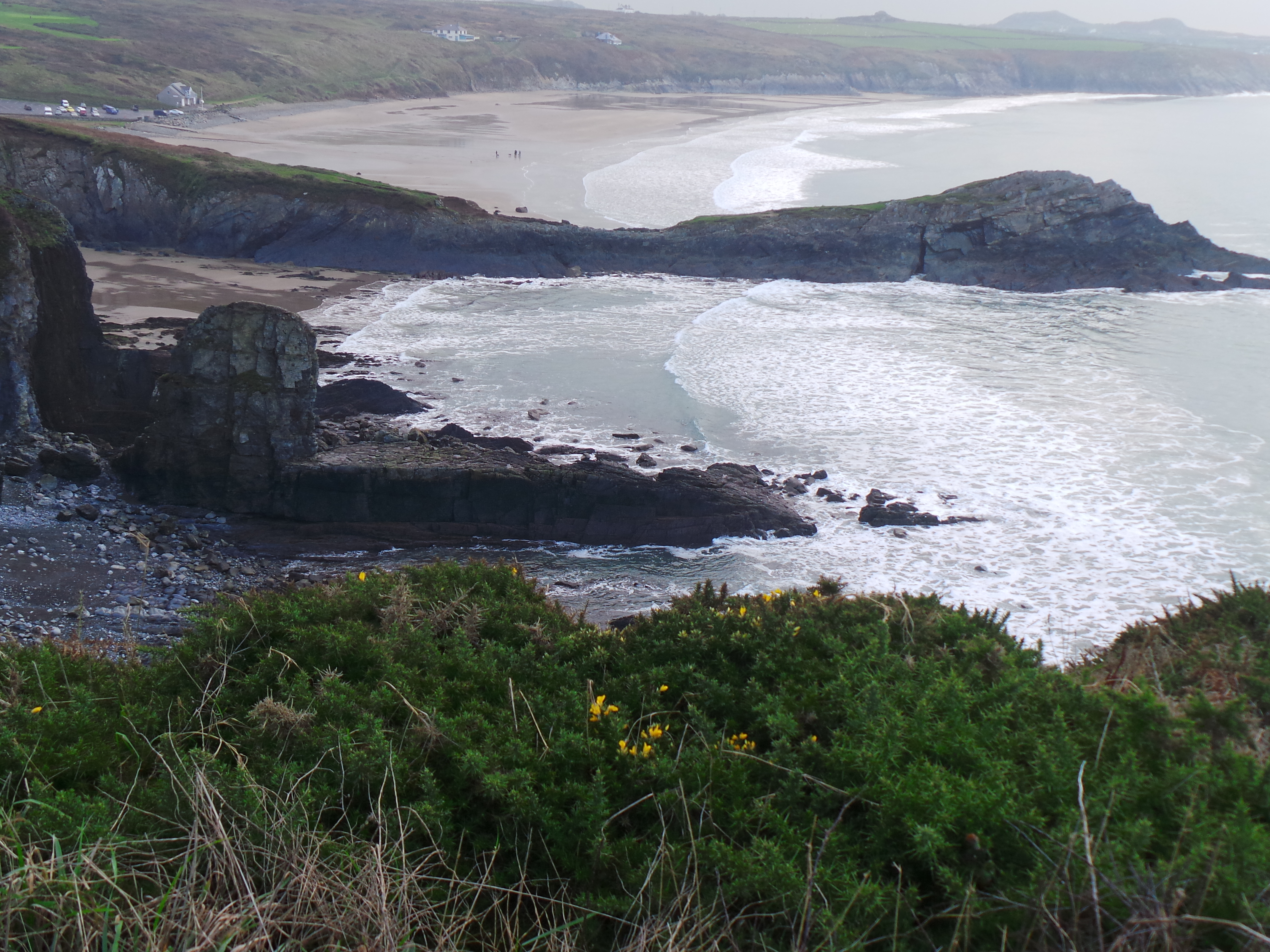
What made this walk extra special was that it gave double value. We had views over the inlets and headlands over one shoulder and views of the countryside inland over the other.
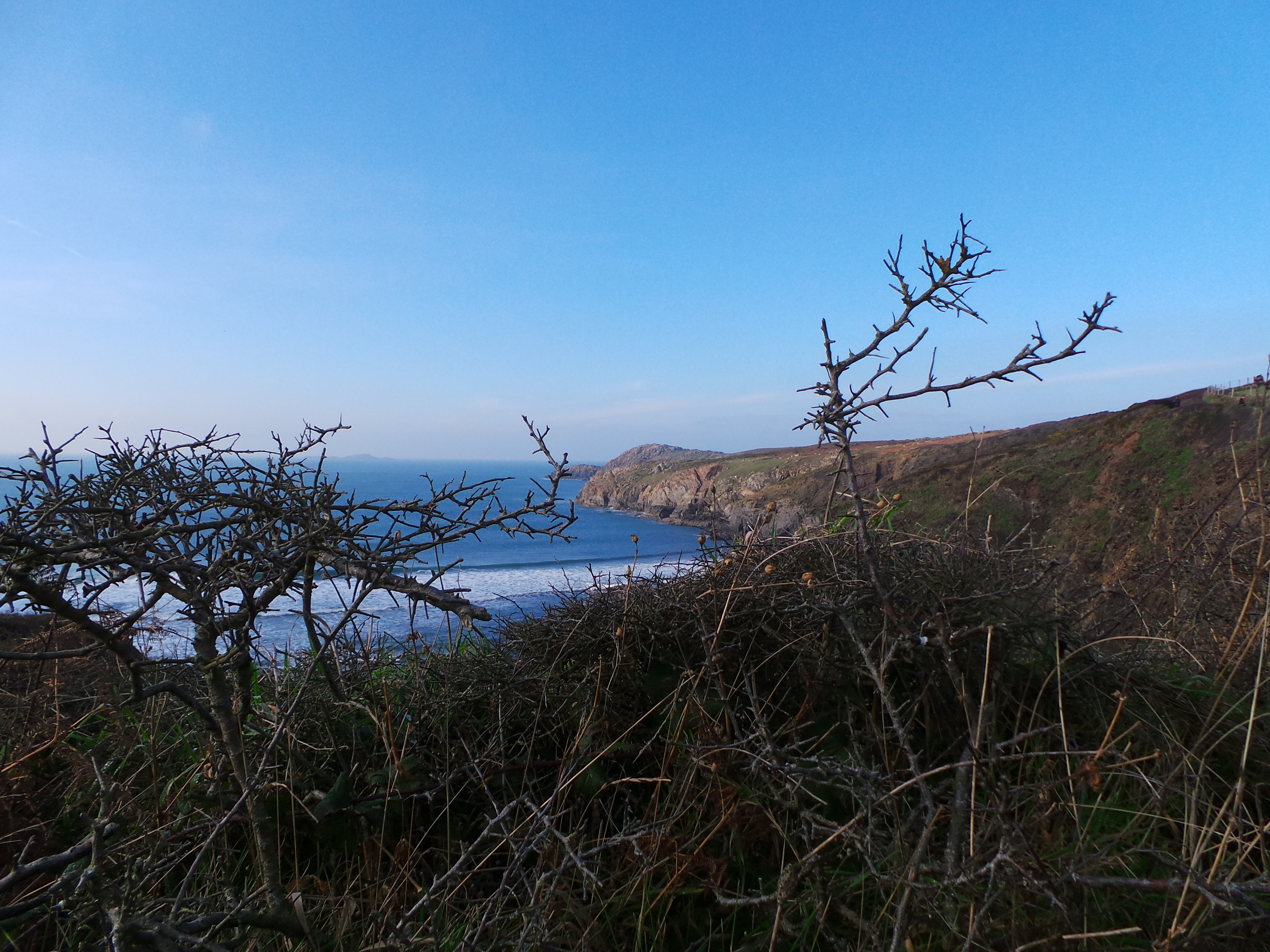
2014 11 21_7622 2014 11 21_7623 2014 11 21_7624 2014 11 21_7625 2014 11 21_7626 2014 11 21_7627  2014 11 21_7629 2014 11 21_7630

2014 11 21_7631 2014 11 21_7633 2014 11 21_7634 2014 11 21_7636 2014 11 21_7637 2014 11 21_7638

2014 11 21_7639 2014 11 21_7640

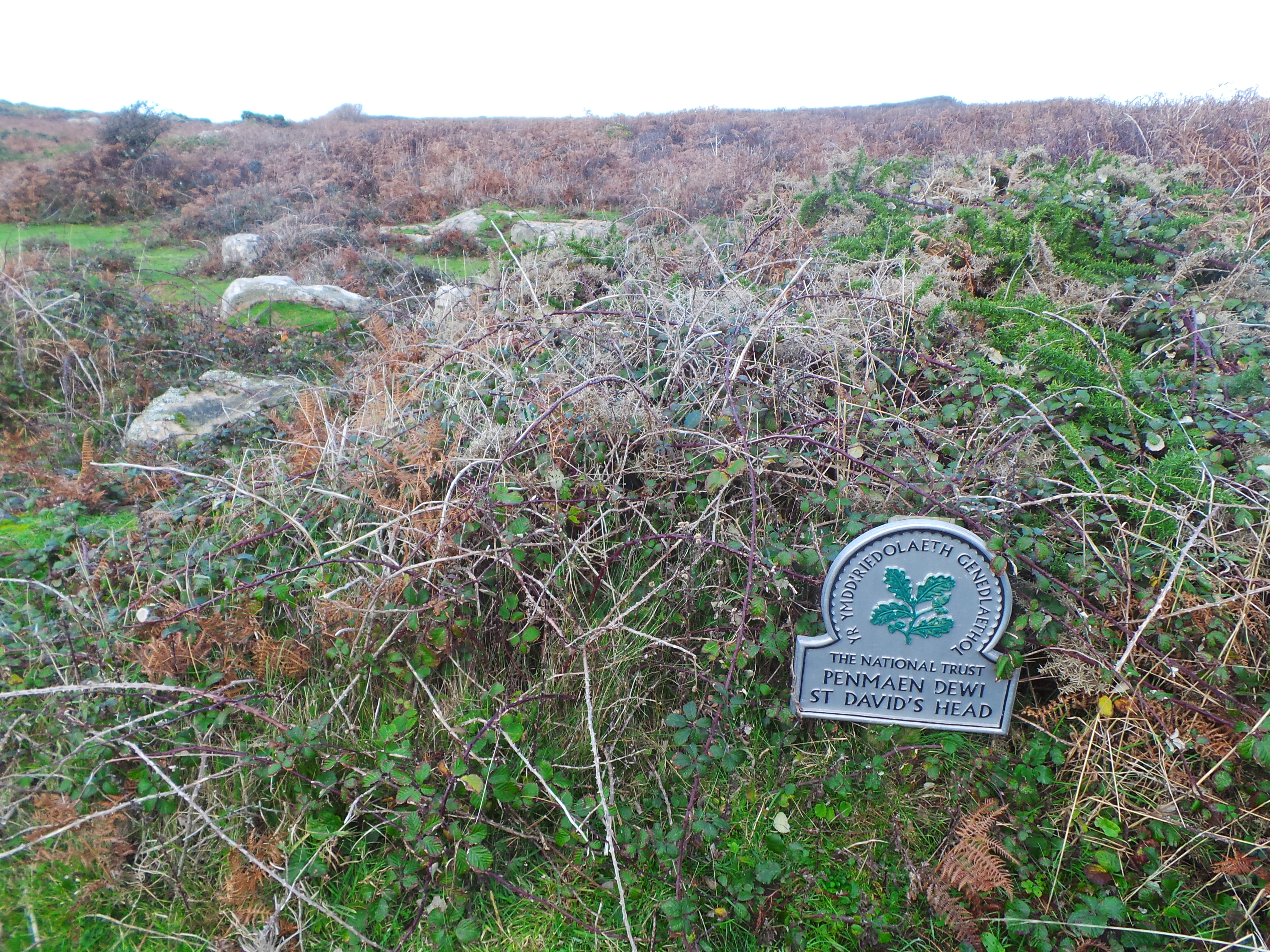
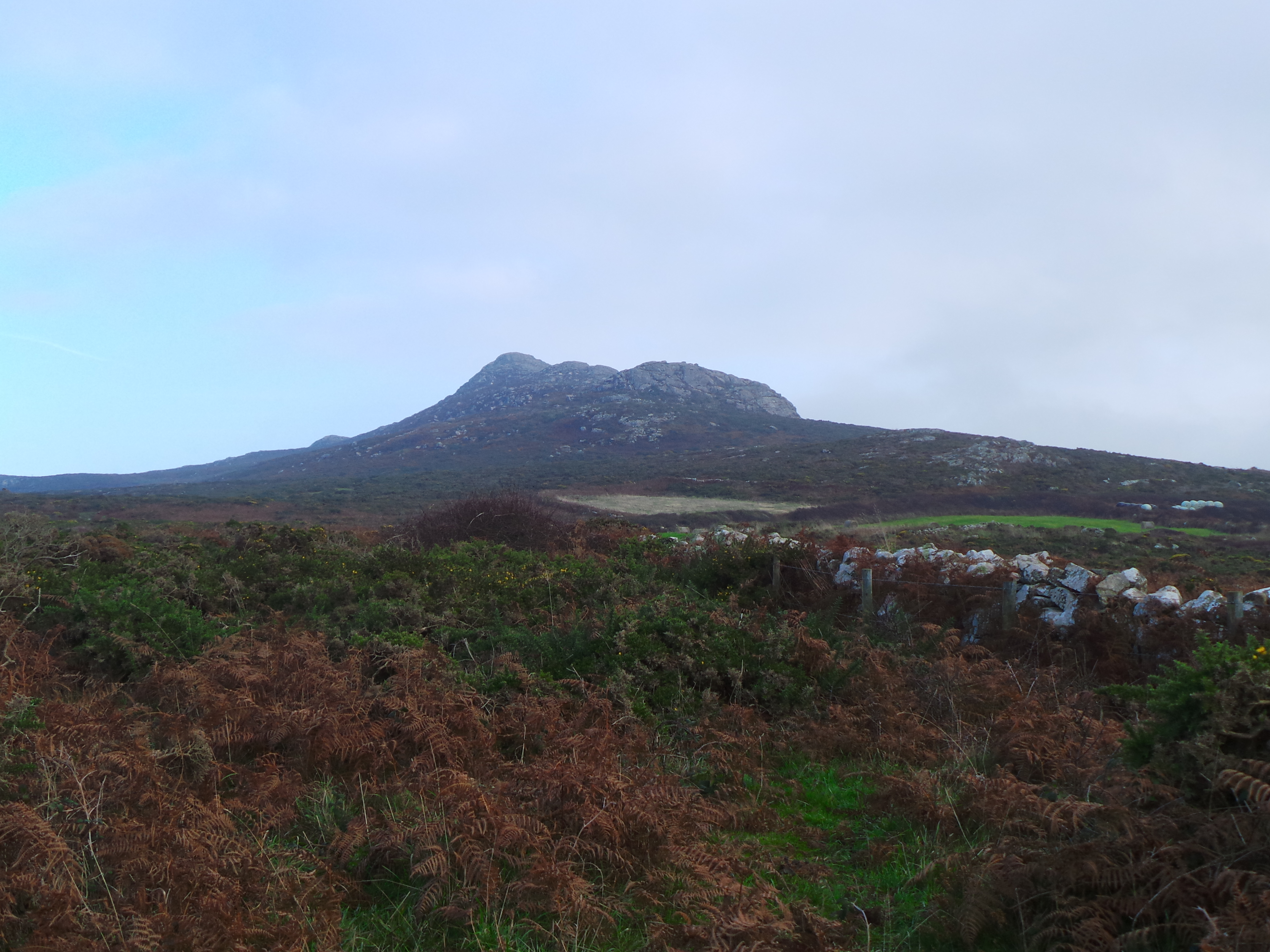
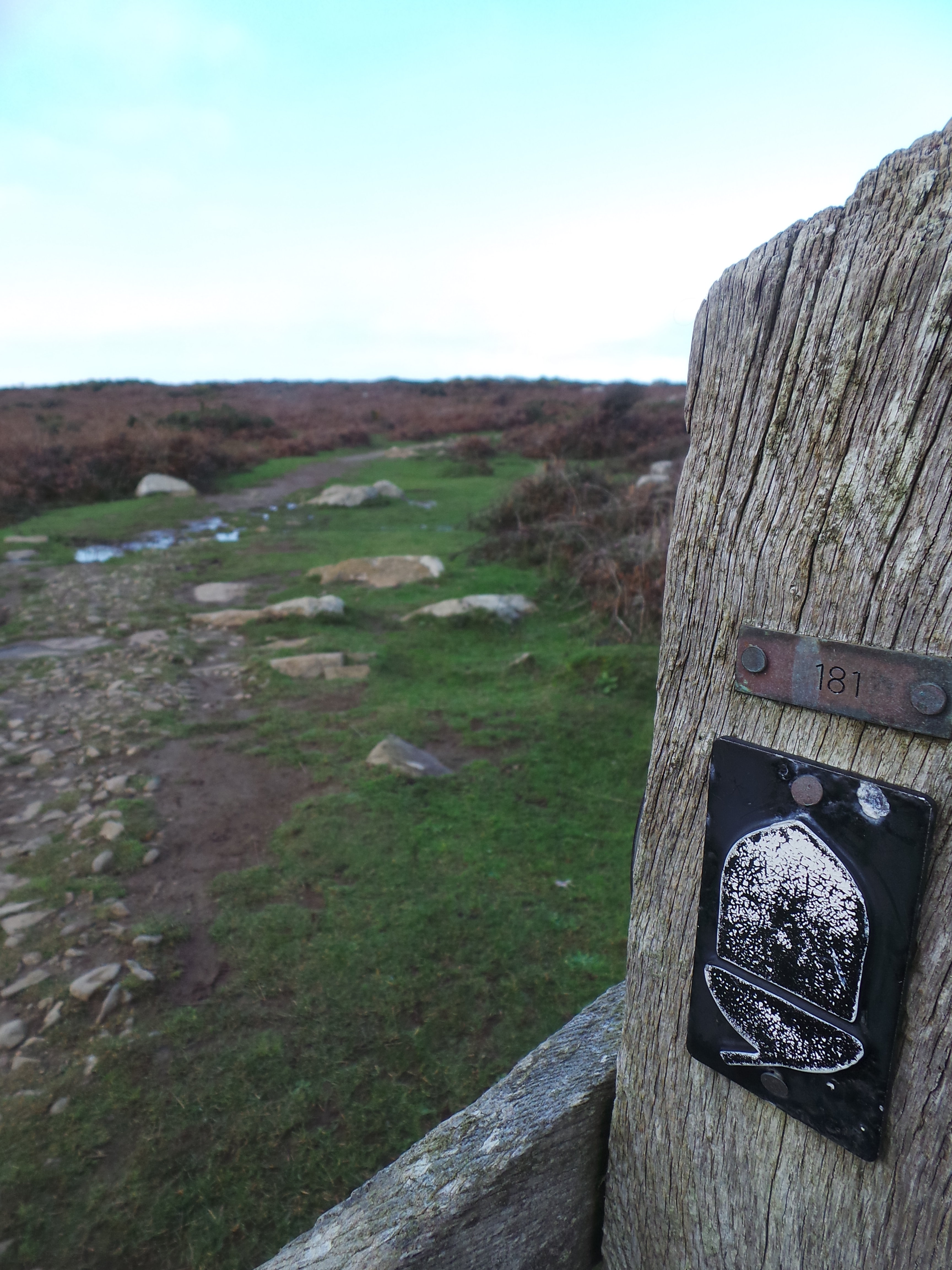
As we passed through a wooden gate the landscape changed and the views opened up. The signs on the gatepost invited us to carry on with our walk but be careful not to fall off the cliffs! We hadn’t been planning to! The National Trust sign informed us that we were on St David’s Head. We realised then that we had already walked further than we had intended. We should have turned back and made our way back but my stubborn nature won over and we decided to carry on perhaps making it to the headland in the far distance. This would give us a total walk of two miles. Far more than I should have been contemplating! We had rugged open moorland to cross to reach the headland itself.
 

2014 11 21_7643 2014 11 21_7644 2014 11 21_7645 2014 11 21_7646 2014 11 21_7647 2014 11 21_7648


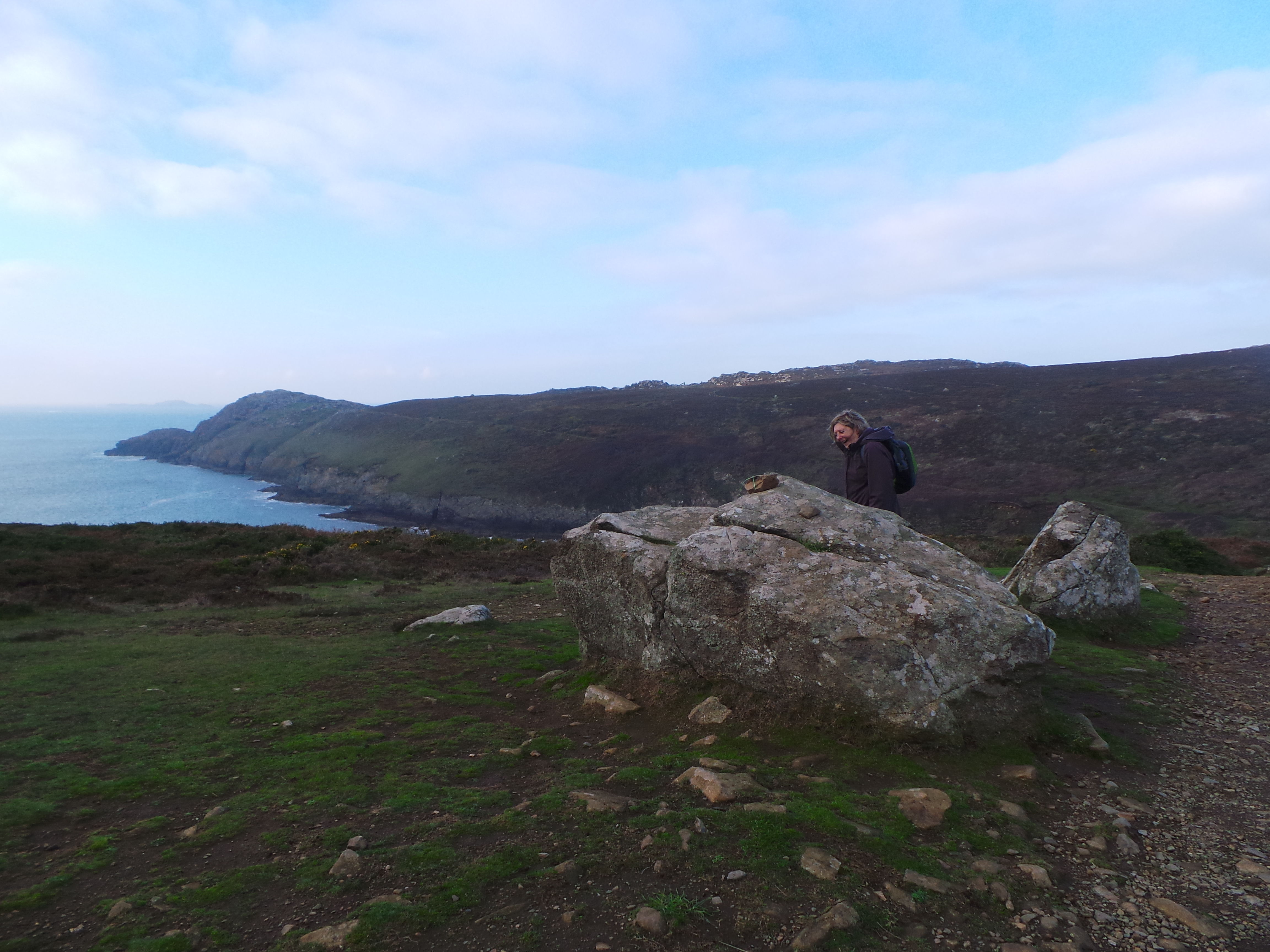
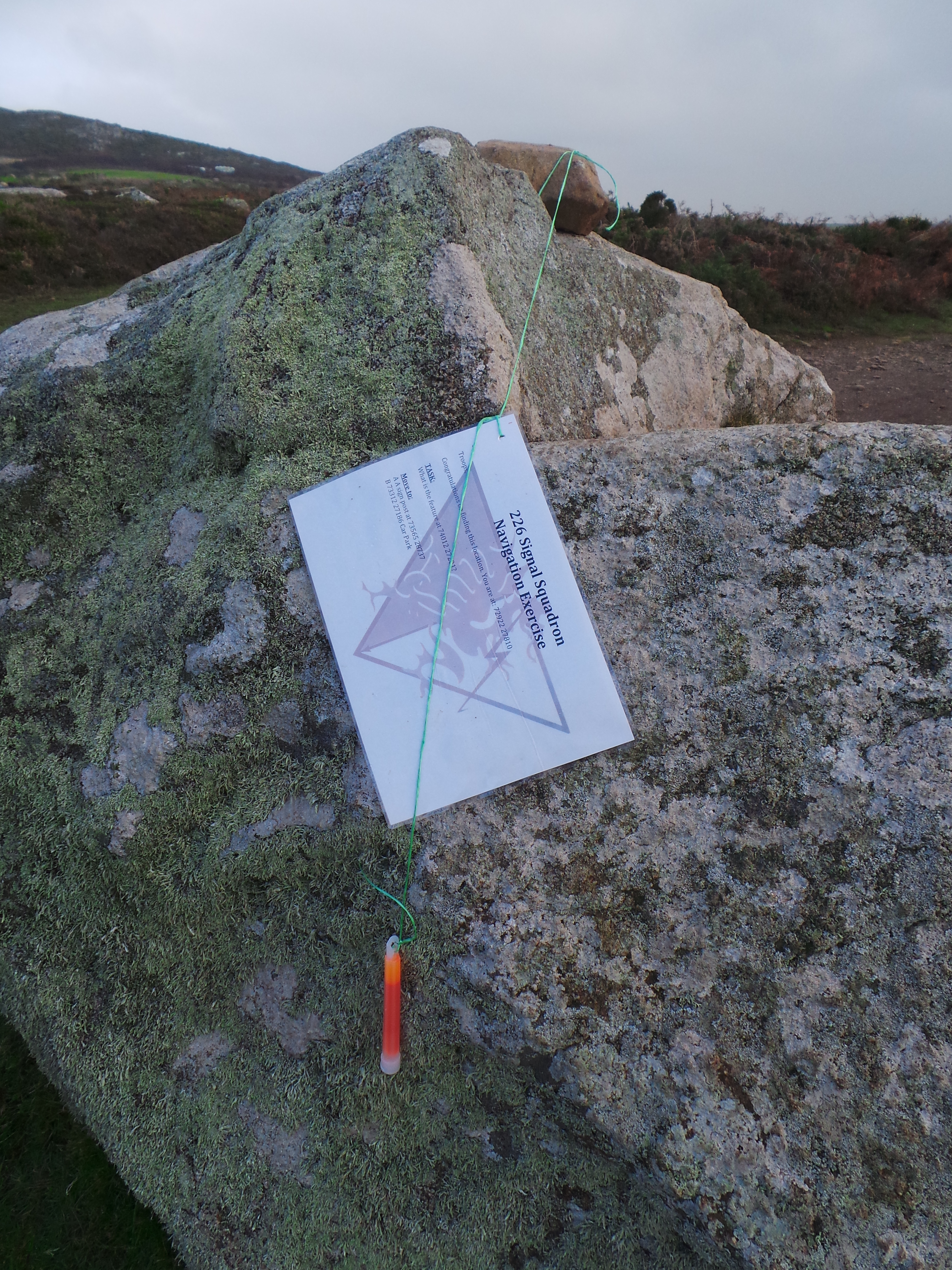
Jude was fascinated by a label hanging over a rock and just had to have a close look. We found it was a marker point on a trail laid out as part of an army training session. We were tempted – just for a moment – to pick it up and take it back to the local barracks to tell them we had found this label. Common sense prevailed however and we resisted the temptation.
2014 11 21_7649 2014 11 21_7650

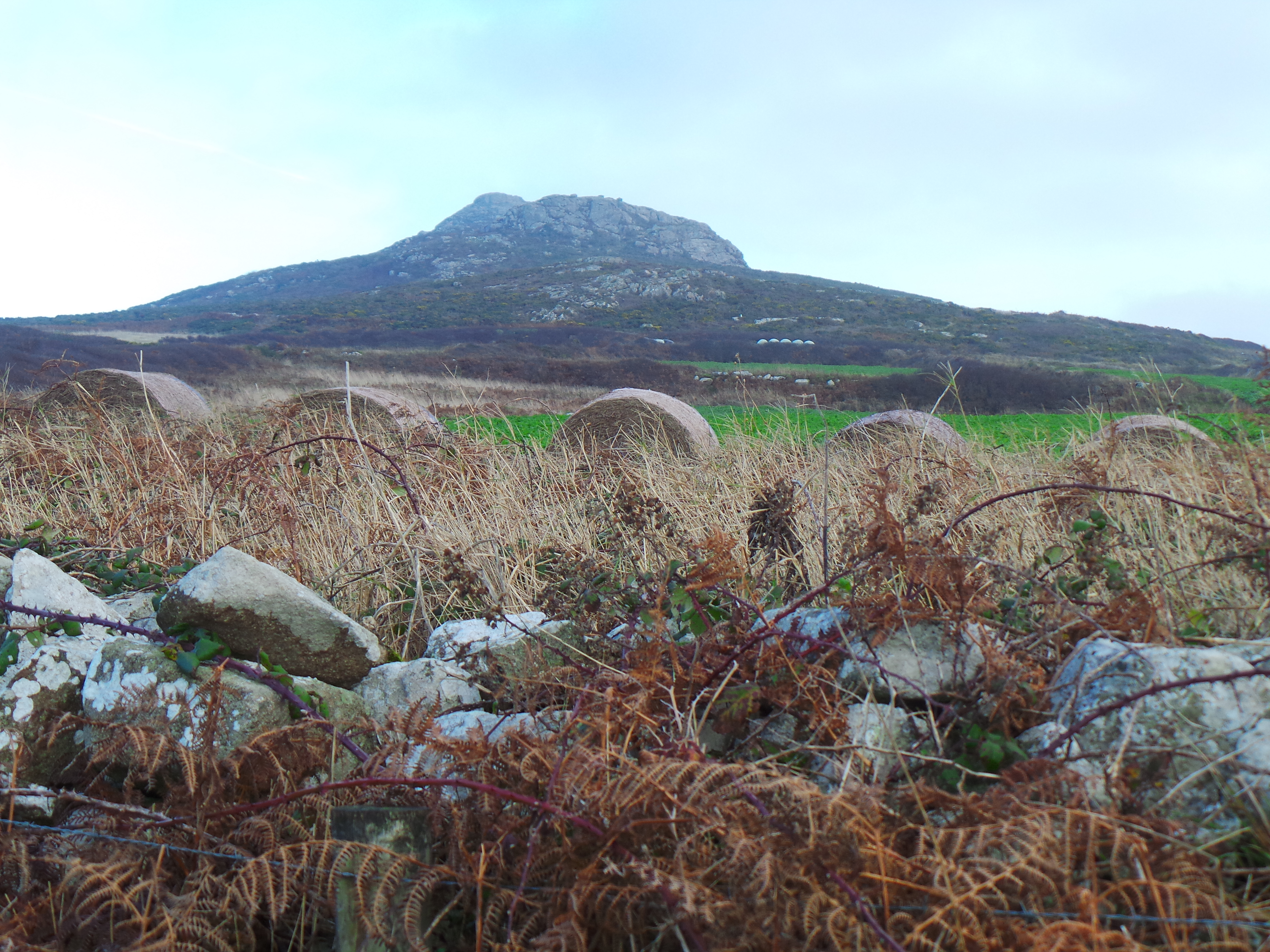
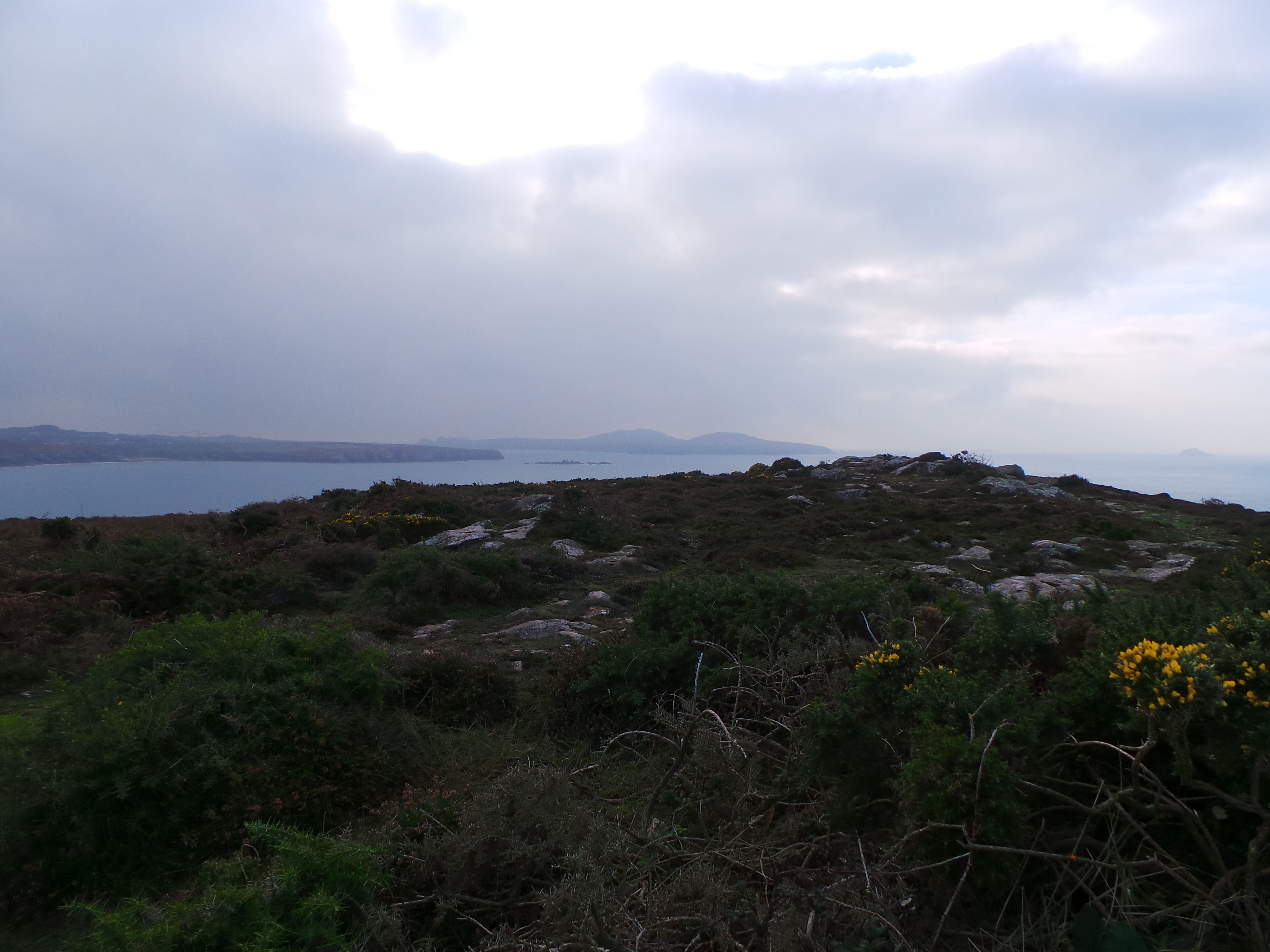
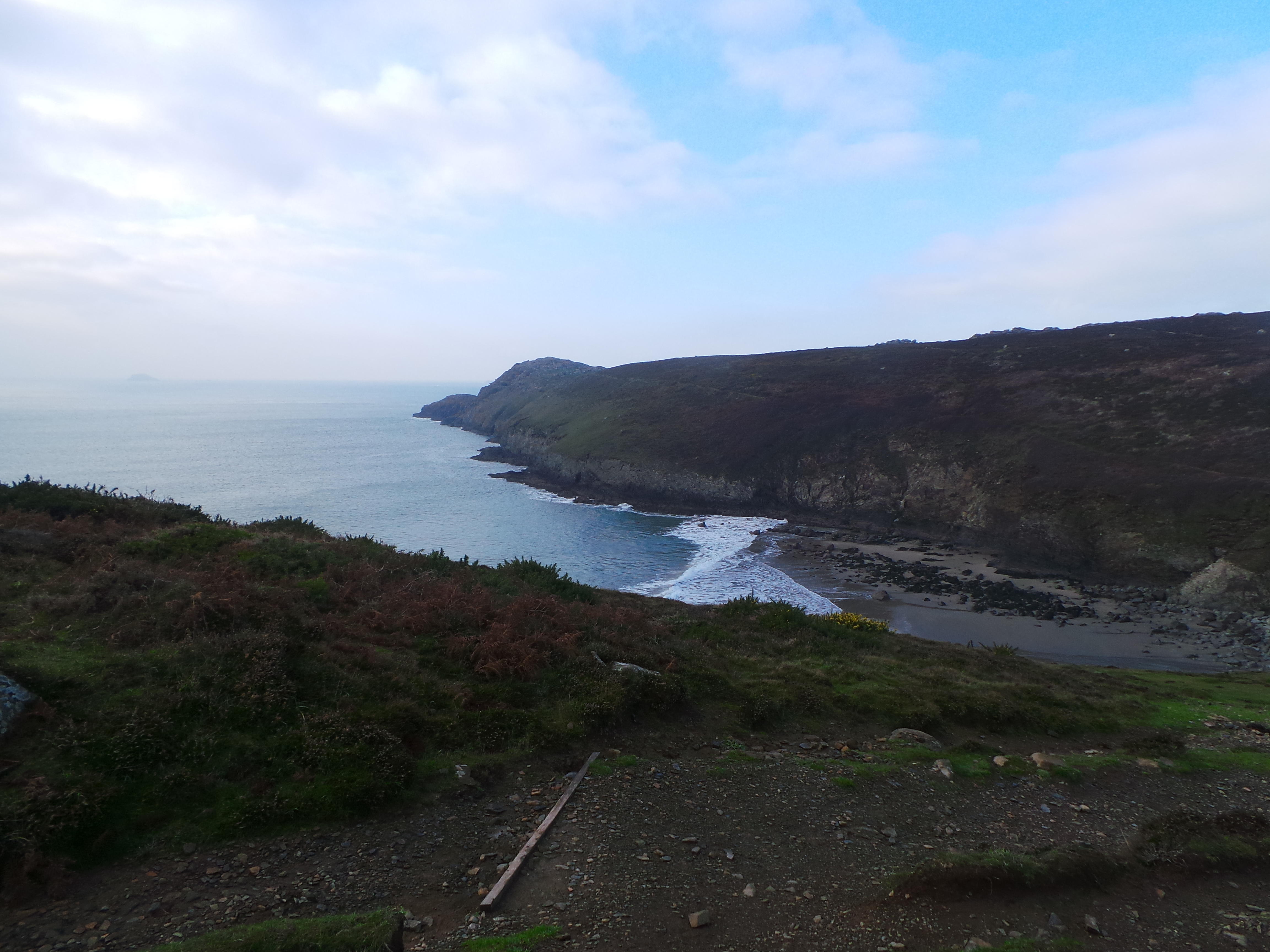
In the photo below we can see the headland for which we were aiming right on the horizon.
 

2014 11 21_7651

My legs are aching and pain is creeping up my spine just writing this post and loading the photos so we shall take a break for now and return in Part Two.


Categories
allotments colours community gardening flowering bulbs fruit and veg garden photography gardens irises light light quality meadows NGS ornamental trees and shrubs shrubs spring bulbs Winter Gardening winter gardens

The Allotments at Rest

We took a walk around our allotment site today to see what was going on and check that everything was okay. We had just watched the site on TV as we featured on a BBC2 series called the Great British Garden Revival. I filmed with Dermuid Gavin a feature on wildlife gardening. It was a strange experience seeing our allotment site on the screen but even stranger seeing our own plot being used as an example of a wildlife friendly garden.

For today’s wander we arrived during a period of sunshine with a clear blue sky over our heads, but by the time we were half way around the clouds had arrived and we were subjected to light but very cold rain. The pure white catkins of the Violet willow in the Spring Garden sit like droplets of rain water after a storm. They are bright enough to be visible from a long way away. They draw attention to themselves very well!

2015 01 18_9332_edited-1

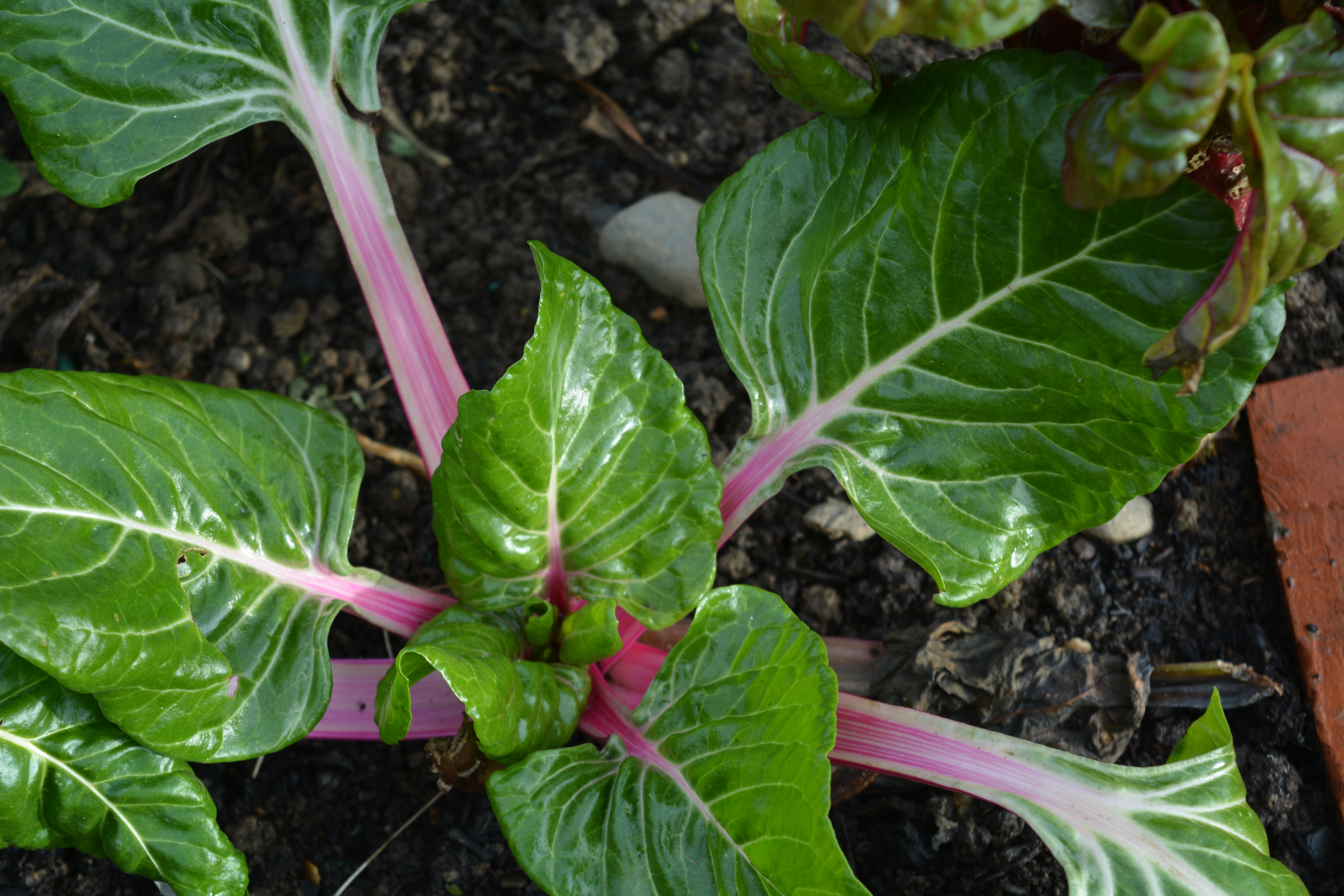
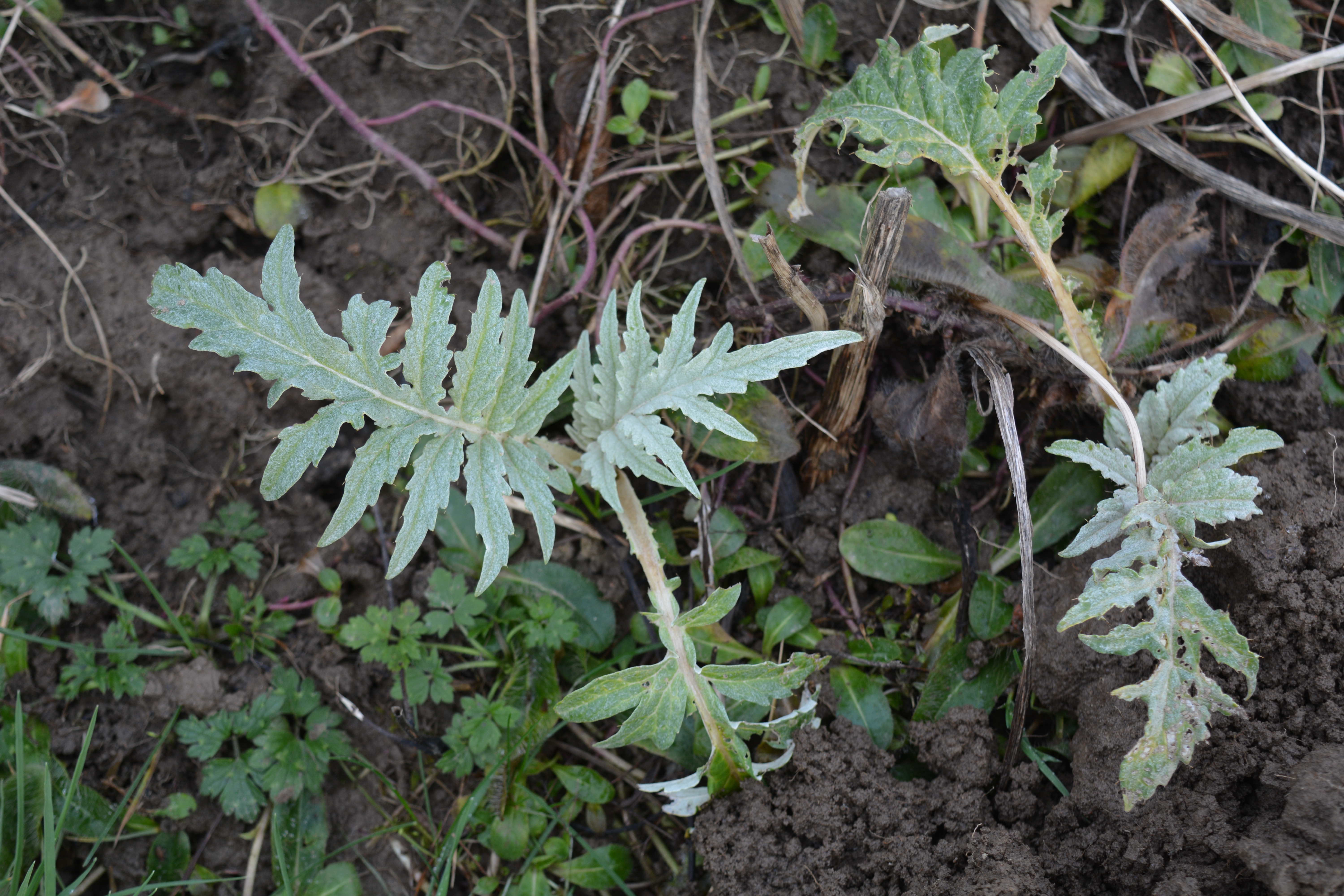
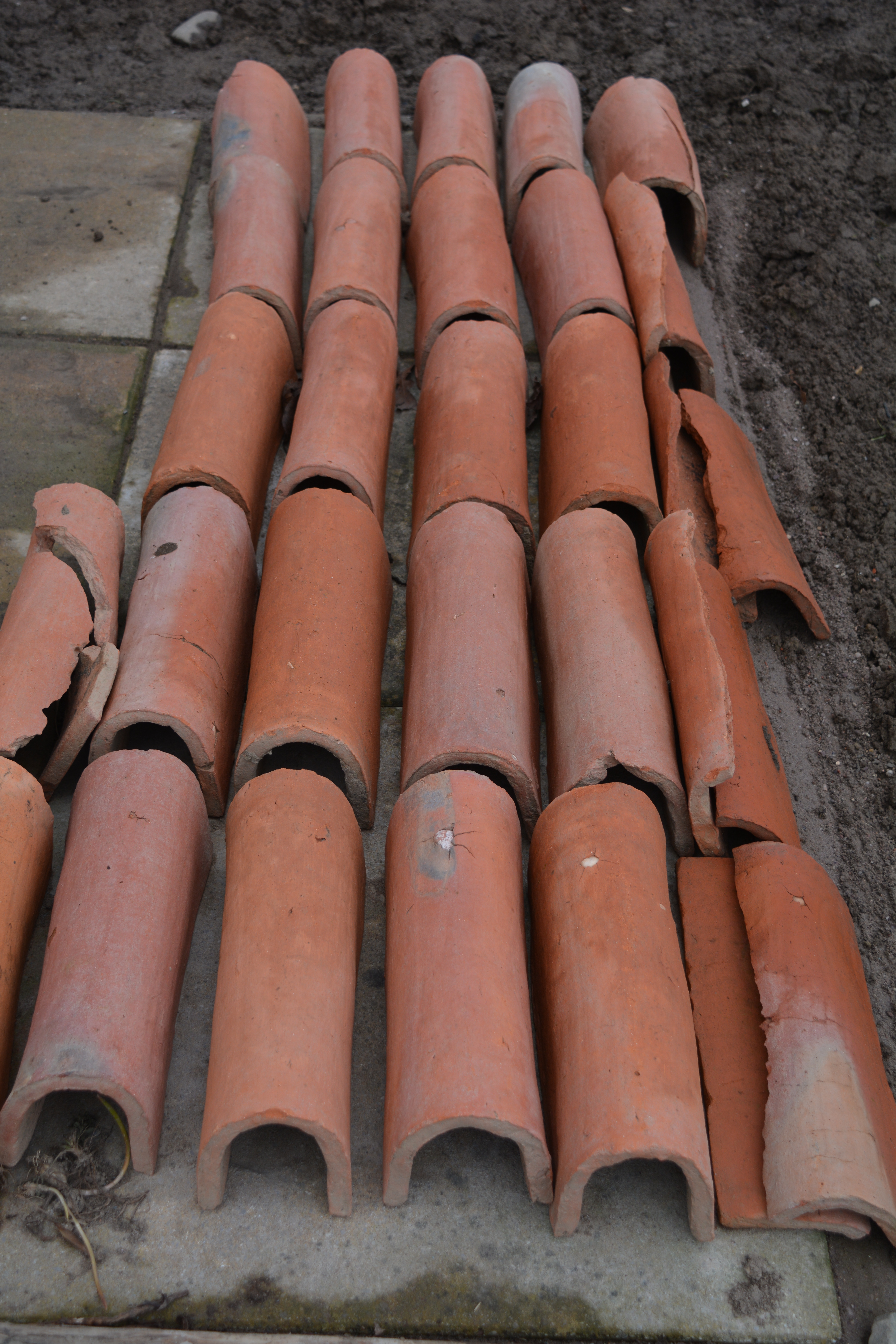
Probably the brightest of winter colours on any veg plot is provided by Swiss Chard especially the cultivar called Bright Lights. Light catches on the textured leaves emphasising their undulating surface. The other crops still in evidence are sprouts that have overwintered and the new fresh foliage of the Globe Artichoke. These leaves now just a few inches long will expand to a massive few feet in length and the plants will reach a good nine or ten feet in height. Their purple, teasel like flowers will delight our pollinators the butterflies, bees and hoverflies and the seed heads that follow will be a magnet to greedy Goldfinches and Linnets in the autumn. Perhaps the strongest pattern of all was found on Tom’s plot, where he has set out all the old clay drainage pipes that he dug up from his plot.

2015 01 18_9312 2015 01 18_9313 2015 01 18_9314 2015 01 18_9330

2015 01 18_9327 2015 01 18_9355

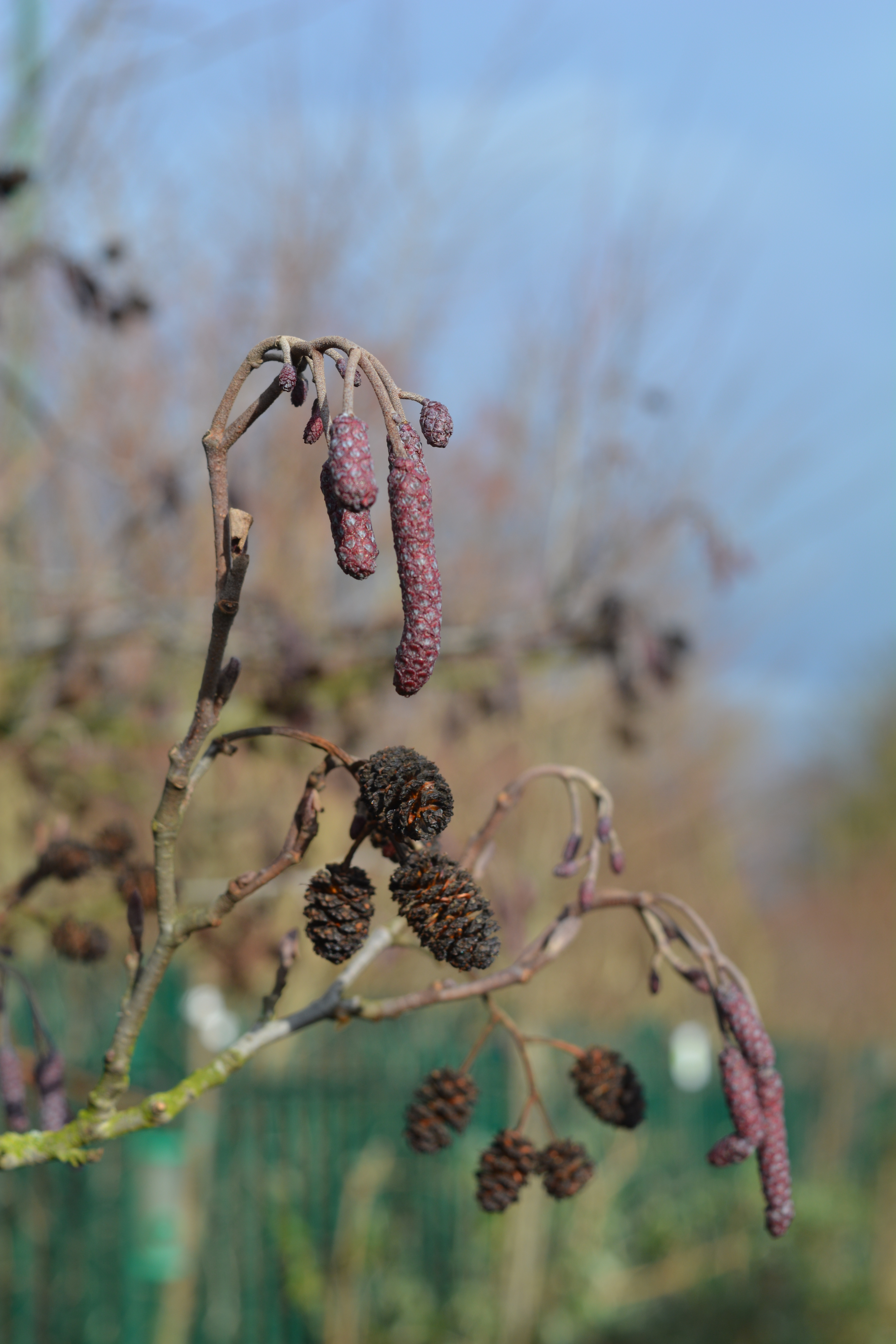
Both the male and female catkins glow purple on the Alders in the Autumn Garden where their neighbours the Buddlejas are showing fresh foliage with their texture like reptilian skin.

2015 01 18_9316 2015 01 18_93152015 01 18_9317

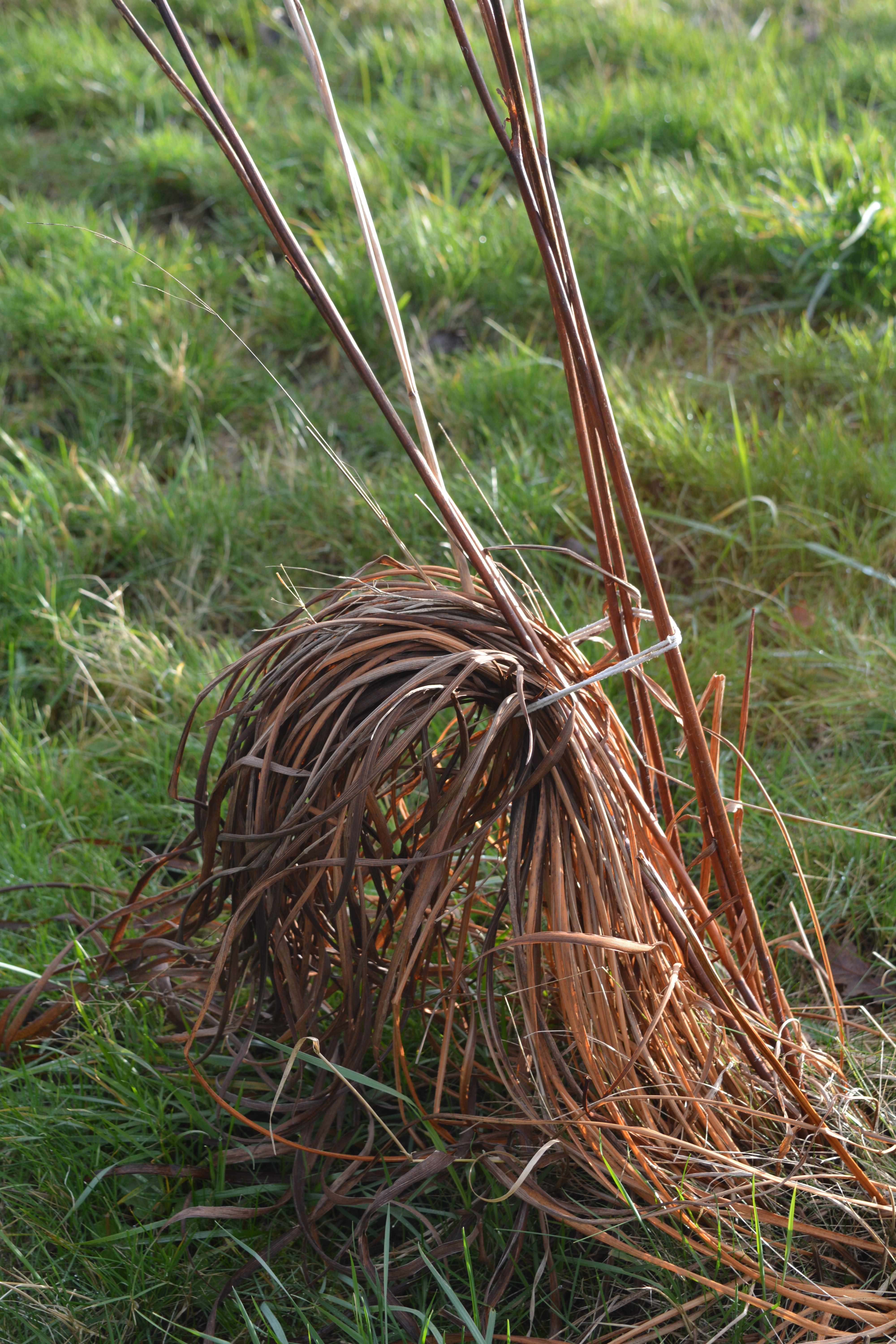
Last year’s plants in the meadows and borders are now skeletons of their former selves. There is a strong structure linked with subtle beauty in these spent seed heads.

2015 01 18_9318 2015 01 18_93222015 01 18_9345 2015 01 18_93482015 01 18_9350_edited-12015 01 18_9319_edited-1 2015 01 18_9320_edited-1

The wildlife shelters sitting in the orchards and meadows hide so many hibernating creatures. They shelter creatures from the winter cold and house anything from the tiniest insects up to amphibians such as frogs, toads and newts, birds like Wrens and Dunnock and mammals including  our confident Weasels. A lost glove adds a splash of colour! In our “Dedge” the bright colours of the various Lichen, yellows, chartreuse and greens, glow however dull the light is.

2015 01 18_9324 2015 01 18_93252015 01 18_9337

A few spring flowering bulbs are showing spears of green piercing the cold soil. Some are even flowering such as the diminutive Iris reticula and Snowdrops.

2015 01 18_9346 2015 01 18_9323_edited-1

2015 01 18_9334_edited-1 2015 01 18_9336

Variegated foliage always looks good in the winter when the silver or gold stripes, spots or squiggles shine against deep green backgrounds.

2015 01 18_9331 2015 01 18_9335

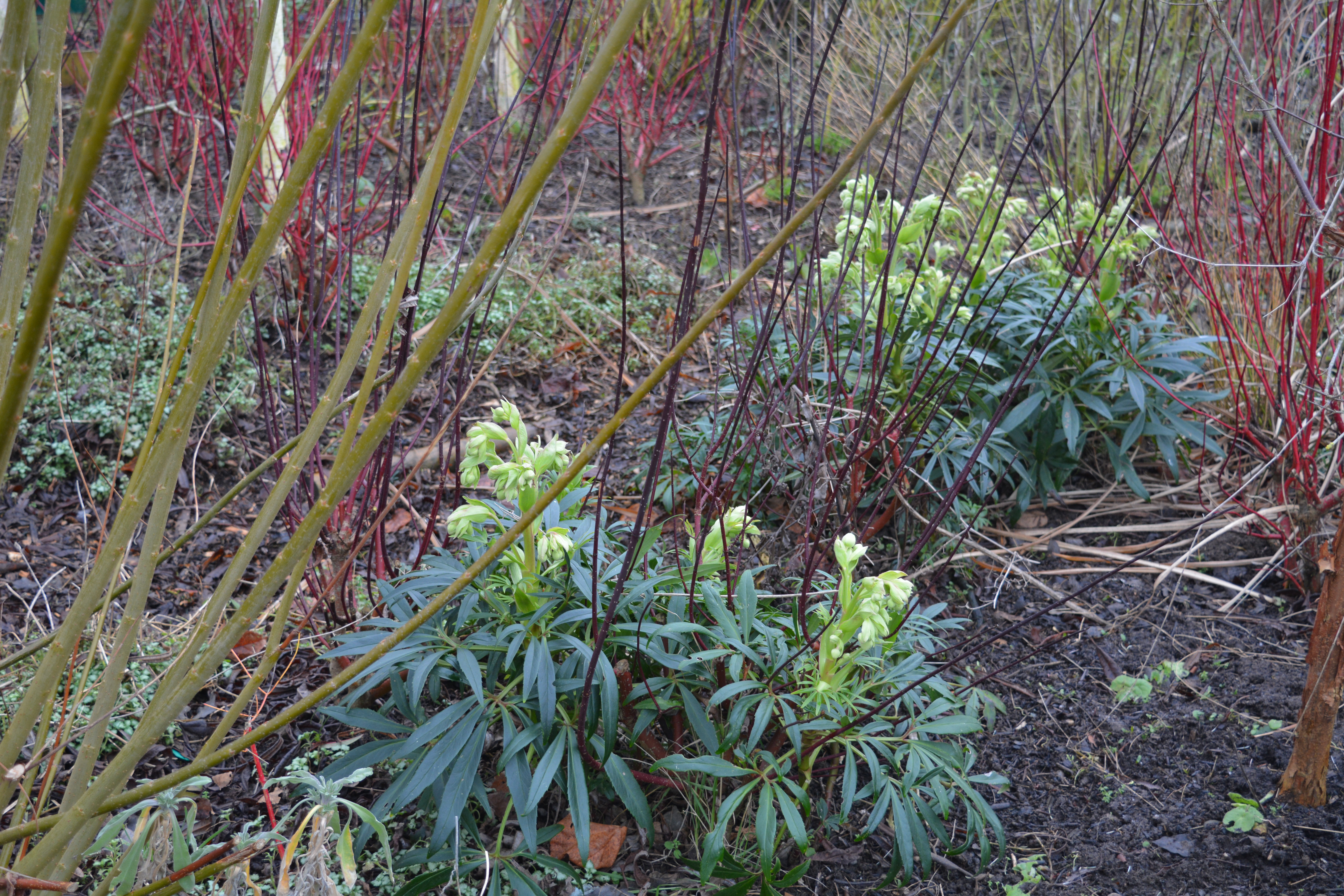
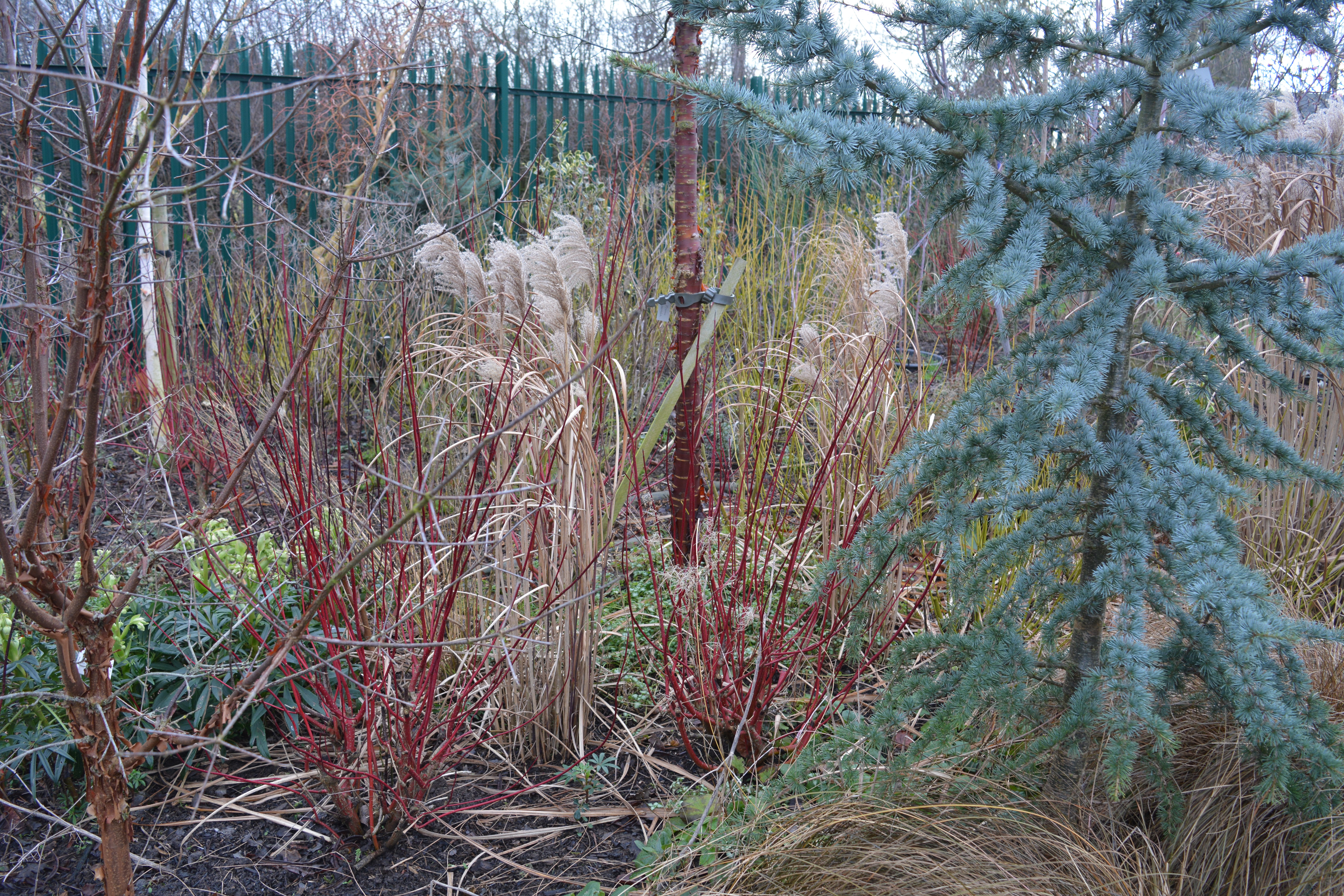
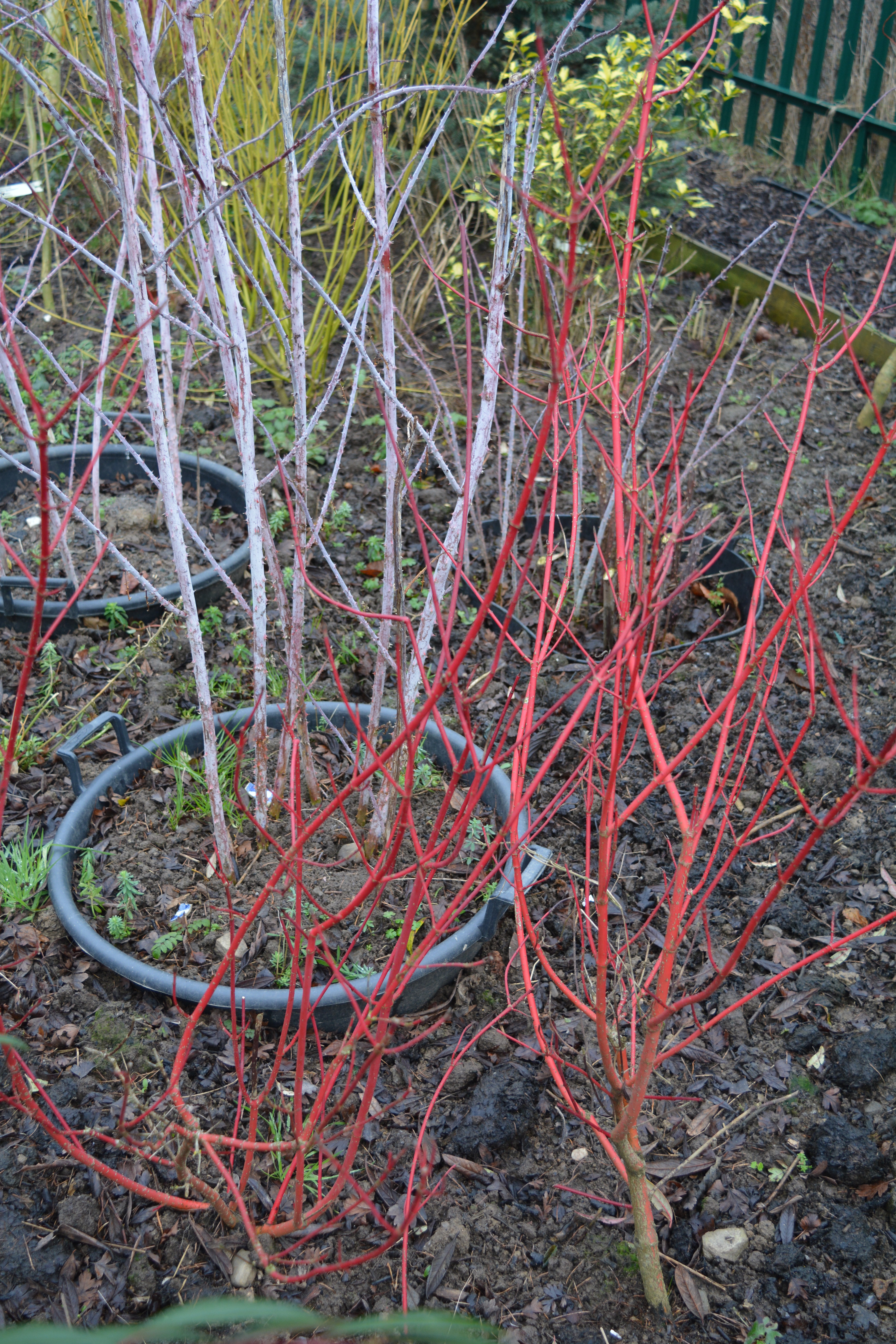
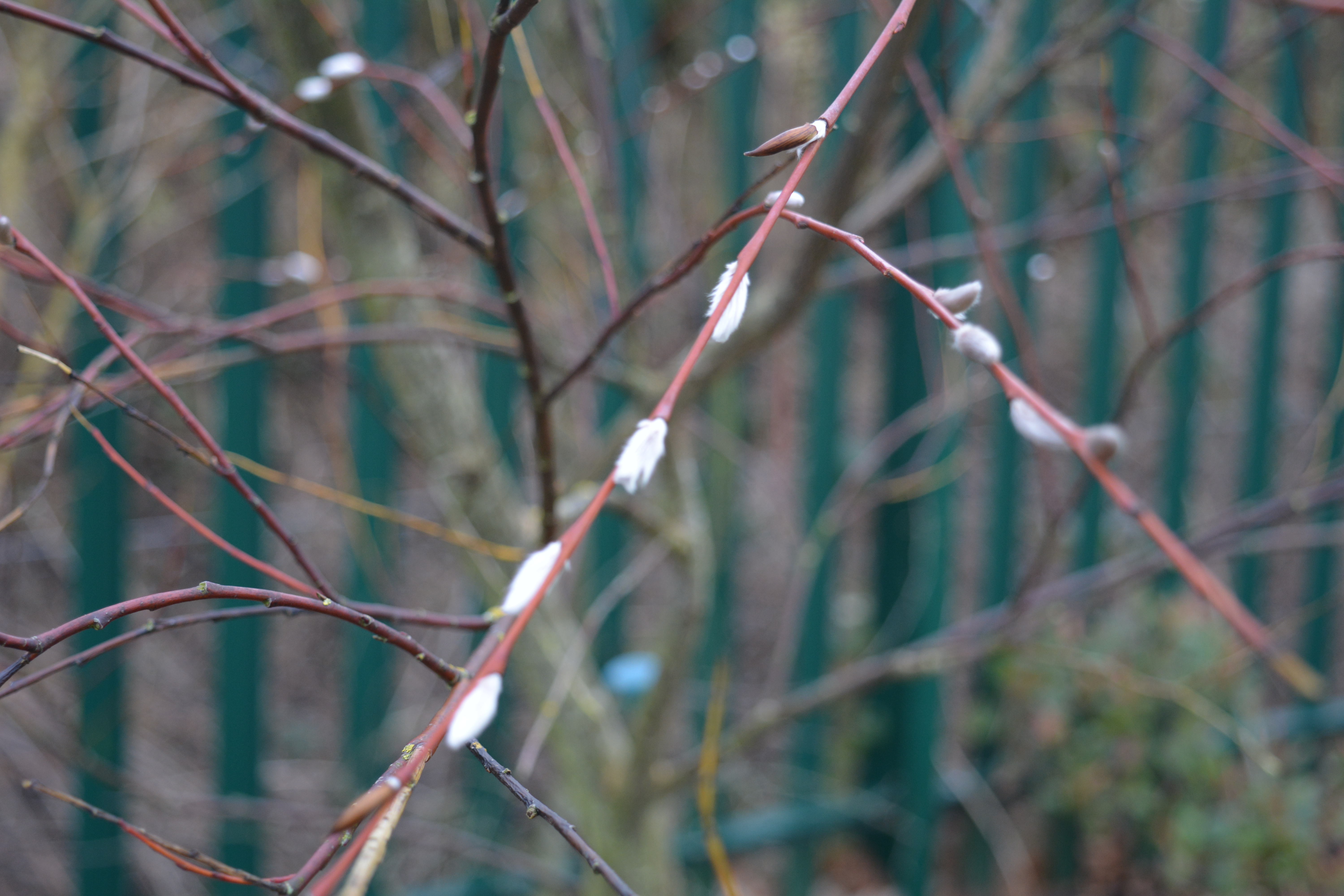
Perhaps it is only right that the most colourful and interesting garden of all at the moment is our Winter Garden. The coloured stems of different forms of Cornus and Salix give us reds, oranges, greens and yellows and even black. The white stemmed Birches are now over 20 feet tall and they dominate this garden. Euphorbias and Hellebores give colour at close to ground level, while the Viburnum bodnantense “Dawn” and Cornus mas provide pink and chartreuse at eye level. Both these shrubs are also powerfully scented.

2015 01 18_9338 2015 01 18_9339 2015 01 18_9340 2015 01 18_9341 2015 01 18_9342 2015 01 18_9343 2015 01 18_9344

Elsewhere the coloured stems of a Salix in our Withy Bed shines gold and the Cornus “Midwinter Fire” glow like flames.

2015 01 18_9347 2015 01 18_9349

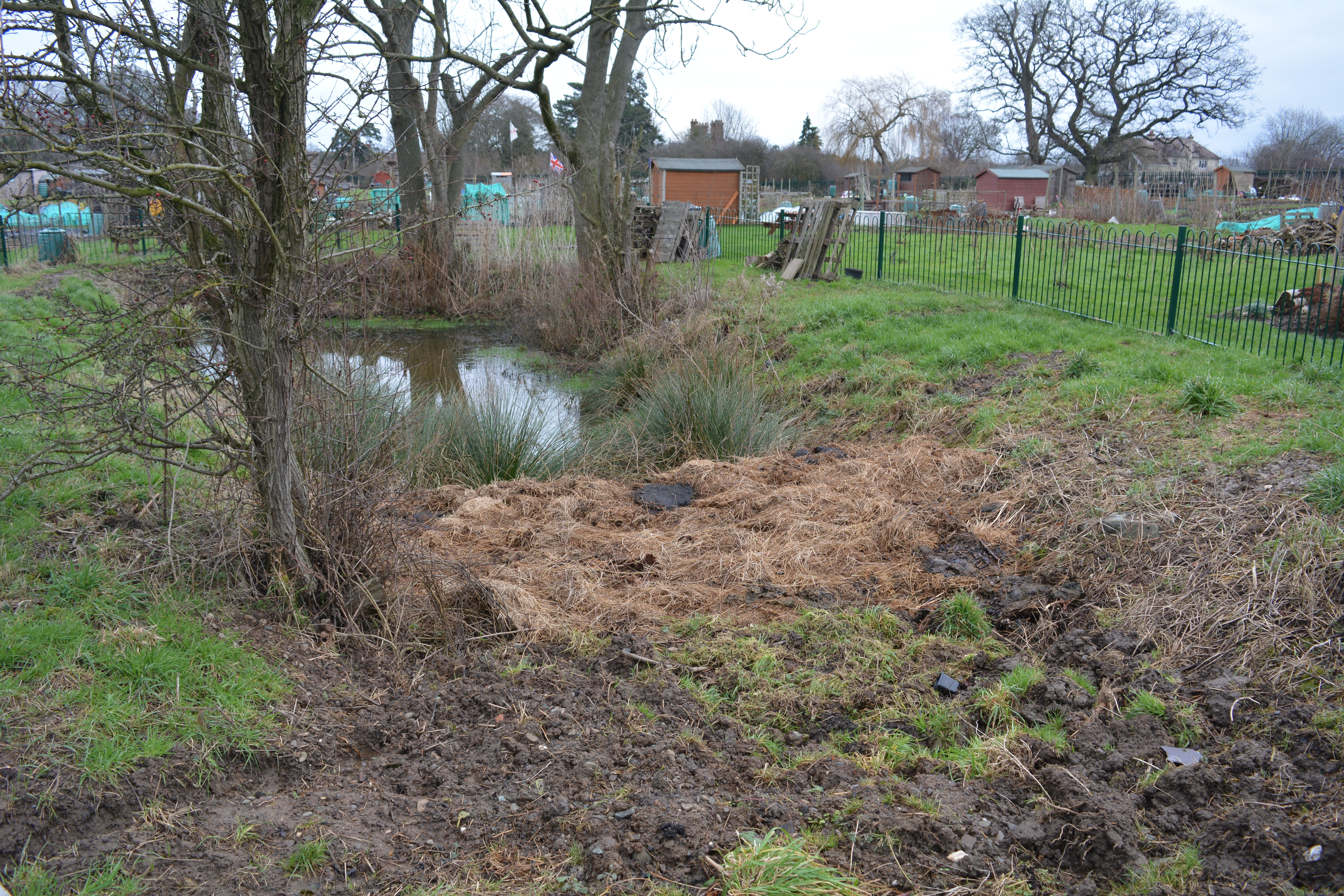
Our tour finishes off with a look at this year’s major project, our wildlife pond. We inherited this large farm pond in the summer and are busy tidying up around it in readiness of the work that lies ahead.

2015 01 18_9353 2015 01 18_9352 2015 01 18_9354

This little character is hidden for most of the year under a patch of Chrysanthemums grown for cutting but in winter he appears to cheer us all up.

2015 01 18_9329

I shall finish this post with a couple of bright jewels.

2015 01 18_9326_edited-1 2015 01 18_9333

Categories
architecture climbing plants colours garden buildings garden design garden furniture garden photography garden seating gardening gardens gardens open to the public hardy perennials irises kitchen gardens light quality National Trust ornamental trees and shrubs outdoor sculpture roses The National Trust trees walled gardens Winter Gardening winter gardens

Croft Castle month by month – January – part two

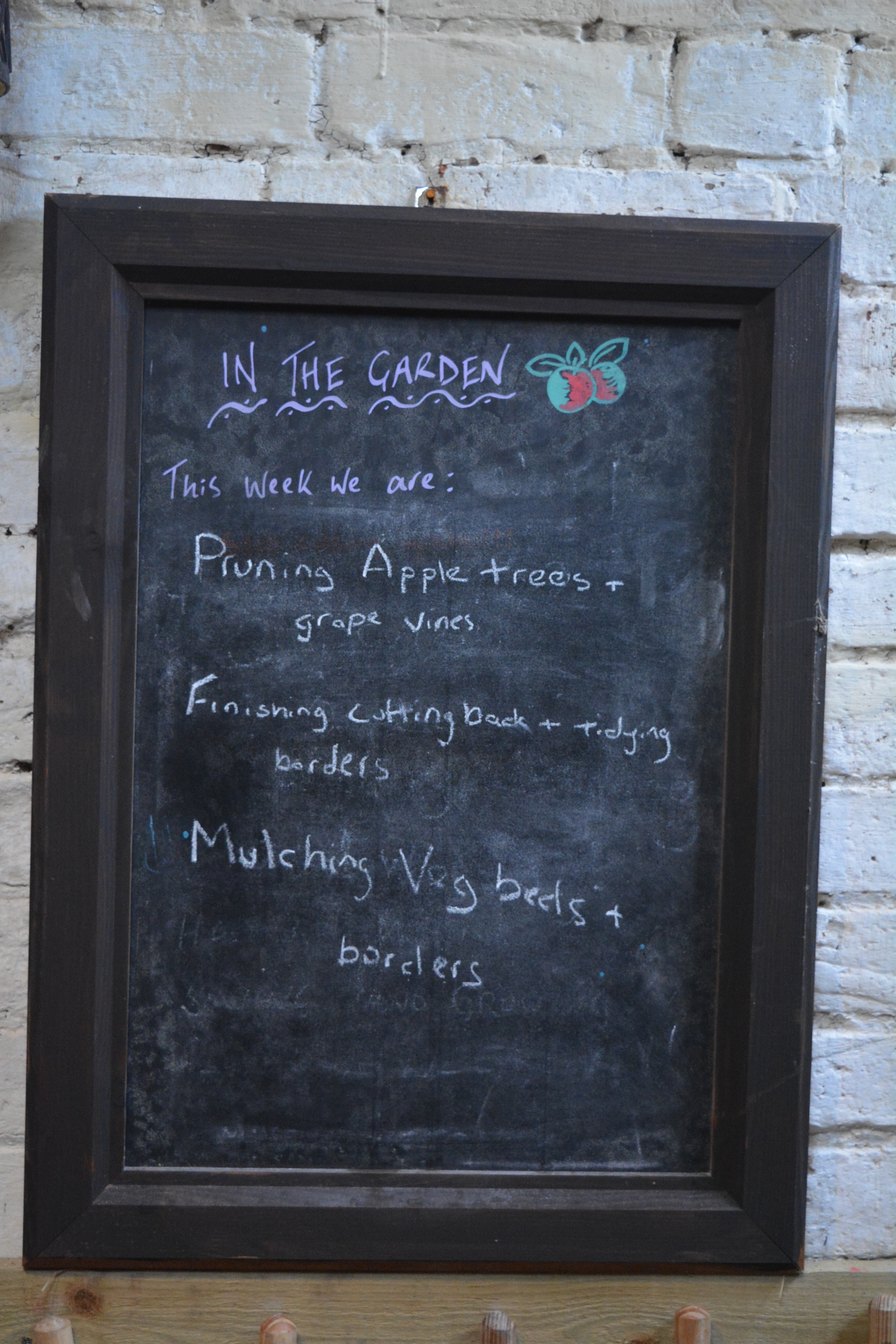
Welcome back to Croft Castle where we were about to find out what lies beyond the blue gate. We entered the space beyond the gate and found immediately to our right one of the gardeners’ buildings from the days when the walled gardens were a productive fruit and veg garden. Today it is a children’s discovery room complete with nature table. A board showed the gardening tasks for the month. Close by hung an old pruning saw.

2015 01 01_9110 2015 01 01_91112015 01 01_9109

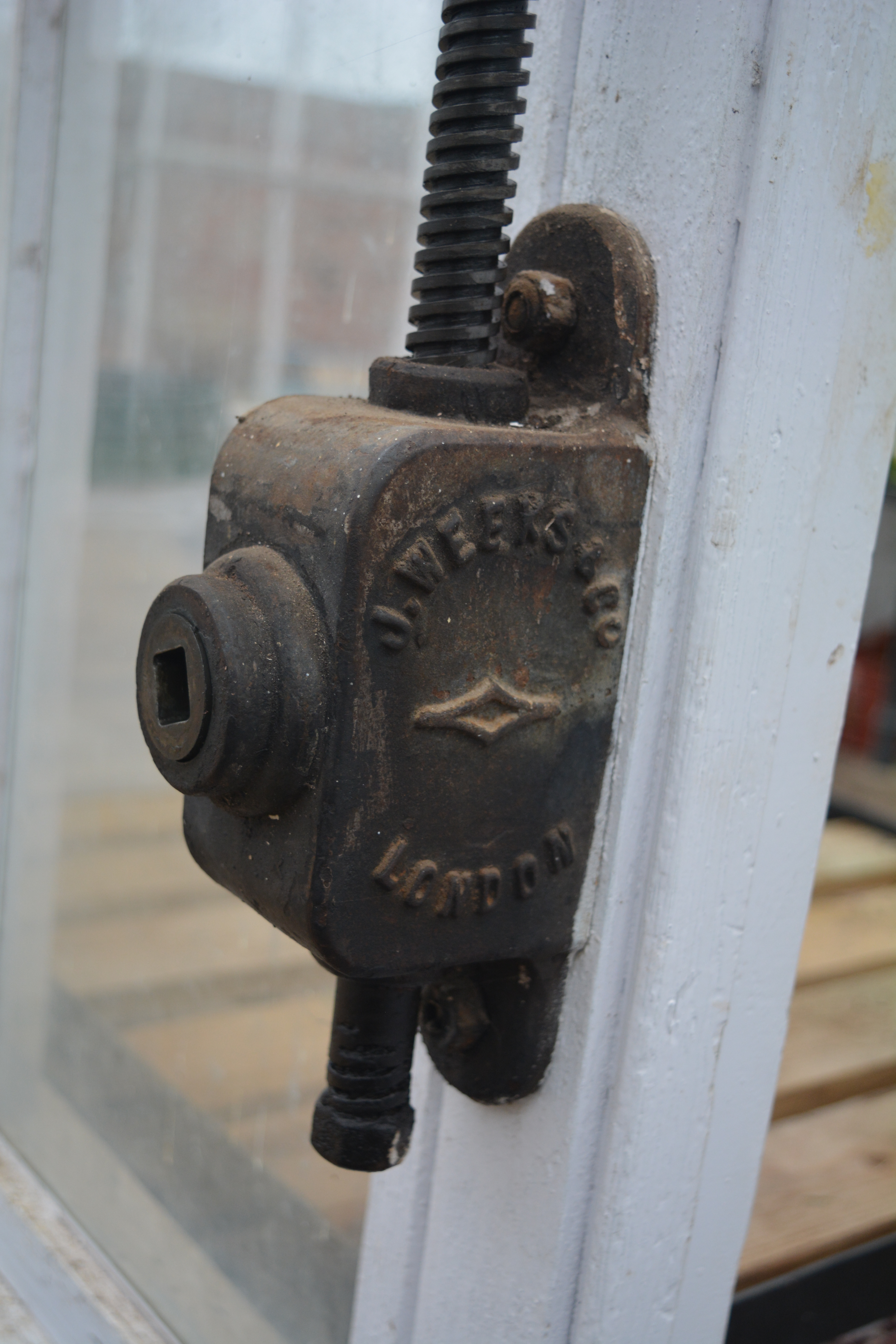
After a good peruse among the dusty artifacts and sharing our memories of nature tables at primary school we moved on to the old, wooden framed greenhouse which until now we had viewed from the gate. On this visit we went inside. We were delighted to find the old iron mechanisms that controlled the windows and vents still intact. We both find these fascinating and are amazed by the ingenuity shown by the greenhouse designers of that era.

2015 01 01_9113 2015 01 01_9112

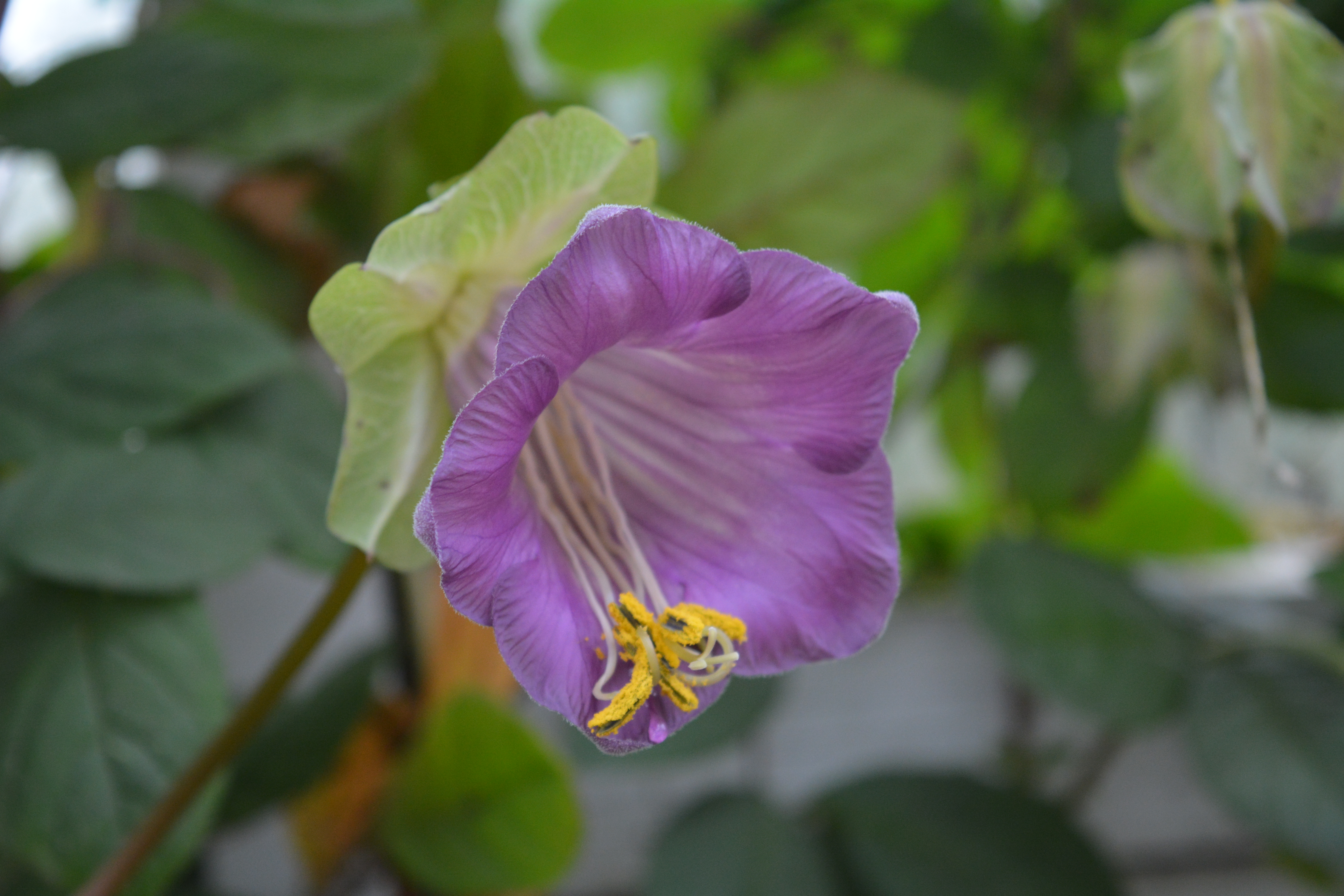
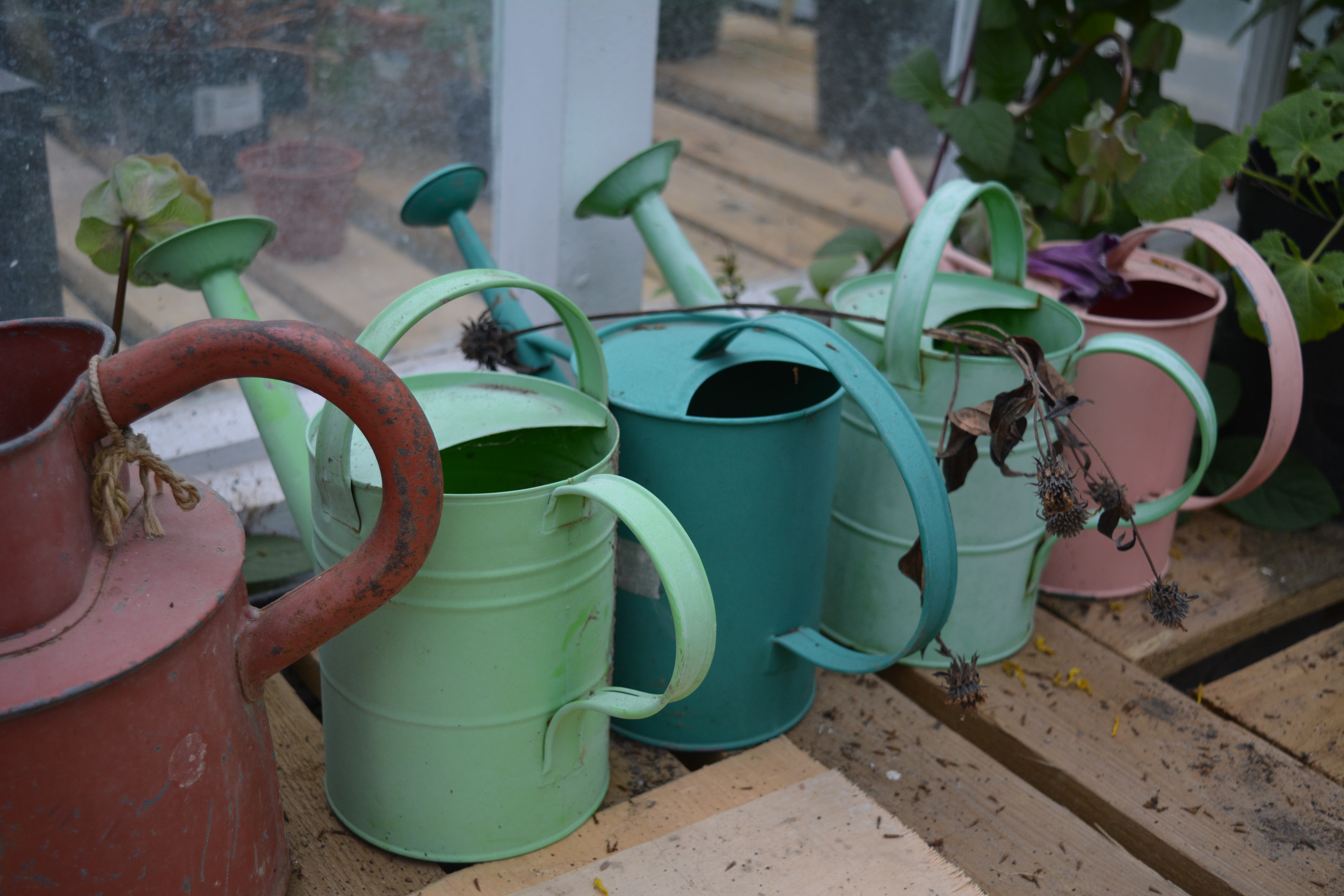
We were pleased to find a colourful line up of watering cans and a very healthy looking Cobaea climbing up wires and flowering profusely. It was easy to see why it is graced with the common name “Cup and Saucer Vine”.

2015 01 01_9114  2015 01 01_9115

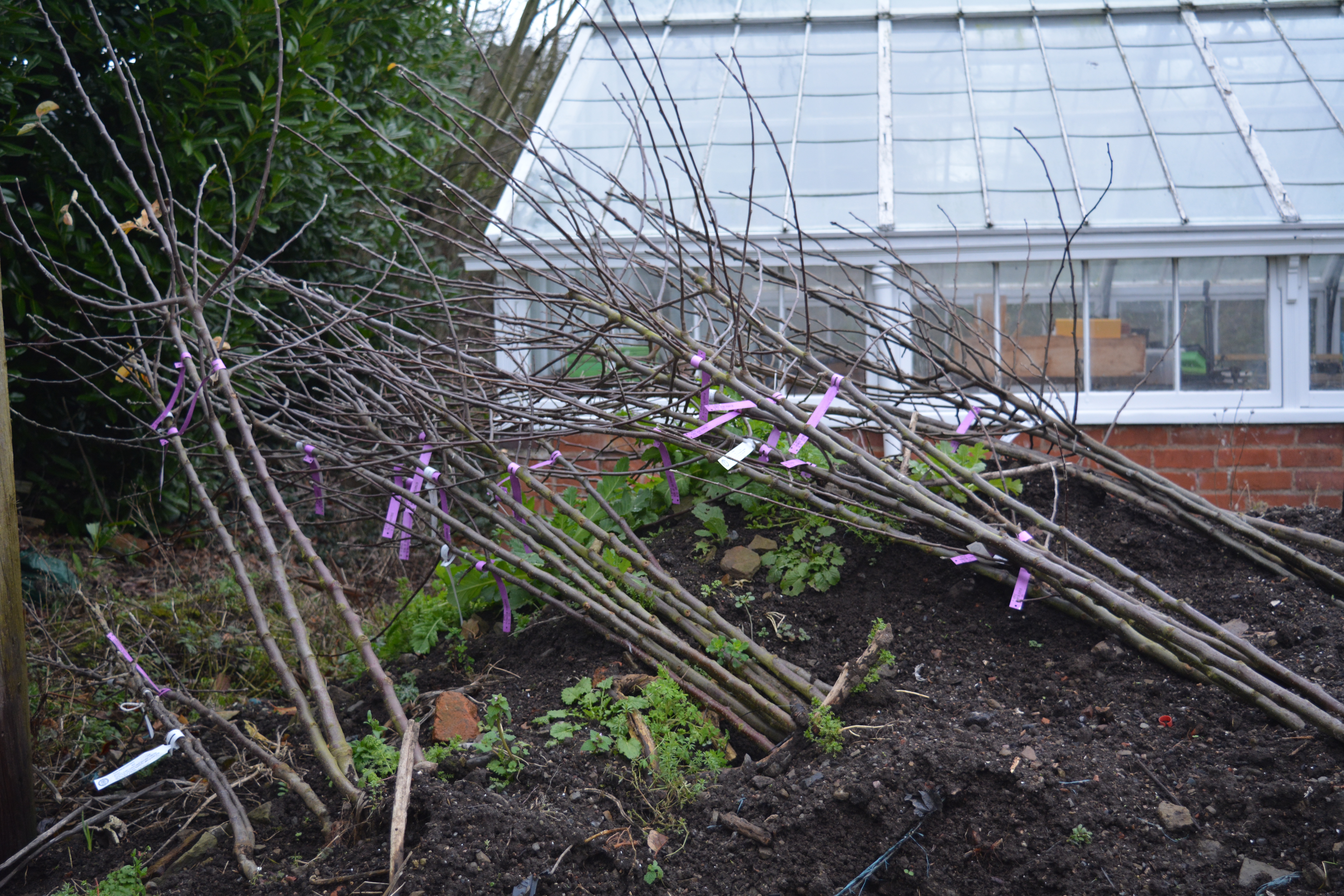
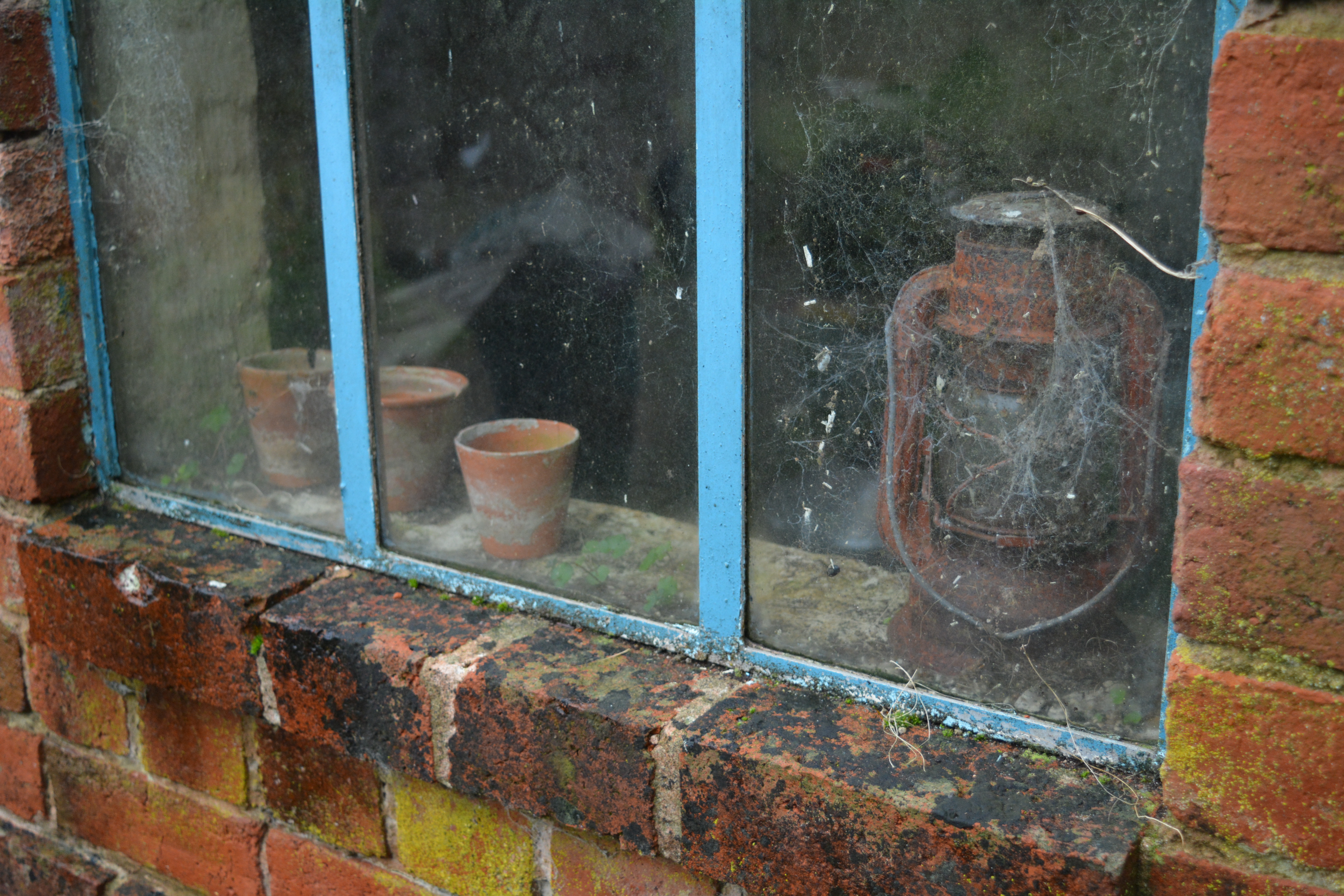
Outside the greenhouse we found a stack of apple trees heeled into a pile of compost awaiting the time when the frozen ground allowed them to be planted. Further old buildings hugged the walls – they were ina tumbled down state. The old window attracted me and my camera but I remain undecided if it is best as a colour or monochrome picture. Any thoughts?

2015 01 01_9116 2015 01 01_91172015 01 01_9118_edited-1

2015 01 01_9118

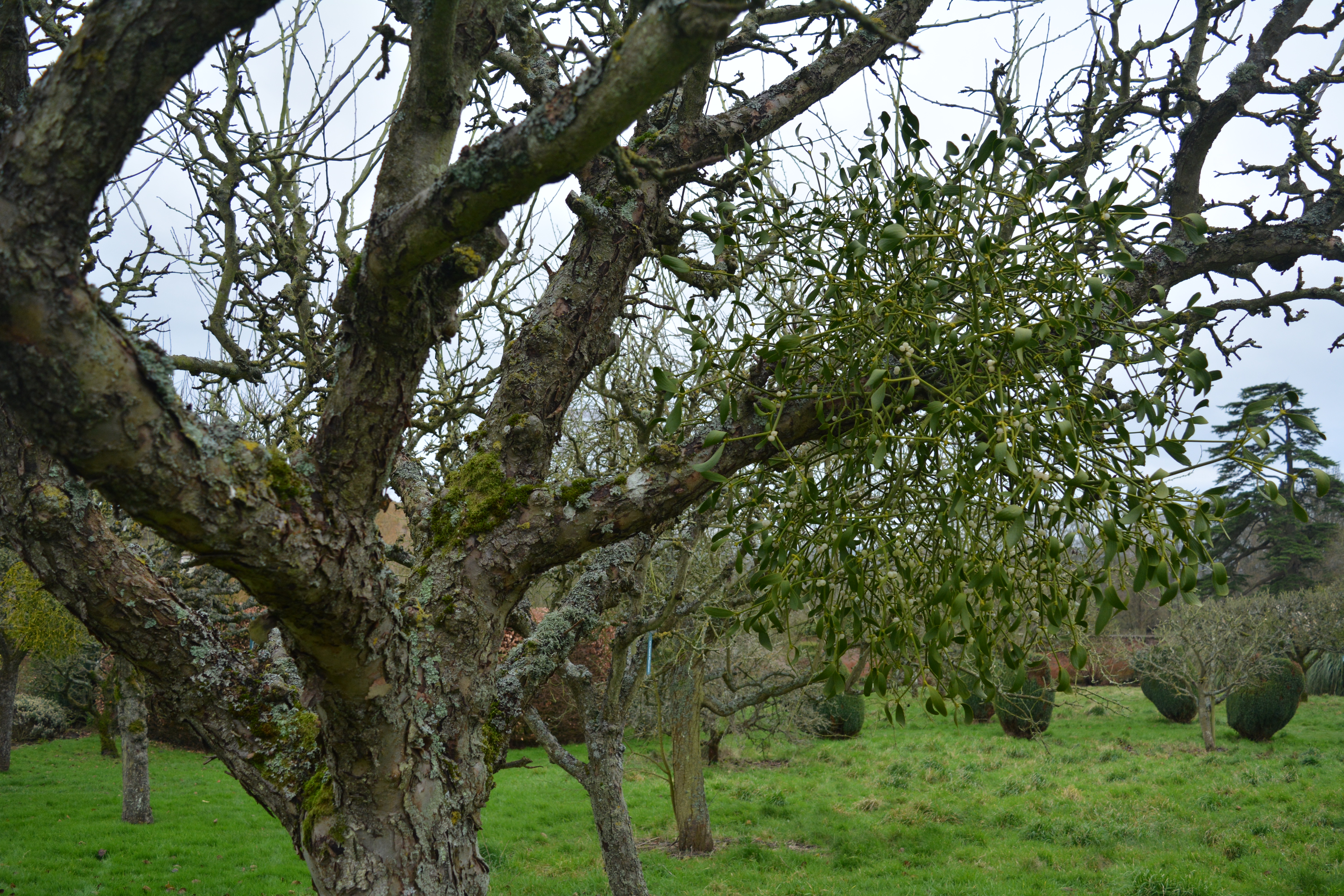
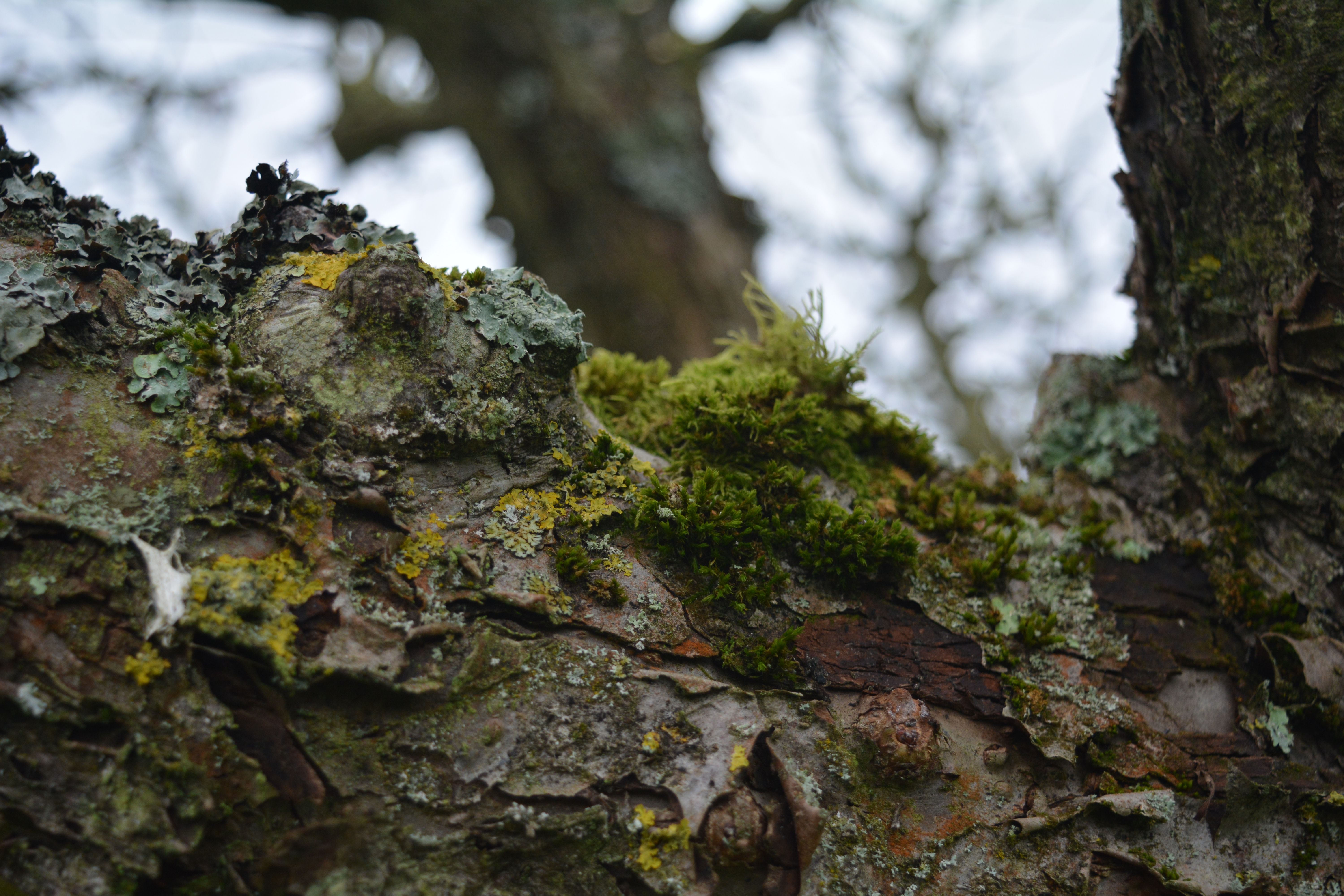
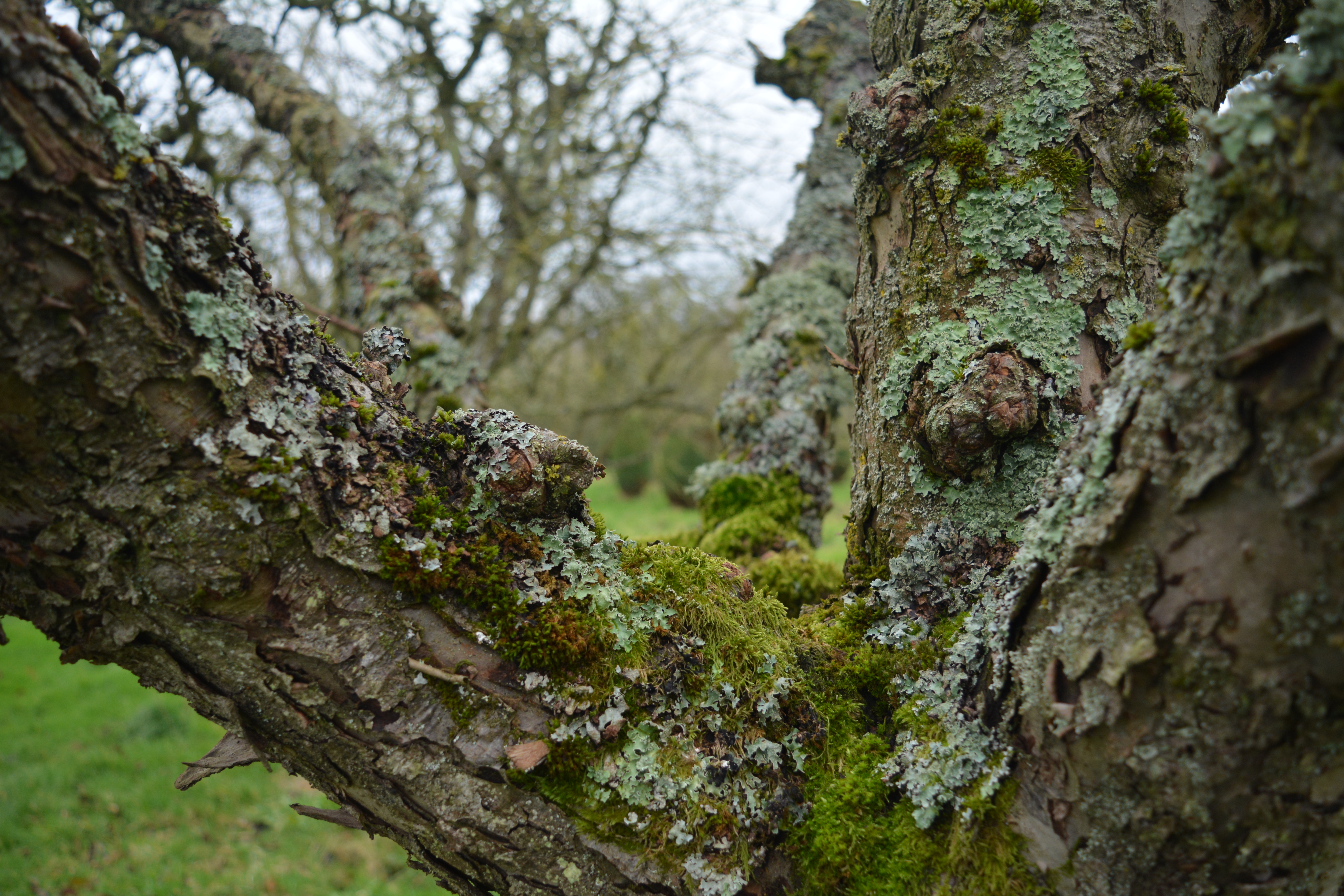
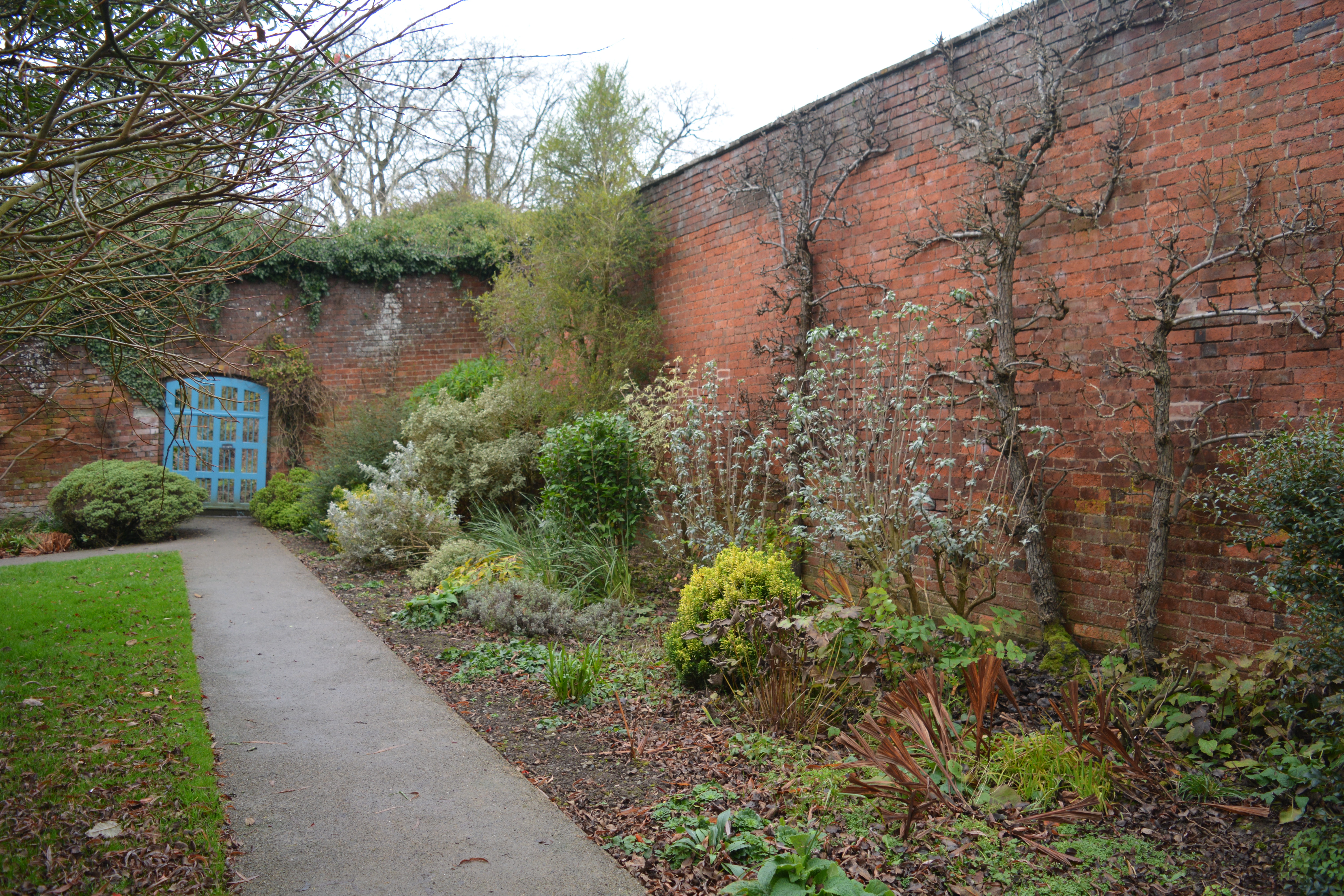
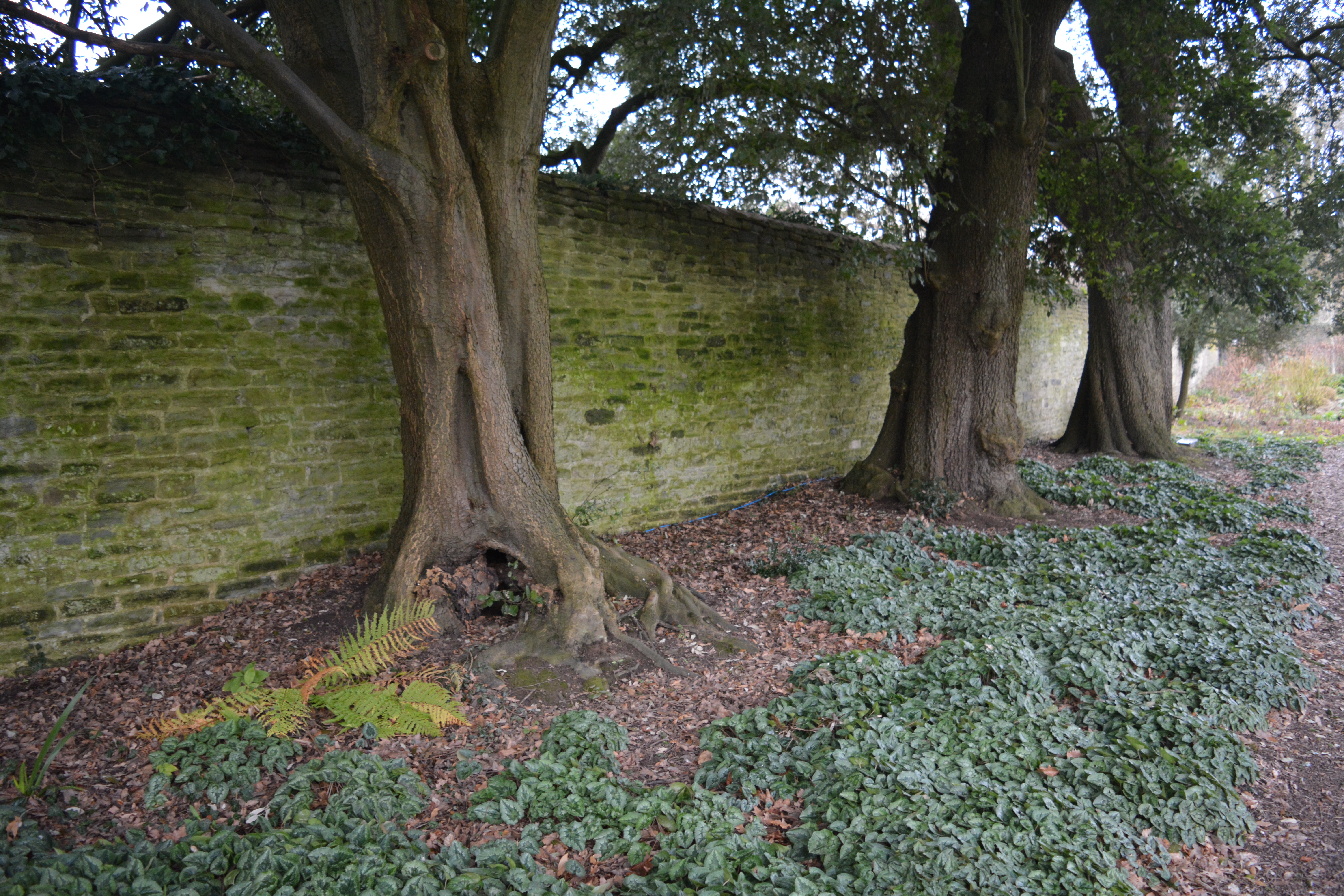
We continued our tour of the main walled garden following the herbaceous borders to discover ancient apple trees beautifully pruned ready for fruiting next season. Their trunks and branches were encrusted with lichens and mosses creating miniature landscapes. Clumps of Mistletoe decorated several of the trees. This is a common parasitic plant in the orchards of Herefordshire. A Mistletoe Fair and market are held in December every year in the nearby market town of Tenbury Wells. They are famous for their mistletoe auctions.

2015 01 01_9120 2015 01 01_9121 2015 01 01_9122 2015 01 01_9123 2015 01 01_9124 2015 01 01_9125

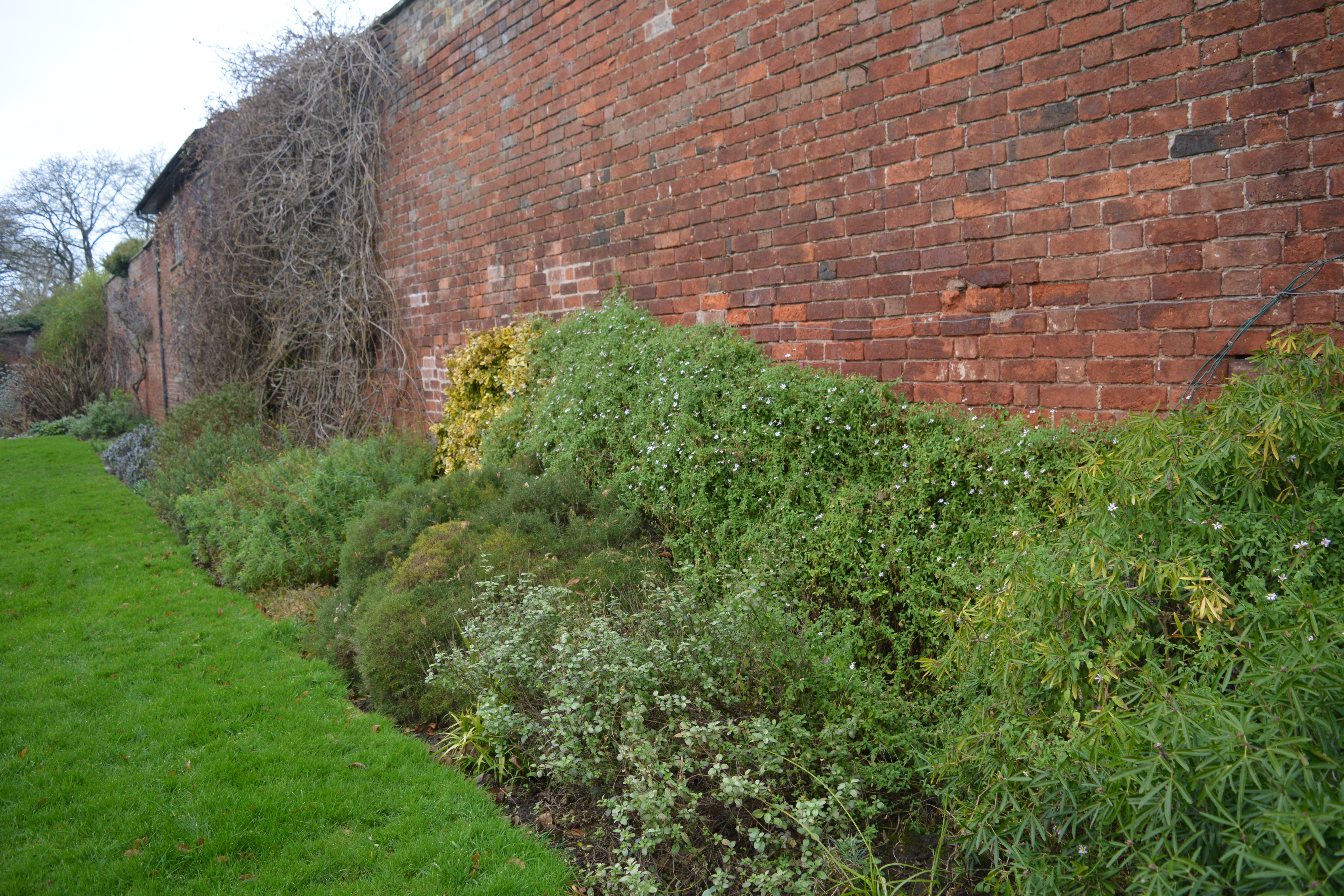
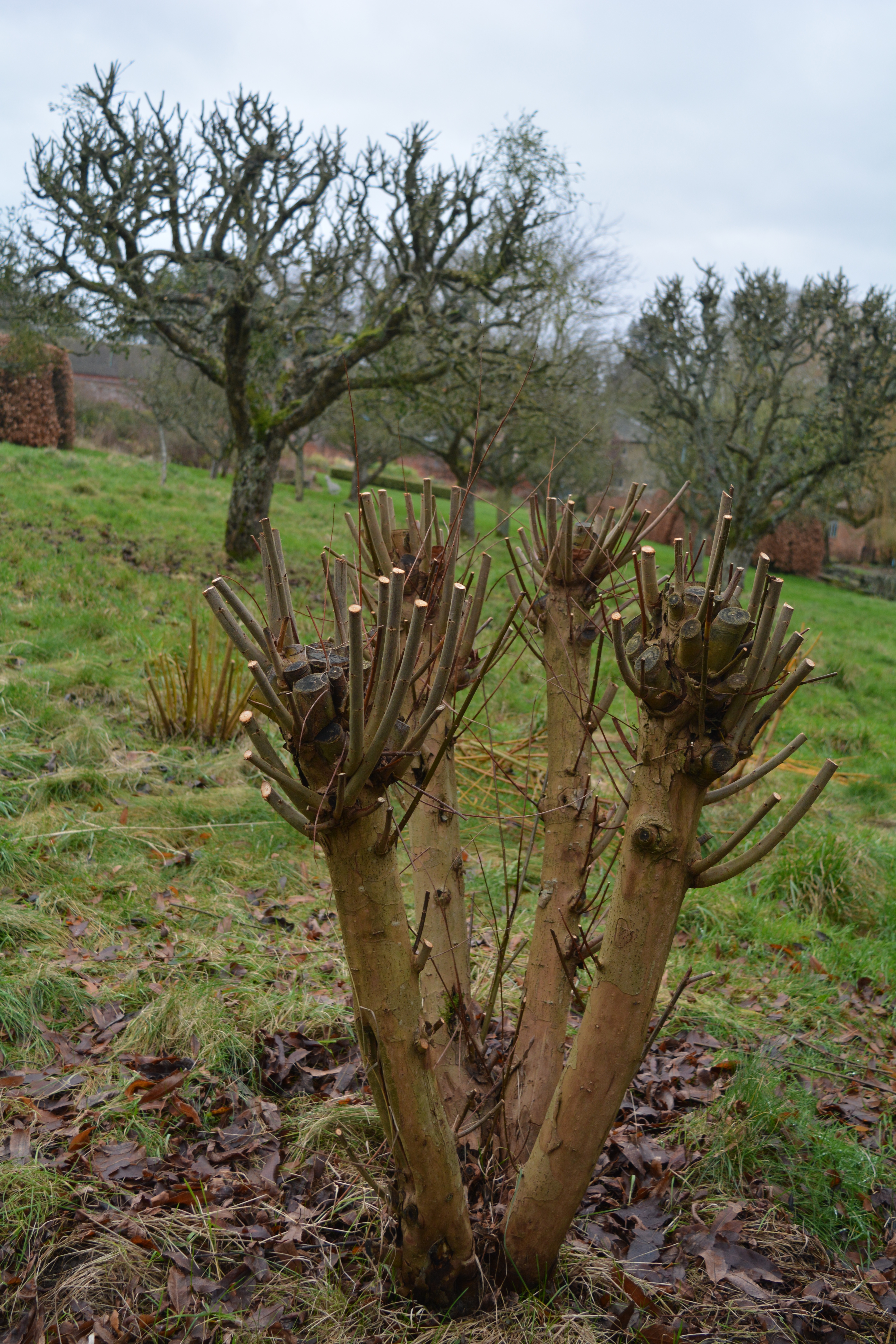
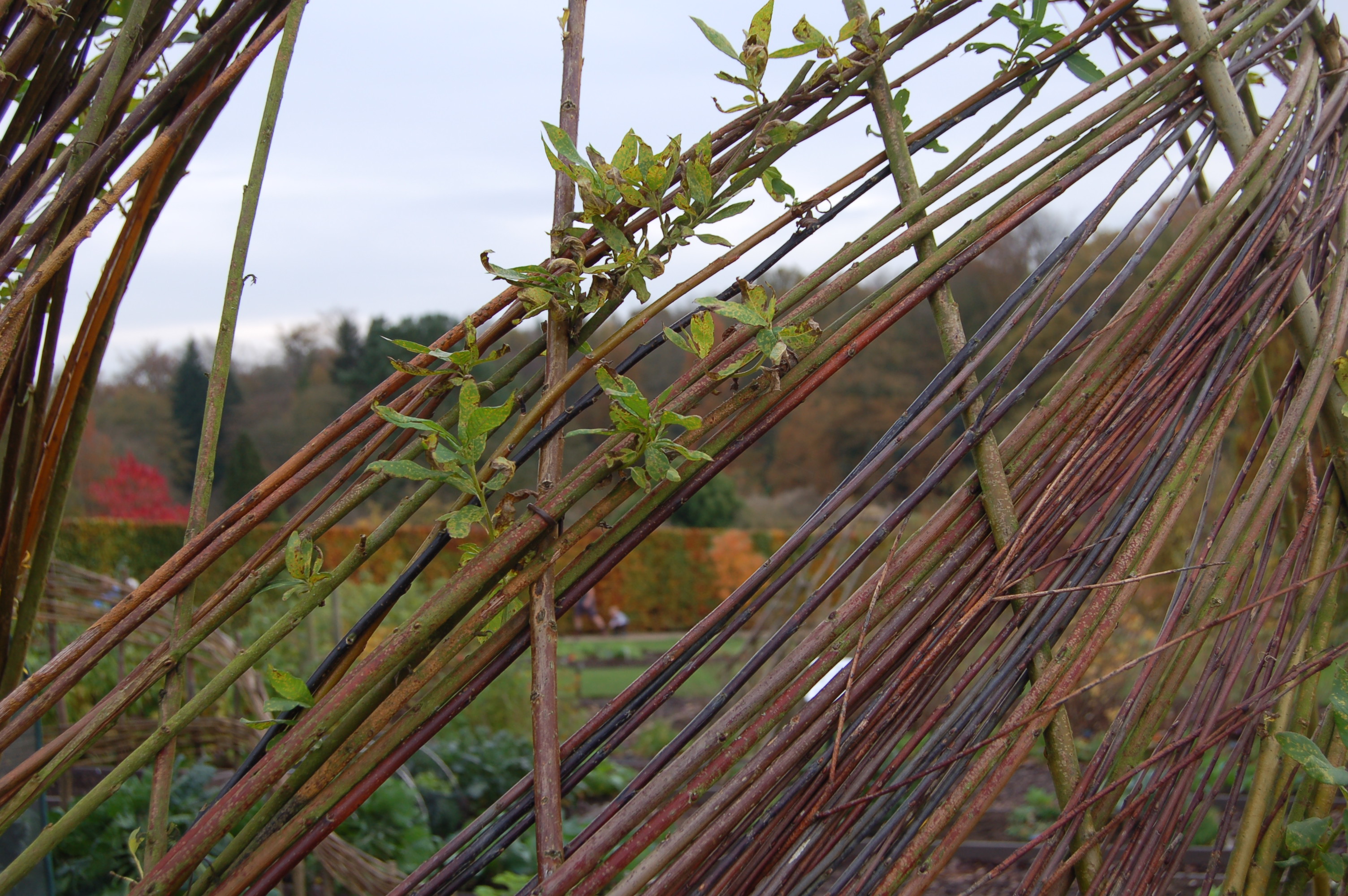
Along the third and fourth walls mixed borders included many shrubs which were well pruned in readiness for new growth when spring arrives. In the central area among the grass willows had been pruned too, cut into low pollarding and coppicing to encourage fresh, long new wands to cut and use around the garden as plant supports or sculpture.

2015 01 01_9126 2015 01 01_9127

2015 01 01_9128 2015 01 01_91292015 01 01_9130  2015 01 01_9119

I enjoyed a play with this pic on Photoshop!

2015 01 01_9119_edited-1

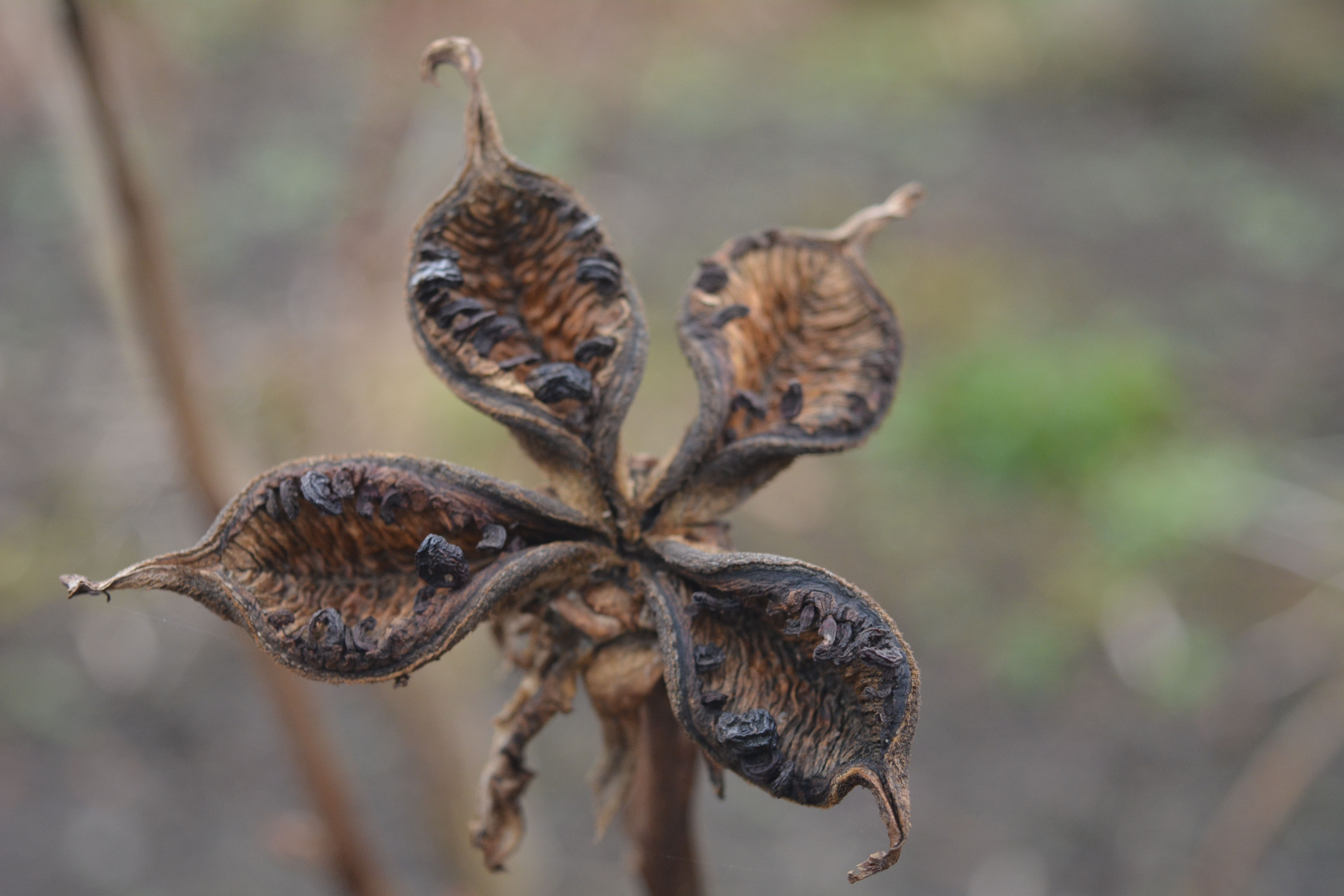
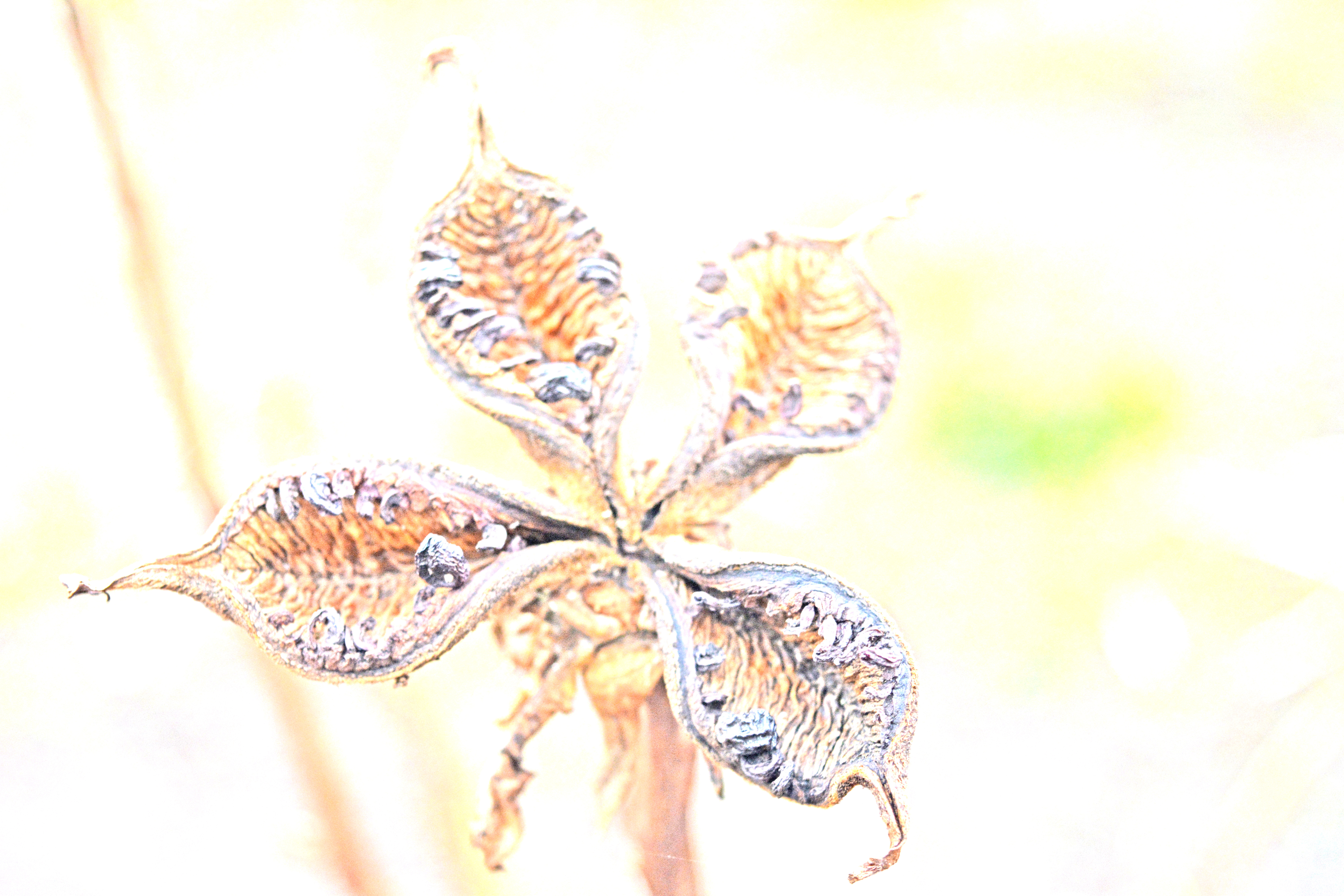
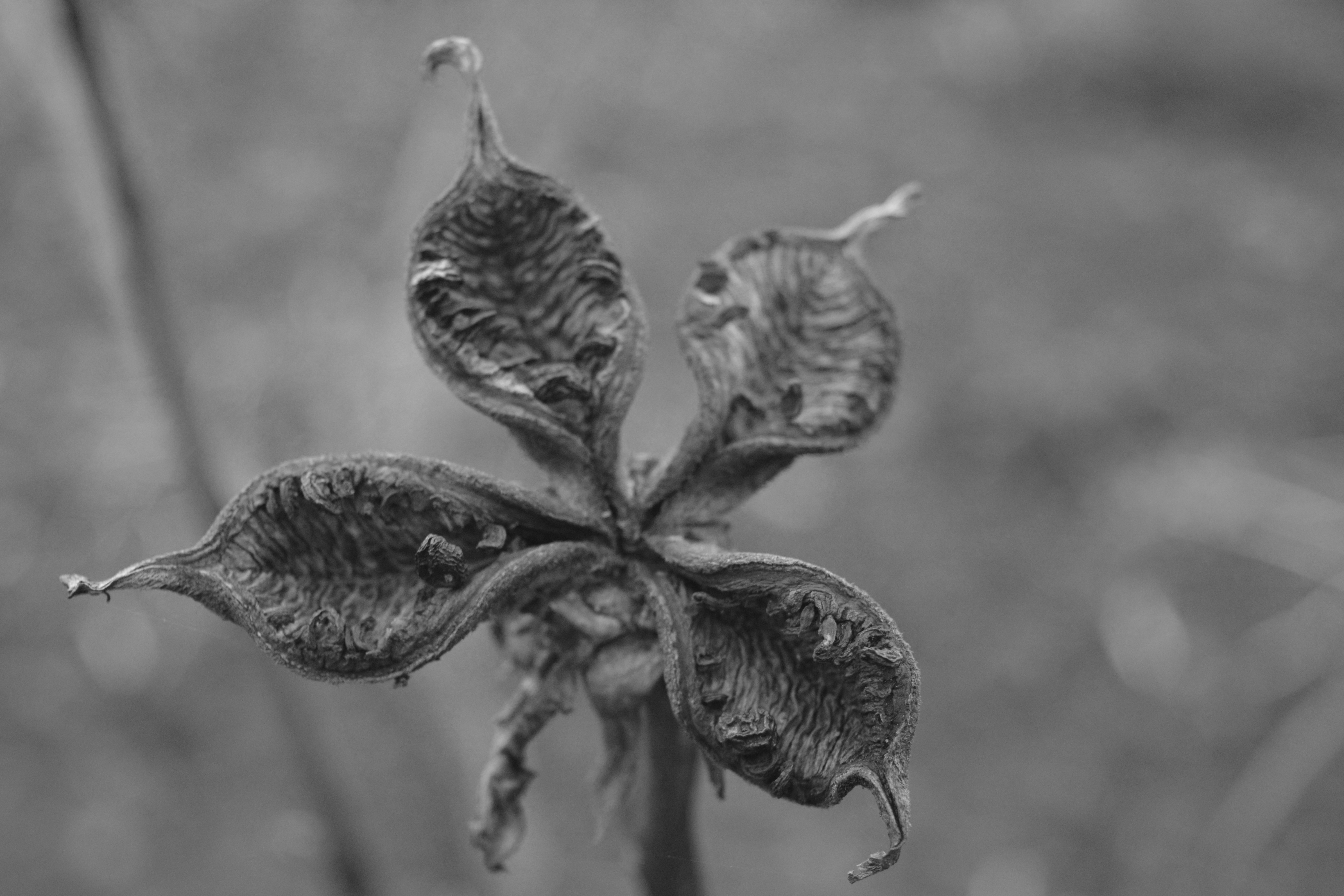
We were attracted to the opened seed pods of a Paeony with its four sections of woody shell. I certainly enjoyed playing with the image on Photoshop! Here you can select your favourite of three versions.

2015 01 01_9097 2015 01 01_9097_edited-2

2015 01 01_9097_edited-1

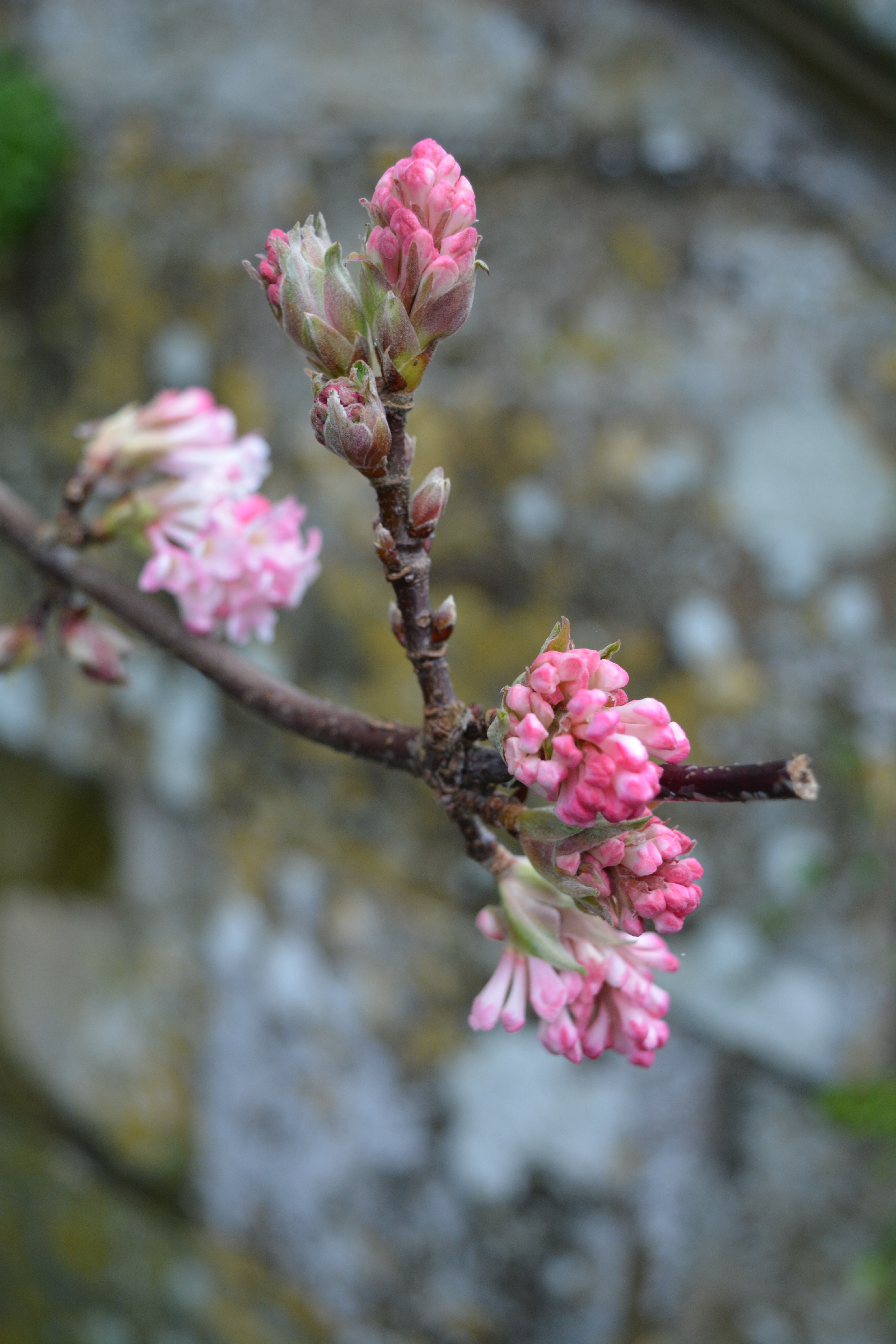
The sweet scent of the pink flowers of Viburnum bodnantense reached our noses long before we spotted the shrub itself. Next to it in the border was the giant stalk of the biggest Lilly we can grow in the UK, the statuesque Cardiocrinum giganteum.

2015 01 01_9131 2015 01 01_9132

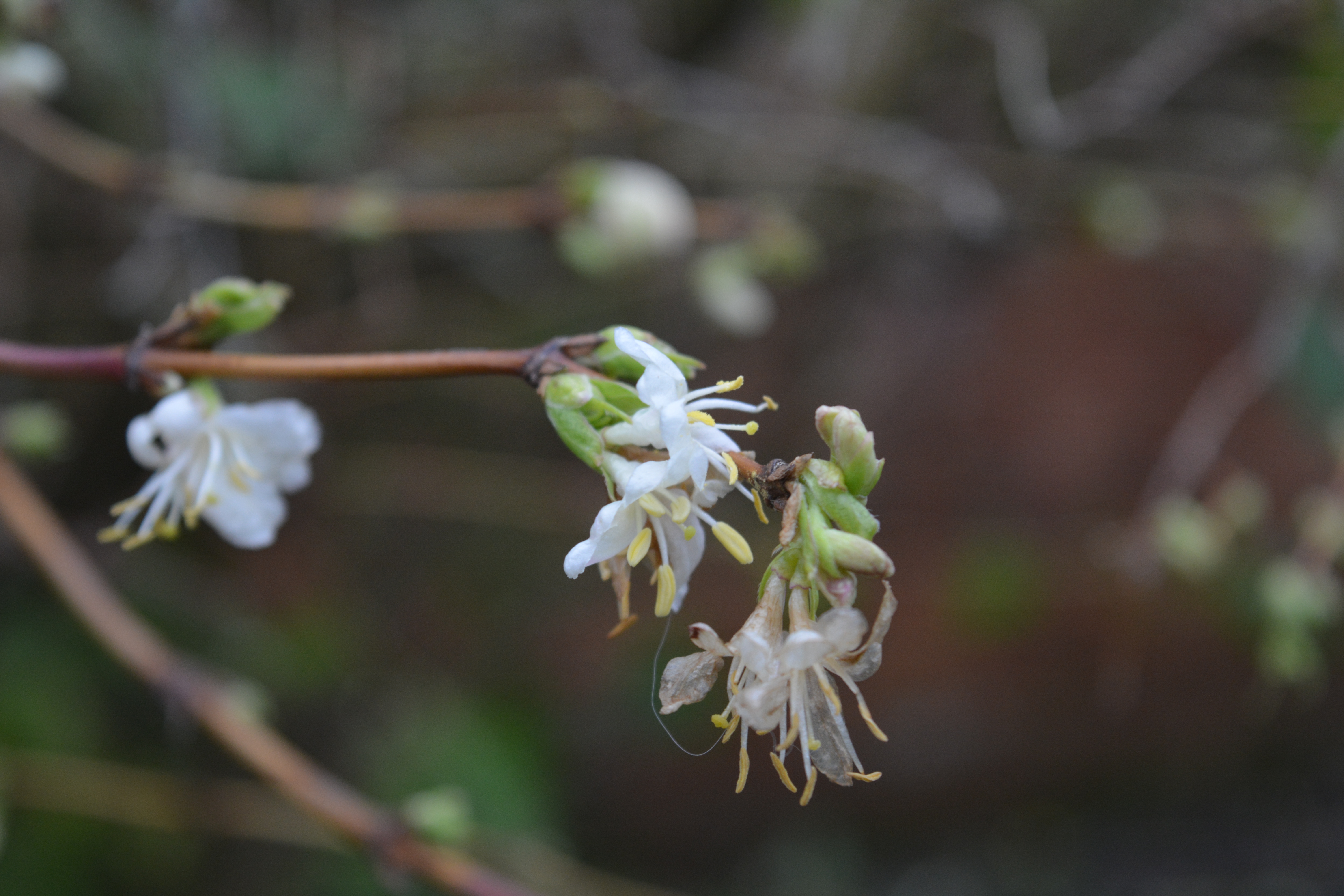
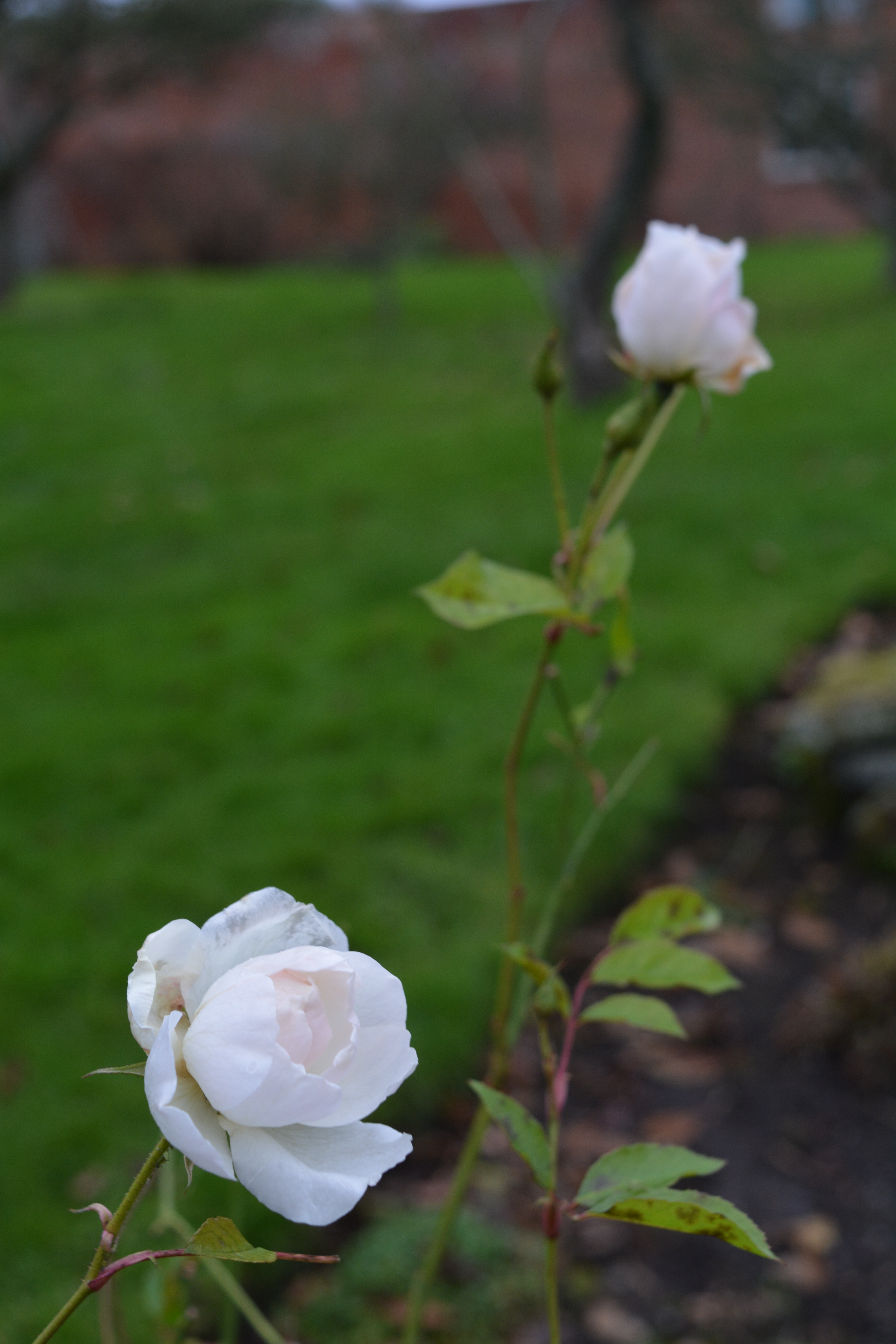
In the growing seasons there are some lovely features within the walled garden like little garden rooms, including a pool garden and a rose garden. In the winter they are so cold and bare! But an odd Rose bloom was trying hard when we visited. It sadly offered no scent though, unlike the neighbouring Rosemary with its gentle aroma coming from the tiny china blue flowers and the Lonicera frangrantisima, the Winter Flowering Honeysuckle.

2015 01 01_9133 2015 01 01_91382015 01 01_9139 2015 01 01_91422015 01 01_9141 2015 01 01_9140

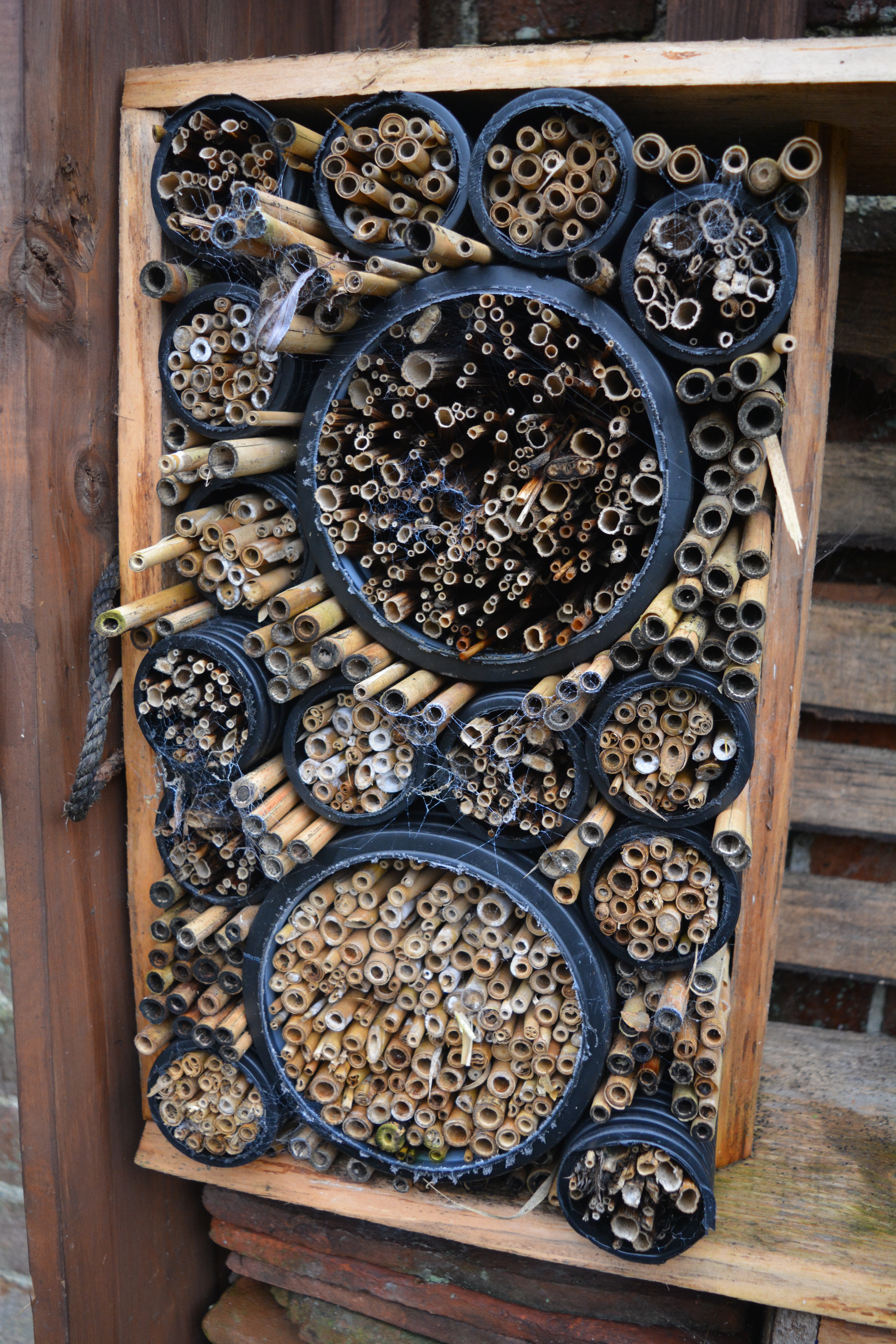
The gardeners have been busy making a huge “bug hotel” which is now almost complete. They have been having fun!

2015 01 01_9134 2015 01 01_9135 2015 01 01_9136

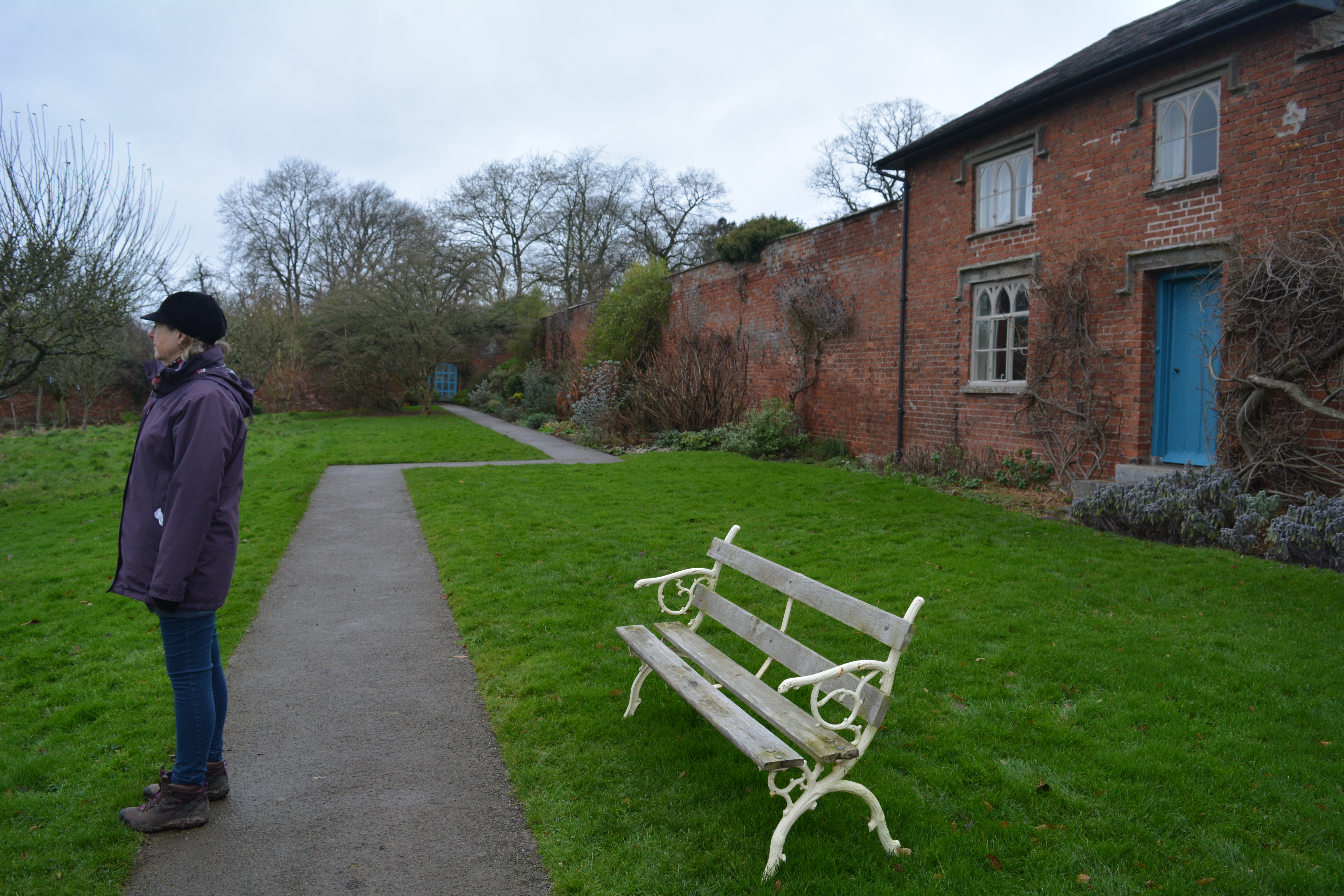
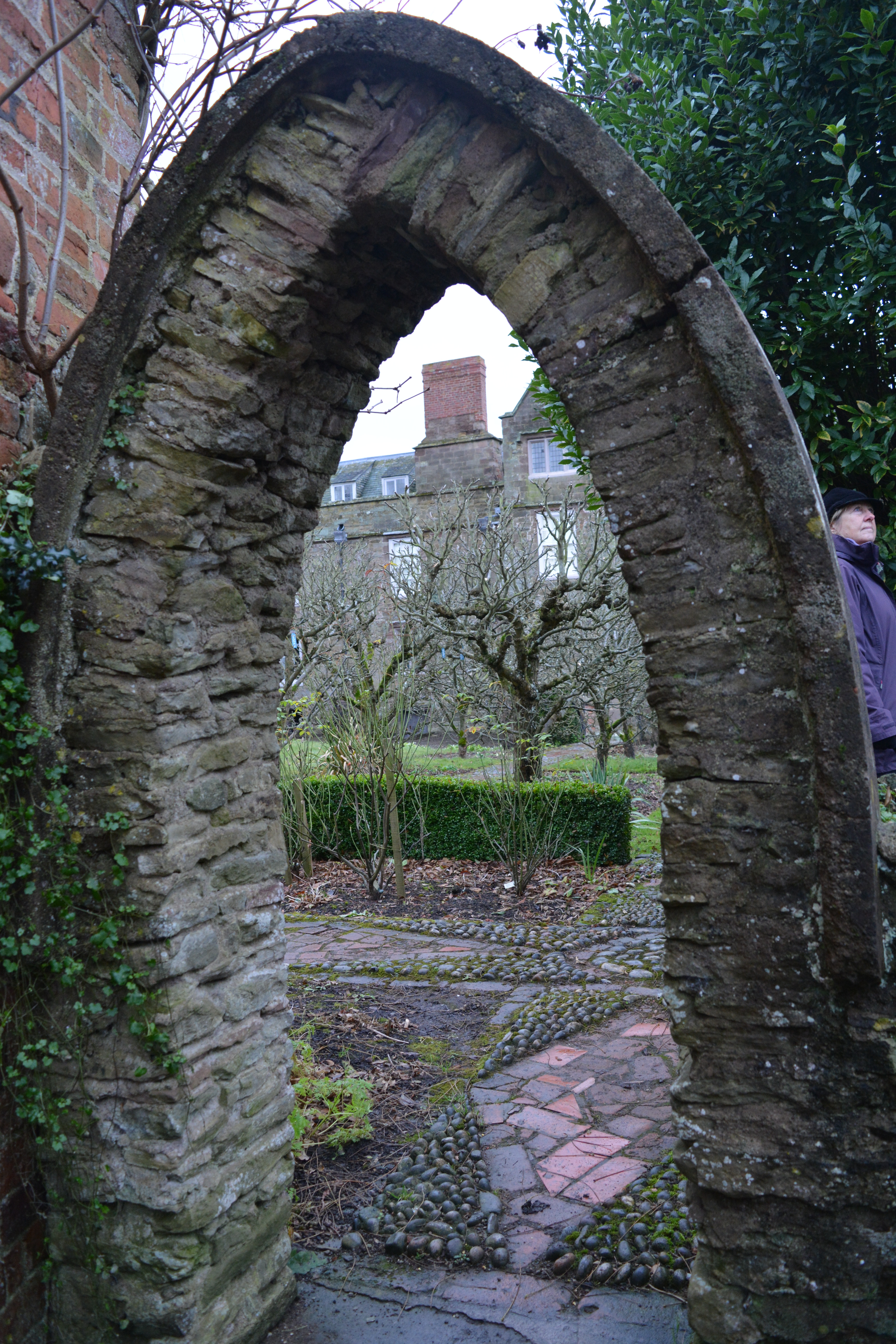
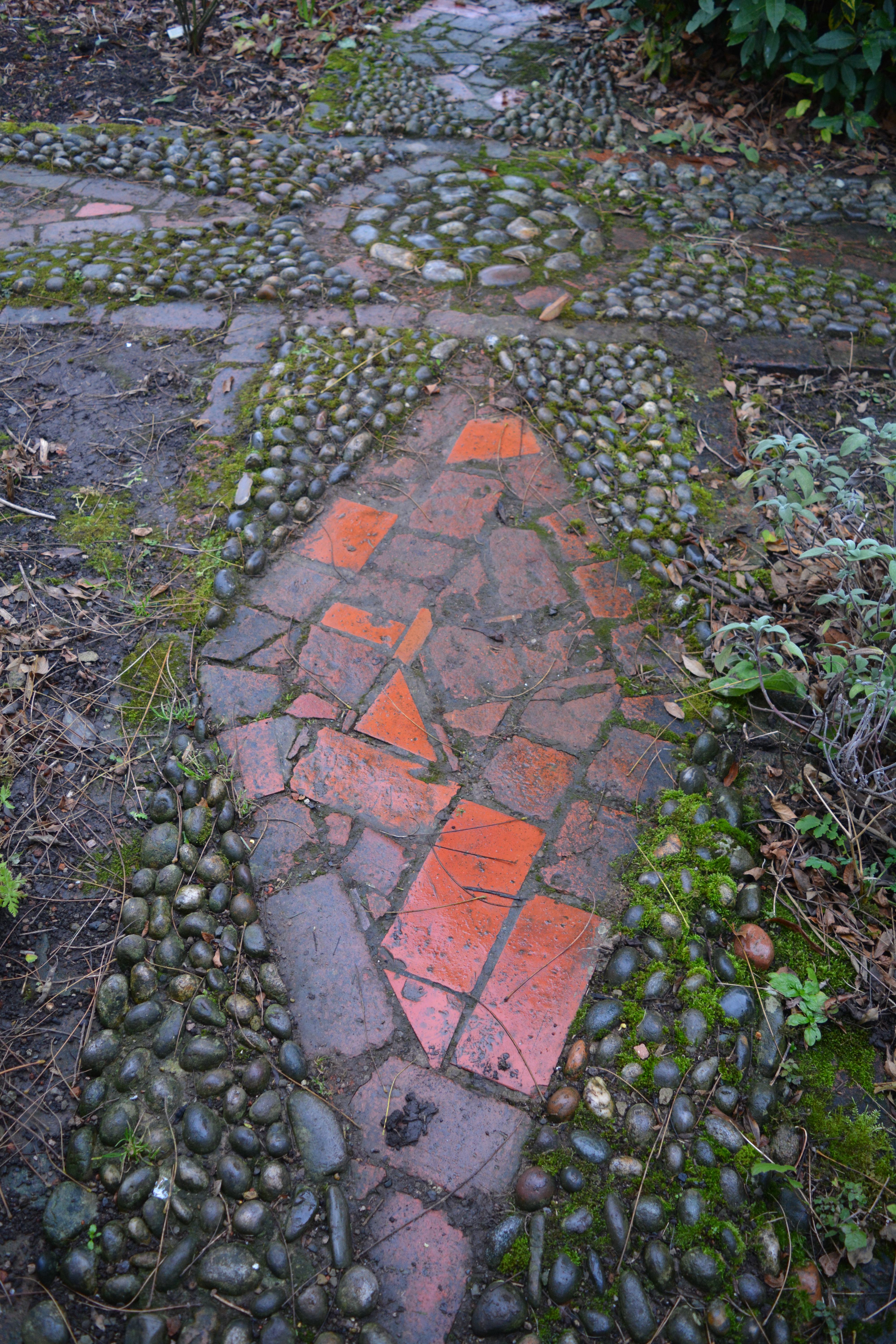
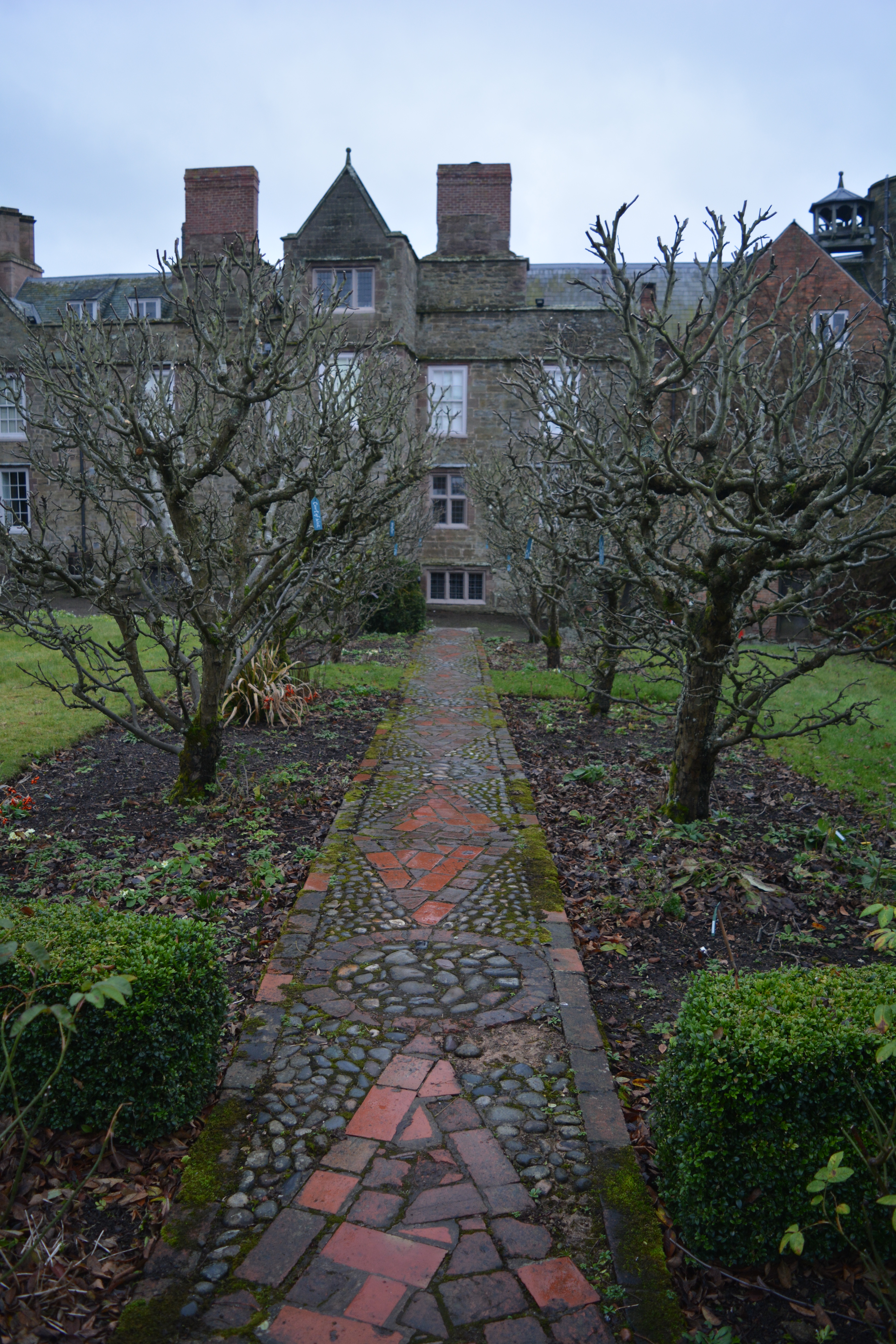
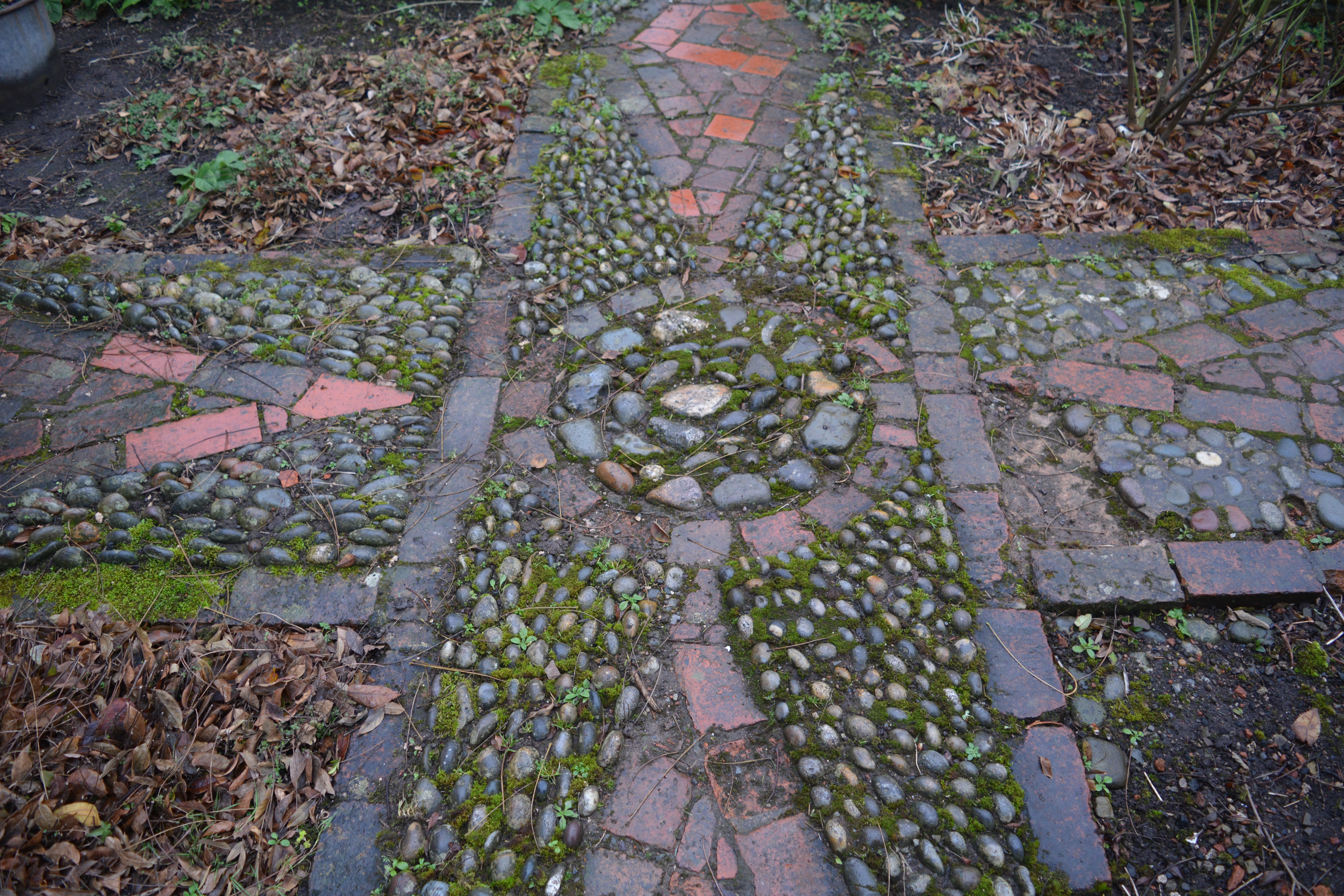
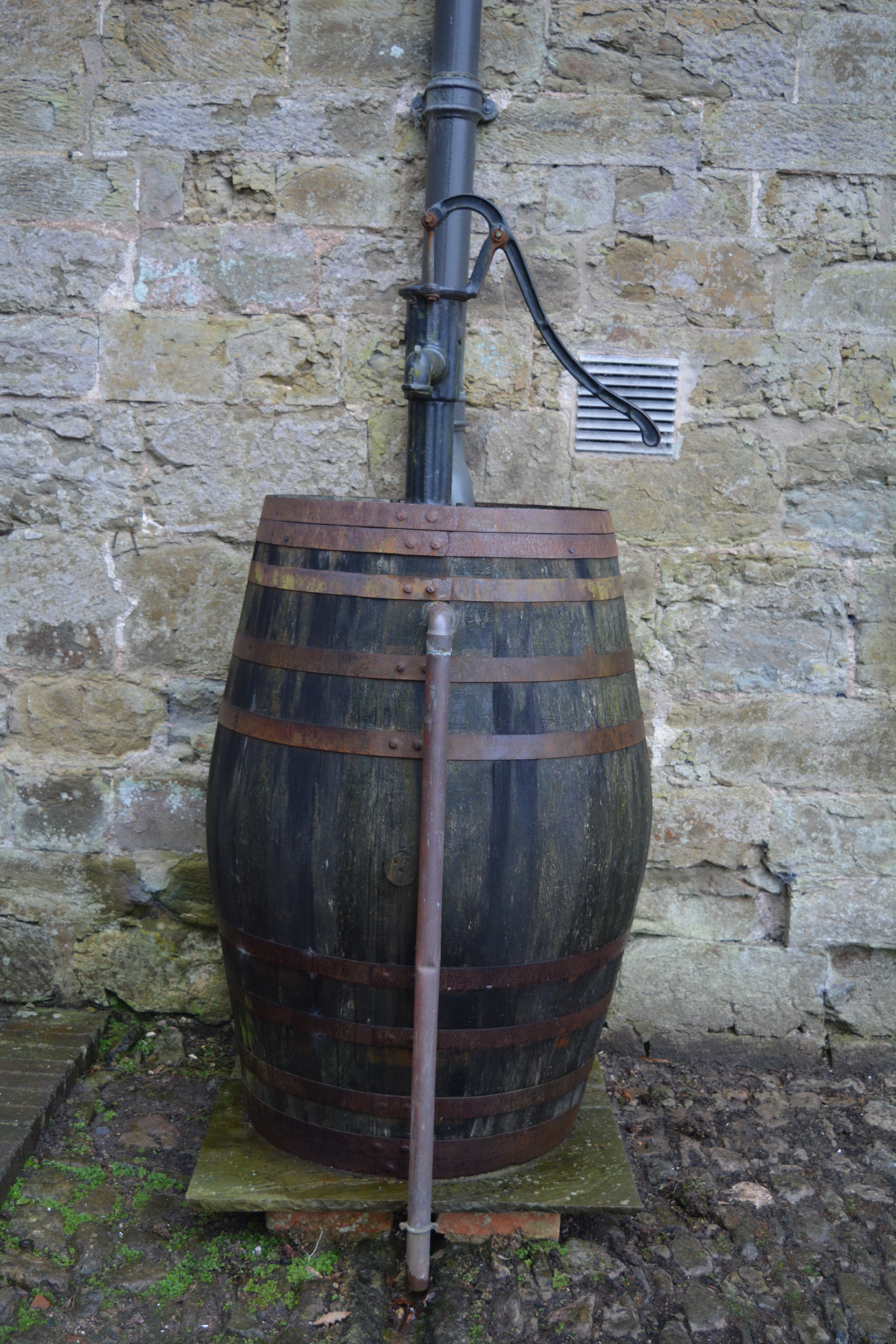
Reluctantly leaving the walled garden through a stone archway, we found small courtyard gardens linked by interesting textural paths. We gained views of the rear of the castle building and its huge water butt!

2015 01 01_9143 2015 01 01_9144 2015 01 01_91462015 01 01_9145 2015 01 01_9147

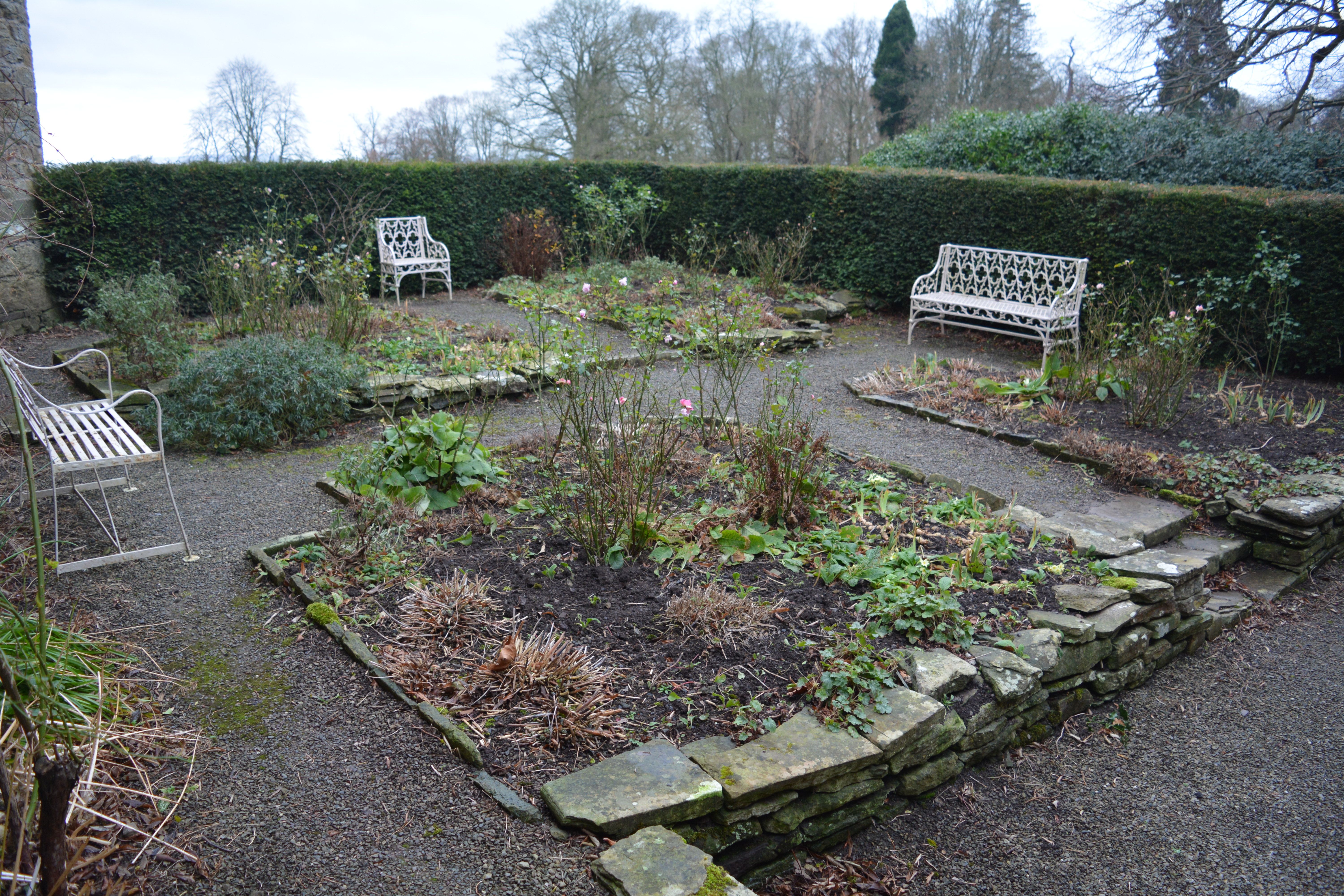
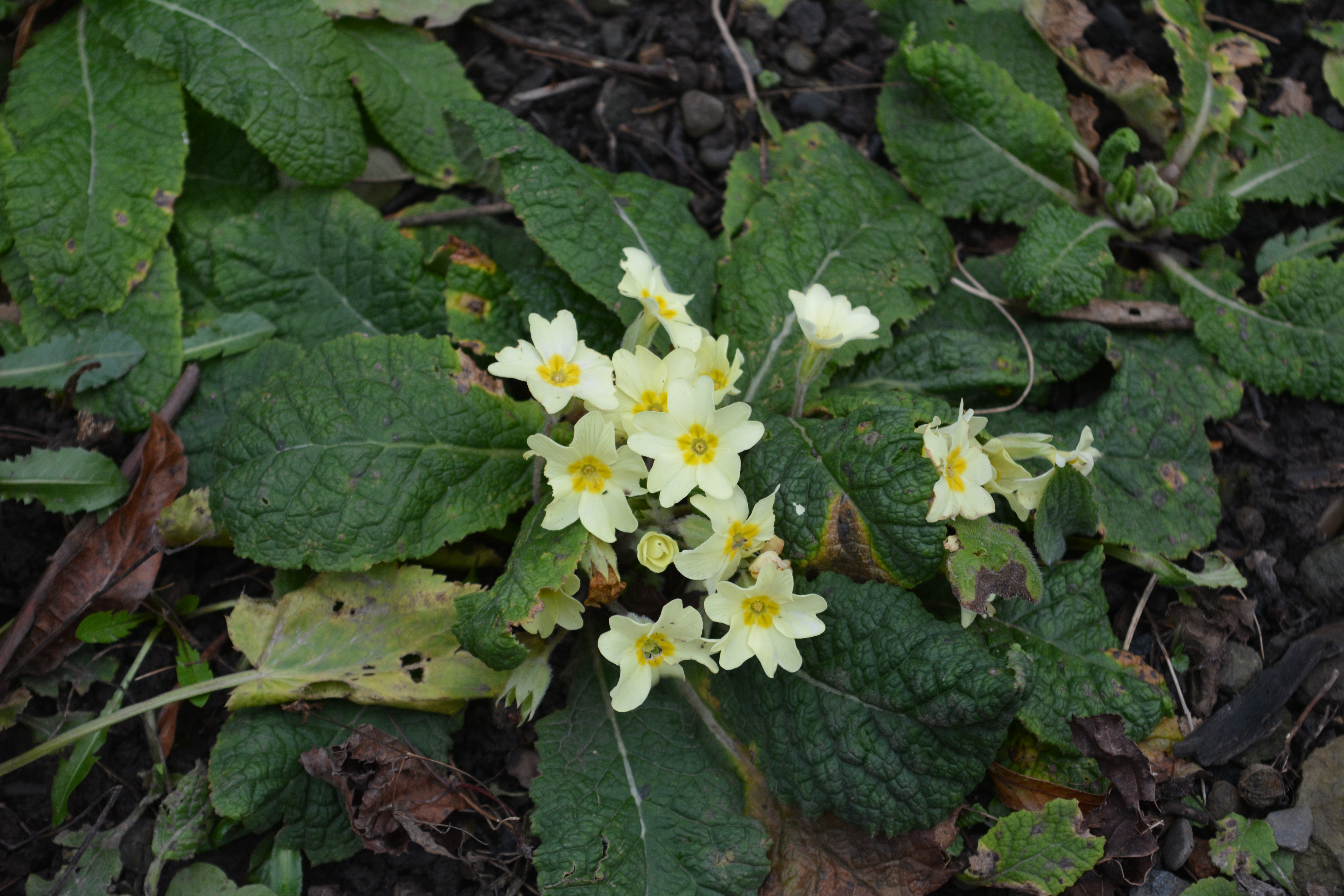
A further archway in a stone wall took us to a quartered courtyard garden with white benches and heavily pruned rose bushes. A strong wind blew through this area, making life difficult when I wanted to take a photograph of a Primrose flowering well out of season, resulting in a blurred close up of my scarf. Oh dear! But I did manage in the end. Definitely better without the scarf.

2015 01 01_9148

2015 01 01_9149 2015 01 01_9150

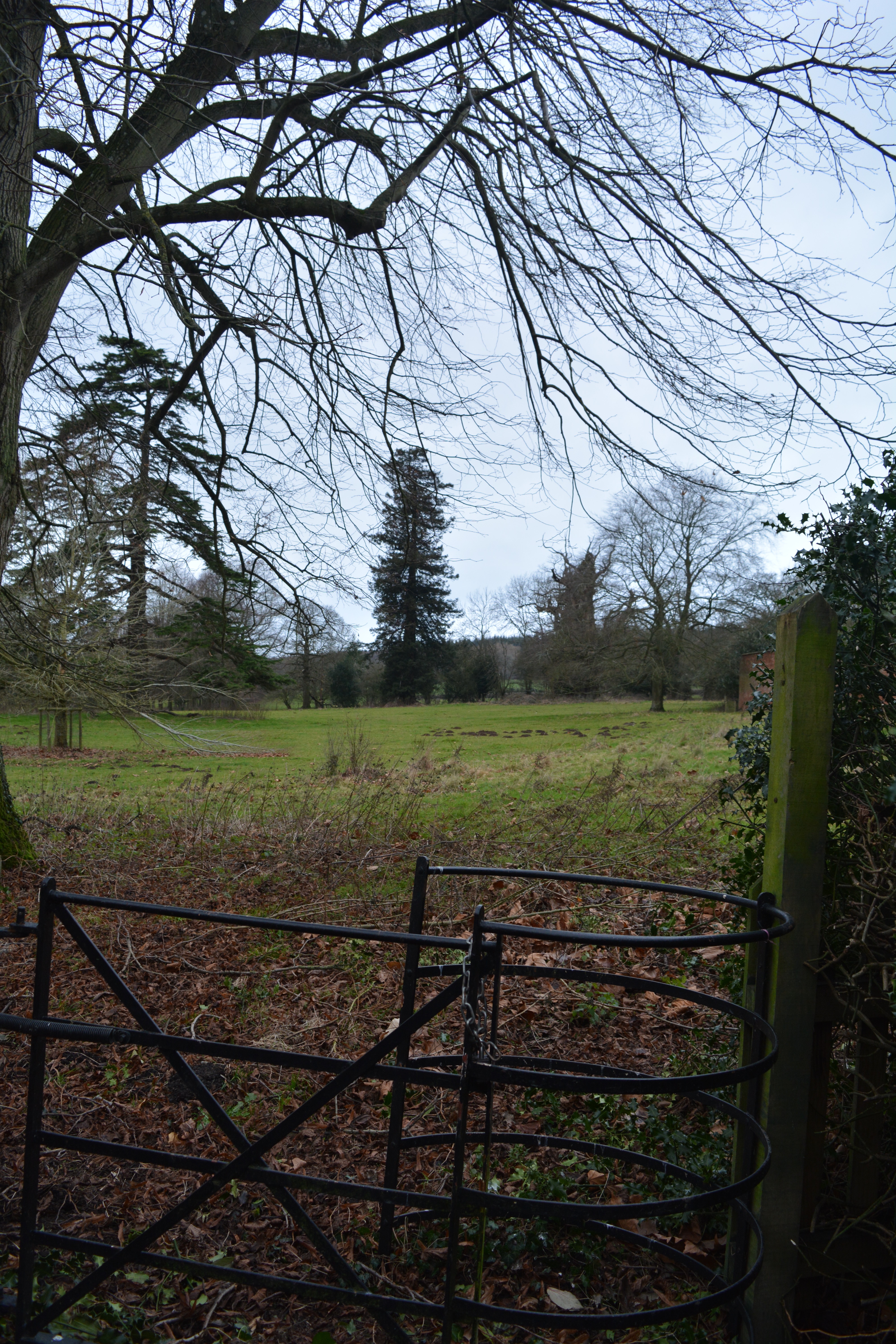
Rounding the next corner we could look out over the low stone wall across the meadows towards the lake and woodlands. The weather was not right for exploring these areas, so we decided to save it for warmer times. Above the corner tower an unusual wooden bell tower peered. Against the house wall we found a second scented Viburnum bodnantense heavy with blossom.

2015 01 01_9153 2015 01 01_9151

2015 01 01_9152 2015 01 01_9154 2015 01 01_9155

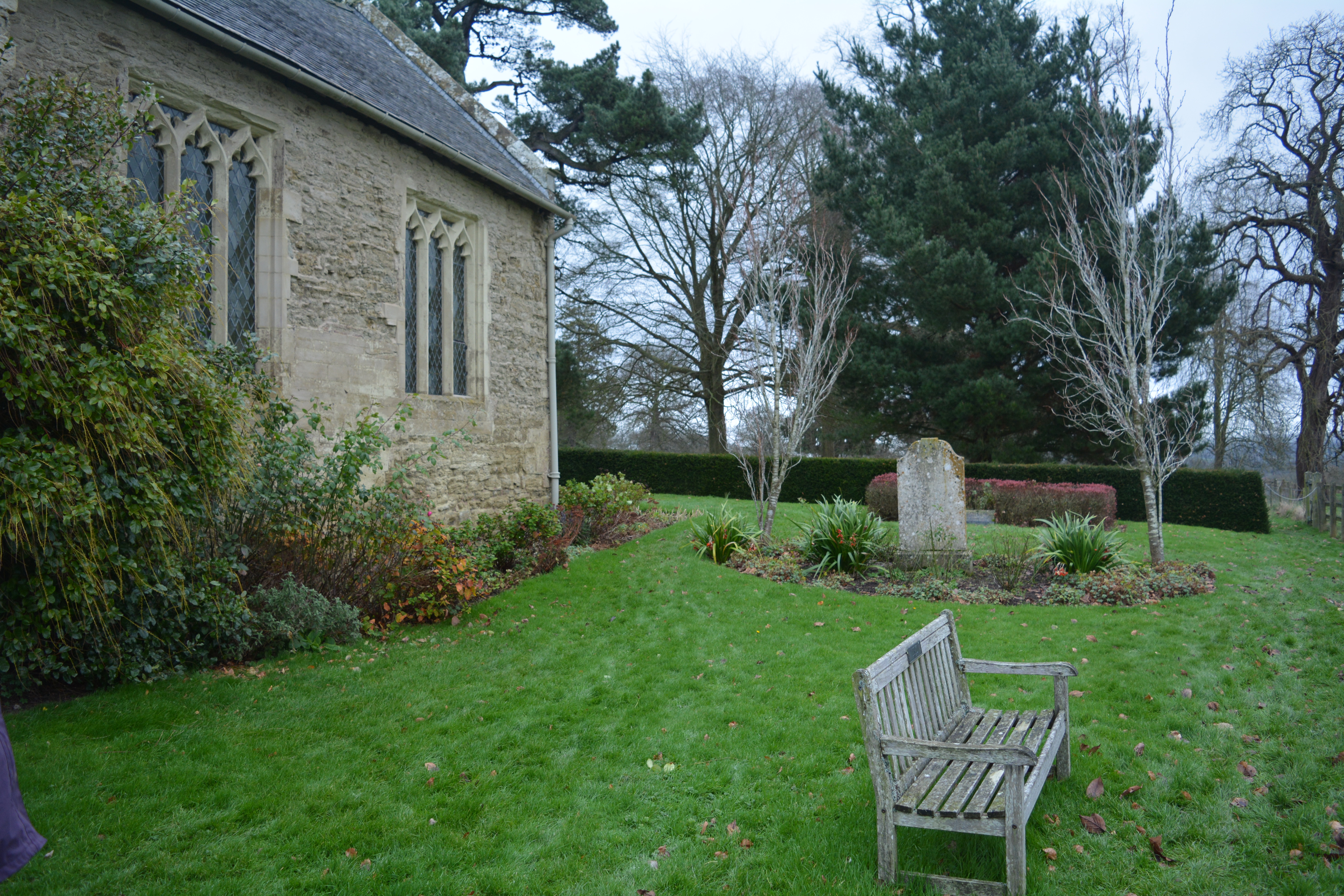
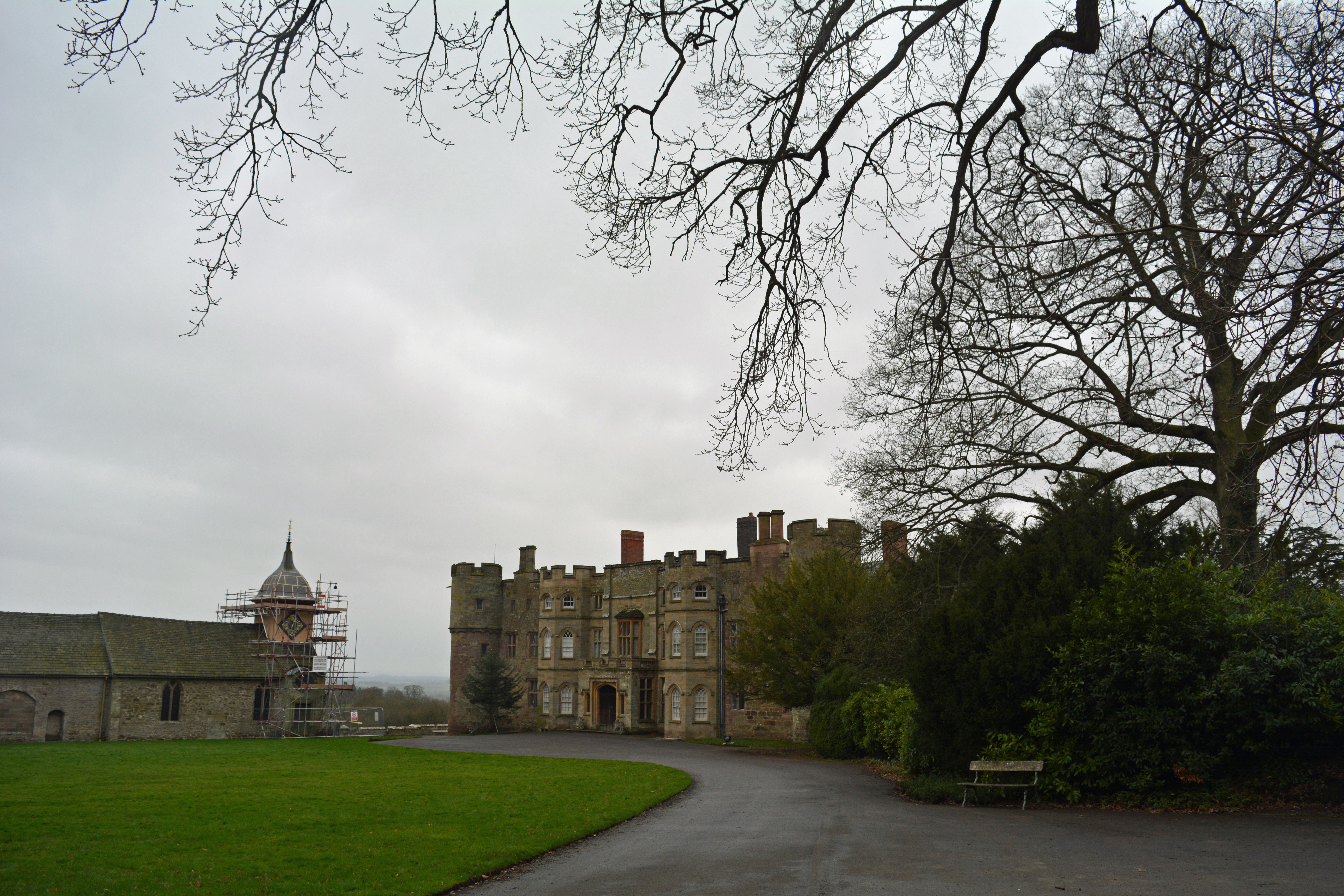
The  tiny garden surrounding the estate church is often colourful but in winter colour was total lacking. The tower of the church was covered in scaffolding and it looked as if restoration work was well under way. I will share some pictures of this lovely building when the scaffolding is down later in the year.

2015 01 01_9156

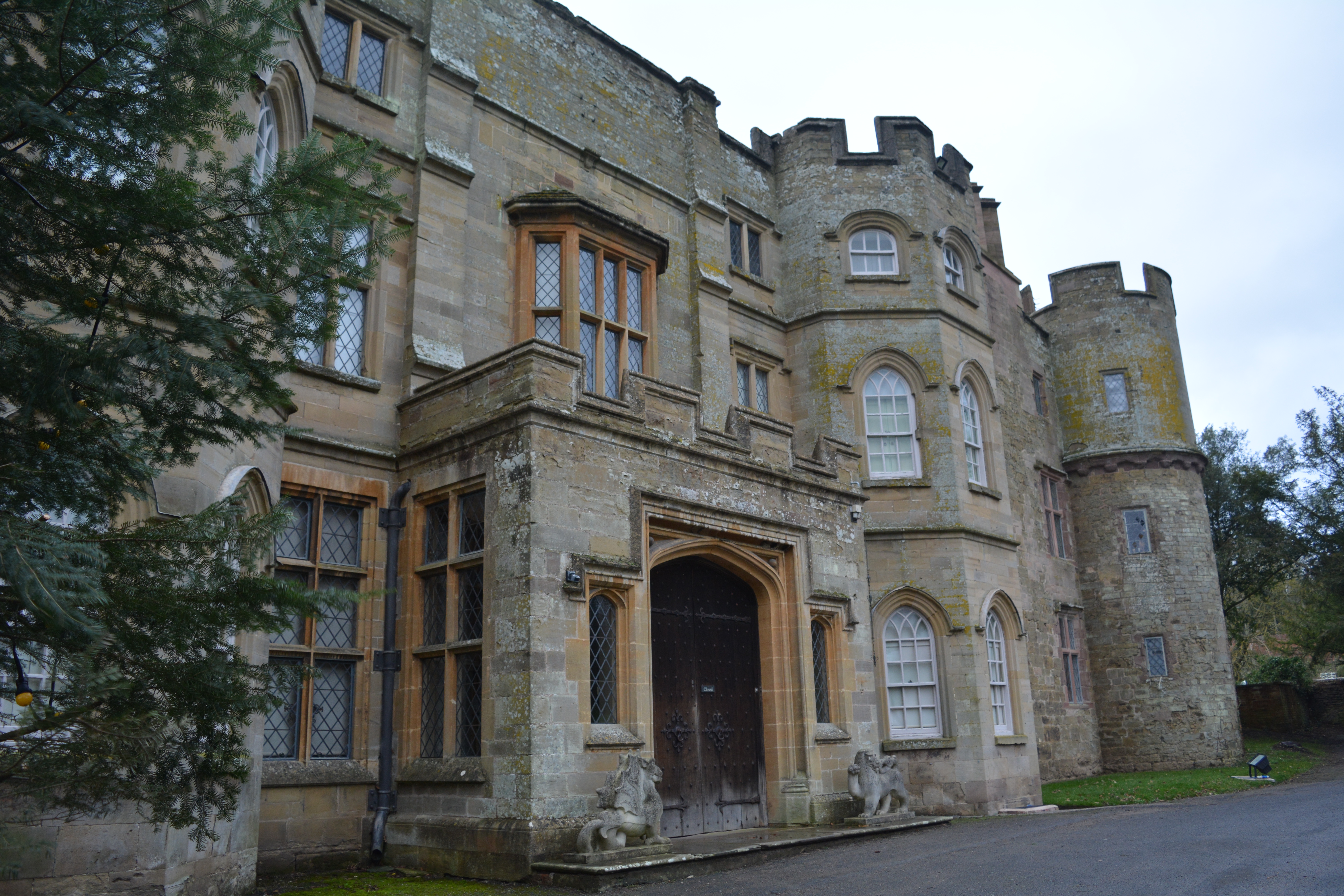
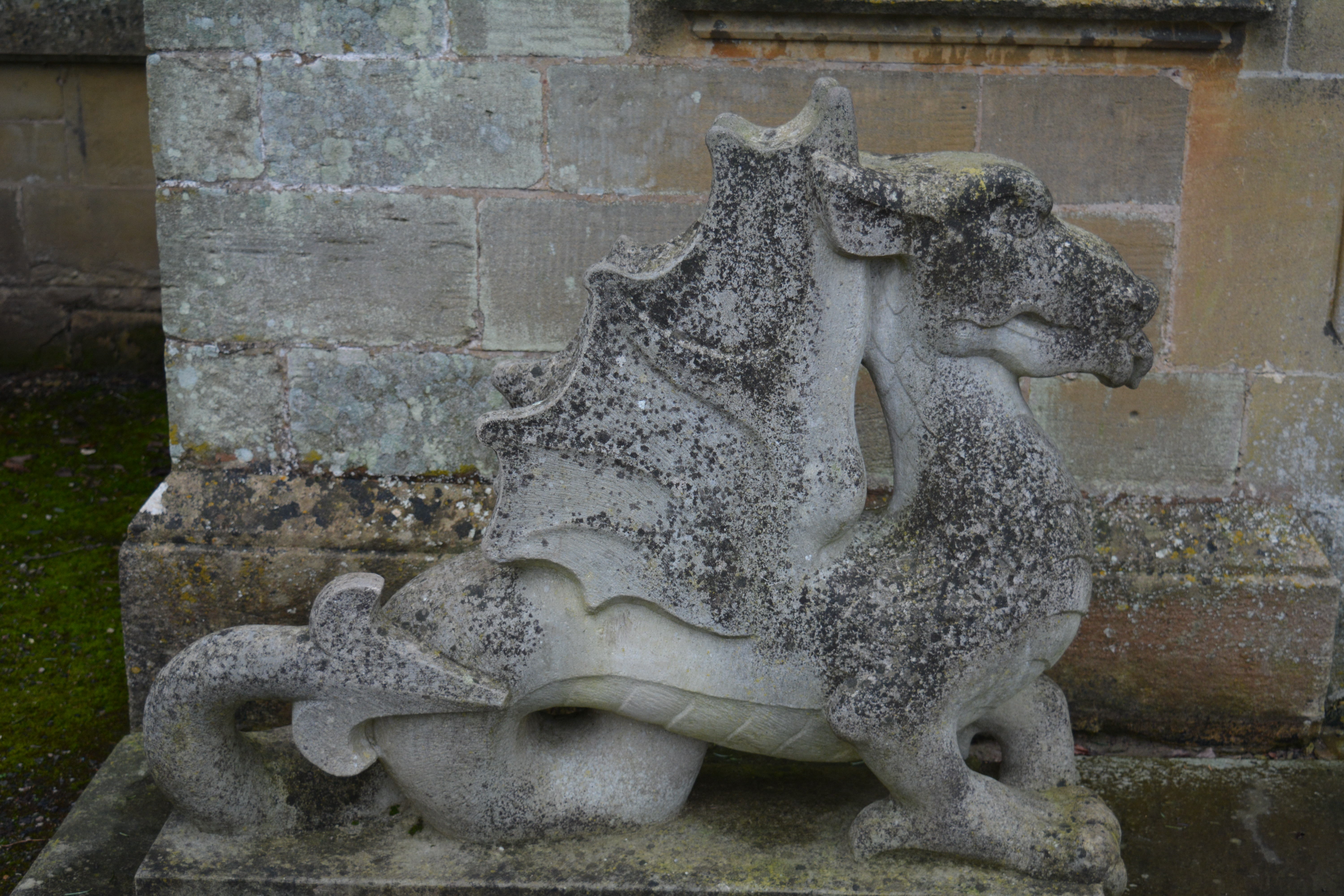
We finally reached the front entrance to the castle, the massive door protected by stone-carved dragon sentinels. As we retraced our steps along the herbaceous border and stone wall we looked back to get views of the whole castle frontage.

2015 01 01_9157 2015 01 01_9158 2015 01 01_9160 2015 01 01_9087_edited-1

Our next visit will be in February when we will see if anything in the garden changes as the days lengthen slightly and the light values improve. It may be a bit warmer too! Fingers crossed.

Categories
autumn autumn colours colours garden design garden photography garden seating gardening gardens gardens open to the public grasses hardy perennials light light quality ornamental grasses ornamental trees and shrubs outdoor sculpture RHS sculpture Yorkshire

Autumn at RHS Harlow Carr – Part Three

I am back with my third and final part of my posts featuring the wonderful RHS garden Harlow Carr. In the first post I mentioned a willow trail so here are a few of the pieces we came across on our wanderings.

2014 10 31_6949 2014 10 31_69502014 10 31_6984 2014 10 31_69592014 10 31_6958

Living fences made from willow and hazel featured strongly in the productive gardens and some included seats built in also made of willow. It was seeing these when they were being created at Harlow Carr during the renovation of the kitchen gardens, that gave us the idea of creating our fedge at our allotment community gardens.

2014 10 31_6951 2014 10 31_6952 2014 10 31_6953 2014 10 31_6955 2014 10 31_6956 2014 10 31_6957

I promised a return to the prairie style borders and my favourite part of late autumn borders, the dried flower heads and seed heads of perennials and grasses. The subtlety of colour and delicate contrasts make for a most pleasing picture.

2014 10 31_6964  2014 10 31_69632014 10 31_6965 2014 10 31_6967 2014 10 31_6968 2014 10 31_6969 2014 10 31_6971 2014 10 31_6972 2014 10 31_6973 2014 10 31_6974

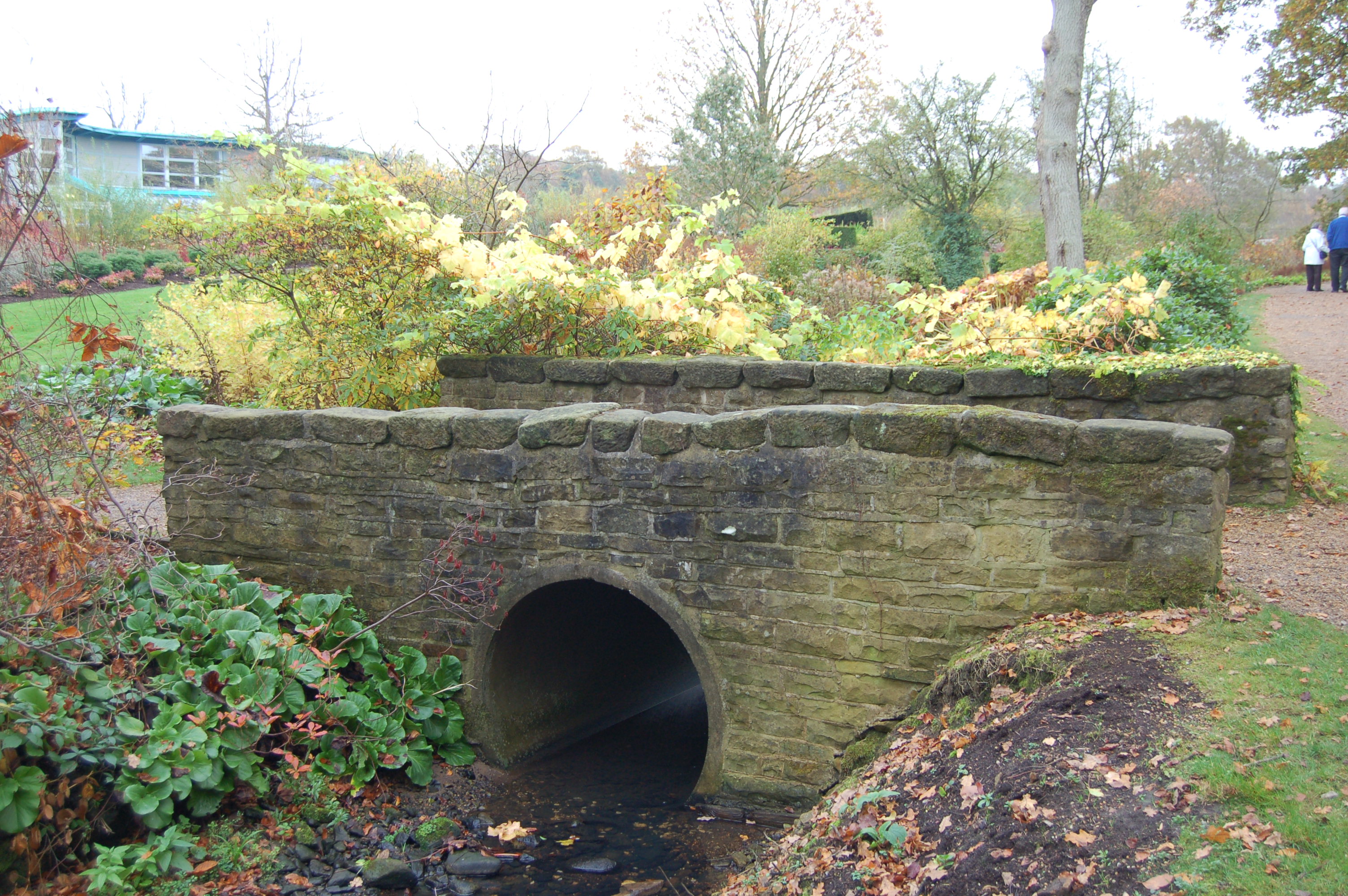
We left the perennial borders to follow paths through the stream garden which would give us the chance for a second look at the winter garden. Willow is used along the water’s edge to secure the bankside using a technique known as spiling. Beautiful stone bridges take the path back and forth over the stream.

2014 10 31_6978 2014 10 31_6979 2014 10 31_6980 2014 10 31_6981 2014 10 31_6983 2014 10 31_69852014 10 31_6987 2014 10 31_69882014 10 31_6990 2014 10 31_69912014 10 31_6992 2014 10 31_69932014 10 31_6994 2014 10 31_69952014 10 31_6996 2014 10 31_69972014 10 31_6998 2014 10 31_69992014 10 31_7000 2014 10 31_70022014 10 31_7003

So that is Harlow Carr the northern jewel in the RHS’s crown, beautiful whenever you visit with surprises galore alongside old favourites. It won’t be long until be come back again!

2014 10 31_7006


Categories
autumn autumn colours colours garden design garden photography gardens gardens open to the public half-hardy perennials hardy perennials light light quality ornamental grasses ornamental trees and shrubs sculpture Yorkshire

Autumn at RHS Harlow Carr – Part Two

Back at the end of November I posted part one of a series of three posts related to our visit to the RHS’s northern garden Harlow Carr, so this week I shall post the second and third.

Back to Harlow Carr and we carry on with our wander around the acres of lawns, woodland and borders.

2014 10 31_6916 2014 10 31_6937

The display gardens showing typical gardens through the ages are different to everything else at Harlow Carr. Here we can always find little interesting details.

2014 10 31_6851 2014 10 31_6852 2014 10 31_6850 2014 10 31_6849 2014 10 31_6853 2014 10 31_6855 2014 10 31_6856 2014 10 31_6858 2014 10 31_6859 2014 10 31_6860

We moved off into the woodlands next where among the autumn colours we discovered a trio of wicker pigs and a newly built wooden shelter. Wood leaf carvings decorated the roof.

2014 10 31_6885 2014 10 31_6886 2014 10 31_6884 2014 10 31_6891 2014 10 31_6892 2014 10 31_6893

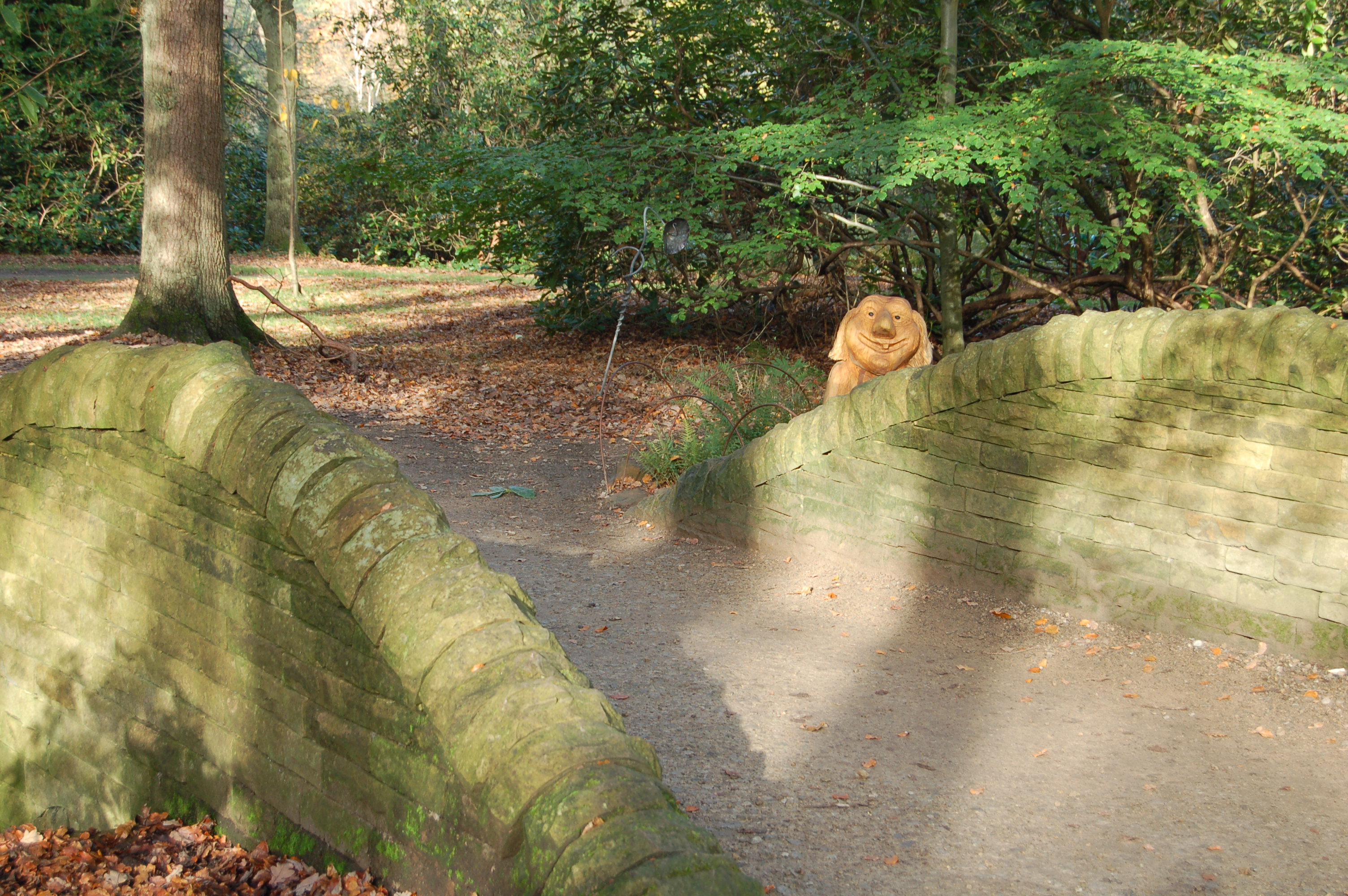
The low light of an October afternoon added a certain magic to the woodland but we enjoyed finding a different sort of magic was provided by a wooden sculpture of a troll guarding his bridge. Every garden needs a little humour!


2014 10 31_6894 2014 10 31_6904

2014 10 31_6907 2014 10 31_6909

2014 10 31_6898 2014 10 31_6900 

The garden threw up sculptural surprises throughout.


2014 10 31_6901 2014 10 31_6902

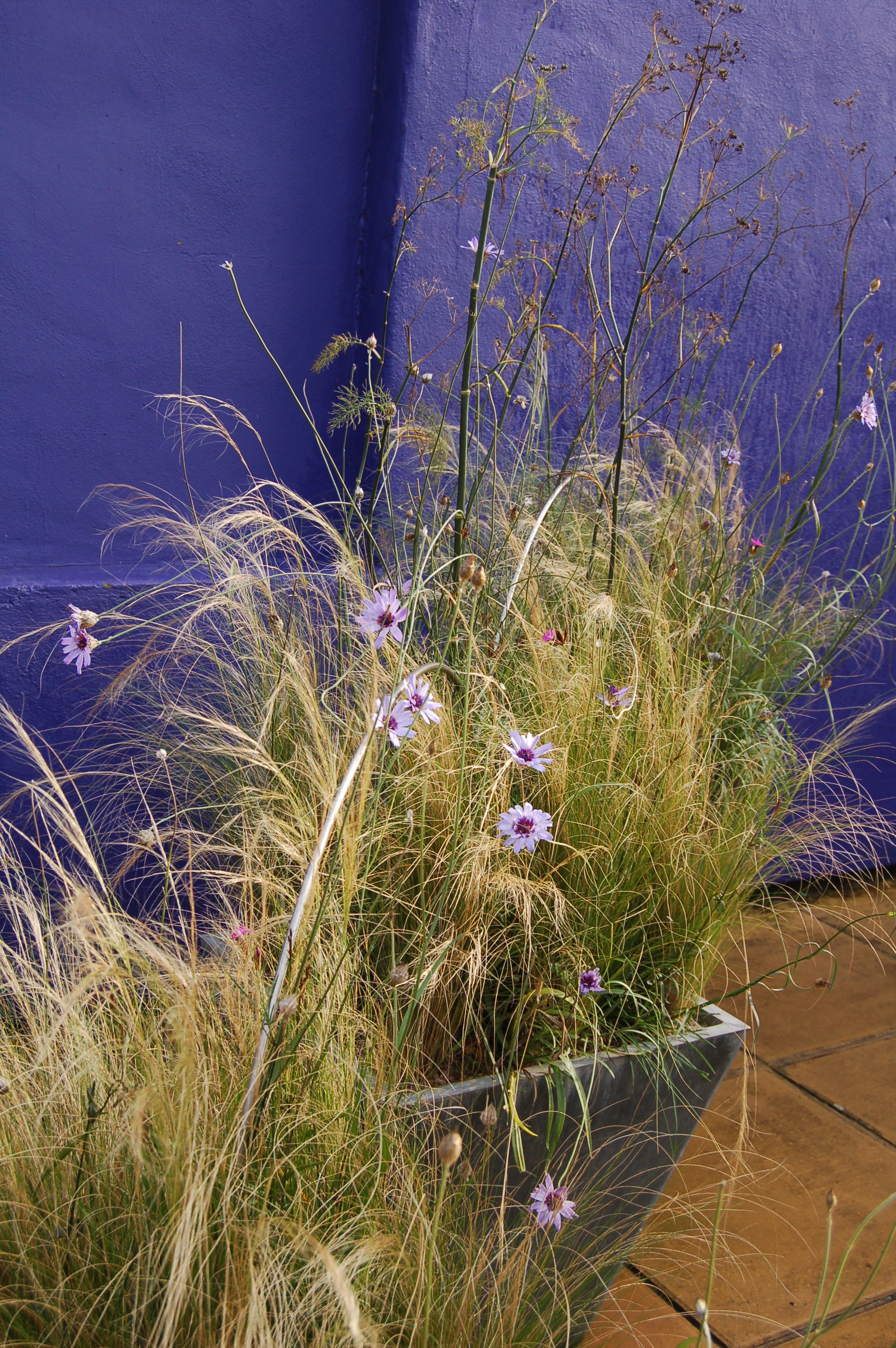
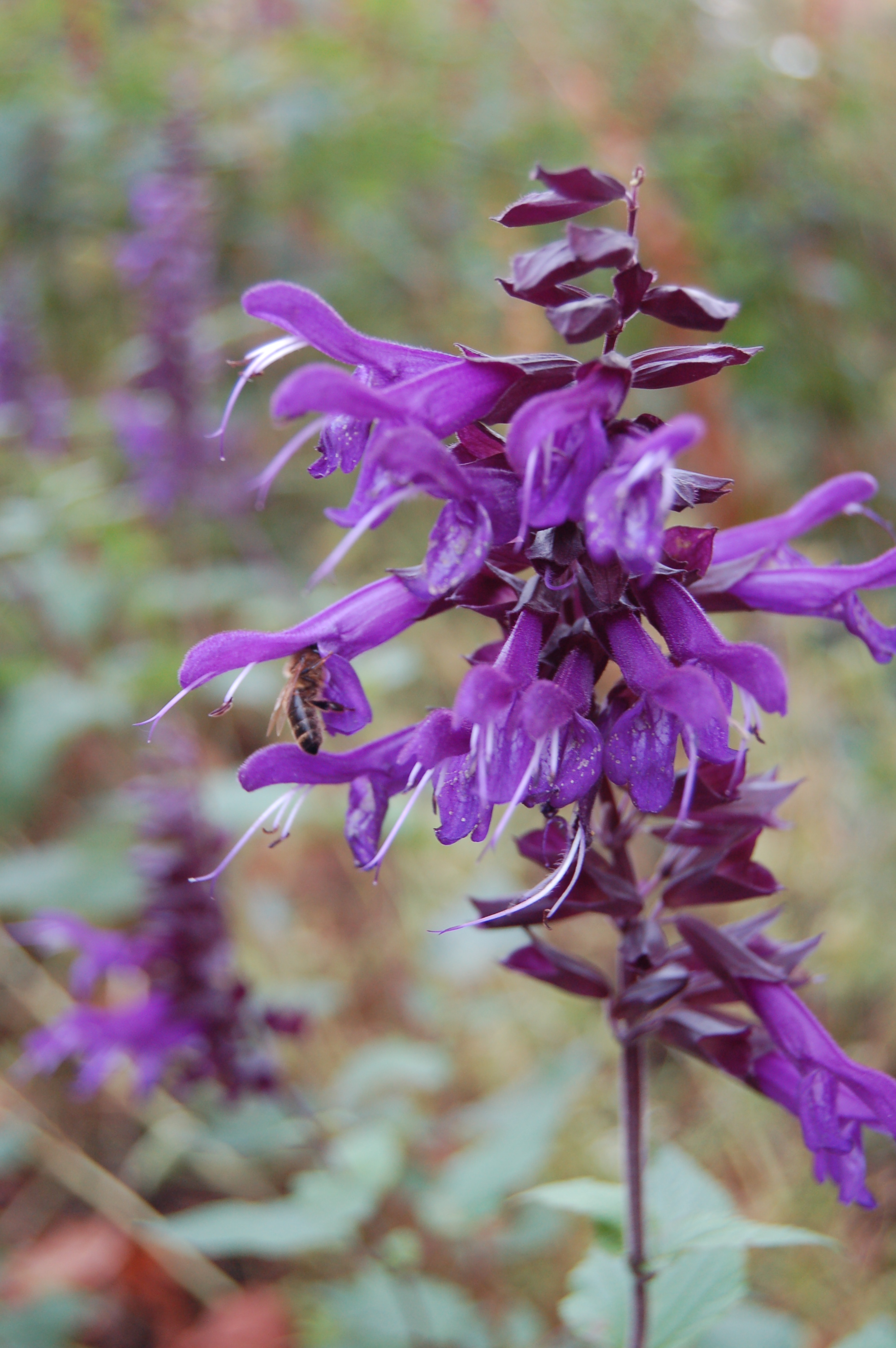
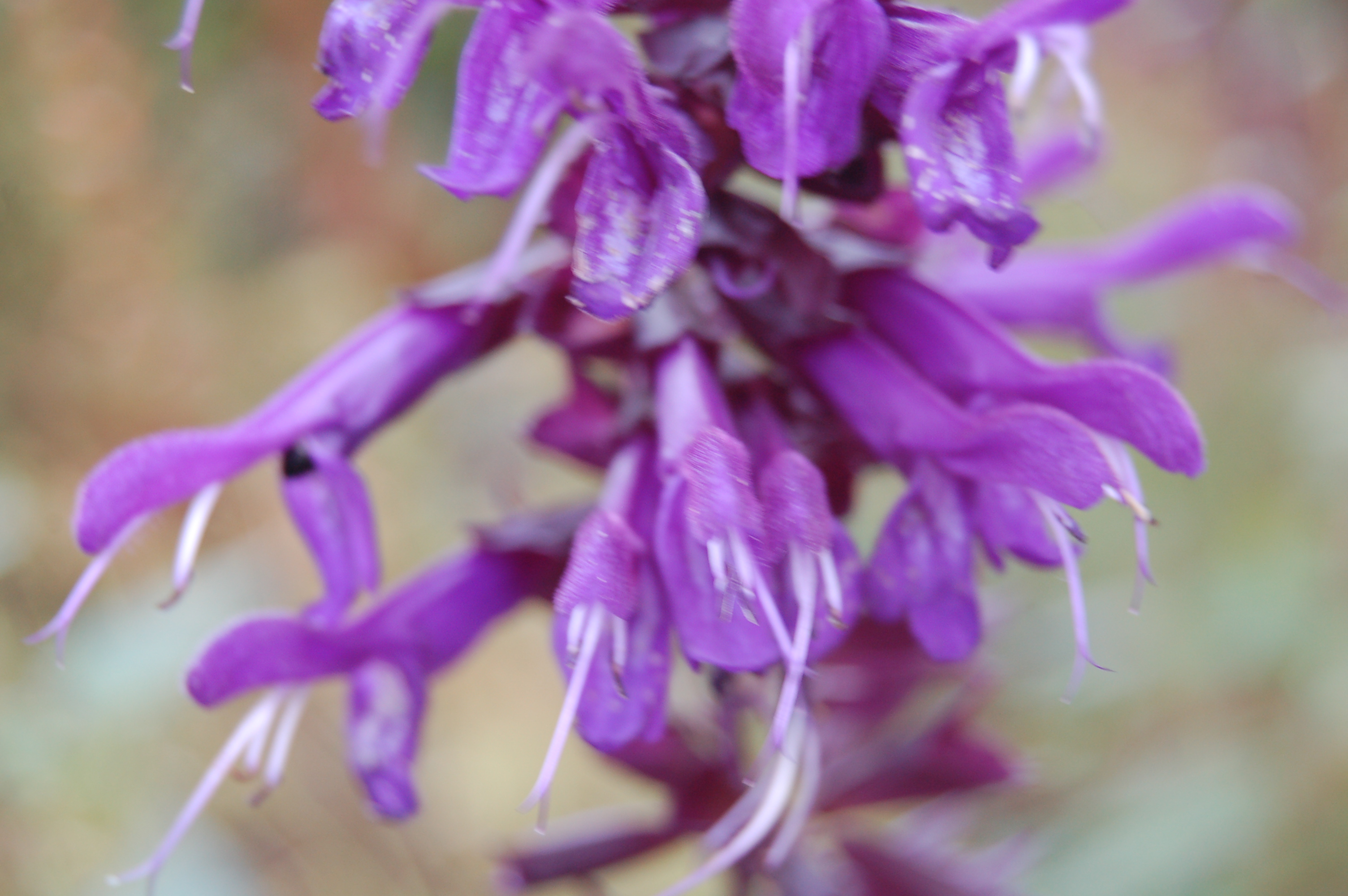
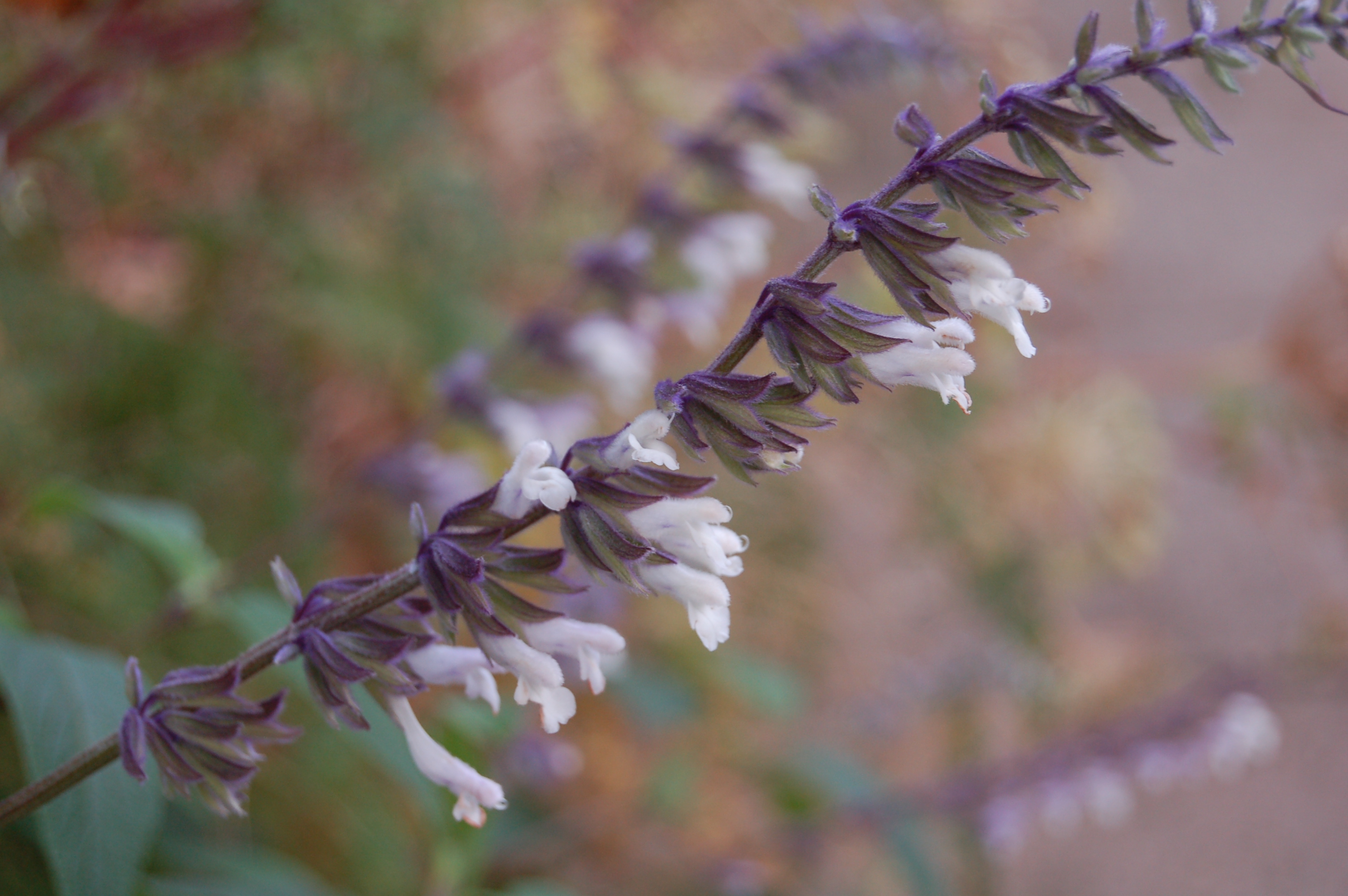
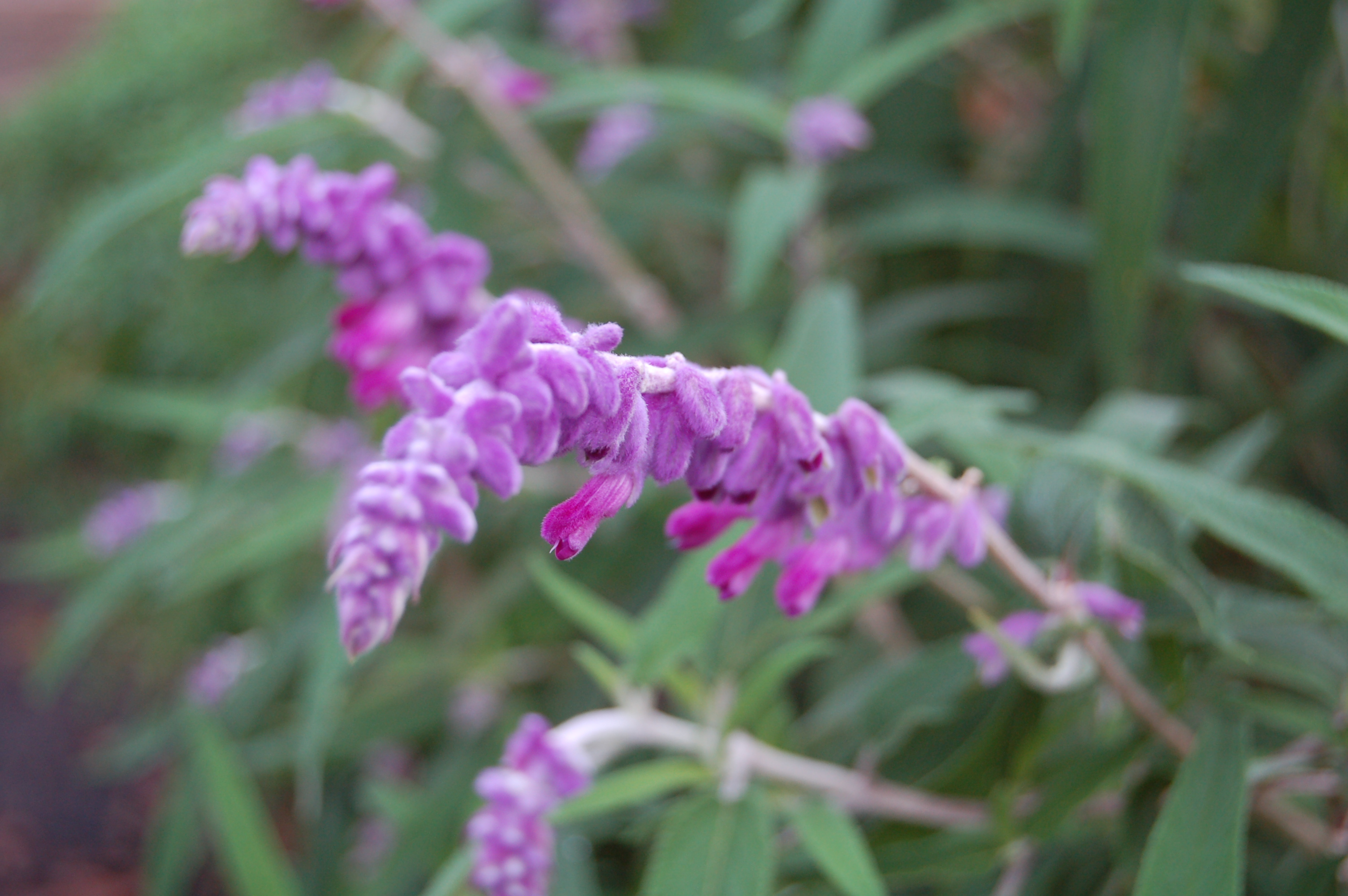
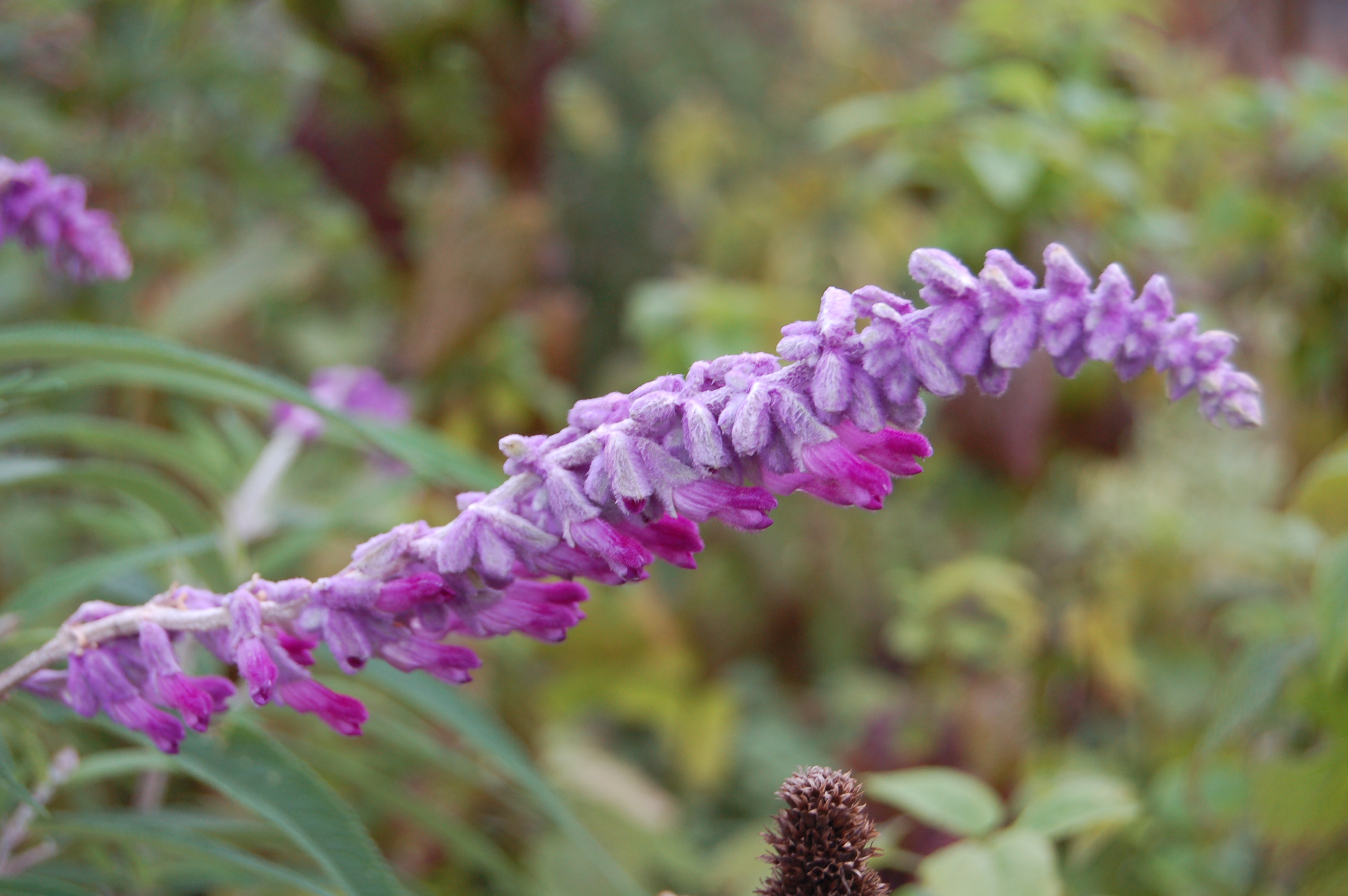
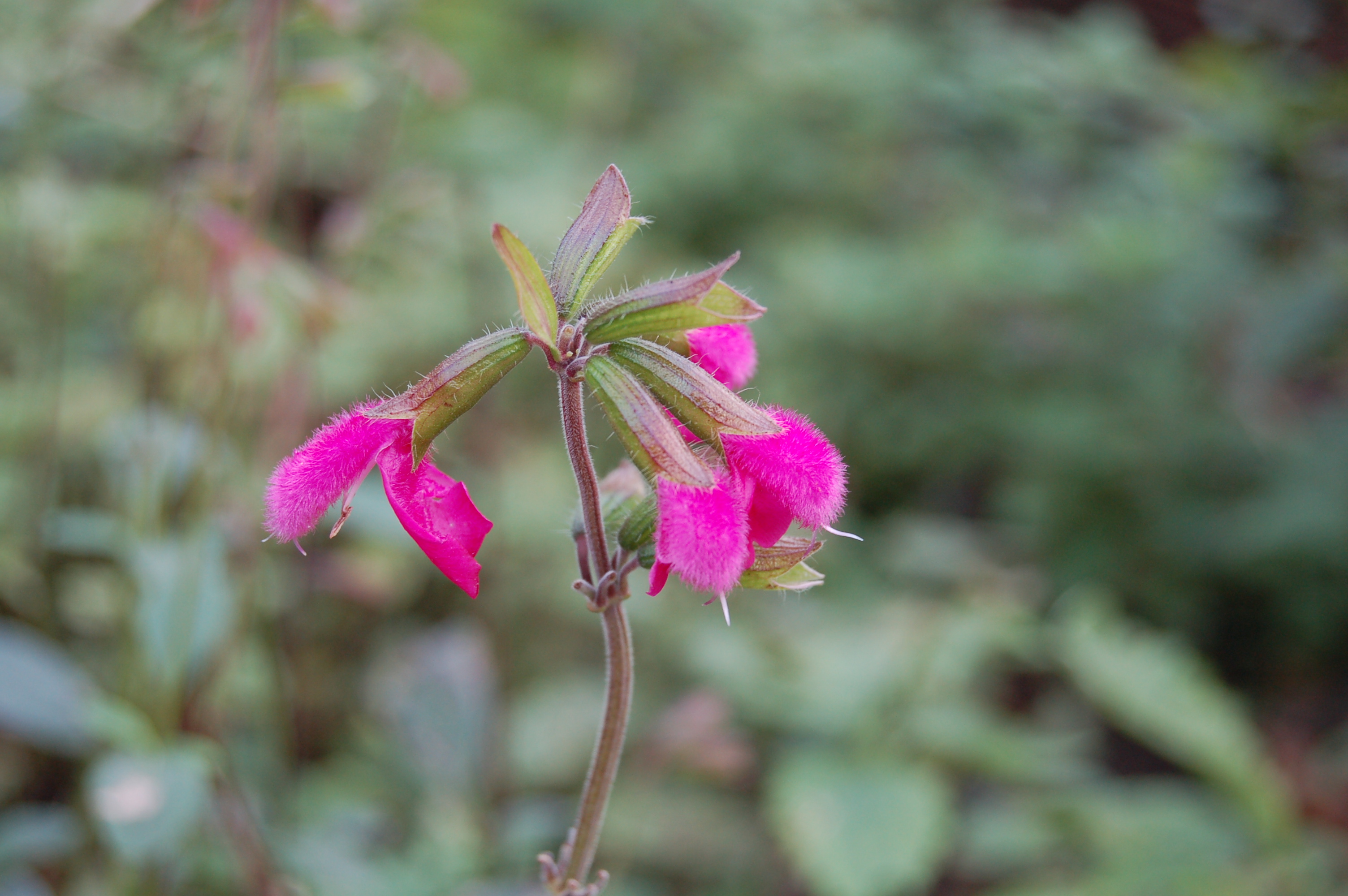
The bright colours of the late flowering half-hardy perennial Salvias can cheer up the dullest of days. An unexpected flower however, unexpected but equally bright, was that of a candelabra Primula.

2014 10 31_6924 2014 10 31_6925 2014 10 31_69282014 10 31_6926 2014 10 31_6930 2014 10 31_6932 2014 10 31_6933 2014 10 31_6934 2014 10 31_6935

2014 10 31_6938 2014 10 31_6940


2014 10 31_6922


At this time of year I love the subdued shades of the dried flowers and seed heads of perennials. In the third part of my Harlow Carr posts we shall find these dominate in the large prairie styled borders.

2014 10 31_6927 2014 10 31_6923 2014 10 31_6918


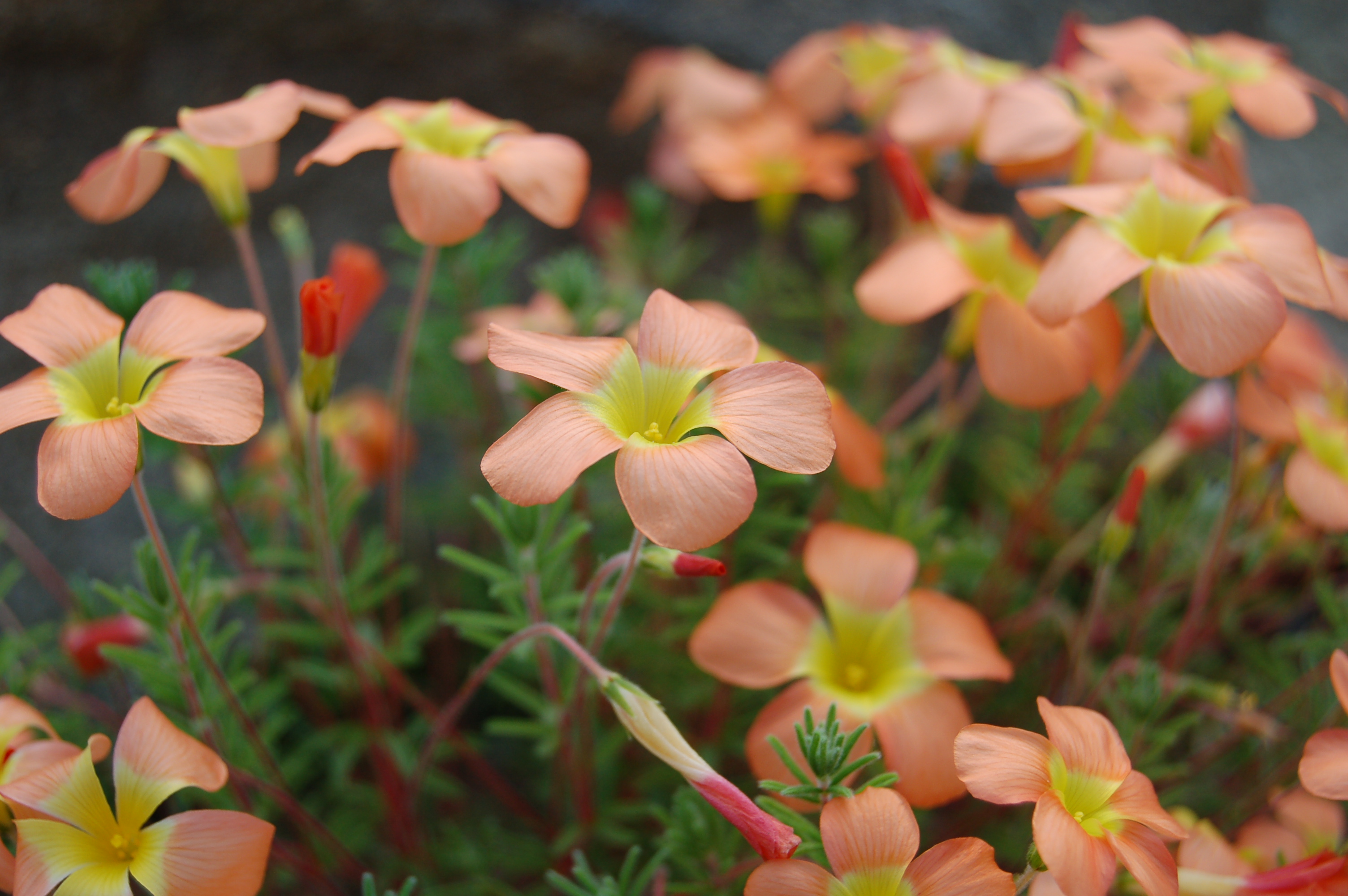
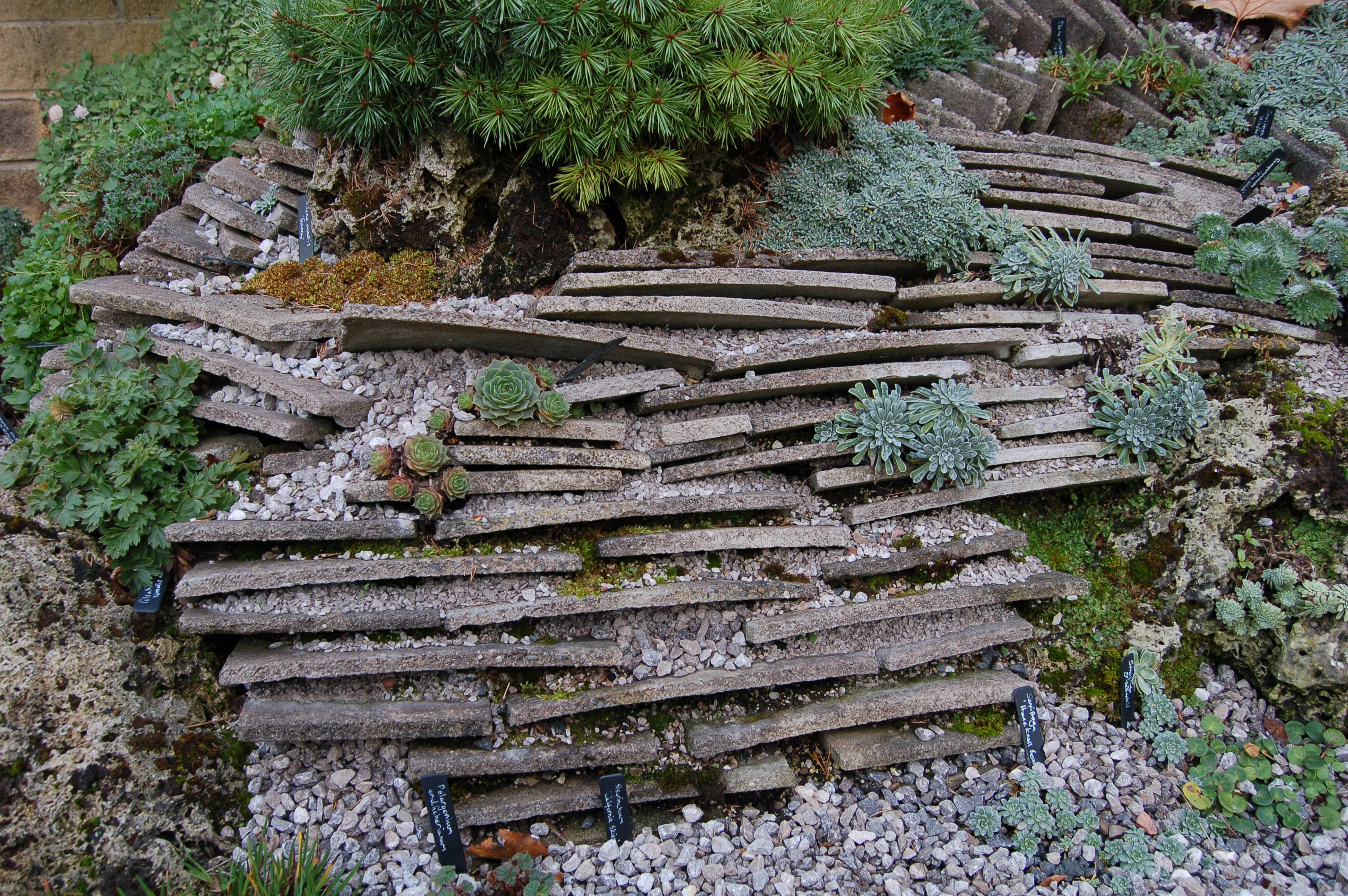
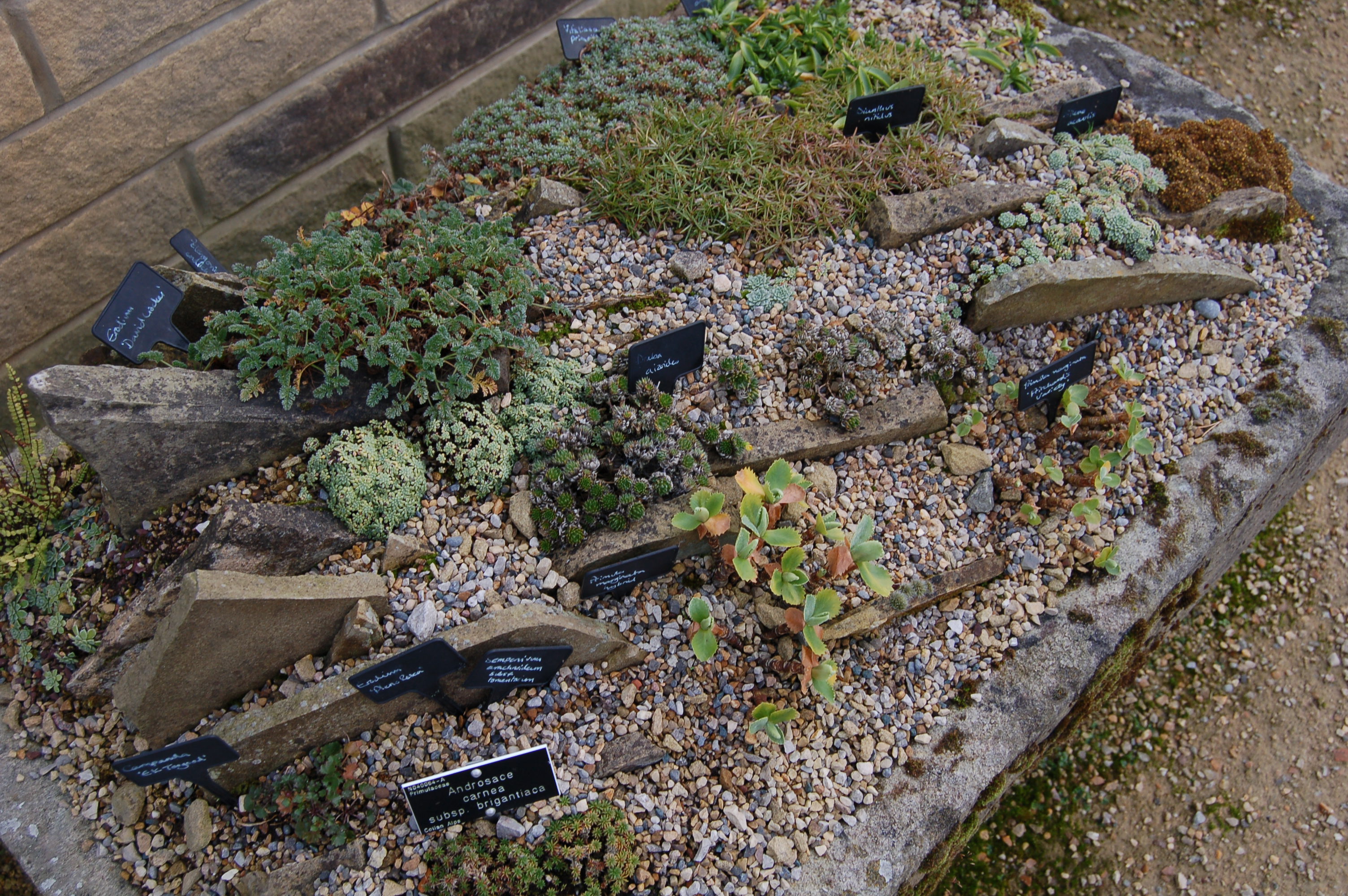
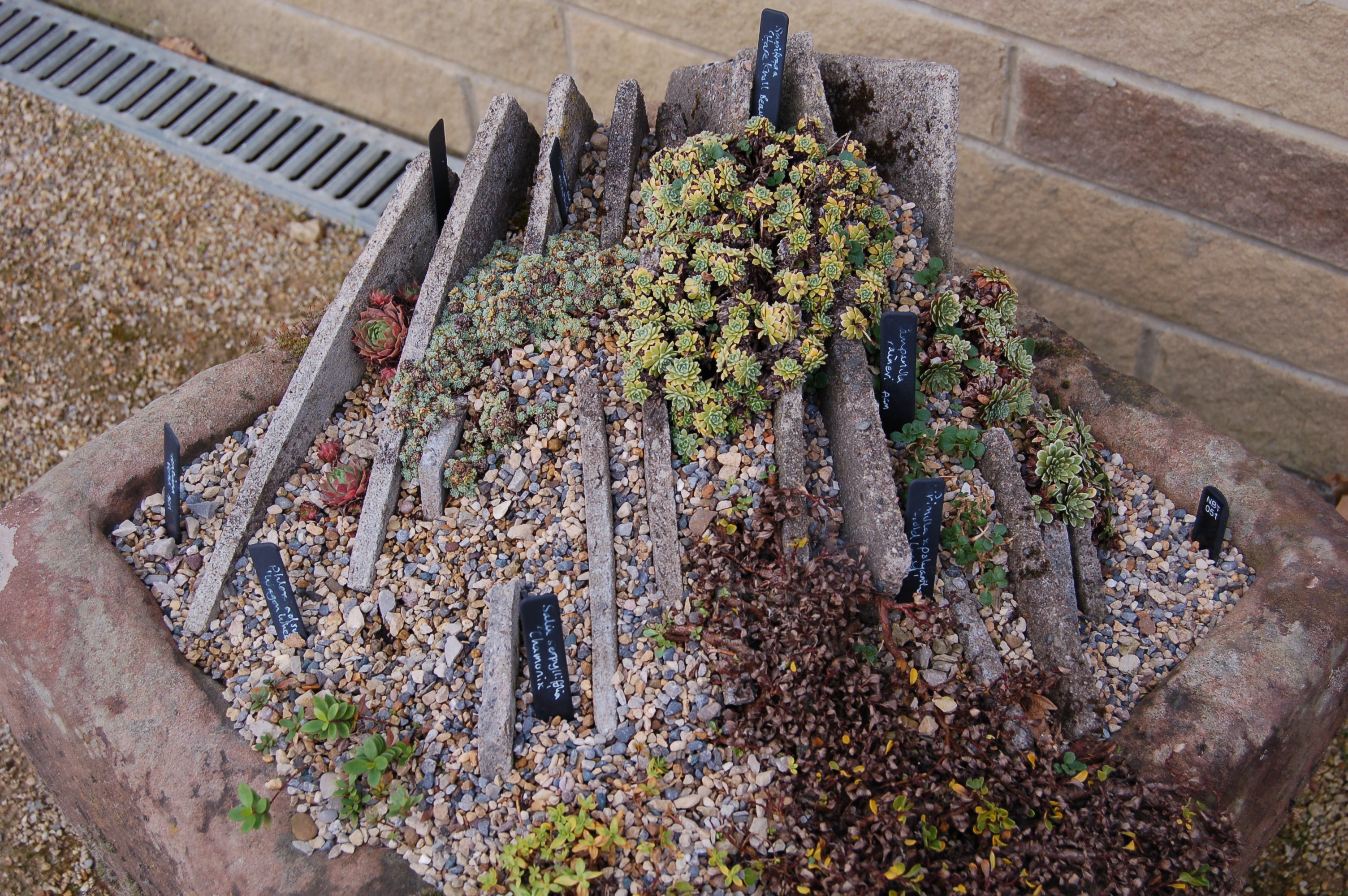
One reason for this return to Harlow Carr was to look at the area dedicated to alpines. We had recently been gifted two old buttler’s sinks which we aim to convert into alpine troughs. We were hoping for inspiration. In the alpine house itself it was the various miniature Oxalis which entranced us, but on the paved area outside we found the alpine troughs which inspired us to make something special of our two sinks.


2014 10 31_6941 2014 10 31_6942 2014 10 31_6943 2014 10 31_6944 2014 10 31_6945 2014 10 31_6946 2014 10 31_6947 2014 10 31_6948


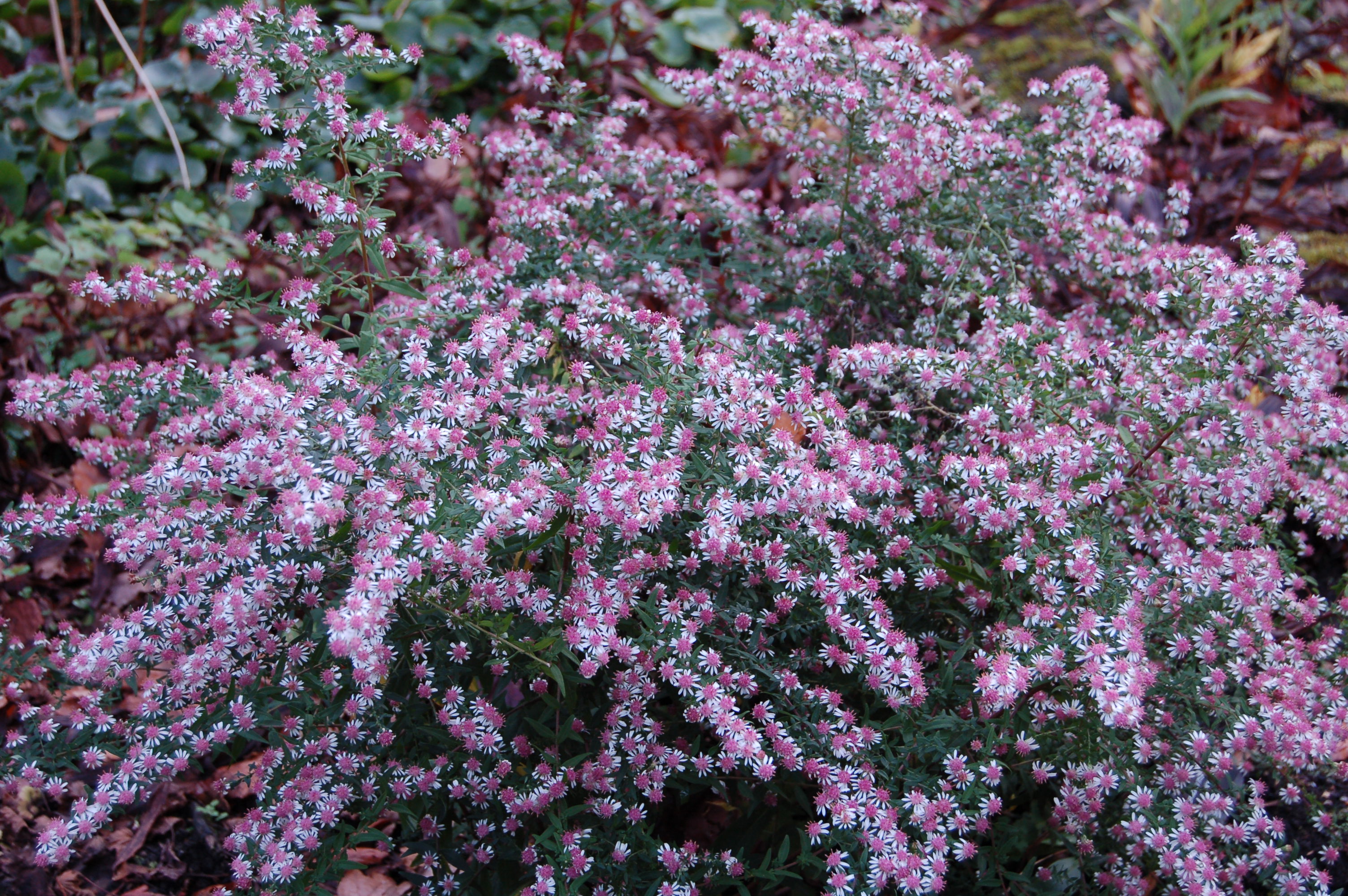
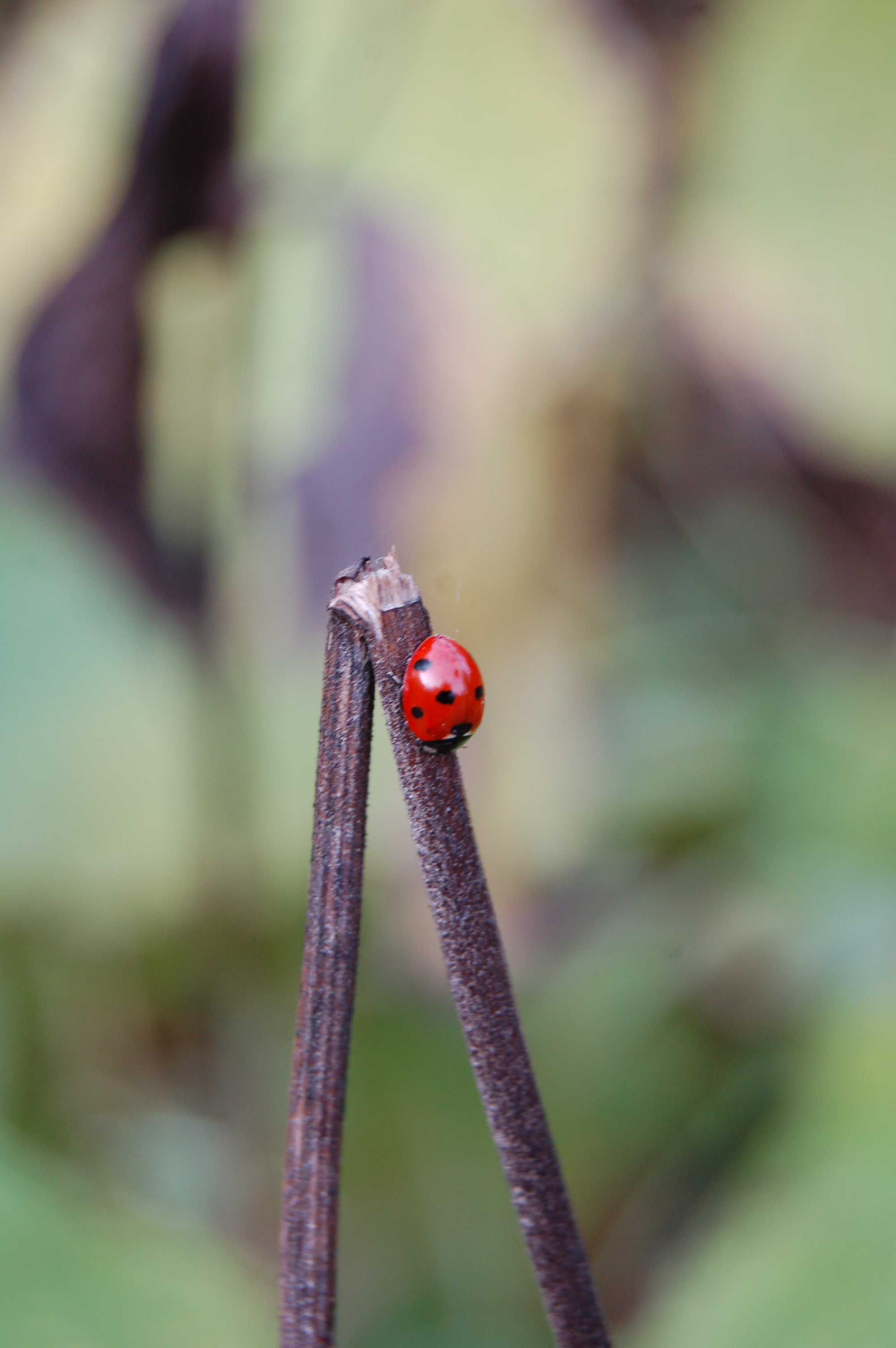
Before I finish part two of my Harlow Carr posts I thought I would show you these two photos showing two true stars! A generously flowering Aster and a brightly coloured Ladybird in search of a safe winter hibernation spot.

2014 10 31_6915 2014 10 31_6917

Categories
colours light light quality

December Sunrise

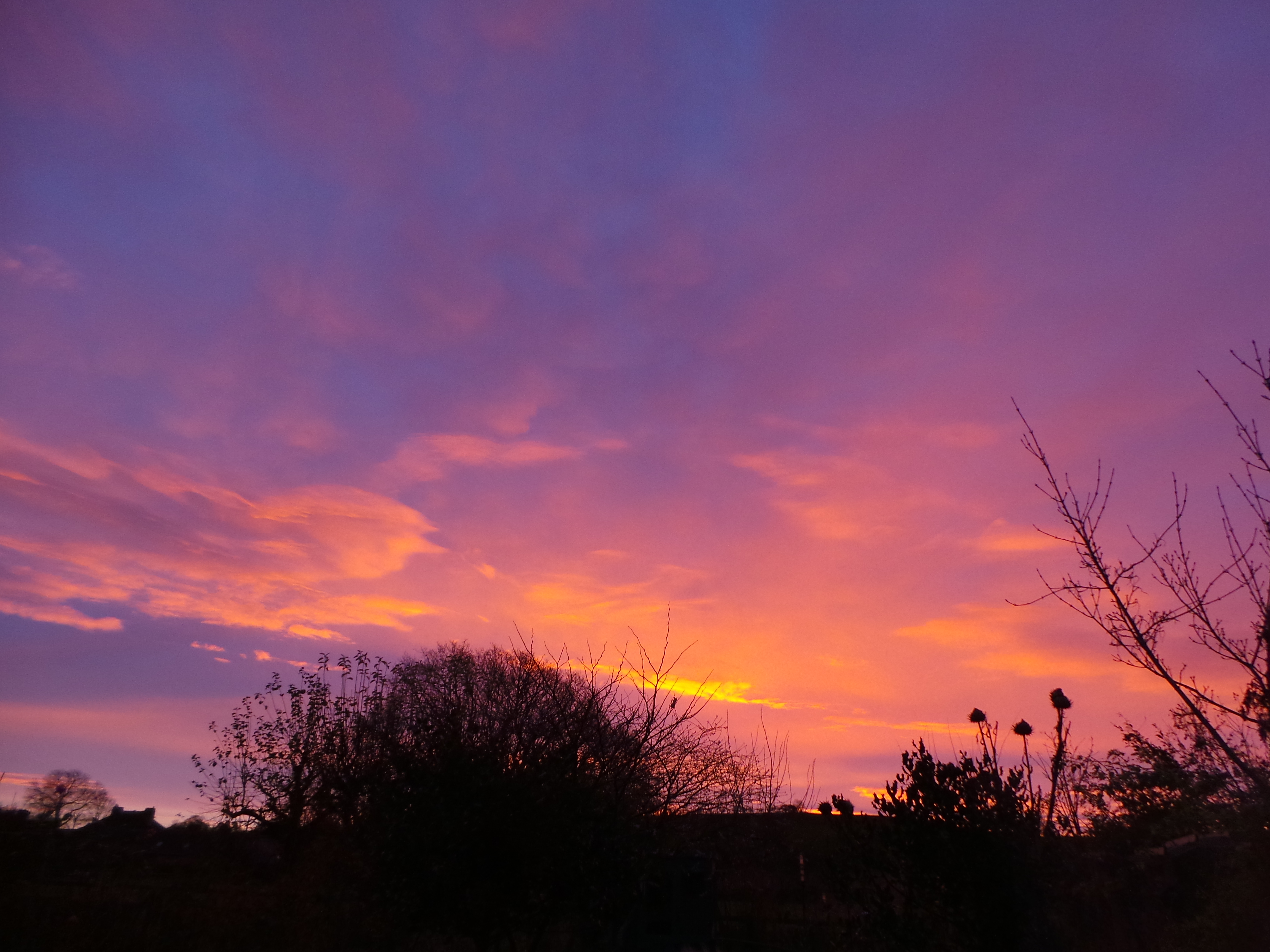
What a delightful way to wake up! We woke to this most beautiful sunrise possible today and watched as the colours got richer and the whole sky brighter. Then we watched as it cooled down, the colours disappearing and the sky becomeing a typical cold December morning sky.

2014 12 09_8718 2014 12 09_8717 2014 12 09_8716 2014 12 09_8719


Categories
autumn autumn colours climbing plants colours garden design garden photography gardening grasses hardy perennials light light quality ornamental grasses ornamental trees and shrubs roses Shropshire

Aiming for an all year round garden – our garden in November

The penultimate posting in my monthly look at how well our Avocet garden is looking is already here. We are aiming for an all year round garden so we hope this series will help us check up on how we are progressing. The first week of November has been so changeable with bright, mild days, windy chilly days, nights with near freezing temperatures and cloudy dull days. We can still get in the garden to potter but we have to be ready to grasp any opportunity.

As usual we shall begin our tour by the gateway at the end of the drive and take a glance into the garden where it borders the lane. Our newly planted boxes are now well-established. From the lane berries dominate in the shrubs and trees and below them leaf textures capture our interest.

2014 11 06_7220 2014 11 06_7221 2014 11 06_7222 2014 11 06_7223 2014 11 06_7224 2014 11 06_7225 2014 11 06_7226 2014 11 06_7227

The Beth Chatto garden lights up in the low autumn light and makes the Tulbaghia and Verbena flowers glow.

2014 11 06_7228 2014 11 06_7229

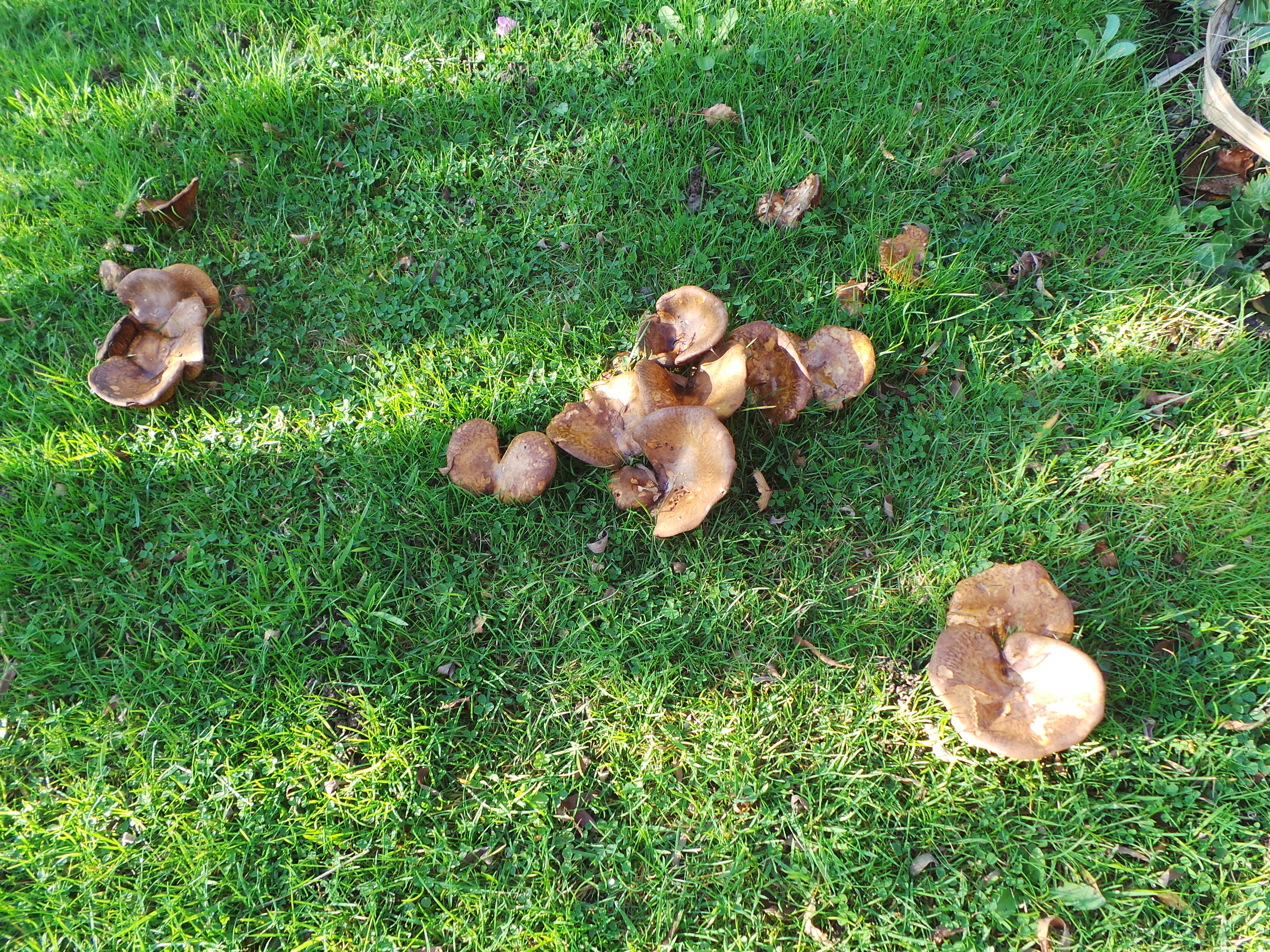
Leaves have been stripped from many of the shrubs and trees leaving skeletons of coloured stems and seed heads above grasses and coloured foliage of evergreen perennials. Fungi on the lawn are definite sign of the season.

2014 11 06_7230 2014 11 06_7231 2014 11 06_7233 2014 11 06_7234 2014 11 06_7235 2014 11 06_72362014 11 06_7237 2014 11 06_7238 2014 11 06_7239 2014 11 06_7240

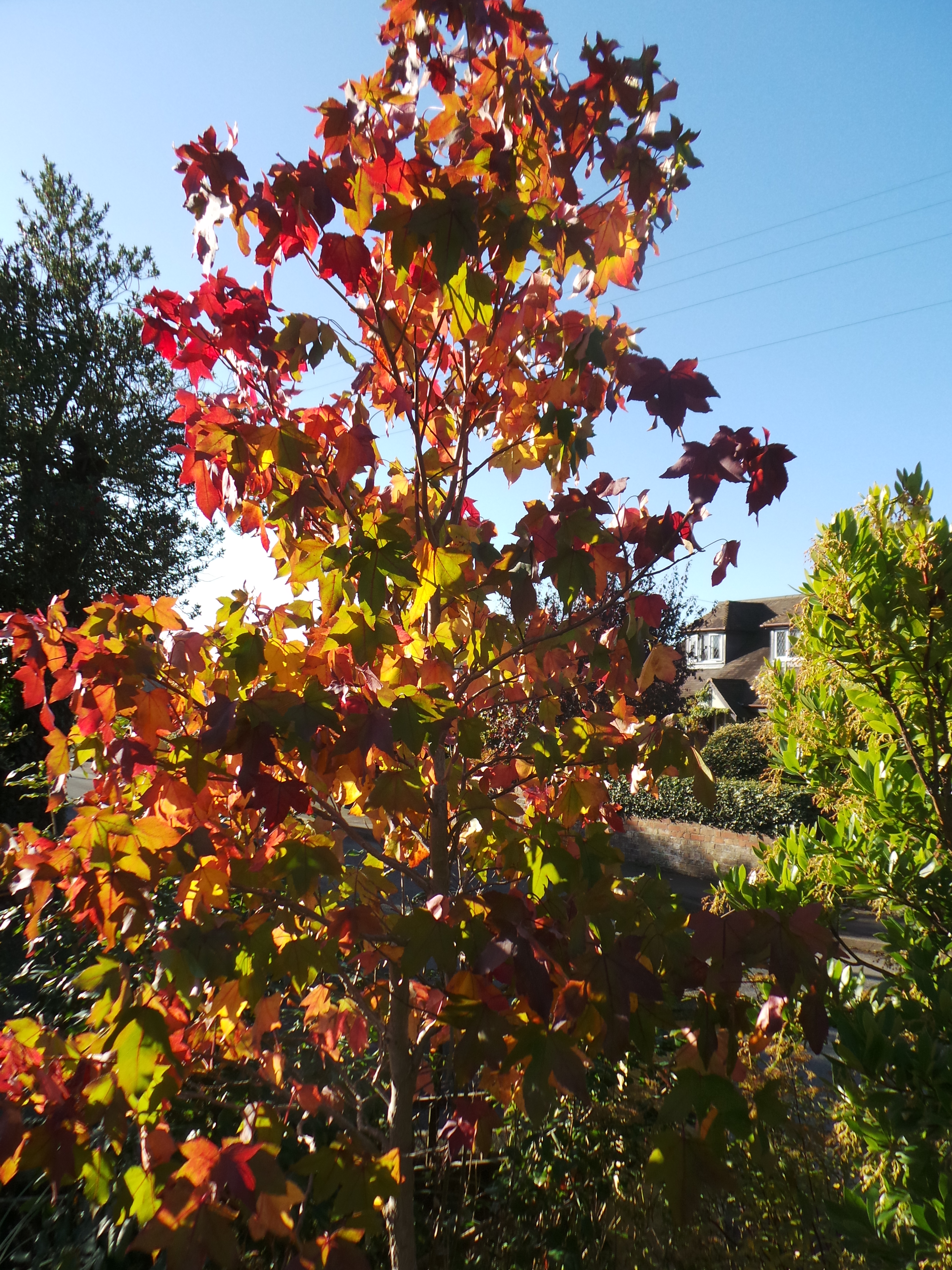
The most colourful tree must be the Liquidamber. With luck it will keep its leaves until the new year.

2014 11 06_7232

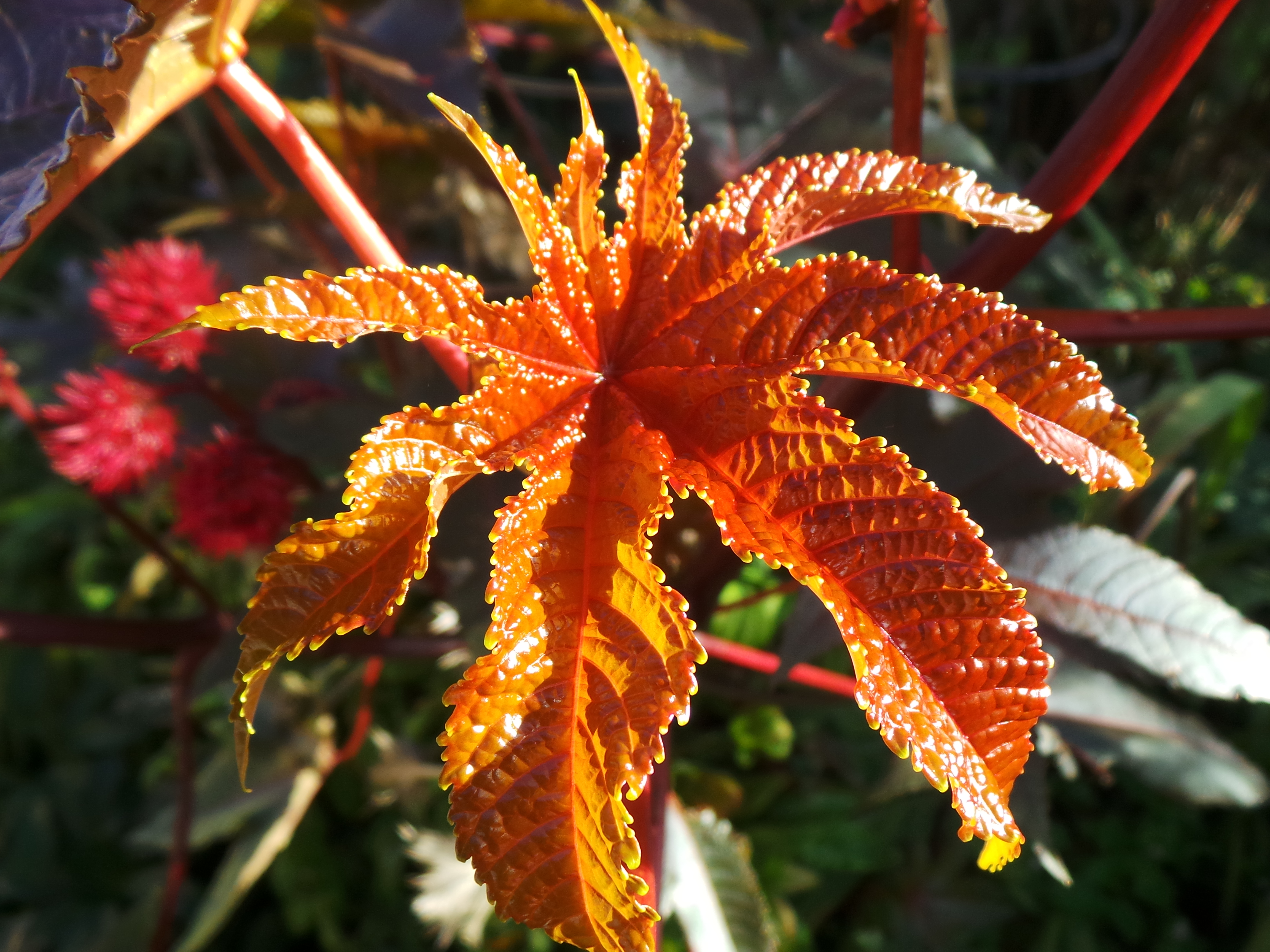
As we pass the shed on the way into the back garden this little alpine Erodium catches the eye. But it is the much more fiery colours that draw us in for a closer look as we turn the corner and see the Shed Bed. The bright yellow petals of the Welsh Poppy, Meconopsis cambrica bring out the palest hues in the palmate leaves of the Ricine Plant, Ricinus cambriensis. The Ricinus is such a garden worthy annual, interesting in every possible way. Flowers, fruit, buds, leaves and stems. The heavily textured leaves begin life orange and metamorphose into the deepest bronze through every shade of red.

2014 11 06_7242 2014 11 06_7243 2014 11 06_7244 2014 11 06_7245

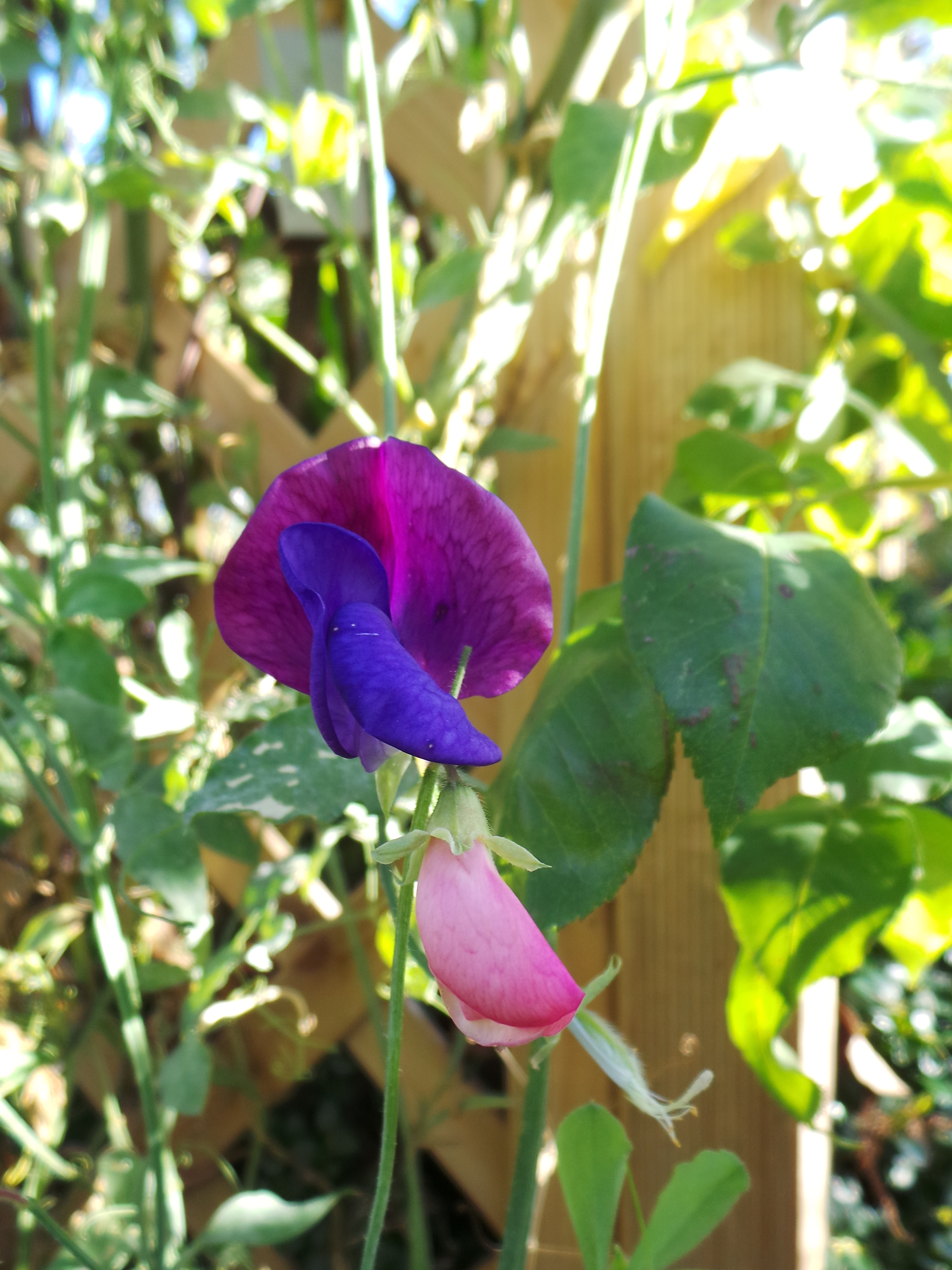
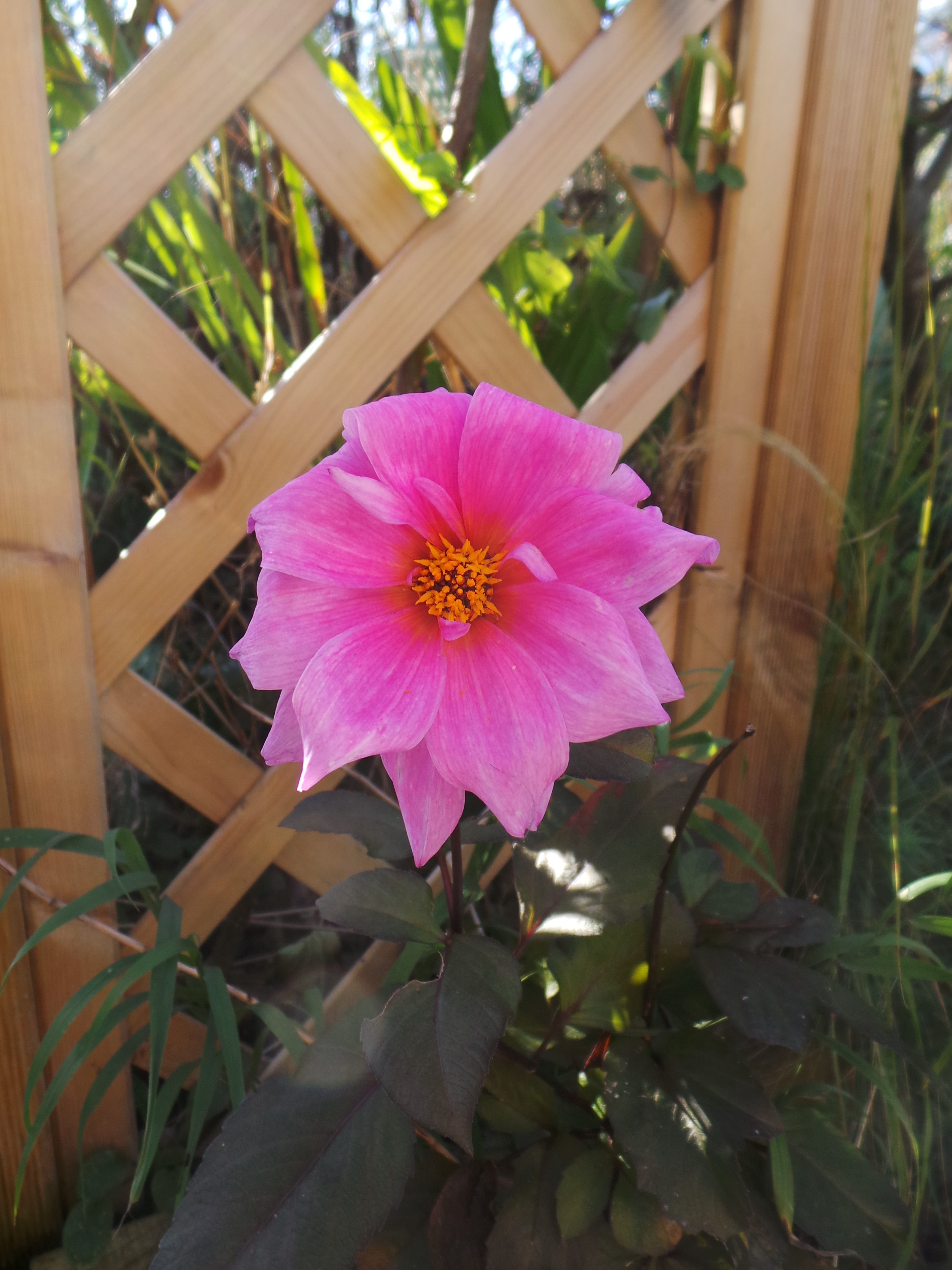
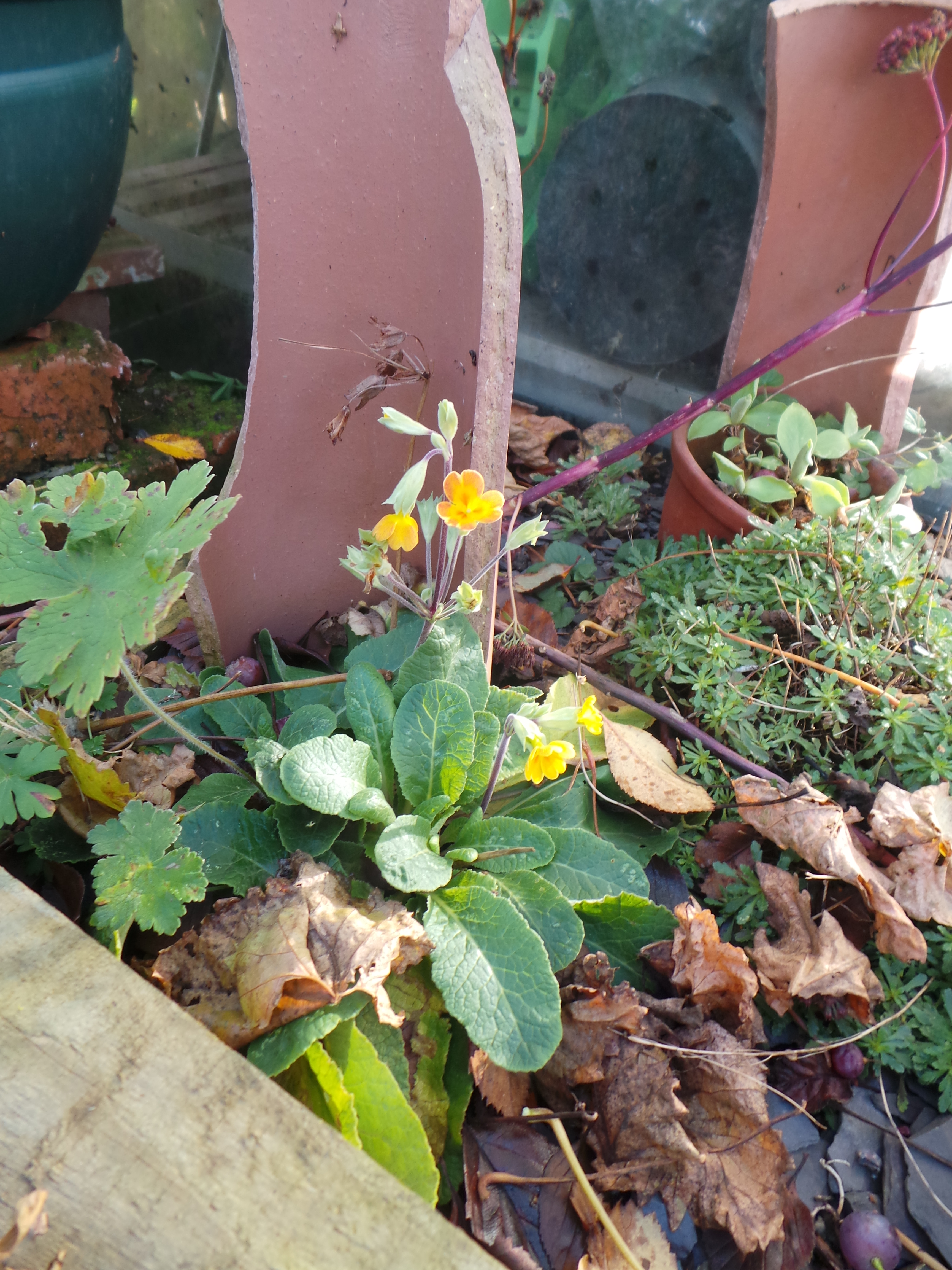
In the Tropical Border the white flowers show up well against the Persicaris  deep purple foliage. By the pond in the Rill Garden the seedheads of this Clematis are just as white. Walking down the central pathway there are plenty of out of season blooms to spot. Rosa Teasing Georgia clambers over the arch with late flowering Sweet Peas and alongside the path an orange flowered Primula which is normally a late spring flowerer is performing now. In a pot alongside the path a Dahlia has produced a very late and very pink bloom.

2014 11 06_7246 2014 11 06_72472014 11 06_7248 2014 11 06_72492014 11 06_7260 2014 11 06_7259

Throughout the borders to the left of the central path grasses put on a strong performance in the autumn light. The cerise of the Lychnis coronaria looks brighter than ever. It has been in flower for months now.

2014 11 06_7250 2014 11 06_7251 2014 11 06_7252 2014 11 06_7253 2014 11 06_7254 2014 11 06_7256

2014 11 06_7257 2014 11 06_7258

Moving across the central path we can see the Chicken Garden and the Secret Garden, where there are still plenty of flowers to put on a colourful show.

2014 11 06_7261 2014 11 06_7262 2014 11 06_7263 2014 11 06_7264 2014 11 06_7265 2014 11 06_7266

When we take the path alongside the Spring Garden it is the fruit and berries that give extra interest for ourselves and for the Blackbirds and Thrushes. The Blackbirds seem intent in finishing off the Crataegus berries. The yellow berries of the Cotoneaster rothschildiana will last much longer. They are low on their list of favourites.

2014 11 06_7267 2014 11 06_7268 2014 11 06_7269 2014 11 06_7270 2014 11 06_7271 2014 11 06_7272 2014 11 06_7273 2014 11 06_7274

I shall finish my November look at our garden with these two photos both featuring yellow. On the left a very out of season Oxlip is flowering strongly while on the left the last of the Gazanias has dropped its petals to reveal a brightly coloured central boss. Next month I shall be considering our Avocet garden in December and my look at the garden in 2014 will have come full circle.

2014 11 06_7275 2014 11 06_7276


Categories
autumn autumn colours climbing plants colours garden design garden designers garden photography gardening gardens gardens open to the public grasses hardy perennials Italian style gardens light light quality ornamental grasses ornamental trees and shrubs outdoor sculpture Piet Oudolf sculpture Staffordshire Tom Stuart-Smith trees

A Garden in October/November – Trentham

We have now reached the penultimate posting in this series where we have been looking at how Trentham Gardens in Staffordshire have changed through the months during 2014. Since our last visit in September Autumn has taken a strong grip on the gardens. Many leaves have taken on their auutmn hues and many have fallen. But it is amazing how much colour there still is to enjoy, colours in late flowers, dried stems and seed heads.

2014 11 04_7144 2014 11 04_7154 2014 11 04_7153 2014 11 04_7167 2014 11 04_7182

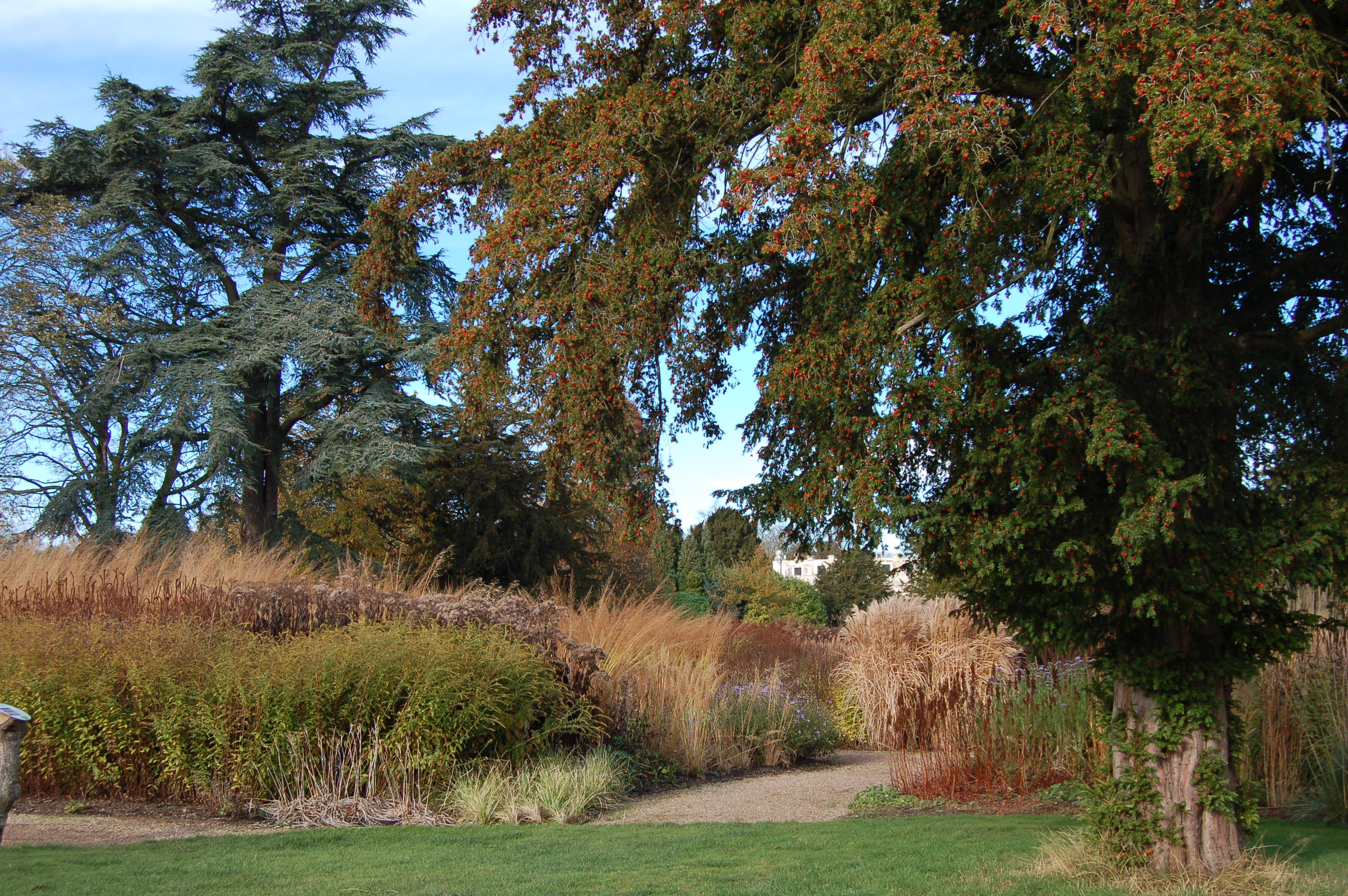
We always cross over the gently arching suspension footbridge over the River Trent full of anticipation. On our visit in early November we were presented with a sea of yellows, where Piet Oudolf’s River of Grasses had been transformed by the passage of time into a river of liquid gold.

2014 11 04_7143 2014 11 04_7144 2014 11 04_7145 2014 11 04_7146 2014 11 04_7147 2014 11 04_7148 2014 11 04_7149

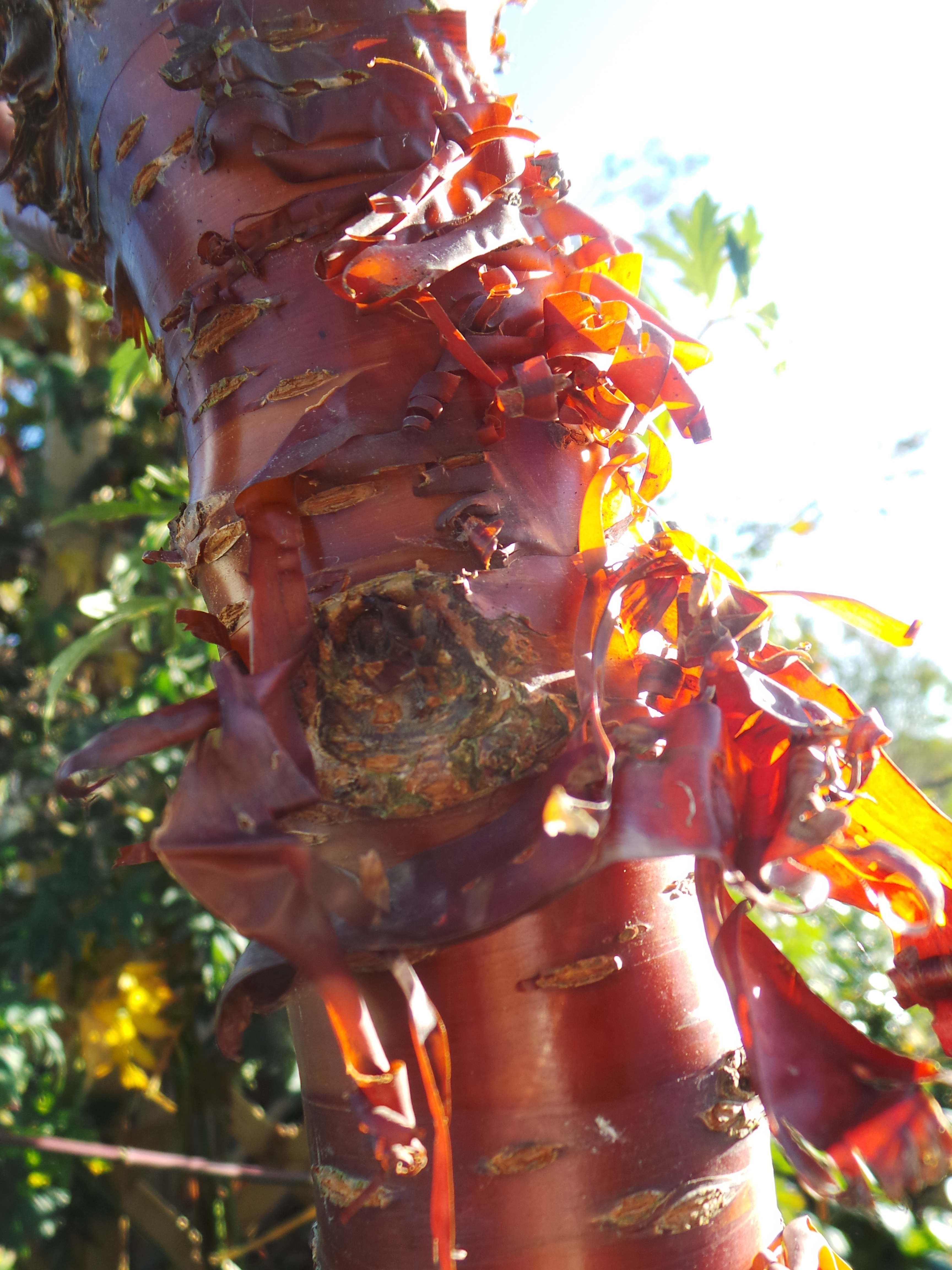
We wandered along the gravel path as it cut through the line of River Birch, Betula nigra in search of Oudolf’s prairie borders. These beautiful trees had already shed all their leaves but still drew our eyes as their bark was peeling and curling decoratively away from their trunks.

2014 11 04_7150

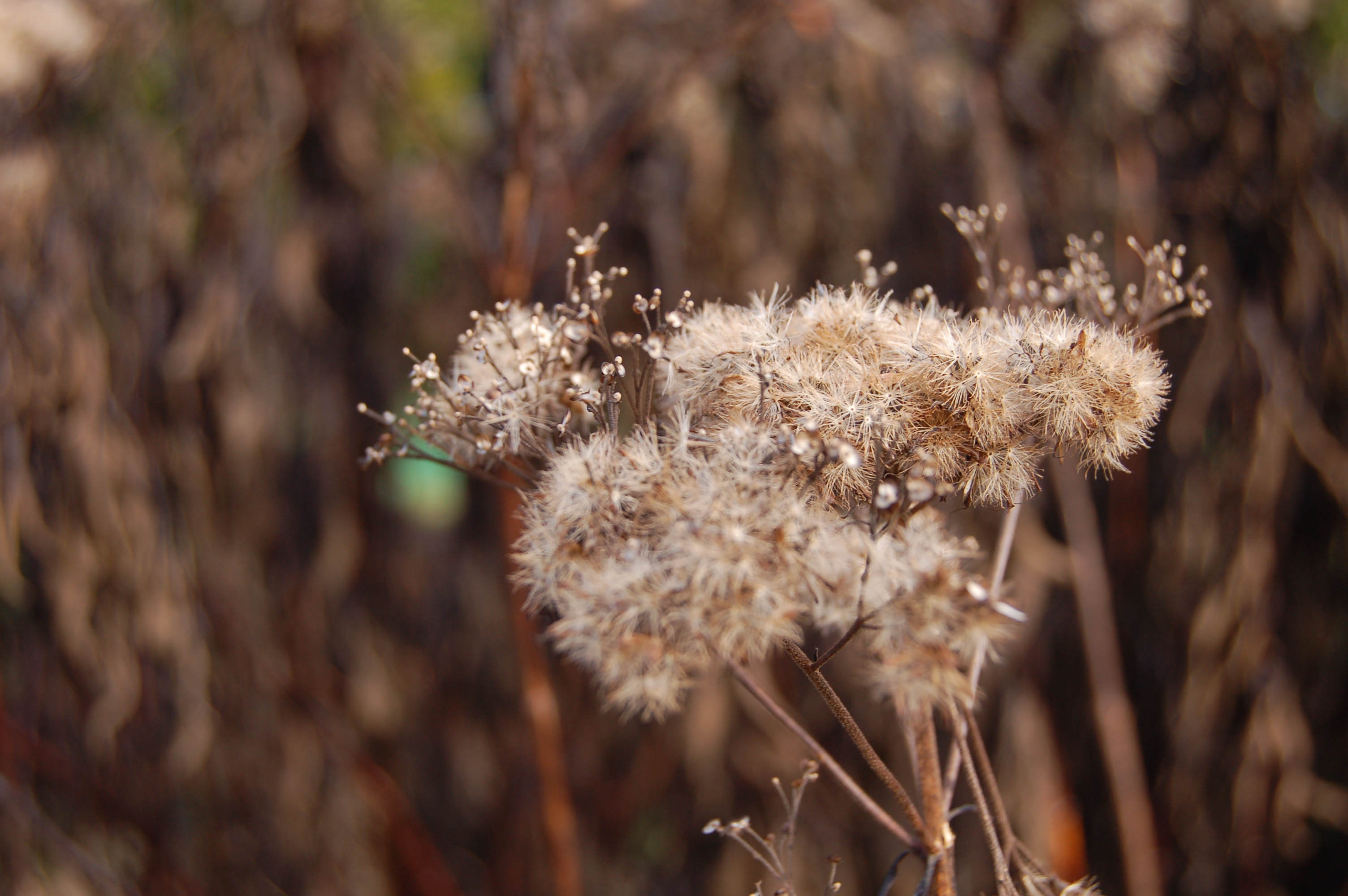
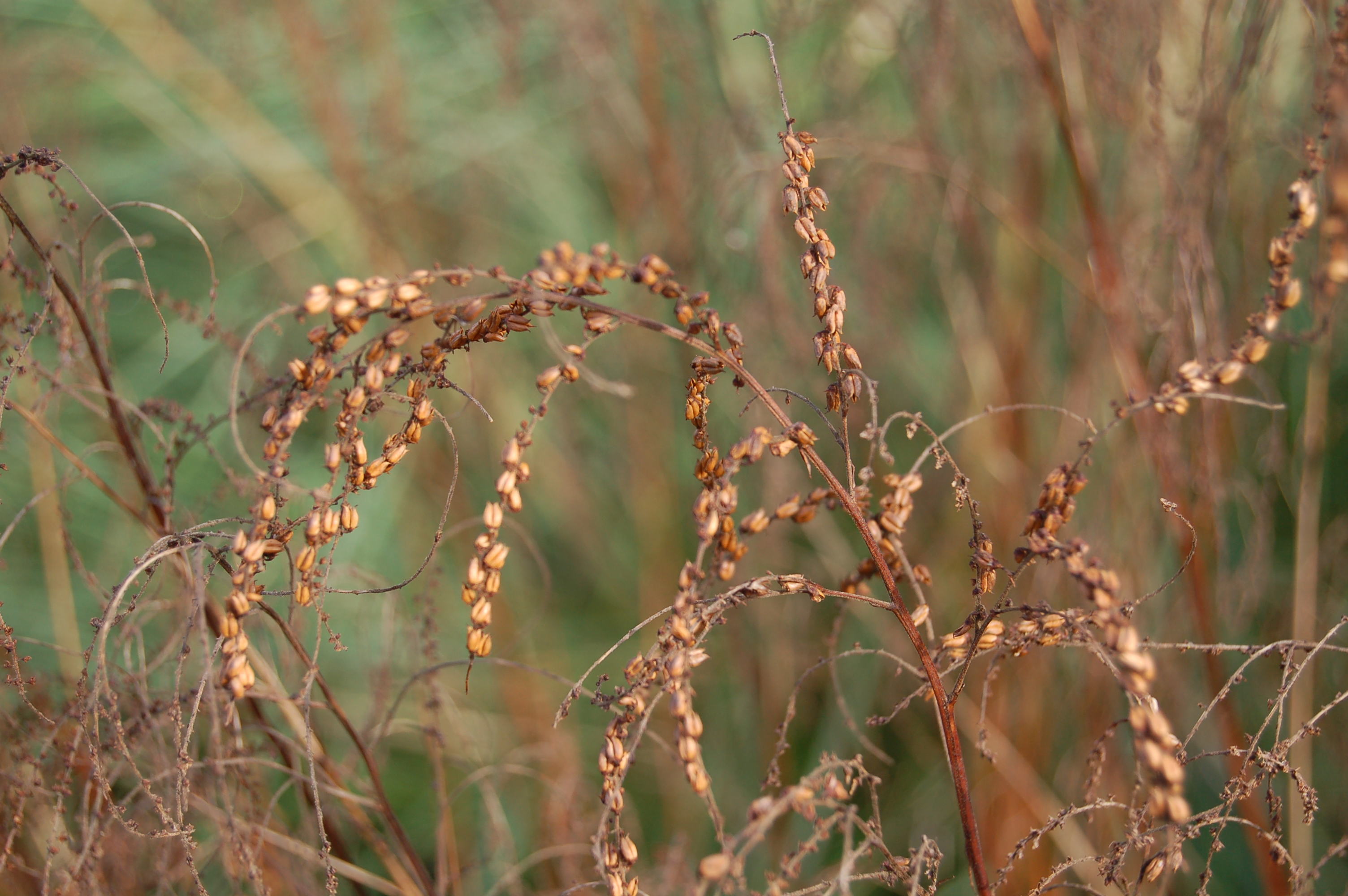
Once in amongst the prairie planting we immediately noticed that seed heads in every hue of brown and beige and bright patches of late colour had joined the lemons, mustards and golds of the grasses. Pale purples glowed in the dull light of autumn. This glow is their secret weapon to attract moths and other night flying pollinators.

2014 11 04_7151 2014 11 04_7152 2014 11 04_7153 2014 11 04_7154

The gardening team were hard at working replanting a section of one of the borders. It must be a never ending task. I suppose it gives them the chance to keep improving things as well as keeping the gardens in top condition.

2014 11 04_7155 2014 11 04_7156

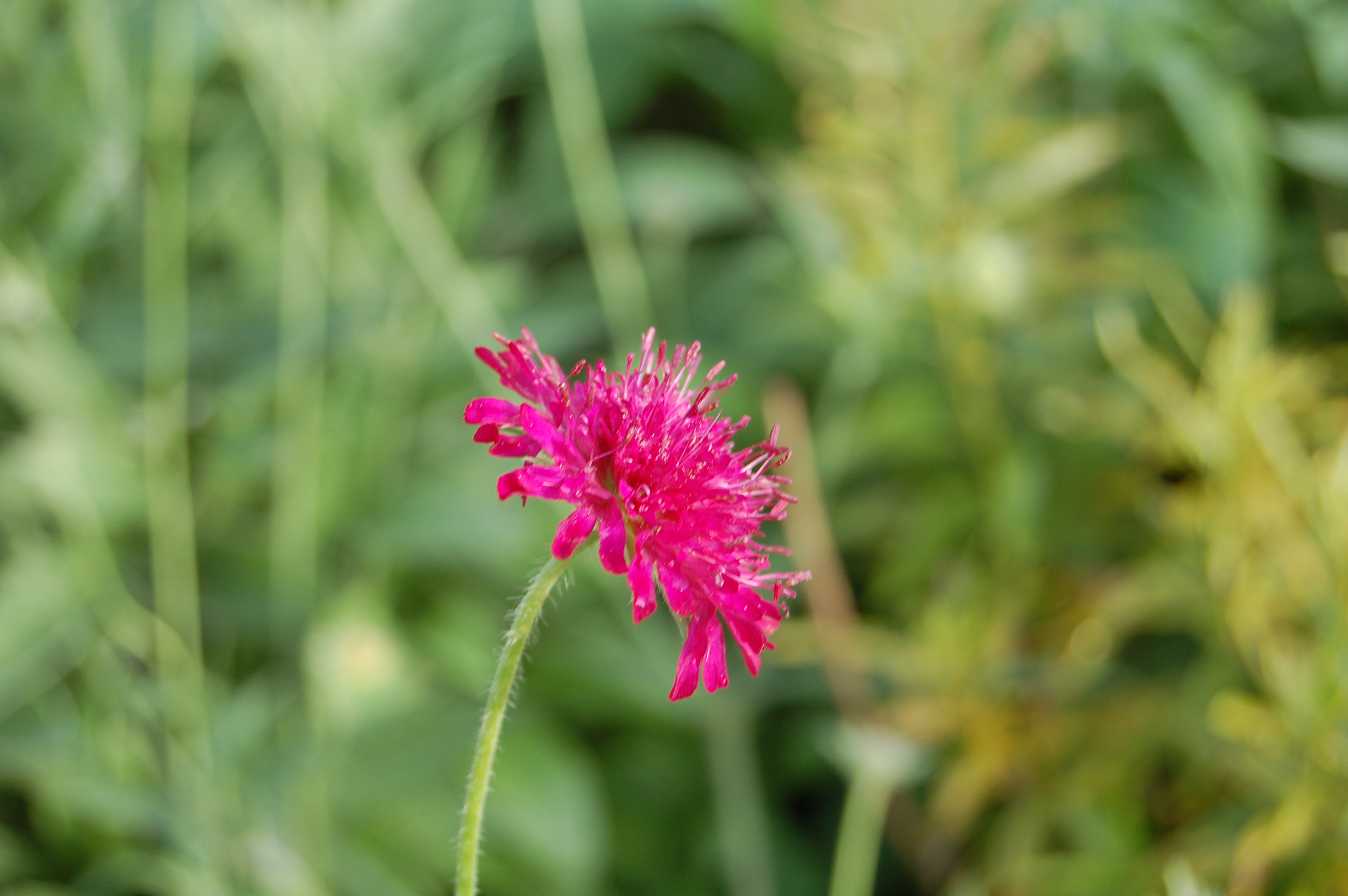
Deep pinks and cerise of the Persicarias and the Knautias catch the eye of every visitor. They look so good against the neutral shades that dominate gardens in the autumn.

2014 11 04_7157 2014 11 04_7158 2014 11 04_7159 2014 11 04_7160 2014 11 04_7161 2014 11 04_7162 2014 11 04_7164 2014 11 04_7166

2014 11 04_7165  2014 11 04_7167 2014 11 04_7168 2014 11 04_7169 2014 11 04_7171 2014 11 04_7172 2014 11 04_7173  2014 11 04_7174

This lovely old Tulip Tree caught our attention. It is the oldest of its kind we have ever seen and a notice close by warned of the danger of falling branches. It must be susceptible to winter storms but should it fall it would make a wonderful natural bridge over the Trent. The dome of Hornbeam over a bench is now a golden dome.

2014 11 04_7170 2014 11 04_7175

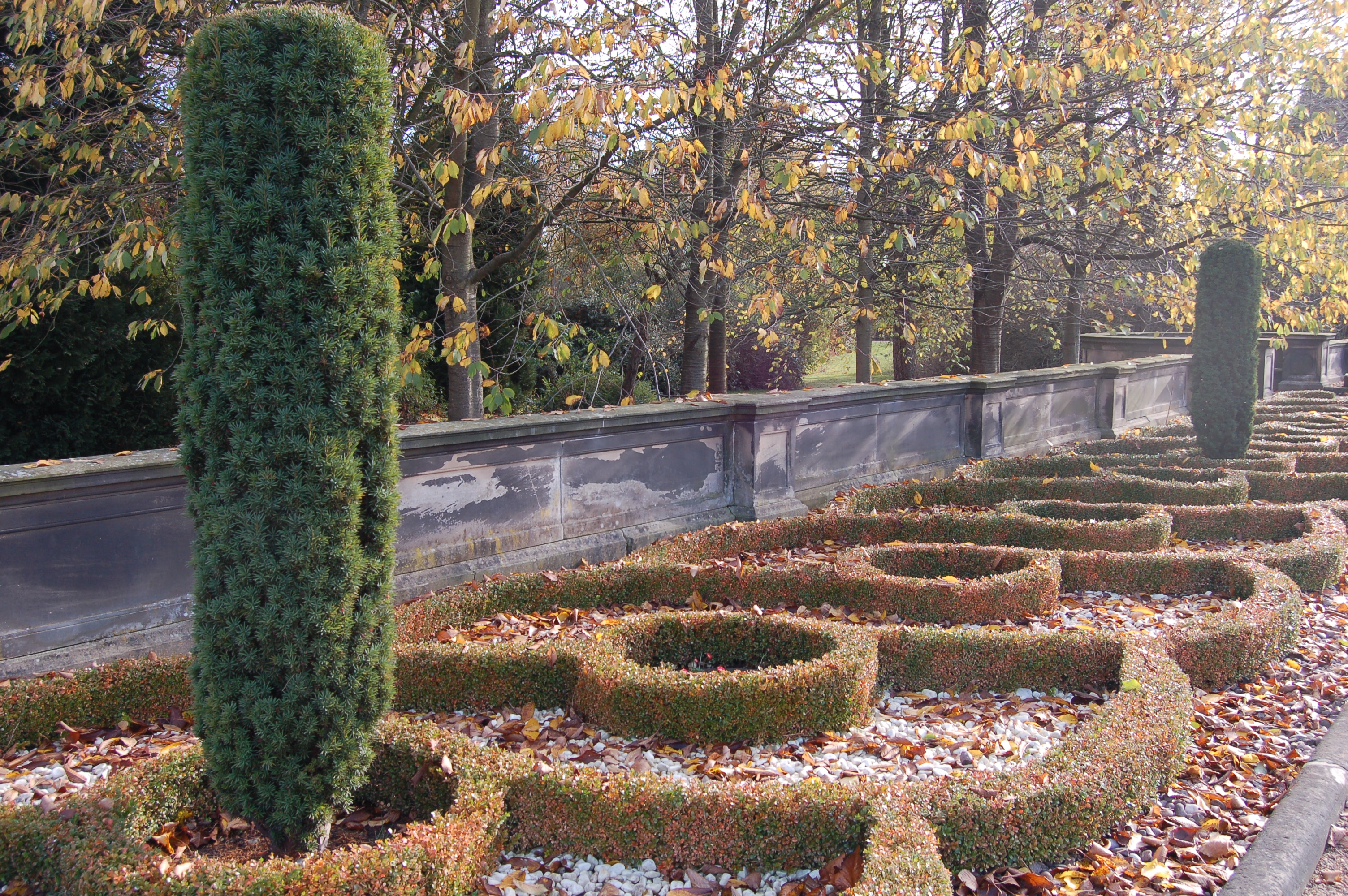
We made our way towards the formally planted Italian Parterre Garden, passing through an archway of Hornbeams on the way. Sunlight penetrated the coniferous plantings casting long shadows and creating bright patches. It lit up the little low box hedges of the  knot garden.

2014 11 04_7176 2014 11 04_7177

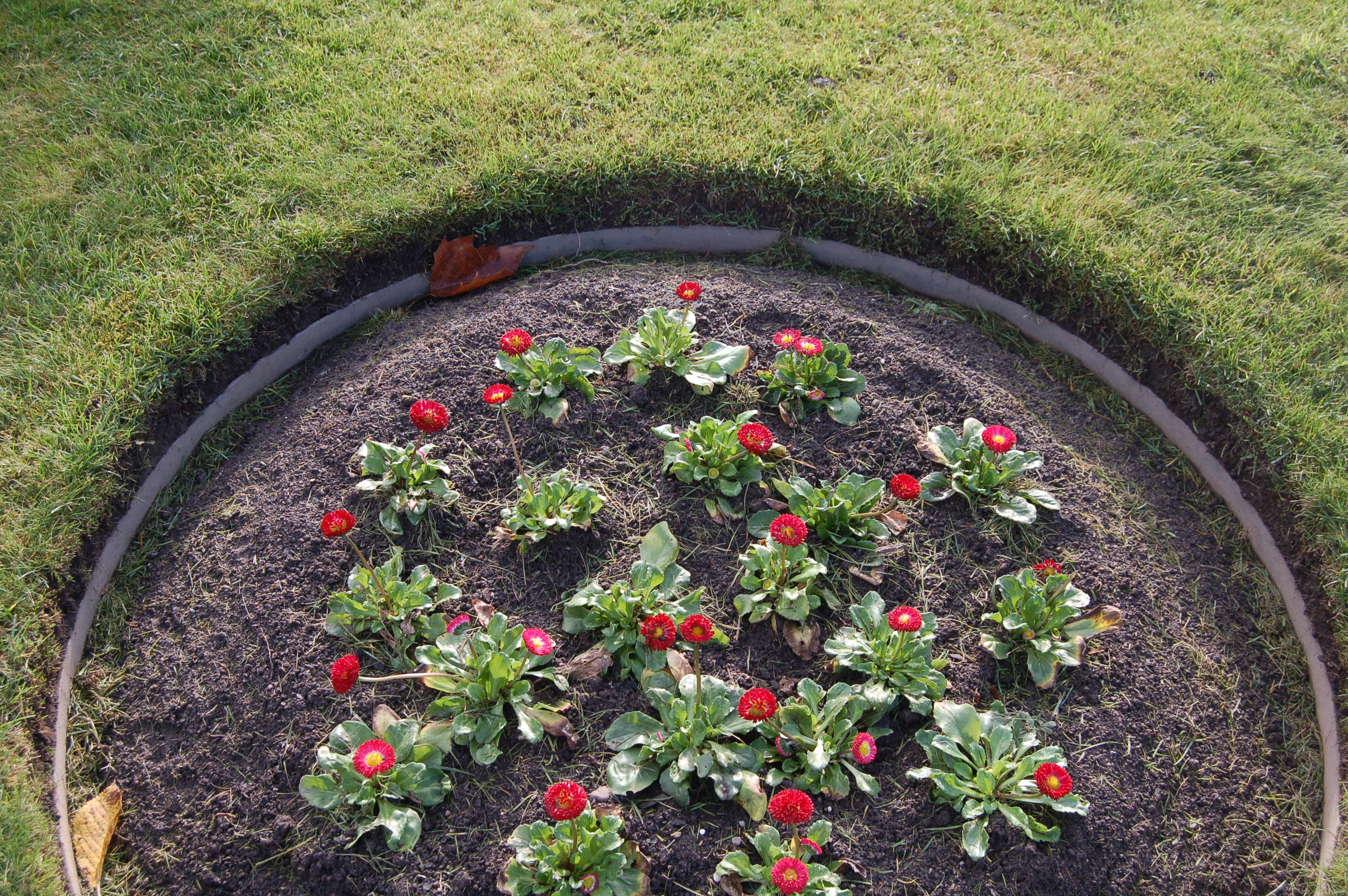
The summer bedding in the parterre has been consigned to the compost heaps and winter/spring plants has taken their place, primulas and a deep red Bellis perennis.

2014 11 04_7178 2014 11 04_7179 2014 11 04_7180 2014 11 04_7181

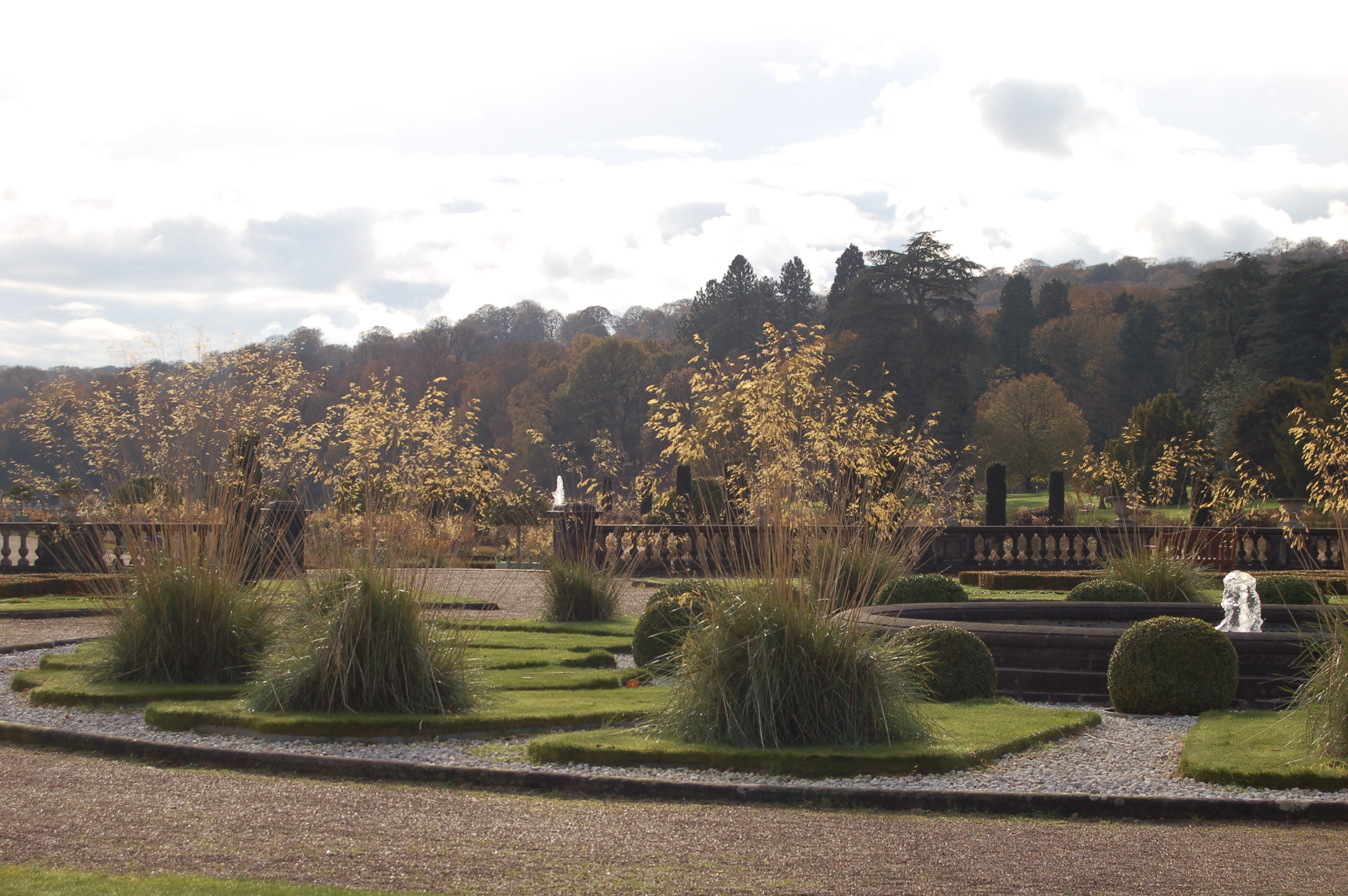
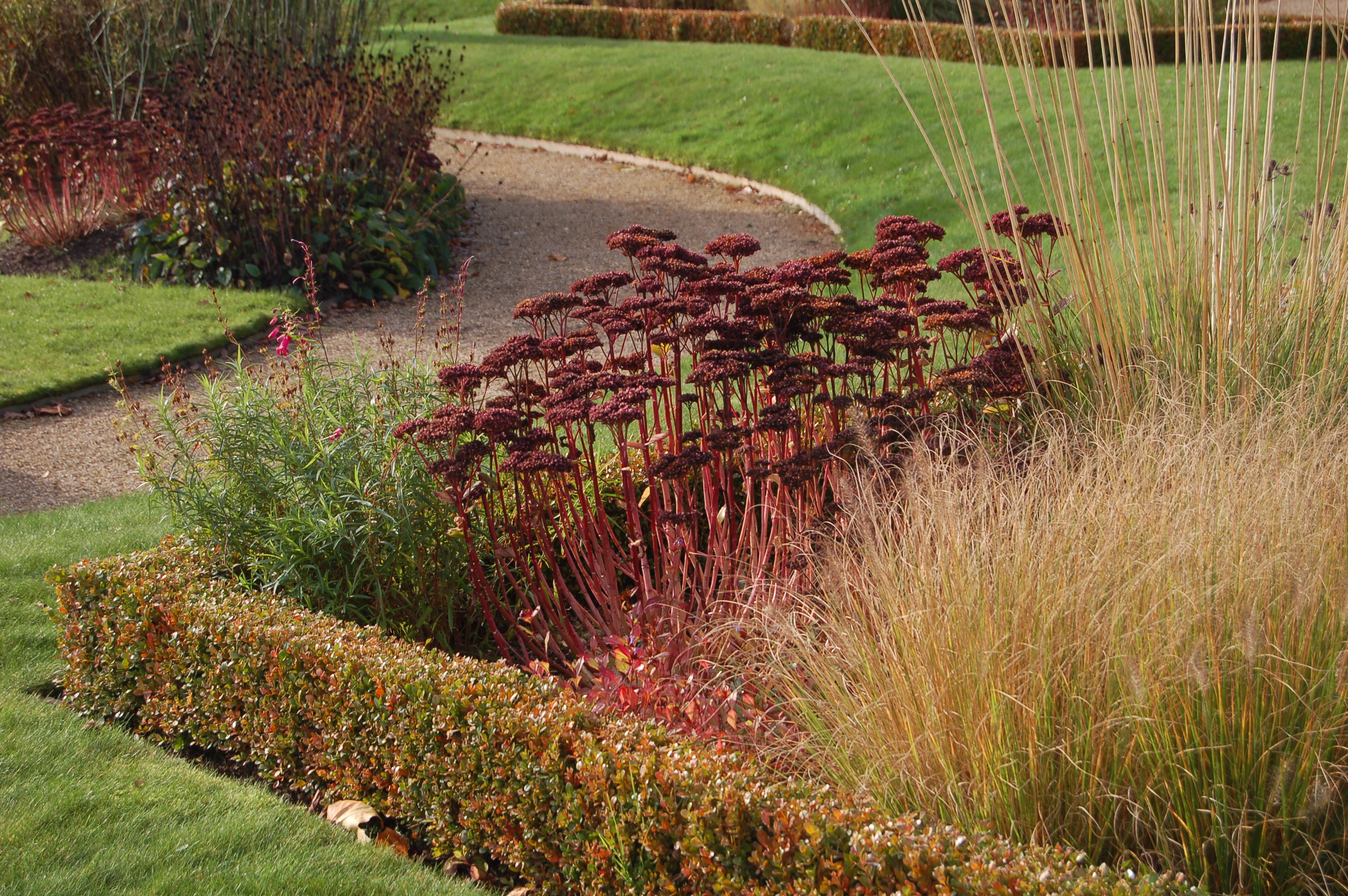
We always enjoy our first look out over the Tom Stuart-Smith gardens. We were not to be disappointed today.

2014 11 04_7182 2014 11 04_7183 2014 11 04_7184 2014 11 04_7185 2014 11 04_7186 2014 11 04_7187

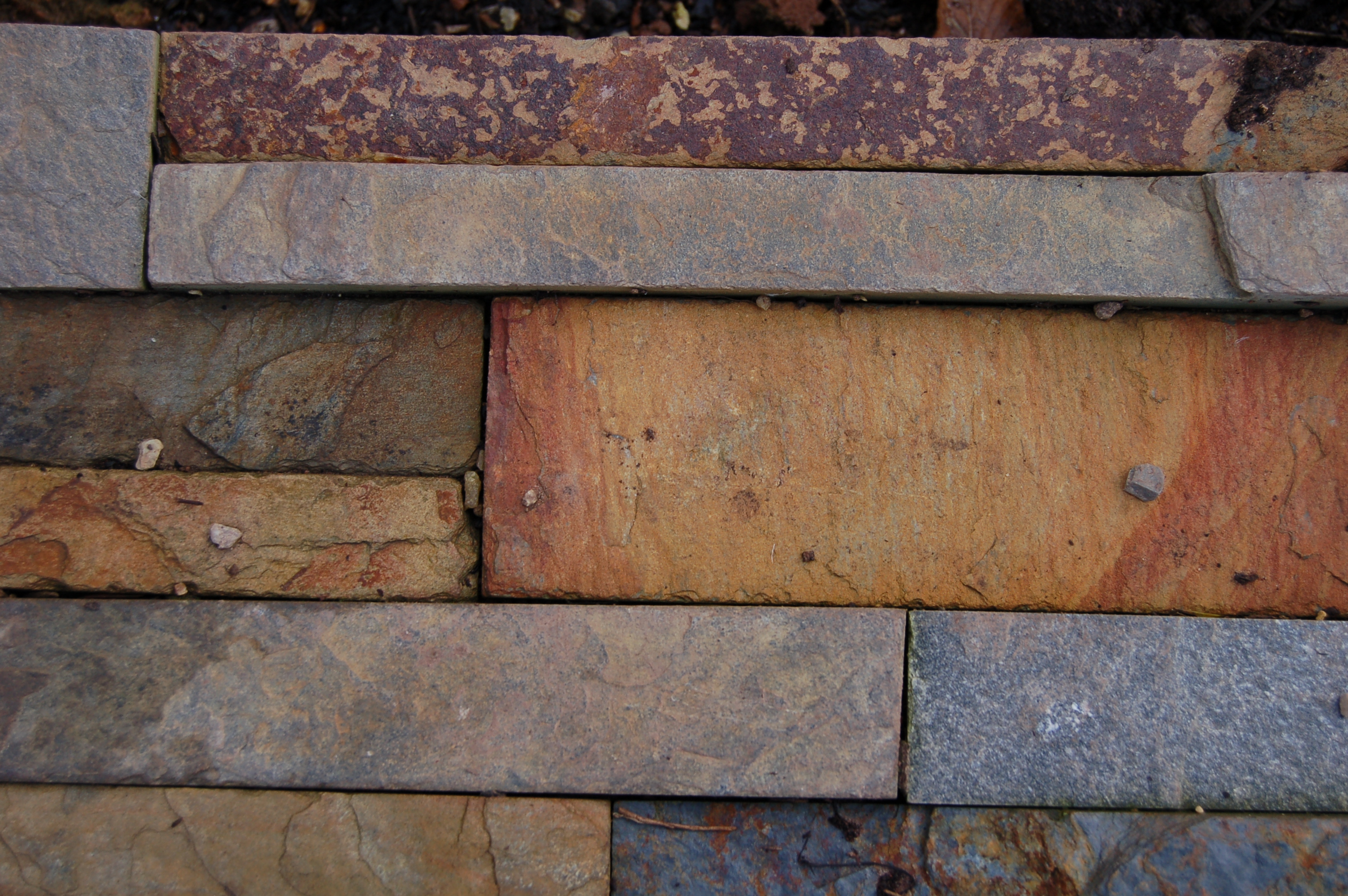
The autumn light emphasised the texture on this bronze sculpture and on the much newer tunnel archway which marks the way into the display gardens. It gave an all new look to the low slate walls around one of these gardens too. It again emphasised the texture but brought out extra colours too. The light similarly added colour to the plants and to the glass panels featured in another of the display gardens.
2014 11 04_7188 2014 11 04_7189 2014 11 04_7190 2014 11 04_7191 2014 11 04_7192 2014 11 04_7194 2014 11 04_7195 2014 11 04_7196 2014 11 04_7197 2014 11 04_7198 2014 11 04_71992014 11 04_7200 2014 11 04_7201

A wander back through the Stuart-Smith gardens gave us the chance to see the planting in a different light. As the afternoon had progressed the sun dropped down lower and was back-lighting the plants, giving a very different perspective.


2014 11 04_7202 2014 11 04_7203 2014 11 04_7204 2014 11 04_7205

The Rose Walk was still remarkably colourful with Roses, Cleomes and Verbena bonariensis still putting on strong performances. Butterflies and bees were still busy here too, the blooms having attracted them as they emerged hunting for sustenance as the temperatures rose slightly in the afternoon sunlight. You can see our long shadows cast across the border.

2014 11 04_7207 2014 11 04_72082014 11 04_7210 2014 11 04_7217


From the long metal pergola we looked back over the Oudolf gardens and at the shrubs nearby and the butter yellow leaves of the Wisteria climbing over the framework.

2014 11 04_7211 2014 11 04_7212 2014 11 04_7213 2014 11 04_7215 2014 11 04_7218 2014 11 04_7219


Now we can look forward to our final visit to Trentham for this year in readiness to publish the final episode in this series of posts. So far we have determined that gardens at Trentham are worthy of a visit any month of the year. Let us hope our December visit confirms it.


Categories
arboreta autumn autumn colours colours light light quality ornamental trees and shrubs outdoor sculpture trees woodland woodlands

Queenswood Arboretum – Part Three – the Redwoods

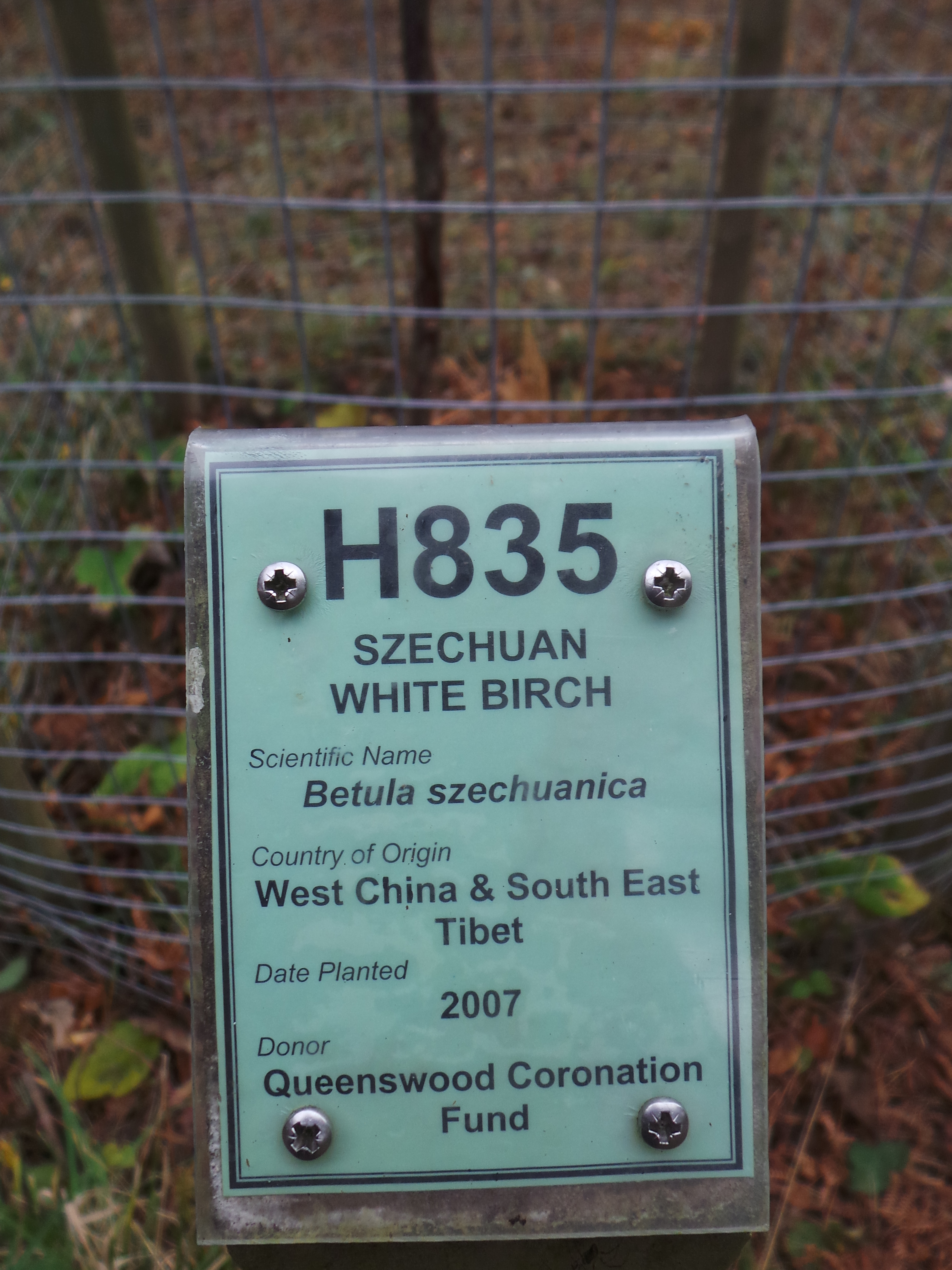
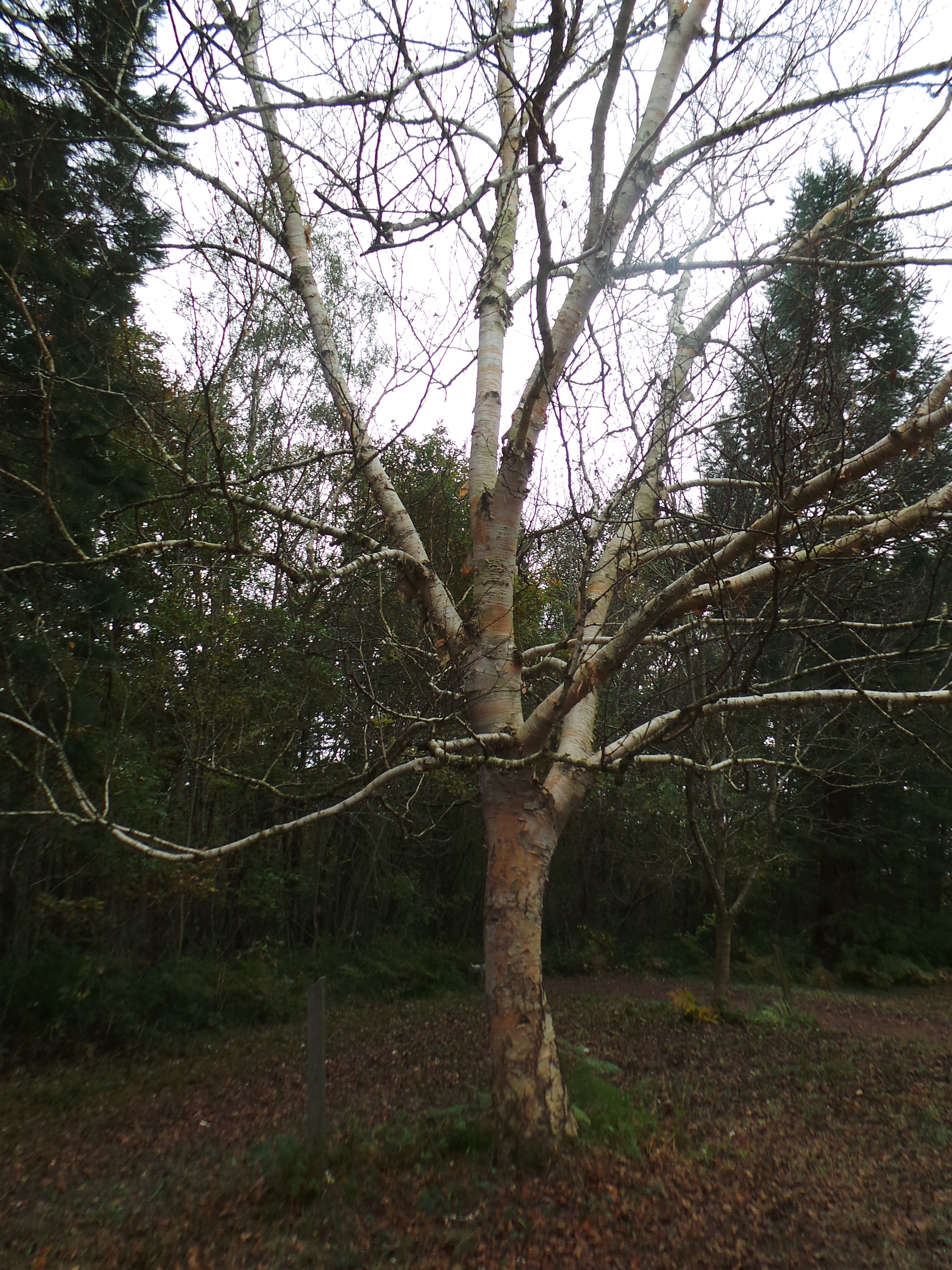
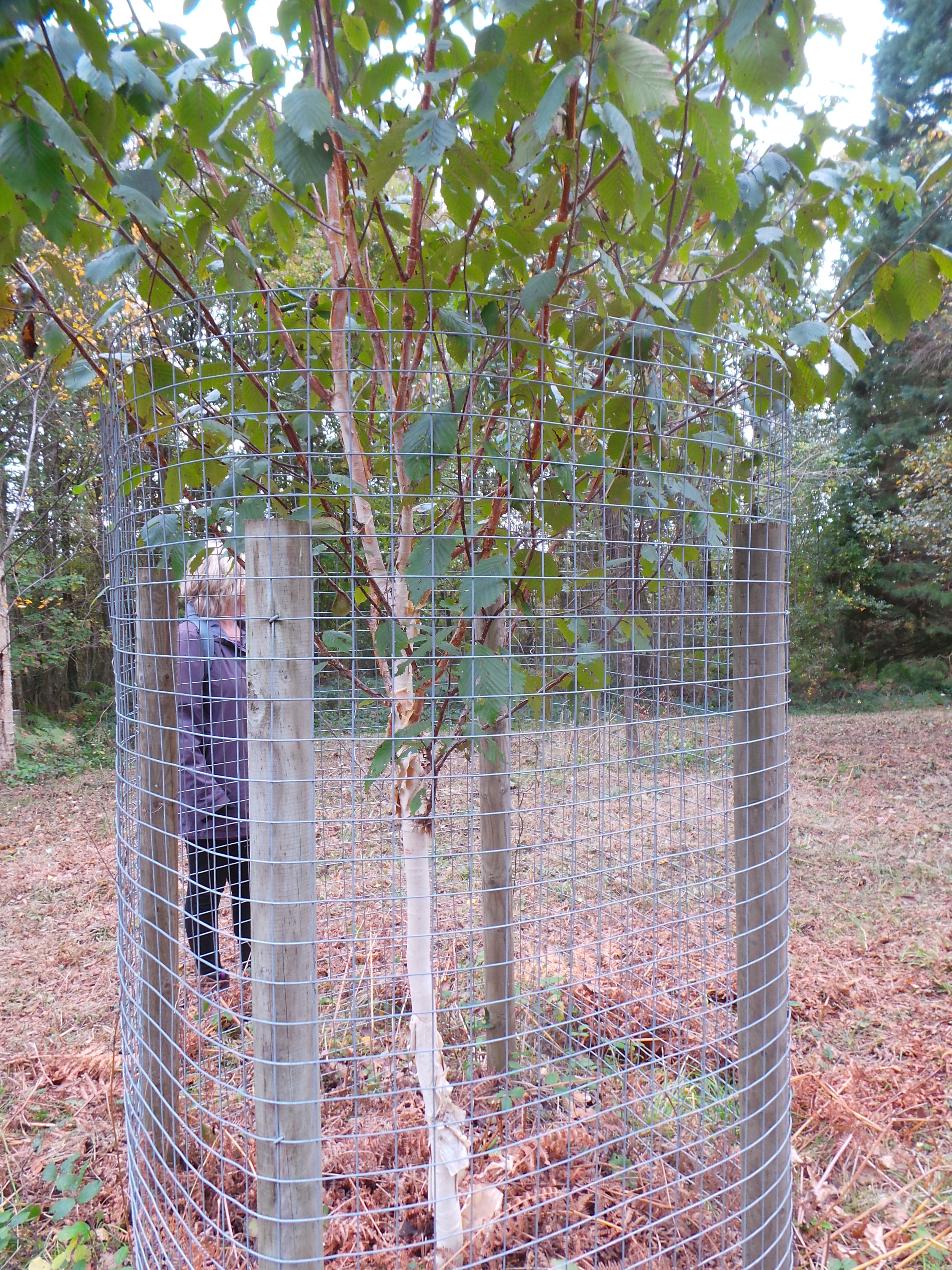
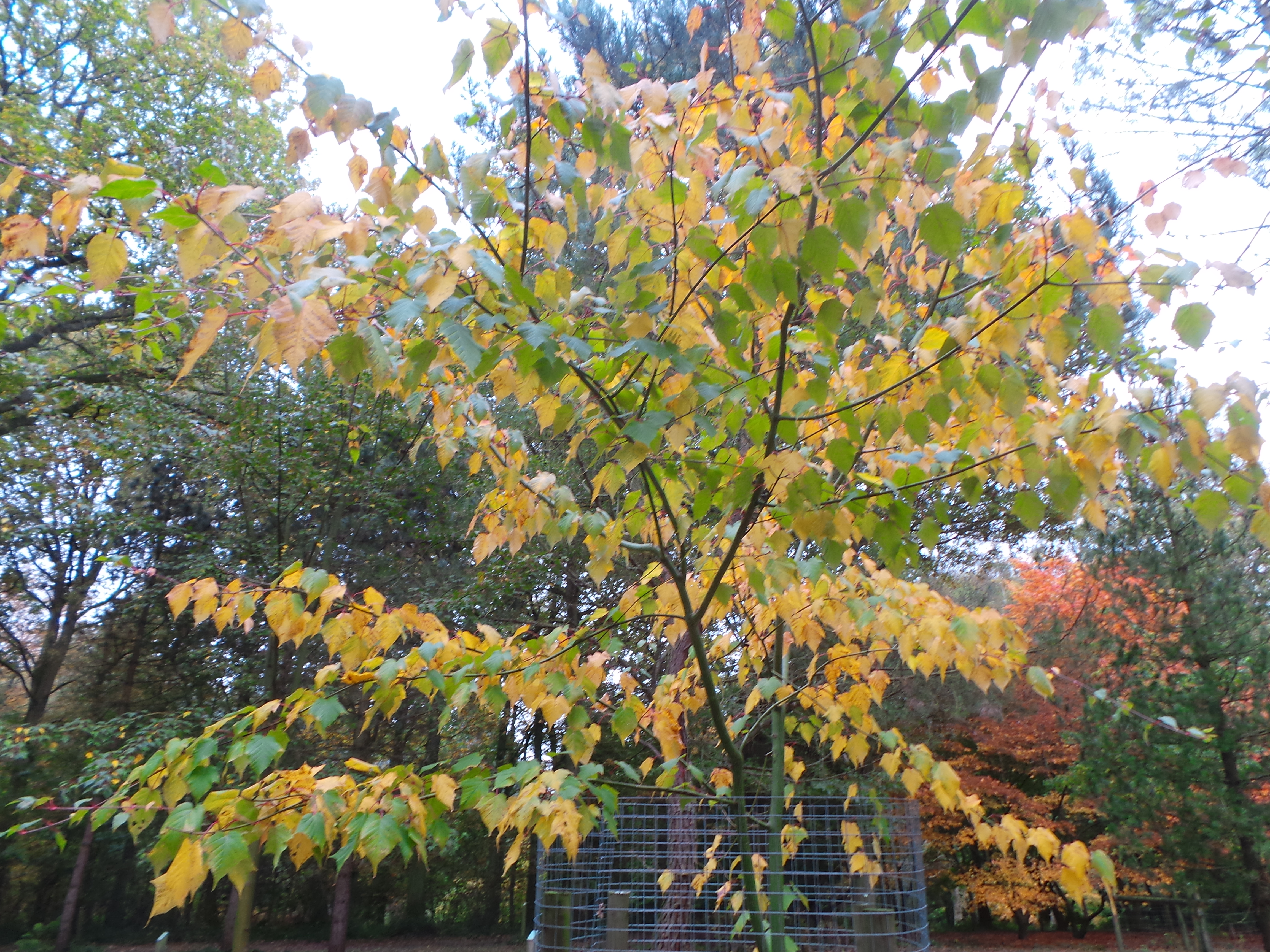
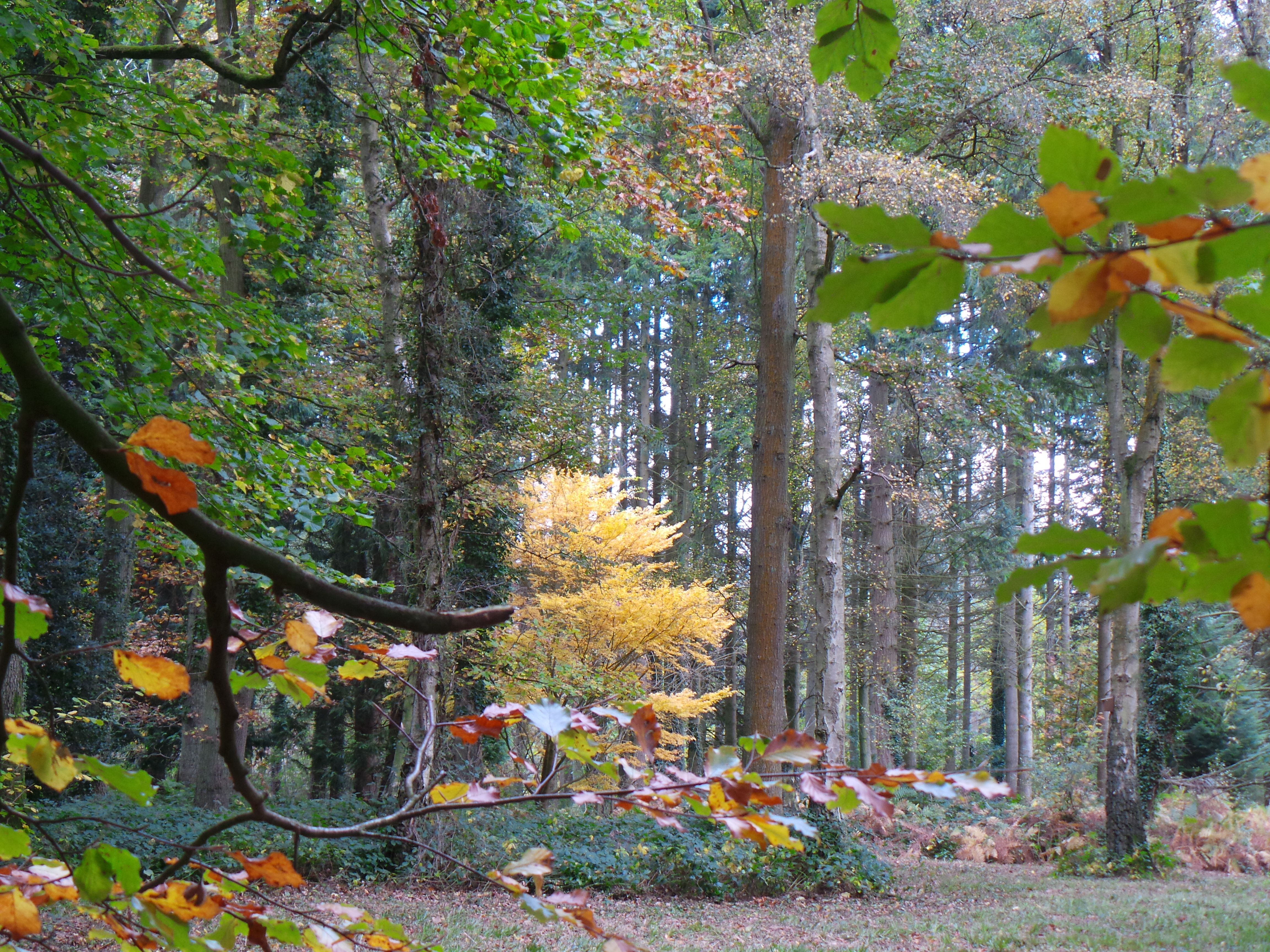
As we left the Oak Avenue behind and after we had enjoyed a quick look at the small Betula collection, we made our way slowly back to the car park. The sky began to get darker and drizzle began to fall. In the first shot included here you can see the bright autumn colours of the Birches through the line of huge pines. Many of them were small and still strongly guarded from the gnawing of the resident deer flock. I have also included a photo of one of the excellent, informative labels which is a great feature of this arboretum.

2014 10 23_6261

2014 10 23_6255 2014 10 23_6258 2014 10 23_6259 2014 10 23_62622014 10 23_6264 2014 10 23_6265

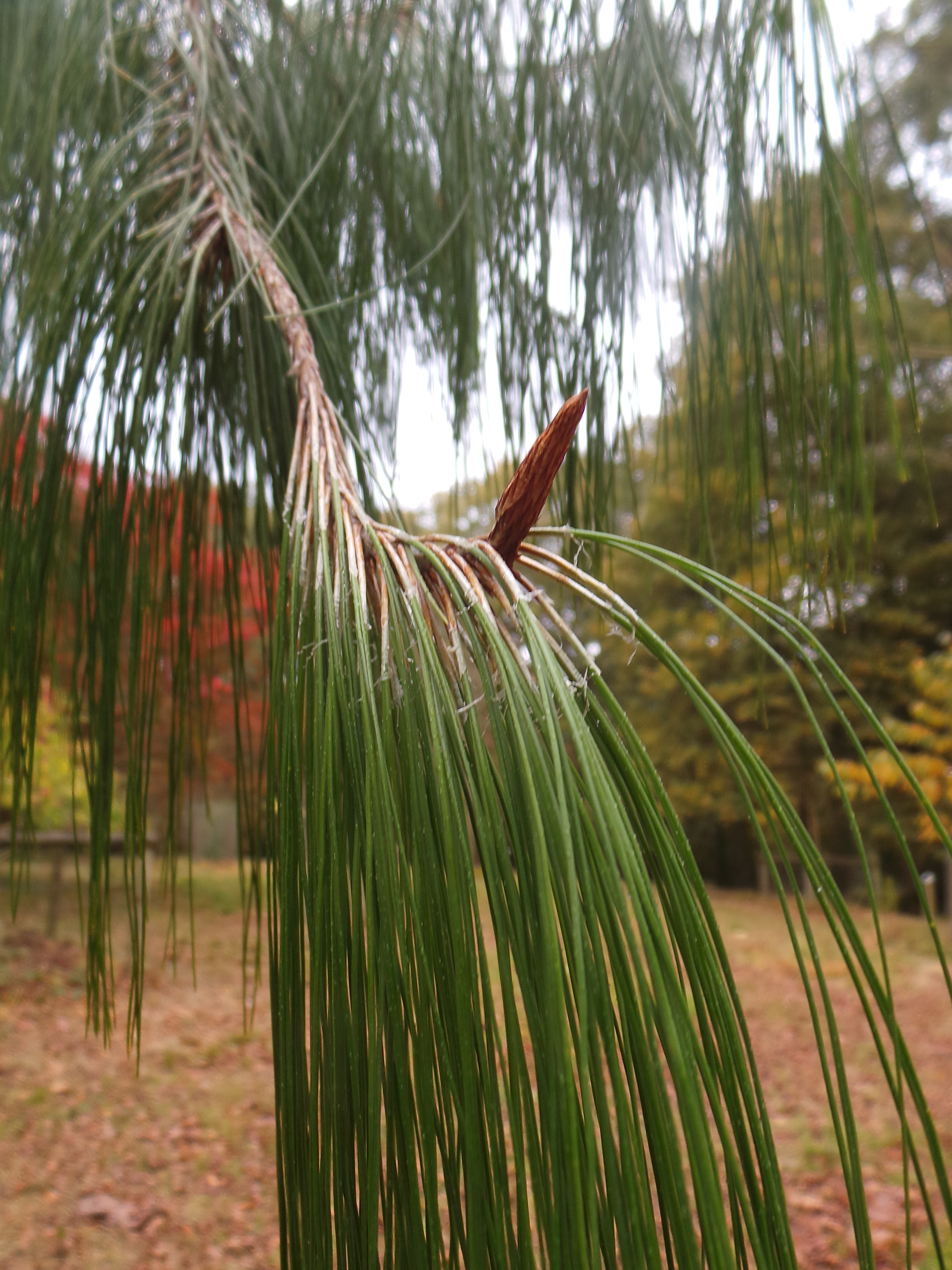
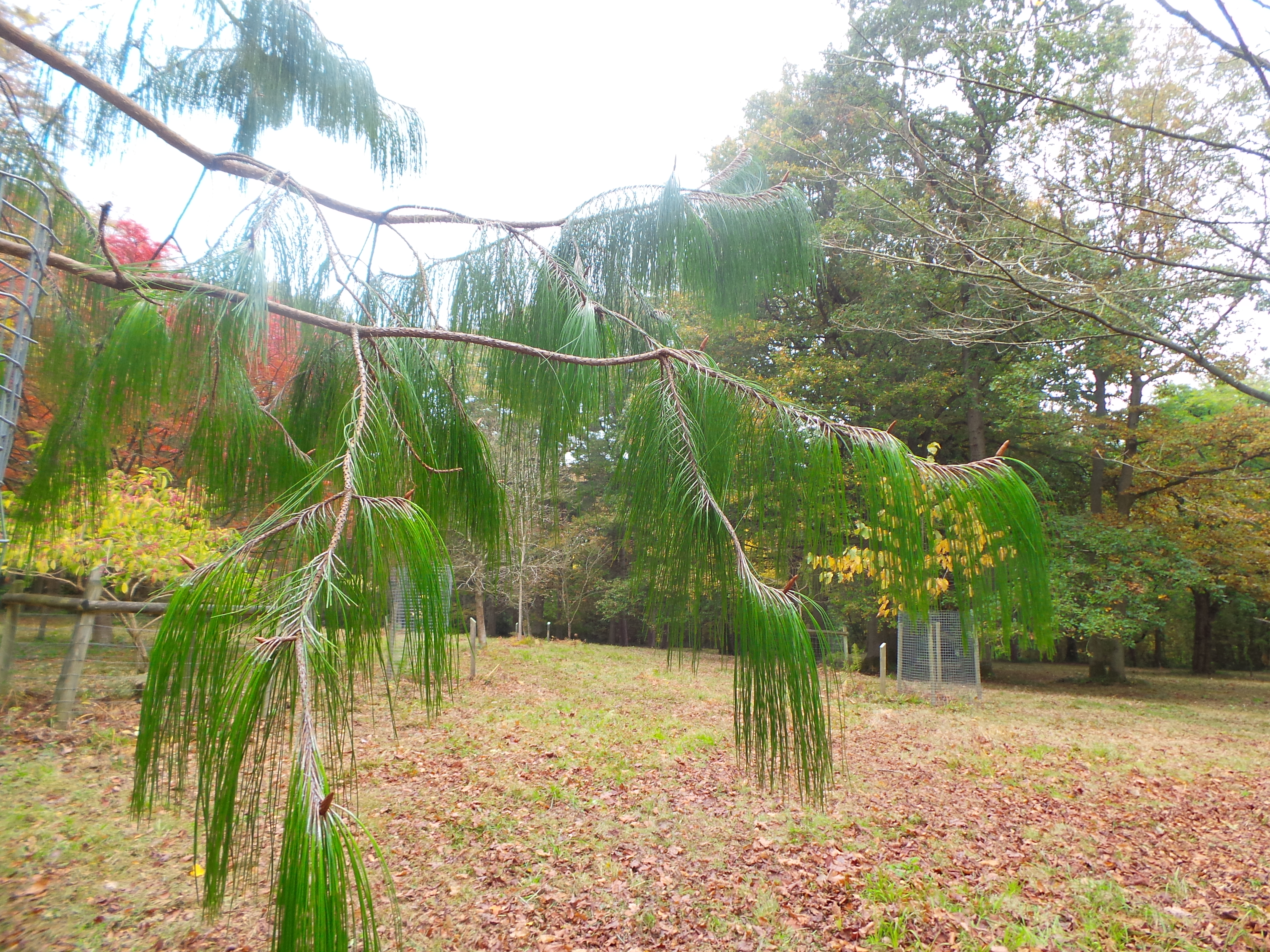
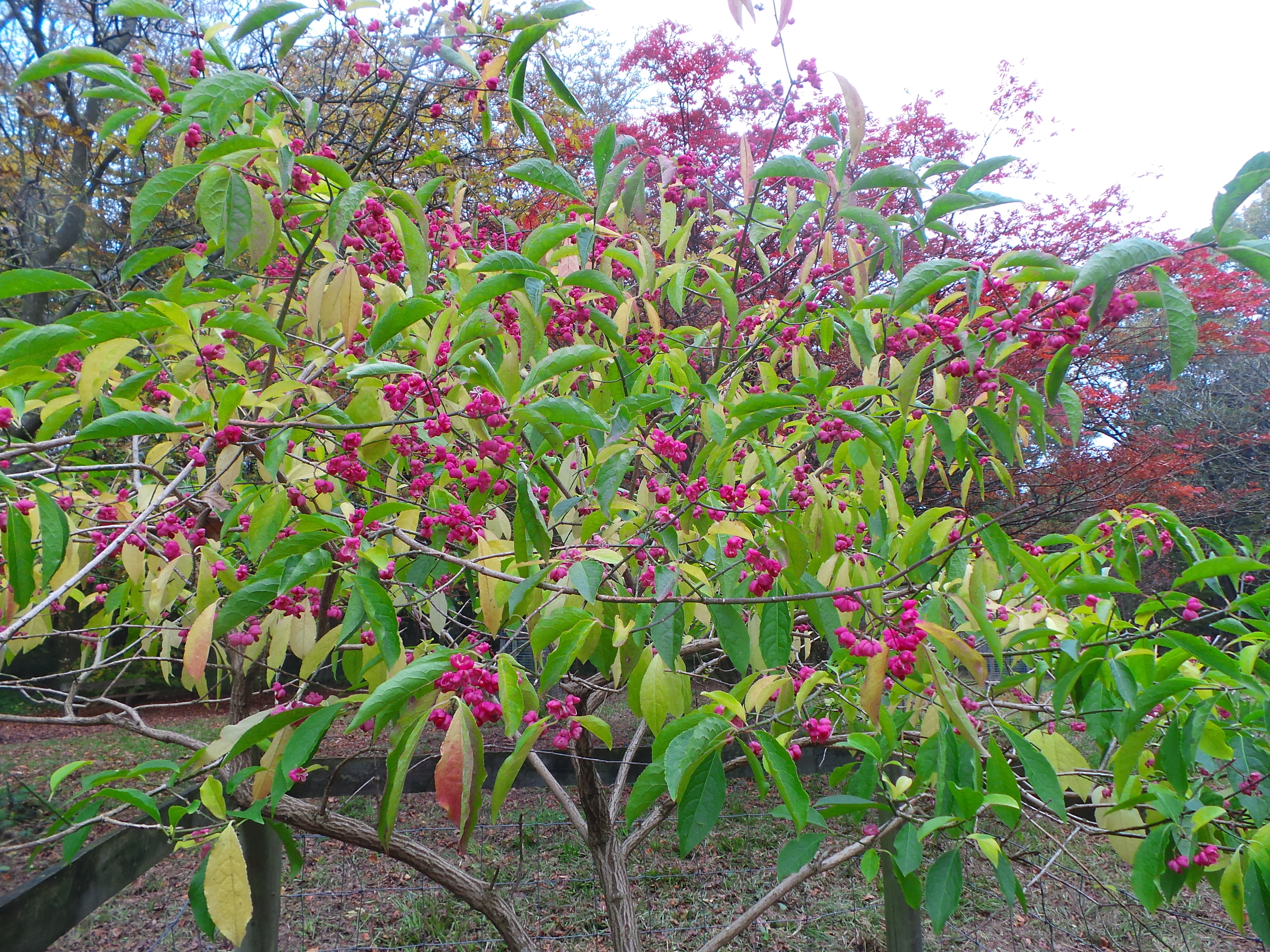
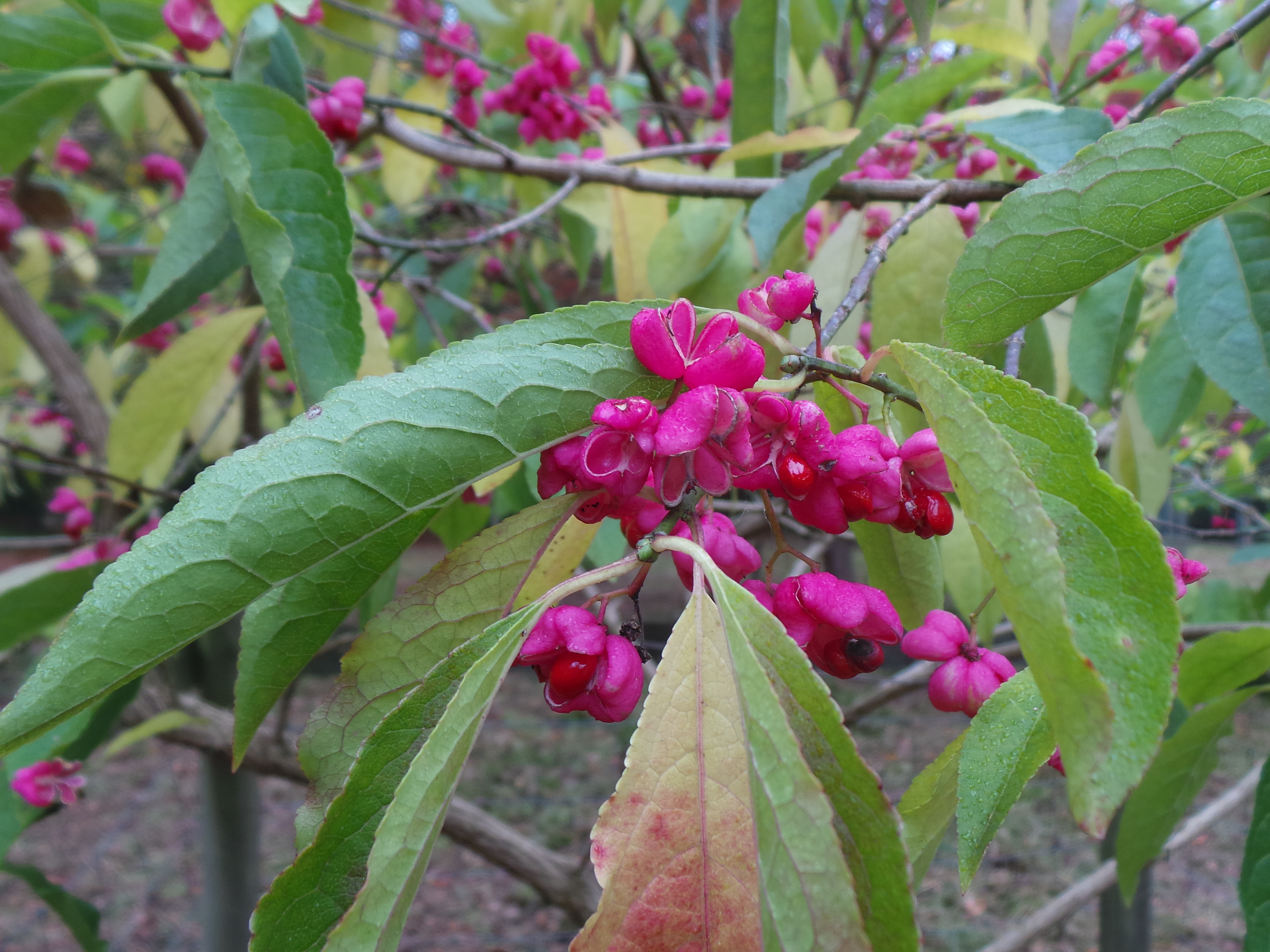
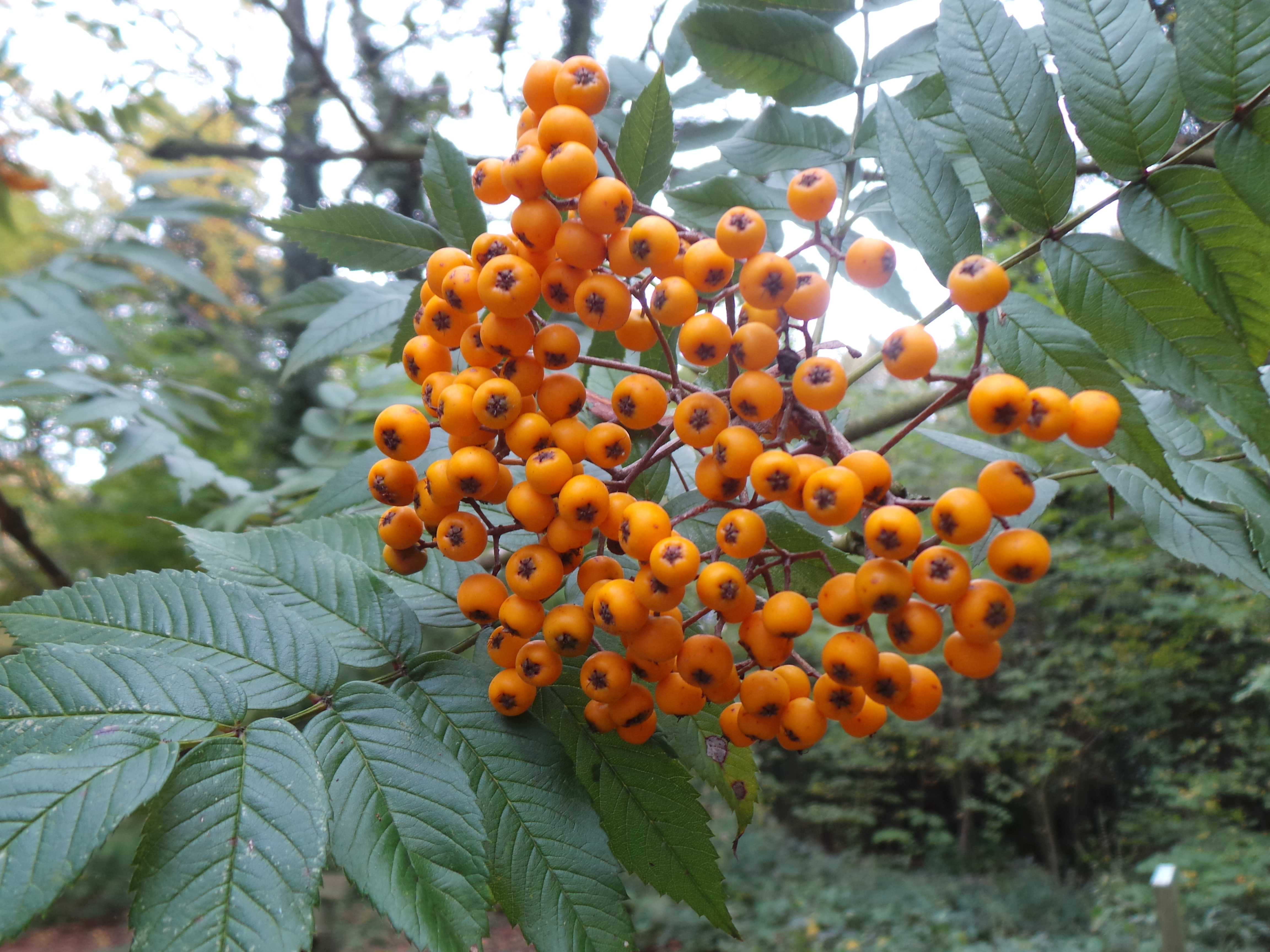
As the drizzle intensified we found some shelter under the older taller trees. We are not fans of conifers but we found this one fascinating with its long drooping needles. Pinus patula, better known as the Spreading Leaf Pine. Close by the strange but utterly beautiful cerise-flowered Euonymous europaeus glowed in the dull light.

2014 10 23_6266 2014 10 23_6267 2014 10 23_6269 2014 10 23_6270 2014 10 23_6271 2014 10 23_6272

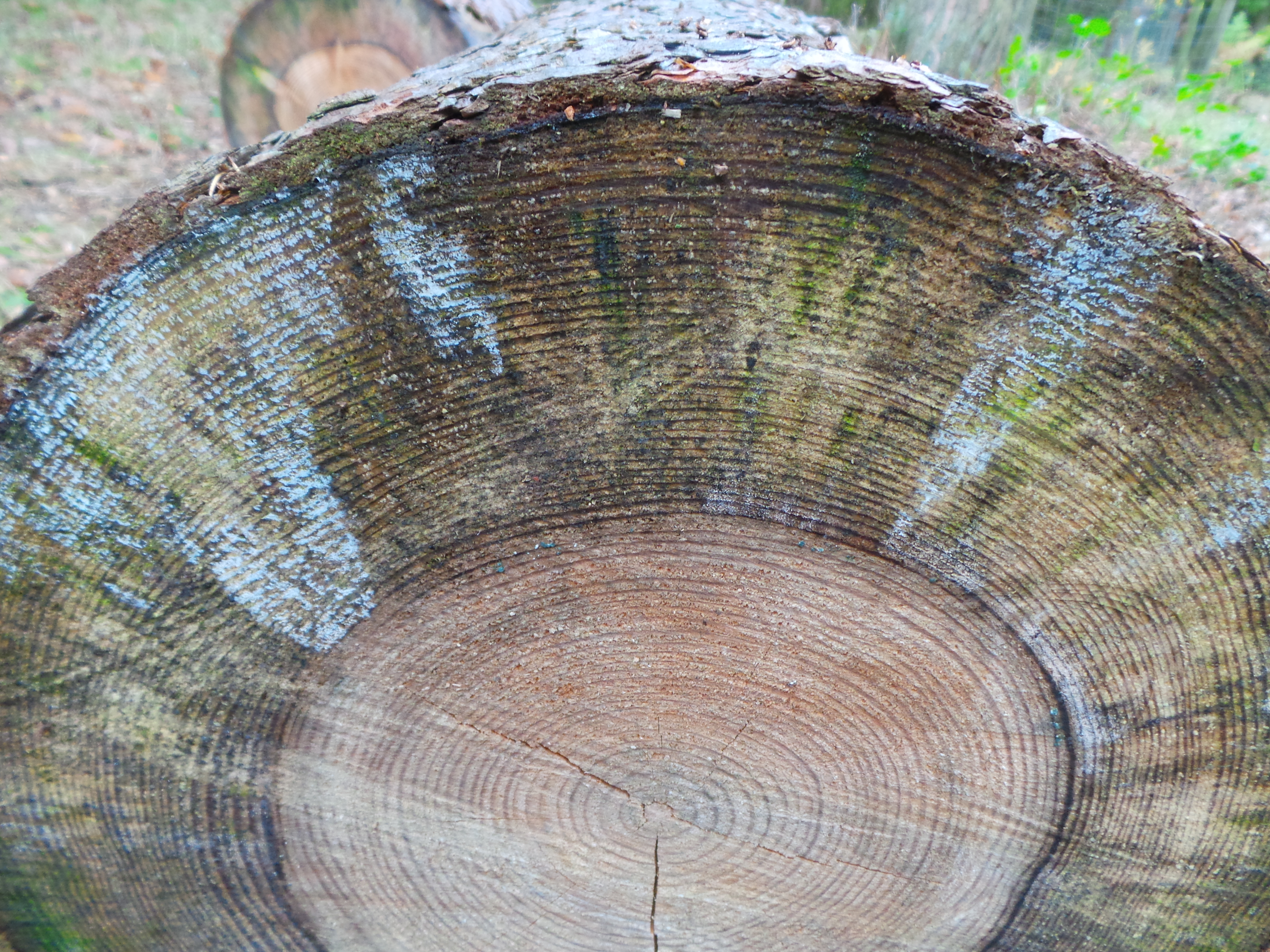
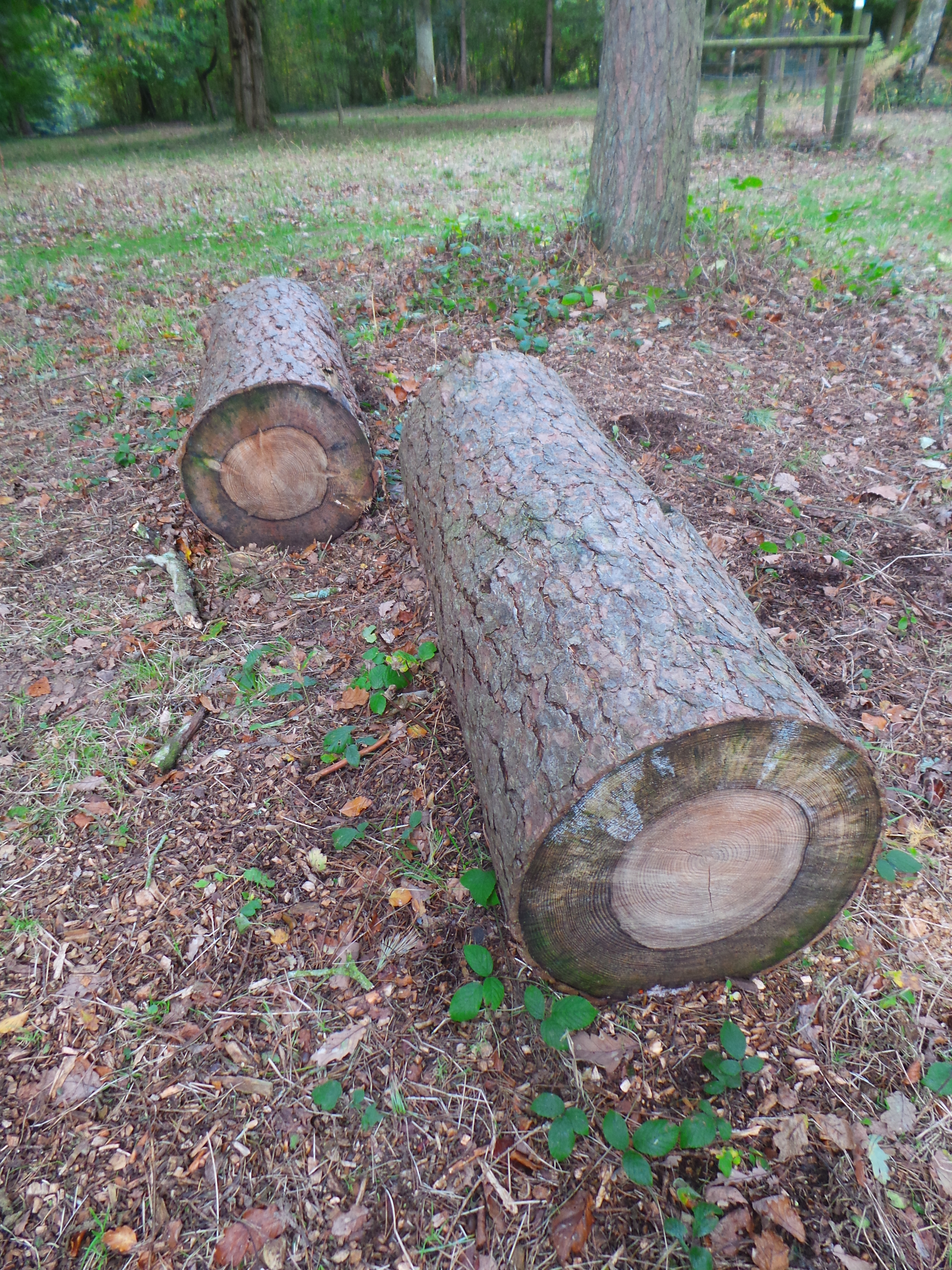
Felled tree trunks afford the weary wanderer a resting place and wildlife a place to search for food. The cut ends revealed the ages of the trees when they were felled, the number of rings now exposed by the chainsaw give away its secrets.

2014 10 23_6275 2014 10 23_6274

We continued to come across interesting Acers such as this Red Snake-Bark Maple, Acer capillipes and we passed many other fascinating specimen trees on our way to the stand of Redwoods.

2014 10 23_6276 2014 10 23_6278 2014 10 23_6279 2014 10 23_6280  2014 10 23_6282

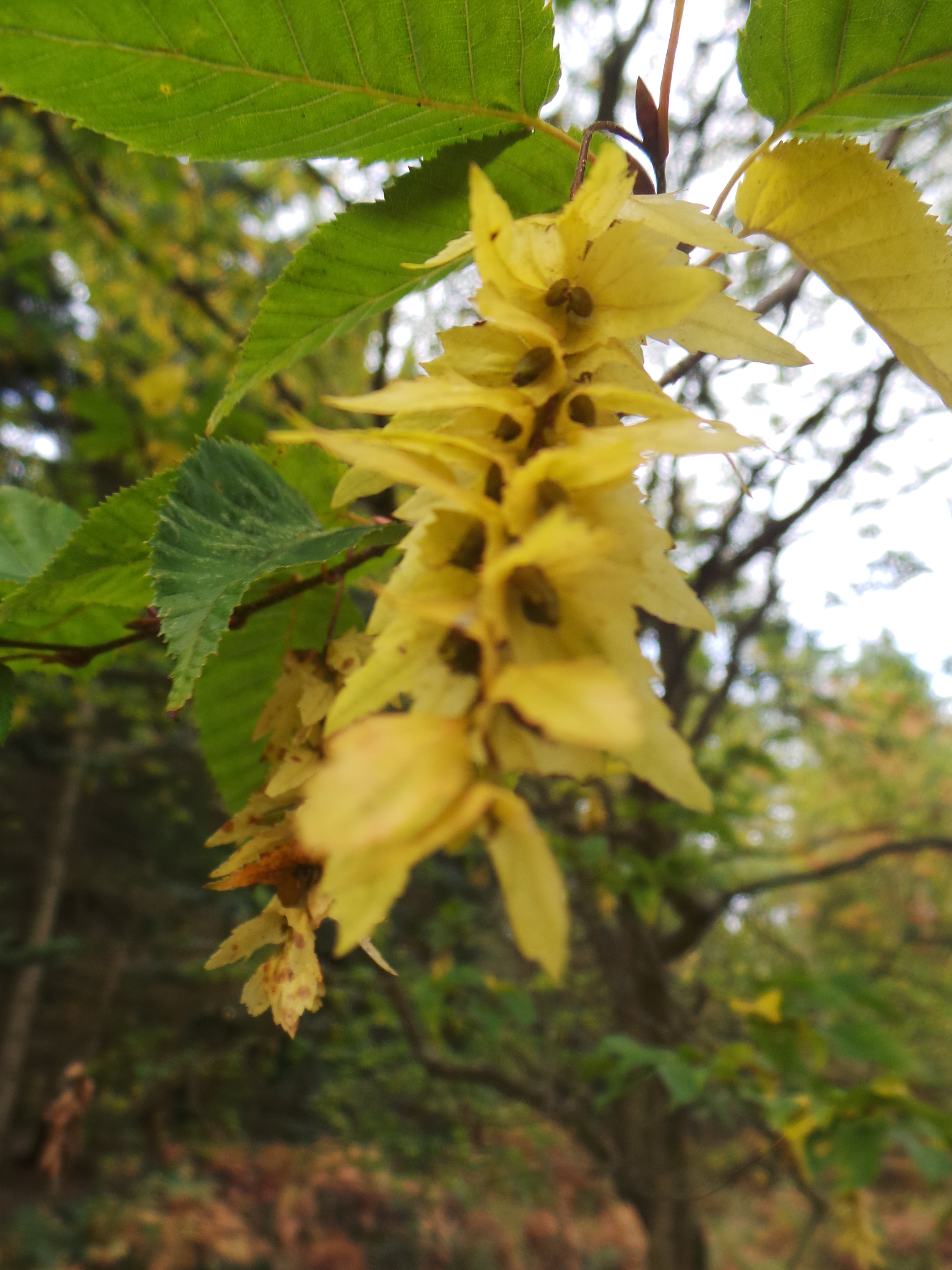
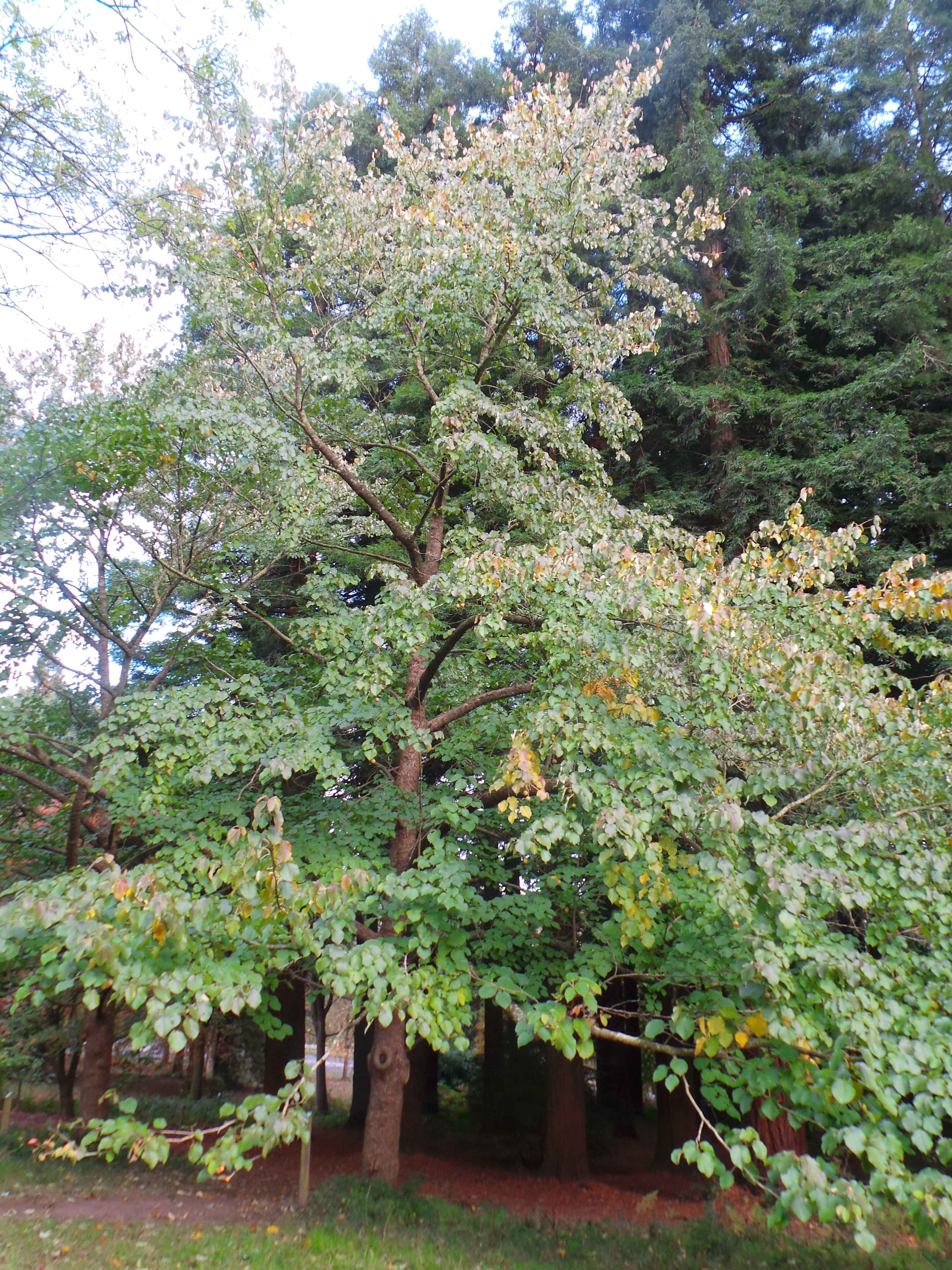
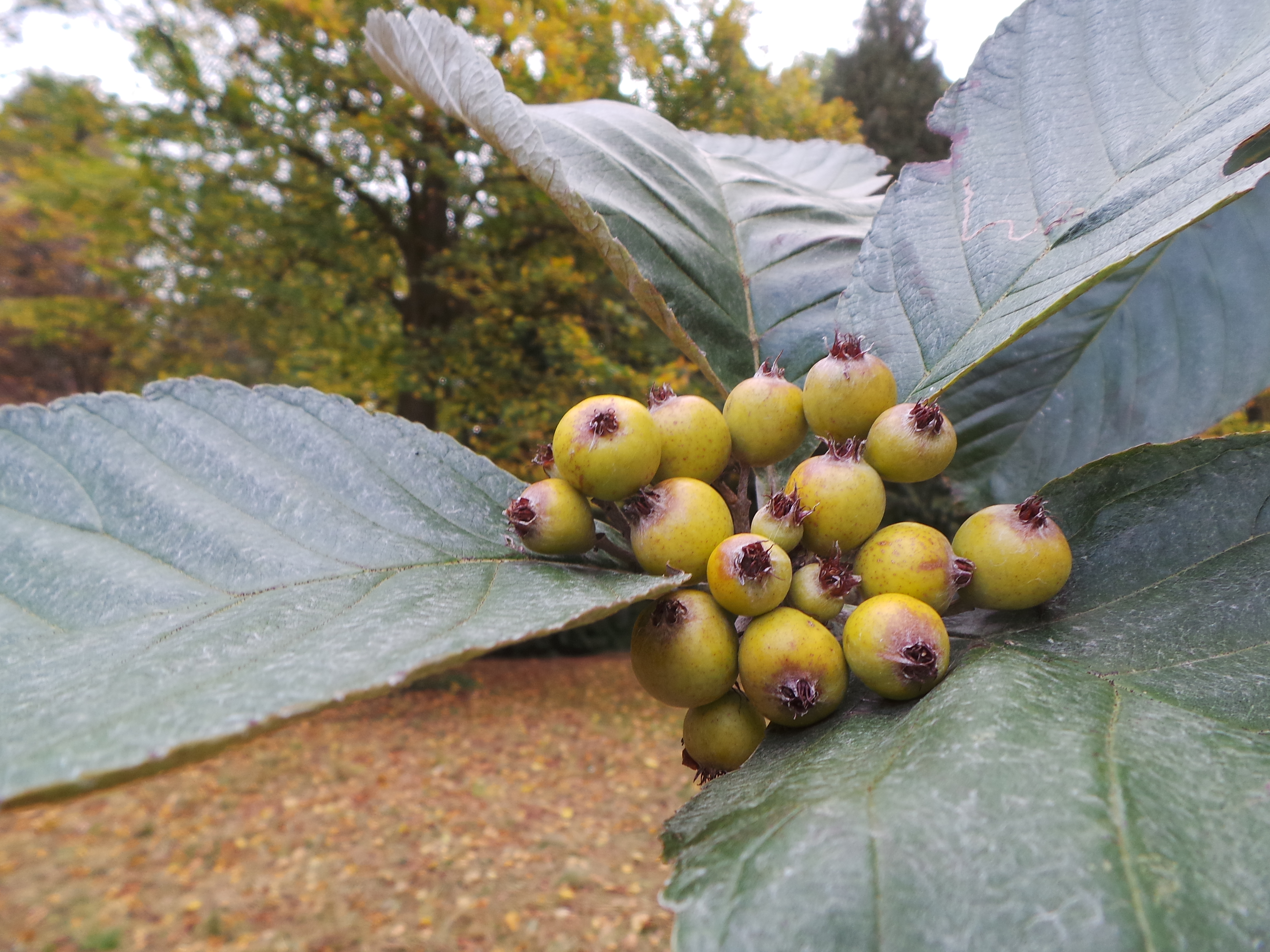
We were fascinated by the fruits of the Oriental Hornbeam and the Handkerchief Tree, Davidii involucrata. These two special trees were both fine specimens.

2014 10 23_6284 2014 10 23_6285 2014 10 23_6287 2014 10 23_6291

2014 10 23_6293 2014 10 23_6292

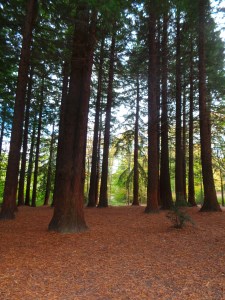
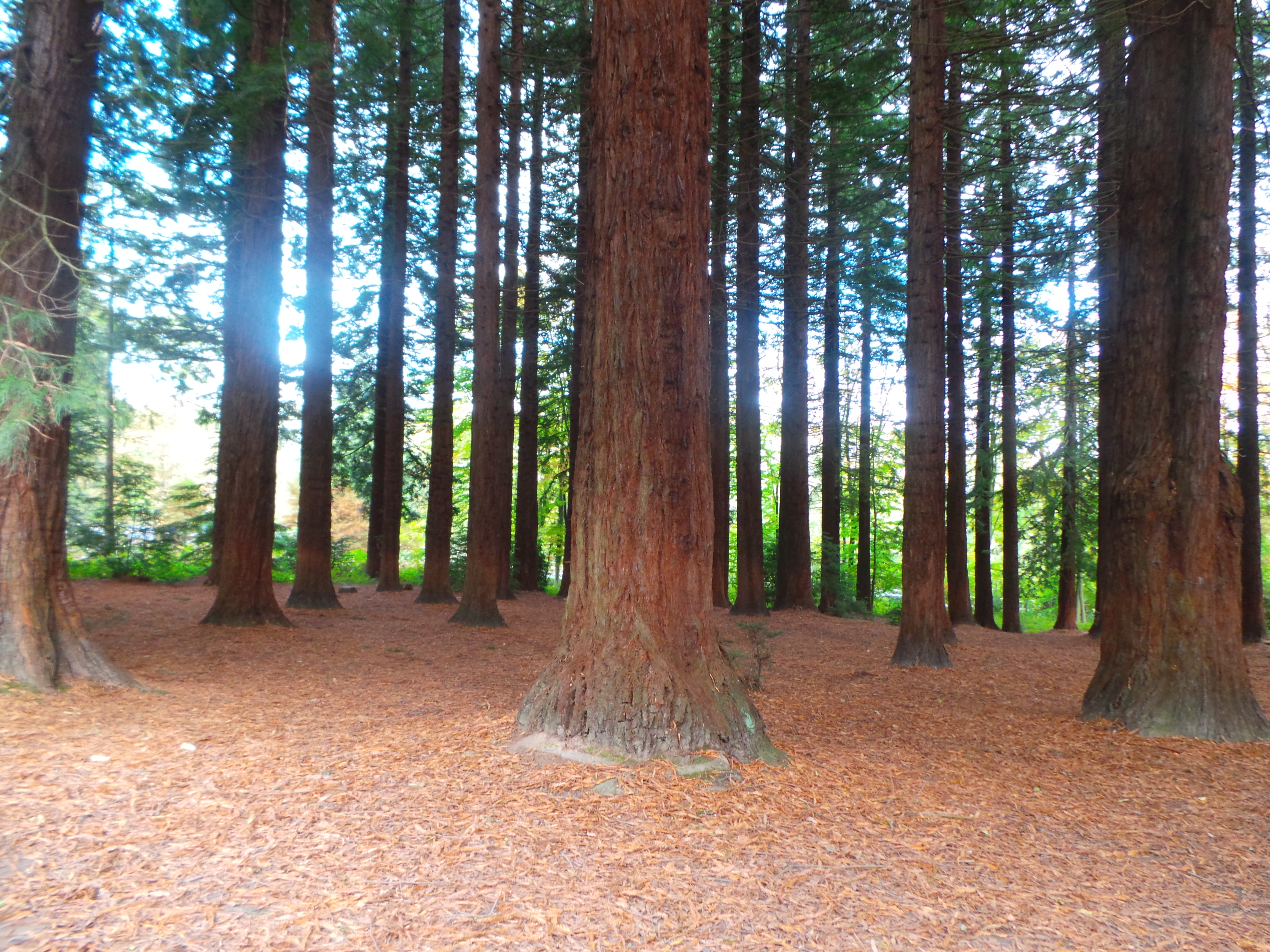
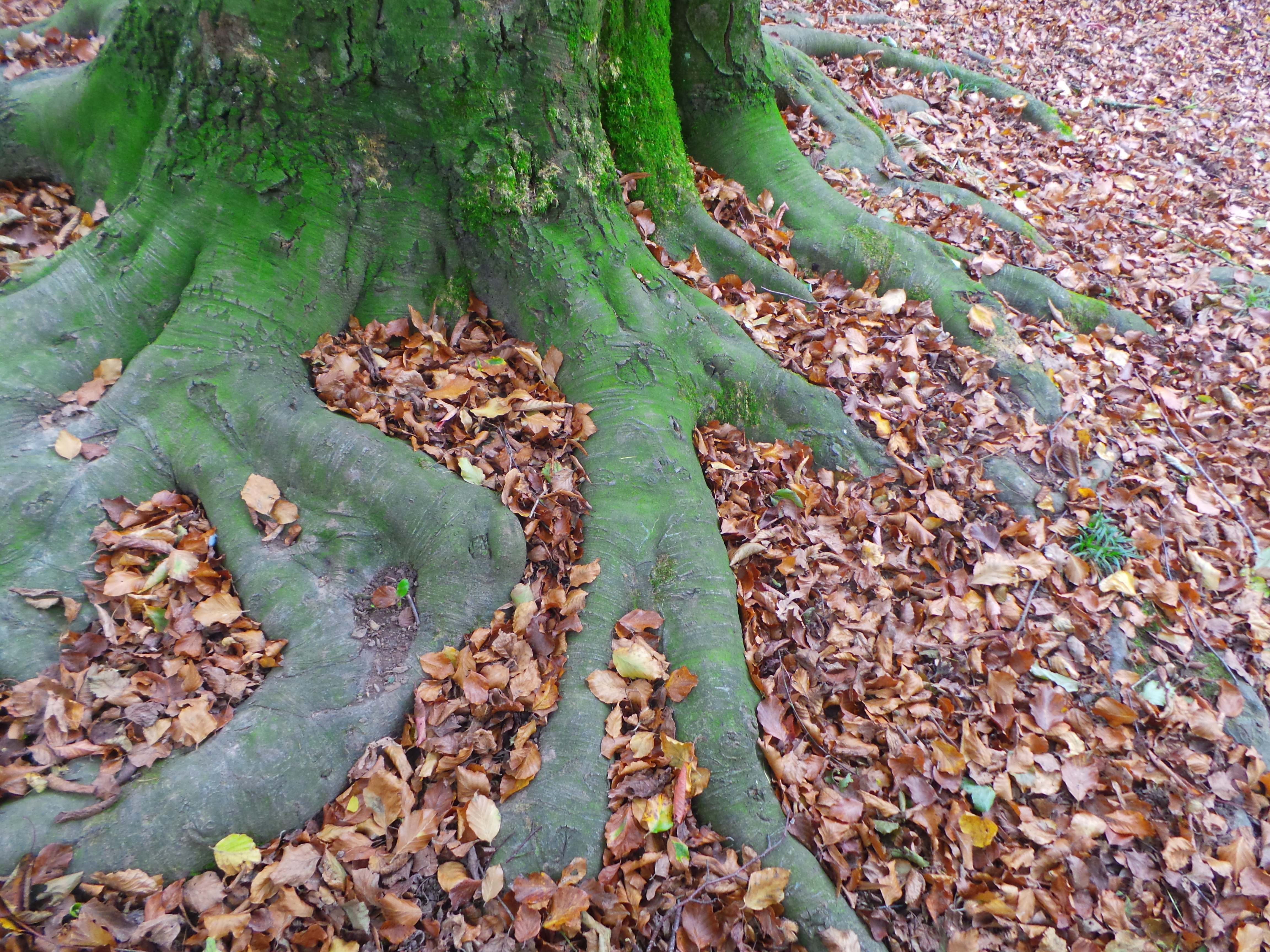
We followed the path as it dipped beneath the branches of the Handkerchief Tree and found ourselves in a different world, a darker world where light failed to penetrate. This meant that nothing grew beneath these Redwoods, giants of the tree world. We walked on a deep soft carpet of needles. The needles were gingery orange and seemed to glow in the gloom.

2014 10 23_6281    2014 10 23_62952014 10 23_6294  2014 10 23_6296 2014 10 23_6298 2014 10 23_6299

A drainage ditch cut through the Redwoods. It must have recently flooded badly and eroded away soil exposing the roots of trees growing alongside on its banks. Some creative visitors had found a way across by using some ingenuity and creativity – they had built a bridge from branches.

2014 10 23_6301 2014 10 23_6302 

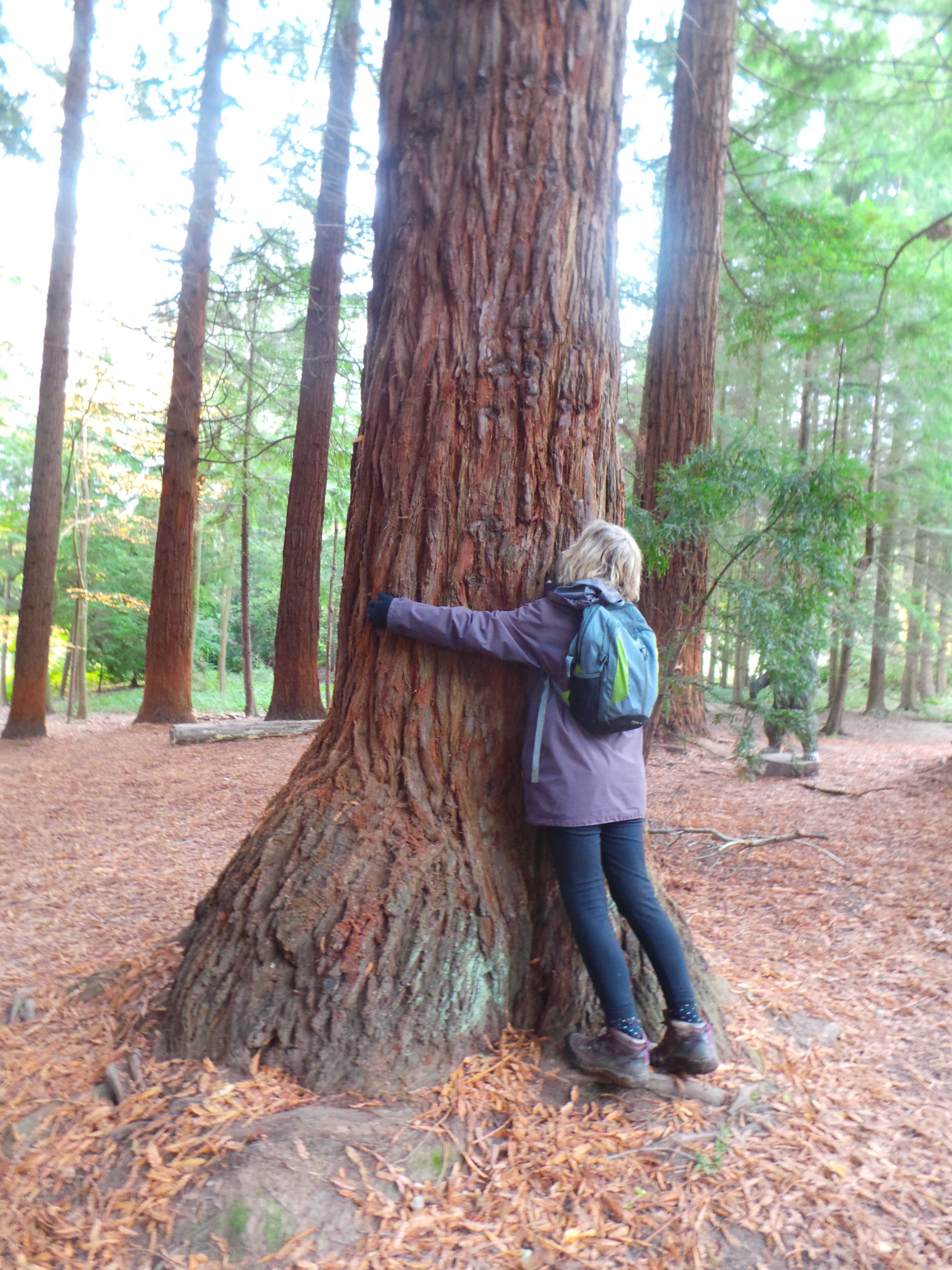
Below are two pictures showing some unusual wildlife living beneath the Redwoods, on the left a mother bear searching for her youngster climbing a nearby tree and on the right a very rare Tree Hugging Jude the Undergardener.

2014 10 23_6300 2014 10 23_6297

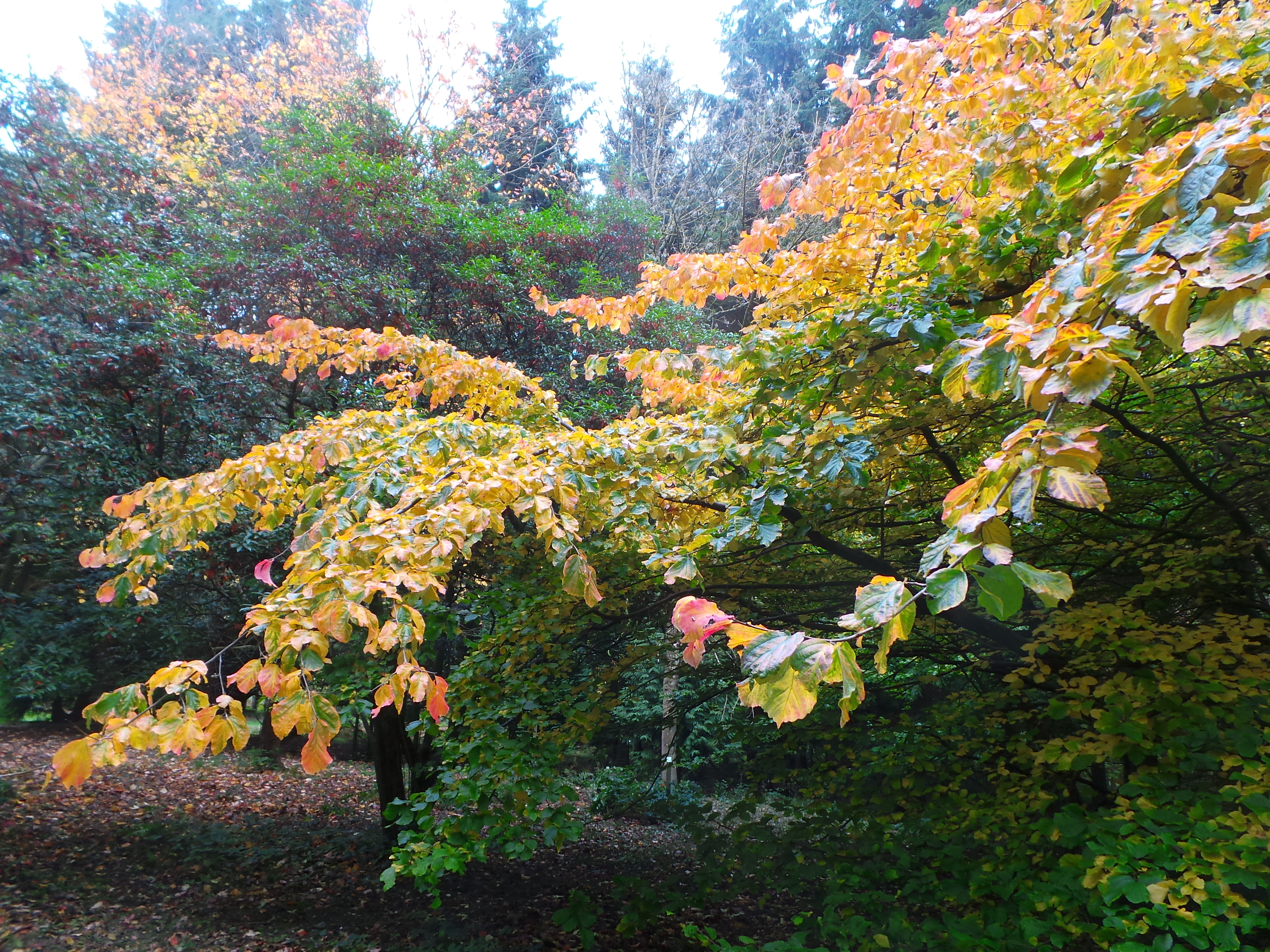
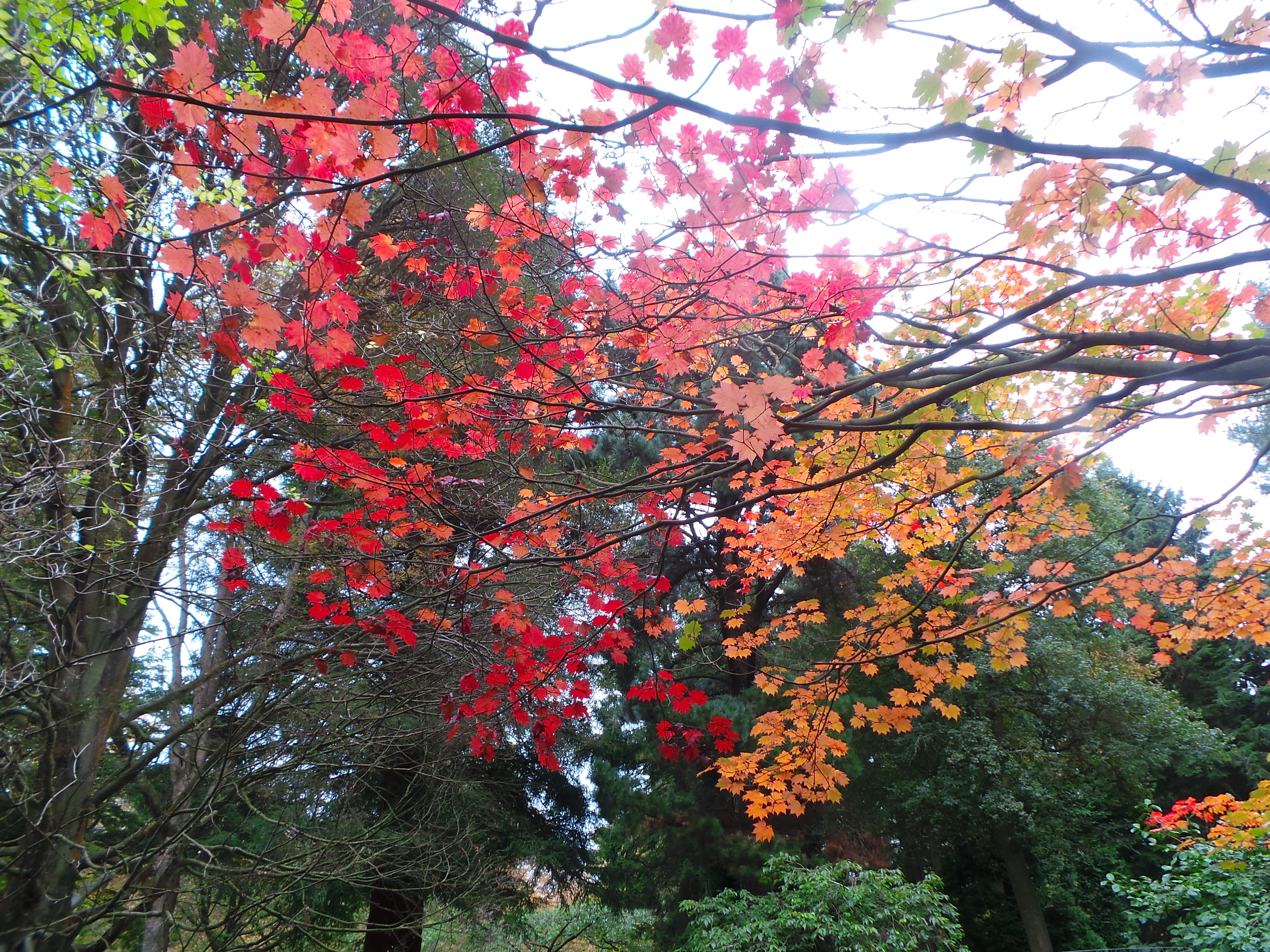
After exploring the dark world under the Redwoods we were glad to get back into daylight. Even though drizzle continued to fall and grey skies hung heavy it seemed so much brighter under the deciduous trees. The final Acer we passed looked as if it was on fire. A fitting finale to our day at Queenswood. As I always write when we have discovered a new exciting place to visit, “We will definitely be back!”

2014 10 23_6303

So that is Queenswood, 64 acres of wonderful trees from all over the world. Follow any of its waymarked trails and you will discover such a huge variety of trees, varying in size, growth habit, leaf shape, bark texture with some bearing flowers followed by berries, seeds or nuts. The bird life keeps you entertained too, singing and calling in the tree tops and undergrowth and flitting from tree to tree seeking out this vast array of food. Throughout our walk Ravens cronked overhead in unison with the gentler mewling of Buzzards. Whenever you visit there will be birds to entertain you and trees to delight the eye.


Categories
arboreta autumn autumn colours birds colours light quality ornamental trees and shrubs trees woodland woodlands

Queenswood Arboretum – Part 1 – the Acers

Late October heralds arboretum visiting time. Last year we visited Bodenham and Arley which we take a trip to most years but we also traveled a little further afield into Cheshire to the Jodrell Bank Arboretum and the National Memorial Arboretum in Staffordshire. Over the last five years we have also taken trips to Westonbirt in Gloucestershire, Bluebell Arboretum in Derbyshire.

But there is one closer to us, in fact just an hour away across into Herefordshire, which we have never visited but were reminded of  as we watched Carol Klein visit it on the Gardeners World TV programme. So we made up our mind that our first arboretum visit this autumn would be to Queenswood Country Park and Arboretum. It was worth the wait! Come with us as we explore its delights on a dull overcast day occasionally dampened with bouts of drizzle.

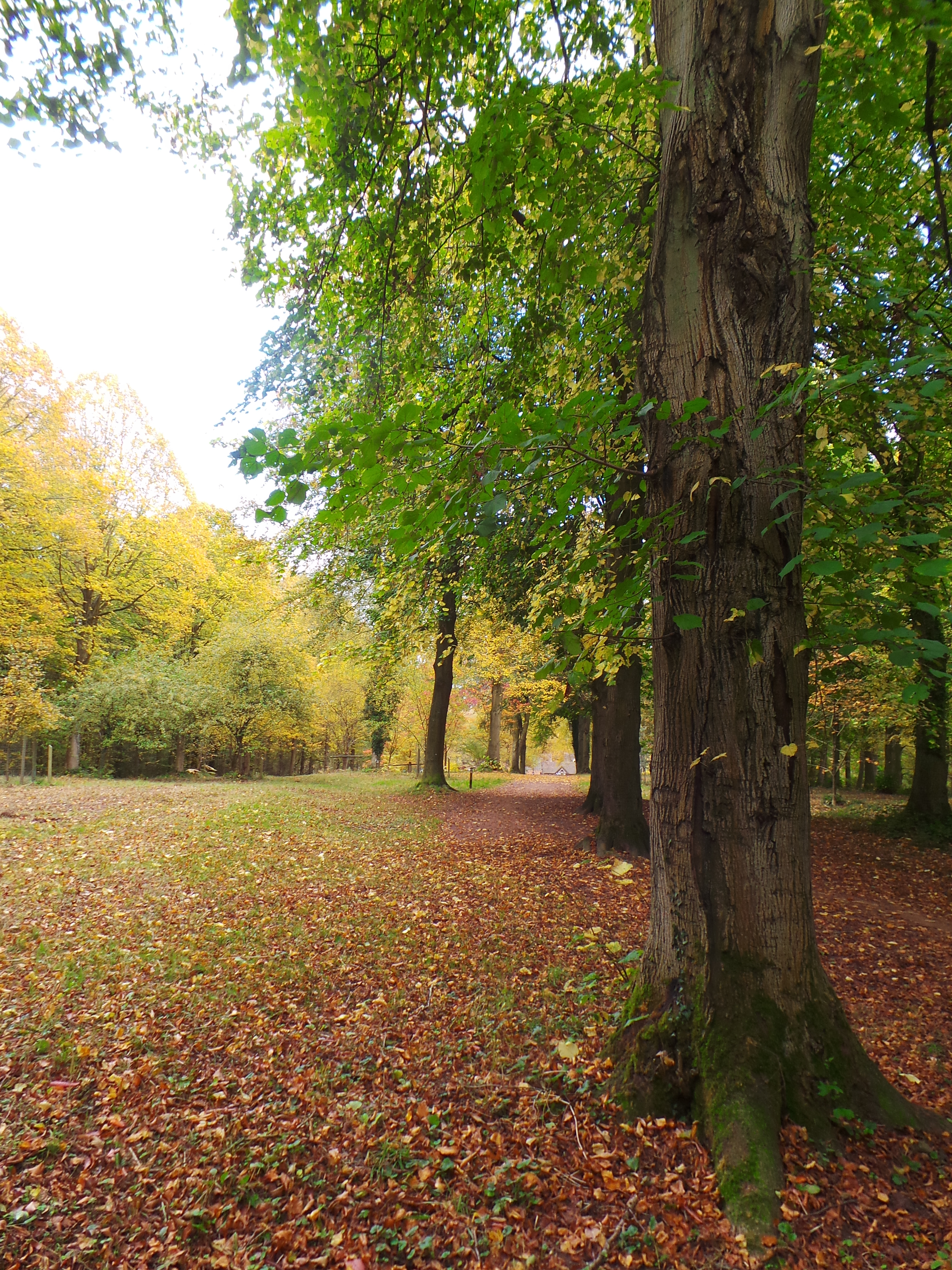
We left the car park to follow Lime Avenue which would take us to the Autumn Garden which promised us a painter’s pallet of Acers. There is something special about the gentle scent of woodlands in autumn, comforting and warming, but this was interrupted by the more aggressive unpleasant odour of foxes whose tracks crossed ours periodically as we climbed the gentle slope below the huge limes towering above us. We diverted often! There were interesting trees grabbing our attention every few yards, making progress slow. Tree silhouettes, bark textures, leaf colours, leaf shapes – all there to distract and attract.

The trees had plenty of autumnal features to attract and distract tree lovers such as Jude the Undergardener and I. Berries, peeling bark, silvered leaves, brightly coloured leaves, black branch silhouettes ……………….

2014 10 23_6107 2014 10 23_6114

2014 10 23_6110 2014 10 23_6109 2014 10 23_6108 2014 10 23_6111 2014 10 23_6113 2014 10 23_6112 2014 10 23_6115

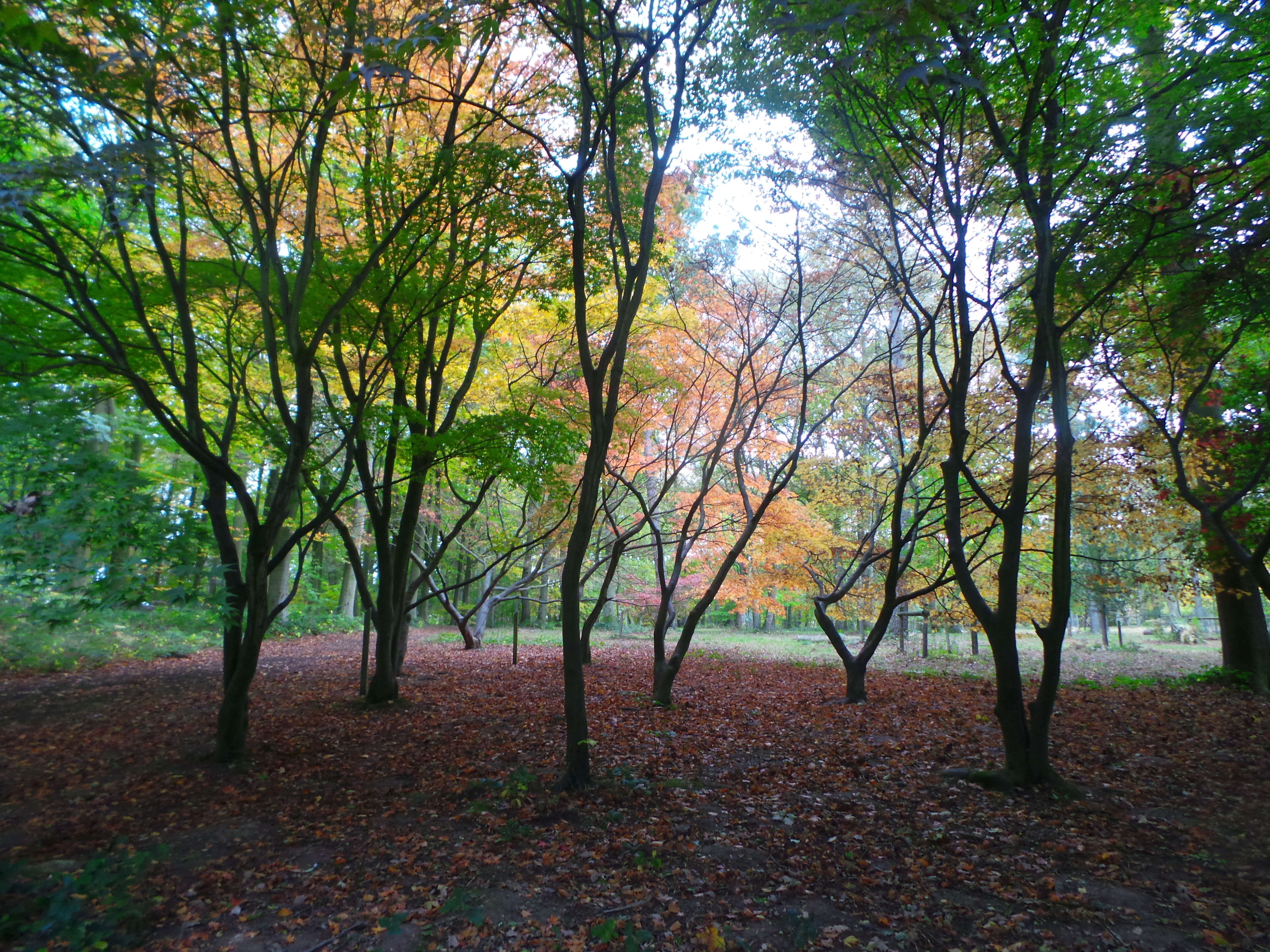
When we reached the area called the “Autumn Garden” we were blown away by the collection of Acers with their striped barks, their red and yellow leaves and their sculptural trunks curling away below their leaf canopy. Part way through the Autumn Garden we found this plaque on the “Dendrology Stone” which was presented to Queenswood Arboretum in 1981 by the International Dendrology Society recognising the quality of its young trees, layout and public access. There only 19 arboretum worldwide which have received this award. This emphasises just how important this 47 acres of country park actually is.

2014 10 23_6209 2014 10 23_6163

2014 10 23_6116 2014 10 23_6117 2014 10 23_6118

But there was far more to see here with trees and shrubs to discover around every corner.

2014 10 23_6120 2014 10 23_6119 2014 10 23_6125 2014 10 23_6124 2014 10 23_6123 2014 10 23_6122 2014 10 23_6121 2014 10 23_61262014 10 23_6127 2014 10 23_6128 2014 10 23_6129 2014 10 23_6130 2014 10 23_6131 2014 10 23_6132 2014 10 23_6133 2014 10 23_6134

But let us enjoy a journey around the delights of the Acers before we get distracted further.

2014 10 23_6136 2014 10 23_6137 2014 10 23_6138 2014 10 23_6139 2014 10 23_6142 2014 10 23_6141 2014 10 23_6140 2014 10 23_6143 2014 10 23_6144 2014 10 23_6145 2014 10 23_6147 2014 10 23_6146 2014 10 23_6150 2014 10 23_6149

We enjoyed a well deserved coffee break on one of the many benches we found within the glade of Acers with a wonderful view. We sat to enjoy our coffee and listened to the Woodpeckers and Nuthatches in the tree canopy. Jays entertained us collecting up acorns, beech mast and sweet chestnuts. This is the view from the seat we chose to take our coffee break sat on. How good is that!

2014 10 23_6119

In part two we shall be seeking out an old orchard and the “Reader’s Seat”.


This Veggie Life

A Vegetarian | Nature Lifestyle Blog

Rambling in the Garden

.....and nurturing my soul

The Arch City Gardener

Journeys In St. Louis Gardening and Beyond

Garden Dreaming at Châtillon

Consult the genius of the place

Storyshucker

A blog full of humorous and poignant observations.

gardeninacity

Notes from a wildlife-friendly cottage garden

PlayGroundology

...an emerging social science

The Official Blog of British Wildlife

'The most important and informative publication on wildlife of our times' - The Independent. This blog is a member of The UK & Ireland Natural History Bloggers group: www.uknhb.blogspot.com

iGrowHort

Inspire - Cultivate - Grow Native Plants - Restore Landscapes

Bishops Meadow Trust

To create and protect a semi-natural wild space for the people of Farnham to enjoy and experience an array of British wildlife in our town

Gardening with Children

The www.gardeningwithchildren.co.uk Blog

UKbirdingtimeline

birding through the seasons, why birds matter and how to conserve them

NATURE WALKER

with a camera in hand

Jardin

Transform your outdoor space

Eva's space

My allotment, cooking and other interests

Old School Garden

my gardening life through the year

LEANNE COLE

Trying to live a creative life

fromacountrycottage

trying to live as lightly as possible on our beautiful planet

Good Life Gardening

Nature lovers from Leicester living the good life.

mybeautfulthings

Finding the beautiful in the everyday

mawsonmichelle

Michelle's Allotment

In and Out of My Garden

thoughts from and about my garden

Greenhousing

Big plans for a small garden

The Scottish Country Garden

A Walled Country Garden in South East Scotland

The Fruity Chicken

Life at the fruity chicken

willowarchway

Off grid living. Self sufficient. "PERMAGANICS RULE".

St Anns Allotments

Nottingham's Grade 2* Listed Allotments and Community Orchard

Manifest Joy Harvests

a journey in suburban vegetable gardening

Allotmental

The madness of growing your own

Penny's Garden: a harvest beyond my front door

A novel approach to vegetable gardening

arignagardener

Sustainable living in the Irish countryside.

NewEnglandGardenAndThread

Master Gardener, amateur photographer, quilter, NH native, and sometimes SC snowbird

dianajhale

Recent work and work in progress and anything else that interests me

planthoarder

a chaotic cottage gardener

Lens and Pens by Sally

a weekly blog that creates a personal philosophy through photographs and words

Dewdrops and Sunshine

Stories from a sassy and classy Southern farmbelle.

The Pyjama Gardener

Simple Organic Gardening & Seasonal Living

gettin' fresh!

turning dirt into dinner

JOY...

today the world is created anew

Garden Birds

Notes from a Devon garden

ShootAbout

Life Through The Lens

Adapting Pixels

A photography blog showcasing the best photography pictures and videos on the internet

Wildlifegardening's Blog

Just another WordPress.com site

naturestimeline

personal observations from the natural world as the search continues for a new approach to conservation.

LATEBLOOMERBUDS

The Wonders of Life through my Eyes, my Heart, my Soul