Categories
colours flowering bulbs garden design garden photography gardening gardens grasses hardy perennials ornamental grasses ornamental trees and shrubs Shrewsbury Shropshire shrubs spring bulbs

My Garden Journal 2019 – March

It is already time for sharing my third month’s entries in my garden journal. So here are the March pages for you to enjoy and for you to see what the garden has been up to and what we have been up to in the garden.

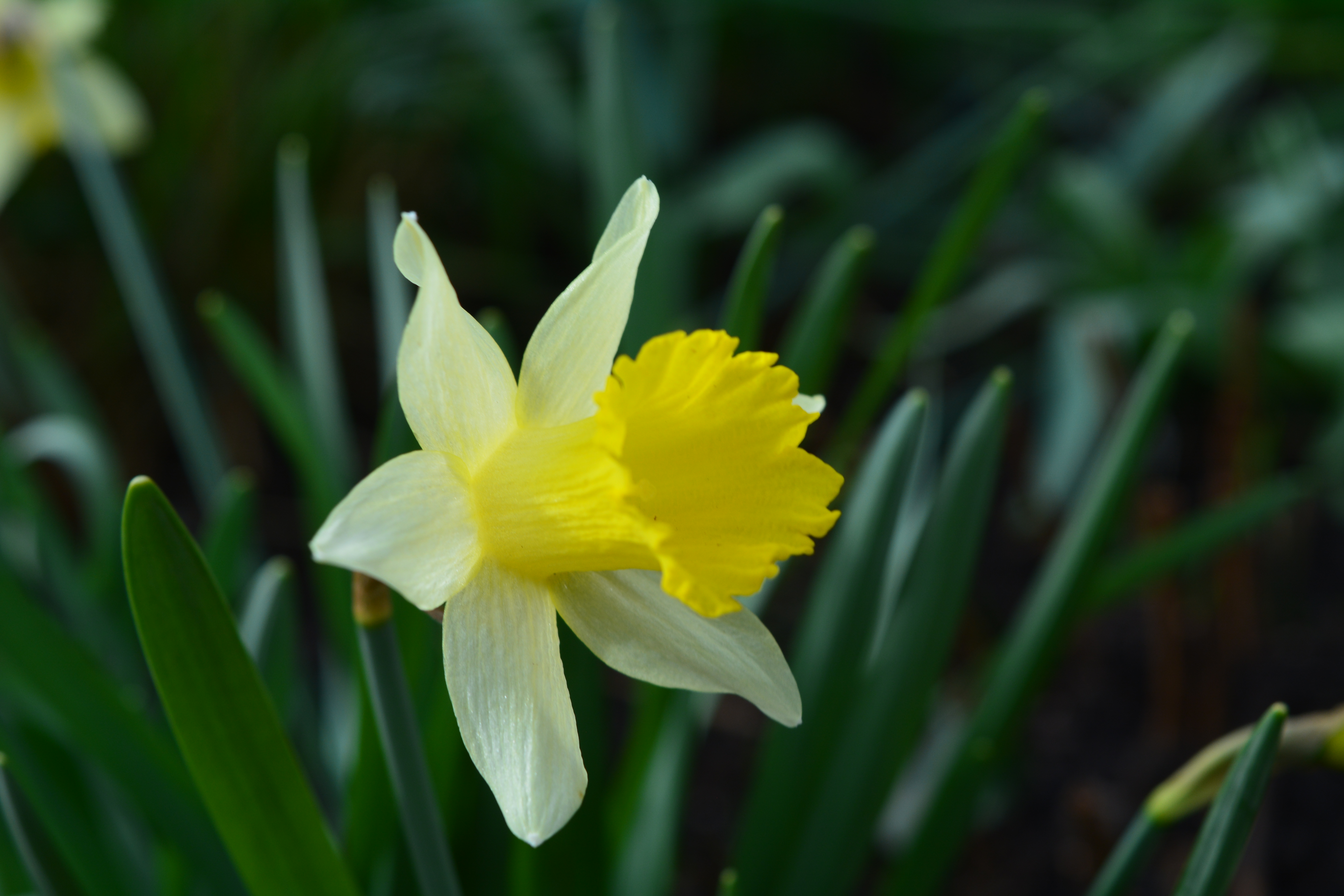
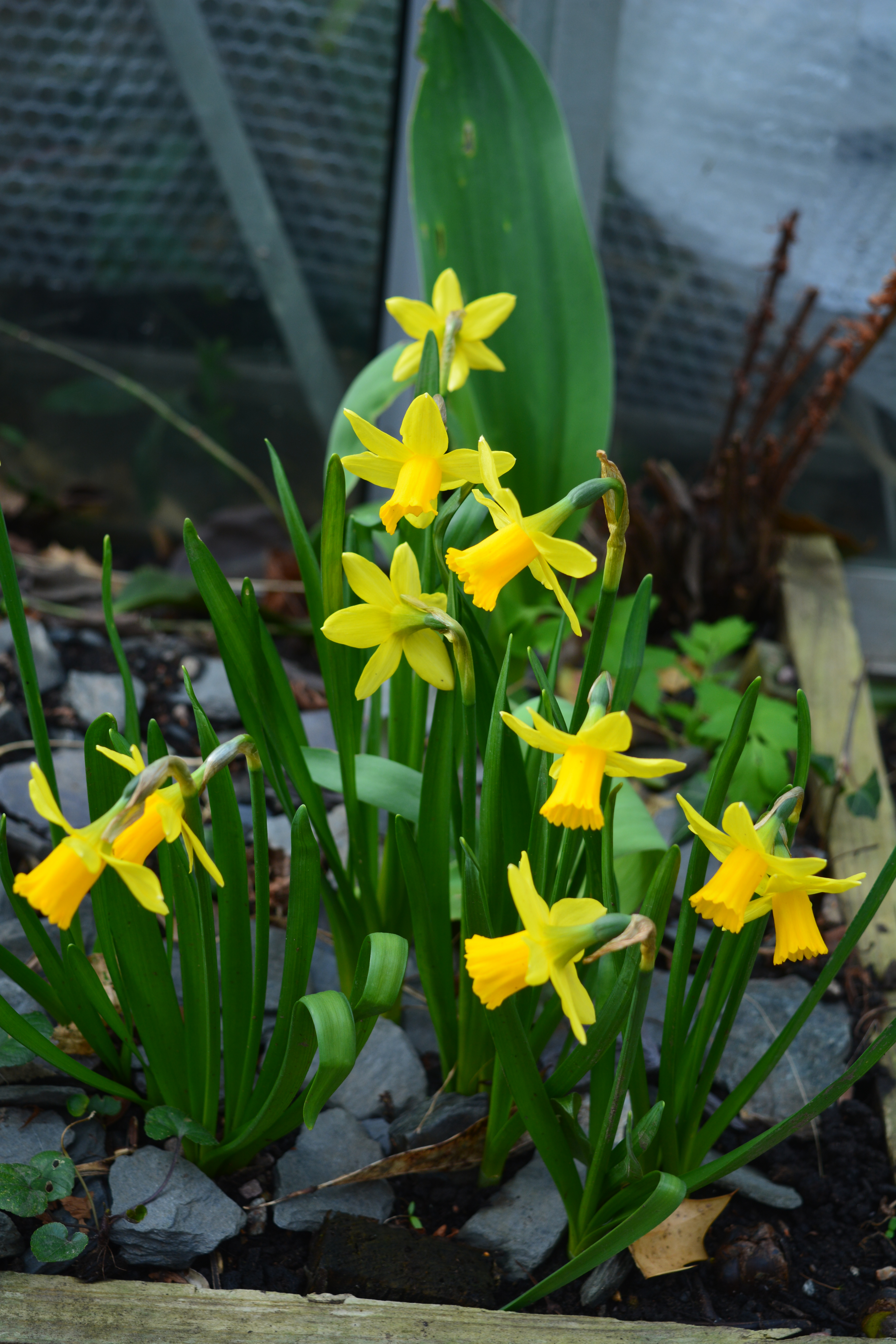
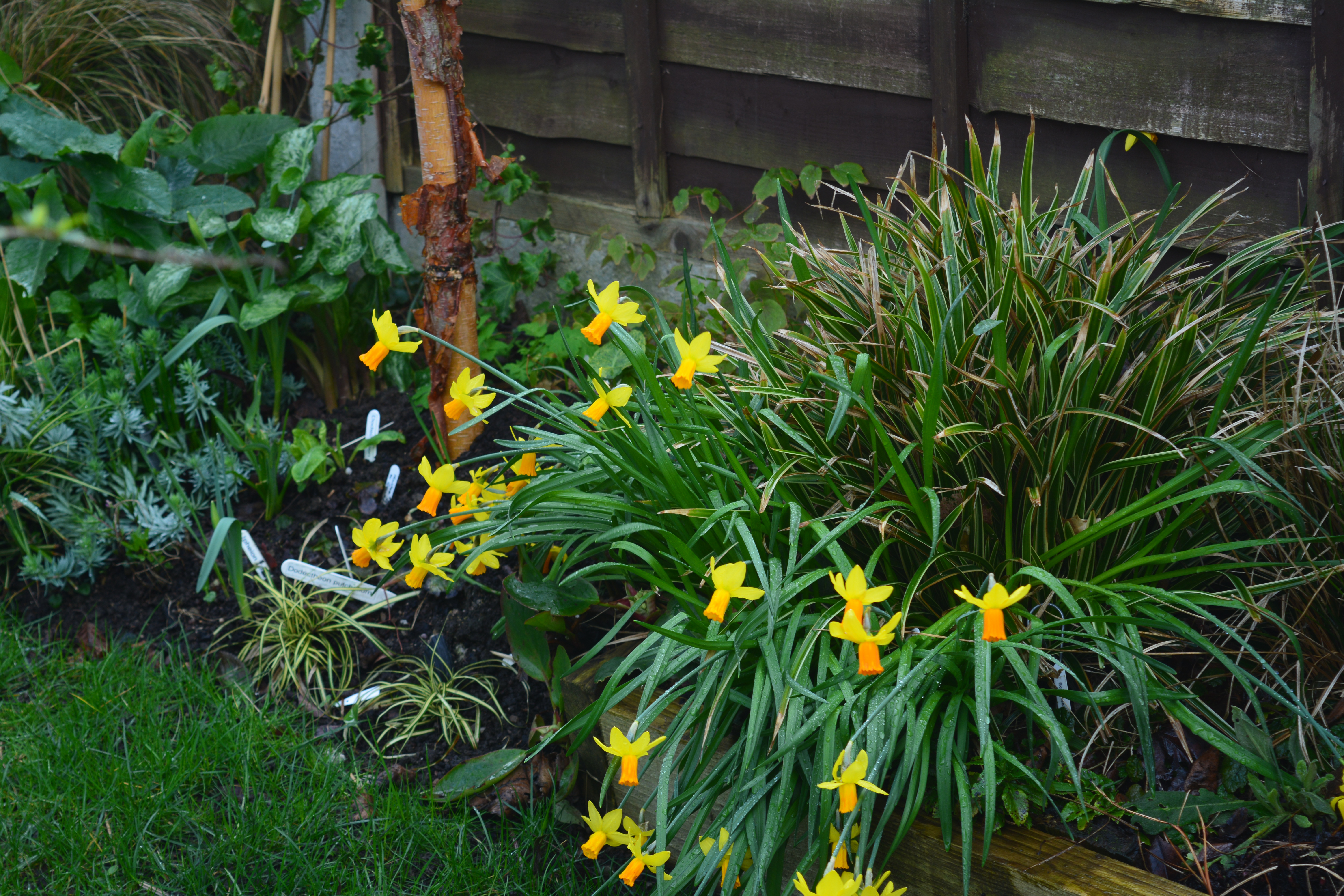
I began by writing, “March came on the scene dull, grey and lifeless looking. After the mild temperatures of the last few weeks with virtually no rain, the last day of February was very wet. Thank goodness for Daffodils, the spring bulbs that can cheer up the dullest of days.”

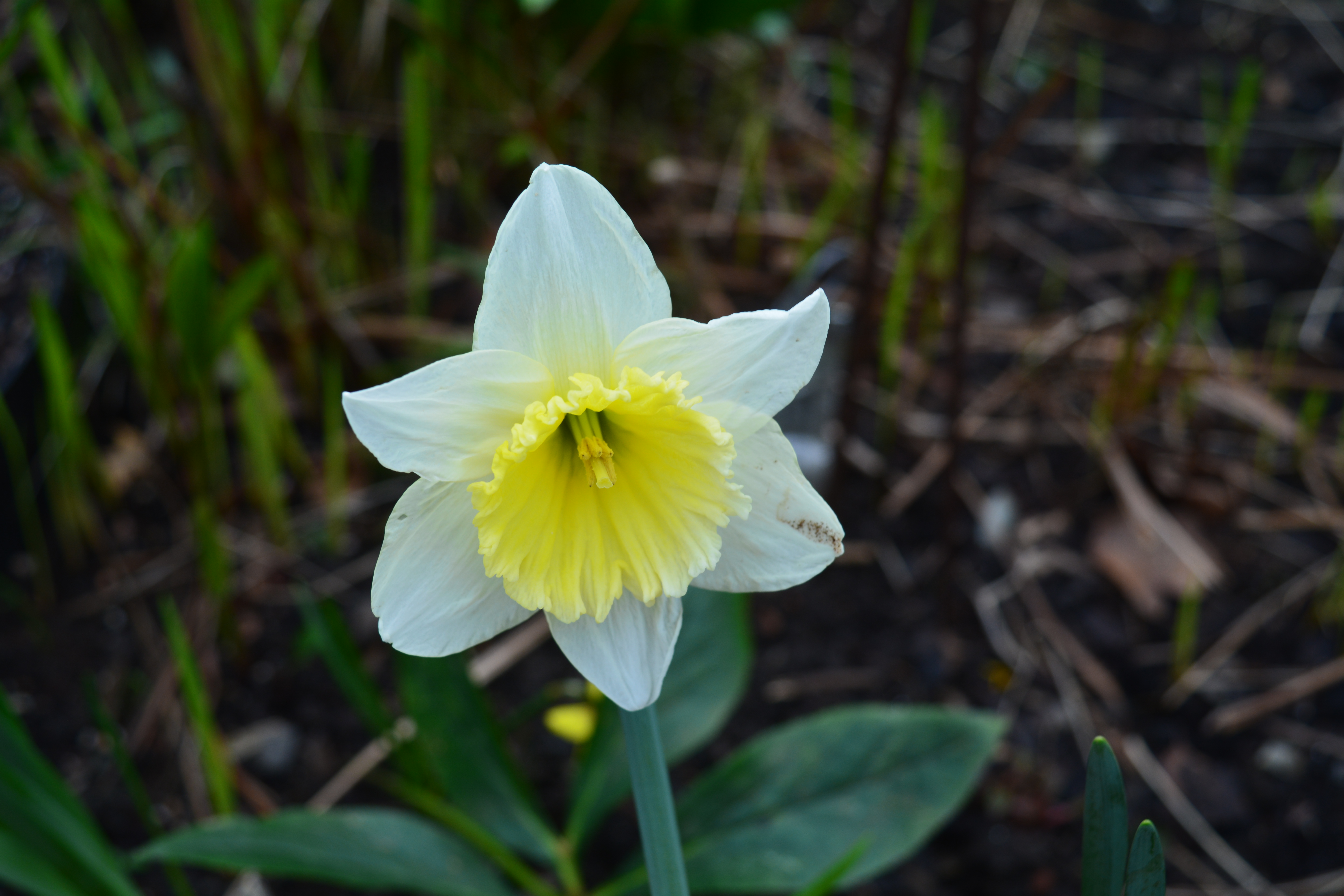
I then showed 9 photos of our wonderful early daffodils, mostly miniature narcissi.
 

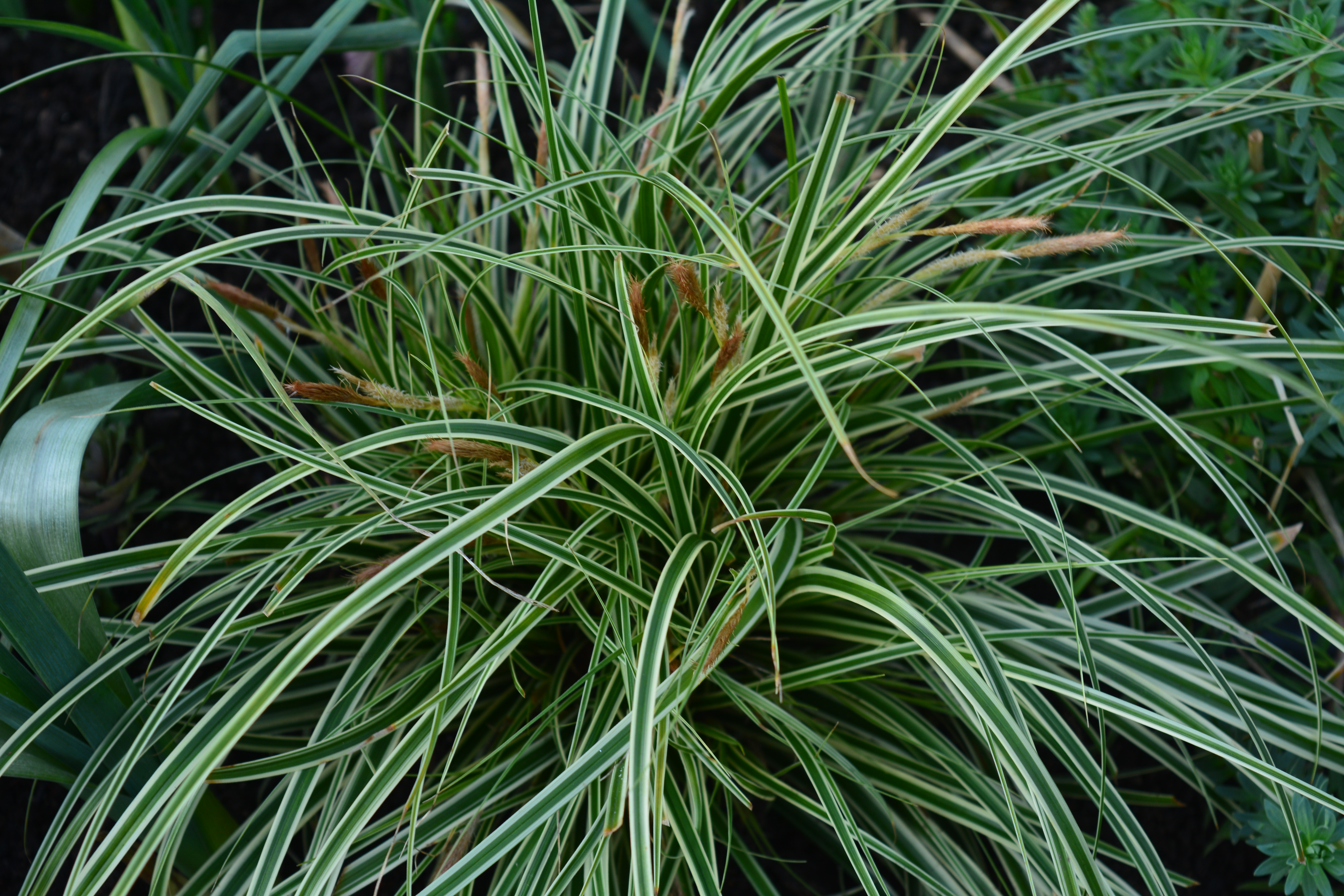
On the next page I looked at our selection of Carex.
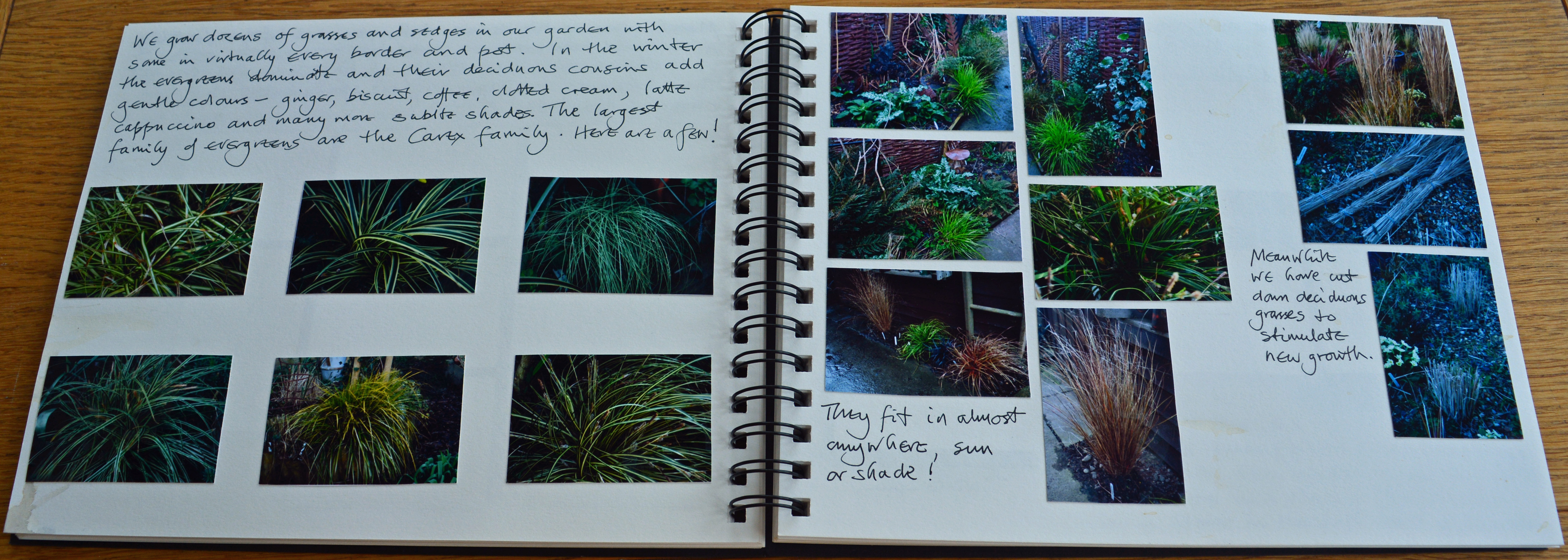
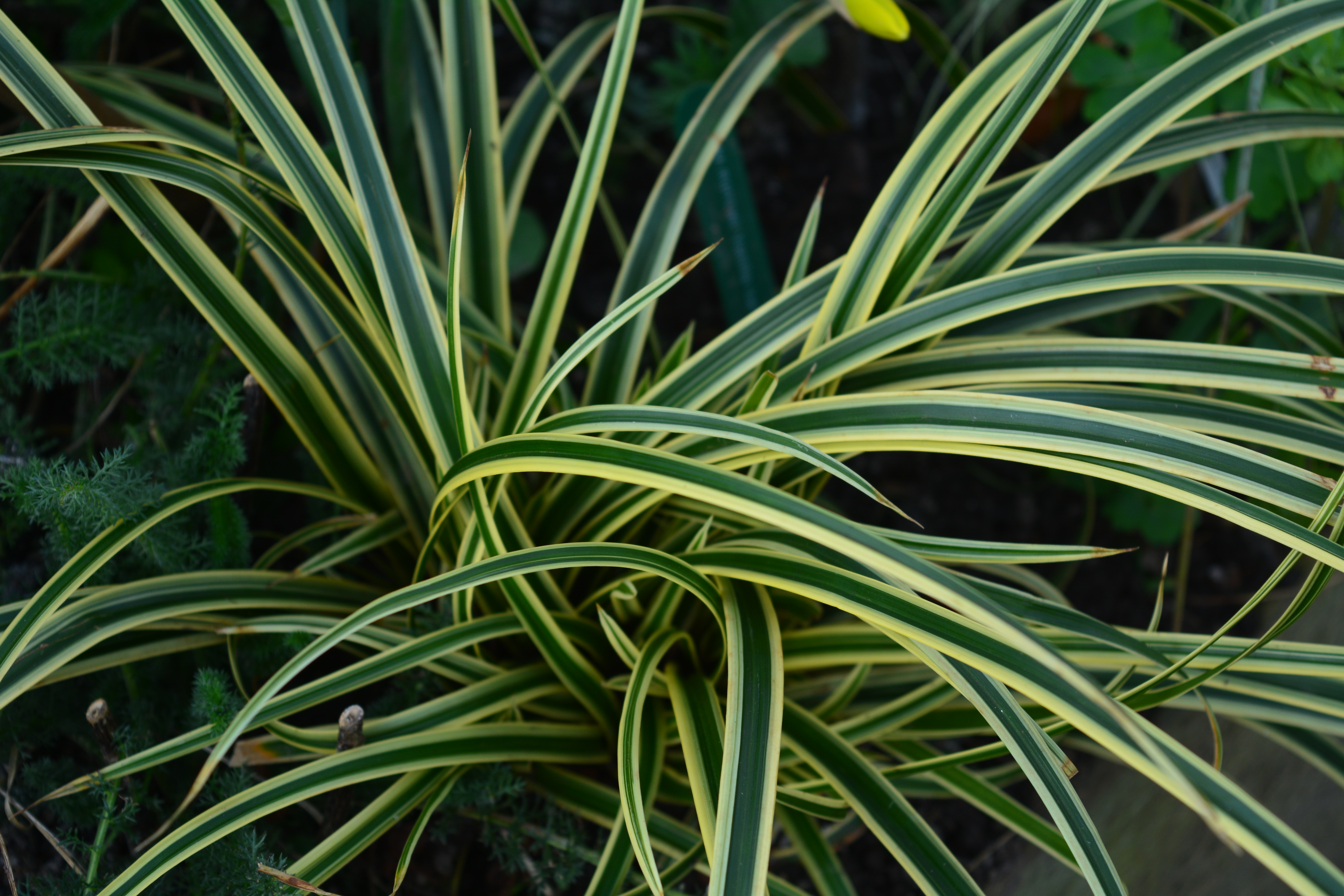
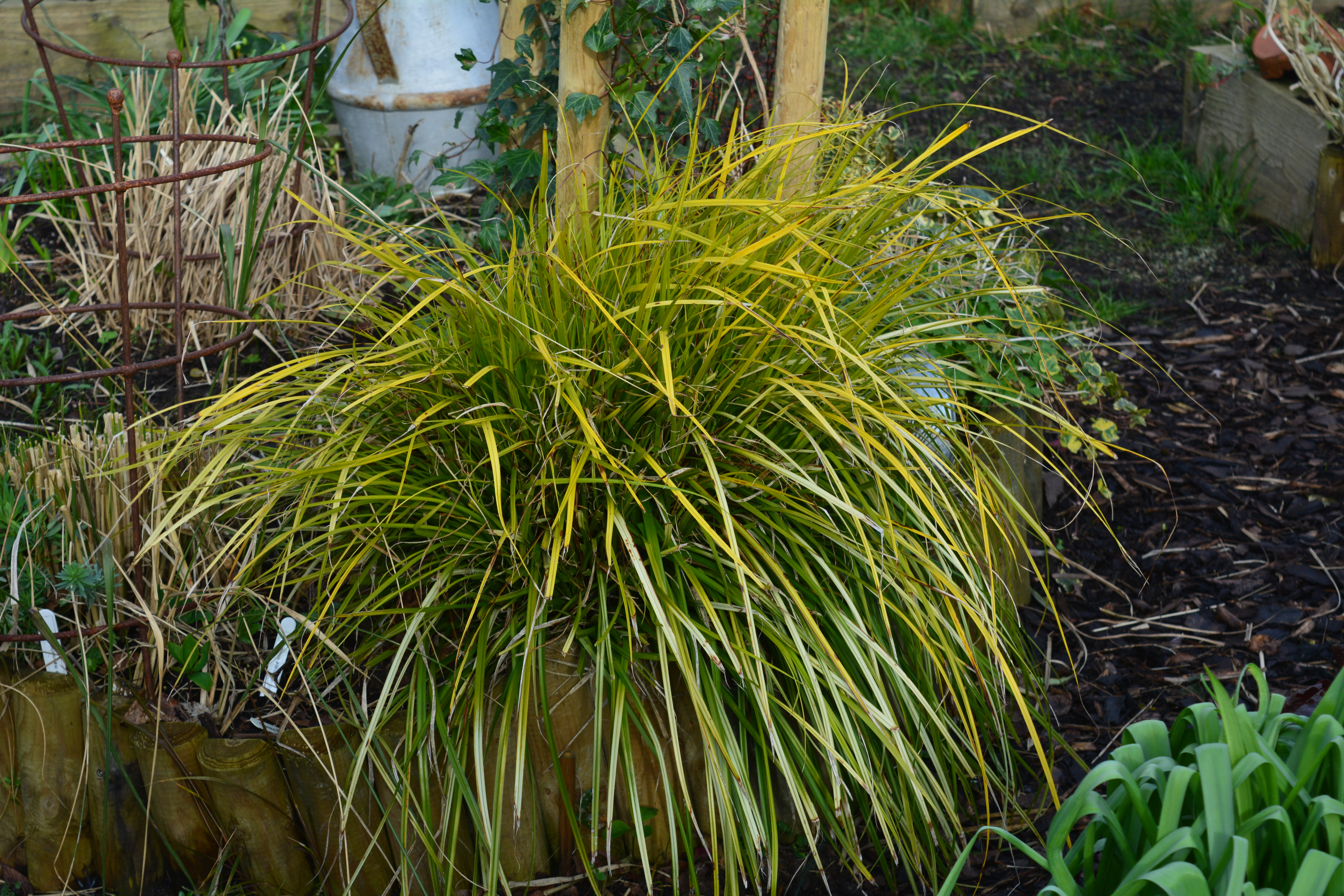
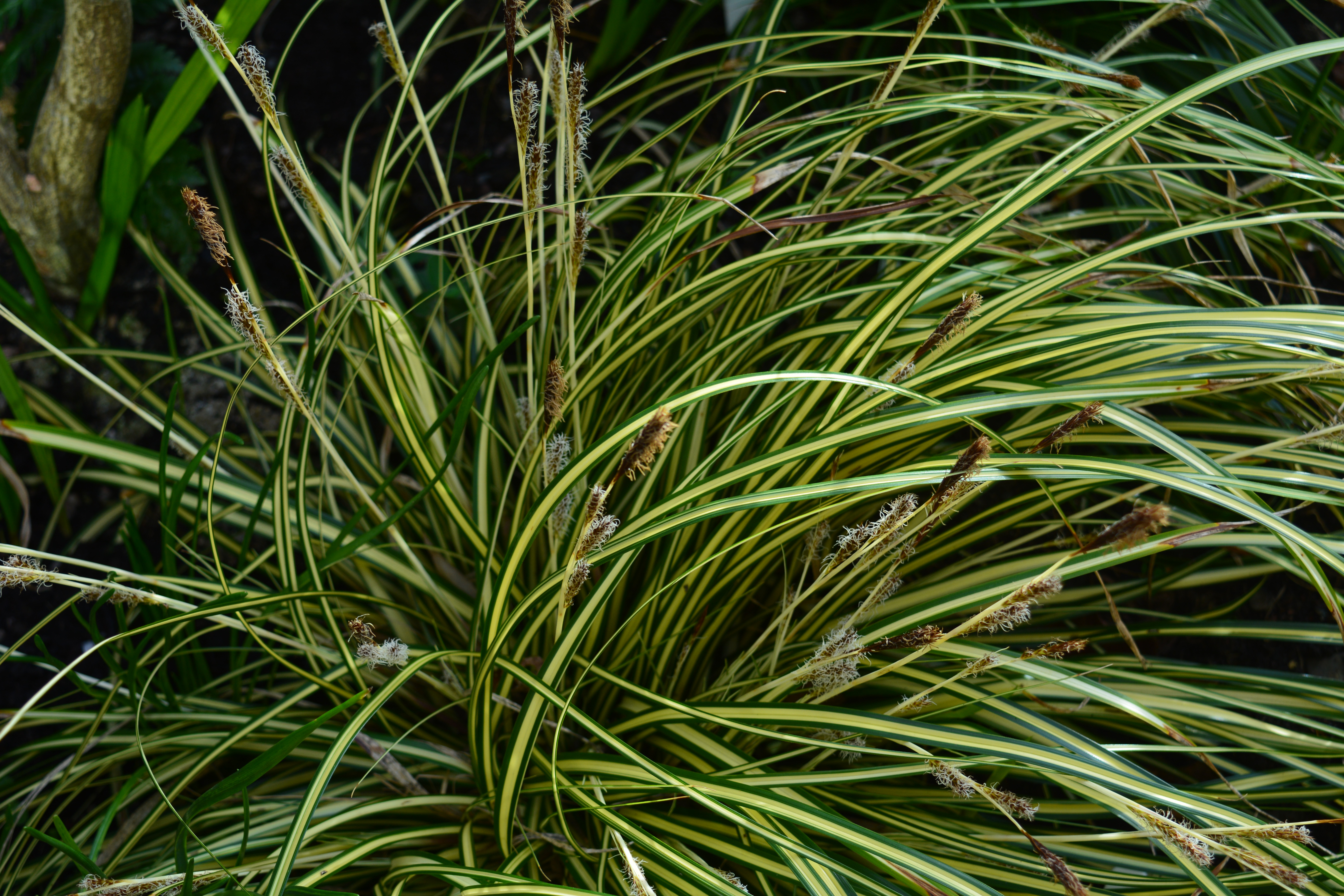
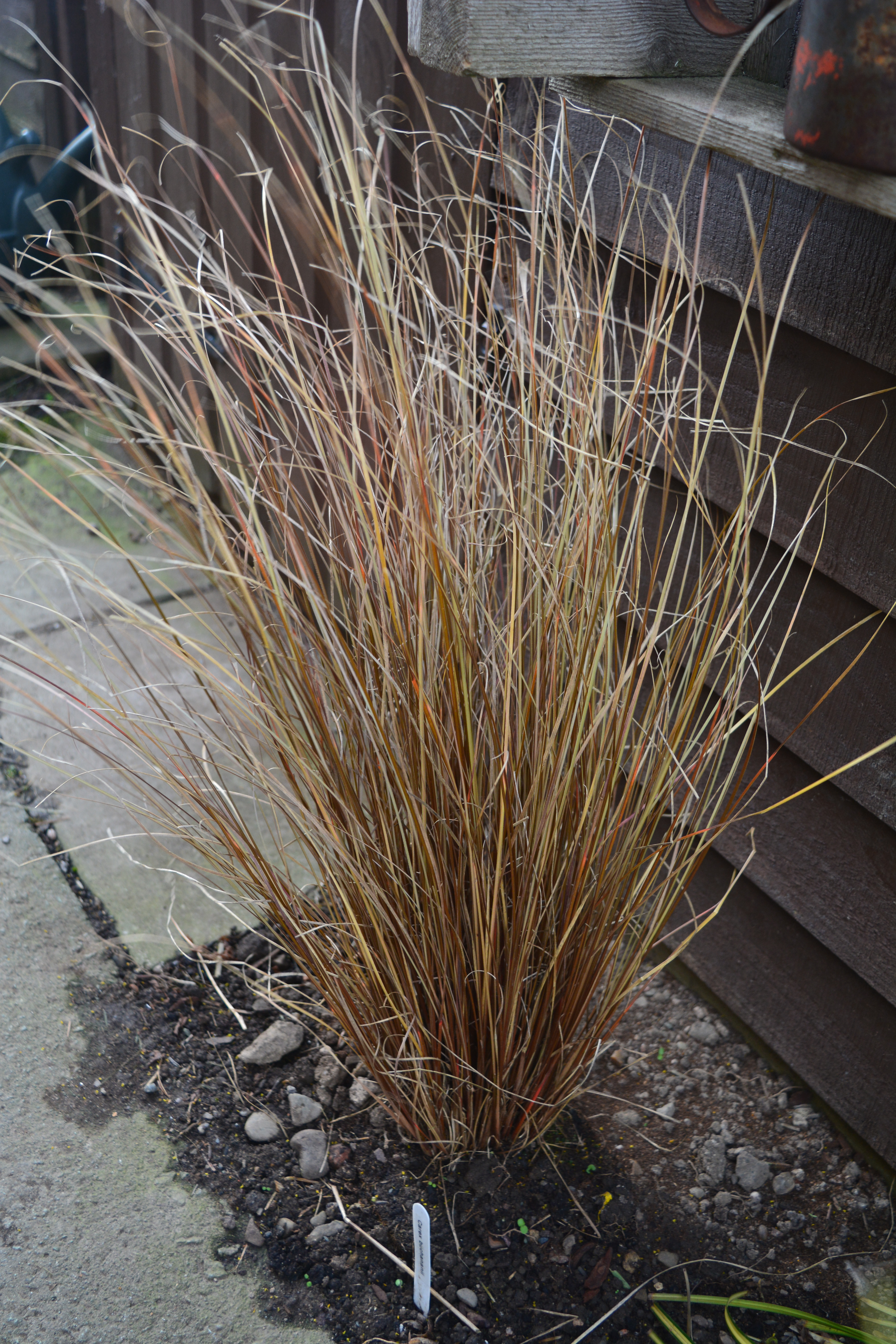
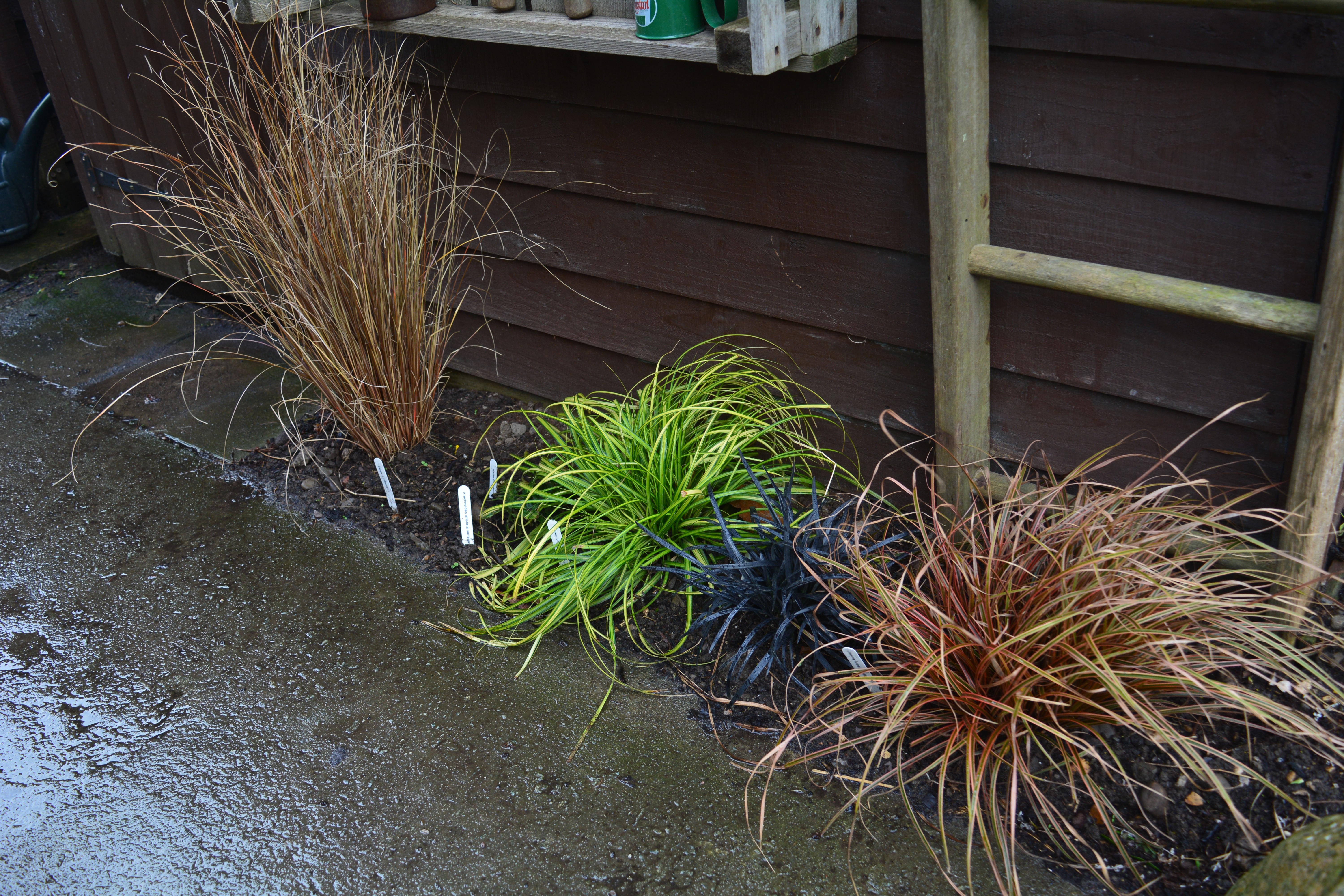
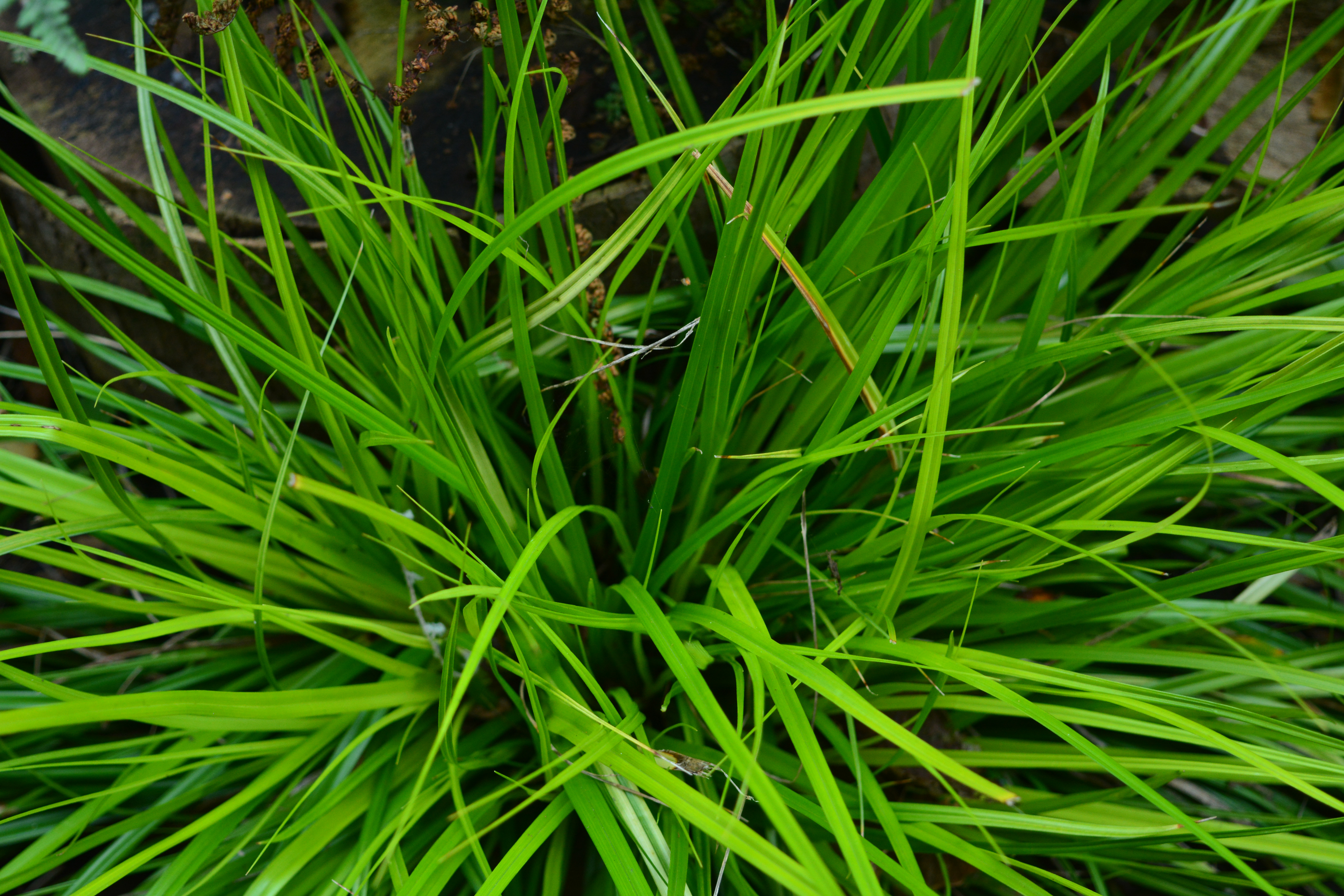
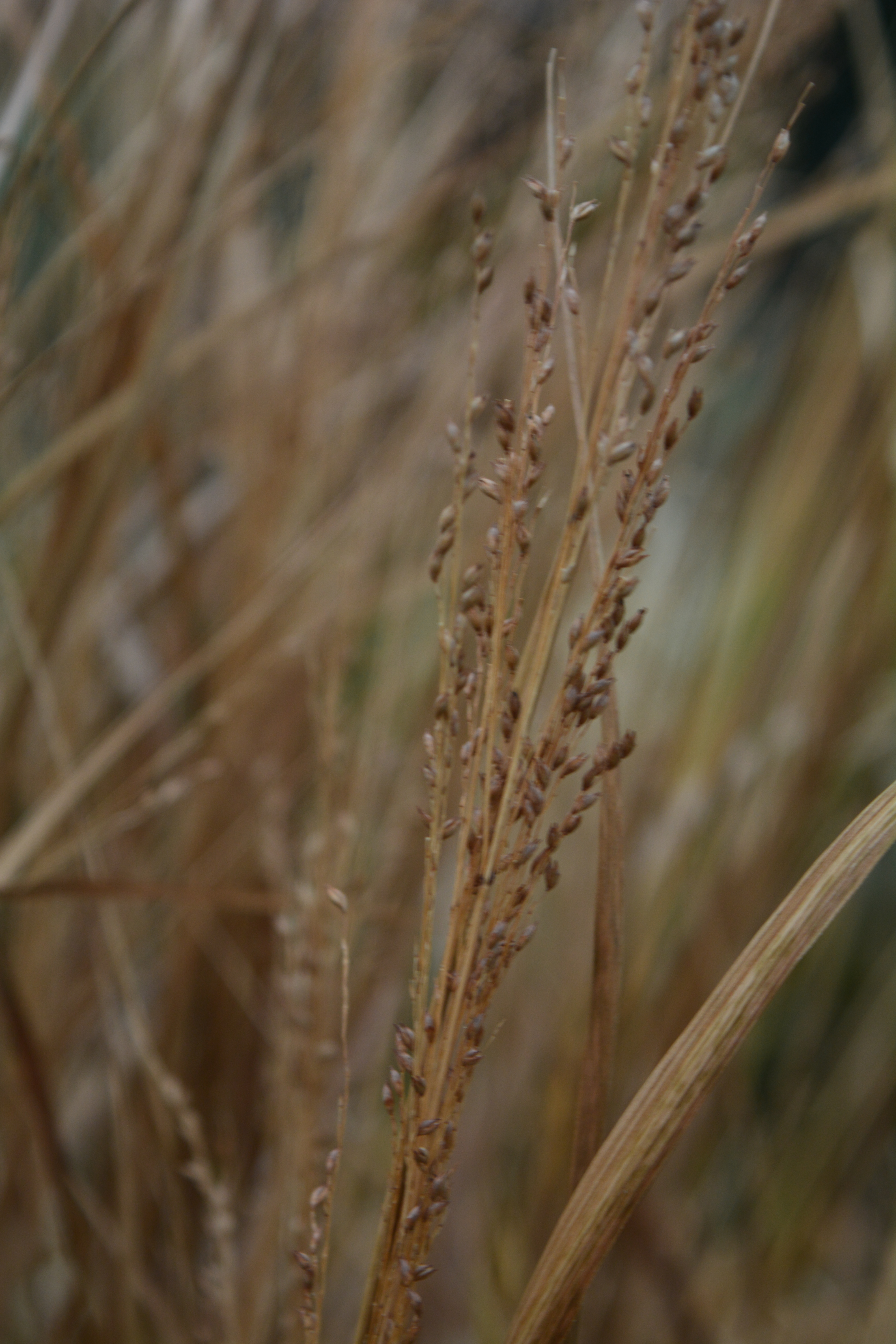
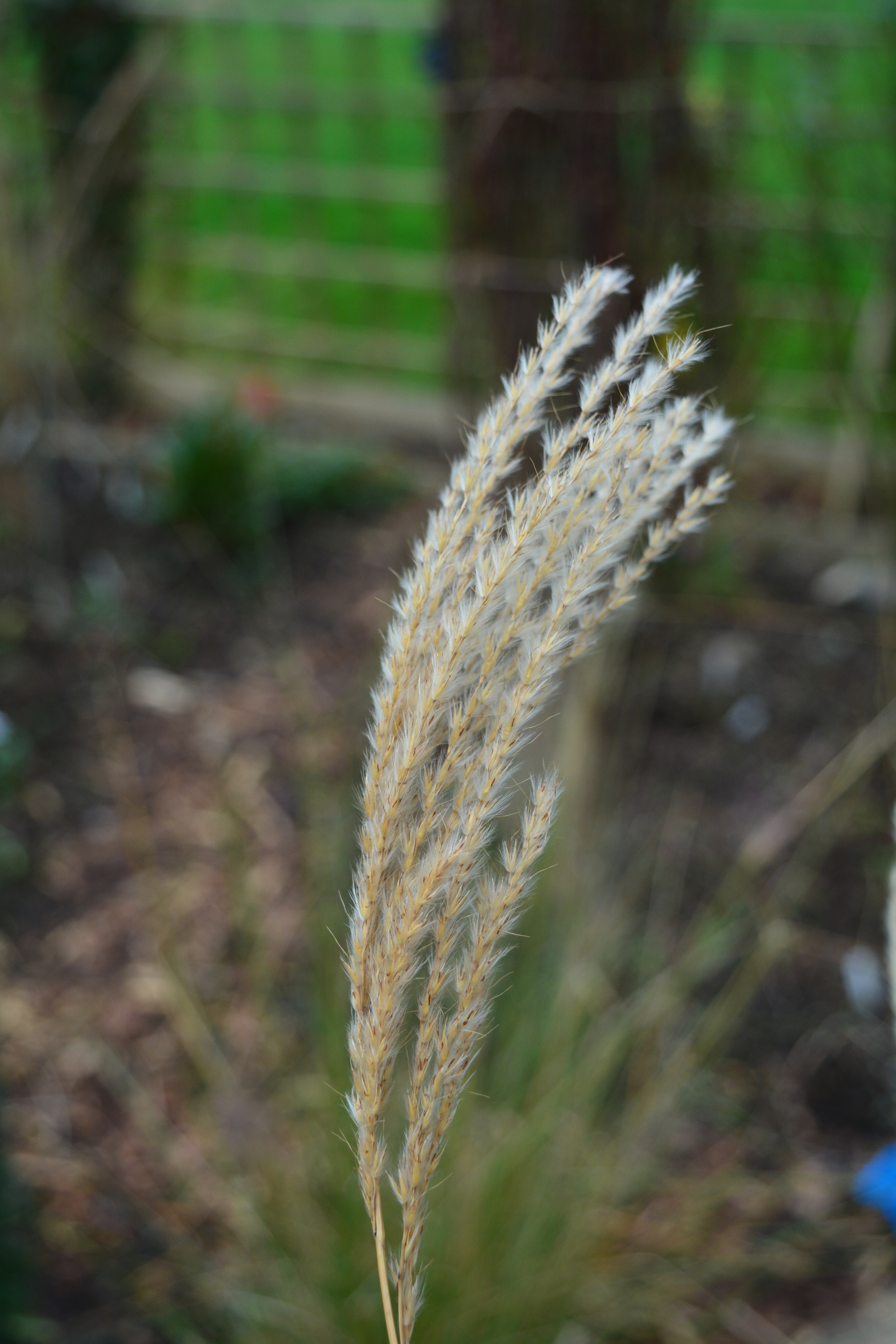
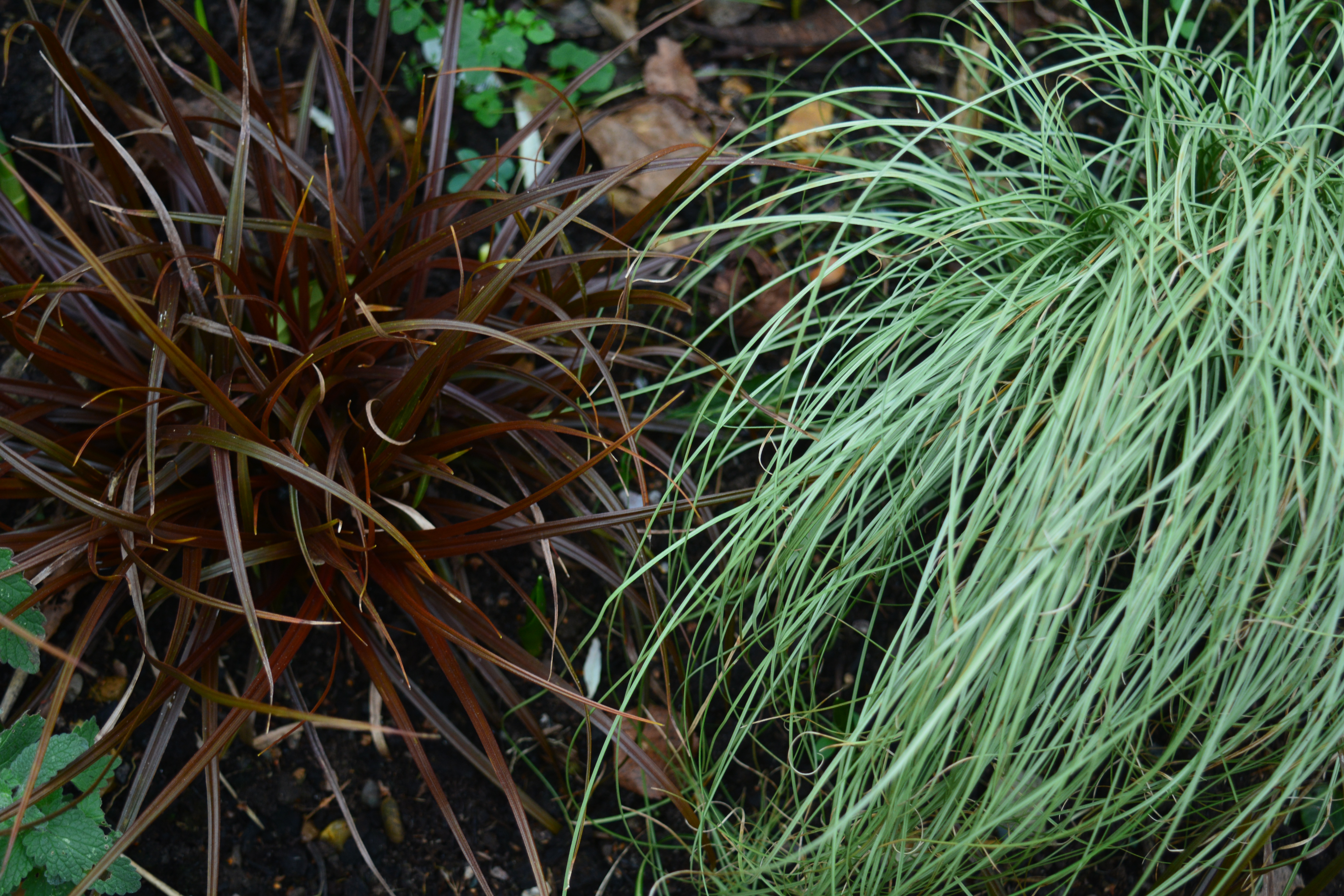
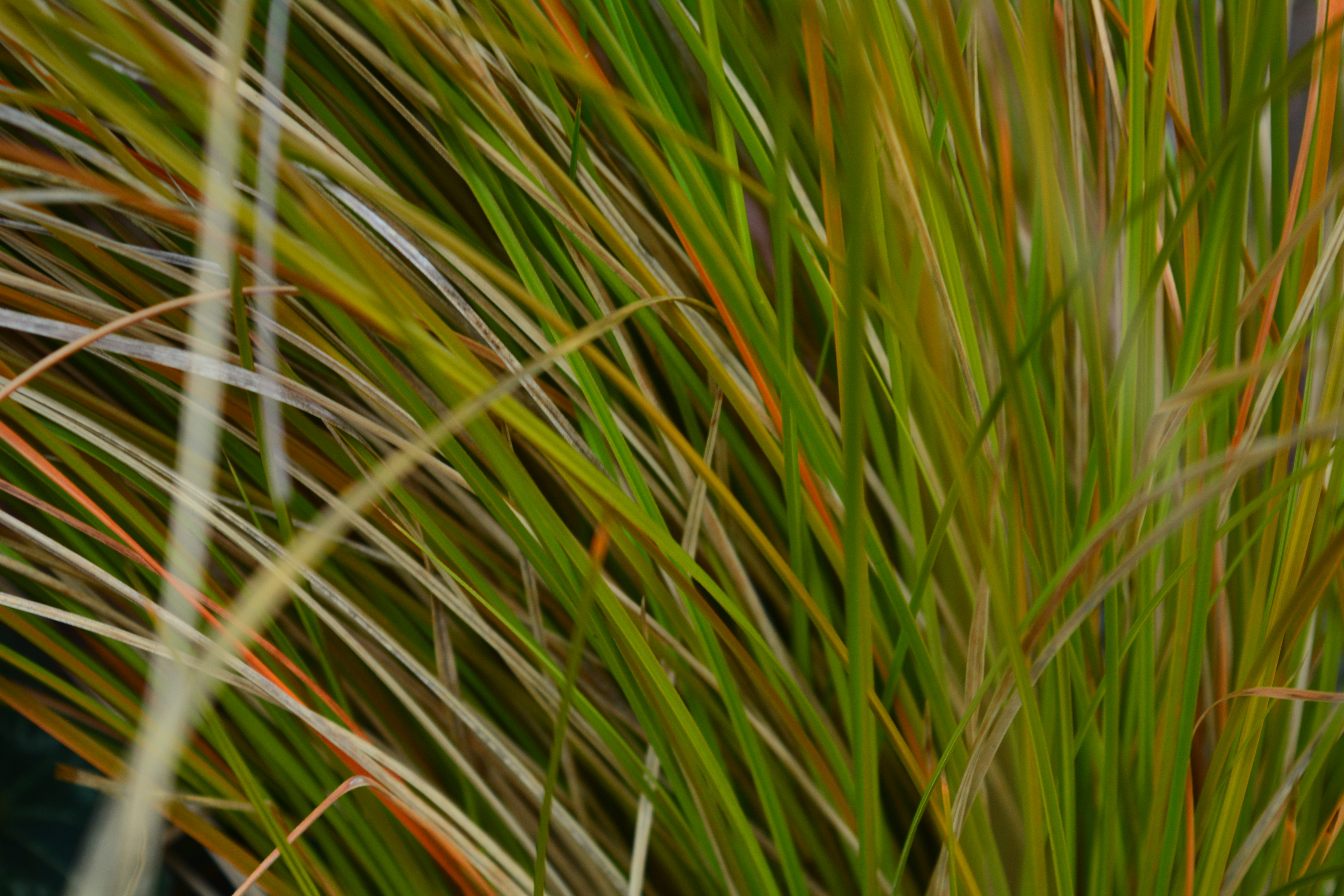
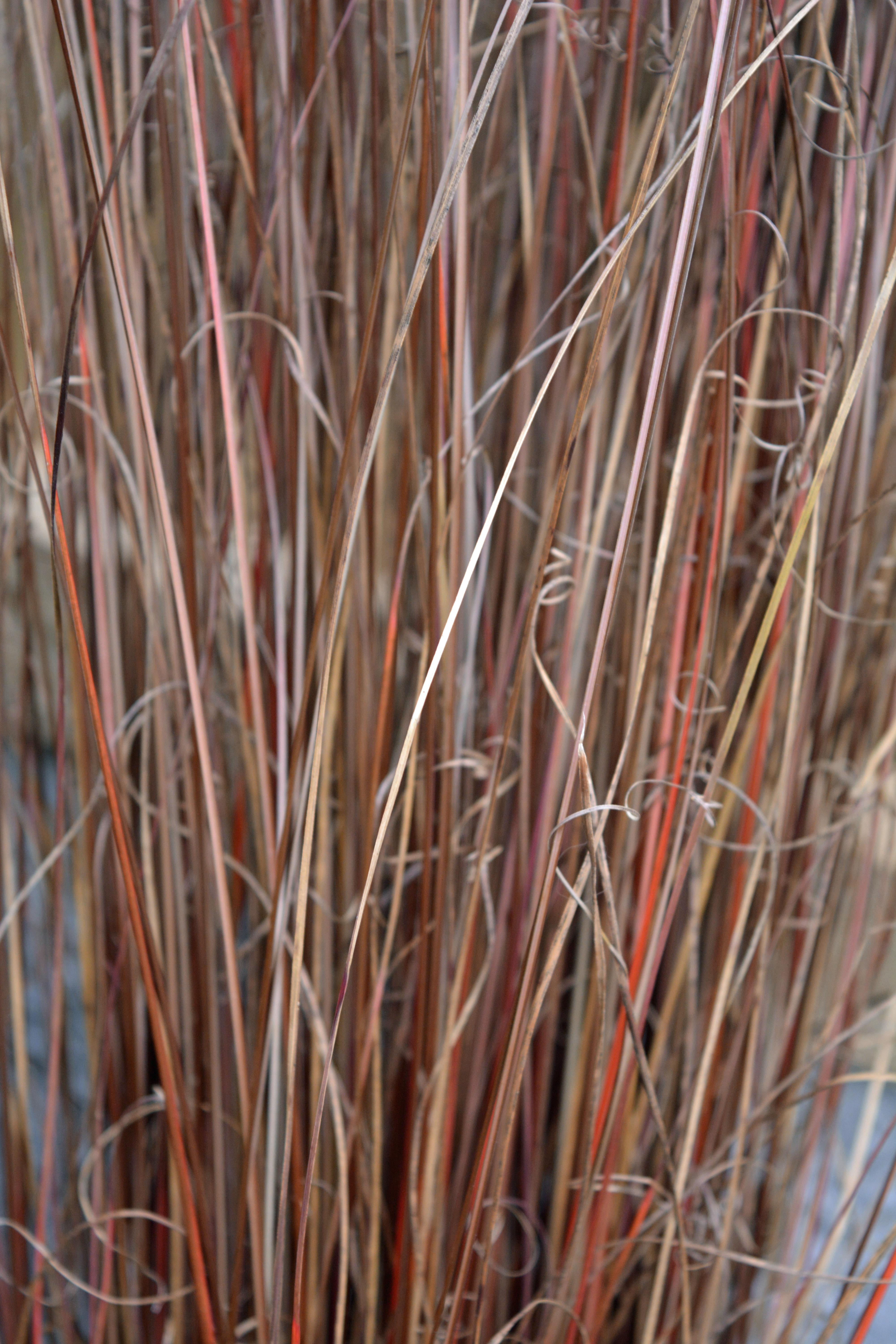
“We grow dozens of grasses and sedges in our garden with some in virtually every border and container. In the winter the evergreens dominate and their deciduous cousins add gentle colours – ginger, biscuit, coffee, clotted cream, latte, cappuccino and many more subtle shades. The largest family of evergreens are the Carex family. Here are just a few that we grow!”

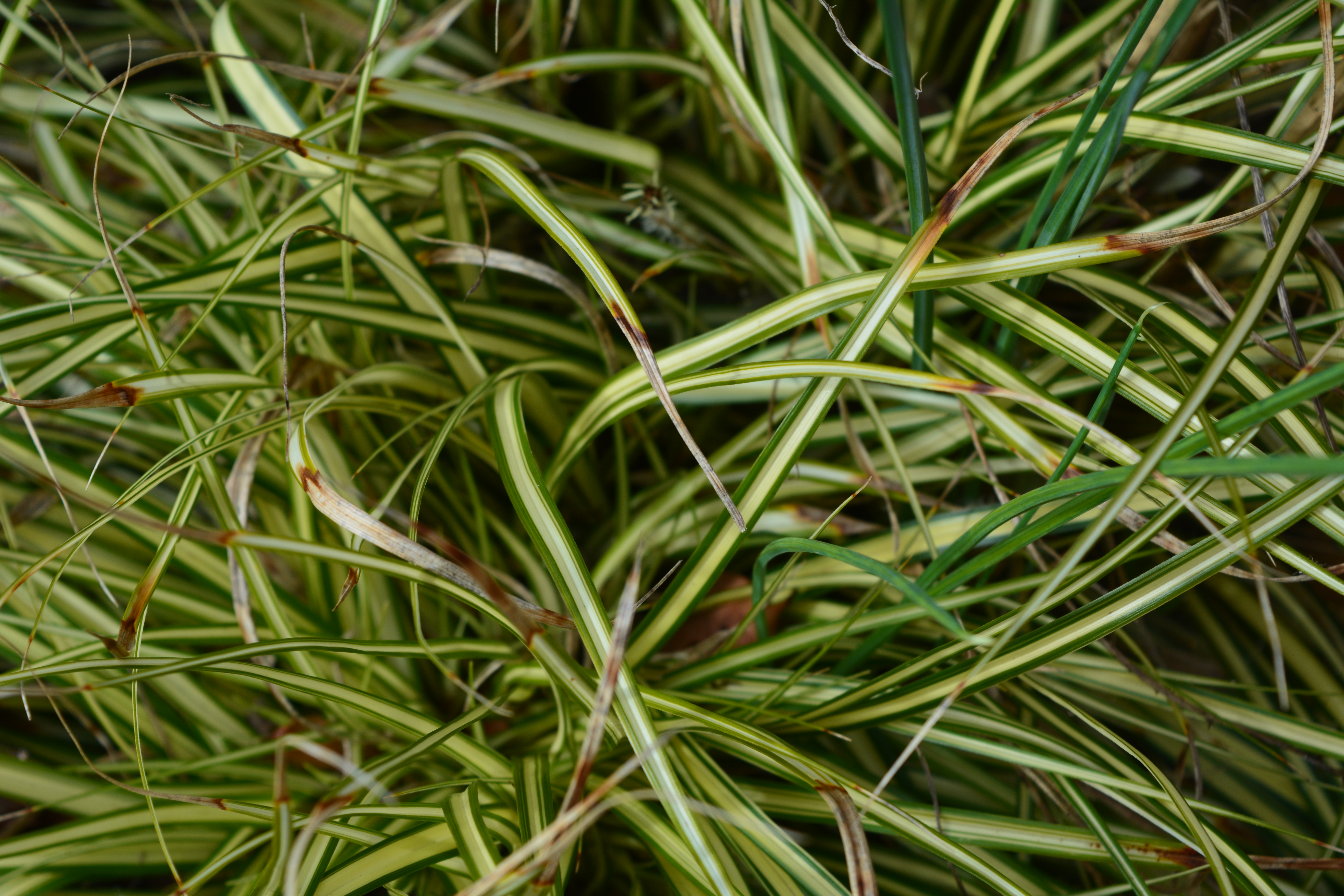
Here is a selection of the many Carex we grow.
On the opposite page I consider how well the Carex family of grasses fit in with other plants and plant combinations. I wrote, “They fit in almost anywhere, sun or shade!”
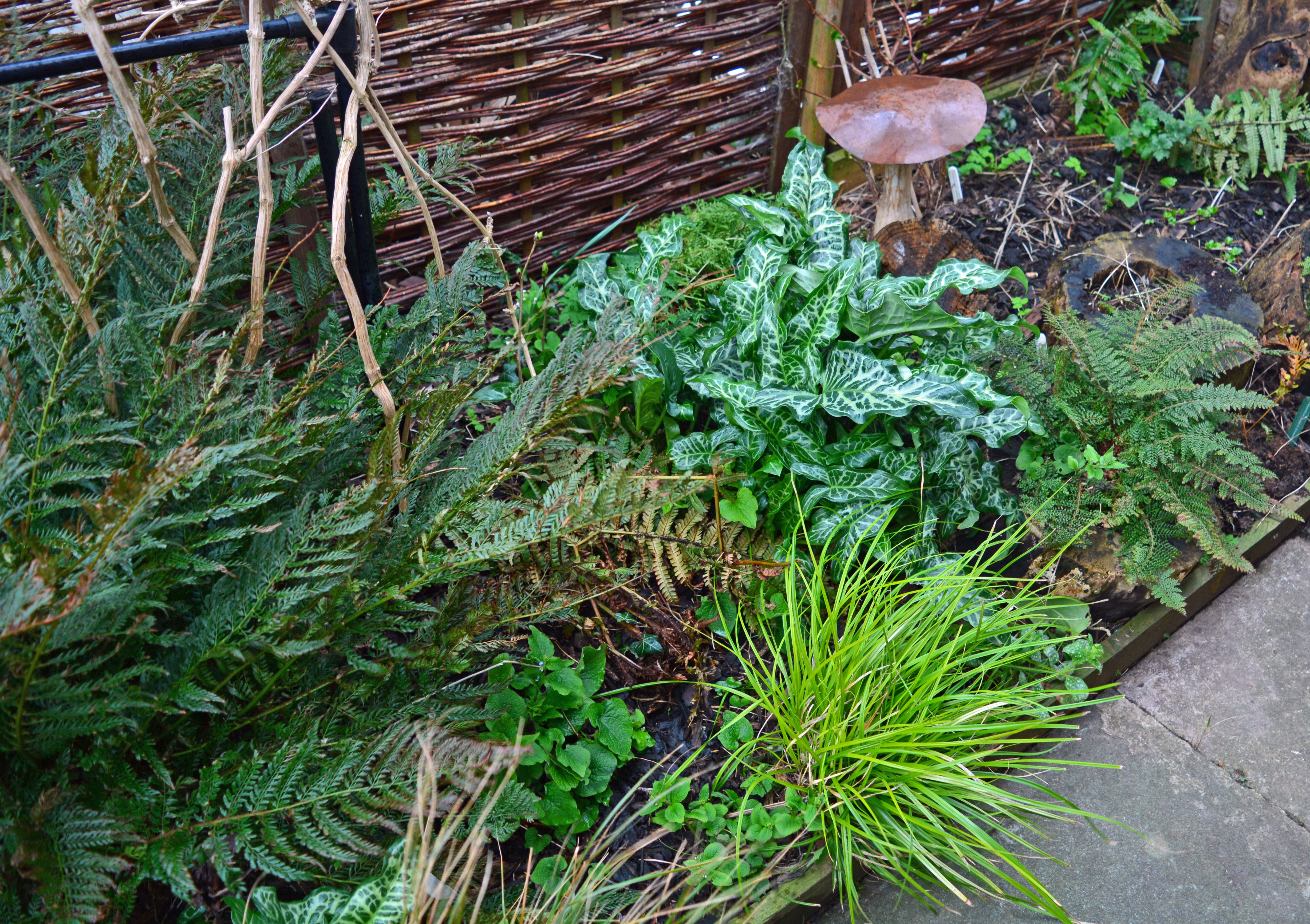
 

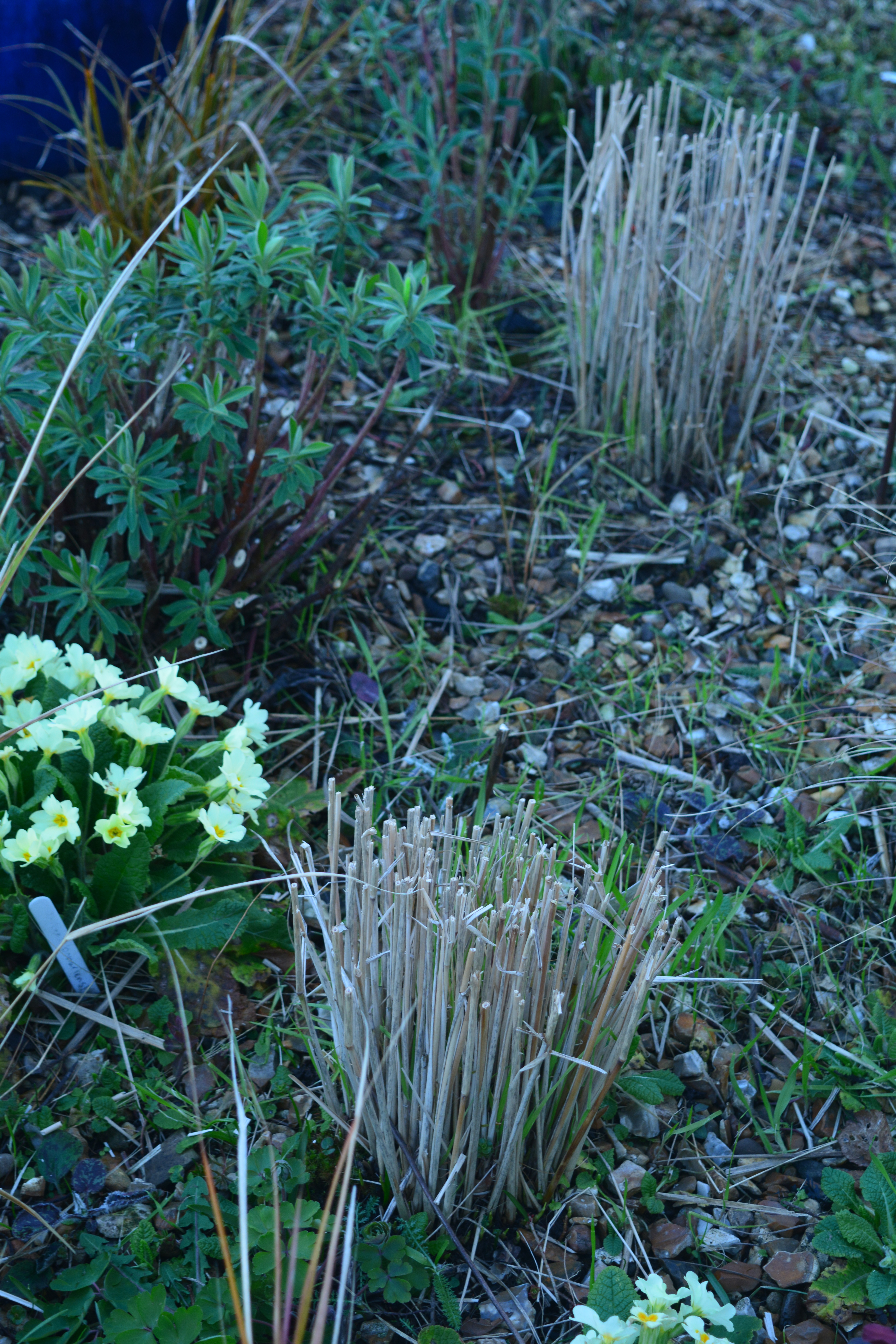
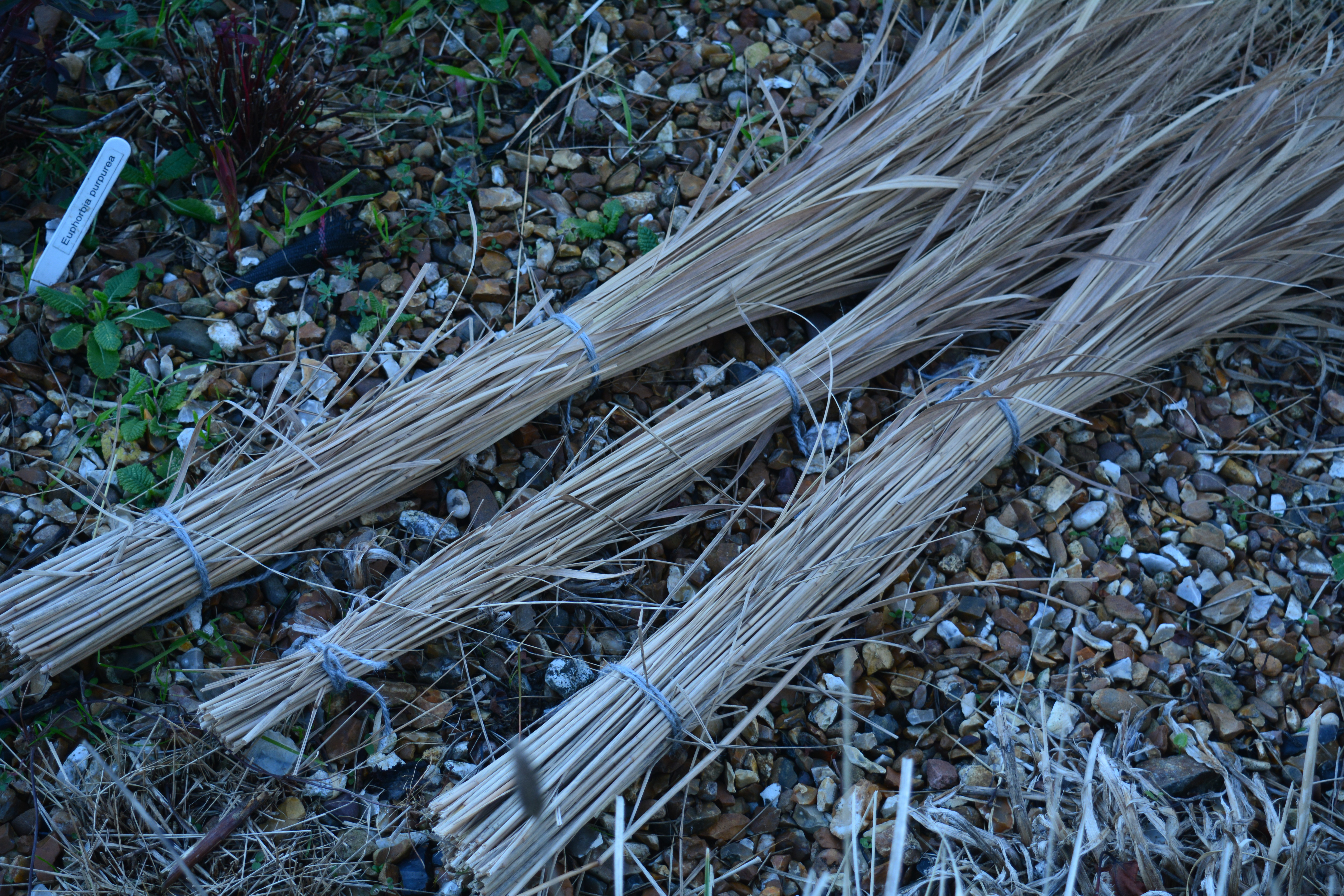
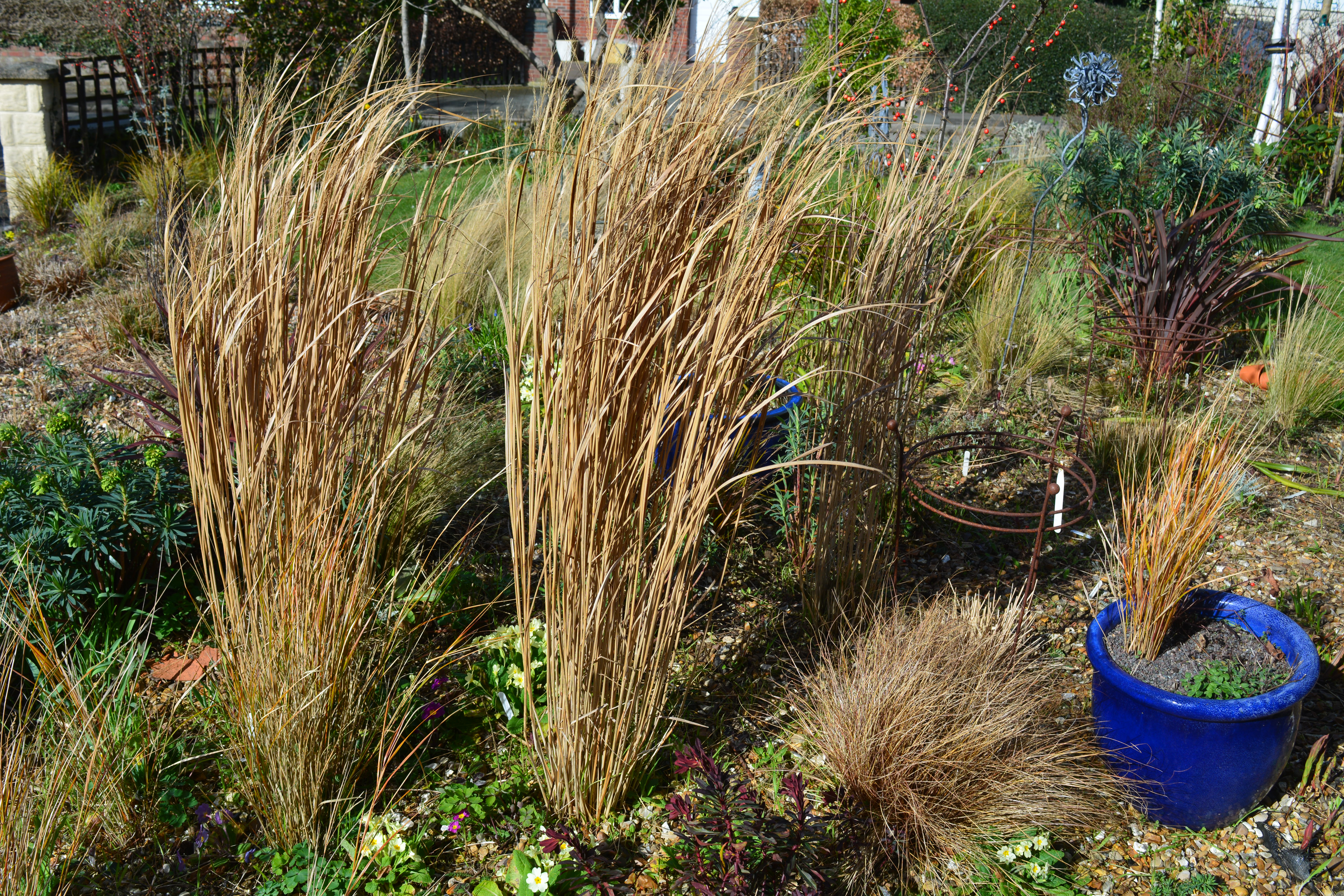
“Meanwhile we have cut down deciduous grasses to stimulate new growth.”
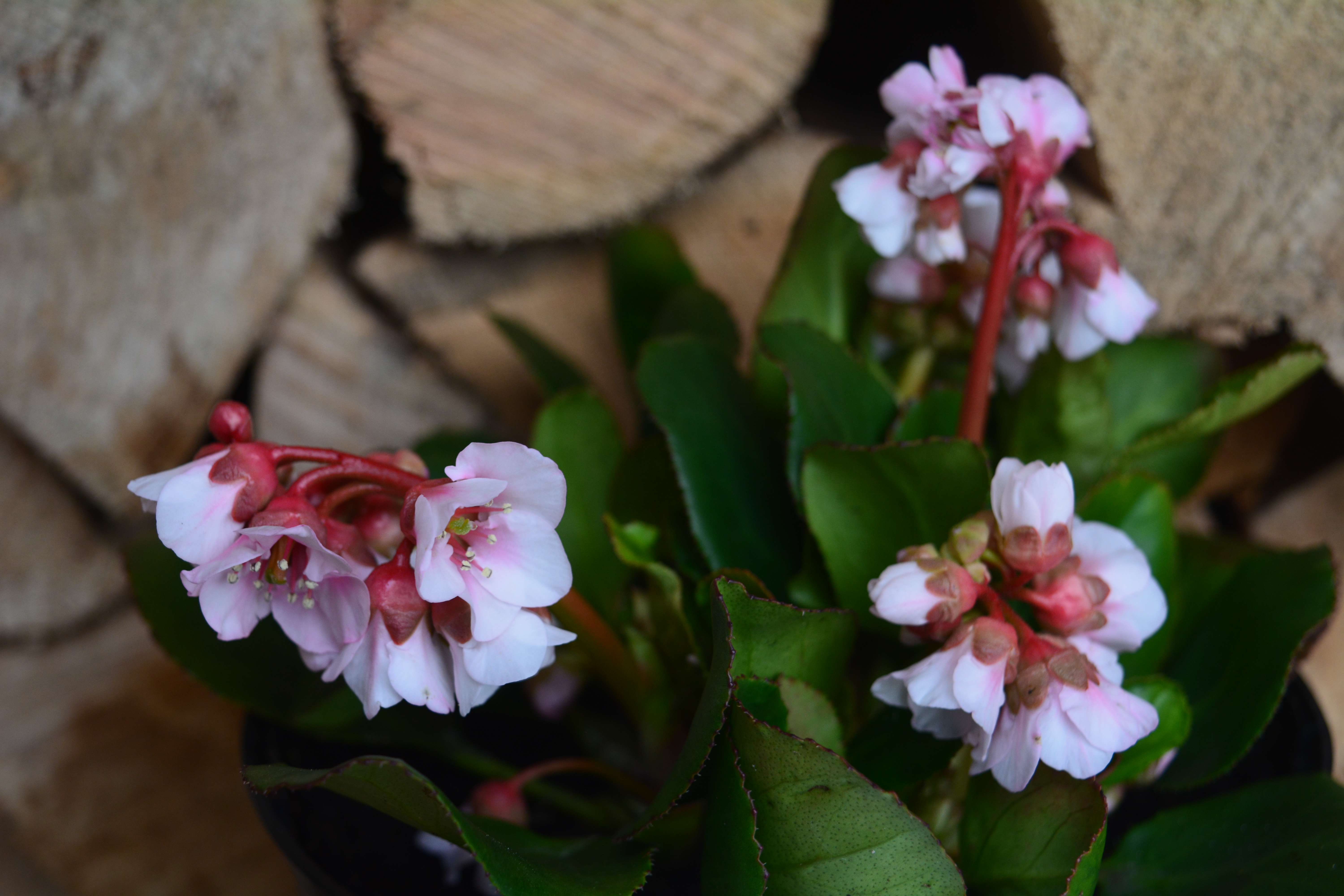
Turning over to the next double page spread I have a look at a couple of under-appreciated plants.

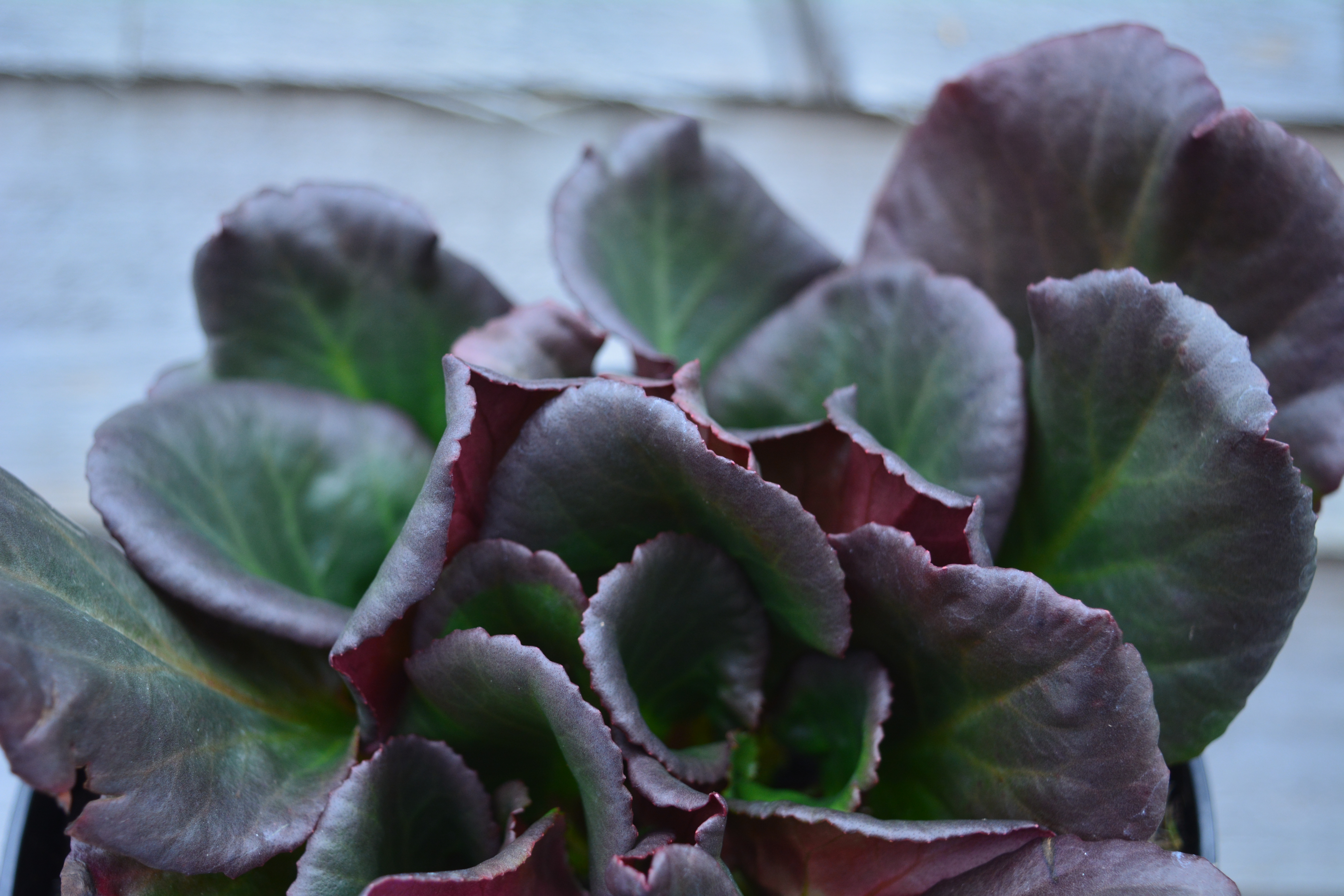
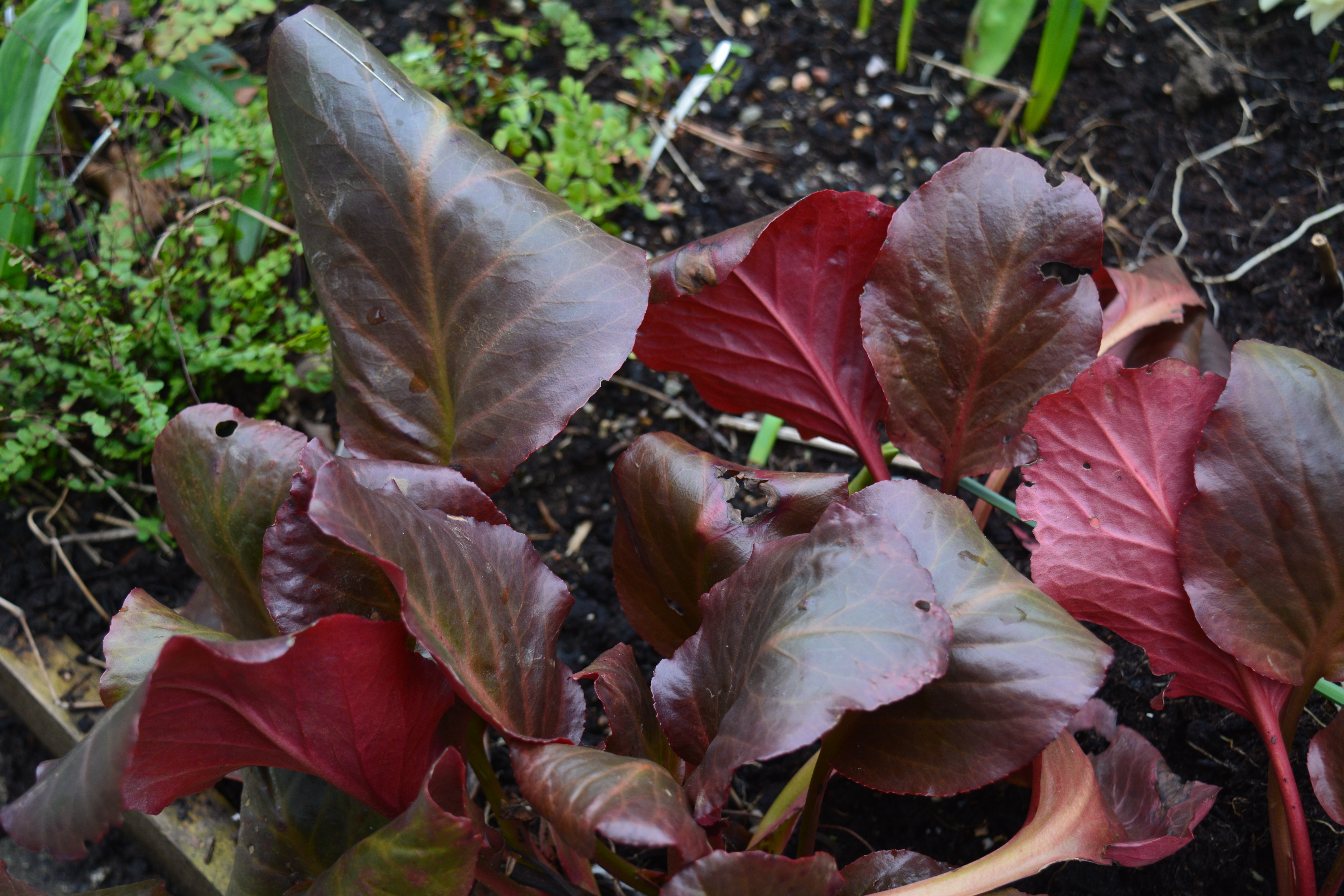
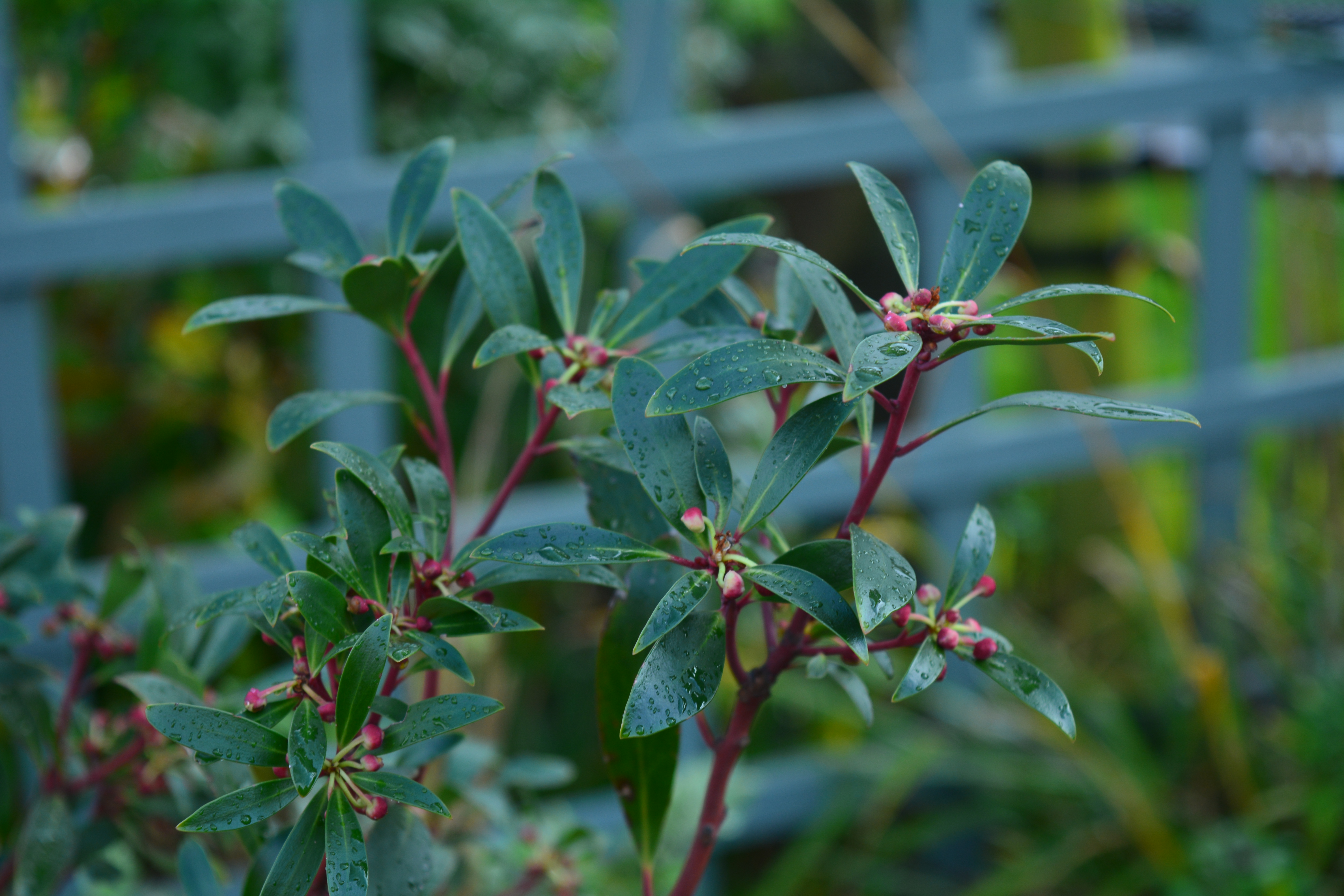
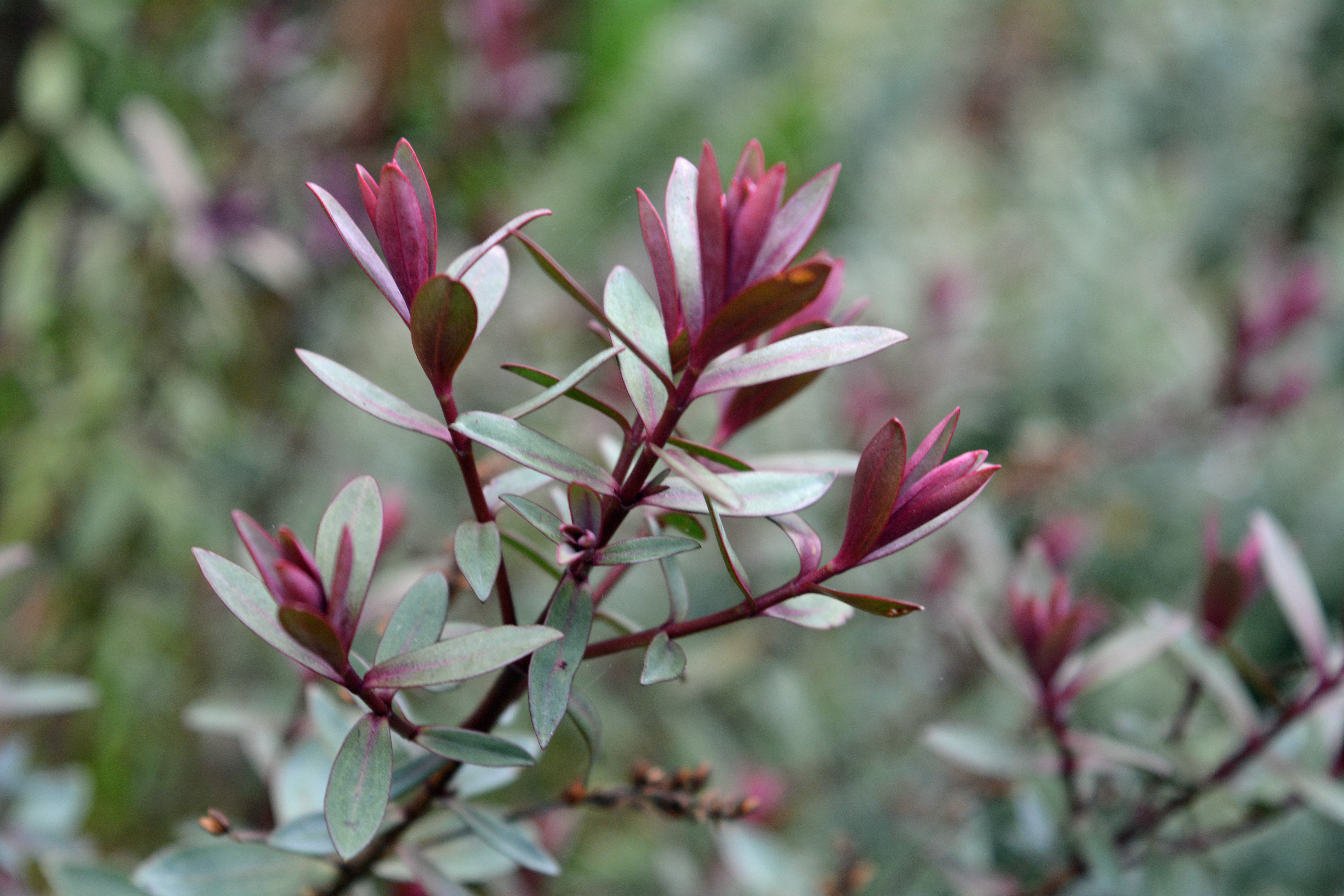
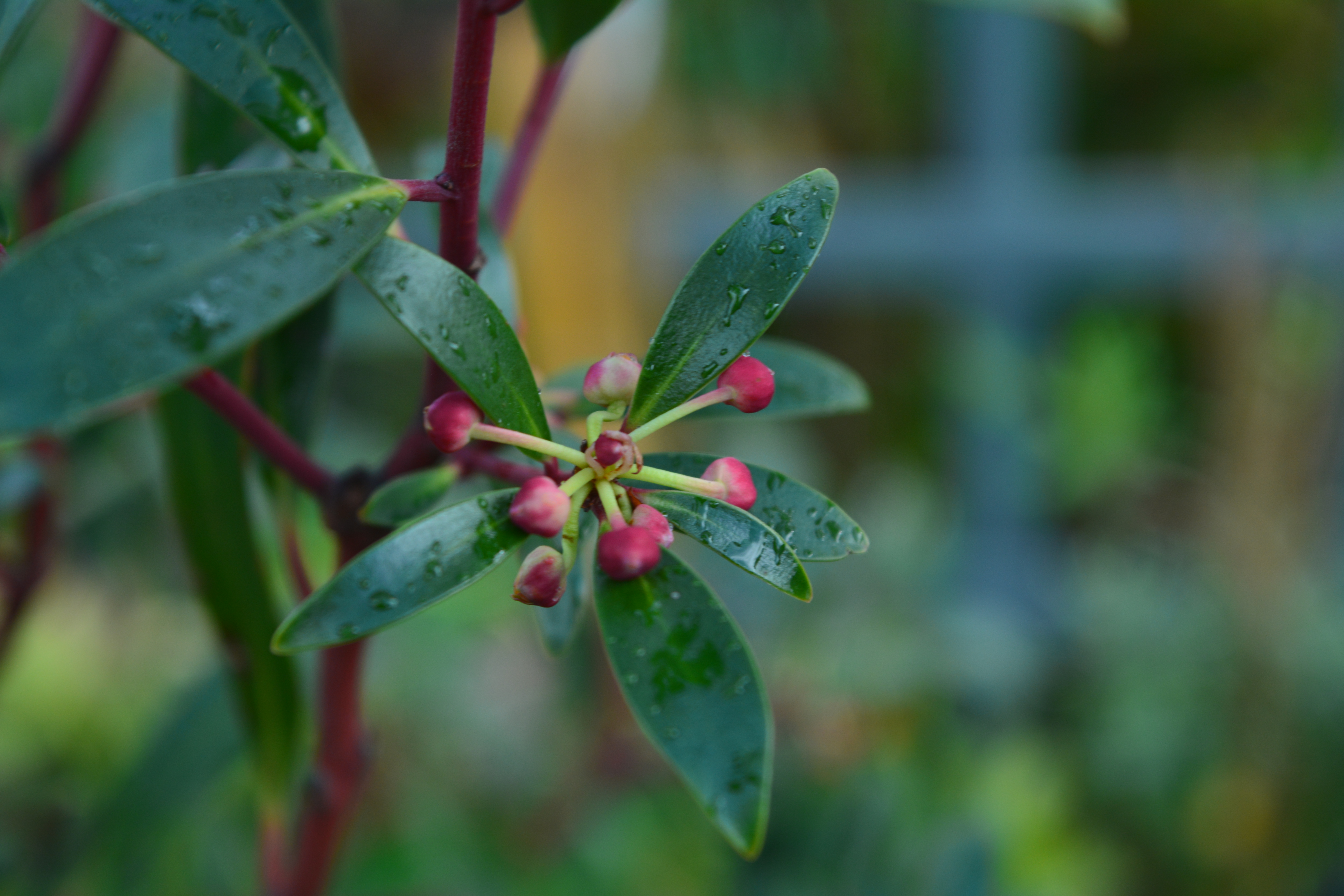
I wrote, “An unknown plant and an under appreciated plant, both stalwarts of the March garden, Bergenias and Drimys. I love them both!”

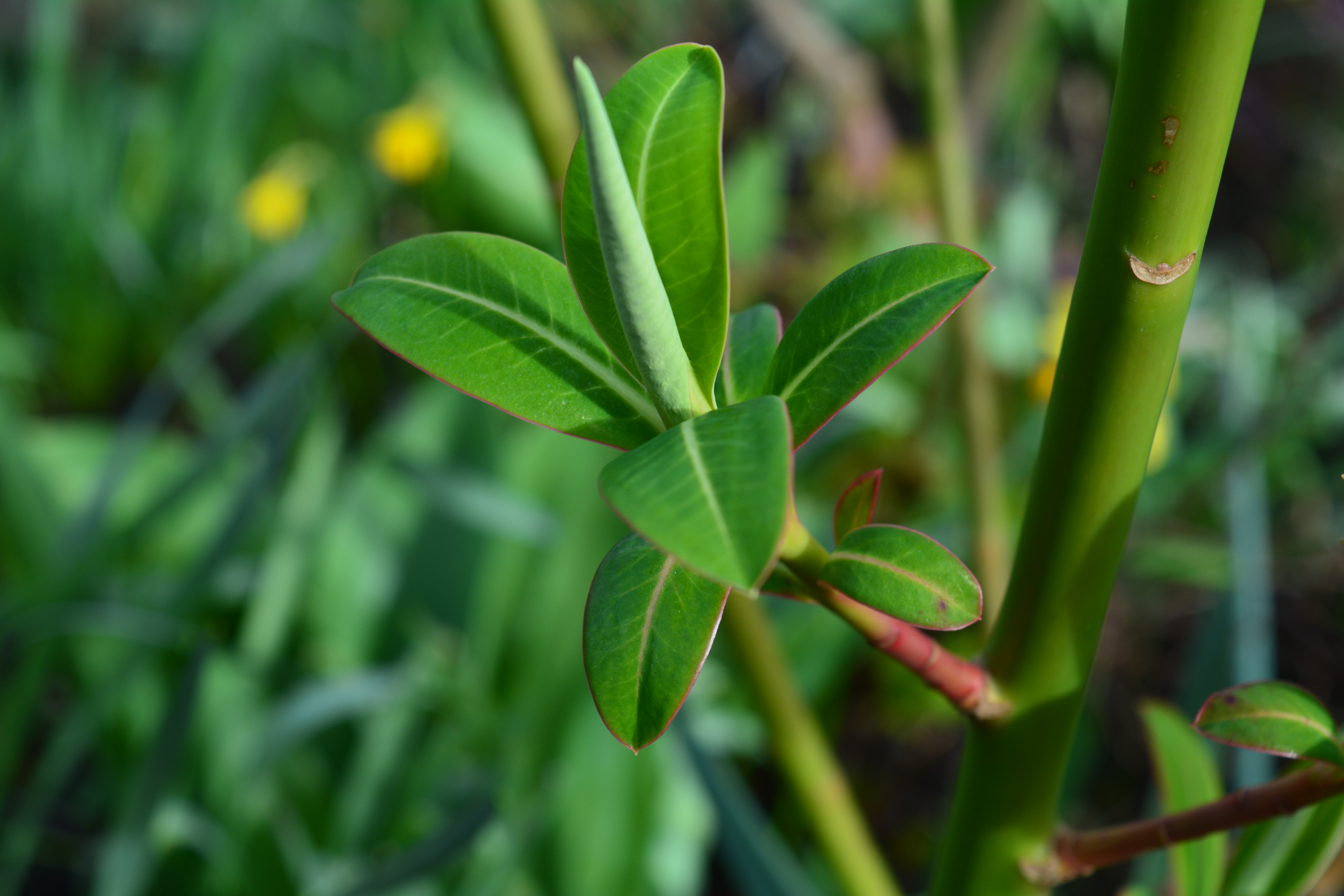
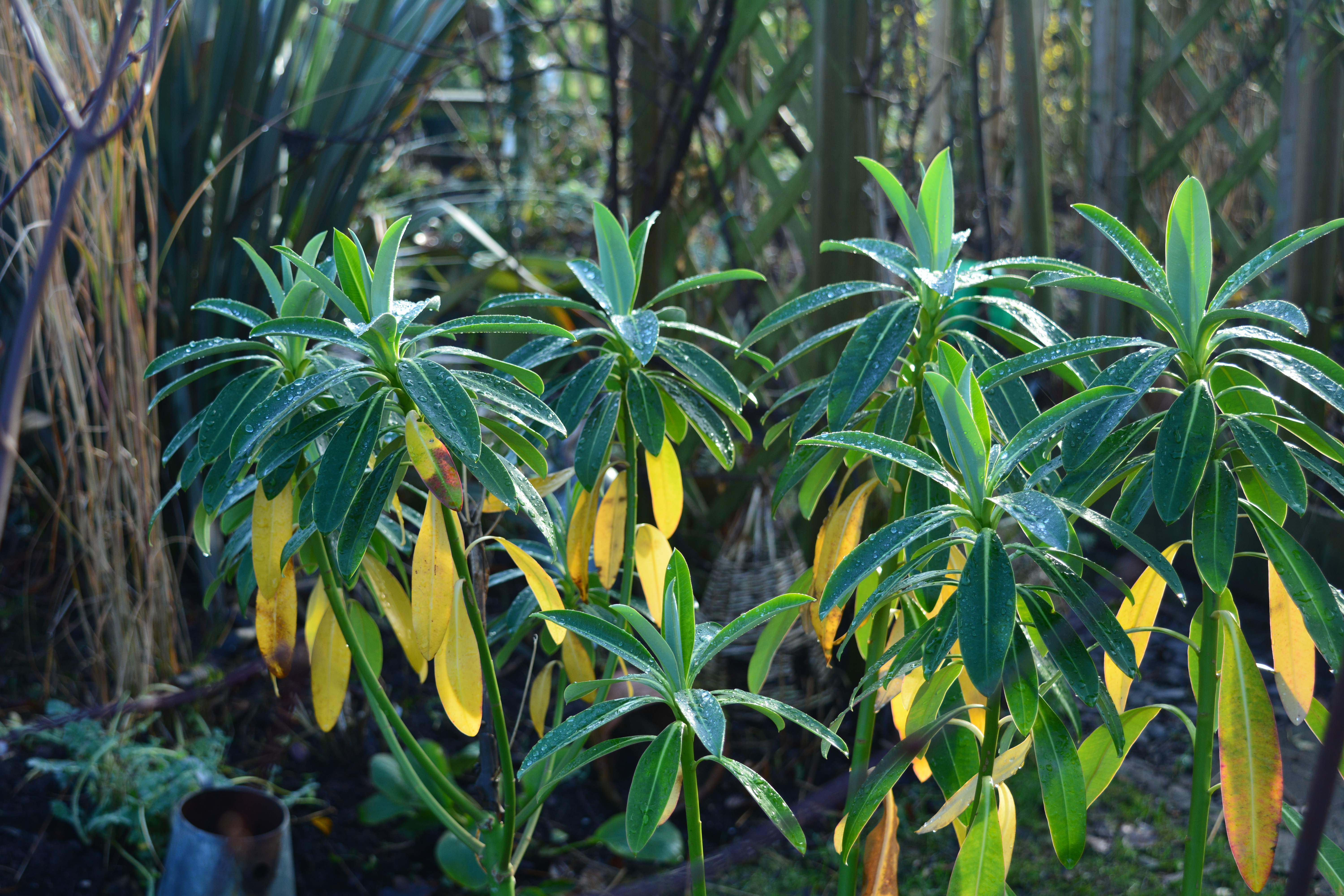
“Drimys lanceolata ‘Winter Spice’.
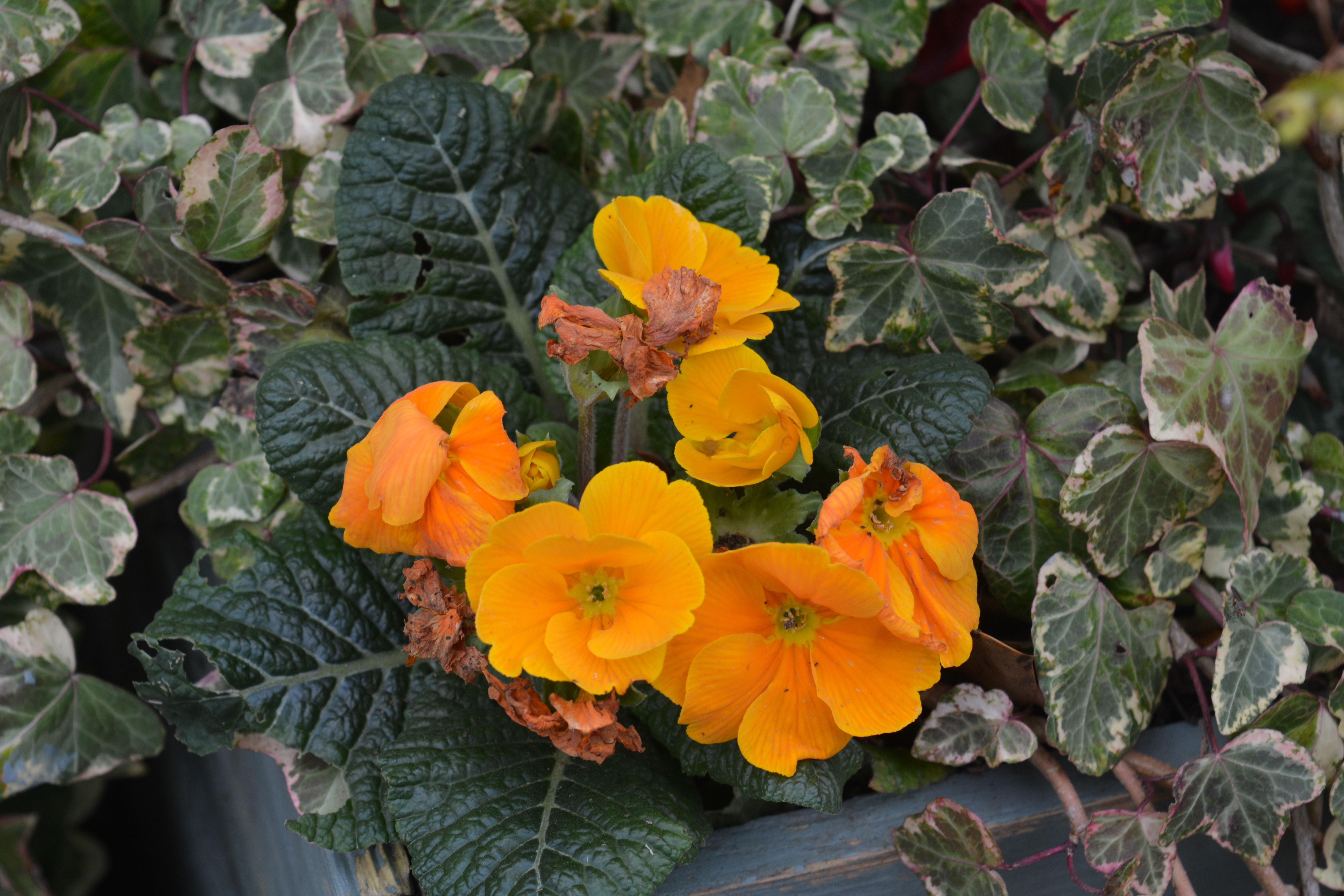
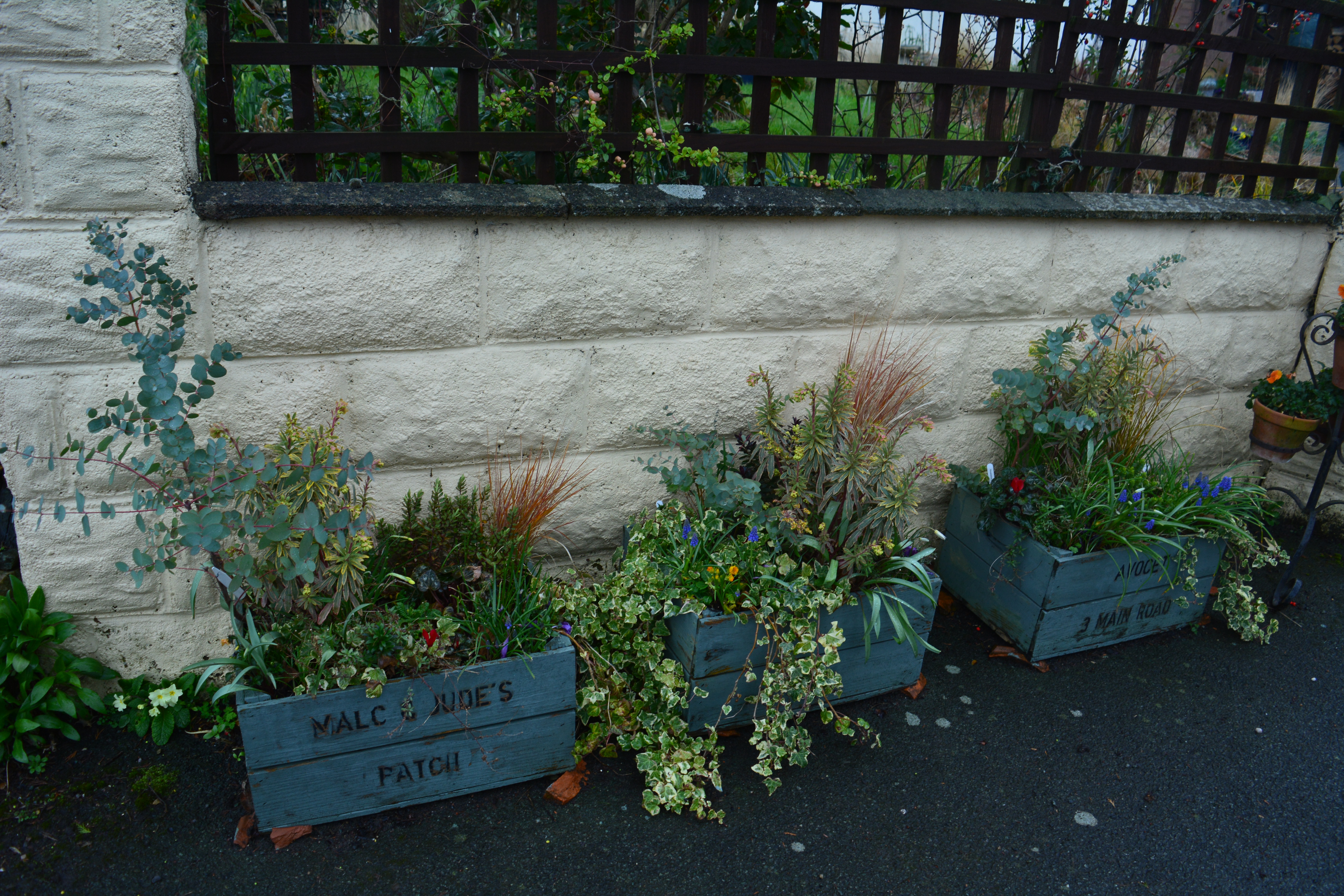
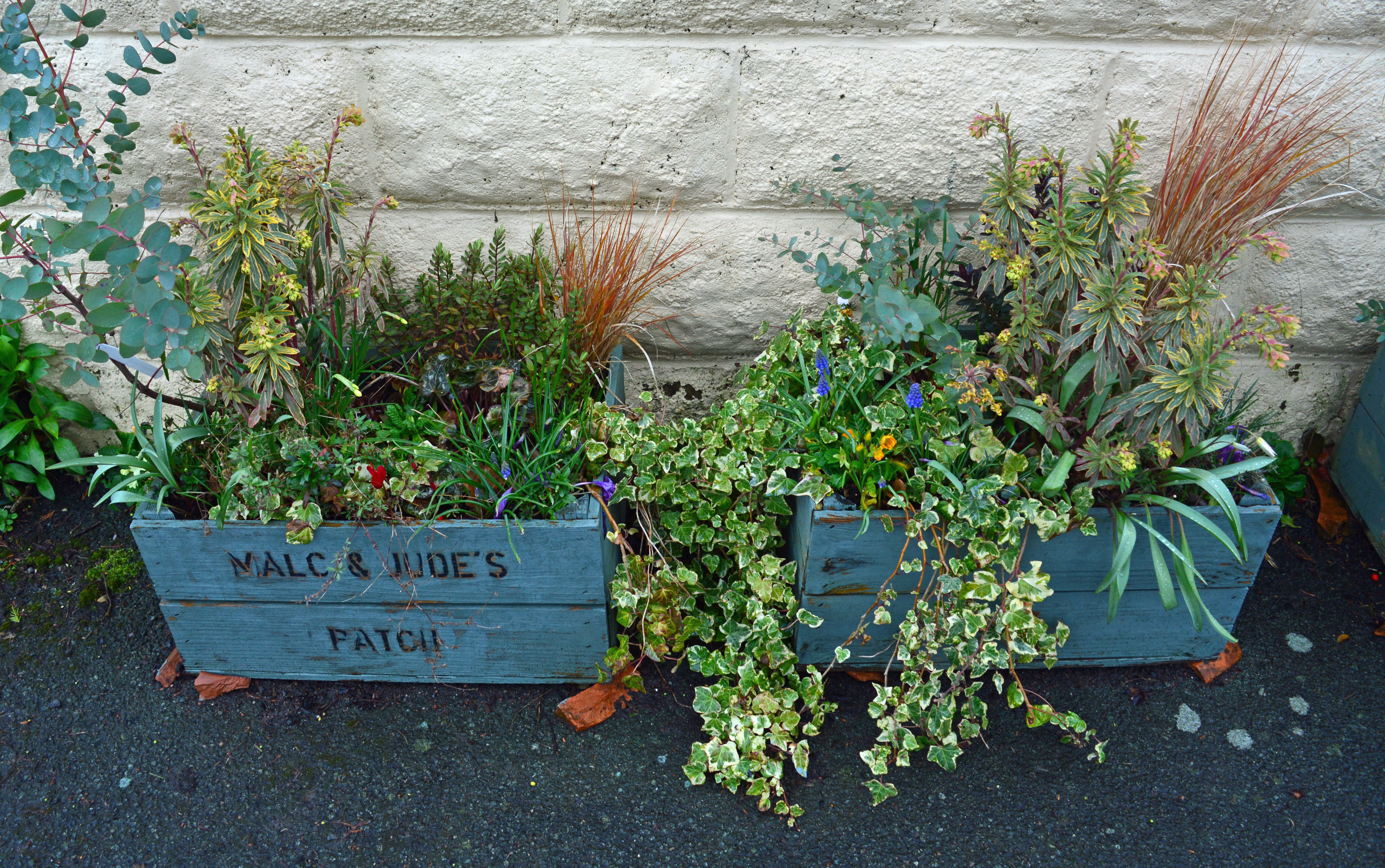
On the opposite page I looked at two places of warmth, a warm welcome and the warm greenhouse. Firstly I wrote, “A warm welcome to your garden is essential throughout the year. We welcome visitors to our Avocet patch using three fruit boxes planted up with interesting seasonal plants. Here they are in March.”
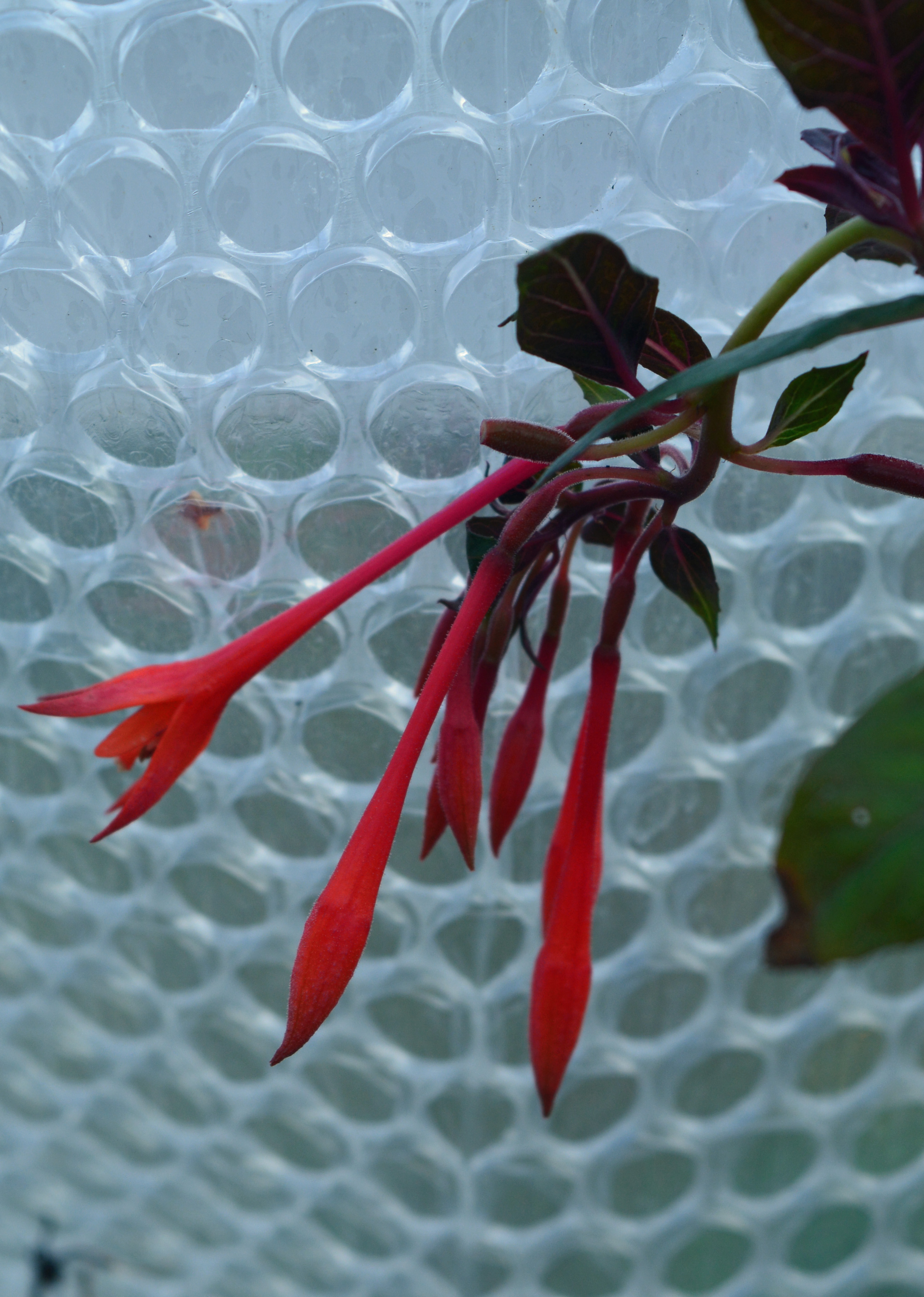
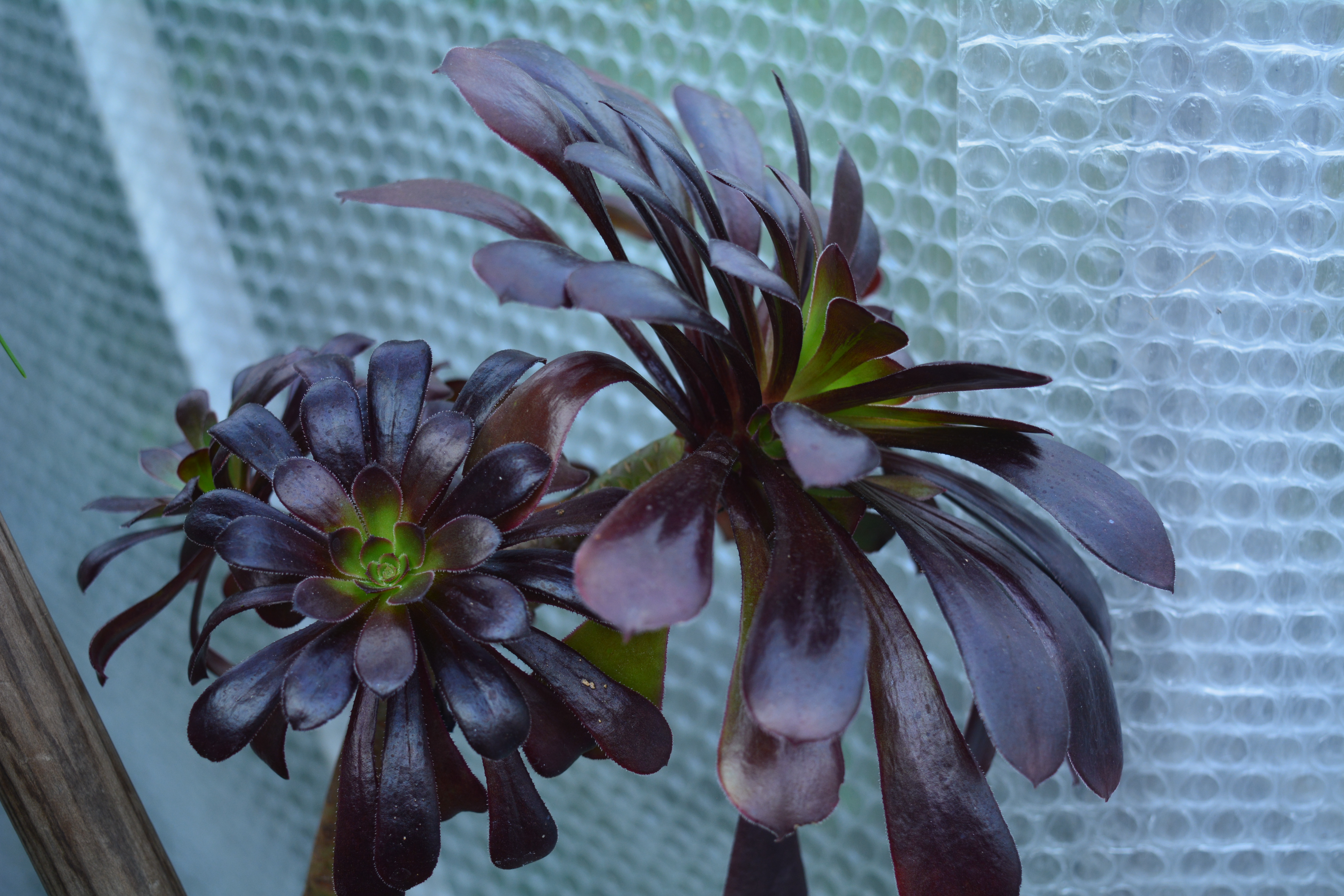
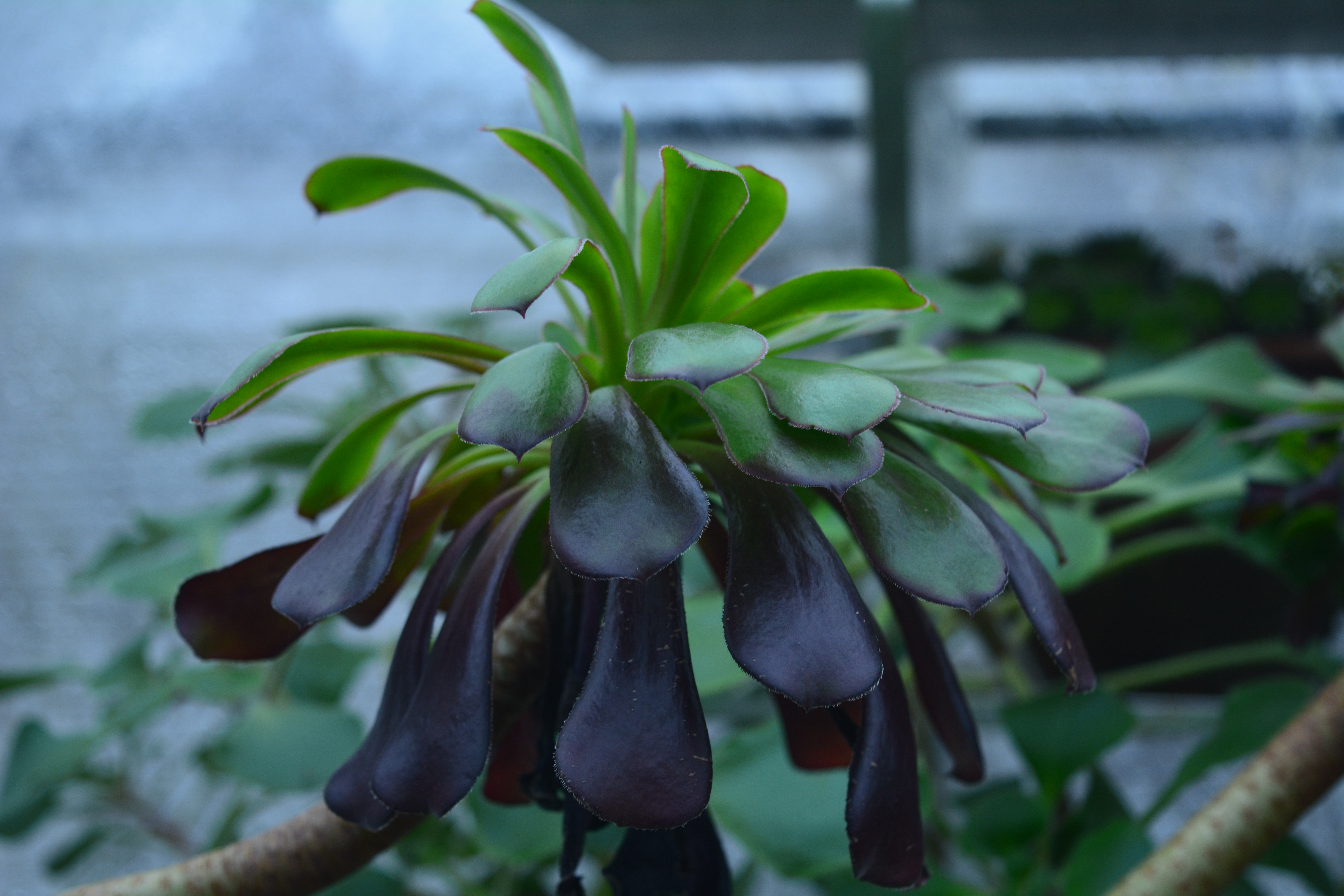
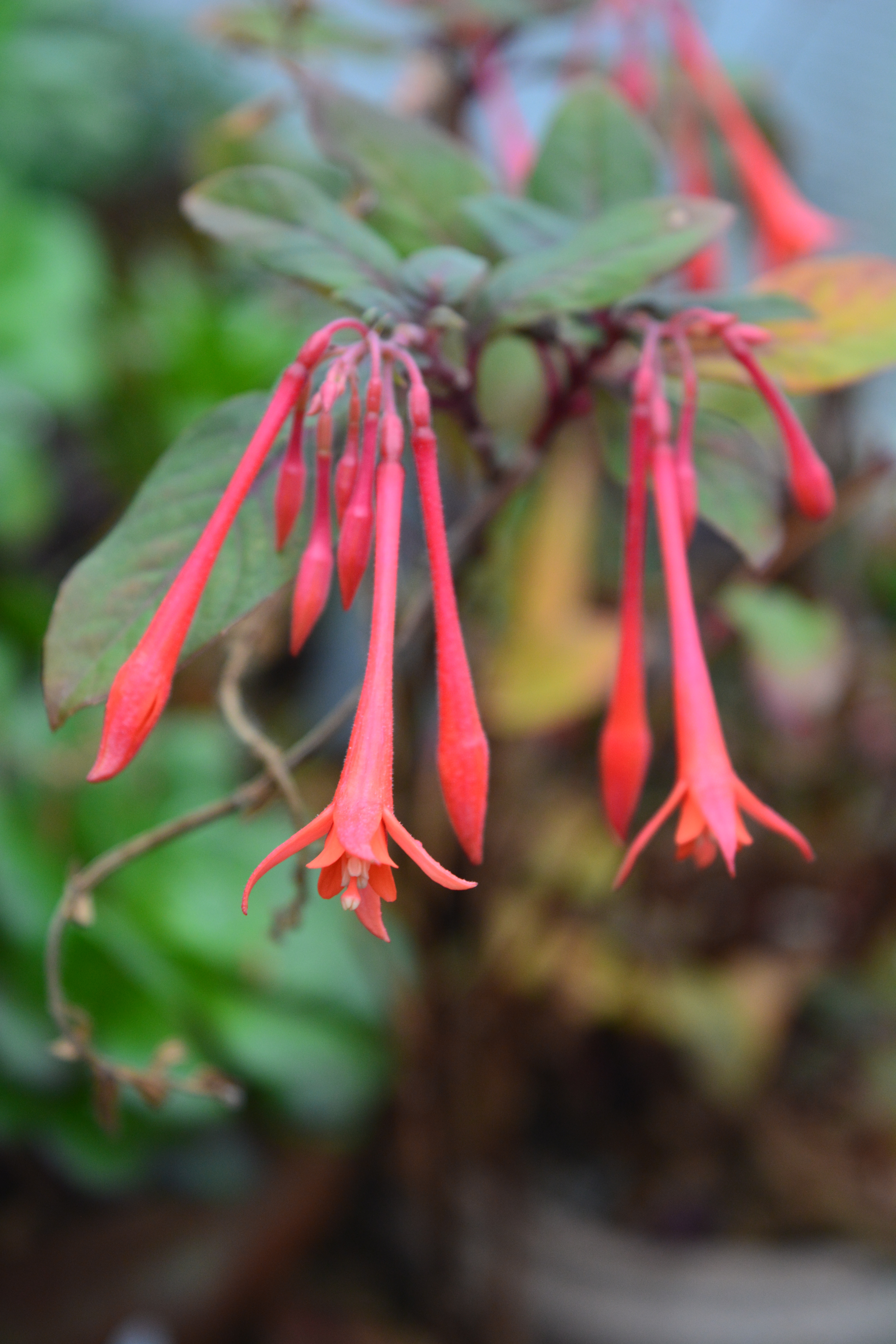
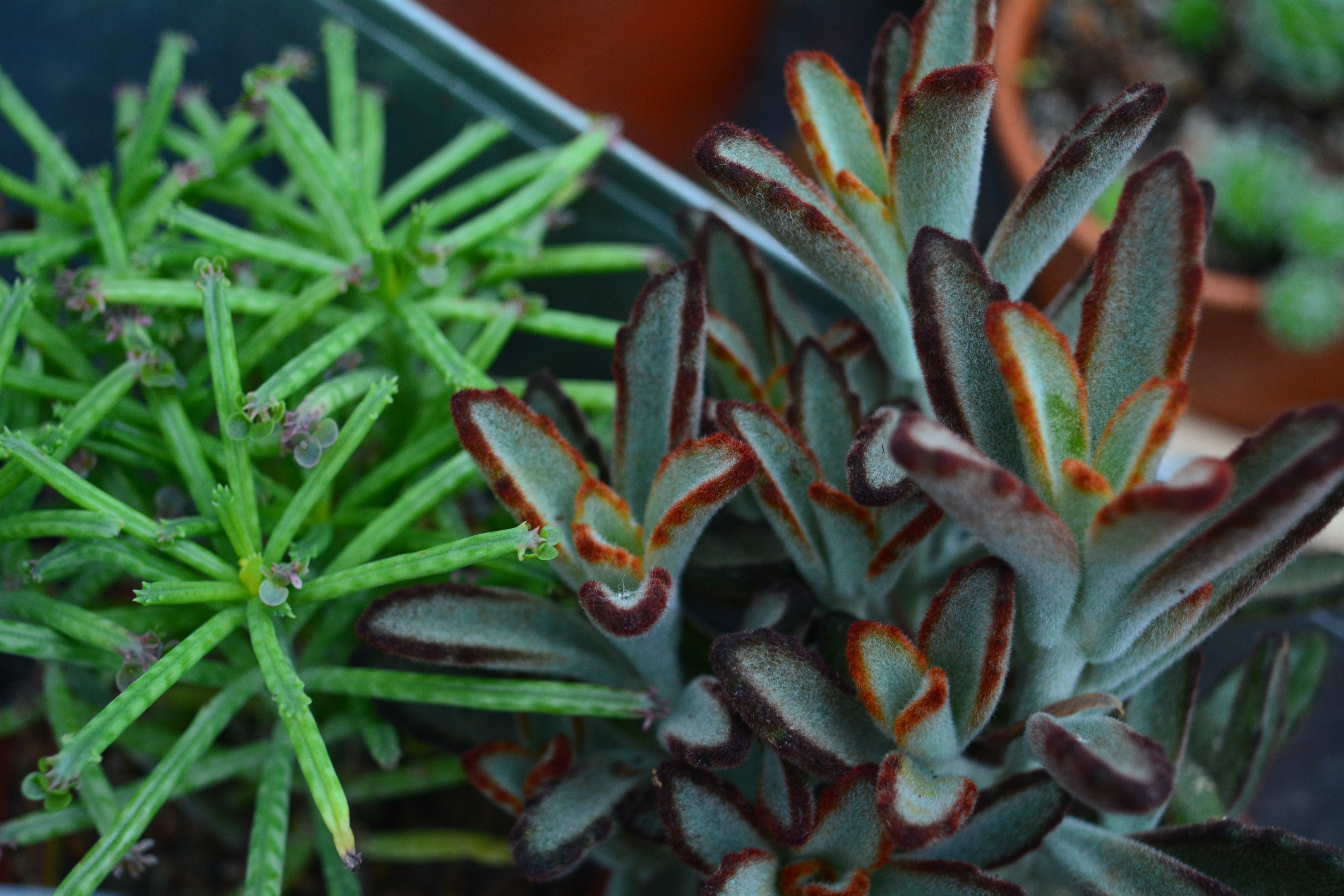
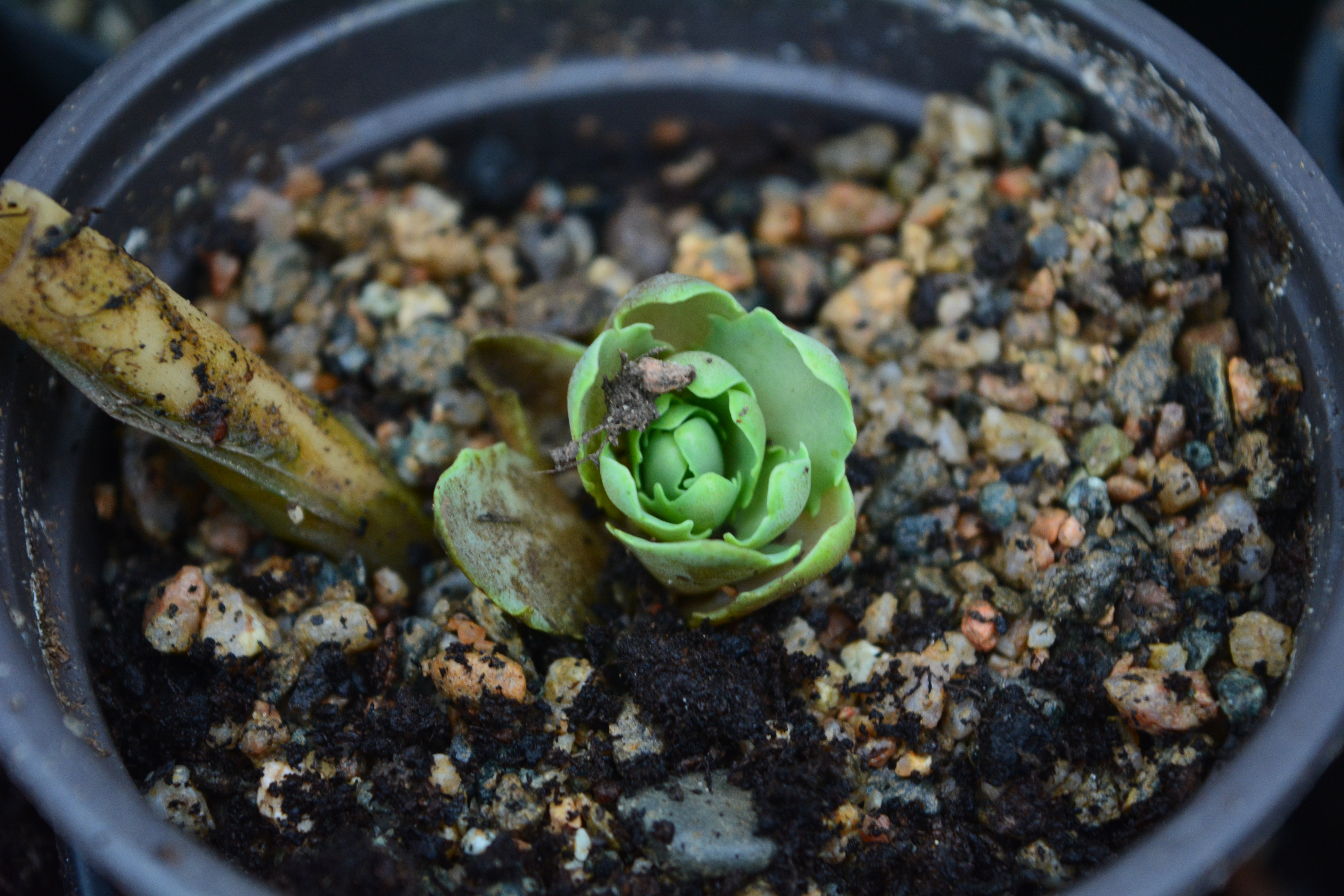
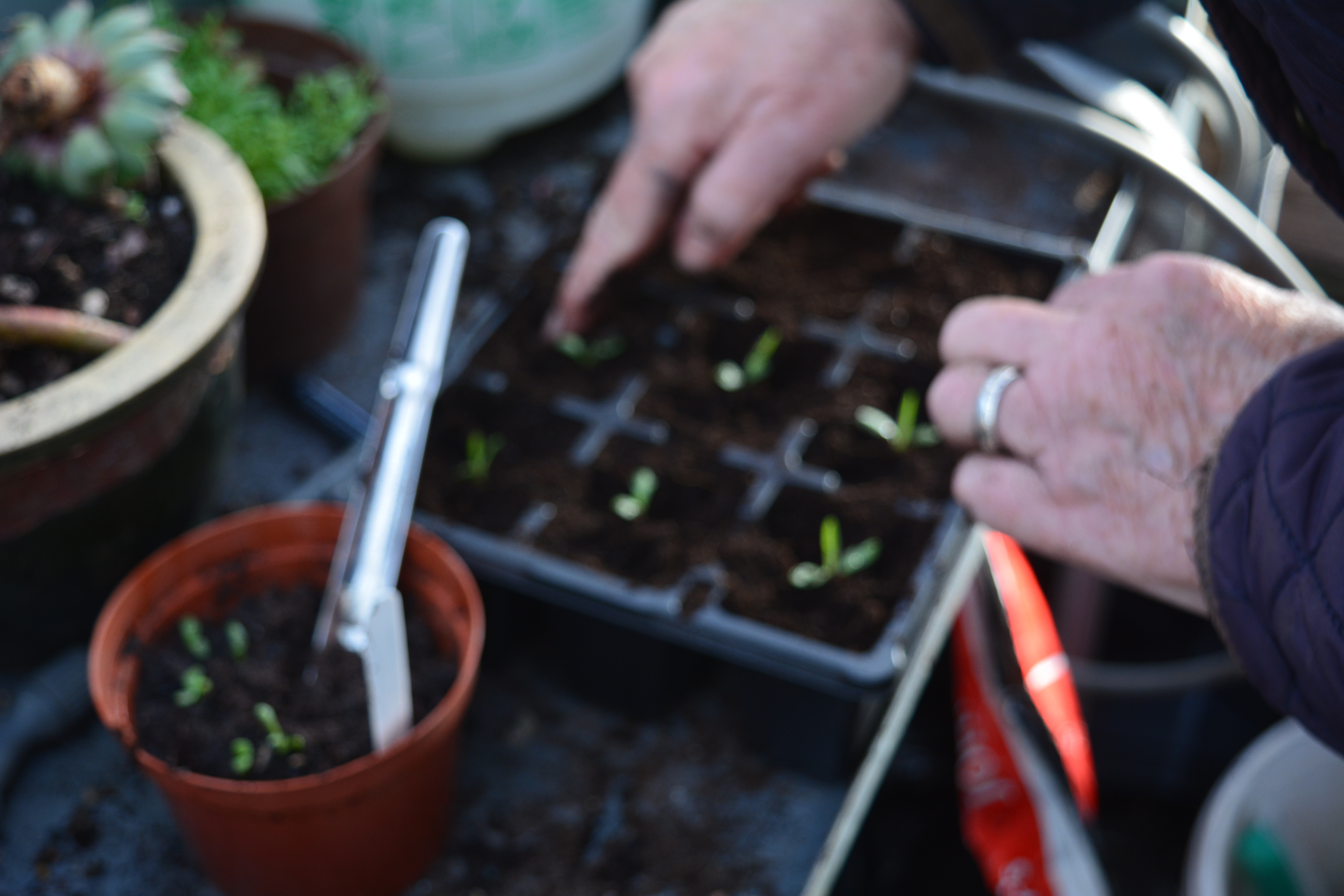
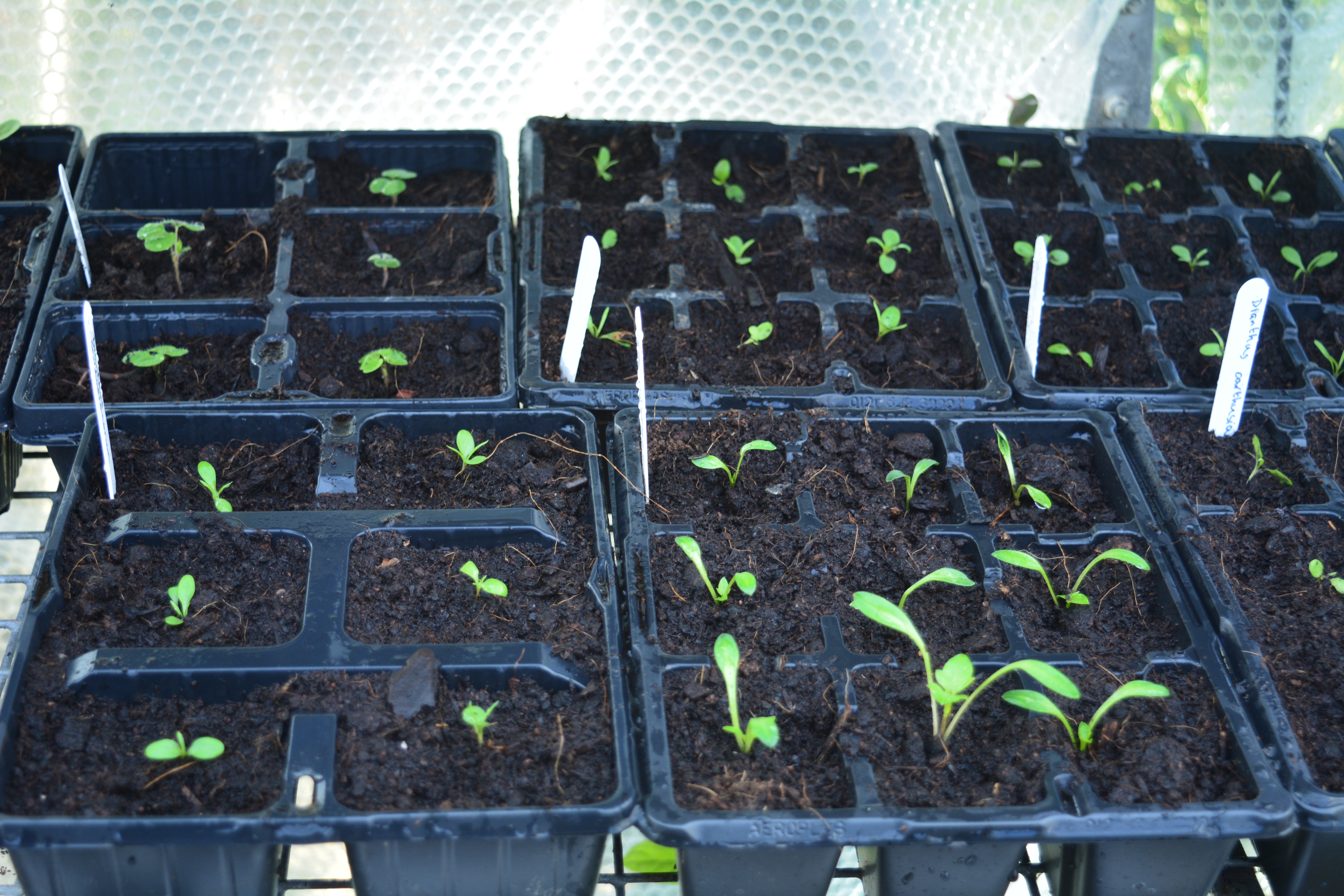
“When winter weather gets too much we retreat to the greenhouse where Jude has been pricking out seedlings and I have been nurturing my delicate succulents and Fuschia thalia which is in flower in the first week of March.”
  

On the next couple of pages I consider March pruning and some flowers we enjoyed in our March garden.

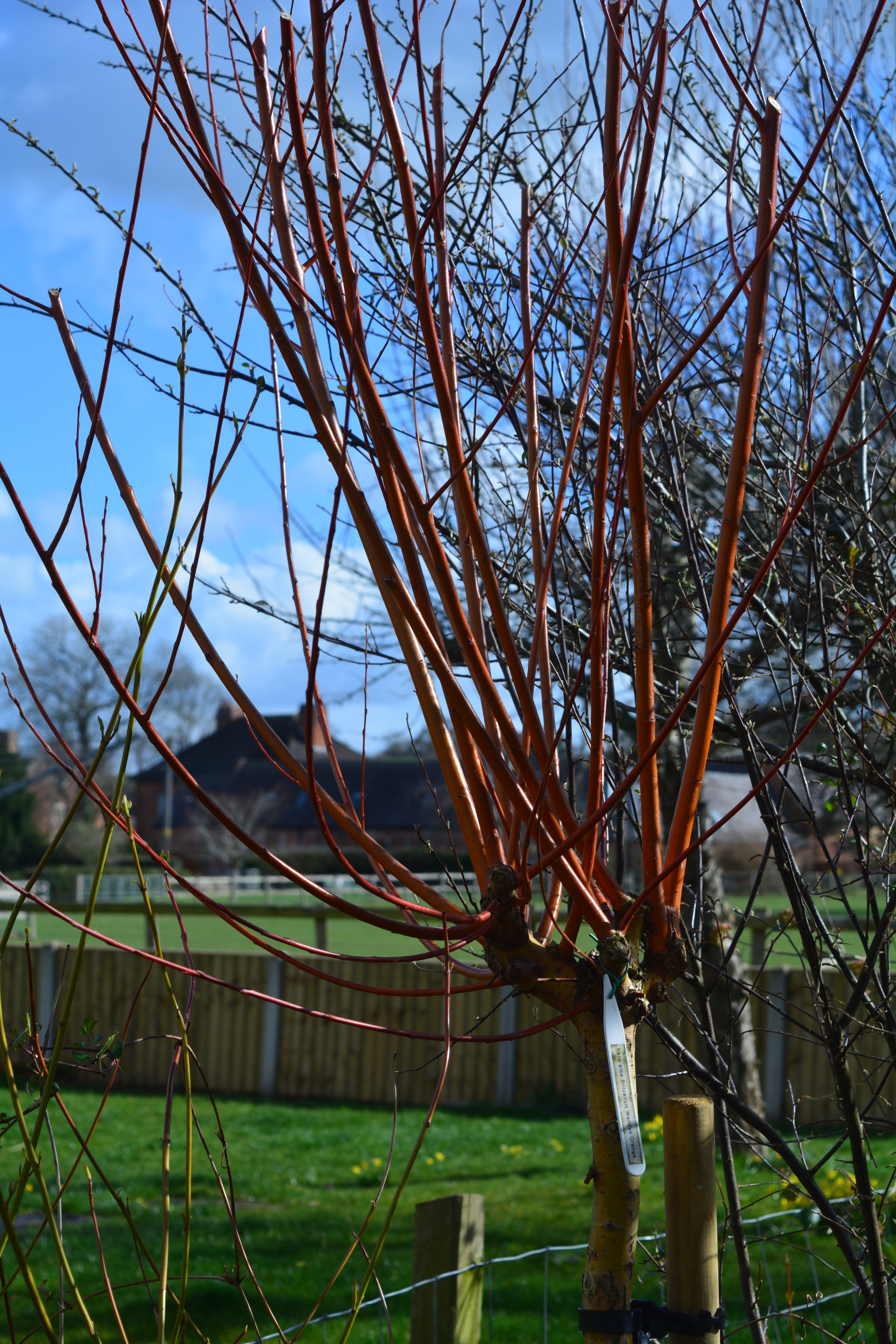
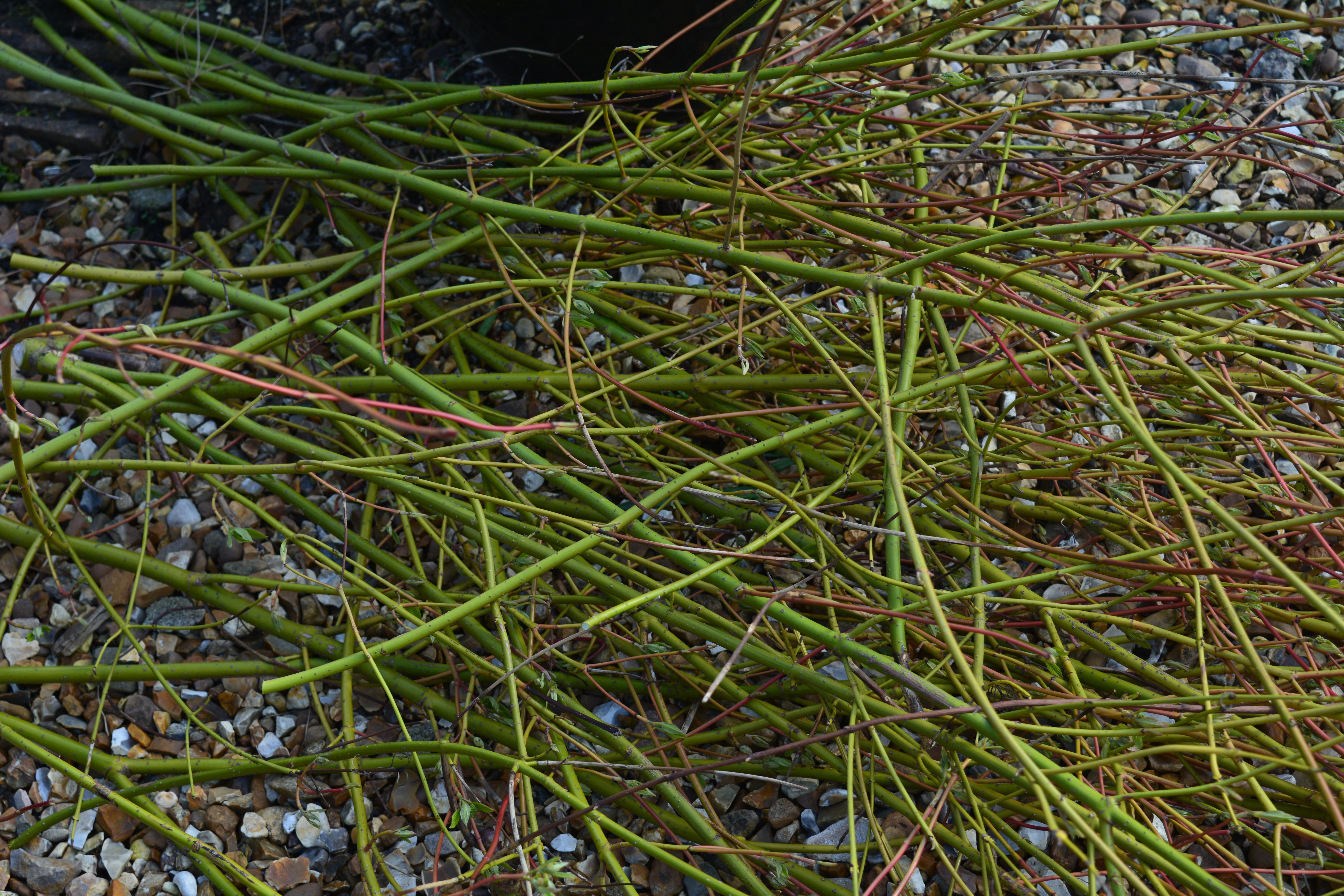
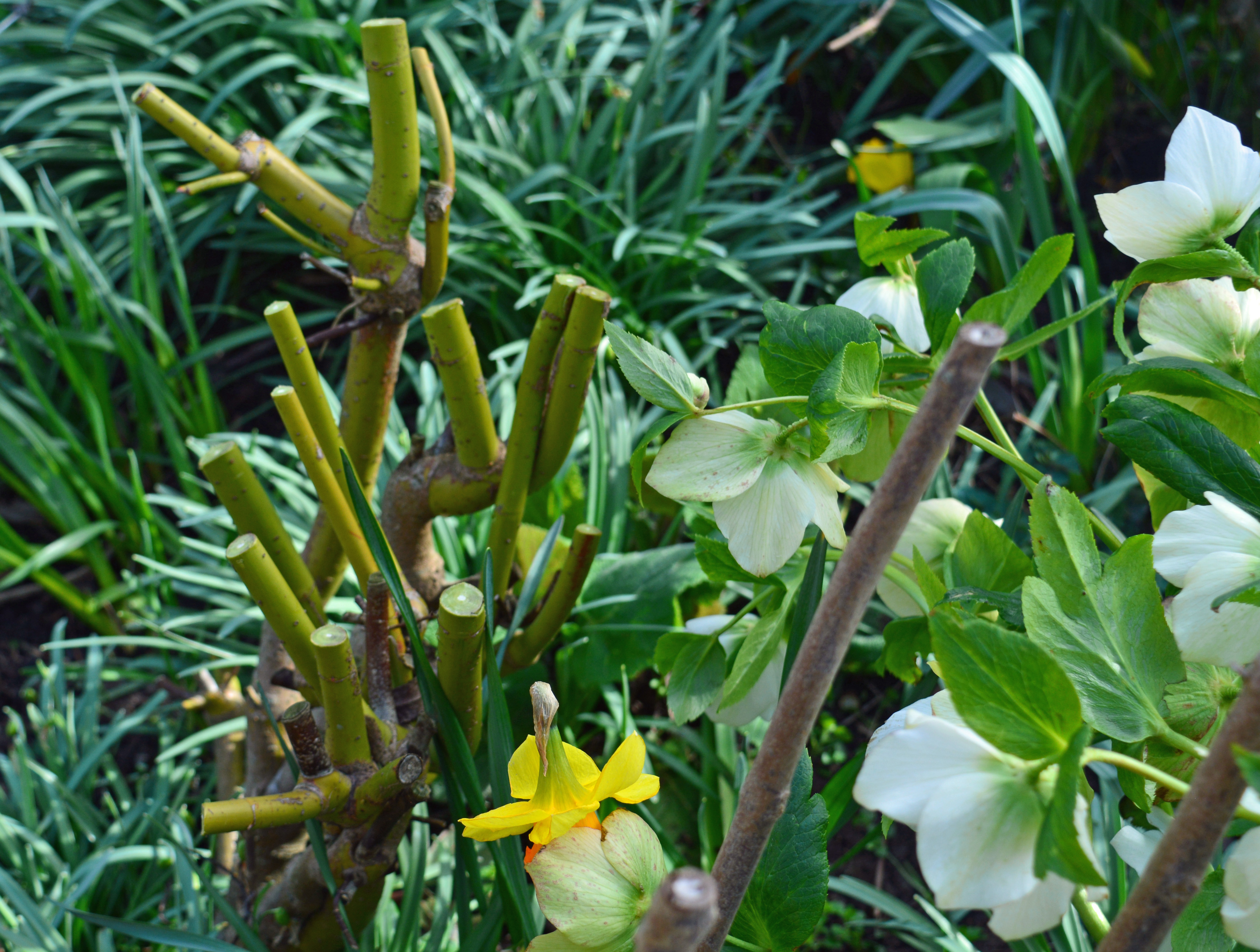
Of pruning I wrote, “March is a busy month in our garden. As well as cutting deciduous grasses rather drastically almost down to the ground we have to coppice or pollard Salix and Cornus to ensure we will enjoy their coloured stems next winter.”

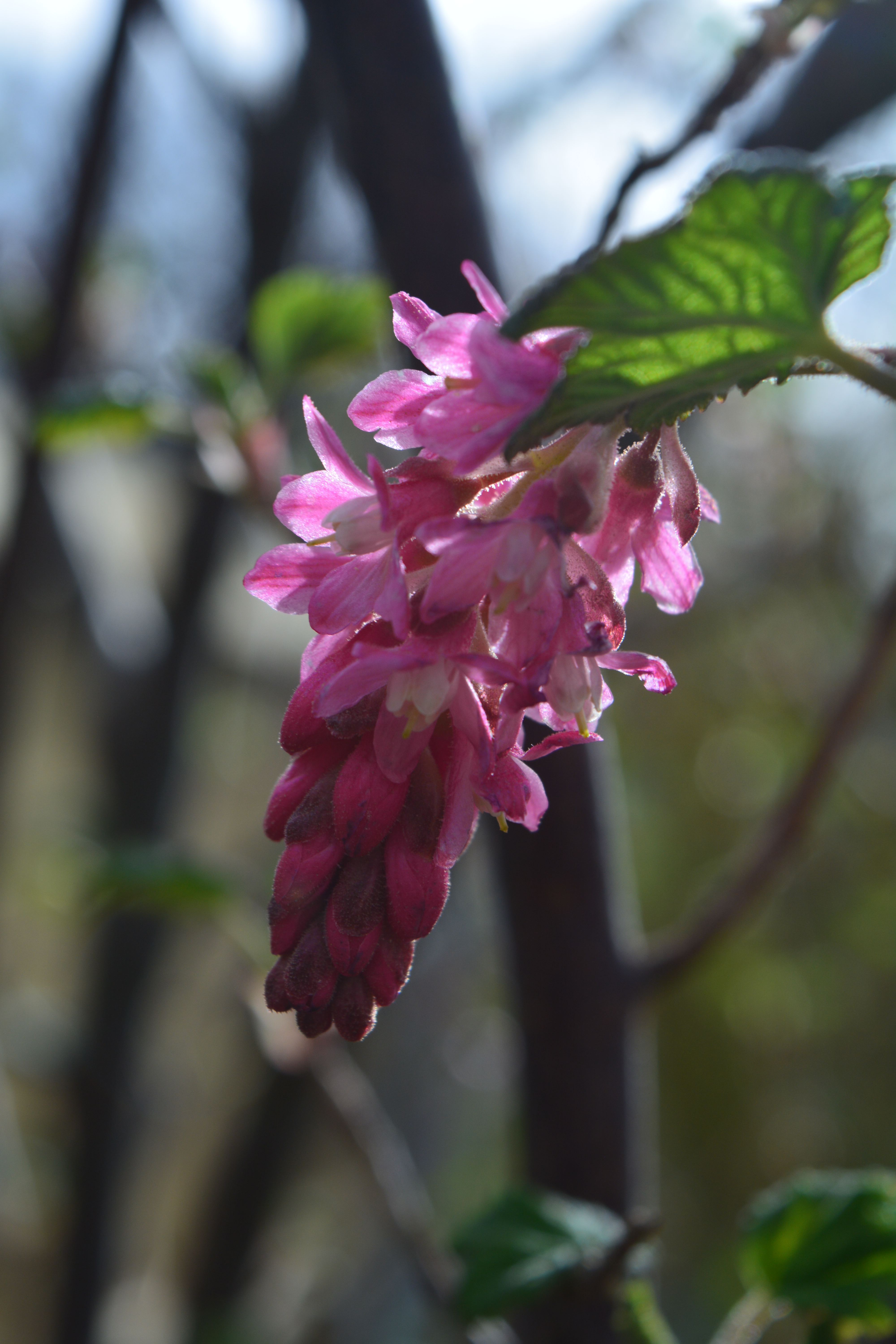
“Flowers are appearing, some expected but others well out of their season.”


Over the page I moved on to consider the fresh growth appearing throughout the garden during March.
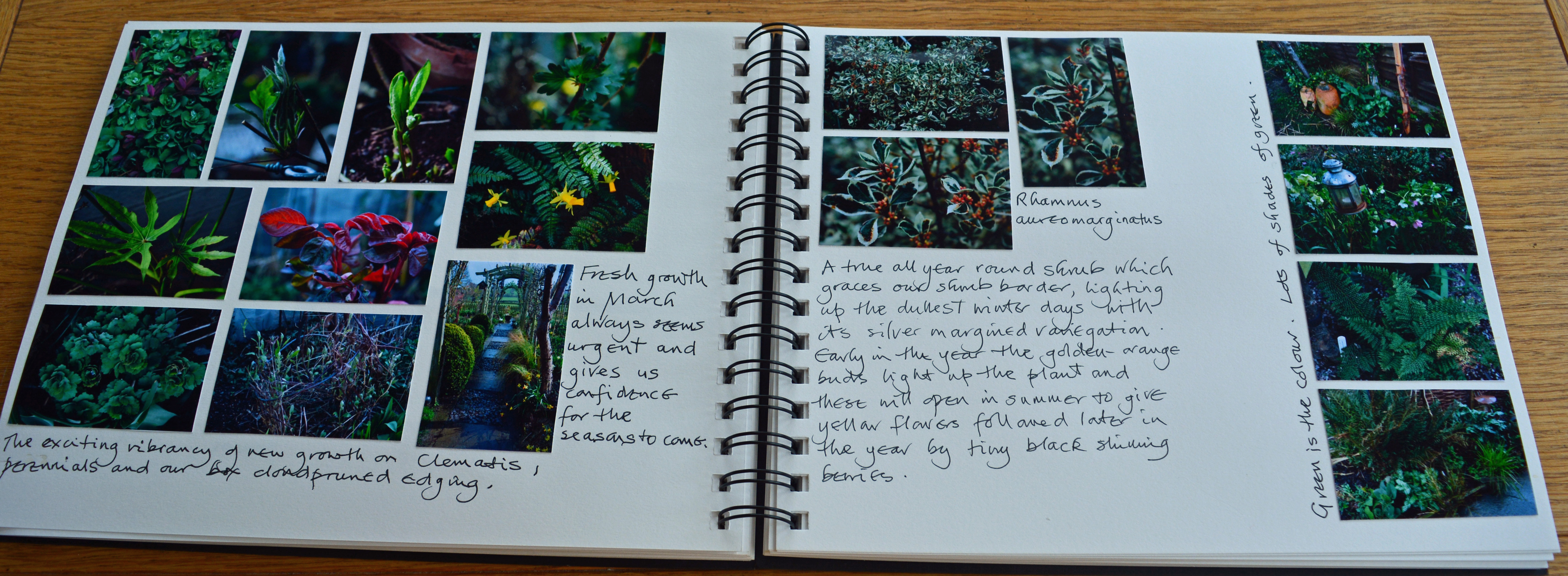
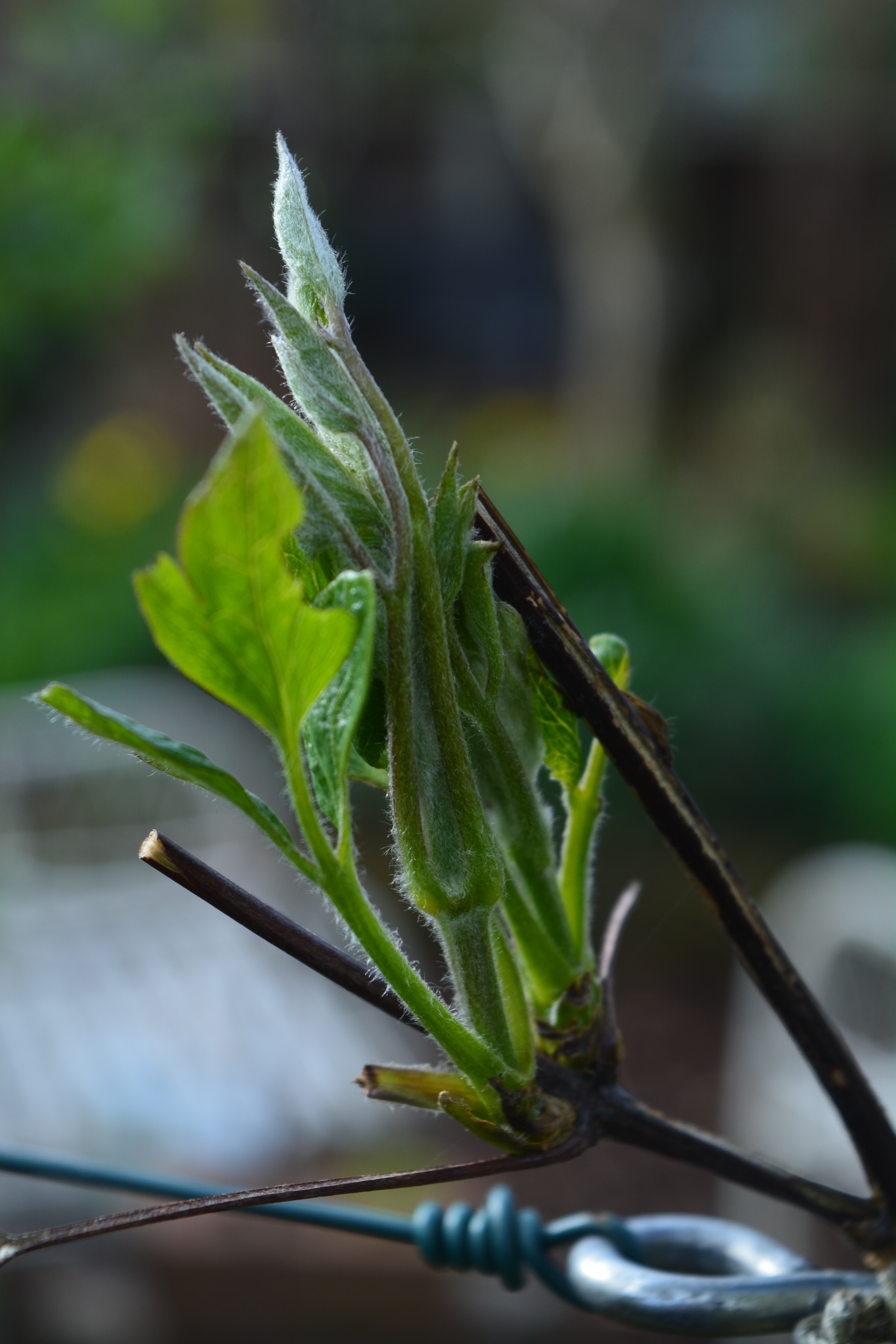
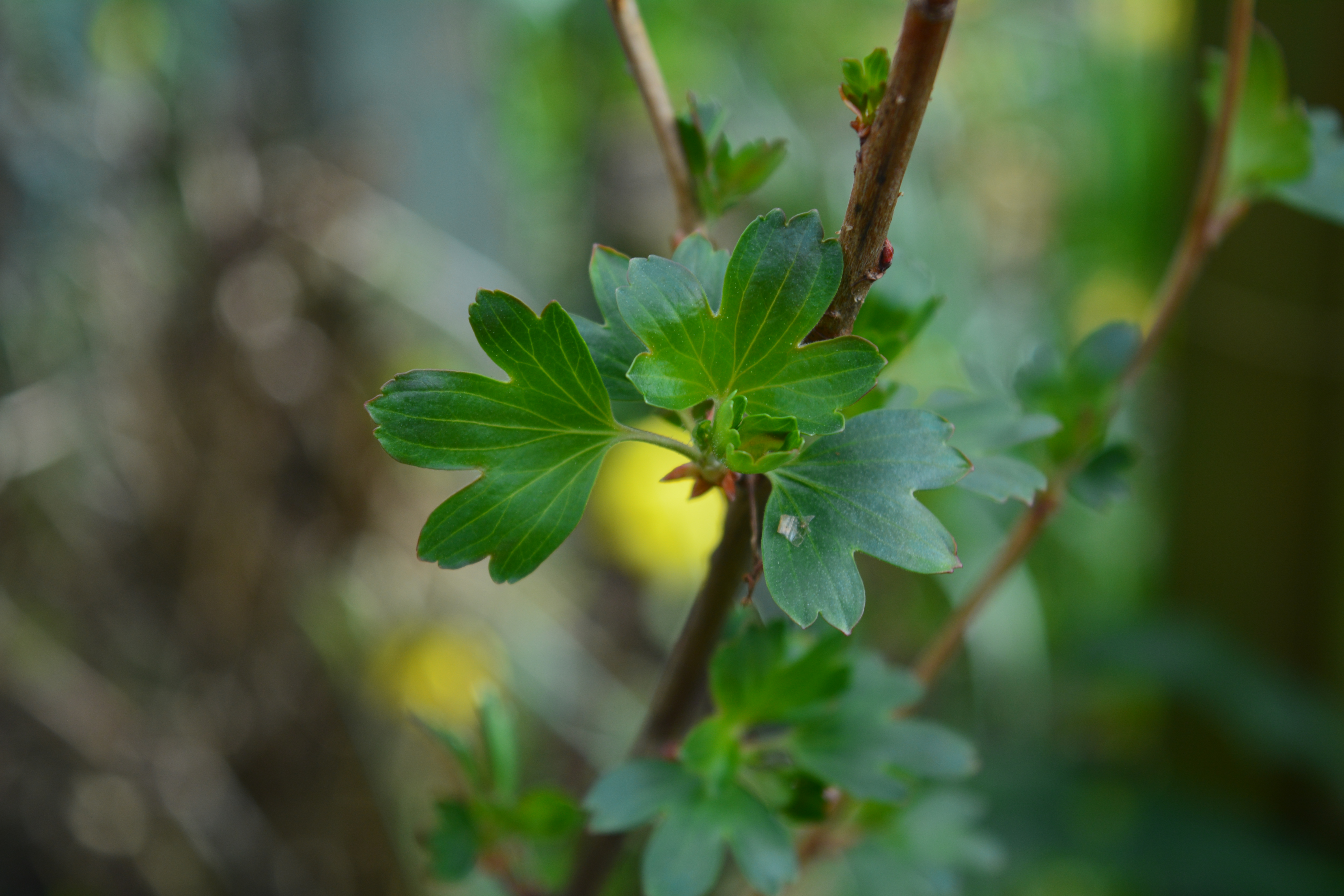
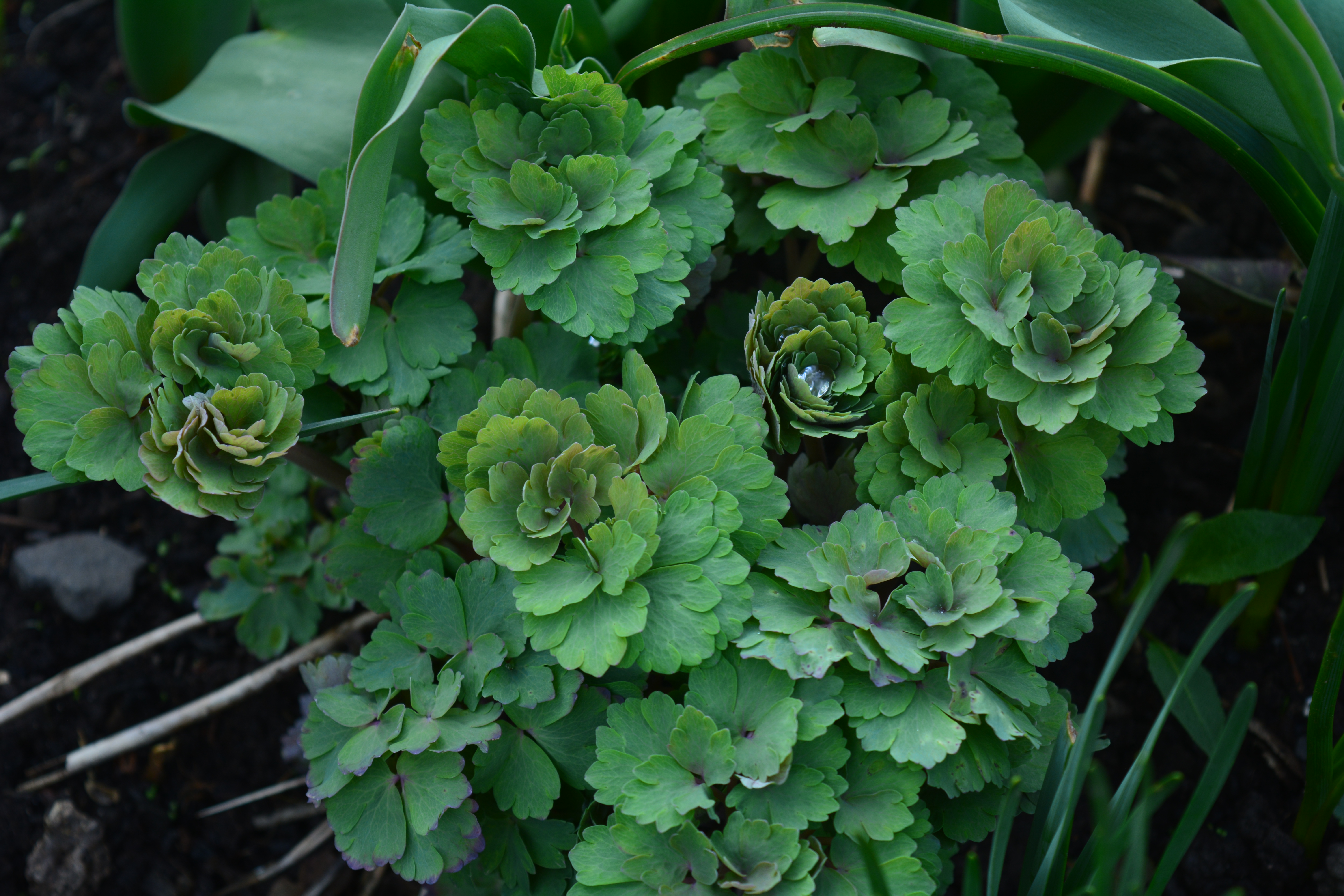
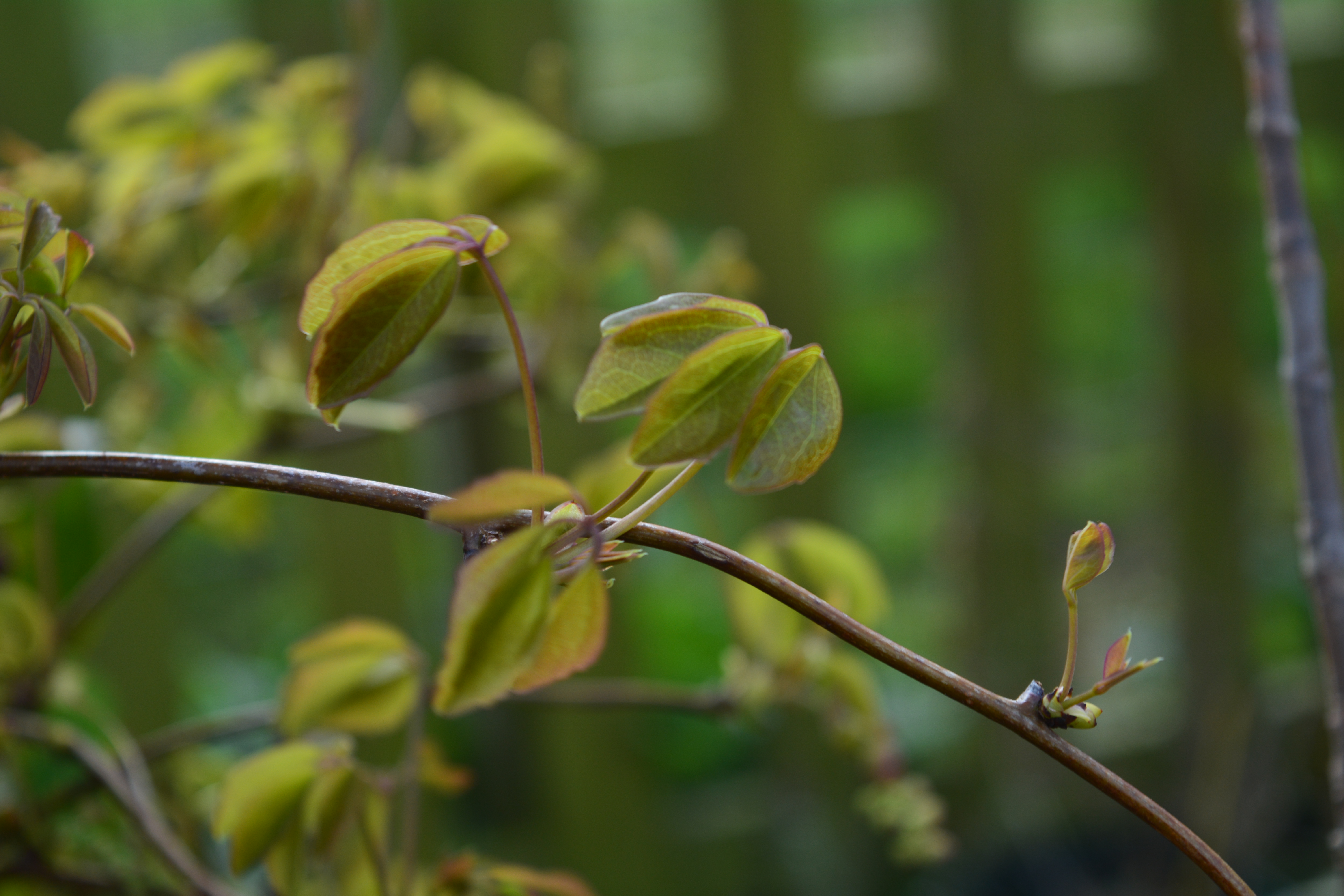
I wrote, “Fresh growth in March always seems urgent and gives us confidence for the seasons to come. The excitement and vibrancy of new growth on Clematis, perennials and our cloud-pruned box edging.”
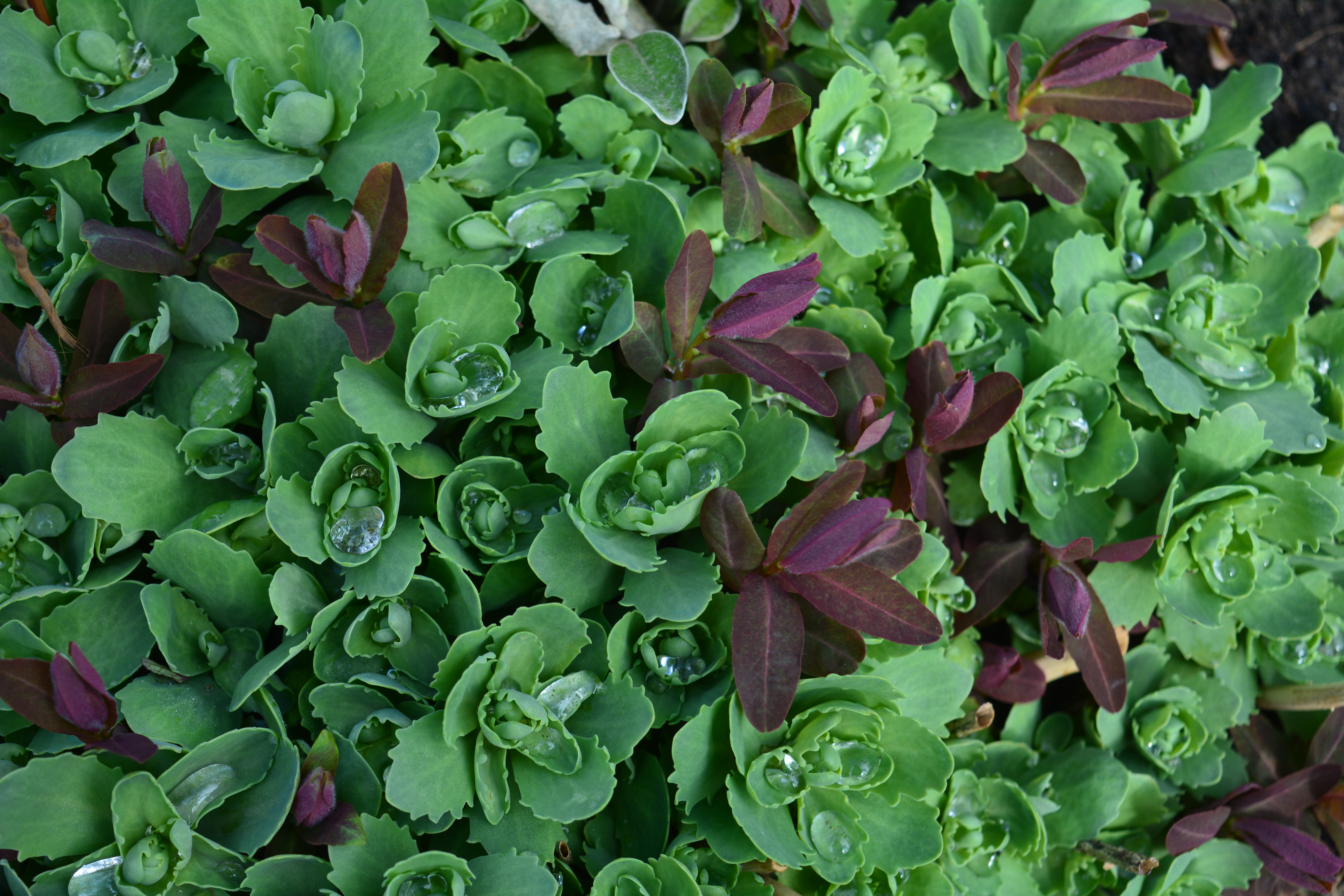
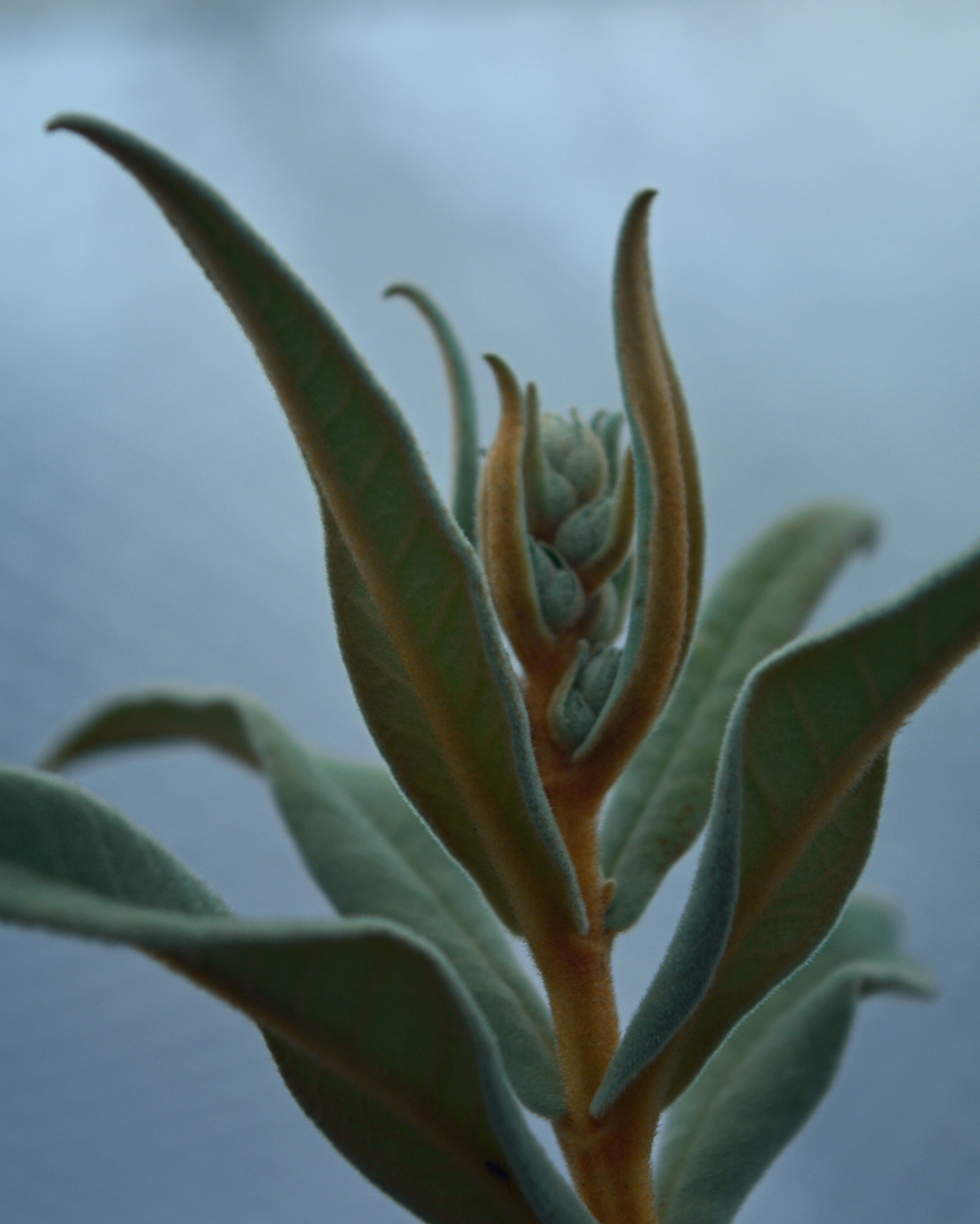
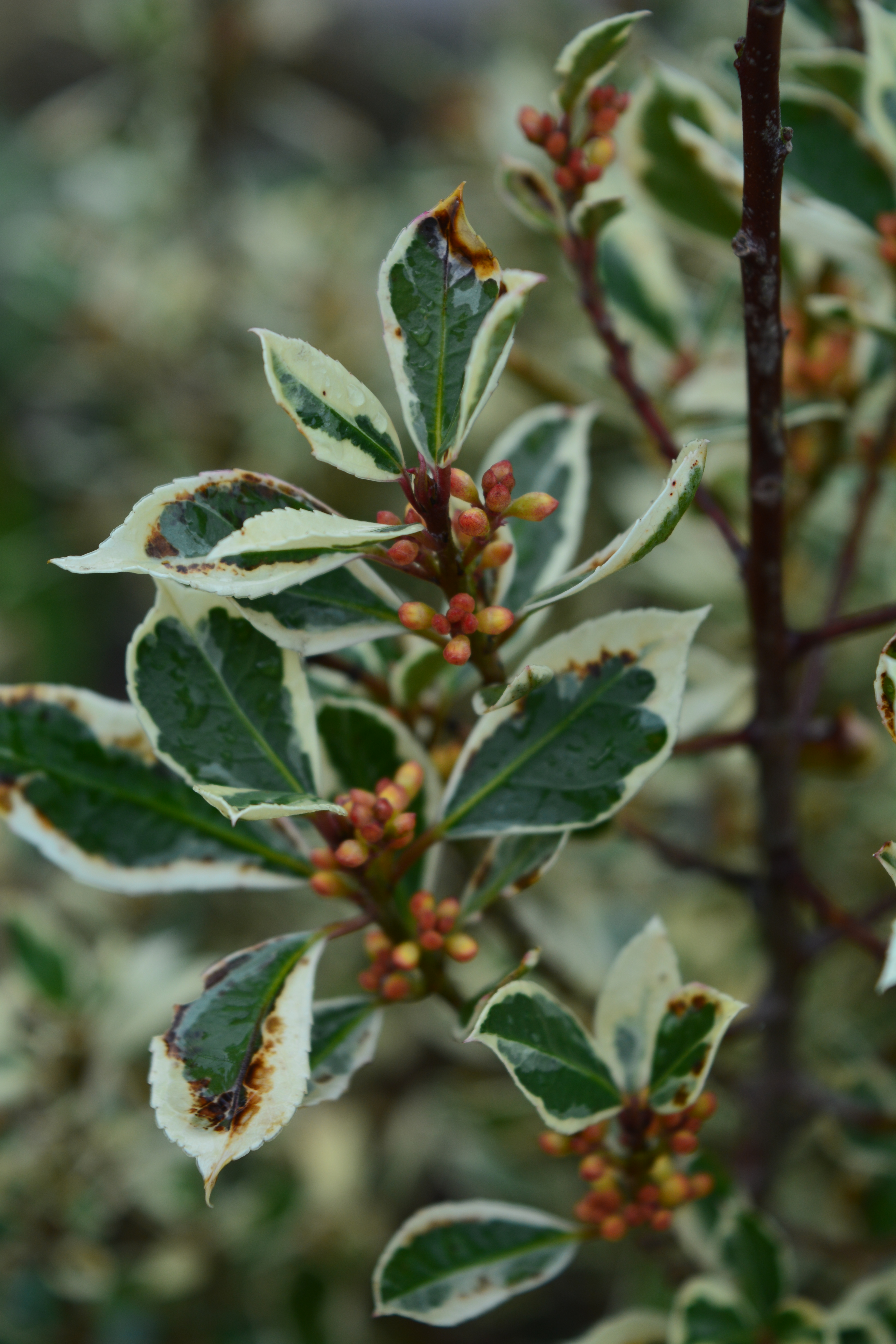
On the opposite page I considered a favourite shrub growing in our “Shrub Border”, Rhamnus aureomarginatus, and looked at the importance of all the greens in our March garden. About Rhamnus I wrote, A true all year round shrub which graces our shrub border, lighting up the dullest winter days with its silver margined variegation. Early in the year the golden-orange flower buds light up the plant and these will open in summer to give yellow flowers followed later in the year by tiny black shining berries.”

 

Opposite I wrote, “Green is the colour. Lots of shades of green.”


So that is it for my March gardening report so in a few days it will be time to start on April’s entries.


Categories
colours flowering bulbs garden design garden photography gardening gardens grasses hardy perennials ornamental grasses Shrewsbury Shropshire South Shropshire Winter Gardening winter gardens

My Garden Journal 2019 – January

Back with my new journal for a new year, my Garden Journal 2019. January is often described a s a quiet month in the garden and gardeners are often told to keep inside in the warm, order seeds from catalogues, clean their sheds and sharpen bladed tools and clean up all tools. But in reality a good garden is a good garden for 12 months of the year and a good gardener keeps his bladed tools sharp continously, all his tools are cared for througout the year and there is plenty to look at and enjoy in the garden and plenty of interest to be found in plants.

I begin my January journal entries with the words, “What is in flower in our Avocet patch early in January? A quick wander around on a calm, dry day with camera in hand provides the answer. I thought I wouls be out in the garden for 10 minutes or so but there was so much t lok at that it was three times longer.” 

I shared a set of 8 photos showing “Violas, Cyclamen, members of the Primula family and even an adventurous Rose.”


I then went onwards with my camera into the greenhouse which is not yet heated at all, so we are simply keeping things ticking over. Soon we will put heat on and the heated propagating bench in readiness for the exciting task of seed sowing. I wrote, “The greenhouse is a busy place in the winter full to overflowing with over-wintering sensitive plants, autumn seedlings ticking over and cuttingstaken late in the year.”

Examples of these sorts of plants are shown in the set of photos, including seedling Achilleas, Fuschia thalia and Sedum Matrona cuttings.

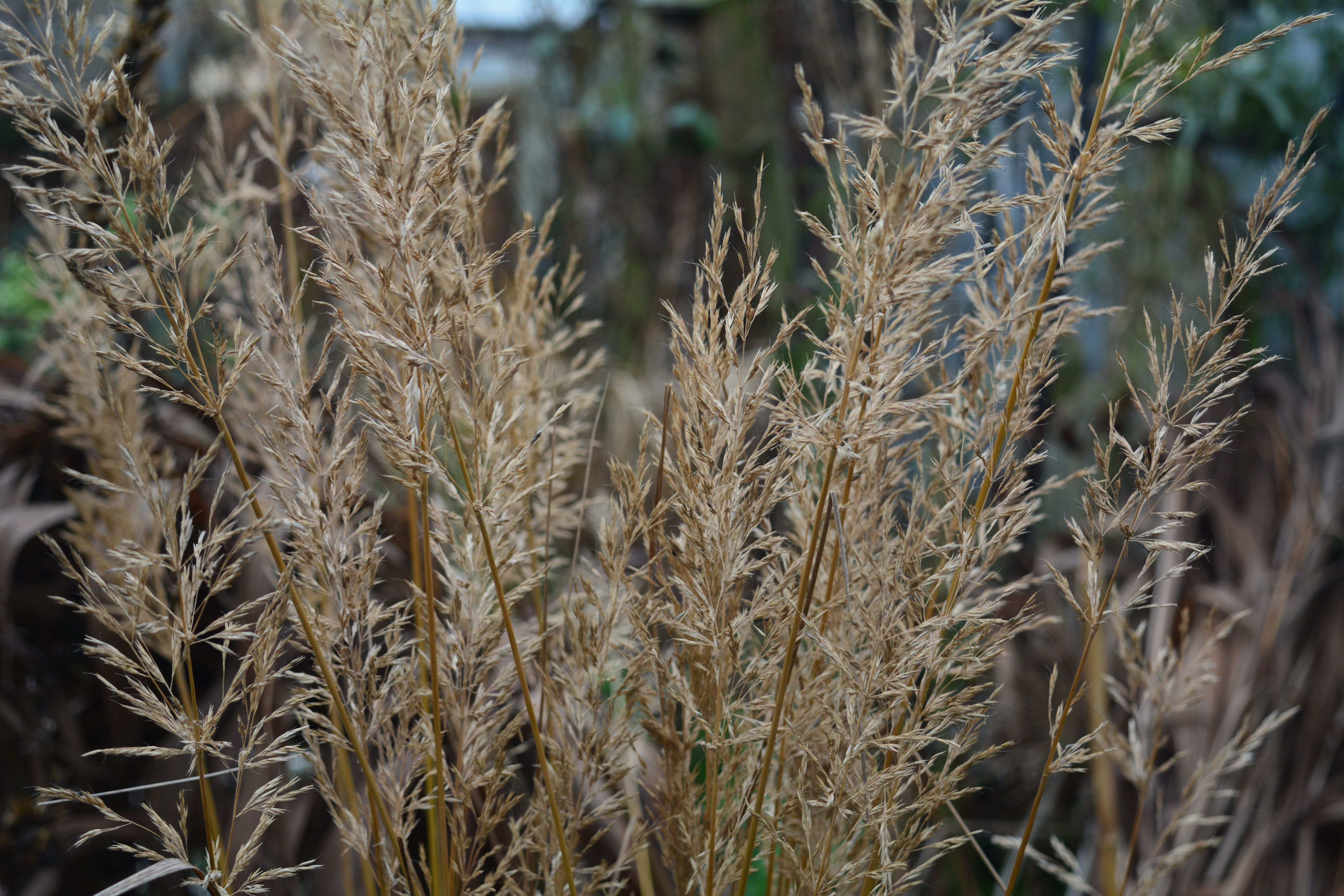
On the opposite page I looked at some of our many grasses that shine in January and shared a set of pics. “Grasses come into their own in January both deciduous and evergreen. Carex are exceptionally valuable winter grasses.”


Carex elata aurea                                                Carex elata aurea

Calamagrostis “Northwood”    Miscanthus sinensis         Carex “Evergold”

Carex elata “Evergold”                             Uncinia rubra       Carex “Frosted Curls”


Carex elata “Bowles Gold”                                Anemalanthe lessoniana


Calamostris brachytricha                                                        Carex buchanii

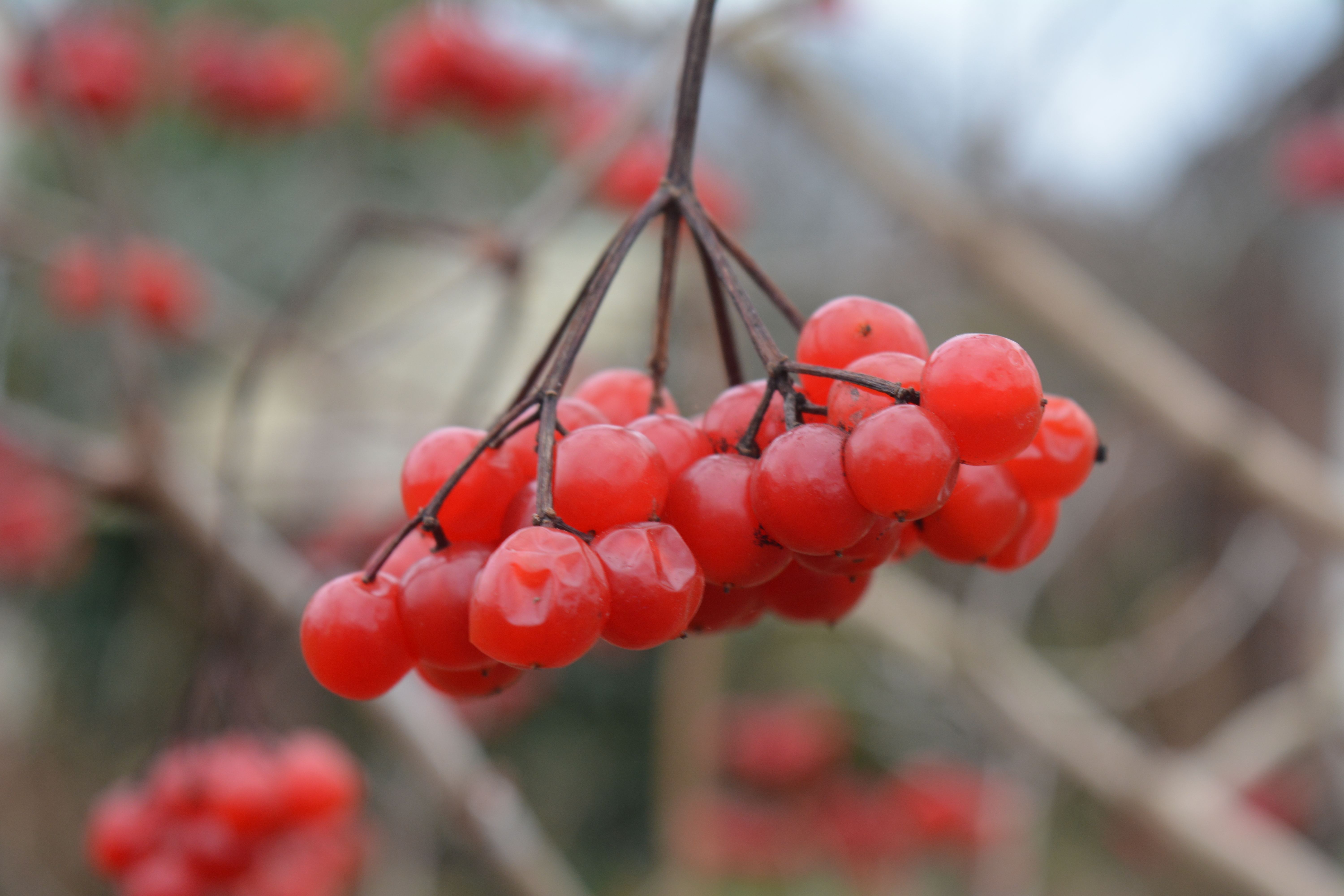
On the following double page spread I moved on to look at some of our berries and foliage plants giving interest in January. On the first page I wrote, “Throughout the winter birds especially members of the Thrush family enjoy gorging on the berries on our trees and shrubs. We grow berrying plants for the birds to eat as well as for our own visual feast. By January a few are still left over.”


Guelder Rose                                                Mahonia “Winter Sun”


Honeysuckle berries                                  Malus “Admiration”


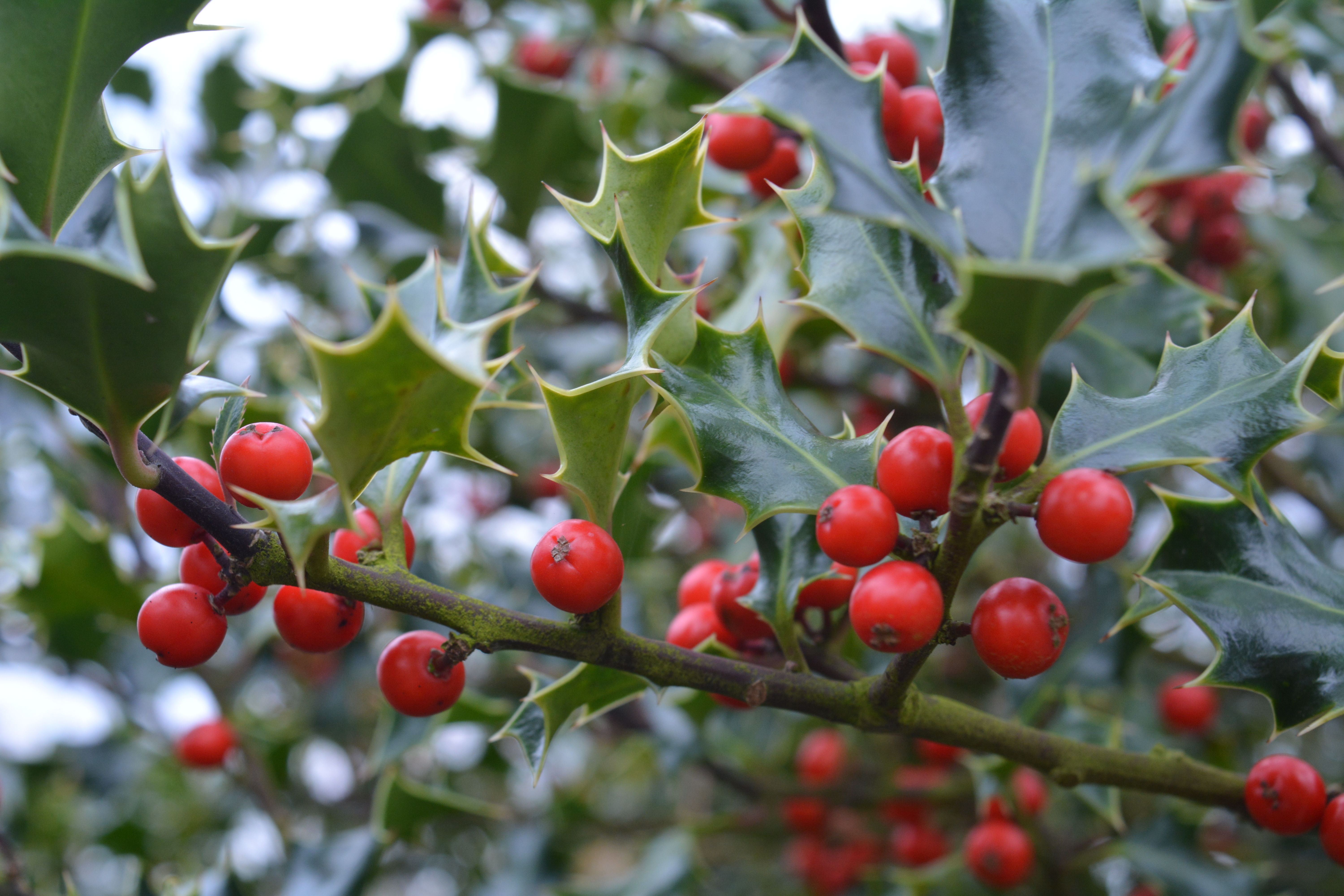
Native Holly                                                  Iris foetidissima

Cotoneaster                                                    Libertia

Sarcococa confusa

We can now look at the opposite page and consider some of our interesting foliage, where I wrote, “In January interesting foliage catches the eye, variegation, dusting with silver, glaucous or ruby coloured.”

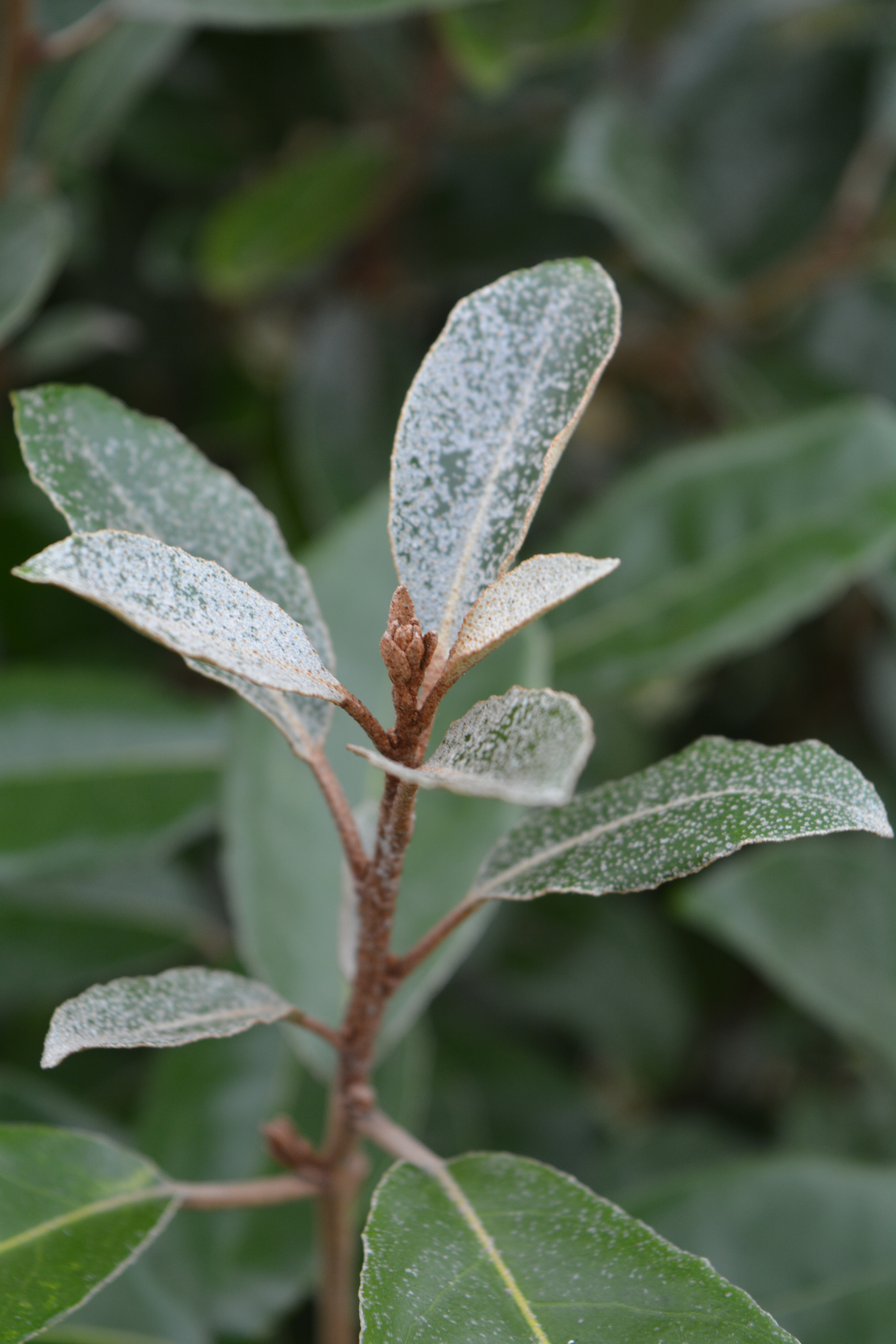
Eucalyptus parvula               Rhamnus aureomarginata         Eleagnus ebbingei

Coprosmia “Pacific Night”     Pinus mugo “Mumpitz”

Hedera helix “Long Trail Yellow”         Hebe 

Budleja “Lochinch”                                    Euphorbia lathyris

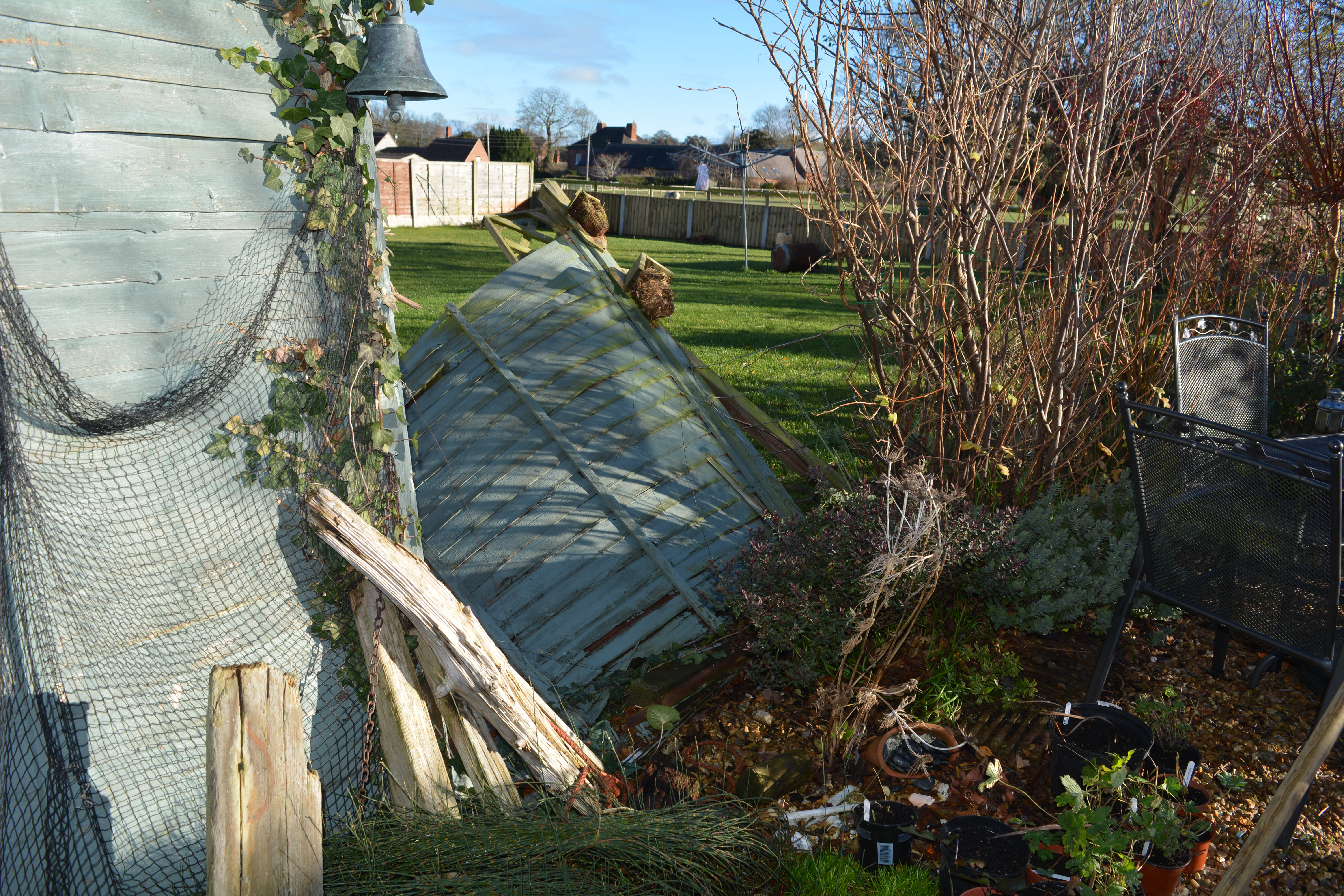
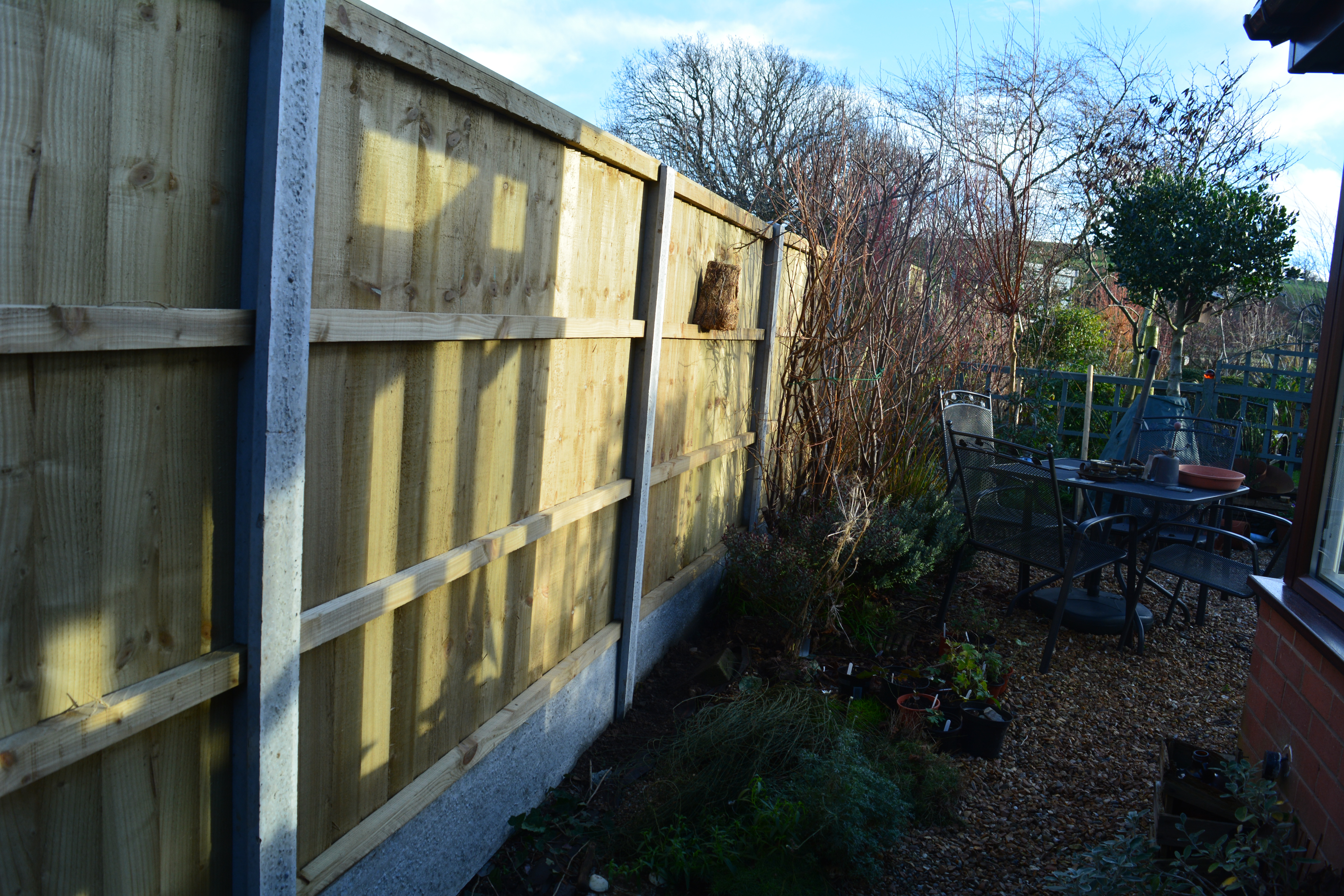
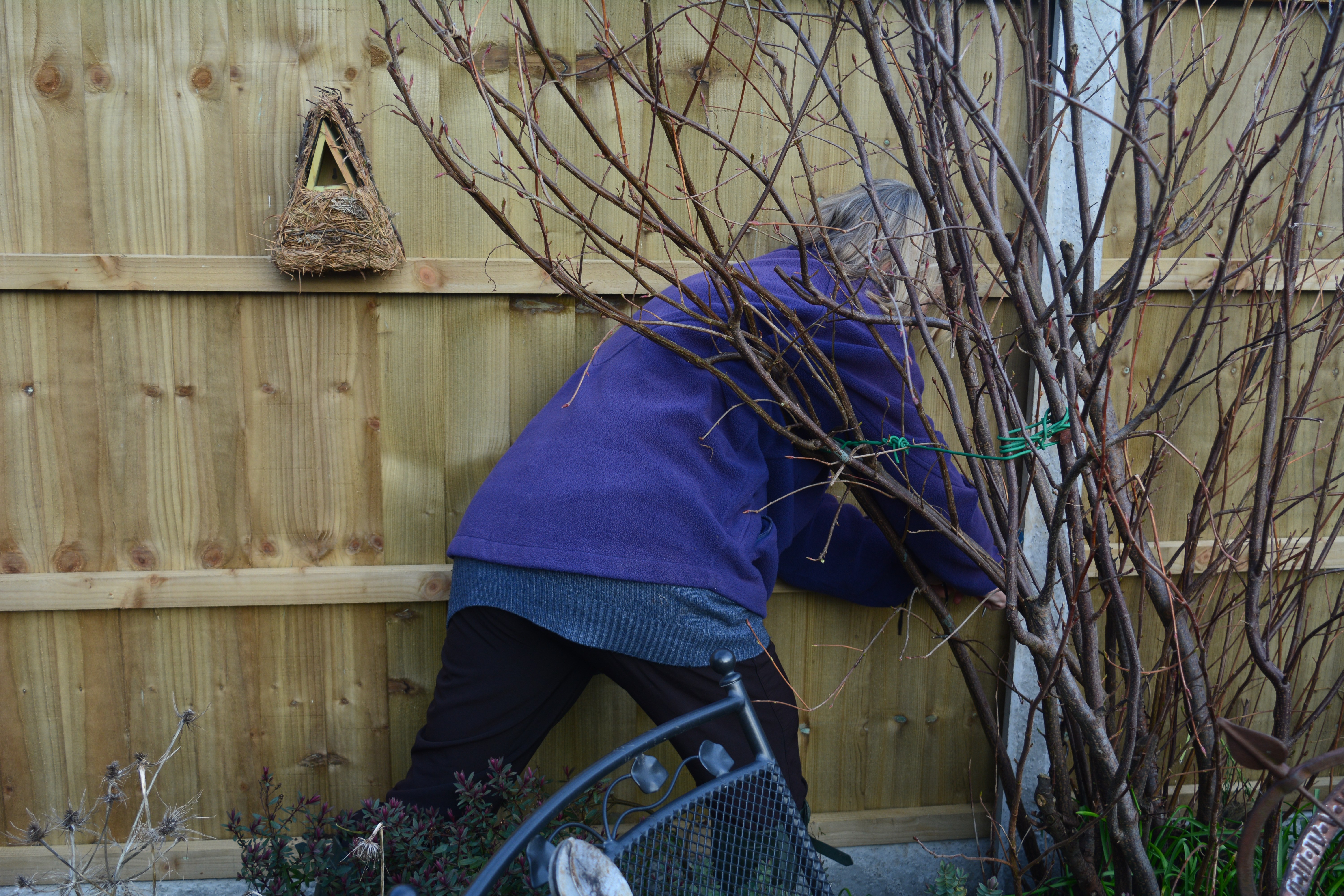
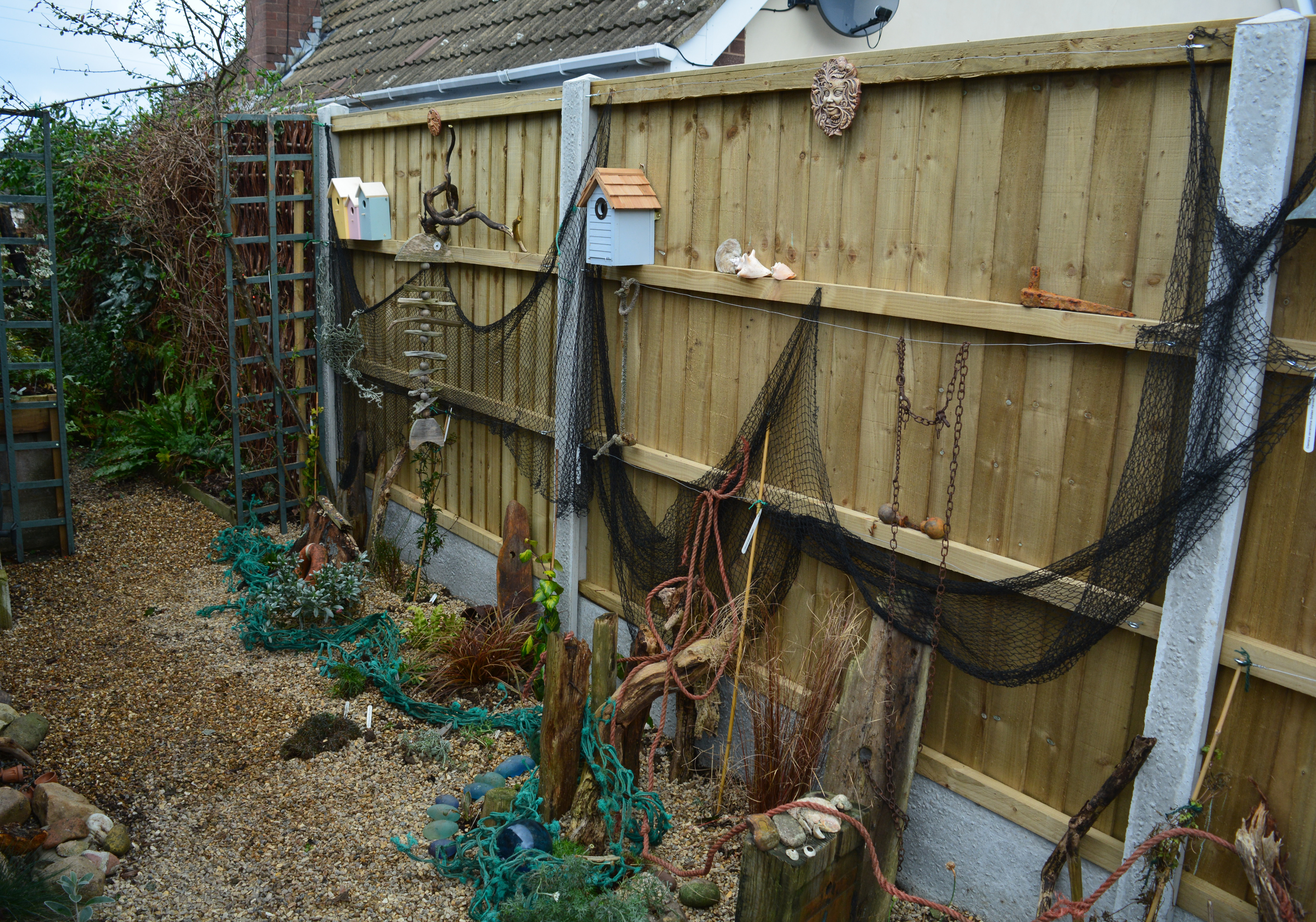
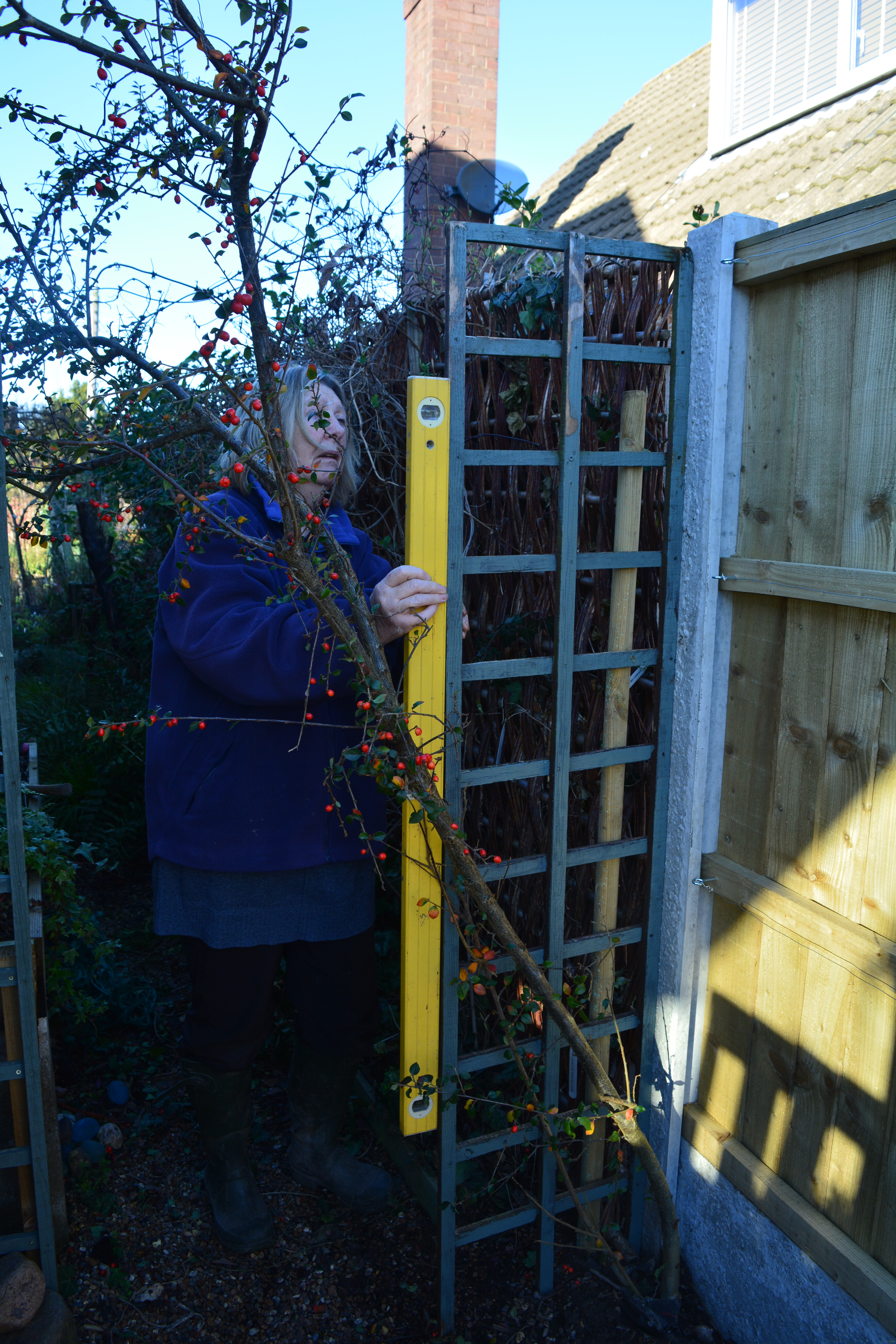
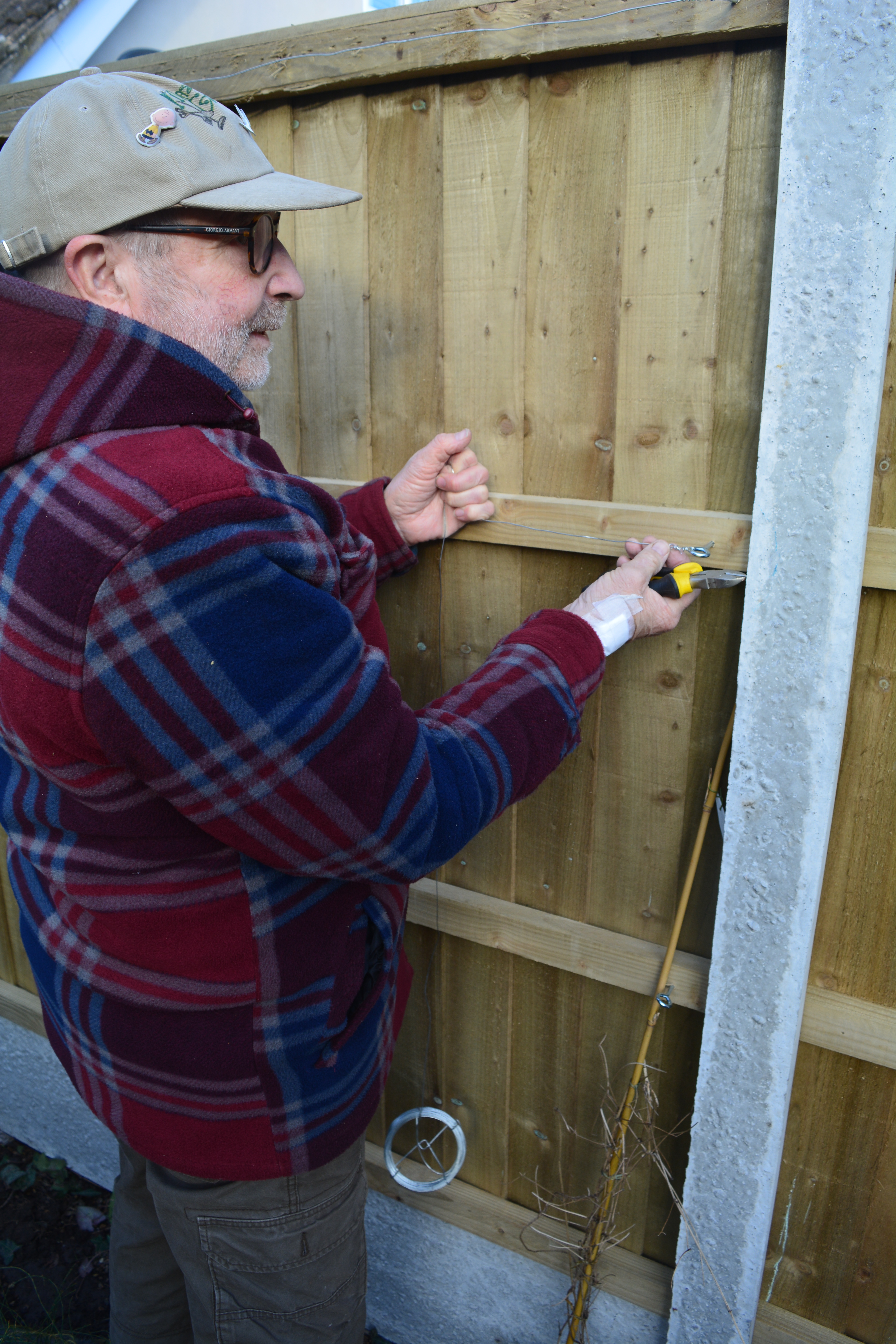
Over the page I wanted to share the disaster we had with our old fence that backed our Seaside Garden. I wrote, “I shall now report on the progress we have made with our winter projects and look at work in progress too. You will not be surprised that strong winds broke down the fence panels backing the Seaside Garden so this area neededa complete renovation. The old fence was soon replaced jointly with our neighbours and the new, better quality fence presented opportunities to put up vine eyes and wires. We planned to plant plenty of new climbers as well as renew and replenish the other plants and artefacts. We decided to include more plants this time.”


The new fence ………………….


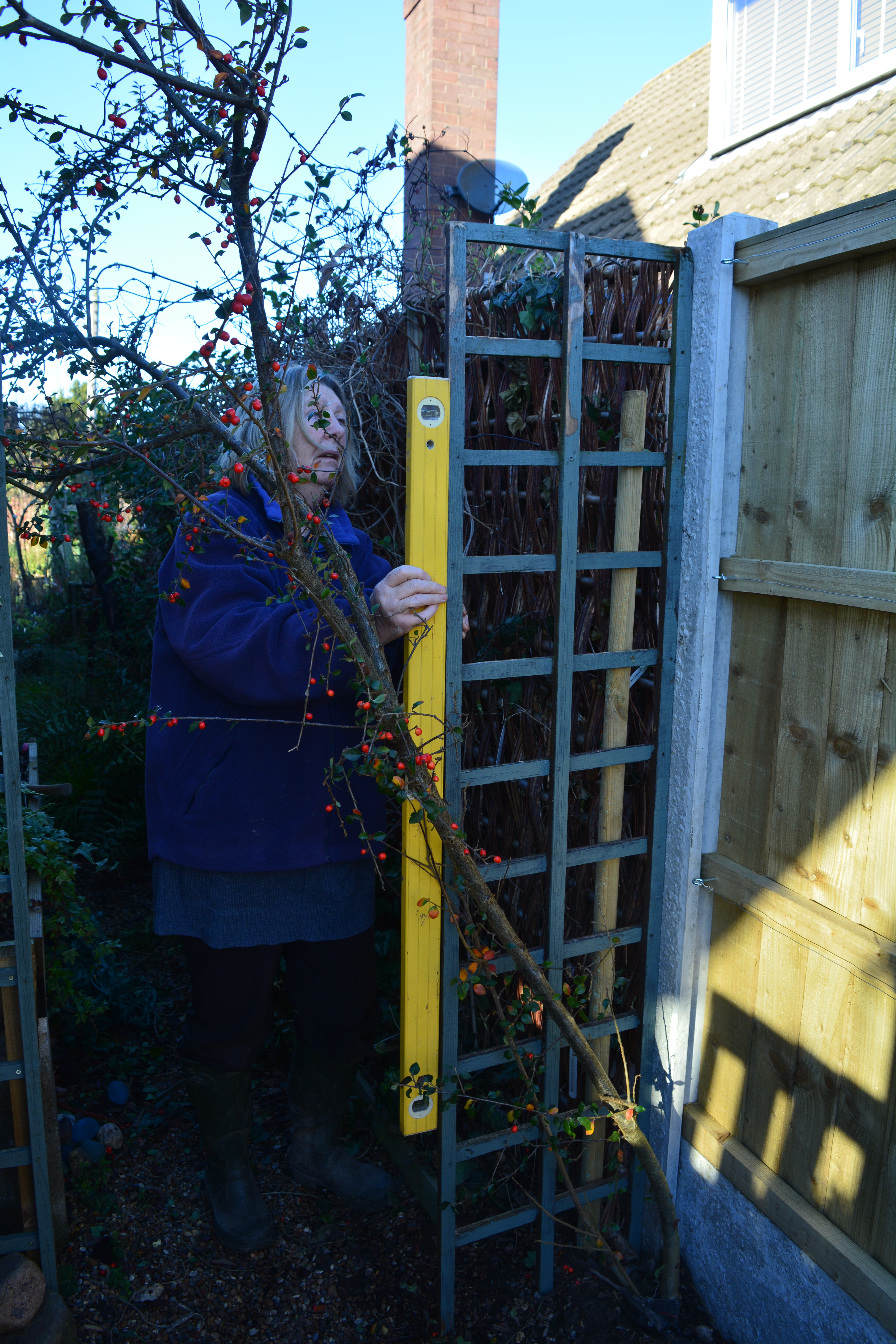
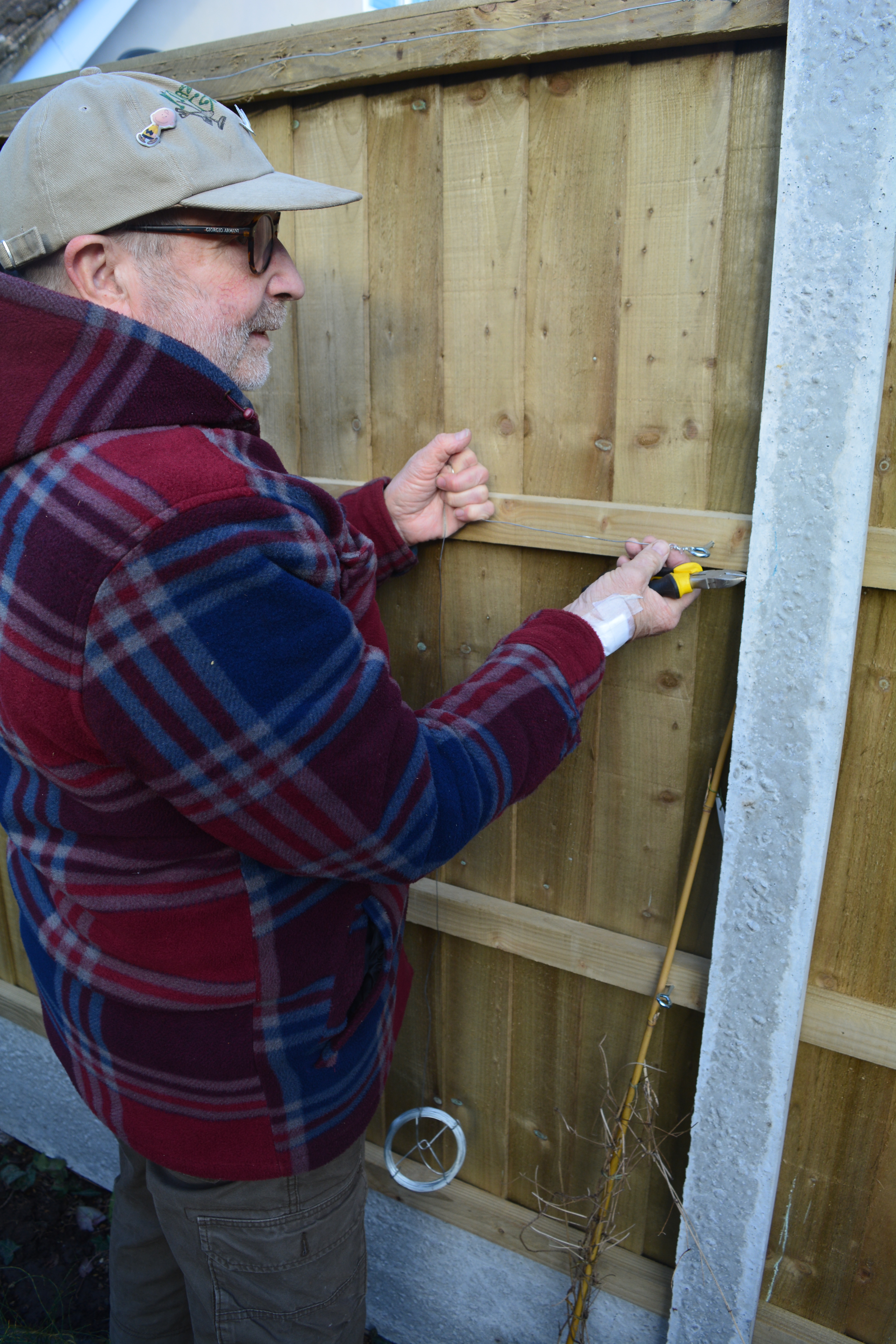
The trellis goes back up and the vine eyes and wires are being fixed up.


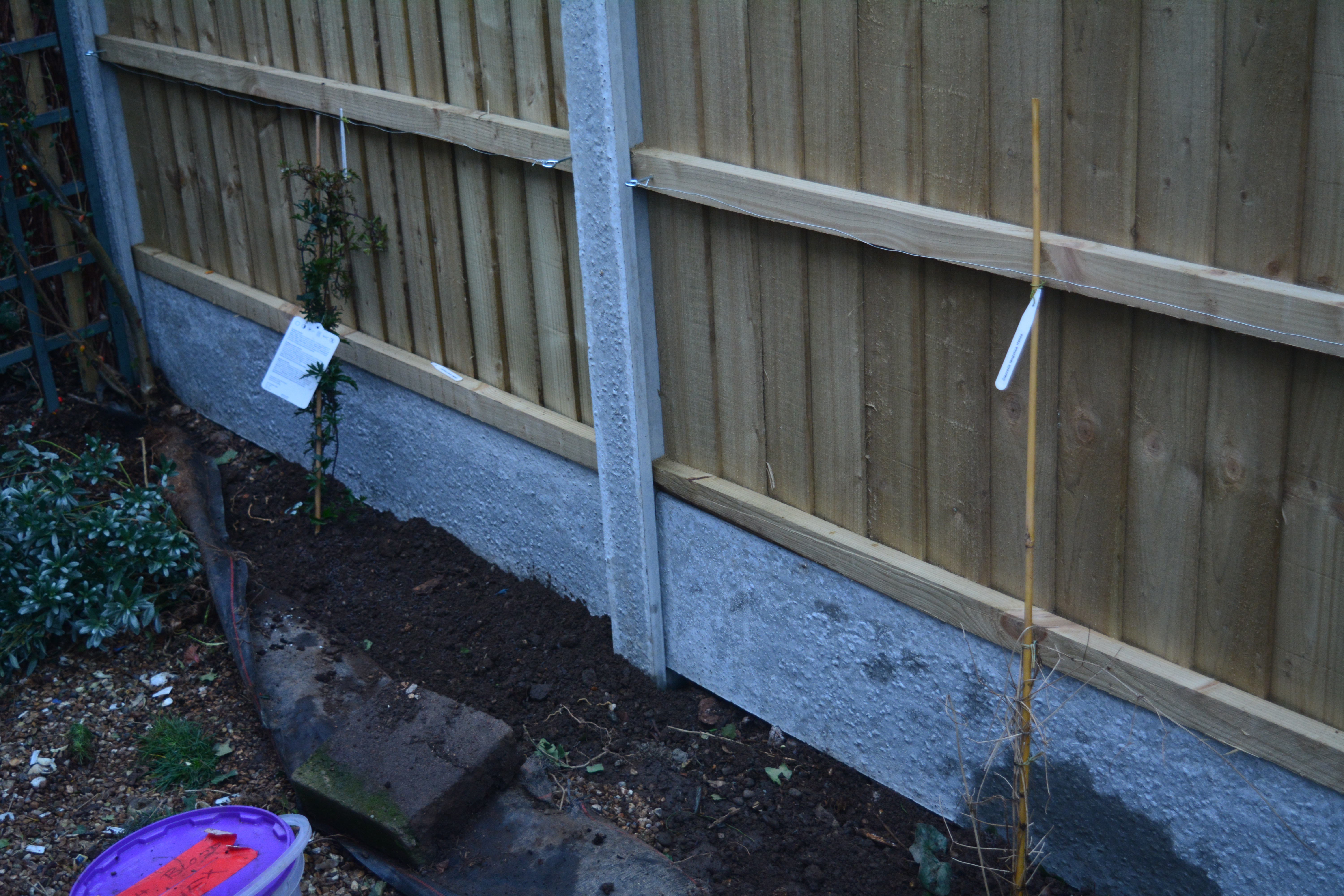
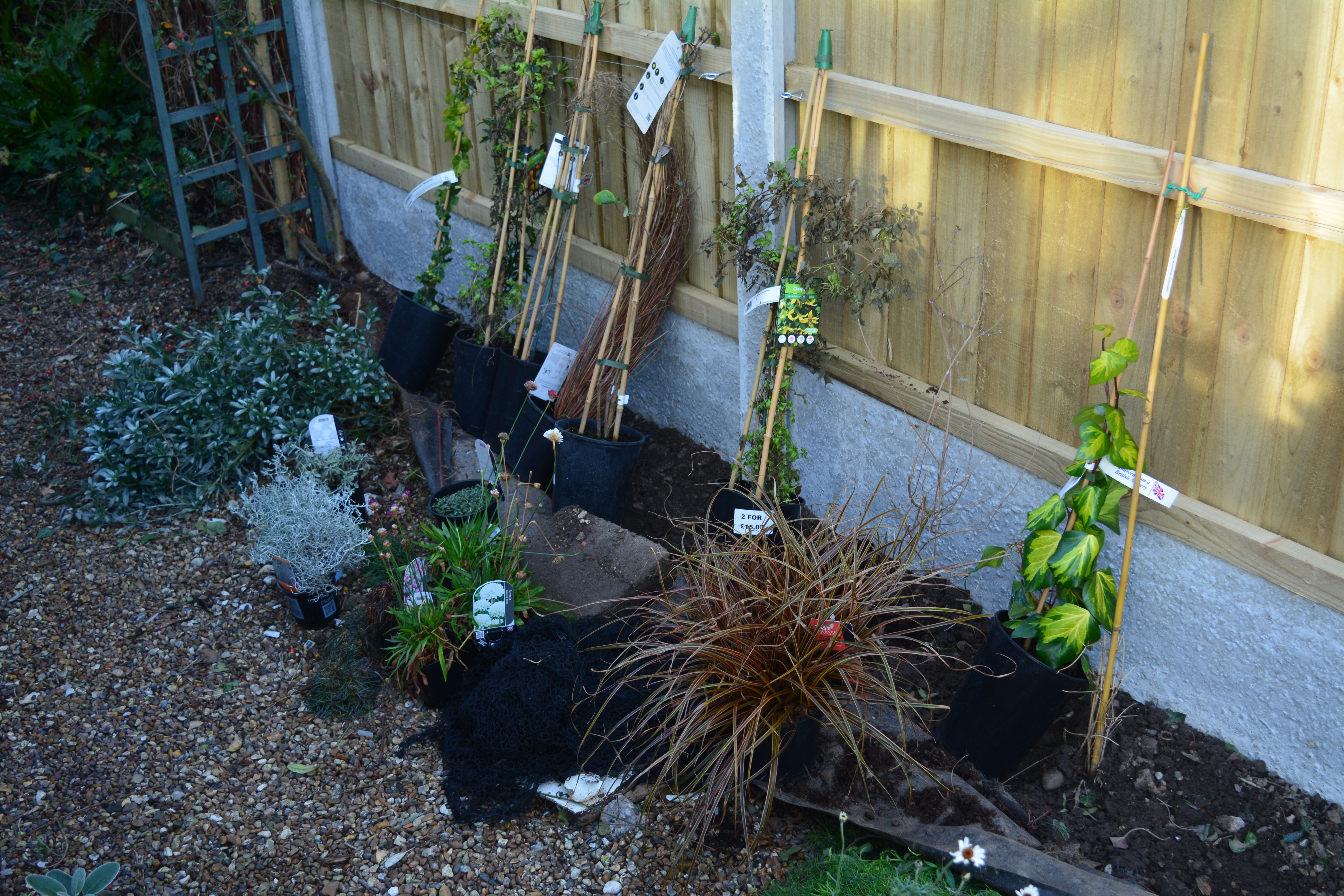
The climbers are planted ……………. and grasses soon join them.

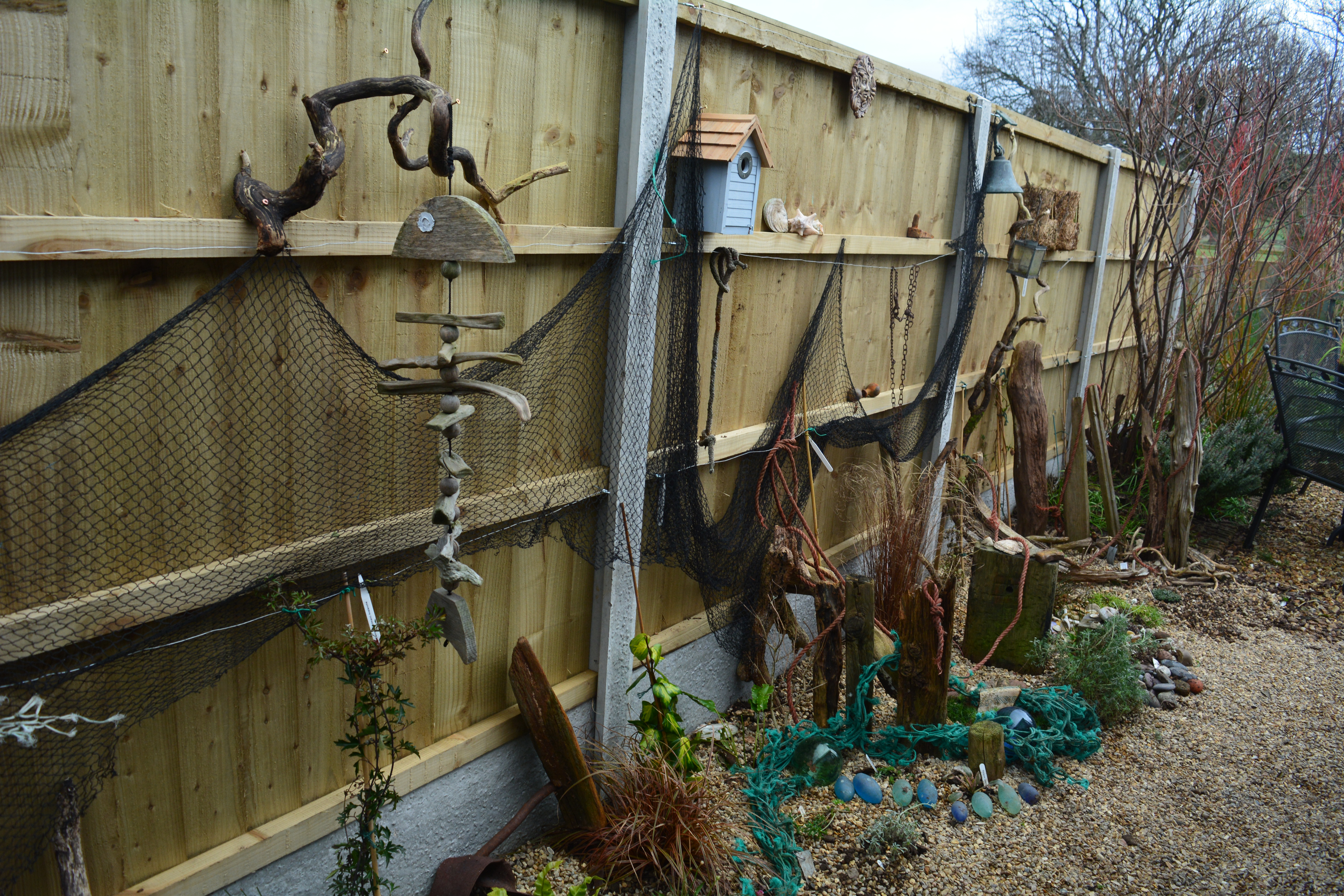
To finish the month of January off, we can have a quick look at what the finished revamped seaside garden ended looking like, ready for the growing season ahead.

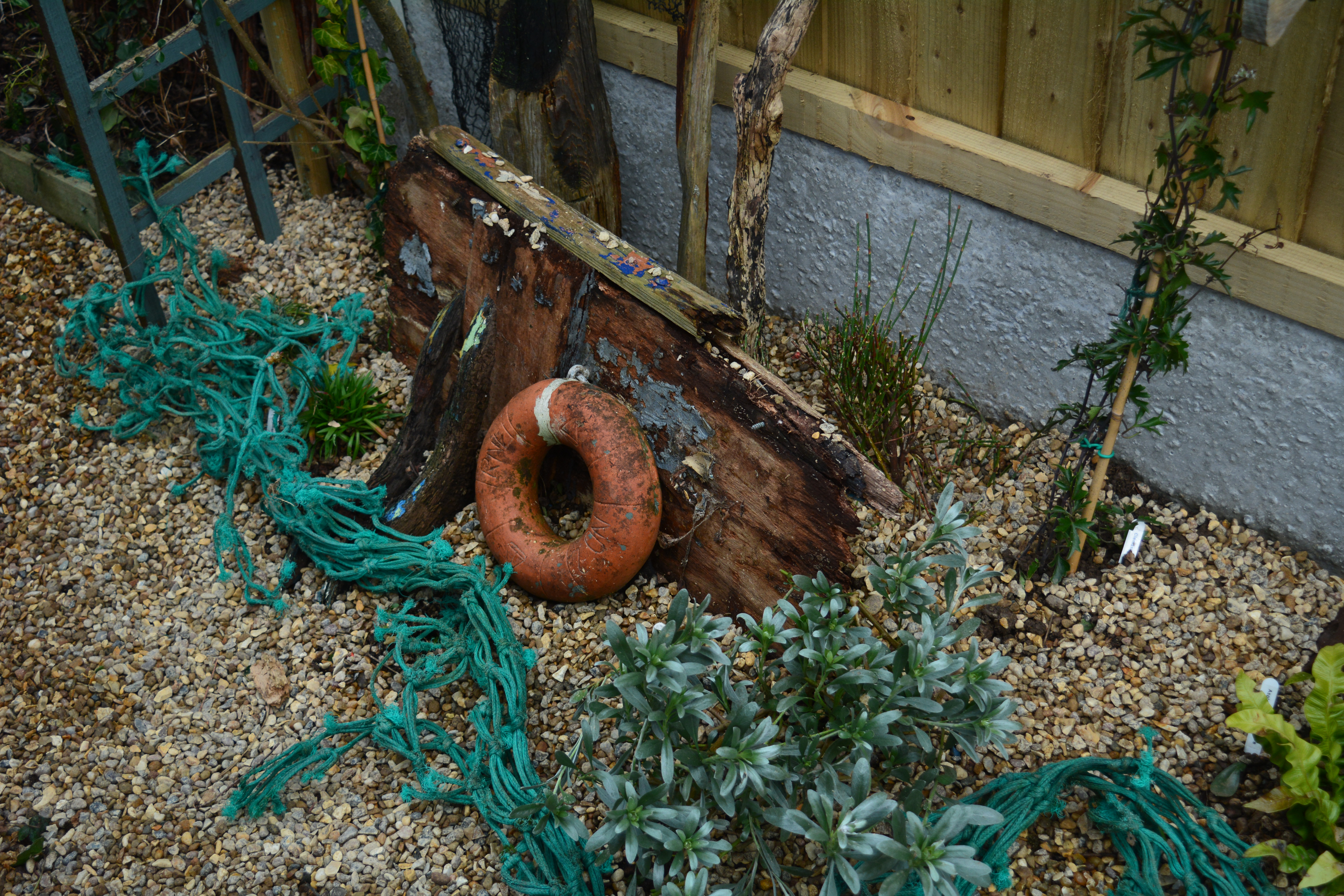
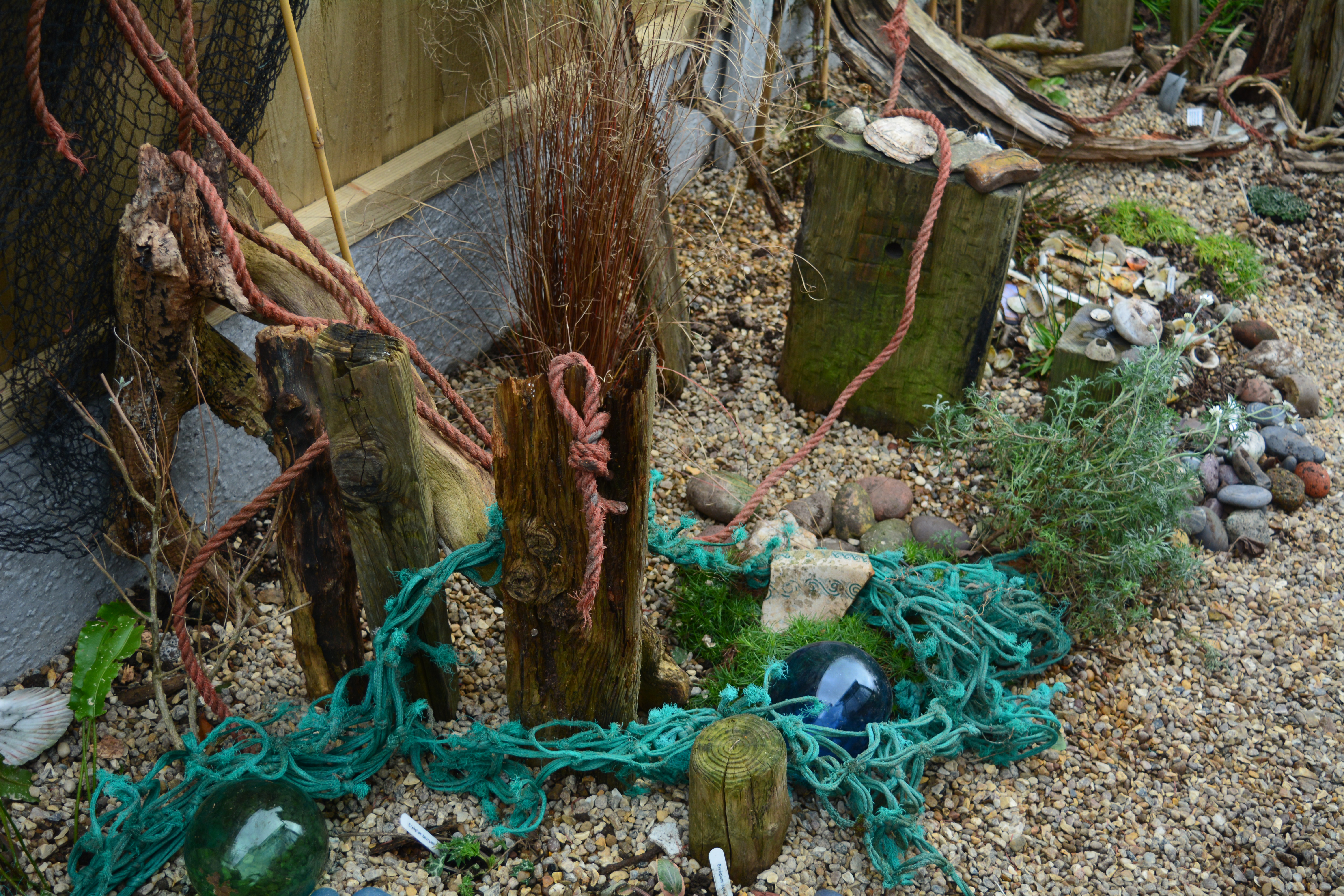
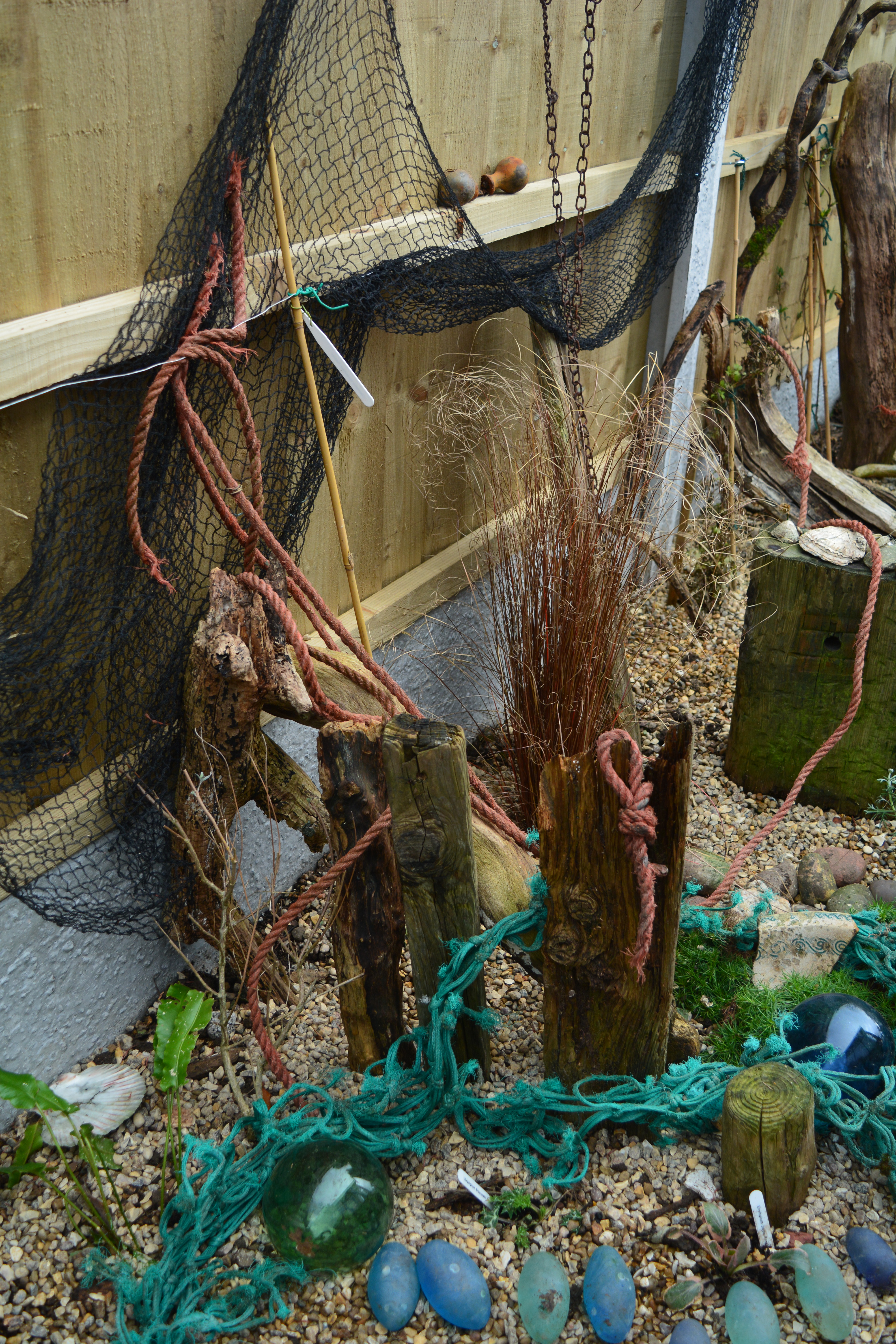
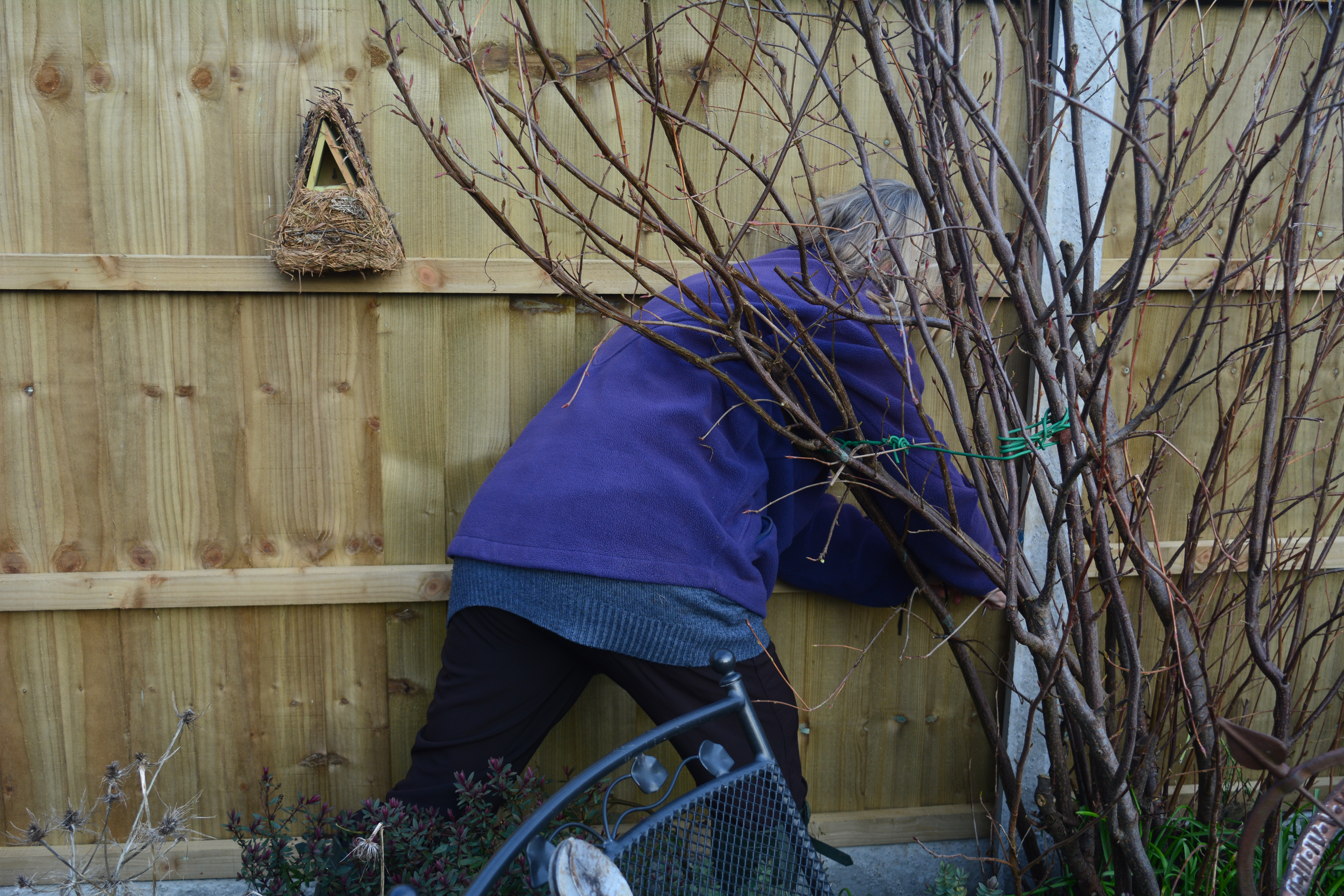
I wrote, “We had great fun rebuilding the Seaside Garden despite cold temperatures made more severe by the icy cold winds. So, wrapped up well against this typical January weather we put up old fishing nets from Scotland, sea-washed driftwood from Devon and Anglesey plus shells and pebbles.”


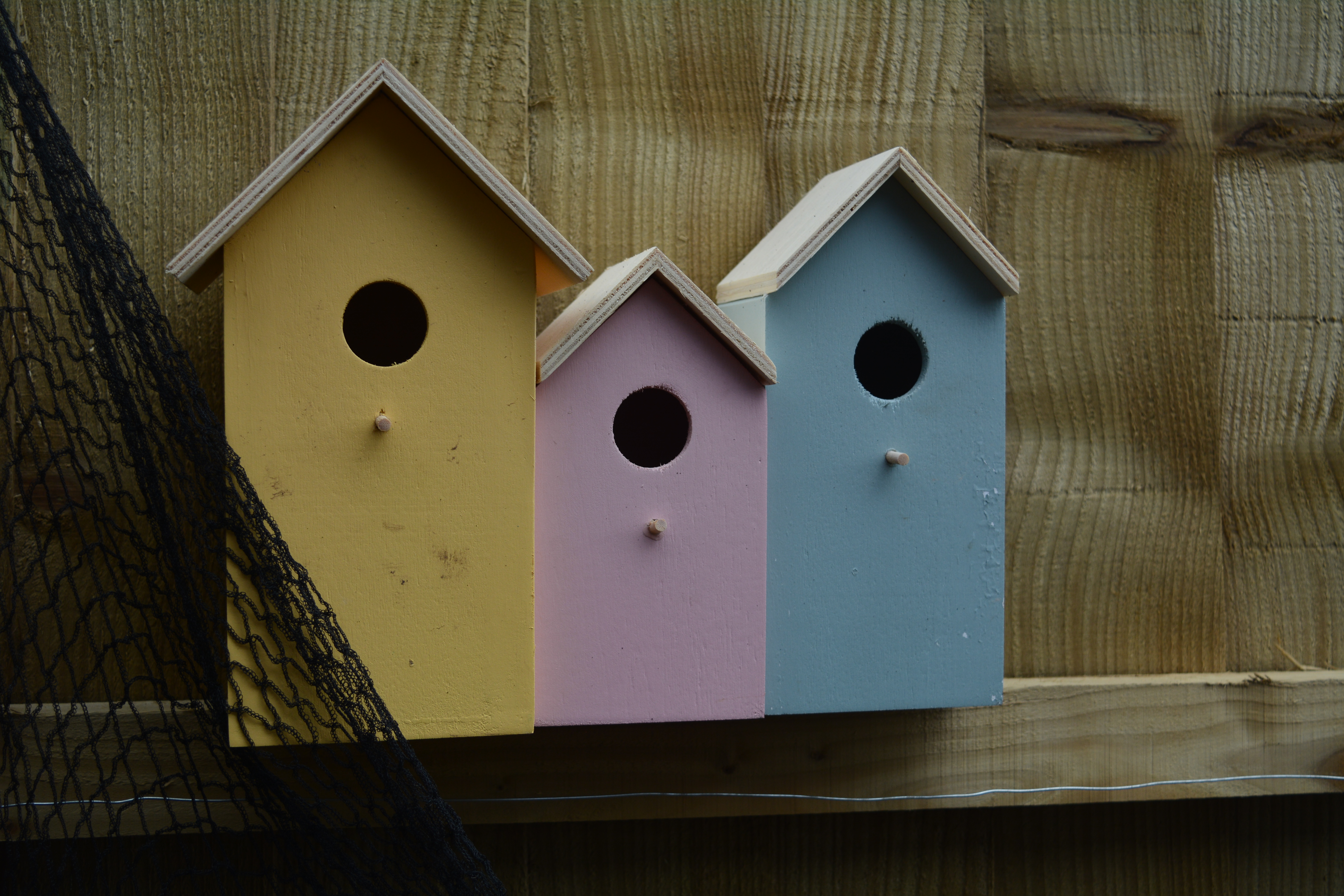
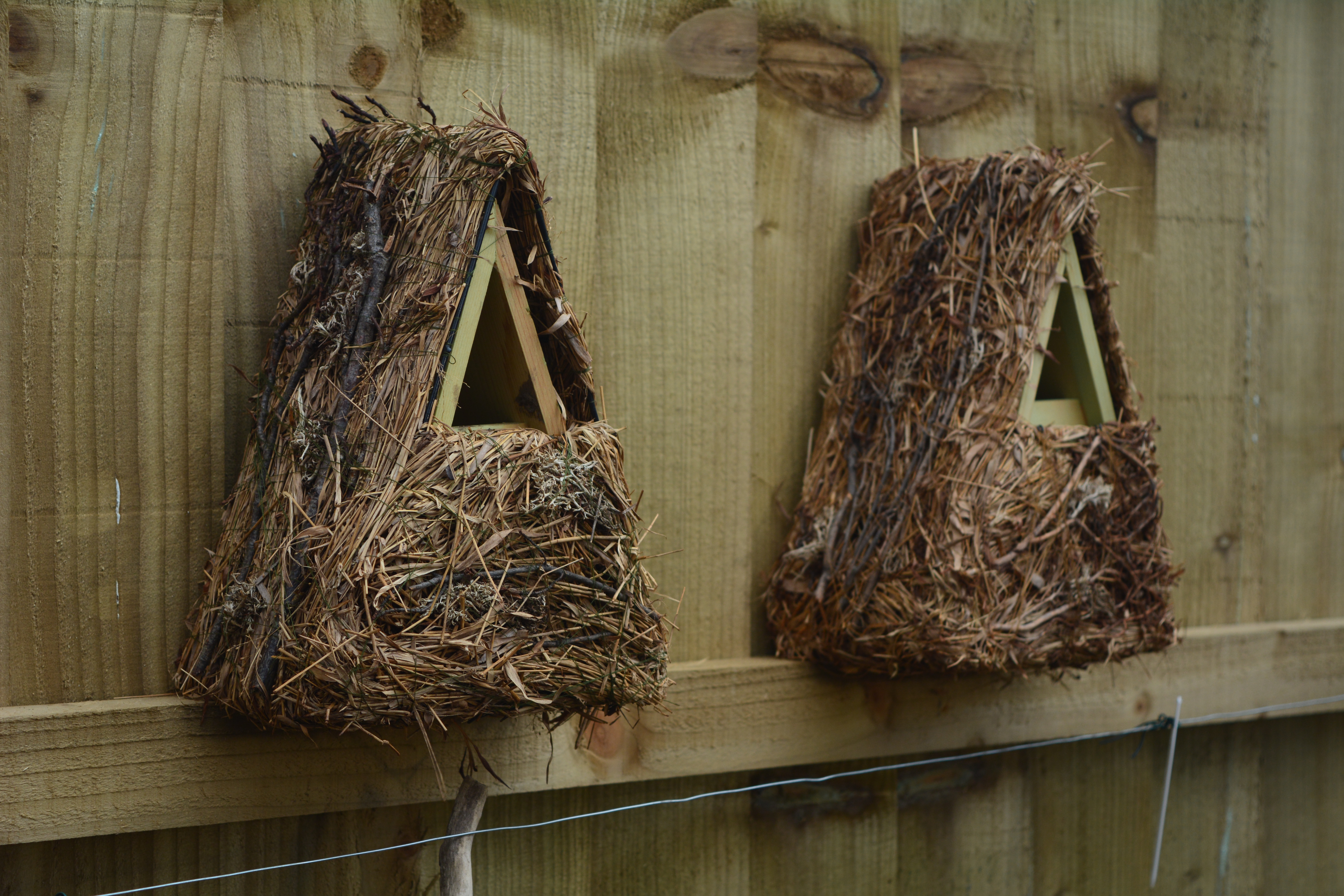
“Avian des res!”


“House Sparrows”

“Titmice”

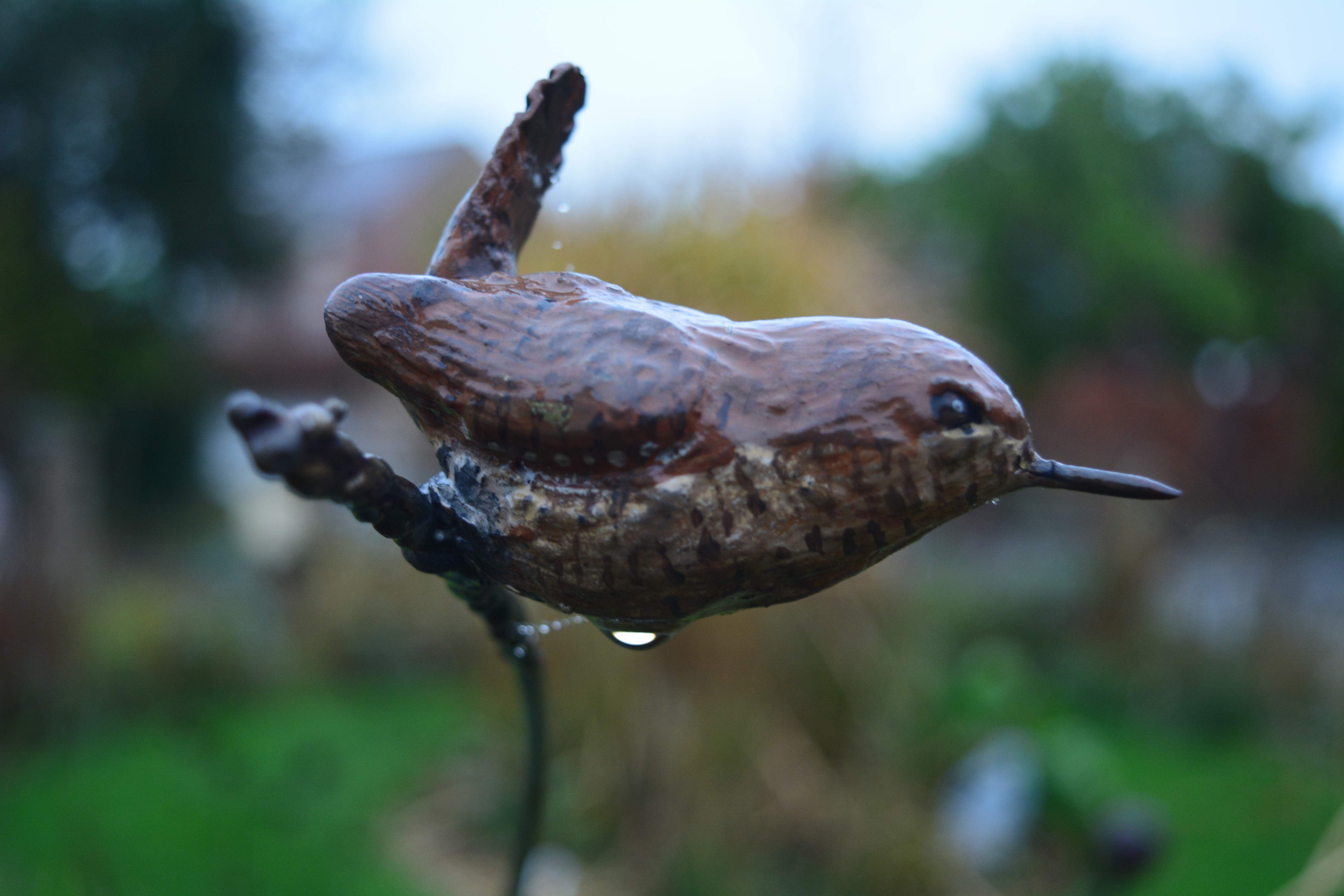
“Wrens”


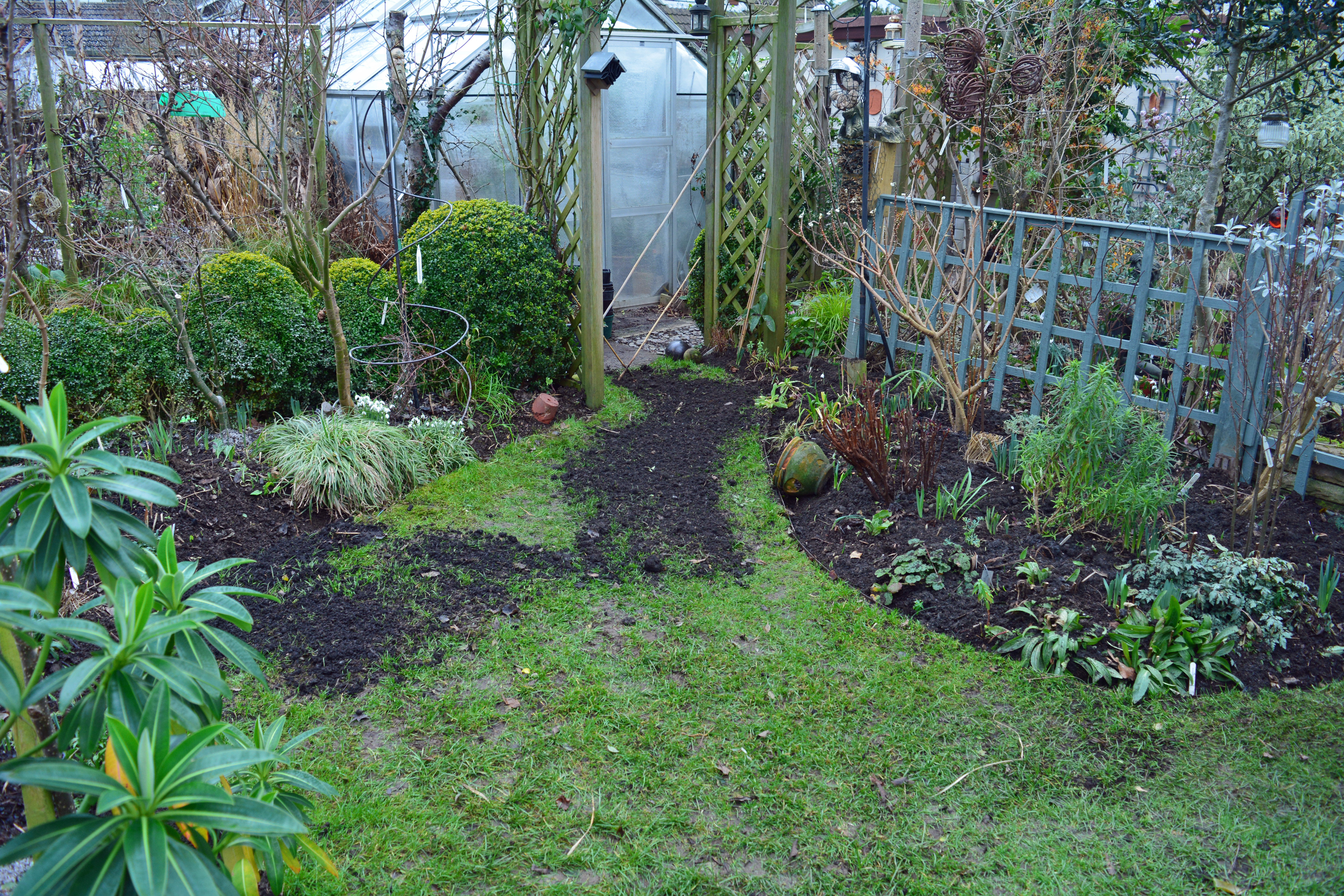
“Meanwhile we continued to change the 3 beds around the back grass into a new hot garden. Sadly we messed up the grass so had to also prepare this for repair. We have now finished planting the new plants and repaired the grass area ready for seeding in March.”


So there we have my entries for January in my 2019 garden journal.


Categories
colours garden design garden photography gardening gardens hardy perennials light light quality ornamental grasses ornamental trees and shrubs outdoor sculpture sculpture Shrewsbury Shropshire trees

My Garden Journal 2018 – December

Here we are with the final visit to my Garden Journal 2018, as we discover what has been going on at out Avocet patch in December. It has been a year of difficult weather for us gardeners with freezing winds, a wet spring followed by a drought in the summer. It has been a bit of a trial really encouraging things to grow and struggling to get new plants established. But of course none of this spoilt our enjoyment of our garden and gardening itself.

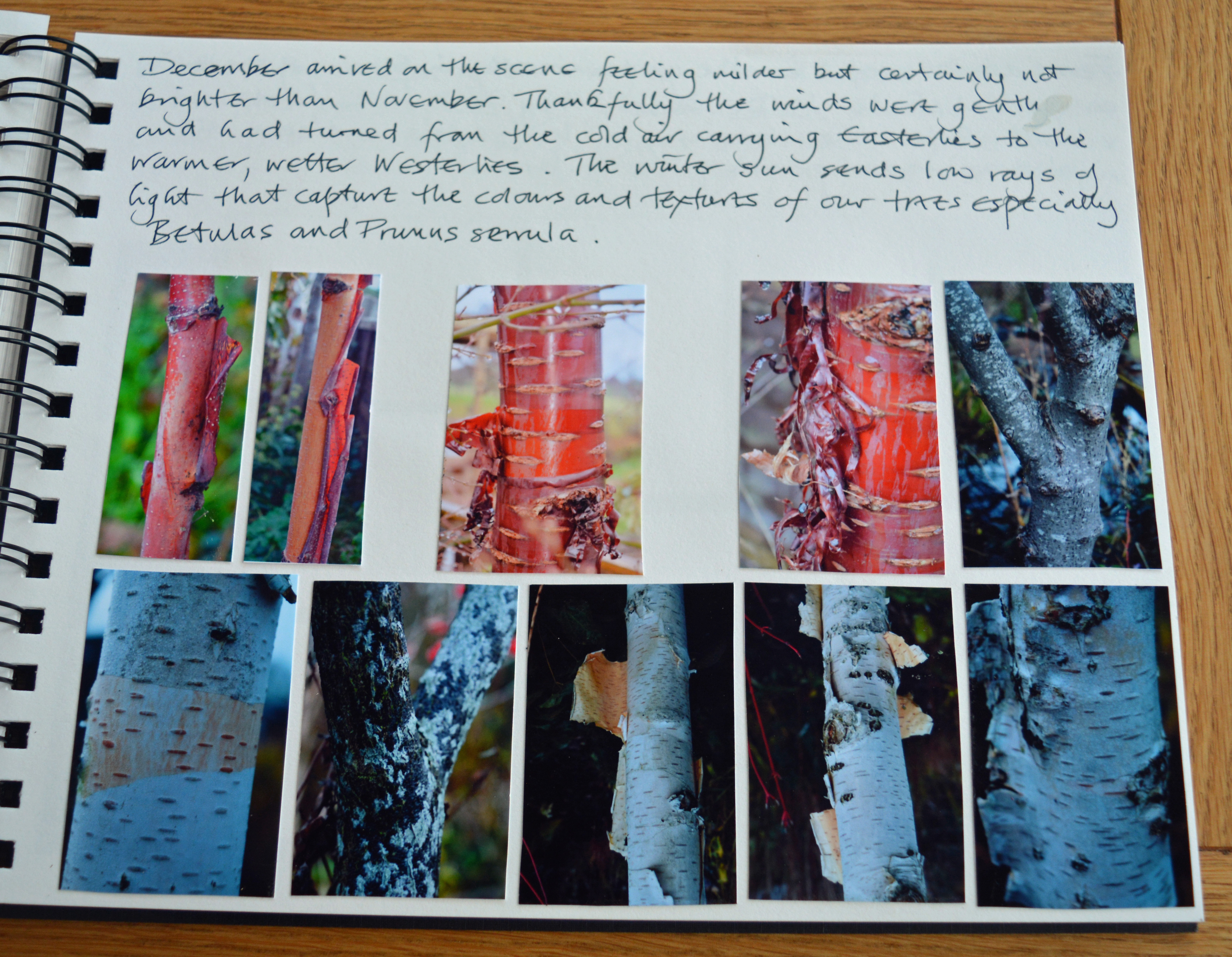
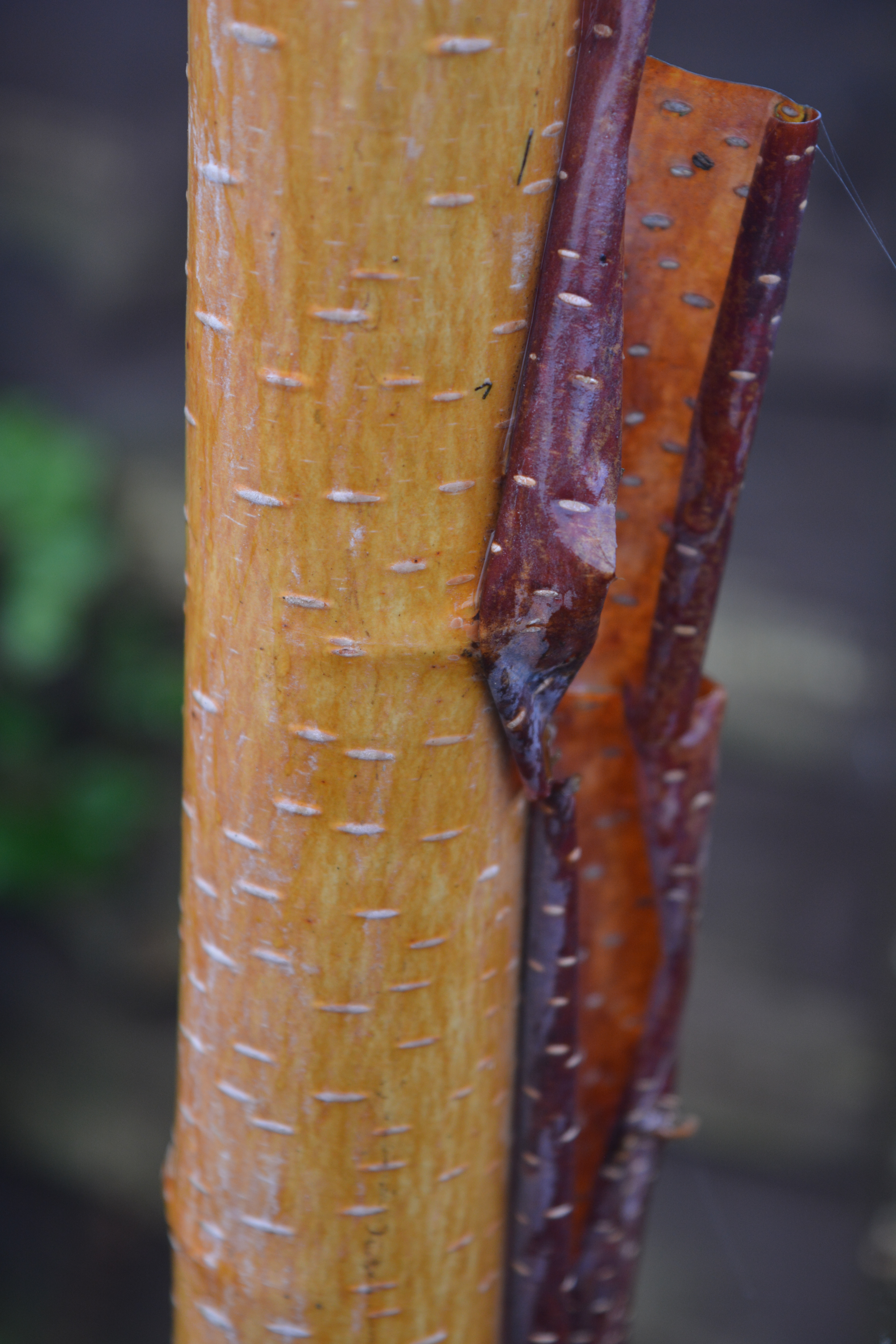
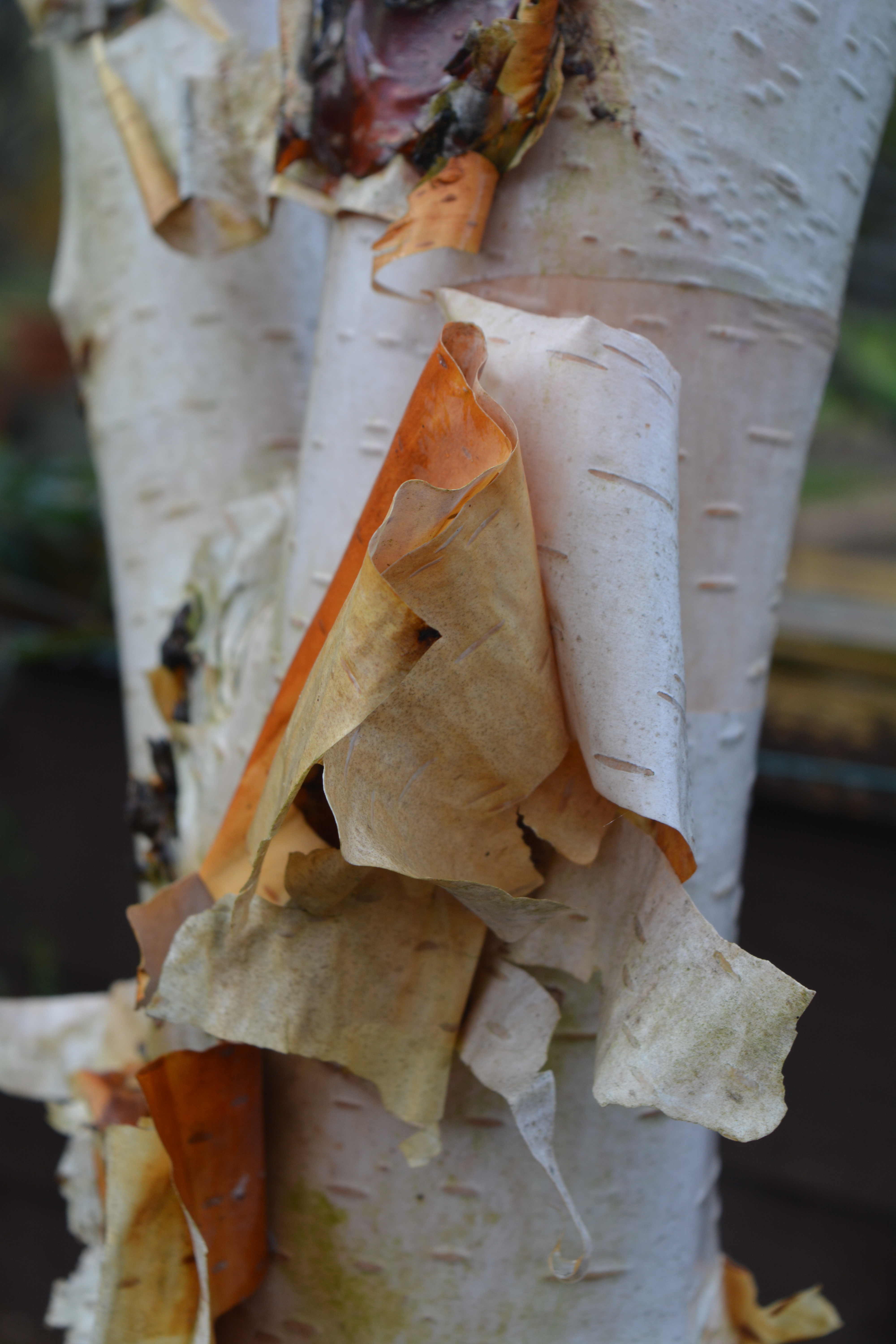
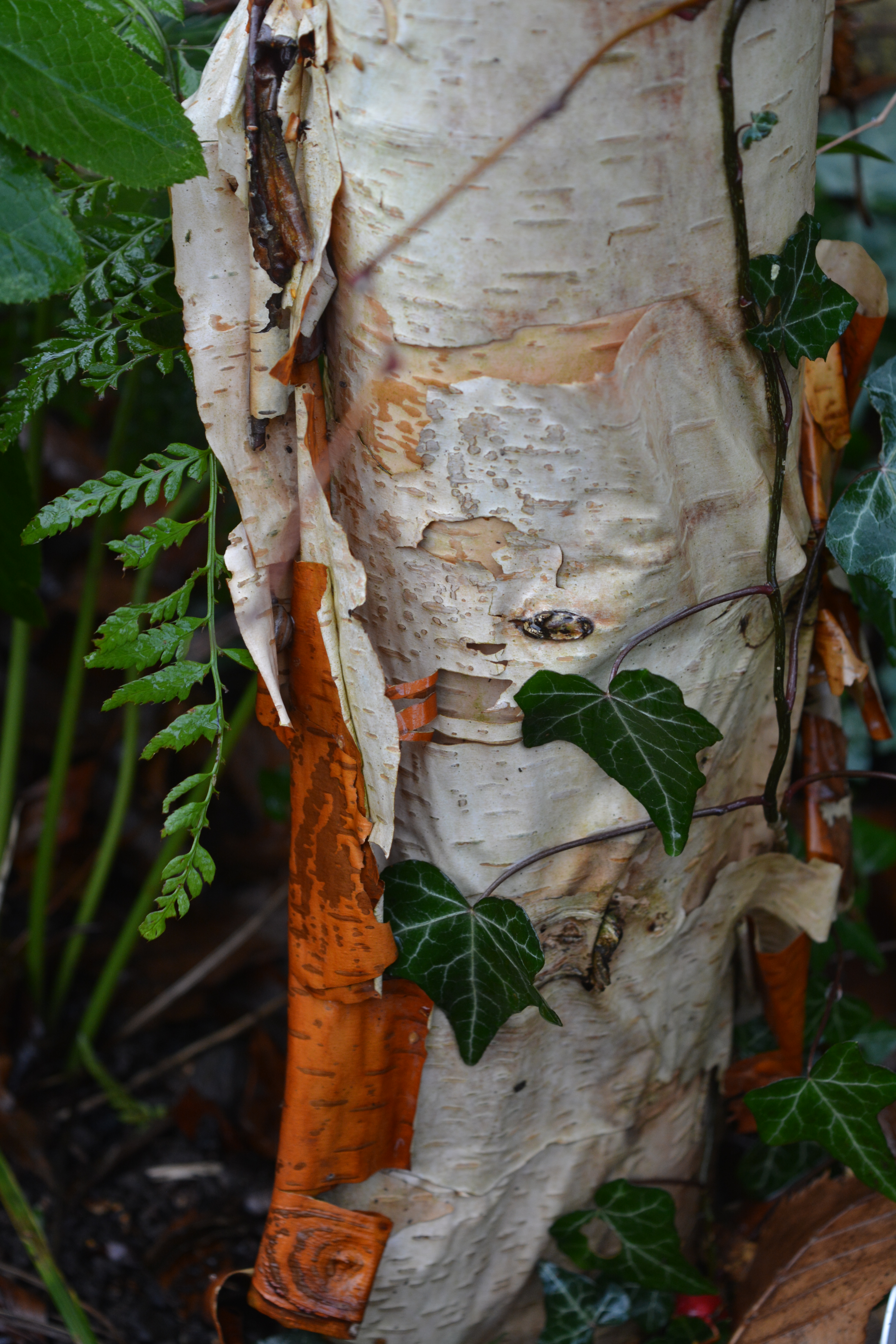
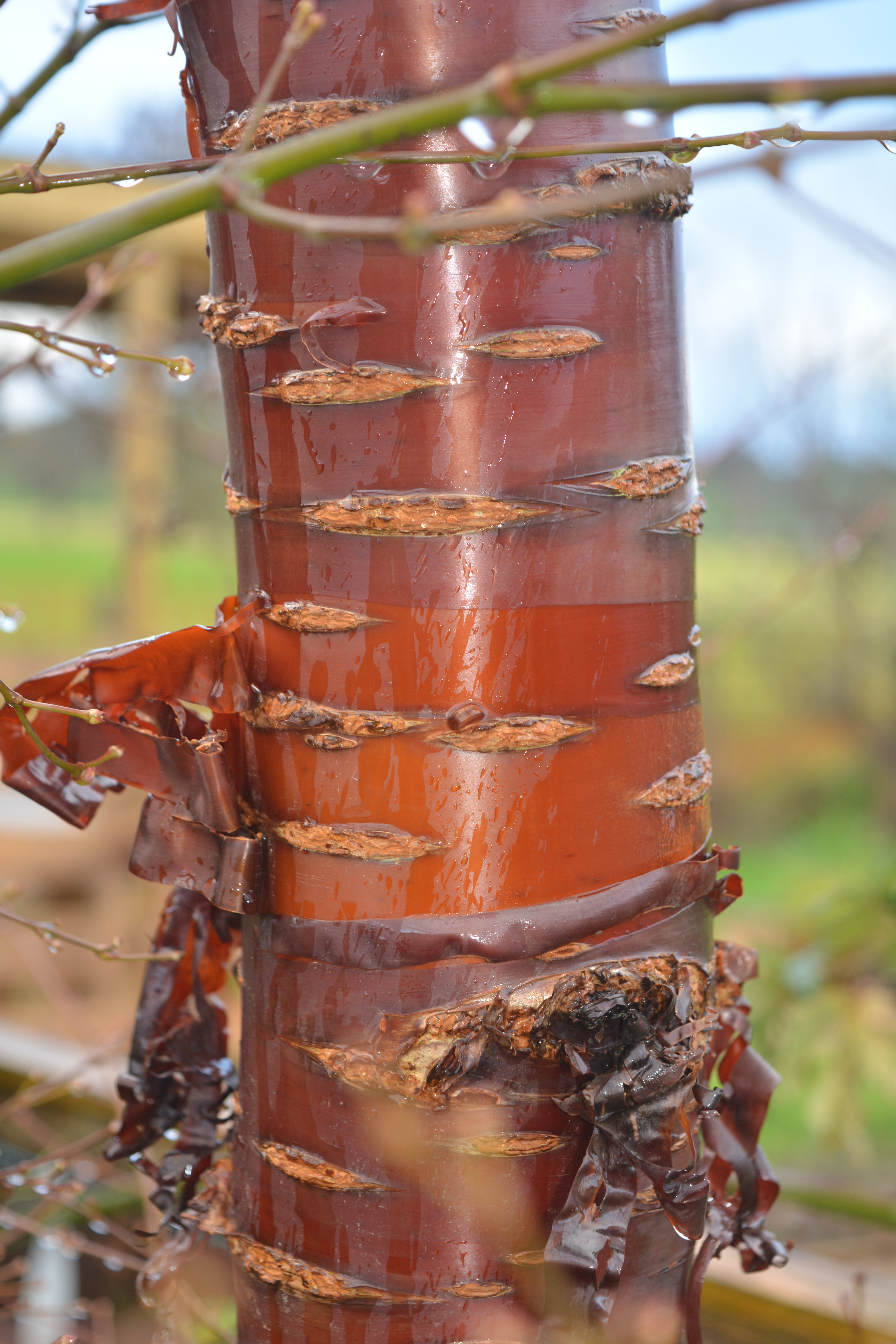
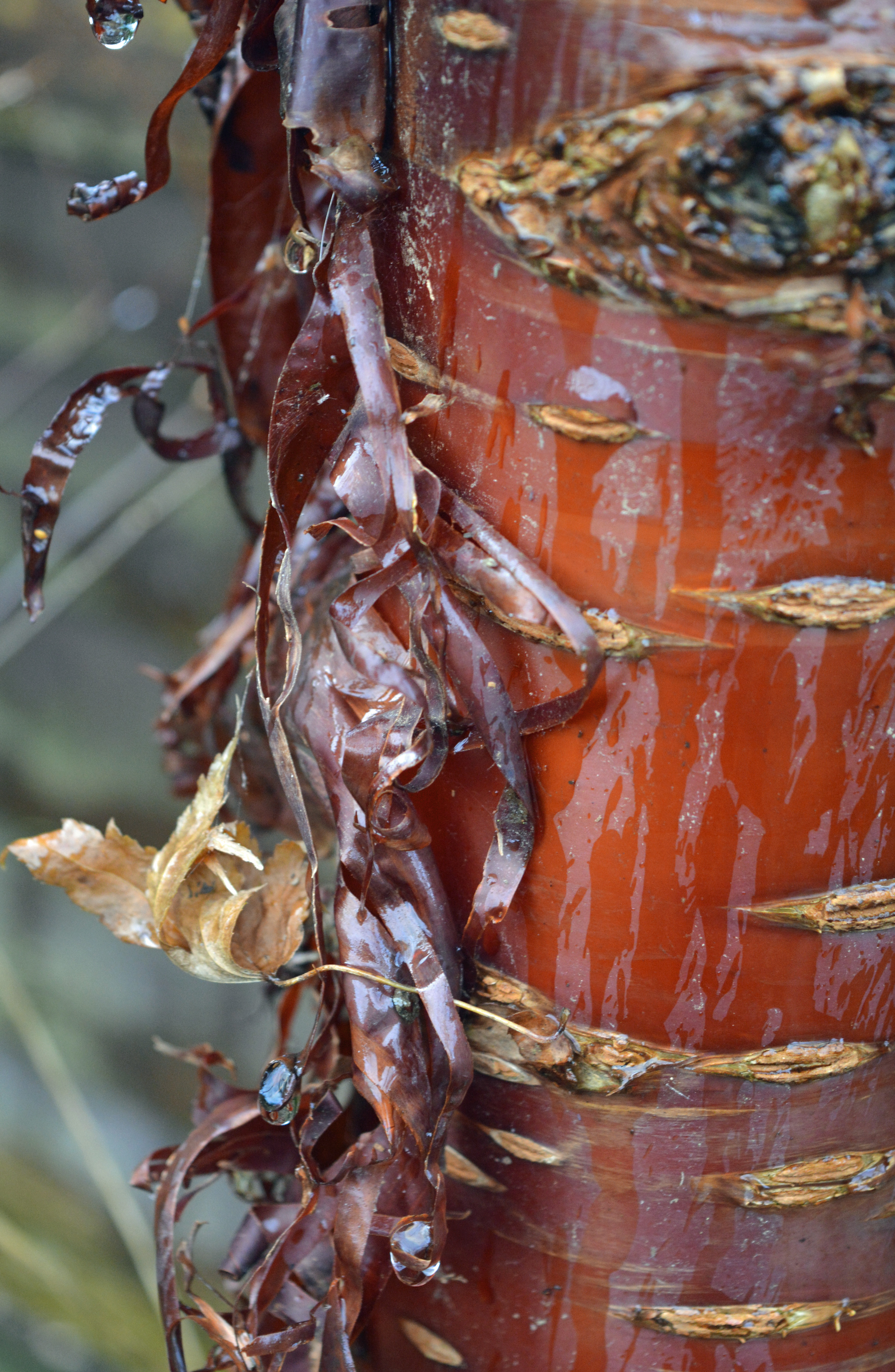
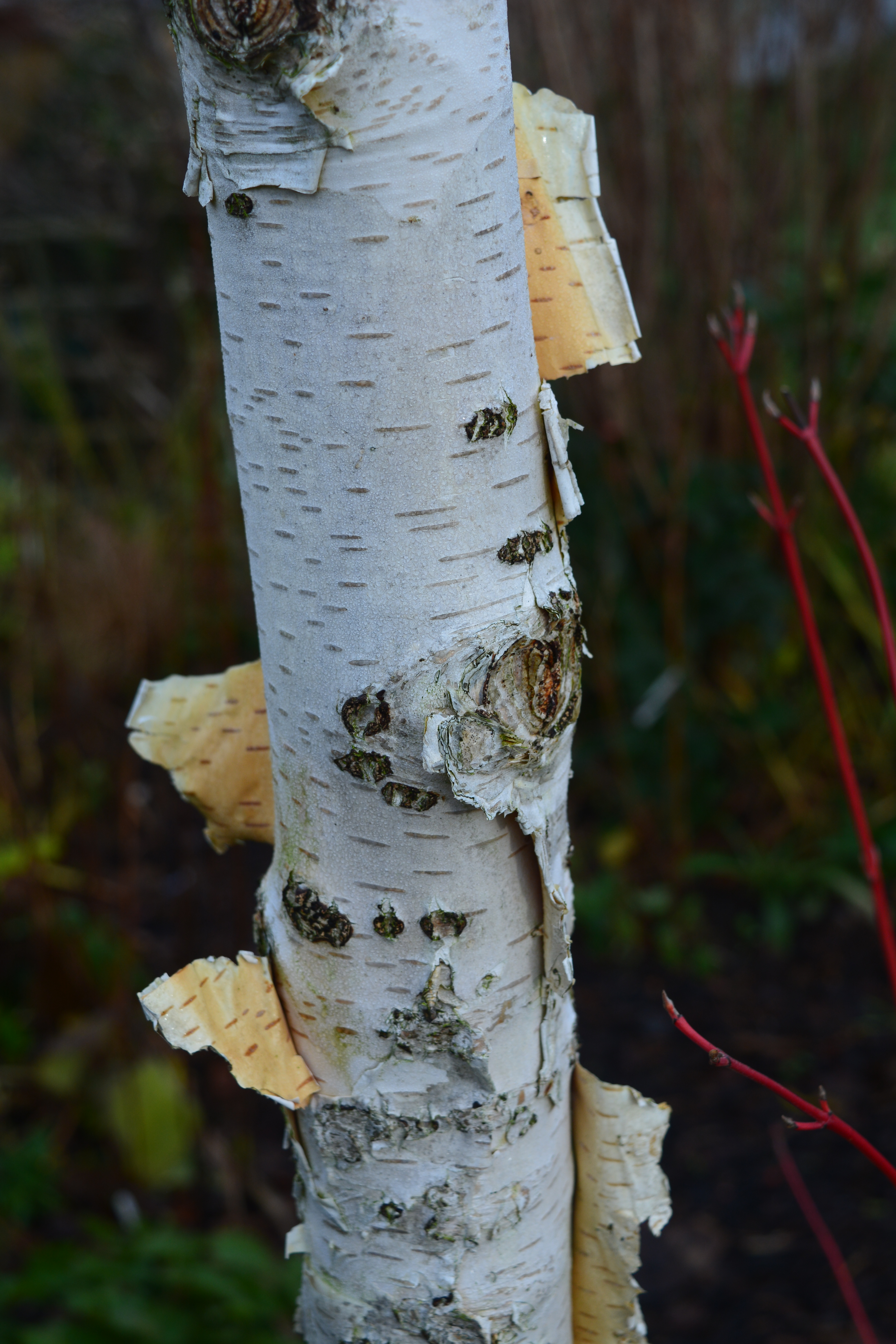
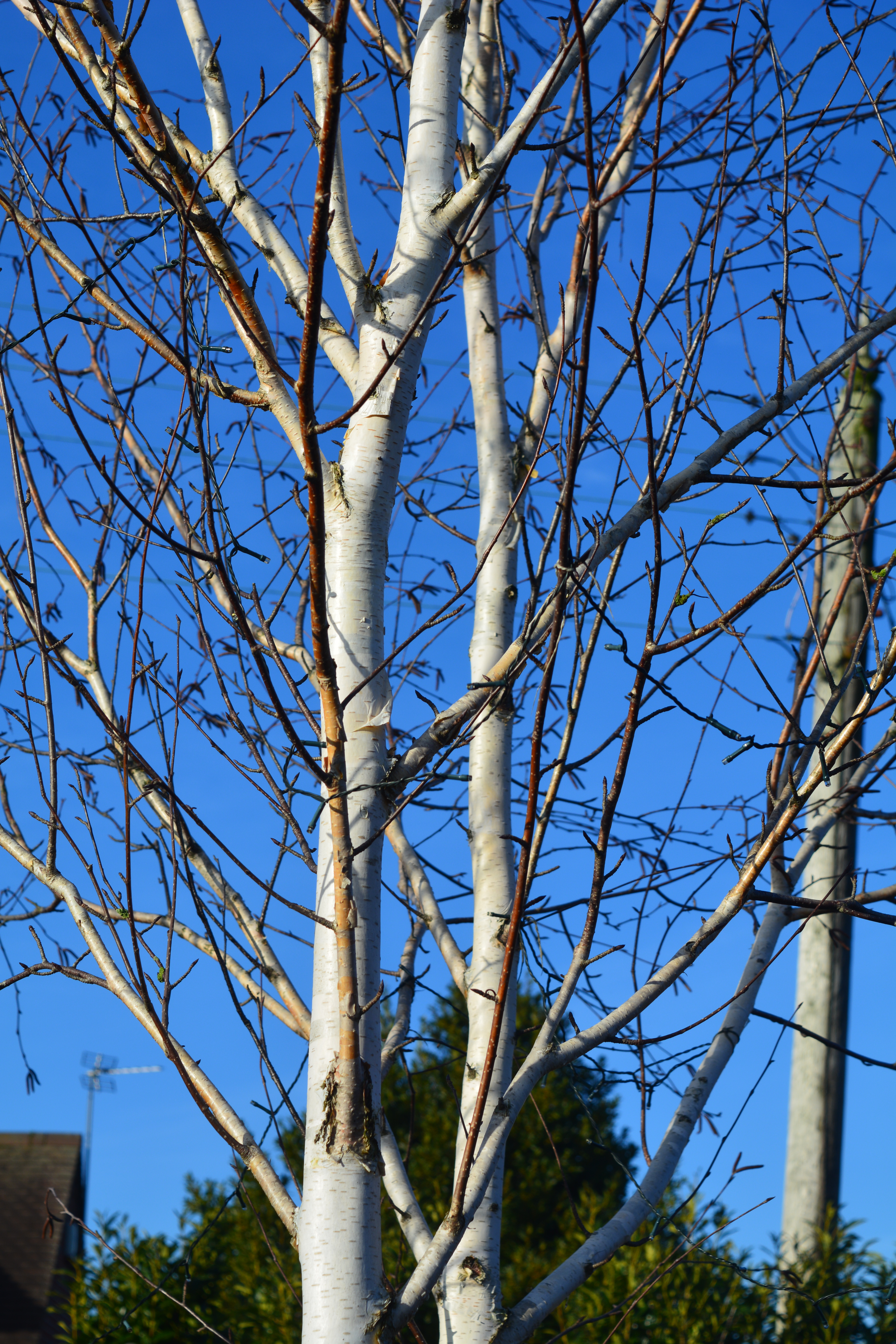
I began my entries for December by writing, “December arrived on the scene feeling milder but certainly not brighter than November. Thankfully the winds were gentle and had turned from the cold air carrying Easterlies to the warmer, wetter Westerlies. The winter sun sends low rays of light that capture the colours and textures of our trees especially Betulas and Prunus serrula.” I then featured photographs of our Prunus serrula and some of our Betulas.

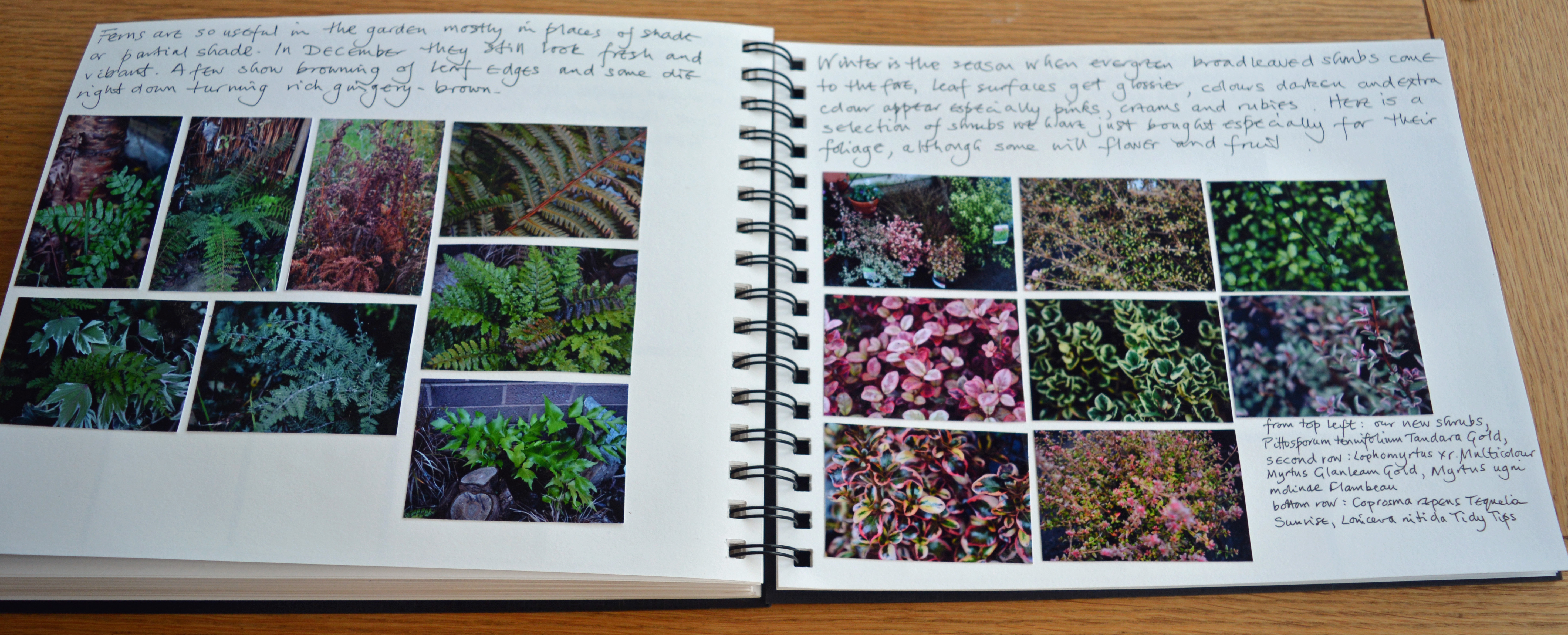
Over the page I moved on to look at our ferns and then small shrubs with many coloured foliage.

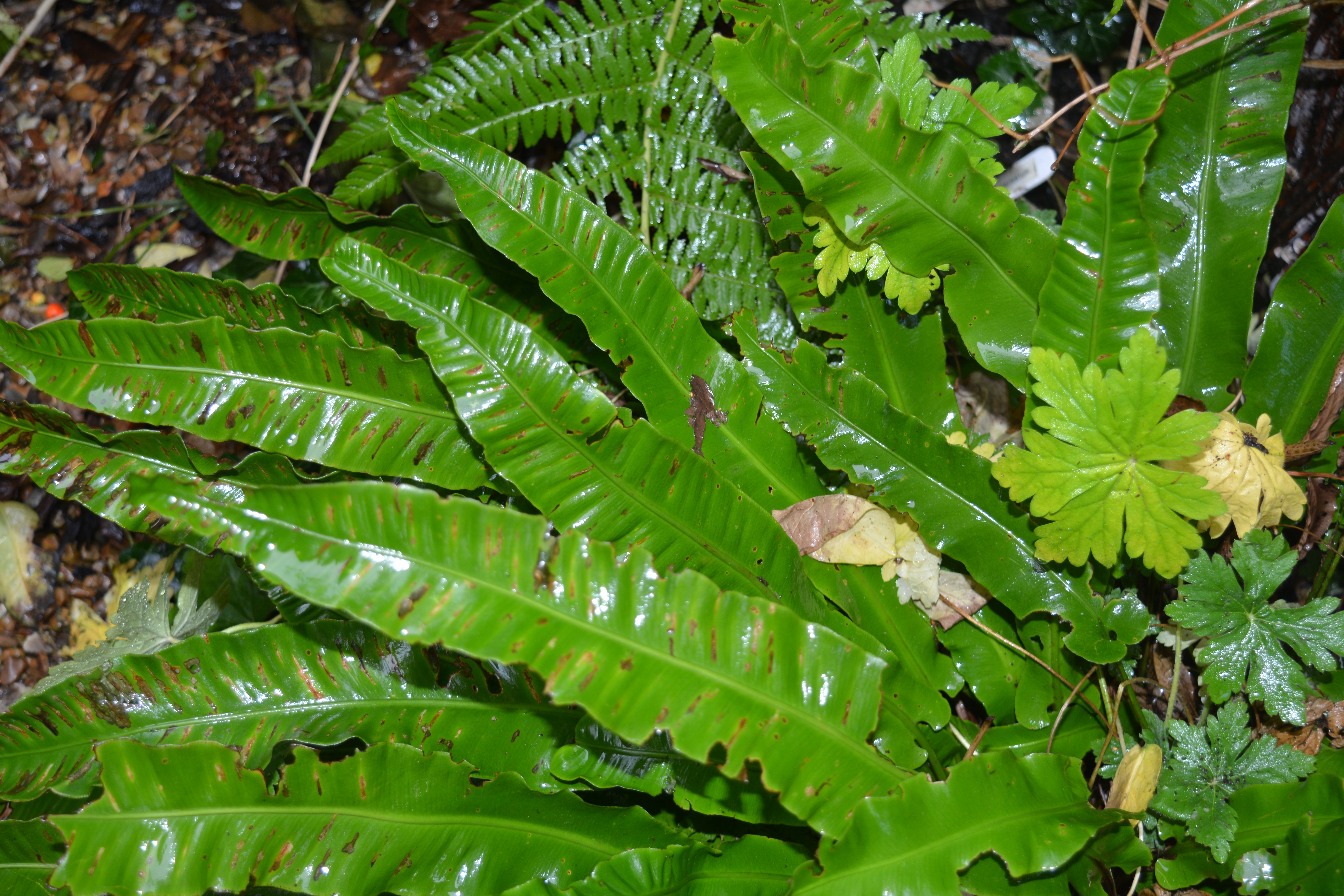
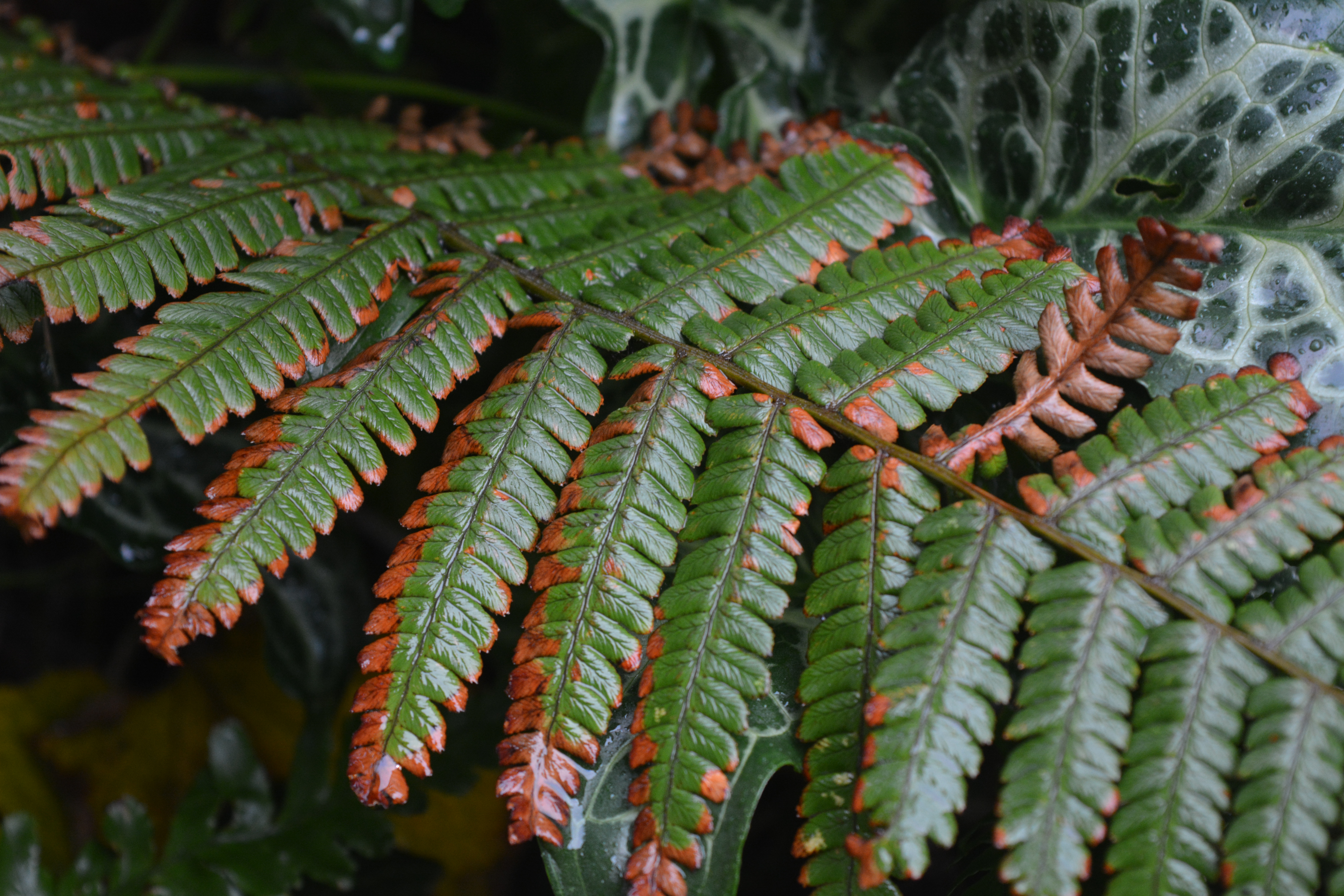
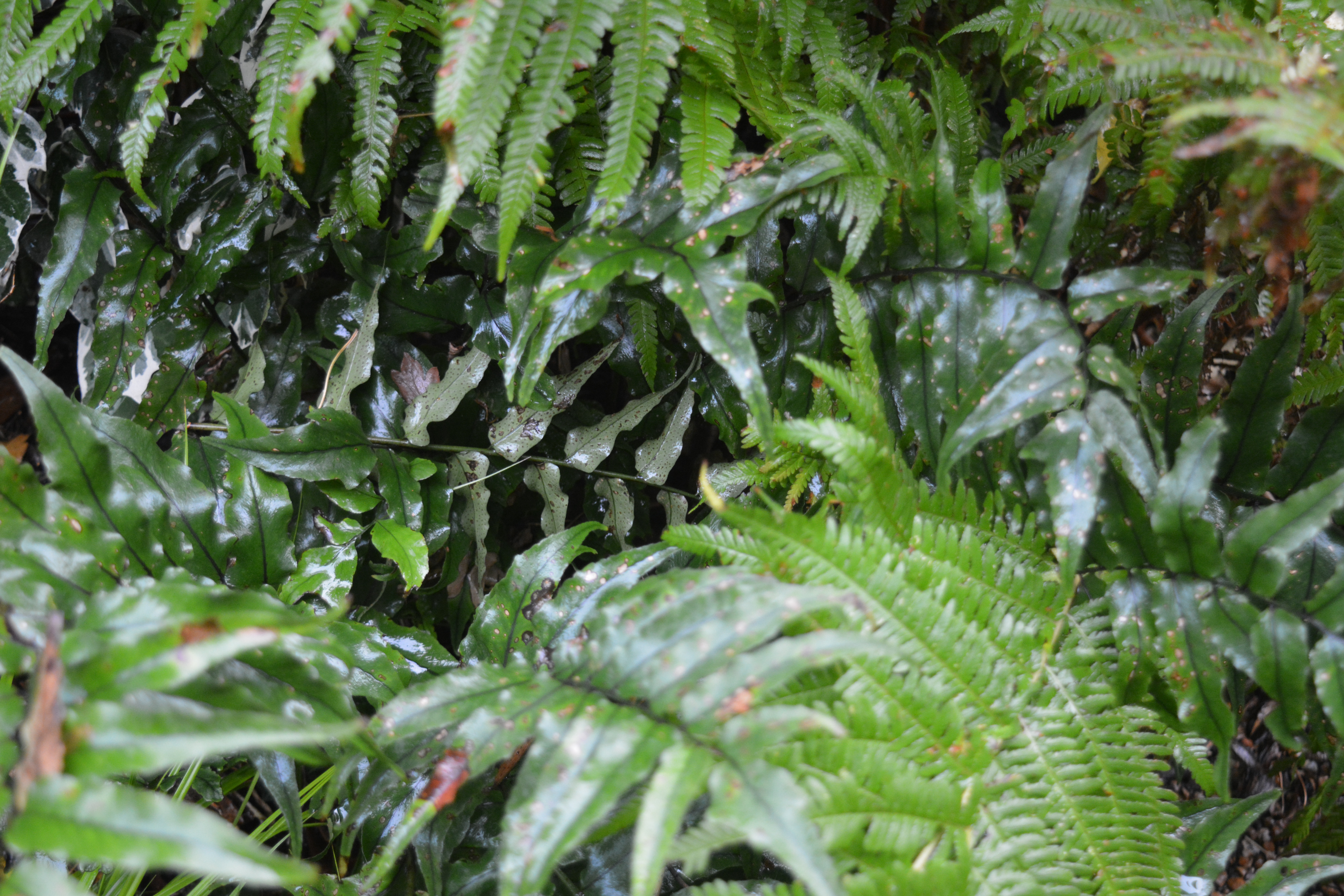
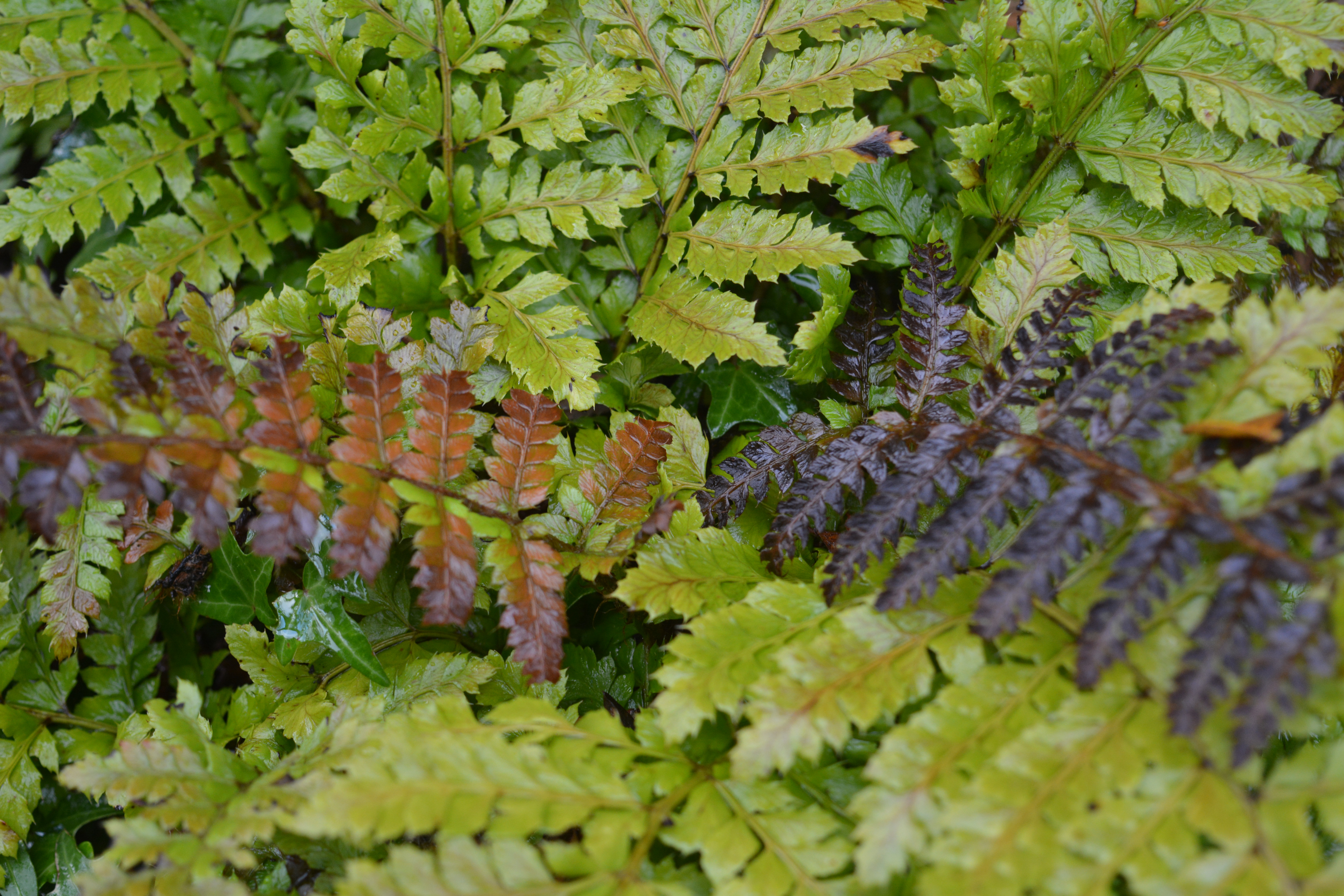
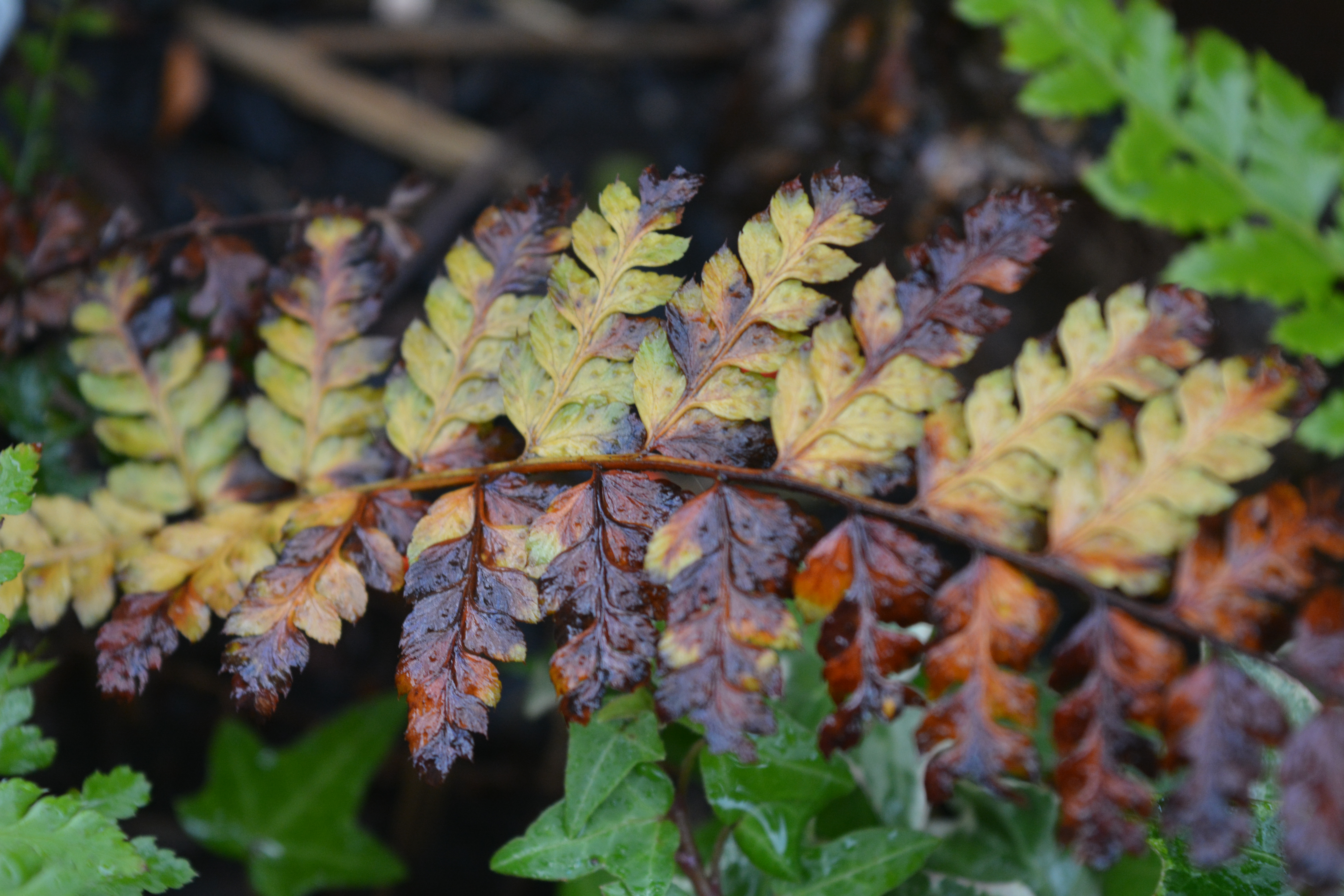
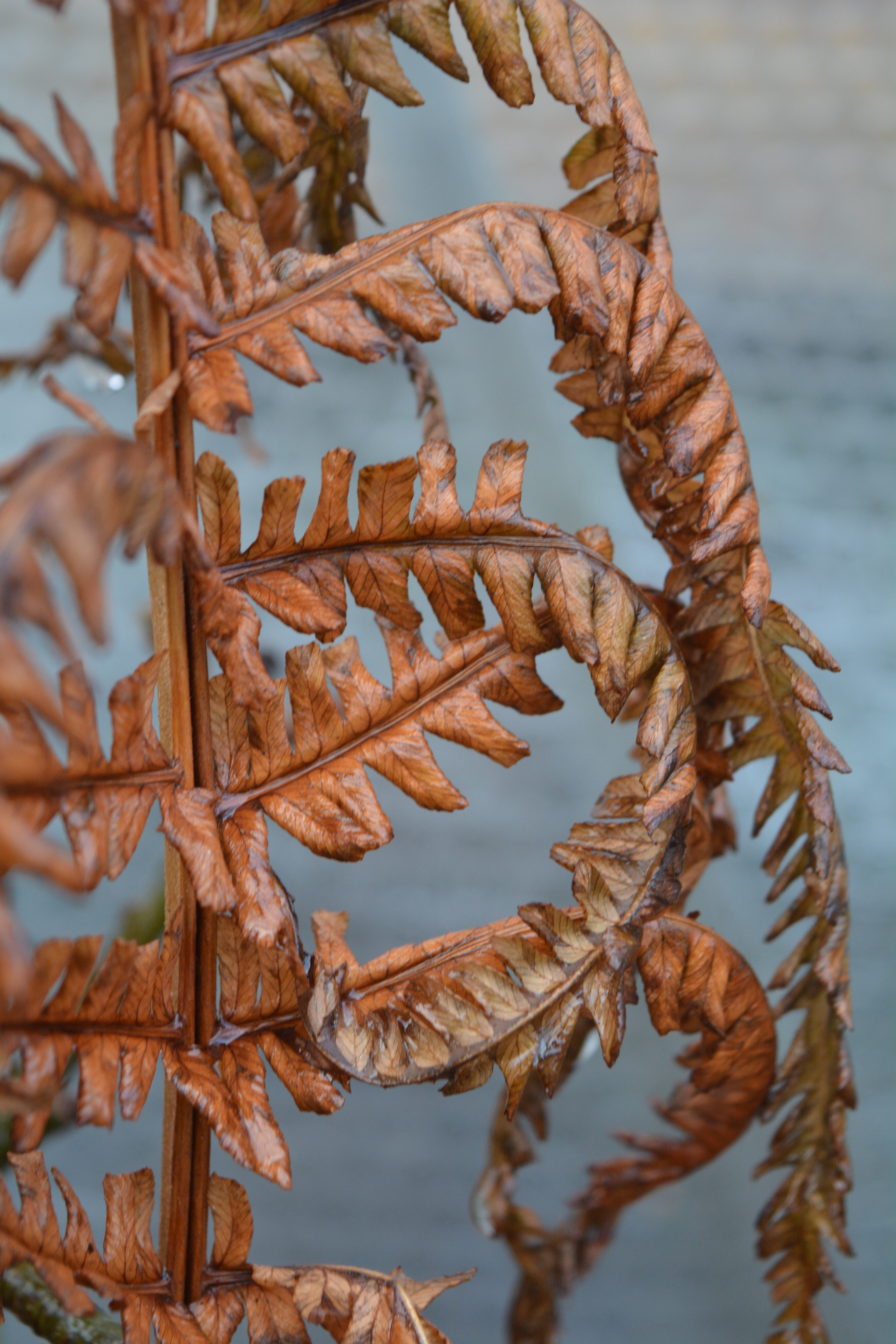
I wrote, “Ferns are so useful in the garden mostly in places of shade or partial shade. In December they still look fresh and vibrant. A few though show browning of leaf edges and some die right down turning a rich gingery-brown.” Then I shared a selection of photos of some of our ferns.

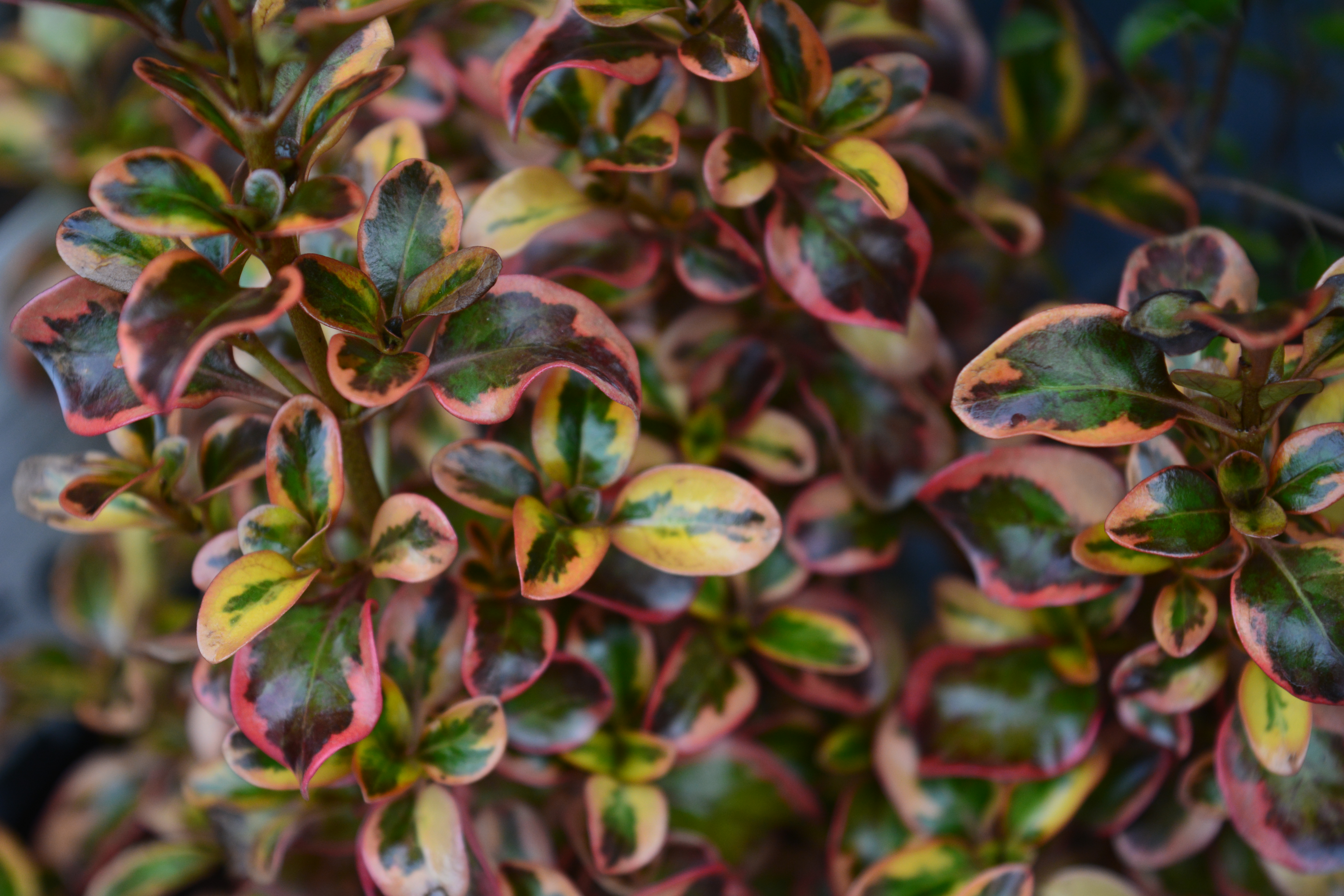
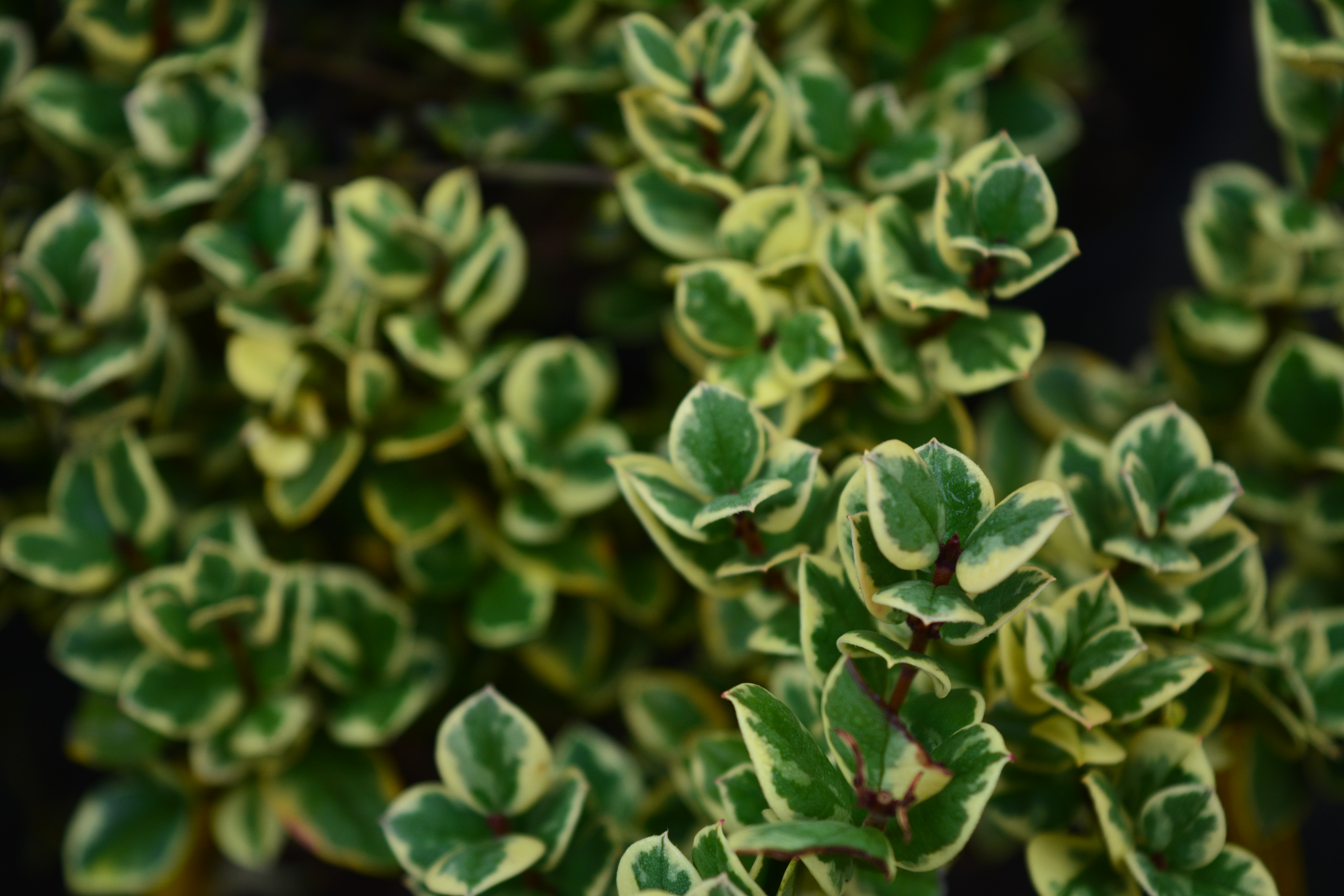
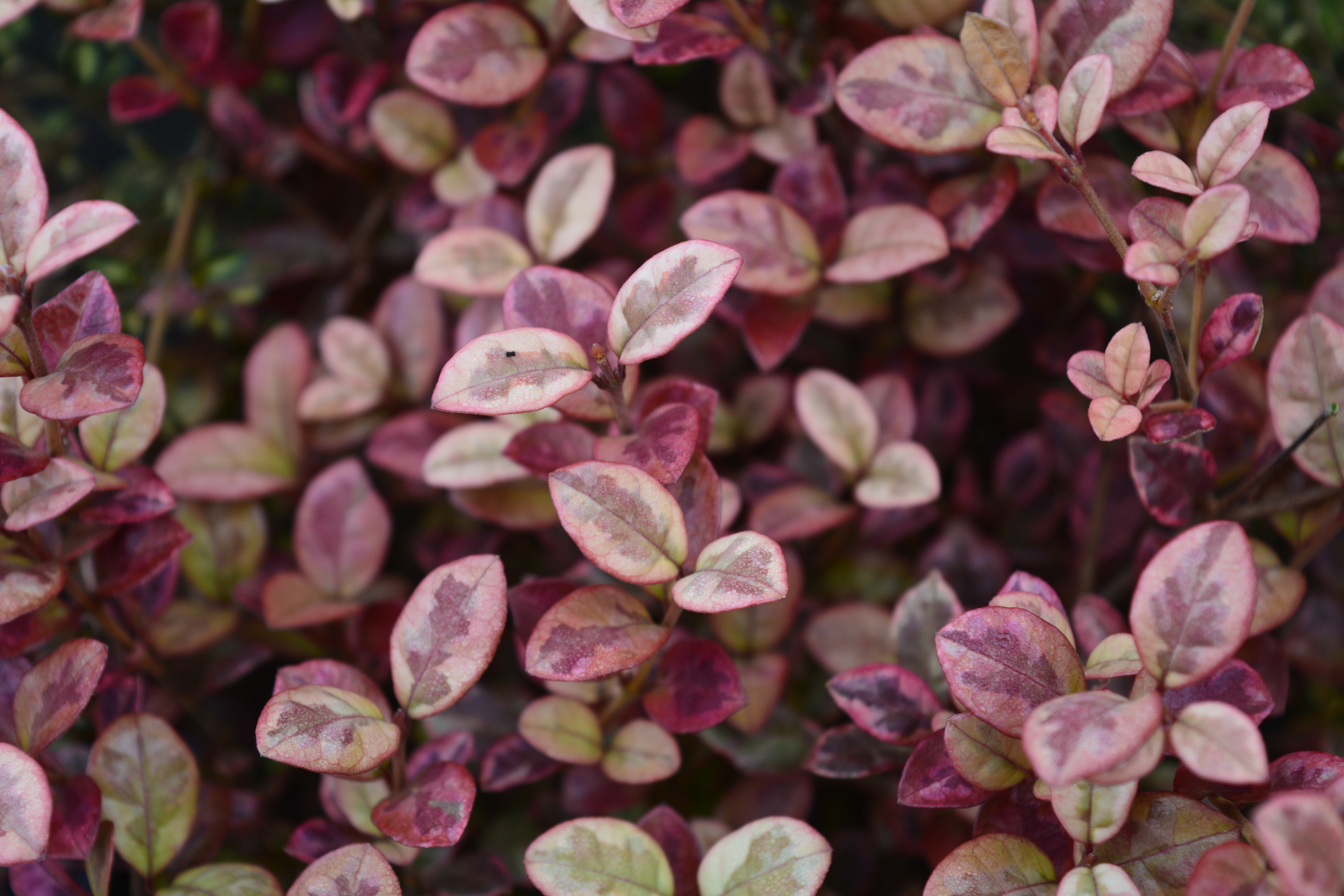
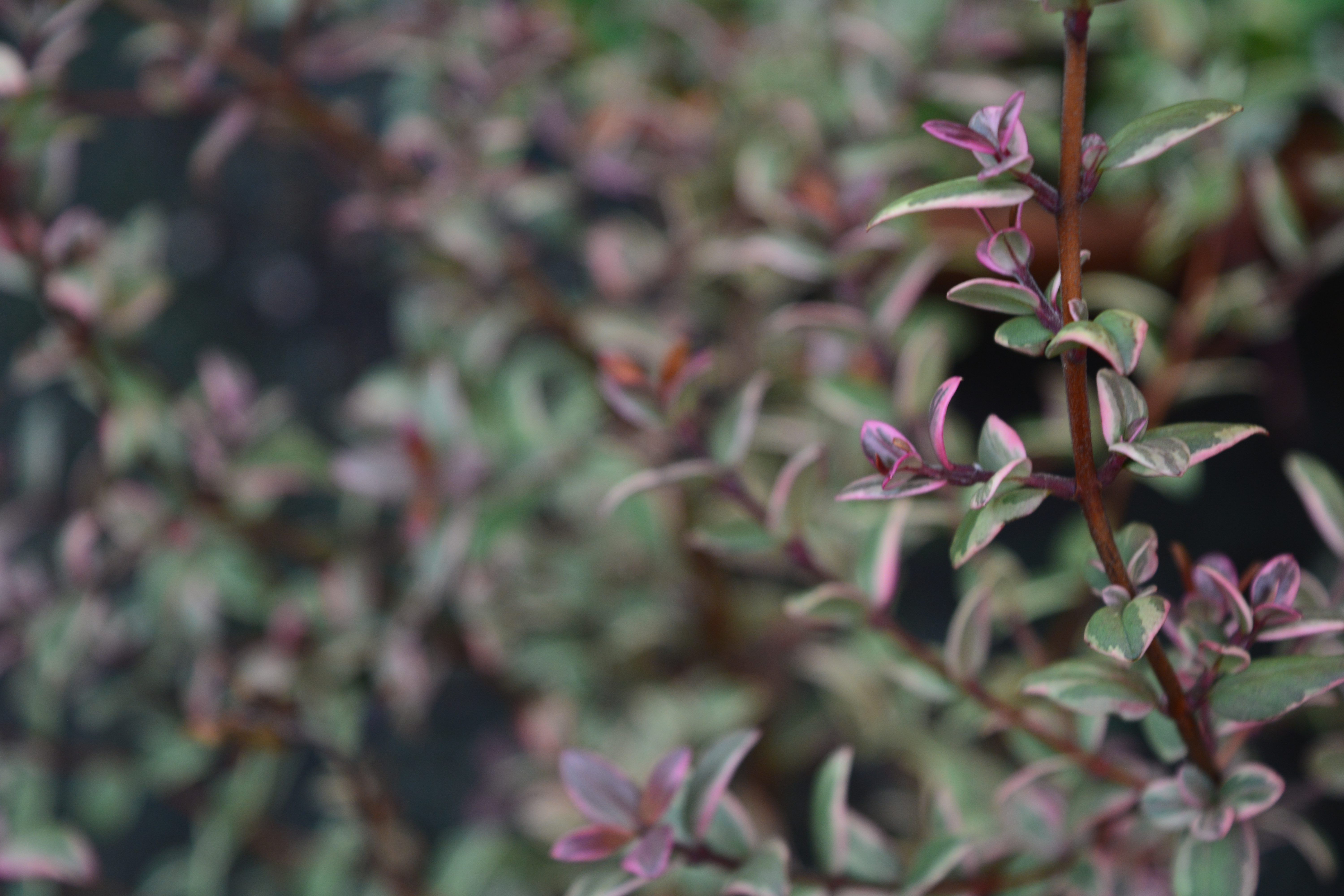
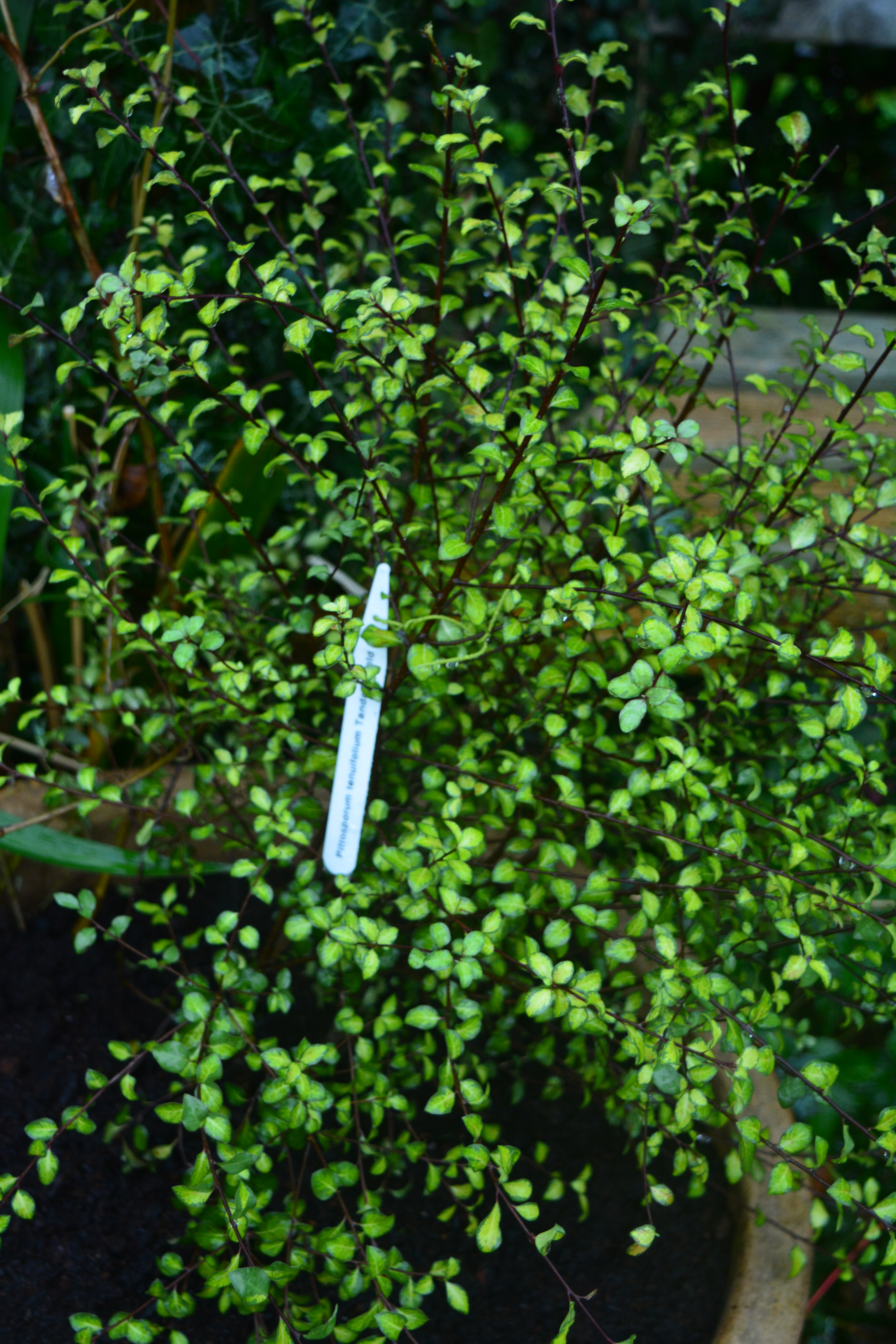
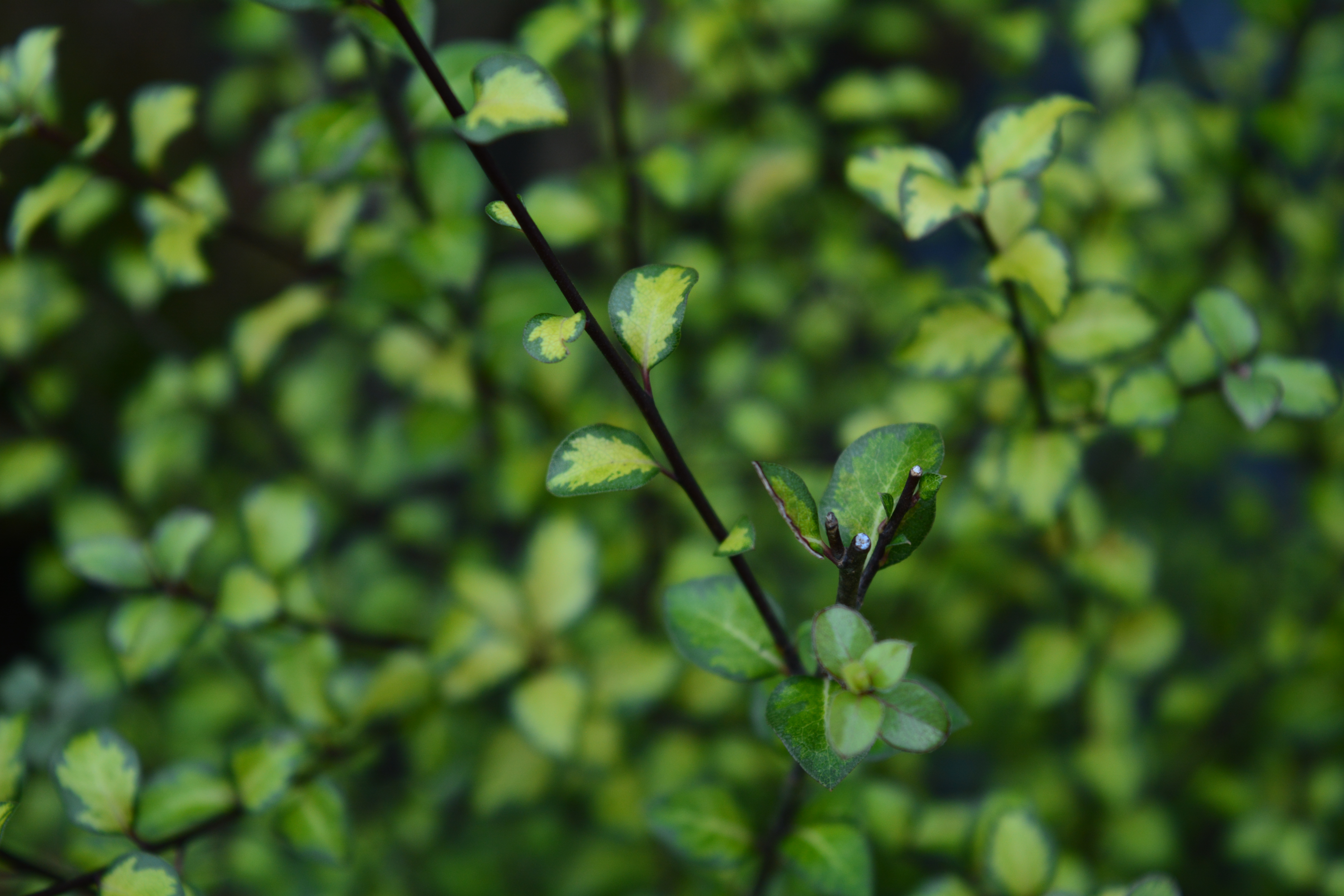
On the opposite page it was our small shrubs that sport interesting foliage that featured. We have only recently started using low growing shrubs for their foliage as we are discovering how much interest they can add to a border when flowers are lacking. I wrote, “Winter is the season when evergreen broadleaved shrubs come to the fore, leaf surfaces get glossier, colours darken and extra colour appears especially pinks, creams and rubies. Here is a selection of shrubs we have just bought especially for their foliage, although some will also flower and fruit.”
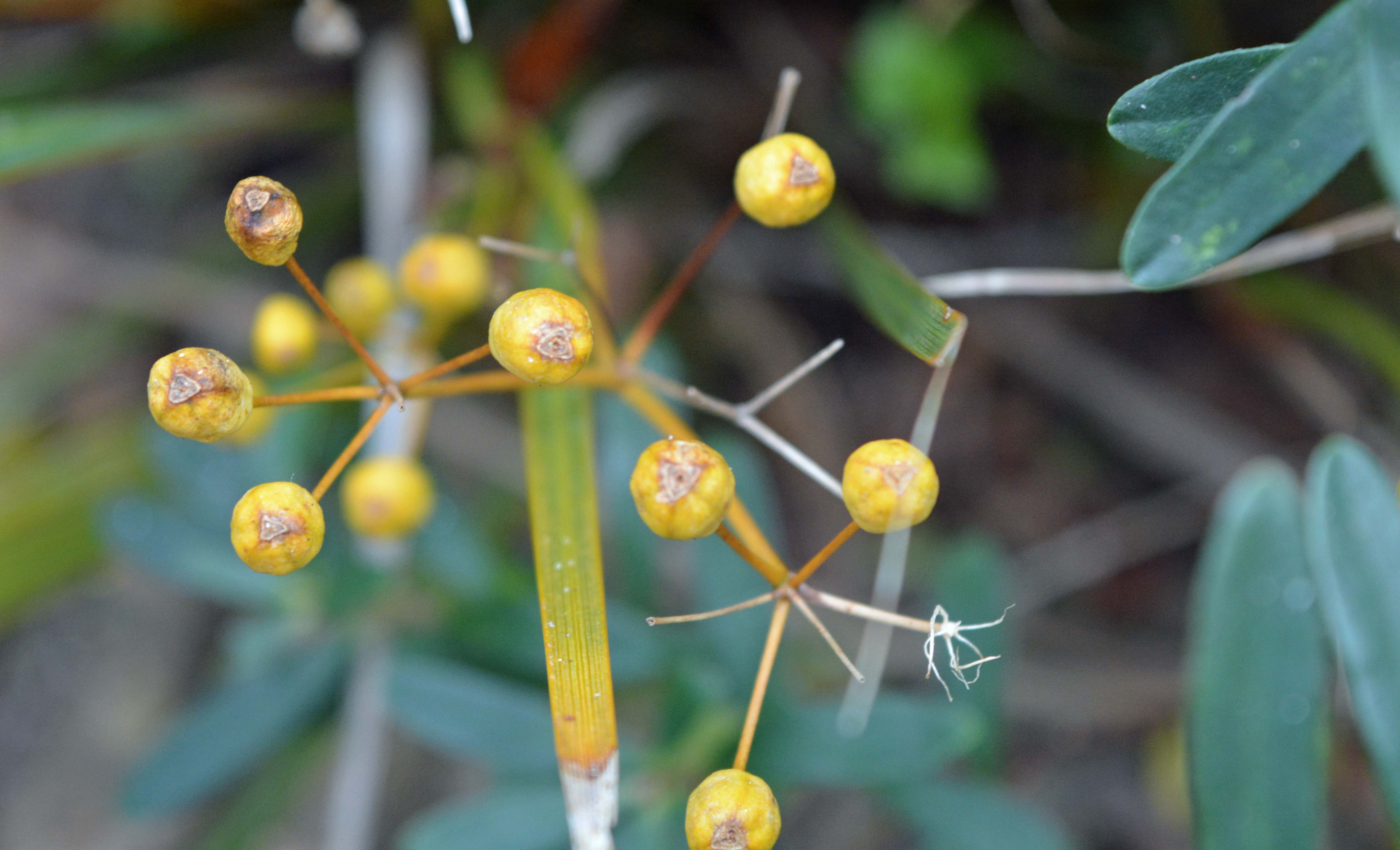
 

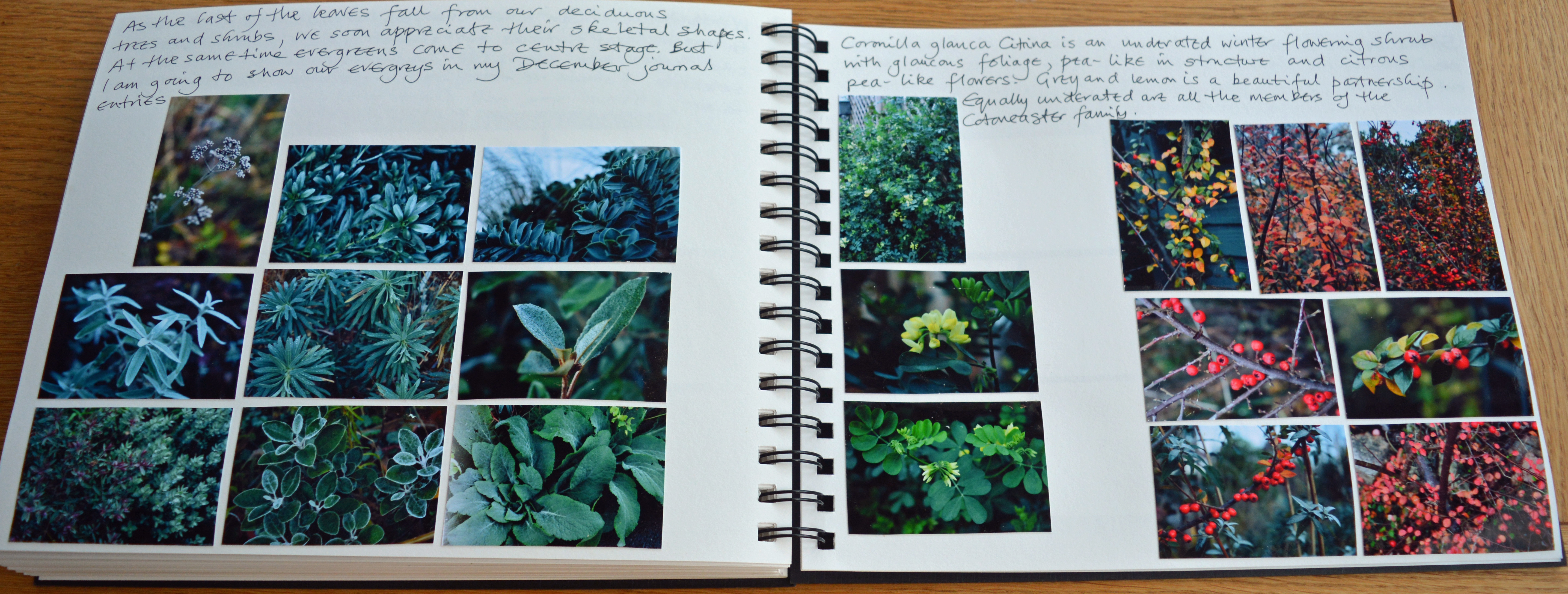
Turning over the page we can see glaucous foliage being featured. I wrote, “As the last leaves fall from our deciduous trees and shrubs, we can appreciate their skeletal shapes. At the same time evergreens come to the centre stage. But I am going to show our evergreys in my December journal entries.”

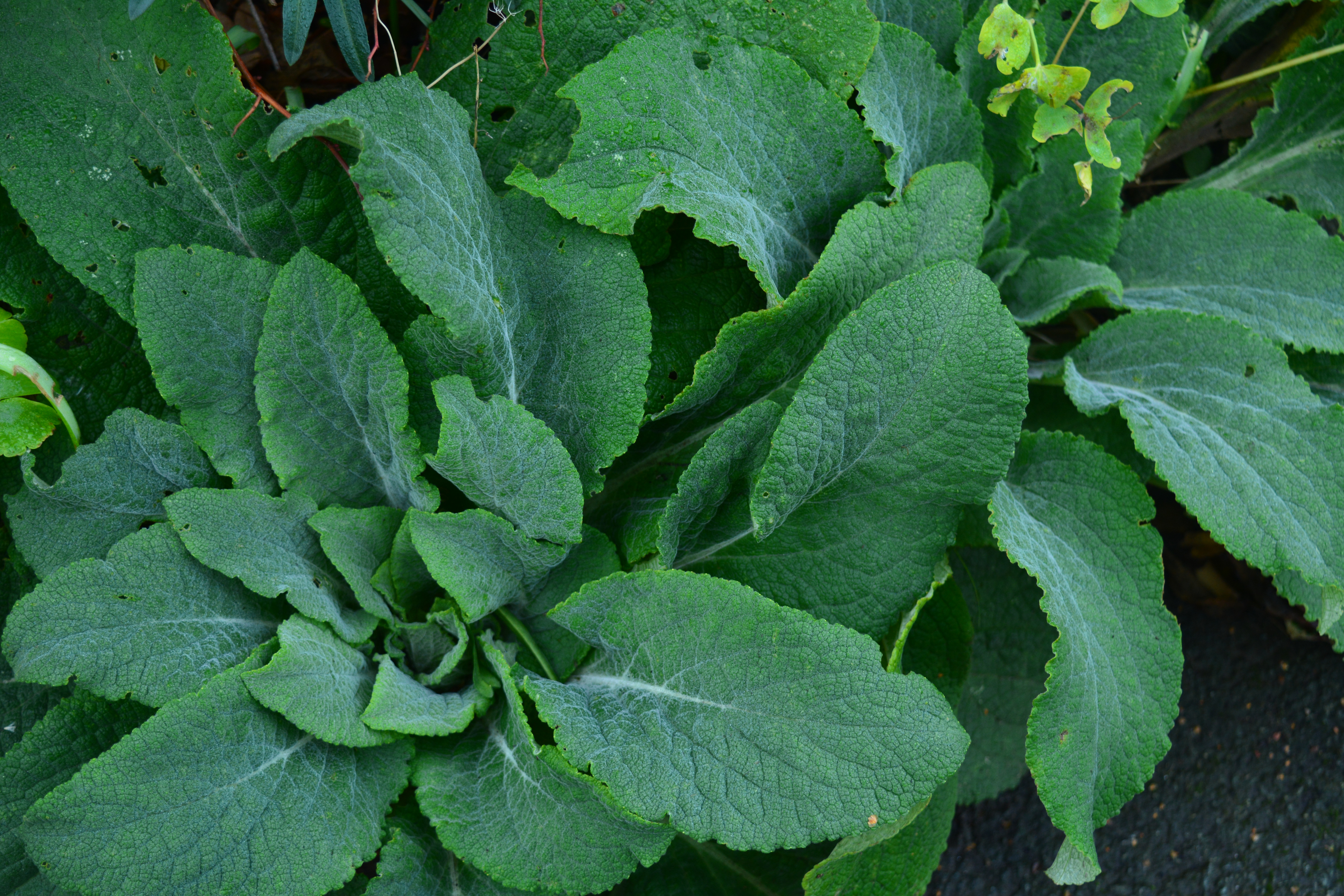
Here is a selection of photos of some of our many glaucous foliaged plants, a climber, some shrubs and some herbaceous perennials.

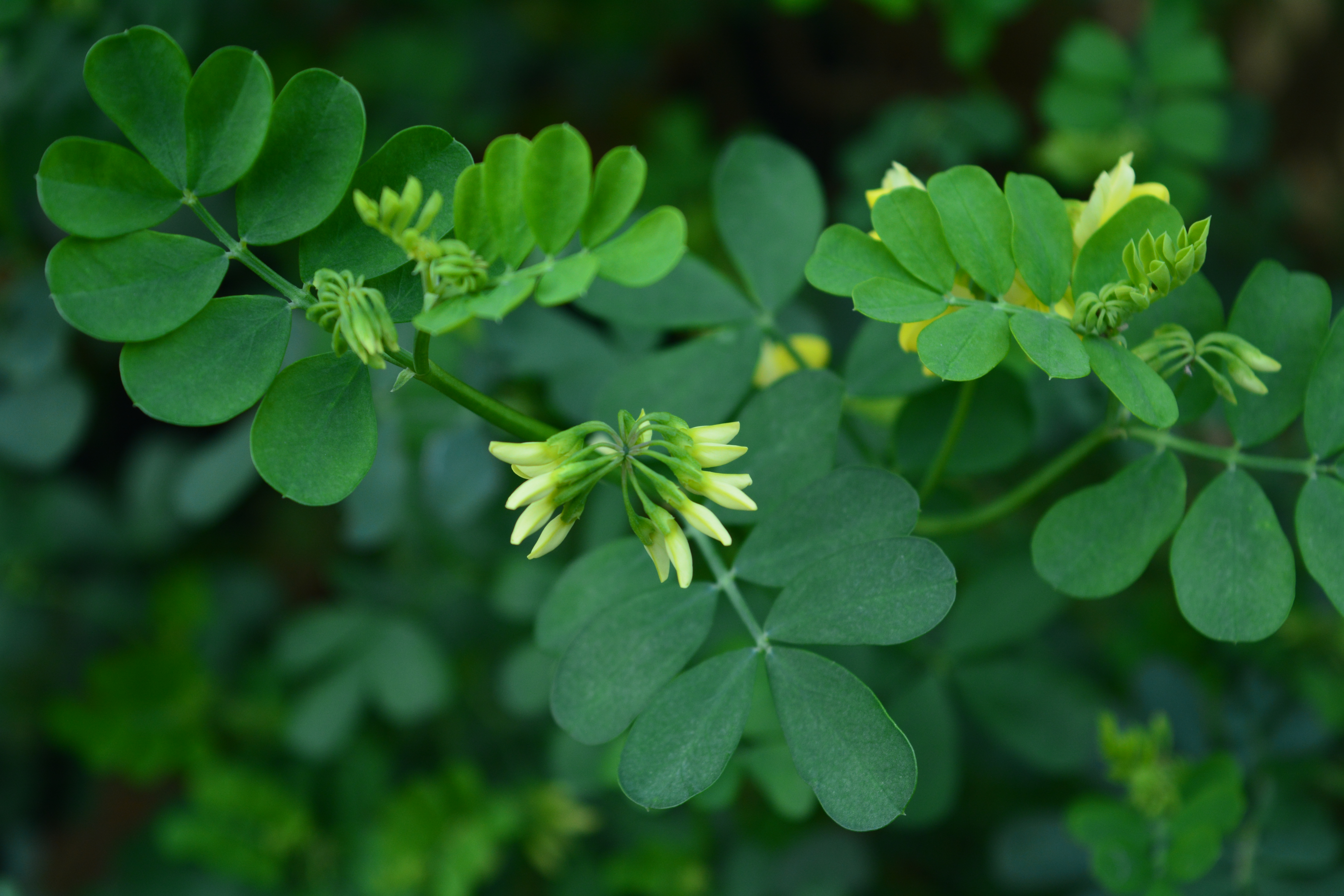
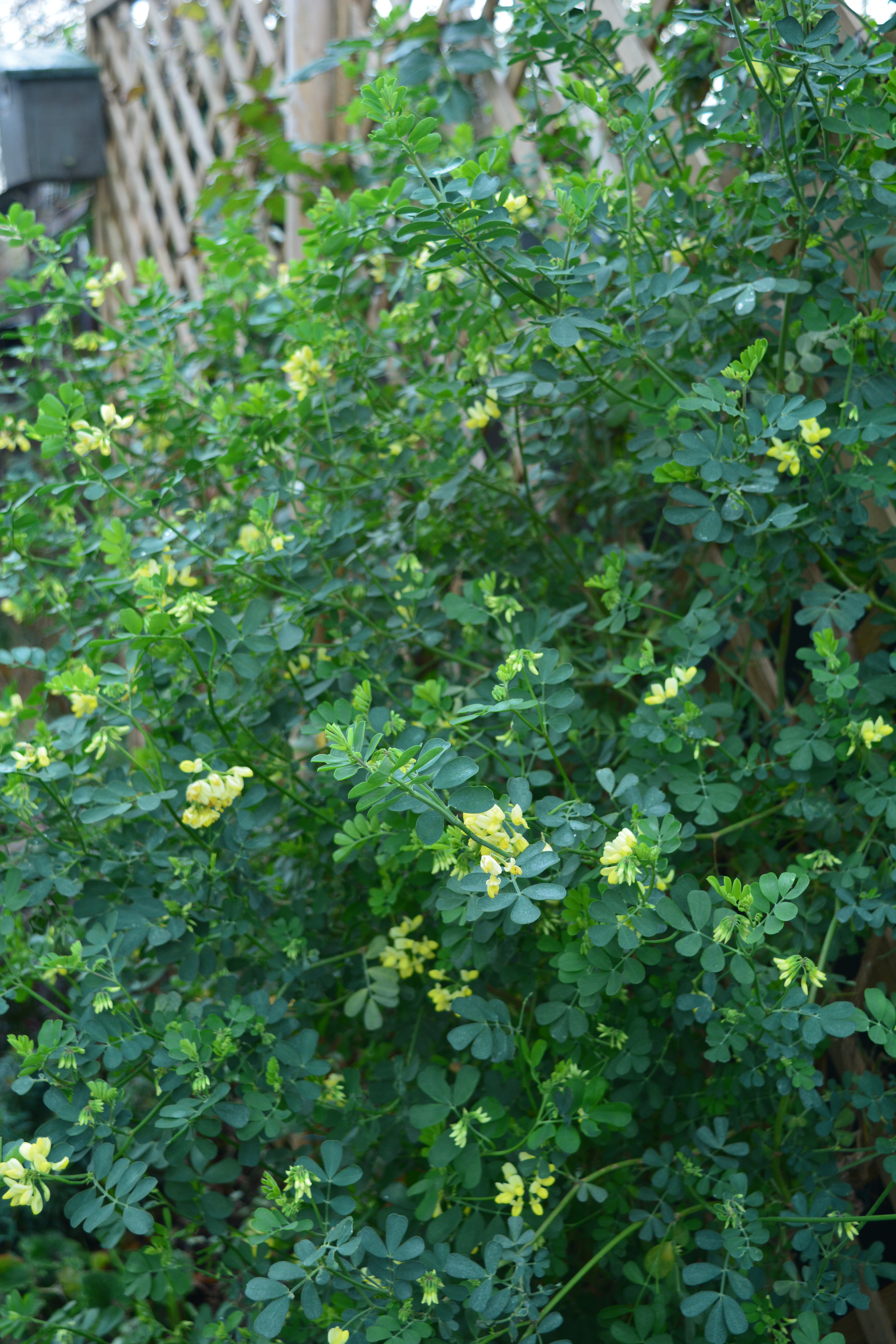
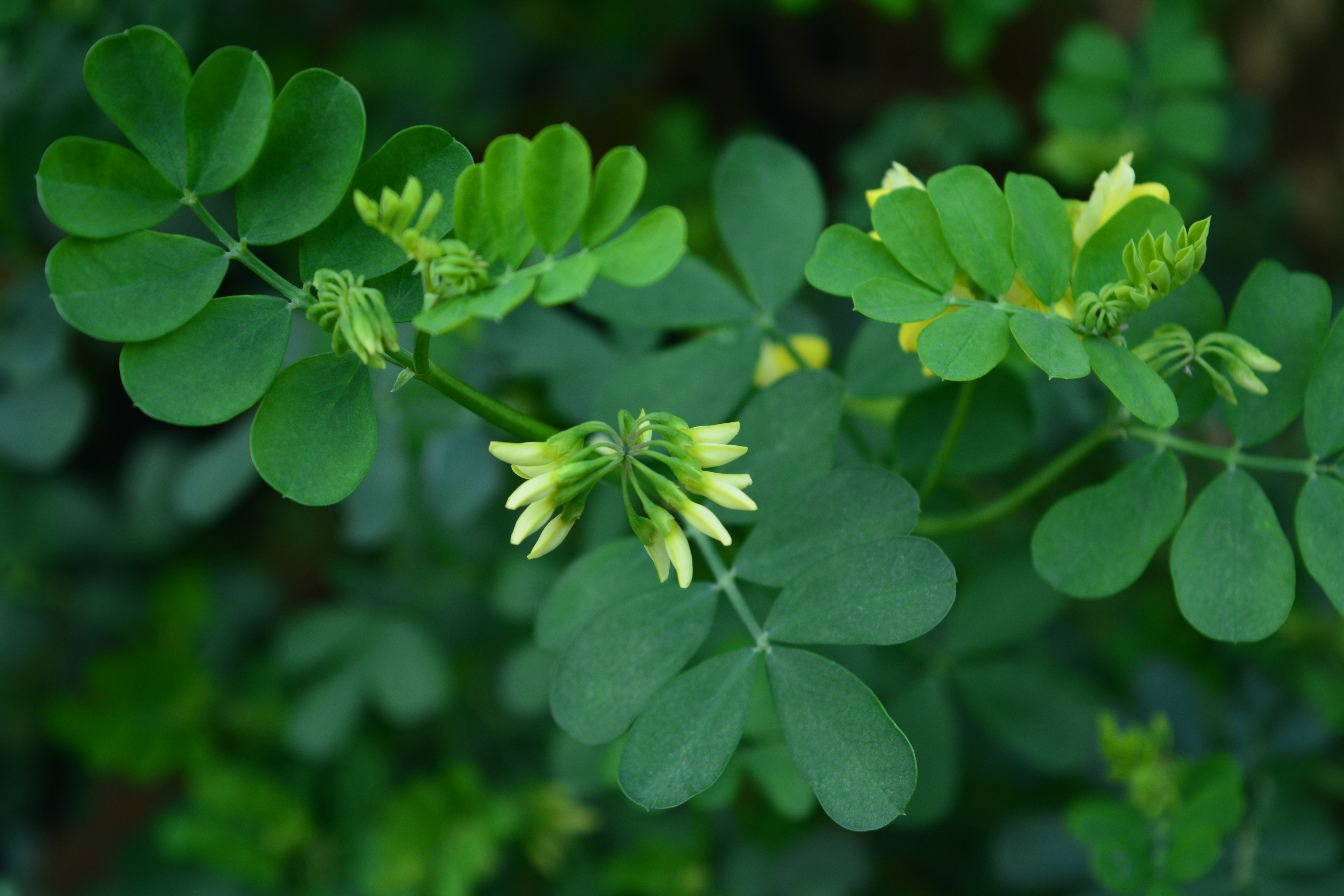
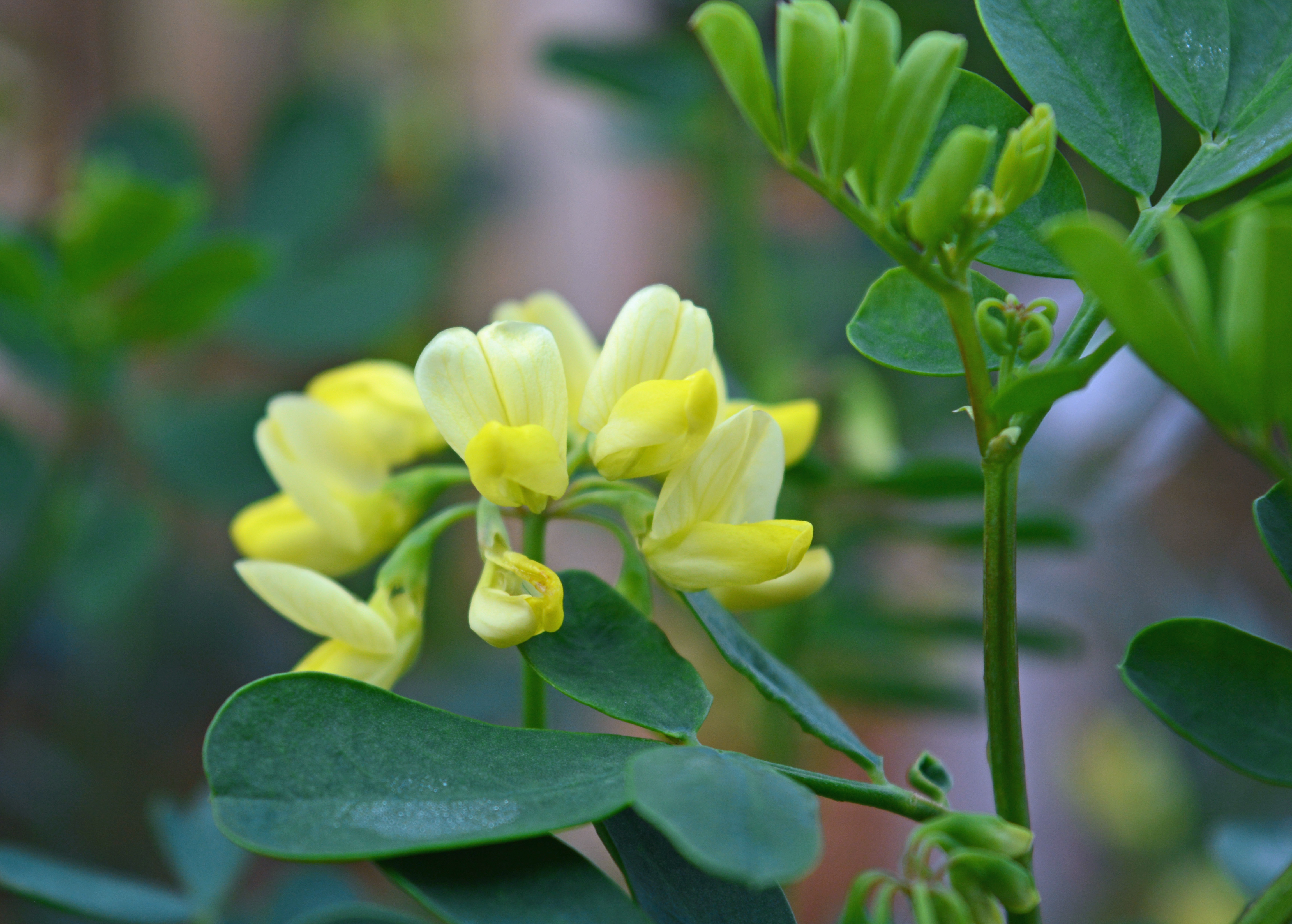
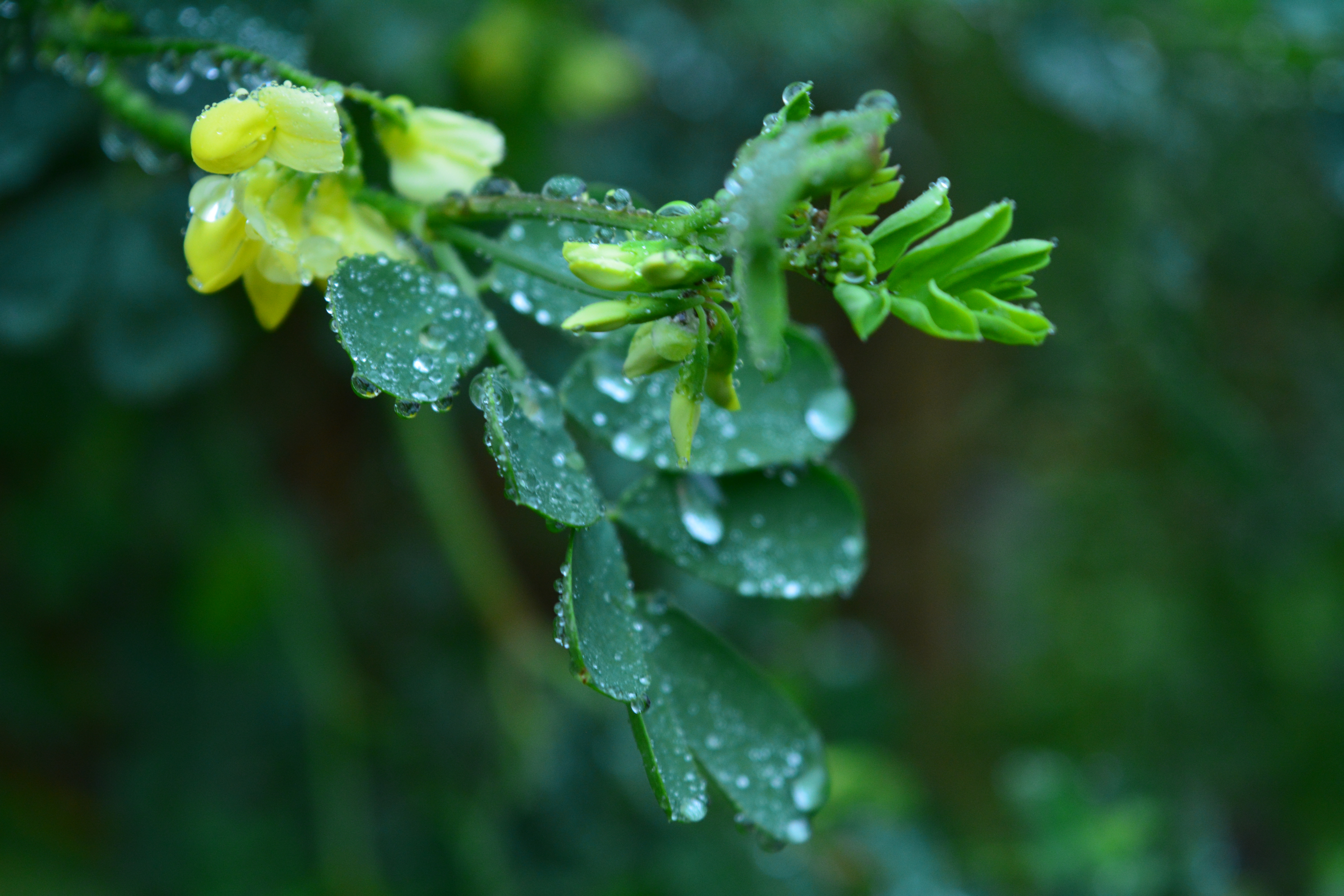
One of our recent plant discoveries that we have been absolutely deilghted with is Coronilla glauca Citrina, a wonderful shrub that we grow as a climber on the trellis around our oil tank. In my journal I wrote, “Coronilla glauca Citrina is an underated winter flowering shrub with glaucous foliage and citrous coloured pea-like scented flowers. Grey and lemon together is a beautiful partnership. Equally underated are all the members of the Cotoneaster family.”


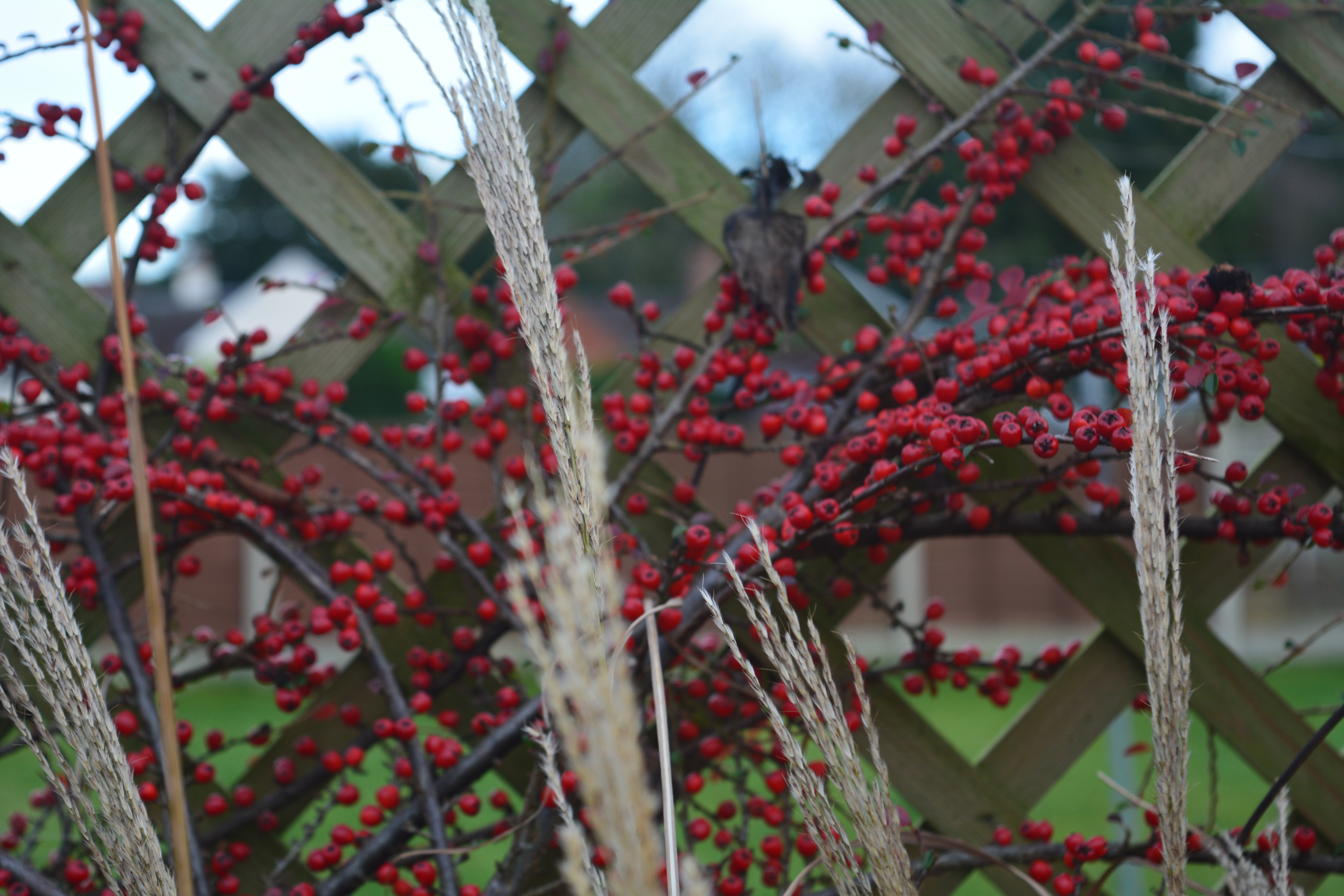
And here are a few of our many Cotoneasters, a family of shrubs we have grown in every garden we have ever had.


Turning over once more we discover two pages concerning our ongoing garden projects whch we started in the autumn.

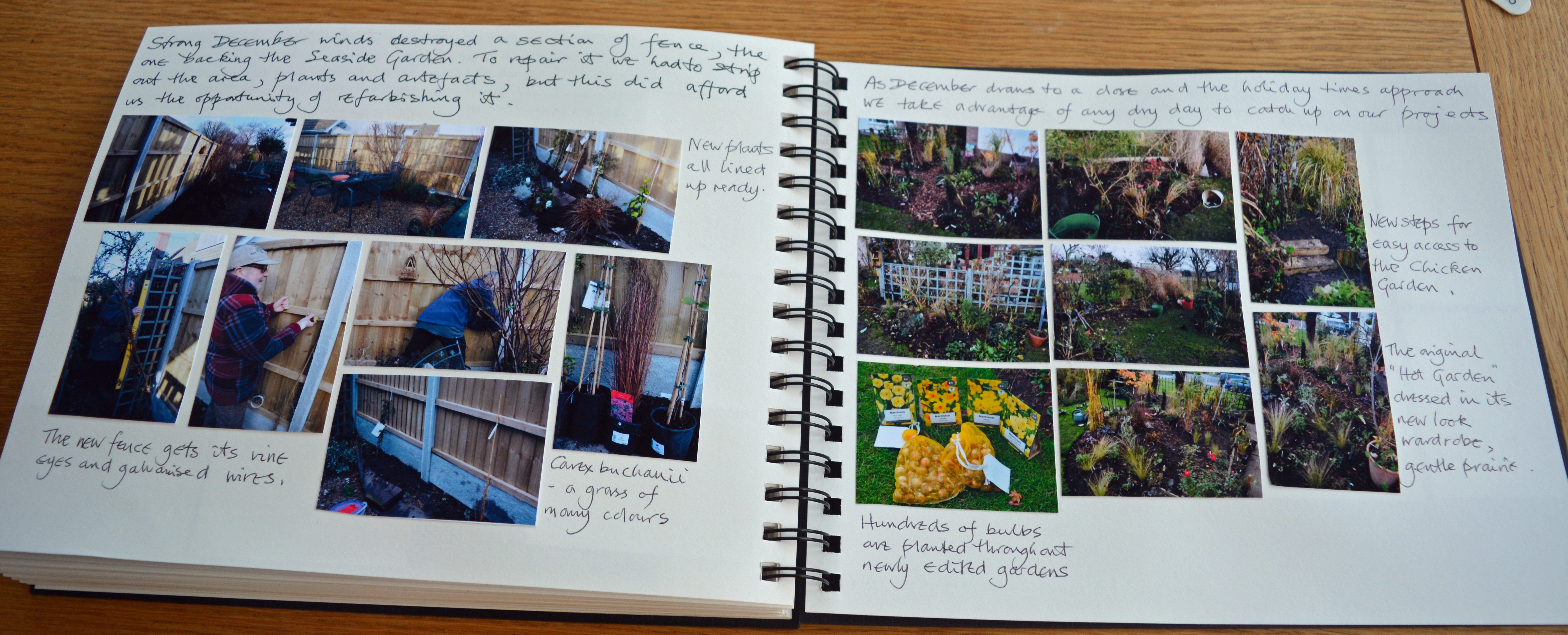
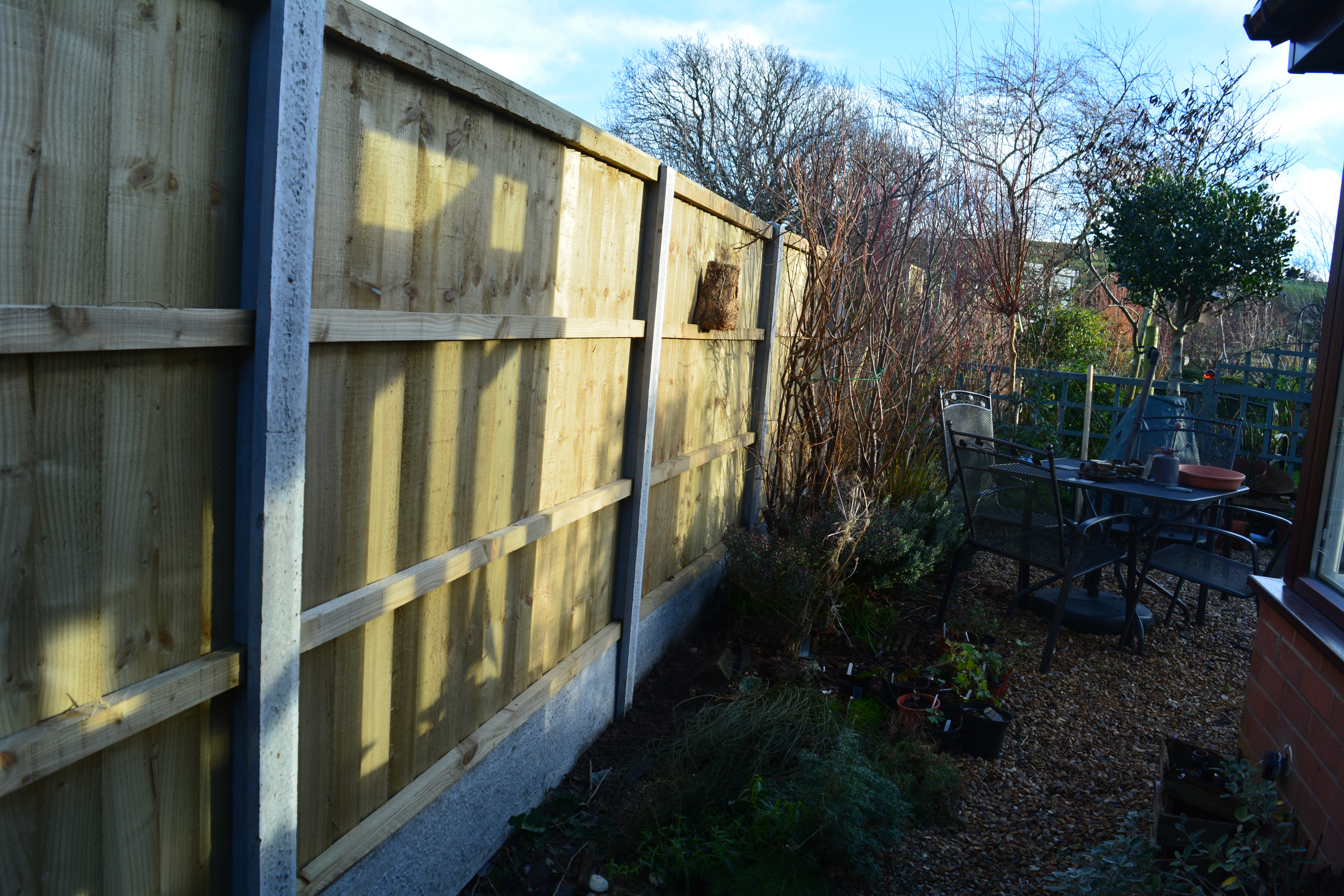
We were forced by circumstances to rebuild our Seaside Garden when gale force winter winds broke the fence behind it. With our next door neighbours we soon got new ones back up. Seeing every negative happening as an opportunity we saw this new longer fence as a great place for interesting climbers and we decided to start the Seaside Border all over again. So at the end of the month we got started, but there is lots more to keep us occupied through part of January. I wrote, “Strong December winds destroyed a section of fence, the one backing the Seaside Garden. To repair it we had to strip out the area, plants and artefacts, but this did afford us the opportunity of refurbishing it.”


Here are some of the new plants waiting to go into the “new” Seaside Garden to join those we saved.

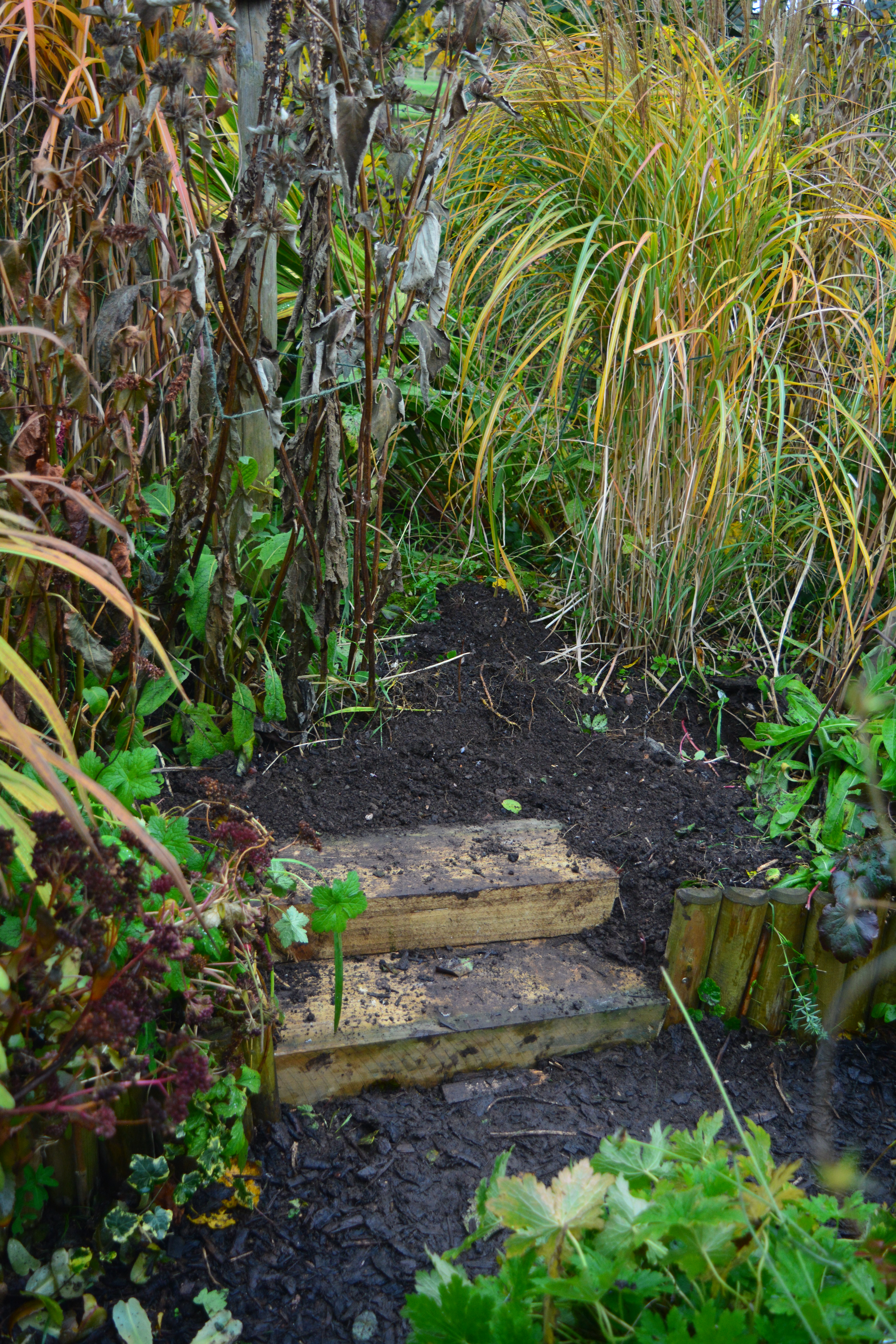
On the opposite page I talk about carrying on with our other editing jobs that we started in the autumn. I wrote, “As December draws to a close and the holiday times approach we take advantage of any dry days to catch up with our projects, new steps for the Chicken Garden, planting hundreds of bulbs and replanting the Hot Garden in its new position.”


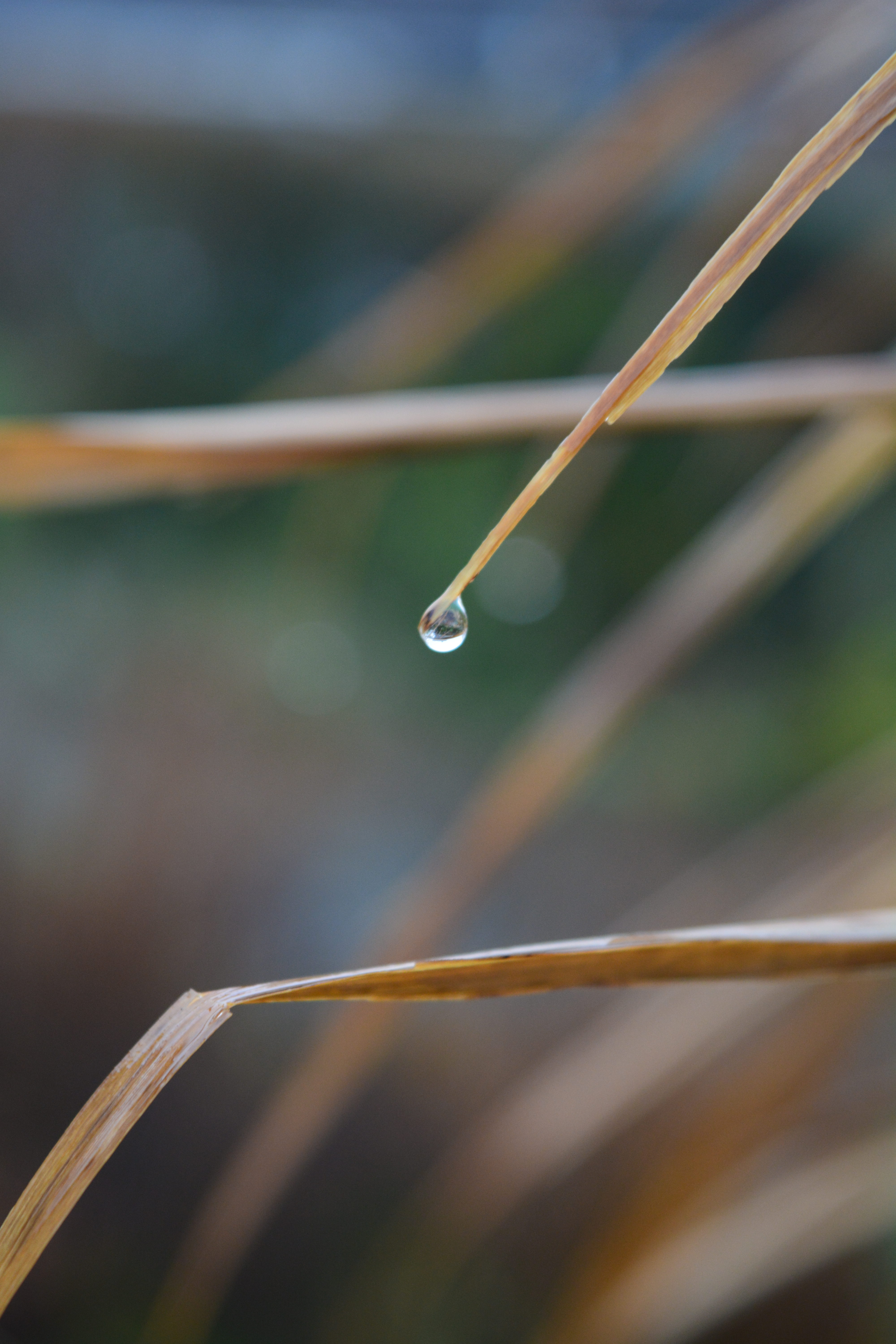
And so to the last page of my 2018 Garden Journal, when I wrote, “December ended frost free. Sunshine caught special features of plants while raindrops hung on leaves, twigs and sculptures.”

Here is the final selection of photos for 2018, showing winter sunshine working its magic on foliage and droplets of rain caught after a shower.


“The end of my 2018 Garden Journal.”

Categories
climbing plants drought garden photography gardening gardens hardy perennials Shrewsbury Shropshire South Shropshire

My Garden Journal 2018 – July

Here is my garden journal entries for the month of July, a month when the garden continued to suffer the effects of the drought.

My opening words were, “July begins as June ended, in a heatwave with temperatures in the upper twenties. And sadly for the garden, still no rain. Rainless time has now lasted for a month and very little for the previous month.”
I featured a set of photos of our Passion flower which grows in our greenhouse.

“We grow our passion-flowers in the greenhouse as we are too cold here for them to survive outside. We train them along the side of the greenhouse  where they can shade our tomato plants. Natural shading!”

On the opposite page I moved on to look at the digitalis we grow here in our Avocet garden.

“We grow so many different foxgloves in our patch, with several grown from seed by Jude. Our native Digitalis purpurea in both its forms of purple and white, enjoying spreading themselves around our borders, deciding for themselves where to settle down. Dan Pearson writes of Digitalis in “National Selection”,

“I like the way vertical lines of foxgloves draw the eye like an exclamation mark. They are delicate, using only as much ground as they need, but providing plenty of bang for your buck with the upward motion.”

Turning over to the next double page spread, I featured photos of a selection of the moths we trapped in our live trap.

“Butterflies and moths have been in short supply so far this year, but both appeared as July arrived. Our first session of live-trapping moths showed how many we had in our garden and how varied they are. We always delight at getting close up to the surreal Elephant Hawk Moths.”

Elephant Hawk Moths


Master of Disguise

These tiny moths are equally fascinating.


A myriad of moths.


The next double page spread features Tulbaghias, Leucanthemum, Helenium and several different Hemerocallis.

“Tulbaghias seem to enjoy the weather, whatever it does. These look great in dappled shade beneath the outer limbs of a Quince tree.”
“Leucanthemum and Helenium catch the light so well. Their shaded petals add extra depth.”


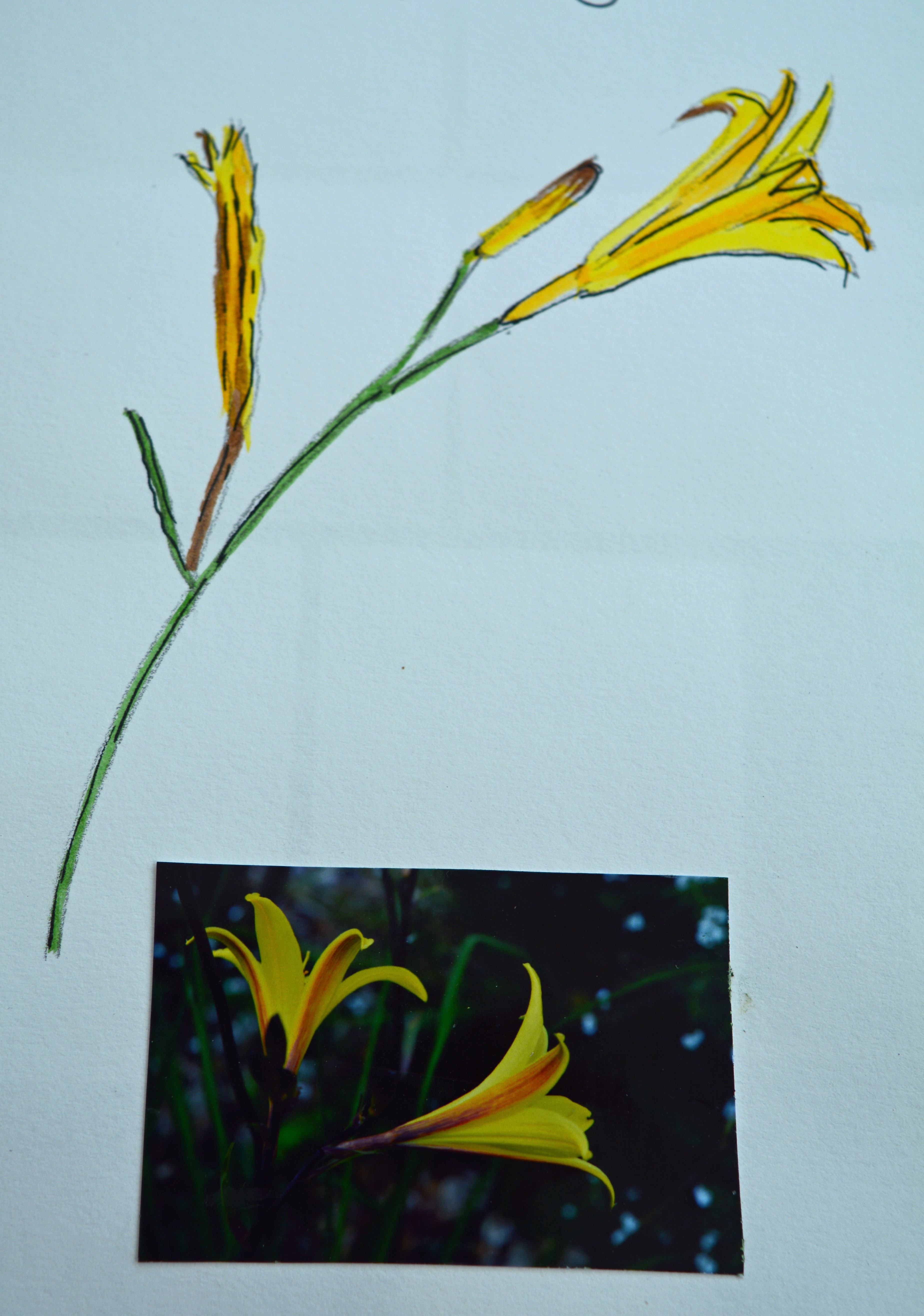
I next featured a whole page of photos of Day Lilies, Hemerocallis.
“In the middle of the month we visited our friend Mark (Zennick) with his wonderfully colourful collection of Hemerocallis. As always we came away with a good selection from his nursery.”
Next we take a look at how the garden is being adversely effected by the dry hot weather, and then I share my paintings of Camassia seed heads.

I wrote, “Another quote from Dan Pearson, upon his return from a trip to the Hawaiian Islands ………”I returned to a wet English summer, where the smells were crisp and clean.” Anyone returning to England this July would be met by golden dried-up lawns, trees with wilting leaves and dead leaves on herbaceous perennials.”

Opposite I used water-based pencil crayons to record the different stages as the flowering stems of Camassias were drying out.

“As well as their beautiful spires of blue, cream or white  flowers, Camassias have lovely green pods which dry slowly to digestive biscuit colours.”

My final page for July in my Garden Journal 2018 show a few plants that seem to thrive in the dry conditions.

“July moved on still without rain and the garden continued to suffer. Flowers bloomed but lasted a very short time. The lawn simply remained brown and stopped growing. A few plants though performed really well.”


Agastache                              Scrophularia


Erigeron and Hebe                                    Clouds of Achilleas

Two deep purple Clematis

As I finished my journal entries for July there was still no sign of any appreciable rainfall, just occasional short-lived showers which hit the ground and evaporated immediately. August will hopefully be kinder to our Avocet garden and its resident plants.

Categories
climbing plants fruit and veg garden design garden photography garden ponds garden pools garden seat garden seating gardening gardens hardy perennials Hardy Plant Society HPS kitchen gardens roses Shrewsbury Shropshire village gardens water in the garden

A little village garden – Von’s garden.

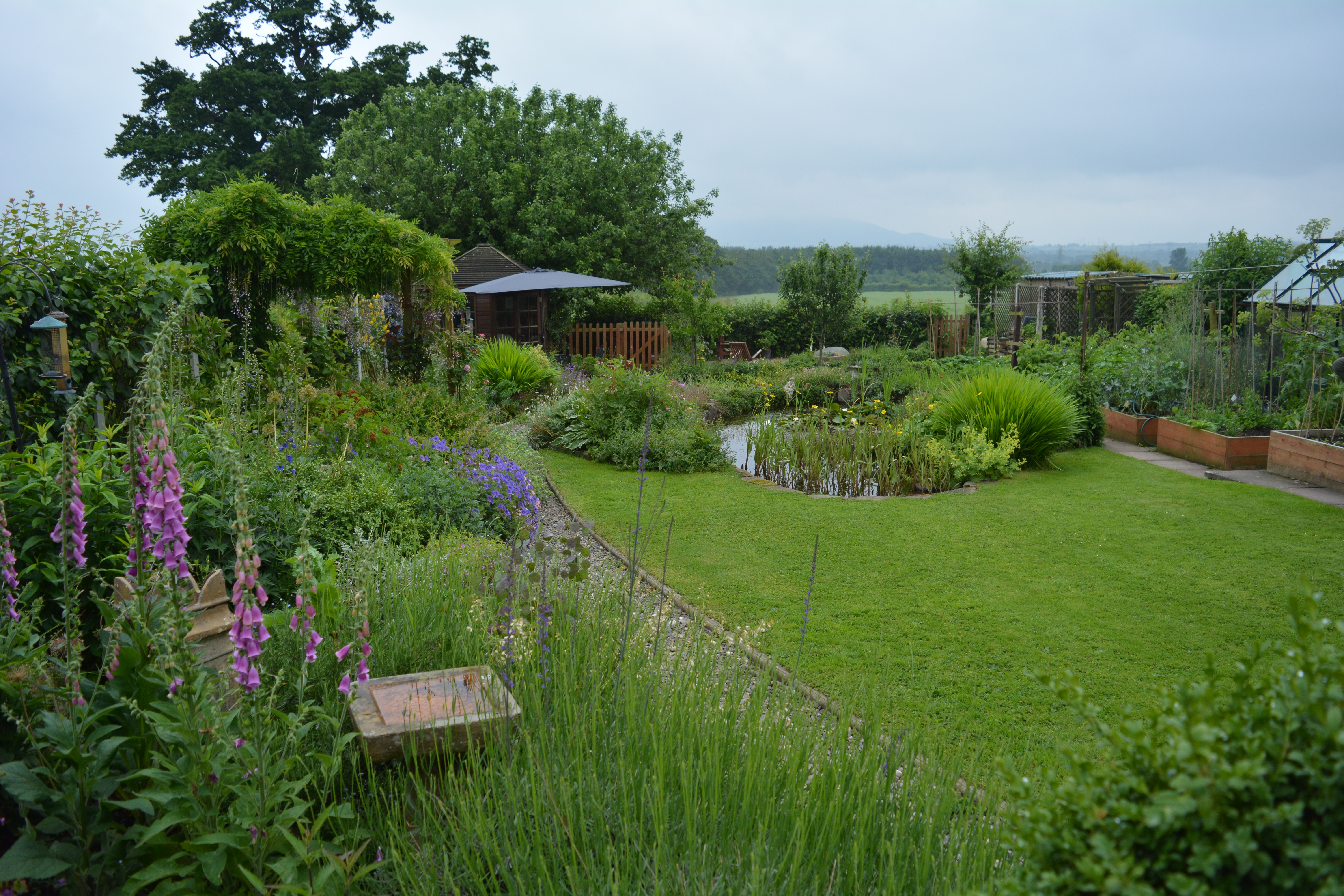
We have lots of gardening friends with gardens of all types and sizes and in all sorts of locations. One of our most enjoyable garden related activities is to visit a garden belonging to a friend. On a wet dull day in mid-June we visited the village garden of friend Yvonne, more often called Von. It is a garden with a beautiful view across the Shropshire countryside and a garden that happily sits in its environment.

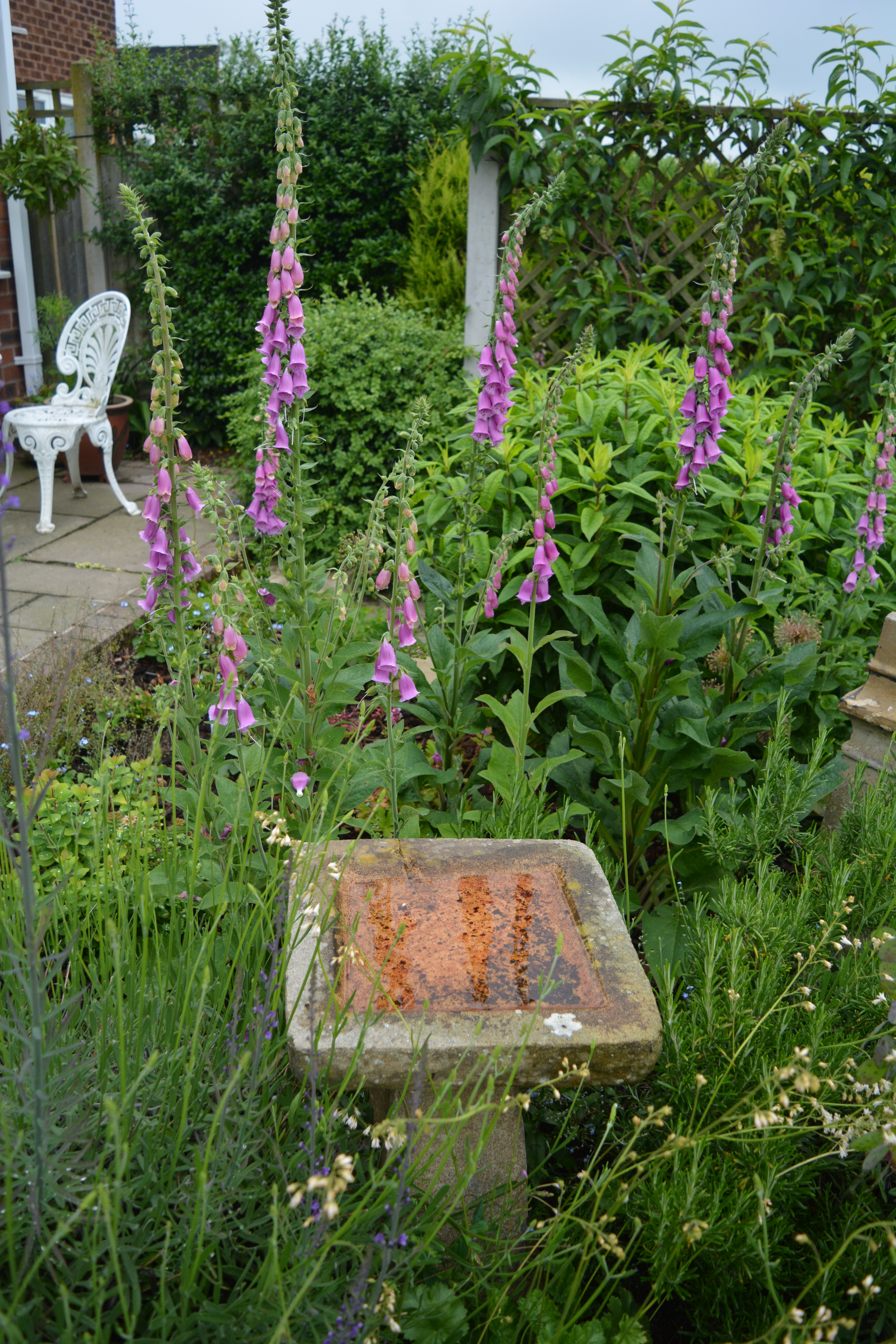
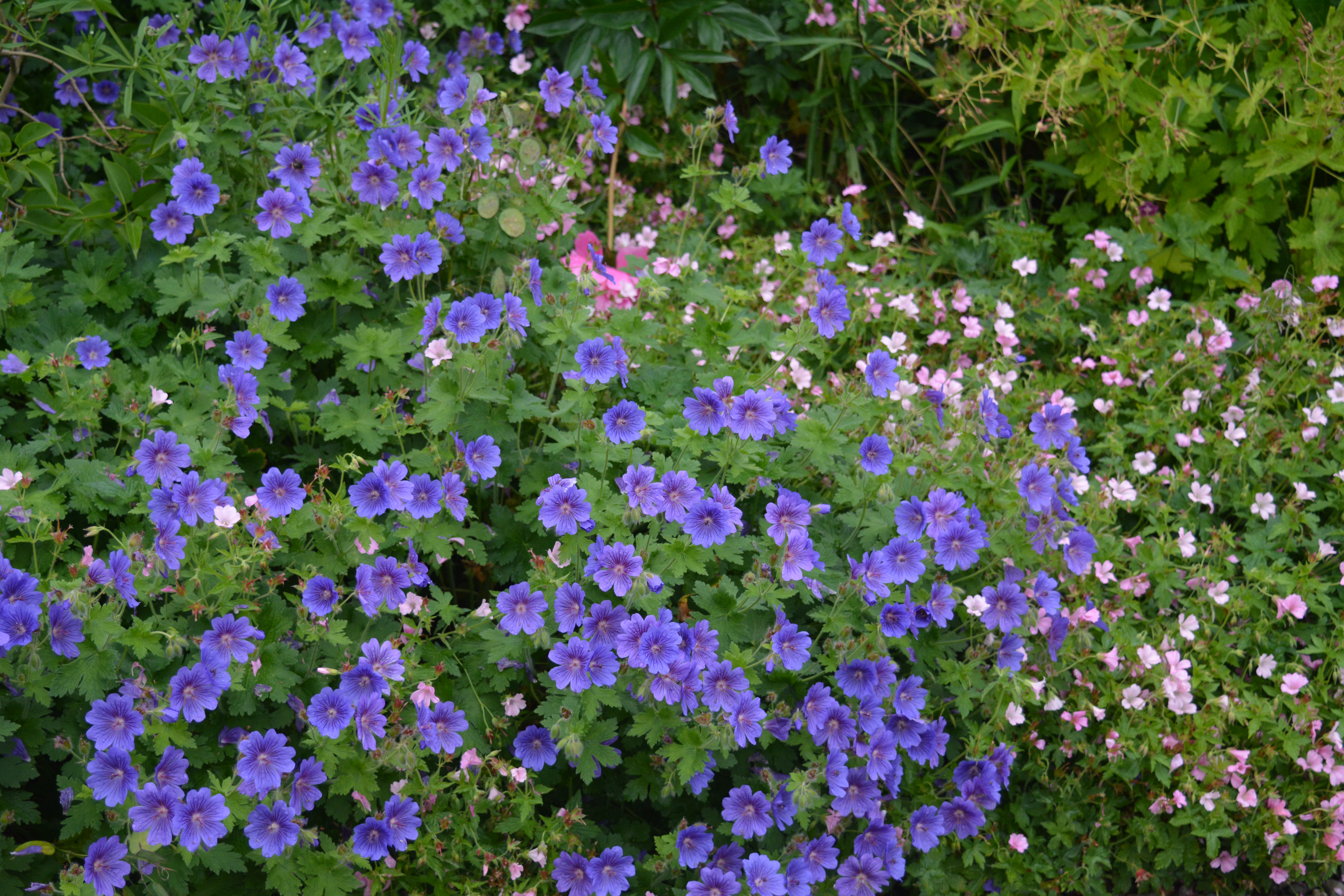
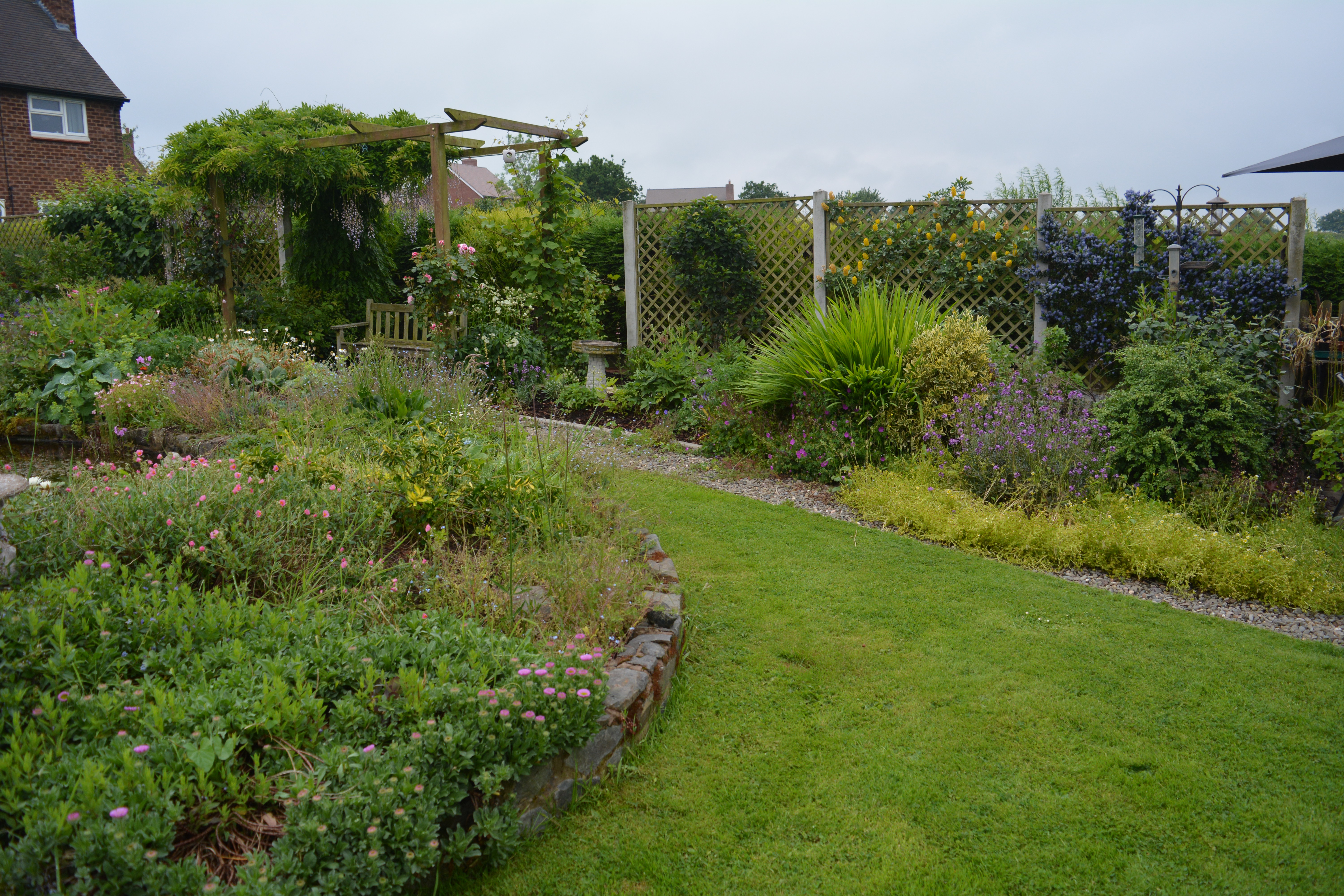
I hope you enjoy my photographs taken in poor light and drizzling rain but the plants shone through. A gravel path leads us alongside a delicately planted border with softly curved shapes. The spires of tall-growing foxgloves and delphiniums shine through the gloom matching the colours of geraniums that soften the path edges.


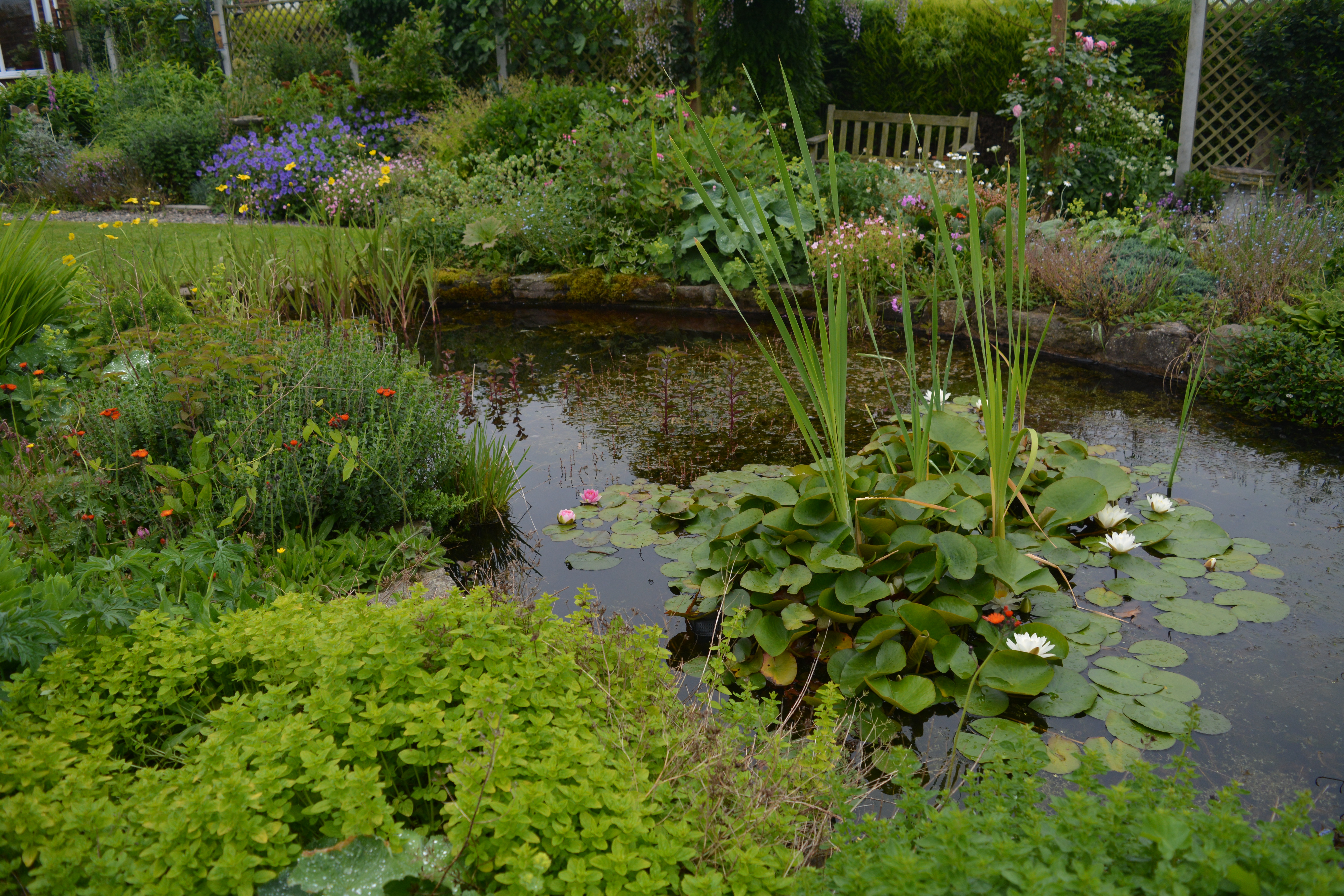
Centrally placed in the garden is a softly shaped pool surrounded by beautiful planting.


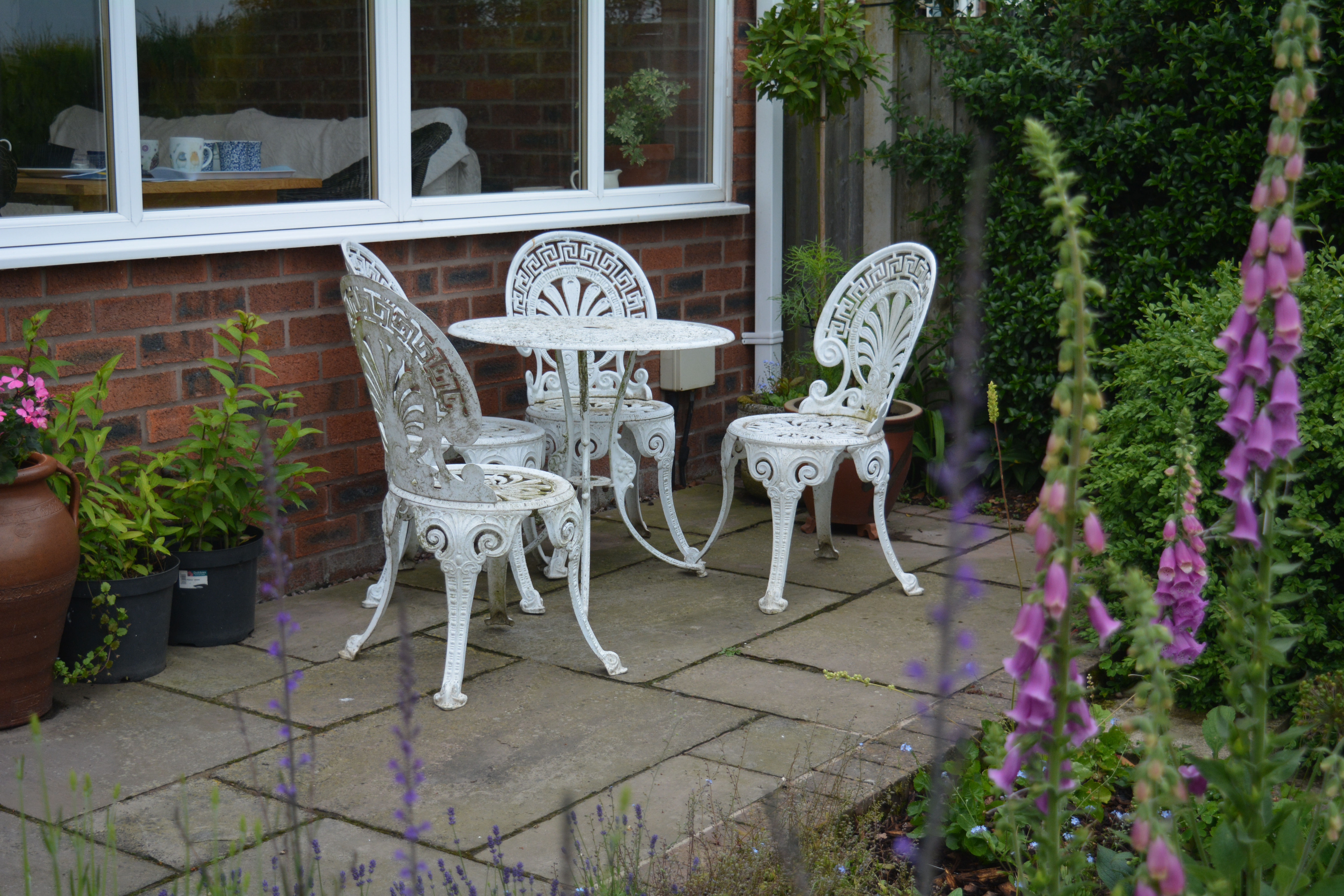
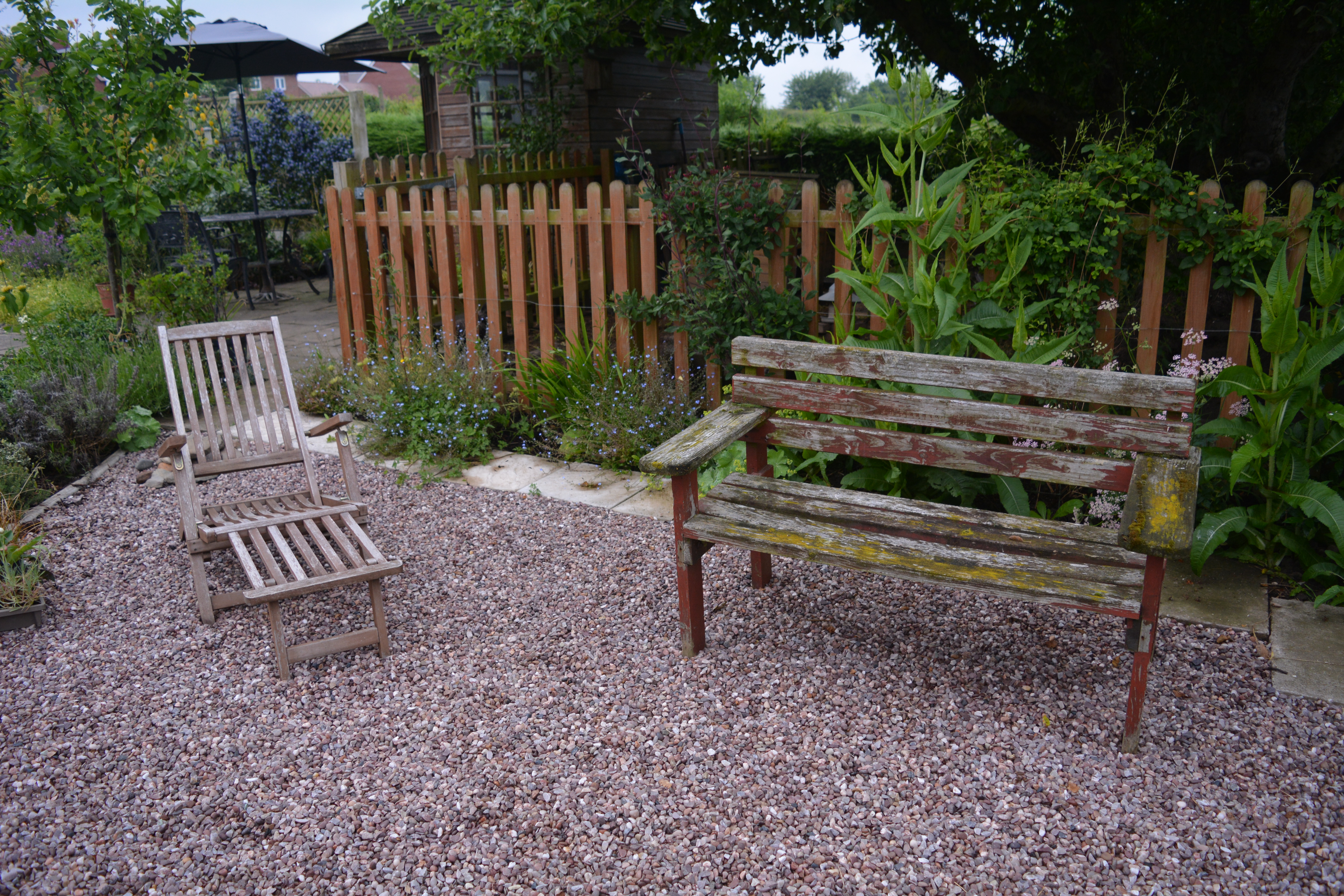
There are well-placed seats throughout the garden each with special views including some that look out of the garden across the surrounding countryside.


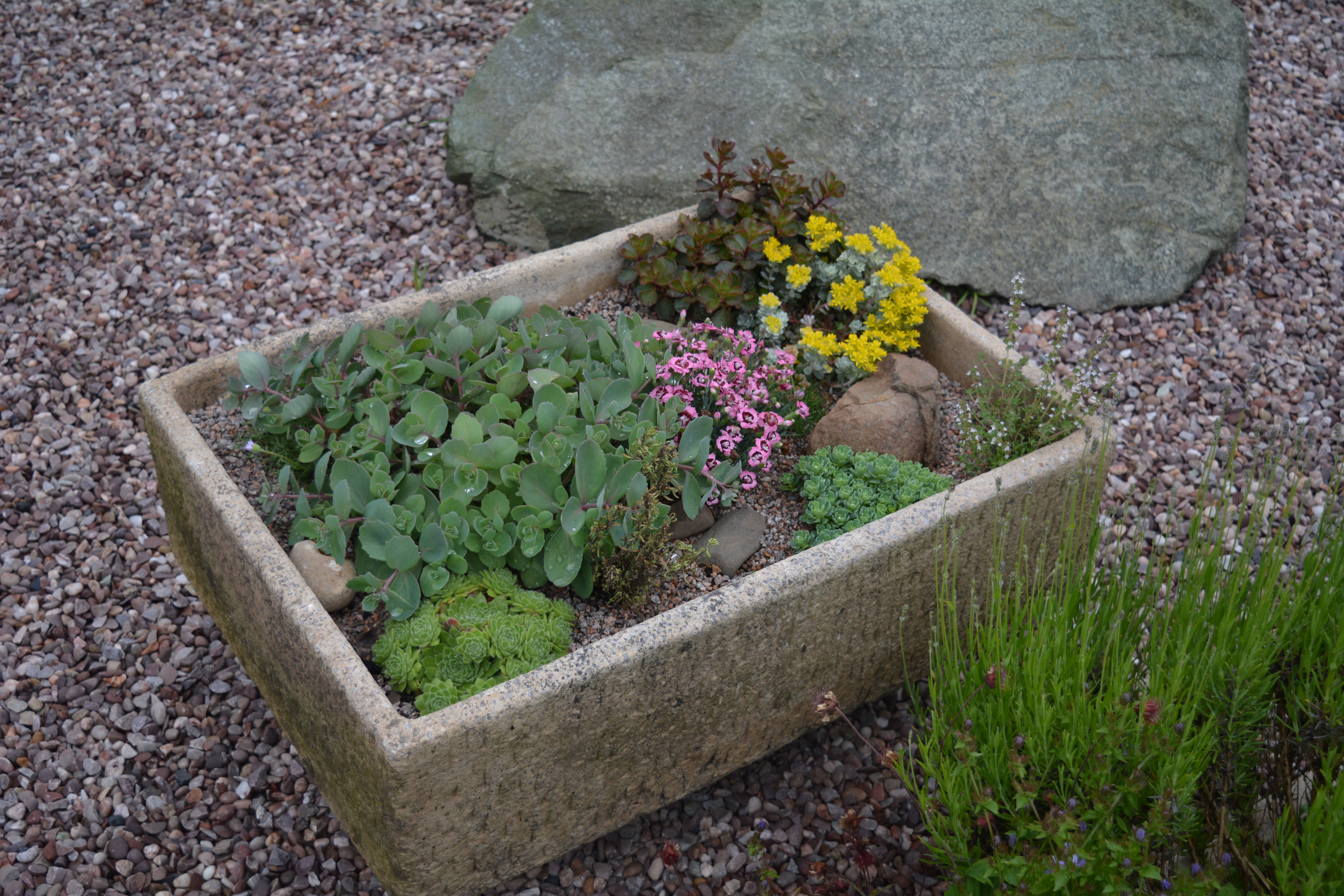
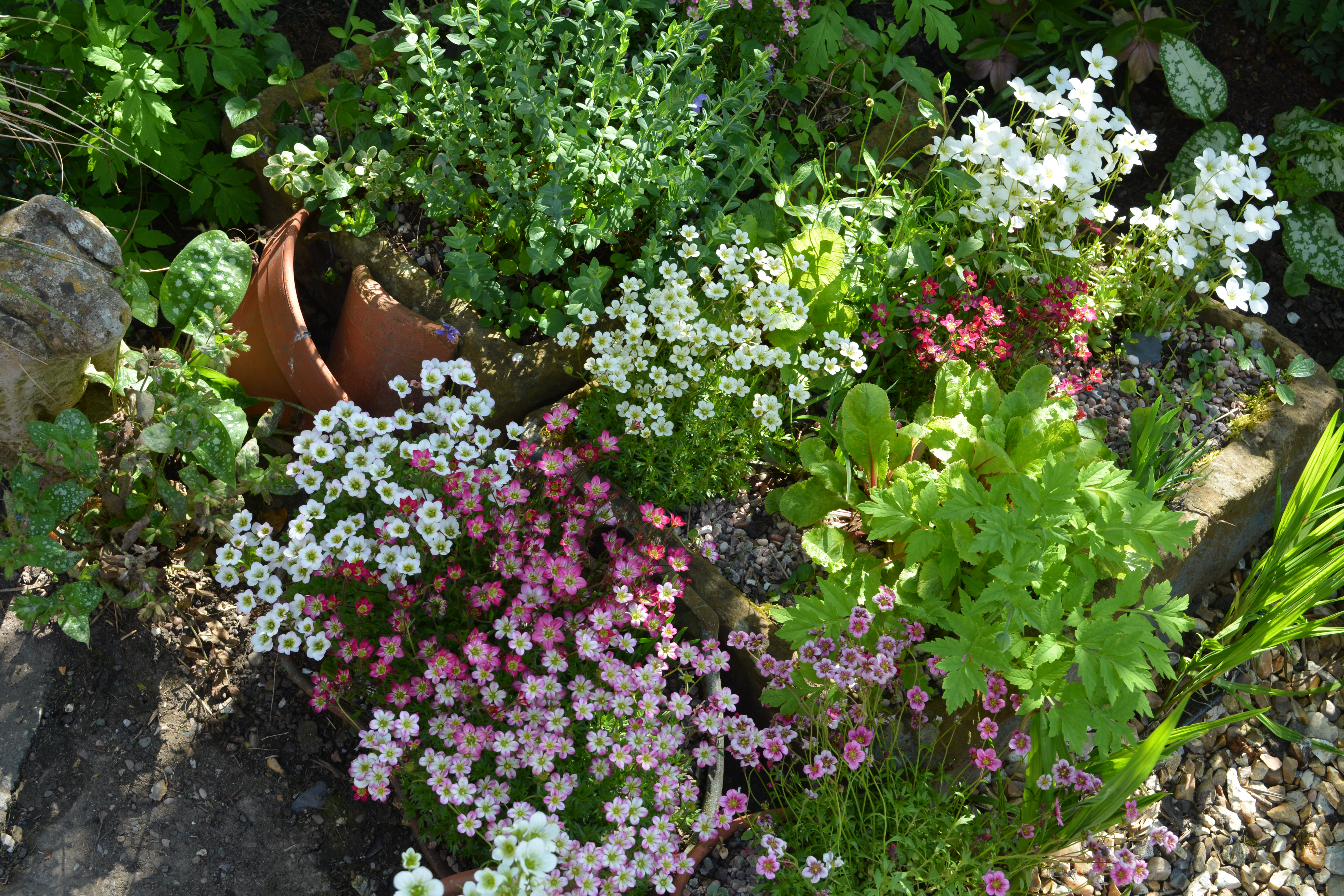
These seats are situated on a gravel patch which boasts a large boulder with a smaller partner, a terracotta pot housing a saxifrage alongside an alpine sink.


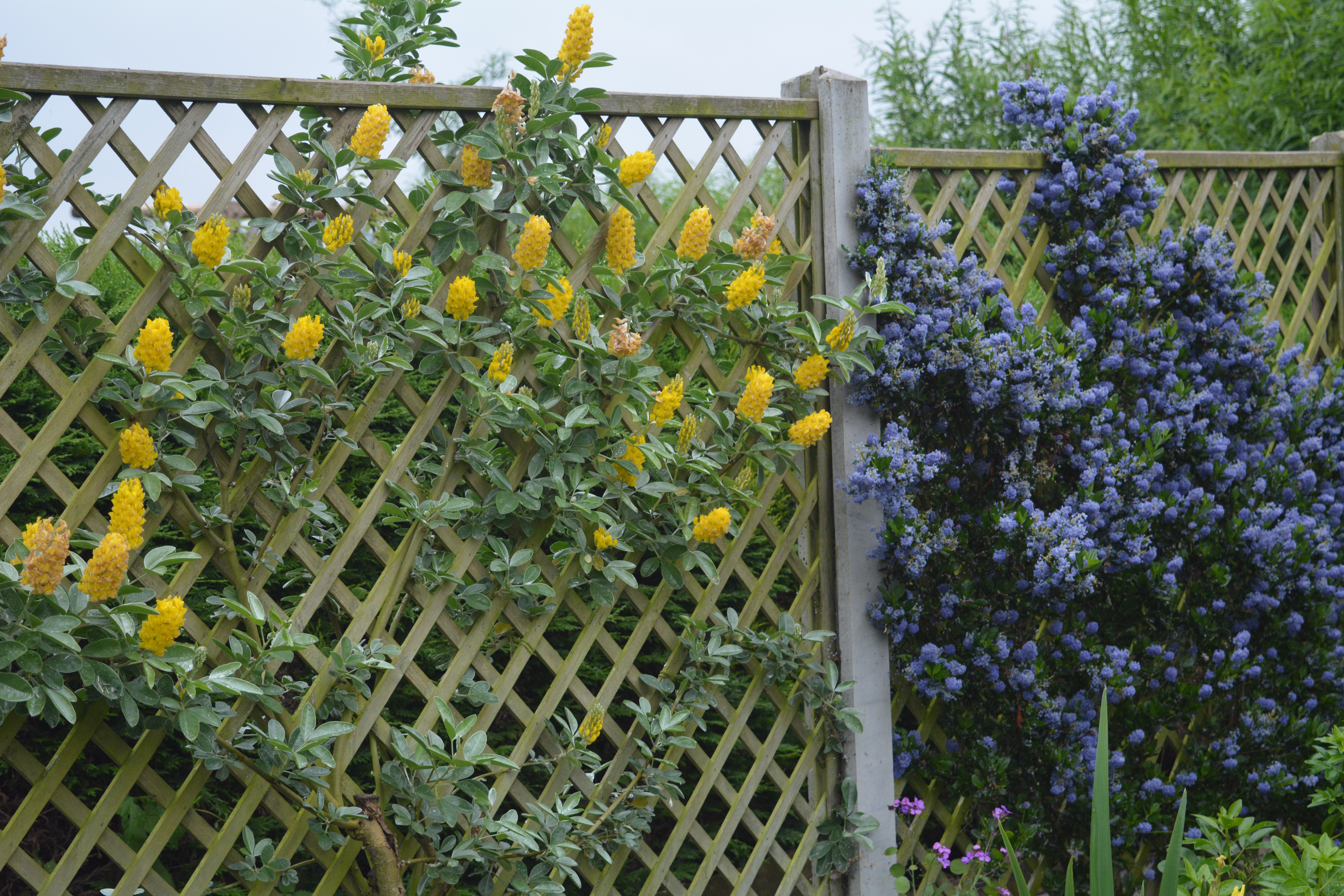
Von loves plants so much that every vertical surface is covered with plants, ceanothus, honeysuckle and ivy.


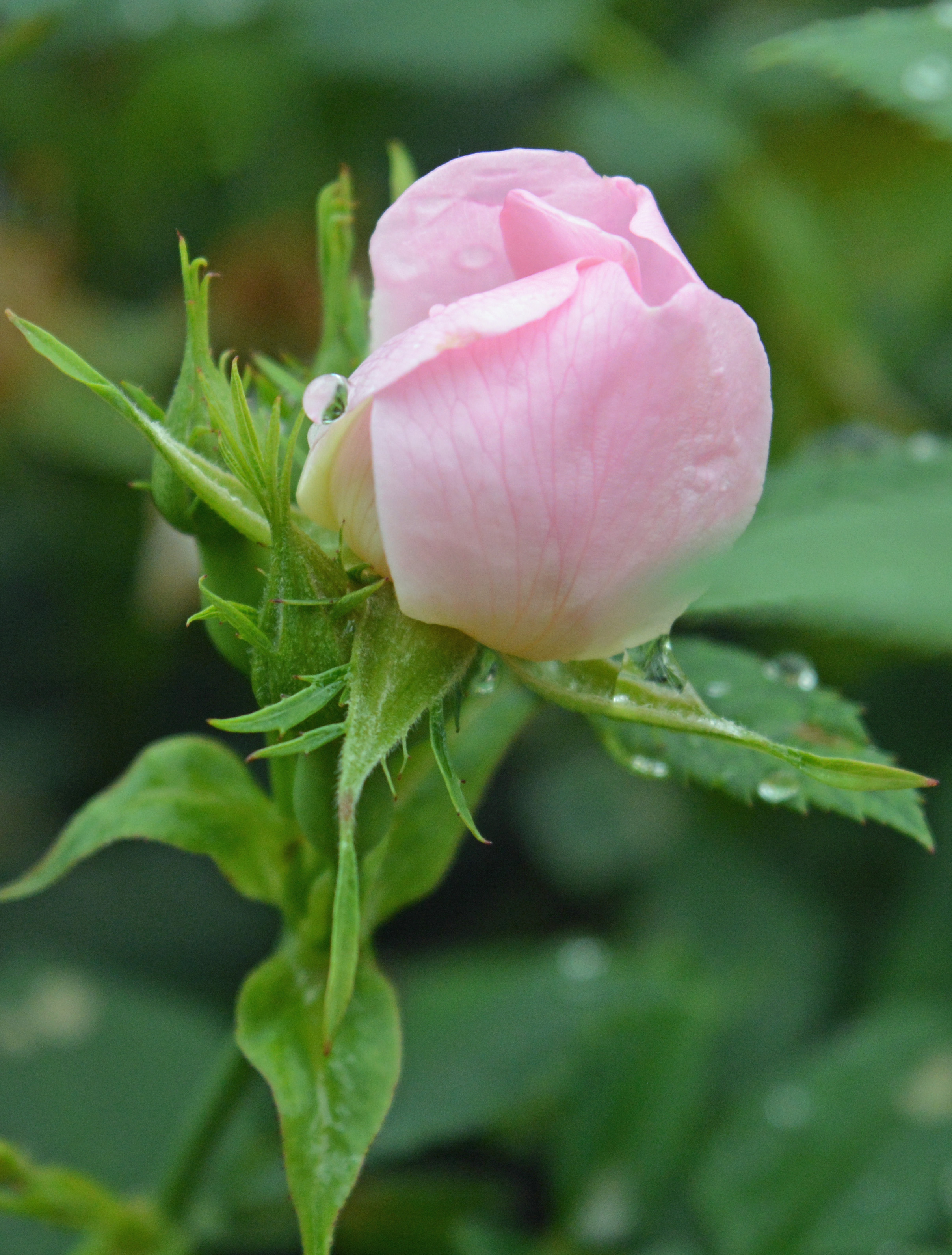
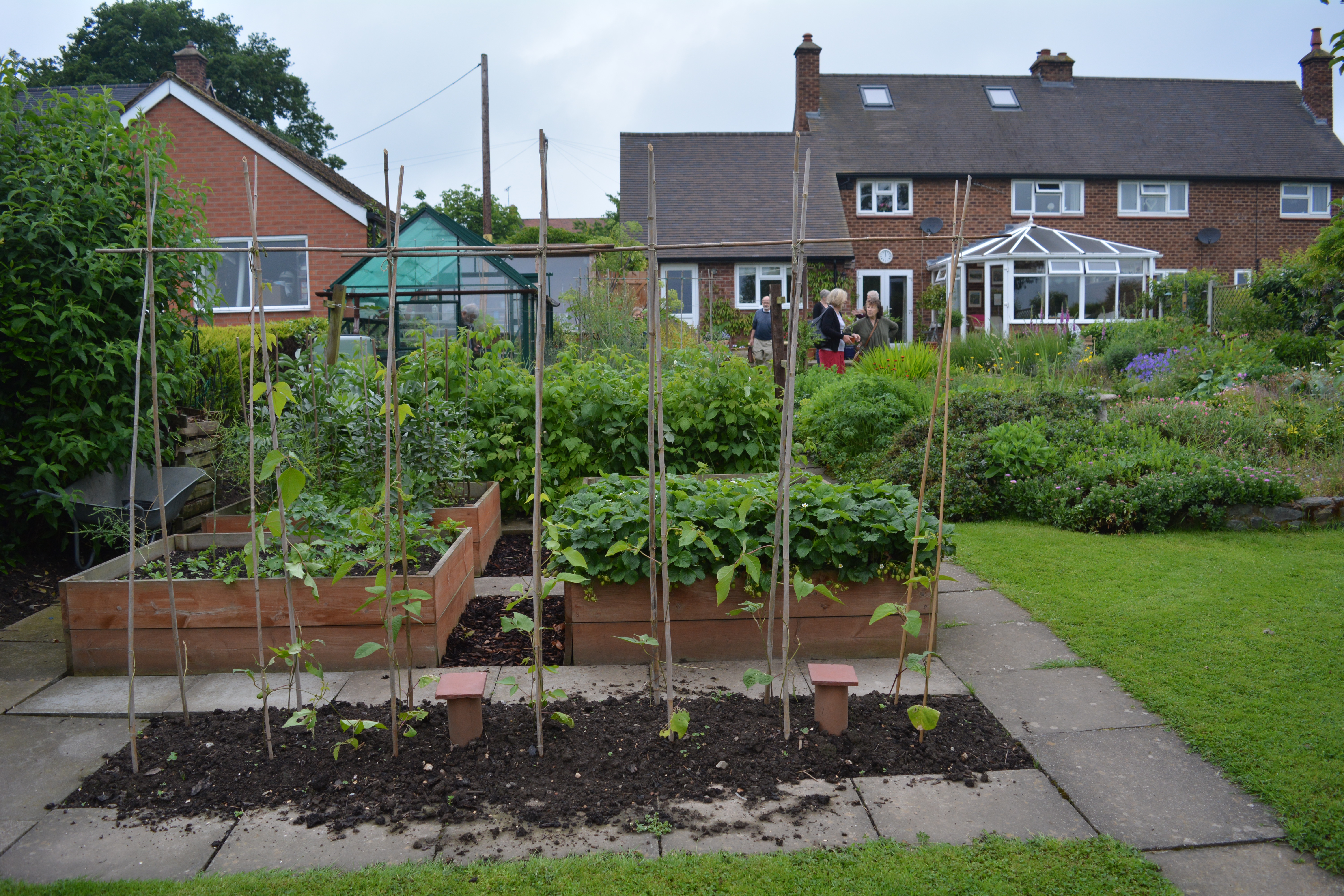
Reaching the bottom of the garden there is a native hedge decorated with soft pink dog roses. Looking back up towards the house we get a different view of the garden and notice a very productive veg patch with neat raised beds.


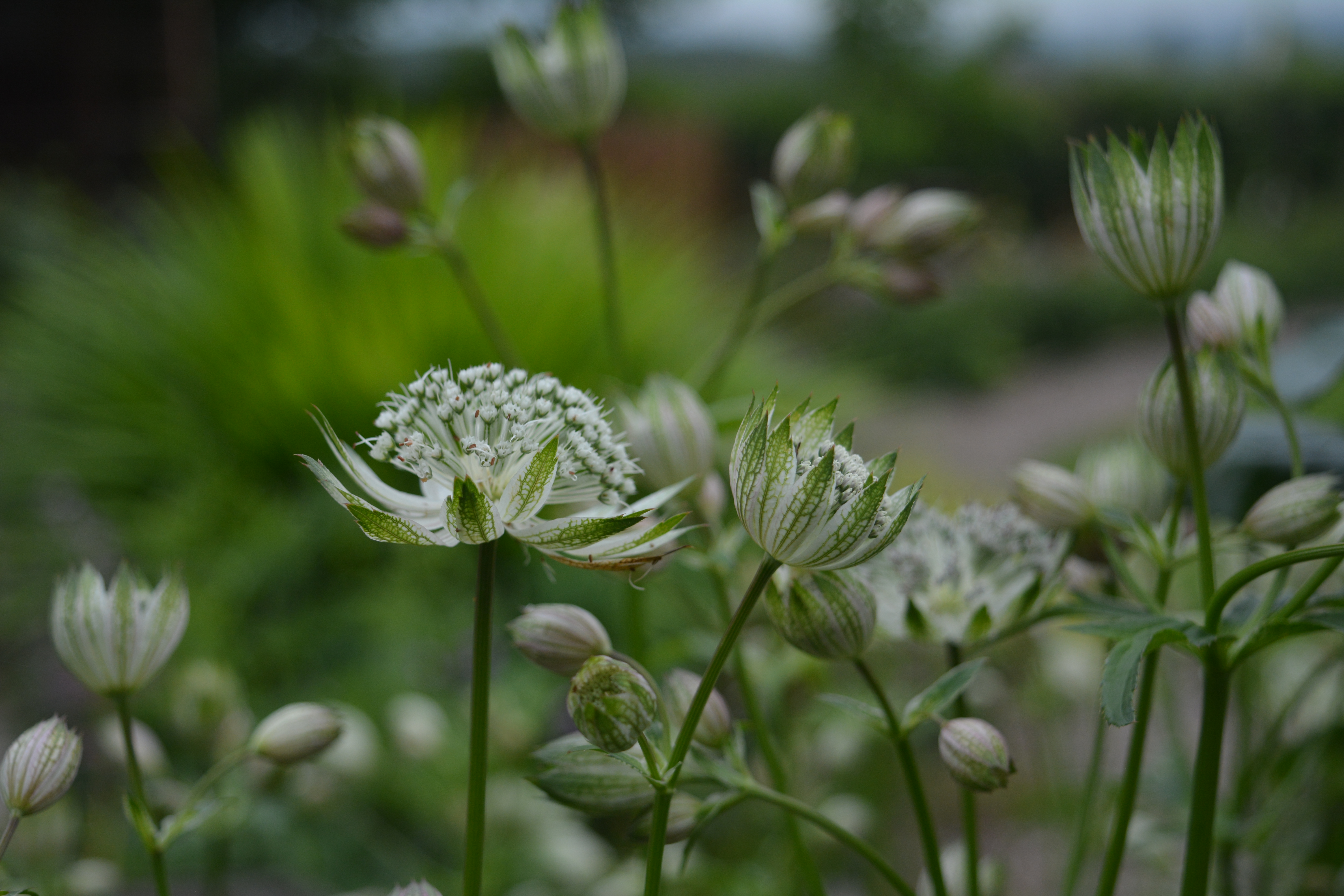
As with any garden the stars are the plants and here there are many of interesting specimen deserving of more than a glance.


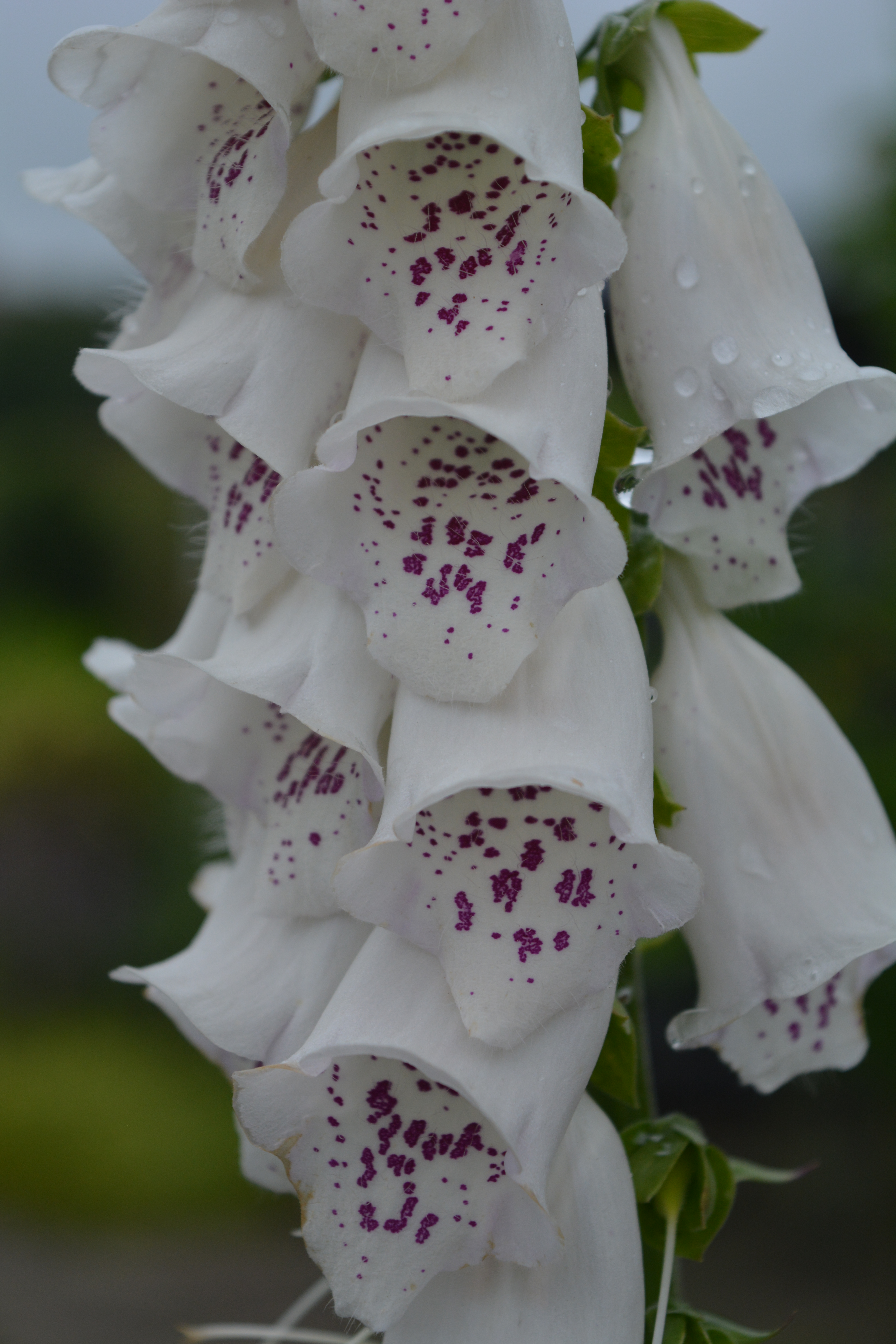
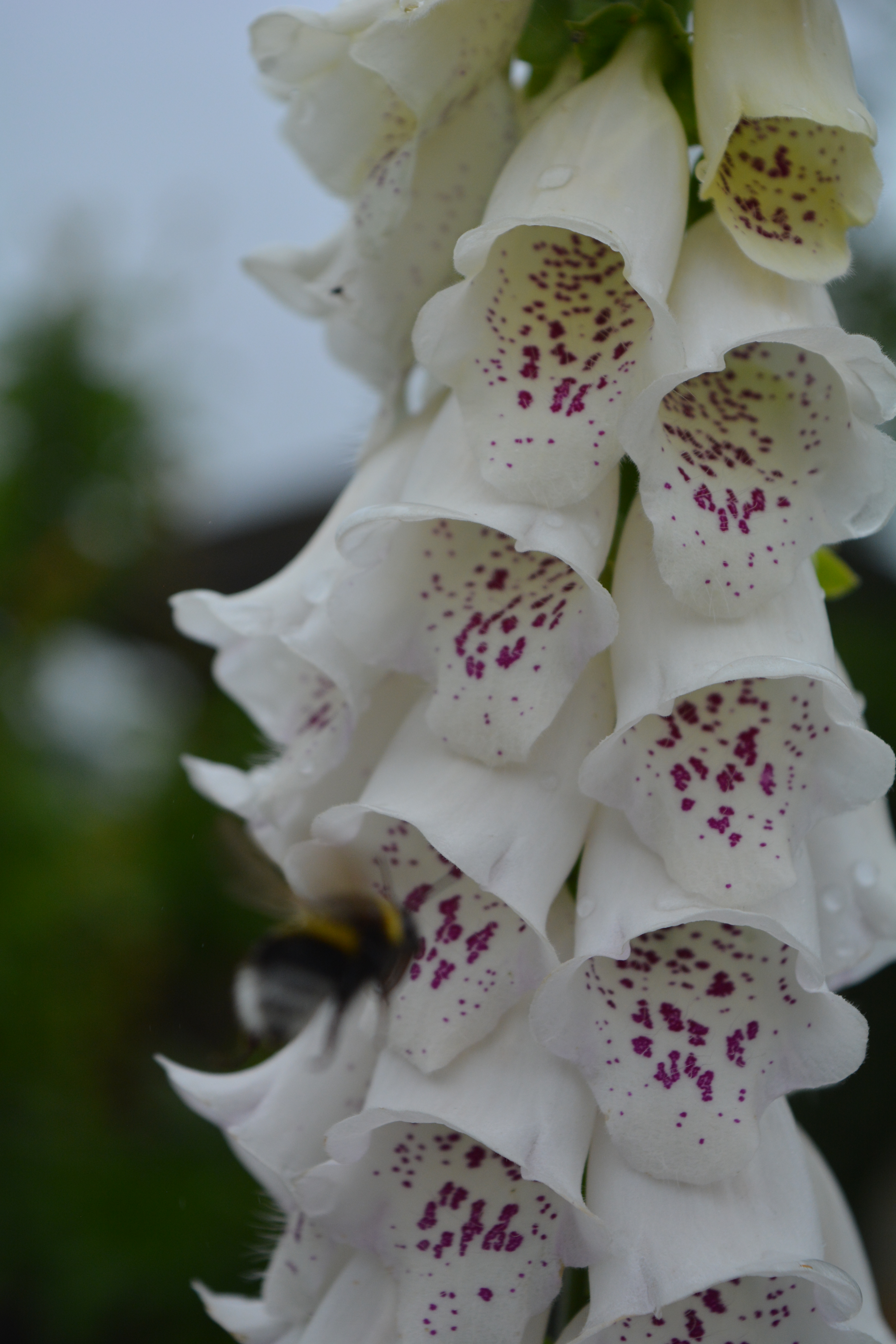
Wildlife enjoys this garden too. While taking a shot of this white and purple-spotted foxglove a bee arrived and set about exploring each little glove. A great finish to our visit, which will definitely not be the last.

Categories
birds fruit and veg garden design garden photography garden wildlife gardening gardens grow your own hardy perennials ornamental grasses ornamental trees and shrubs roses Shrewsbury Shropshire shrubs trees village gardens

My Garden Journal 2018 – May

Here we are with the fifth visit to my garden journal for 2018, where I report on what is happening in our Avocet garden in Shropshire. Does it show that spring may eventually have arrived?

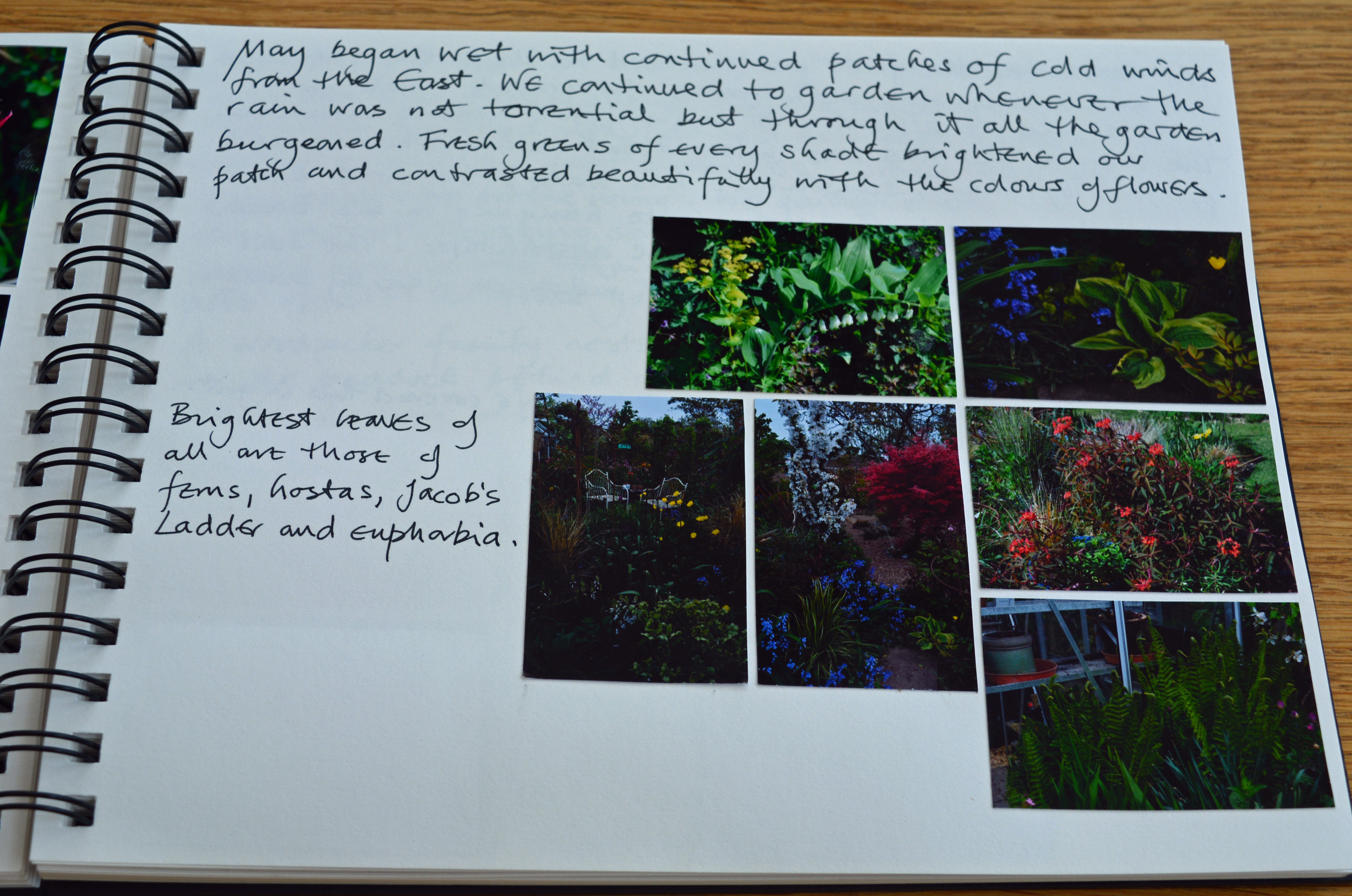
On my first page for May I wrote, “May began wet with continued patches of cold winds from the East. We continued to garden whenever the rain was not torrential but through it all the garden burgeoned. Fresh greens of every shade brightened our patch and contrasted beautifully with the colours of flowers.”

“The brightest leaves of all are those of ferns, hostas, Jacob’s Ladder and Euphorbia.”


Turning over the page I looked at a job that Ian our gardener completed in May, plus a look at our wildlife in the garden.

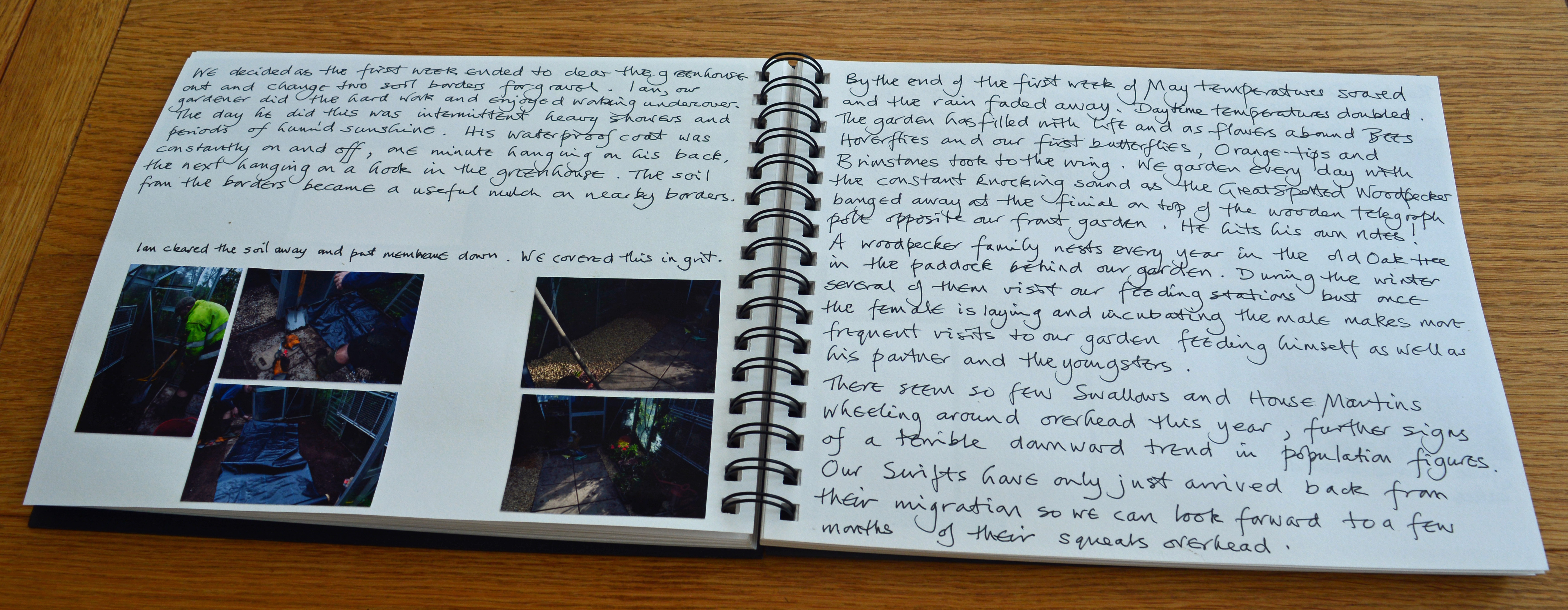
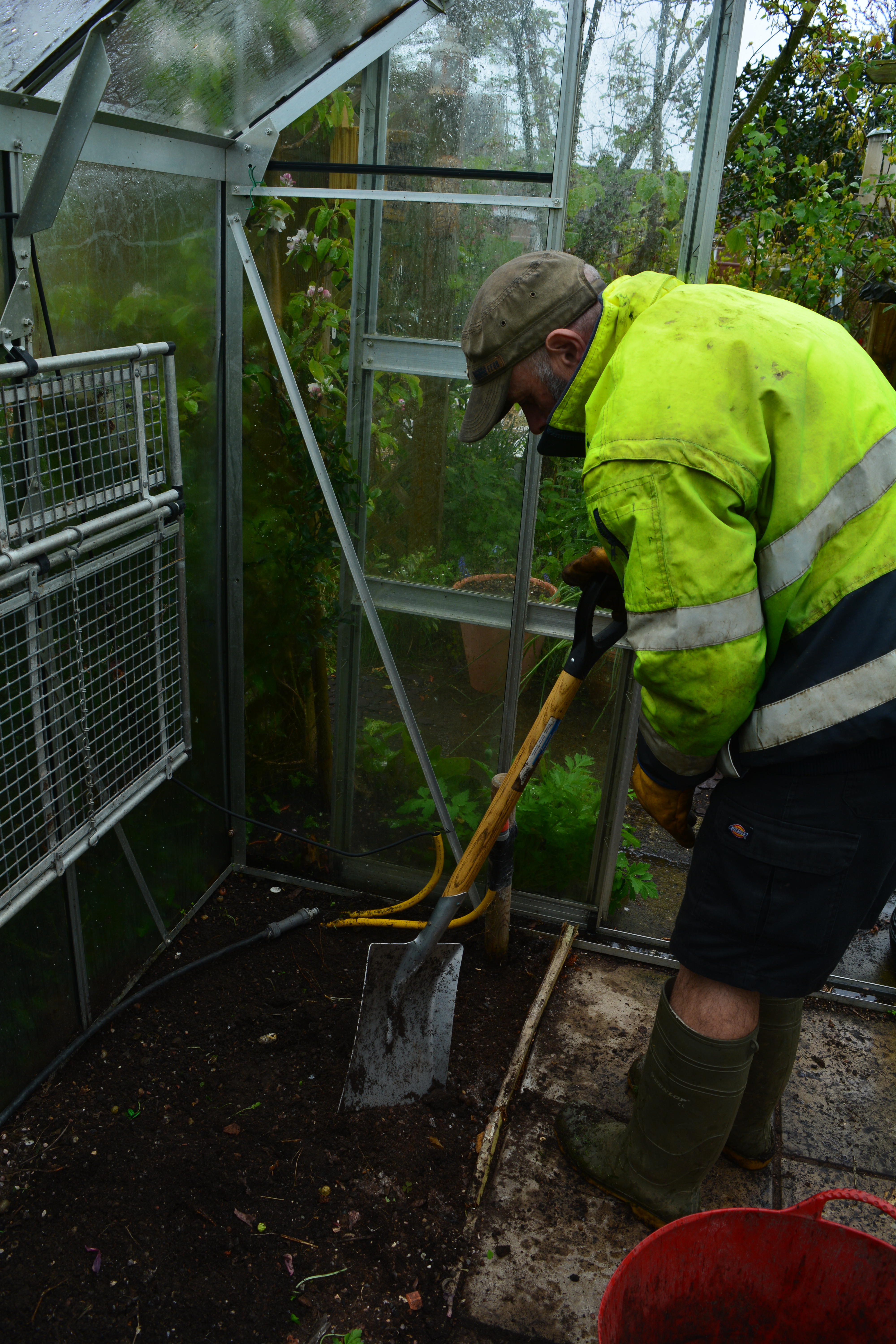
“We decided as the first week ended, to clear the greenhouse out and change two soil borders for gravel. Ian, our gardener did the hard work and enjoyed working under cover. The day he did there were intermittent heavy showers and periods of humid sunshine. His waterproof coat was constantly on and off, one minute hanging on his back, the next hanging on a hook in the greenhouse. The soil from the borders became a useful mulch material for nearby borders.”


“Ian cleared the soil away and put membrane down. We covered this in grit.”

“By the end of the first week of May temperatures soared and the rain faded away. Daytime temperatures doubled. The garden has filled with life and as flowers abound, bees, hoverflies and our first butterflies, Orange Tips and Brimstones take to the wing. We garden every day with the constant knocking sound as a Great Spotted Woodpecker bangs away at the finial on top of the wooden telegraph pole opposite our front garden. He hits his own notes!

A woodpecker family nests every year in the old Oak tree in the paddock behind our garden. During the winter several of them visit the feeding stations but once the female is laying and incubating the male makes more frequent visits to our garden feeding himself as well as his partner and the youngsters. 

There seem so few Swallows and House Martins wheeling around overhead this year, further signs of a terrible downward trend in population figures. Our Swifts have only just arrived back from their migration so we can look forward to a few months of their squeals overhead.”

Over the page I moved on to look at Dan Pearson’s thoughts on the sudden growth seen in May.


I wrote, “Reading Dan Pearson’s “Natural Selections”, I enjoyed his reference to the noticeably rapid growth in gardens in May.

“The growth is a remarkable thing during these weeks between spring and summer. If you could hear it there would be a tangible hum, made from a million buds breaking and stems flexing. The tide of green sweeps up and over bare earth, cloaking it as fast as the leaves fill out above us.”

For us May is also the month when the first of our visiting garden groups come to share our patch with us. They enjoy wandering around our many paths, taking photographs, asking questions and finishing with tea, coffee and Jude’s home baked cakes.”

I then move on to look at some of our flowering trees and shrubs that are features of our May garden, about which I wrote, “Flowering trees and shrubs add colour and often scent at a higher level than the spring bulbs and early perennials.”

Viburnum farreri

Weigela middendorfiana

  Cercis siliquastrum 

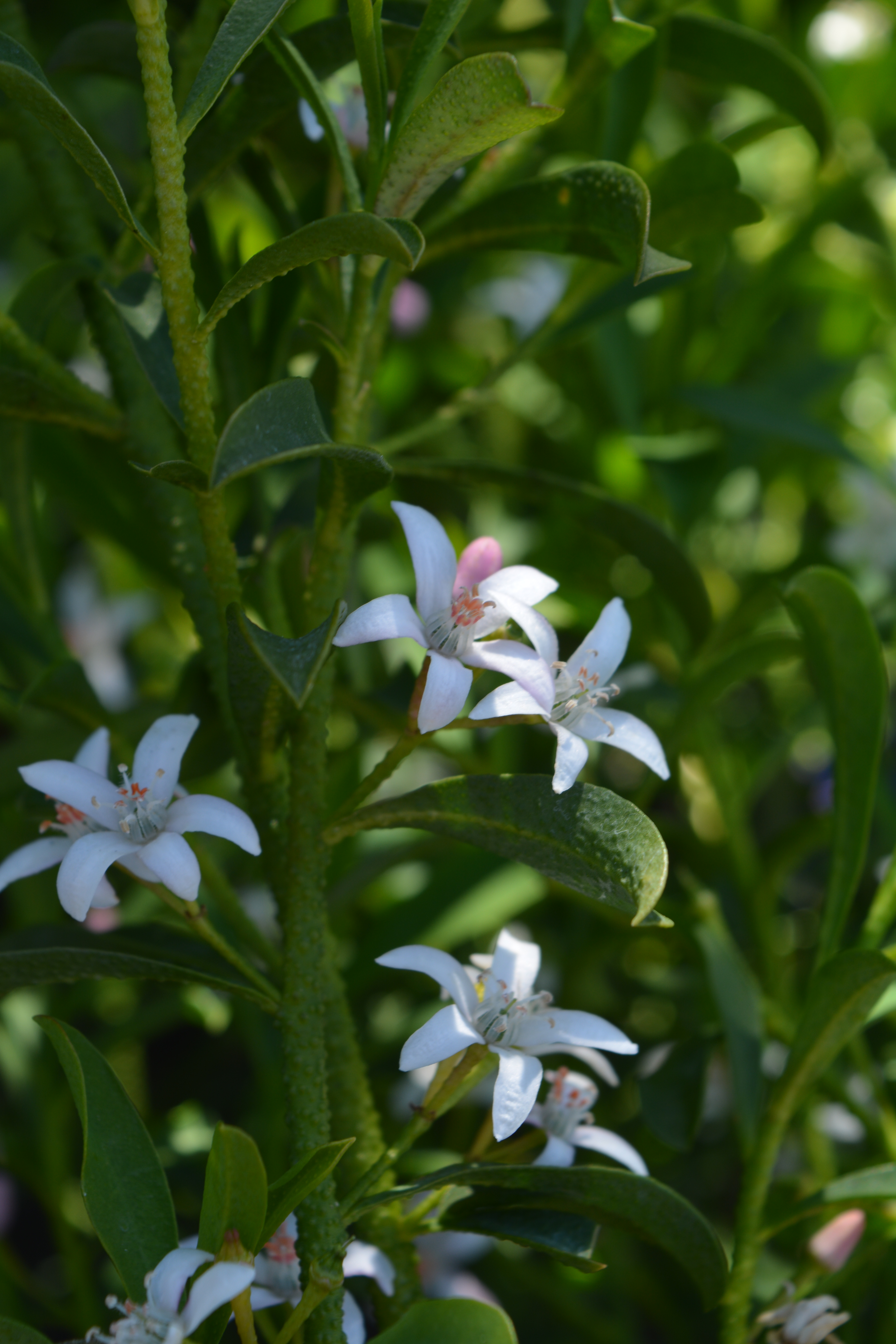
Eriostemon Flower Girl White

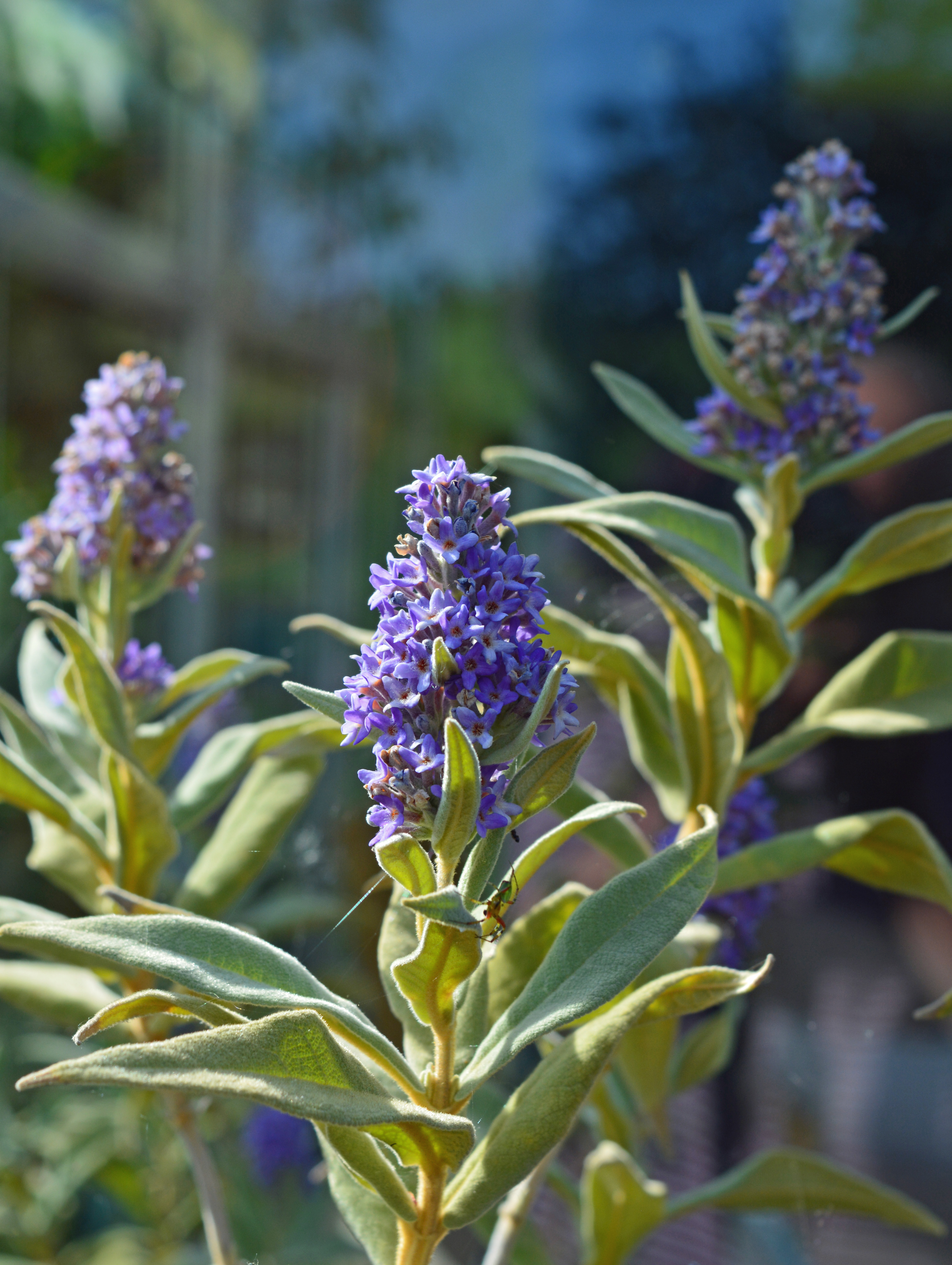
  Calycanthus floridus        Buddleia salvifolia

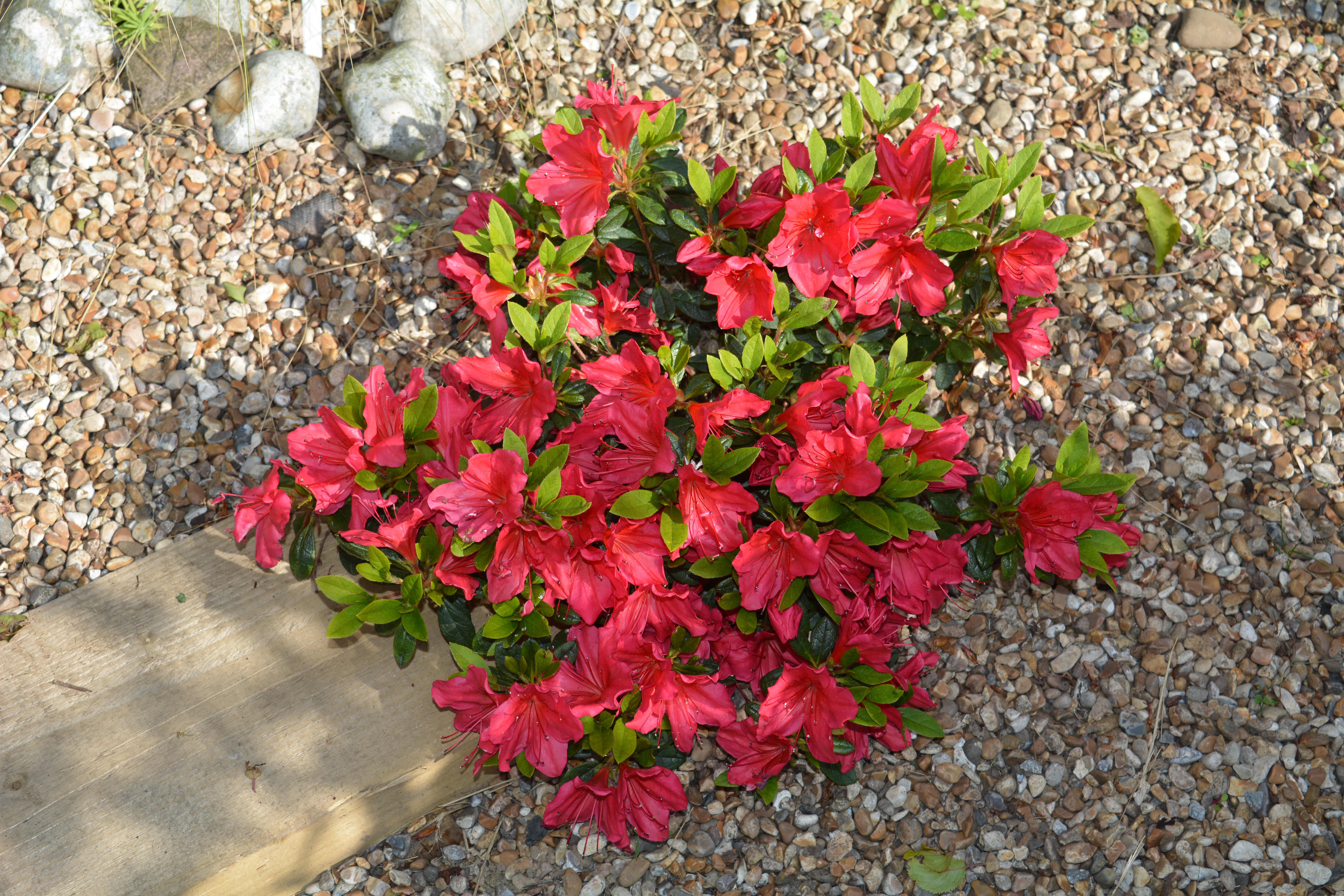
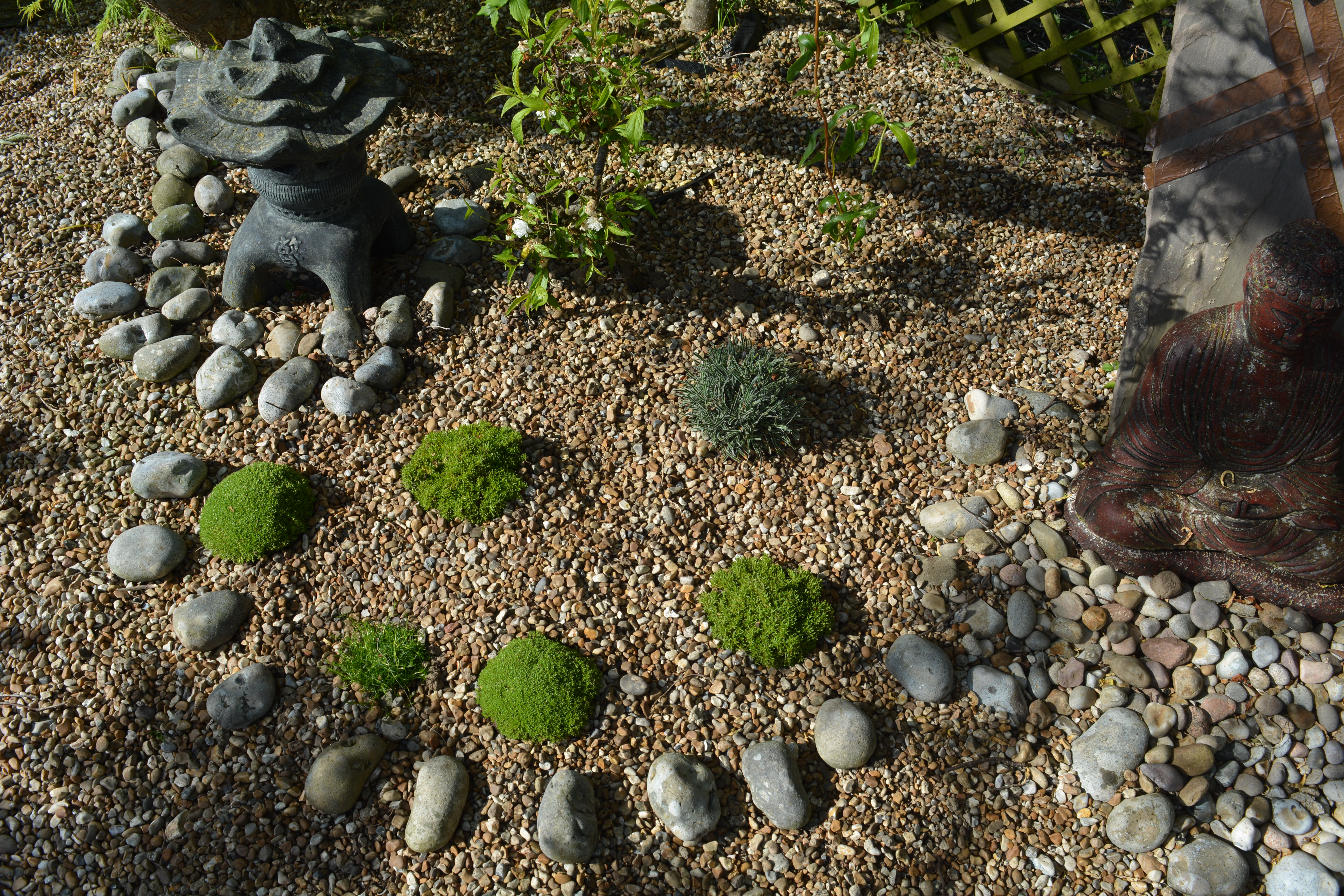
Over the page we look at our Japanese Garden and alpine plants. “We spent more time in mid-May working in the Japanese Garden, where a month ago we added a new step into the lower slope. We planted a miniature Rhododendron at each end of the step. These are now in full flower. Beneath our Prunus subhirtella autumnalis which we have pruned in a Japanese style, we have planted a group of “moss plants”. 


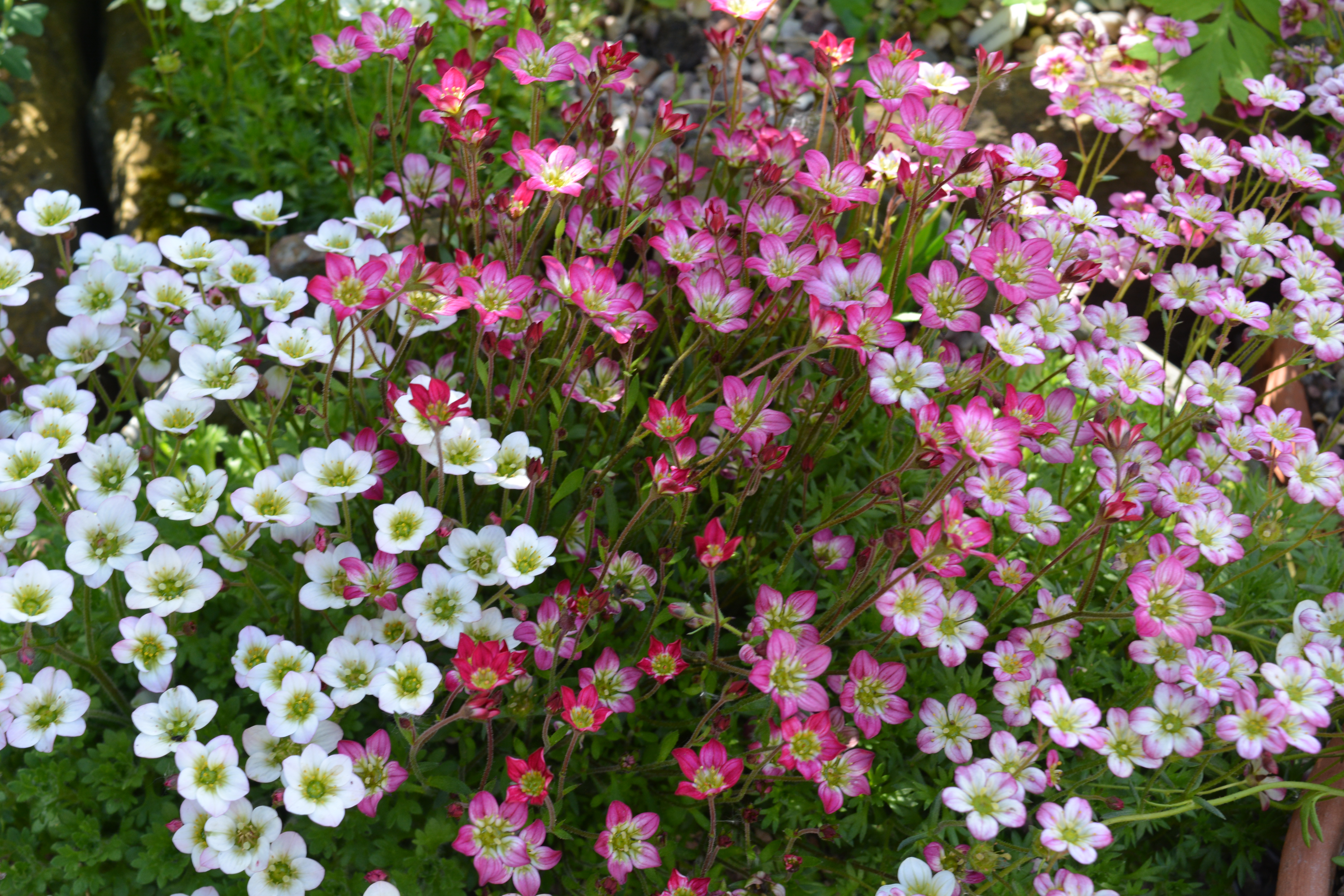
On the page opposite are photos of some of our alpines and I wrote, “May is the month when alpine Saxifrages peak.”


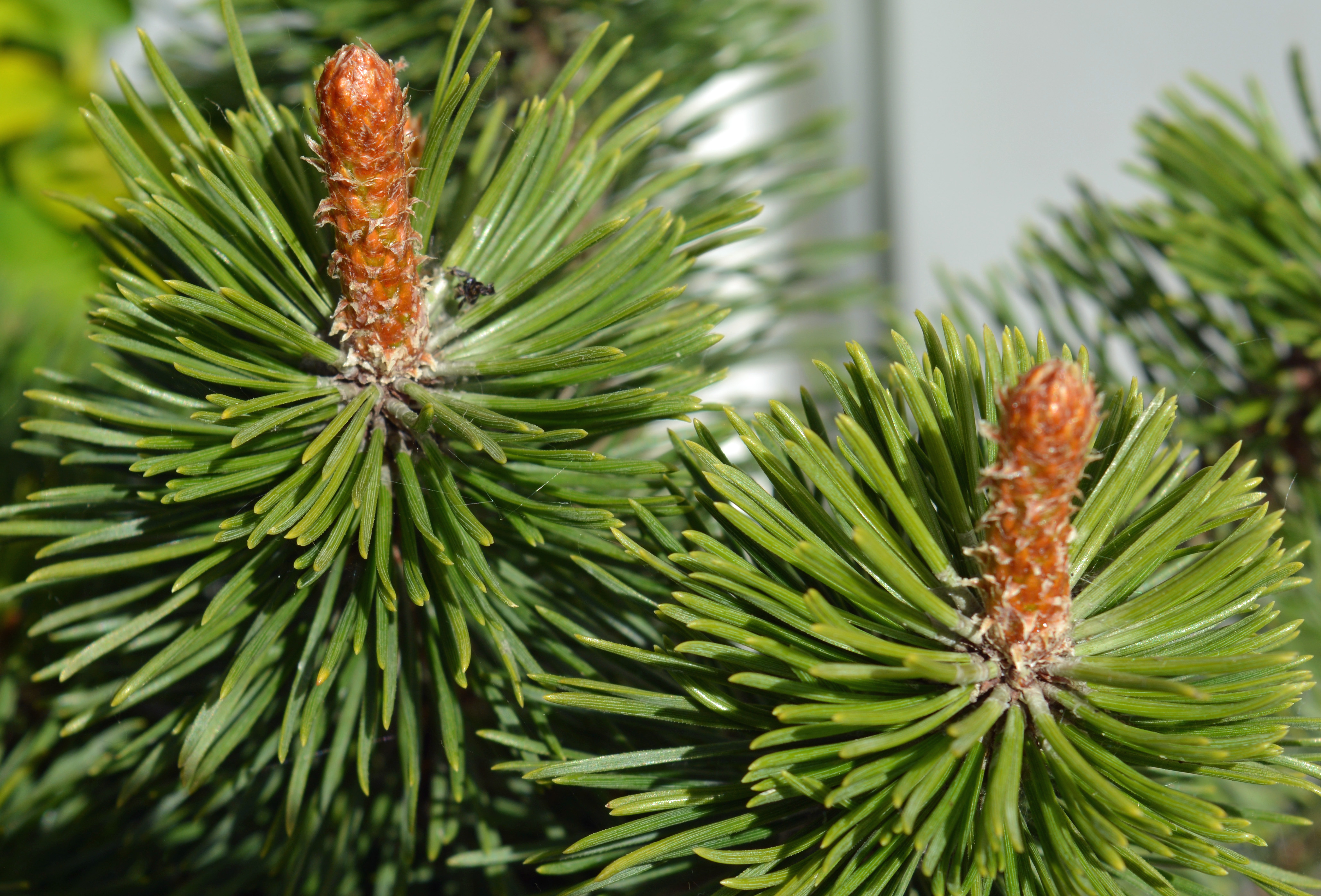
“Miniature alpine shrubs, Pinus mugo “Mumpitz” and an alpine Daphne.”

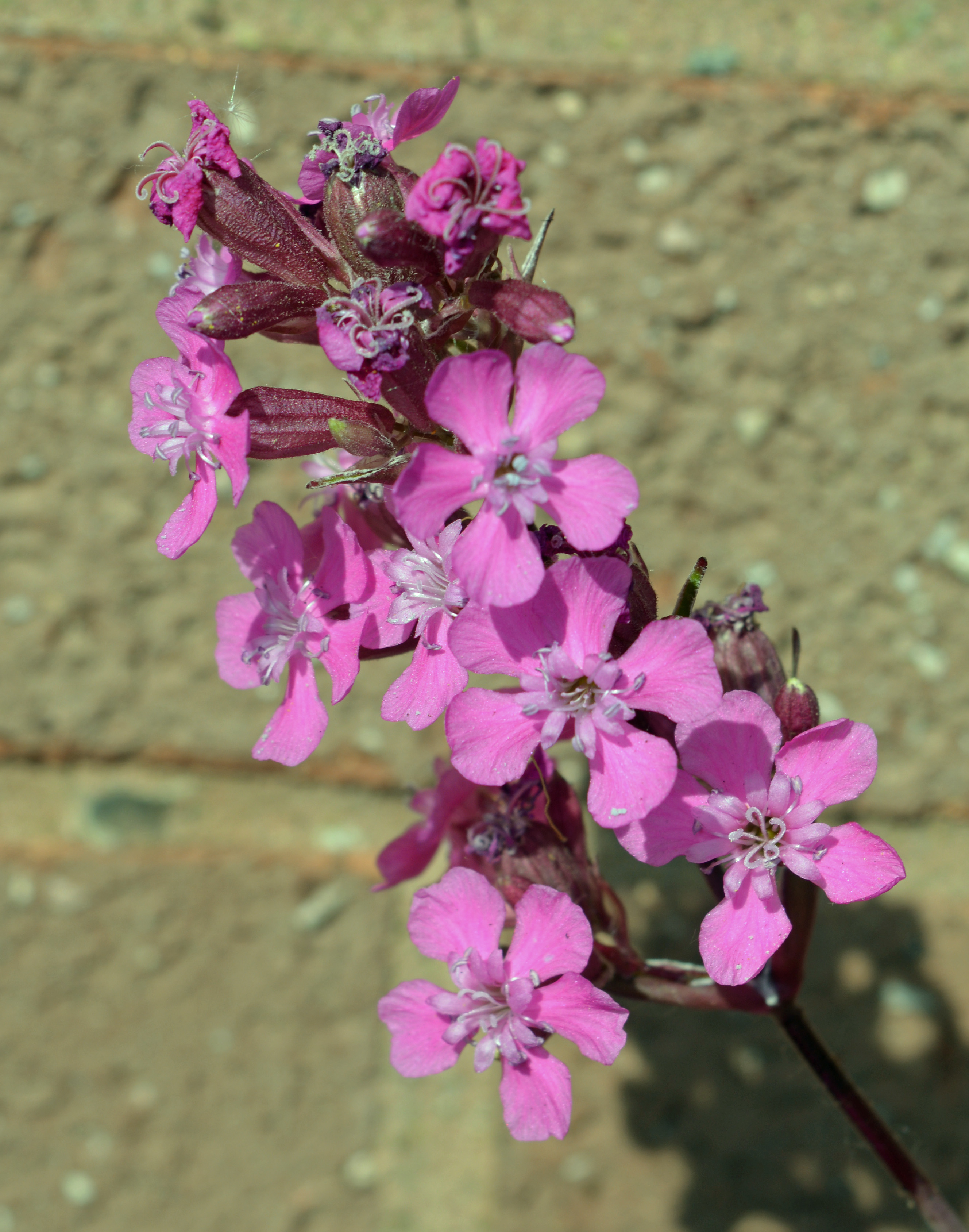
 “Alpine Silene”

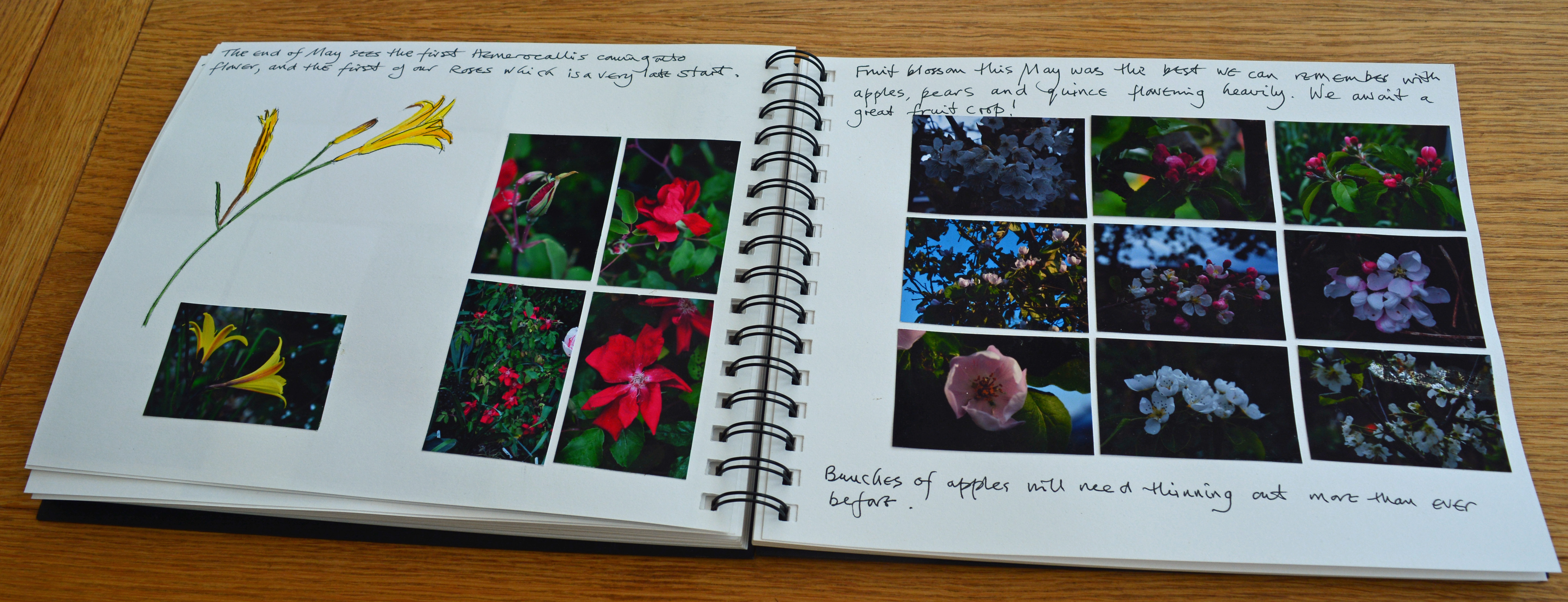
Turning over the page we find the final double page spread, which featured the first Hemerocallis and the first of our roses to flower. On the opposite page blossom was the star.

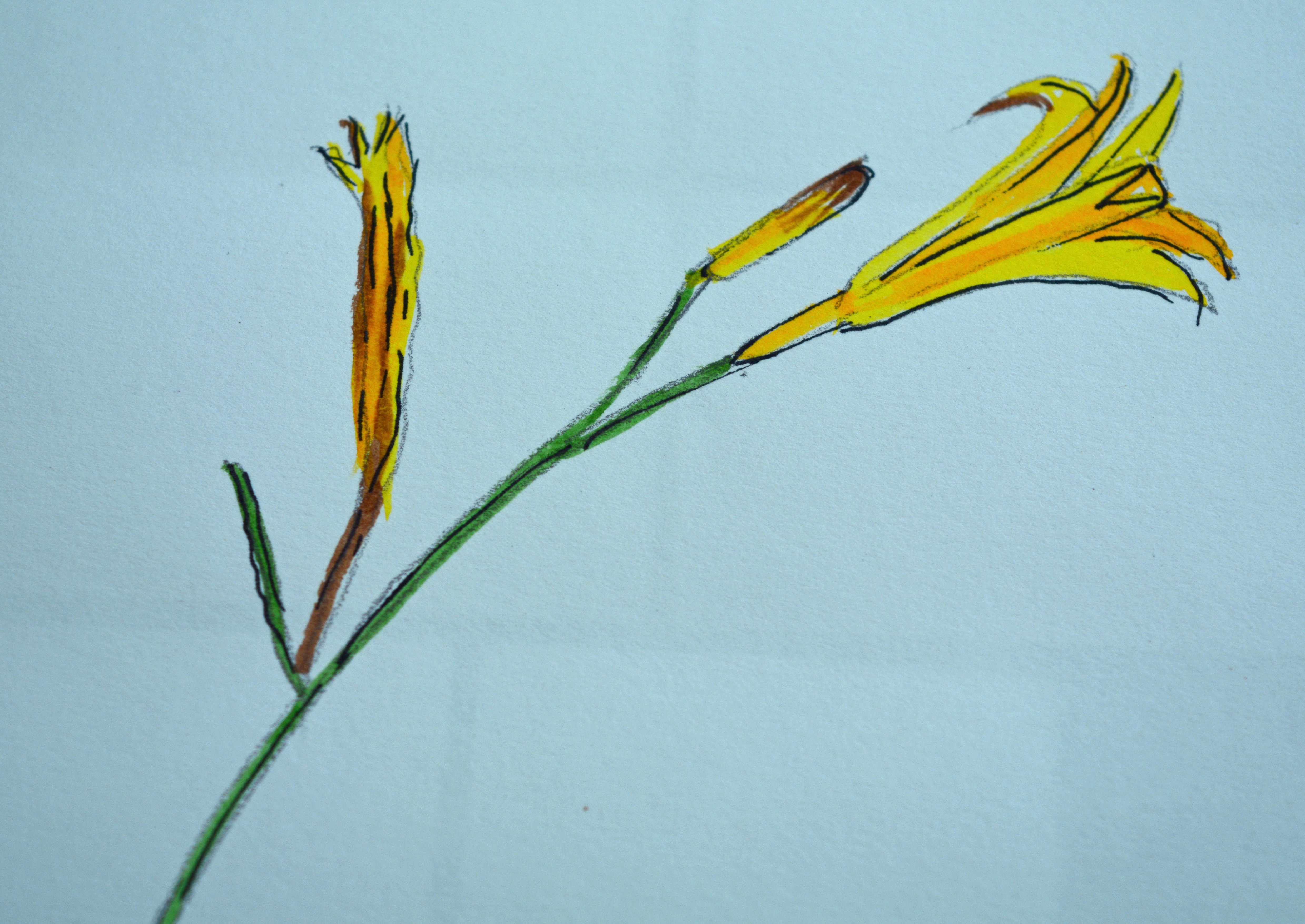
“The end of May sees the first Hemerocallis coming into flower, and the first of our roses which is a very late start.”


On the final page of my journal for May I featured photos of the fruit blossom which was looking so good and promising a healthy harvest later in the year.

“Fruit blossom this May was the best we can ever remember with apples, pears and quince flowering heavily. We await a great fruit crop!

“Bunches of apples will need thinning out more than ever before!”

So that is the end of my May journal, finishing off on a positive note as the garden feels so full of life.


Categories
fruit and veg garden photography gardening grow your own ornamental trees and shrubs Shrewsbury Shropshire

Simply beautiful blossom

We grow many fruit trees here at our Avocet patch, mostly trained as cordons, ballerinas or stepovers, plus one freely grown tree a Quince “Vranga”. In mid-May these apples and  pears are in full blousy blossom.

I went out into the garden on a bright sunny day with deep shadows with camera in hand to record their beauty. I hope you enjoy my pictures.

Fruit will follow in the late summer and into the autumn. We will start harvesting in August and continue until the end of October, some apples we will eat fresh others we will store and enjoy through to the end of March. The pears we will pick off the tree and relish them while they are still warm, dripping with juices and full of flavour.


Categories
colours flowering bulbs garden design garden photography gardening gardens grasses hardy perennials irises light light quality ornamental grasses ornamental trees and shrubs roses Shrewsbury Shropshire shrubs South Shropshire spring bulbs Winter Gardening winter gardens

My Garden Journal 2018 – February

Part two of my 2018 Garden Journal sees us still freezing cold and struggling to get time in the garden.

I opened my February entries by noting, “February is the month when we feel that the quality of the light improves and makes us feel better and there are definite signs of the days lengthening. Early bulbs begin flowering and others are showing strong leaf growth.”


I next sought out another quote from Dan Pearson’s book, “Natural Selection” and was pleased to find this one, “Making room for the winter garden is every bit as important as managing a garden that draws your attention in the dark months.”


Turning over to the next double page spread I write about newly acquired plants.


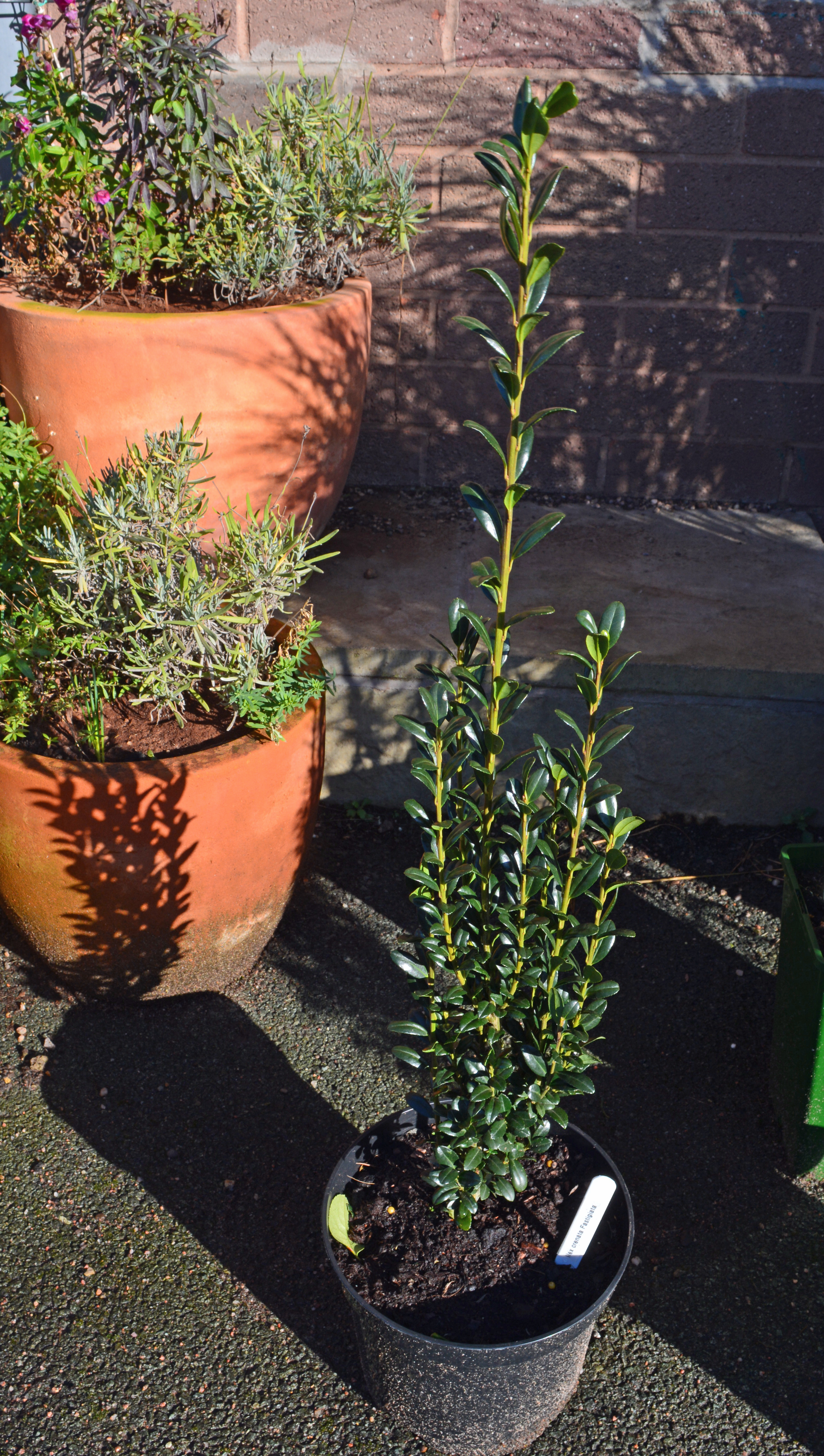
“It is always an enjoyable time planting newly acquired plants but it is an extra-special experience doing so in February. We were delighted to find good healthy specimens of two fastigiate plants, a Taxus baccata “Fastigiata Robusta” and an Ilex crenata “Fastigiata”. The only two fastigiate plants we have already established at Avocet are a Berberis and an Oak, Berberis thunbergia fastigiata atropurpurea “Helmond Pillar” , (a tall thin shrub  with a long thin name!” and Quercus palustris “Green Pillar” which despite its name is grown for its deep red autumn colour.”


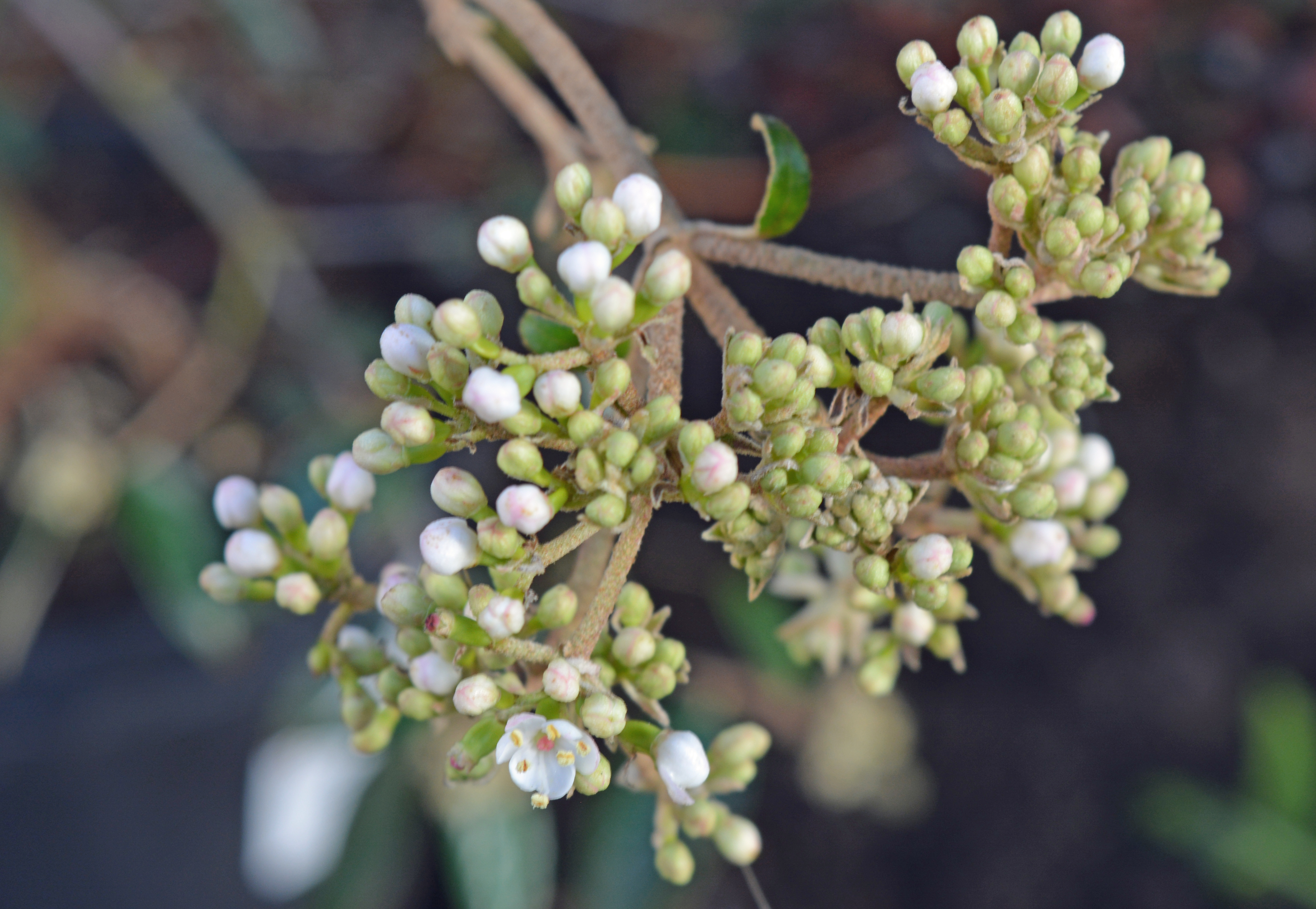
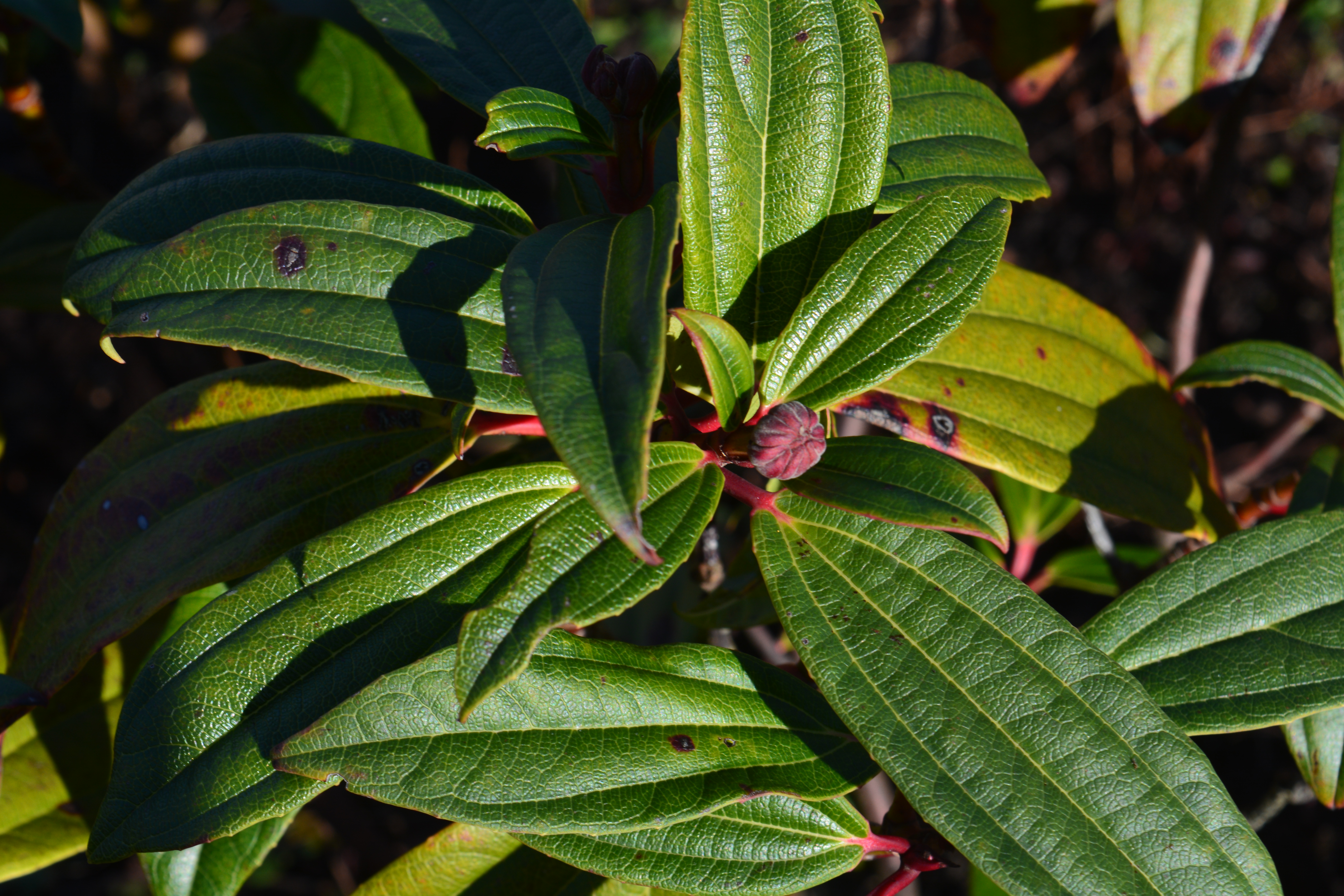
We also recently planted a Viburnum with a very different growth habit to our fastigiate purchases. It is a low growing shrub with a very open, airy growth and sweetly scented flowers in April. It is also described as “almost evergreen”, so we will wait and see exactly how ours behaves. We already have a good collection of Viburnums around our Avocet patch.”


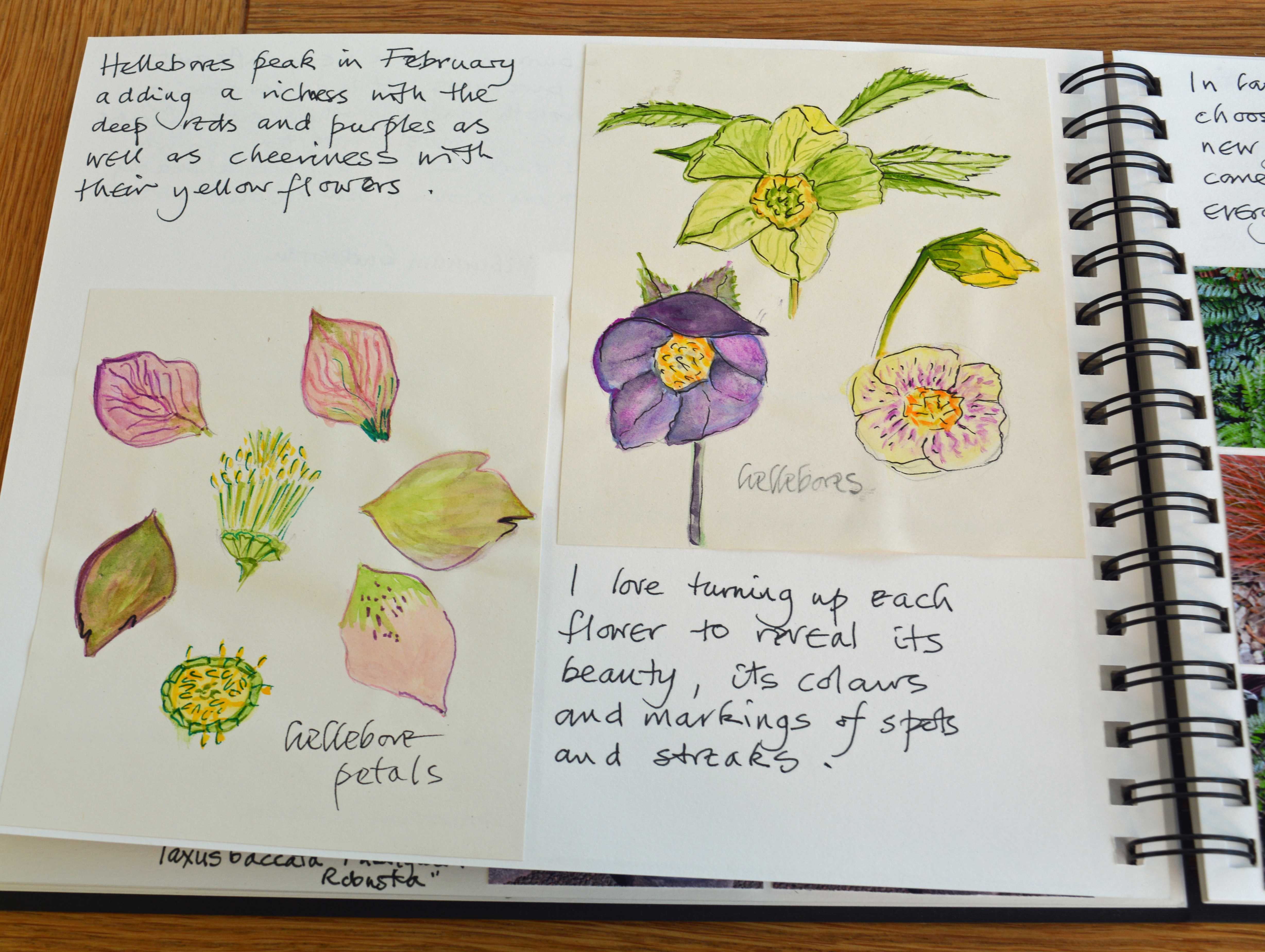
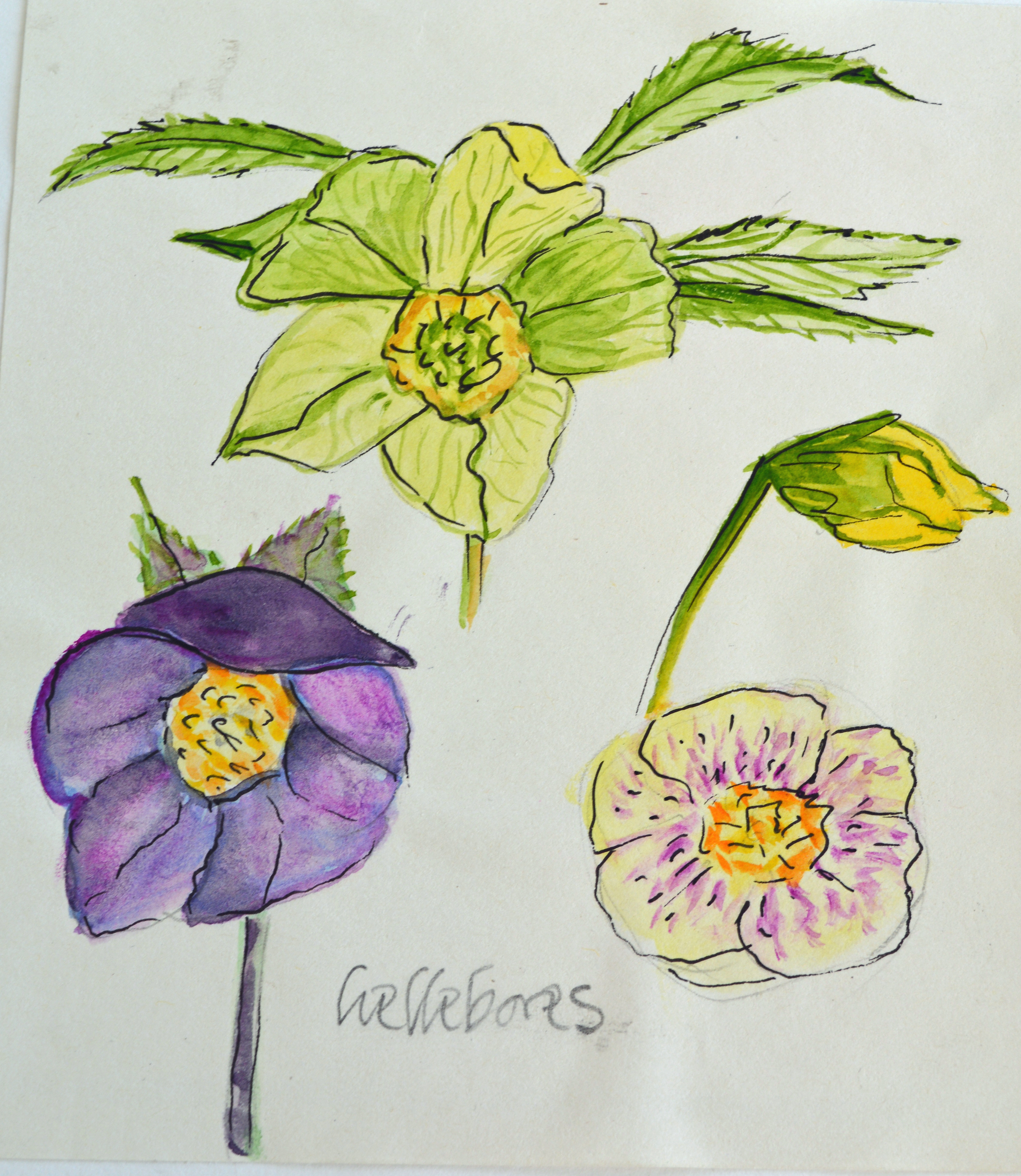
Some of my watercolour sketches of Hellebores and details of their petals feature on the next page.


“Hellebores peak in February adding a richness with the deep reds and purples as well as cheeriness with their yellow flowers.”

“I love turning up each flower to reveal its beauty, its colours and markings of spots and streaks.”


On the opposite page I looked at some of our grasses with winter interest and share some photos of them.

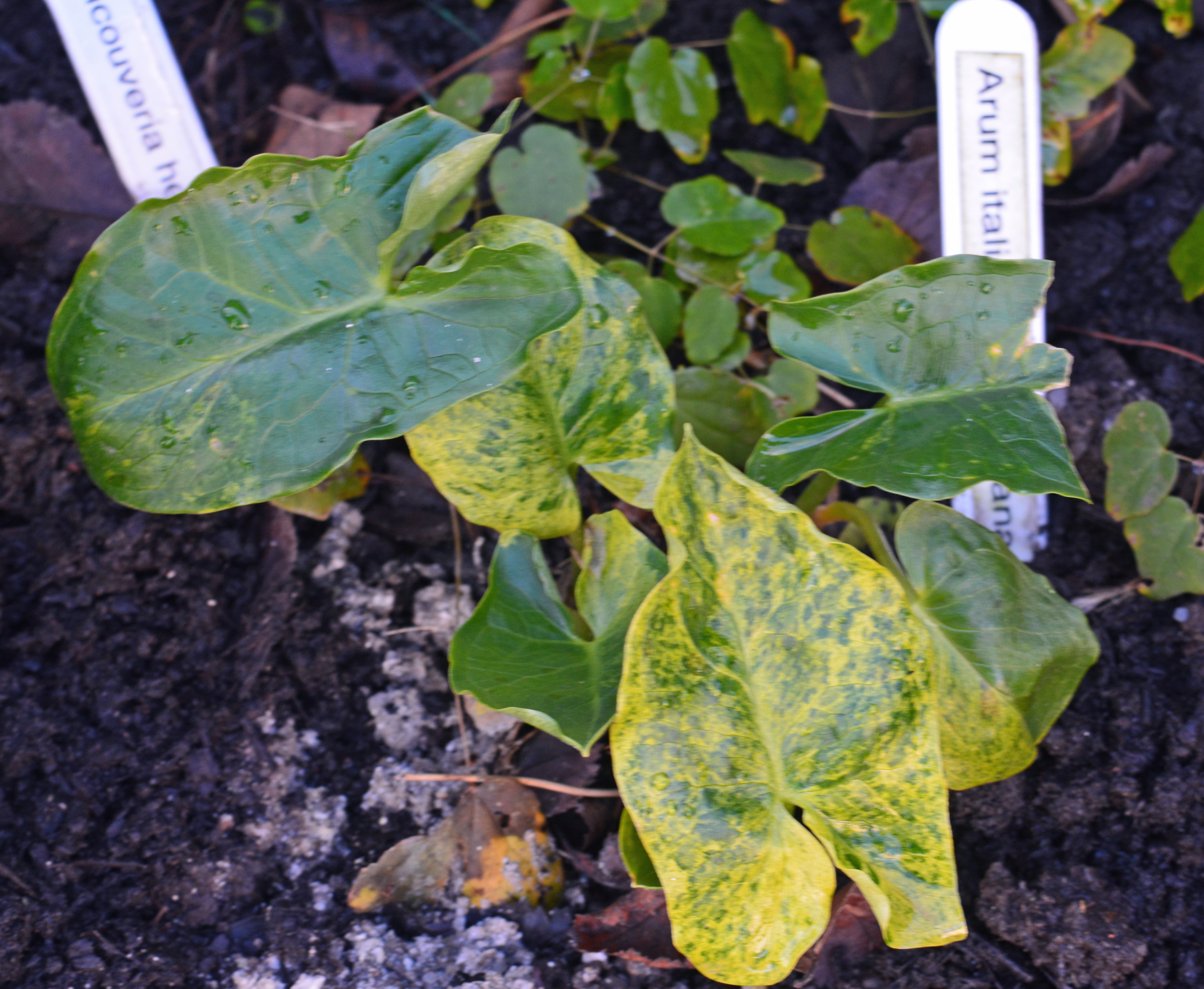
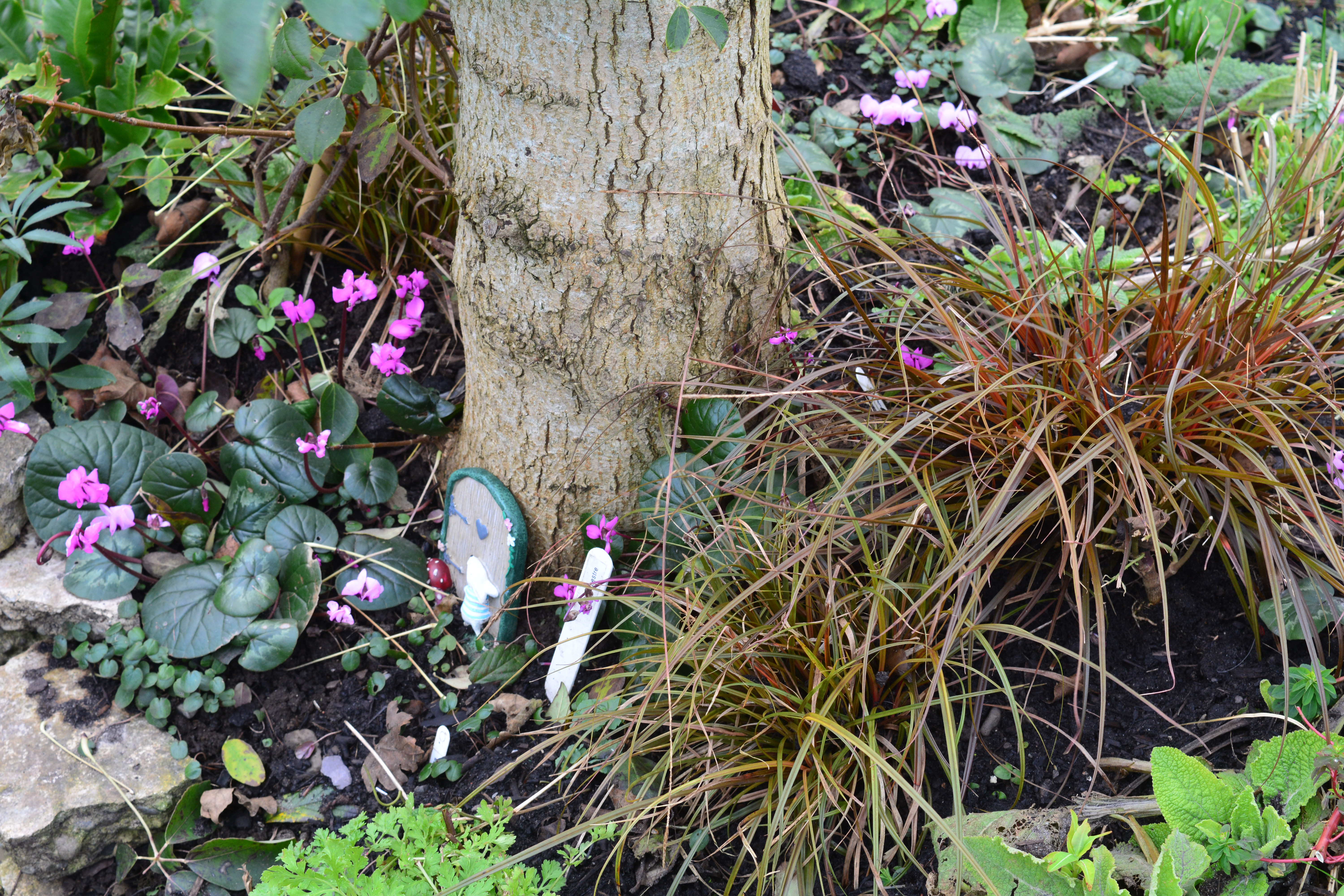
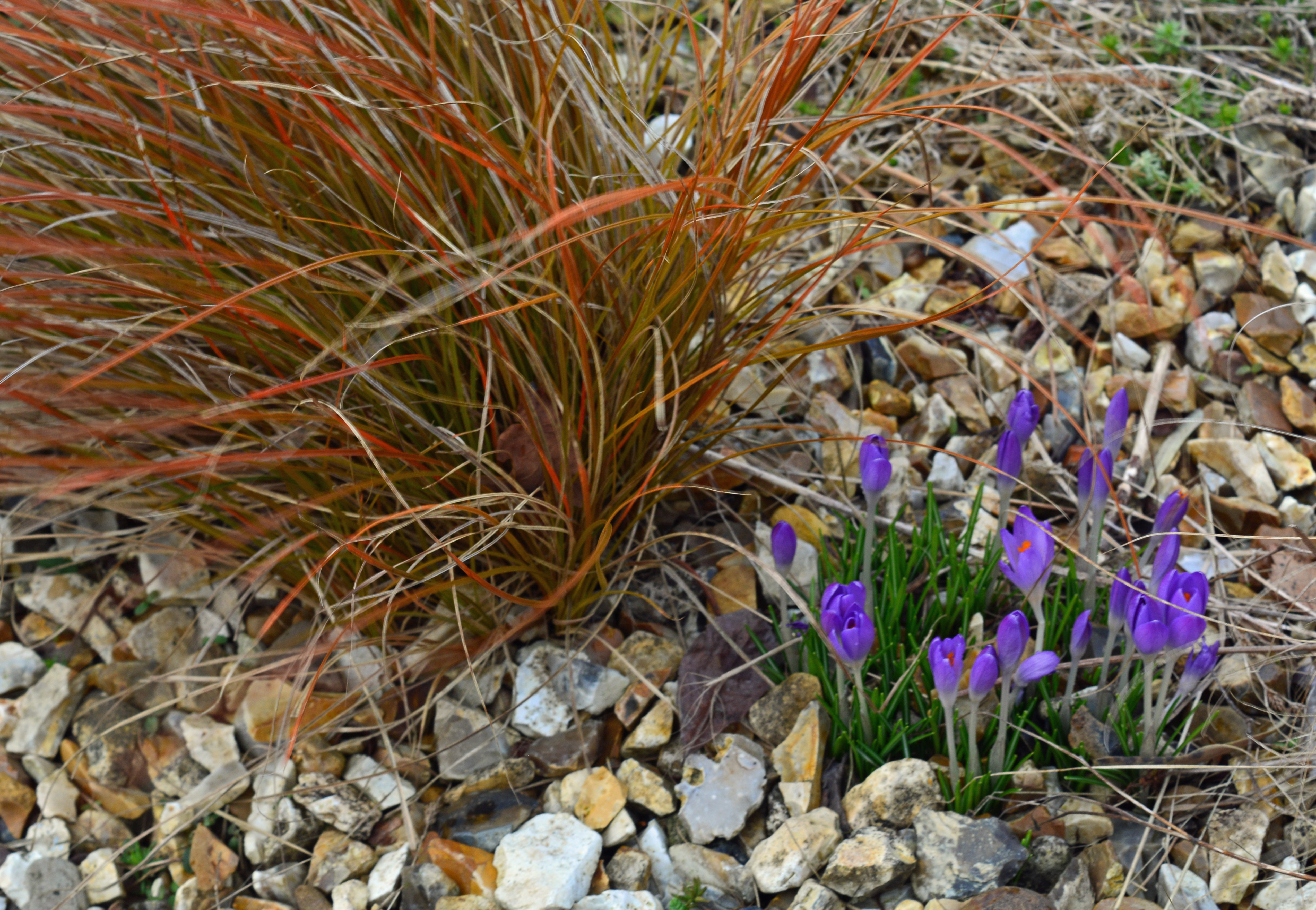
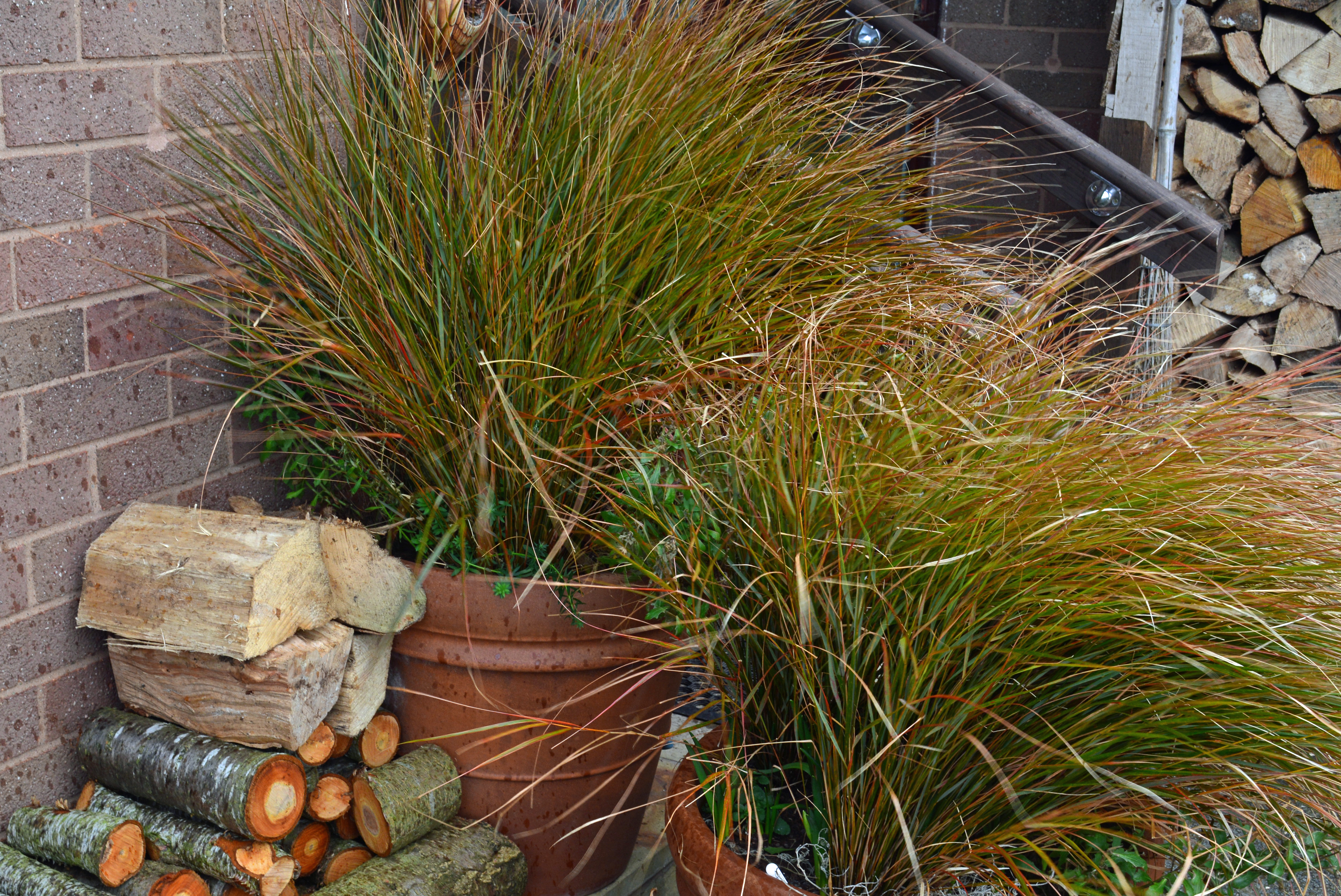
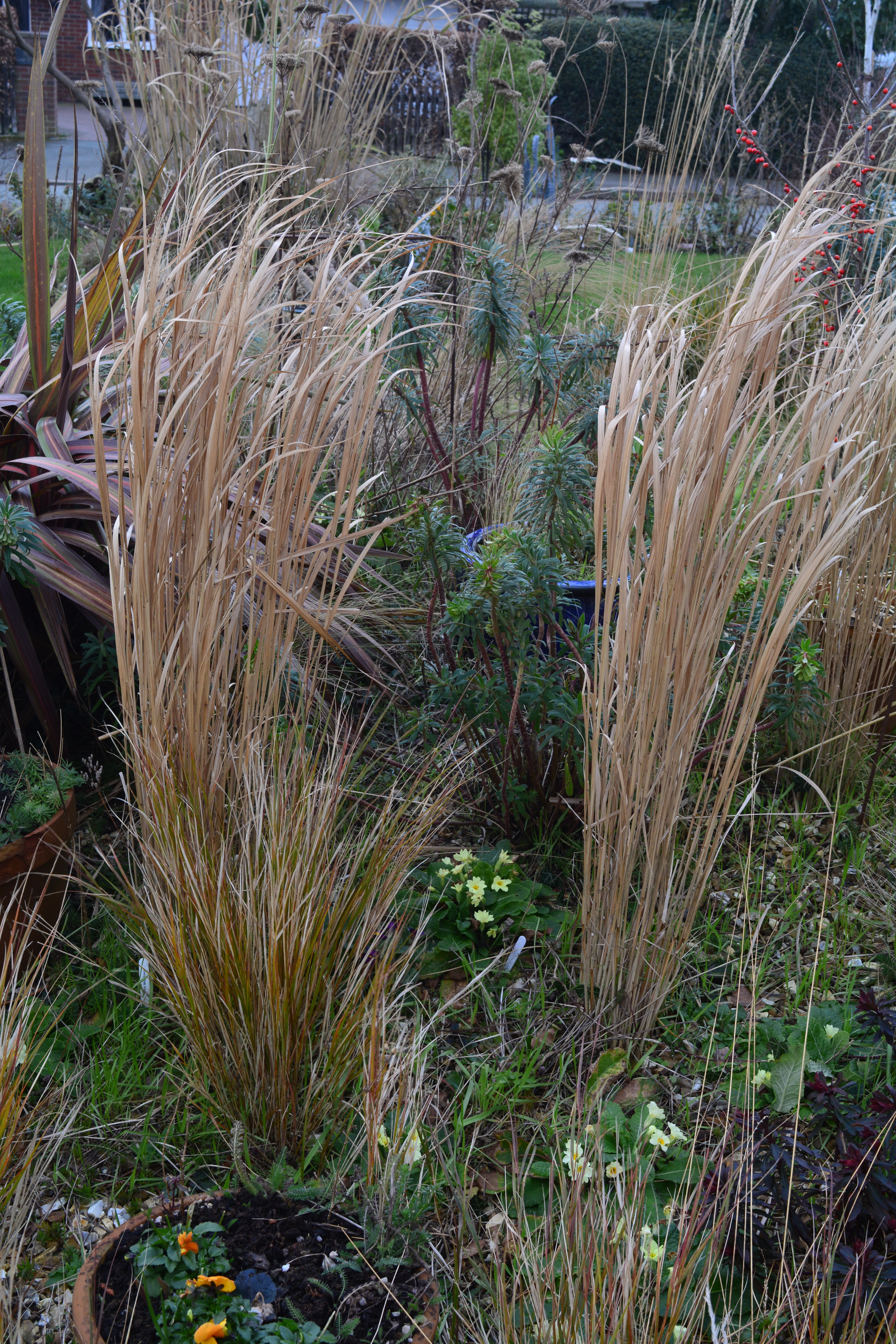
“In late February we begin to cut down “deciduous” grasses, choosing the right time to avoid cutting through this year’s new growth. Evergreen grasses especially varieties of Carex  come into their own especially when partnered with evergreen foliage plants such as ferns, bergenias and arums.”


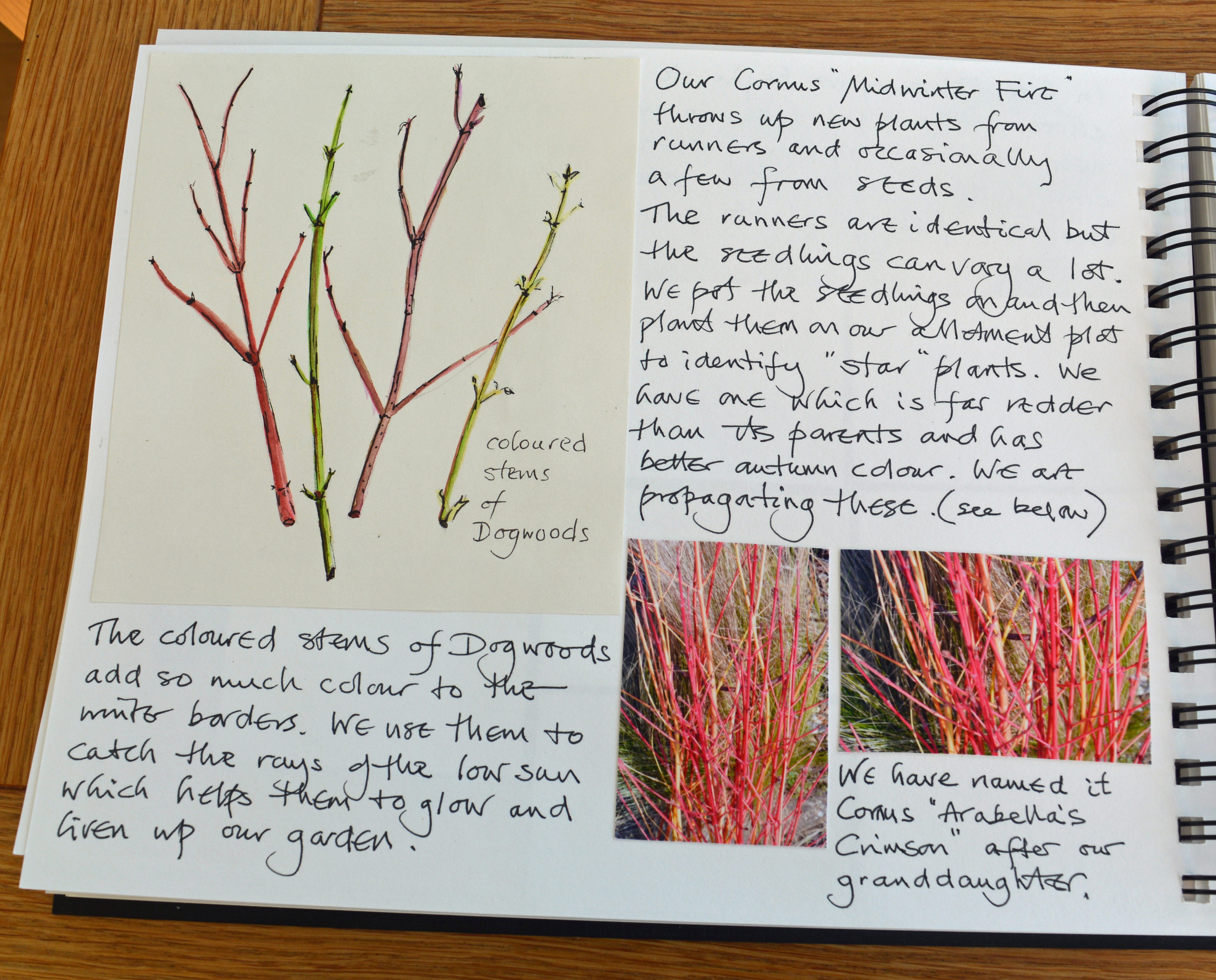
Moving on to the final double page spread for February, I considered coloured stemmed Dogwoods and a look at roses as they give their final points of interest before they are pruned and begin to grow anew for this year.

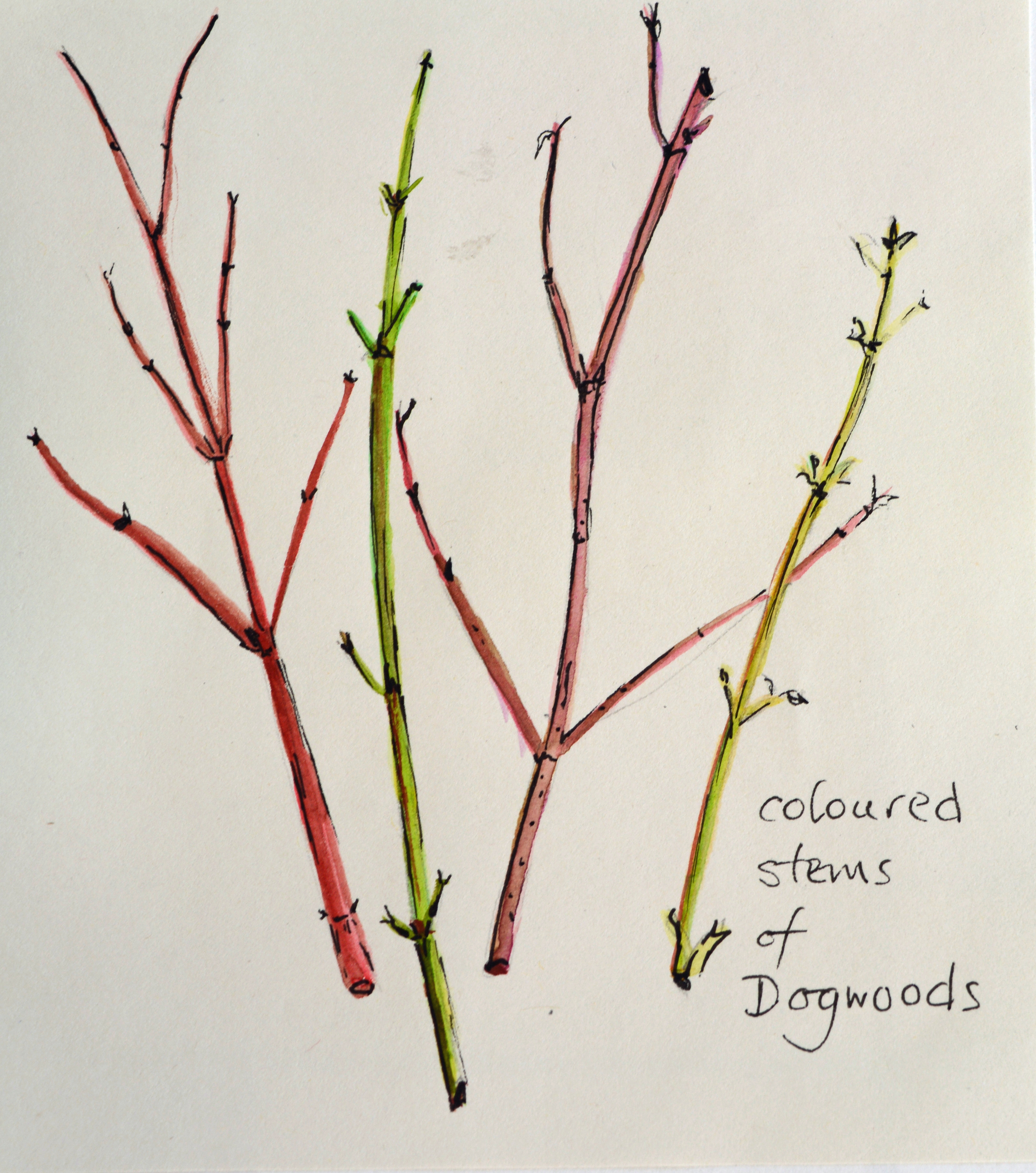
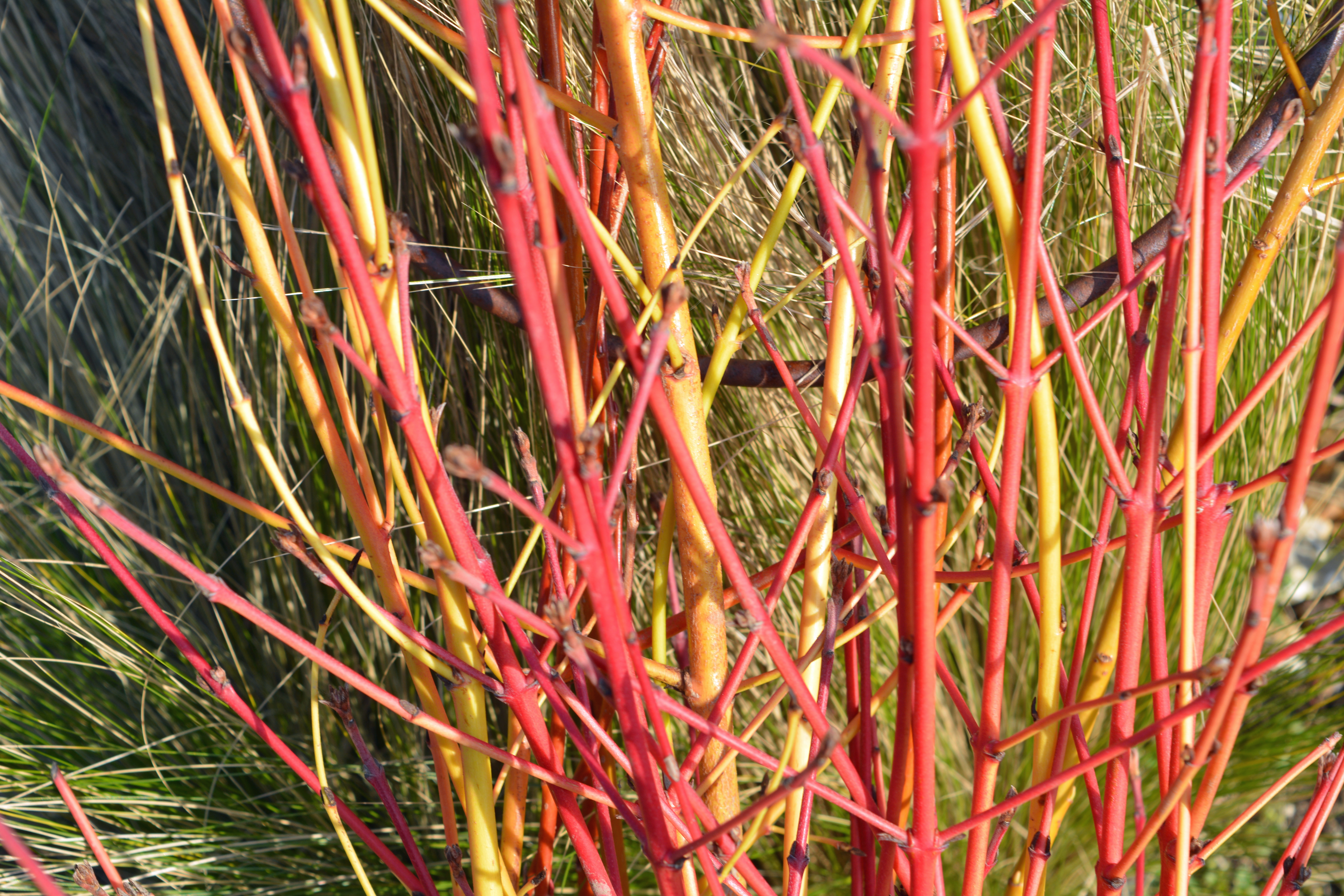
“The coloured stems of Dogwoods add so much colour to the winter borders. We use them to catch the rays of the low sun which helps them to glow and liven up our garden.”


I finished off my February journal entries by featuring roses and a very special plant, special because it is a dogwood that occurred in our garden as a chance seedling of Midwinter Fire crossed with one of our other Cornus plants. We have grown it on and now take lots of cuttings hoping to bulk it up. We hope to be able then to sell them at our open days. Very exciting!

I wrote, “Our Cornus Midwinter Fire throws up new plants from runners and occasionally a few from seed. The runners are identical to the parent plant but the seedlings can vary a lot. We pot the seedlings on and then plant them out on our allotment plot to allow us to identify “star plants”. We have one which is far redder than its parents and has better autumn colour. We are propagating these (see below). We have named it Cornus “Arabella’s Crimson” after our granddaughter.”

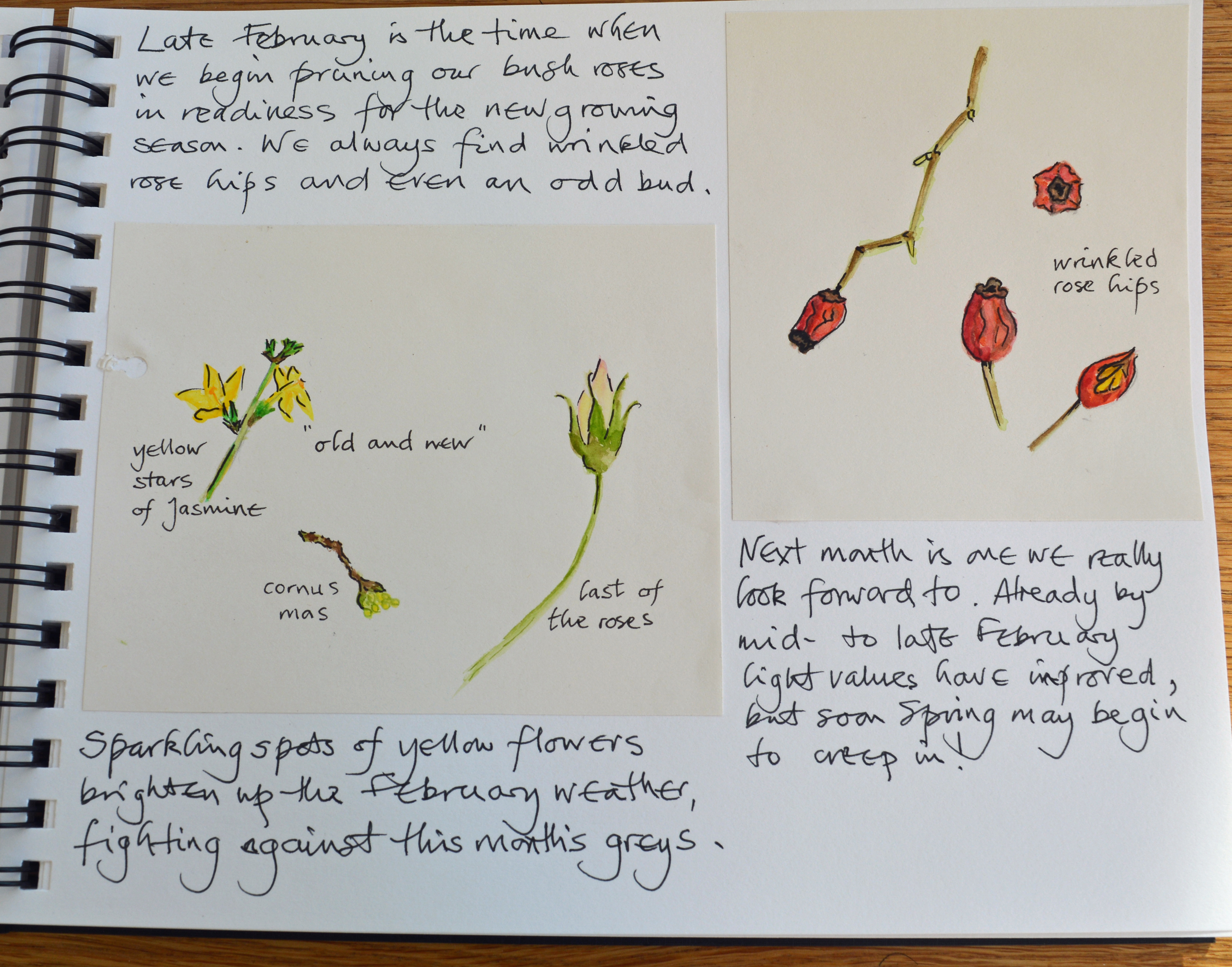
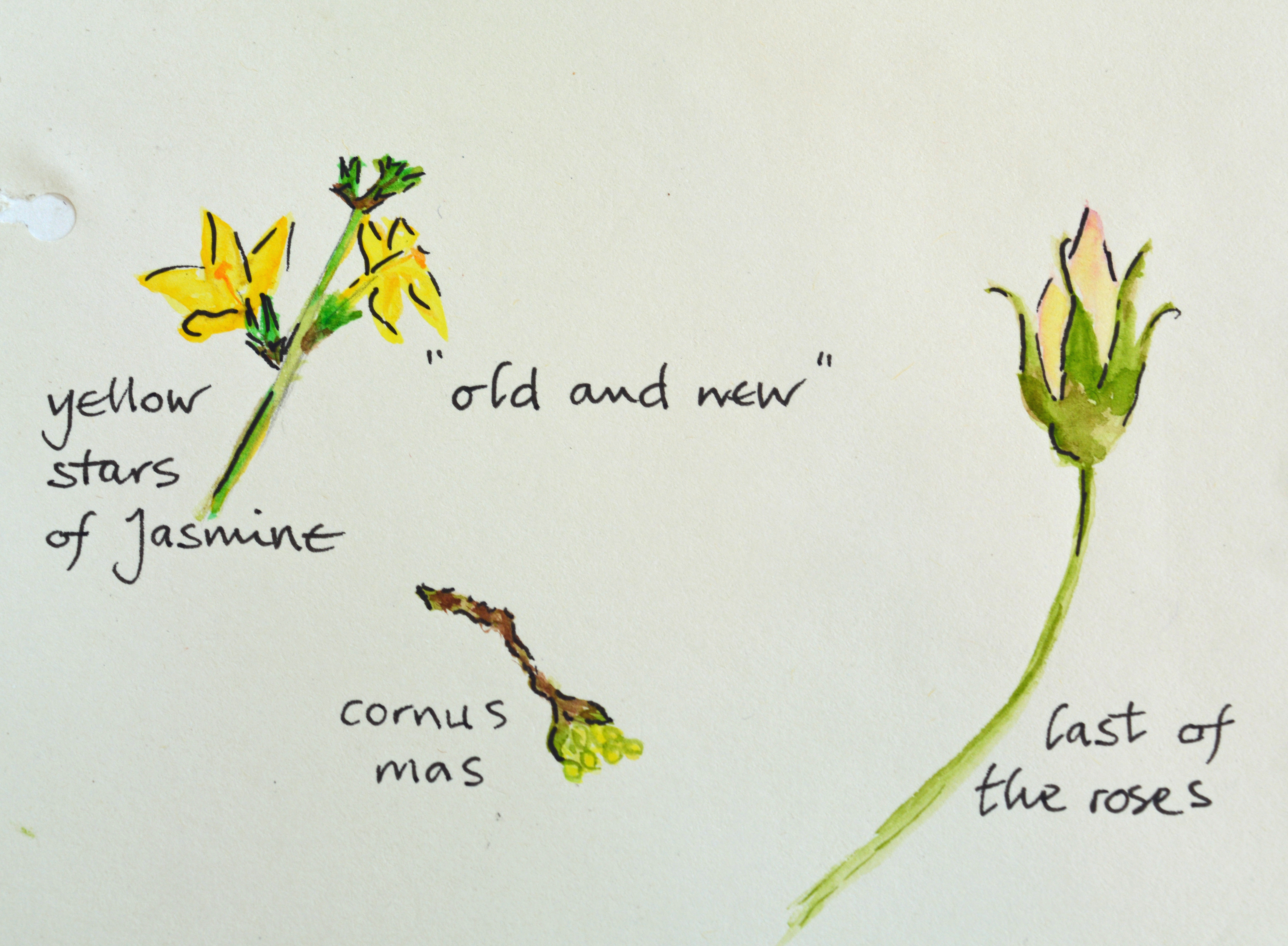
My final page is about roses and yellow flowers of the February garden. The yellow flowers are Jasminum nudiflorum, Cornus mas and a pale yellow rose bud. I wrote “Sparkling spots of yellow flowers brighten up the February weather, fighting against this month’s greys.”

“Late February is the time when we begin  pruning our bush roses in readiness for the new growing season. We always find wrinkled rose hips and even the odd flower bud.


“Next month is one we really look forward to. Already by mid-February light values have improved, but soon Spring may begin to creep in!”


Categories
Christmas Christmas traditions fruit and veg garden arches garden design garden photography gardening gardens gardens open to the public grow your own kitchen gardens National Trust Shrewsbury Shropshire The National Trust walled gardens walled kitchen gardens winter gardens woodland

A Walk in the Park – Attingham Park December

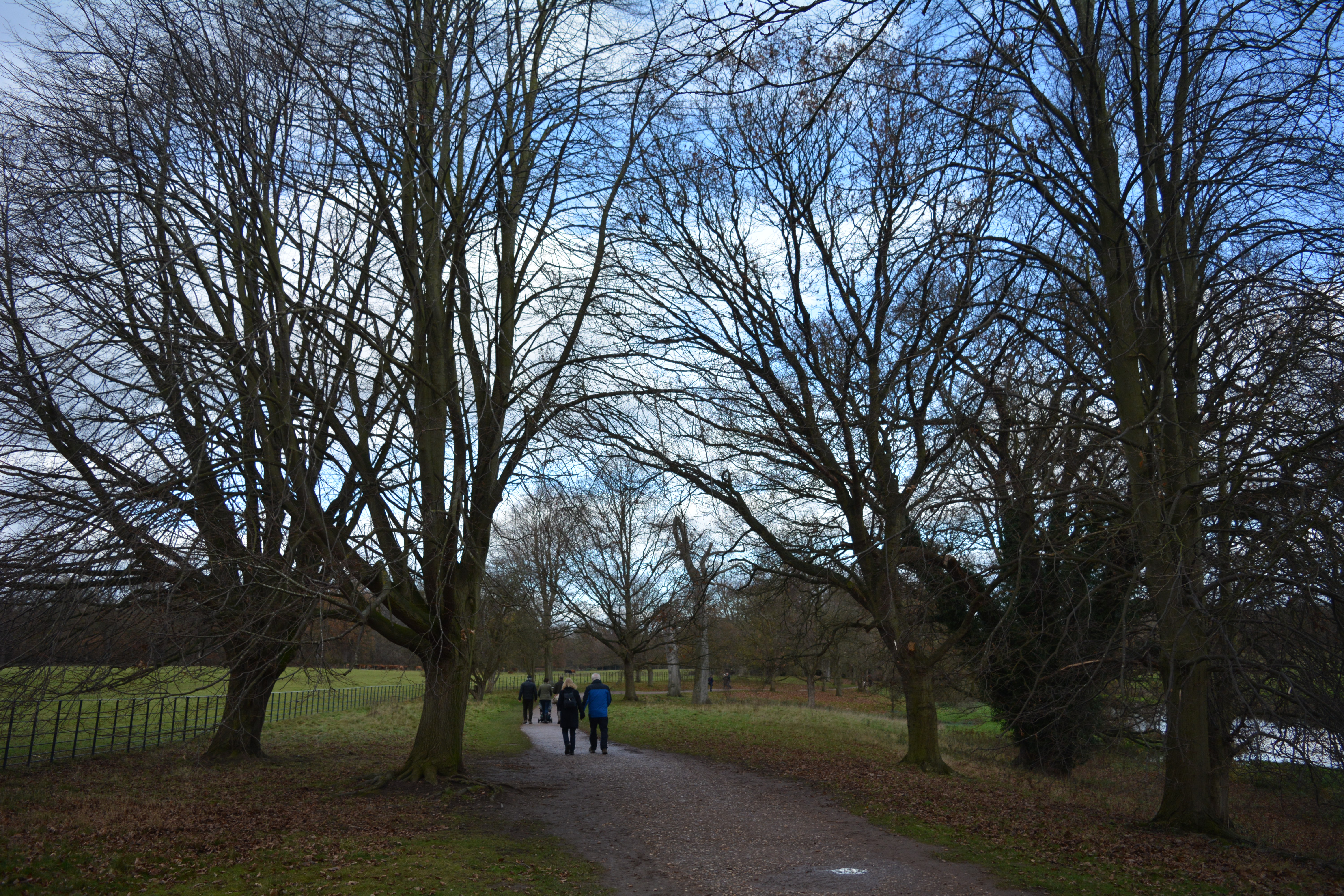
We made our monthly visit to Attingham Park, our last one for 2017, just as Christmas was making itself known at this National Trust property. Before we even reached the coffee shop for our usual warm drink to get us fueled up for our walk, we had been met by a snowman, a Christmas tree and we were entertained to some 1940’s music and dancing. The hall was decorated in a 1940’s style so the dancing set the scene.


The trees were decorated with wartime decorations, based on the idea of “make and make do”, as were the decorations in the coffee shop, where paper chains were made from newspaper. The trees were themed with one based on children’s games from the 1940’s and another was book based.


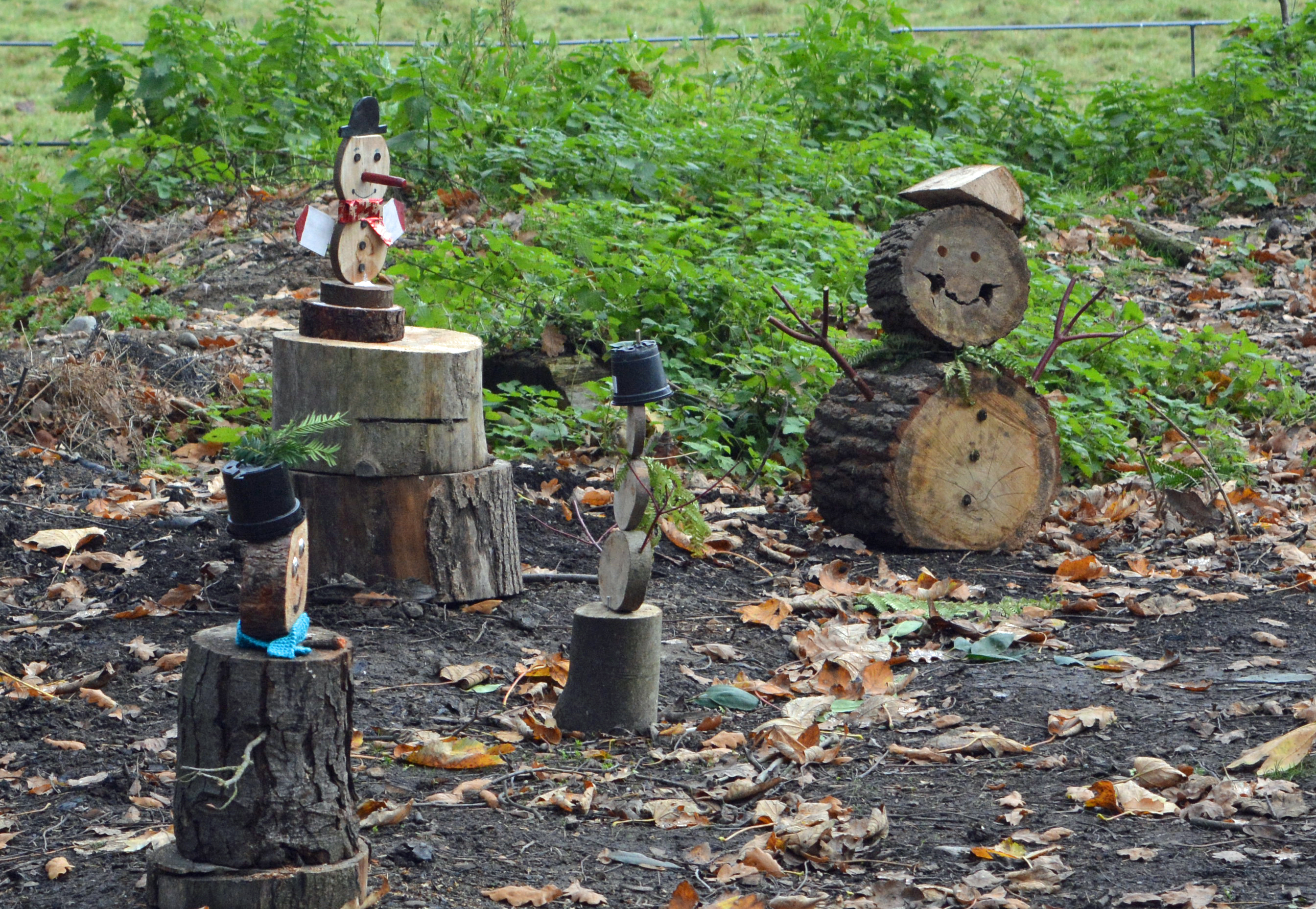
We came across a few other Snowmen, as we followed the one-mile trail, to amuse us on this chilly day. I managed to get around this month without my wheelchair as my recovery from leg surgery is coming along nicely. I walked the mile using a crutch which was very pleasing and rewarding!


Wandering through the woodland areas beneath tall mature trees, we noticed that a few browned leaves were managing to hang on to the branches but the majority were bare skeletons. These frameworks of trunks, branches and twigs were magnificent with no green leaves to hide their structure.


New buds were already waiting patiently on some branches anticipating spring far off on the horizon, while on other neighbouring trees a few dried leaves hung on. One patch of trees still showed some green in its canopy. A few old seed pods hung on having defied the storms, rains and gales of autumn, seed heads of trees, shrubs and perennial plants.


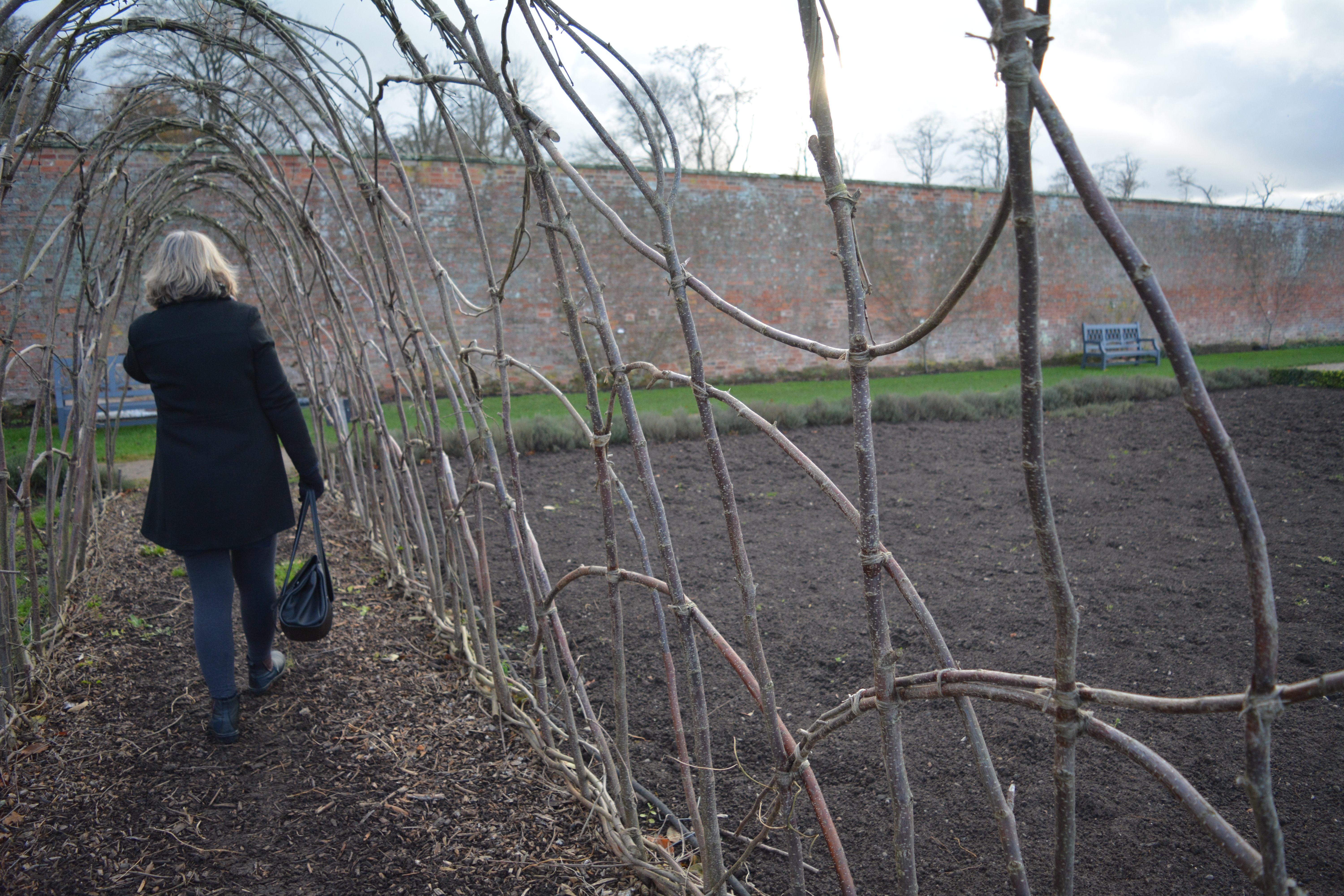
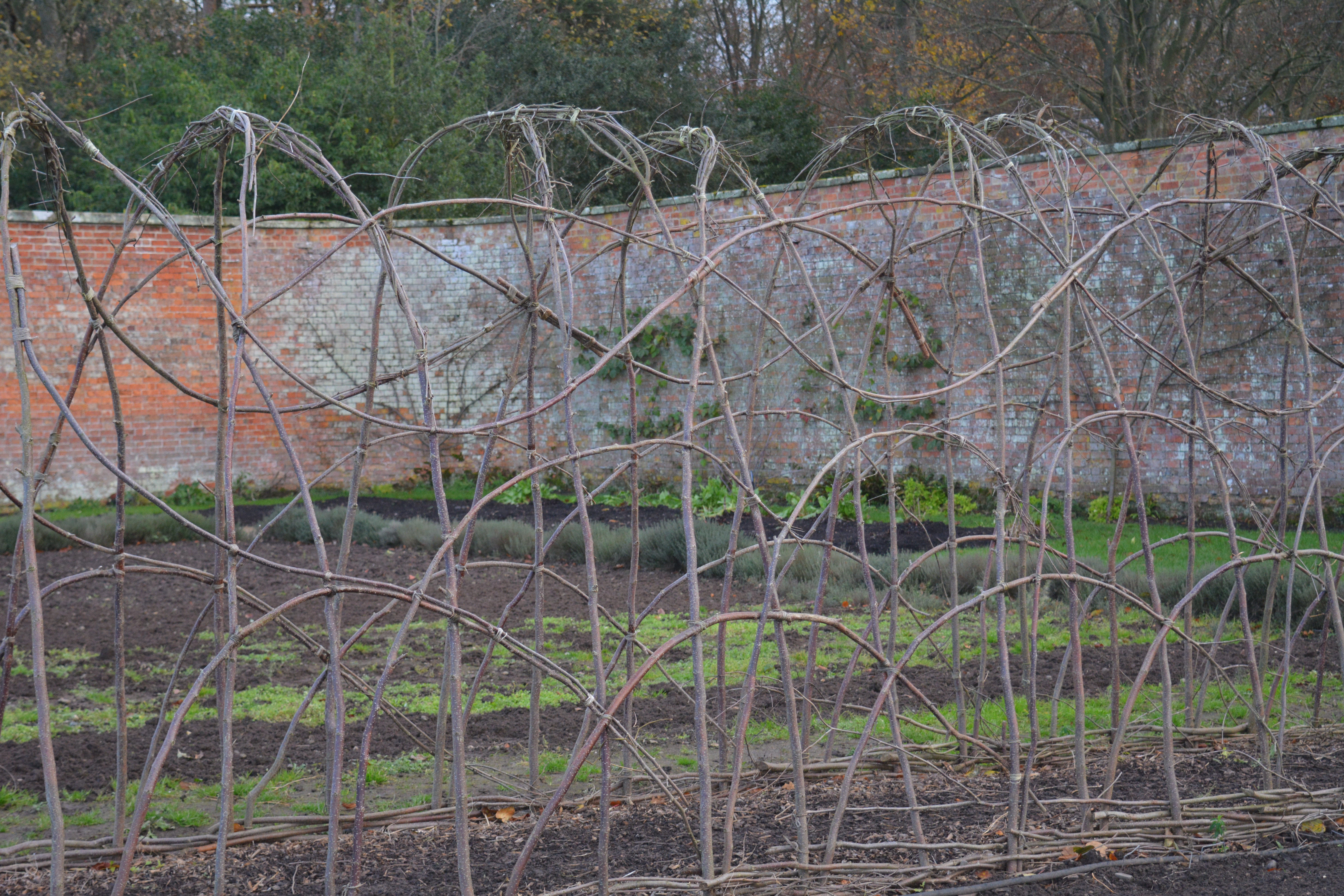
We wandered around the walled garden now virtually clear of crops, leaving hazel pole structures bare of the bean plants that once adorned them. The volunteer staff here are adept at creating beautiful and original plant structures.


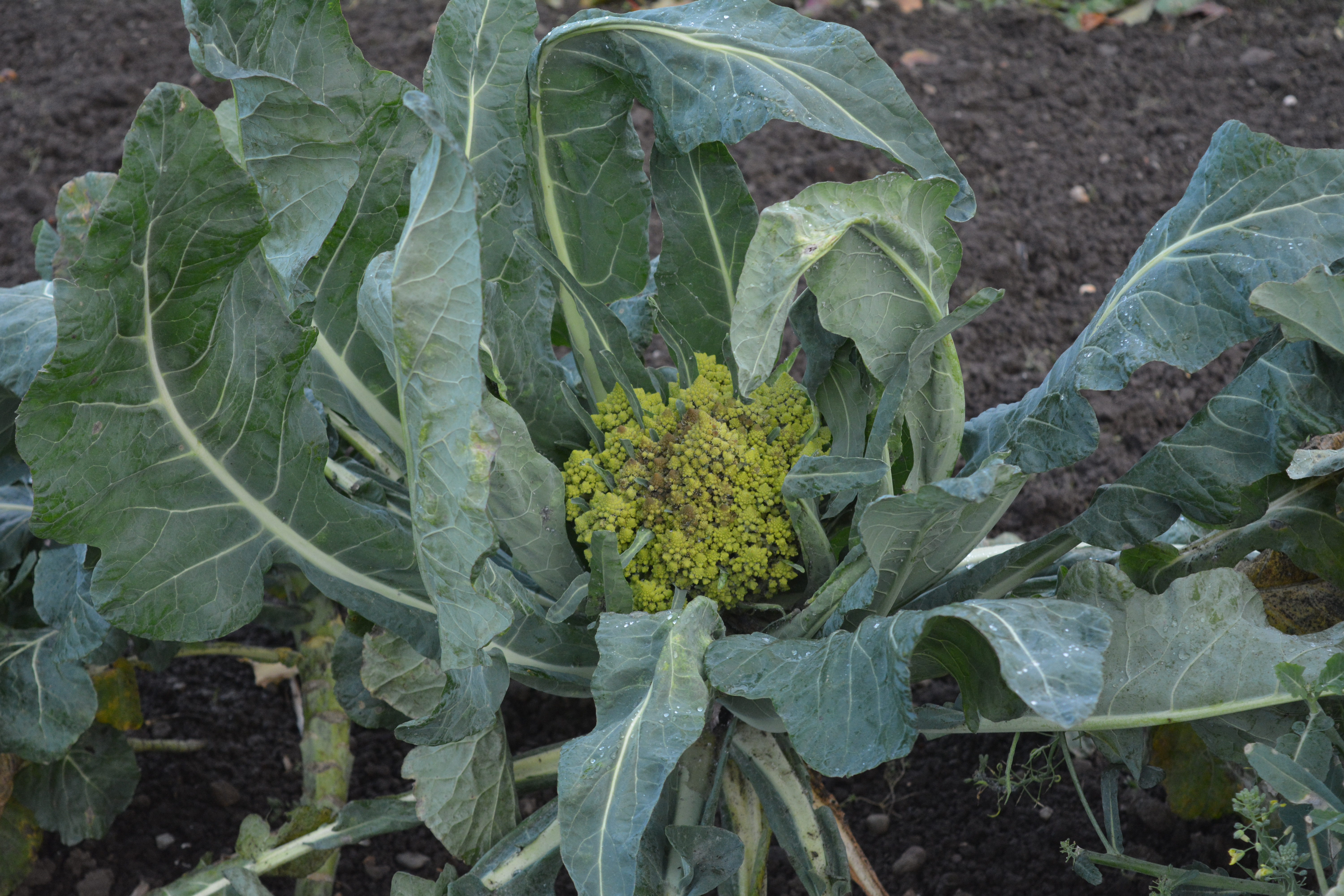
A green flowered cauliflower had recently been attacked by frost, so had browned a little. Celeriac though recently cropped awaited storage.


The gardeners’ bothy was simply decorated but full of atmosphere, added to by the gardeners and volunteers enjoying their break so the aroma of freshly brewed coffee mingled with the smell of wood smoke.

Whatever time of year you explore the countryside, parkland or even more so a garden, there are always surprises awaiting. An out of season flower, a bud bursting at an inappropriate time or sadly at times the sudden death of a favourite plant. Two surprises were awaiting us at Attingham this December. First were lemon yellow catkins hanging fresh and healthily from hazel shrubs. These are usually key features of the month of February. In December they provided a beautiful diversion for me and my camera lens!

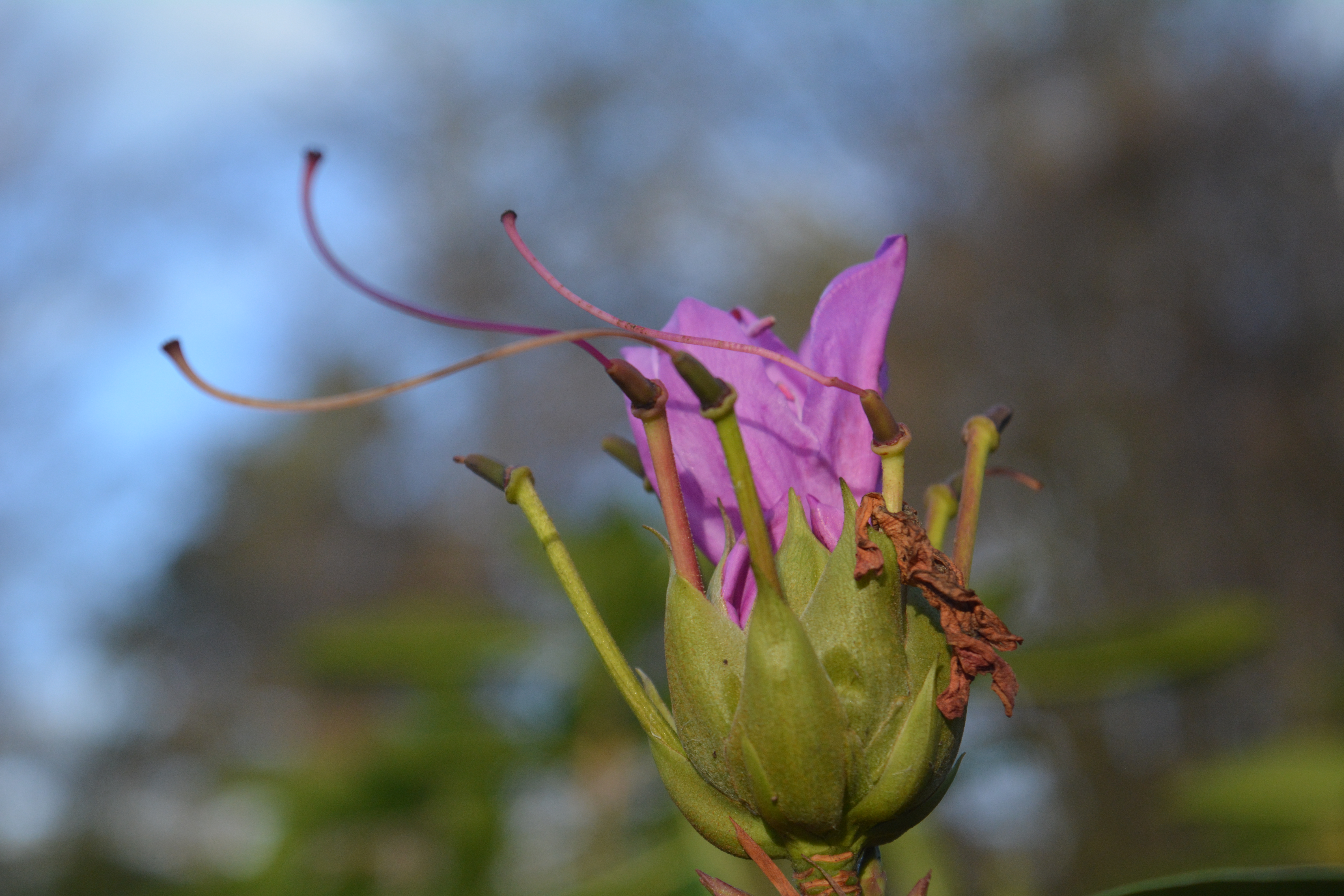
The second surprise was a Rhododendron shrub in flower!


Now that we have explored the parkland at Attingham Park every month during 2017, we need to decide where our monthly visit will be next year. We need somewhere open all year and of interest every month too. We shall let you know in the new year! I hope you have enjoyed visiting Attingham with us each month during 2017.

Categories
birds colours flowering bulbs garden photography garden wildlife gardening gardens grasses hardy perennials irises roses Shrewsbury Shropshire shrubs village gardens wildlife Winter Gardening winter gardens

My Garden Journal – December 2017

I decided to post my final Garden Journal 2017 post for my Christmas post this year. I hope you enjoy it. Have a great Christmas time!

Here is the final episode of my 2017 Garden Journal, my entries for December. I have already been to my art suppliers and purchased books to become my 2018 Garden Journal. As usual I have changed the size and gone for a larger landscape bound drawing book. But for now let me share my December pages.

I began by looking at the bird-life feeding in our garden in December and in particular the characterful Tawny Owl. I did a painting of these wonderful owls using fine fibretip pens and Japanese watercolour pens.


I wrote, “Birdlife in our garden in December is generally quiet. Squeaks of Dunnocks sneak out from the shrubbery and Robins share their watery liquid winter song. Winter migrant Thrushes soon fill the garden with chatter.

Most noisy of all are our Tawny Owls who call loudly when the light fails and darkness overpowers the garden. We open the patio doors to listen more intently and drink in  the atmosphere these owl calls create.”

Turn over the page and we find a double page spread looking at garden editing and seedheads and I include a great quote from one of my favourite garden designers, Dan Pearson.

“December for us is a key month in our garden editing period. It is when we move plants, take plants out that are past their best and completely re-design and re-plant some areas. I was so pleased to read in his book, “Natural Selection”, that Dan Pearson thinks the same.”

“Editing the garden is a gradual process of  elimination, and I like to let nature take its course and for foliage to find its way back into the ground in its own time….. I savour many perennials for their winter seedheads,  form and structure, and this is what I edit back to so that there is plenty for the winter sunshine for the winter sunshine to fall upon.

Removing the clutter lets you see the things in a new light, but you need to retrain your eye in winter to see things in a more economical way. It is good to understand the structure of a garden  and to aim for it to be as handsome as it can be.”

“Seed heads of perennials take centre stage in our garden this month. When snow arrives our seed heads completely change their character. They appear strong enough to withstand snow’s weight.

Snow in December has become a rare occurrence in recent years as our climate changes. In fact we have not seen any December snow since 2010 and 2011. This year saw this all change. A foot of snow fell in a two day period and the garden looked weighed down, slumped and bent low”.


“We love to see how the snow changes the characters of our pieces of sculpture by strengthening their shapes and sometimes creating silhouettes”.


Turning over the page we meet lots of colour, winter bedding plants and our plant of the month.

I wrote “We like to use winter bedding plants in pots to add extra colourful, bright patches to our winter borders. Violas and Cyclamen are two of our favourites often linked with the gentle colour and textures of grasses.”


“Our plant of the month for December is Hesperantha which flower strongly at this time of year, glowing bright pinks and reds.”


My final page in my Garden Journal 2017 is all about the surprises that the garden treats us to in December, bright colours that lift the heart. You will notice that I have included more pictures in the post than were originally in the journal, but I simply ran out of space in my book. I hope you enjoy the extras!

“Red surprises in the winter garden can warm the heart and souls of the garden and the gardener alike. Joined by splashes of oranges these colours warm us up nicely.”

The reds and oranges are provided by coloured stems of shrubs, odd blooms on roses, the berries of Iris foetissima and the late colours in Acer leaves. So much colour to end the year.


It is good to finish my year of reports on such a positive colourful note. My Garden Journal will return next year!


This Veggie Life

A Vegetarian | Nature Lifestyle Blog

Rambling in the Garden

.....and nurturing my soul

The Arch City Gardener

Journeys In St. Louis Gardening and Beyond

Garden Dreaming at Châtillon

Consult the genius of the place

Storyshucker

A blog full of humorous and poignant observations.

gardeninacity

Notes from a wildlife-friendly cottage garden

PlayGroundology

...an emerging social science

The Official Blog of British Wildlife

'The most important and informative publication on wildlife of our times' - The Independent. This blog is a member of The UK & Ireland Natural History Bloggers group: www.uknhb.blogspot.com

iGrowHort

Inspire - Cultivate - Grow Native Plants - Restore Landscapes

Bishops Meadow Trust

To create and protect a semi-natural wild space for the people of Farnham to enjoy and experience an array of British wildlife in our town

Gardening with Children

The www.gardeningwithchildren.co.uk Blog

UKbirdingtimeline

birding through the seasons, why birds matter and how to conserve them

NATURE WALKER

with a camera in hand

Jardin

Transform your outdoor space

Eva's space

My allotment, cooking and other interests

Old School Garden

my gardening life through the year

LEANNE COLE

Trying to live a creative life

fromacountrycottage

trying to live as lightly as possible on our beautiful planet

Good Life Gardening

Nature lovers from Leicester living the good life.

mybeautfulthings

Finding the beautiful in the everyday

mawsonmichelle

Michelle's Allotment

In and Out of My Garden

thoughts from and about my garden

Greenhousing

Big plans for a small garden

The Scottish Country Garden

A Walled Country Garden in South East Scotland

The Fruity Chicken

Life at the fruity chicken

willowarchway

Off grid living. Self sufficient. "PERMAGANICS RULE".

St Anns Allotments

Nottingham's Grade 2* Listed Allotments and Community Orchard

Manifest Joy Harvests

a journey in suburban vegetable gardening

Allotmental

The madness of growing your own

Penny's Garden: a harvest beyond my front door

A novel approach to vegetable gardening

arignagardener

Sustainable living in the Irish countryside.

NewEnglandGardenAndThread

Master Gardener, amateur photographer, quilter, NH native, and sometimes SC snowbird

dianajhale

Recent work and work in progress and anything else that interests me

planthoarder

a chaotic cottage gardener

Lens and Pens by Sally

a weekly blog that creates a personal philosophy through photographs and words

Dewdrops and Sunshine

Stories from a sassy and classy Southern farmbelle.

The Pyjama Gardener

Simple Organic Gardening & Seasonal Living

gettin' fresh!

turning dirt into dinner

JOY...

today the world is created anew

Garden Birds

Notes from a Devon garden

ShootAbout

Life Through The Lens

Adapting Pixels

A photography blog showcasing the best photography pictures and videos on the internet

Wildlifegardening's Blog

Just another WordPress.com site

naturestimeline

personal observations from the natural world as the search continues for a new approach to conservation.

LATEBLOOMERBUDS

The Wonders of Life through my Eyes, my Heart, my Soul