This is the third in the series of posts looking back at garden visits we enjoyed last summer and autumn. Here we shall remember our autumn visit to the grounds of Croft Castle in South Shropshire.
Croft Castle is a favourite National Trust property. We often visit to enjoy a walk around the gardens and take tea in the teashop. On this autumn day we only had a short time but still managed to do both!
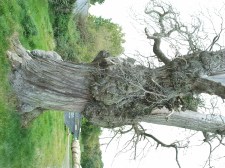
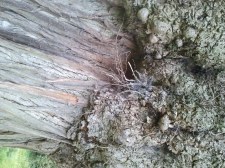
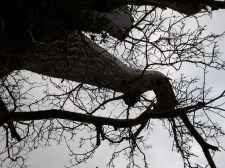
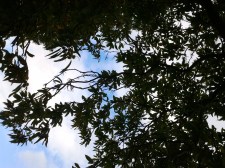
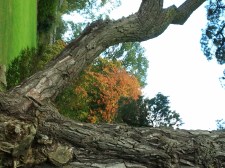
Croft is famous for its ancient avenue of Sweet Chestnut trees which are now sadly coming to the end of their lives. Their gnarled, pitted bark shows their great age and makes you imagine just what they would have seen going on under their boughs and all around them over the centuries. If only they could tell.
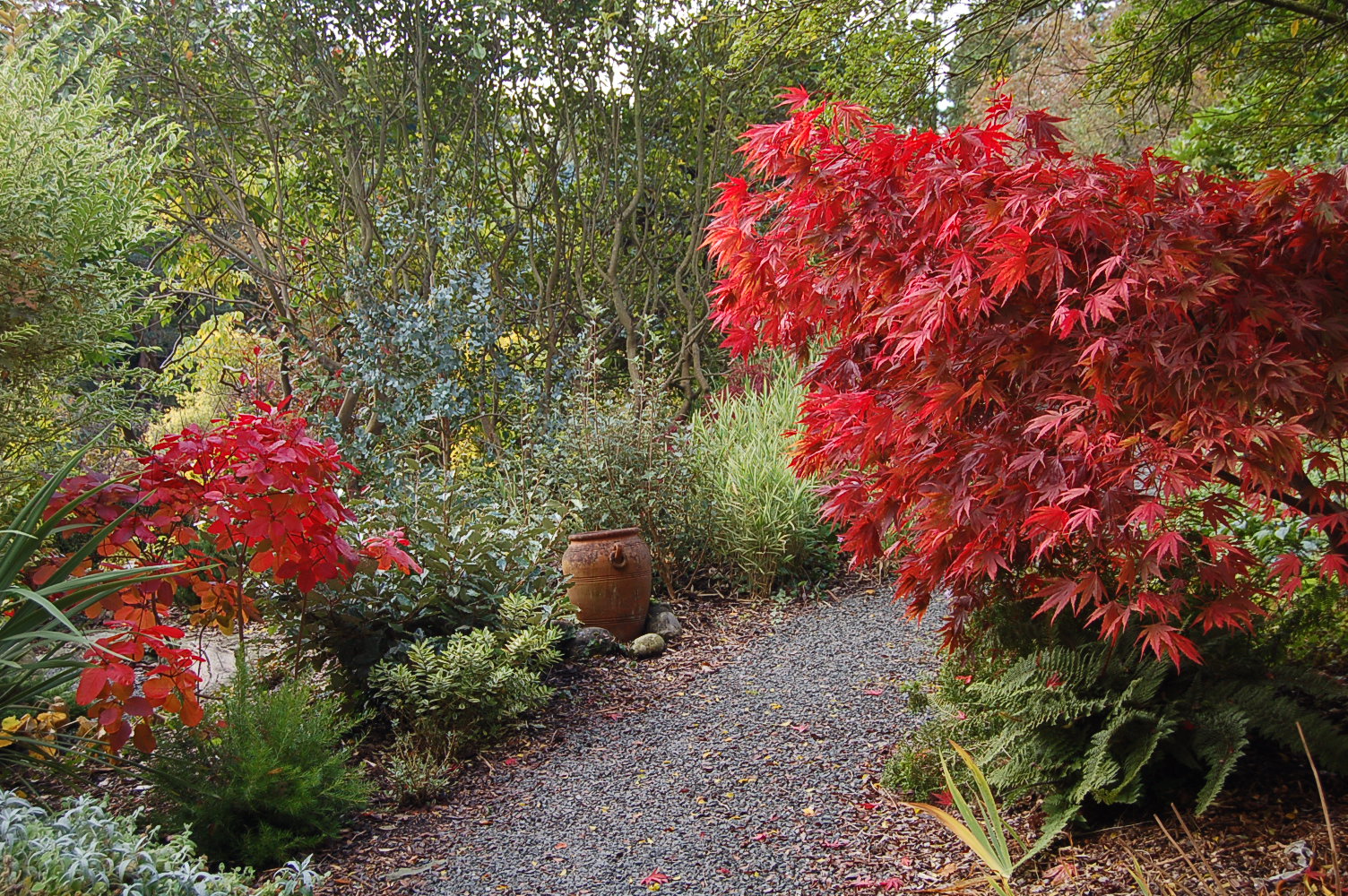
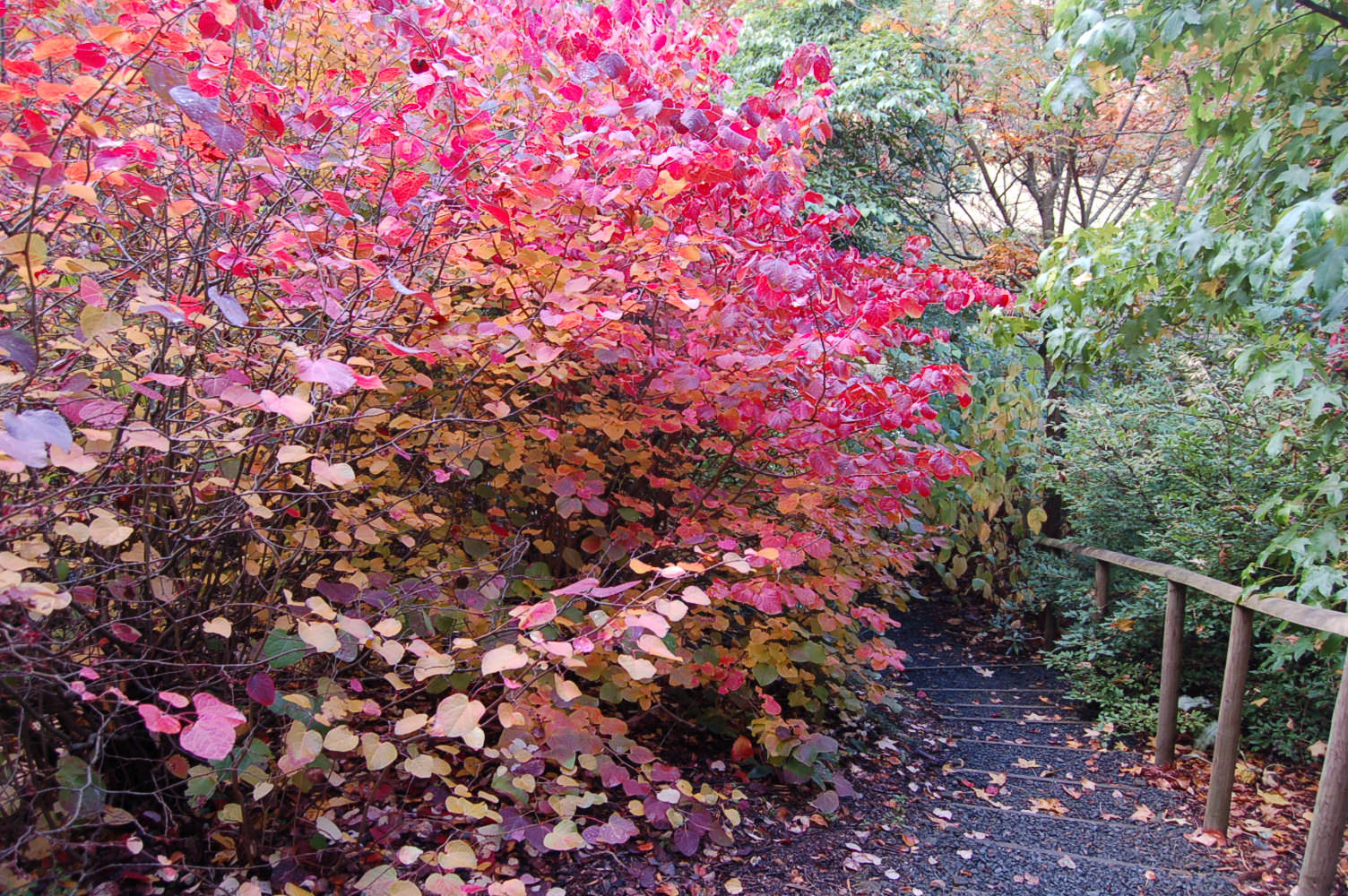
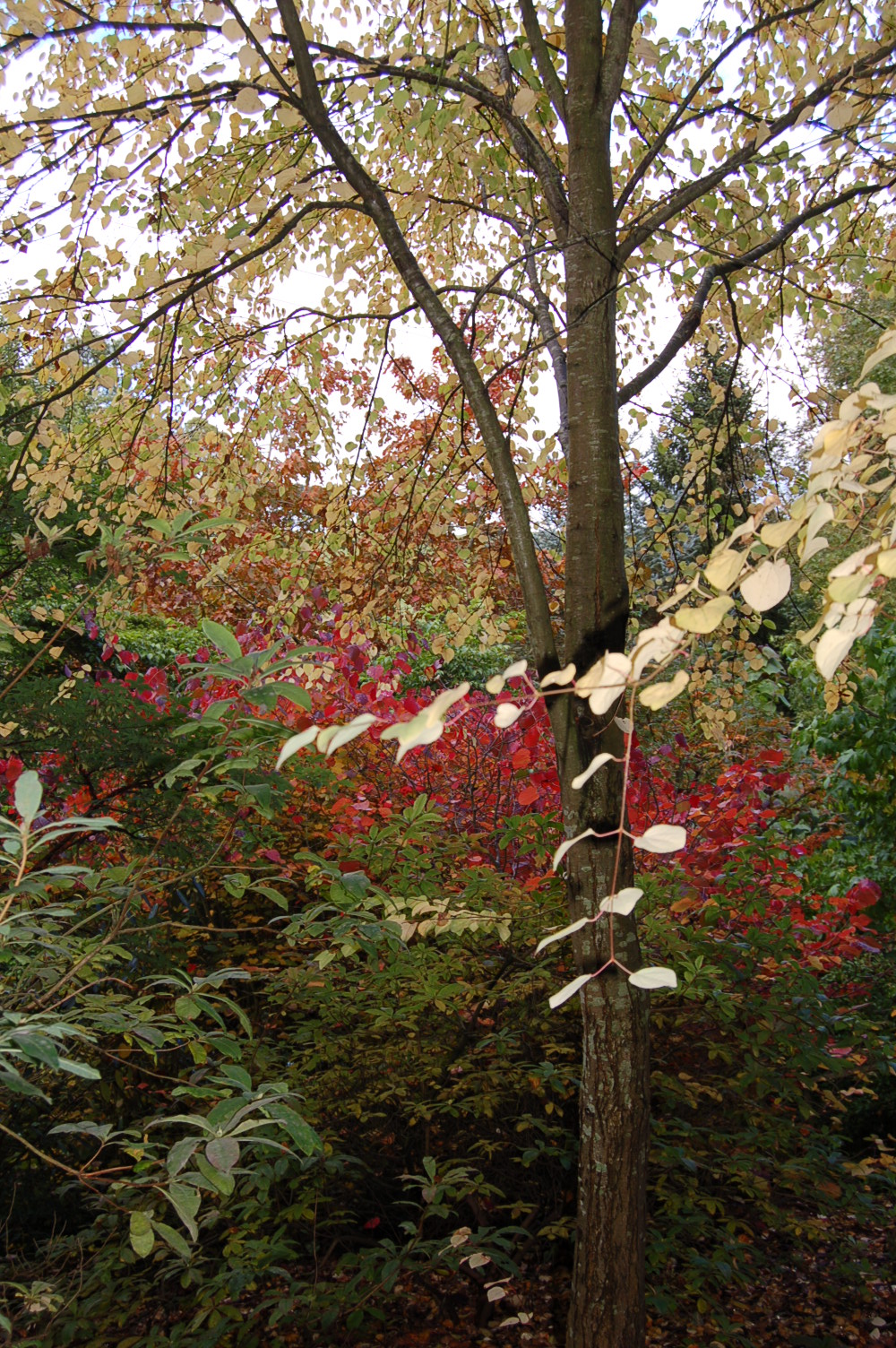
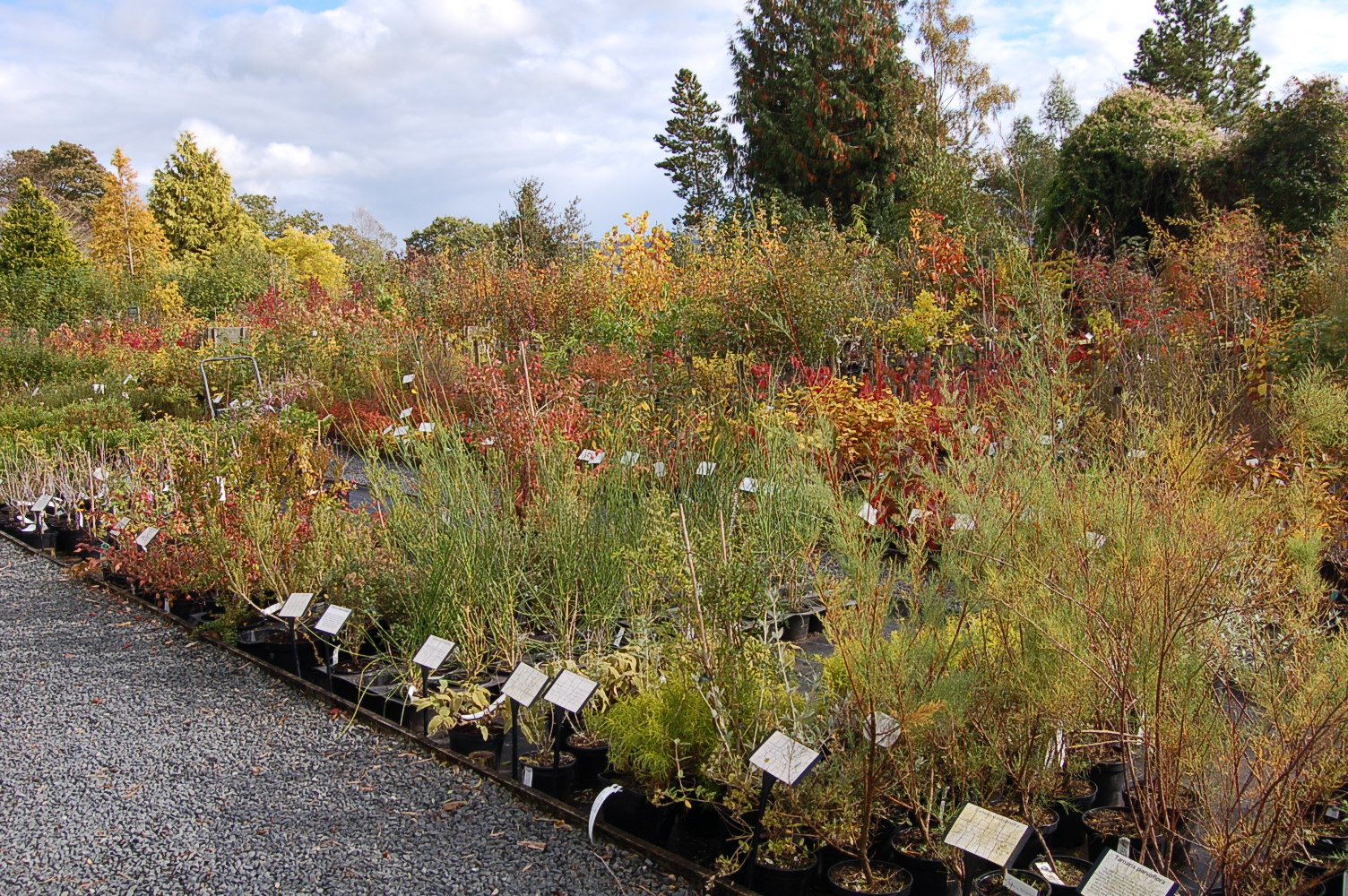
Close to Welshpool, just a half hour from home across the Welsh border, are our favourite nursery and garden centre, The Dingle and The Derwen, part of the same family. They sell unusual trees and shrubs and many good-value perennials all locally grown. But hidden away in the Dingle nursery, through a little wooden gate is a wonderful sloping garden. The garden is mostly a wonderful collection of unusual trees and shrubs on a gentle slope down to a lake, so a visit in the autumn is an assault on the senses.
The nursery which is now over 40 years old, grows thousands of plants on its 150 acres of Welsh countryside. We rarely come away without a gem – and they give free coffee away too!
The garden itself extends to just four acres, but those four acres feel much larger than expected with a complex network of paths which give occasional views which are wide and stunning. This is good garden design.
As the paths take us around corners they feature interesting, colourful shrubs and trees to delight the eye before enticing us to find out what is around the next corner.
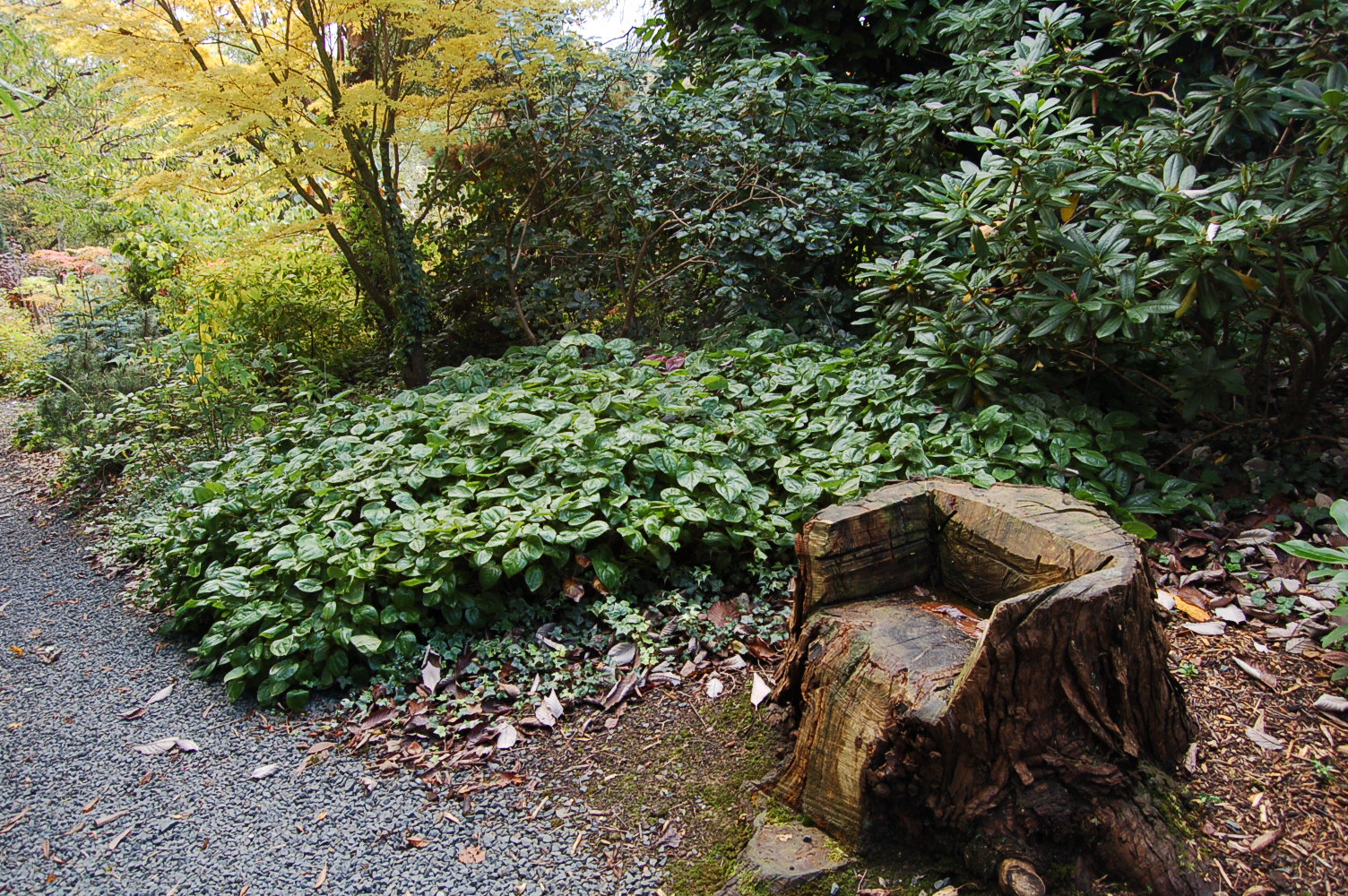
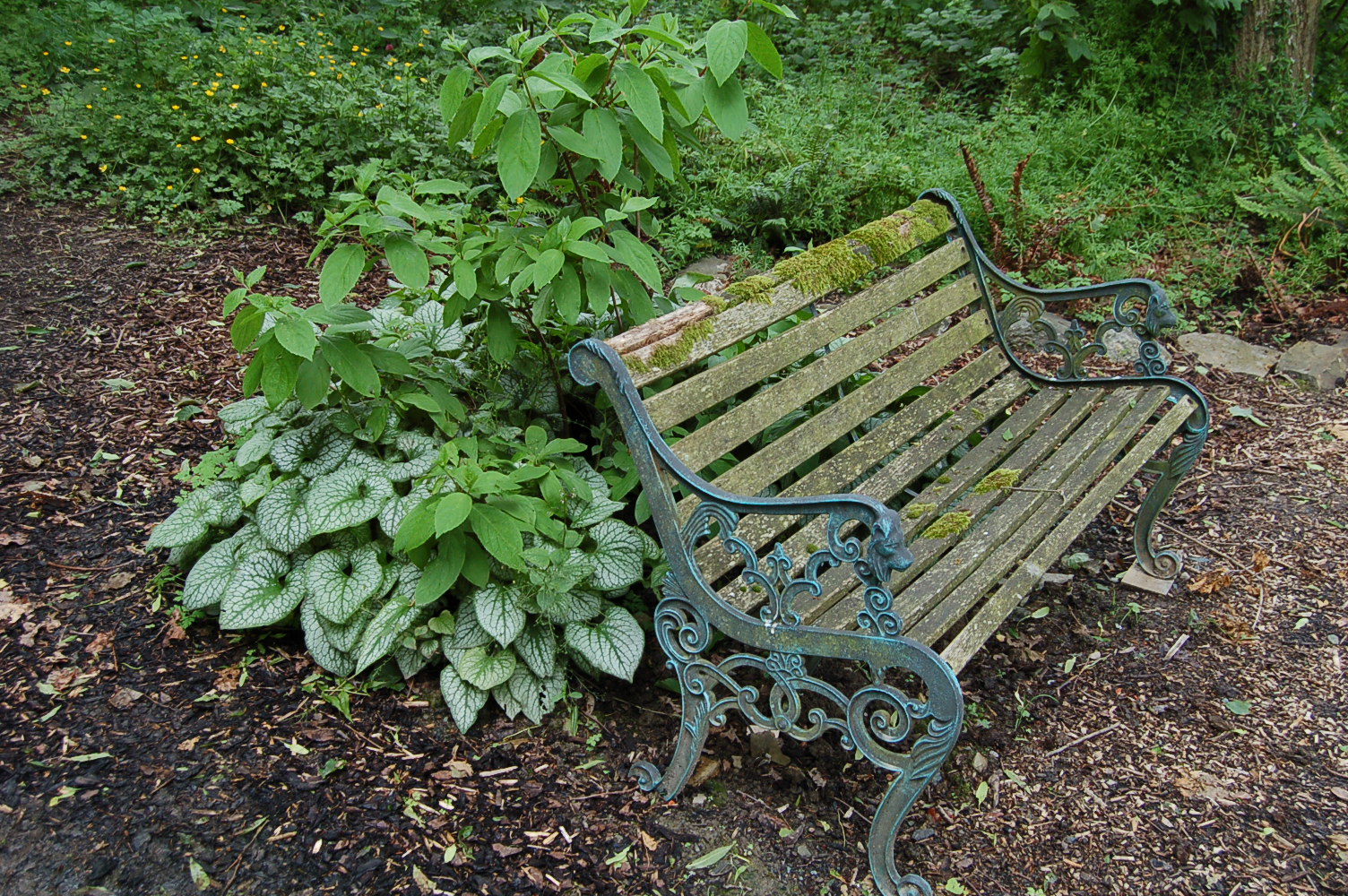
Being on a slope, the garden’s many seats are most warmly welcomed by aching legs.
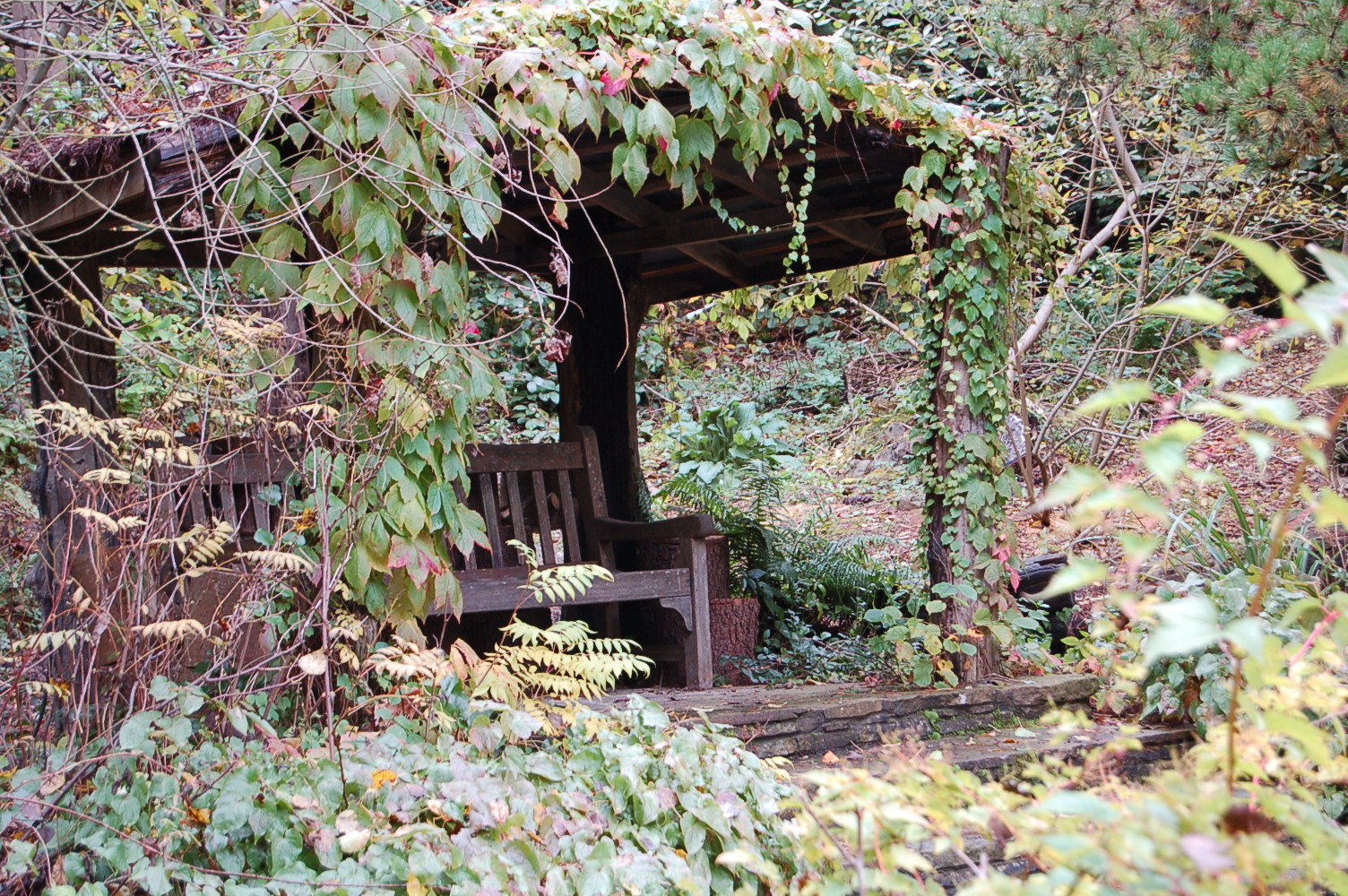
Some of the seating provides cover which proved useful a few times as showers burst from the dark sky just visible through gaps in the trees.
Coloured, textured foliage and bark keep the interest of the plant lover in us going strong and enticing us around each corner.
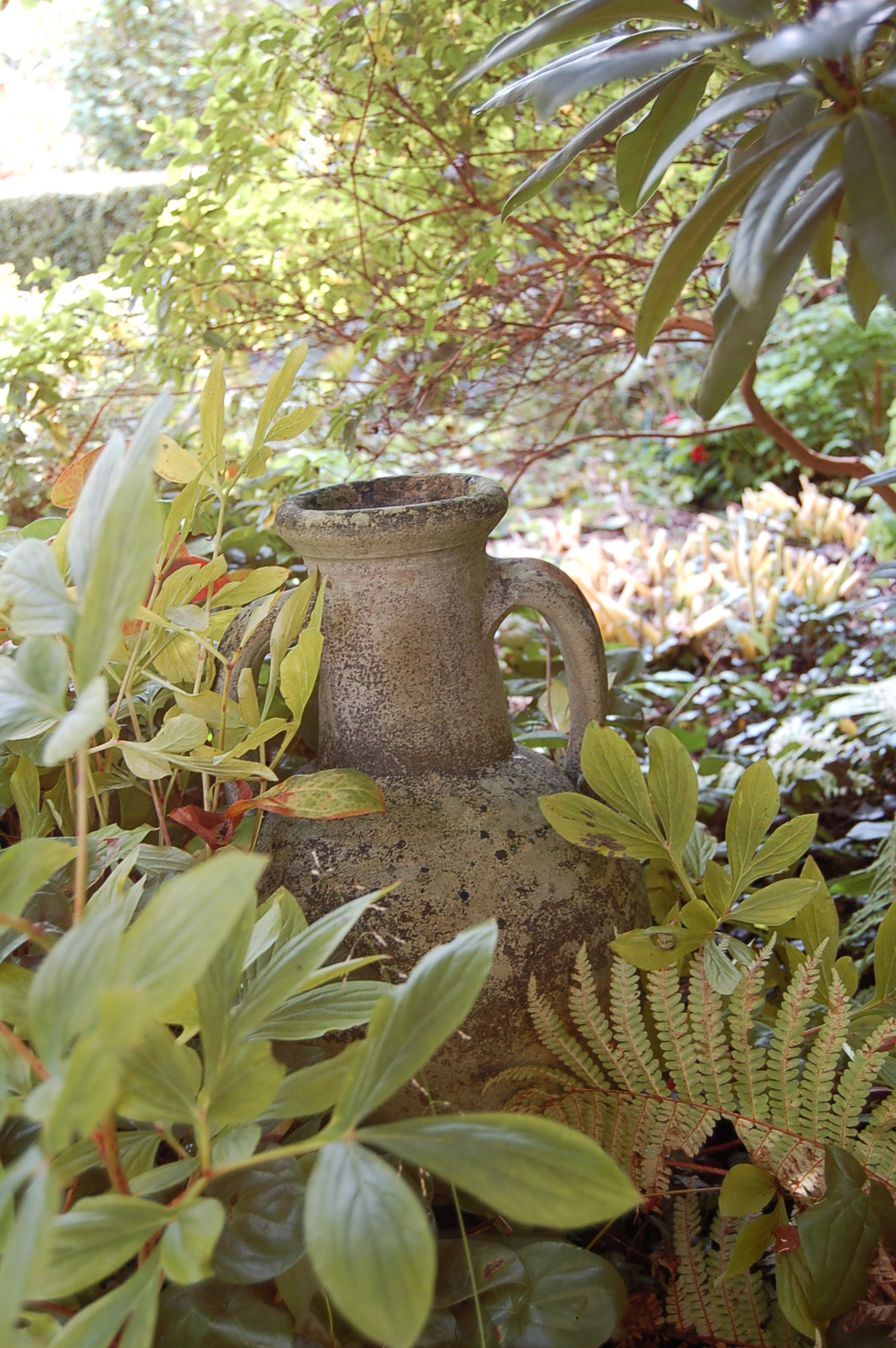
As in any good garden little cameos stop us in our tracks and catch the eye.
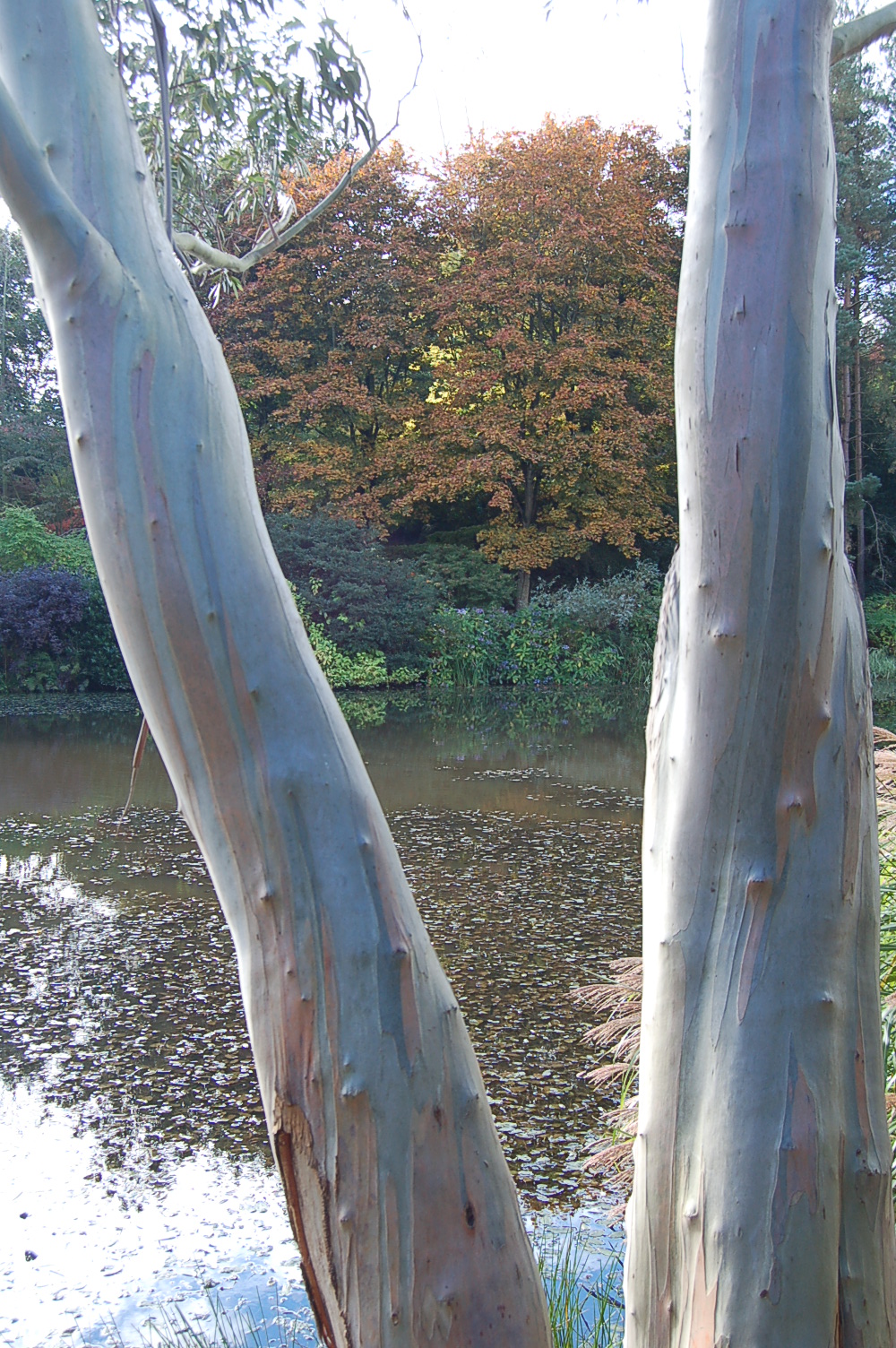
The lake at the lowest point of the garden, provides a restful place – restful to the eye and restful to the legs.
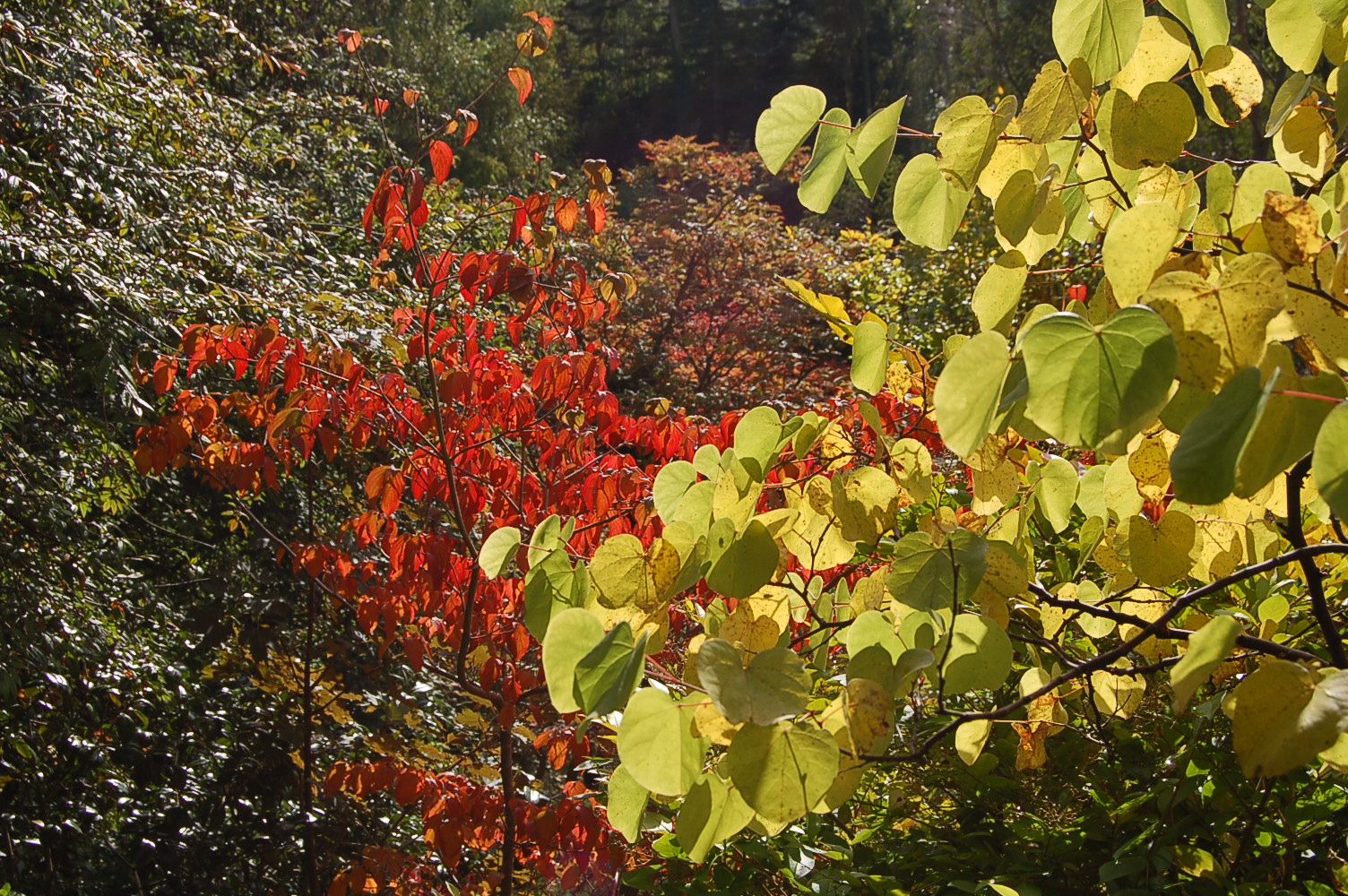
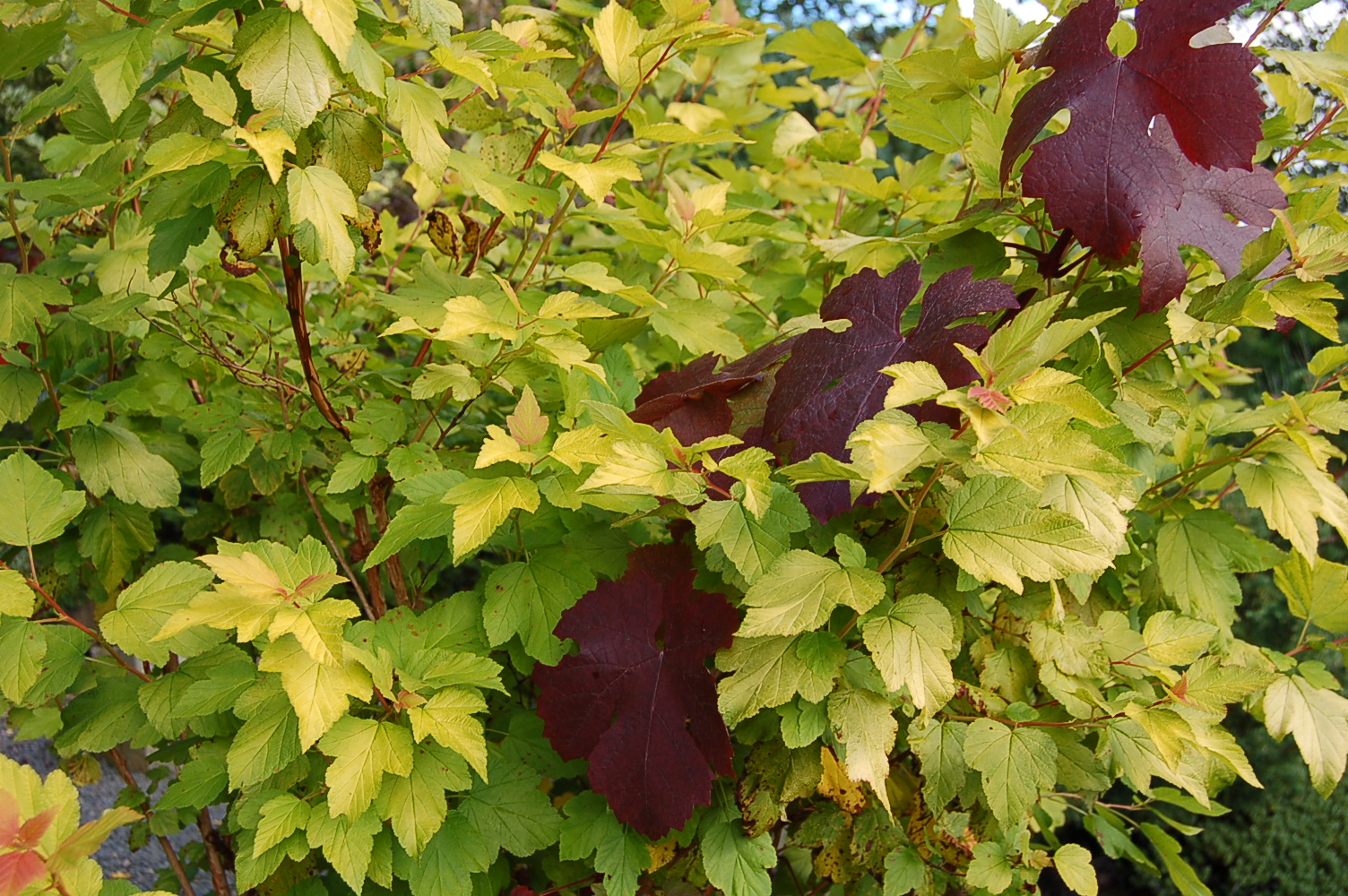
Strong contrasts in foliage colour show up in the brighter weather as we work our way back up the paths to the gate.
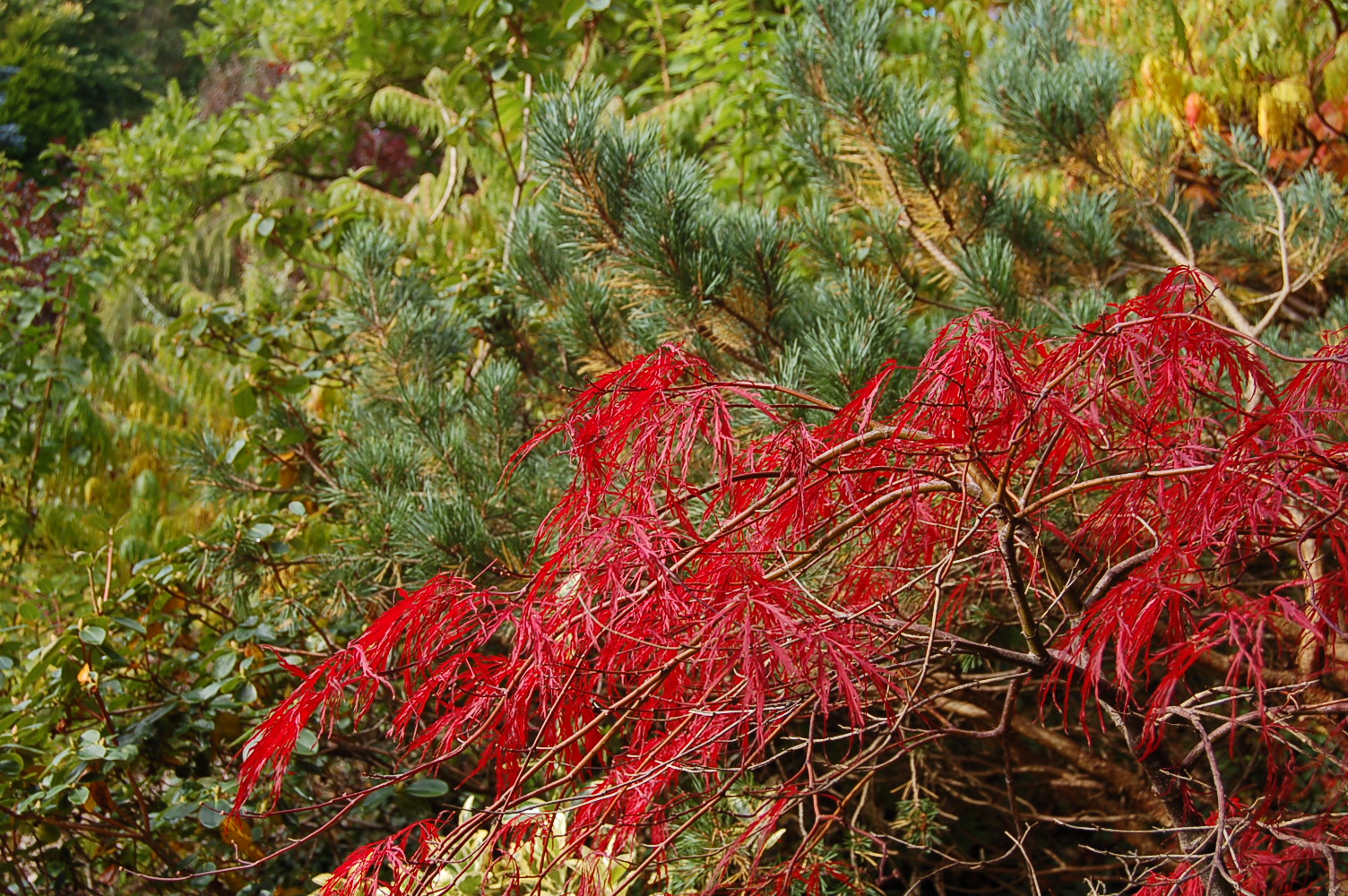
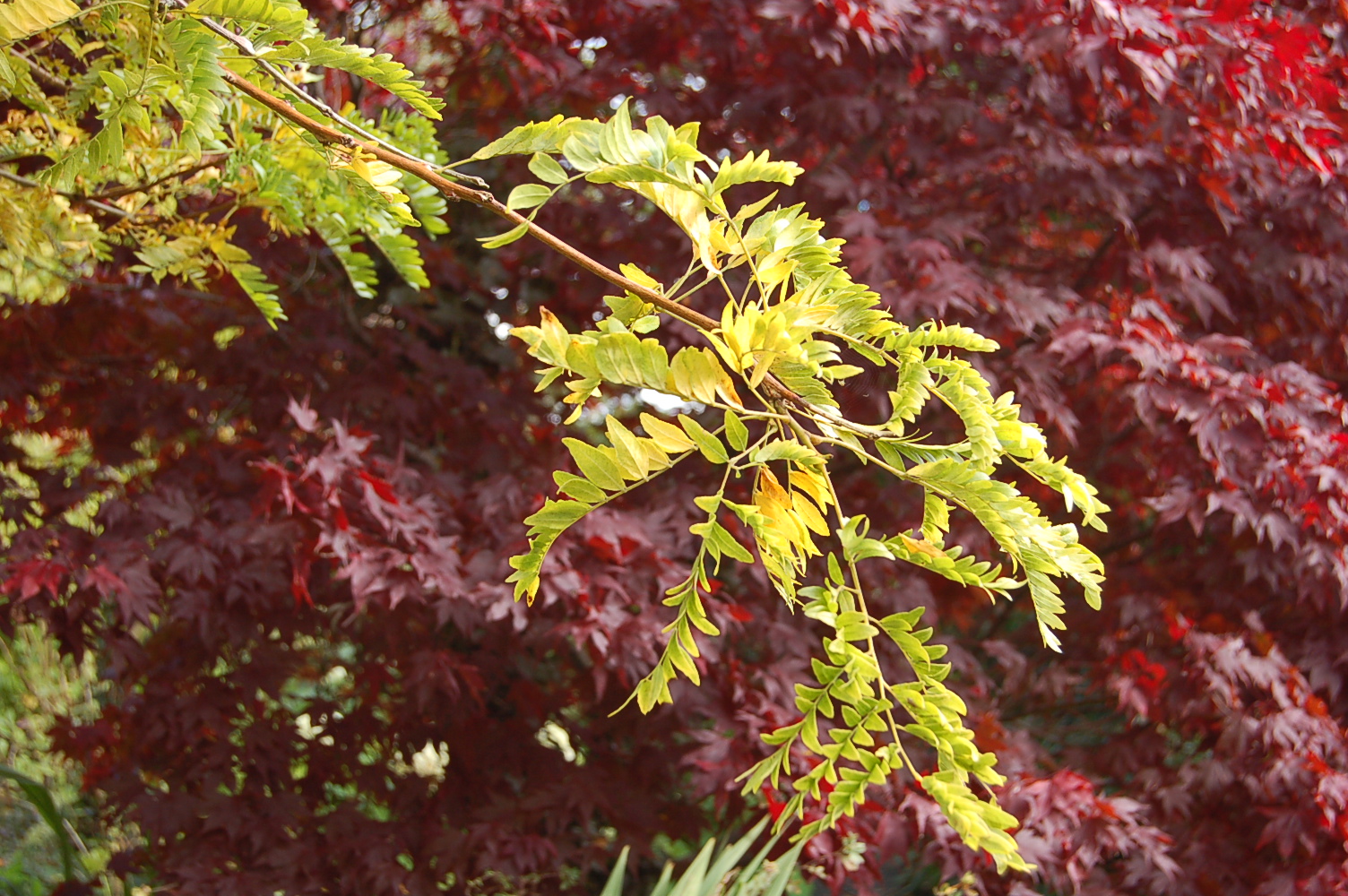
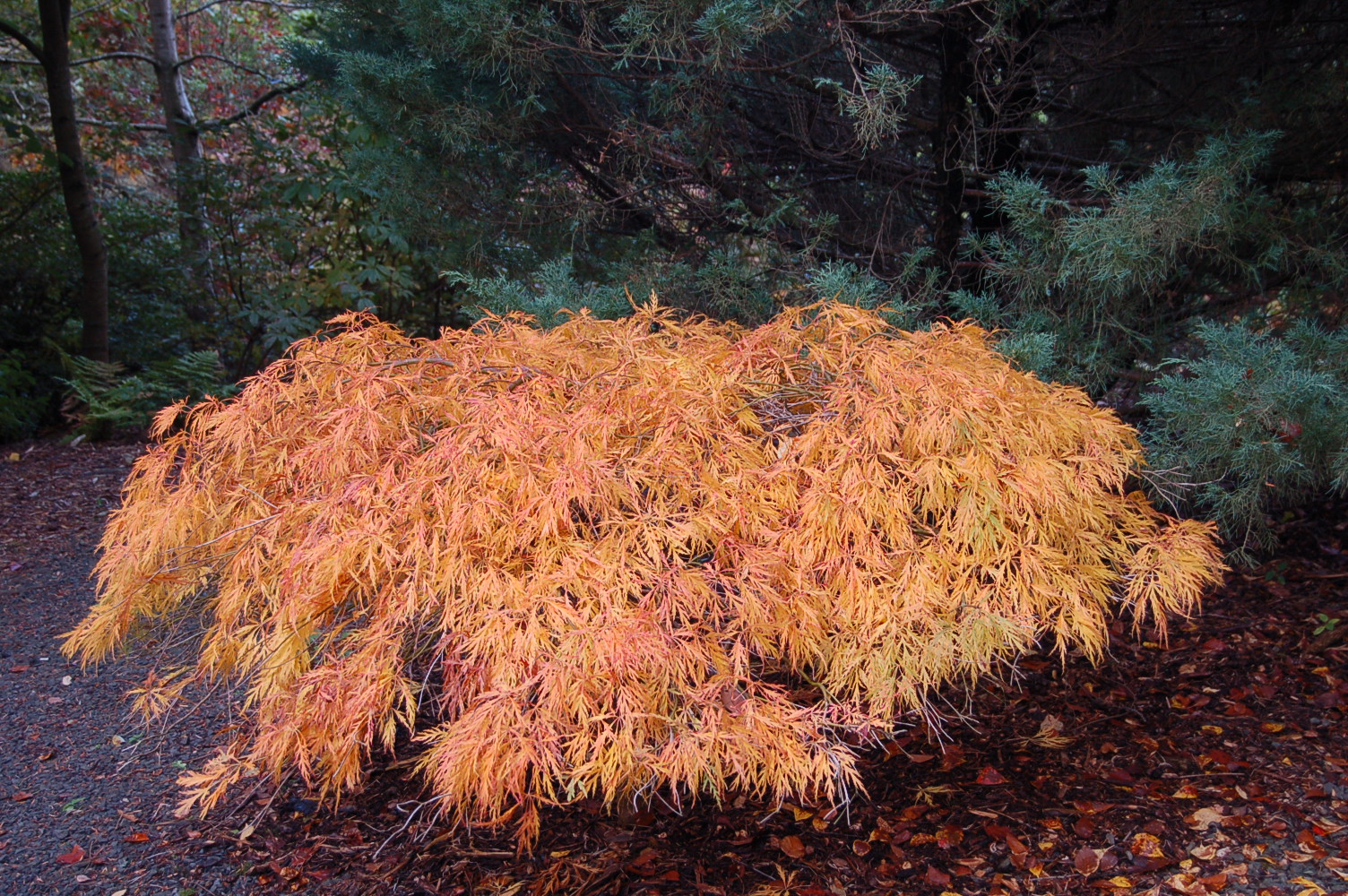
As in any garden specialising in trees and shrubs the stars of the autumn are the Acers.
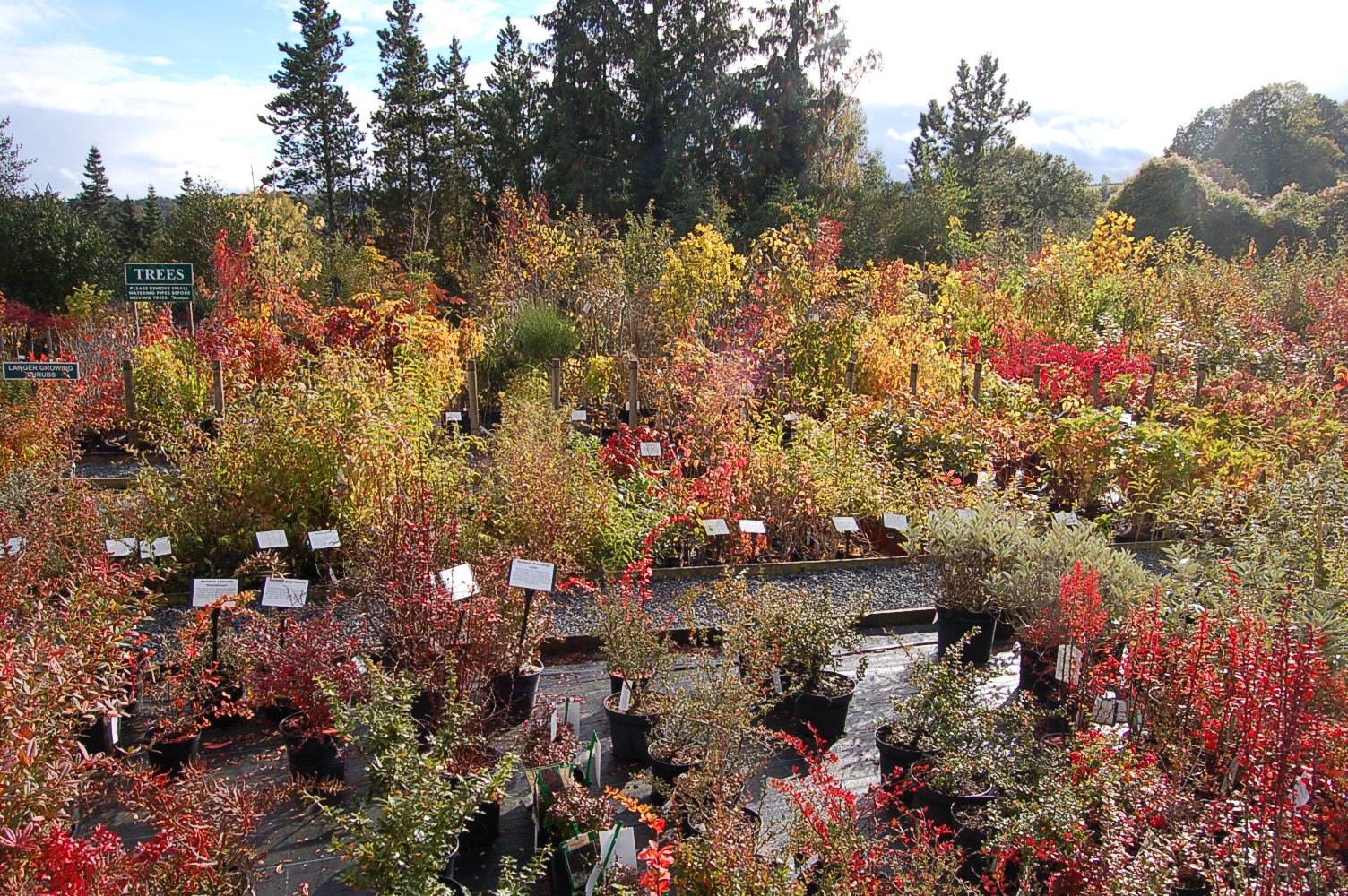
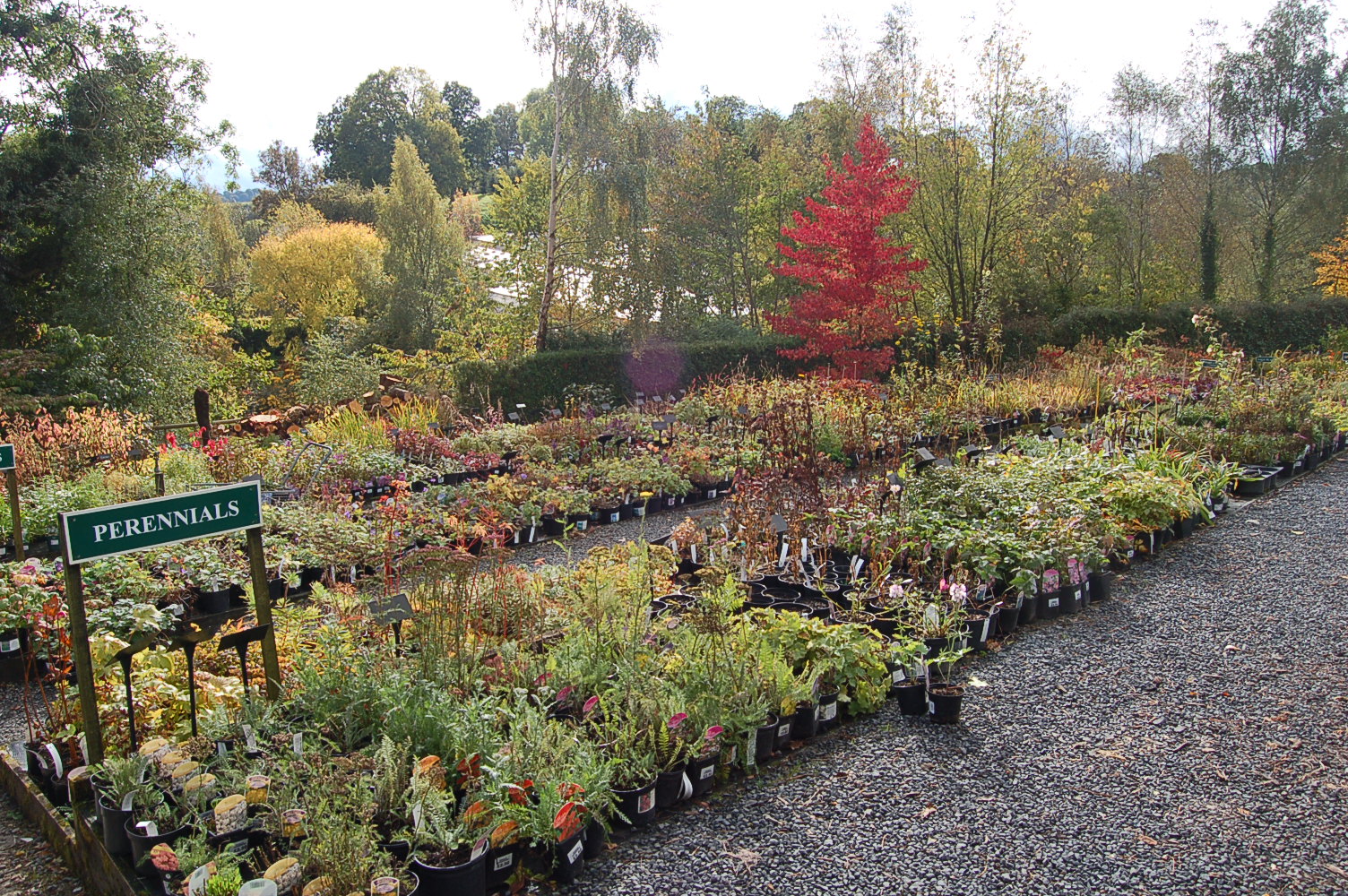
Back up the top of the garden we pass through the little wooden gate and are tempted for a perusal of the colourful nursery beds.
On a very wet weekend we decided we needed to get out whatever the weather so a quick check in the famous Yellow Book of gardens open under the auspices of the National Garden Scheme and we were off to visit a garden in the neighbouring county of Herefordshire.
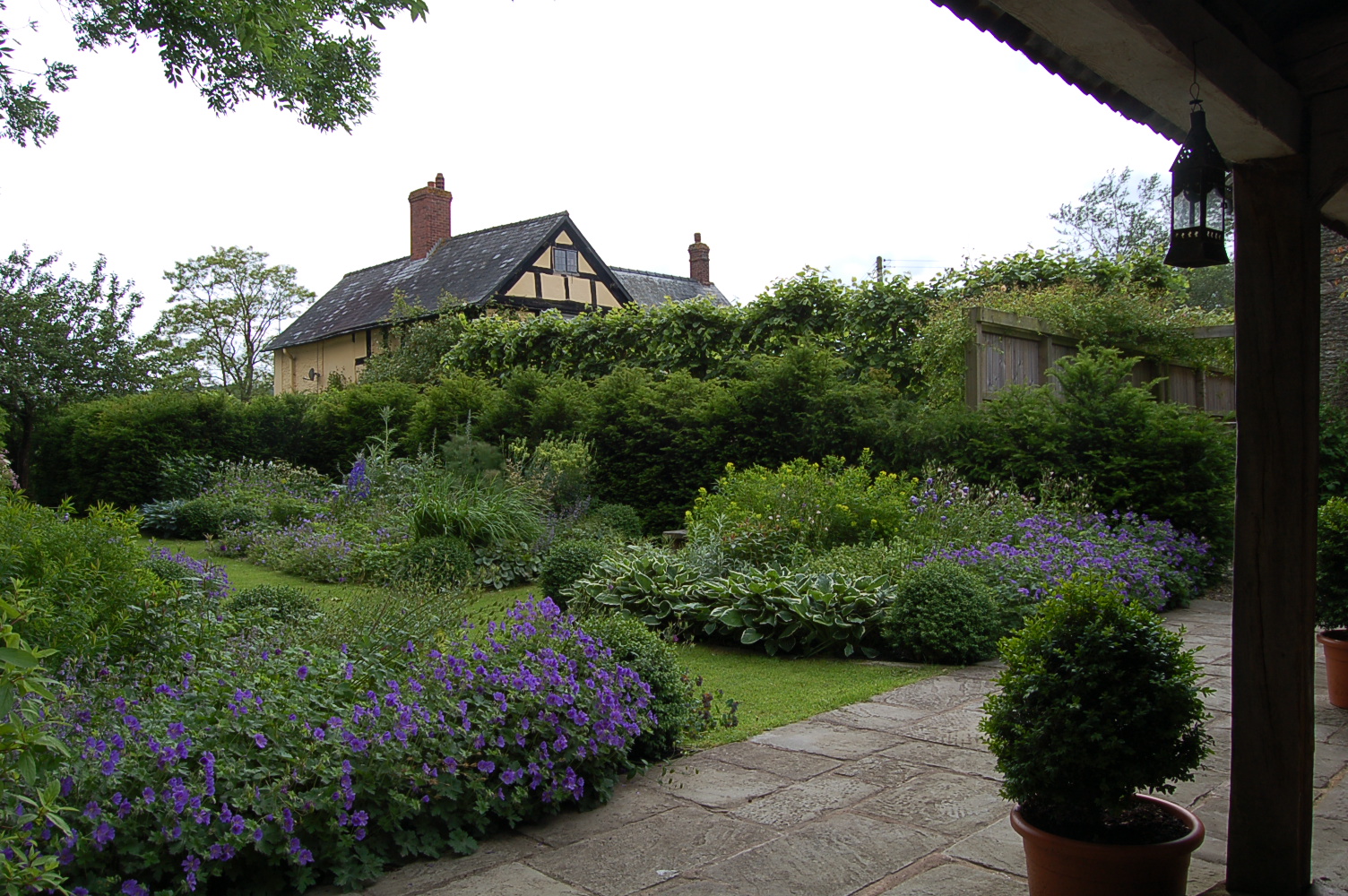
Herefordshire is a county of great gardens mostly created on rich red clay soils. Ashley Farm Gardens was described in the Yellow Book as a 5 acre garden designed as a series of formal rooms with the rooms getting less formal as the visitors move further from the house. We were presented with a plan as we entered the garden which showed a very formal layout. As we moved into the garden through farm buildings we could appreciate the way the gardeners had planted imaginatively and boisterously within the formal structures.
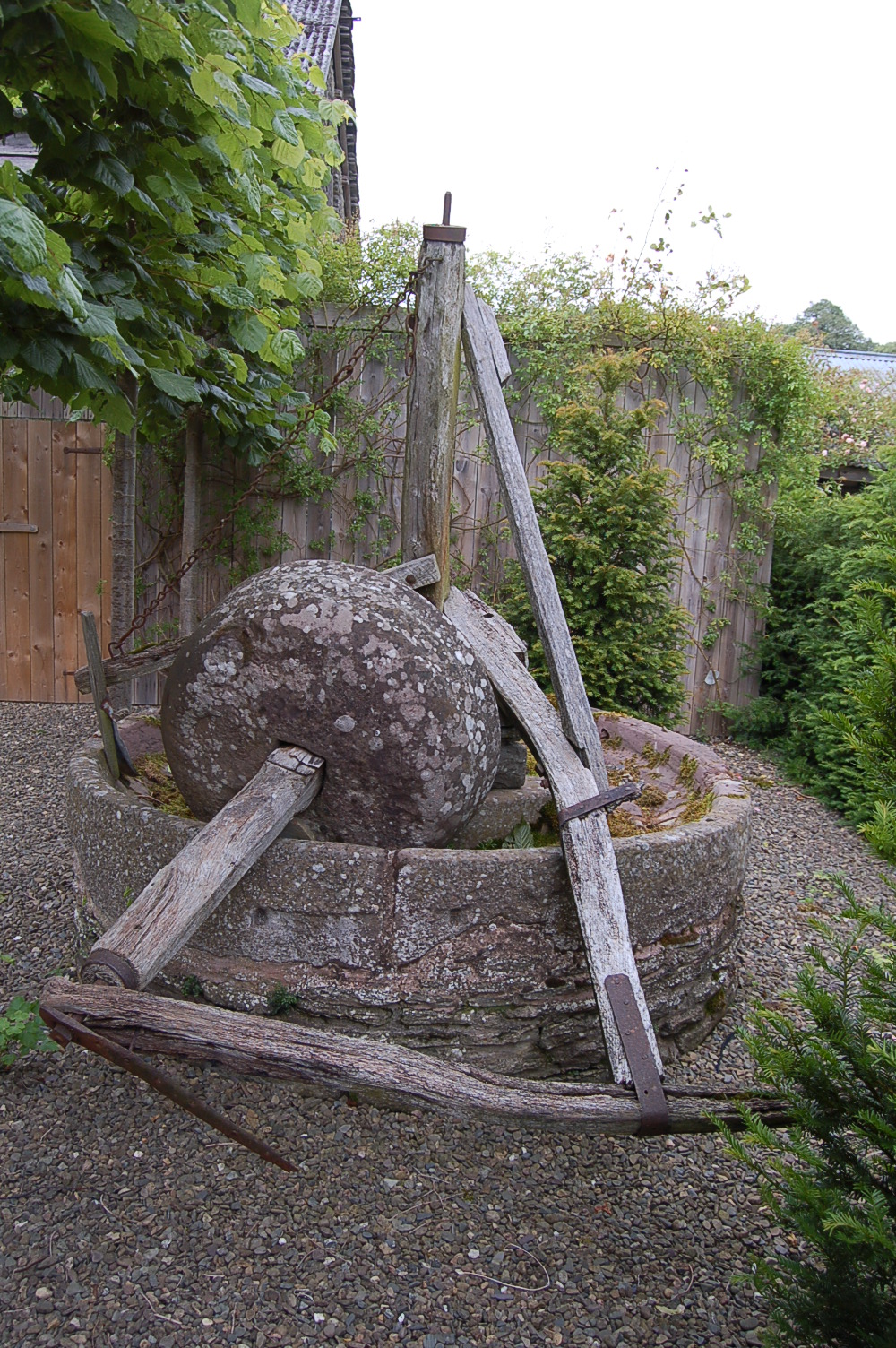
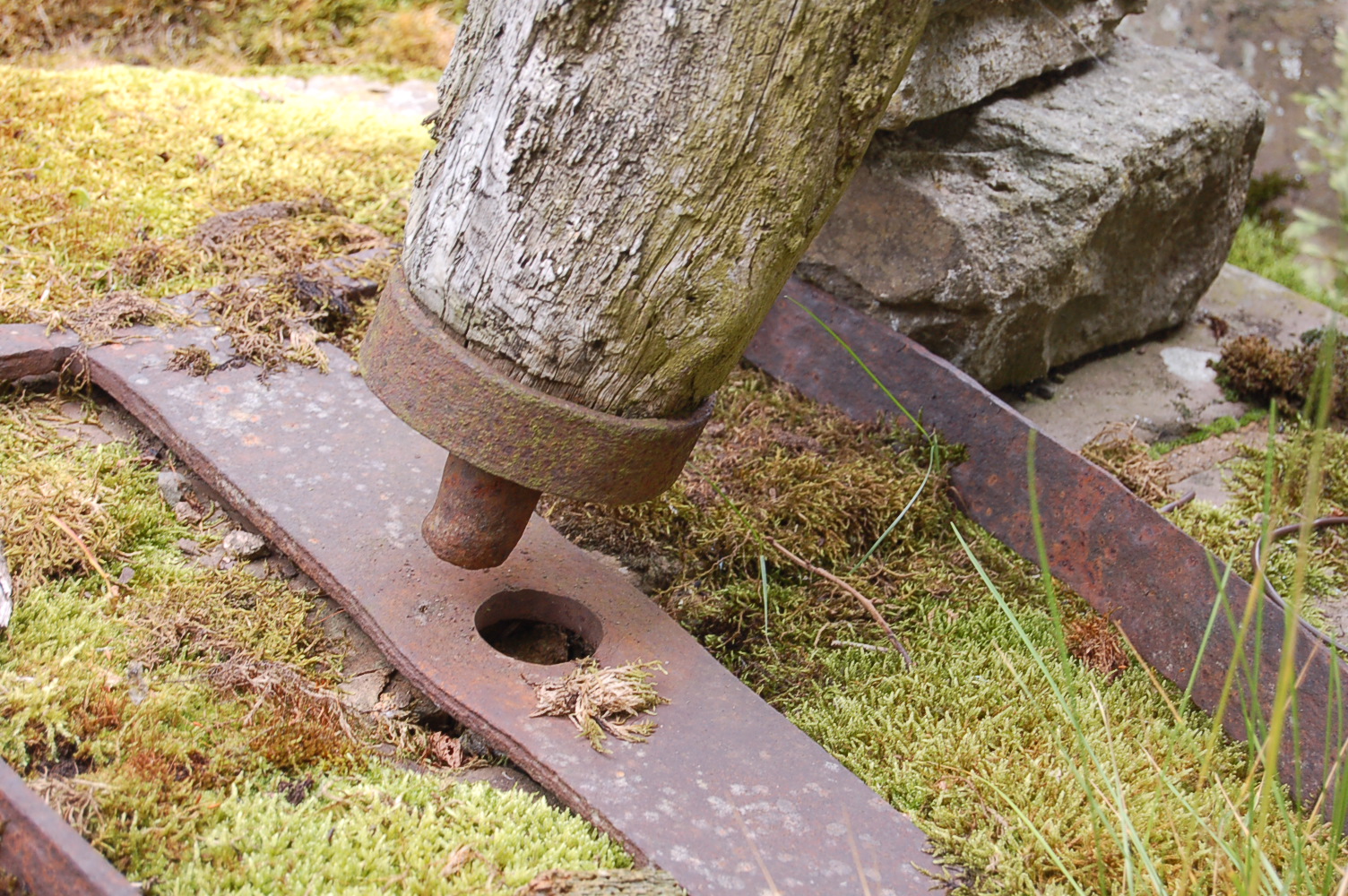
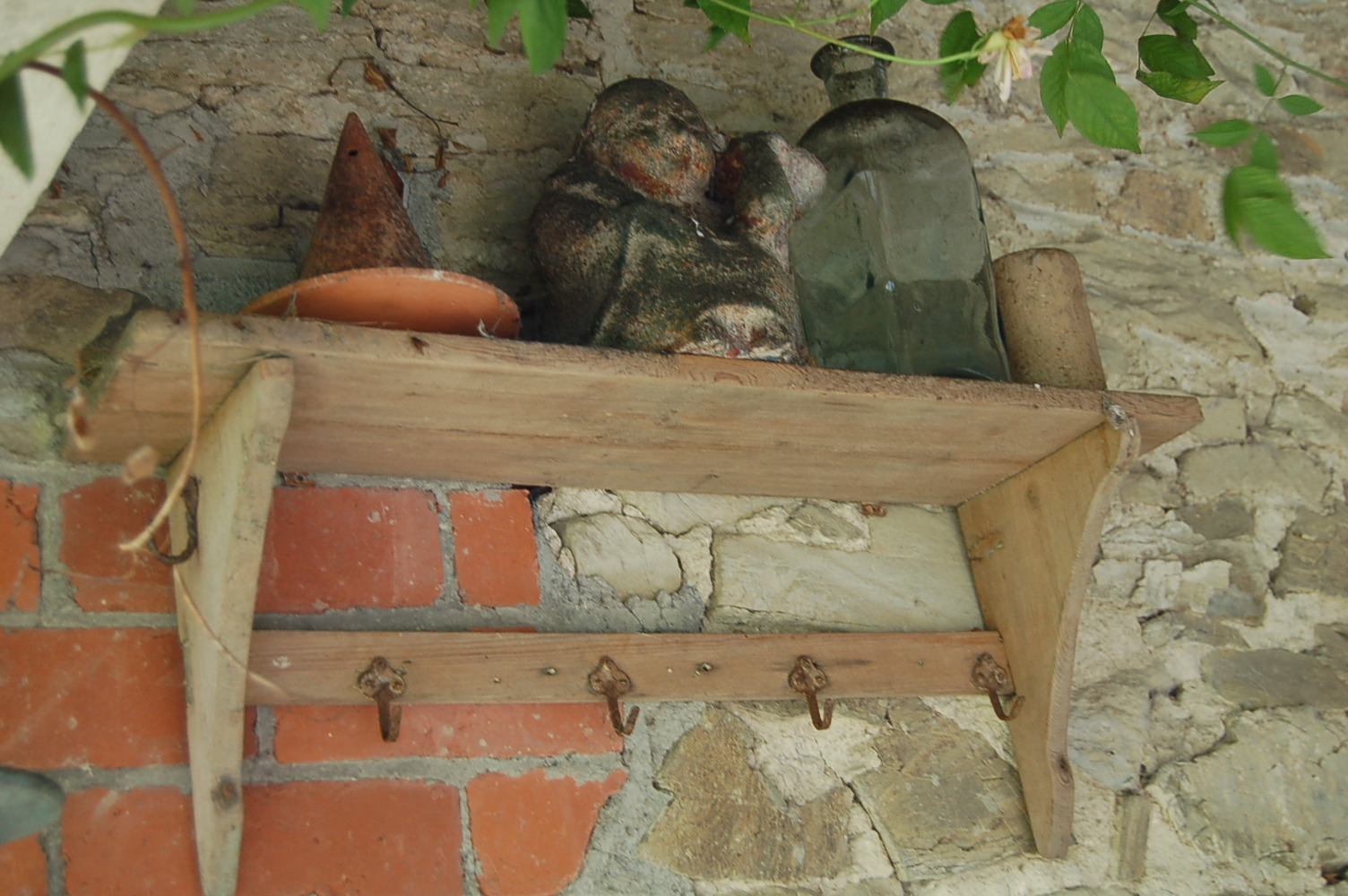
The old farm buildings were interesting and beautiful in themselves and featured some fascinating artifacts reminding us of the farm’s cider producing heritage. The buildings are softened with plants and interesting collected and found objects.
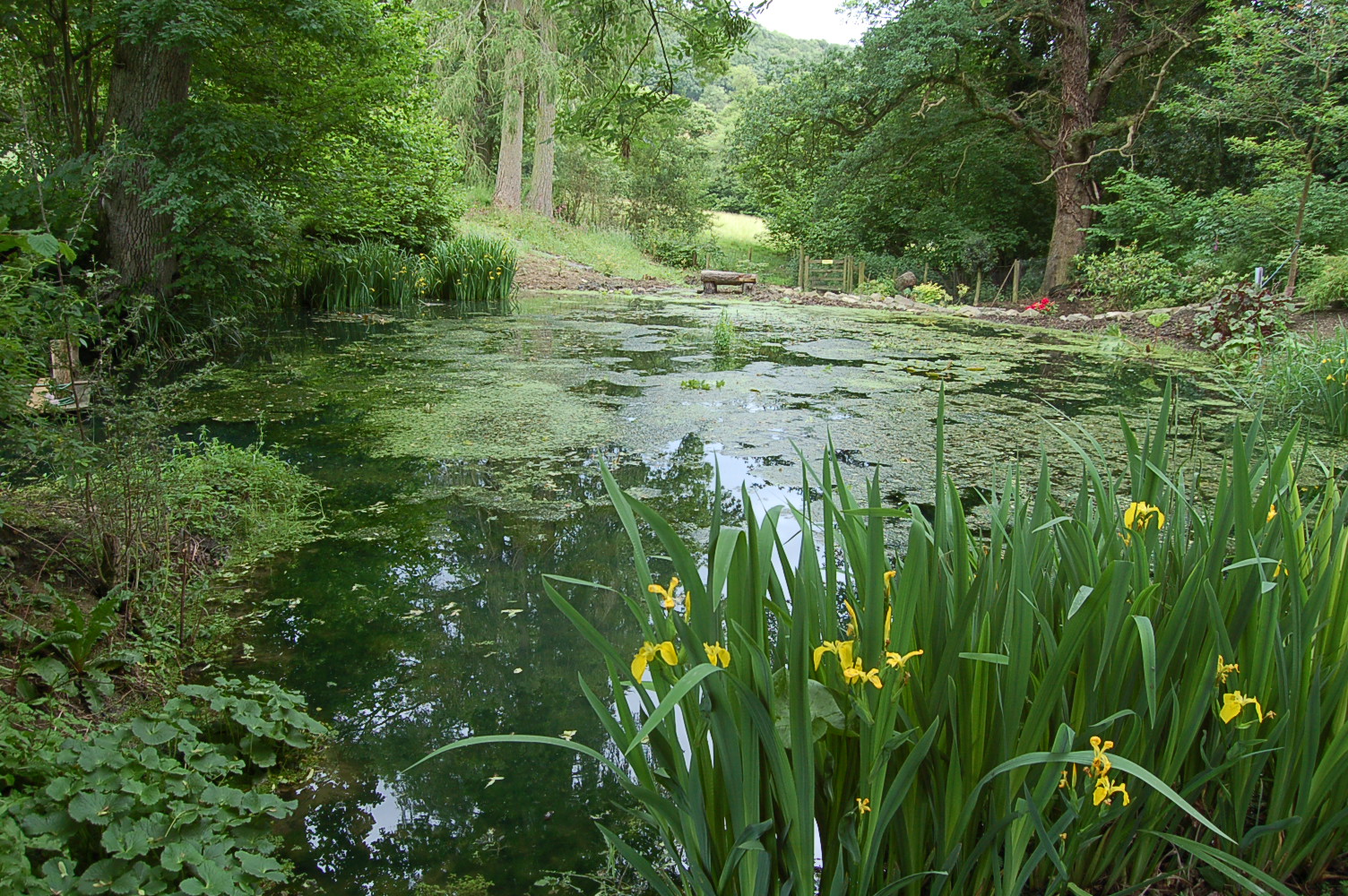
We made our way past the formal pool through blue borders and made our way towards a wildlife pool in woodland.
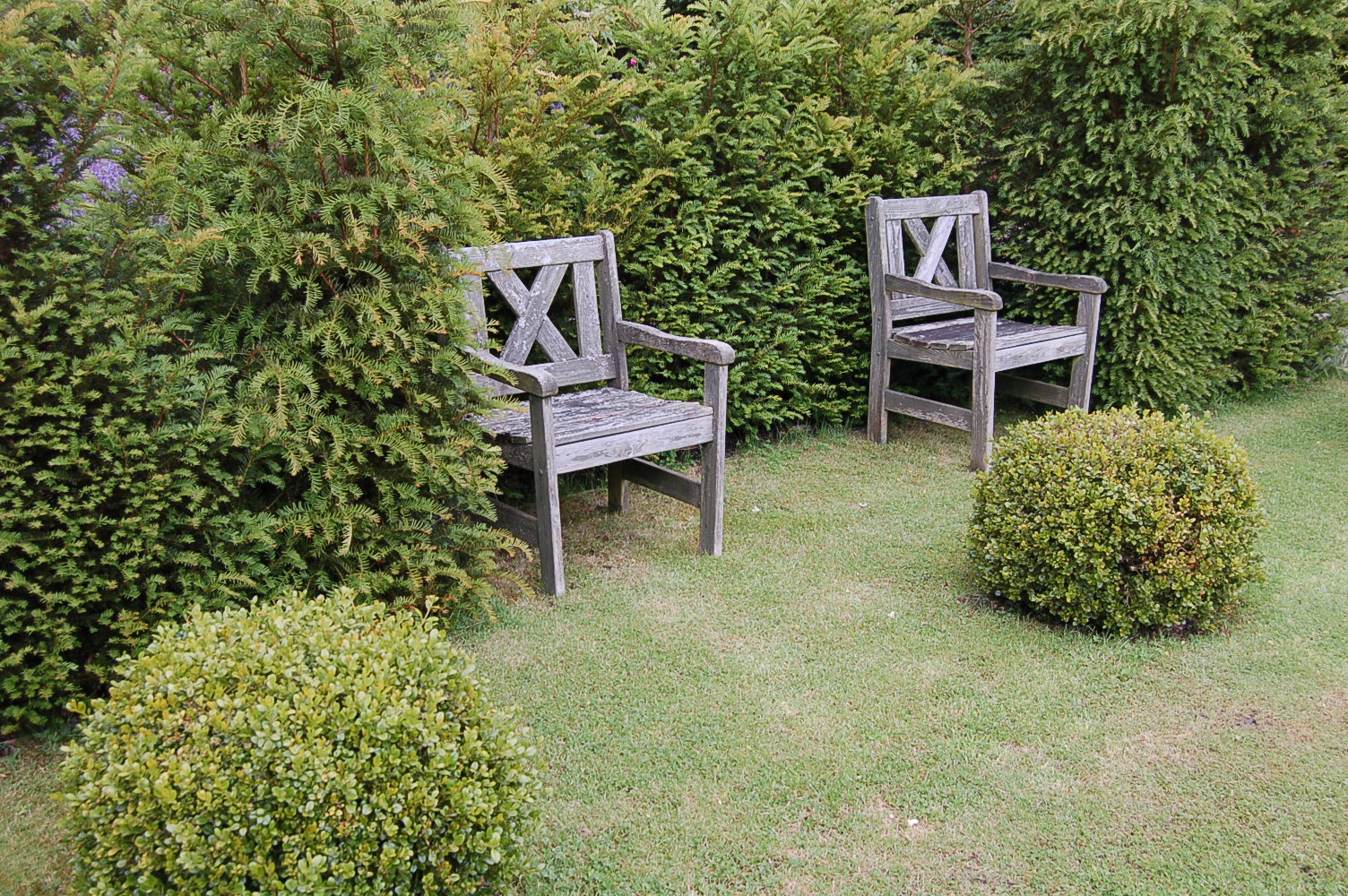
Seating around the pool encouraged us to sit, look and listen, although on closer inspection they looked a bit algae-covered and far too rickety to risk.
Through the trees along the edge of the wood the neat and tidy kitchen garden came into view.
The next stage of our garden wander took us through an interesting and very varied assortment of garden rooms.
Beyond the formal garden rooms we encountered meadows growing within orchards, a nuttery and unexpectedly a rose garden linked the garden to the countryside.
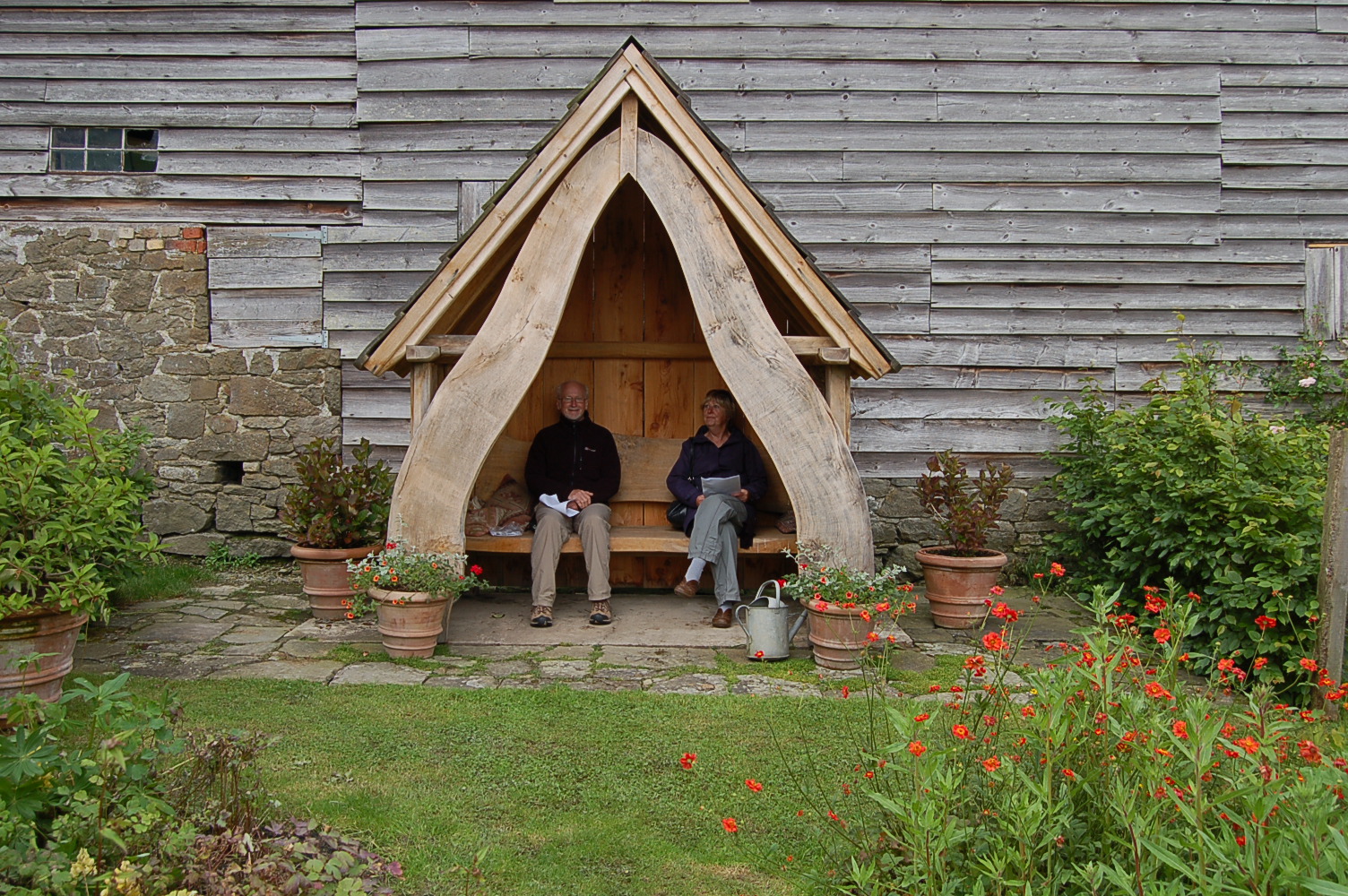
We moved back into the main garden where more rooms awaited us and a wonderful arbor made by a local craftsman in local oak. It was so tempting to have a seat and look in detail at the wood working skills.
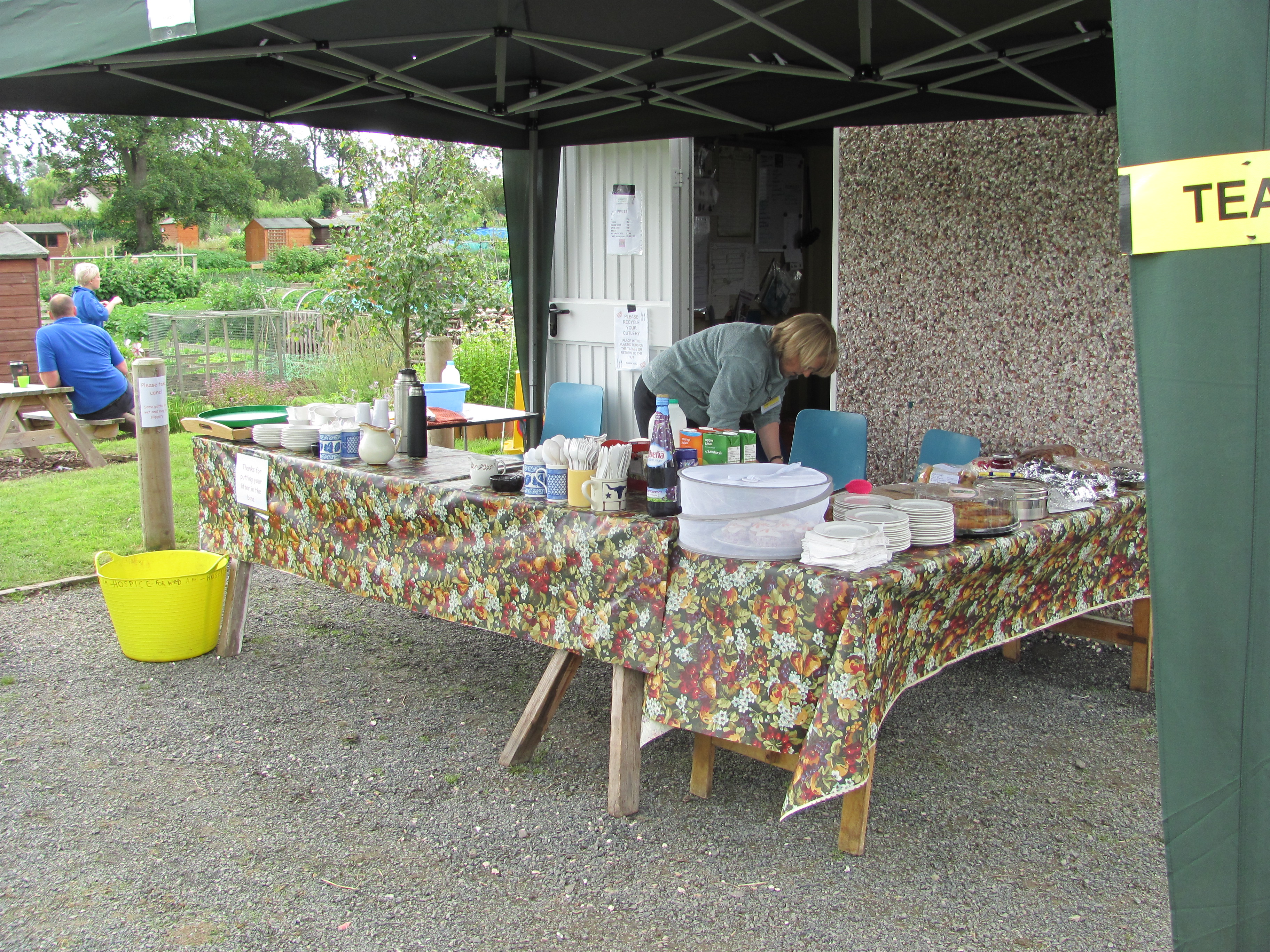
Tea was served in an outbuilding constructed of wooden beams and stone. Inside were artifacts aplenty. The chocolate cake was excellent!
We explored the old farm buildings after our tea break before calling it a day – a really good day.
For one day each year, in the middle of July, we open our allotment site, Bowbrook Allotment Community, for charity. We open under the auspices of the National Garden Scheme so are proud to be in the famous Yellow Book. The choice was made to join the NGS because they raise money for caring charities, such as the Macmillan Nurses and Marie Curie. This is our second year of opening – in the first year in gale force winds and rain we raised £415 and this year on a dry day in the middle of the wettest of summers we raised £815 – so we feel a little proud! This means we have now sent the NGS £1230.
We chose July as the month to open as it seemed to be a month when we would be most guaranteed to have a spell of good weather to encourage visitors to come along. Last year we opened in heavy rain and gale force winds.
This year however after weeks of rain, we had two dry days coinciding with the day when we planned to spruce up and prepare the site and the open day itself. Although the whole area was very wet underfoot, plots themselves too wet to get on, some paths unusable and standing water in places, we felt the site looked as good as it could.
The day of the opening dawned bright and dry. The sun was shining and it felt warm. As we arrived early in the morning the car park was full and the site crawled with members working away. Soon the signs were in place, the gazebos up, the tea shop readied and the quiz pictures in place. We felt ready!
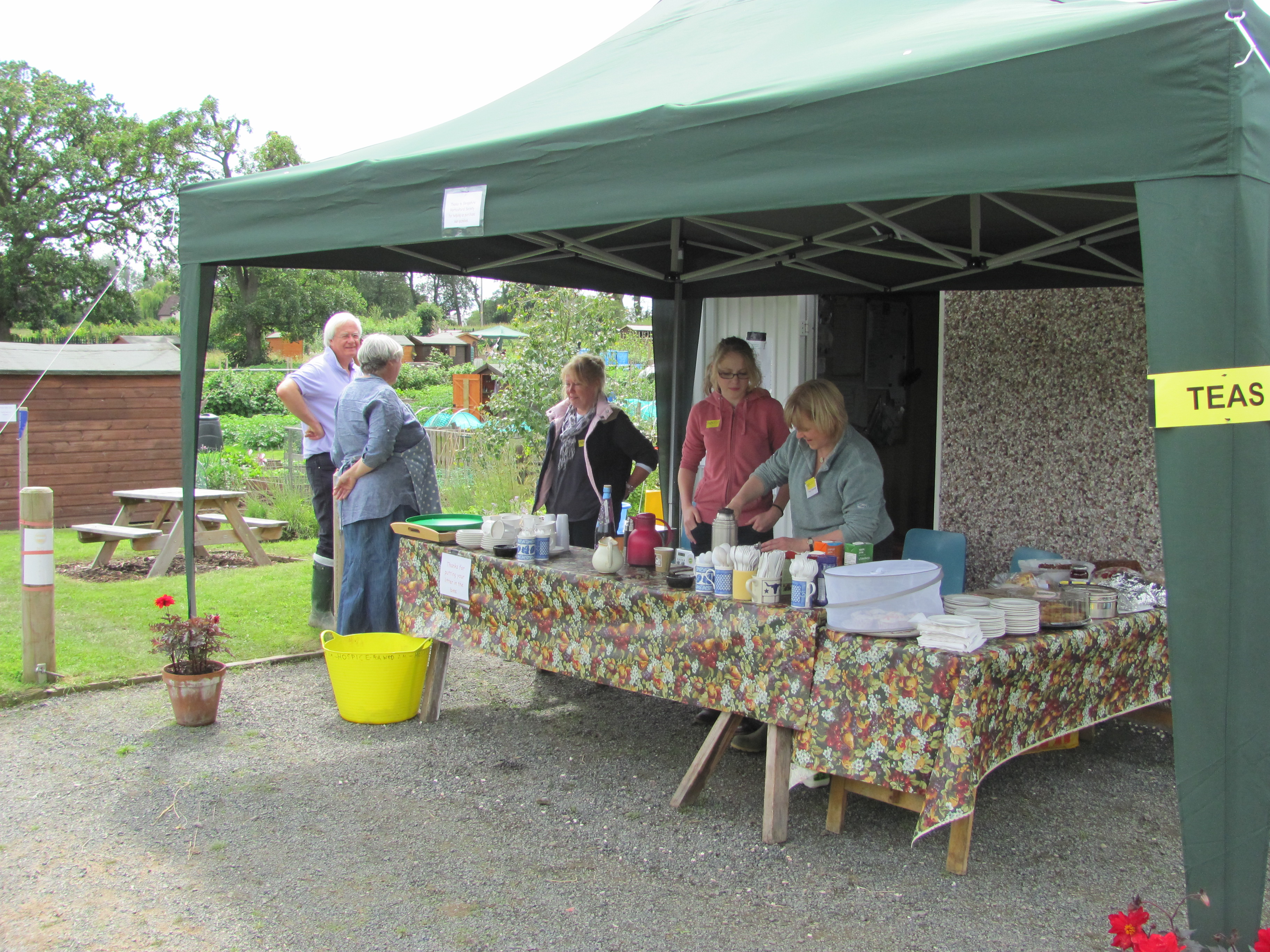
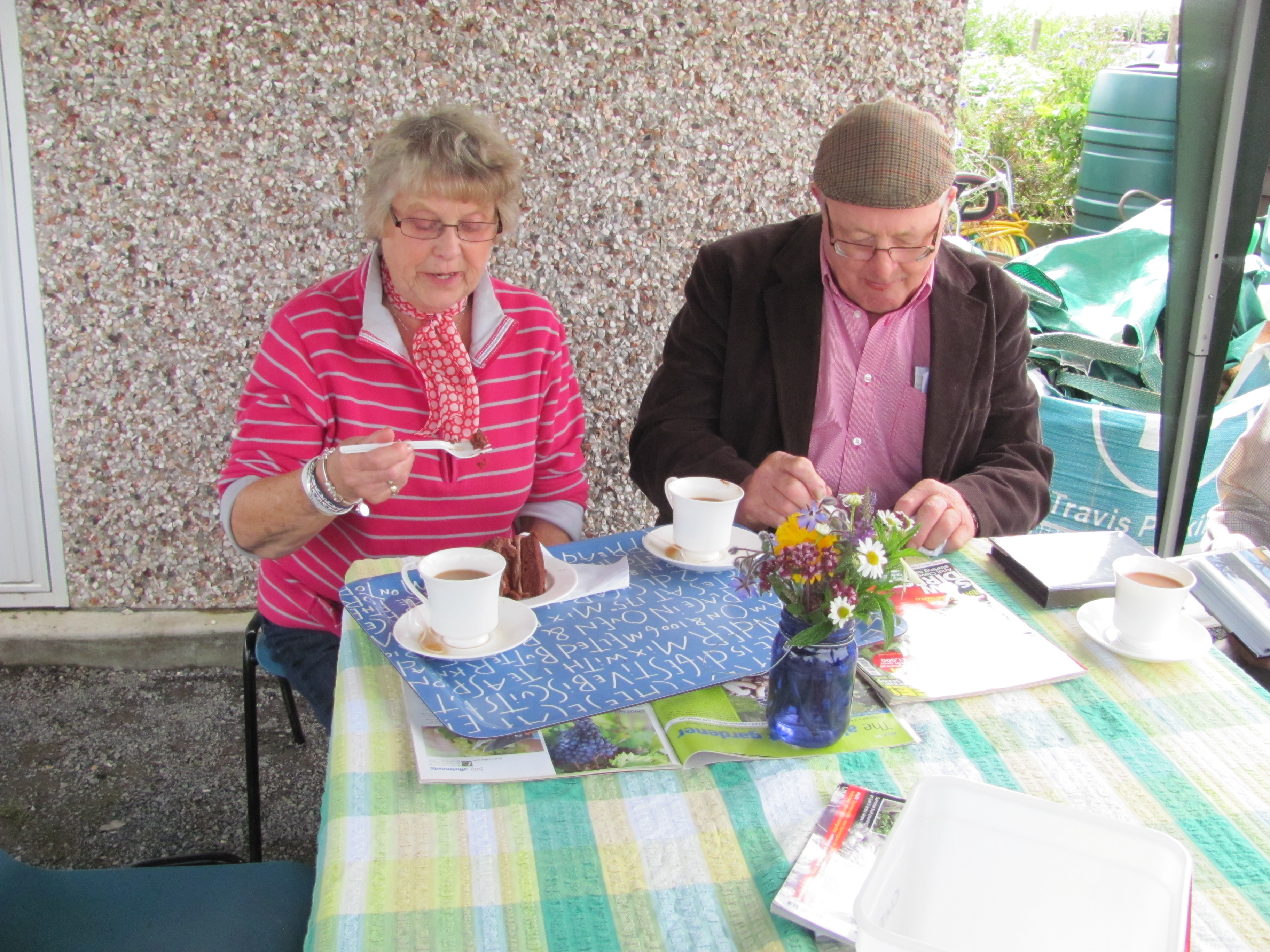
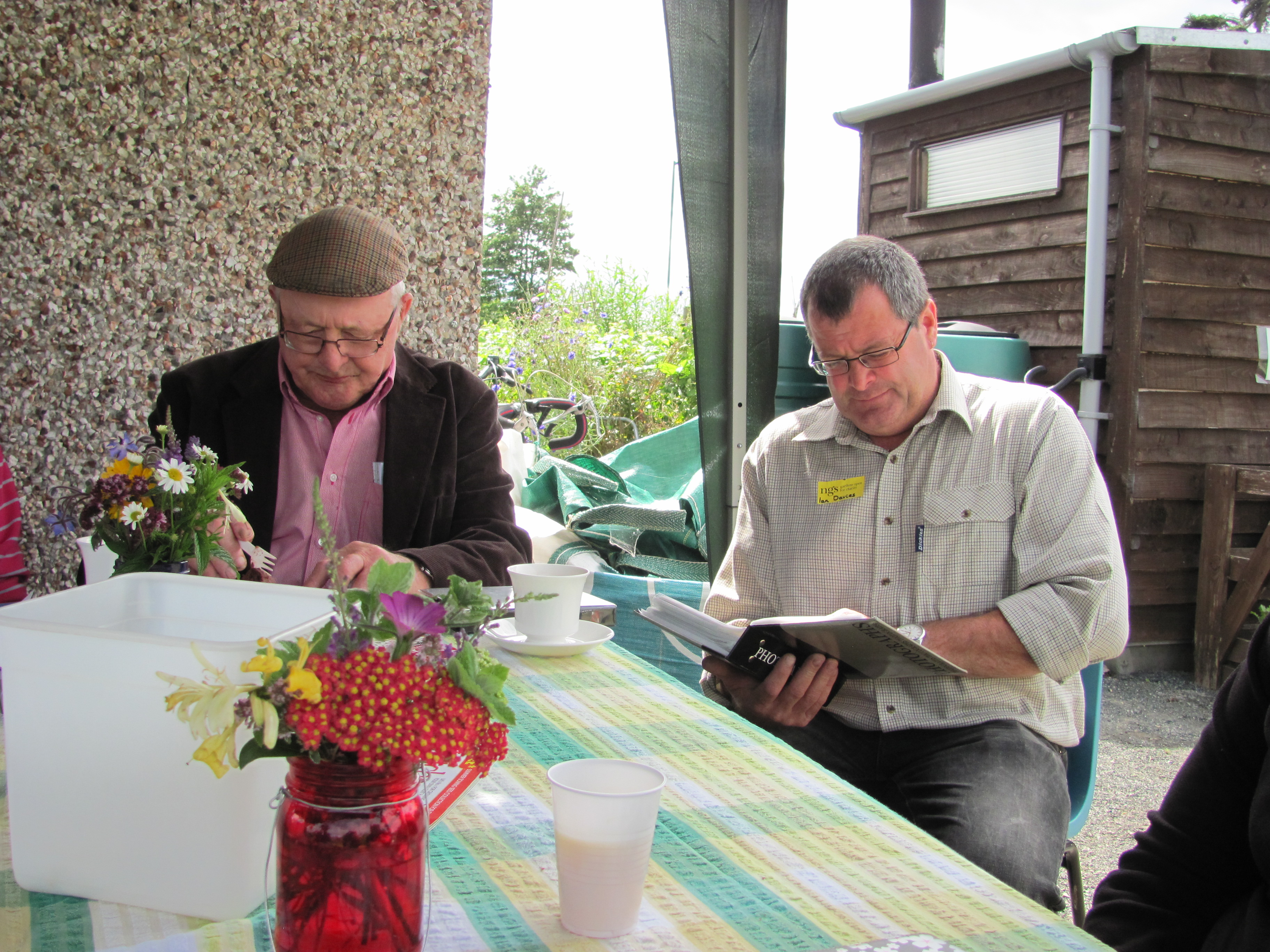
We were so pleased to see so many plot holders helping out in so many ways – true community spirit! The tea shop was stocked with dozens of cakes baked by members and the table under the gazebos were made attractive and welcoming after one member, Shirlie, created beautiful table centre posies, magazines were placed on them for visitors to read and our photo albums made available for their enjoyment.
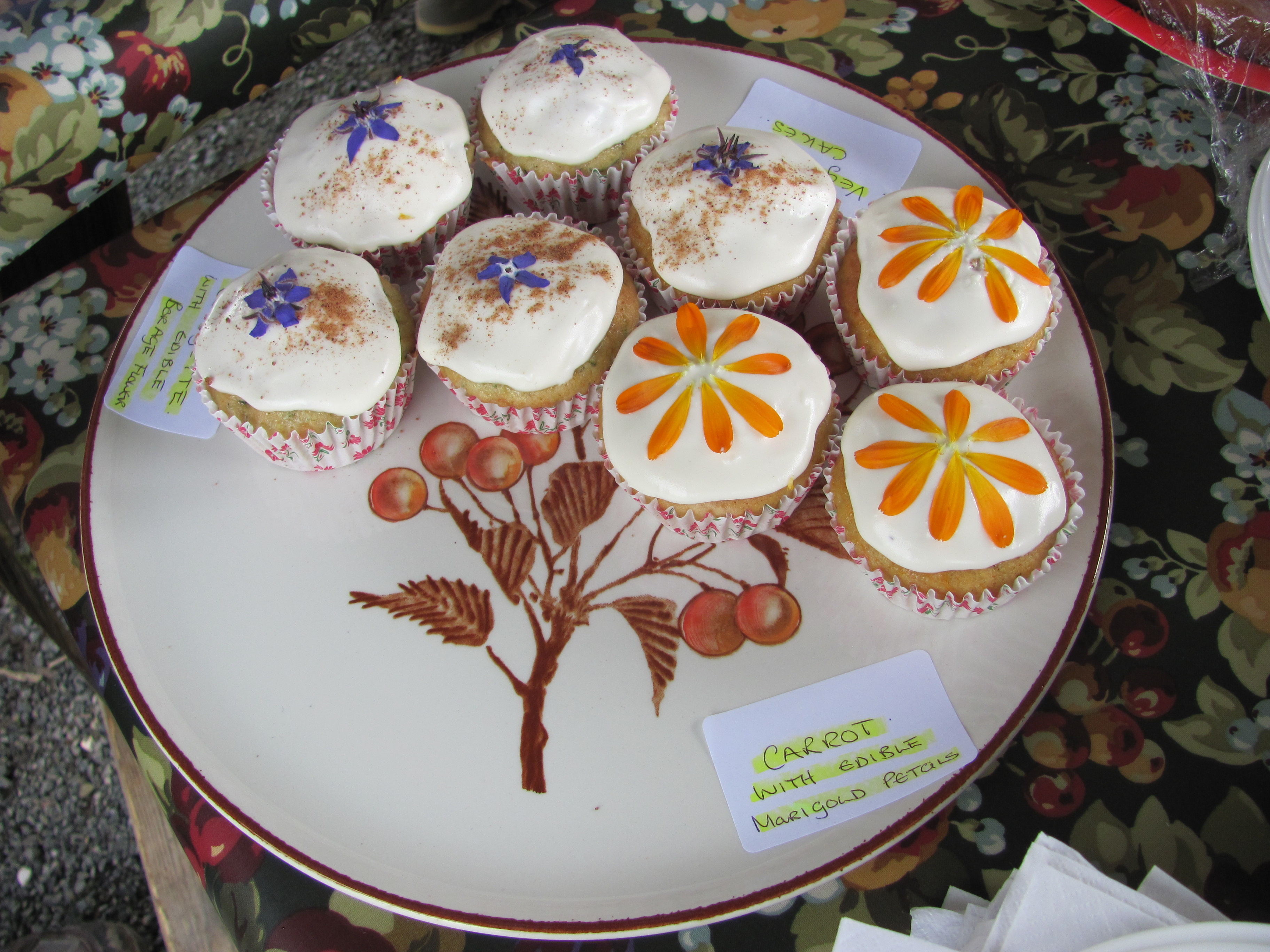
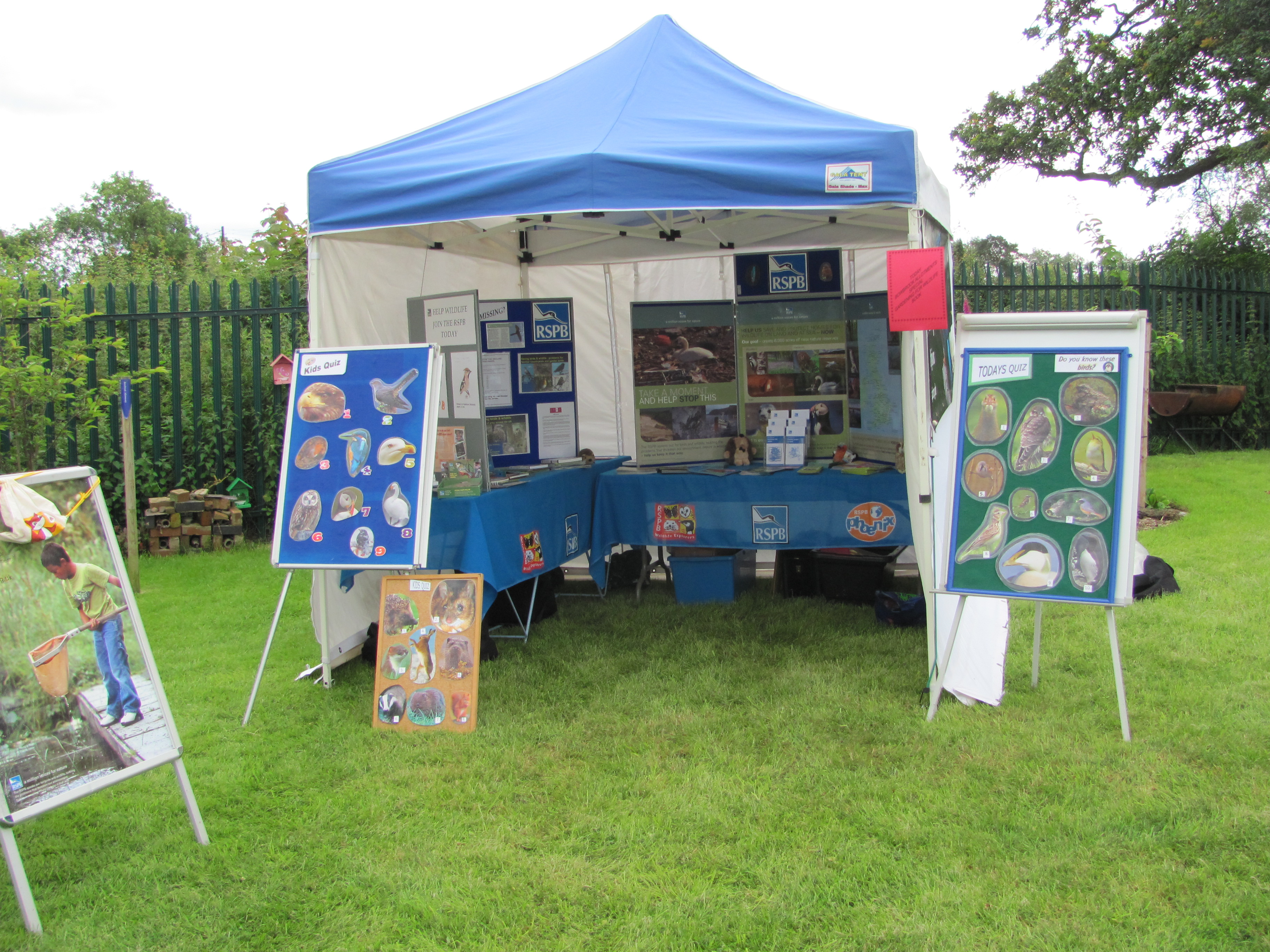
Tracy getting the tea shop sorted.Special “Allotment Cakes” carrot cakes decorated with petals of Calendula and Borage.Tea shop all ready for action and in plenty of time.Di and Jill prepare their “meet and greet” table.Warning signs in place.The volunteers from the RSPB (Royal Society for the Protection of Birds) take a break once their display is set up in readiness.Pete and Sherlie all ready and togged up in fluorescent safety to do car park control.
As soon as the clock showed 1:00 our visited started arriving – it is always a relief when the first one comes through the gate. Each visitor was handed a map and suggested route, competition details. Children were given a quiz sheet requesting they find pictures of some of our wildlife hidden around the site, matched to their favourite habitats.
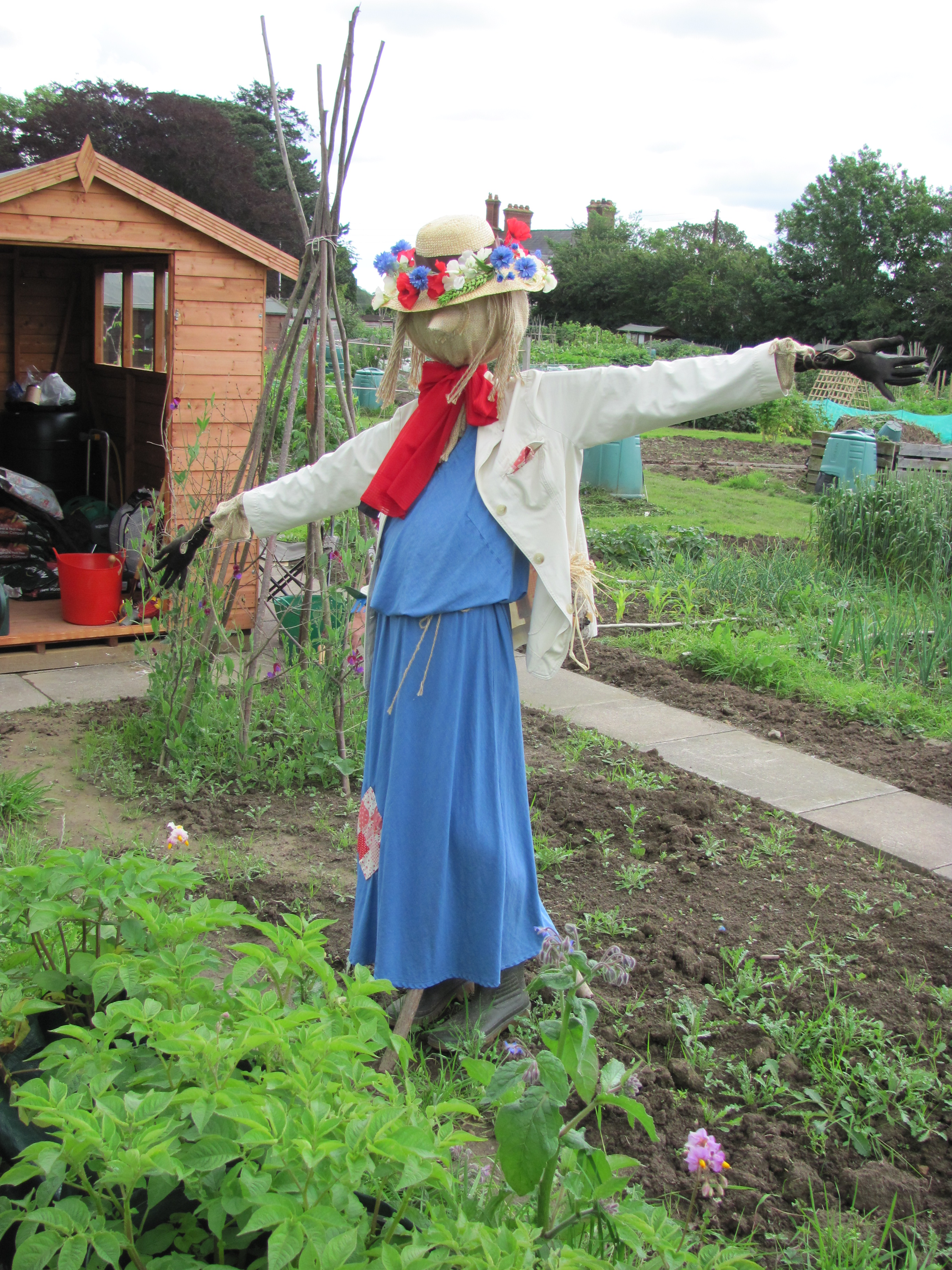
We invited our visitors to judge two competitions for us during their amblings, The Best Scarecrow and The Favourite Plot. The two following pictures show the winning plot and the winning scarecrow.
The plots are all neat and ready for the perusal of our guests including Jill’s pink plot.Ken and Lesley’s very beautifully designed scarecrow.
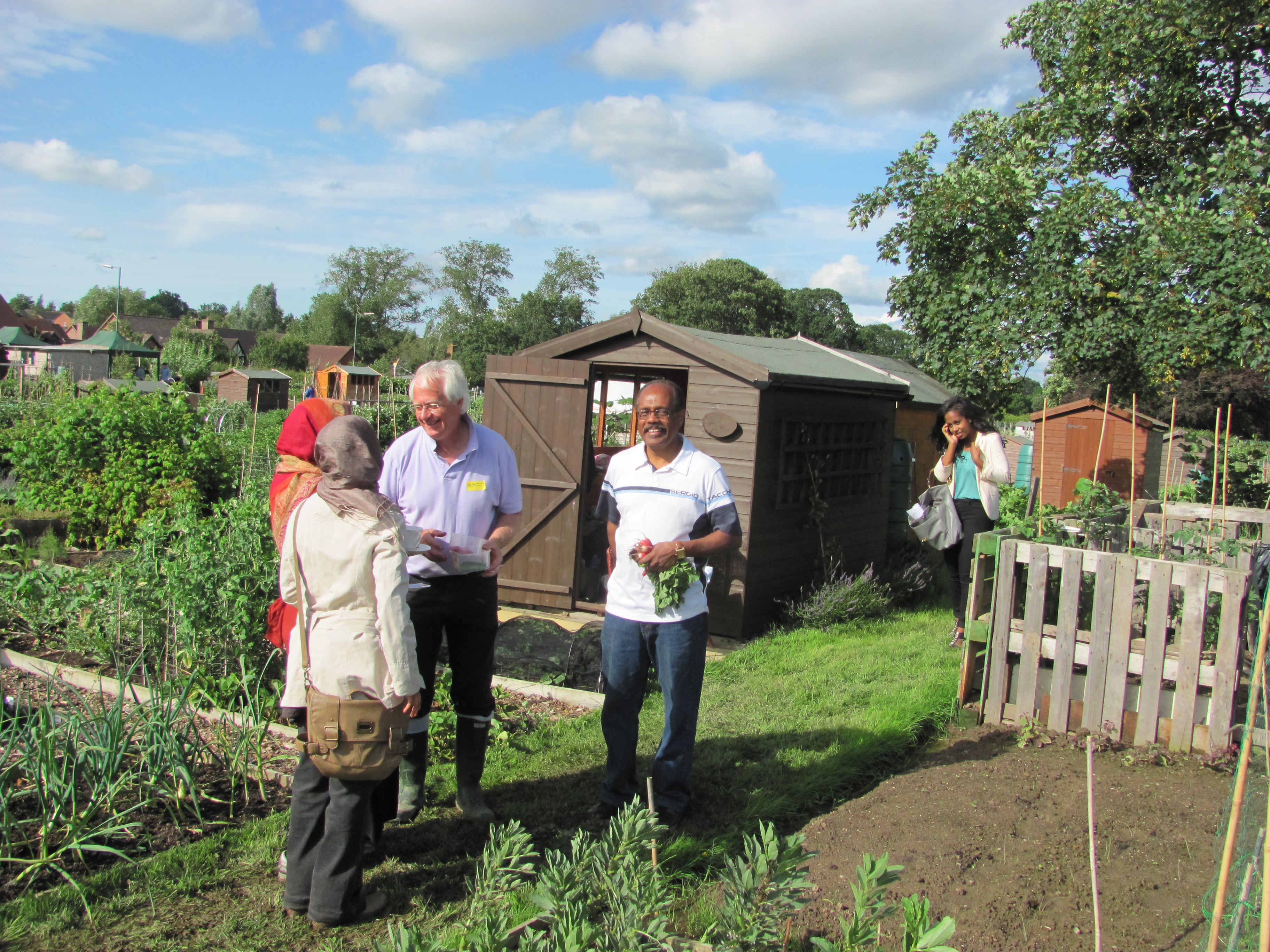
As we pride ourselves in designing our site and interest trail to be accessible to all we were pleased to see so many young families with toddlers or youngsters in push-chairs and people with mobility problems some using sticks or crutches, others wheelchairs or mobility scooters. We were delighted how easily they accessed the site and we received many compliments.
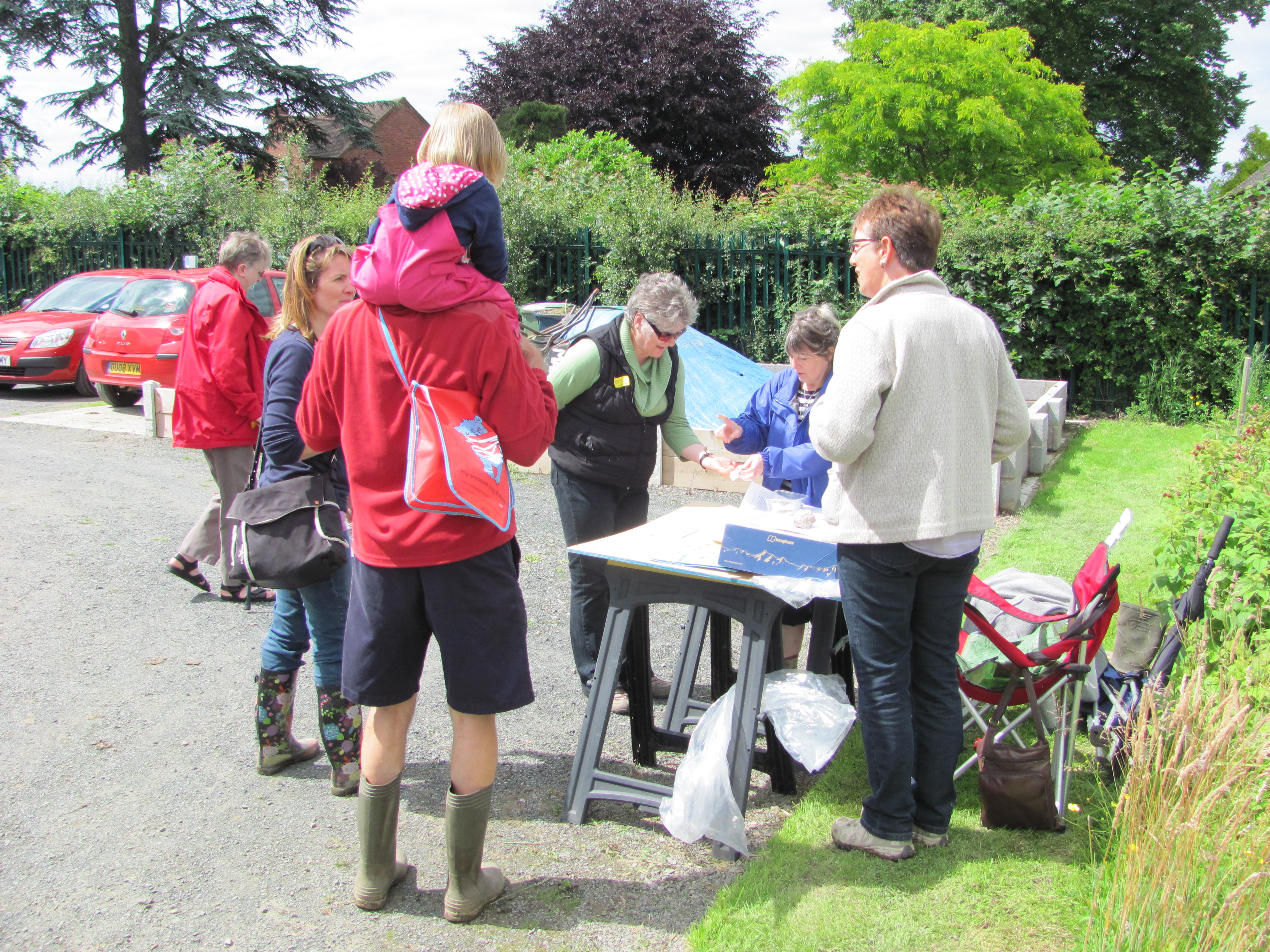
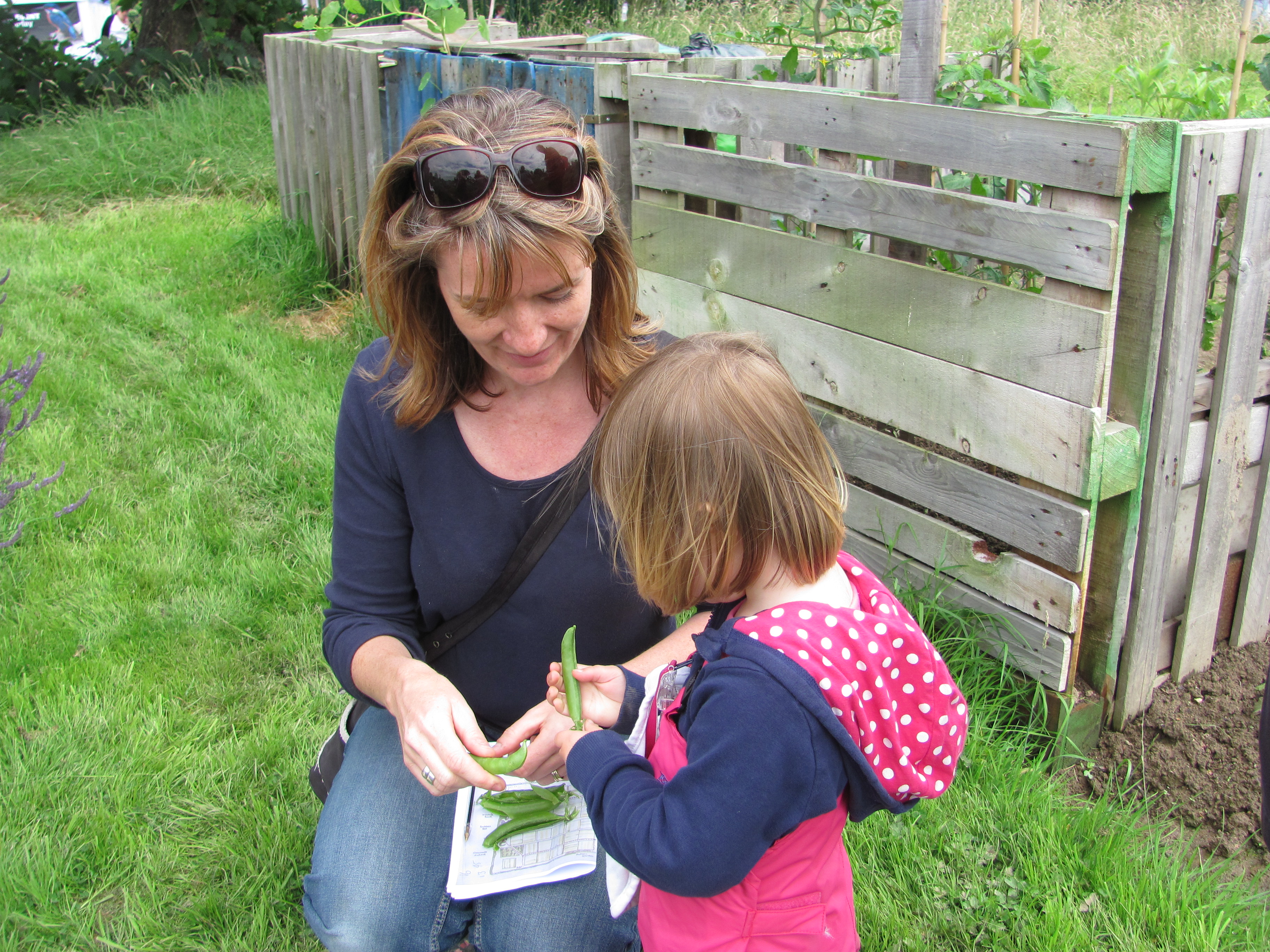
Our visitors enjoyed lots of free advice and even free strawberries and fresh peas straight off the plots. I spent most of my day as a mobile “Gardeners Question Time”, answering queries about pests, diseases and how to grow certain crops and identifying plants. I was handed a cabbage leaf with pests attached and a drawing of a “nasty, looking insect which looked like a dragon and was mostly black with bits of red”. I managed to identify the dragon insect as the larvae of a ladybird and the cabbage dwelling ones as whitefly. I suggested that the ladybirds should be encouraged to stay and informed the gardeners that they were very lucky to have them, but had to tell the cabbage growers that they were not lucky and advised them to get rid of their pests quickly.
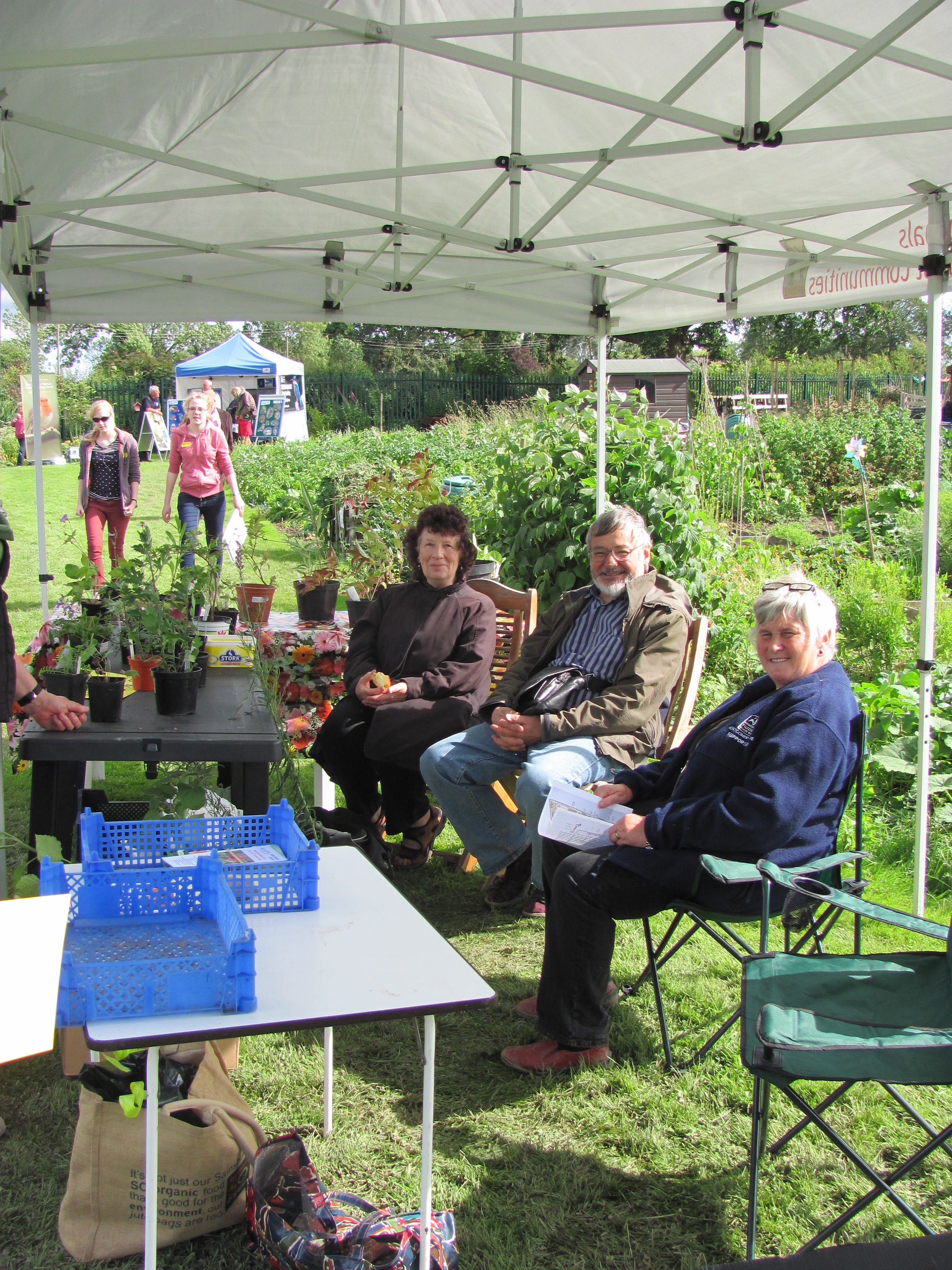
Some of our friends from the Shropshire Hardy Plant Society organised a plant sale and many guests left happy with their bags or boxes of unusual plants.
Most visitors who came spent several hours looking around with occasional breaks for a sit while enjoying a tea and cake, with some staying for the whole four hours we were open.
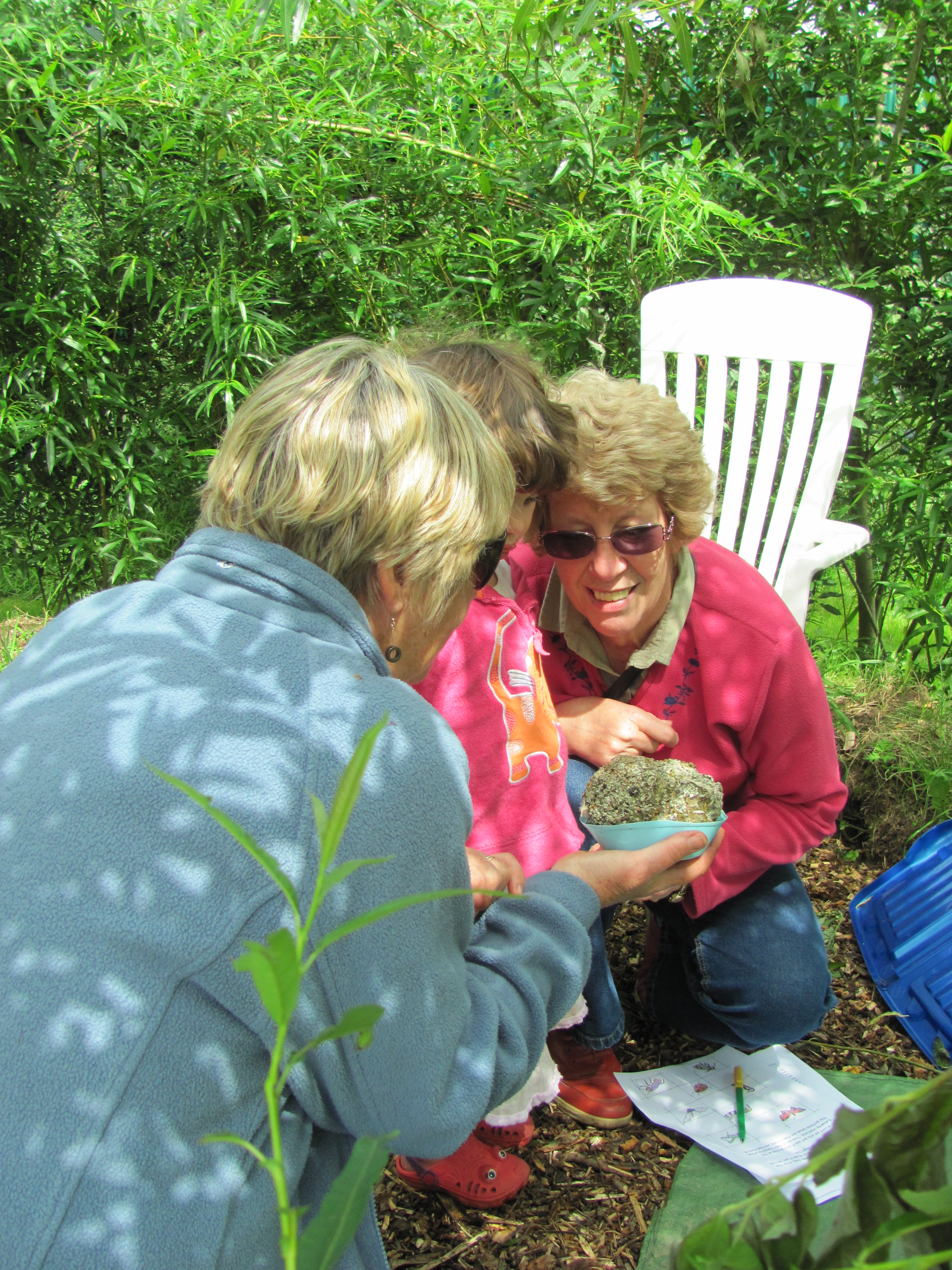
“The Undergardener”, Jude used her teaching experience to good purpose showing young visitors interesting artifacts found by plot holders such as an old Wren’s nest and an aborted Wasp nest.
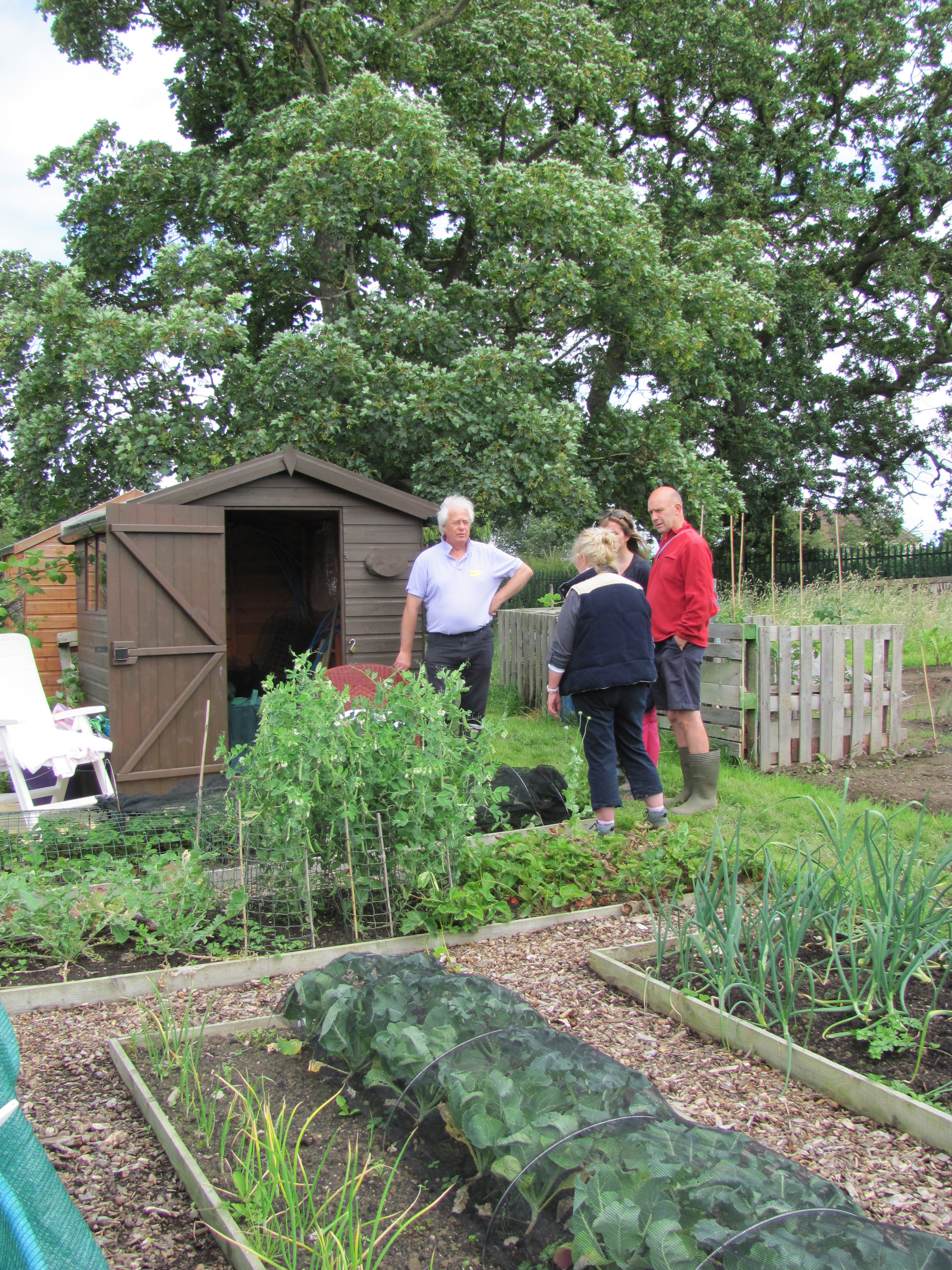
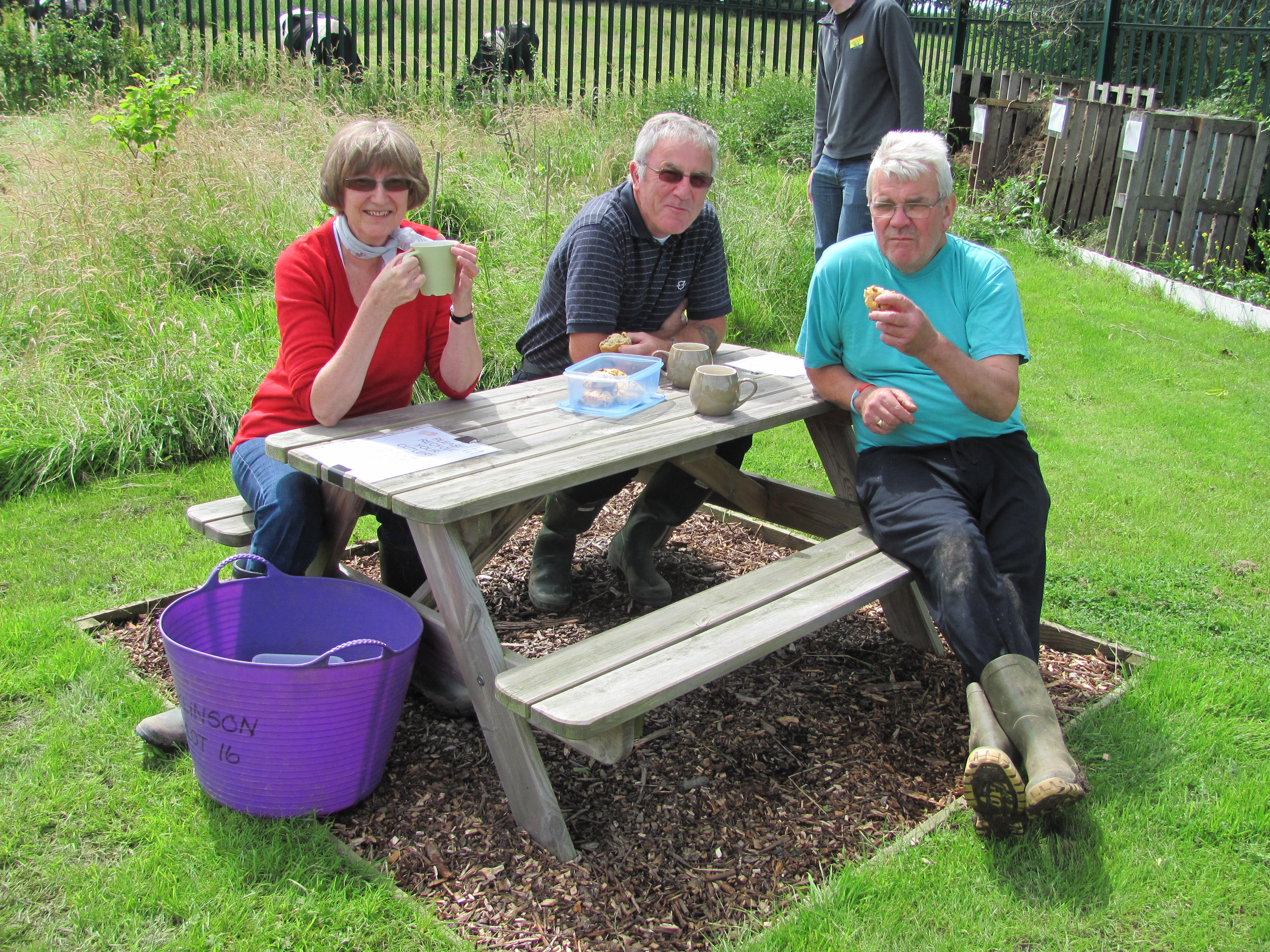
Several plot holders worked on their plots so that our visitors could ask them questions, others sat on picnic benches around the site to greet visitors and make them welcome.
When we closed and the last of our guests had left members rallied around and returned the site back to its former state. The tea shop returned to its function as a community hut, the gazebos were taken down and returned to their boxes, signs along the local roads were pulled up and put back into store. The RSPB and HPS volunteers packed up their goods and gazebos and said their goodbyes, and said they looked forward to our open day in 2013.
The last visitors to leave were these two characters who had spent the day sat comfortably in their thrones under the trees and greeted their subjects.
It had been a great day! Our visitors book contained some complimentary comments. We enjoyed reading them as they help show that we are achieving our aims. Here are some to examples to share.
“Fantastic, so much to see, great kids trail, thank you.”
“Completely lost in the interesting ideas. What a wonderful time I’ve had!”
“A truly inspiring place, wonderful for wildlife and kids.”
“Beautiful plots and welcoming tea and cake.”
“Inspirational model for all allotments.”
“Friendly, knowledgable gardeners.”
“Inspiring and clever ideas to encourage wildlife whilst giving plenty of space for produce. So much done in three years.”
'The most important and informative publication on wildlife of our times' - The Independent. This blog is a member of The UK & Ireland Natural History Bloggers group: www.uknhb.blogspot.com



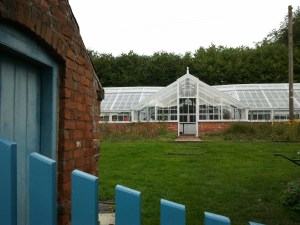
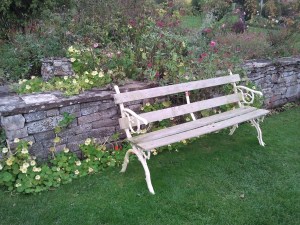
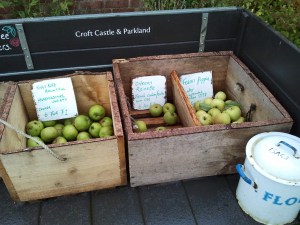
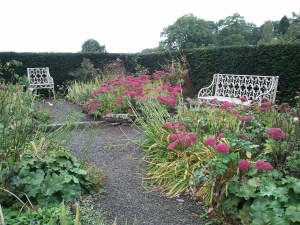
 Autumn was descending on the walled gardens.












































 greenbenchramblings