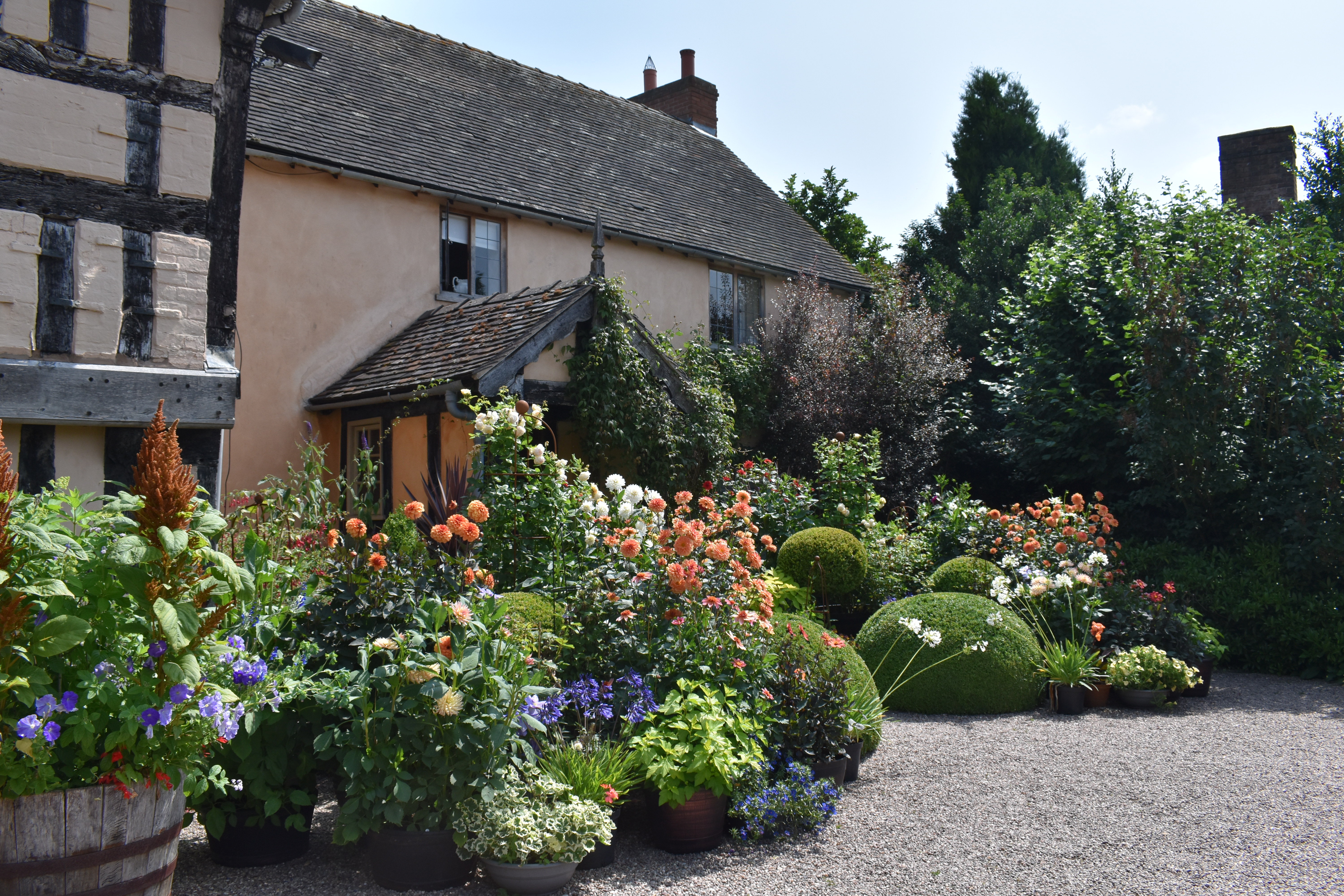
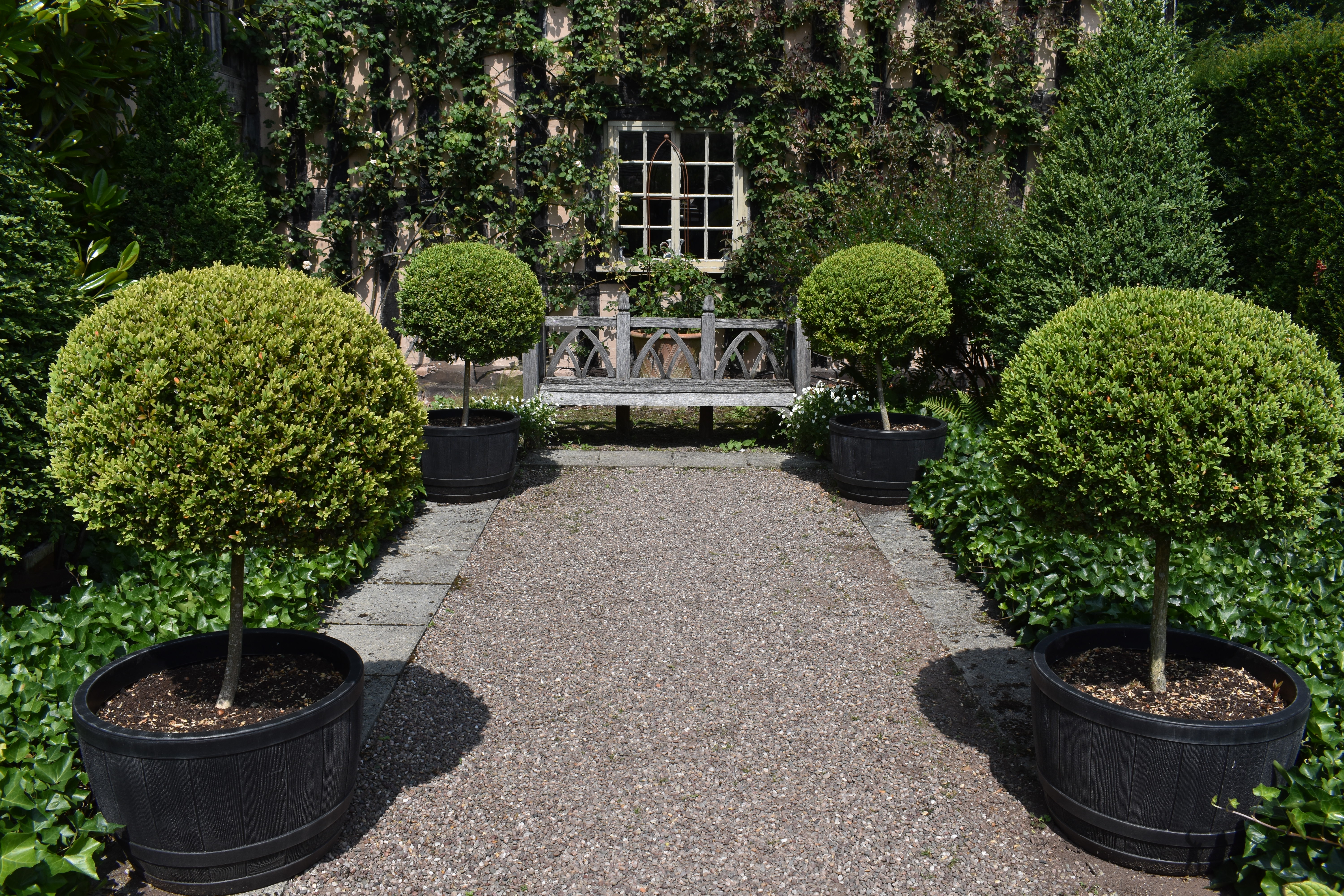
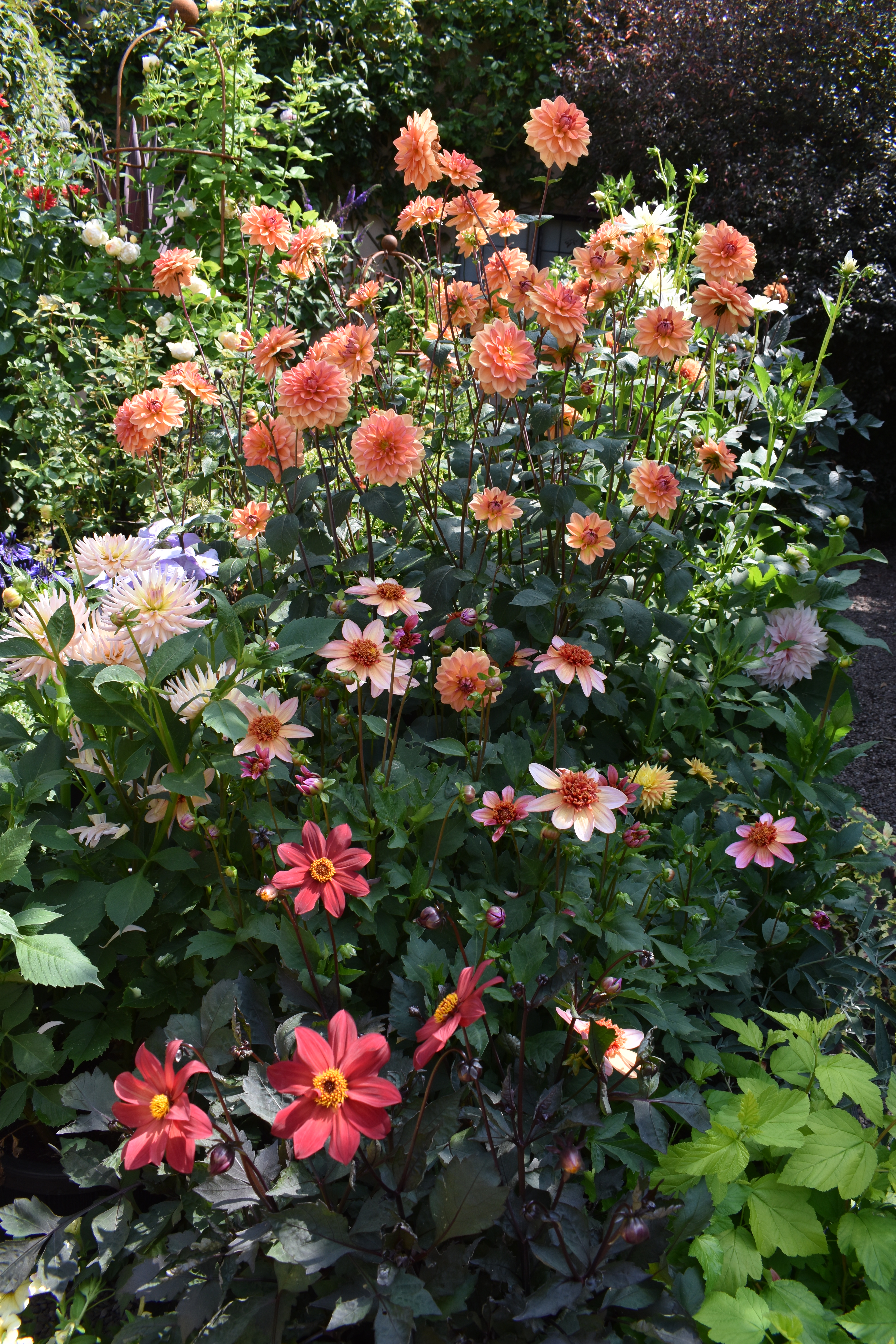
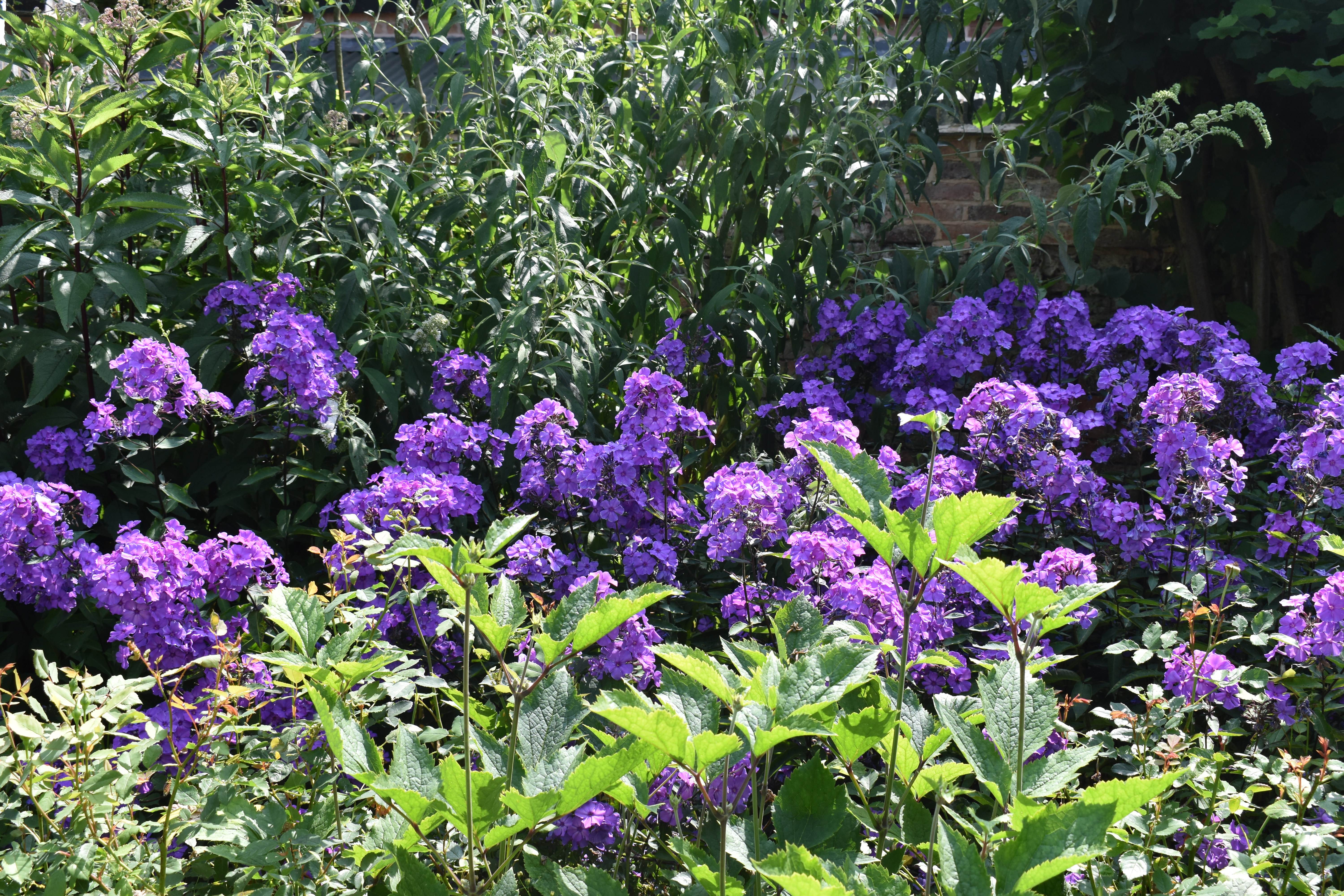
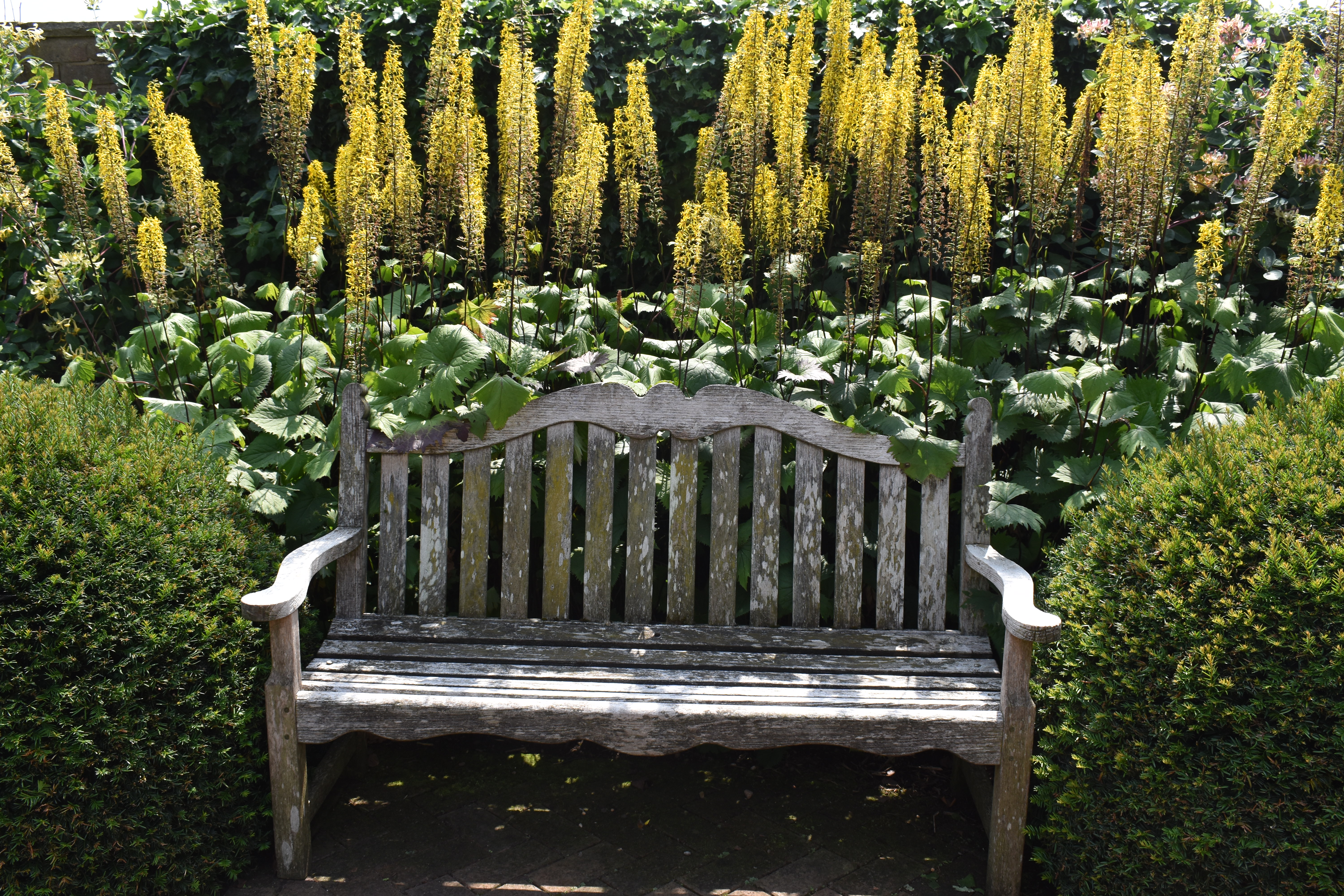
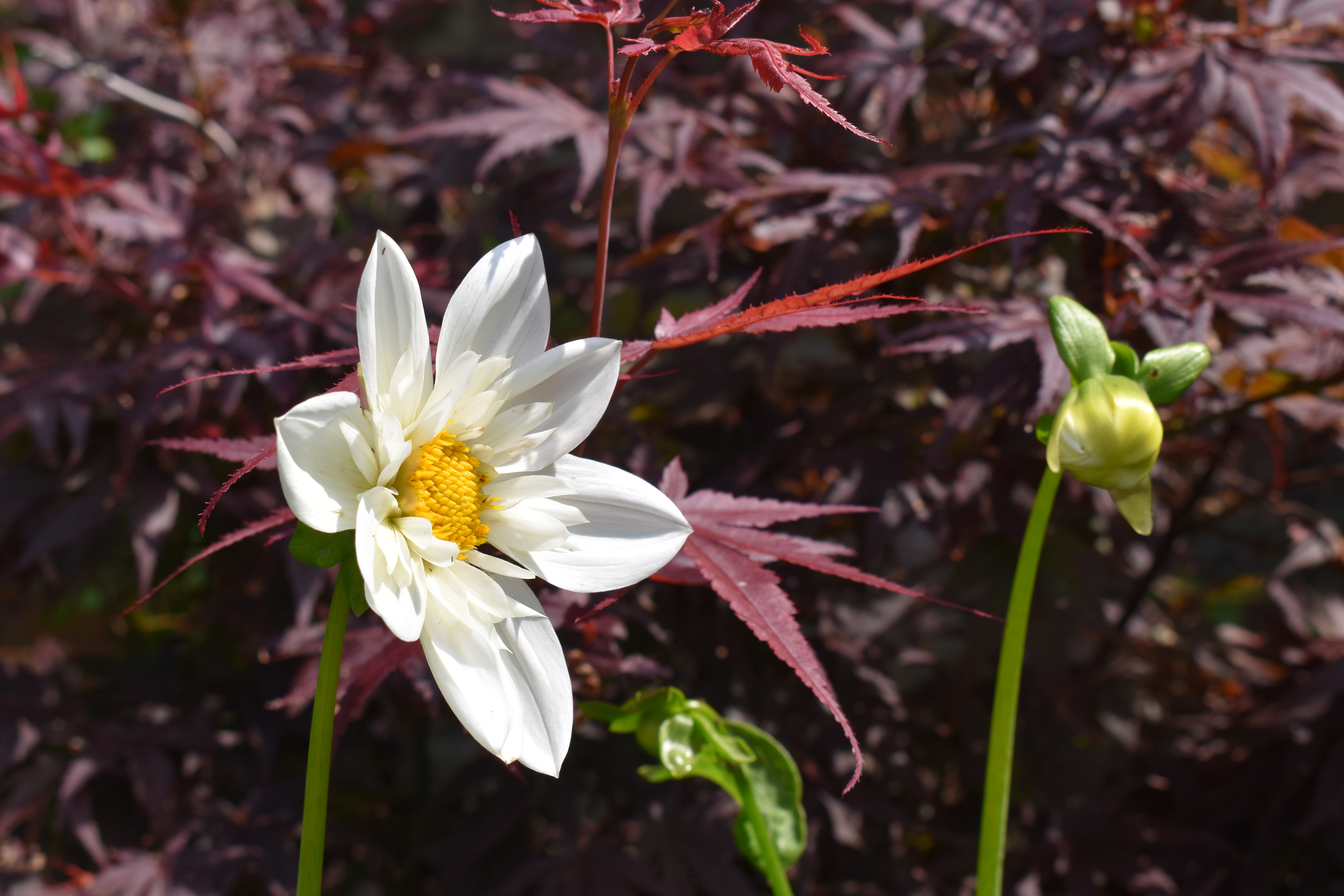
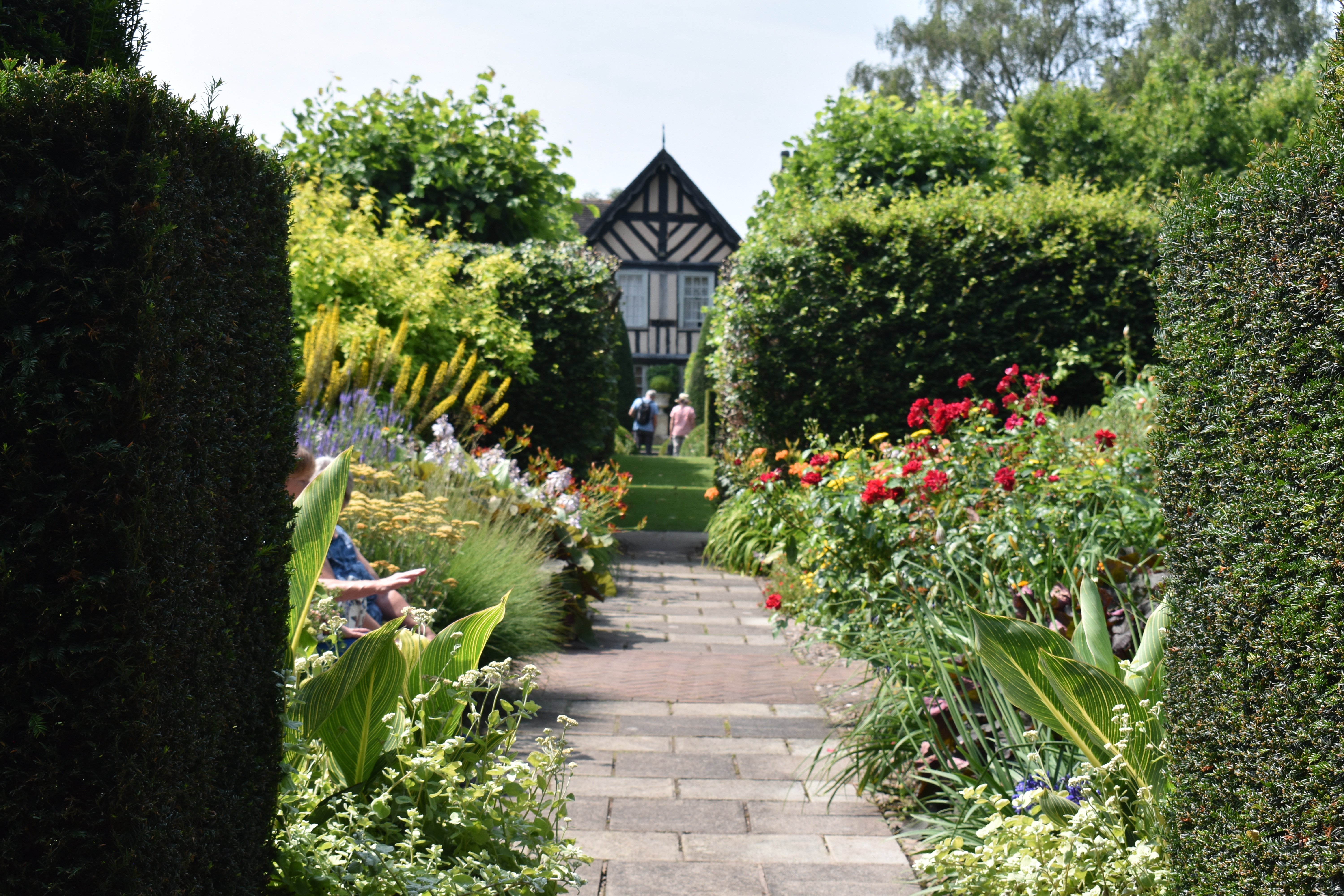
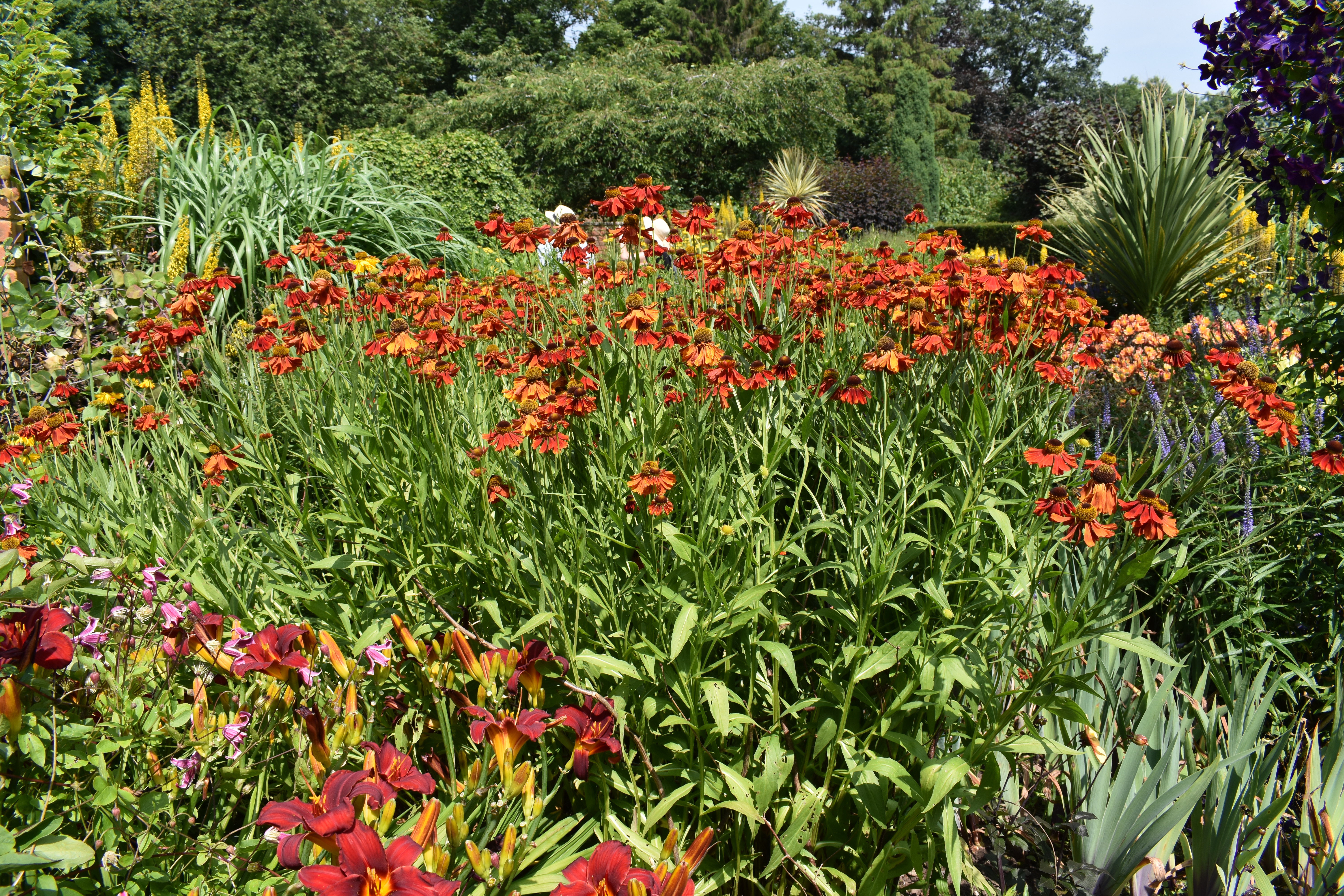
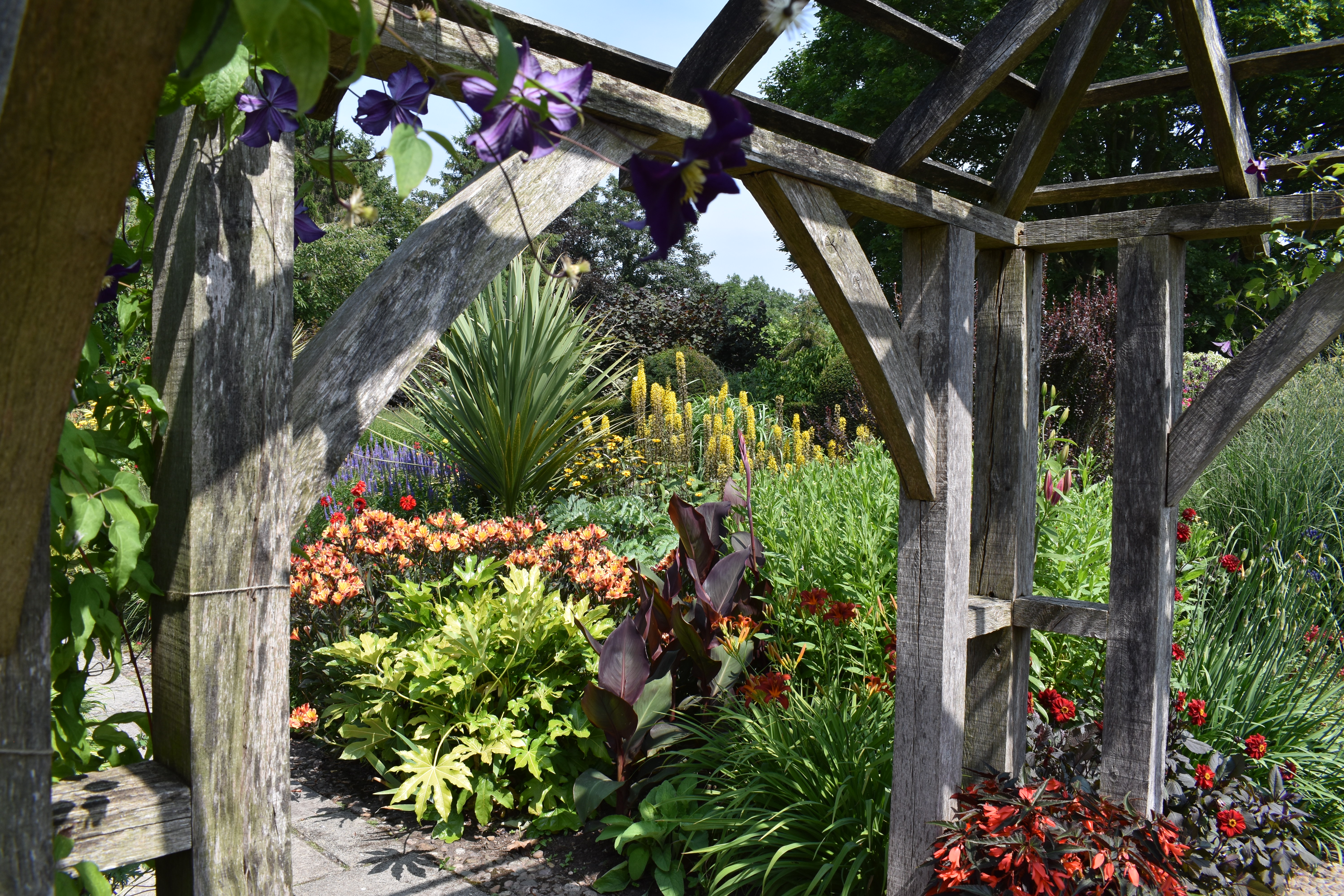
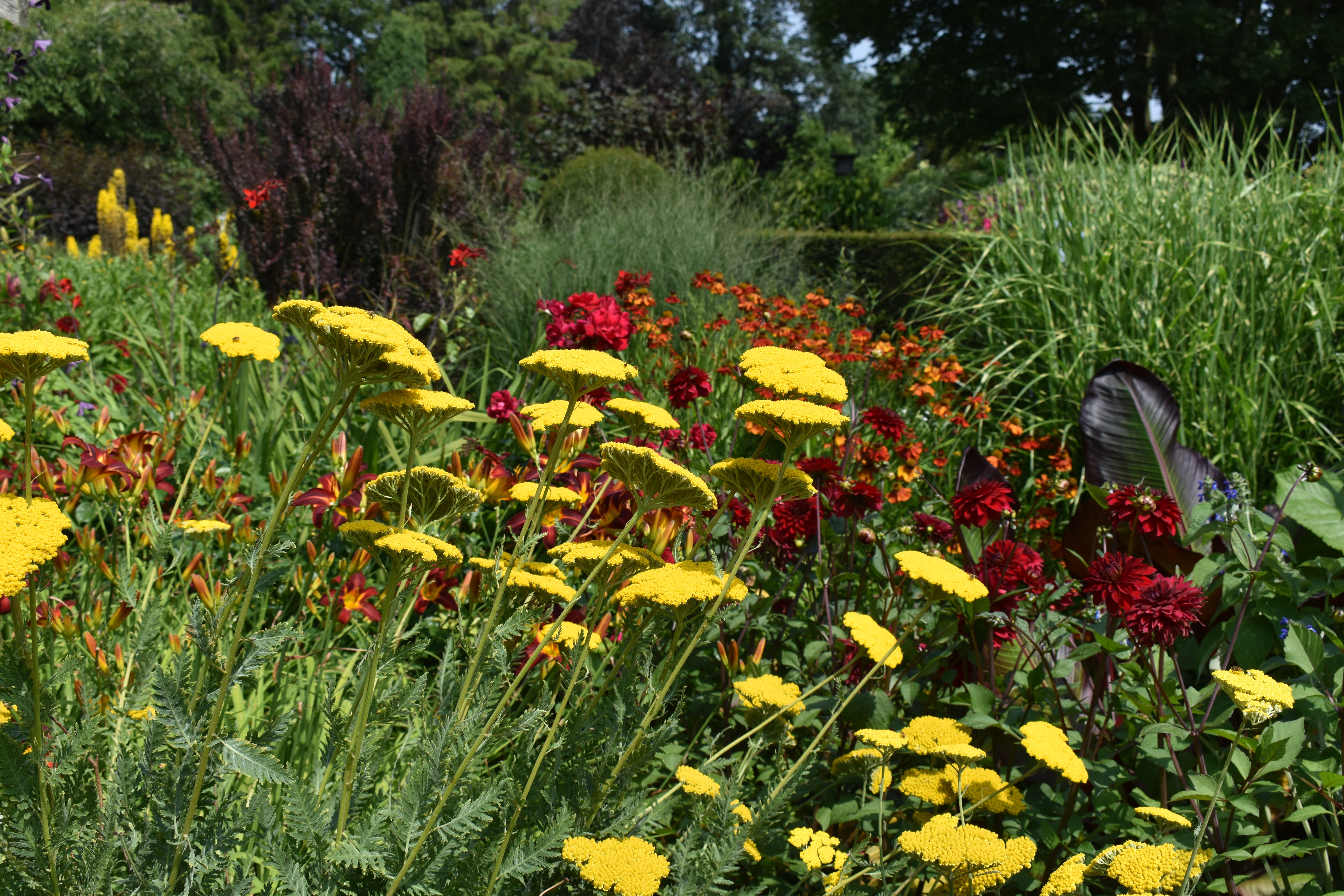
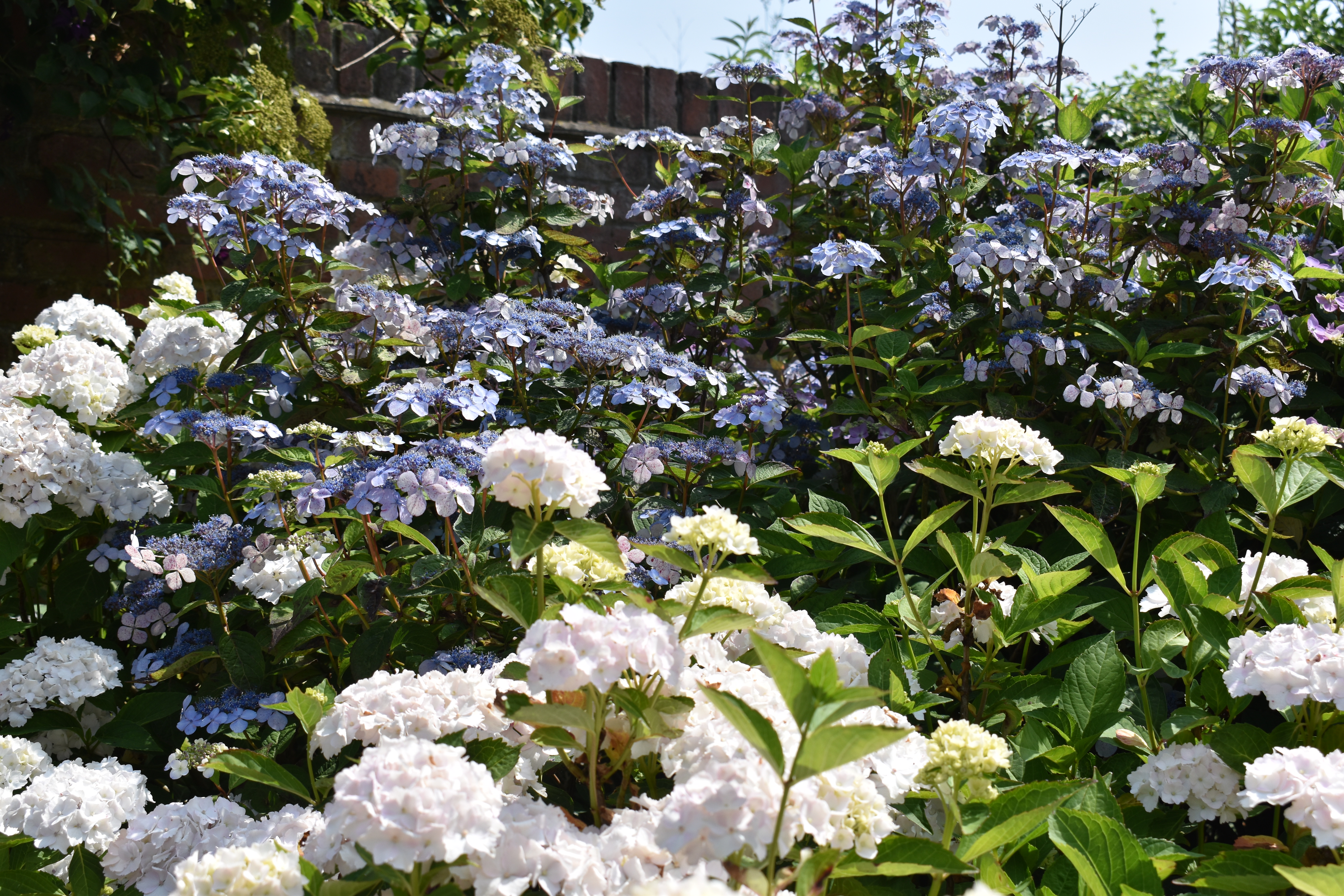
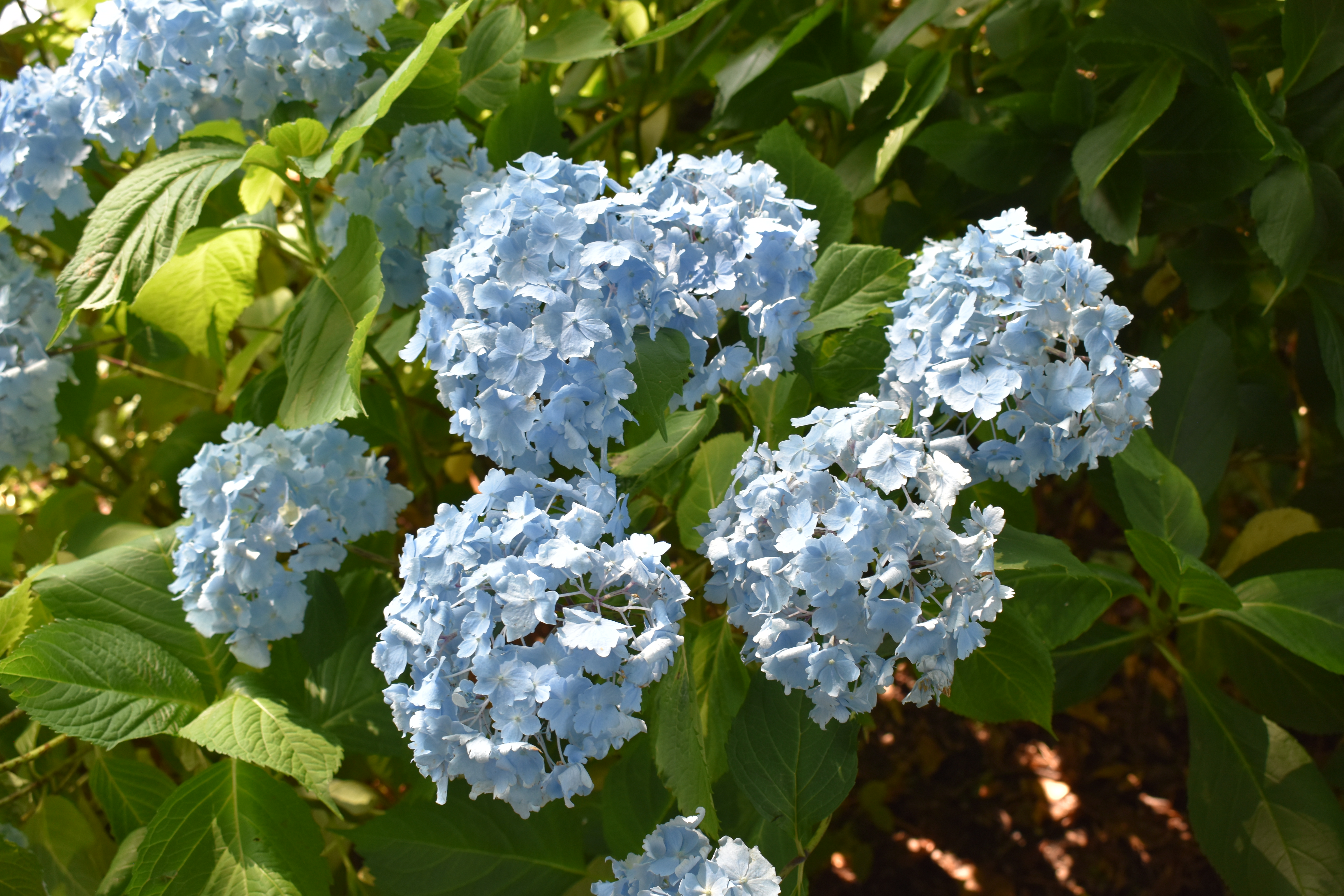
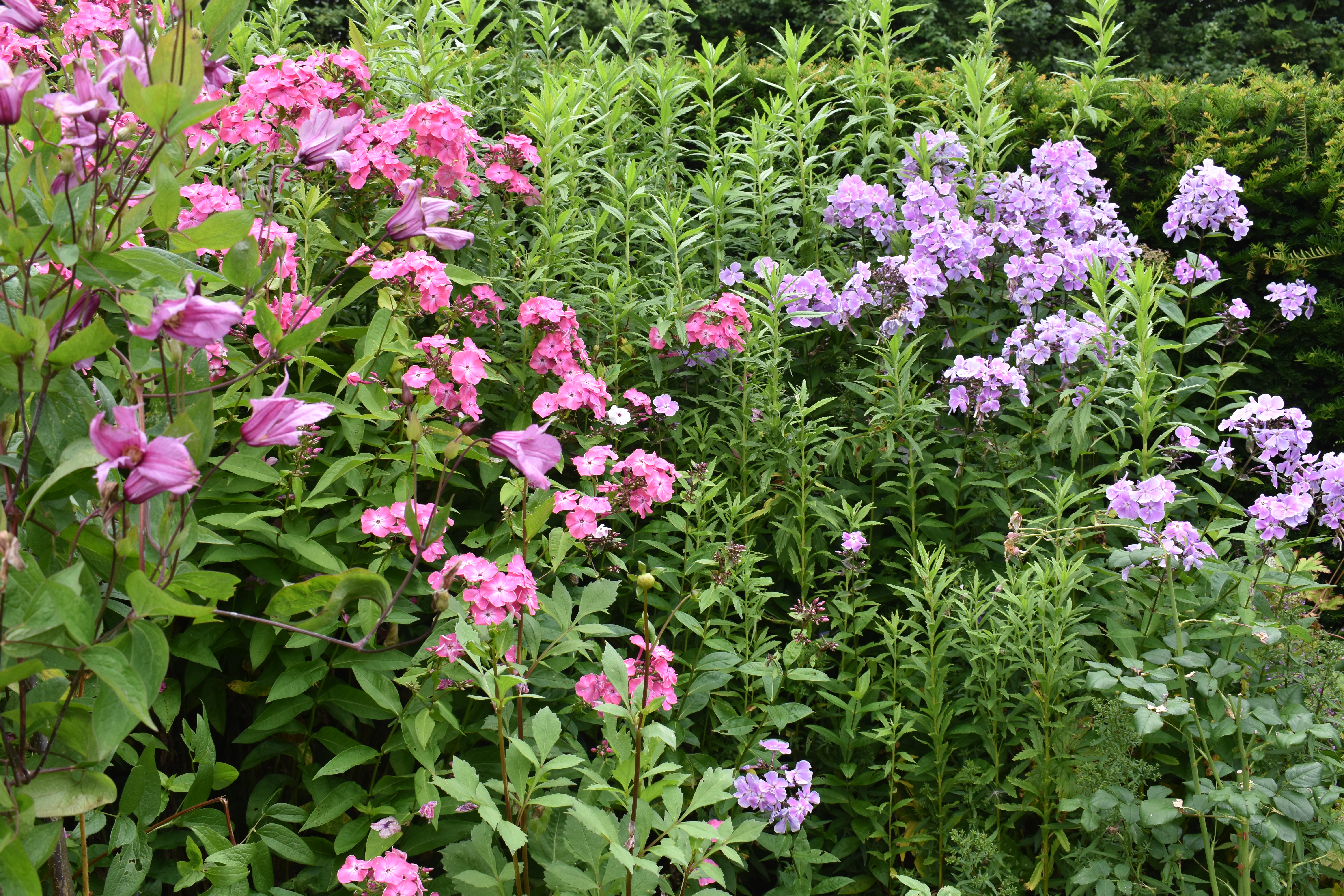
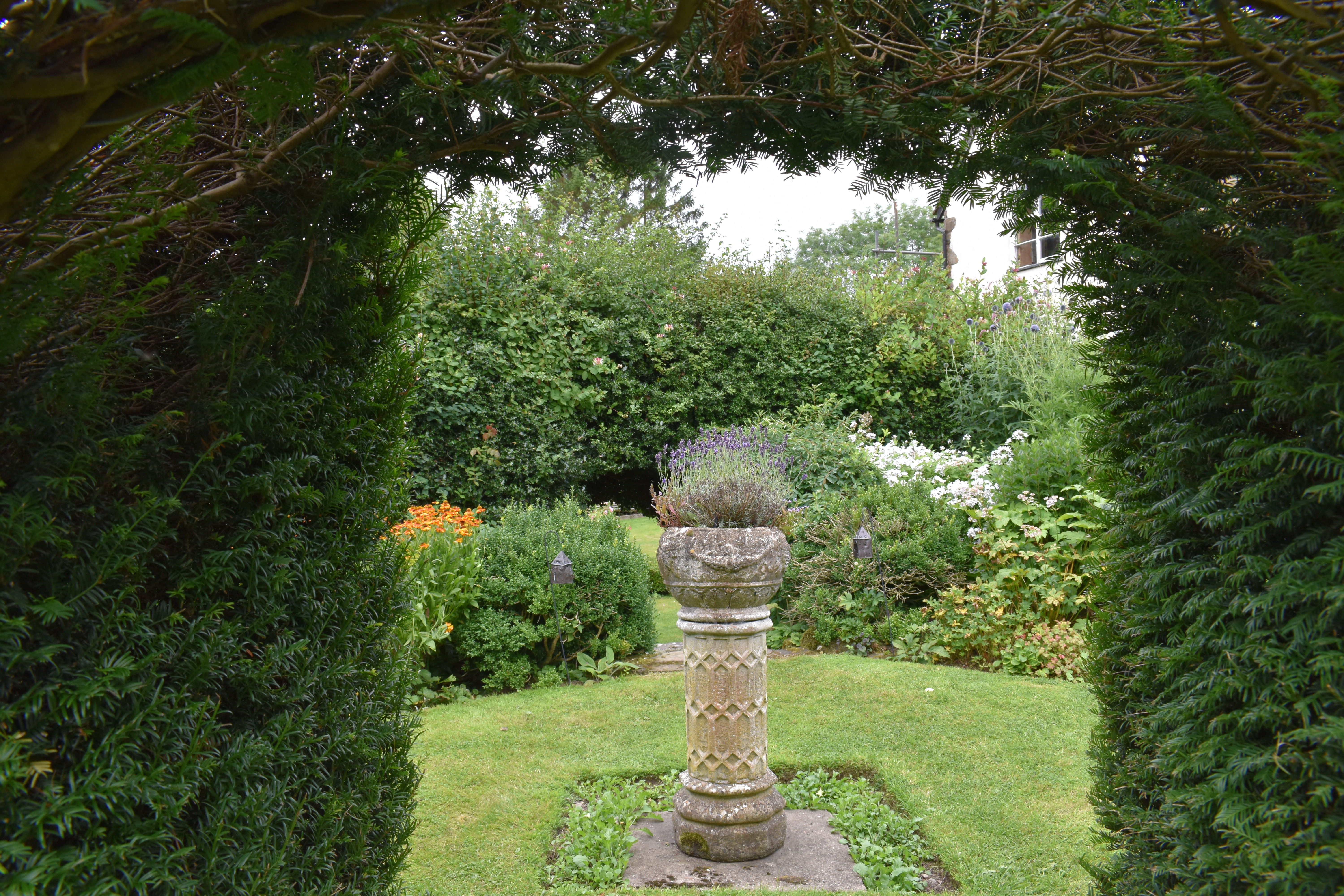
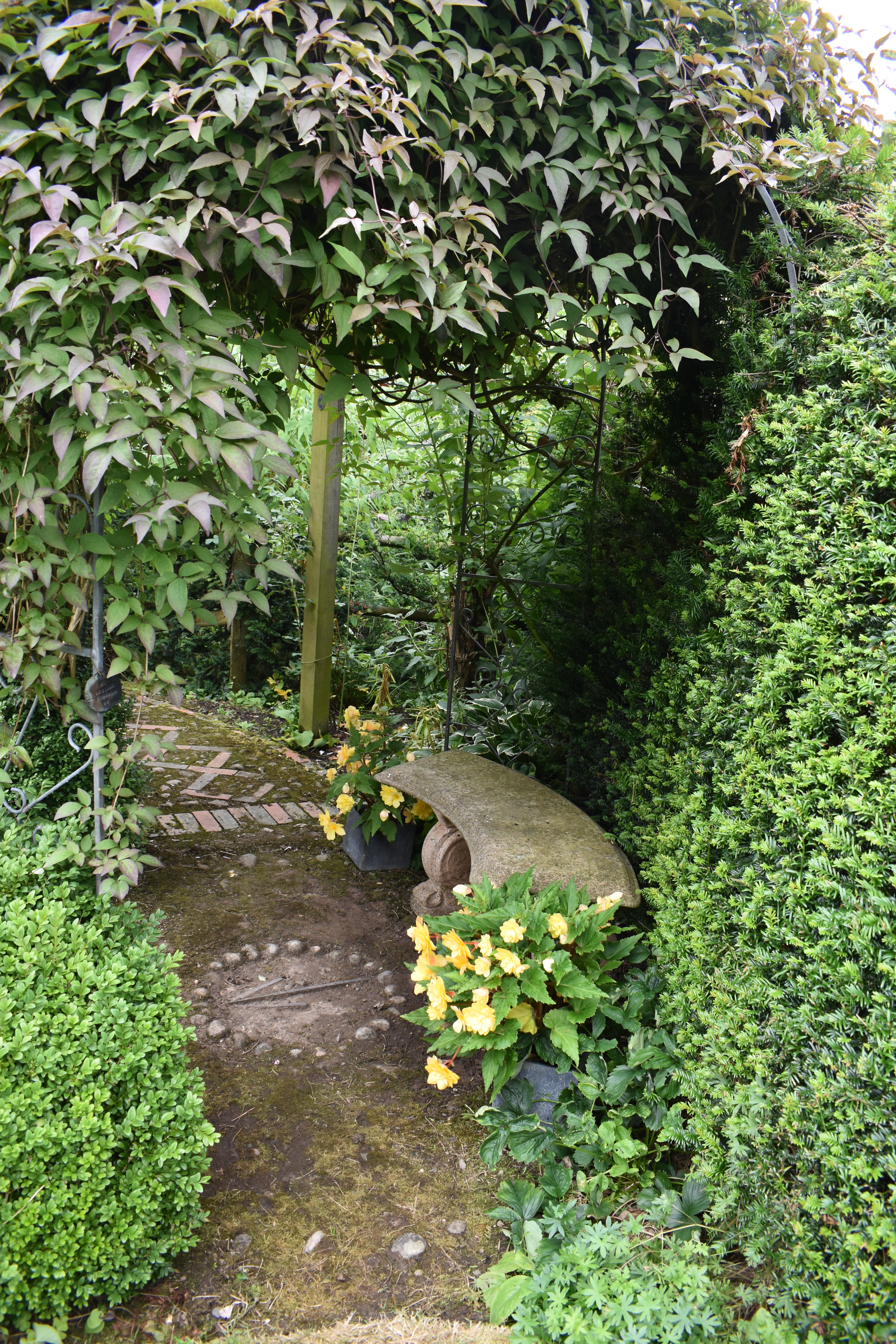
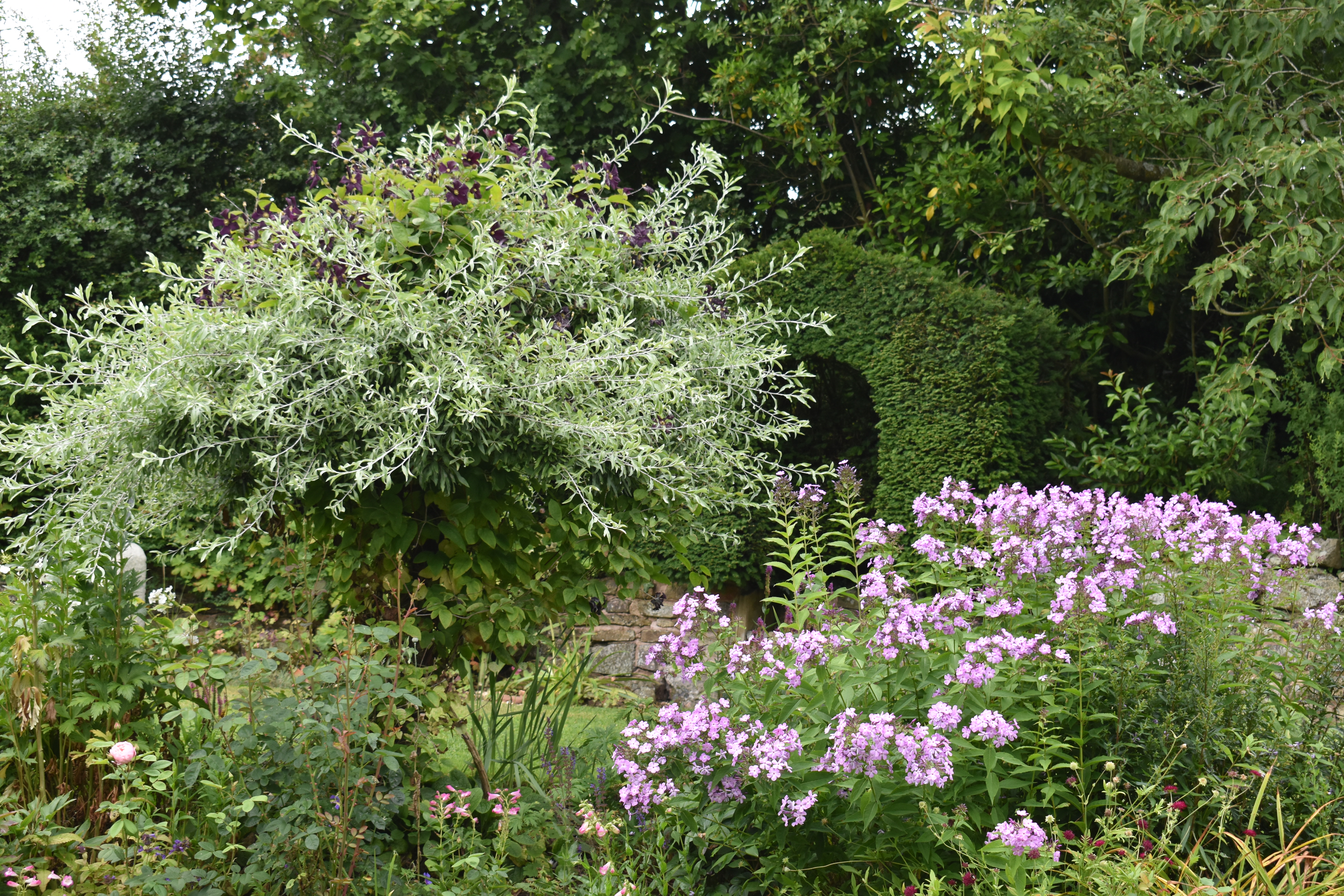
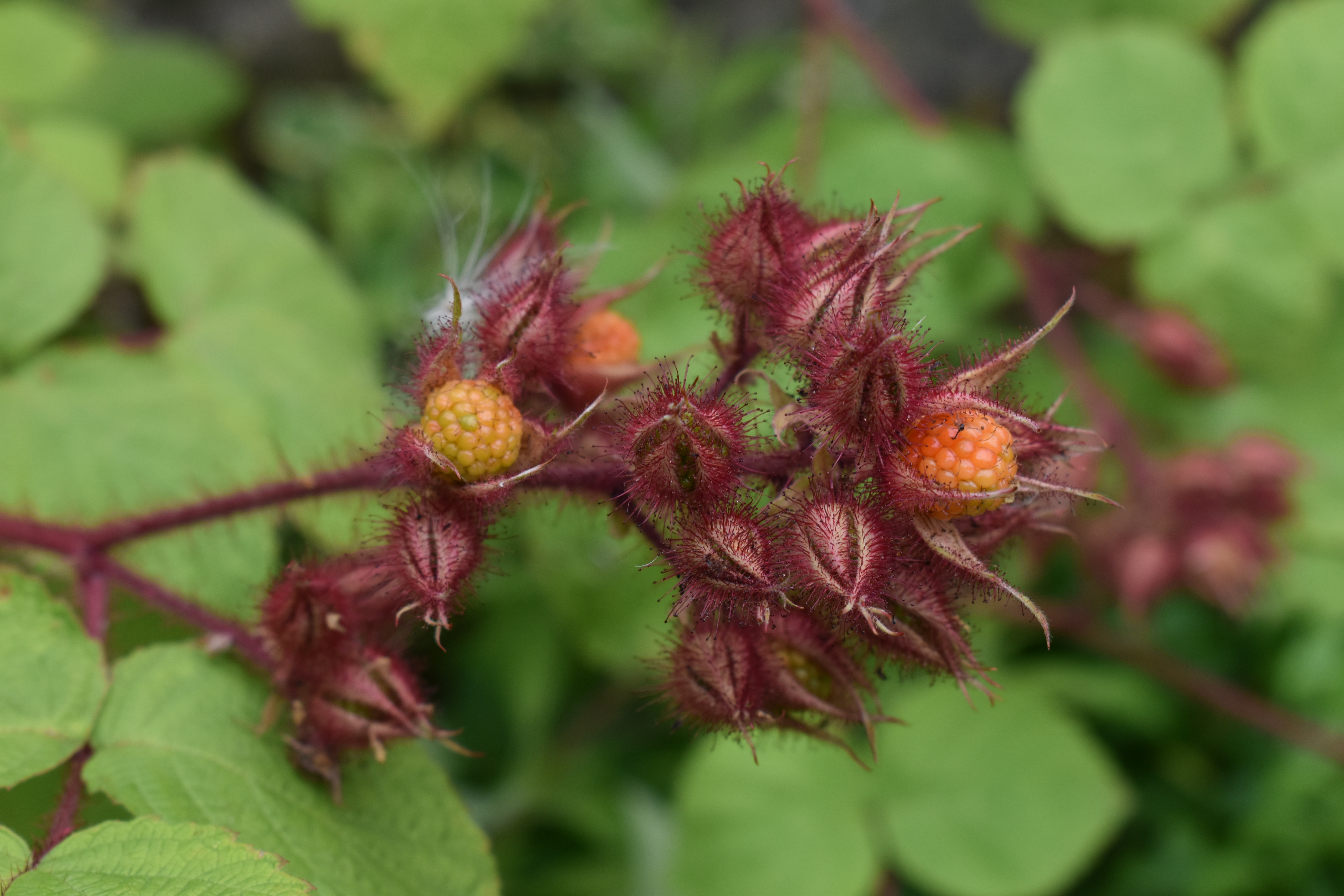
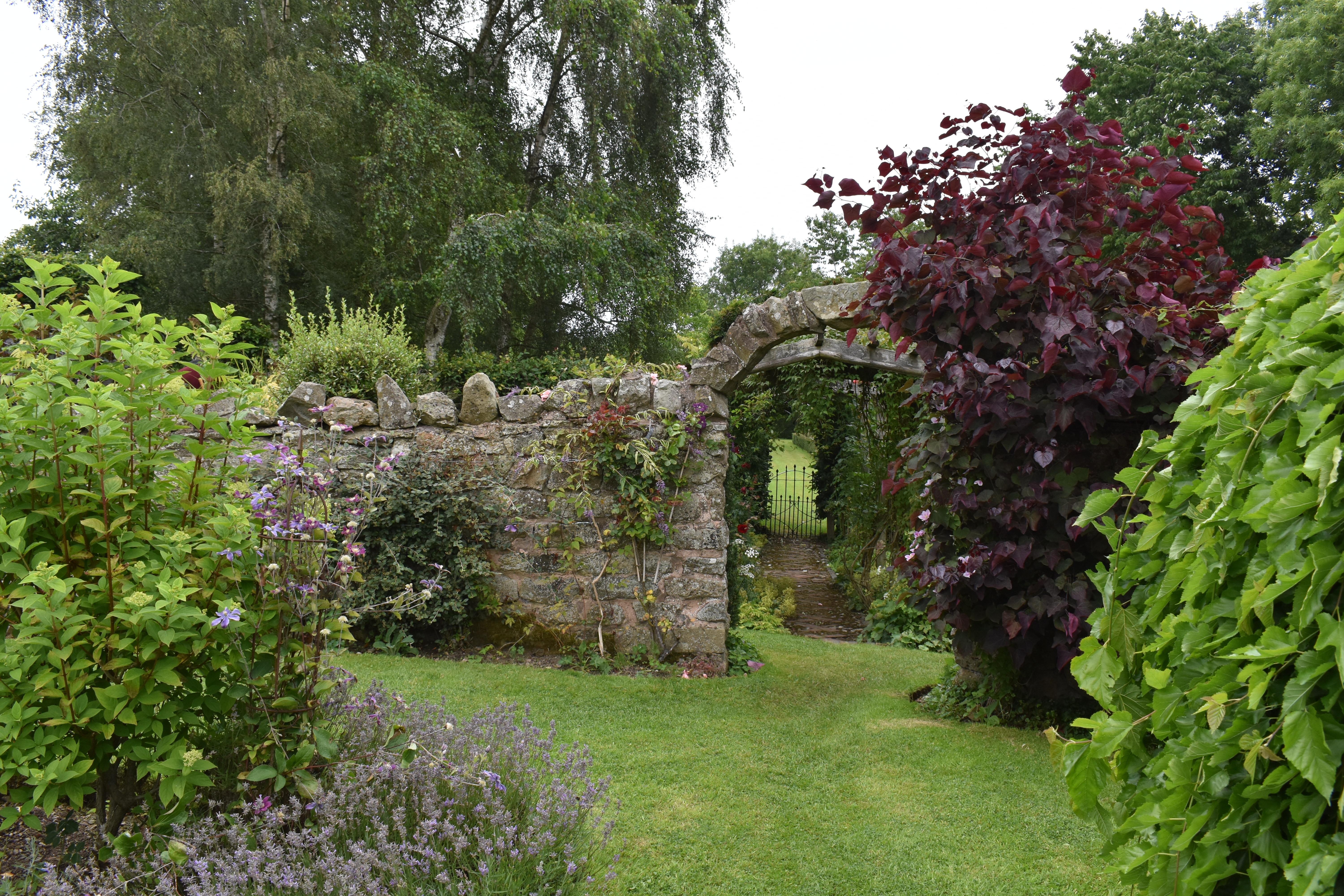
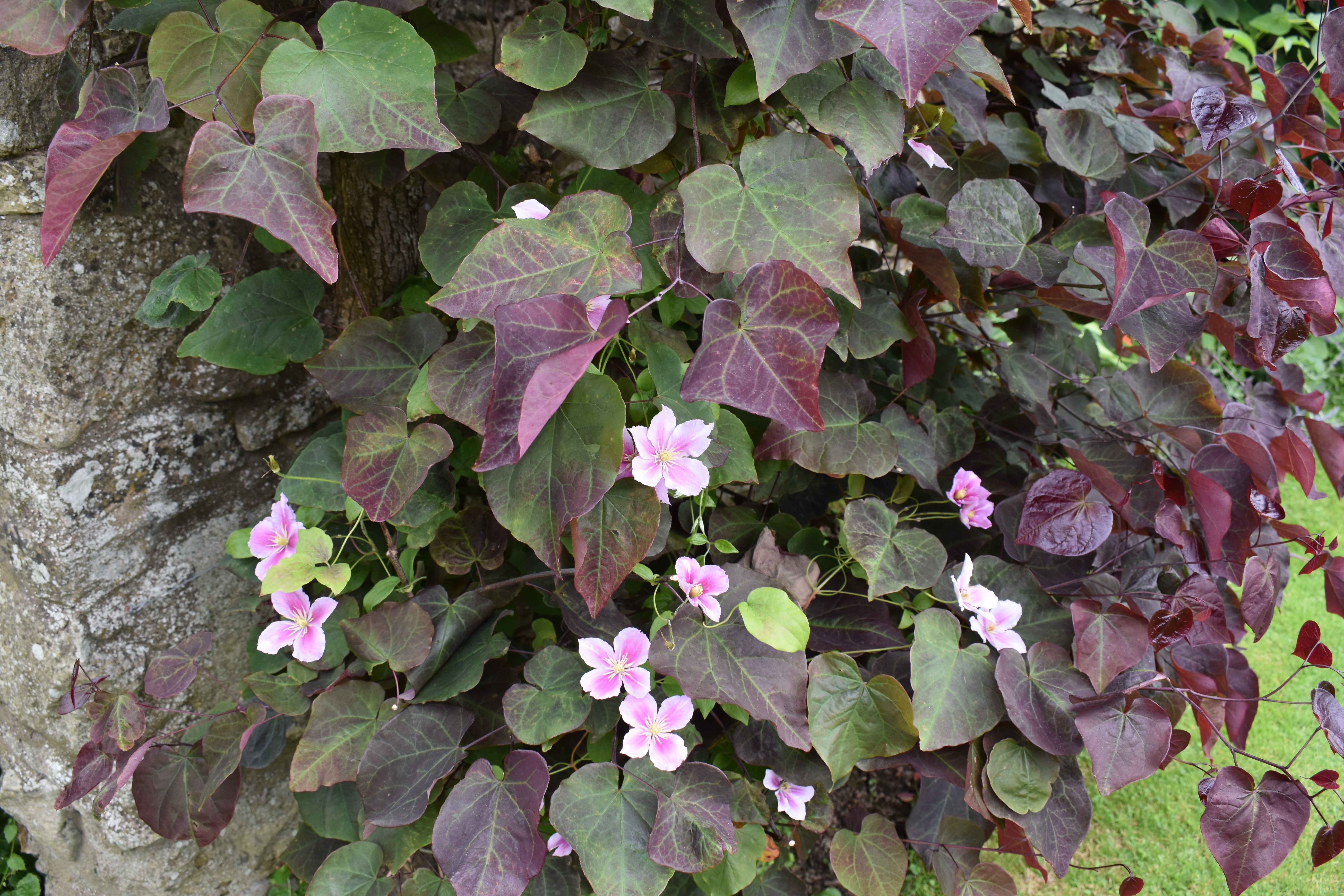
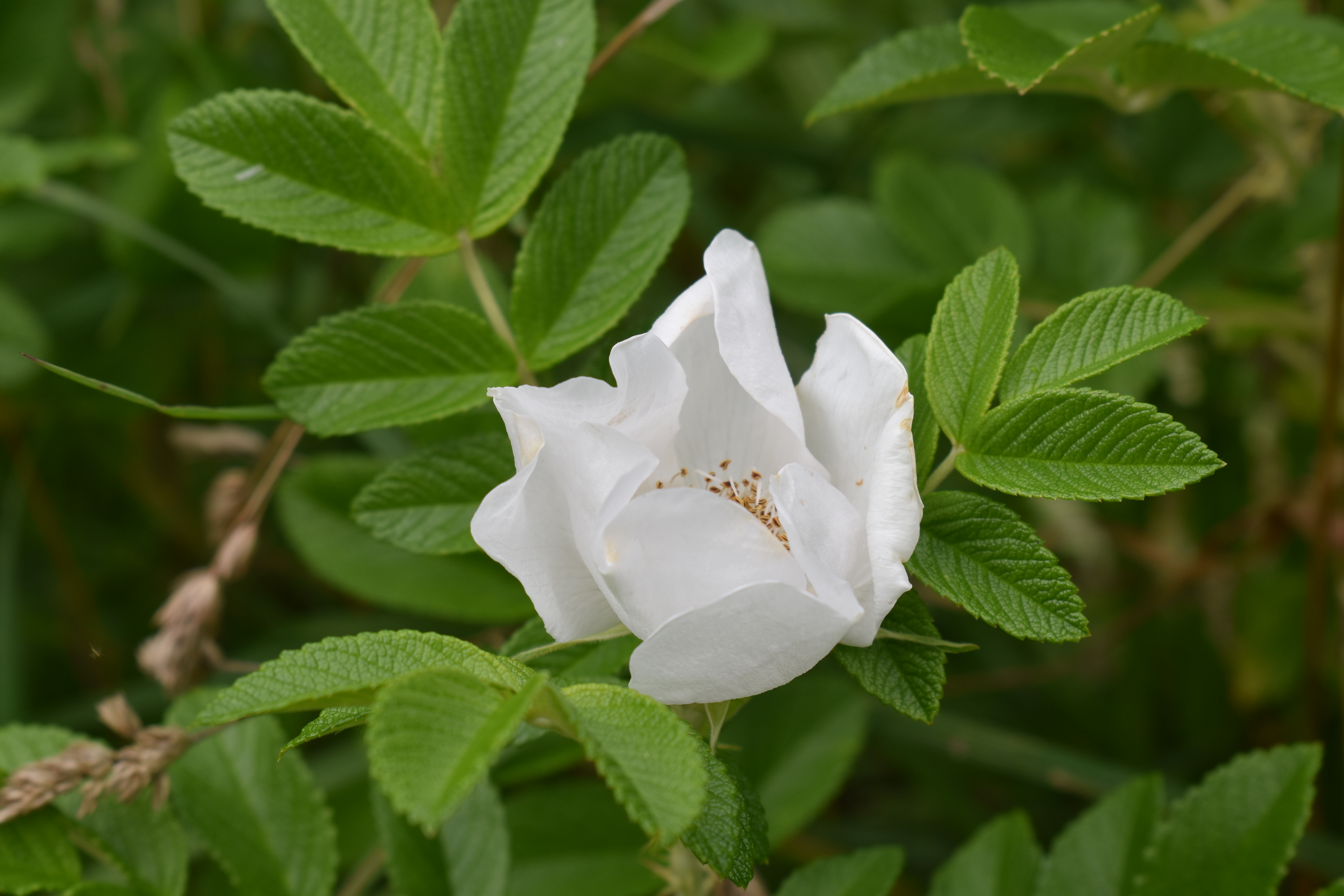
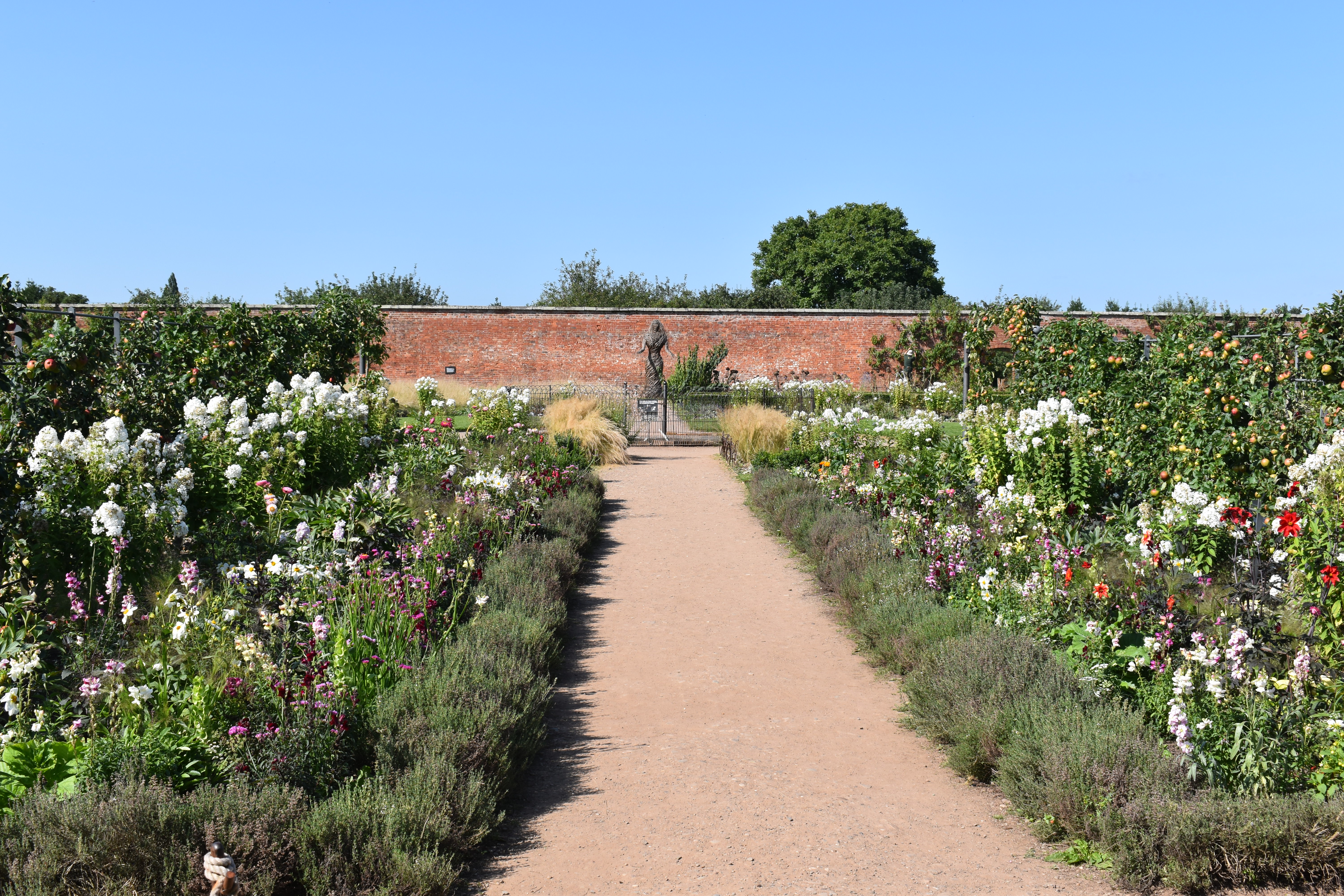
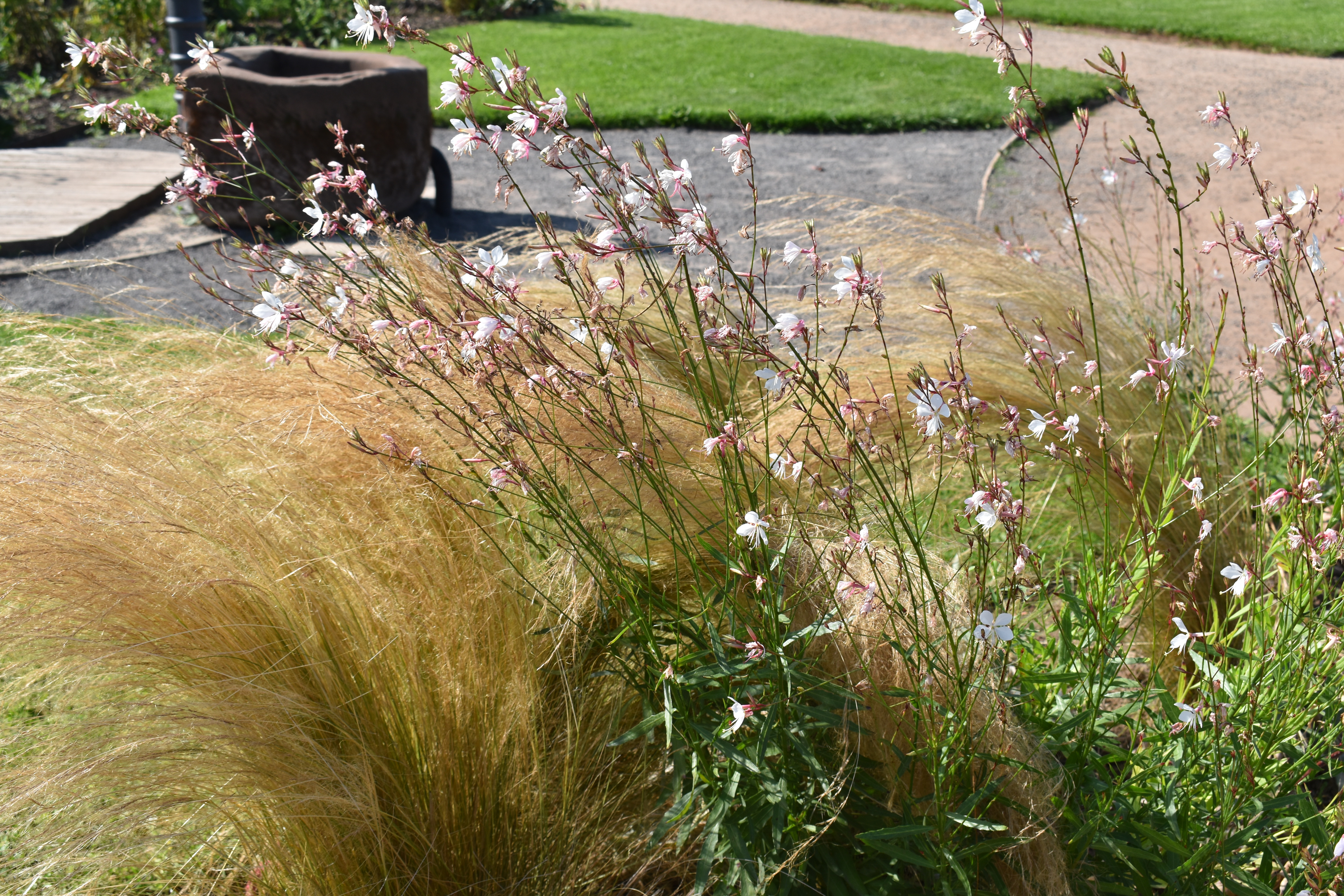
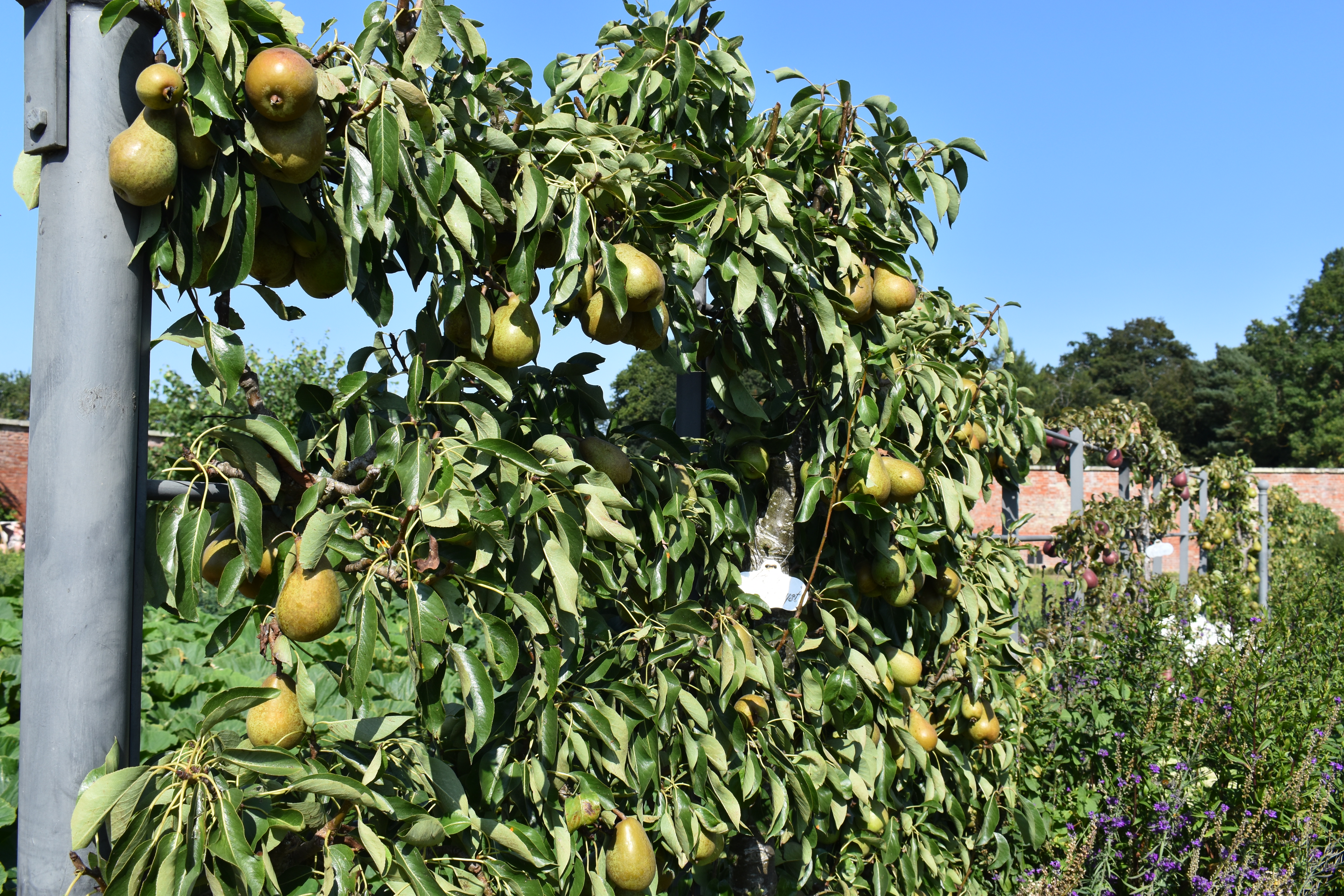
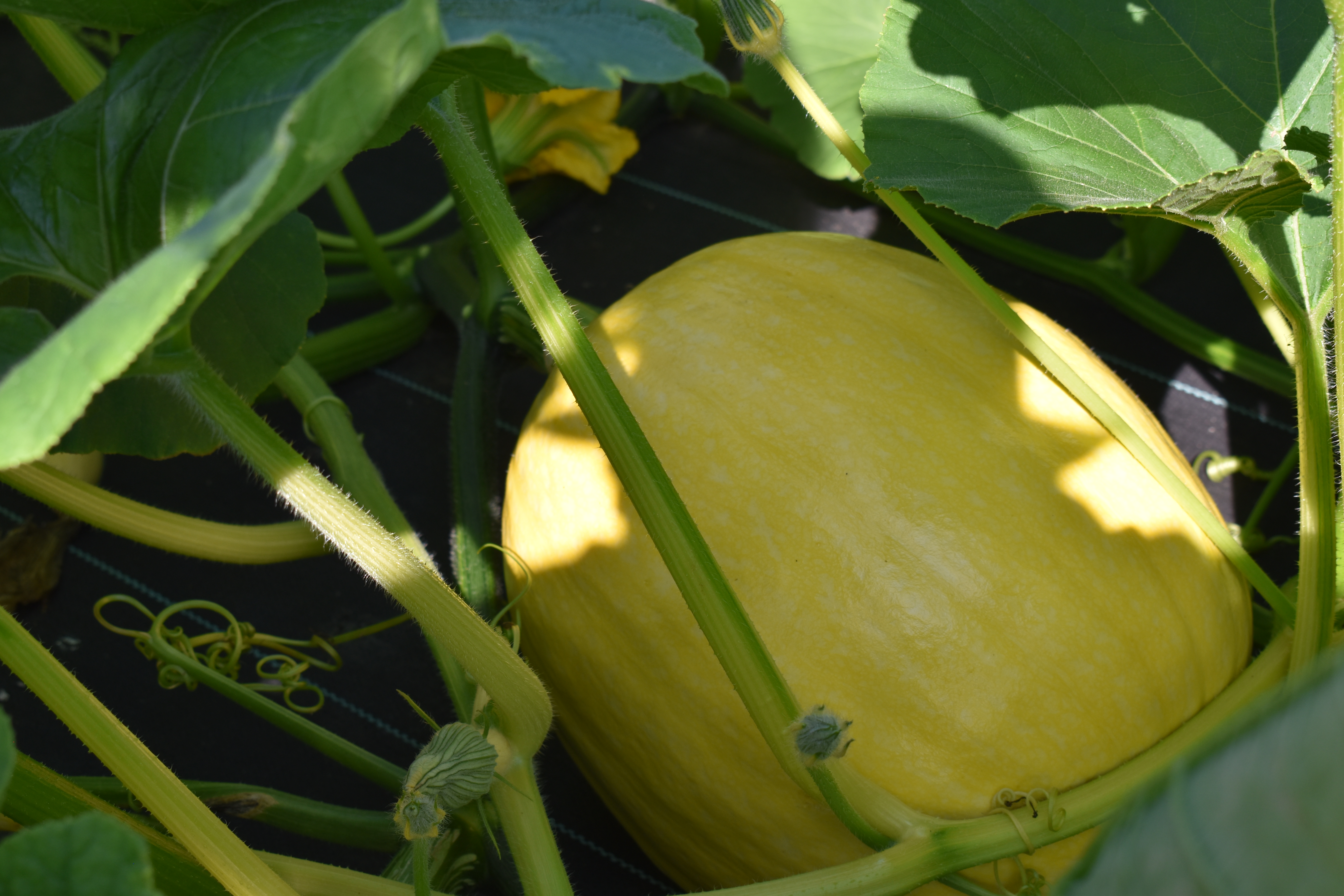
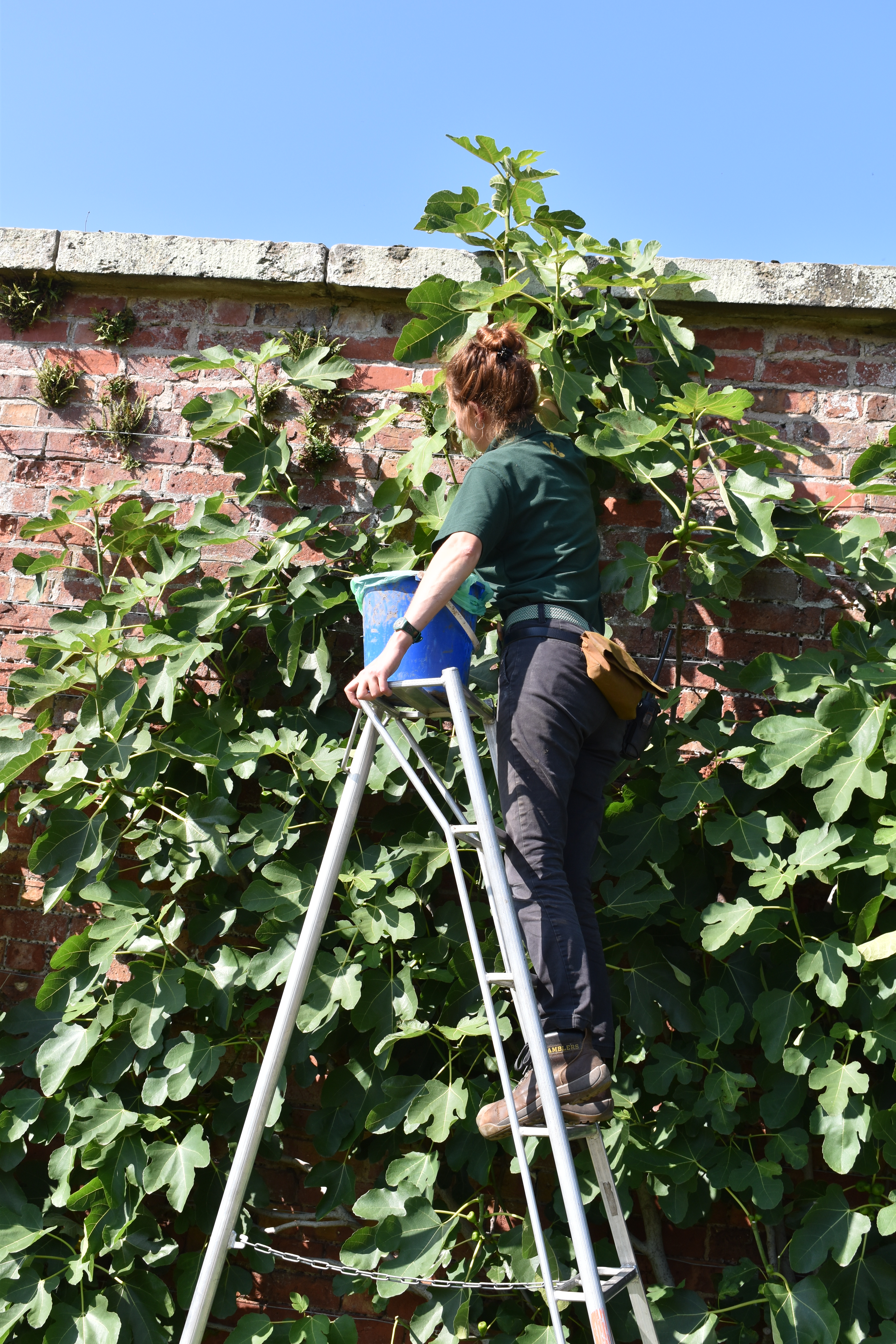
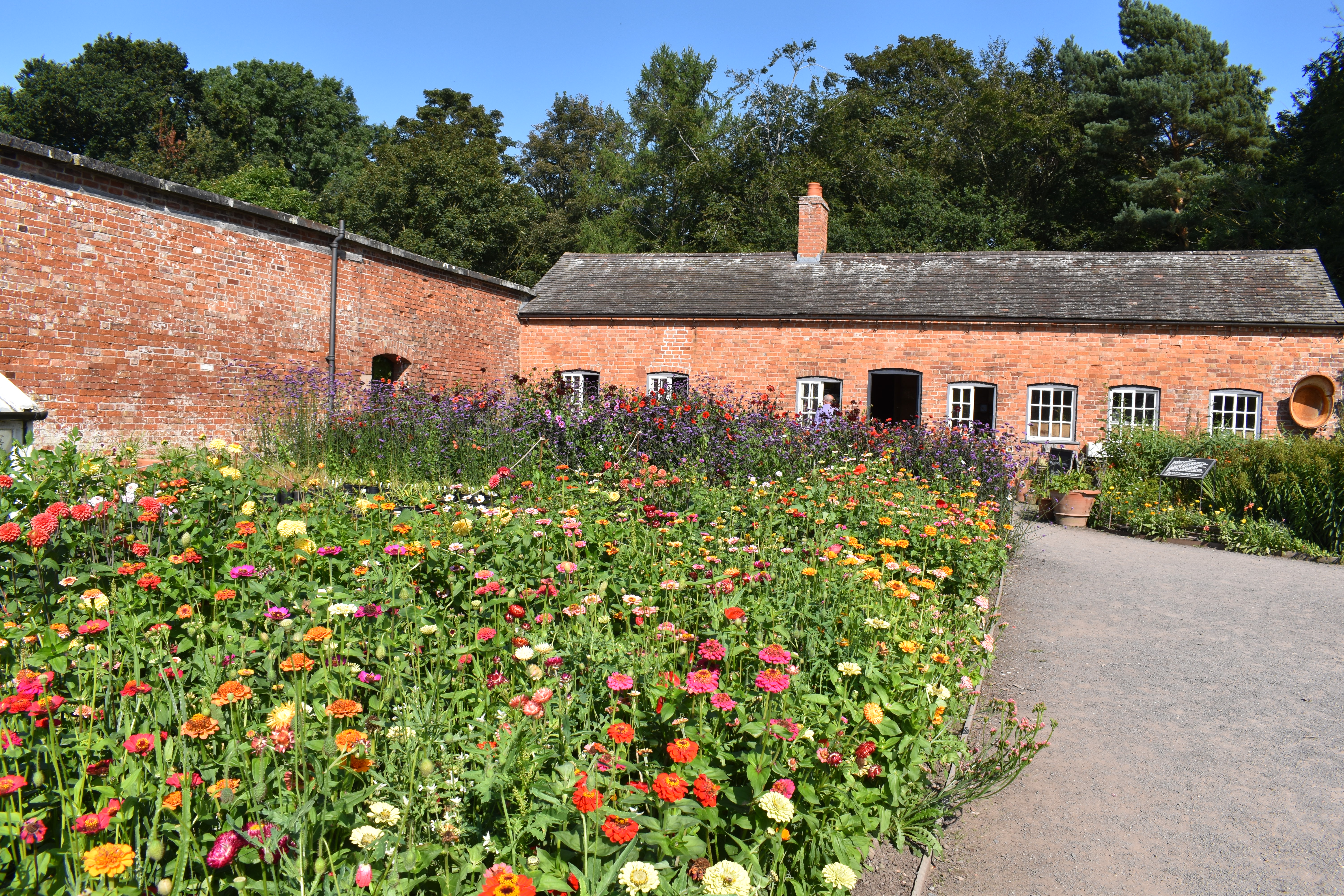
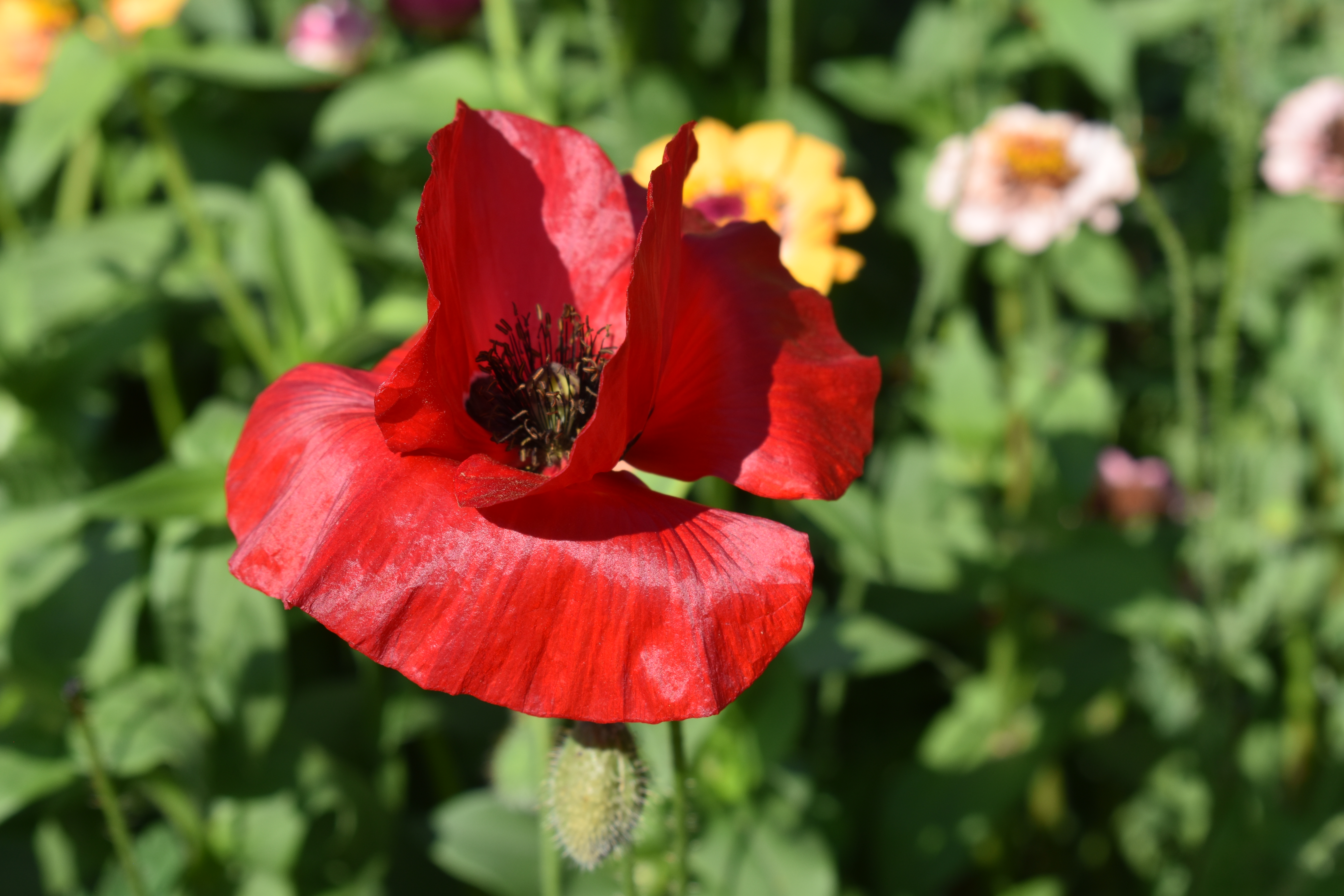
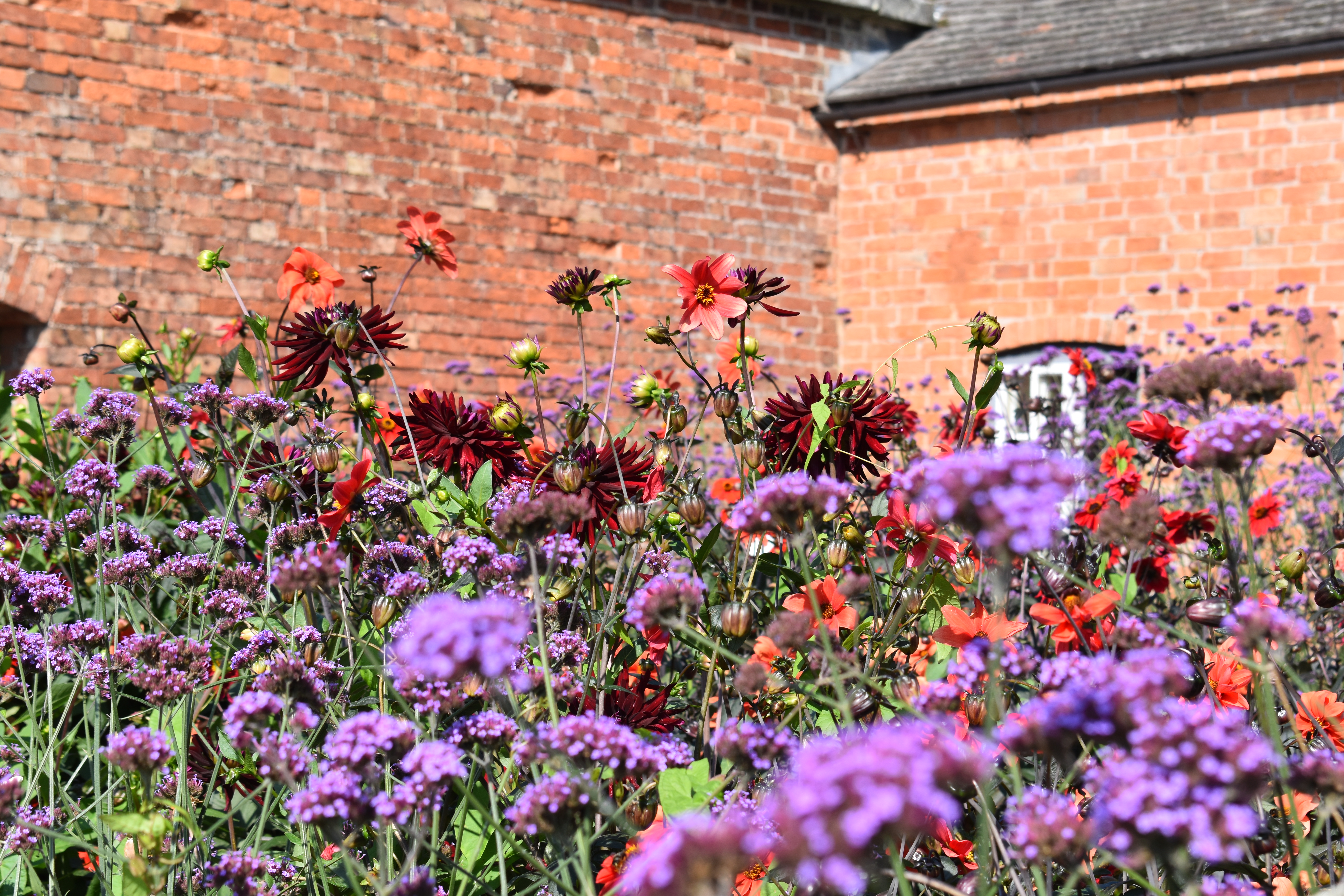
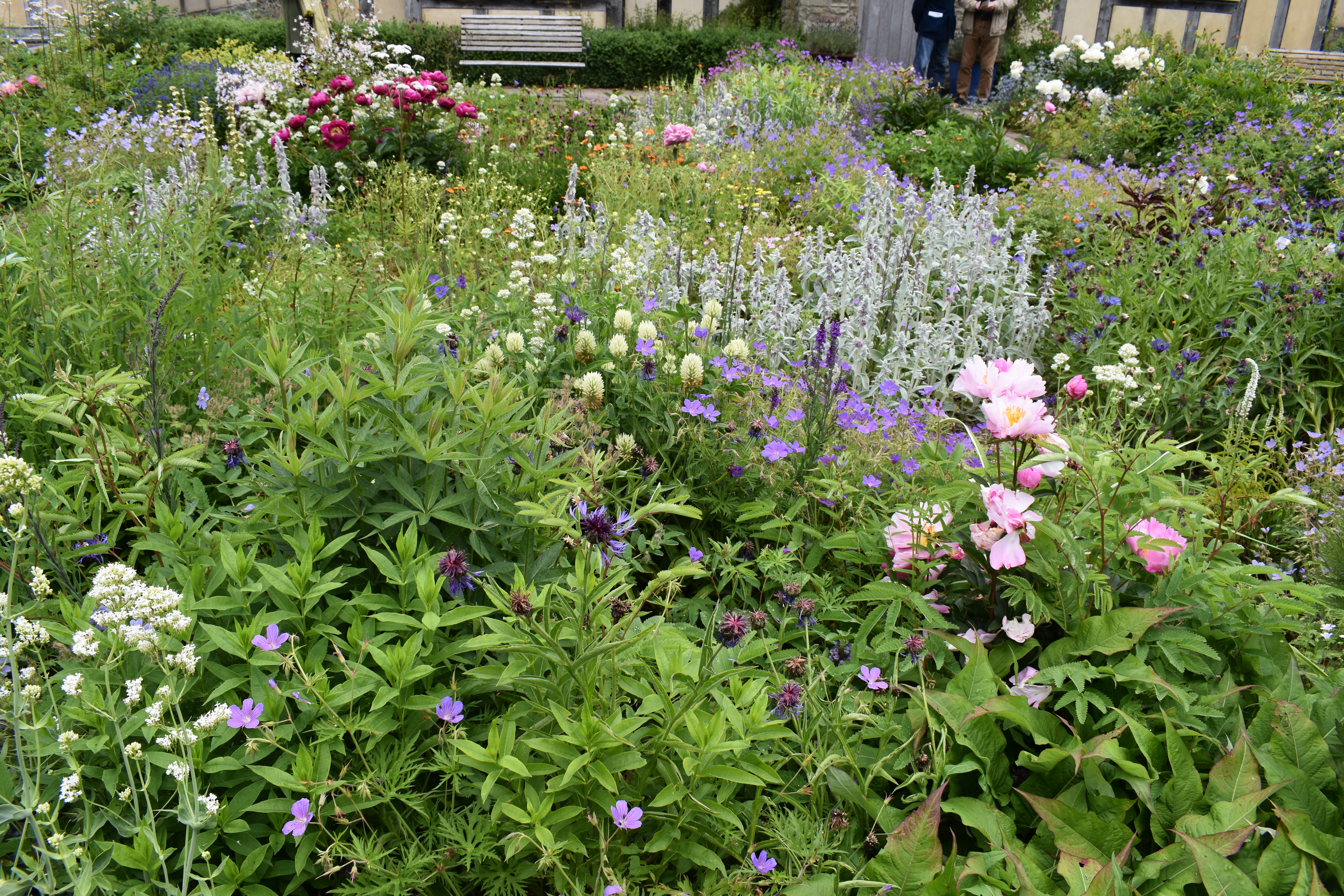
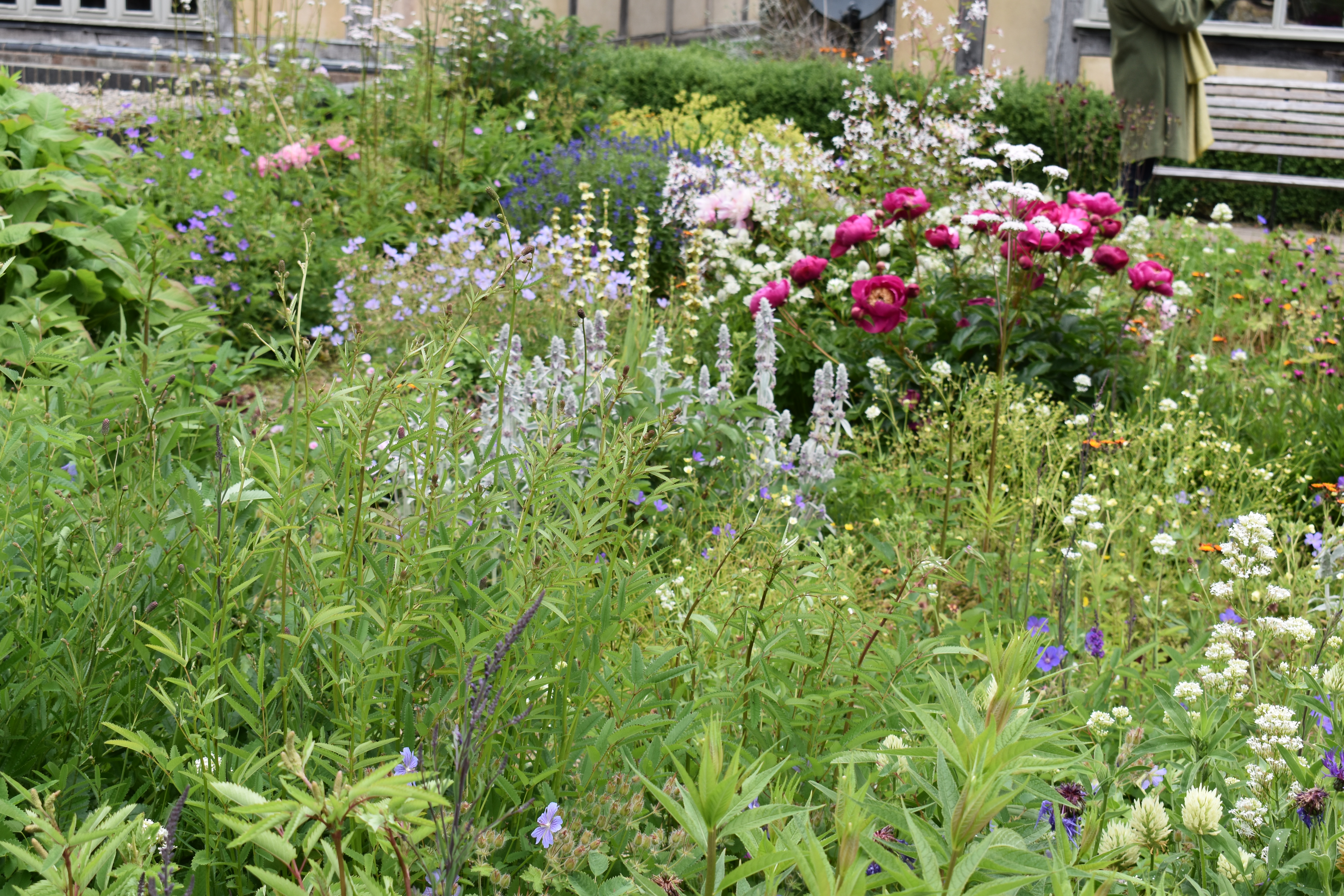
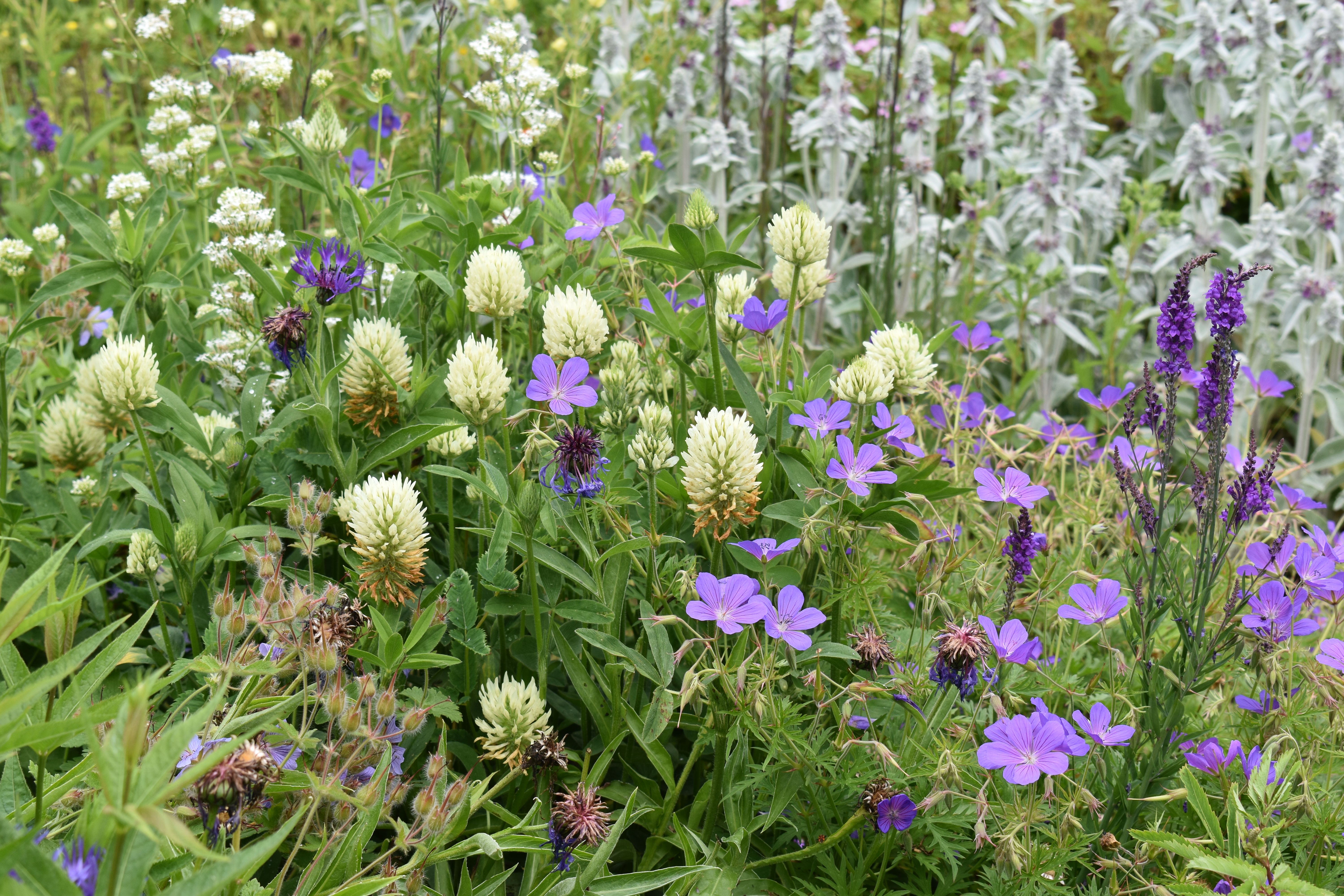
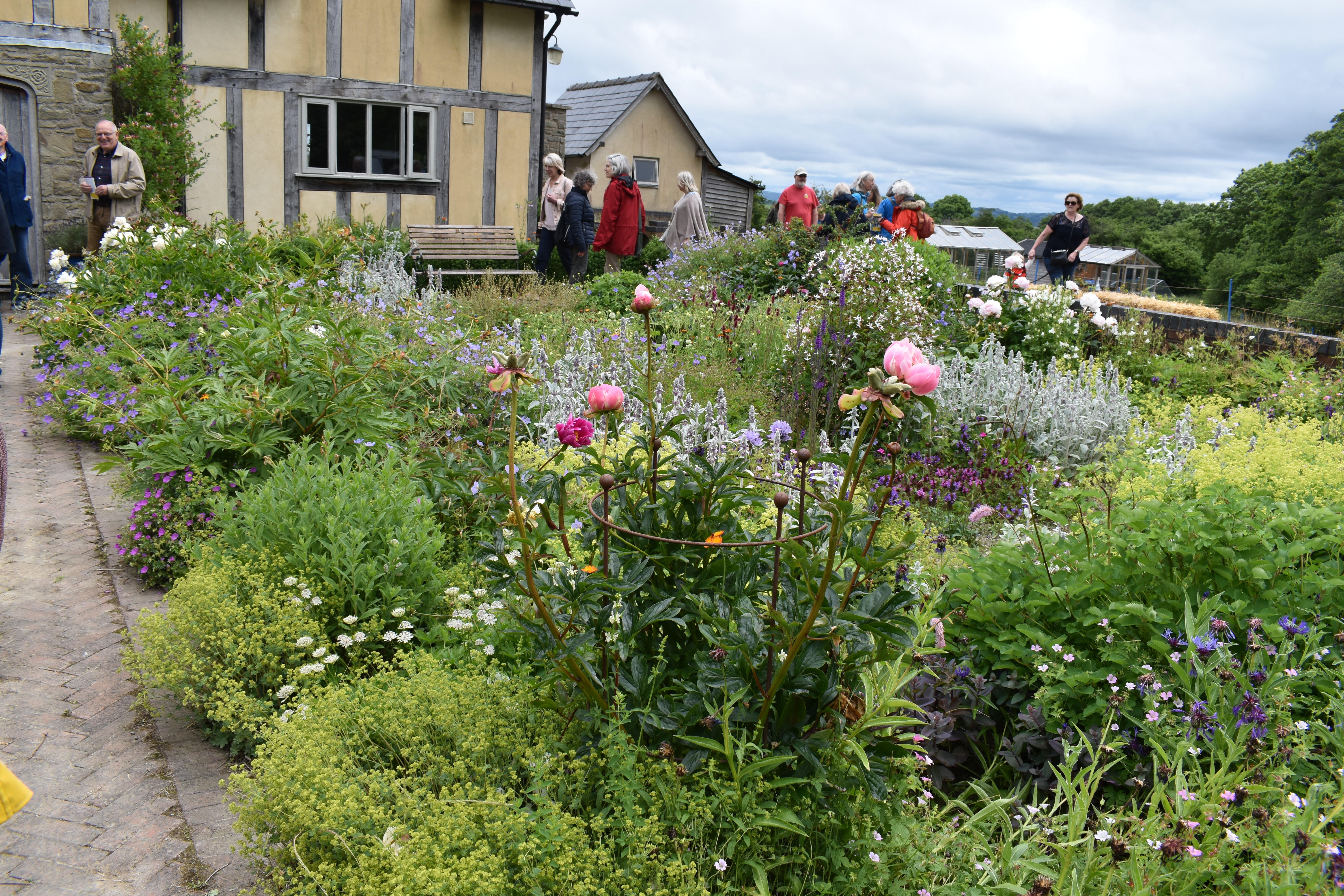
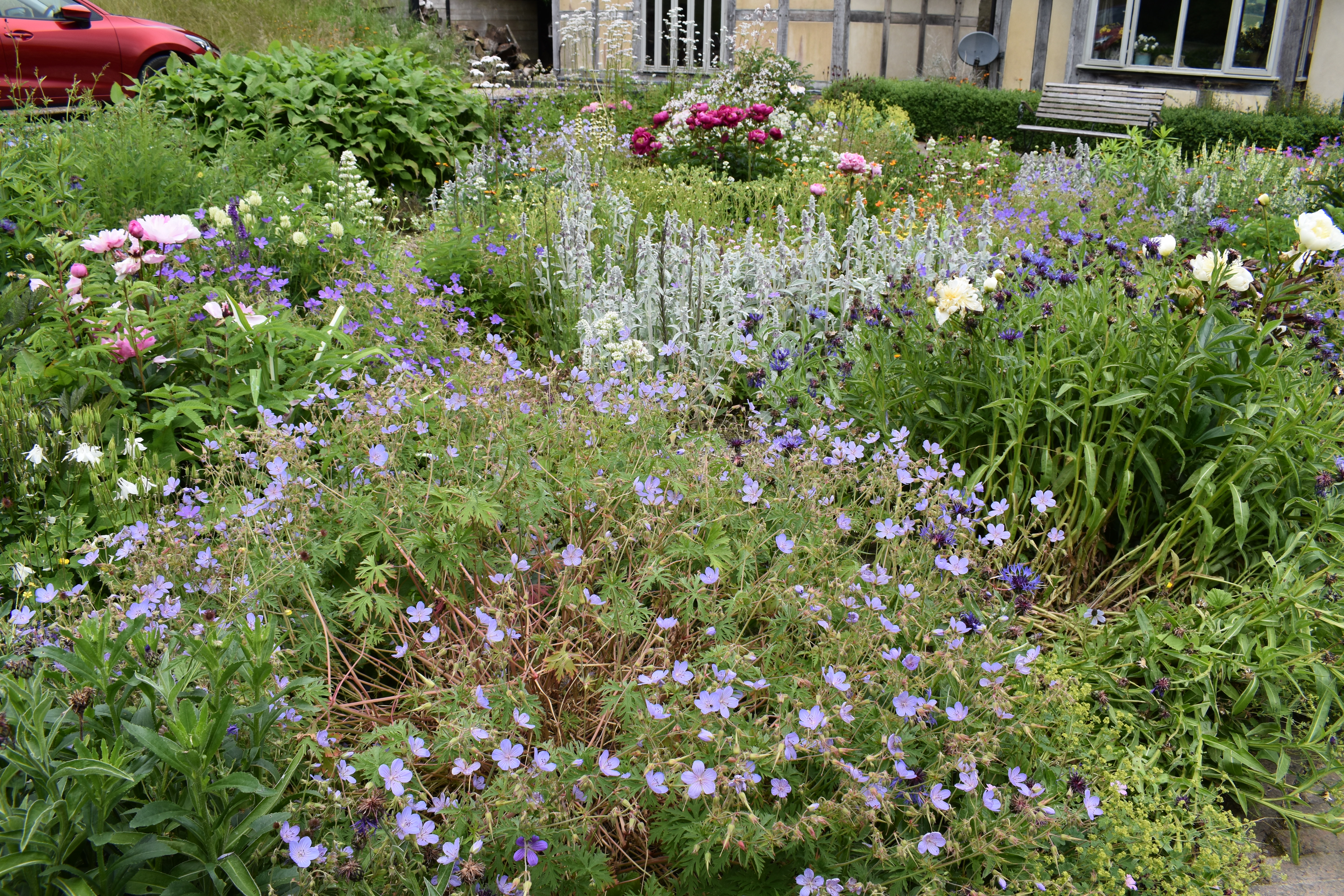
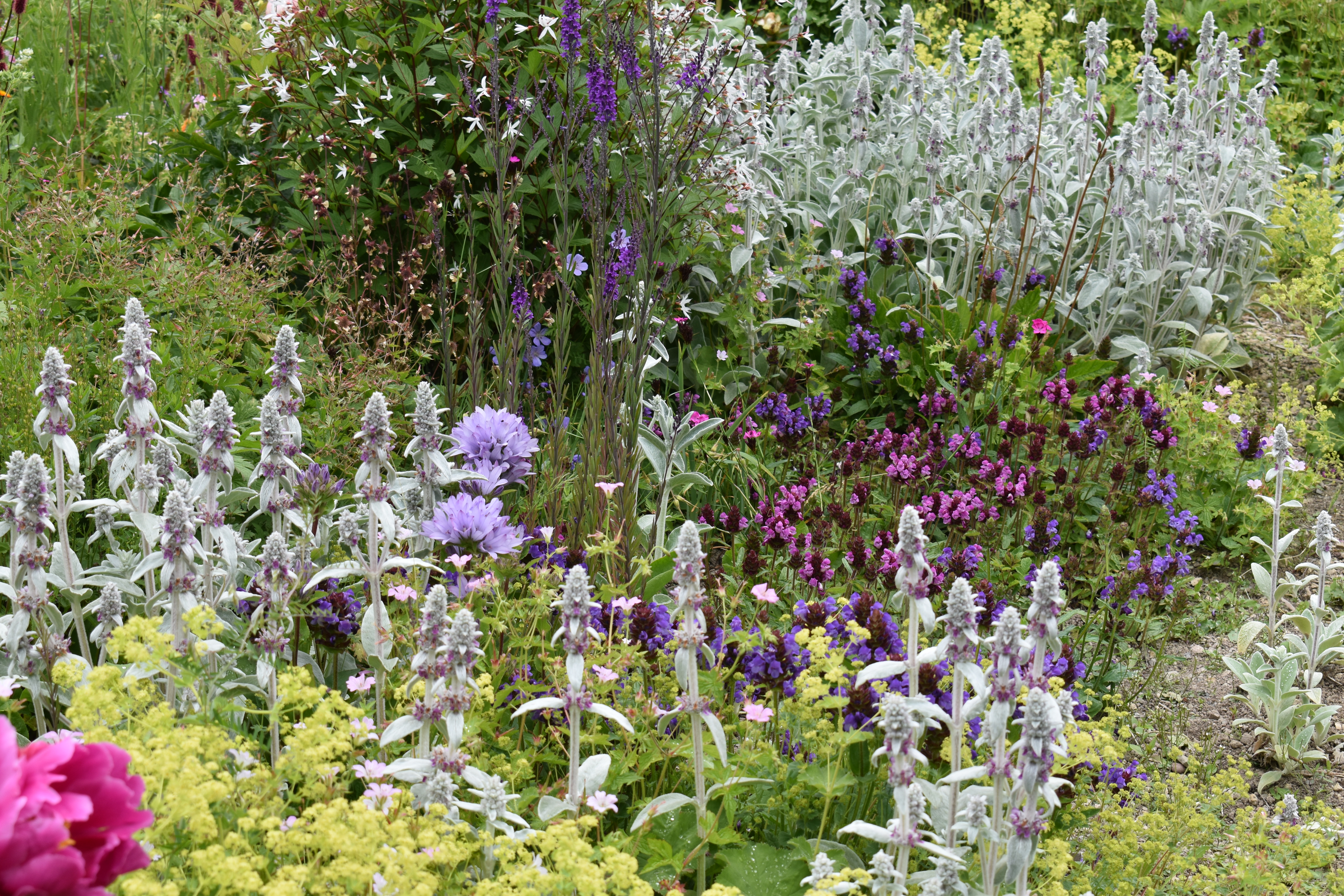
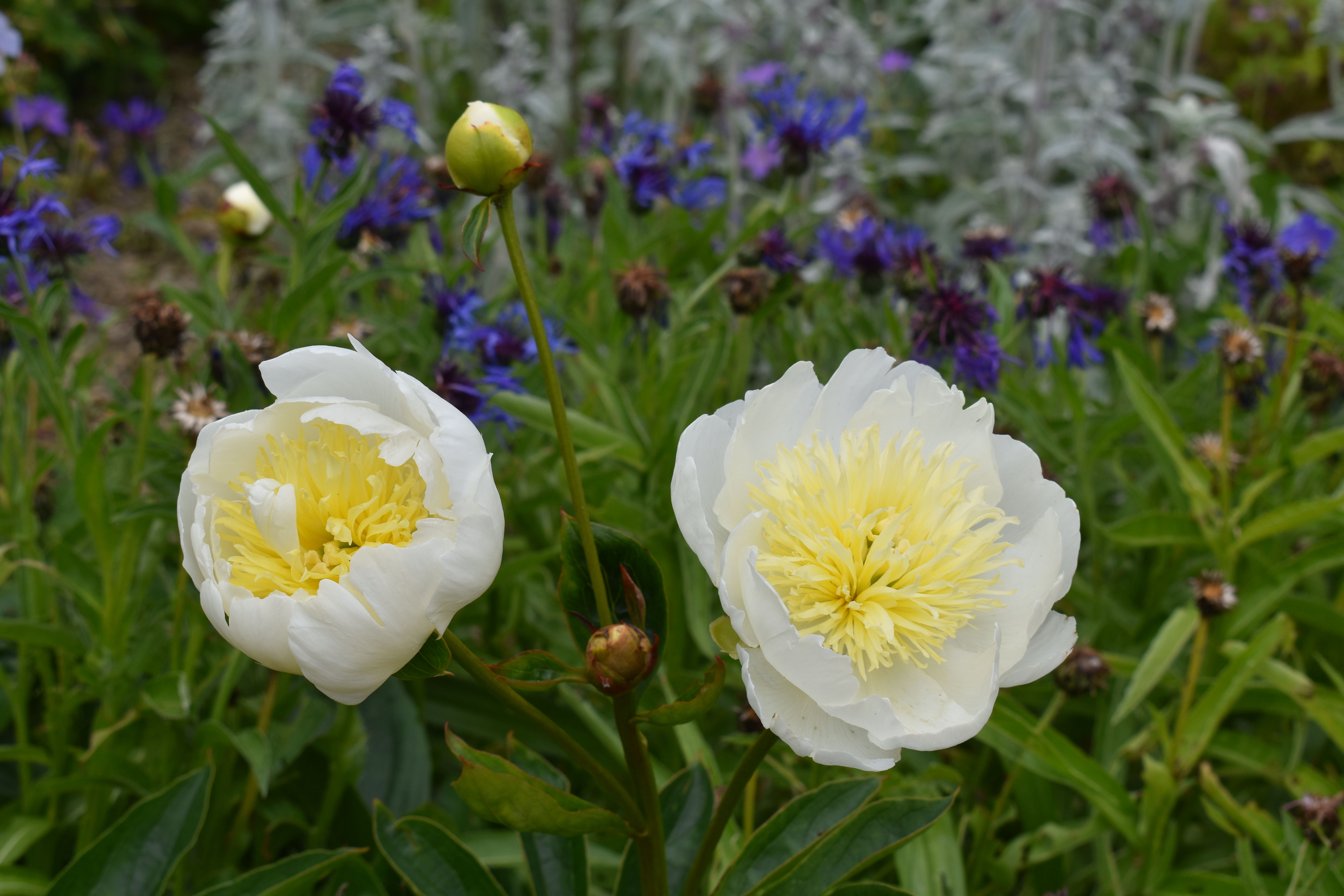
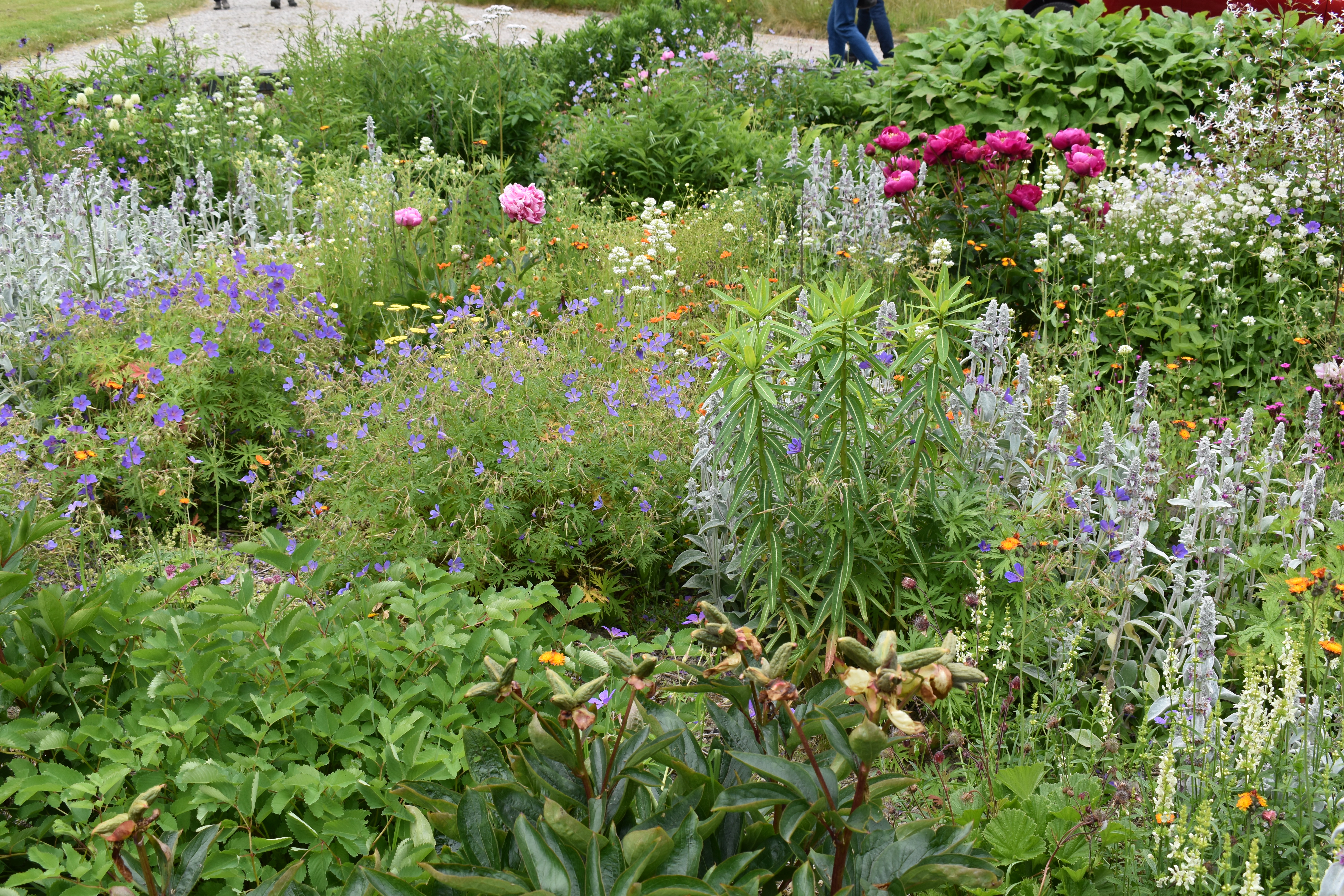
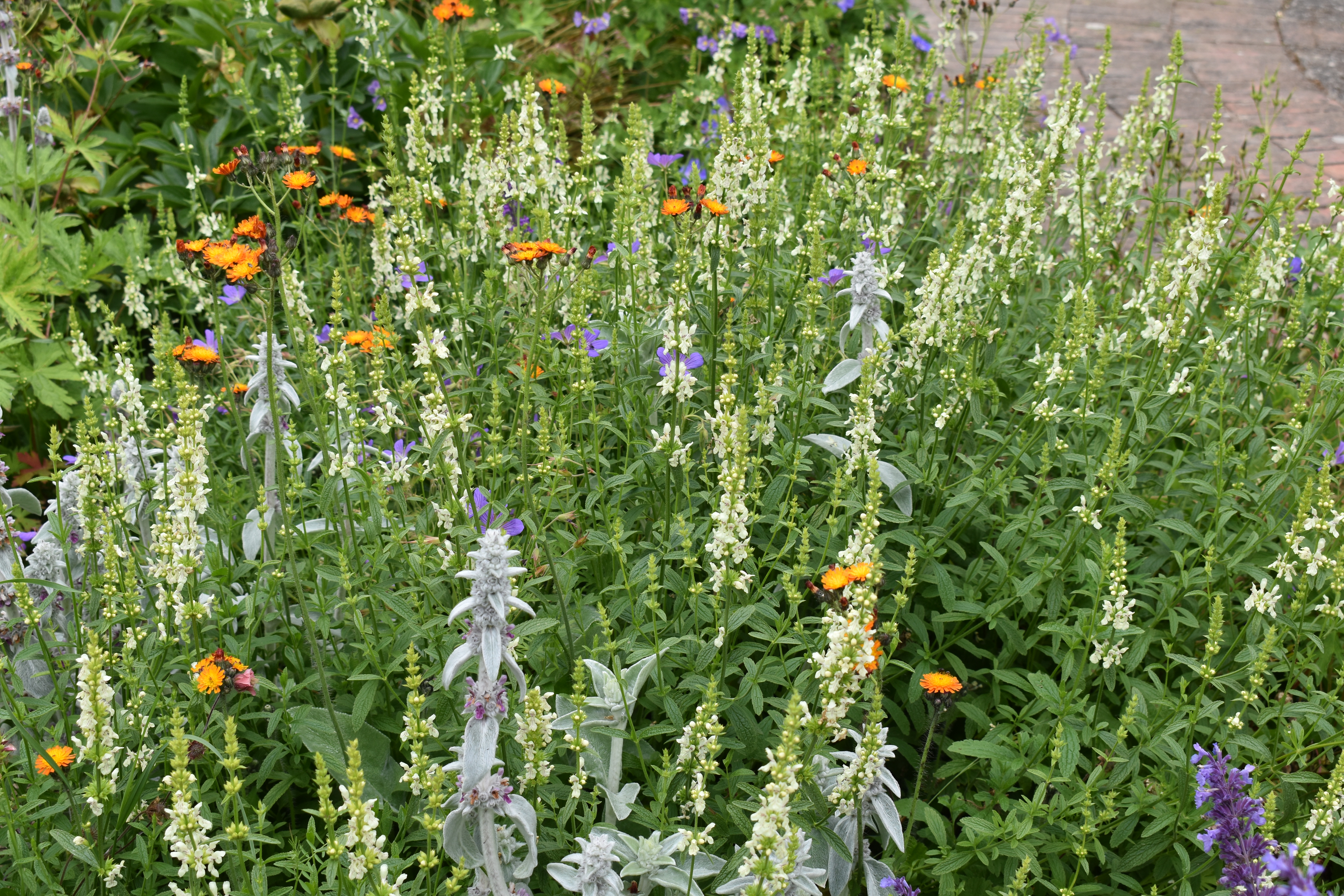
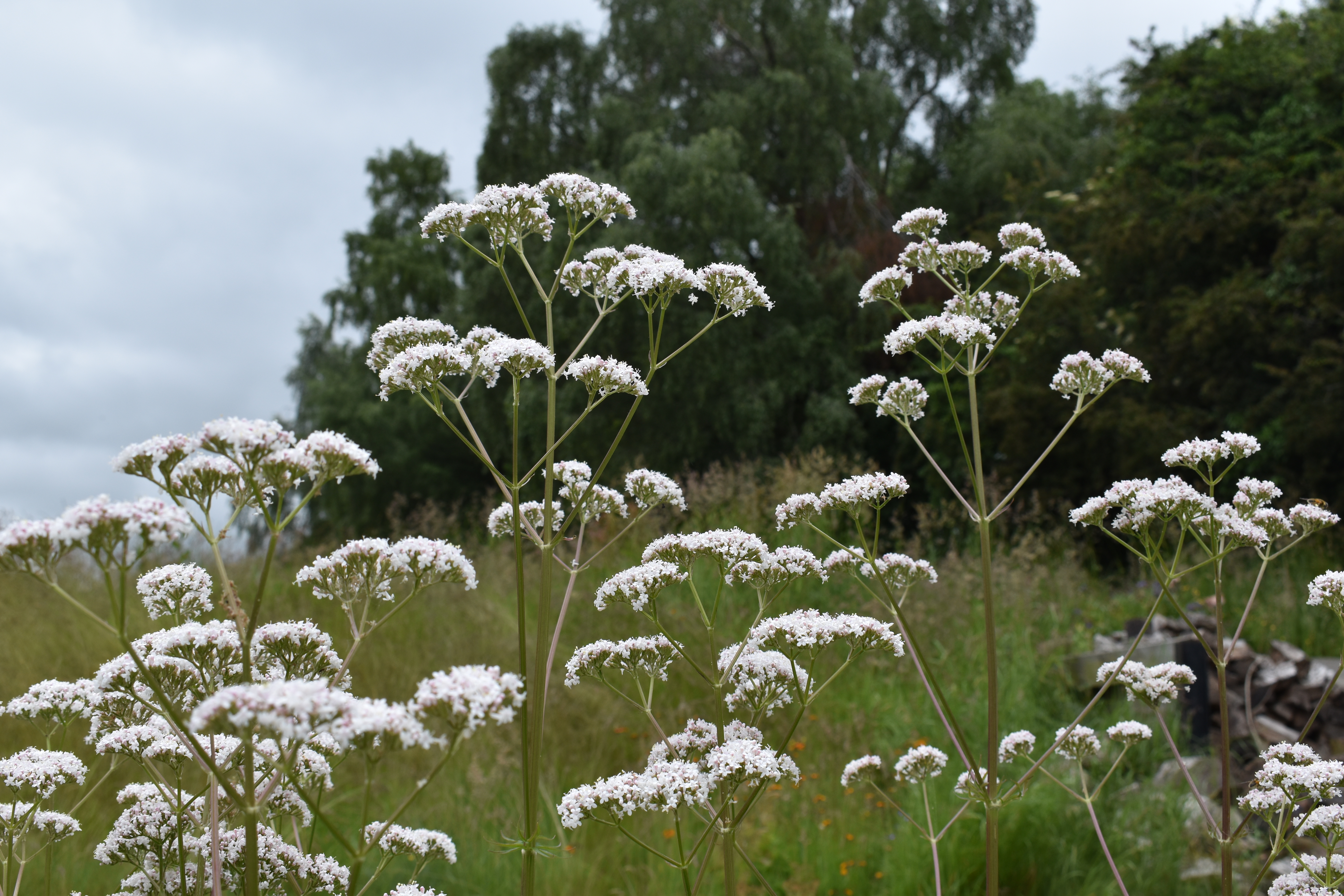
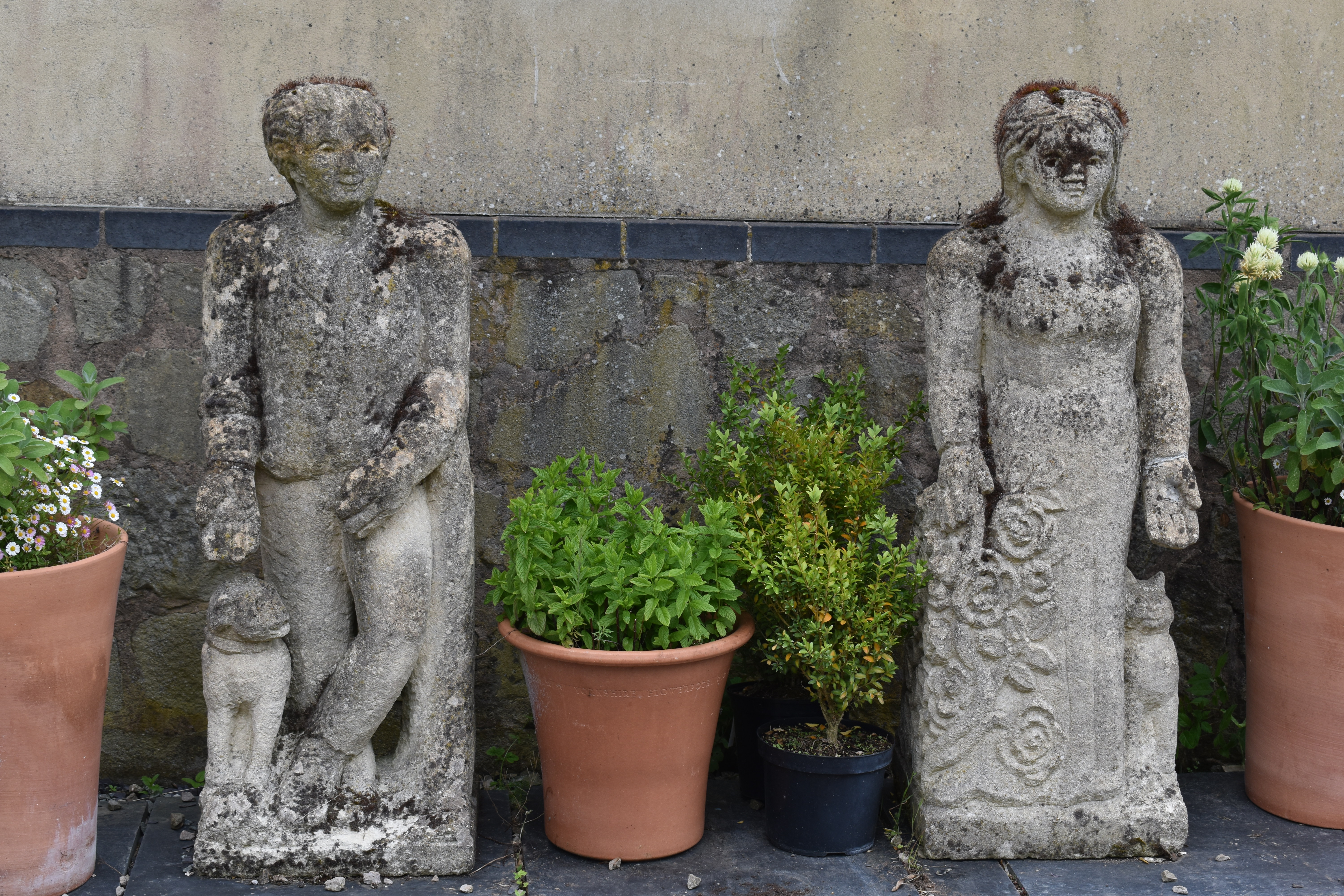
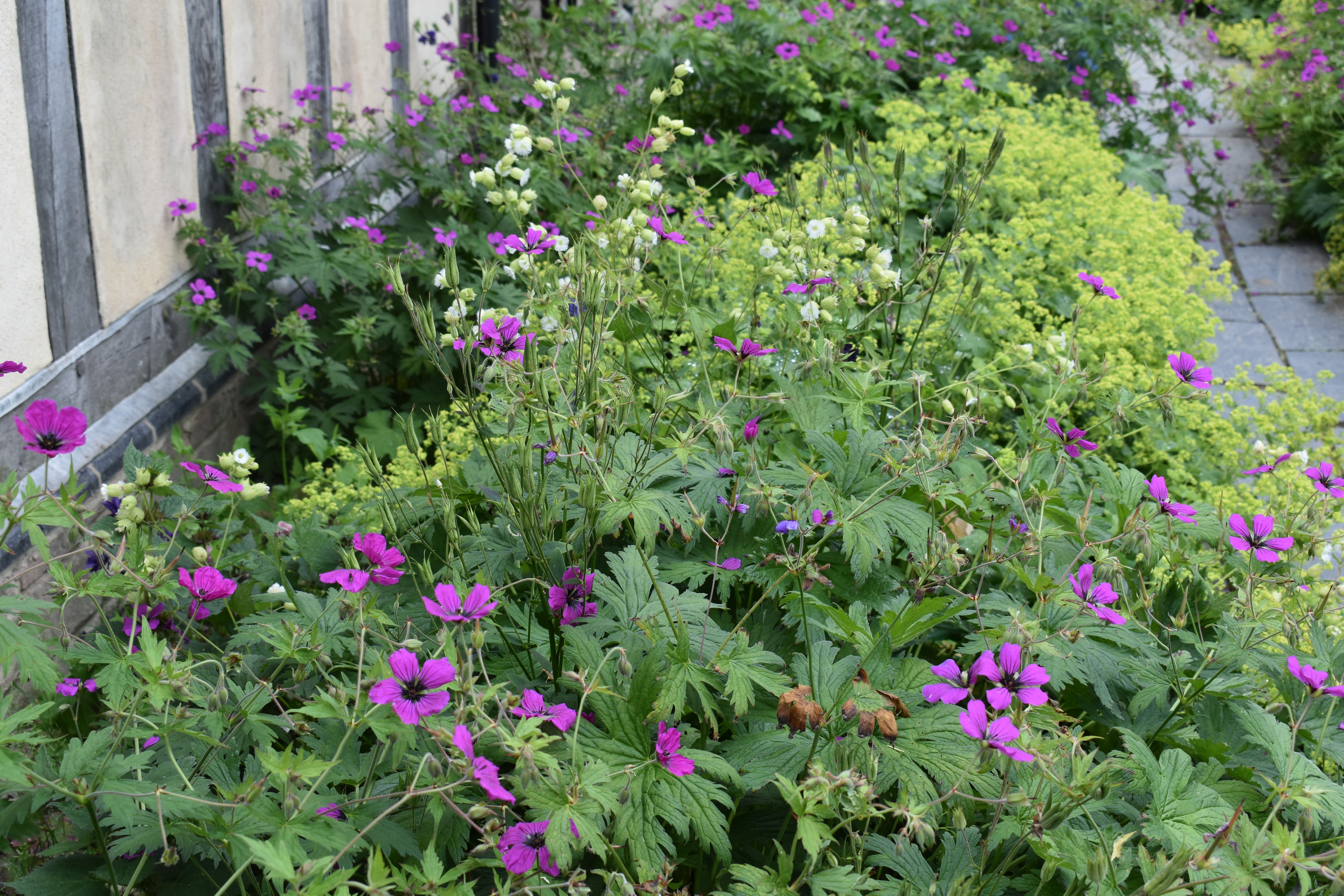
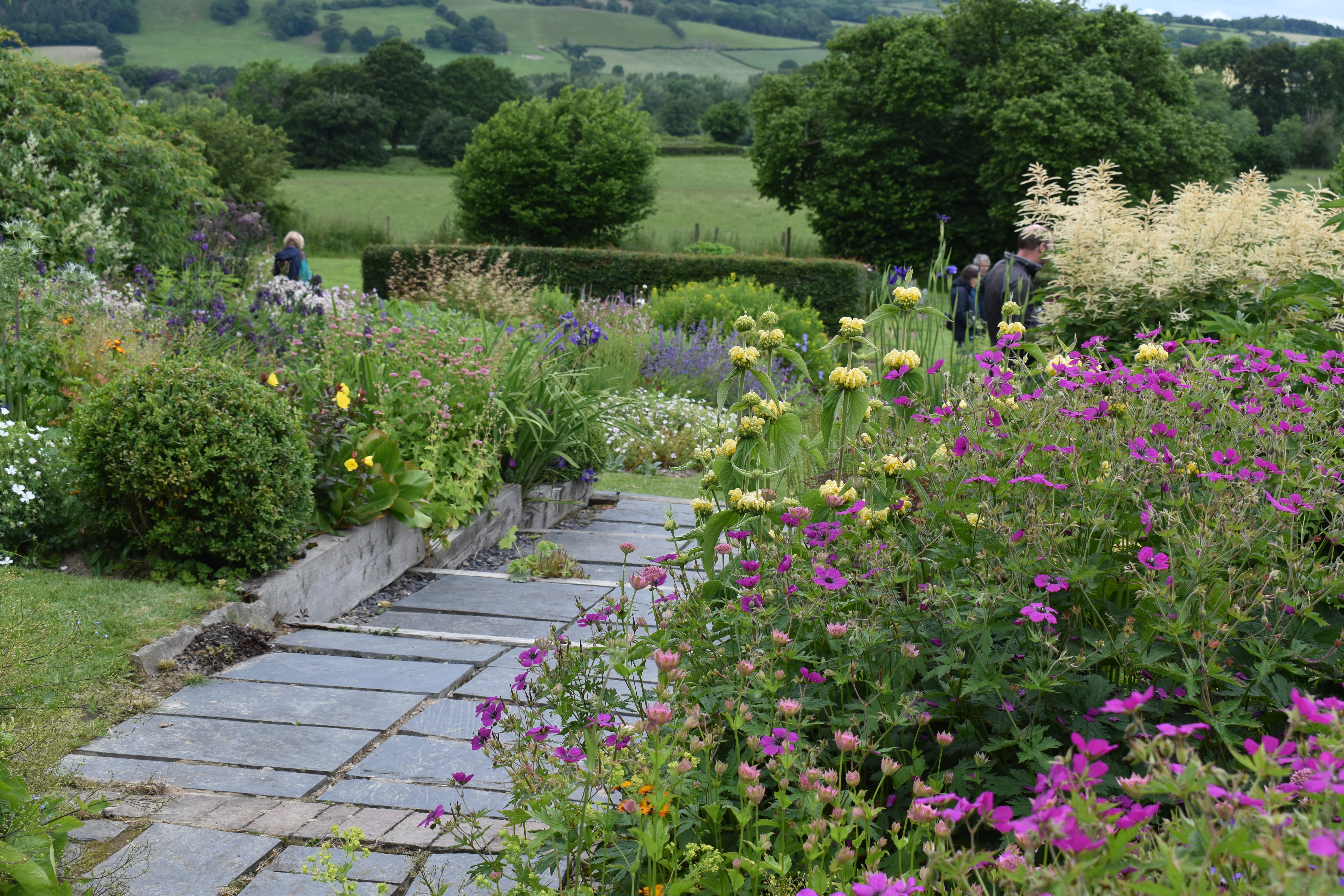
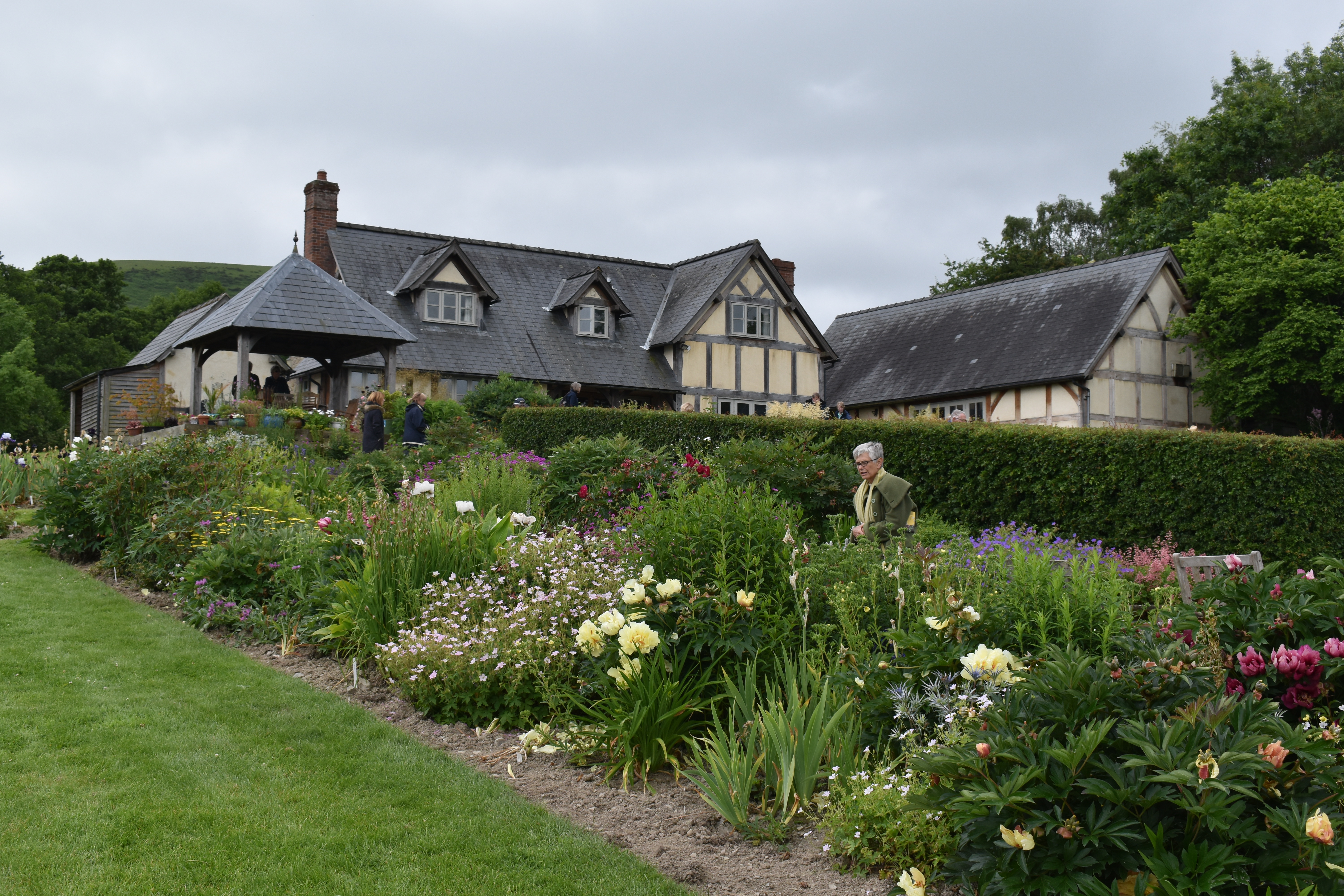
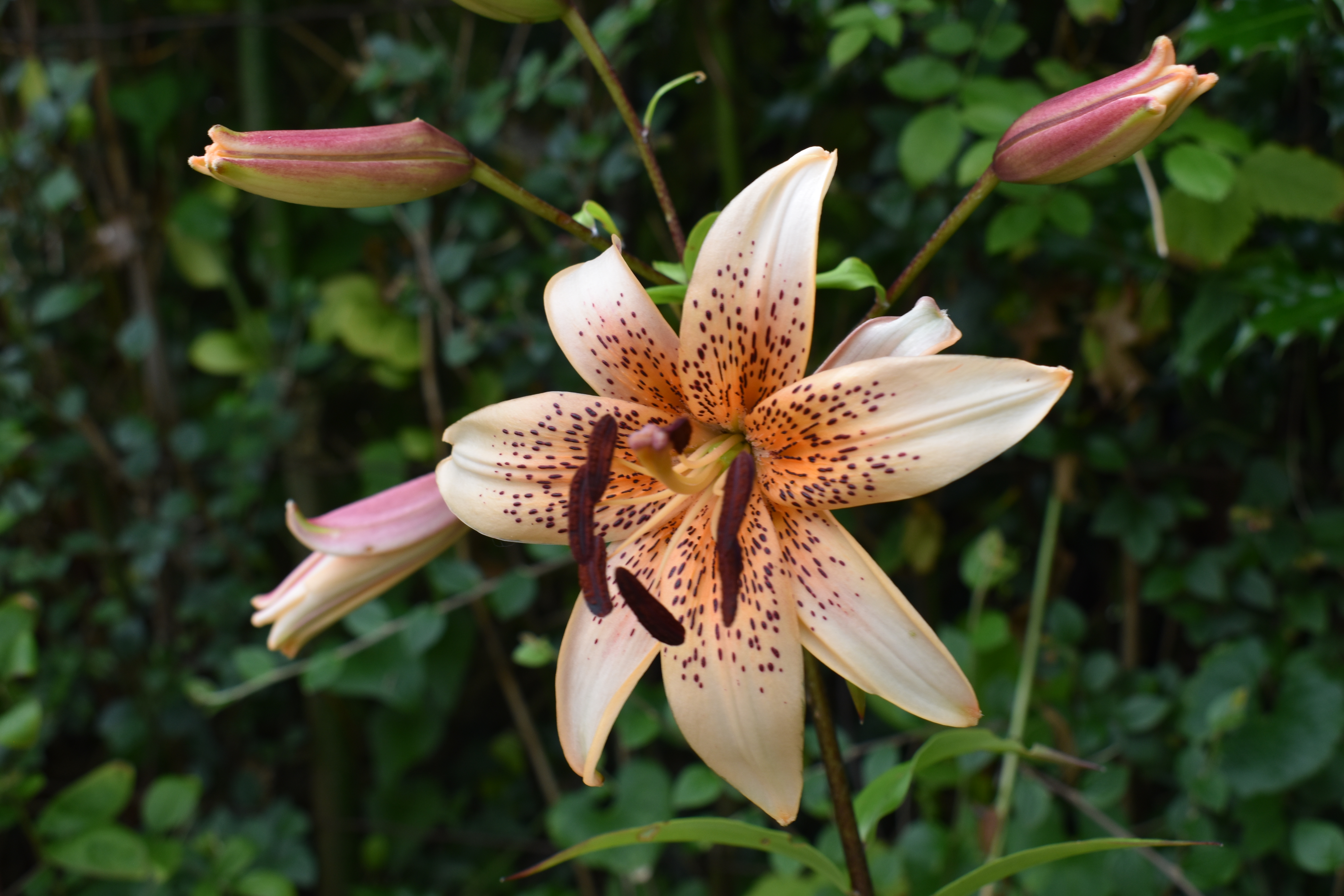
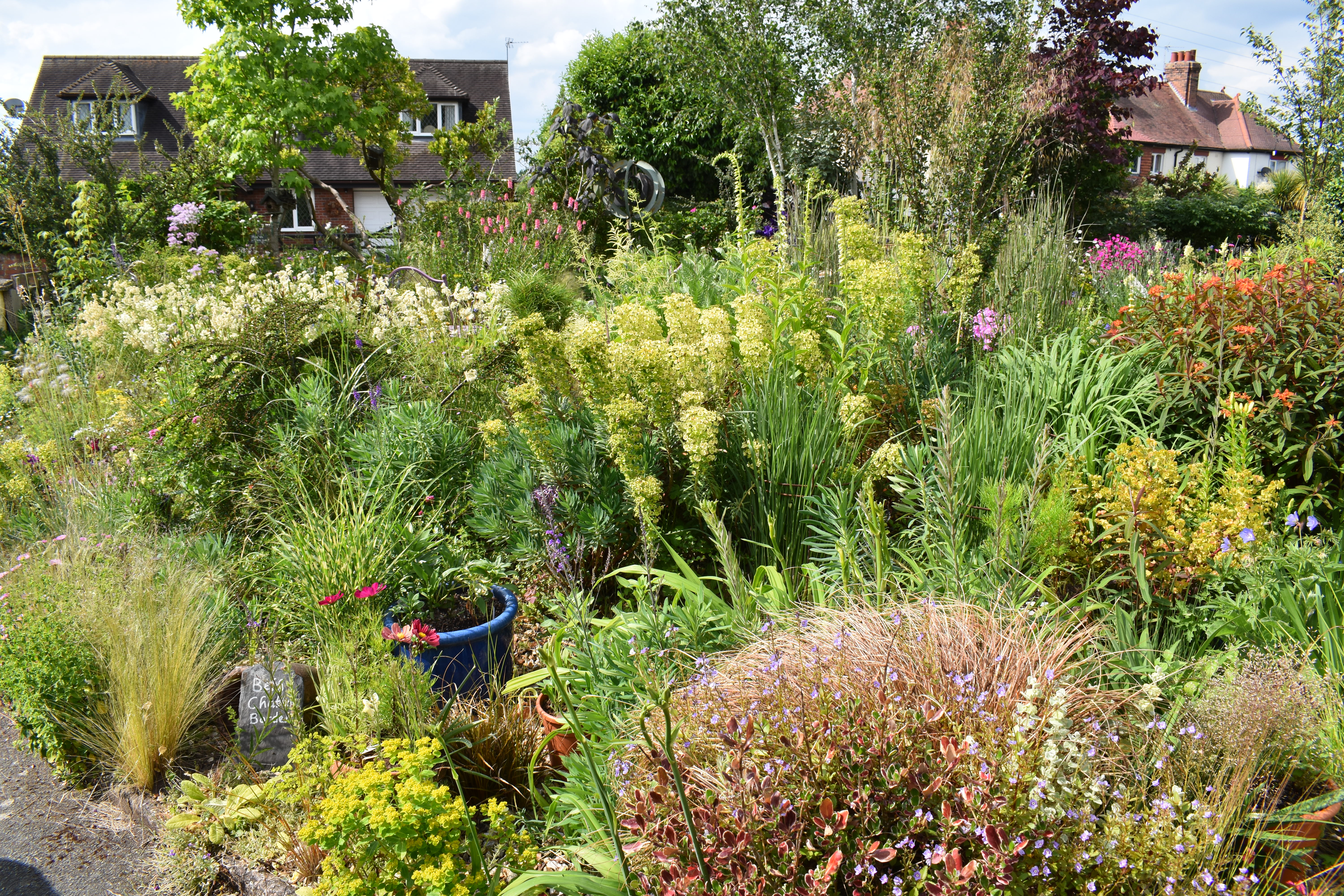
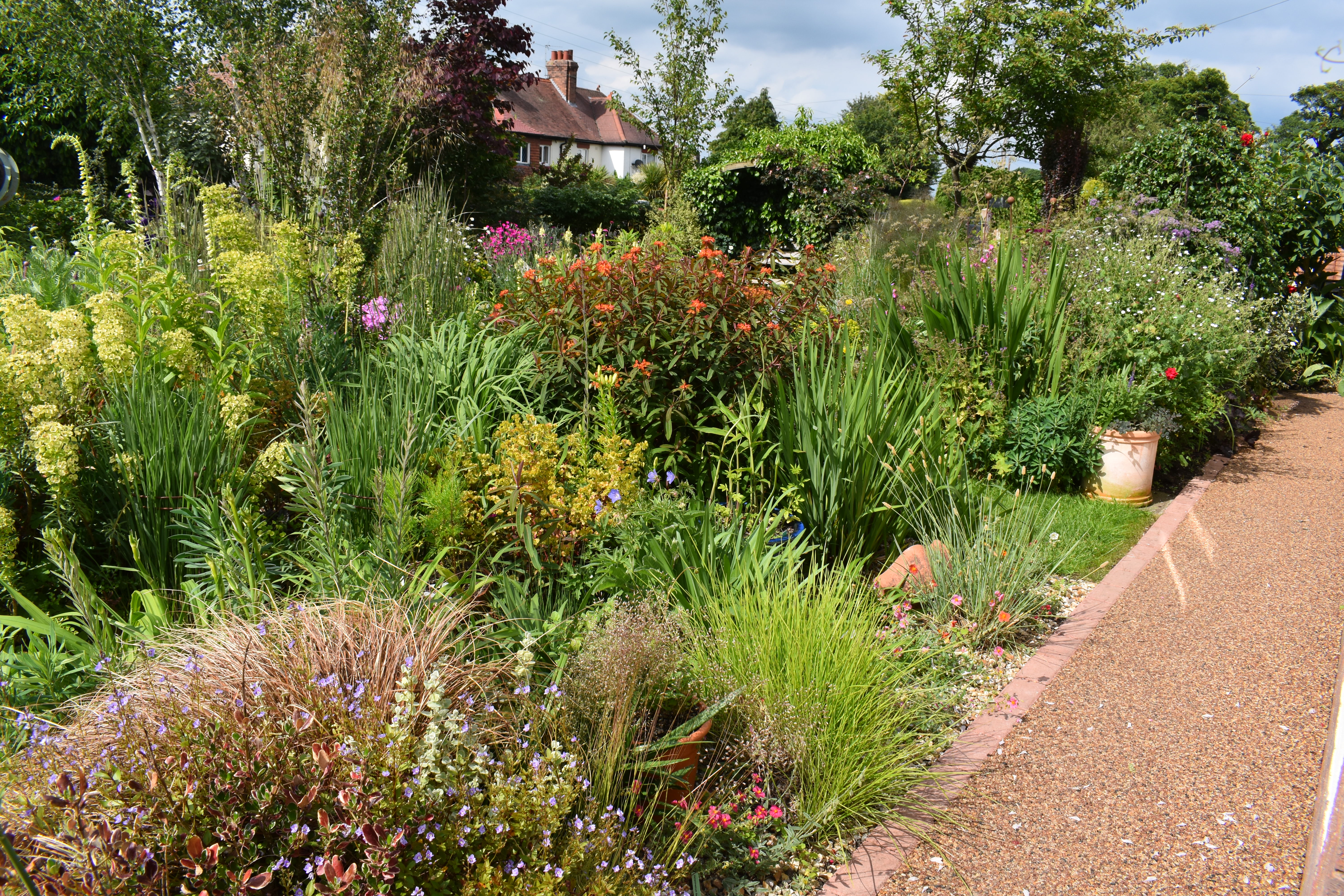
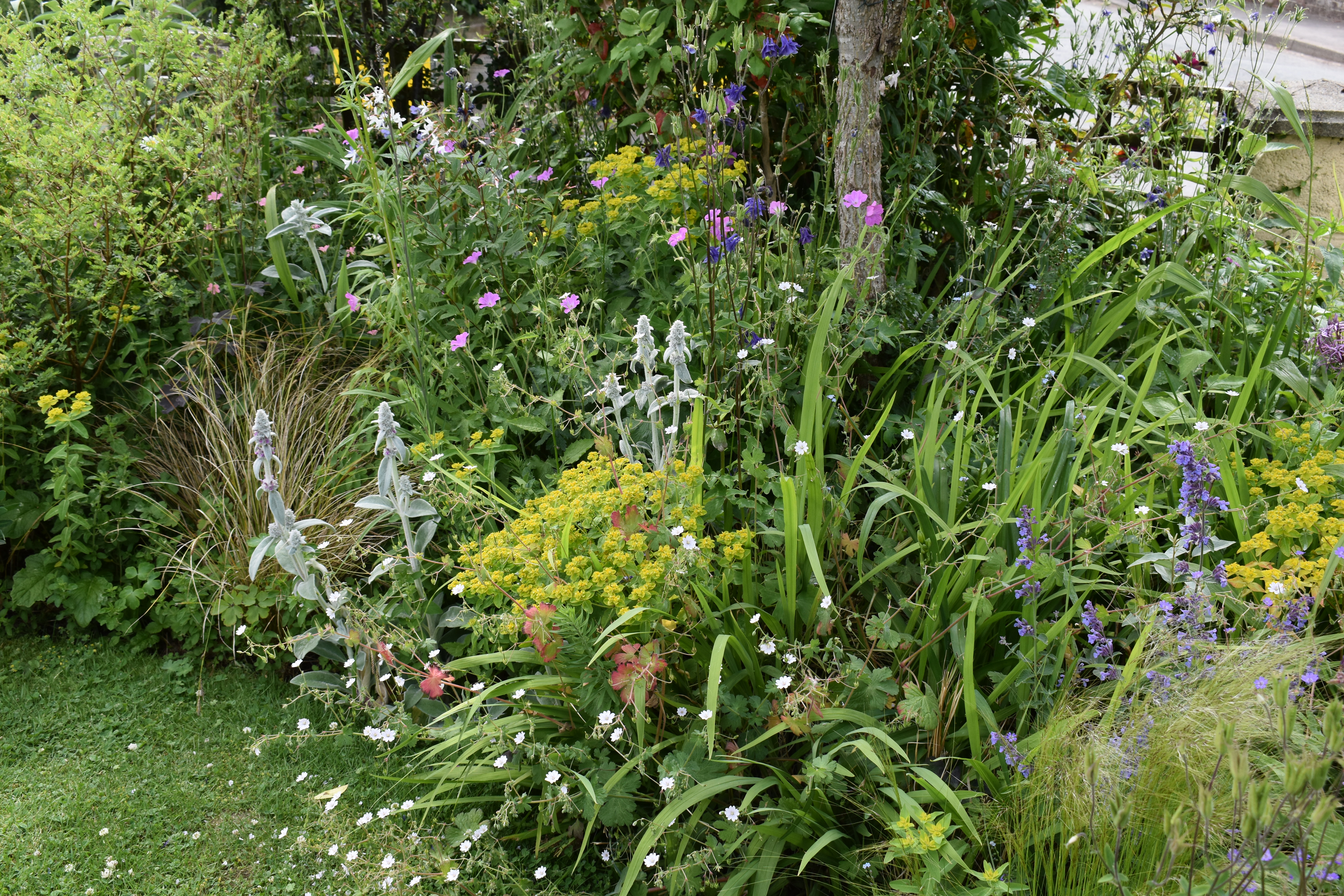
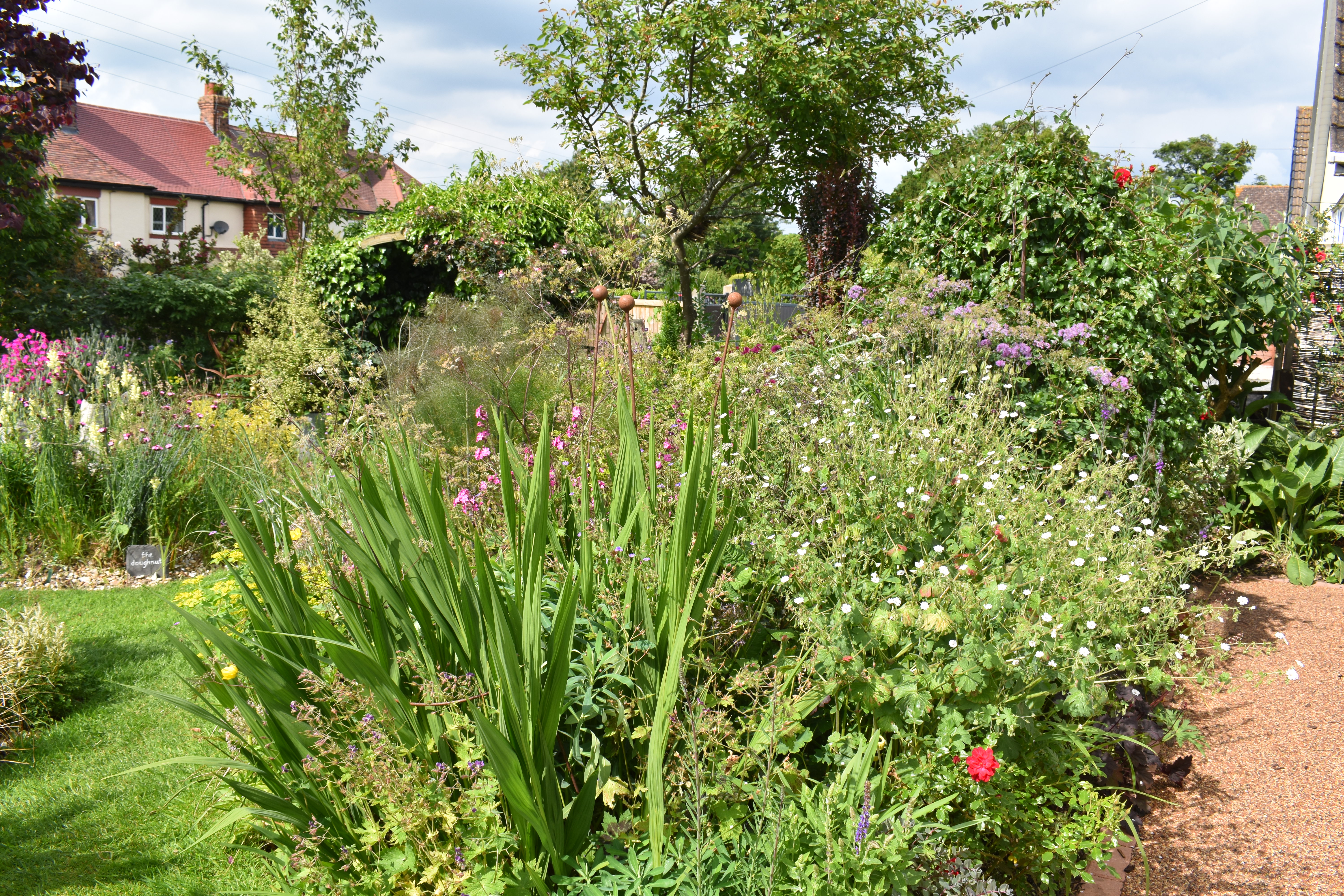
The gardens at Wollerton Old Hall a half hour drive from home are a real treat. Sadly due to Covid-19 restrictions we have not visited for quite a while, but once able to we soon made a return visit.
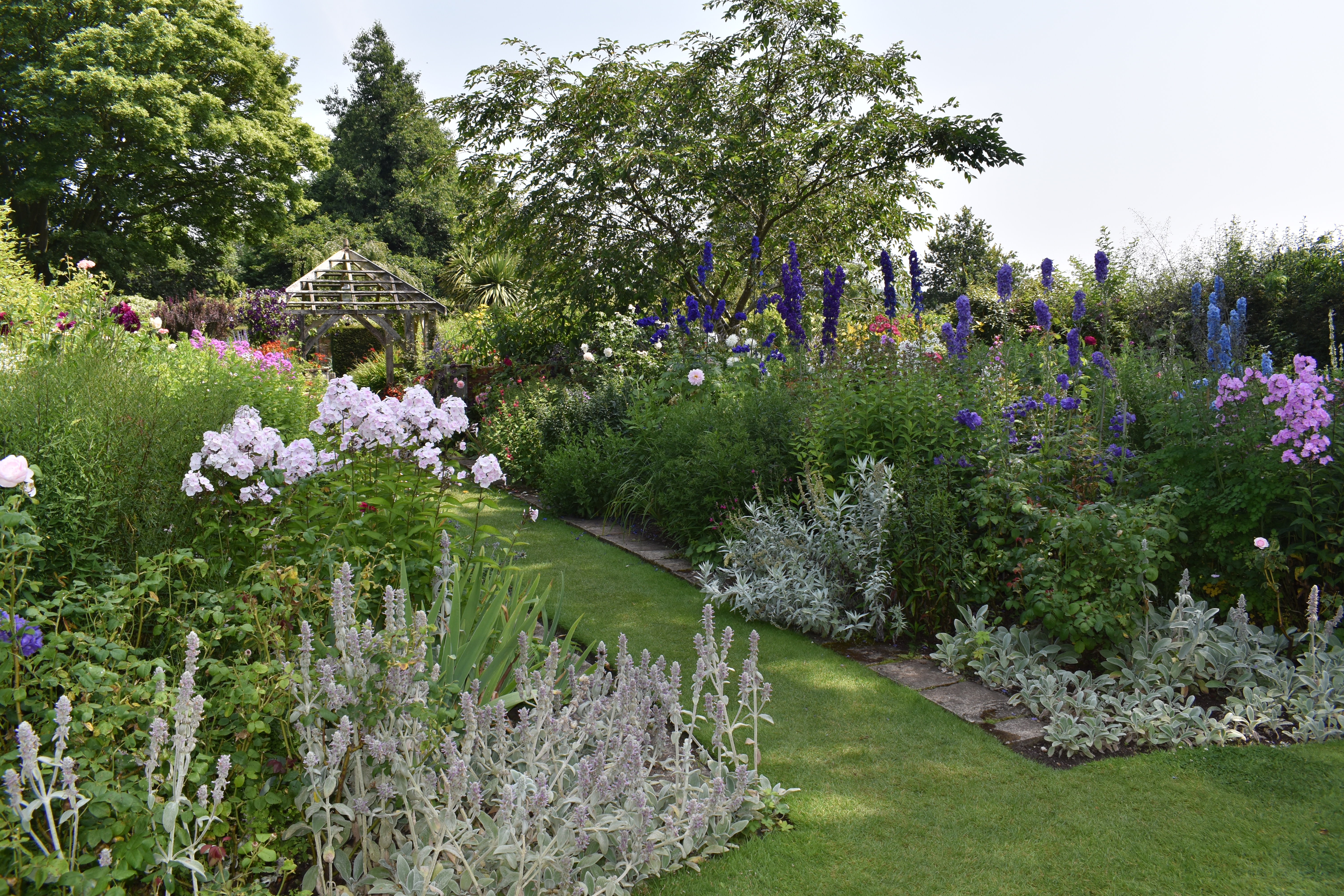
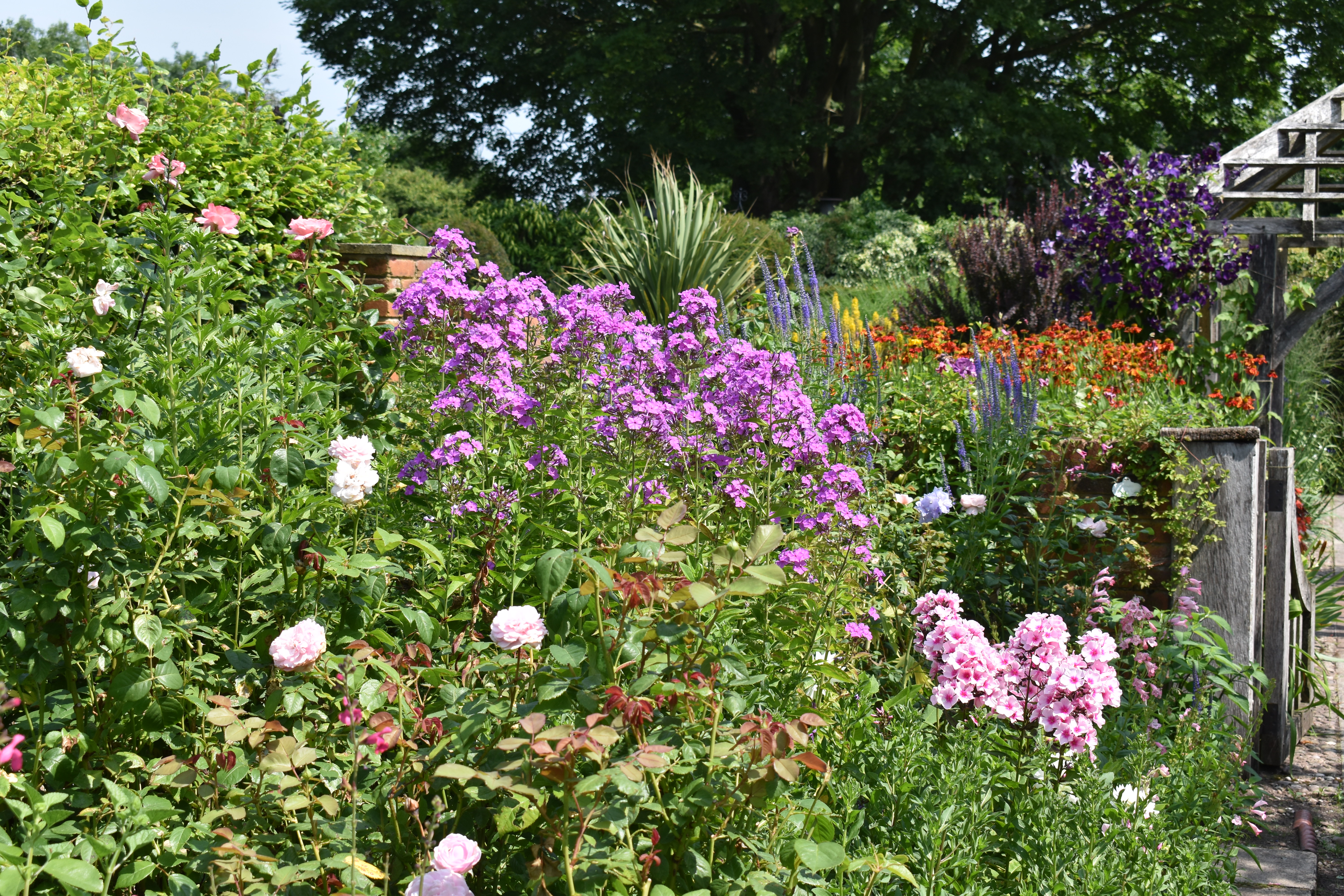
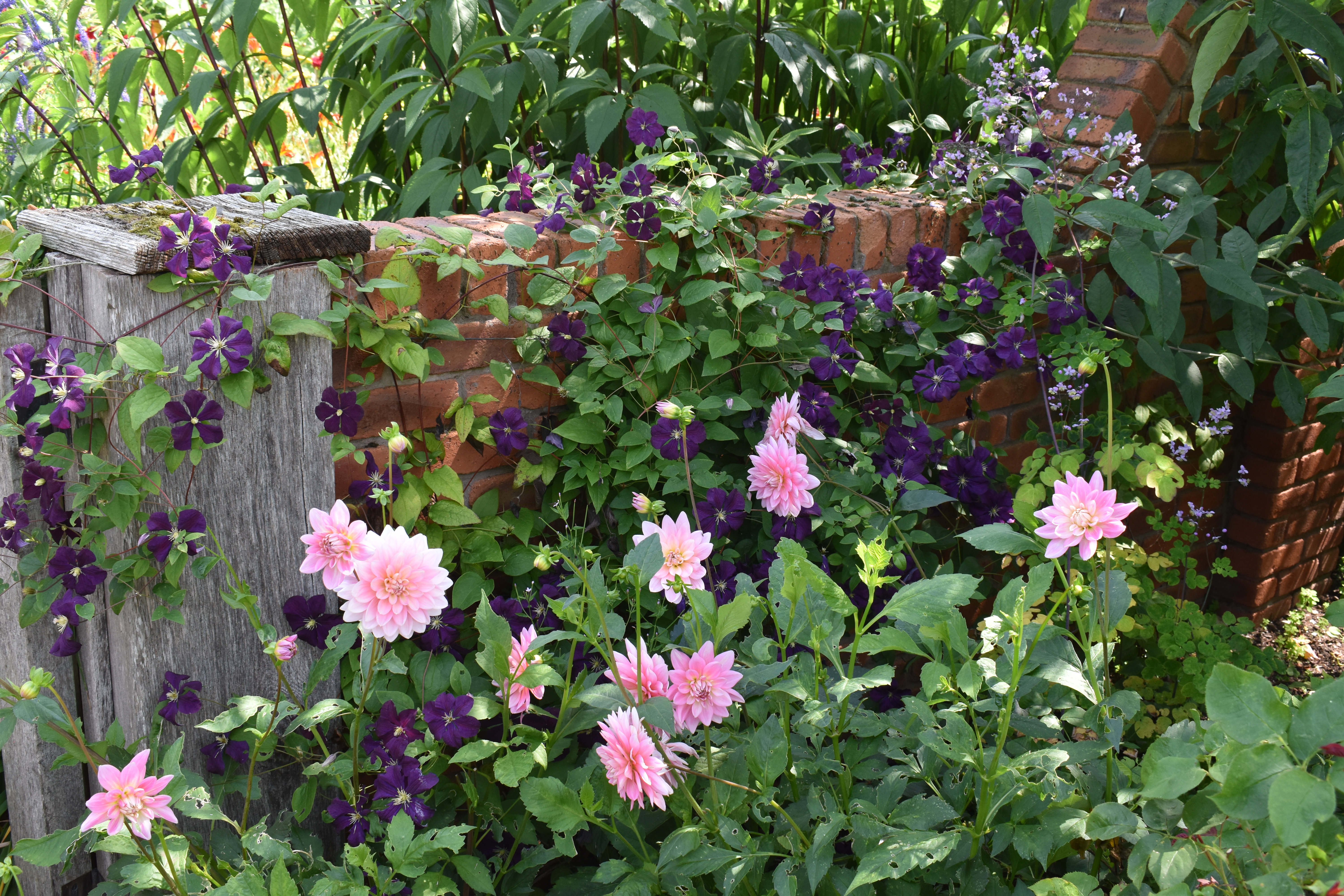
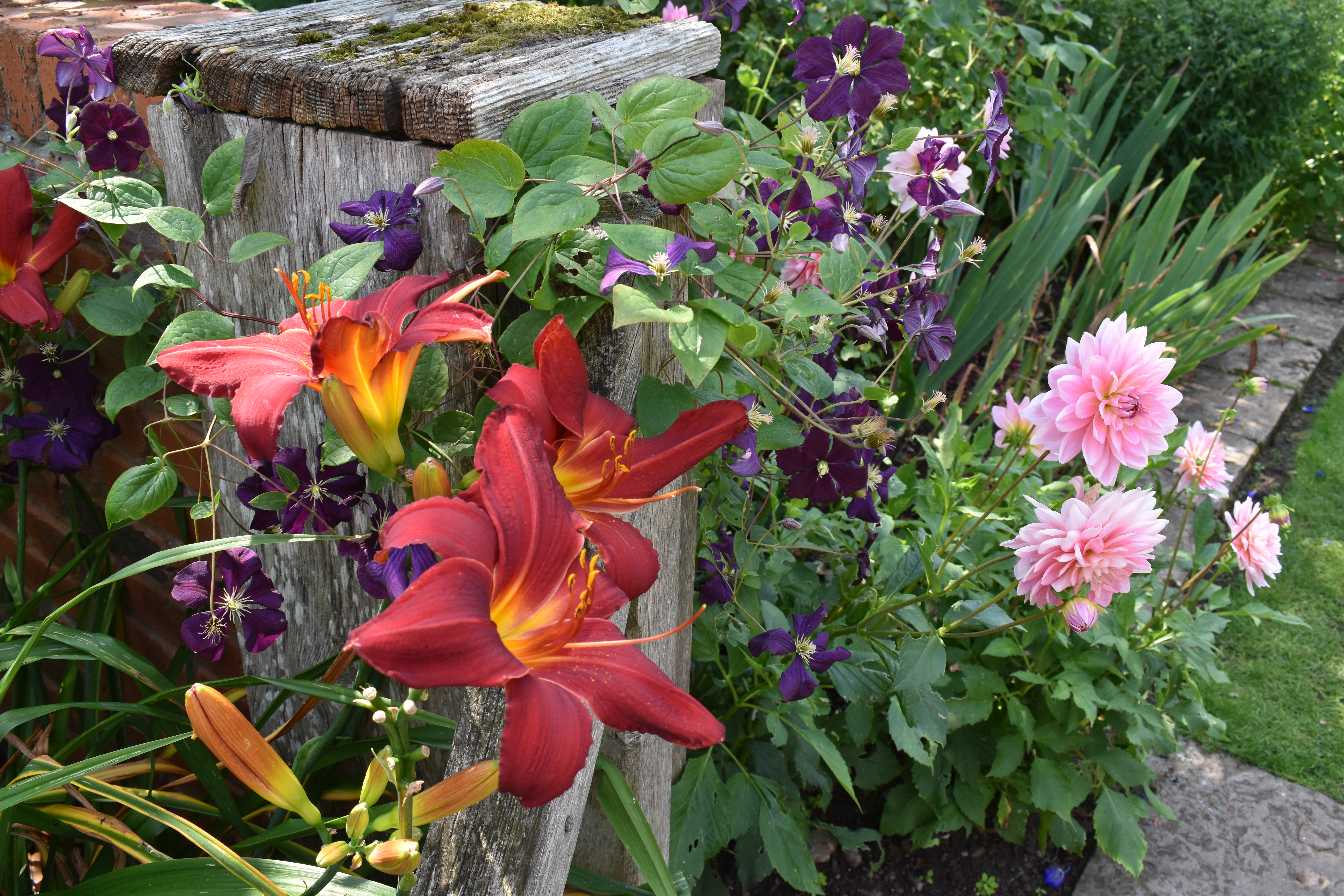
We knew we were guaranteed a real treat and met up there with old friends from college days in late July. The hall and its welcoming plantings always set us up for what we have to look forward to.
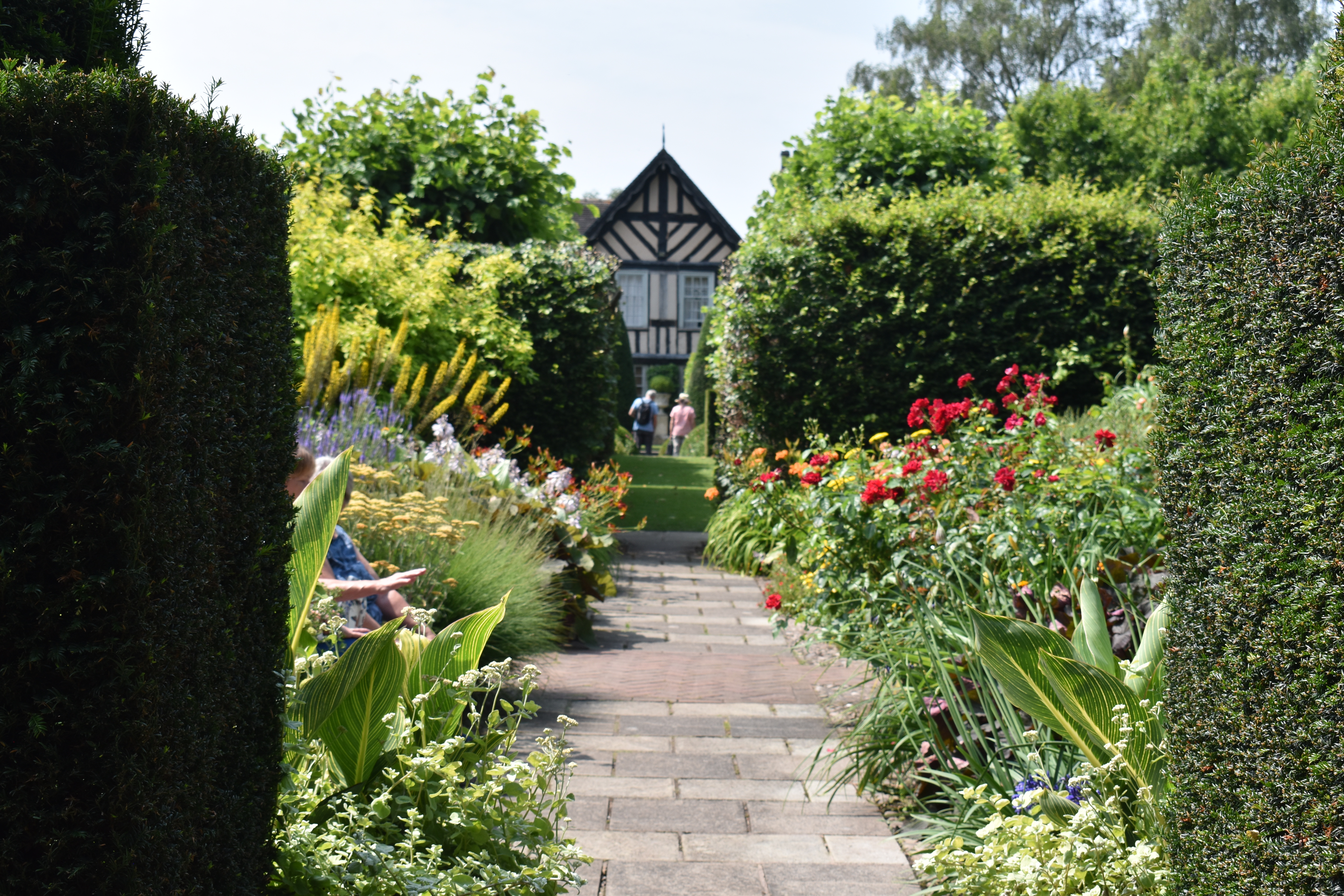
The garden is a four acre site divided into many rooms of differing atmosphere and themes, each one a true delight. It was created in the second half of the 20th century and has never stopped developing in subtle ways.
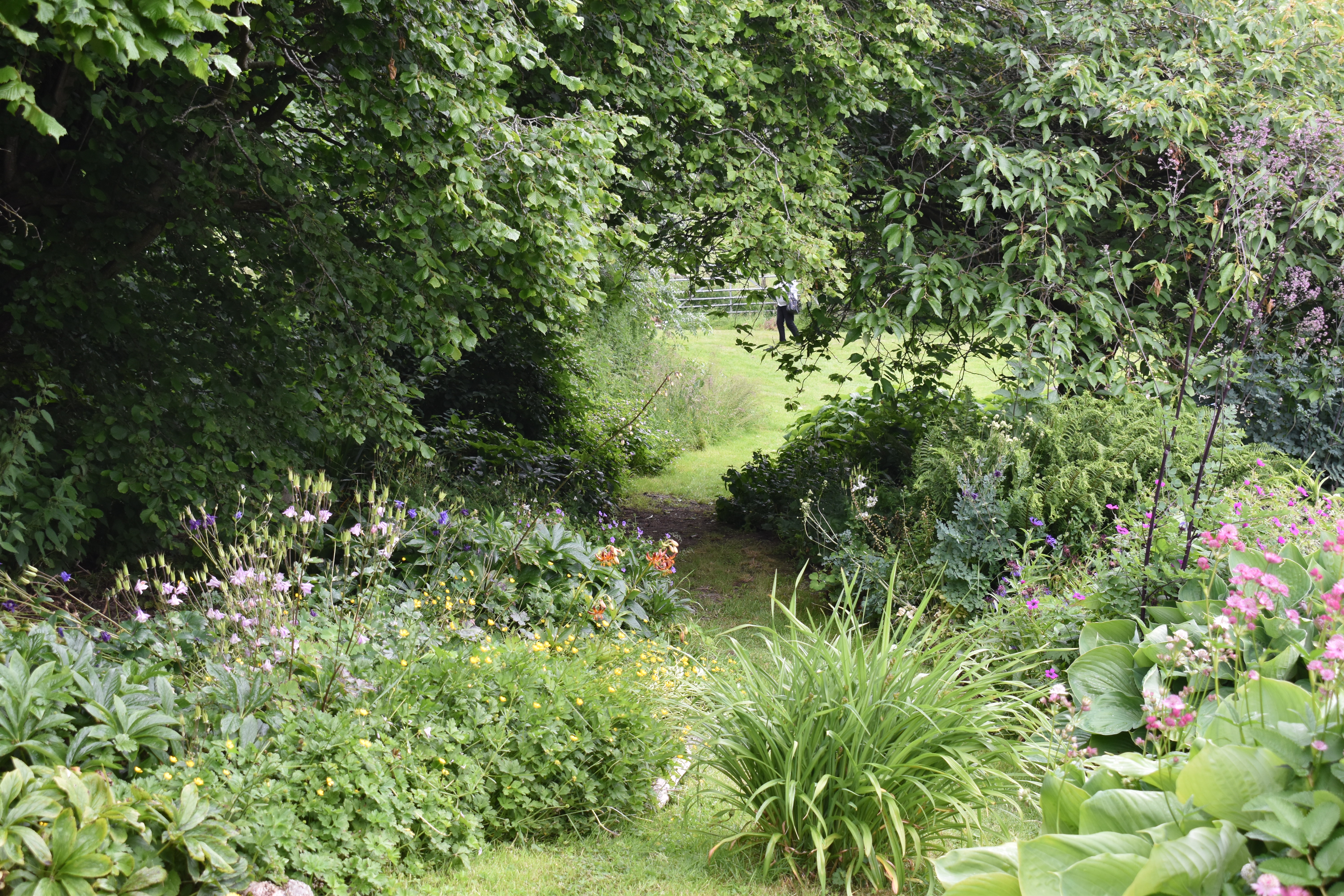
Some rooms are strongly formal in structure and based mainly on greens while others overflow with colour. The rooms are entered through arches and gateways thus giving visitors lots of fresh surprises.
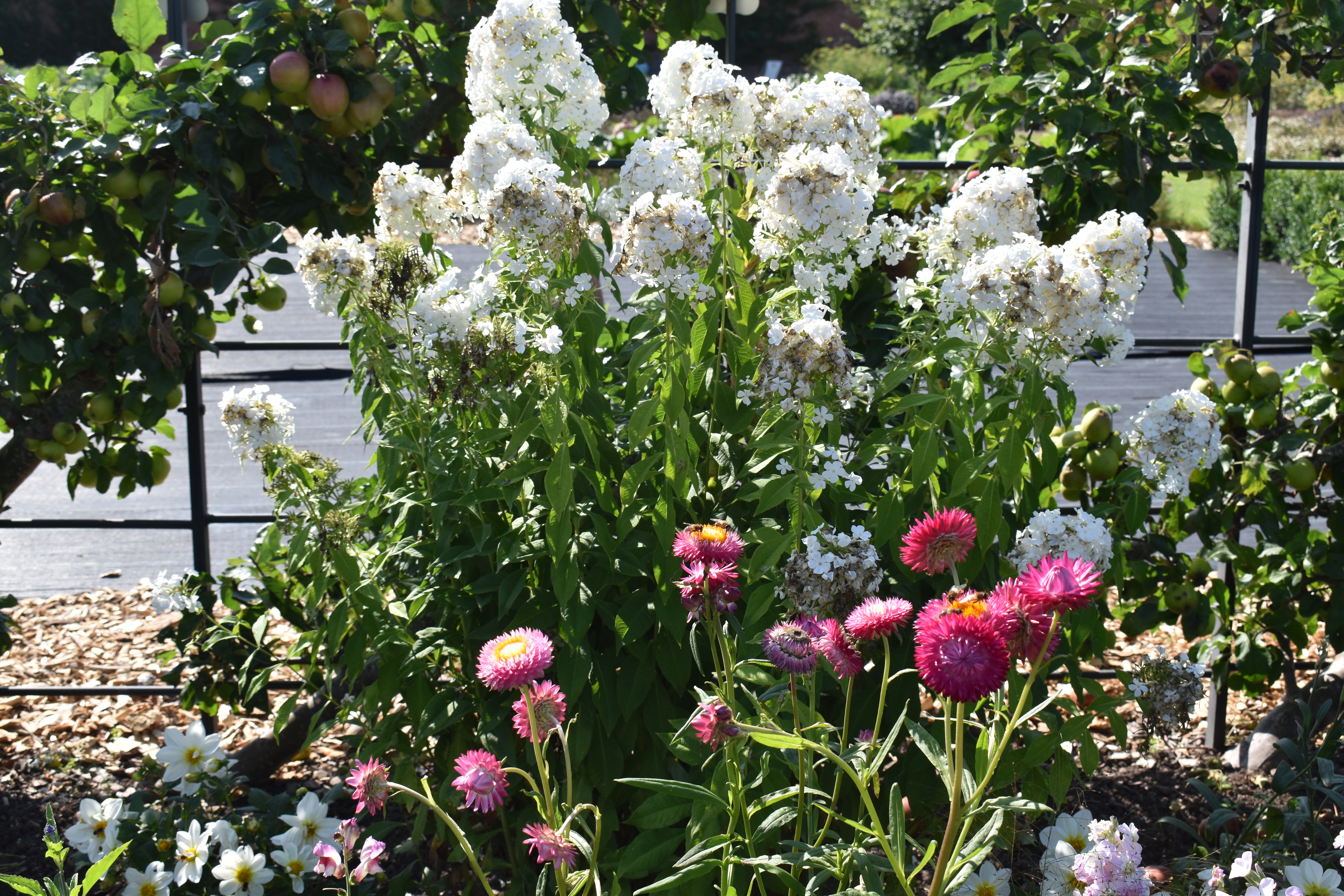
One of the many strengths of the design of the garden is the use of colour combinations and plant communities.
The favourite garden room of us and many other visitors is the hot border which is an exceptional display of planting for atmosphere which never fails to warm us up.
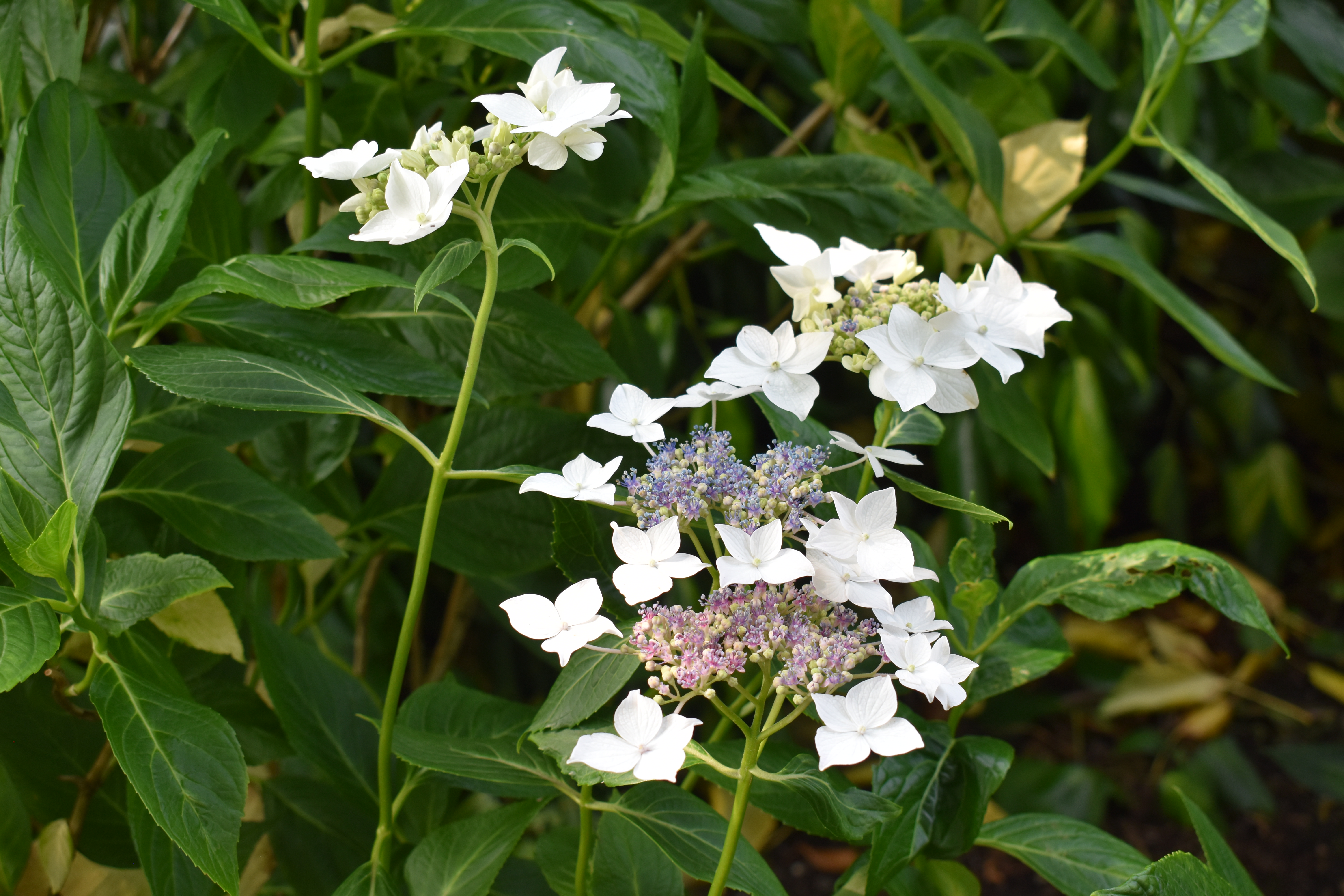
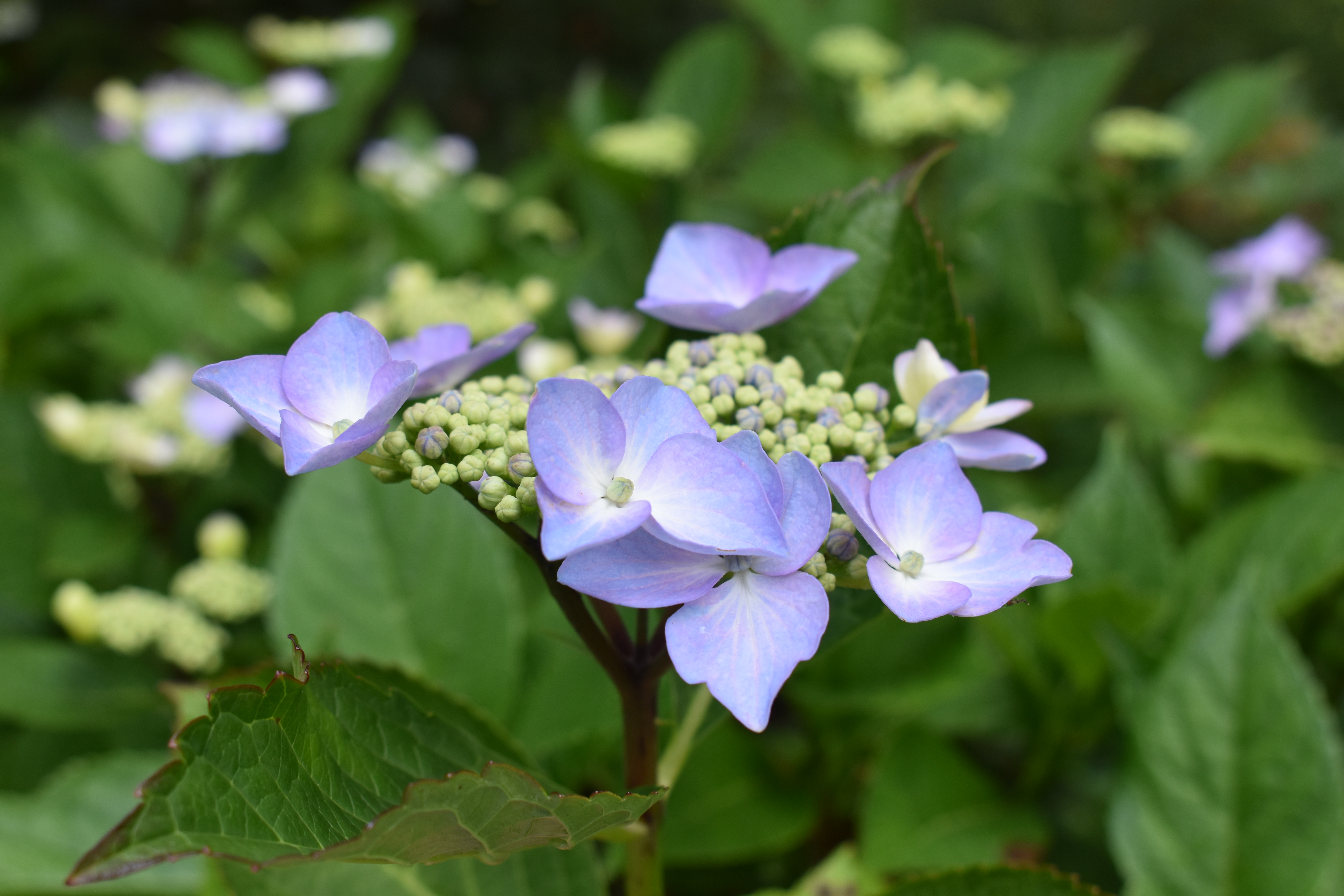
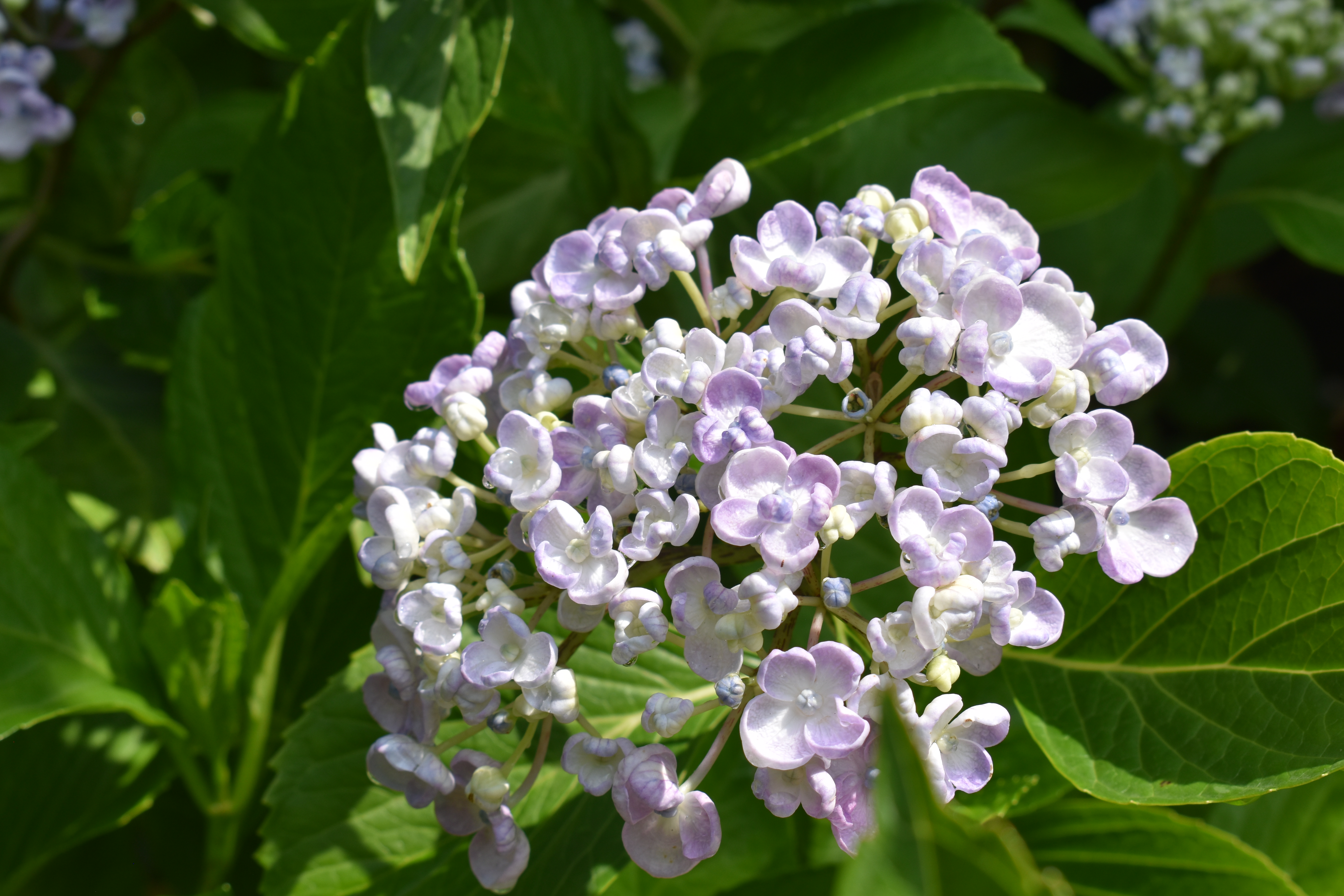
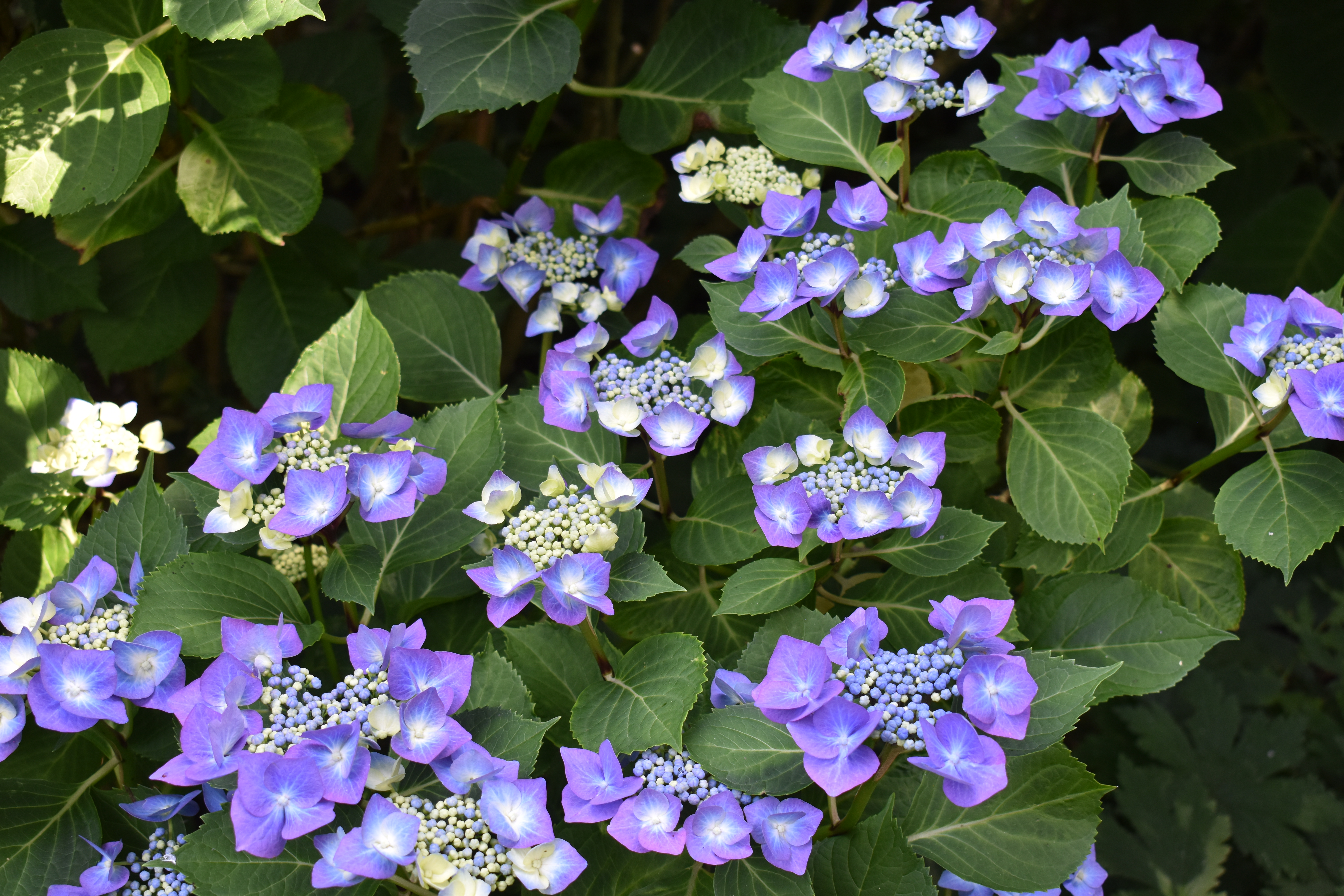
A strongly featured family of plants throughout Wollerton is the hydrangea family. They obviously enjoy the soil conditions and the balance of light and shade.
So there we have it, another wonderful visit to what is perhaps our favourite garden in Shropshire.
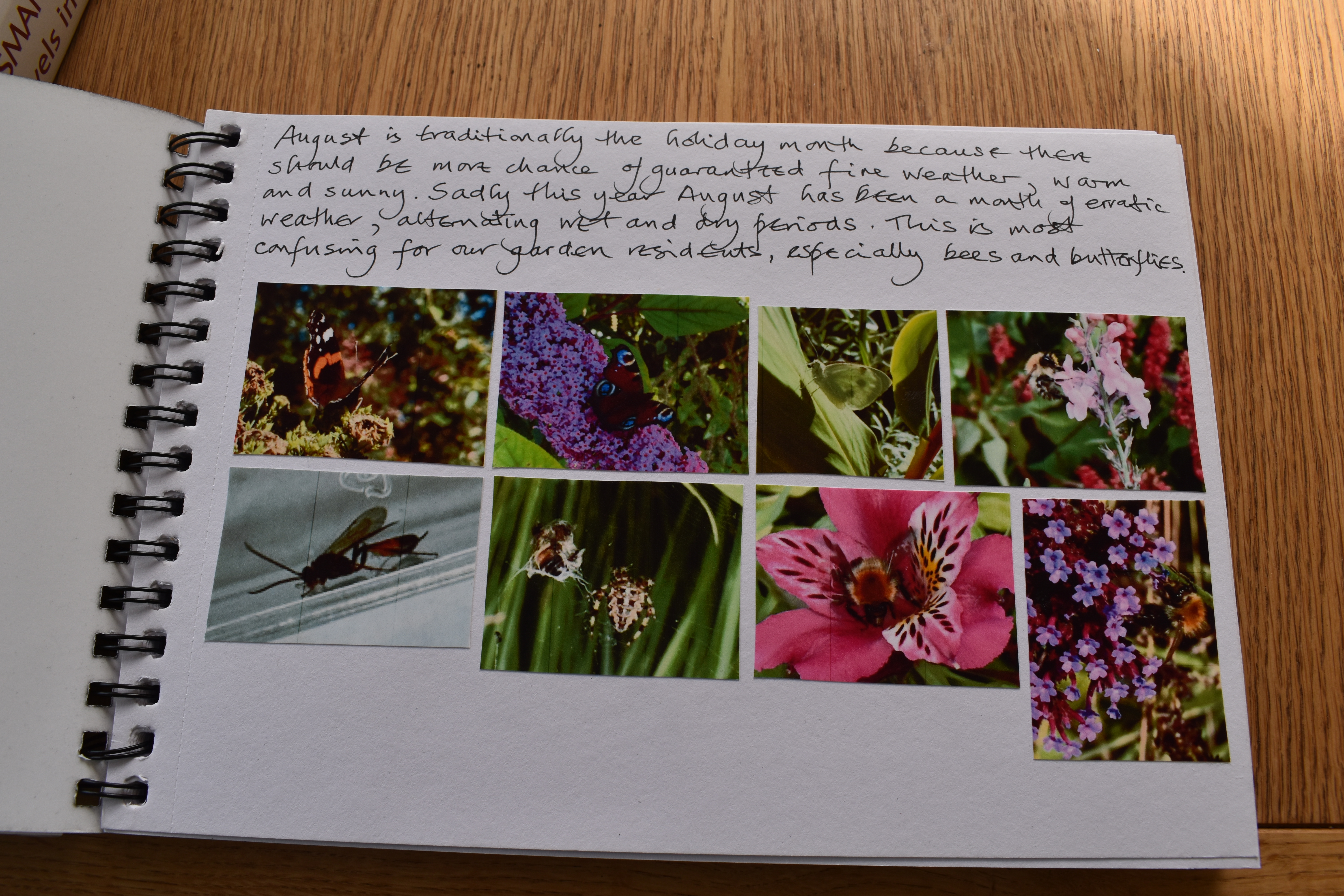
I began my entries into my 2021 Garden Journal by noting, “August is traditionally the holiday month because there should be more chance of guaranteed fine weather, warm and sunny. Sadly this year august has been a month of erratic weather, alternating wet and dry periods. This is most confusing for our garden residents, especially the butterflies and bees.”
Over the page I looked at yellow and orange flowers in the garden in August. and then shared ten plant portraits. I noted, “The most colourful patches of flowers in the borders in August are those in the yellow, orange and red spectrum. So many late summer flowering plants fit into this colour range.”
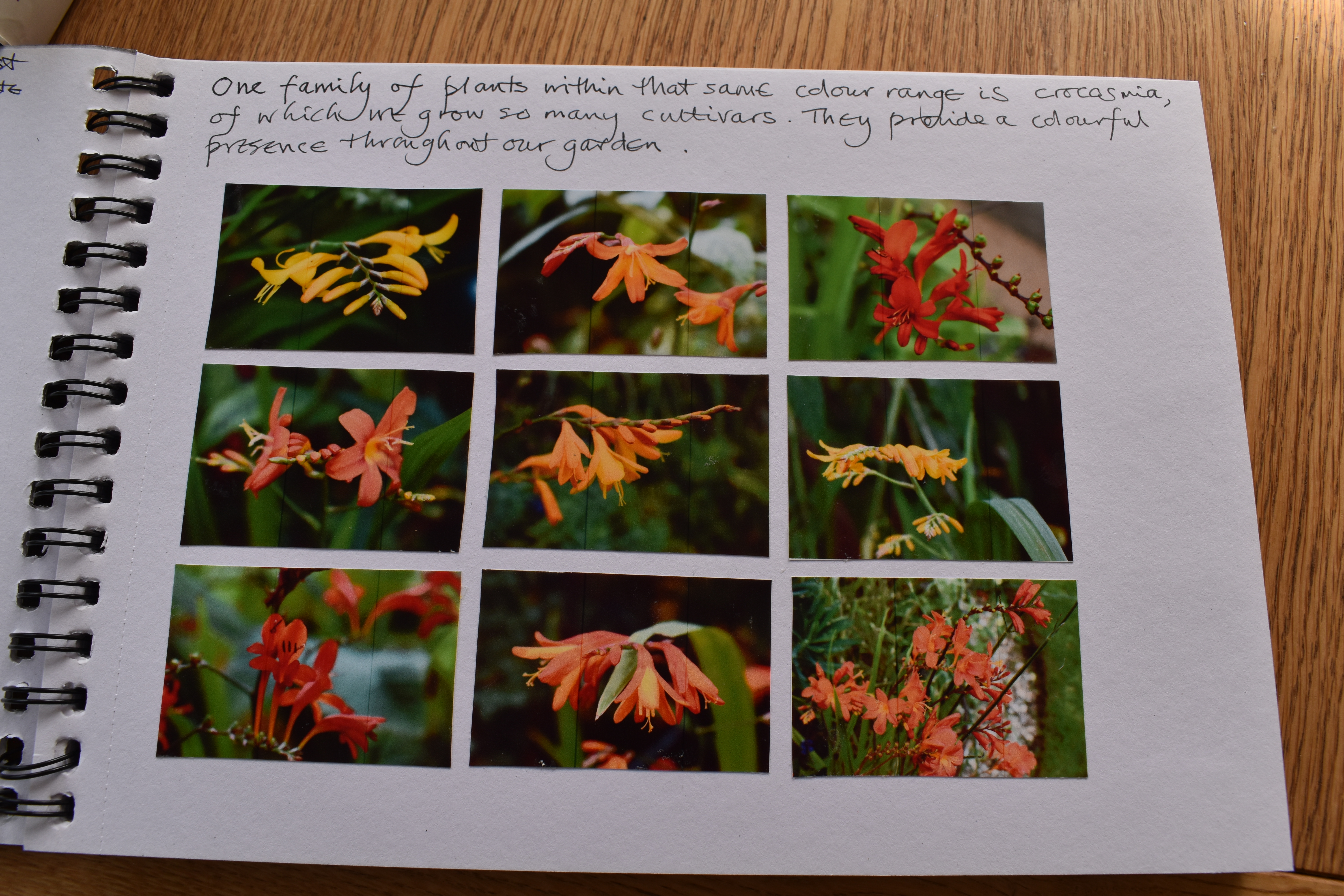
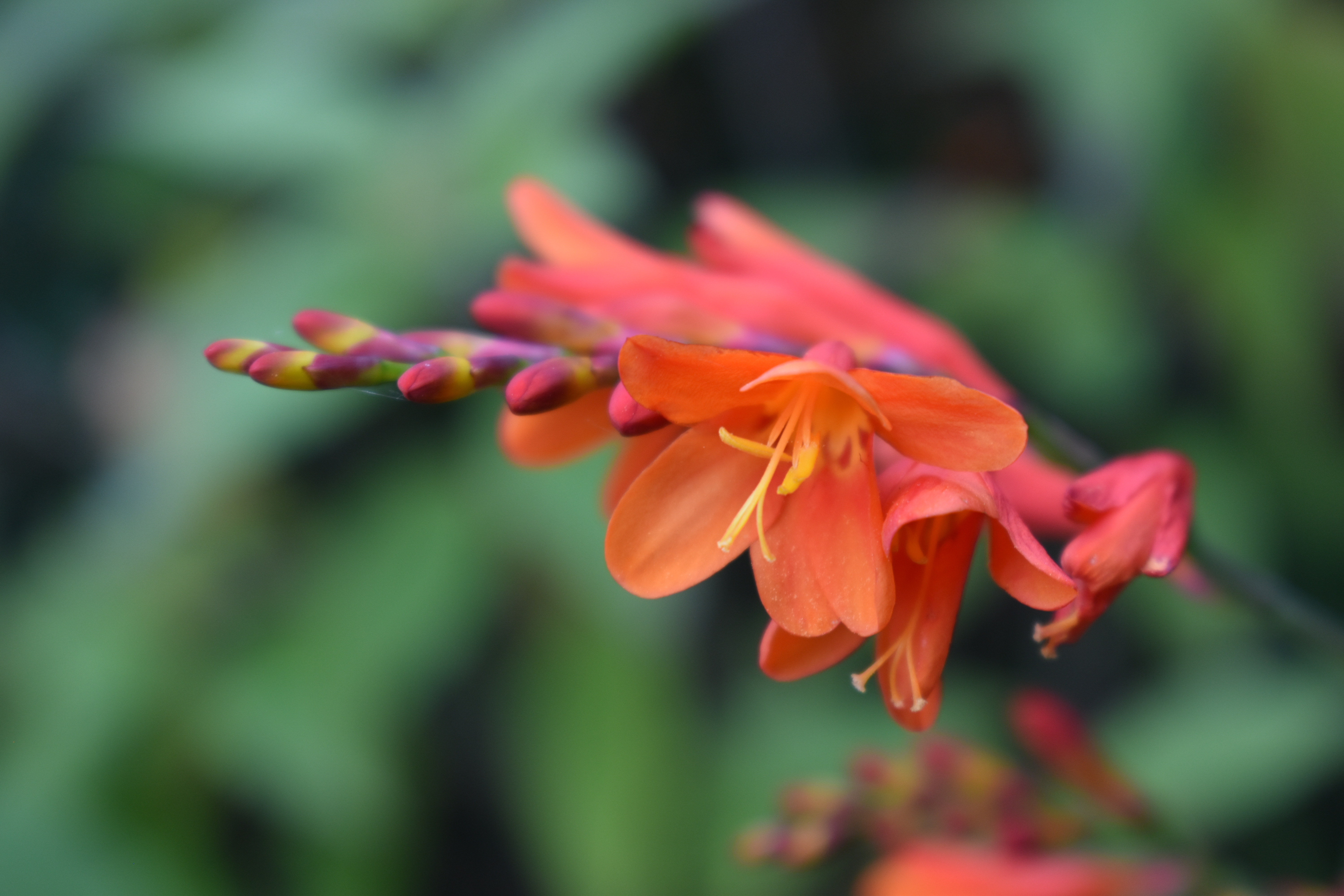
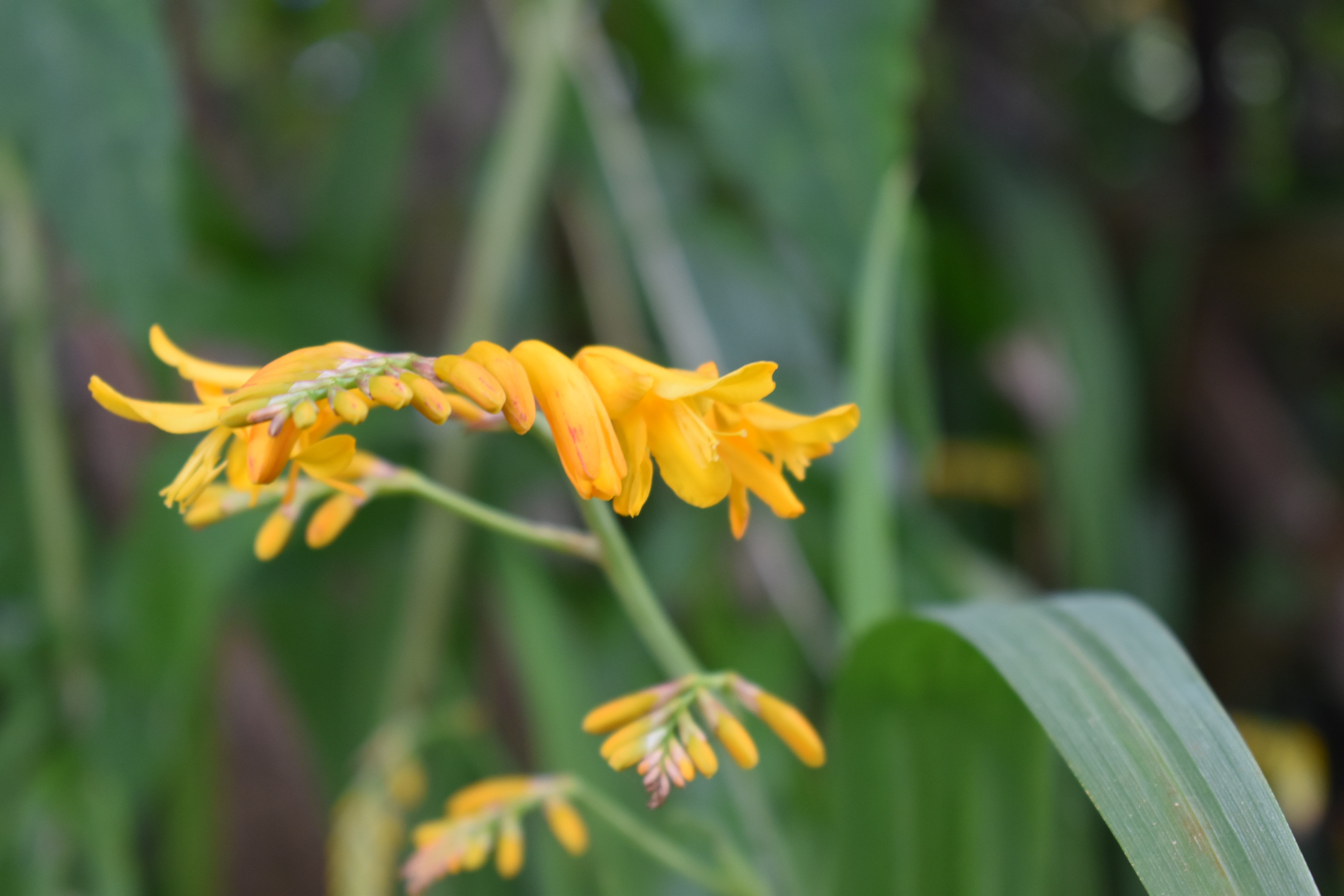
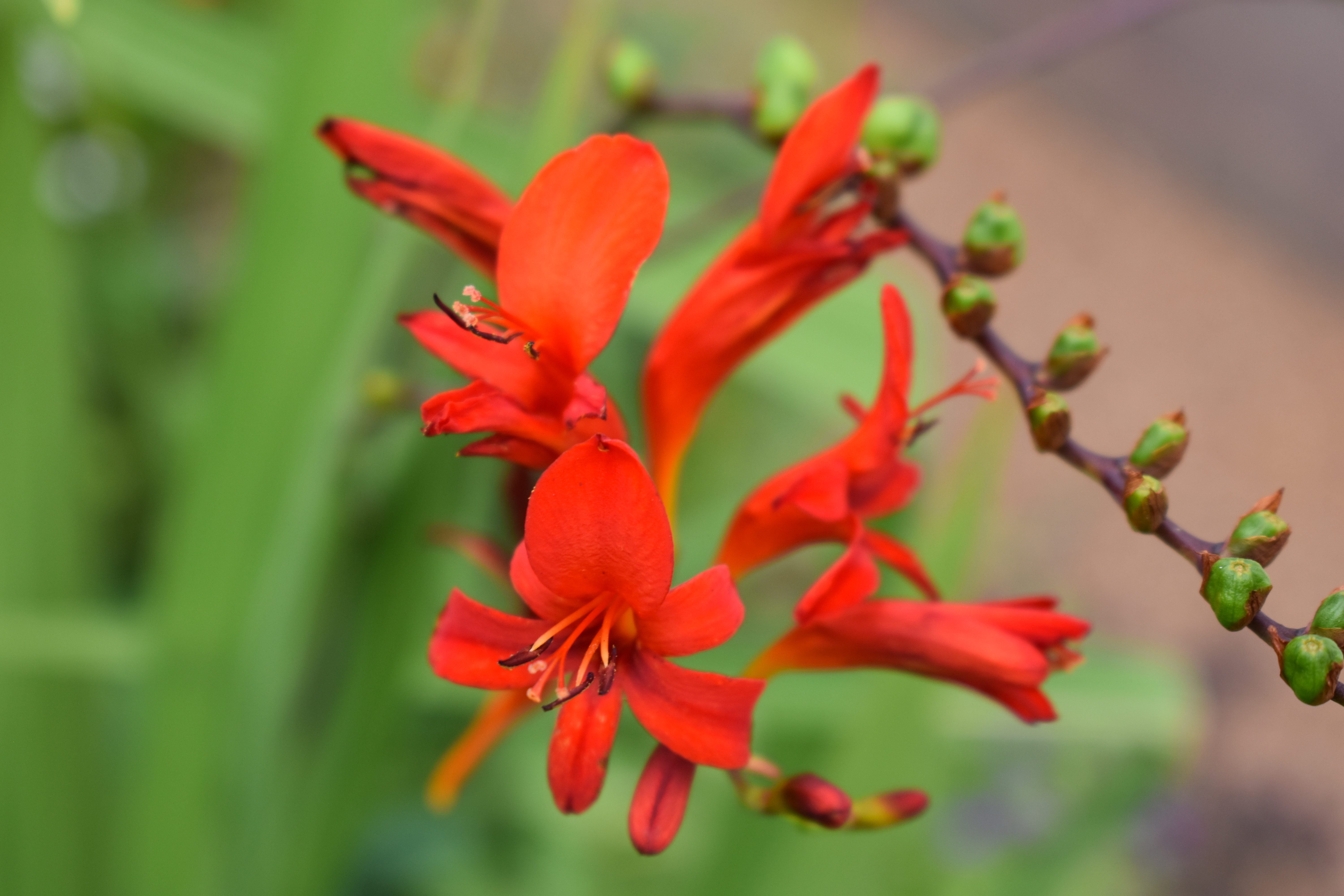
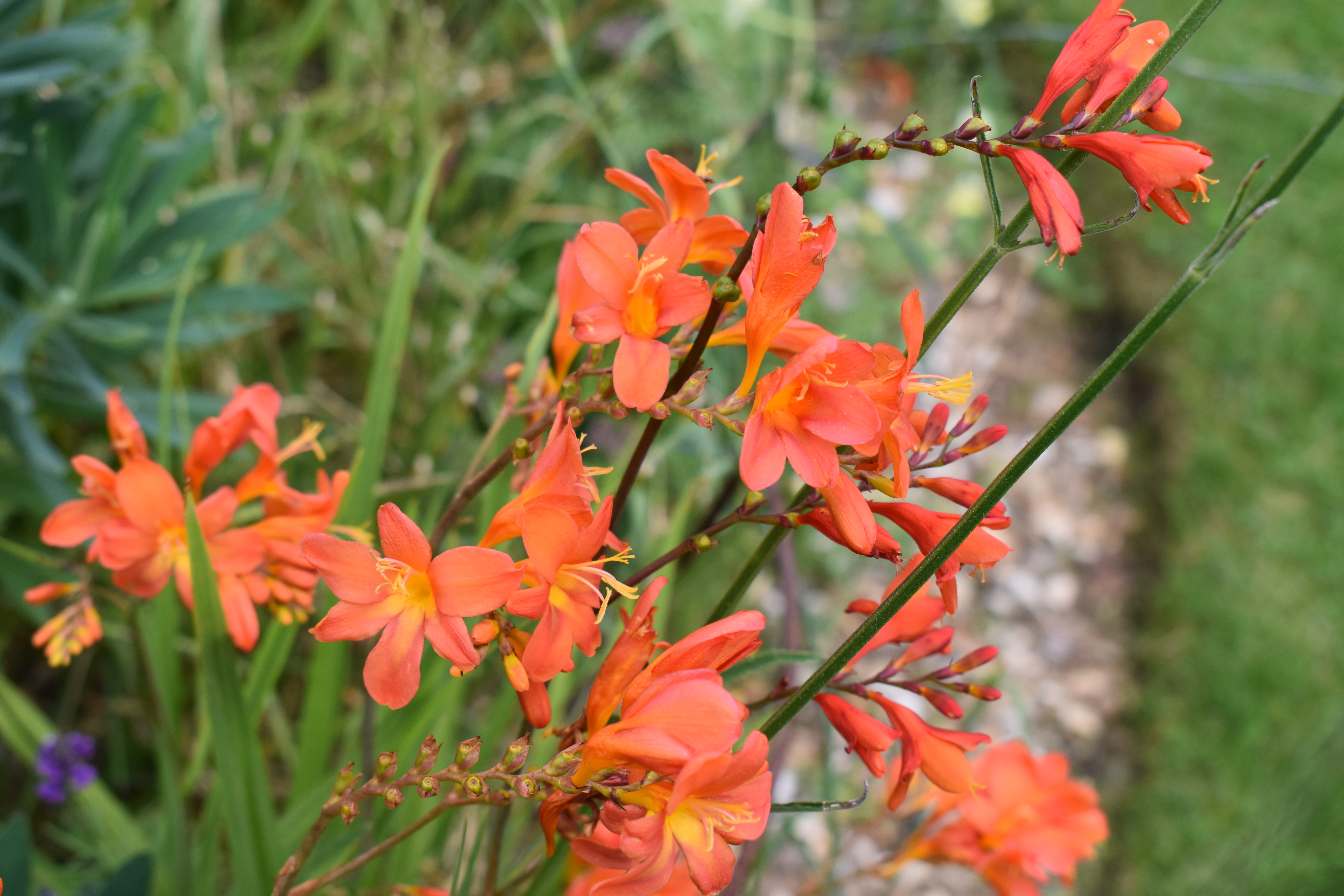
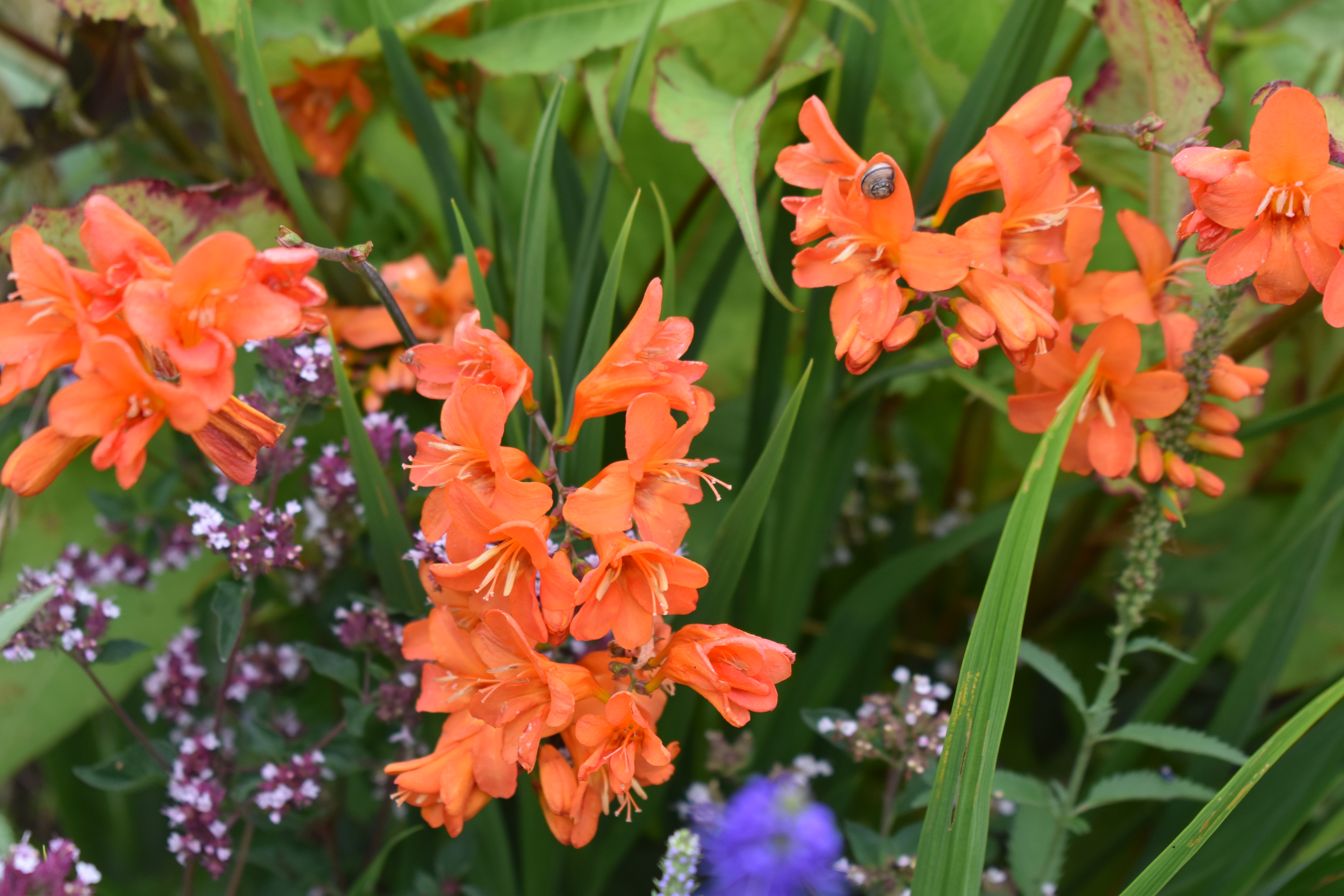
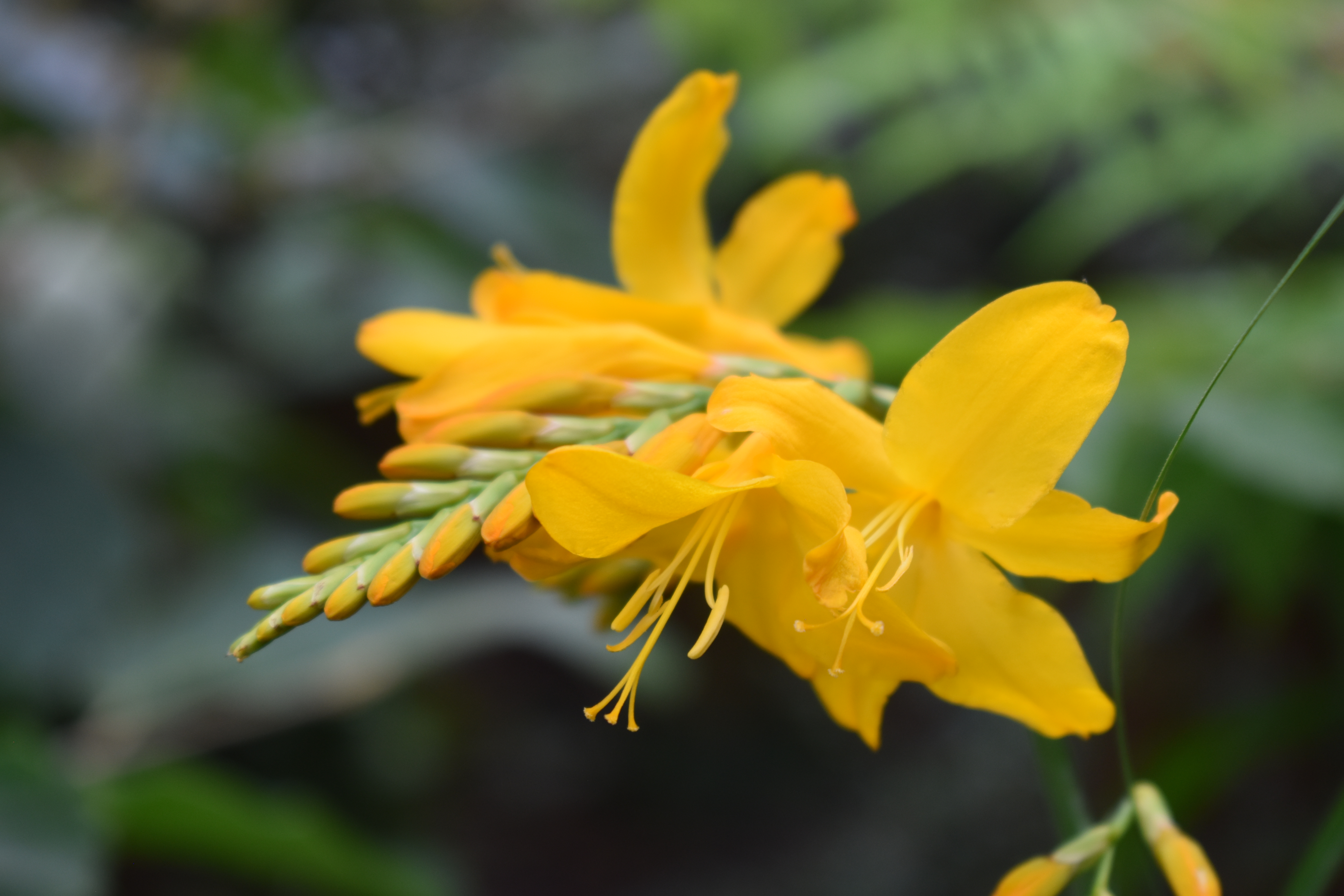
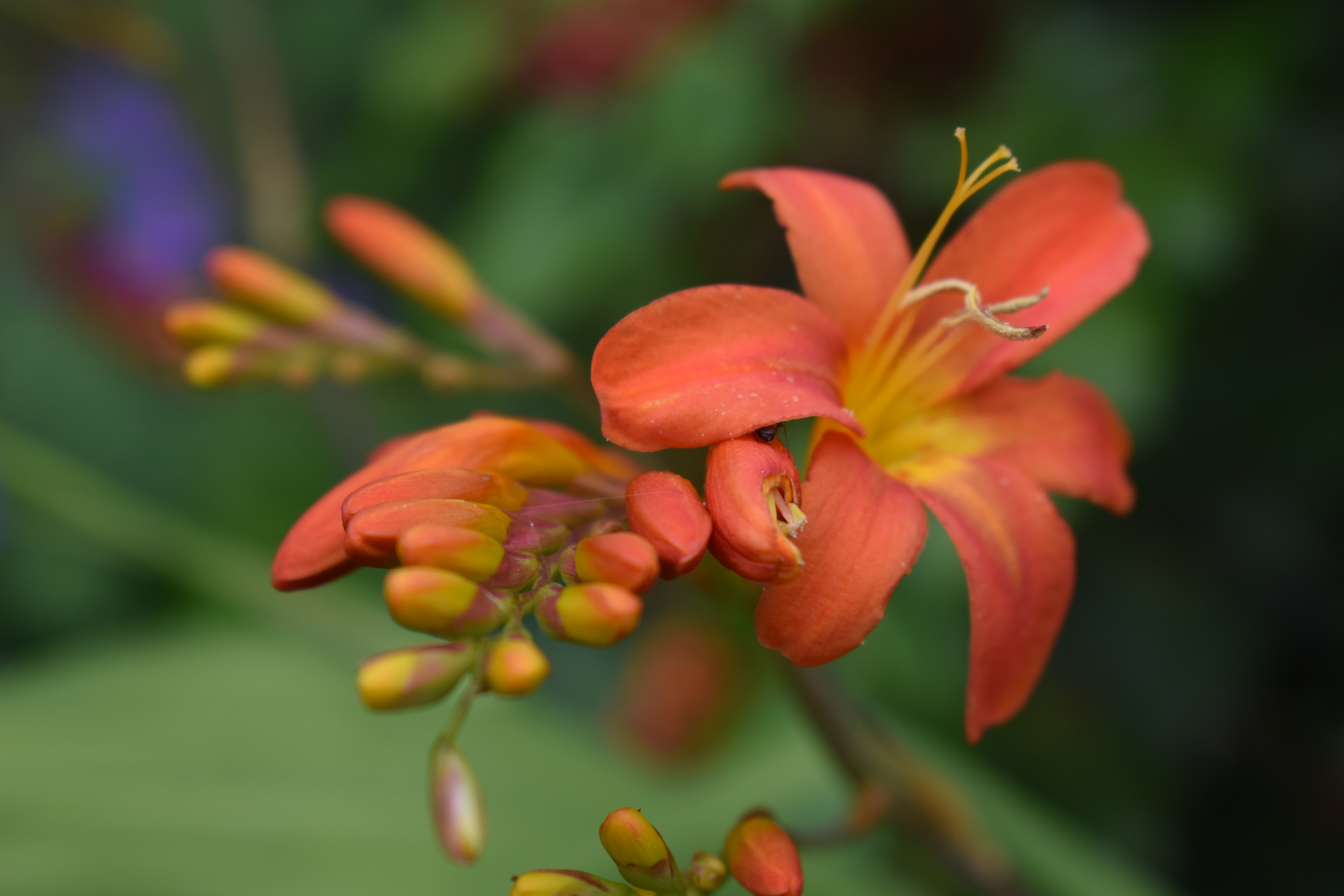
On the opposite page I continued with the brightly coloured flower theme when looked at the many forms of crocosmias that we grow, where I wrote, “One family of plants within that colour range is crocosmia, of which we grow so many cultivars. They provide a colourful presence throughout the garden.”
I then put in a set of crocosmia portraits.
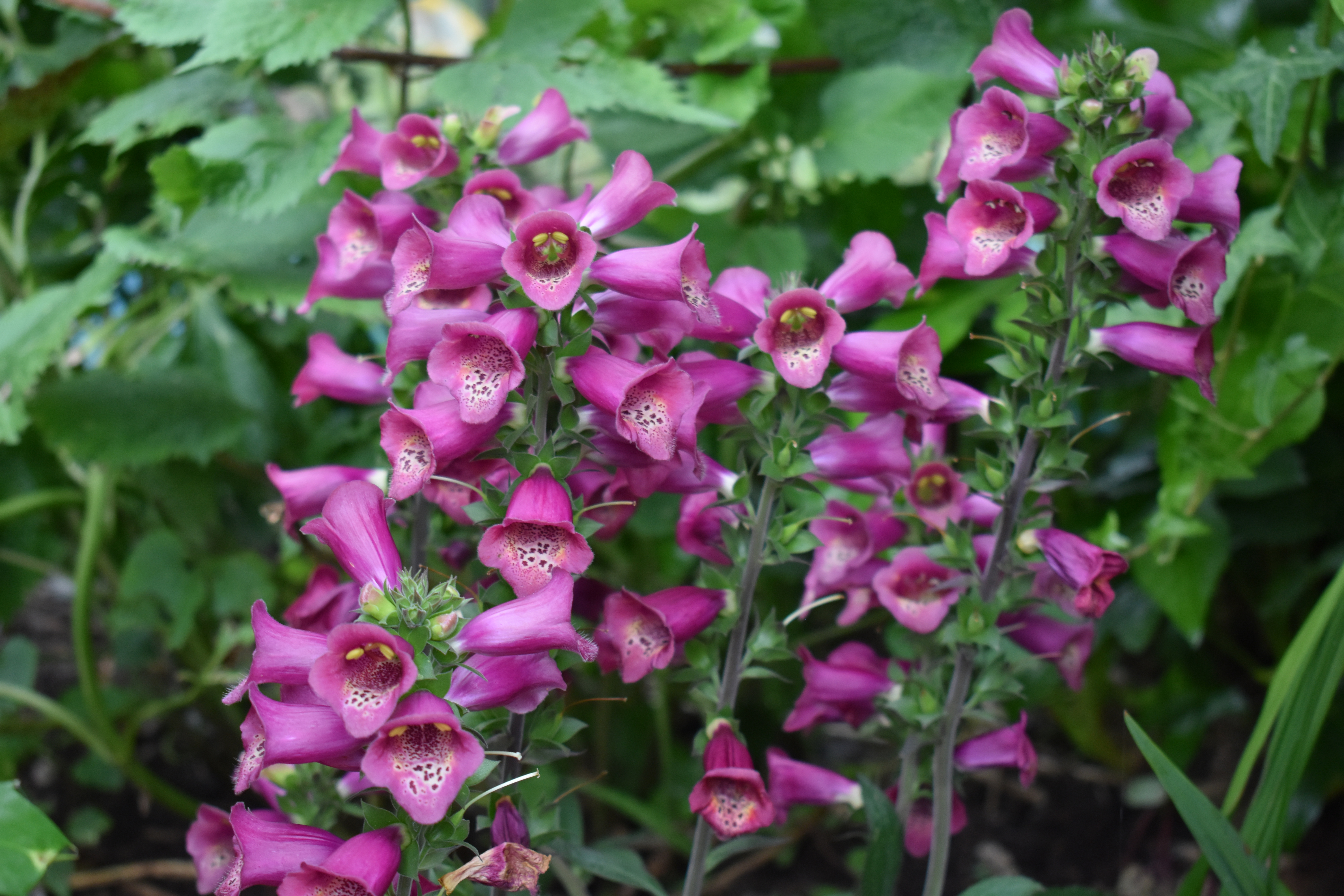
Turning over to the next page we look at a different colour range of blooms and I wrote, “Not all flowers fit in this bright range of yellow, orange and red as there are many out now that fit into the pink, purple, blue range.”
Below I shared a set of photos of flowers within this colour palette.
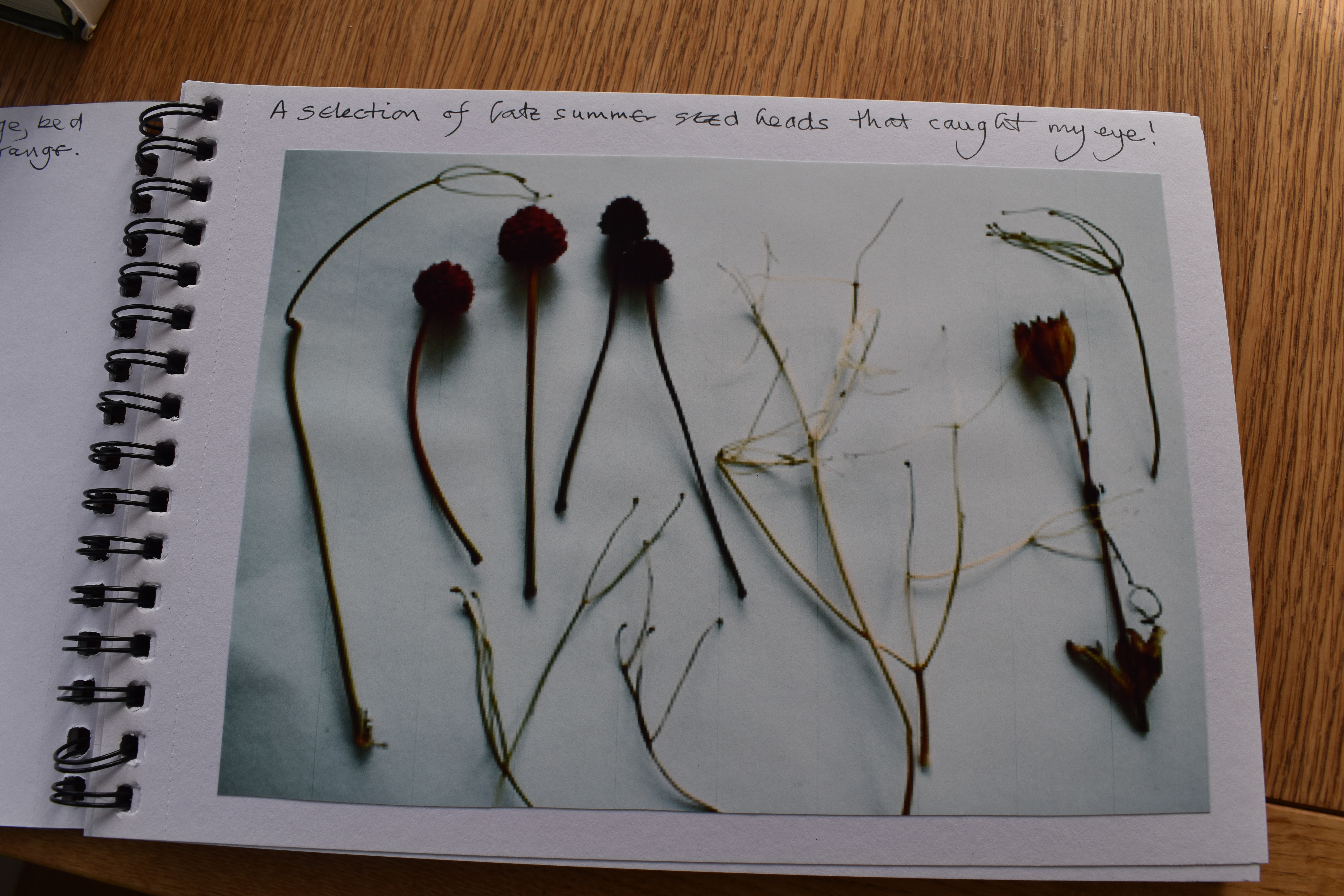
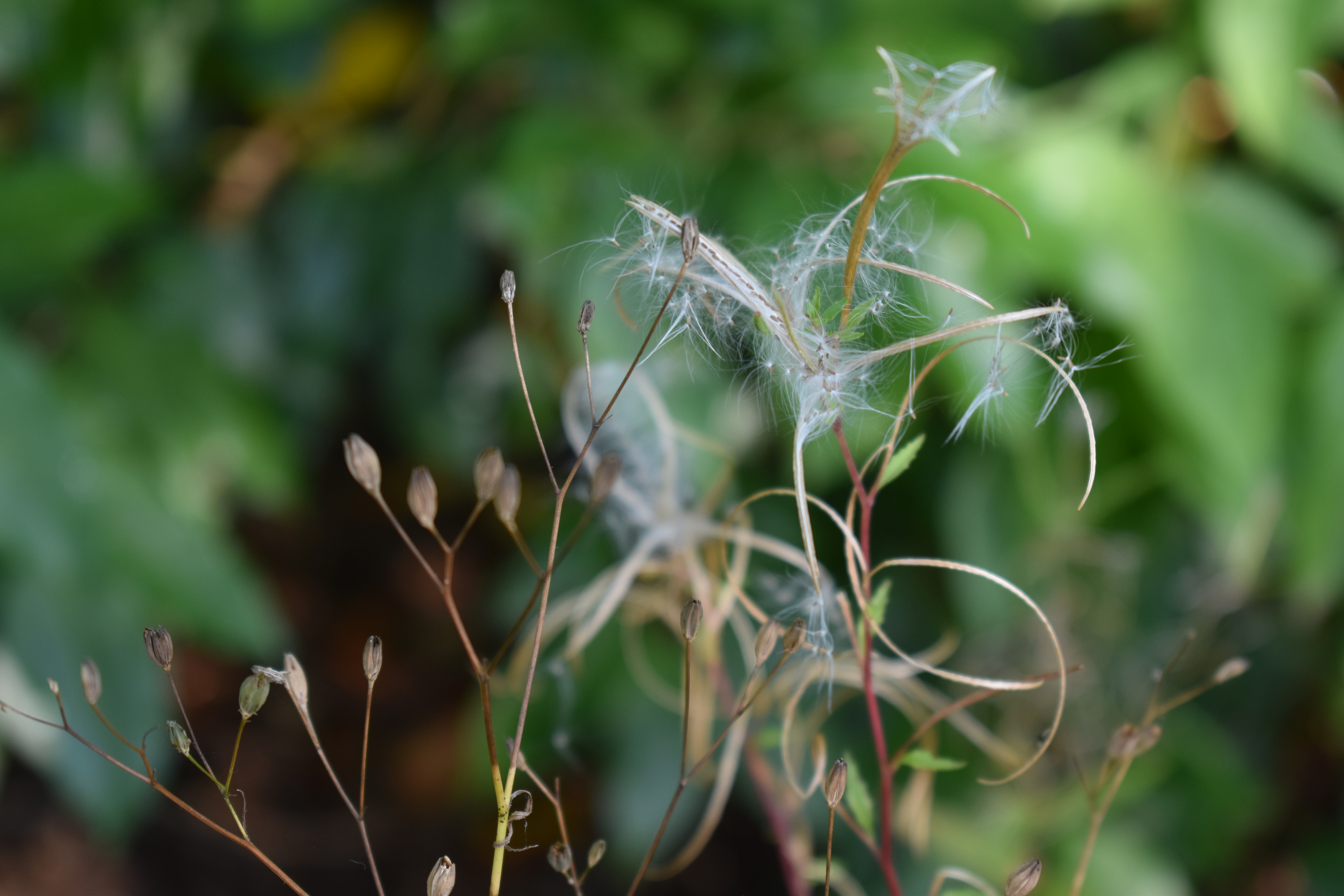
On the opposite page I shared a photo I took of a selection of seed heads I had recently found while gardening.
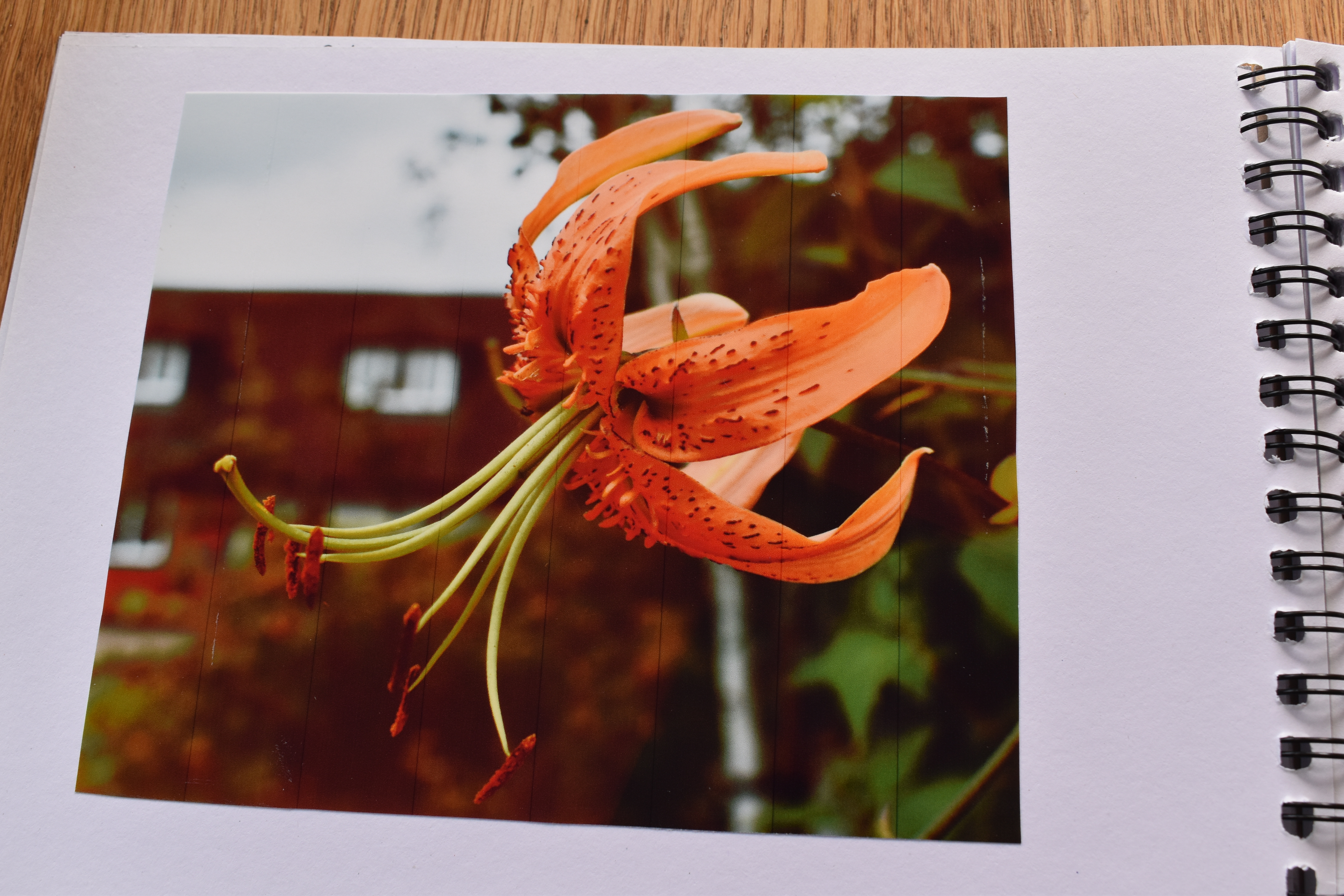
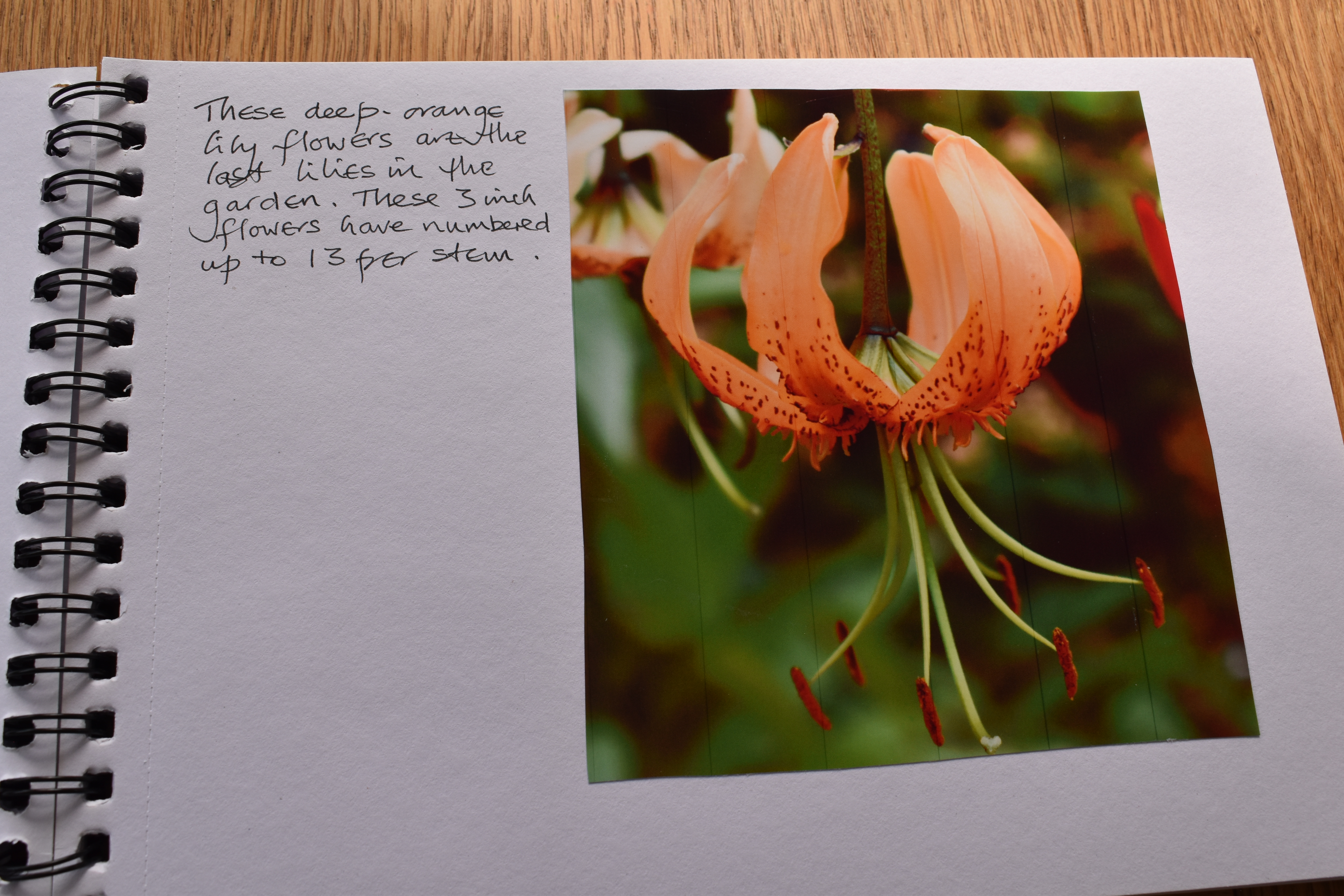
Overleaf I featured just two close-up photos of a large flowered bright orange lily and noted, ” These deep orange lily flowers are the last lilies to flower in the garden. These three inch flowers have numbered up to 13 per stem.”
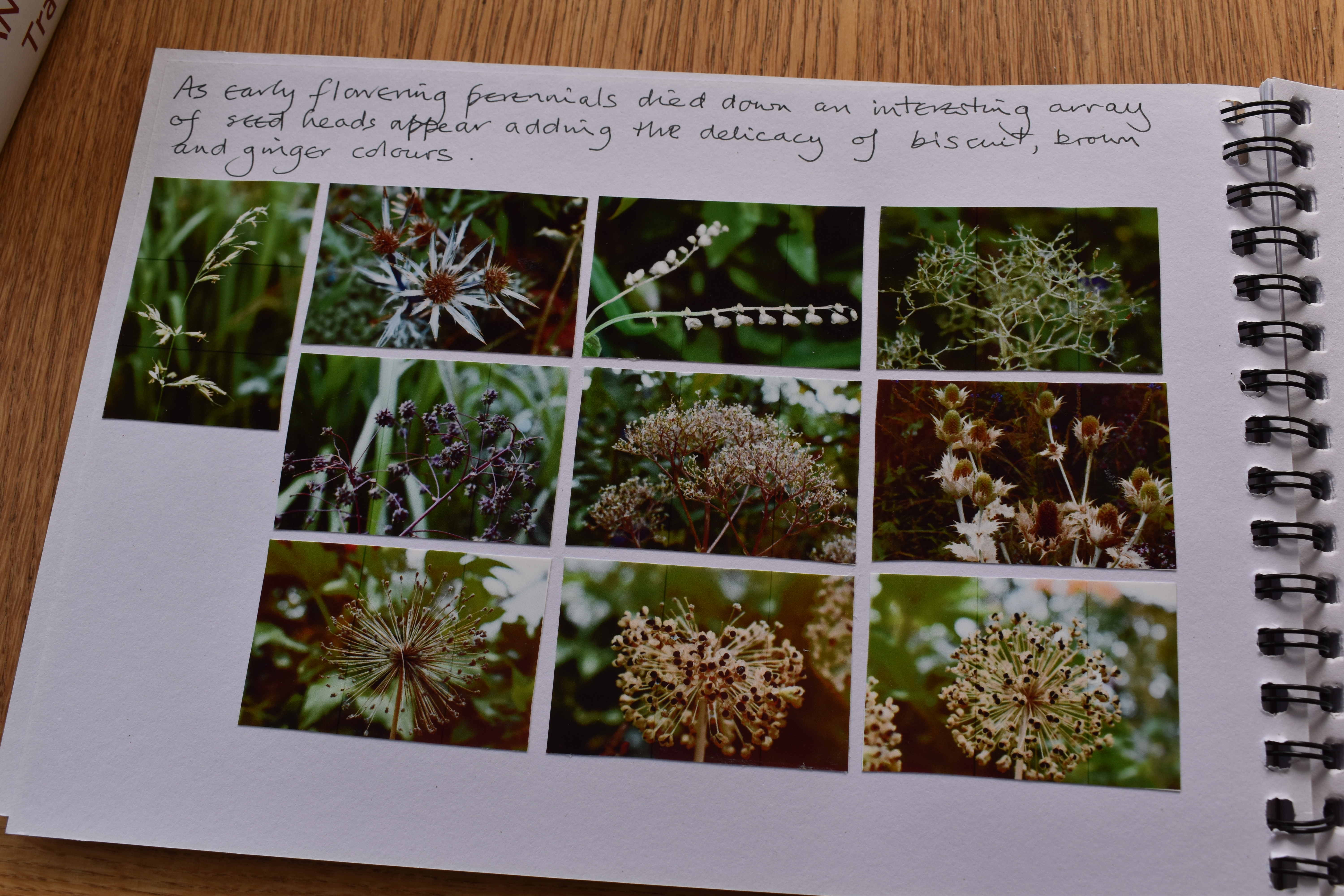
Turning over the page to the next double page spread I look at seed heads and then finish off for this month with a quicklook at the garden tasks we were presented with by the garden in August.
I wrote, “As early-flowering perennials die down an interesting array of seed heads appear adding the delicacy of biscuit, beige, brown and ginger colours.”
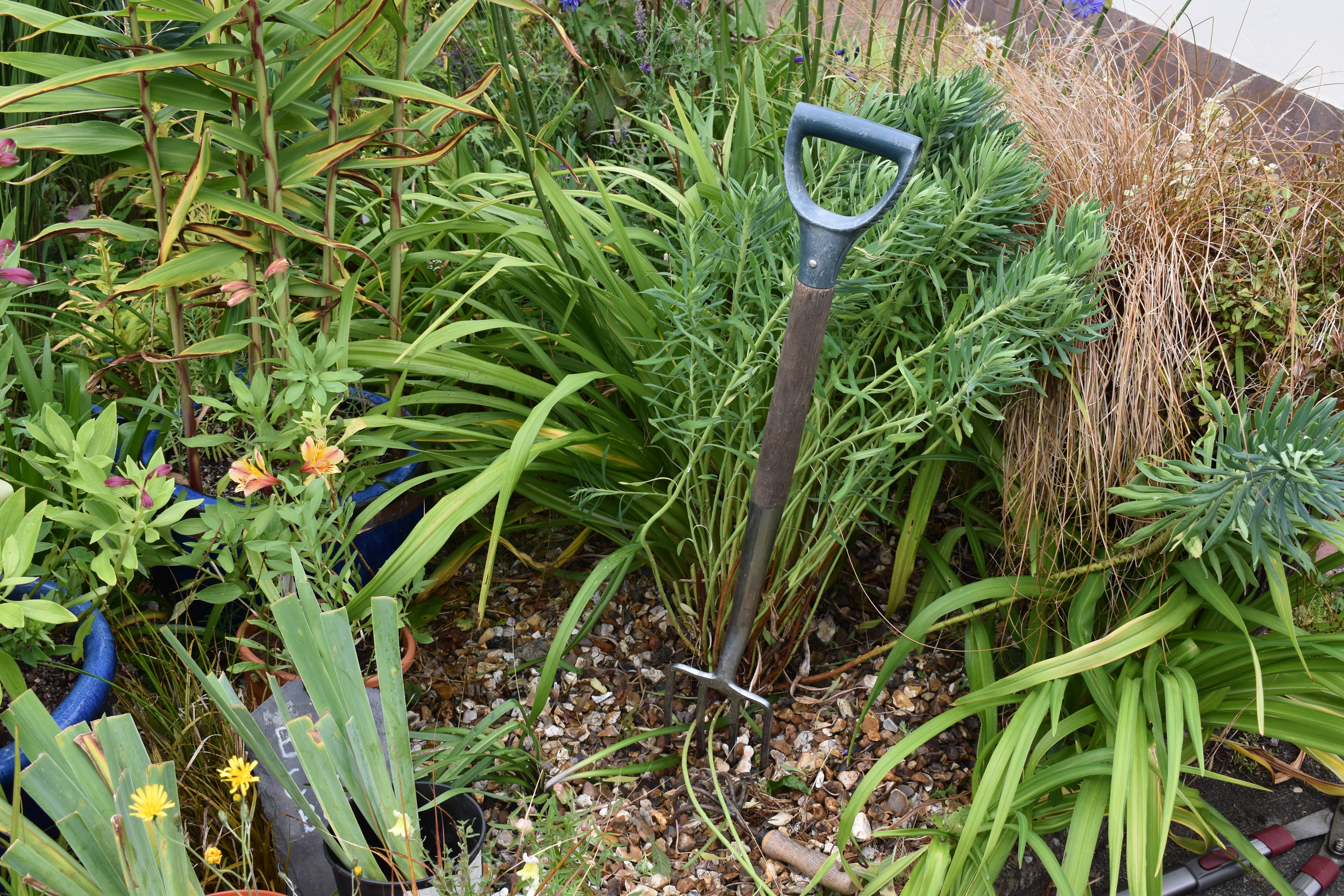
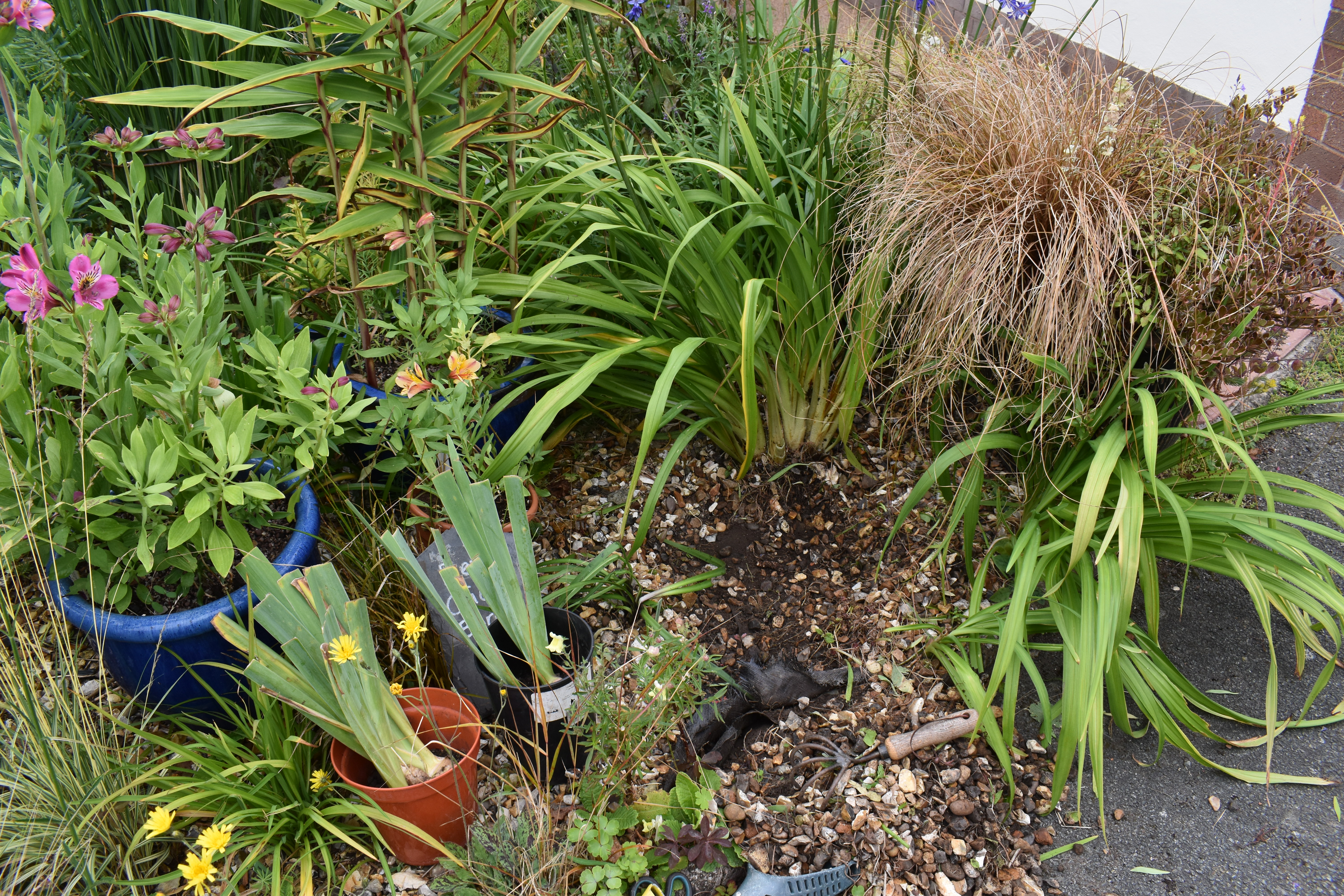
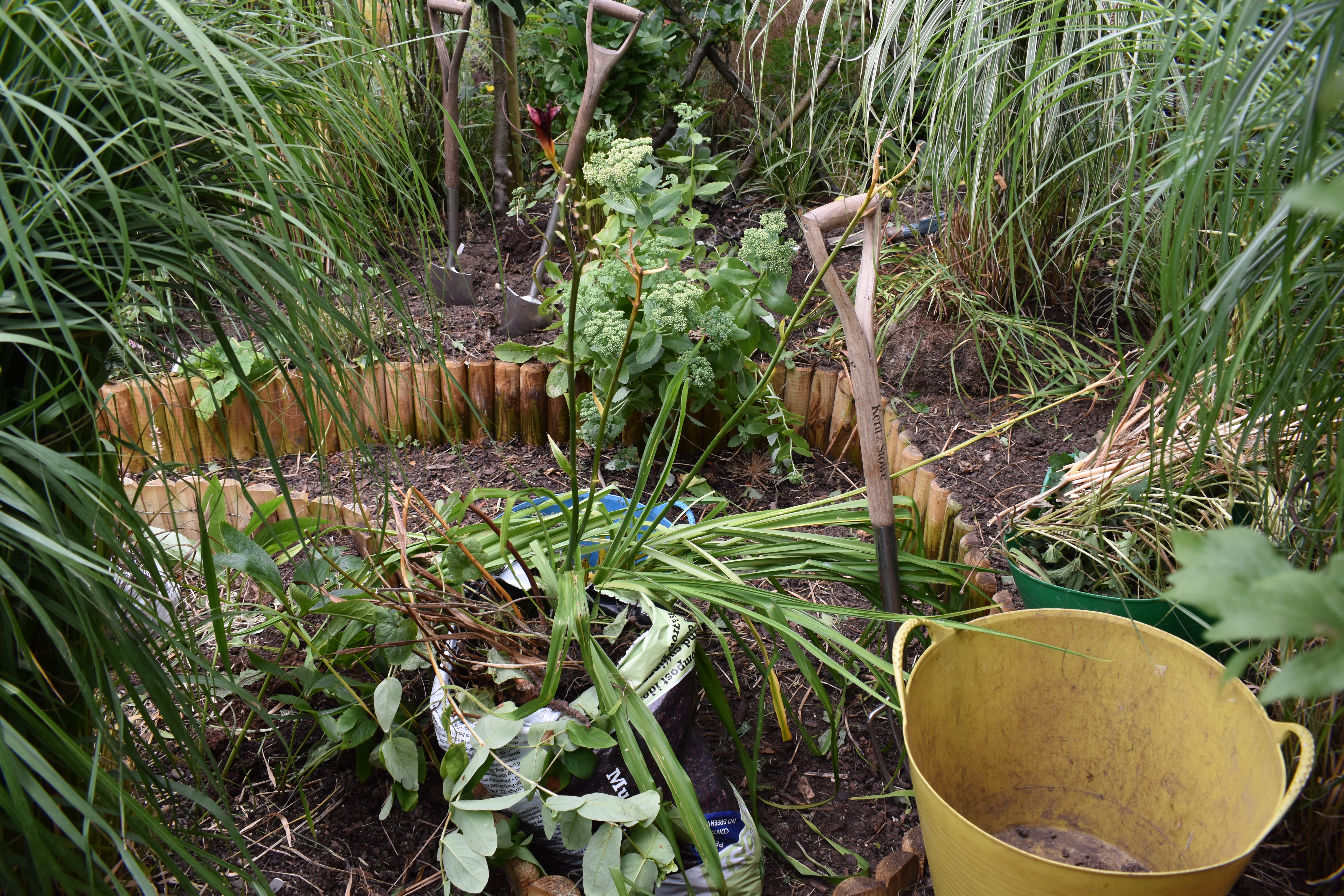
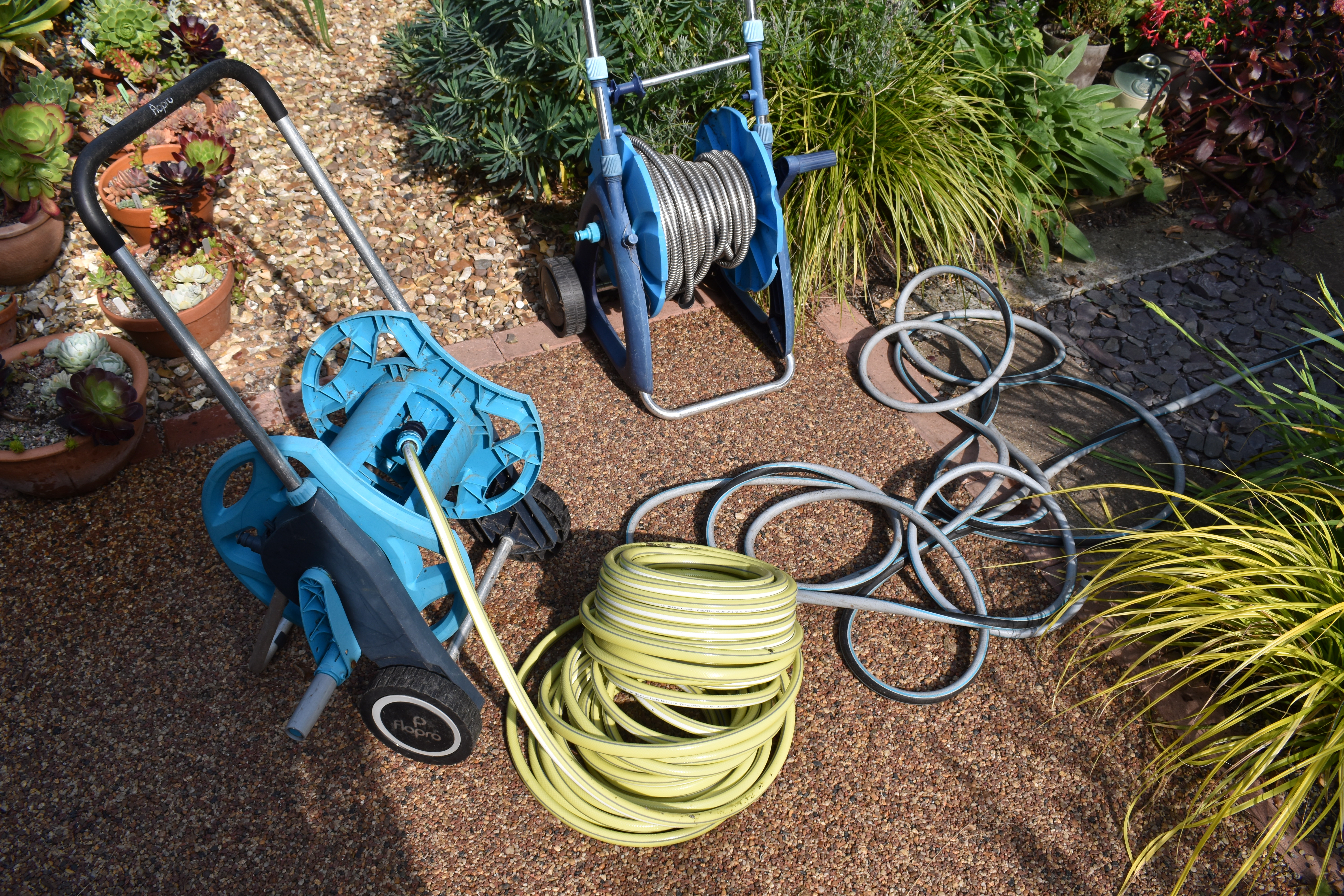
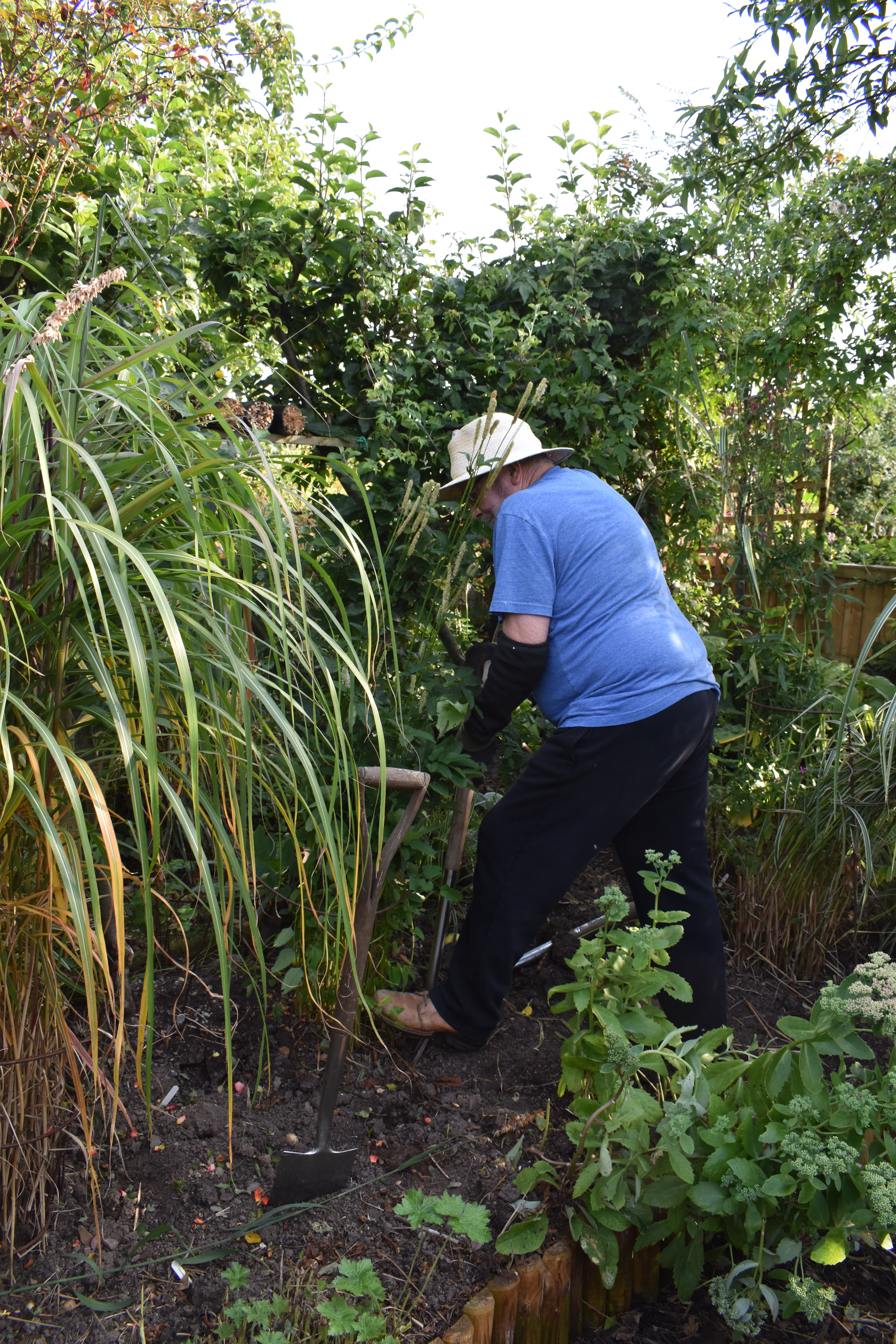
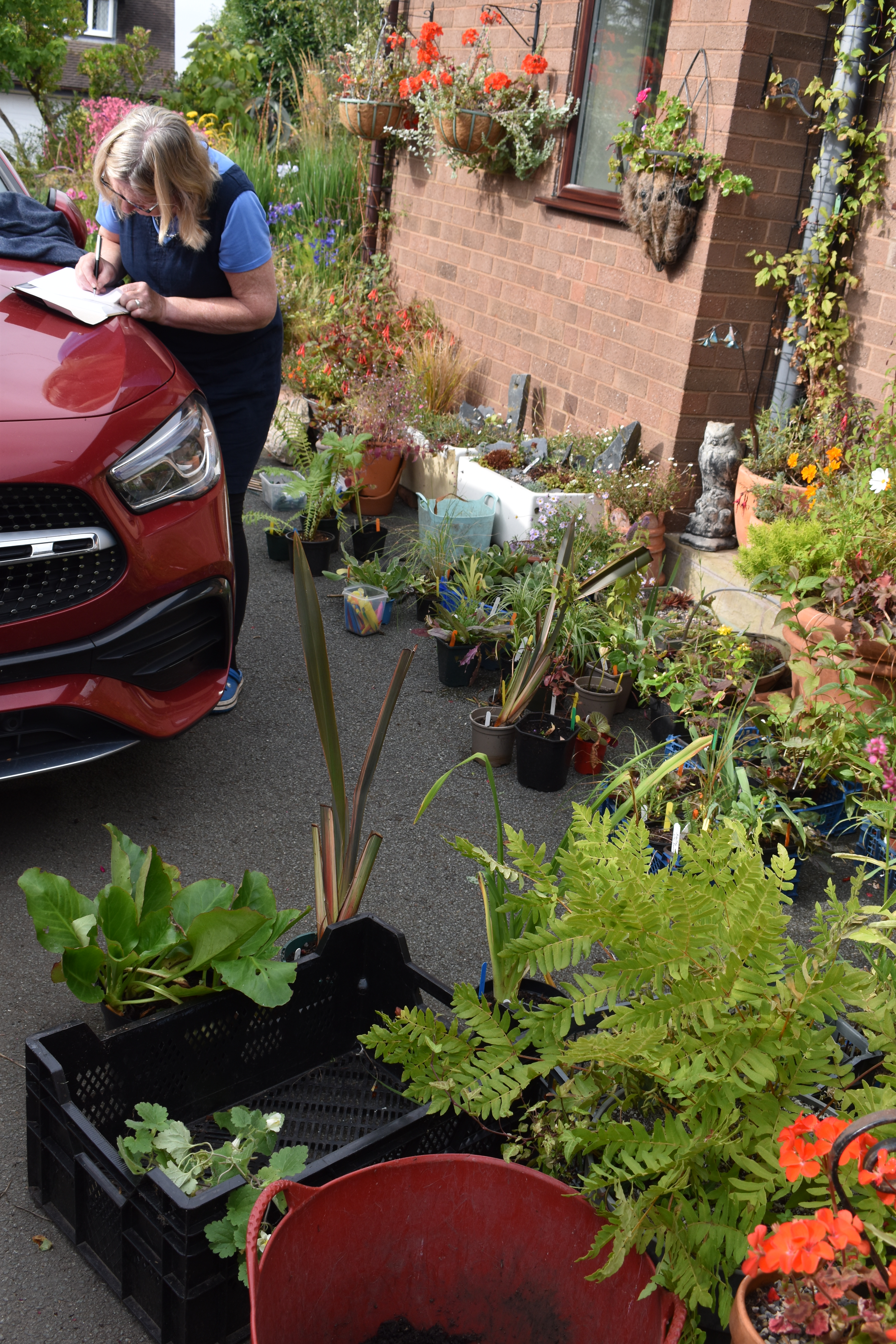
As the header for the last page for August I added, “August presented us with a wide variety of tasks to keep us busy in our patch. I cleared the drive edge of the ‘Beth Chatto Border’ to open the area up and plant a few new irises. Jude sorted out plants to sell at the village’s ‘street market’. We changed the hose on one of the reels with a new 100m length. We also began clearing the ‘Chicken Garden’ to give it a fresh look. And we watered!”
We will be back to visit my garden journal at the end of September when we can share what we have been up to and observing in our patch.
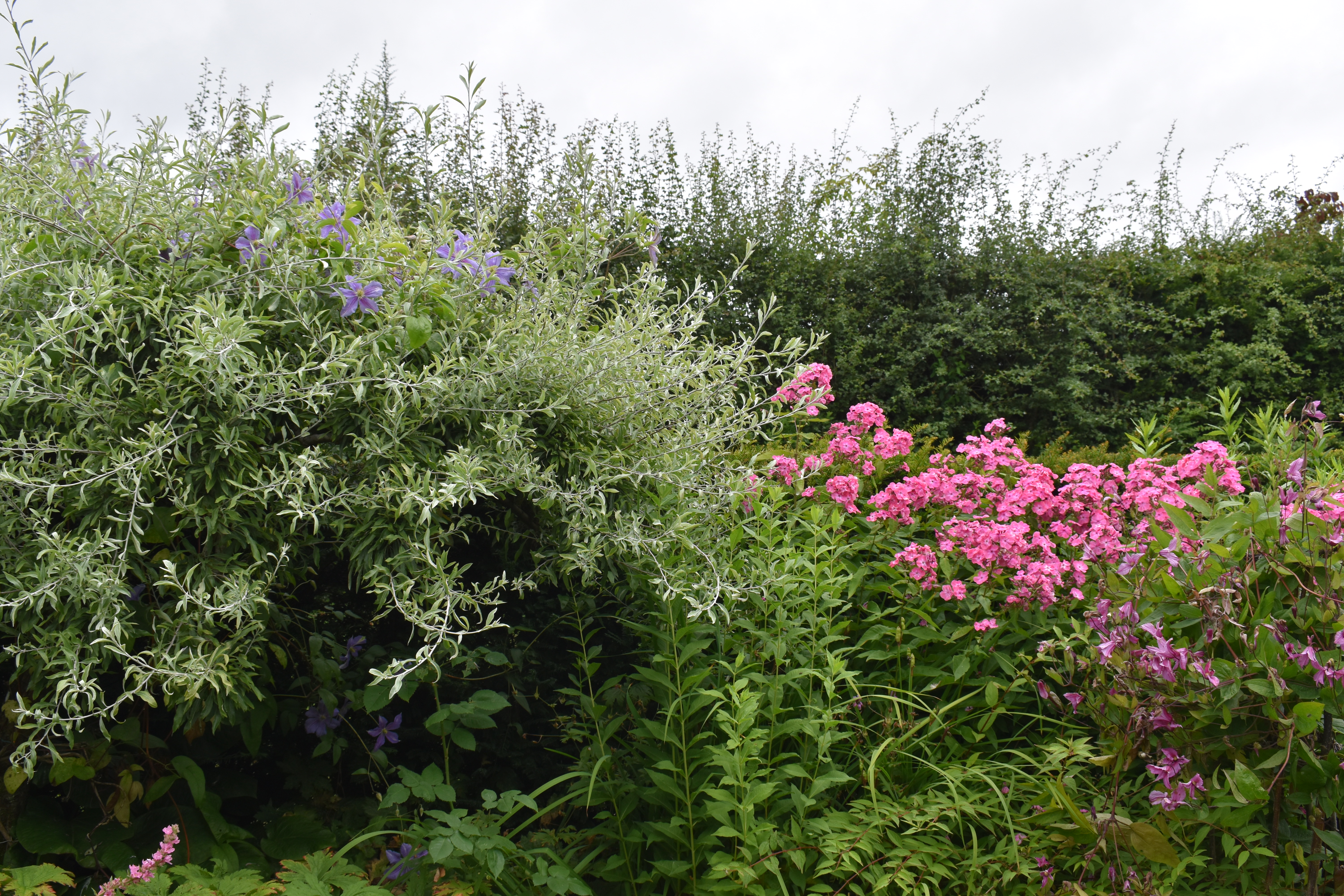
We have visited Jane and John’s garden in the village of Cardington in South Shropshire, not far from home several times before and it is a garden we always enjoy and appreciate. It is a garden of character, peaceful and calming with great plant combinations. Each different room has its own atmosphere.
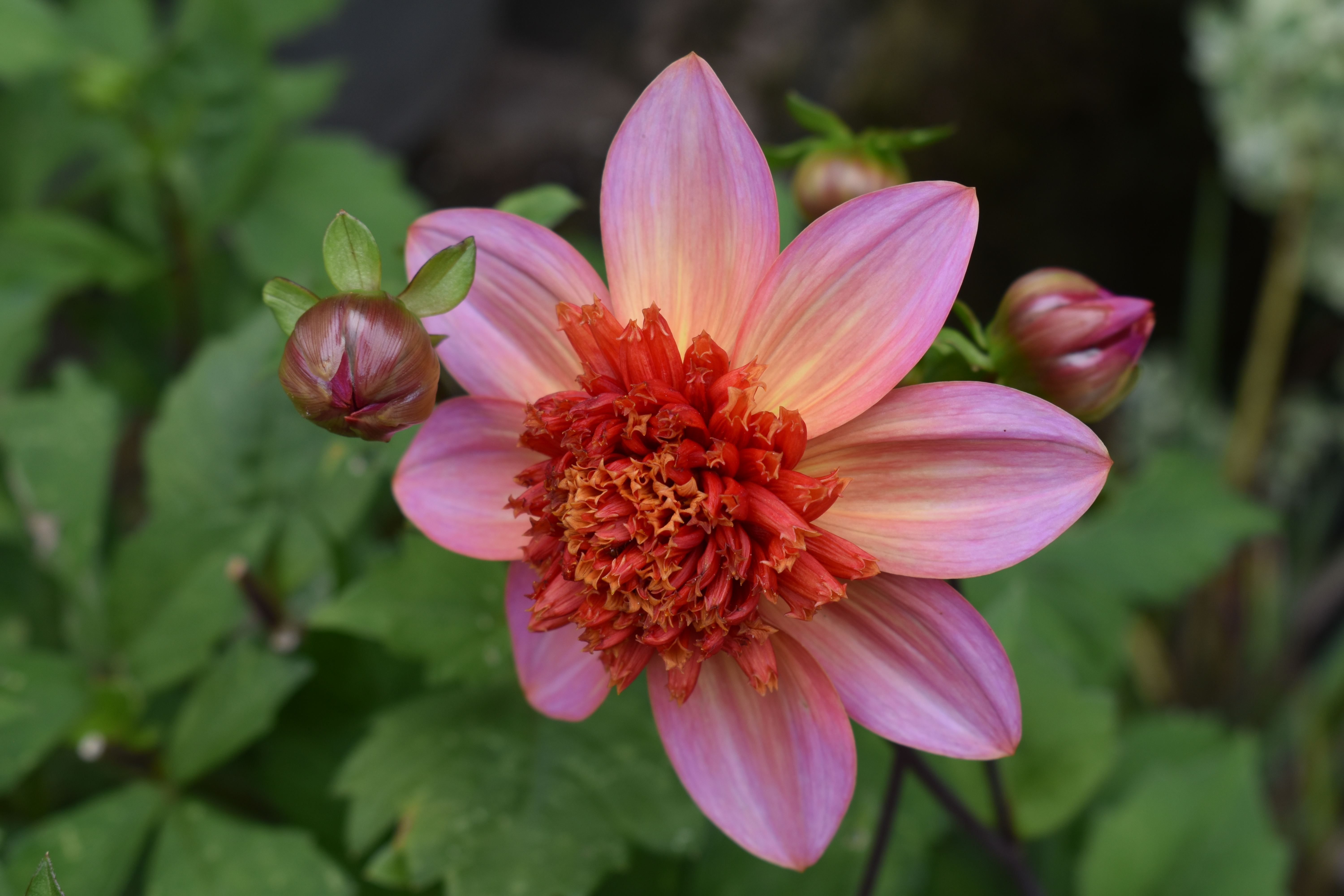
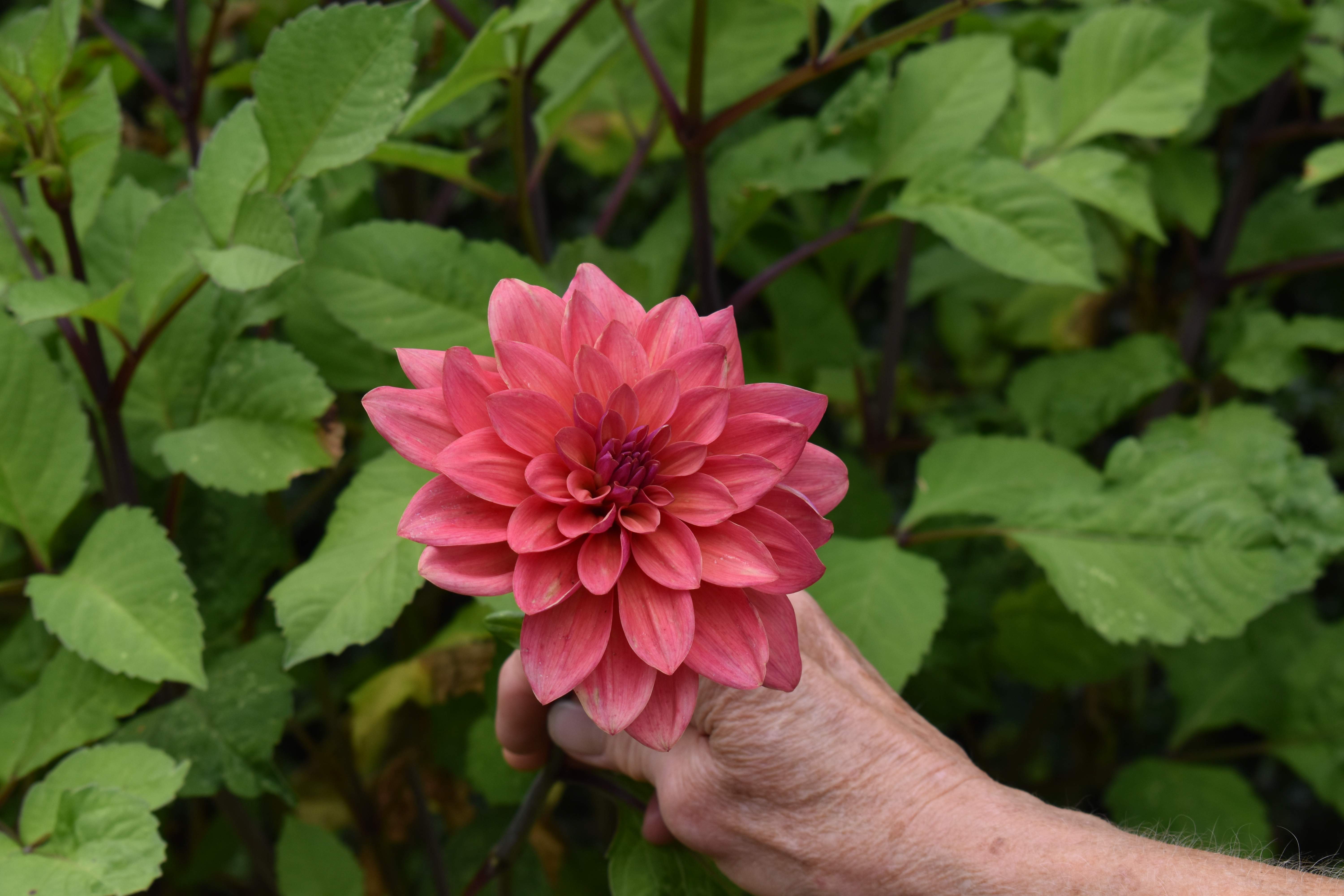
A colourful set of stone steps welcomed us to the garden. Nearby a patch of planting featured some unusually coloured dahlias.
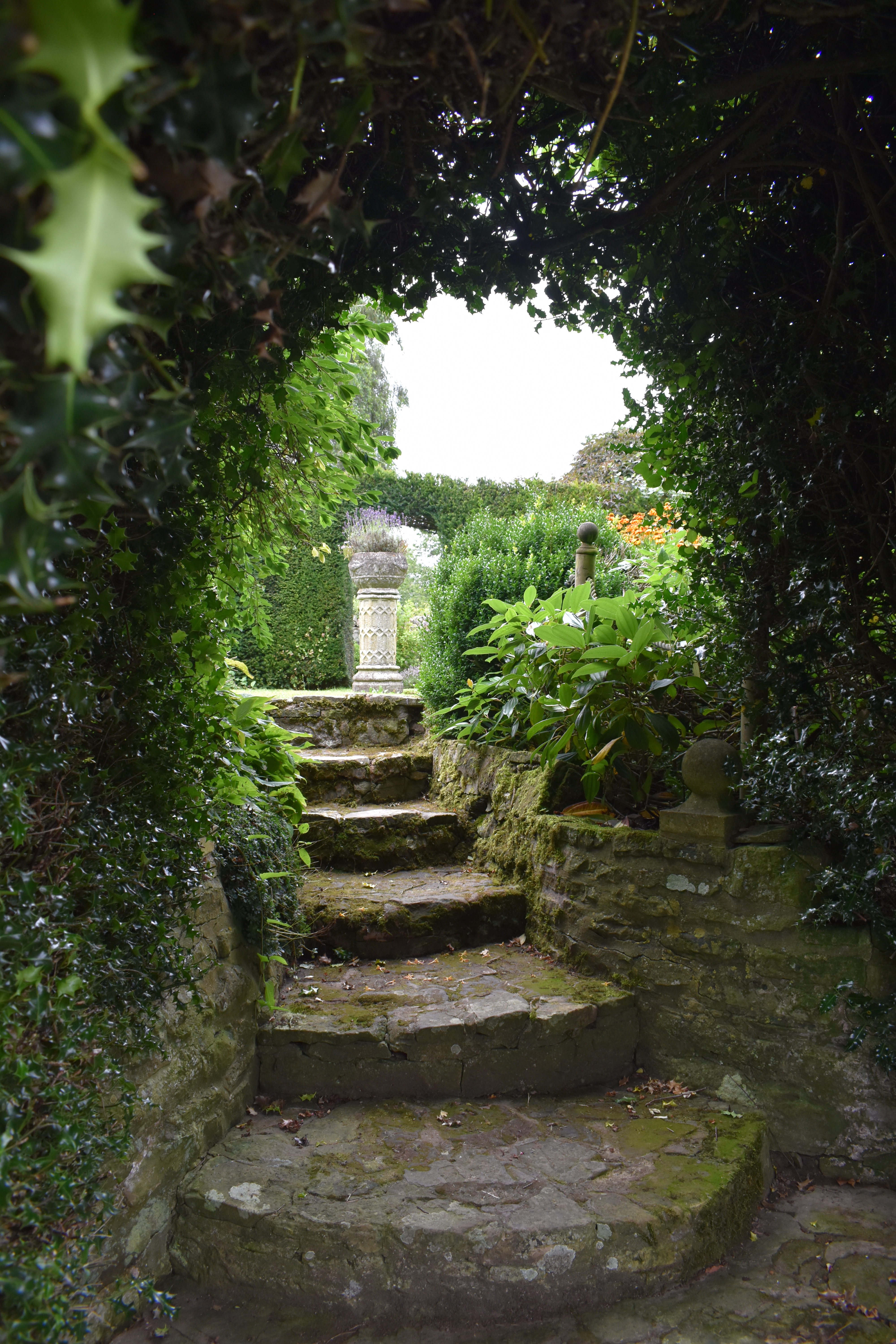
The garden at Chapel House takes you through gaps in hedge and archways into each area of planting.
We took a long wide grass pathway between meadow areas which lead us to the bottom of the garden where it met the countryside.
We finished the afternoon off with tea and cake! What a great way to finish enjoying a great garden!
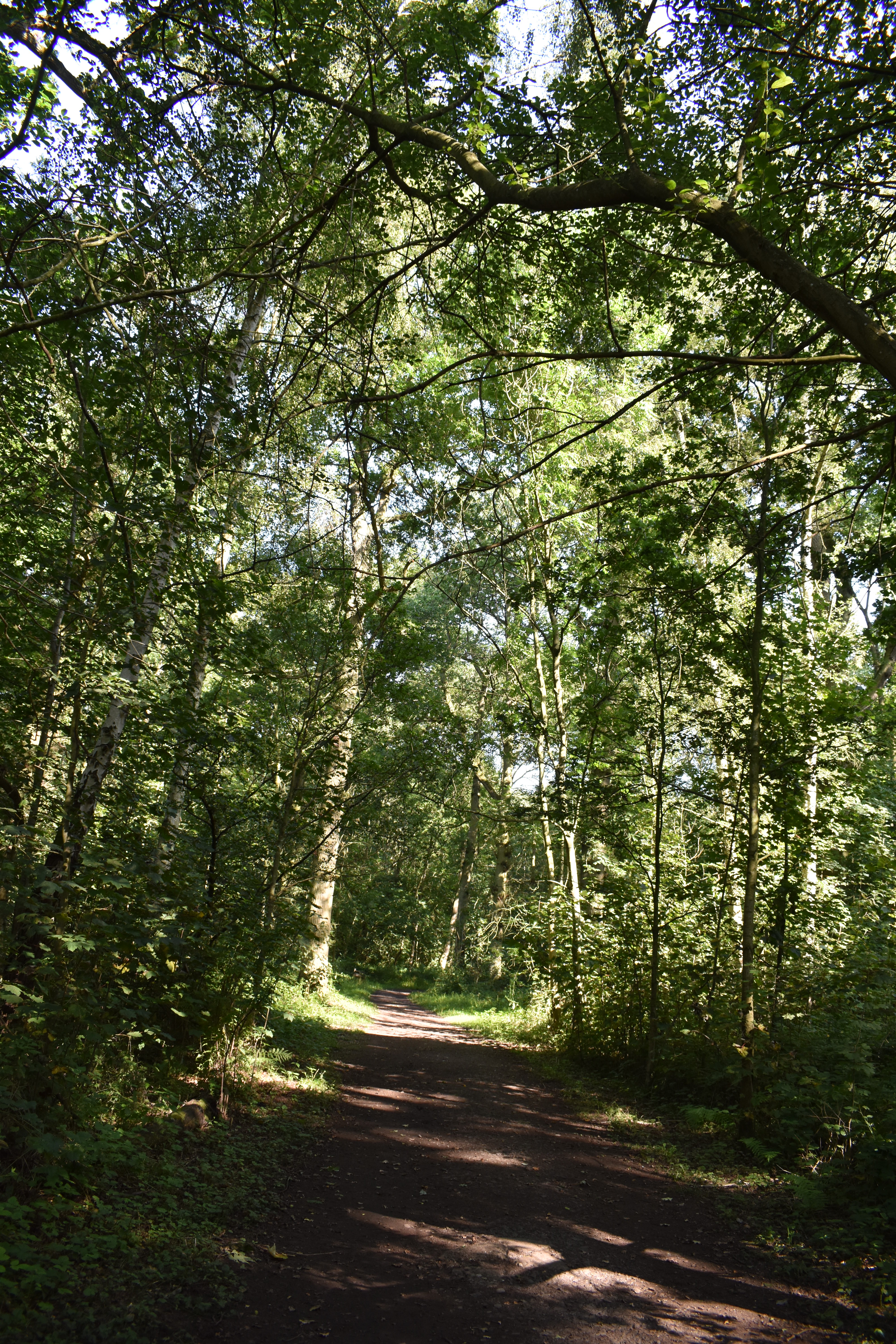
As promised we are back after leaving the walled garden. In this post I will share a gallery of my photos taken on the pathways through the way-marked woodland walk.
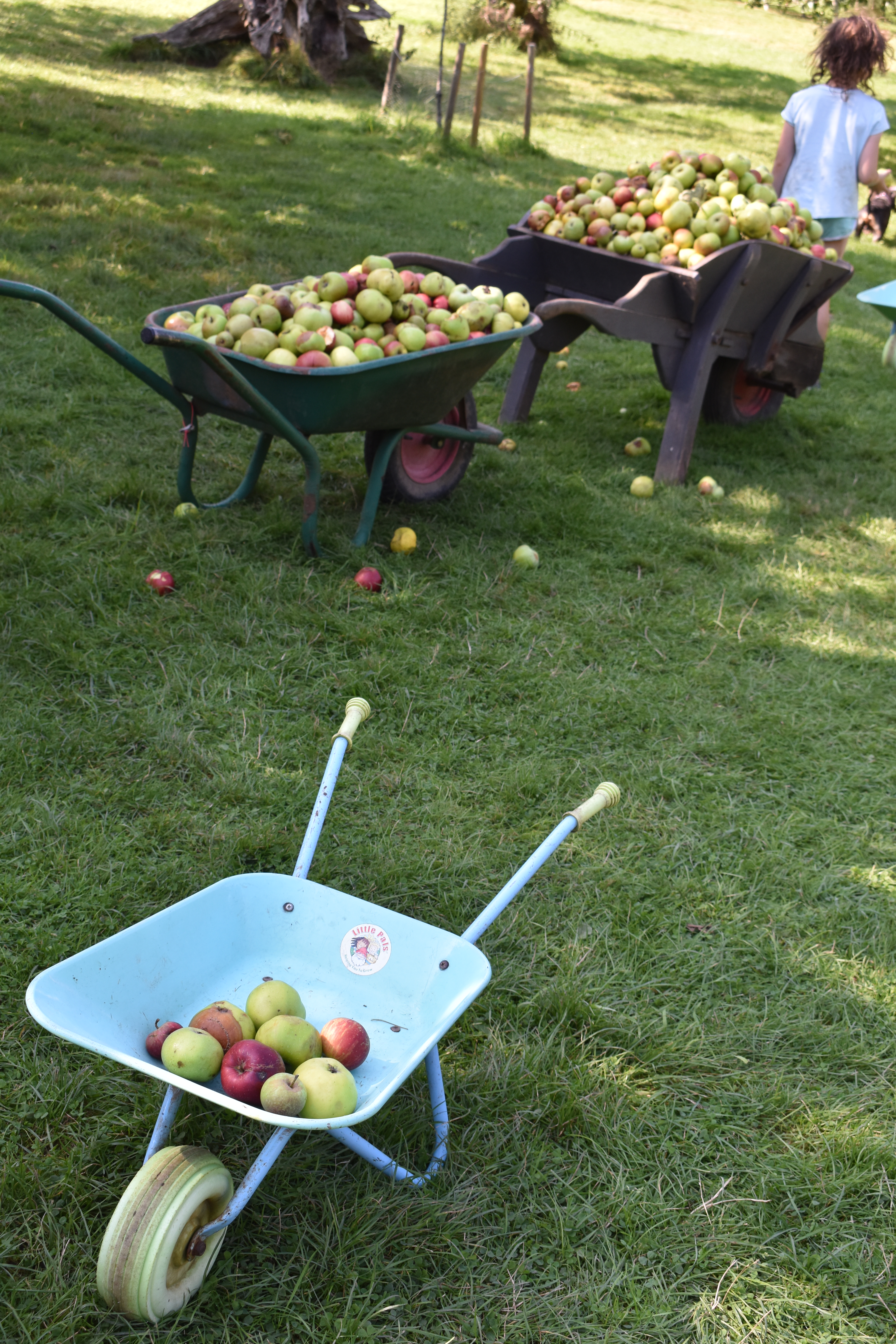
We walked through the orchard on our way to the main woodland area. Here it was good to see young families enjoying exploring the fruit trees and picking up fallen fruit. We were amused to spot three mums pushing a set of twins each in double pushchairs and also a picnic table displayed as a “Wind in the Willows” picnic.
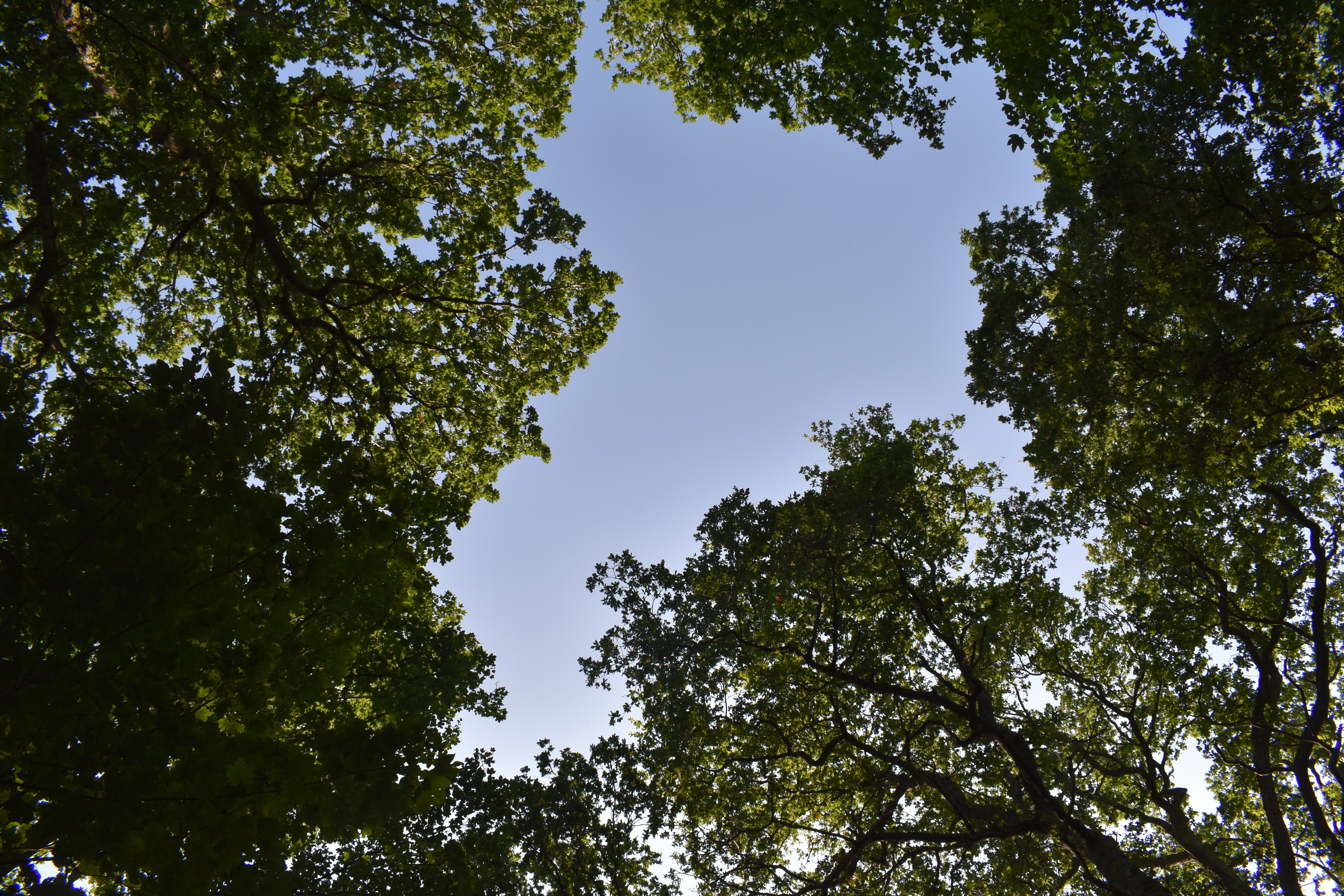
Off now to enjoy walking beneath beautiful mature deciduous trees seen from the woodland walk pathways.
So there we have it! Two posts sharing our woodland walk at Attingham Park a place we visit often so it probably won’t be long until we share a follow up post.
Because of Covid-19 restrictions we have not visited Attingham Park for quite a while so have not been able to follow the woodland walk paths. But towards the end of August we drove the short half-hour journey and after coffee we walked the “Woodland Walk” for the first time for months.
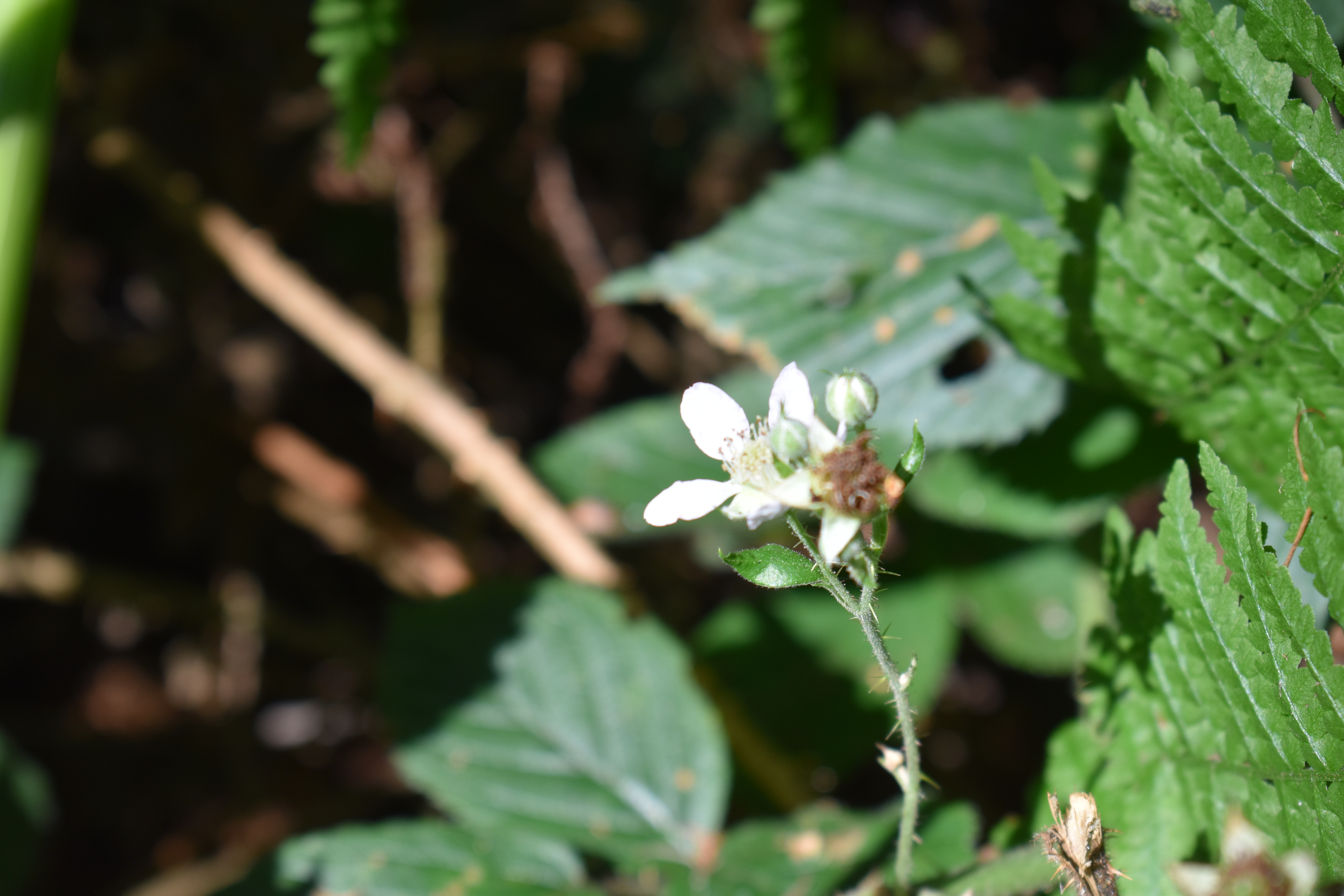
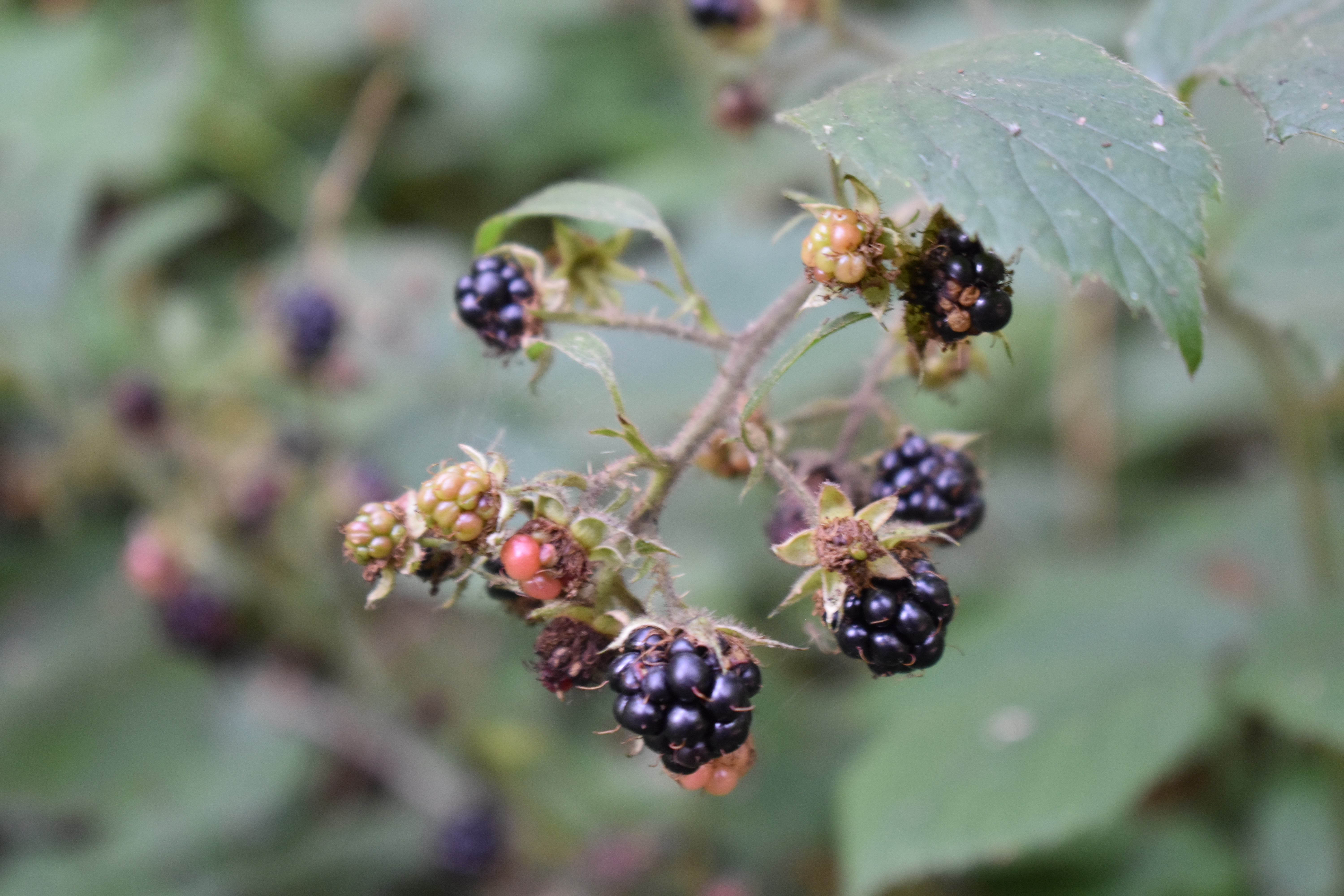
The woodland had a definite late summer look to it with early fruits, seed heads on wildflowers and the birds were silent during their moult time.
After wandering slowly along a bark chip path beneath mature deciduous trees we walked through the walled garden which was looking neat and productive again now that volunteers are back working.
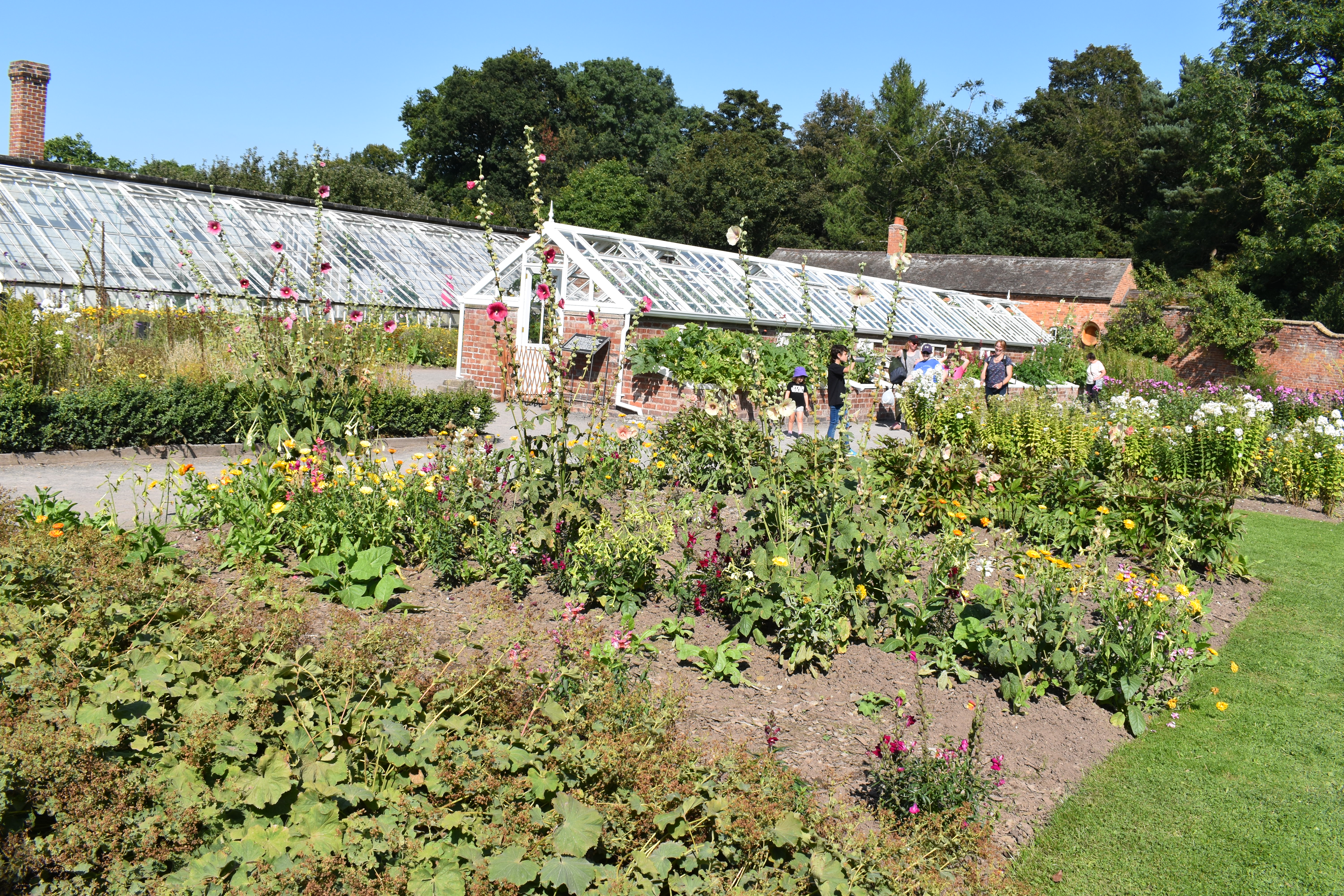
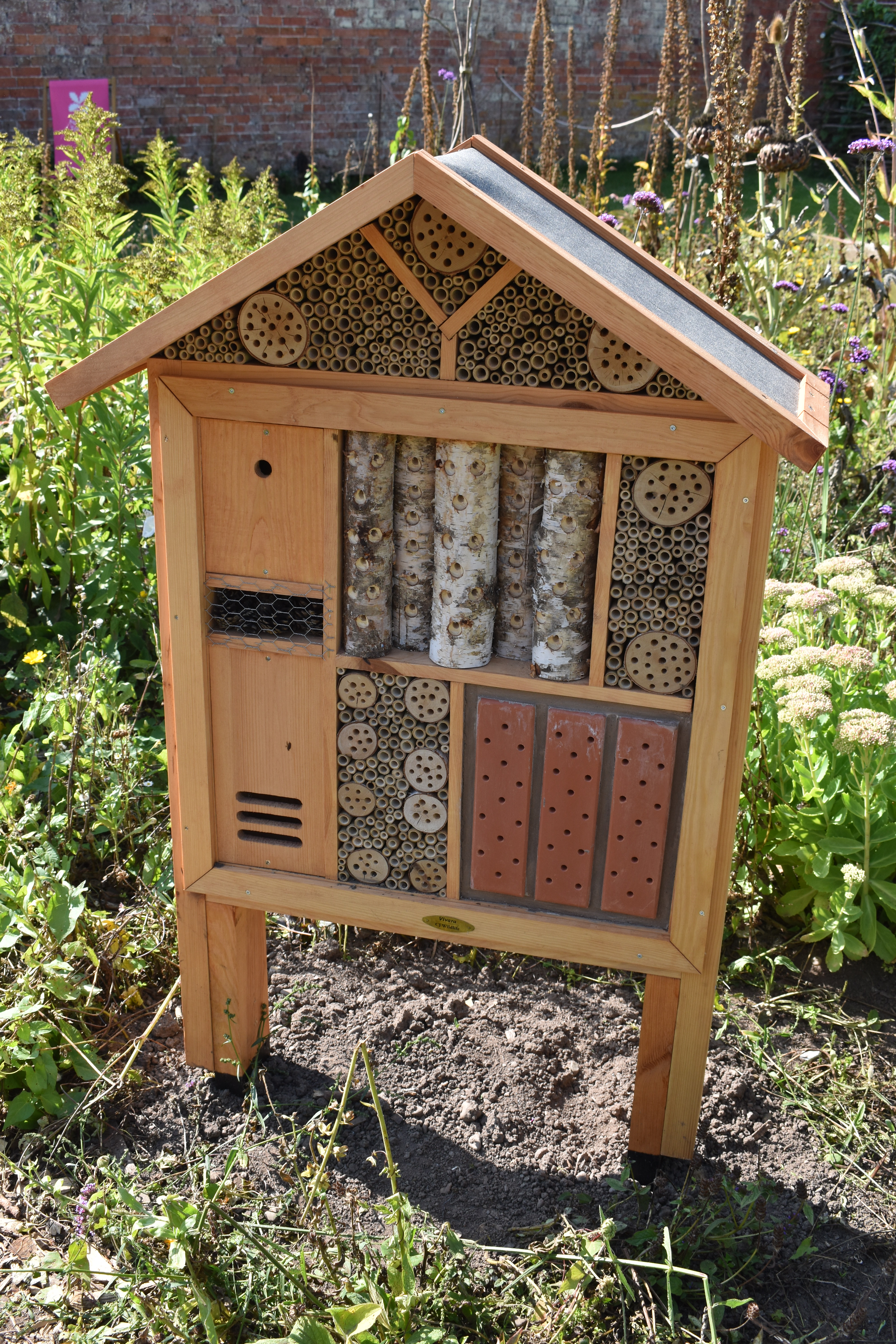
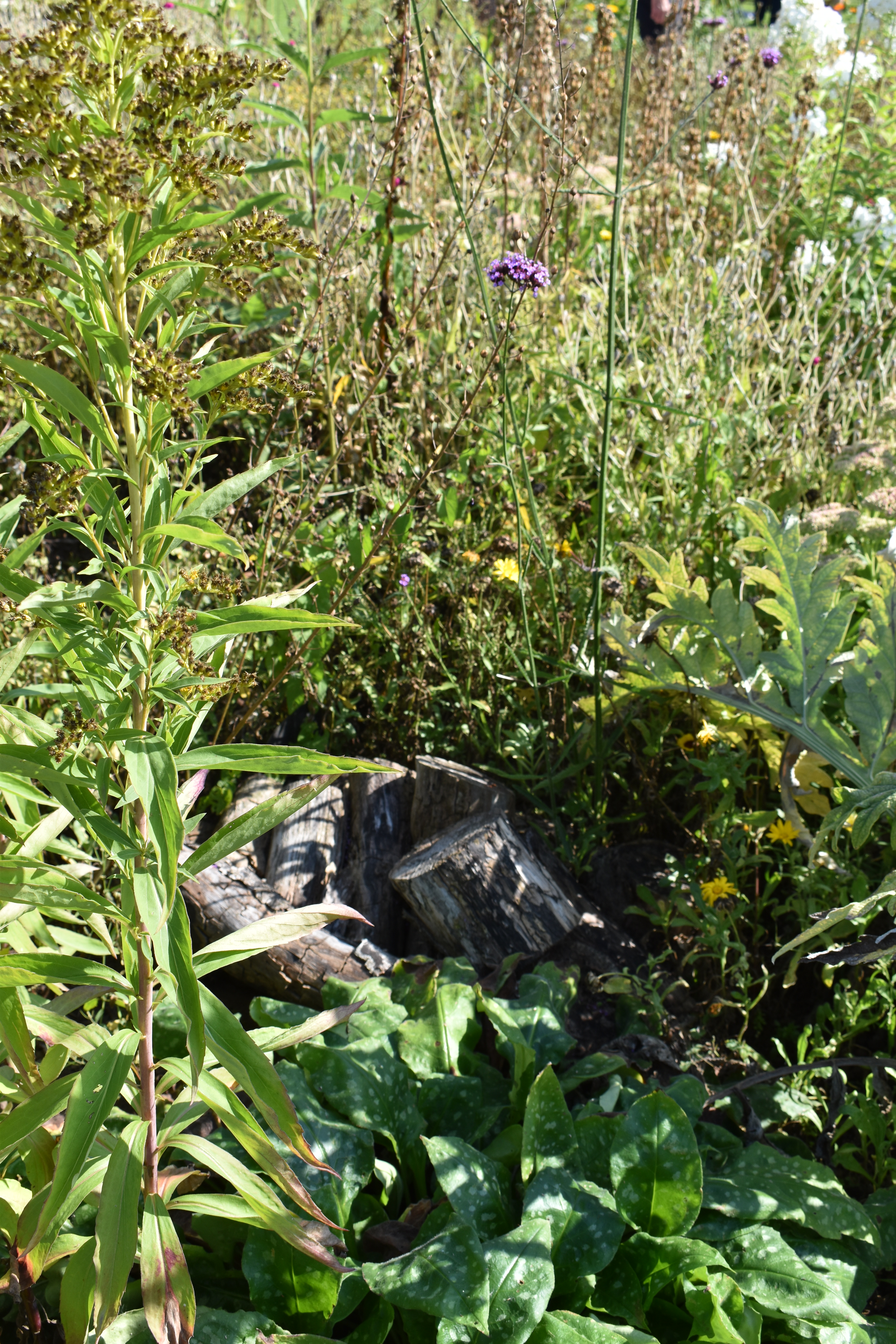
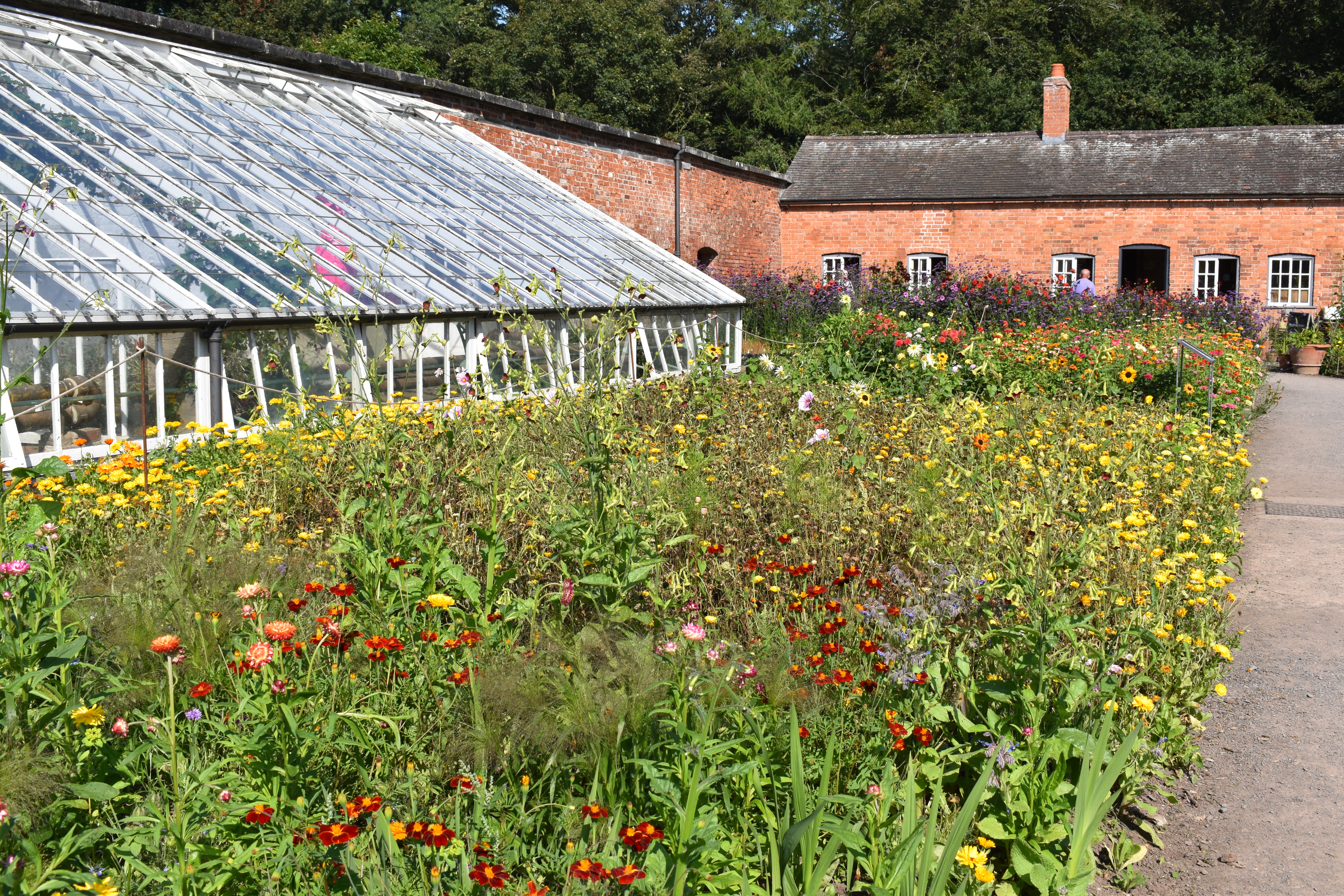
From the main section of the walled garden we went through a gateway into the smaller area where the cut flower beds, cold frames and glasshouses live. Here there are beautiful wildlife borders to give an extra dimension and the wildlife attracted here become predators and pollinators to support the crops.
In the second part of this post I will share a gallery of the photos taken as we left the walled garden via the orchard and then explored the woodland walk.
We made the short journey southward into Powys, our neighbouring county across in Wales to visit the garden of plantswoman and nursery owner Claire Austin. We always enjoy the drive into Powys as the countryside in Shropshire merges into the countryside in mid-Wales.
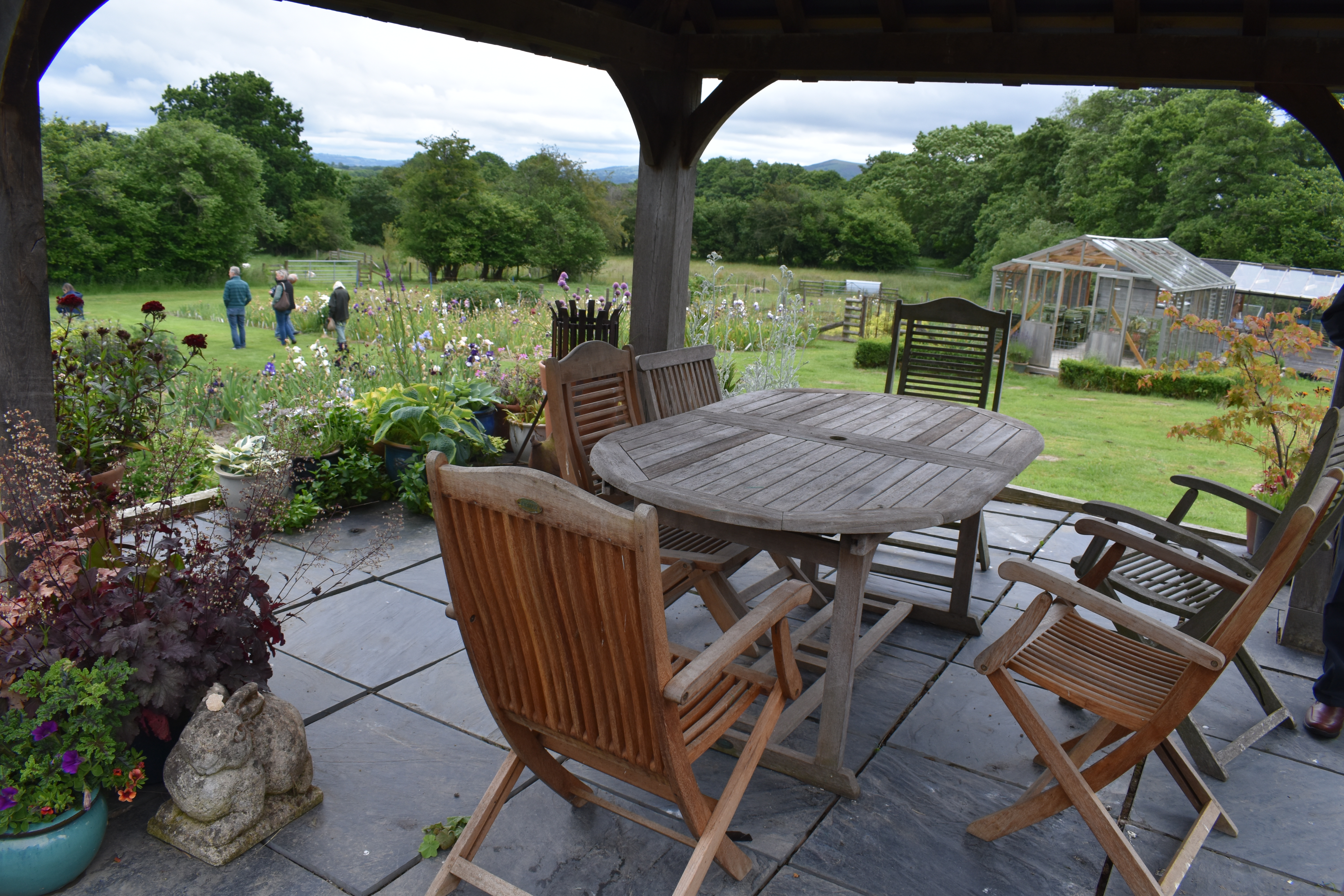
We parked up in a hummocky field and took the rough driveway up to Claire’s oak-framed house with its formally structured front garden.
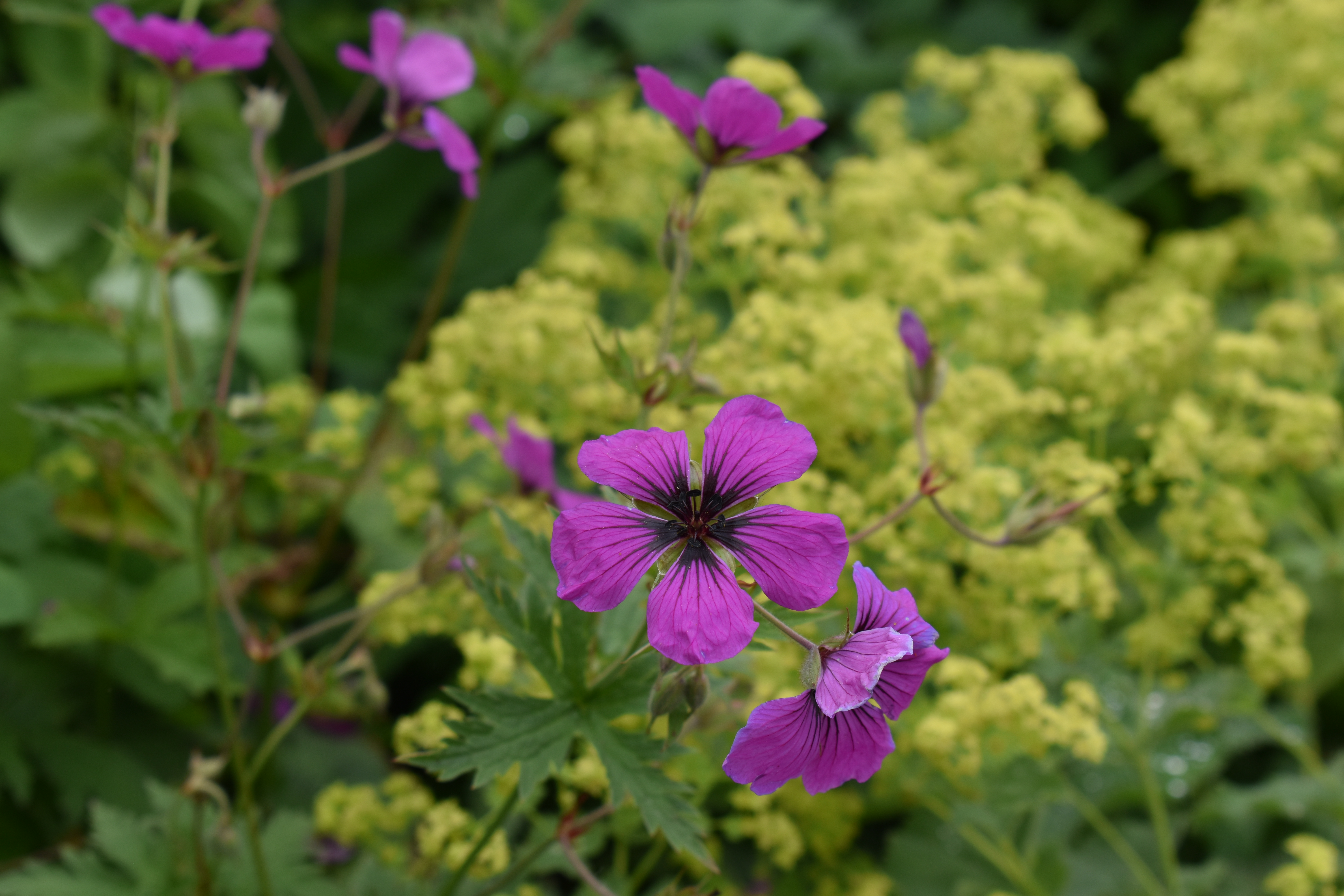
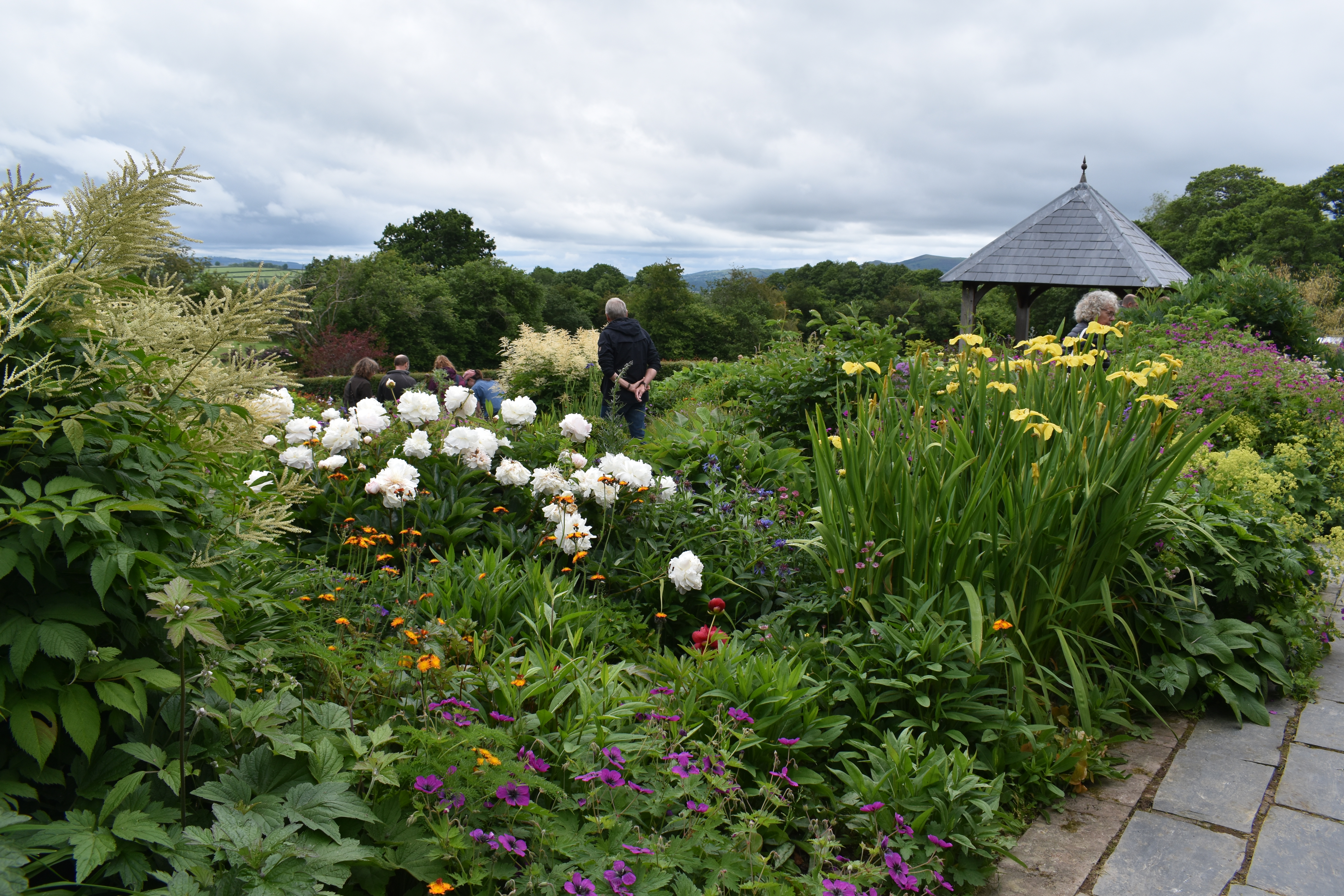
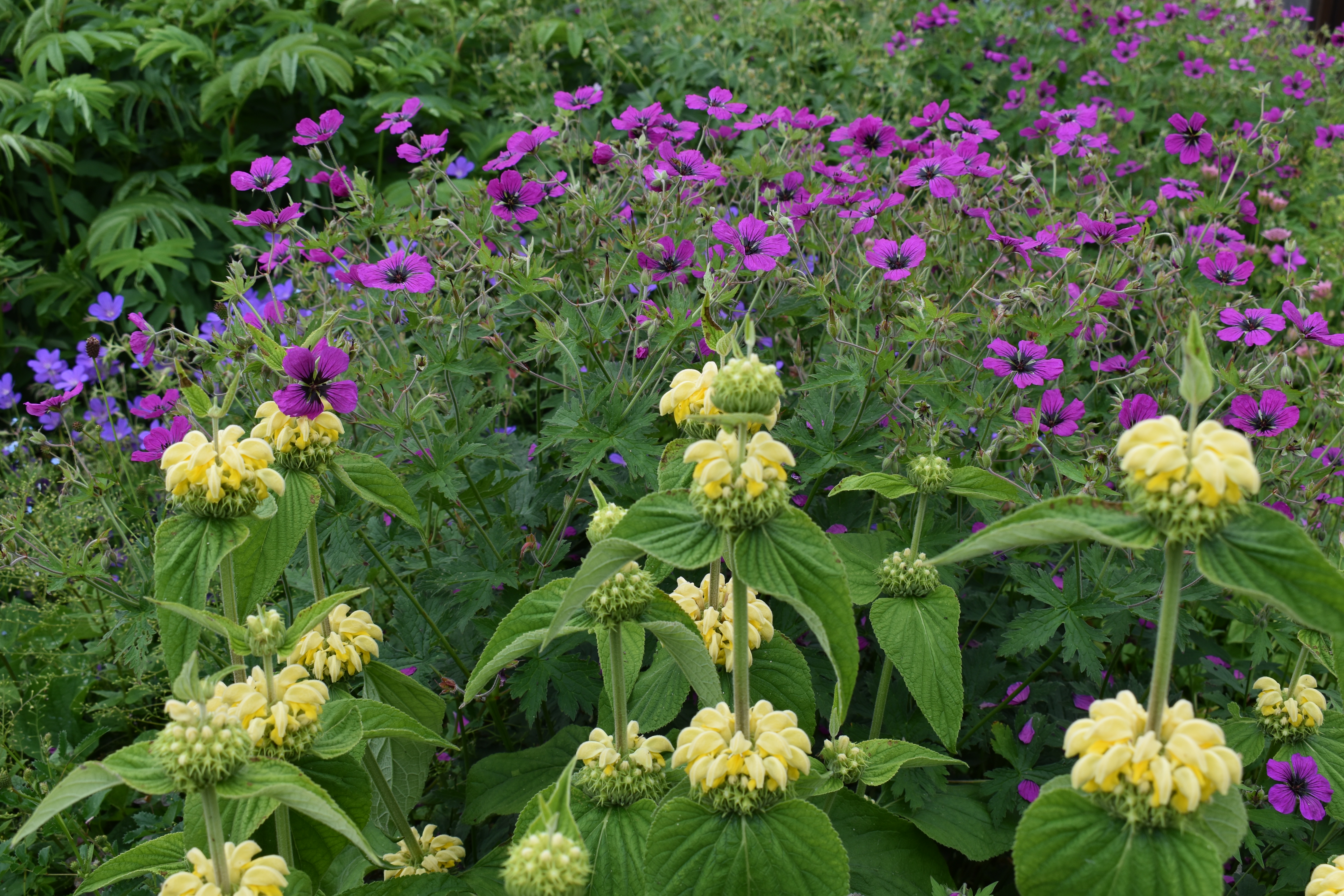
We really enjoyed the front borders full of healthy perennials as one would expect from someone who specialises in producing such plants which are sold through her massive online nursery.
We moved around the back passing these two on the way. The design here was much softer and the planting more varied in height and wider plant choice.
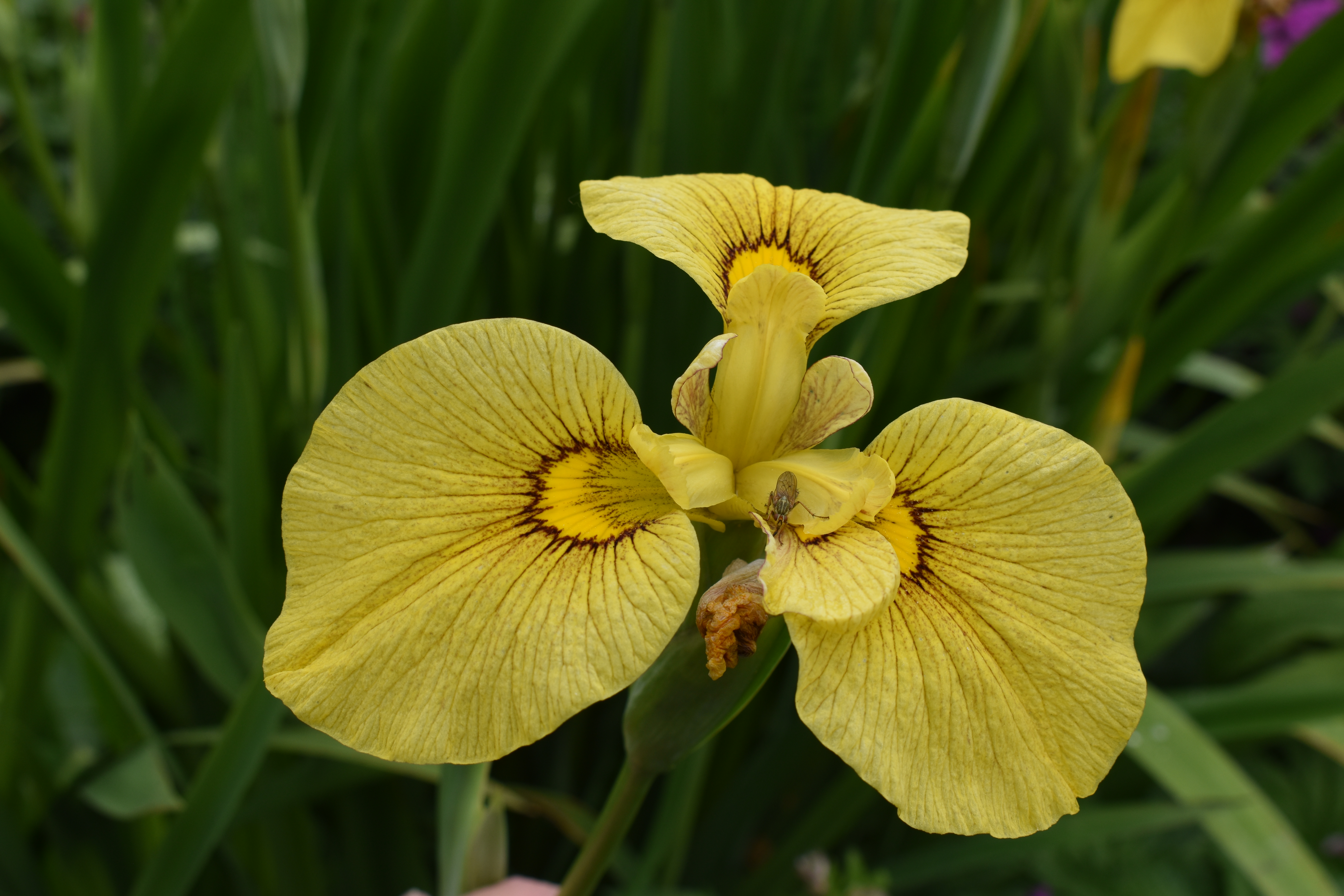
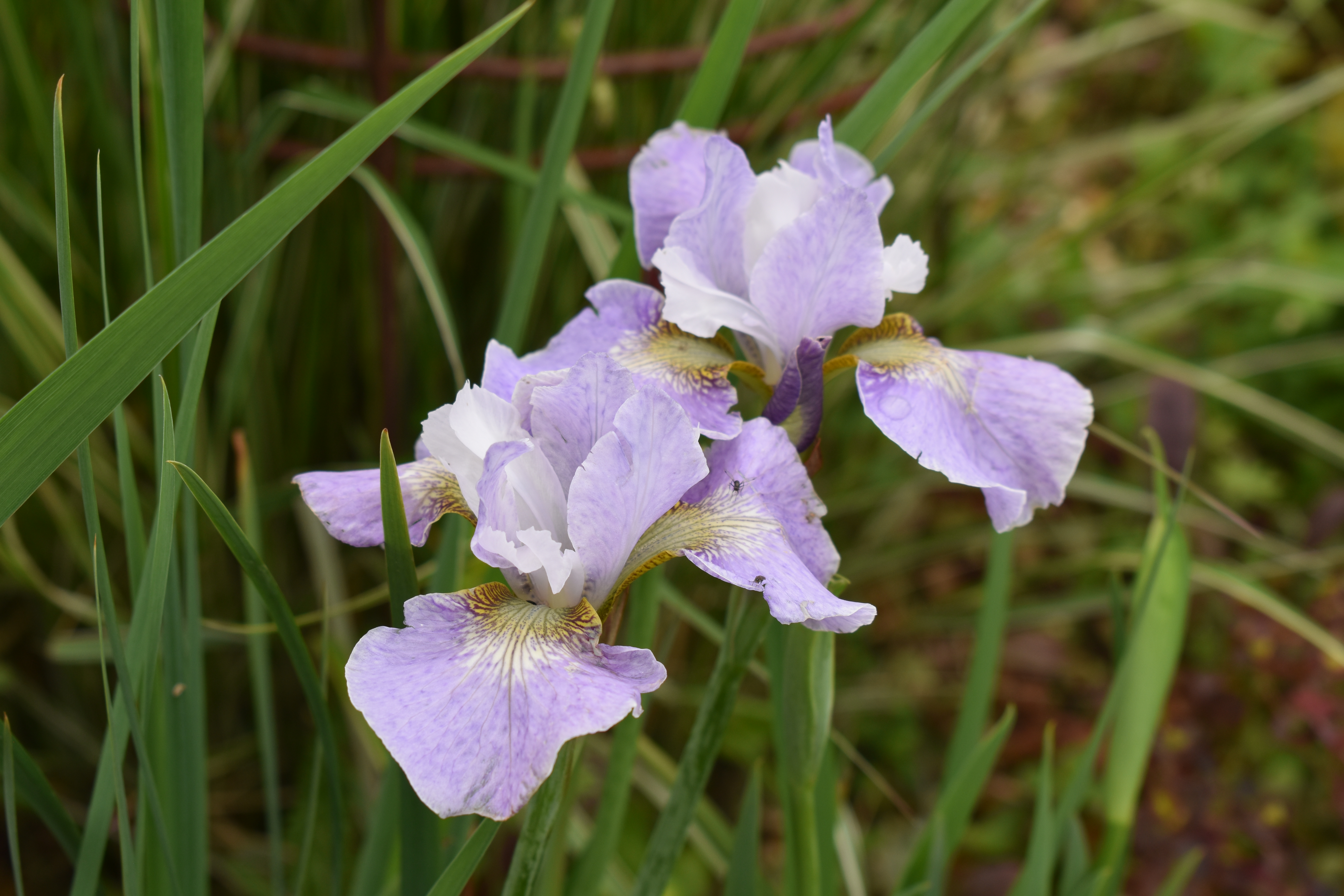
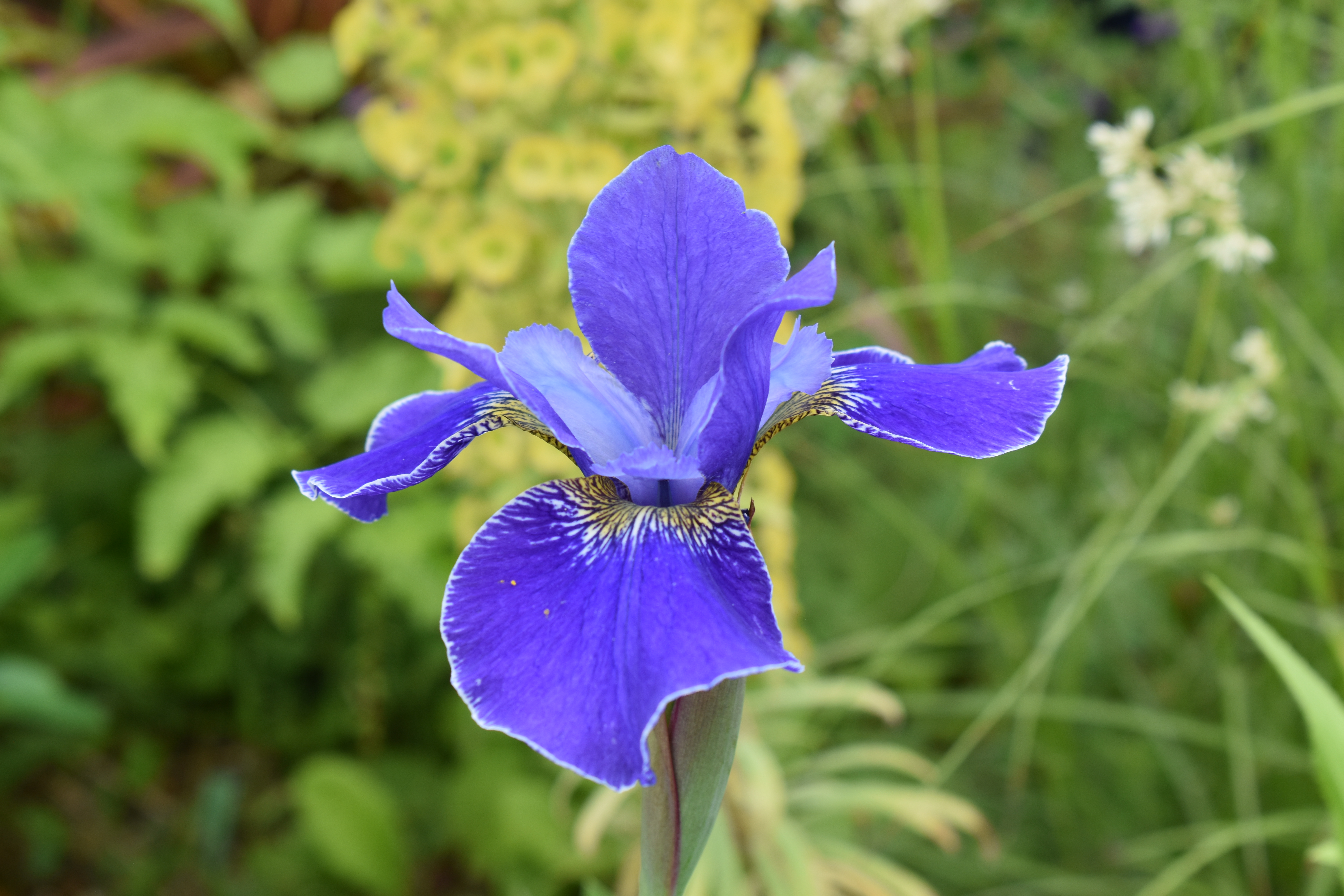
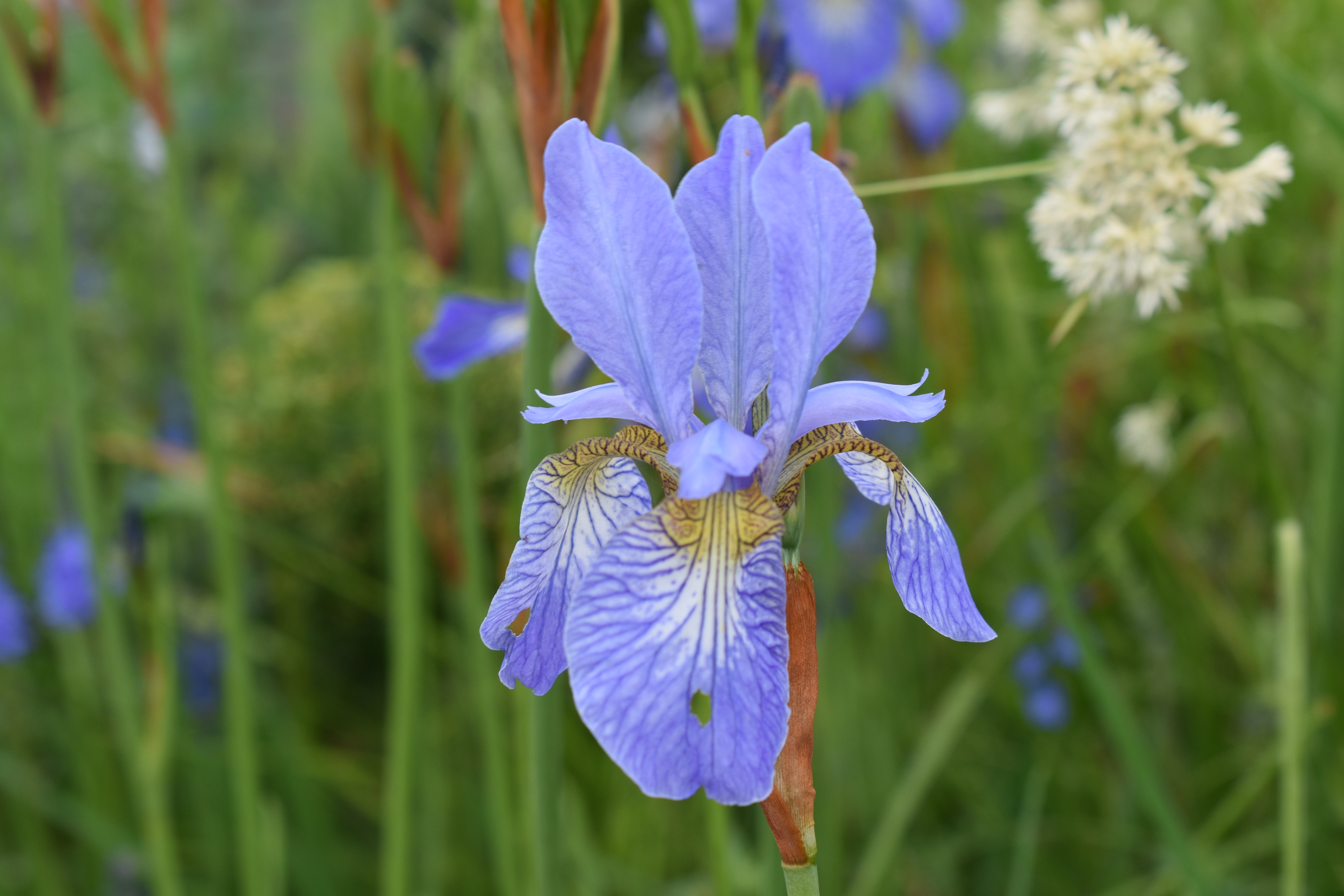
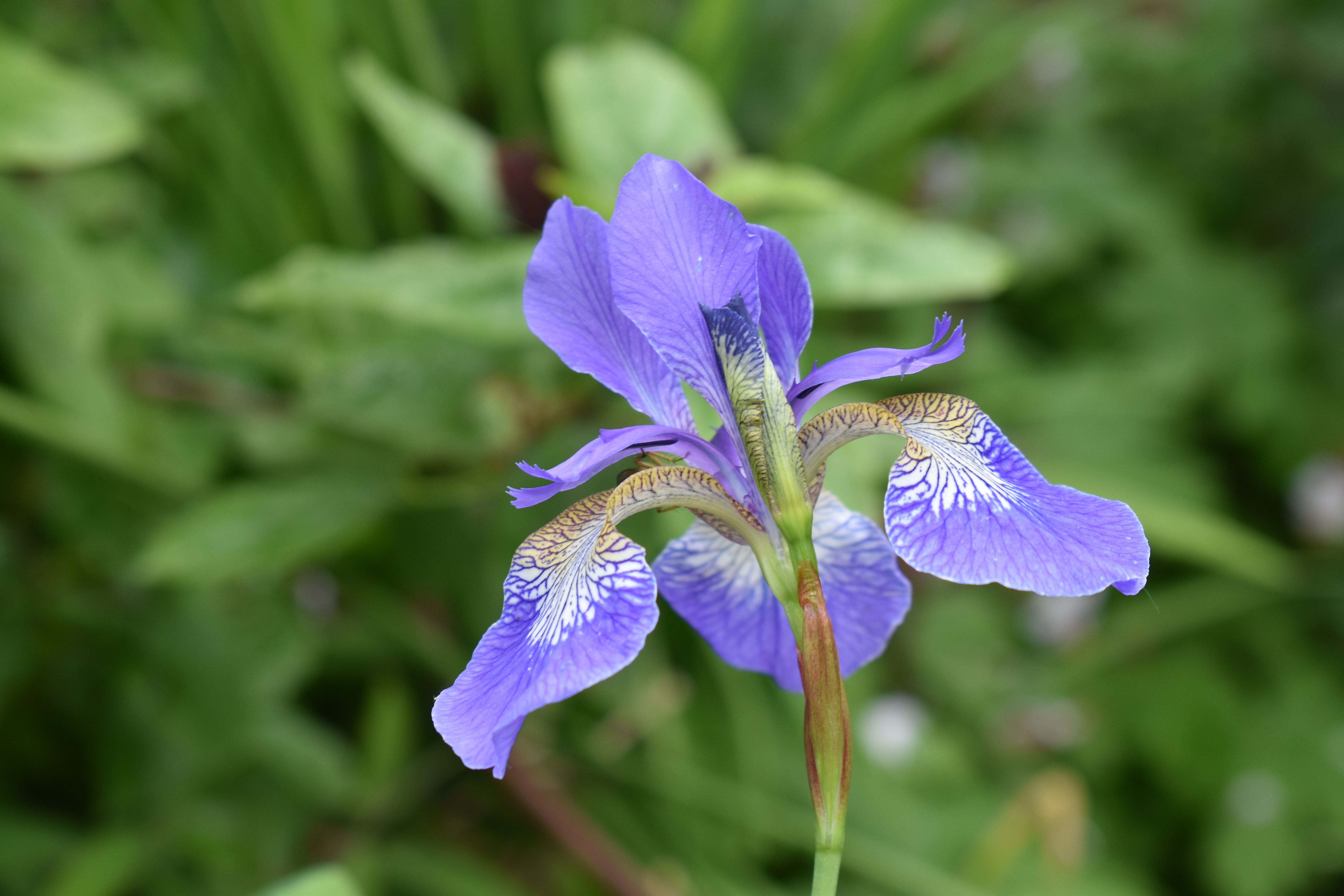
We expected to see such good irises included in the planting as iris and paeony are her specialist plants.
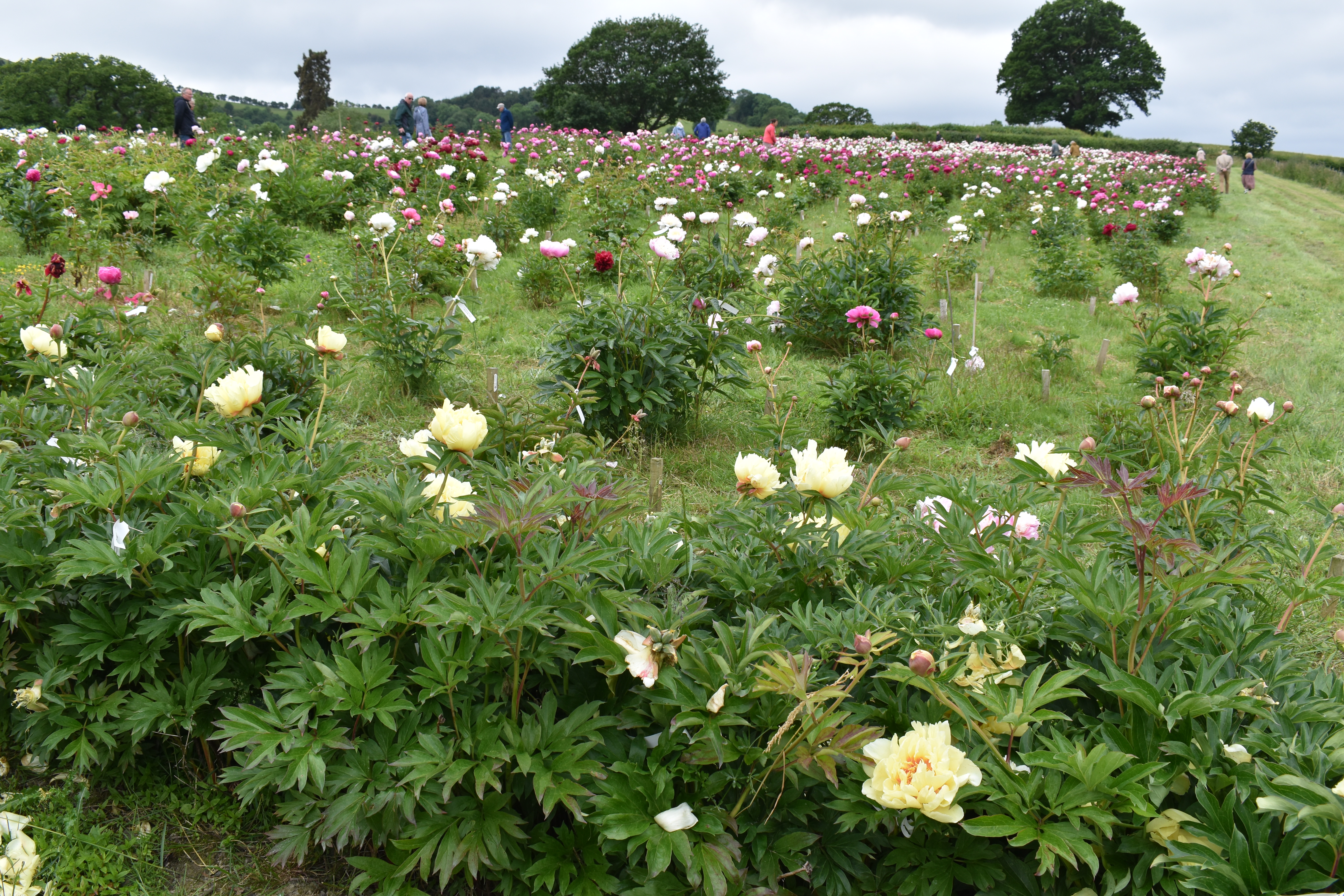
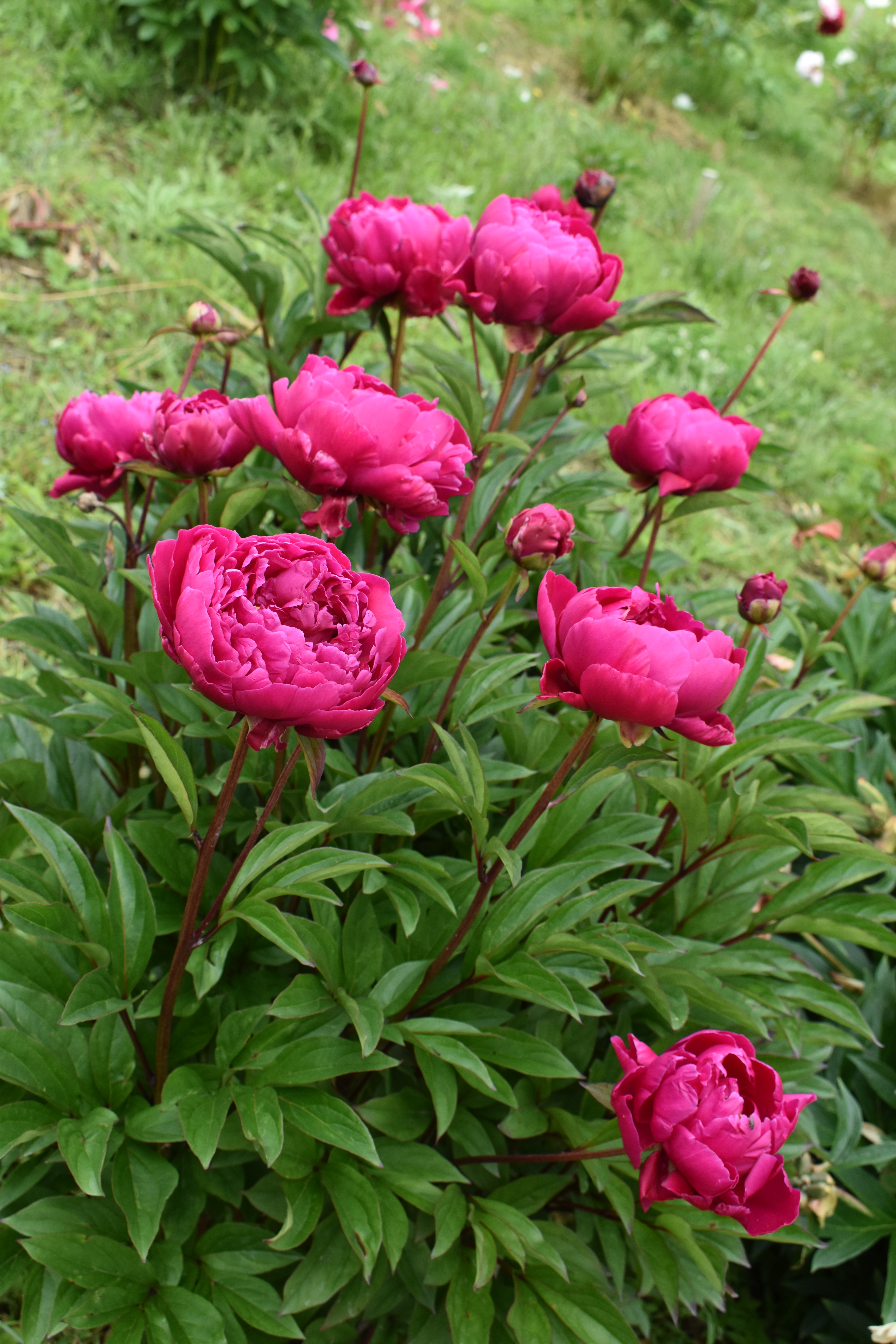
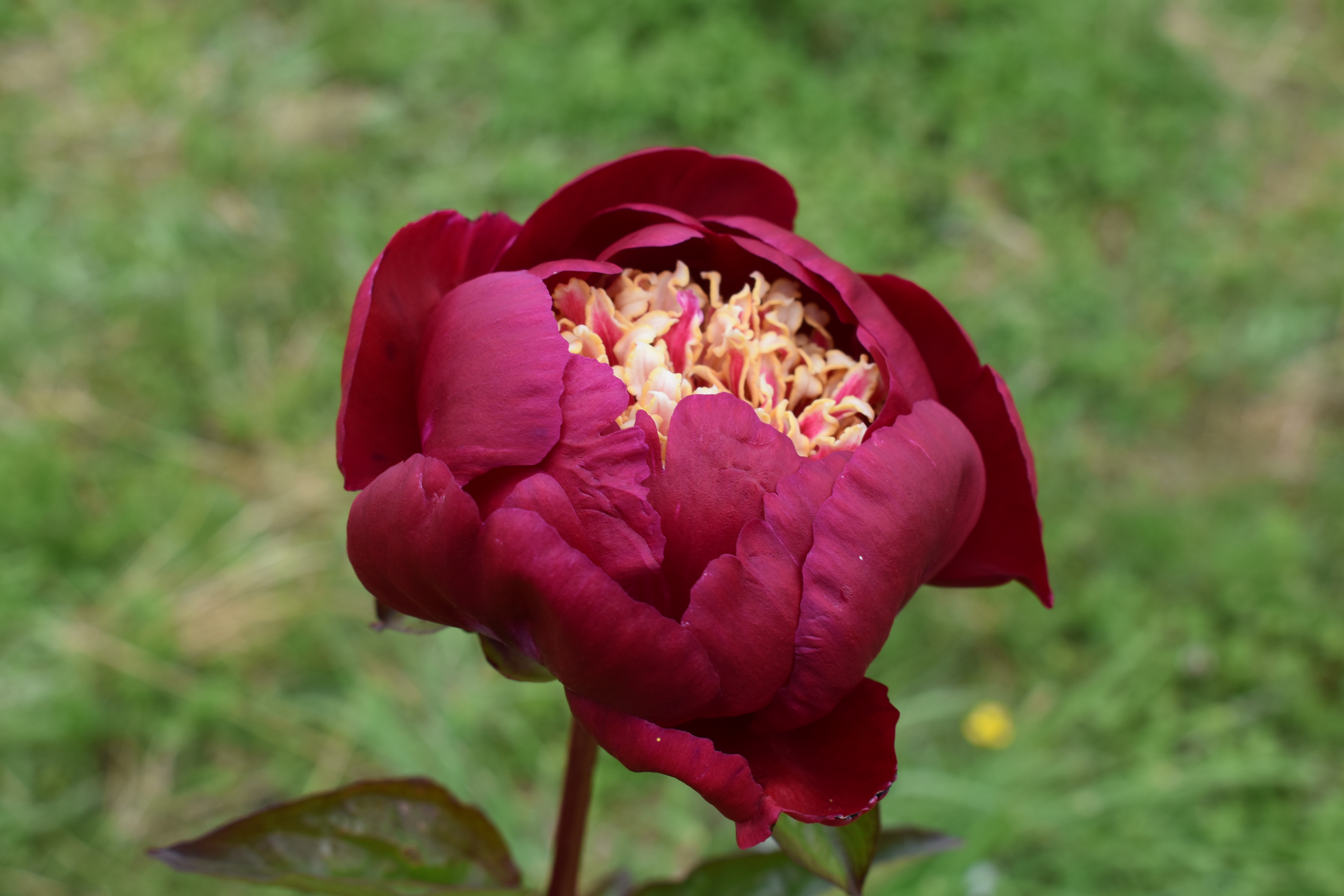
The Paeony Field and Iris Field were next up. Neither of us are fans of paeony and don’t grow them at home but we rare iris lovers. We did however have a quick look at the paeonies.
We moved through some other mixed borders as we went to look at the few remaining irises in bloom. We were a bit too late in the season to see them at their best.
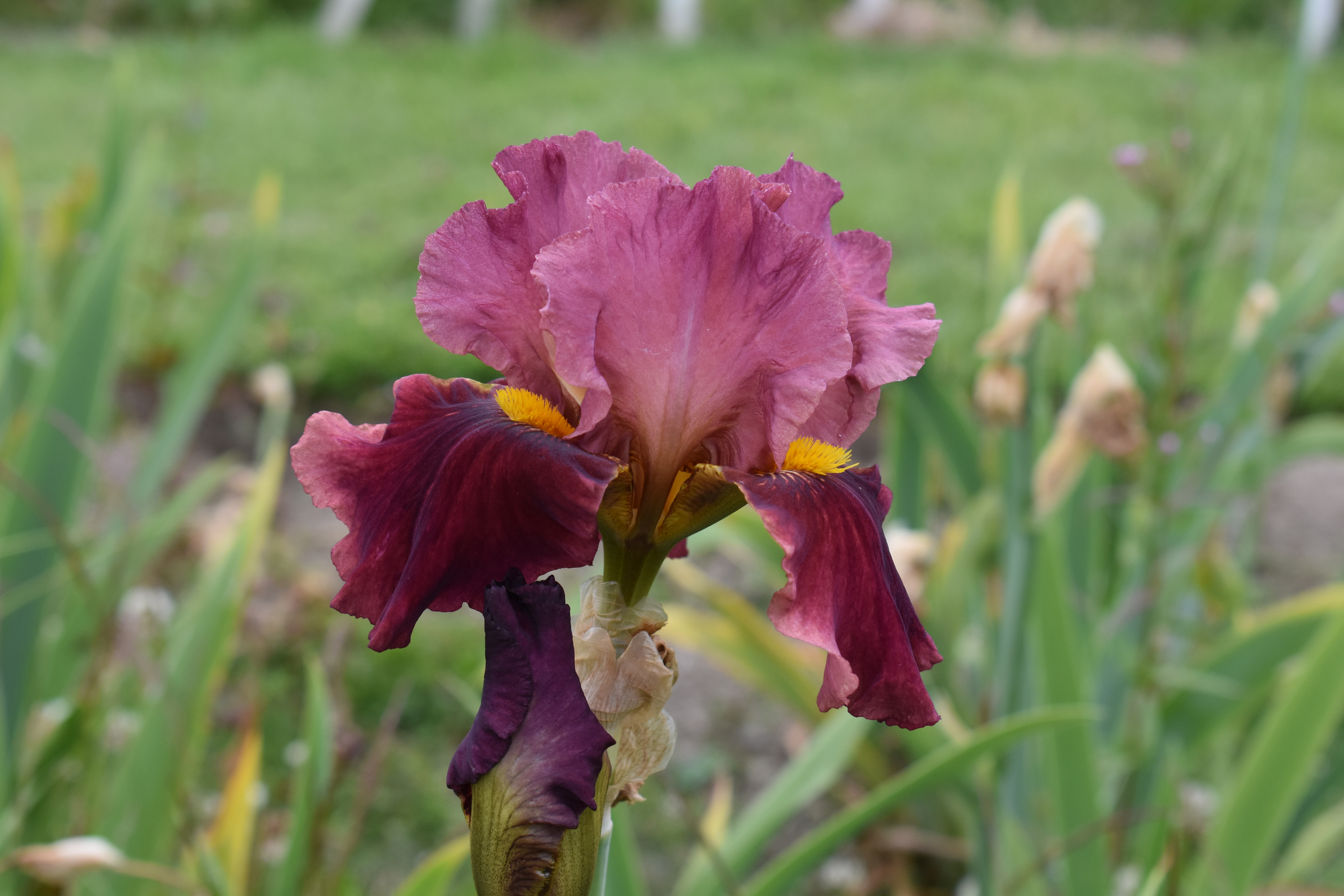
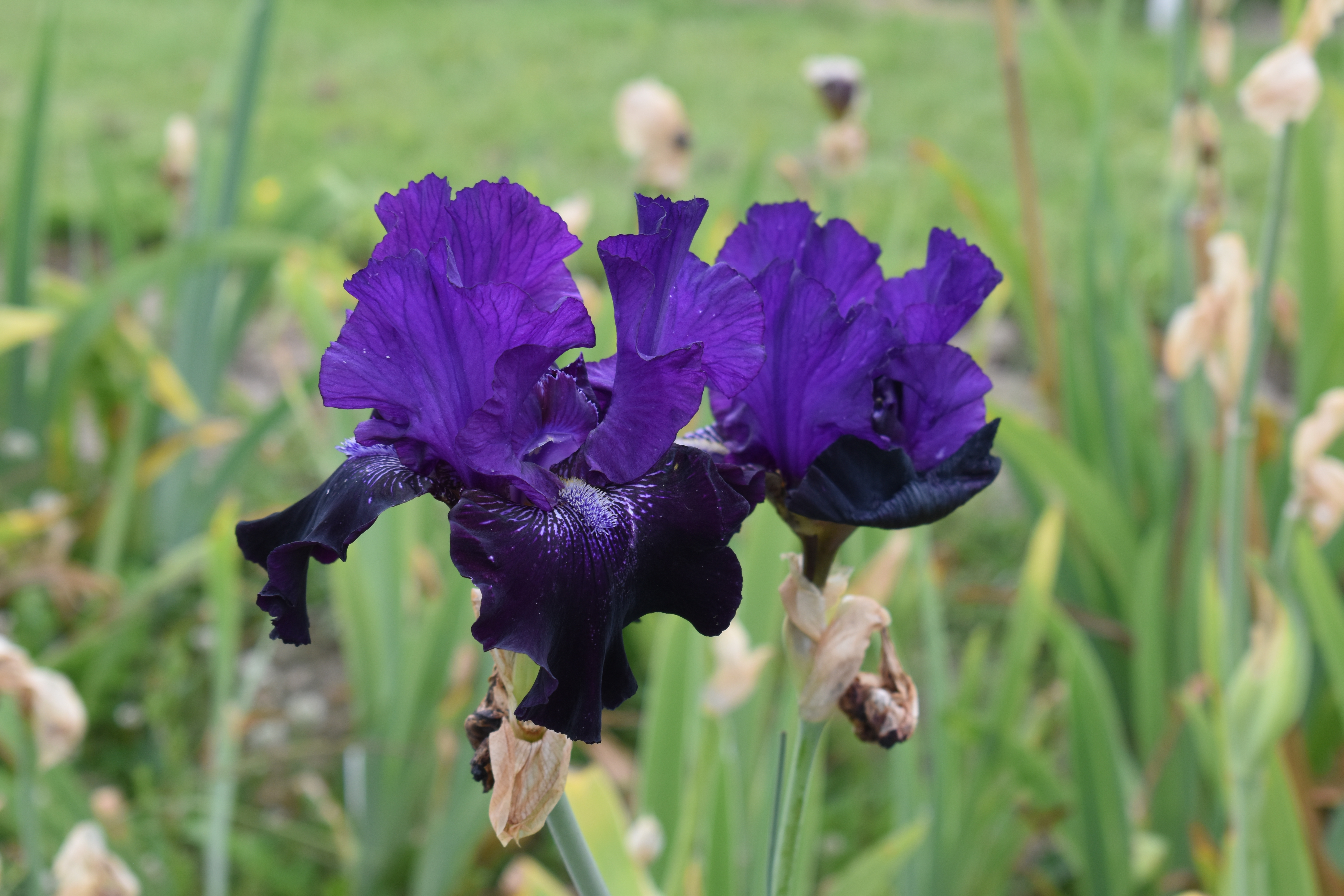
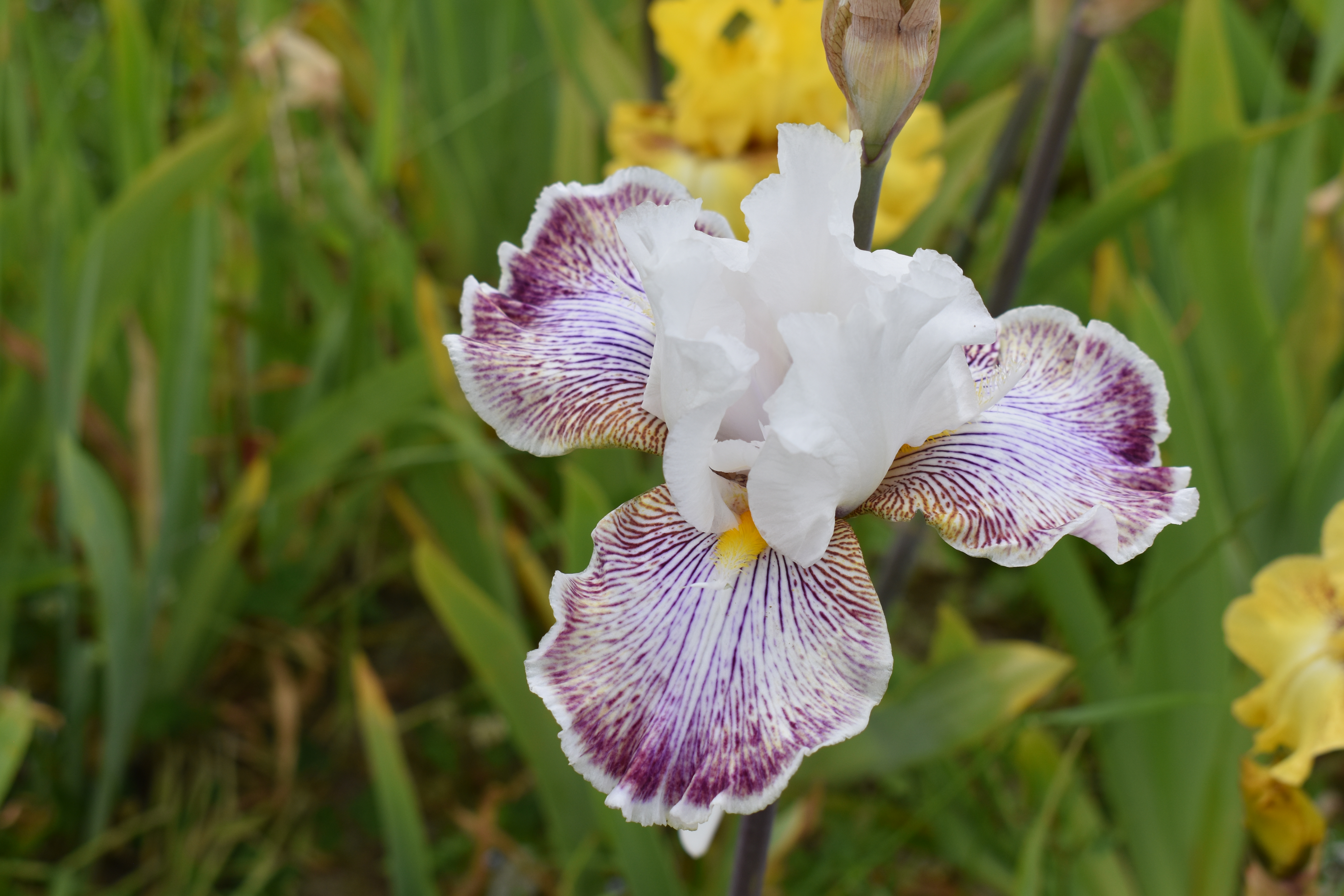
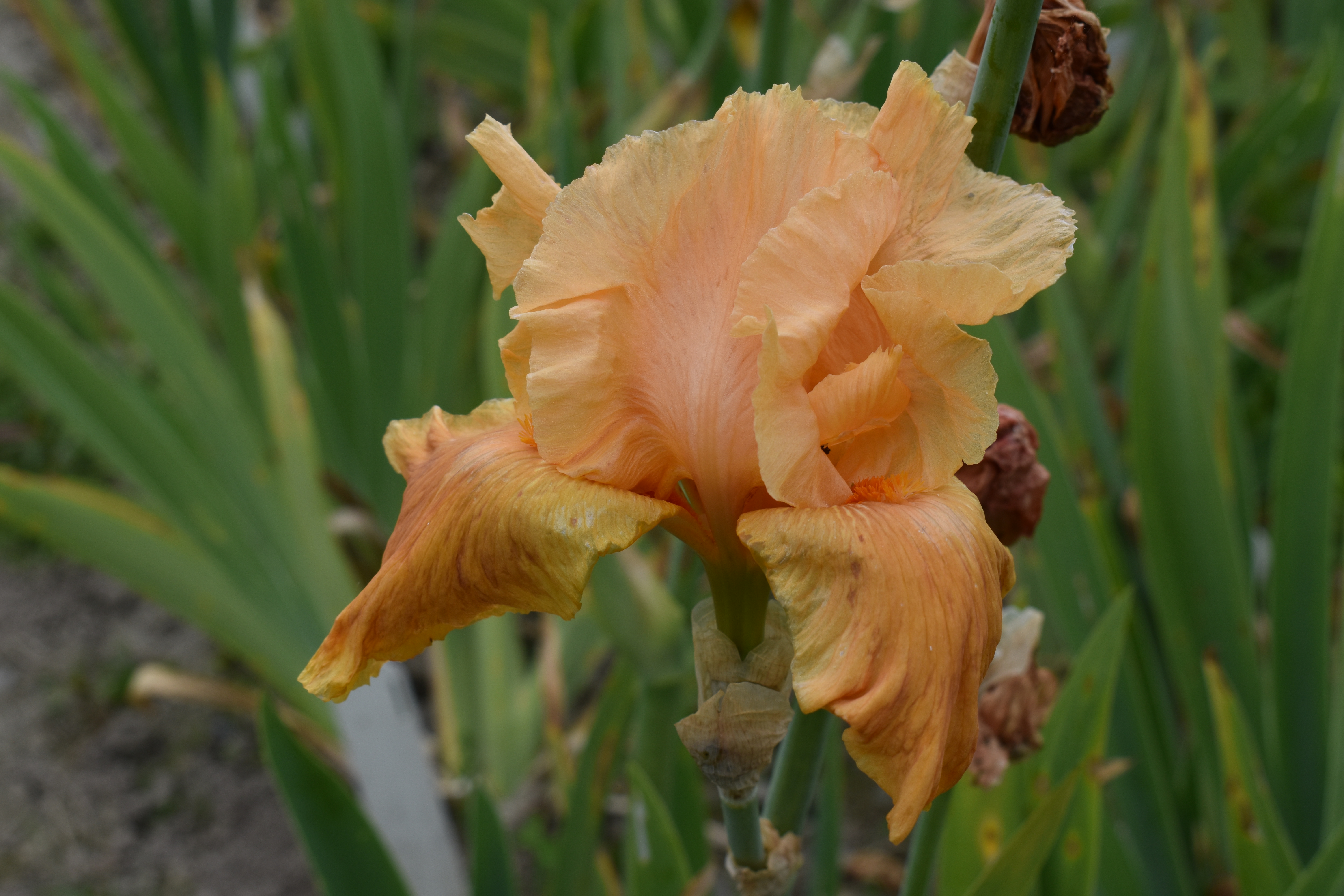
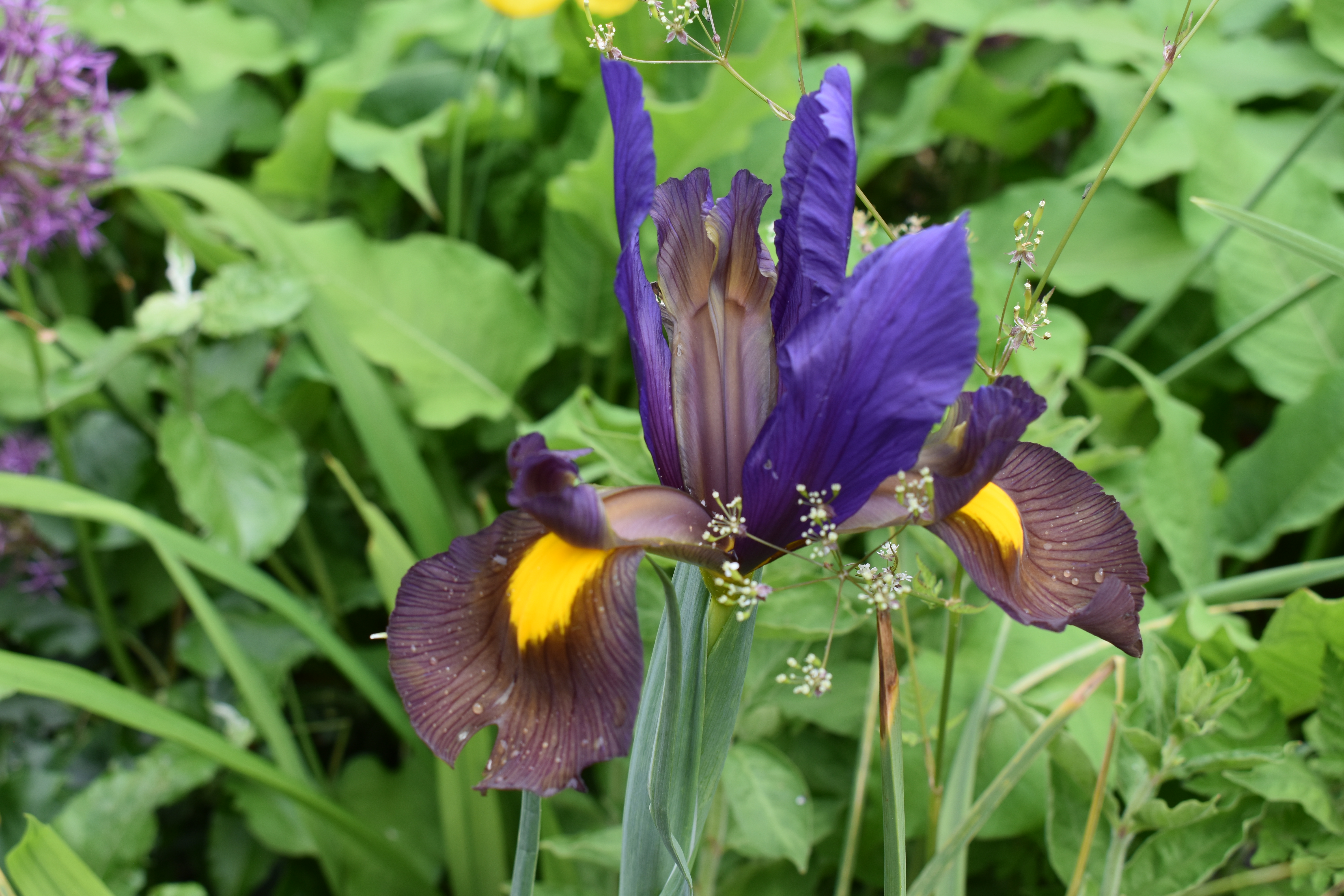
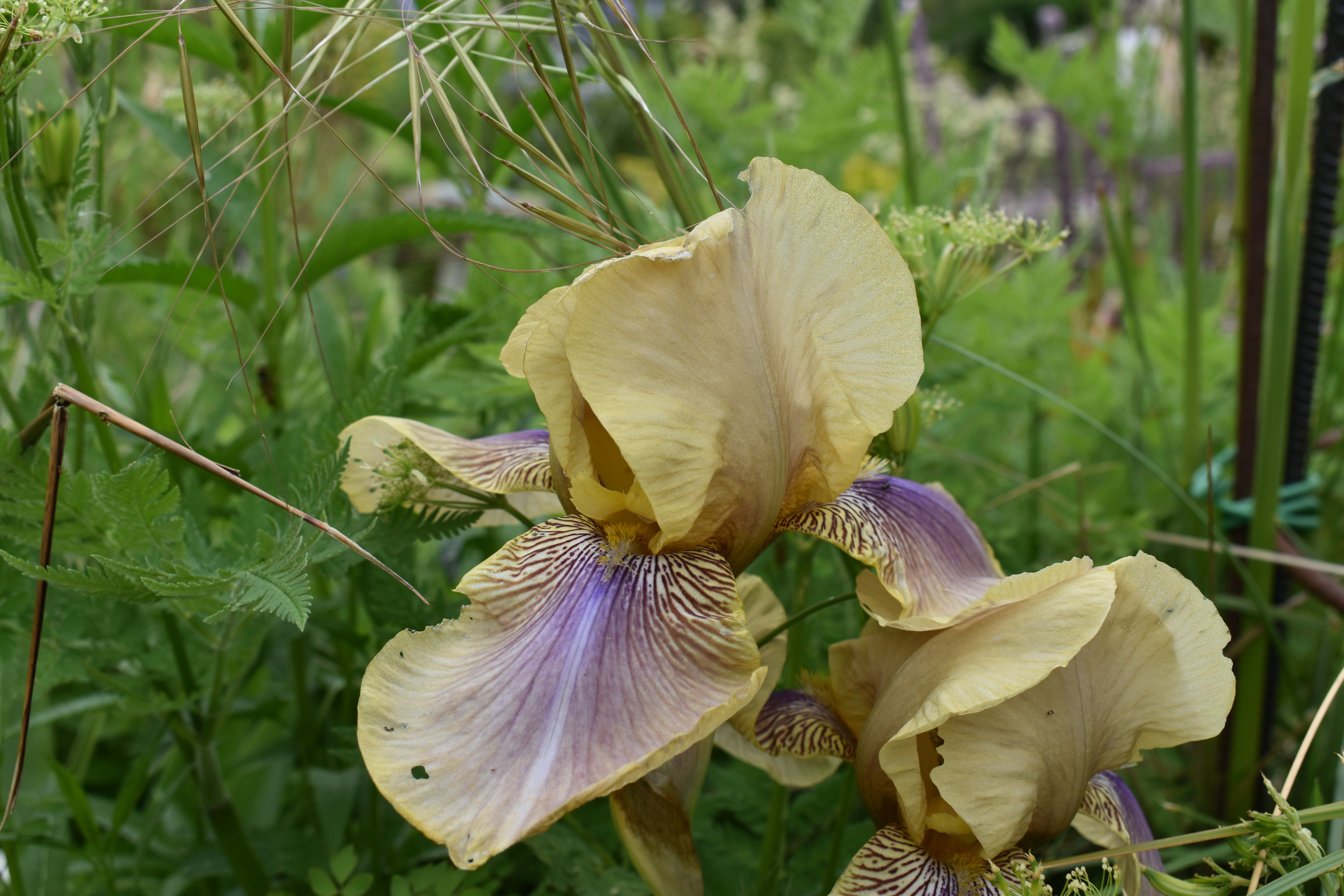
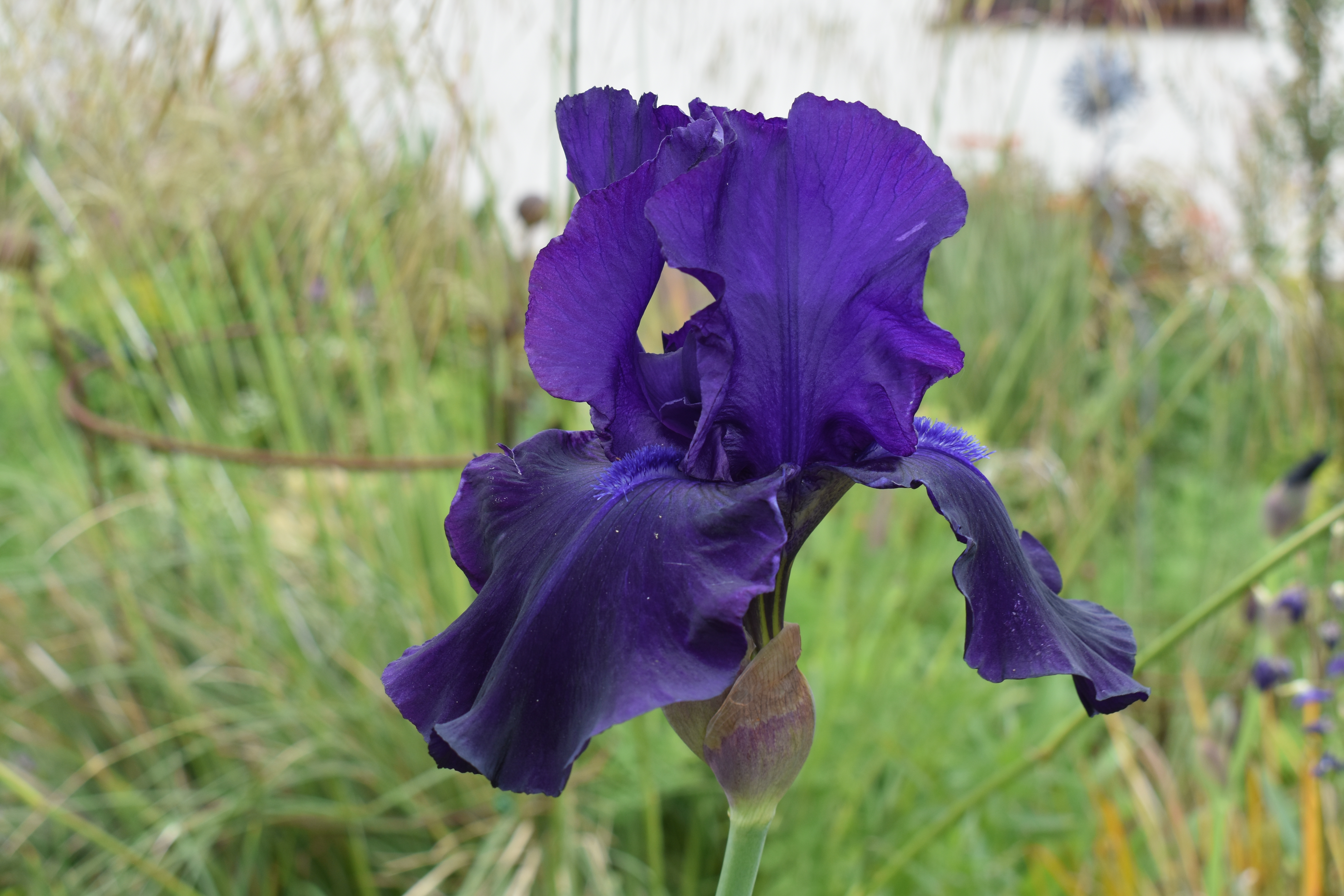
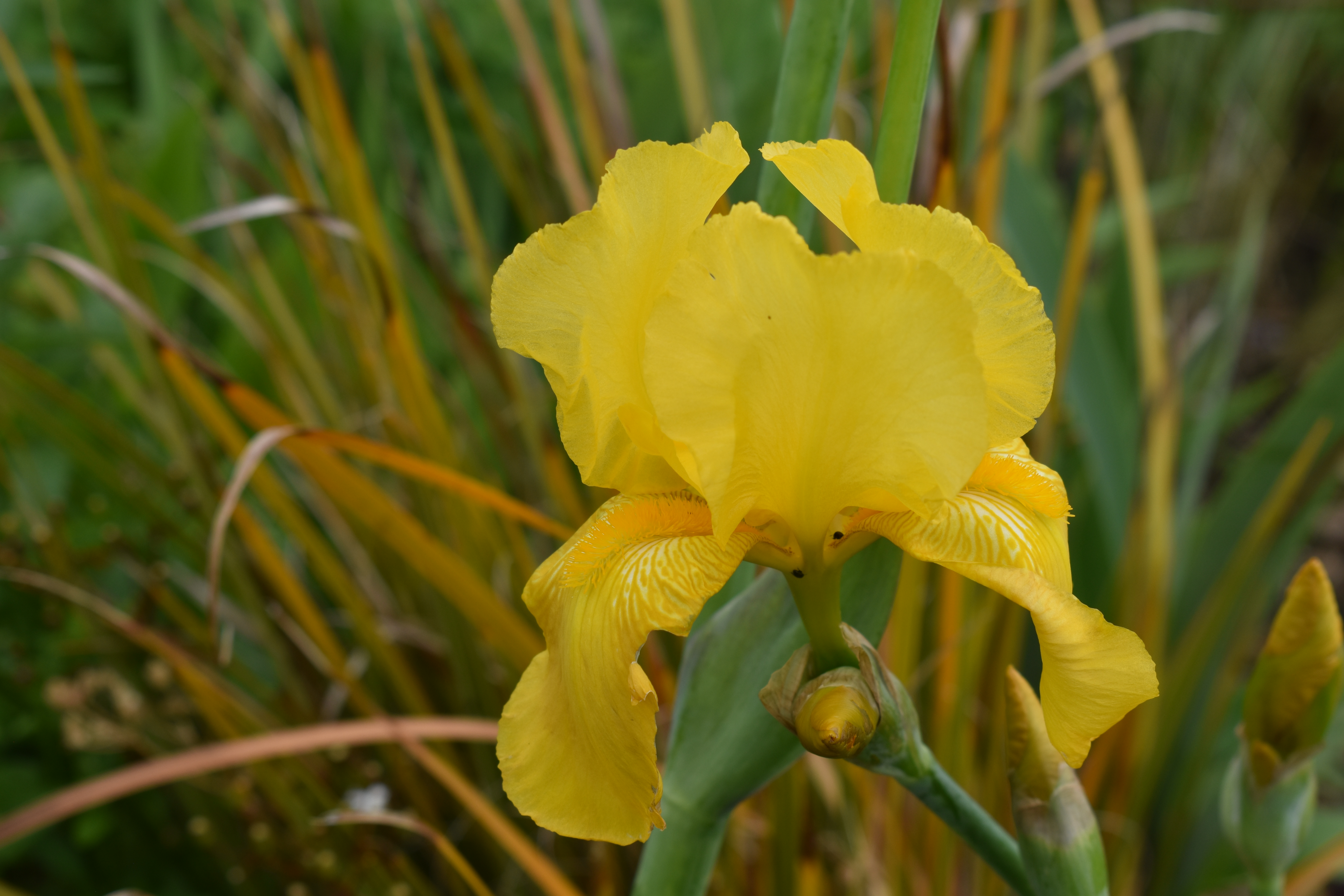
We reached the collection of bearded irises and enjoyed the out of season blooms. Here is a small gallery of iris portraits.
We left the irises behind after giving them plenty of admiration and made our way back up to the house before making our way homeward.
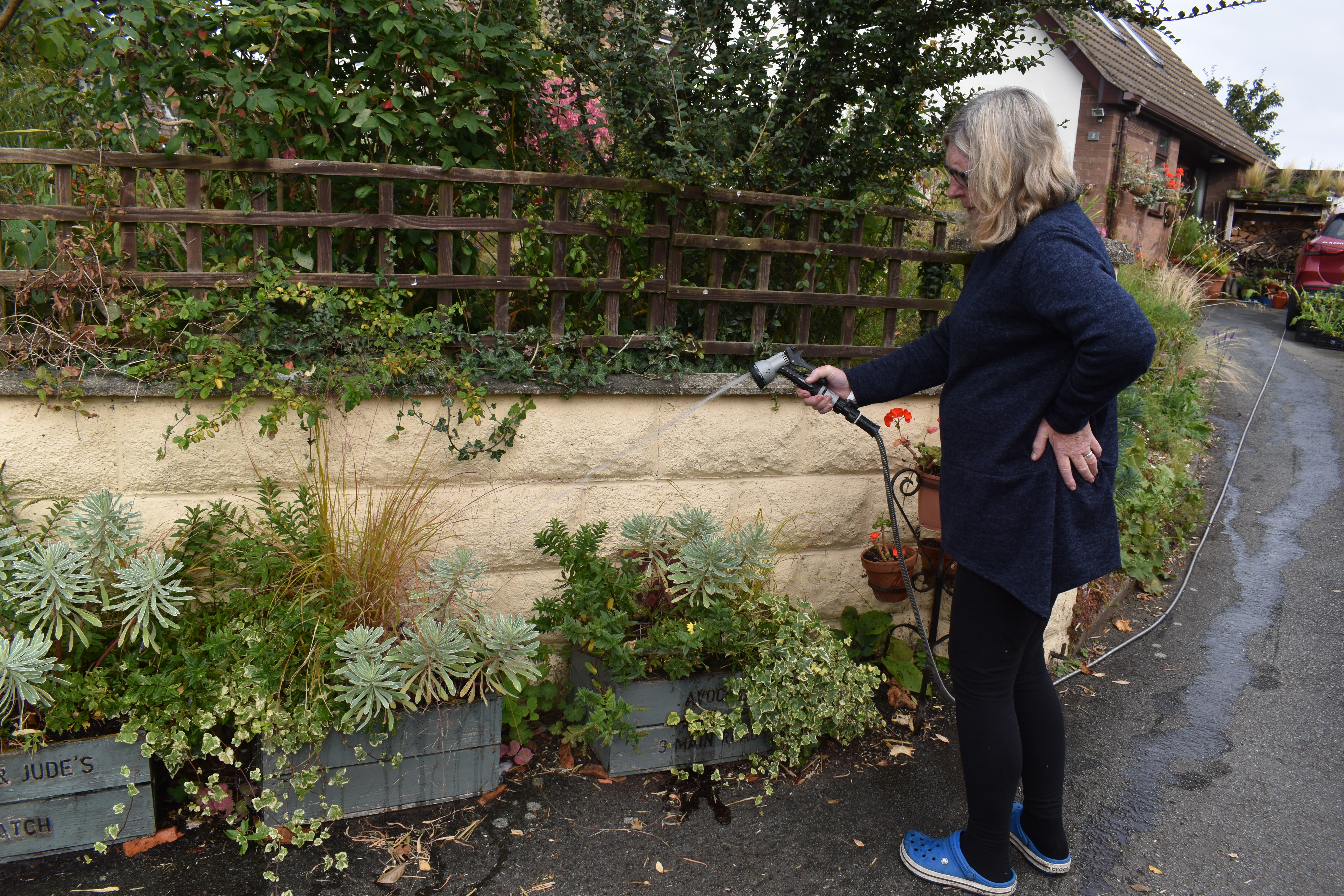
Moving into the second half of the year the garden continues to flourish despite the crazy weather extremes which are coming our way almost on a daily basis. After starting with bright days alternating with wet days, high temperatures have been the biggest factor controlling our gardening activities as some days we have only been able to garden in the evenings.
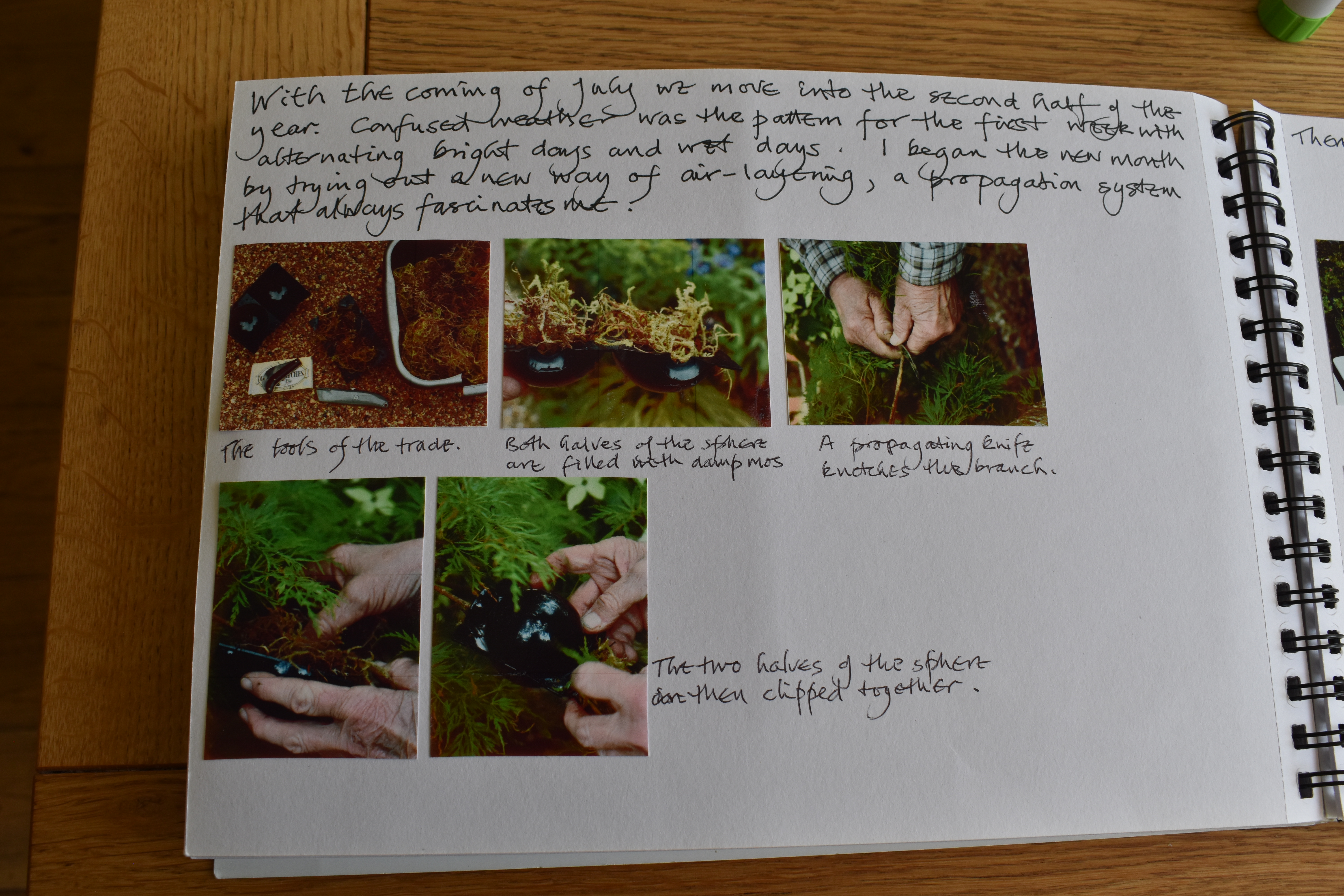
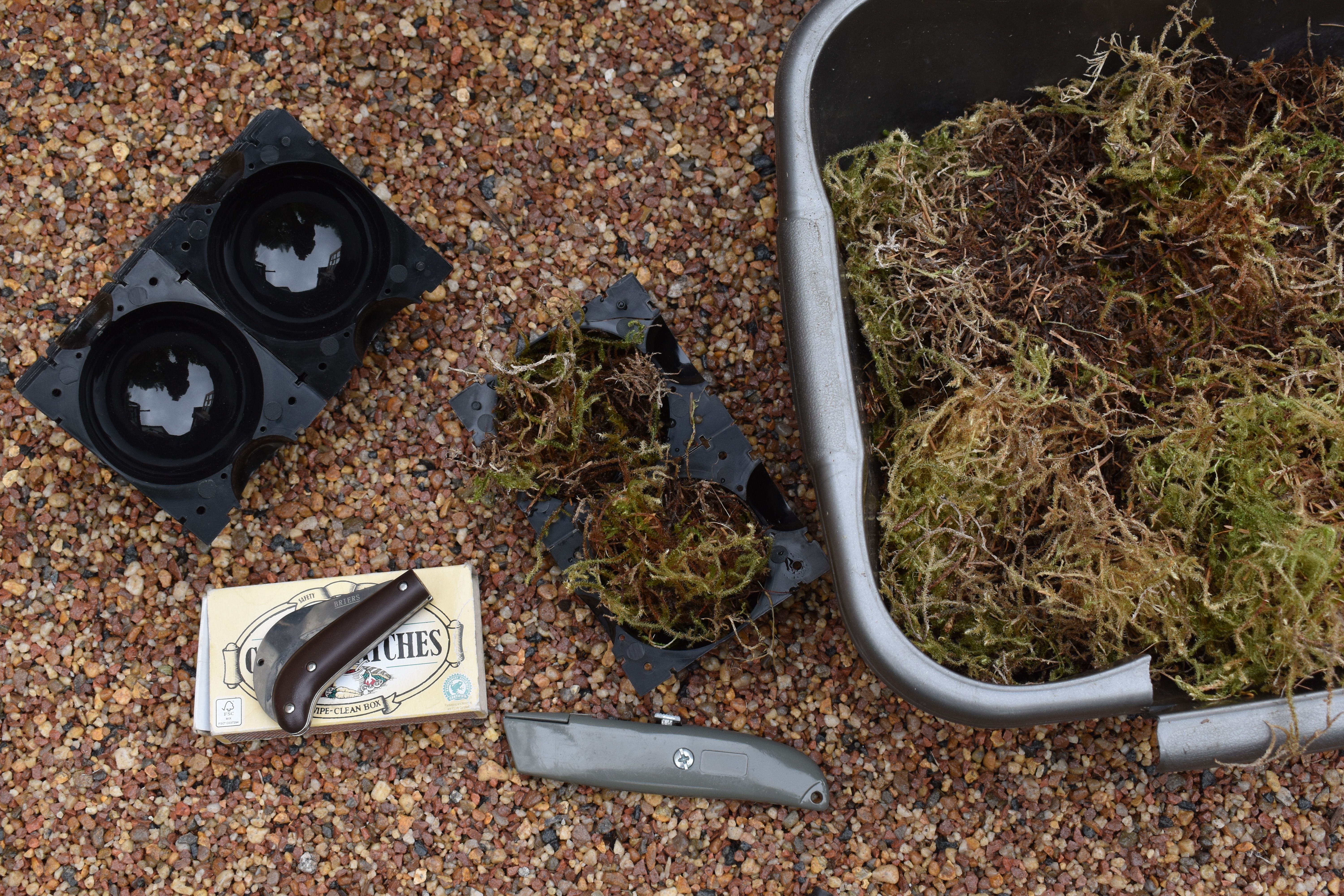
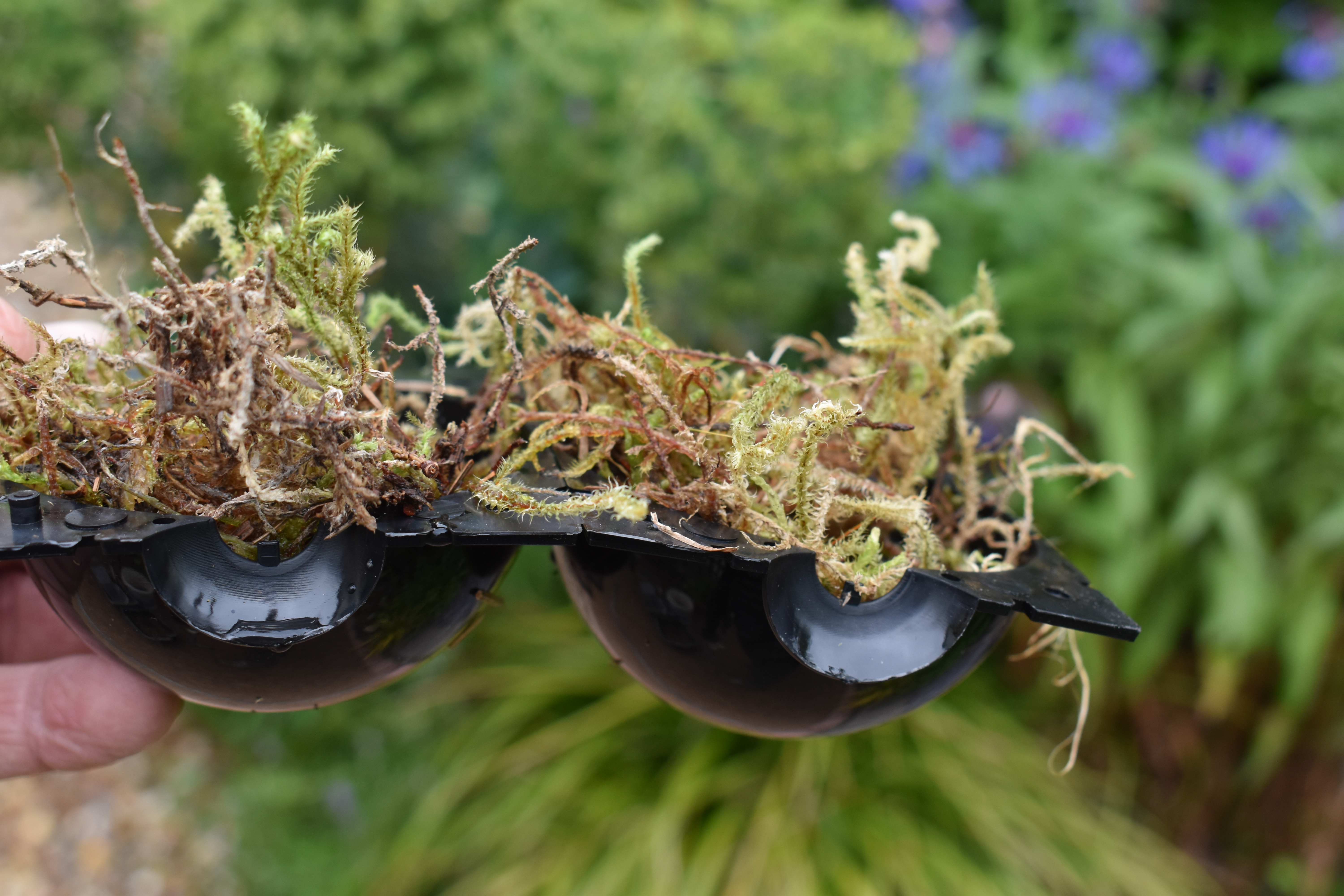
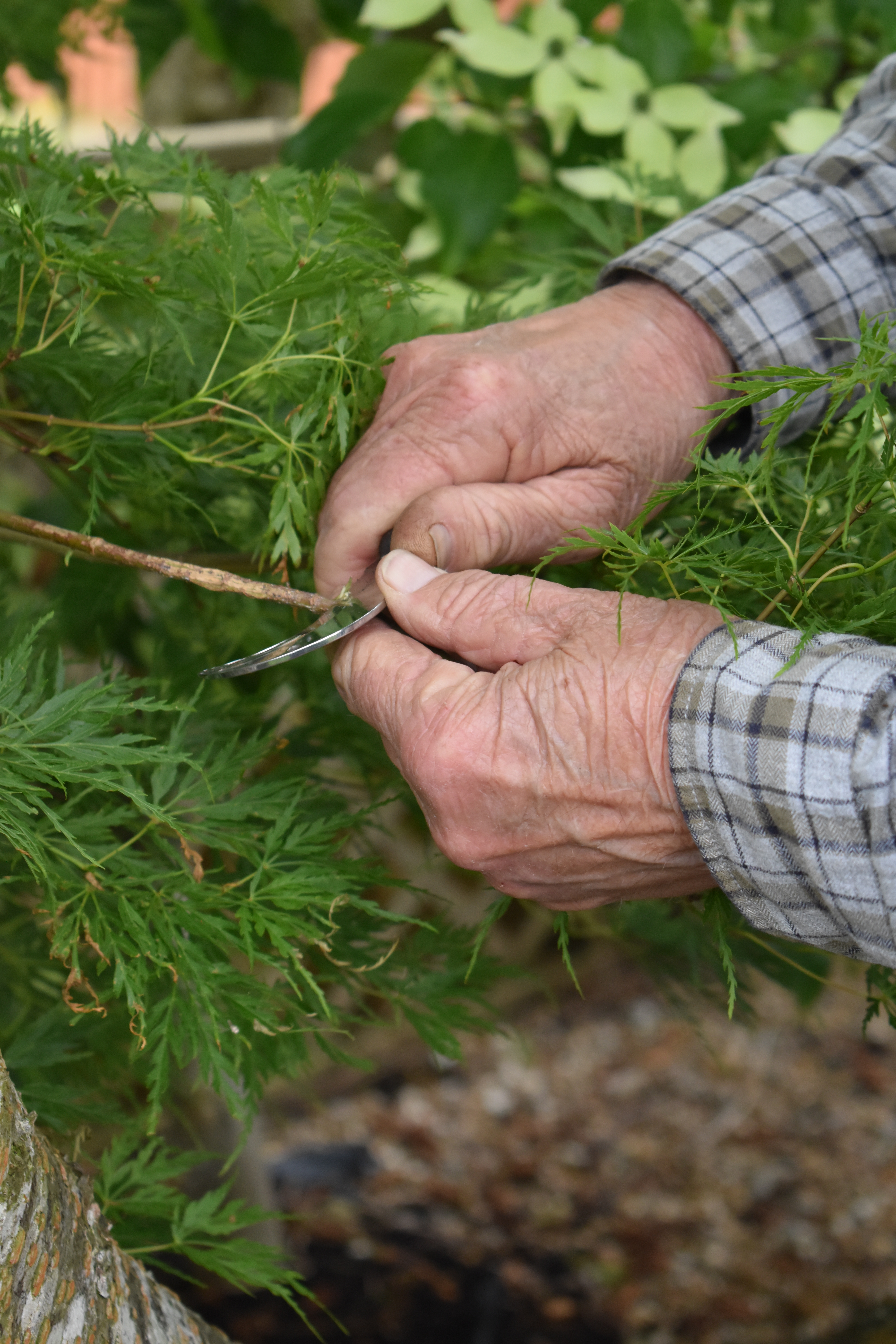
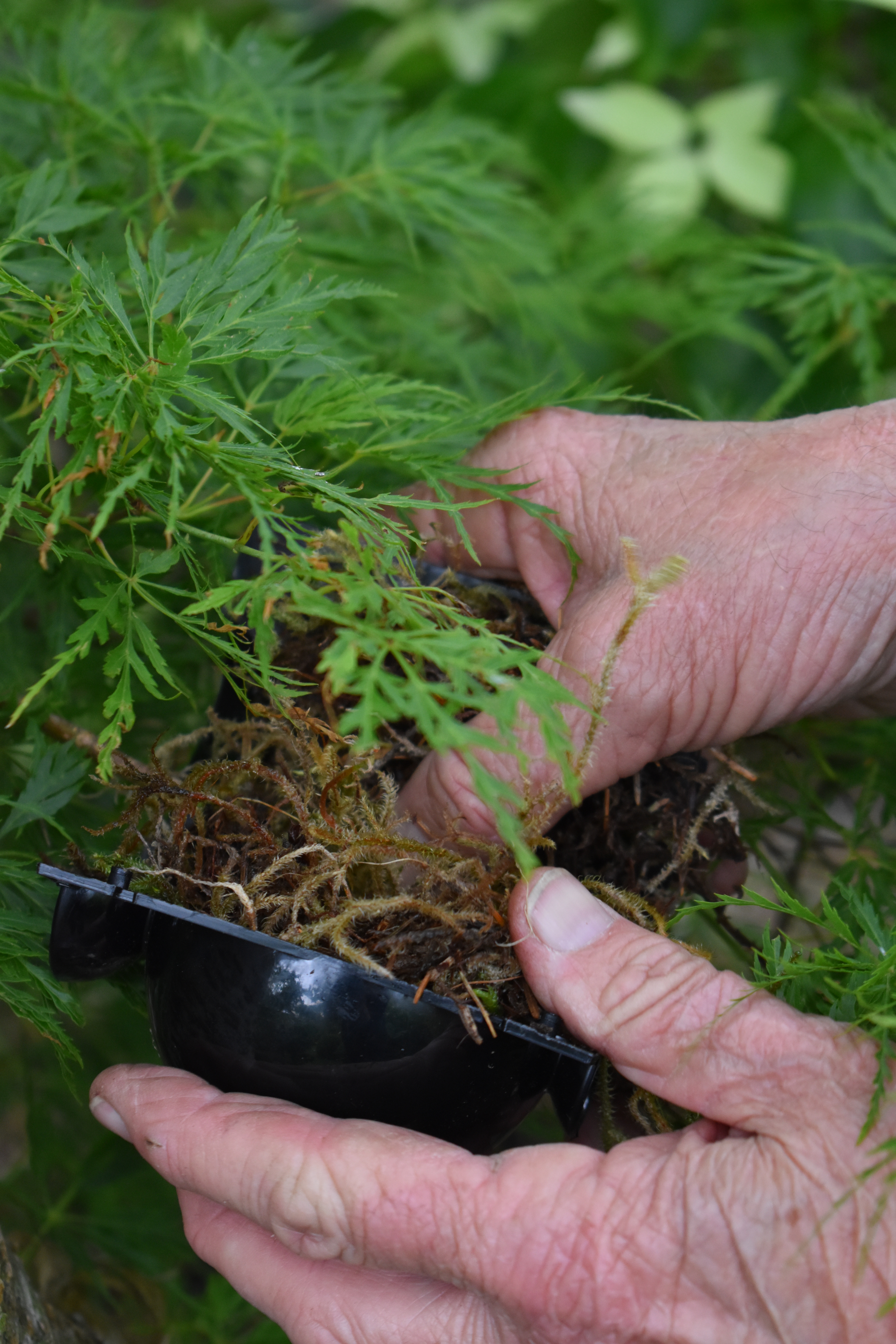
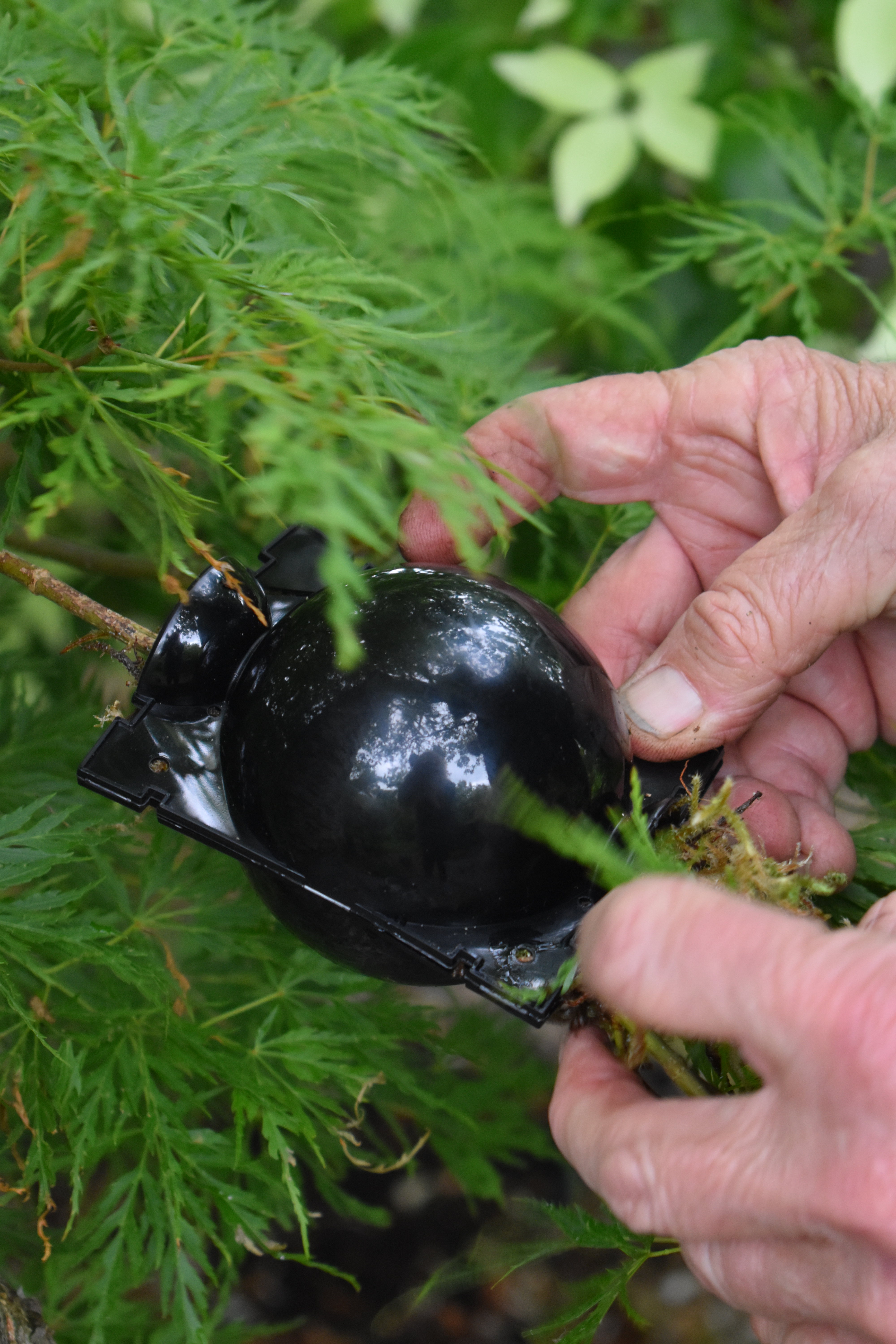
On the first page I wrote, “With the coming of July we move into the second half of the year. Confused weather was the pattern for the first week with alternating bright days and wet days. I began the new month by trying out a new way of air-layering, a propagation technique that has always fascinated me.”
From top left along the top row of photos we have “The tools of the trade”, “Both halves of the sphere are filled with damp sphagnum moss” and “A propagating knife notches the branch.”
The words for the two photos above say, “The two halves of he sphere are clipped together.”
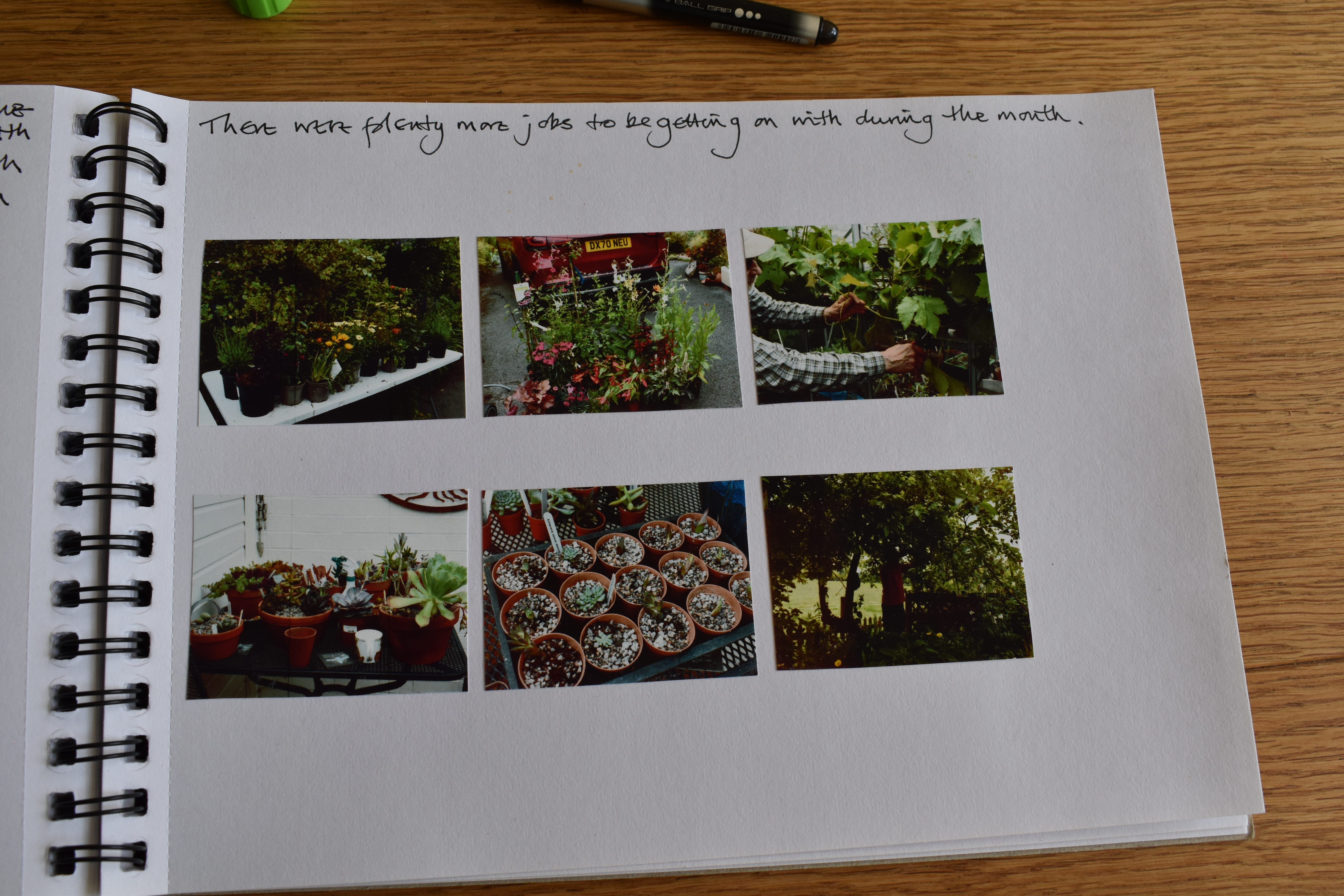
On the opposite page I wrote, “There were plenty more jobs to be getting on with during the month.”
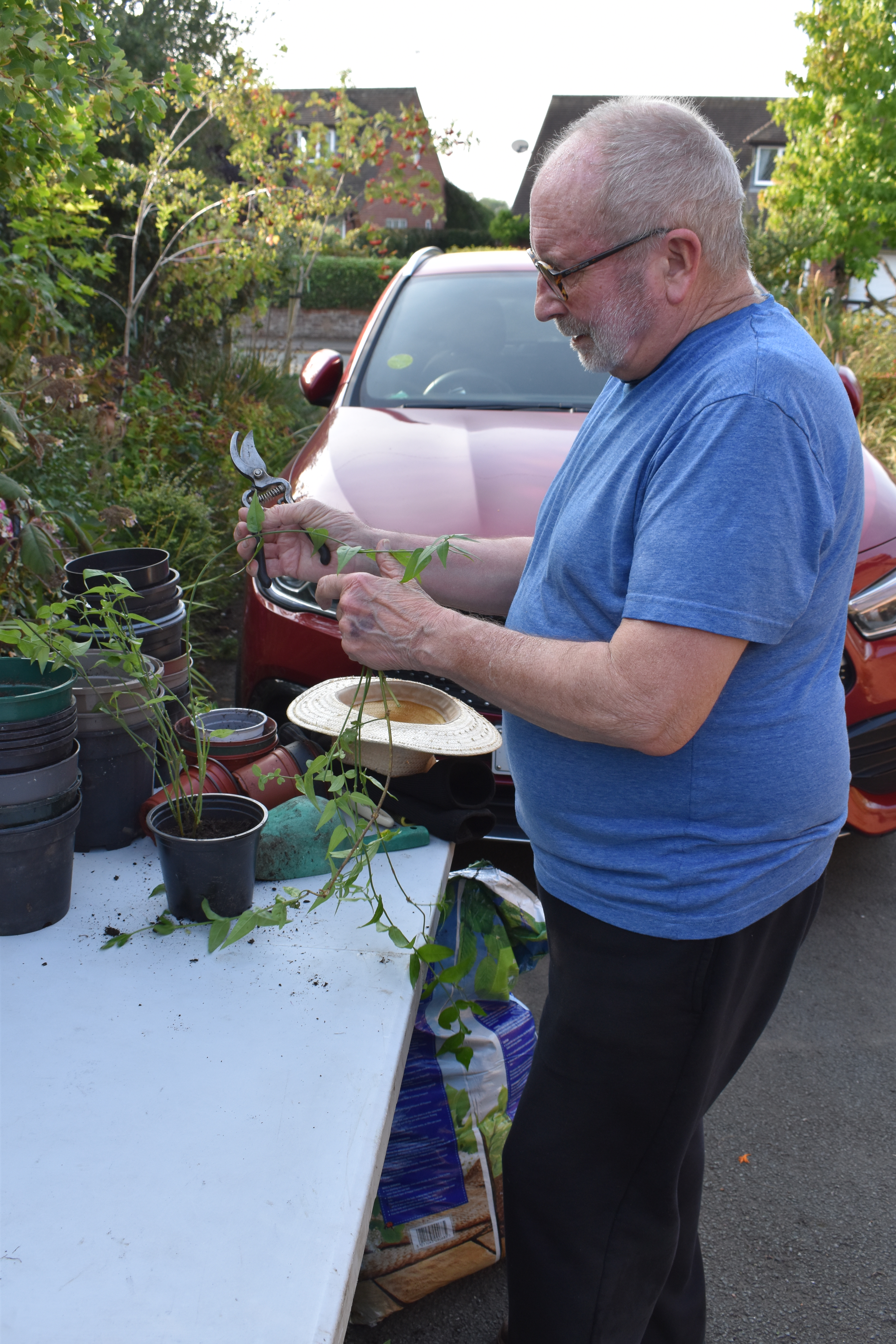
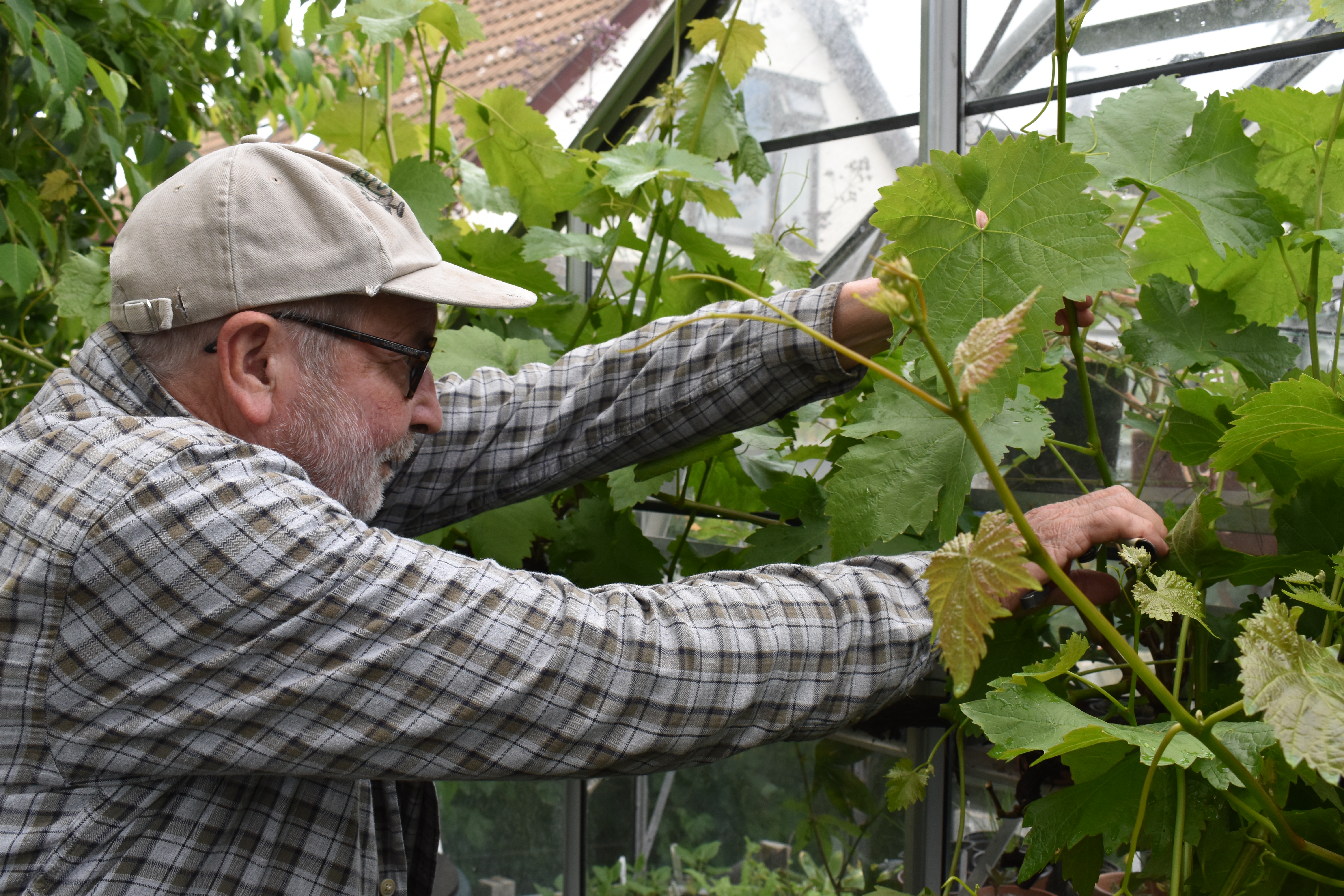
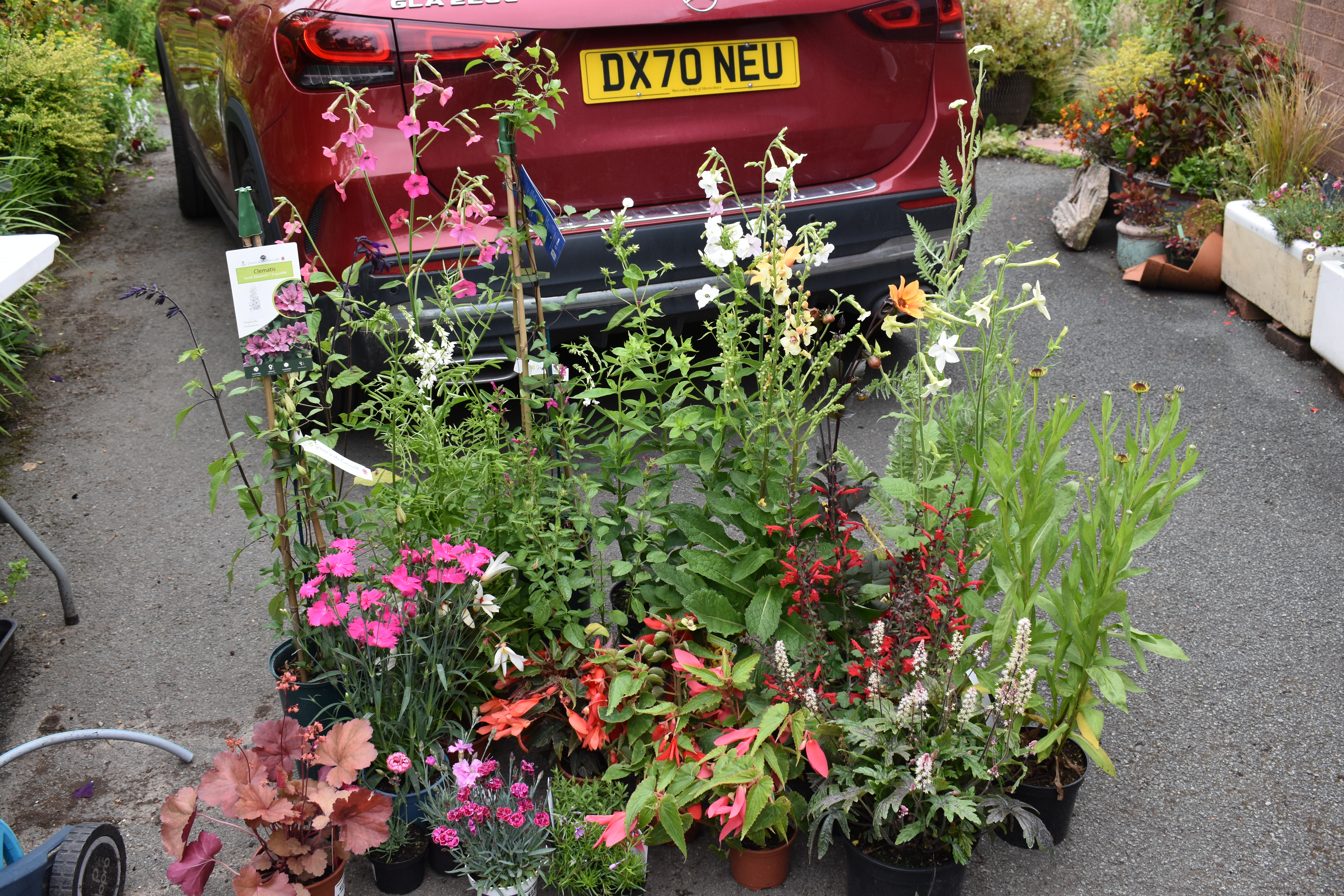
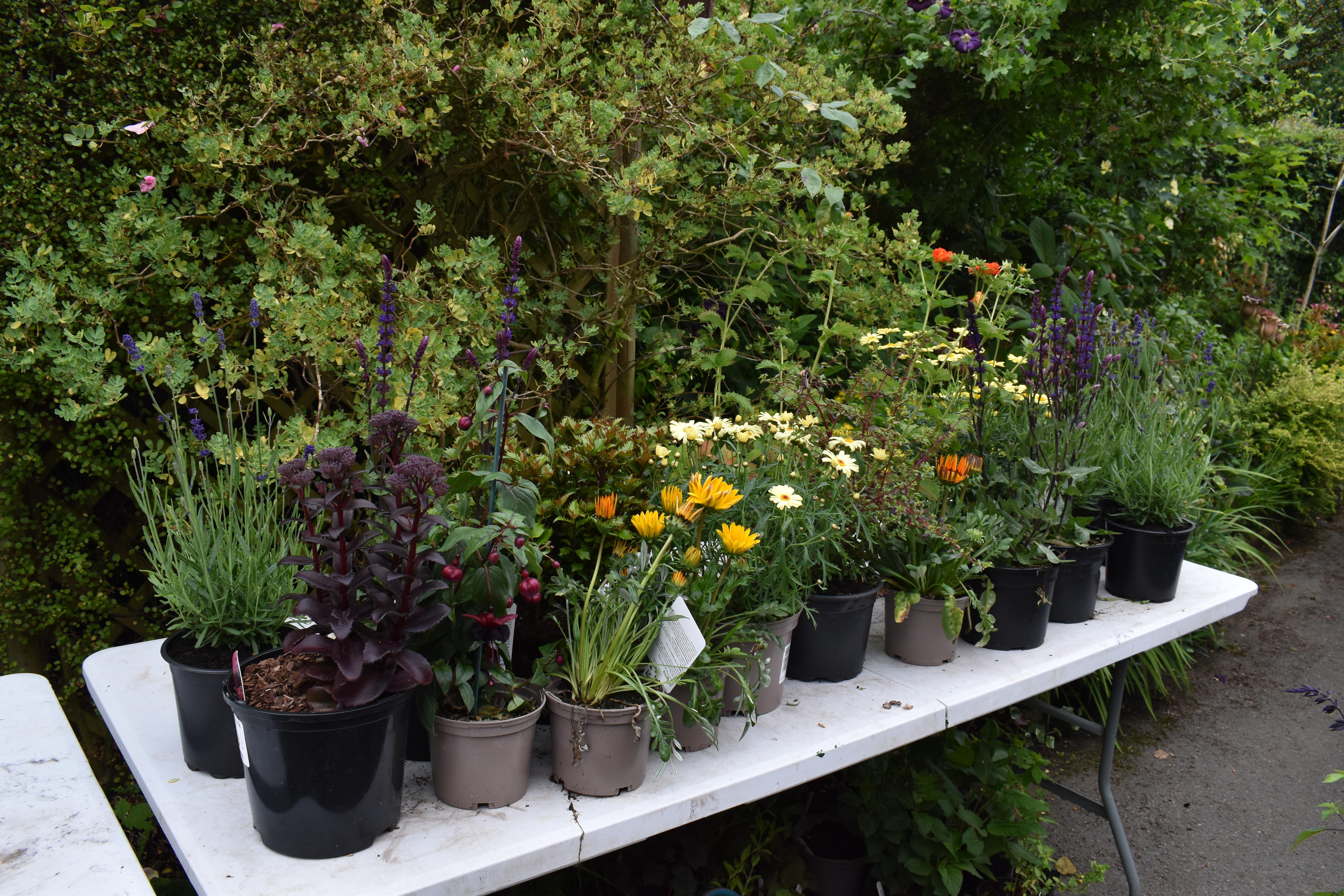
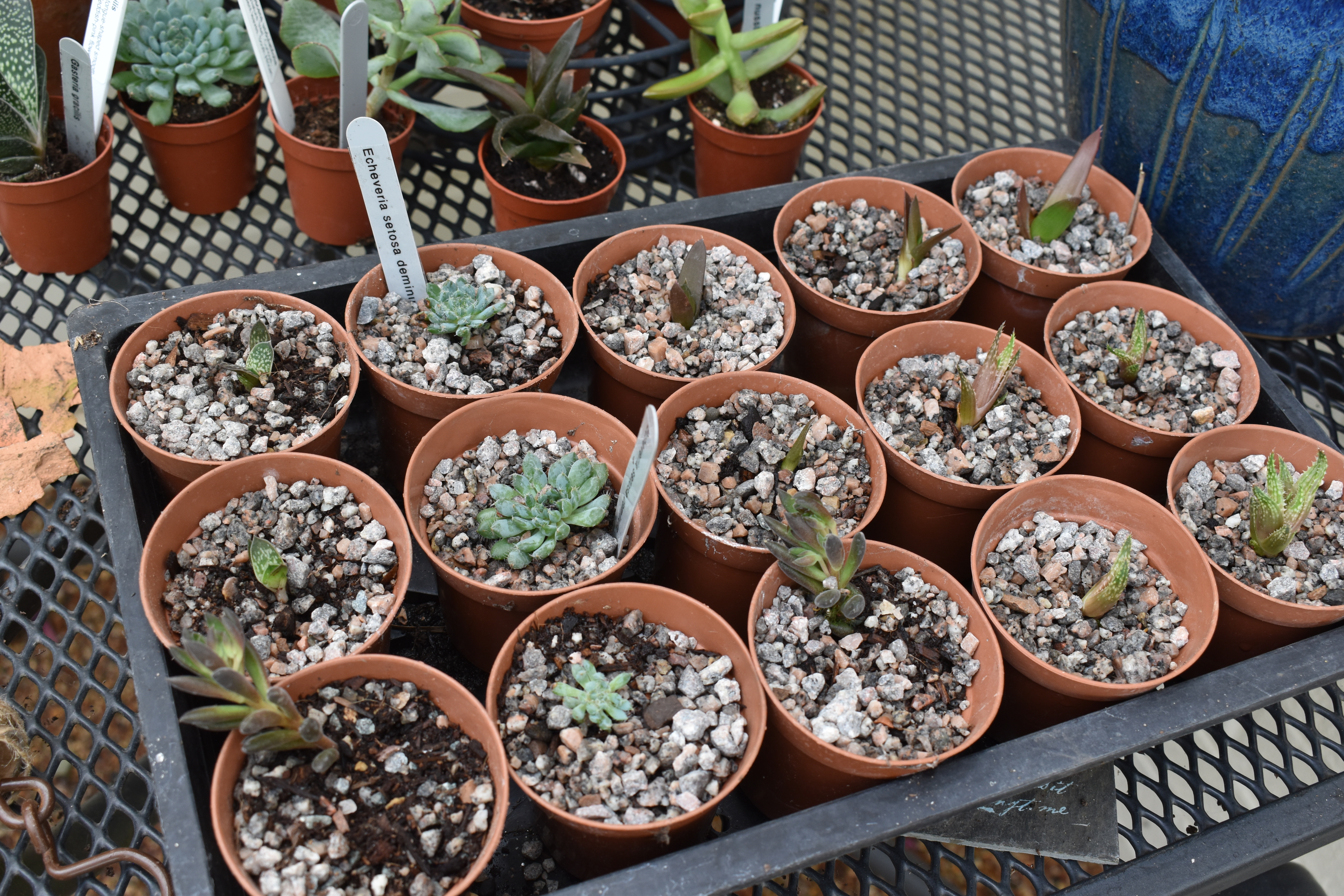
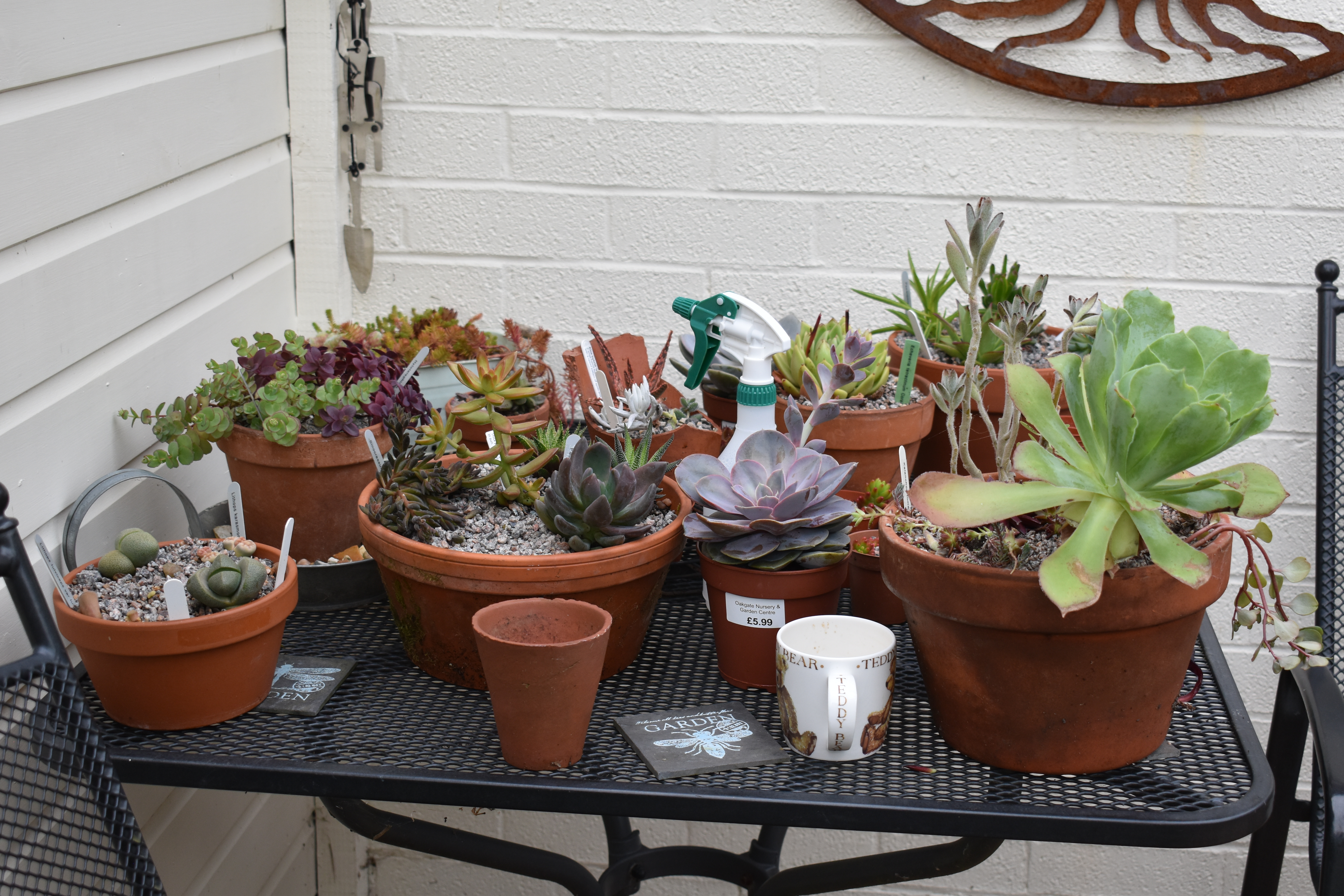
We bought lots of plants for redeveloping parts of borders, I pruned the vine, took lots of succulent cuttings and Ian, our garden help pruned the Malus “Butterball” working largely from the inside!”
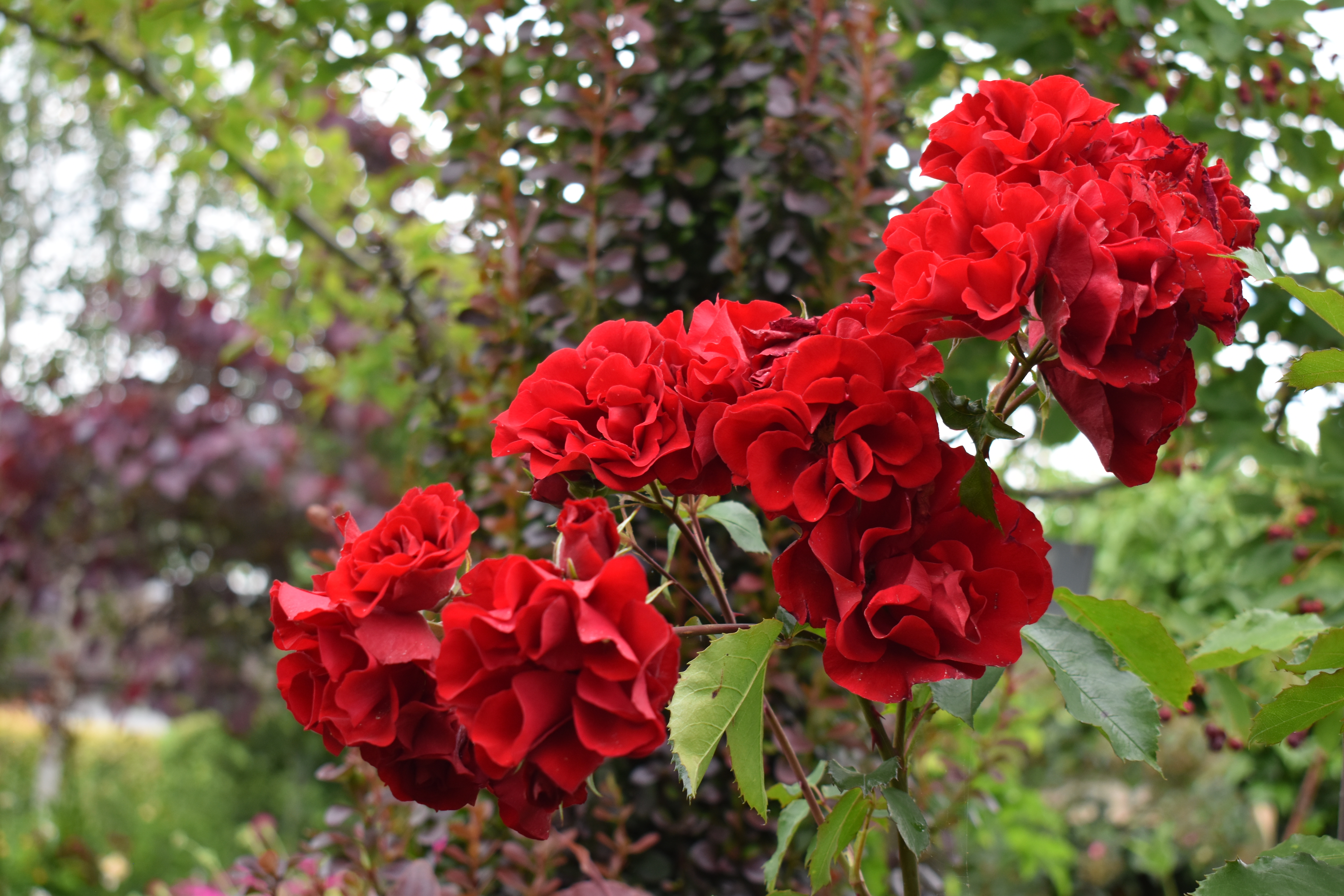
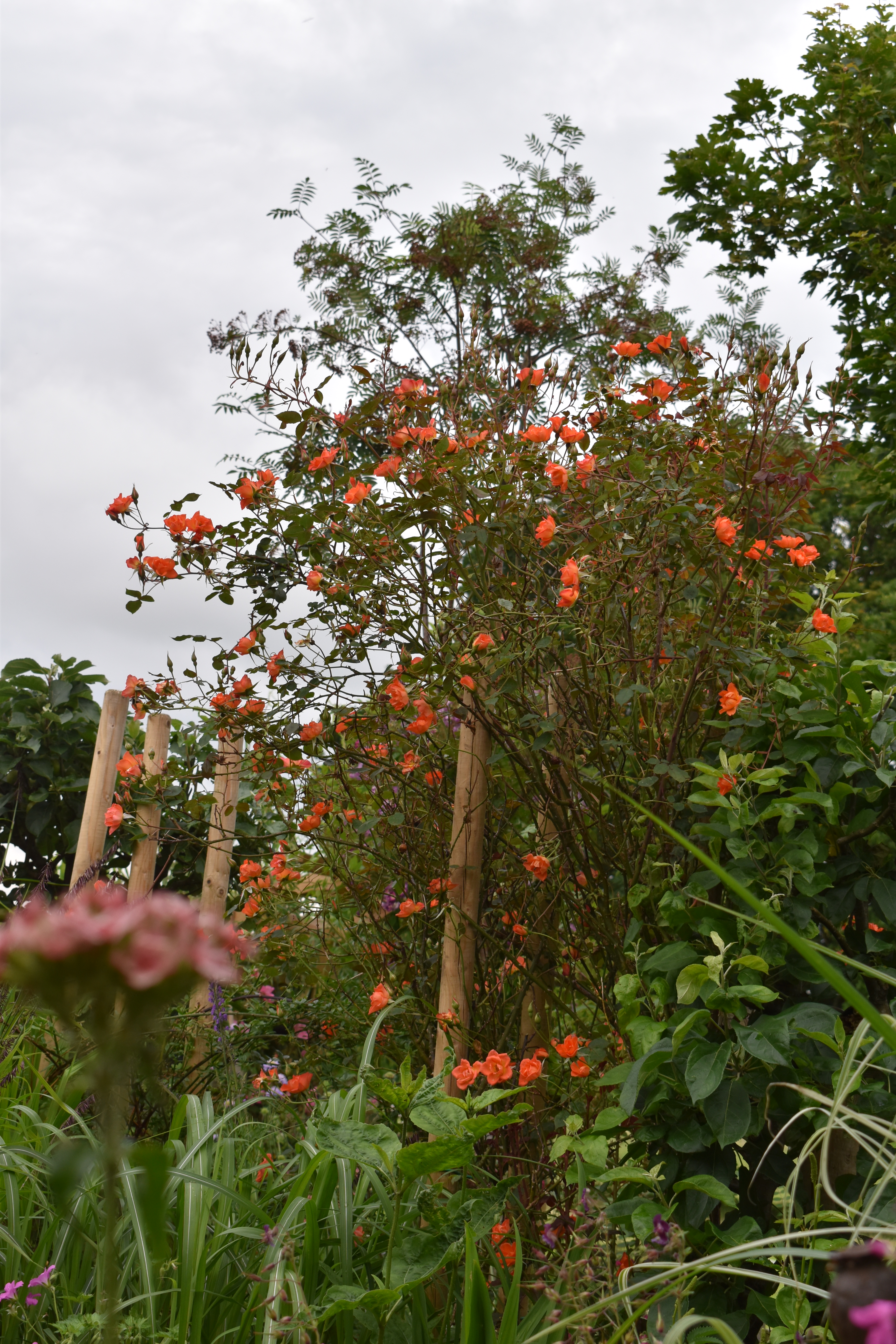
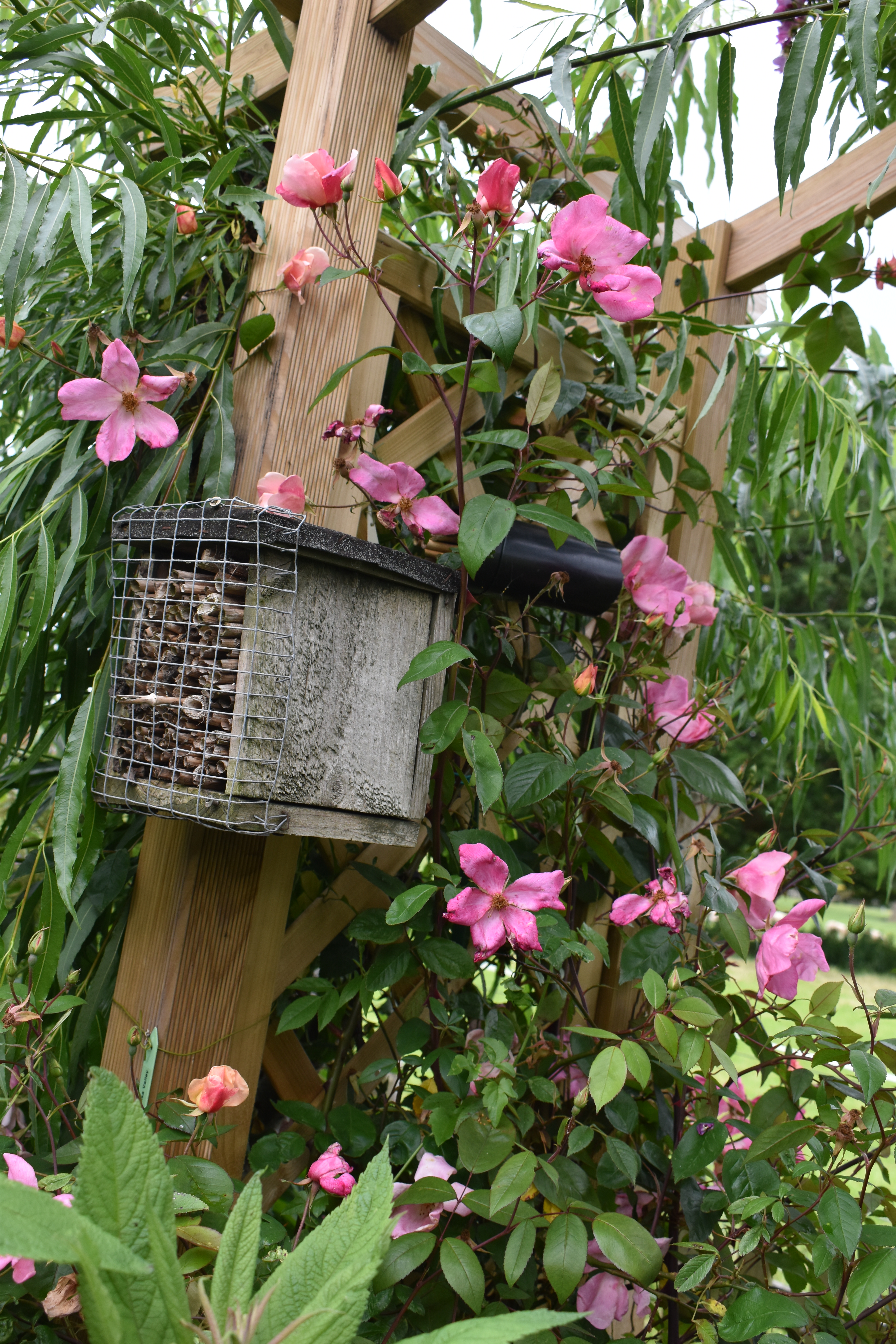
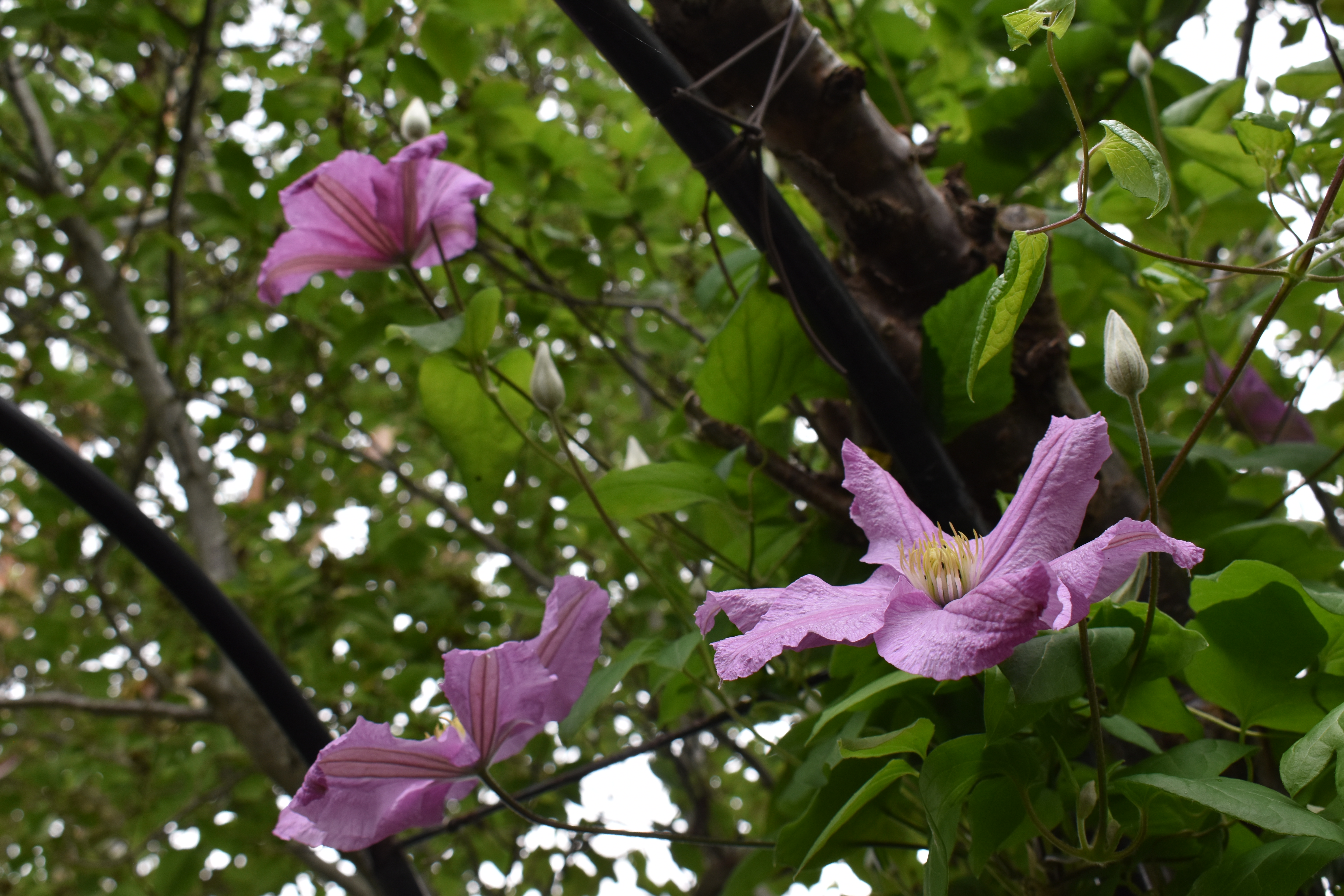
Over the following couple of pages I featured climbers that we grow in our garden and which flower in July. I wrote, “Our climbers have come to the fore this July especially the roses and clematis, which are so floriferous and vigorous.”
I then shared eight photos of climbing and rambling roses, “Bobby James”, “Summer Wine” and “Enchantress” in the first batch, followed by “Warm Welcome” and “Mutabilis Odorata”.
The clematis above are “Durandii”, “Comptesse de Bouchard” and “The President”.
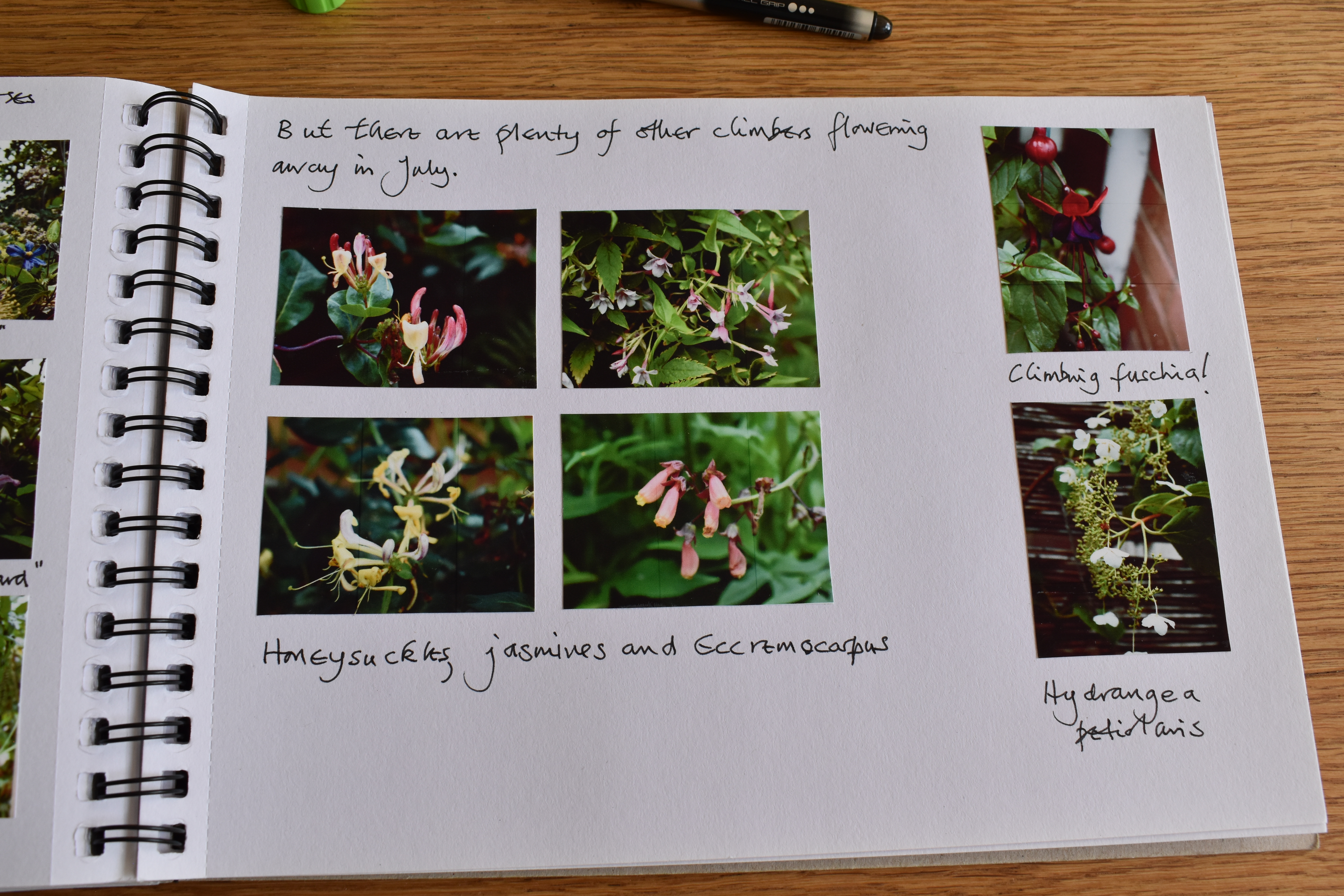
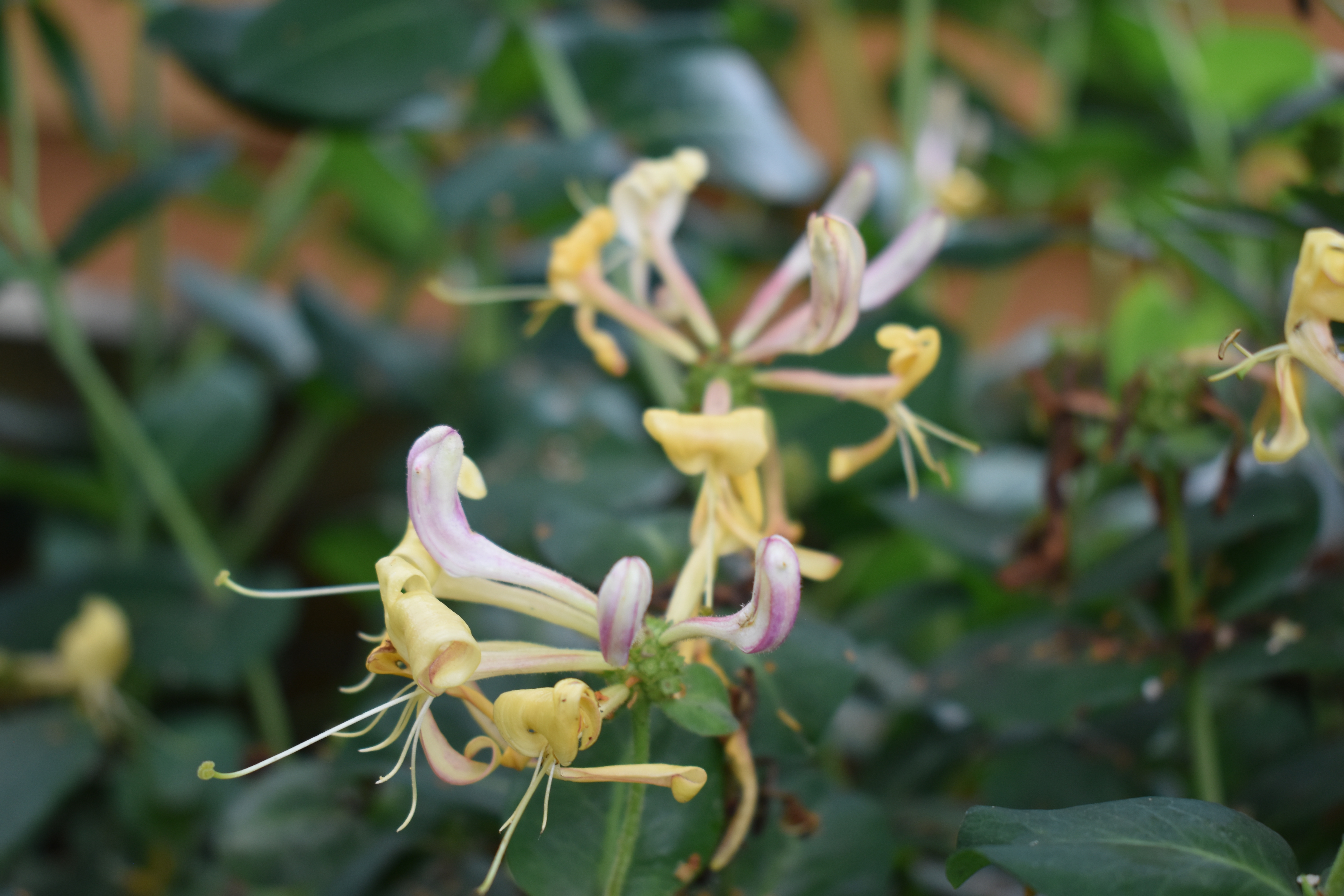
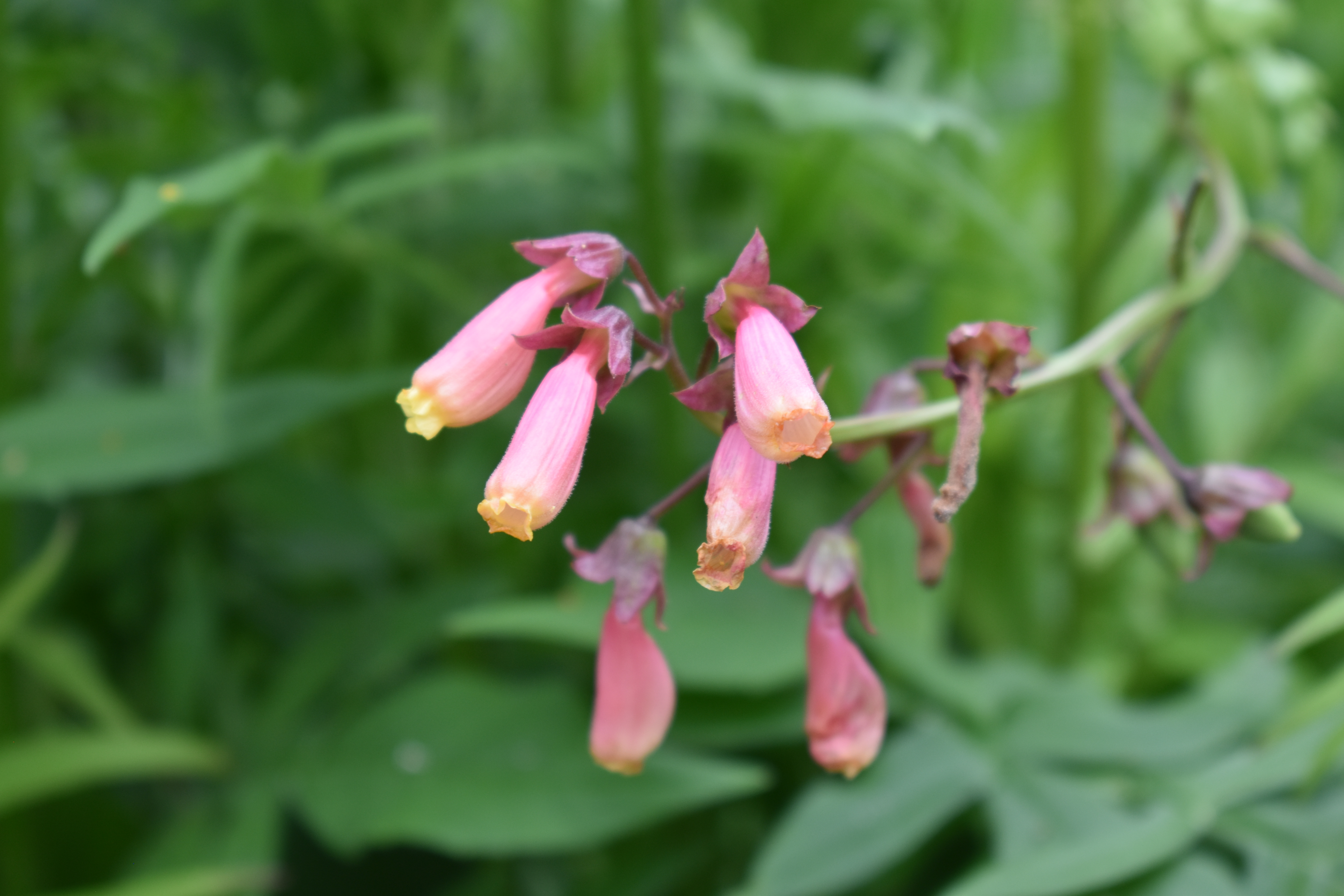
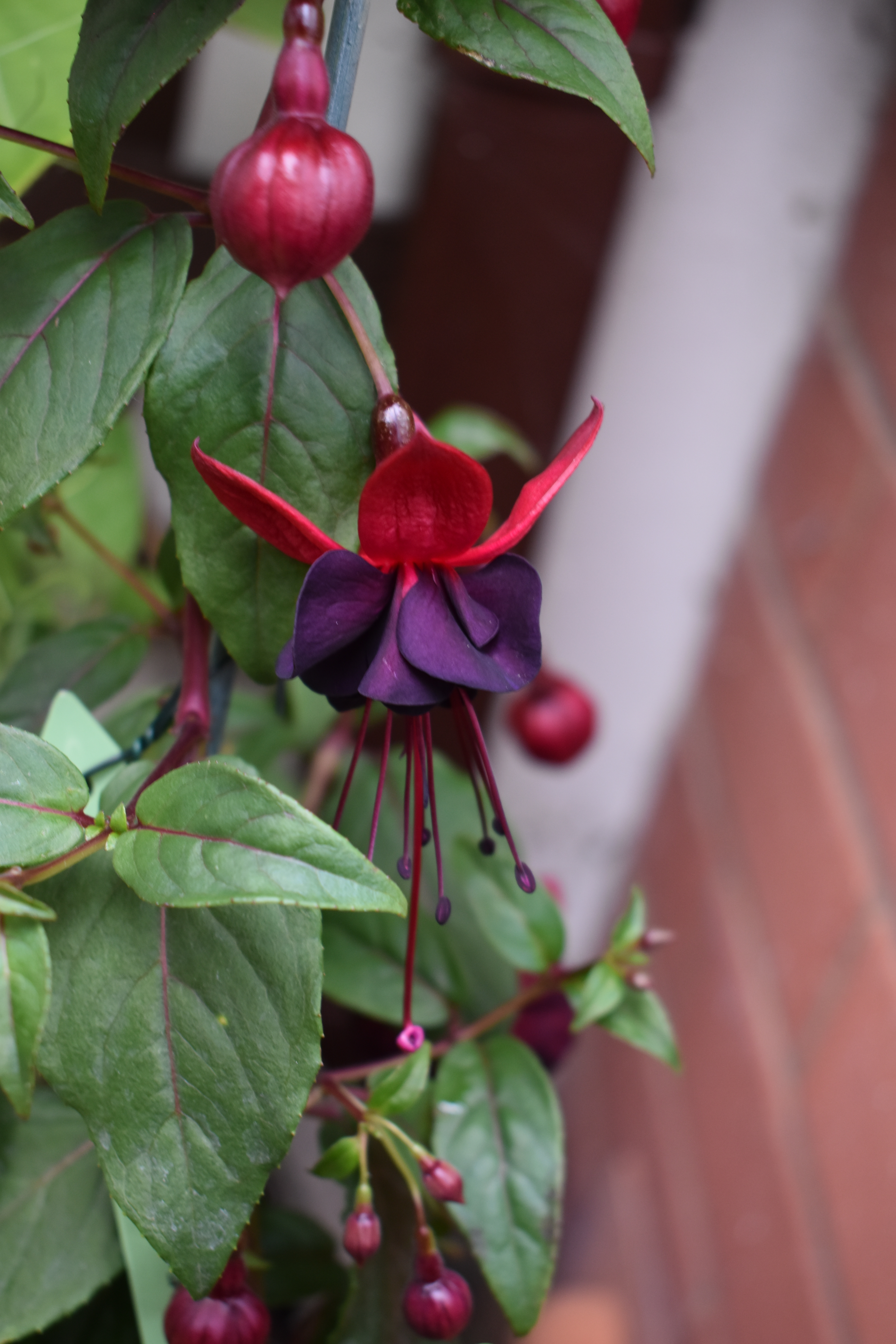
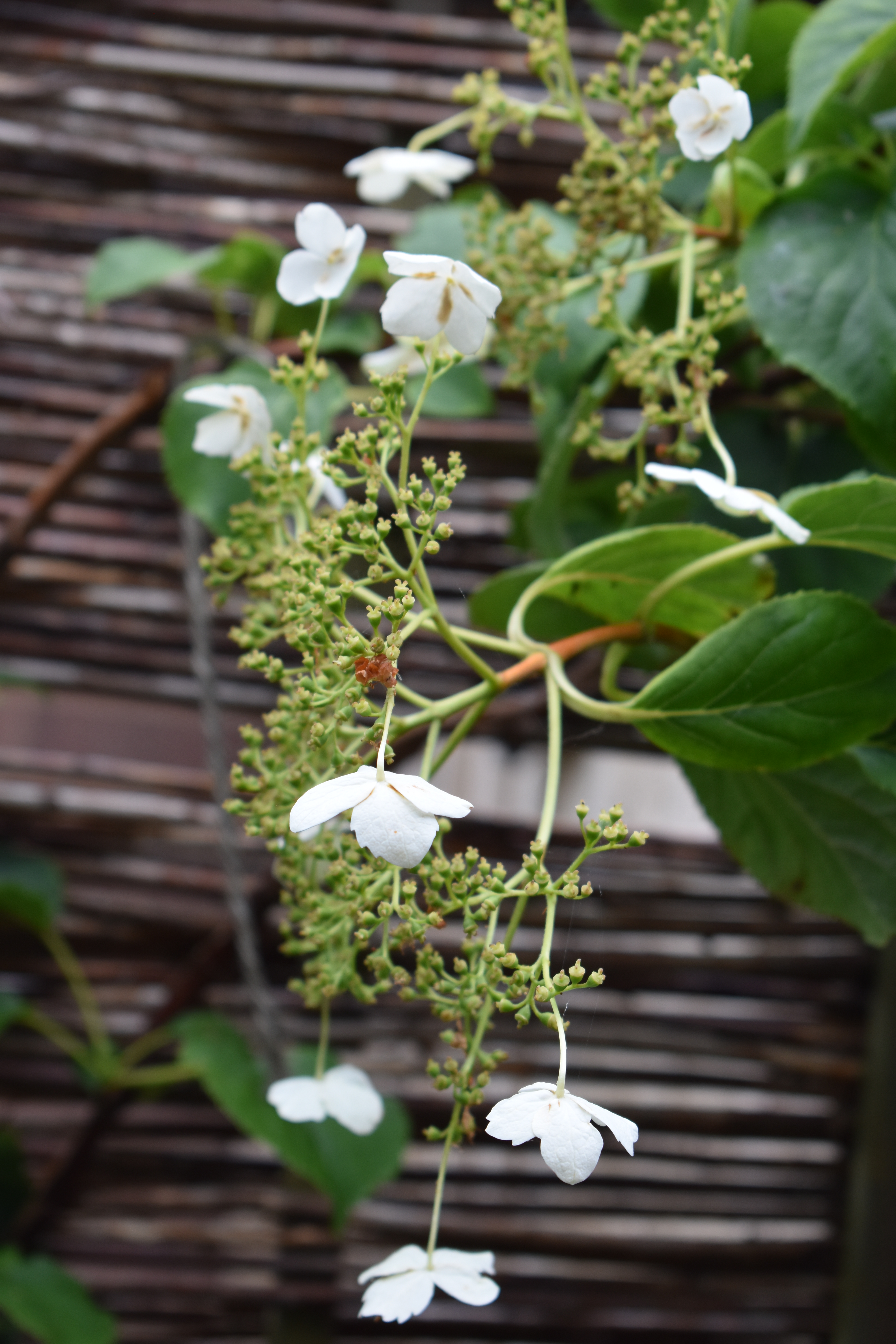
On the top of the next page I wrote, “But there are plenty of other climbers flowering away in July, honeysuckles, jasmines and eccremocarpus, even a climbing fuschia and Hydrangea petiolaris.” I also shared six other photos of these climbers.
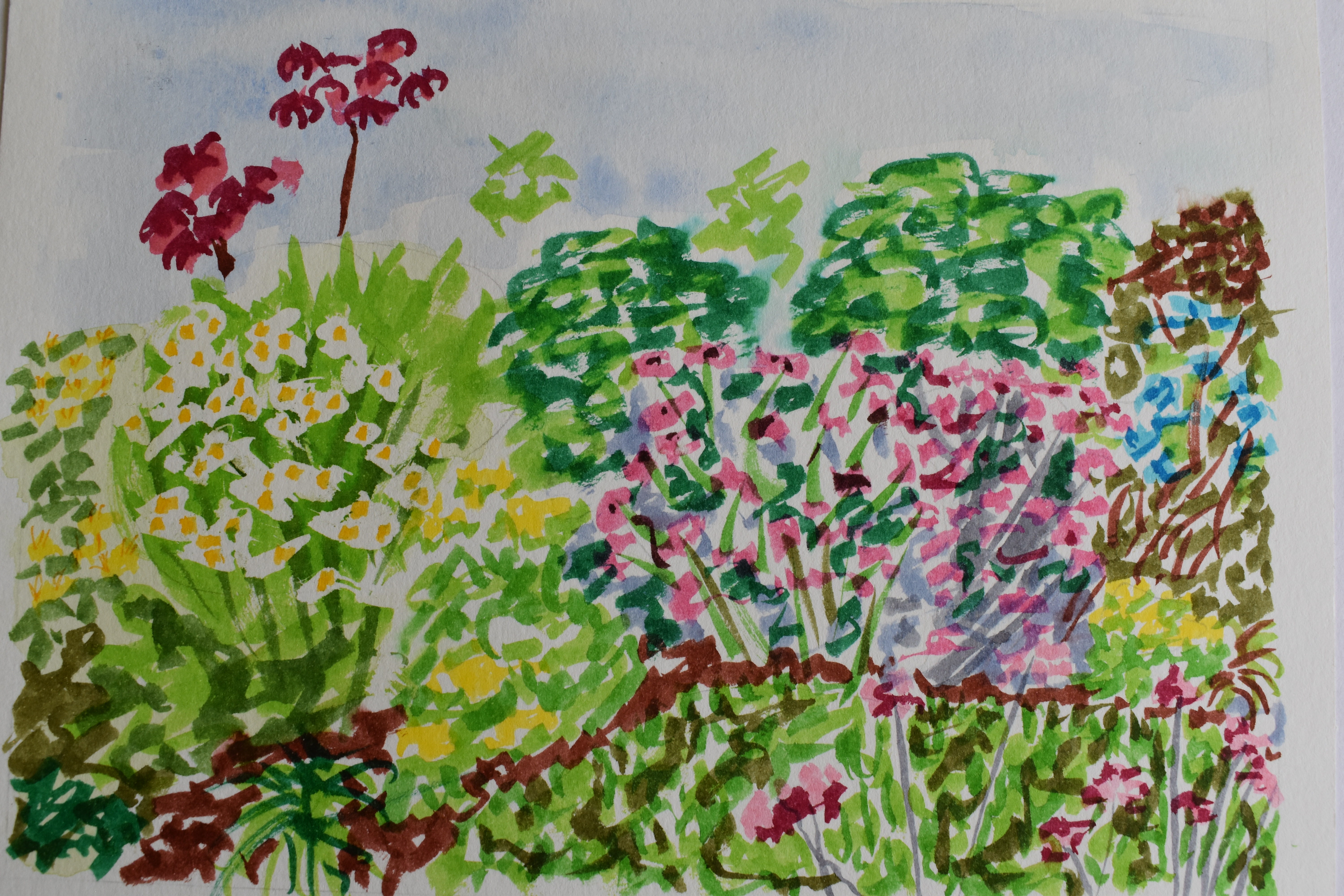
I featured a sketch of our front garden looking towards our Shrub Garden. I used watercolours and Japanese Brush Pens.
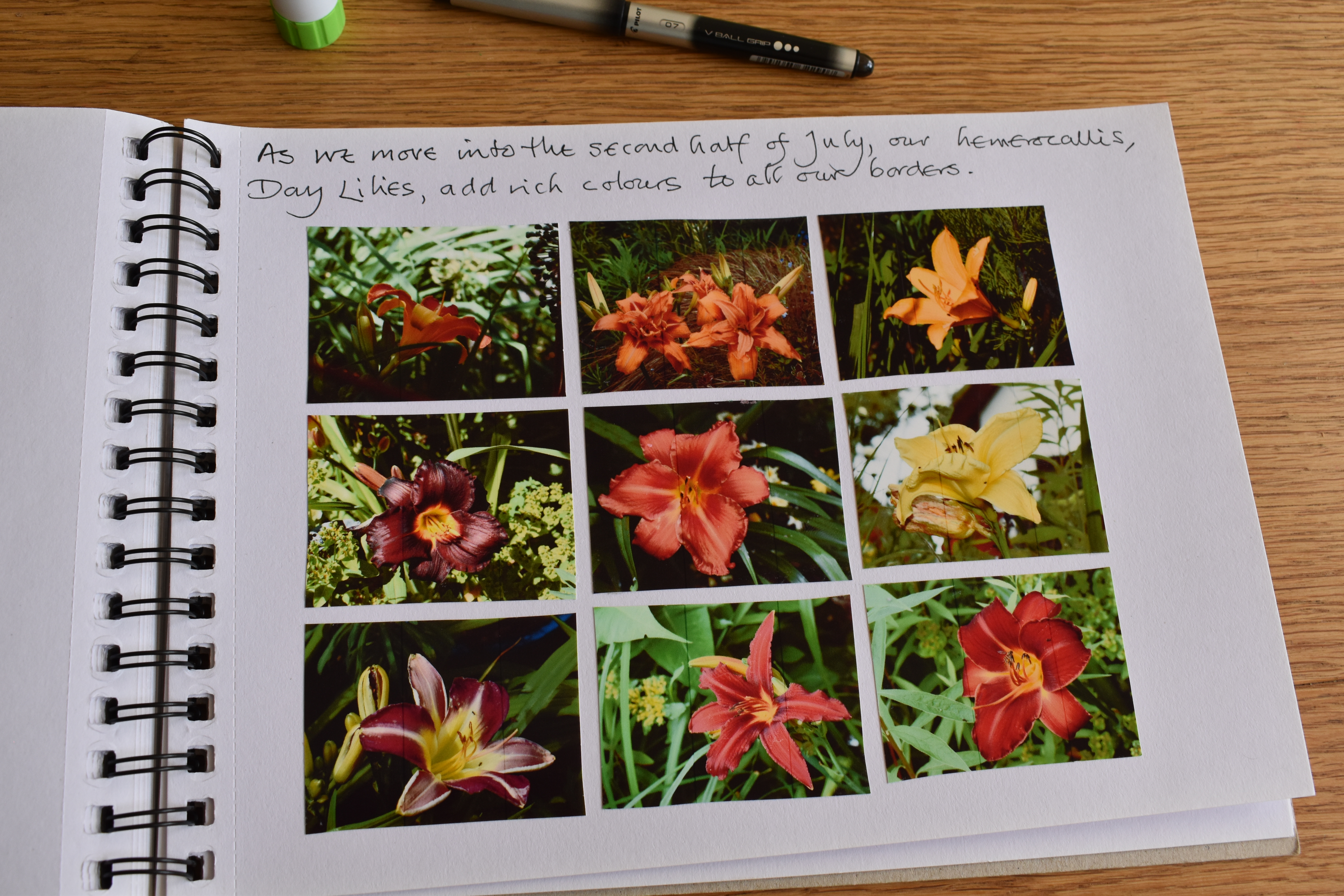
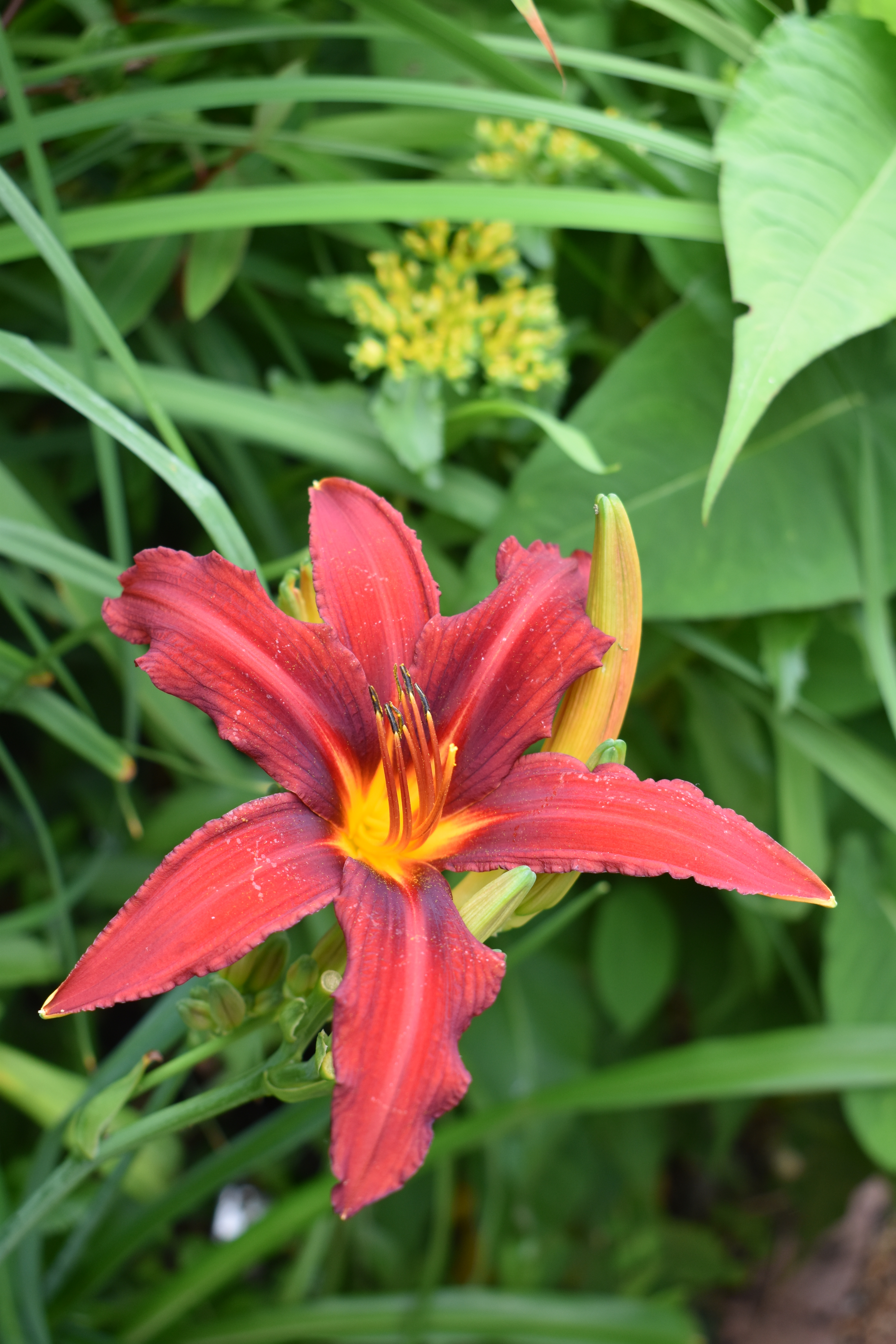
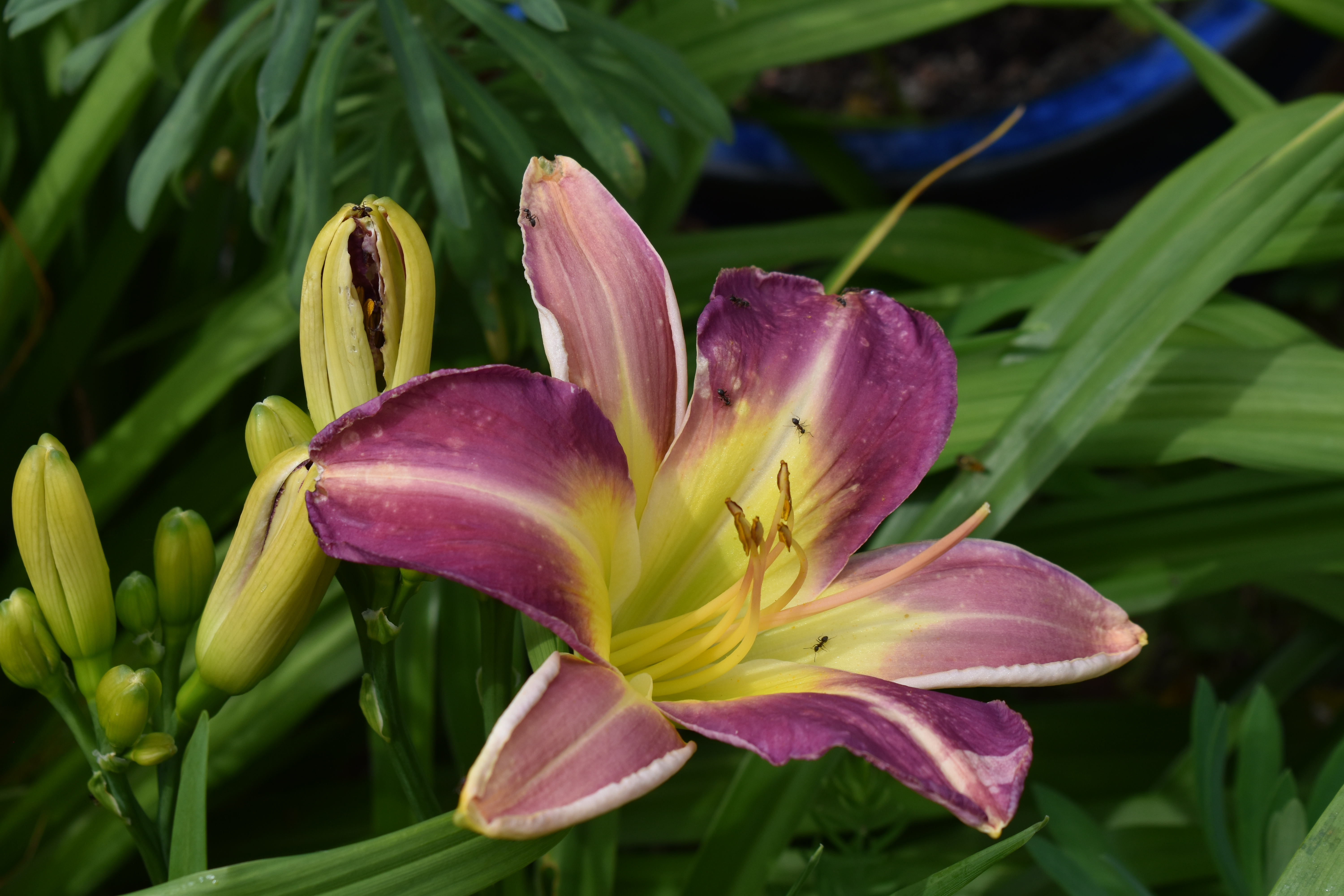
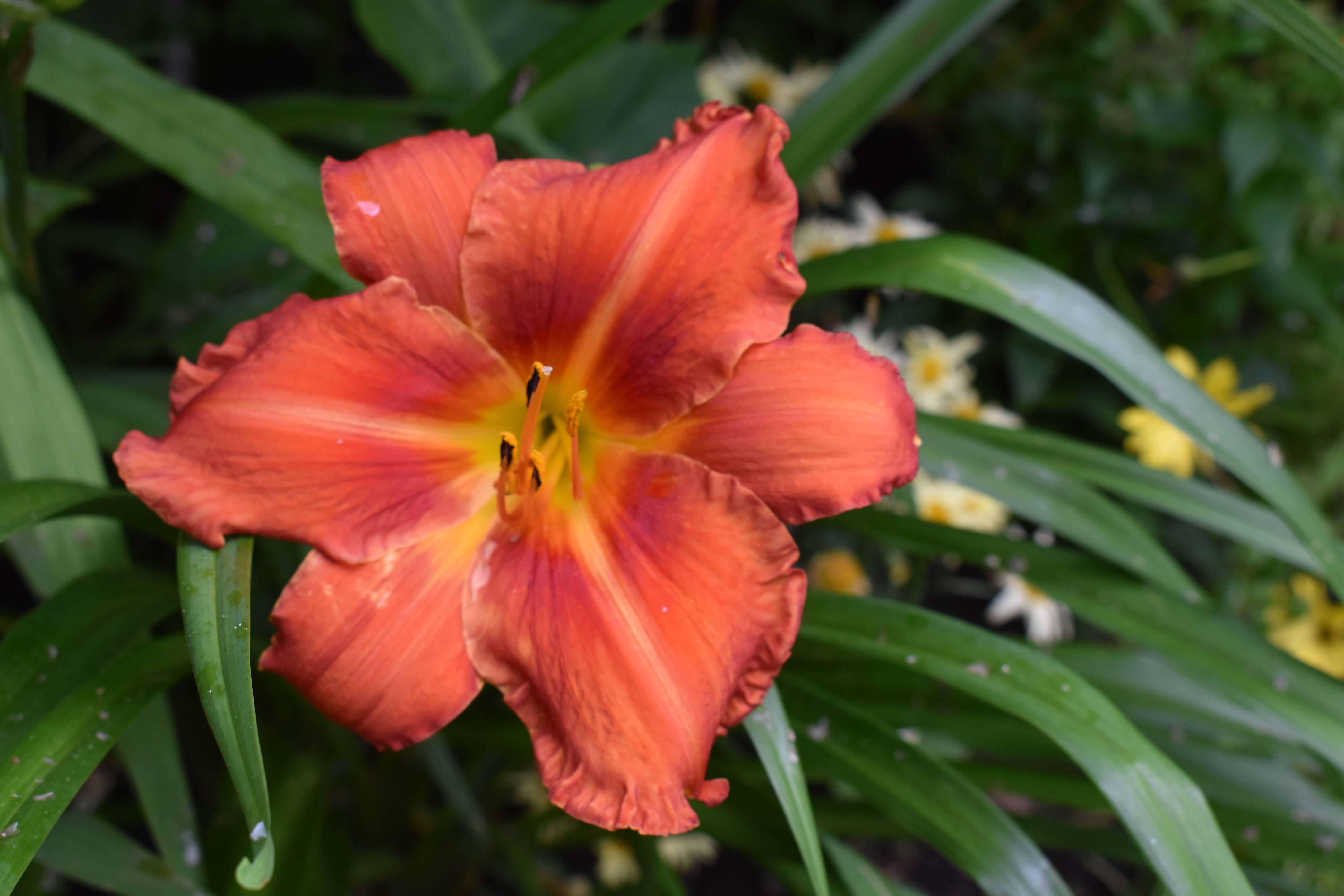
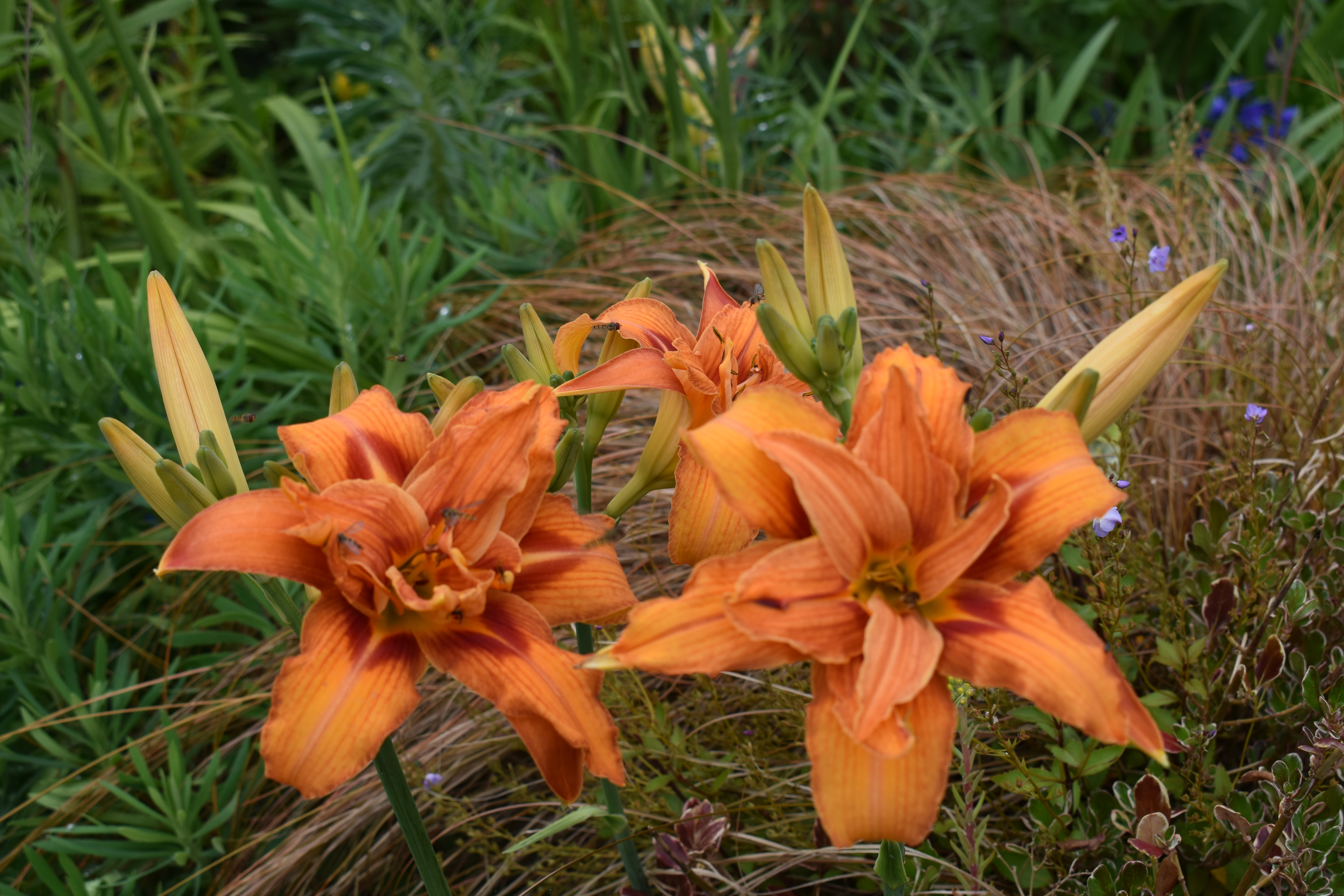
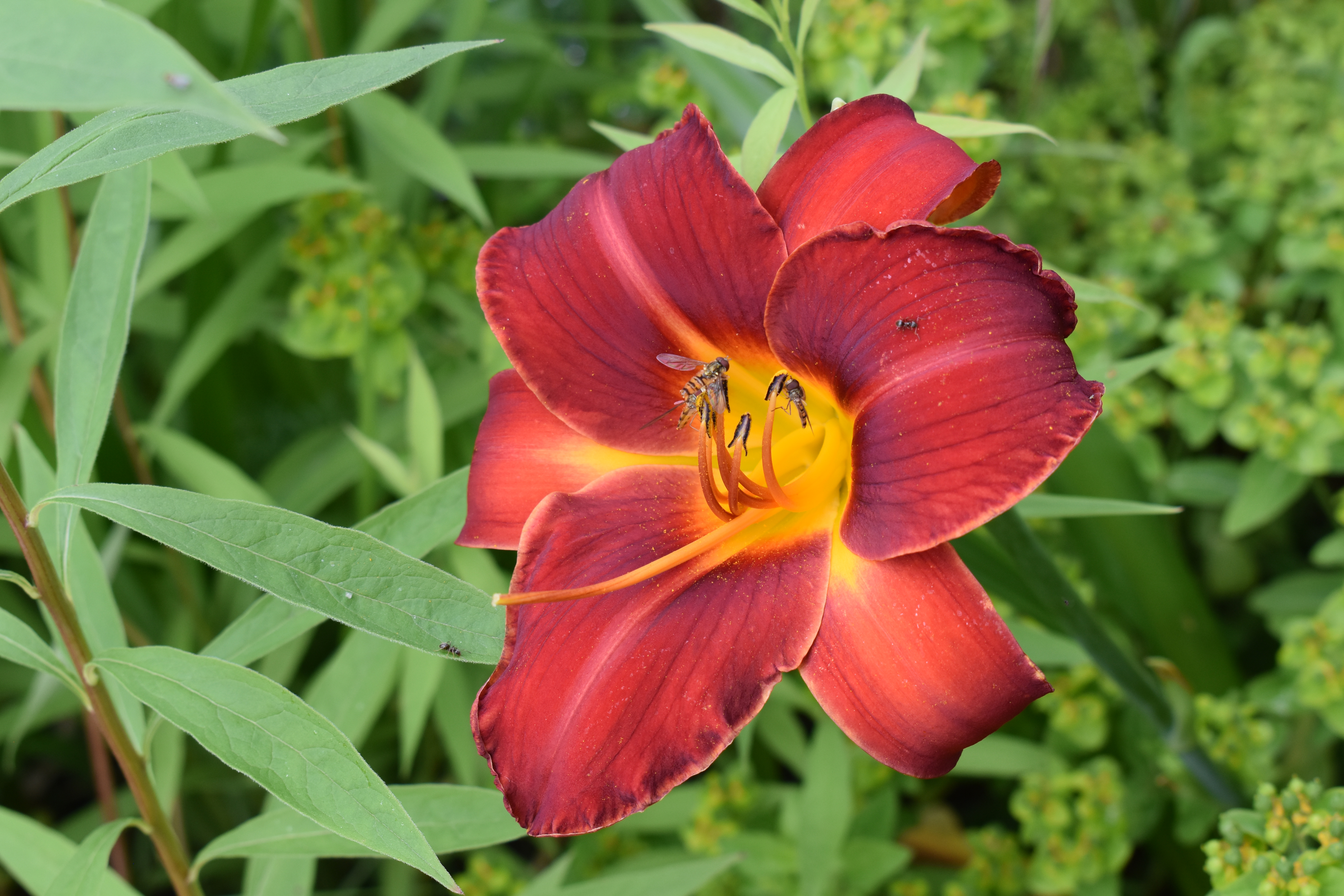
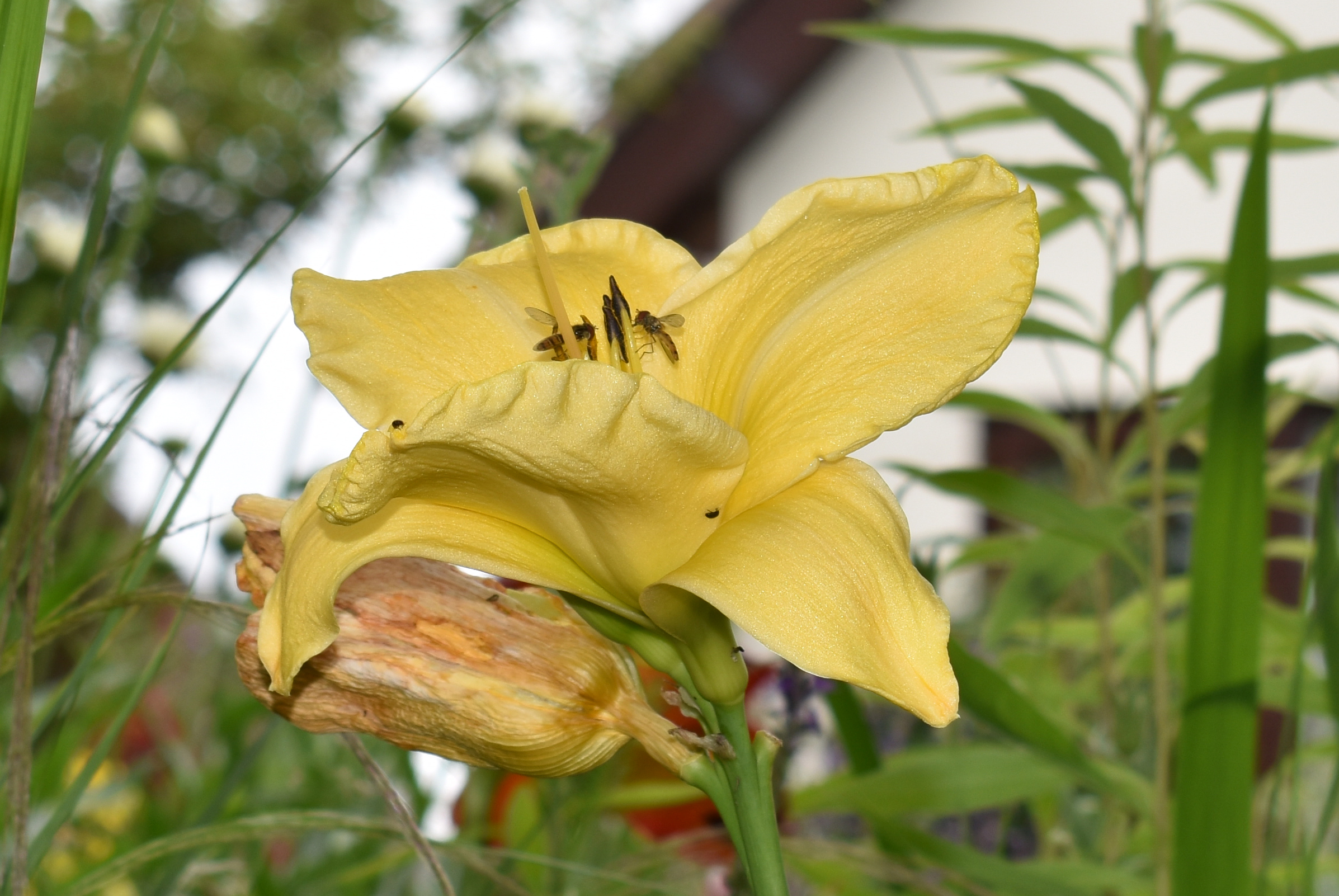
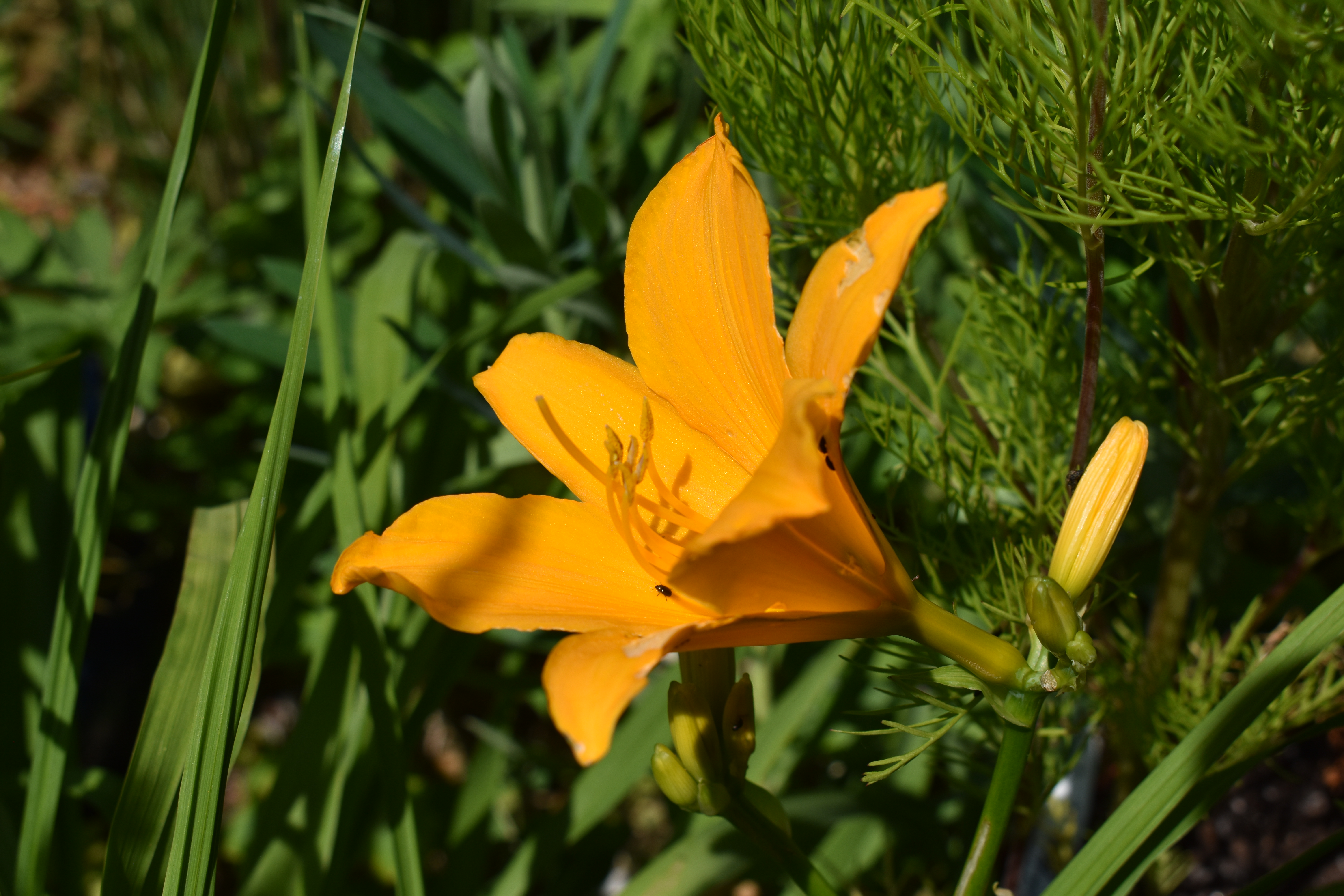
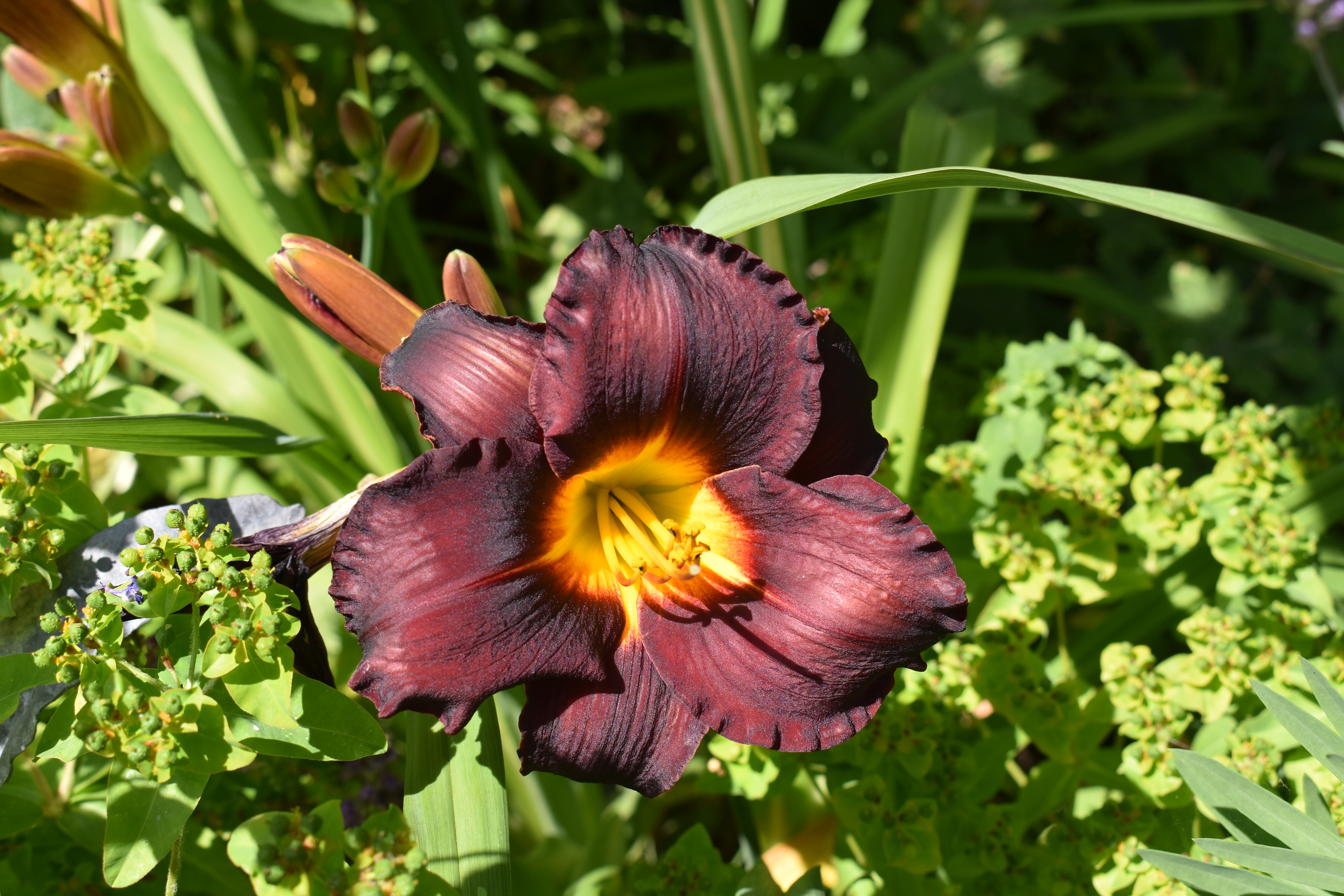
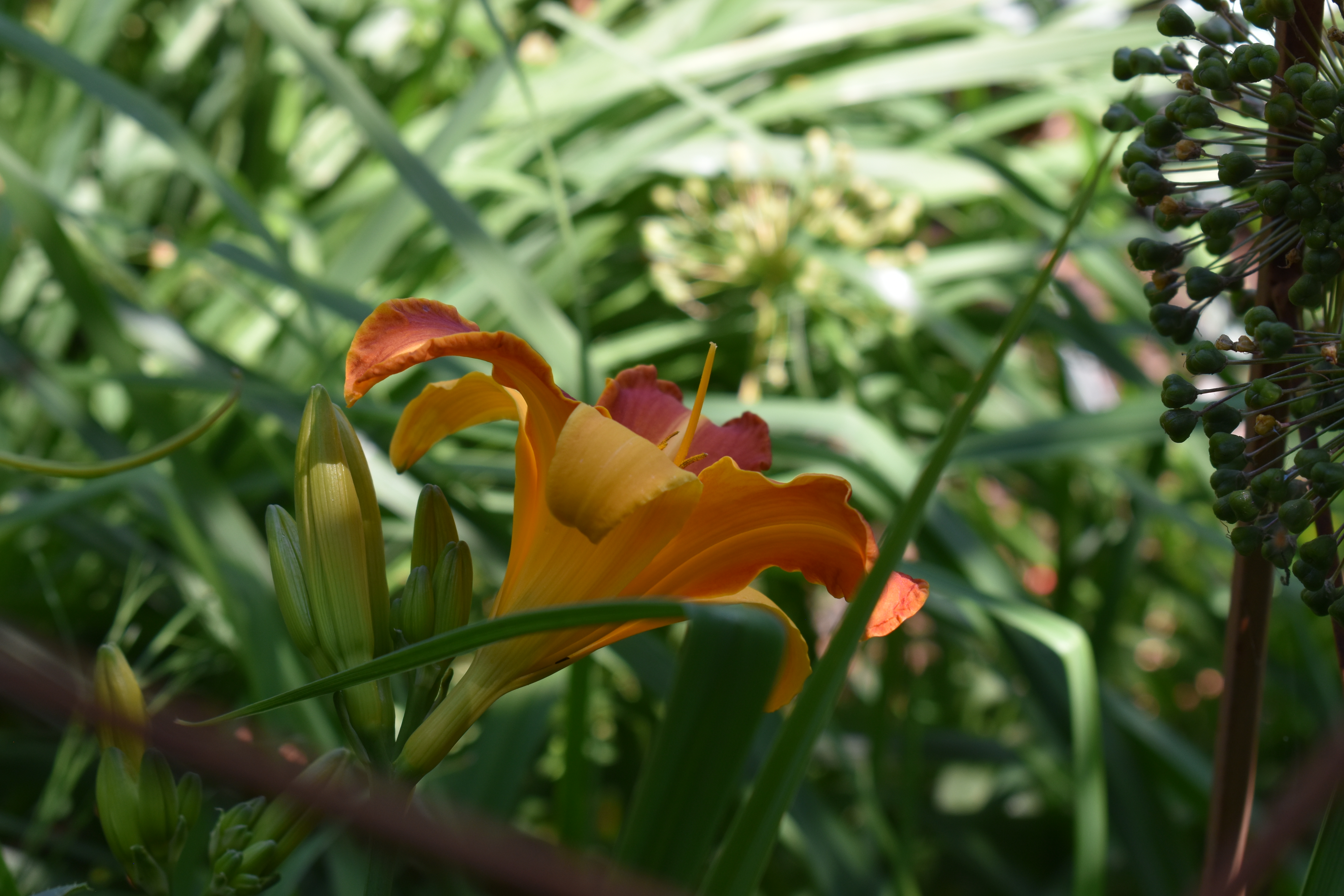
Another colourful page sat opposite where I shared photos of a selection of our many hemerocallis, Day Lilies. I wrote, “As we move into the second half of July, our hemerocallis, Day Lilies, add rich colours to all our borders.”
I shared a batch of nine photos of our hemerocallis to illustrate the wide varieties of colours we have.
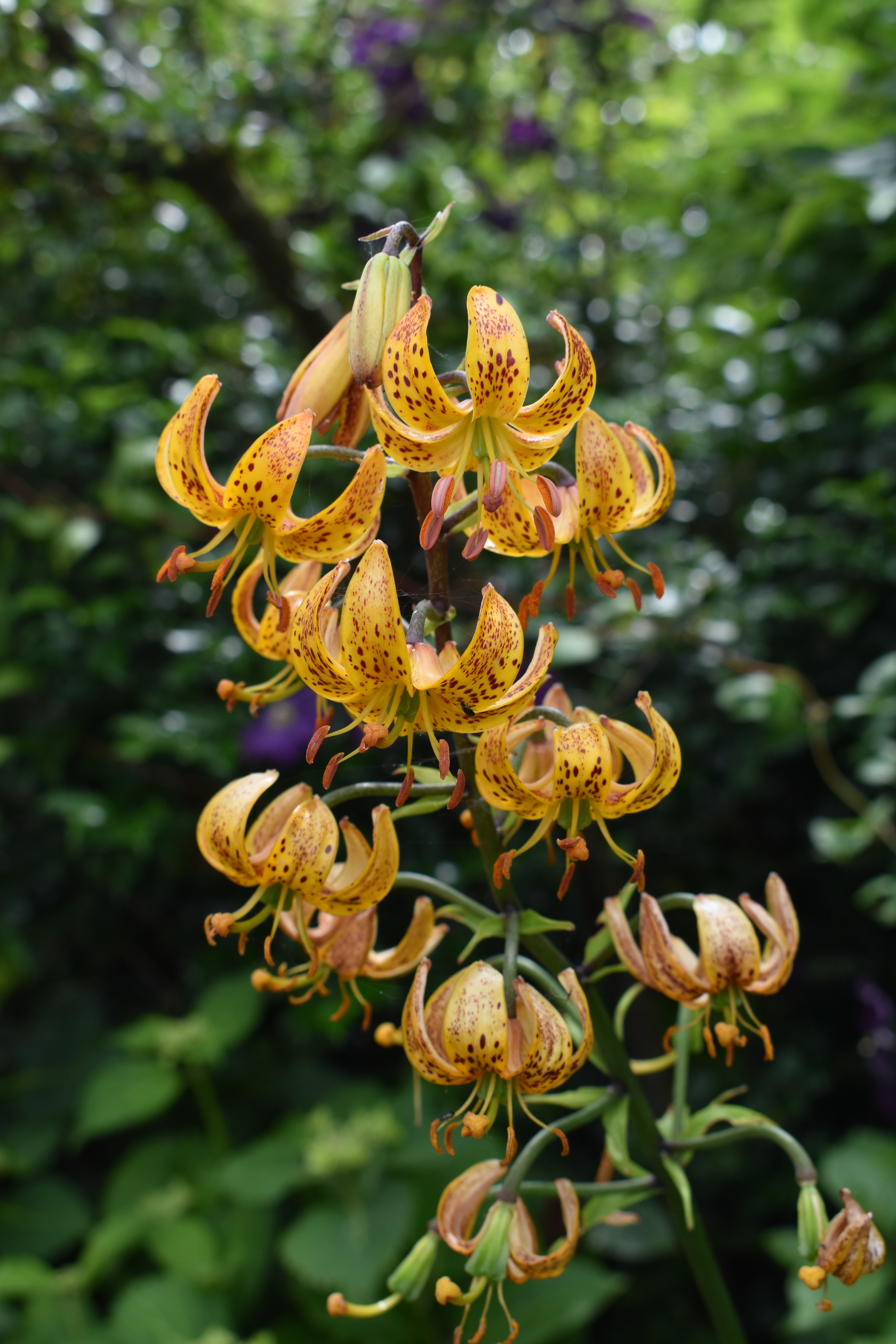
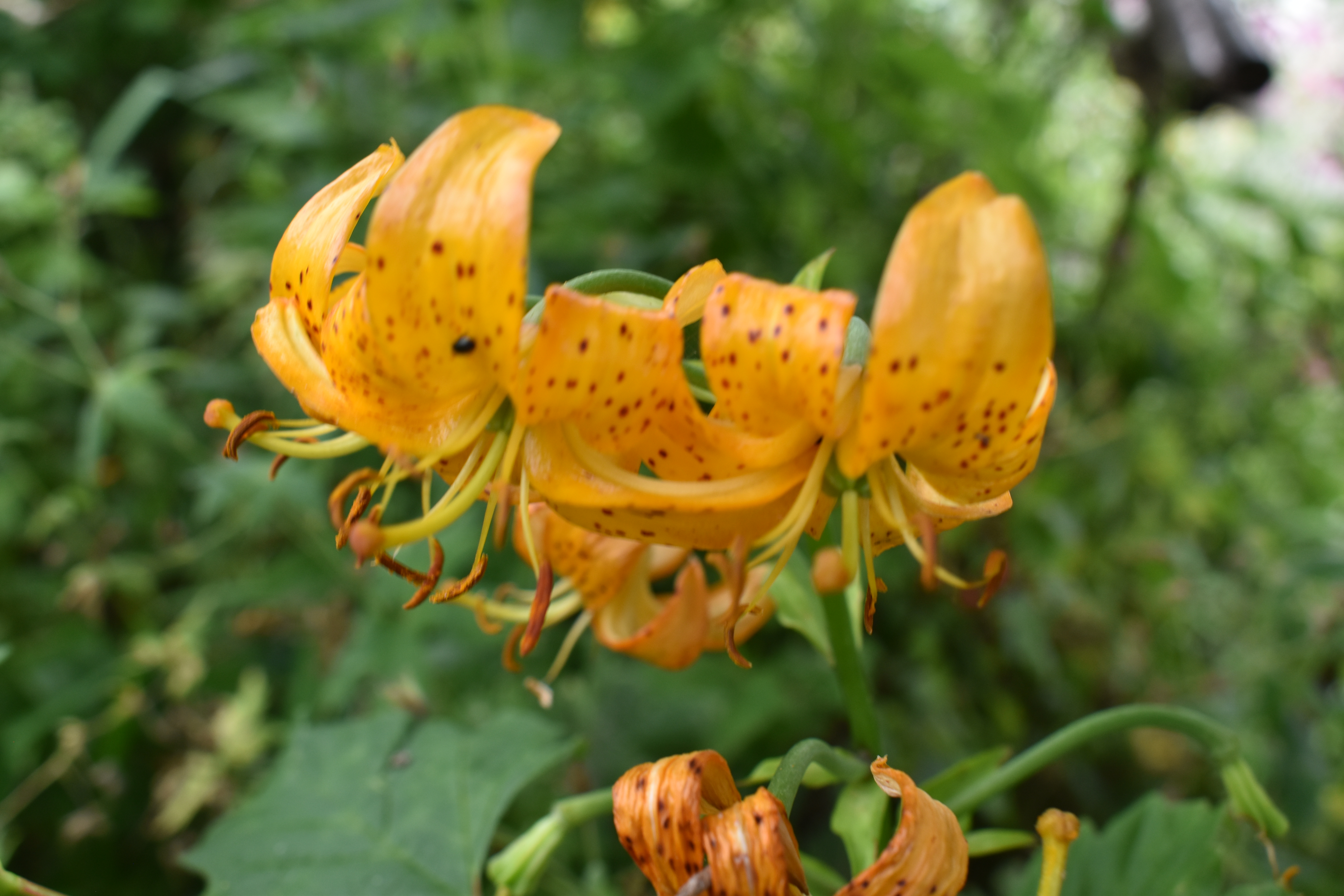
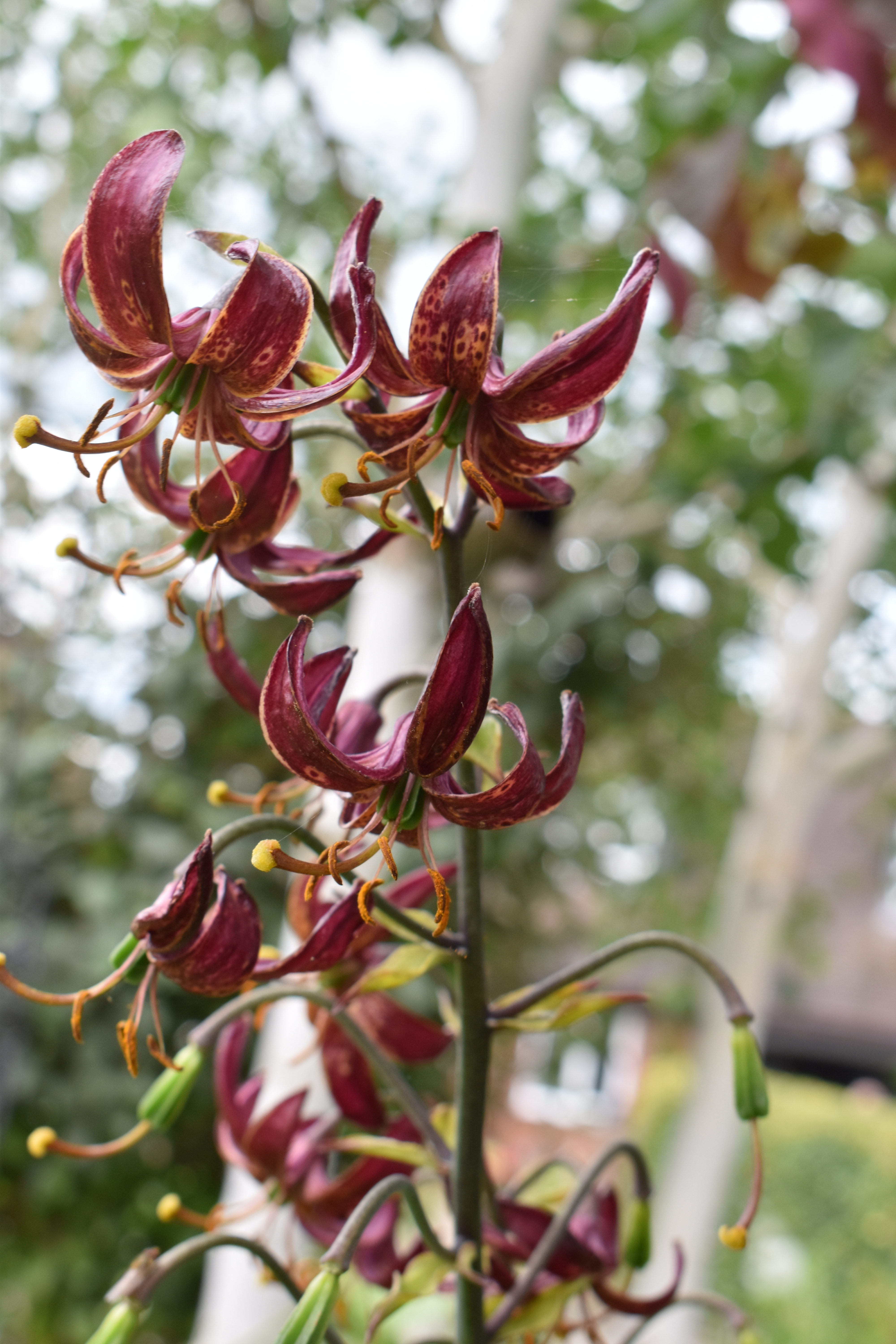
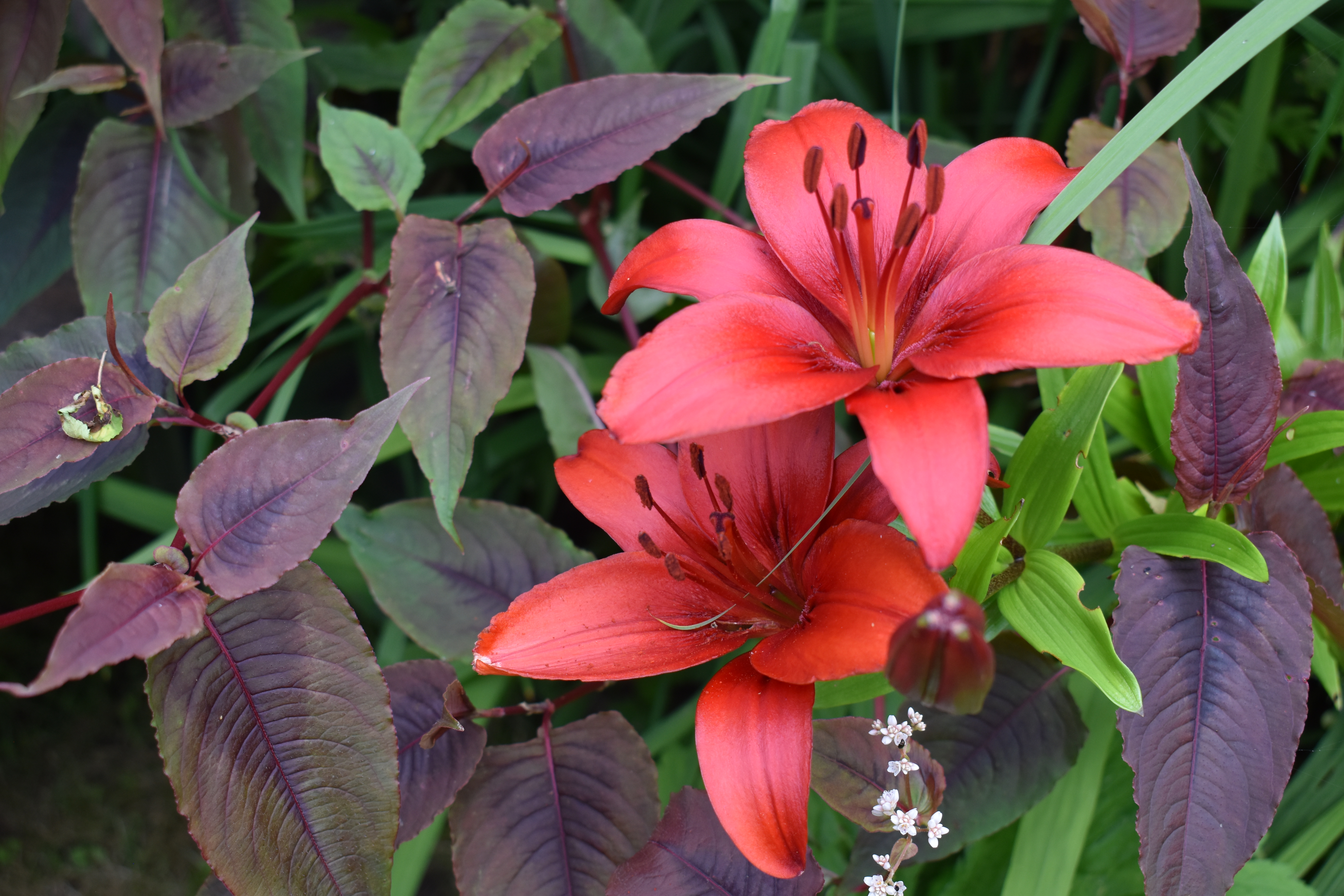
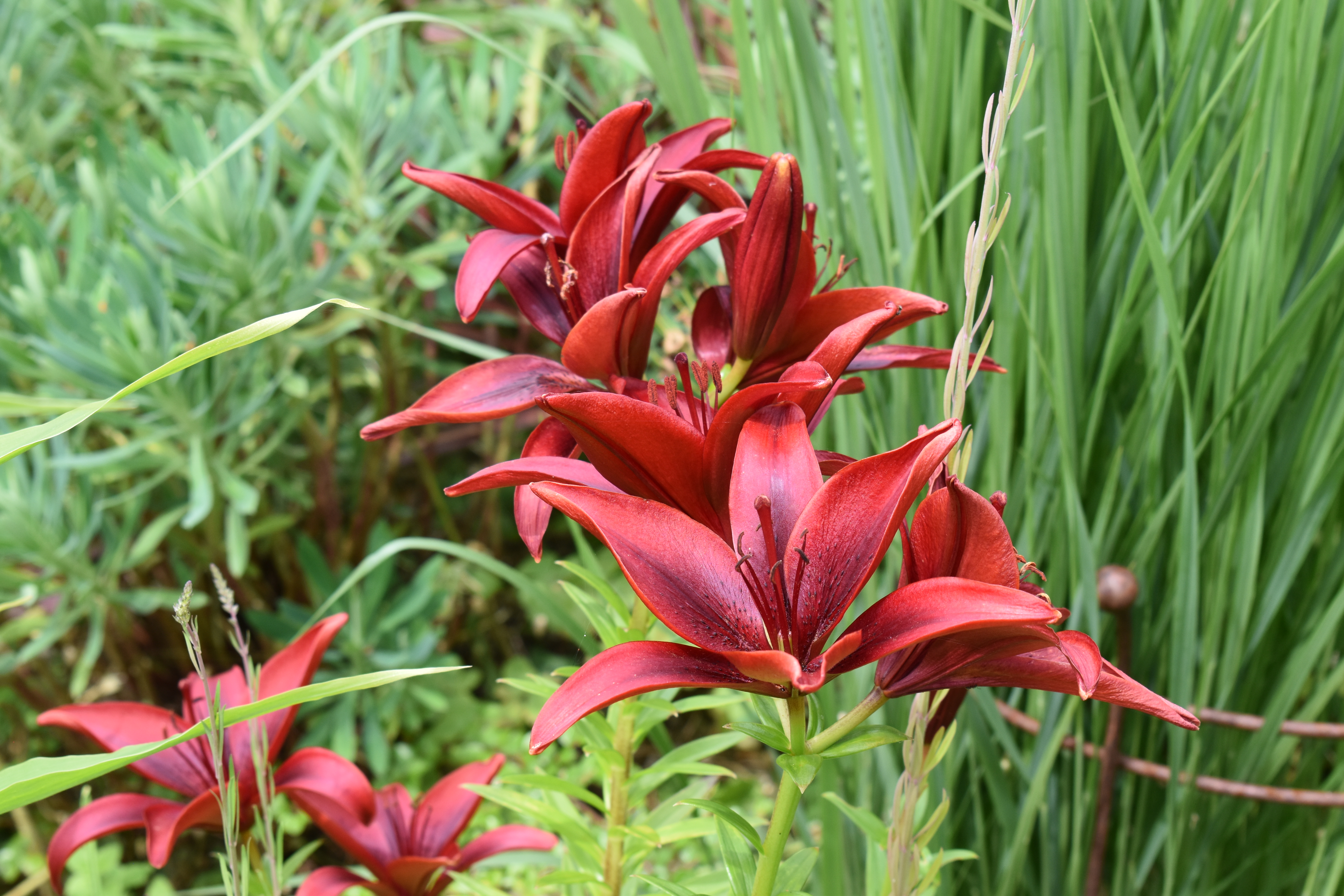
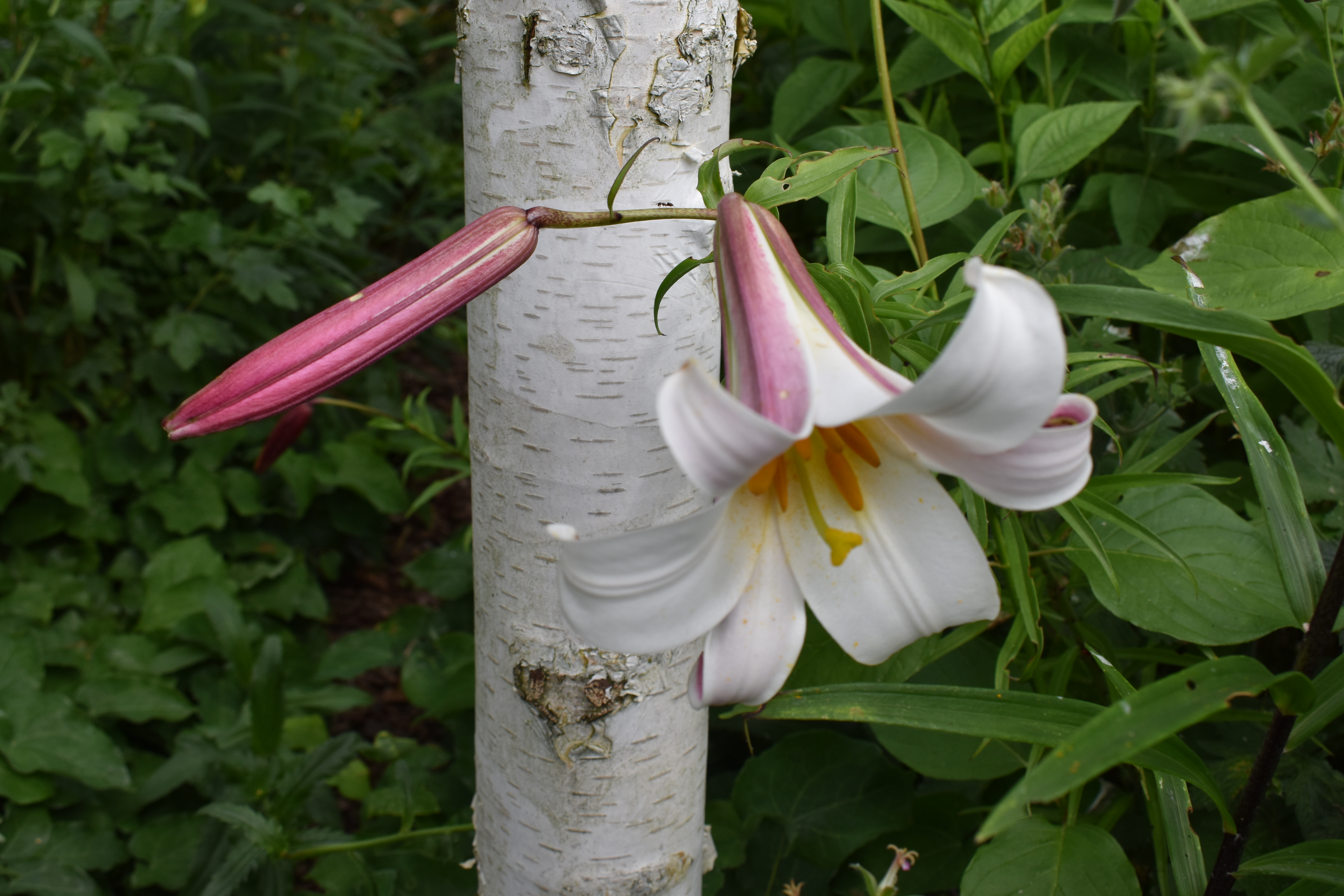
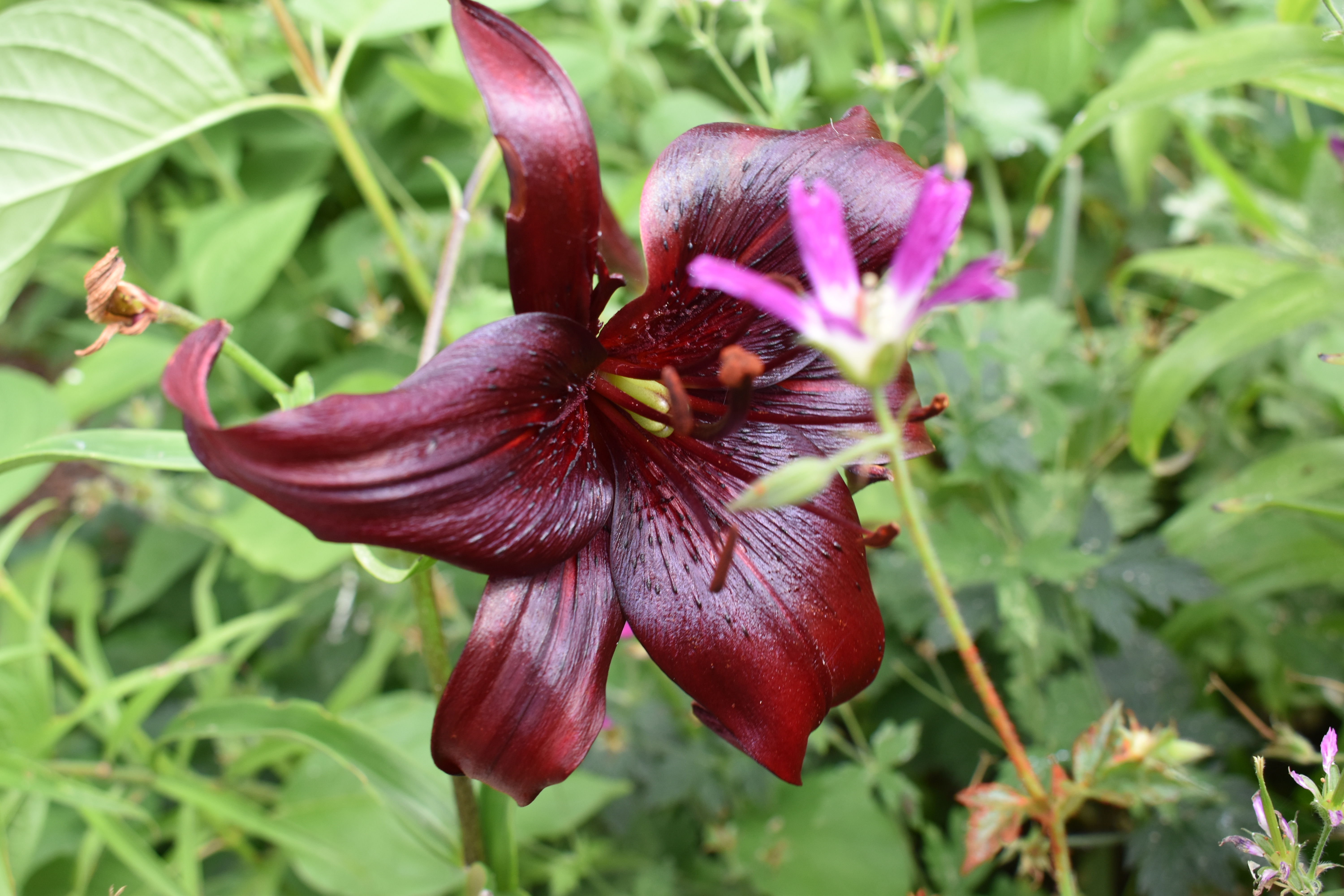
The next page features two other types of lily, Martagons and Asiatics, where I noted, “More colour was provided by two types of true lily, both martagons and asiatics, in the front garden.”
The first set of photos are of martagons while the second set are asiatics.
The final page shows an i-Pad sketch I created to show the view looking up through the planting on our roof garden atop our woodstore.
This return to look at my garden journal marks the end of the first half of the year, another one living under the effects of Covid. Plenty happened in the garden and we had enjoyable tasks to perform.
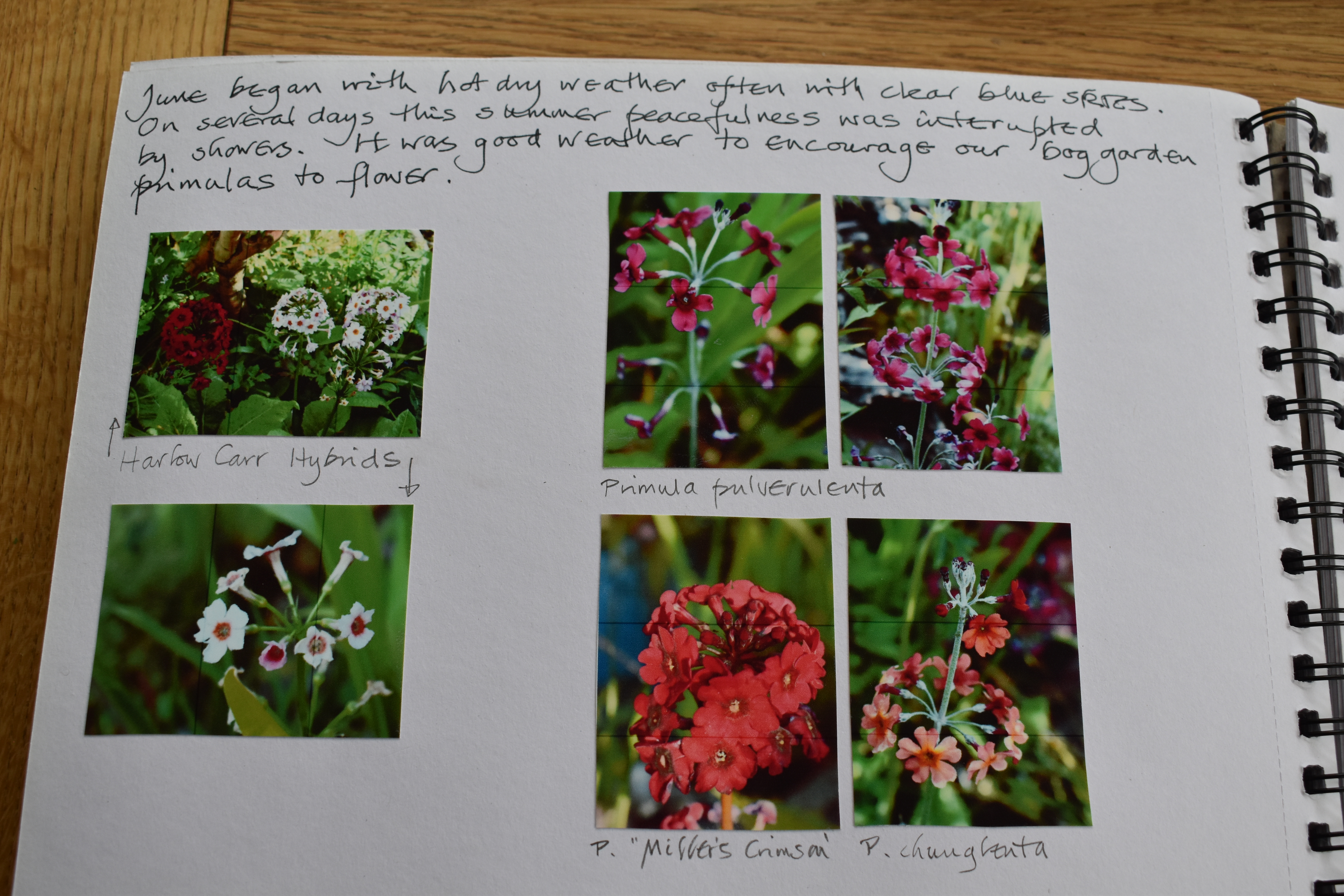
I began by writing, “June began with hot dry weather often with clear blue skies. On several days this summer peacefulness was interrupted by showers. It was good weather to encourage our bog garden primulas to flower.”
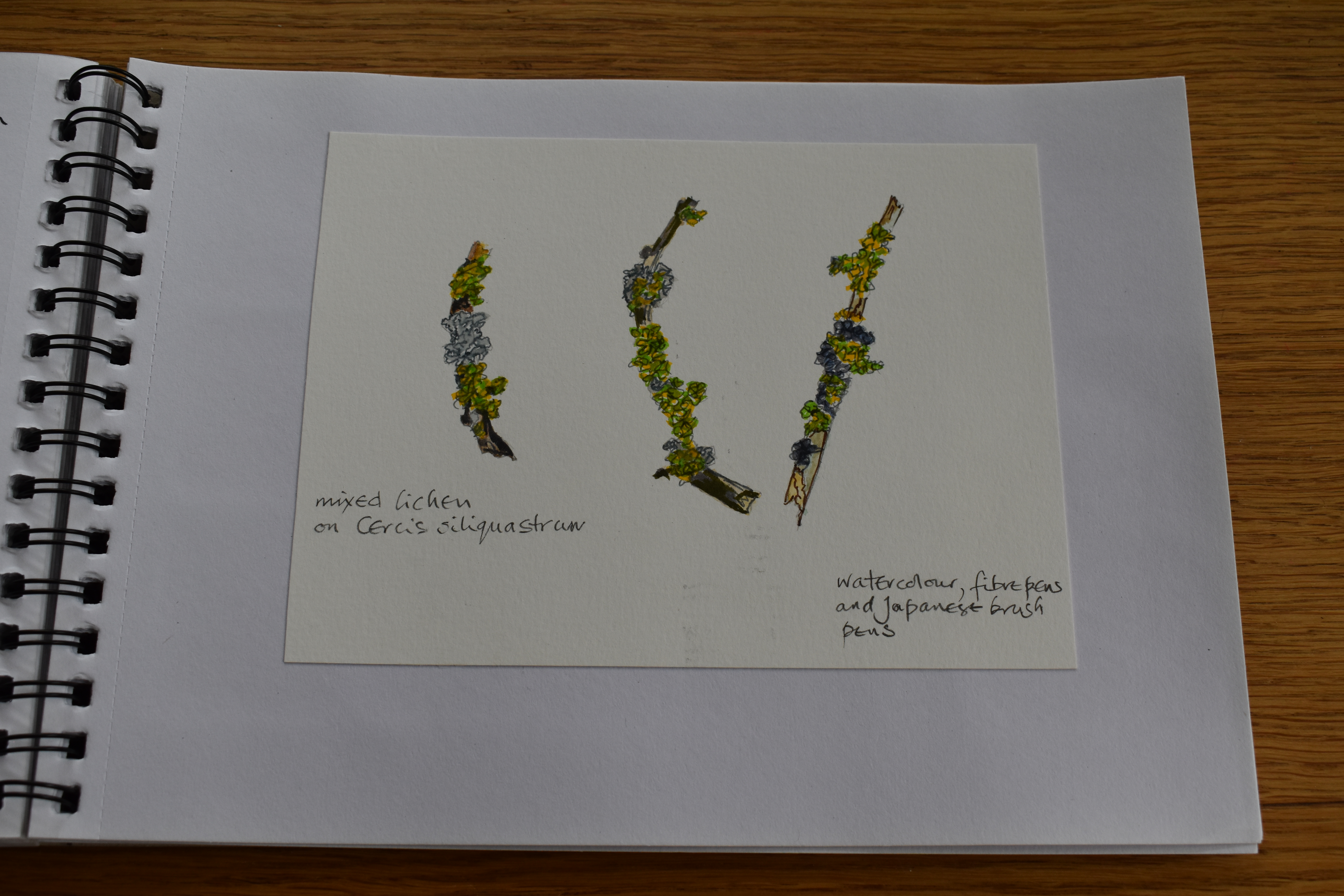
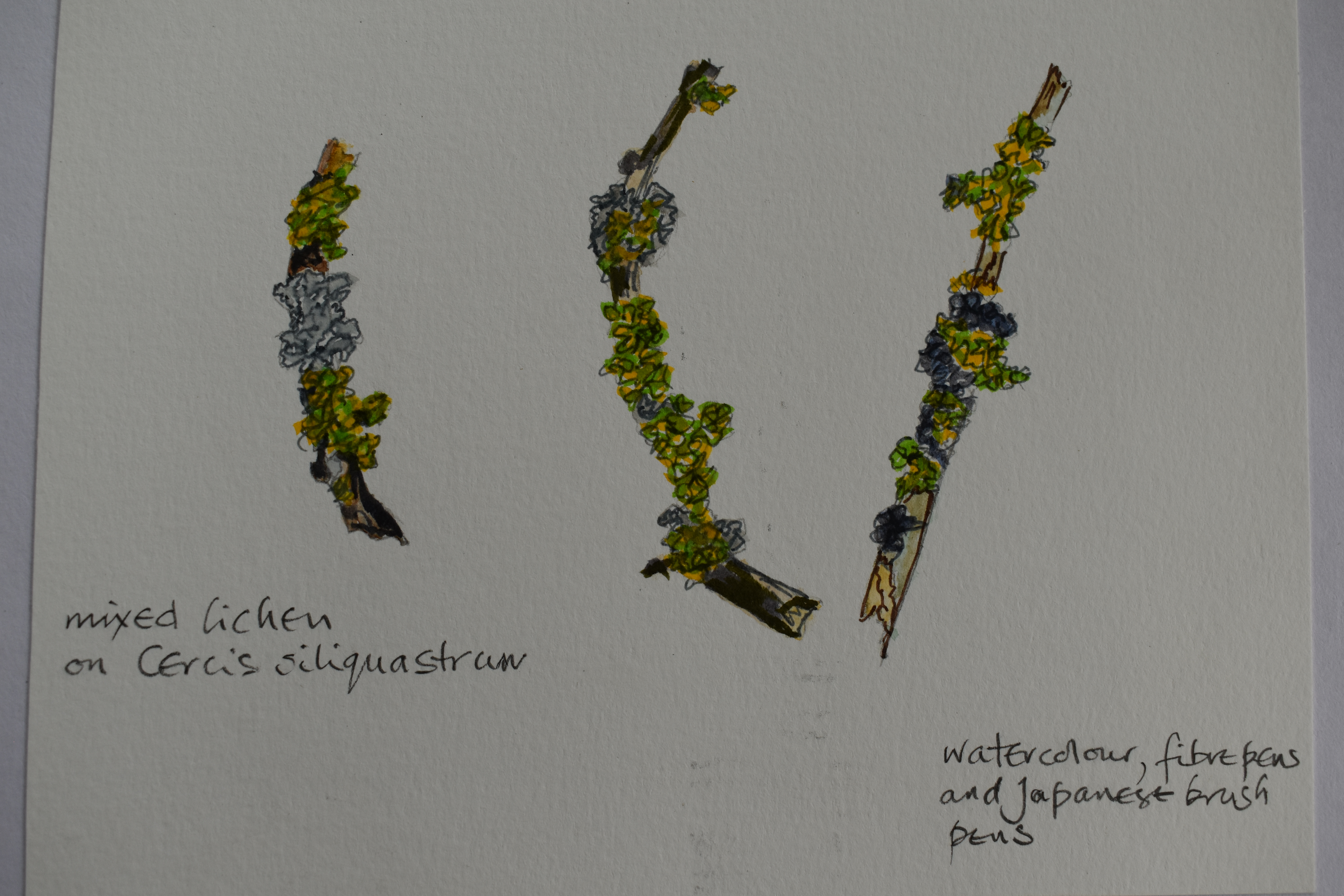
On the next page I feature three drawings I did of some of the lichen found on a dying branch of our Cercis siliquastrum. I sketched them in watercolours, fibre pens and Japanese brush pens. It was quite a challenge!
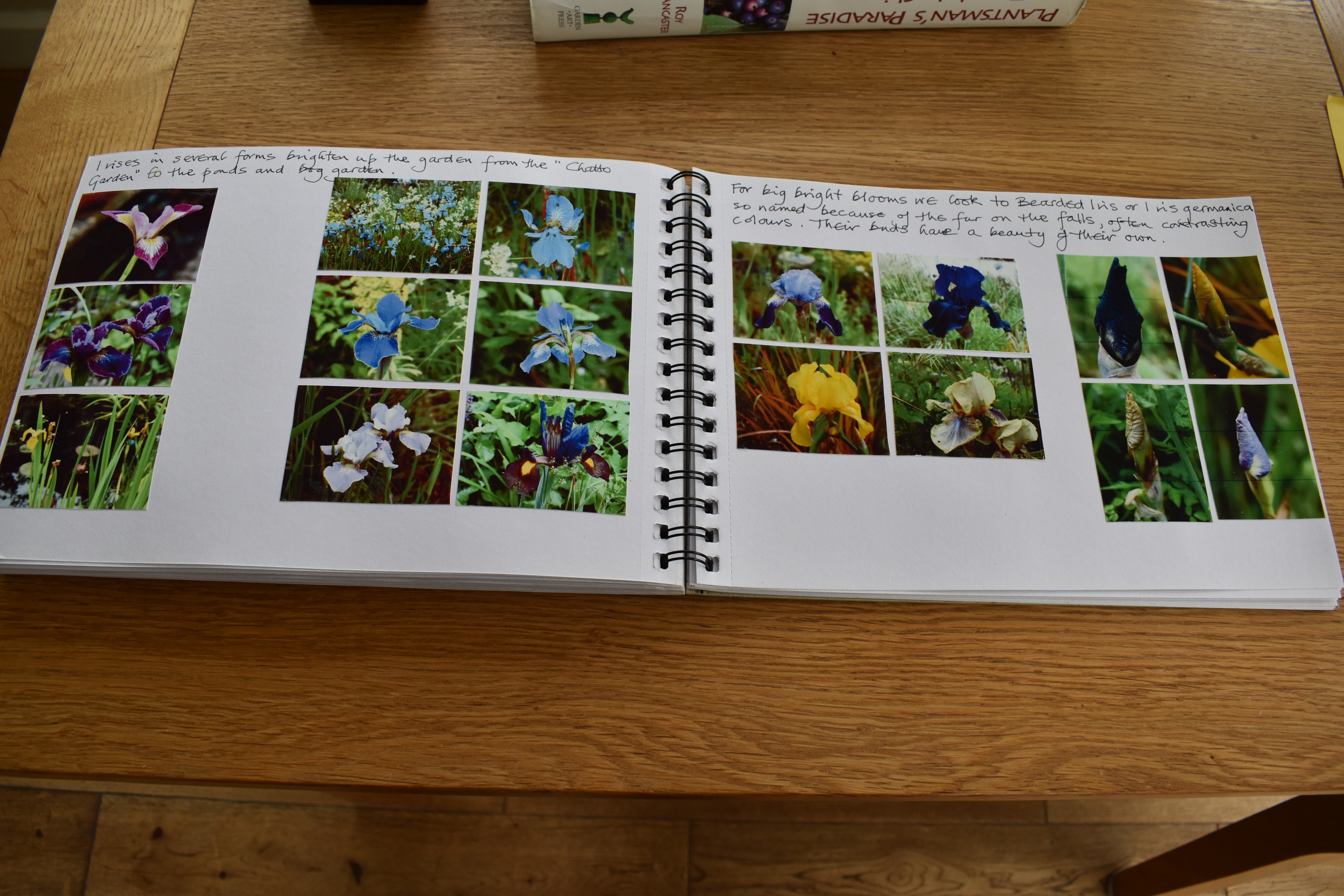
On the following double page spread I showed some of our irises and shared nine photos.
above the first group of nine photos I wrote, “Irises in several forms brighten up the garden from the “Chatto Garden” to the ponds and bog garden.”
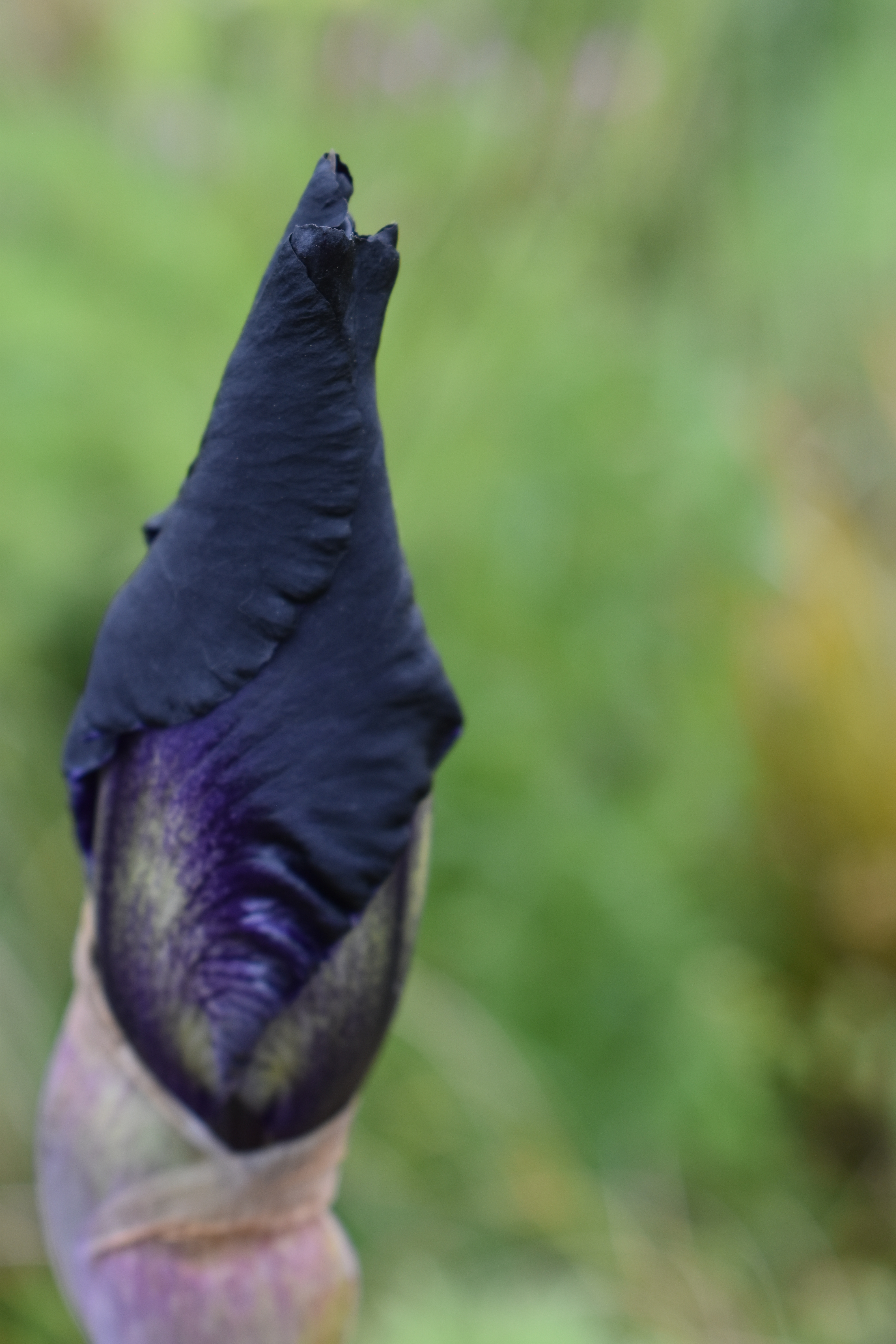
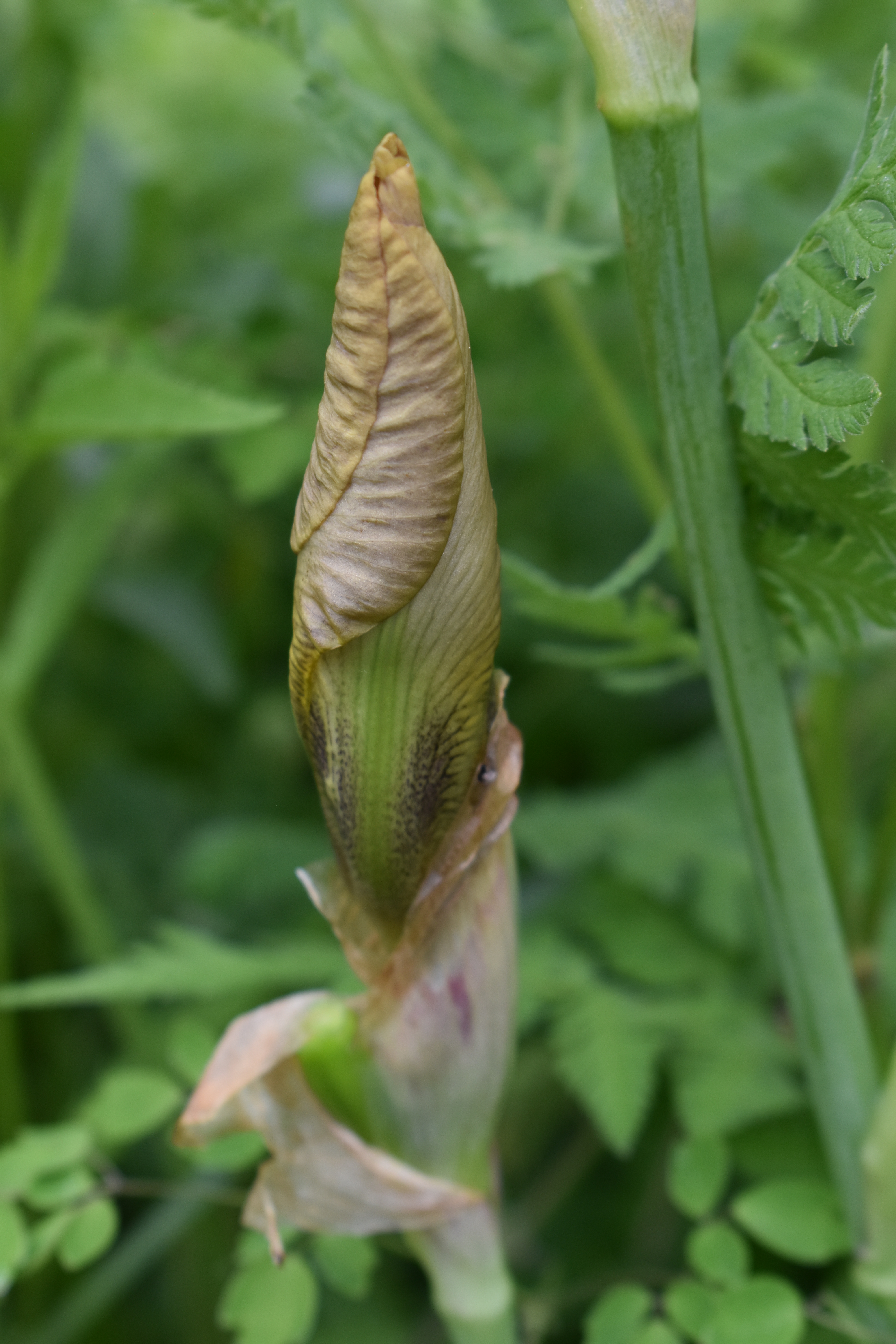
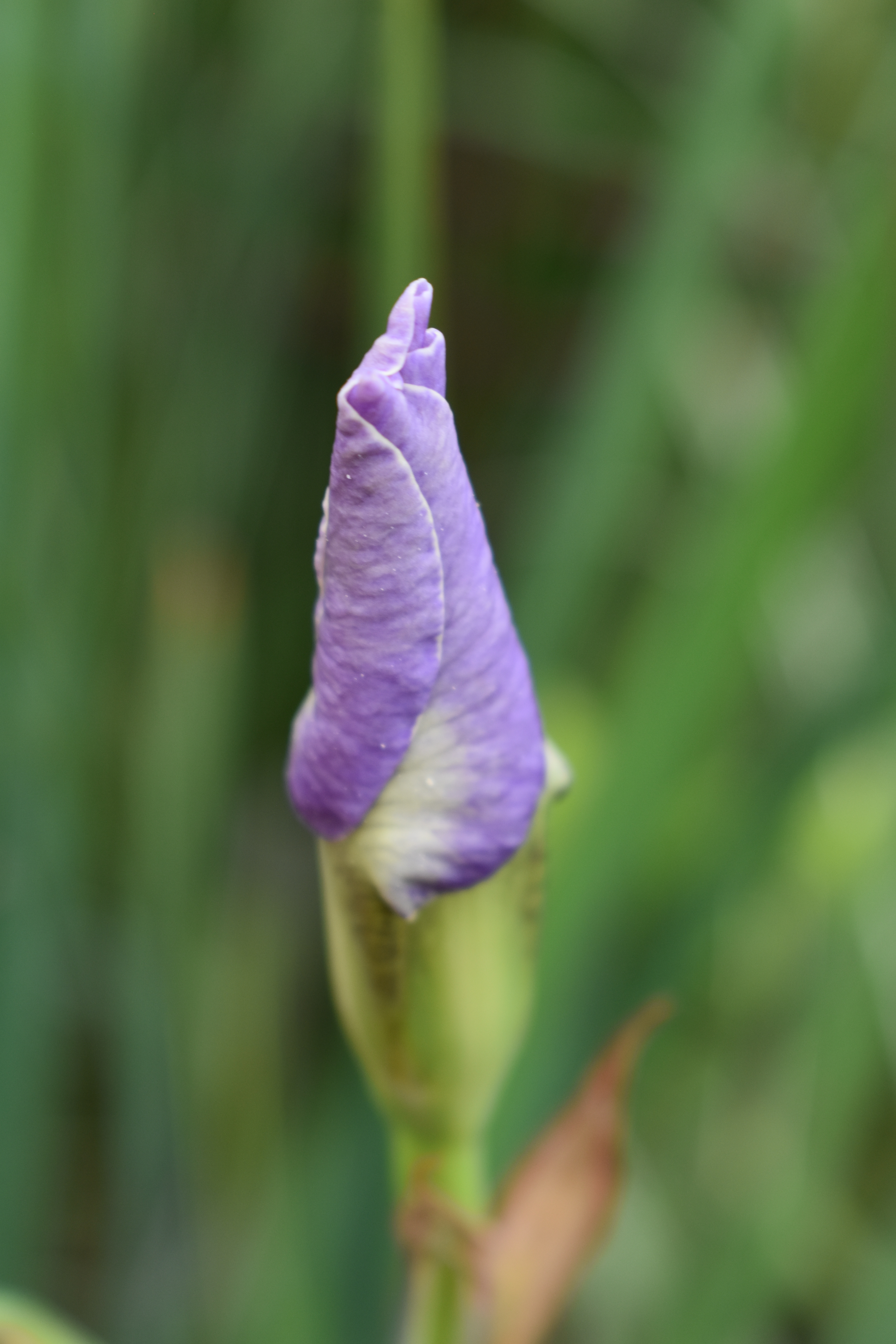
At the top of the second page of irises I wrote “For big bright blooms we look to the Bearded Iris so called because of the fur on the falls often of contrasting bright colours. They are also known as Iris germanica. The buds of iris flowers have a beauty all of their own.”
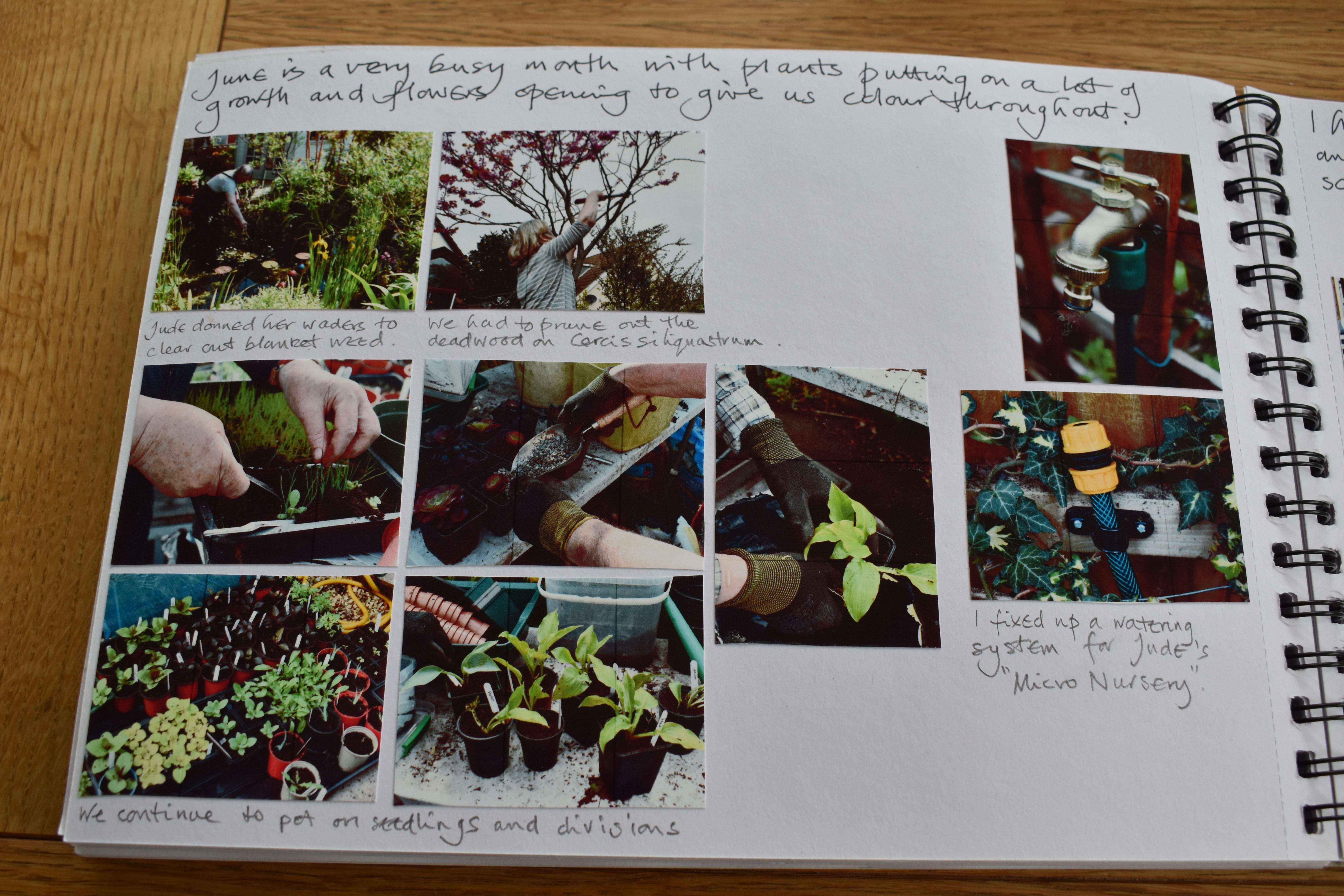
Turning over to the next pair of pages we consider the gardening tasks we do in this busy month. I wrote, “June is a very busy month with plants putting on a lot of growth and flowers opening to give us colour throughout.“
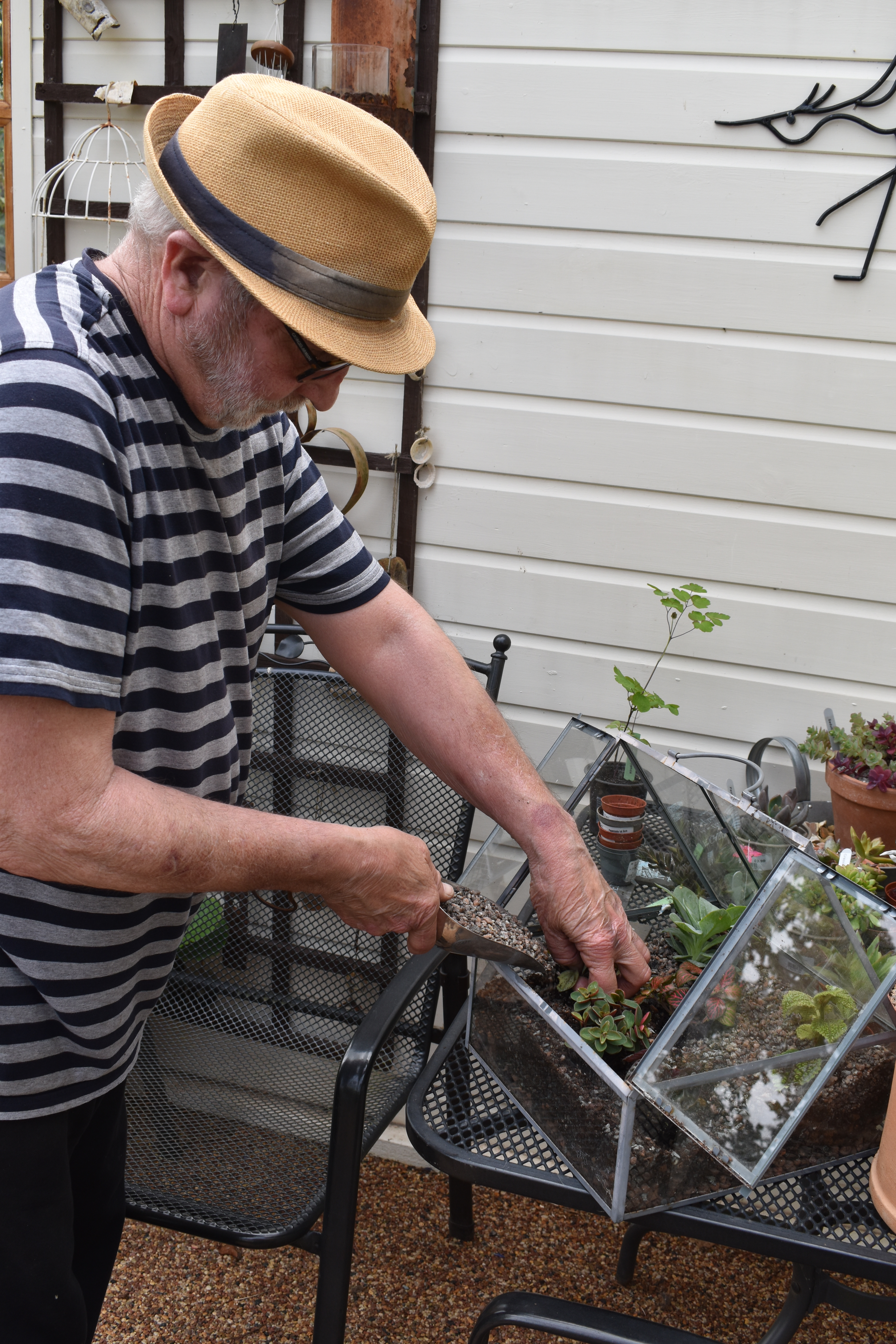
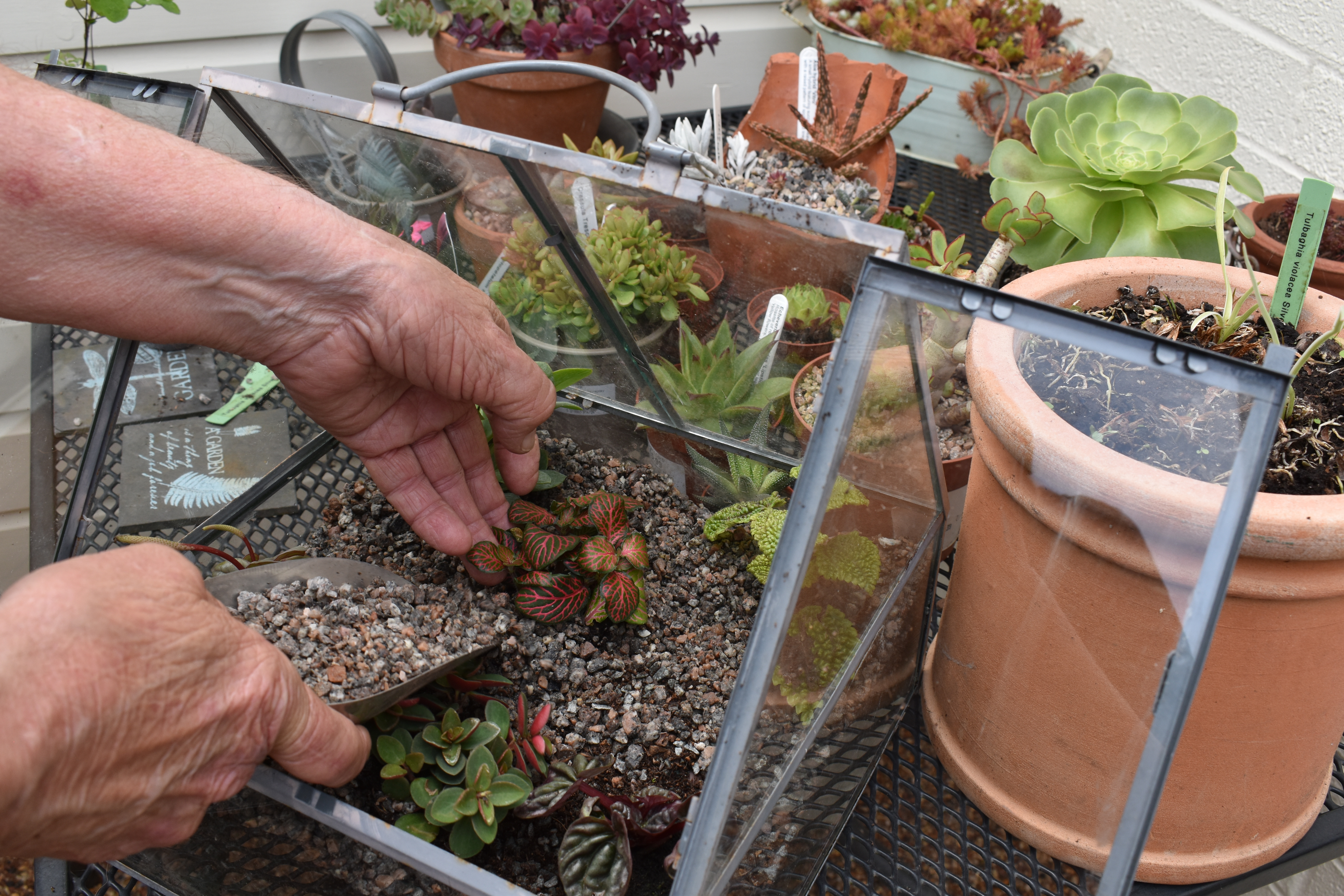
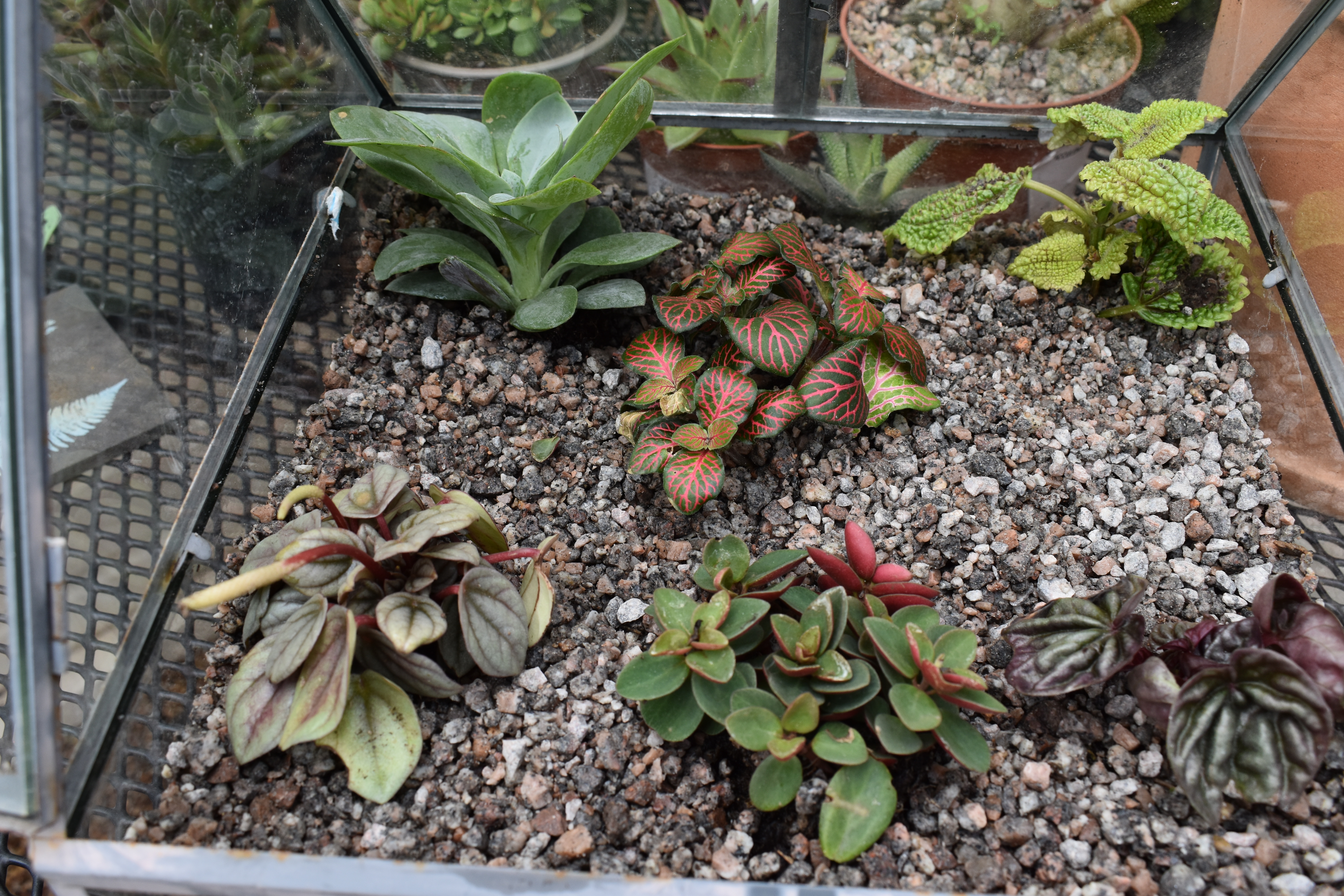
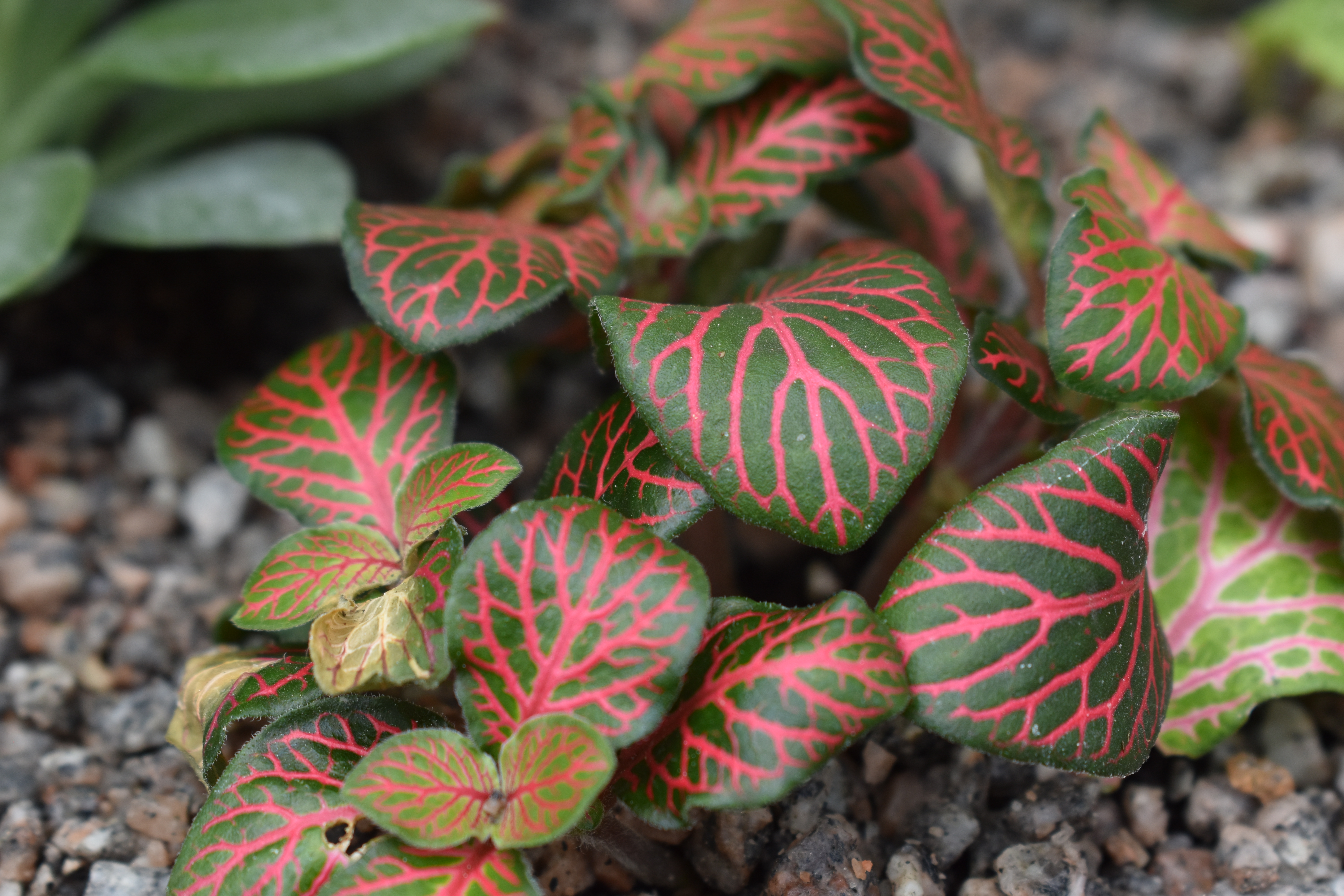
The second page looks at me revitalising a terrarium which I was rescuing for my daughter and son-in-law, Jo and Rob.
“I had fun re-vitalising a failed terrarium for our daughter and son-in-law Jo and Rob. It is strange gardening in a scaled down patch.”
My entries for June end with two pages with eight photos of views of our front garden. I wrote, “As June comes to an end, I take a journey around our front garden with my camera.”
I added a set of eight photos of views across parts of the front garden.
For our second Hardy Plant Society mini-group visit for this year we drove just 5 miles to a nearby village, Hanwood. A dozen or so members visited another garden of fellow members Richard and Mavis. This was the first time we had visited their patch so we looked forward to surprises.
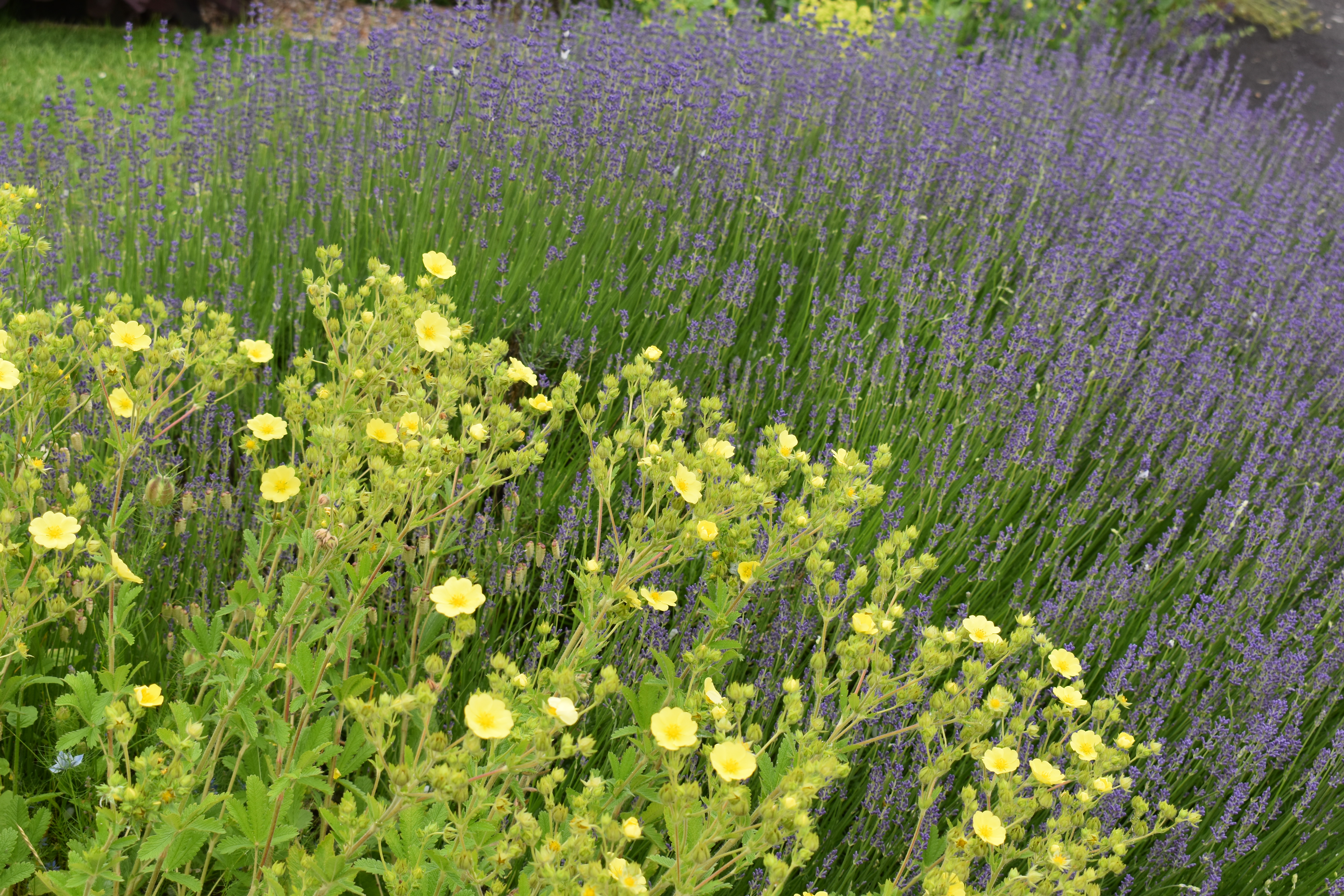
This lovely combination of potentilla and lavender greeted us as we walked into the front garden. Nearby a similar effect was achieved with a combination of lavender and Alchemilla mollis.
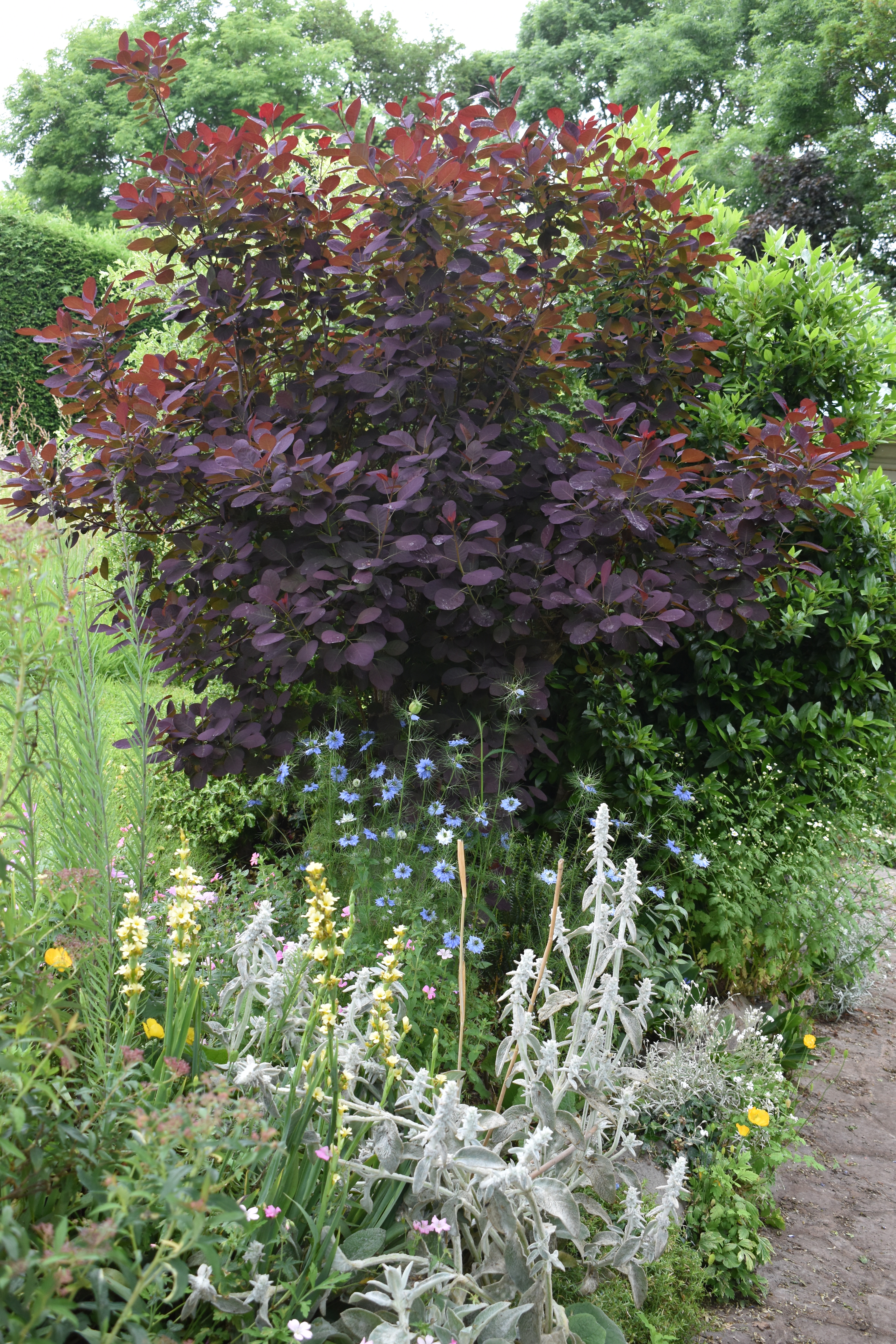
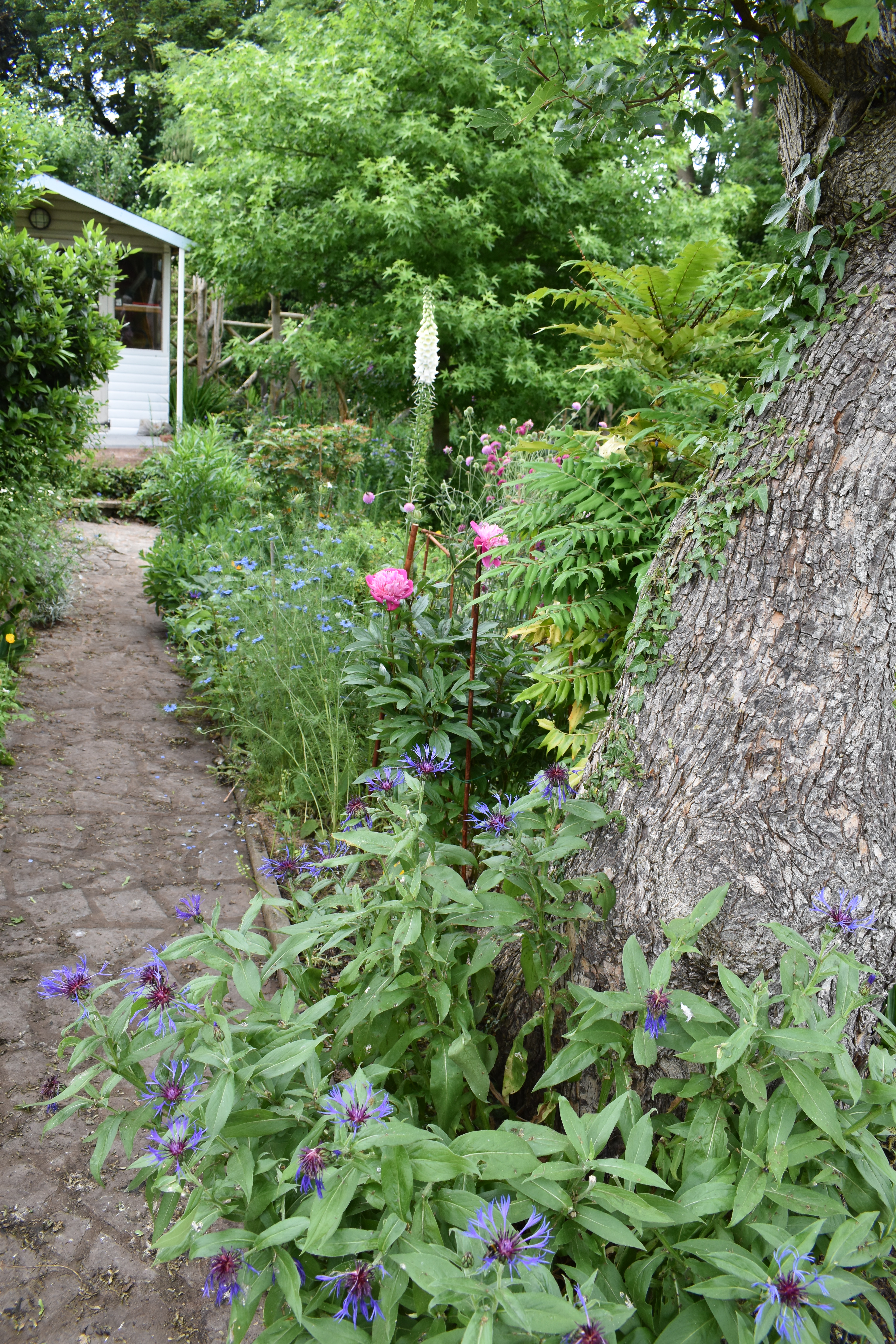
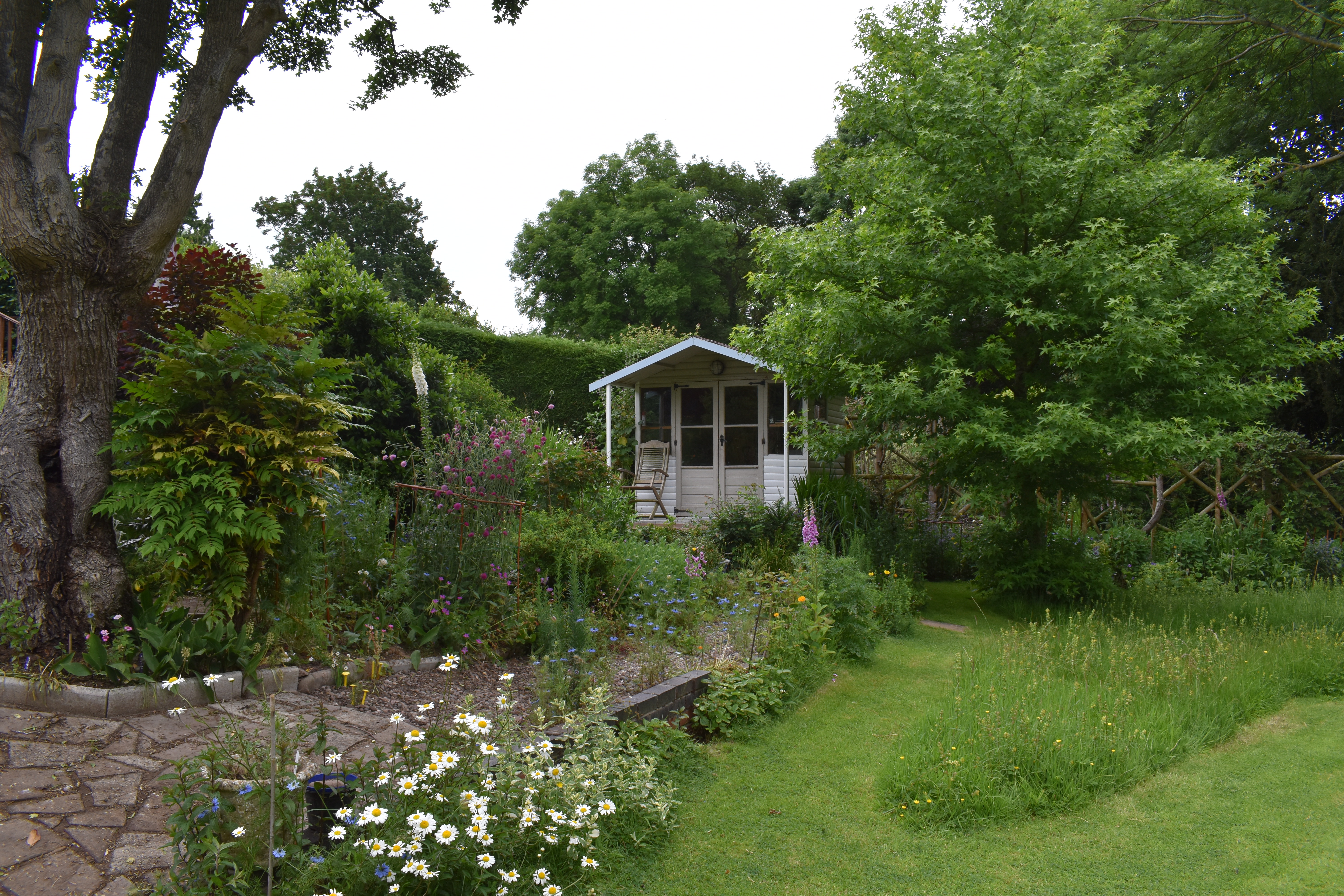
We soon realised that this was a garden that achieved a balance between aesthetics and attractiveness to wildlife. It felt so welcoming and peaceful, made even more so by its outlook.The land sloped down to the Rea Brook a small river inhabited by brown trout, grayling and chub.
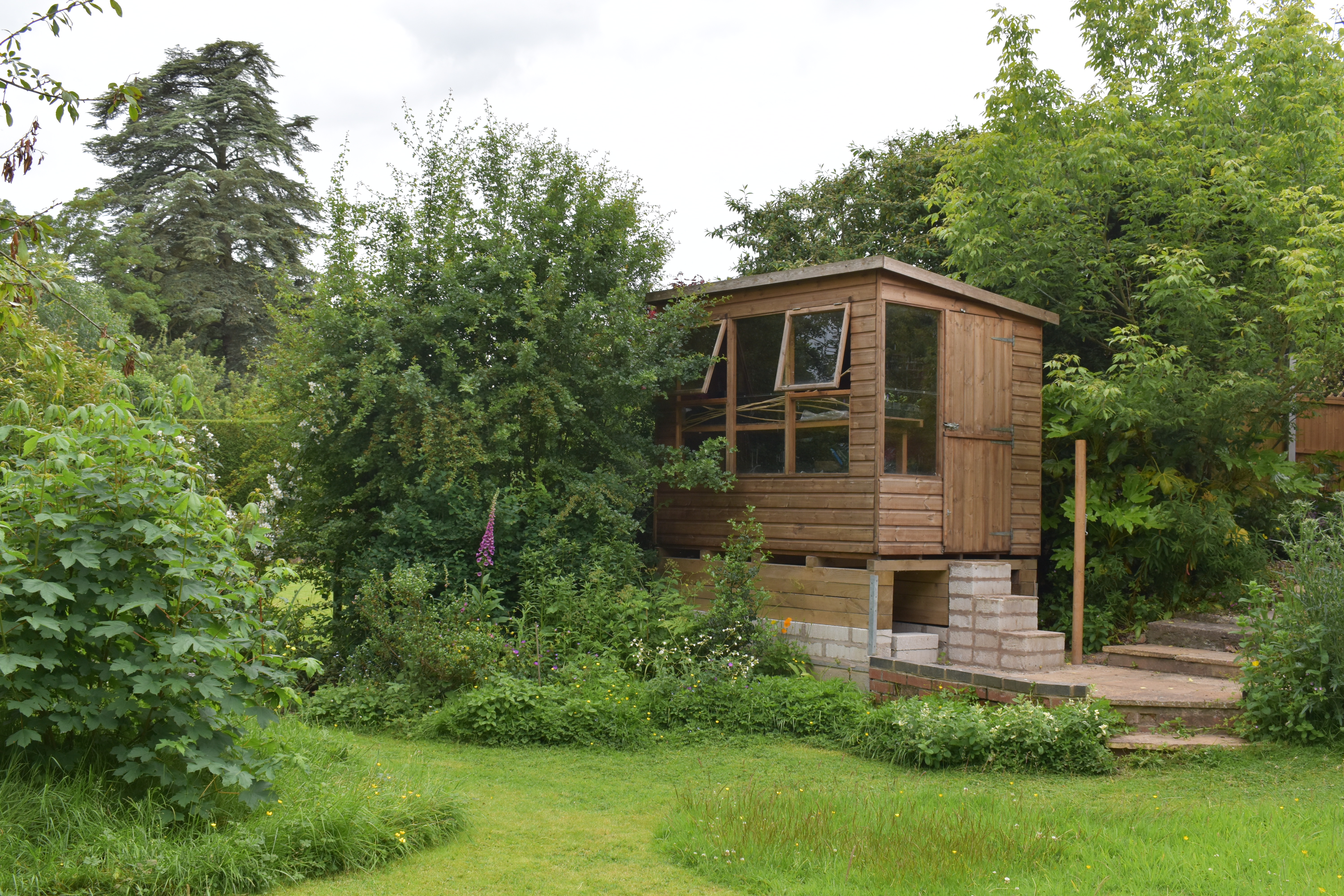
The lower garden featured island beds of wildflower meadow planting, each with a different set of grasses and flowering plants. This area regularly floods, so much that the potting shed is raised high above ground level.
We ended our afternoon enjoyment of this absorbing garden with coffee and cakes on the terrace which overlooked the lower garden and the natural area around the brook.
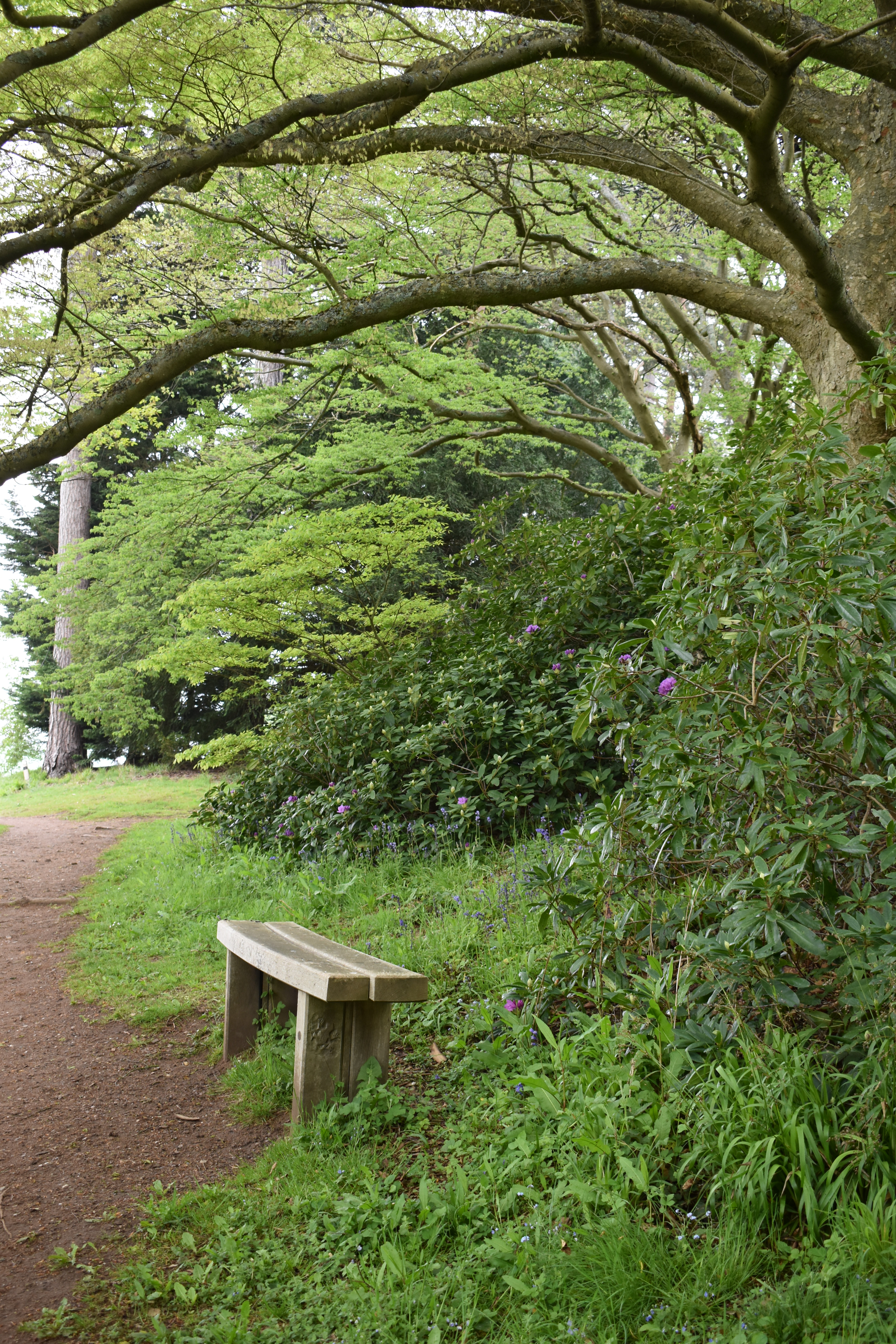
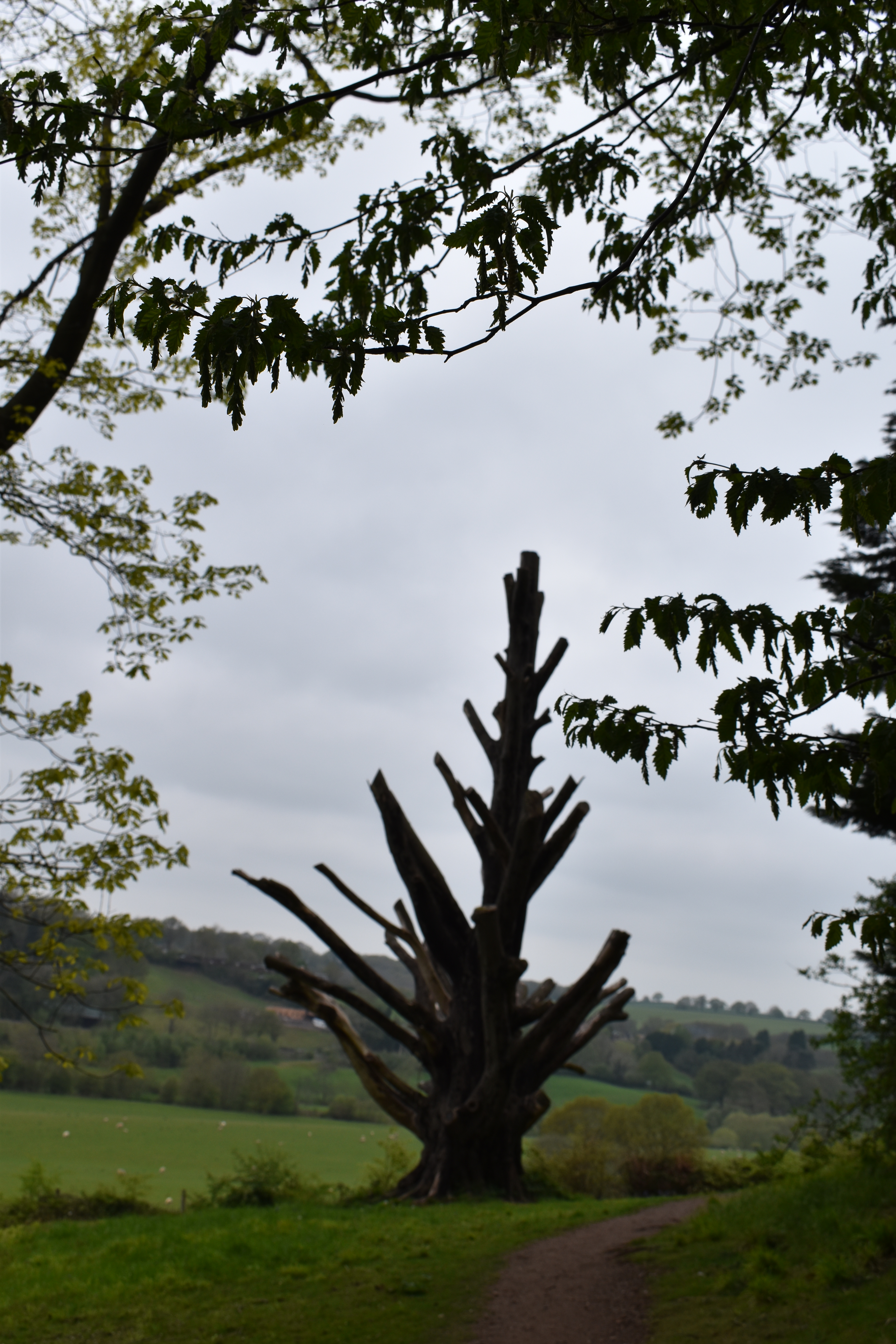
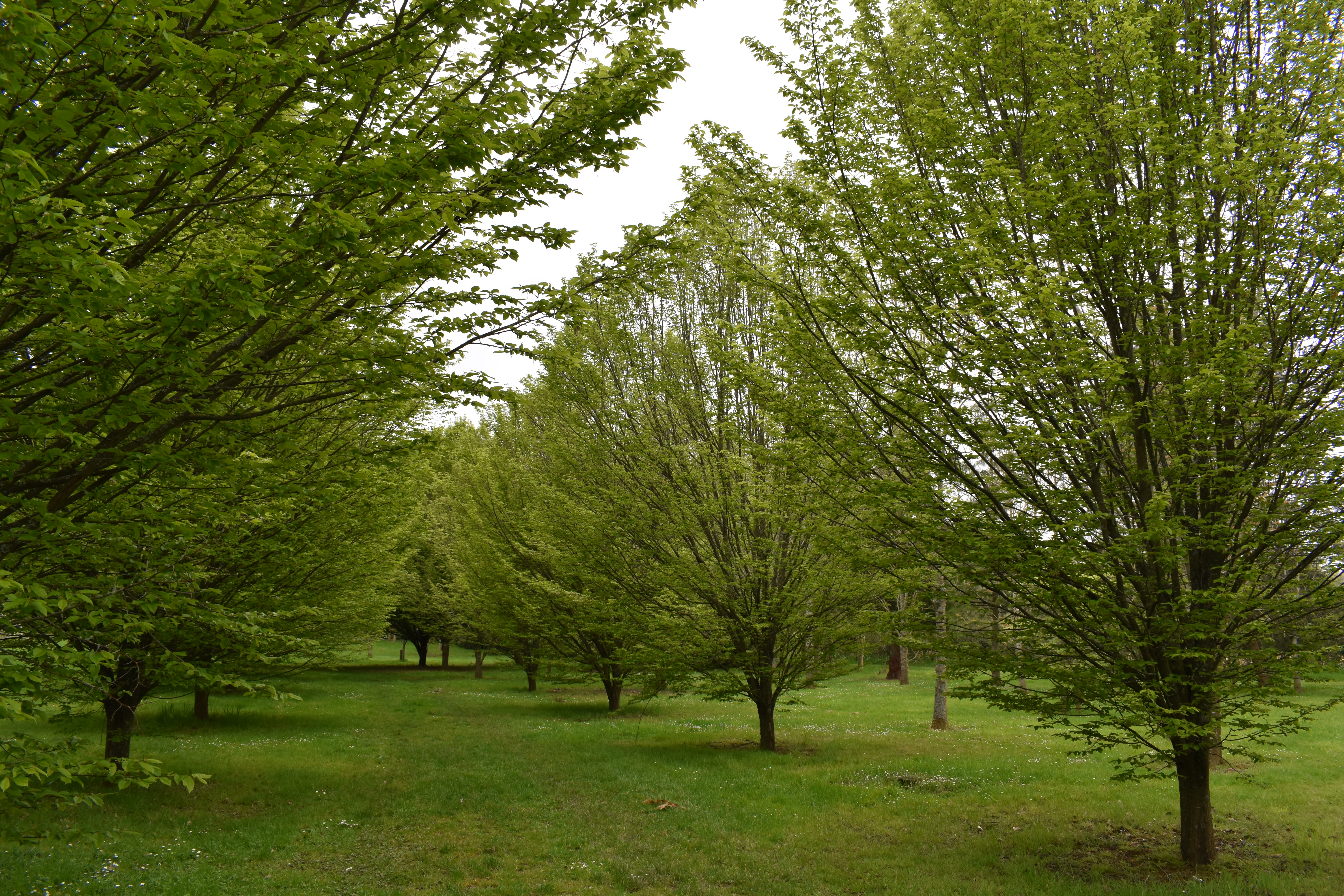
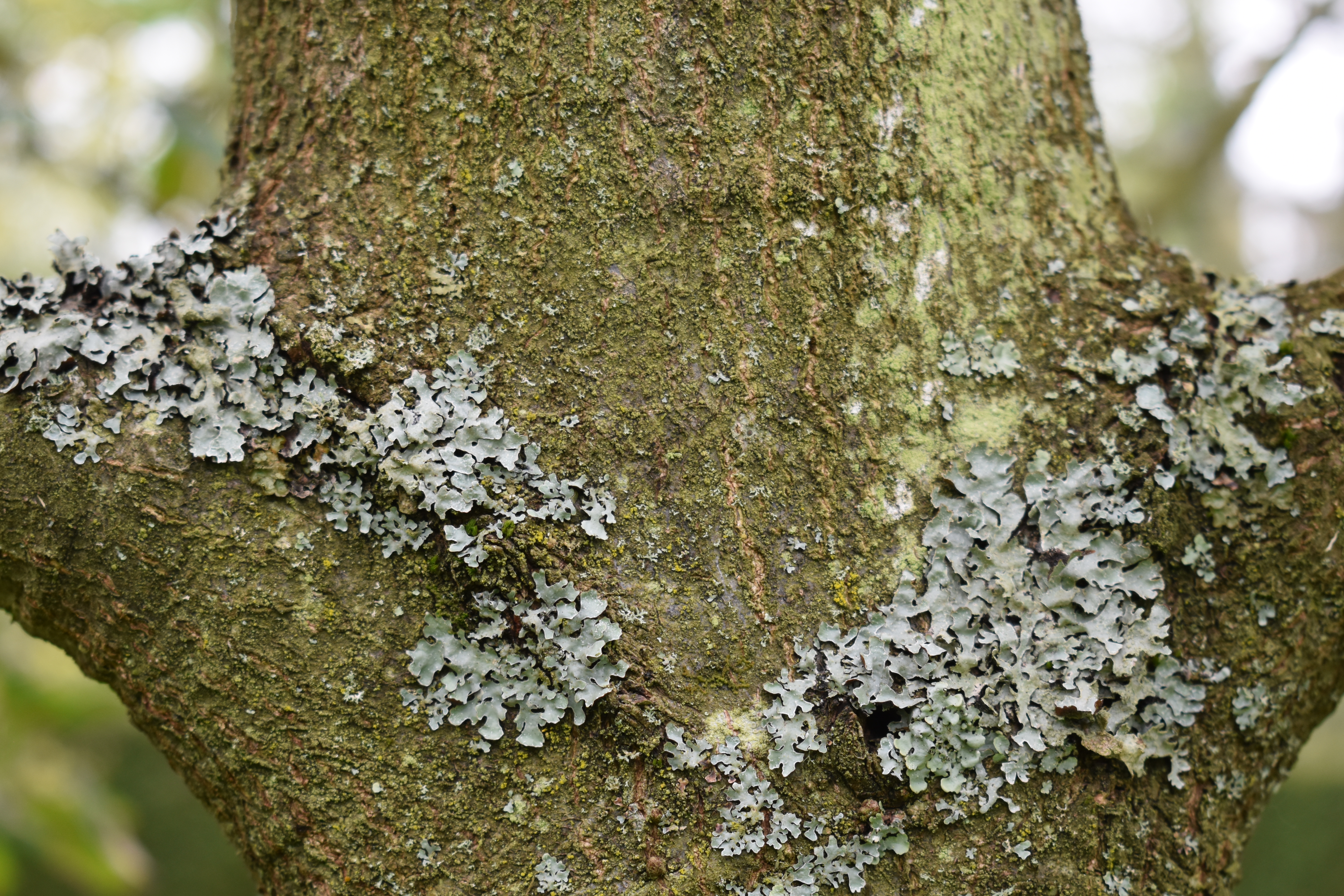
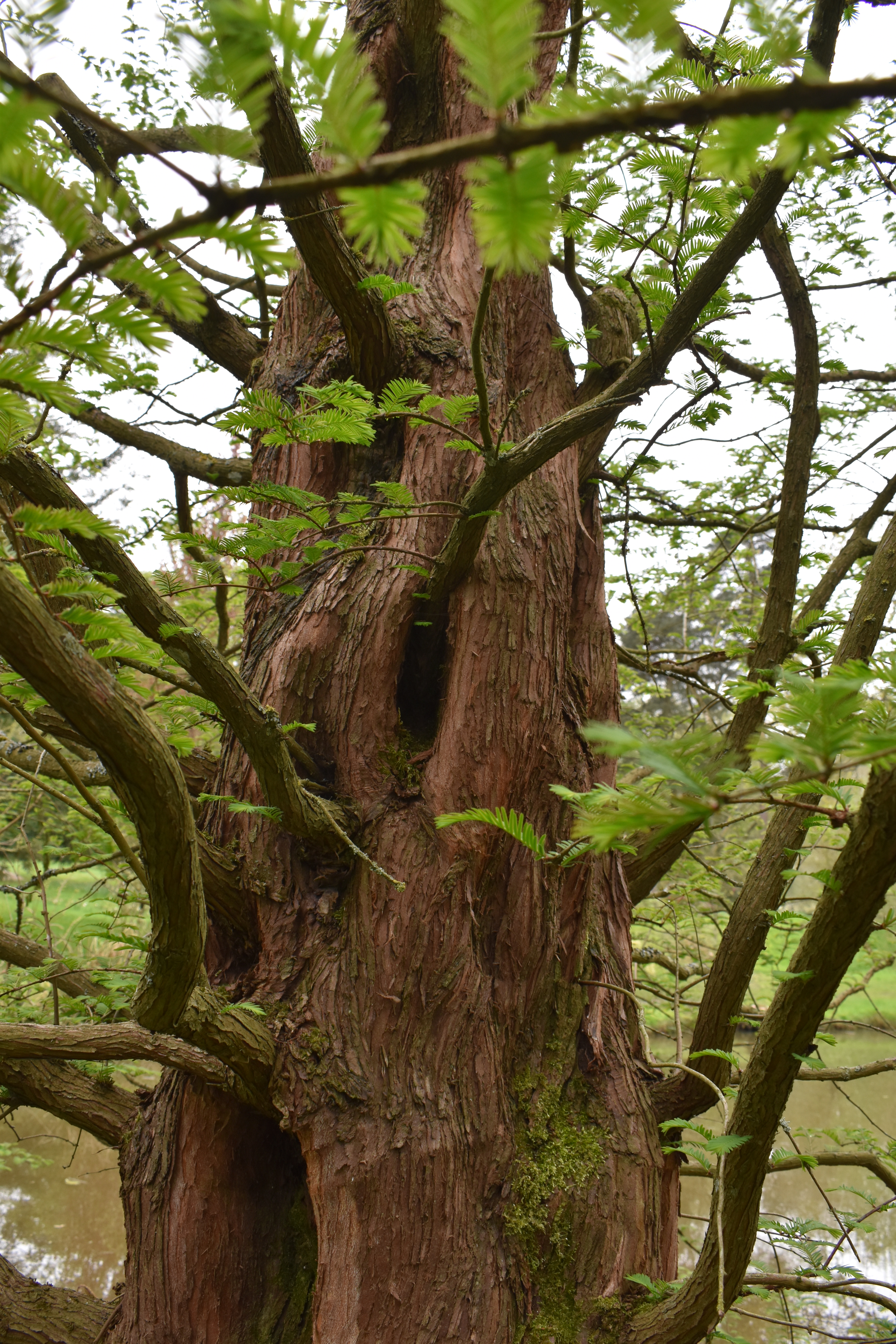
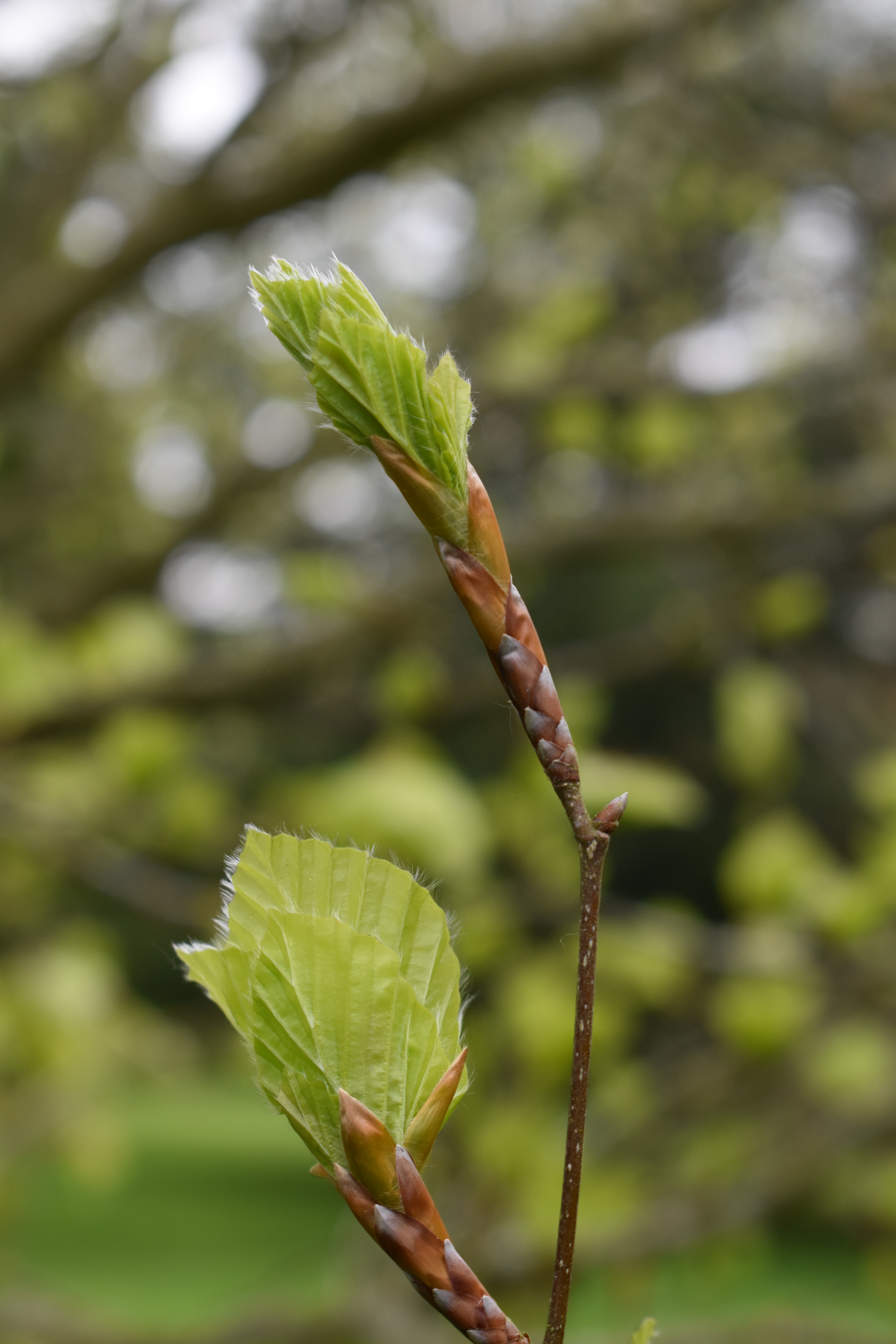
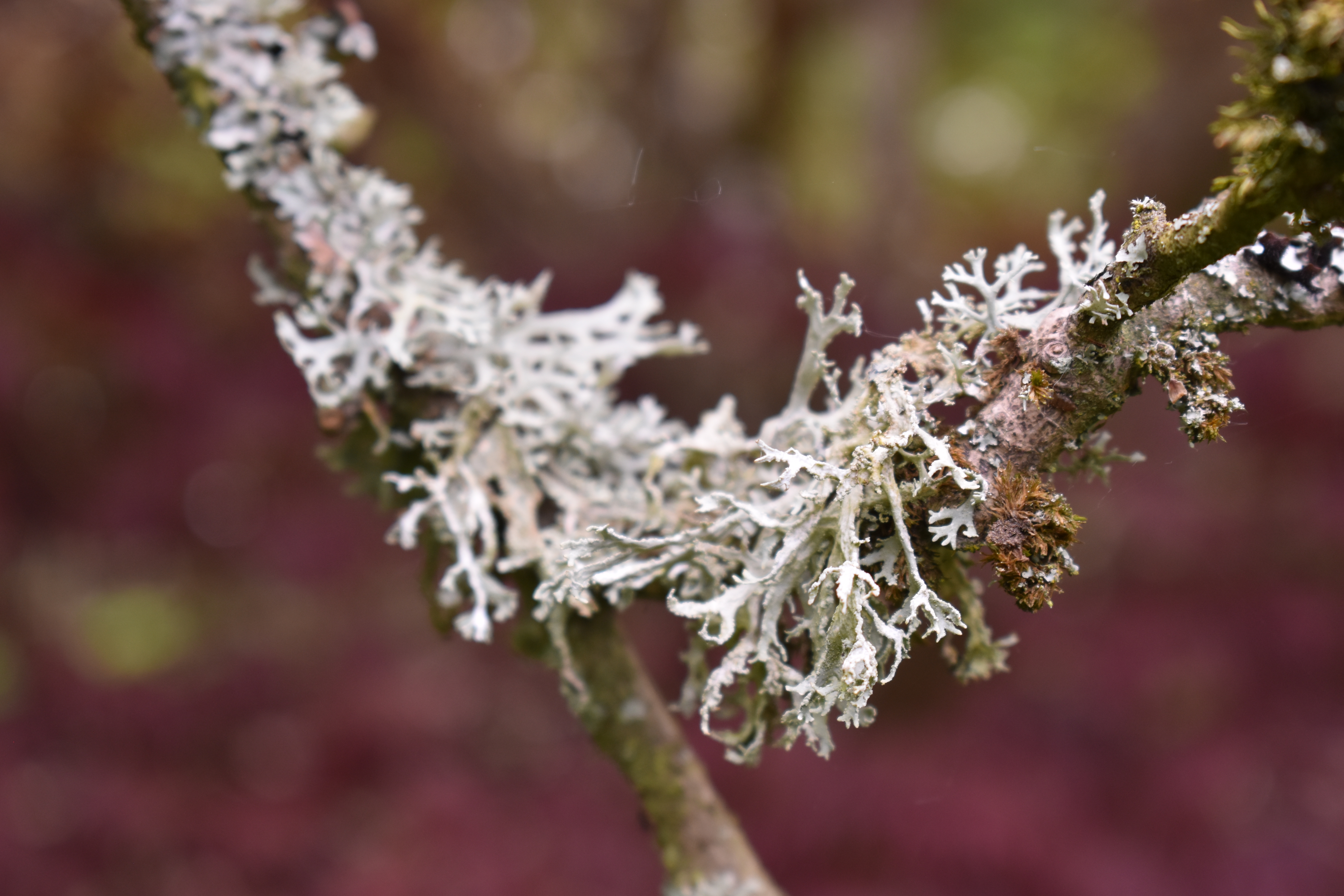
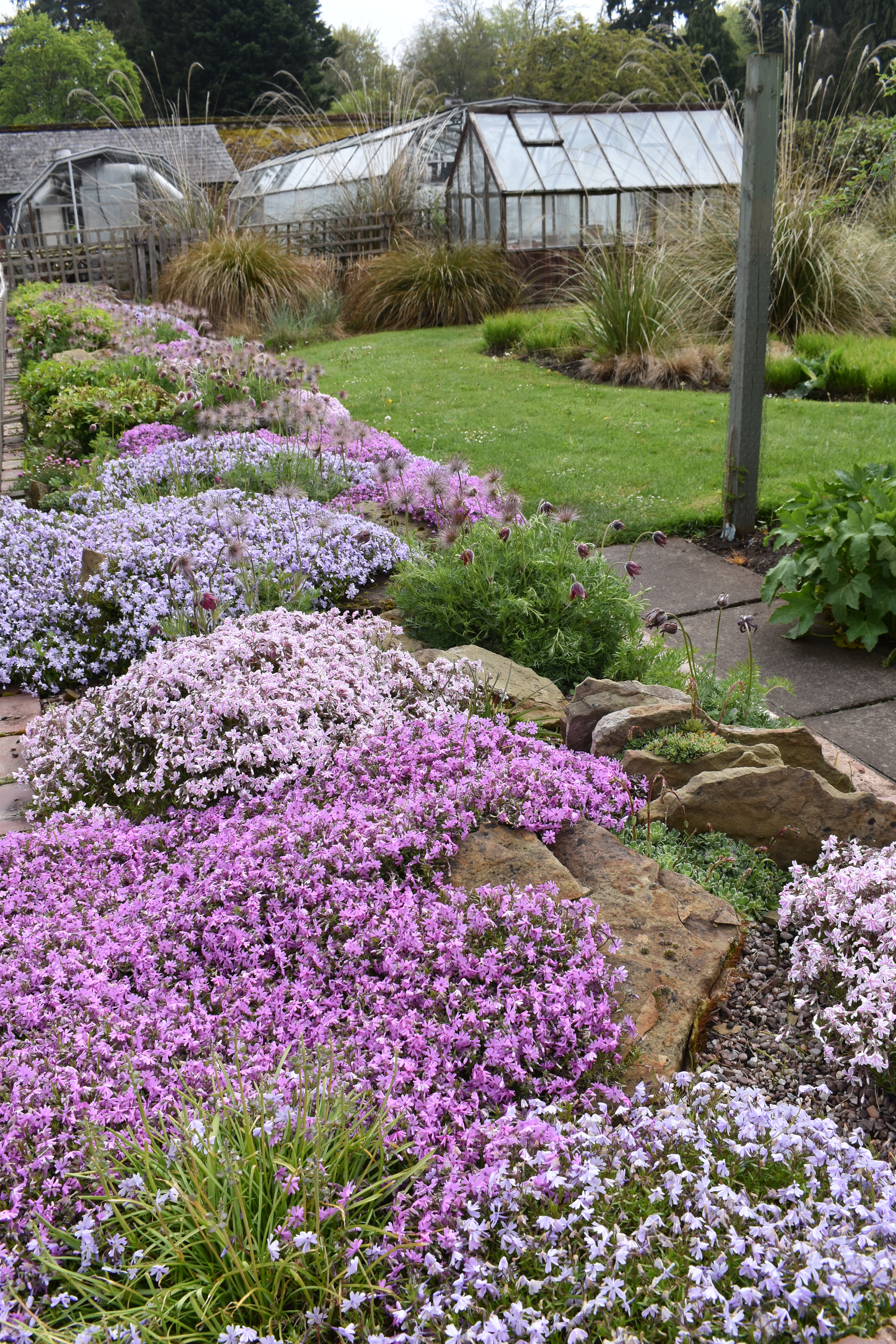
We have visited the arboretum at Arley on the banks of the River Severn several times over the years as it is our local arboretum, but we had never explored it in May. Thus, when the easing of lockdown rules happened, we arranged to meet our sister Penny and brother-in-law Tony at coffee time in readiness for an enjoyable wander along the pathways between and beneath the trees.
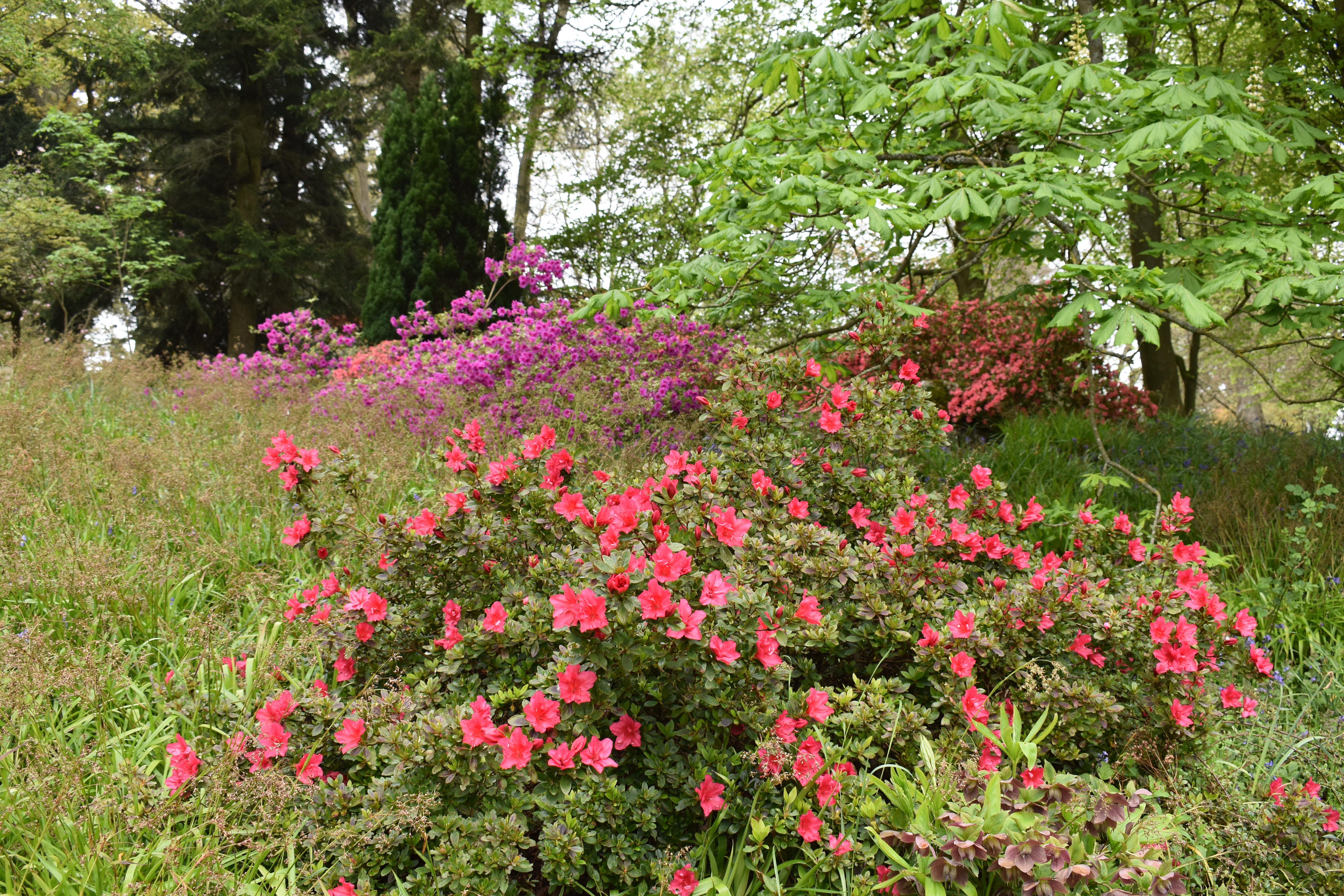
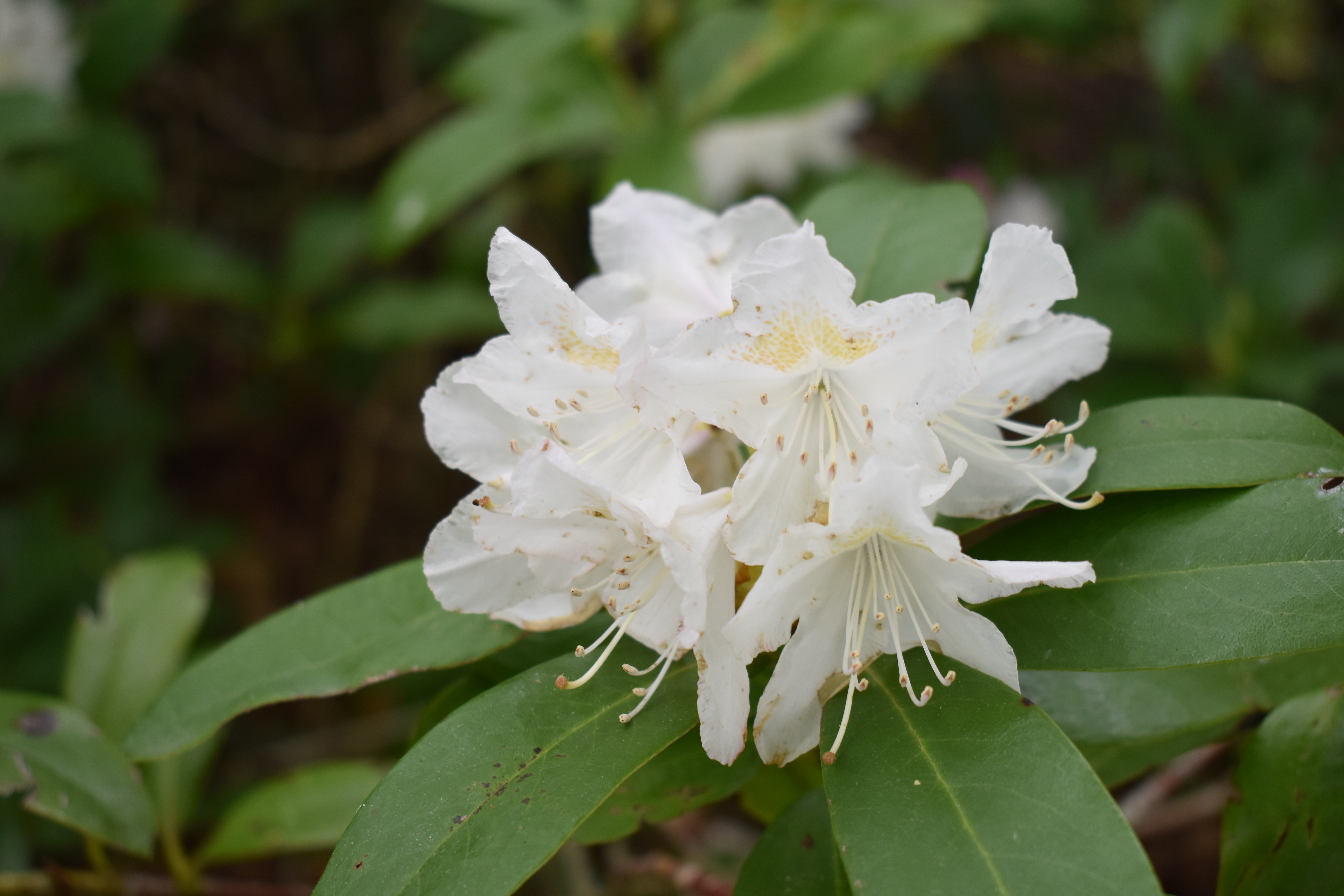
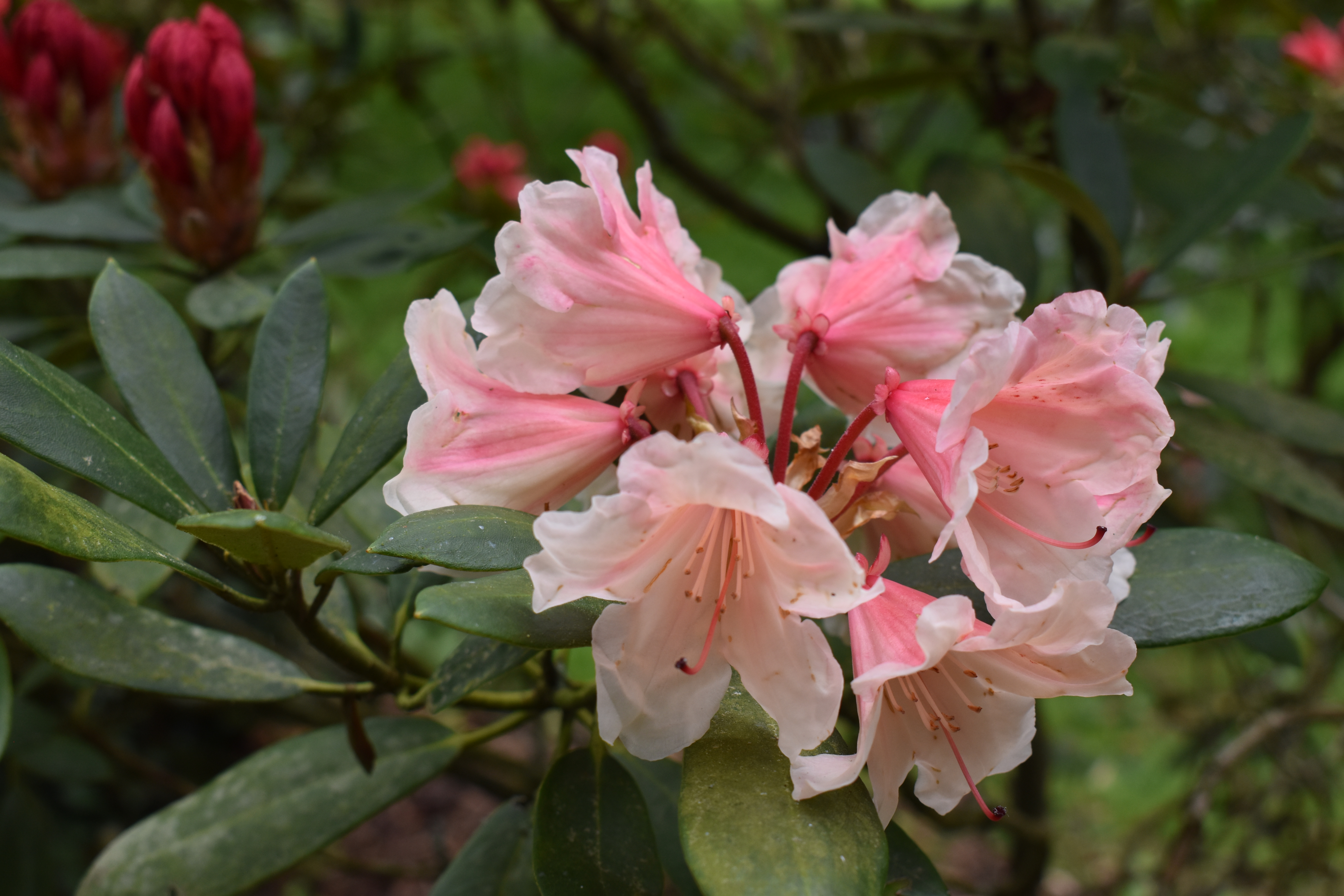
Just a few minutes into our walk brightly coloured azaleas and rhododendrons gave us a lively patch of colour beneath tall mature trees.
These subtle two-toned yellow and white daffodils reminded us it was really still spring. We wandered along the path at the edge of the arboretum as it skirted the Severn Valley where we heard the sounds of the vintage railway and saw early diesel engines pulling their rows of vintage carriages following on along the valley side.
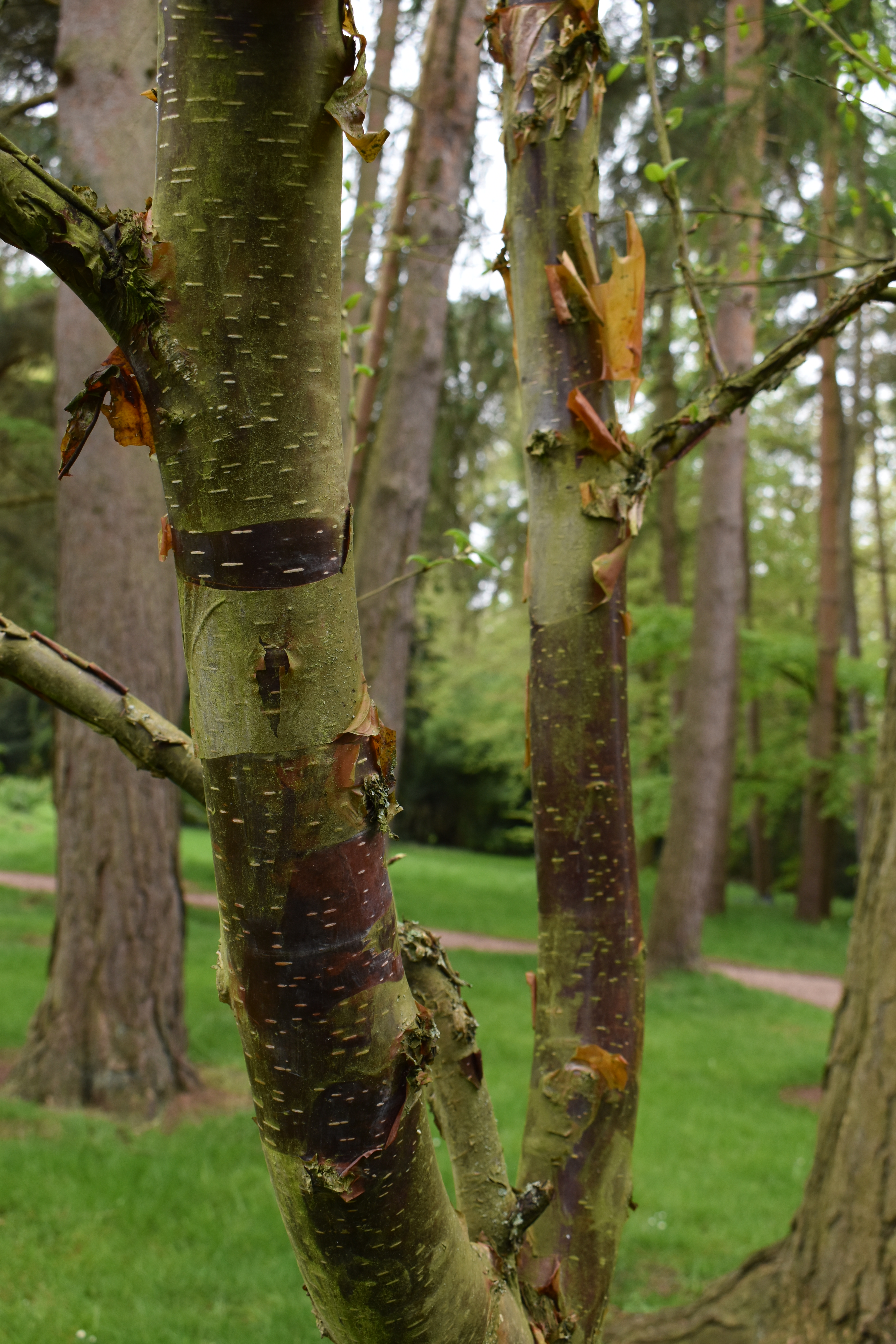
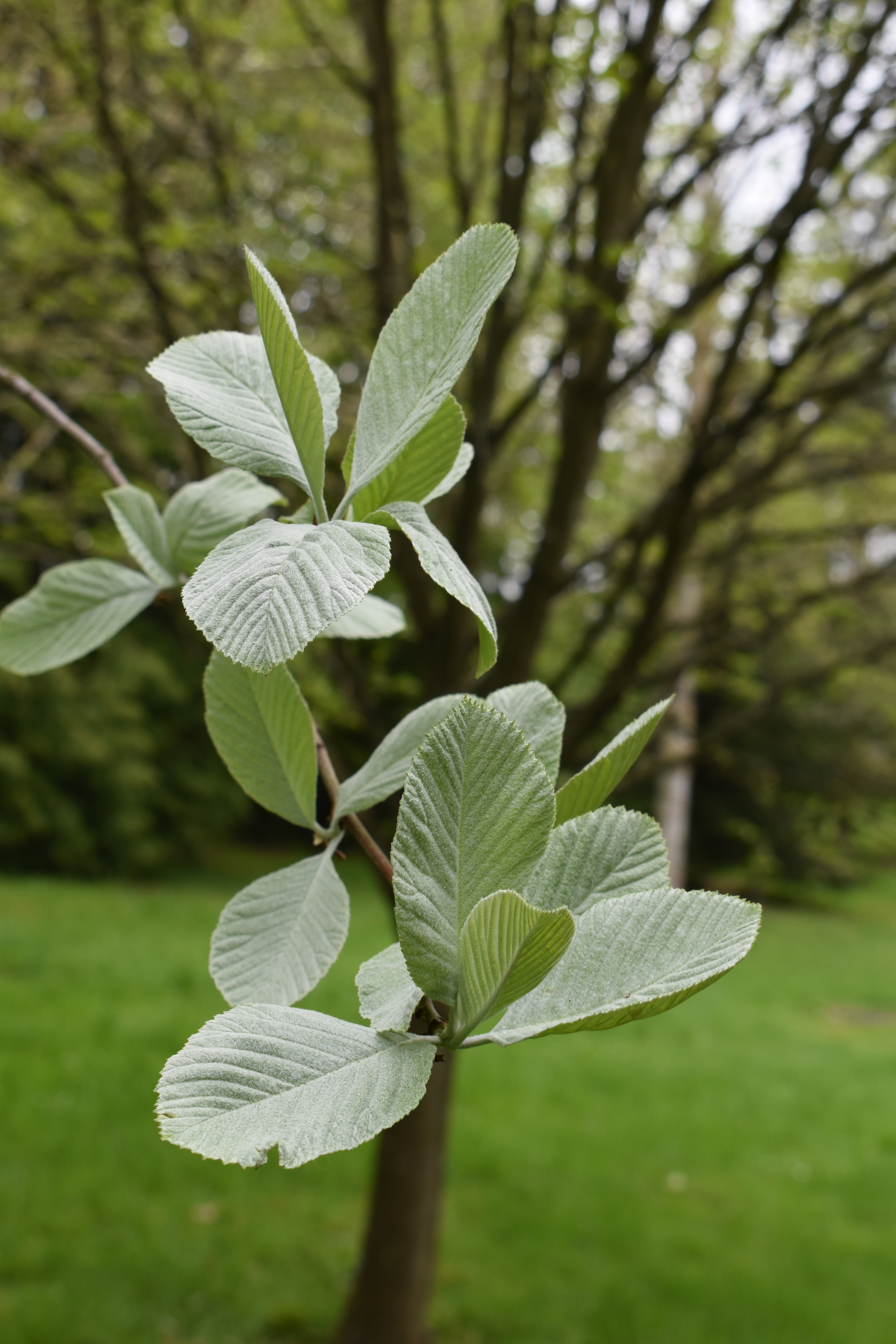
This darkly barked betula was a strong contrast to a nearby whitebeam. We saw the bright white bracts of Cornus kousa Eddies White wonder from a distance and wandered over for a close look – so beautiful.
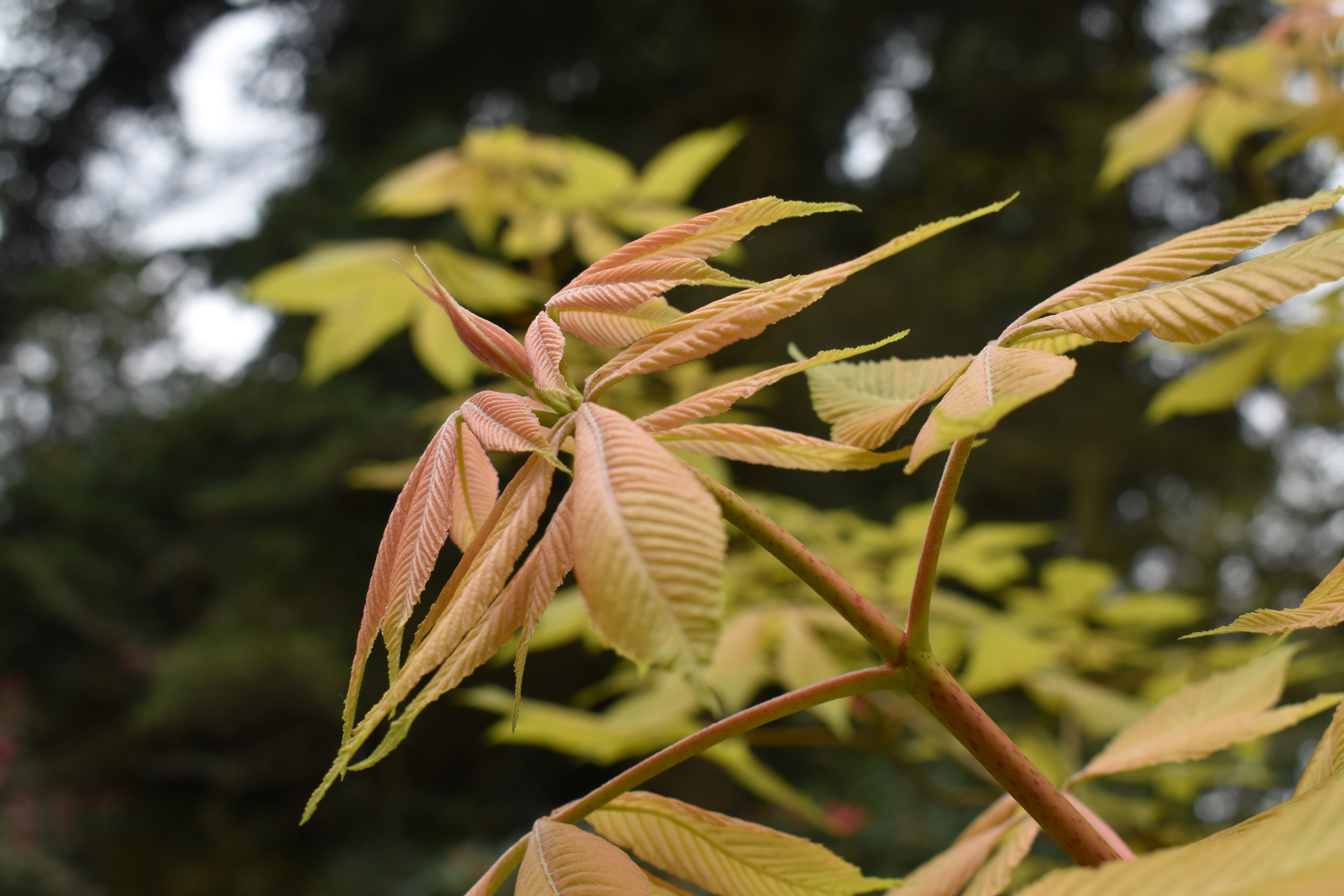
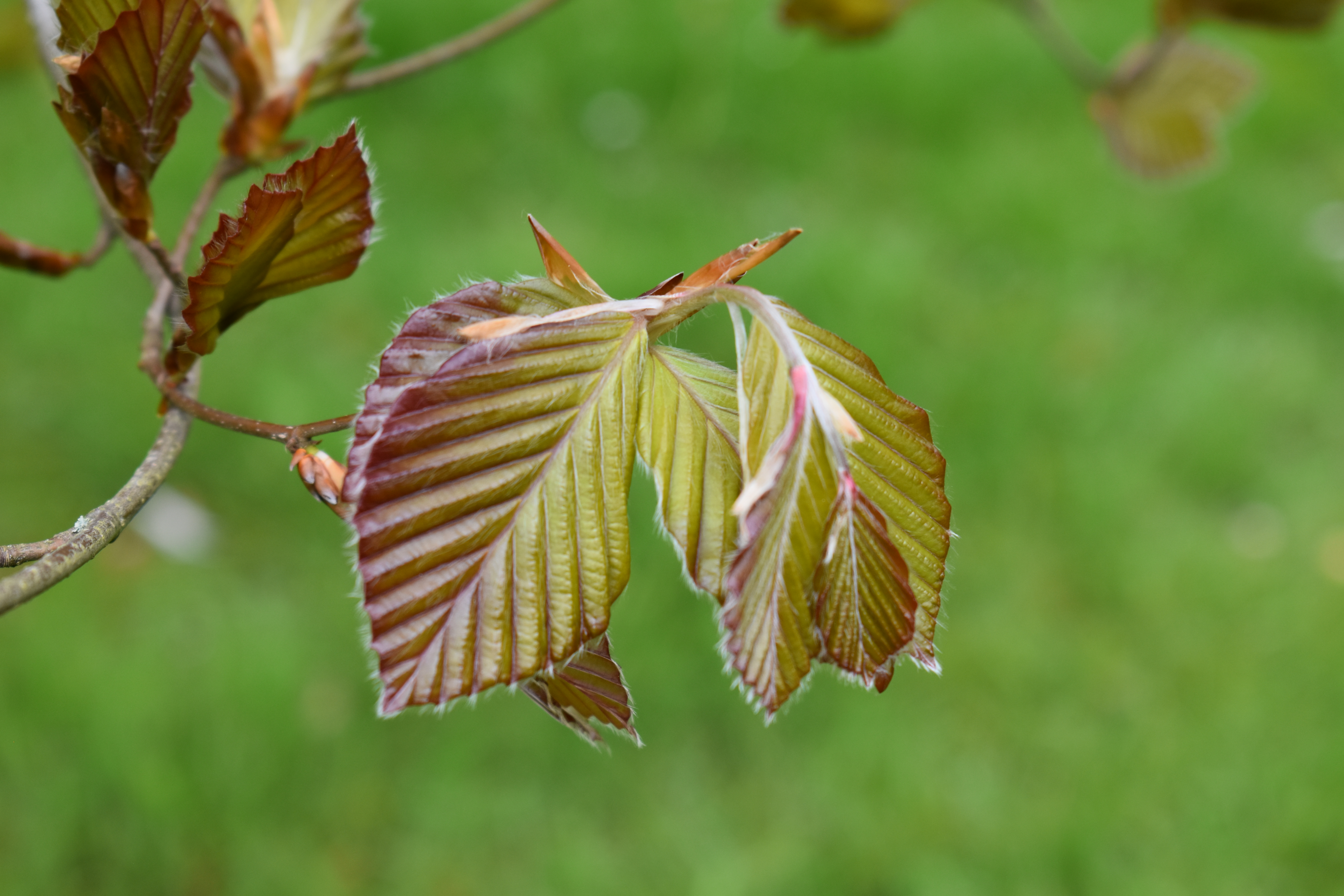
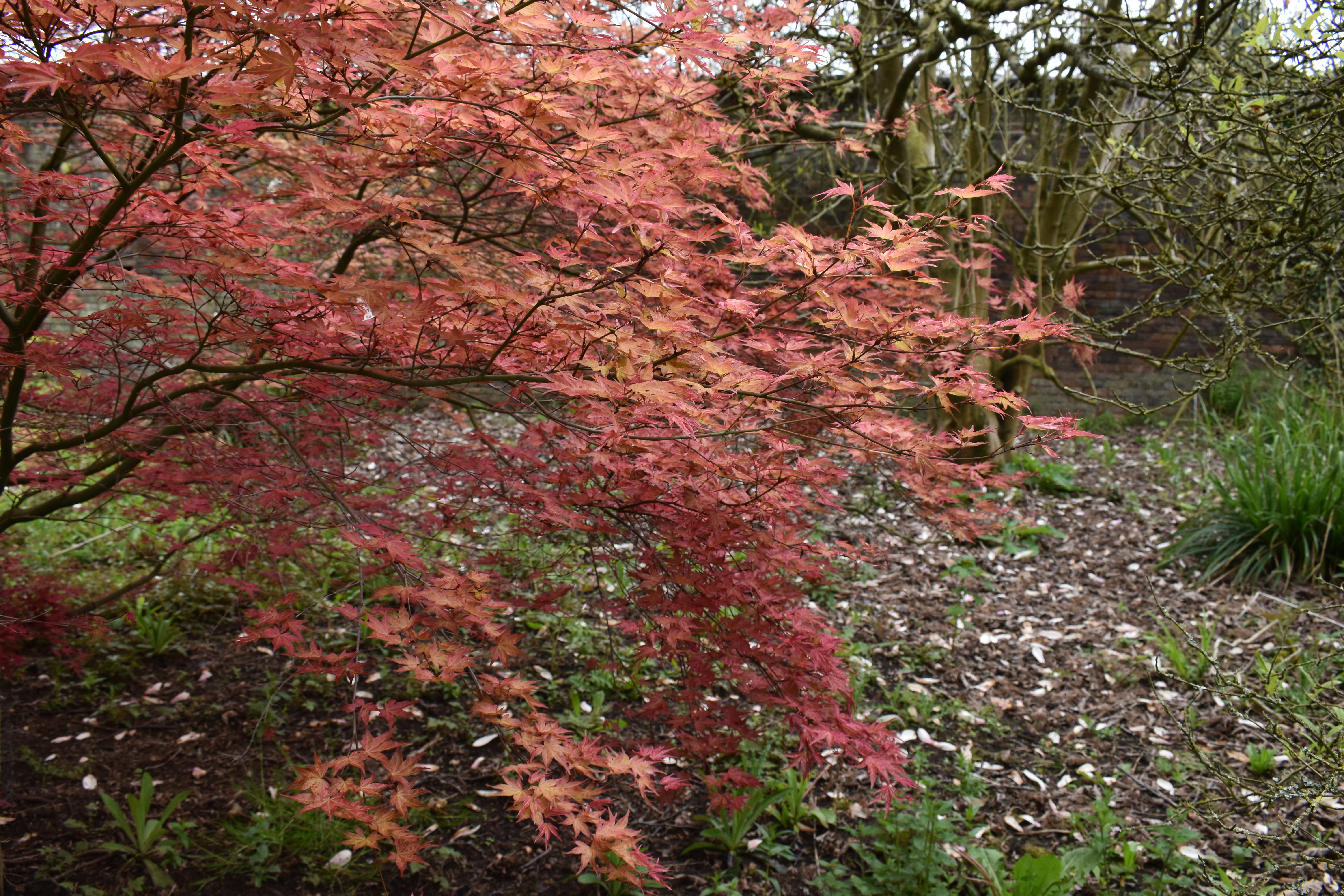
The spring colour of the fresh foliage of Acer brilliantissima gave little brightness to the dull day.
We left the main arboretum plantings and entered the more formal areas consisting of colourful mixed borders.
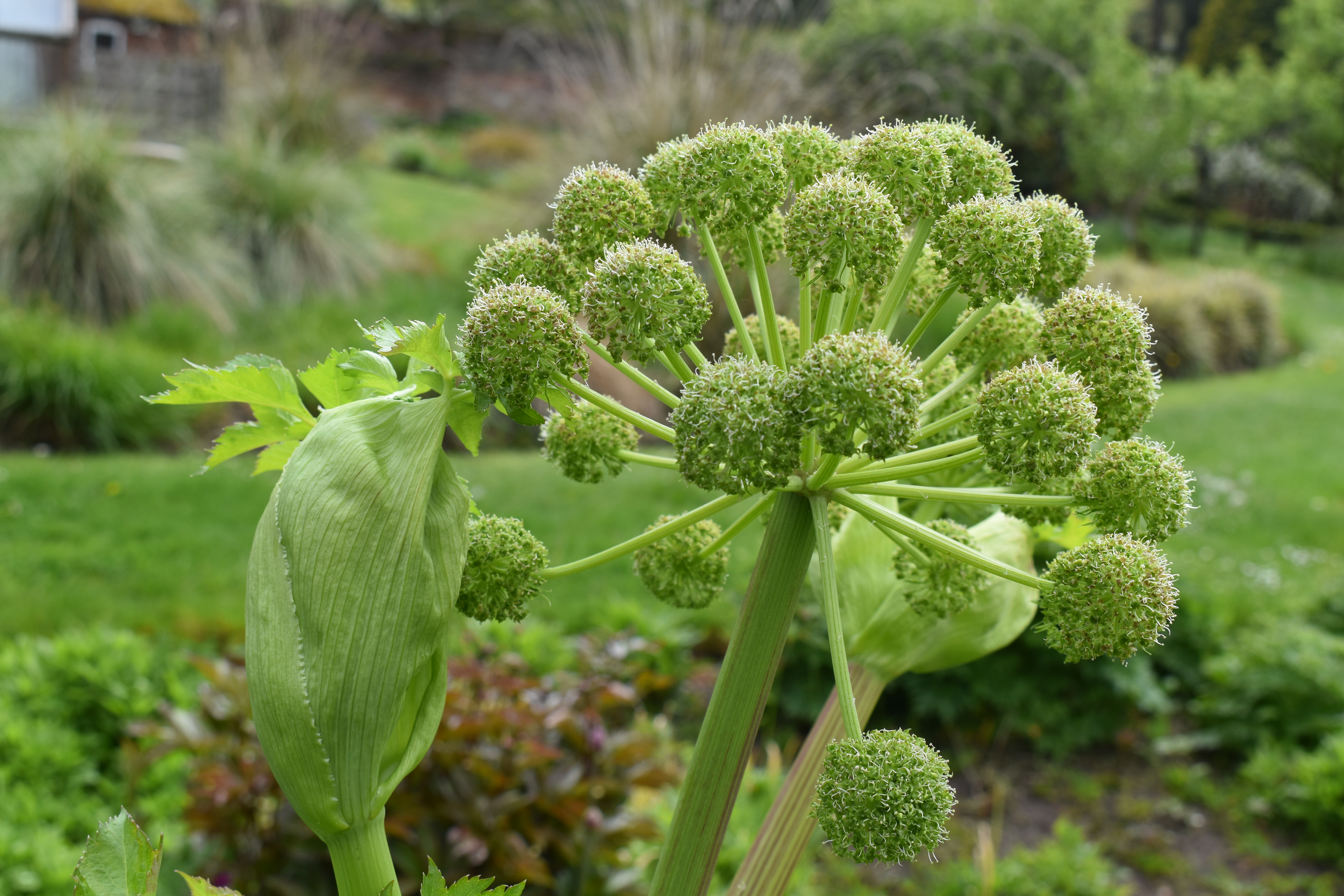
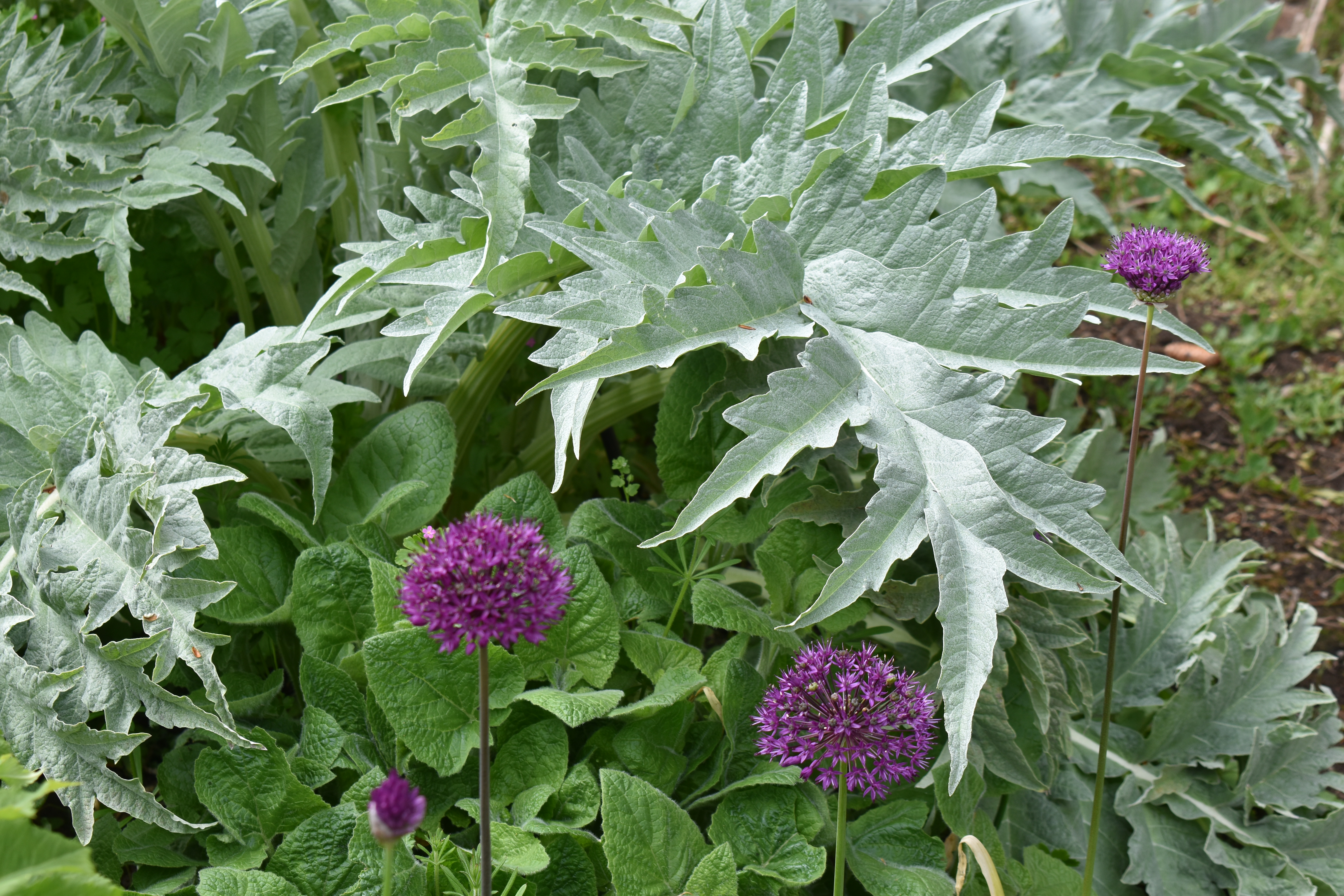
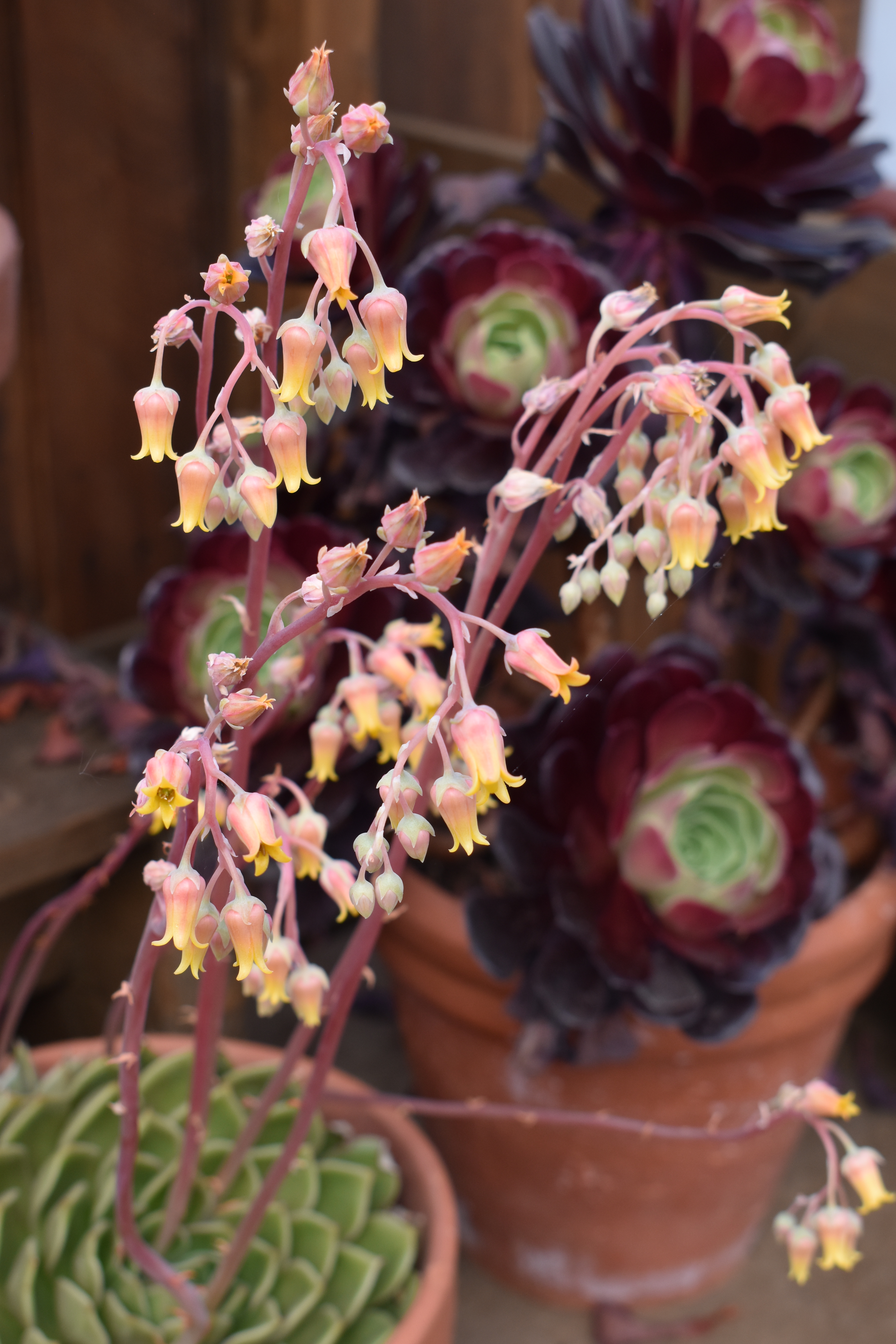
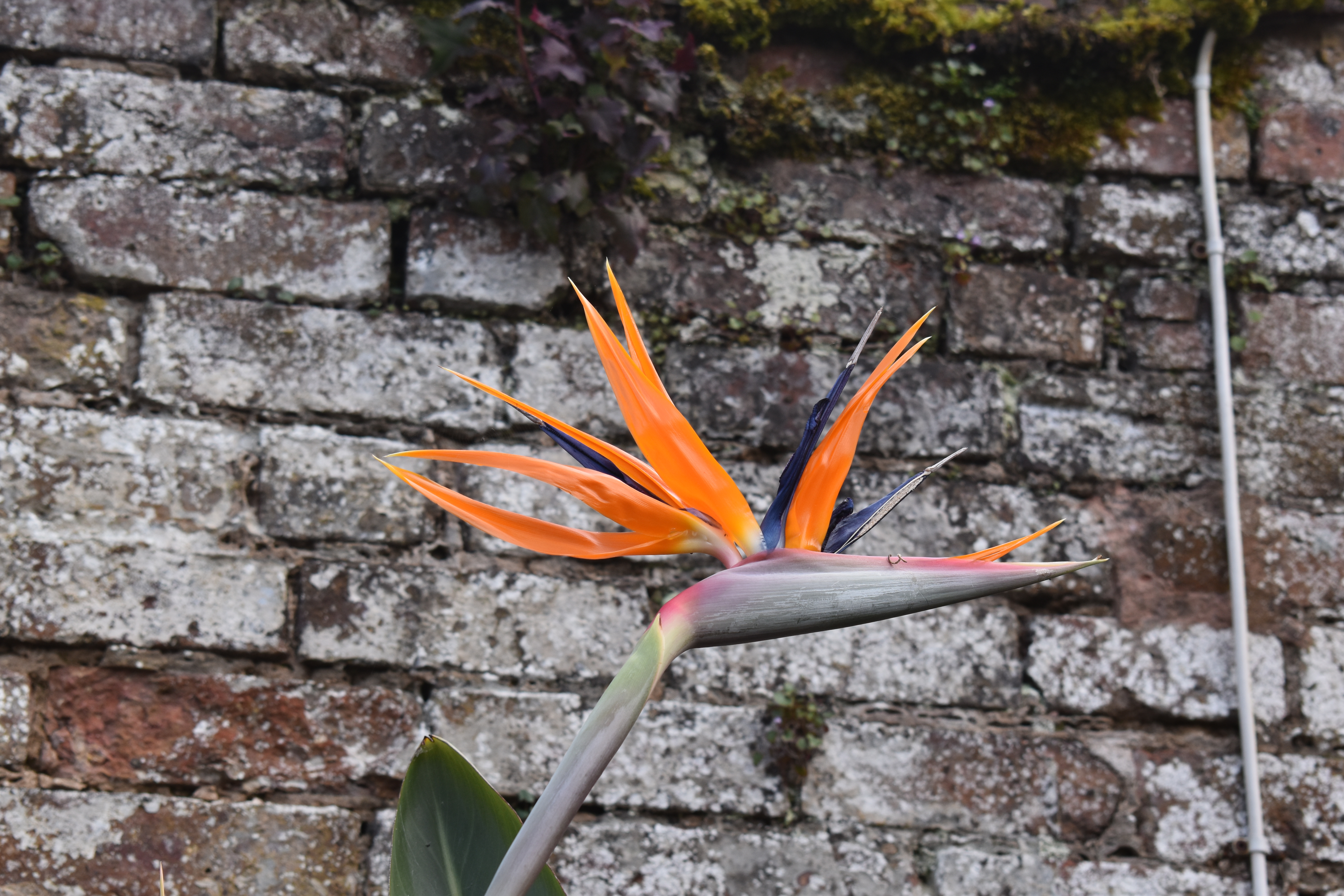
Back near the cafe polytunnels were home to more delicate plants, aeoniums, pelargoniums and echeveria. This oriental bloom livened up an old brick wall and deserved a close up look. We had a very colourful end to our tree orientated day.
'The most important and informative publication on wildlife of our times' - The Independent. This blog is a member of The UK & Ireland Natural History Bloggers group: www.uknhb.blogspot.com