A river wanders through the parkland at the National Trust’s Attingham Park, sometimes in viscous flood, sometimes in slow motion. Today it was slow and cold.
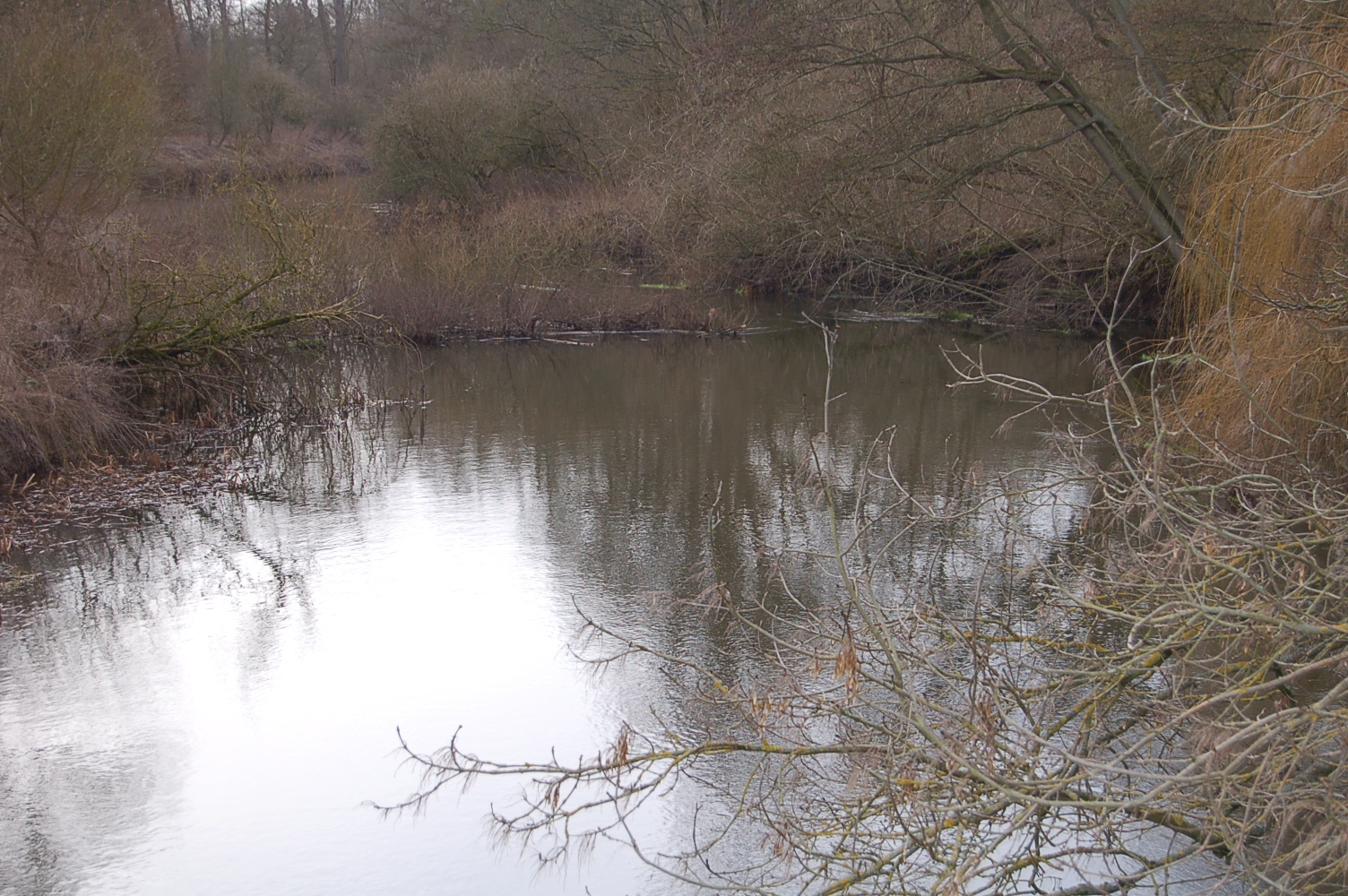






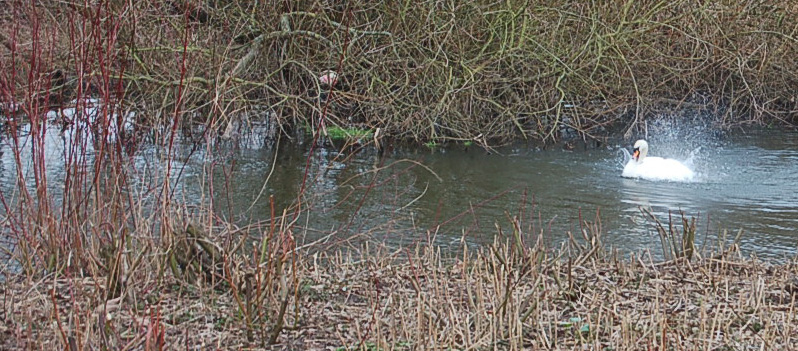
A river wanders through the parkland at the National Trust’s Attingham Park, sometimes in viscous flood, sometimes in slow motion. Today it was slow and cold.
It felt oh so good today to be sowing the first seeds of the year! And to make things even better it was warm and cosy in the greenhouse. There are so many seeds waiting in my tin all organised in sowing date order.

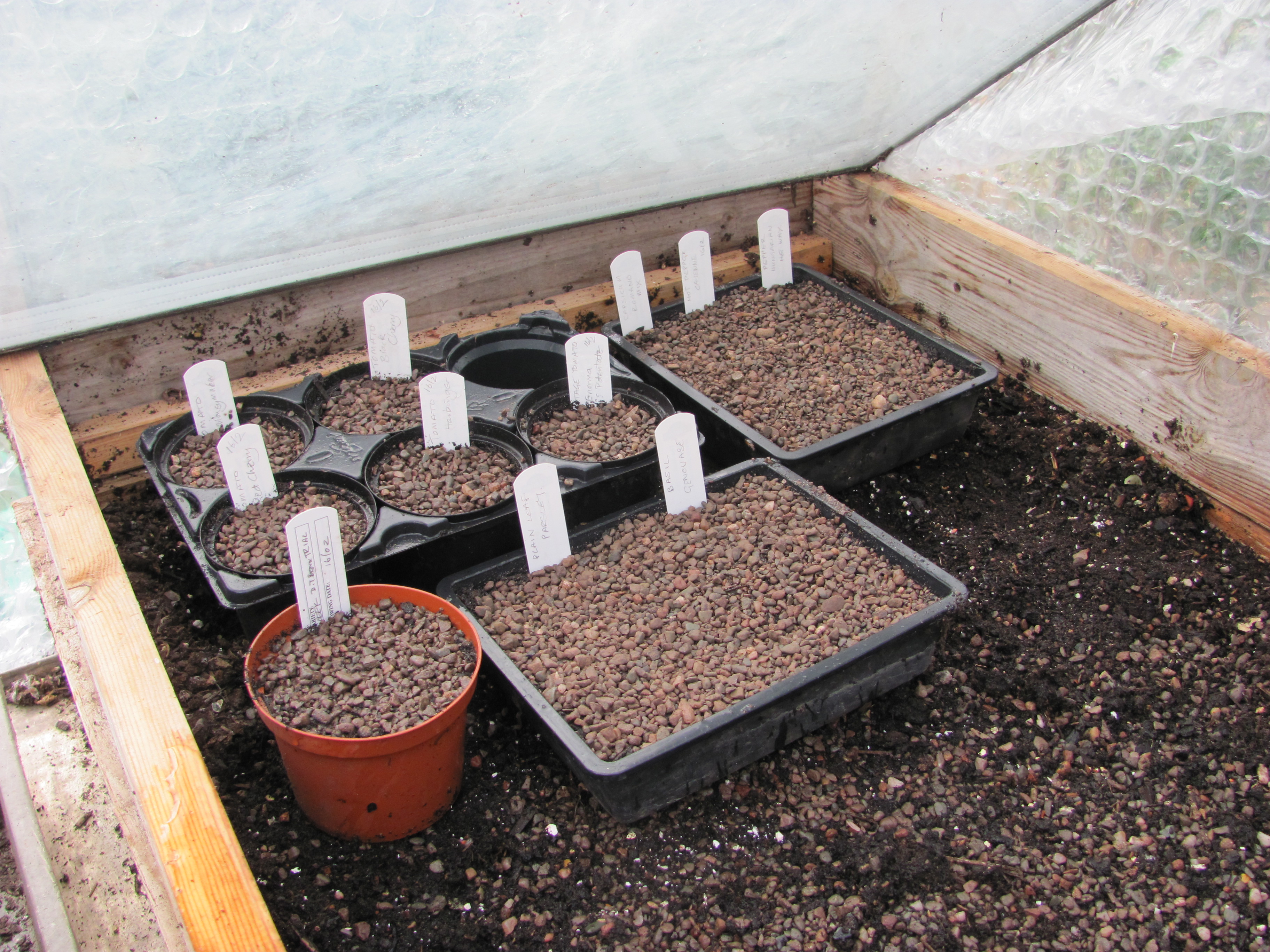
So today I sowed seeds of tomatoes, peppers (sweet, cayenne and hot), basil, parsley and leeks.
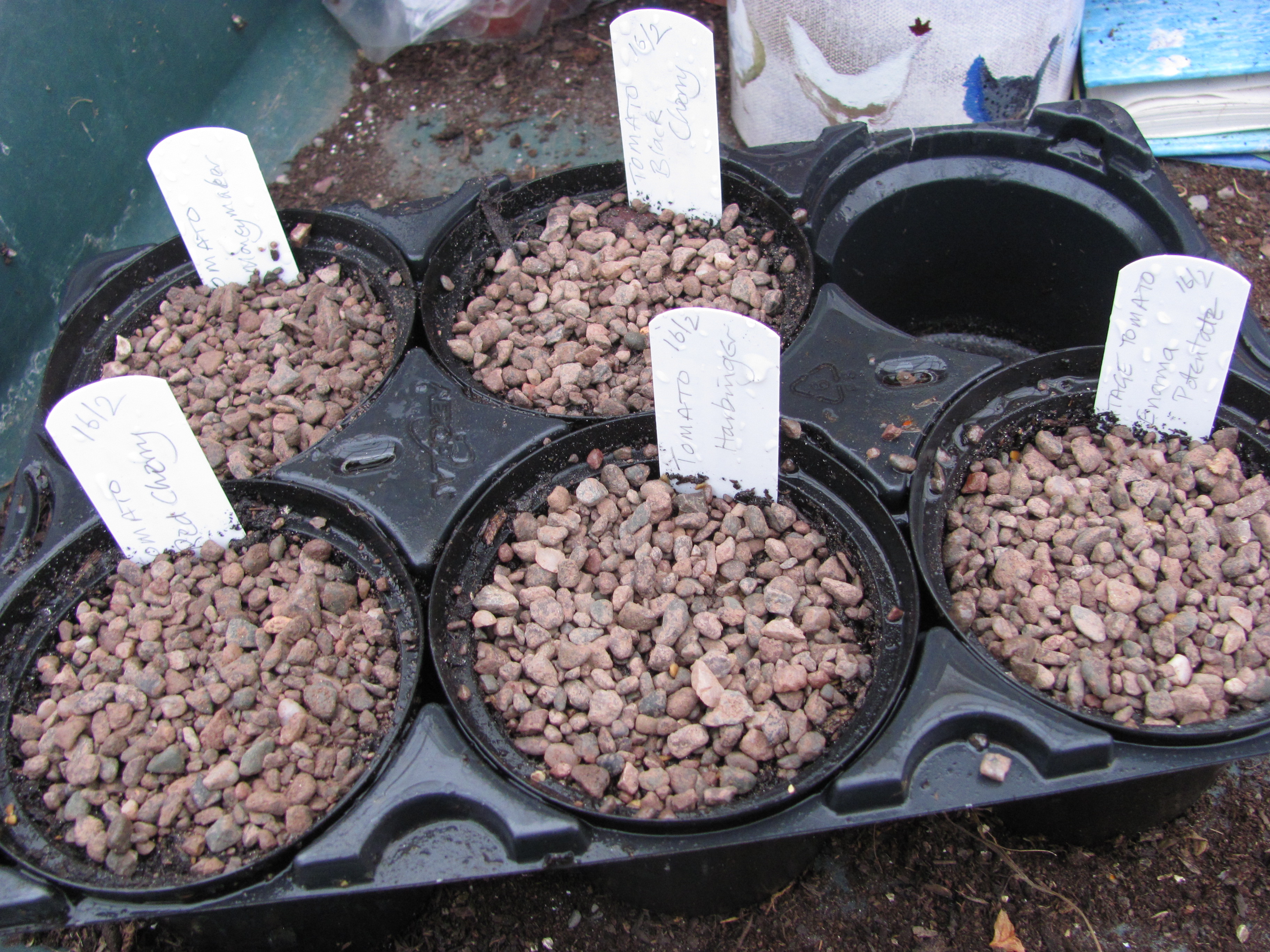
We always sow a variety of tomatoes to ensure lots of different colours, textures and flavours, so for 2012 we have Gardeners Delight, Moneymaker, Red Cherry, Black Cherry, Harbinger and a heritage variety called Potentate. Of course to go with tomatoes we need basil so we have sown Basil Sweet Genovase.
All the seeds sown today need warmth to germinate so we have put them in my home-made propagator which gives bottom heat and maintains an average 20 degrees celsius. Here they are in their special warm environment waiting for the lid to be closed.
And the seed potatoes are “chitting” away in their egg trays. So the allotment year has been launched and it feels good!!

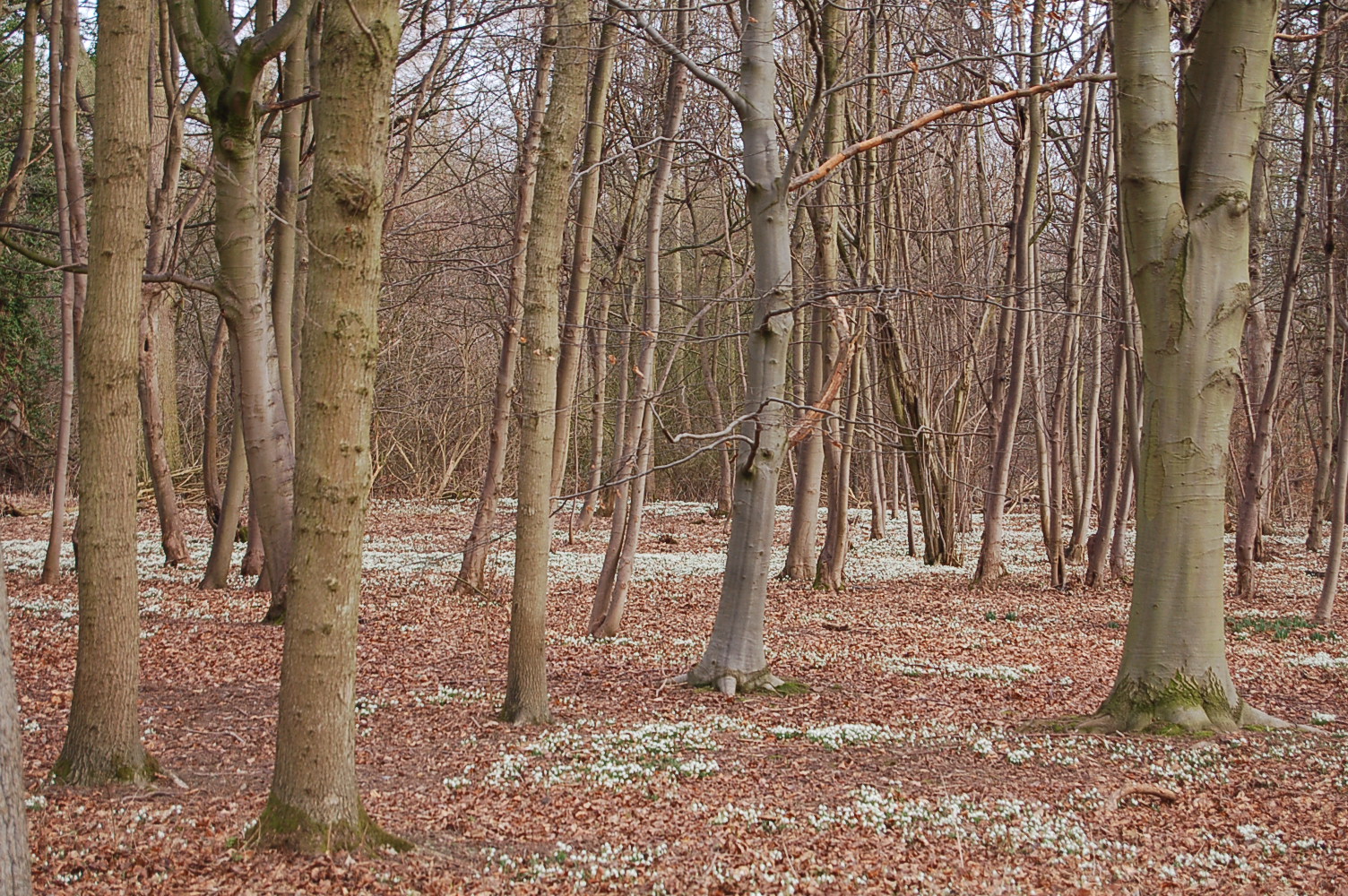
Today as the weather has warmed up and the sun is seeping through a thin cloud layer, we decided to take a twenty-minute drive out to Attingham Park for a walk through the woodlands where snowdrops are the stars in February. It was half-term so the woods were colourful, bright coloured anoraks, scarves and hats as families took to the paths. Every child seemed to have found a suitable rustic walking stick from the undergrowth. It was great to see young families out enjoying the natural world.
As we passed through the stable block the sound of vigorous hammering filled the air echoing around us. A noisy coffee break but we enjoyed watching youngsters wielding hammers busily constructing nest boxes. A great idea from the National Trust. Every family leaving Attingham today has at least one child clutching proudly a newly built nest box.
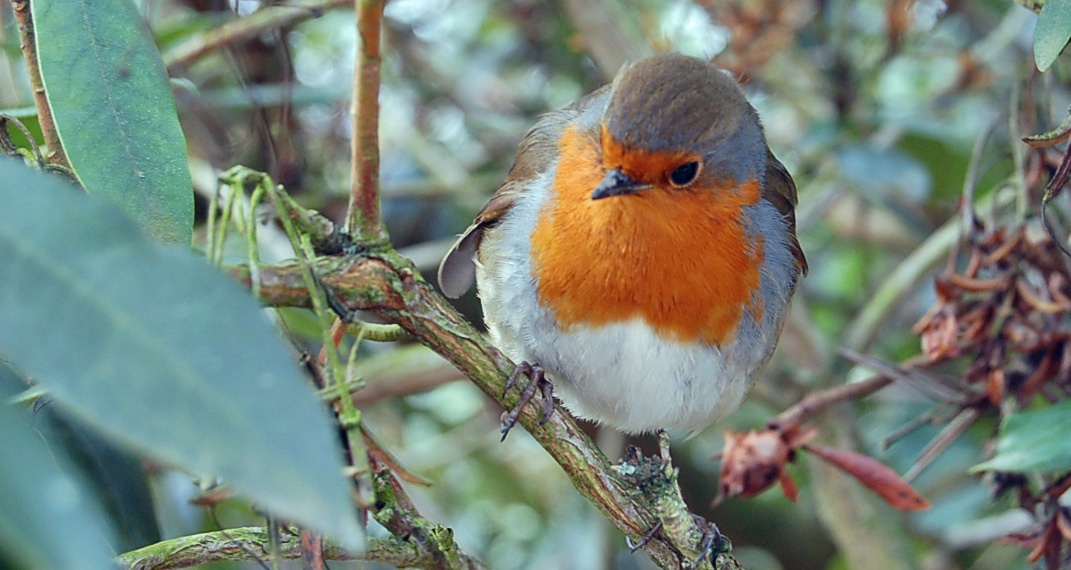
Once into the wood itself we seemed to be guided along by Robins who entertained us with their songs.
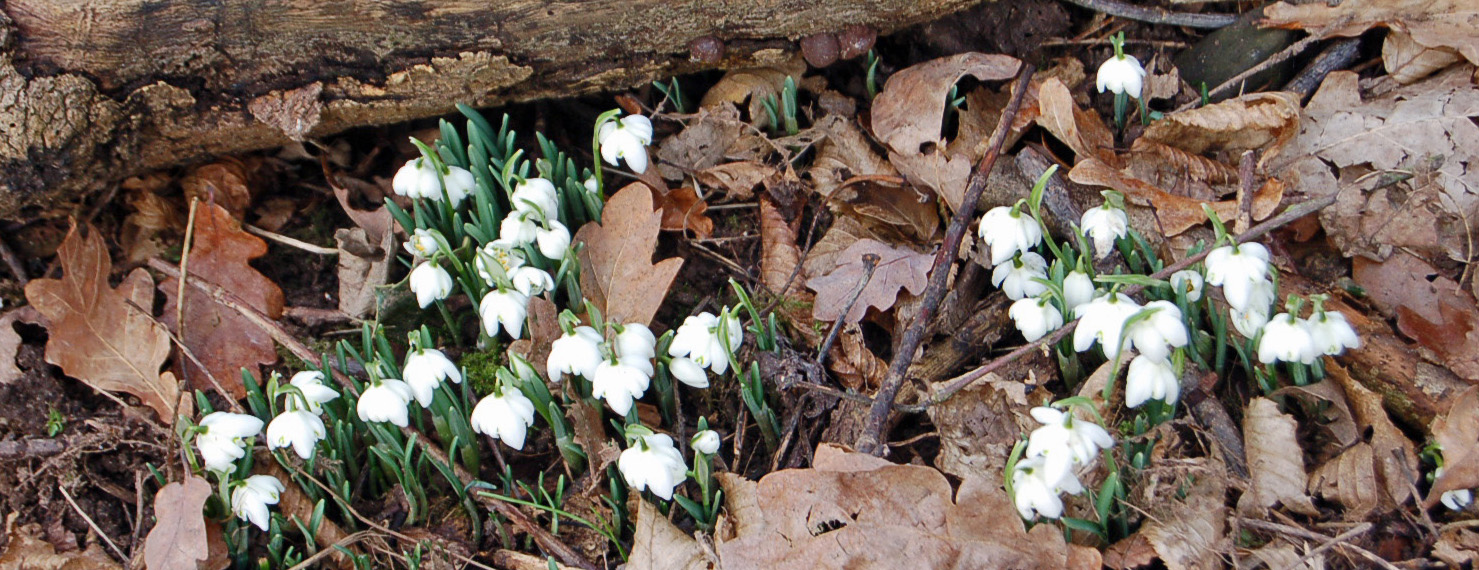
The snowdrops are small this year and very slow to develop. Many are just at the early bud stage and those that have come our sport small blooms. The swathes under the tall bare deciduous trees were far less vibrant than expected so the beauty was to be found in the little clumps hidden away deeper into the woods.


But there was far more to the woods than Snowdrops and the temptation to photograph the textures and patterns found there was easily given in to.
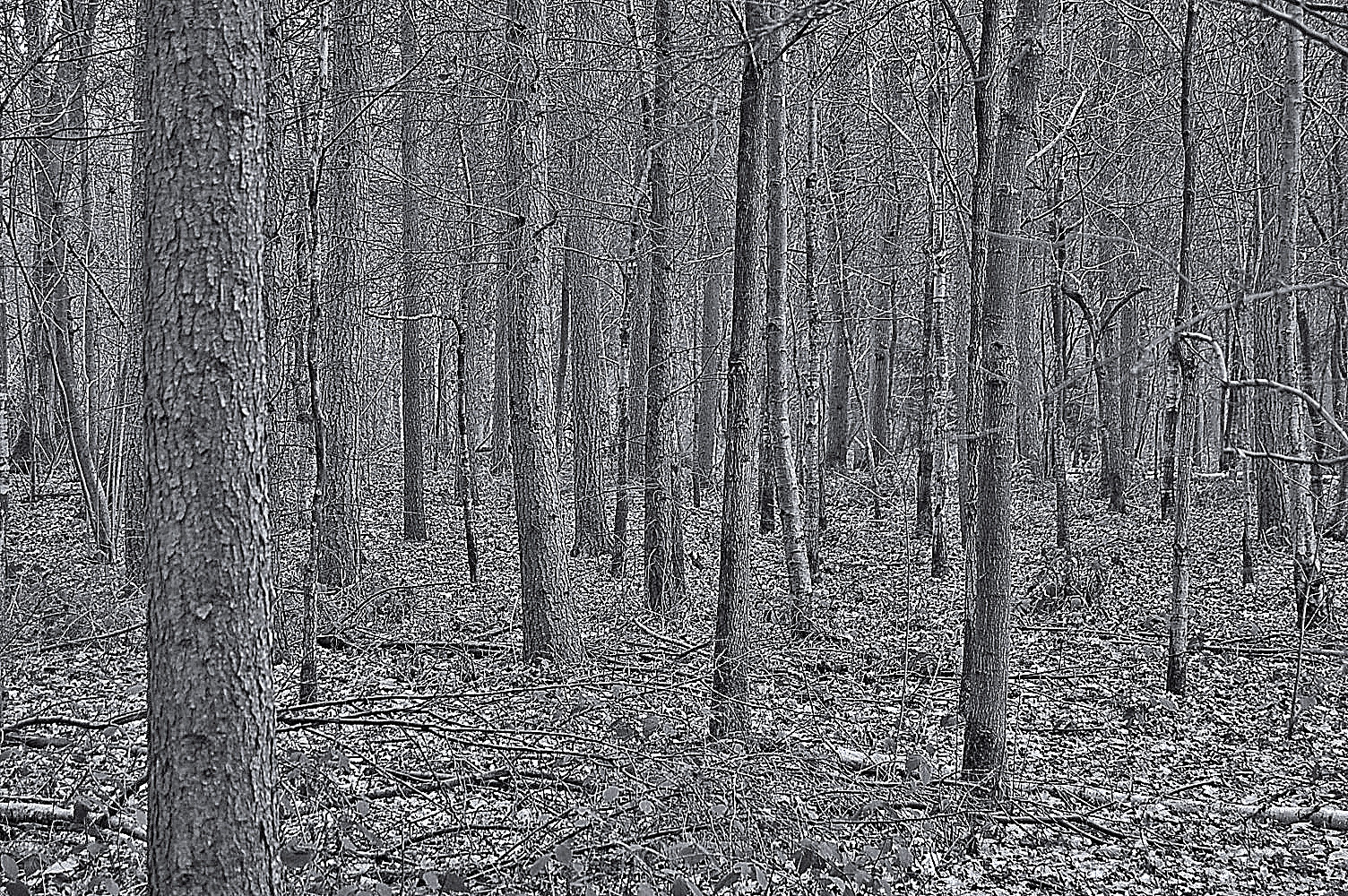


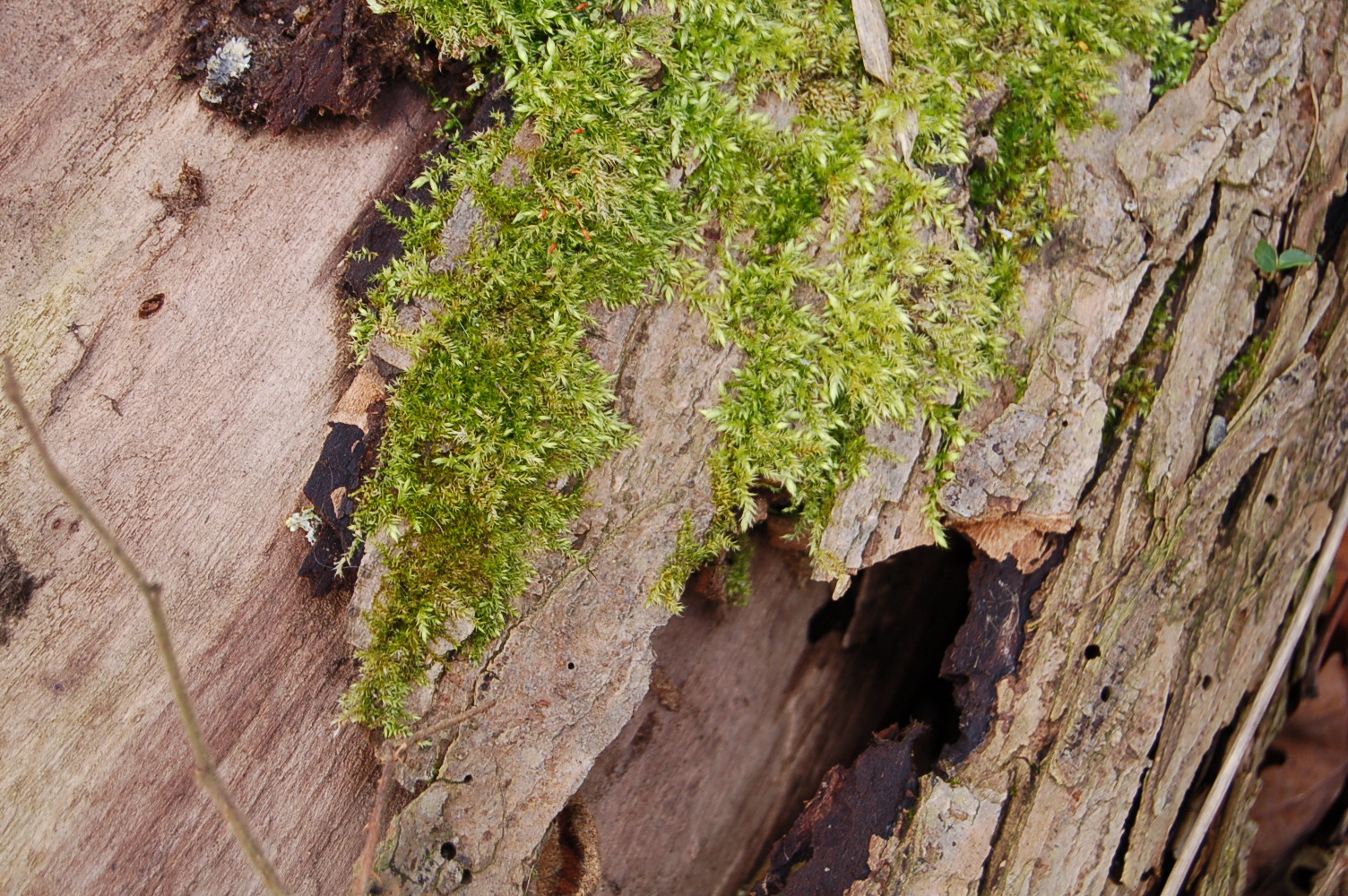

The earliest of woodland shade loving plants are beginning to appear taking advantage of the light filtering through the veil of bare branches above them. The arrow shaped leaves of the Cuckoo Pint are glossy and shine out amongst in the monochrome leaf litter.

Leaving the woodland we took a track across the Deer Park. A warden appeared on a mini tractor closely followed by herds of excited deer. The tractor was pulling a trailer full of feed! This was an unexpected opportunity to see the park’s deer close up.

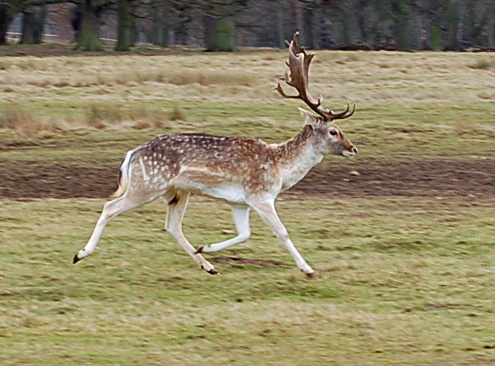
The deer may be the biggest and most obvious creatures here but the littlest are also of equal importance. Where the trust have been clearing dead and damaged trees they have taken the opportunity of creating habitats such as log piles, brash stacks etc to attract insects and invertebrates and small mammals. The woods here are now well-known for the population of Lesser Stag Beetles. In some places fallen branches and larger trunks are left to rot away to become hosts to fungi and multitudes of minibeasts.


This fungus seems to be leaking from the cracks in the dead bark, like woodworker’s glue seeping from a joint.

This dead tree left standing for fungi, invertebrates and insects looks dramatic alone in a clear area of parkland. Woodpeckers will enjoy attacking the peeling bark and rotting wood in search of tasty morsels.

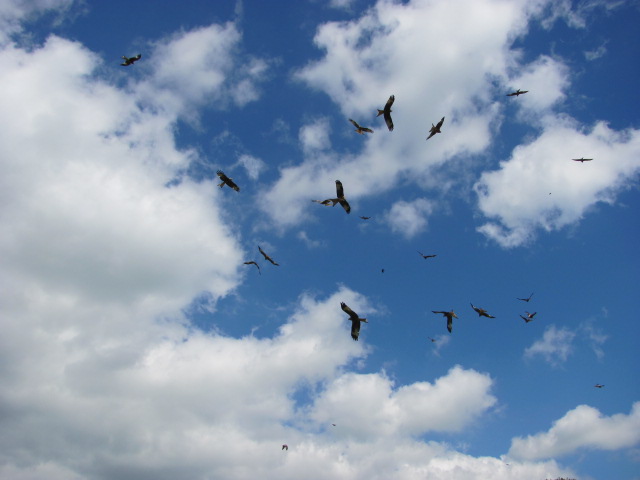
What a strange experience you get when you visit Gigrin Farm, a Red Kite feeding station in the Welsh Hills. Hundreds of them swirling overhead, hundreds of Kite, a bird which a sighting of a single specimen would set the heart pumping anywhere else. We get occasional glimpses of one passing over our heads when gardening and we regularly see an odd one or two as we drive around Shropshire. There are now signs that they are breeding in our county, but until recently we had to travel into the hills of mid-Wales to enjoy them.

When our children were young, a few decades ago now, we would drive for a few hours into the hill country of Mid-Wales, along a pretty inaccessible road into a valley where we knew we could find the Red Kite. Half a dozen were beginning to get established there and we revelled in watching them soaring in the thermals on the steep hillsides and feeding on the slopes. They came back from the brink, a handful of individuals, to a healthy and spreading population in the hundreds.
Visit the feeding station at Gilgrin, where the farmer feeds beef from the back of his tractor, and you will be able to watch them feed right in front of the hides. they are fed at the same time each day and know when that is. Travelling for miles to get here they stack up in the thermals on warm days or sit in trees and hedges and even on the ground in anticipation.
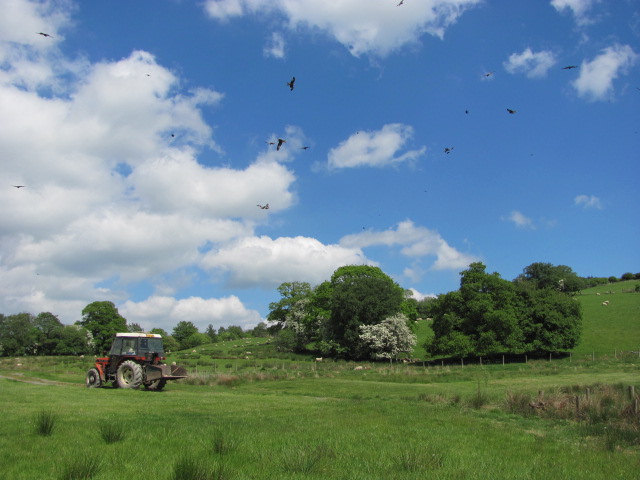
There is a definite hierarchy with the oldest birds coming in first as the others wait their turn in the pecking order. The youngest and most inexperienced wait patiently for three quarters of an hour or so for their food.
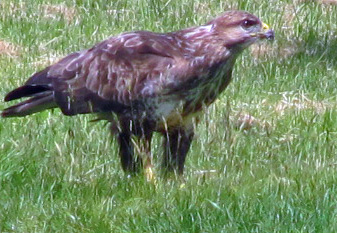
Buzzards come too, but they seem wiser. As the kite expend energy diving and swooping for a morsel of meat, never landing to grasp it in their talons, the Buzzards settle themselves on the grass amongst the meat and feed effortlessly, taking no notice whatsoever of the melee of feeding Kite around them. The odd Raven, Magpie, Crow and Jackdaw also grab an opportunistic lunch.
In flight above the feeding ground the colous of the Kites’ plumage becomes apparent, rich russets, browns, fawns and black. We were treated to a sight of an all-white individual.

With such close views we appreciated the graceful nature of their flight, we watch as wings and tails curled and constantly re-shaped themselves to aid manoevrability. They appeared to have fingers to give the finesse needed when flying in such large groups.
One of the highlights of enjoying your garden in winter is noticing things that you take for granted the rest of the year. Little special details. Lichen, mosses and algae.
In our Japanese Garden the low rays of the winter sun brighten up lichen, mosses and algae on the lanterns. The greens and greys create a mosaic of soft textures.


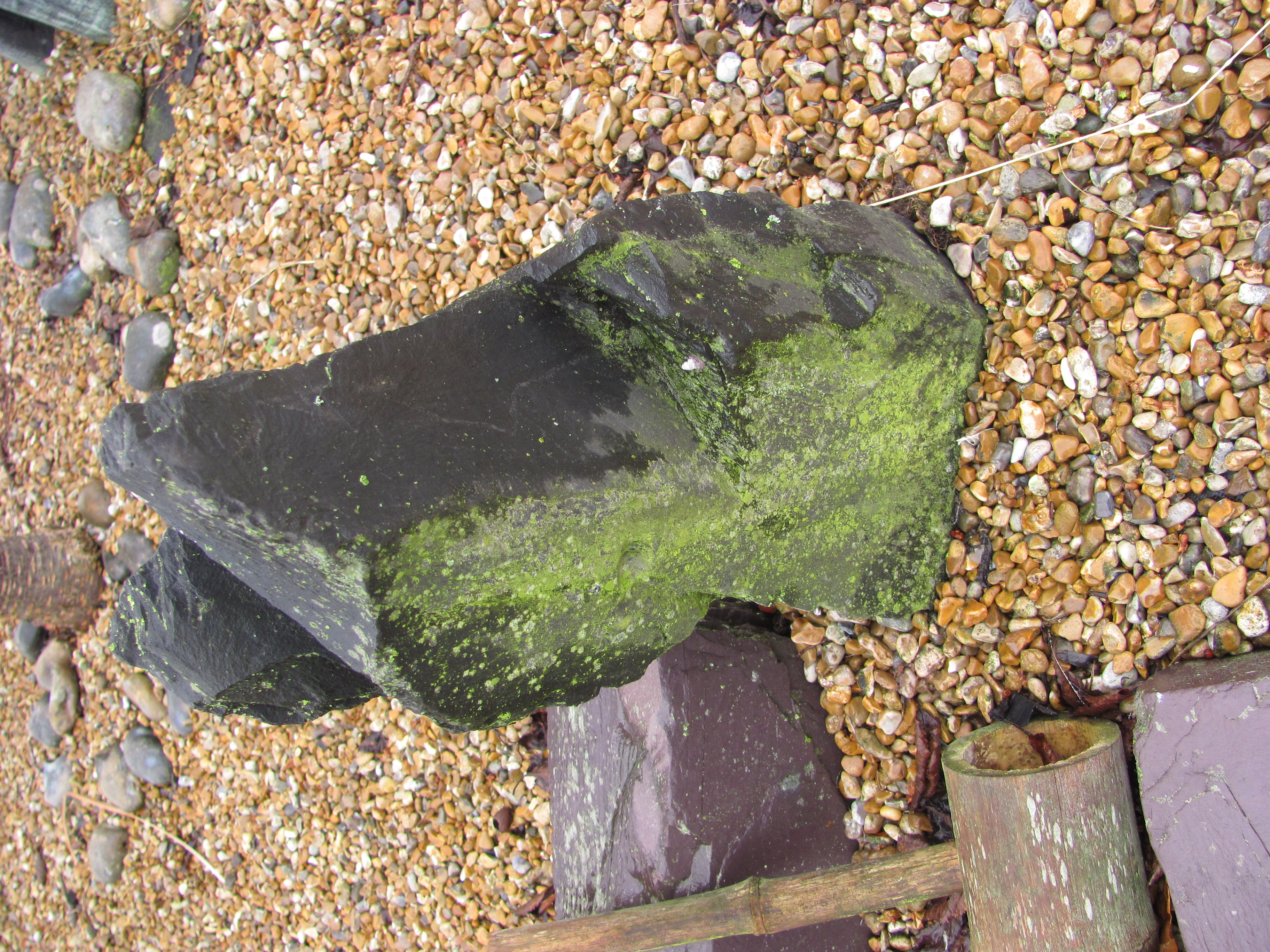
Tints of green add interest to the greys of our specimen slate stones.
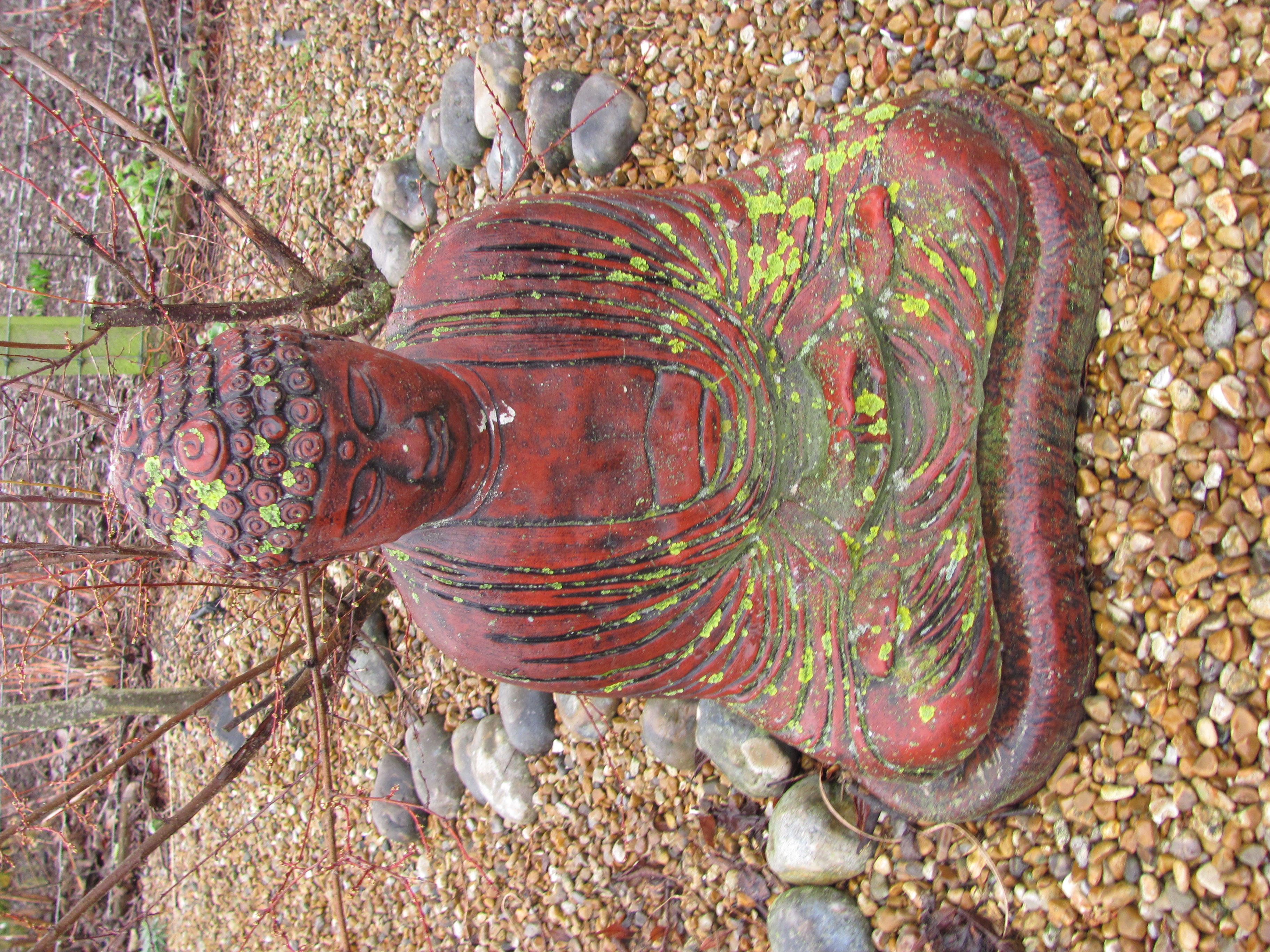
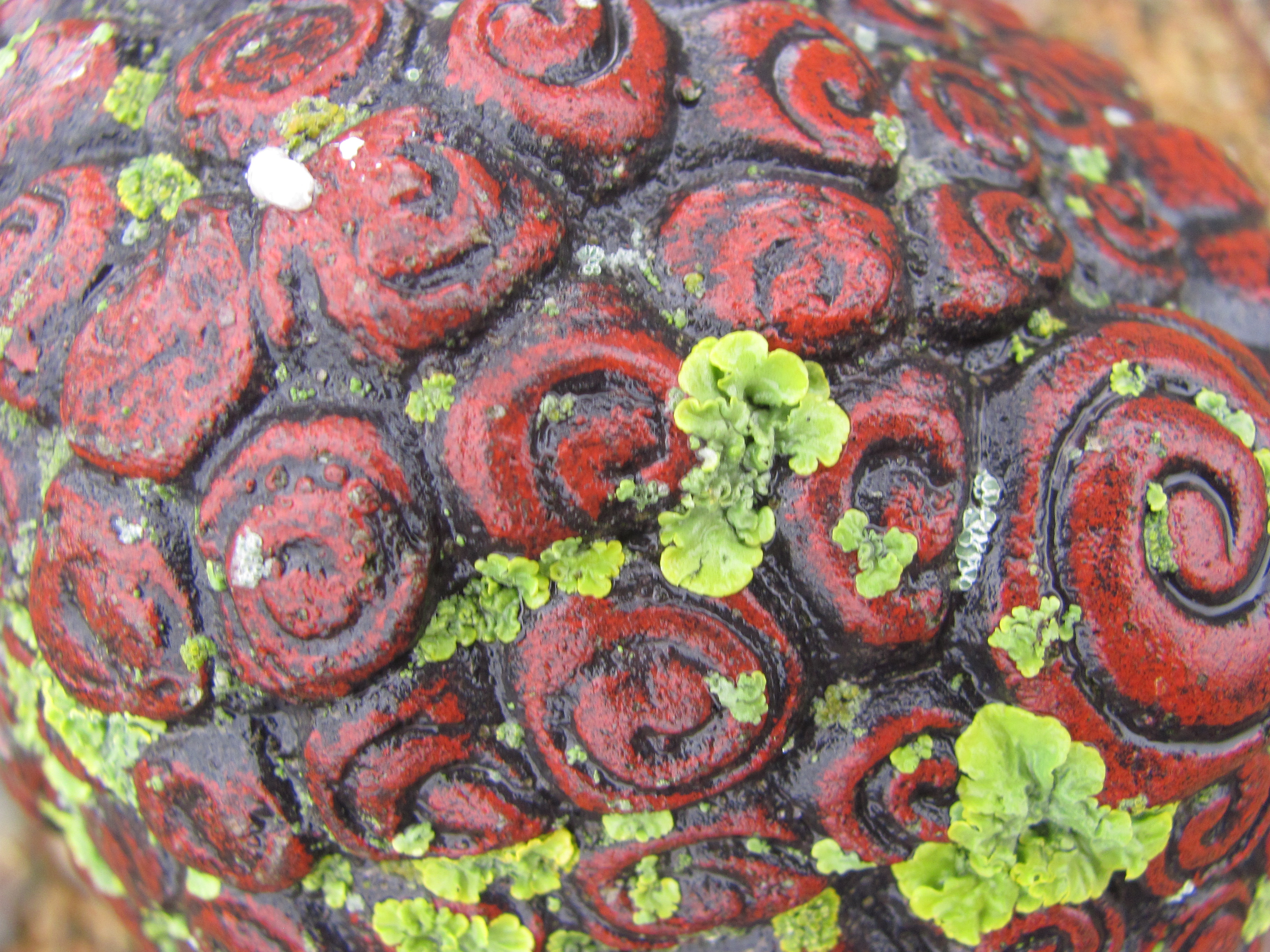
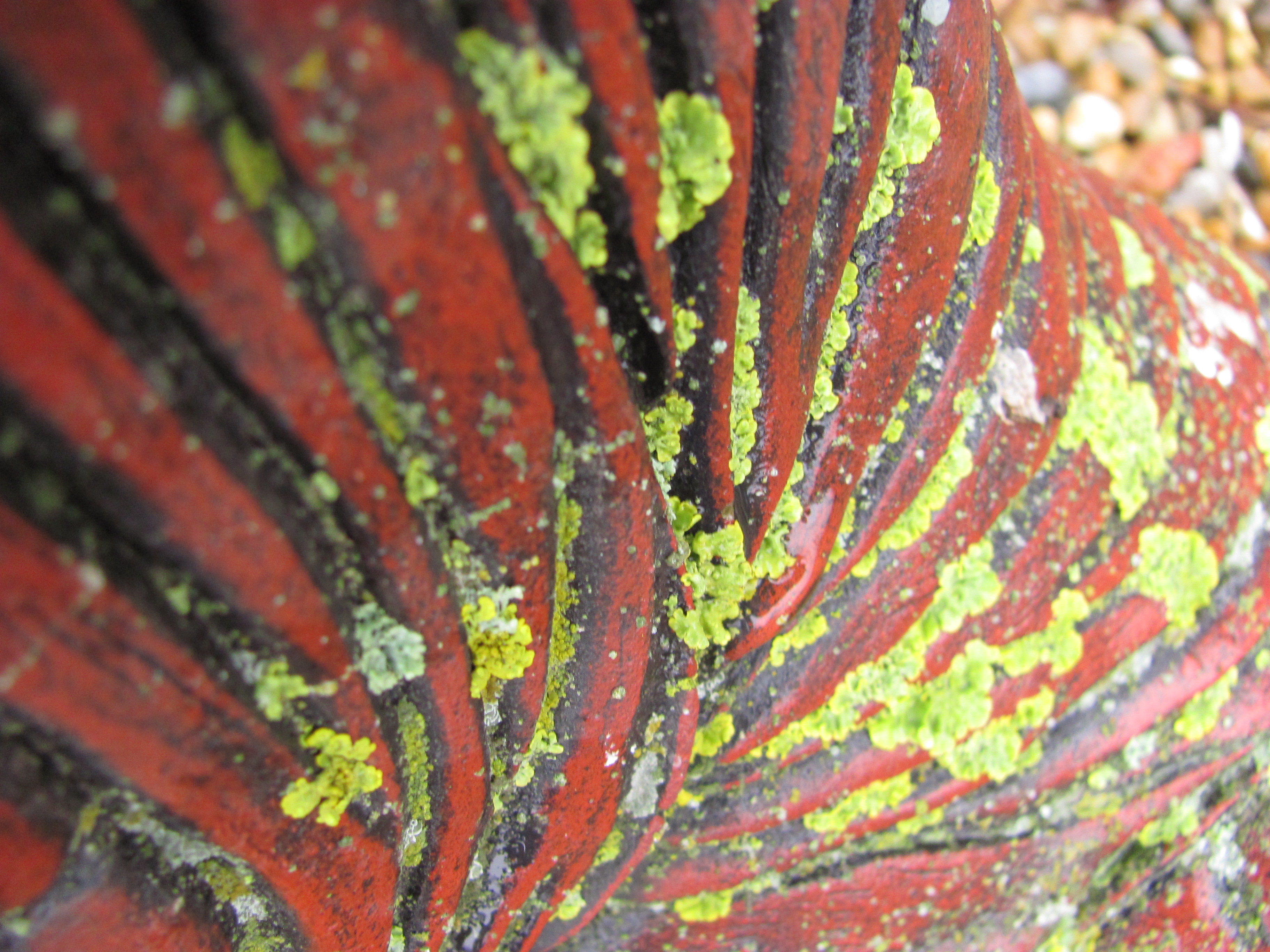
Even the Buddha is given a splattering of green emphasising the shapes of the fabric folds of the robe and curls of hair.
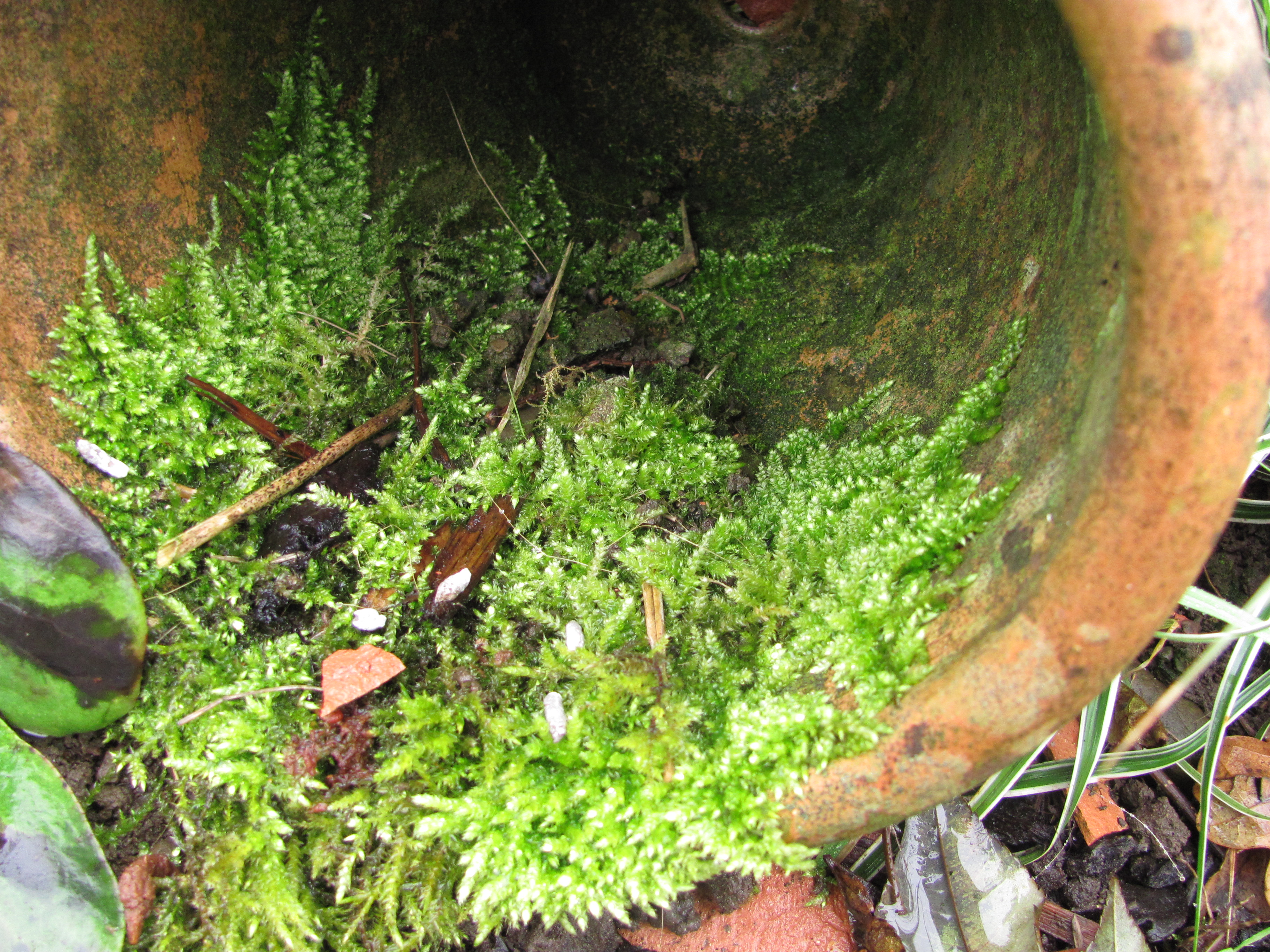
Lush green mosses find perfect conditions to flourish in side a terra-cotta flower-pot.
The greenhouse is a true haven when the temperatures drop so low that your hands feel the cold even with your gloves on and the top of your head feels it through your hat. We have just switched on the propagating units allowing the temperature in them to settle around the 18 degree mark in readiness for seed sowing. This should start in earnest any day now. The veggie seeds are all in their air-tight tin in sowing order. It won’t be long before we are transplanting some into the prepared soil on the allotment – just a couple of months!
But the main function for the protection the greenhouse affords us is to look after our less delicate specimens. With night-time temperatures varying from minus 1 to minus 12 this overwintering security is essential. Working away in the heated end of the greenhouse is a real relief from the cold outside. The unheated end still gives plenty of protection for half-hardy plants but still requires coats for the gardeners.
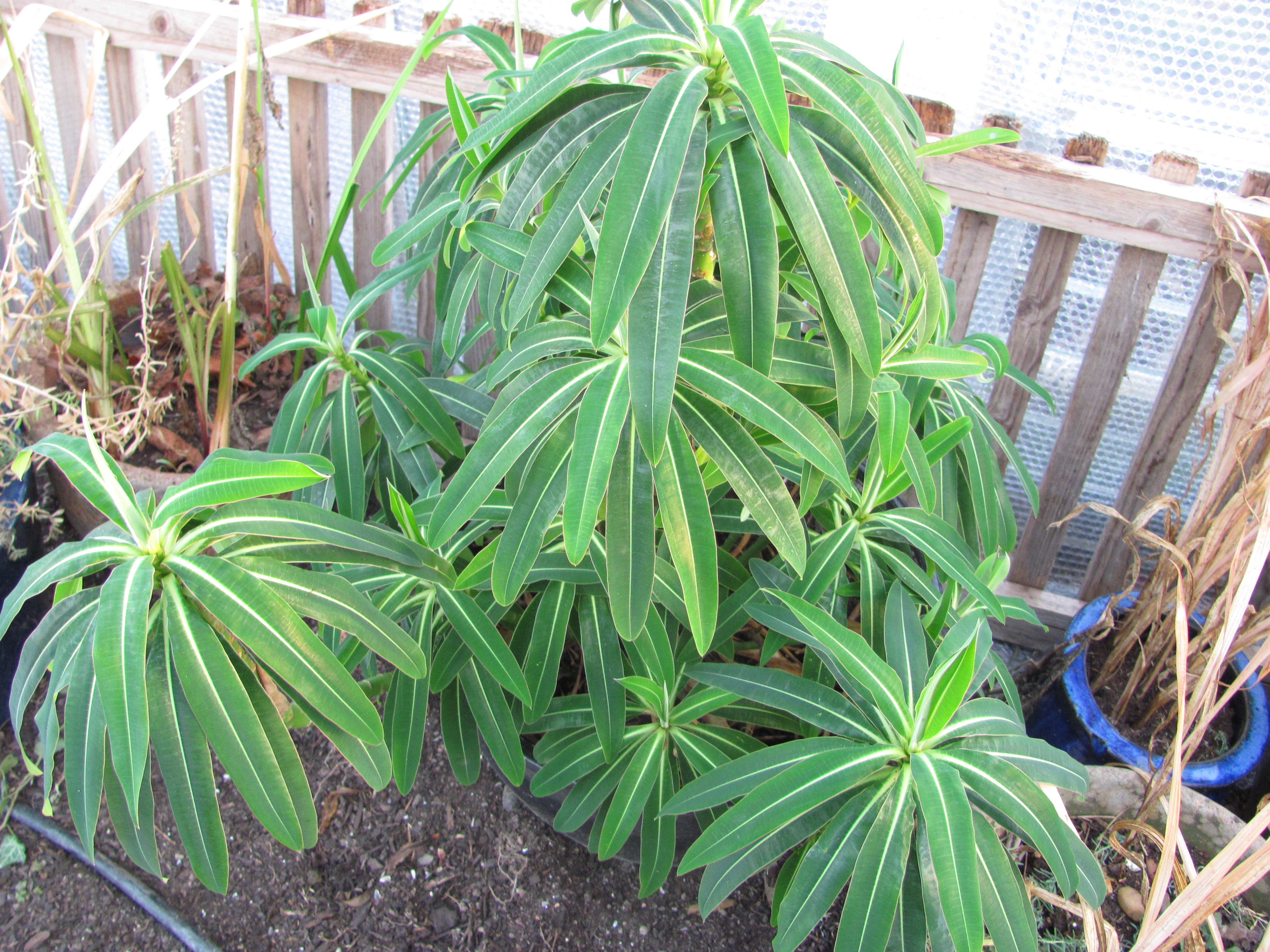
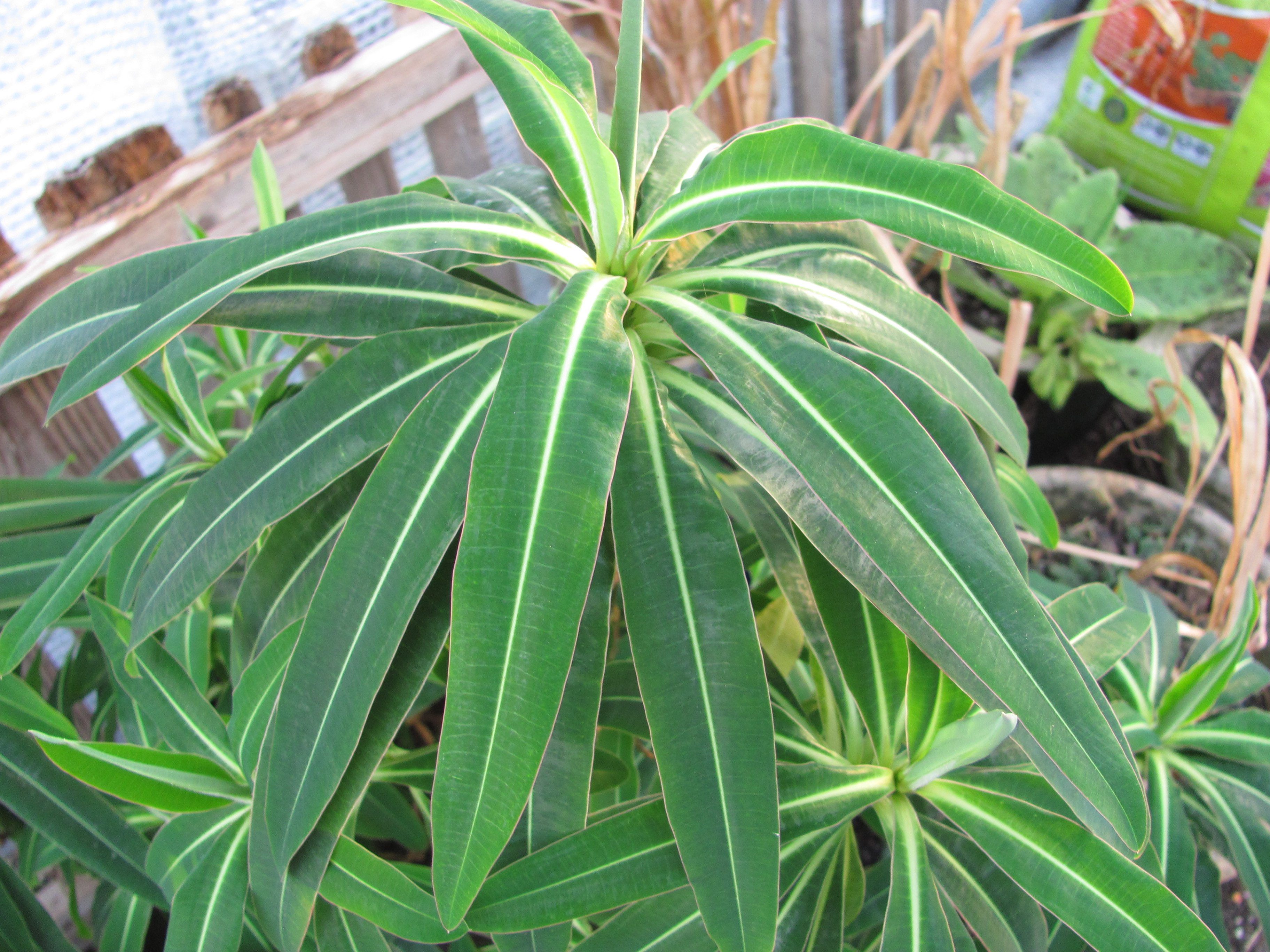
The Euphorbia mellifera enjoys having glass and bubblewrap over its head. This is our second Honey Spurge as we lost one even under cover last winter. We hope to keep it this year so that we can enjoy its wonderful honey scent when we return it to its place in the Secret Garden.
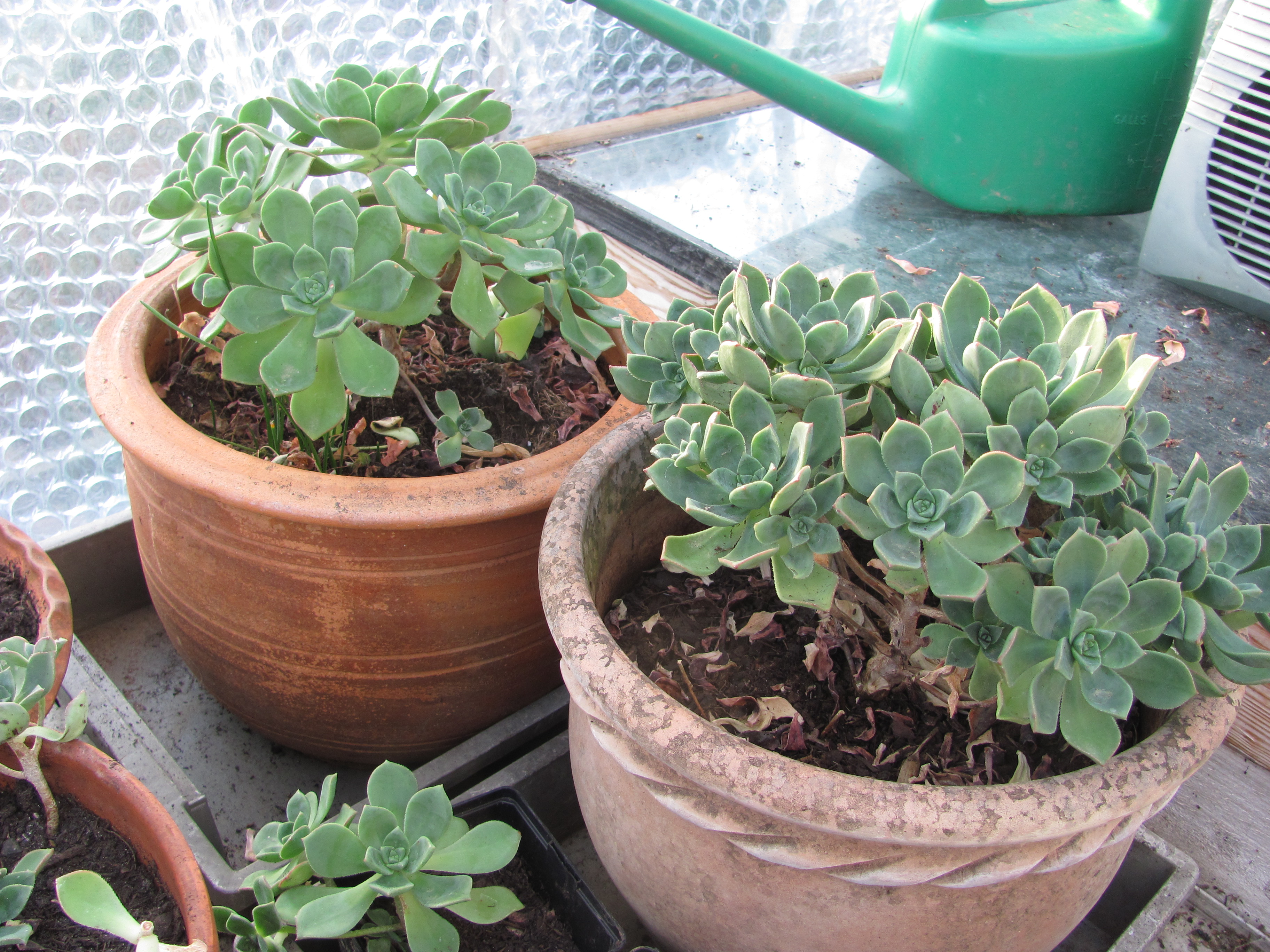
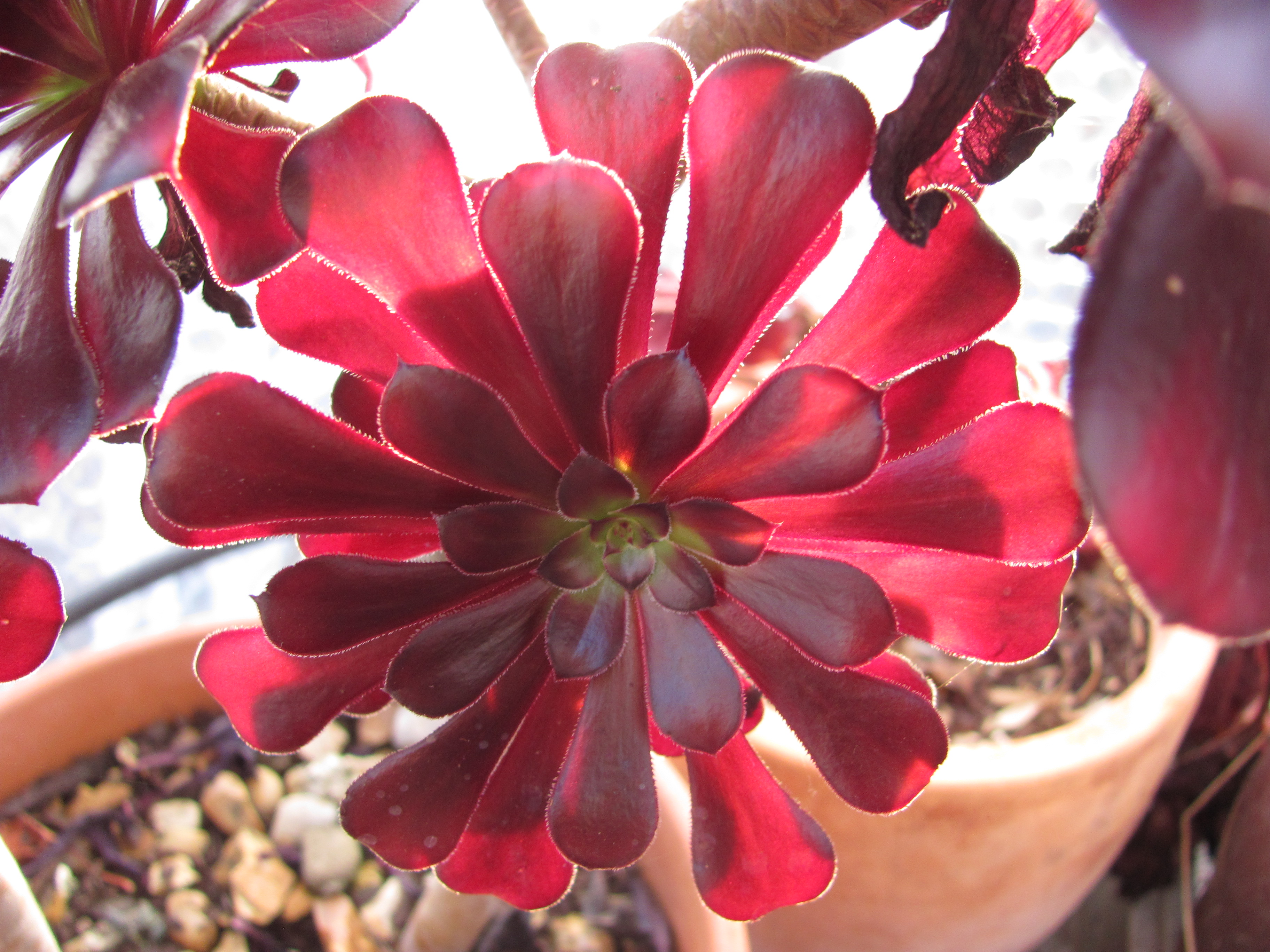
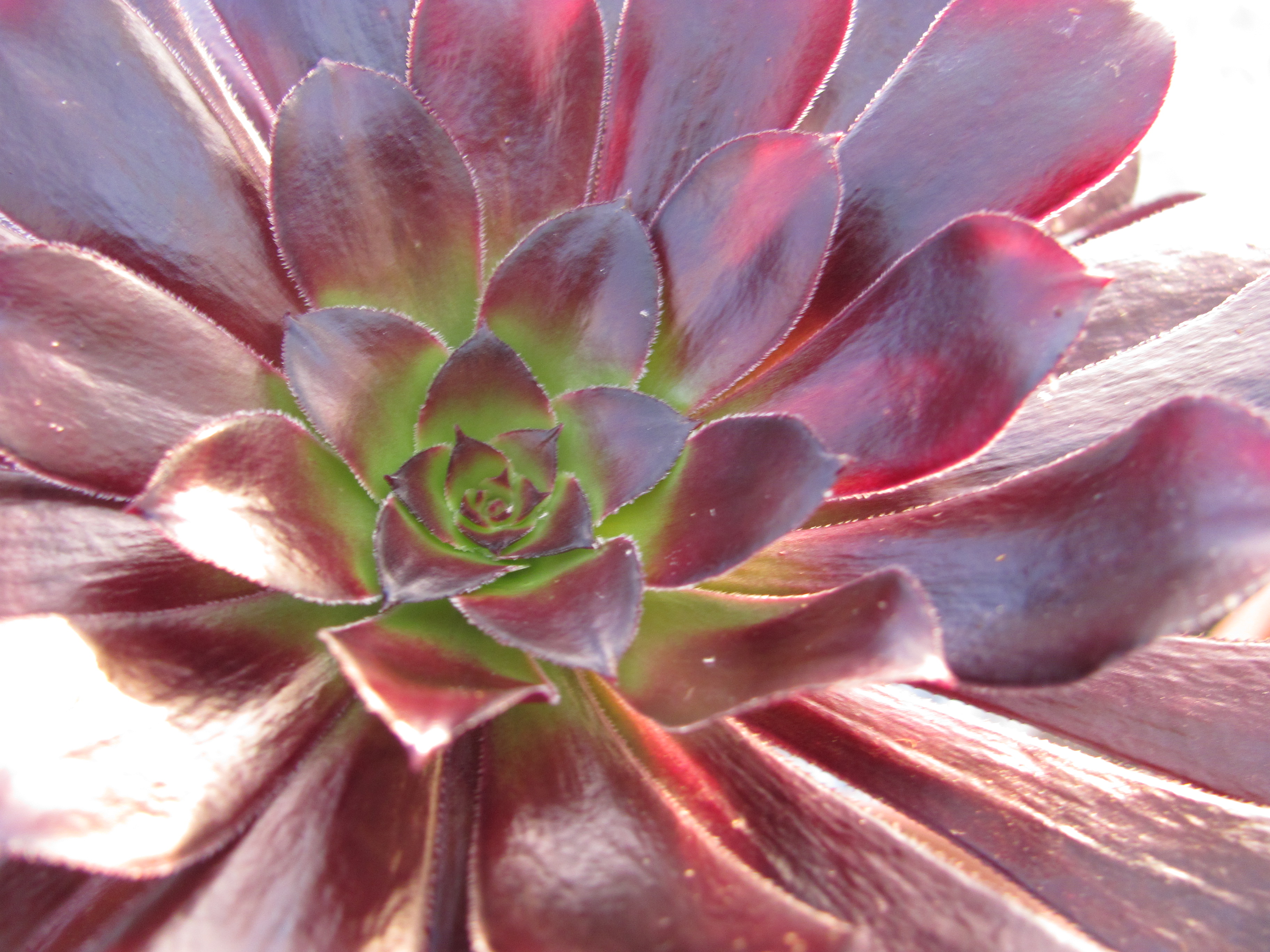
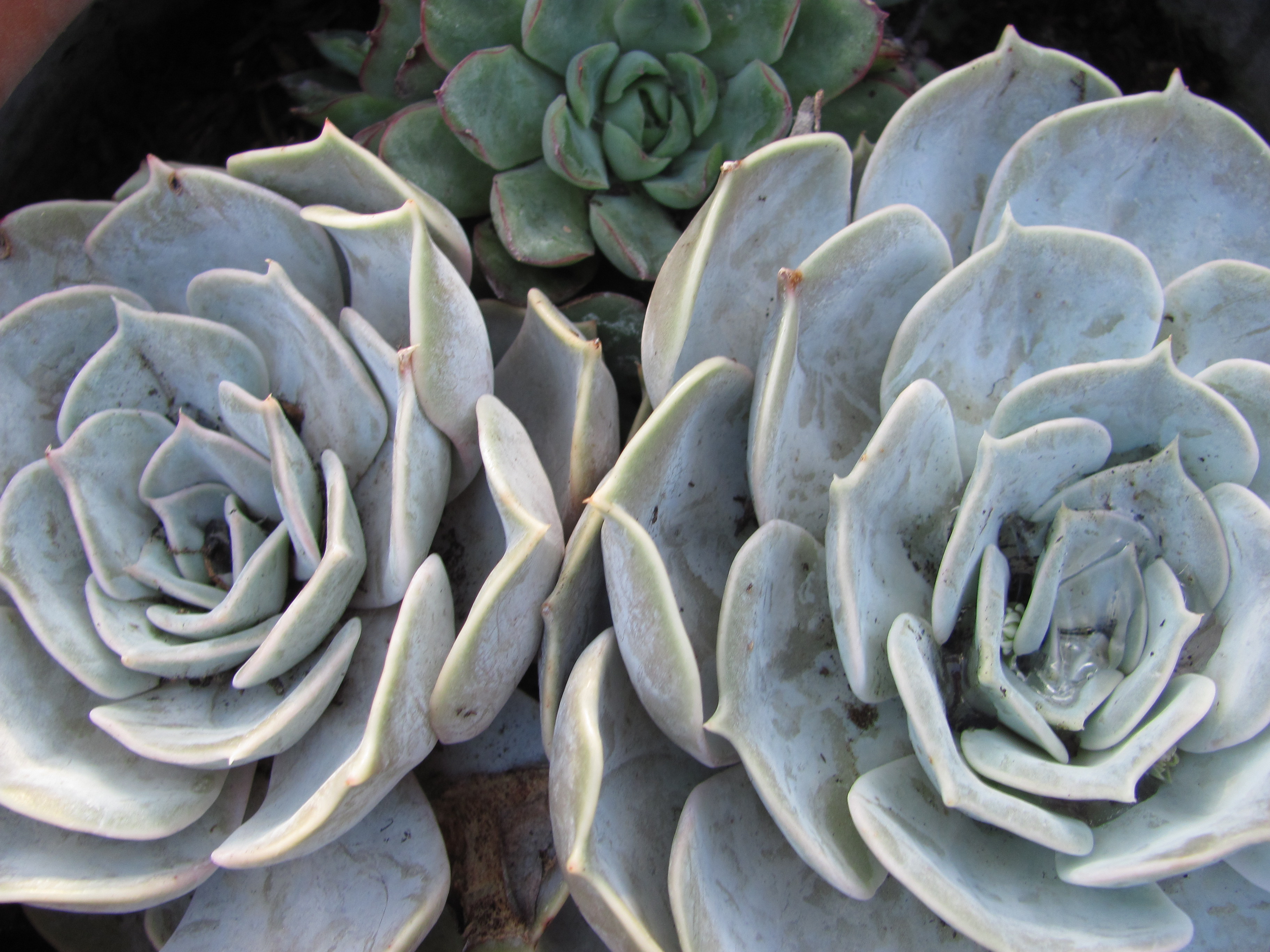
Aeonium and Echeveria keep us on tenterhooks through the winter months, as we have lost them so many times. Aeoniums are succulent sub-shrubs and those we have now are the largest and most long-lived we have ever had. The green leaved Aeoniums below are a variety inknow to us before we found these so we are unsure of their hardiness. We bought them as single rosettes – they have flourished in the Rill Garden. They are possibly Aeonium haworthii and if so we have every right to pamper them in winter as they hail from The Canary Isles.
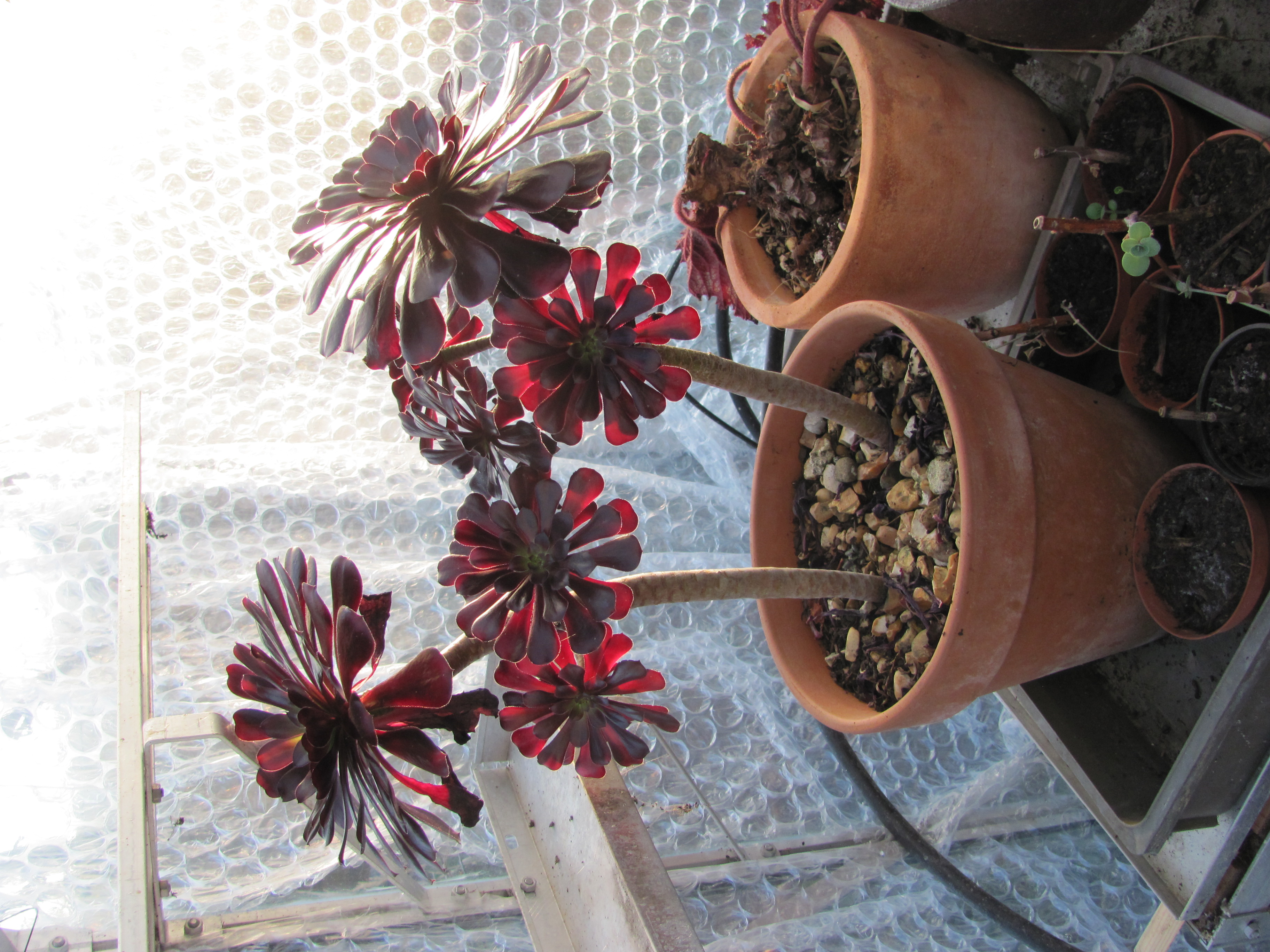
The black leaved version is Aeonium arboreum “Zwartkop”, is a native of Morroco. The leaves get blacker as the summer gets hotter and drier, so as it rests in the greenhouse after a long dry summer it looks very dark. The early morning sun streaming in through the glass lights the rosettes from behind and tuens them fleshy red.
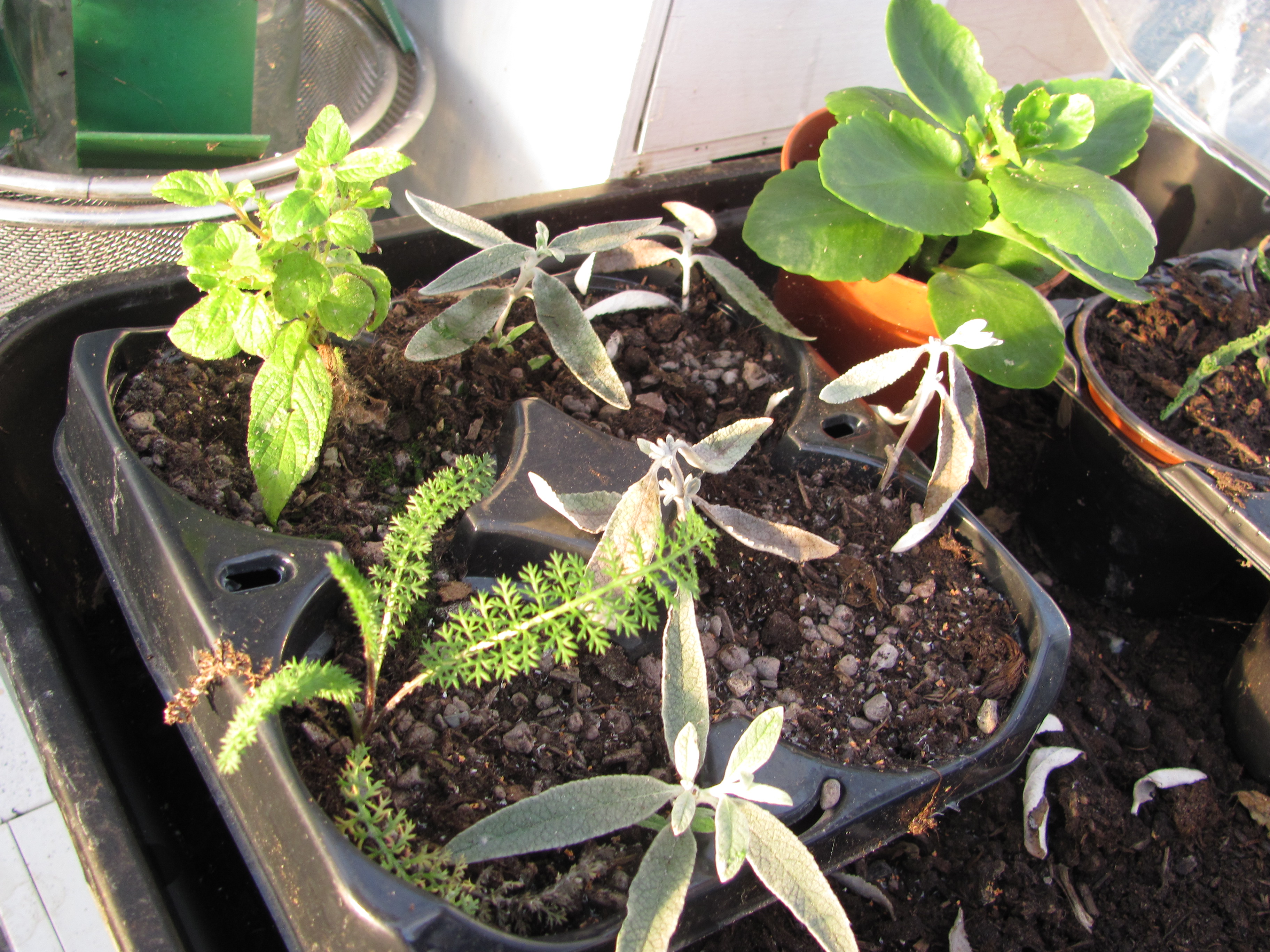
In a heated propagator cuttings are also being protected. this gives us another chance to keep delicate plants over winter. Salvias, tender Buddleia and the odd houseplant such as Kalenchoe.
Outside, salad leaf seedlings sown in December, are holding on until warmer weather. We cover them each night with fleece. Once better light and warmer temperatures arrive they will be triggered into rapid growth. We look forward to tasty, colourful mixed leaf salads.
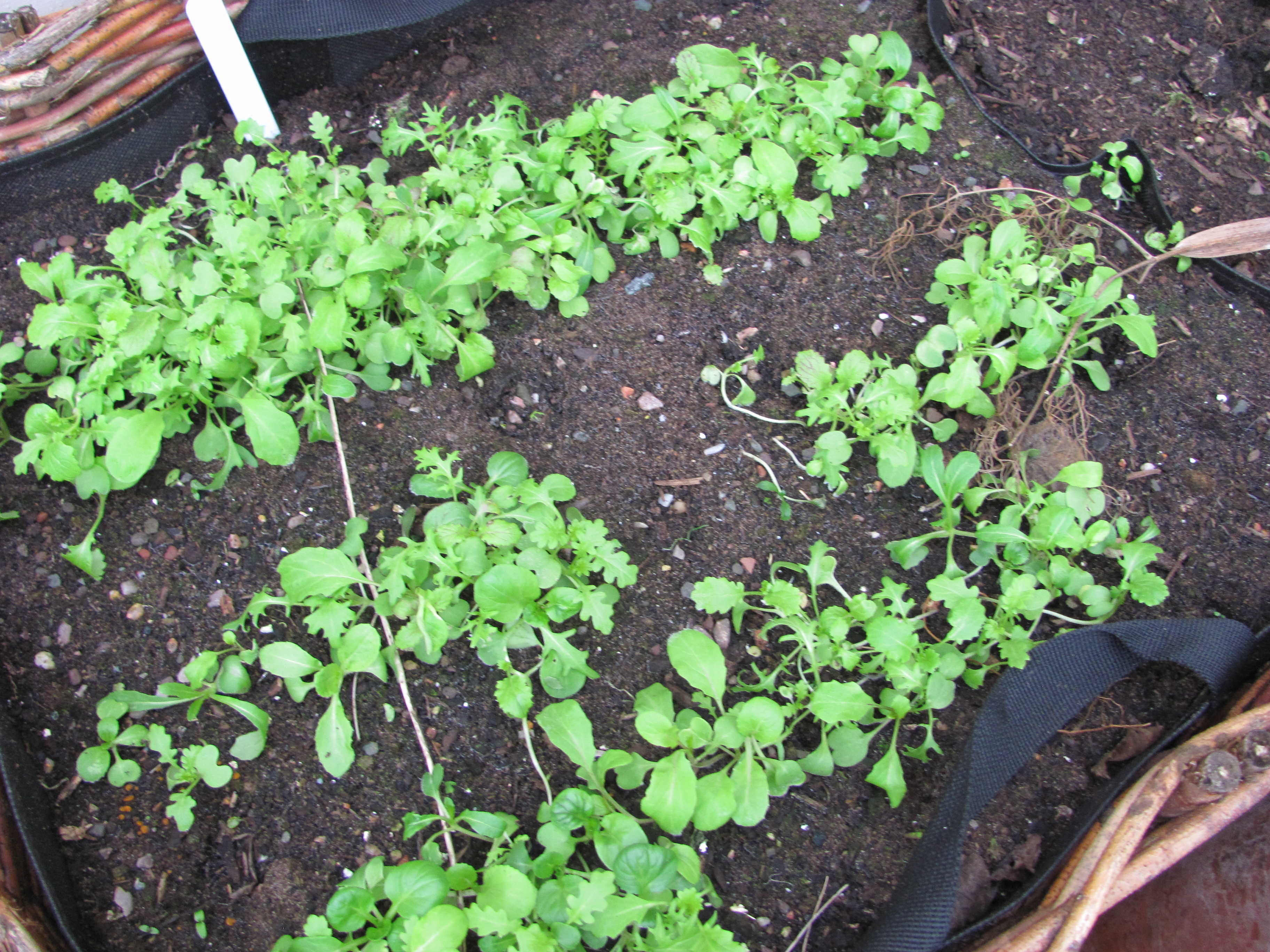
So whenever it is too cold or the ground too frozen solid outside we always have the welcome of a warm greenhouse. After all the greenhouse isn’t just for overwintering plants, it overwinters the gardeners too! Hopefully within the next few days we shall revel in sowing seeds in there.
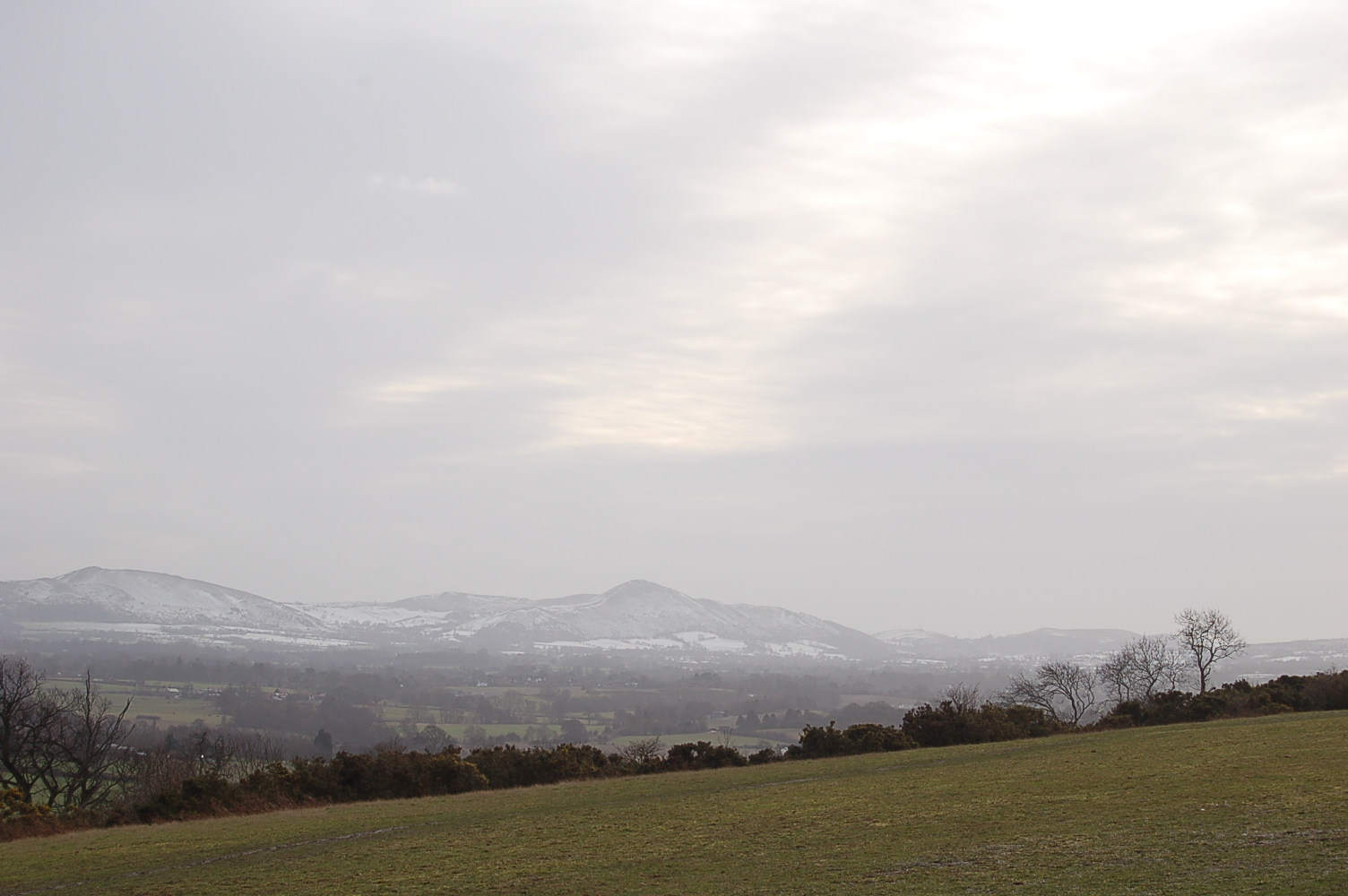
Today dawned bright, Robins sang and the blue colour of the sky coupled with a forecast of a dry day ahead, tempted us out for a countryside walk. A short 10 minute drive along winding lanes saw us park up at the start of the walk. This car park must have one of the best views in Shropshire, a view presenting a huge panorama. Snow on the hills and iced water in the furrows of the ploughed fields below reminded us that whatever the day looked like it is still winter.
Beneath our feet the muddy track was frozen solid a few millimetres down and this made for a tense start. We walked slowly along the ridge tempted repeatedly to glance leftward at the hazy view. Thin clouds were building. The hedge to our right was mostly of Hawthorn and Holly over which Brambles clambered. Blackbirds aplenty sought out the last of the hedge’s berries, and a pair of silhouetted Carrion Crow gorged on Ivy berries as black as themselves. They went about their business in silence. Crows are rarely silent.

We enjoyed the view of Yellow Hammers, birds that are sadly declining so rapidly from our hedgerows. A trio flitted amongst the uppermost branches of the taller Hawthorns calling continuously. It was good to see them. Small noisy flocks of Linnets frequently passed over our heads. We were relieved to leave our frozen footway and enter a tiny coppiced area alive with the calls of Great Tits, Bluetits and Longtailed Tits. We attempted the sloping footpath down through the copse and slid our way down a few yards before giving up and were forced to carry on along a rough roadway alongside a few houses. The conifers in their gardens added Coal Tit to the titmice collection and Jays squawked in their topmost branches.
Our cold noses were subjected to the unpleasant odour of male fox which had crossed our path an hour or two before probably as dawn light was announcing the day. The odour hung in our nostrils for several minutes as we walked on.
We were glad that this hard man-made surface lasted such a short while because we were to enter a beautiful coppice of old oaks, dotted with occasional Rowan and Beech. Their under-storey was of Holly and Bramble and here Dunnock, Robin and Wren skulked, given away by their calls. Lichen and algae coloured the trunks of the old once-managed oaks. These would have been cut to the ground every few years to encourage rapid upright growth which could be harvested. But we are enjoying the habitat created after years of neglect, a habitat equally appreciated by wildlife. The oaks are gnarled and eccentrically shaped, covered in lichen, algae and mosses.
Sounds are carried freely through the coppice. The tapping of a Great spotted Woodpecker. The liquid whistlings of Nuthatches. The “chatting” of Wren. And an unidentified “churring” sound – we had no idea what bird might have made that call. Woodpeckers and nuthatches had been busy digging in the softness of rotting wood on dead trees. This chip of bark had been lifted by a Woodpecker’s powerful beak to extract a morsel of food, some beetle or grub which the bird had heard beneath the bark.

New leaves sprouted on the honeysuckles that entwined the lower trunk of the Oaks where there must be a little protection, a little extra warmth.

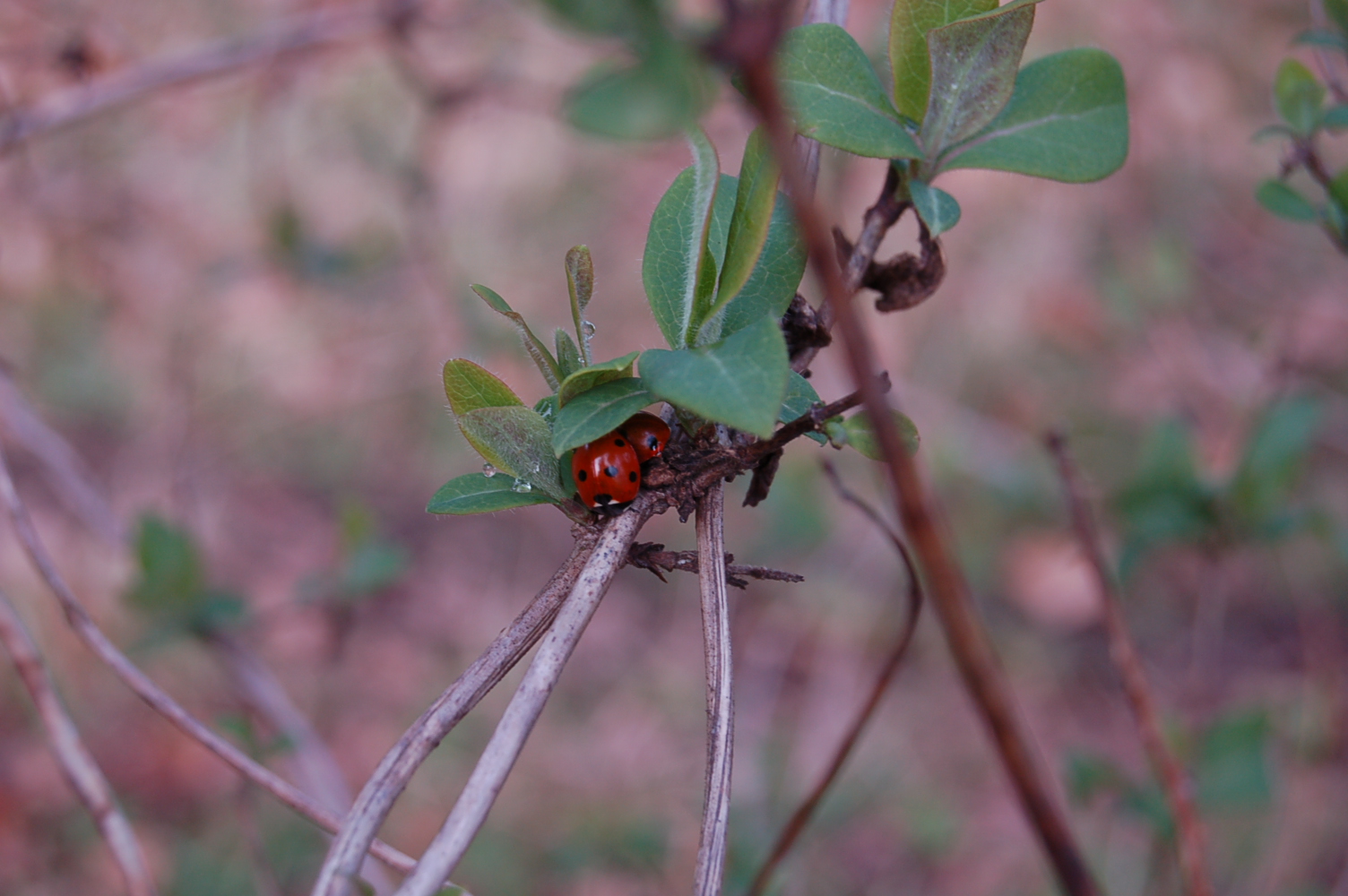
Little clumps or bunches of Ladybirds have managed to find refuges from the ravages of winter. By looking carefully shining wing cases of orange and red, spotted black could be spied. They looked so precarious but they must have some confidence in the security of their hideouts.
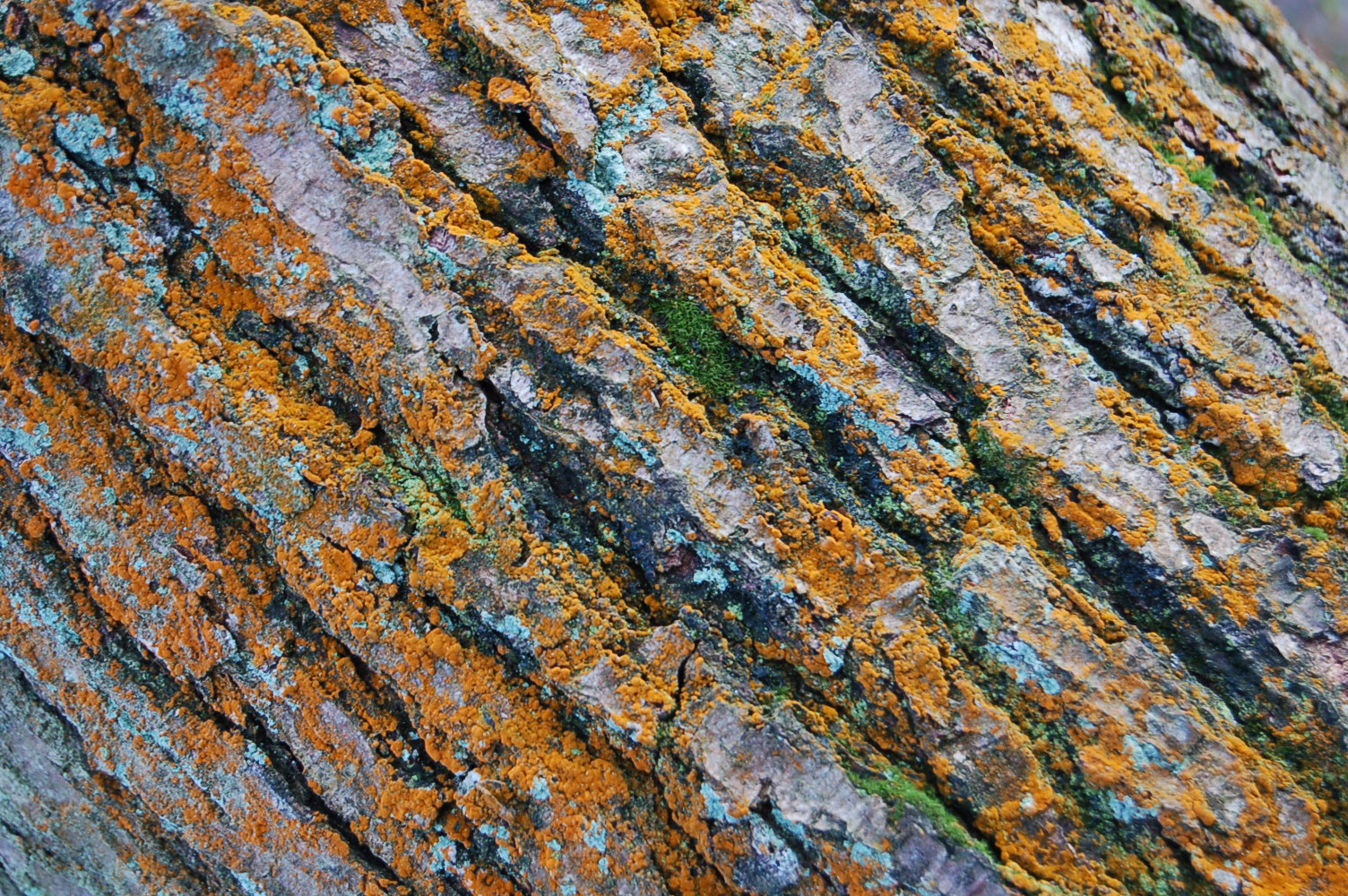
There was so much variety in the colour and texture of the tree trunks. Lichens and mosses clung to the roughness and painted over the brown bark. Silvery blues. Hot flame colours. Gentle greens.



We followed the circular route through the coppice and made our way back down the track, the light weakening and the temperature cooling. We shall return in spring when the summer migrants are back, when the coppice should reverberate to the song of warblers and Swallows accompany us along the ridge.
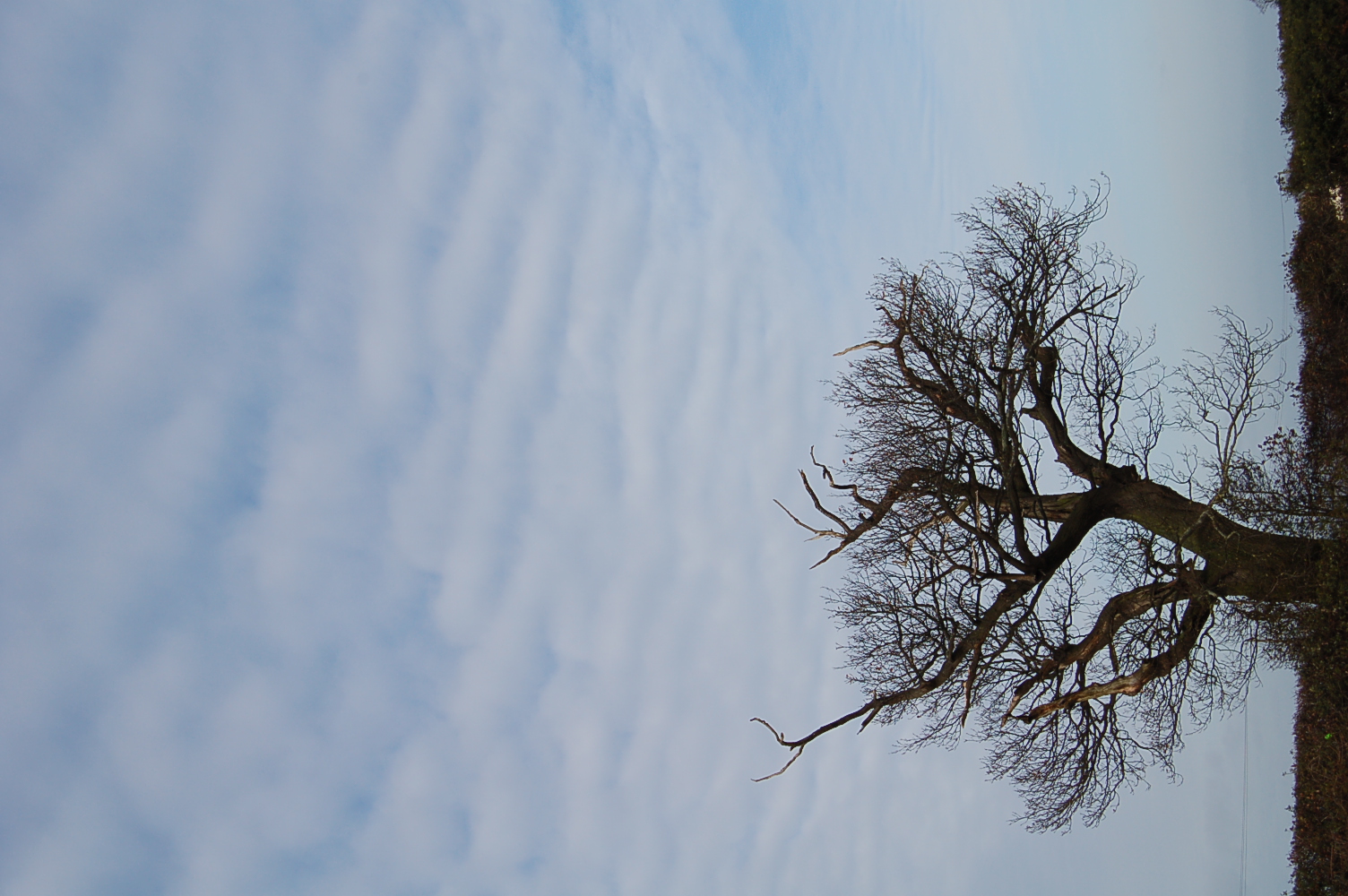
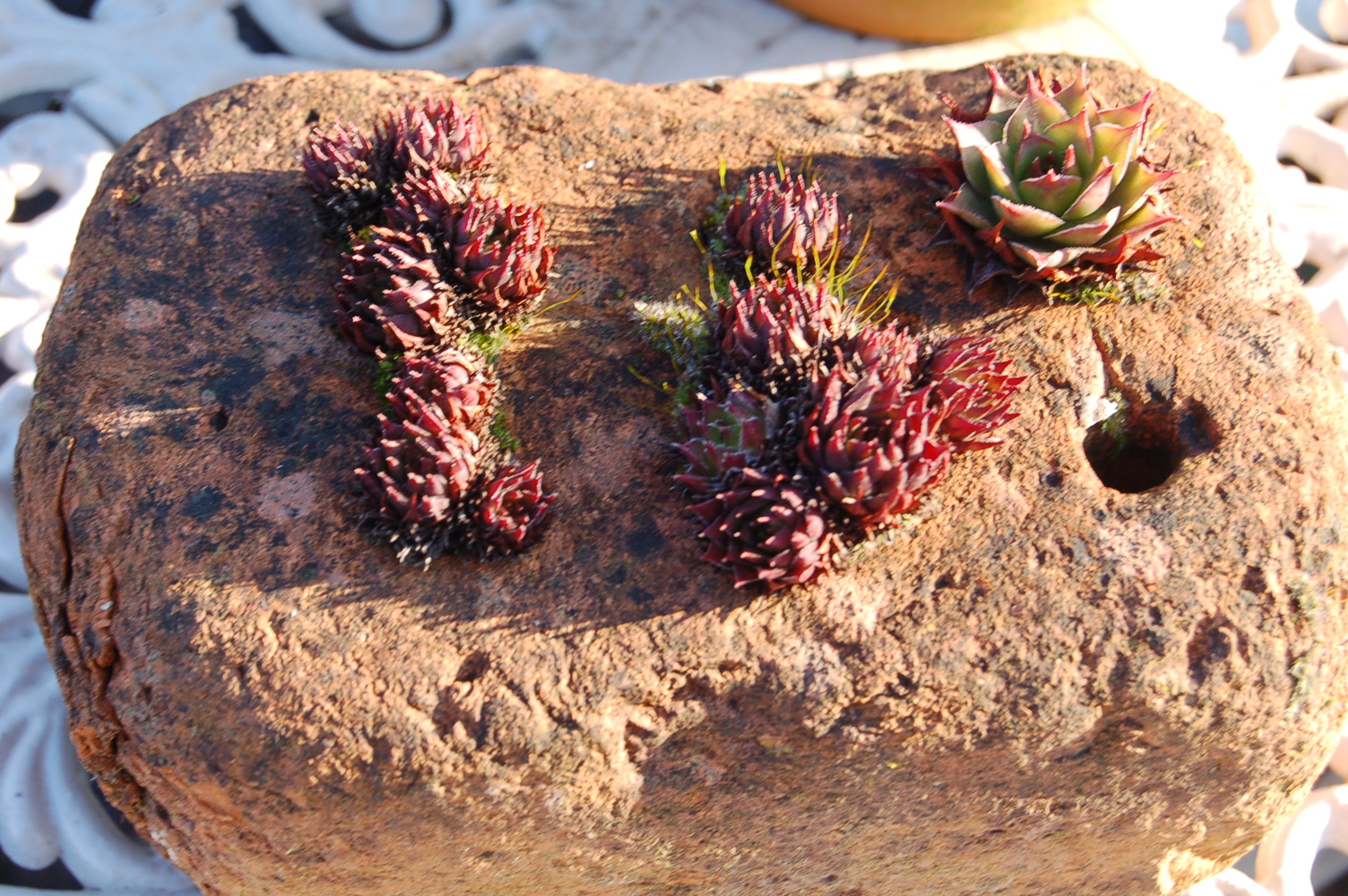
We love the humble Houseleeks. We grow them in pots, on the slate scree bed, in alpine troughs, on our old oak stump and even on an old brick. They are so simple, really just spiky little cabbages, but they have something special about them. Is it the subtle nature of their colours? Is it their reliability? Is it because they are there to delight the eye all year round? Or is it simply the variety? It certainly isn’t the flowers which grow up on oversized stalks and then make the plant fall over. They are called Houseleeks because people grew them on the roofs of their outside privies as they will tolerate such dry growing conditions. Perhaps the extra insulation helped too!
Just like the first Ford cars which you could buy in any colour as along as it was black, so with the Houseleeks you can have them in any colour as long as it is green. Green with varying depths and hints of red, black, purple or blue. And of course we mustn’t forget brown! Being succulents they like it dry and their colours seem richer in late summer when it is often at its driest in the garden.
The correct name for the Houseleek is Sempervivum and they originate from Europe and Asia. There are hundreds of named varieties but we choose them for their interesting colour or texture, not by name, as so many of them are so similar. We buy what we fancy. Some we choose because of their colours but others for their white spider’s web covering or fringing of bristles. Favourites are those with dark colours towards the points of the leaves.
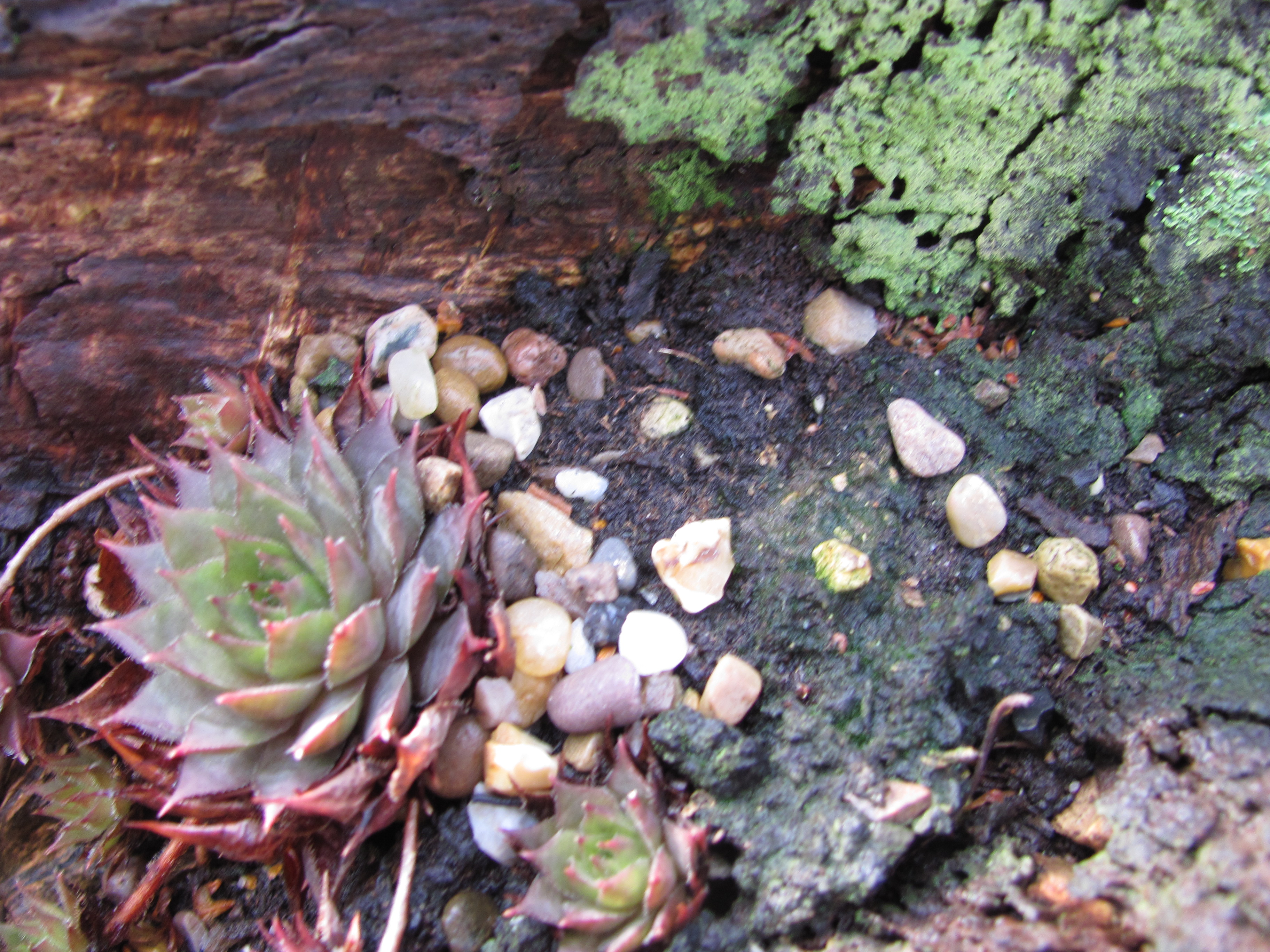
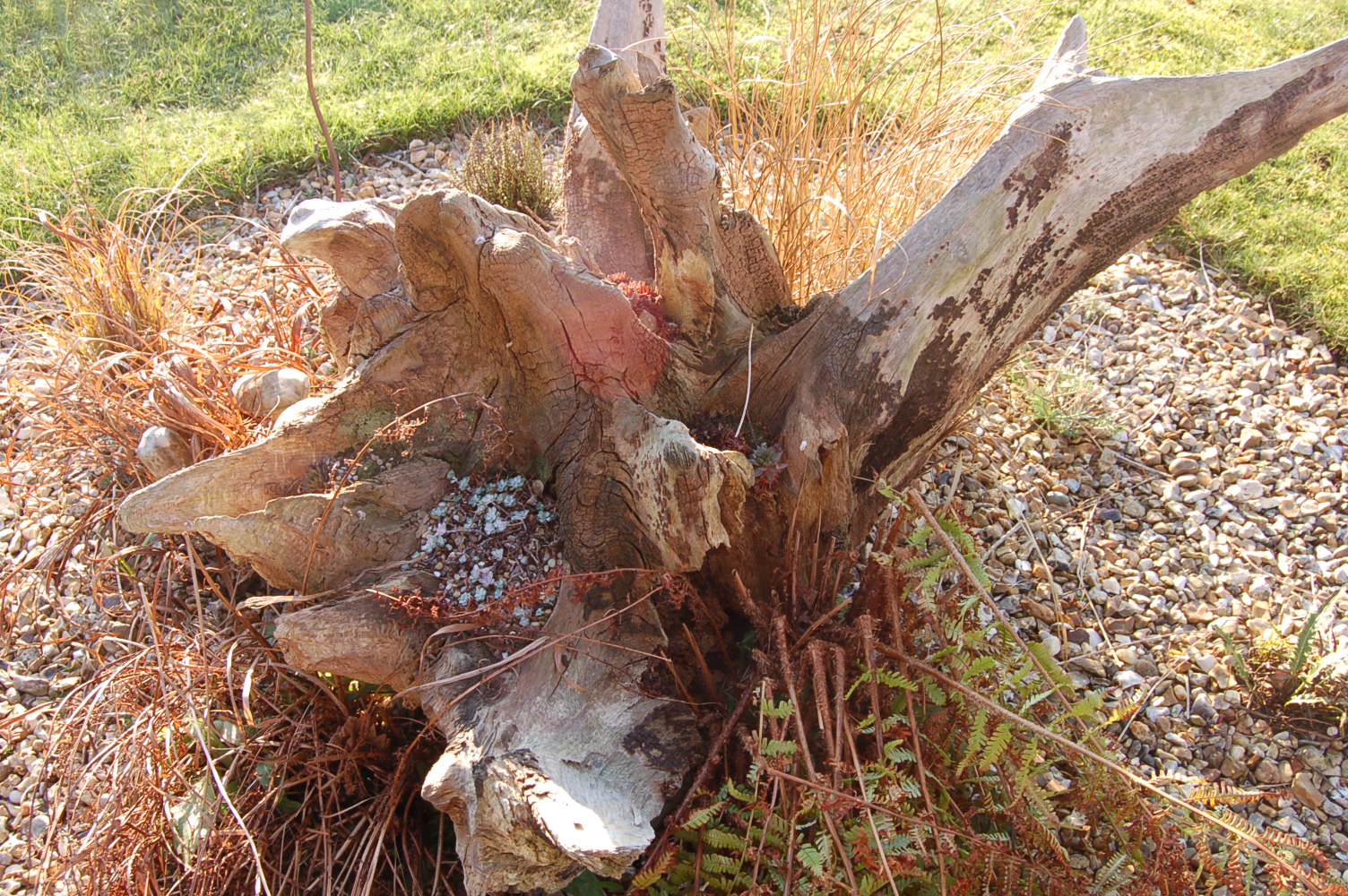
All the pictures in this blog were taken in February which shows how useful an addition to the winter garden these little plants are. There can’t be many succulents that are useful plants with winter interest. The first couple of photos show the Sempervivums growing on our stump, the first enjoying the company of an icy green lichen and the second with the dead brown fronds of a fern.

When a Sempervivum flowers, sending the tall stem from the centre of a rosette, it dies, but the dead rosette is soon replaced with new offsets. This plant on the slate scree bed is still holding on to its flower stem surging from the now-dead rosette. Soon we shall pull it out and in the spring new rosettes will fill the gap. We leave late flower stems on the plants as they provide interesting structure. The subtle colouring of its rosettes work beautifully with its slate grey background.


Now we take a photographic journey around the garden in search of more Houseleeks.



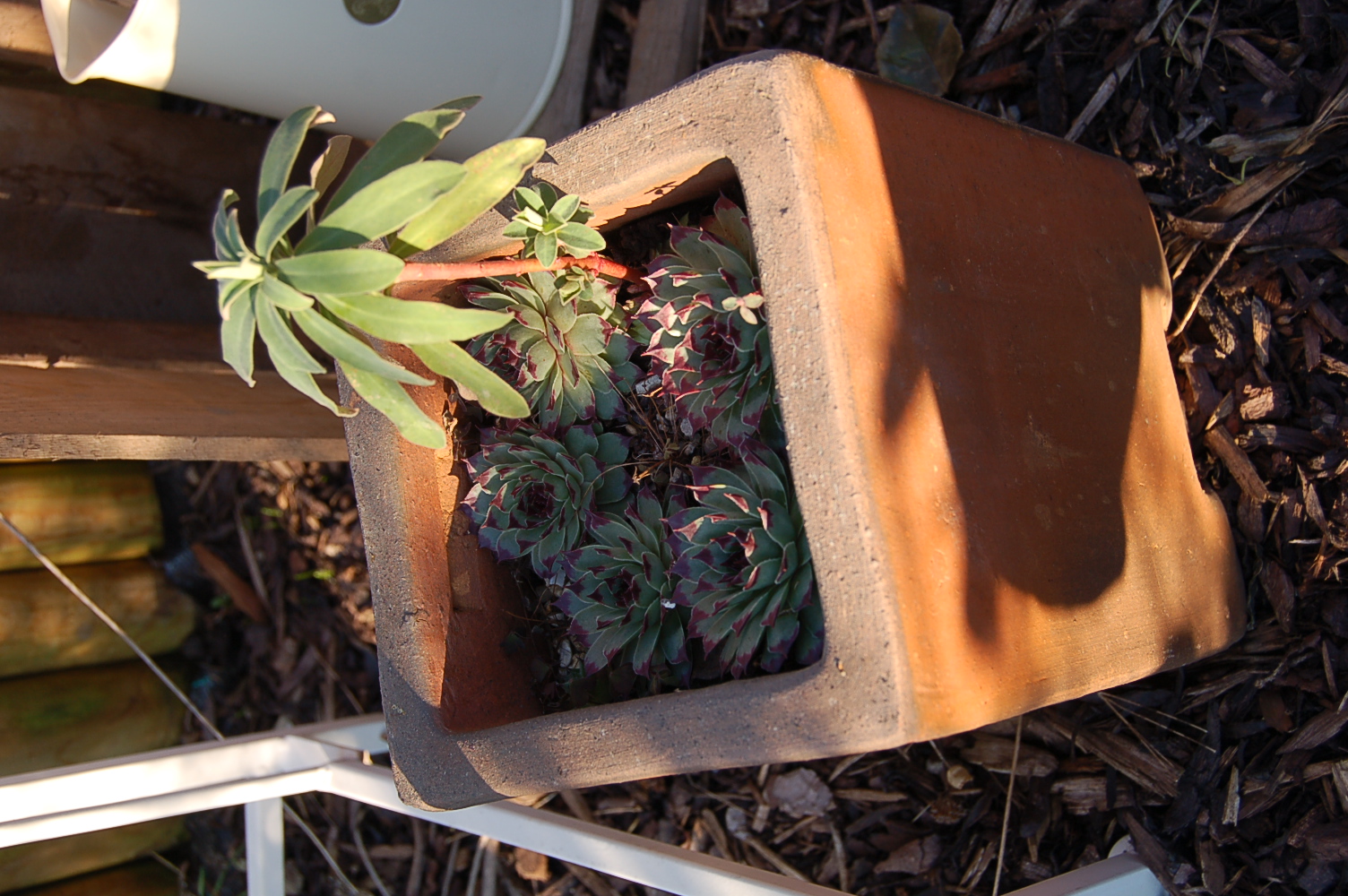

Awaiting planting, still in their pots, sit four new varieties. Will we ever stop being tempted?

This is the second of our monthly garden wanders designed to give an insight into what is going on each month. Our February wander will be a colder one so don those thermal gloves and woolly hats with silly bobbles and join us. We hope you enjoy what our garden offers in the second month of 2012.
The day dawns frosty but with a bright blue hat on. A lovely fresh winter’s day, with the quiet plaintive song of the Robin as company – he always comes around the garden with us and entertains us with a song. Overhead Buzzards call from their thermals high above the slope of the hill. It feels a perfectly calm day to us but these big, broad winged predators always find movement in the air. Why does the call of the buzzard always sound further away than the bird itself? Have they mastered the art of ventriloquy? We see them most days but we never lose the desire to watch them enjoying their freeform flight.
I fed the chucks and topped up their frozen water with some warm, before collecting their eggs from the nest boxes. Today the hens’ contribution to our larder had added benefits. Handwarmers! Holding these little warm parcels of food felt more special than usual. As I passed the shed on my way down to the chuck pen three Wrens burst out of their roosting pocket – late risers. A pair nested in here in the summer just a few inches above the shed door. They took no notice of our comings and goings. They filled the roosting pouch with moss, feathers and delicate grasses which now insulate them on cold nights.
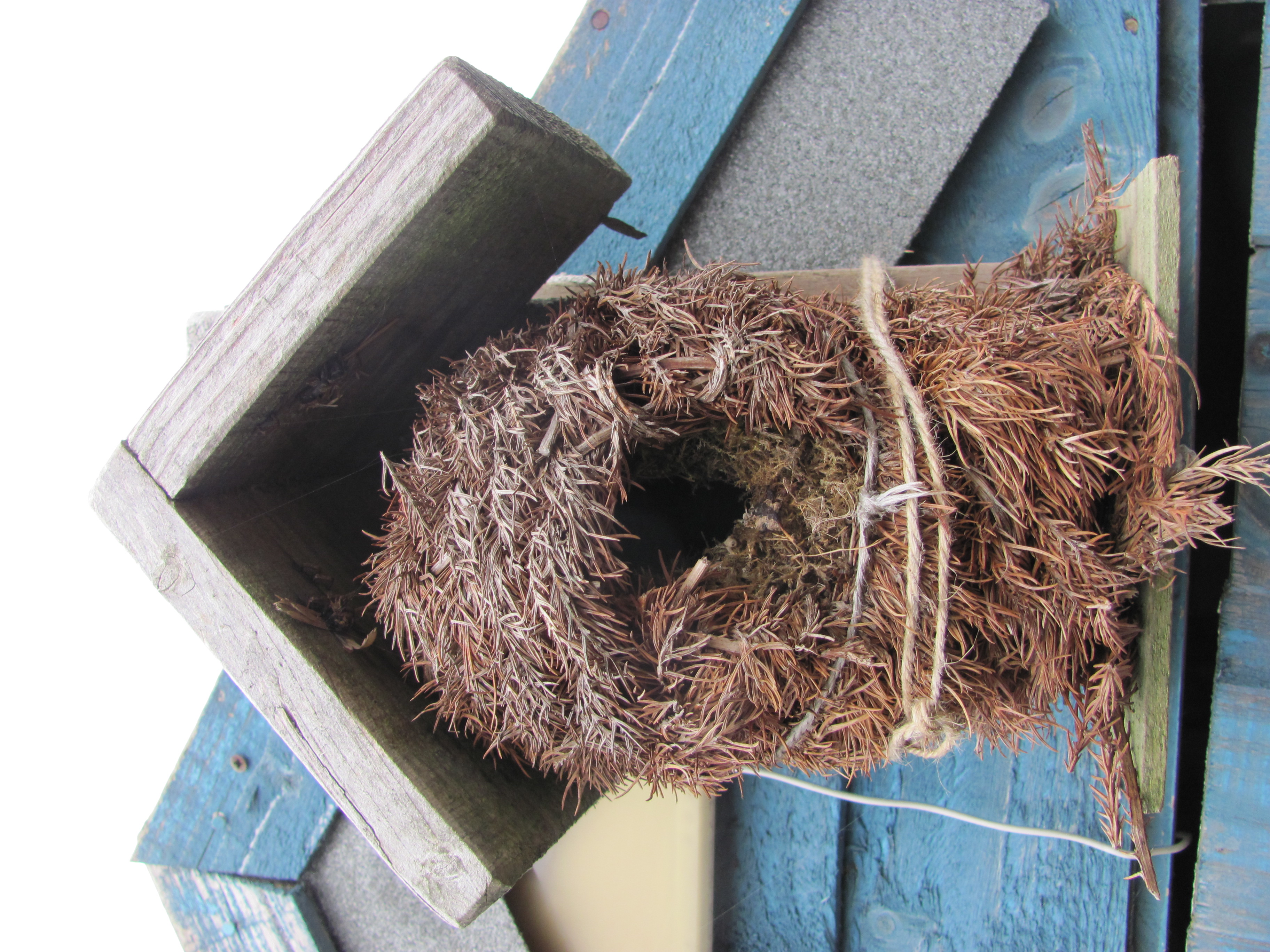
The garden is full of birds once more after a quiet few months. We were beginning to wonder where all the birds had gone, but today Goldfinches have reappeared in busy red and gold flecked flocks. mixed feeding flocks of titmice invade every tree and shrub and Linnets sit on the highest branches. Long Tailed Tits in groups of a dozen or more flit from tree to shrub and from feeder to feeder, never still, always fidgeting like a class of infant pupils awaiting a favourite story. The odd Bullfinch and Blackcap conduct their business more quietly.
On the feeders Jackdaws attack the peanuts dropping morsels for the Dunnocks and Chaffinches waiting below. Jackdaws are long-lived and today two old favourites are to be seen, one with a white wing and one with a wing that droops low when he settles. Overhead their much larger relatives pass over, a “cronking” trio of Raven flying effortlessly with outstretched fingers.
It is noticeable that the clusters of berries on the Hollies and Cotoneasters are much depleted as greedy groups of resident Blackbird and Mistle Thrush are joined by migrant members of the thrush family, the winter visiting Redwing and Fieldfare. The small yellow crab apples on Malus “Butterball” have now been stripped by these members of the thrush family.

There has simply been plenty of natural food for our avian friends this winter. It has been mild enough for insects to be on the wing, for invertebrates to be creeping and crawling, and the hedges and trees have heavy berry crops. We want to see them in our garden but we are being selfish. They come to us when they need to and not before!

The re-appearance of the Goldfinches gives us close-up entertainment as close to the conservatory window grow Onopordon, the Scotch Thistle, and its seed heads tower into the blue sky. Goldfinches love them and soon dig in for seeds, bursting the heads open as they do so, and the white fluffy insides overflow like raw cotton.

The intensifying of the cold sucks structure from leaves and hardens the ground beneath them. The accompanying frost layers the ground and plants with lines and layers of frozen crystals. The blueness of the skies on a clear February day is more intense than earlier in the winter. The sunlight seems brighter.
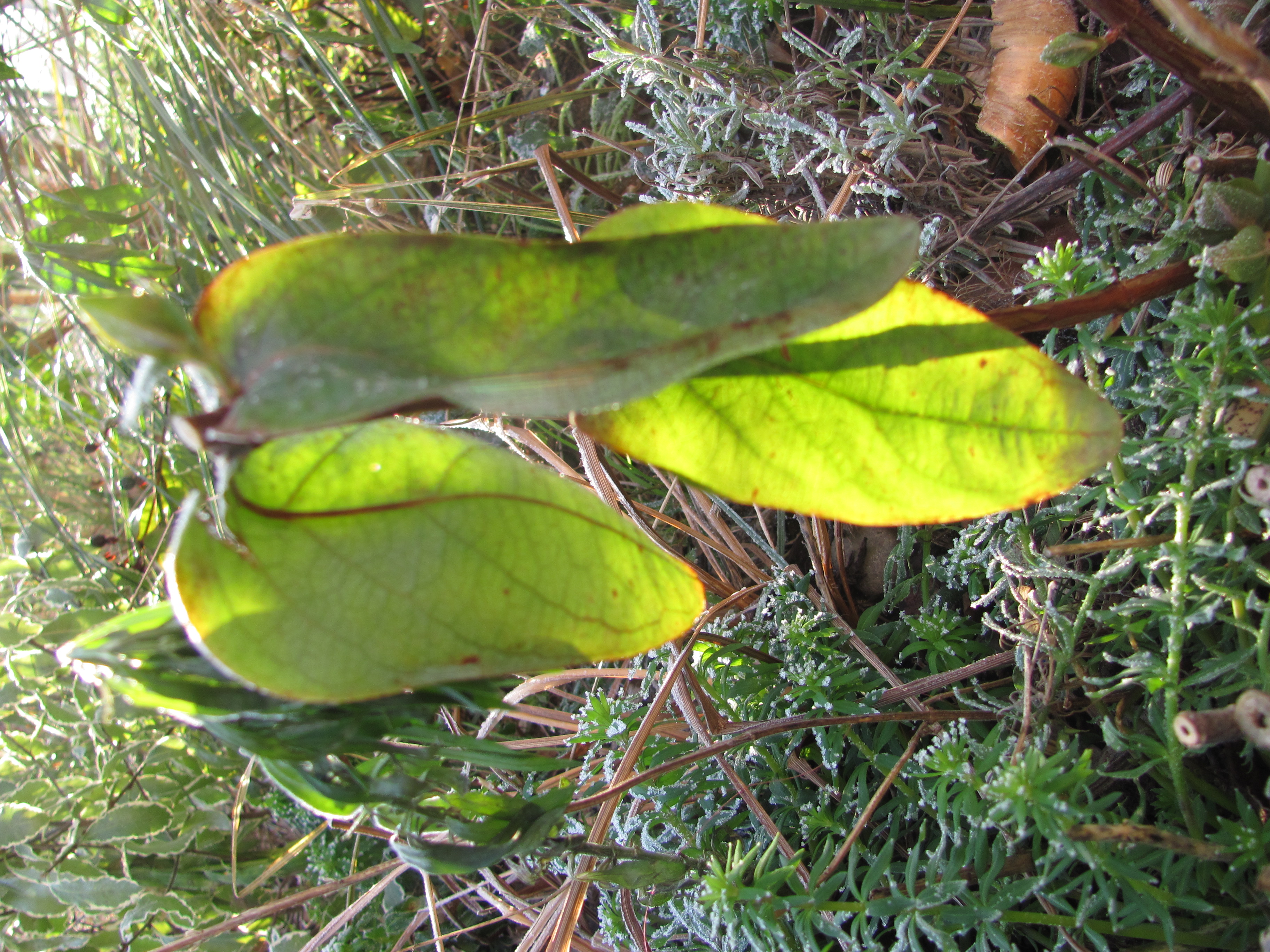
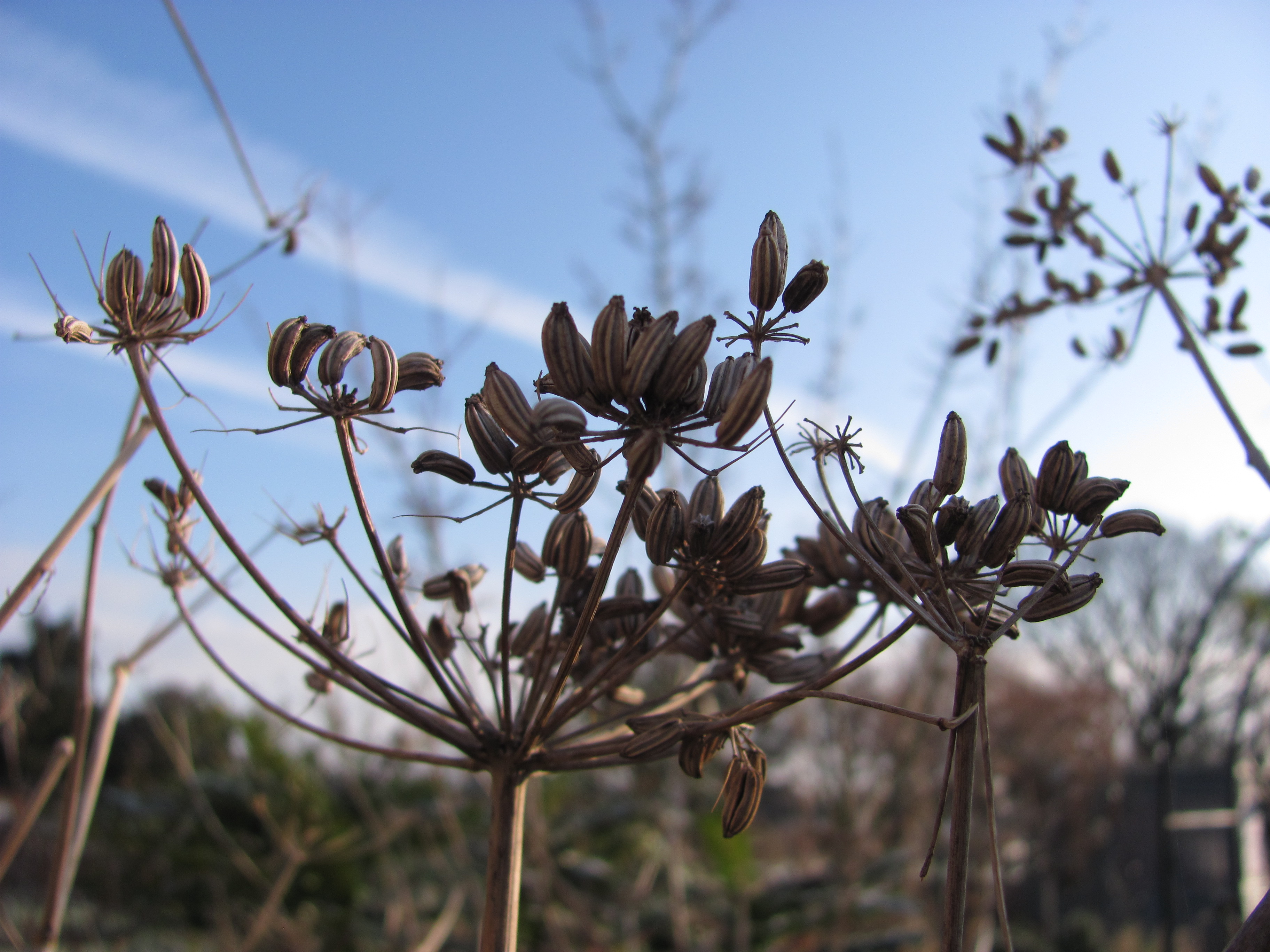
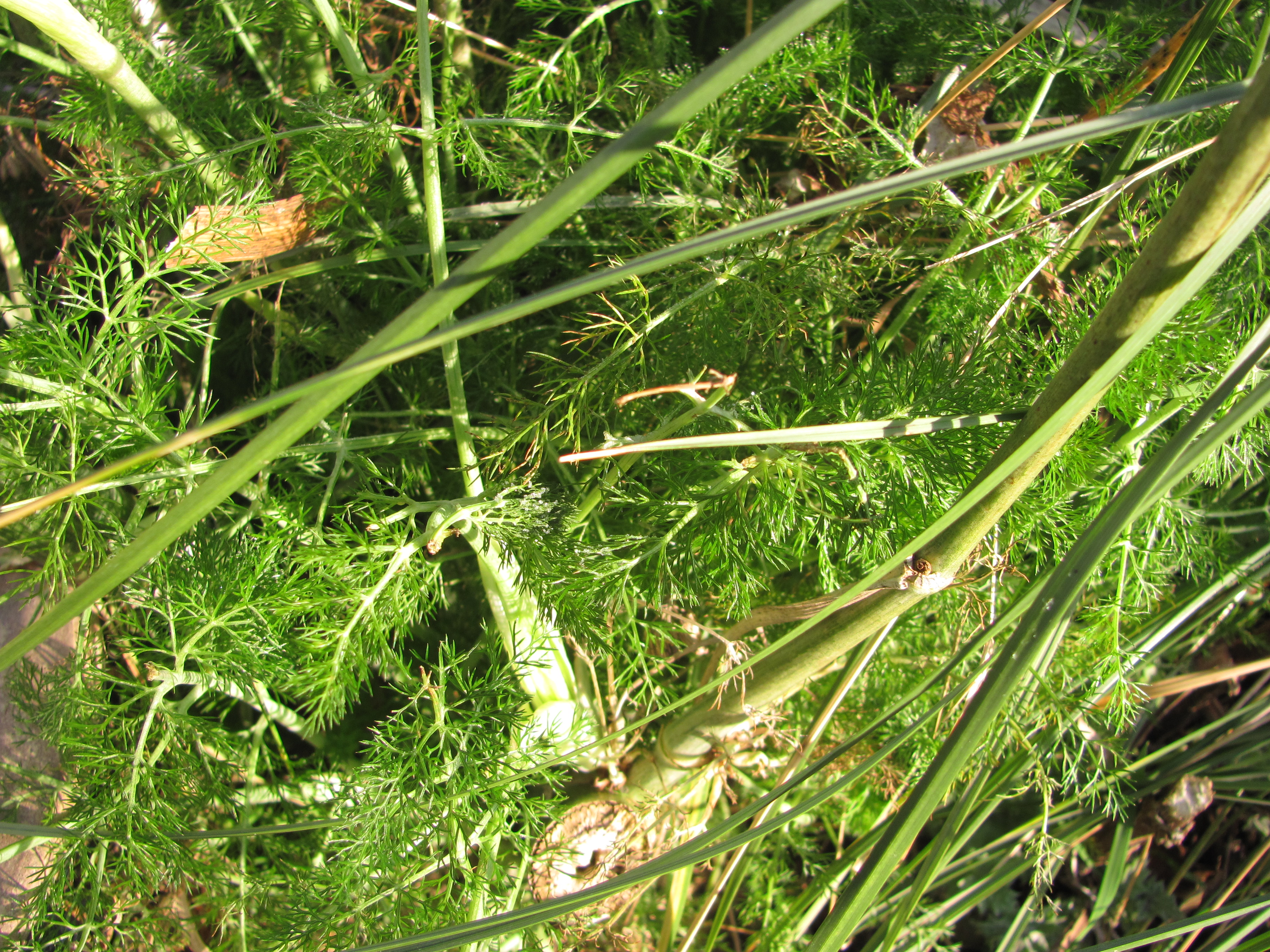
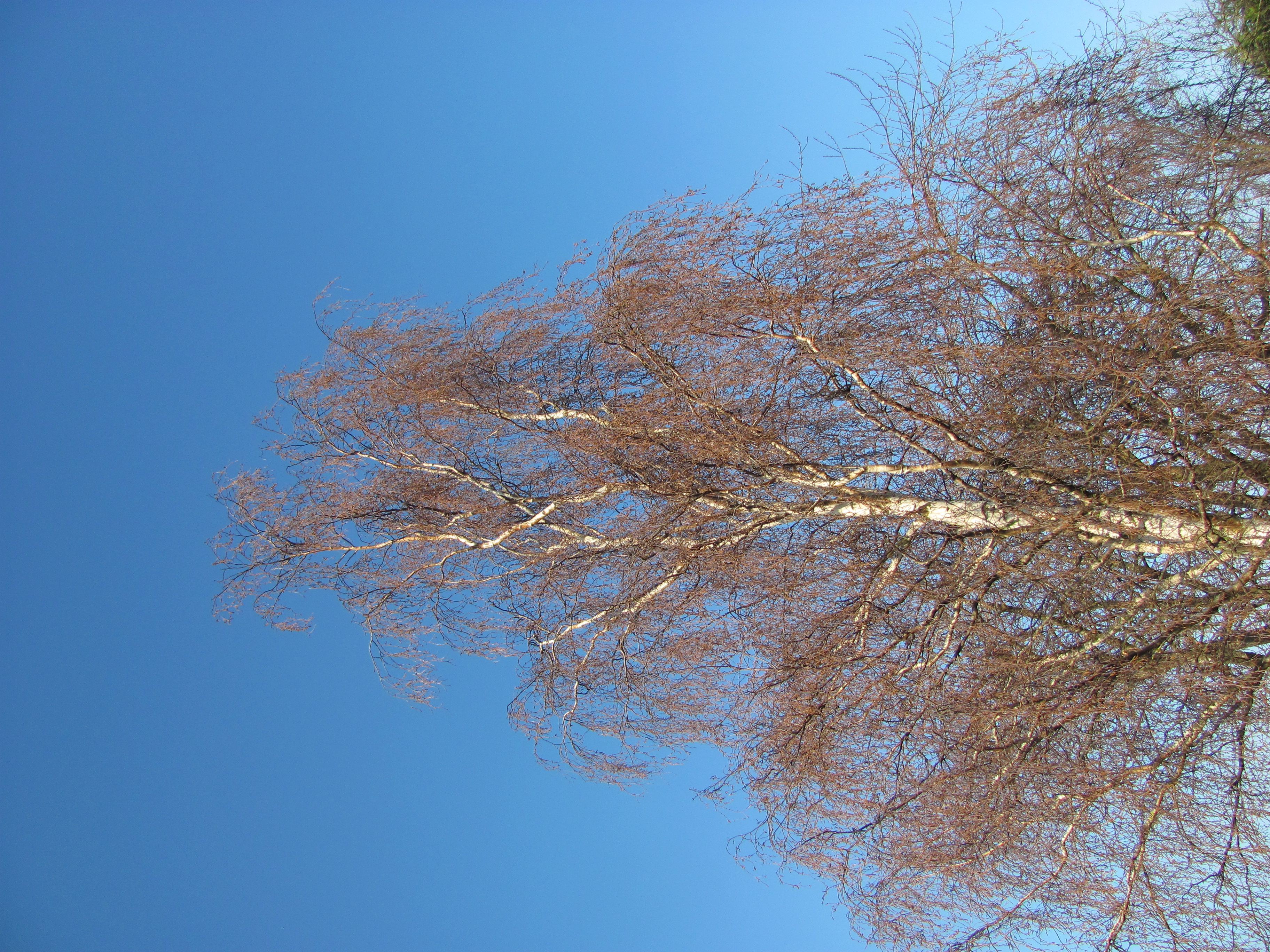
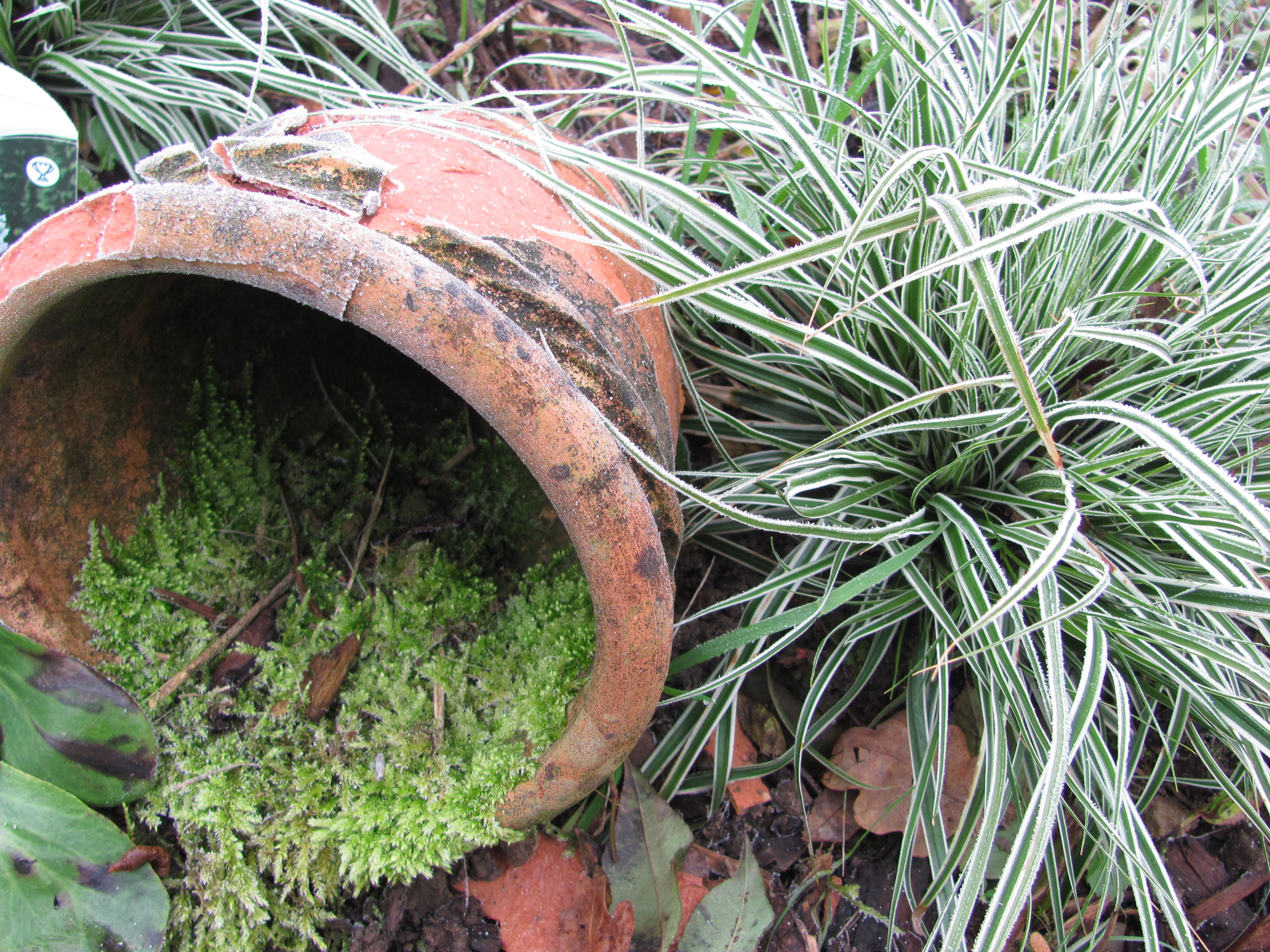
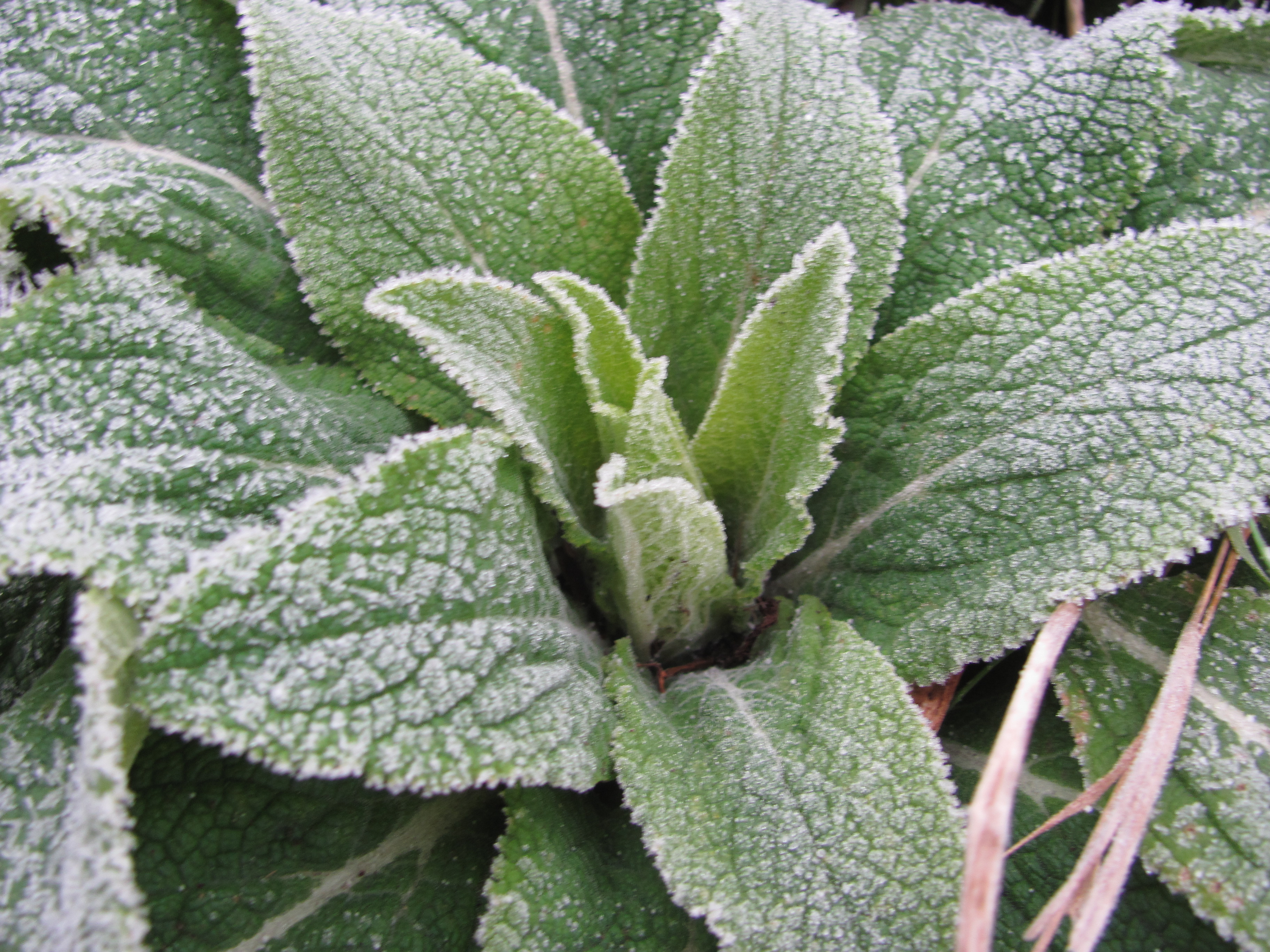

Something special happens to light in February. There is something about the quality of light that changes. It makes you feel better. It makes plants look better, their flower colours intensify. If, like both “The Undergardener” and I, you suffer from SAD (Seasonally Affected Disorder) then you will feel and experience this change. You feel the tunnel of winter has brightness at its end. Monty Don, in the book “Fork to Fork” refers to this improvement in light quality, writing that February displays a “tangible promise of a better time” and talks of a “surge of energy and hope running through the garden”. This will be tangible from about the middle of the month but even now the hint of that promise is in the air. It isn’t just S.A.D. gardeners who believe in the wonder of February however, as we have a pair of Blue Tits taking up residence in one nest box and a pair of House Sparrows in another. Spring is in the air! Well, maybe not! No, these two pairs are just like serious sun-bathers on a busy sandy beach, just getting there early to “bag” the best spots.
Nowhere is this new hope more obvious than in the flowering of the bulbs and the bright green signs of new growth of perennials. Snowdrops, Crocus and Aconite, the pearls of the month.


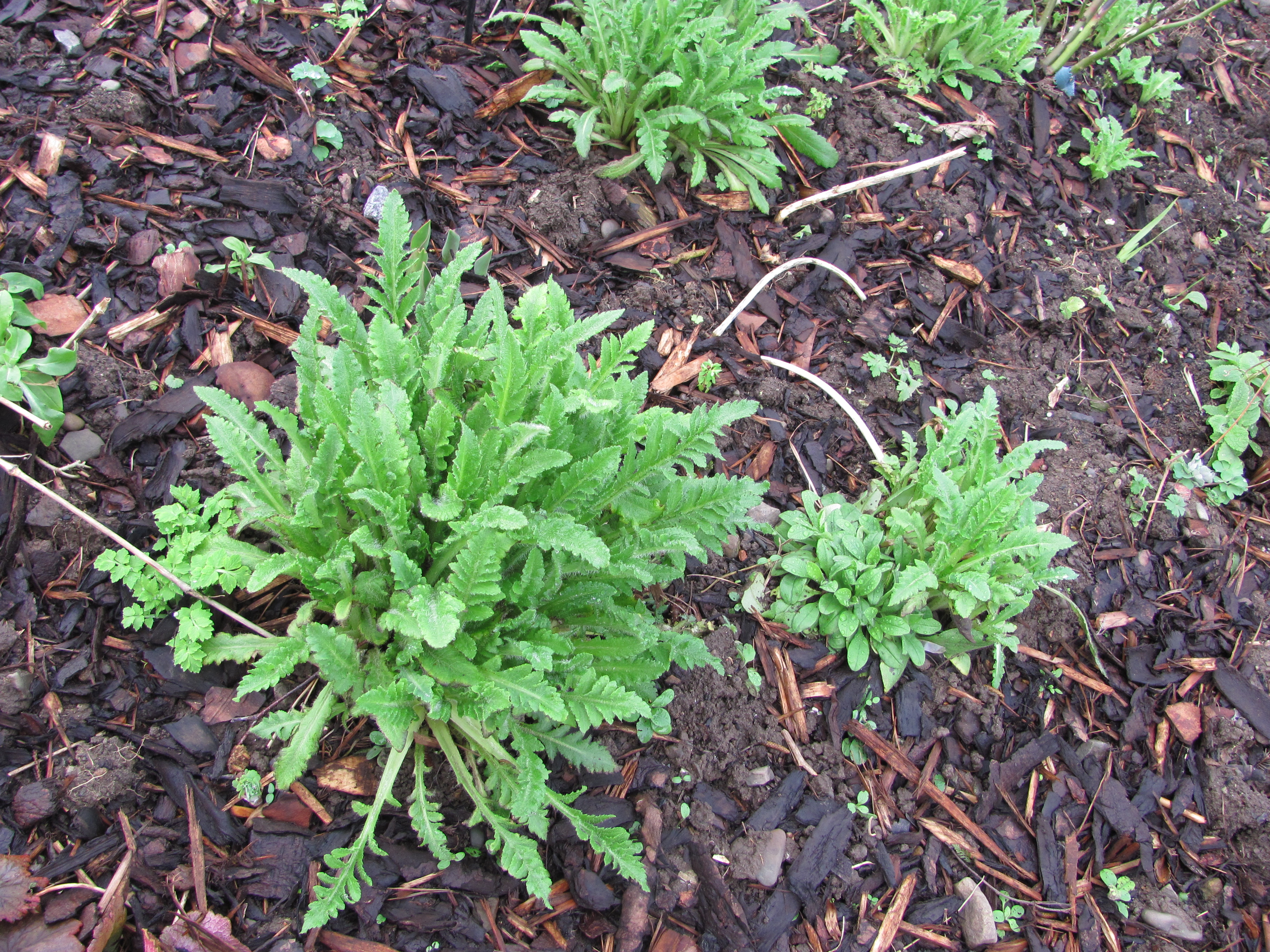

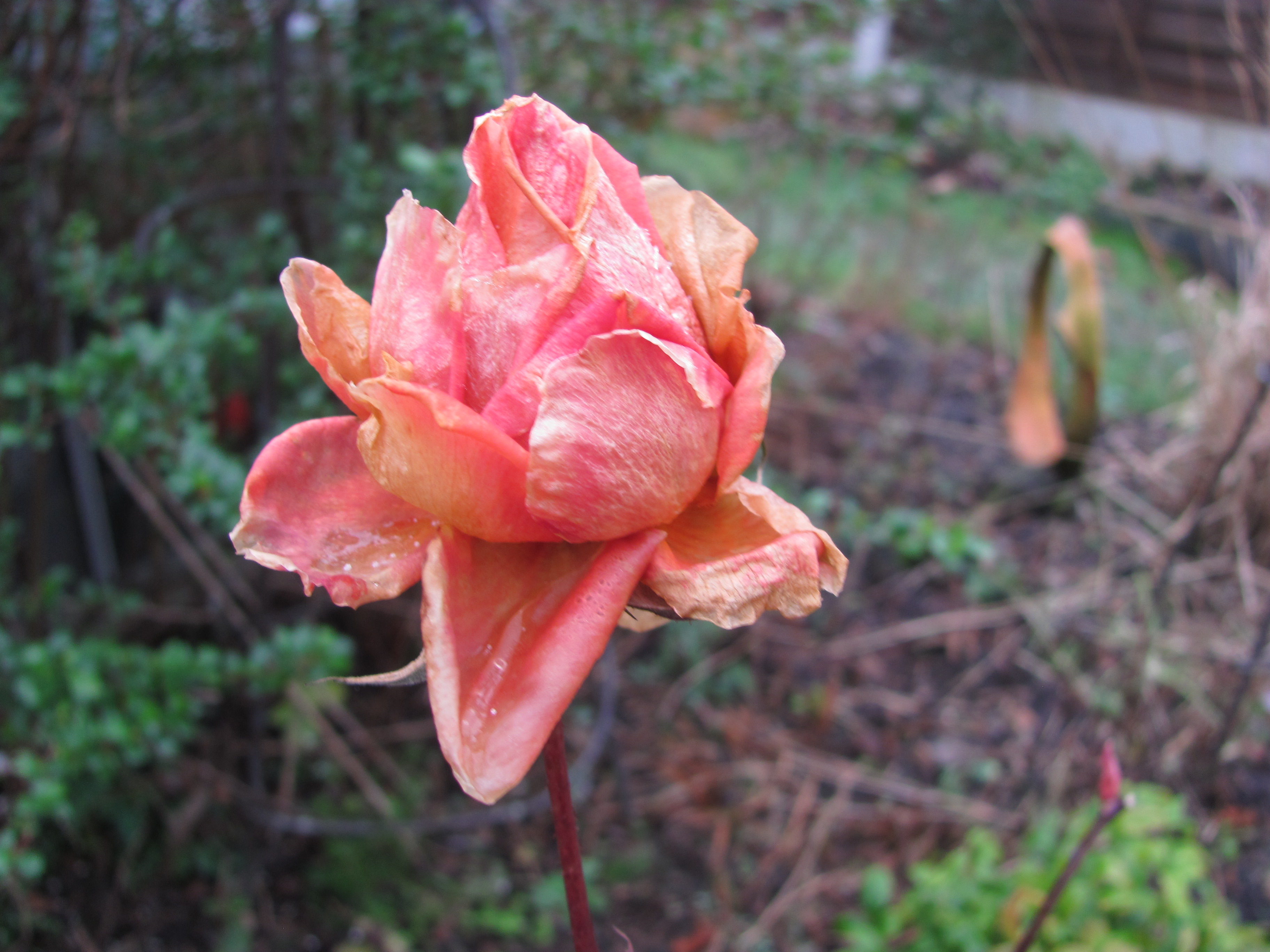
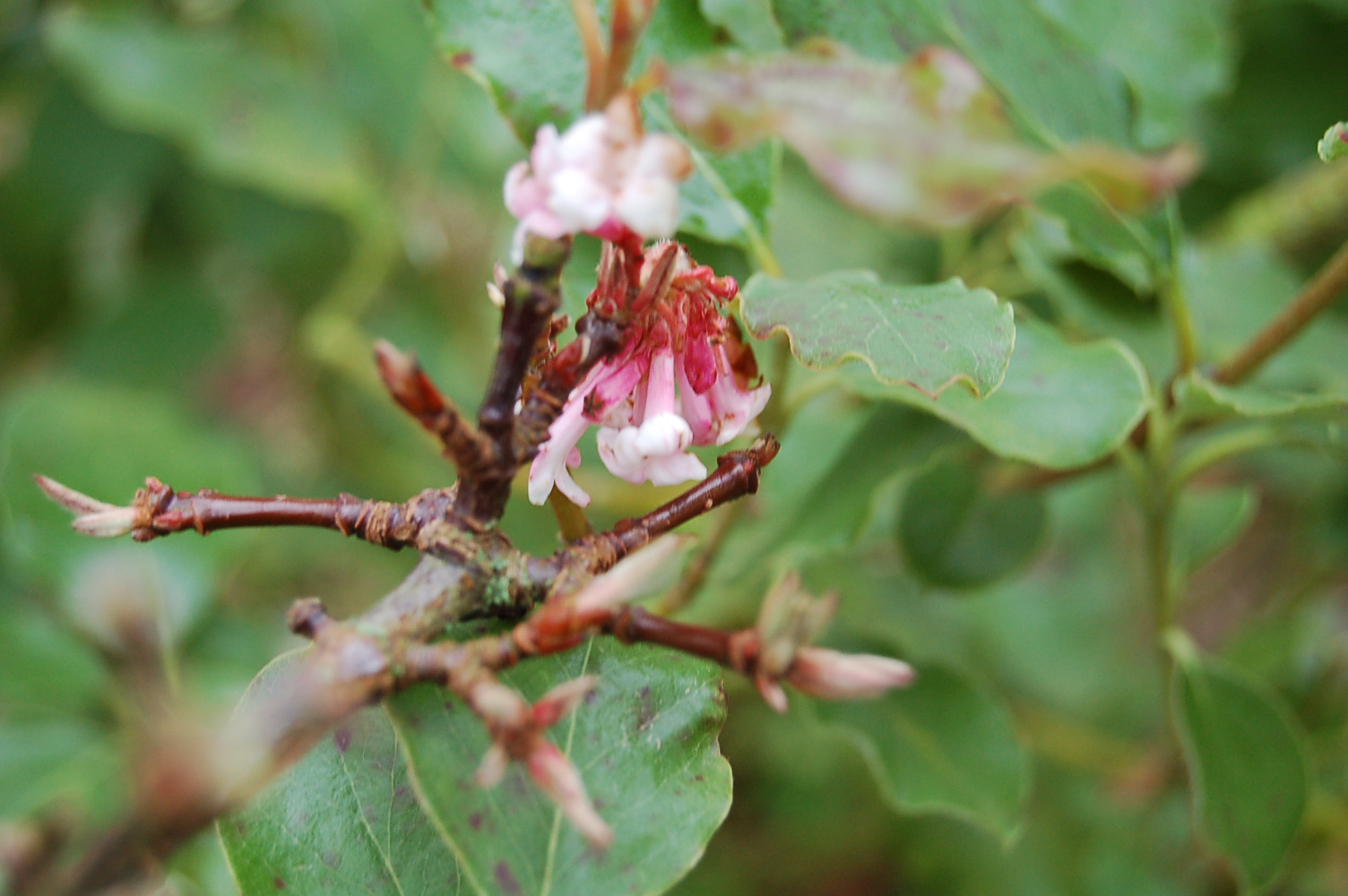
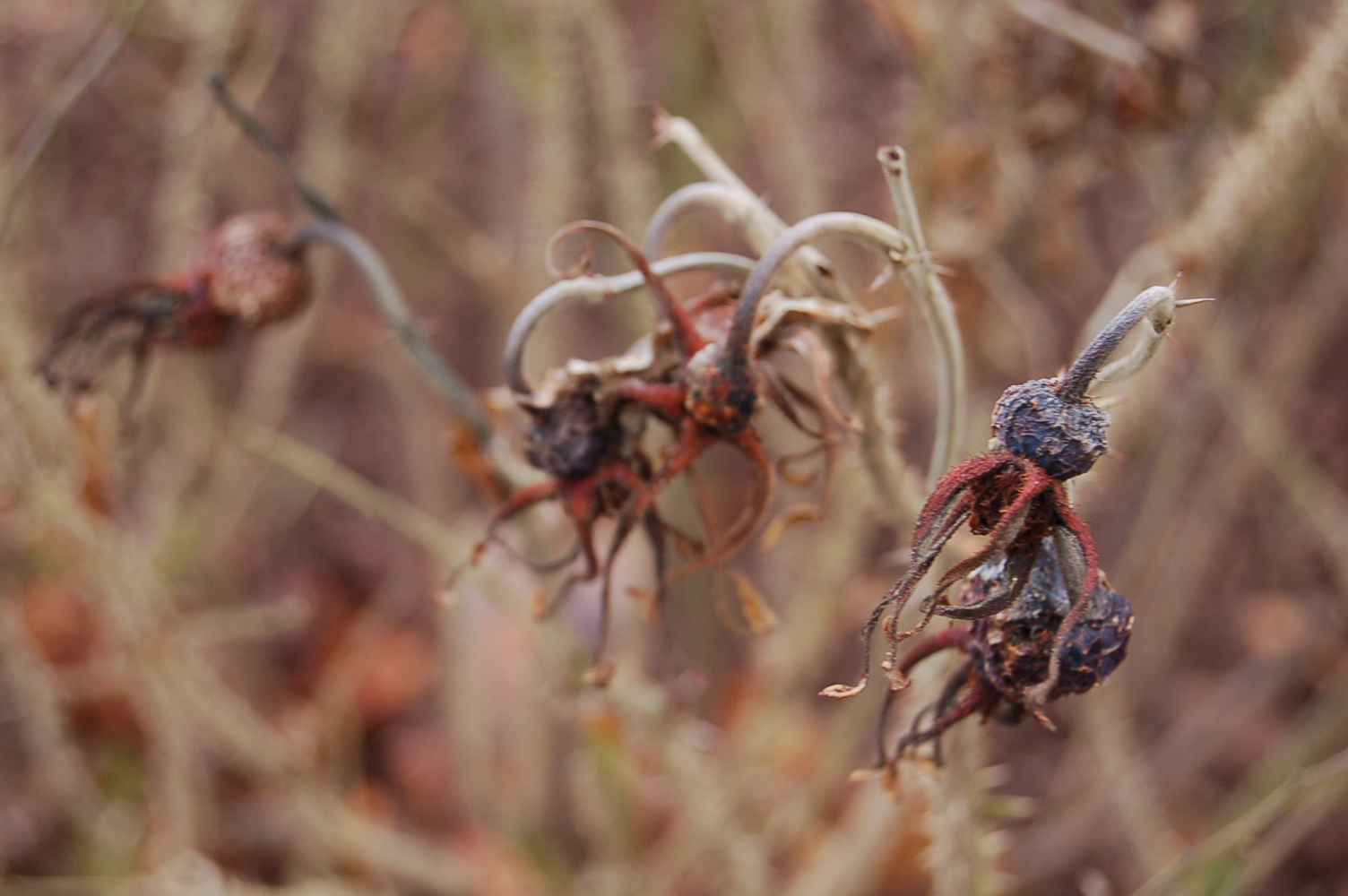
But some new life is out of sinc. Buds appear and surprise. The blue anemone with its metallic sheen on its indigo bud is a special treat and is reflected in the blue berries of the Viburnum davidii. The last of the rose buds however that gave promise of flowers have given in to winter’s grasp.


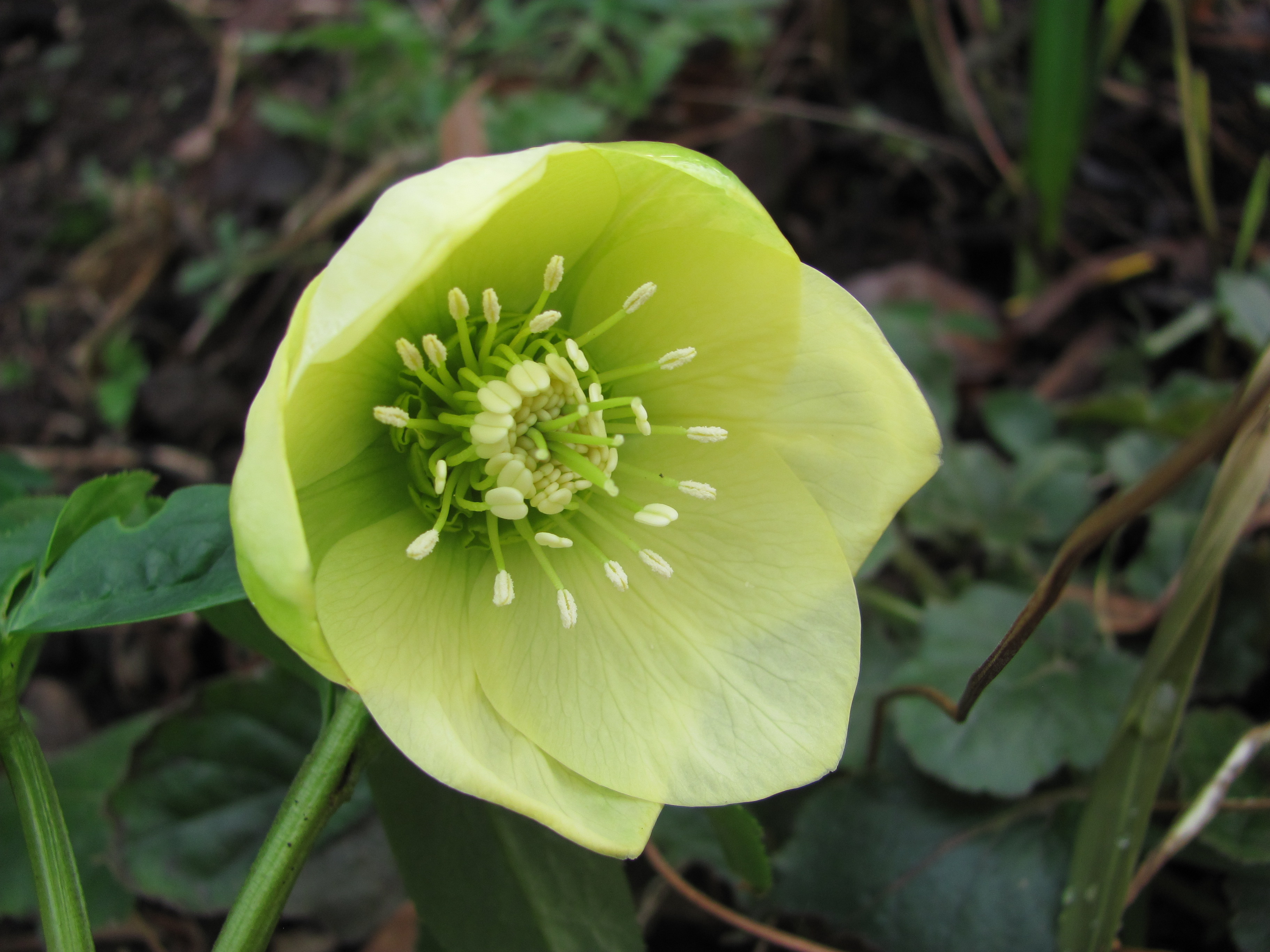
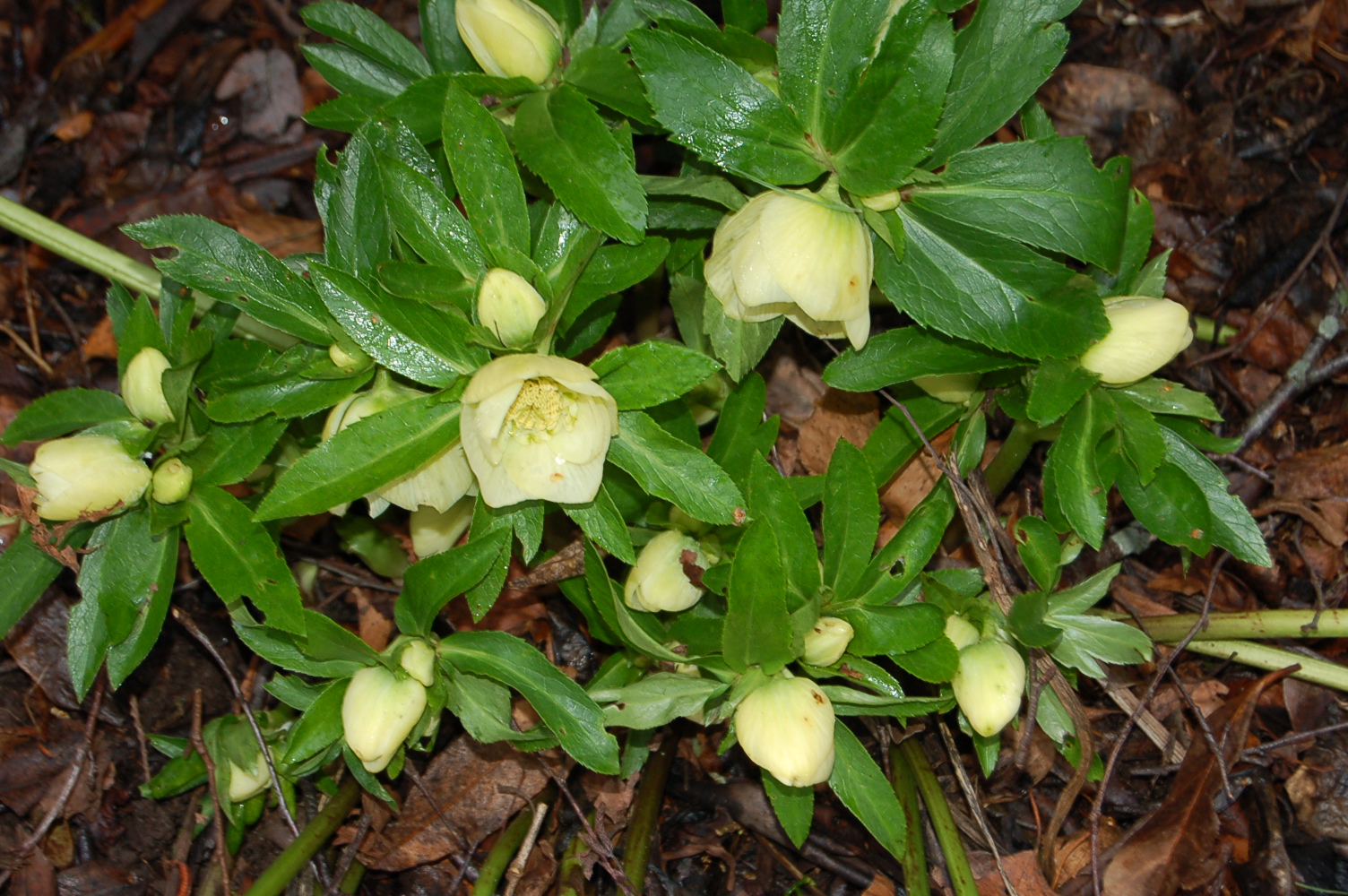
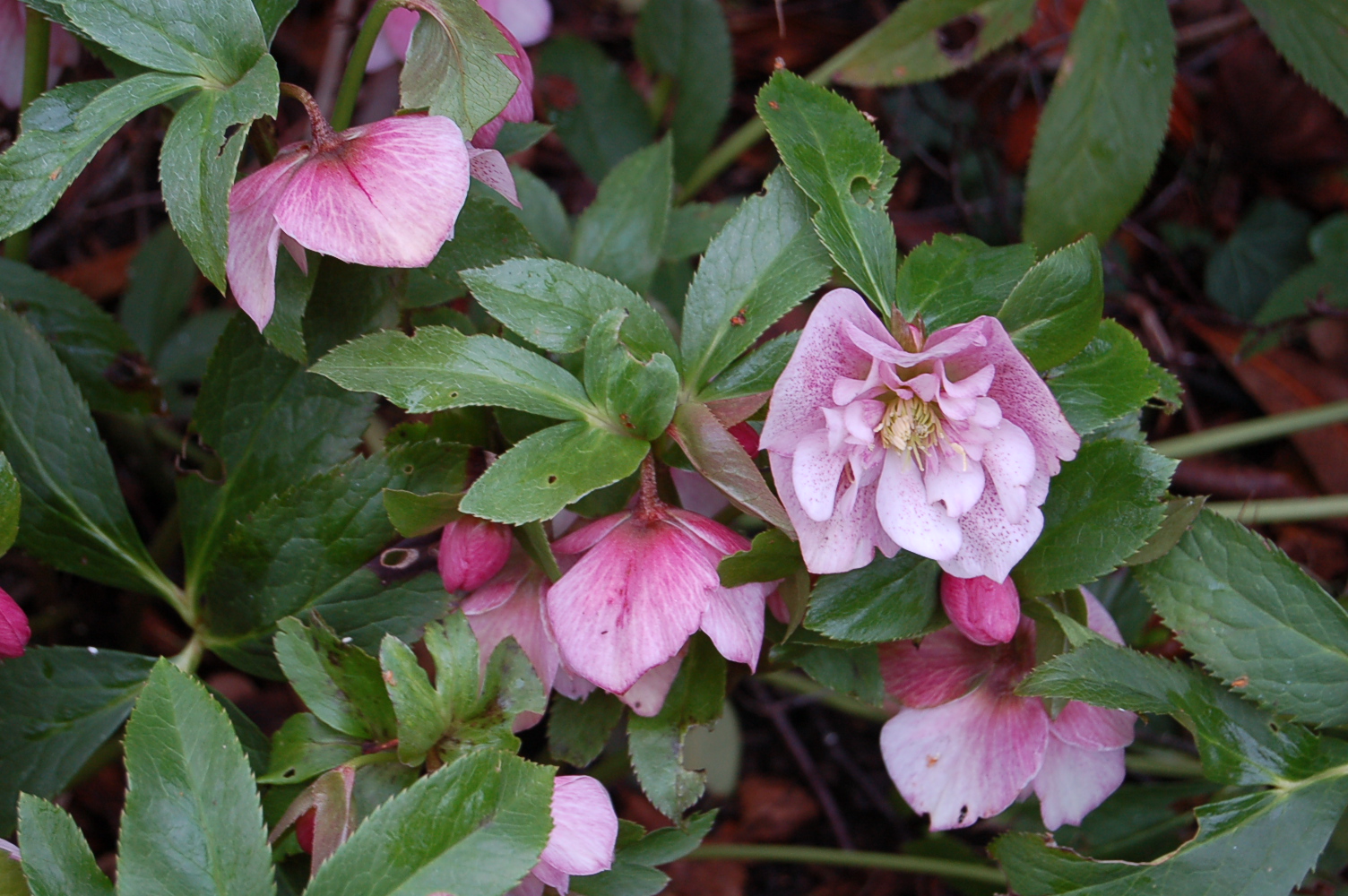
No February garden can be complete without Hellebores so here are just two of ours. But my true favourites to finish our February wander around our garden are the Witch Hazel “Jelena” and Cornus mas.



And so we continue our gentle cold wander around the wintry splendour of Swallow Hayes …….
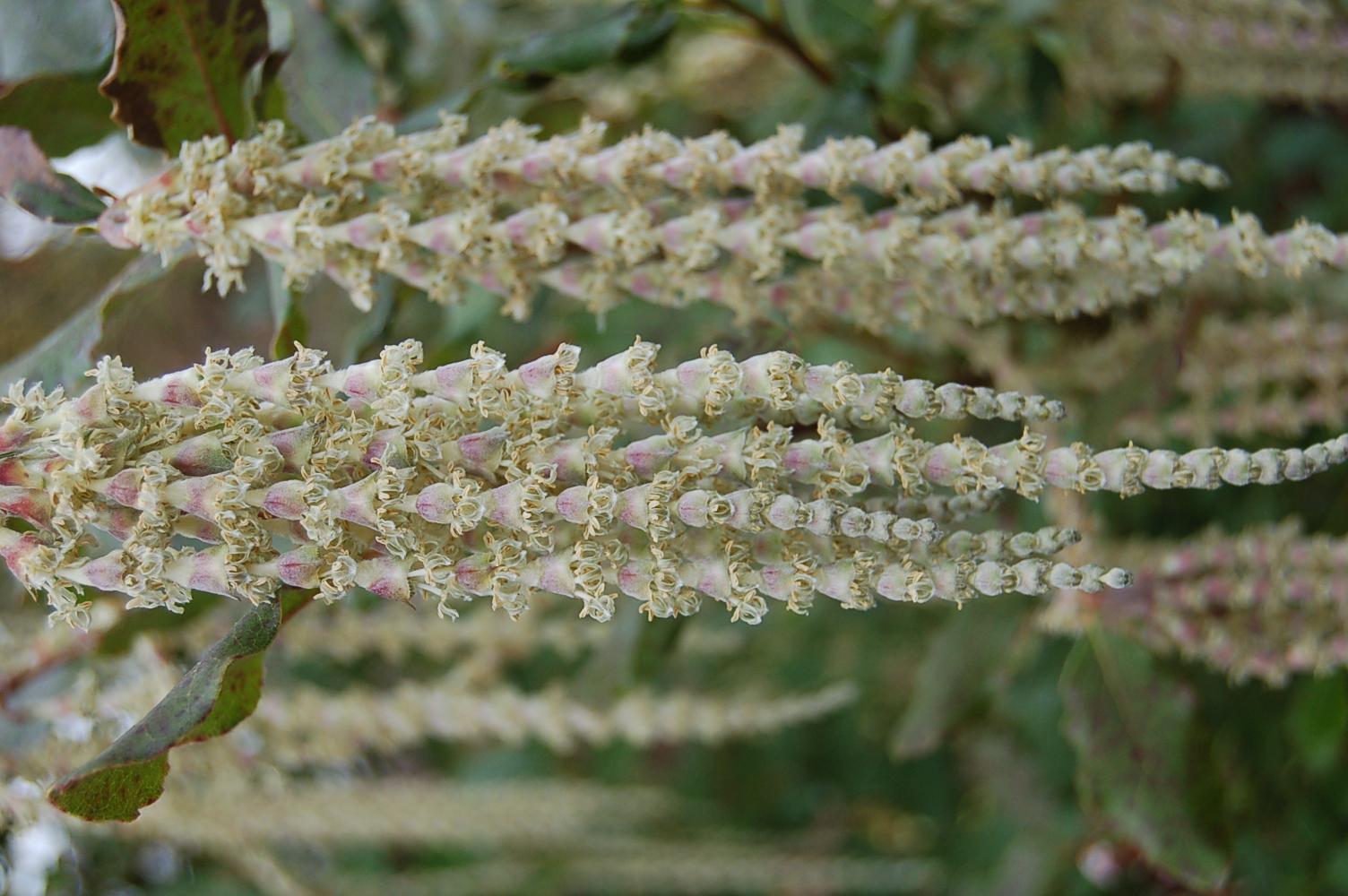

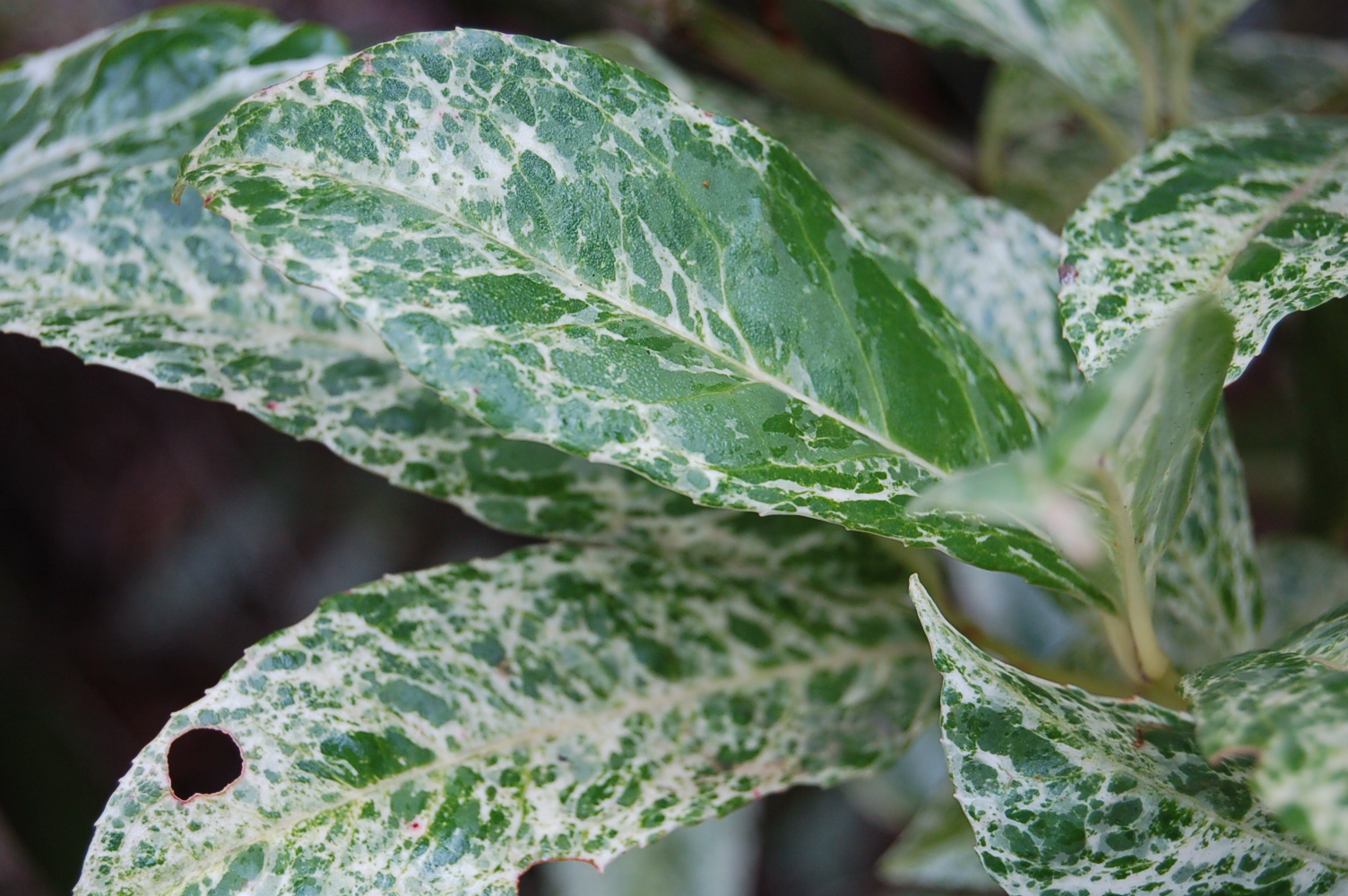

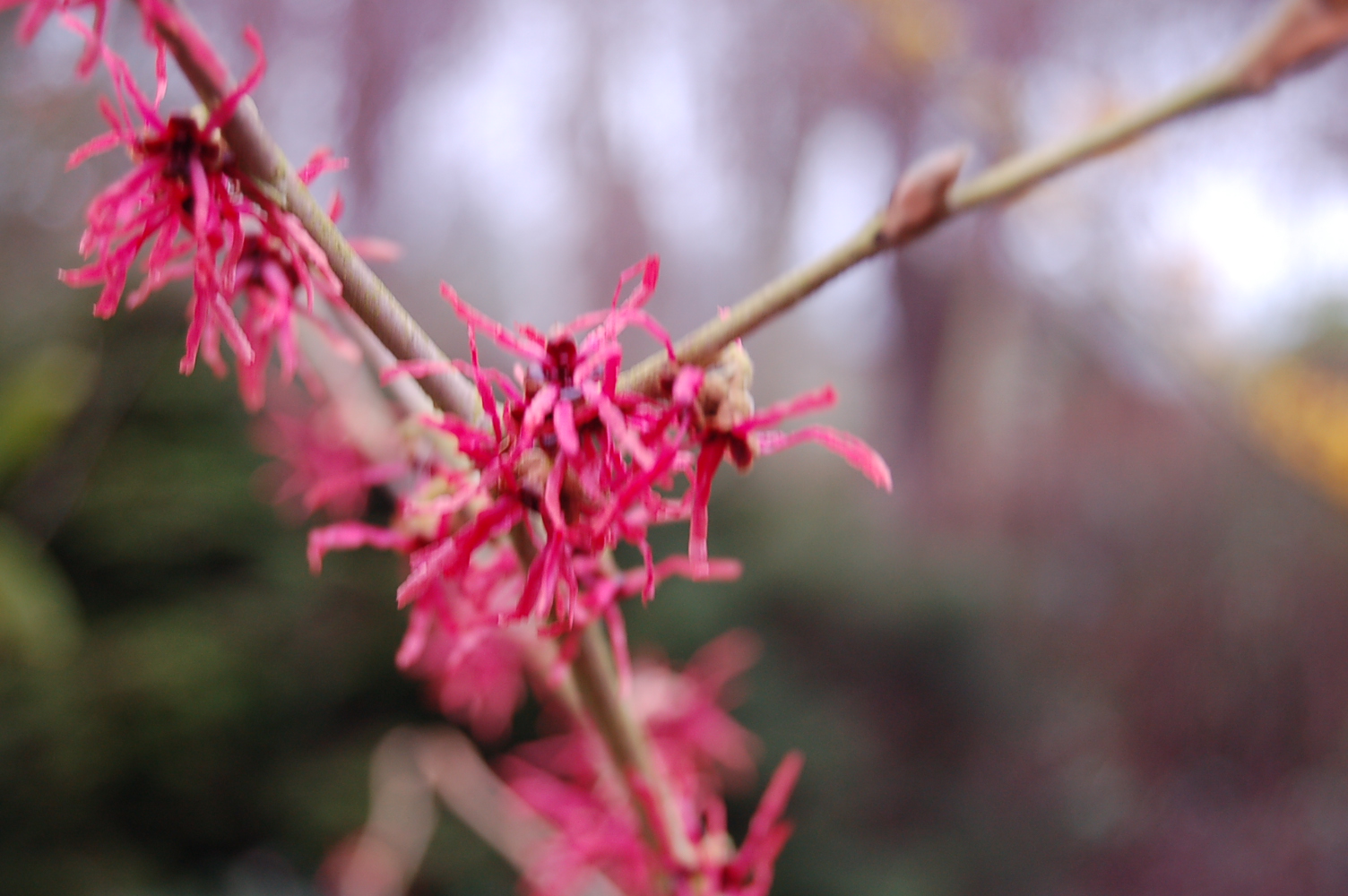
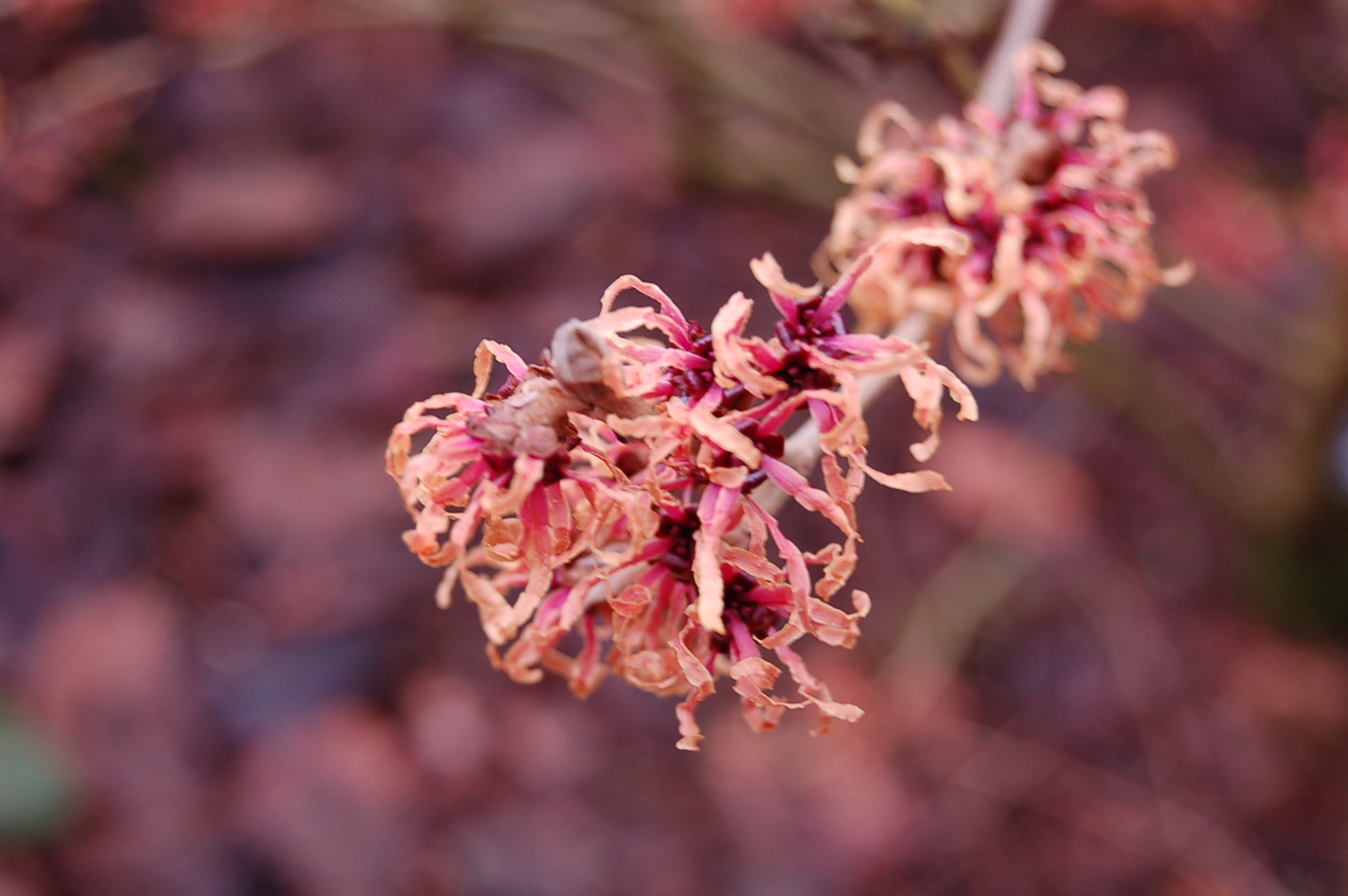
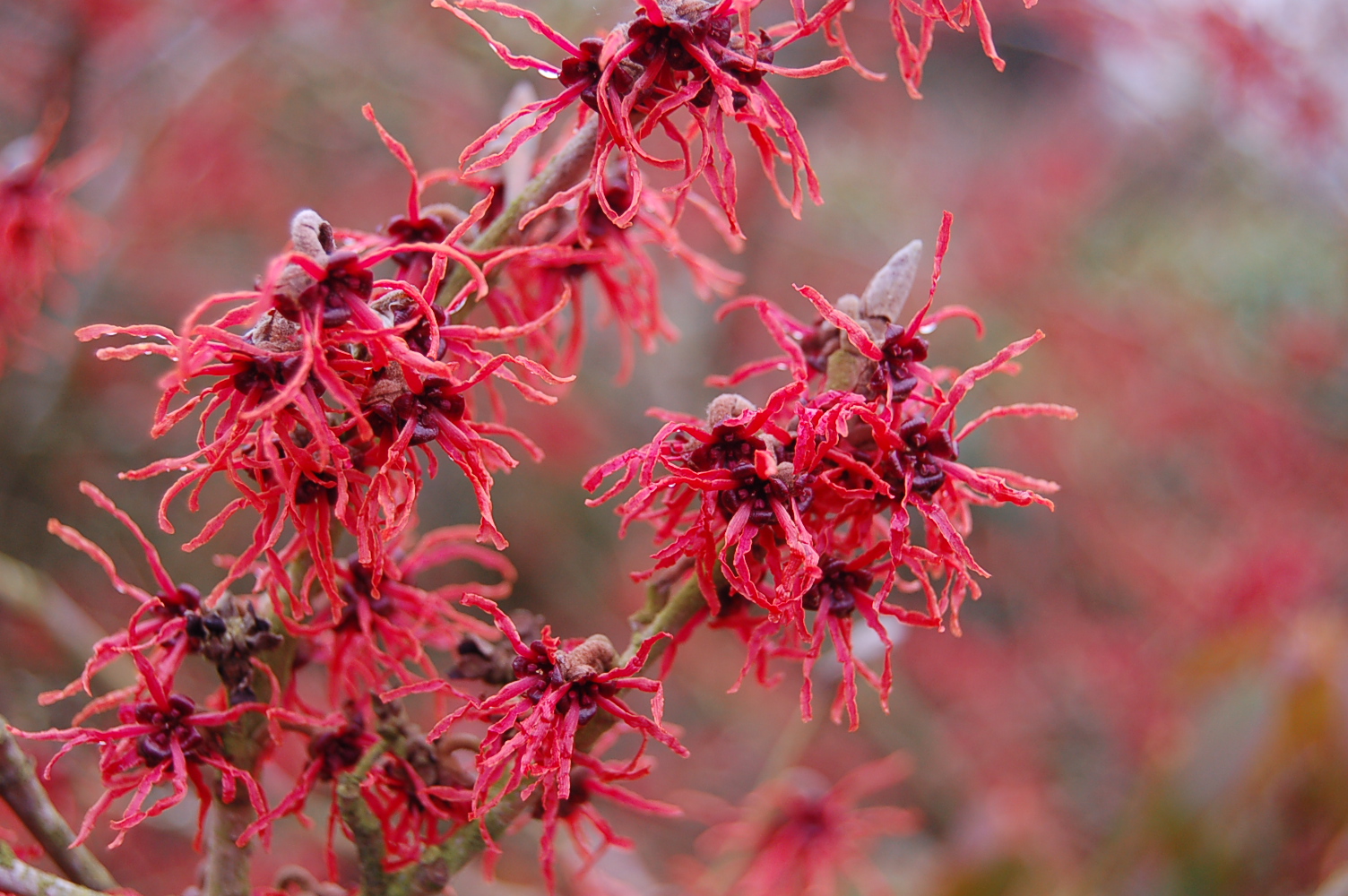
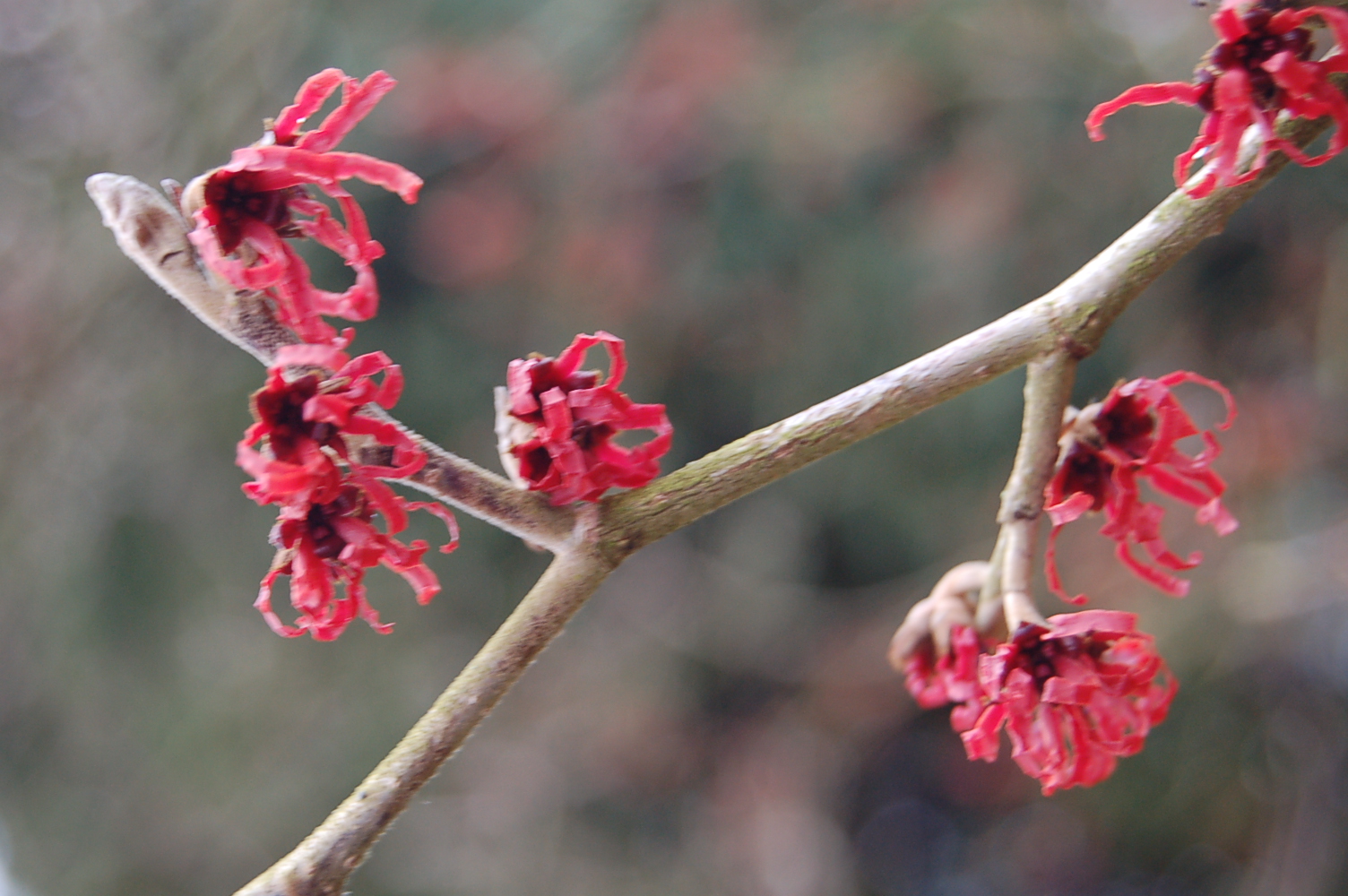
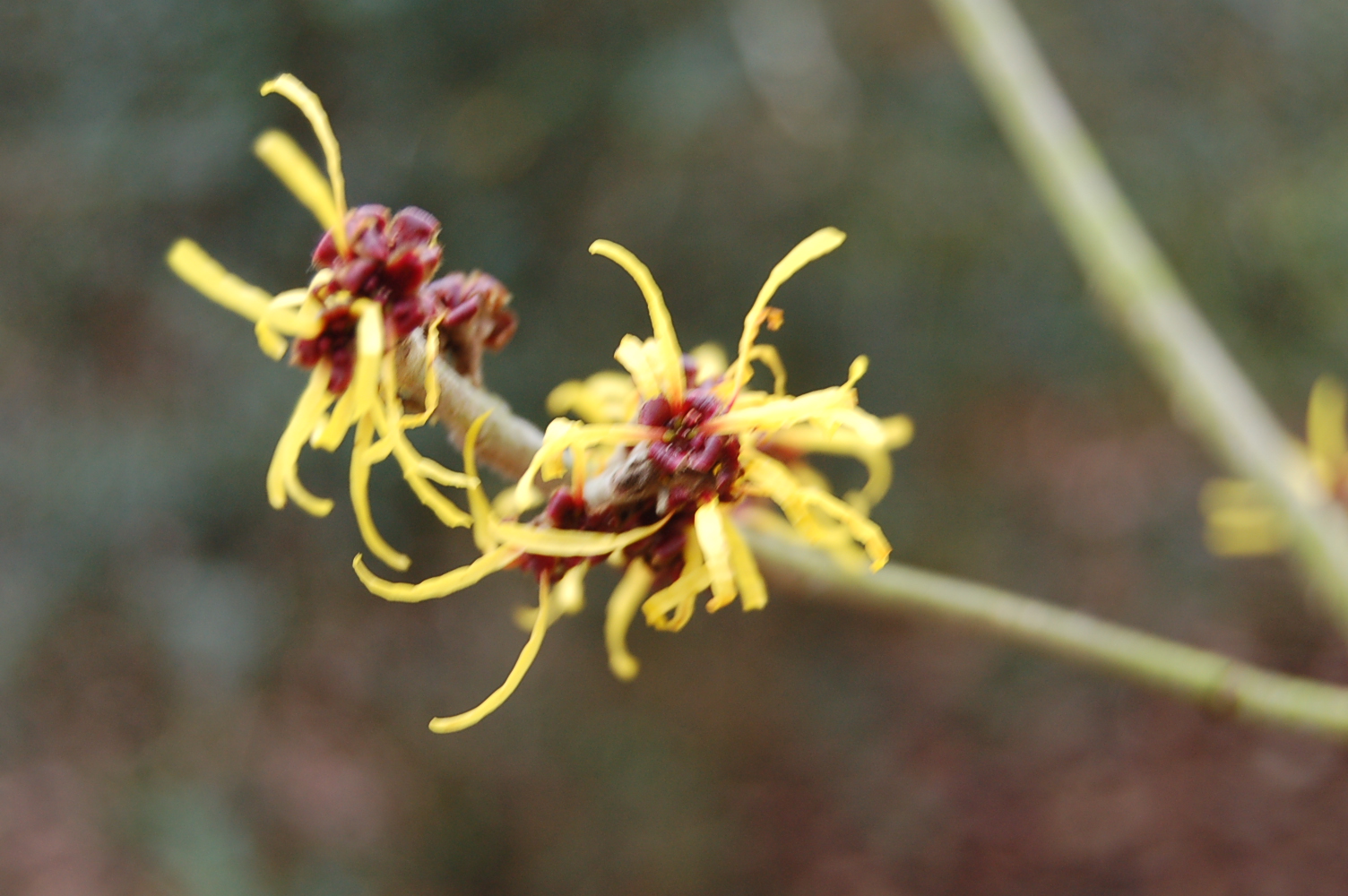
And now to those Witch Hazels! These are not Hazels at all, but related to Parrotias, Fothergillas and of course the Sycopsis we saw in the first Swallow Hayes blog. Their unusually shaped flowers are in every shade of yellow, orange and red and give warming scents in the winter garden. Witch Hazels are well-known for their medicinal properties and are used in aftershave as well as in the treatment of bruises and insect bites. So, beautiful and useful!
The flowers are made up of long, thin strips of petals like curling ribbons or spiders, and appear on bare stems. Several Witch Hazels available to us were bred in Kalmhout in Belgium and the first photo shows one with the unglamorous name of “Kalmhout 999”. Kalmhout is an arboretum in Belgium run by Jelena and Robert de Kelder. Jelena has given her name to my favourite Witch Hazel which you will see in my blog “A Wander around the Garden in February” which I will post in the next few days. Two more of their developments are “Diane”, named after their daughter and “Livia”, named after their granddaughter.




A Vegetarian | Nature Lifestyle Blog
.....and nurturing my soul
Journeys In St. Louis Gardening and Beyond
Consult the genius of the place
A blog full of humorous and poignant observations.
Notes from a wildlife-friendly cottage garden
...an emerging social science
'The most important and informative publication on wildlife of our times' - The Independent. This blog is a member of The UK & Ireland Natural History Bloggers group: www.uknhb.blogspot.com
Inspire - Cultivate - Grow Native Plants - Restore Landscapes
To create and protect a semi-natural wild space for the people of Farnham to enjoy and experience an array of British wildlife in our town
The www.gardeningwithchildren.co.uk Blog
birding through the seasons, why birds matter and how to conserve them
with a camera in hand
Transform your outdoor space
My allotment, cooking and other interests
my gardening life through the year
Trying to live a creative life
trying to live as lightly as possible on our beautiful planet
Nature lovers from Leicester living the good life.
Finding the beautiful in the everyday
Michelle's Allotment
thoughts from and about my garden
Big plans for a small garden
A Walled Country Garden in South East Scotland
Life at the fruity chicken
Off grid living. Self sufficient. "PERMAGANICS RULE".
Nottingham's Grade 2* Listed Allotments and Community Orchard
a journey in suburban vegetable gardening
The madness of growing your own
A novel approach to vegetable gardening
Sustainable living in the Irish countryside.
Master Gardener, amateur photographer, quilter, NH native, and sometimes SC snowbird
Recent work and work in progress and anything else that interests me
a chaotic cottage gardener
a weekly blog that creates a personal philosophy through photographs and words
Stories from a sassy and classy Southern farmbelle.
Simple Organic Gardening & Seasonal Living
turning dirt into dinner
today the world is created anew
Notes from a Devon garden
Life Through The Lens
A photography blog showcasing the best photography pictures and videos on the internet
Just another WordPress.com site
personal observations from the natural world as the search continues for a new approach to conservation.
The Wonders of Life through my Eyes, my Heart, my Soul
 greenbenchramblings