Categories
buildings garden buildings garden furniture garden photography garden seating garden wildlife gardening gardens gardens open to the public hardy perennials nurseries Shropshire village gardens walled gardens Yellow Book Gardens

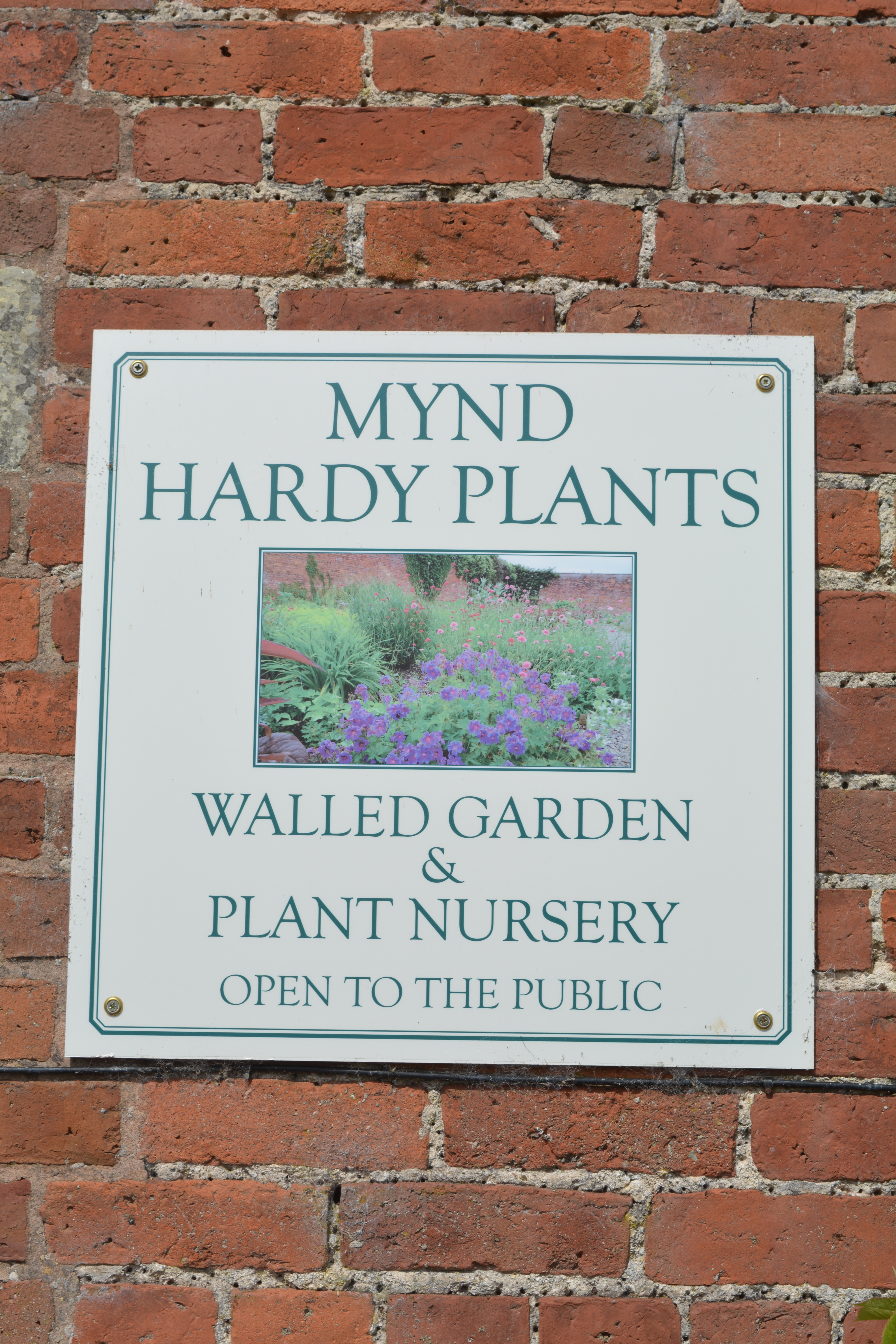
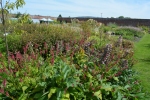
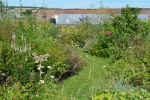
Mynd Hardy Plants – return to a favourite nursery.

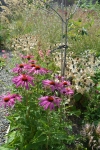
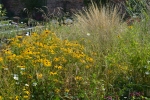
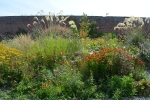
Jude the Undergardener, aka Mrs Greenbench, and I are not fans of garden centres where things horticultural are disappearing under an avalanche of gifts, fancy foods, pet foods etc etc but we do love our independently run plant nurseries and have a handful of local favourites we visit when we need plants to complete new plantings or just fancy a bit of compulsive plant buying. Mynd Hardy Plants situated in Shropshire’s Corvedale ranks as a top favourite, so we thought you may enjoy coming on a visit with us. The fact that it opens for the National Garden Scheme like we do is an extra bonus.

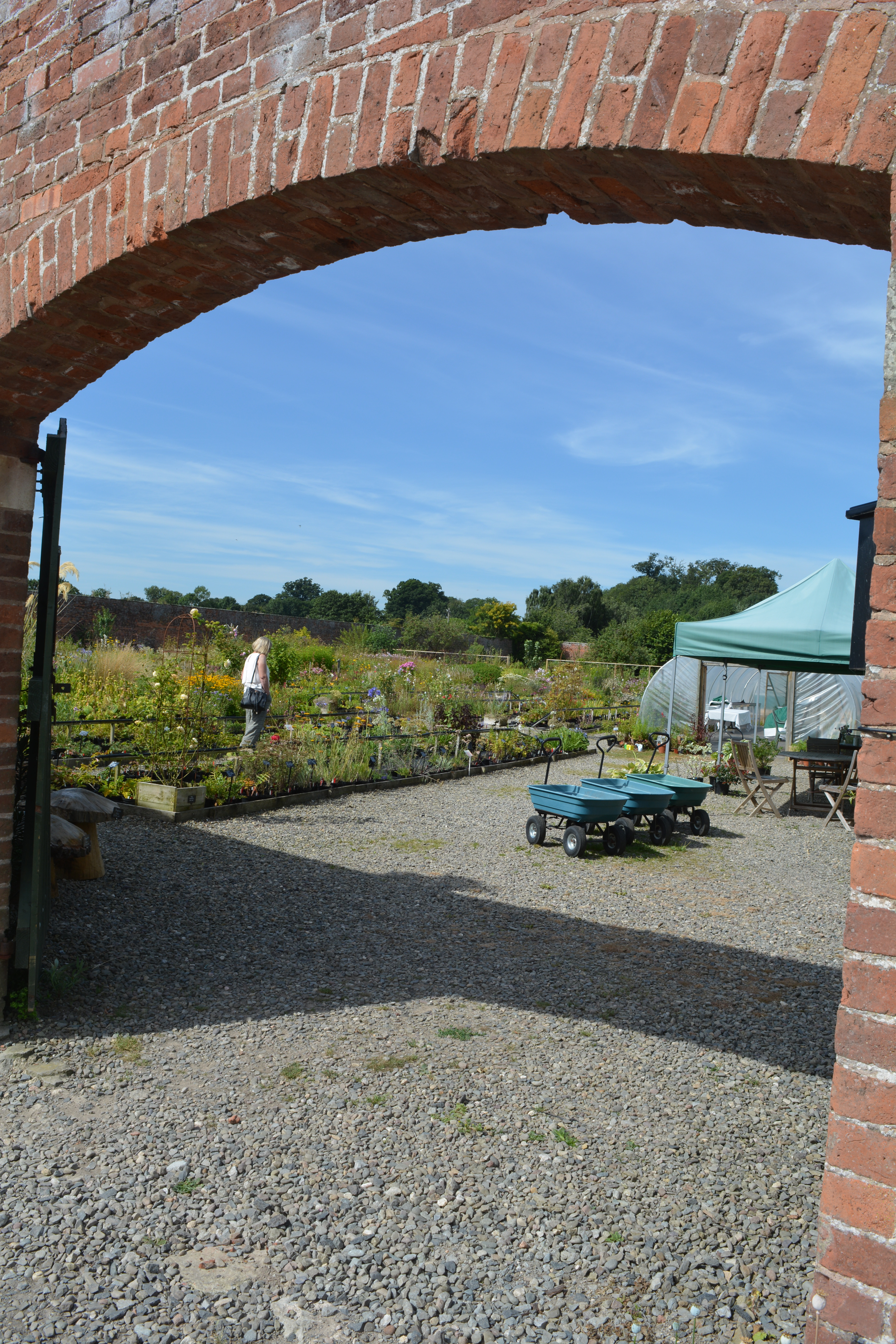
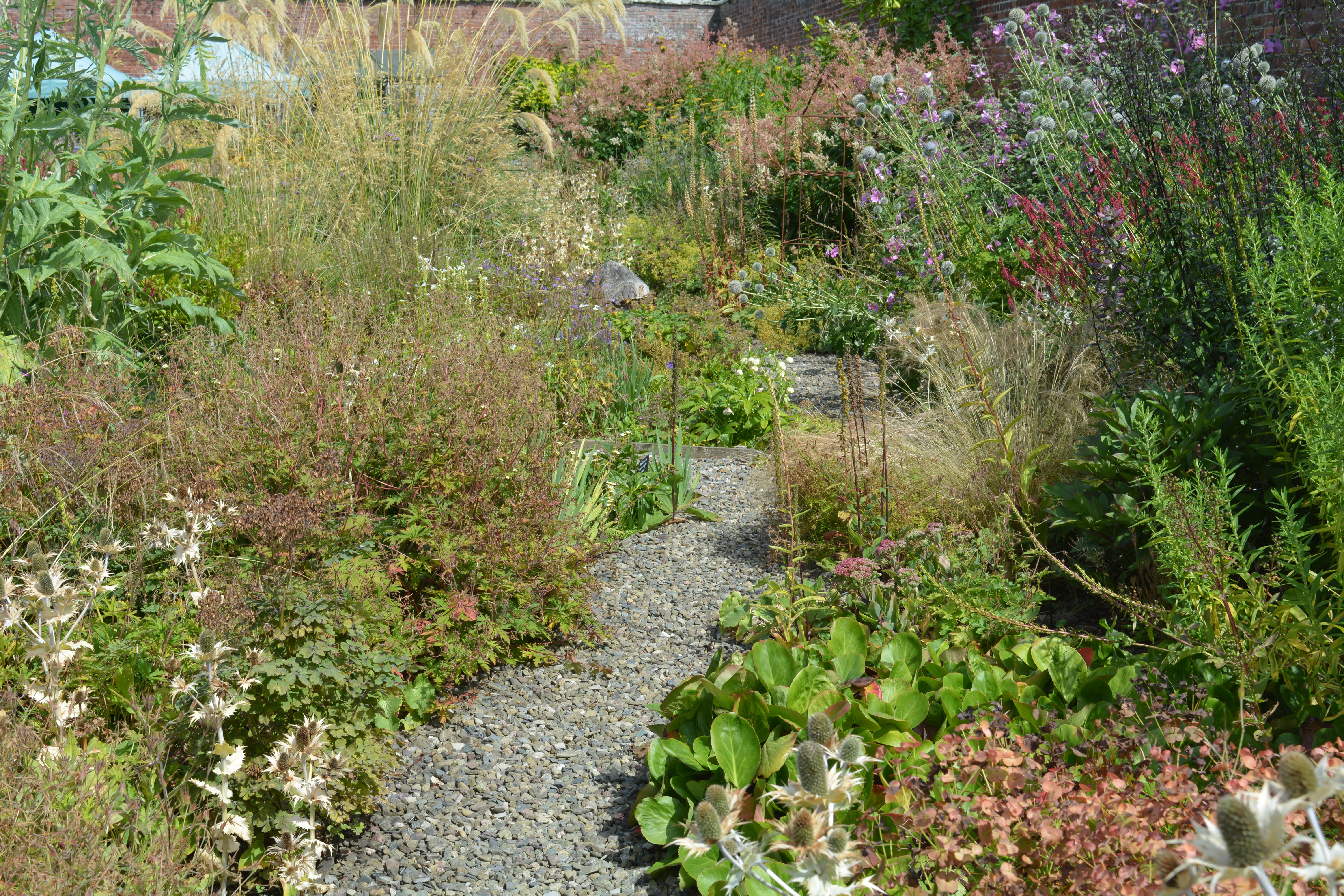
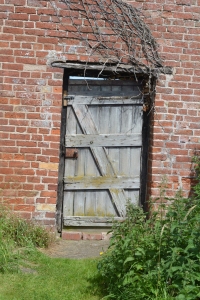
As soon as we pull up to park the car alongside the outer wall of the walled garden we feel warmly welcome and this warmth increases as we enter through the old doorway. When we take our first steps inside smiles appear.

mhp-01 mhp-02 mhp-03 mhp-04 mhp-05

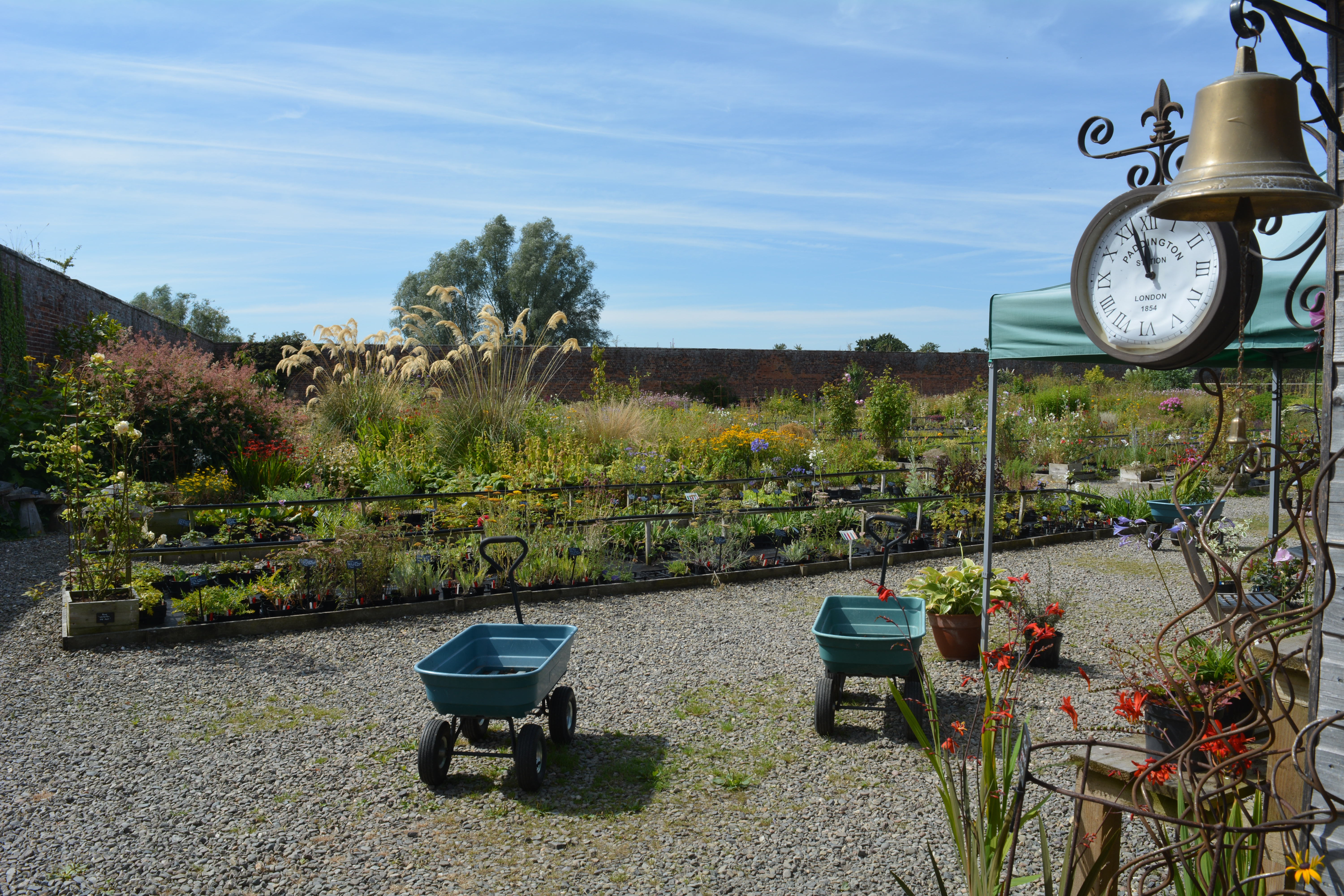
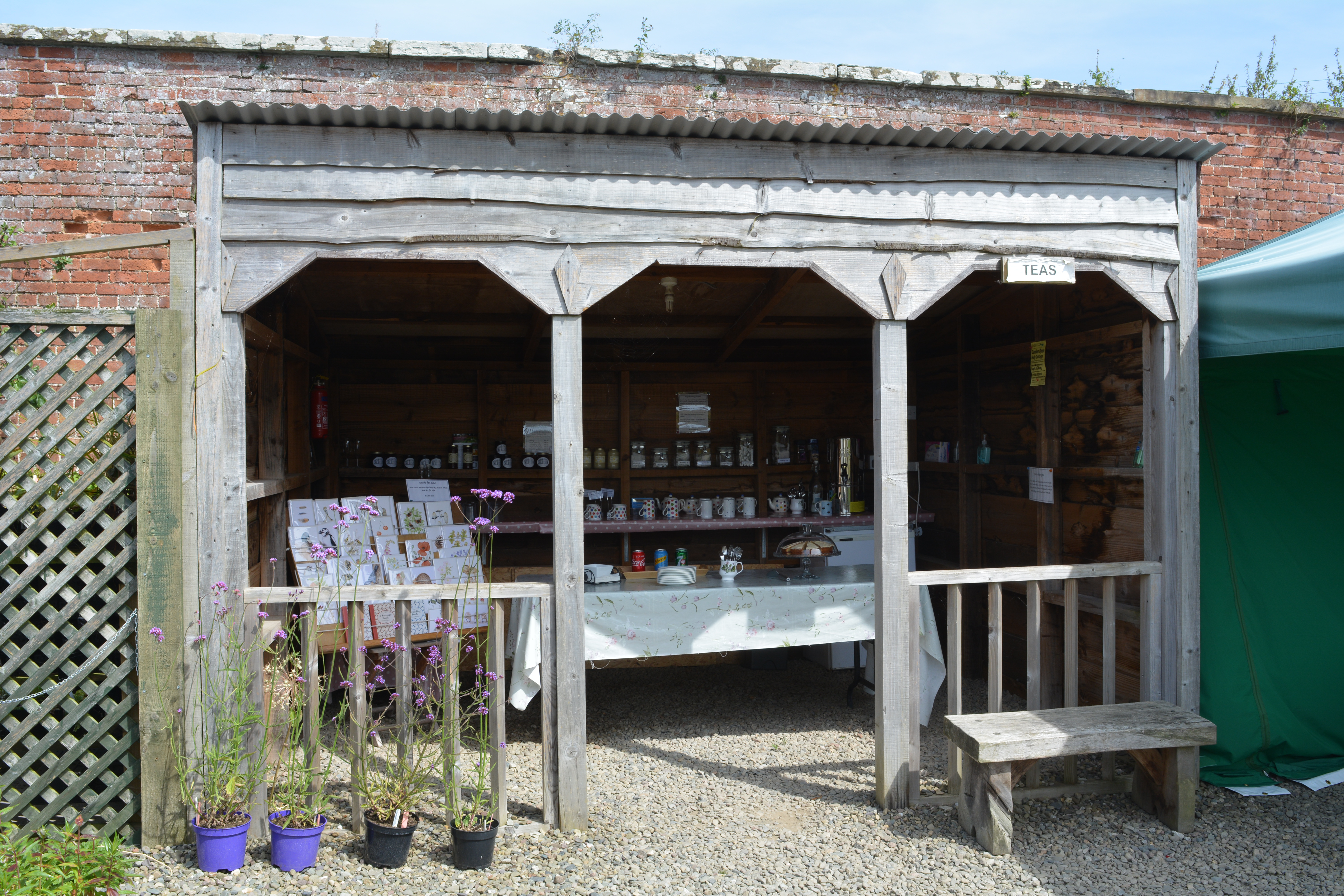
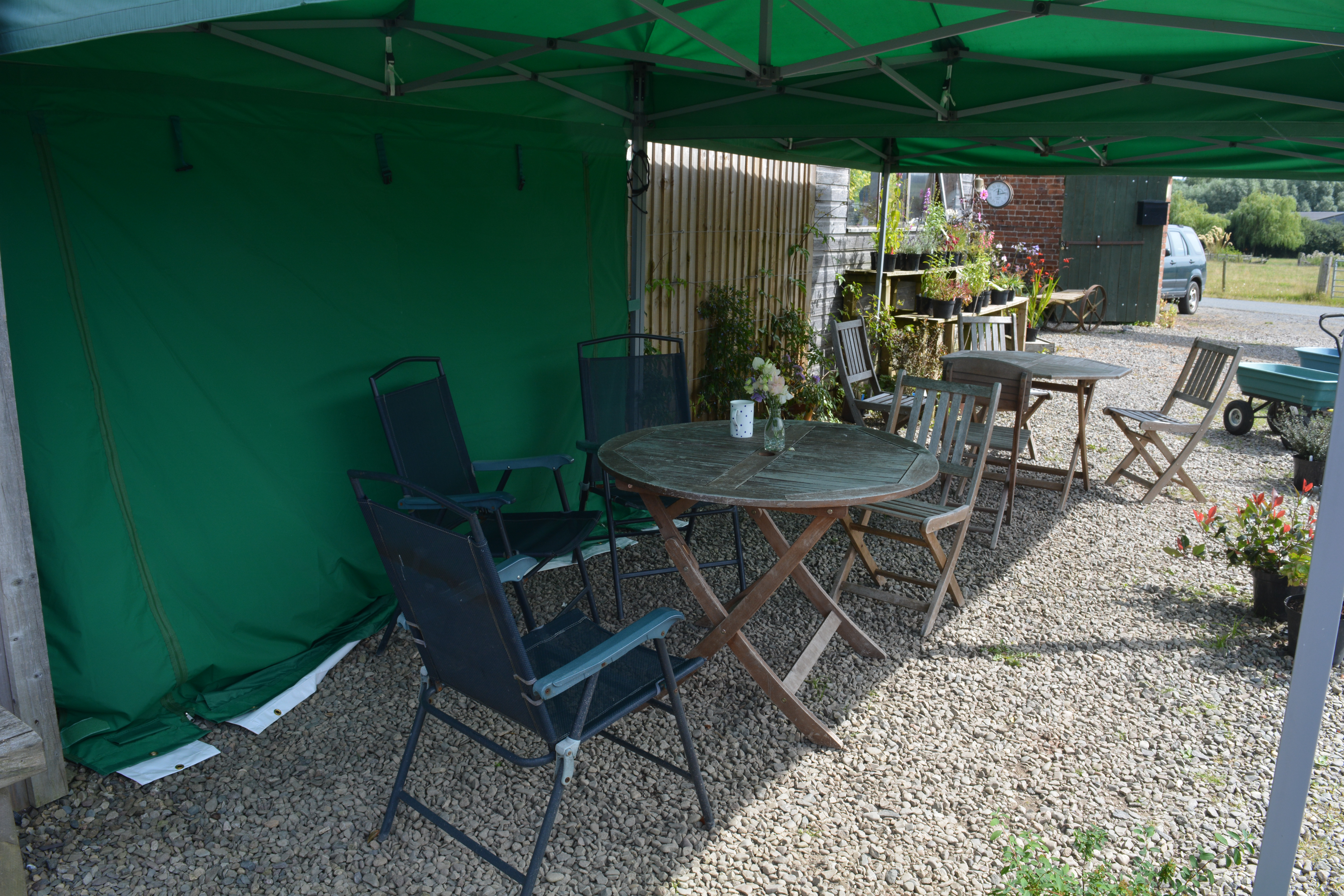
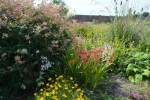
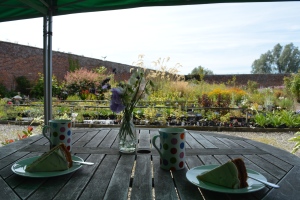
Mynd Hardy Plants is not simply a nursery it is also a garden, and both aspects are worthy of a visit in their own right. But of course a simple tea shop selling home made cakes and beverages with seats overlooking the nursery and gardens is a real bonus.

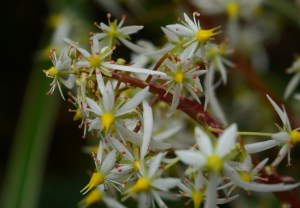
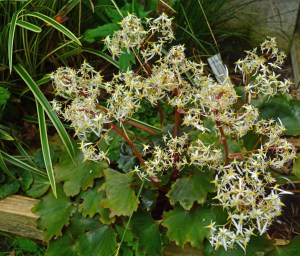
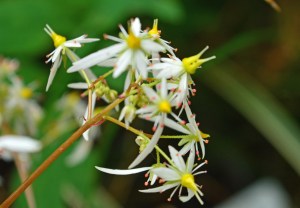
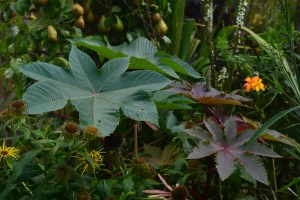
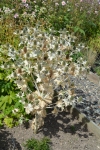
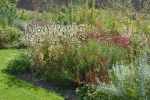
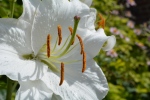
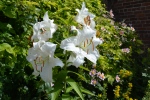
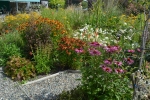
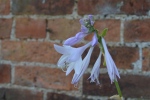
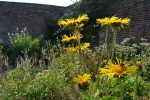
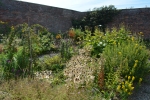
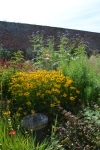
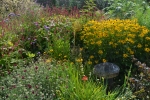
mhp-07 mhp-08  mhp-10 mhp-06mhp-12 mhp-14

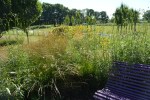
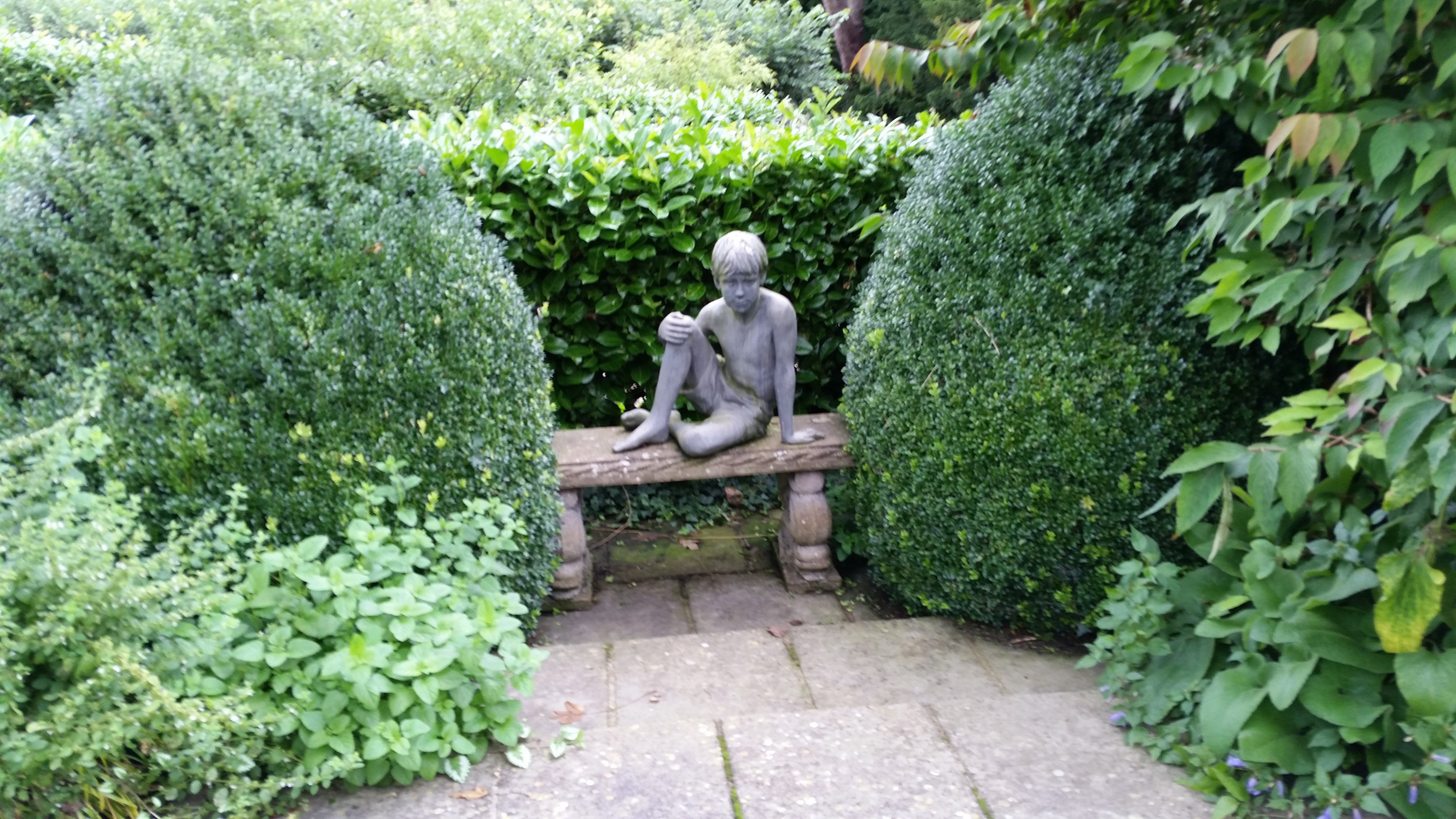
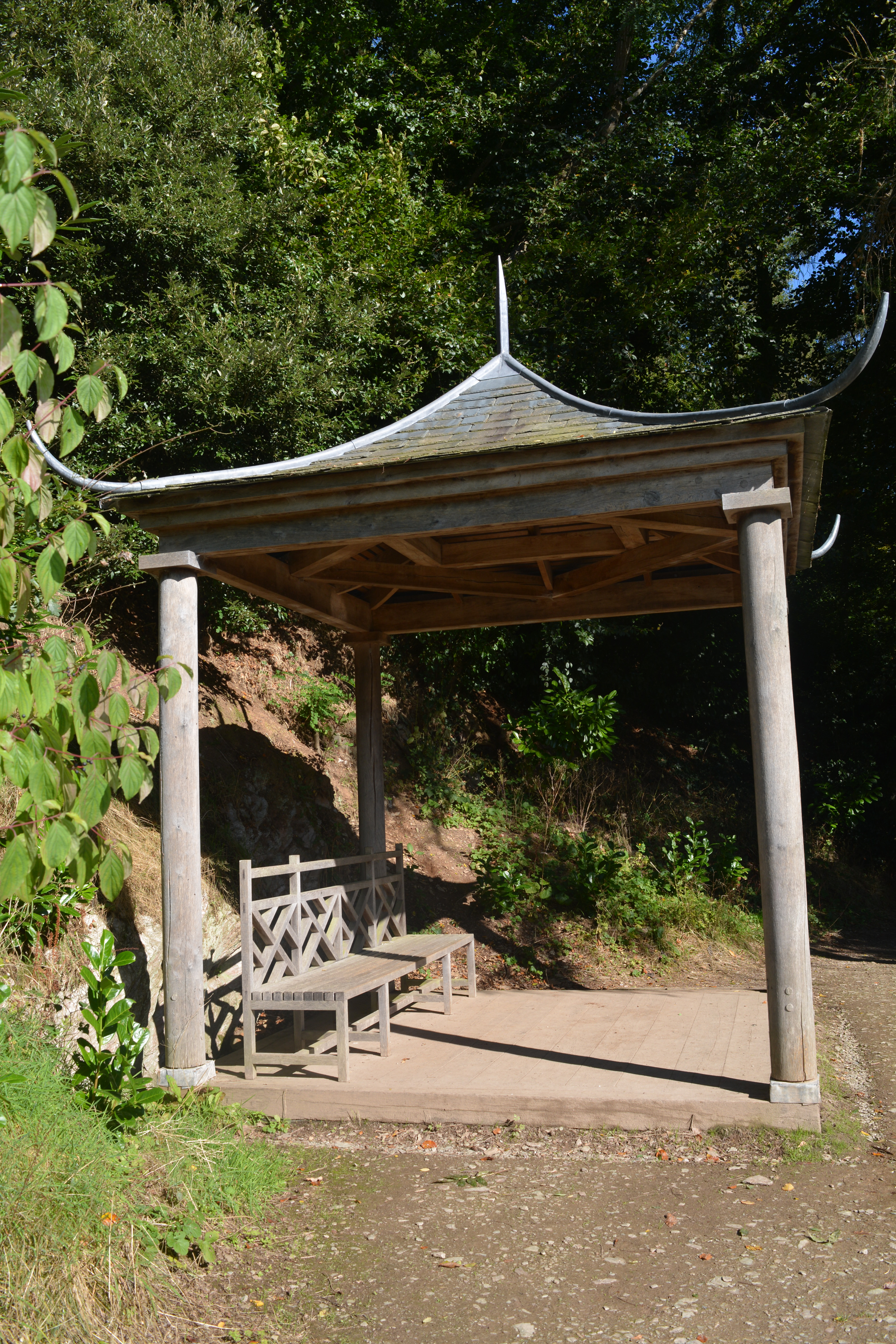
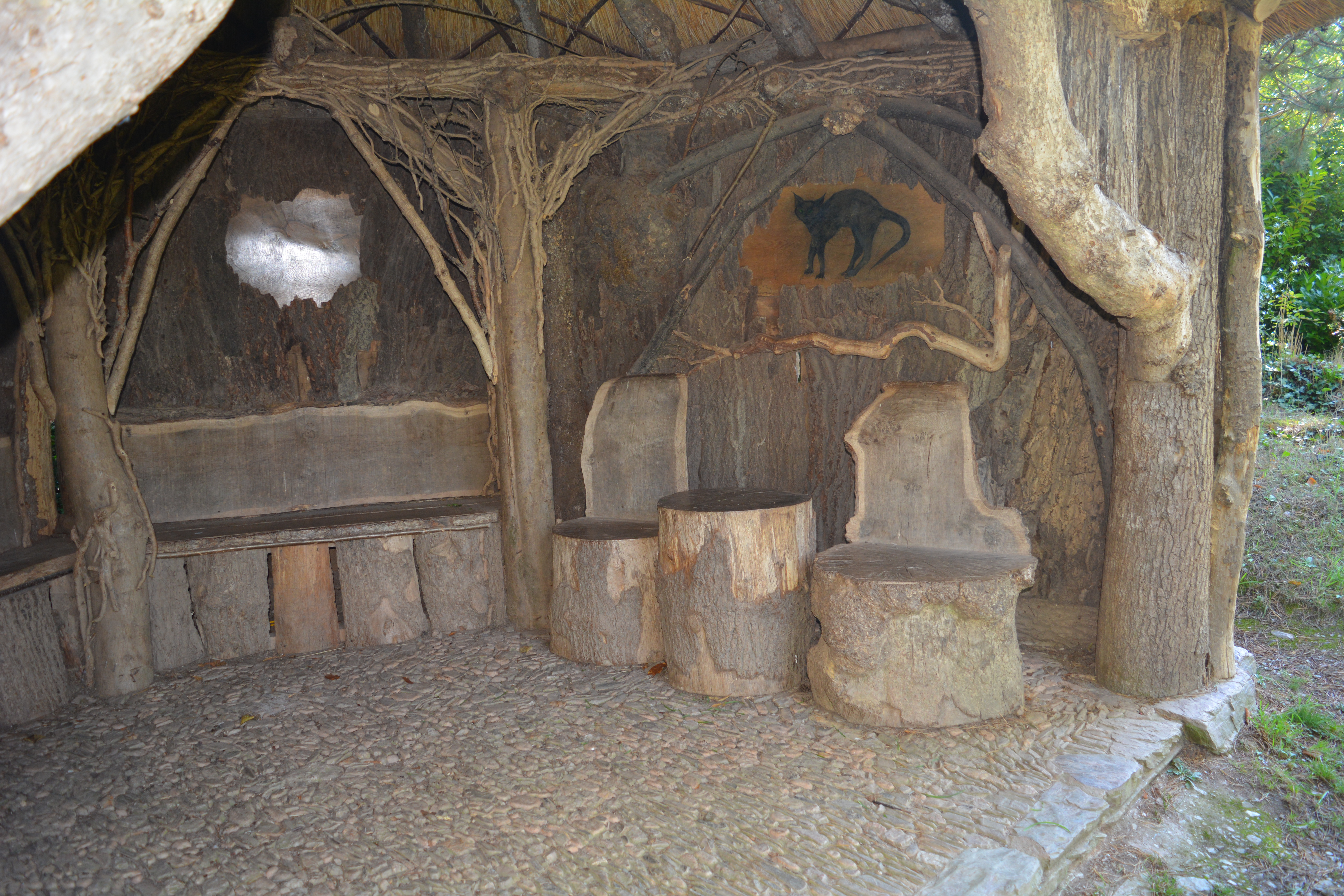
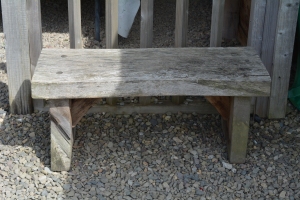
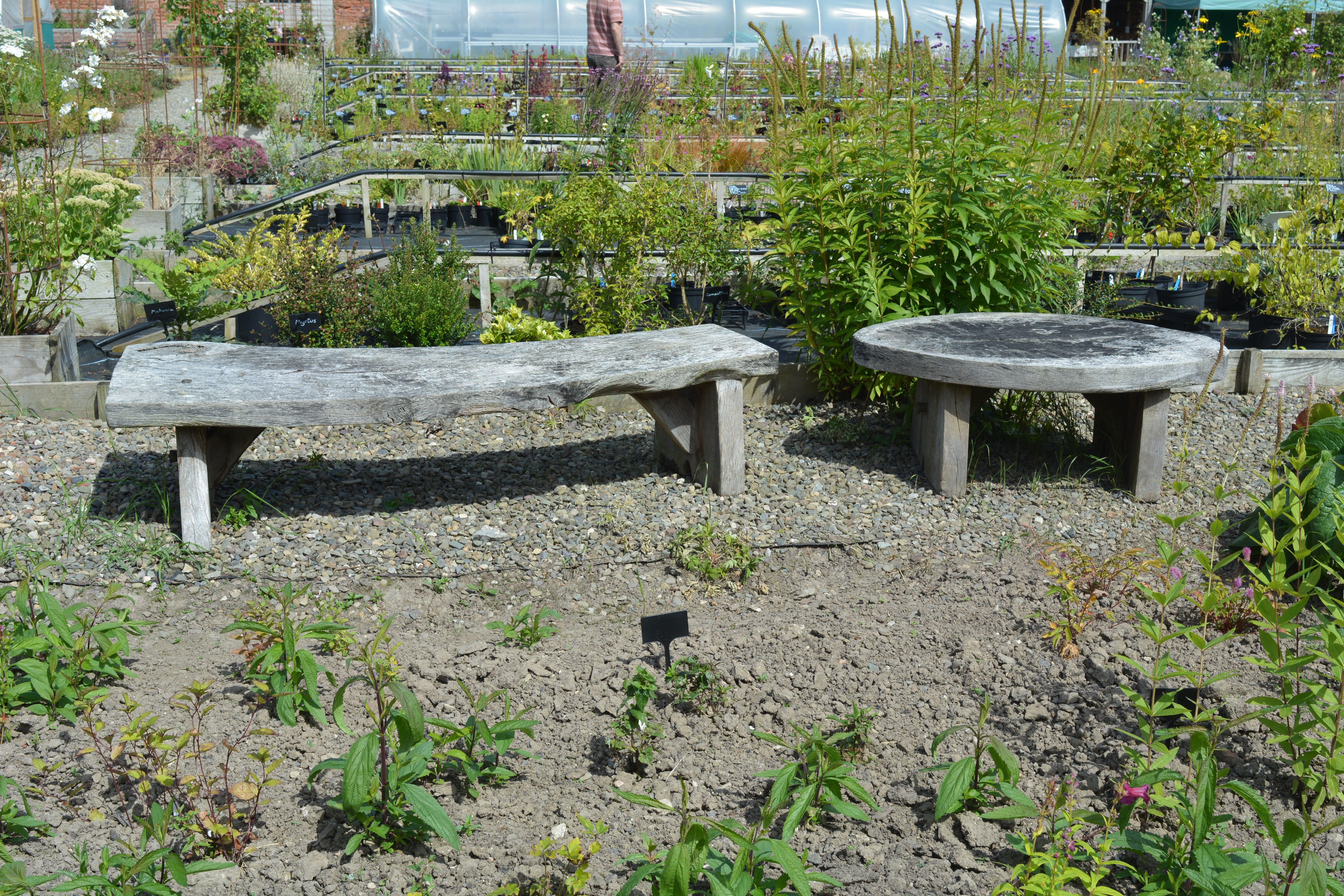
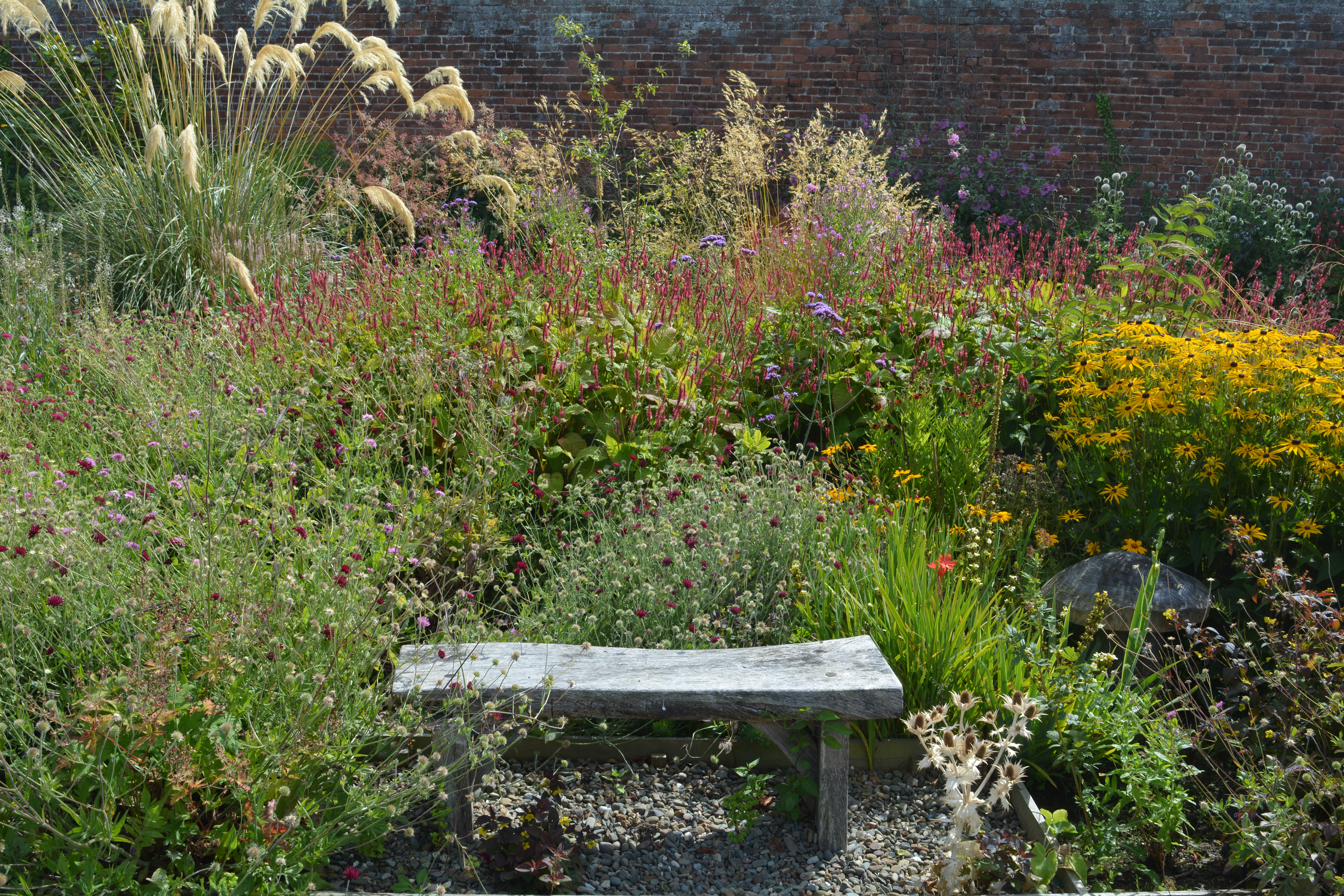
Comfy rustic seats invite us to sit and appreciate the atmosphere of the walled garden.

mhp-09 mhp-16mhp2-13

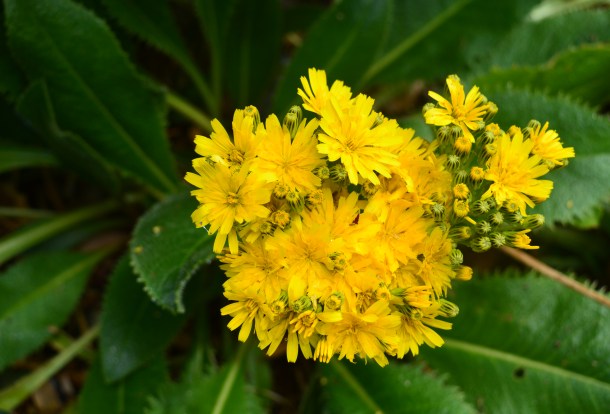
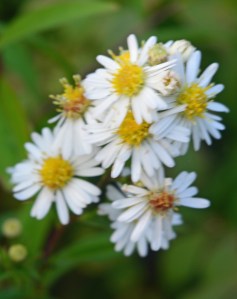
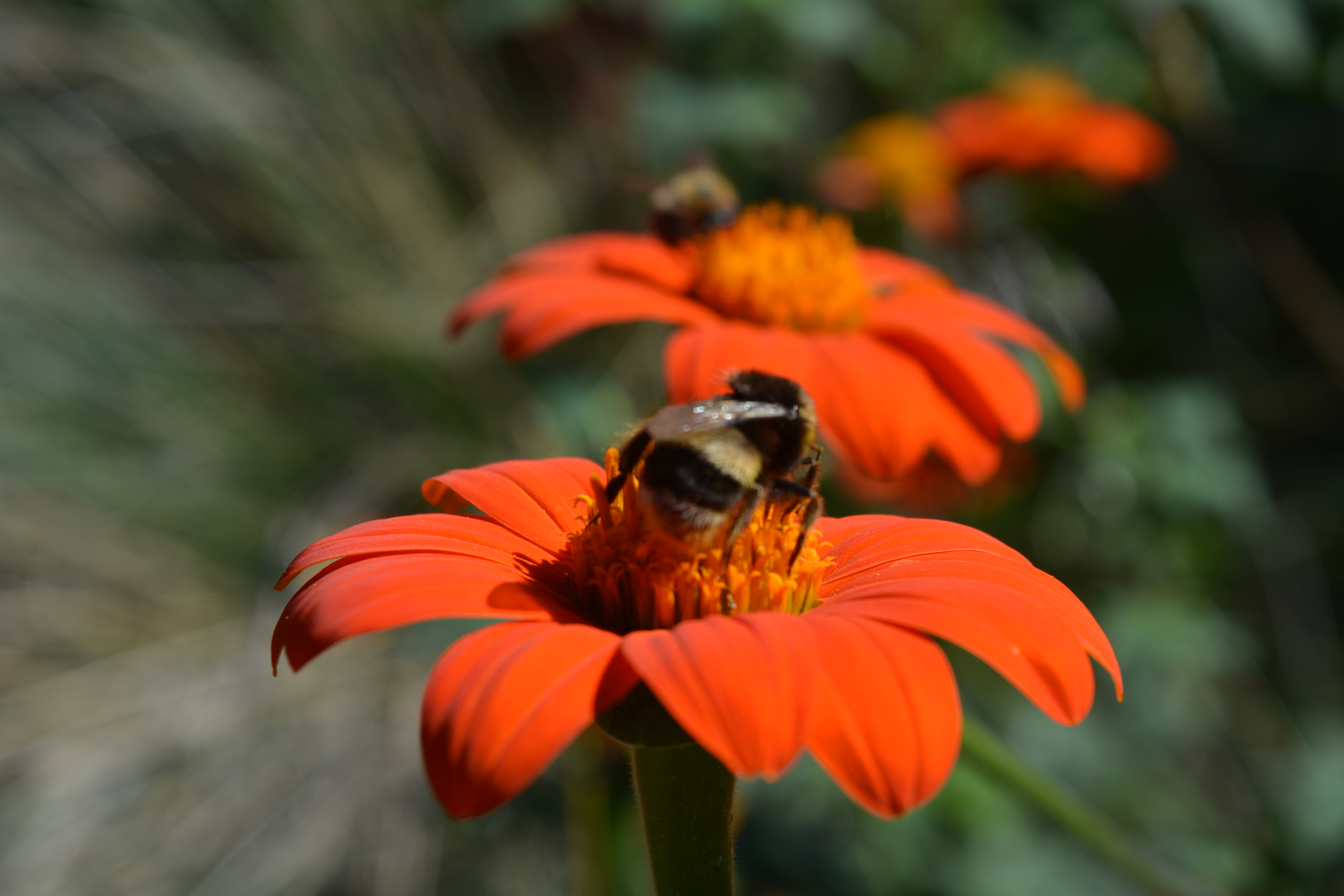
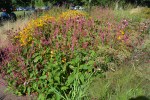
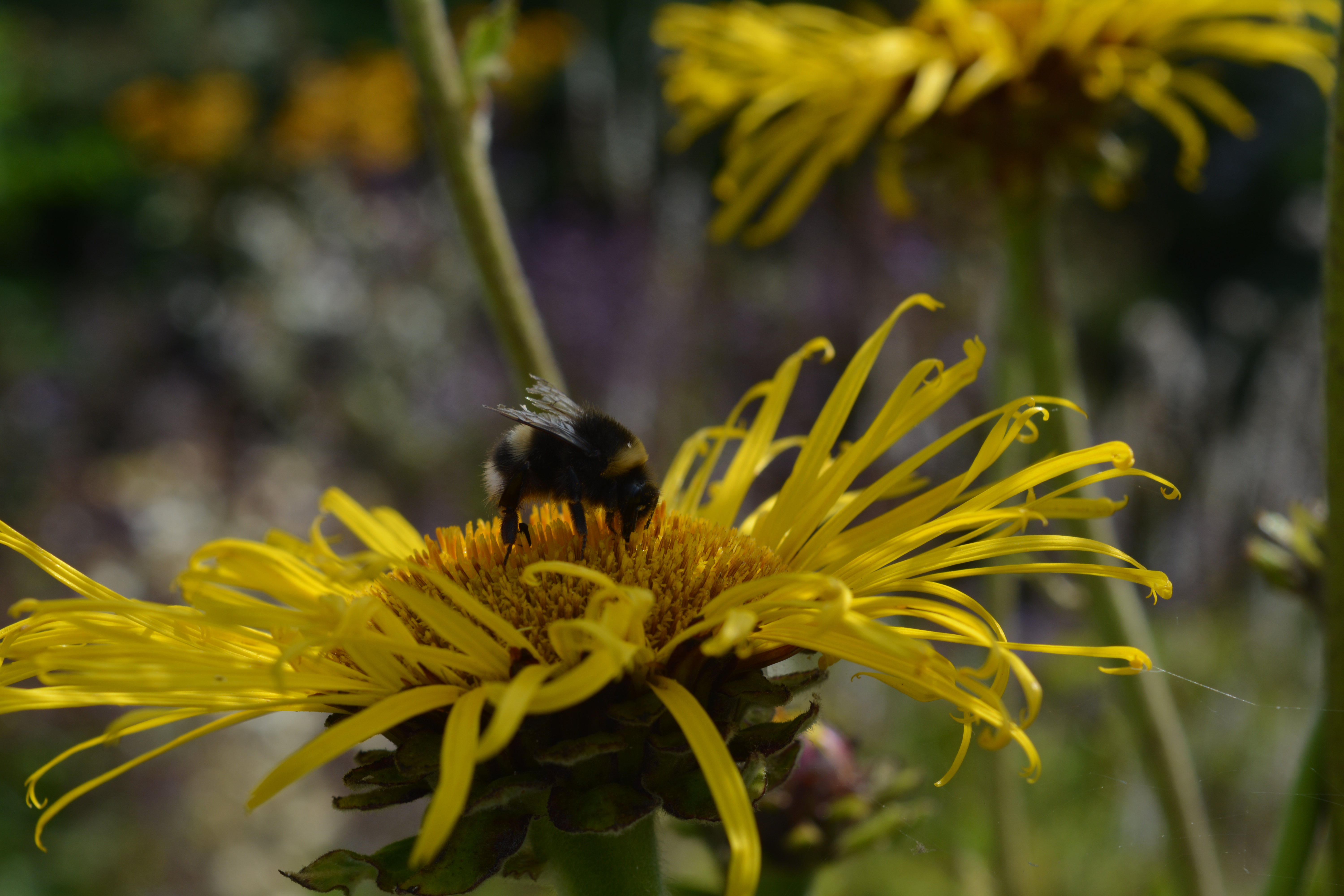
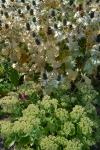
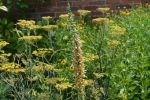
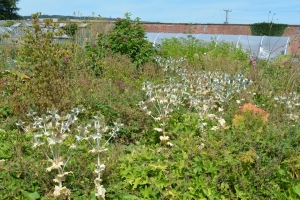
It wasn’t just us enjoying our visit, there was plenty of wildlife around. We could see movement throughout the areas of rich and colourful flowering. Bees, Hoverflies and Butterflies were busily feeding on the most simple flowers, the daisies and spires in particular.

mhp1-2 mhp-13

There are so many exciting plants and complementary plant combinations at every turn and around every corner at Long Mynd Hardy Plants that the only way to share so much with you is by creating a gallery for your enjoyment. As usual click on the first photo and then navigate using the arrows.

On our last visit we spent time talking with nursery-woman Jill over coffee and cake overlooking the nursery she outlined their ambitious plans and explained what her and her husband had achieved since we last saw them.We expect these plans will be achieved and we look forward to seeing more changes as we visit in the future.

mhp-11 mhp-15

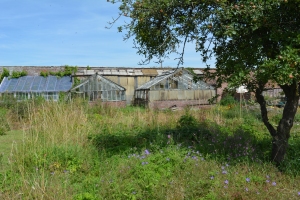
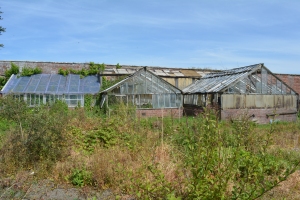
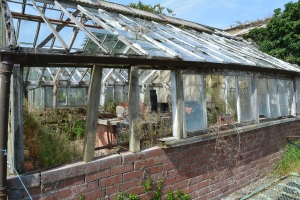
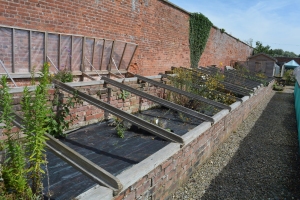
Jill explained that when they cleared the derelict half of the old walled garden they discovered a range of ancient glasshouses and a long run of cold frames. Eventually these will be restored and will be an amazing addition to the nursery and garden. An old orchard is under restoration too and there will soon be stock beds for visitors to study as well.

mhp-18 mhp-21mhp-23 mhp-29mhp-22 mhp-27mhp-20 mhp-19mhp-17 mhp-24

We hope you enjoyed this snapshot of a great little independent nursery and display garden as much as we enjoyed sharing it with you.


Categories
arboreta autumn autumn colours colours flowering bulbs garden design garden photography gardening gardens gardens open to the public half-hardy perennials hardy perennials National Garden Scheme NGS ornamental trees and shrubs Shropshire shrubs trees Yellow Book Gardens

The Dorothy Clive Garden in September

Back again ready to enjoy another visit to the Dorothy Clive Gardens and see what has been happening since our August visit. We expected early signs of Autumn and hoped for some colourful displays of Dahlias and Salvias. We decided to take a walk around the young mini-arboretum area this month instead of following the winding paths of the Dingle which has less interest at this time of the year.

Dcoc-29 Dcoc-01

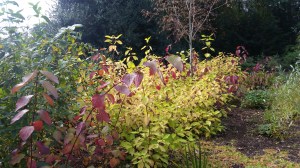
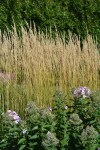
As we wandered over to the coffee shop we admired the views over the lower garden and the light which lit up the Pampus Grass behind the Viburnum caught my eye. This was a sign that we could be looking forward to interesting light for garden photography. fingers crossed!

Dcoc-02 Dcoc-36

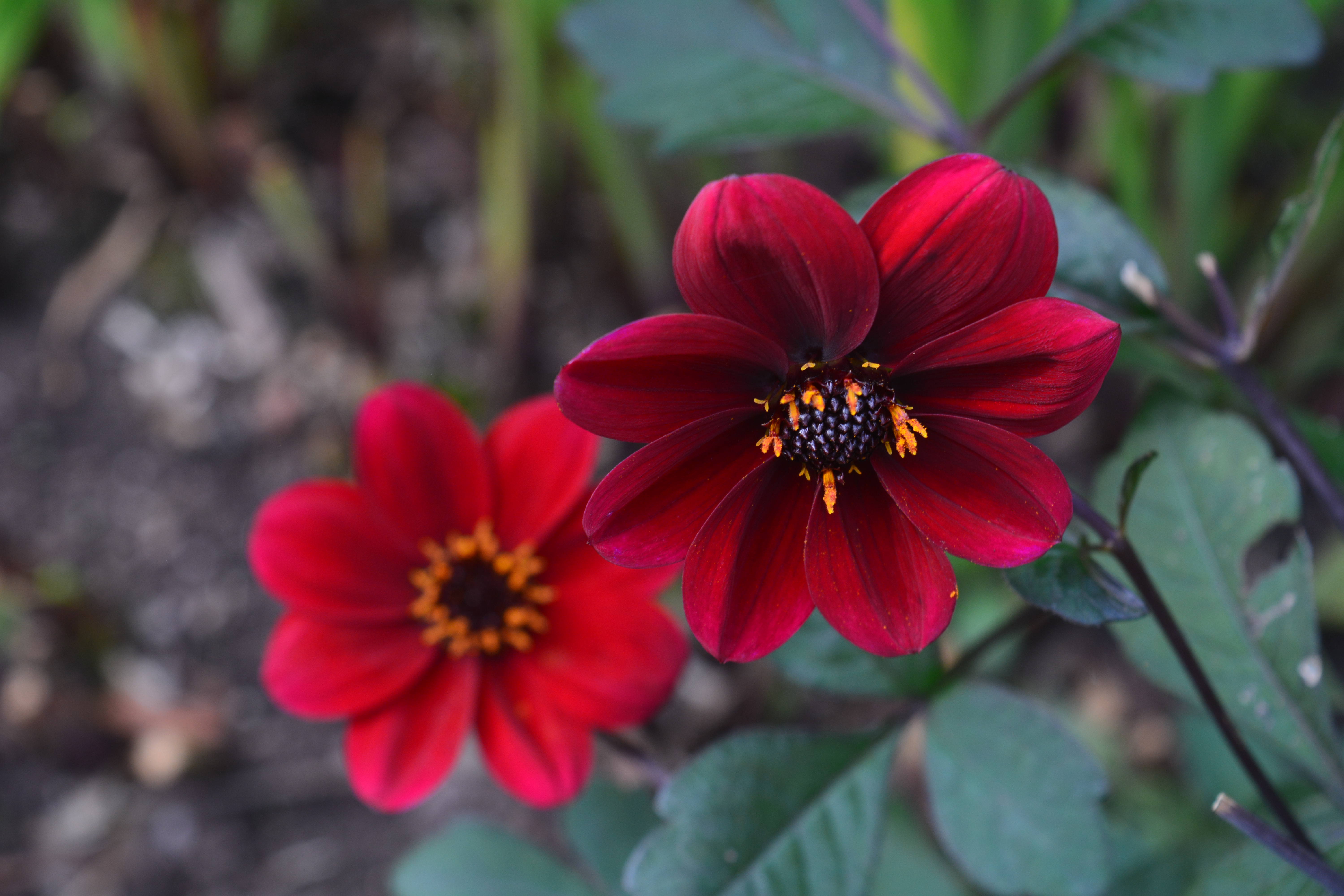
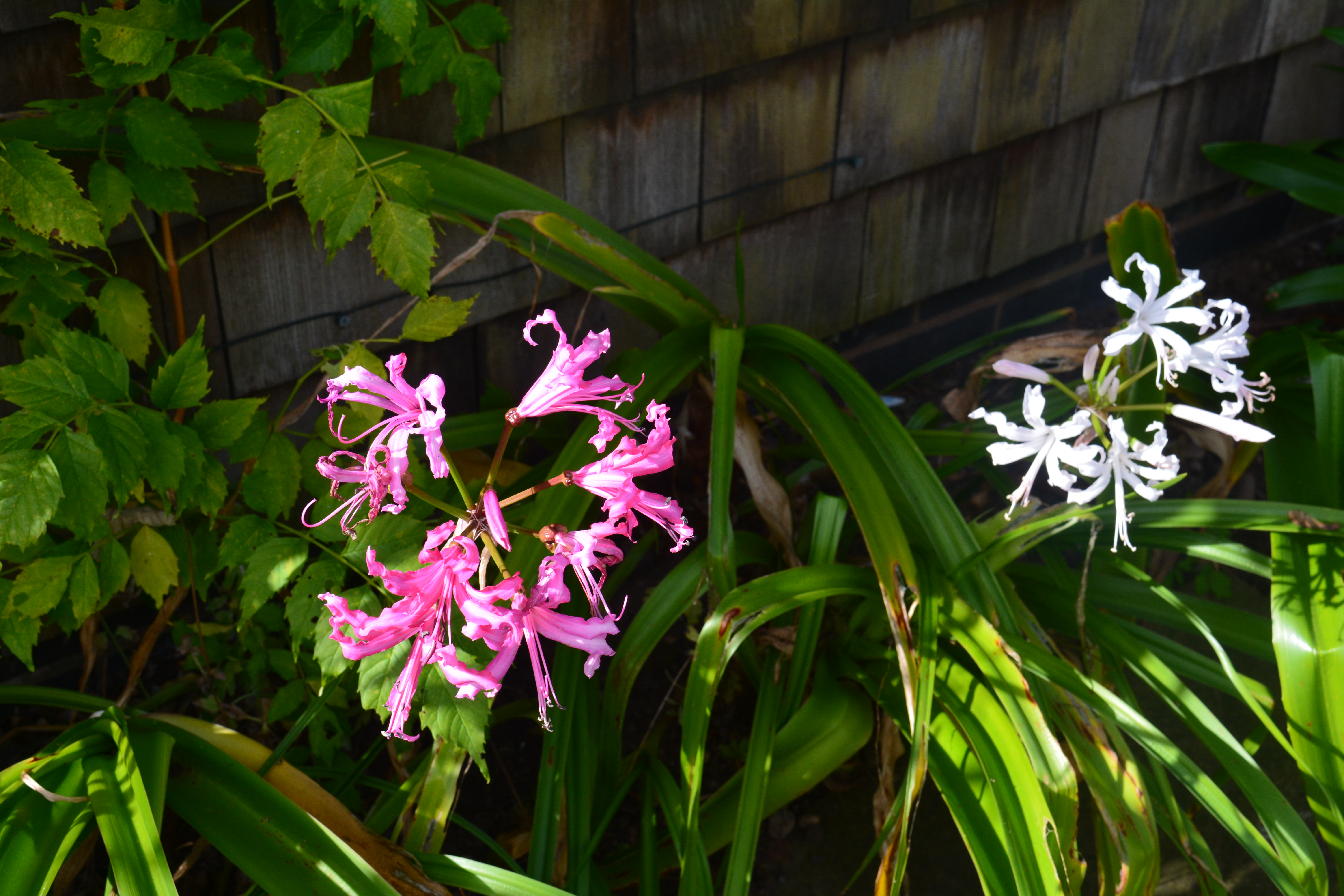
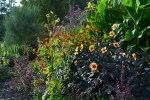
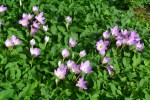
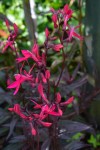
The border alongside the entrance to the coffee shop was at its most colourful so far this year, with Dahlias, Salvias, Nerine and Hesperantha sharing their colours.

Dcoc-52 Dcoc-10 Dcoc-09 Dcoc-08 Dcoc-07 Dcoc-11 Dcoc-12 Dcoc-06

These brightly coloured plants set the scene for much of our September visit.

Dcoc-42 Dcoc-58 Dcoc-50 Dcoc-27

I thought that a gallery of brightly cheerful flowering plants would be a good way of sharing the warm feeling prevailing over the Dorothy Clive Garden this September visit.

Please click on first pic and then navigate using arrows and of course enjoy!

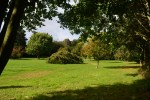
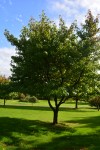
I promised to share our enjoyment of wandering around the soft grass paths that led us around the little arboretum and closely studying the young trees. One surprise was the total lack of autumnal tints to the foliage.

dca-01 dca-28 dca-02 dca-03 

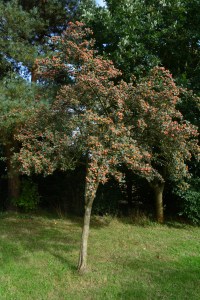
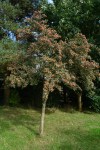
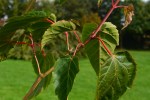
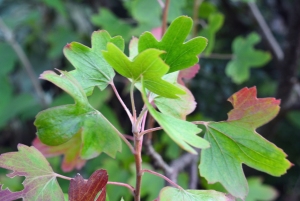
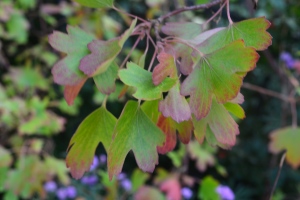
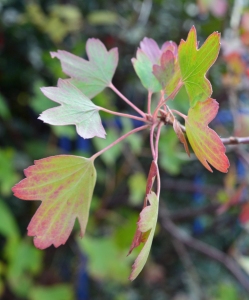
We were particularly taken by this unusual, in fact unknown to us, Hawthorn, Crataegus laciniata. We are now considering adding one to our garden.

The foliage presented a metallic appearance, almost pewter and the haws ranged from yellows through orange and to a dull brown – a most subtle but attractive combination.

dca-12 dca-13dca-14

I feel that another gallery is the best way to share our amble through the arboretum.


Our next visit to these lovely gardens will be for our October report so we should be getting into signs if autumn by then.

Categories
Uncategorized

Snapshot: Greenbenchramblings

Winterbourne House and Garden's avatarDigging for Dirt

Malcolm Mollart is the author of a long-running garden blog Greenbenchramblings which is inspired by the garden he created with his wife, Jude, in the South Shropshire Hills. In June of this year, Malcom paid us a visit and took plenty of photographs whilst he was at it. We asked him to select some of his favourites, tell us about his own passion for horticulture and pick out those bits of Winterbourne which made the greatest impression.

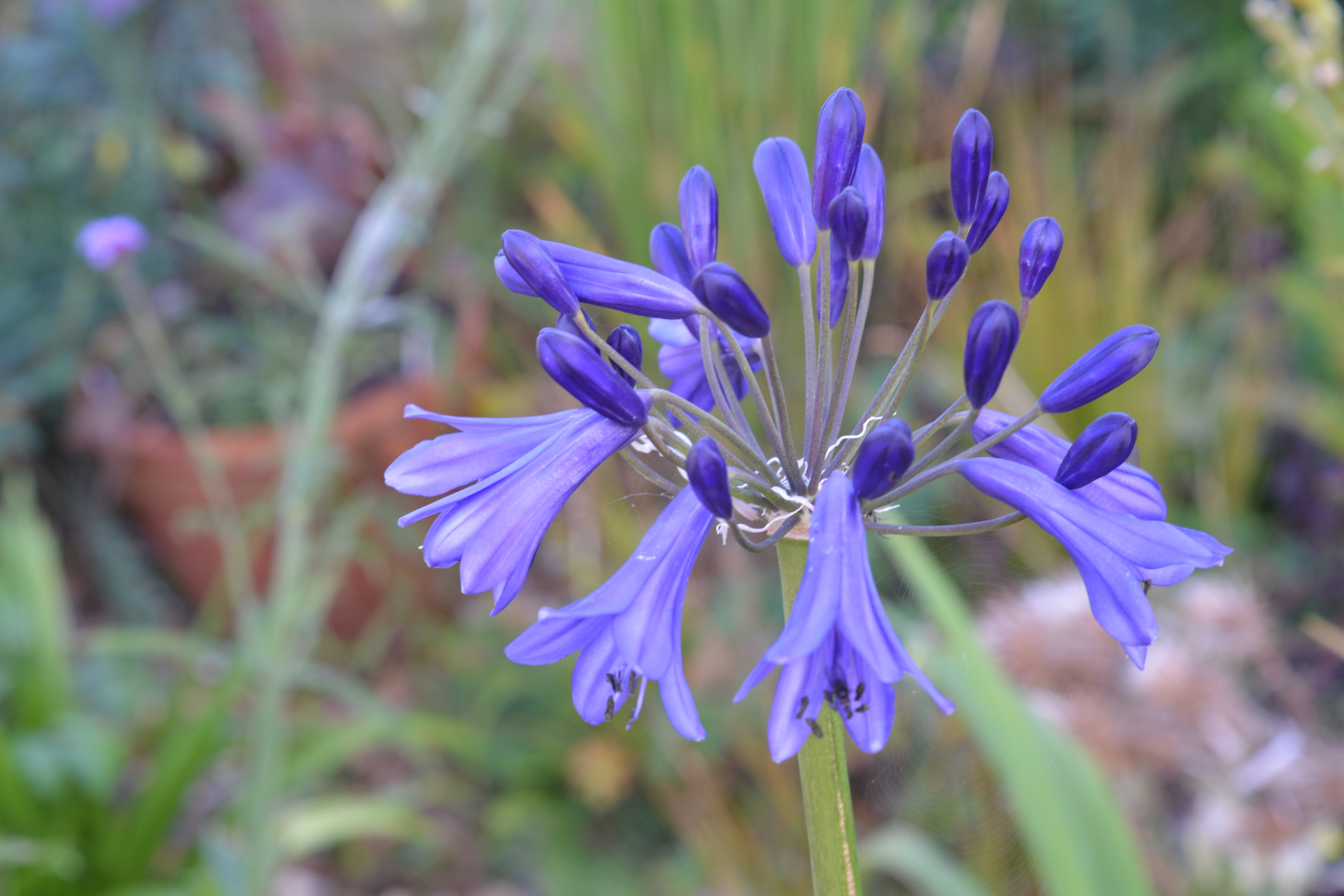
Agapanthus and Eucomis, photograph by Malcolm Mollart, Winterbourne House and Garden, Digging for Dirt Agapanthus and Eucomis, photograph by Malcolm Mollart

“I am a 65-year-old retired head teacher, who had to retire early due to disability. I have now spent more years in retirement than working, so have had the luxury of time to develop my gardening skills and ideas. My love of gardening comes from my Father who loved his cottage style garden and was well-known locally for his roses.”

Edgbaston Pool, photograph by Malcolm Mollart, Winterbourne House and Garden, Digging for Dirt Edgbaston Pool, photograph by Malcolm Mollart

View original post 405 more words

Categories
autumn autumn colours climbing plants colours garden photography gardening gardens hardy perennials light light quality ornamental trees and shrubs Shropshire shrubs

My Garden Journal in September

Back to my garden journal and we will look at my entries for September and see what our patch here at Avocet is up to.  According to the weather reporters and meteorologists we should now be in Autumn but the garden is showing few signs of the expected seasonal changes.

sepj-05

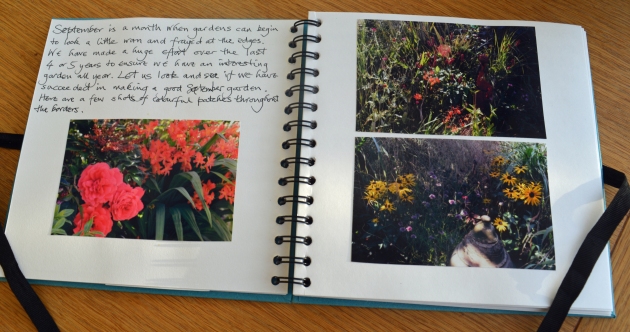
I started by finding patches of colourful plantings and wrote, “September is a month when gardens can begin to look a little worn and frayed at the edges. We have made a huge effort over the last 4 or 5 years to ensure we have an interesting garden all year. Let us look and see if we have succeeded in making a good September garden. Here are a few shots of colourful patches throughout the borders.”

Jude, Mrs Greenbench or The Undergardener, and I have created a talk entitled “The Year Round Garden” which we give to garden societies and other clubs such as WI groups and U3A groups. It is all about how we ensured our garden was good for every month of the year. Some of these groups also visit our garden at various times of year to have a look around. Giving these talks helps us focus on ensuring we continue to develop this ever evolving element of gardening and helps us appreciate every day and what our garden gives us on every individual day.

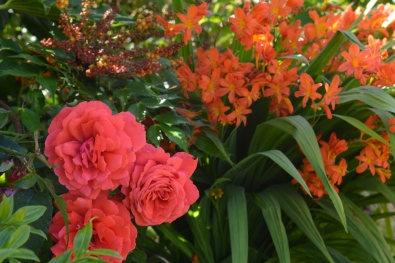
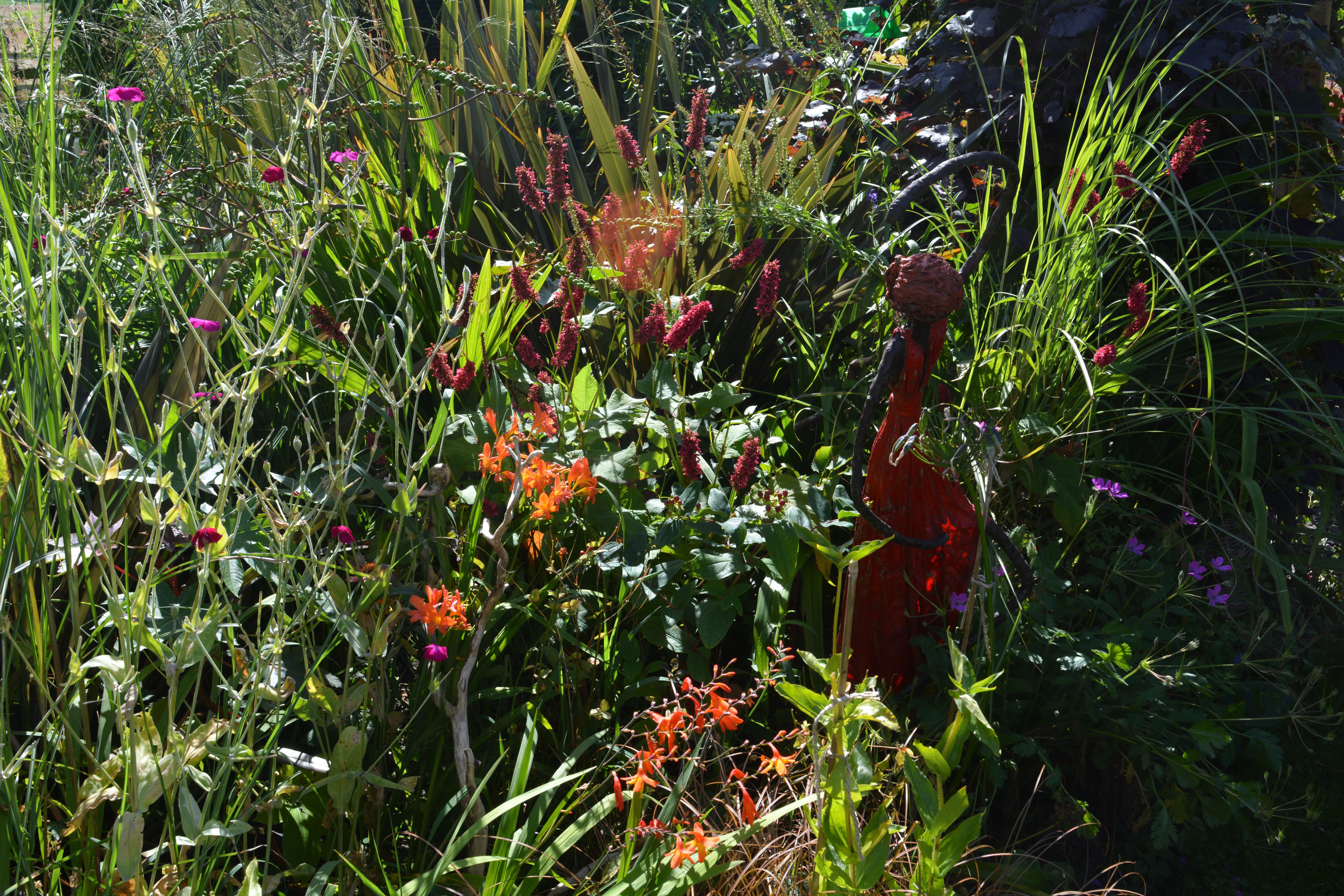
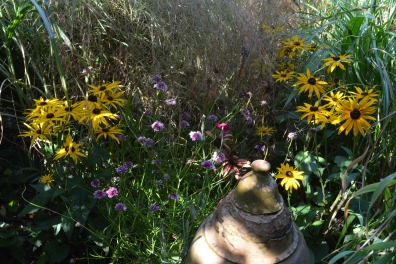
The three photos on these first September pages show very different patches of our garden.

sepj3-1sepj3-2sepj3-3

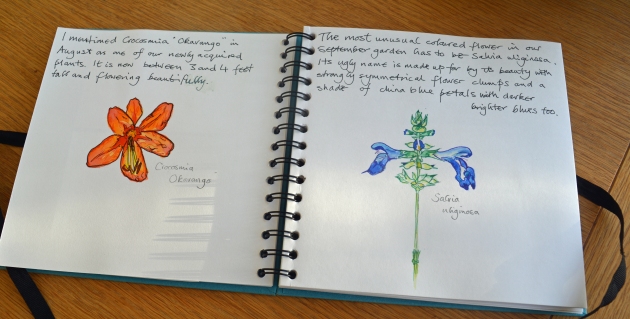
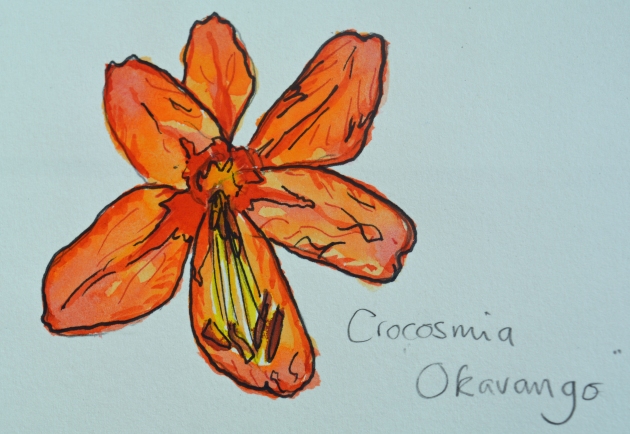
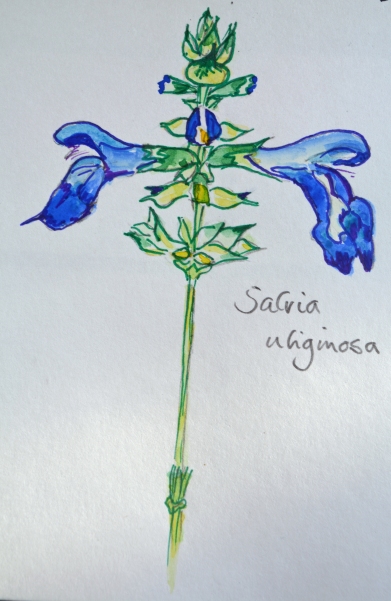
Turning over the page we find a couple of my watercolour paintings of two very differently coloured and differently structured flowers blooming in our September garden, a Crocosmia and a Salvia.

sepj-06

I wrote “I mentioned Crocosmia “Okavango” in my August journal entries as one of our newly acquired plants. It is now between 3 and 4 feet tall and flowering beautifully.”

sepj-07

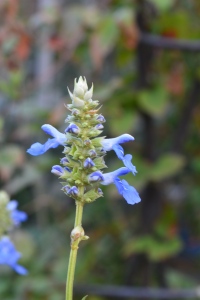
The most unusual coloured flower in our September garden has to be Salvia uliginosa. Its ugly name is made up for by its beauty with strongly symmetrical flower clumps and a shade of china blue petals with darker brighter blues too.”

sepj-08 sepj1-30sepj1-31 sepj1-29

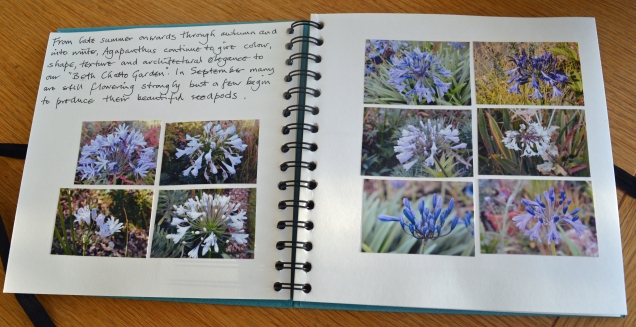
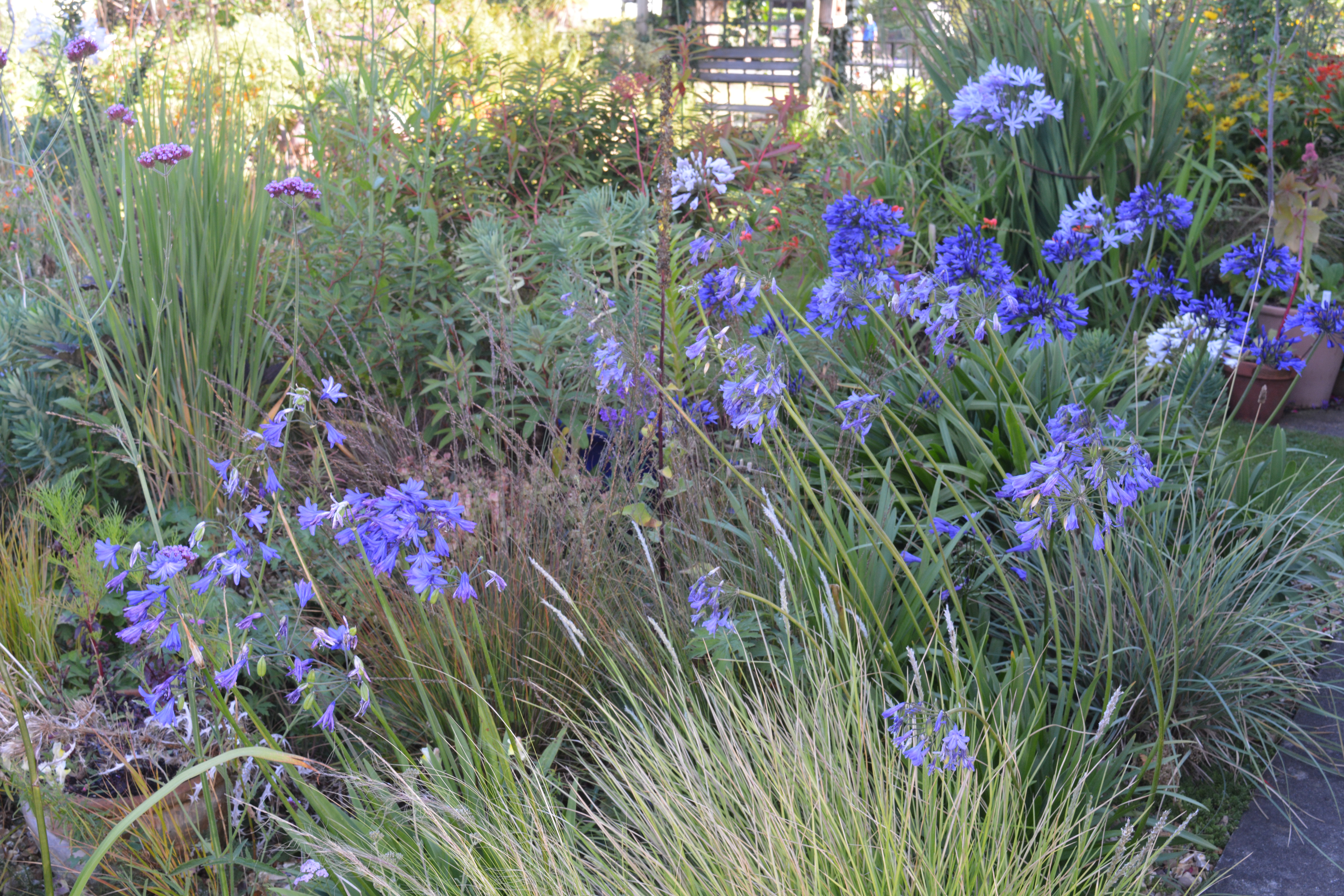
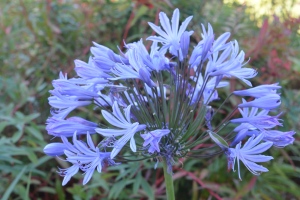
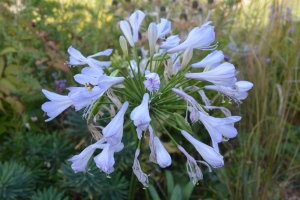
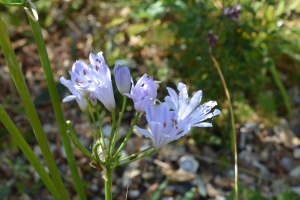
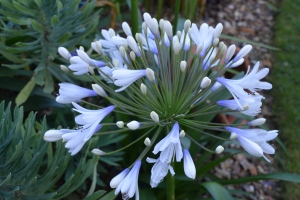
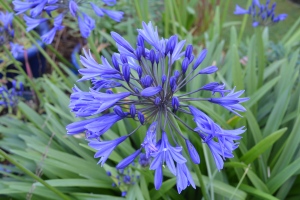
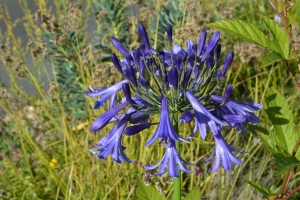
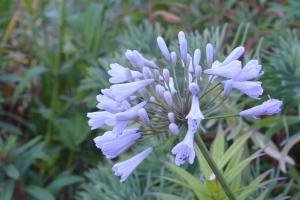
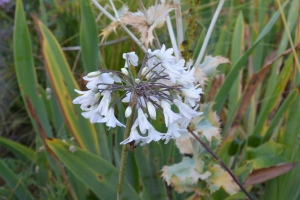
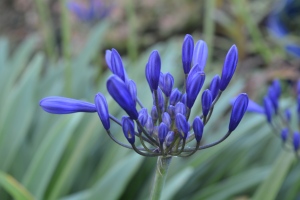
My next double page spread features those wonderful South African summer flowering bulbs, the Agapanthus. We have a large collection of these big blue or white spherical beauties.

sepj-09

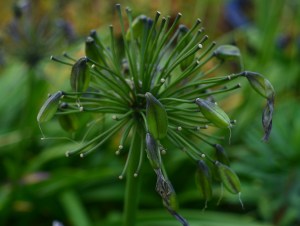
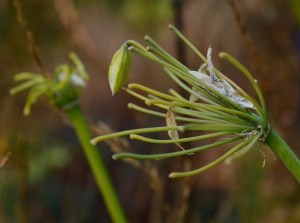
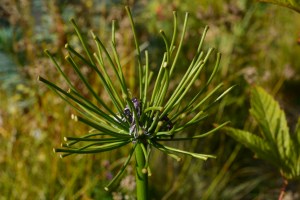
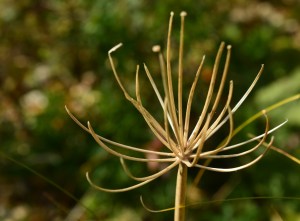
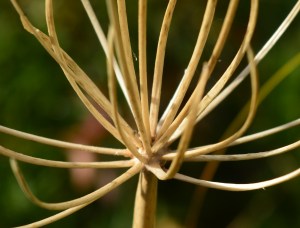
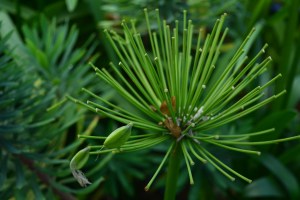
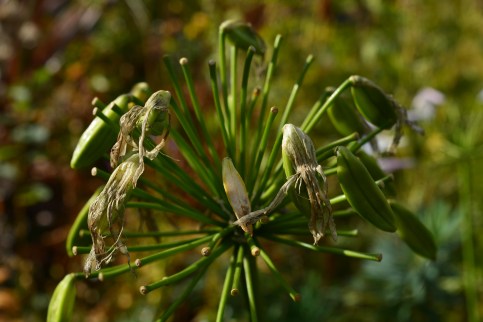
“From late summer onwards through autumn and into winter,  Agapanthus continue to give colour, shape, texture and architectural elegance to our “Beth Chatto Garden”. In September many are still flowering strongly but a few begin to produce their beautiful seedpods.”

sepj4-01sepj4-06 sepj4-09sepj4-13 sepj4-07sepj4-04 sepj4-11sepj4-03 sepj4-10

sepj4-08 sepj4-02

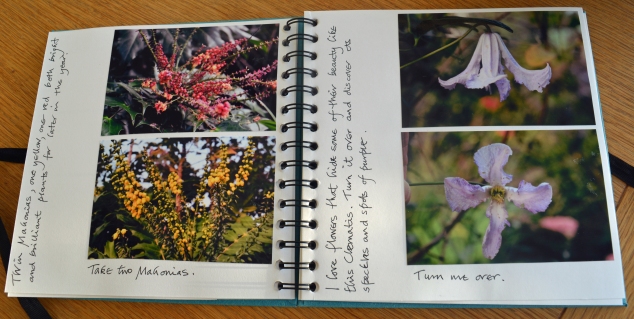
Turning over to the next double page I feature two very differently coloured Mahonias and a beautiful delicate Clematis.

sepj-10

I wrote, “Twin Mahonias, one yellow, one red both bright and brilliant plants for later in the year.”

“Take two Mahonias” 

sepj1-19 sepj1-20

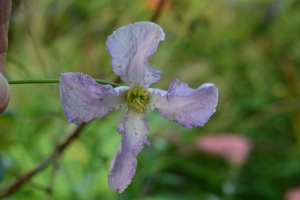
Concerning the Clematis I wrote “I love flowers that hide some of their beauty like this Clematis. Turn it over and discover its speckles and spots of purple.”

“Turn me over!”

sepj1-25 sepj1-26

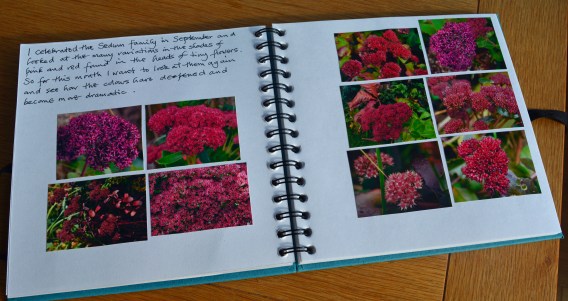
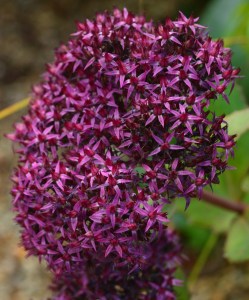
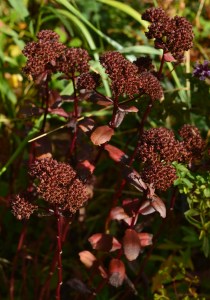
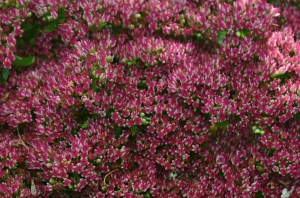
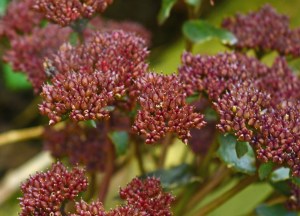
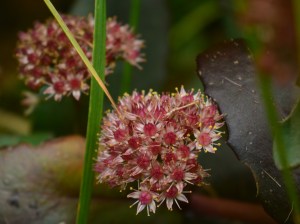
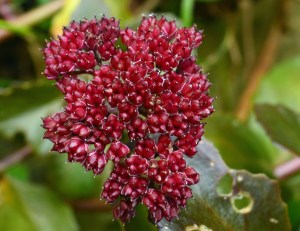
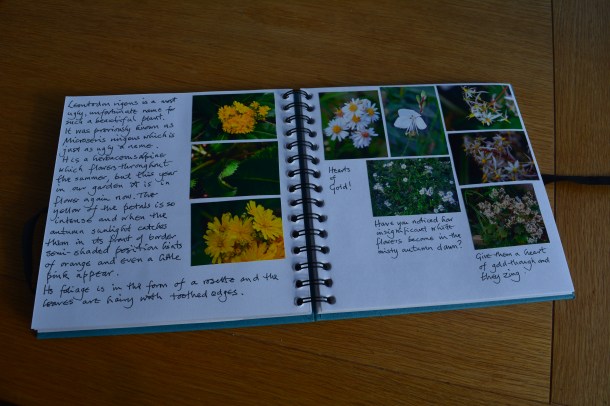
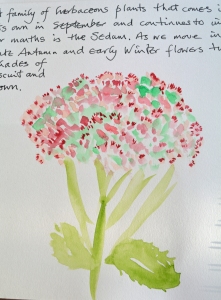
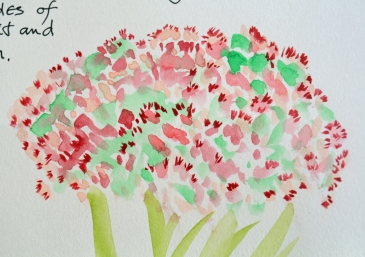
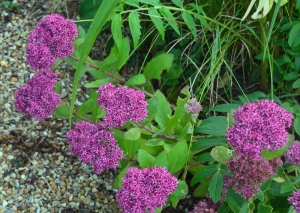
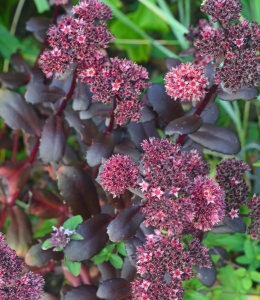
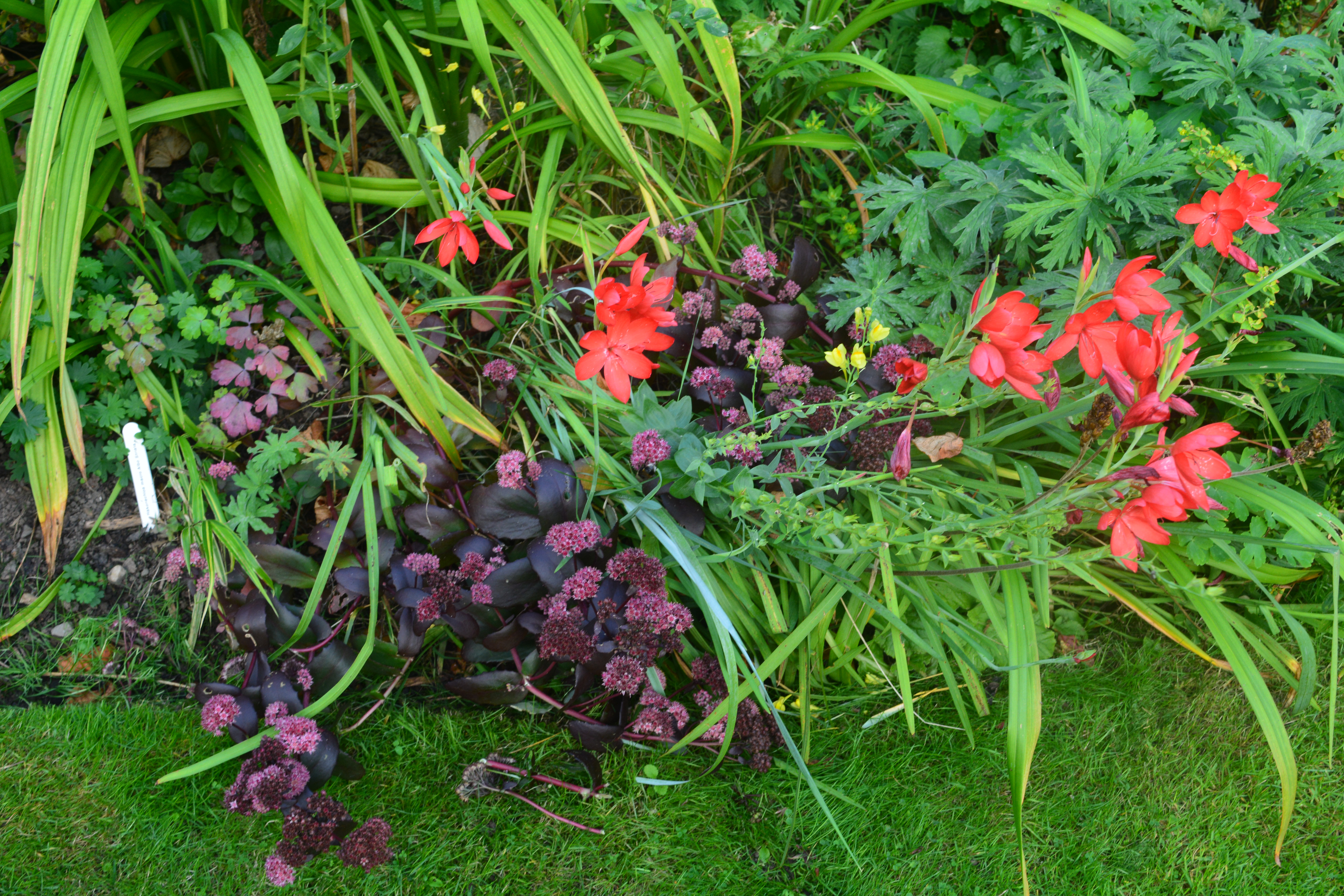
The next double page spread features one of my favourite hardy plant families, the Sedums. I included photos of some flowering in our garden now and a watercolour impression of our plants in flower.

sepj-11

sepj-12 sepj-13

“There are so many variations in foliage colour and flower size and colour We have several. Here are a few from our patch.”

sepj2-1 sepj1-13sepj1-27 sepj1-24    sepj2-2 sepj1-22

Over the page we discover the first signs of the changing foliage colours – the early signs of Autumn.

sepj-14

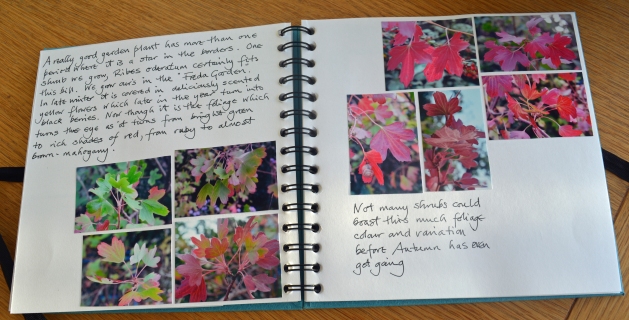
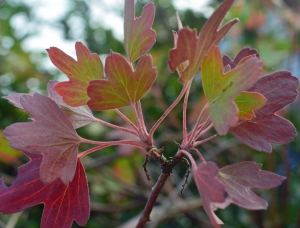
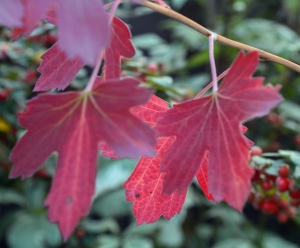
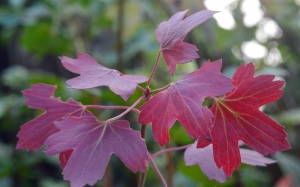
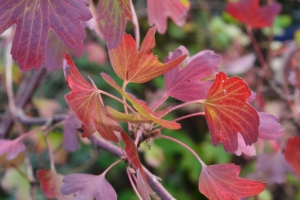
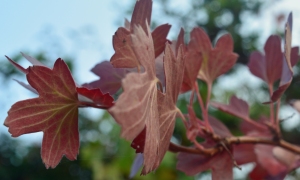
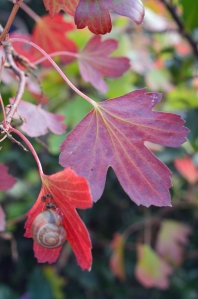
“A really good garden plant has more than one period where it is a star in the borders. One shrub we grow, Ribes oderatum certainly fits this bill. We grow ours in the “Freda Garden”. In late winter it is covered in deliciously scented yellow flowers which later in the year turn into black berries. Now though it is the foliage which turns the eye as it turns from bright green to rich shades of red, from ruby to almost brown-mahogany.

Not many shrubs could boast this much foliage colour and variation before Autumn has even got going.”

sepj1-12 sepj1-11sepj1-06 sepj1-10sepj1-05 sepj1-04sepj1-08 sepj1-09sepj1-07 Can you spot the colour co-ordinated banded snail on a leaf in the last picture of the Ribes leaf sequence?

sepj-15

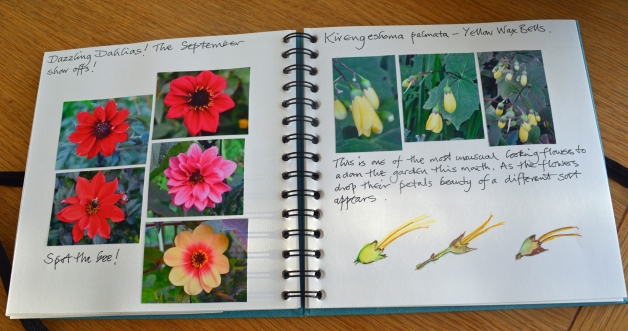
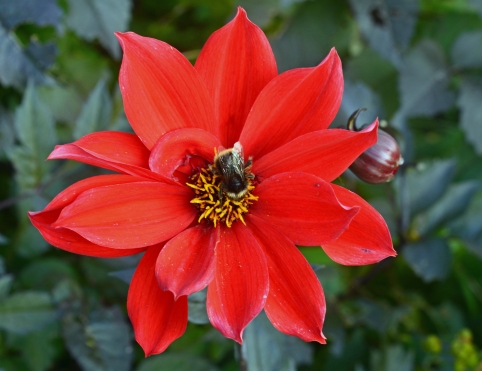
“Dazzling Dahlias! The September show offs!”

sepj1-14 sepj1-18sepj1-16 sepj1-15

“Spot the bee!”

sepj1-17

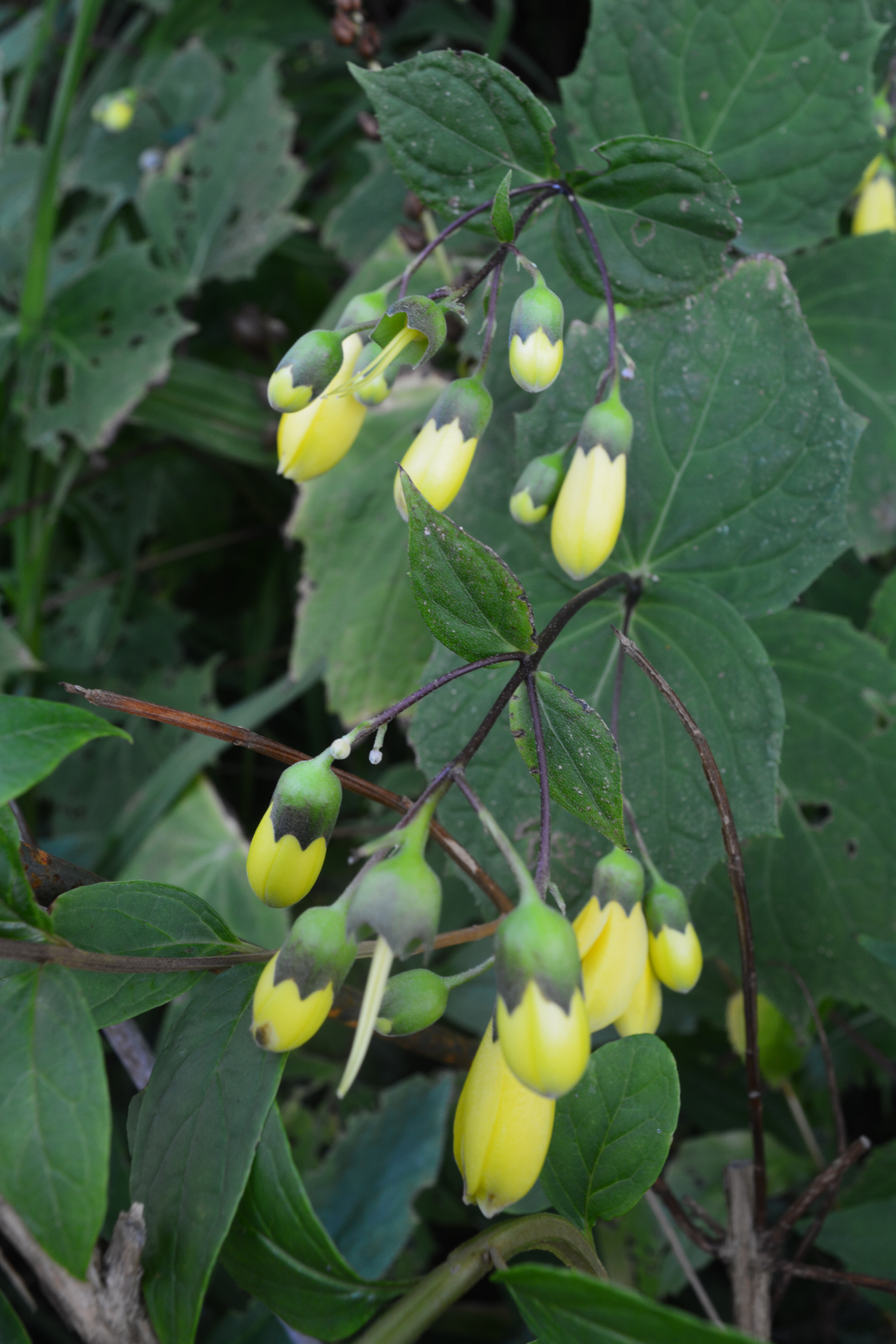
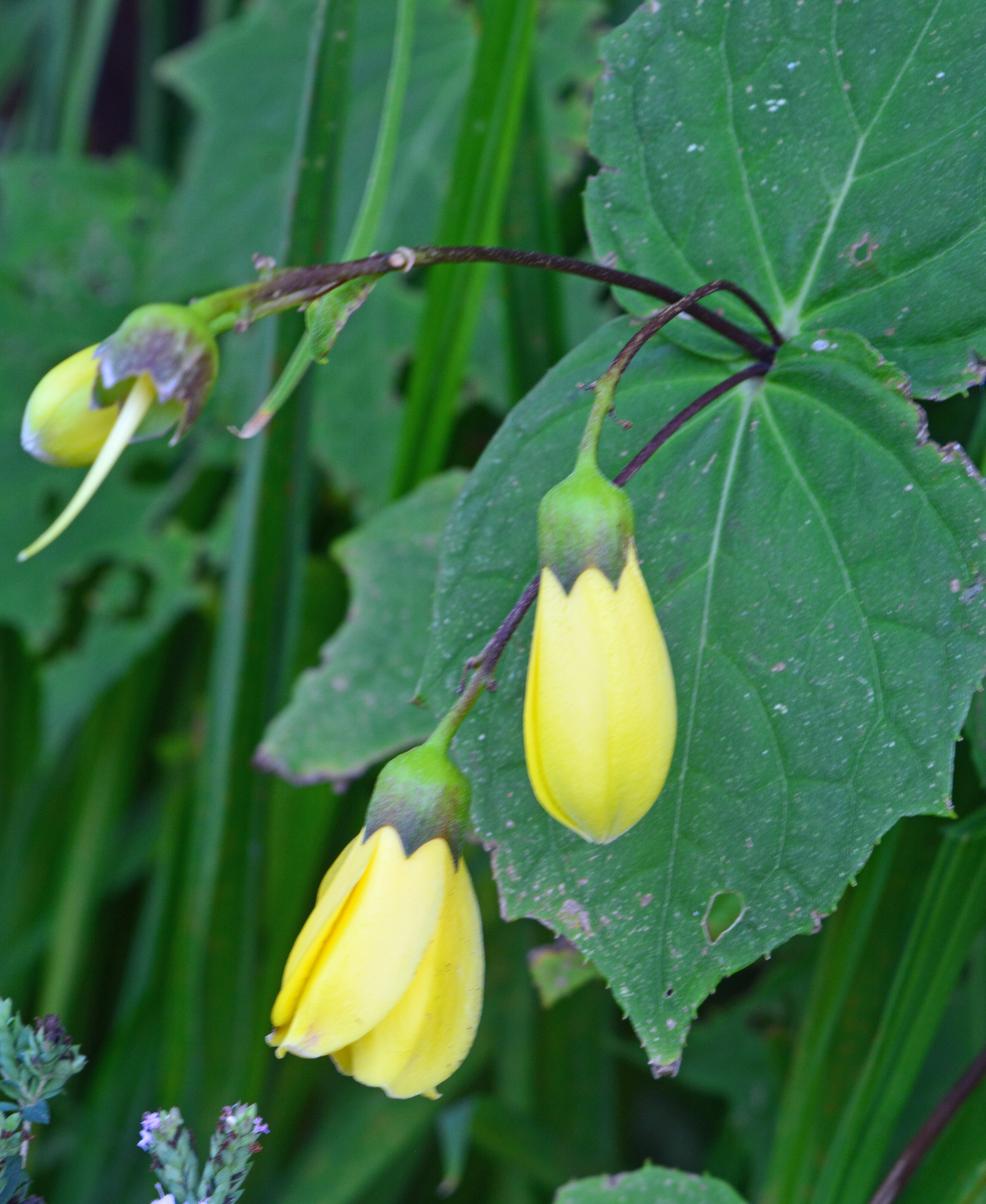
Opposite the Dahlias I look at a much more delicate flower, that of Kirengeshoma palmata, otherwise known as Yellow Wax Bells.

sepj1-01 sepj1-02 sepj1-03

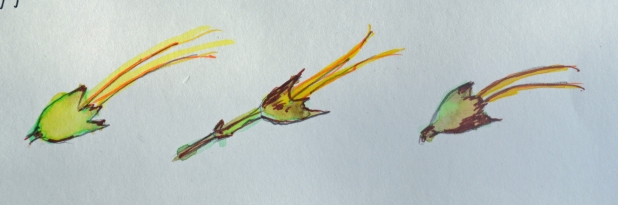
“This is one of the most unusual looking flowers to adorn the garden this month. As the flowers drop their petals, beauty of a different sort appears.”

sepj-16 sepj-17sepj-18 sepj-19

And that sees the end of my journal entries for September. Next visit to my garden journal will see us moving into Autumn and the changes in weather and light it brings with it. Will I be reporting on the special light and colours, the colours of fire and Autumn?
Categories
bird watching birds canals climbing plants colours conservation countryside hedgerows landscapes nature reserves photography Shropshire Shropshire Wildlife Trust wildlife Wildlife Trusts

A return visit to the Prees Branch Line – a canal nature reserve.

My brother Graham and his wife Vicky came to stay with us in early September and we went for some good days out, one of which was to the Prees Branch Line, a disused canal branch that never actually opened but now is a rich nature reserve, the longest wildlife pond in Shropshire. We have visited several times in the past at different seasons and enjoyed every walk along the old abandoned canal, as there is always so much wildlife to observe, encounter and surprise.

pbl-07

The site sign hints strongly at its main wildlife star, the Water Vole with a lovely illustration, but this is a star who is a real secretive creature and visitors have to be very lucky to spot one. It is more likely to find stems of reeds nibbled down in the vole’s distinctive style, or hear the plop as it enters the water again a very distinctive sound. We have heard them plop and seen signs of their nibblings at this reserve but never as yet spotted one.

pbl-01

We began our walk enjoying a coffee as we put on our walking boots and luckily spotted some fruit trees close by, the native Shropshire Damson otherwise known as the Shropshire Prune. This tree is a feature of Shropshire’s hedgerows and we have enjoyed many while on walks. These however were the sweetest we have ever tasted, the nectar of the gods.

pbl-02 pb-1

On this latest visit we were lucky to spot and watch for a long while a rare bee, the Moss Carder Bee which was a first for us. It appeared right in front of me as I was taking a photograph of a plant so I had the rare chance of taking photographs so effortlessly. The bee really just posed for me. Graham and I watched it for a while and got very close, close enough to appreciate the beauty of its delicate colouring and the subtlety of its markings.

pb-2 pb-3 pb-4

Not so long after this a similar thing happened. Again I was taking a close up photograph of a plant when a hoverfly firstly came into view above the flower, then landed on it closely followed by a second identical one allowing me to get these shots. Twins! Identical twins!

pbl-44 pbl-45pbl-22

Berries were at various stages of ripeness from hard green to the darkest of ruby red.

pbl-31 pbl-32

And wild flowers added spots of colour to the impressionist painting that is the bank of the canal.

pbl-23pbl-05 pbl-38

There was so much to see as we ambled along the narrow track along the towpath of the canal branch line that never opened to barges just to wildlife. Rather than narrow-boats plying the waters it is Swans, Mallards and Water Voles instead! We barely moved forward a few steps before something caught our eyes and stopped us in our tracks. I took so many photos that I thought I could invite you to join us as we followed our canal side path “there and back again”. Enjoy!

As usual just click on the first photo and then navigate with the arrows.


Categories
awards climbing plants colours garden design garden photography garden ponds garden pools garden seating gardening gardens gardens open to the public hardy perennials National Garden Scheme NGS ornamental grasses ornamental trees and shrubs outdoor sculpture sculpture Shropshire shrubs trees Uncategorized village gardens water in the garden Yellow Book Gardens

Windy Ridge – another Yellow Book Garden

Windy Ridge is a fellow “Yellow Book Garden” in Shropshire and thus like us opens for charity under the auspices of the National Garden Scheme. The gardener owners have been opening their garden for many years more than we have and we have visited several times before. We decided the time was right for a return visit to discover how it has developed over the years. The owners/gardeners are real plantspersons with plenty of knowledge to share and impart related to both plants, garden management and design.

win-27 win-02

Windy Ridge is a garden of wandering paths, secret places, surprises around every corner but above all a garden full of plants to stop you in your tracks either because they are so well grown or very unusual.

win-05 win-75win-12 win-06

There are quality sculptural pieces among the plants for visitors to enjoy beginning with a huge carved tree trunk at the garden entrance.

win-74 win-18 win-49win-28 win-35win-44 win-38

Secret pathways which lead the visitor onward and present choices are an important element of a quality garden.

win-09 win-13win-22 win-48

In our own “Avocet” garden we enjoy raising the canopy of our trees and shrubs to expose interesting bark and trunk shapes and to let in light to allow planting beneath. At Windy Ridge this is performed to perfection and helps give the garden its character. The first photo below shows how this technique even helps Laurel, my most disliked plant! To make it work the gardener must look closely at and listen to the plant before attempting the first cut. If the gardener does this he is more likely to react to the character of each tree and shrub and give it the shaping it deserves and wants.

win-14 win-25win-45 win-10 win-24

We enjoyed and admired the way that the formality of clipped box integrates so well into the softness of the planting.

win-23 win-21win-20 win-19

Berries enhance the September garden and add even more colour to that provided by flowers. Windy Ridge had colour aplenty!

win-08 win-15win-34 win-31win-16 win-17 win-32 win-39 win-36


If I had to pick out one plant as my favourite at Windy Ridge it would have to be beautiful coloured and scented Clematis, C. odorata, a plant left to ramble unpruned to great effect. It is a Clematis we have been seeking for our own patch for many years so seeing and smelling it here has renewed our determination to add it to our huge clematis collection already climbing and clambering in our Avocet garden.

win-30

Hydrangeas were well in bloom when we visited and the sheer variety of colours was to be admired.

win-41 win-42win-46

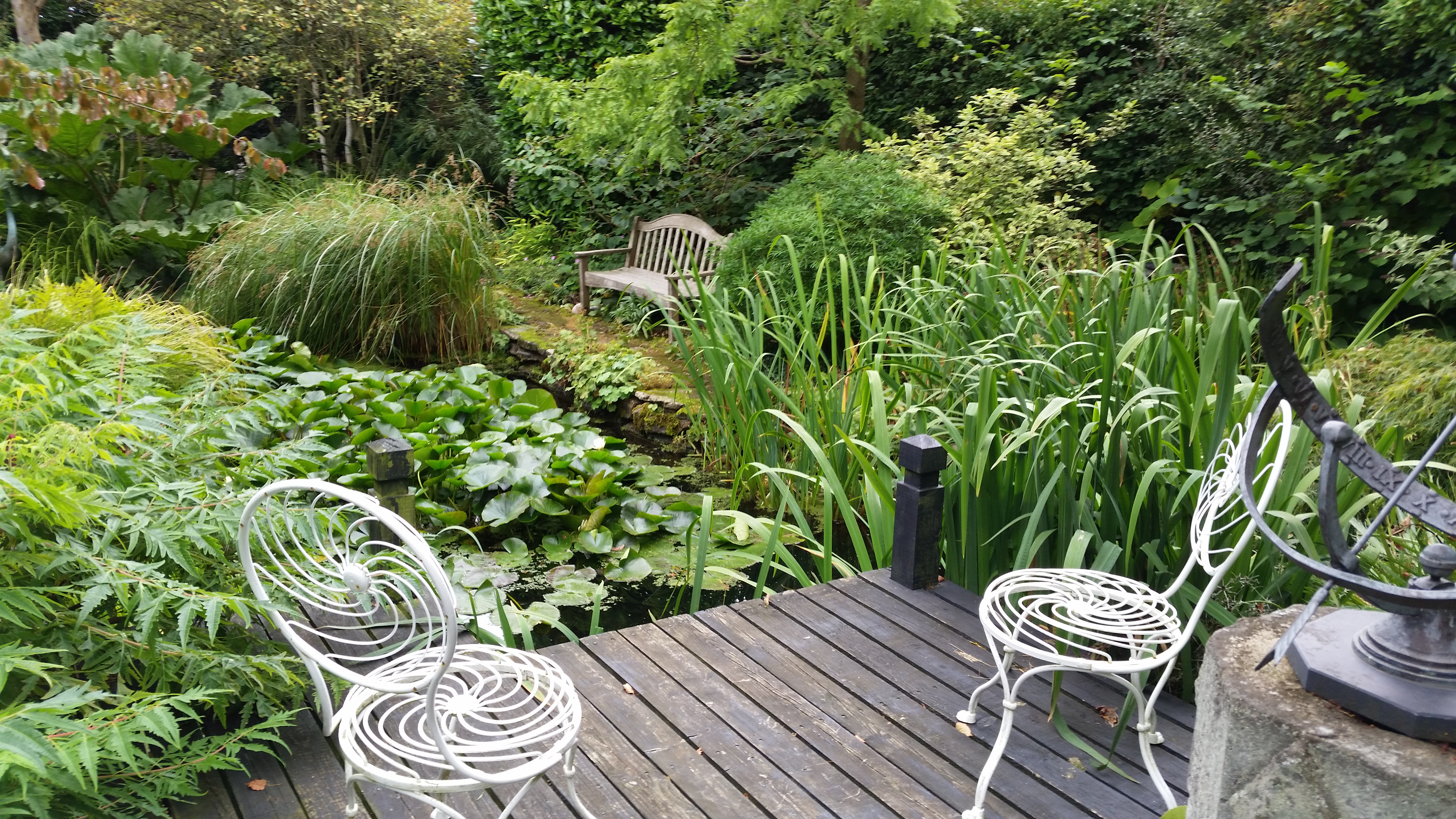
The highlight for many visitors is the large garden pond with wonderful marginal planting, a decked area with white ironwork seats and a narrow pathway behind it for the visitor to explore. We had a great afternoon returning to the garden at Windy Ridge and found it as inspiring as always. We were pleased to note that it had received an award in a national garden competition.

win-43 win-37 win-61 win-56


Categories
colours garden design garden photography garden ponds garden pools gardening gardens gardens open to the public hardy perennials light light quality ornamental trees and shrubs roses Shropshire shrubs trees water in the garden

The Dorothy Clive Garden in August

In late August we made one of our regular visits to the Dorothy Clive Gardens on the Shropshire and Staffordshire border to see how the garden was progressing. We chose a warm sunny day for our visit which gave strong contrasts and deep shadow for the trusty Nikon to deal with.

We expected to see lots of colour and much of it bright hot colours provided by flowering perennials as well as perhaps the first signs of late summer presenting a glimpse ahead to autumn, with seeds and berries beginning to show and some leaf colour on trees and shrubs.

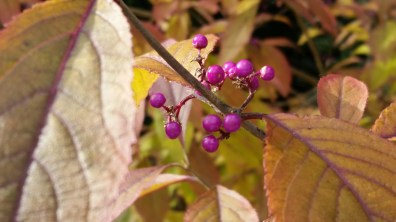
There was most certainly no shortage of berries to discover shining brightly like jewels under a bright summer sun.

dcaug-029 dcaug-014 dcaug-028 dcaug-026 dcaug-018 dcaug-027 dcaug-025 dcaug-009 dcaug-006 dcaug-005 dcaug-040 dcaug-042 dcaug-043

A few very unusual berries in both colour and shape, were displayed by deciduous Euonymous and Magnolia.

dcaug-030 dcaug-033

Seedheads were beginning to form on herbaceous perennial plants just as we thought we might find.

dcaug-050 dcaug-048dcaug-049 dcaug-054dcaug-057 dcaug-059dcaug-056 dcaug-060

We enjoyed the range of colours that flowers provided in the borders and these were highlighted by the August sun riding high in the afternoon sky.

dcaug-004 dcaug-007dcaug-051 dcaug-058

We were pleased to see that this garden’s Tetrapanax Rex was thriving having lost our specimen early in the year. One here was particularly beautiful with clean unmarked foliage.

dcaug-021 dcaug-022 dcaug-023

Ferns also provided brilliant green foliage throughout the Dingle Garden, looking fresh beneath the tall mature trees and evergreen shrubs.

dcaug-012 dcaug-013

In the new Winter Woodland Garden we were fascinated by the way the gardeners were training the coloured stemmed willows. We will have to wait and see what the end result will look like.

dcaug-019

We enjoy watching the changes to be seen in the many unusual specimen trees at Dorothy Clive and have always liked the look of this yellow barked Prunus, P. maackii “Amber Beauty”. We are really wondering at the moment whether this would be the ideal tree for a space we have at home which awaits a tree for autumn planting. Apart from its unusual bark colouring it has a graceful growth habit and a wonderful winter silhouette. For a Prunus it also has large leaves.

dcaug-036 dcaug-038

The light during this visit was so interesting whenever the sun beamed through the tree canopy. We particularly loved the way it put this Hydrangea in the spotlight.

dcaug-046 dcaug-045 dcaug-047

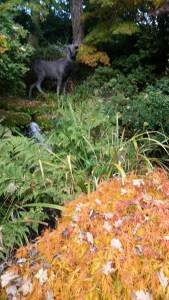
It is always good to see promises of things that will be happening in the future and spotting them is an important part of any garden visit. Also it provides a most positive way of finishing my report on our august visit to this wonderful garden, a true favourite of ours. And as we have not featured the giant stag sculpture standing proudly at the top of the stream in the Dingle Garden here he is surrounded by lush greenery completely different to when we saw him in the starkness of the winter months.

dcaug-044 dcaug-016

The pool at the bottom edge of the garden at the lowest point in the garden reflected the blue sky and we enjoyed spotting the small shoals of young Rudd enjoying racing around below the white flowers of the Water Lily.

dcaug-061 dcaug-063

We really appreciated on this August day the scents and colours of the blooms in the Rose Garden.

dcaug-067 dcaug-070

Our next visit to our monthly garden for this year will be in September. We hope to see some hot colours in the herbaceous borders and perhaps a little colouring up of foliage on the many trees at Dorothy Clive.

Categories
colours flowering bulbs garden design garden photography gardening hardy perennials light light quality National Garden Scheme NGS ornamental grasses ornamental trees and shrubs outdoor sculpture Shropshire South Shropshire succulents swallows village gardens Yellow Book Gardens

My Garden Journal in August

My August entries in my Garden Journal 2016 see me beginning Volume Two. On the first page I look back to my original garden journal’s August entries.

au-01

“I made my first ever entries for our new garden in August 2003. We moved to “Avocet” our Plealey home on 8th August. I wrote, “The garden needs our love and attention after 6 years of neglect. It is a garden of straight lines and loneliness, lacking in wildlife and its inherent vitality. It lacks colour.” Things are very different now 13 years later. The garden is now full of wildlife, full of calming atmosphere and peace. It is a garden that attracts many visitors each year and people enjoy hearing our talks about it.”
Over the page I considered the way light in August changes the look of the garden.

au-02

“On bright days in August the garden looks very different depending on the time of day. When the sun is at its highest point in the sky the hot colours really burn and shadows deepen to jet black.

au2-2 au2-1au2-3

I then looked at Salvias and share photographs of some of those we are growing in our patch.

“Every few years I like to set myself a challenge in our Plealey garden. For the last few years I have been trying to master growing and keeping Aeoniums. This is coming along well now so for this summer my new challenge is to discover lots of beautiful varieties of Salvias and learn how to grow them well. We already have a large collection so the next part of this challenge will be over-wintering them. These three (in the photos below) show the vast range of colours available from the deepest blue, the brightest pink to the gentlest of yellows.”
au3-32 au3-33 au3-36

On the opposite page I featured a selection of eight of the Salvias in flower in our patch in August. I have included a couple more here too for you to enjoy and to help us appreciate the variety we have.

au-03

au3-53 au3-30au3-05 au3-31 au3-50au3-35 au3-37au3-54au3-51 au3-52

I move on in my journal then to look at very special and very unusual perennial plant, a Diascia. On the page opposite I share a few of our new sculptural pieces in the garden.

au-04

One plant that always attracts admiring glances is this pink gentle giant, an evergreen Diascia, which is called D. personata “Hopleys”. It is an exceptionally good garden performer, growing to a tall six feet and flowering from May to December in a good year.”

au1-03 au1-02au1-05 au1-04

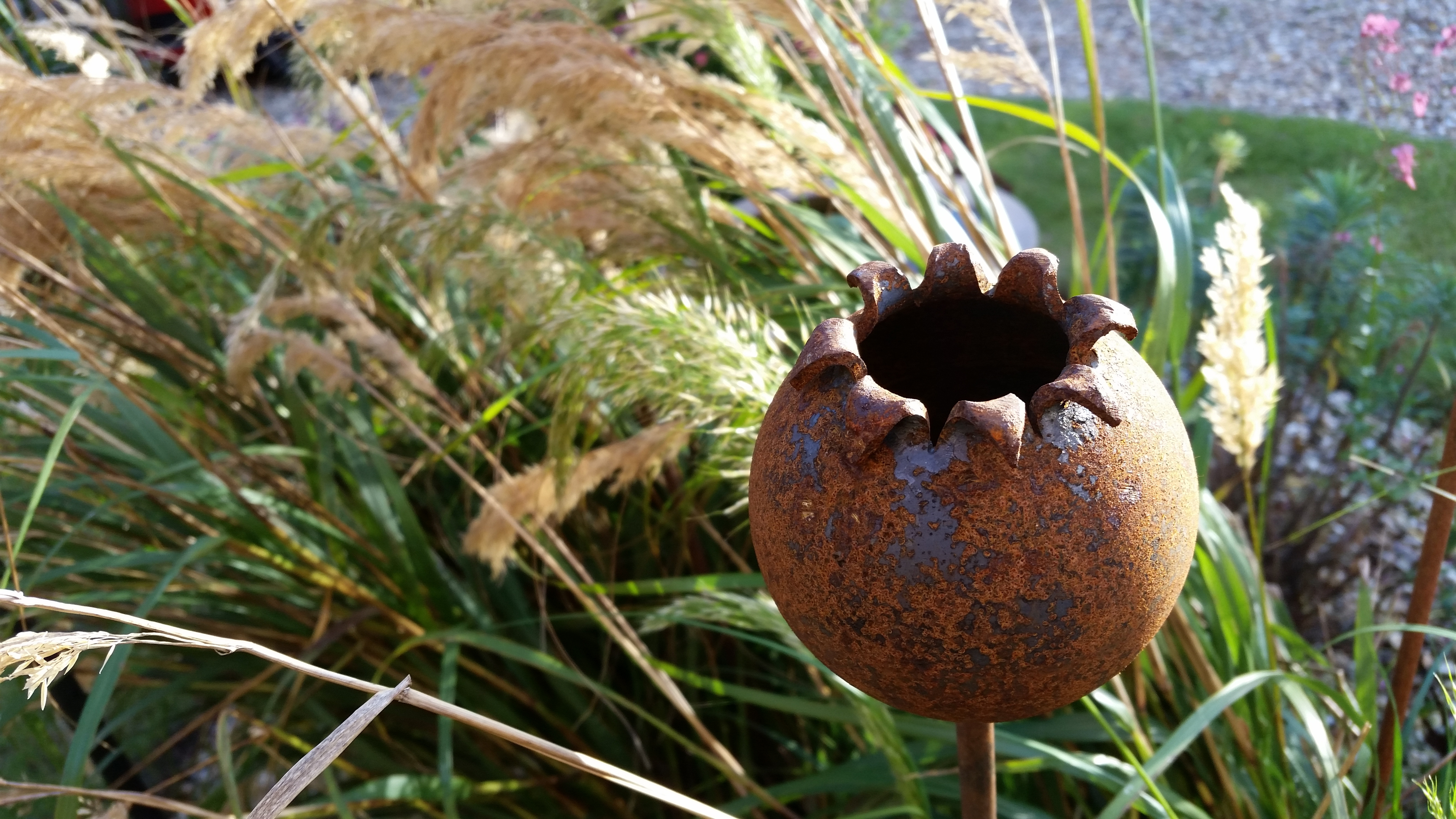
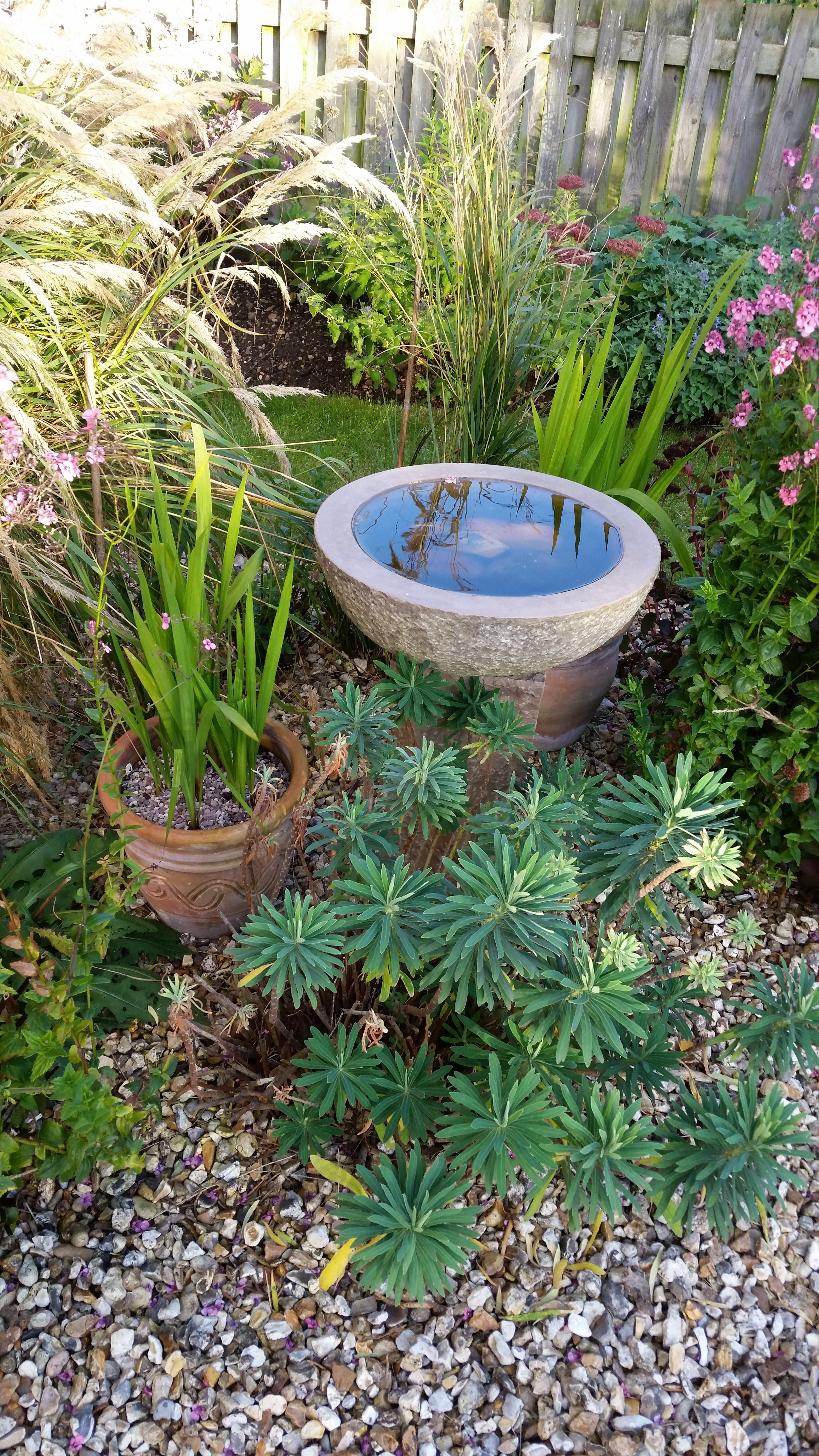
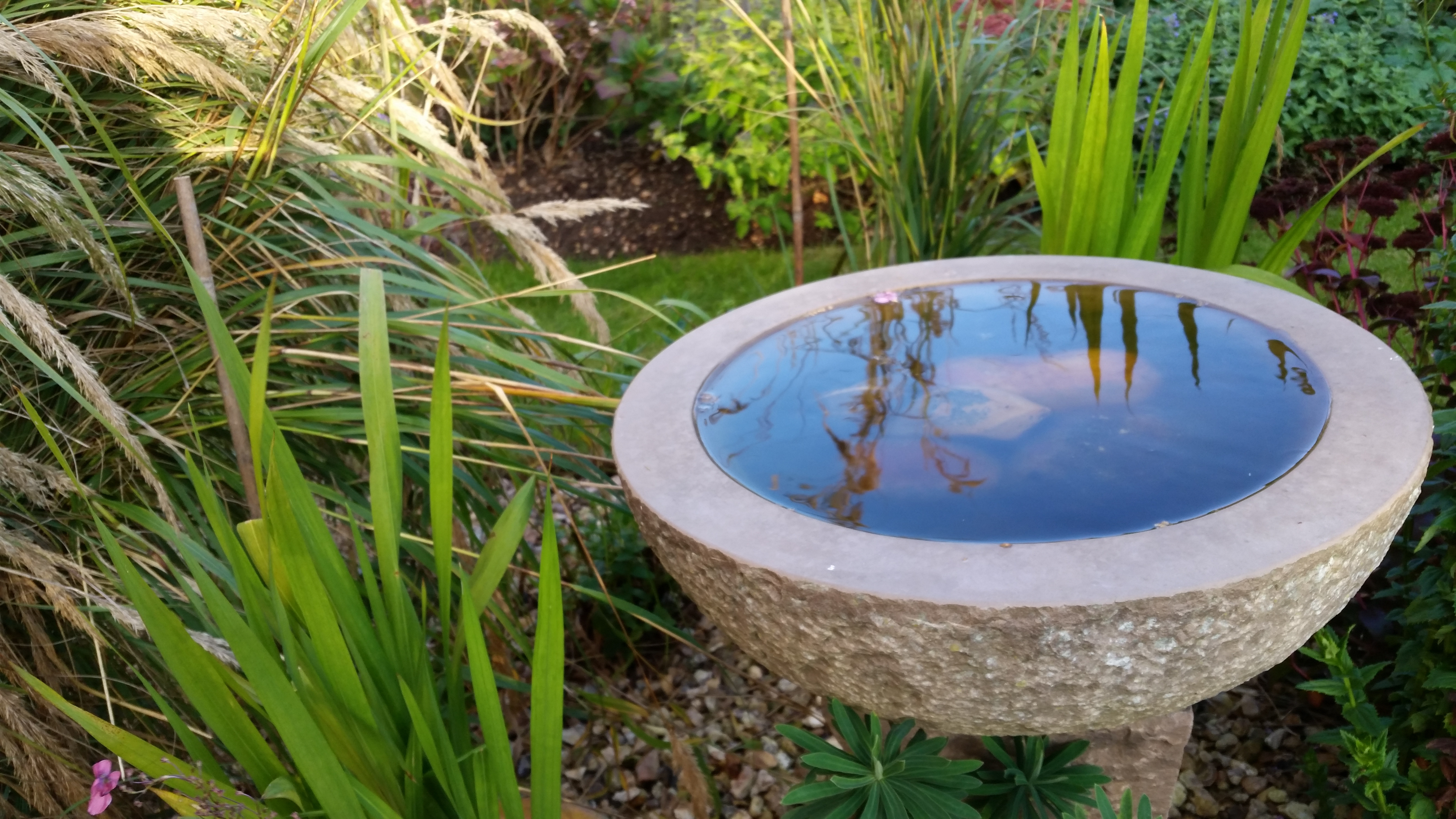
“We love sculpture in the garden and in our patch”Avocet” in Plealey we mostly choose metal or stoneware pieces as these enhance the planting rather that dominate. Recently we have added four new new iron work pieces, two based on seed heads – Clematis and Allium – plus a new bird bath.” 

Here are three of them, the fourth appears later.

au1-12 au1-08 au1-07

I then move on to one of the brightest of garden perennials to grace borders in the UK, the Crocosmias.

“Various Crocosmias feature throughout the patch and in August many come into their own, showing off their yellows, oranges and reds. We have dozens of different varieties. Here are a few ……….. “

au-05

Firstly the yellows ………….

au3-15 au3-10au3-45 au3-48au3-34 au3-46

…………………….. and then the oranges and reds.

au3-49 au3-41au3-26 au3-19au3-40 au3-43au3-21 au3-25

Returning to the sculptural pieces we have recently added to our garden collection, I introduced another 5 pieces.

au-06

“Two new bird sculptures joined us too, one metal, a Wren, and one ceramic, a Blue Tit. The Blue Tit piece doubles up as a planter for some of our many Sempervivum, as does our chestnut shell sculpture.”

au1-09 au1-13 au1-01

“A Begonia Rex adds colour, shape and texture to our stoneware Green Man planter, one of a pair.”

au1-10 au1-11

“The moon-gazing Hare.”

au1-06

“We grow many different Echeveria in terra-cotta pots and pans in the Rill Garden and on our drive edge. These mostly have glaucous leaves and produce flowers of subtle blends of pink, salmon and orange. Recently we acquired a new variety with almost black succulent foliage, Echeveria “Black Prince”. Imagine our delight when it gave us these beautiful red flowers.”

au1-16 au1-14au1-15

“For this month I have decided to paint two delicately coloured flowers, a yellow Linaria dalmatica and the china blue climber and scrambler Clematis jouianiana.

au-07

au-08 au-10 au-09 au-11

On the opposite page I finish off my entries for August by looking at some of our newly acquired plants.

“We are always adding new plants to the garden at Avocet and indeed a few found their way in during August. Here is a selection ………. “

“New Honeysuckles to clamber up our new willow hurdles.”

au3-29 au3-28

“A white Physostegia to accompany our pink one.”

au3-17 au3-18

“Crocosmia “Okavango” and “Salvia leucantha “Eder”.

au3-02 au3-03

And there ends my journal entries for the month of August. Our next visit to look at it will be in September a month that the meteorological office places in autumn but us gardeners tag it onto summer – a much better and more accurate idea. We move into a much quieter period now as we have completed our NGS open days for this year and have received the last of our visiting groups.


Categories
community gardening fruit and veg garden wildlife gardening grow your own hardy perennials July National Garden Scheme NGS ornamental trees and shrubs outdoor sculpture Powis Powys recycling sculpture town gardens Wales Yellow Book Gardens

Ponthafren – an amazing community garden.

We love visiting community gardens whenever we can find one to explore. We like to see what they are trying to do and particularly how gardening is involved in their client activities. We were delighted to find one open under the auspices of the National Garden Scheme not far away just over the Welsh border into Powys. As we approached over a river bridge and first spotted the building we were taken aback by its sheer size. It looked an impressive building with its gardens sloping down to the river bank.

newtown-58 newtown-57

We received a warm welcome from the volunteers who ran the centre and enjoyed a tasty cup of tea and extravagant looking cup cake each as we chatted and learned more about the work of the group. We were amazed at what we heard and were full of admiration.

newtown-48 newtown-54

We couldn’t wait to wander around the garden and see what the volunteer leaders and their clients were up to on this steeply sloping wooded riverside site.

newtown-08 newtown-13


Bunting and flags always add to the feeling of being warmly welcome in any garden and here they fluttered in profusion.

newtown-01 newtown-32newtown-33 newtown-34 newtown-50 newtown-38

Mosaics were popular ways of decorating features here from table tops to sundials. The clients created these in their art and craft sessions.
newtown-02 newtown-03 newtown-04 newtown-07

There were clues at every turn that wildlife was welcome to share the garden with the clients, volunteers and visitors.

newtown-06 newtown-16  newtown-47 newtown-23 newtown-14

There was such a sense of humour prevailing throughout the community garden and many craft items created by the clients illustrated this.

newtown-11 newtown-05  newtown-55 newtown-56 newtown-53newtown-52 newtown-39newtown-24

As with any garden whatever its primary function fine examples of plants are good to see.

newtown-10 newtown-42  newtown-44 newtown-25

Productive gardening was all part of the work here with the produce grown and nurtured by the clients being sold to help raise funds for the community garden. Wormeries sat in one corner working away producing compost and liquid feed for the veg.

newtown-17 newtown-18 newtown-22 newtown-20 newtown-21

We found some fine examples of craftwork in metal and fabrics among the plants on the slopes.

newtown-27 newtown-28 newtown-29 newtown-30

We finished our tour by taking wooden steps and gravel paths down to the riverside where we ended beneath colourful cheerful bunting just as we had started. We were so glad to have discovered this special place run by such special people and they also told us of another community not too far away which may be a place for a future visit.

newtown-35 newtown-36

newtown-43    newtown-49

Categories
buildings colours garden buildings garden design garden photography garden ponds garden pools gardening gardens gardens open to the public hardy perennials Herefordshire irises nurseries ornamental trees and shrubs water garden water in the garden

A Water Garden around an Old Mill

A while ago now we visited this wonderful water garden created around an old water mill on the outskirts of the beautiful Herefordshire village of Pembridge. We decided it was about time for a return visit and also time to peruse the Old Chapel Galleries in the same village. After spending some time and too much money on new sculptures for the garden we drove a few miles on and parked up in the garden car park under lovely mature trees. We collected our hand drawn plan of the garden and set off to explore the Westonbury Mill Water Gardens. Immediately we were impressed by how fresh everything looked and were drawn to bright patches of colourful planting among the greenery.

mill-1

mill-5 mill-4   mill-8 mill-5

As in any good garden the quality and choice of individual plants is a key factor in making it an enjoyable place to visit. Take a look at these beauties at Westonbury Mill. Being a water garden designed around a series of streams and pools we searched out the water and marsh loving plants first and found many in flower including the following specimens. Irises including varieties of I.ensata, the wild flowerheads of Butomis, the flowering rush and various Primulas including P. florindae and Rodgersias.

mill1-08 mill1-09mill1-02 mill1-24mill1-04 mill1-05mill1-03 mill1-13 mill1-14mill1-11 mill1-18mill1-06 mill1-07         mill1-16 mill1-17  mill1-21 mill1-25

Even though this was a water garden there were plenty more perennials flowering well and catching the attention of visitors.

mill1-19 mill1-20   mill1-23 mill1-01 mill1-26 mill1-27

Westonbury is well-known for its collection of follies, built by the garden owner for the sheer fun of it and to amuse the visitors, although they can also have a secondary purpose.

We discovered the first just as we approached the garden itself and so we could enjoy it from outside the garden and within. Water rose up a water ladder from the stream beneath to be released into the hands of gravity thus sending water spewing from the mouth of a stone gargoyle.

mill-2 mill-3

mill-6 mill-7

Through a structure of willow rather than stone we moved on to discover further eccentric buildings including a glass bottle igloo, towers and shelters.

mill2-01 mill2-02 mill2-05 mill2-06mill2-04 mill2-07 mill2-11mill3-13 mill2-10 mill2-09 mill2-10

To give you an idea of the feel of the garden and the quality of the planting and structure I thought I would finish this post about Westonbury Mill Water Gardens with a selection of broad shots taken as we wandered its many winding paths.

mill3-16 mill3-15 mill3-14  mill3-12 mill3-10 mill3-09 mill3-08 mill3-07 mill3-05 mill3-06 mill3-04 mill3-03 mill3-02 mill3-01

What a lovely atmospheric garden this is! Full of interest and full of interesting plants and features.


This Veggie Life

A Vegetarian | Nature Lifestyle Blog

Rambling in the Garden

.....and nurturing my soul

The Arch City Gardener

Journeys In St. Louis Gardening and Beyond

Garden Dreaming at Châtillon

Consult the genius of the place

Storyshucker

A blog full of humorous and poignant observations.

gardeninacity

Notes from a wildlife-friendly cottage garden

PlayGroundology

...an emerging social science

The Official Blog of British Wildlife

'The most important and informative publication on wildlife of our times' - The Independent. This blog is a member of The UK & Ireland Natural History Bloggers group: www.uknhb.blogspot.com

iGrowHort

Inspire - Cultivate - Grow Native Plants - Restore Landscapes

Bishops Meadow Trust

To create and protect a semi-natural wild space for the people of Farnham to enjoy and experience an array of British wildlife in our town

Gardening with Children

The www.gardeningwithchildren.co.uk Blog

UKbirdingtimeline

birding through the seasons, why birds matter and how to conserve them

NATURE WALKER

with a camera in hand

Jardin

Transform your outdoor space

Eva's space

My allotment, cooking and other interests

Old School Garden

my gardening life through the year

LEANNE COLE

Trying to live a creative life

fromacountrycottage

trying to live as lightly as possible on our beautiful planet

Good Life Gardening

Nature lovers from Leicester living the good life.

mybeautfulthings

Finding the beautiful in the everyday

mawsonmichelle

Michelle's Allotment

In and Out of My Garden

thoughts from and about my garden

Greenhousing

Big plans for a small garden

The Scottish Country Garden

A Walled Country Garden in South East Scotland

The Fruity Chicken

Life at the fruity chicken

willowarchway

Off grid living. Self sufficient. "PERMAGANICS RULE".

St Anns Allotments

Nottingham's Grade 2* Listed Allotments and Community Orchard

Manifest Joy Harvests

a journey in suburban vegetable gardening

Allotmental

The madness of growing your own

Penny's Garden: a harvest beyond my front door

A novel approach to vegetable gardening

arignagardener

Sustainable living in the Irish countryside.

NewEnglandGardenAndThread

Master Gardener, amateur photographer, quilter, NH native, and sometimes SC snowbird

dianajhale

Recent work and work in progress and anything else that interests me

planthoarder

a chaotic cottage gardener

Lens and Pens by Sally

a weekly blog that creates a personal philosophy through photographs and words

Dewdrops and Sunshine

Stories from a sassy and classy Southern farmbelle.

The Pyjama Gardener

Simple Organic Gardening & Seasonal Living

gettin' fresh!

turning dirt into dinner

JOY...

today the world is created anew

Garden Birds

Notes from a Devon garden

ShootAbout

Life Through The Lens

Adapting Pixels

A photography blog showcasing the best photography pictures and videos on the internet

Wildlifegardening's Blog

Just another WordPress.com site

naturestimeline

personal observations from the natural world as the search continues for a new approach to conservation.

LATEBLOOMERBUDS

The Wonders of Life through my Eyes, my Heart, my Soul