Think of January in the garden. Could you put together a bouquet? This is my new monthly garden blogging challenge, and starting in January most certainly throws me in at the deep end. But here goes…………………
Here are the first couple of pages of my sketch pad for the new year.
In this cold month colourful flowers can be used to create a bouquet, but you can also experience and enjoy a bouquet of scents.
So firstly what is delighting us with colour?
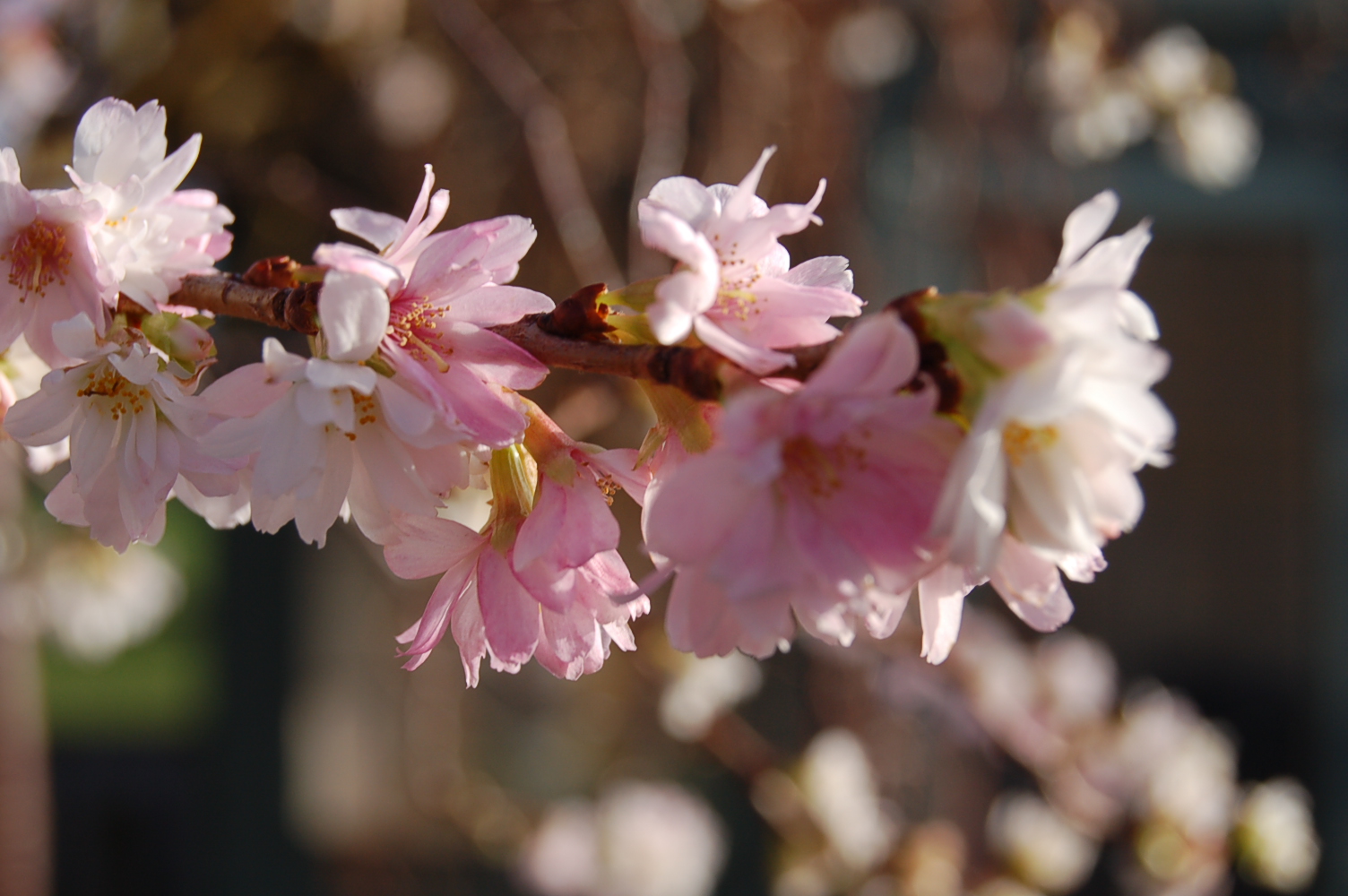
The rather inappropriately named Prunus x subhirtella autumnalis, with blossom of the palest pink, stunning against a pure blue sky.
The perennial wallflower, Erysium Bowles Mauve flowers in almost every month of the year, but is very special in January.
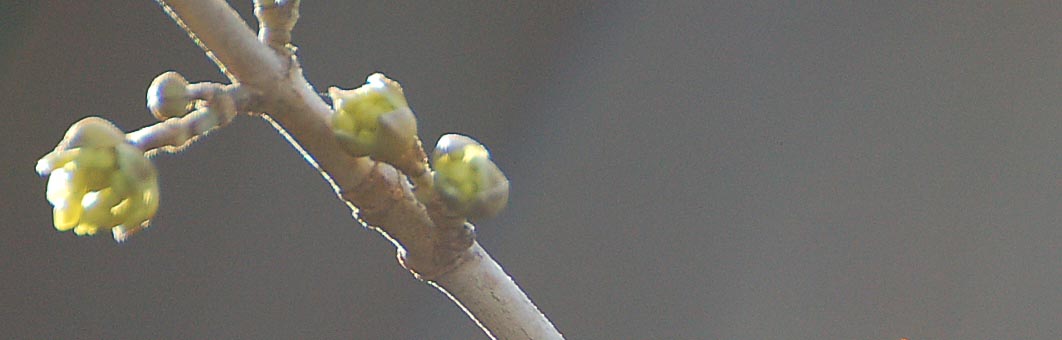
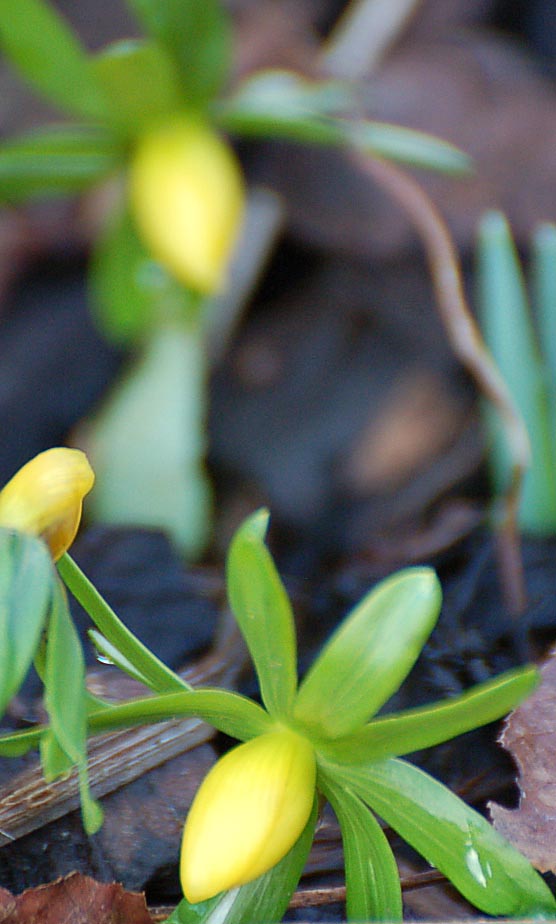
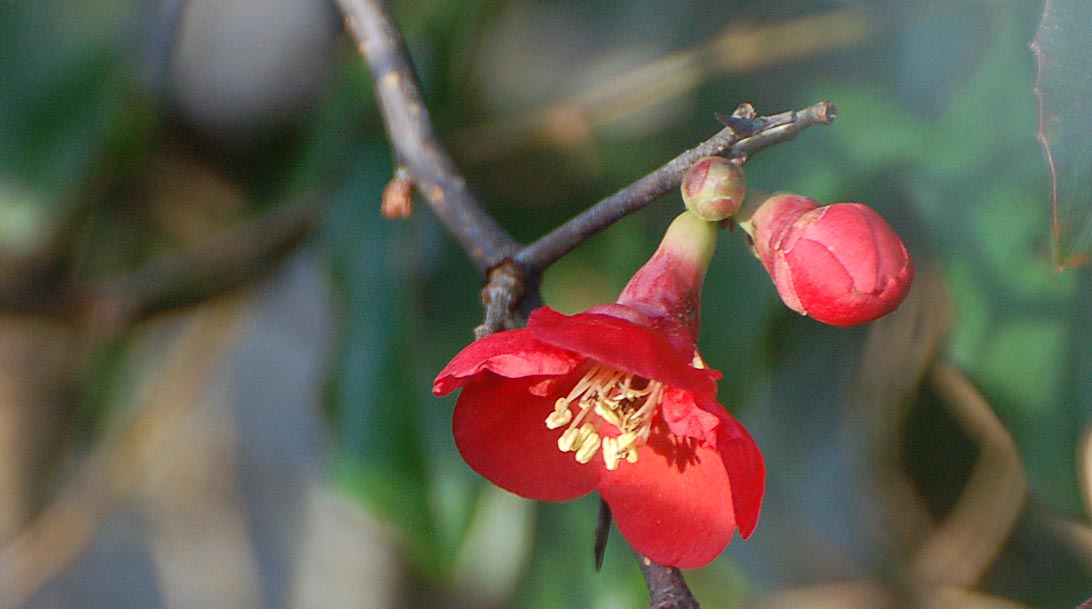
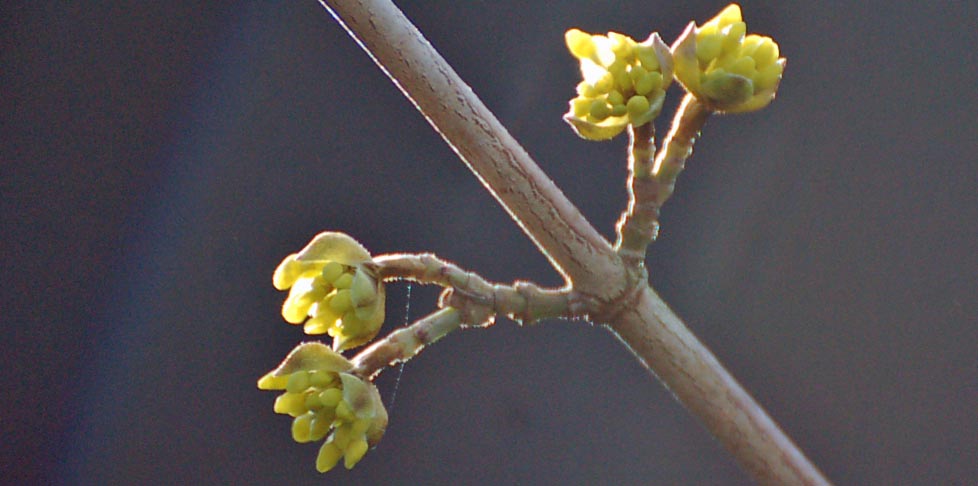
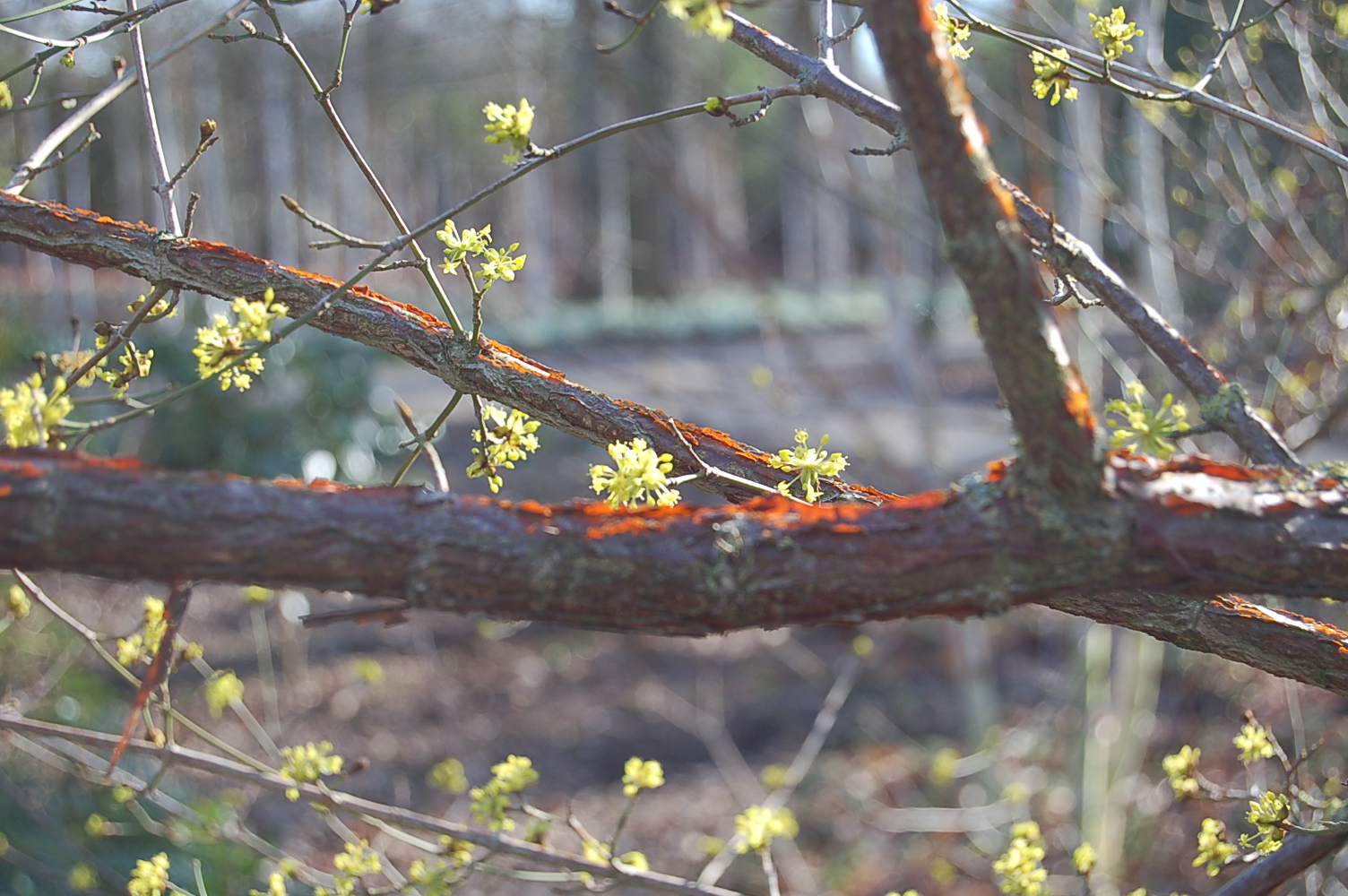
The first flowering bulb of the year is the Winter Aconite, Hyemalis, with its buttercup flowers close to the ground. The Flowering Quince, Chaenomales greets visitors to “Avocet” with its bright sun-set red flowers giving a warm welcome alongside the gate post at the bottom of the drive. The Cornelian Cherry, properly called Cornus mas dominates the “Freda Border” at the top of the drive. It is covered from head to toe with bunches of acid yellow umbels. They are little nuggets of gold.
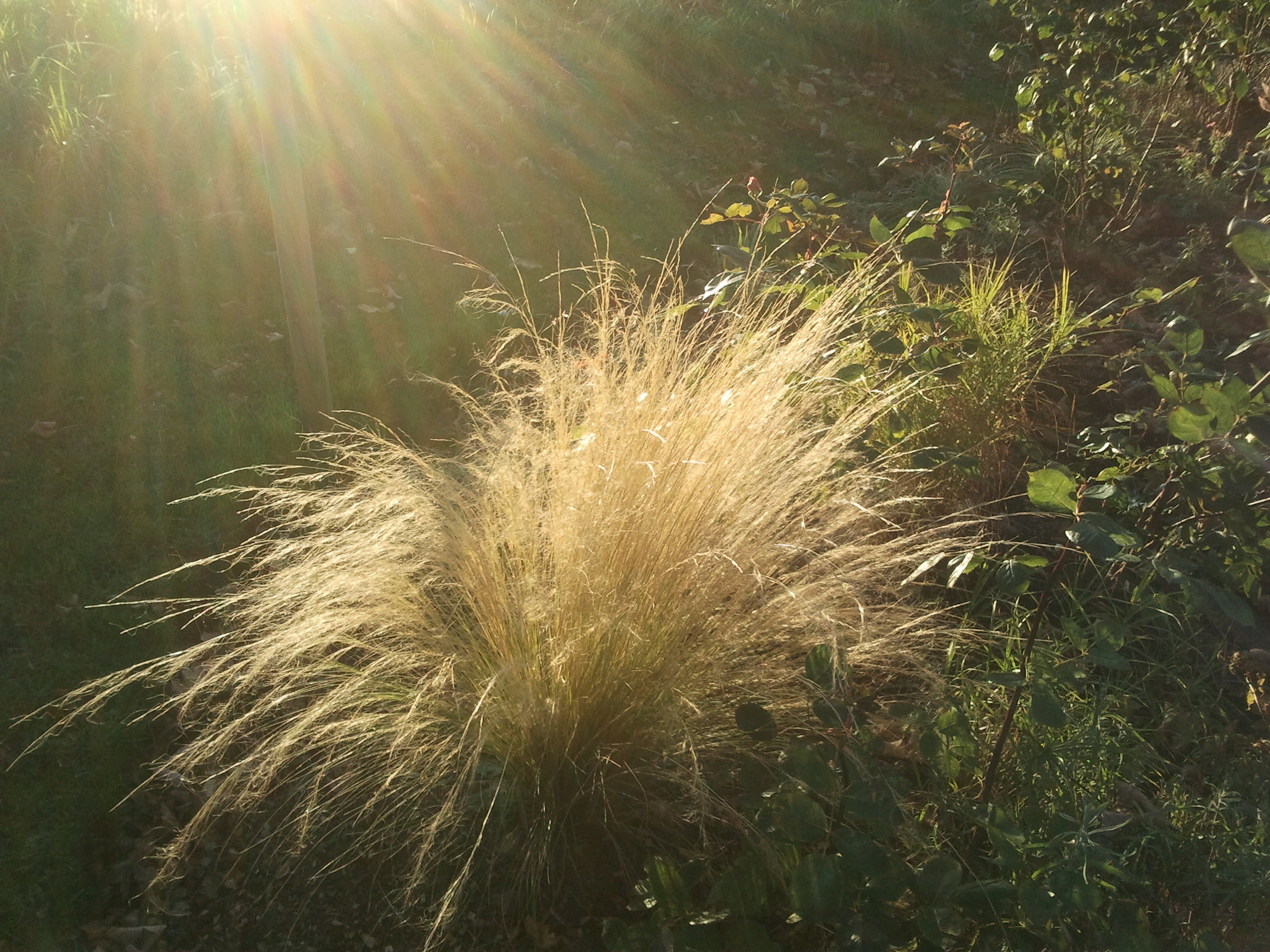
White is appreciated more in the dark days of winter. The pussy willow’s furry white blooms huddle along the black stems of our Violet Willow by the wildlife pond. As grasses reach their end, prior to me pruning them back to the ground, their flower heads are white and silver.
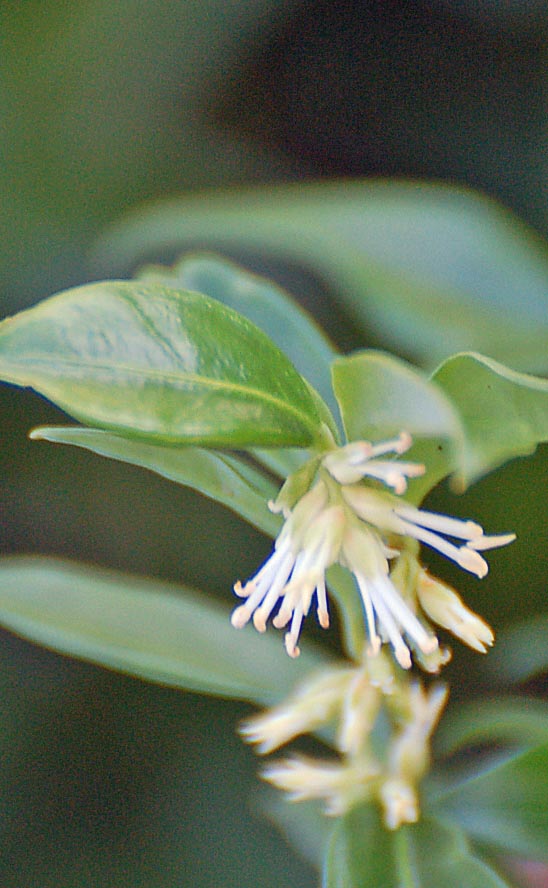
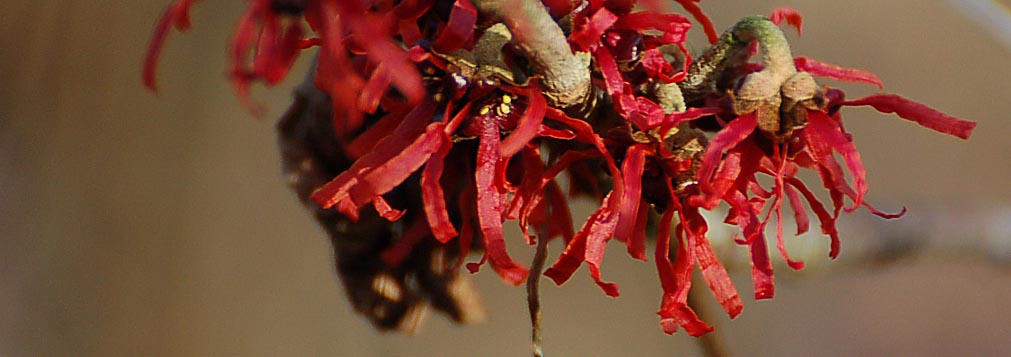
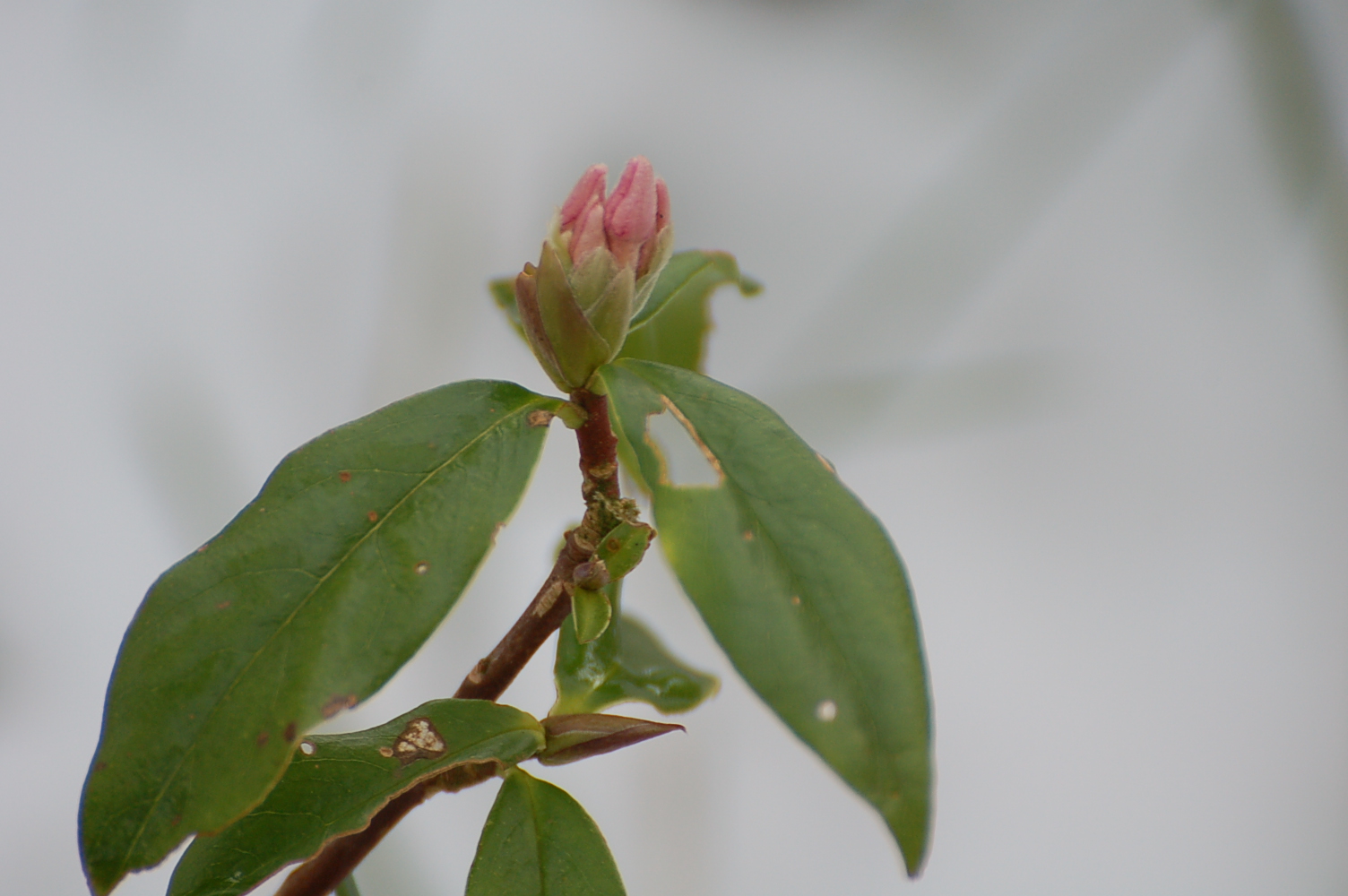
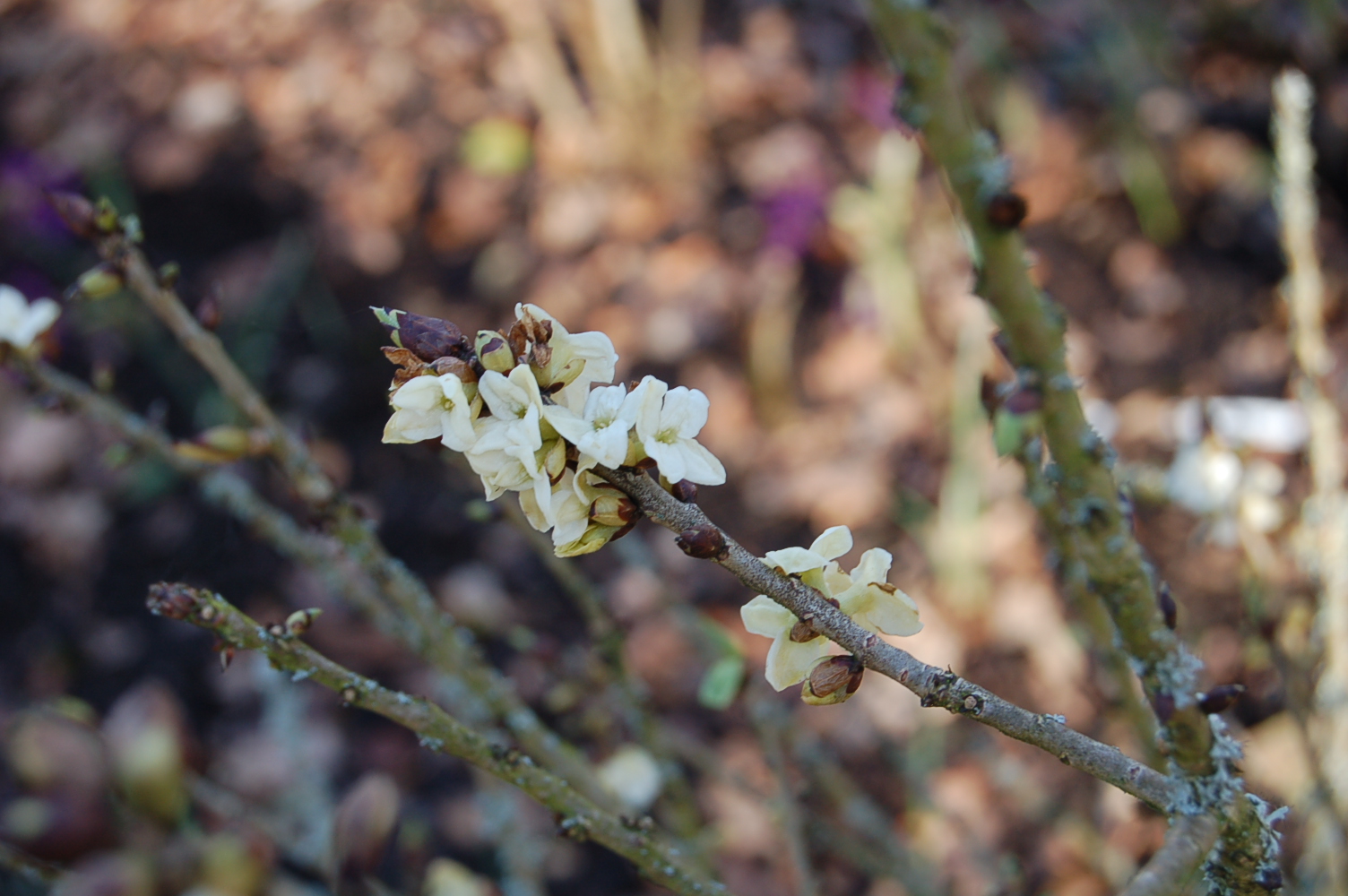
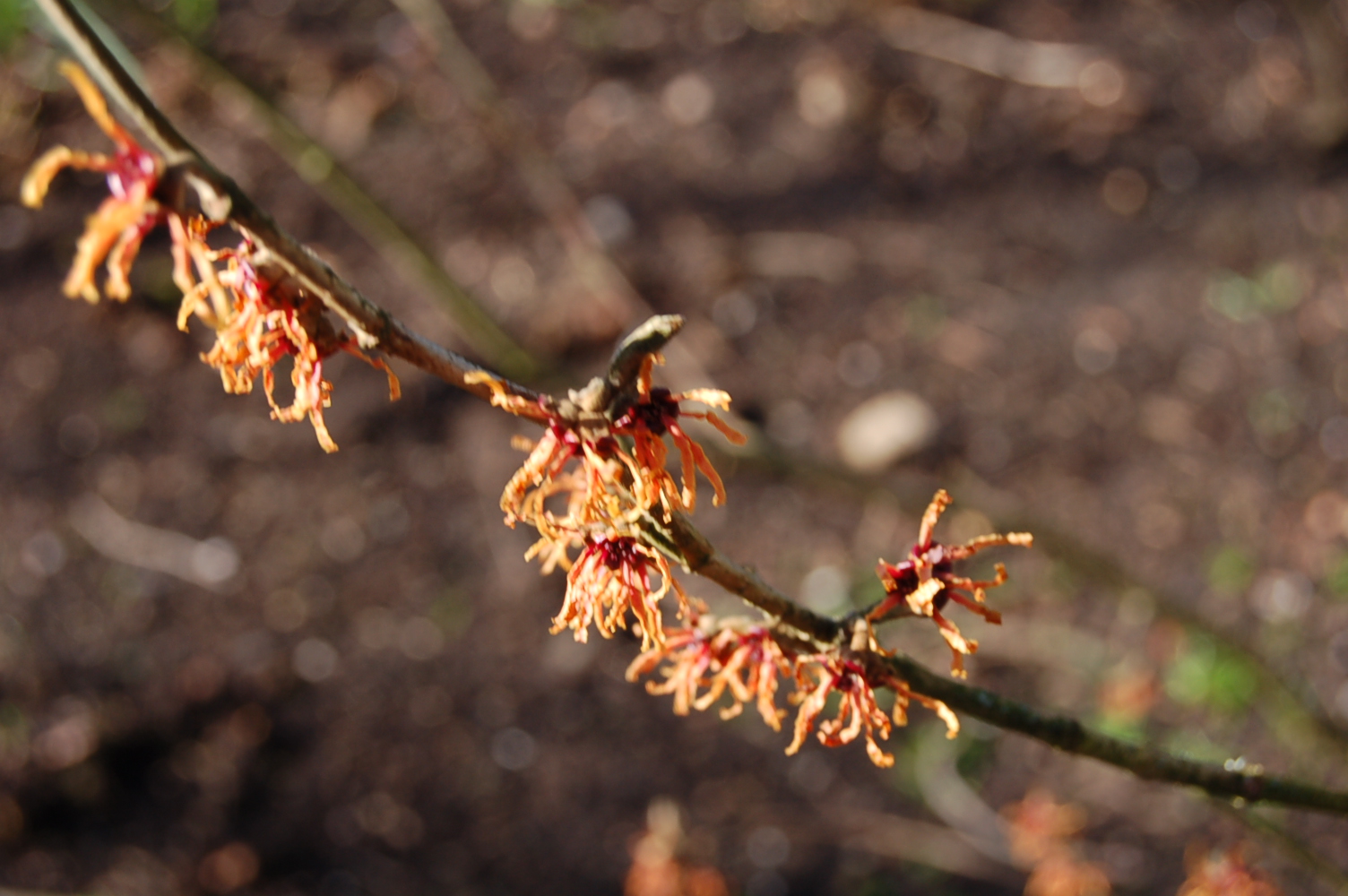
And who keeps us warm with their scent in the cold? Sarcoccoca, Witch Hazels, Viburnum and the first Daphne of the year Daphne bhuloa “Jacqueline Postil”. She glows pink, a unique pink with hints of blue and violet. Her scent is mesmerizing.
Jaqueline Postil – what a beauty and what expensive perfume she wears.
But think of January blooms and we must not forget the first Hellebores.
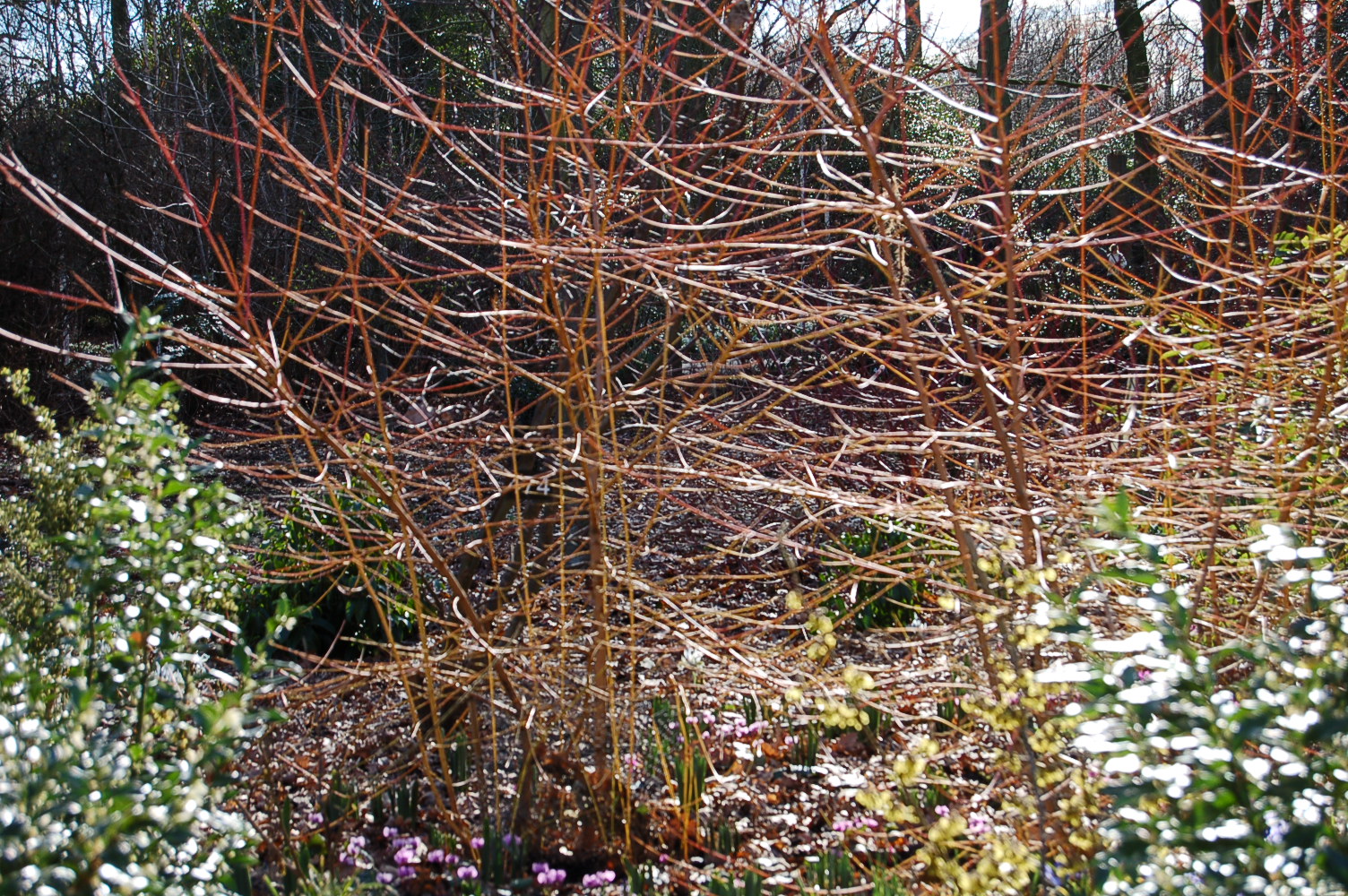
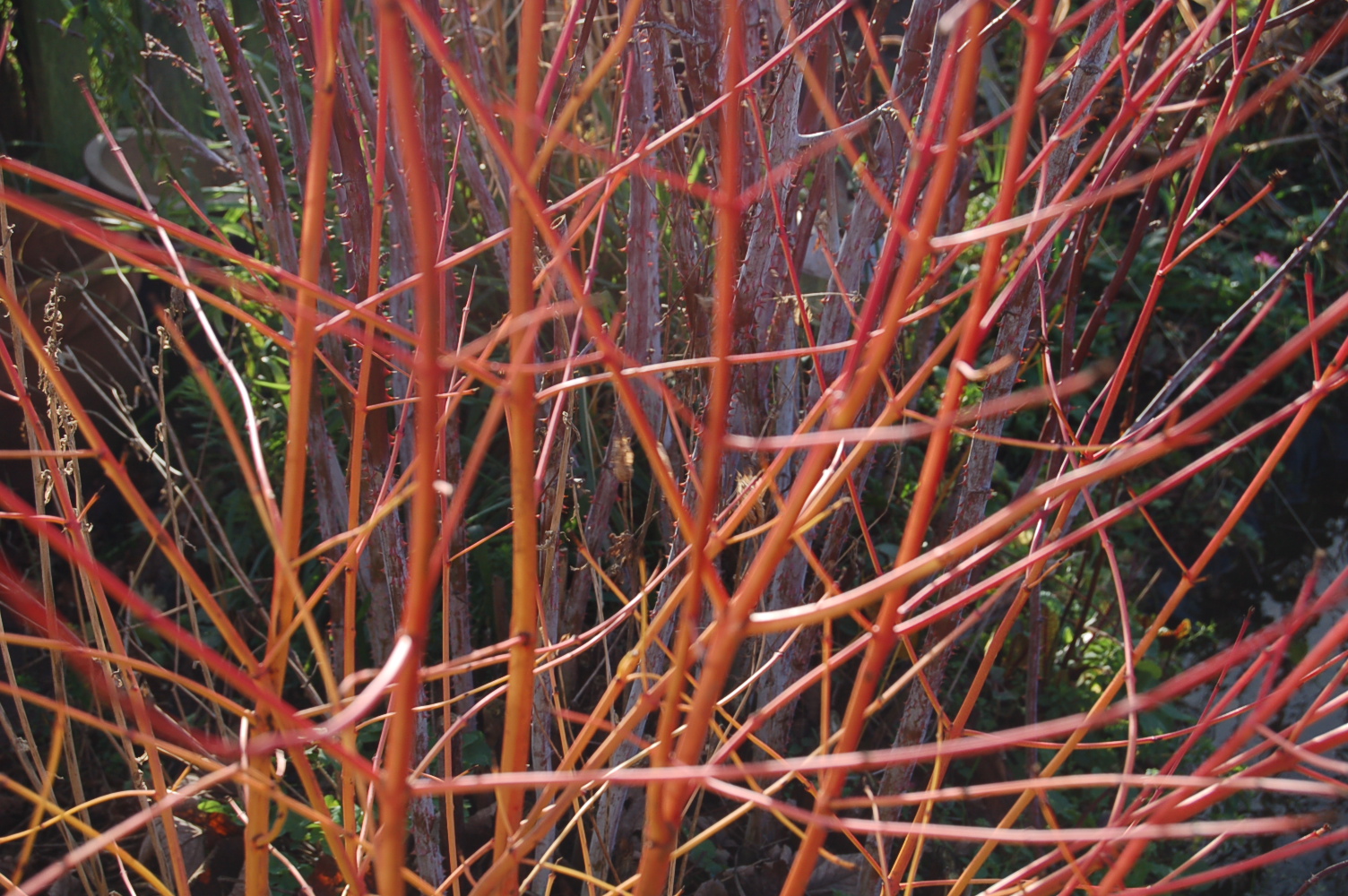
In the first few months of each new year the garden treats us to a colourful show of bright and varied coloured stems of shrubs. The most colourful are the dogwoods and willows of which we grow several specially chosen for their coloured stems. They glow in any bright days at this time of year.
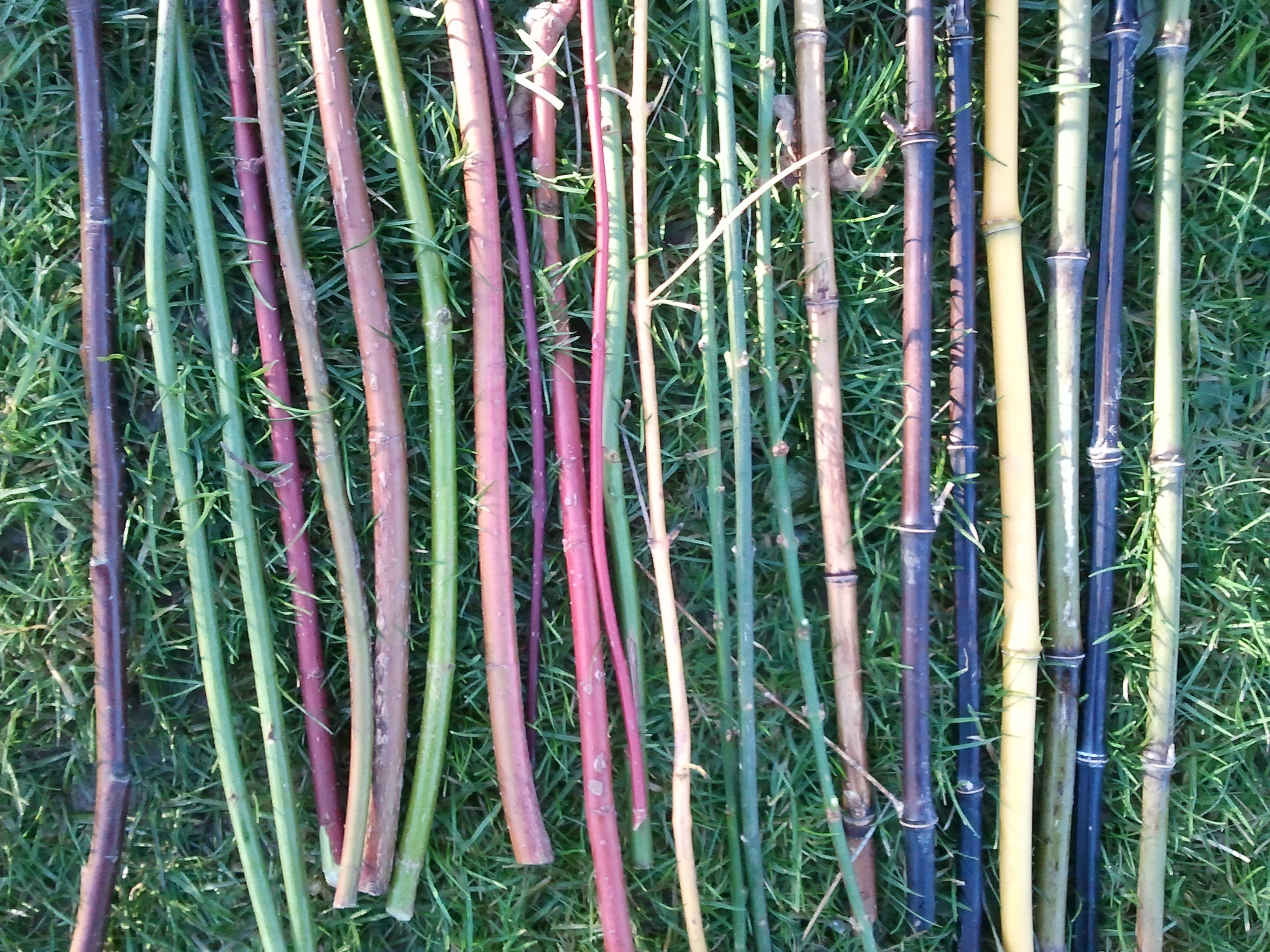
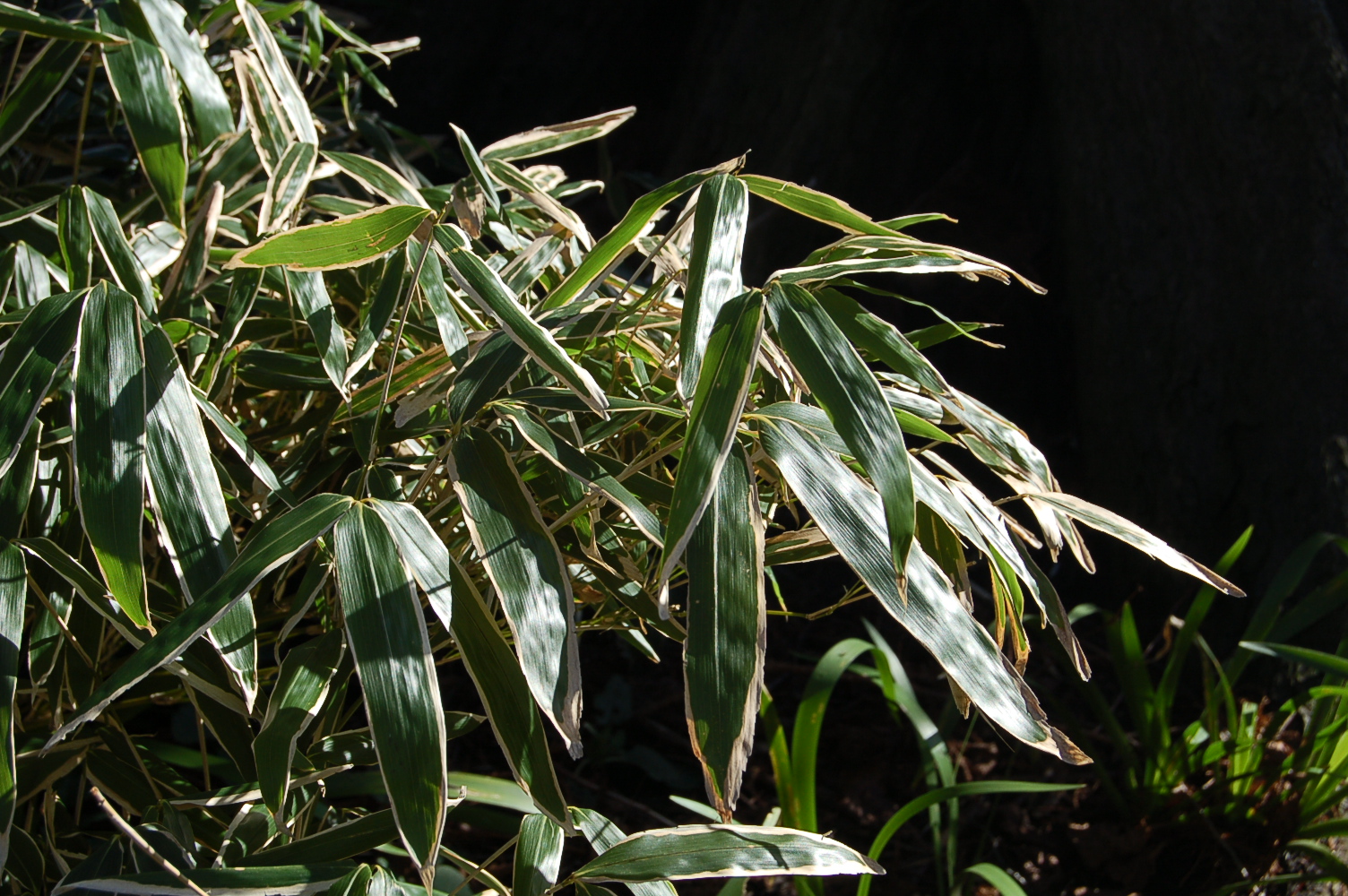
This selection of stems cut from our garden include dogwood, Kerria, willow, bamboo and Winter Jasmine.
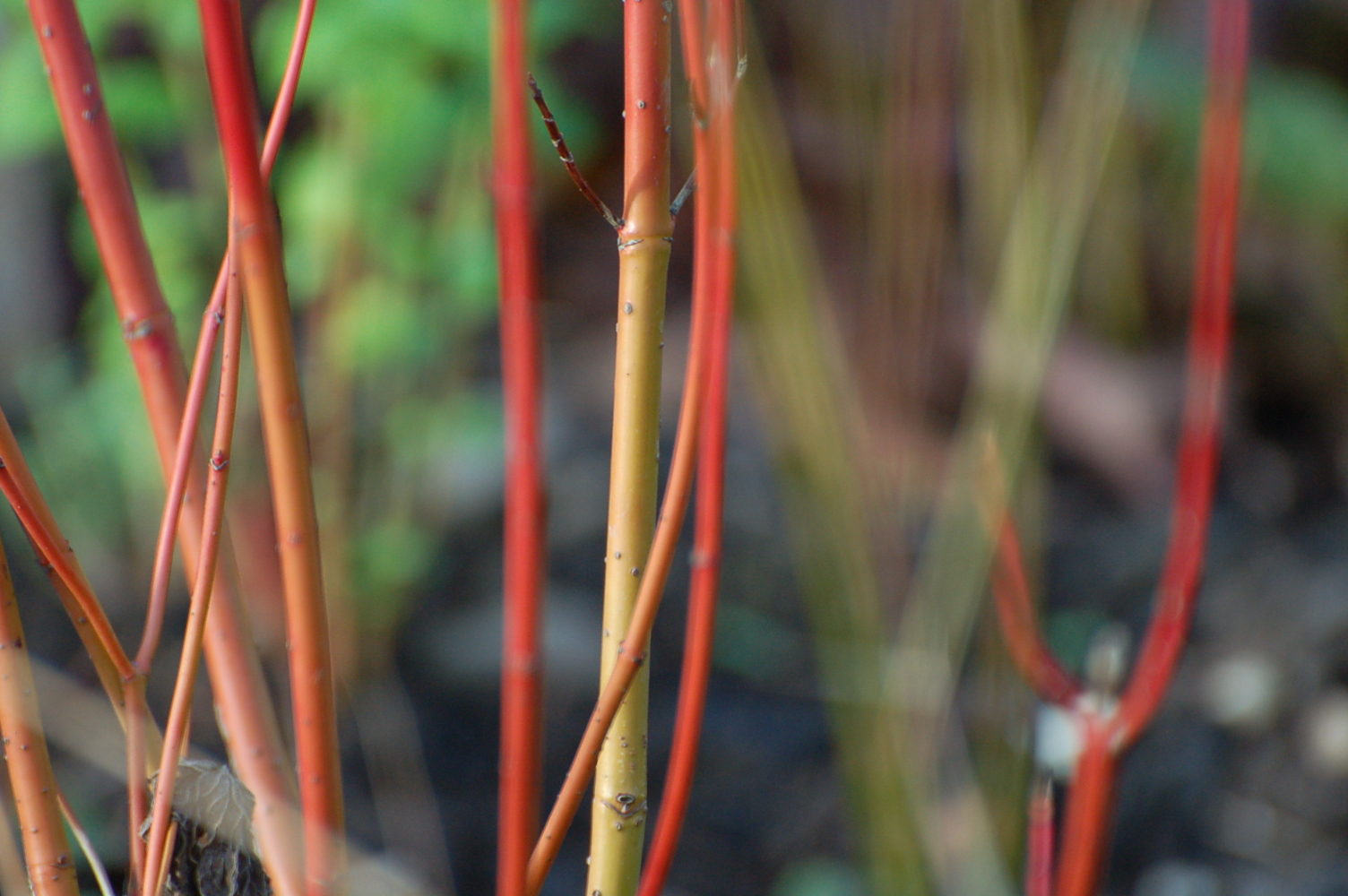
The first pair of photos shows Cornus, the first is “Midwinter Fire” which we grow alongside our summerhouse just where it gets backlit by the winter sun, the second is “Cardinal” of which we have several specimens around the garden as they look good in any light.
Below is neither a dogwood or willow but an extremely red stemmed Acer called “Sango Kaku”, which we have planted alongside Cornus “Midwinter Fire”. We look forward to seeing them grow together.
The Cardinals in our front garden grow in front of our White-stemmed Birch, Betula utilis “Silver Queen”.
We keep adding shrubs with coloured stems and yesterday I took these cuttings below off gardening friend Pete’s fiery willow.
Sometimes the coloured stems are made even more special with the addition of flowers. The willow below with its black stems glow with the emergence of its white flowers at this time of year.
I shall finish with the photo of a bunch of stems cut from our bamboos.
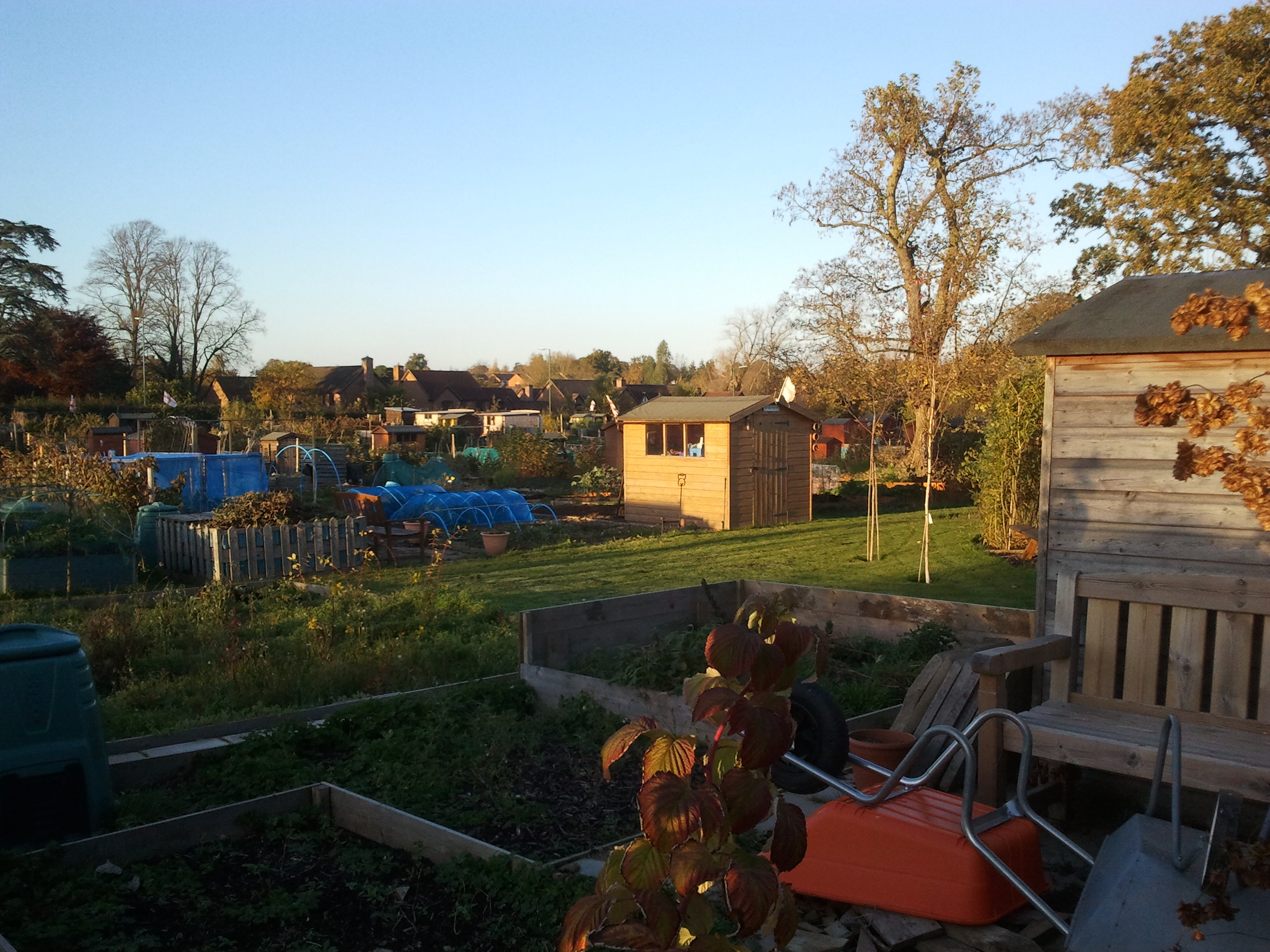
The penultimate lottie wander post for 2012 and at last the weather is providing a few bright cold days. This is what we look forward to in this autumnal month, rather than the wet dark days we have been presented with in the first few days. The light is warm and gives a crisp edge to any photos taken as the blue haze of summer has disappeared.
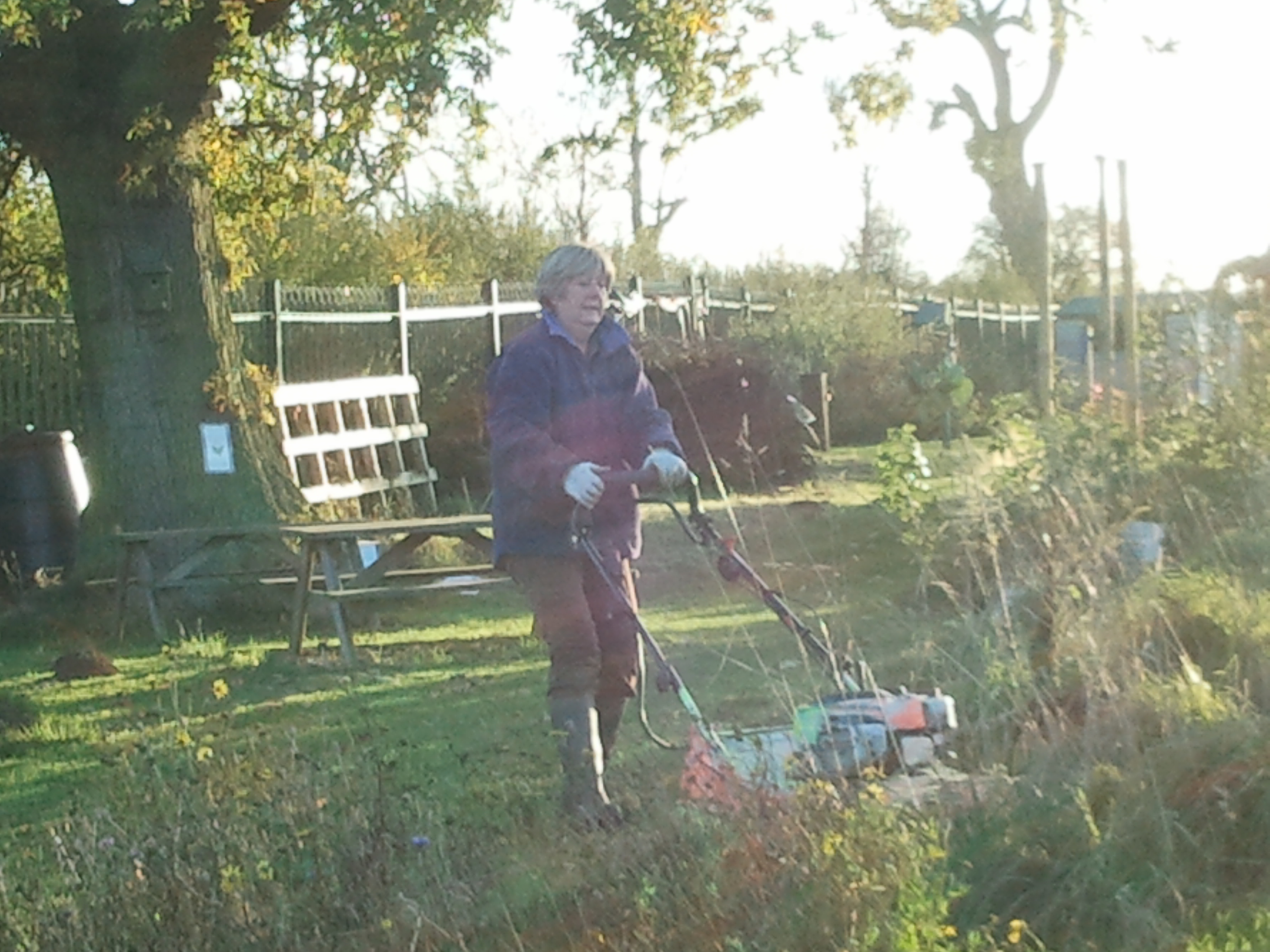
We went up the lottie yesterday to deliver some spare seeds for the Seed Swap basket and to collect some greens left by fellow plot holders for our chickens. They are spoilt by our friends from the site! It was mid-afternoon and we had not intended to stop to work, but we changed our minds. We got out the communal mowers and rakes and gave the final two meadows their annual “hair cuts”. Jude, The Undergardener did most of the work as it is a bit difficult with my spine and leg pains, so I wandered off taking advantage of the special quality of the day’s light and shot off a couple of dozen pics with my Galaxy.
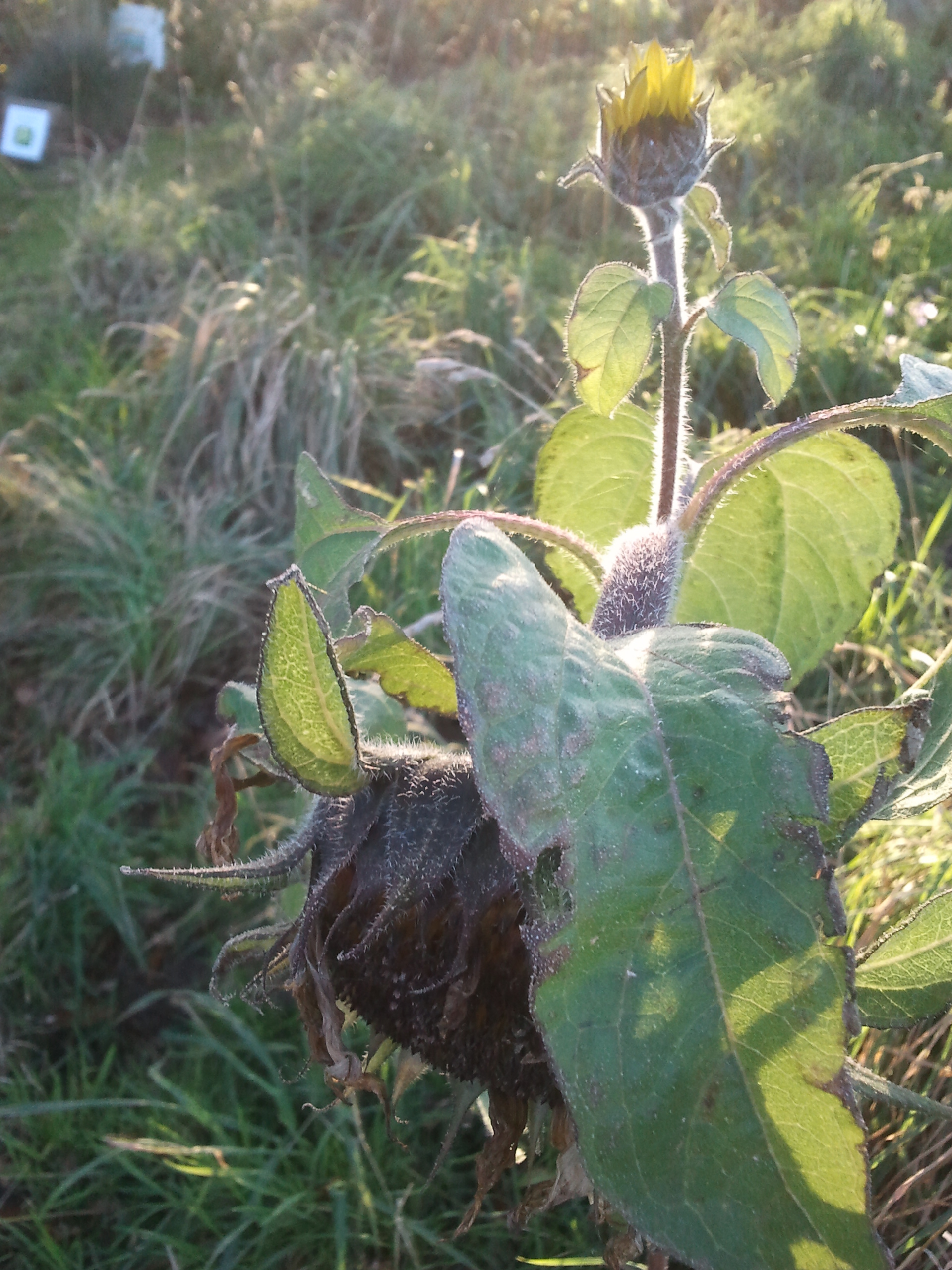
As we worked on the meadows the resident Field Voles scuttled off as they felt the mower’s vibrations and disappeared down their holes. We left a few clumps of wildflowers standing for everyone to enjoy before winter cuts them down. Field Scabious, Mallow and Sunflowers.
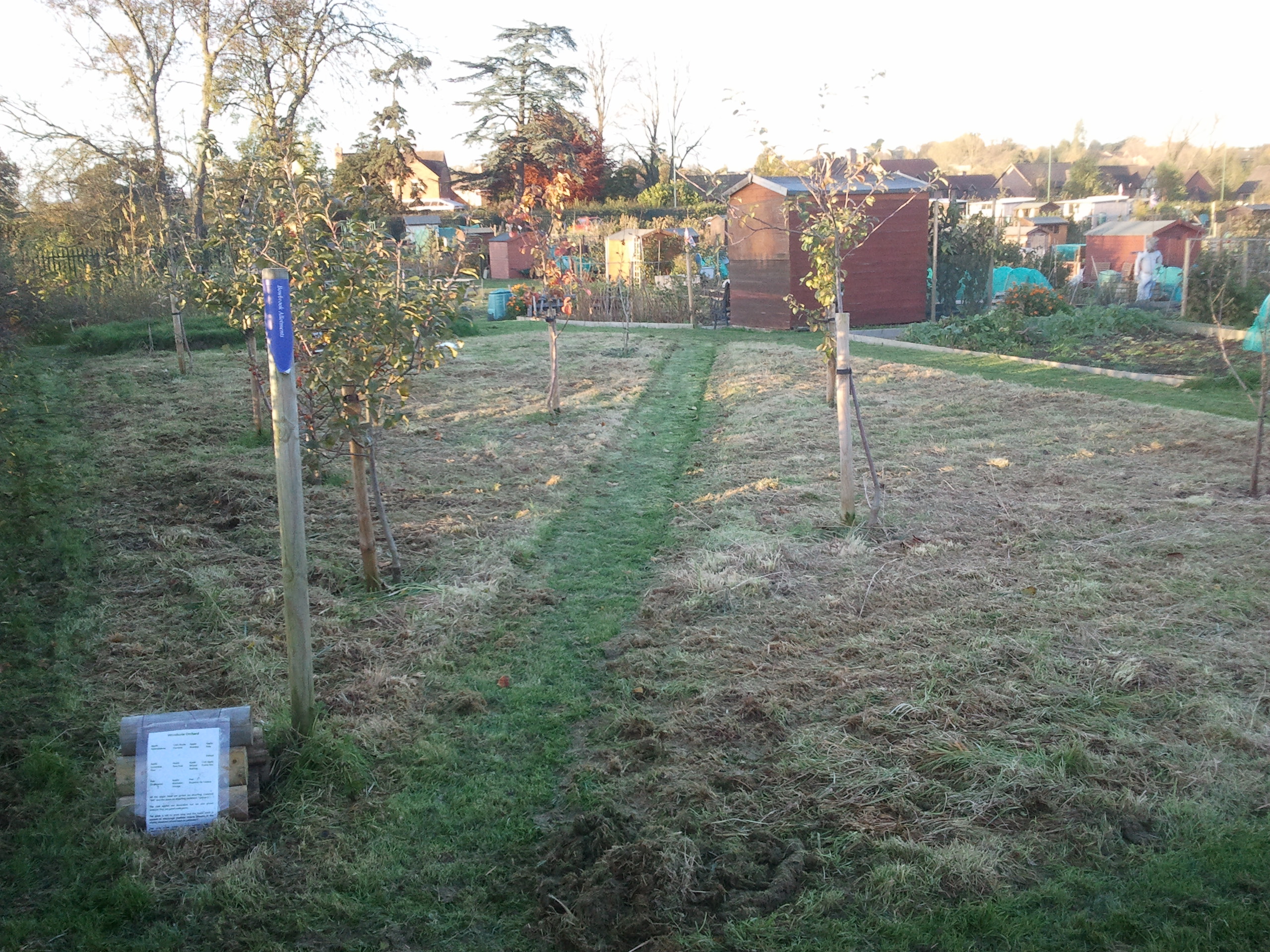
The meadows that are already trimmed look flat and brown, but the pathways mown through them look crisp and green.
The foliage in our Sensory Garden is given extra vitality in the November sunshine.
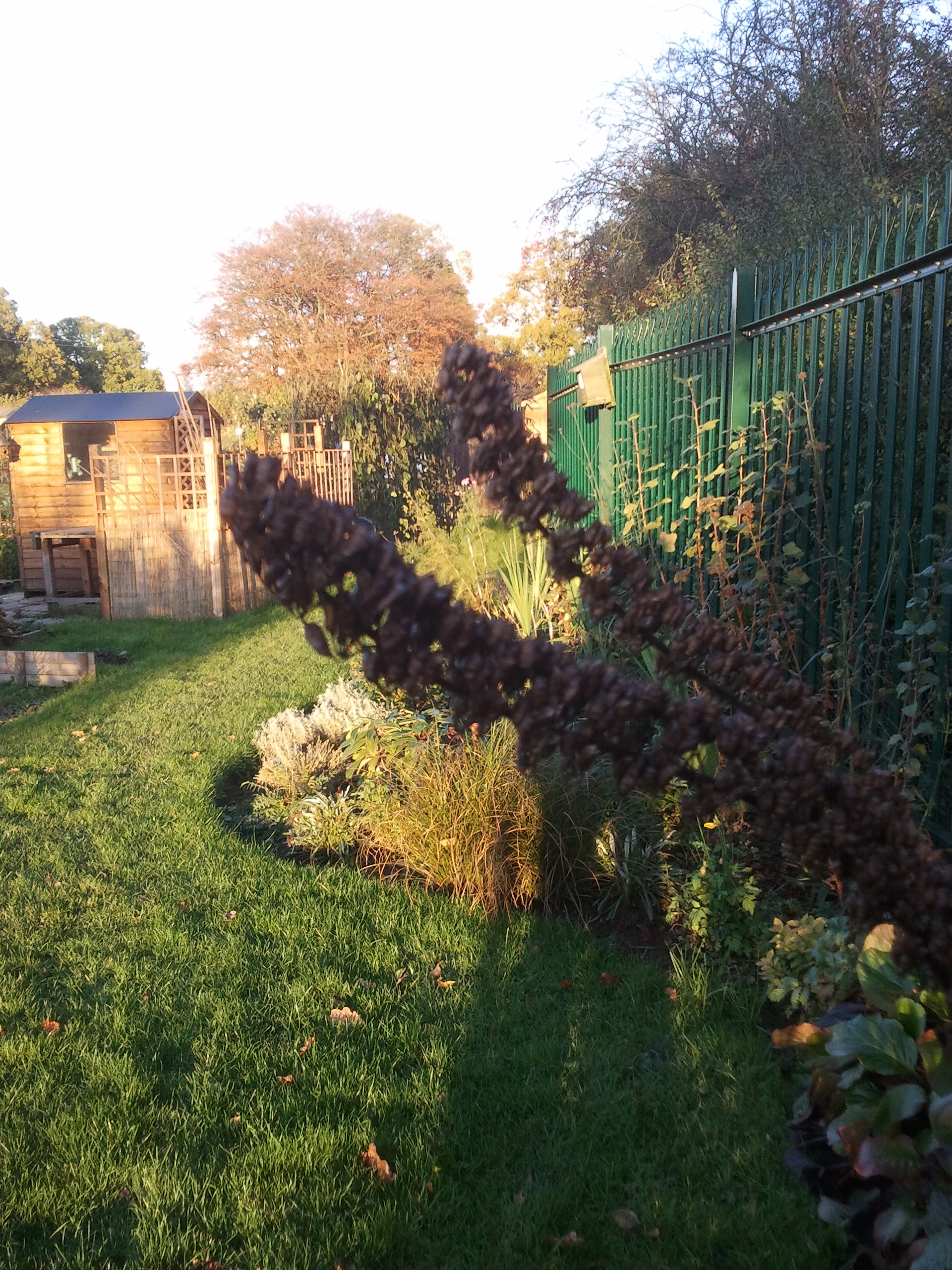
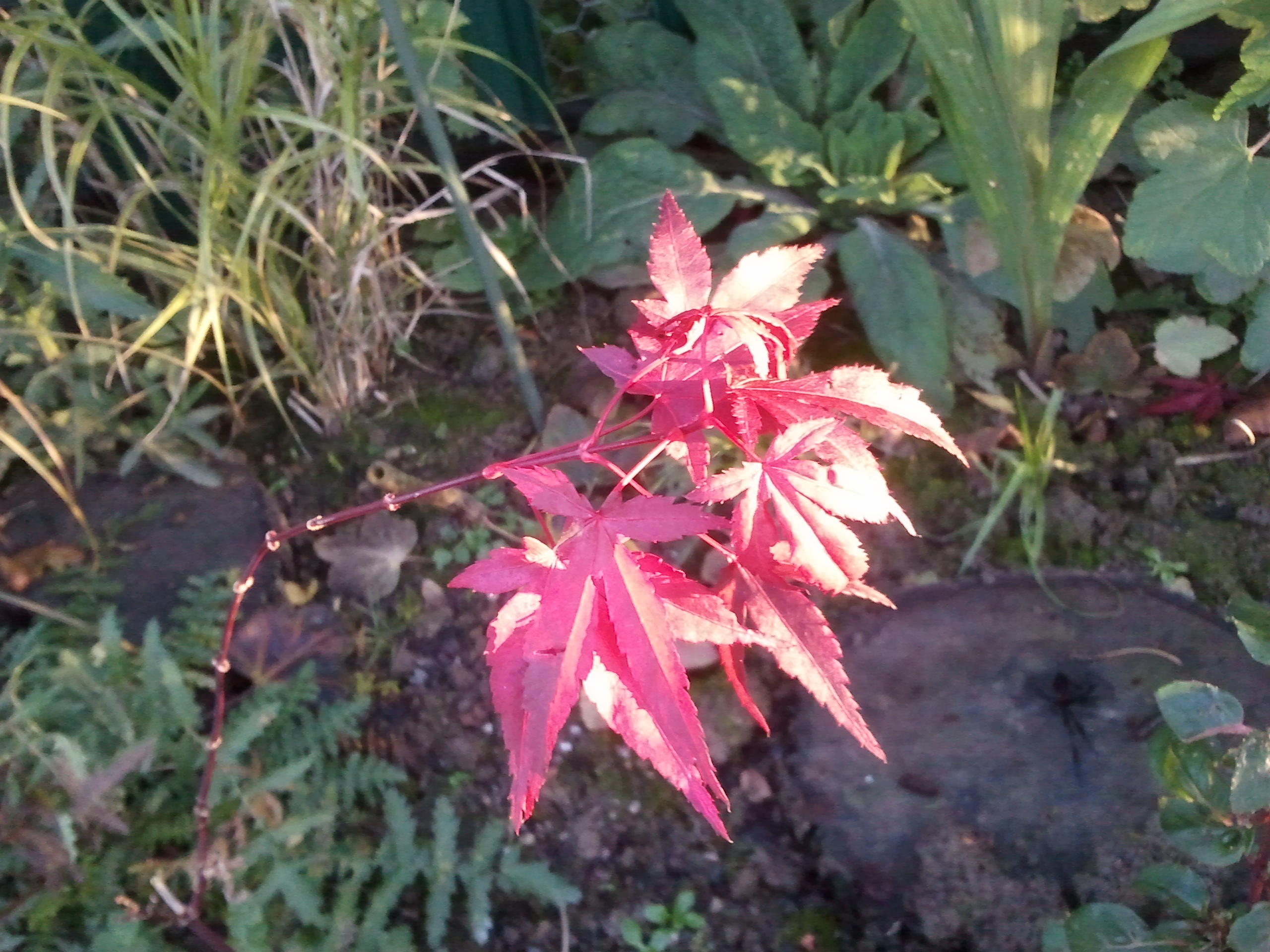
The next shot is a view of the site boundary through the seed heads of a white-flowered Actaea across the Spring Garden. In the Spring Garden a tiny Acer shows that you don’t have to be big to impress.
In the meadows the last of the grasses and sunflowers stand tall and proud.
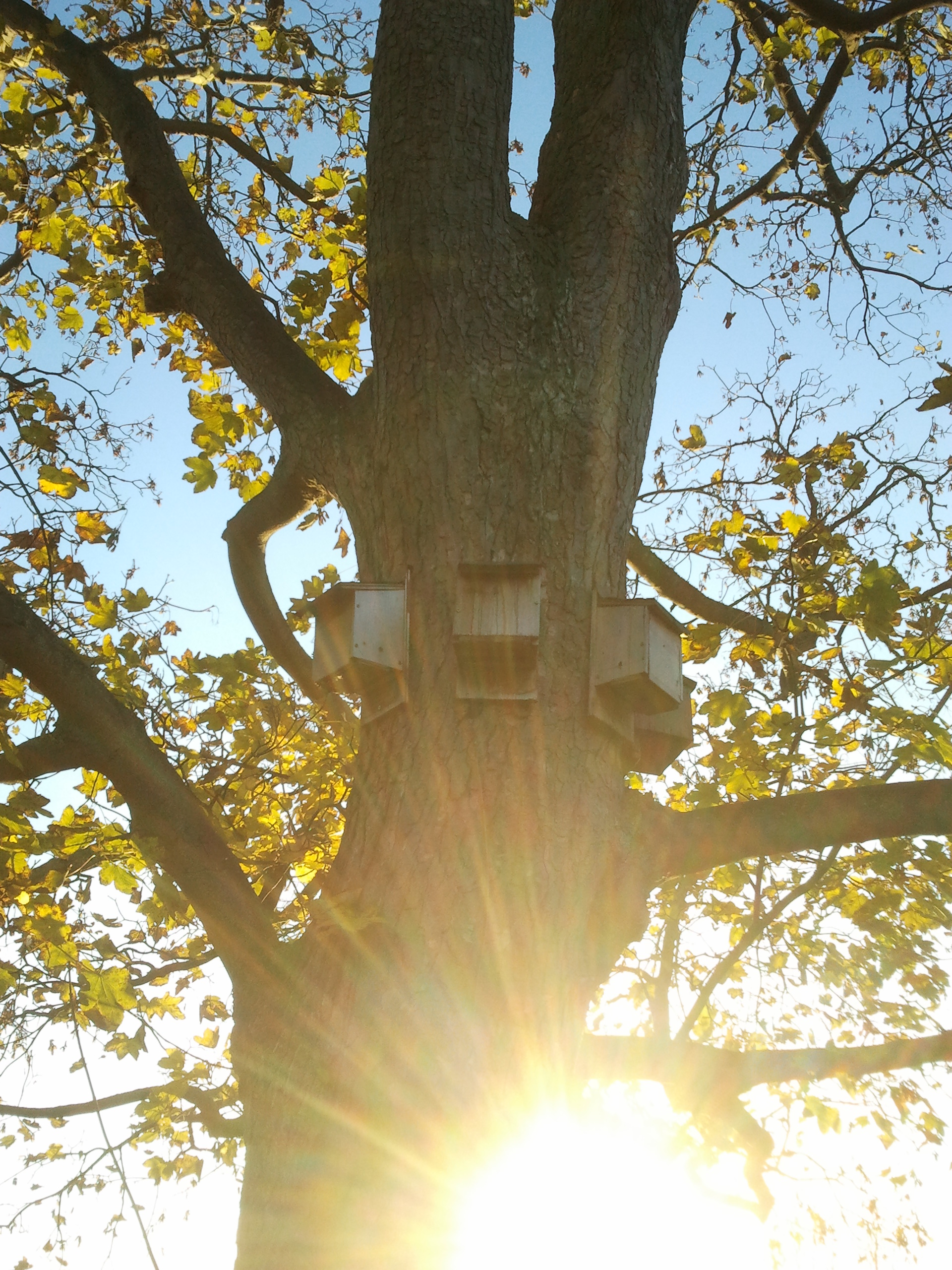
Up in the mature Sycamore and Oak the resident bats will be shuffling around and preening in readiness to leave their roosts in the boxes and go on the feed for moths and night-flying insects. Bats are our night-time pest control patrols. In the daylight hours we are being entertained by birds of prey often being mobbed by our flocks of Jackdaws and Rooks . Peregrines, Buzzard, Red Kite, Kestrel and Sparrow Hawk.
Around the plots the gardeners are preparing their plots for the winter, beds are cleared and manure piled up or spread over the surface.
A few crops remain for winter sustenance.The red stems and purple leaves of Ruby Chard add a burst of colour. Brassicas are covered to give protection from ravenous and greedy Wood Pigeons who love to eat the sweet centres of Brussels Sprouts and the tenderest, newest leaves of cabbages.
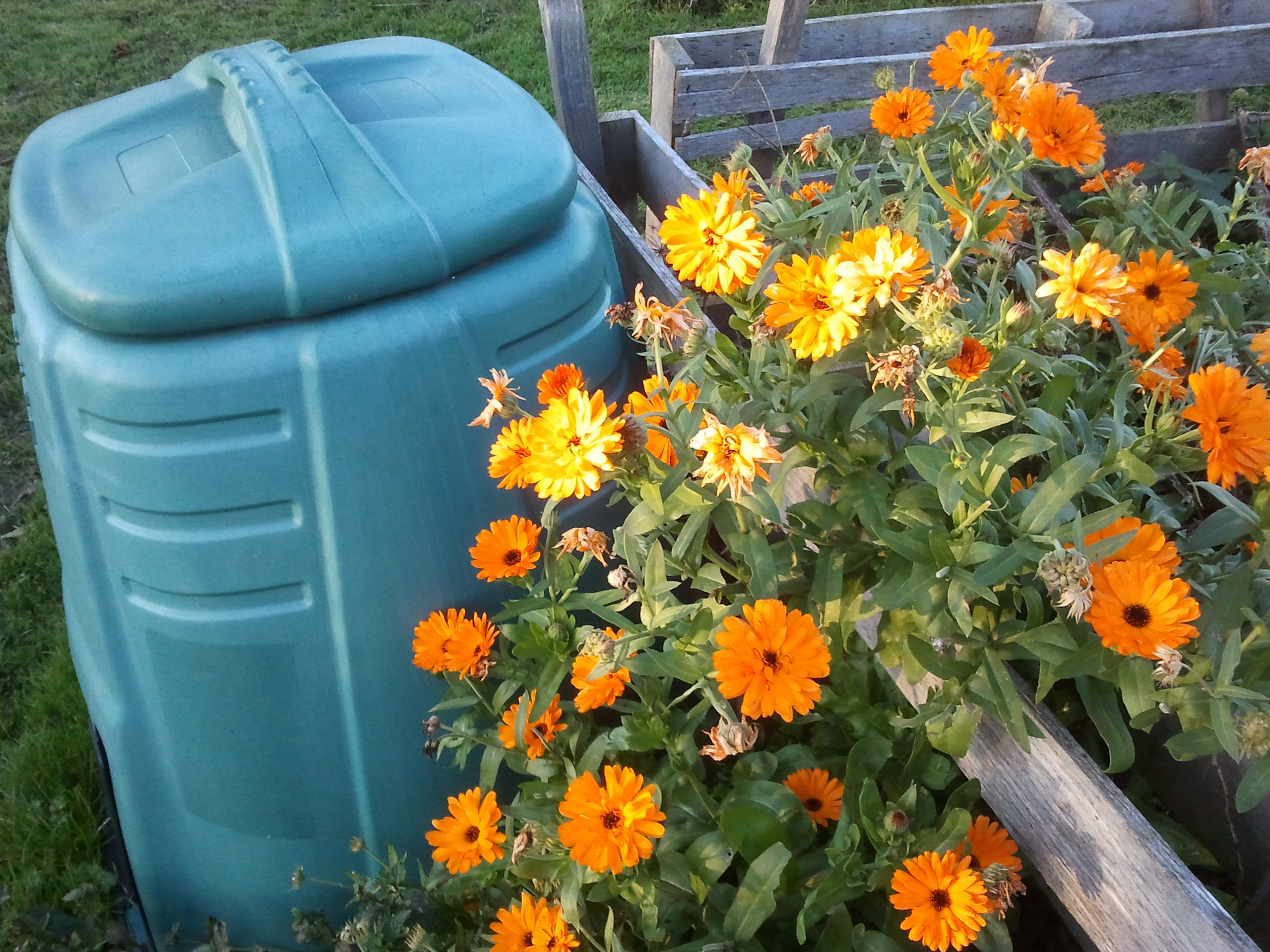
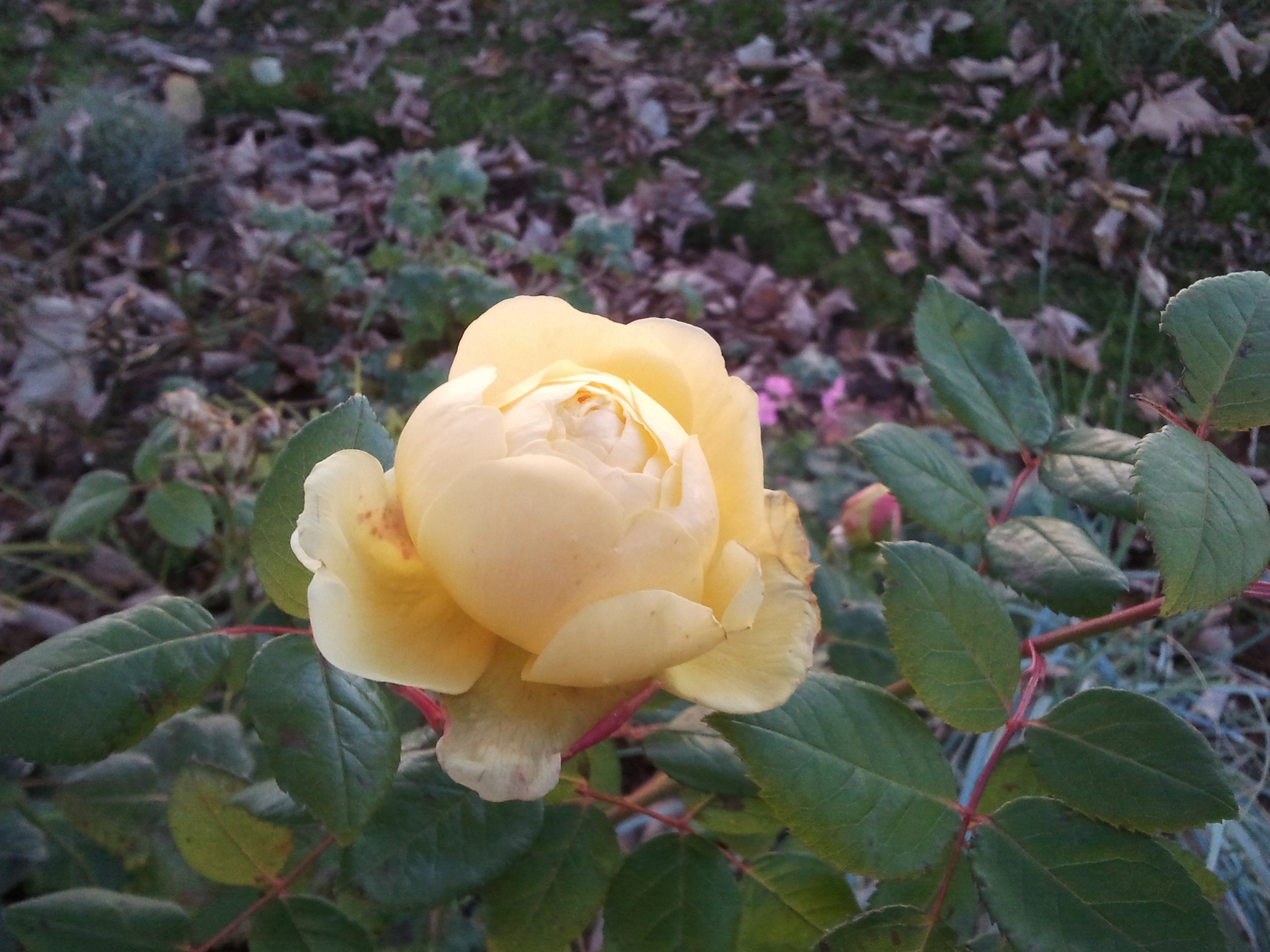
A few remaining flowers add extra brightness to the plots.Tthat most popular of companion plants, the Calendula brightens up compost areas and odd roses still perform in the Summer Garden. We can expect these David Austin roses to continue to treat us to flowers until the new year.
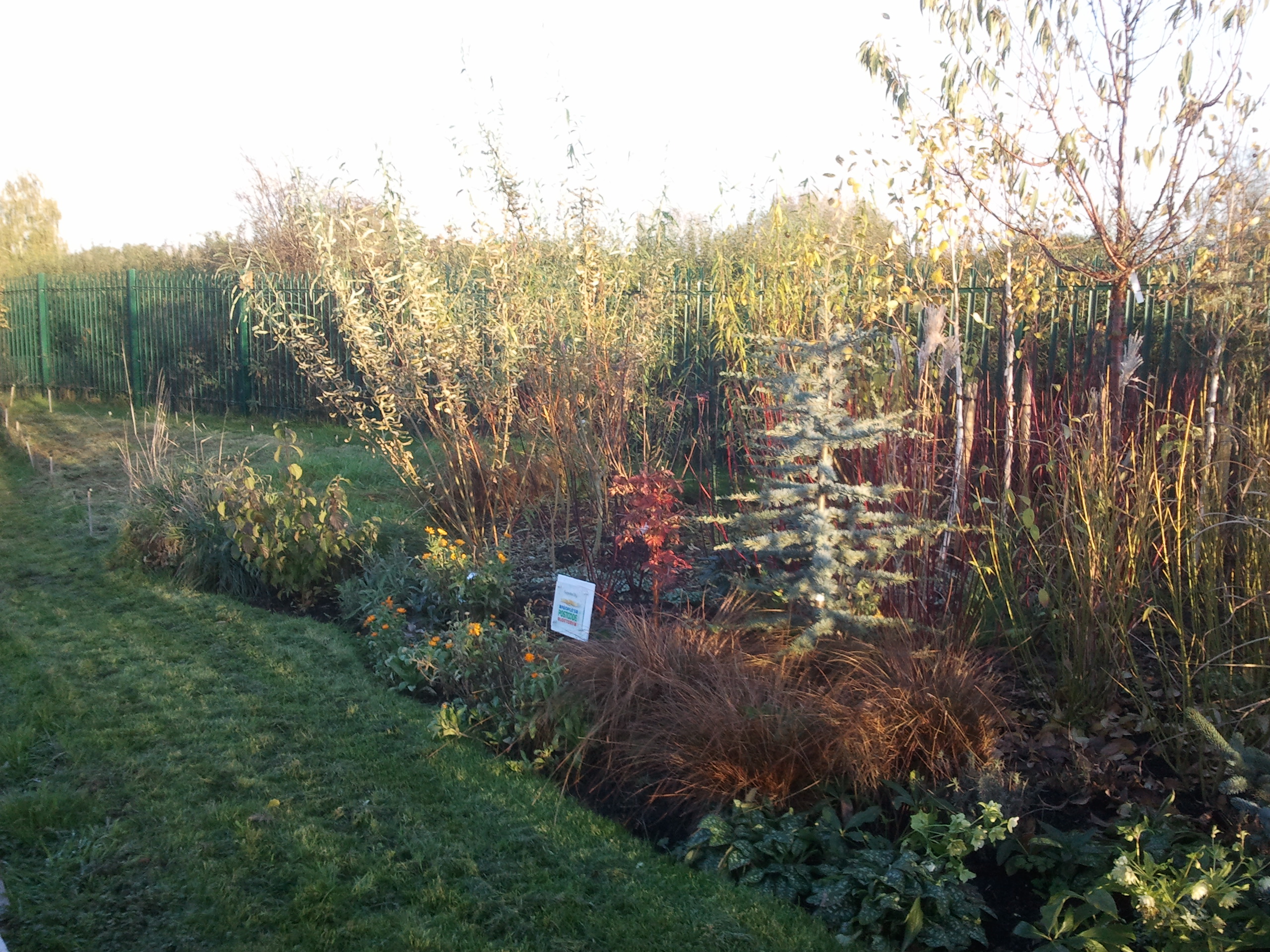
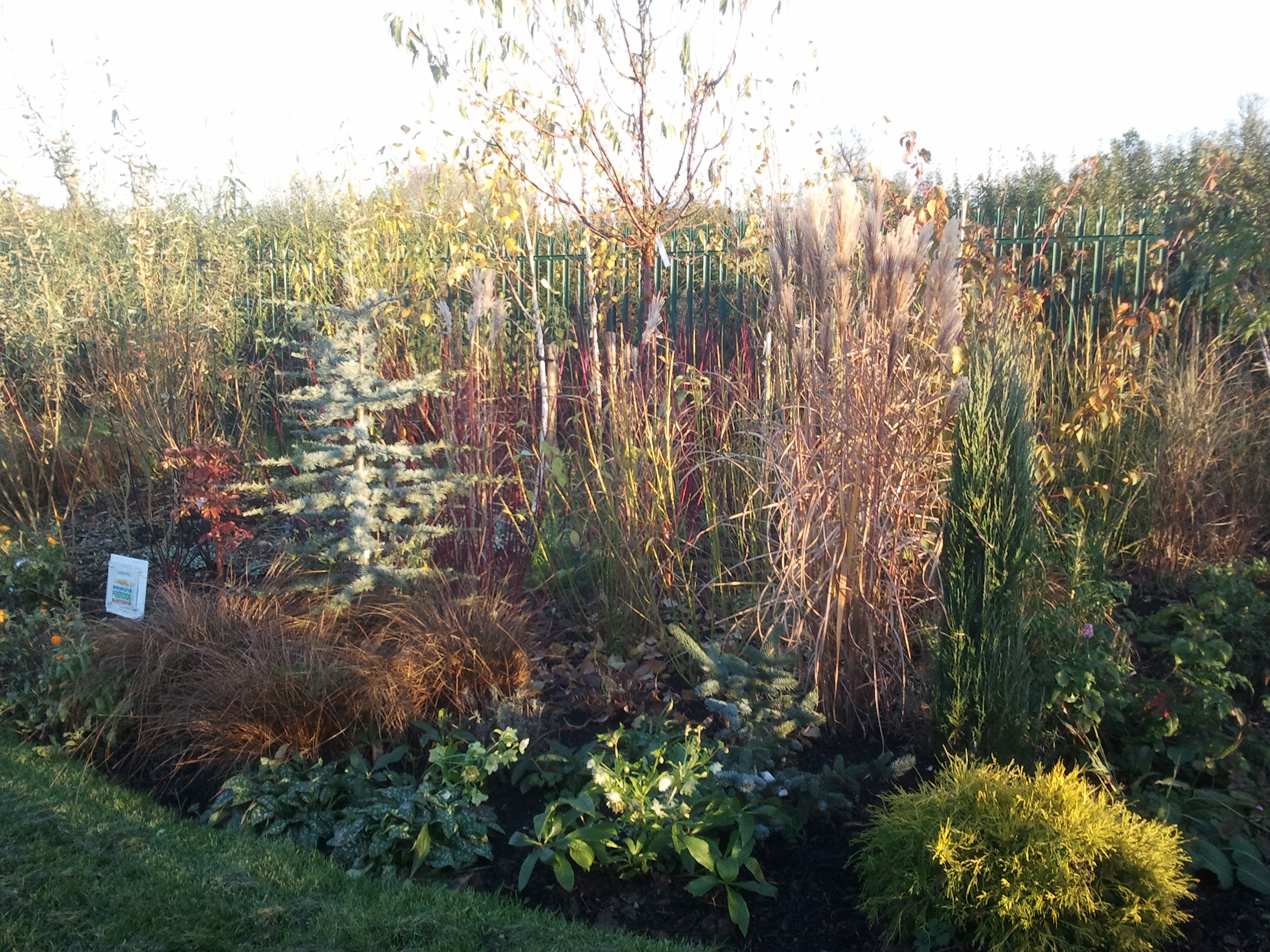
The star of the site for the next few months will be the Winter Garden and it is already showing promises and hints of what delights it has in store for us in times ahead. As leaves fall from trees and shrubs the colours and textures of the stems and trunks will come into their own.
We have endured a wet summer and autumn with each month breaking previous rainfall records. Crops have been poor and we have been flooded four times. Dave, the Scarecrow looks a bit worse for wear too!
Flooding and its problems have dominated our allotment month. For the third time this year our allotment site has been under water. Rotten potatoes, bark paths washed away, rows of seedlings washed onto other plots and onto pathways and items stored in sheds ruined. This is sadly becoming a regular occurence. We have a meeting with the town council next week so perhaps we can come away with some positive news for the allotment members.
But let’s concentrate on the positives of our lovely site. The people and the plants. This is our friend Sherlie with a monster cabbage!
Phil had never grown apples until four years ago when he asked me to help him set up a row of cordon apples and pears and teach him the necessary skills. Now look at what he has achieved this year!
Our wander with camera in hand took us through the Autumn Garden over to our plot and then across to the Winter Garden via the Spring and Summer Gardens.
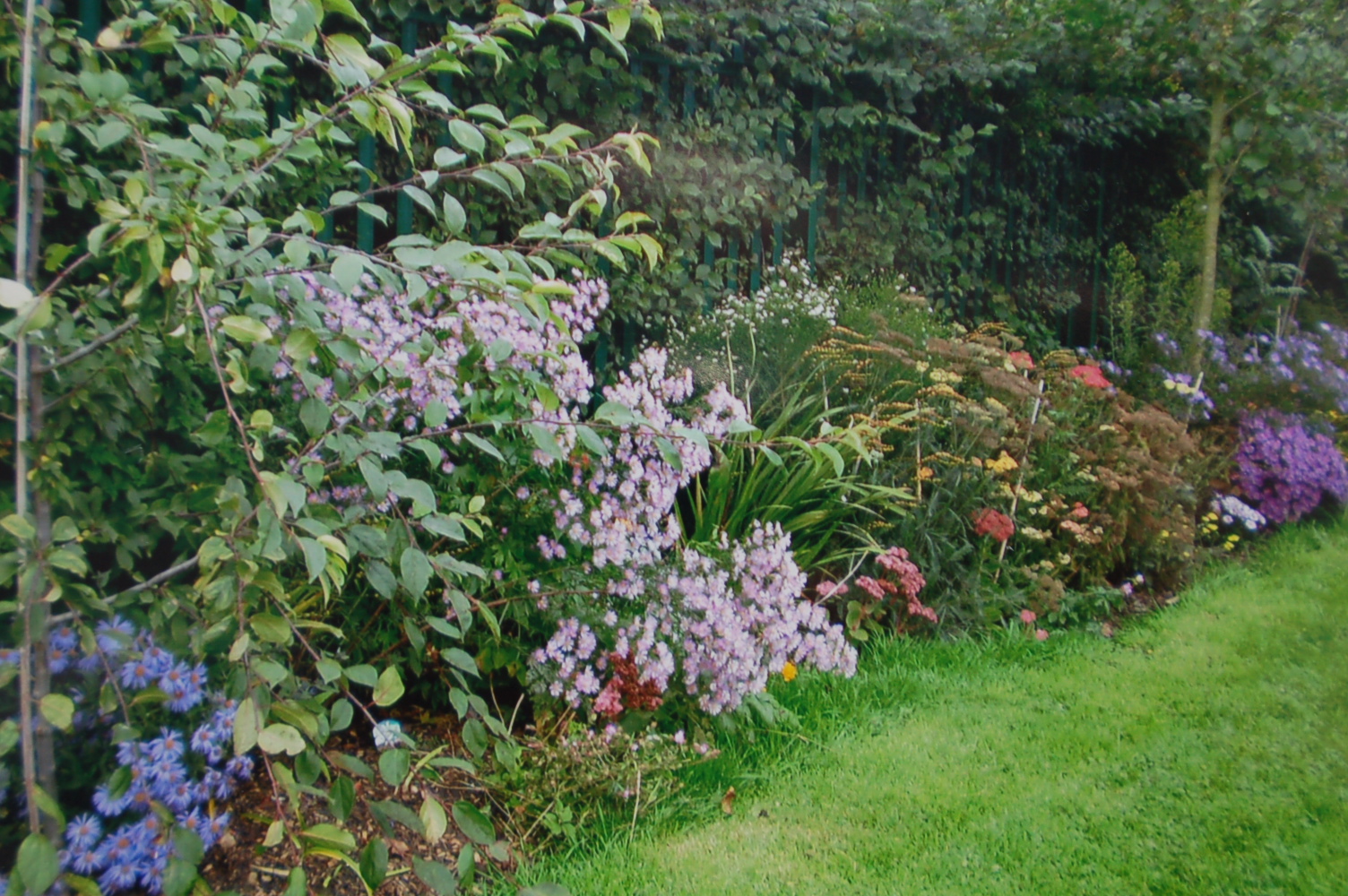
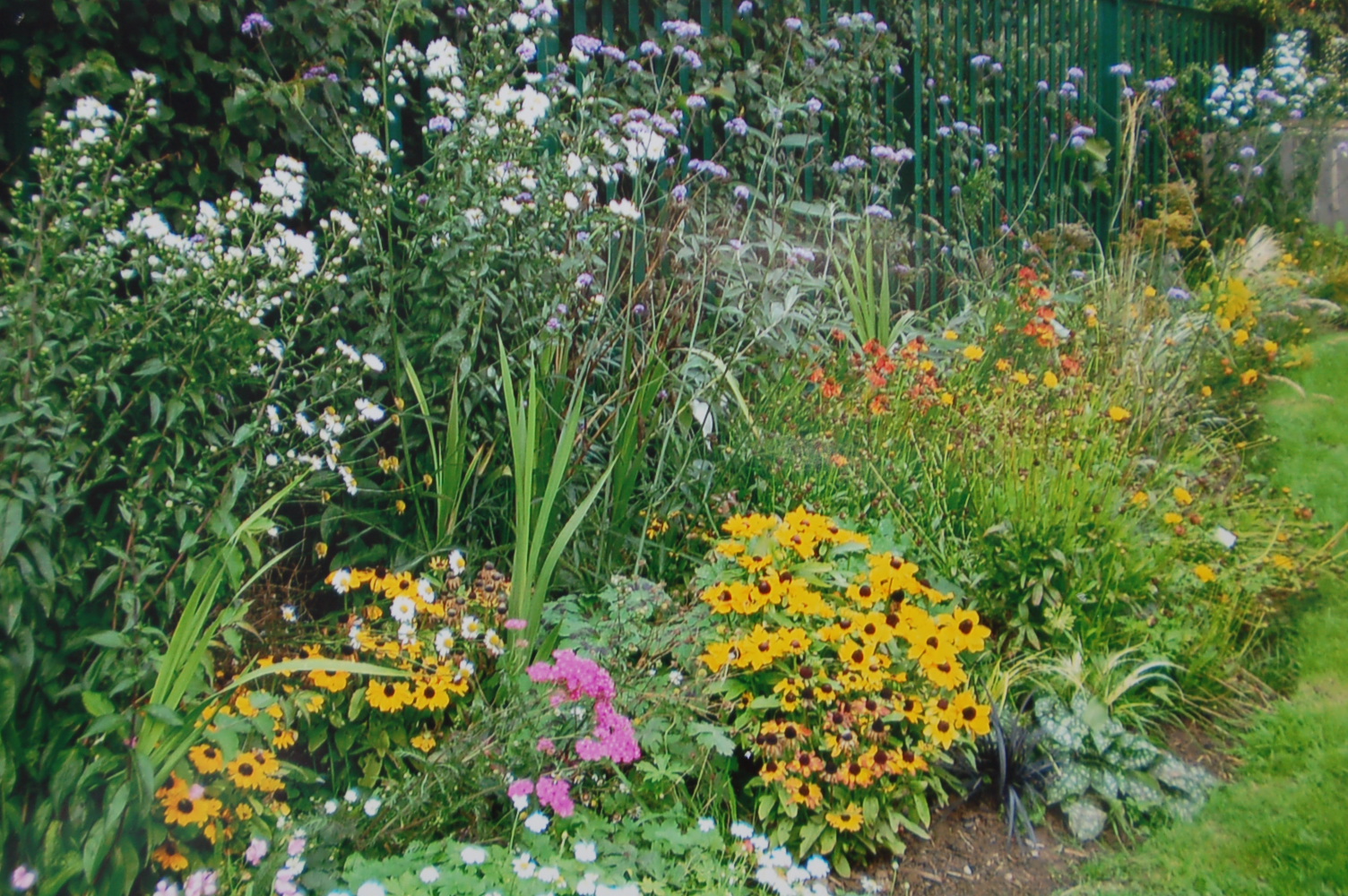
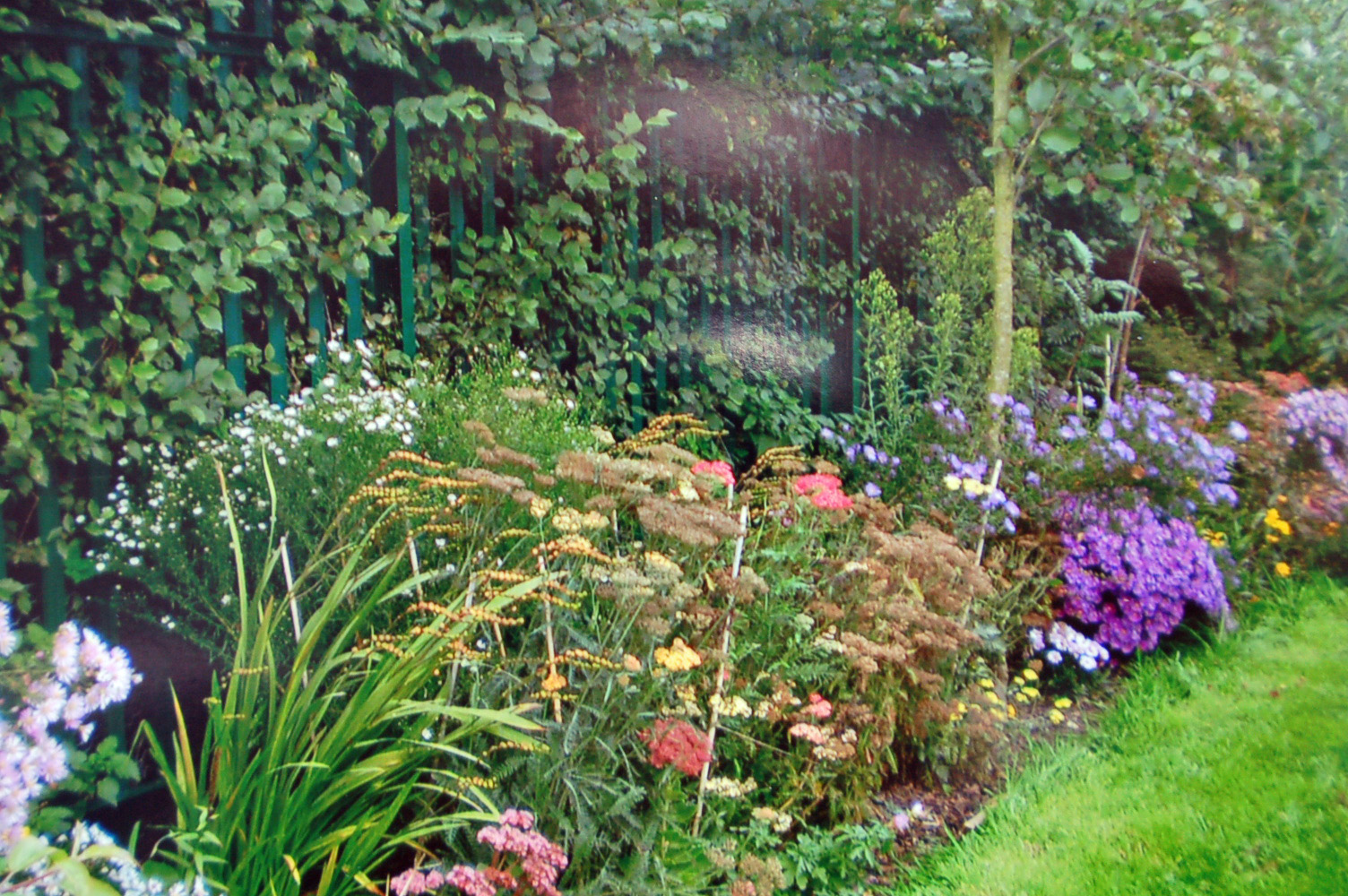
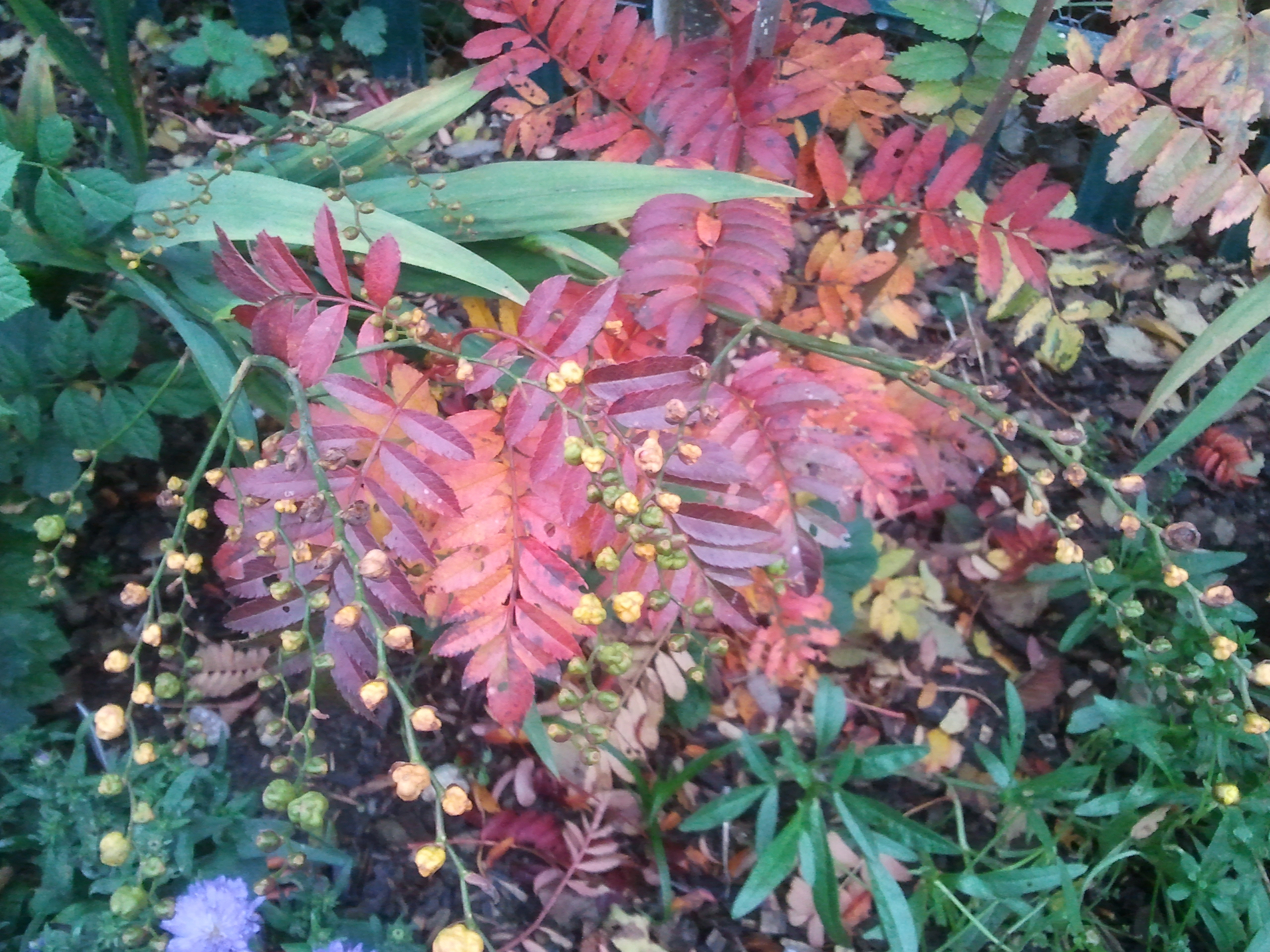
The Autumn Garden, appropriately, is now looking wonderful with late season flowers looking colourful amongst foliage the colour of fire.
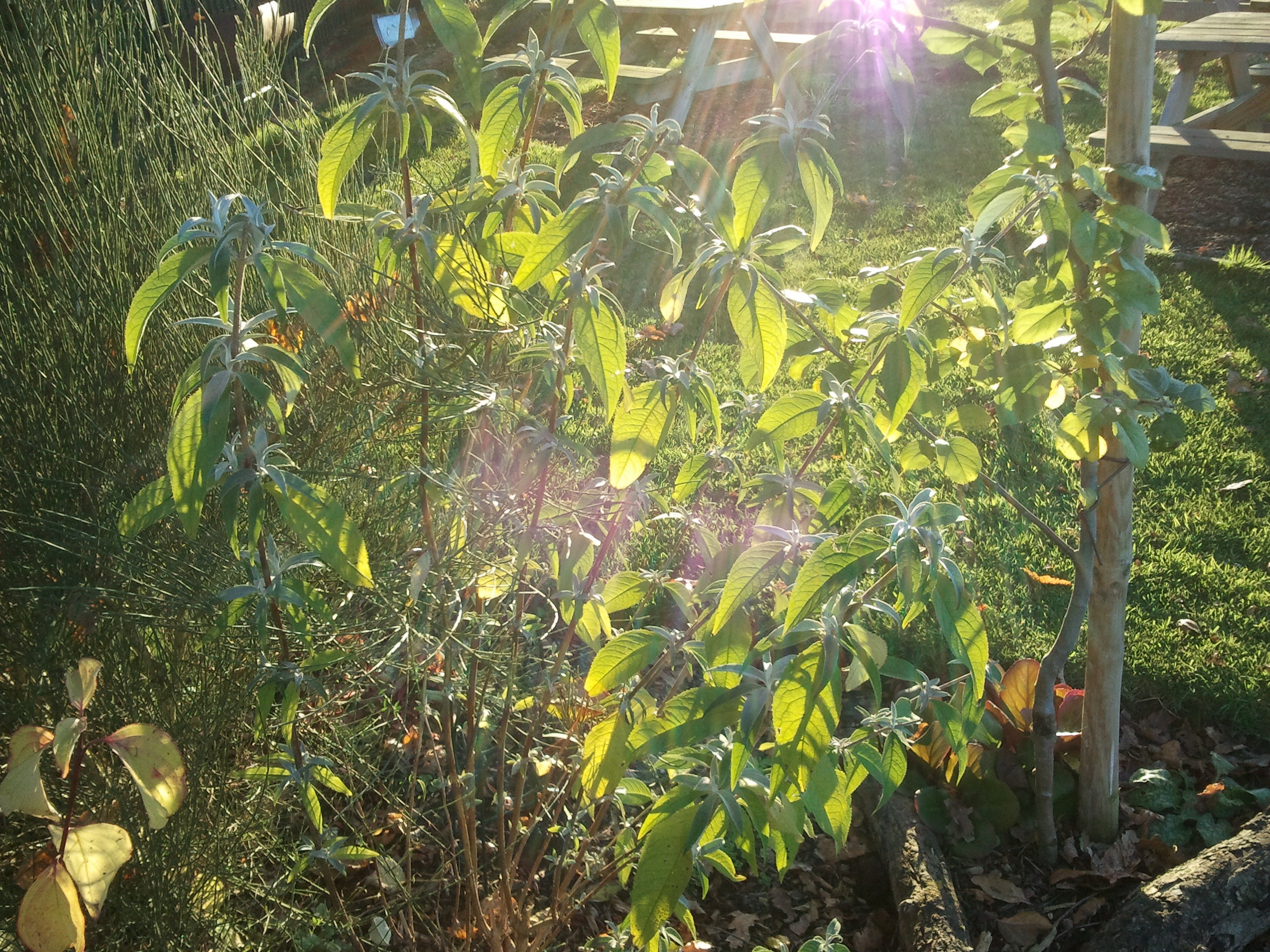
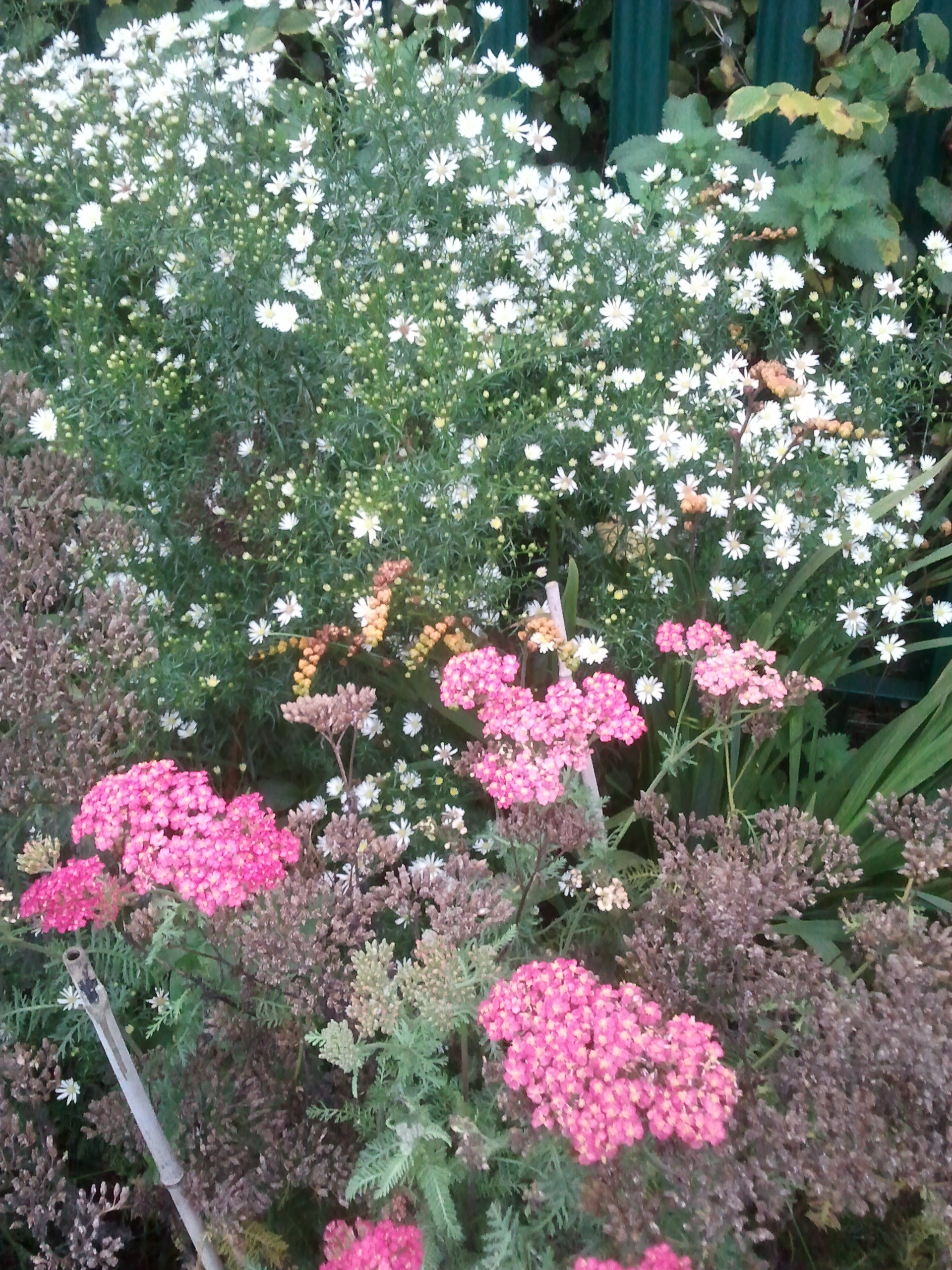
Butterflies, bees and hoverflies were flocking to the asters in this garden for the first fortnight this month but as the weather turned colder they rapidly disappeared. Buddlejas flower profusely around the site during the summer attracting beneficial insects and pollinators, but this orange one flowers in the autumn.
We grow a variety of Sorbus trees here and they provide wonderful foils for late flowering perennials.
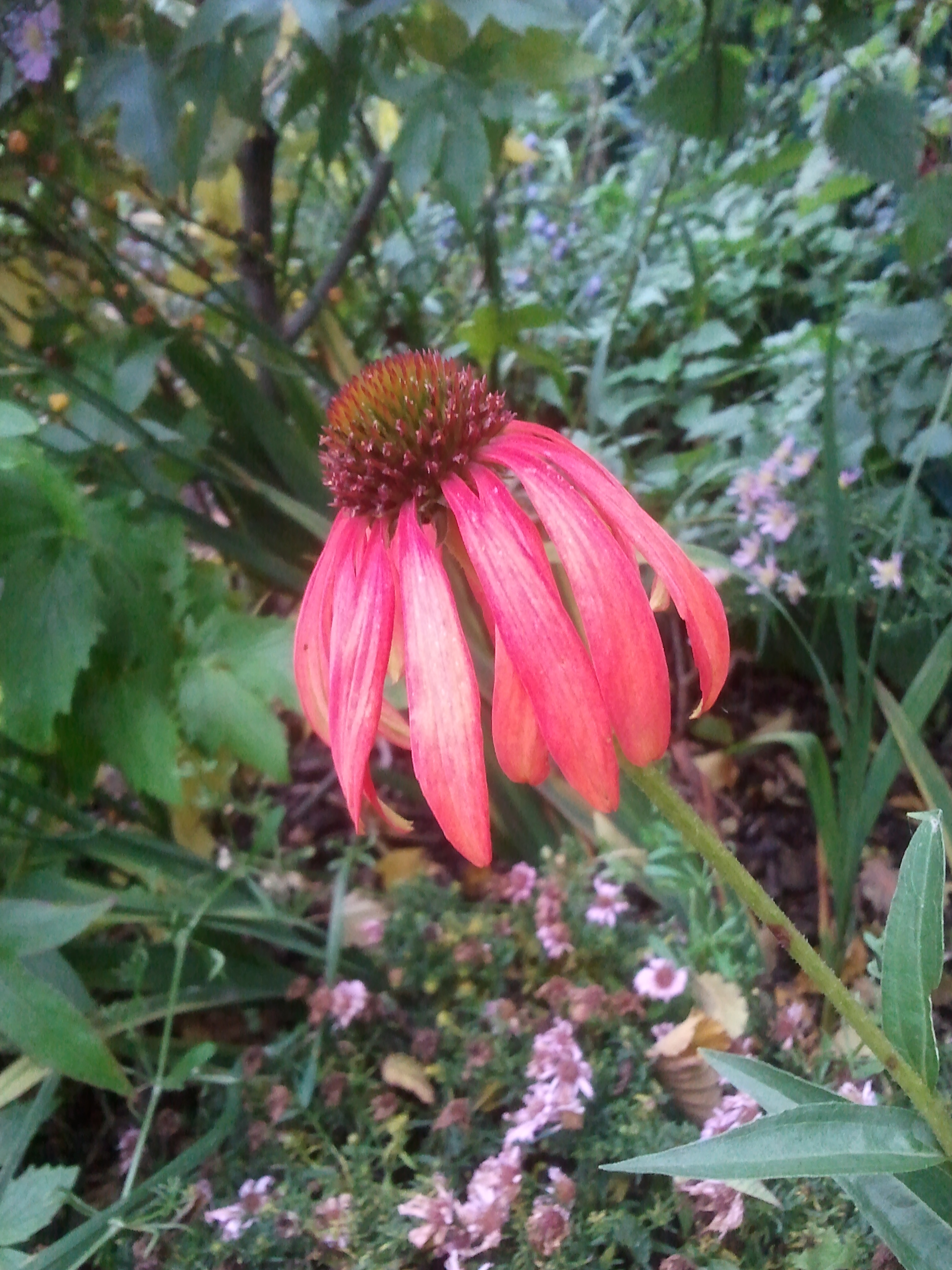
The stars here though have to be the Echinacea.
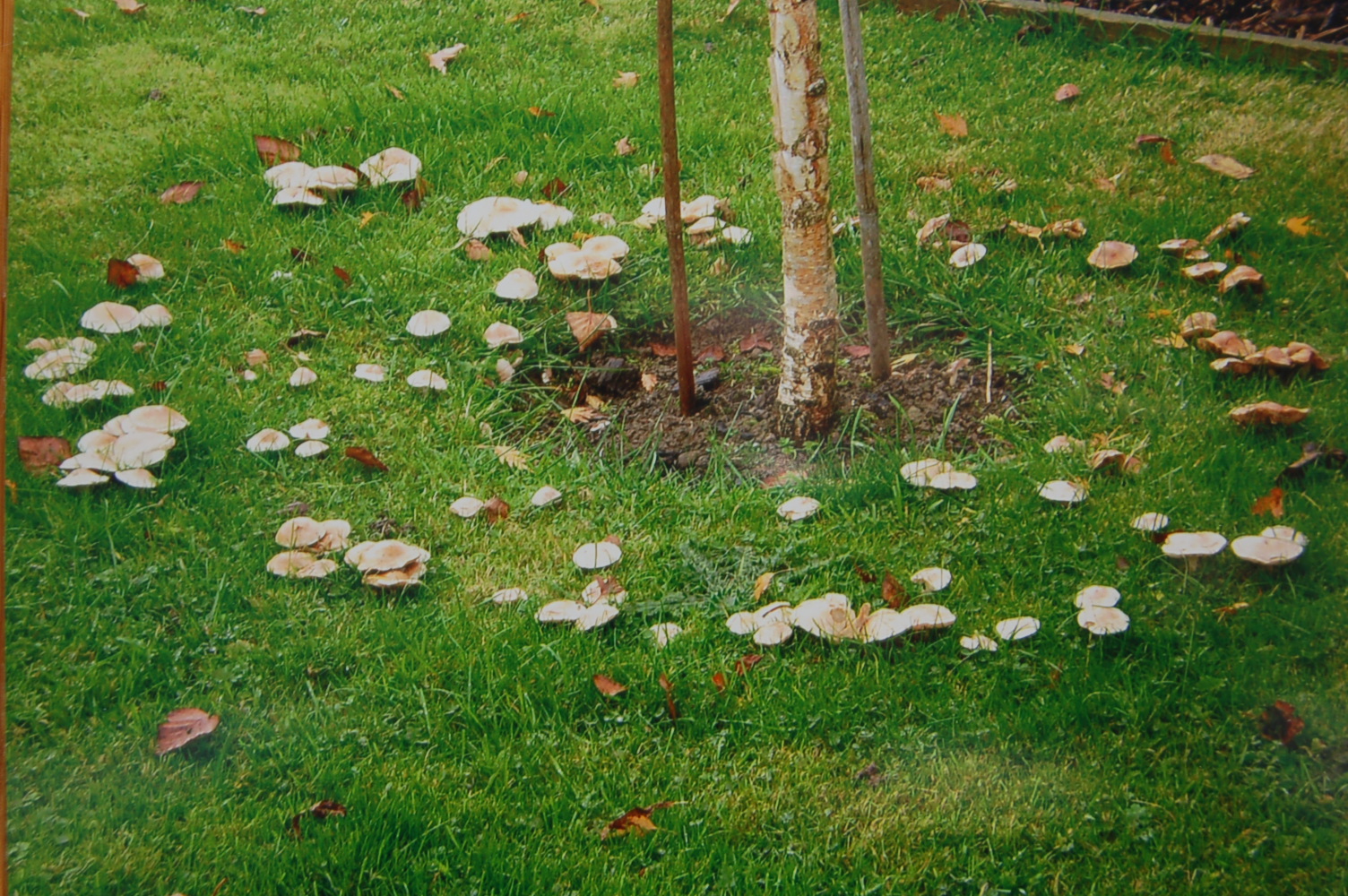
Around the trees in the Birch Grove fairies have been at work. So many plot holders have been taking photos of their handywork.
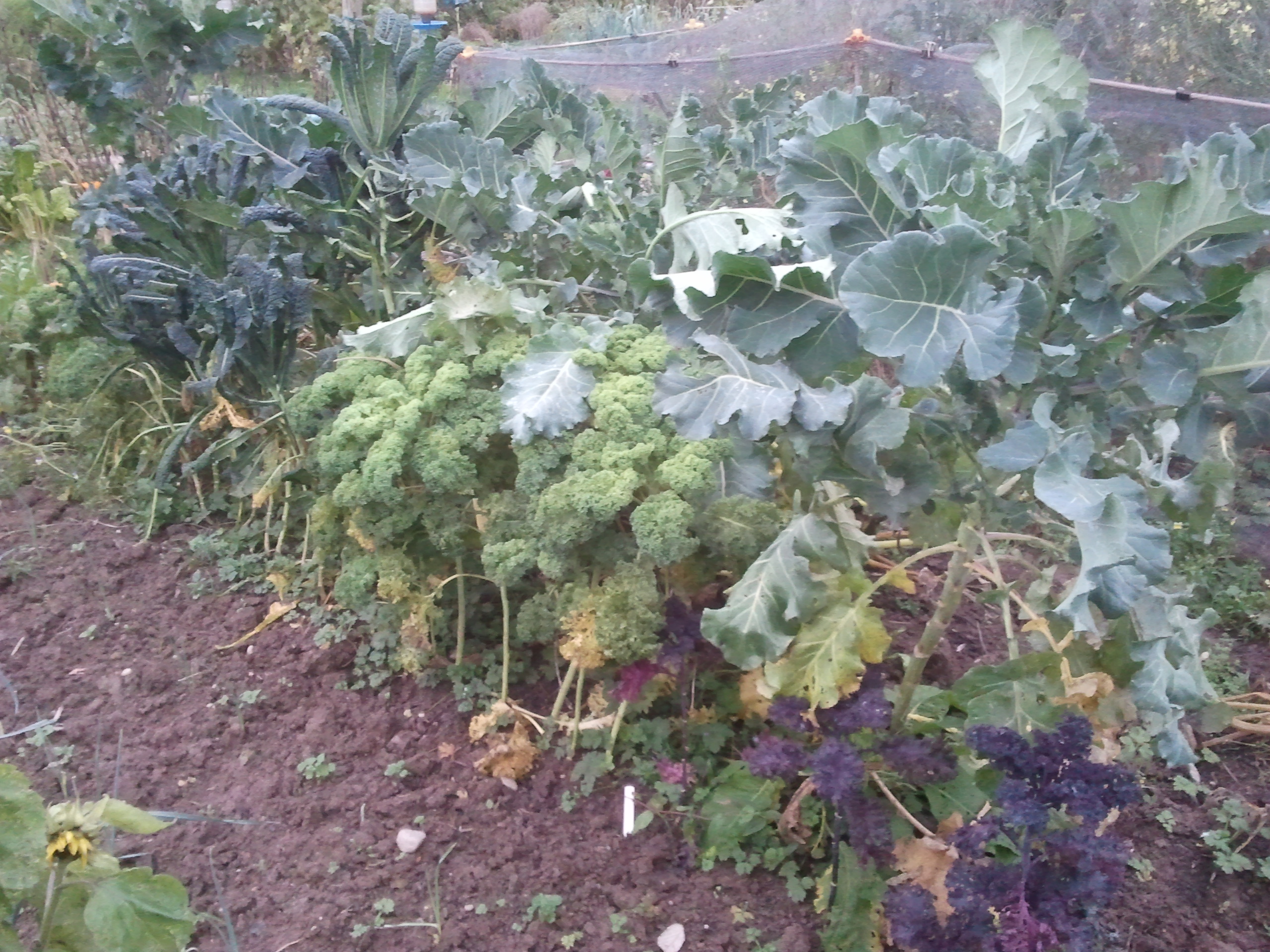
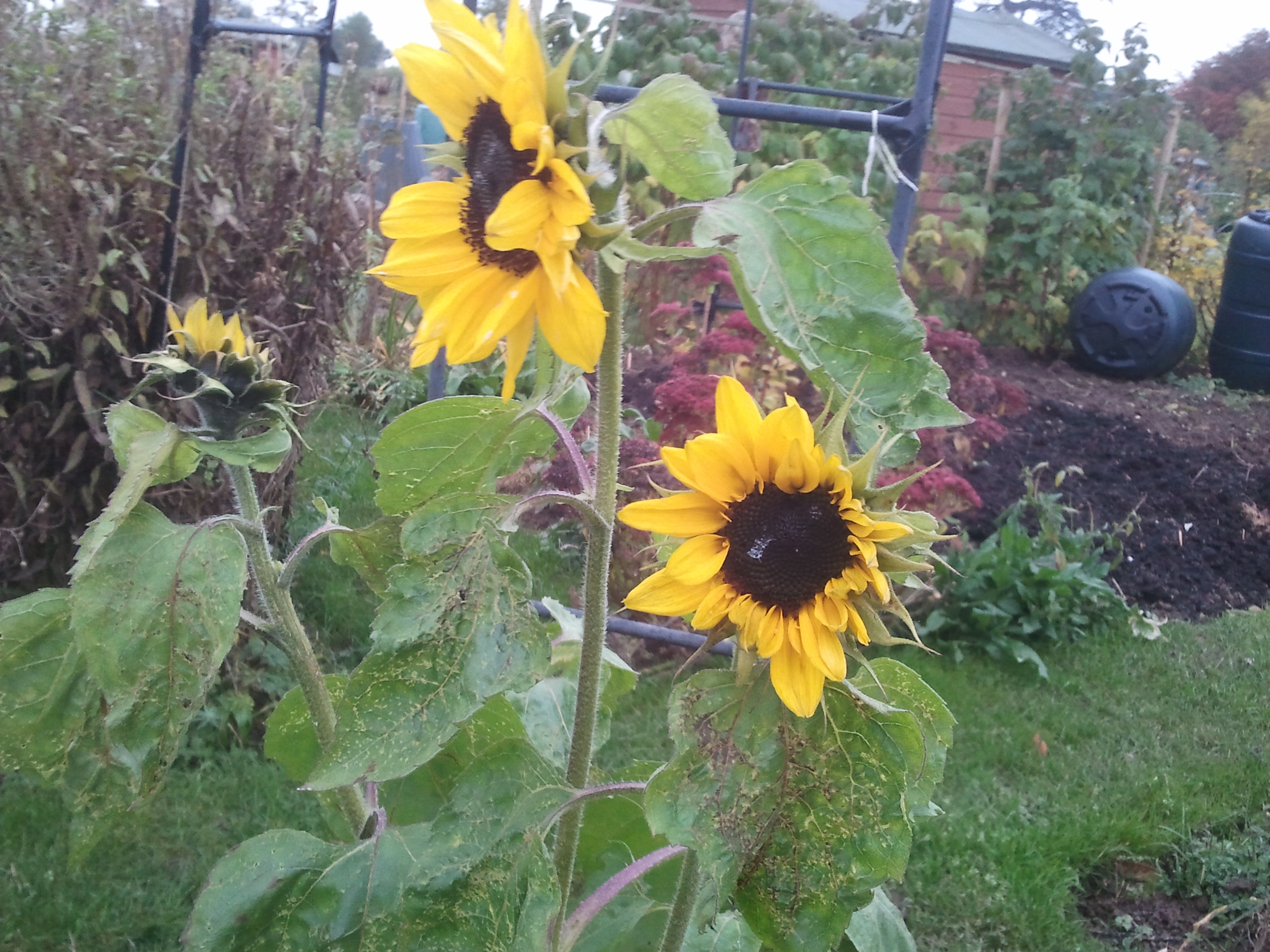
On our own plot we are still picking autumn raspberries. The three varieties of kale we are growing are looking quite colourful as is a sole sunflower – the only sun to be seen up on the lotties at the moment. The day these pics were taken was dark and overcast.
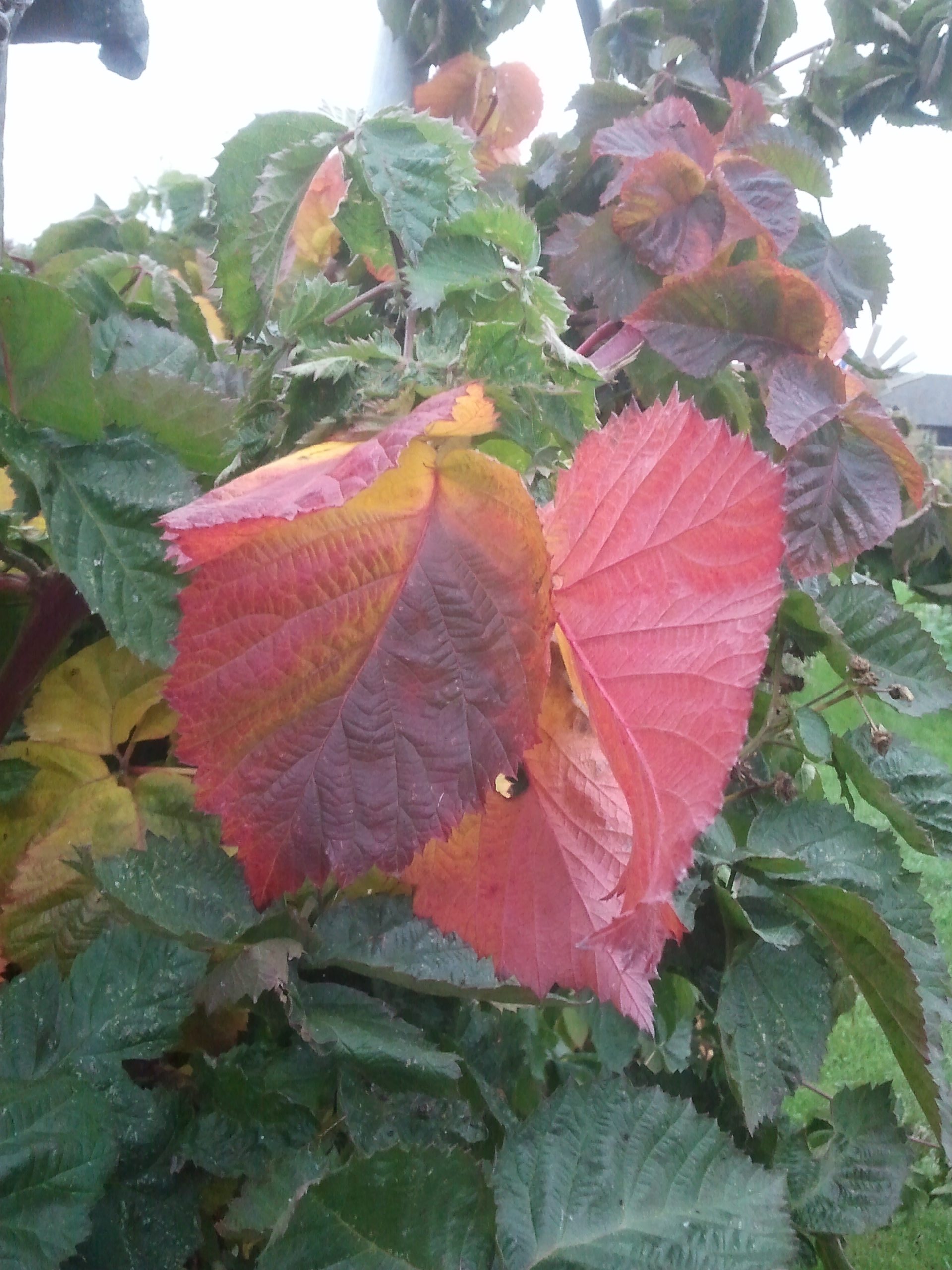
A little bit of extra colour can be found in the leaves of our blackberry bramble.
The crops that we will be harvesting during the winter and early spring are coming along nicely. Leeks, parsnips, carrots and celeriac.
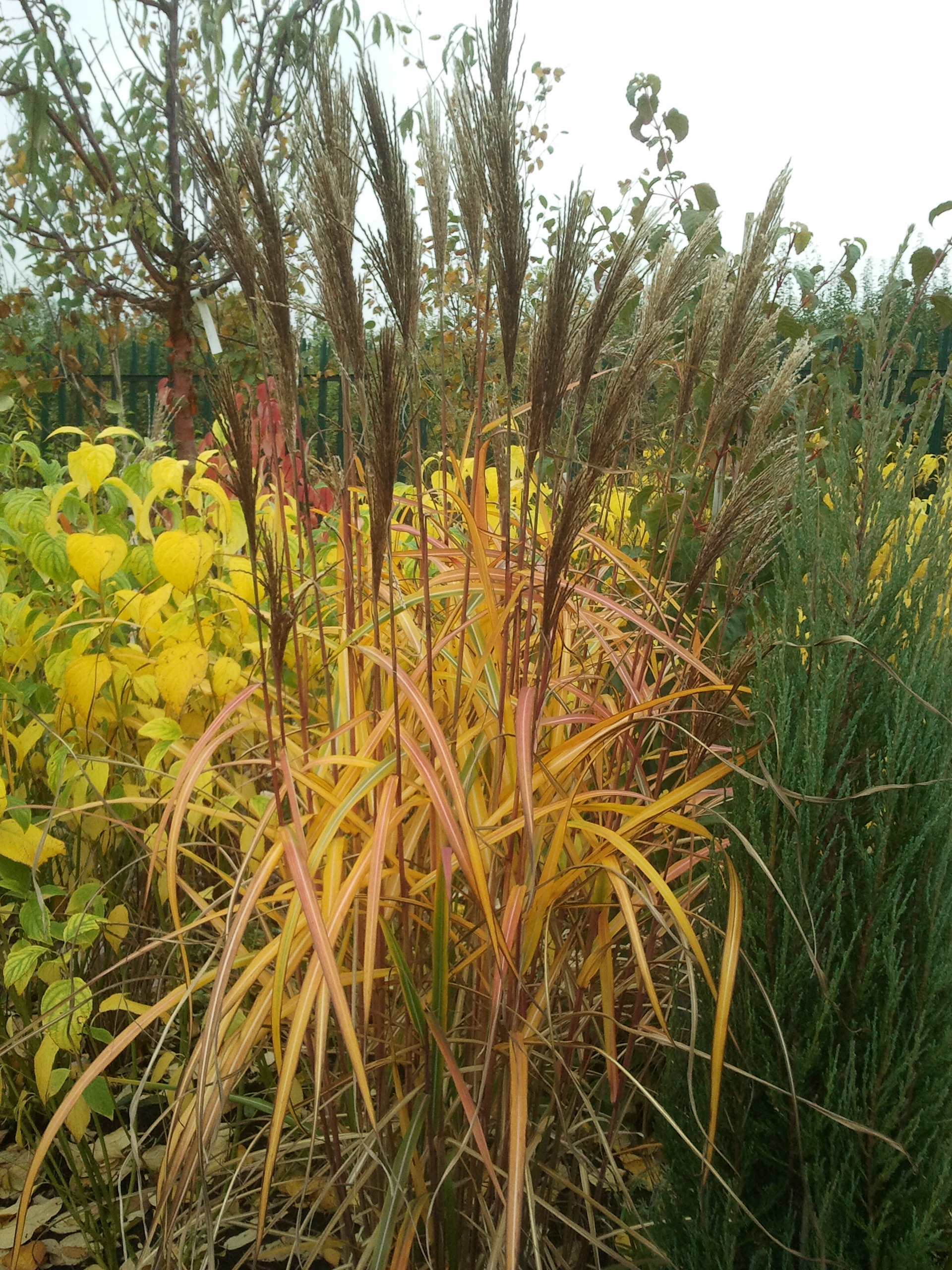
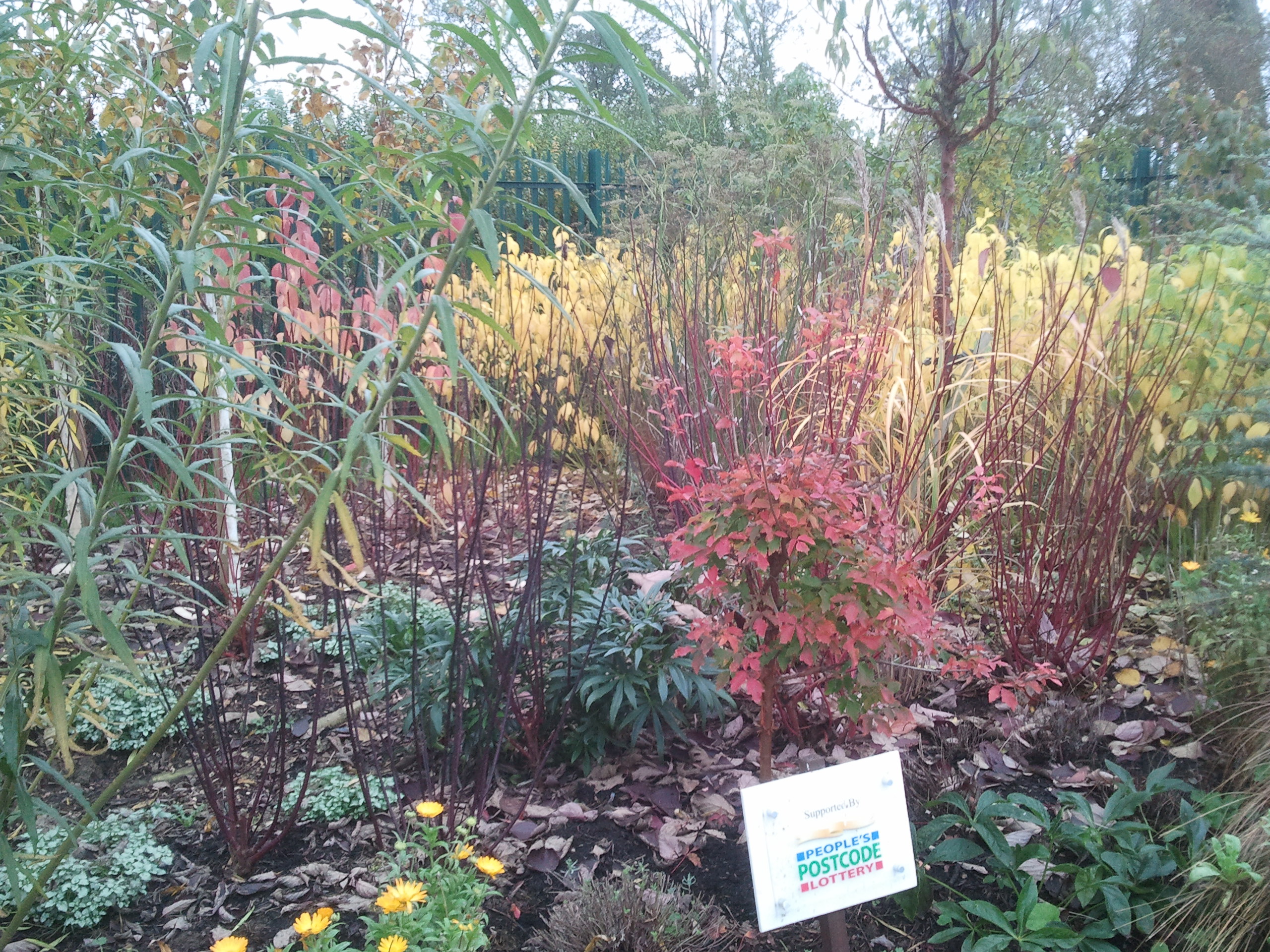
The Winter Garden is an oasis of brightness with most of the colours coming from foliage.
I shall finish my October wander with some great news. Three Bowbrook Allotment Community gardeners were invited to the Mayor’s Award Ceremony earlier in the month. Dave, on the left, received his certificate and cup for the Best Front Garden in Shrewsbury and Sue and Paul collected their award for Best Half Allotment in Shrewsbury. Well done to them!
The key moment in April came when our allotments featured in a national gardening magazine, “Grow It”. A great article full of photos! And then towards the end of the month the lottie chairman, John and I were interviewed by Matt Biggs for an article in the “Edible Garden” magazine. (Please excuse the name dropping!)
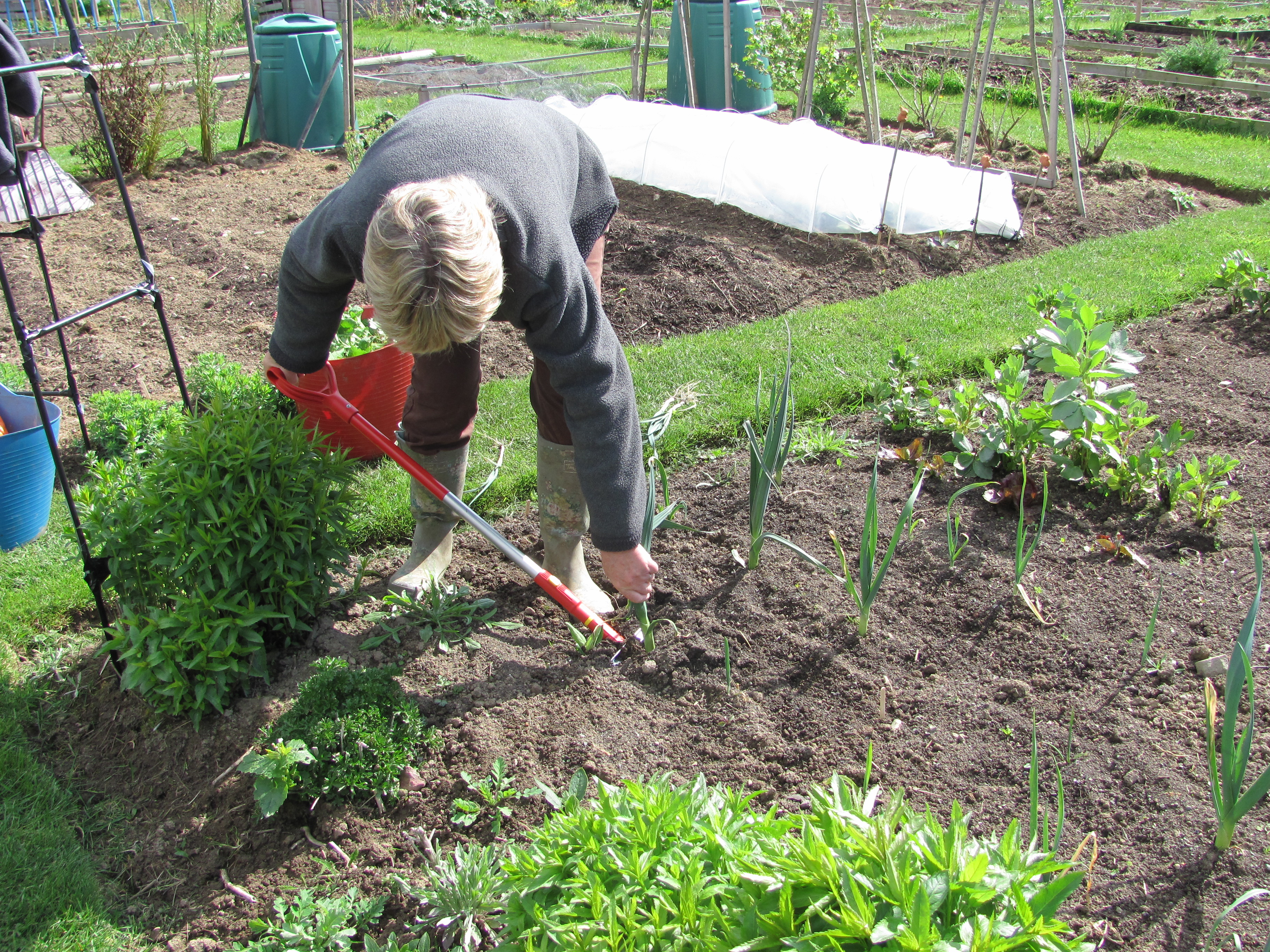
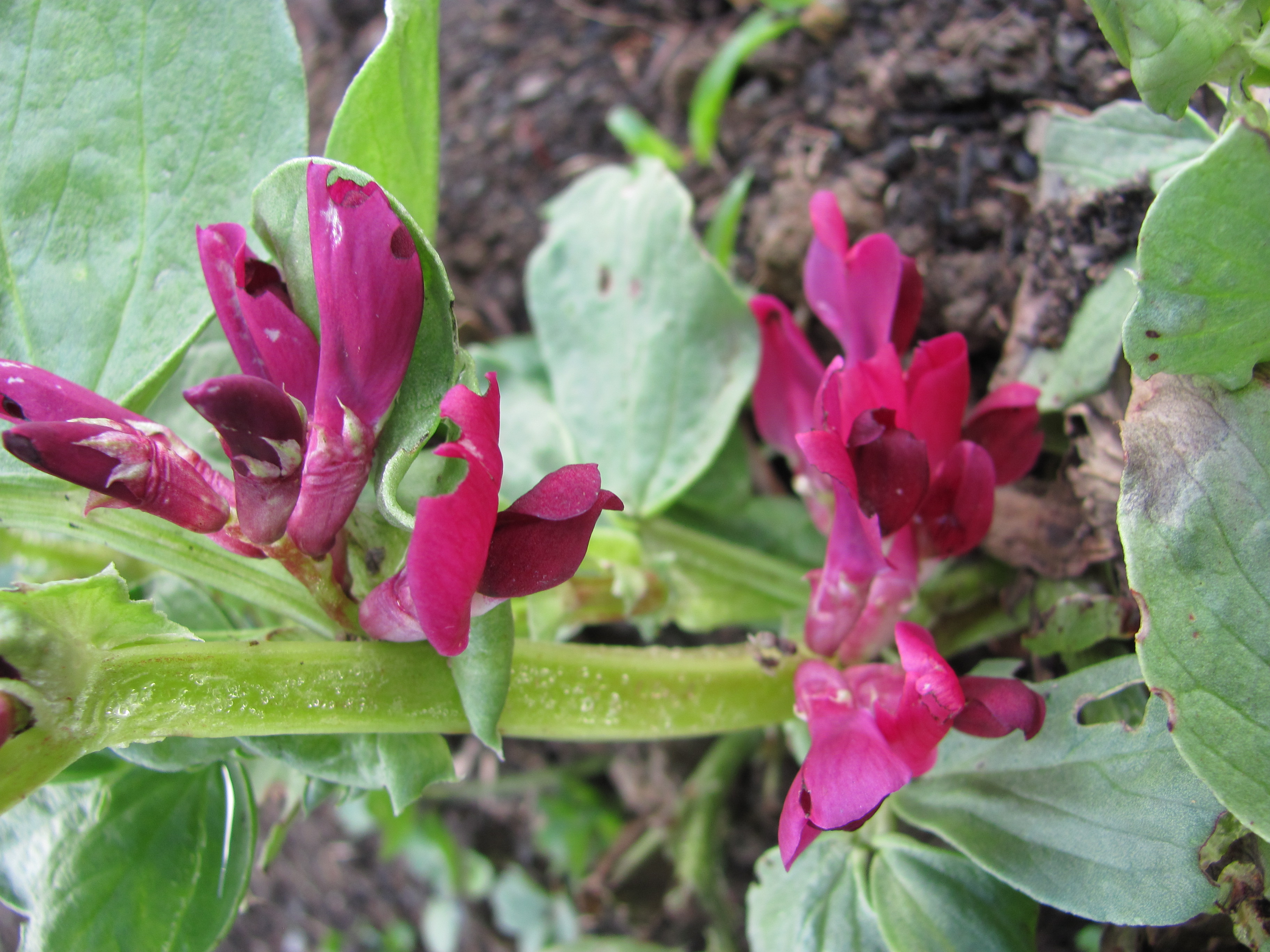
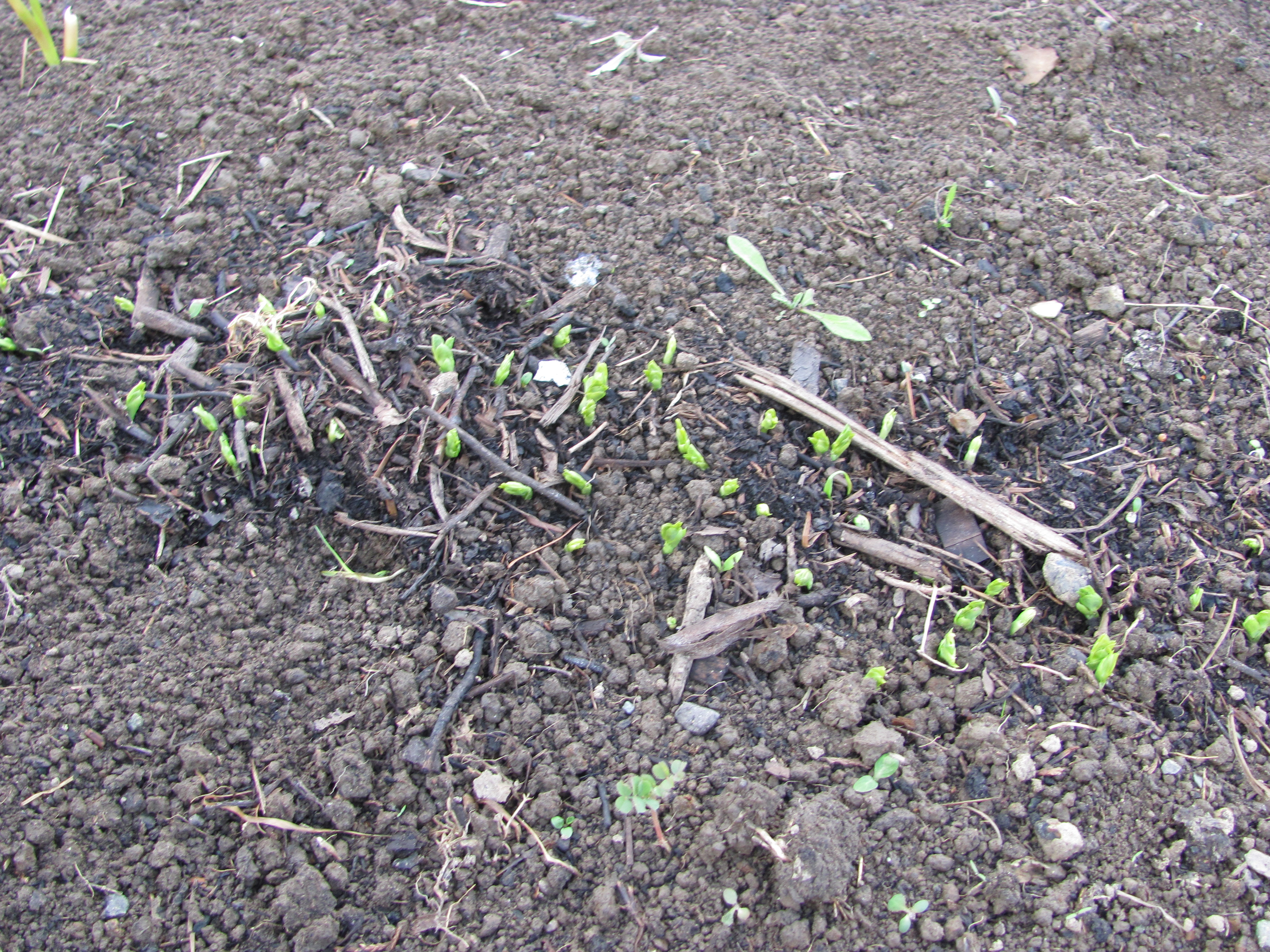
So let’s take a wander around the site starting at our own plot, number 37, where the last of the leeks are still in the ground but the kale is beginning to go to seed. Seeds we sowed a few weeks ago are now germinating and popping their heads above the soil. The autumn sown broad beans are flowering as are our currants and gooseberries. So it is all systems go.
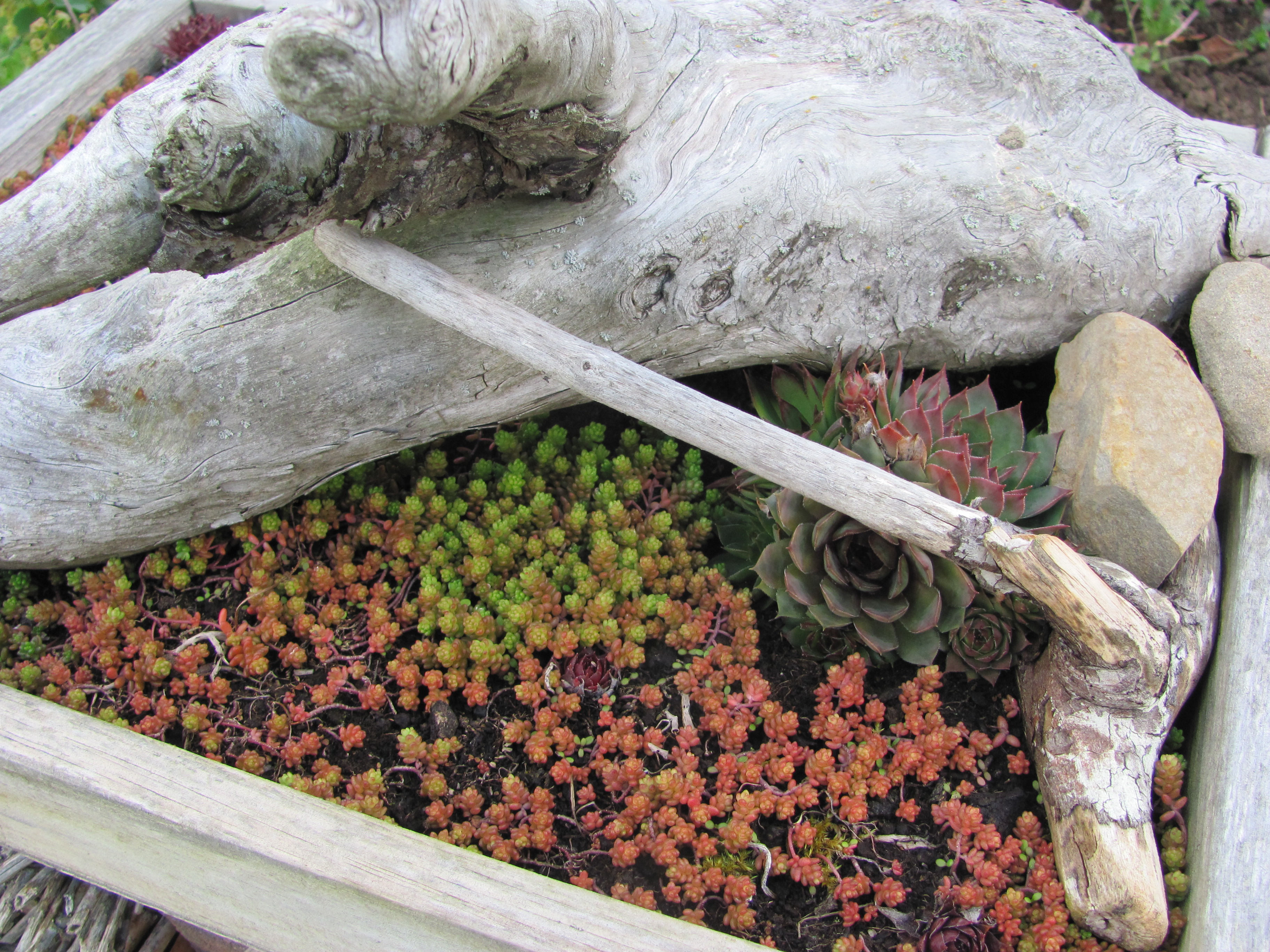
Jude harvesting the last of the leeks with our Wolf weeding tool.Shed painting - not our favourite job!The green roof of our insect hotel.The incredibly coloured flowers of Crimson-flowered Broad Bean.New seedlings of early peas.
As we began our wander we were pleased to see two families from the nearby estate wandering around our interest trail with their children. Later they were sat in the willow dome reading stories. This is what community allotments are all about! We shall start our wanderings at Hut 2, one of our communal huts and move on to the Autumn Garden, one of our “Gardens of the Seasons”.
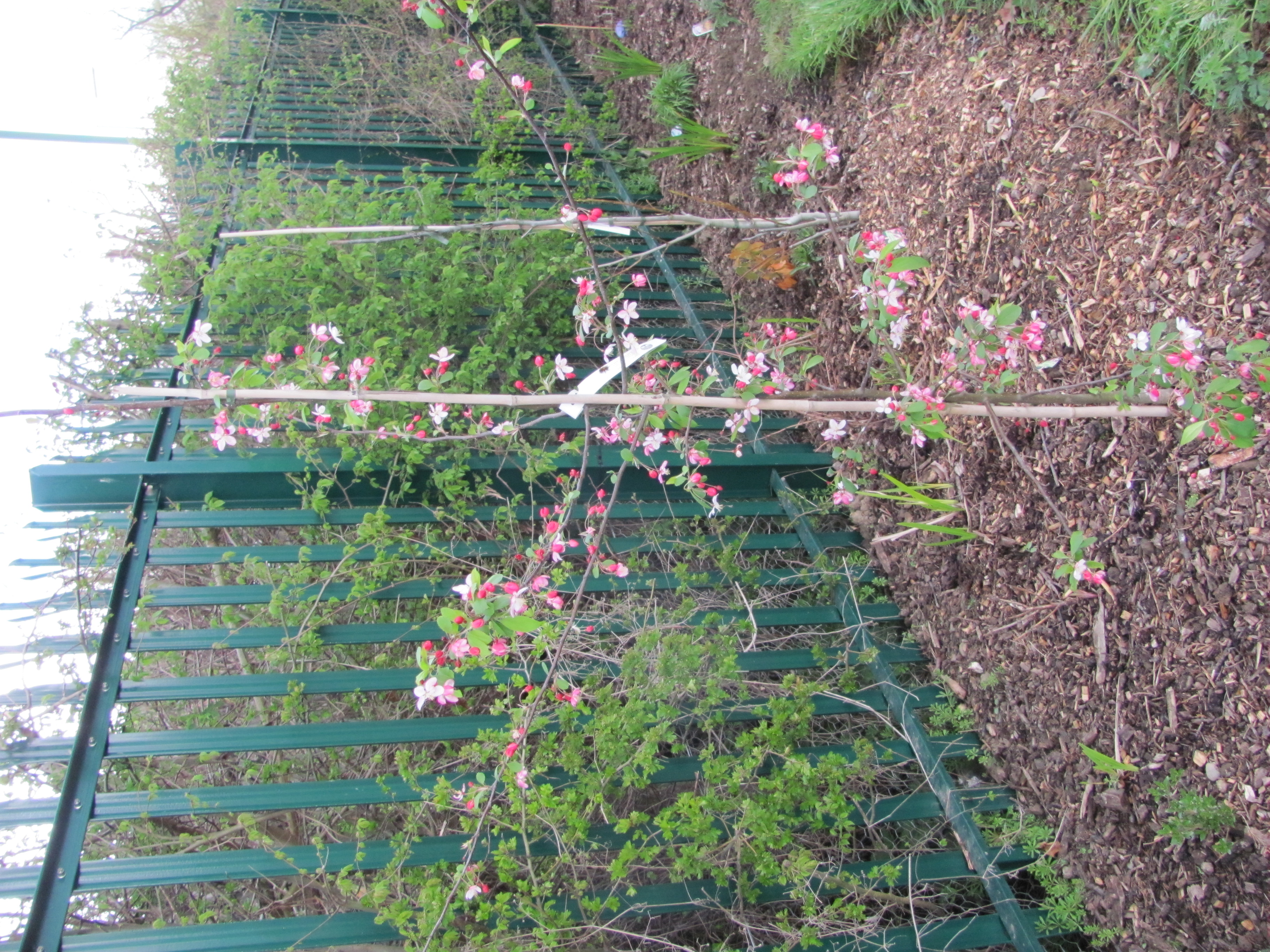
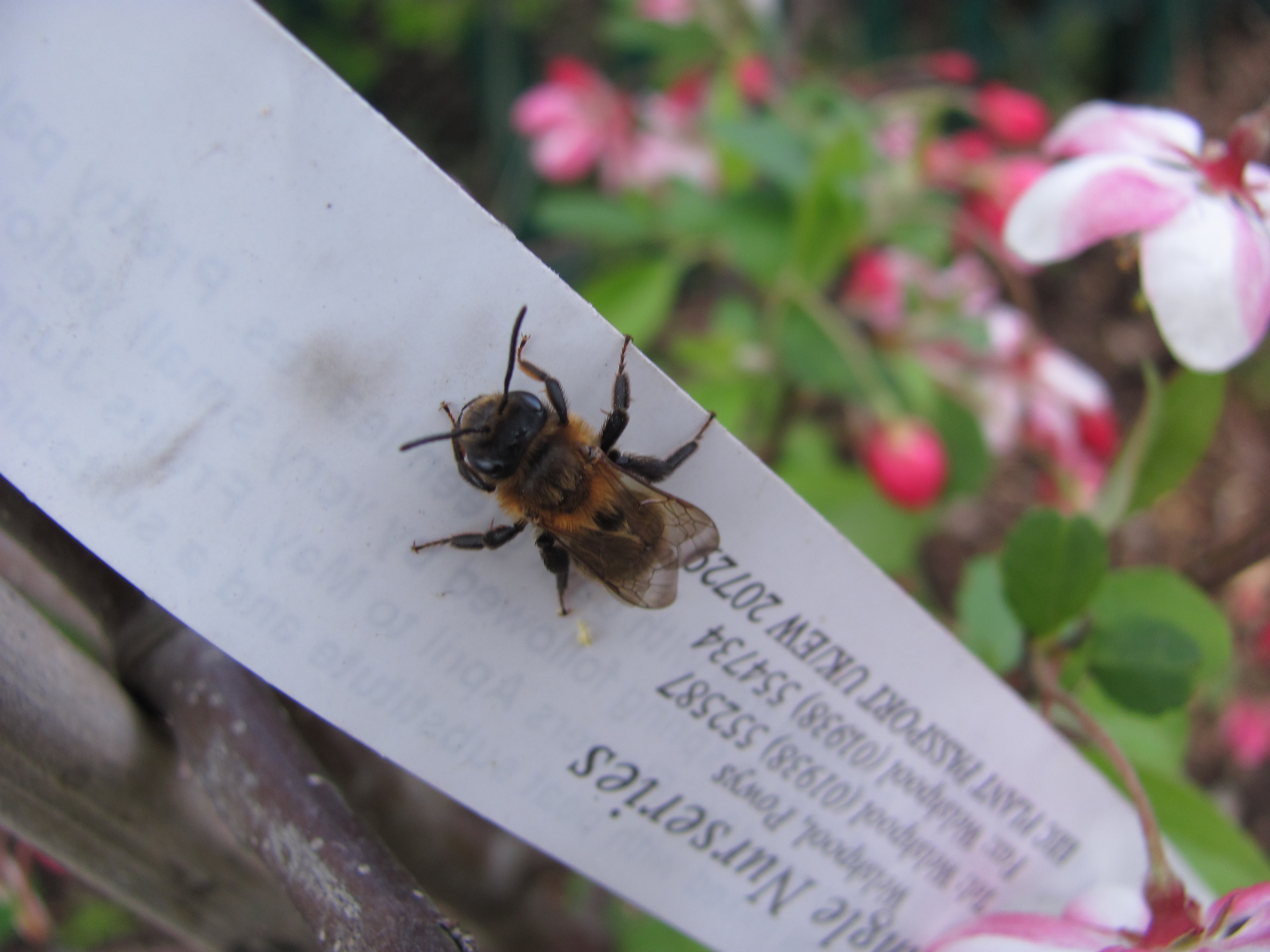
Colourful welcome to Hut 2, our information centre.A species crab apple, Malus floribunda, is a recent addition to the Autumn Garden.We planted the malus to attract bees - it works!Japanese maples grow in the dappled shade of the trees in the Autumn Garden
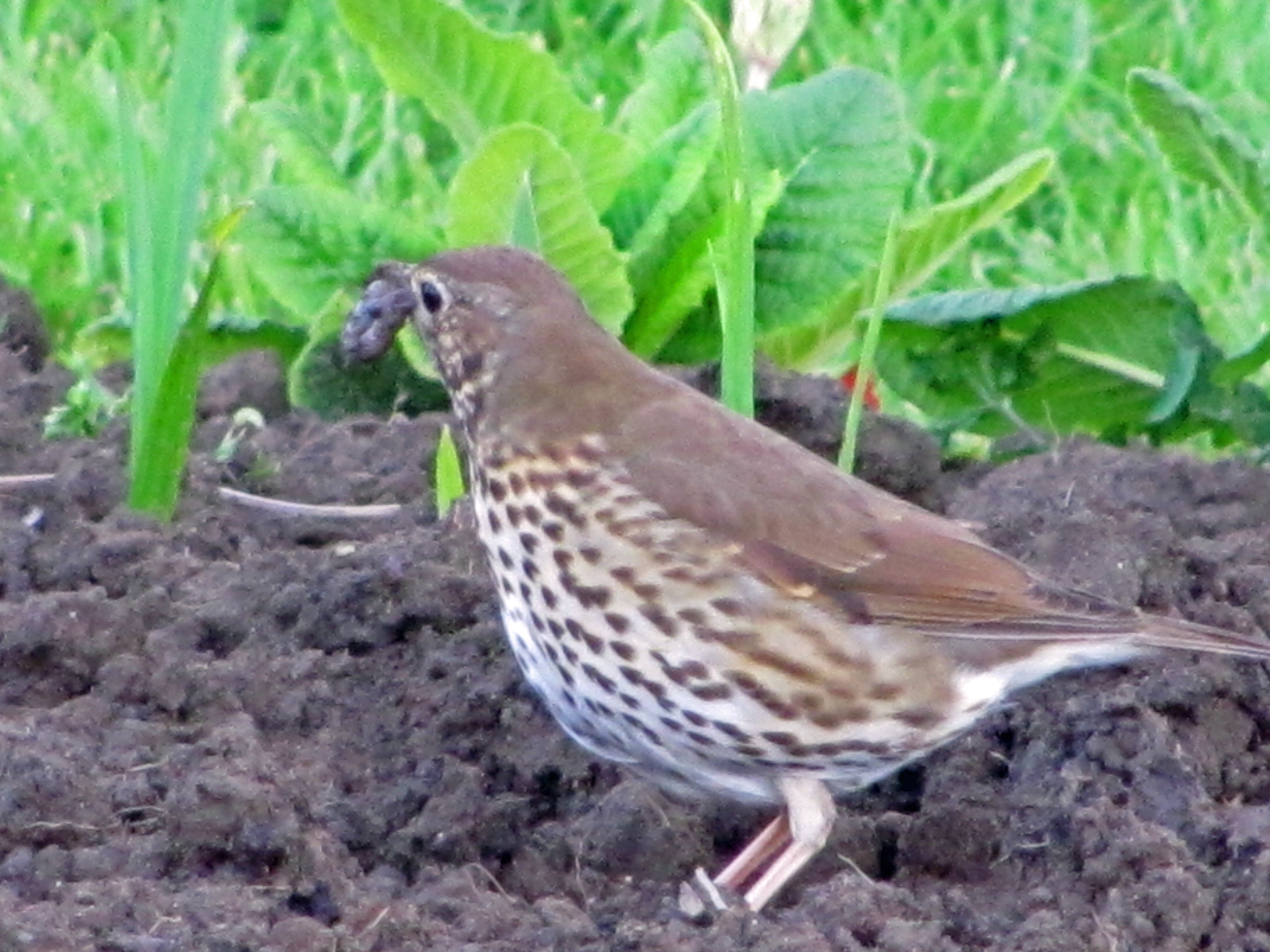
Moving on from the Autumn Garden towards the first communal orchard we follow a native hedge in which for the first time a Song Thrush has nested. the parents are busy feeding their young and collect worms and bugs from plots right under the noses of the gardeners.
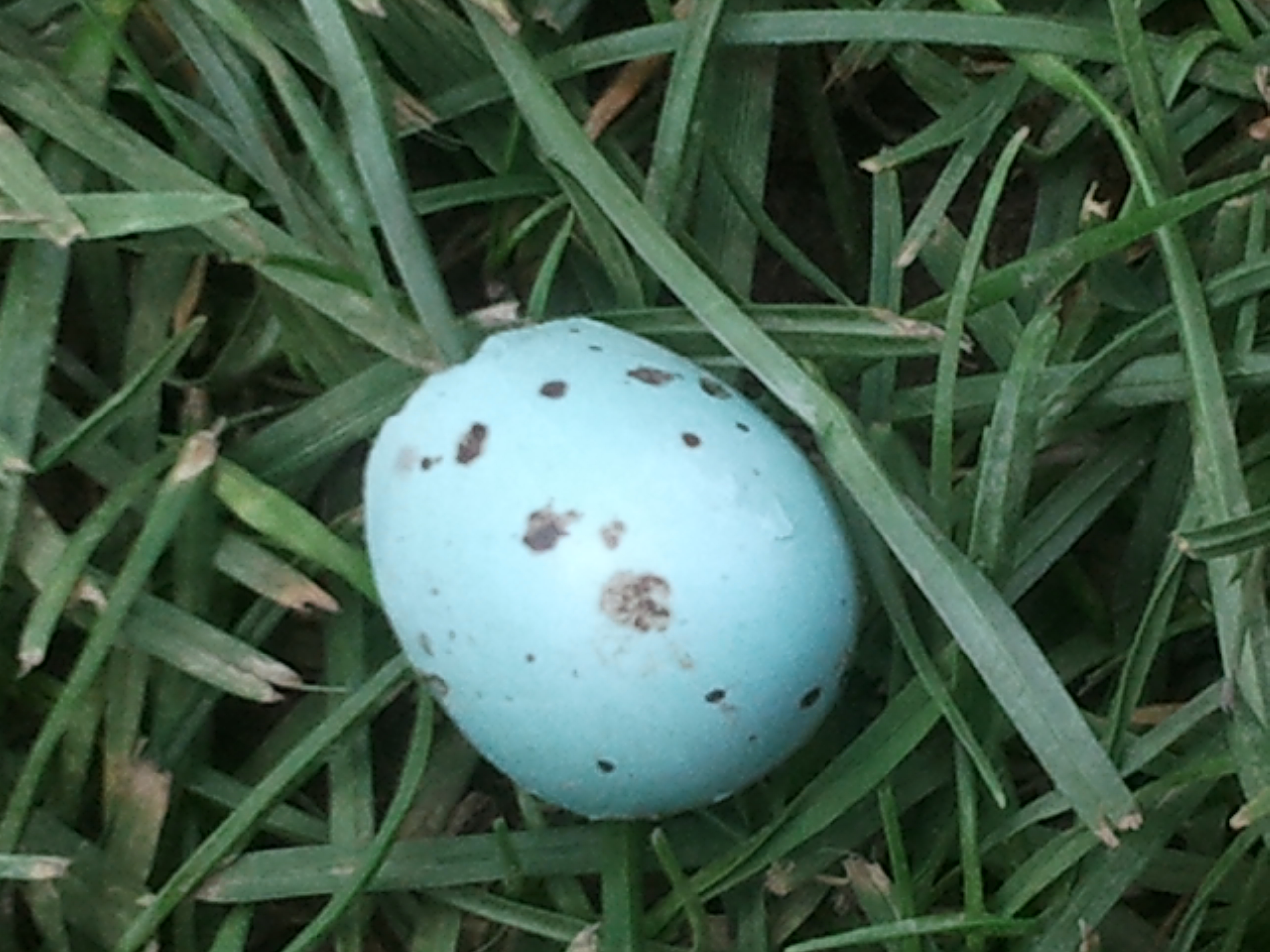
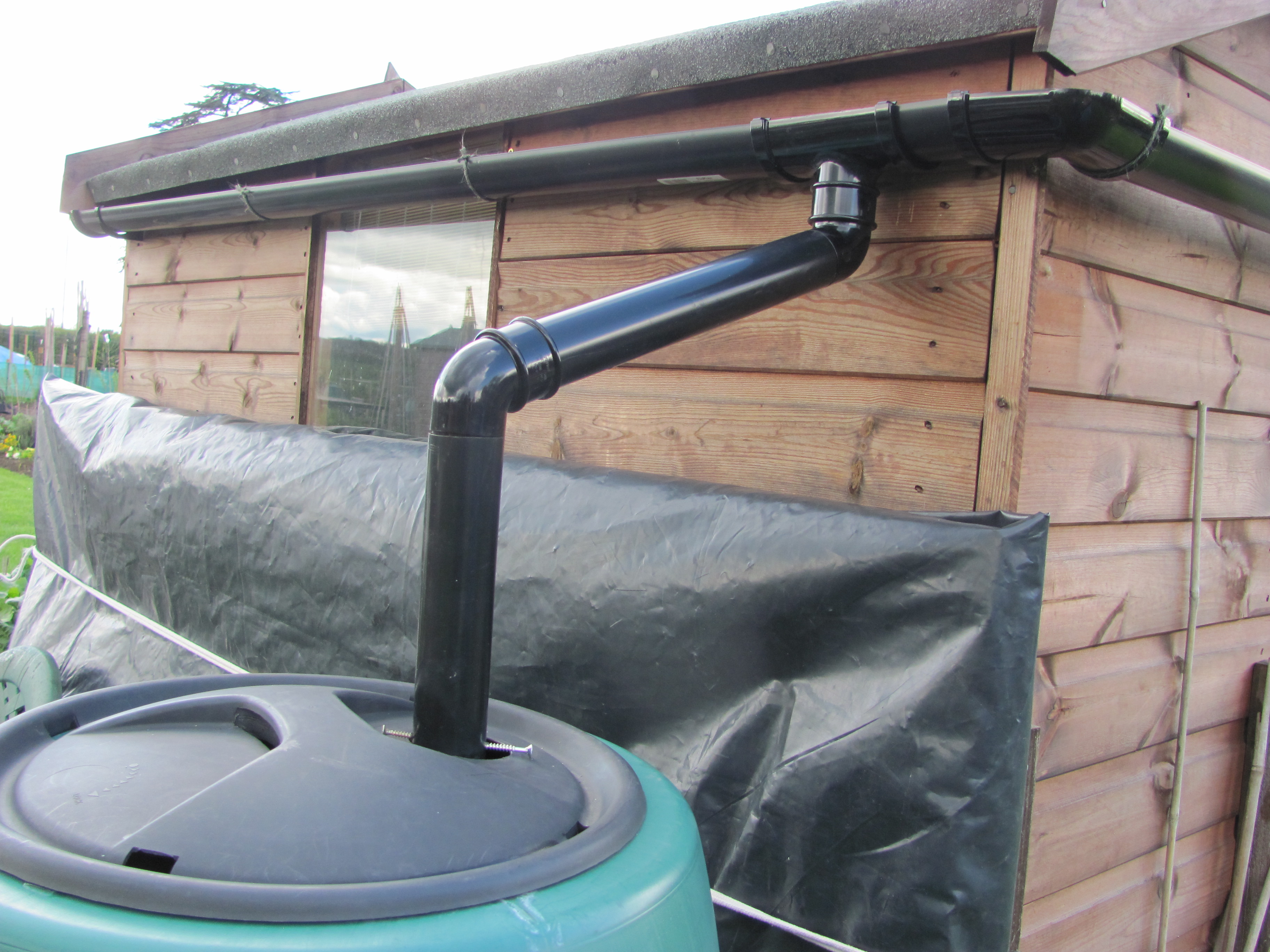
Thrush collecting food for its youngsters.The empty thrush egg we found a few weeks ago alongside the hedge.We are trying to encourage wise watering on the plots so lots of new guttering and butts are appearing.Ready for action.Have the crows got their own back?
In Crowmeole Orchard flowering spring bulbs are coming to an end as Camassias and Allium push up their flowering buds. The apples, pears and plums are covered in pink or white blossom.
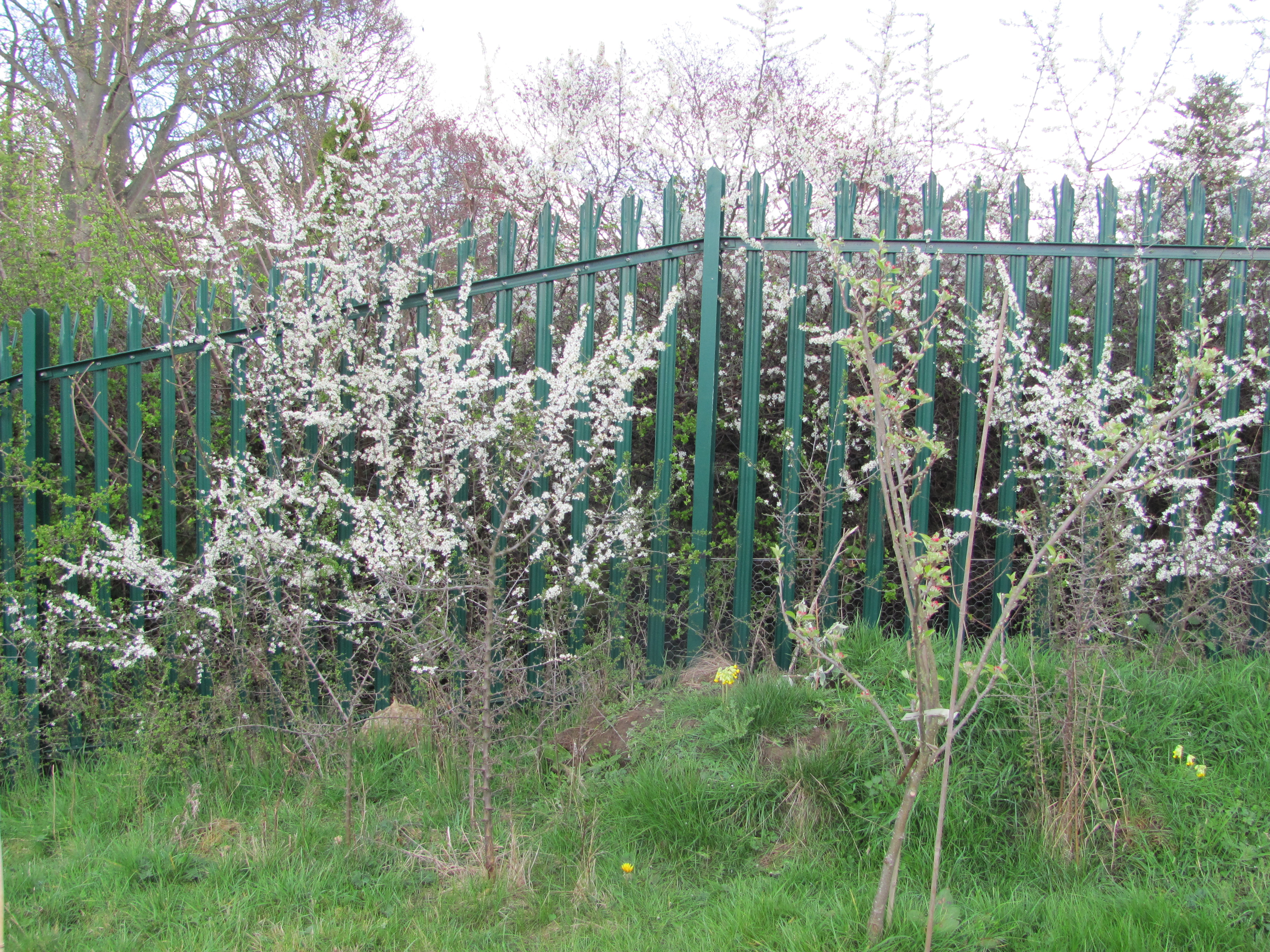
Blackthorn - bees love the blossom, birds love the fruit and allotment holders love to make sloe gin from them.Homes for beneficial insects who will help pollinate the fruit and predate on pests.The Fruit Avenue getting more colourful by the day.
As we wandered through this orchard a flock of Long Tailed tits in their pink and brown livery flew off in the bouncing flight pattern, having fed on the peanuts in the feeders. Their long trailing tails followed on. We moved on following paths between plots towards the Spring Garden and Sensory Garden near the old oak tree. Plots are full of ridged rows of sown potatoes and white plastic plant labels marking newly sown rows.
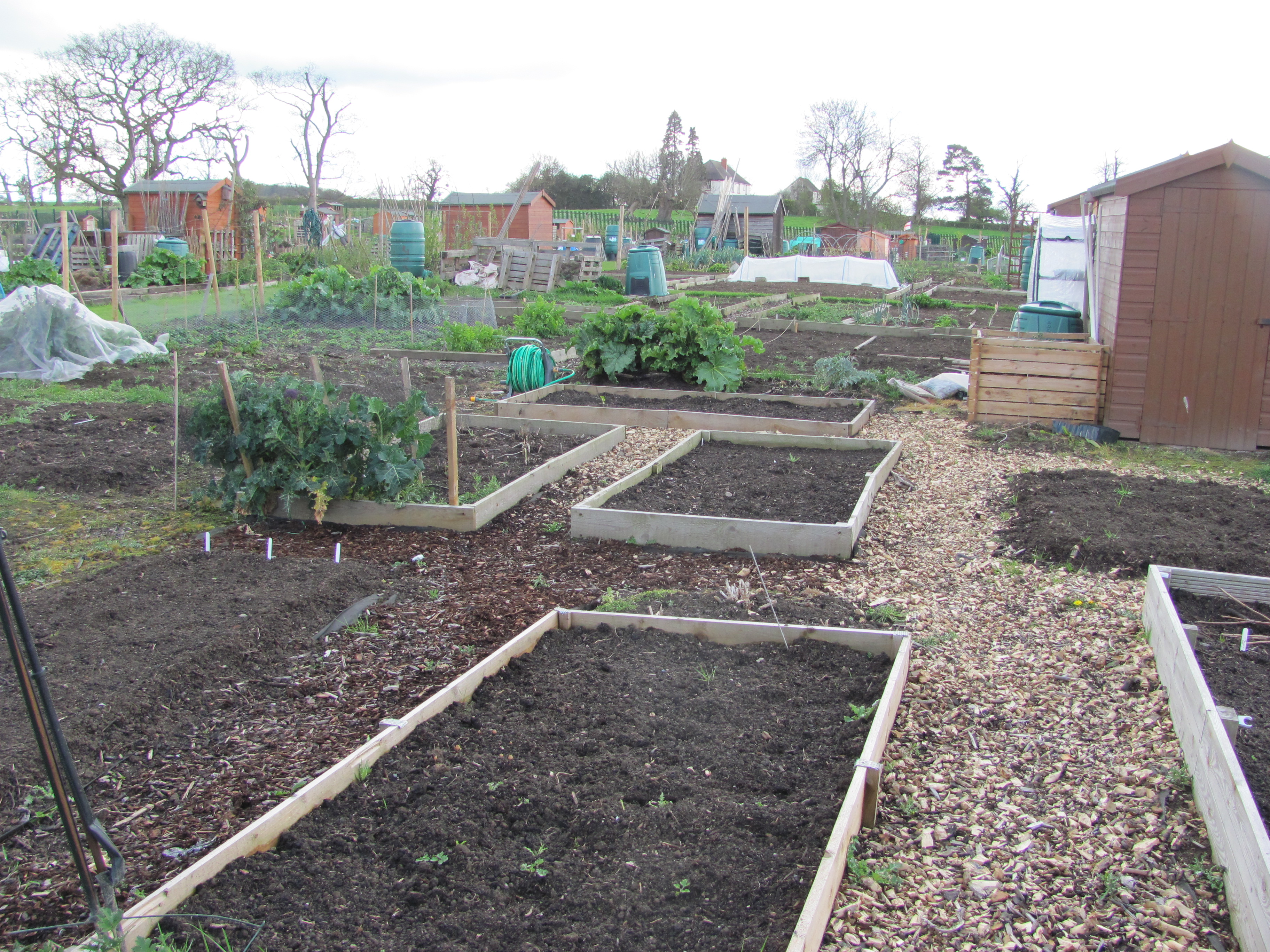
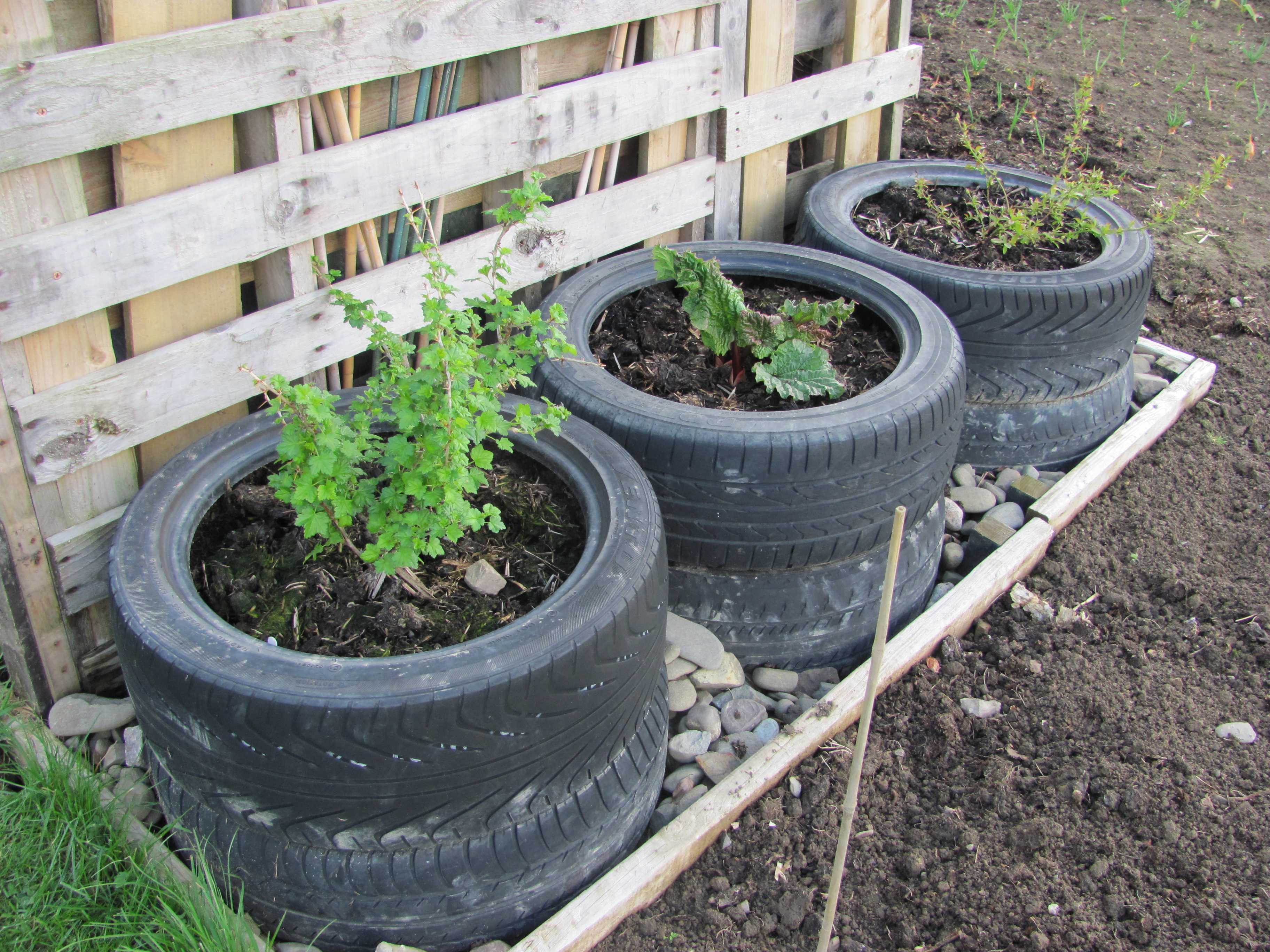
Phil and Doreen have planted up a border alongside their plot.Several plot holders are topping up their paths with wood chip.Alan's tyre beds.
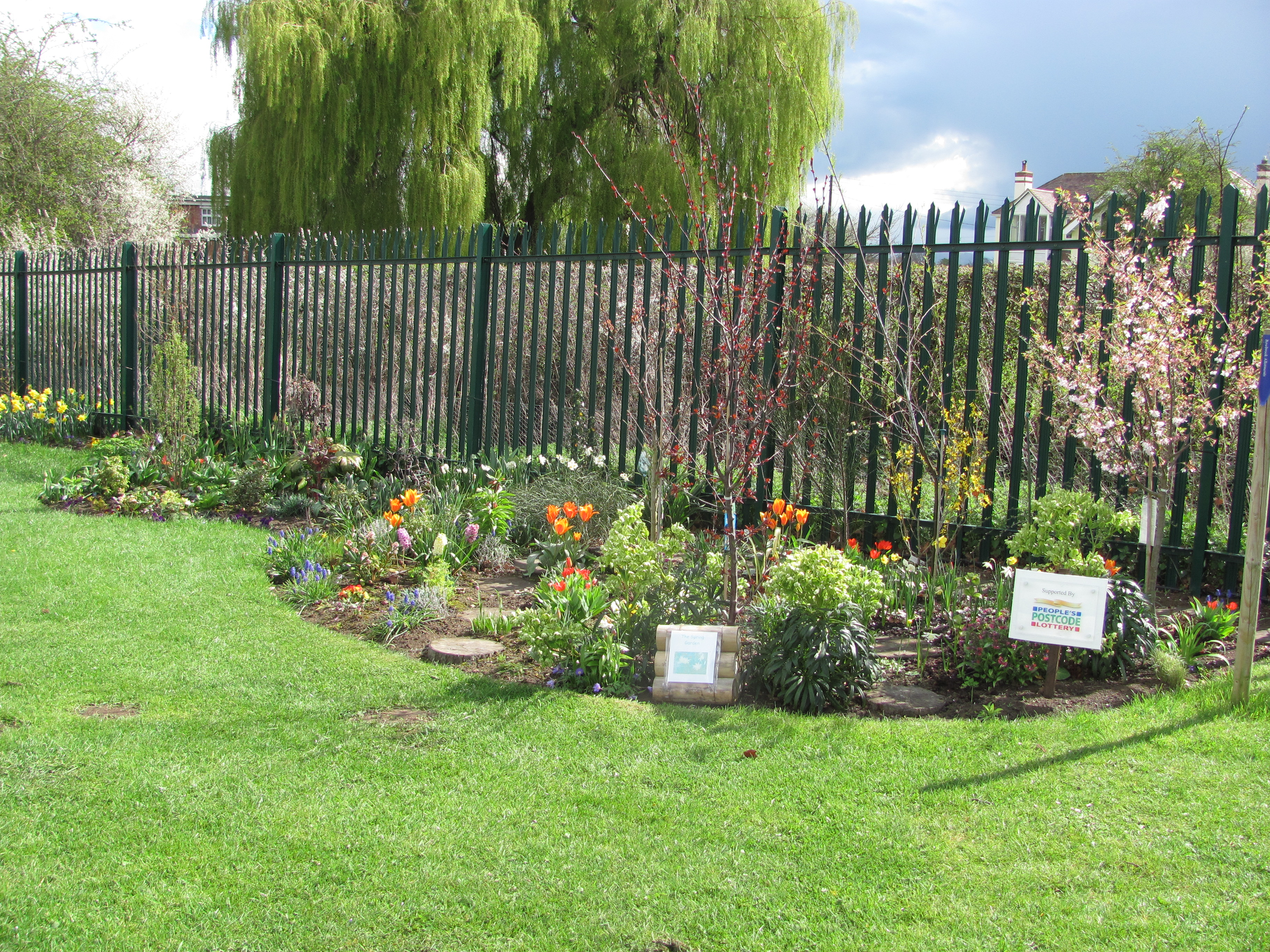
The Spring Garden in its second spring is looking so good and has become a popular place for allotment holders and visitors.
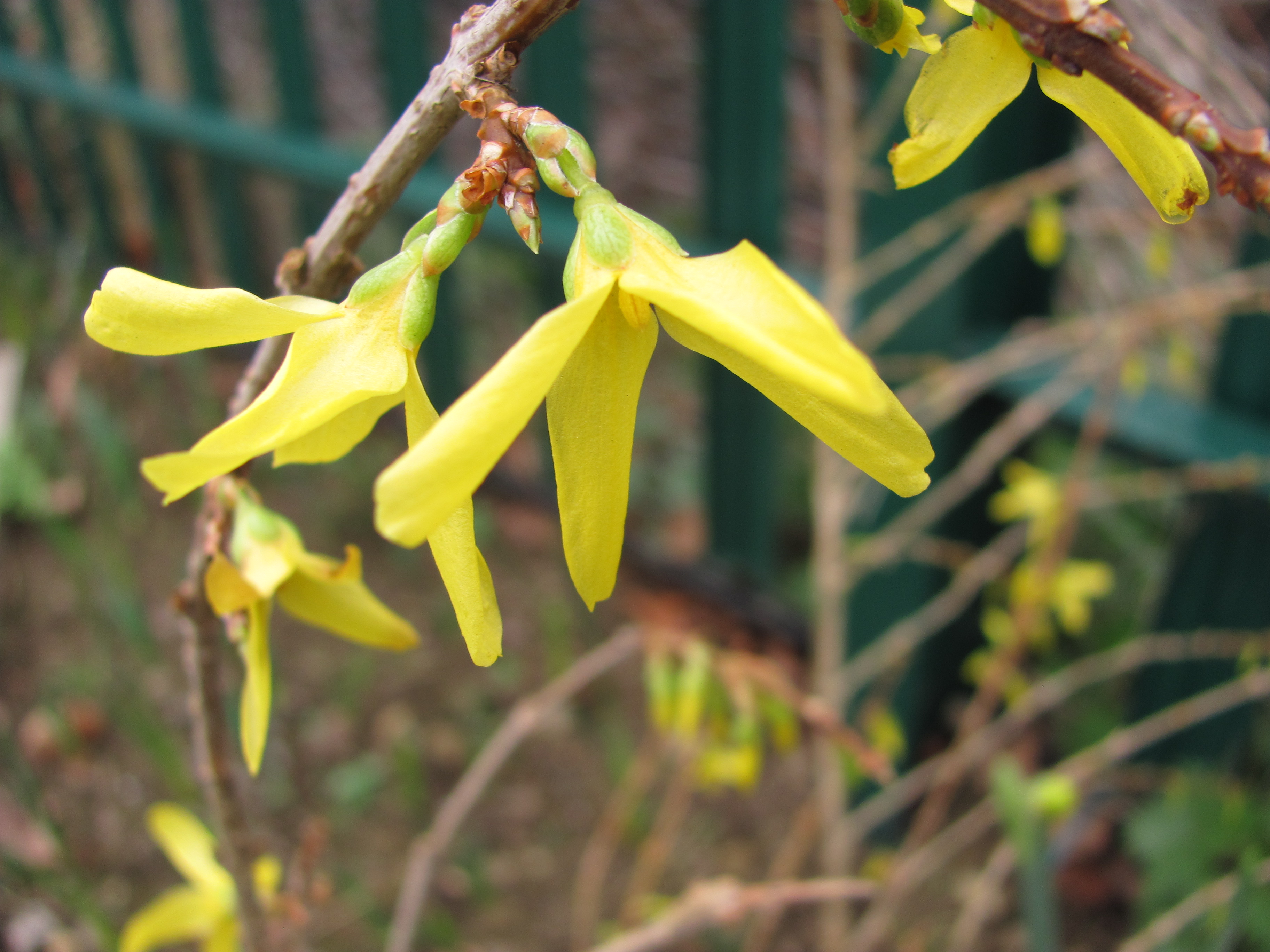
The most colourful spot on the site in April is the Spring Garden.Forsythia flowering in the Spring Garden.Spring Garden beauty.
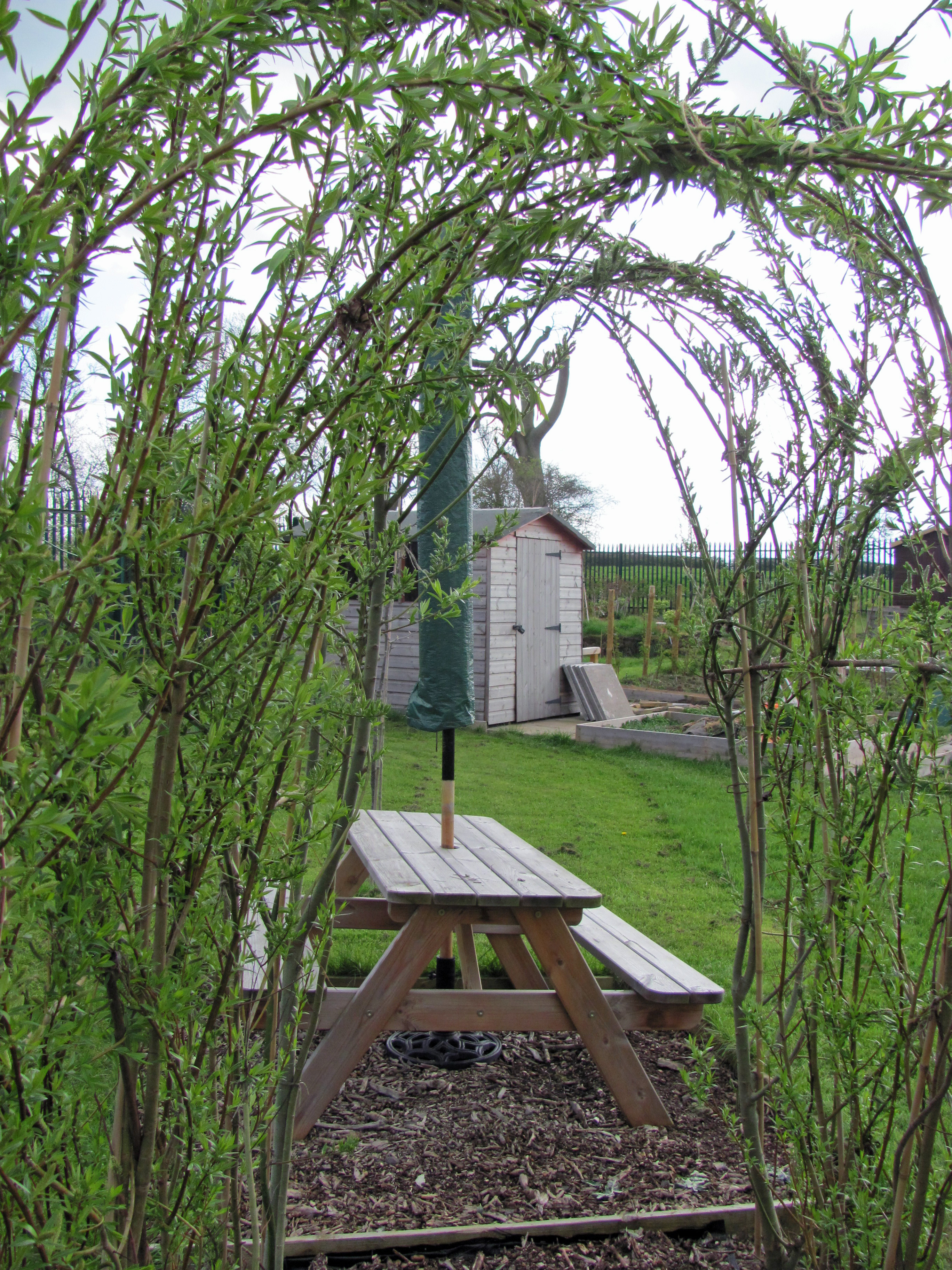
Through the Willow Tunnel is one of our many picnic benches where we stop for coffee on our April wanderings. As we enjoyed our brew curlews called in nearby fields with their mournful song and the Great Spotted Woodpeckers flew busily overhead.
We have just started to shape the willows into a tunnel.The Sensory Garden is growing well now the weather is warming up.
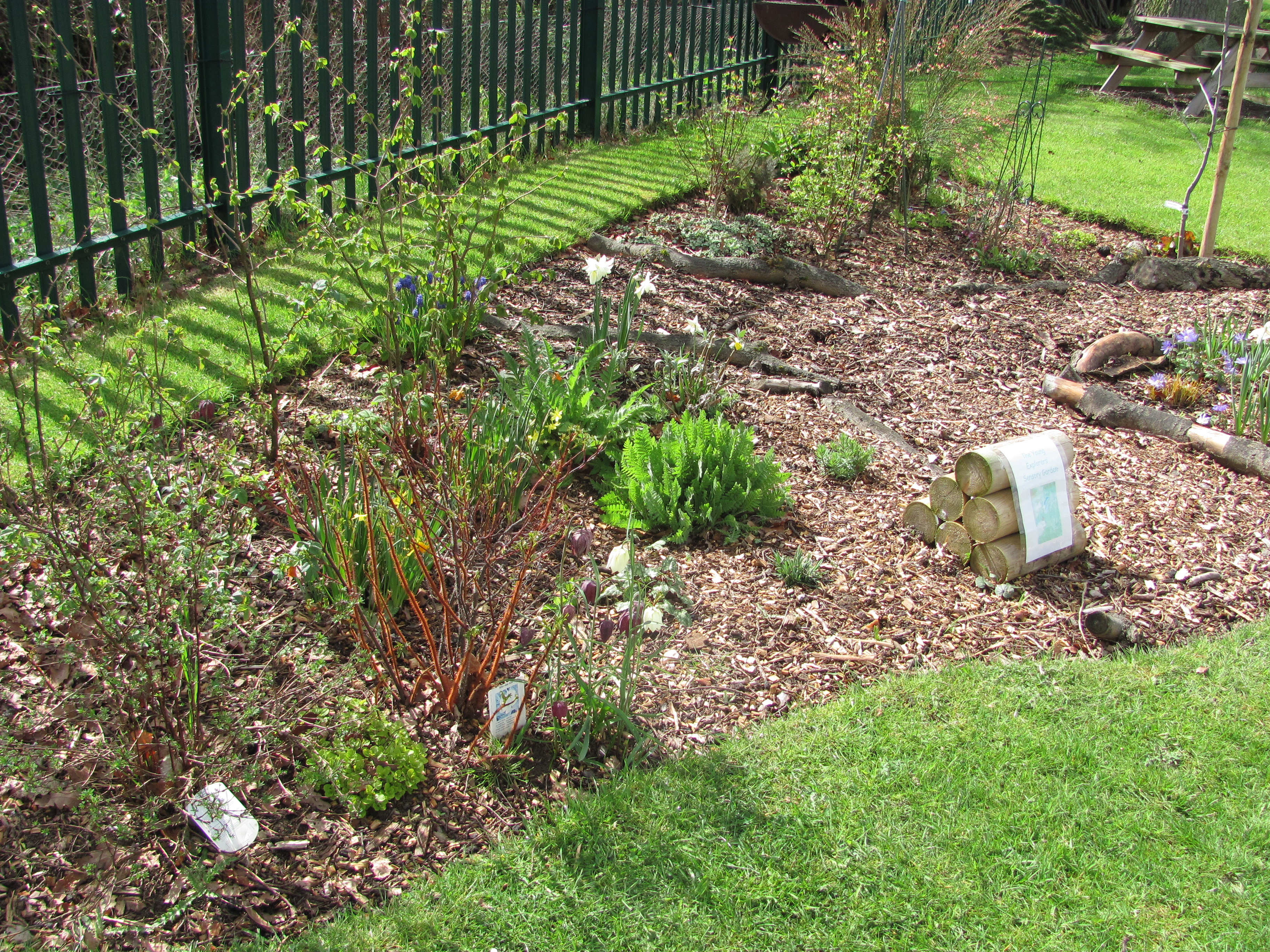
The Winter Garden has passed its peak after being so popular for months. We have been busy giving it a sort out.
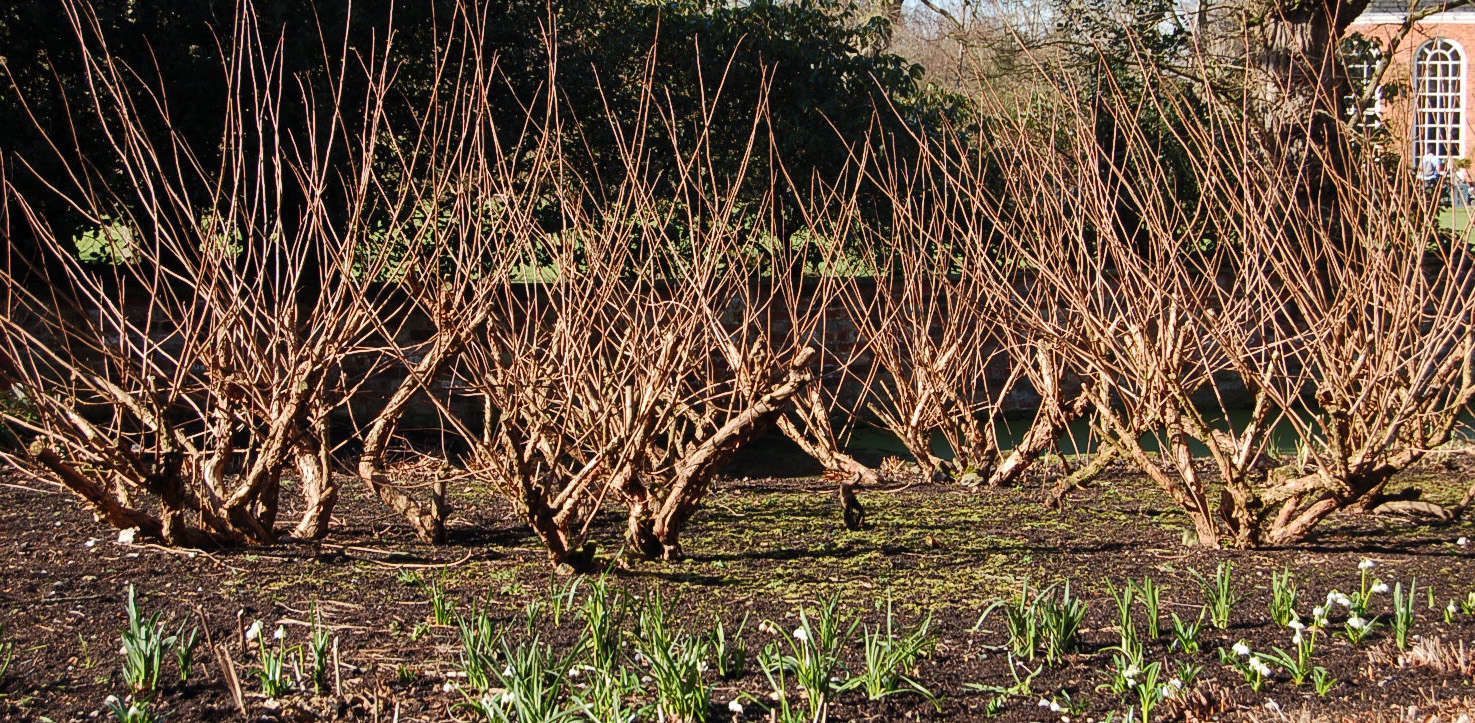
The stems of the White Stemmed Rubus look magical in the spring sunshine.The dogwoods and willows grown for their coloured stems have been pruned hard to encourage fresh wands of growth.Fresh Fennel foliage in front of a Euphorbia.
We wandered next through the Woodcote Orchard where the paths are cut short and neatly through the long grass, and looked at the Turf Spiral, a favourite of the children.
Follow the trail post down the neat path.We have been adding another layer of turf to the spiral to create somewhere to sit.
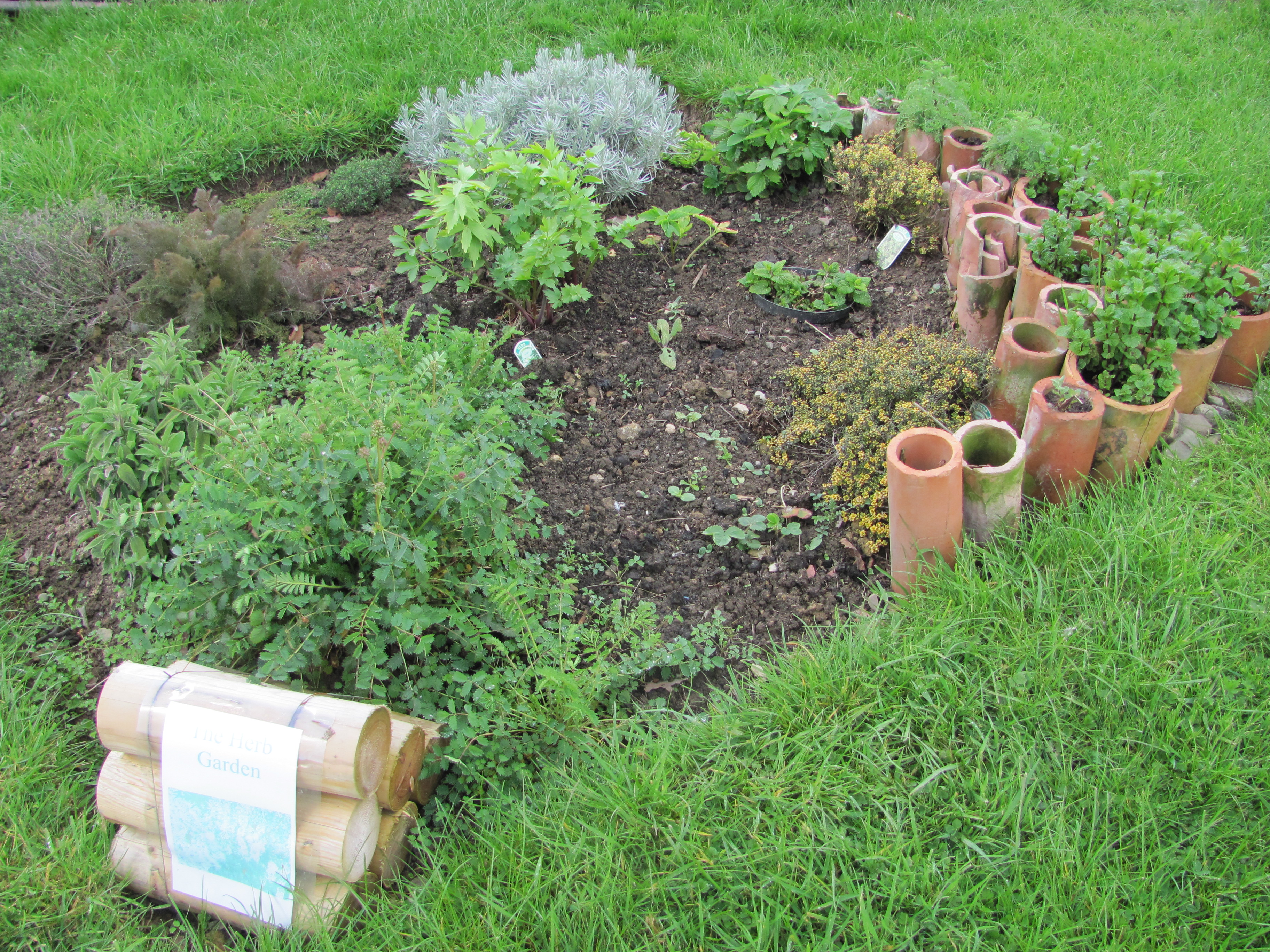
Our final stop on the way back to the car park was the Herb Garden where herbs are now well established. This last section of our lottie wander took a lot longer than the others as we enjoyed a good chat with Dave and Jean. We put the world to rights and shared details of how all our crops were getting on.
The lighting on the day of our visit to Durham Massey recently was amazing for taking photographs. It was a sunny day with a bright blue sky above. The light acted light a spotlight shining just above ground level. It lit up leaves, tree trunks, flower petals. And it shone in “The Undergardener’s” eyes!
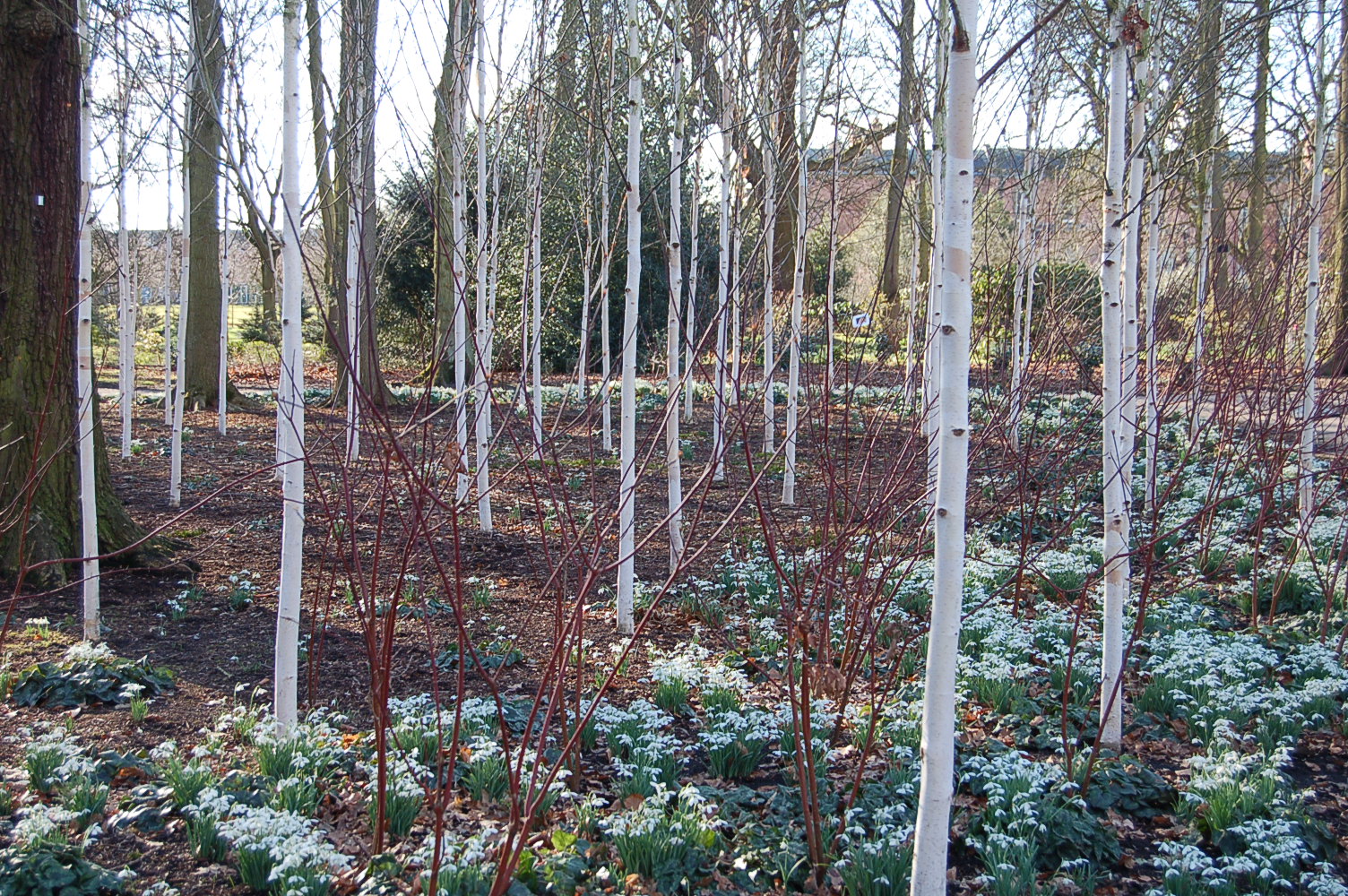
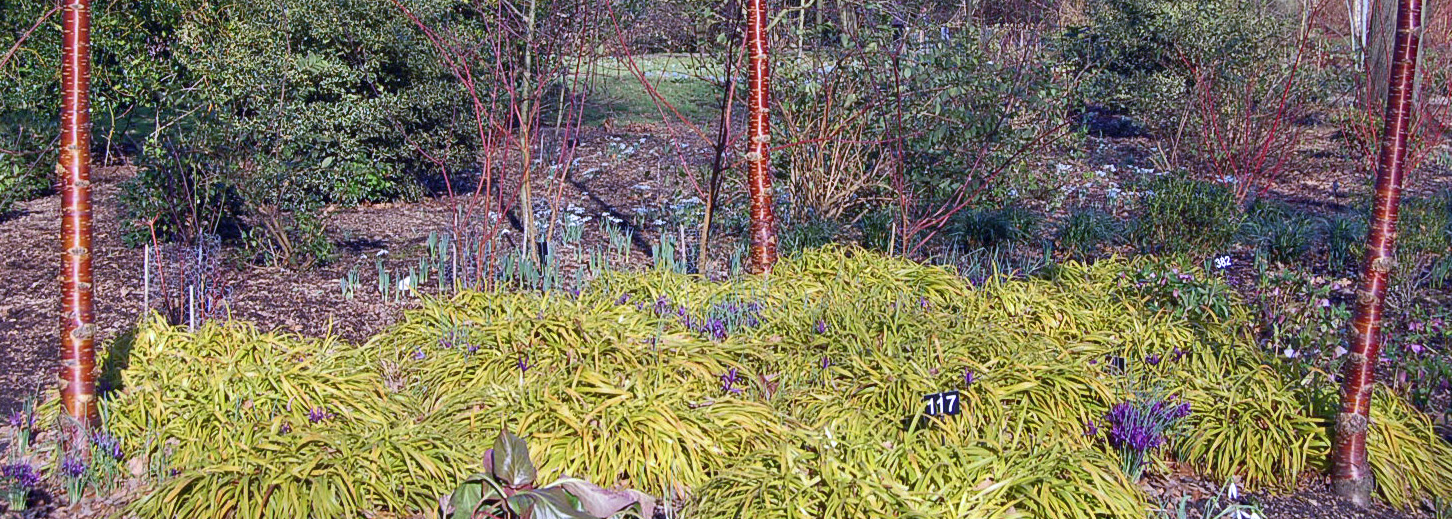
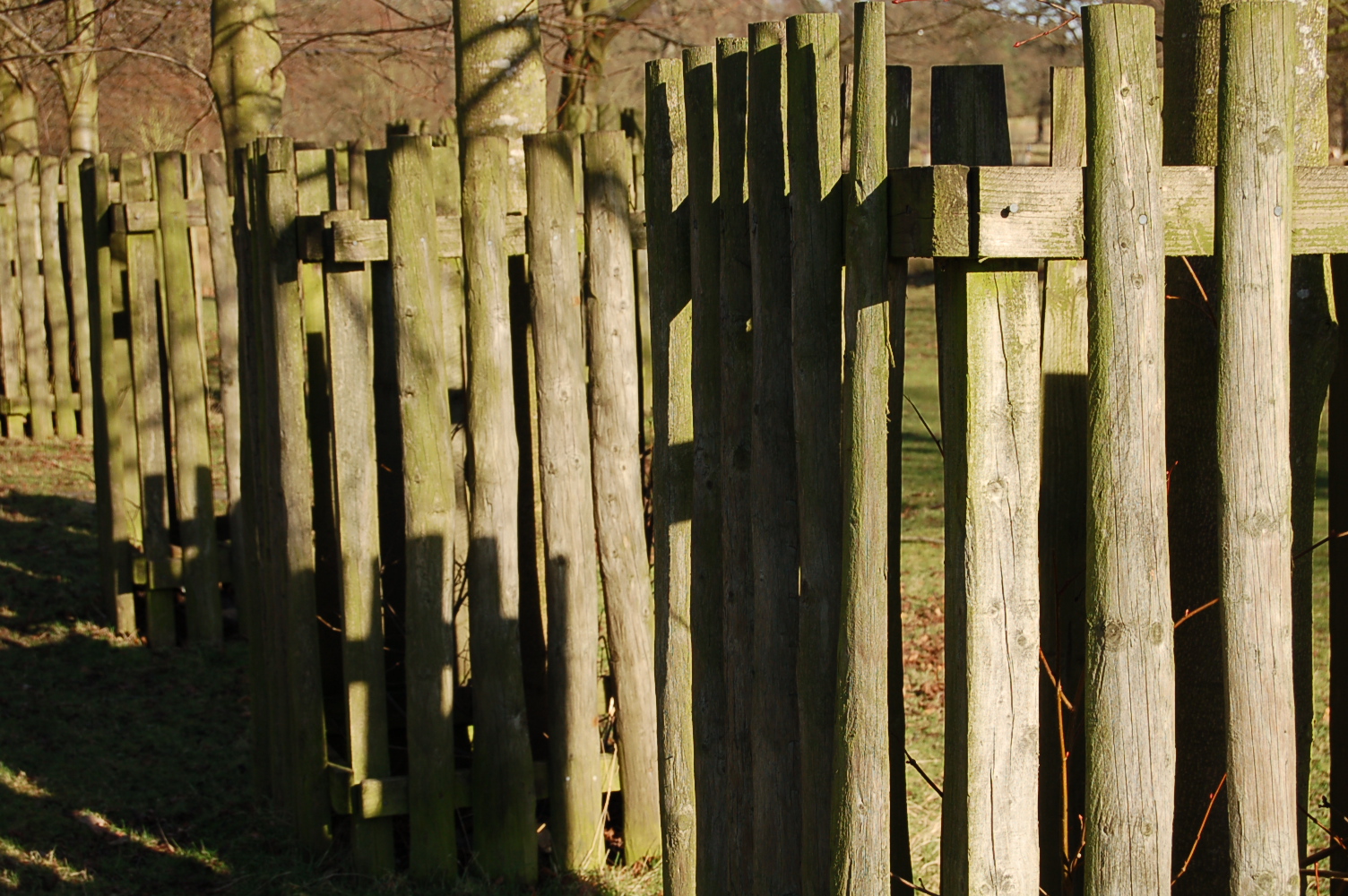
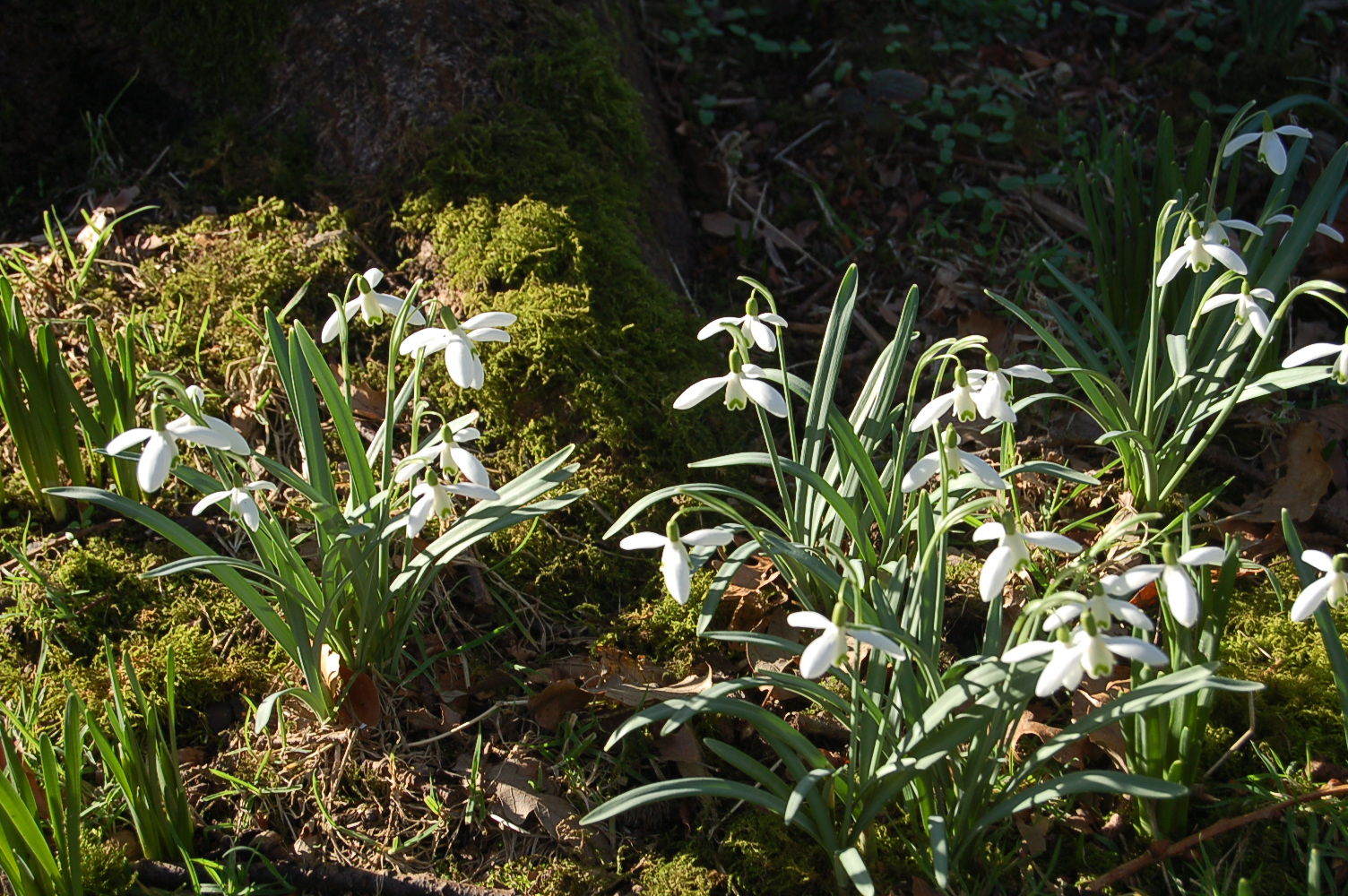
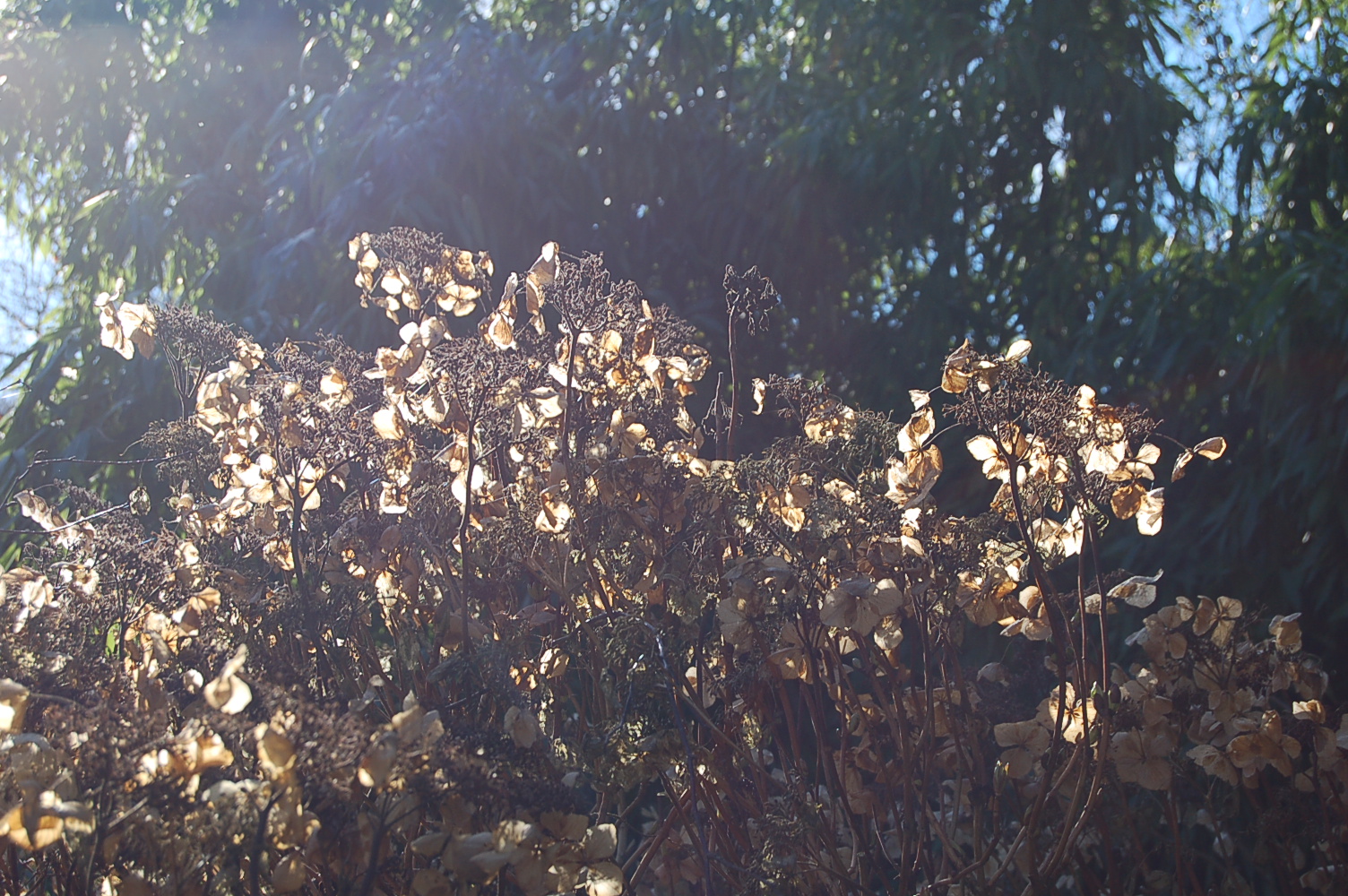
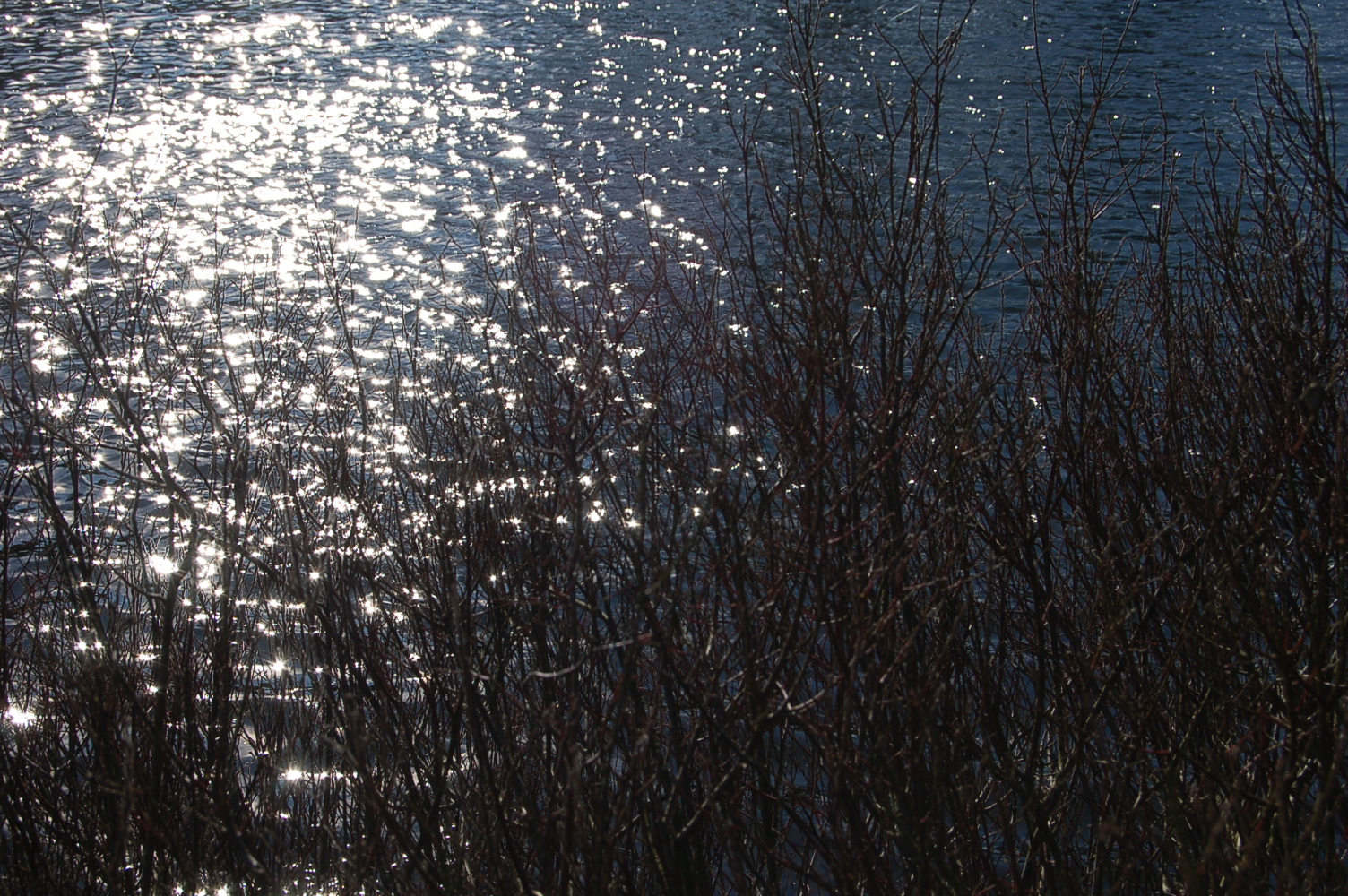
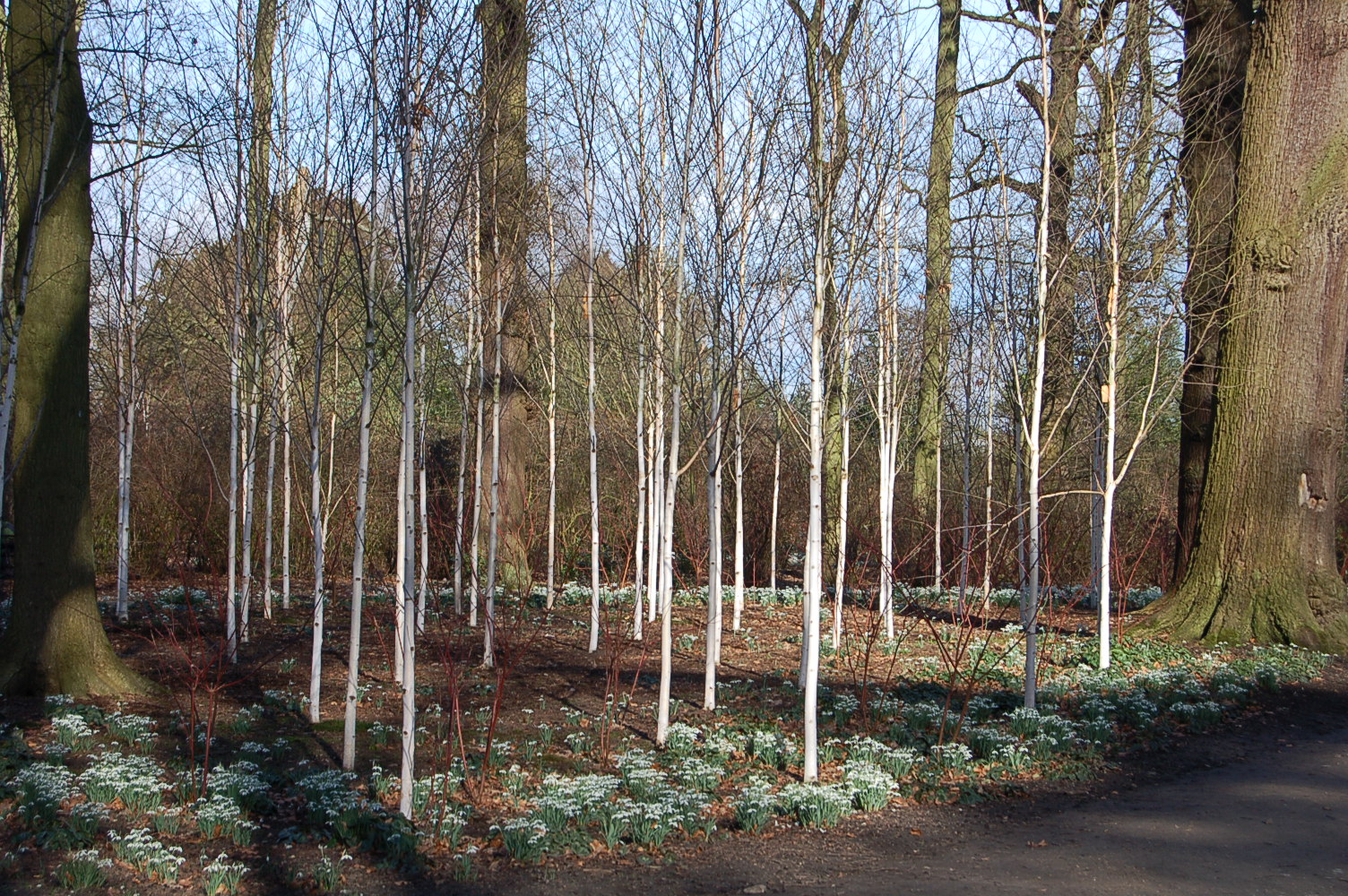
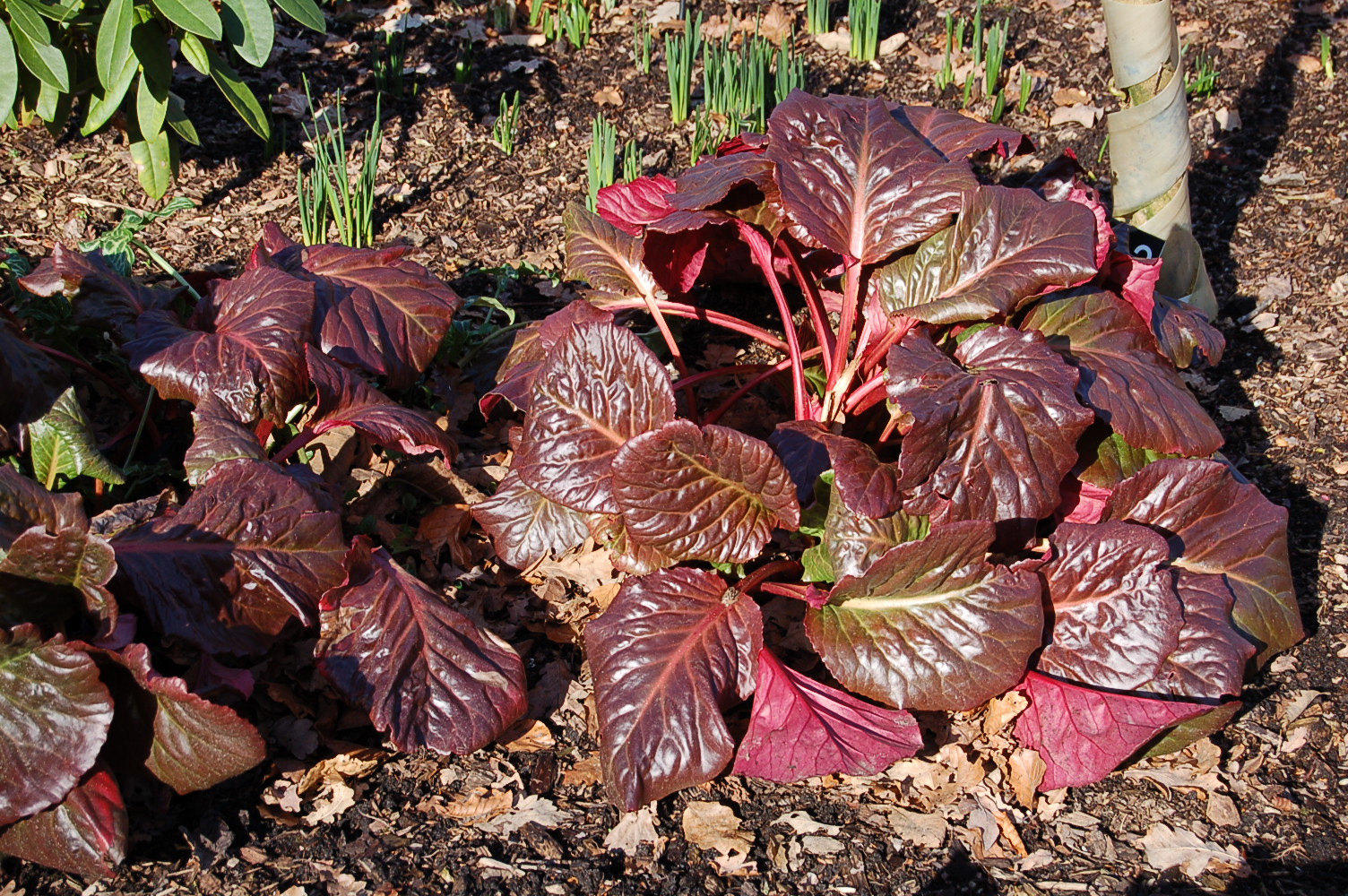
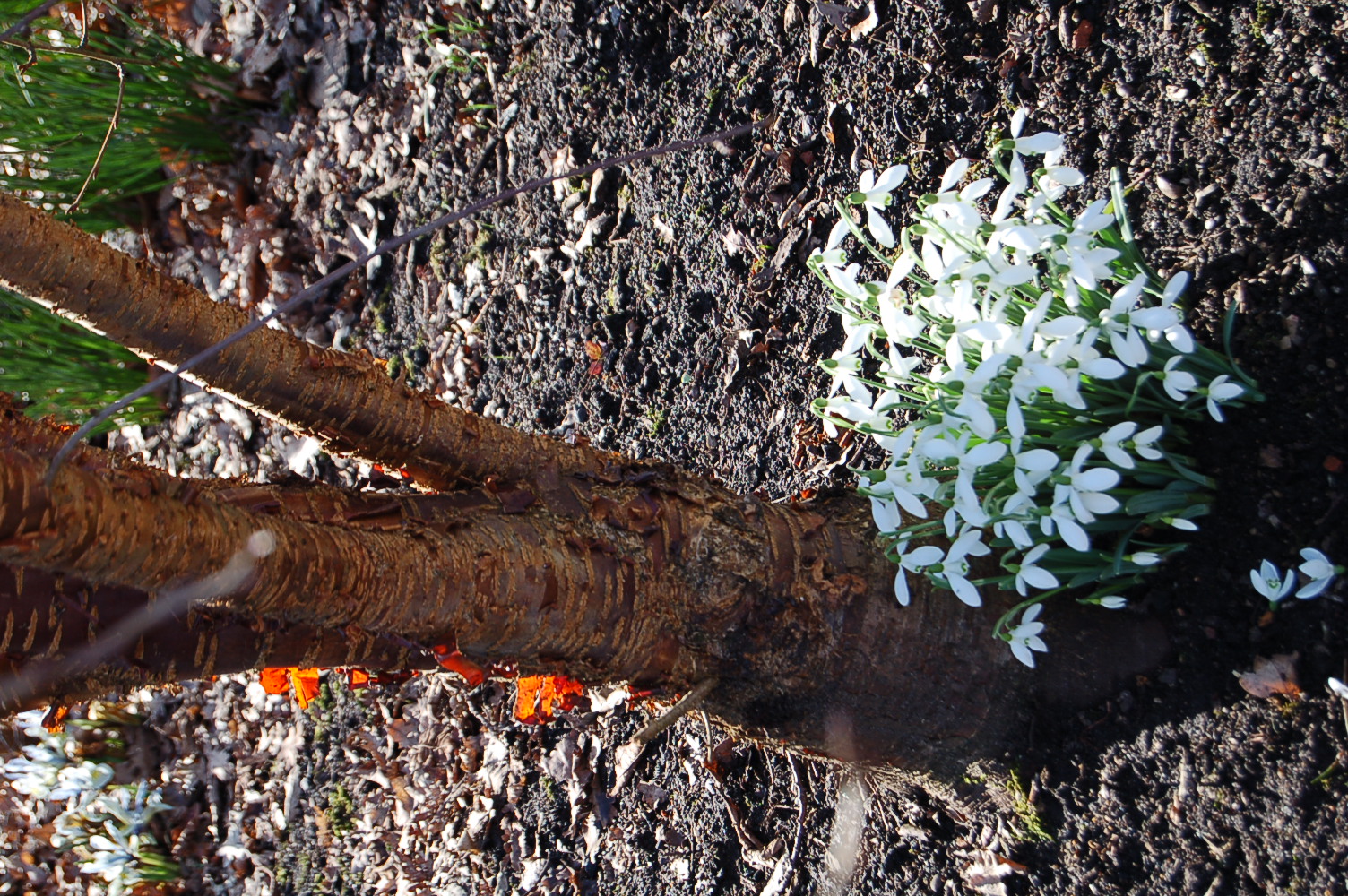
Peeling bark and Snowdrops.Winter light reflected in the glossy bamboo foliage.Back-lit Hydrangea seed heads.Twiggy highlights like spiders' webs.Long shadows of the White-stemmed Birch cross the carpet of Snowdrops.Winter light turns Cornus mas flowers into gold along the orange peel bark.Orange stems and yellow foliage enriched by the lightLooking out from the shadows.Curling silhouettes of an old gnarled Rhodendron bush.Fence shadows.Snowdrops and moss.Sparkling Hydrangeas.Into the light.Fallen rotting tree trunk looking like a huge tuning fork.Jewel coloured Bergenia leaves.Sparkling Lake
We visited the Winter Garden at the National Trust’s Dunham Massey just after it opened, so we returned this week to see how things had developed. Wow! This is some Winter Garden. The National Trust enlisted Roy Lancaster, one of my gardening heroes, to help with its design so there is some interesting planting. We wandered around it for hours trying different routes through it which afforded us the opportunity of seeing each bit of planting in a different light. This is a garden for all the senses, our eyes, noses, fingers and ears enjoyed every moment. It was busy but the design and quality of planting seemed to make everyone remain quiet. Quiet enough to hear the birds, bees and insects at work.
A winding path lead us through an area of mature trees underplanted with miniature daffodils, an area where the trees’ long shadows cut across the Daffodils, beautifully lit by the low sun and shining like gold, and soon we glimpsed the massed planting of white barked Birches.
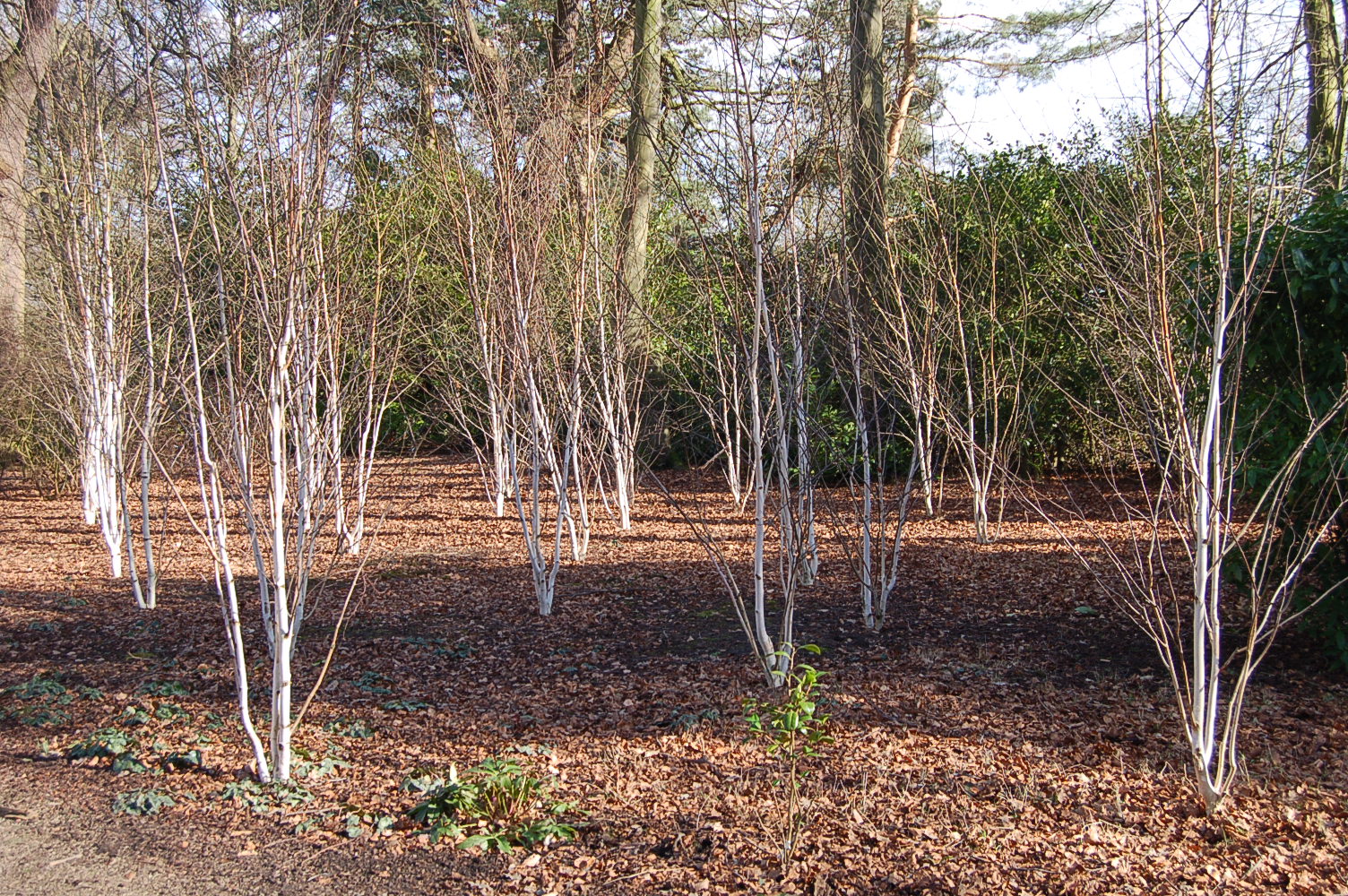
There were two distinct areas of Birch trees, single stemmed specimens one side of a path and multi-stemmed on the other. Betula utilis “Doorenbos” was the chosen variety and their trunks were a clear crisp white.
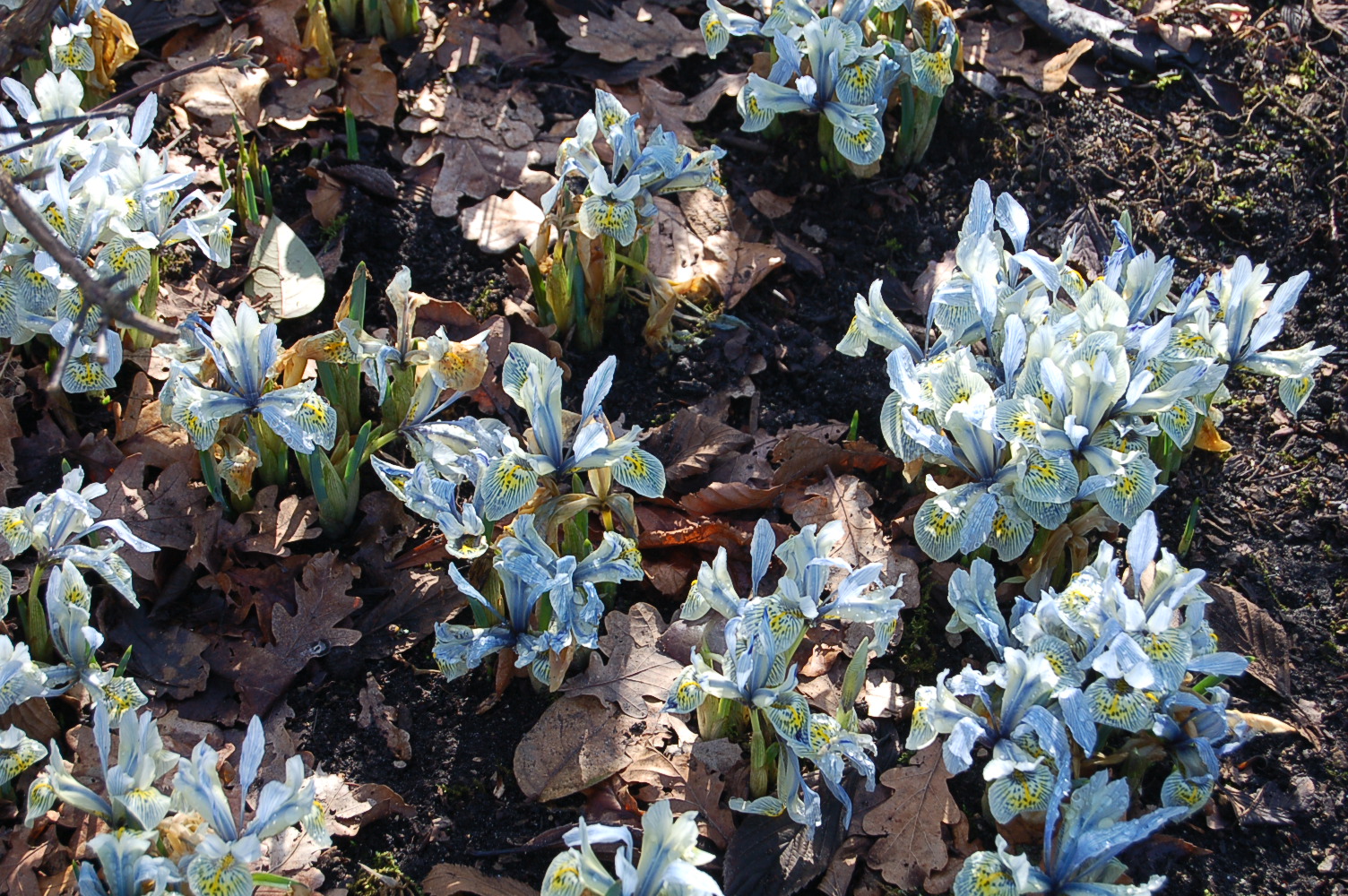
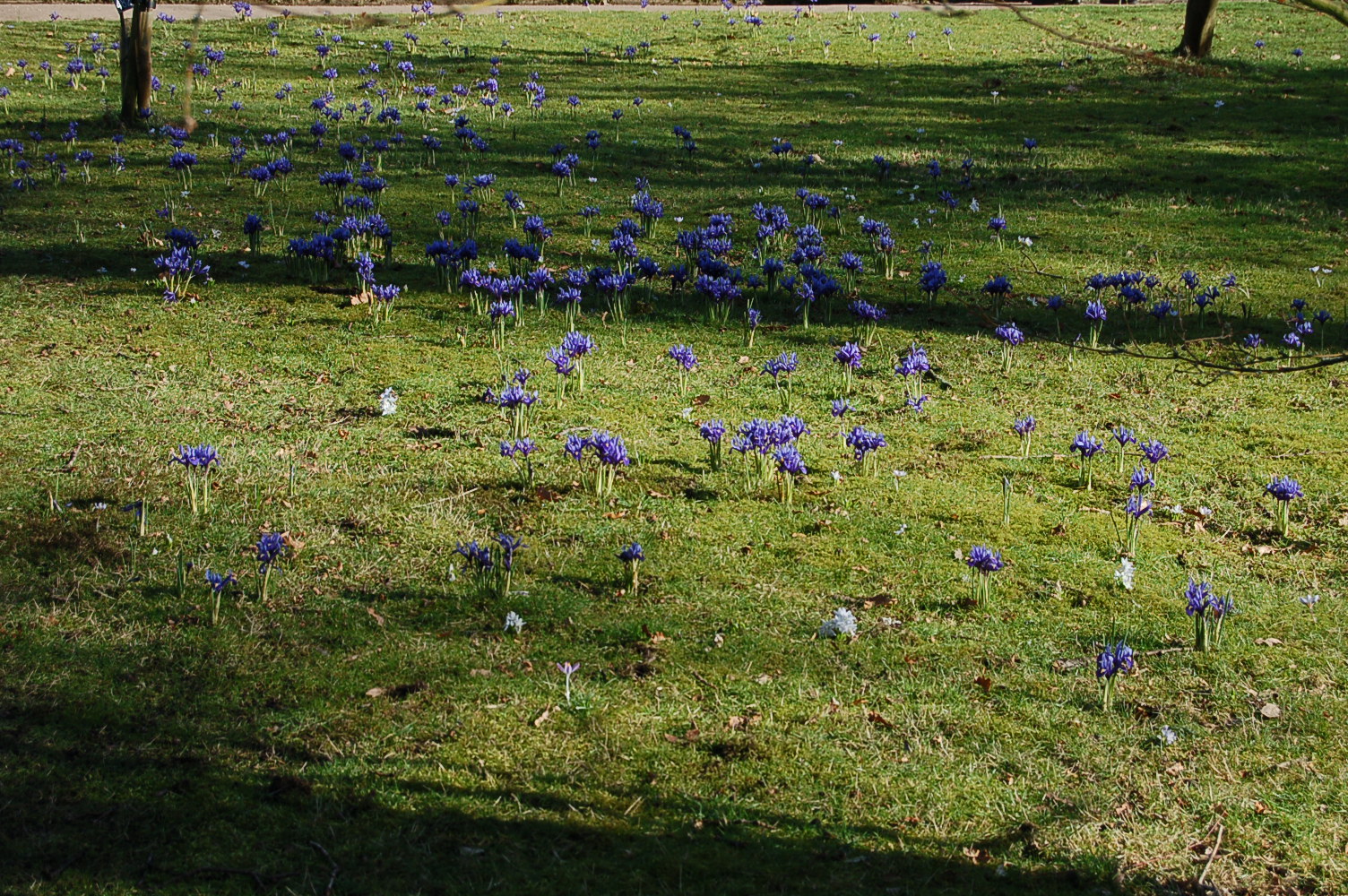
As well as the usual winter flowering bulbs such as crocus, snowdrops and daffodils there were several different coloured varieties of Iris reticulata those tiny bulbous plants with over-sized flowers in shades of purple and blue, all with yellow beards.
In some areas of lawn these diminutive Irises have been naturalised under trees. We had never seen this done before and have to say it was very effective.
It was so heartening to see and hear bees, hoverflies and other insects at work around the flowering shrubs, Lonicera fragrans, Cornus mas, Daphne mezereum “Alba”, Viburnum bodnantense and Viburnum tinus.
Lovely as the flowers of winter are, sometimes the colours, textures and shapes of leaves can be just as impressive – Bergenias, Liriope and variegated Ilex for example in their many colours.
We cannot ignore the snowdrops though, and here at Dunham Massey they have been so thoughtfully placed, at the bases of trees or shrubs.
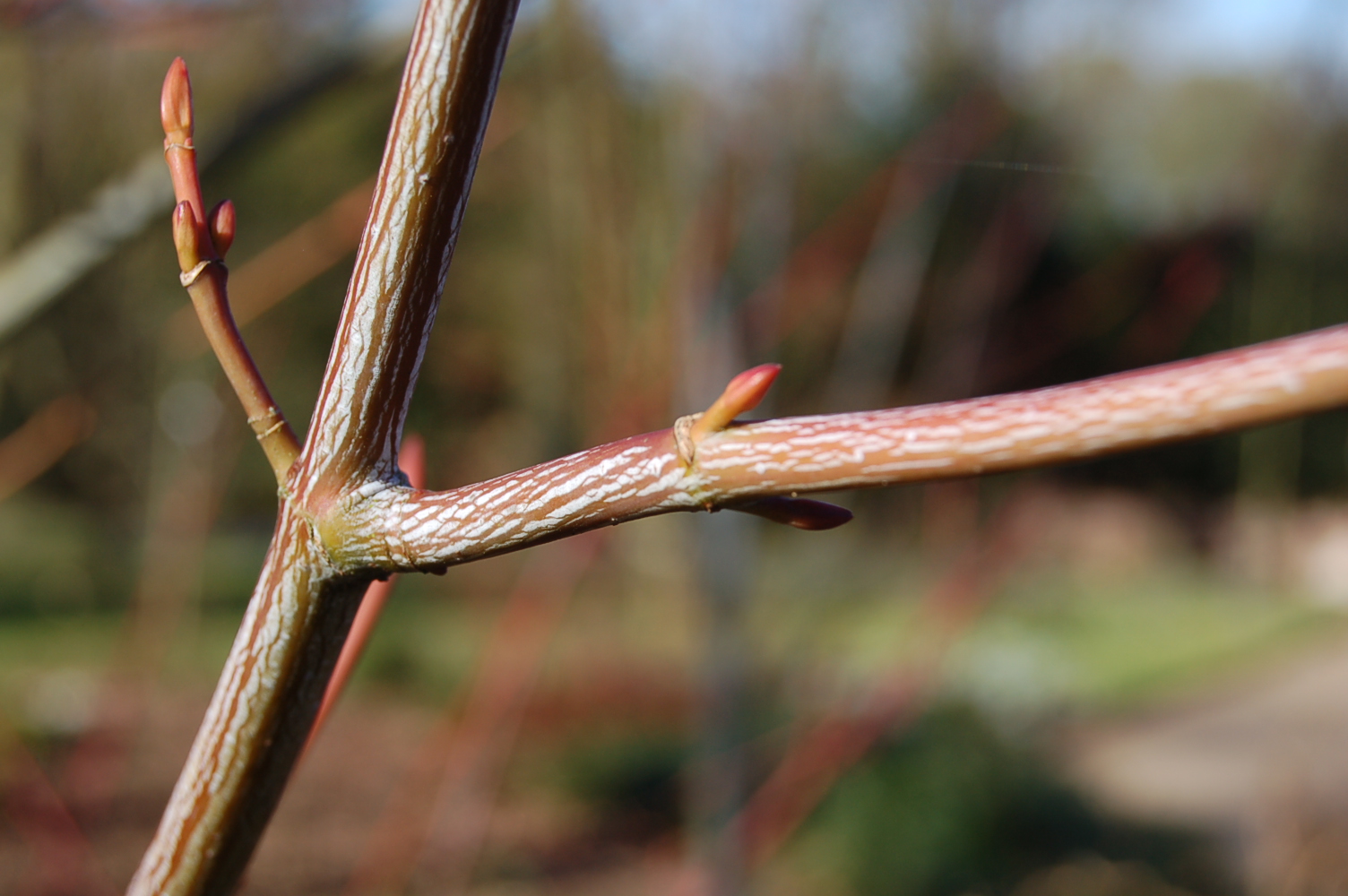
The textures and colours of bark add another dimension to this winter garden, peeling bark, shining bark, bark like snake-skin, red stems, contorted stems, curling stems, shimmering stems.
In the photo below the ginger-coloured shining bark of Prunus serrula shoot upwards from the golden leaves of Liriope.
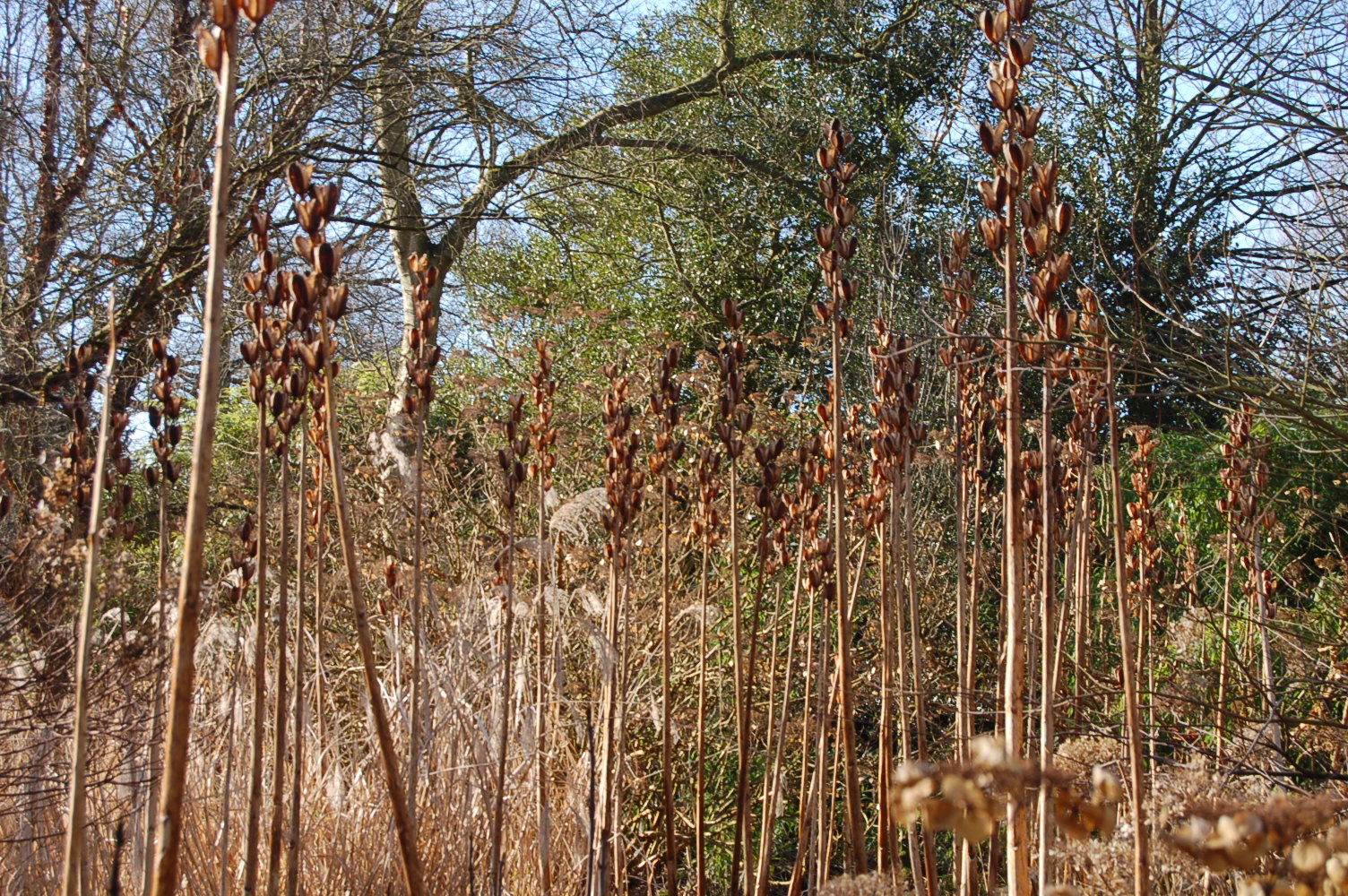
With all the new season’s flowers, the colourful stems and bark, and the scents it would be too easy to miss the effect the winter light can have as it plays across the seed heads of last year’s flowers and stems. Giant lilly stems with their huge seed pods towering up above a sea of desiccated flower heads of a variety of Hydrangeas stopped us in our tracks.
When the wind blew these seed heads rustled gently, temporarily drowning out the sound of the Blackbirds turning over the mulch of bark and throwing the dried leaves fallen from trees last Autumn over their shoulders. The gentlest breeze set the bamboos swaying and rustling but it took a stronger wind to move the conifers overhead and start their music making. Over our heads in the mature tree canopy we could hear the calls and songs of Goldcrests, Nuthatches, Coal Tits and Blue Tits occasionally drowned out by the drumming of Great Spotted Woodpecker, all proclaiming their territorial rights in their own unique way.
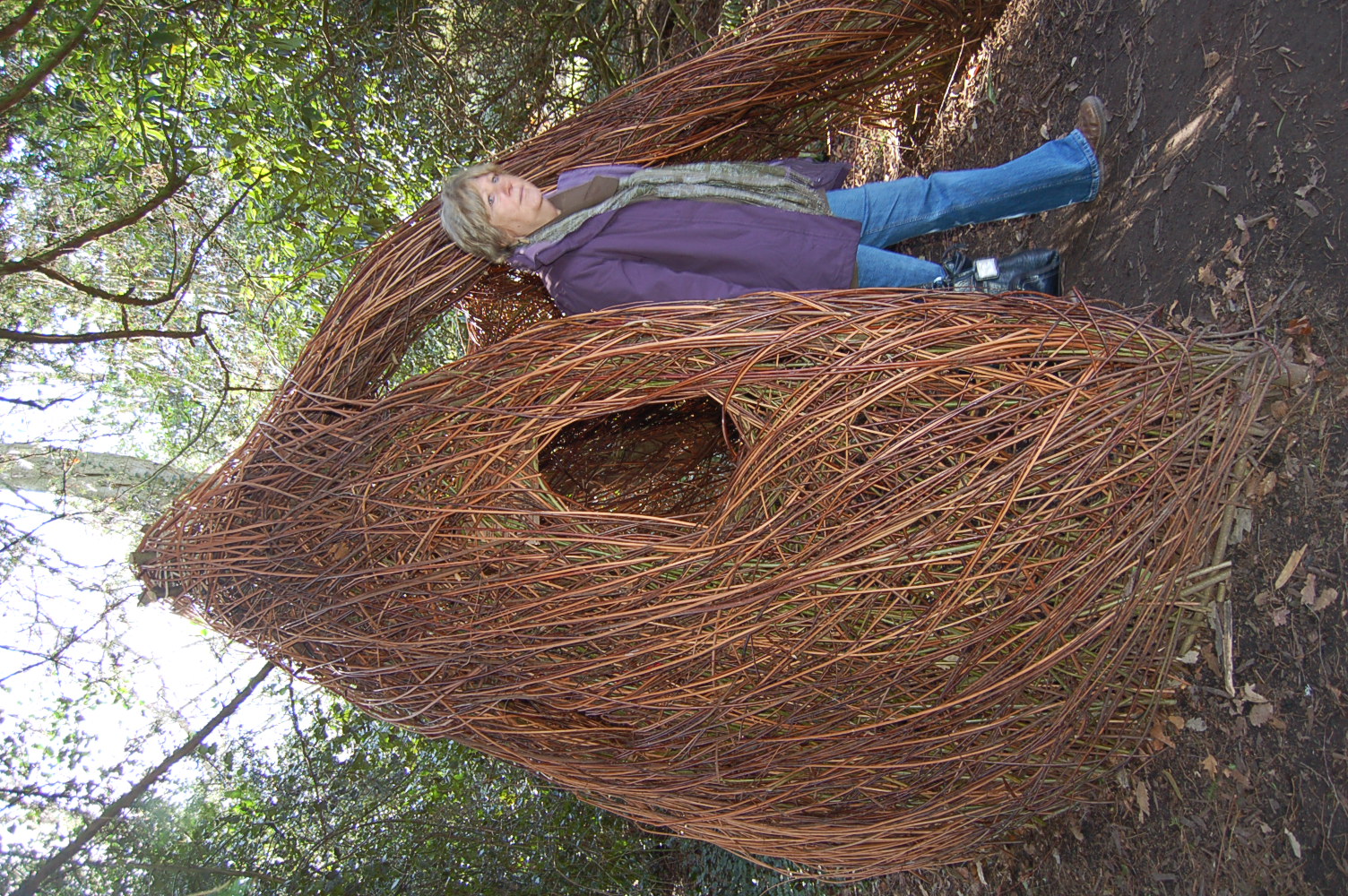
There was so much to appreciate in the Winter Garden at Dunham Massey that it is hard to leave. But it had another surprise around another corner, a beautifully woven willow den, created from many coloured stems. Jude, the Undergardener, as usual could not resist, so a quick exploration was called for before coffee and cakes called even louder from the restaurant!
As part of the development of the shared community spaces at Bowbrook Allotment Community we have created “Gardens of the Four Seasons”. We did this with the support of “The Peoples Postcode Trust” who awarded us a generous grant for the purchase of plants. In early 2011 we began work on the Winter Garden and now we are beginning to see some results of our labours. The work was carried out by allotment holders who attend regular working parties (look out for future blog about our working parties) and the gardens are maintained by members. Much work is also done outside working parties by individuals or small groups.
I designed the garden and presented the plan to the management committee and informed other members by e-mail, asking for comments, further suggestions and ideas. The basic idea was to create a garden full of trees, shrubs, grasses, bulbs and perennials that looked good in the winter, for their stem colour, bark colour and texture, their flowers, their scents. Movement and sound was also considered so we included many grasses and some trees with rustling stems.
It is now a year since we began the groundwork. The preparation was completed by the end of February 2011 and the main framework of planting by the end of March.
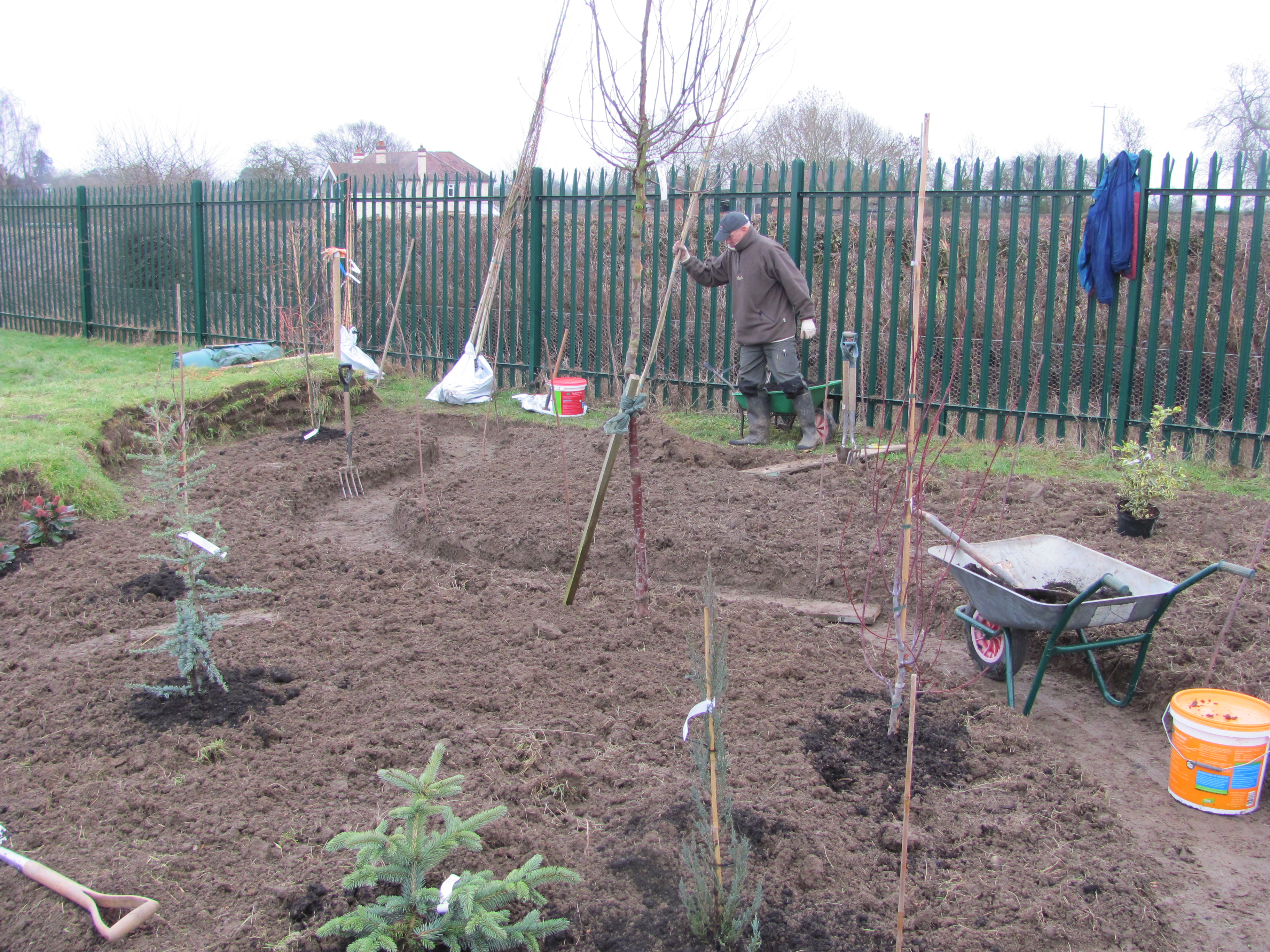
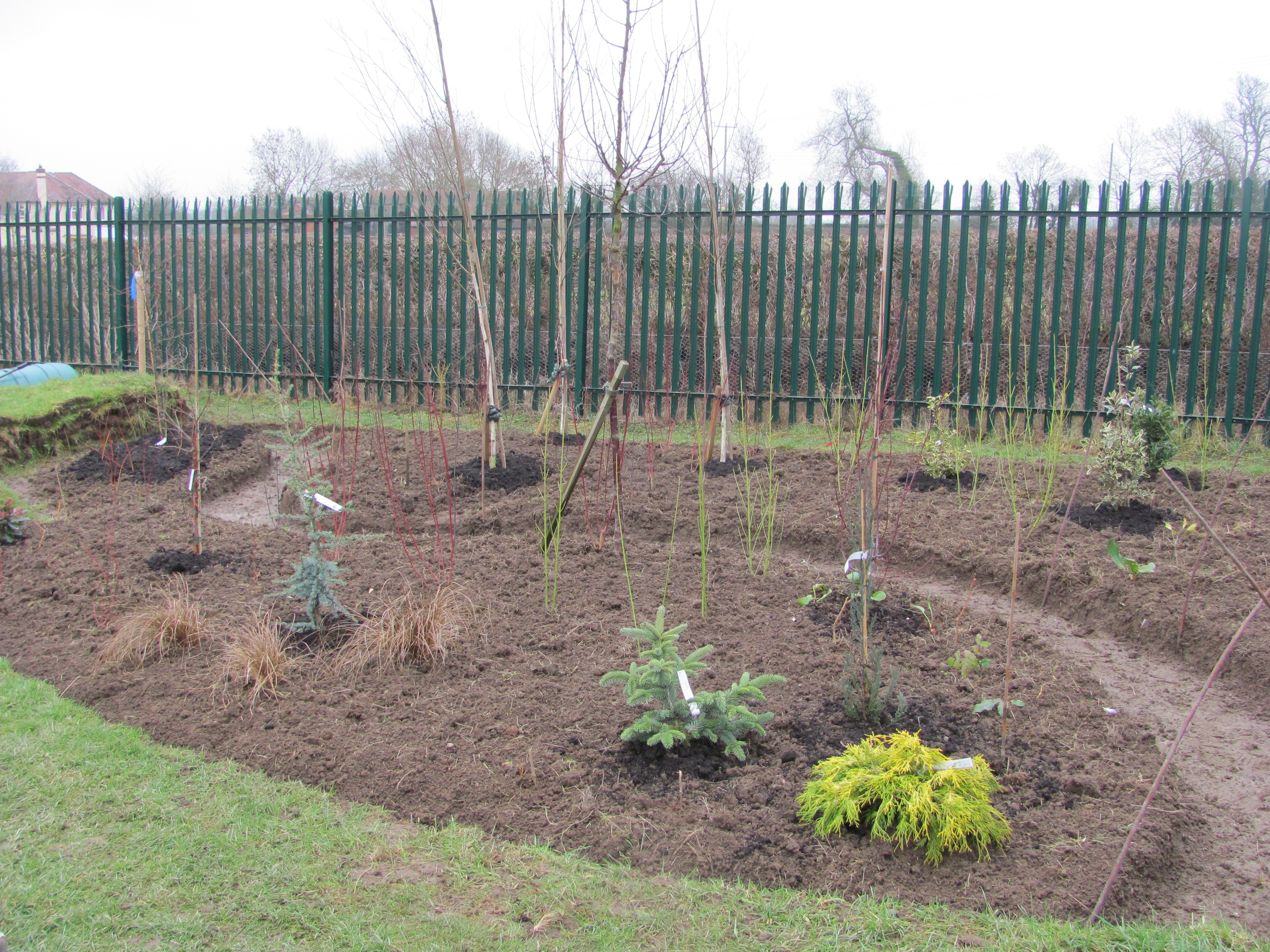
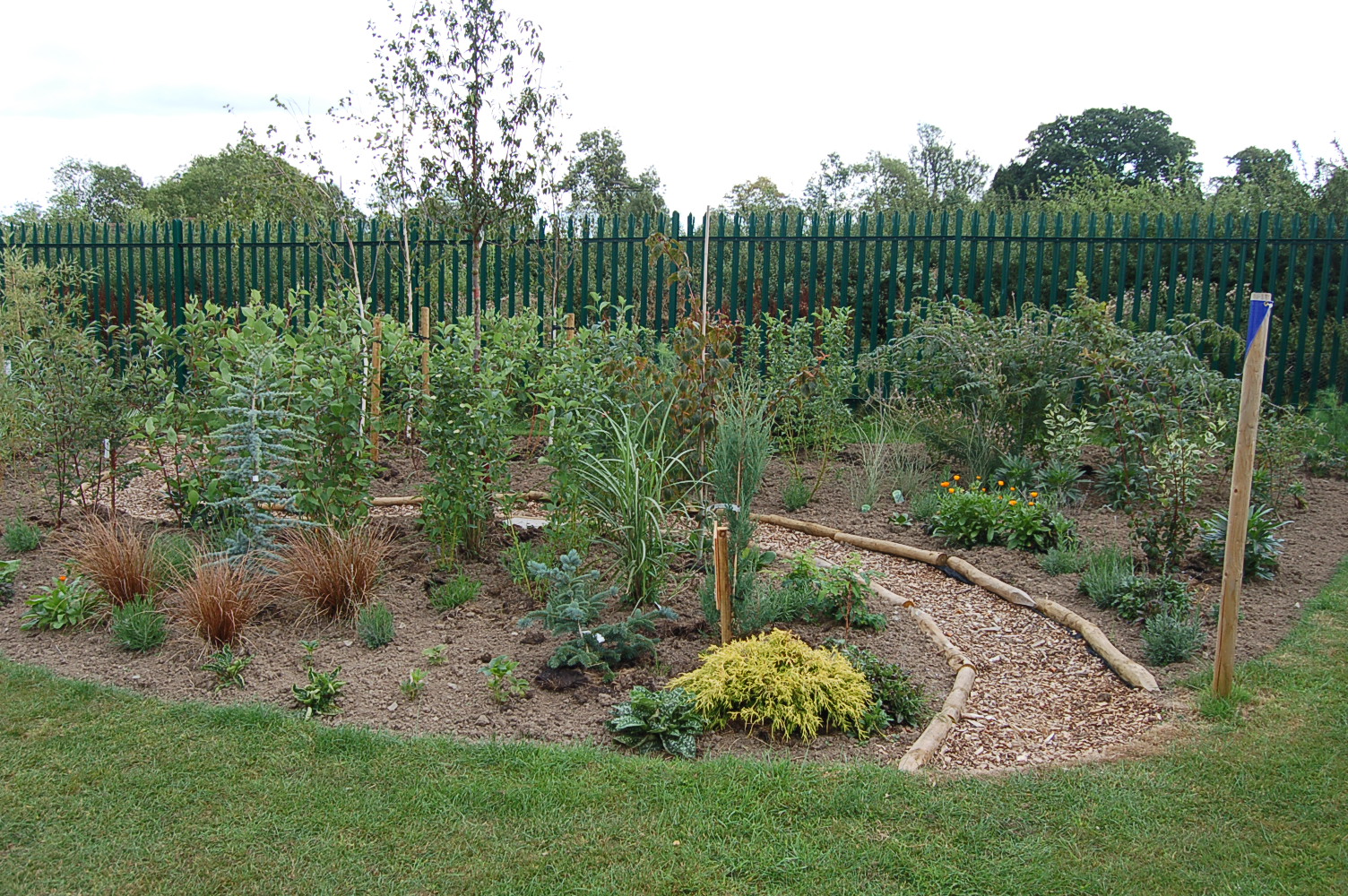
The first step was to rotovate the land, almost triangular in shape, in the corner of the site furthest from the huts, about 10 x 20 metres. We then added manure and rotovated once more. We dug out a path shaped as a serpentine curve, which cut the border in two, edged it with logs and gave it a deep layer of bark. It proved soft and comfortable to walk on. A thick layer of compost was added to the planting areas and raked level and we were prepared for planting.
Our Winter Garden is situated in a corner of the site. A water-butt is ready to be placed conveniently for watering in dry periods. In front is one of our wildlife banks.
Trees and shrubs were delivered by The Dingle Nursery from Welshpool, who had proved so helpful in helping us to select the best when we visited them to place our order. Unloading the truck and unpacking the plants was an exciting time, full of anticipation. Transporting them across the site took longer than expected involving three plot-holders with wheelbarrows. Some of the trees were just too long to stay put. After an hour of laughter and regular rescuing of dropped goods, we finally began planting. It was to take a few days.
Trees in place.
Bulbs and herbaceous plants arrived by post and were added to our structural planting of trees and shrubs. a selection of grasses was added later. We now had trees with coloured bark, shrubs with coloured stems and a winter flowering time, perennials such as Hellebores and Pulmonaria and grasses to give movement and beautiful seed heads.
Plot holder Pete busy planting.
In pride of place are our three silver-barked Birches, Betula utilis “Jacquemontii” planted as 3 metre tall specimens, along with similarly sized Prunus serrula with its shining gingery-bronze bark. Smaller specimens of Acer davidii (a snake bark maple), Acer griseum appreciated for its peeling red bark and a selection of variegated Hollies completed the structural planting.
Key plants in place.
For bark colour we planted dozens of Cornus, Salix and Rubus tibeticanus to give an airy network of colour all winter and early spring. We interplanted these with patches of Lavender to give some summer interest, to attract butterflies, bees and hoverflies and to provide gentle bluish foliage colour all year. For winter flowering interest and scent we planted Cornus mas and Viburnum bodnantense “Dawn”.
In order to maintain all year interest with greatest emphasis of interest we added evergreens. As well as the Hollies we included Viburnum tinus and several conifers chosen for the variety of foliage colour, texture and habit of growth – Picea pungens Procumbens, Pinus sylvestris, Chamaecyparis “Boulevard” and to top it off John, our committee’s chairman donated a lovely specimen of Cedrus atlantica glauca. As a contrast we also planted a Larix decidua a conifer that is deciduous.
When we planted the trees and shrubs, following the allotment site’s organic policy, we gave them a sprinkling of bonemeal in the planting holes and top-dressed with blood fish and bone fertiliser before mulching with manure. We plan to give the bed regular mulching of compost and manure to give a slow-release nutrient regime.
Working parties and individual volunteers worked throughout the year to keep weeds at bay.
Volunteers at work tidying and weeding.
By late summer the garden was showing lots of healthy growth and we could see much promise for the future.
Full of promise.
In the autumn we gave the garden a mulch of chipped bark to protect it from the ravages of winter and to slowly break down releasing nutrients and improving humus levels ans soil texture.
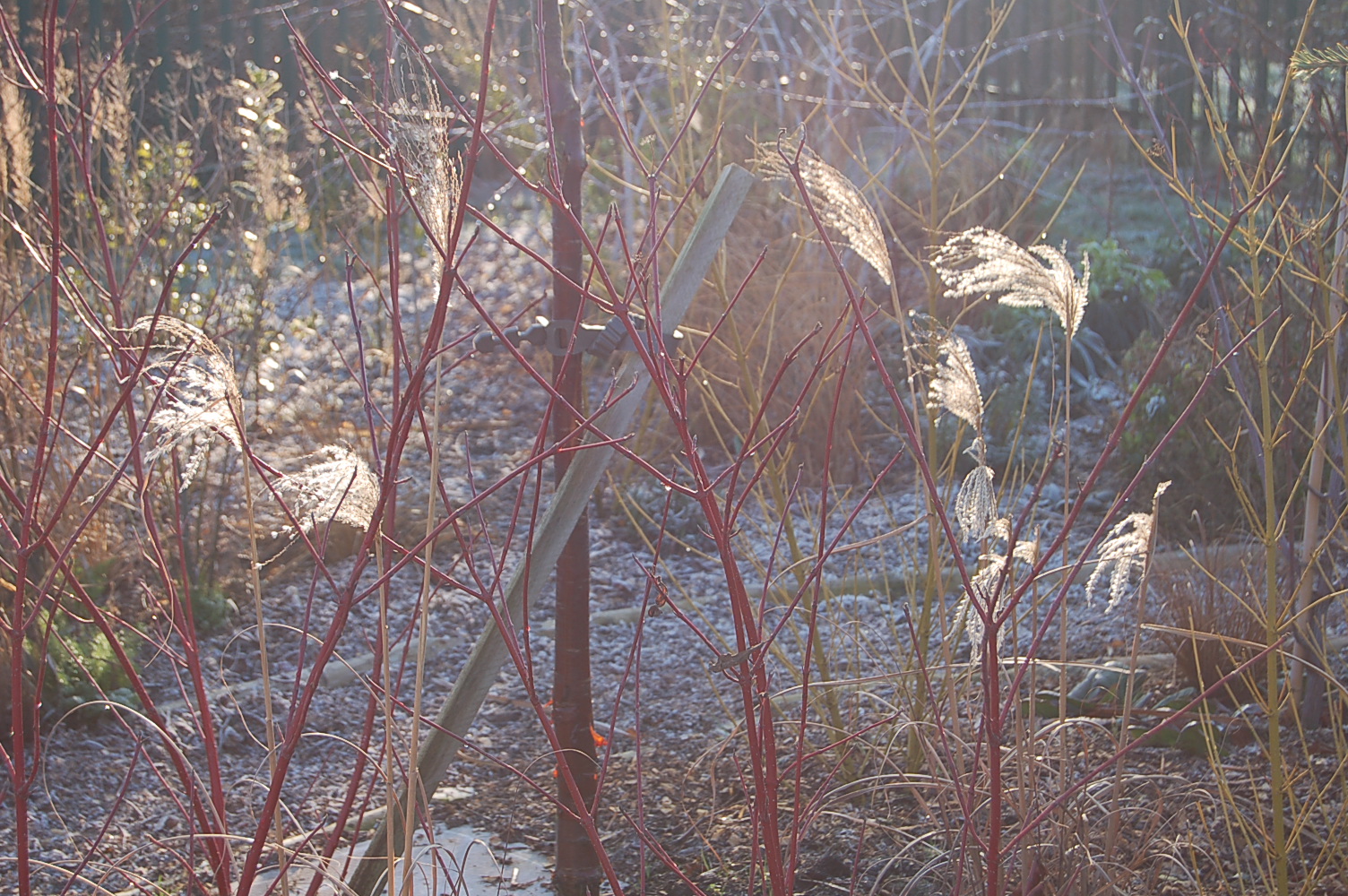
This week three of us weeded the bed over, tidied, pruned and loosened up the soil. It was amazing to look at progress and realise how the garden had developed in less than a year. Bulbs were flowering, the trees and shrubs have made good growth and in particular the willows and dogwoods are showing strongly coloured stems.
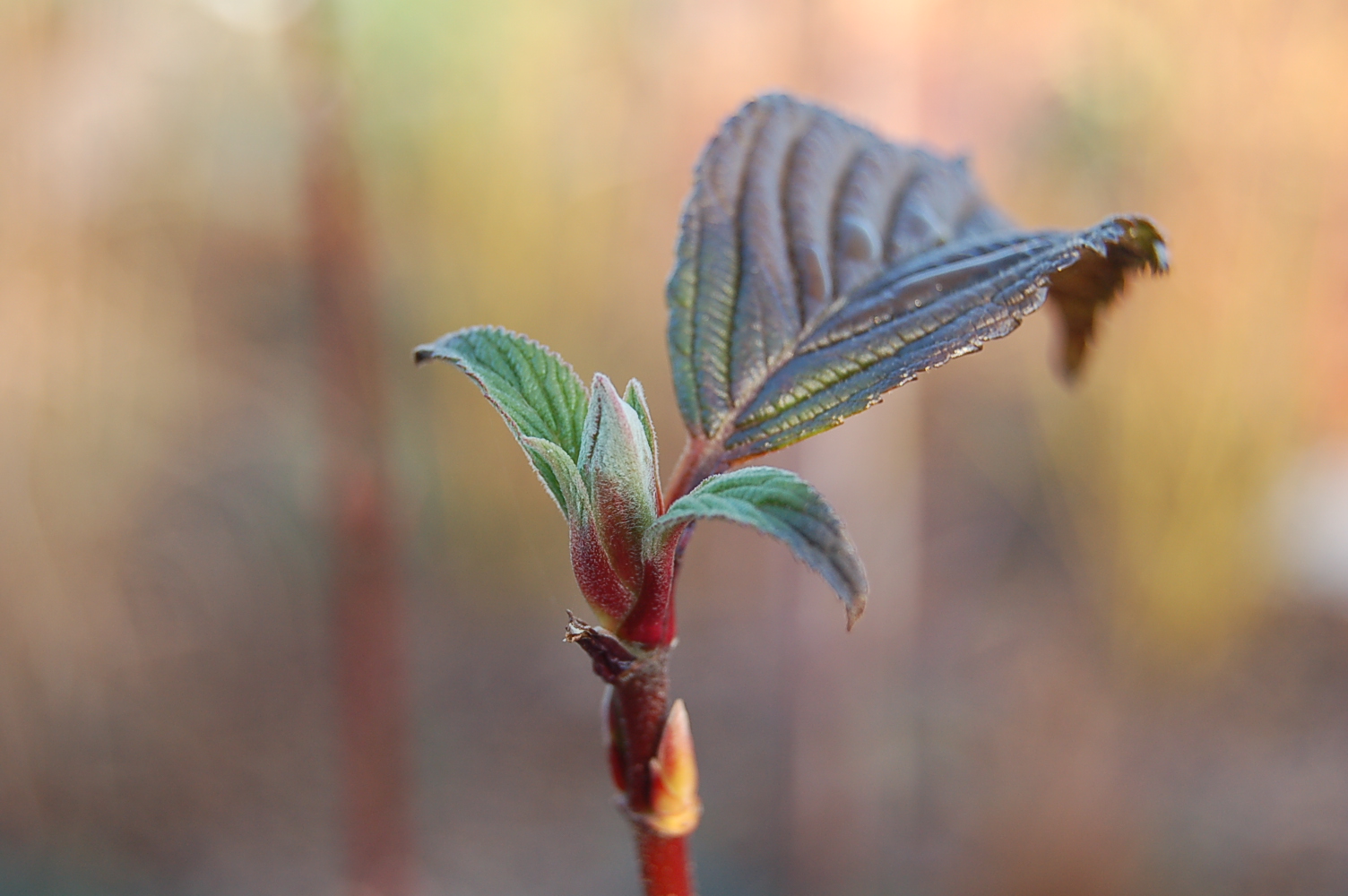
Winter sunlight through Miscanthus and Cornus.Stripes of fence shadows fall across a variegated holly.Blood red dogwood stems.Peeling bark like brittle toffee.Green flowered hellebore with striped shadows.Premature bud burst on Viburnum.Striped snake bark maple.
With so much to see after such a short time, we can but wonder at what our Winter Garden will bring us in the future. It was great fun creating it and judging from comments from plot holders it is already bringing much joy!
This is the first in a series of blogs which I will write at the beginning of each month through 2012, and will show what is going on in our garden at that time – a sort of record of garden highlights.
So the new year has arrived. January 1st was a dull overcast day, with unbroken deep grey cloud and regular periods of drizzle. But at least it was warm with temperature holding up in low double figures all day. But not a day to perform a photographic wander.
So here I am on the 2nd January with camera in hand to record what’s going on appreciating a blue sky, but well wrapped against a freezing wind. Buzzards are sharing my joy of seeing a big blue sky as they are soaring silently above the garden with none of their usual sad cries. The garden is noticeably quiet, the bird feeders far less busy than they usually are in January. There is just the constant quiet, barely perceptible winter song of the Robin who follows me around and the equally gentle twittering of Goldfinches, Blue Tits and their long-tailed cousins.
Enjoy a walk around with me and my camera, as we take a tour …………
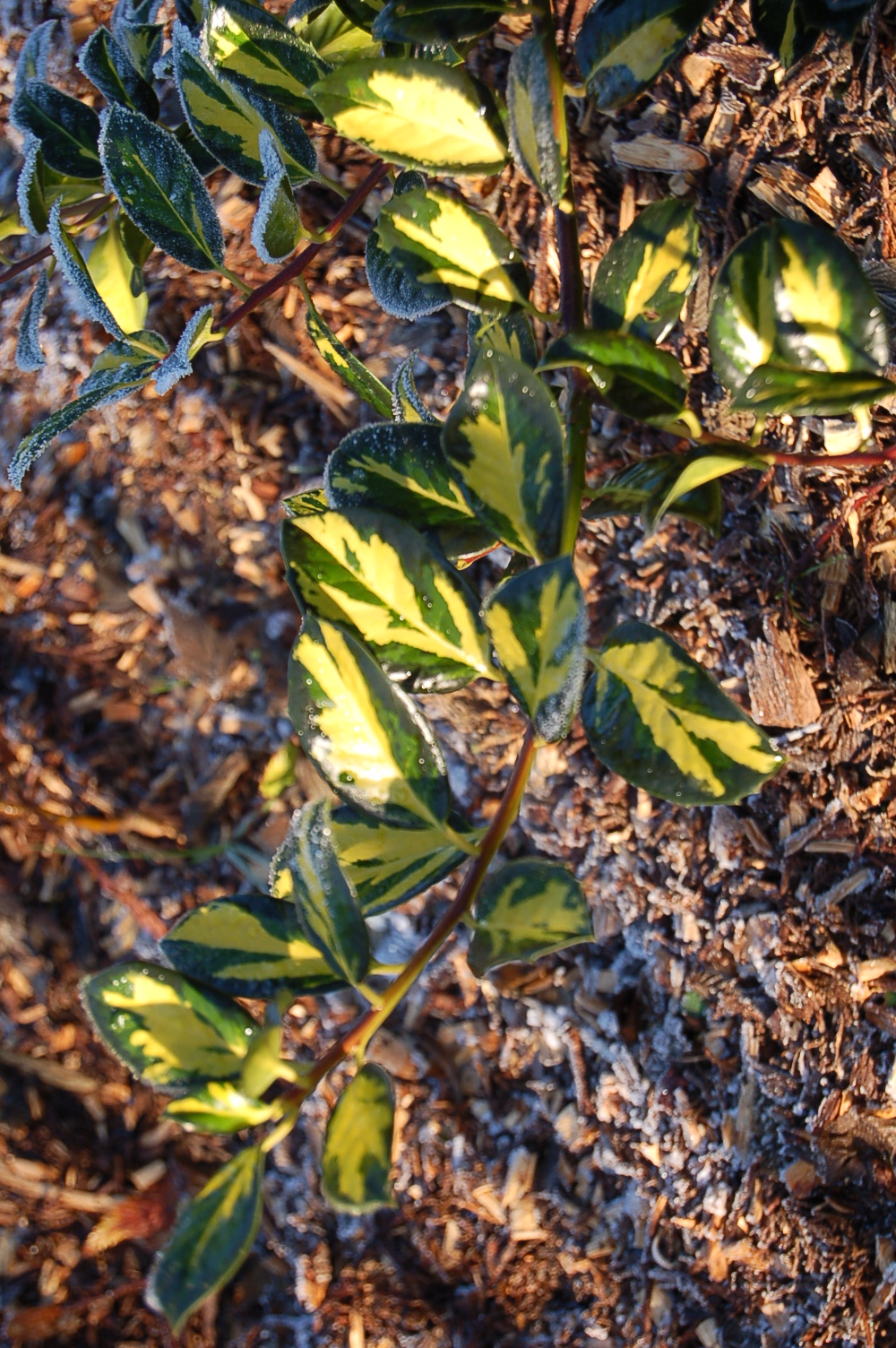
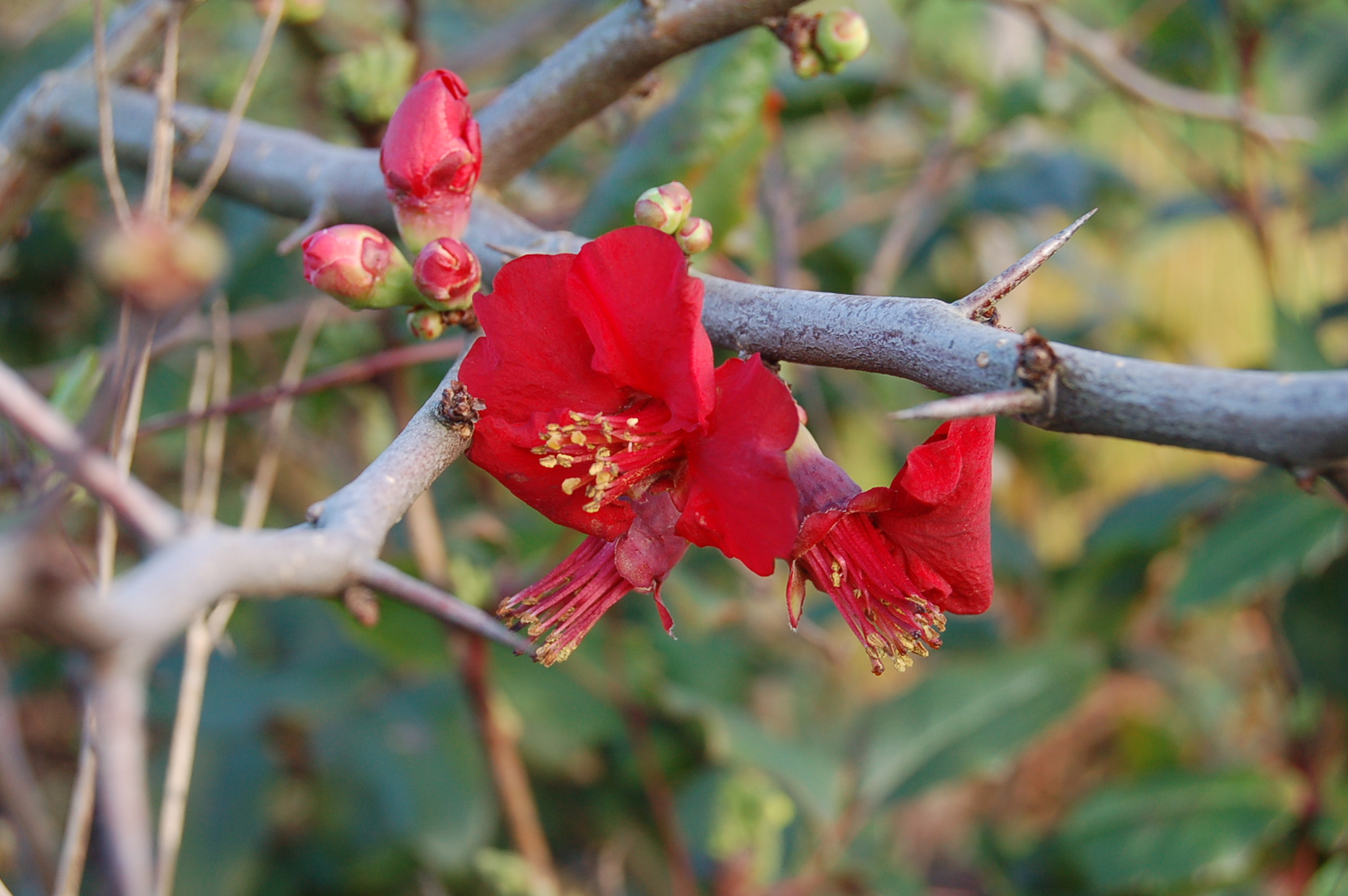
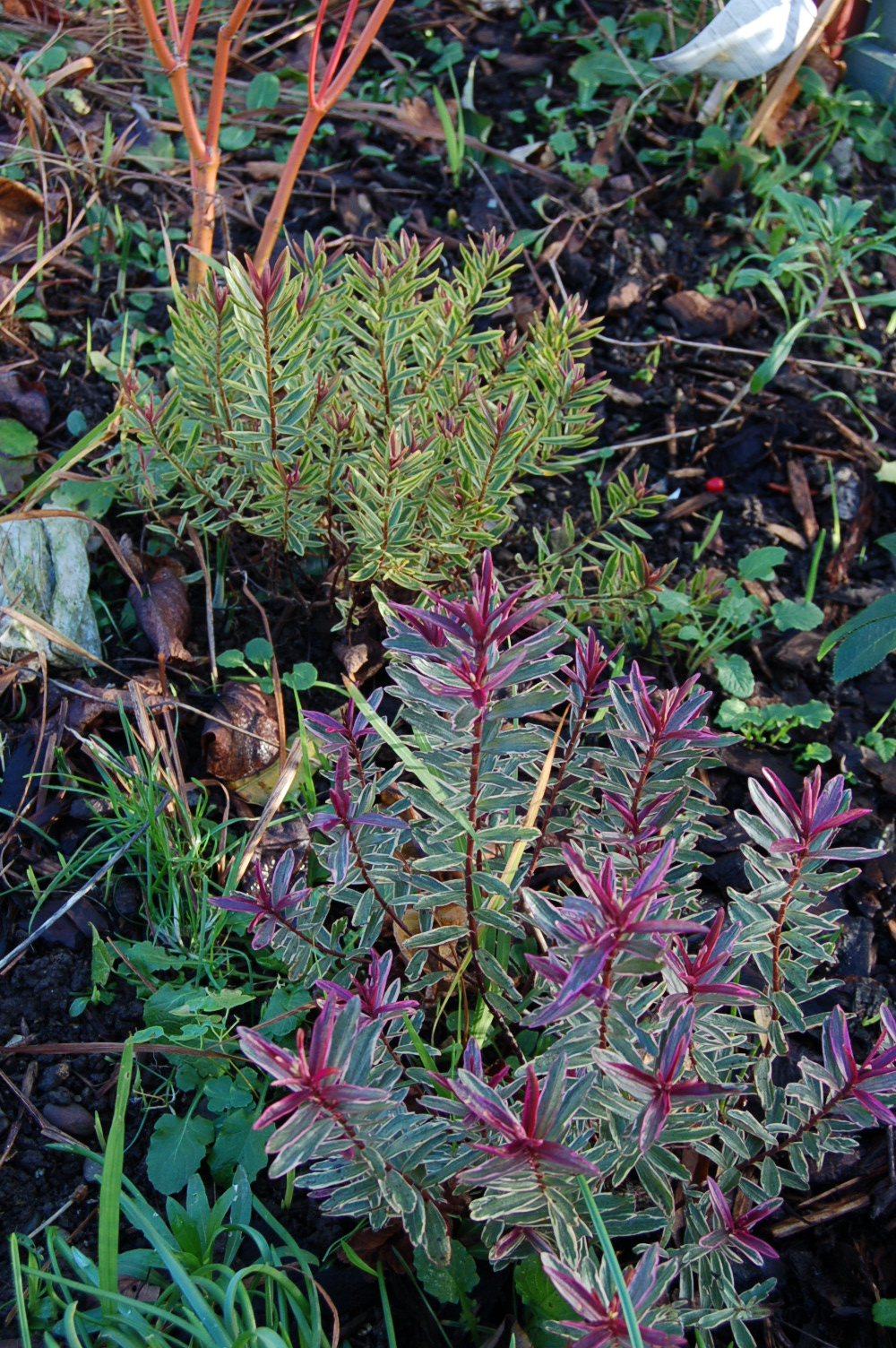
The newest addition to the garden, just planted today, is the dark foliaged Euphorbia "Redwing", spotted with fresh rain drops following a shower.This brightly flowered quince, Chaenomeles "Fire Dance", glows at the drive entrance, providing a cheerful welcome.
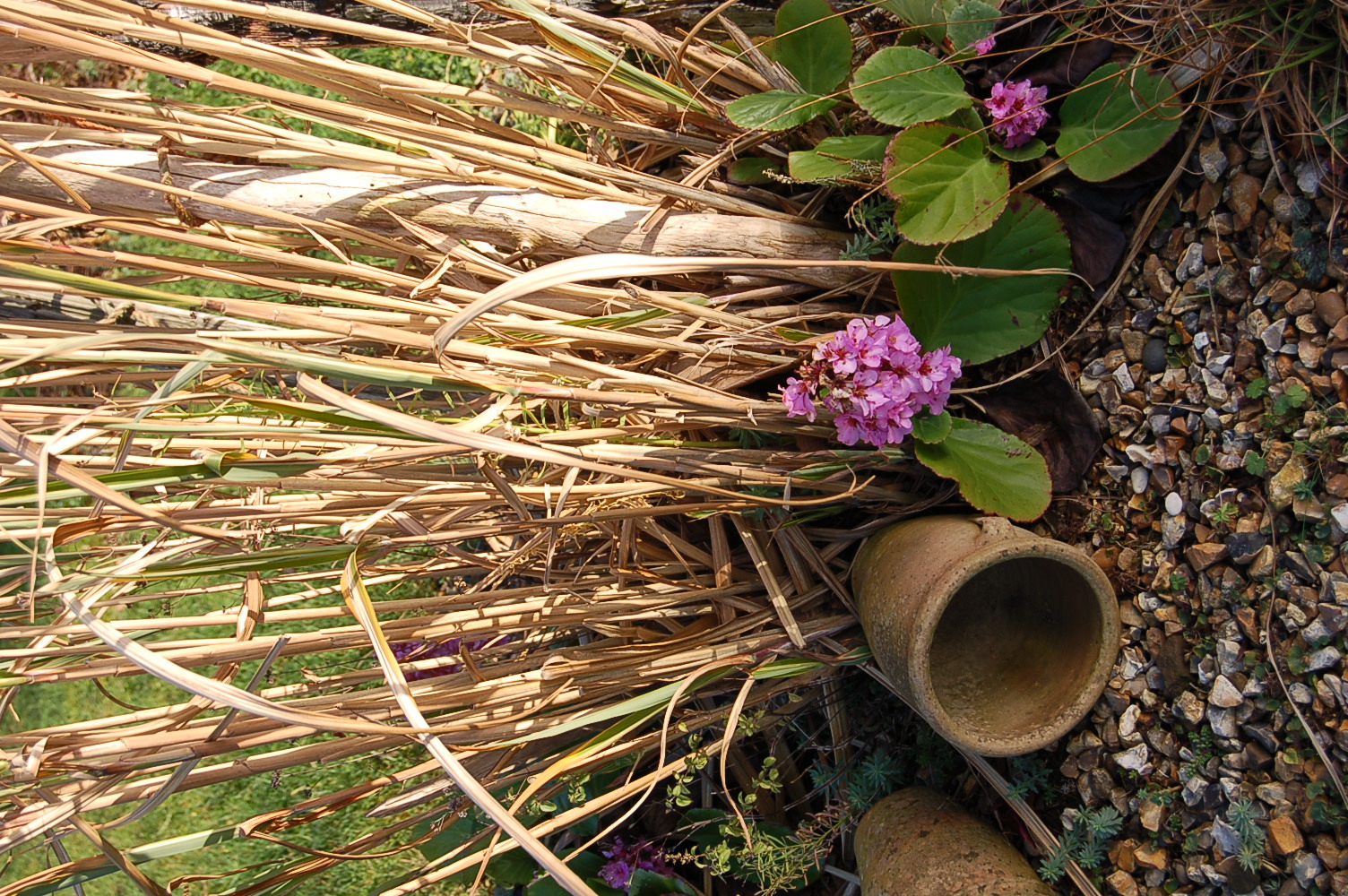
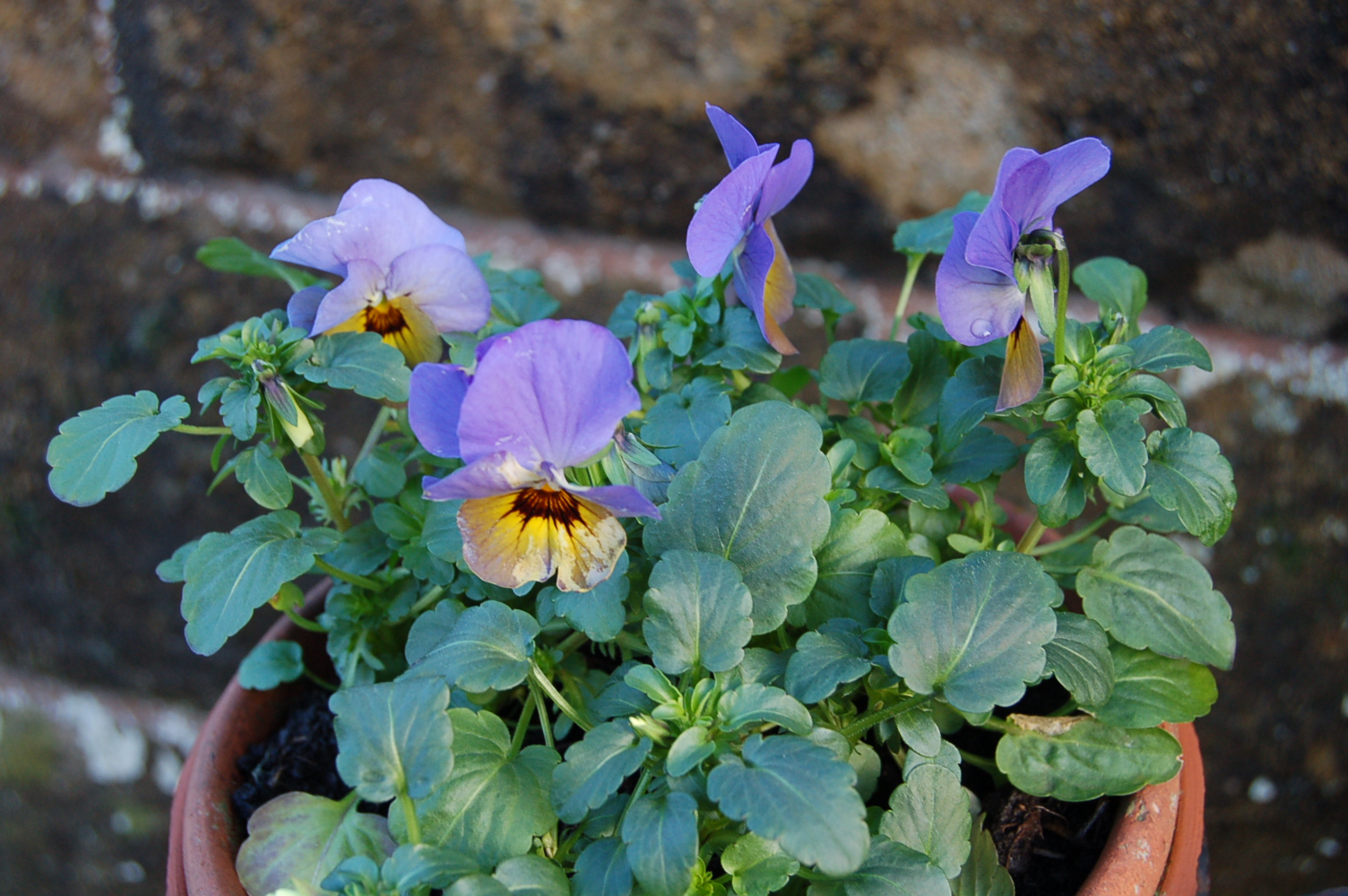
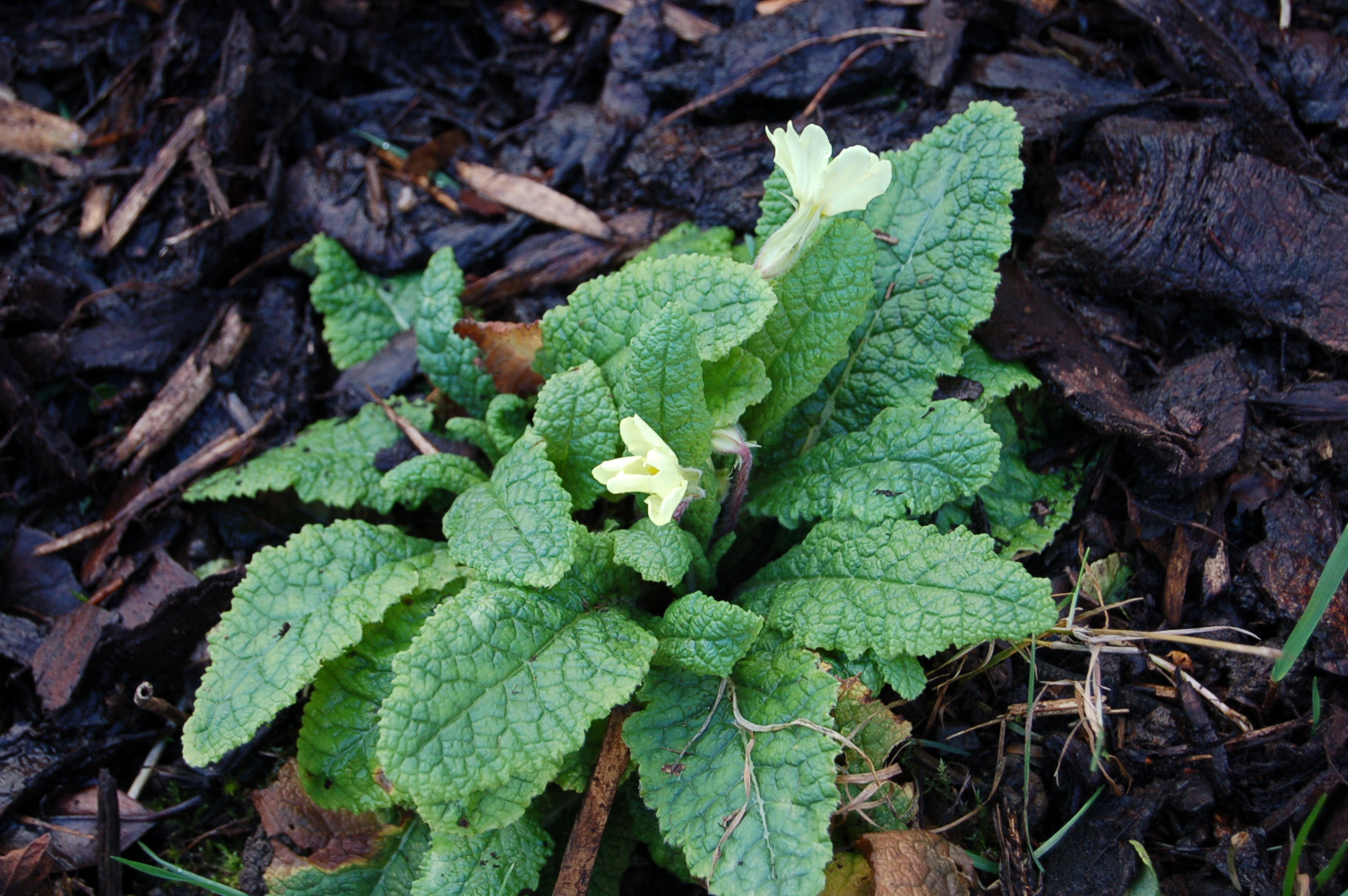
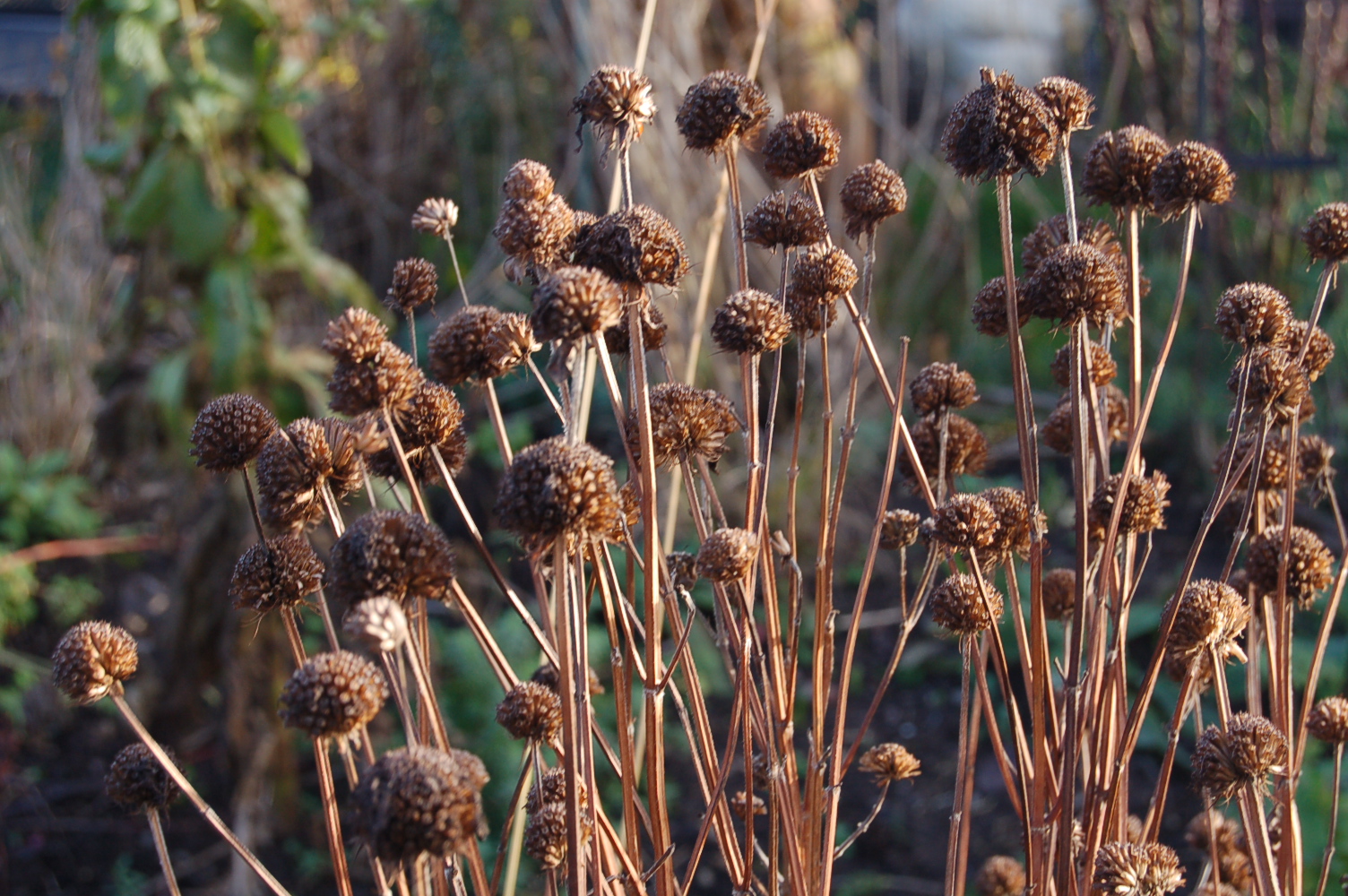
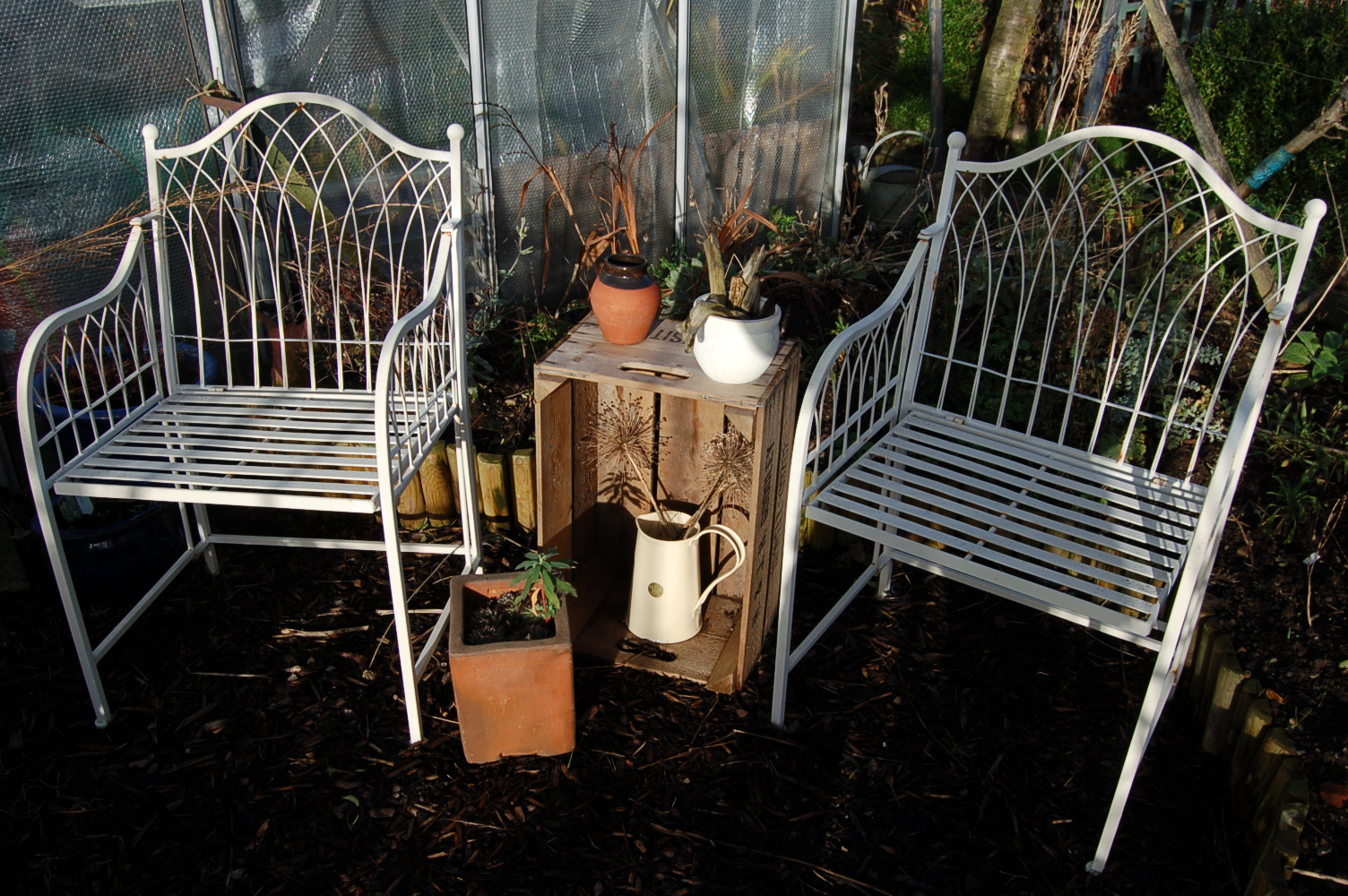
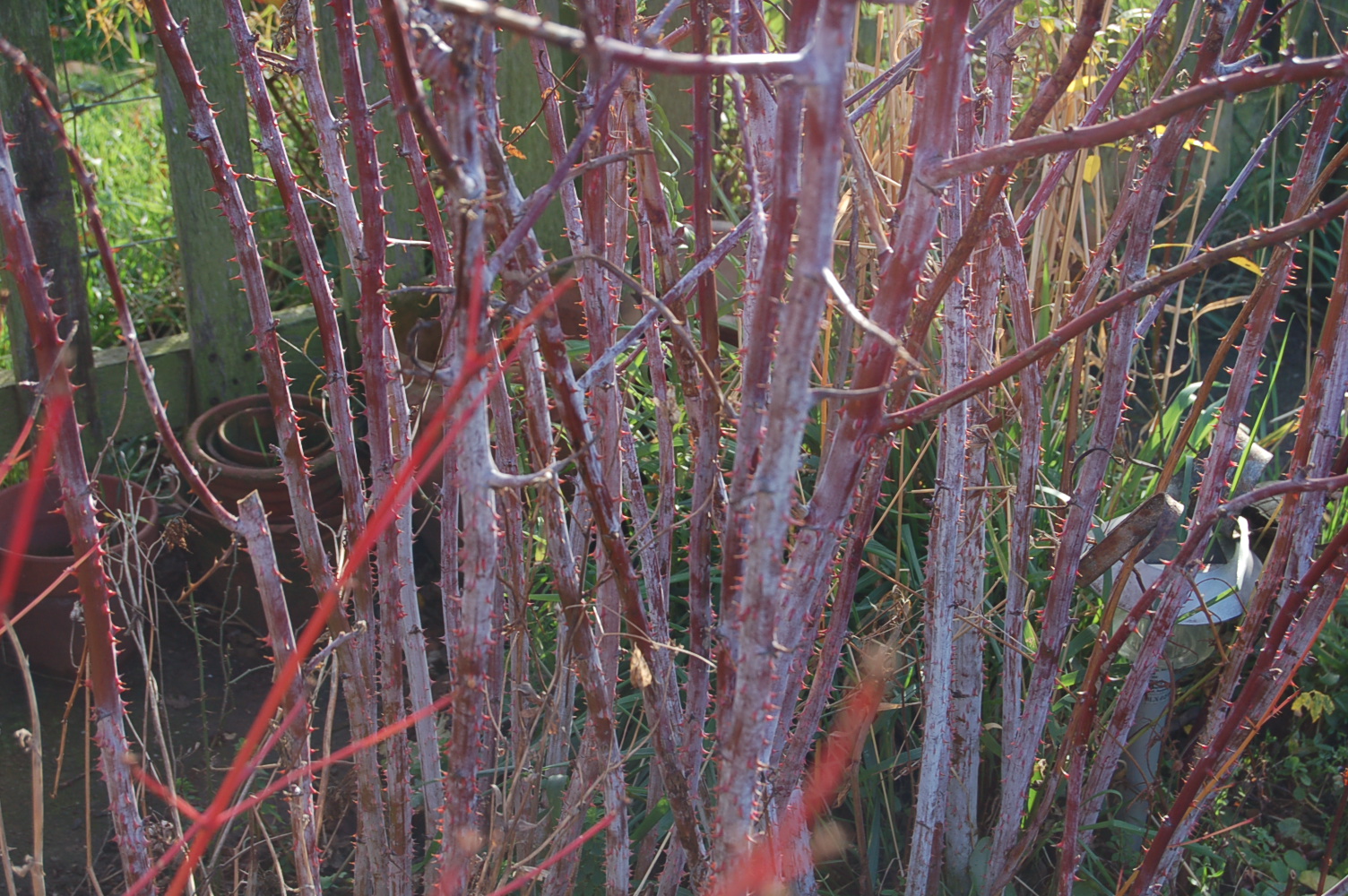
This clump of bell-shaped flowers of Arbutus unedo, the Strawberry Tree, overhangs the roadside verge. We are so grateful for its performance as it only just survived the onslaught of the last two winters. We rescued it with heavy pruning.Orange stems of Cornus "Cardinal" with the white stems of young Betula utilis in the newly planted Shrub Garden.Sea shore find amongst Euphorbias.Terra-cotta pots and the pink flowers of Bergenia sit at the feet of Miscanthus and driftwood.The yellow-faced blue Violas flower in pots by the front door.In the Rill Garden two very different Hebes with colourful foliage sit in front of an orange-stemmed dogwood.The low light of winter turns the cut foliage of the purple-leaved vine blood-red.The creamy-yellow berries of the Cotoneaster rothschildianus hang in clusters covering this small tree.The flowers of this pioneering Primrose appear too delicate to survive the cold of January.Warm brown seed heads give so much to the Chicken Garden in winter.The grasses throughout the garden catch both the winter light and the gentlest breeze. The curly seed heads of this Miscanthus napalensis are soft to the touch.In the Secret Garden the cream metal seats become more dominant just when they are too cold to sit on.In the Japanese Garden the blooms of our pink version of Prunus autumnalis subhirtella are a joy to look at.Move in close and appreciate the pink glow.The hottest of the coloured stemmed dogwoods must be Midwinter Fire - ours grows on the bank bordering the wildlife pond.The white-stemmed Rubus sits alongside Midwinter Fire on the pond bank.The fruit of our apple "Pixie" remained too tiny to pick so we have left them for the birds, who so far have ignored them.
Jasminum nudiflorum has been flowering by the chicken's run now for four months and is still going strong. What a star!
The mad seed heads of the orange-peel clematis, which I grew from seed, never cease to amaze me even though I see it each morning as I collect the chucks' eggs.
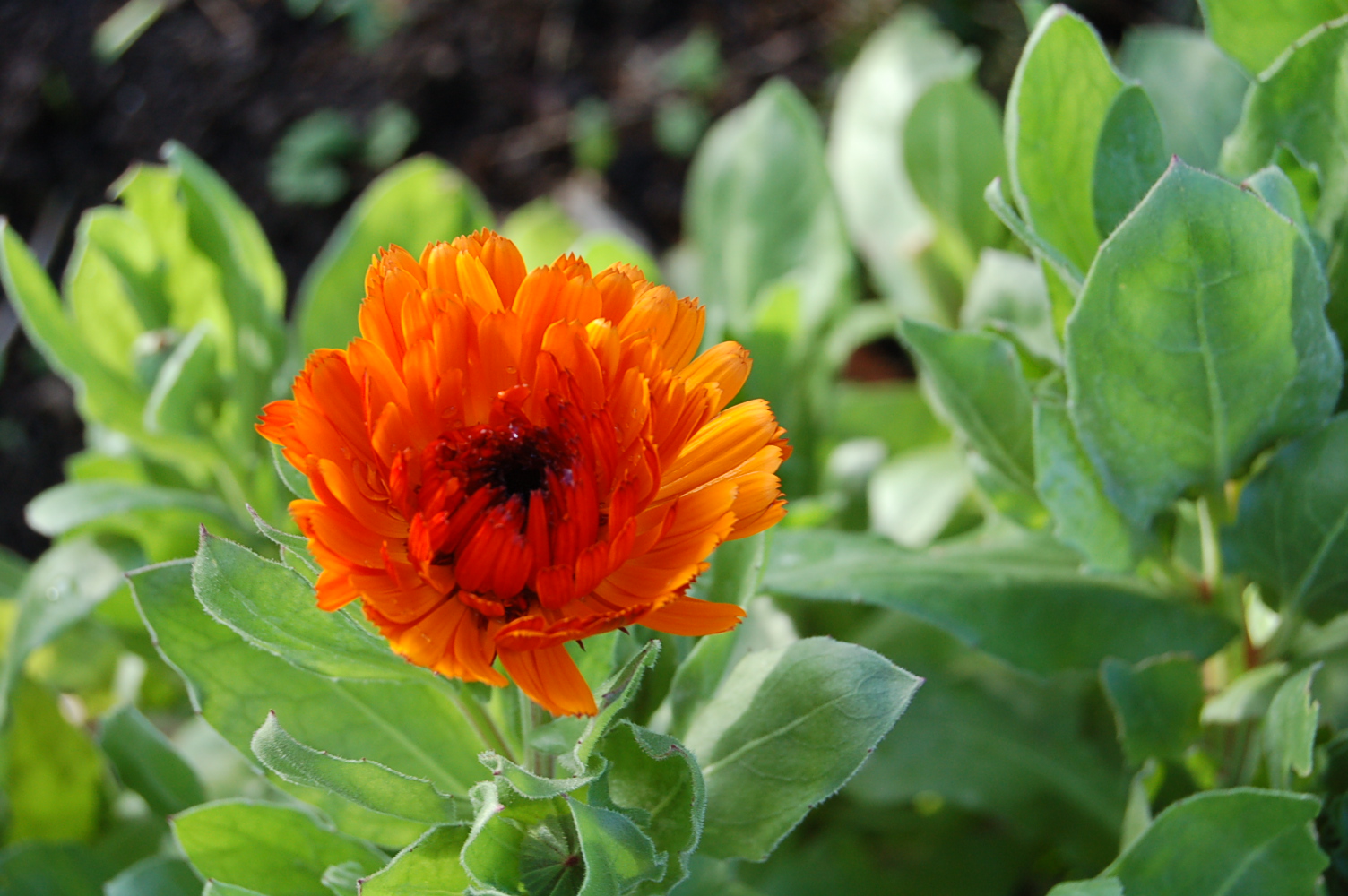
We seem to have calendula flowers somewhere in the garden every day of the year.
One of five Achillea still flowering away in January, this variety "Biscuit" is in the Secret Garden.
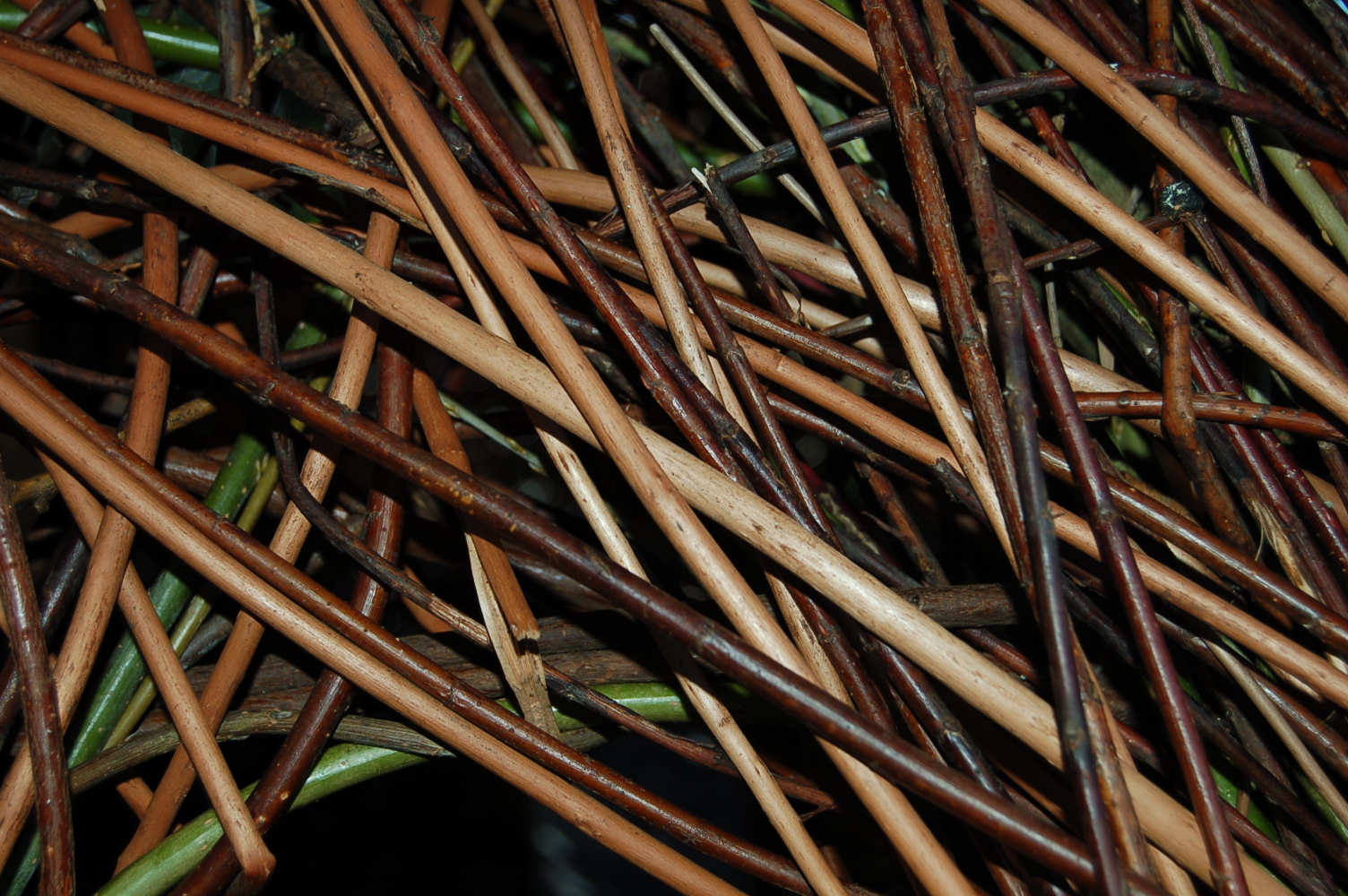
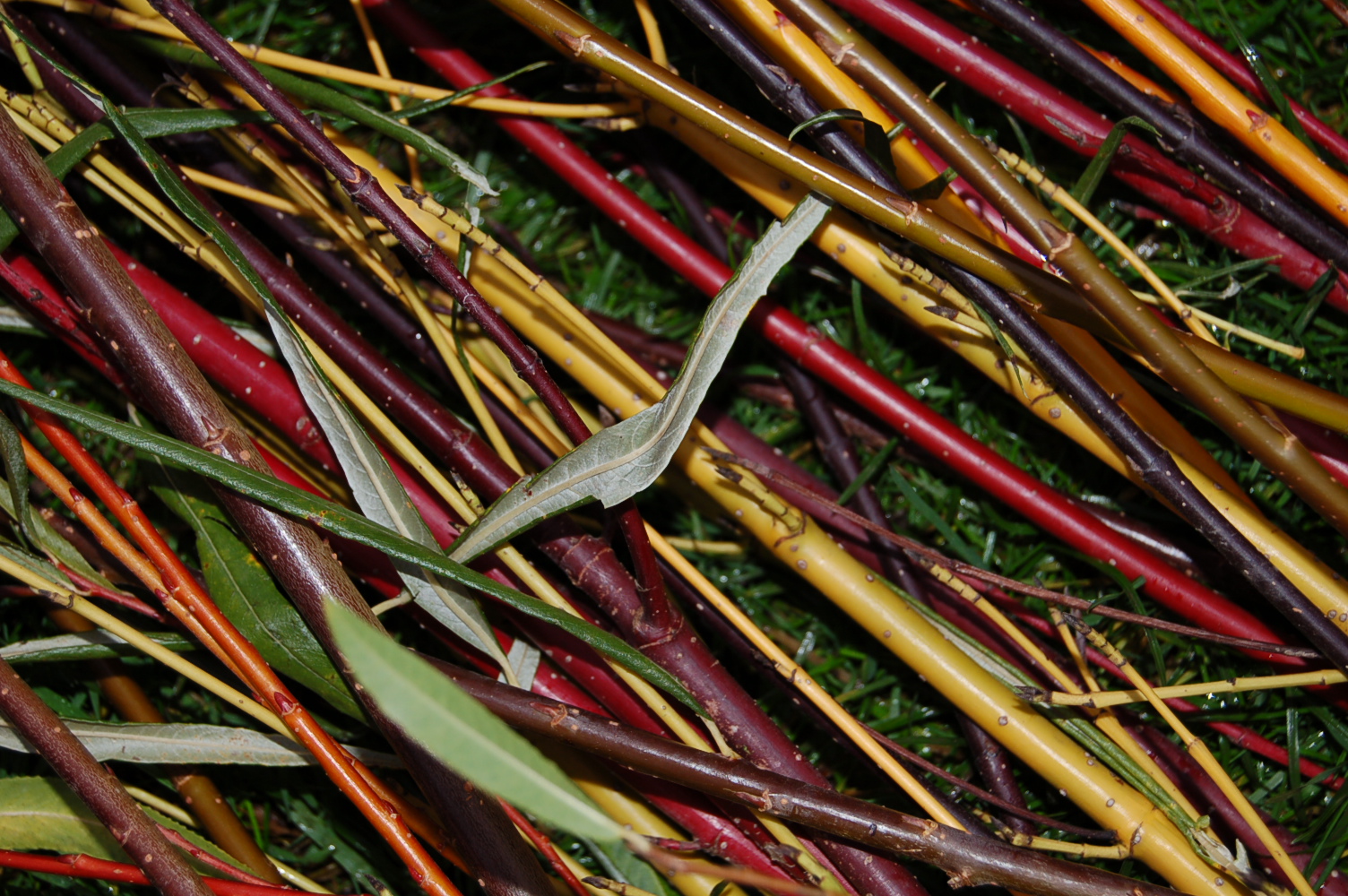
We have been busy taking hardwood cuttings of dogwoods and willows this week, the sorts we grow for their coloured stems for winter colour. We have several different varieties of both at home and in the Winter Garden on the lotties. We hope to plant up the allotment’s car park border with the successful cuttings. The photo below shows just how varied the colours are from yellow and pale green through every shade of orange and red and on to black and violet.
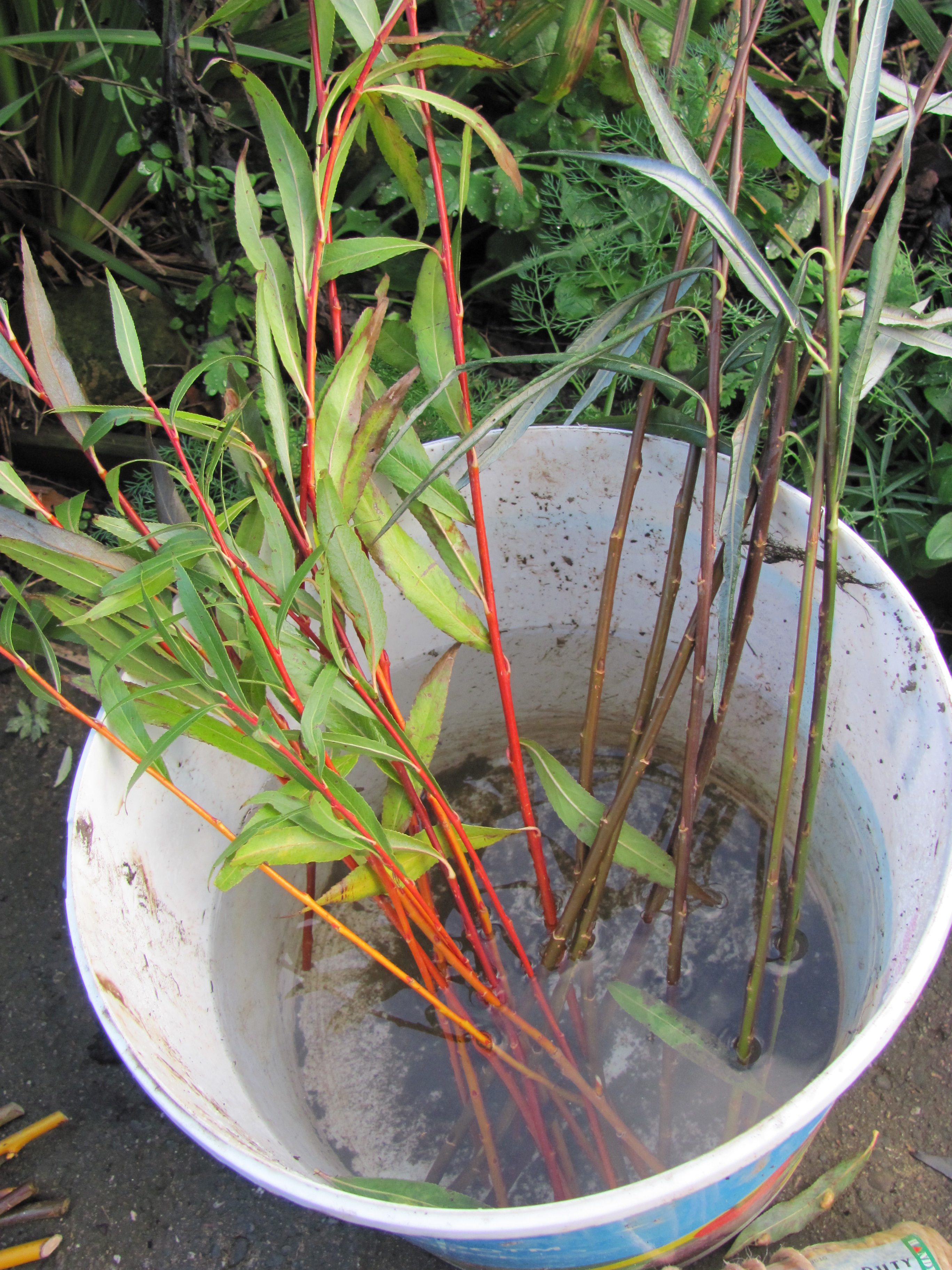
The whispier stems of the willows provided cuttings to strike in a bucket of water – oh so simple.
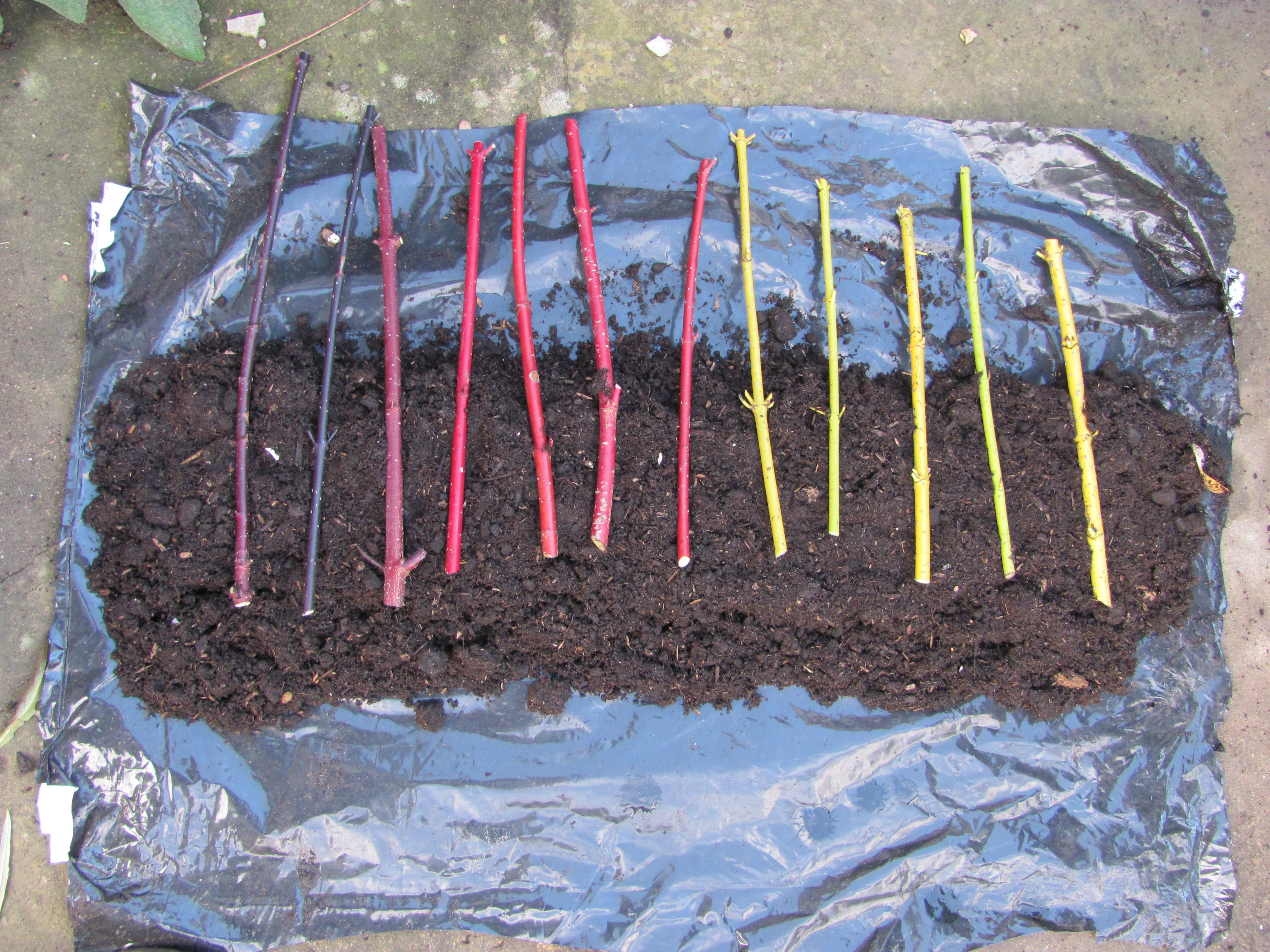
For the dogwoods and the thicker willow stems we made 9 inch long cuttings of the ubiquitous “pencil thick” stems. These we have dealt with in two ways so it will be interesting to see which turns out the most successful. The first batch we put in compost in a pot.
The second batch we rolled up in a cut strip of an old compost bag with compost on which was then rolled into a swiss roll.
'The most important and informative publication on wildlife of our times' - The Independent. This blog is a member of The UK & Ireland Natural History Bloggers group: www.uknhb.blogspot.com












































































 greenbenchramblings